
August 27, 2019


Last evening, we went for a walk around the area. It was still very light out 7:30, but the sidewalks are mostly torn up for sewer or other repairs, so walking wasn’t very pleasant. We did stop at a muslim shop with a handful of people making pasta squares for a popular muslim dish. Most of the shops had Chinese flags flying, but not all. Back in our room, we went to bed. Mark dropped off quickly, but I was having trouble breathing while laying down. Fortunately the room has a large oxygen generator and cannulas to go with it, so I hooked myself up to it and was finally able to fall asleep.
This morning we were waiting for our guide at 9am. Mark corrected what I thought was his name. It is not PingPing, but PinPin. Off we went to the Drepung Monastery.
While on the way, PinPin told us the Tibetan language is based on Sanskrit, a fact Tibetan kids will not learn. Today they are not taught about their history or culture, only the Chinese version of Tibetan history. PinPin’s wife, a grammar school teacher, is not allowed to teach the truth in her classroom. No wonder Tibetans are distressed. Changing the subject, he told us Lhasa has a population of 500 thousand and it has been the capital of Tibet since the 700’s. The current local population of monks is about 10,000 with 400+ at Drapung Monastery, which is one of the”great three” of central Tibet and was founded in 1416. It was home to 10,000 monks before 1959, when the Dalai Lama escaped to India with his life. It was also the seat of central government until the Fifth Dalai Lama expanded the Portala Palace and moved his residence there. Today there are about 400 monks living at Drapung.
These first images are of the outside as we ascended up and into the buildings.


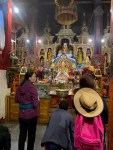
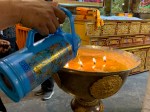
Once inside any room in any building, we encountered the smell of incense, wax, butter, dust and grime as well as people and buddhas. Everywhere, people were carrying small bank notes, hot wax and yak butter in thermoses. In front of each buddha, they would put a note worth 20 to 80 cents into a collection box and pour wax and or butter into candle holders intended to keep the candles burning. Monks would collect the money periodically and pour out the wax before it overflowed the vessels. We were not allowed to take photos, but I managed a few anyway. Sorry I could not get more. There were some spectacular objects and statues and tombs. Here is what I captured.
-
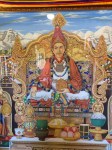
- Jamyangchouche Tashipel Ten is the Founder of the Deprung Monastery in 1416
-
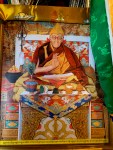
- Lamring Renpoche, a natural lama who rose through the ranks to reach lama status. He died in 1997.
-

- A buddha with a money catchment in front
-
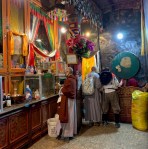
- Worshipers passing along a row of buddhas
-

- A prayer hall
-

- A large meeting hall
-
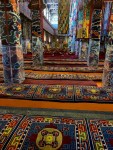
- Another large meeting hall
There were the major Buddhas of Past Life, Present Life and Future Life repeated in every hall and space plus images of the different Lamas up through the 13th Dalai Lama. Images of the current Dalai Lama were conspicuously missing. In addition to the prayer halls, there were meeting rooms for the monks and at the top of the complex was the main Assembly Hall, which could hold many more monks than there are currently in residence. I logged the elevation at the parking lot at 12,439 feet and again at the Assembly Hall at 12,629 feet–our record so far on this trip.
As we started down the steep, irregular steps, we heard musical sounds and followed our ears to an outdoor garden where a handful of monks were making music on oboe-like instruments. They stopped when we arrived, so we had to coax them into playing more, which they graciously did. Then we saw two very long, maybe 10 feet, horns on a tall rack and asked if they would play them. Two other monks got up and played an entire tune in perfect unison. I captured some of it on video. We had a pleasant conversation with them through PinPin. A large festival is coming up in a few days and they were practicing for it. Finally, we left them and continued down the steps.


PinPin took us to a tourist restaurant, not our choice, but we ordered yak curry. The curry was greasy, the meat fatty and the spices dull. However, we did not get sick, so it counts as a success. After lunch we walked to Sera Monastery, founded in 1419 and another one of the”great three”, it also houses about 400 monks currently and 5,500 prior to 1959. Fortunately, this Monastery is not as high and has fewer rooms. The special Buddha here was the Horse Buddha. There was a huge line of people waiting to get a blessing from the buddha. Again I was not supposed to take photos.


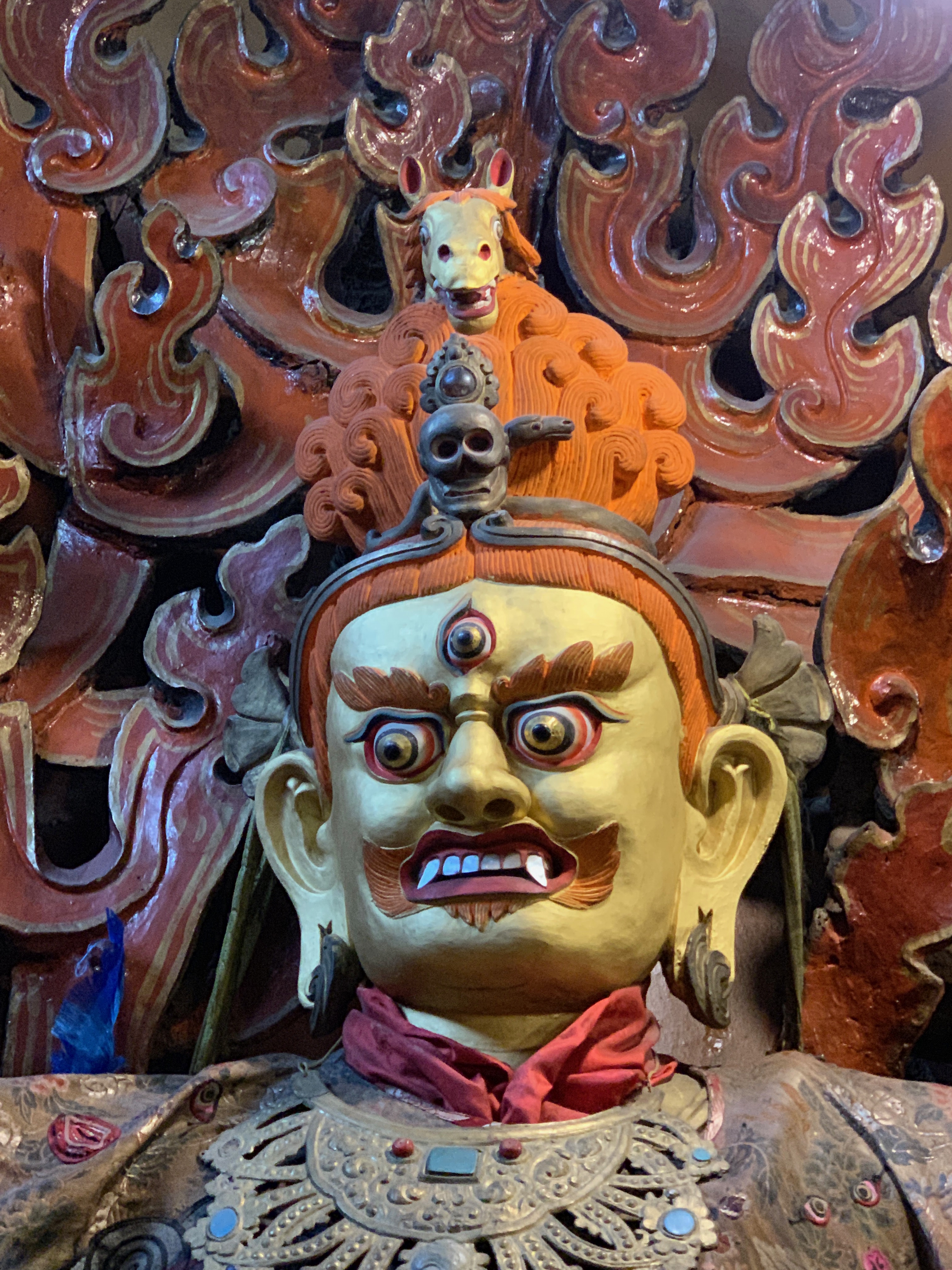
Horse Head Buddha, a favorite in the Sera Monastery. The horse is at the top and small.
We happily walked on by and snuck in at the back entrance to see the buddha without getting a blessing. The other interesting aspect of this monastery is that it sports 4 colleges with the topics: meditation, enlightenment, mantra & tantric, and debate. At 3pm the debate school stages a performance for the public, so we went to the large courtyard where it is held and watched the process. One monk is seated and answers the questions. The other monk stands and puts the questions to the seated monk. There is much slapping of hands and posturing and trying to make the seated monk “lose”. It was a bit too staged for my taste, but it was mildly entertaining. We watched for an hour and leaded down the hill.


When we reached the level path, we met up with a couple of elderly ladies dressed beautifully in traditional Tibetan clothing, so I stopped and gestured that I would like a photo of them. They surprised me by saying yes, so I took several photos and was about to depart, when two ladies in modern dress approached. They were obviously related so I showed them the images. PinPin got into the conversation and we learned that the two ladies in traditional dress were sisters-in-law and one of the western dressed ladies was a daughter and the other was her daughter. A few steps further along, we met up with the husband of the modern mother and her new baby. The whole family are members of the Chema group of Tibetans, who live in the Marking area in eastern Tibet. It was quite a family scene and we could have chatted for a long time if we could have understood each other. Anyway, we all laughed and smiled and said good-bye. I really love this kind of encounter, like with the musical monks earlier, and hope they happen more often.
That ended our first day of monasteries. It was good to get back to our room, have a piece of fruit and relax.
 Adventures with Julia