October 23, 2026
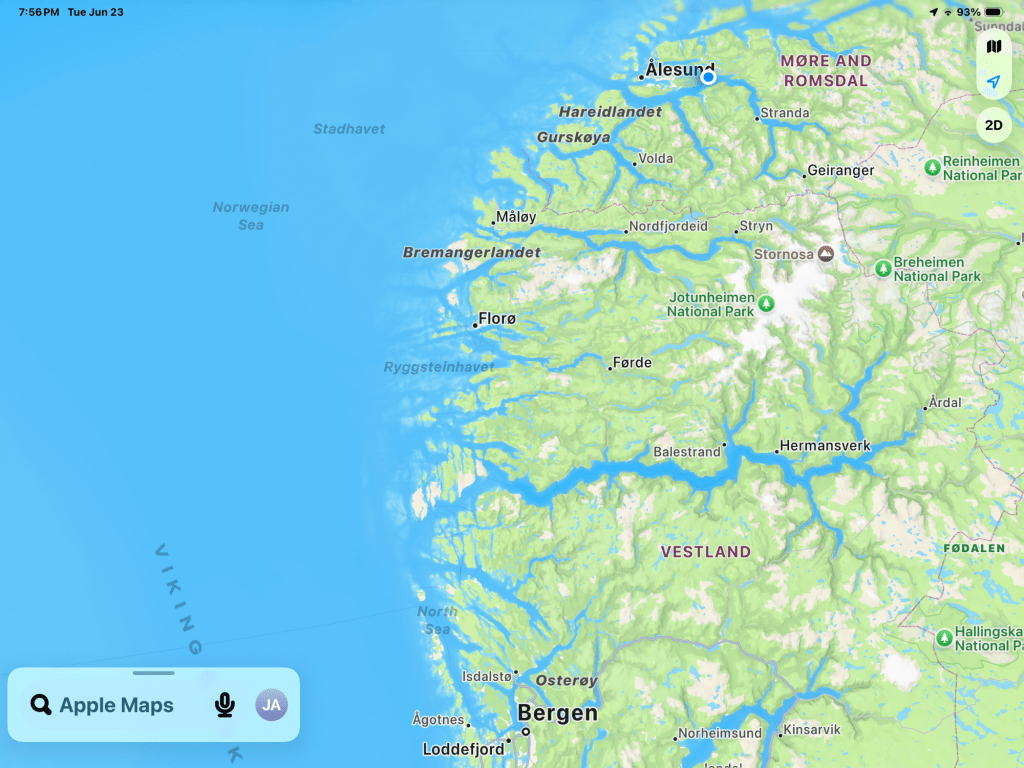
Off on an island adventure. This time to Honshu, the most populated island of the 6,852 cluster of islands called Japan. There are about 127 million people all together. I purchased a map of the country and found it so densely laid out with place names that I cannot find most of the places we plan to visit. The map above shows only the main places we will visit—Tokyo, Kyoto, Mount Fuji, Hiroshima and Osaka. All the other places are in between.
Currently we are sitting in the United lounge waiting for our 11+ hour flight to Tokyo. I have learned some interesting facts about the country that, hopefully, you will find interesting too.
During the 60’s when I first visited Japan as a stewardess, I was frequently confronted by people bowing to me, having to take my shoes off when entering homes and inns, eating only with chop sticks, and having to memorize the symbols for “ladies toilet”, train station, and the name of any place I wanted to to visit. It took a while to get the hang of the required behavior. However it was fun wandering around different cities until I got lost. Eventually I would present my hotel card to a cab driver to get back to my point of beginning. When eating in restaurants I was thankful for the pictures of the dishes being served as I could not make out any words on the menus. I expect we will have a very different experience on this trip.
Bowing, it turns out, is an important part of Japanese culture. It is used to for greeting, gratitude, apologies and respect. Our culture could benefit from bowng if we learned when to use the practice.
Removing one’s shoes when indoors is another cultural trait. There are slippers to wear indoors and special slippers to wear when using the toilet. Some hotels provide what is needed.
It is rude to eat while walking. Have a seat. And even worse is to stick your chop sticks directly down into the rice. At funerals attendees will offer food to the deceased by sticking chop sticks vertically into a bowl of rice, If not at a funeral, it is very bad form. On the other hand, it is encouraged to slurp noodles and soup noisioy in public as it tells the chef you are enjoying the meal.
There are no public trash cans provided on the city streets. Locals have the habit of carrying their trash home. Must remember that. Don’t throw trash on the streets even if you can’t find a bin.
There are over 5 million vending machines in Japan, one for every 23 people. They serve hot and cold soup, ice cream and fresh eggs, non-alcoholic drinks, snacks, souvenirs, even umbrellas.
I read that most of the food in Japan is imported so the government has made strict restrictions resulting in the most uncontaminated food in the world. I wonder what the food will taste like.
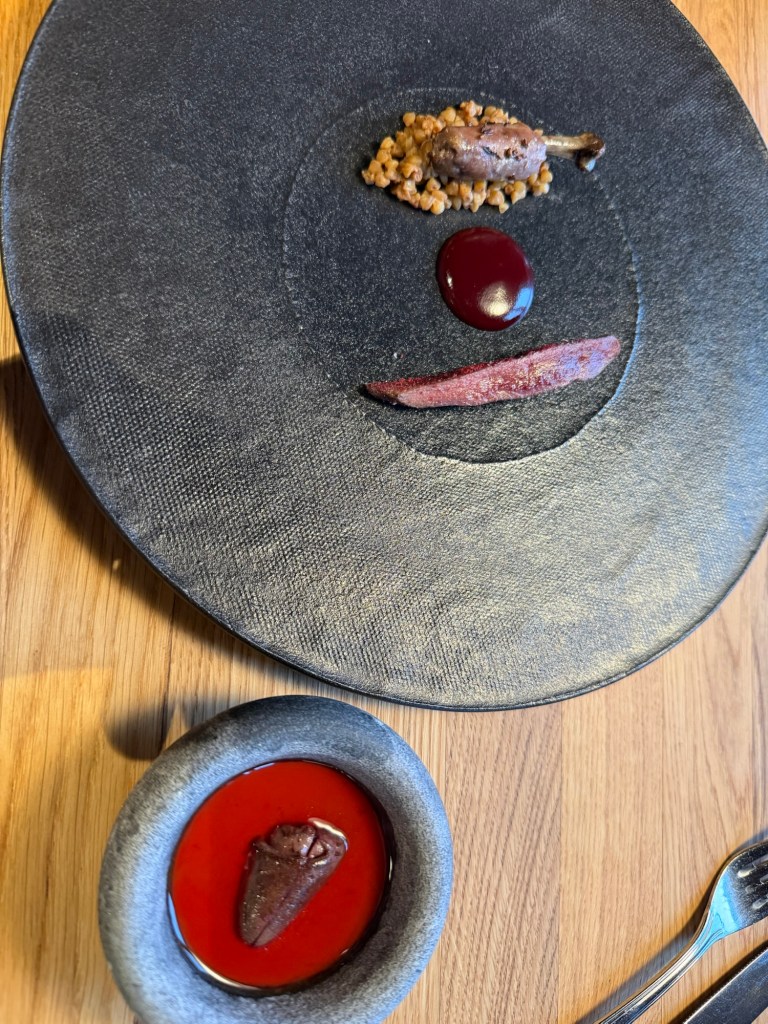
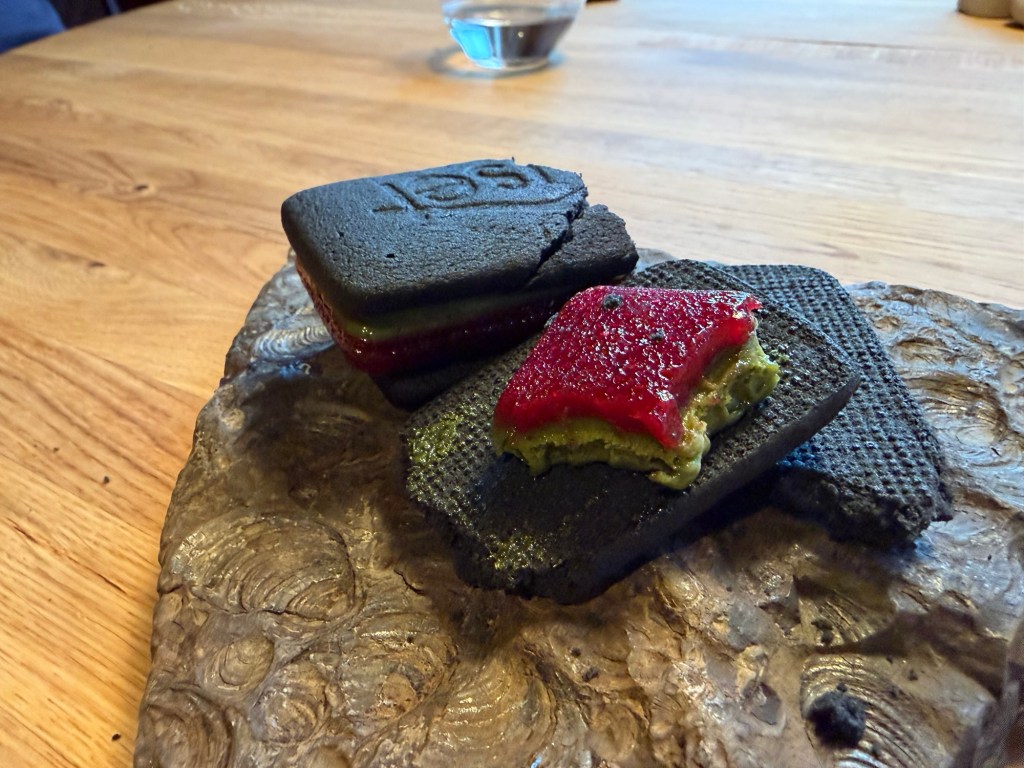
Traditional Japanese Cuisine, called “washoko” is recognized by UNESCO as an intangible Cultural Heritage for its balance, seasonality and presentation. There are over 340 Michelin star restaurants in Tokyo.
Other facts worth sharing include:
The current Yamato Dynasty is the oldest hereditary monarchy in the world. The current emperor is a direct descendant of Emperor Jimmu, the first ruler over 2600 years ago. Rather than overthrow its imperial symbol, political power shifted between emperors, regents, and shoguns (military dictators).
In 1635, under the current Shogun, Japan enacted a strict isolationist policy that lasted over 200 years until the mid 19th century. Its border were closed to most other countries. During that period the samurai warriors became bureauocrats, artists and patrons of culture. Kabuki theater got its start during this period.
There once were over 5000 temples, but there are about 100 today and of those only 12 are original structures. Hope we get to see one.
The bulletin train, called Shinkansen, goes 200 mph and maintains near perfect punctuality. The Shinjuku Station in Tokyo is the busiest staton in the world at 3,5 million daily riders.
Mount Fuji is 12,388 feet high. Japan sits on four major tectonic plates, experiences about 1500 earthquakes, and has about 110 active volcanoes a year.
Kongo Gumi, a construction company founded in 578AD has become the oldest company in the world and is now, after 1400 years, a subsidiary as of 2006.
Despite its heavy industrialization and huge cities, roughly 70-80% is covered in mountains and forest.
The average lifespan exceeds 84 years, the longest in the world,
The oddest fact I learned about is the KFC Christmas Tradition. It has become a major holiday tradition in Japan that the Japanese book weeks in advance, due to a massive marketing campaign in 1974. I hope to learn more about it.
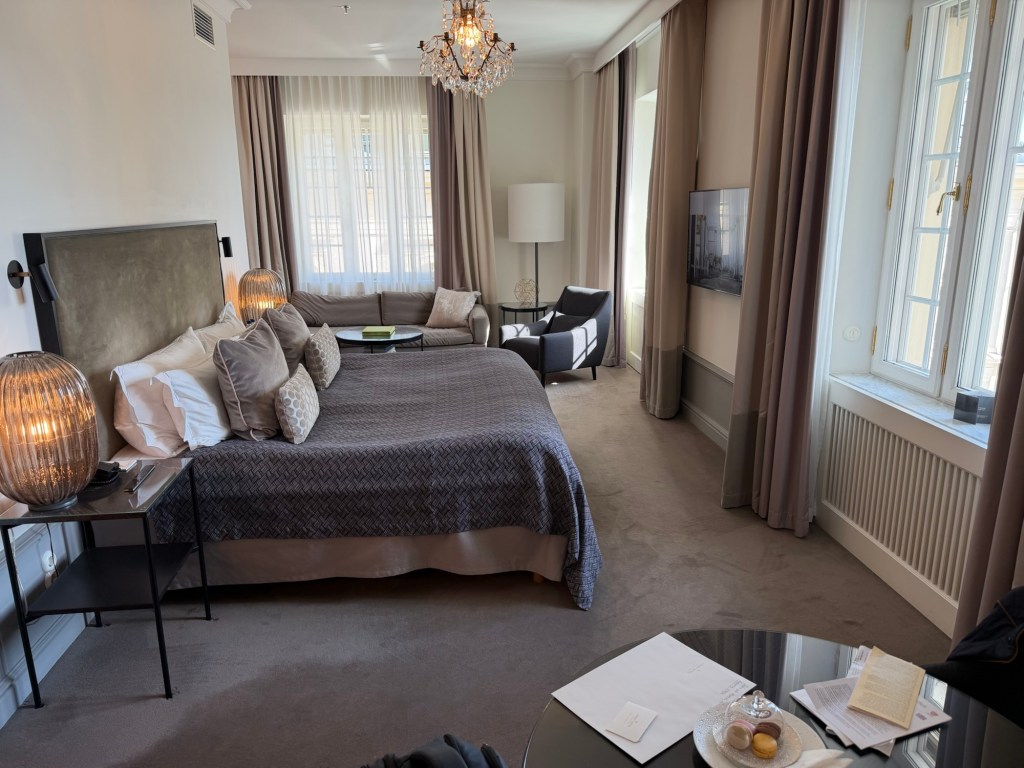
We landed in Tokyo at 3pm. Arrived at the 4 Seasons Hotel in the city center at 5pm. Received a debriefing about our entire itinerary from our travel agent, Martina’s, head Japanese guide, Miho. It was all printed in a booklet she gave us, which will certainly help us remember what activity is coming next. Then we had a light dinner and went directly to bed.
October 25, 2026


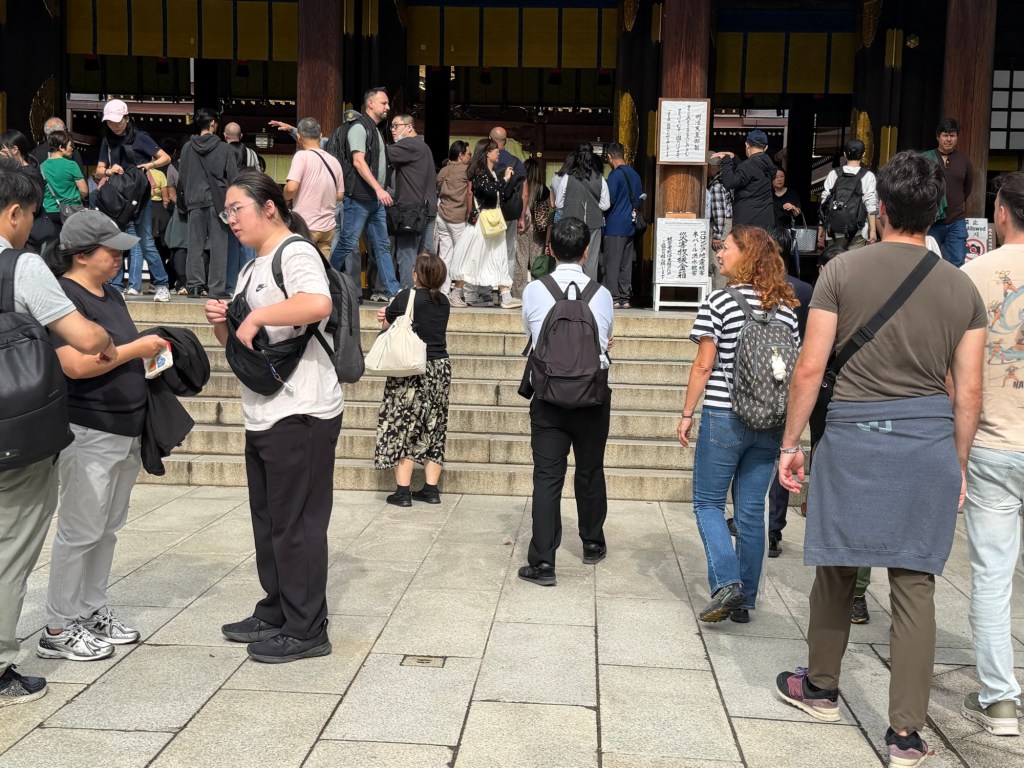
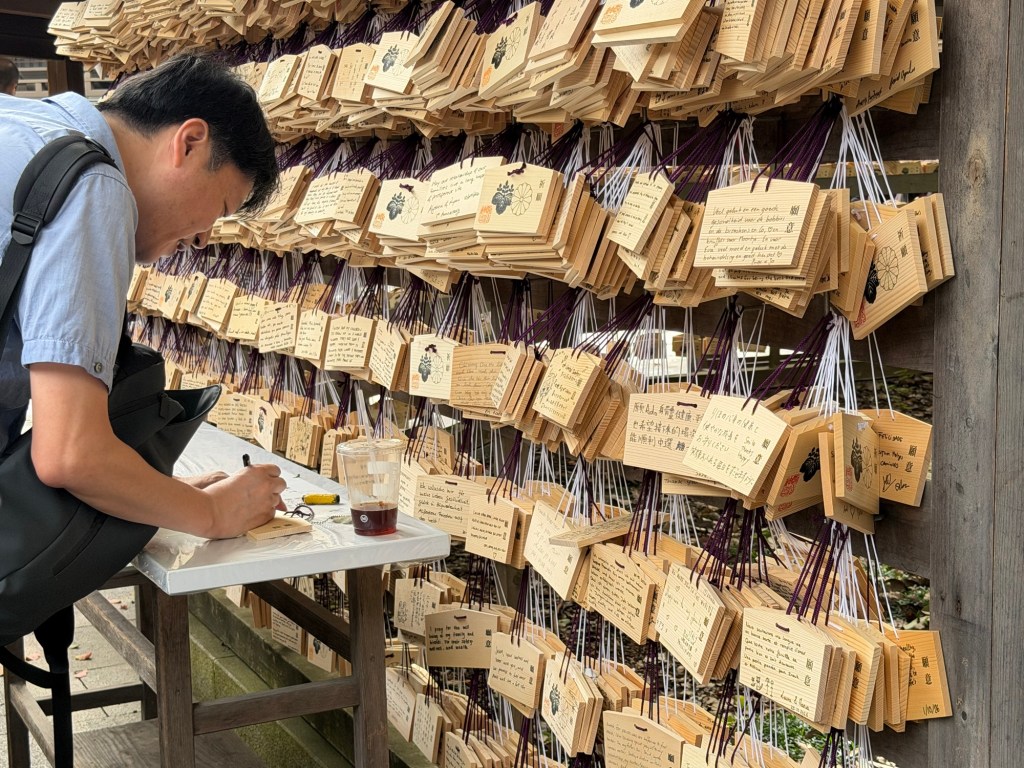
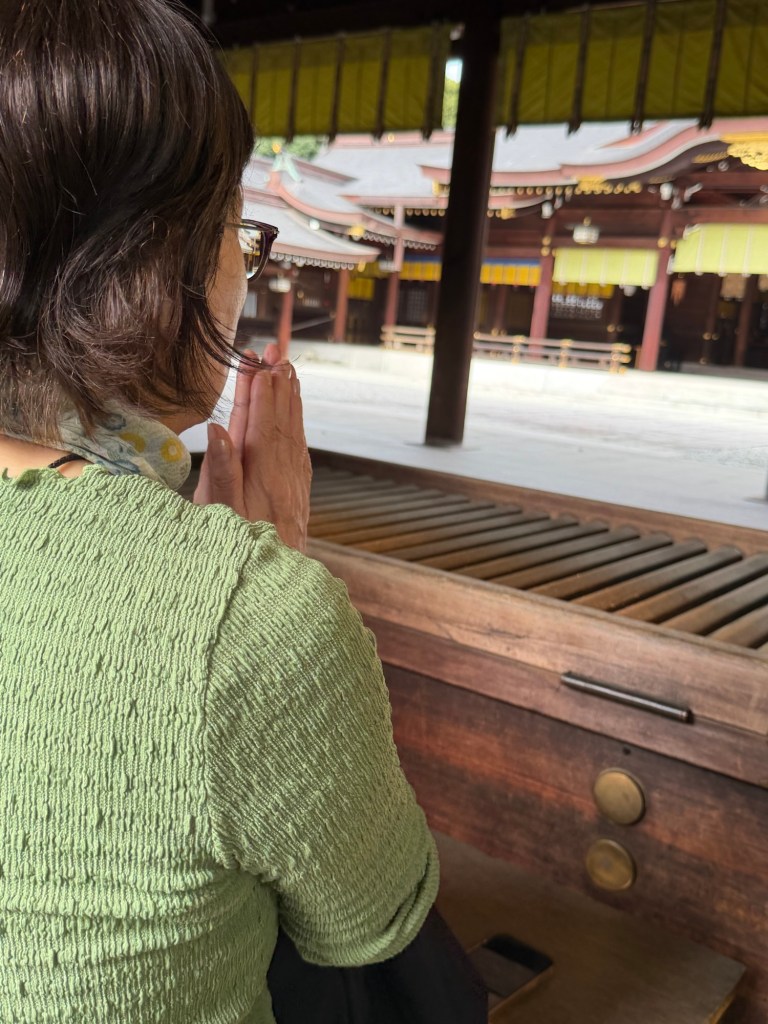
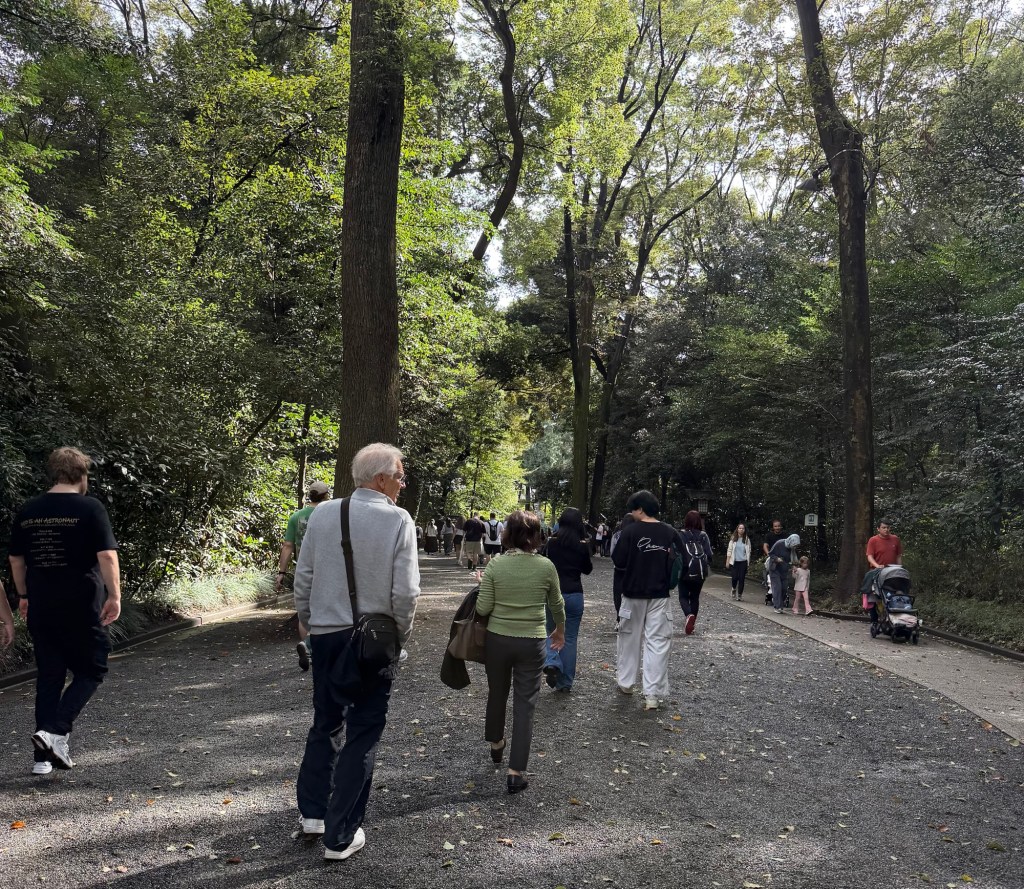
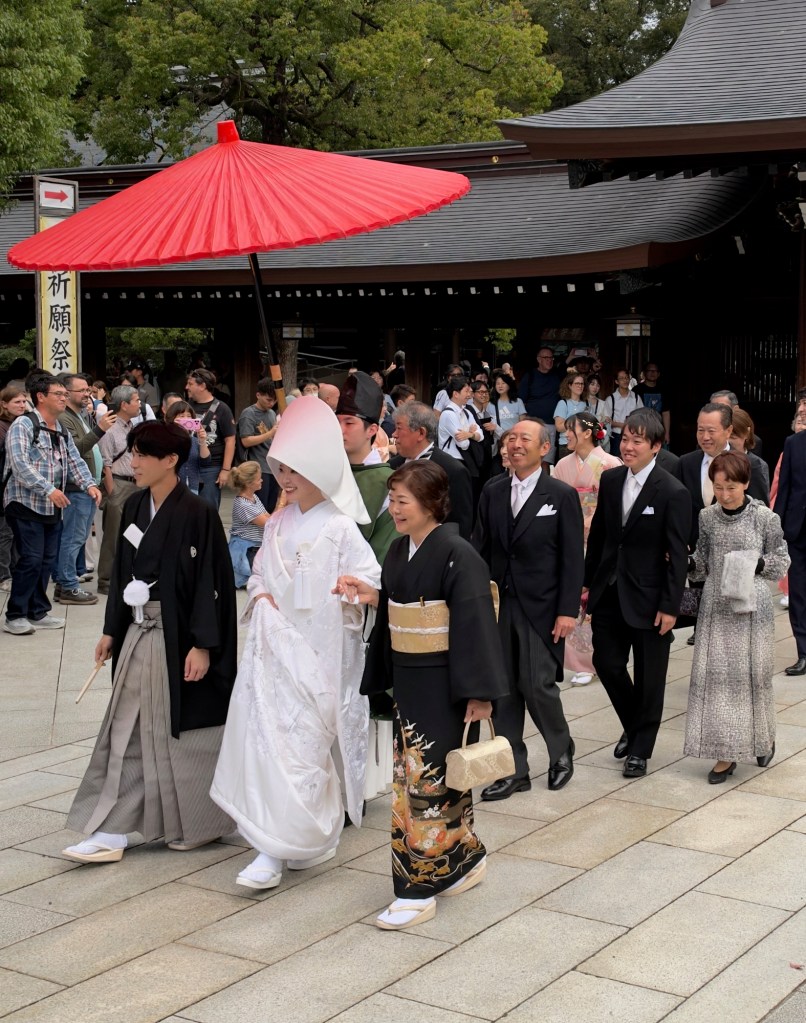
Off to breakfast by 9:30 and met our guide for the day, Masumi, who took us on a city tour including a visit at the Meiji Jingu Shrine, Tokyo’s largest, which covers 175 acres, is home to over 100,000 trees, and is dedicated to the 122nd emperor, Meiji, who sat on the Chrysanthemum Throne. I took a photo of a wall inside the shrine, of saki barrels, which was a favorite beverage of that Emperor. The Shrine had lovely ginkgo trees covering grounds that were a pleasure to walk through. There were hundreds of payer requests hand written and hung on a wall. At the end of each day they are burned to make room for more prayers. Later we saw a bridal party and several families presenting their infants at the Shrine.
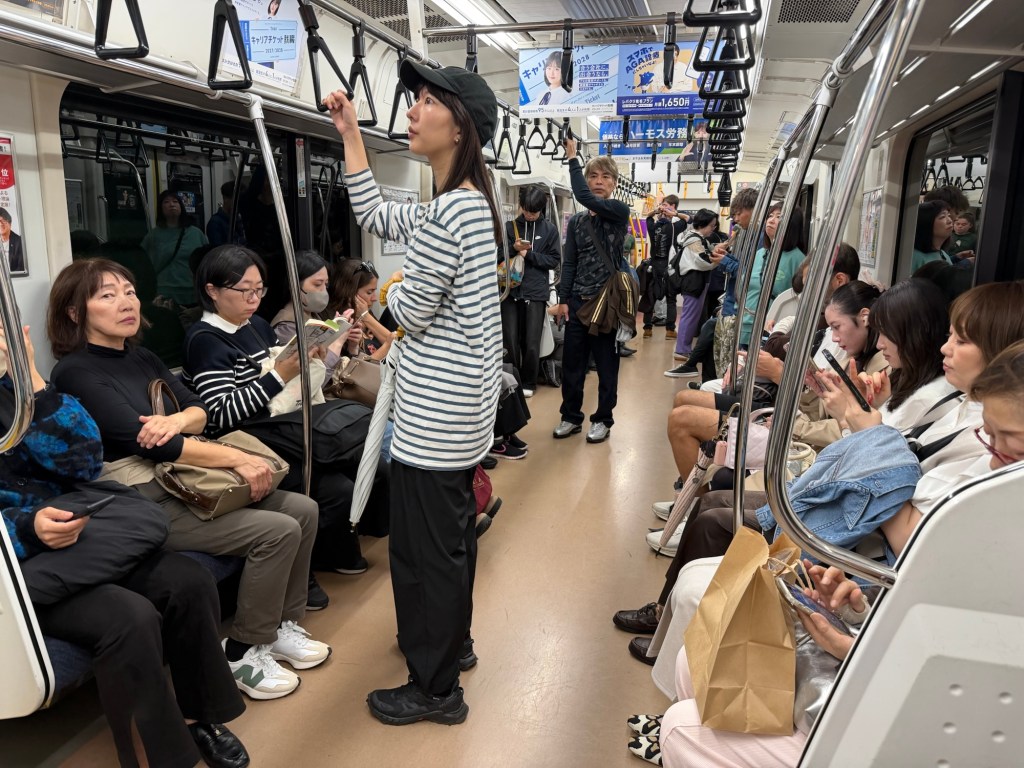
After leaving the shrine, we expressed a desire to experience the subway, so Masumi took us to a nearby subway station for a short one leg ride, just to give us the idea. She does not want us riding the subway alone for fear we will get lost. So, after our brief ride, we were satisfied to stay off the subway.
We drove around several city districts and stopped near the famous intersection called Shibuya where 3-4 million people cross the intersection in any and all directions when the light turns green for pedestrians. There is a statue of a famous faithful dog named Hachi, who waited at the train station every day for his master to arrive even after his master had passed way. The dense crowd crossing the intersection was amazing to watch and then to experience. There are masses of people everywhere. It is interesting to see, but I could not live with so many people around me.


Near the intersection was a huge mural painted by a famous artist named Taro Okamoto, 1911-1996, who had known Picasso. The mural was painted between 1967-69 and is called Myth of Tomorrow. It was installed in 2008 after having been forgotten in a warehouse for many years after it’s original home, a hotel, had gone bankrupt. Farther along the street is a sculpture by Okamoto called Tower of the Sun.
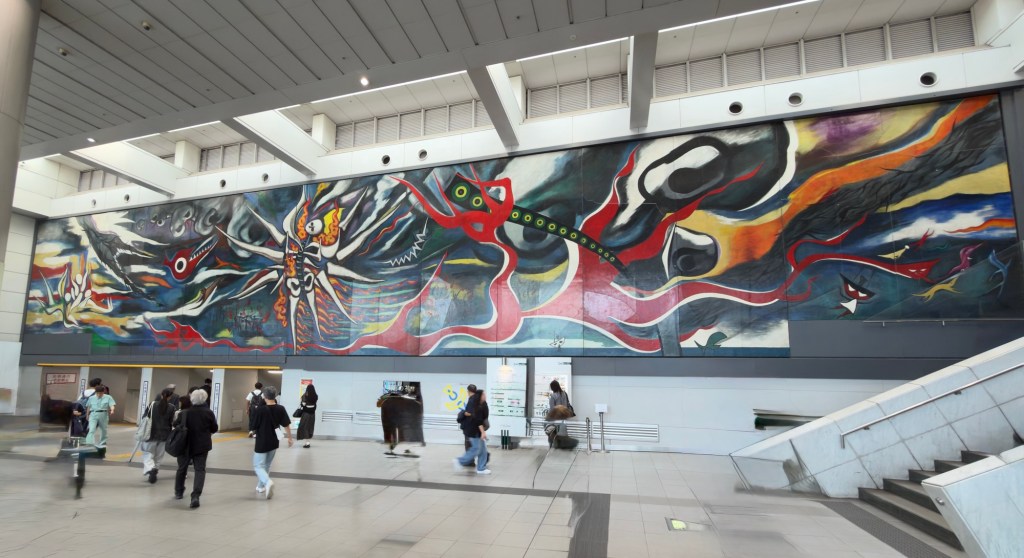

Mark had forgotten the cord for the toothbrushes so we went to an 11 story Bic Camera store and succeeded in finding the exact cord he needed. The store was a crazy maze with an unbelievable amount of inventory.


The weather was expected to rain during the rest of the day due to a typhoon in the area, so we went back to the room, grabbed our rain jackets and headed to a shopping street to look for clothes. We ended up in Takashimaya Department store, where I bought a pair of wool winter pants and 2 tops. Back at the hotel we had dinner and called it quits. It barely sprinkled all day.

October 26, 2026
Another murky day with heavy rain forecast. Our plan for the day is to take a walk through the main fish market and then visit a sushi maker, learn the process and eat some sushi along the way. We started by revisiting the Omotesando neighborhood where the high end stores are located and lovely trees line the streets. I wanted a few more photos. Our guide Yuka and the driver were willing to oblige so I got the images I wanted before heading to the market.
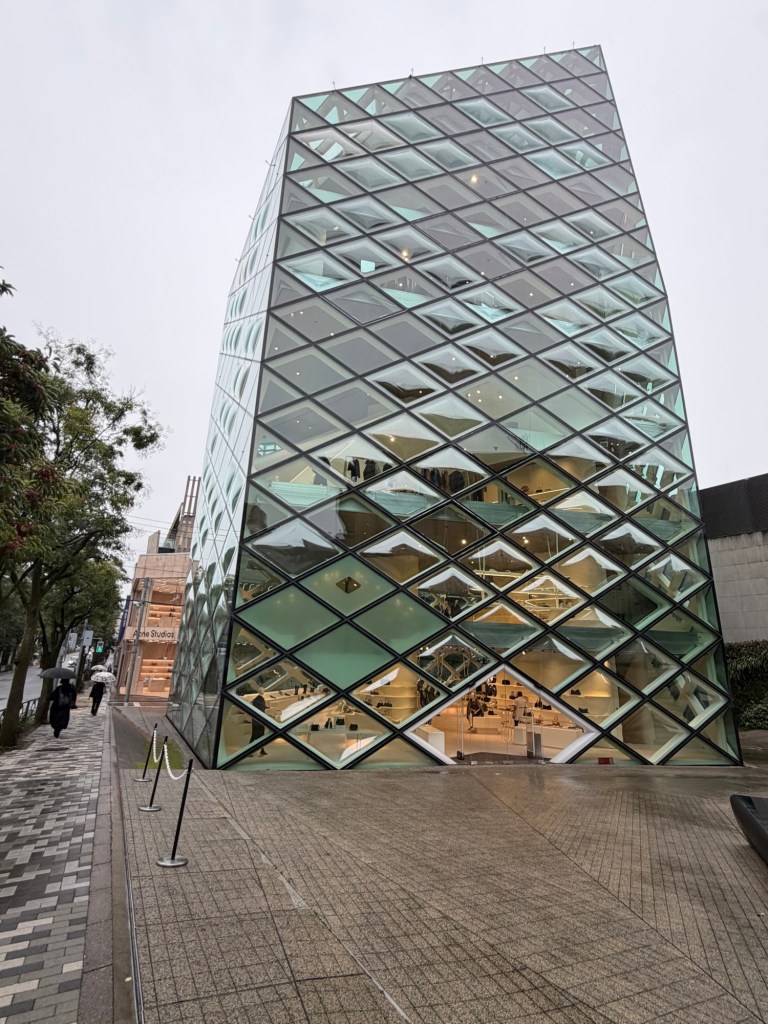
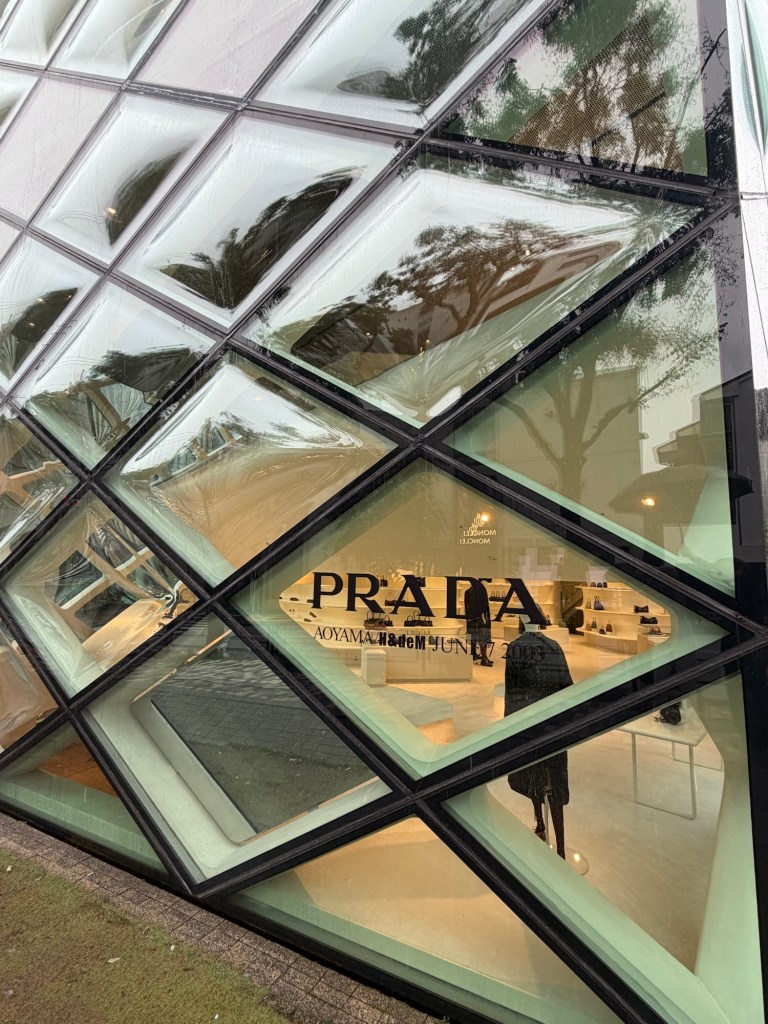

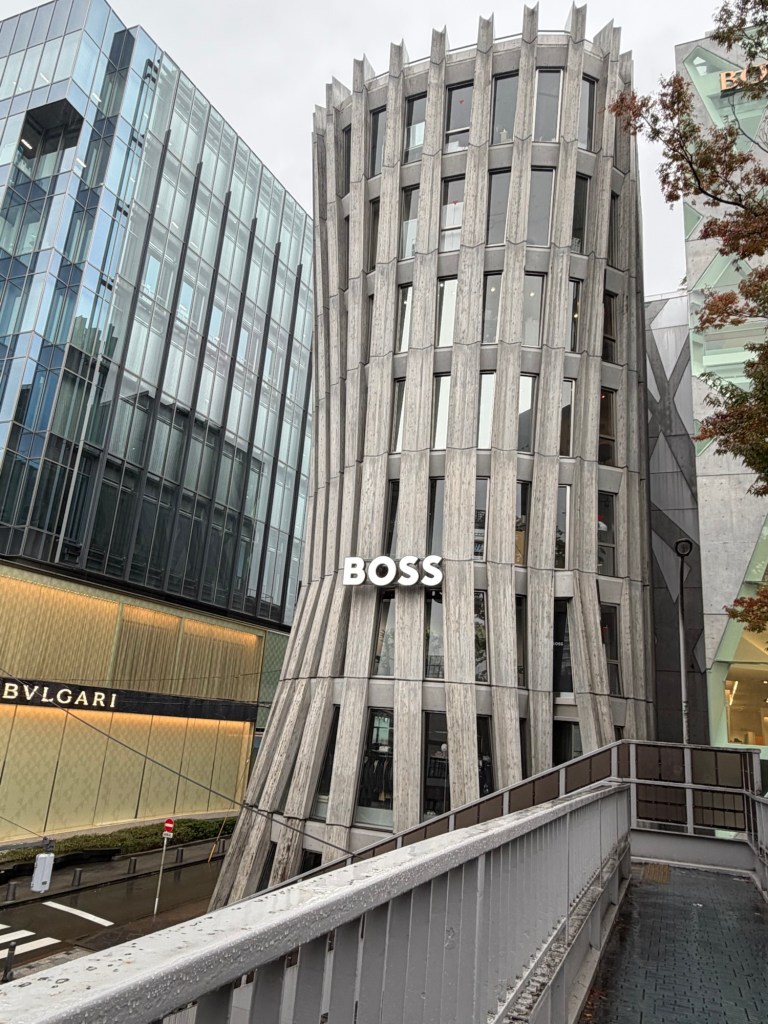
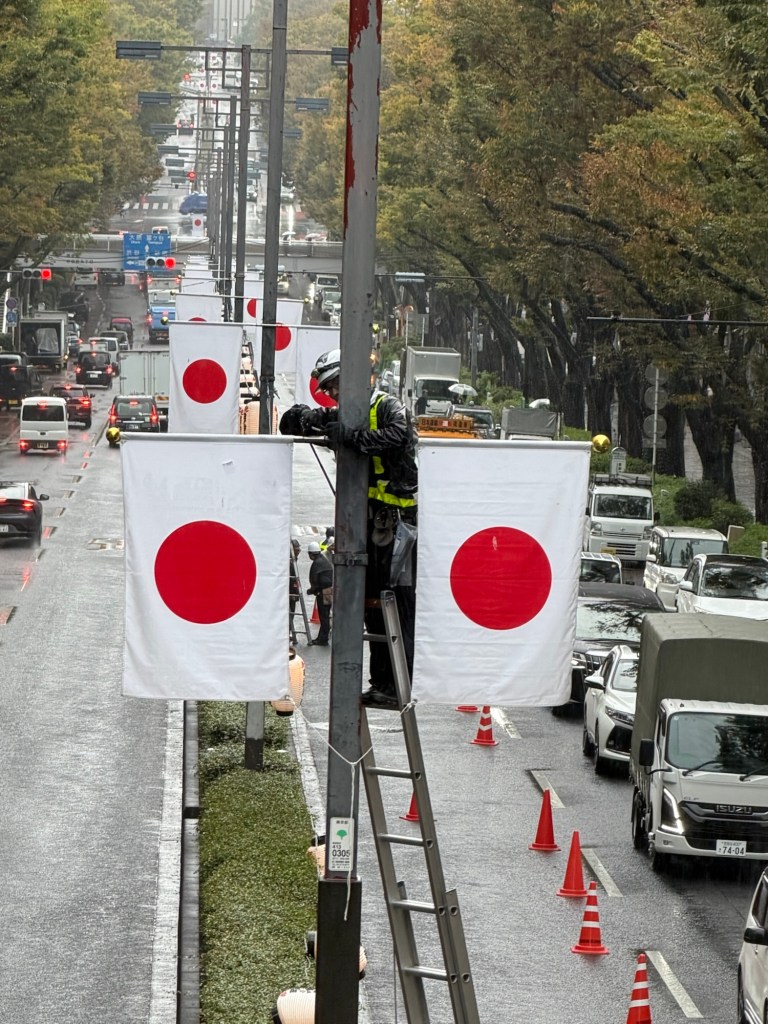


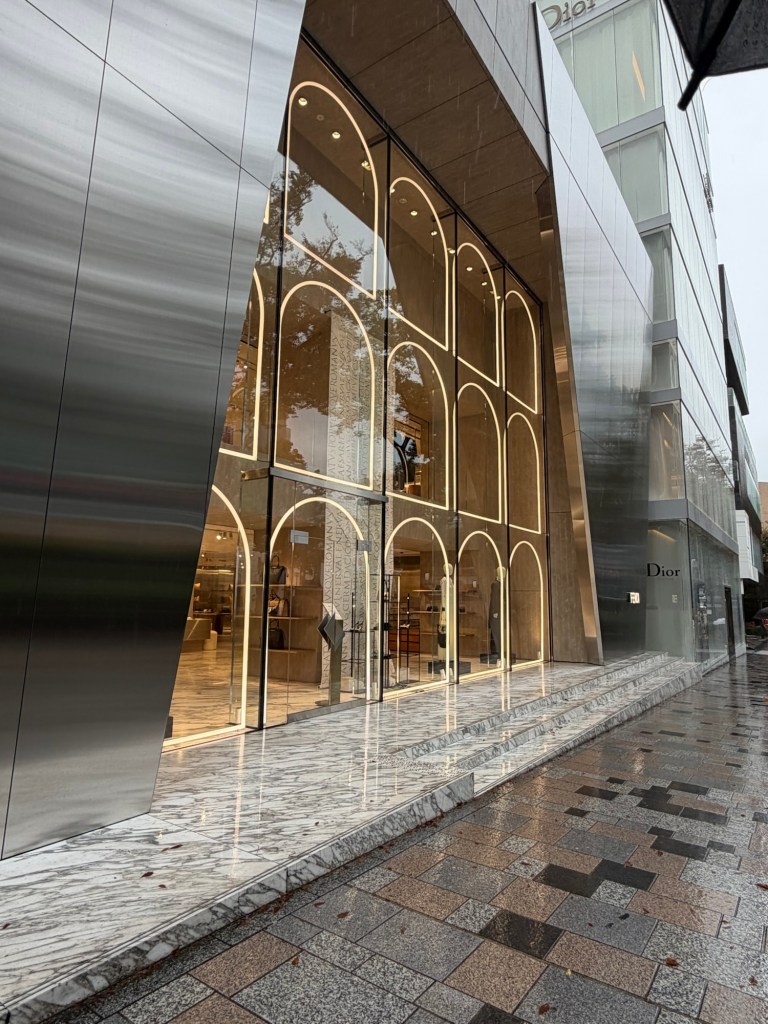
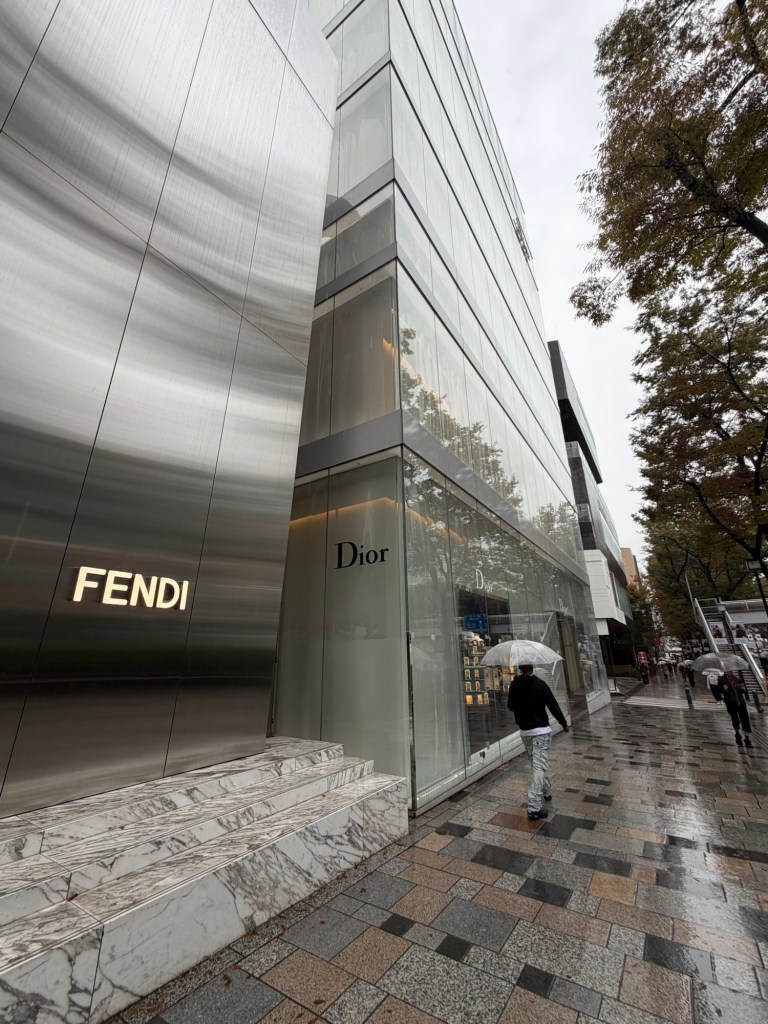

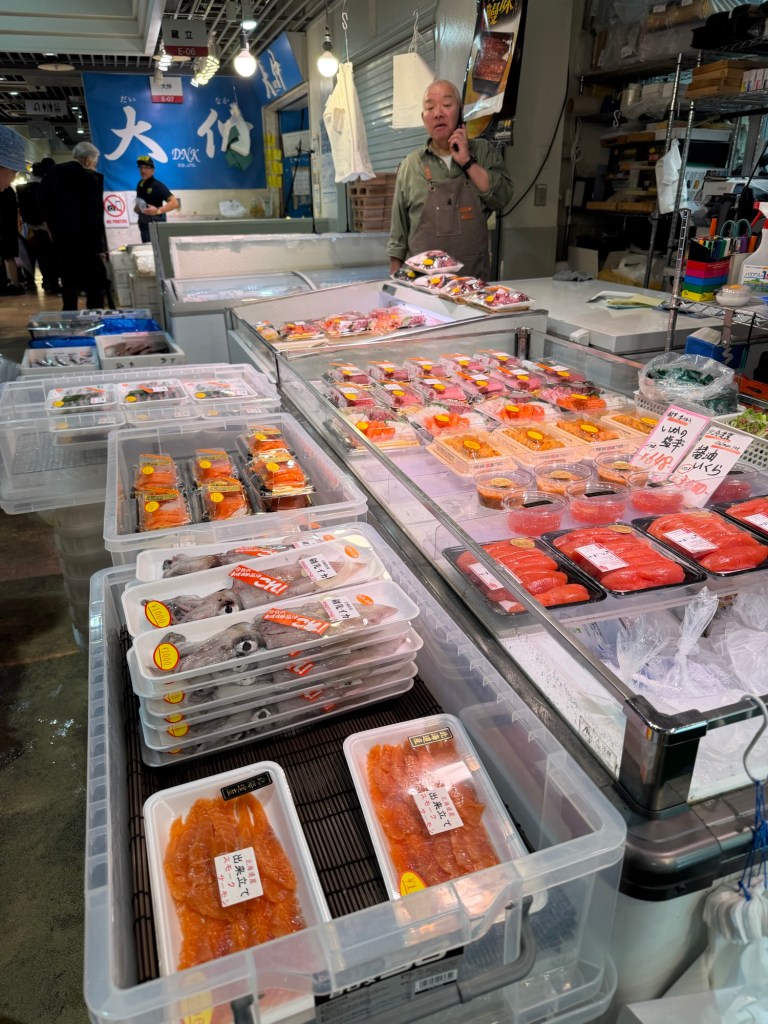
Then we drove to the fish market and made a pass through it. The place exceedingly clean with the fish well covered. There was hardly any fish odor.



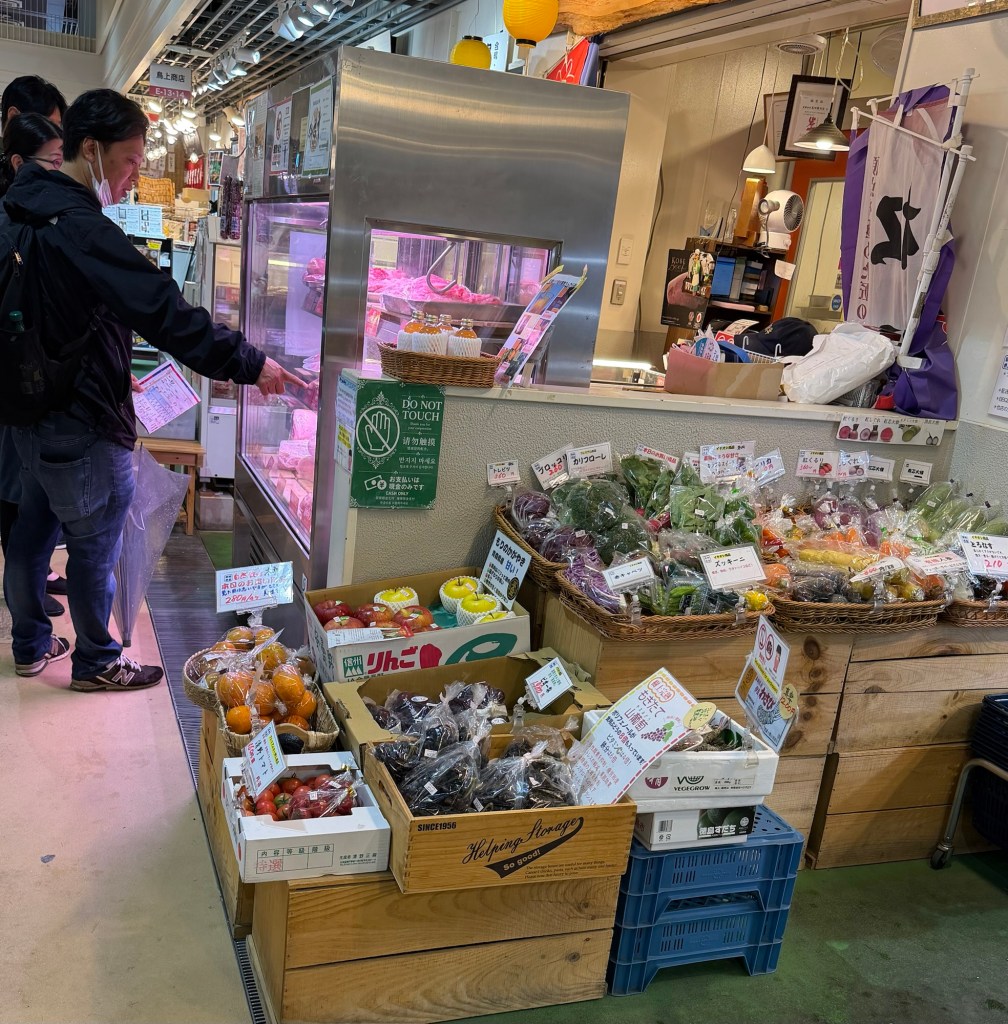

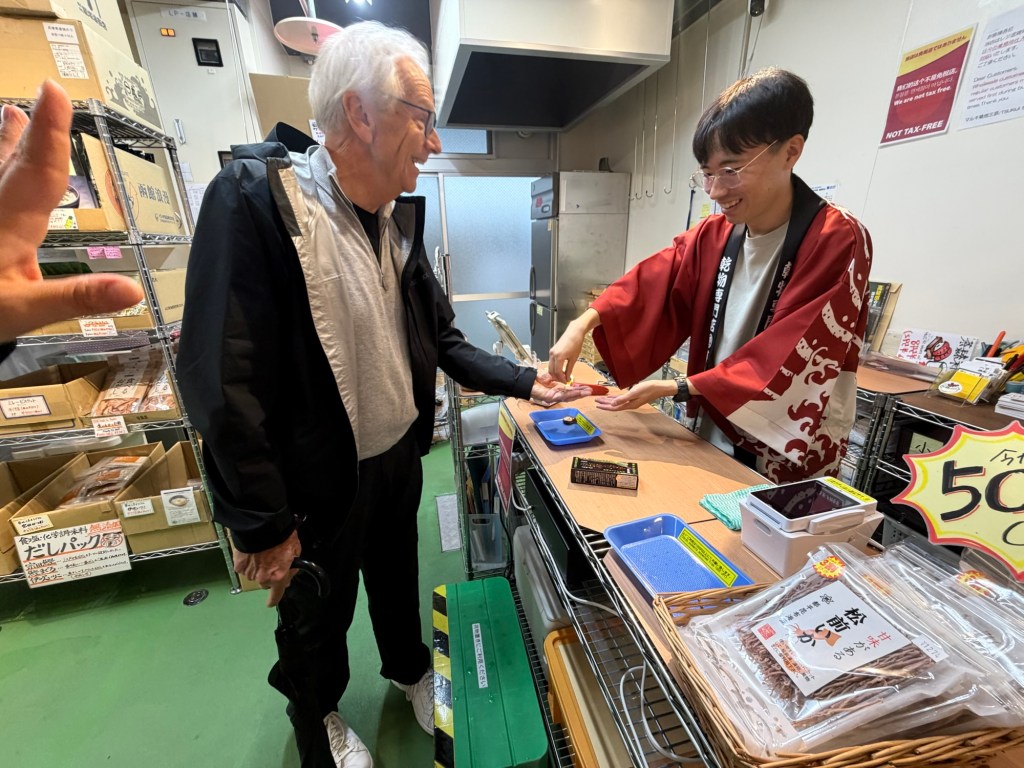

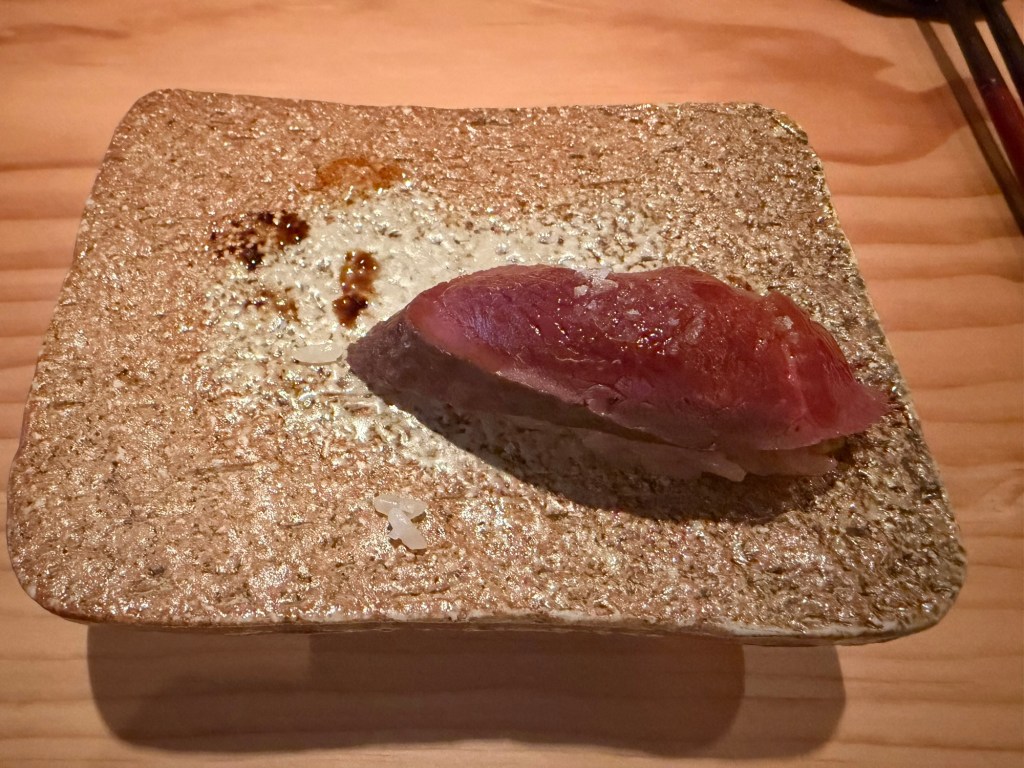
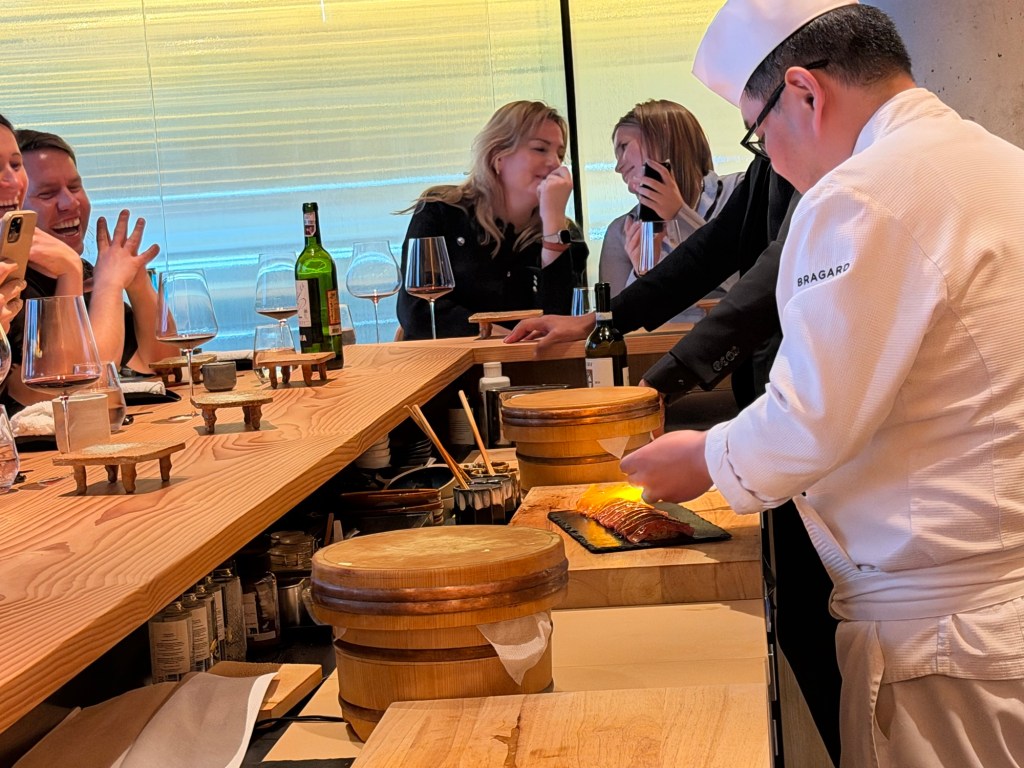
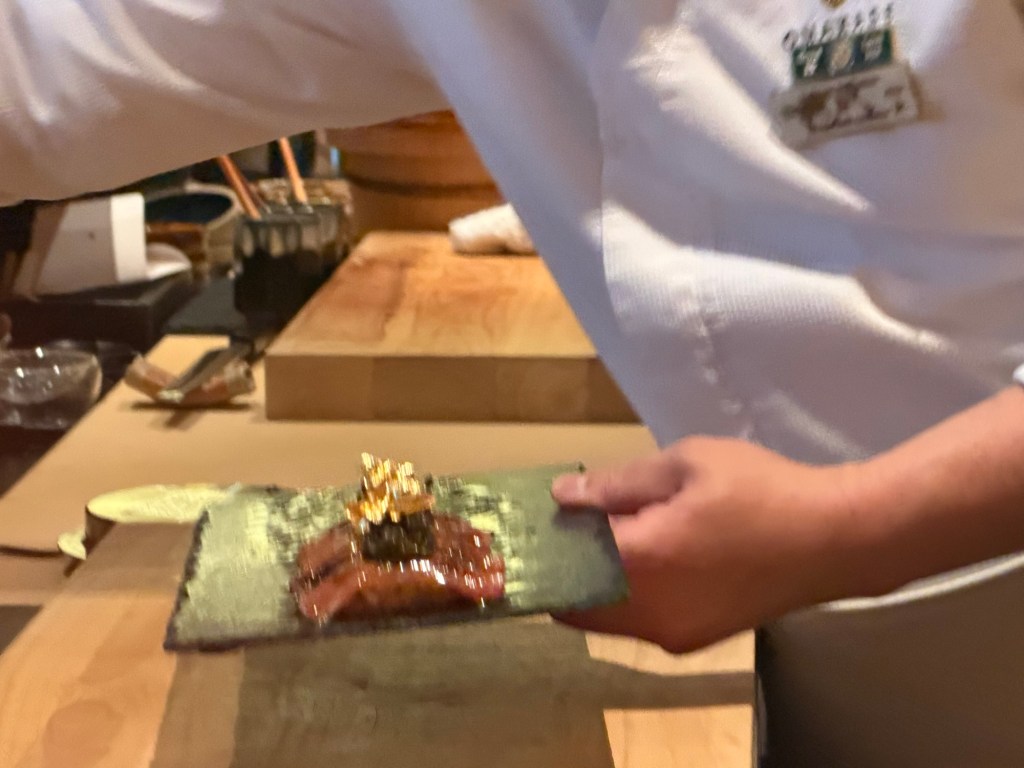
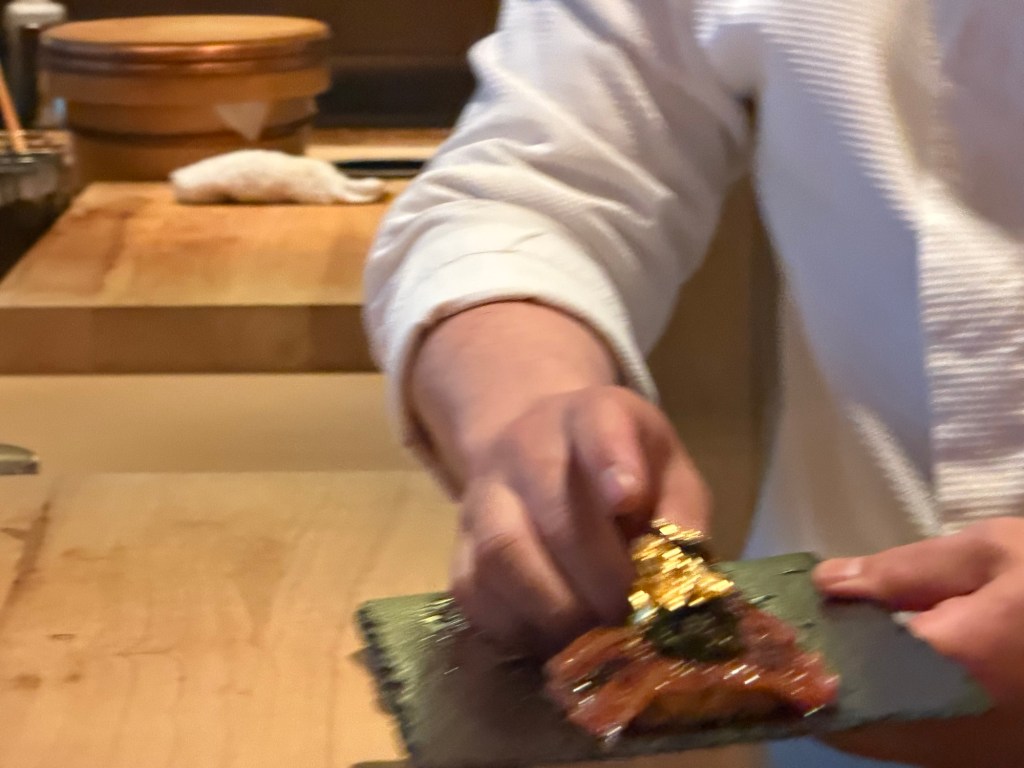
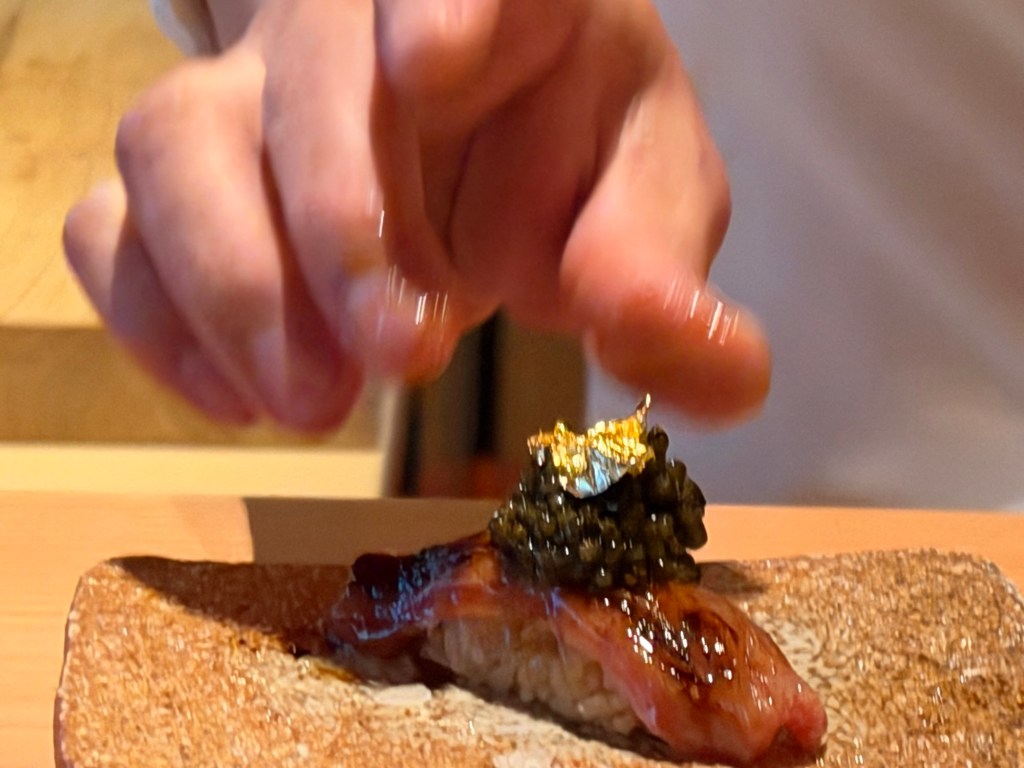
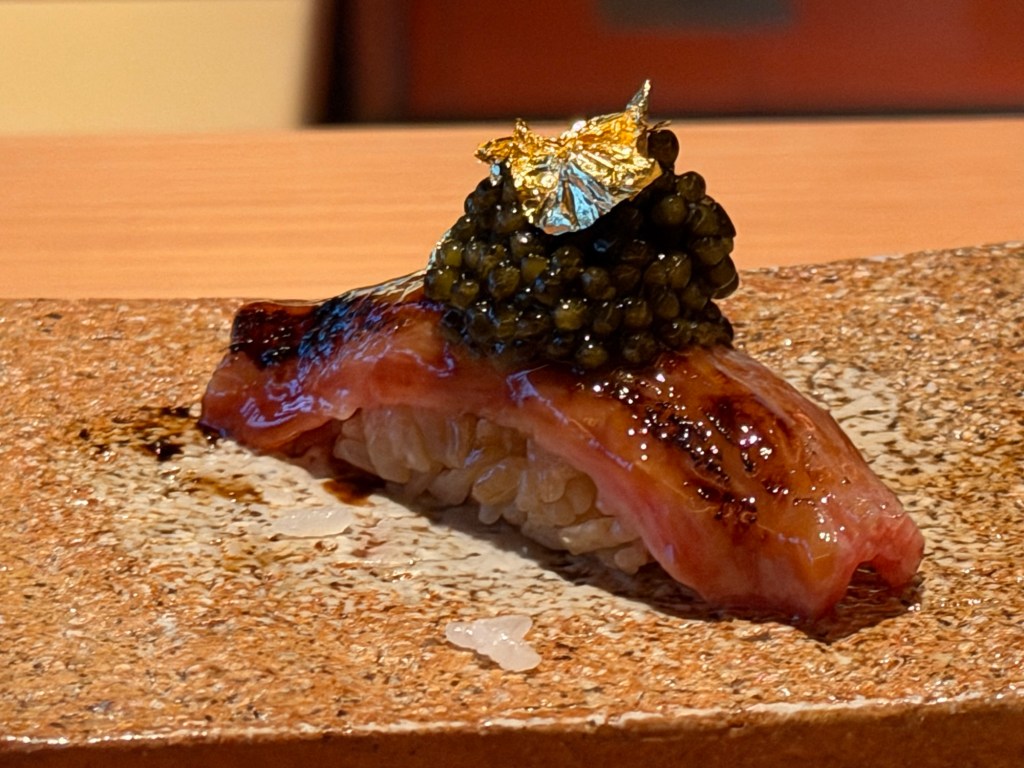
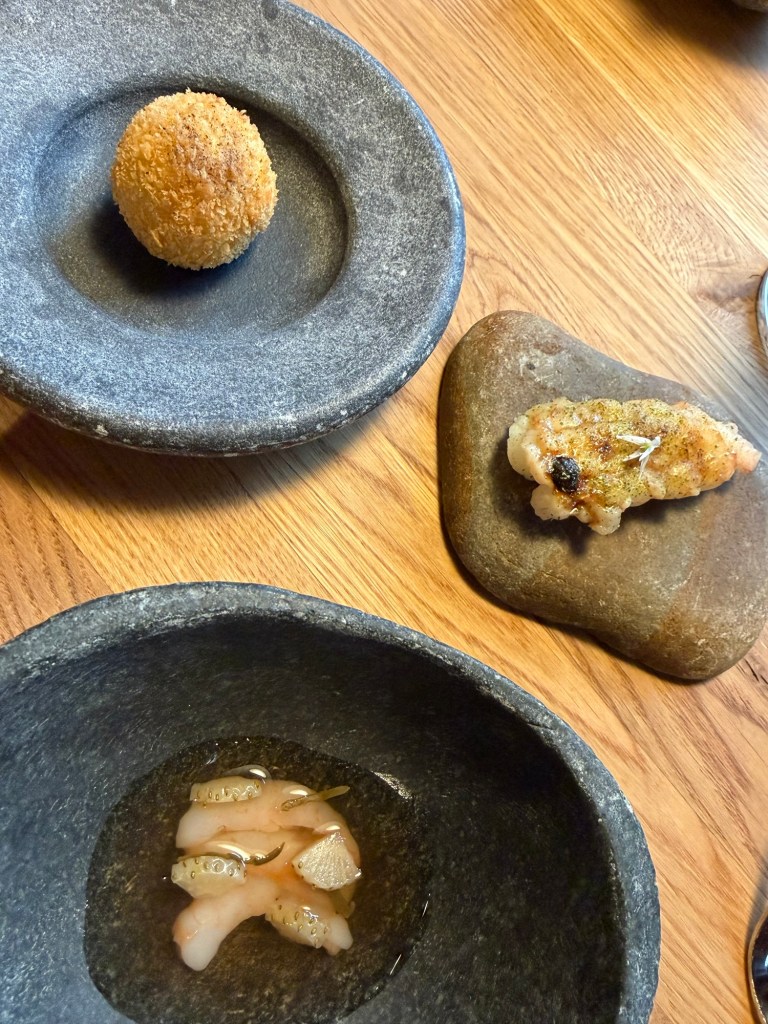
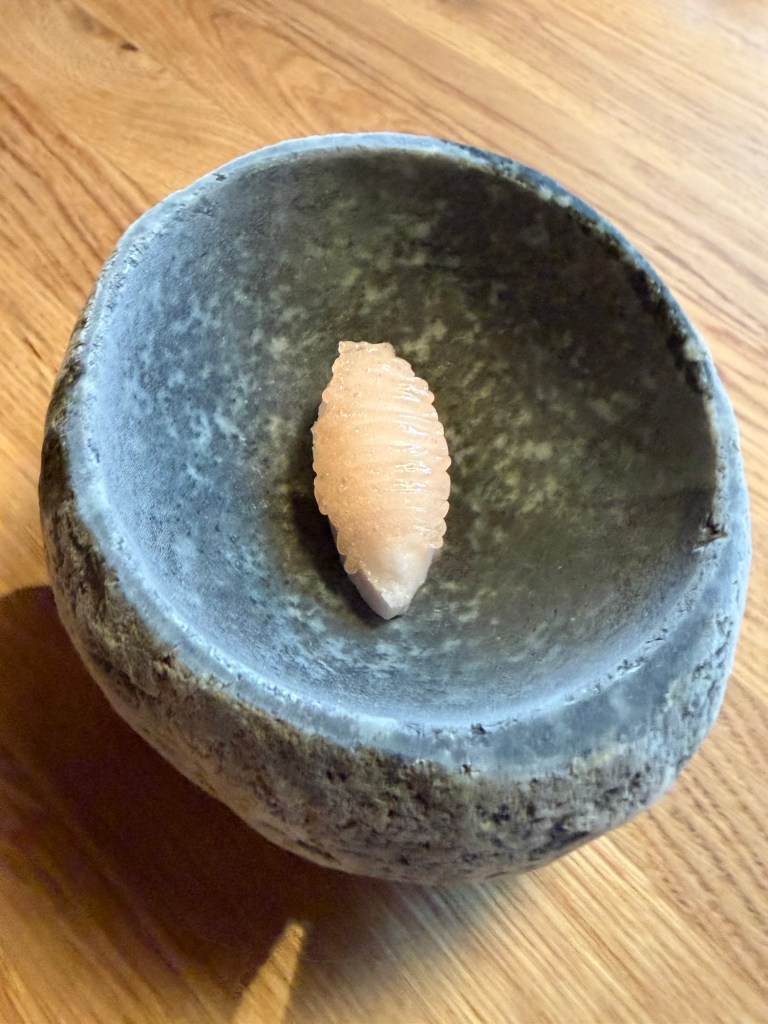
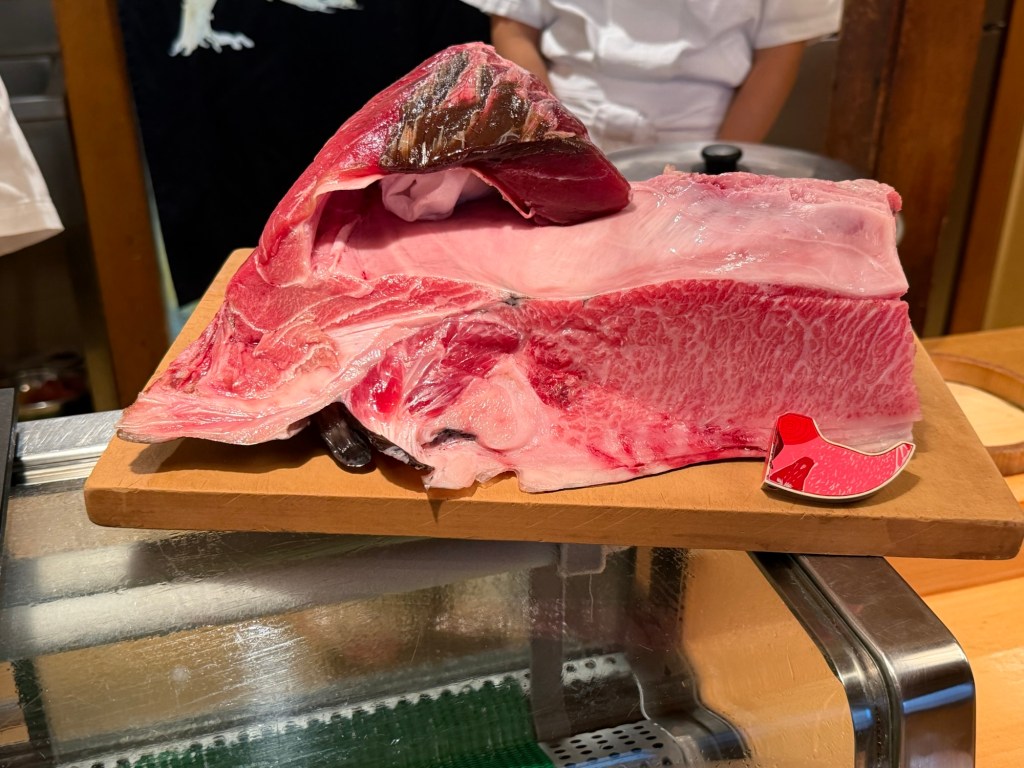
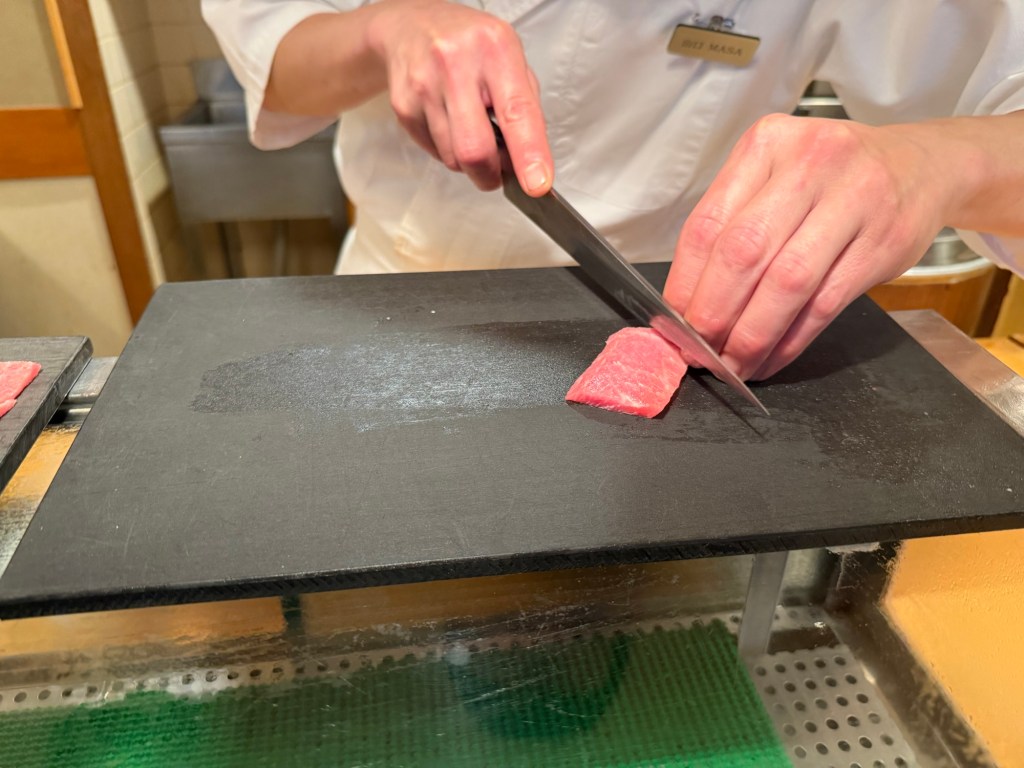
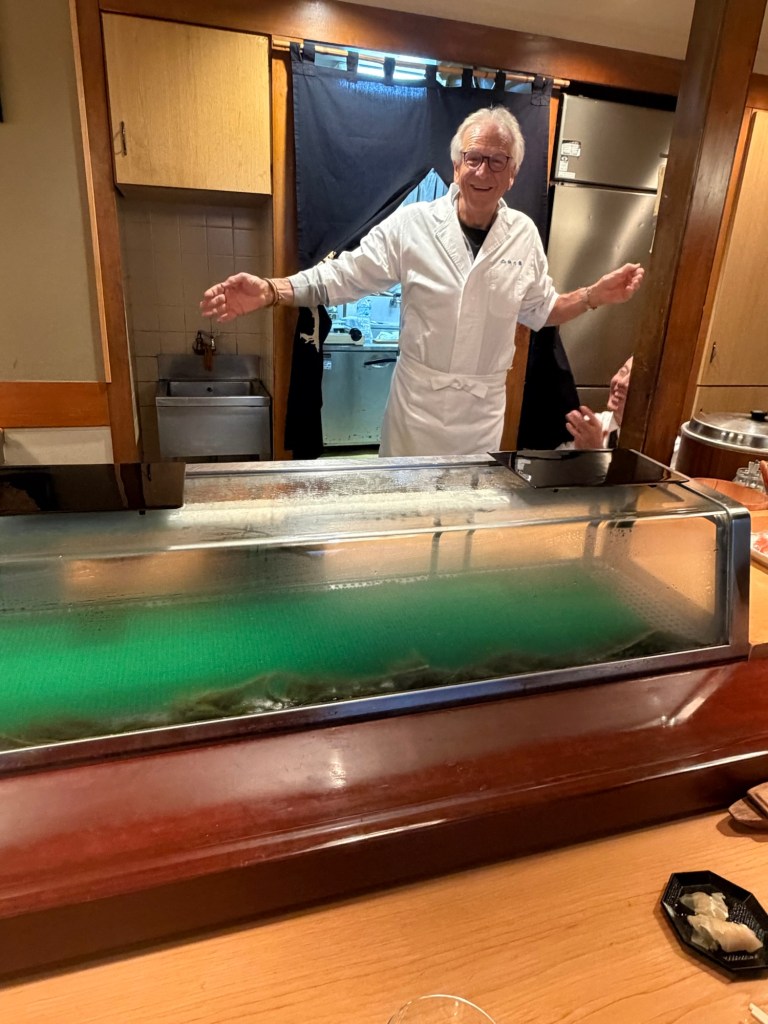
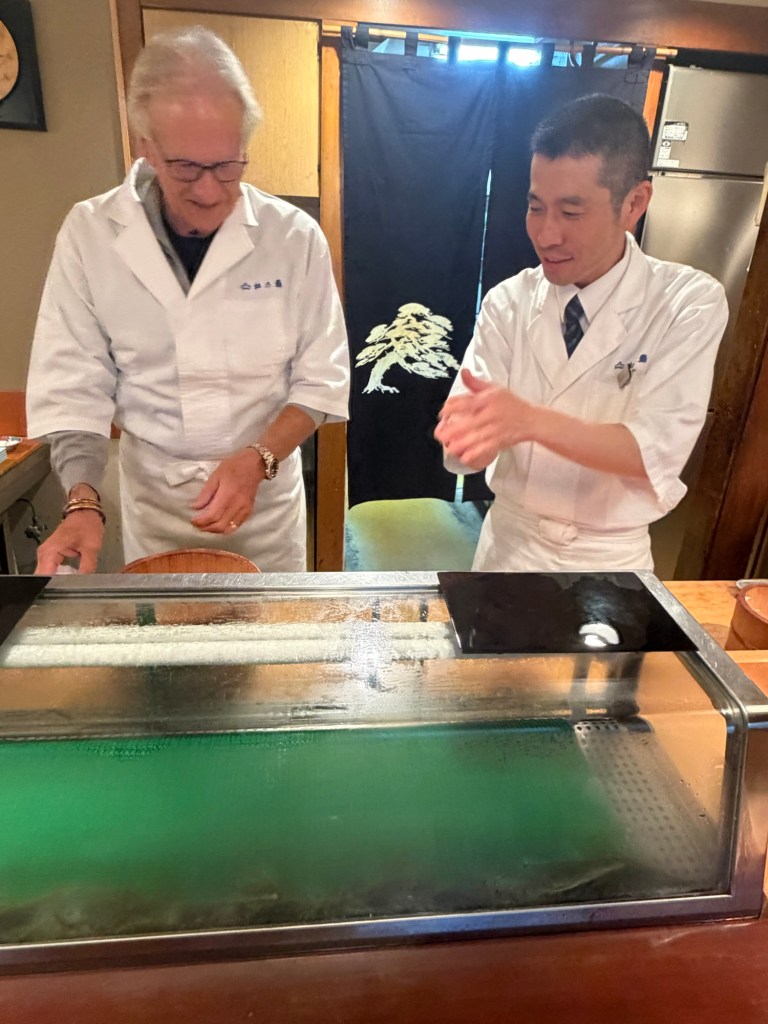
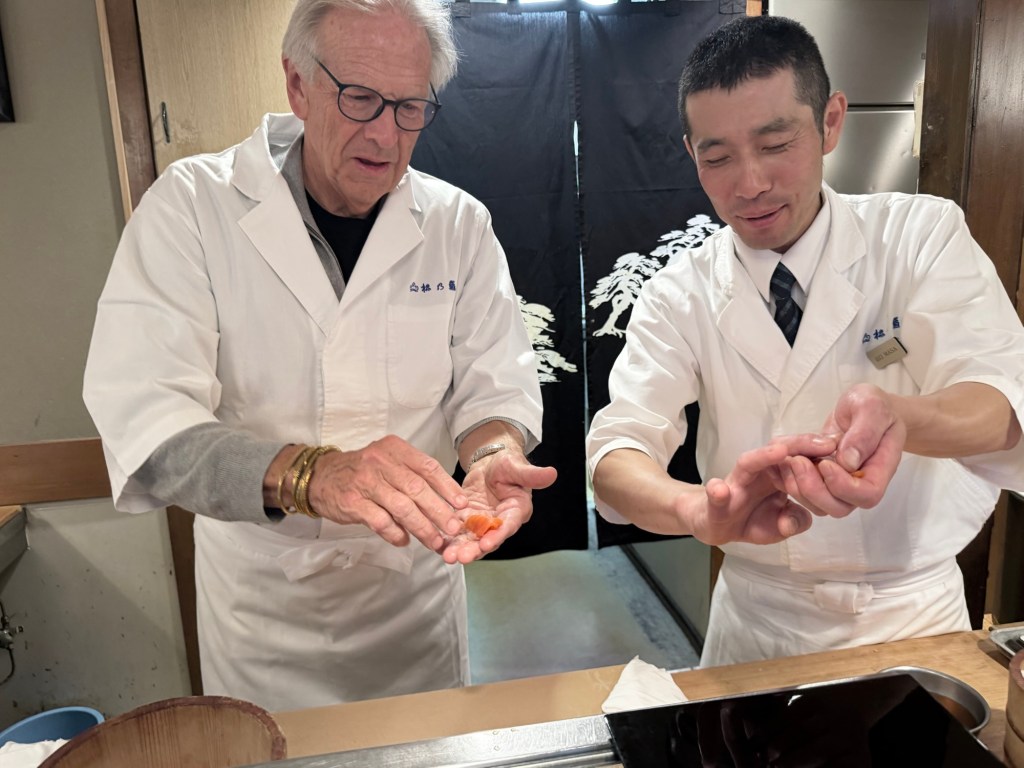
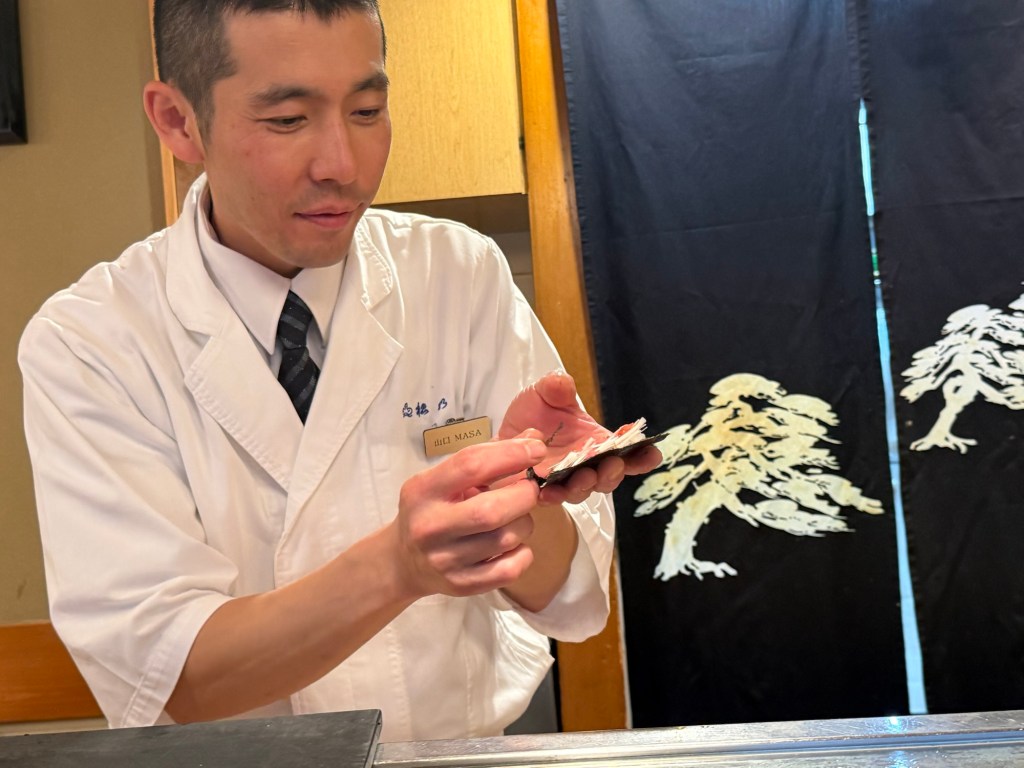
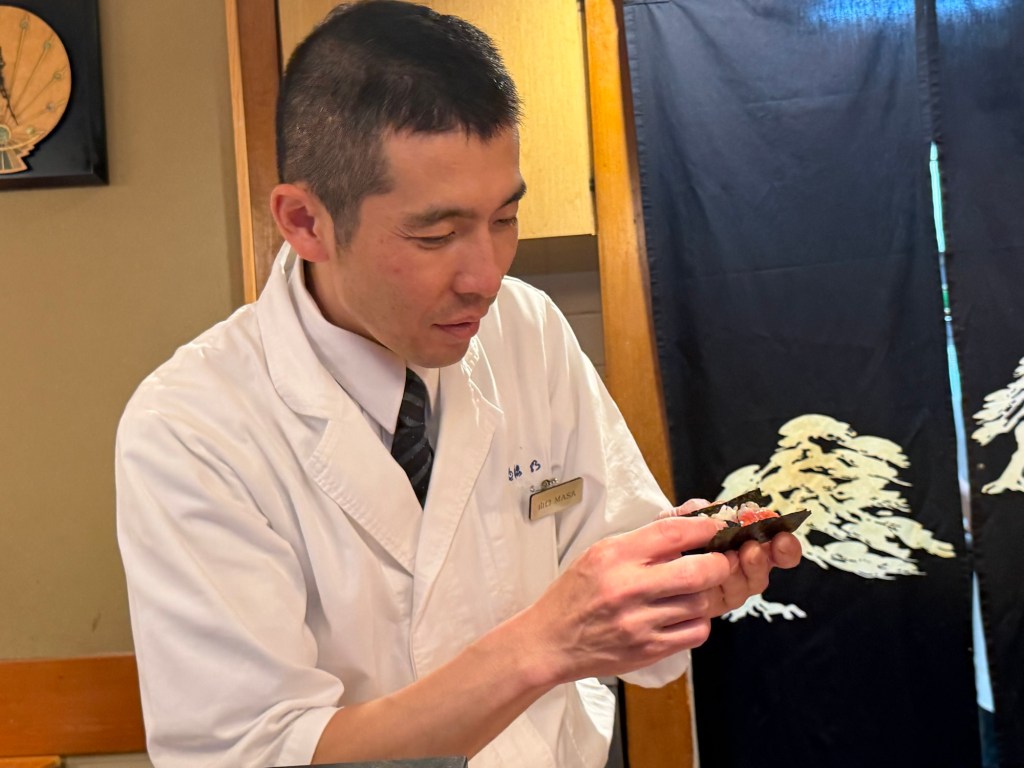
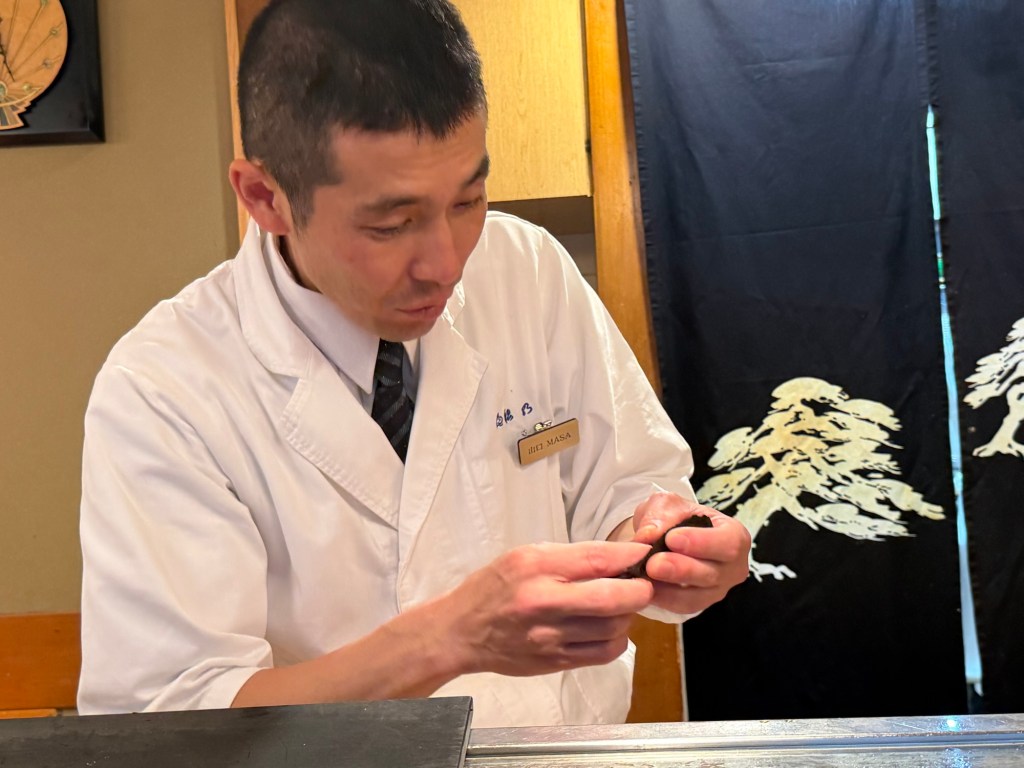
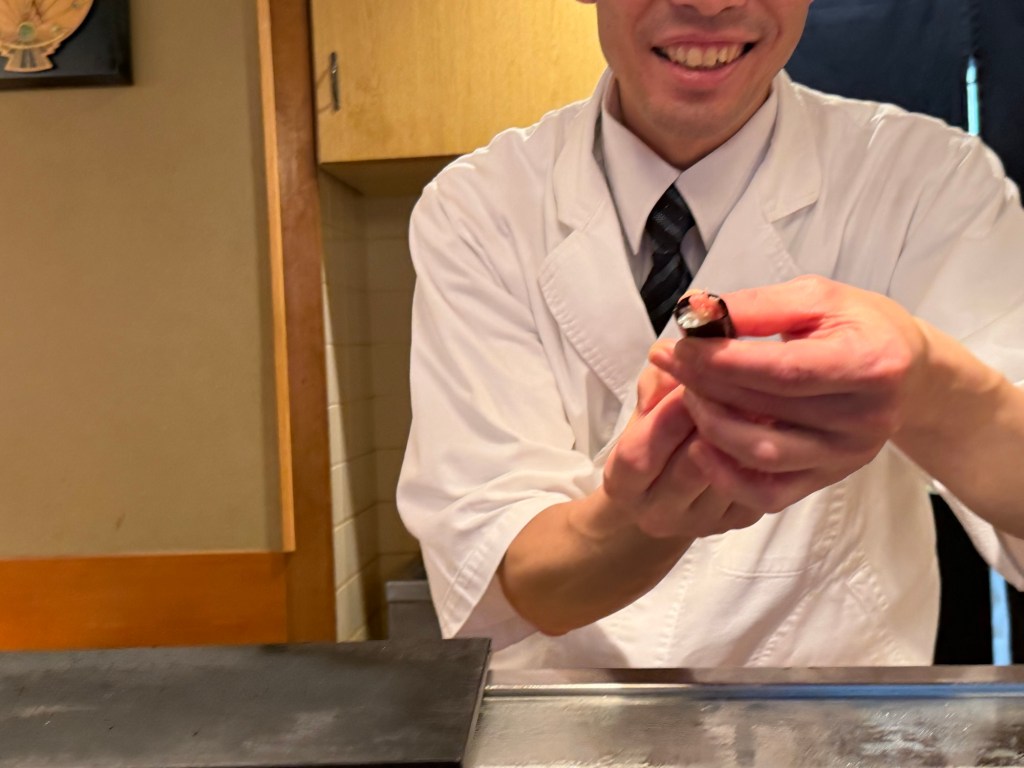
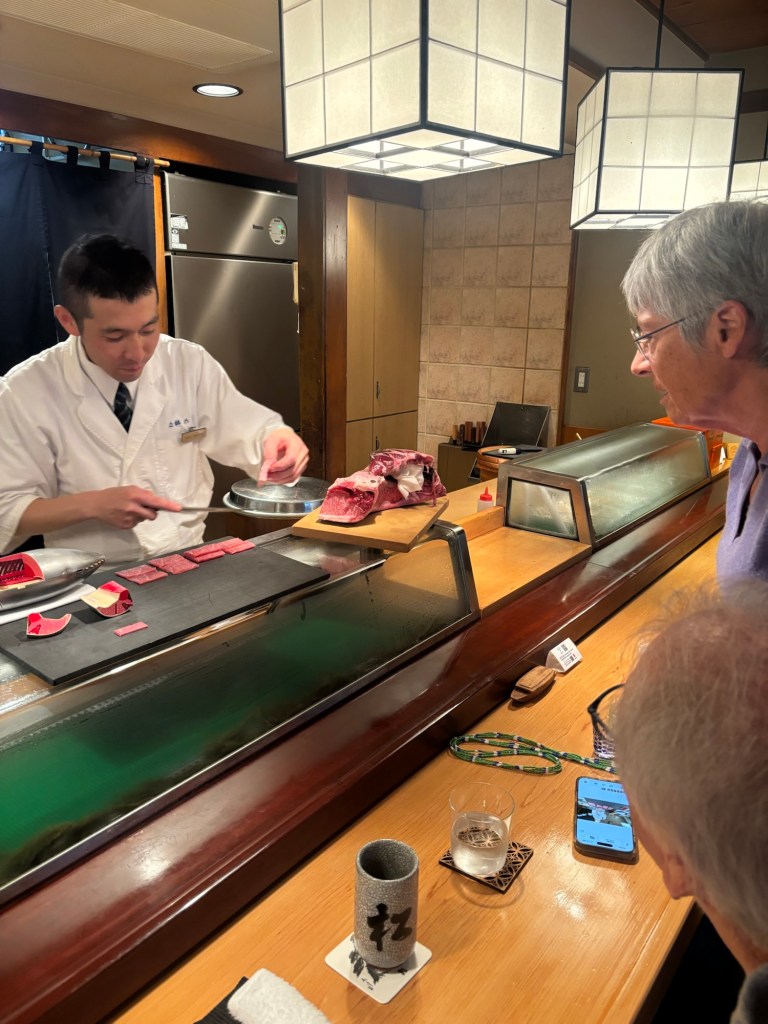
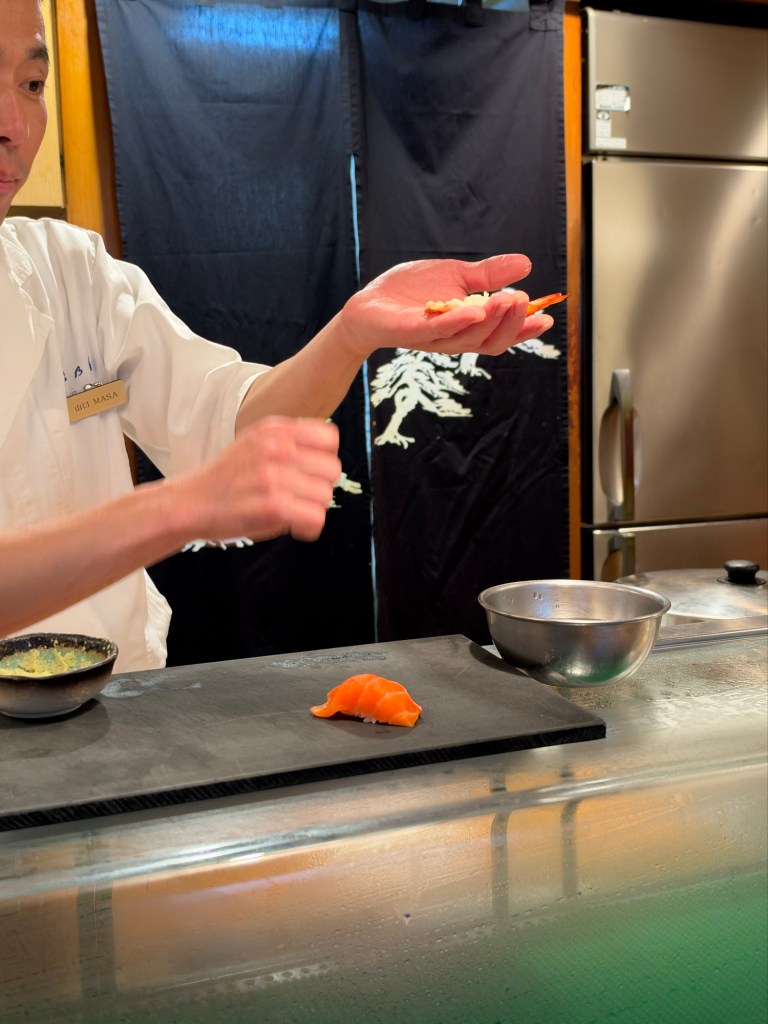
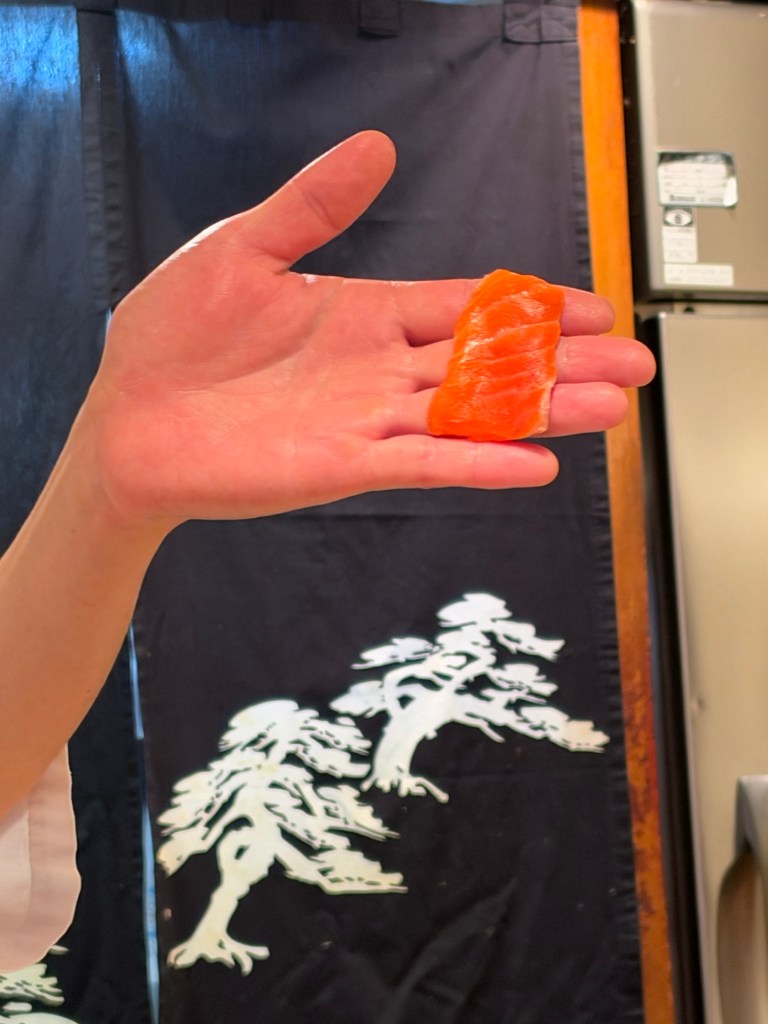
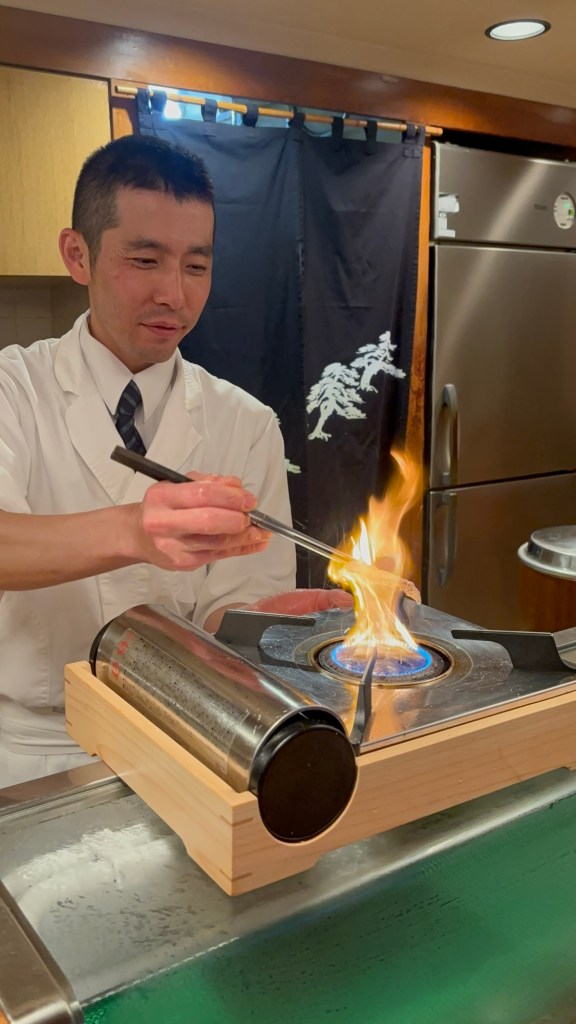
Then we were off to spend time with a sushi maker. The company, Matsu No Zushi, is 100 years old and has had 4 generations of family making and selling sushi. The head chef that demonstrated sushi making to us was not a family member, but was very good at demonstrating sushi making and entertaining us at the same time. His name is Masa and he was delightful. We must have sampled 12 different pieces of sushi each while learning about the process and how each different fish is prepared. Only a tiny piece of the tuna is used for quality sushi. Masa showed us the exact part of the fish, which is the place between fattty and medium fatty tuna called Shimofuri.
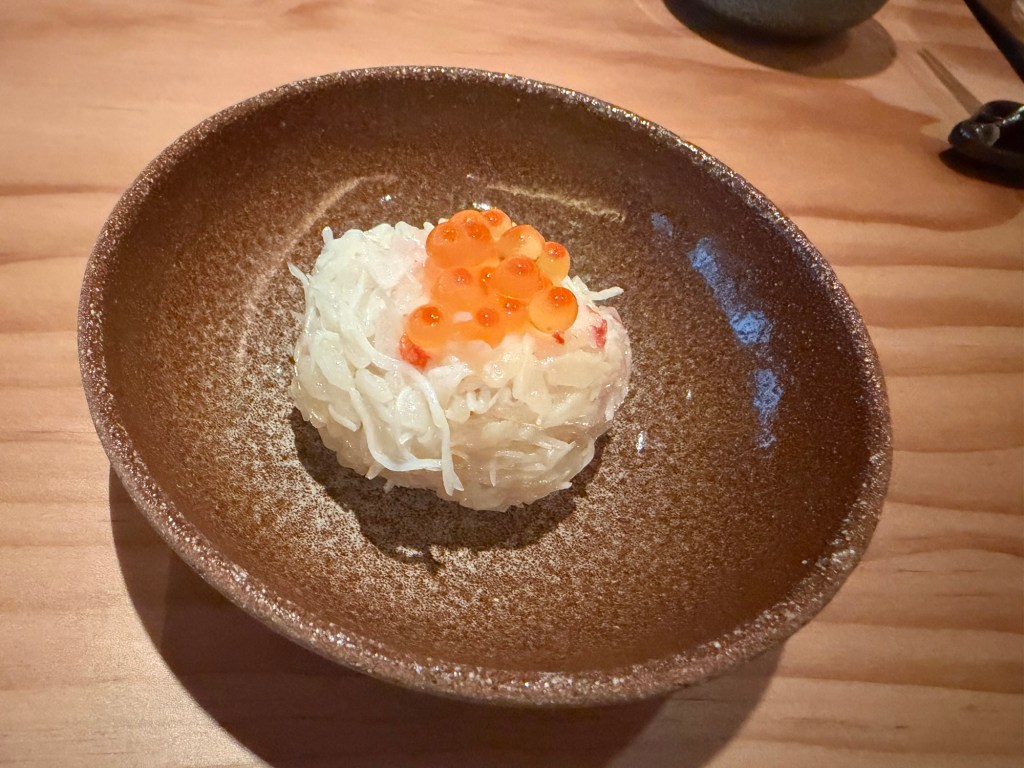
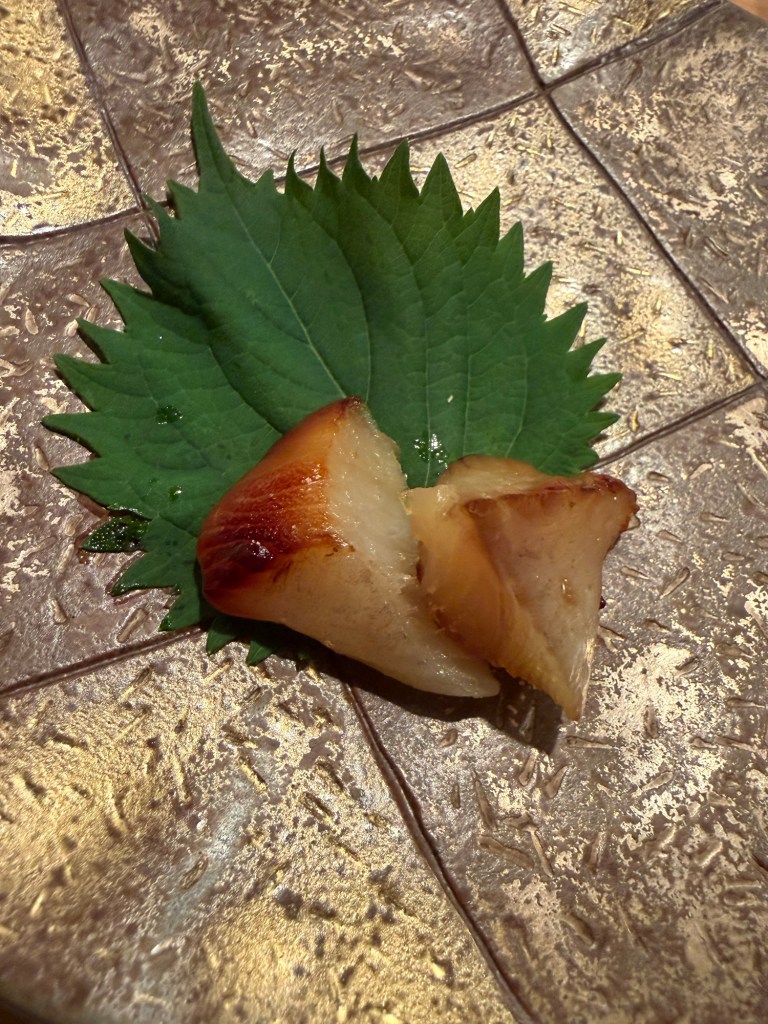
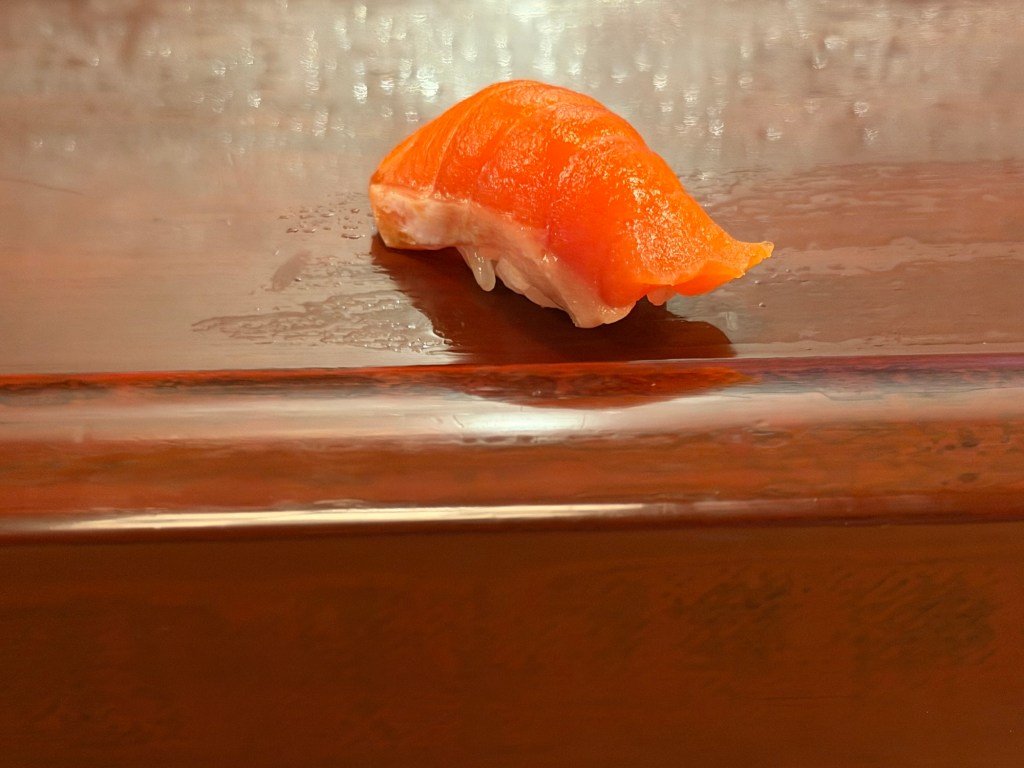
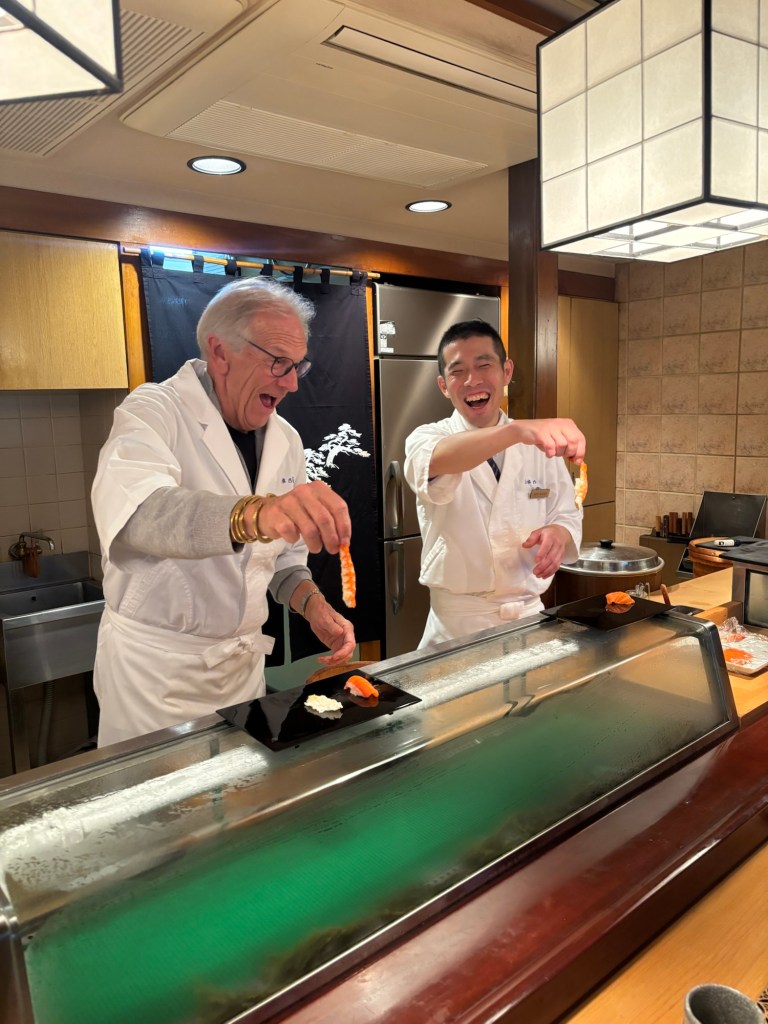
We sampled 5 different preparations for that tuna, all of them melting in our mouths. We also tasted salmon, scallop, puffer fish, red snapper, cod, and shrimp sushi. After watching Masa make all this sushi, he asked Mark to suit up, get in the kitchen with him, and make some sushi himself. So he did and we laughed all the way through the process and ate 2 more pieces of sushi. After all that we were stuffed.
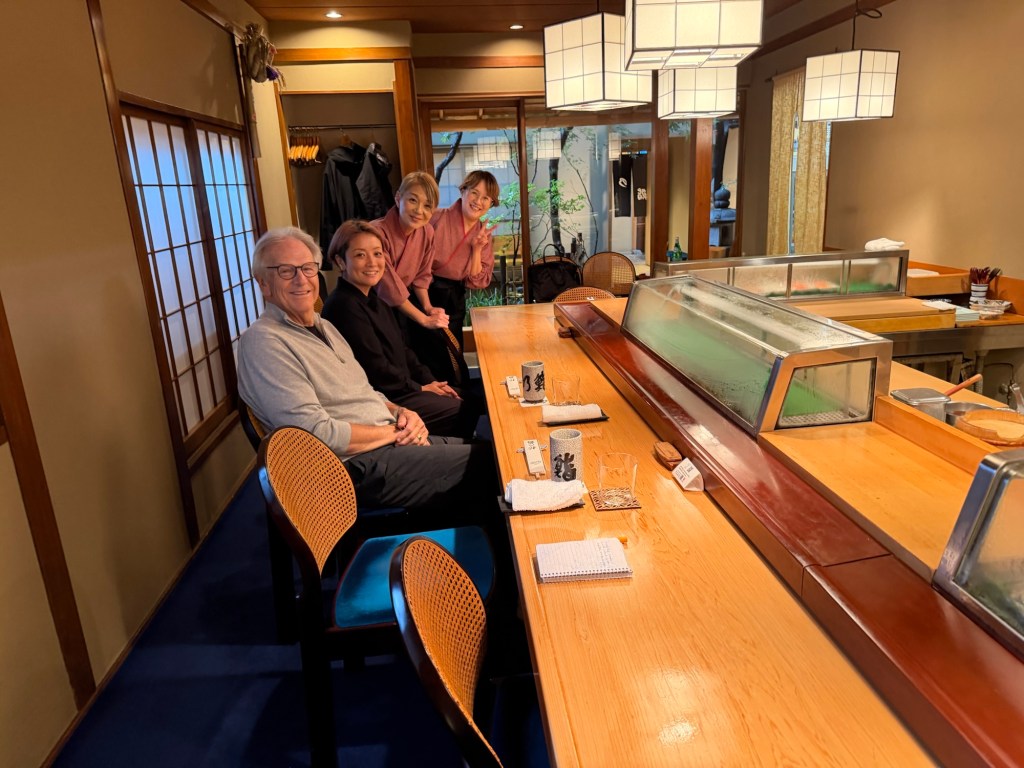


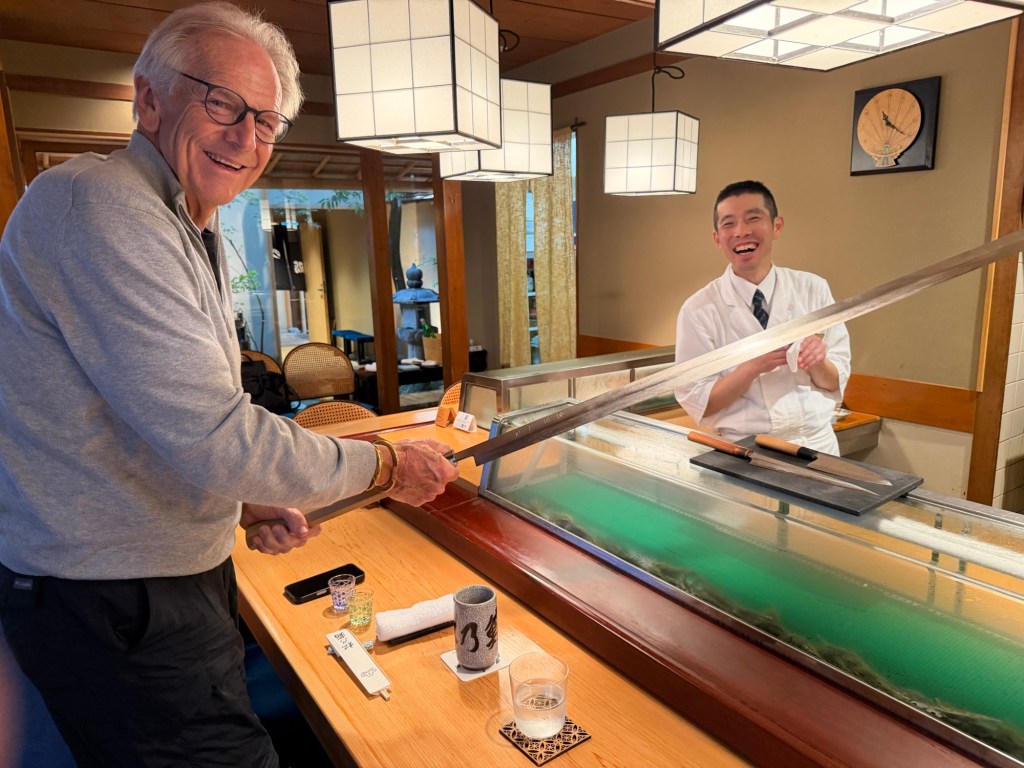















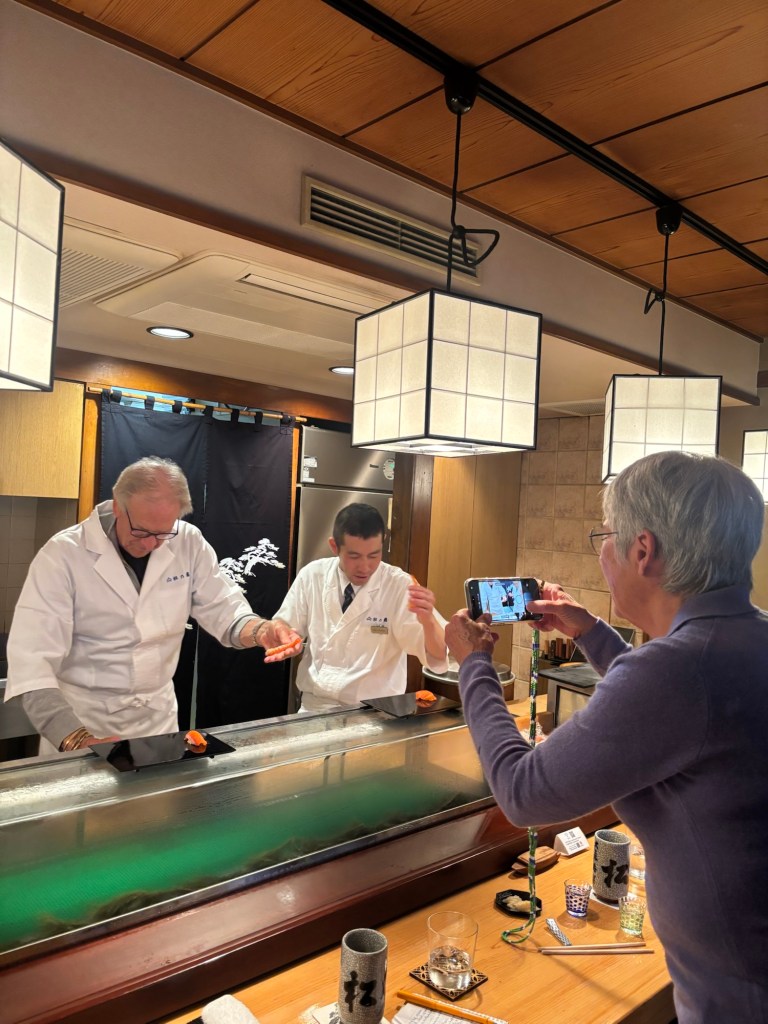
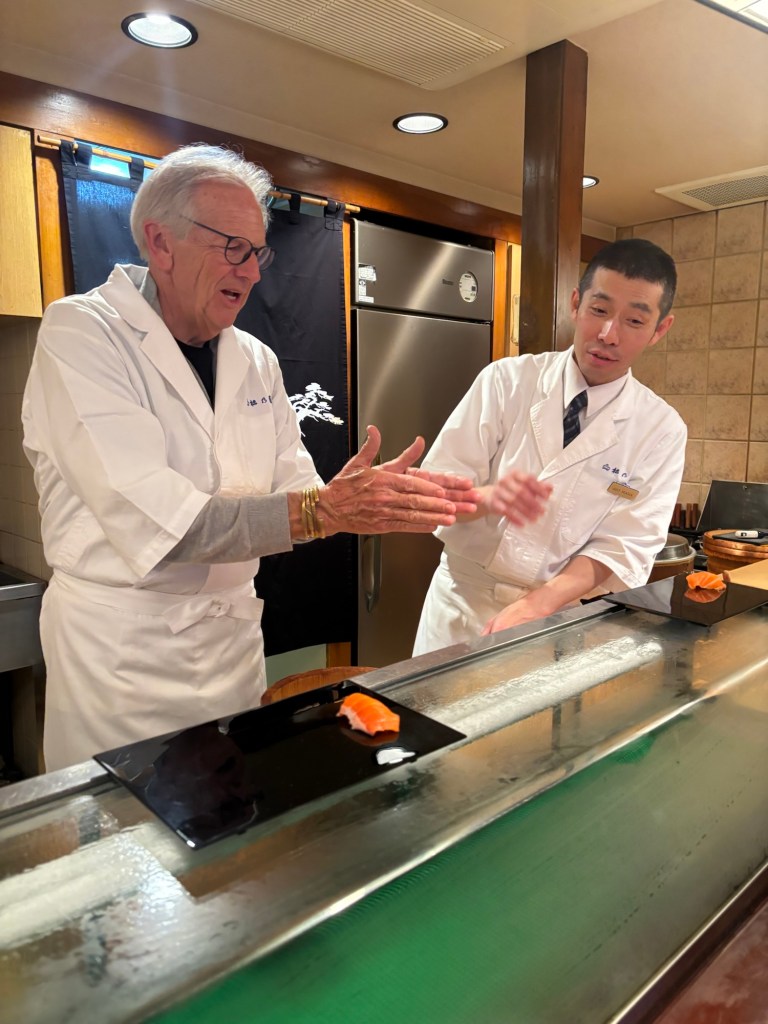
After leaving Masa and his crew, including Yuka, behind, we drove back into the city to the kitchen street where Mark found a slicing knife he liked and bought it along with a rosewood handle the knife store attached to the knife for him.
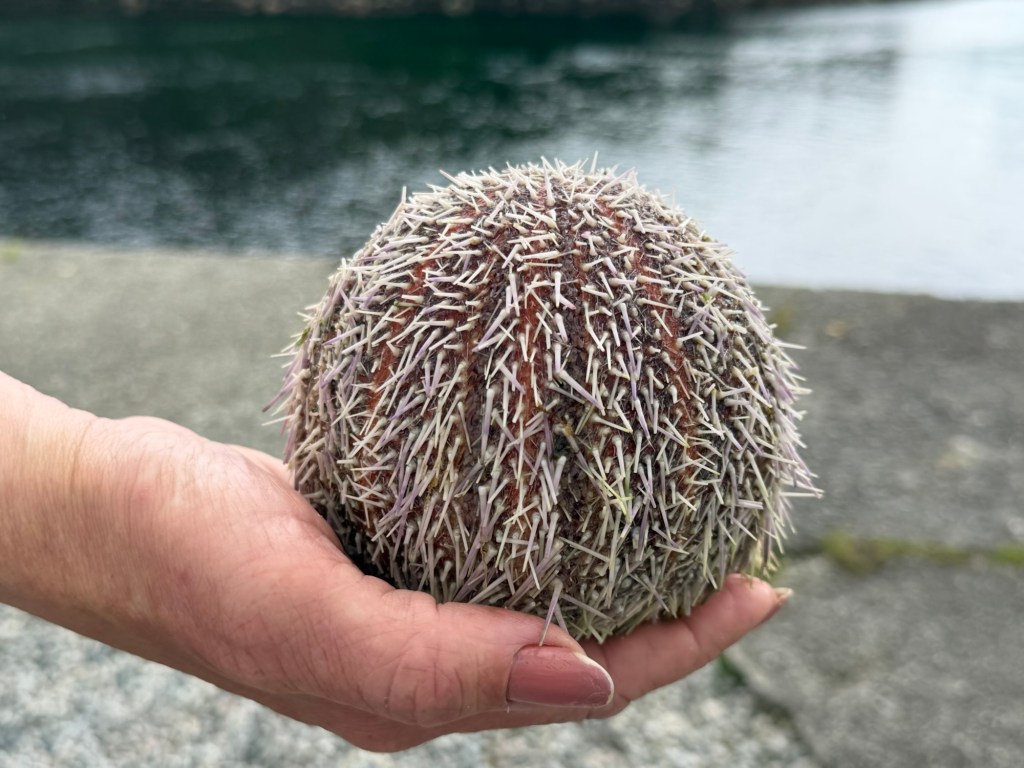
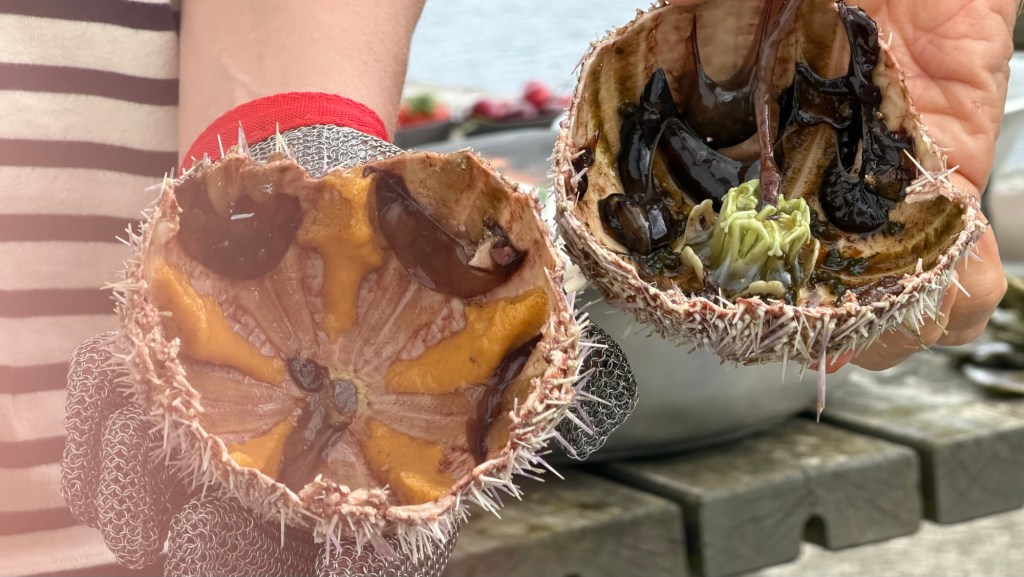
When we got back to the hotel, we learned that the helicopter company had cancelled our flight scheduled for tomorrow due to continued bad weather. Although disappointed, we were not surprised. We will visit other sights and make up for the lost adventure. We found a small restaurant in the underground 3-4 floors below the hotel building. Very casual, but no rain to deal with. The place was serving pasta made with sea urchin so I decided to try it and was pleasantly surprised, especially after seeing it in the fish market that morning. Now I am off to bed as we have an early departure in the am.