
MAY 17, 2026
We depart SFO for Vilnius with a brief stop in Copenhagen on the way. This First World travel is relatively unusual for us. We will be visiting places many of you have already seen and toured. In spite of that fact, we will try to keep our story interesting.

Some important facts about the Baltics are: the population is approximately 5.9 million on a land mass of 67,612 square miles. The main trading partners outside the Baltics are Russia, Germany, Finland and Sweden. Financial stability was an important prerequisite for entry into the European Union and NATO in 2004. Lithuania, Latvia and Estonia each adopted the Euro as its common currency in 2011, 2014 and 2015, respectively.
According to Wikipedia, the underlying geology is sandstone, shale and limestone evidenced by hilly uplands that alternate with low-lying plains and silently testify to the impact of the glacial era, during which time deposits occurred in such profusion the drainage patterns have been disrupted, causing frequent flooding. The Baltic region is dotted with more than 7000 lakes and countless peat bogs, swamps and marshes. A multitude of rivers empty northwestward into the Baltic Sea.
The climate is cool and damp with greater rainfall in the interior uplands than along the coast, making packing complicated. Temperatures are moderate. What does that mean, while I stand in my closet trying to decide what to pack???
Despite its extensive agriculture, the Baltic region remains more than one-third forested. Trees that adapt to the often poorly drained soil are common, such as birches and conifers. Among the animals that inhabit the region are elk, boar, roe deer, wolves, hares and badgers. This last paragraph influences my attraction to the region.
The vast majority of Balts live within the borders of their respective states. Virtually everyone speaks the native tongue as their first language, which is remarkable in light of the massive Russian immigration into the Baltic states during the second half of the 20th century. Initially Russia tried overtly to Russify the Baltic people. Later the effort was moderated when Russian immigration soared. Then independence came as the Soviet Union collapsed in 1991. The Baltic states placed controls on immigration and in the following decade the Russian presence diminished.
After the breakup of the Soviet Union, the Baltic states struggled to make a transition to a market economy from the system of Soviet national planning that had been in place since WWII. Slowly the Baltic people have improved their economy with increased production of potatoes, cereal, grains, fodder crops, dairy cattle and pigs. Today they collectively have the highest productivity of the former republics of the Soviet Union.
May 18, 2026
We have landed at and passed through the Copenhagen airport, race walking nearly a mile to get to our flight to Vilnius, Lithuania. Made it with a minute to spare. Sure hope our bags made it too. It is a large airport with a huge number of people all fast walking in every which direction. I bumped into more people than ever before, but no one paid any attention. Everyone just kept walking. So much for our experience of Denmark.
On arrival at Vilnius, sure enough our bags were not on the carousel. At lost and found we learned that the bags were left in Copenhagen because the plane was full. The bags are now scheduled to arrive at Vilnius at 2 in the morning and be delivered late morning the next day. Bummer! But we at least know where they are. And, to put it in perspective, it is the first time our bags have not arrived with us in all the years we have been traveling together.
Our driver was waiting and drove us through overcast and rain to our hotel. California this is not. After checking in to our well located hotel, the Pacai, we went for a walk through the Old Town and took a few photos of the area and the Vilnius Cathedral.

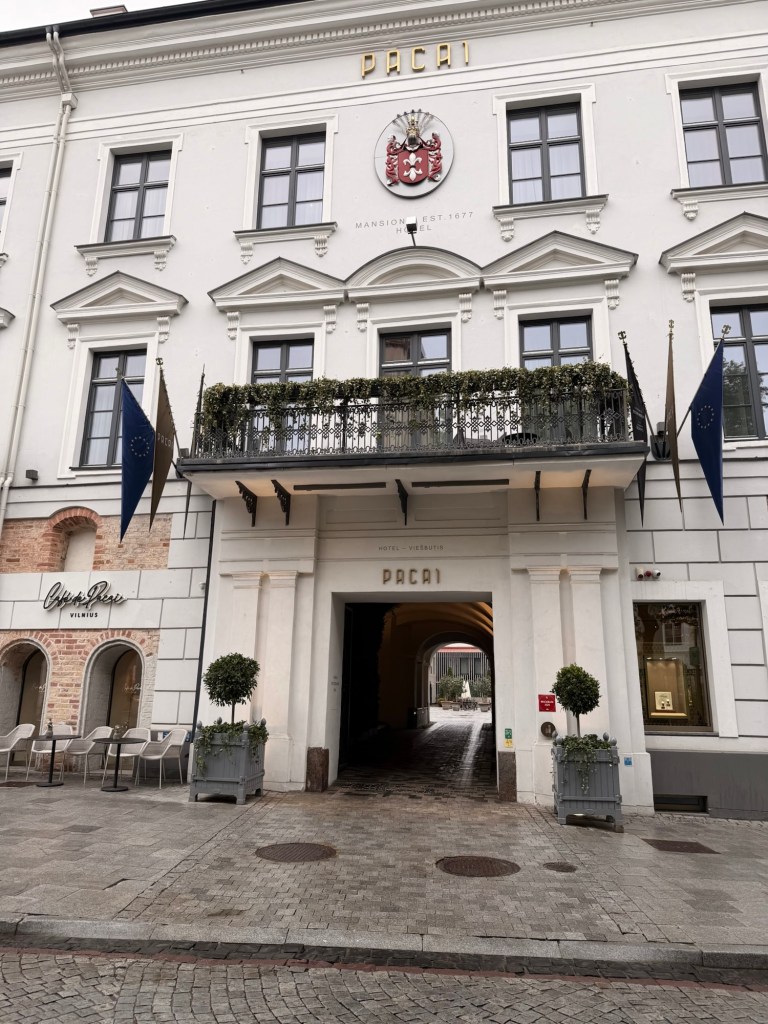
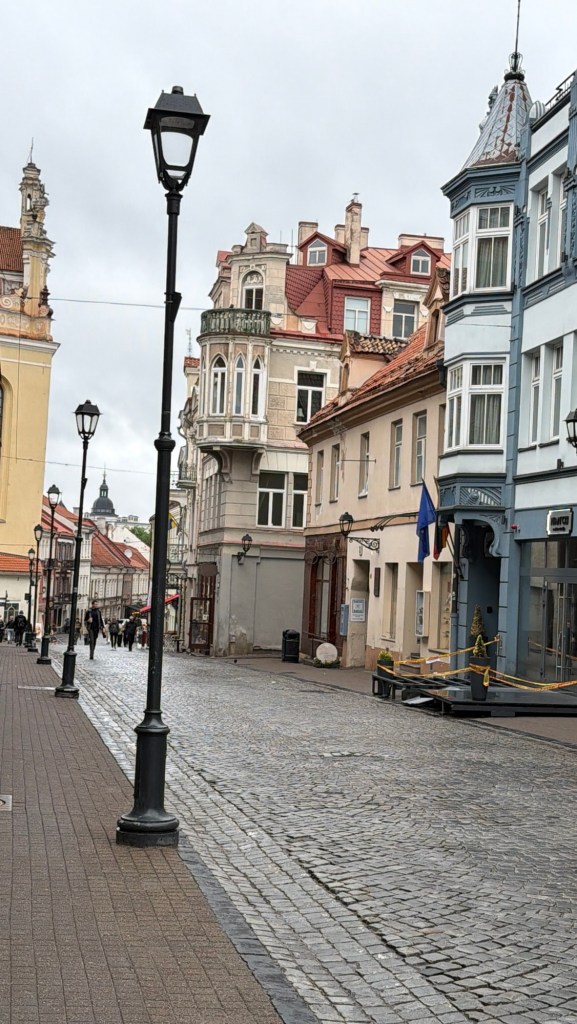
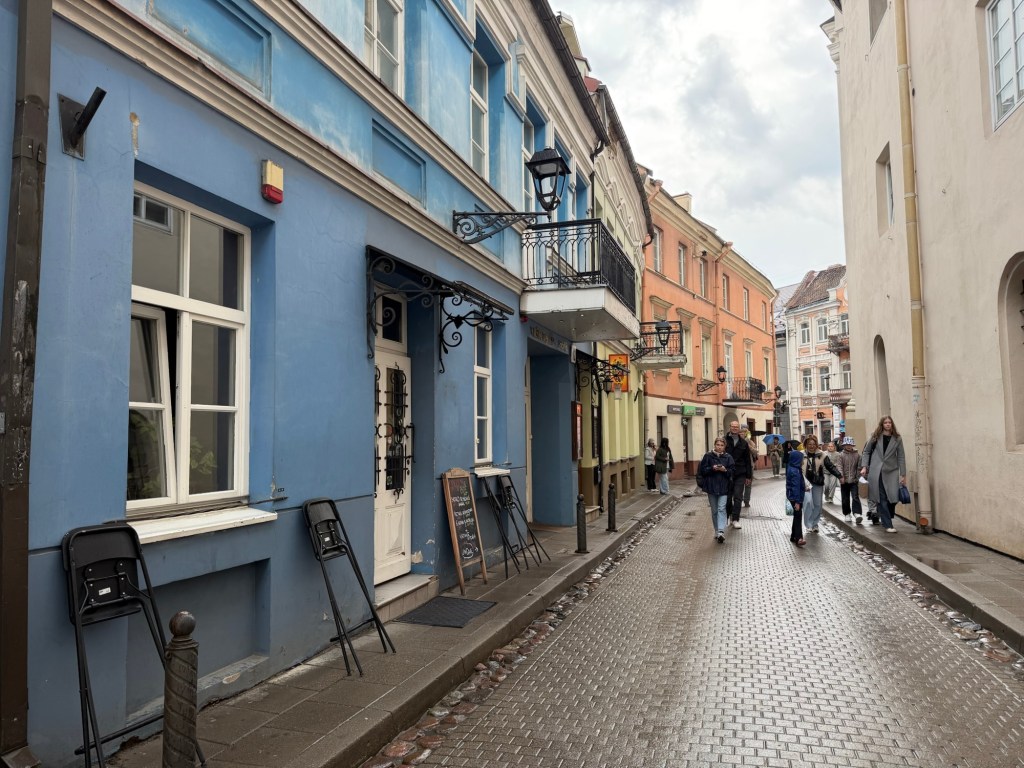

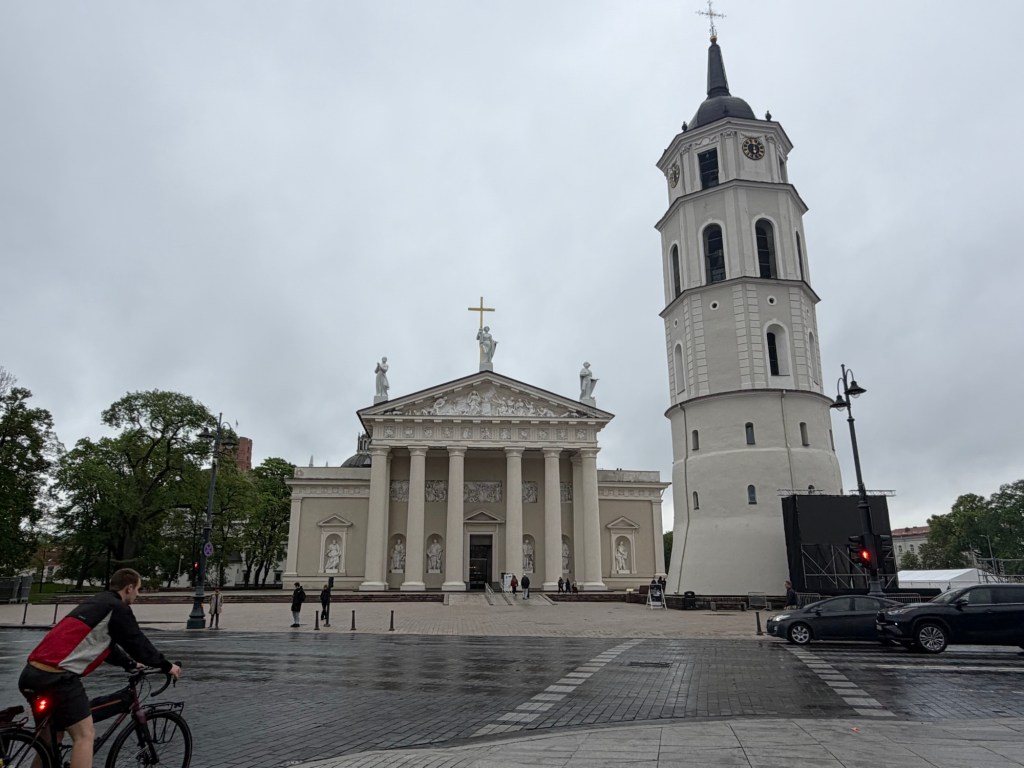
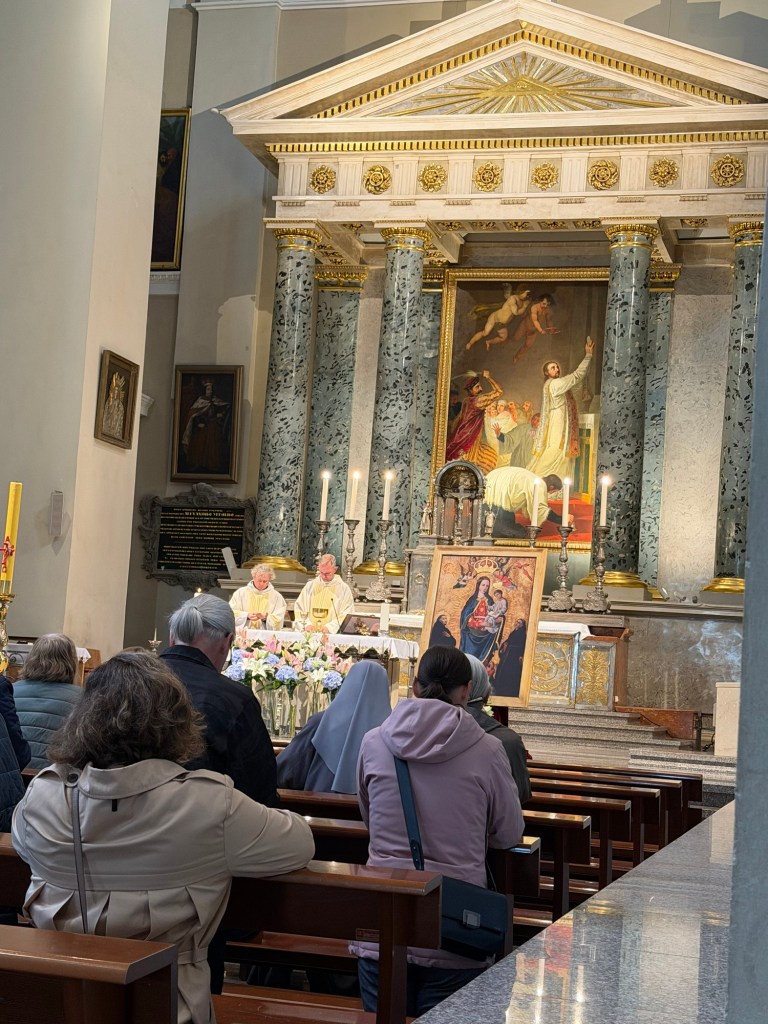

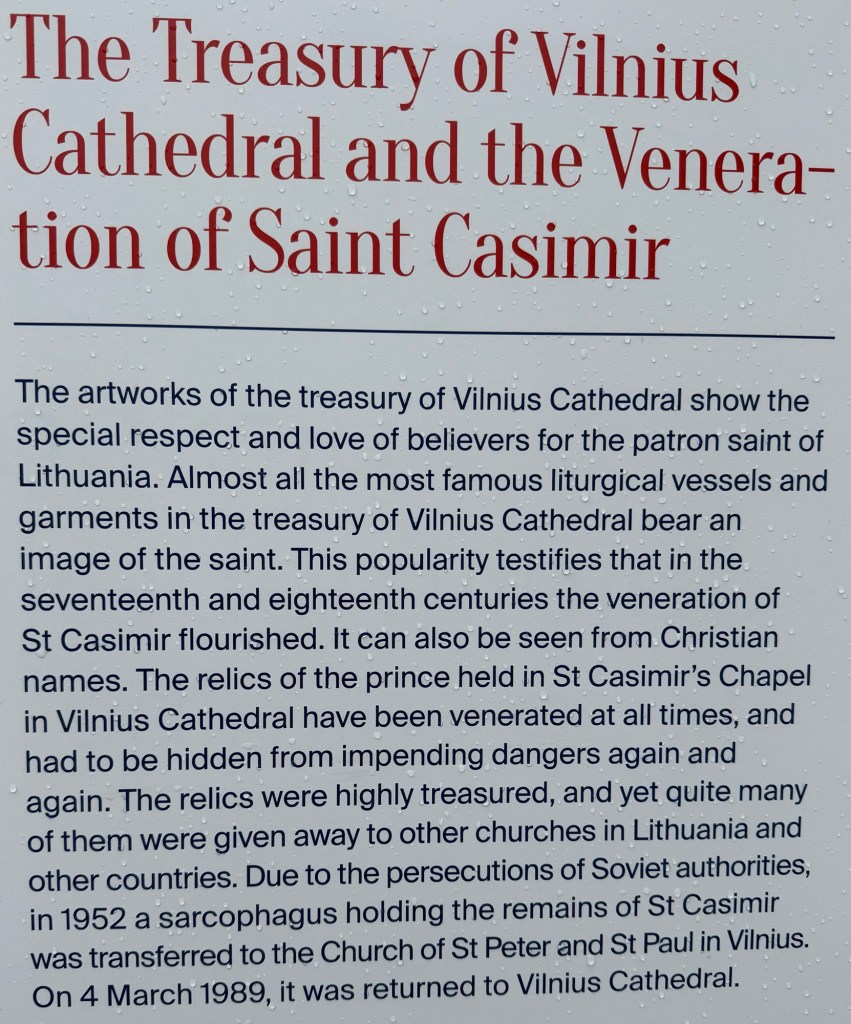
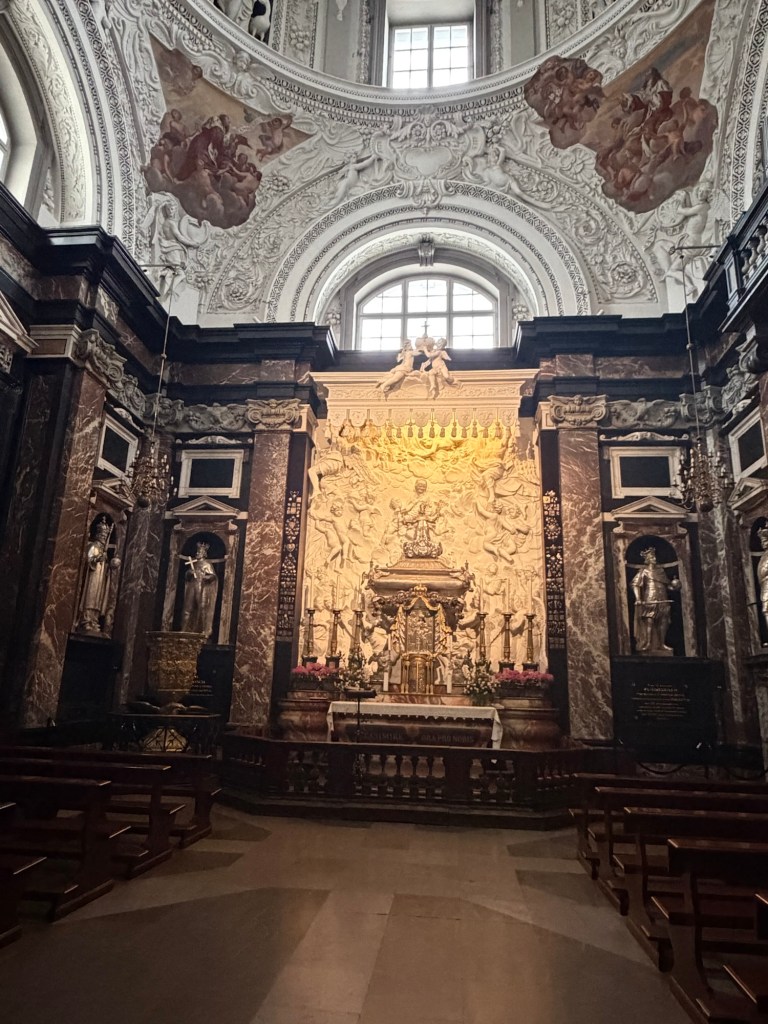
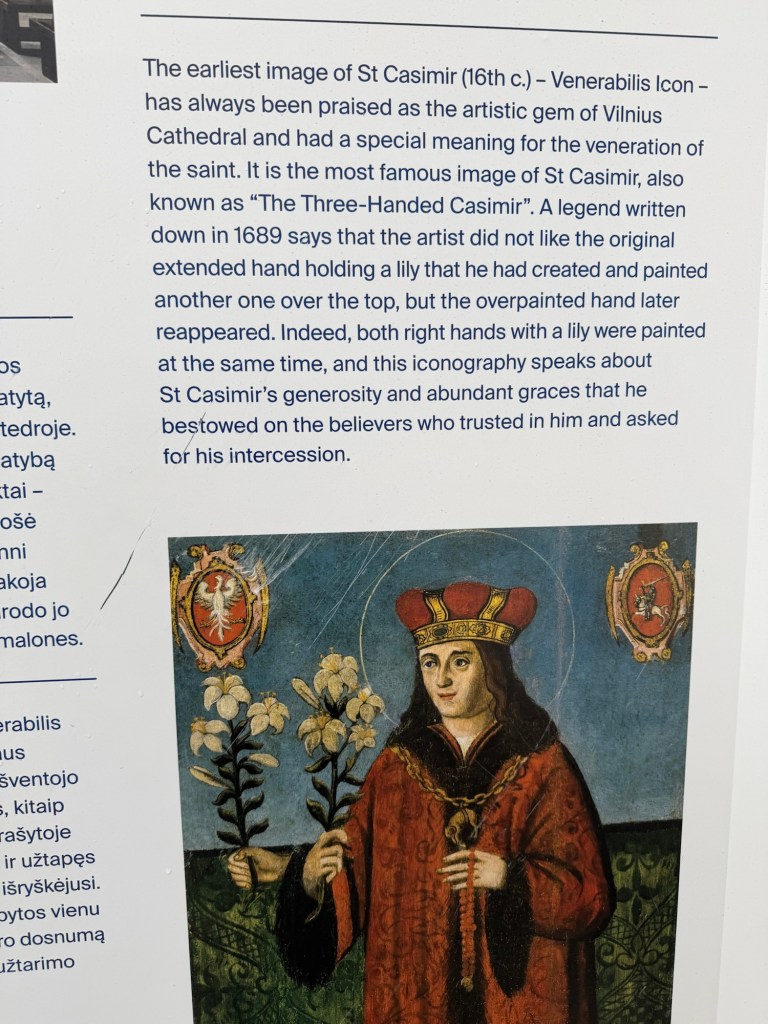
This saint is venerated in many stores and businesses in Vilnius. This was the best image of him I could find.

Well it is bedtime and Mark is already asleep.
We met our guide, Rasa, and drove to the food market to begin our food tour of the city. First we sampled traditional Lithuanian rye bread. The loaf must have weighed over 5 pounds and tasted as heavy as it felt. We also sampled an astringent breakfast drink called an “immunity shot”, which was made of ginger with apple and orange juice. We each had a short draft of local beer to wash it down. So far I am not keen on breakfast. Rasa told us that 5000 yers ago local people were hunter gatherers and ate mostly raw meat. They bean to grow rye and make beer
Tuesday, May 19, 2016
A few more details I learned about St Casimir. He was born in 1458 and died in 1484 after catching TB from being around poor, sick people. He had been king for a short time, but abdicated when he learned about the poverty in the kingdom. He made a commitment to virginity, poverty, and innocence and was canonized 0n March 4,1602. For centuries March 4 has been a day of devotion to his memory.
Comments
Agree with Mark. Clock hand between X & XI = 10:30.
Beautiful artwork and colors! Your narrative so very welcoming. Thank you!