
Saturday, October 8 through Thursday, October 12, 2023
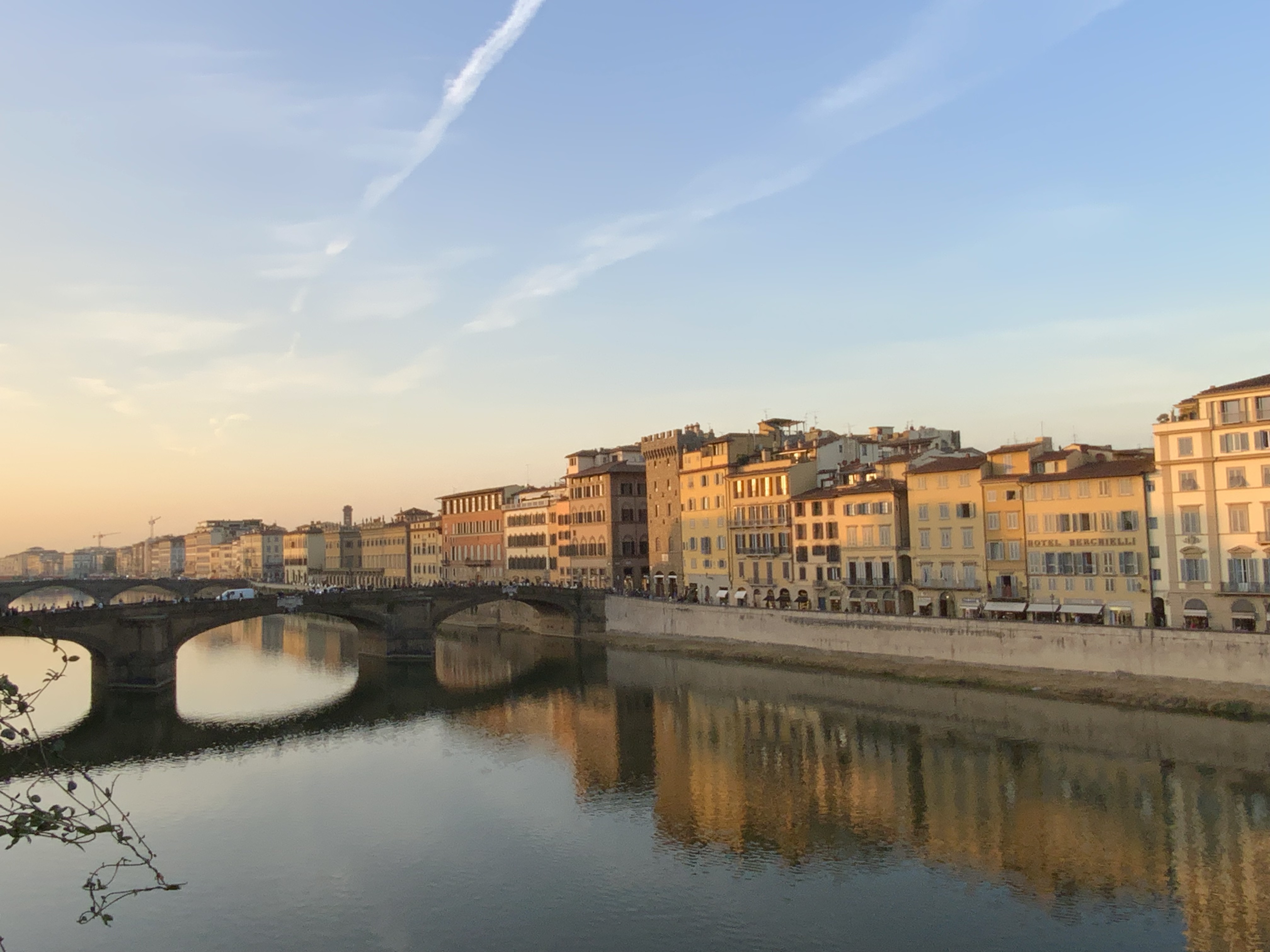
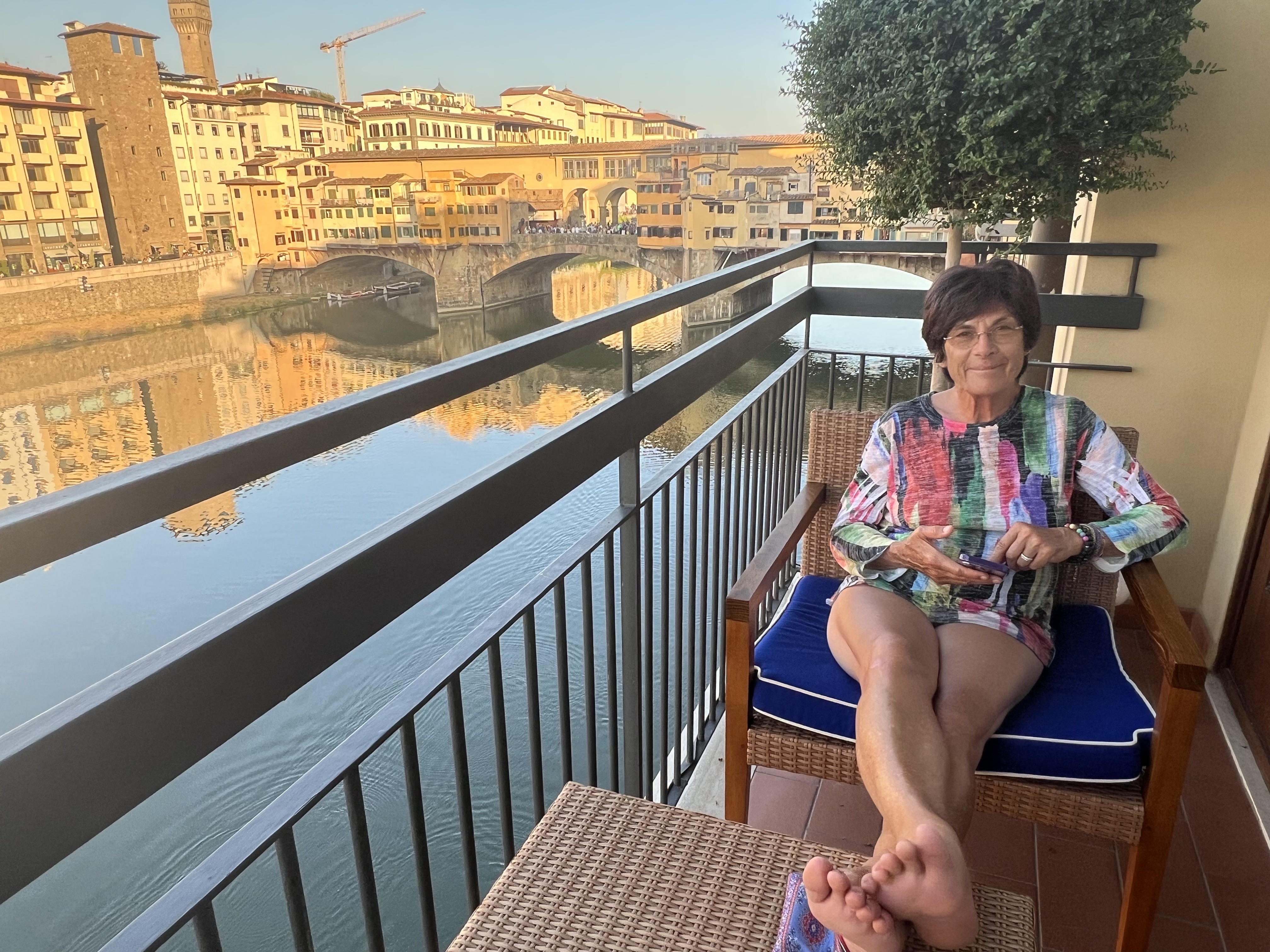
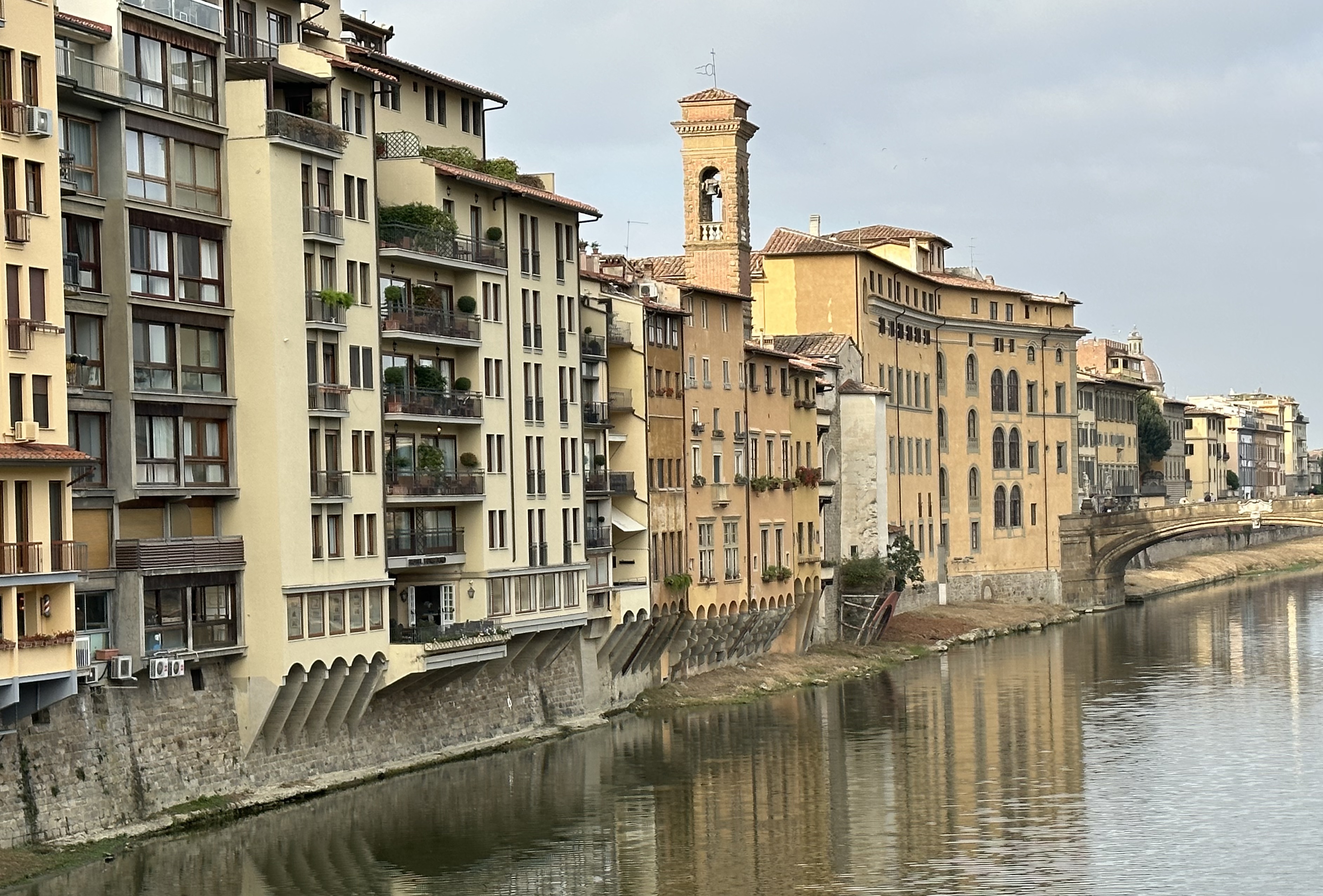
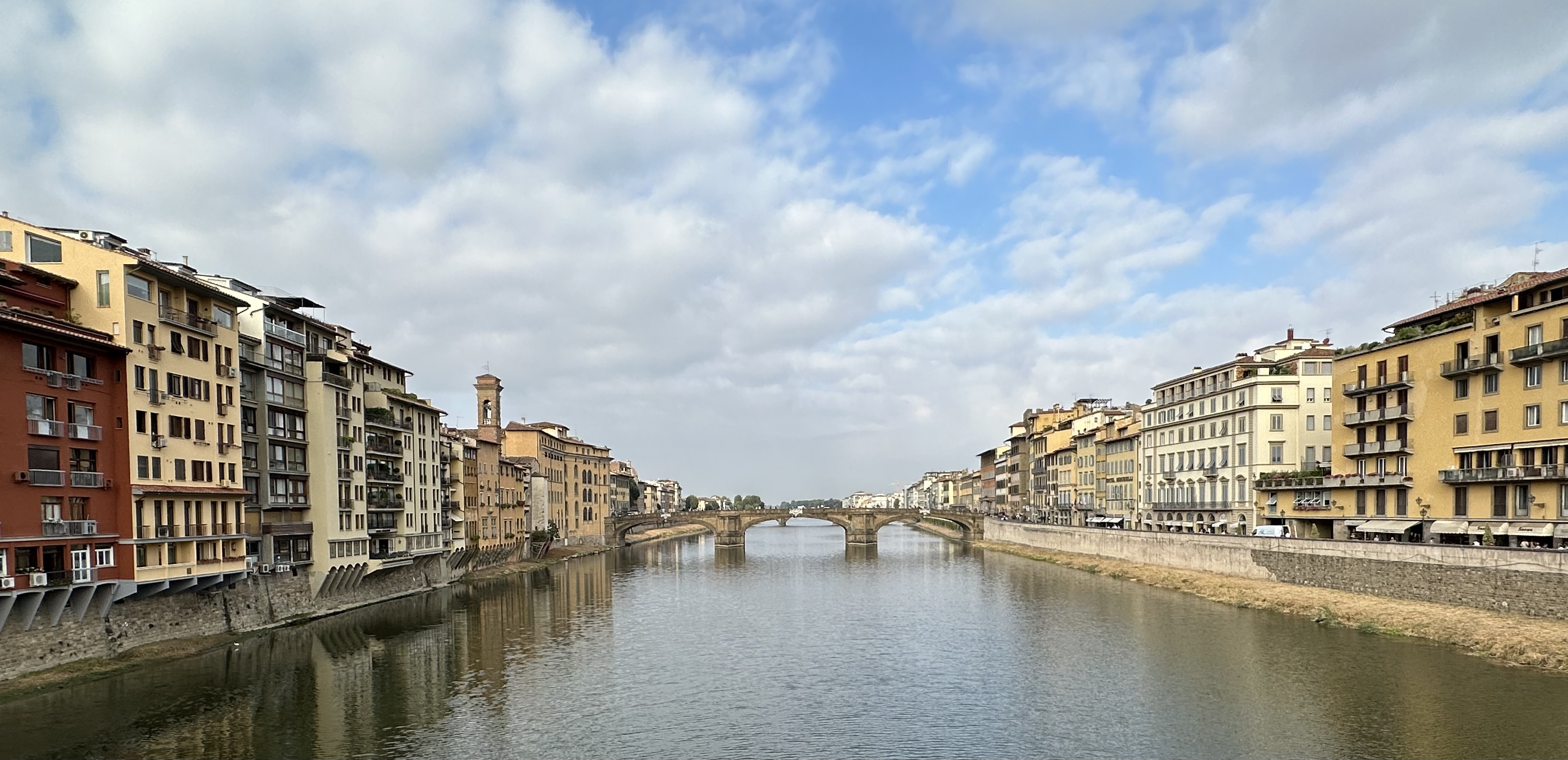
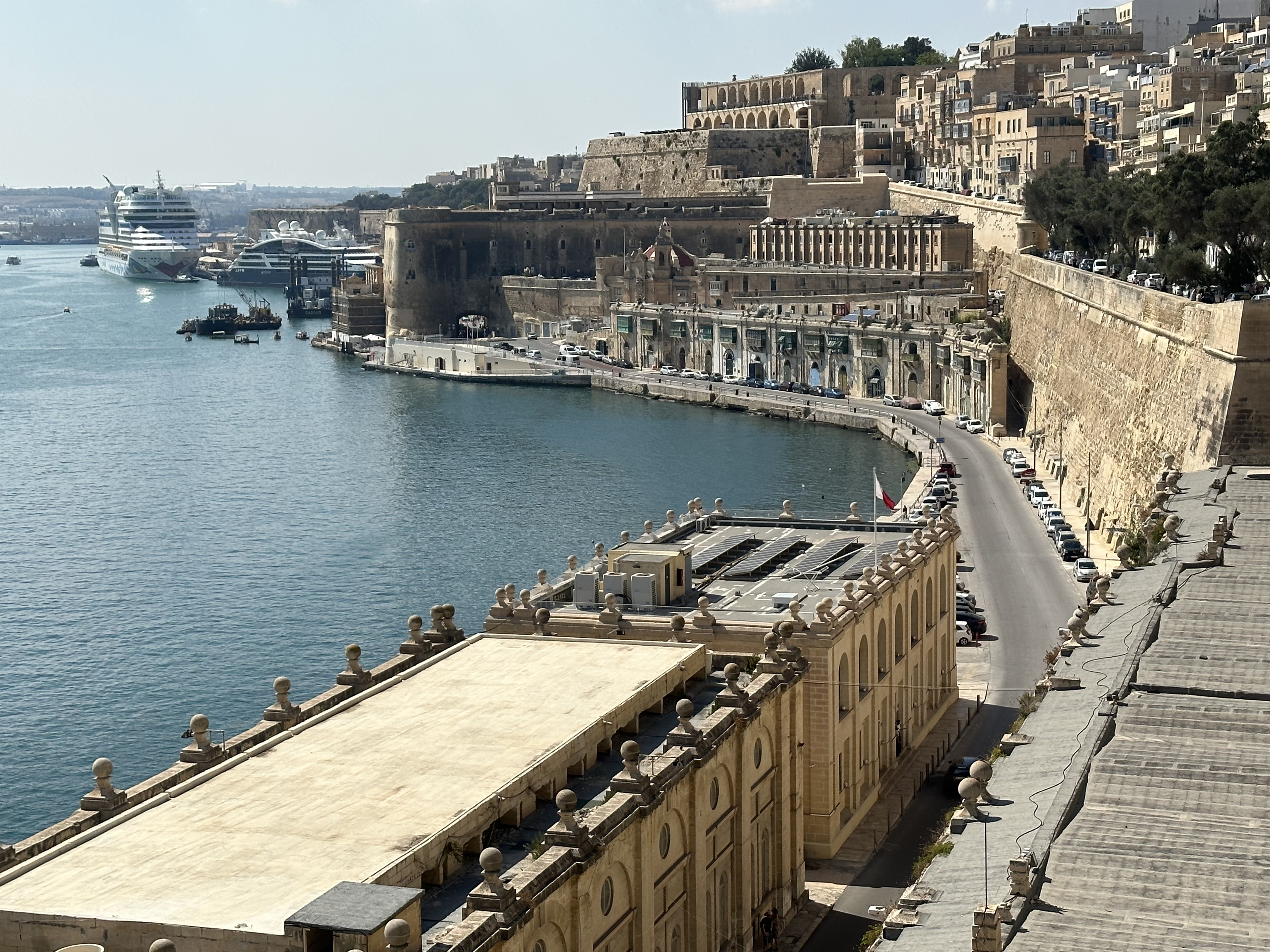
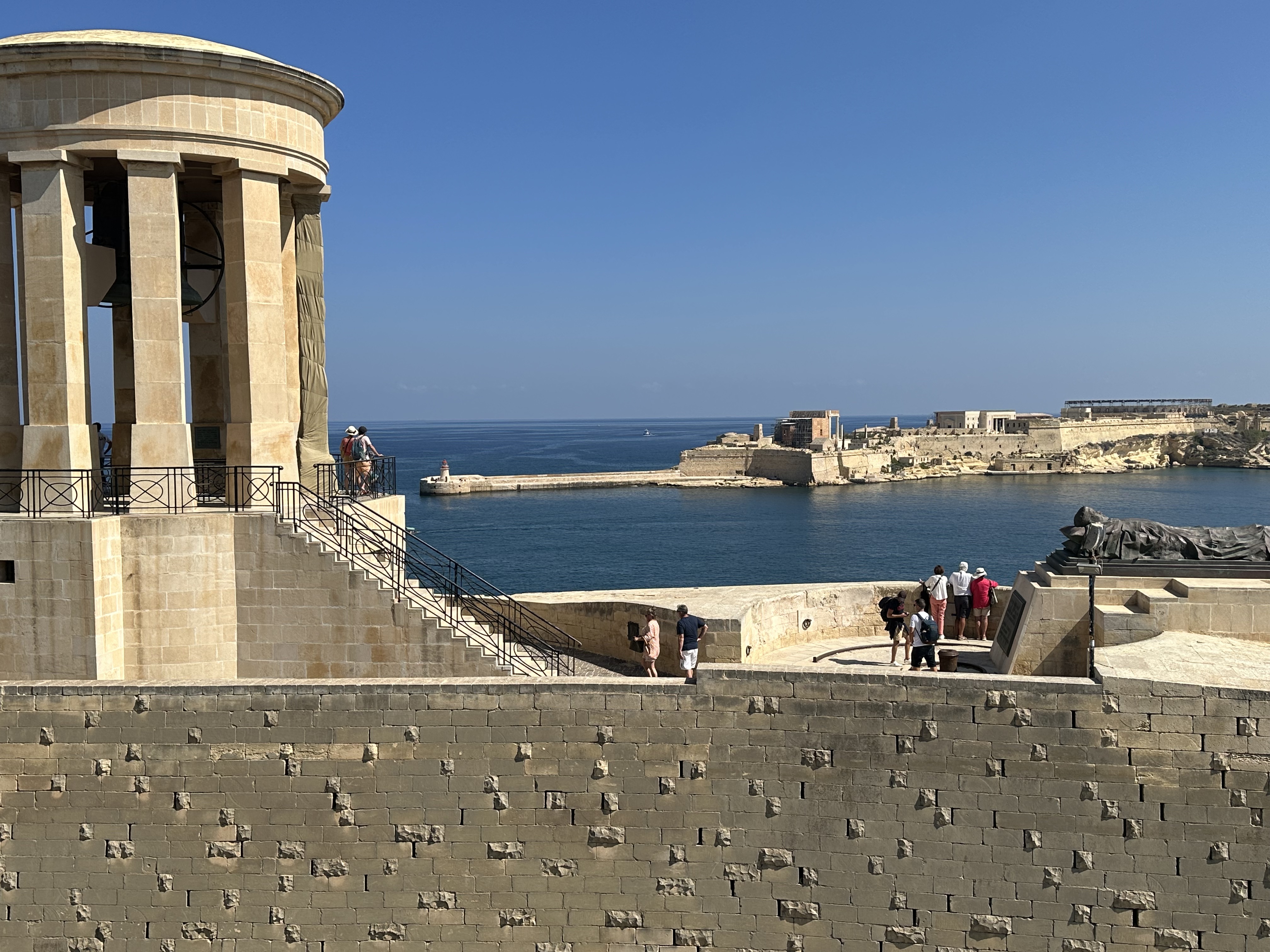
We had a very relaxing morning to end our 6 days at the Iniala Harbour House in Valletta, Malta. Our next adventure was to Florence after a 1.5 hour flight. I was not ready to leave Malta, as we had enjoyed the islands so much. Did I tell you Malta is smaller than Lake Tahoe? It is only 17 miles long and 9 miles wide. Anyway, it was time to go so we went. We arrived in our next hotel room at the Hotel Lungarno by later afternoon and settled in. Our room was much smaller than the rooms in Malta, but we had a lovely location near the Pointe Vecchio Bridge on the Arno River. We had no car and were glad that everything we wanted to visit was in walking distance. After walking up and down so many hills and stairs in Malta, it was nice to be on level streets in a flat city. My body appreciated the change.
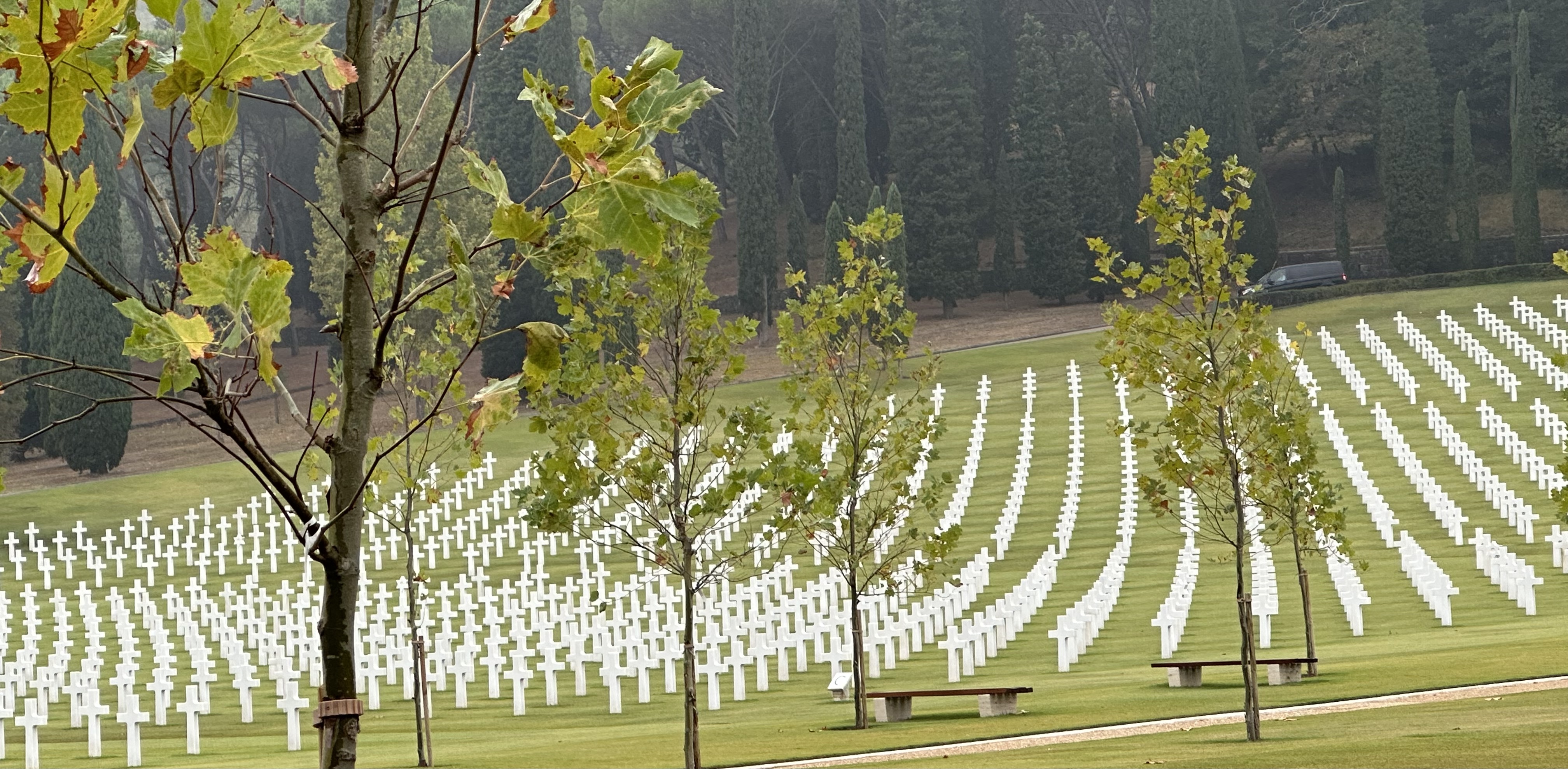
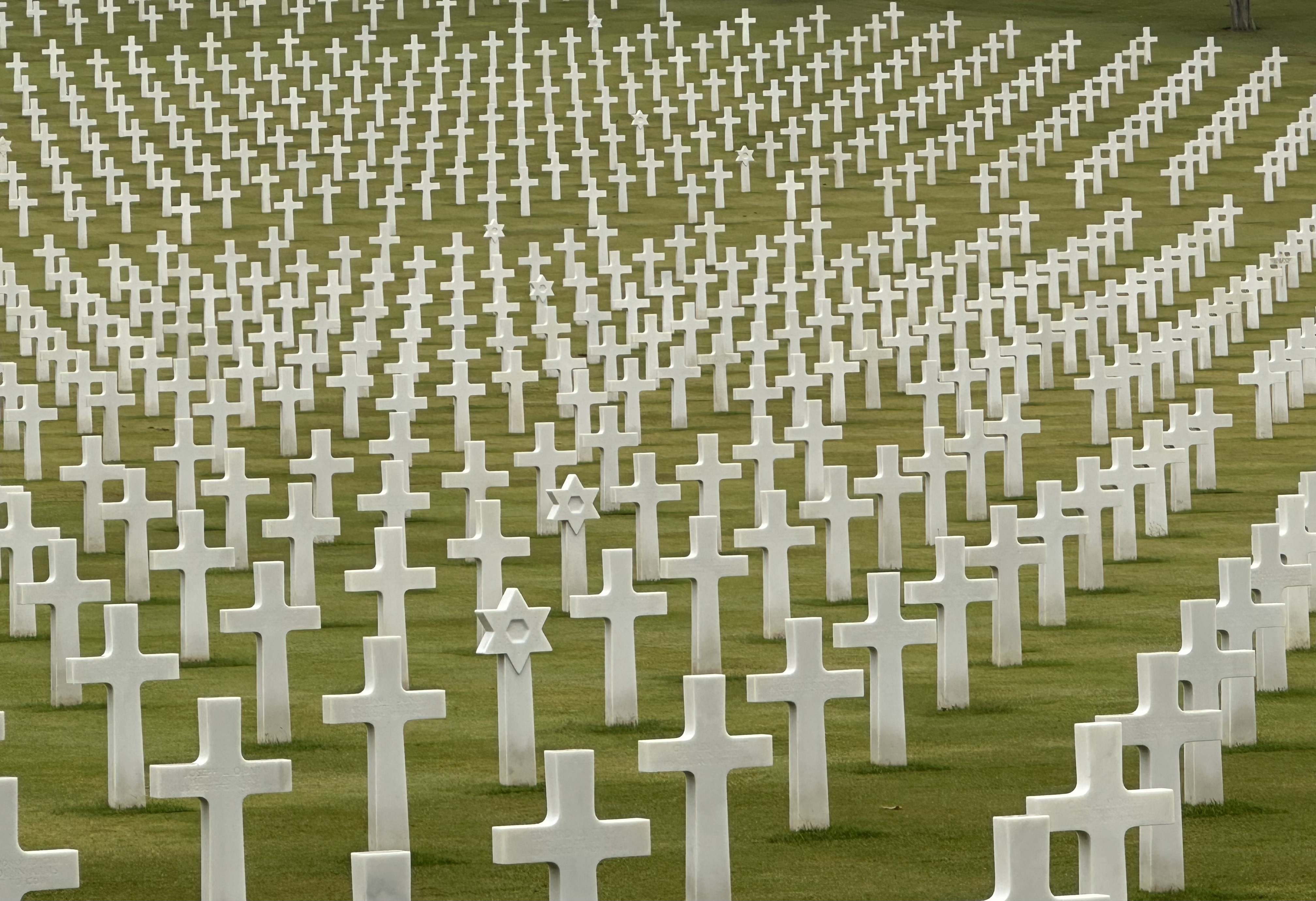
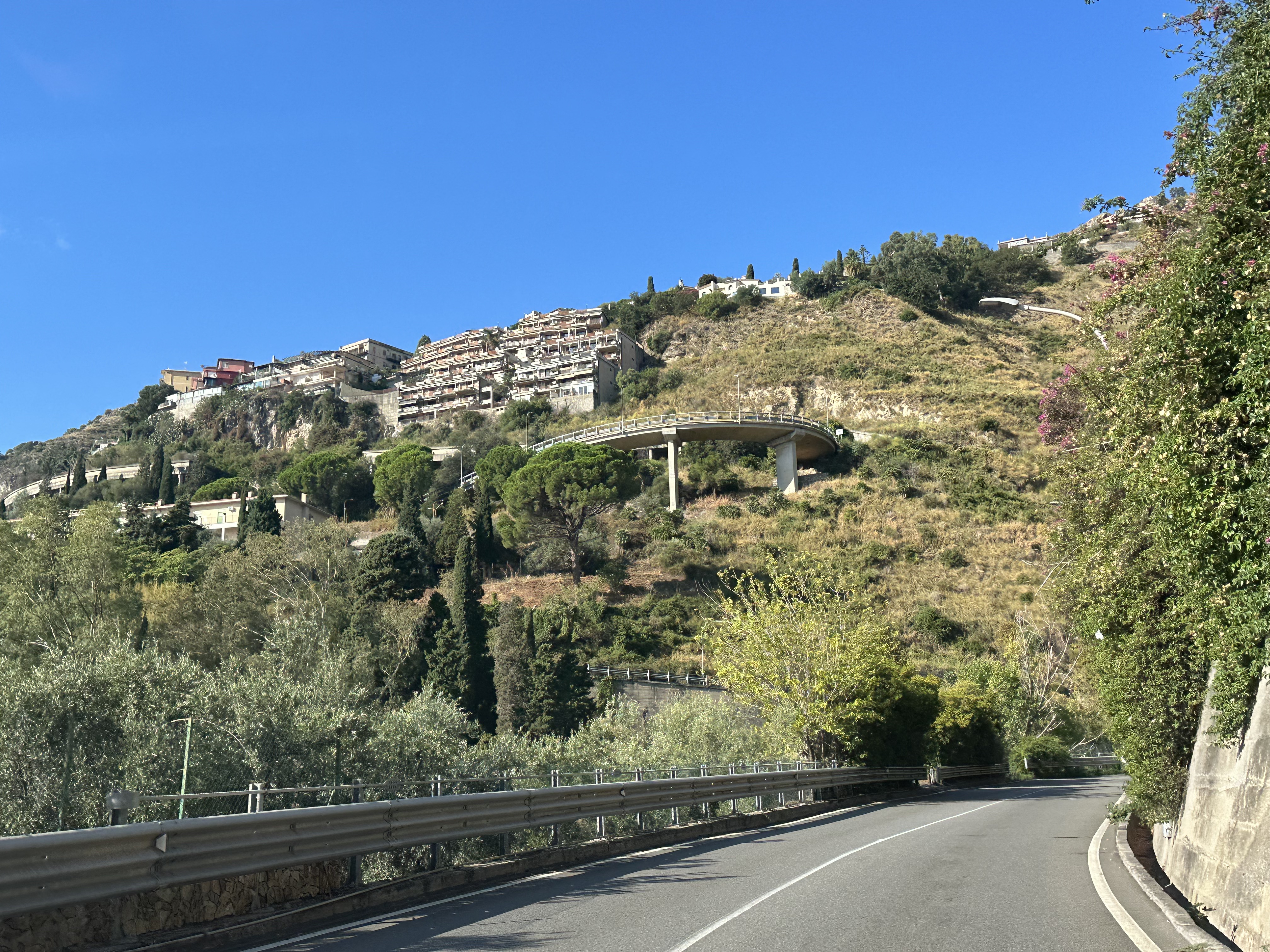
On the morning of the 9th, w were picked up by a driver, Ewan, whose task it was to take us to a small wooded village where we were to go truffle hunting. The idea sounded like fun to us so off we went. Ewan drove us on what is known as the scenic wine trail, SR 222, between Florence and Siena. Along the way we passed by a cemetery . Ewan told us it was a cemetery for American soldiers who died in the world wars. He agreed to stop and let us walk around. The place was pretty and peaceful. Yet it was sad to see so many buried so far from home. It was called the Florence American Cemetery and Memorial.
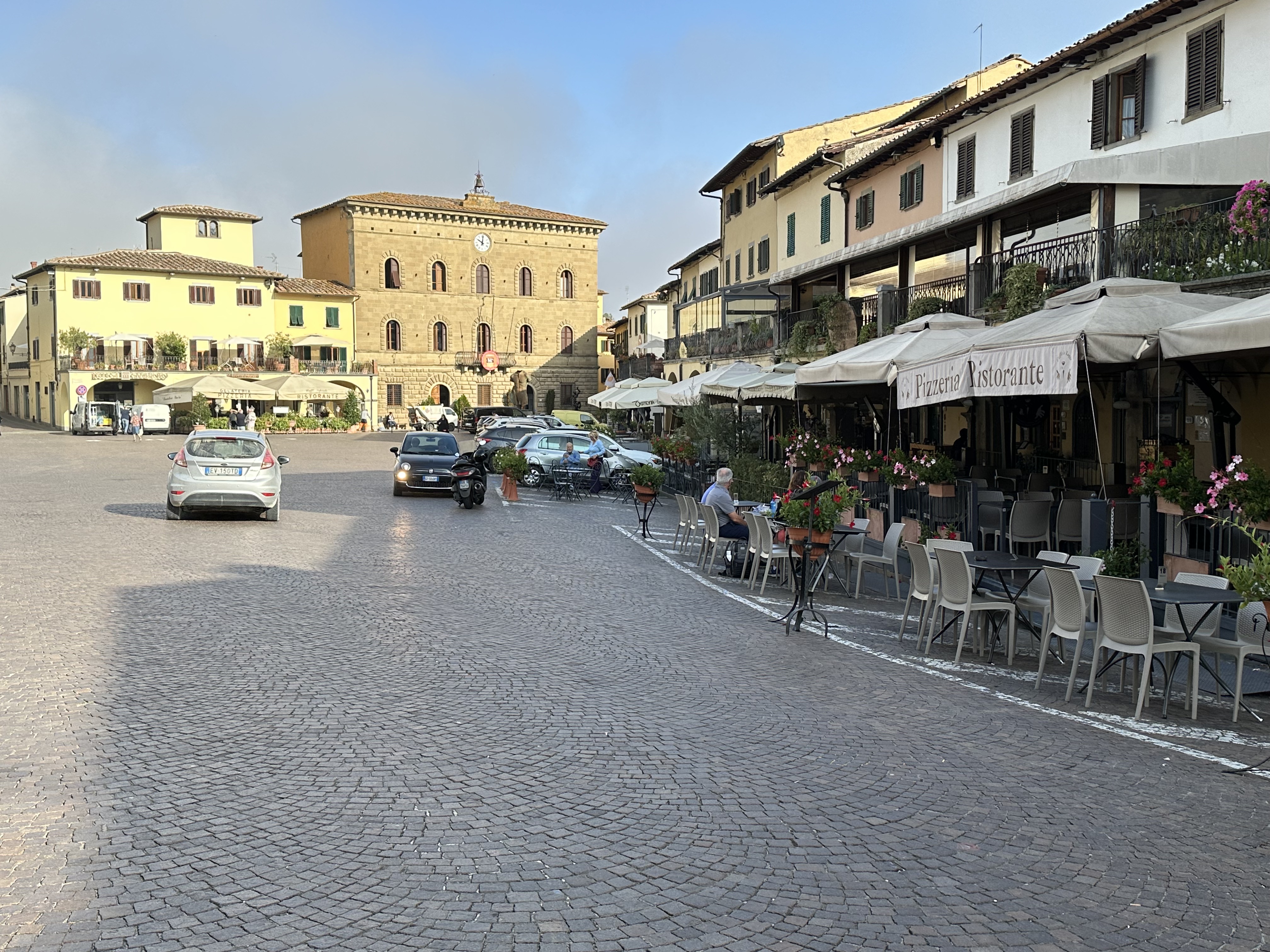
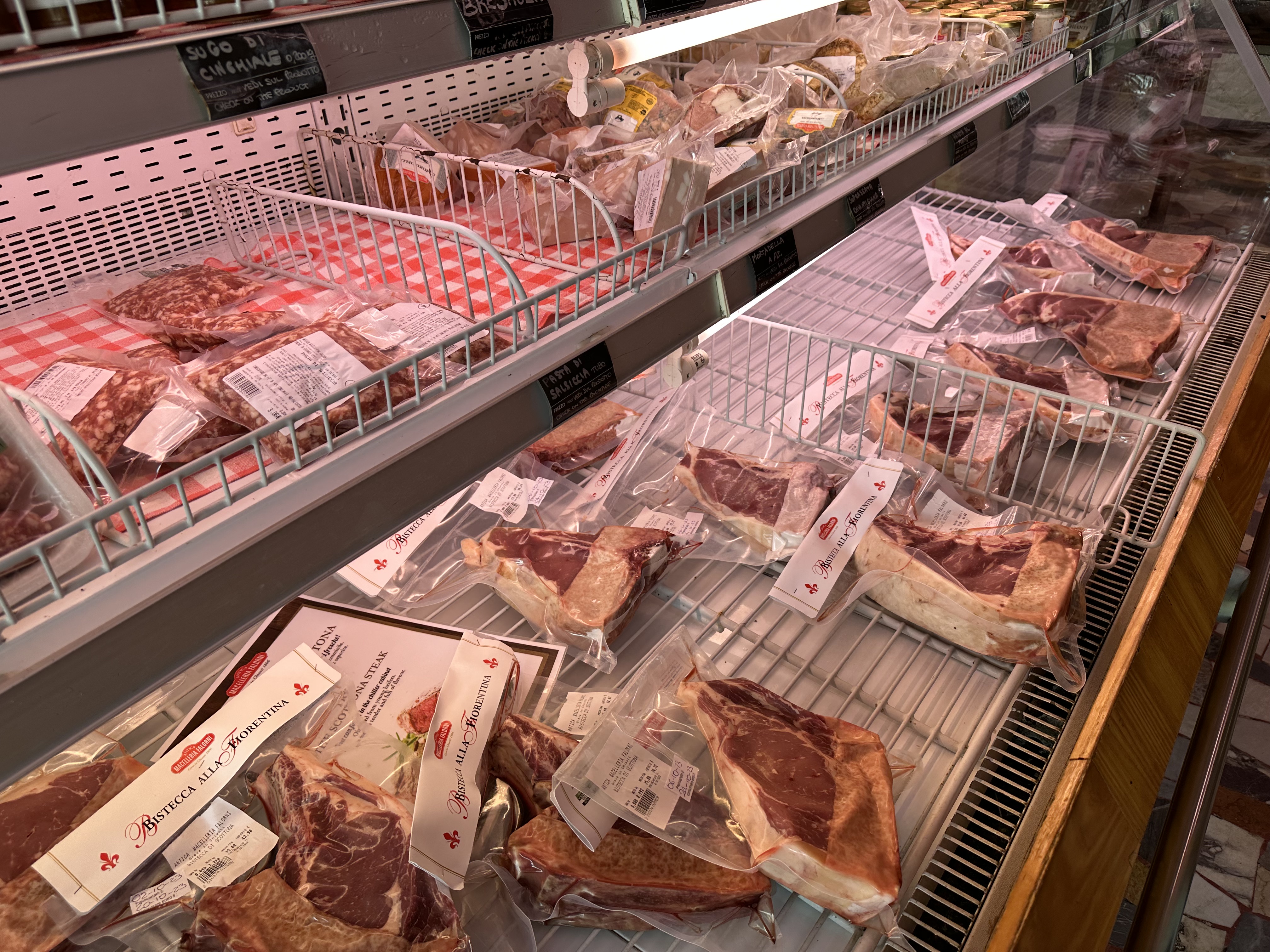
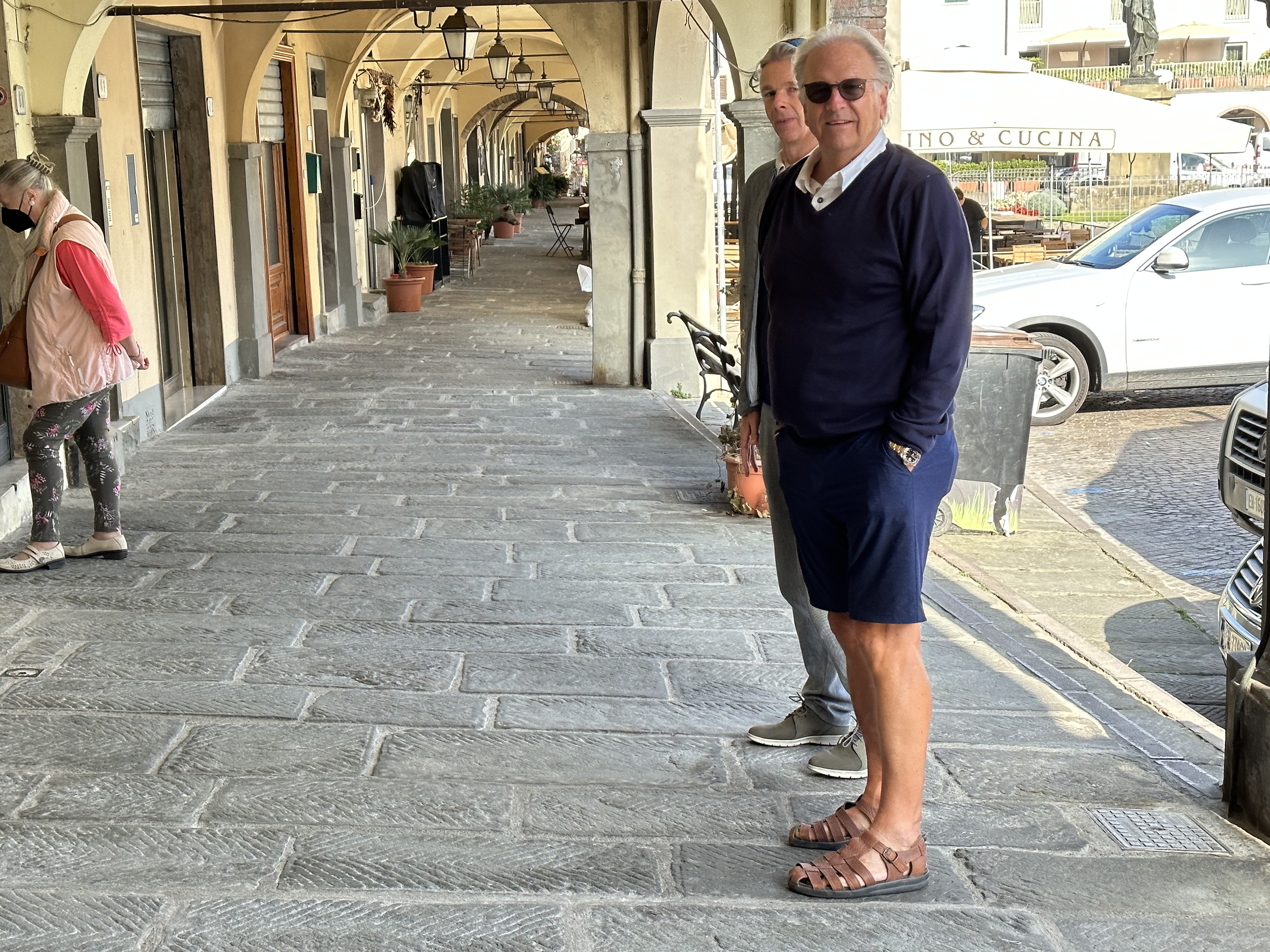
We continued on to Greve in Chianti, the town near a villa we had rented for 2 weeks in 2000. We remembered the town and were happy to revisit it. We checked out a few meat shops selling cured meats such as prosciutto and cured pork. It was of more interest to Mark than to me. I was content to wander around.

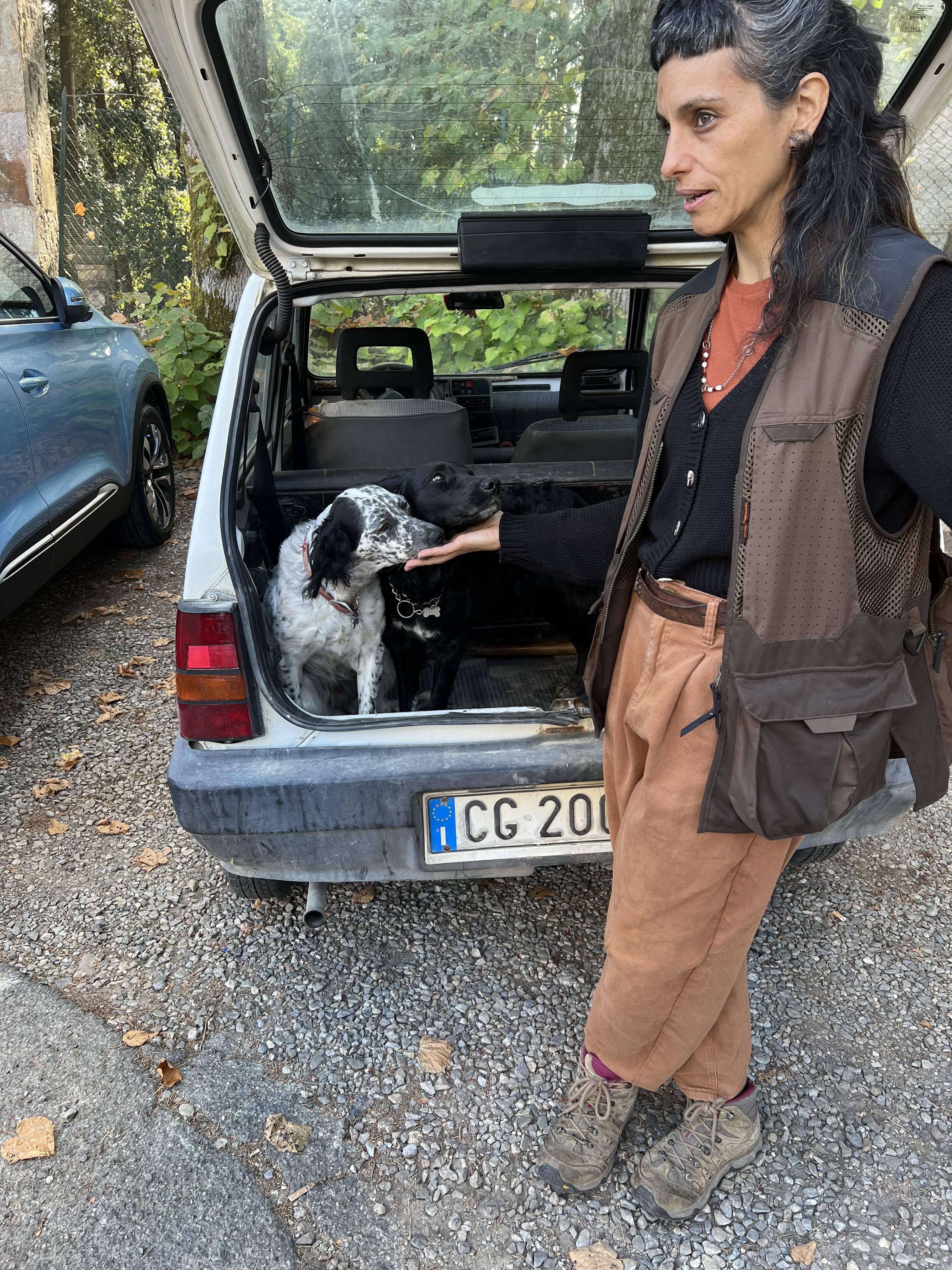
We did buy a cappuccino and then drove on to the village of Montefiorelle to meet the person who was to take us truffle hunting. It turned out to be a woman named Letitia and her dog. We learned that there are 7 different kinds of truffle. Black ones can be cultivated, but white ones only grow wild. To get a license to be a truffle hunter she had to take a course and pass an exam. She must also have a trained dog for the job. She introduced us to her dog, who was gentle and friendly, and told us he was a good truffle hunter. Then we wandered into the woods near Montefiorelle, where she let the dog off the leash. She told us the dog does most of the work of sniffing out the truffles and she digs them out of the fairy hard ground. Apparently conditions are not very good at the moment as there had been a long drought, but she was hopeful. I thought we were supposed to go on the hunt with her, but she asked us to stay on the road while she and the dog did the work. We got bored and wondered what we were supposed to be doing as our part of the truffle hunt.
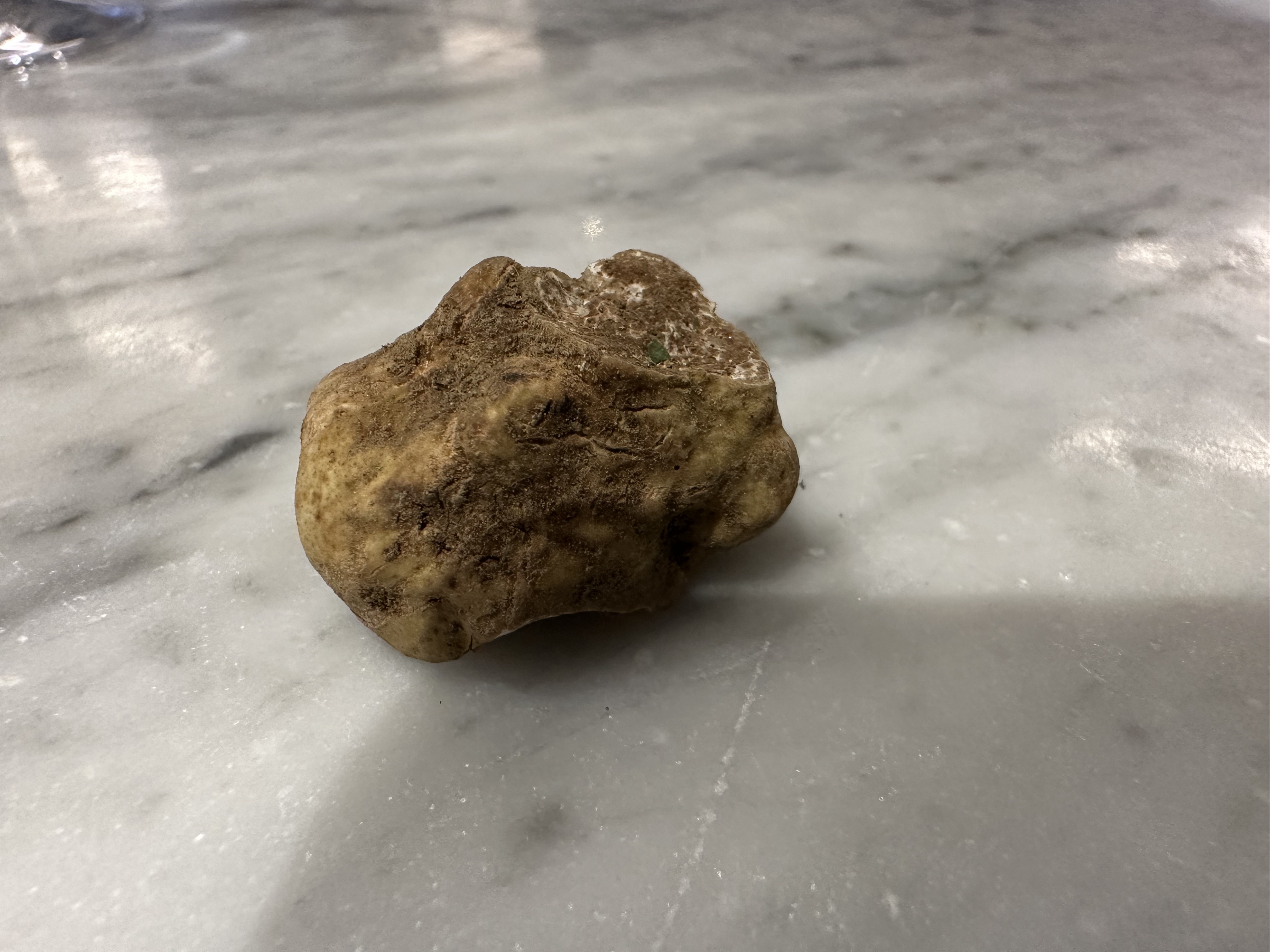
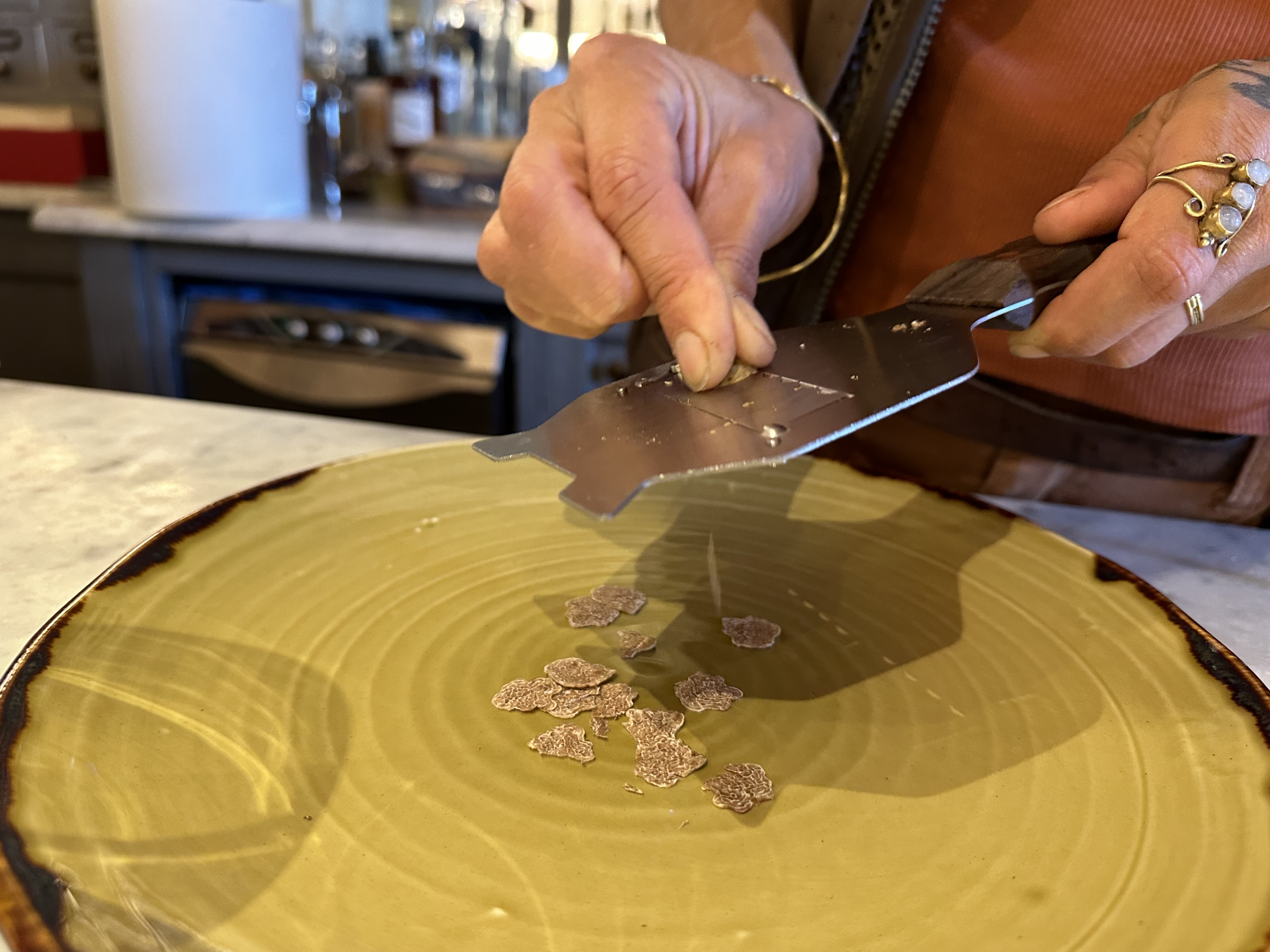
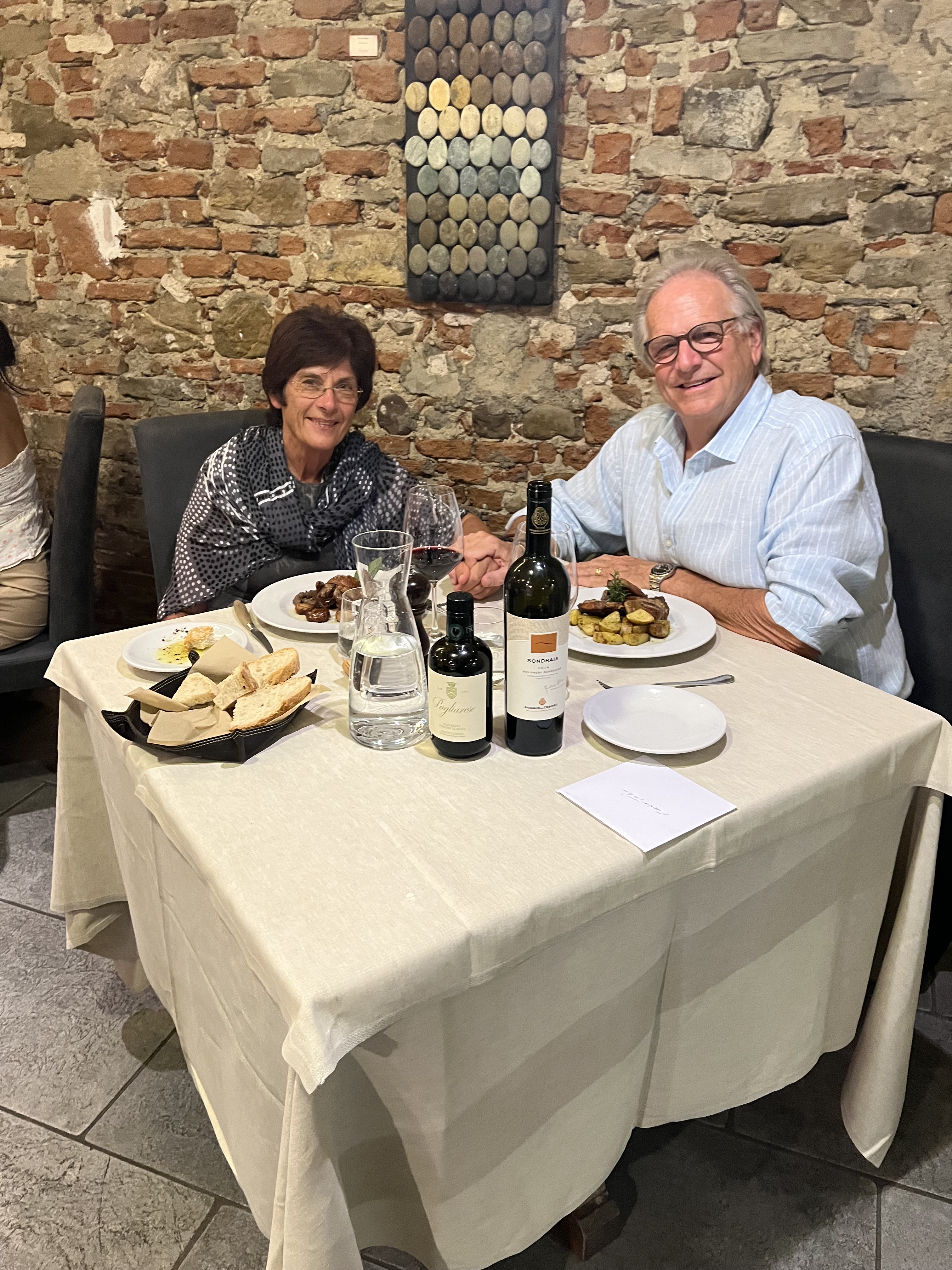
Eventually she came up to the road with what looked like a small, old, dried out, white truffle. I actually wondered if she really unearthed it while in the woods without us or just pulled it out of her pocket. I did not ask. Instead we all went back to town to a shop where she shaved a few slices from the truffle, sprinkled them with truffle oil, salt and pepper and let us taste the slices. They did have a nice flavor. We thanked her for her service, gave her a tip and headed to a restaurant waiting to serve us a truffle filled lunch. Each course had truffles in it and we enjoyed them all.
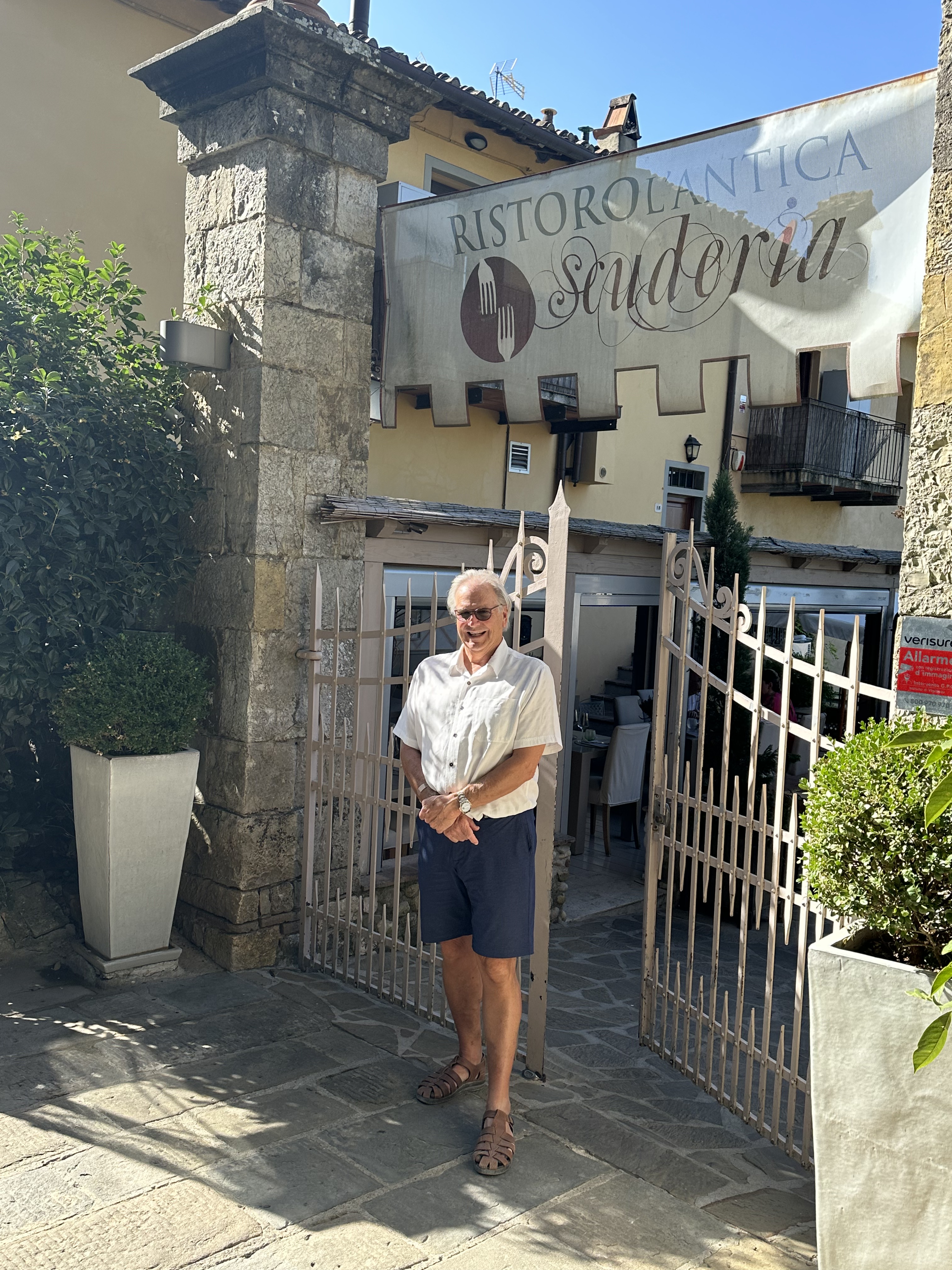
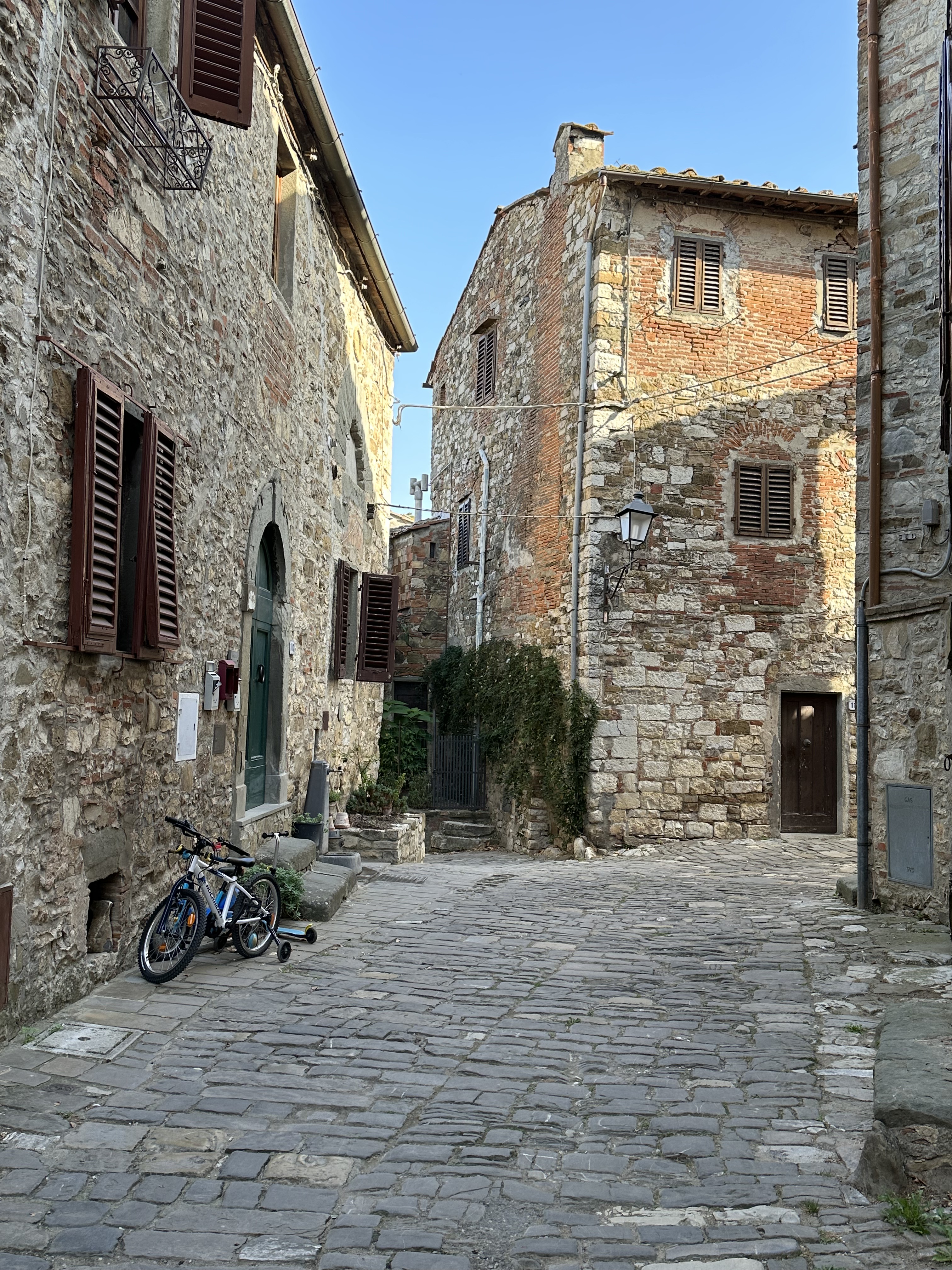

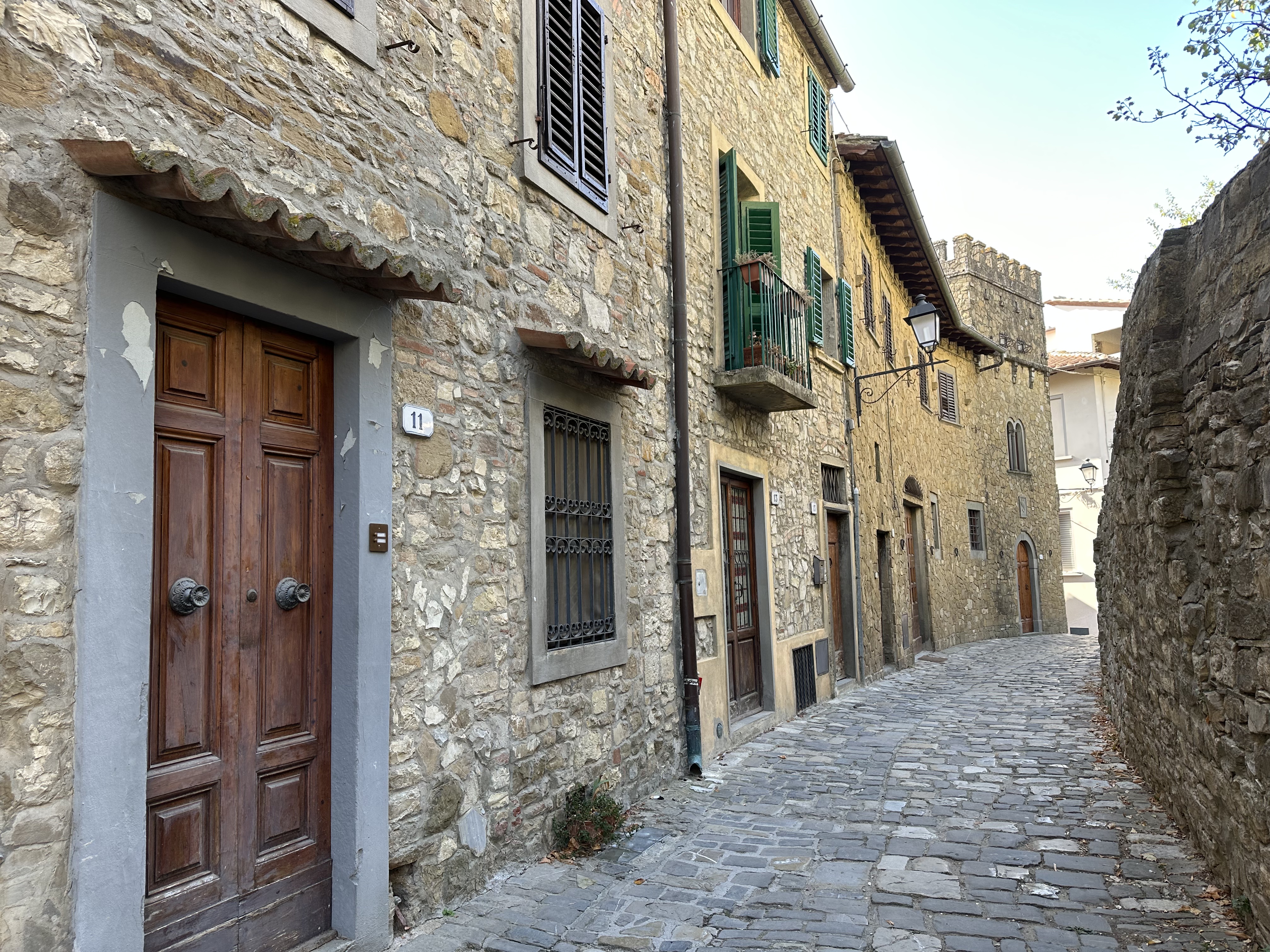
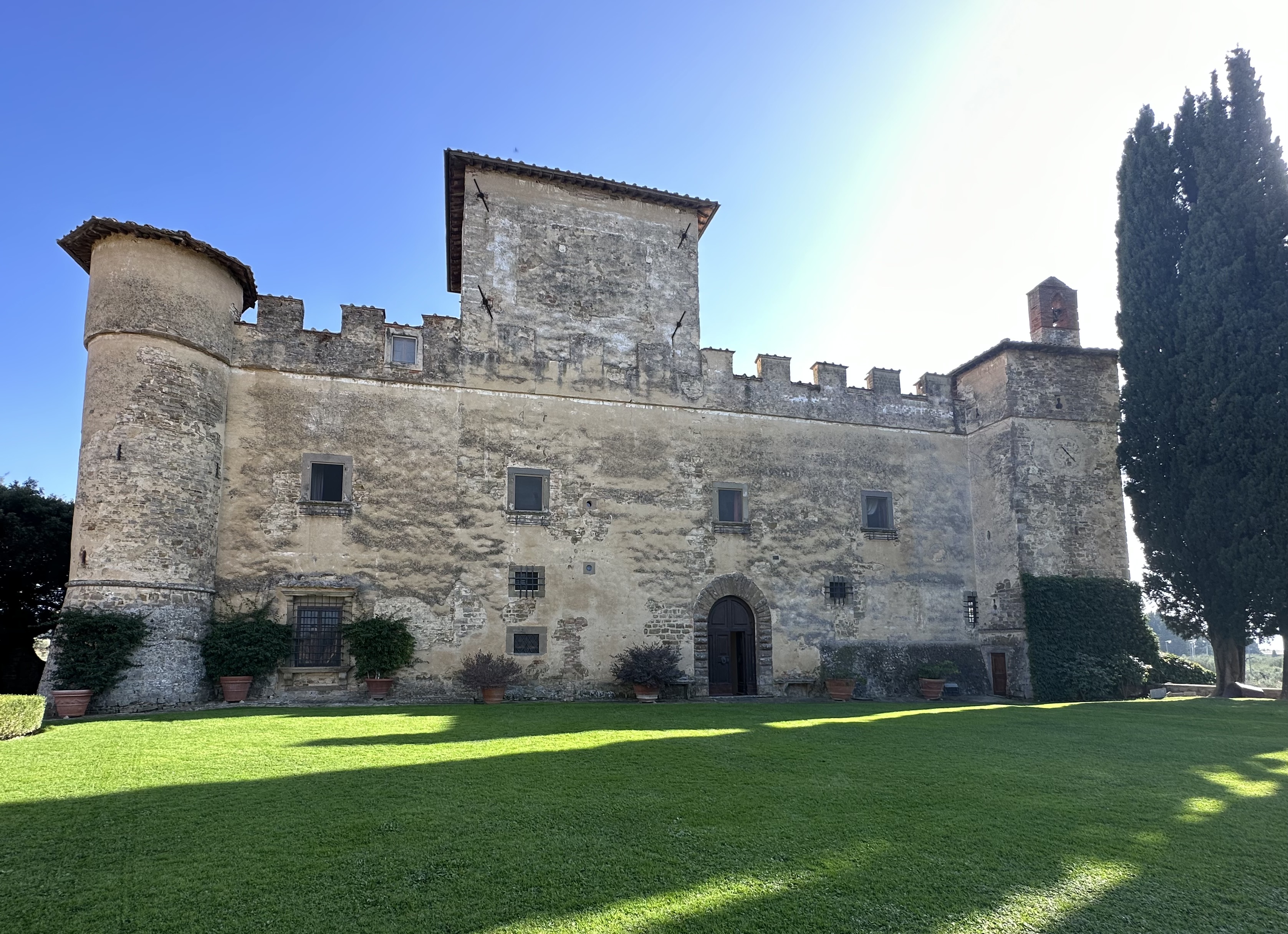
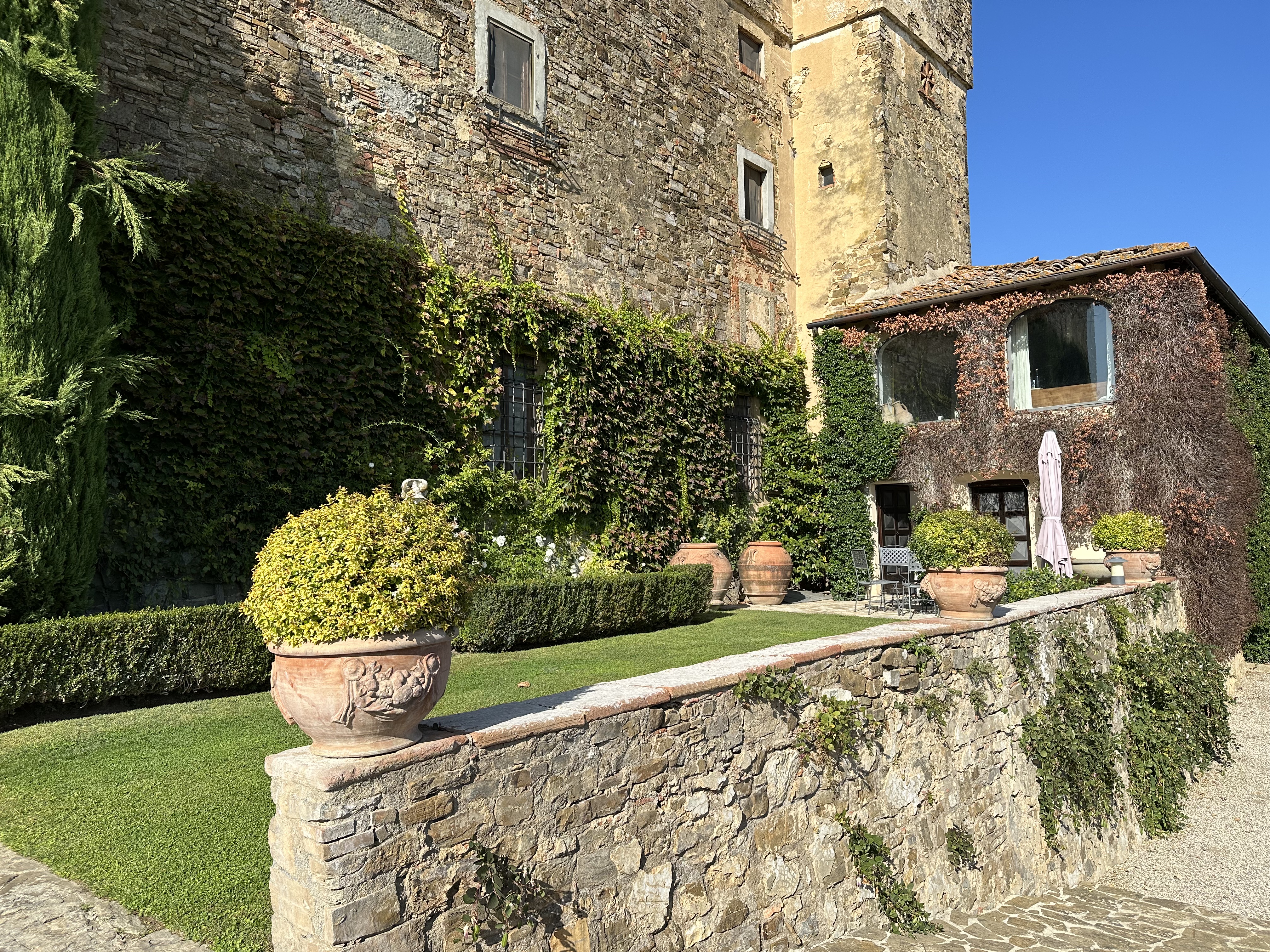
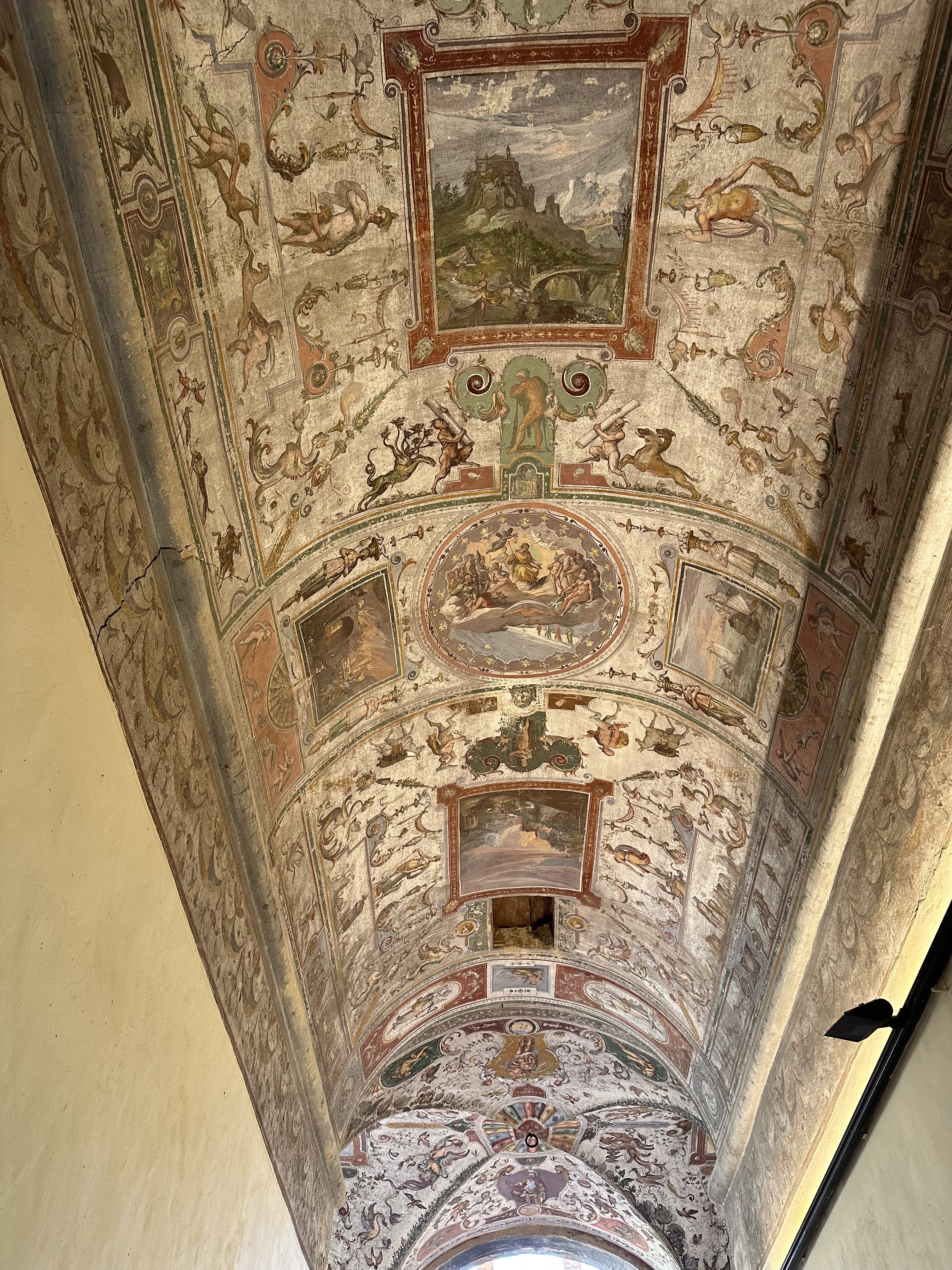
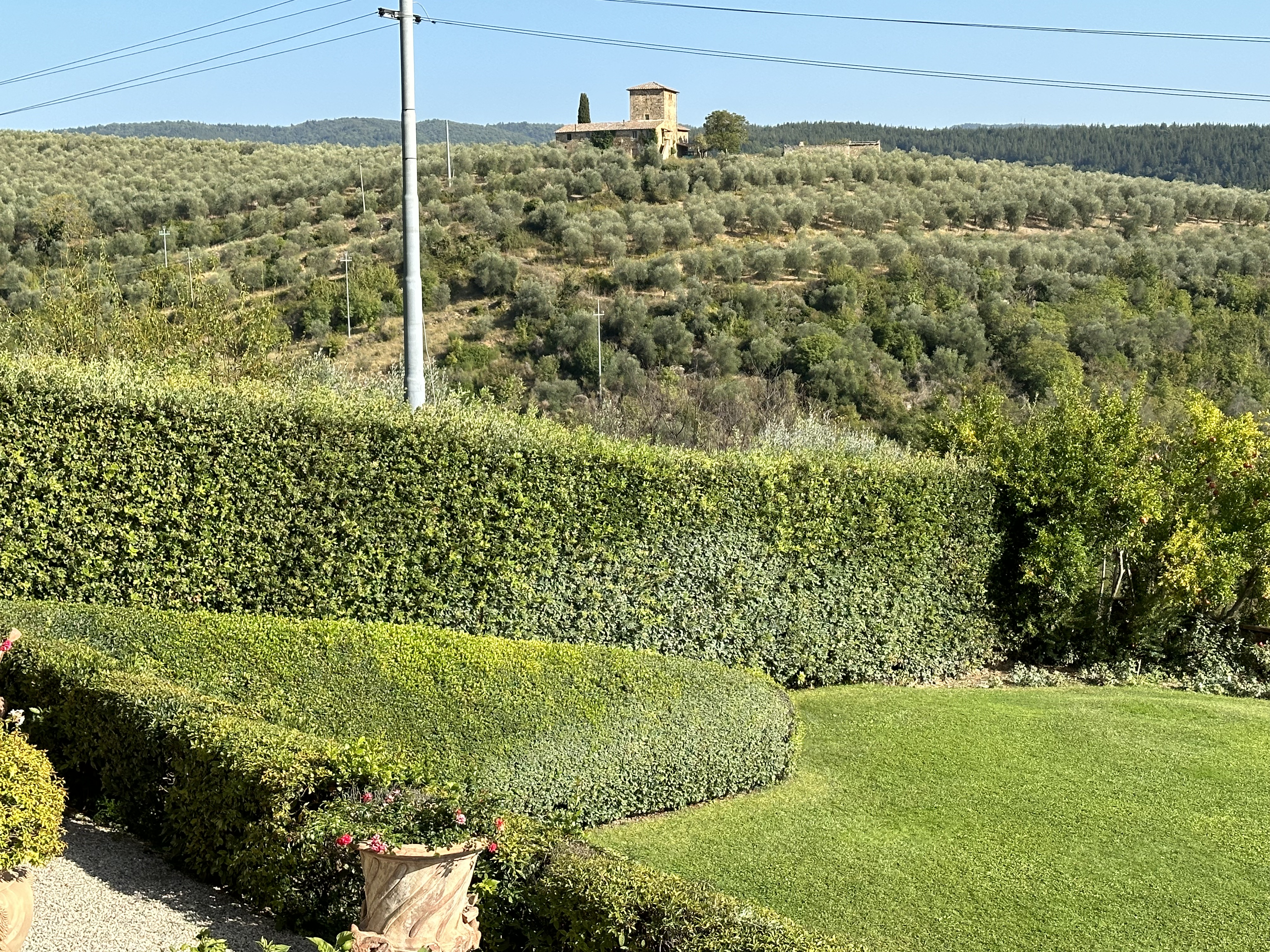
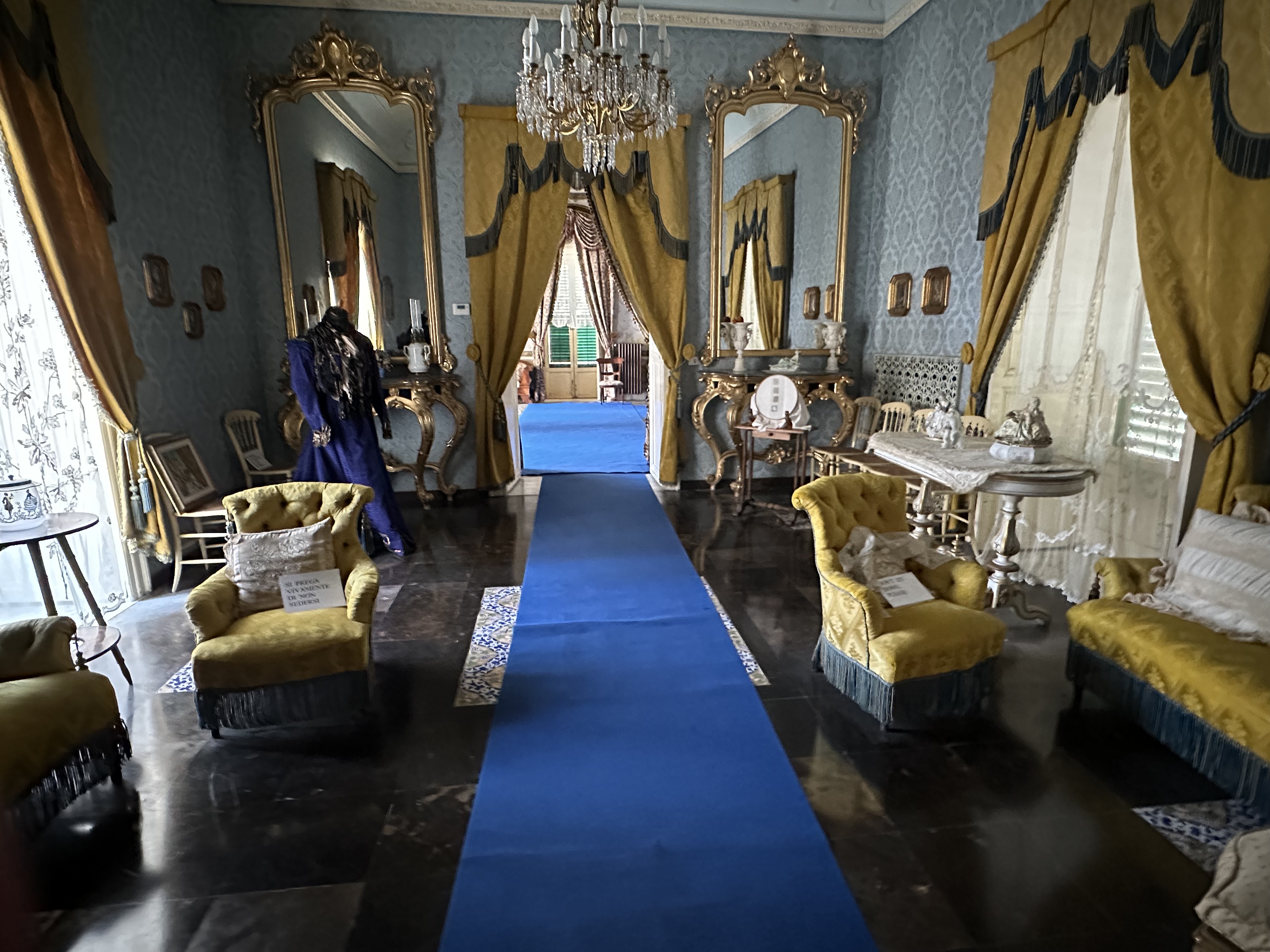
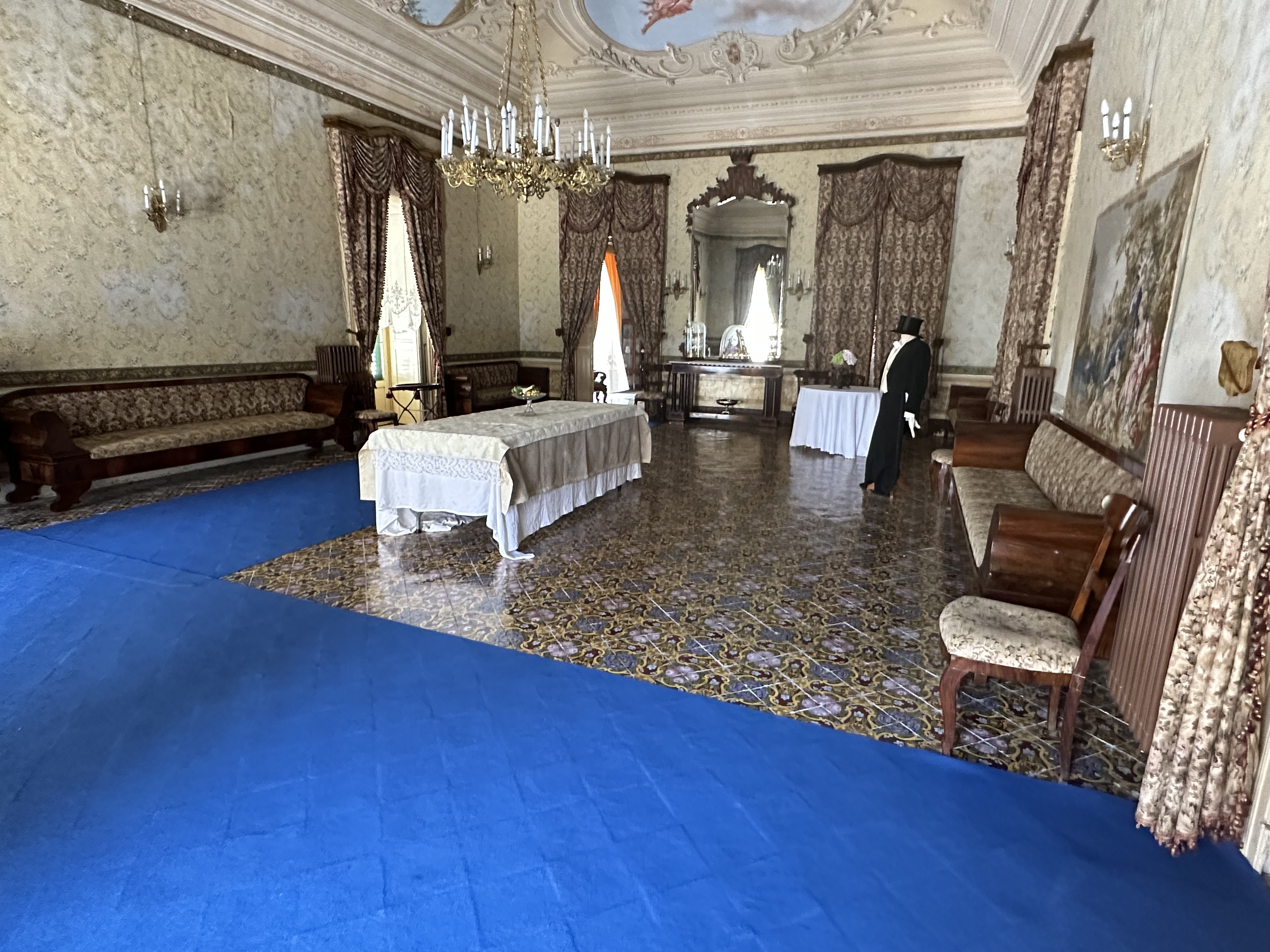
After lunch, Ewan drove us to a castle-like palace in a village called Passignano. The castle was named Castelo Bella Paneratta. The tower was built in the 13th century. The house was built in the 15th century by the Vettori family. The current family, the Albisetis, bought the property in 1984. The owners have 300 hectares of land including 23 in vines and 20 in olives. They sell 100,000 bottles of wine a year. We were shown the public rooms, including the painted ceiling in the main room in the house and then the underground wine storage before tasting some of their wines and buying a case, which they shipped home for us.
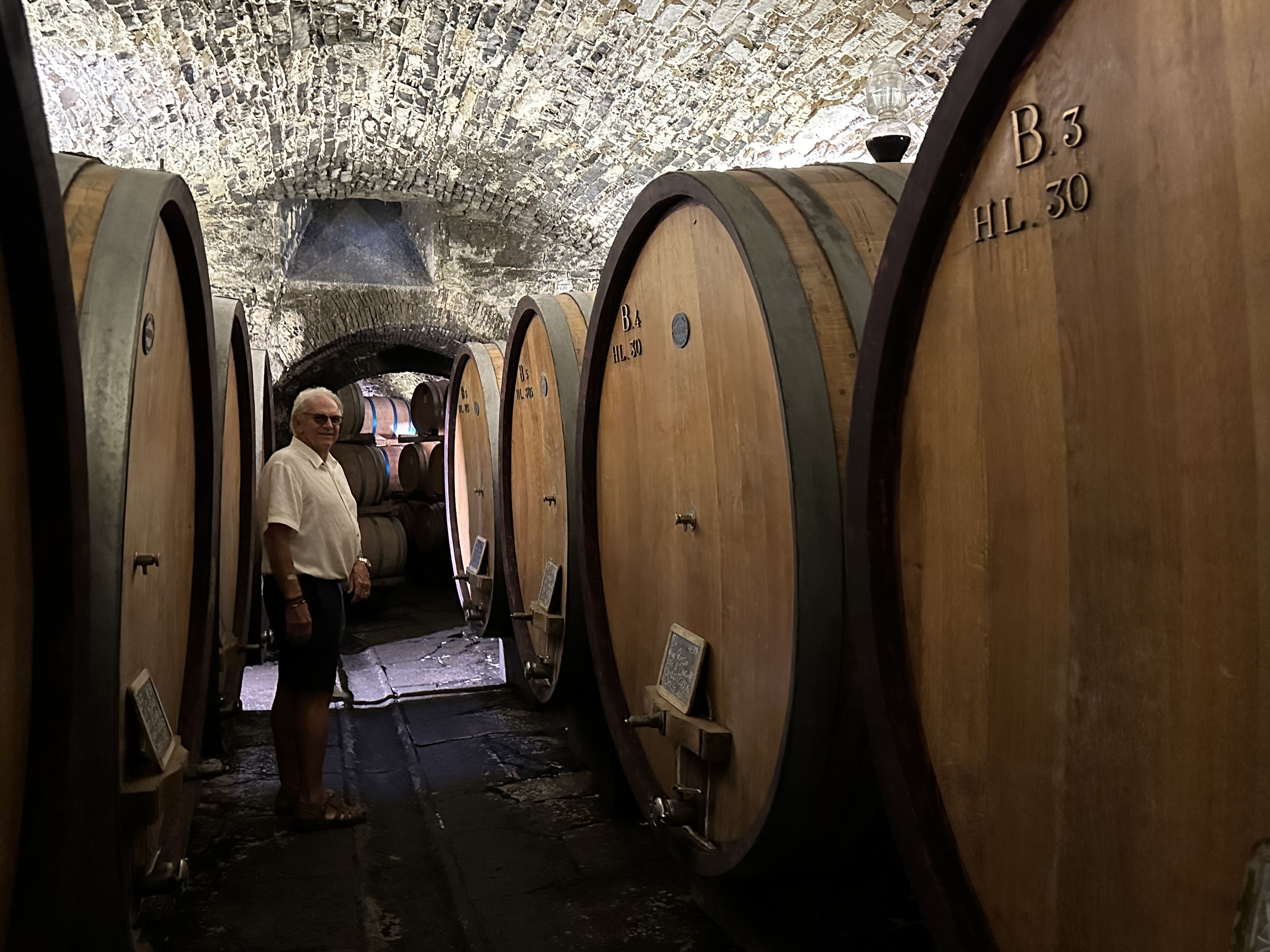
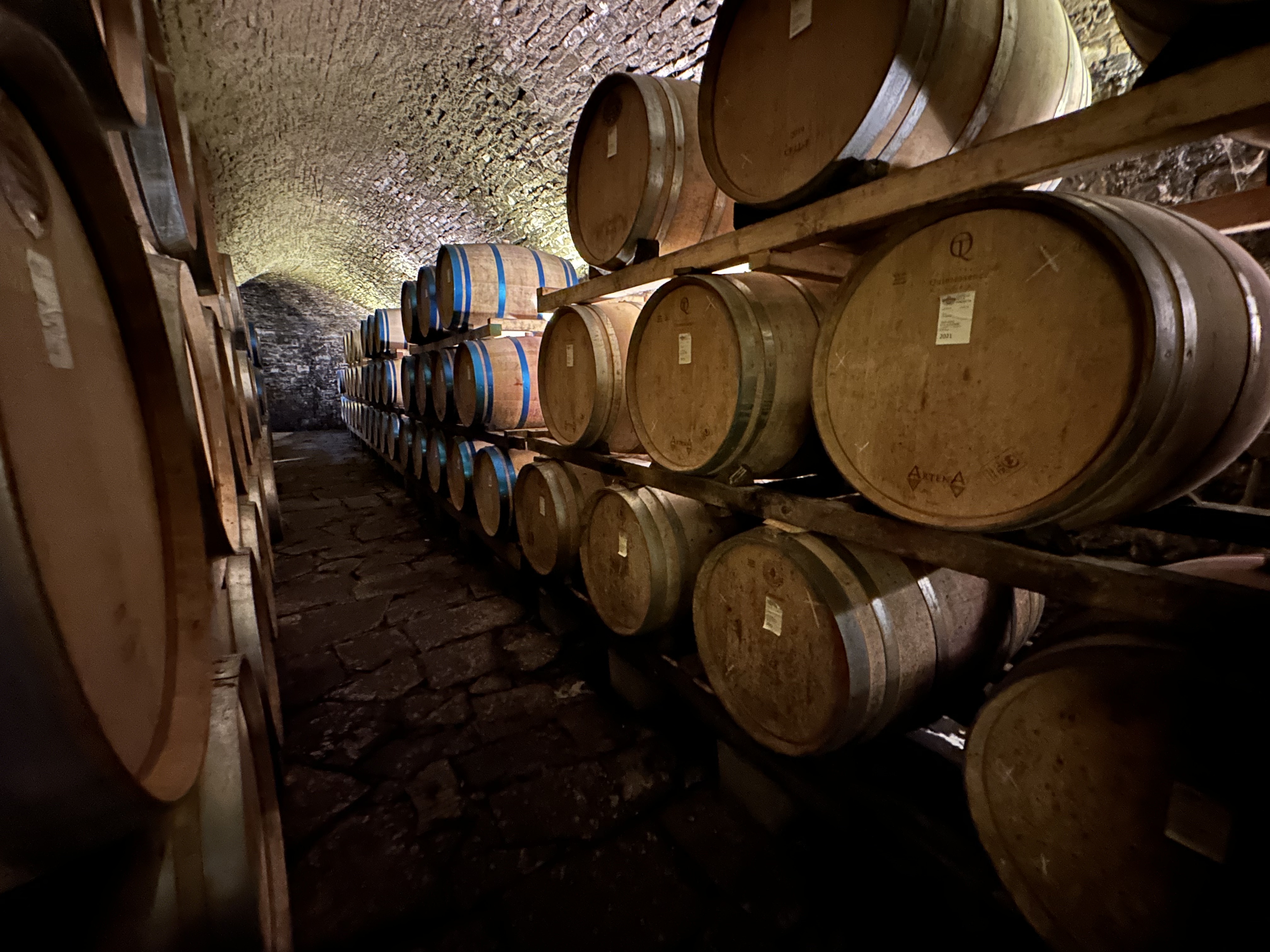
Ewan then drove us back to our hotel and said good bye. It had been an interesting day. We walked over the Vecchio Bridge and around the neighborhood and had dinner in a nearby restaurant. The streets were still full of people.
Tuesday, October 10, 2023
This was our day to see David and we were looking forward to spending time with him. Our guide for the day was a delightful young woman named Alicia. She gave us a lot of history on the walk to David.
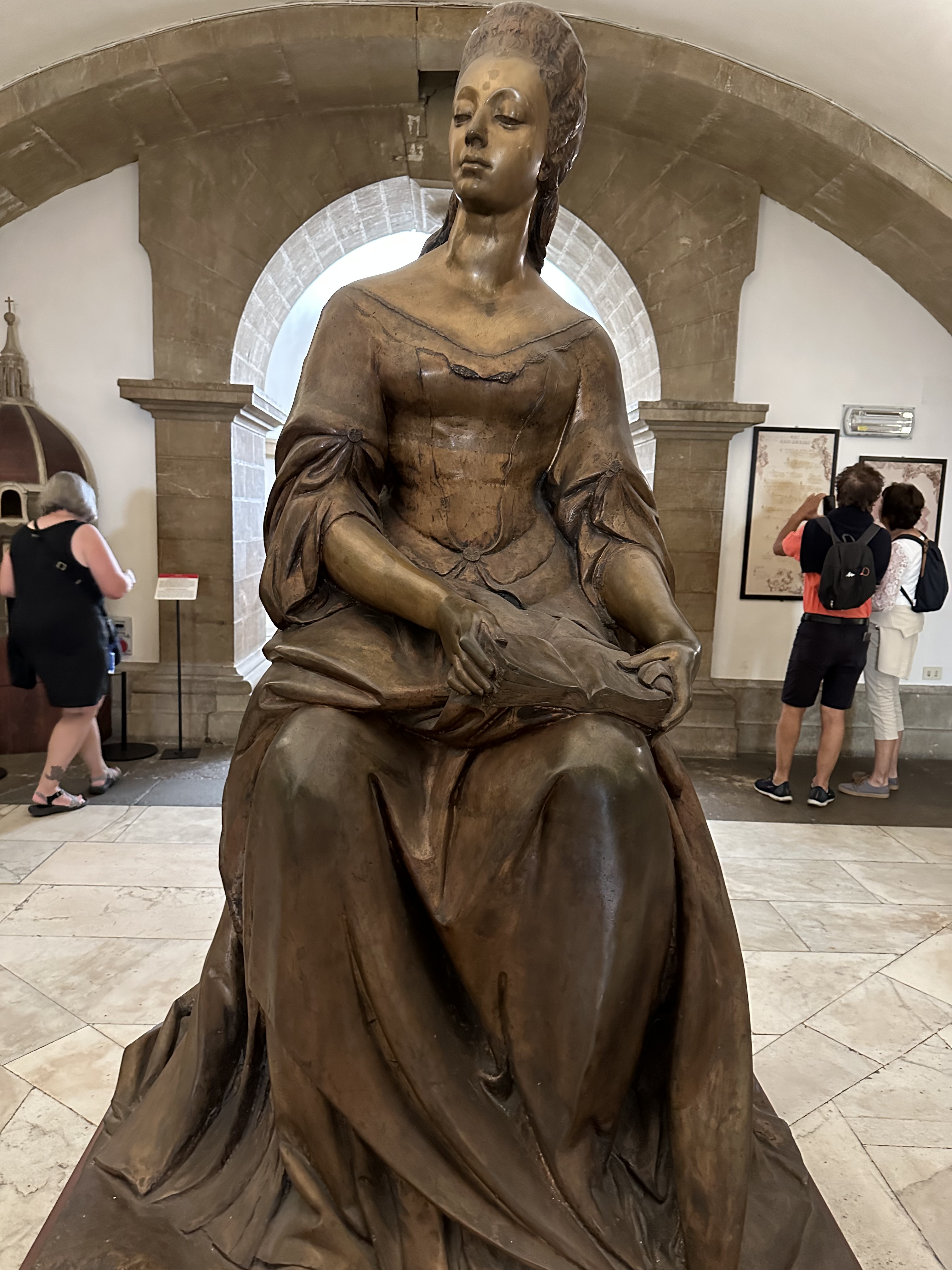
The Ponte Vecchio Bridge, near our hotel, was built in the 14th century and survived WWII and the flood of 1966. It originally was the street of butchers and meat sellers, but the Medici’s, who traveled regularly across the bridge between their two palaces, the Patti Palace and the Uffizi Gallerie built in 1560-80 as a government building, hated the smell and changed the vendors to gold sellers. Easy for the Medici’s, who basically owned control of the city. They did not have noble blood, but were bankers in the city and eventually became bankers to the popes. Papal troops surrounded the city in 1532 in an attempt to turn it into a monarchy. The siege lasted 9 months and eventually one of the Medici’s became Duke of Florence. This first Duke was an illegitimate son of the Pope. He was a very arrogant tyrant named Alexander who did not last long. In 1527 another Medici became Duke, Cosimo I. He started in Florence but expanded his territory and, in 30 years, became Grand Duke after conquering all the city-states in the territory of Tuscany. He was a great leader and added much wealth to the Medici family. He also had books translated from Greek into Latin, which caused the beginning of the Renaissance. Few people could read including the Medici’s and he hired scholars to teach them to read Latin. The Medici’s remained Grand Dukes for 200 years until the last one died in 1743. The most famous last Duke was a Duchess named Ana Maria Luisa, who had no children and gifted all the extensive Medici property to the city, on the condition that all the contents of her property must stay in the city of Florence.
Meanwhile, Leonardo De Vinci lived from 1452-1519 and Michaelangelo lived from 1475- 1564. During these years Florence was a Republic.
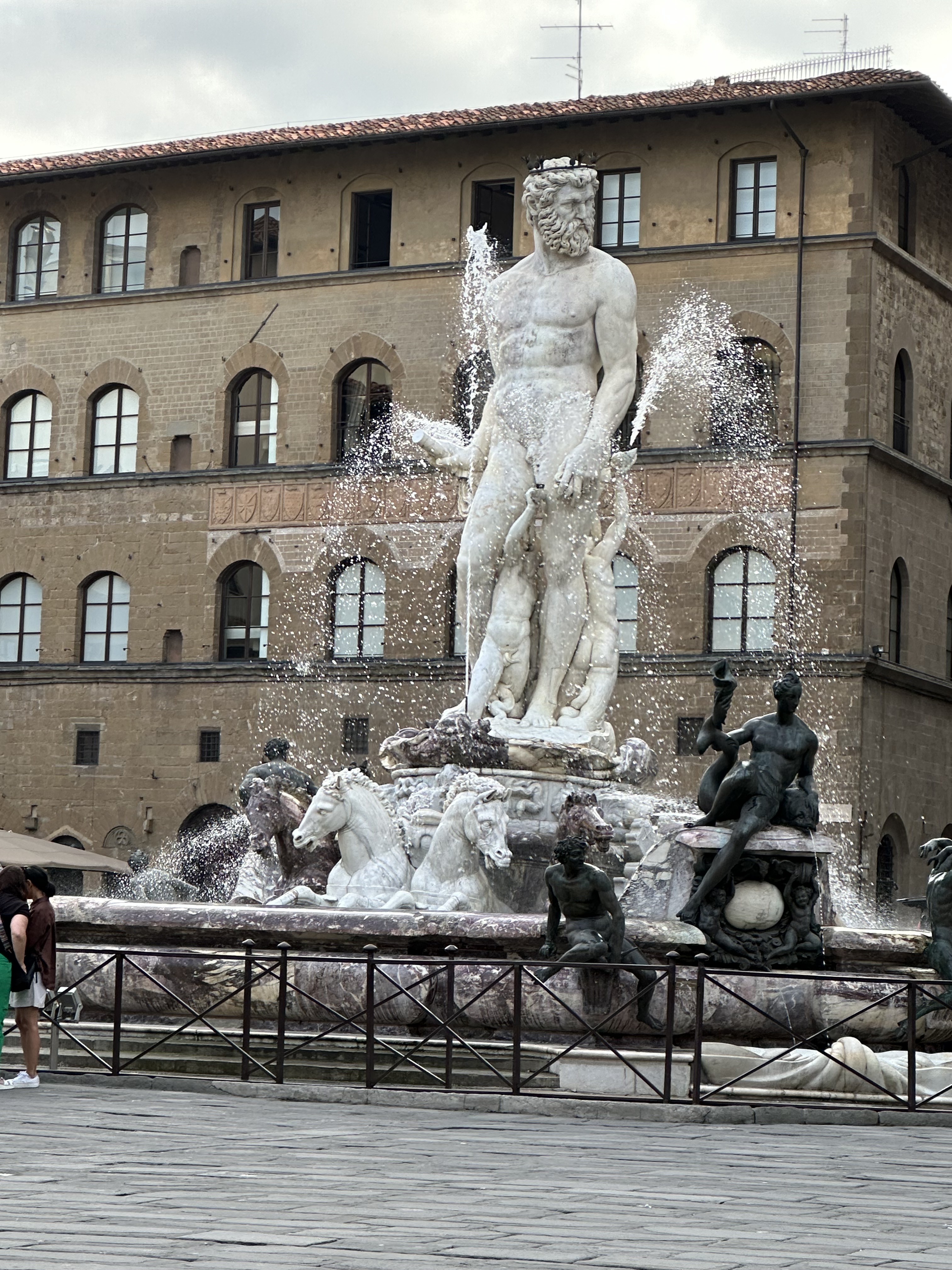
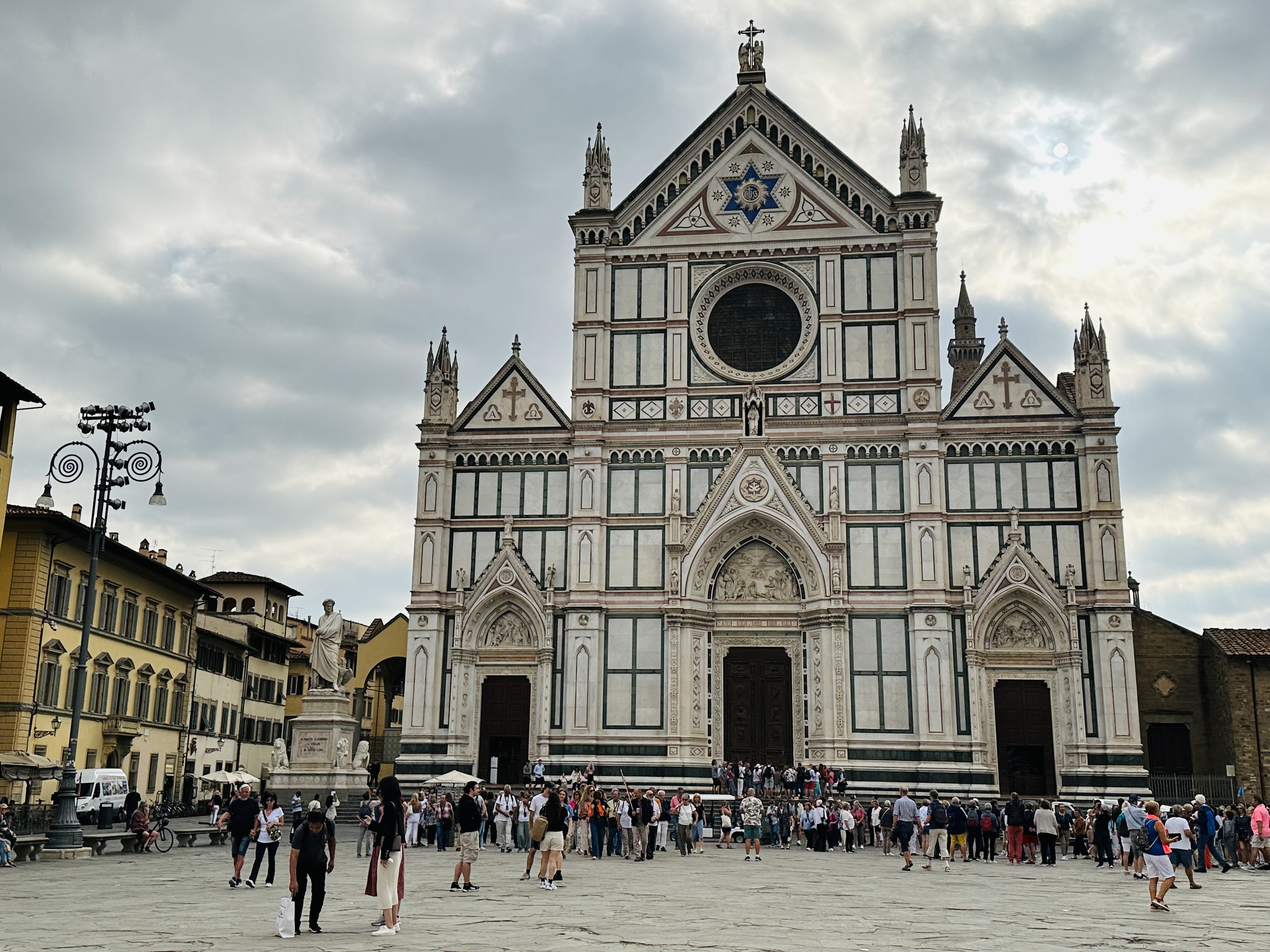
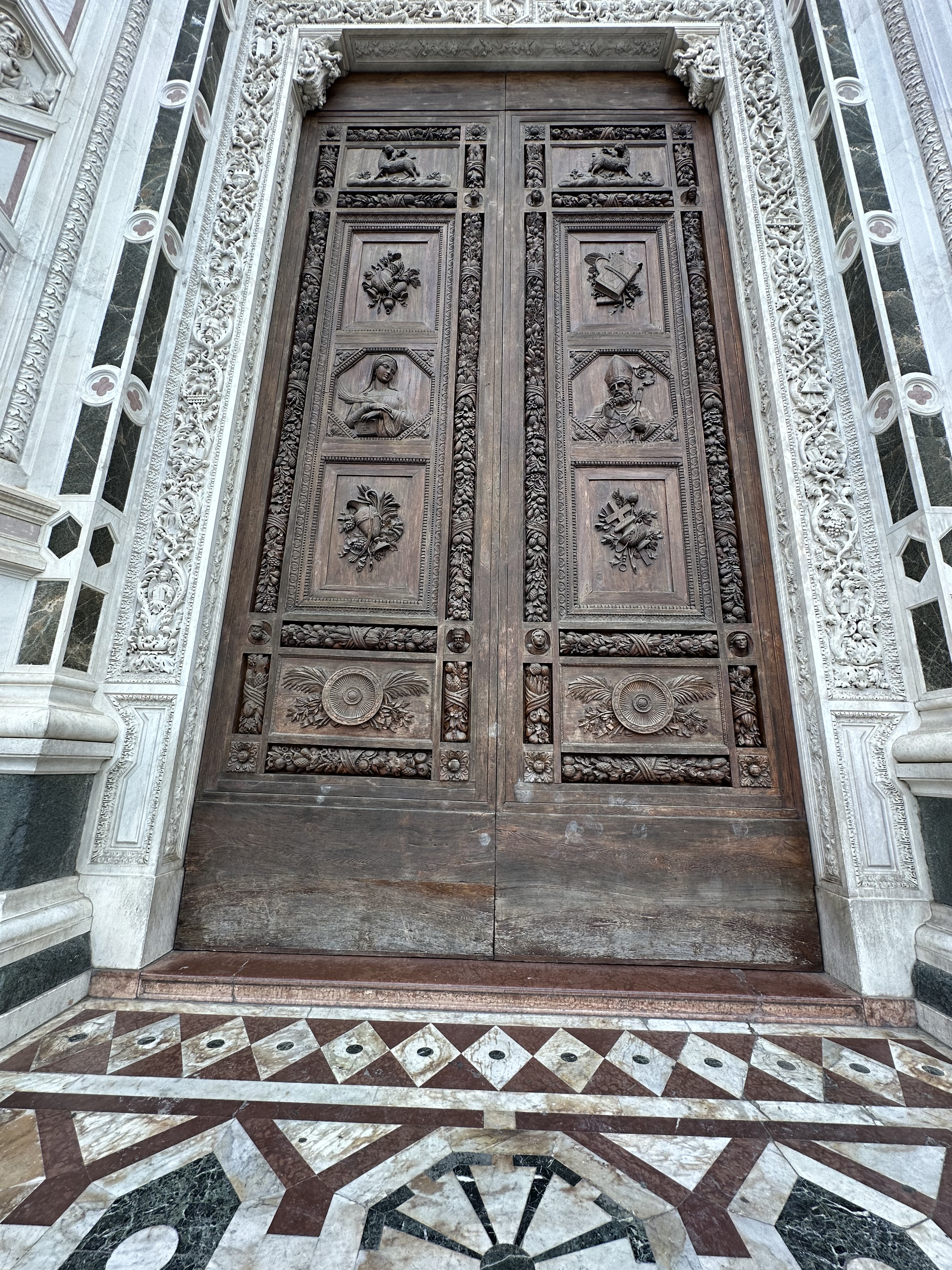
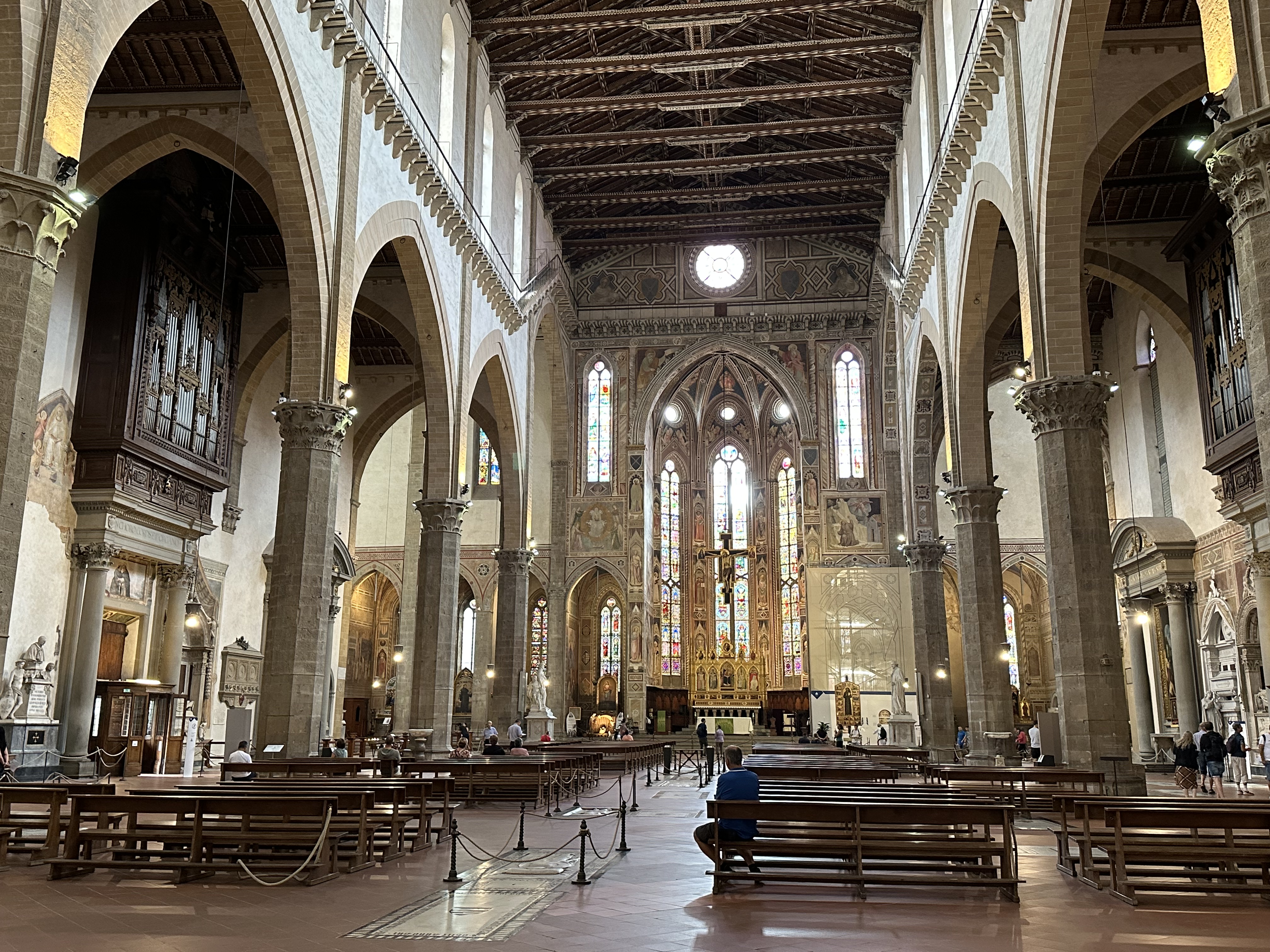
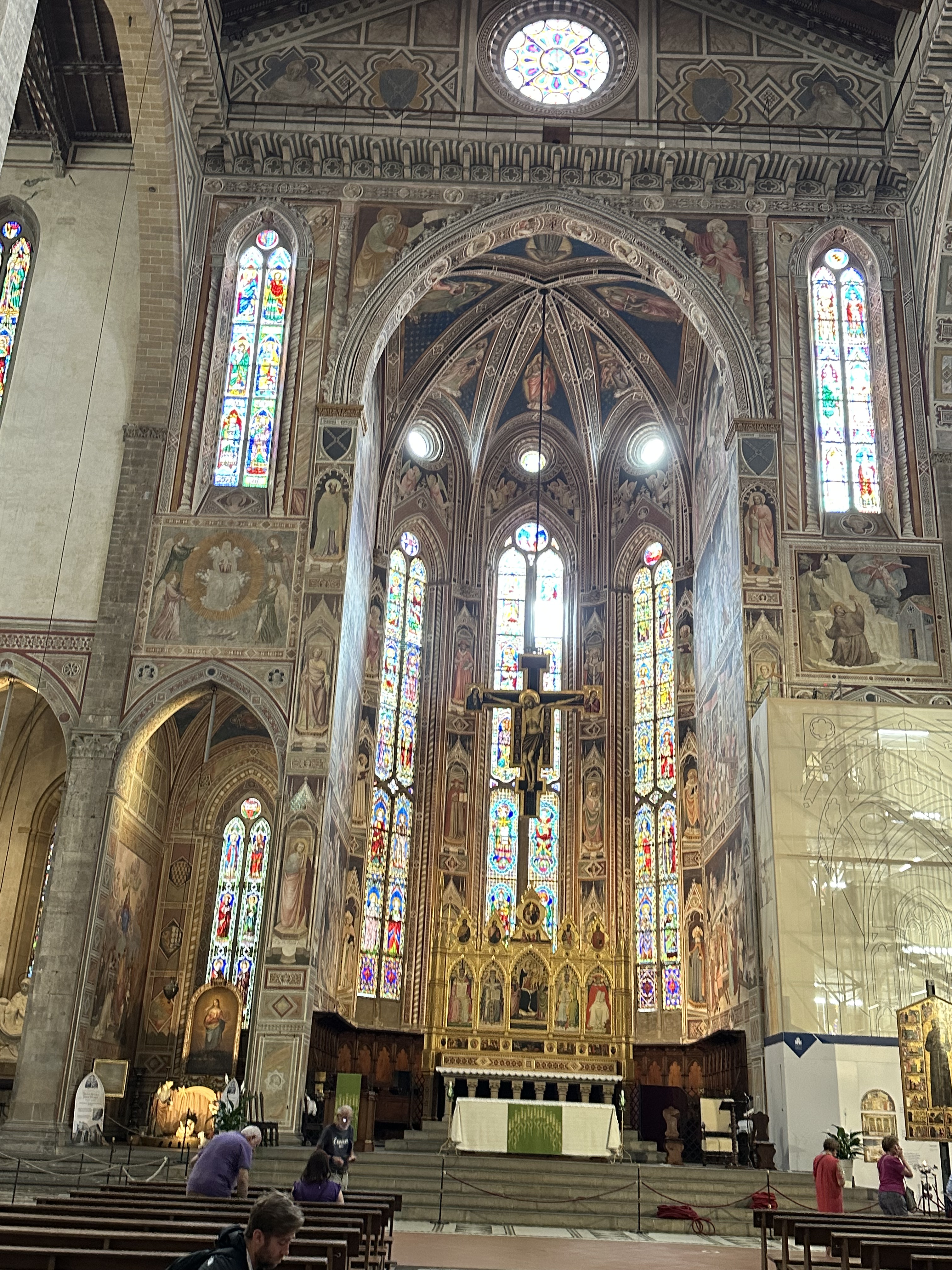
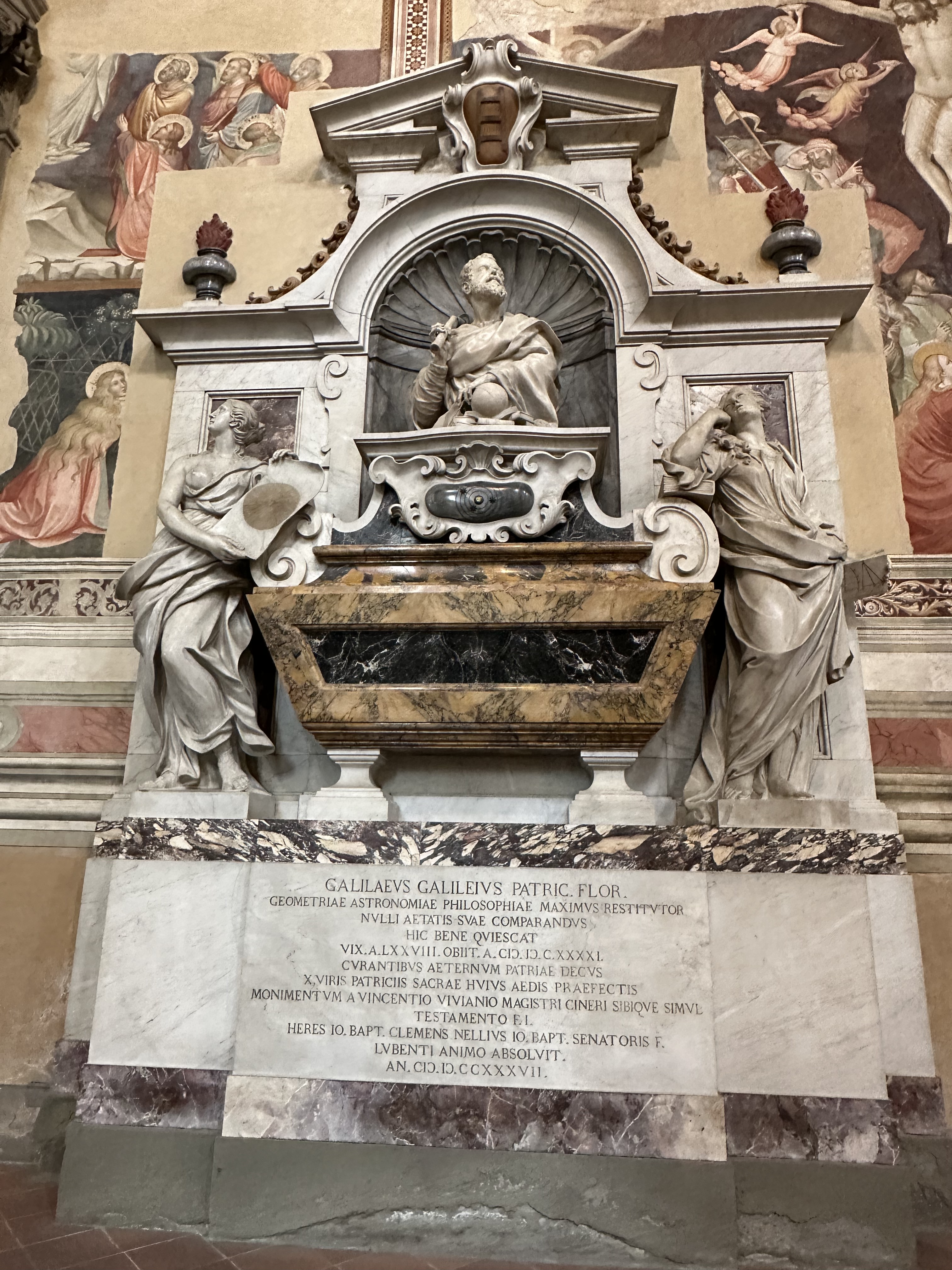
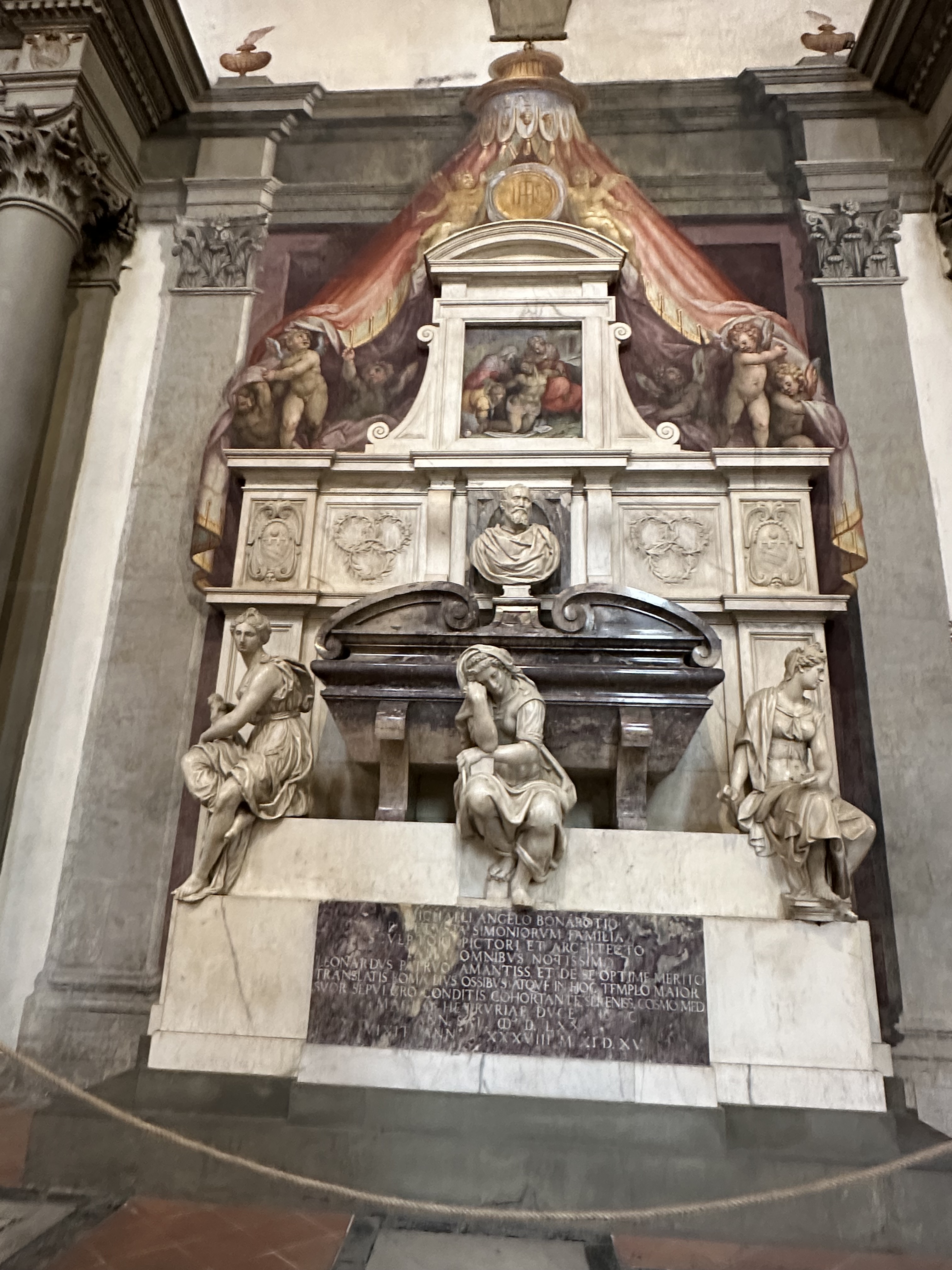
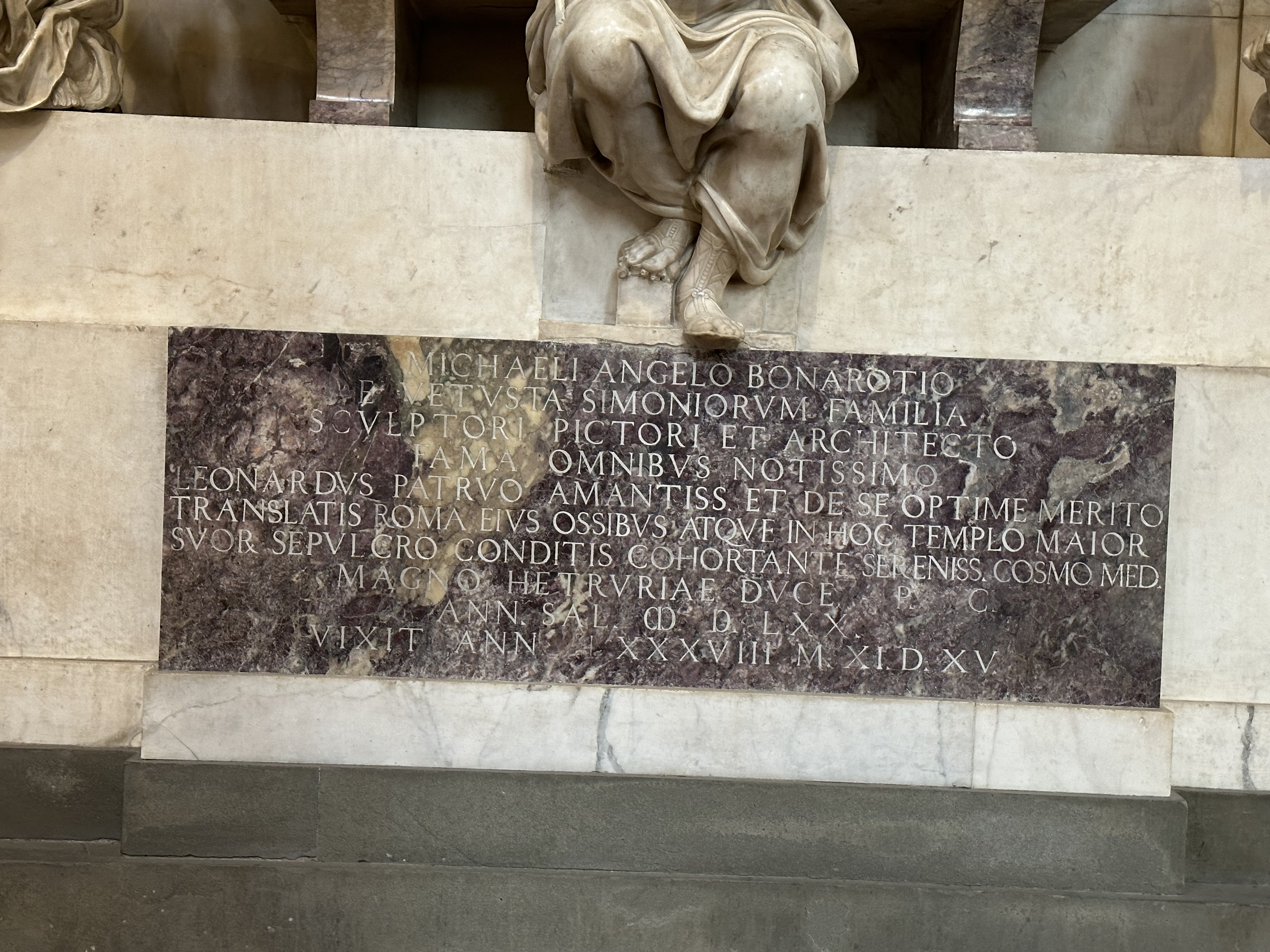
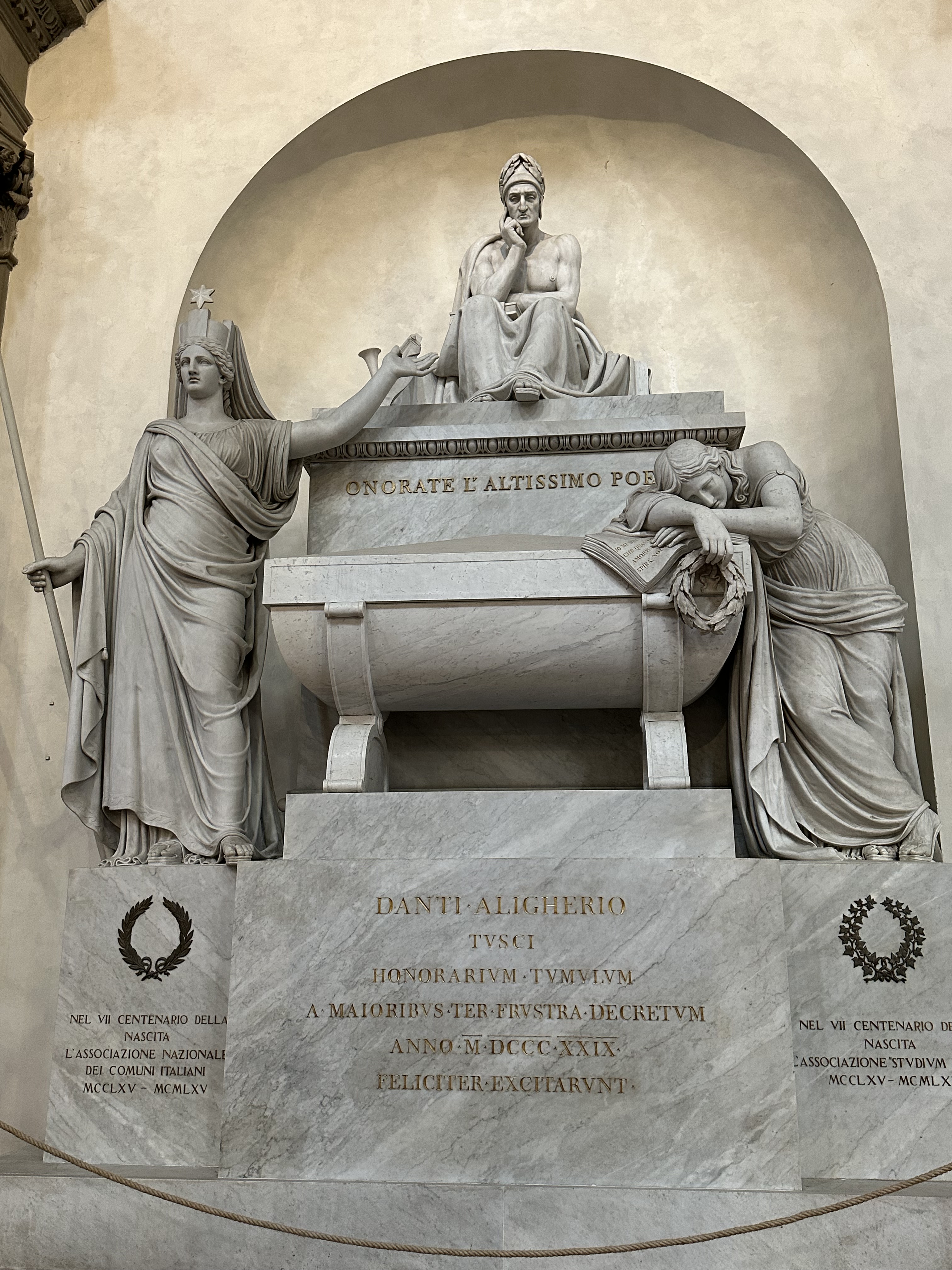
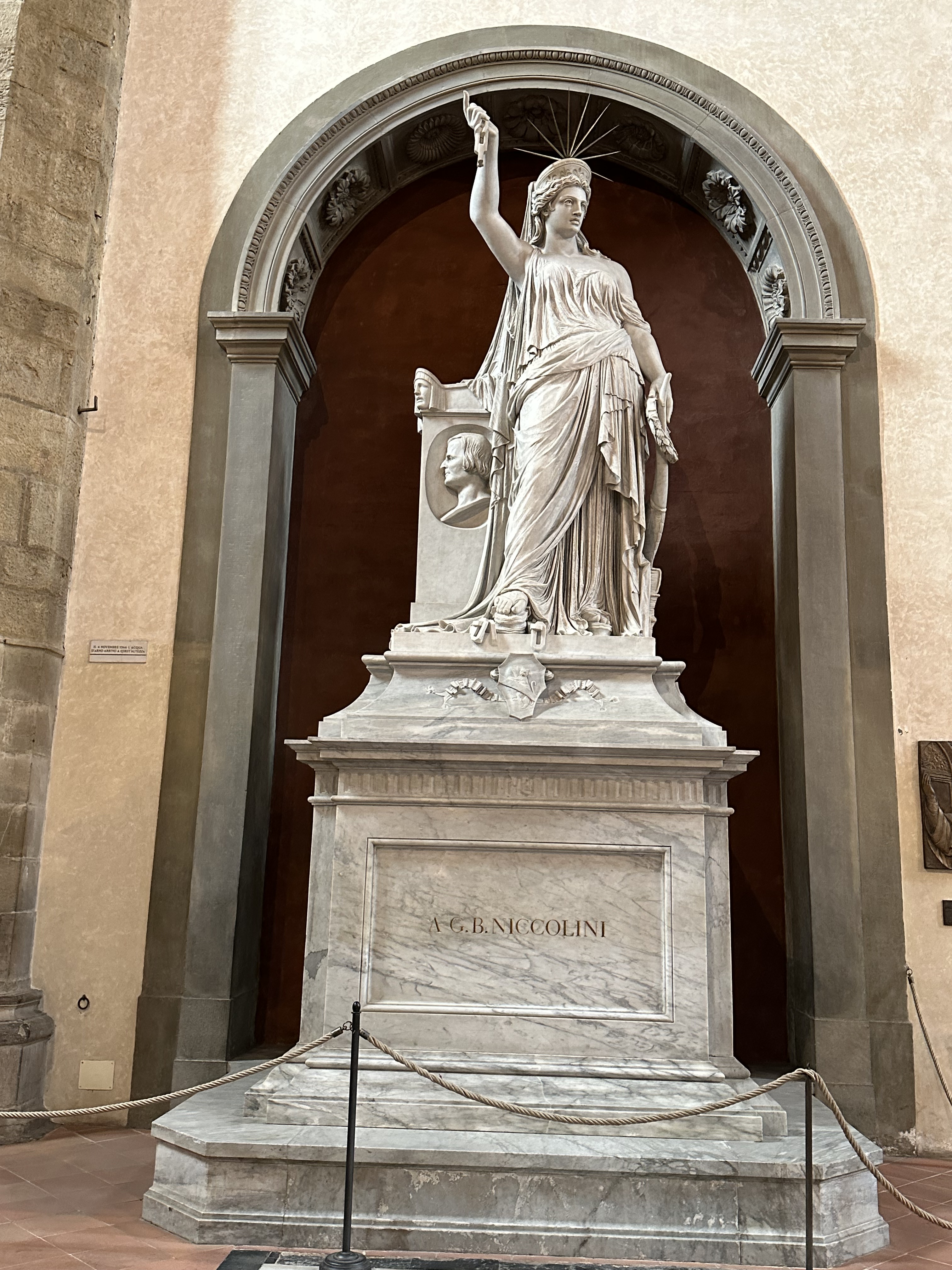
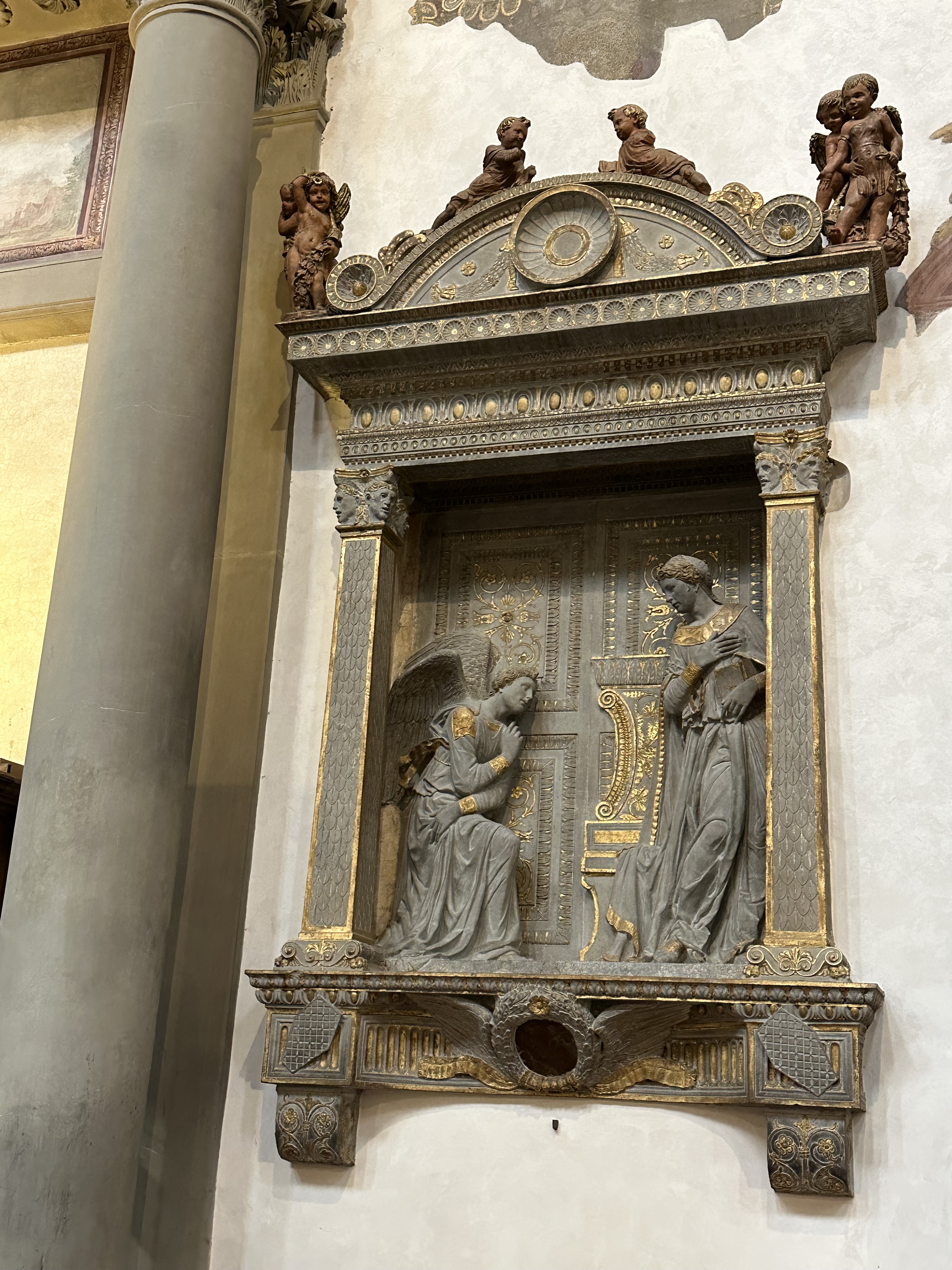
Our first stop was the Piazza Santa Croce, where the Basilica di Santa Croce is located. It’s neogothic facade is quite grand from the outside and the gothic interior even more grand on the inside, where we found the tombs of Galileo, Michael Angelo, Machiavelli, Rossini, and Danti, although Danti’s is empty. There is a statue dated 1870 above the grave of Freedom of Speech, by A G.B. Niccolini, who wrote theater dramas. It looks very much like the Statue of Liberty in New York Harbor.
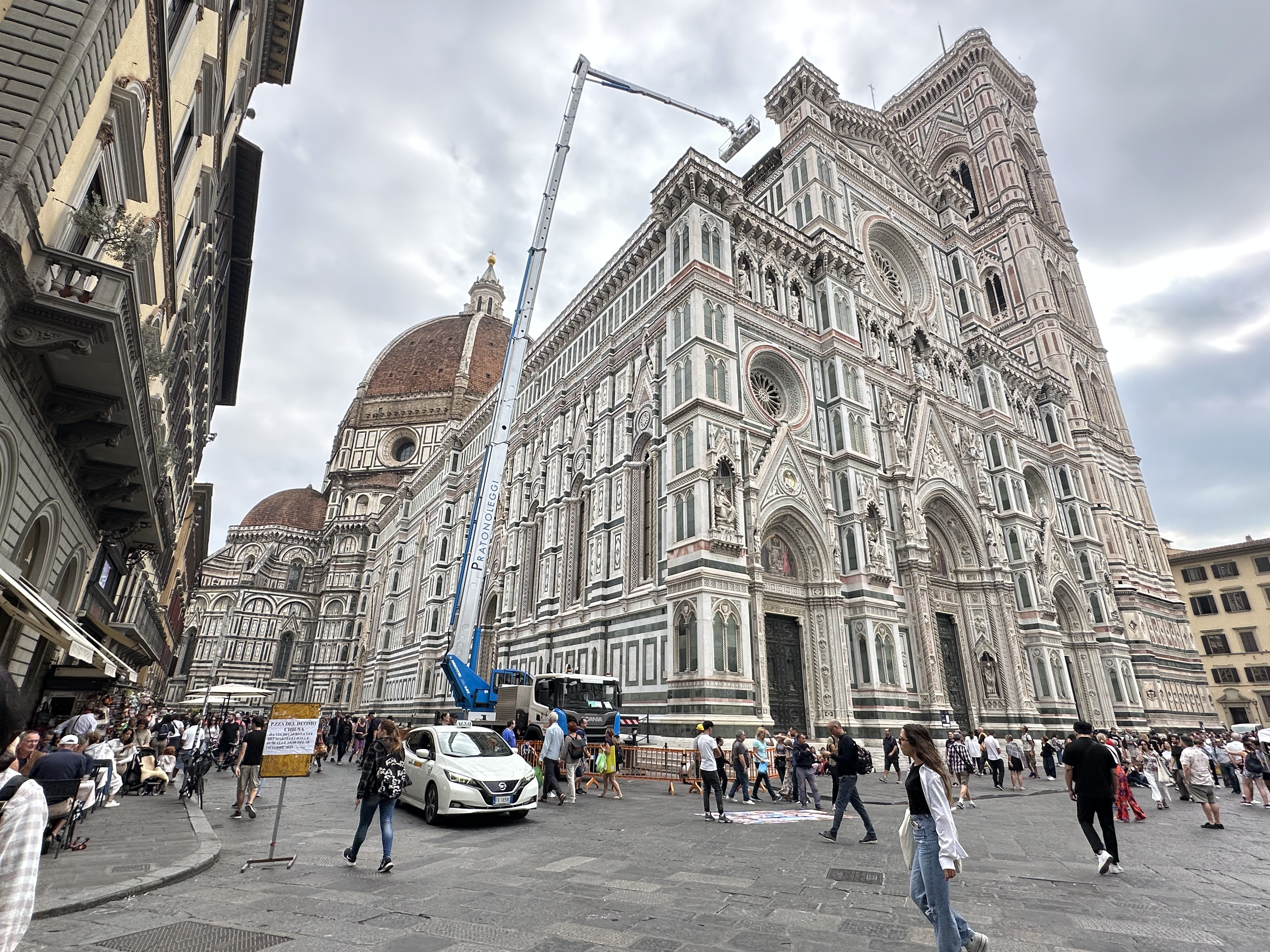
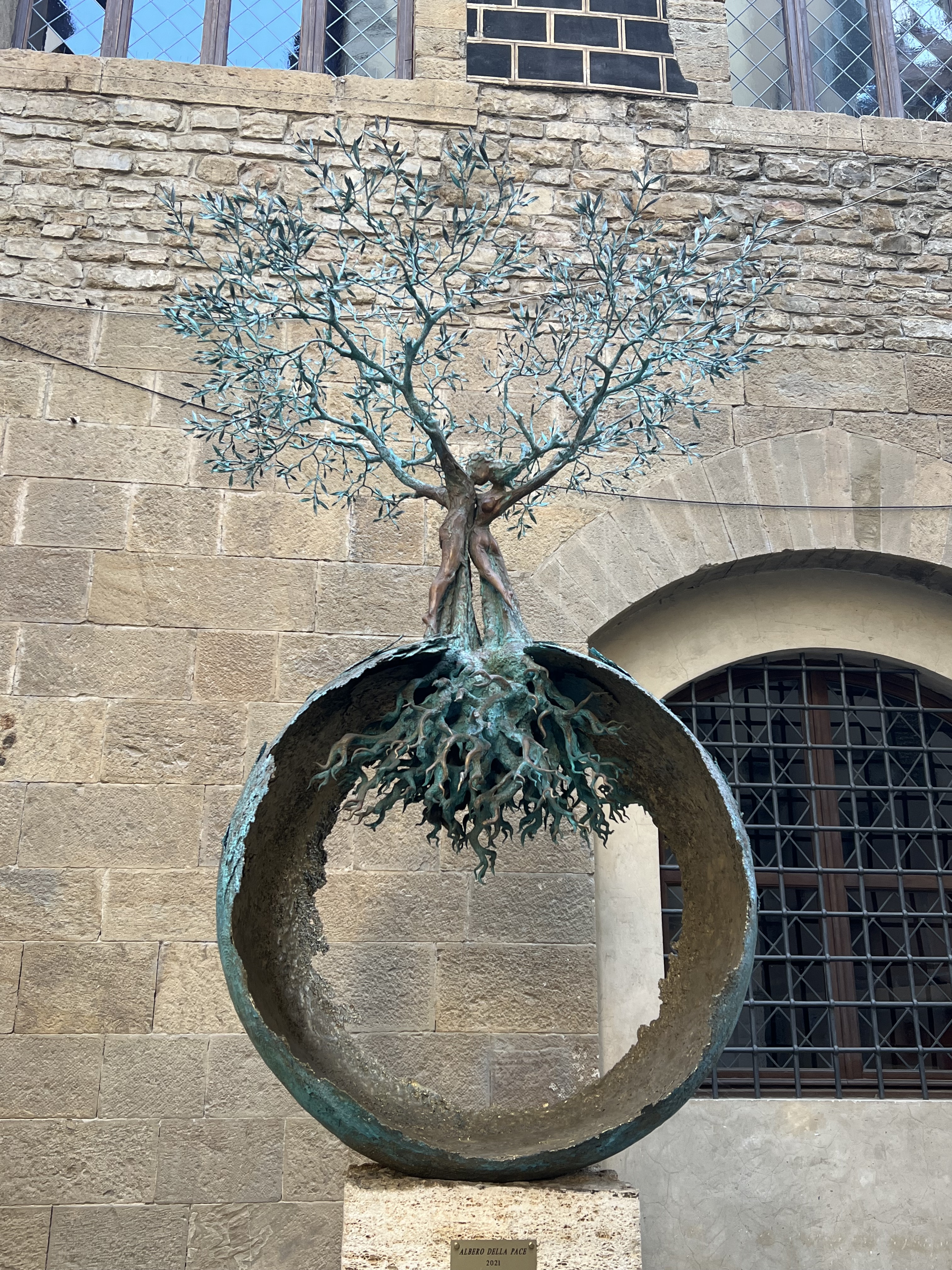
After leaving the Basilica, we stopped for a break. Then on to the next piazza and the huge Duomo, Santa Maria del Fiore Cathedral, which was built during the late 3rd century and completed in 1436. The facade is made of white, green and red marble, which has faded. It is the 4th largest cathedral in Europe. To climb to the top takes 464 steps, a feat I had no desire to try. We did not go into the building as we had tickets to see David in the Galleria del Academia.
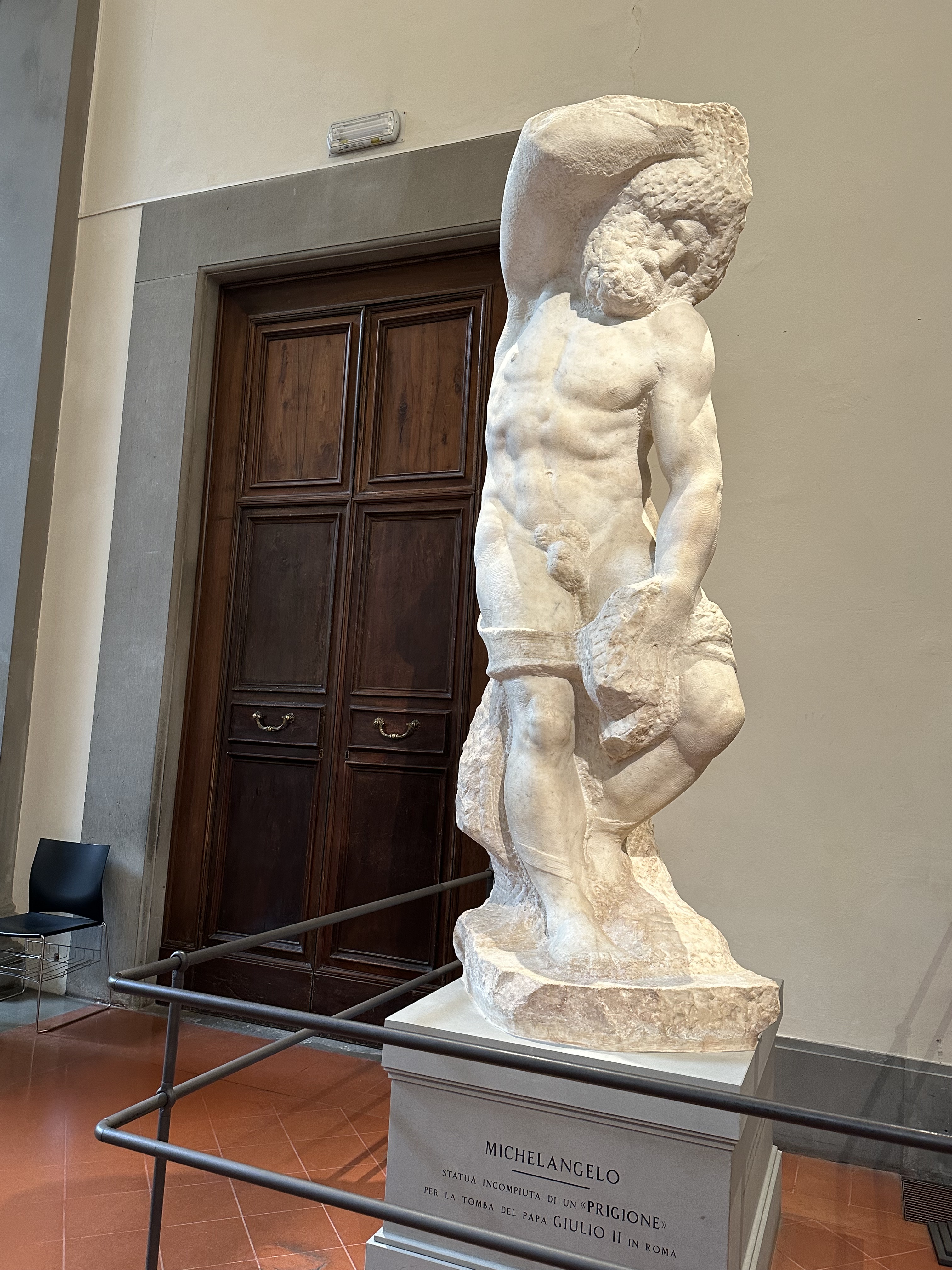
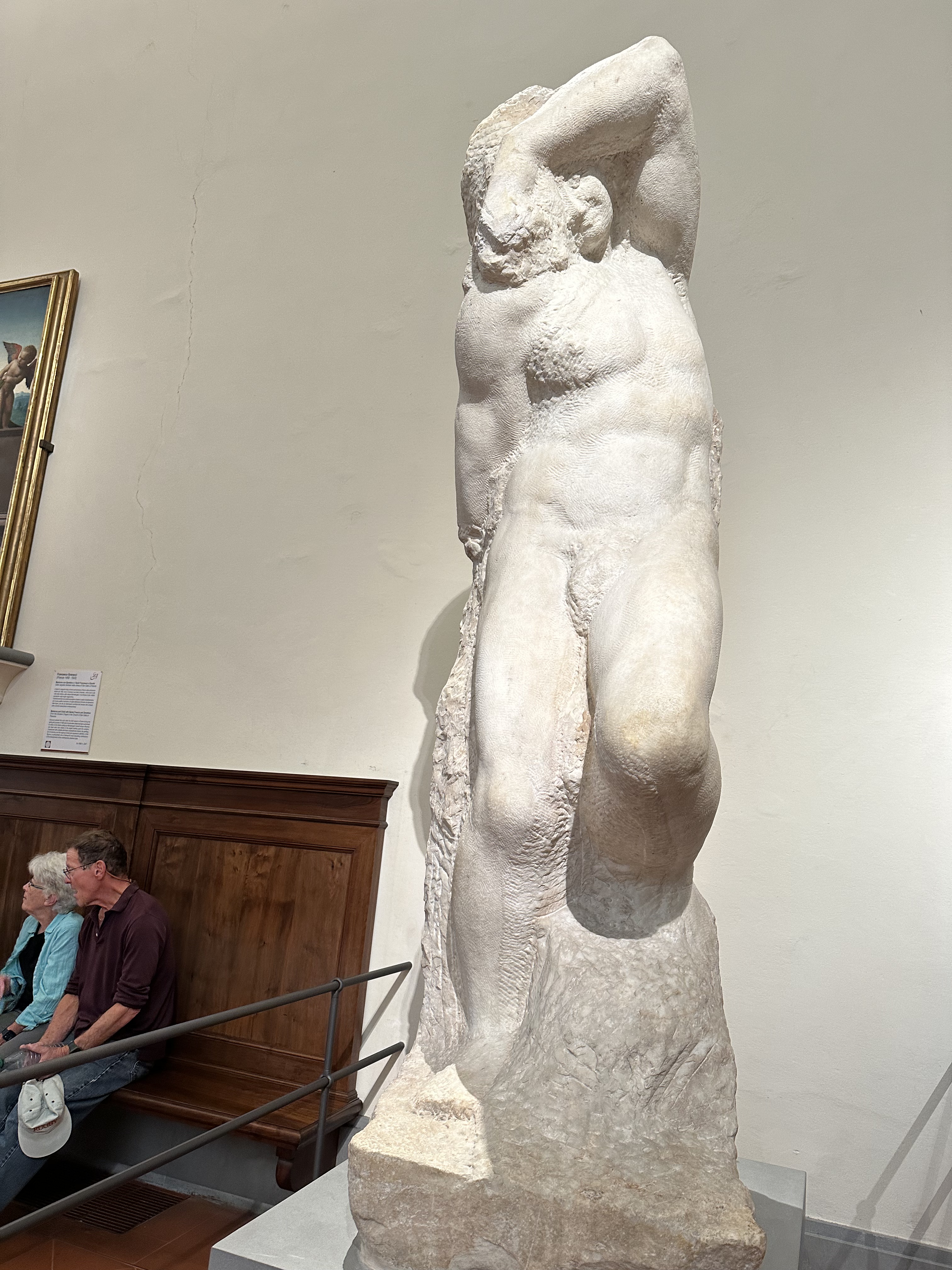
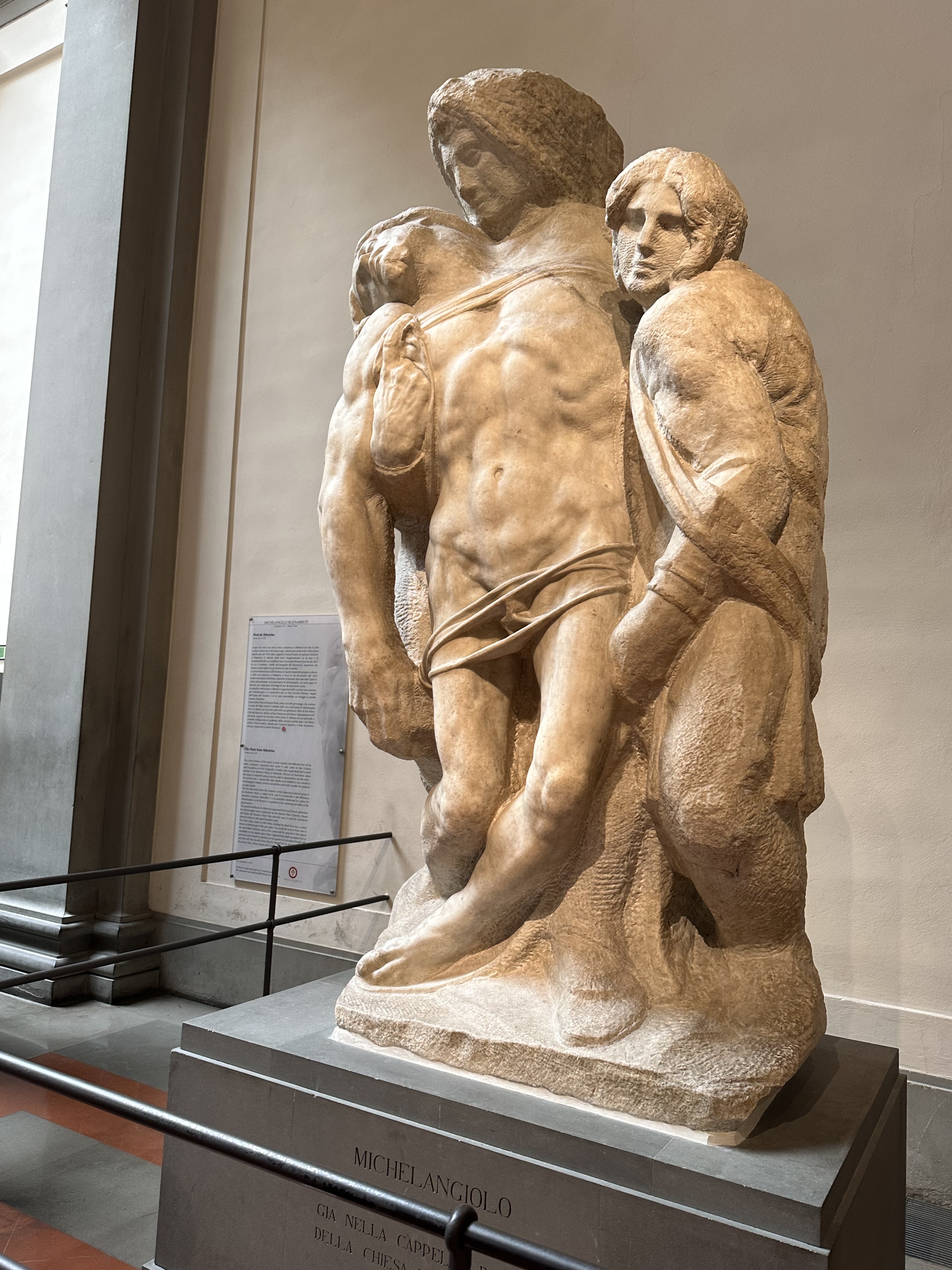
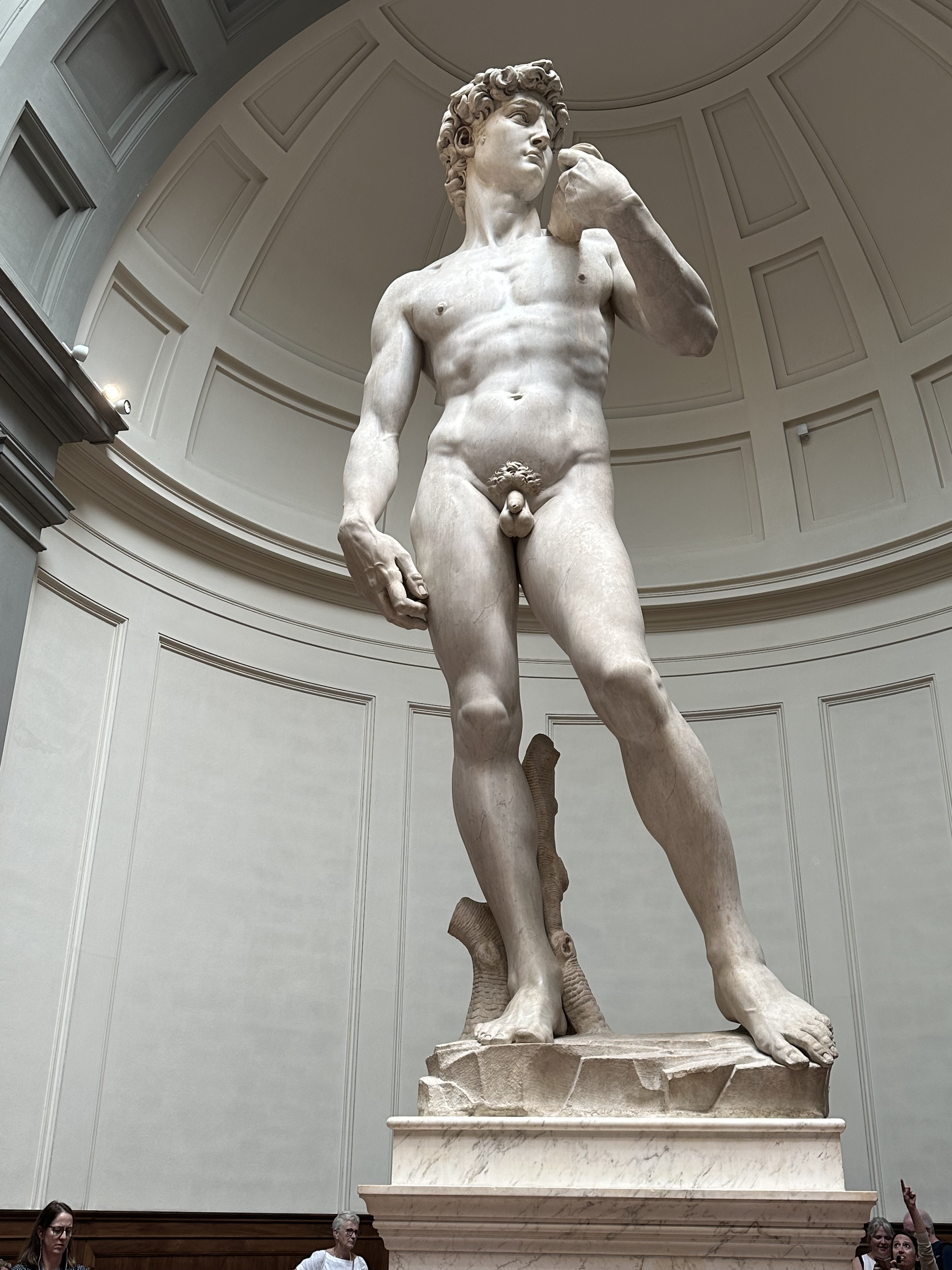
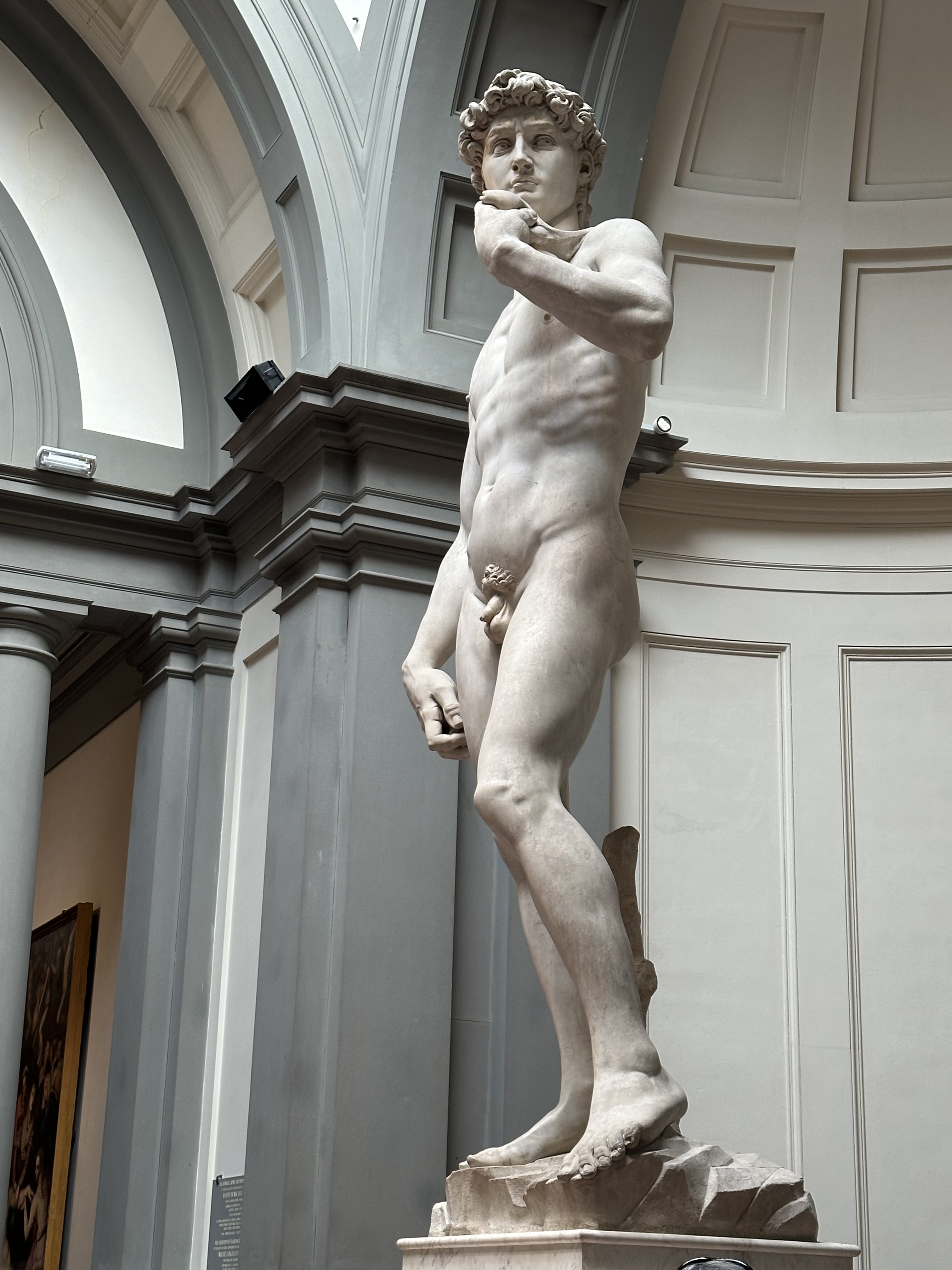
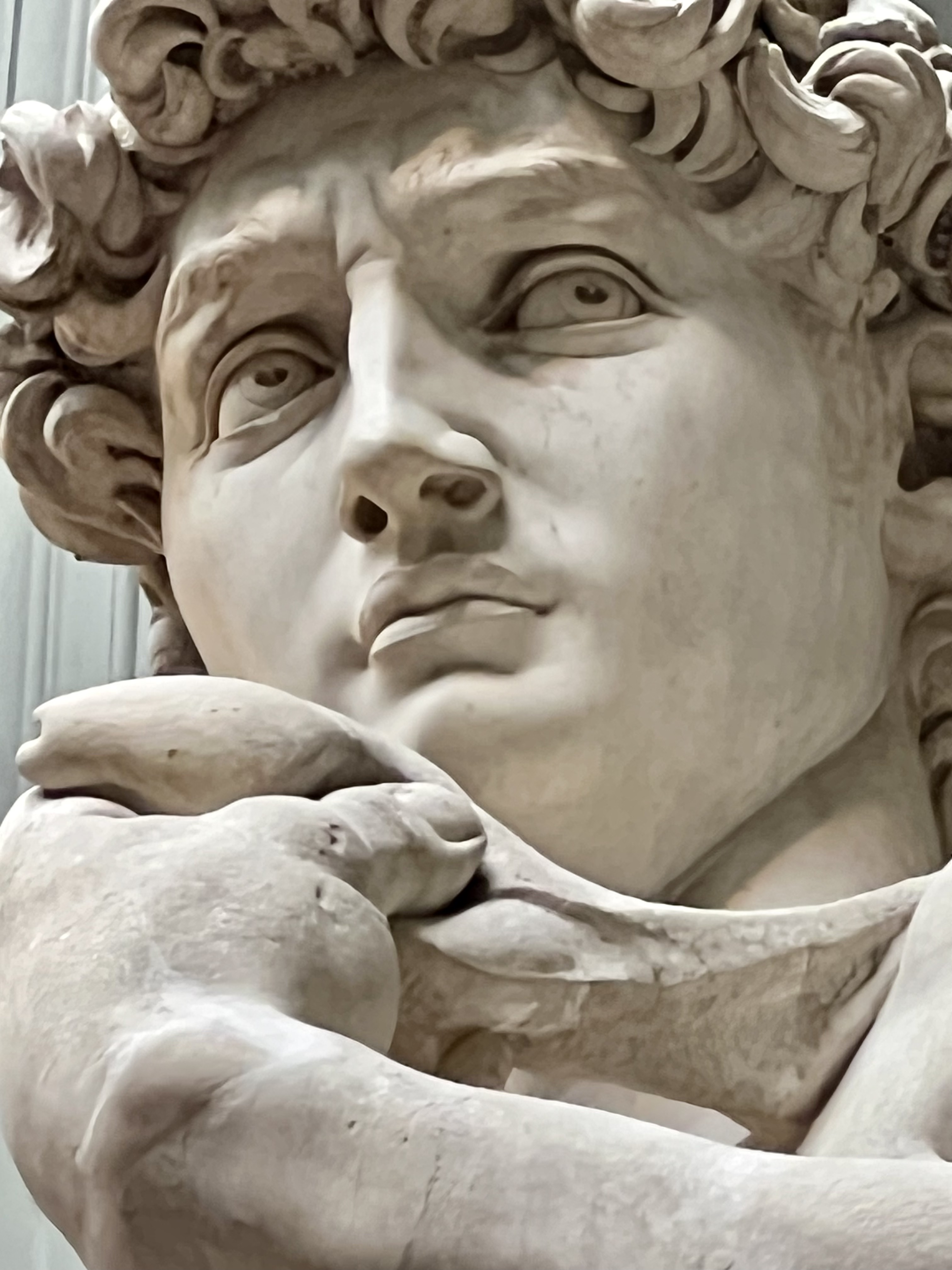
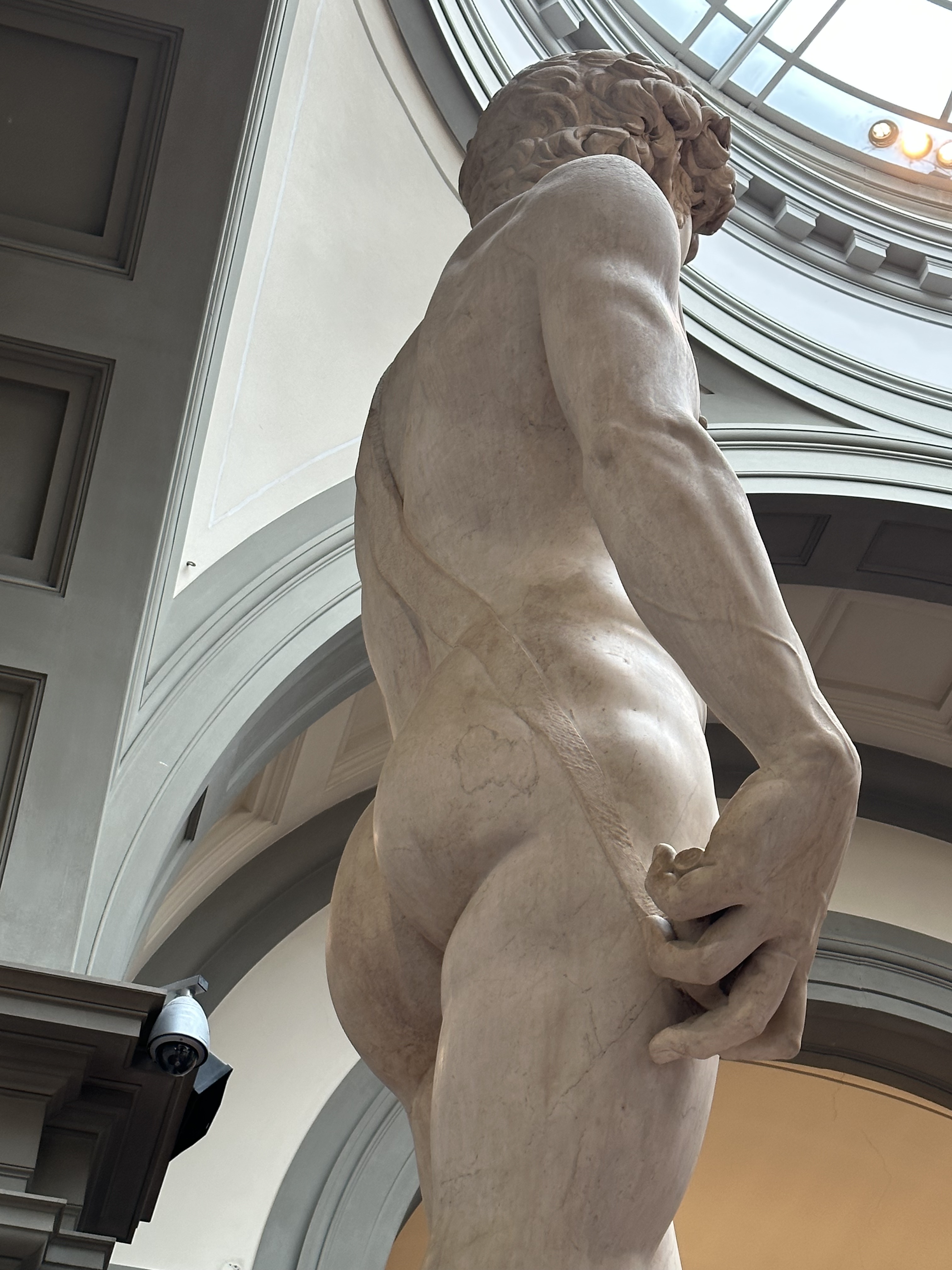
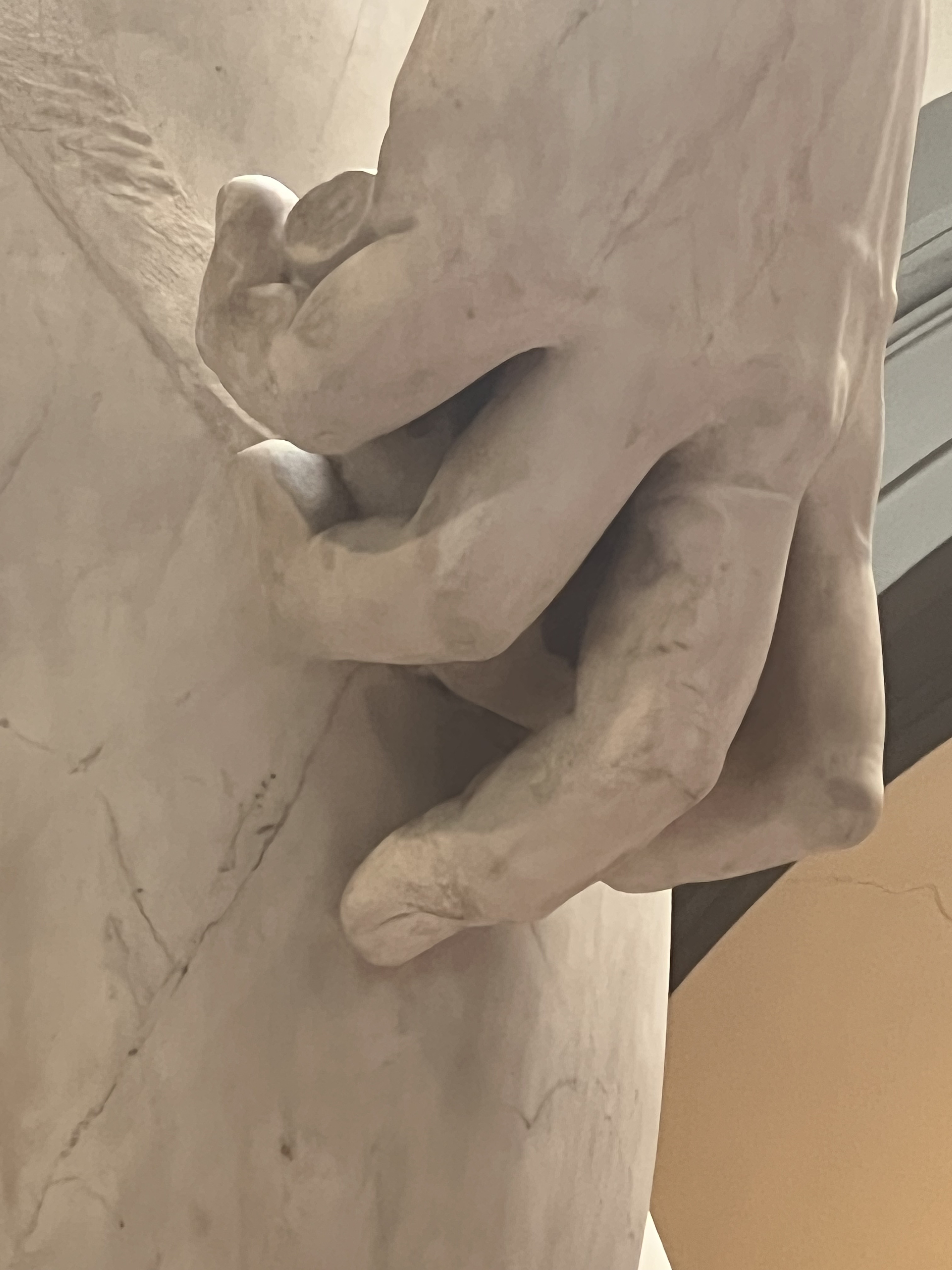
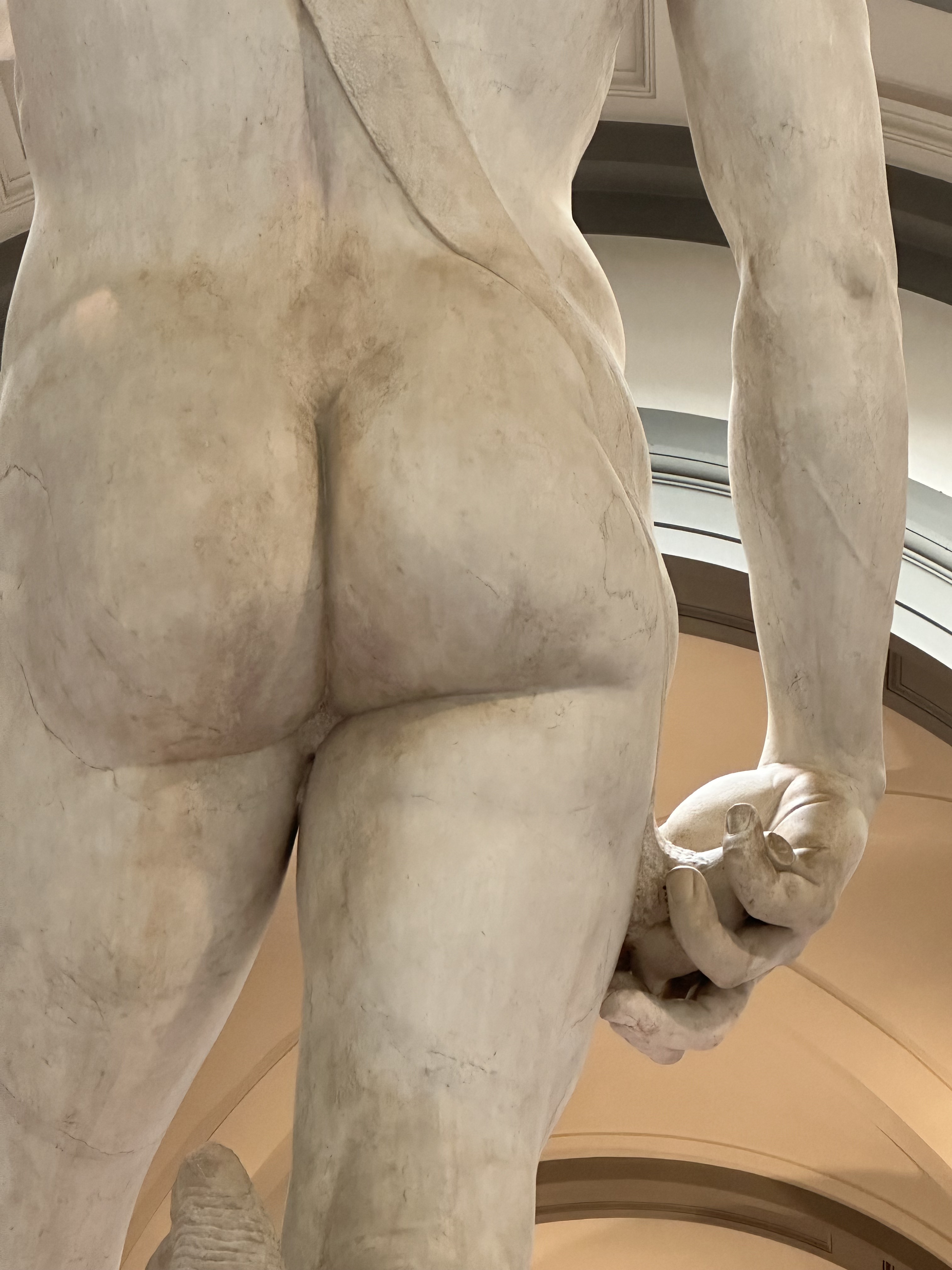
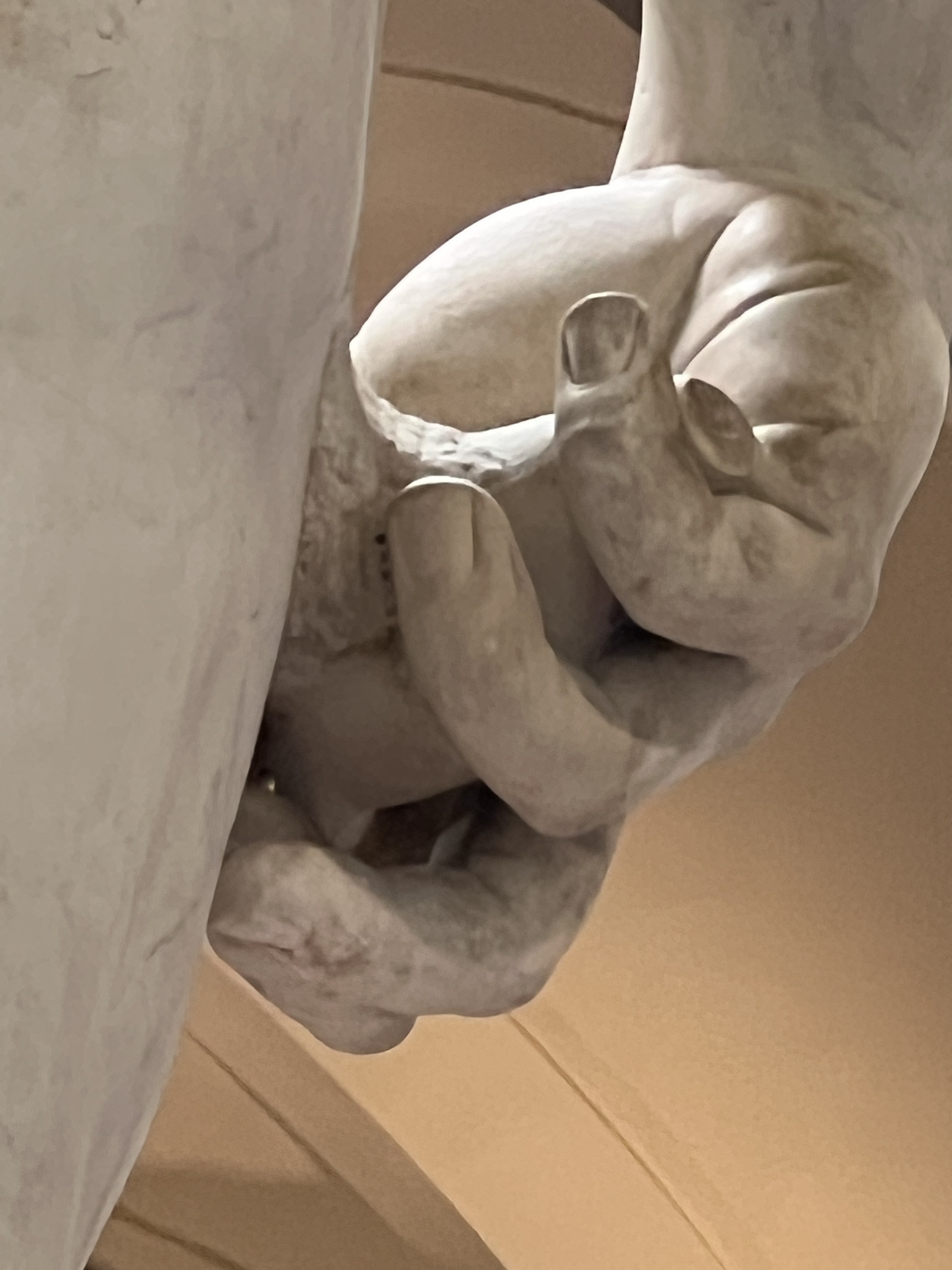
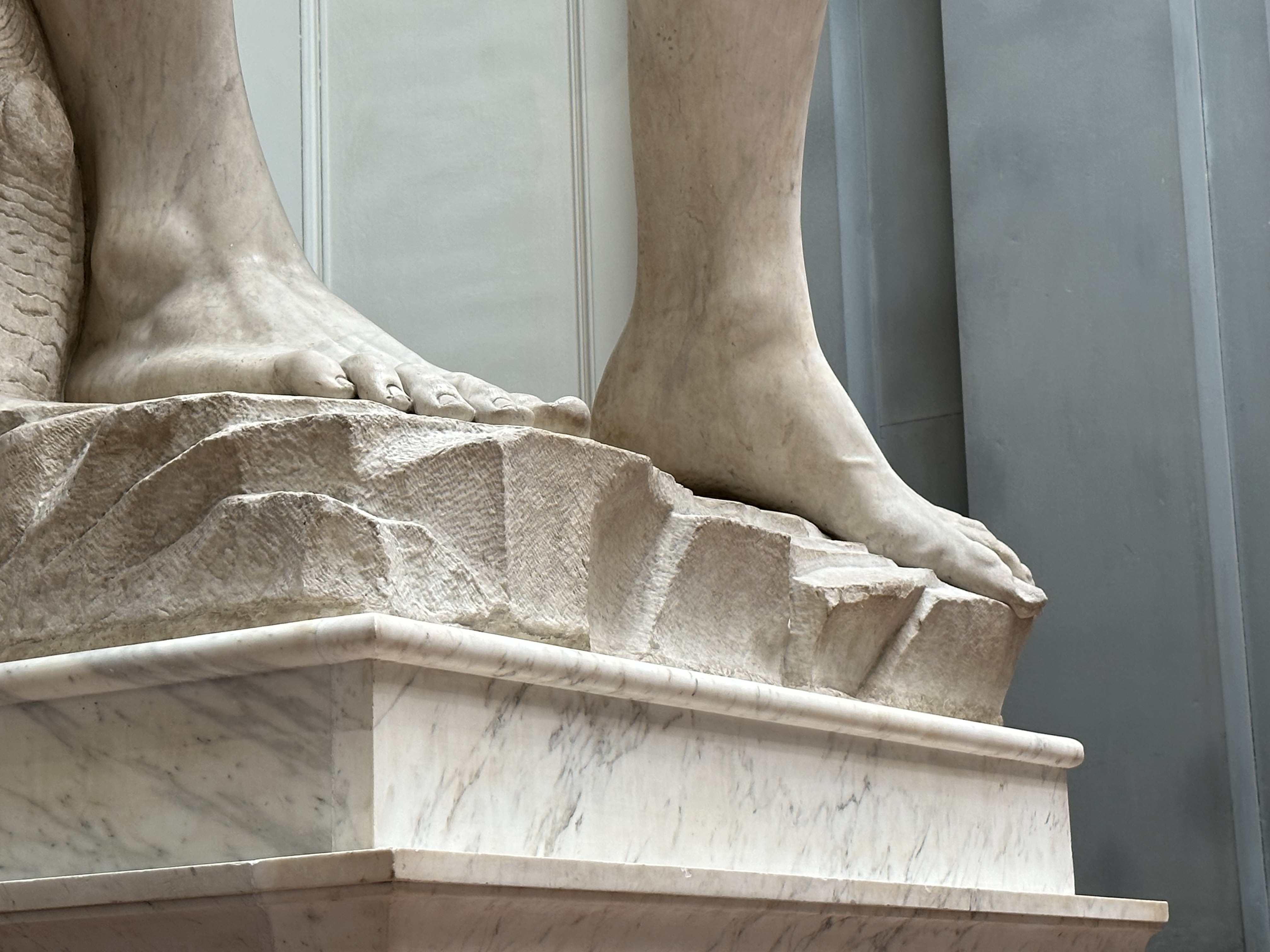
David is 16 feet tall, weighs 5 tons and is the result of Michael Angelo’s imagination. Michael Angelo worked on David from 1501-1504 when he was 26-29 years olds. He lived with the Medici’s for 5 years from the age of 13 to 18 while he studied cadavers. Then he worked in Rome from the age of 21 and completed his Pieta when he was 25. Then he moved back to Florence.
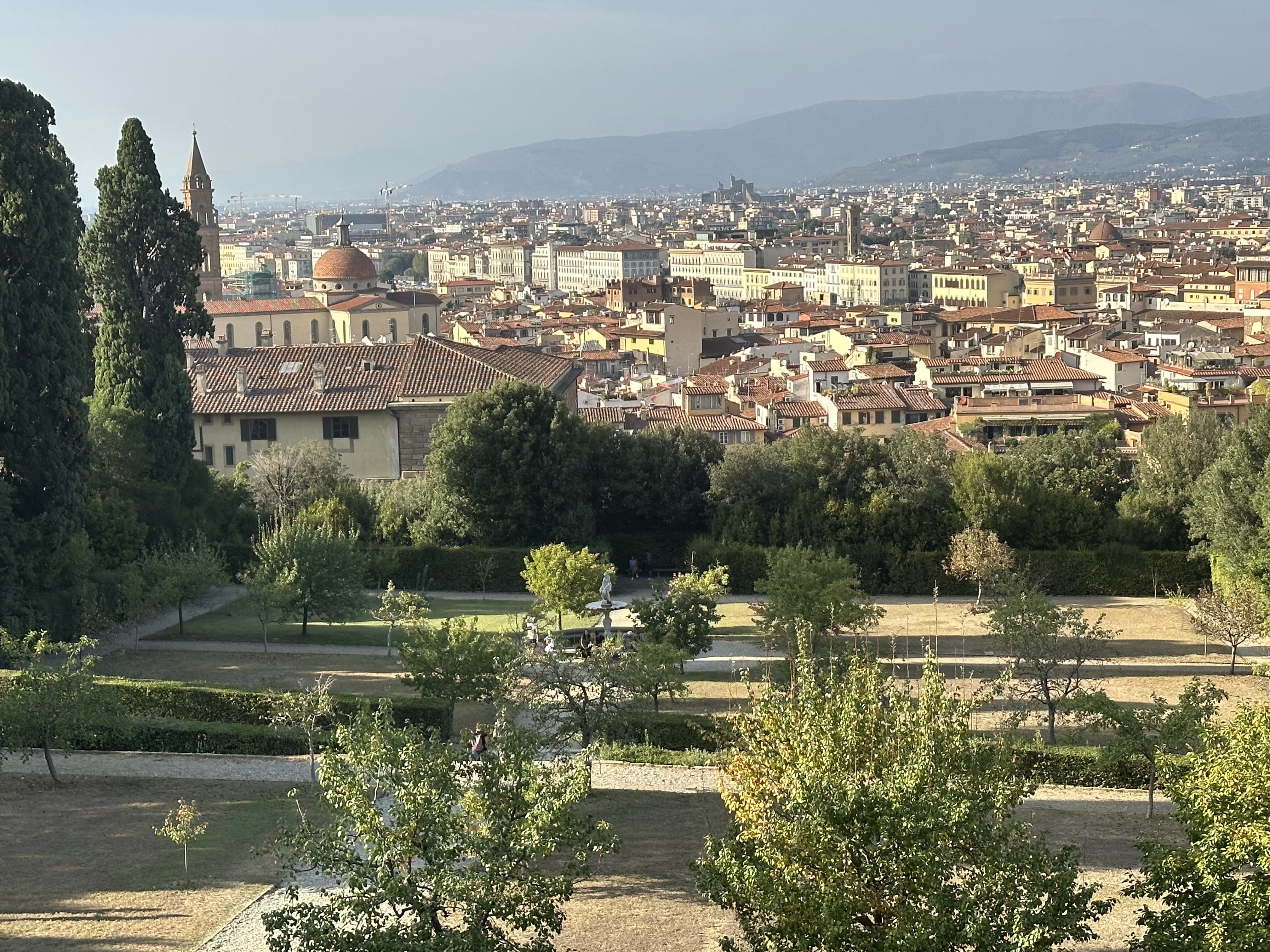
After leaving the Gallery, we had lunch at Trattoria la Casalinga. It was a very nice meal that Alicia had recommended. Then we walked to the Borgoli Gardens in the Patti Palace, which had been purchased by the wife of Cosimo I, a Spanish noblewoman named Elanora, in 1549.

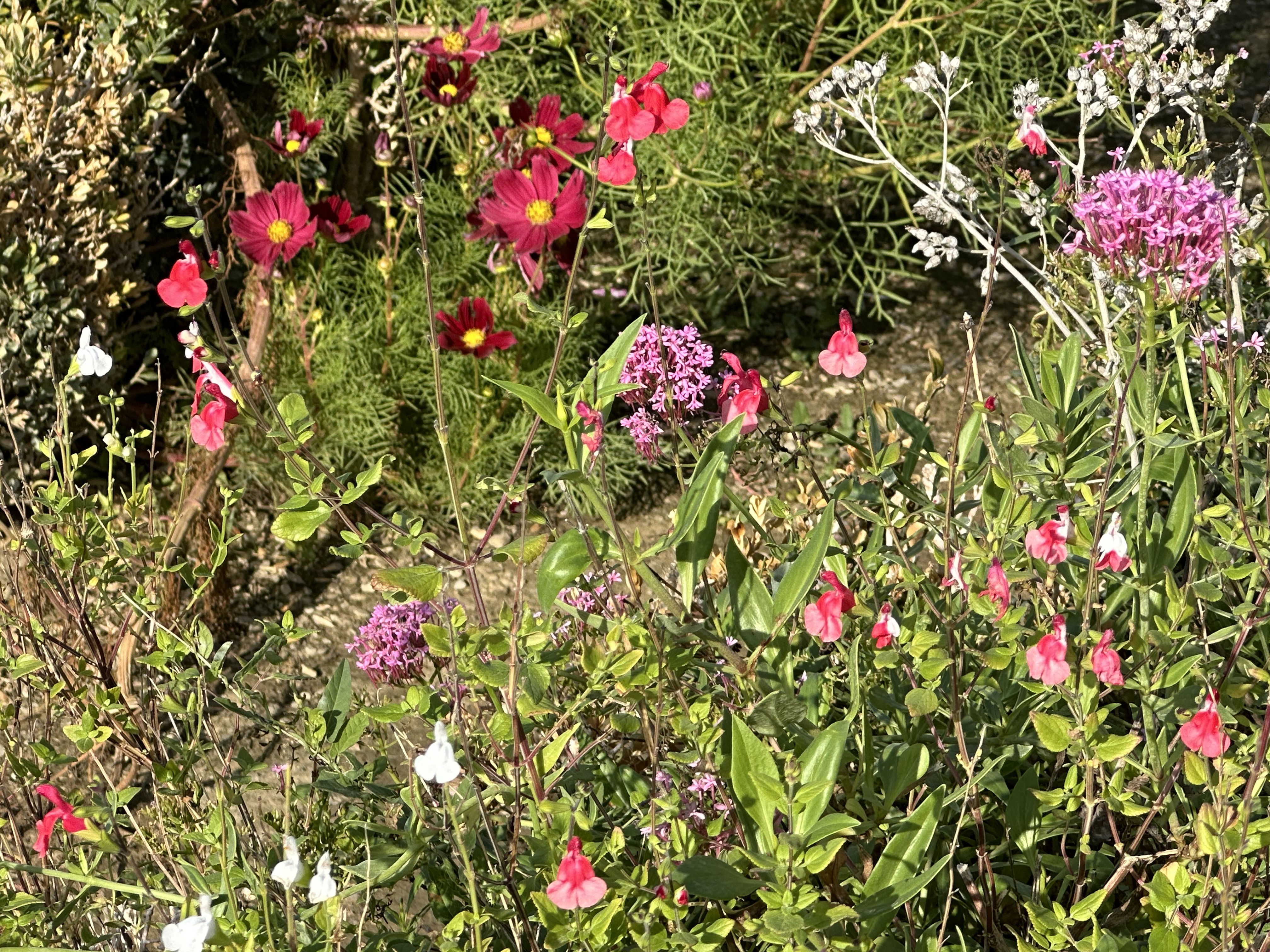
She hired the garden to be made for her own pleasure. The garden is very vertical. We did not get to the level top until we had climbed several hundred steps through very tired spaces. The view was very nice from the top.
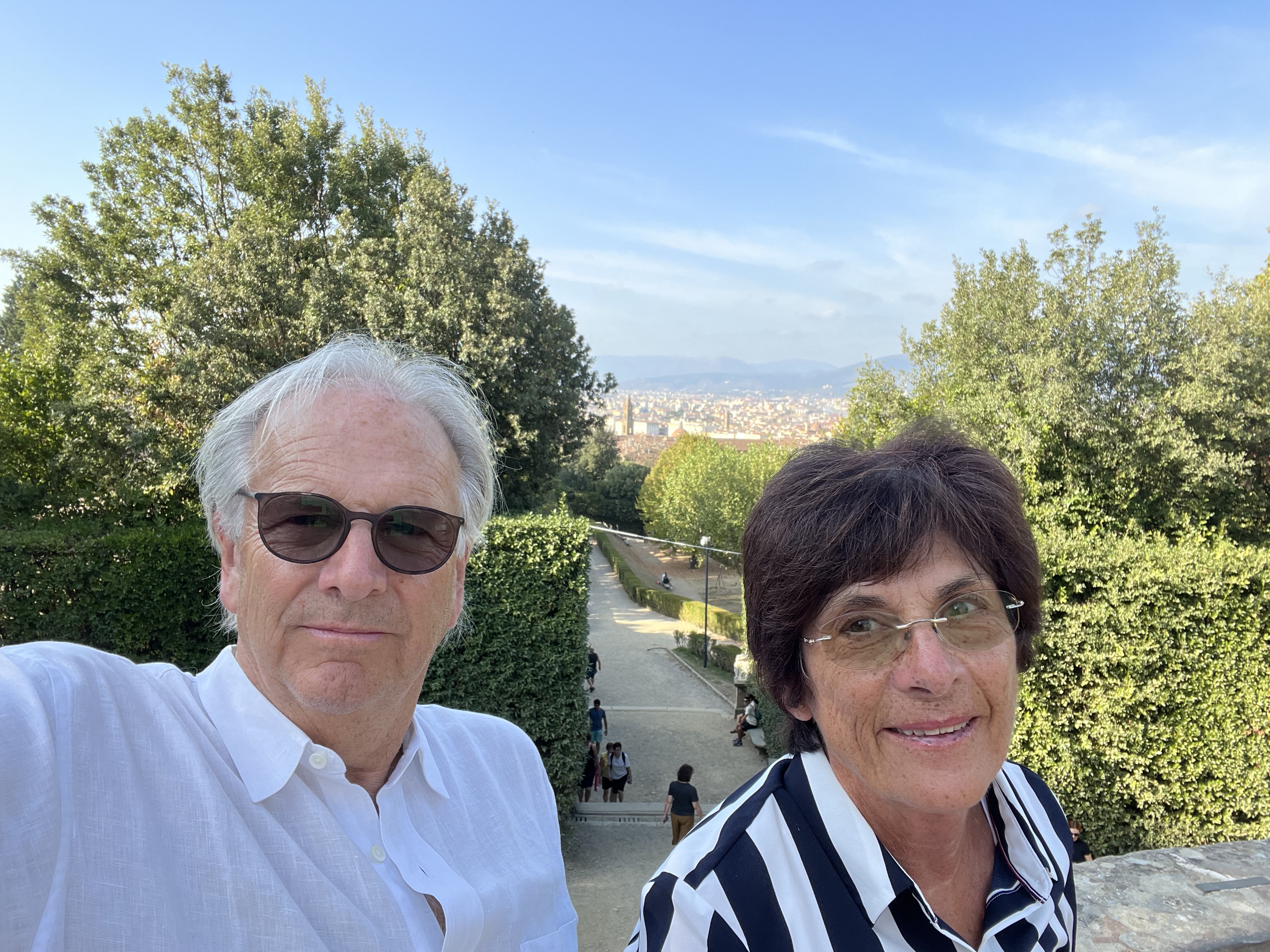
It had been a long day with much information and many steps and stairs. The fewest steps to dinner was our hotel so we had a simple meal at an outdoor table overlooking the river and went to bed.
Wednesday, October 11, 2023
It was our last full day on this trip and our guide was another dynamo like Alicia. Her name was Monika and she wasted no time getting us up to speed. She told us the name Firenze was given by Julius Caesar and the lily is the symbol of Florence, the city of luxury goods. We walked around a corner from our hotel and found ourselves in on a deserted alley. This she said was where a synagogue used to be. There used to be 370,000 jews in Florence, which had the largest and one of the most influential Jewish communities in Italy. but they were decimated by the Nazis. There are only about 1400 jews left in Florence. They started arriving through Rome in 59 BC and began to increase as they prospered. They began the process of making brocades and other products. In 1437 they were invited by Cosimo I to do money lending. In 1865 Florence was elected capital of the new Republic of Italy and Jews were given Italian citizenship and built a new synagogue.
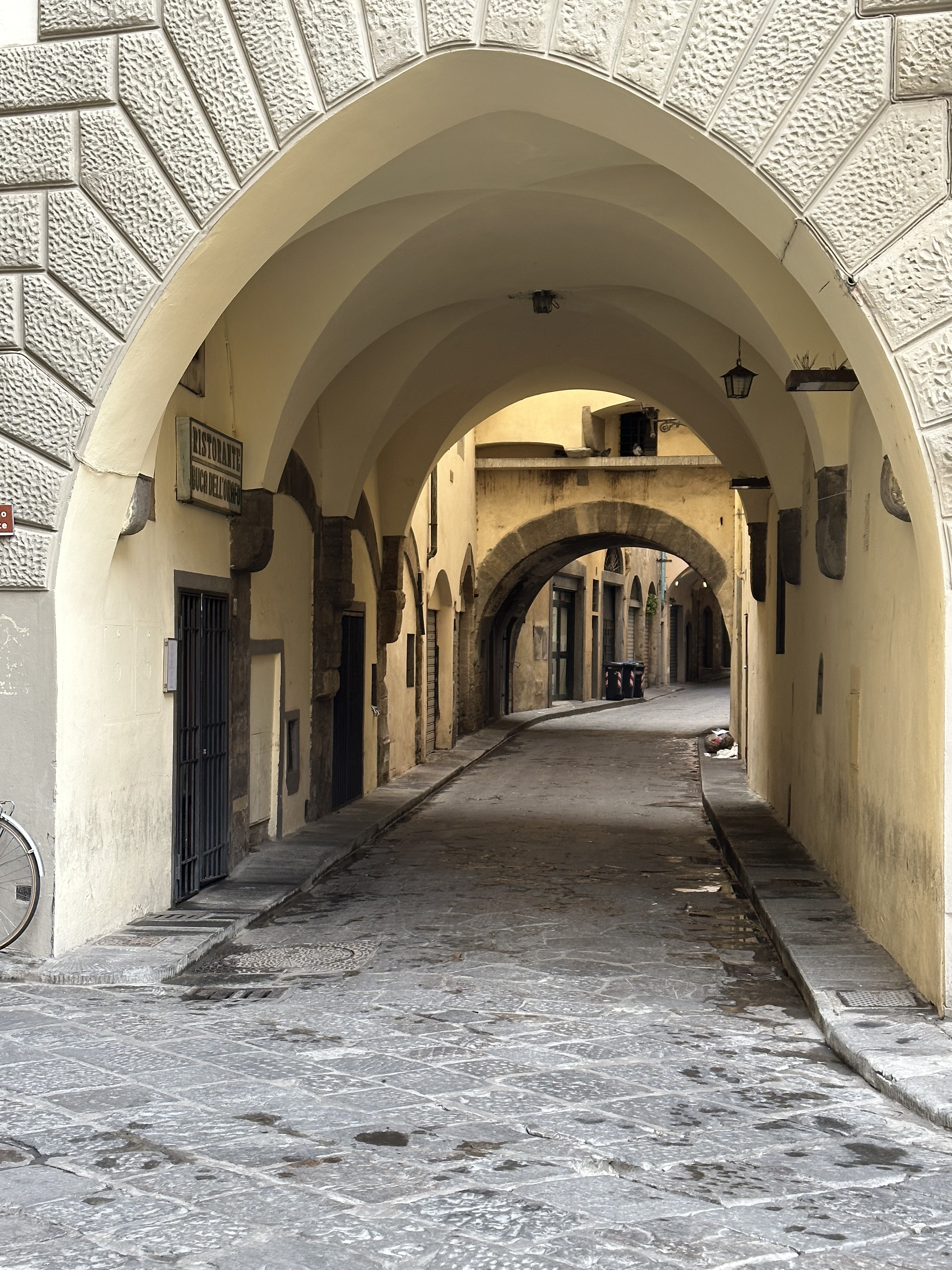
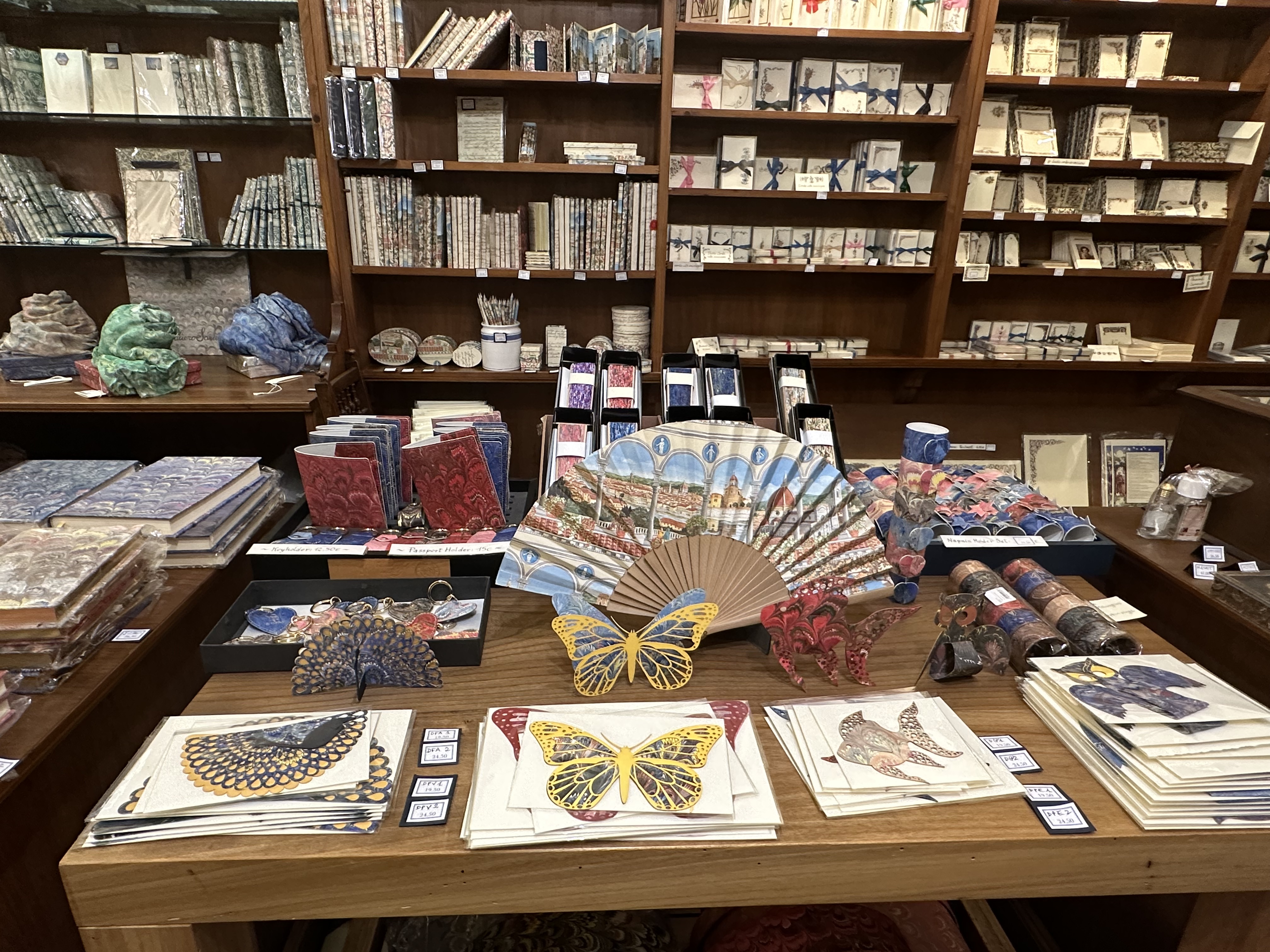
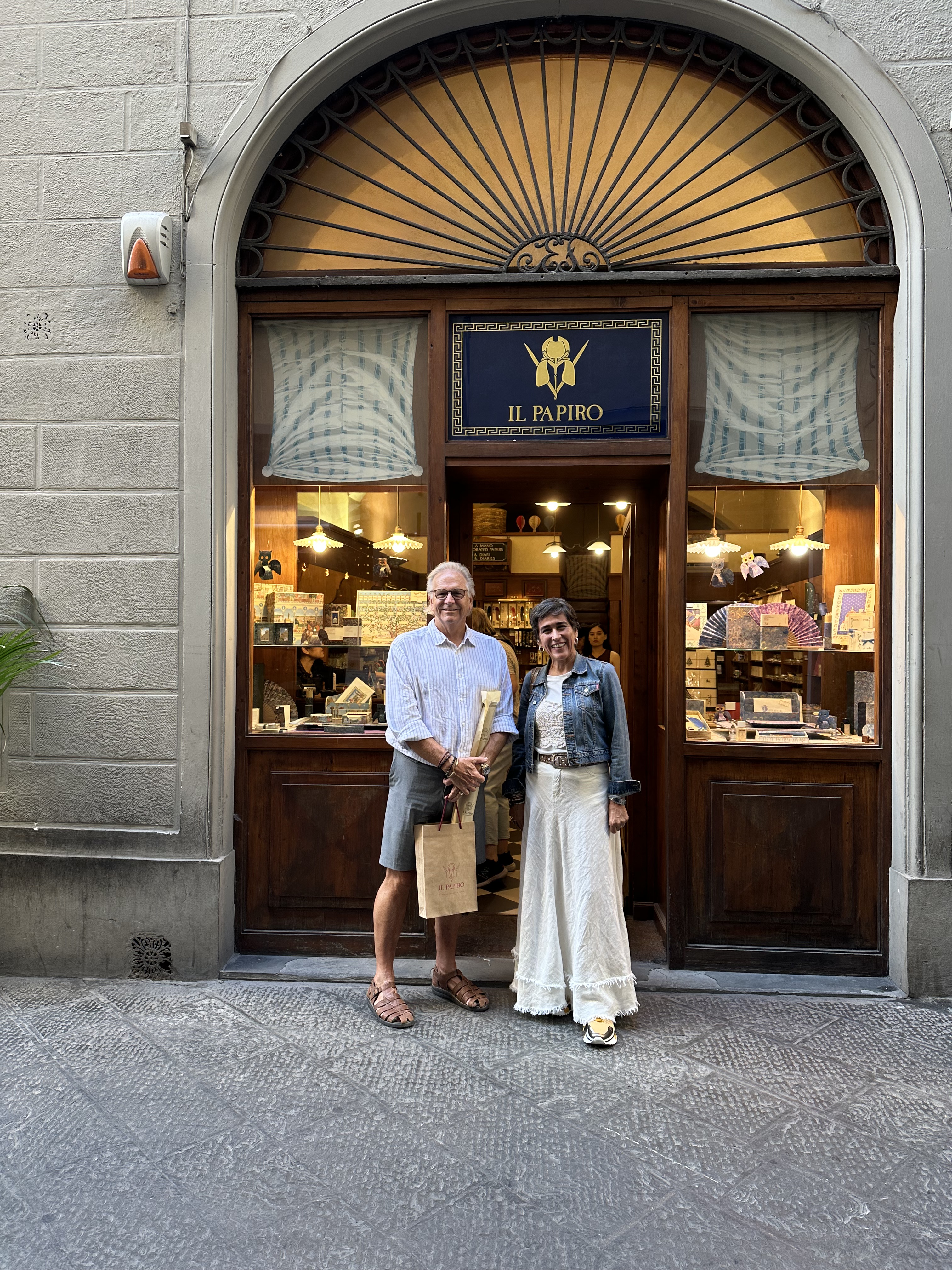
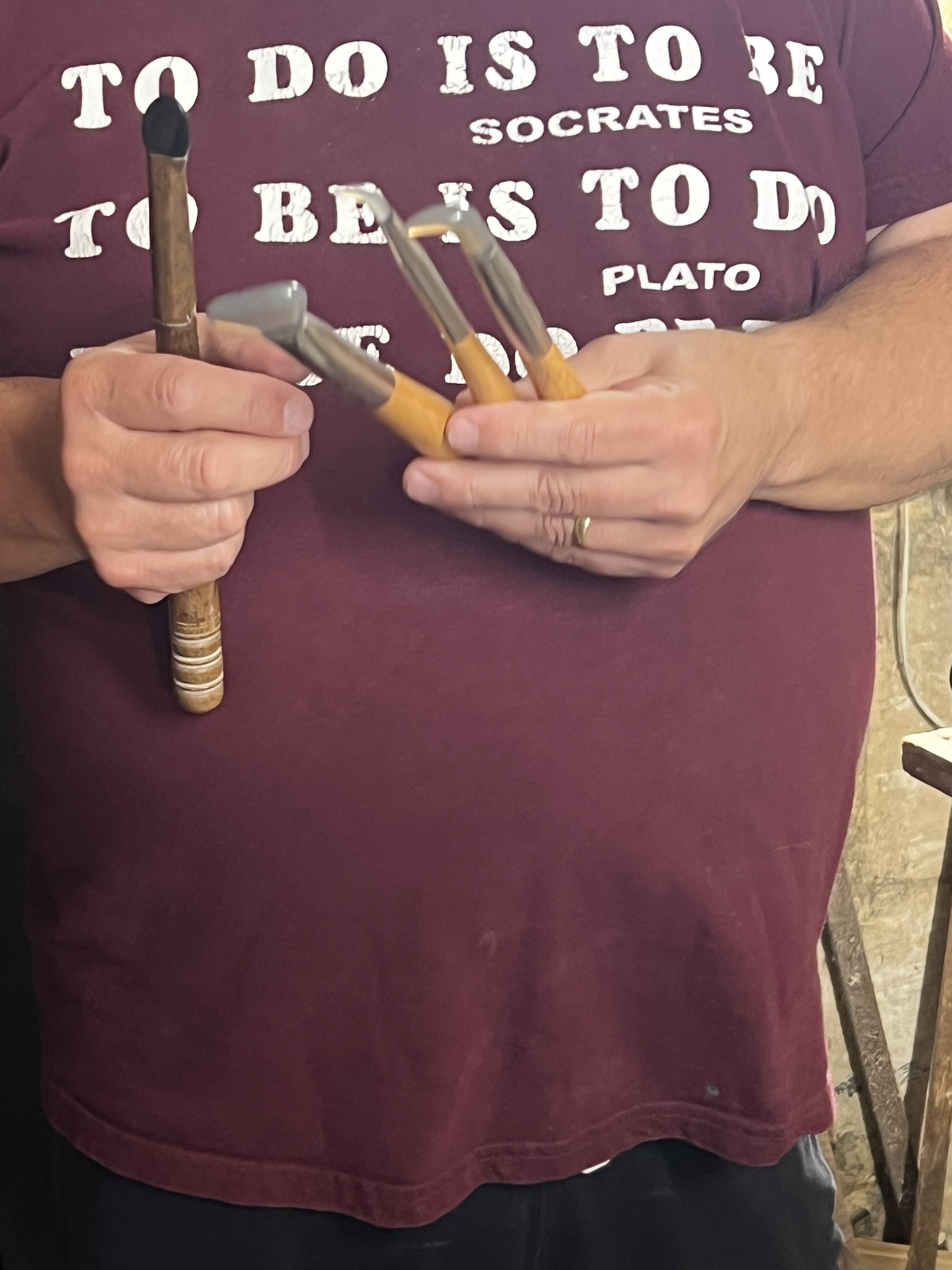
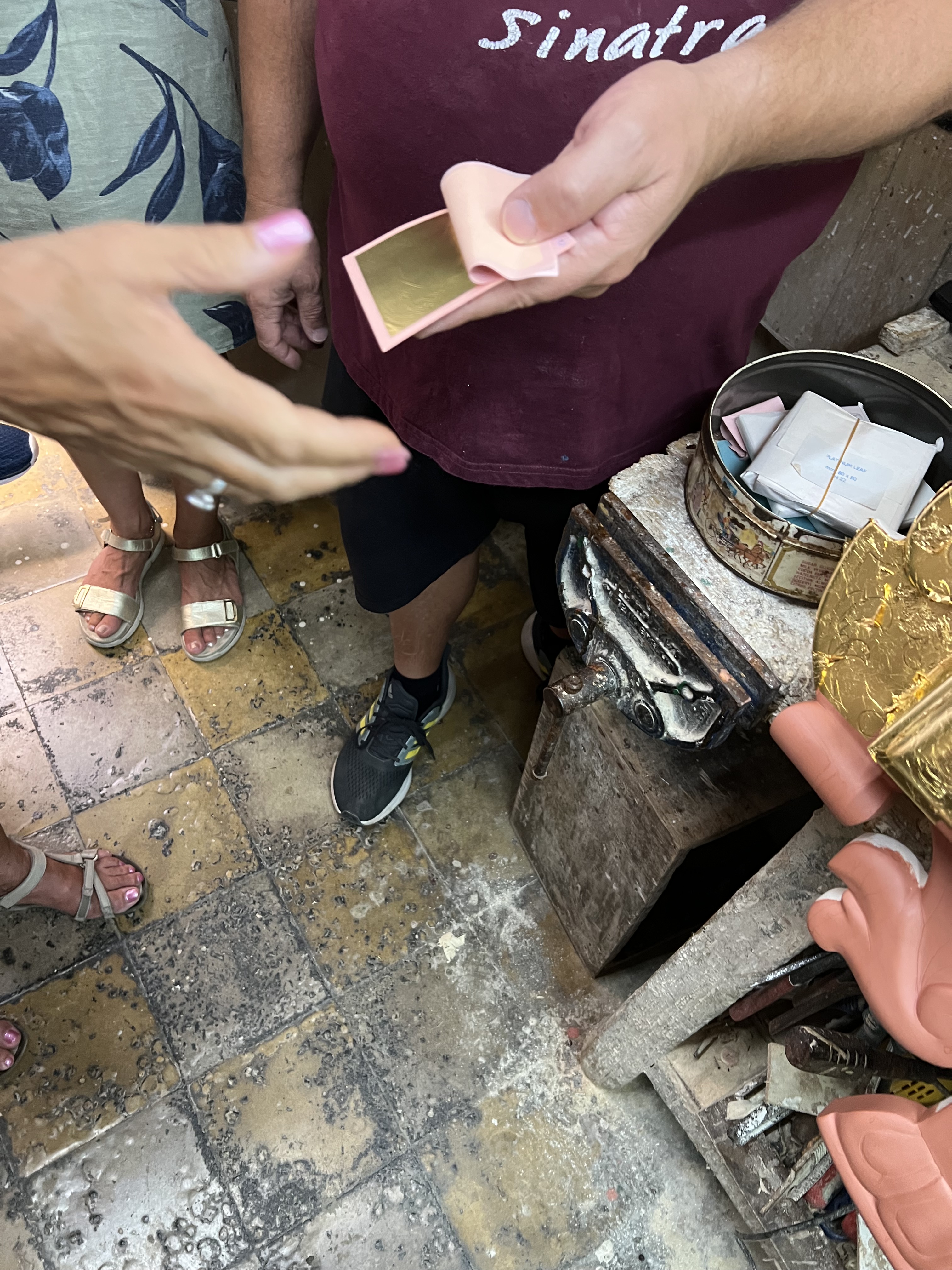
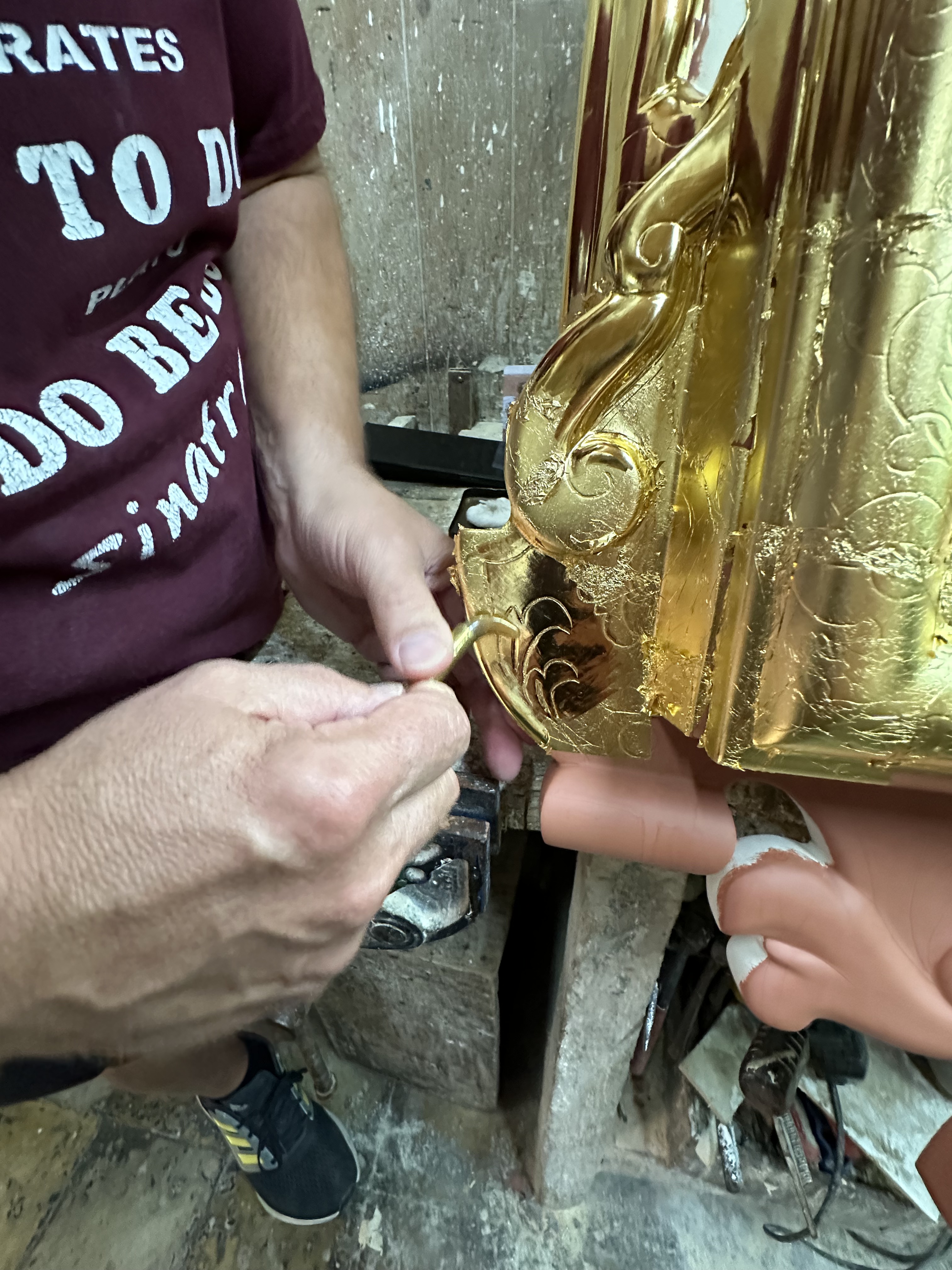
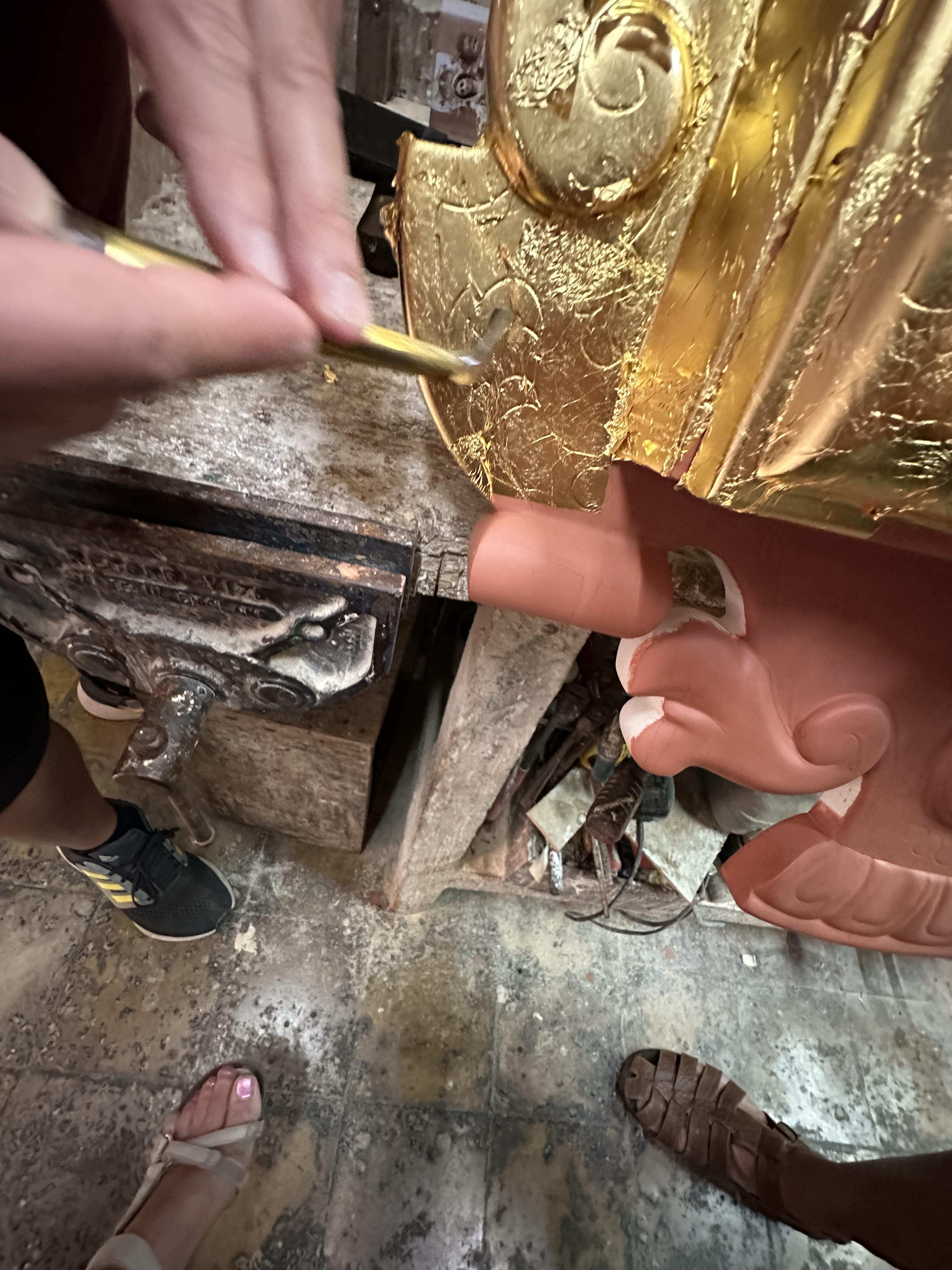
We left the alley and Monika introduced us to a gold smith shop and a paper making workshop and we purchased items in both places. That was a surprise as I had not planned to do any shopping.
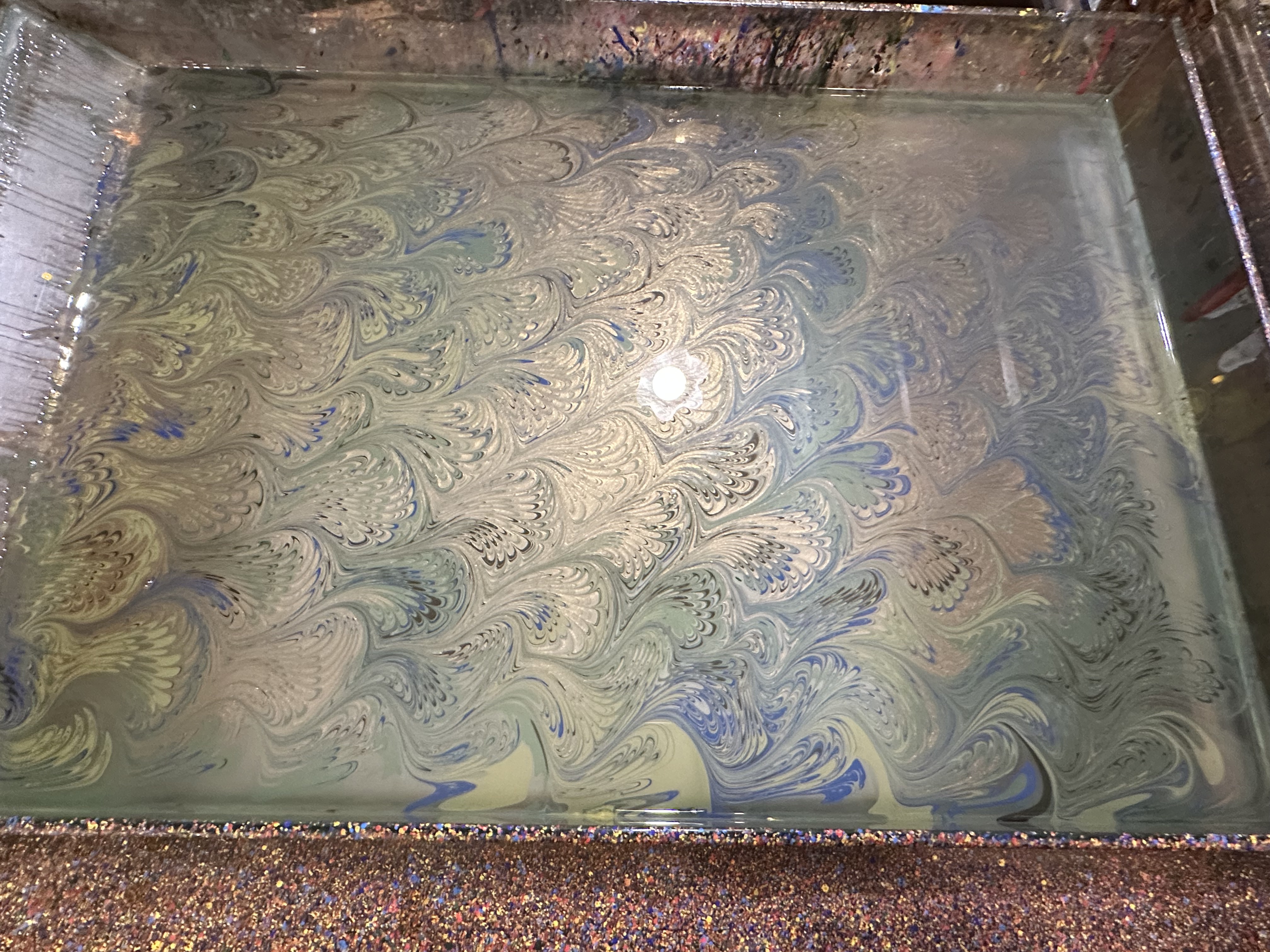
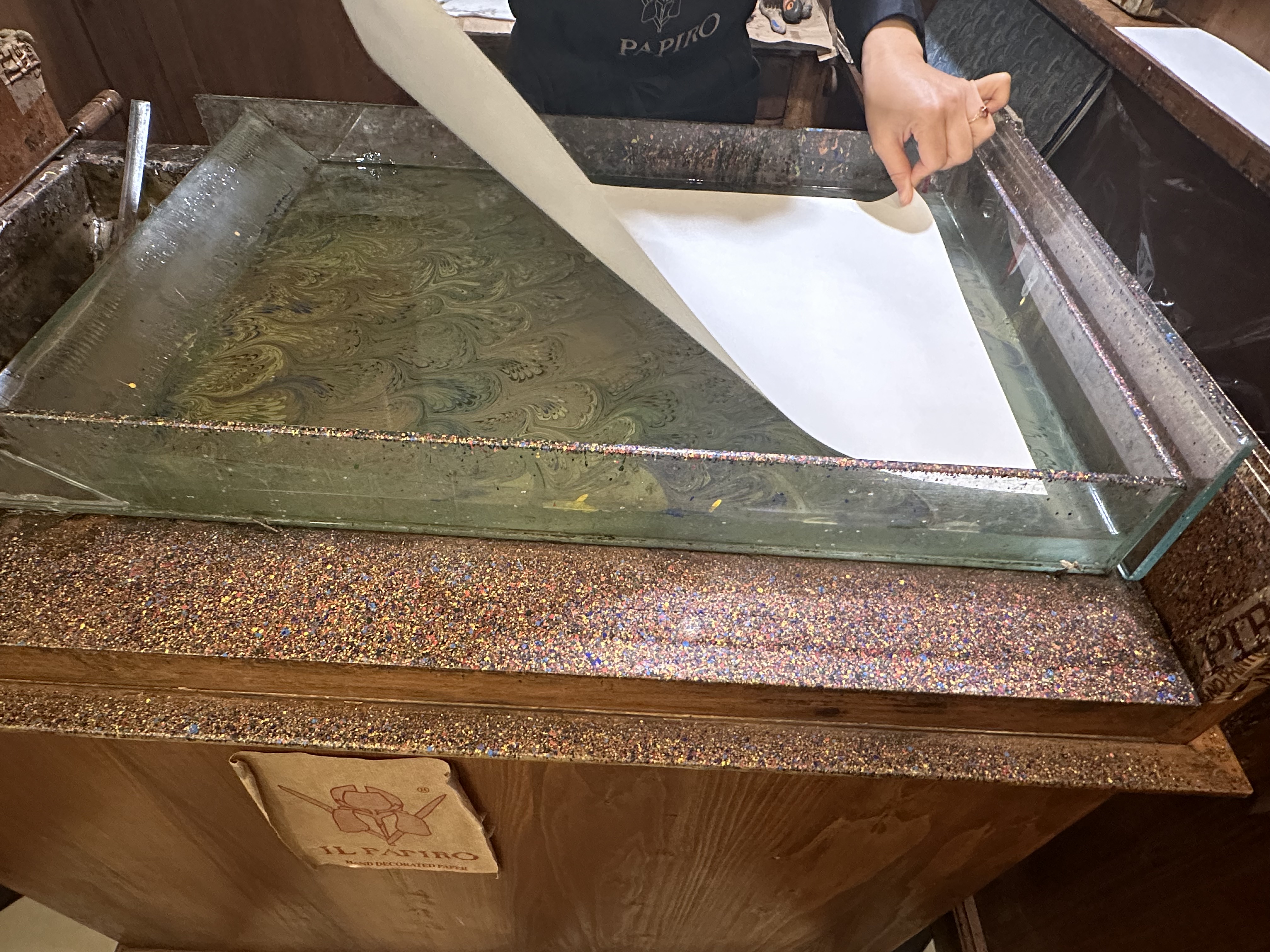
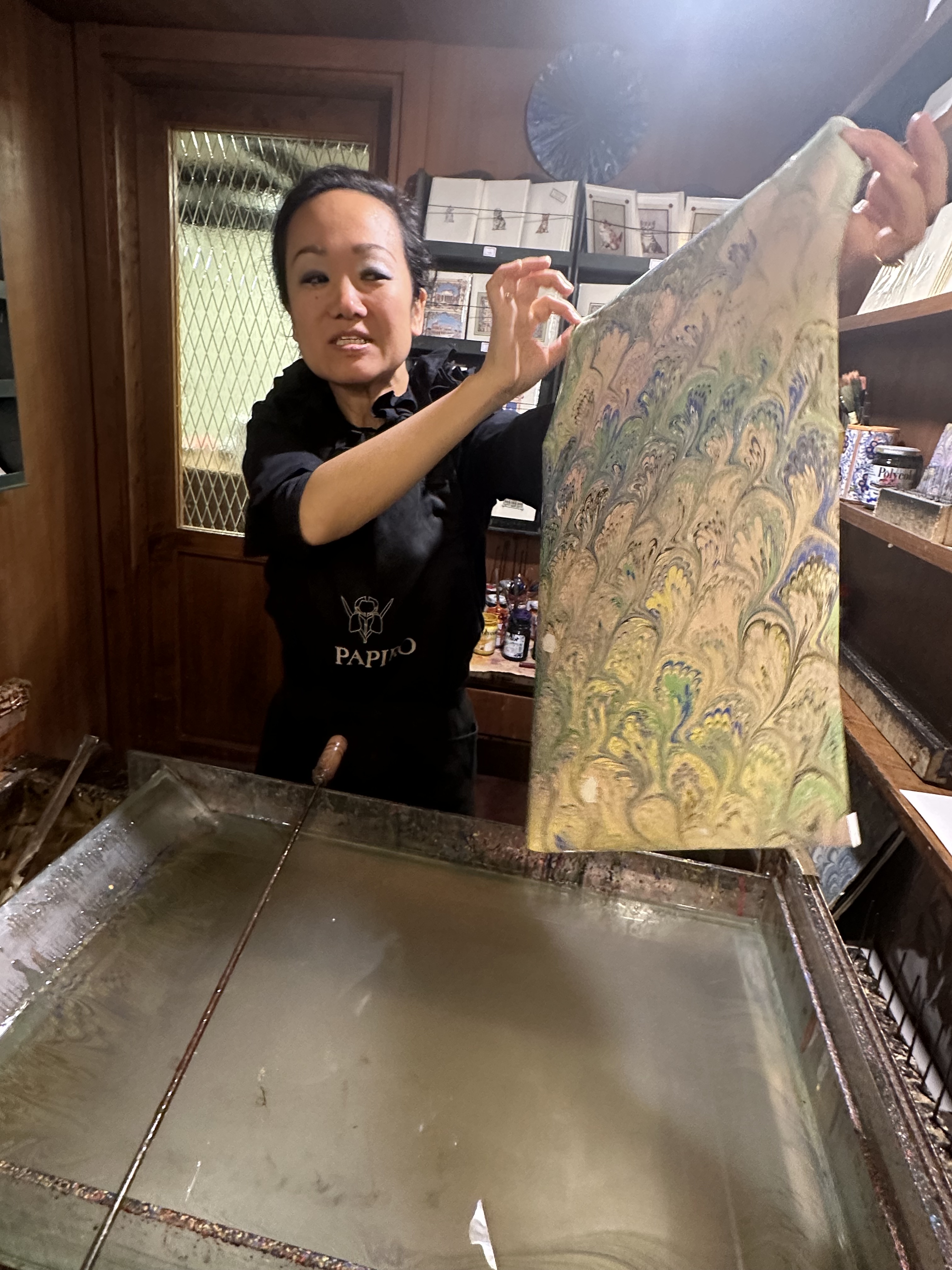
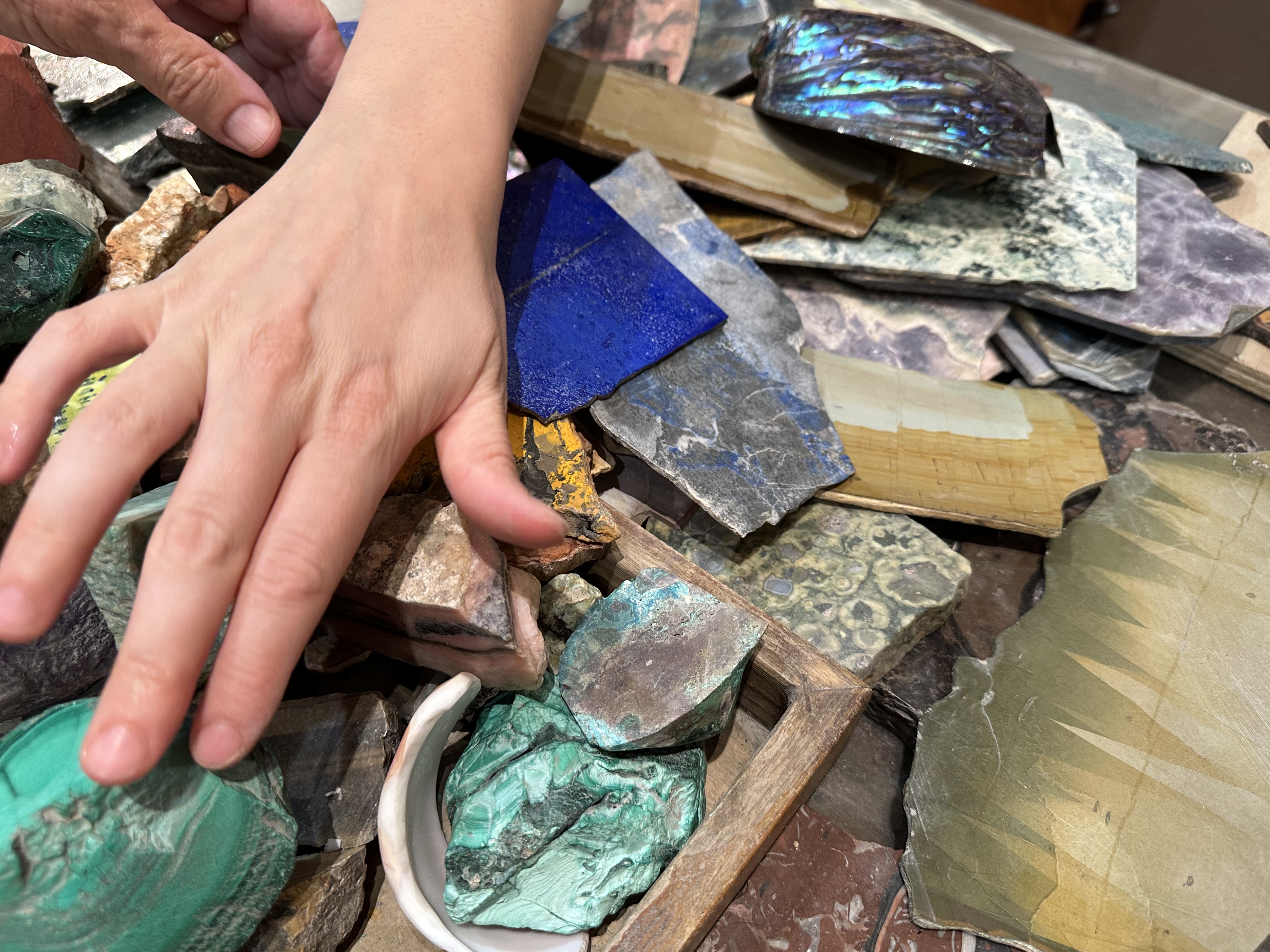
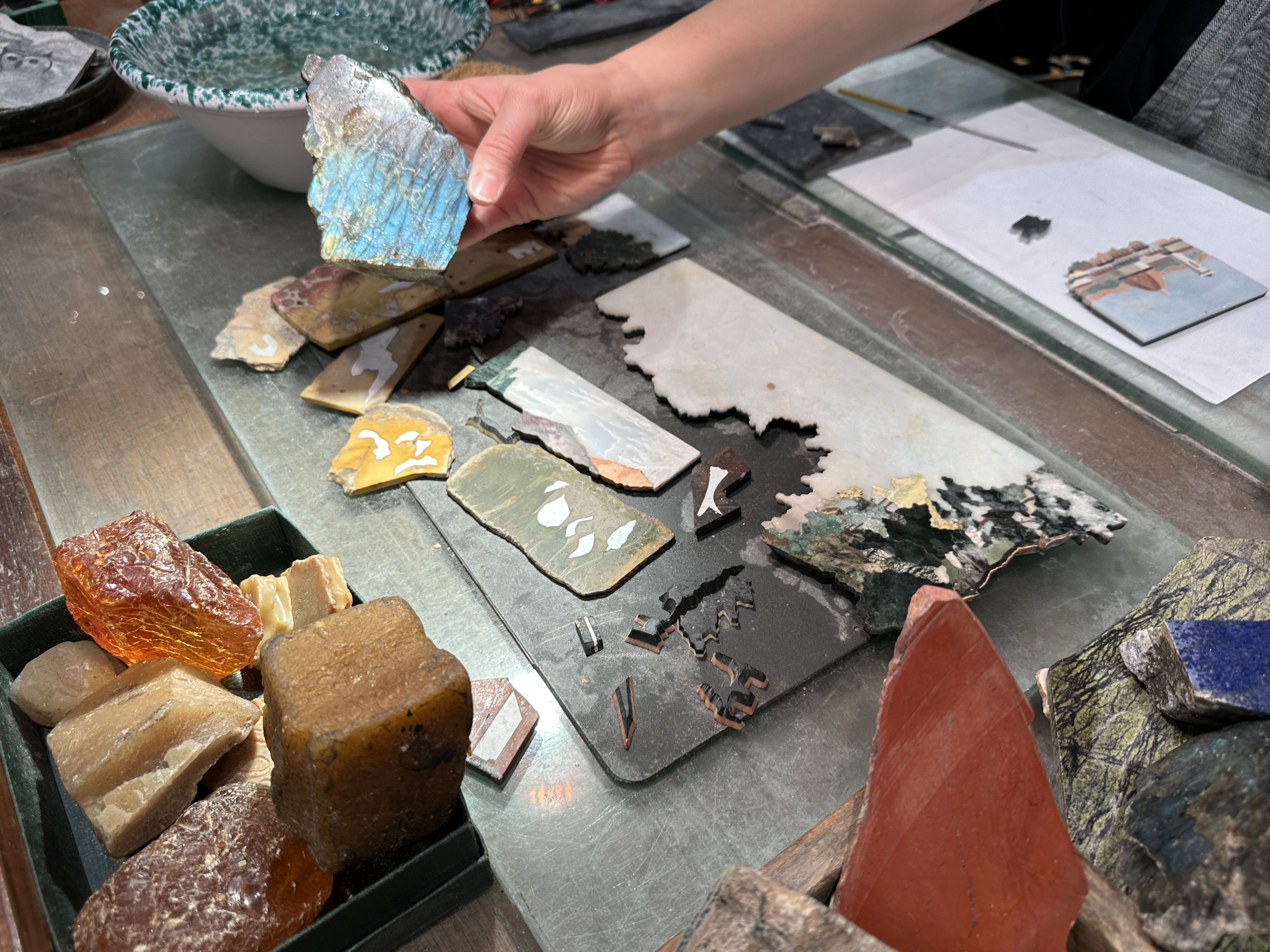
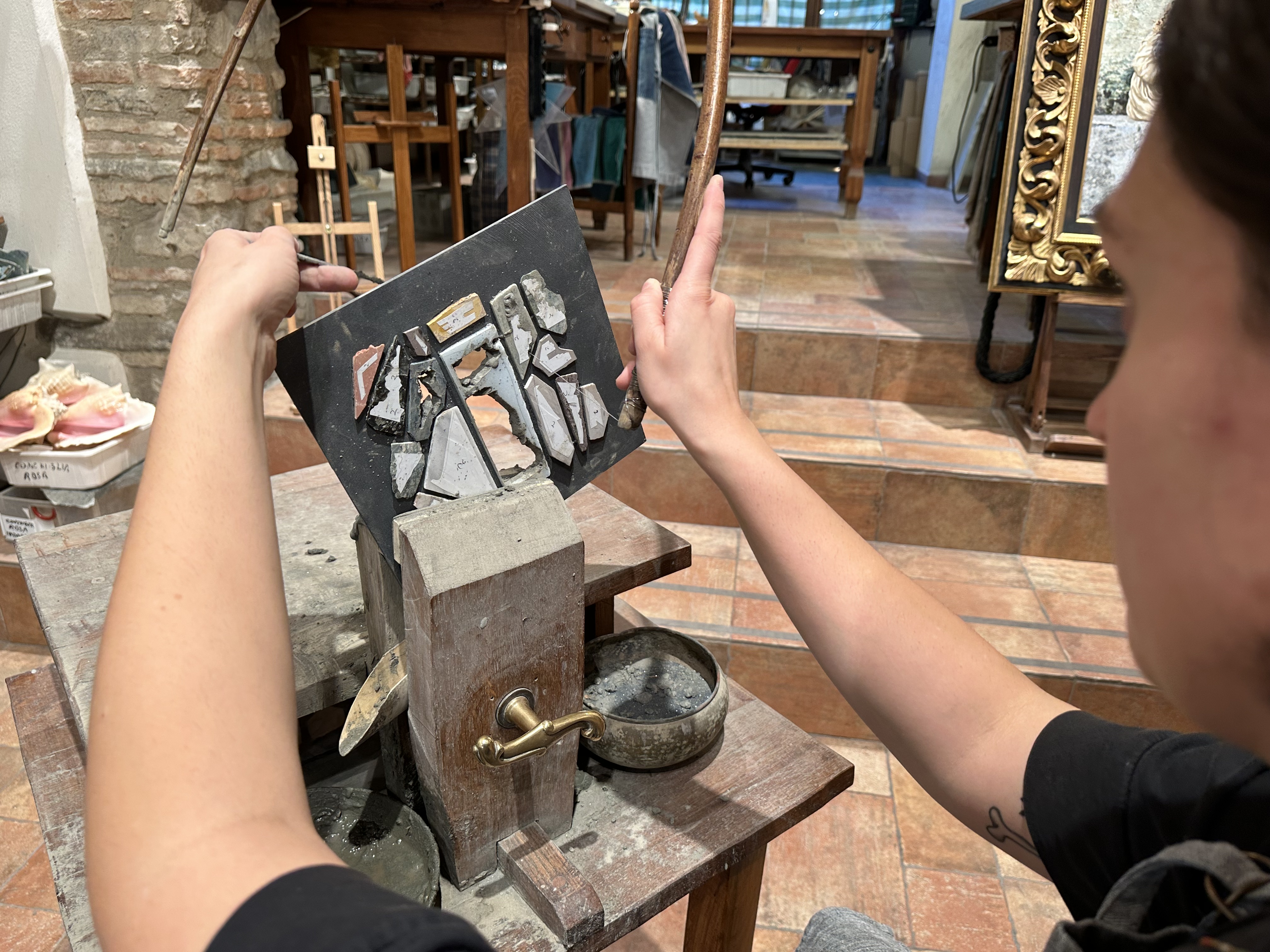
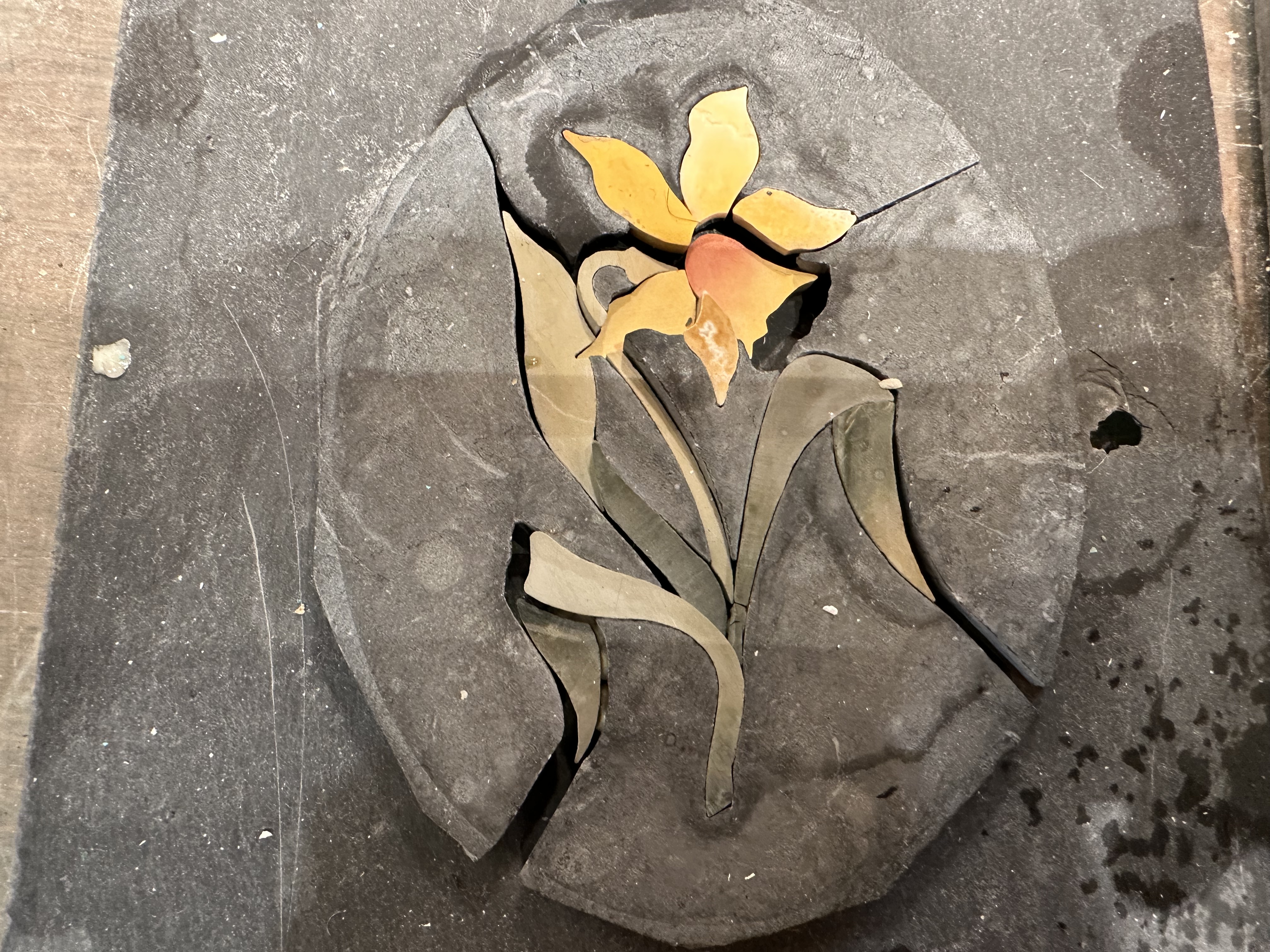
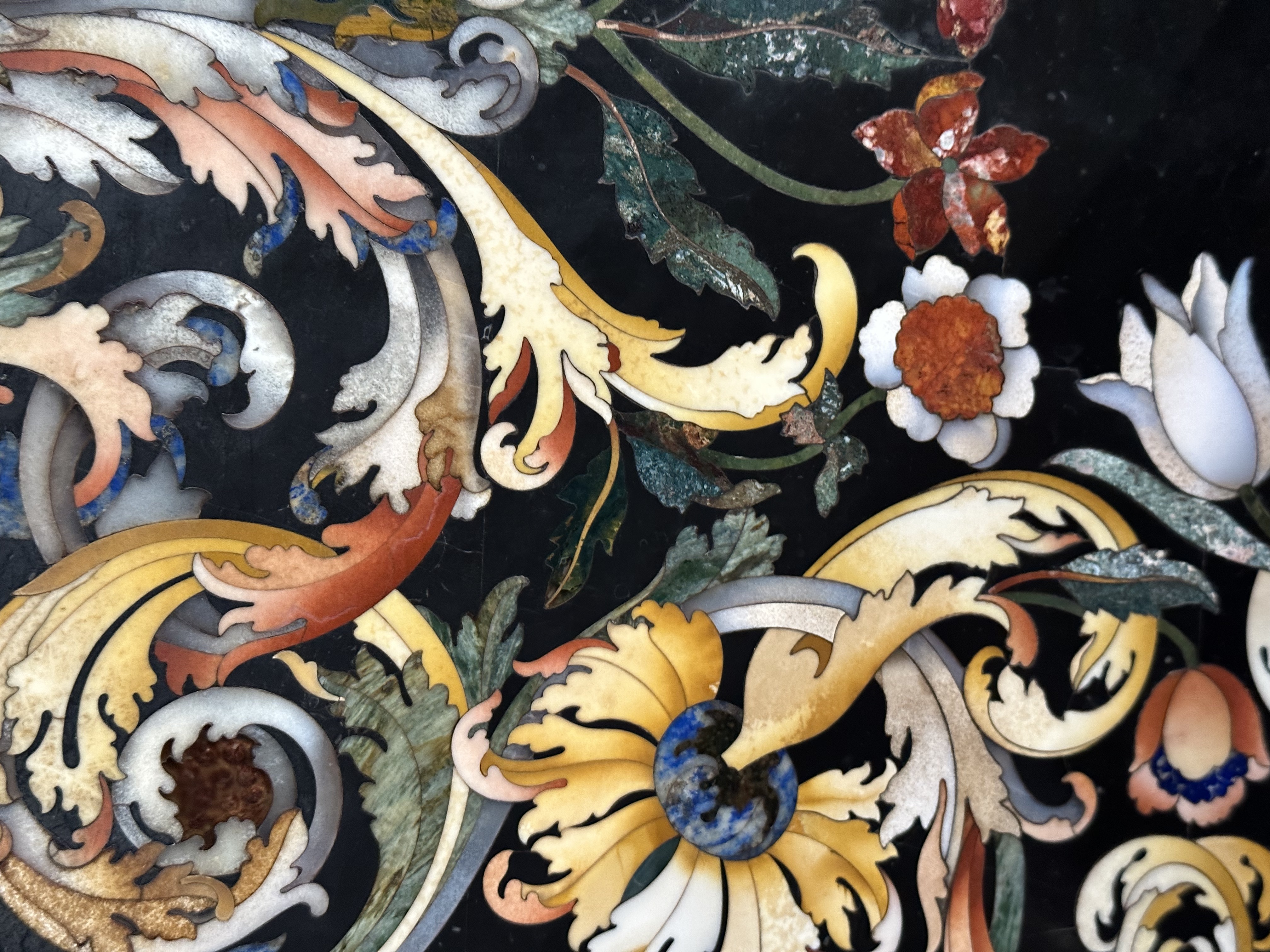
We also visited a mosaic making workshop, Scarpelli Mosaics, which has been in business since 1972. The stone carvers make their own tools. It was very interesting to watch as young women painstakingly designed and cut the stone to make images with mosaic patterns.
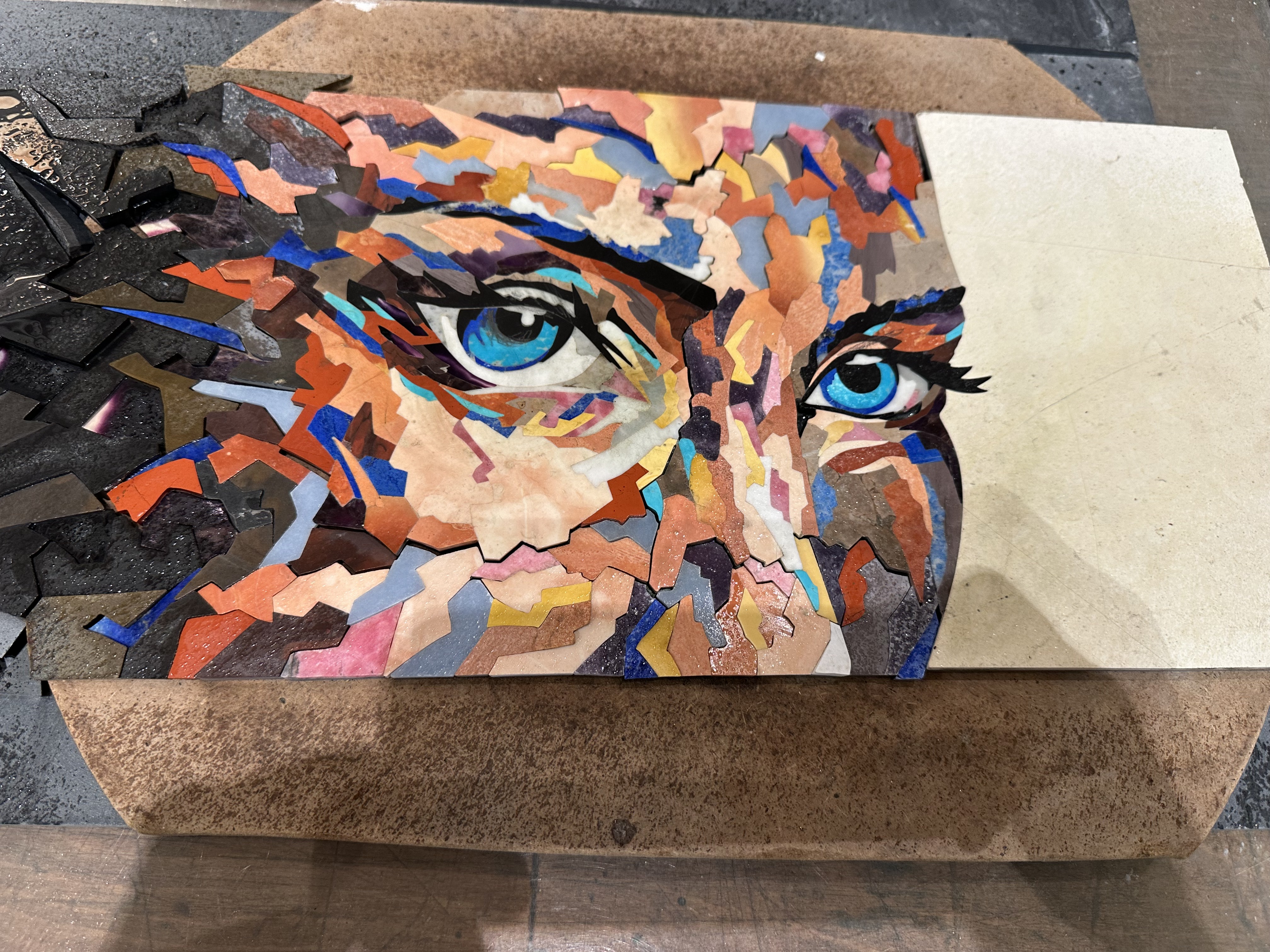
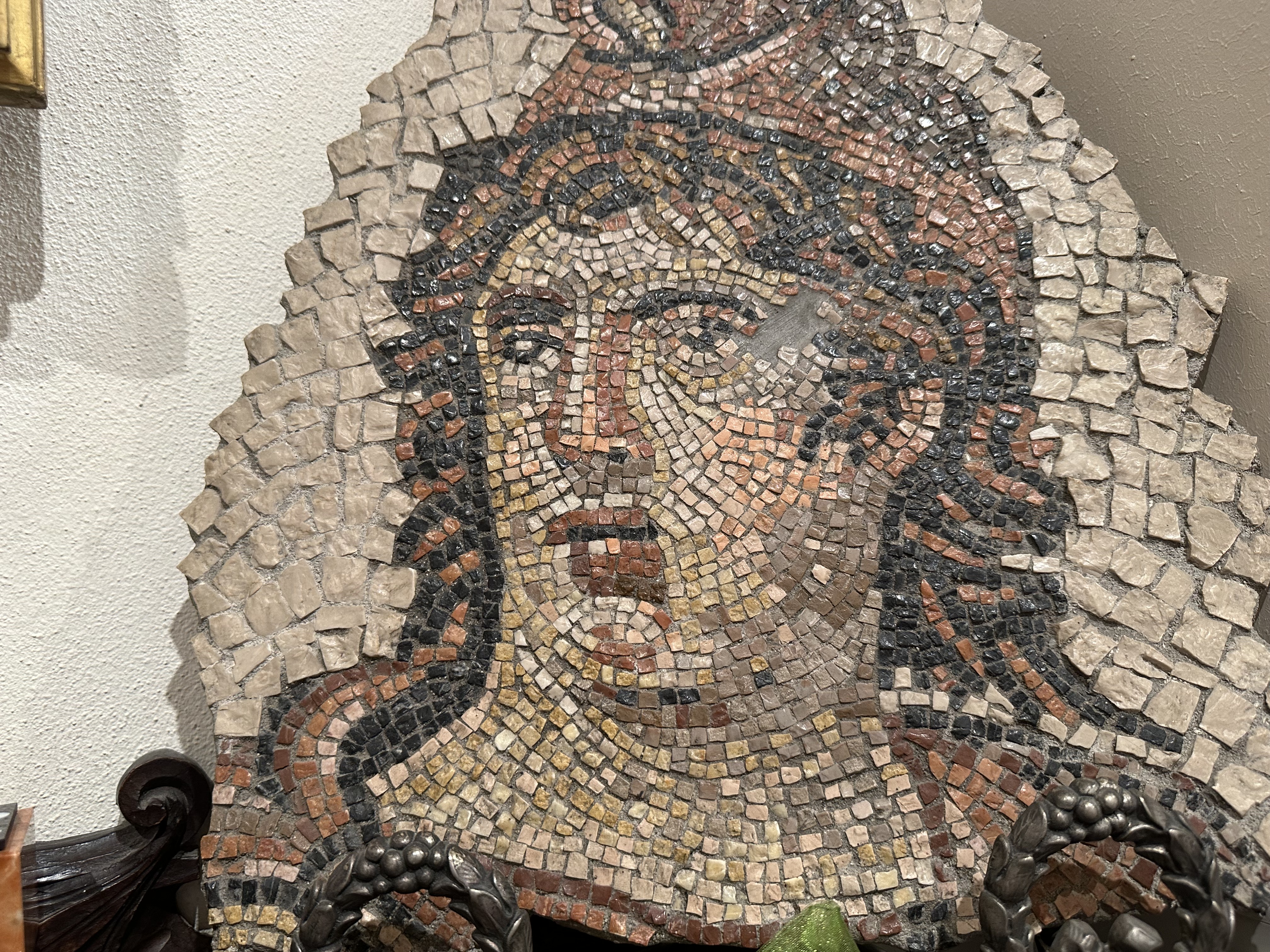
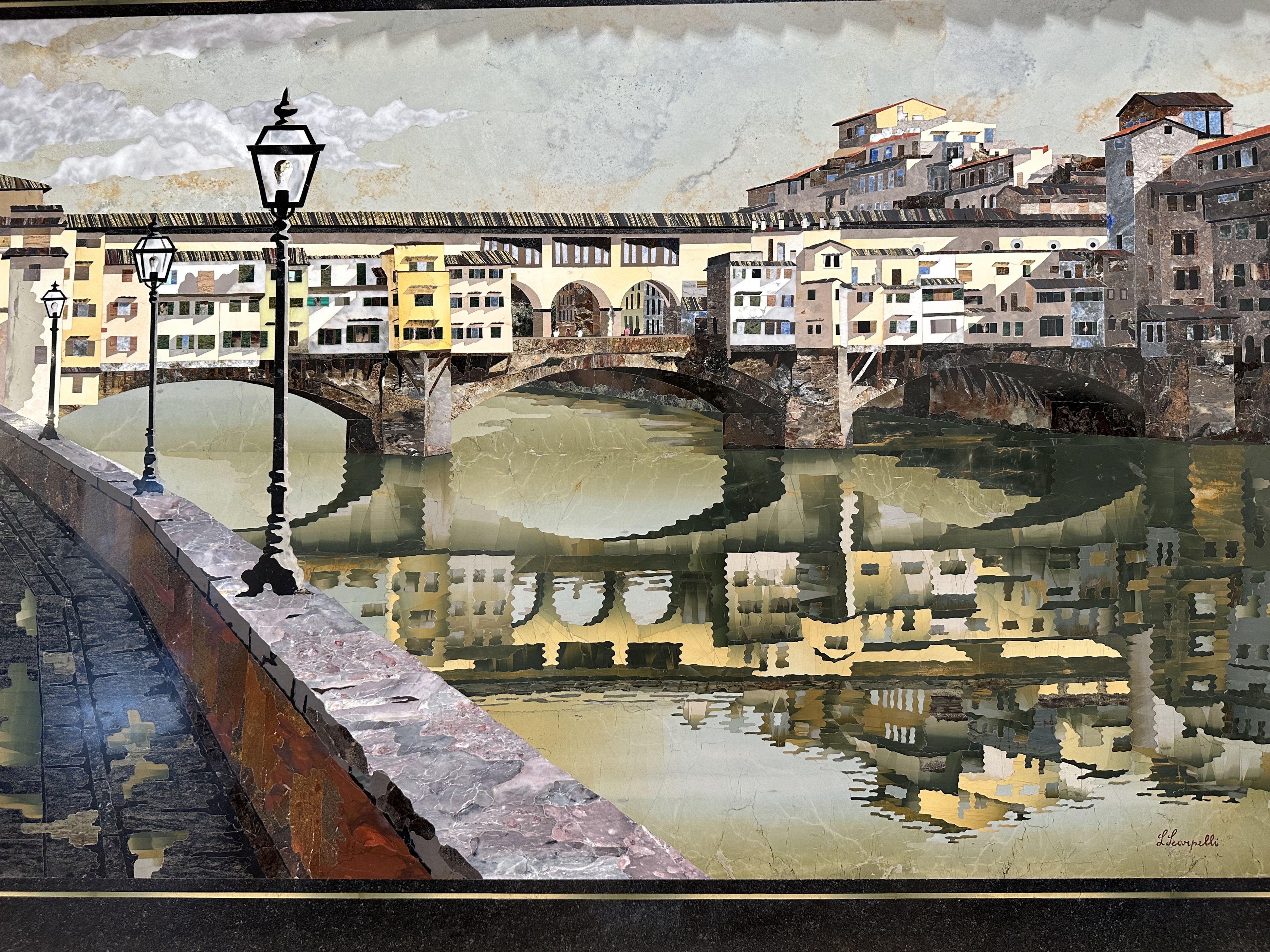
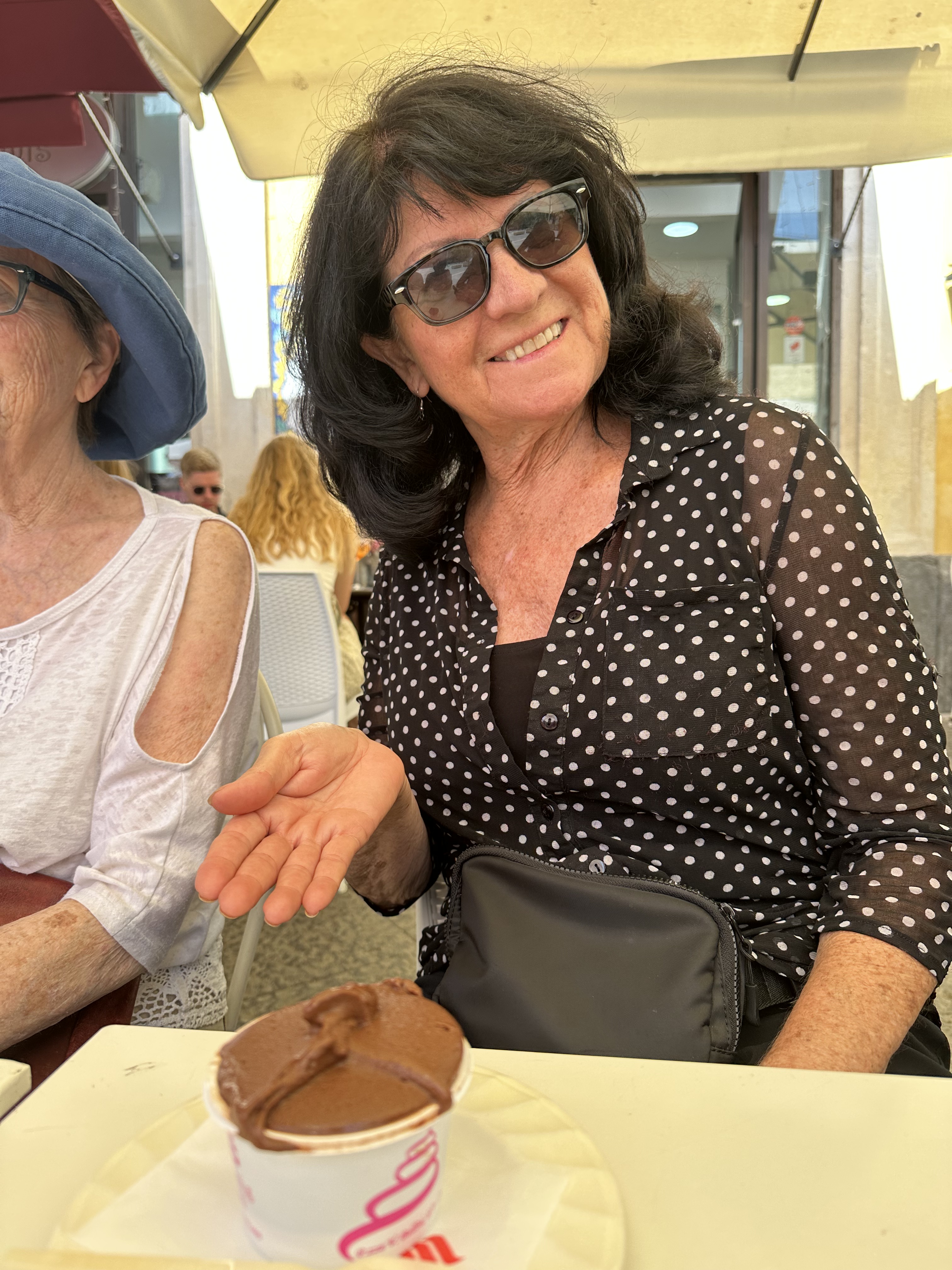
We took a break and Monika bought us a gelato treat.
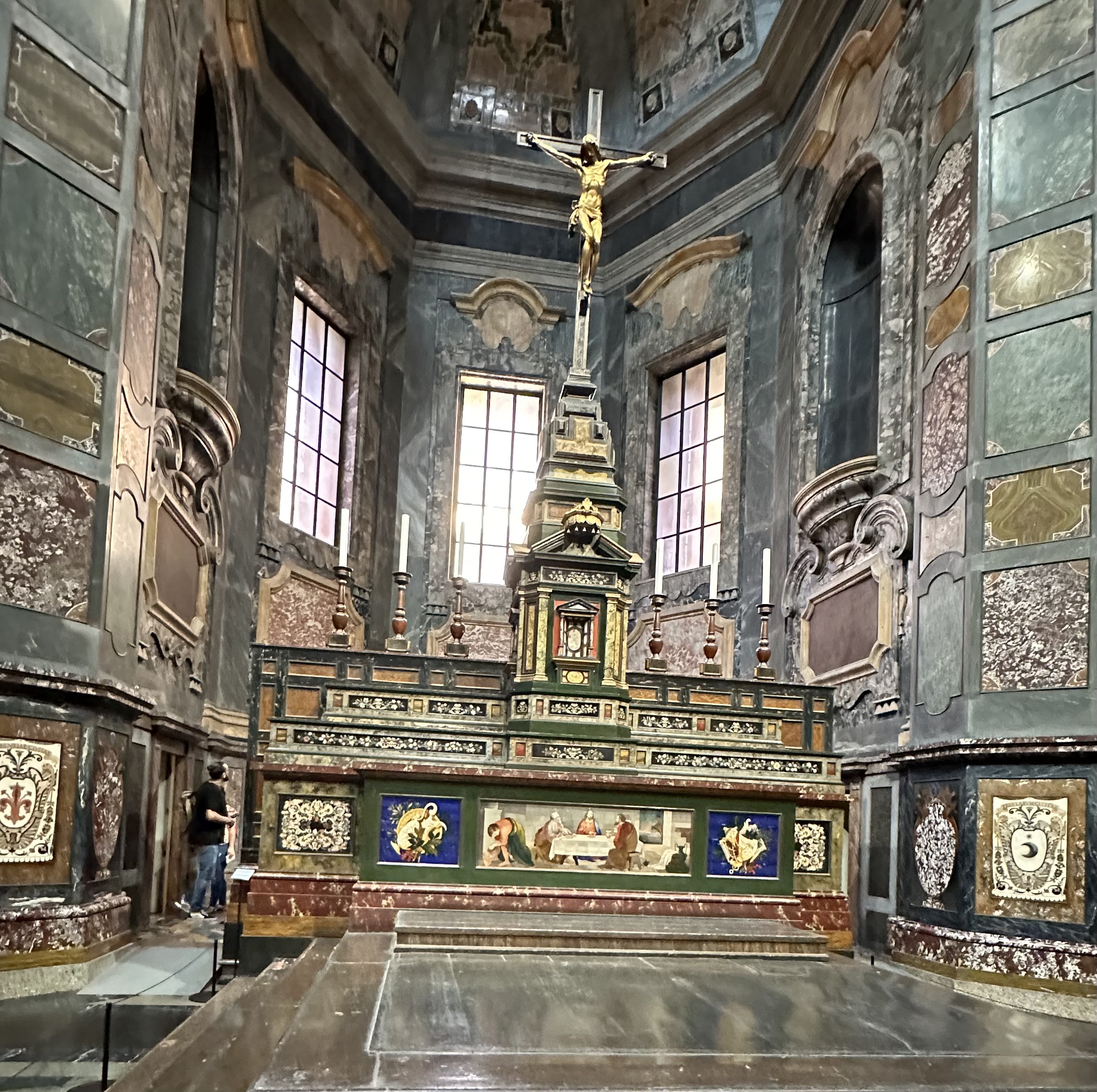
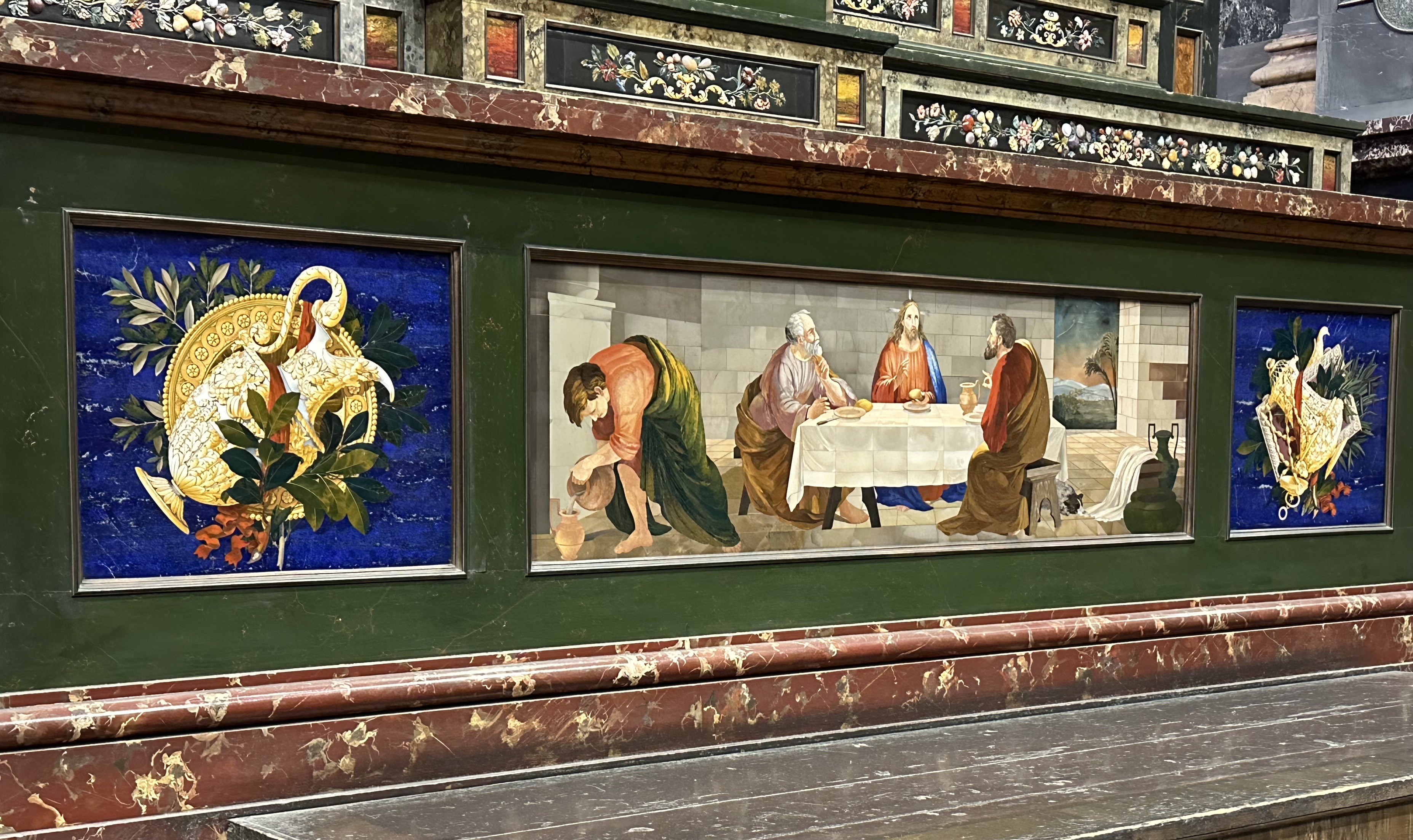
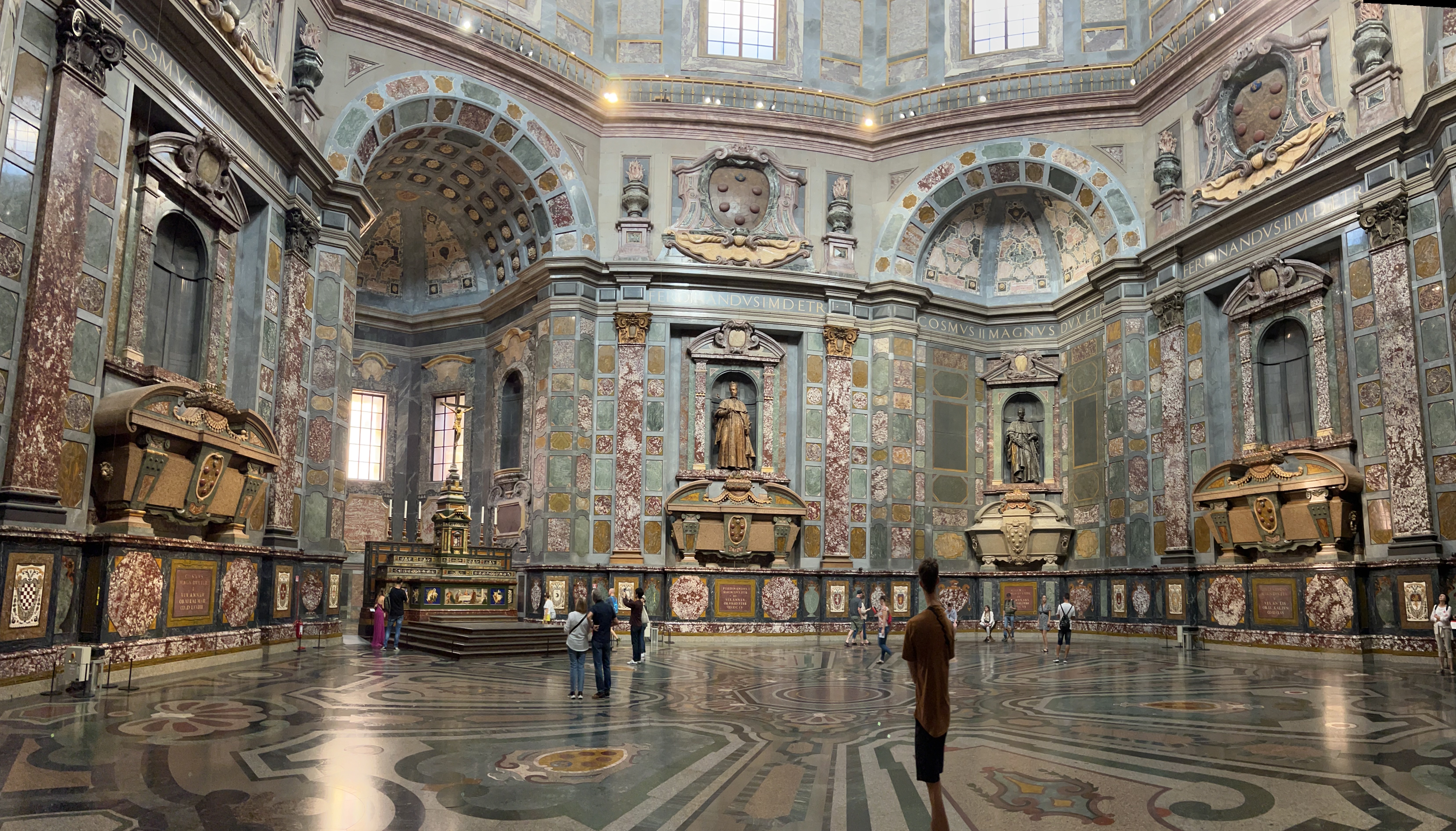
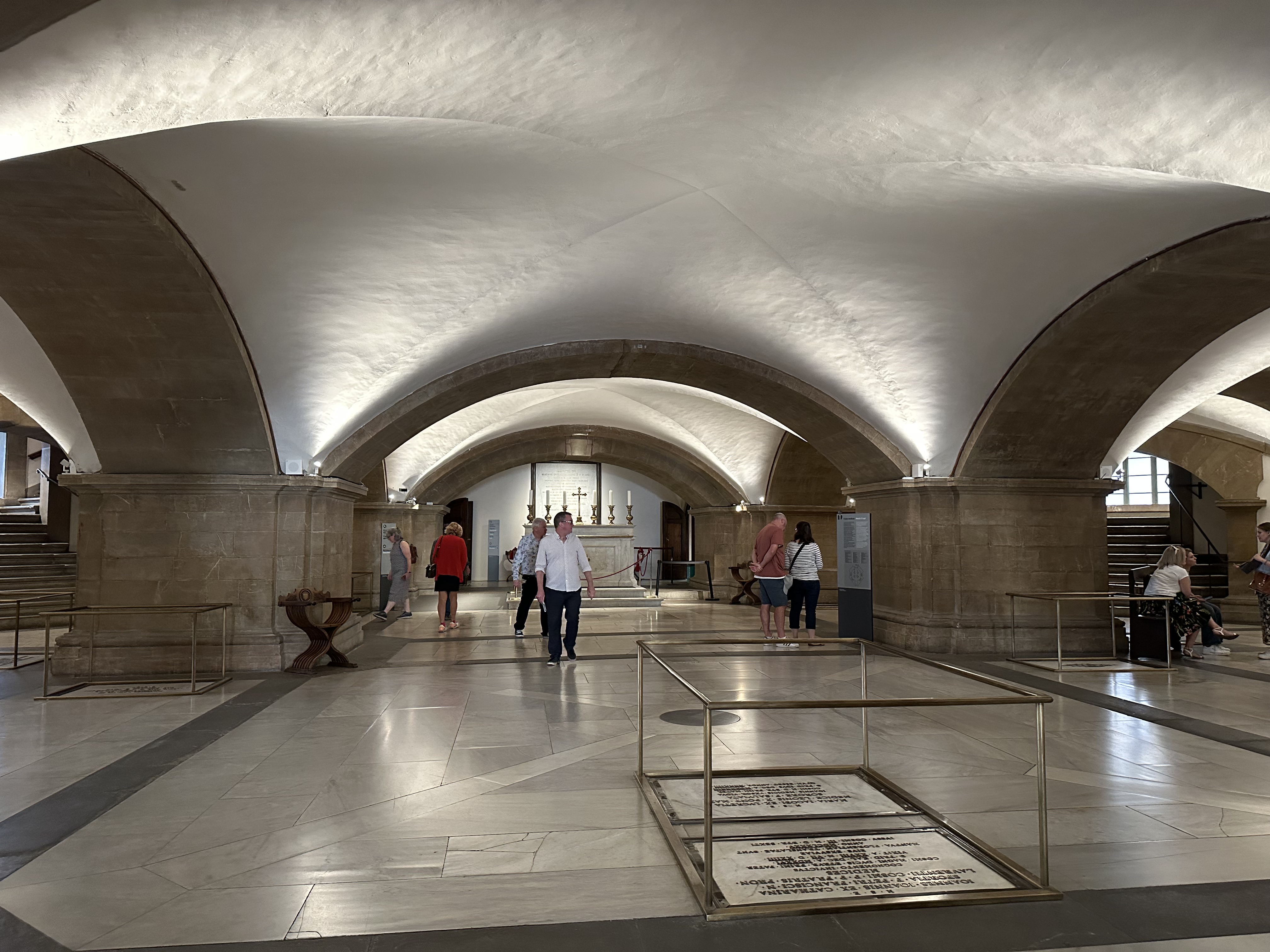
Then we visited the Medici Chapel, where many of them are buried. It was Casimo I’s idea to have a special burial place for the Medici’s. The underground crypt was for average Medici’s and the upstairs intended for the Grand Dukes. The mosaic work in the building is mostly muted Jasper stone, as appropriate to honor the dead. As it has turned out, only 2 grand dukes are buried here. Others died elsewhere and never made it here, so their tombs are empty. The building is exquisitely detailed and designed like the parthenon in Rome.
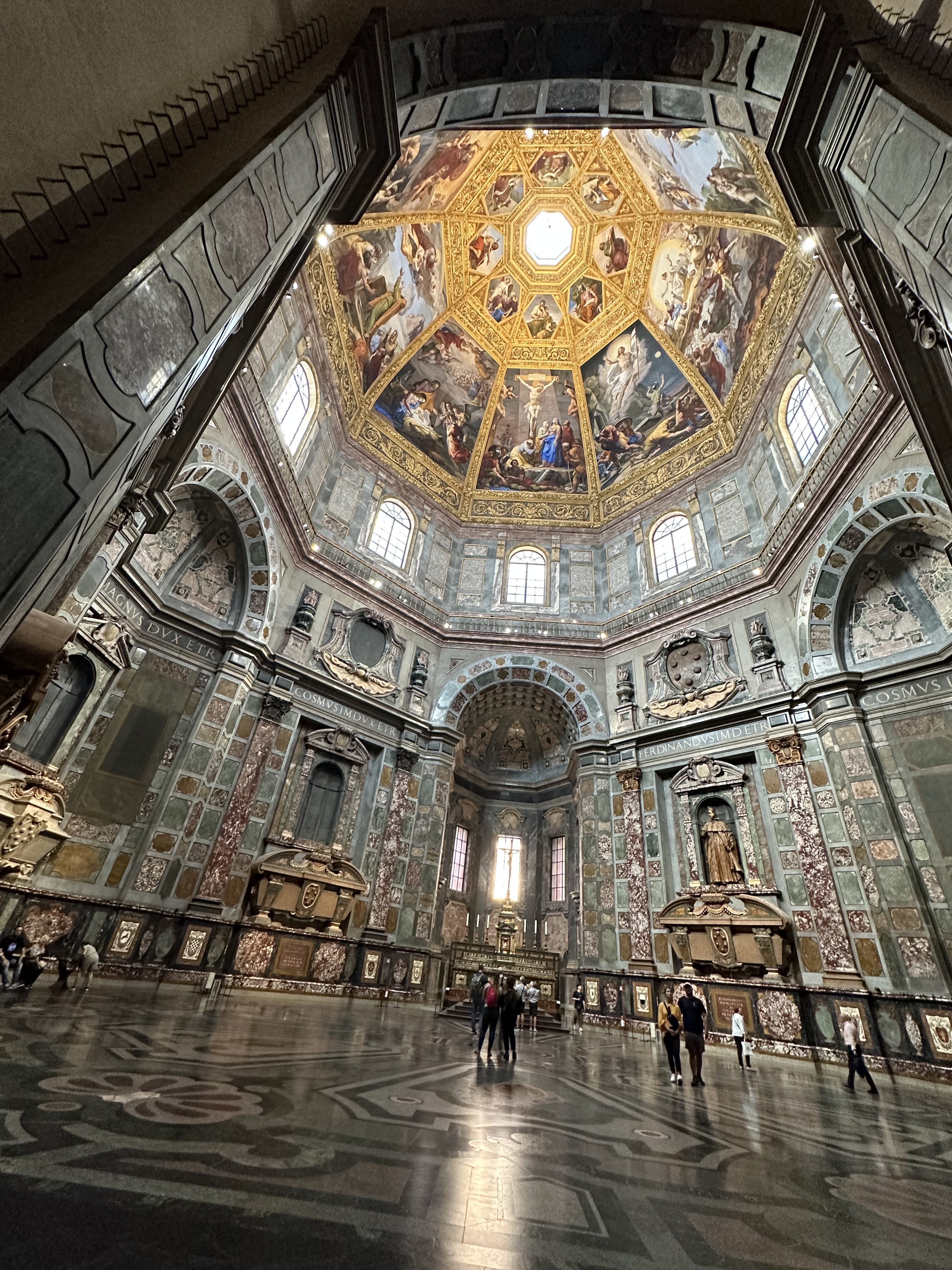
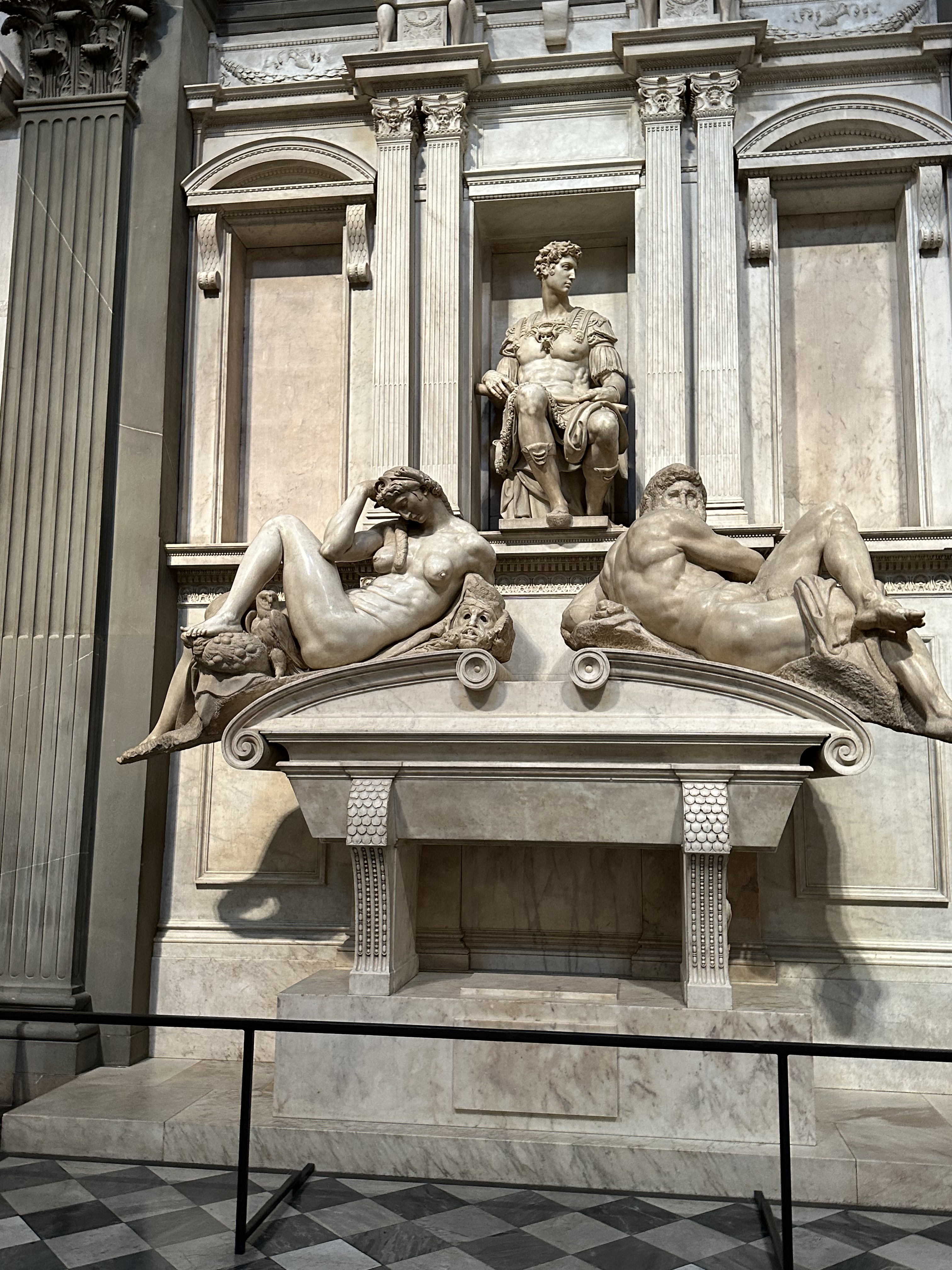
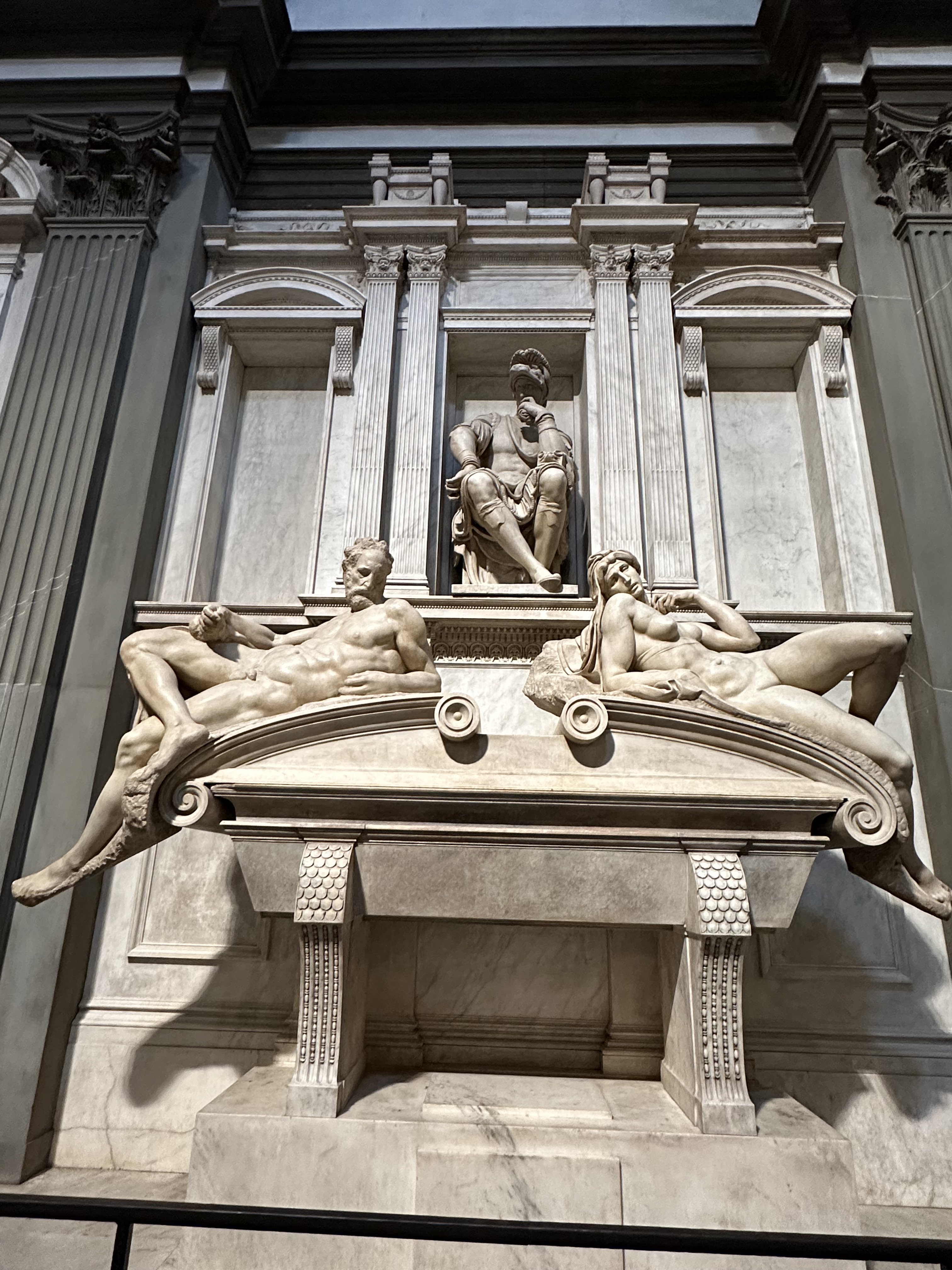
In the nearby New Sacristy are 2 important works by Michelangelo that he carved between 1524 and 1534, when he abruptly departed Florence for Rome. The New Sacristy was never completed. Two side wall tombs he did complete are the Tomb of Guiliano de Medici with larger than life marble sculptures of Night and Day and the Tomb of Lorenzo Il de Medici, which has sculptures of Dusk and Dawn. Both of these men were in the military, which explains the sculptures of them above the tombs.
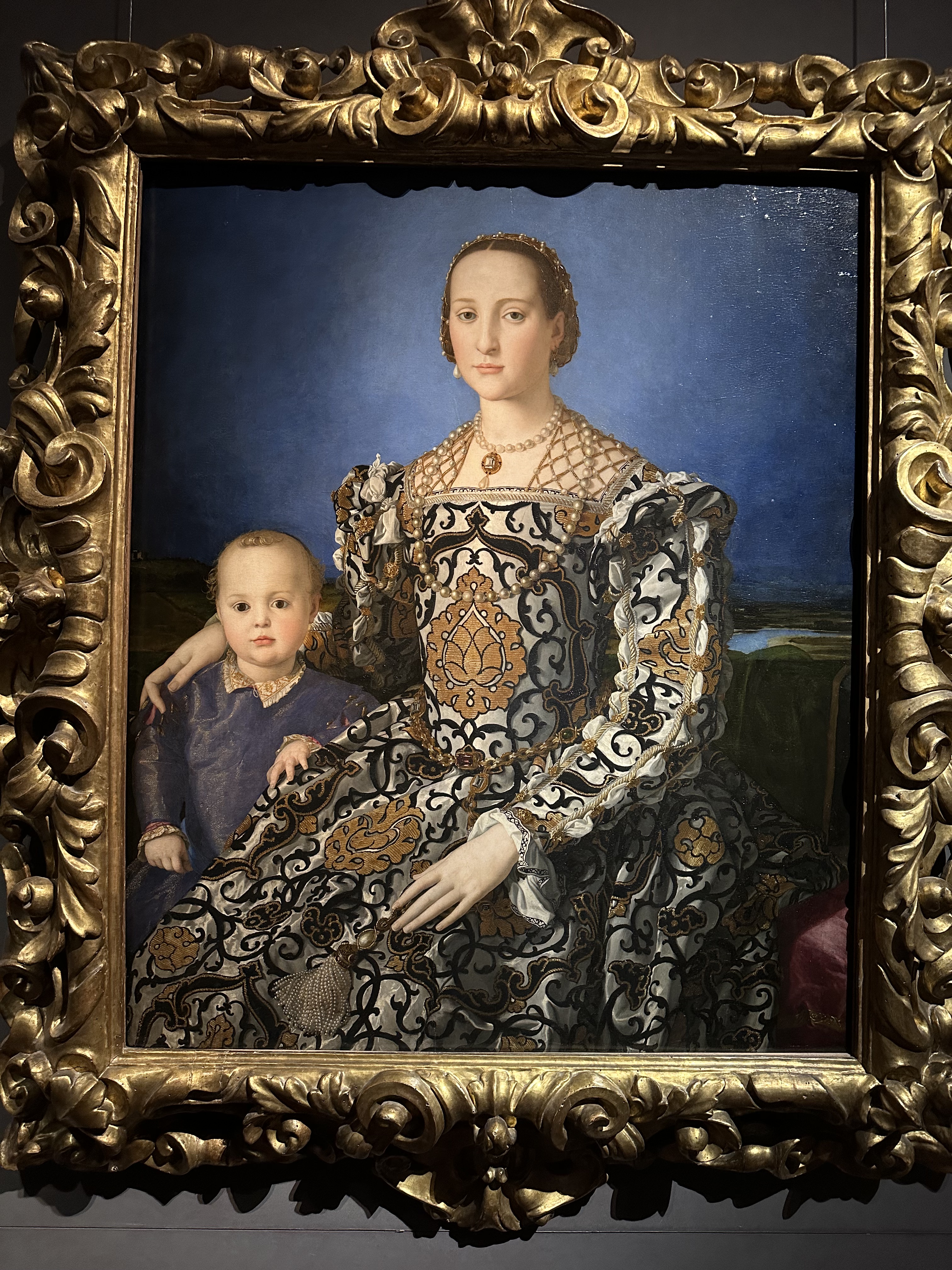
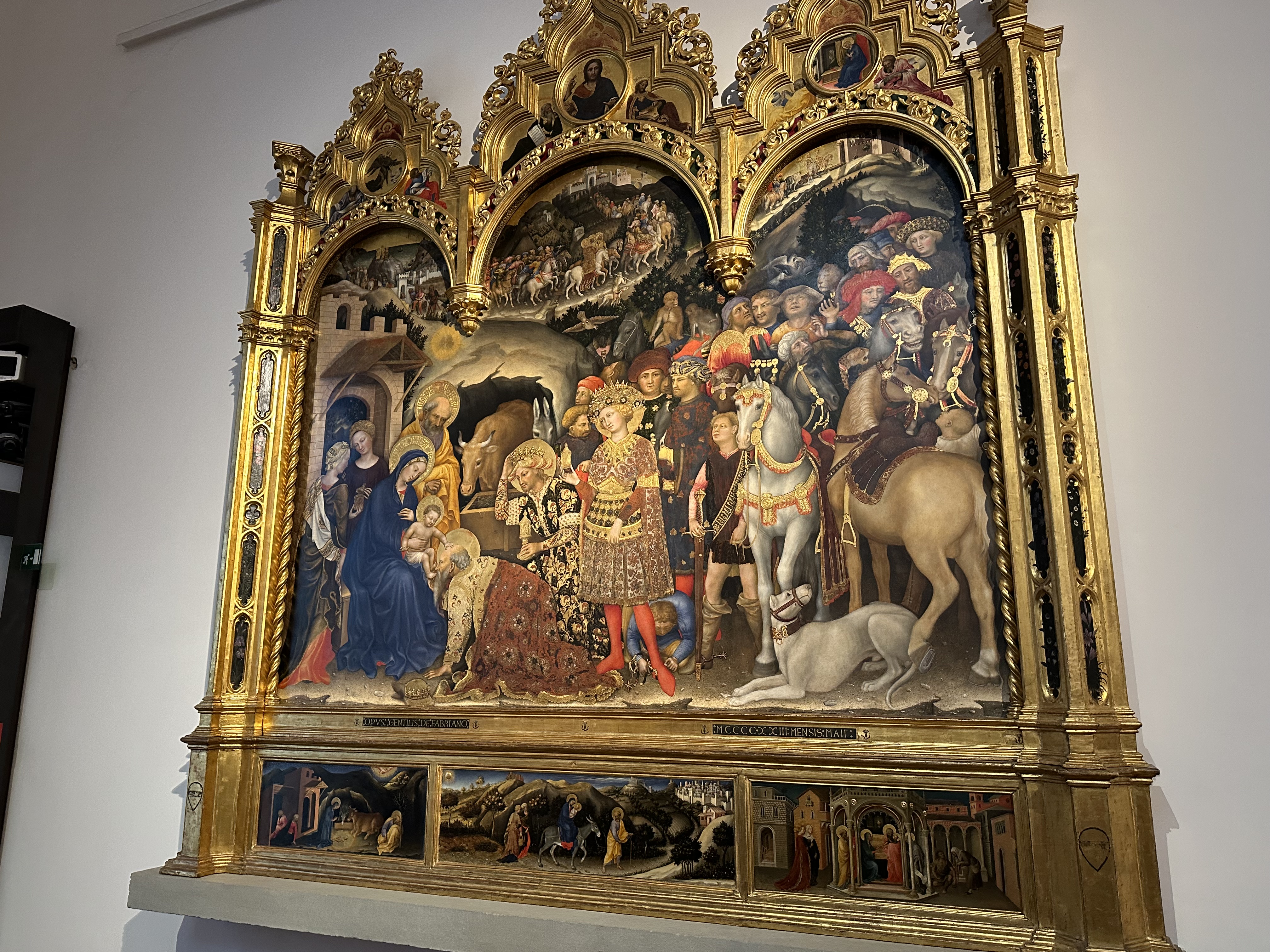
Finely, we reached the Uffizi Gallery to see the art inside. It was built between 1570 and 1590 and became a government office building when the Hapsburgs took over the facility. Monika had a plan to show us the highlights of the museum without burning us out. We agreed to go with her plan and actually made it through the museum in under an hour and a half. The collections represents the evolution of western art from the 1200’s through the 1600’s–from the gothic through the baroque. We will be looking for: 1 Michelangelo; 3 de Vinci’s; 2 Botticelli’s; 4 Rafael’s; 3 Caravaggio’s; 2 Titian’s ; 2 Rembrandt’s and 1 Reuben. ere are some of the works she directed us to consider.
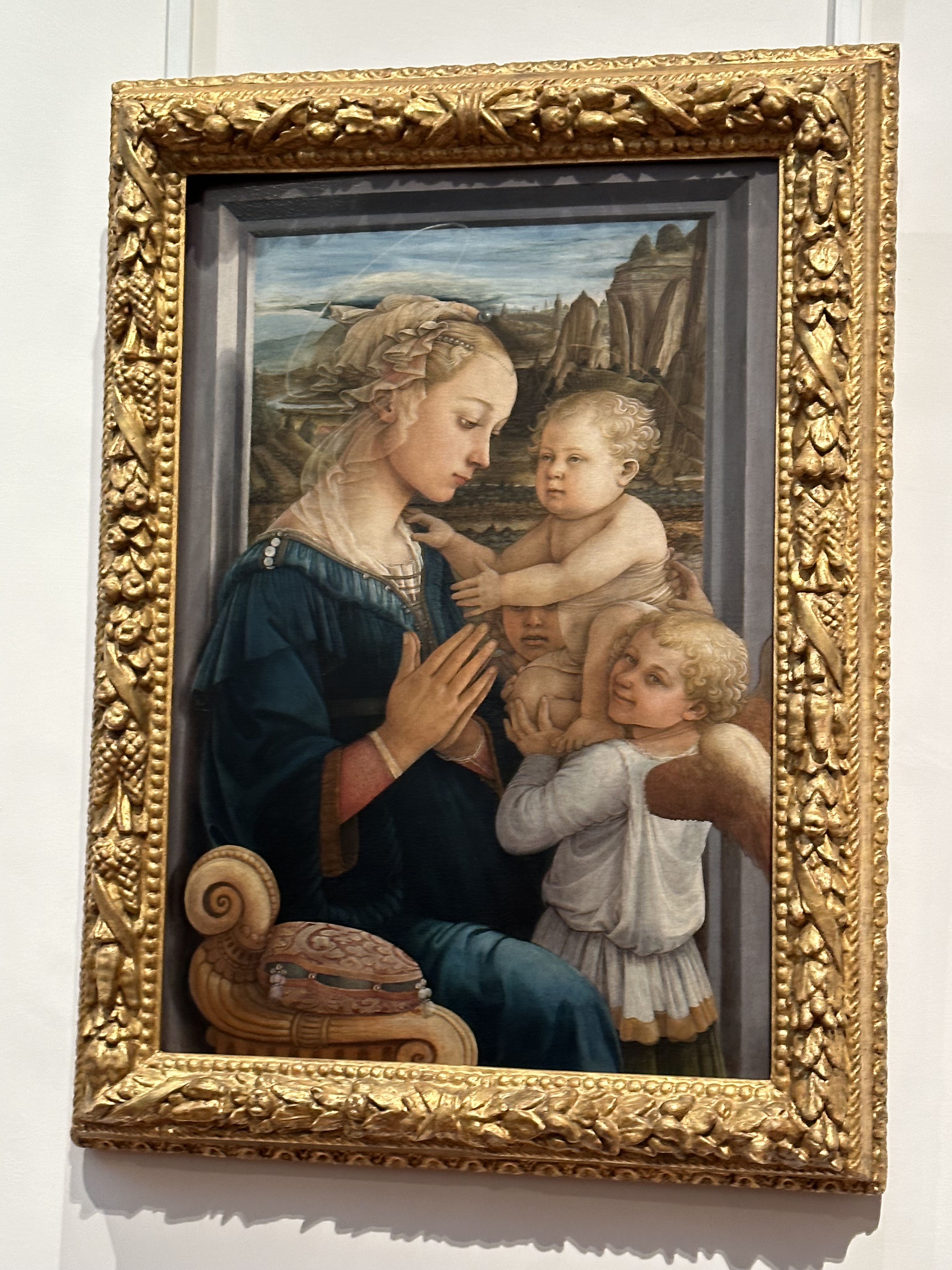
1450-60–Madonna, Child, and Angel by Filipino Lippi.
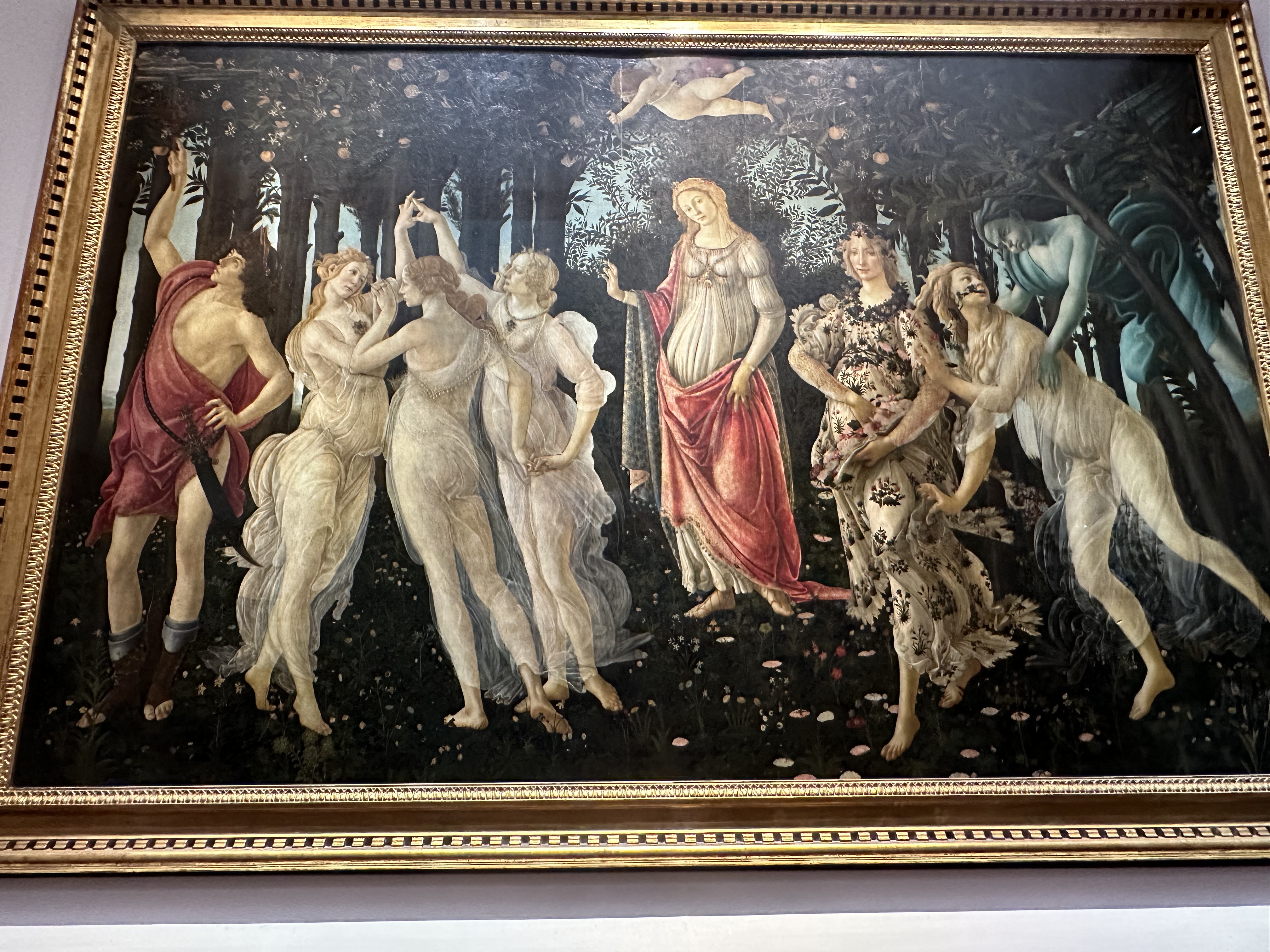
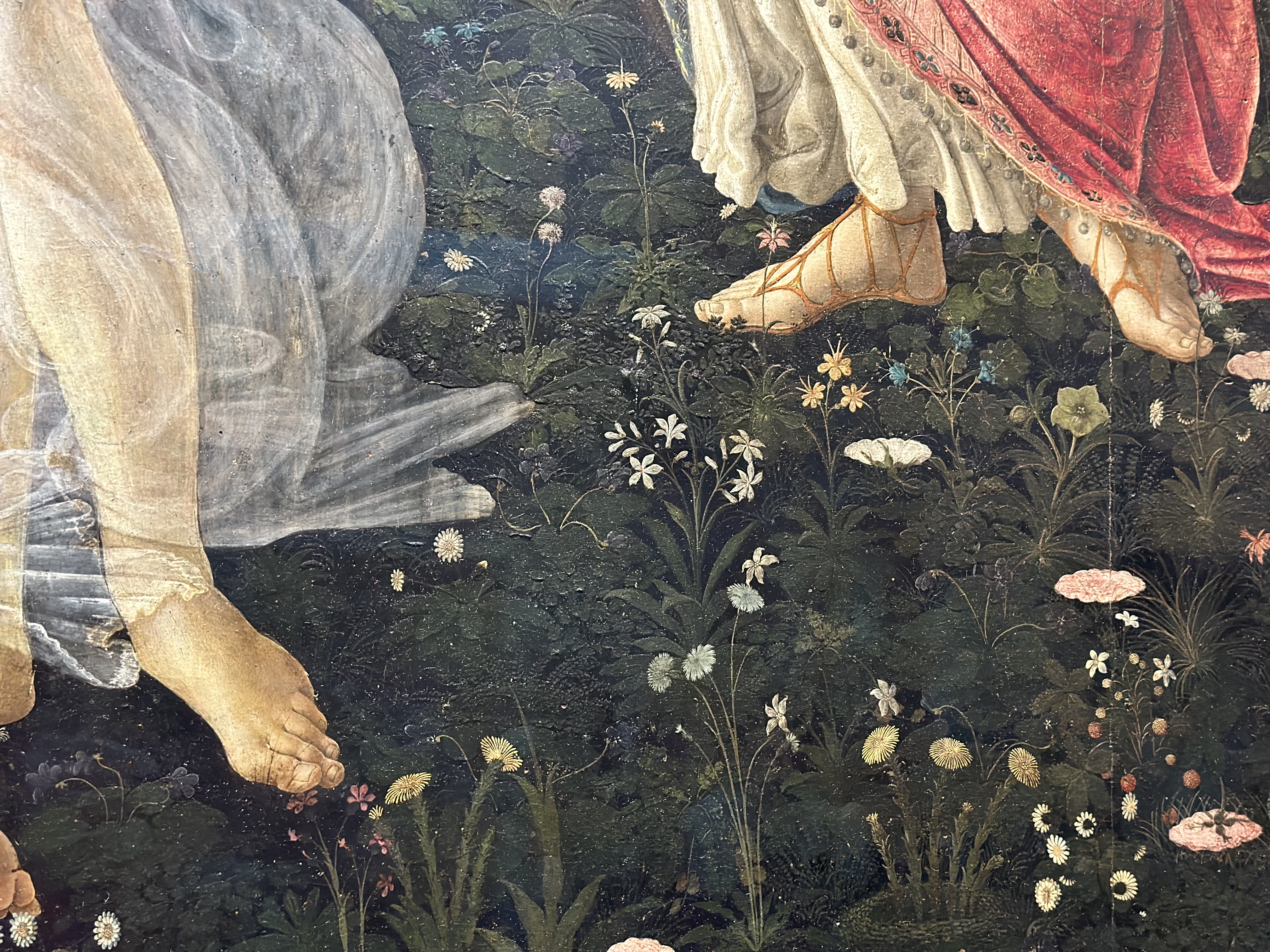
1485, The Spring by Botticelli. It was a wedding present to a Medici. Not religious. Spring is presenting Venus to the 3 nymphs with cupid watching. Flower petals are sprinkled on the ground
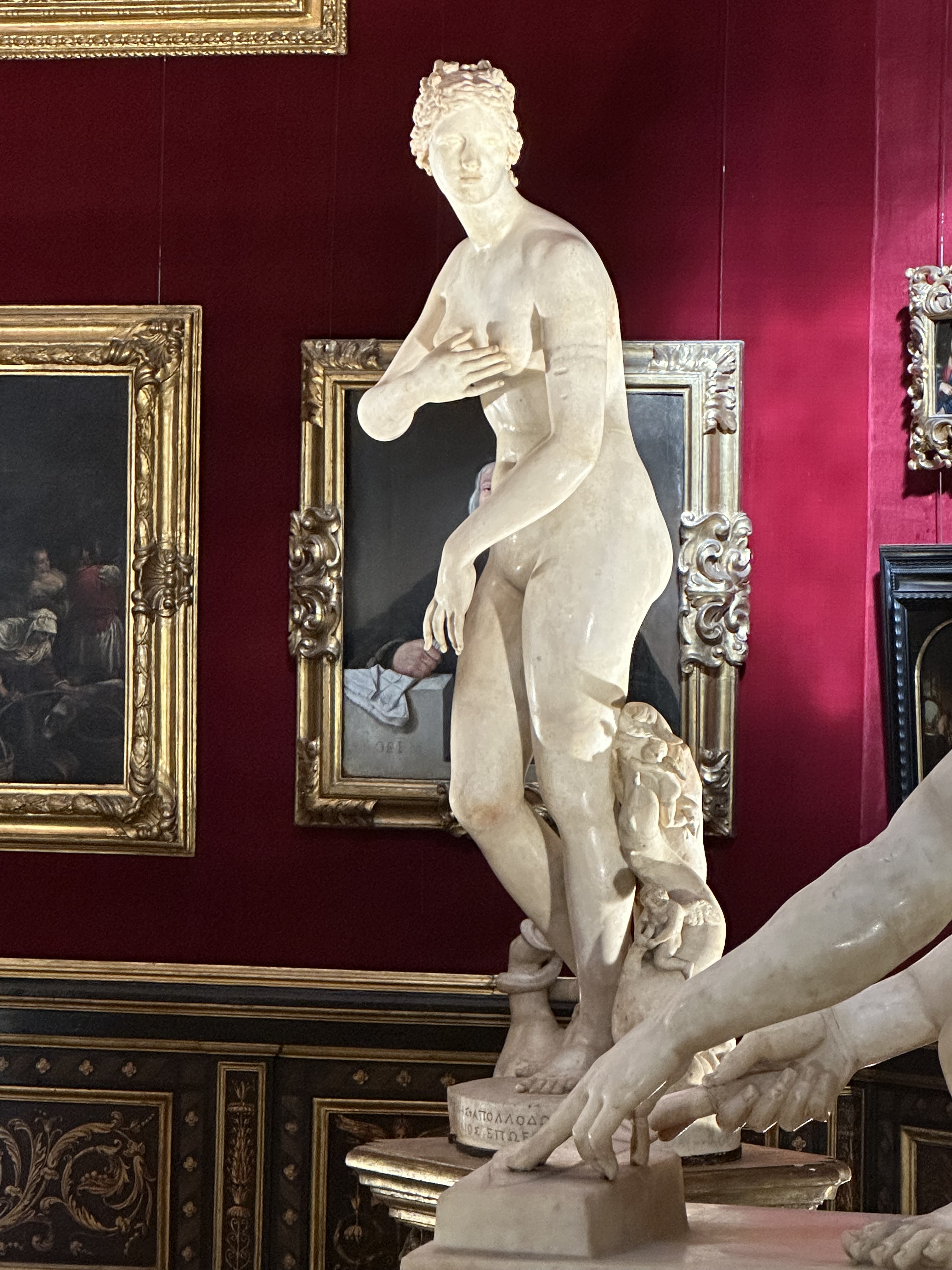
1490– Venus.–commissioned by a Medici and is the first naked female sculpture.
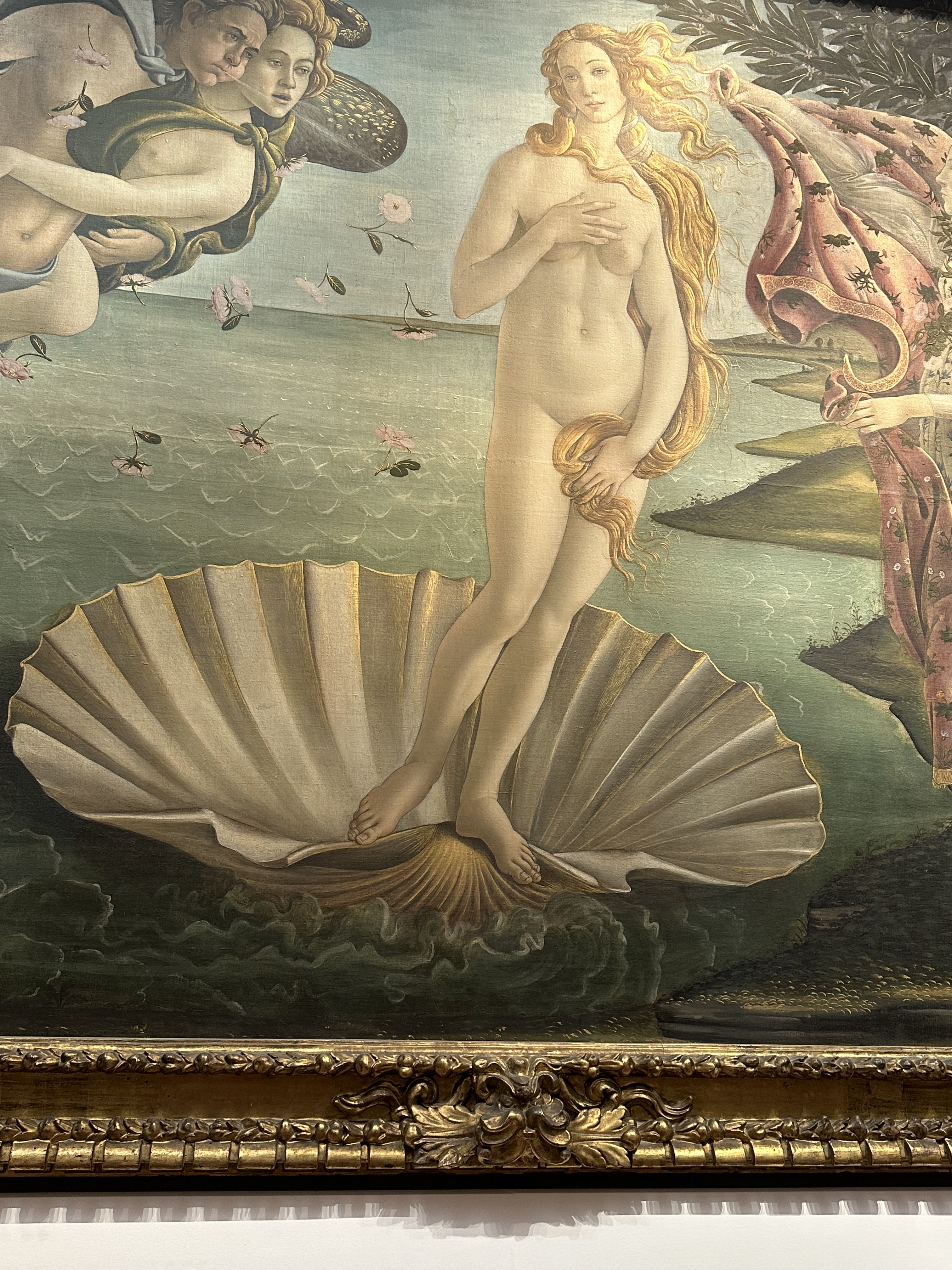
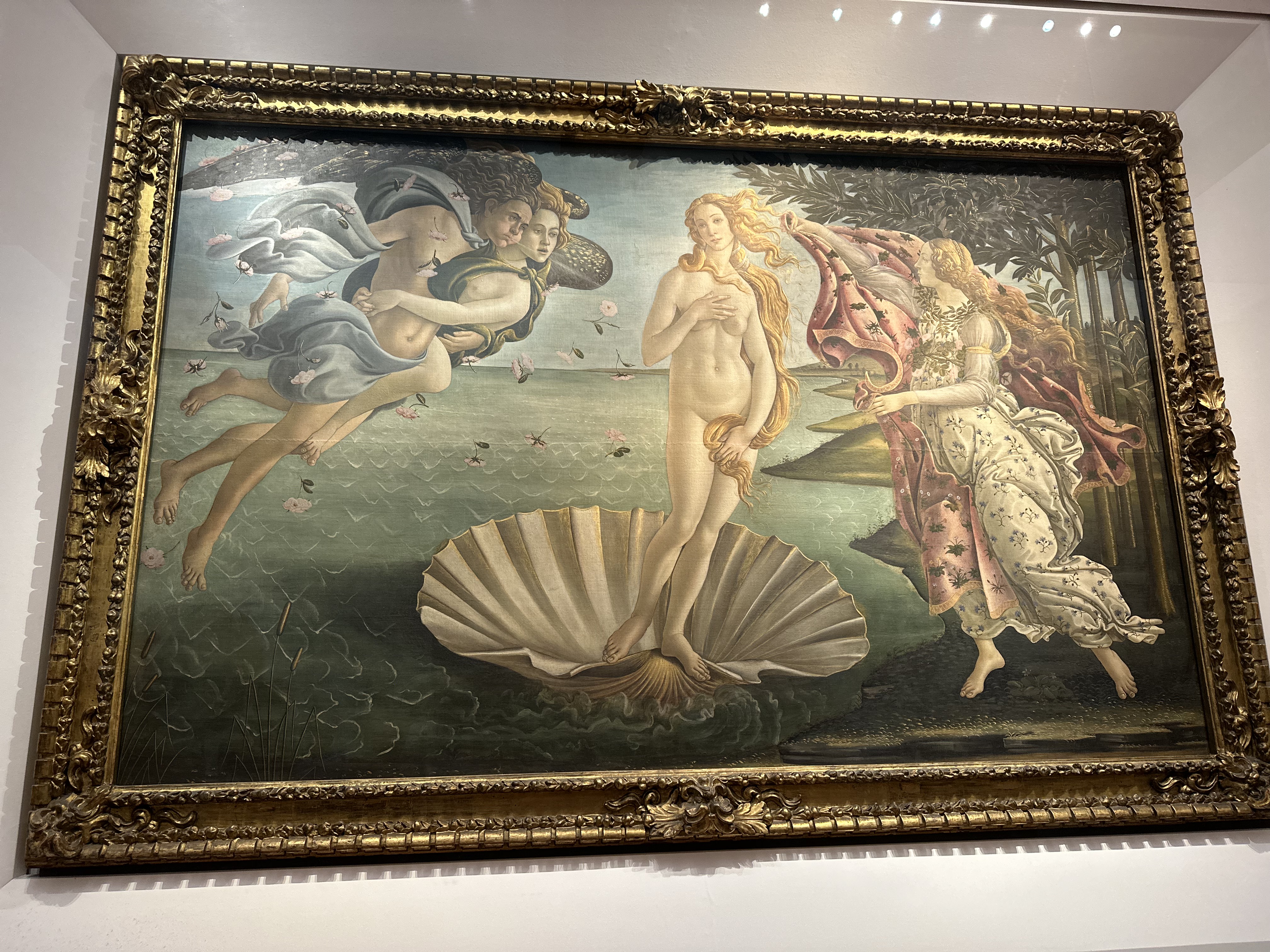
1480–The Birth of Venus by Botticelli.
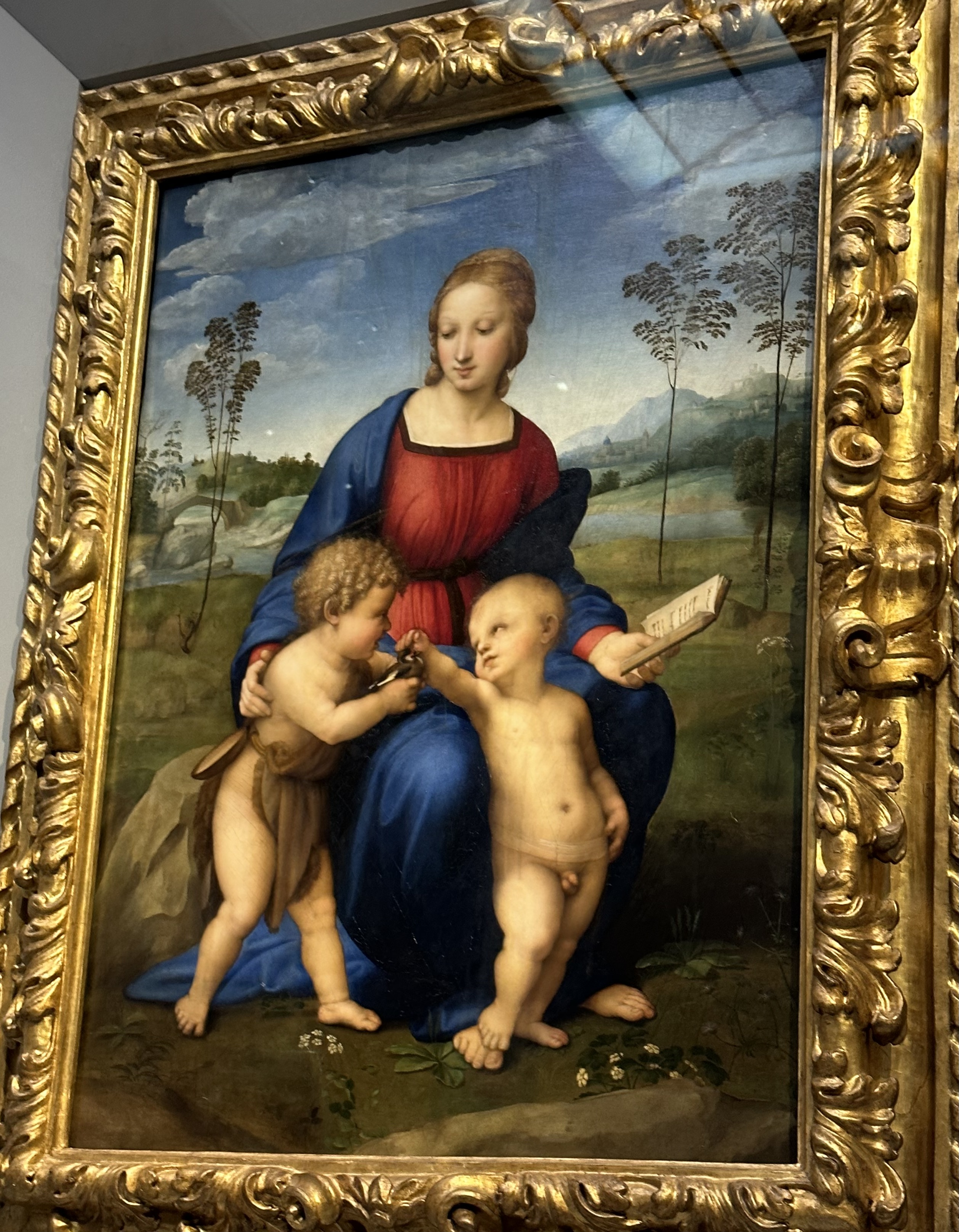
Madonna, Jesus and John the Baptist
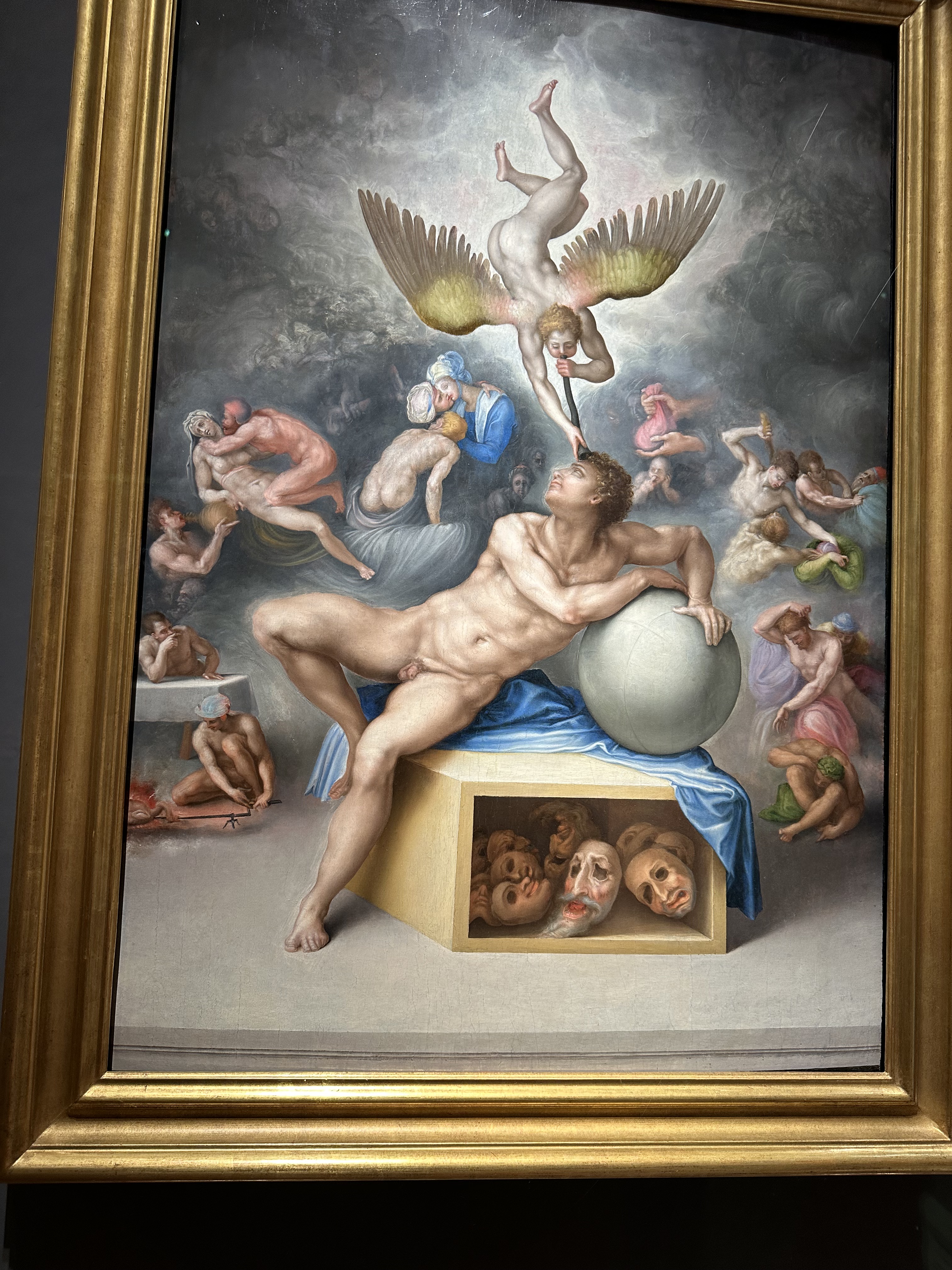
The Dream
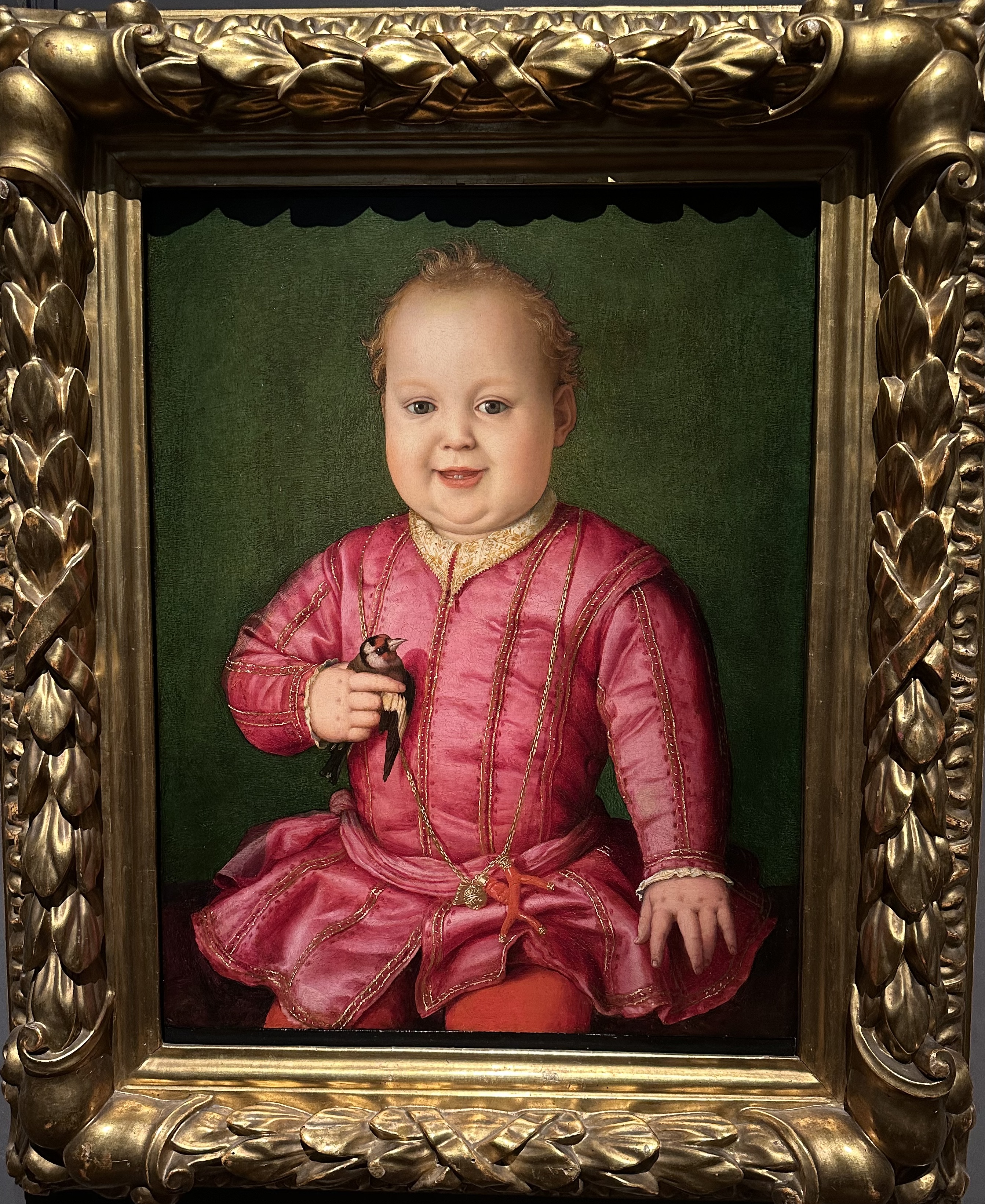
Cosimo’s young son
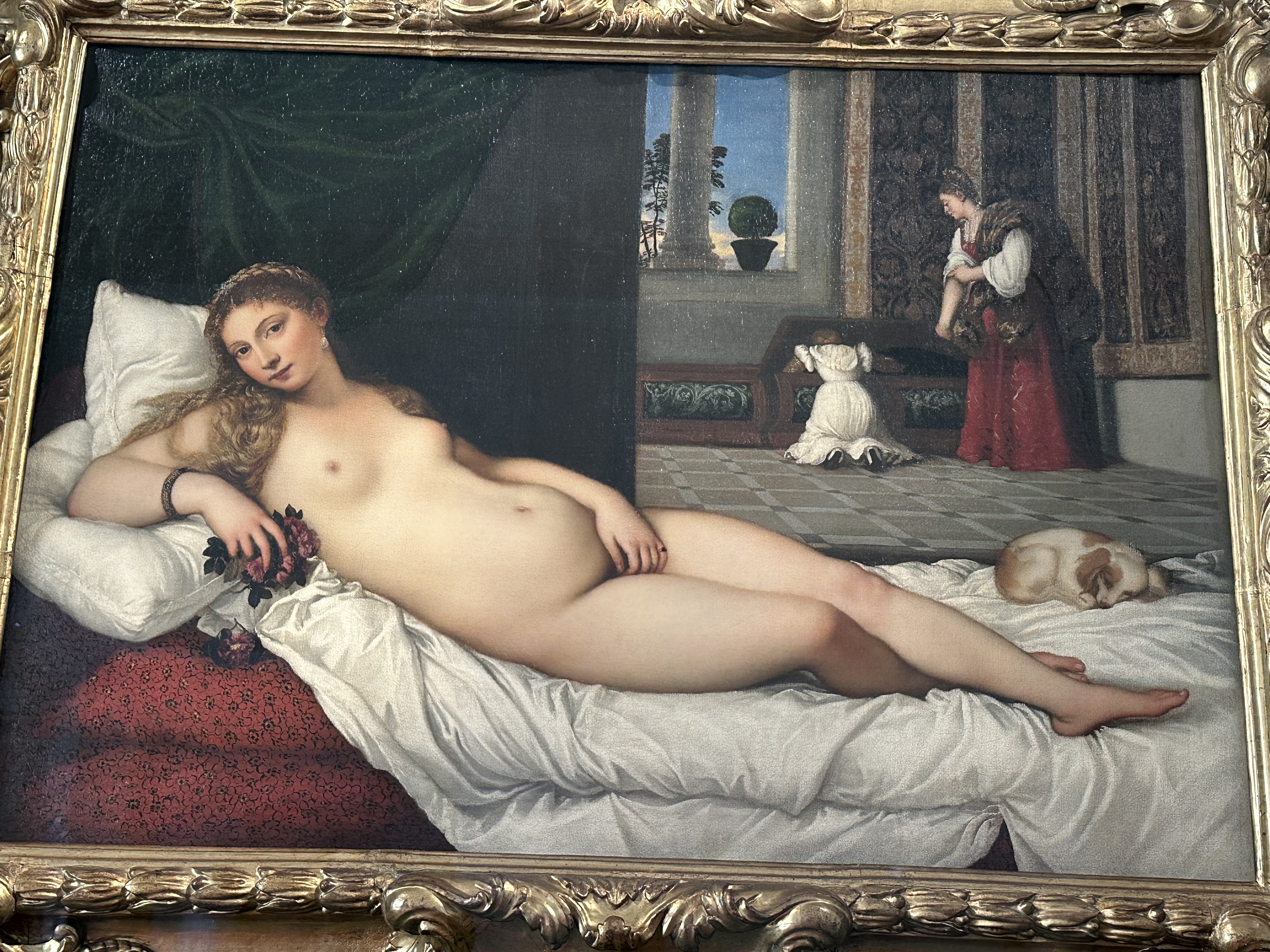
1538–Venus of Urbino. A Medici bride preparing for her wedding
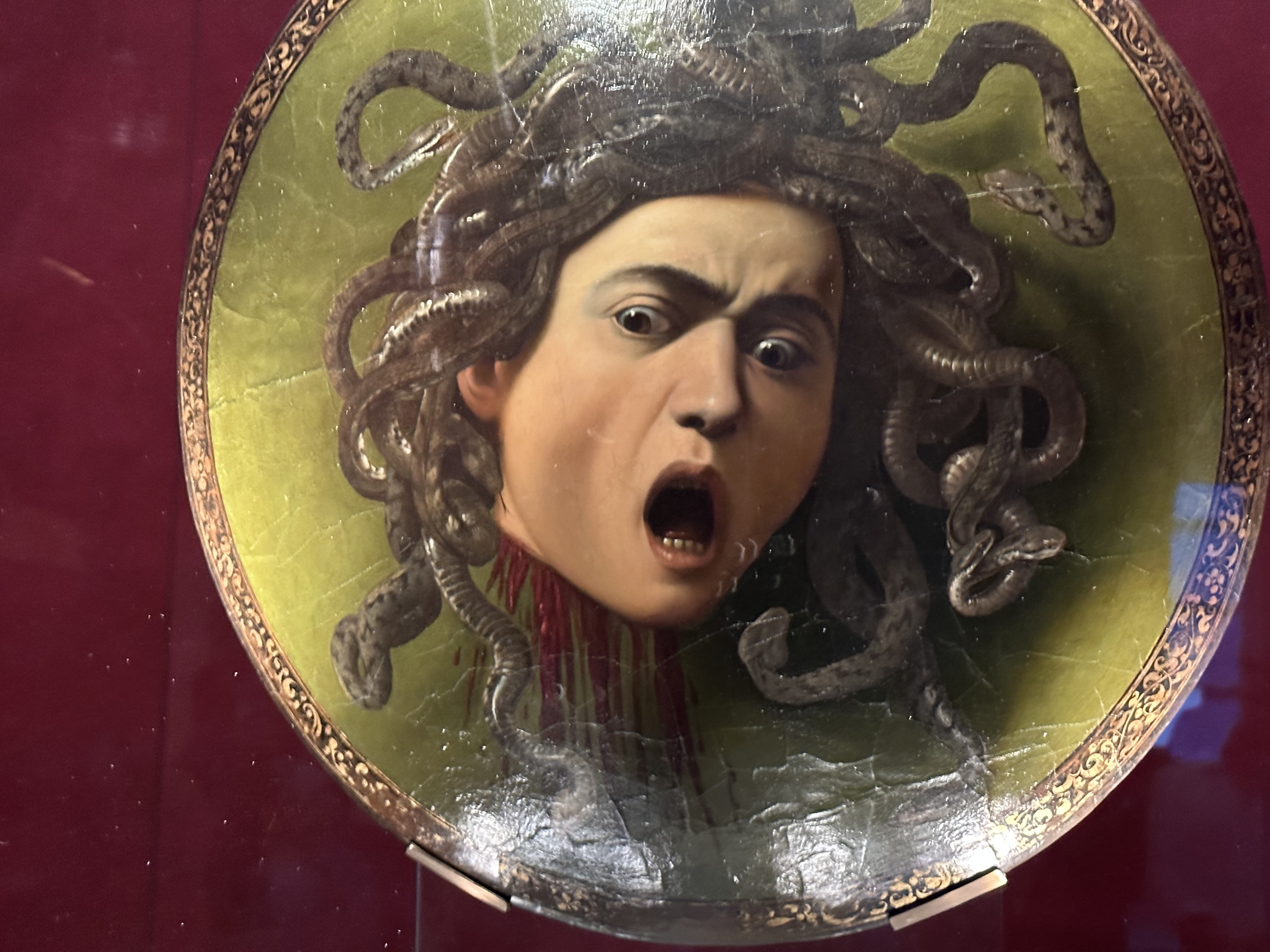
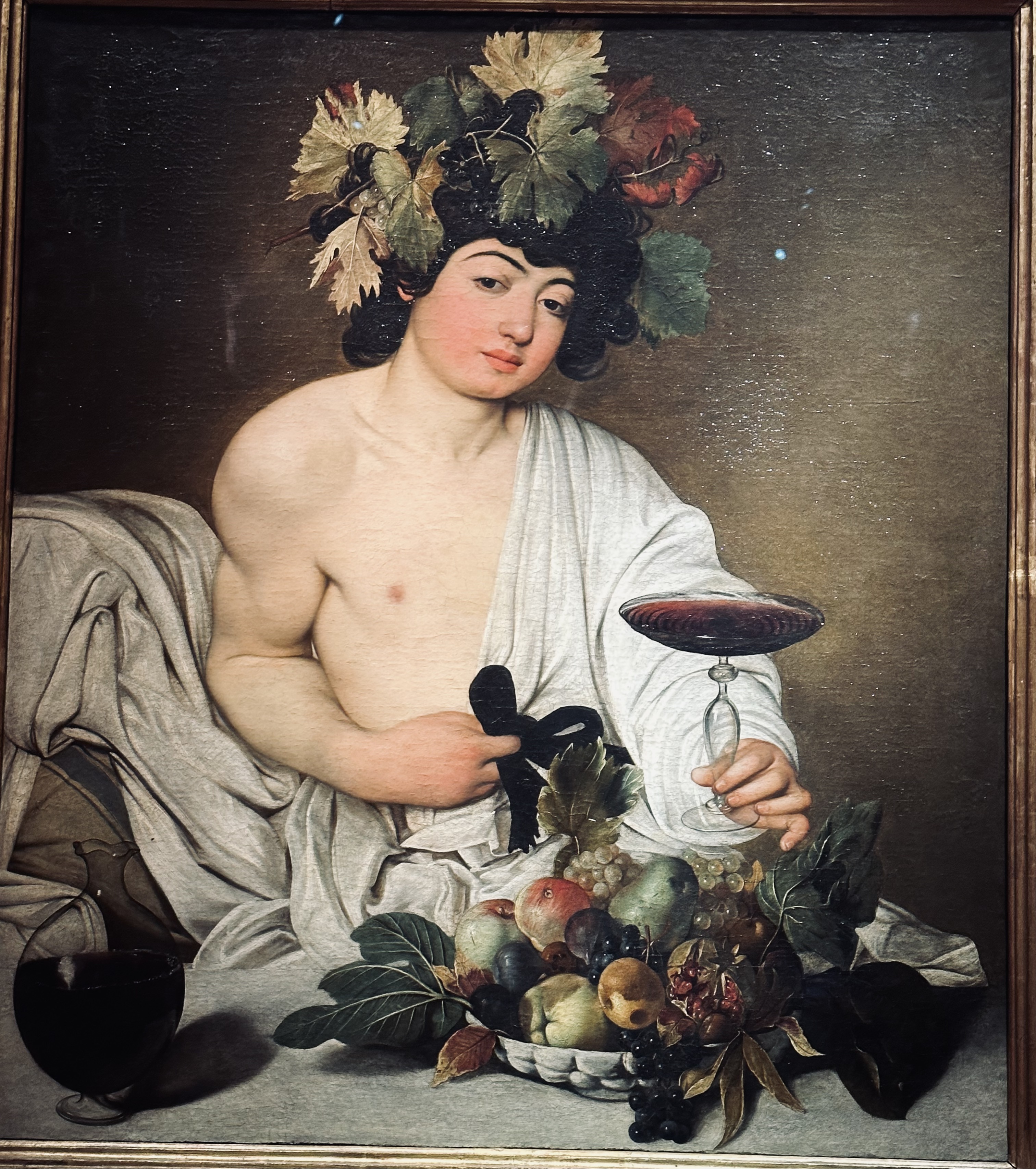
Madusa seeing himself in the mirror and Bacchus on a drinking spree. 1597–Caravaggio. Medusa reinterpreted here switch the eyes wide open in horror and the mouth frozen in a cry of revulsion, the writhing tangle of serpents seemingly at odds with the drastically severed neck.
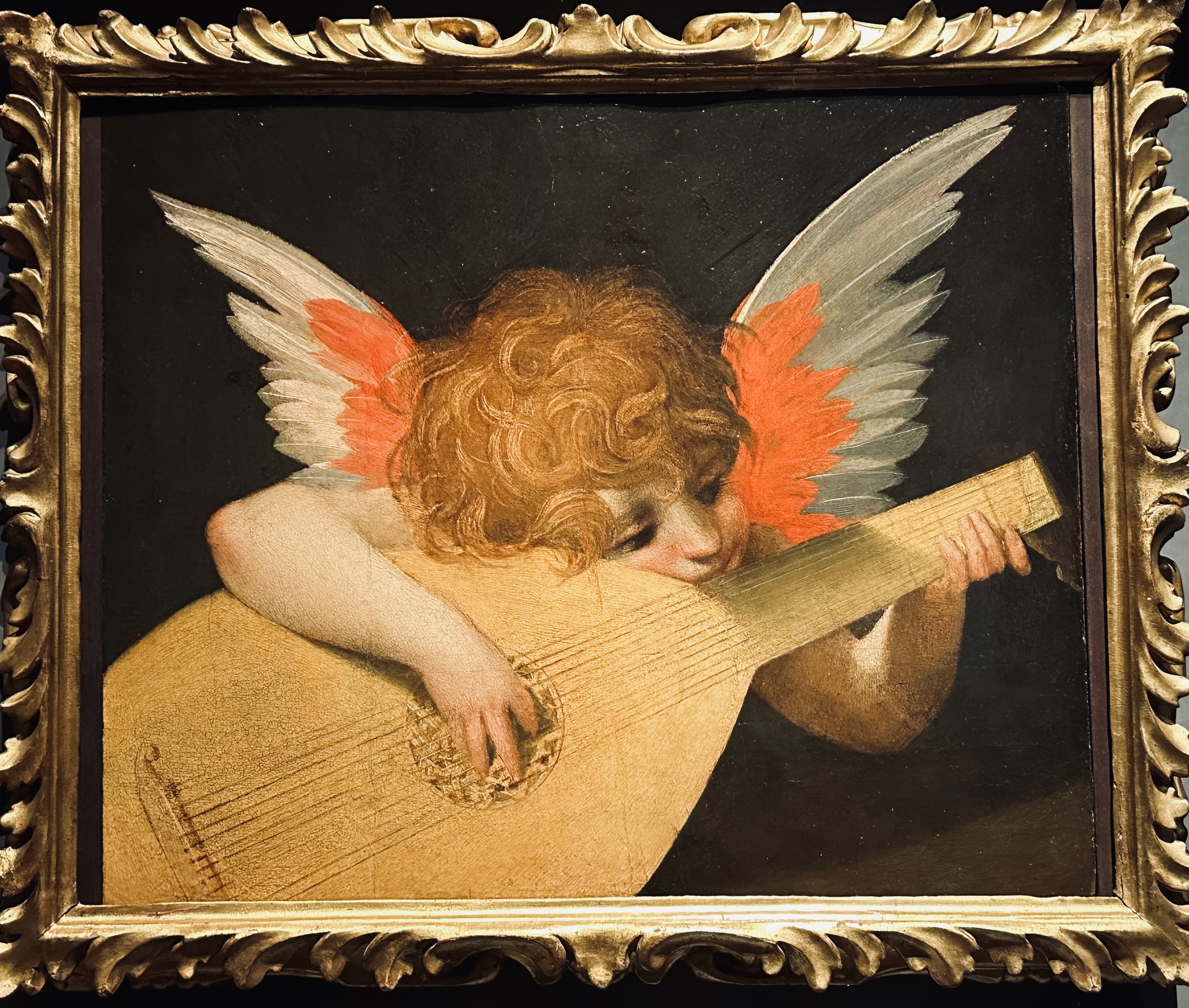
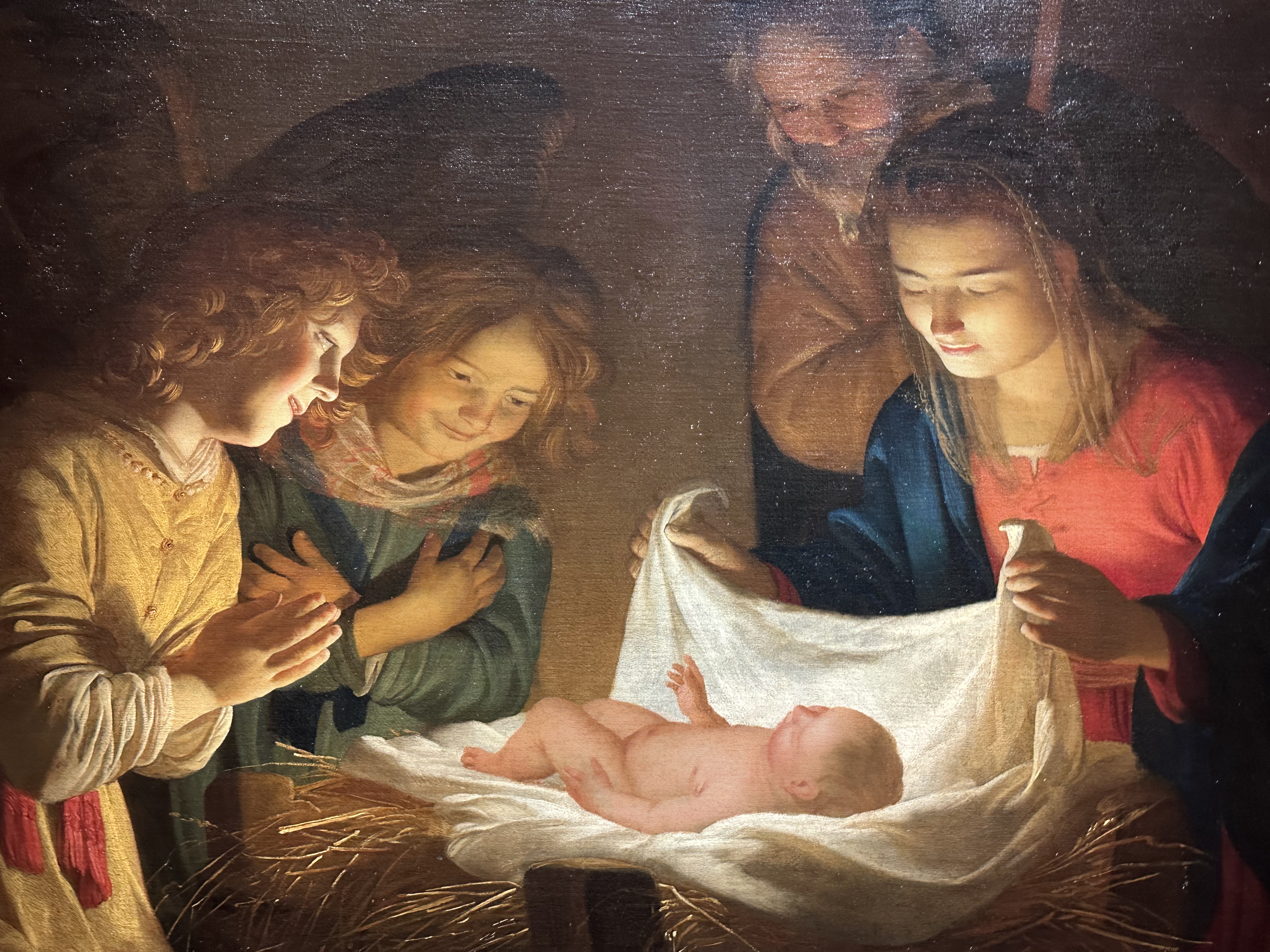
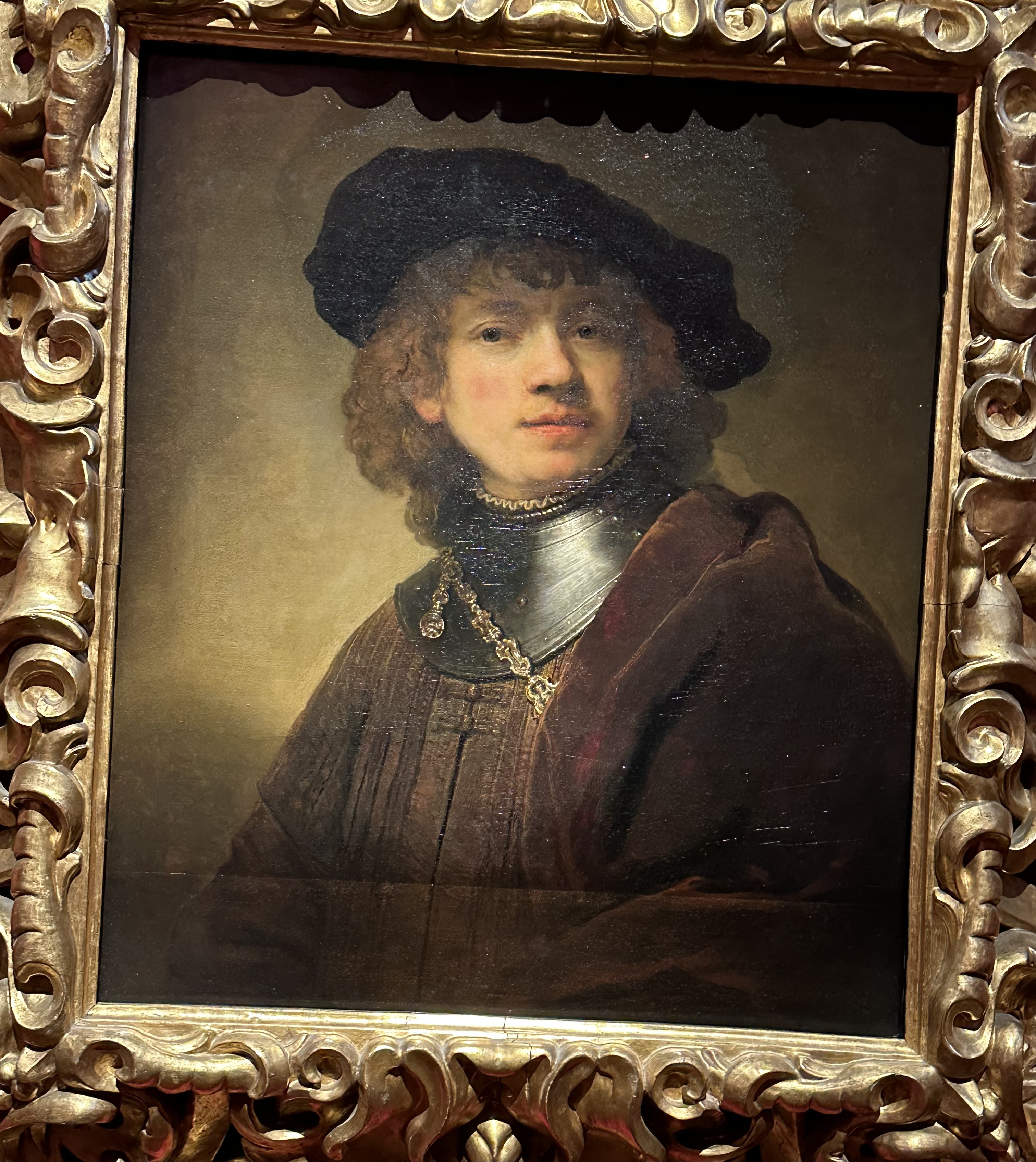
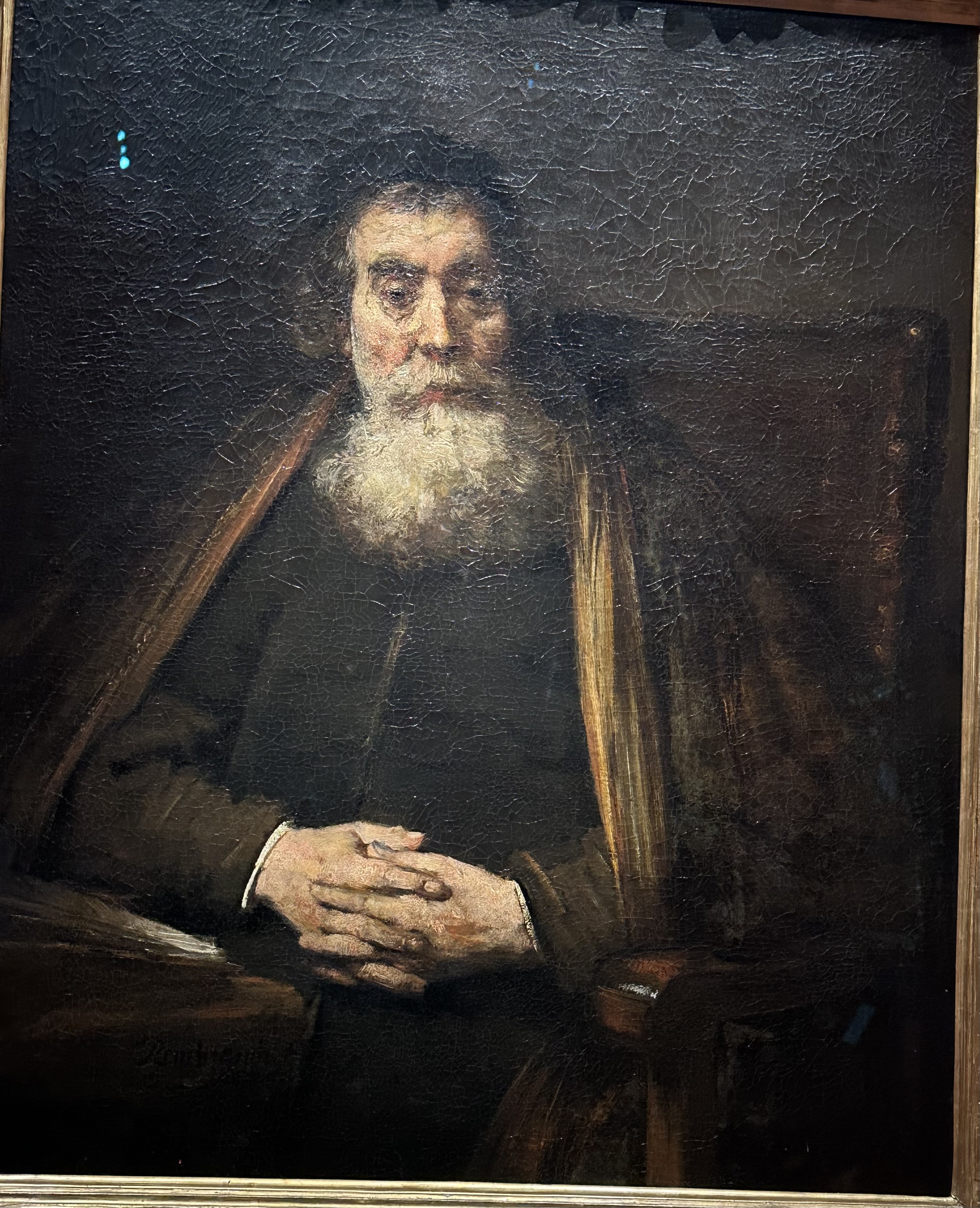
2 Rembrandt paintings in the Uffizi Gallerie

a whole week to compose. We hope you enjoy the post. It has taken us a whole week to compose and I have not been well a couple of the days. We have fond memories of our week at the Villa and hope that you do too. Blessings and good health to everyone.
Julia and Mark

























































 Adventures with Julia