
Garamba National Park was created in 1938 and is the third oldest park in the world. It is in the NE part of the DRC in the transition zone between the dense tropical forests of the Congo Basin and the Guinea-Sudano savannas. The village near the airstrip is called Nagero. The park’s immense savannahs, grasslands, and woodlands, interspersed with gallery rain forests and riparian forests along the riverbanks and the swampy depressions are home to forest elephant, the rare Kordofan giraffe, hippopotamus, and white rhinoceros, which had become extinct but, recently, 15 have been introduced to the park from South Africa. We hope to see them. The population of elephants combines forest elephants, bush elephants and hybrid animals that demonstrate characteristics of all three species. The park contains many square miles resulting in a well-protected area for the many large animals as well as the large population of African buffalo. There is also lion, the spotted hyena and numerous species of antelope.
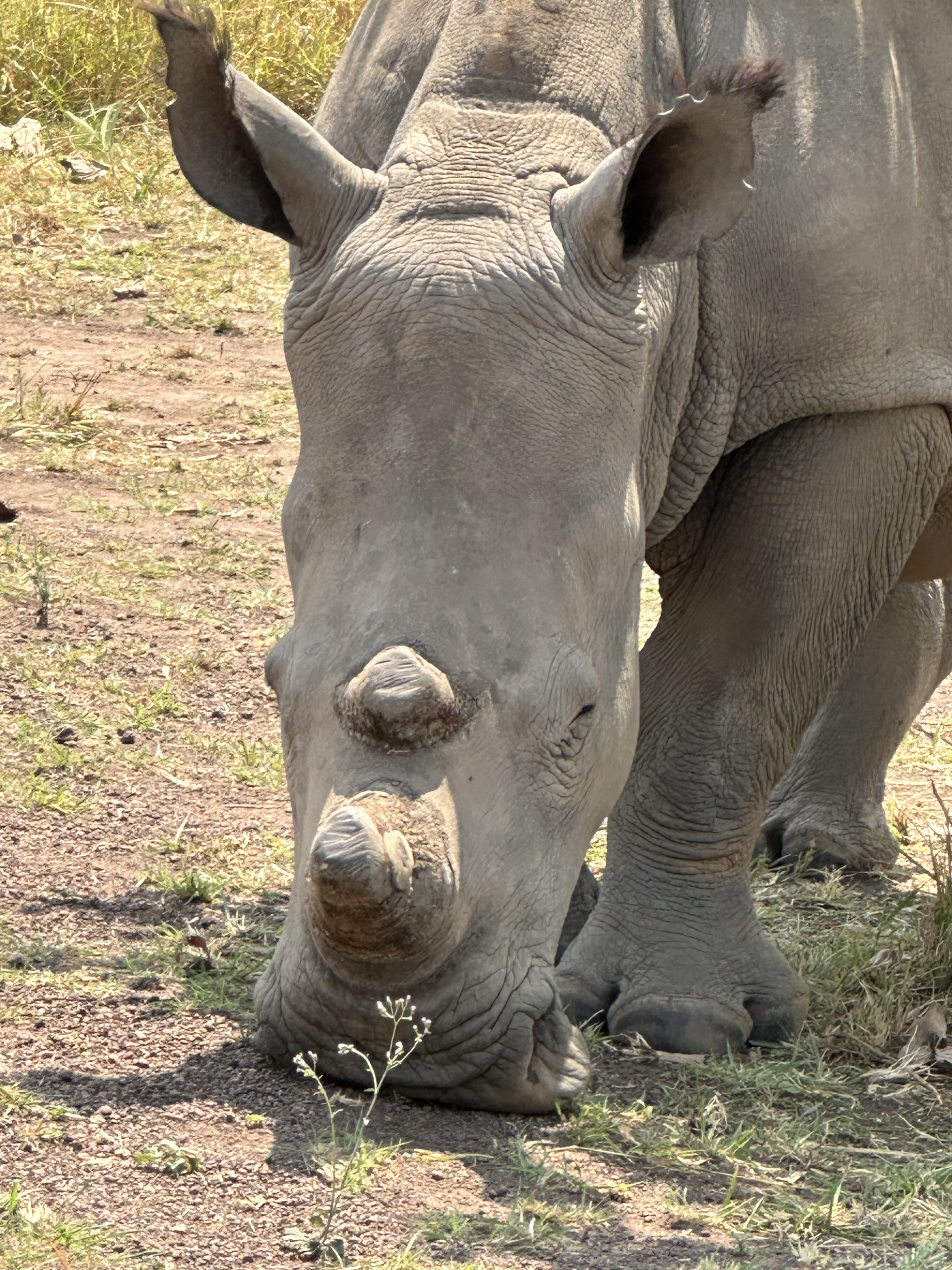
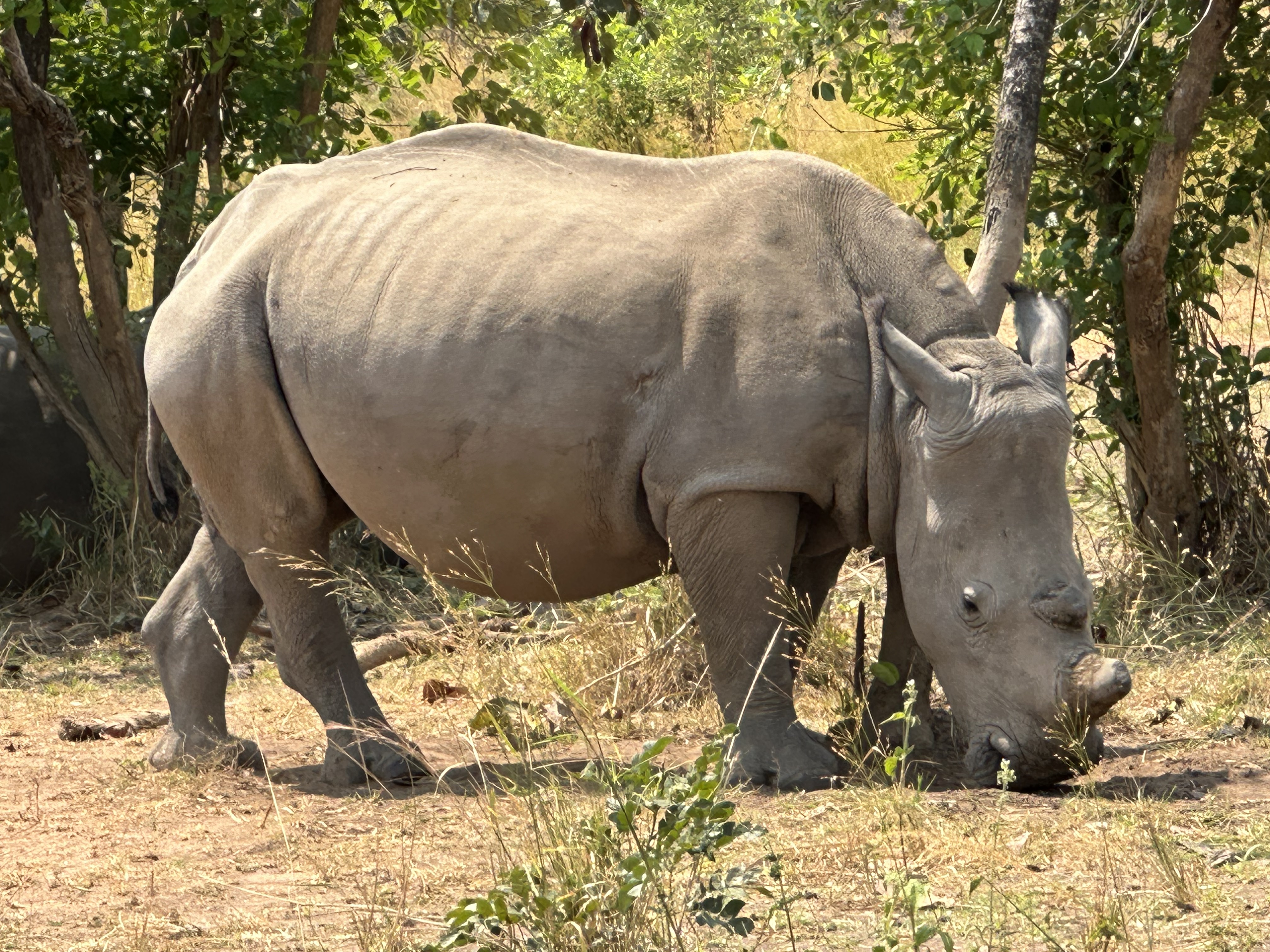
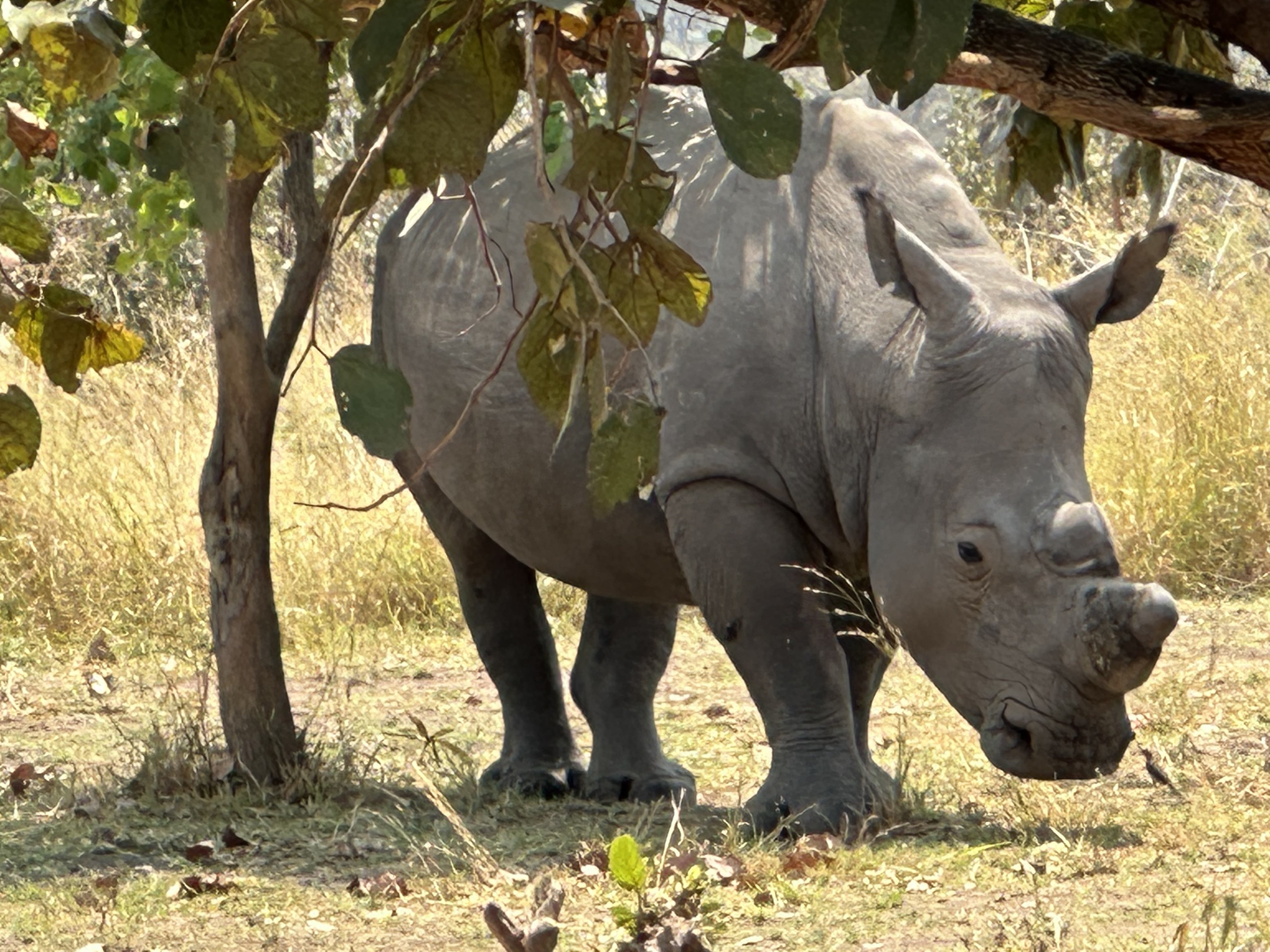
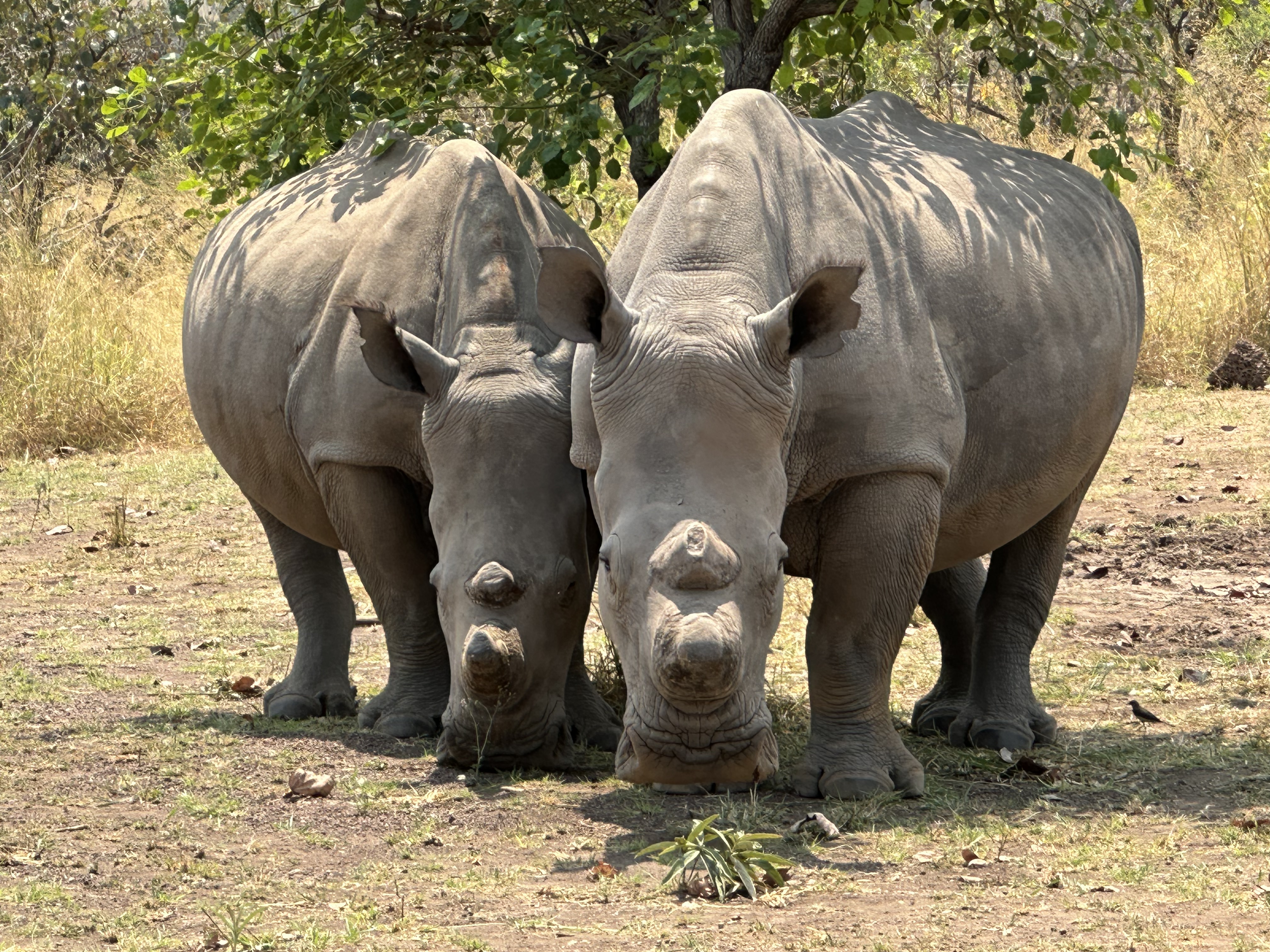
The above information on the Congo came from a Wikipedia site. Mark and I have been in the Congo for 4 days now and can tell you there are some inaccuracies. Due to severe poaching during the last 50 years the animal population is much reduced. Until today we were driving through the park on the few roads that exist. We saw sizeable groups of Uganda cob, hartebeest, bushbuck and huge numbers of hippos and vultures. We saw only one giraffe, a rare Kordofan, a crocodile, some wart hogs, 3 buffalo, a few oribi and miles and miles of thick, very tall dry grass. Mark thought the grass looked like dried out sugar cane. We heard lion, but never say any. We did see the 15 white rhino that have been recently introduced to the park and are being kept in a 100-hectare sanctuary. They appear to be doing well. In a few weeks, 64 more white rhino will be delivered by 747. A much larger sanctuary is being created for their arrival in June.
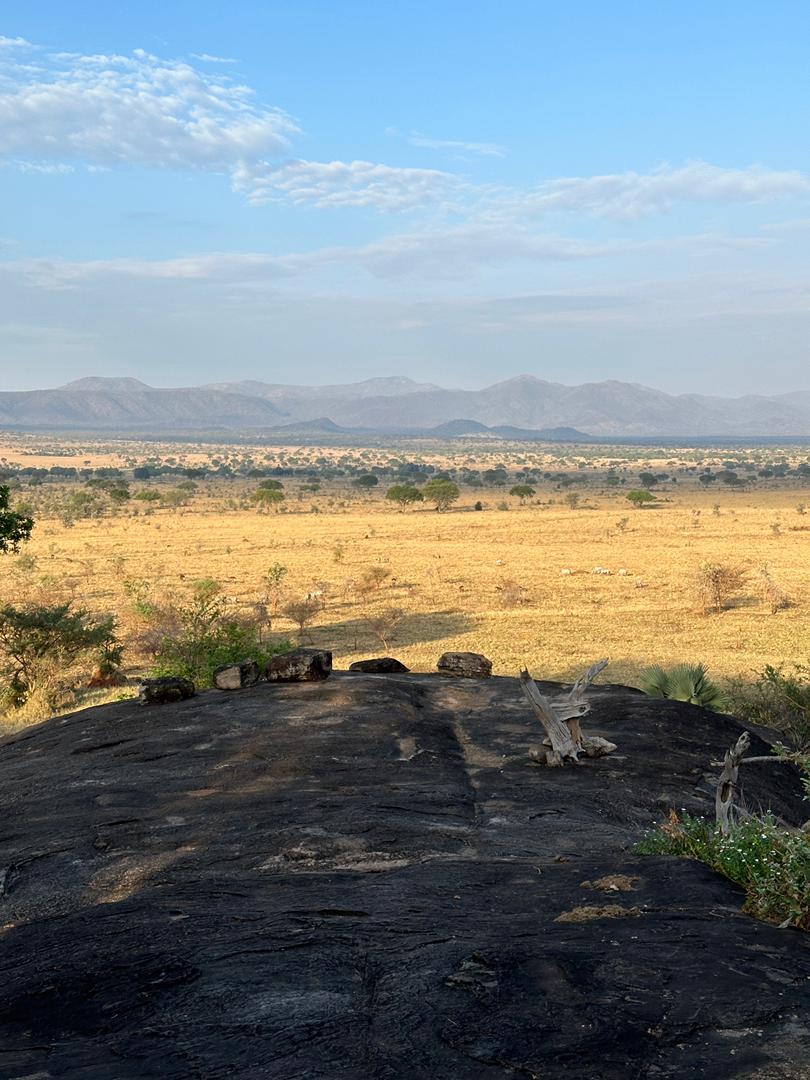
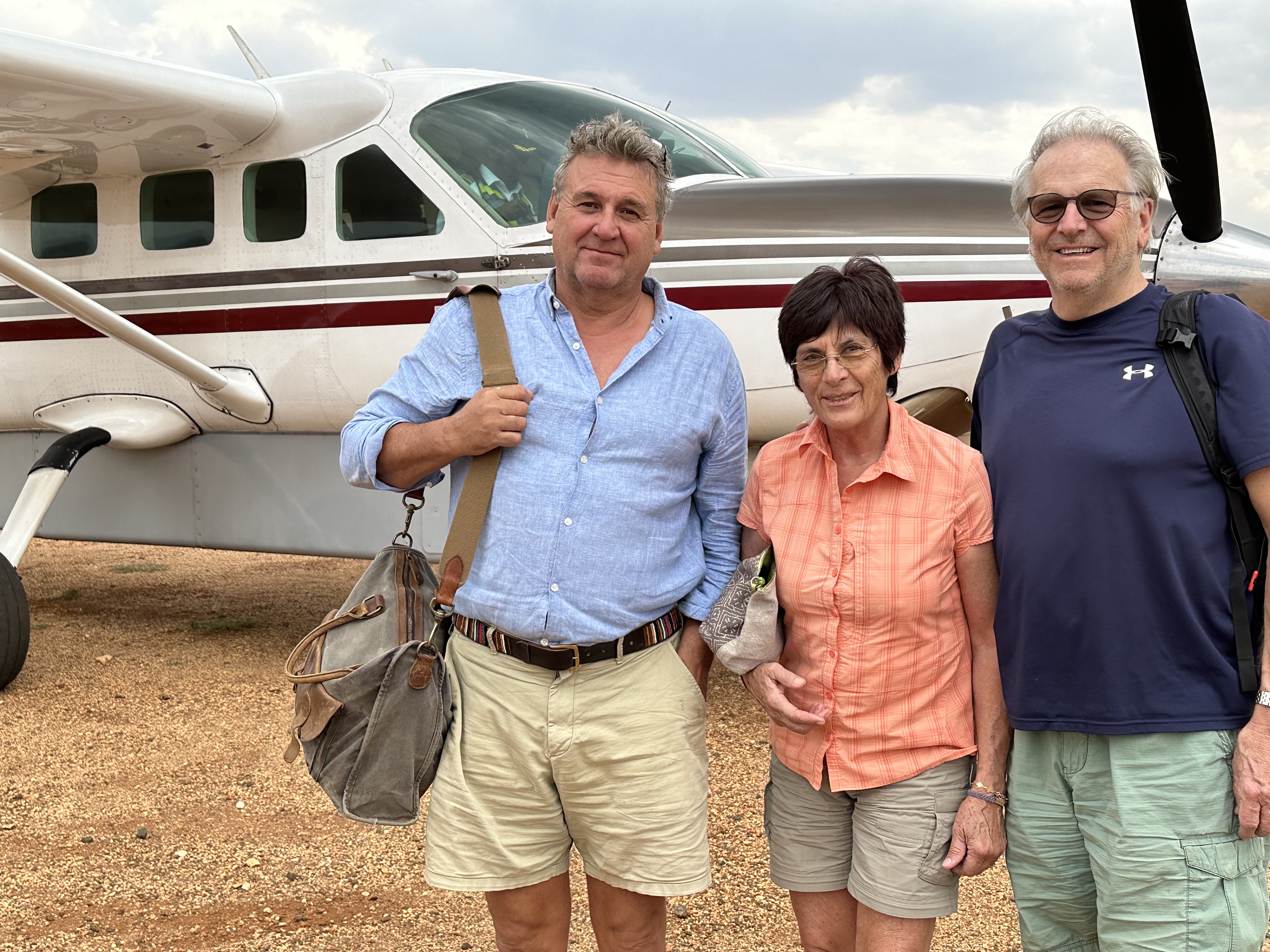
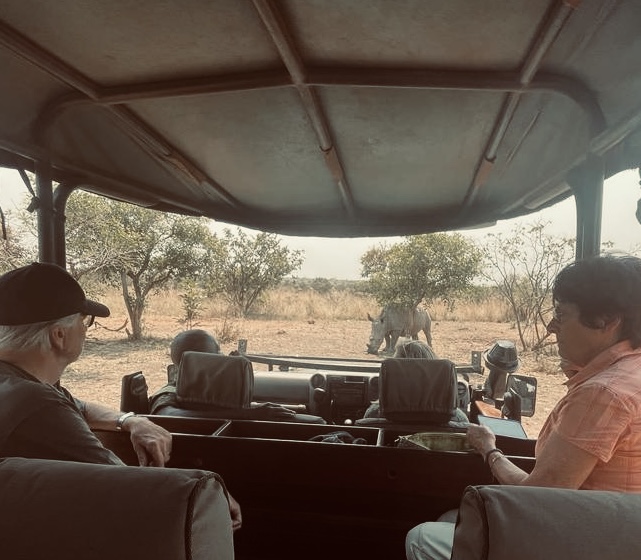
Our arrival in a Cessna caravan, the landscape looking over a boulder and our first view of a white rhino from the Toyota Land Cruiser, our transport for the 6 days we were there.
January 23, 2024
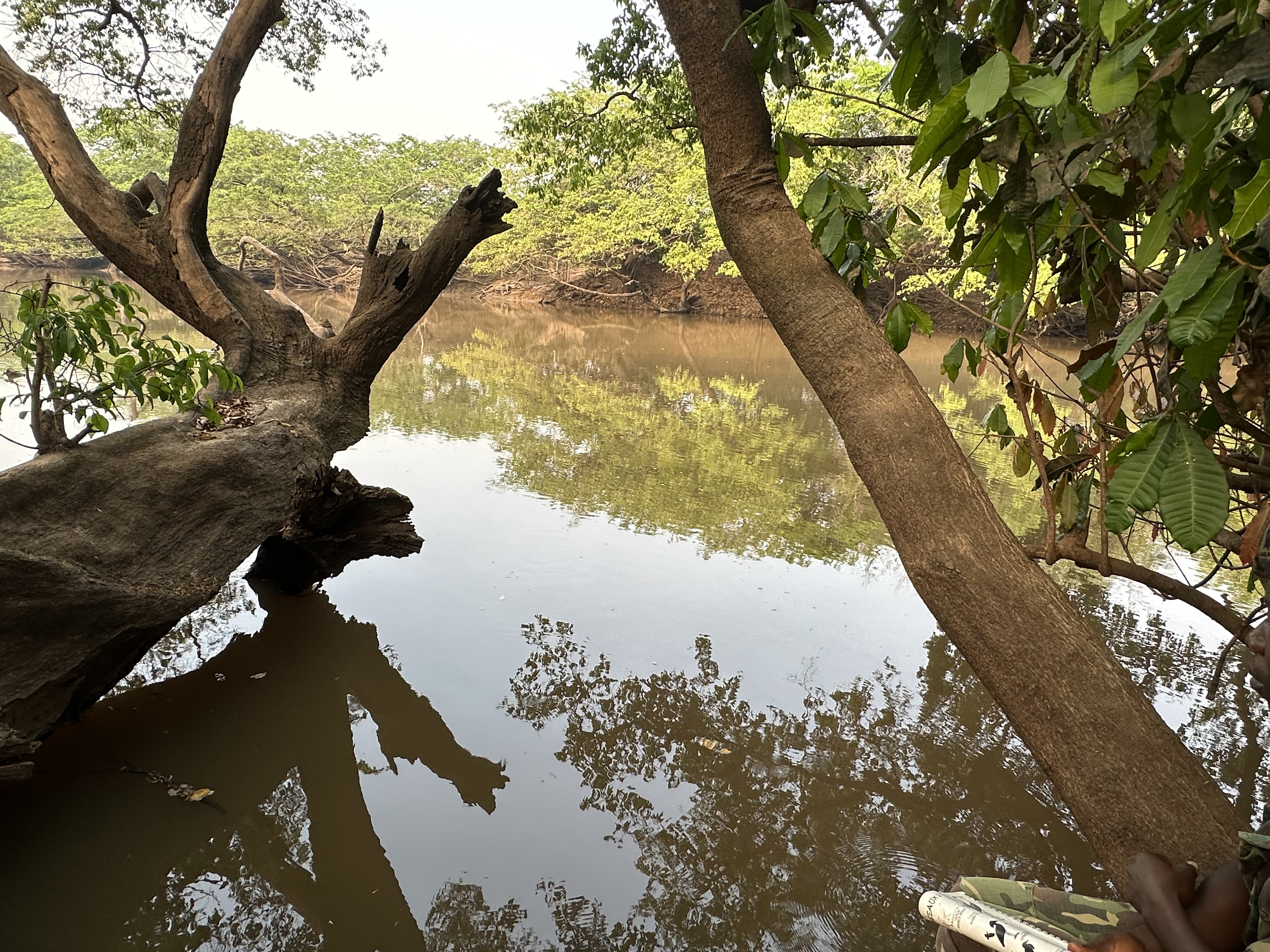
Up early to go bird watching with Martin, a. handsome young researcher, who is specializing in the study of white Rhino. We walked along the edge of the Dungu River where our lodge was located. He named many little birds and Mark was able to pick up on most of them. Unfortunately for me, most of them looked like LBJ’s (Little brown Jobs).
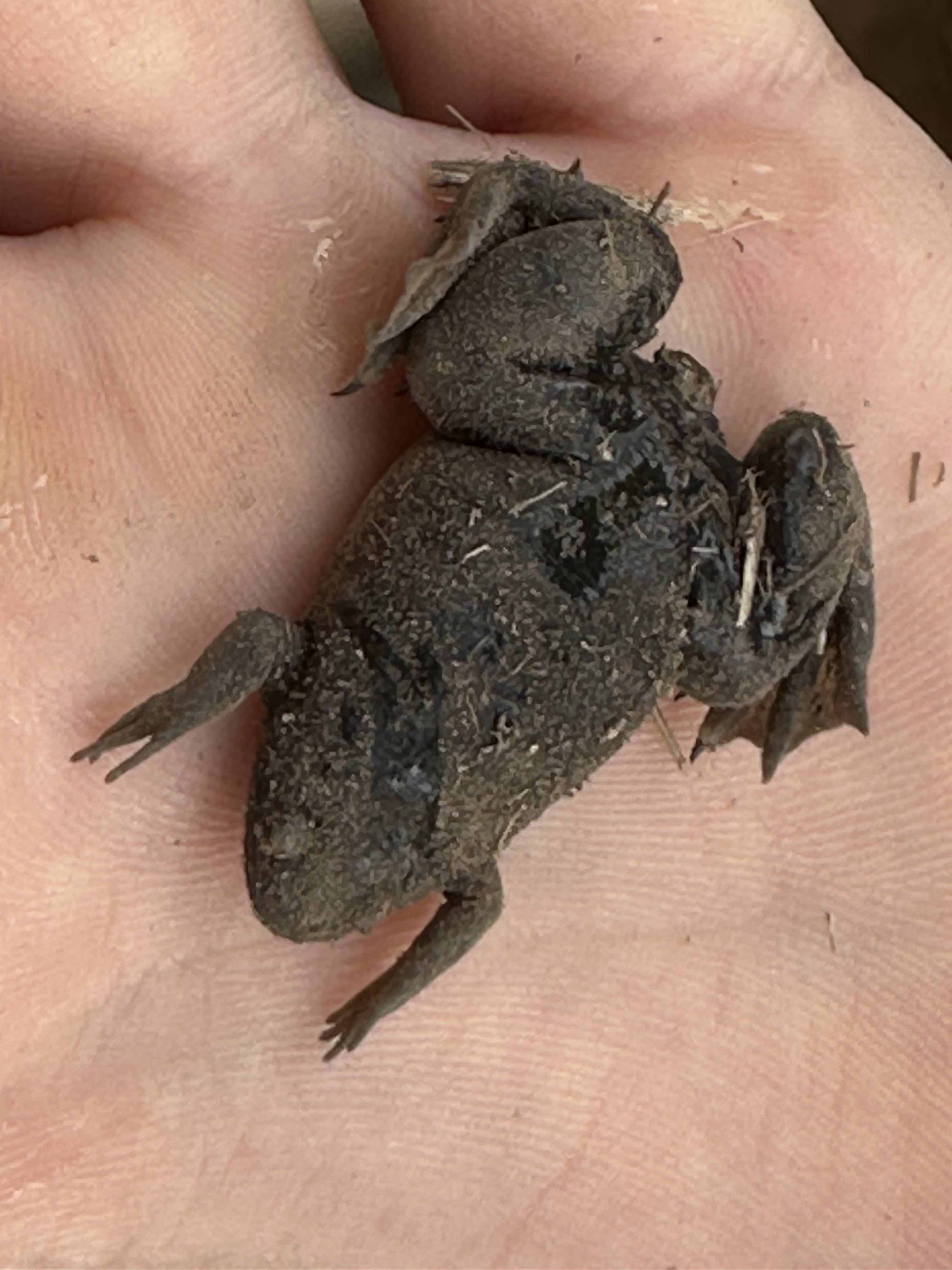
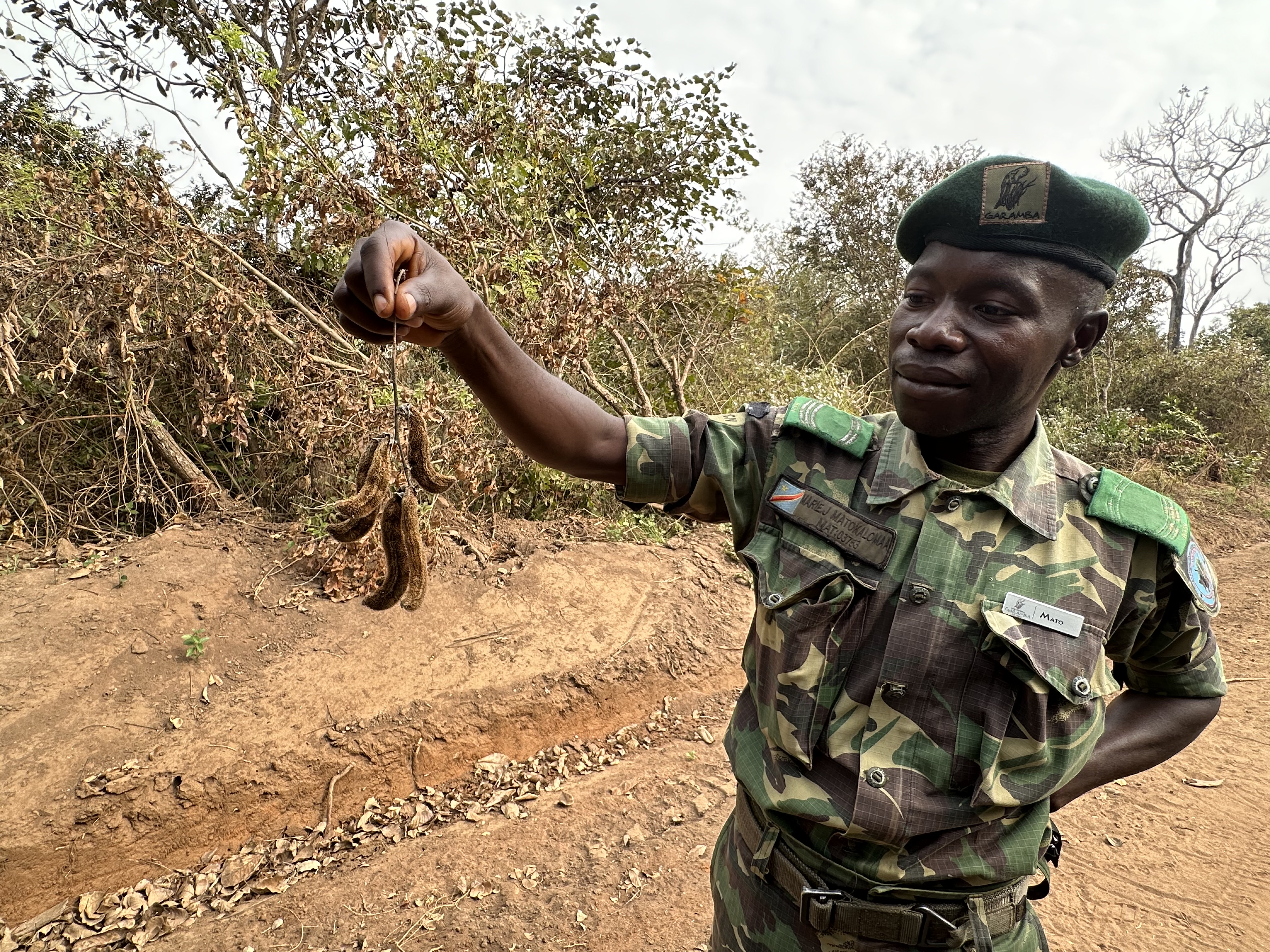
Martin found this African Clawed frog under a leaf and showed it to us. It was soft and spongy. Mato, the Congolese English speaking military ranger who accompanied us everywhere we went, picked this plant for us to recognize and not touch. It is a bit like fiber glass and very hard to get off clothes and skin.
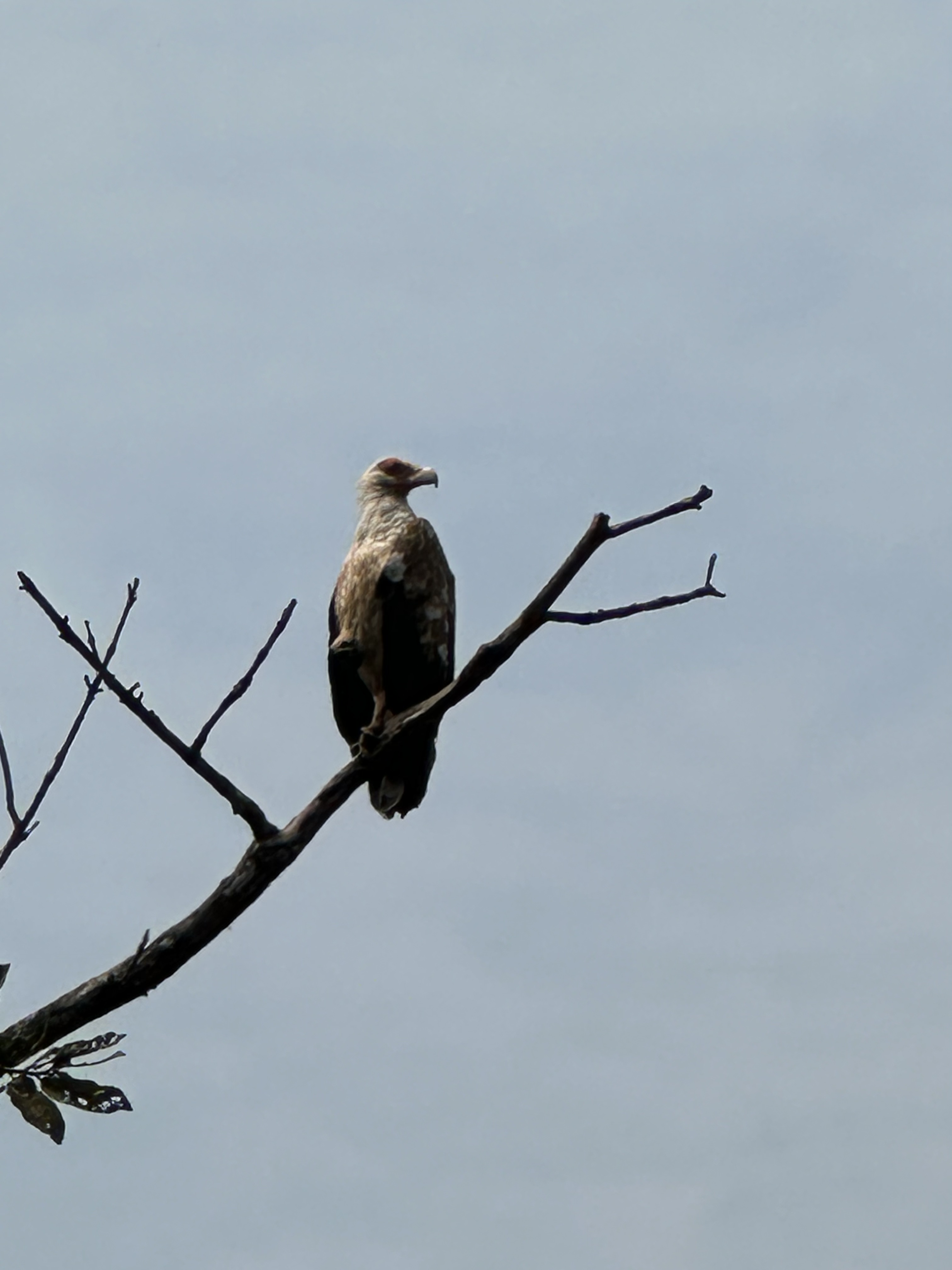
I was able to make out a few: the speckled mouse bird, Vieillot’s black weaver, the red throated bee eater, a palm nut vulture (did get a photo of this one above) and several very colorful Paradise Flycatchers. However, the most interesting event on the walk was the observation of a fish feeding on the skin of a hippo in the river. We could make out its tail, but not see the whole fish. There must be more fish with this unusual behavior, but we never saw the behavior again.
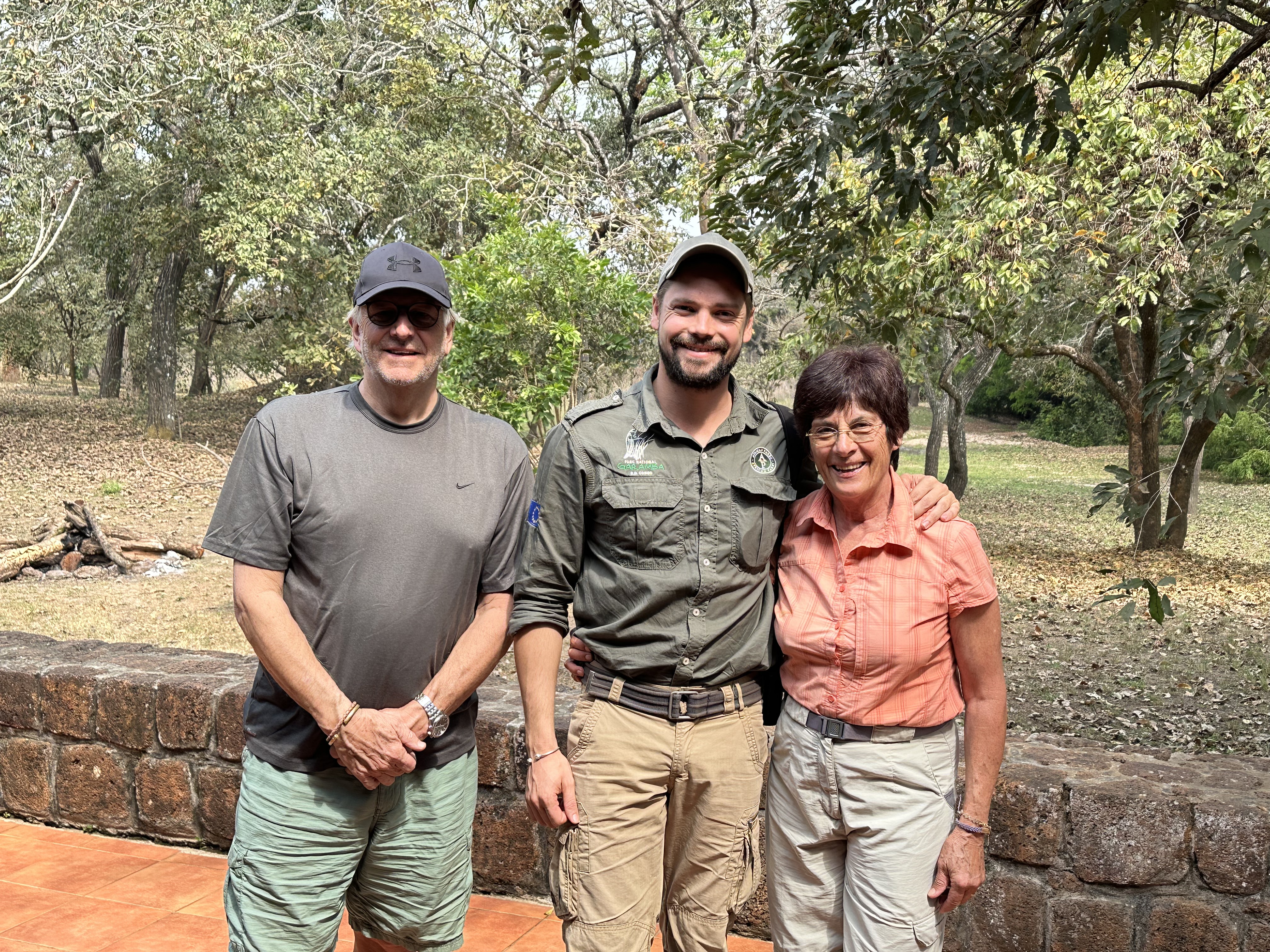

After a late breakfast with Martin, Ruth drove the three of us (Jonathan, Mark and me) 40 minutes up the road to visit the 15 white rhinos in their electrified sanctuary. Along the way Jonathan spotted white headed and white backed Vultures, a black bellied bustard, a martial eagle and a northern wheat ear. When we reached the Rhino, they had already finished eating and were looking for the shade of a few trees to nap. After spending a good bit of time with them, we visited the nearby park headquarters from where law enforcement is managed.
Law enforcement maintains 6 hilltop posts for observation and communication. 314 rangers protect 55,000 square kilometers of park land. They are divided into patrolling sections to protect the animals from being poached.
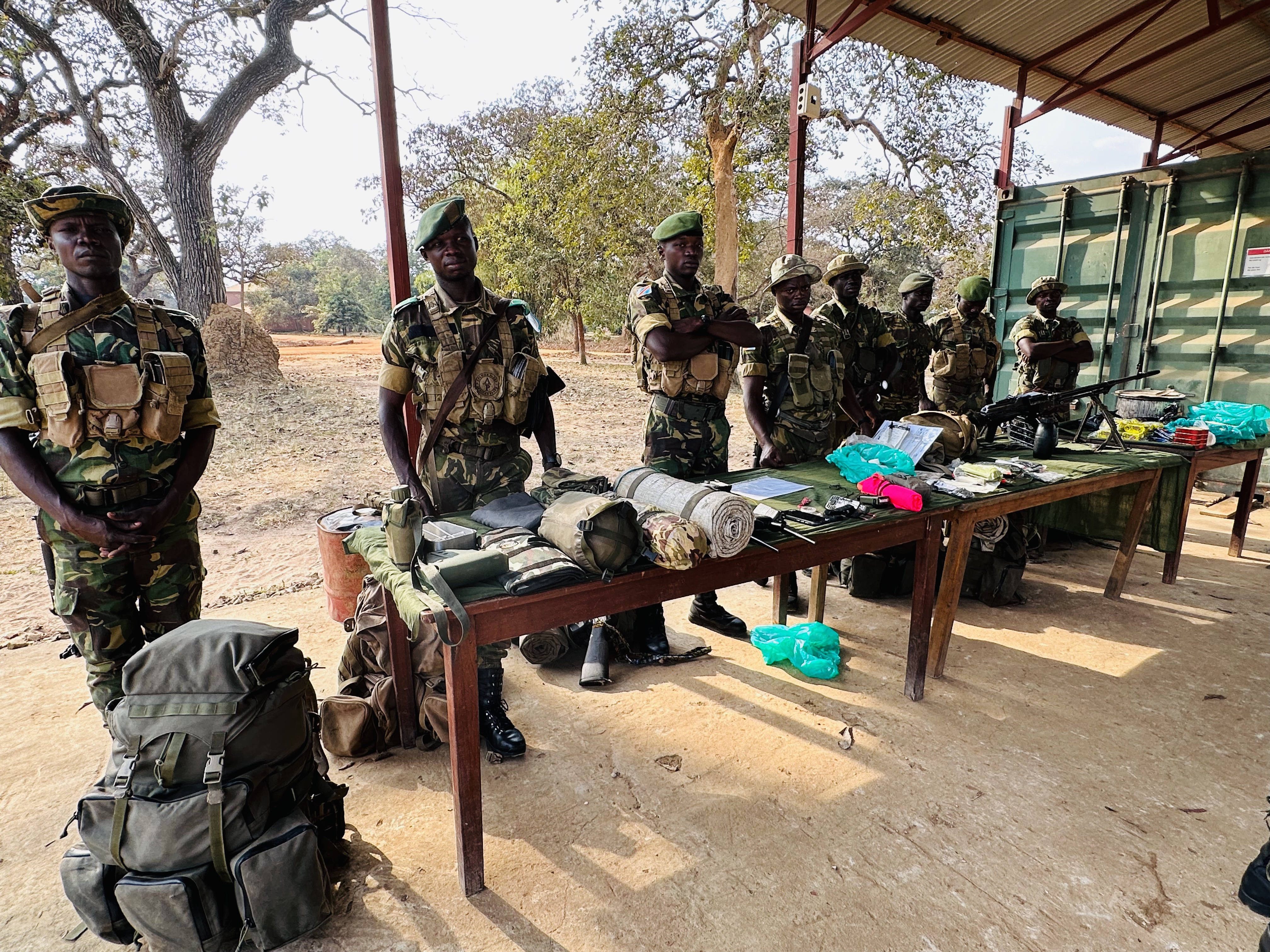
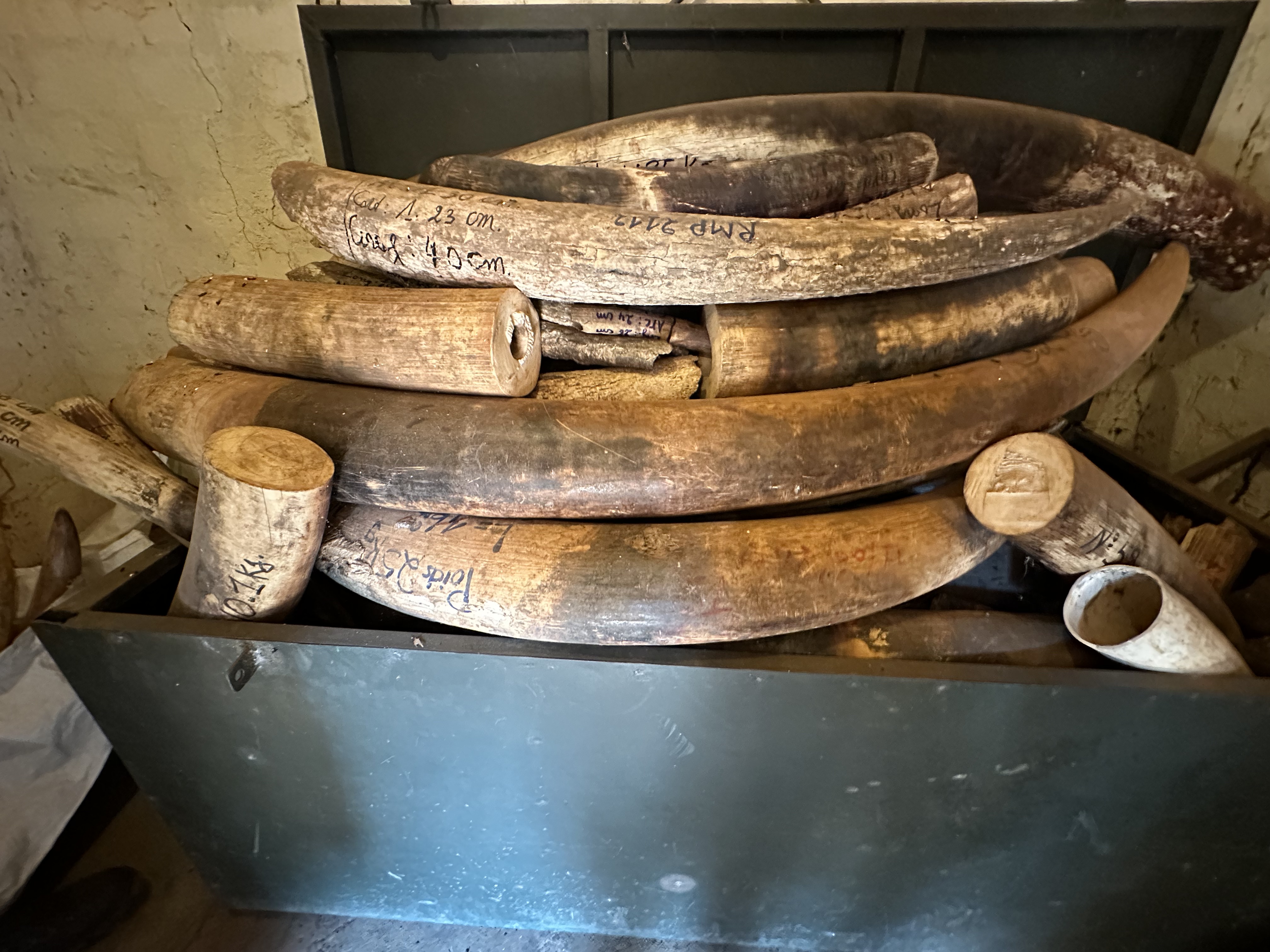
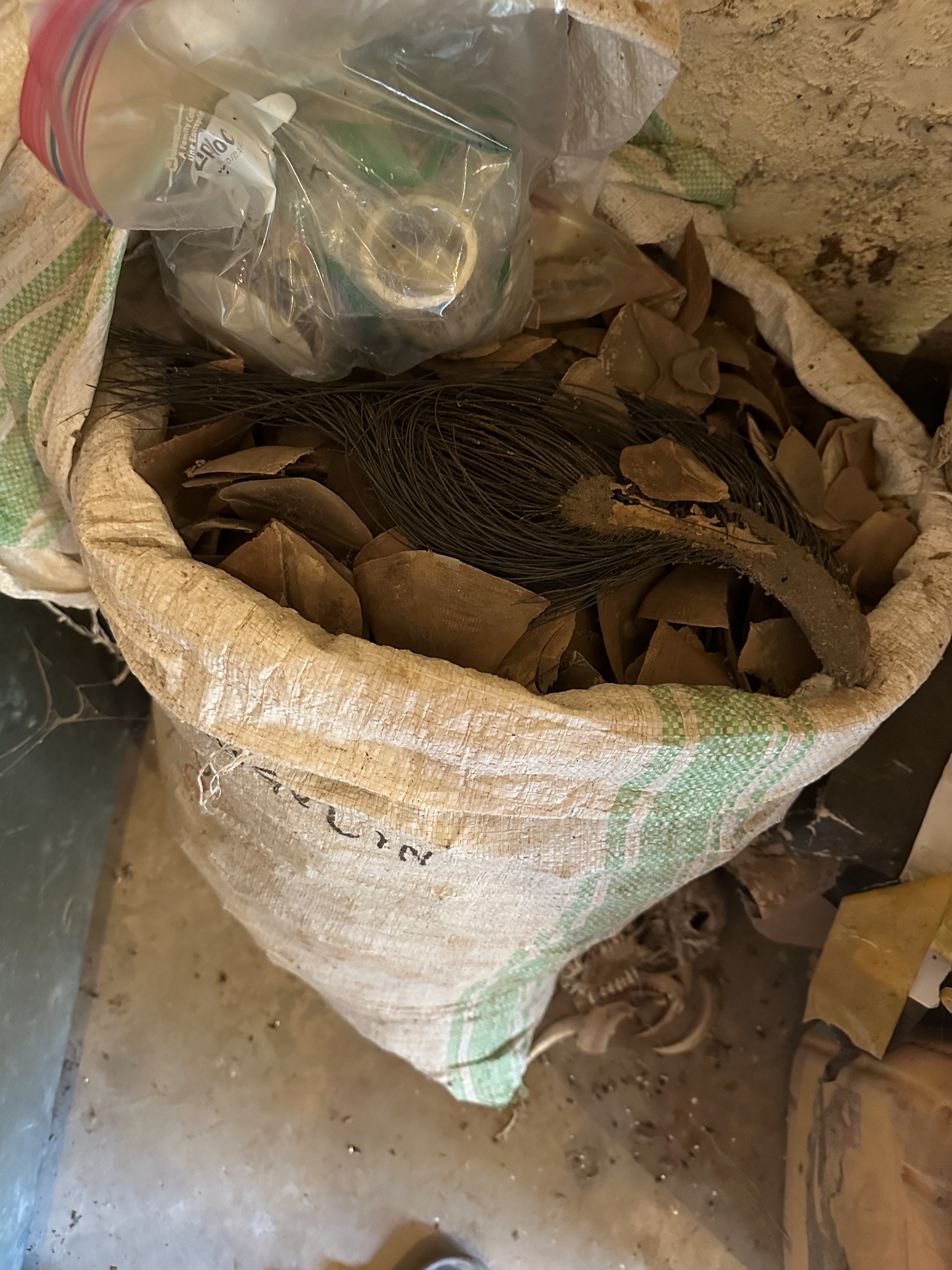
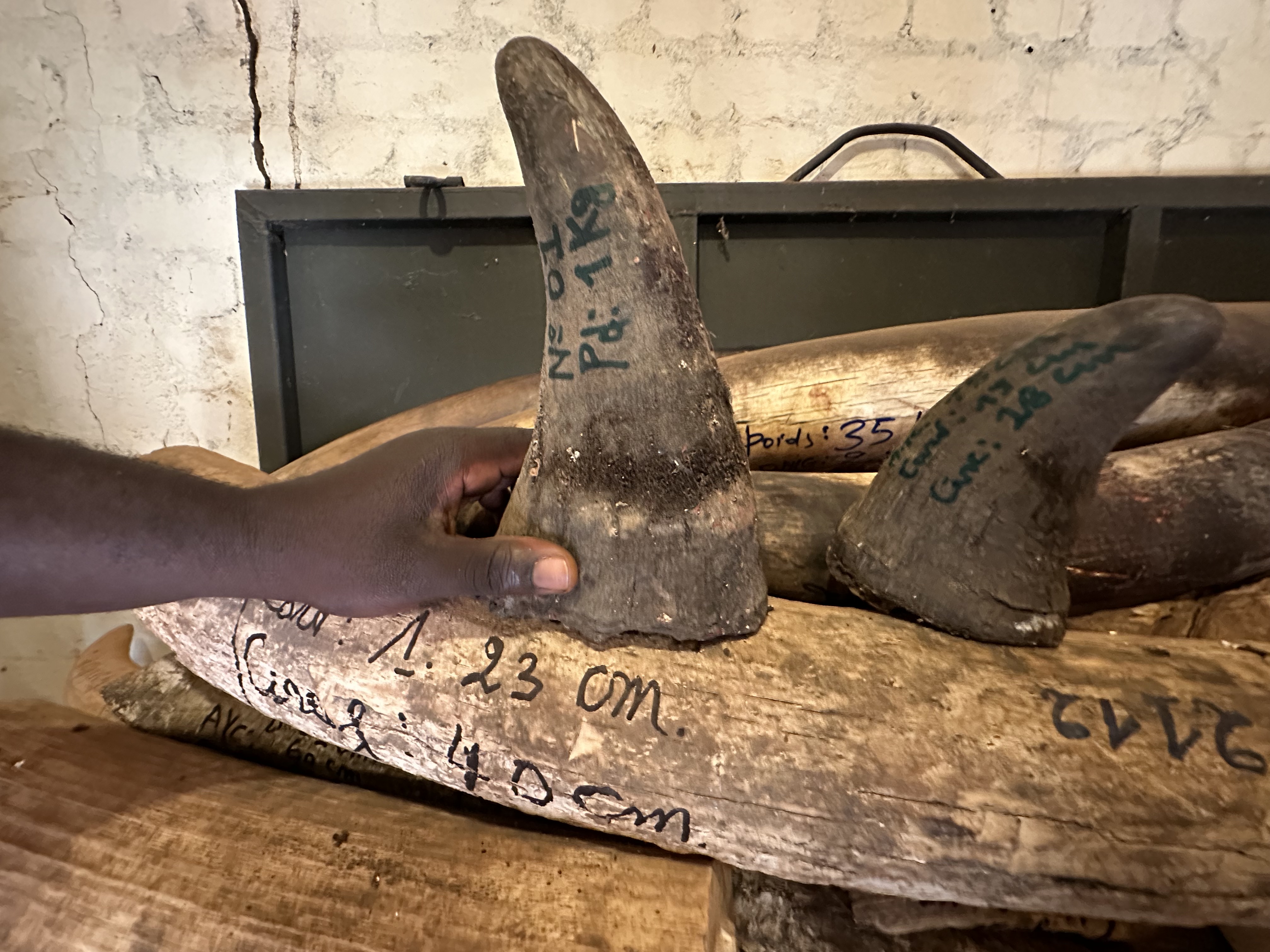
There are also 90 soldiers from the regular army and dog units that track poachers. Gold mining is a huge problem in 3 areas near the park and the soldiers try to control the miners from poaching. We also visited the small storage building where illegal ivory tusks, and pangolin scales are stored. The stash represented over 50 killed elephants. Very depressing to see so much devastation.
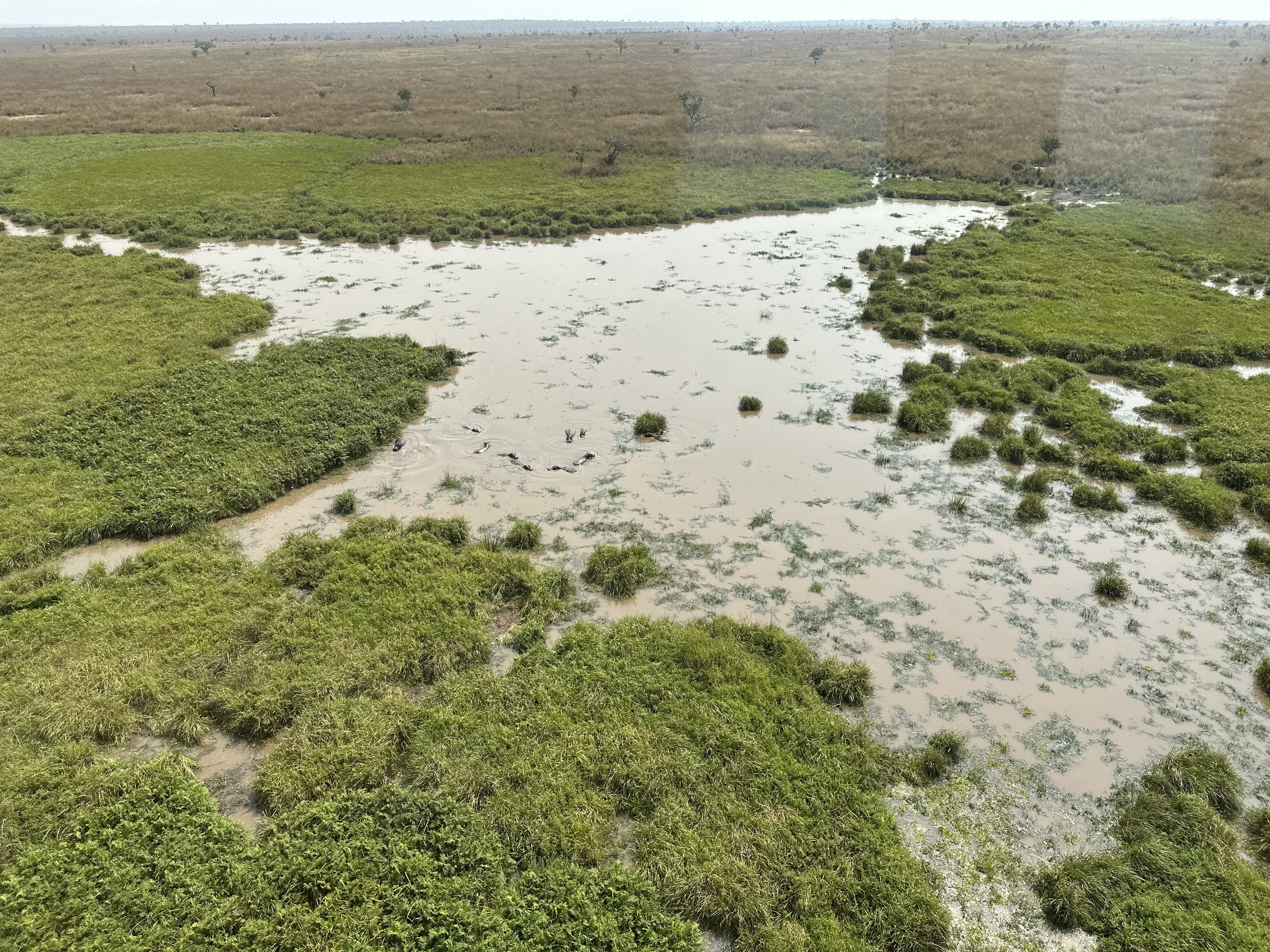
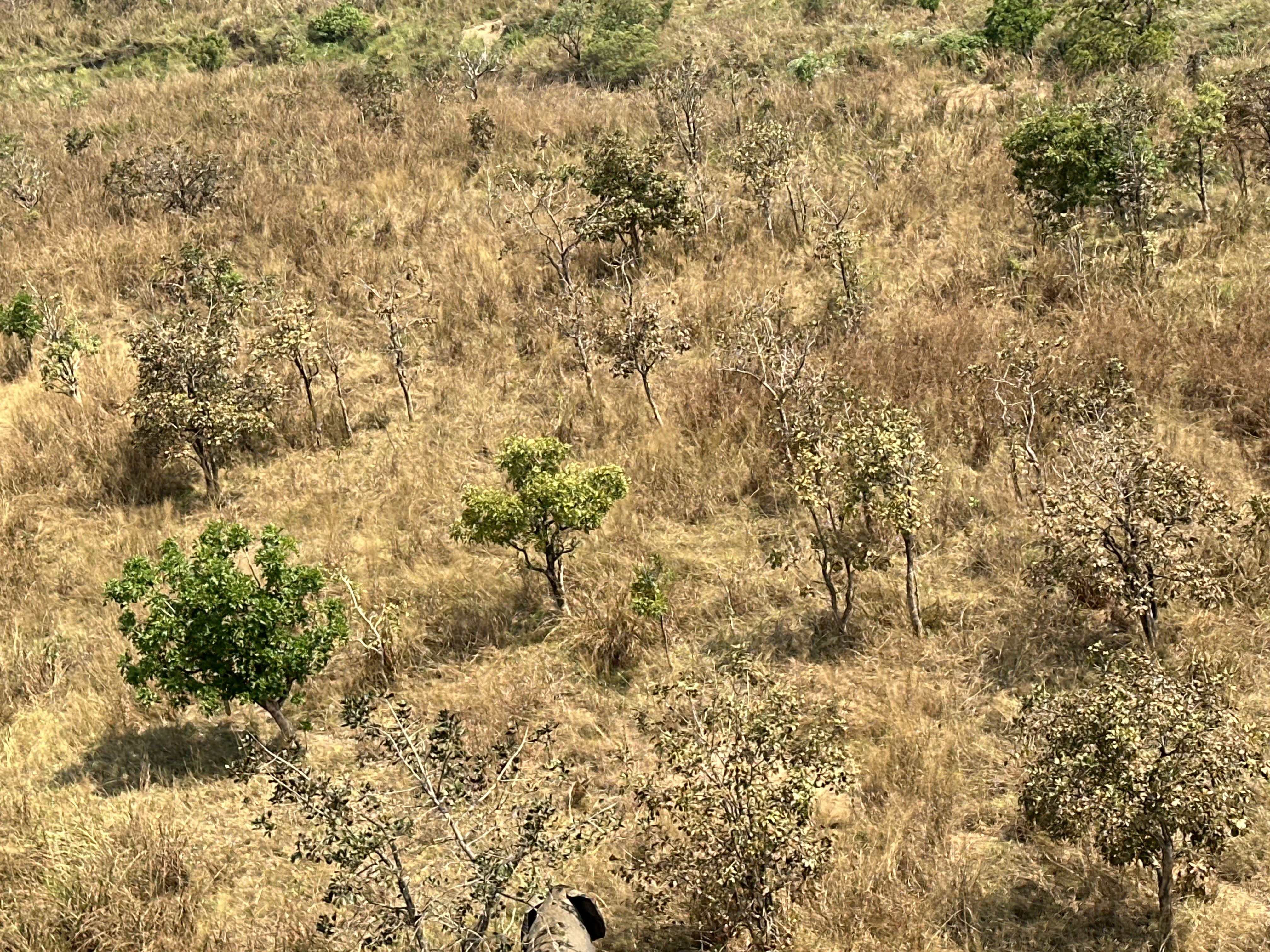
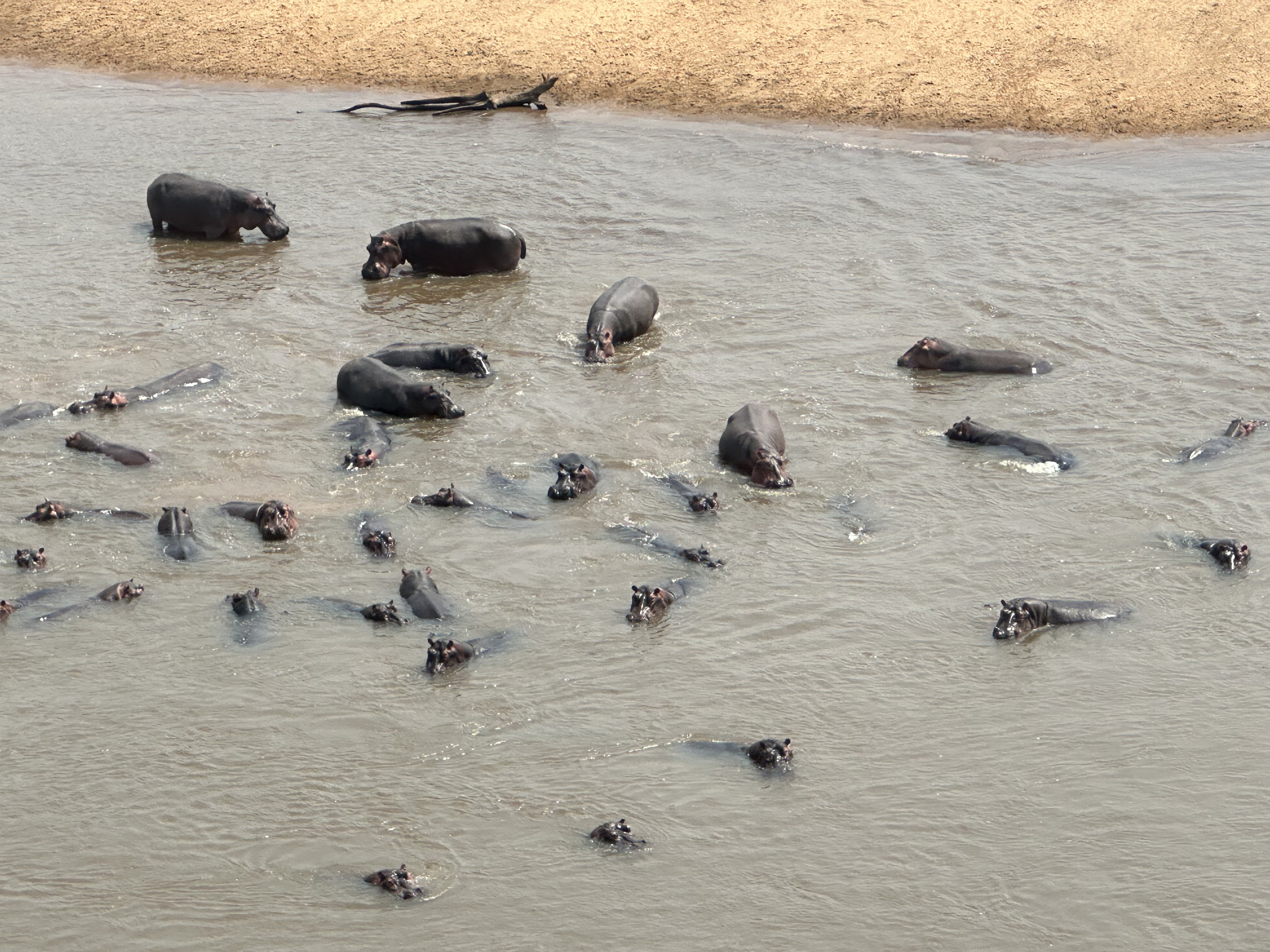
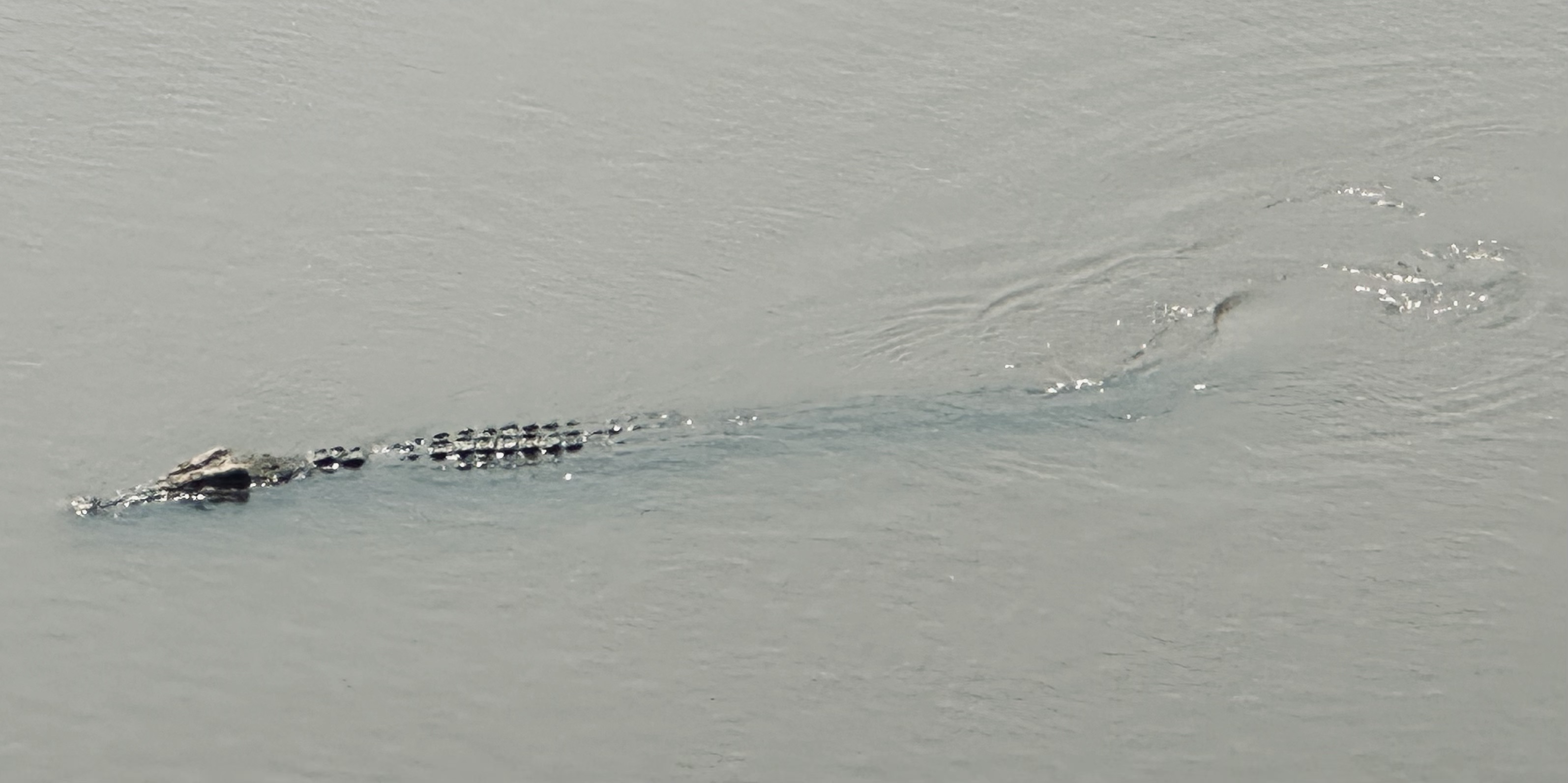
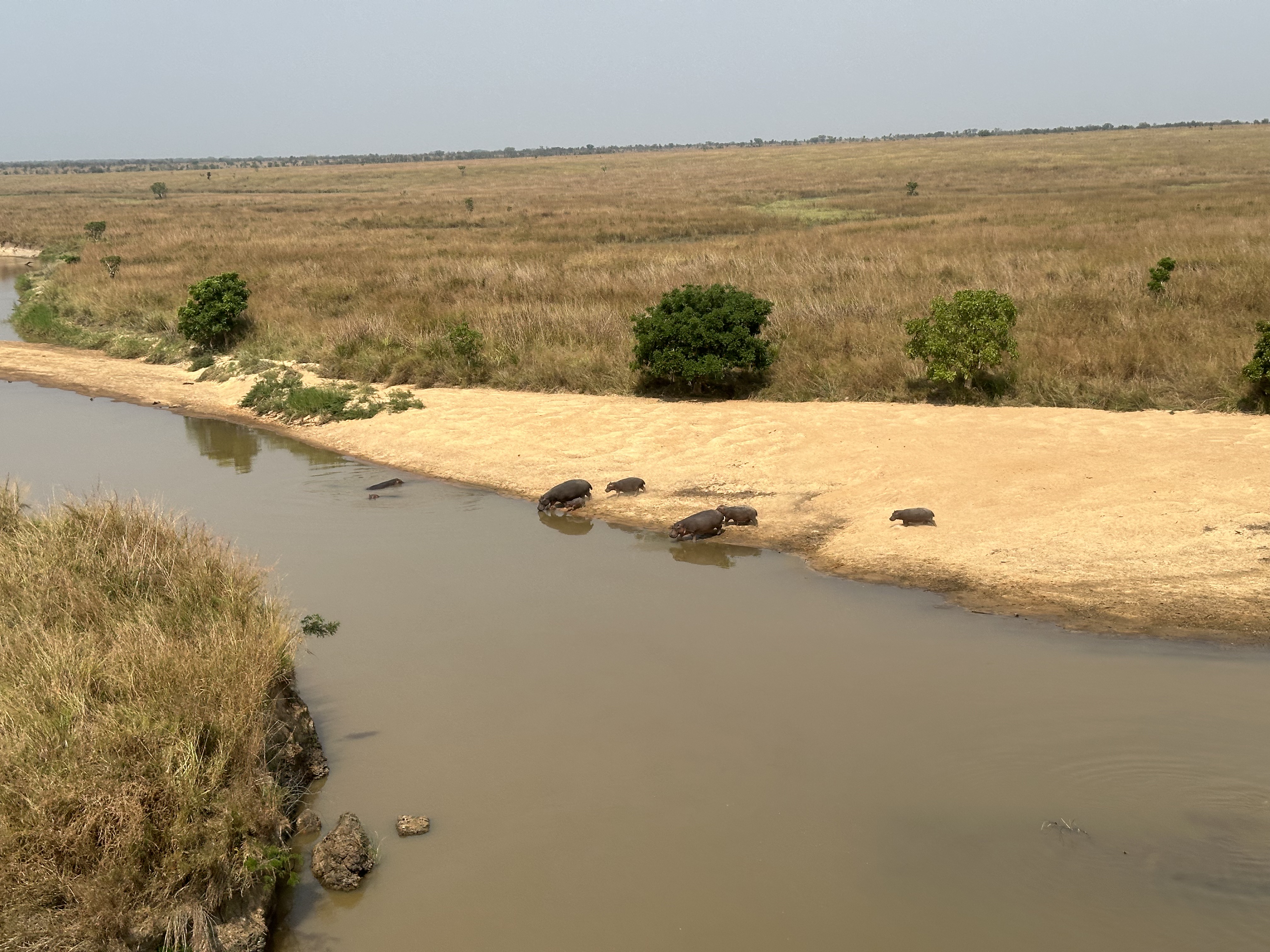
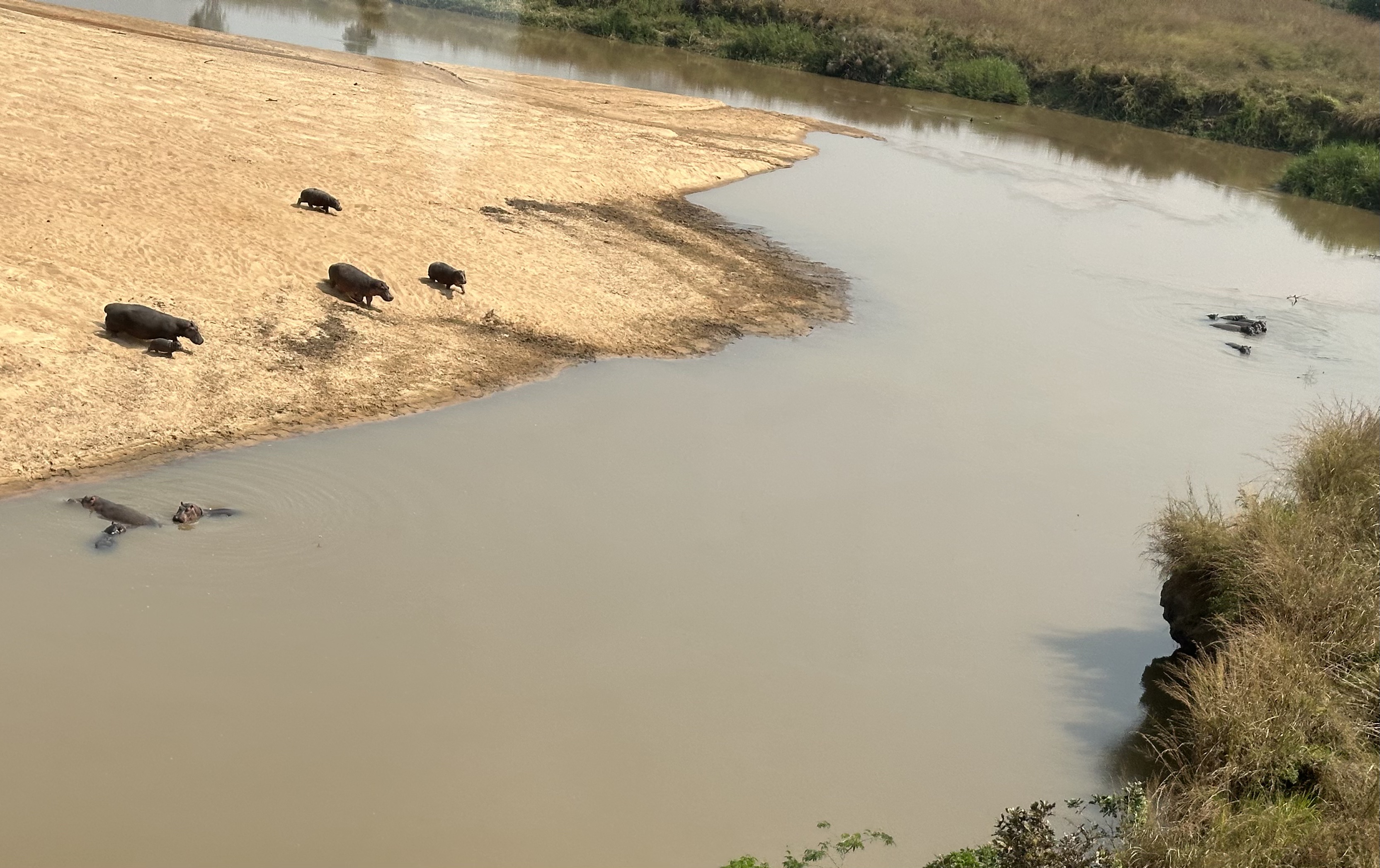
Despite the very tall, dry grass, we were able to spot a several different animals like kob, bush buck, wart hog and hartebeest in the distance from slightly raised points on the road. Along the river banks we could see many hippo and a few crocodile. This one is fully 17 feet long. Huge. There were many small wet lands full of papyrus. Jonathan also pointed out a grasshopper buzzard. Soon we were back at the lodge.
January 25, 2024,
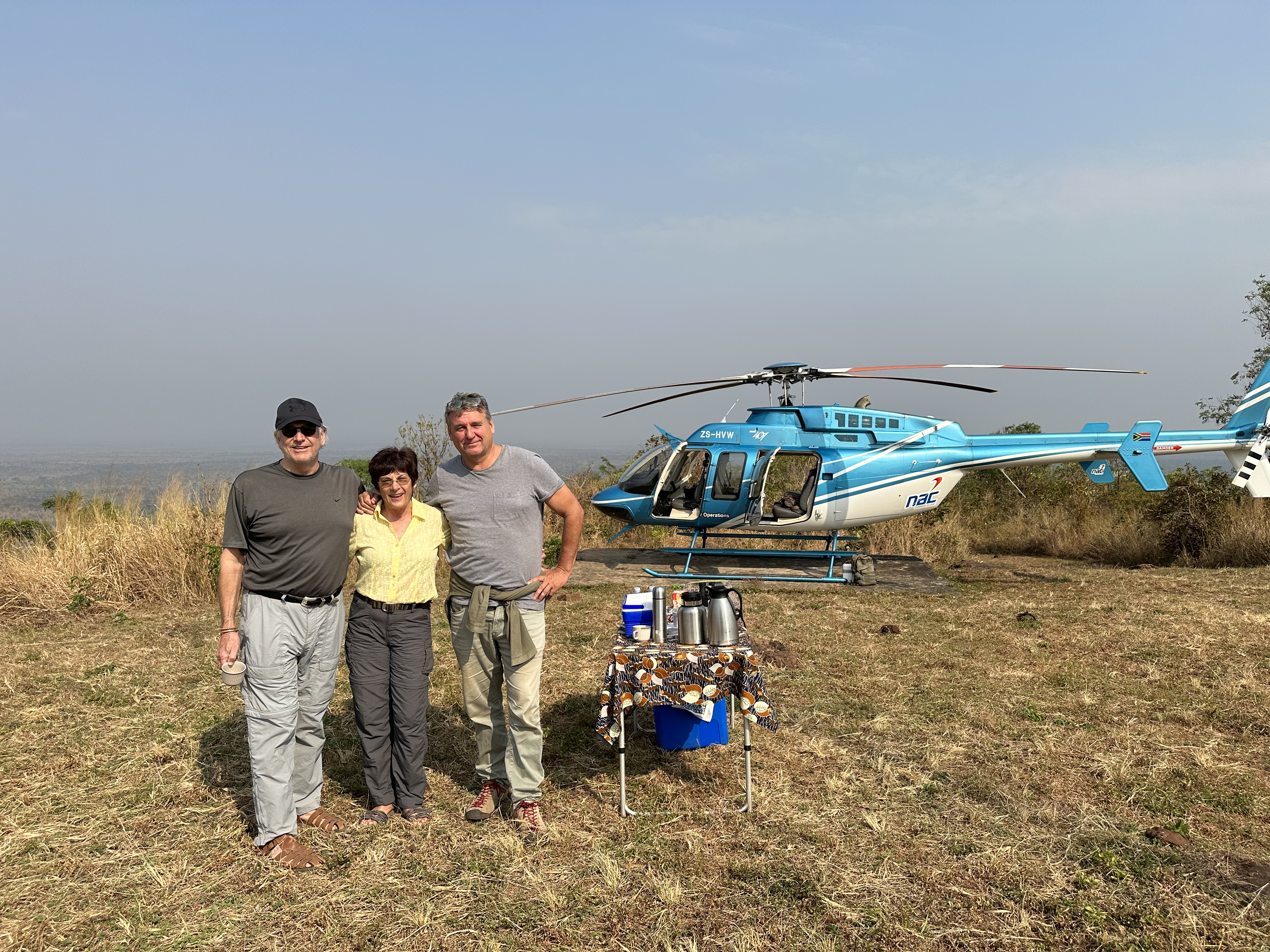
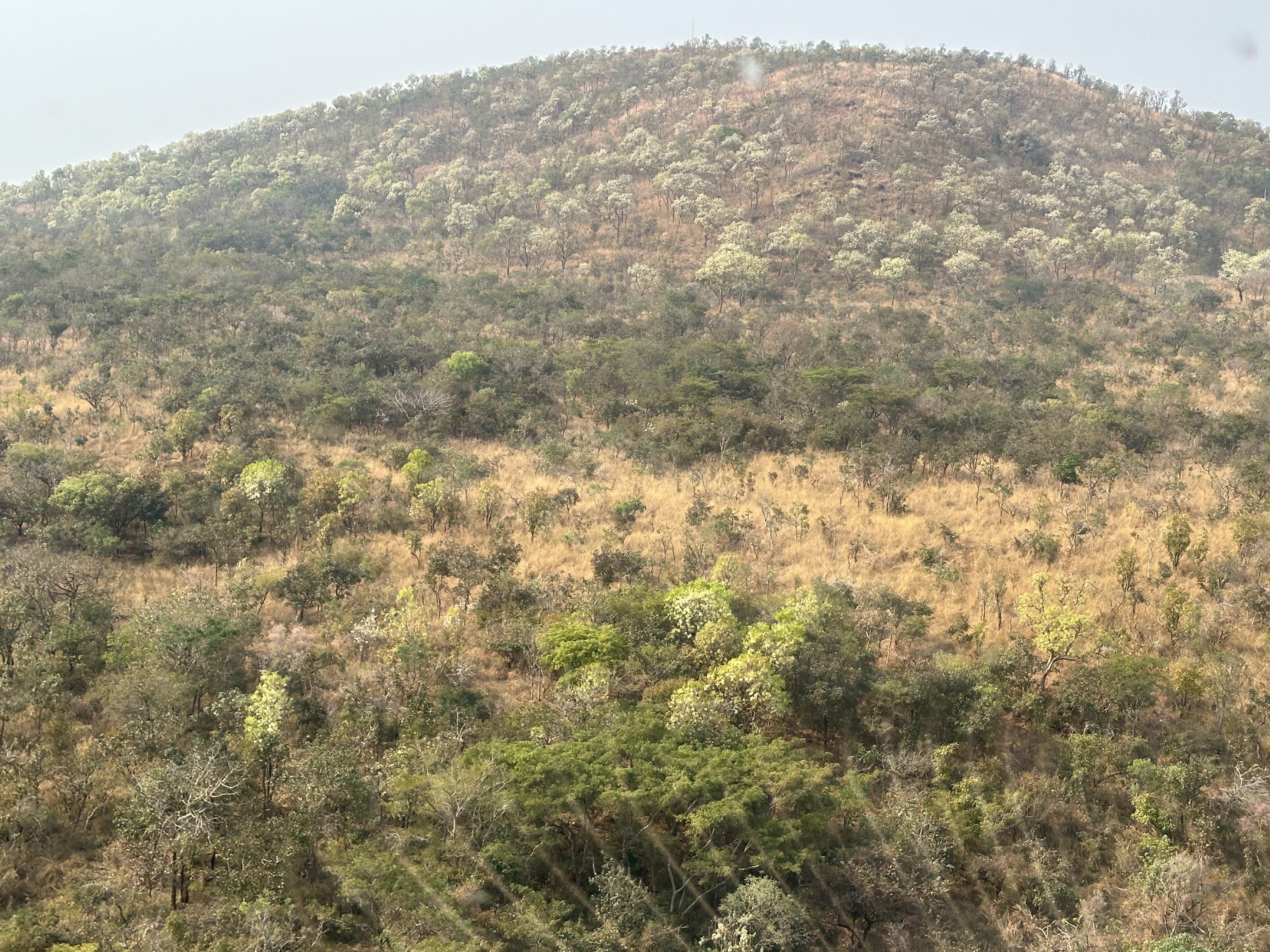
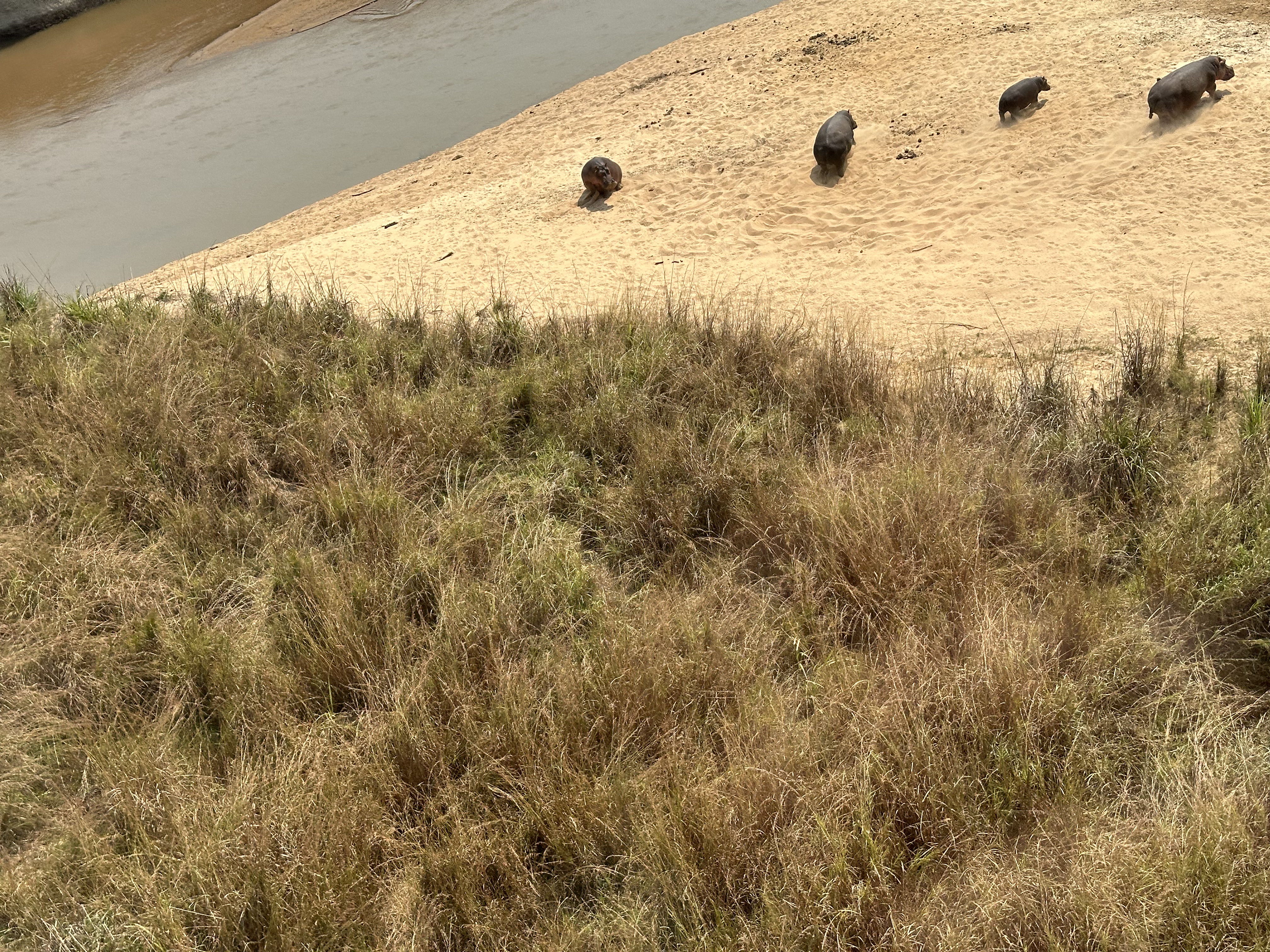
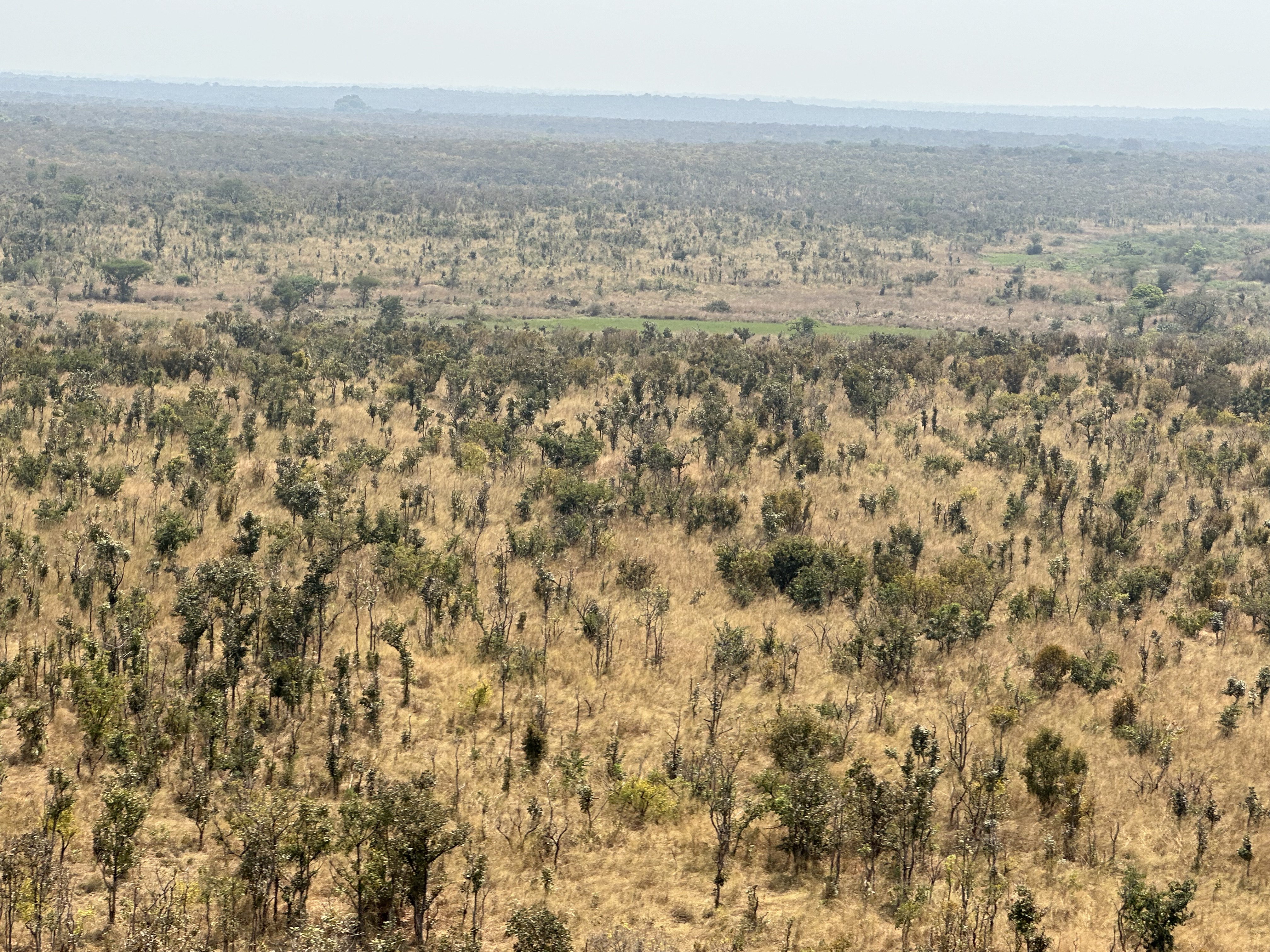
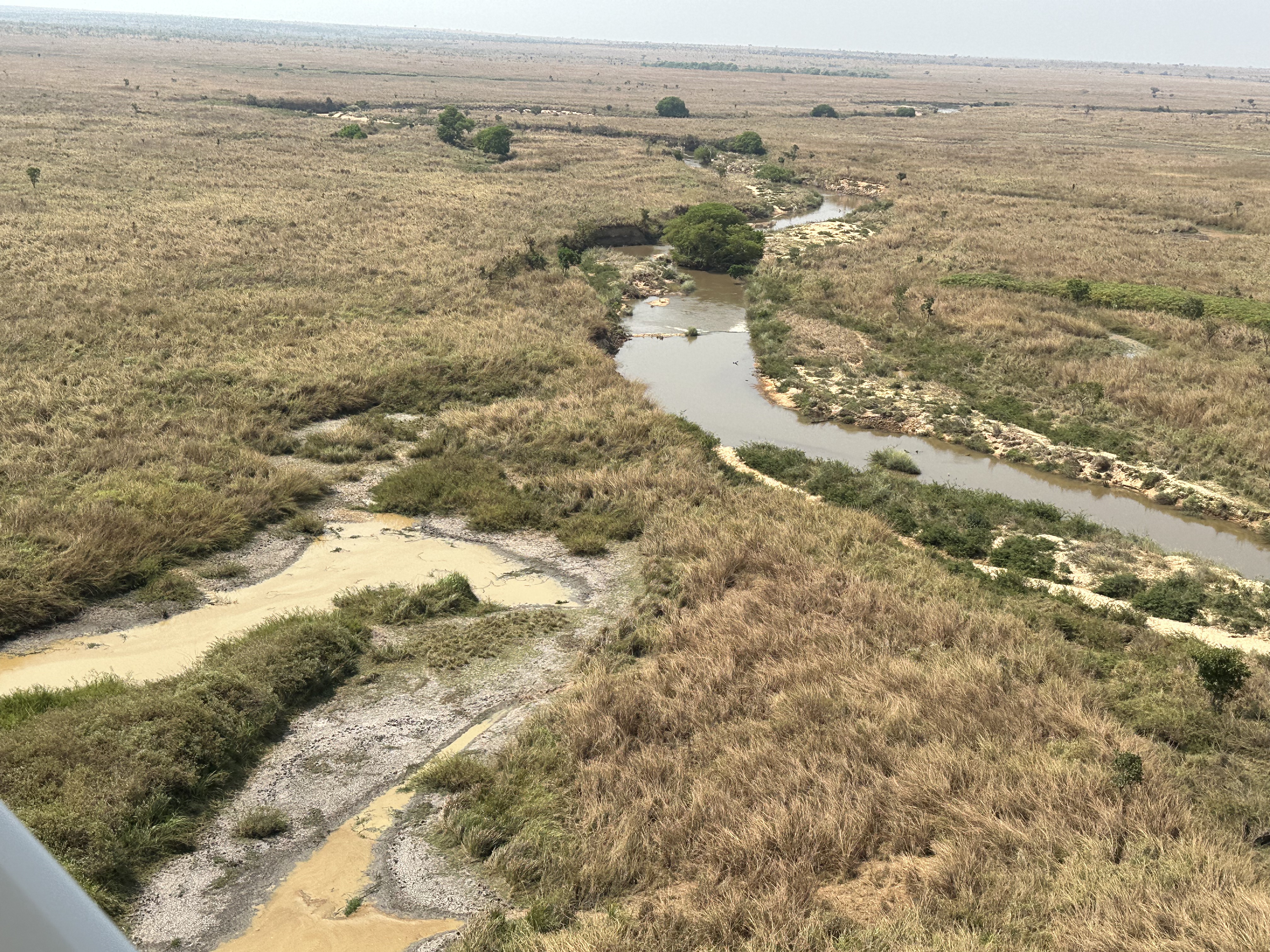
We went for a delightful 2-hour helicopter ride and saw extraordinary scenery, just as described above. We spotted good size herds of buffalo, between 50-70 forest elephant, (although we did not recognize any hybrid animals), several hundred Ugandan kob, a hundred or so of Lowell’s hartebeest, hundreds of hippos, several crocodiles, a few wart hogs, a handful of oribi and some waterbuck.

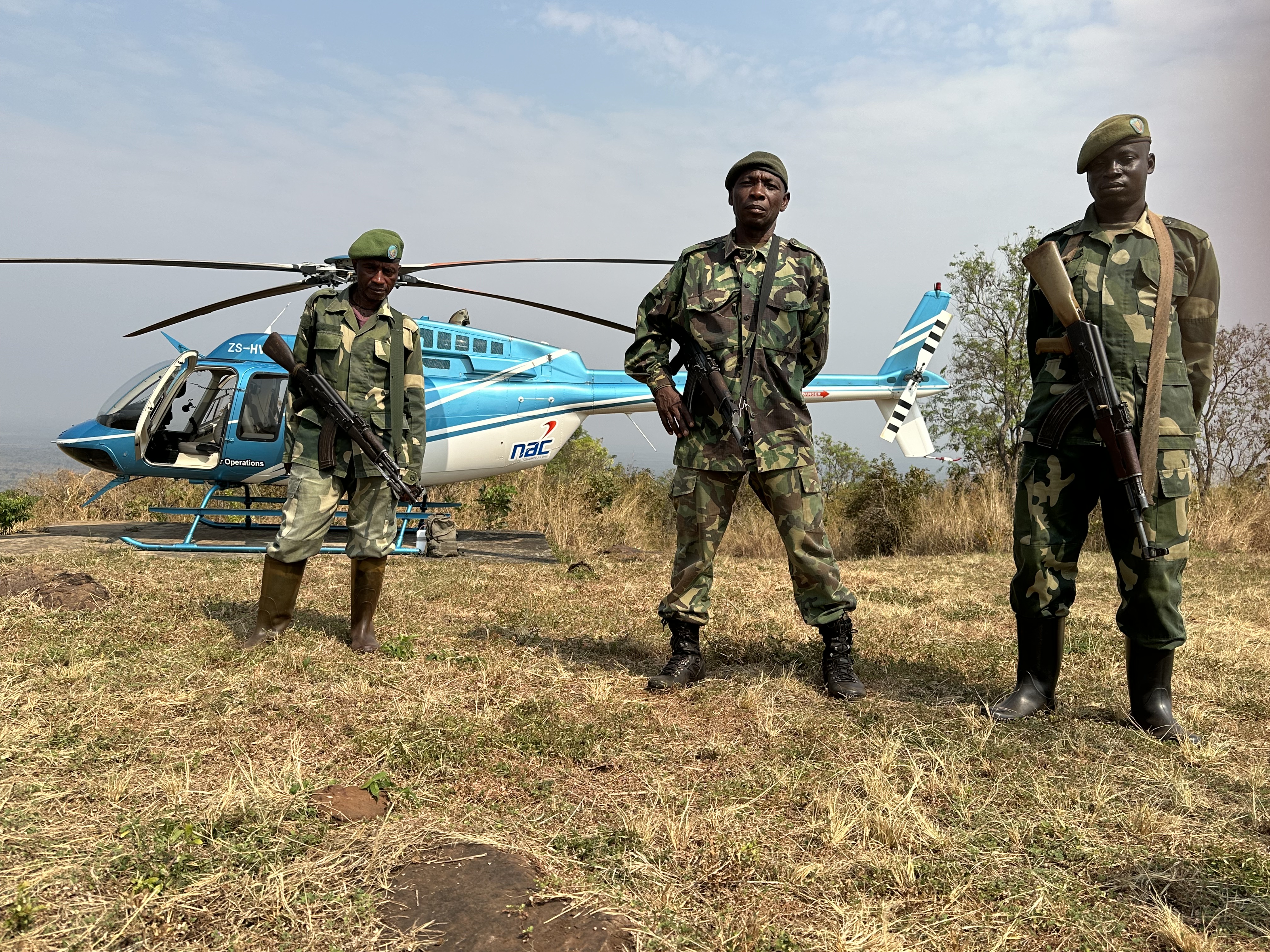
Our pilot, Oggie, was excellent and flew us low and slow as I had requested. We stopped at the top of the only hill in the park and had coffee and cookies while we enjoyed the view and chatted with the three guards manning the post. Back in the helicopter, we continued flying around the area and found a few more elephants and one Kordofan giraffe. We were happy that we found one and flew around it several times. I managed to get one decent photo of it. Oggie had us back at the lodge in time for lunch. The conversation was lively, even if the food left something to be desired. So far, the local cooks are preparing mediocre Congolese fair, that we do not find pleasing.
We took the afternoon off. Stayed cool in our room and read, wrote, and rested. At 6pm we gathered around the campfire for cocktails and talked more about the animals we were not seeing. With us were Martin, the handsome young researcher and expert on white Rhino; Oggie, our delightful helicopter pilot; Connor, a military trainer for the Garamba Park rangers; and Phillipe, the park manager. Jonathan was not feeling well and departed early. From the research there should be 1500 elephants, 82 giraffe and 8,000 buffalo, among all the other animals. We talked about how hard it is to spot them in the tall grass and ways to try and increase the population, about the lack of tourists and how to attract them, and the fear factor due to years of wars and animal poaching. It did not make for a pretty picture as far as I can tell.
January 26, 2024
Another bird watching morning. Sorry to bore you with so many birds, but I love to see them even if I can’t find them on my own. I especially enjoyed watching the small cardinal woodpecker poking away for bugs. There was the African black flycatcher, the plantain eater bird, the violet backed starling and the yellow billed kite. Martin found an African clawed frog under some leaves, and I got a photo. It was soft and squishy.
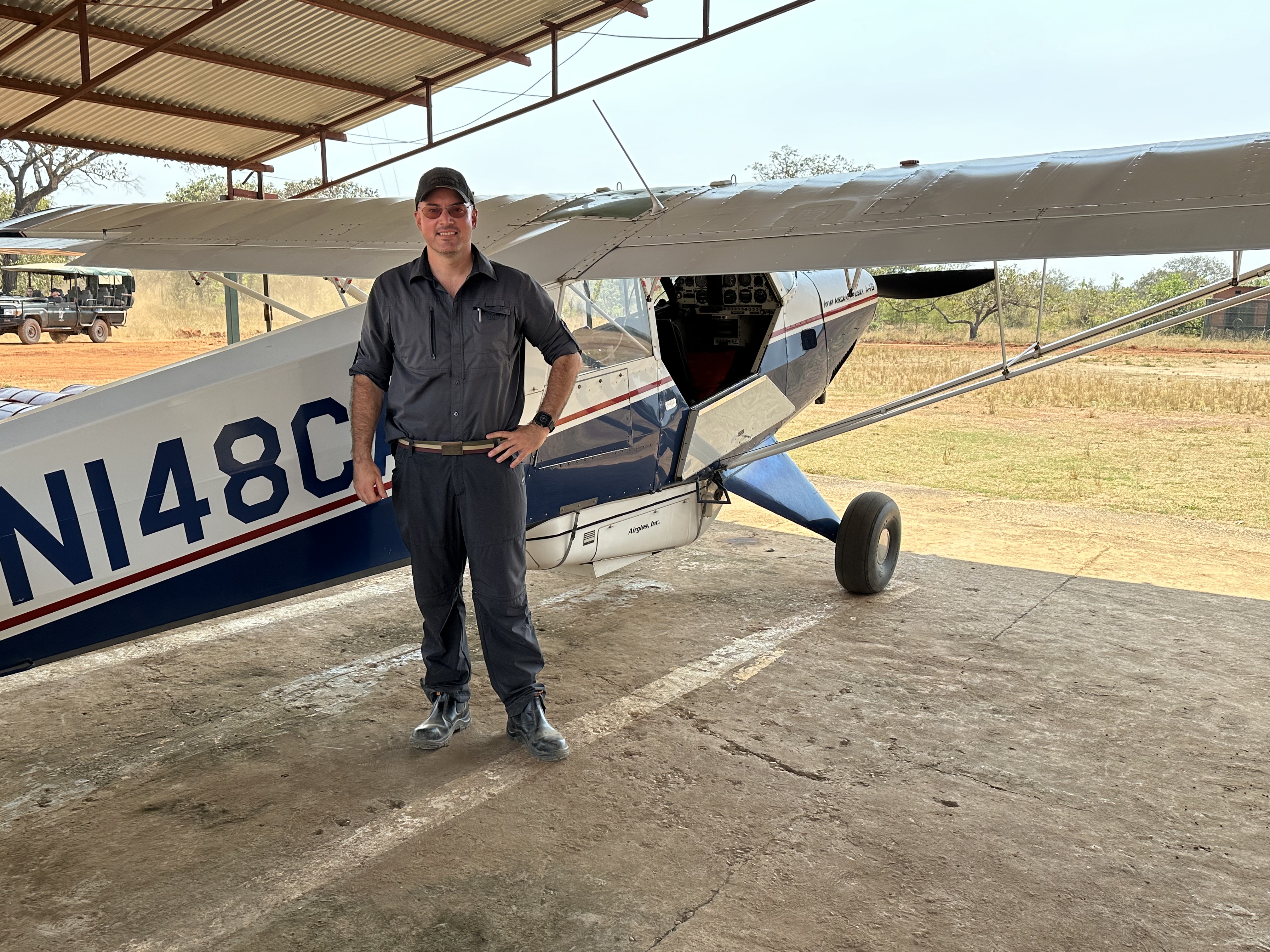
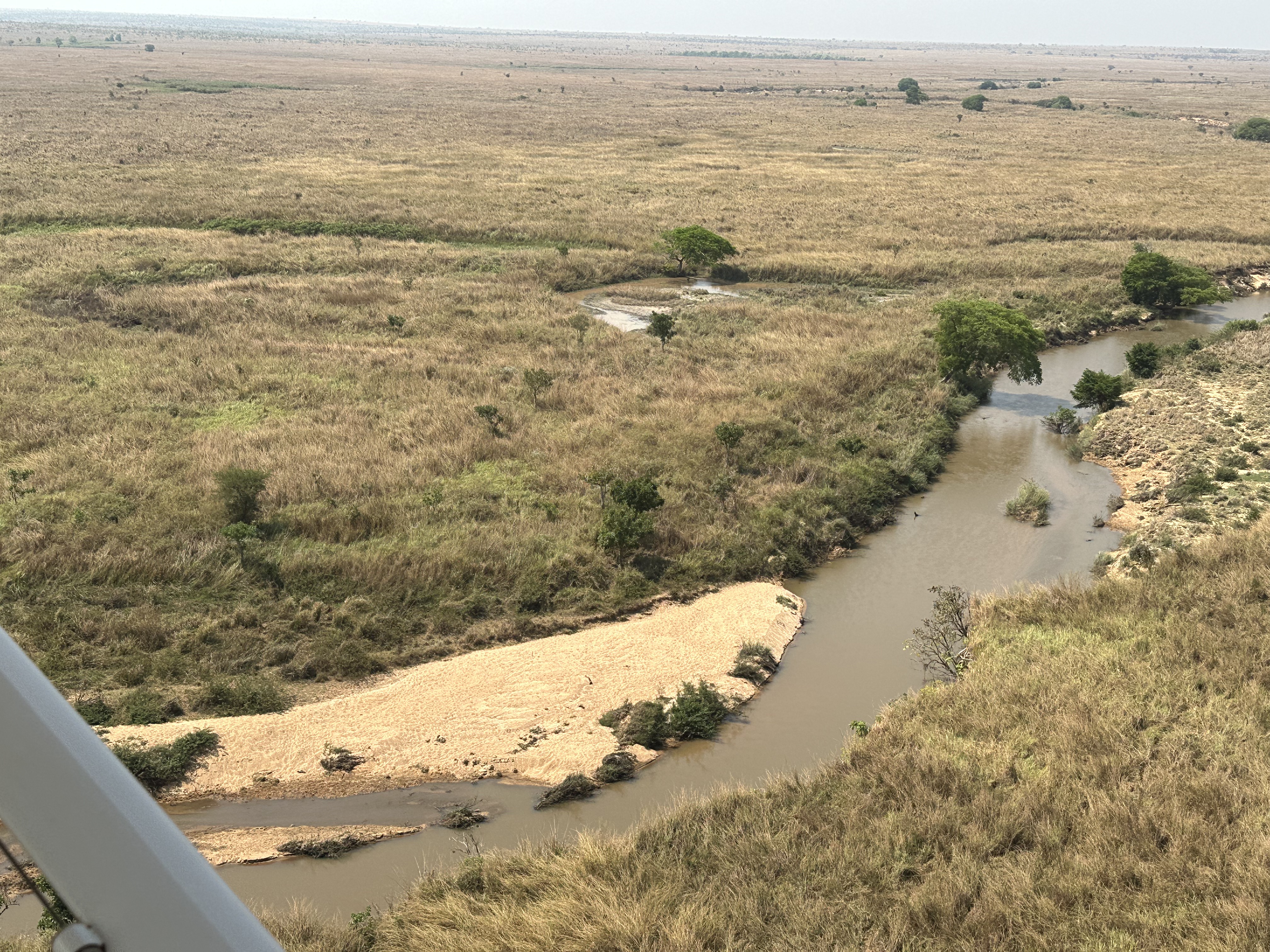
Then I got to ride in a Husky with another pilot, Trevor, who oversees the aviation department. We were in the air about 50 minutes and were hoping to find giraffe but had no luck. We did see 4 adult elephants and babies with them. Couldn’t tell what sort of elephant they were. From the air the tall grass does not look so overwhelming, and the scenery opens out into the savannah it really is. Back at the airstrip, I traded places with Mark. Unfortunately, he had no better luck than I had.
Mark and I tried to chill the rest of the very hot afternoon. This was the hottest day of our whole trip so far. It was 94 degrees.
At 5:30 Ruth, John, director of conservation, and the three of us packed for a sundowner and drove up to the white Rhinos just in time to beat the sunset. Beer and snacks were our repast while we watched the rhino graze and a managed fire burn in the distance. It was a very pleasant evening. John told us the park was increasing the boma size from 100 hectares to 500 hectares for the arrival of the next 64 animals. He will be going to South Africa to take delivery and escort the Rhinos to Garamba. They will be caged individually and tranquilized for the flight. On the way back, Jonathan used a large spotlight and and a flash light to watch for movement of animals and birds, especially night jars, the bird we most wanted to see. As it so happened we saw several male and female night jars. The males are the ones that are attractive as they have extra pennant wings that look like they are flying separately. At last, a male sat down in the road and I was able to get a photo of his pennant wings.
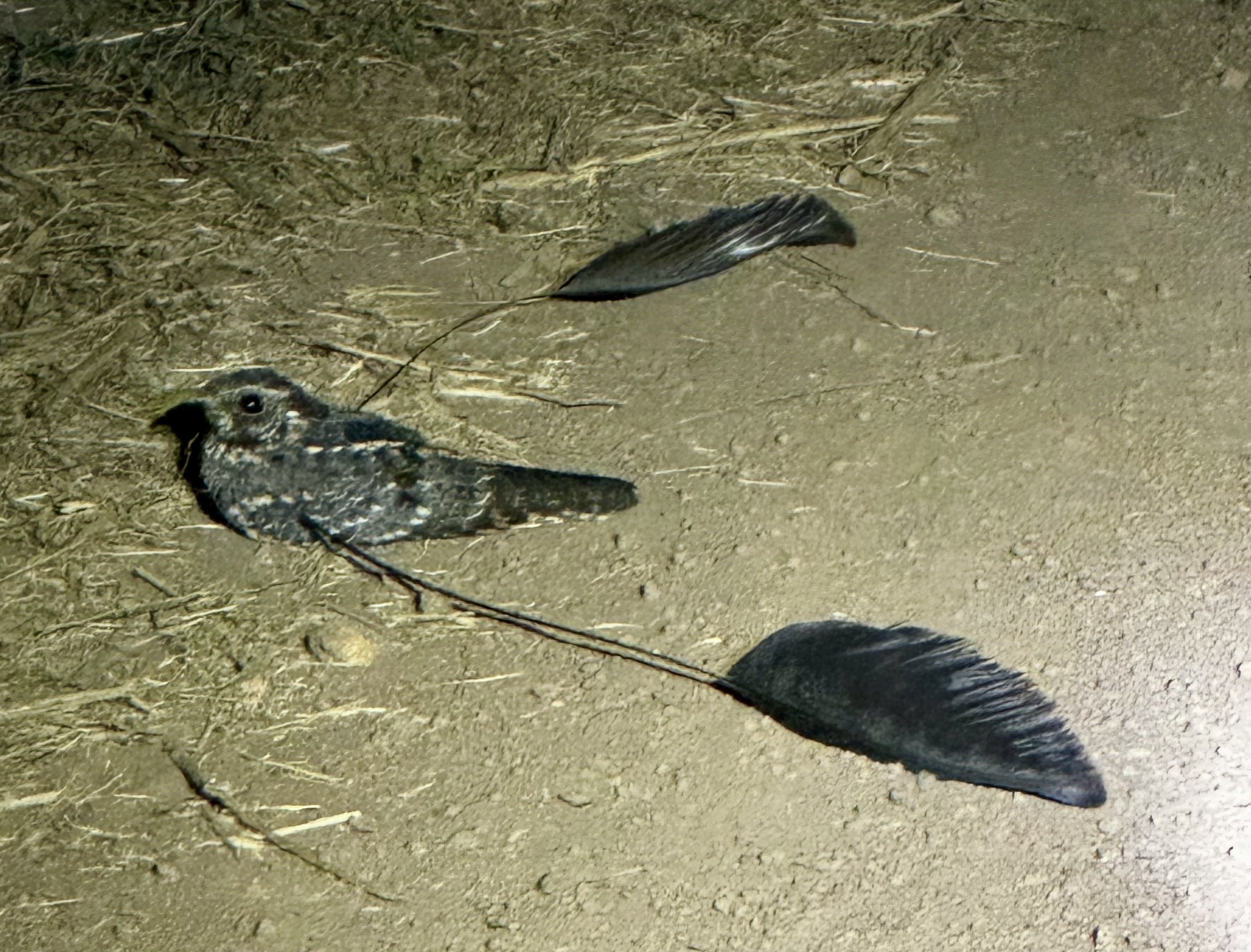
A male night jar with pennant wings sitting on the ground next to the vehicle. Back at the lodge we gathered one last time with the group of staff who had provided us with so much service. The meal was a Congolese buffet. We sampled a few items, but did not really enjoy the meal. The next morning the caravan arrived at 10am to return us to Entebbe, where we spent a night in a hotel called No. 5. It was super for us as we had our first hot, pressurized shower in a week. We even had pizza and pasta for dinner. The next morning we flew from Entebbe to Addis, where we met Will Jones and began our next adventure on the Omo River in SW Ethiopia.
 Adventures with Julia
Comments
Great pictures! Love the birds!