
July 7, 2024
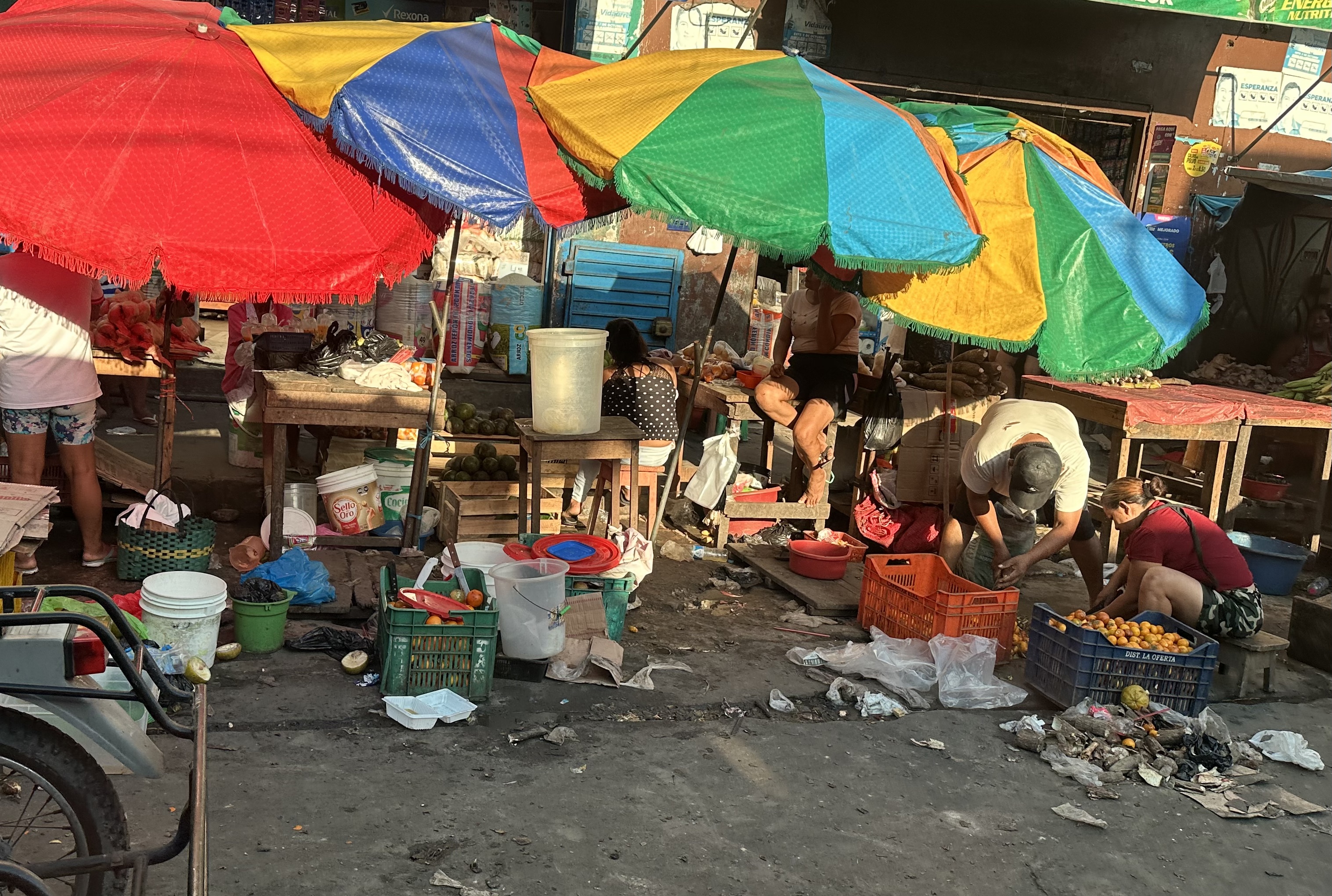
Had a relaxed morning, yesterday, while waiting for our 10:30 am ride to the airport followed by more waiting for our 1;30pm flight to Iquitos. The flight was almost 2 hours followed by a slow bus ride touring through Iquitos while waiting for our 5:30pm boarding time on the Aqua Nera. It was interesting to see the city of half a million people, who are mostly marooned. We took many photos of the pre-colonial buildings, the stilt houses, the hundreds of tuktuks, the huge fruit and vegetable markets, the multitude of people milling about, and more. We learned that people shop every day for their food needs and then cook it the same day, even though they have refrigeration. As much as anything else, it appears to be a social experience.

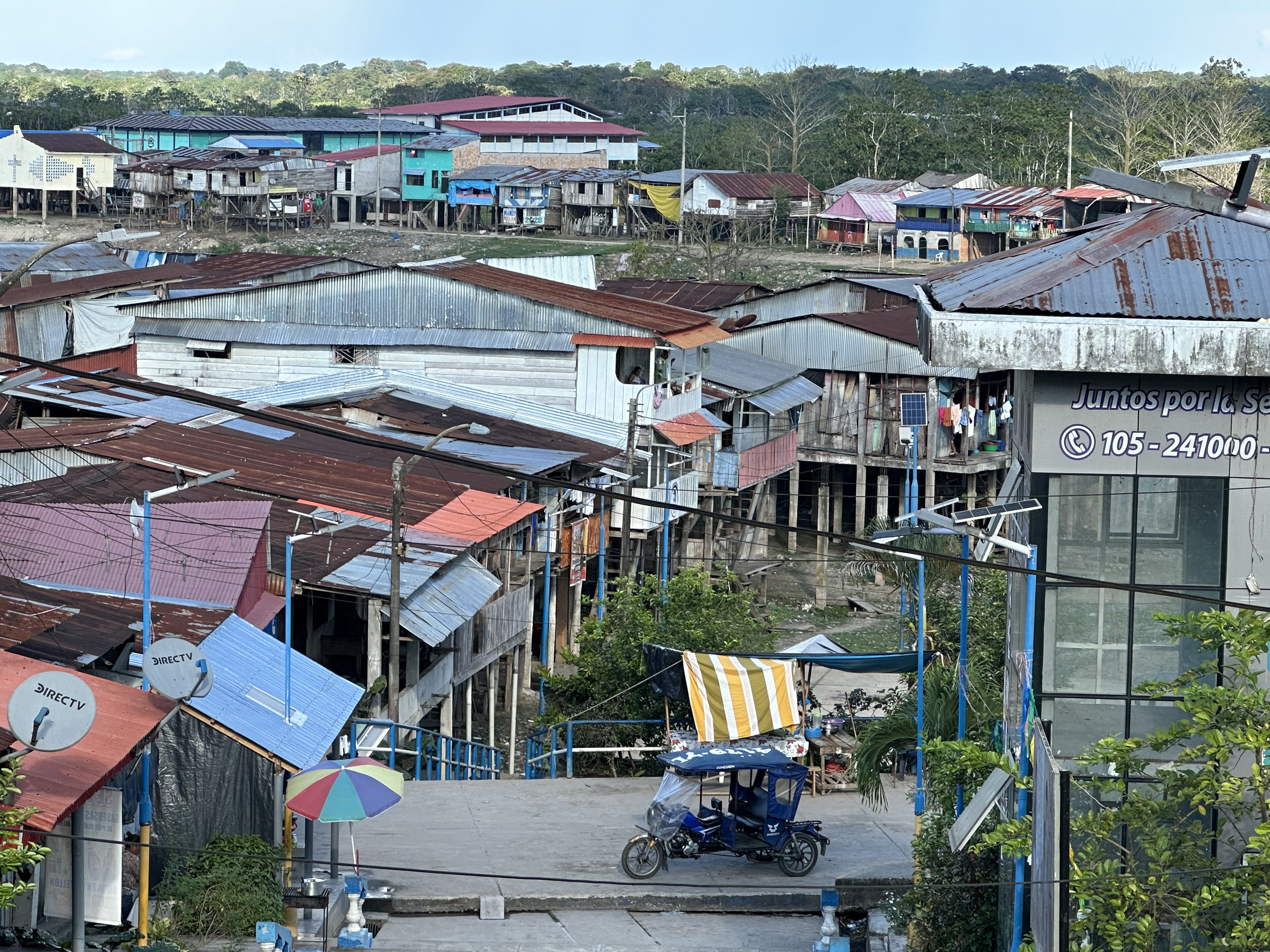

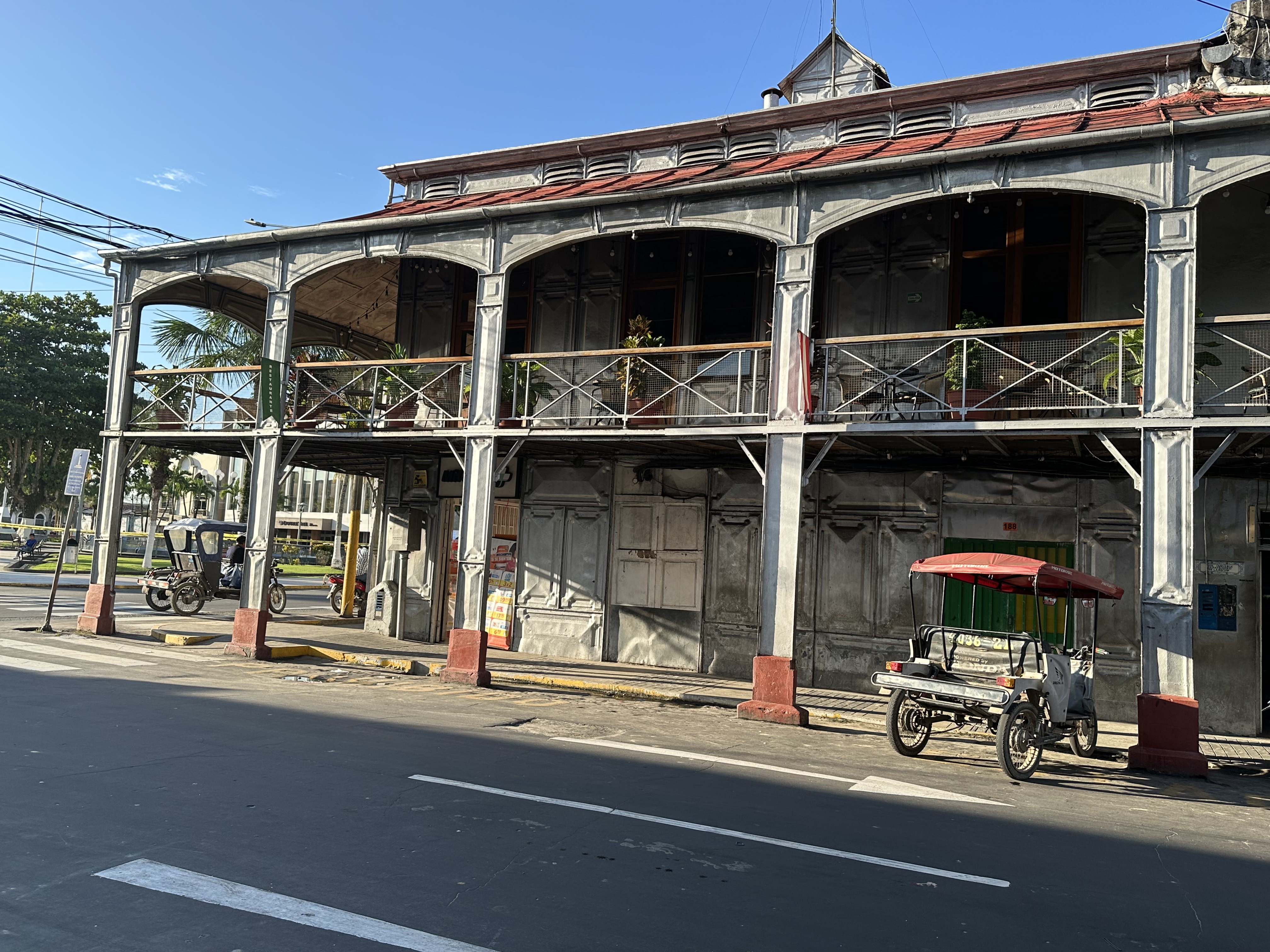
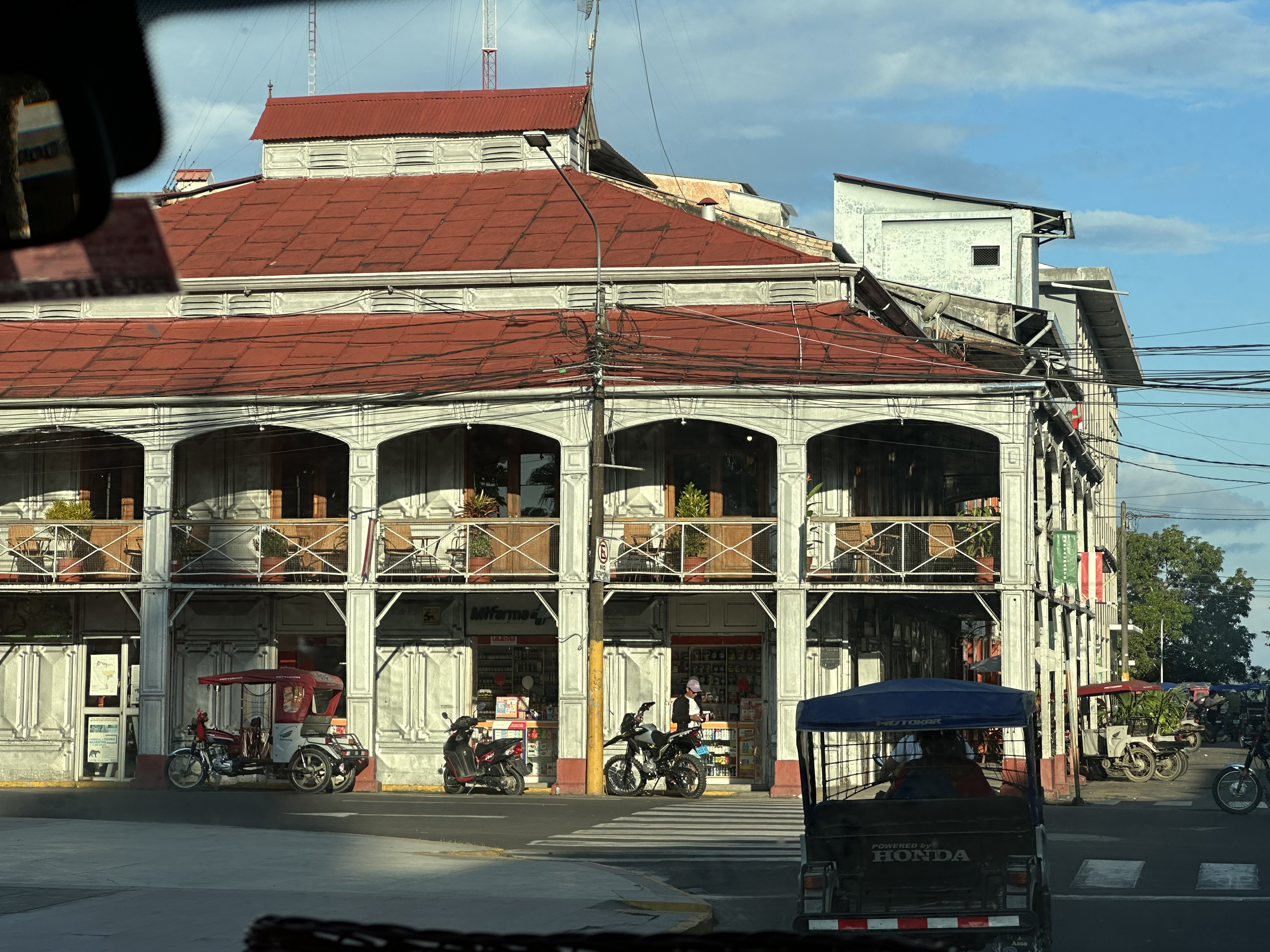
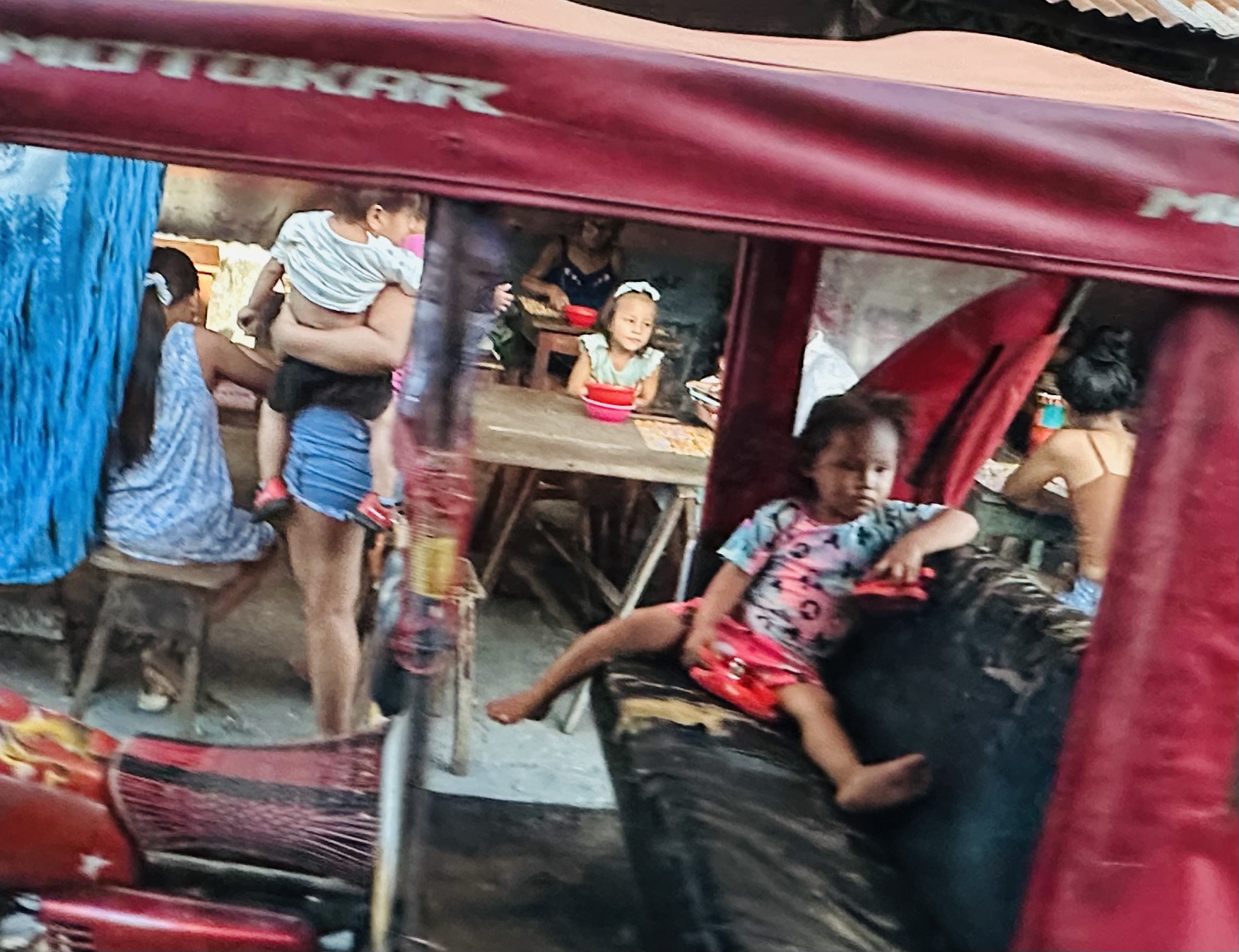
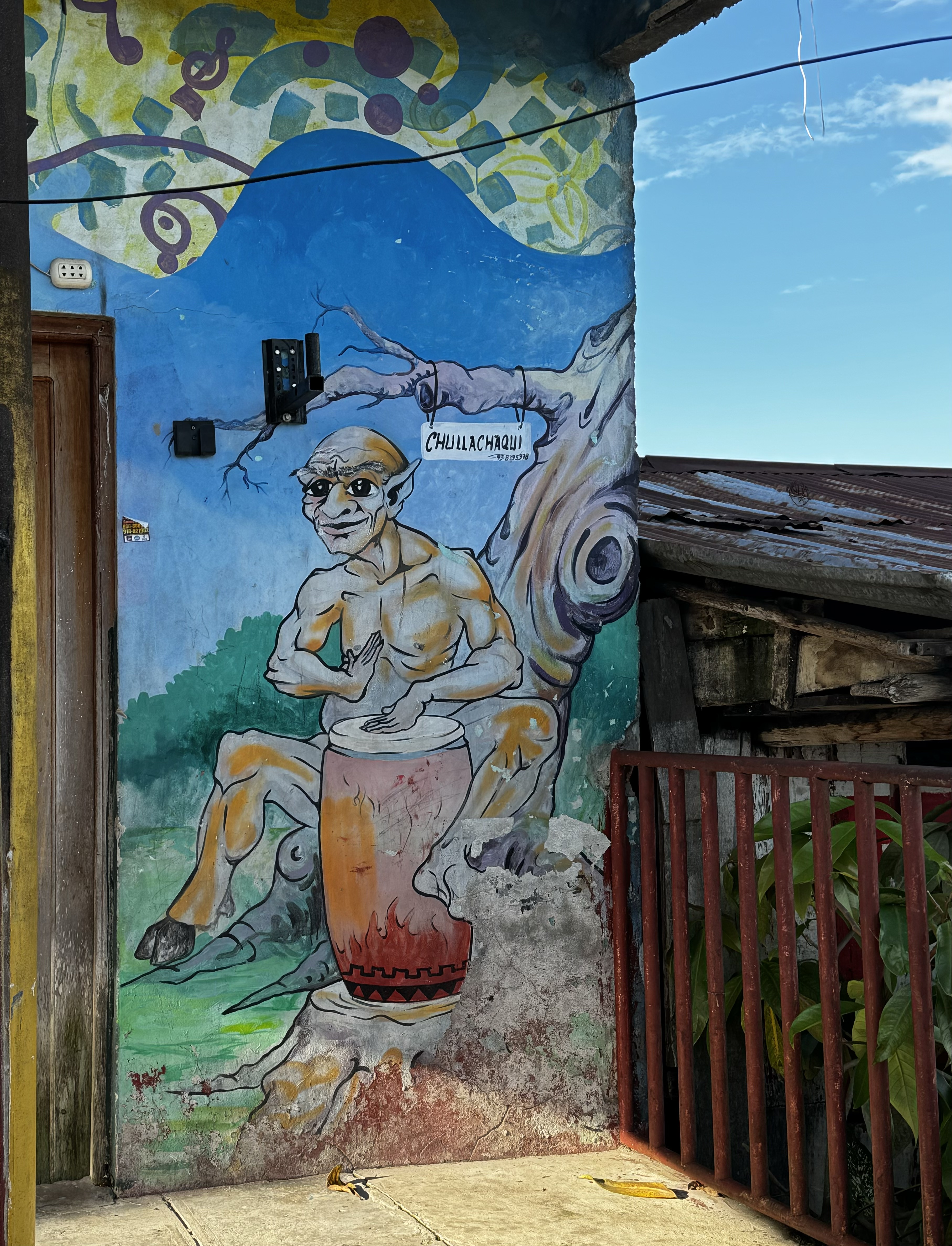

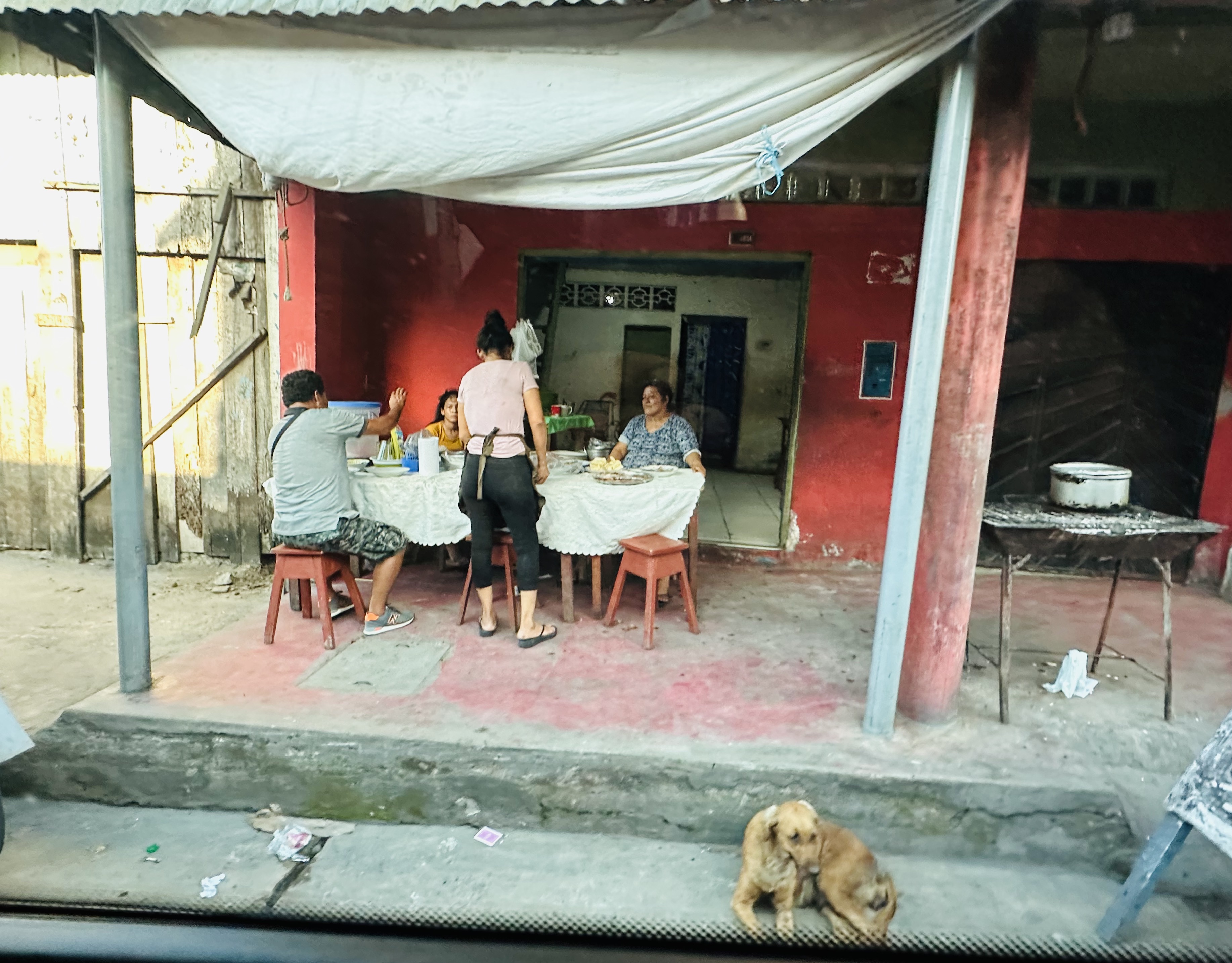
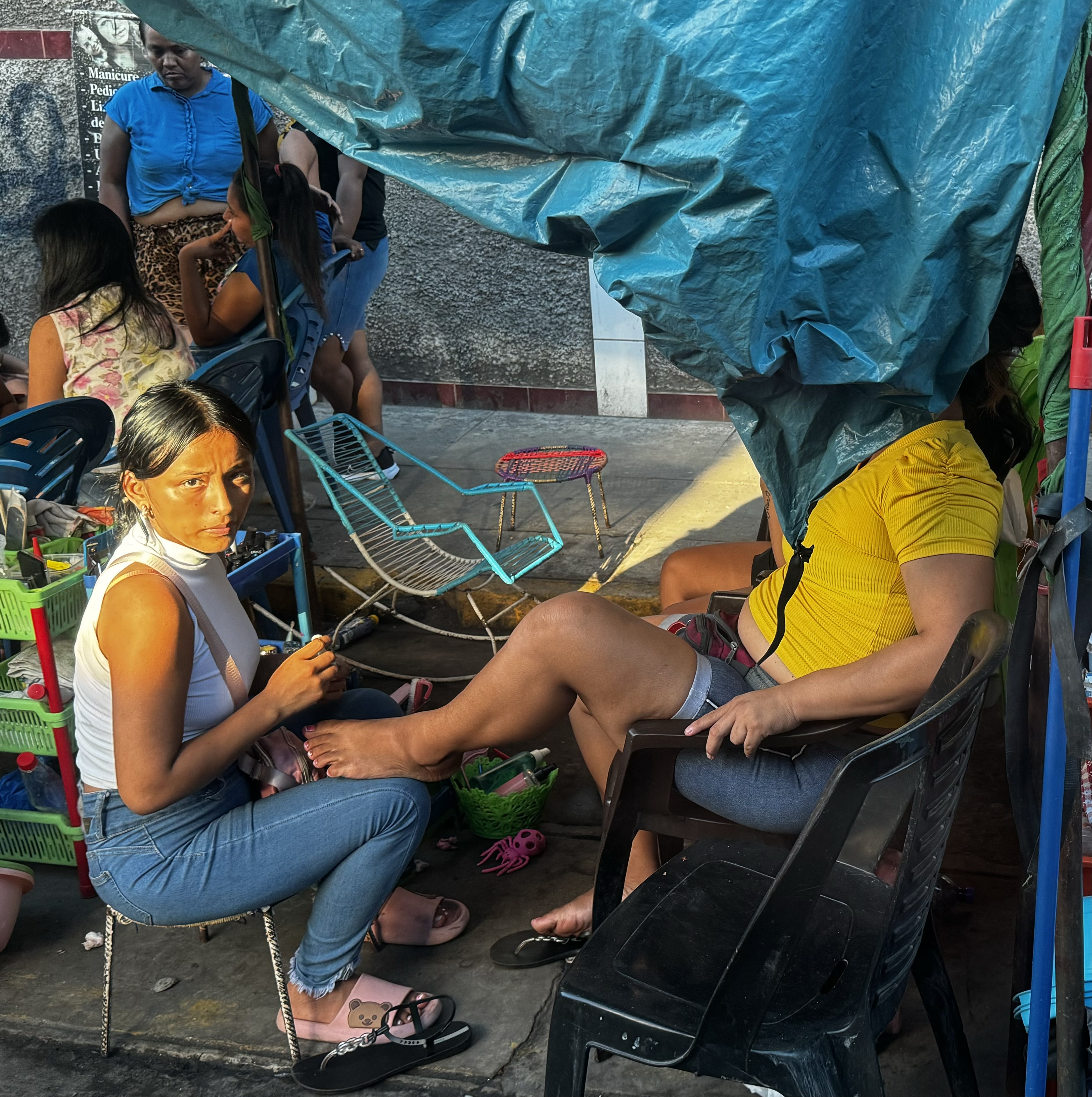
Life happens on the streets in Iquitos. Stores are open from 6am to 7pm daily. Art, beauty, eating, visiting, playing and marketing all take place on the streets. There were three industries during the 1800’s; rubber, timber and petroleum. The rubber barrens really struck it rich and built fancy houses in the city. We were told the wives of these men sent their dirty laundry to Europe to be cleaned rather than put it in the brown river. It took 4 months for the clean laundry to be returned. One baron had a French, Eiffel designed house dismantled, shipped and rebuilt in Iquitos. It is the house in the above collection with the red roofed tuktuk in the right of the photo. The house below that is reputed to be the first hotel built in Latin America. Chinese people arrived during the 1800’s to work in the rubber industry. Many stayed and are currently in the restaurant business throughout the city.
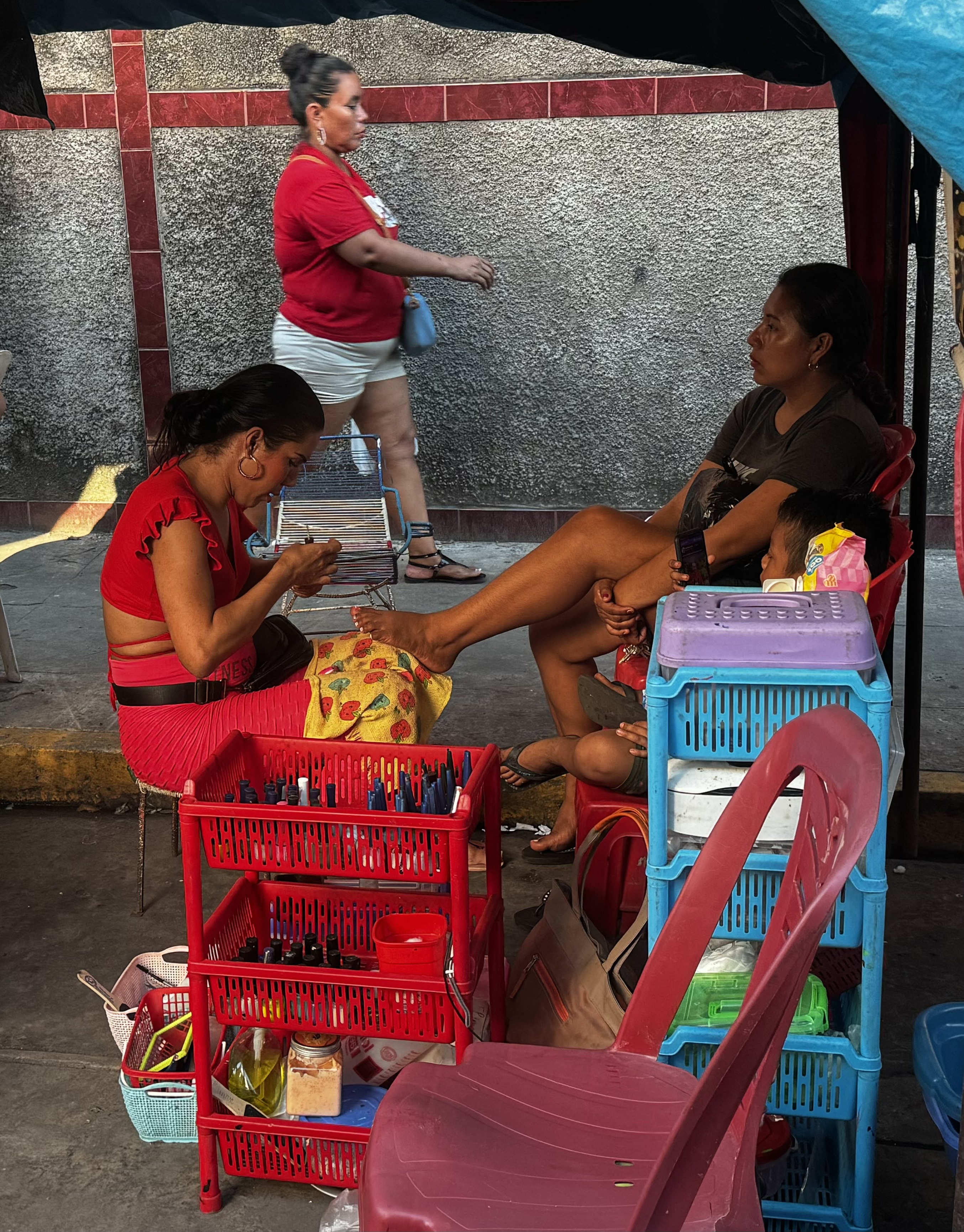
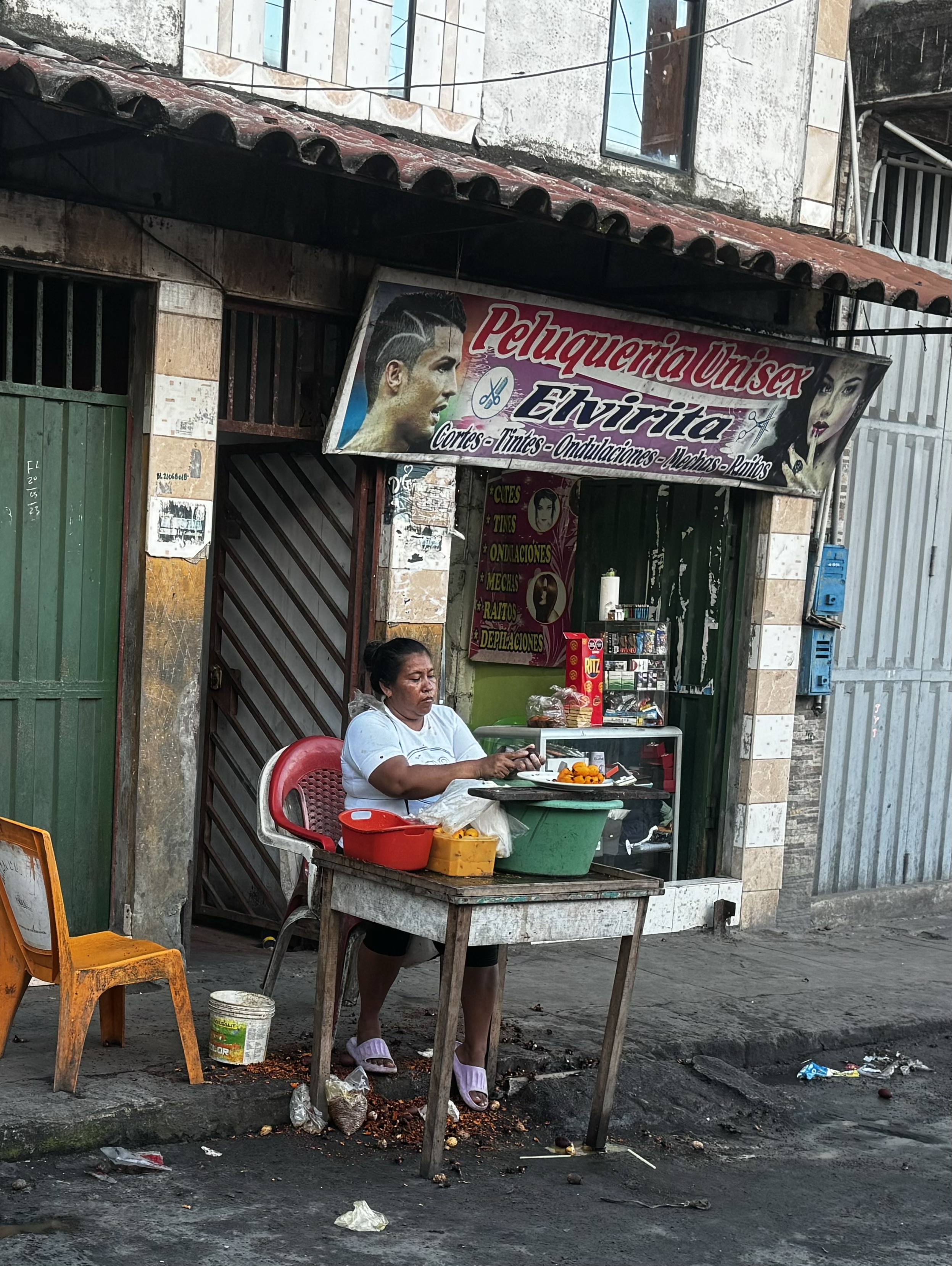
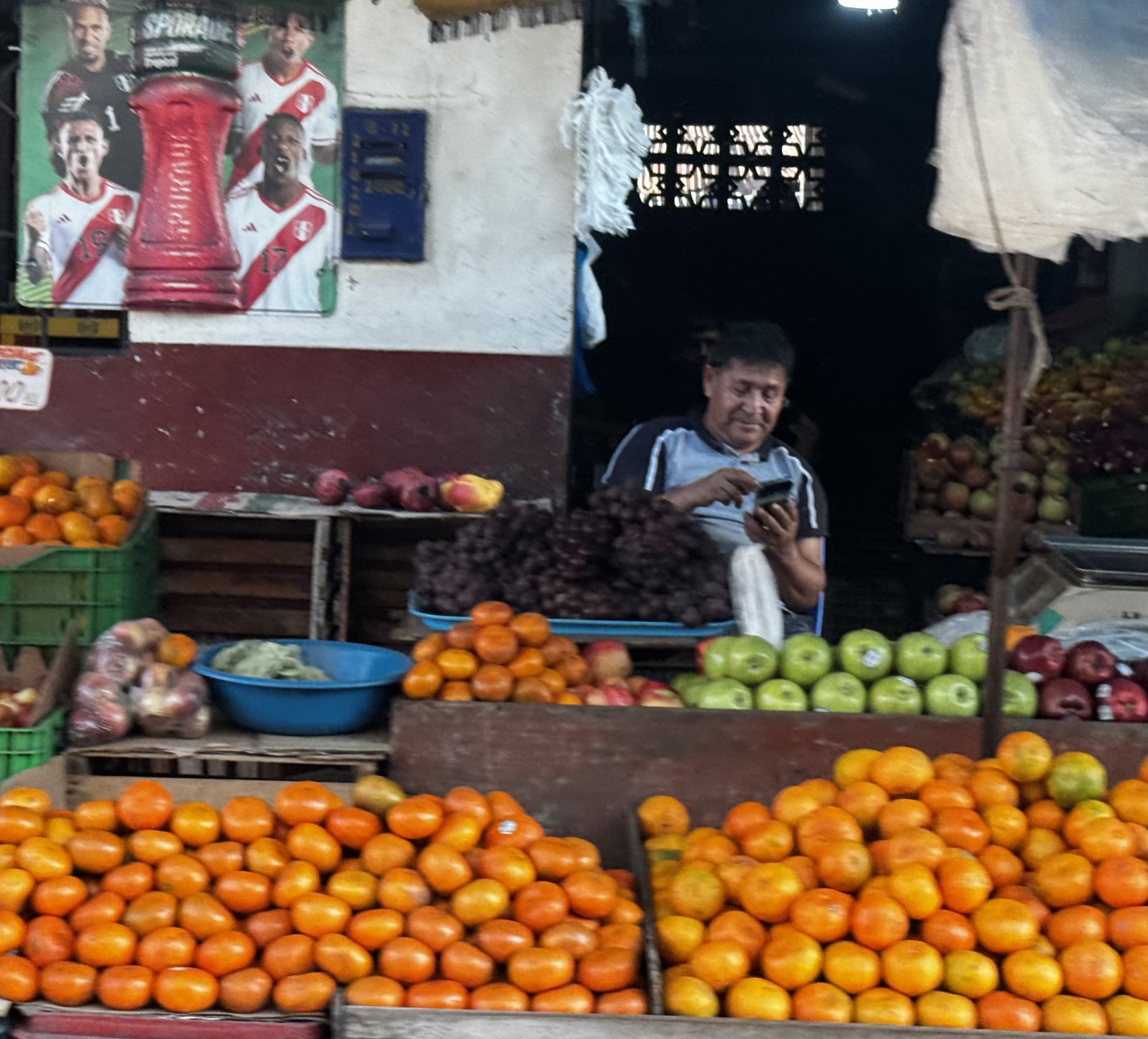

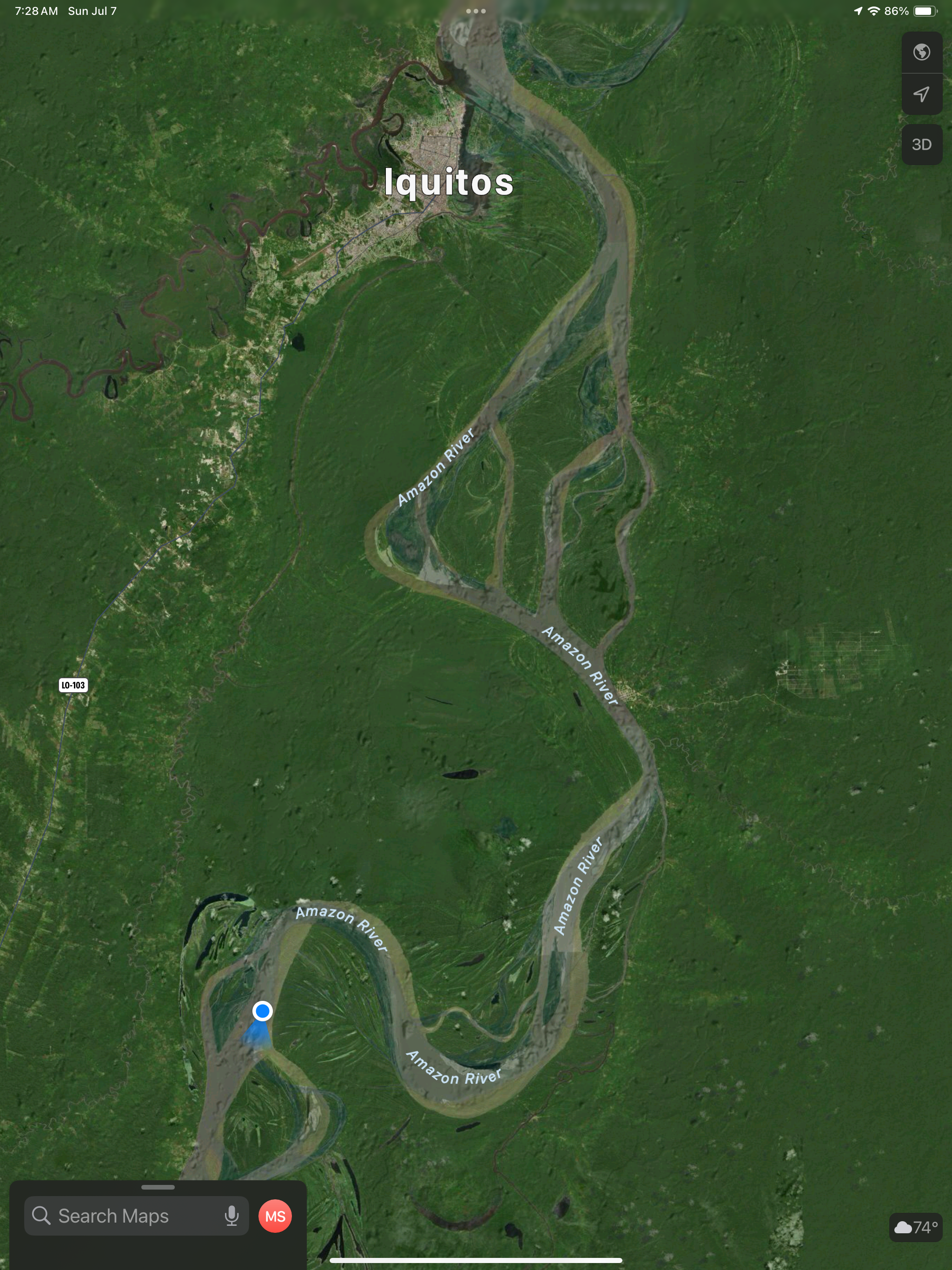
Iquitos cannot be accessed by road as there are none. One can either fly in from Lima or drive for three days to the town of Pucallpa and then boat down the Amazon River for 5 days to Iquitos. As you might expect, it is very expensive to live In Iquitos. The name means “people surrounded by water”. The main rivers are the Amazon and the Italia, which cuts through the city. The Amazon was redirected away from the city to reduce flooding. The longest road in Iquitos is 8 kilometers. The district of Belen is home to 38 thousand families living in houses on stilts to be above the flooding.The government considers these illegal residences. Below is a map of Iquitos and the Amazon. You can make out the Italia River curving around the west of the city. As you can see, there are no roads outside the city.
July 7, 2024
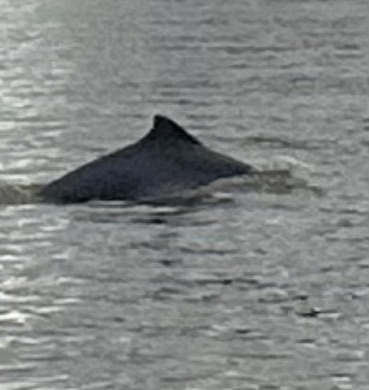
After the buffet breakfast, we joined a group of about 8 guests on a flat bottomed motorboat for a ride up a tributary called Yana Yacu, the Black Water River, but it’s really only brown. The weather was very pleasant. Not too hot or humid. After motoring awhile we began to pick up some wildlife. First we spotted a pink fresh water dolphin, with a hump on its back and no dorsal fin. The we saw a black collared hawk followed shortly by a Great black hawk. These sightings were soon overshadowed by a mother sloth with a baby slowly decending a large tree trunk. We watched them quite awhile and I finally managed to get a photo. We saw a huge Coral tree with pretty orange/yellow flowers that provide nectar for bees and small birds. We spotted a black-capped Dona Cobious and a yellow headed Cara Cara. Then we saw another sloth with child, several Blue and Yellow McCaws and, finally, a brown Capuchin Monkey. Our guide, Juan, was thrilled with our sightings and felt we had had an excellent sighting adventure. So, we were happy too, even though I got very few photos and no really good ones.

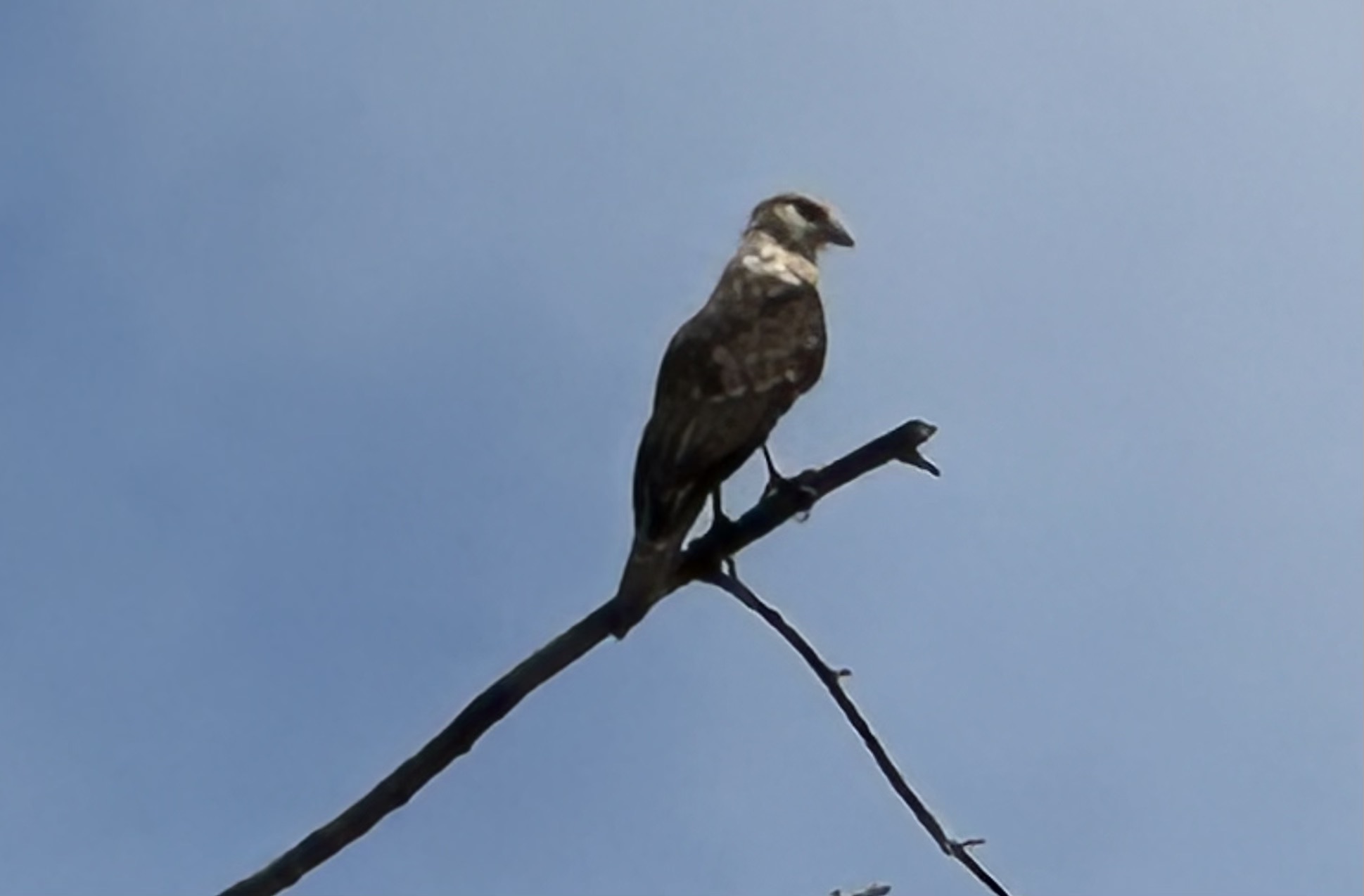
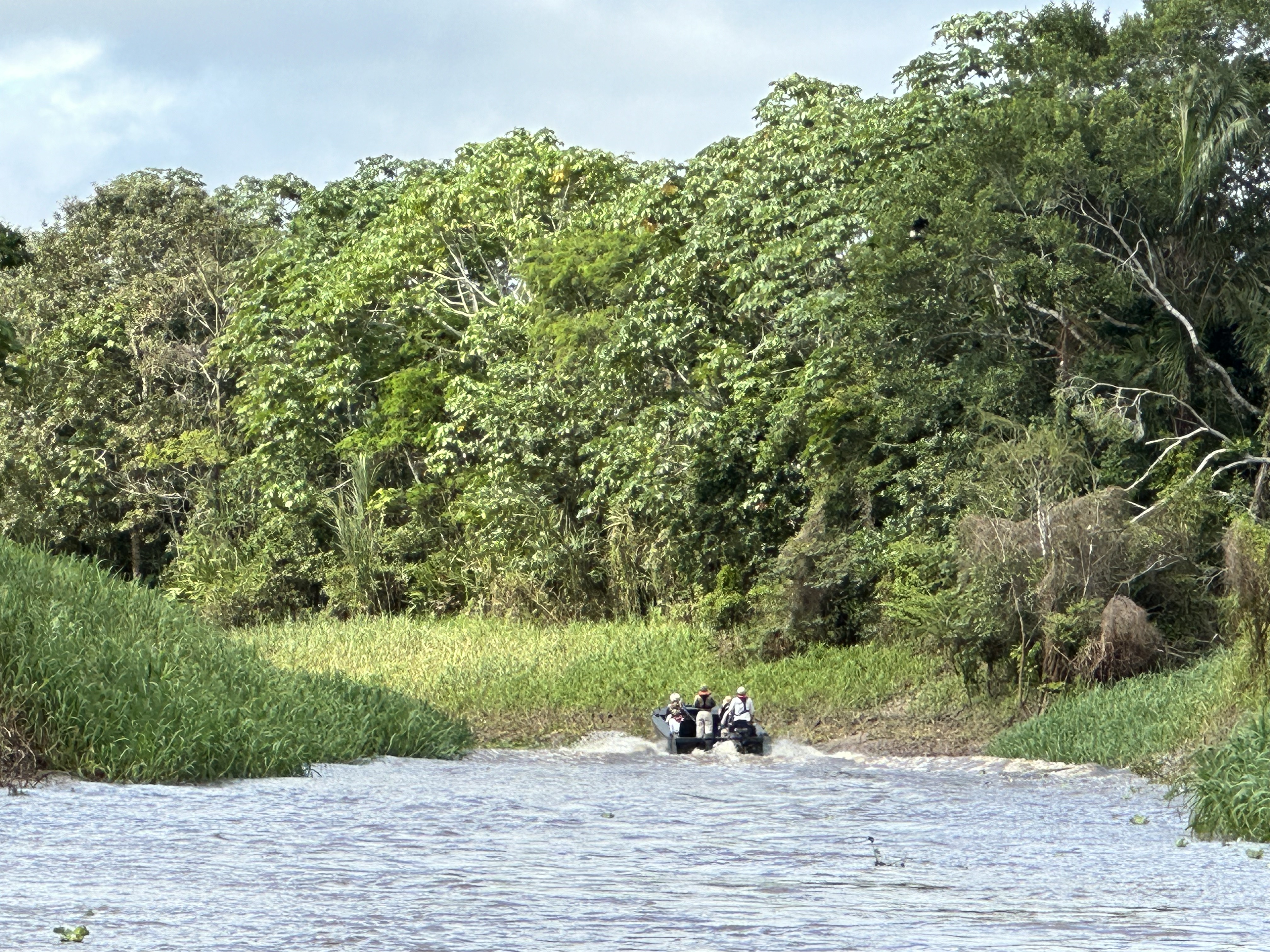

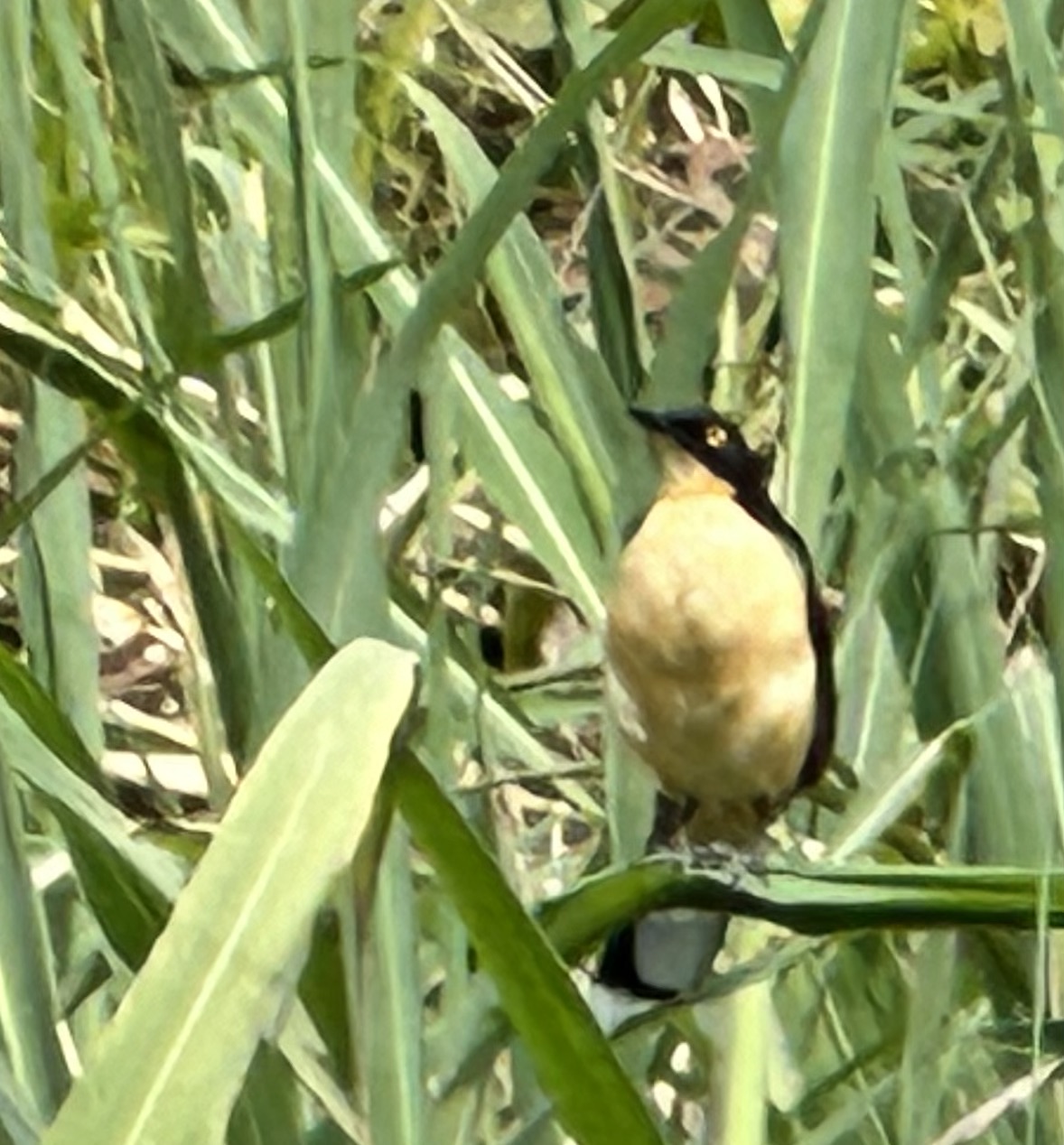
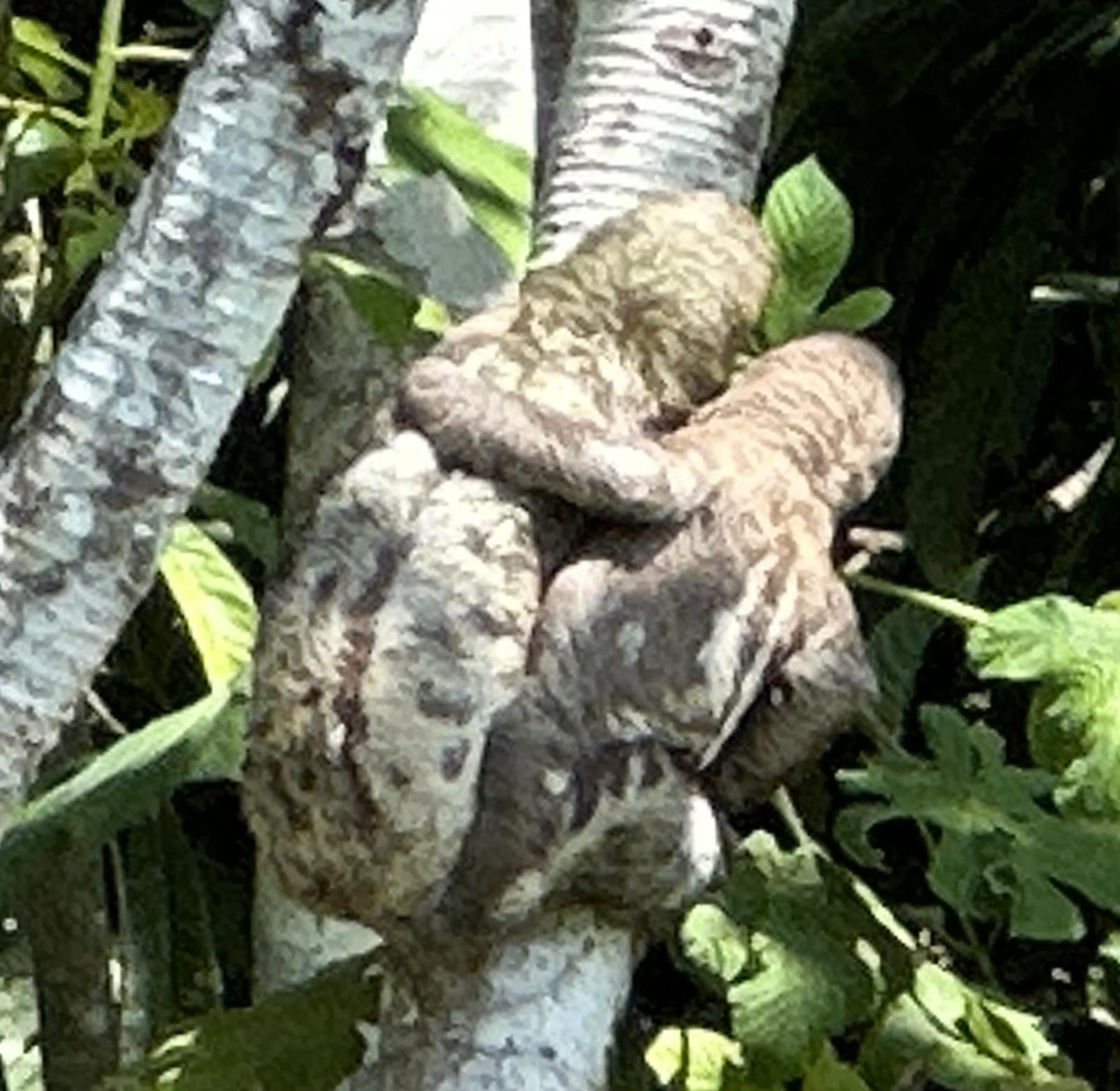
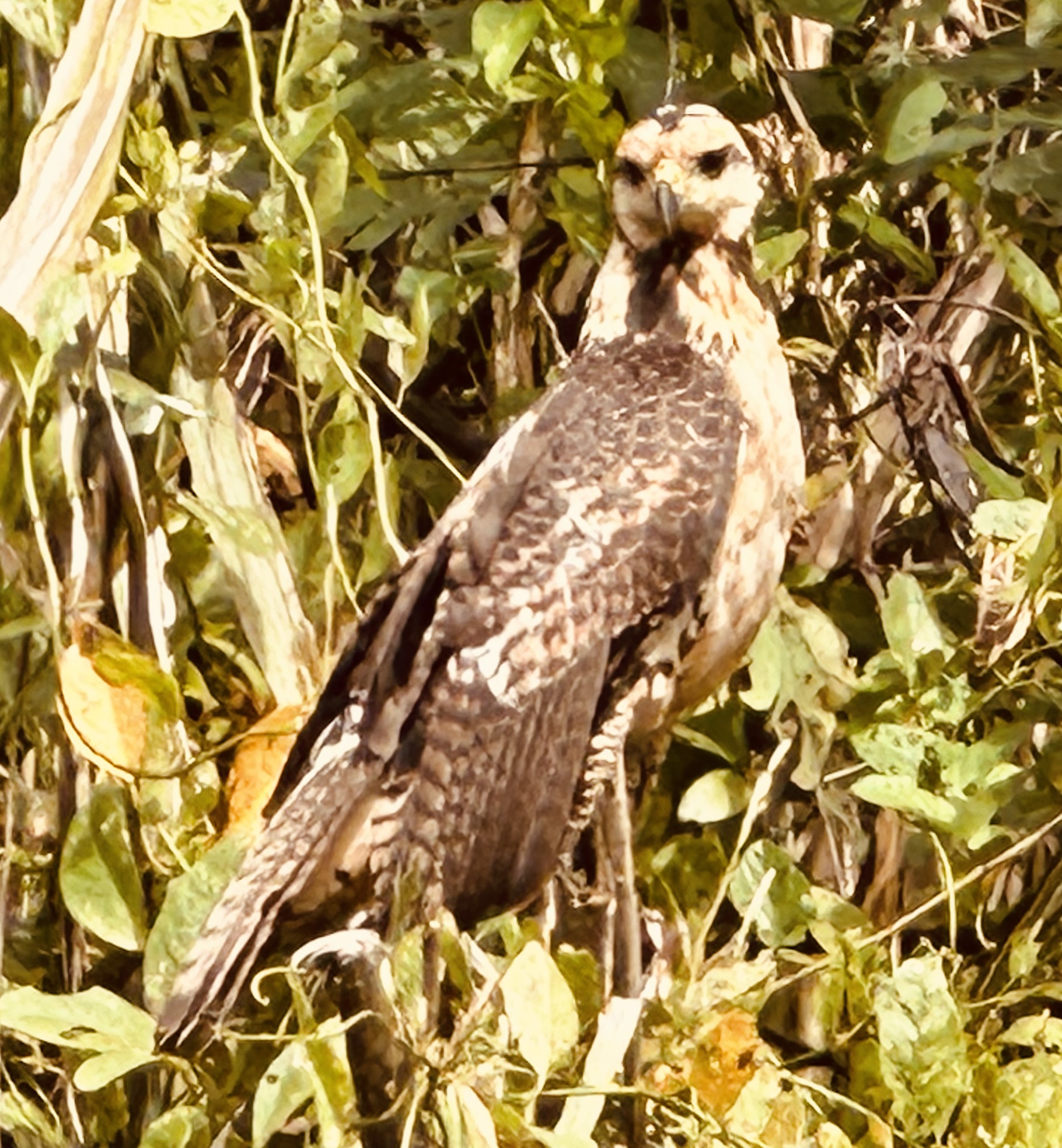

The afternoon excursion was similar to the morning one in that we had the same guide, Juan, and much the same group of passengers. We set off down another black tributary called the Yarapa River. Juan filled us with more information about the area. First he reminded us there are only 2 seasons in Peru and on the Amazon: high water, which is December through May and; low water, which is June through November. There can be between 25 and 45 feet variation between the seasons, with rain occurring about 250 days a year. Juan thinks it is unusual for us to be in Peru 4 days already and not to have experienced any rain. I am very happy that is the case. He proceeded to tell us more facts. During the high water season, fish congregate under whatever trees the monkeys are feeding in, as they drop seeds and uneaten fruit that the fish then consume. People then follow the monkeys and catch the fish feeding the water under the trees. The monkey fish is even able to jump 2-3 feet in the air to get the fruit. As this. is the dry season, we did not see any monkey fish. The water level is 15 feet below where it was just a couple of month ago. Our morning tour ended back at our skiff in time for lunch. Then, after a hearty meal of catfish, rice, green salad and fried plantains, we had some down time. During the afternoon tour with Juan, he helped us spot several more birds and animals, but we had a hard time getting clear photos. This is the best I could do.
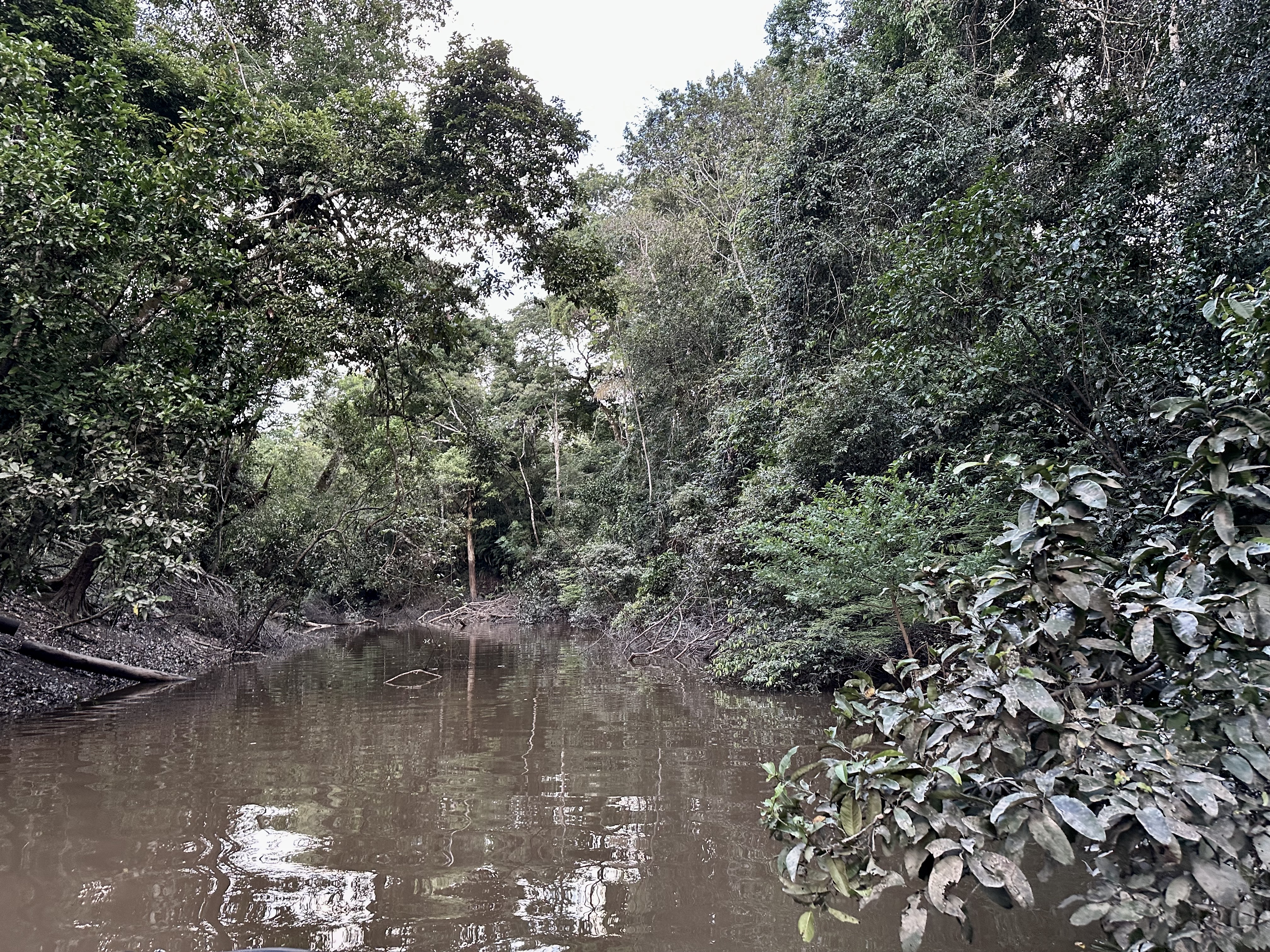
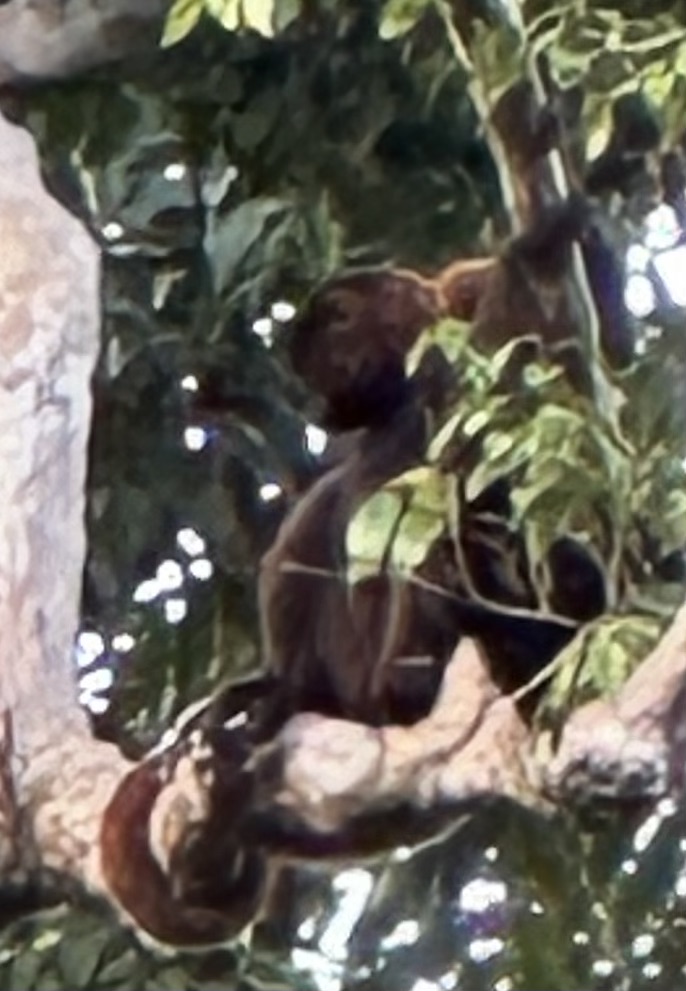
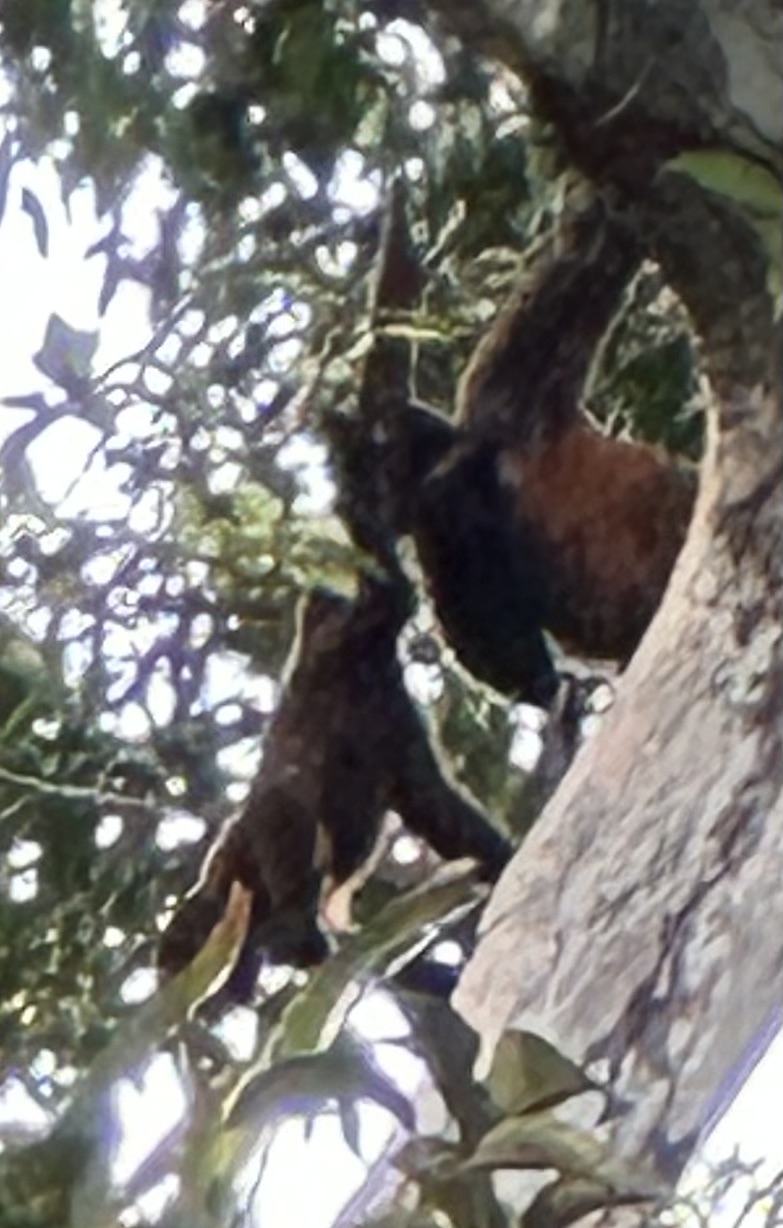

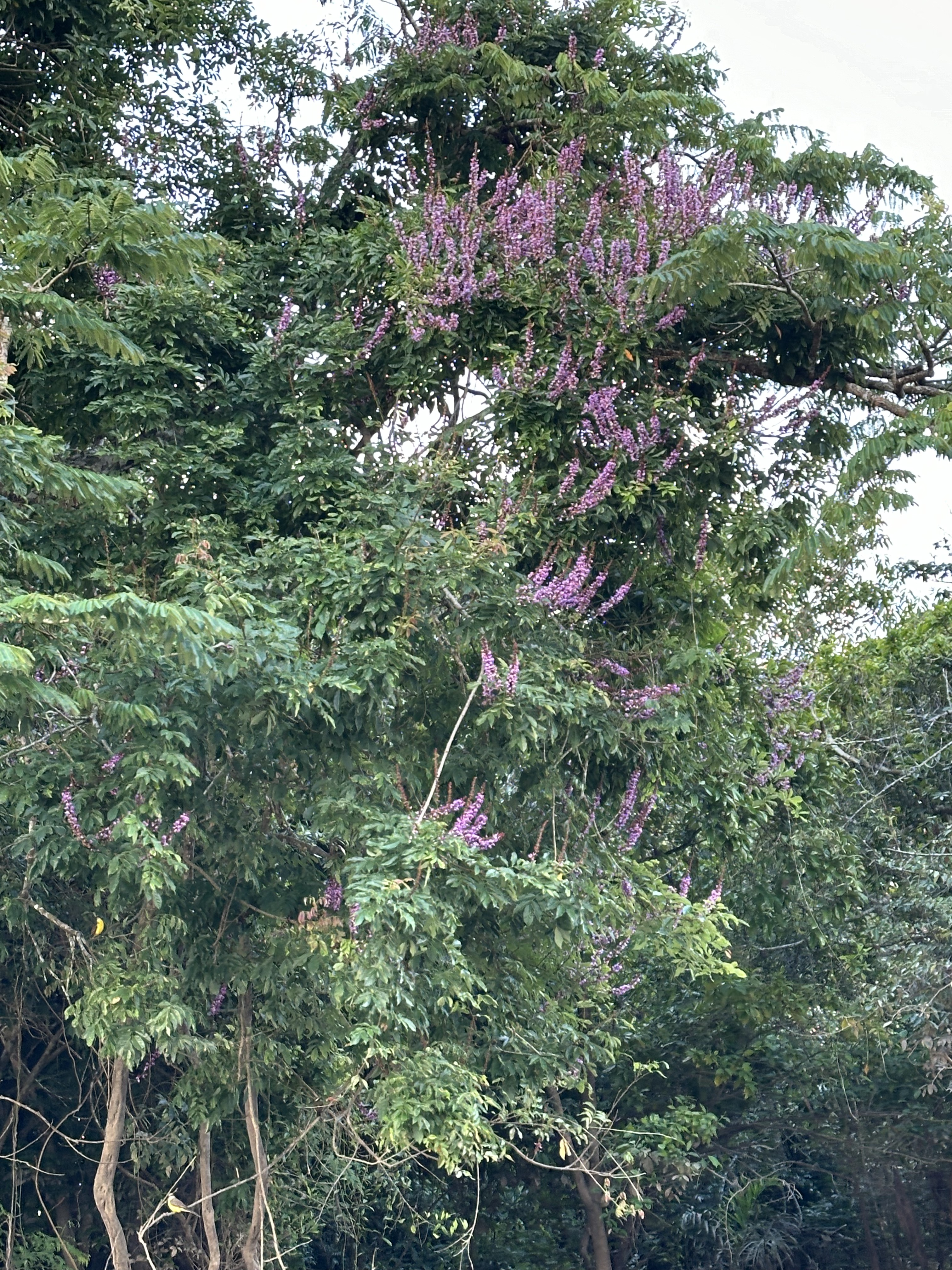
We even saw a night jar, which Mark and I were surprised to see at the Amazon River. We also saw a brown frog in a tree, but it was too dark for me to capture a photo of it. The day ended with us enjoying the many stars in the dark night sky as we motored back to the ship. Not only had it not rained, there had been no mosquitos, no humidity and no high temperatures. The end of a lovely day. After a pleasant evening visiting with new acquaintances over dinner, we went to our overly air-conditioned room, brushed our teeth and dove into bed.
Monday, July 8, 2024
Up, dressed with swim suits on and clothes over and into a skiff at 7:30. We motored into a black water tributary while watching locals doing laundry and fishermen tending nets. At the entrance to the tributary we saw several grey dolphins popping up for air. This was about as much of one as we ever saw. After watching the dolphins awhile, and turning into the tributary, we came upon a village where people were busy tending nets and doing laundry. The houses were on stilts above the high water line.
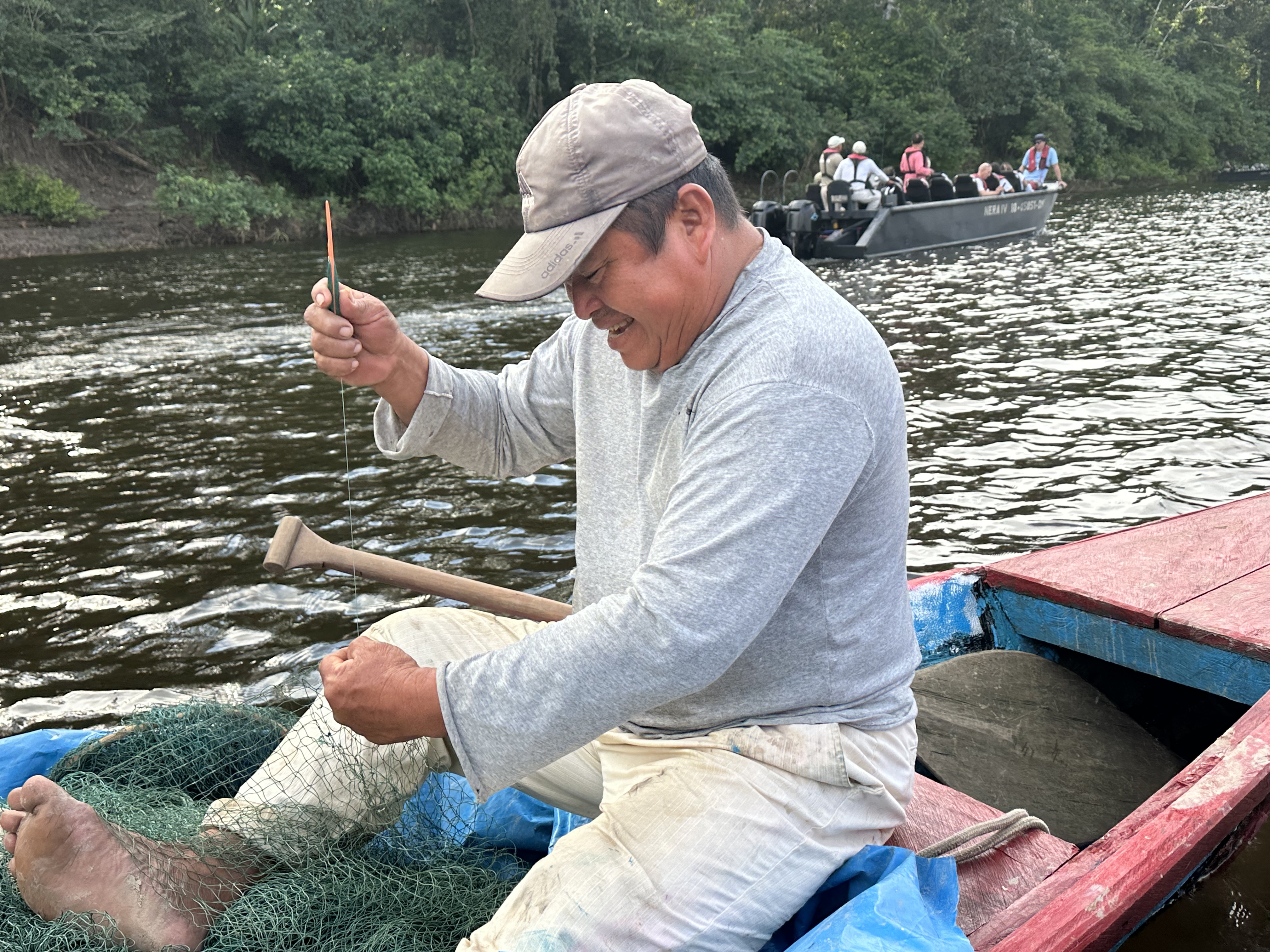
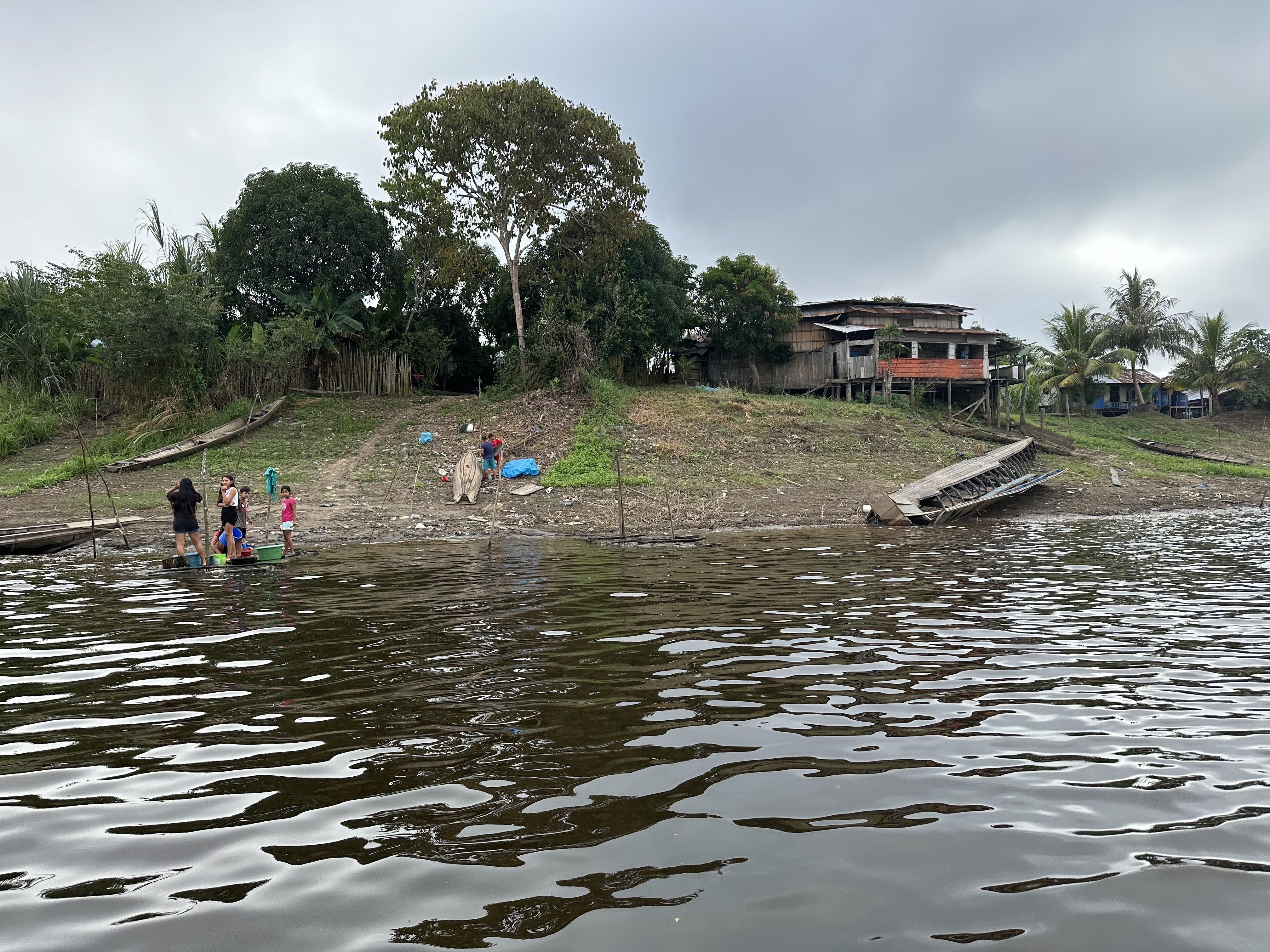
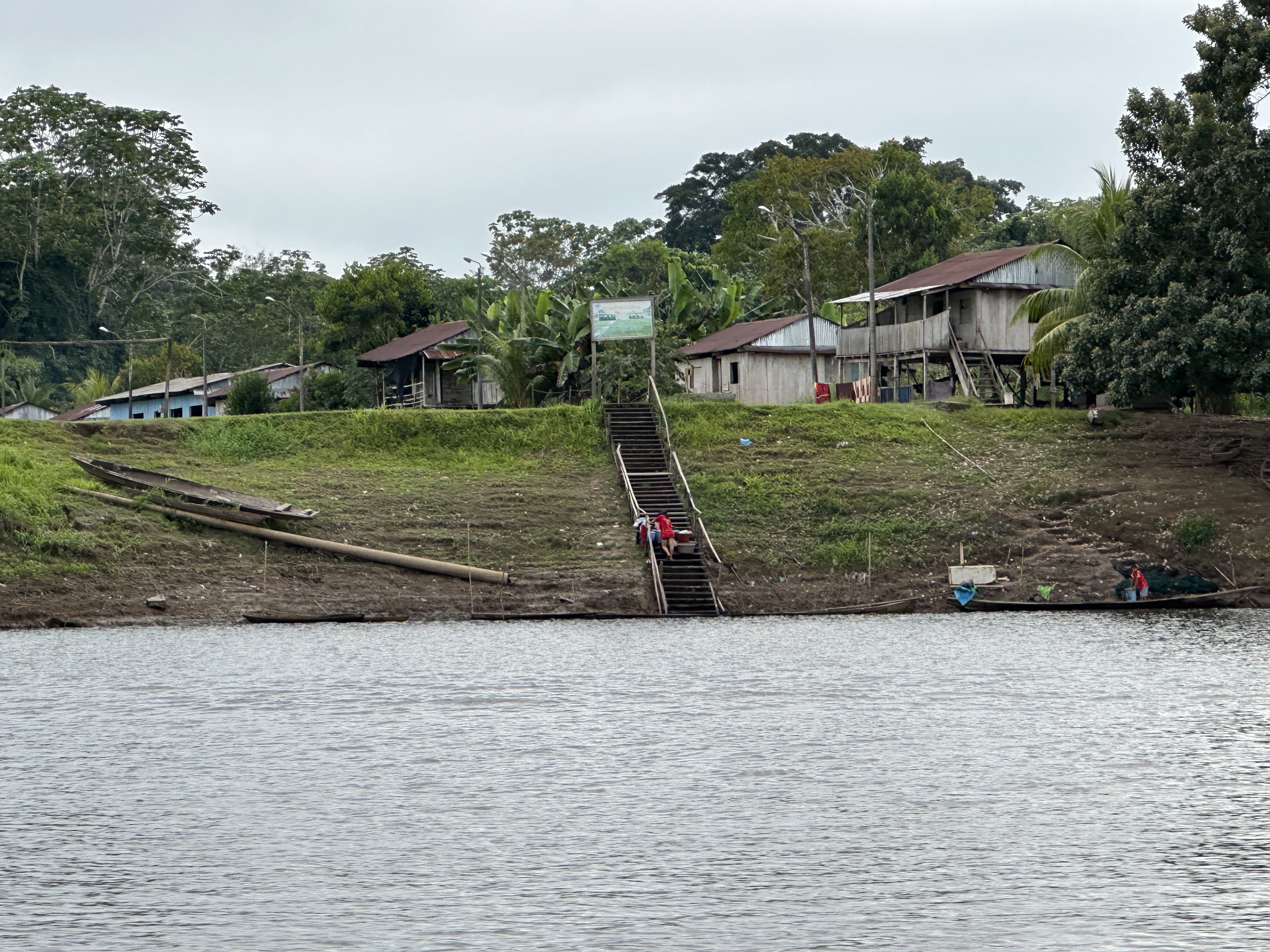
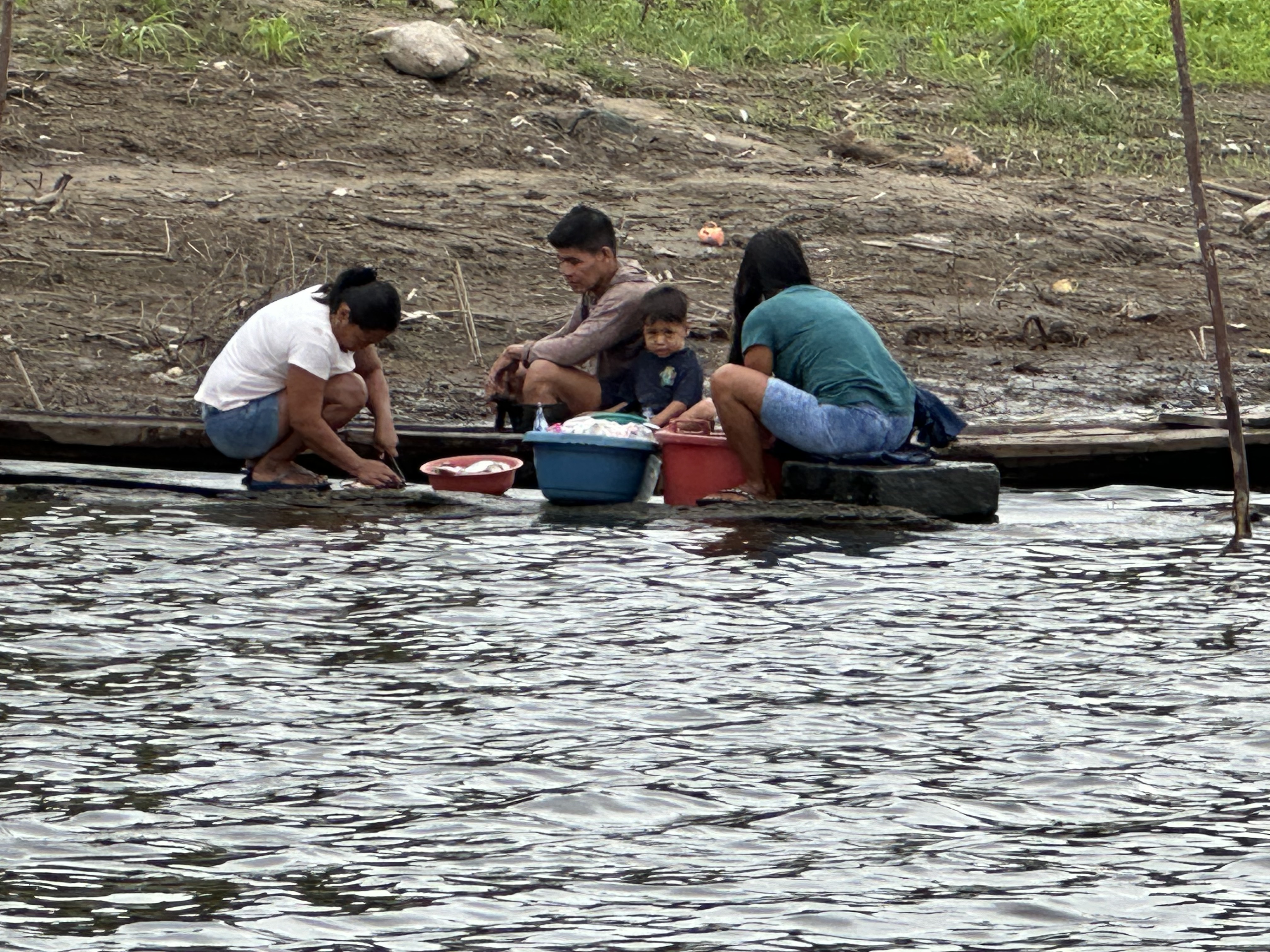
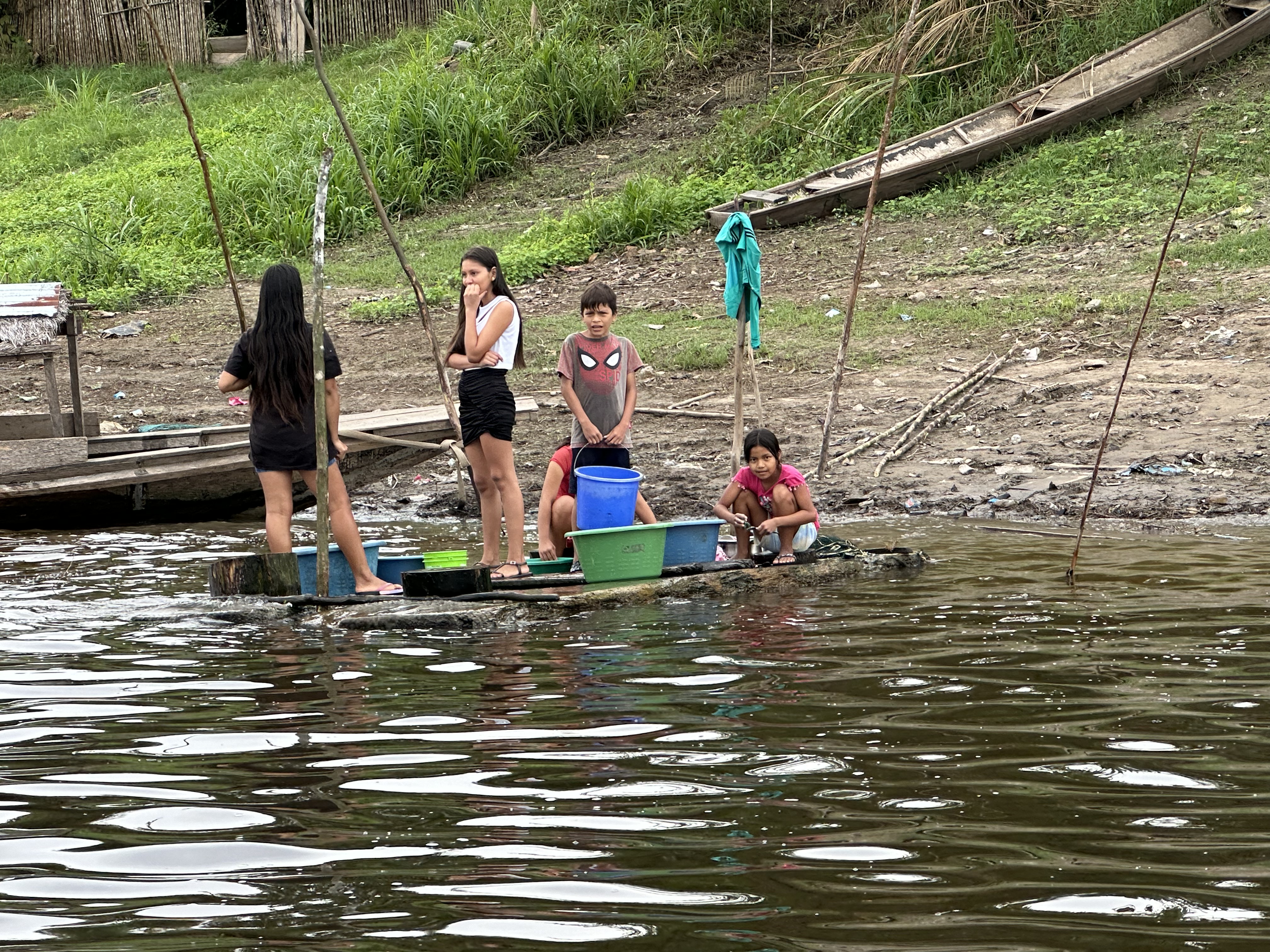
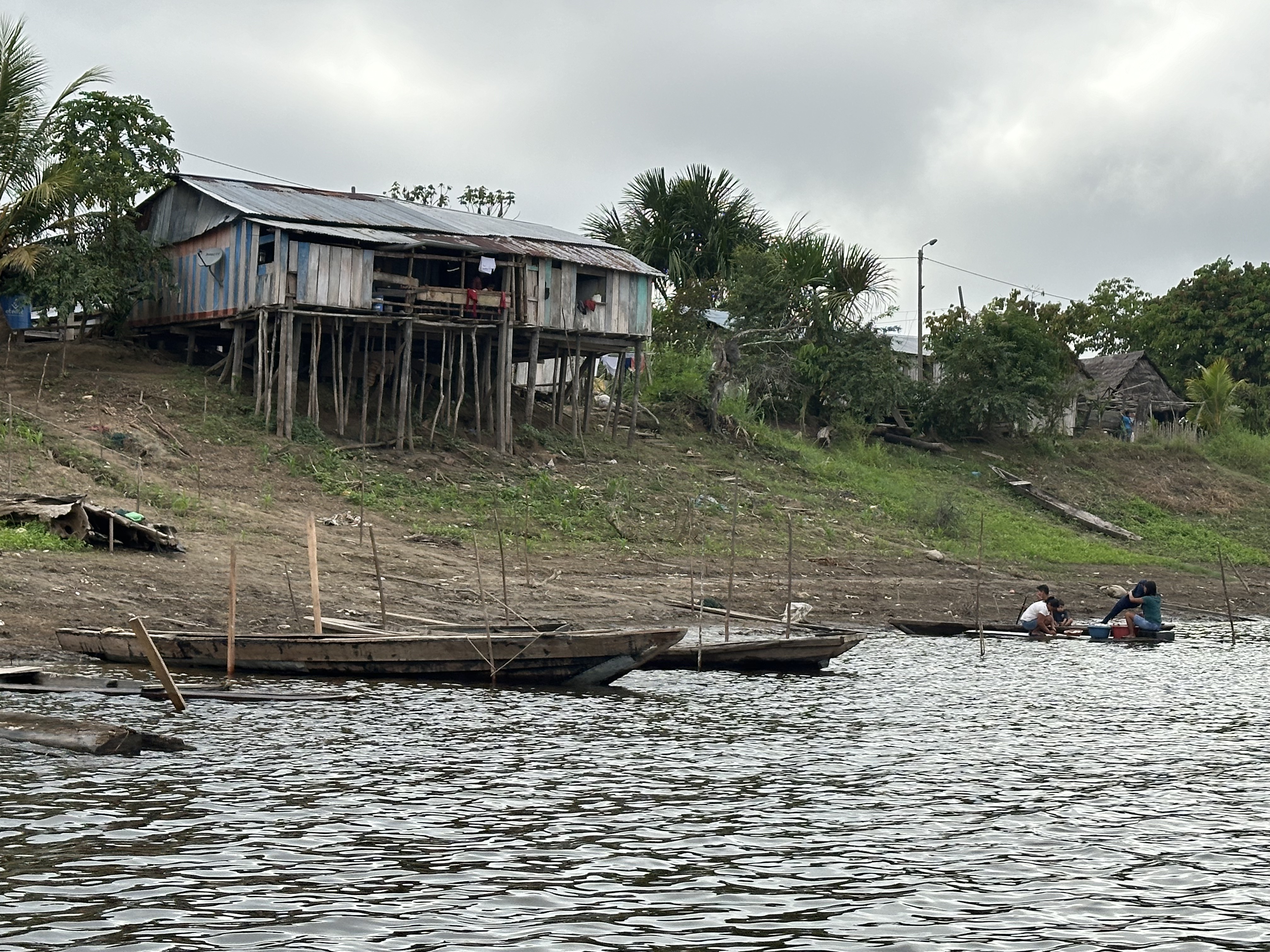
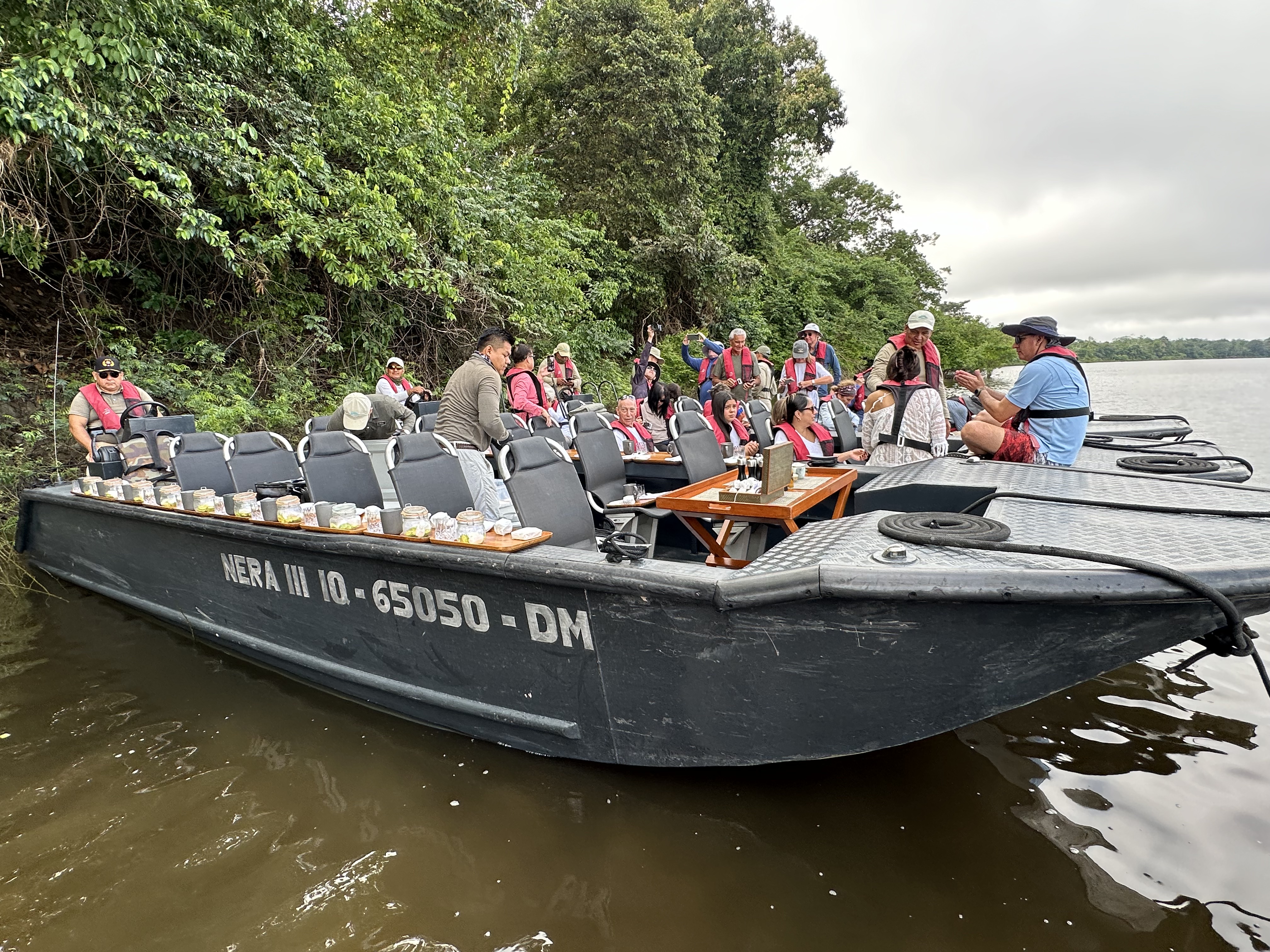
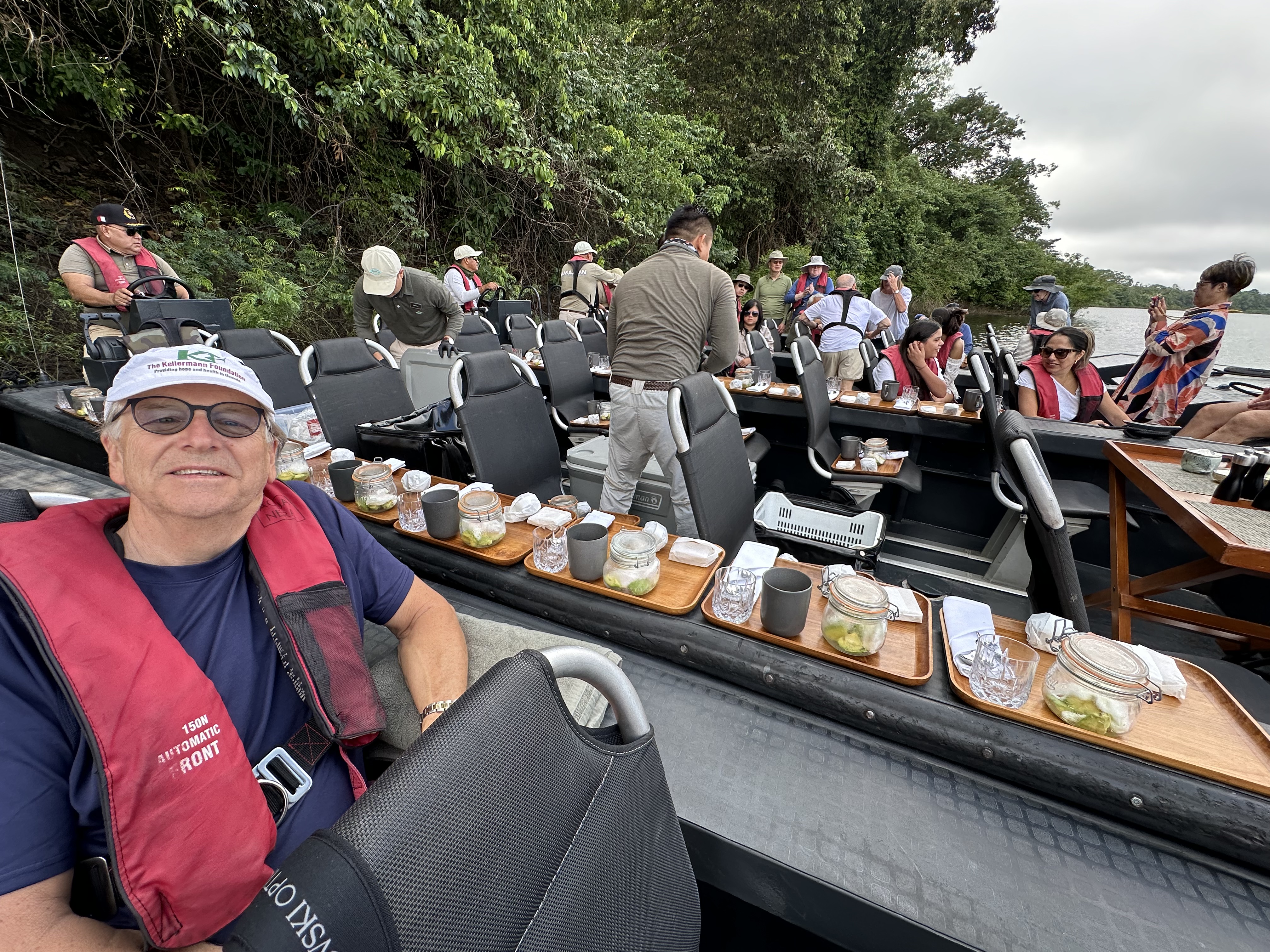
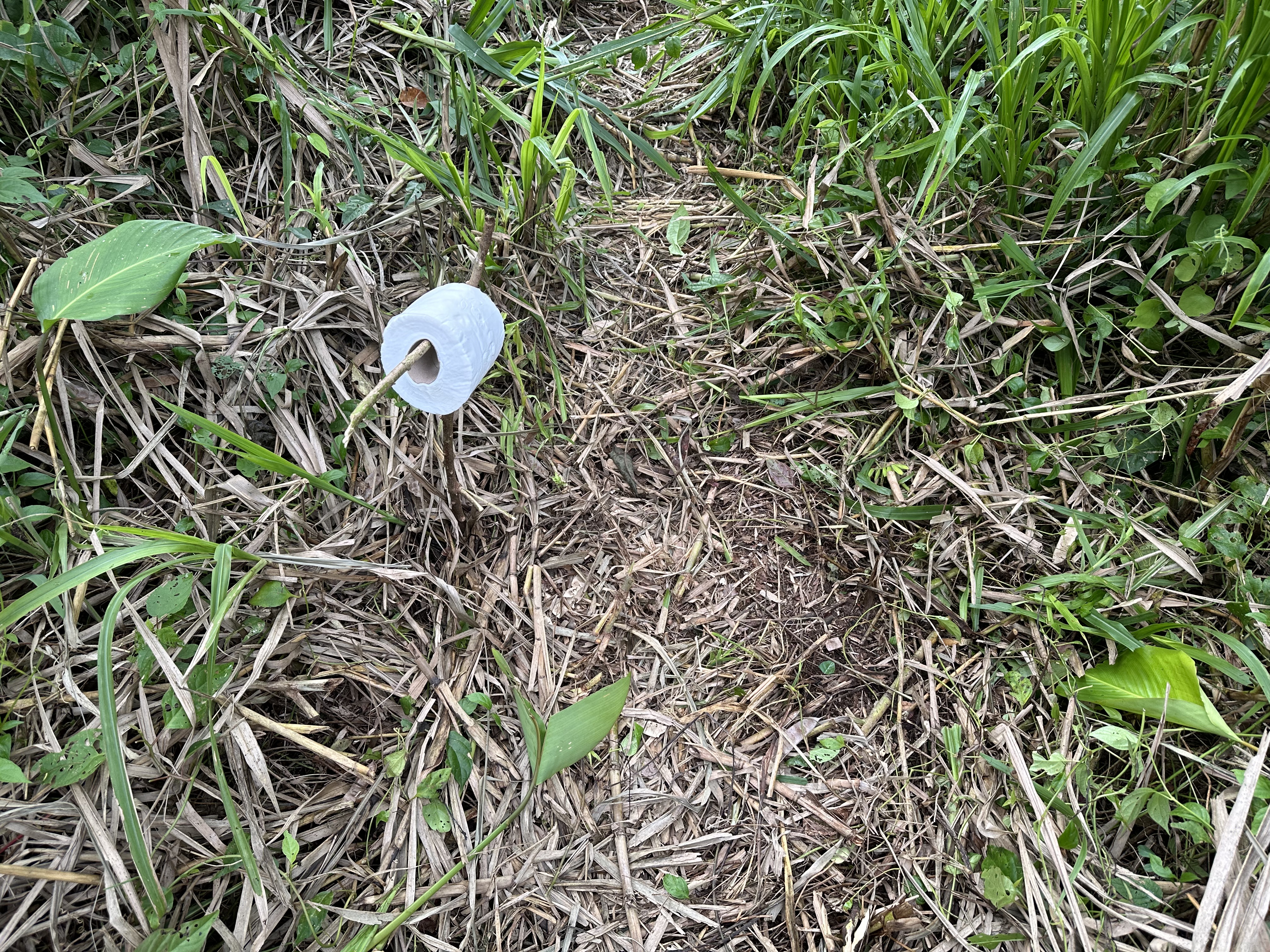
Shortly, we arrived at a predetermined site and stopped for breakfast, which the ship crew had set up on a separate tender. We did not get off the boats as I thought we would. After eating a surprisingly delicious poached egg with avocado and fresh fruit meal, some of us needed a pitstop, so a crew member cleared a path and a flat place for us using a machete. I, for one, was much obliged even though the hike up the side of the river was slippery and steep.
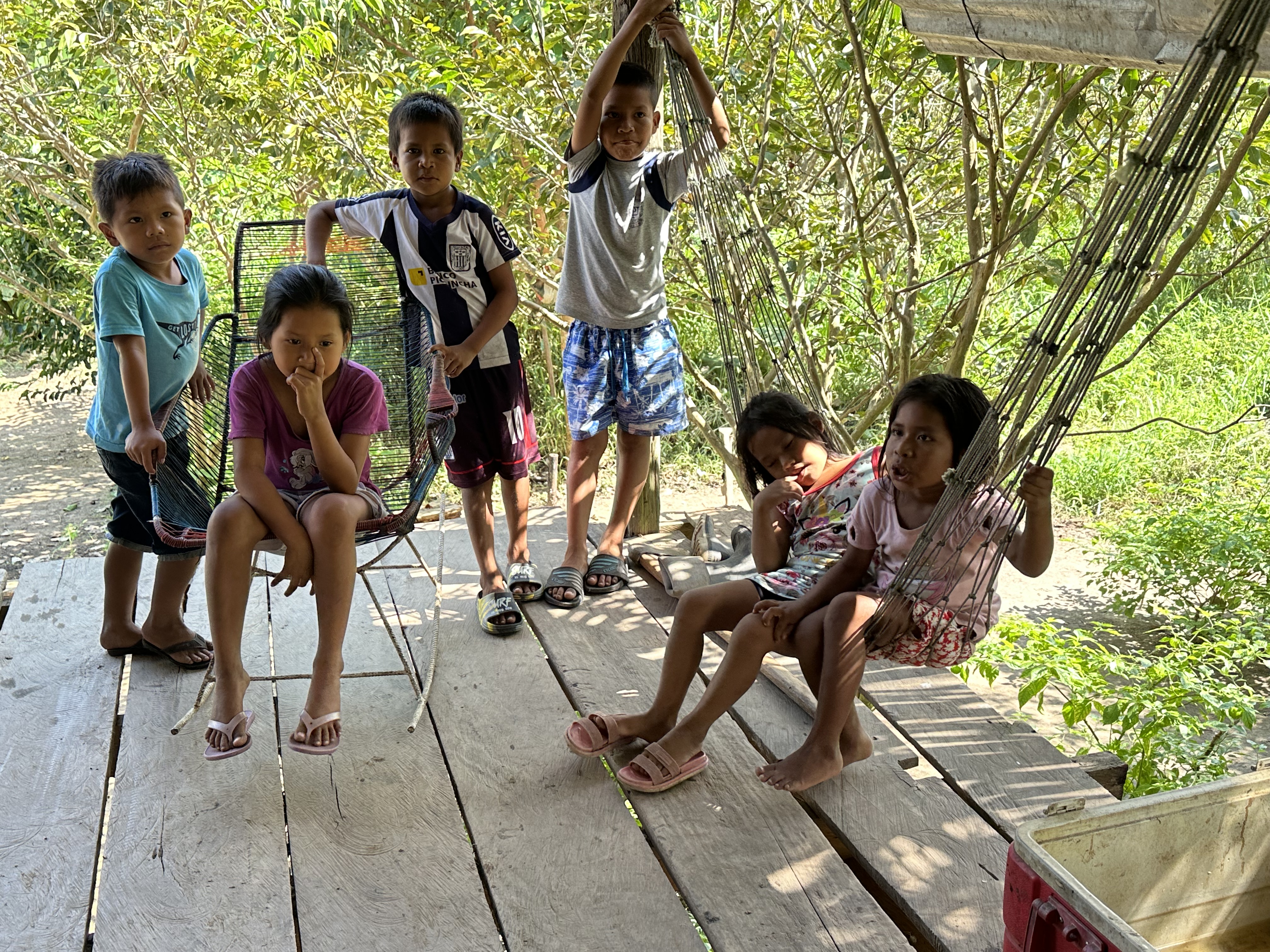
Then we motored to a village where we had been invited to visit a home. We were very surprised to see a sloth hanging out on the family home as though it was a pet. Final, we had a nice sighting.
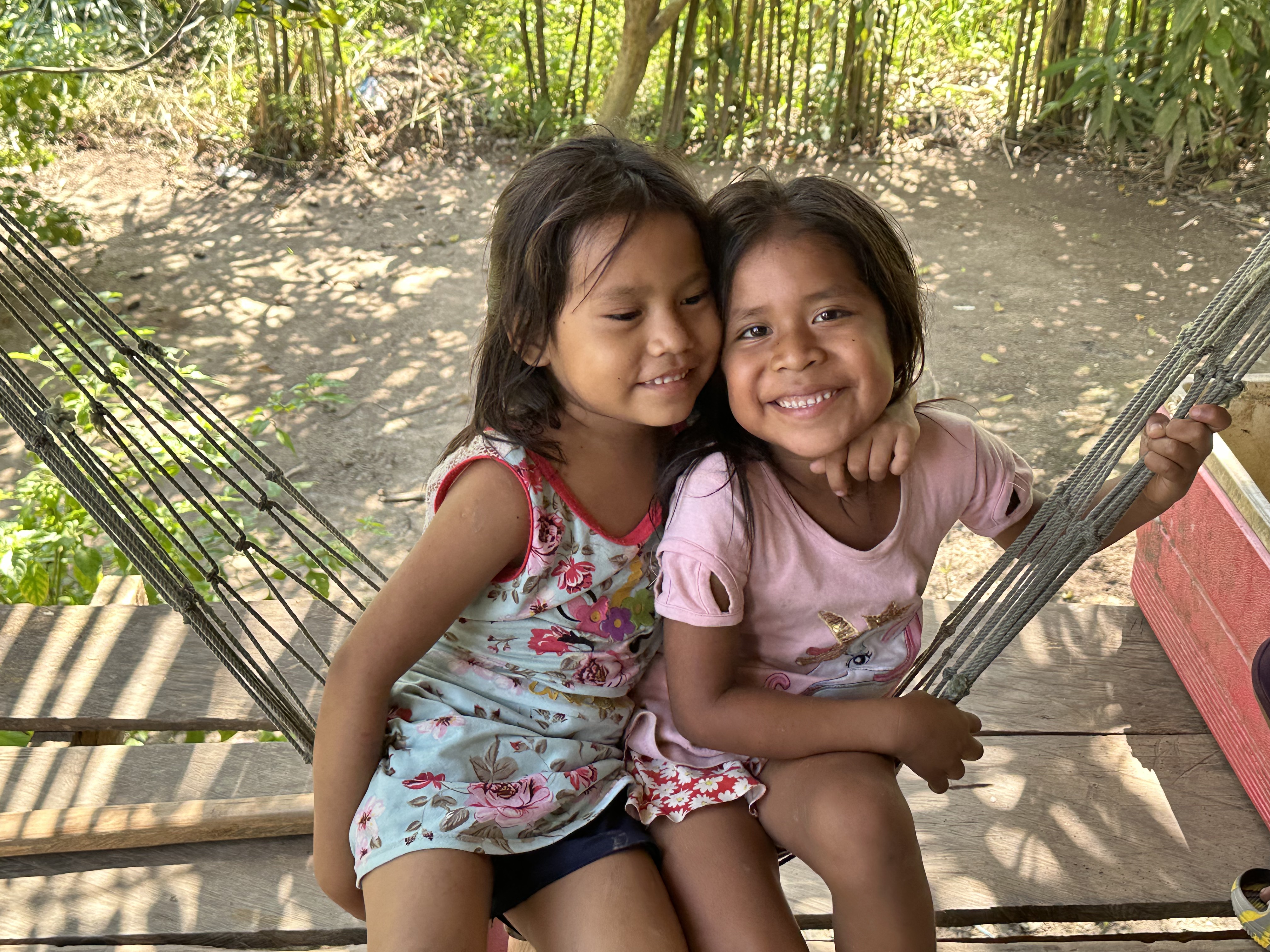
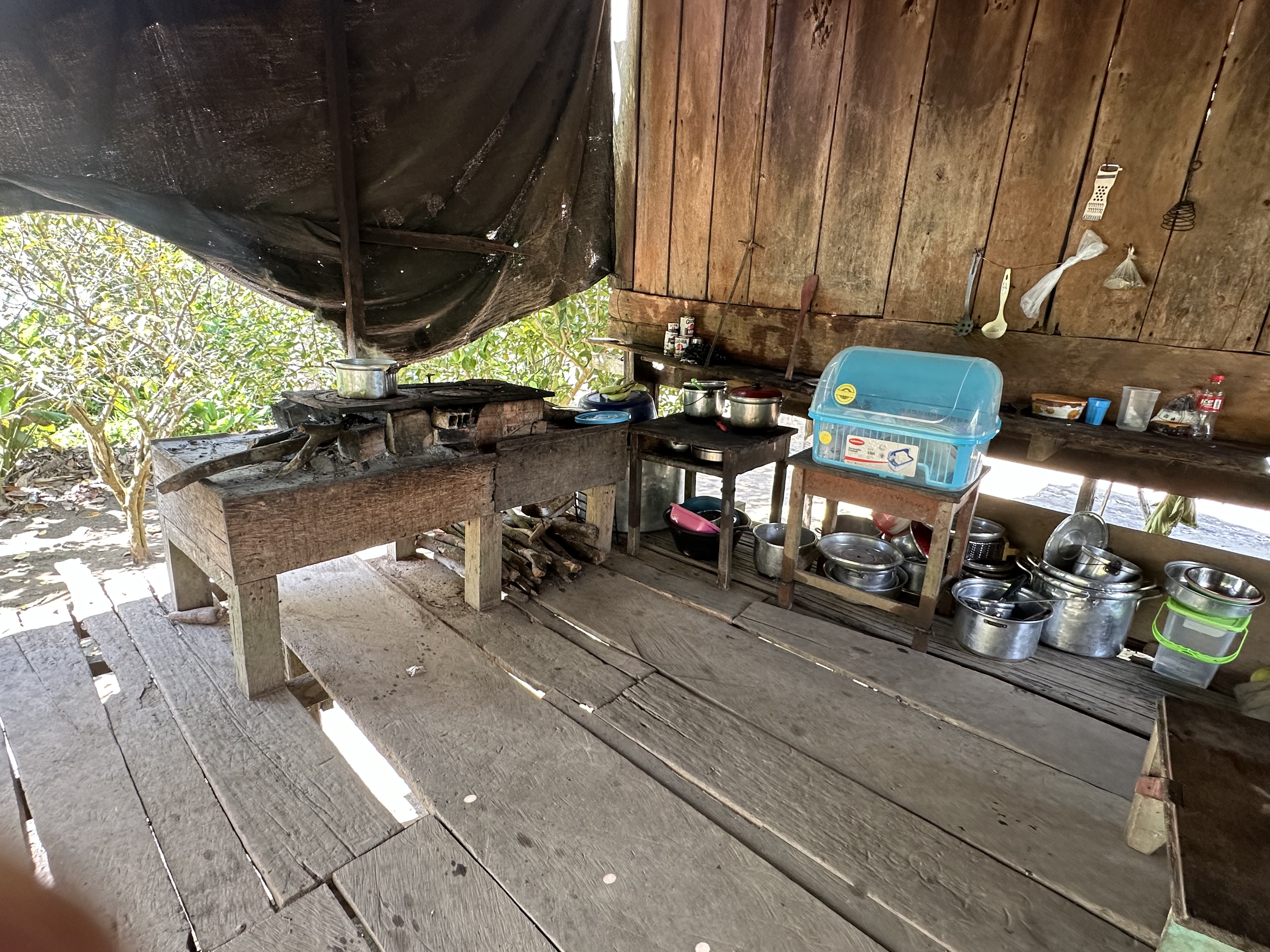
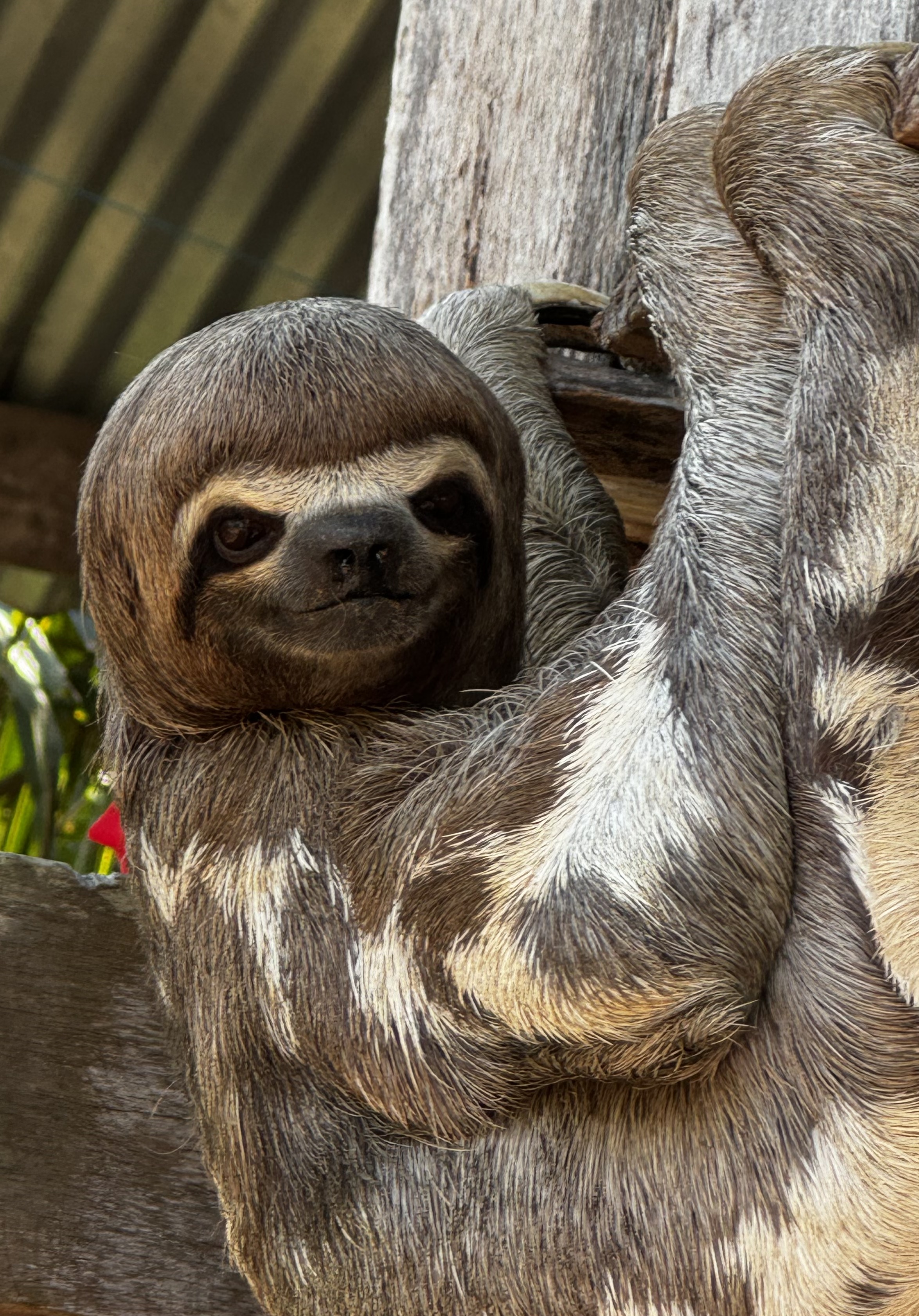
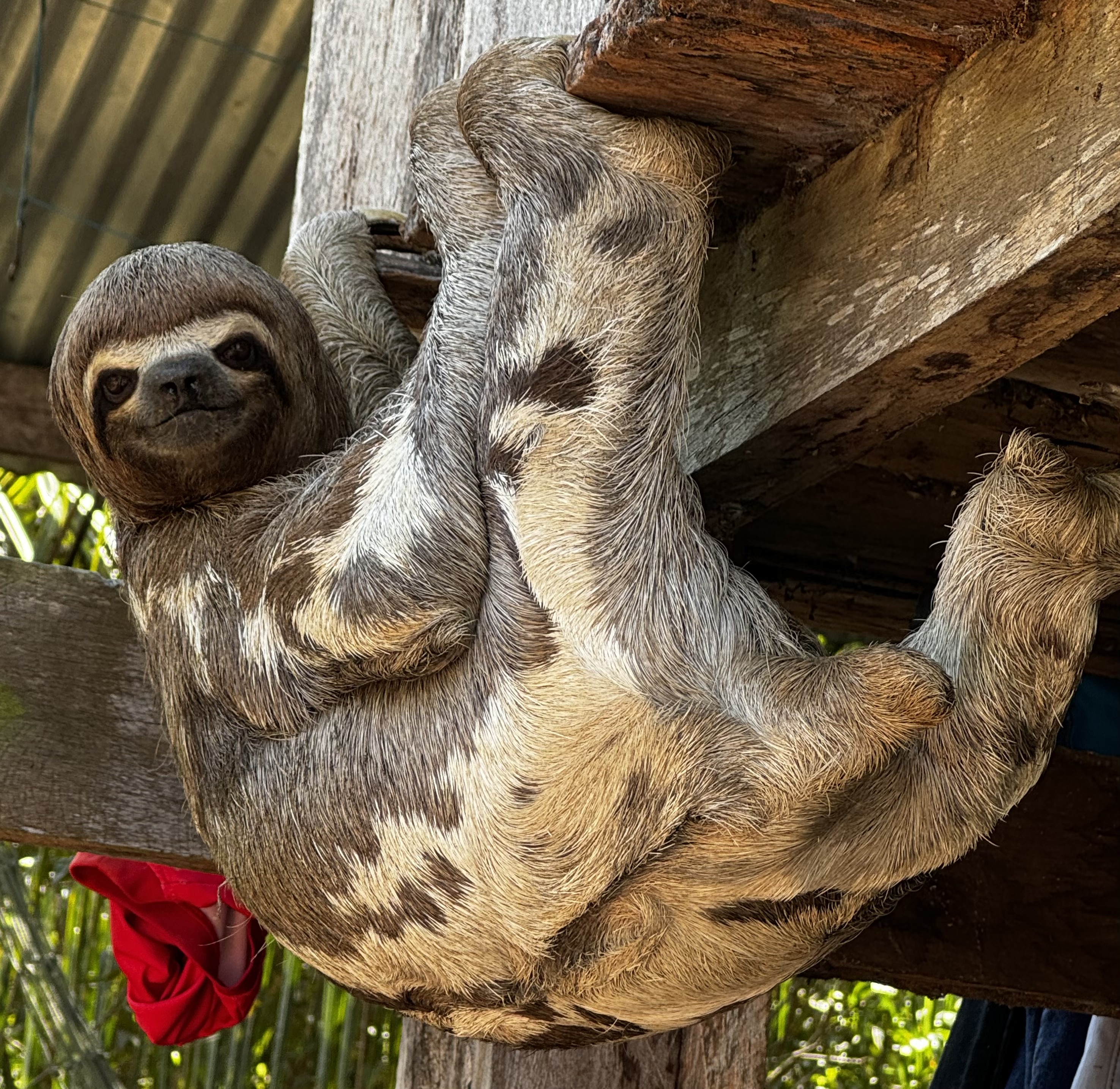
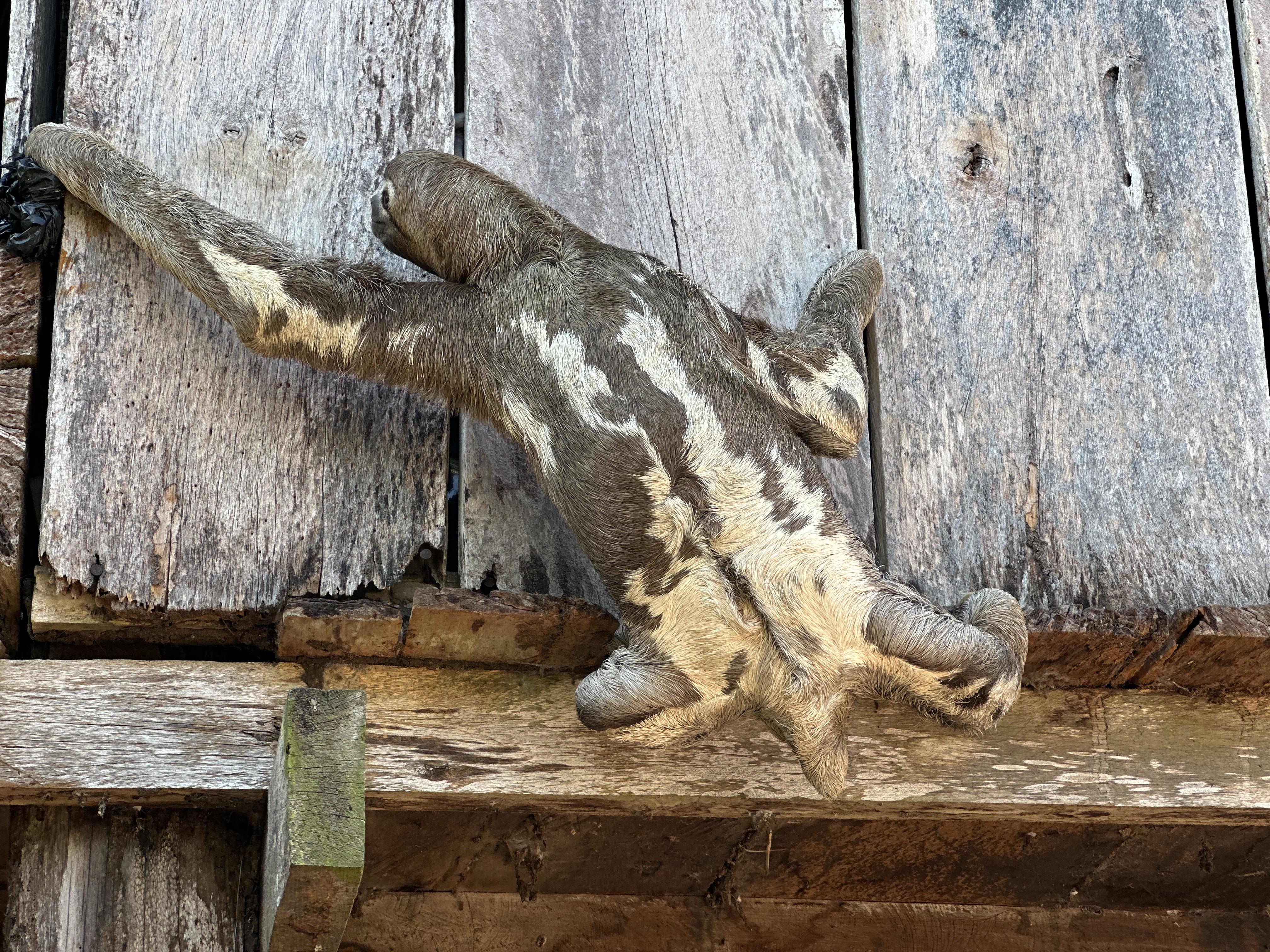
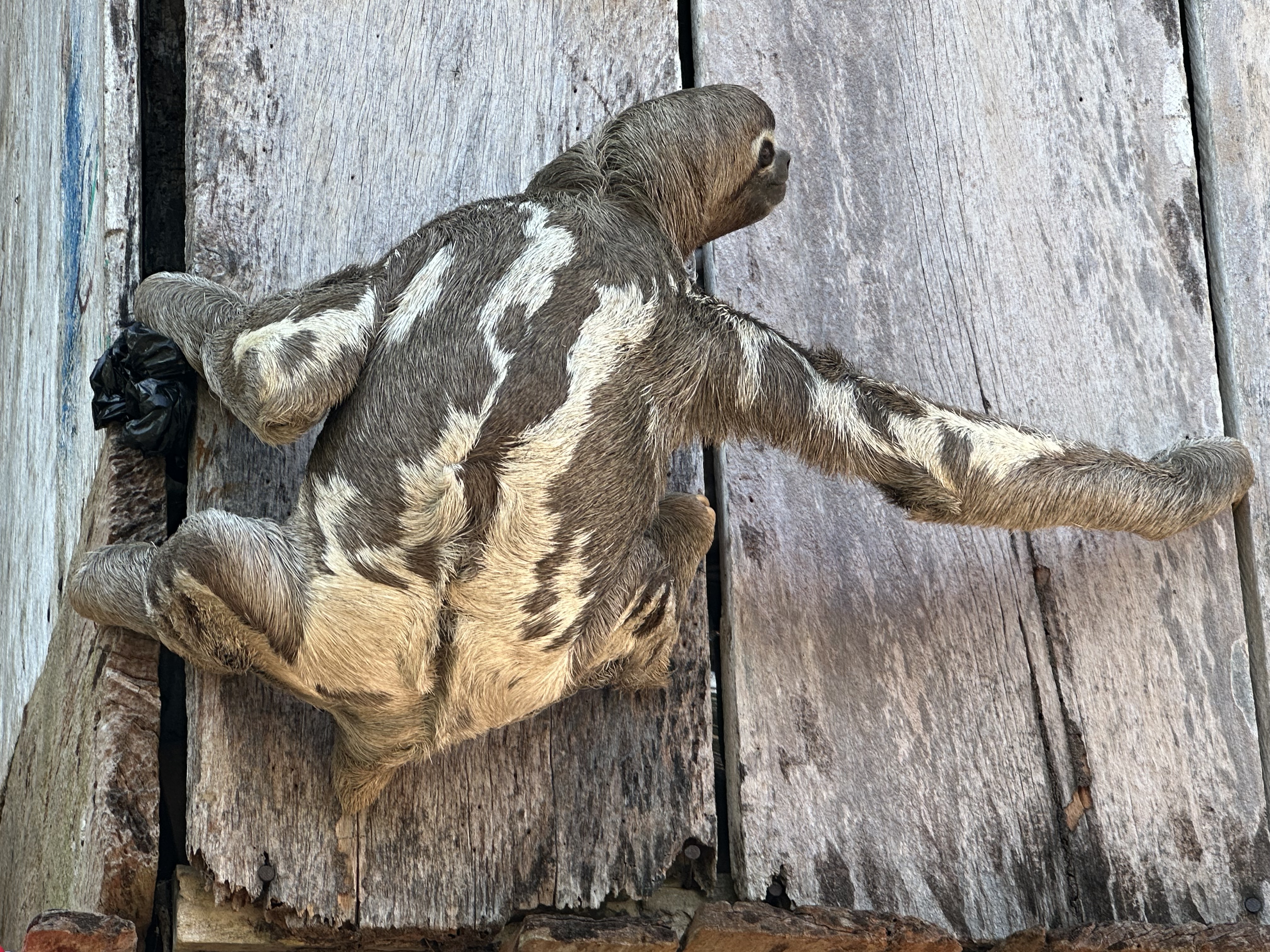
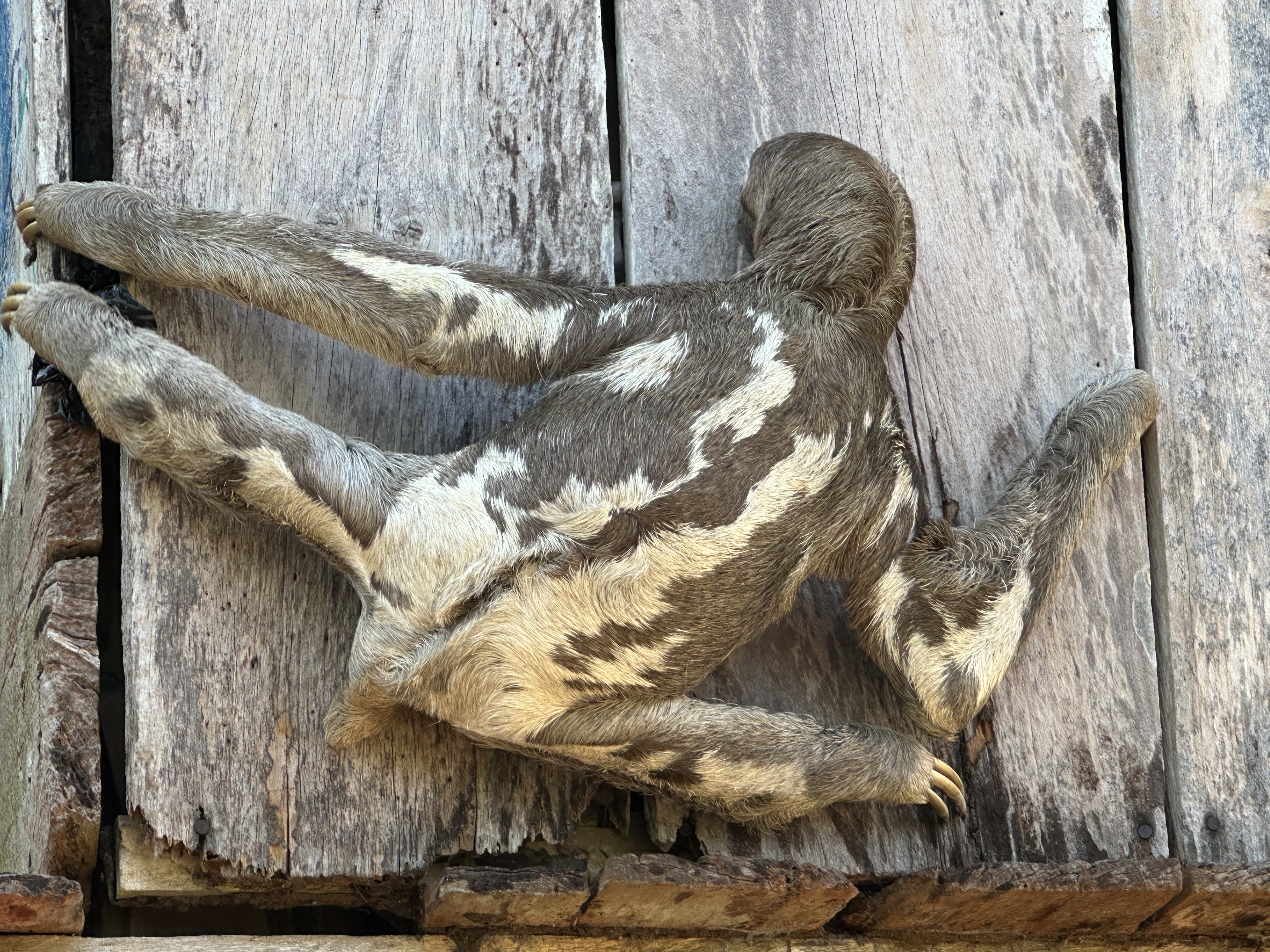
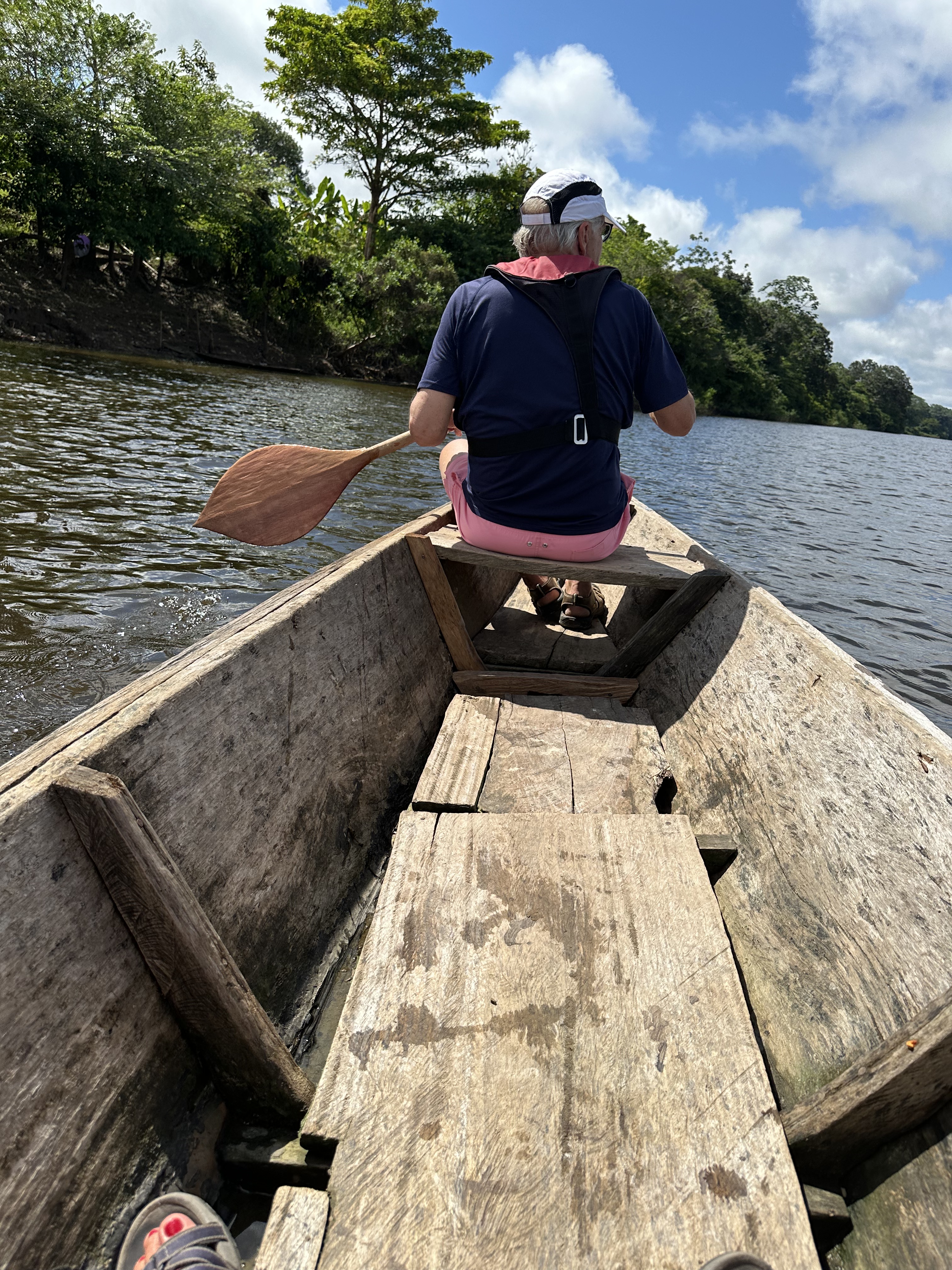
Our next activity was paddling in a dugout canoe. Mark and I managed with a local lady at the stern. The paddles were very heavy and we had had enough after a short time in the heavy canoe. Mark’s new shoulder was happy when we quit.
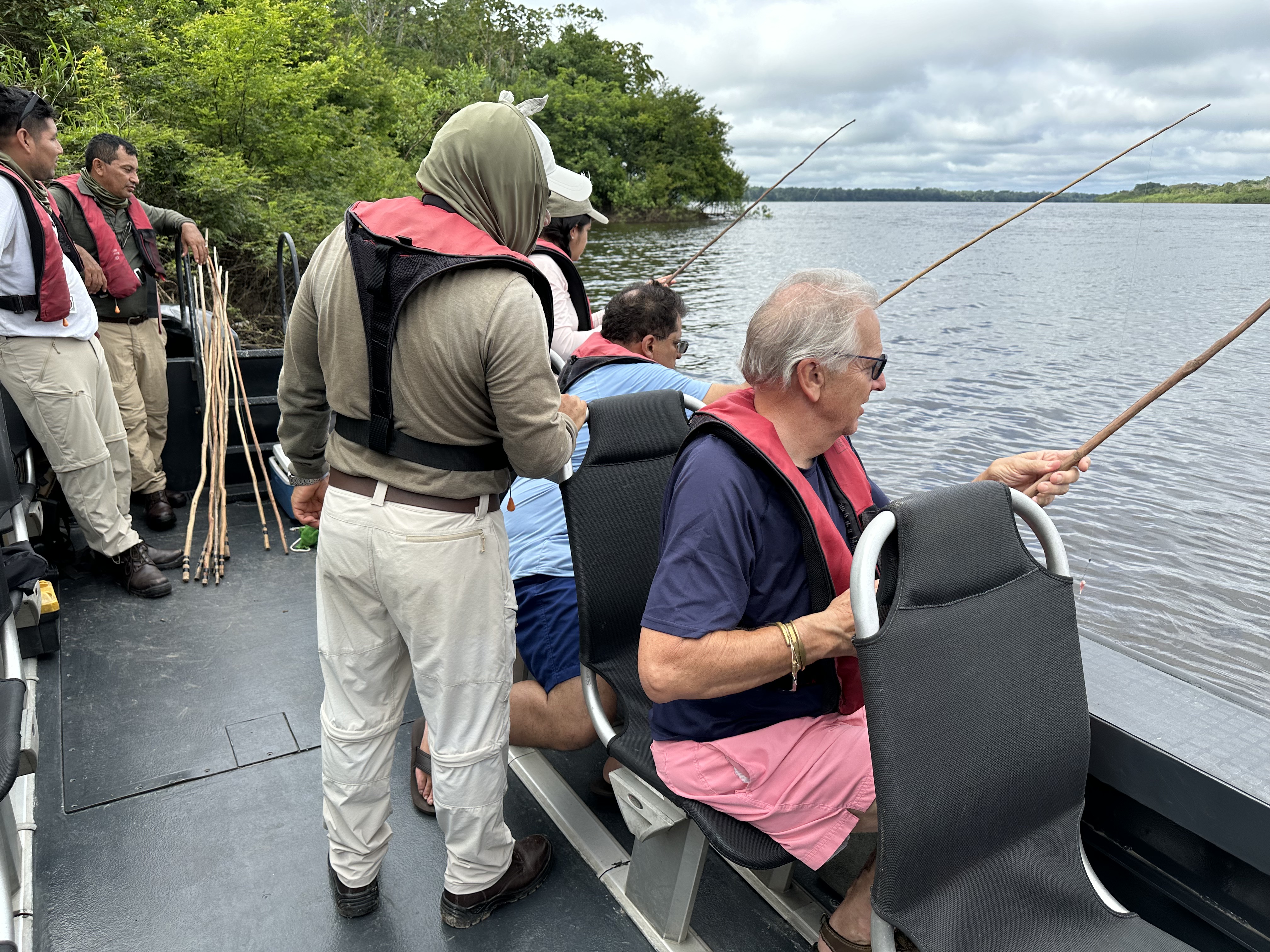
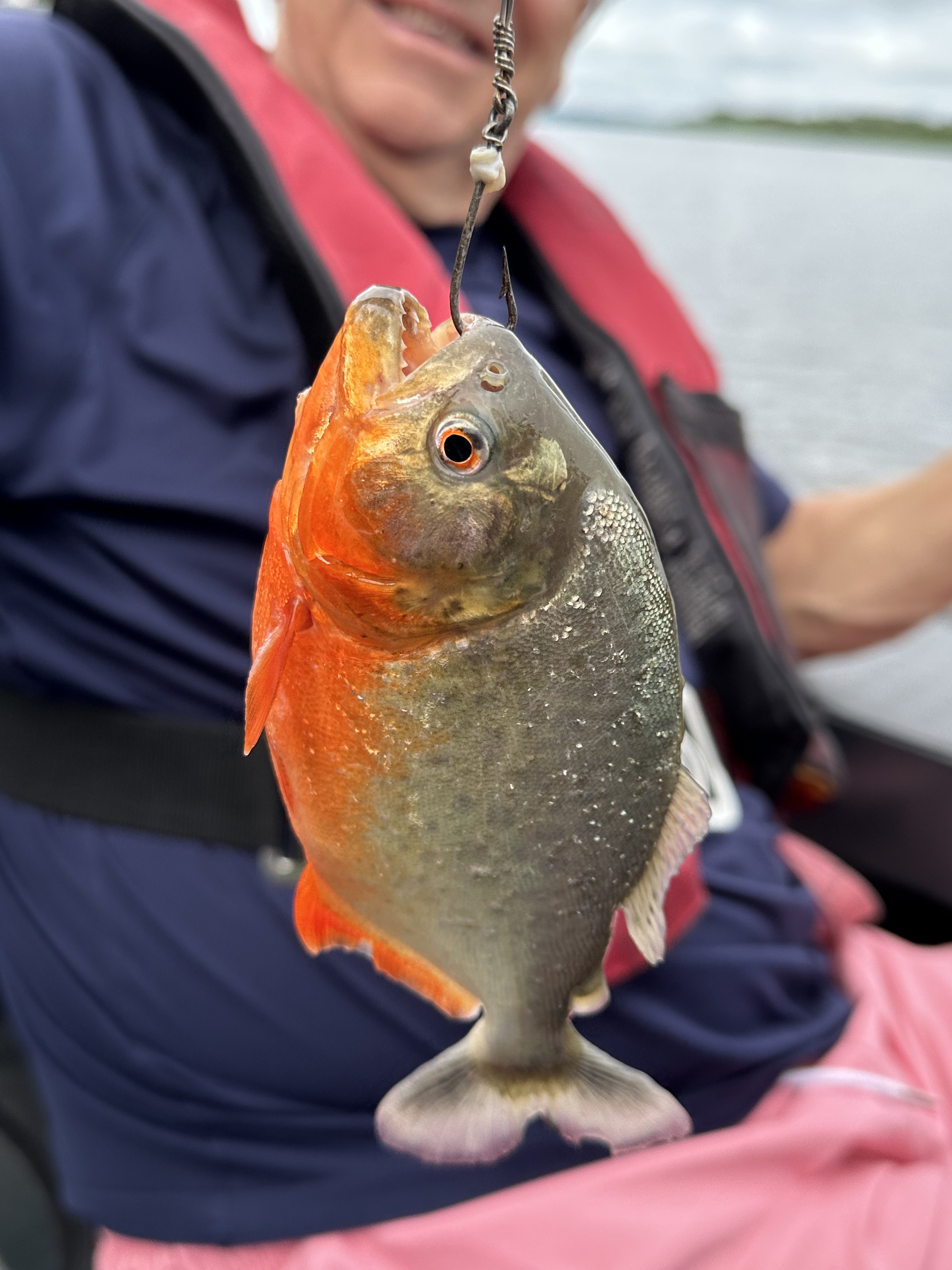

Back in the tender, we motored out into the middle of the black water lake for a swim. We learned that the muddy, brown Amazon has a Ph of 11, while the clean, black tributaries have a Ph of 3. The weather had warmed up considerably since morning and we were delighted to get into the water. It was very refreshing even if we were in it only 15 minutes or so. Then we motored back to the Aqua Nera, which was in the muddy-brown Amazon waiting for us. Shortly thereafter, a pizza and pasta lunch was served. We are both feeling overfed and stuffed. But how do you skip a meal? There is no going into the kitchen later to get a snack.
 Adventures with Julia
Comments
great candid photos of people living their lives. Good descriptions of touring experience. I’m enjoying this, thank you.
Did Mark keep the piranha or throw it back? Are they edible?
Hindi
Mark and Julia
Really fascinating travels! We were at Georgeâs 107th birthday party yesterday â missed you guys
Channing + Donna
[A group of people sitting outside Description automatically generated]
Great reporting on uniques travels. Thank you for sharing.
Frank Santos
Wow, great pictures. Especially of the sloth. I was surprised you swam in the water — I would have thought it was full of piranhas!