
This story accidentally missed the last post and I don’t want you to miss learning about the tapada limena. So here is one final post about Lima.
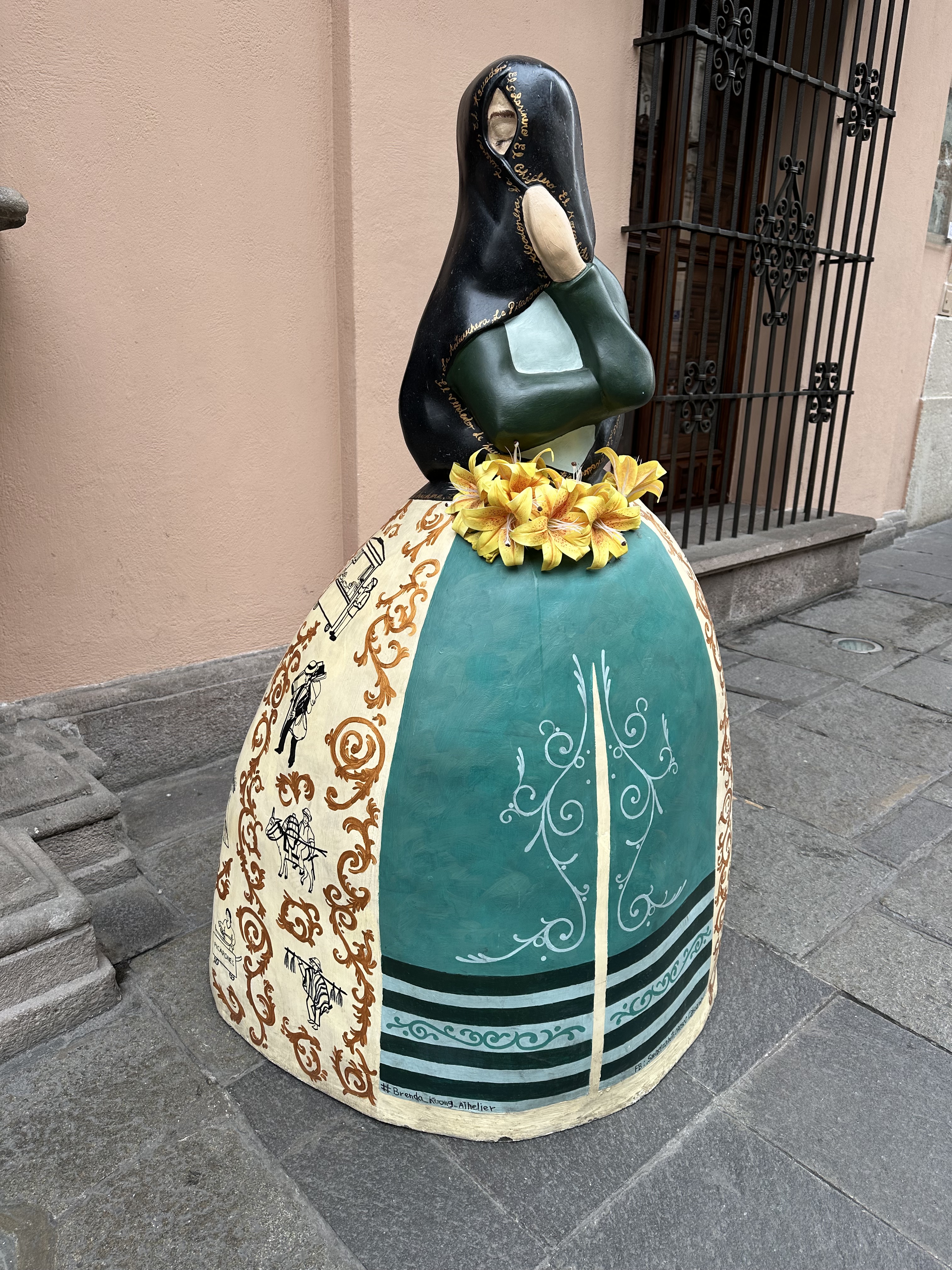
Tapada Limena was the denomination used at the time of the Viceroyalty of Peru and the first years of the Republic to designate the women in Lima, aka Liman women, who covered their heads and faces with comfortable silk fabrics, revealing just one eye. Its use began around 1560 with particular clothing and cloaks worn by the tapade limena and spread for 3 centuries until well into the 19th century when it was relegated by French fashions. In 1583 the Archbishop of Lima pronounced a rejection of the custom of wearing the clothing by women in the capital and ordered a fine. The fear of this custom, already widespread among Liman women, generated much misunderstanding and confusion and made the authorities suspect transvestism was taking place in the Viceroyalty. Official testimonials and ordinances could not dissuade the Limen women.
The characteristic attire of the tapada “connoted insinuation, coquetry, prohibition and seduction games”, although it was still a dress. The gown outlined the hips, and the cloak covered the head and face, except a single eye. It was a symbol of the freedom for Liman women. The symbol was used to distinguish themselves from women of other classes and races. Behind the cloak could live a toothless grandmother as well as a one-eyed woman covered in smallpox. The possibilities were many and boys and old men could take advantage of the situation too.
The skirt was large, long and silk, colored blue, green, brown or black and of a wide range of quality. A belt was used to secure the skirt and false hips were sometimes added to enhance one’s endowments. Underneath the skirt, the feet were shod with embroidered satin shoes, adding to the fame of the colonial Lima women. The cloak was also made of silk, tied at the waist and up the back to cover the head and face. Its simplicity allowed the wearer to retain anonymity.
The tapadas Limenas were an icon in ancient Lima, an original presence that did not exist in any other city in Hispanic America. T he insinuating game, the symbol of secrecy of an incipient female freedom, caught the attention of passing visitors who wrote books, plays, songs and dances about them. After 3 hundred years, the custom finally fell out of favor with–of course–the Liman.
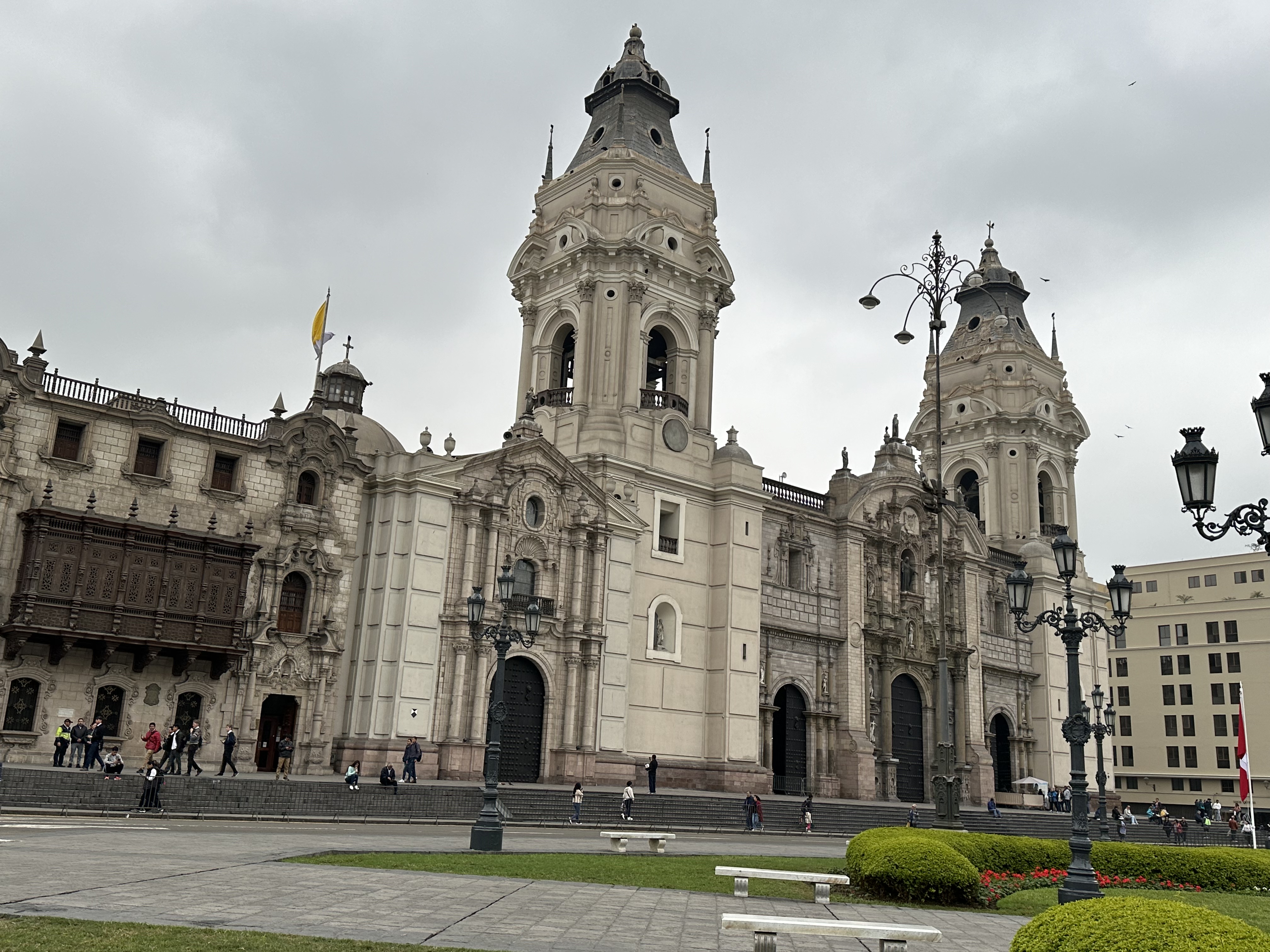
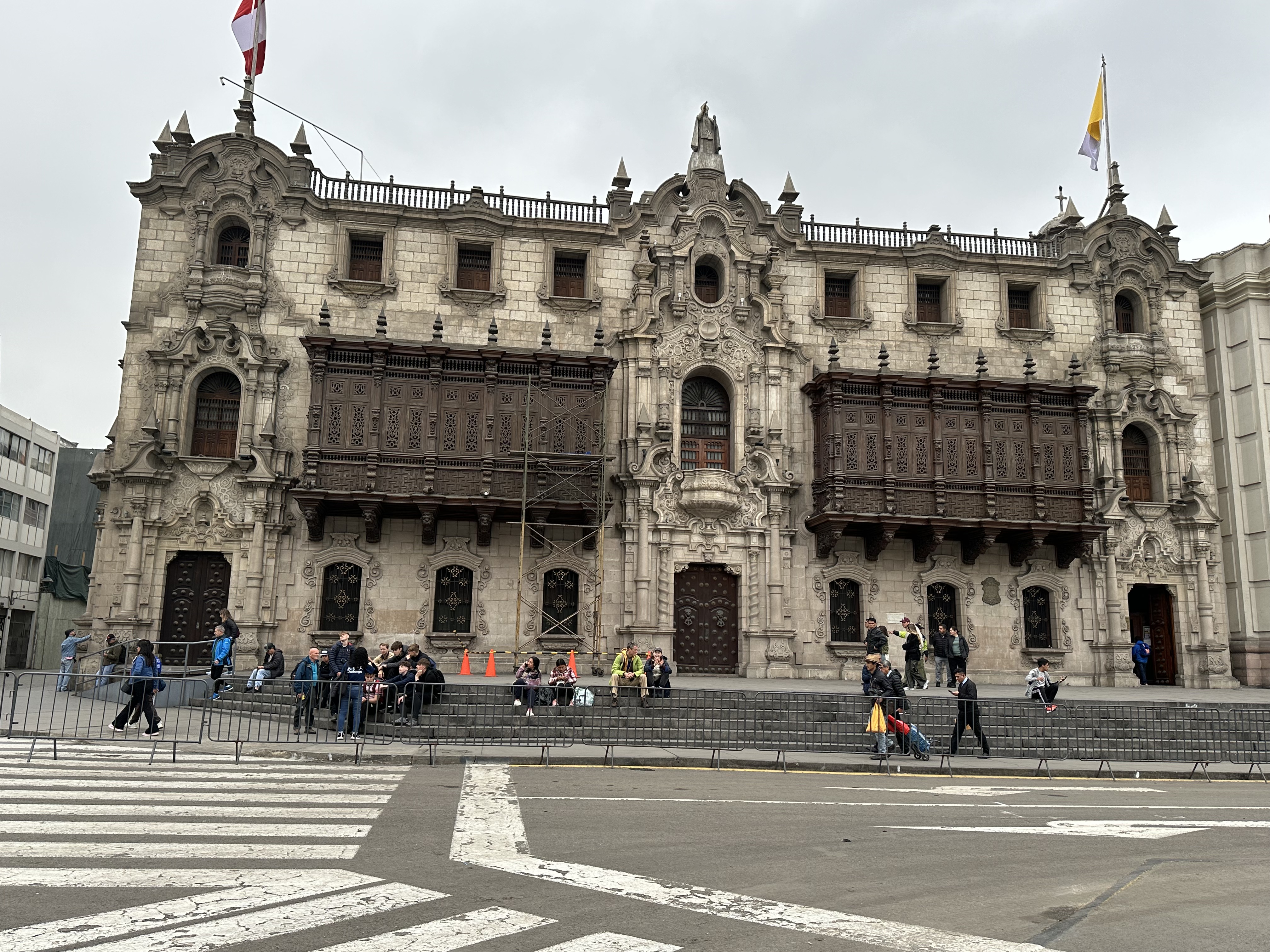
The lady above was standing near the Cathedral of Lima.
We are home now and back in reentry mode. Laundry and mail underway. Blessing to all of you and a happy summer. Julia and Mark








 Adventures with Julia