Monthly Archives: September 2024

Lizard Island

Friday, September 27, 2024

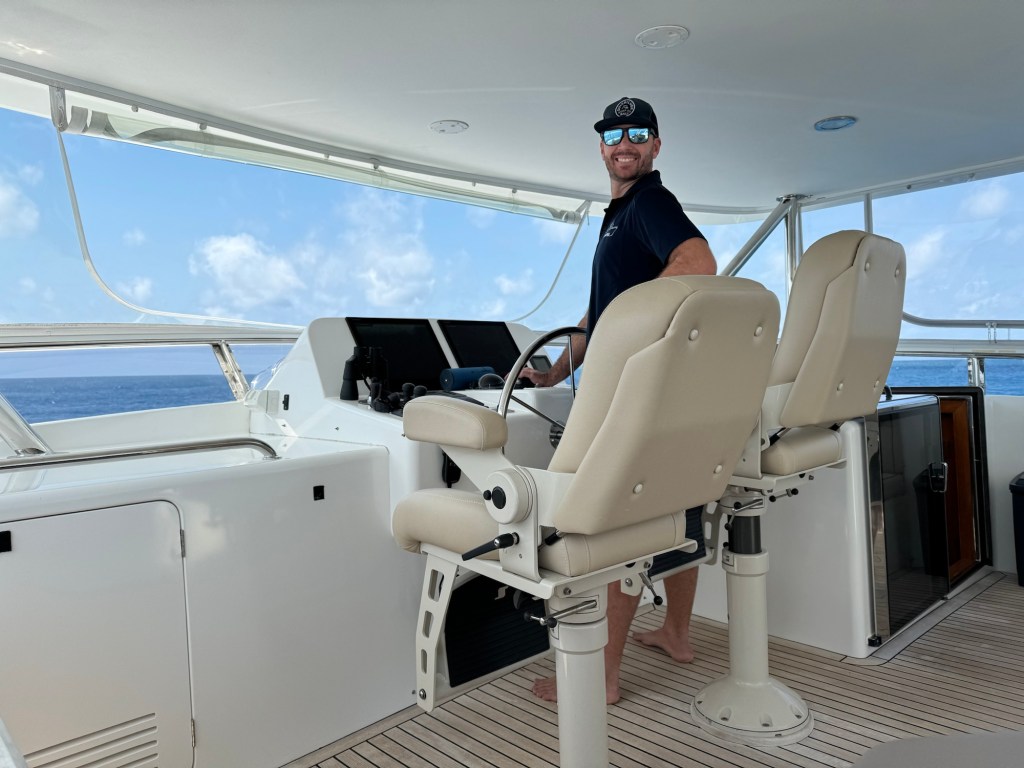
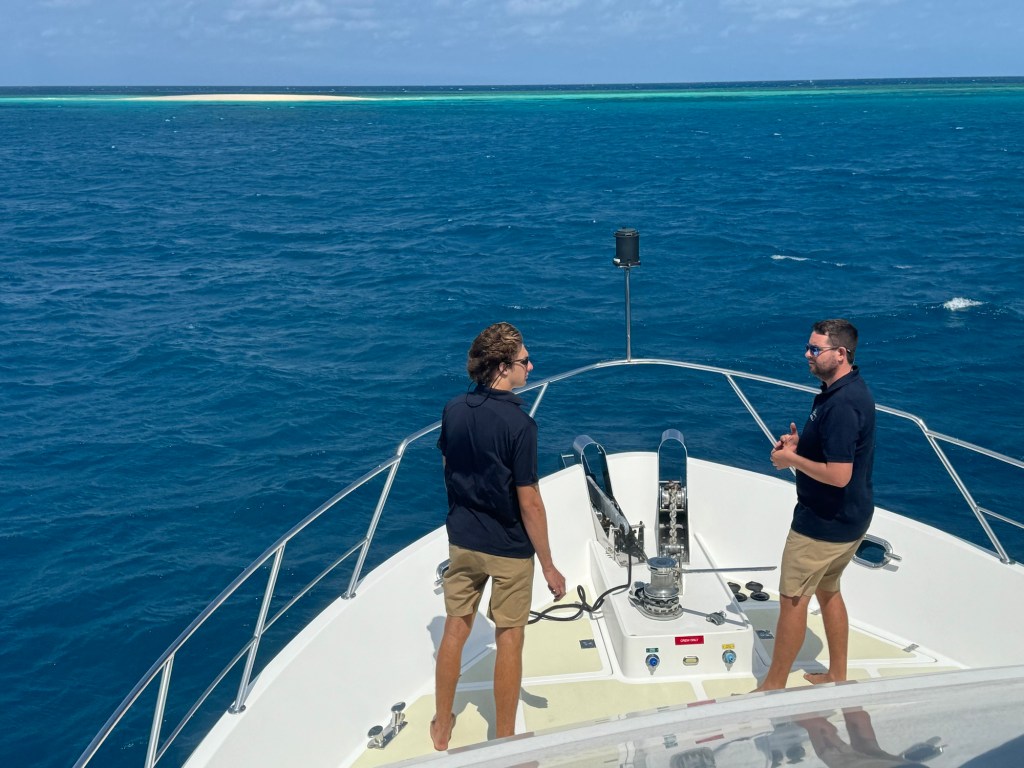
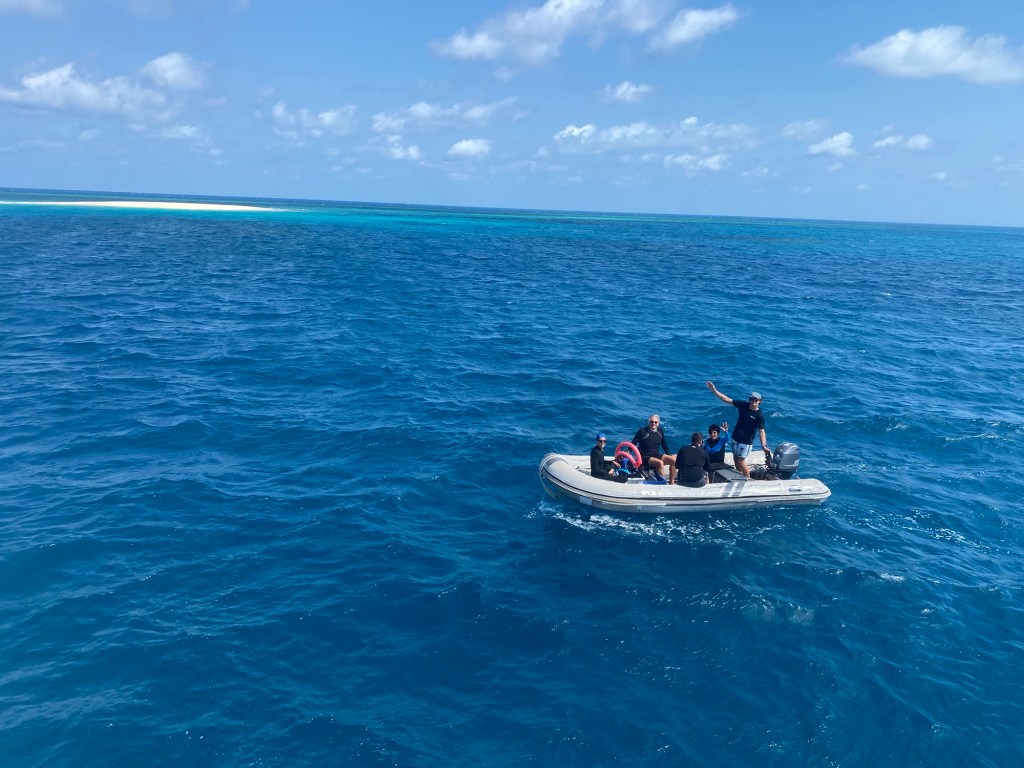
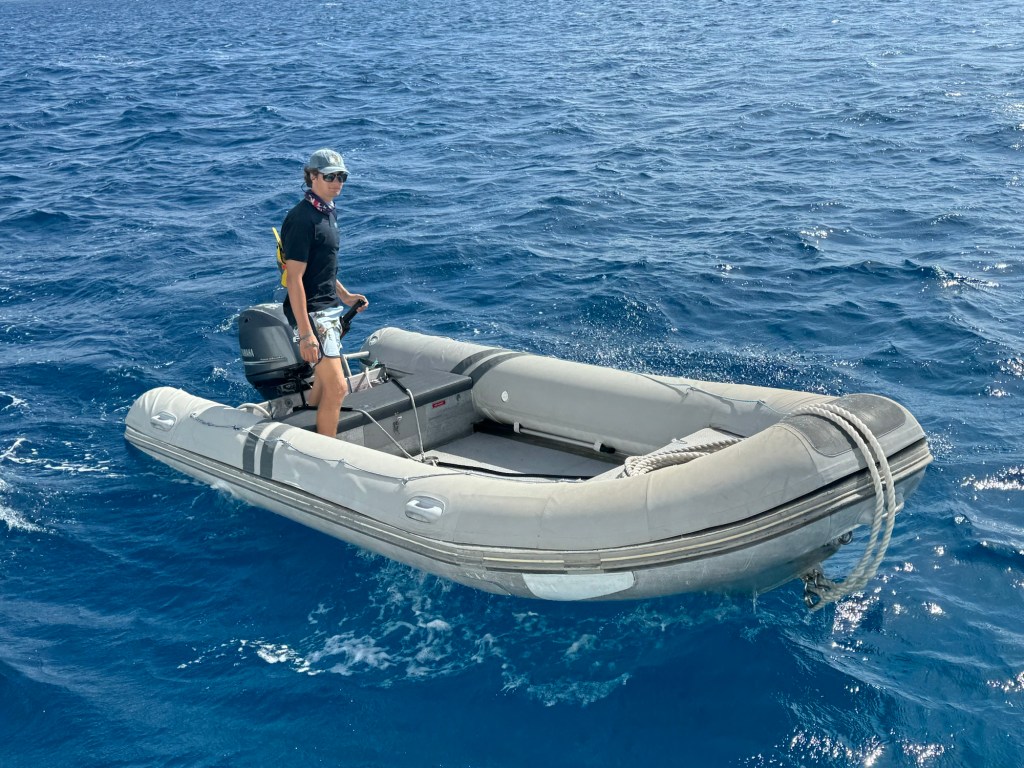
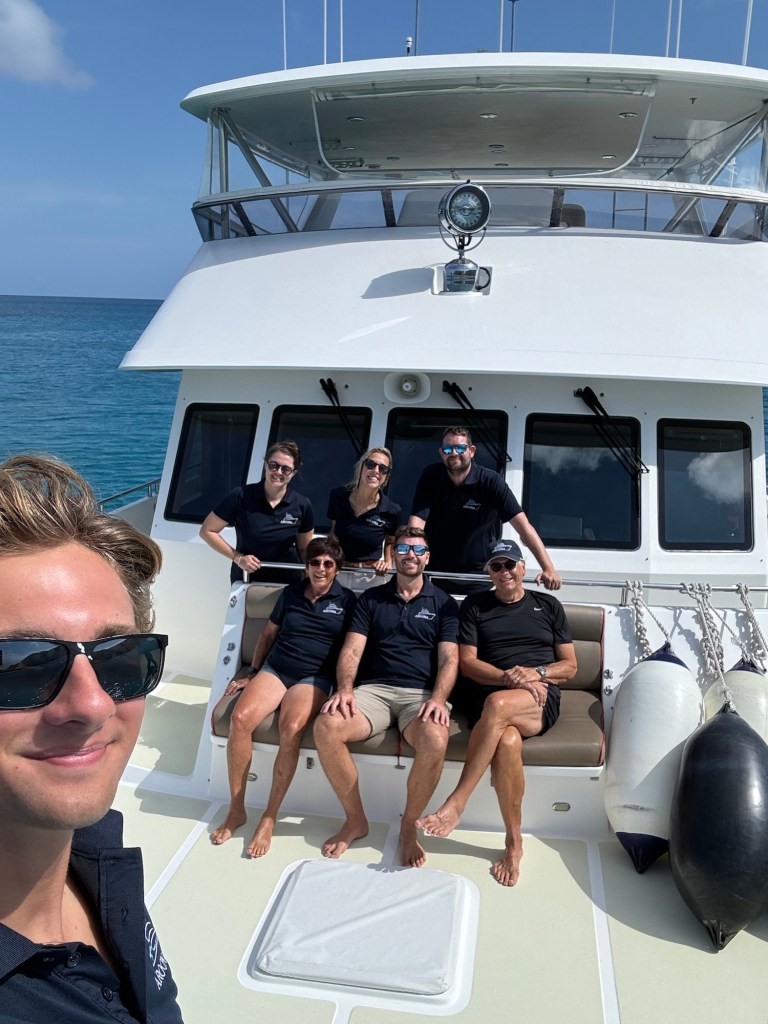
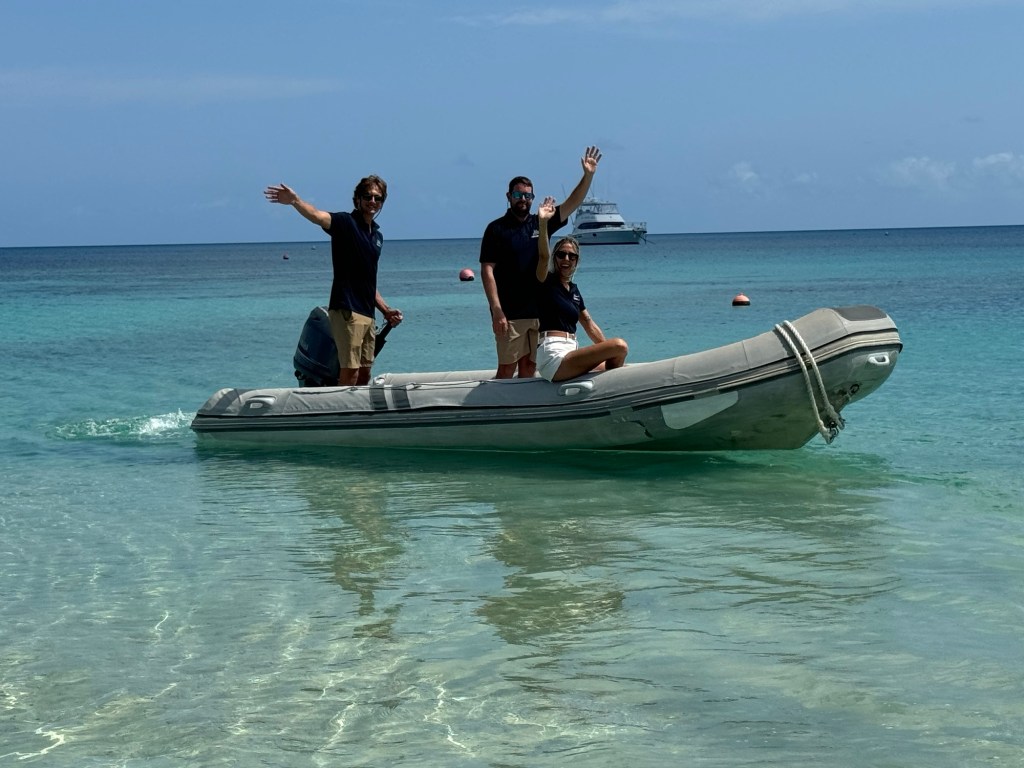
By 10:30 the Aroona crew had left us behind on Lizard Island and taken the tender back to the boat.
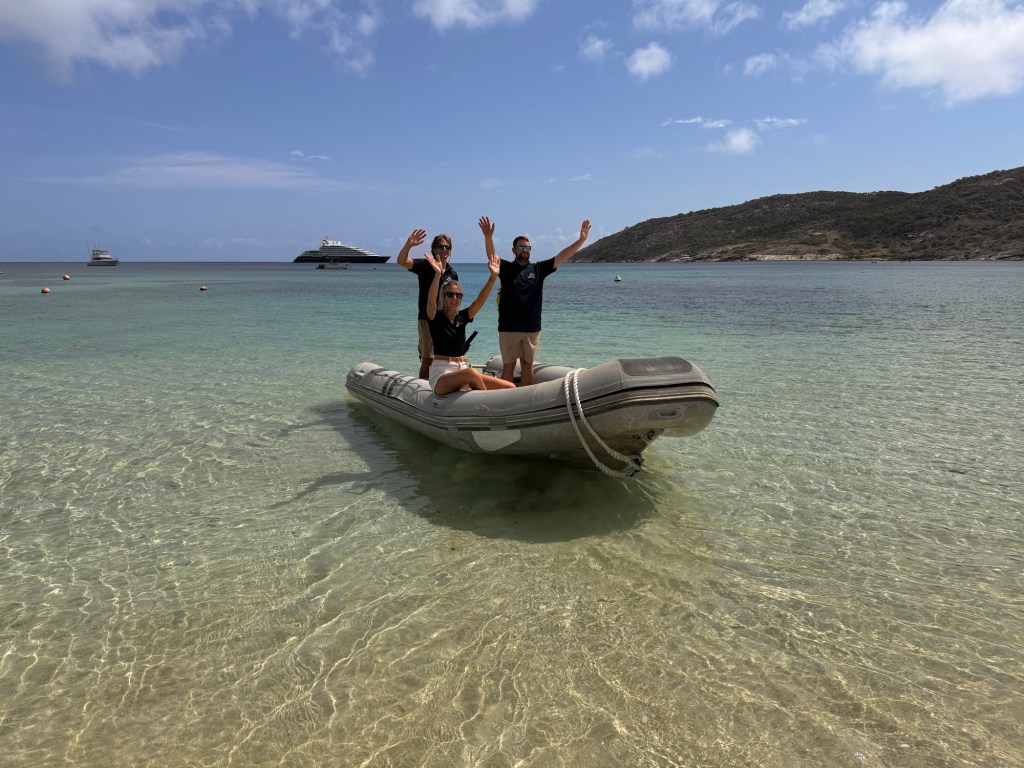
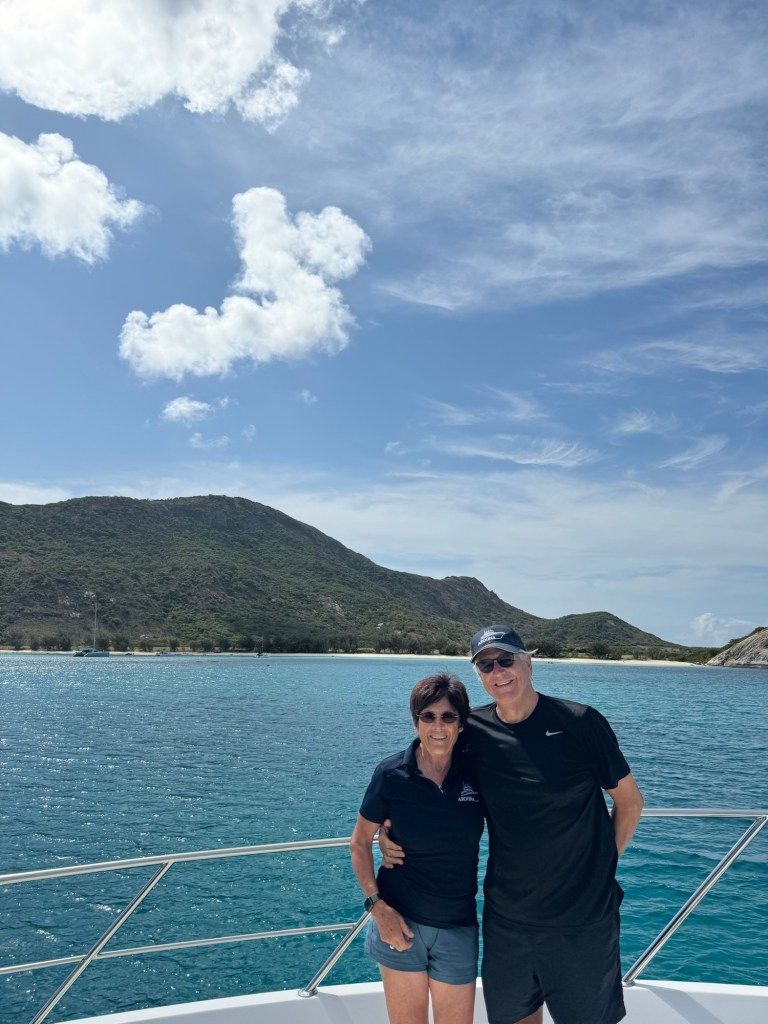
I watched until the boat motored out of sight. Been a long time since I had been so sorry to see something end. We had had such a good time with everyone and with the boat itself.

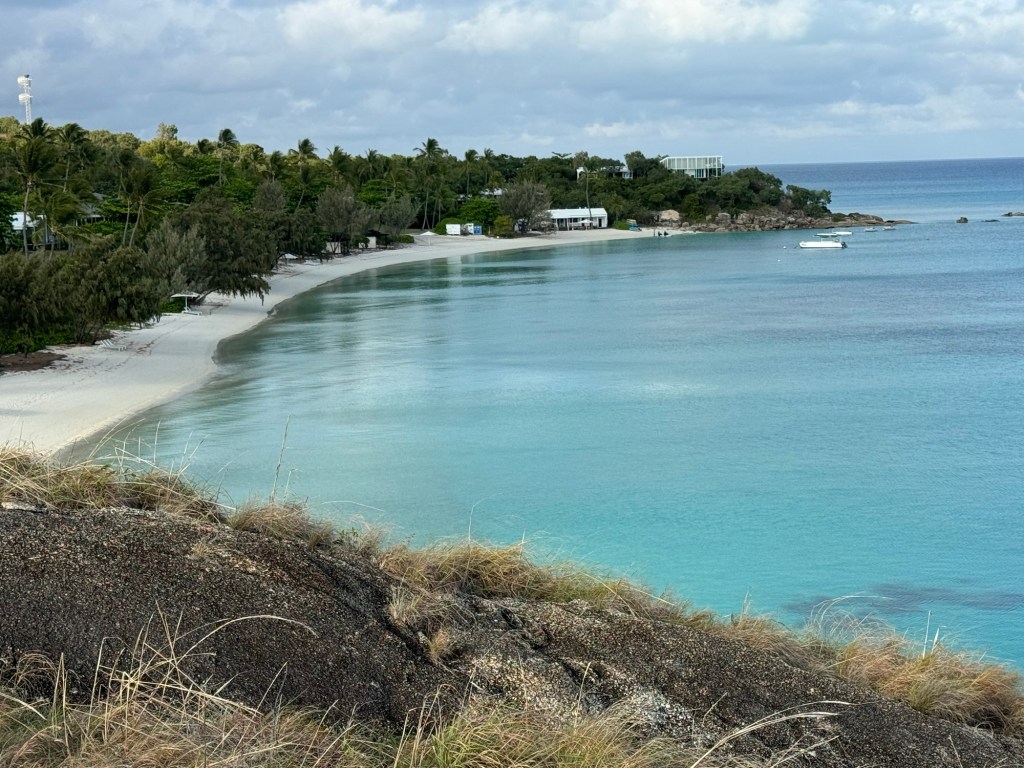
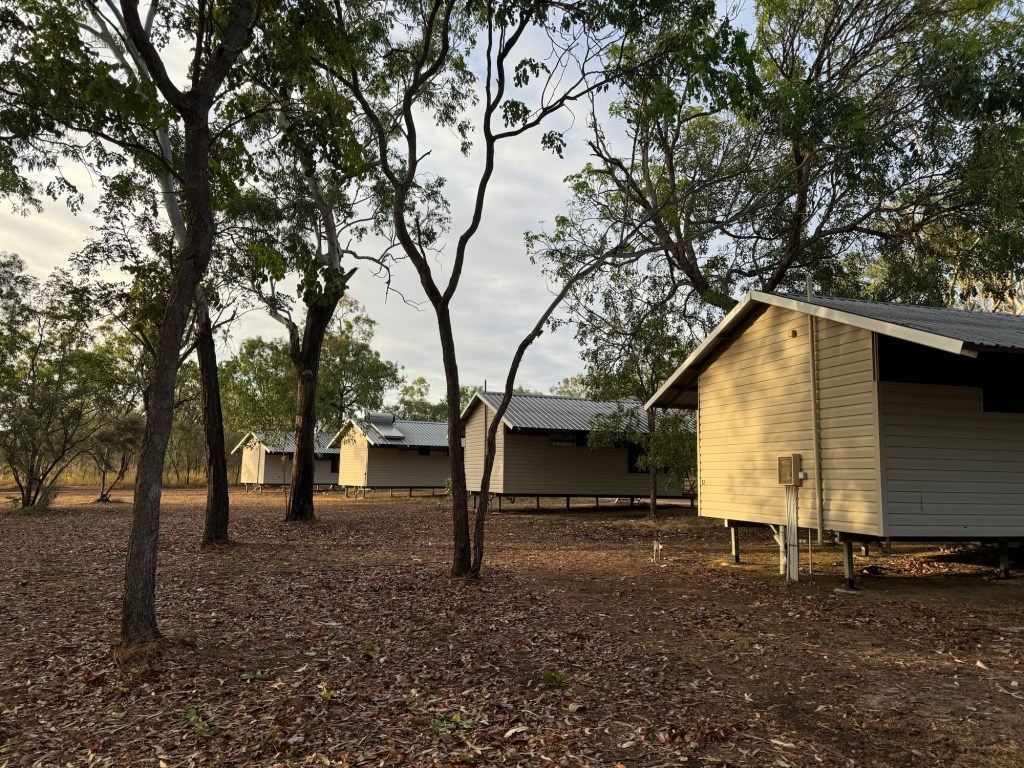
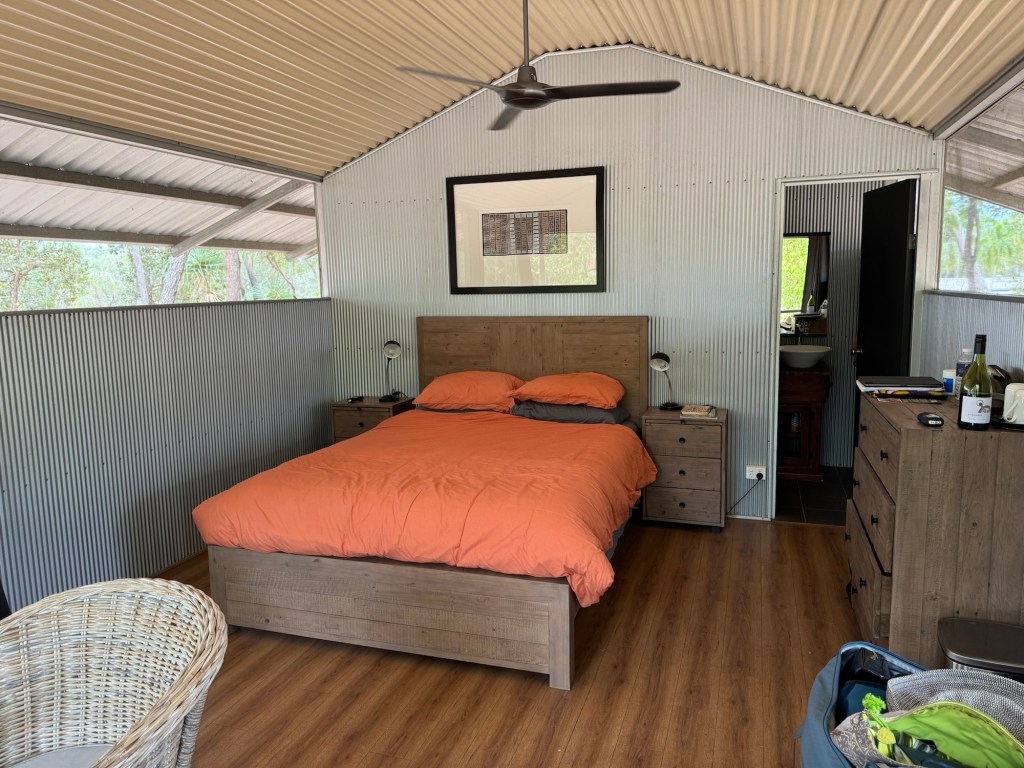
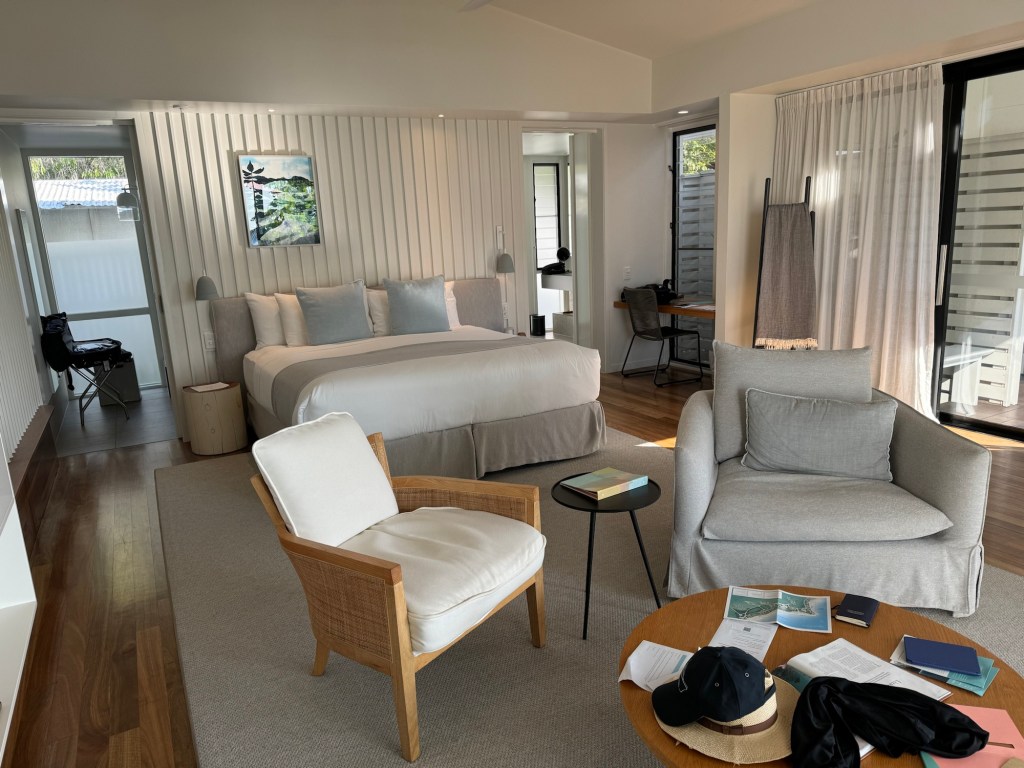
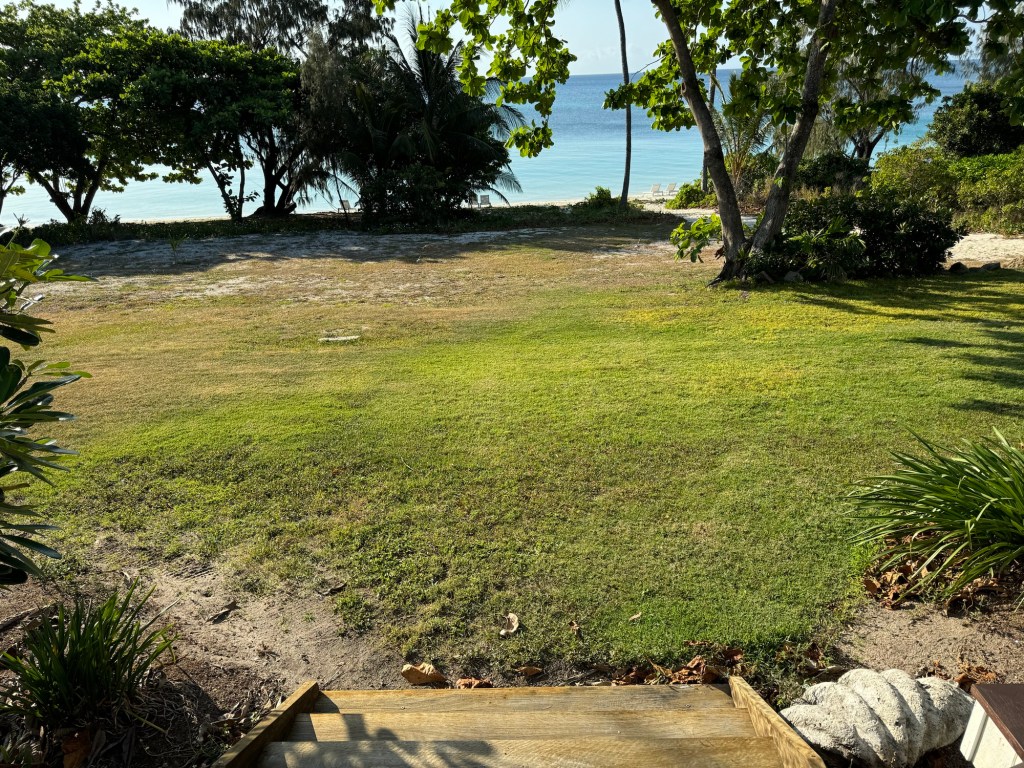
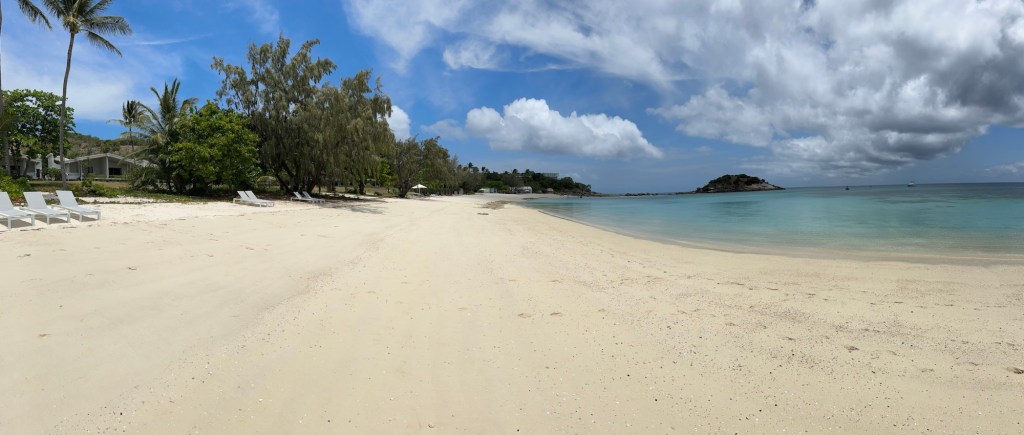
Anyway, we are now on a new adventure. The day is clear and sunny and our room faces across the lawn and to the sandy beach. The water is pleasantly cool, but the sand and air are very hot. We went for a dip to cool off and settled into our Air conditioned room to read. We had a light lunch and relaxed the rest of the afternoon.
I finished my book about Australia, called “Sunburned Country” by Bill Bryson. He travels all over the country and provides a good and humorous read. He did touch on nearly all the places we have or will visit and confirmed our experiences so far. The north is very hot in September and sparsely populated. The locals we have met have all been friendly, welcoming and inquisitive. The Barrier Reef is equally hot at this time. When we started on the boat trip, the air was breezy and the water was choppy. Gradually the wind died down and the water grew calmer, especially our last day on the boat.

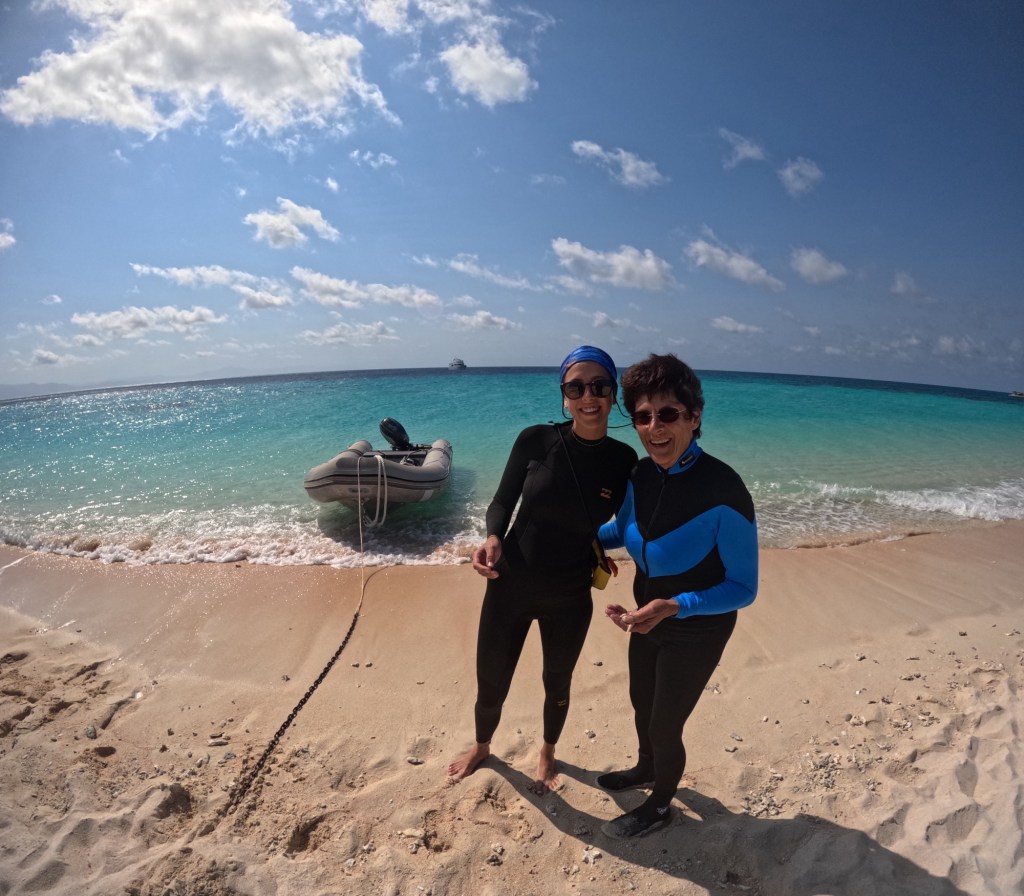
When we were not in the water, we played the card game of Uno, ate and told stories. We learned a lot about the adventures of the crew before they signed on to the Aroona. They each had unique and interesting lives. Their ages ranged from 19 for Fletcher to 37 for Lorenzo with experiences to match. Mark and I shared some of our history too. The last night everyone shared an experience no one else in the group knew. Th evening got a little emotional. The next morning, we had breakfast, went for an early walk on the public beach, grabbed ours bags and motored in the tender to the shore in front of the resort.

That night we walked the beach to the Marlin Bar for pizza and beer. The bar is filling up with people who are here to fish for marlin. The Island will be visited by passionate marlin fishermen for the next month. Fortunately, we will leave the Island before the crush.

Saturday, September 28, 2024

At 7am we went for a bird walk with a naturalist named Lauren, originally from Weatherford, Connecticut but we saw only a few birds and got fewer photos. Particularly the Olive-backed Sunbird, which had a lovely sound and was pretty to look at. All I captured was its interesting, but abandoned, nest.
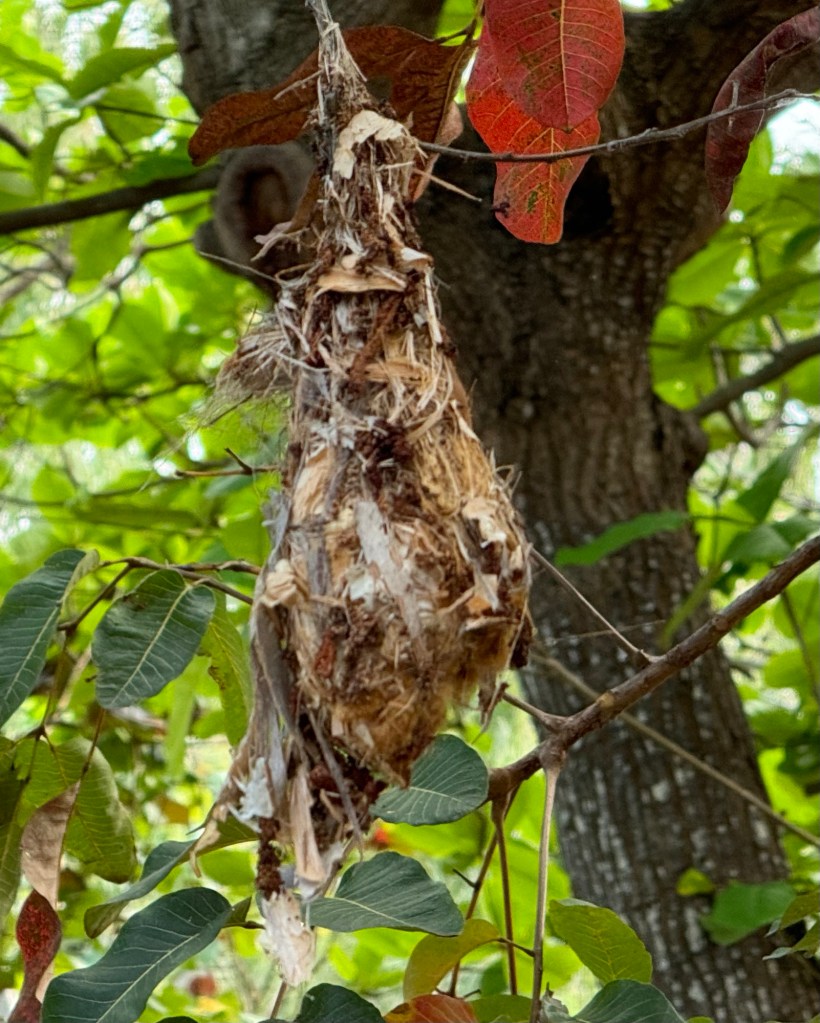
Sunbird nest

The Pheasant Coucal, which makes a loud whoop whoop sound; the Silver Gull, or Australian seagull;
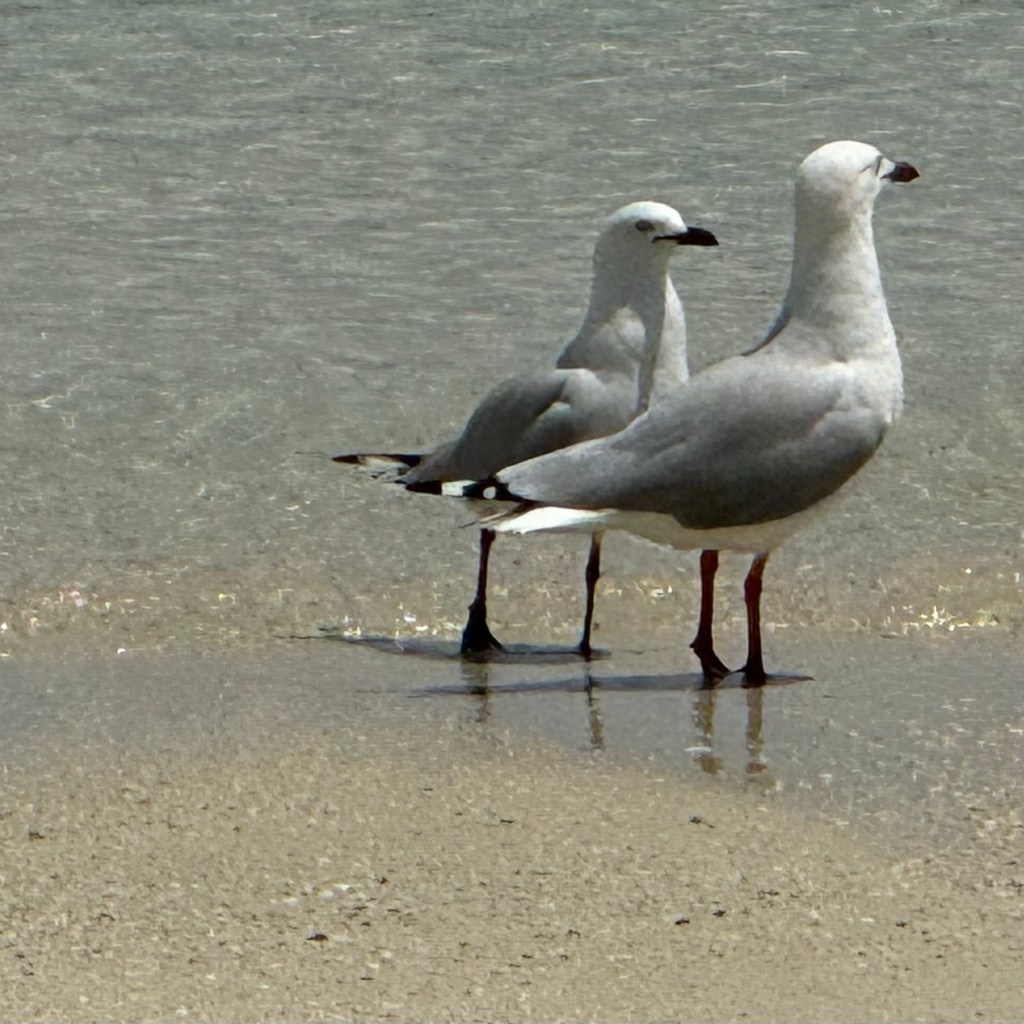
Australian Seagull

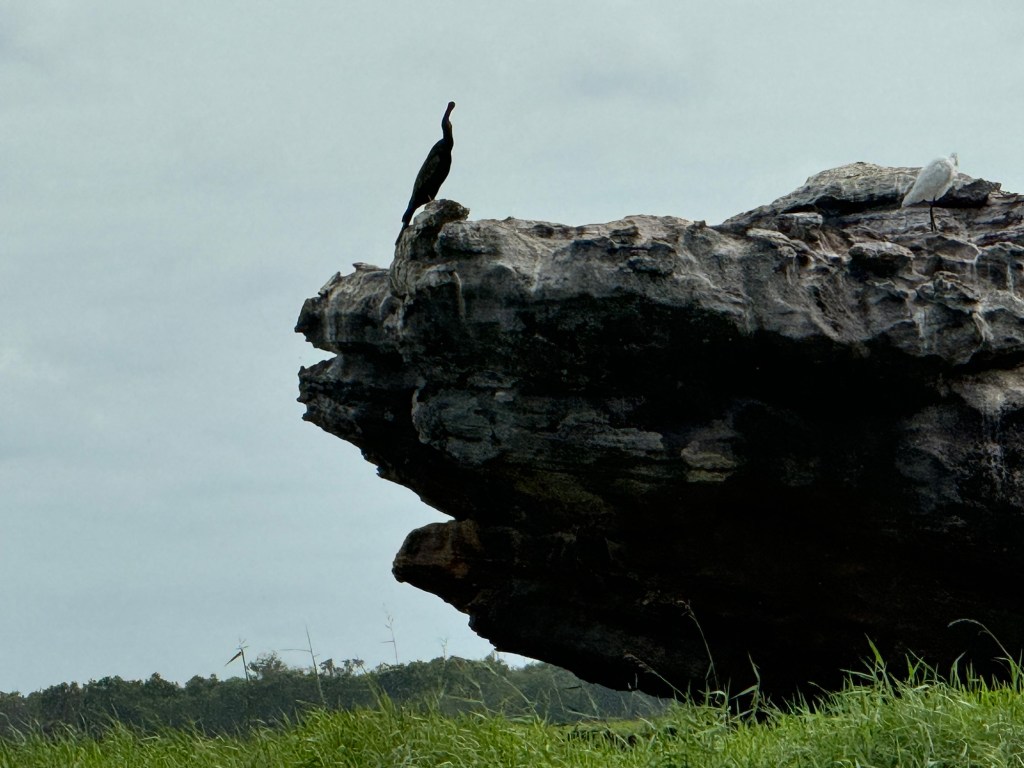
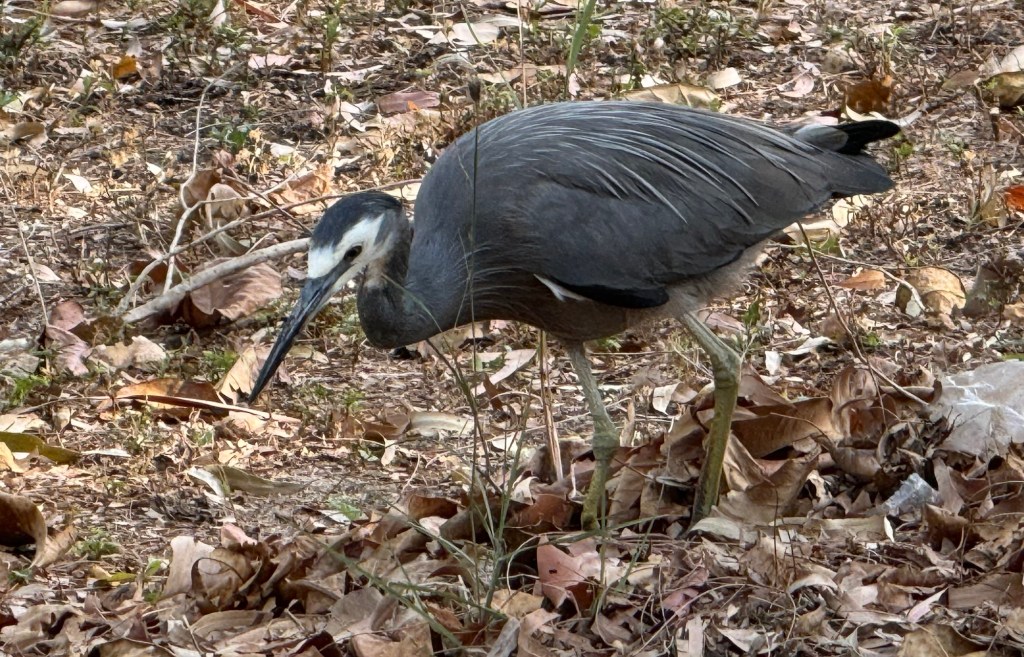
A Grey Heron with a wounded leg

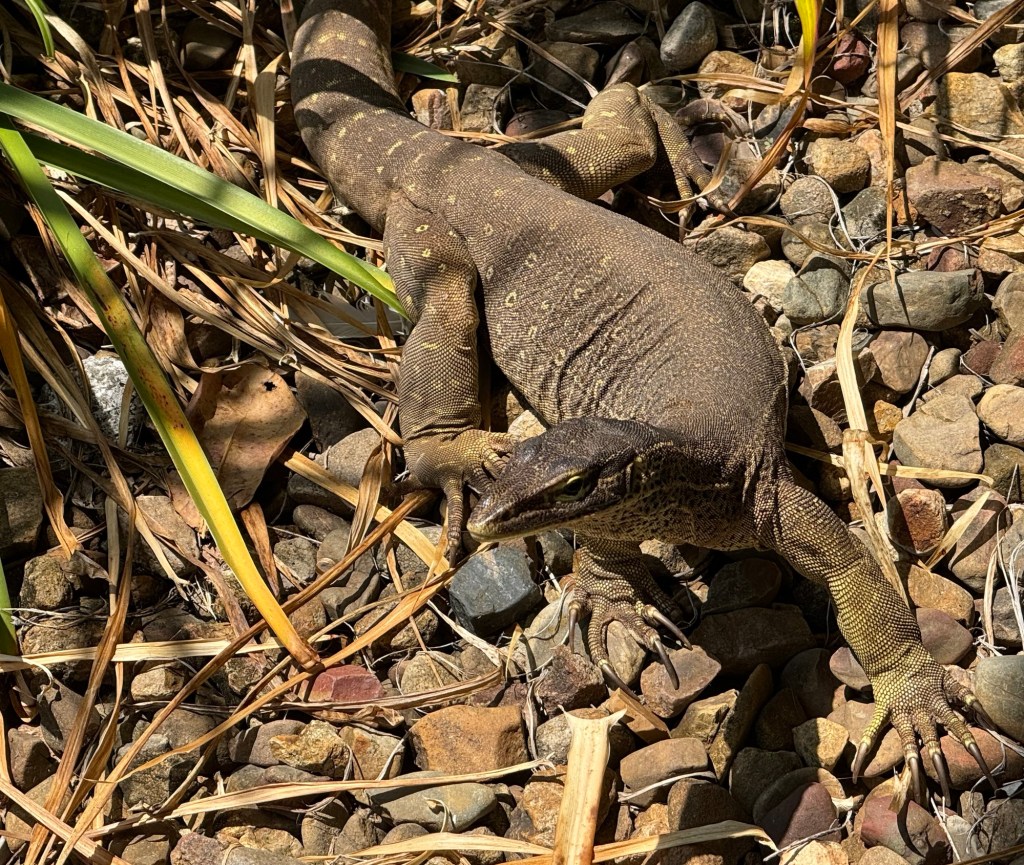
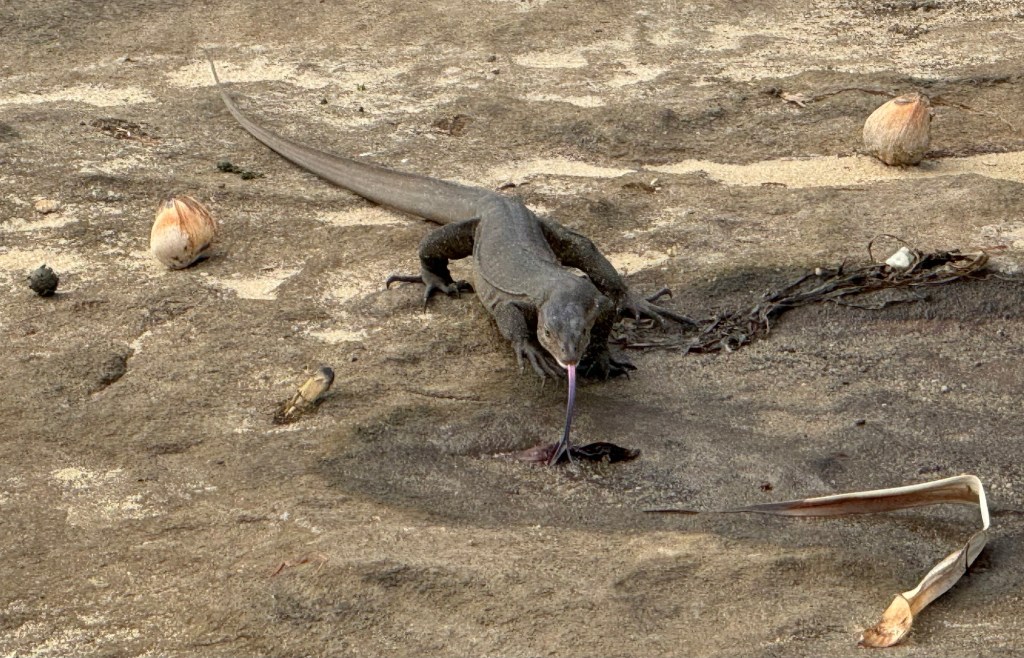
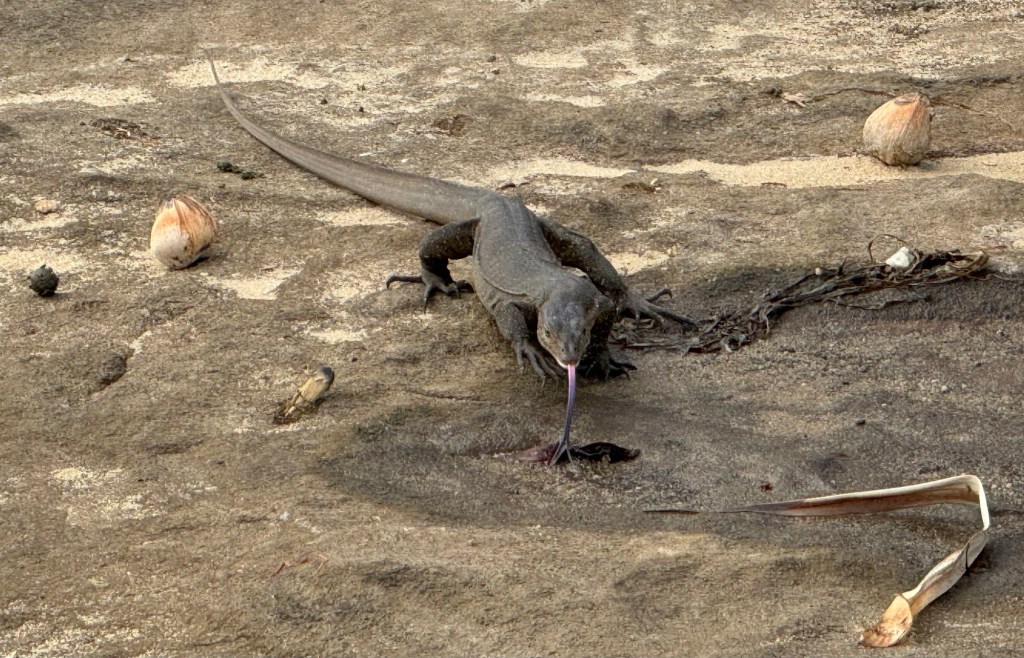
A Large Monitor Lizard

and a monitor Lizard but we enjoyed the walk. Then we had breakfast and went walking on the beach.

Now we are sitting on the beach at Lizard Island and I am reminiscing about the boat trip rather than being on the beach. We are, however, sitting on the beach and I am hot so about to go swimming. We walked into the water up to our necks, enjoying the coolness and calmness of the water. We had lunch

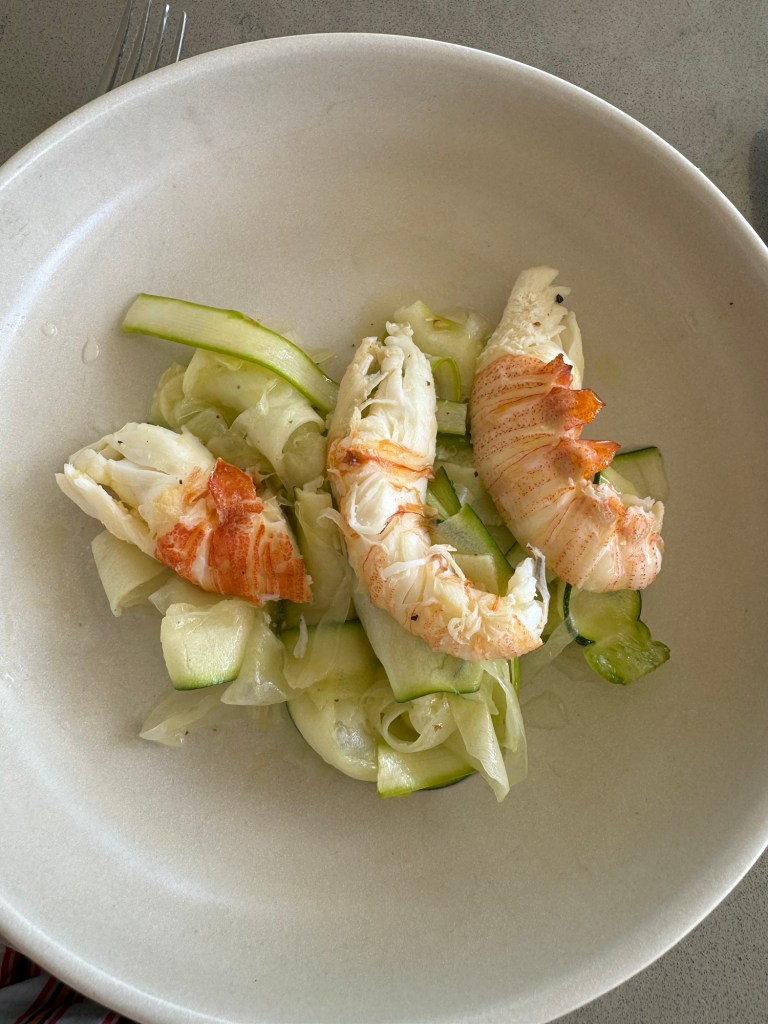
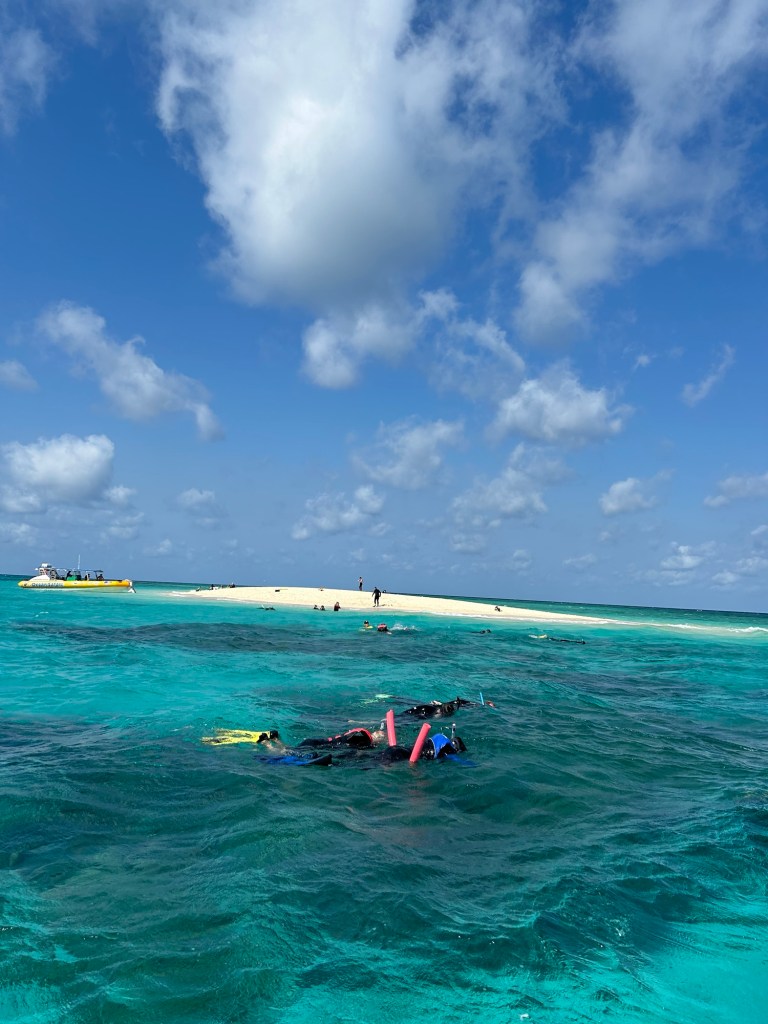
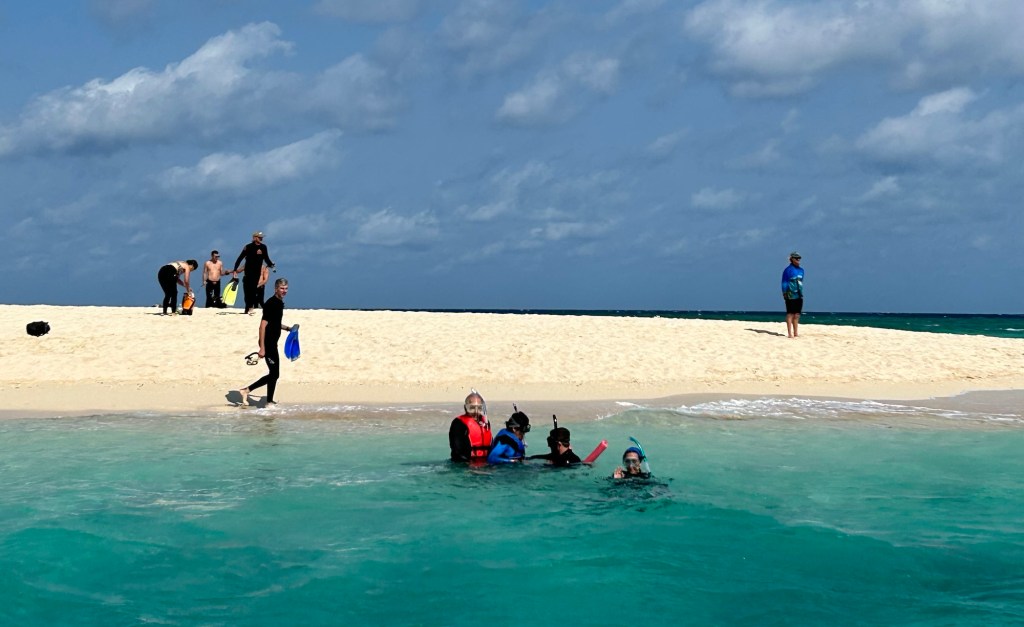
and then went for a snorkel with a guide named Ella, who provided us with sea darts, which are machines that pull you along in the water as you look at fish and coral. I had a very difficult time getting used to the thing, but eventually got some control of it. It does pull you through the water at a good clip.
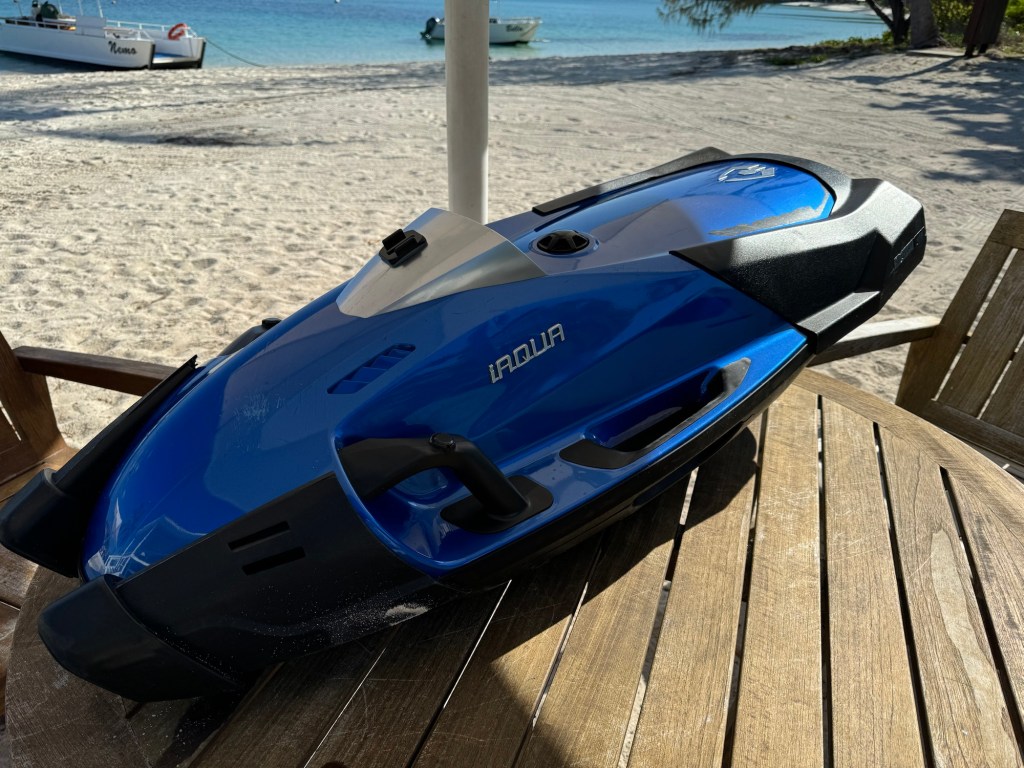
Sea Dart. Grab the handles near the front, lay on the dart and pull the handles. There are 3 speeds, but I could barely manage slow speed.

Mark got into it right away and was going at full speed. As we made a beach start, the water was a bit murky, the coral was not at its best and there were few fish, compared with our diving and snorkeling off the Aroona. Being away from the shore has its advantages.

That experience did me in for the day. After a hot shower to get rid of the sand and salt, we settled in with our reading, dinner and bed.
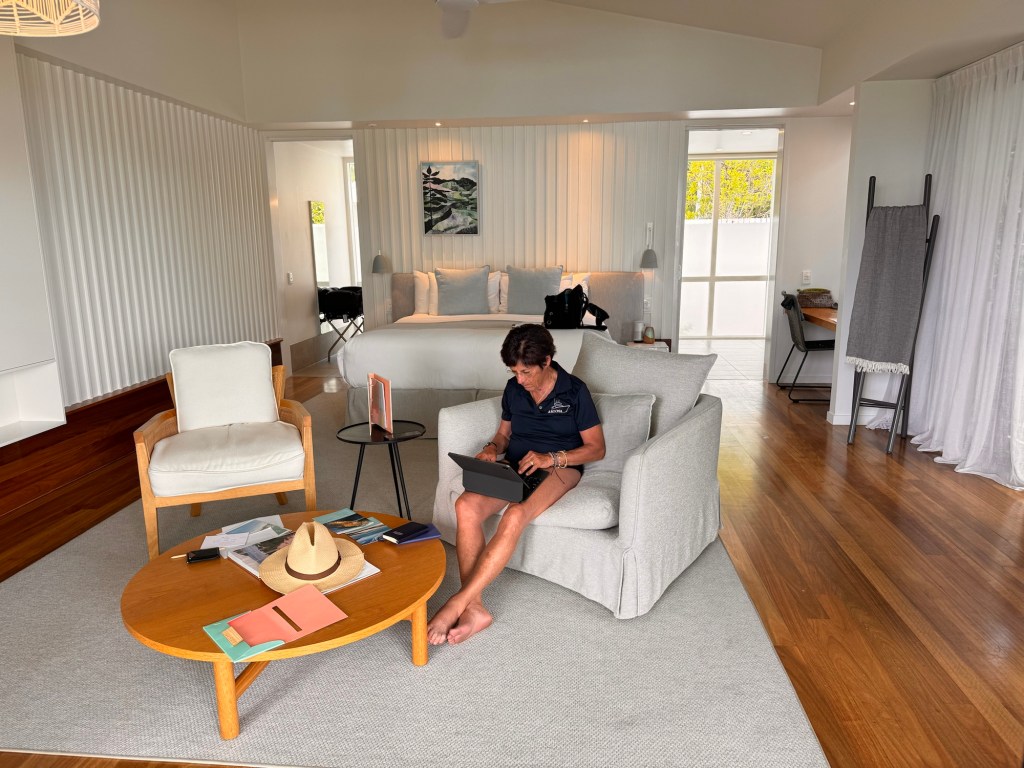
Working on the blog

The food is good at each meal, although we liked it better at Silky Oaks. There was a short menu at each meal, from which there was always something appealing to choose.

Sunday, September 29, 2024

We got up in time for a walk before the heat of the day set in.
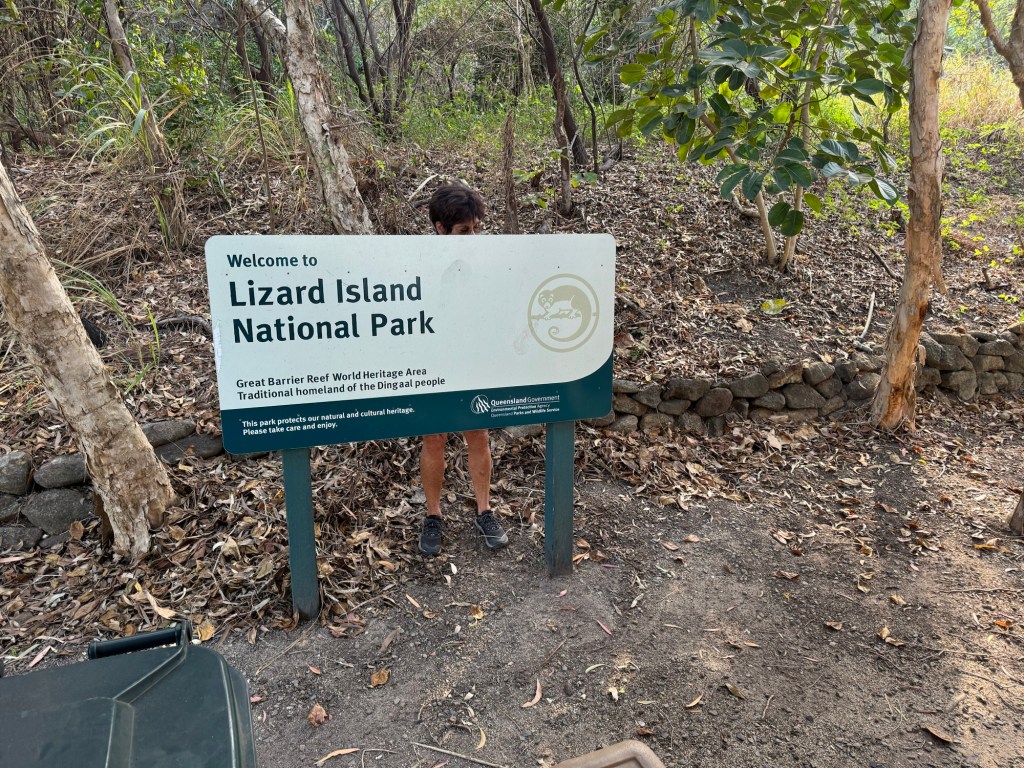
Hiding behind the park sign

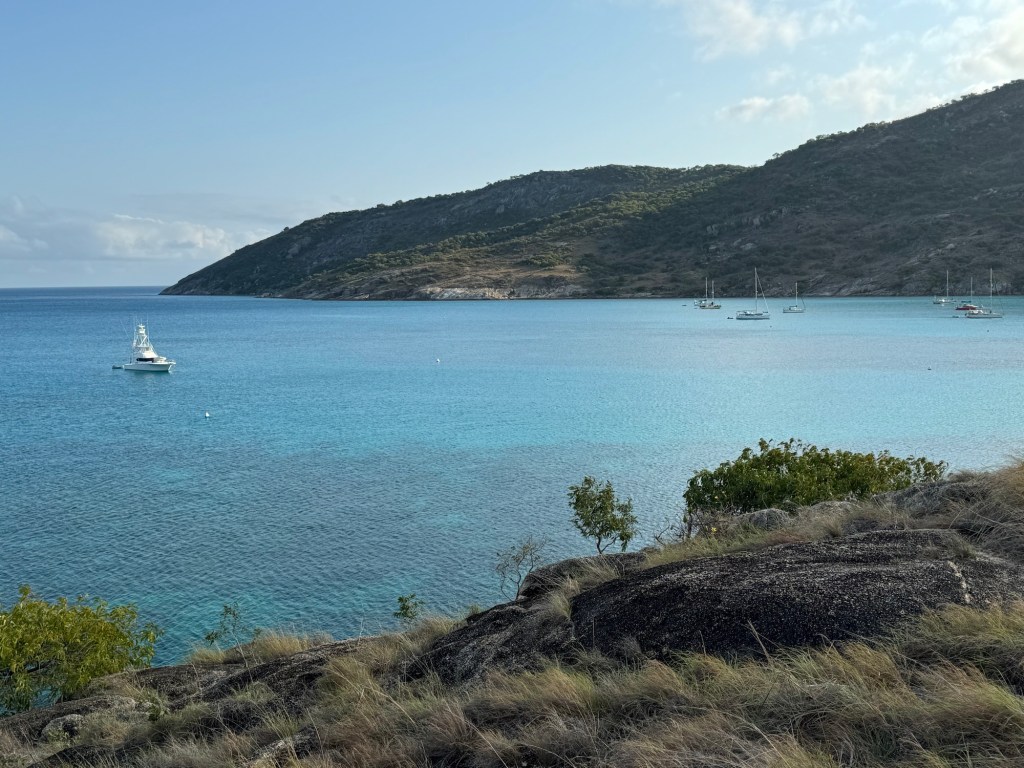
We walked up to a lookout point overlooking Watson and Anchor Bays. Then walked back down the hill and along the airport runway. We made it back to the lodge in time for breakfast at 9am.

We had two planned activities this day. The first was a 1:30 snorkel dive to see turtles and the second was a 5pm walk to see bats.

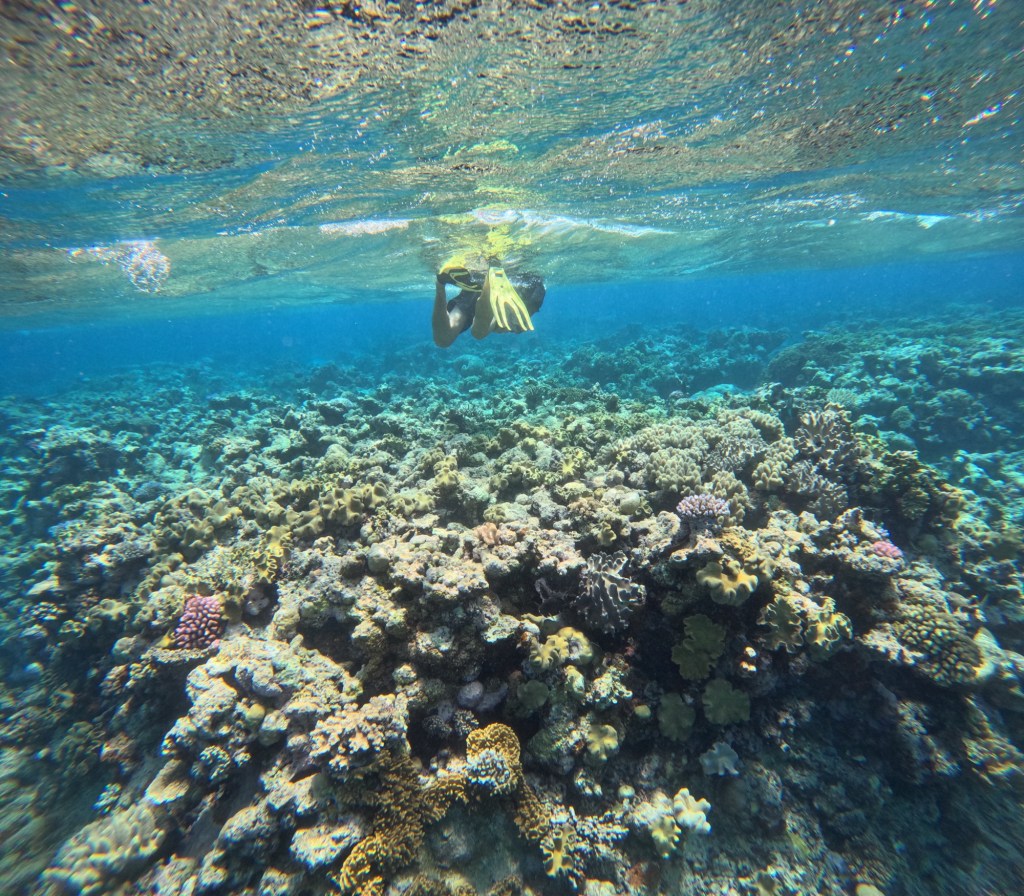
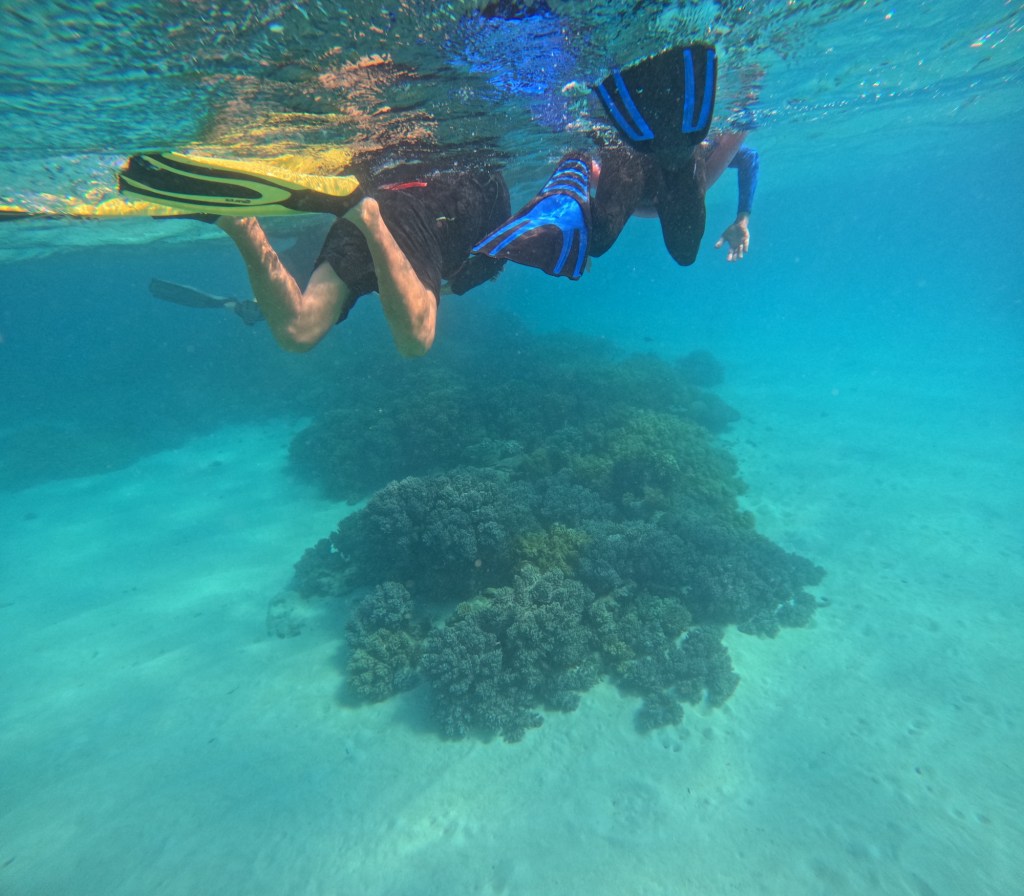
The snorkel was in Watson Bay. There were three of us and the guide, Ella. It was a bust for turtles, but we saw lots of fish and coral and clams and more. I did not want to quit, but, after 45 minutes we were all getting cold.
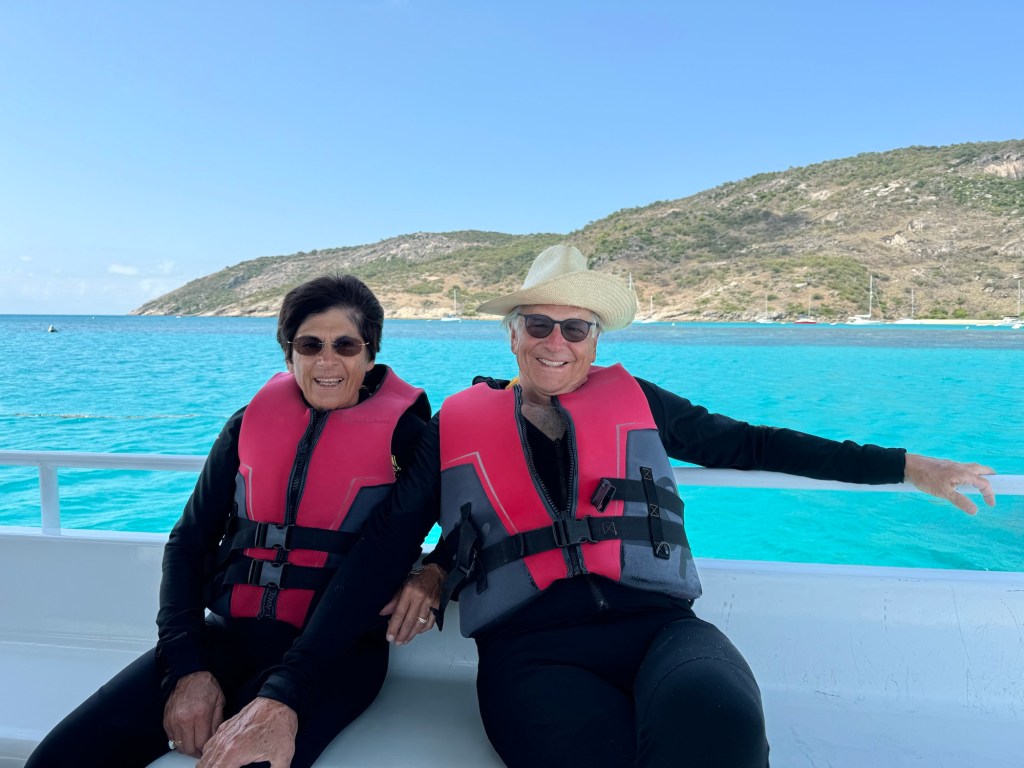
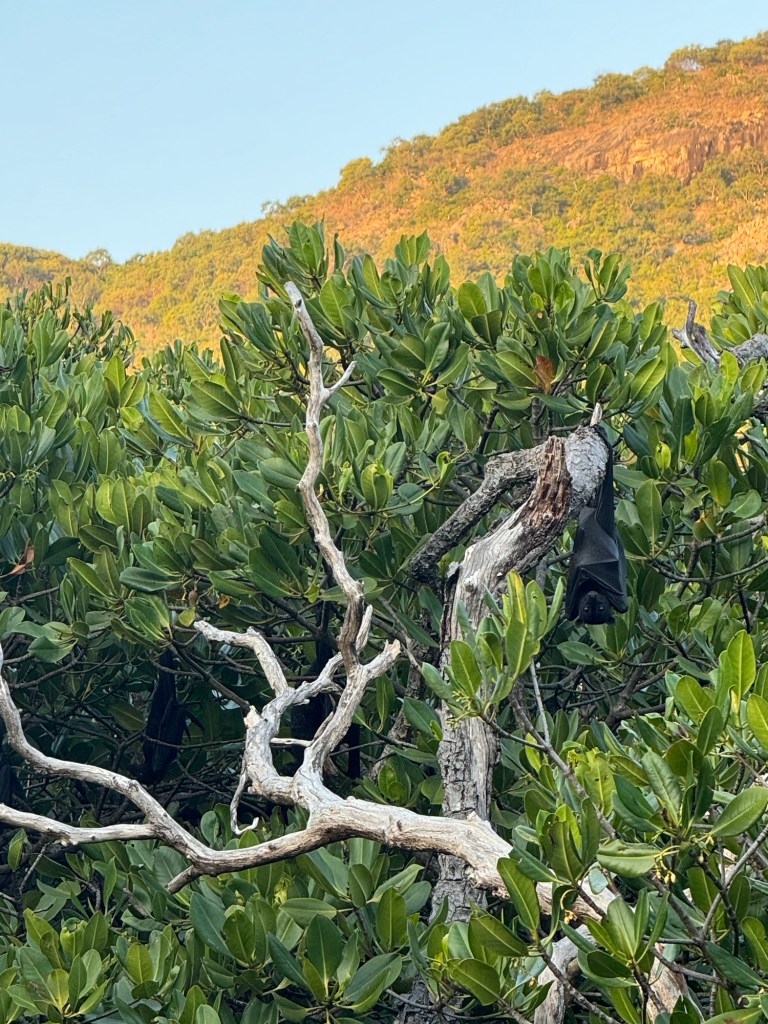
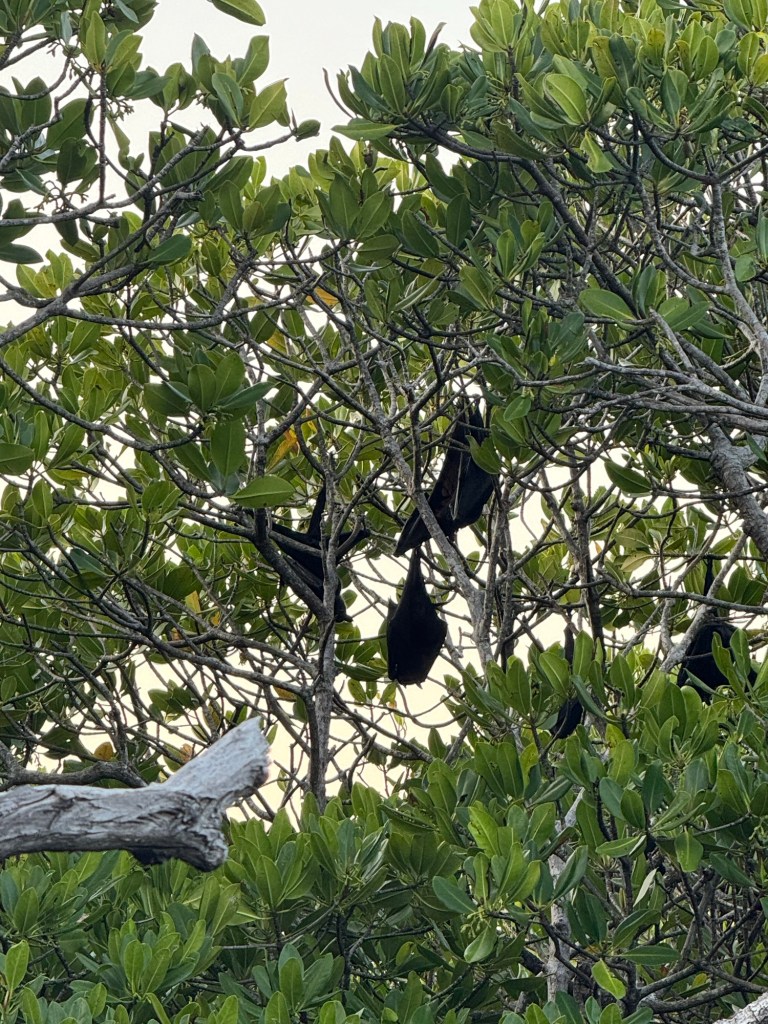
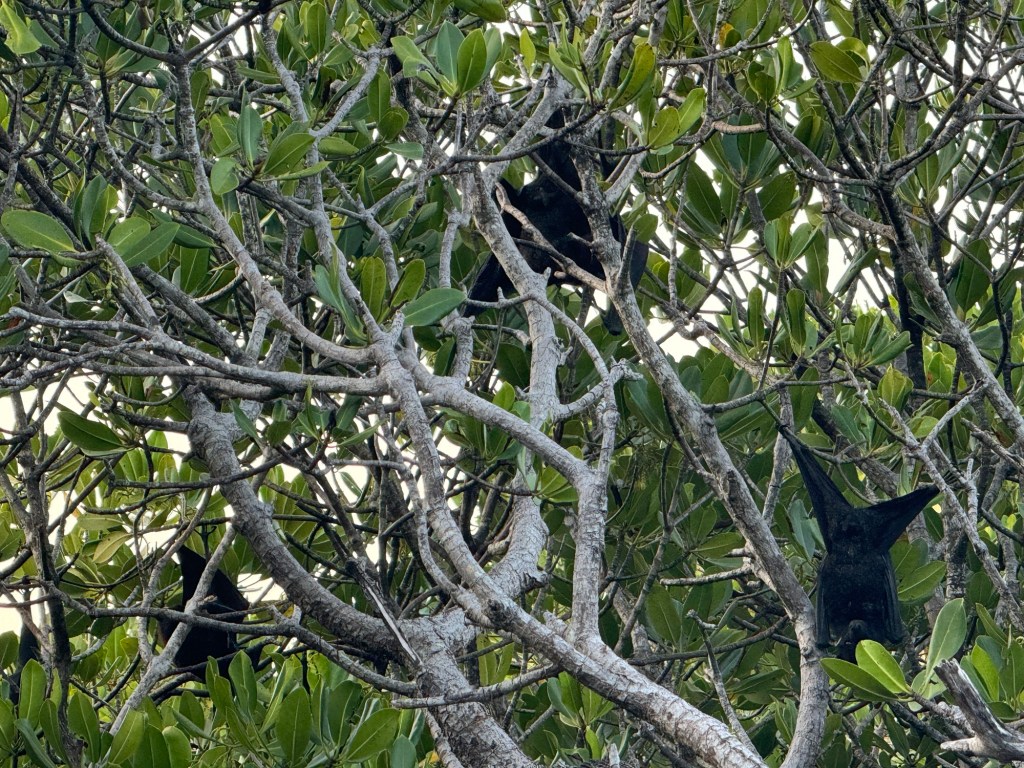
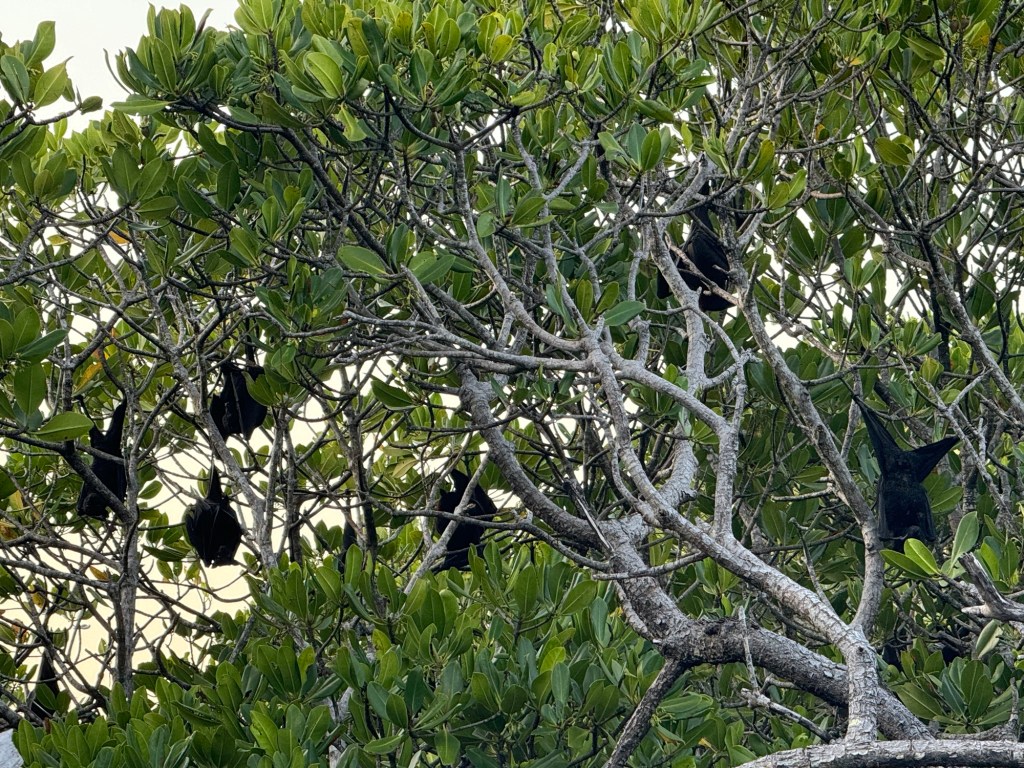
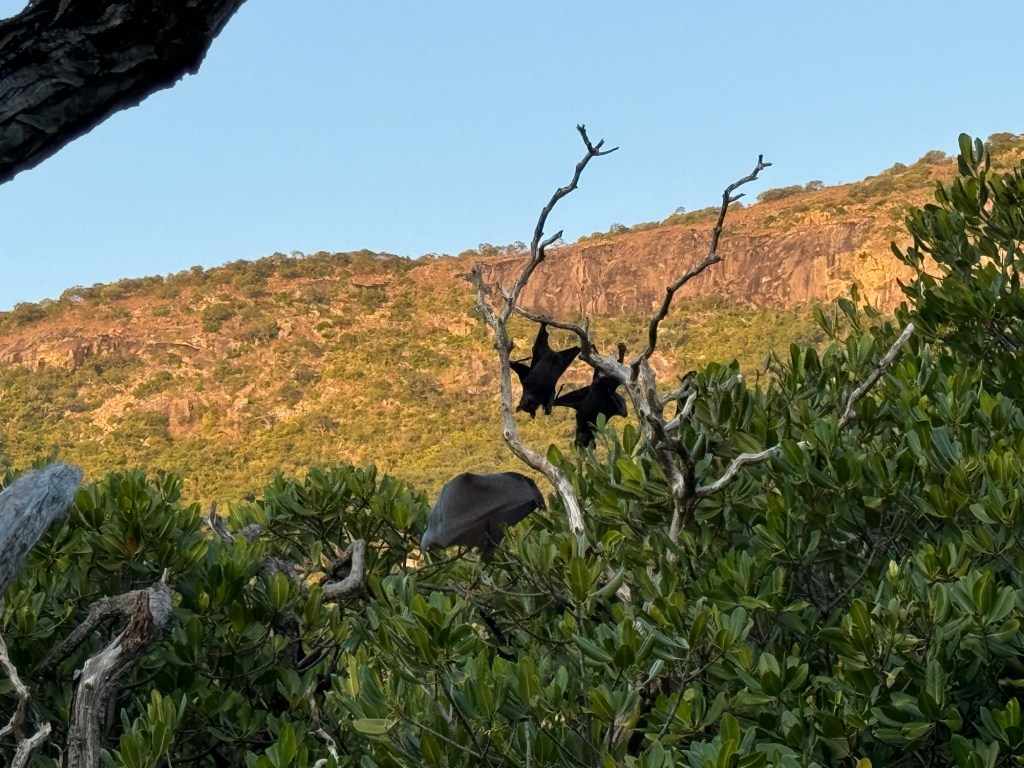
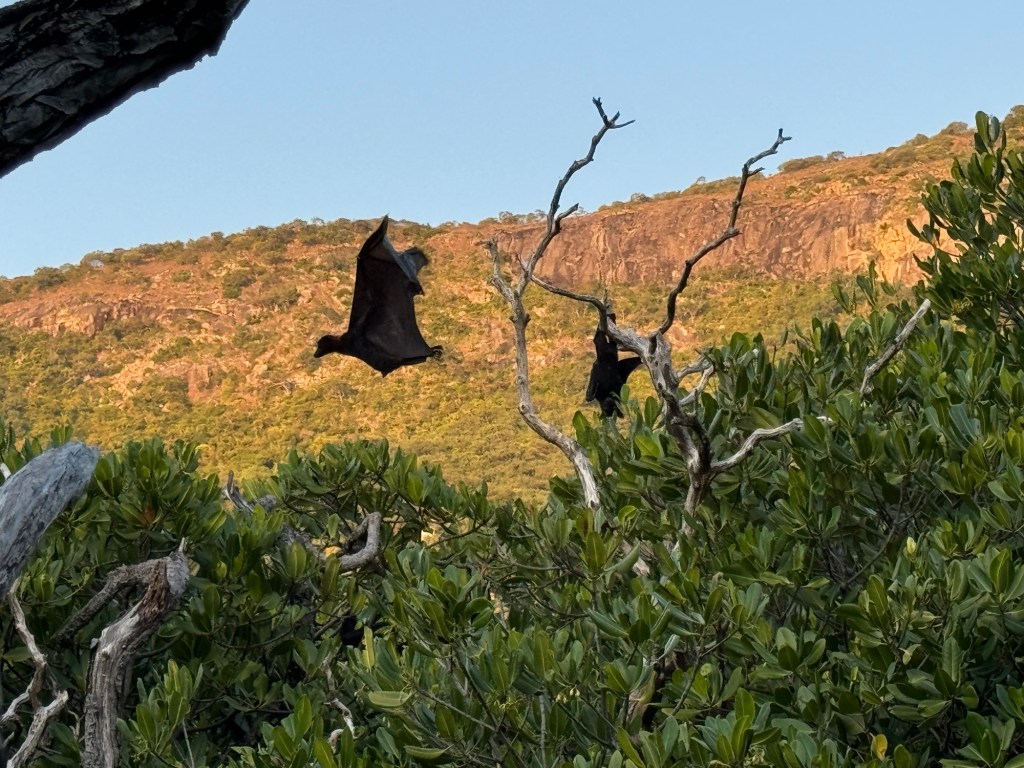
Clean and dry, we were ready for the 5 pm bat walk with Lauren. These are Flying Foxes or Fruit Bats. They are the second largest bats in the world, next to bats in the Philippines.

In addition to bats Lauren shared a lot about the history of Lizard Island. The island is approximately 2146 acres in size, was occupied by an aboriginal tribe called Dingaal, who used it three months of the year for male initiation ceremonies and called the island Jiigurru. Women were not allowed on the island. Today the remaining tribe members live on nearby Cape Flattery. In 1879, a Robert Watson arrived on the island with his wife, Mary, and 2 chinese male employees and started a business of harvesting sea slugs for export to China. Sometime in 1881, when he was out fishing with one of the Chinese, a band of Dingaal arrived on the island and were about to kill the woman interloper, Mary Watson, her 5 month old baby and the other Chinese man. They escaped in a large water tub and floated to another island but within a few days all three died of dehydration. The beach is named Watson Bay.

Much later, in 1973, a small resort was opened with 4 rooms. Over time it has grown and been remodeled more than once. Today there are 40 suites and the current leaseholder, Delaware North Corporation, has the lease until 2035. The majority of the island is a national park owned by the Australian government. The resort is in reasonable condition, the menu has interesting choices and the food is good. There are many activities to keep people busy. Although very nice, I think the place is slightly overrated.

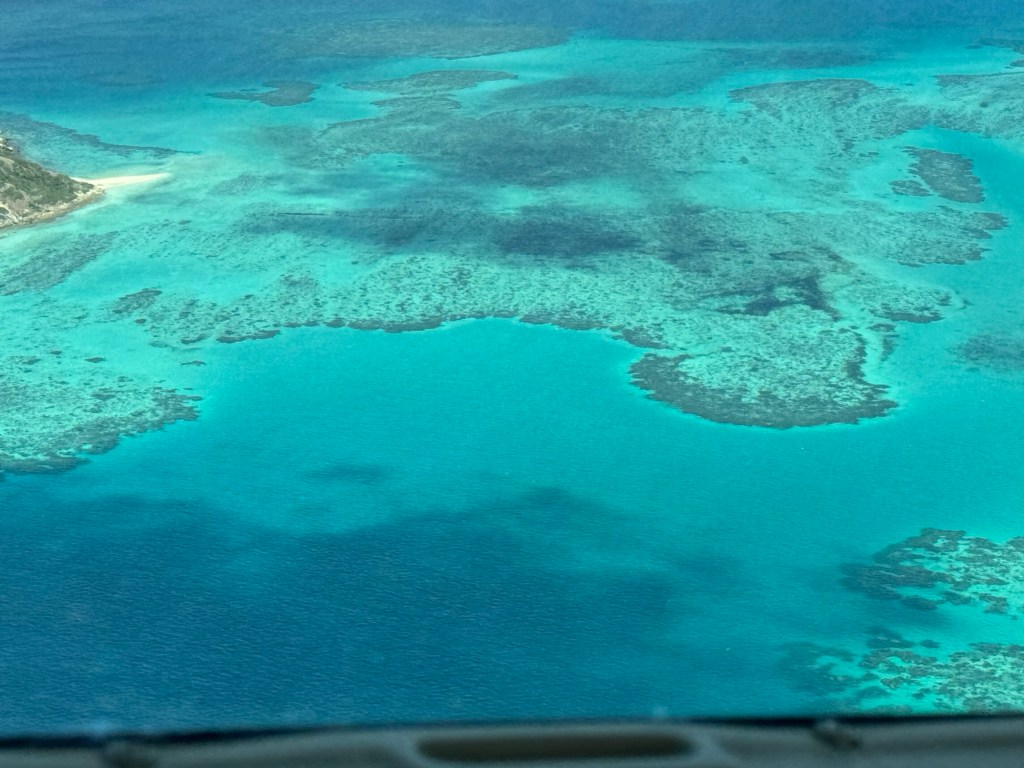
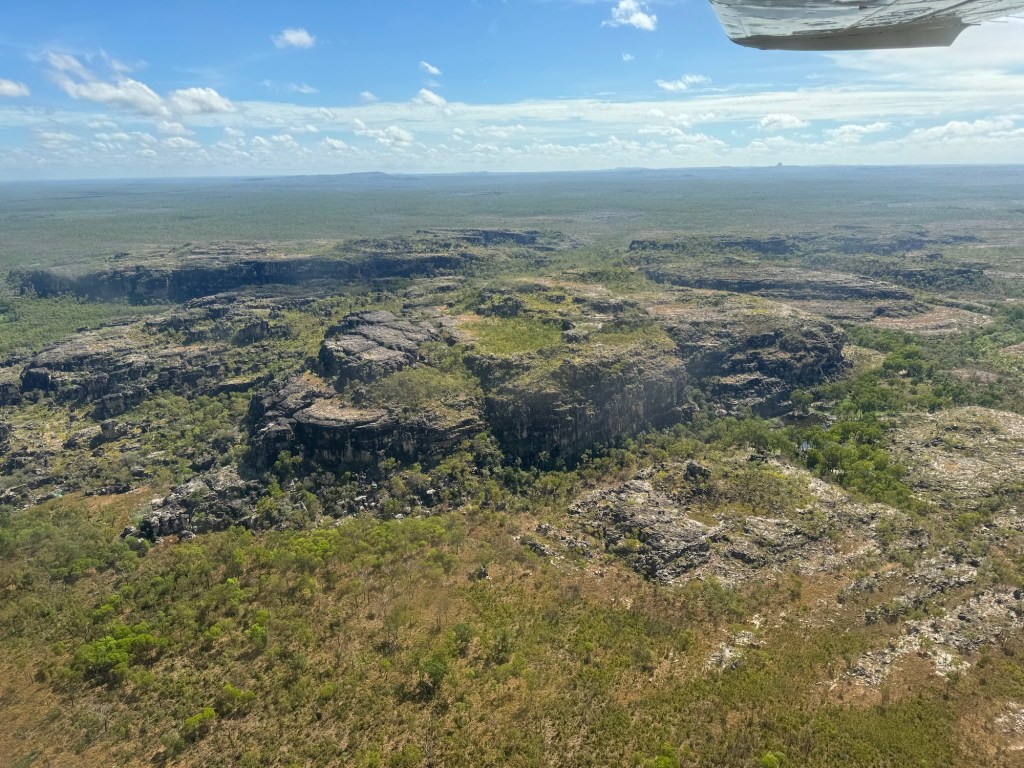
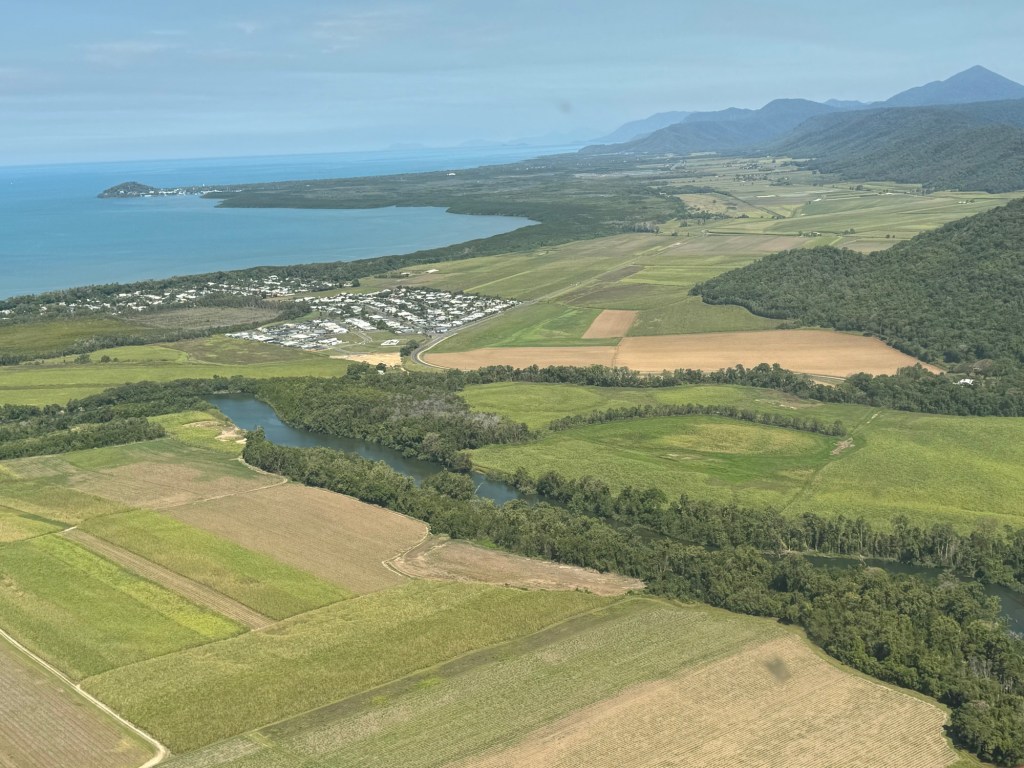
September 30th at 10:30 we flew from Lizard Island to Cairns in a Cessna 404.
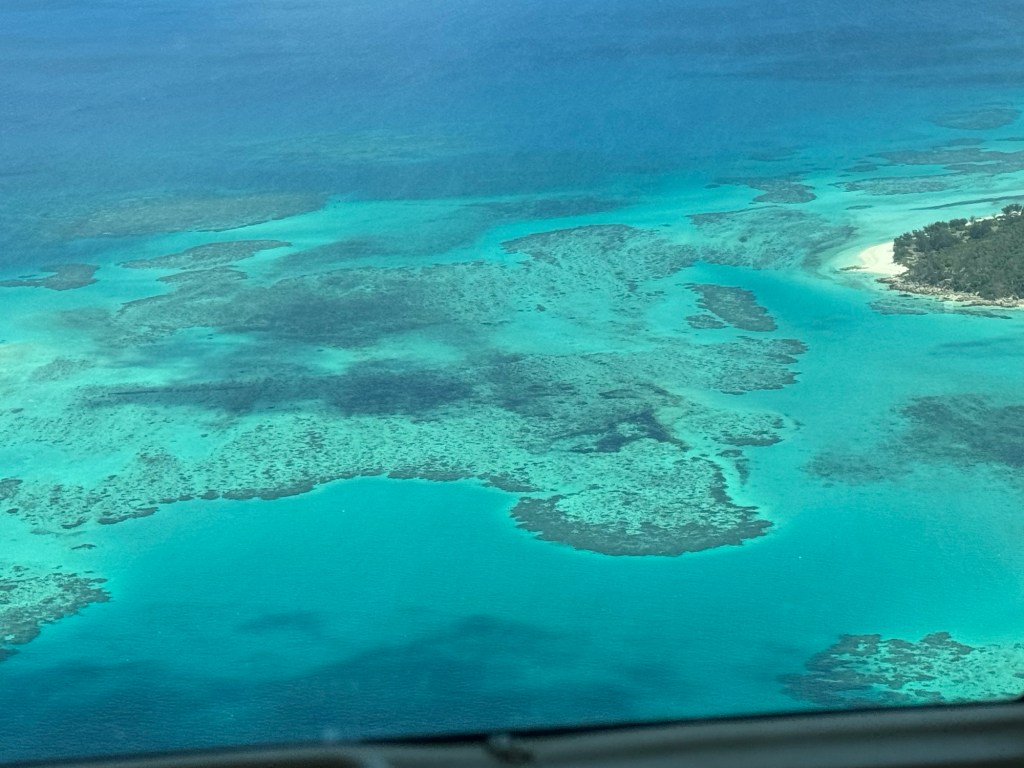
In Cairns, we switched to a Virgin Airlines flight to Melbourne. This was the end of our Great Barrier Reef Adventure. It was not nearly enough reef time for me and I would love to come again.

The Great Barrier Reef

Monday, September 23, 2024

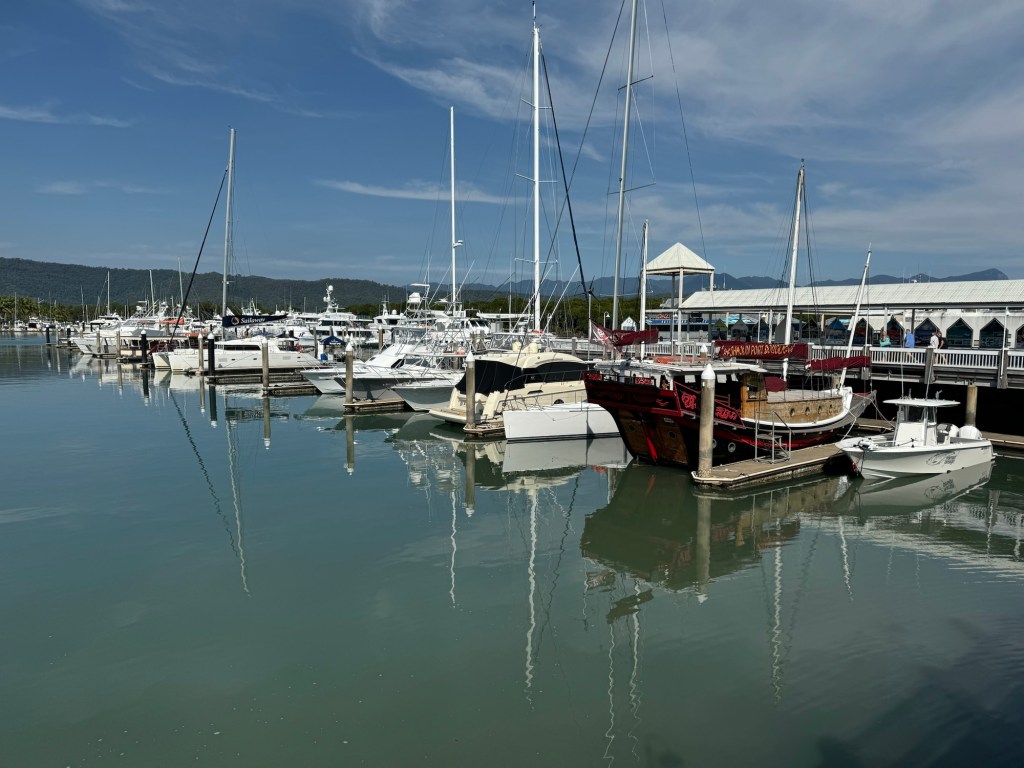
We departed Silky Oaks (a type of tree) Lodge about 8:30 for an 1/2 hour drive to the dock at Port Douglas.

Part of Great barrier Reef we navigate, follow the green line, from Port Douglas to Lizard Island with stops and dive sites circled

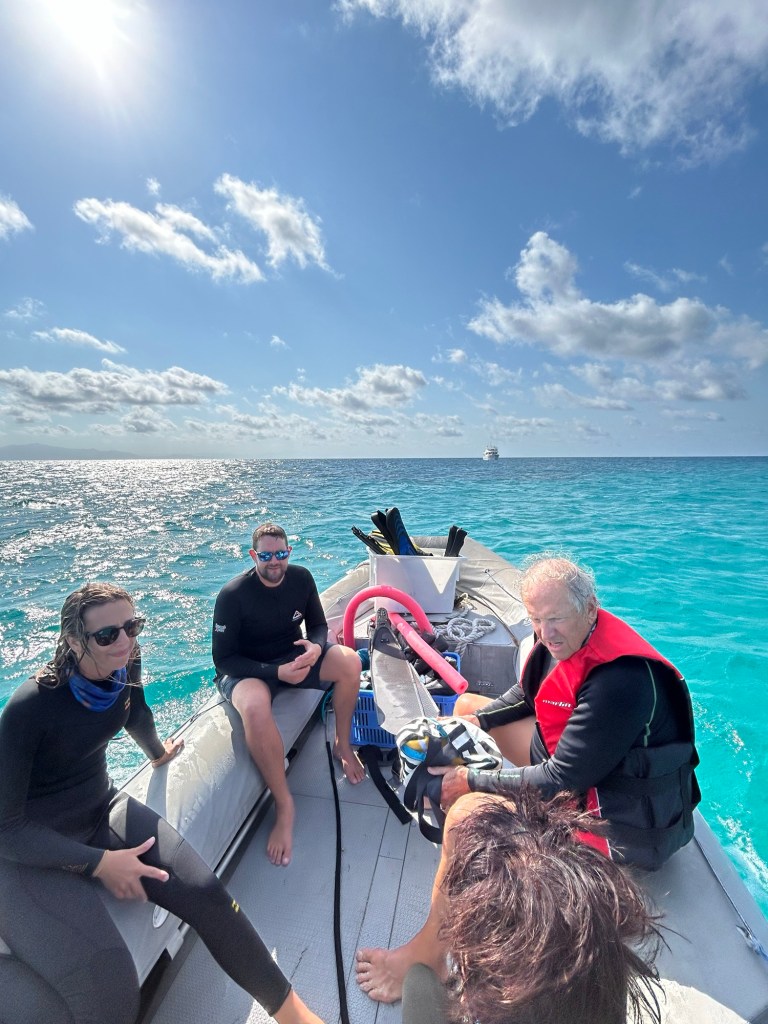
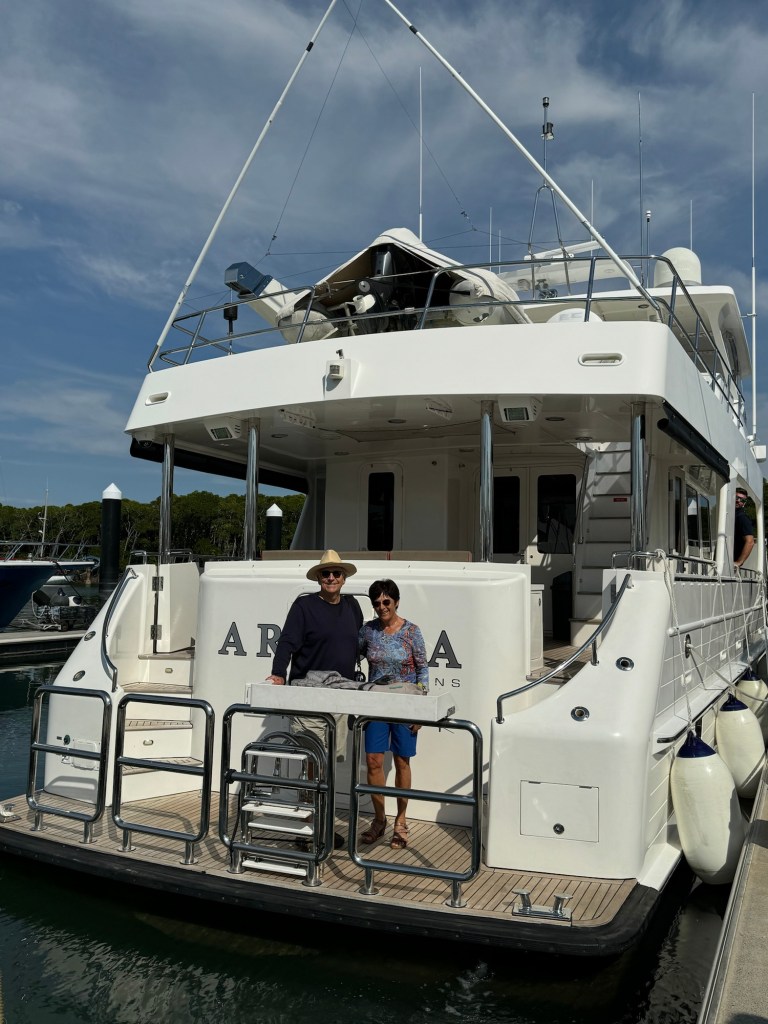
The Aroona and crew were waiting for us and we wasted no time getting on board and heading out to sea by 10am. We are 7 on board. Mark and me and 5 crew. As we motor 28 Nautical miles north to a sand beach called Mackay Cay, we get to know the crew.

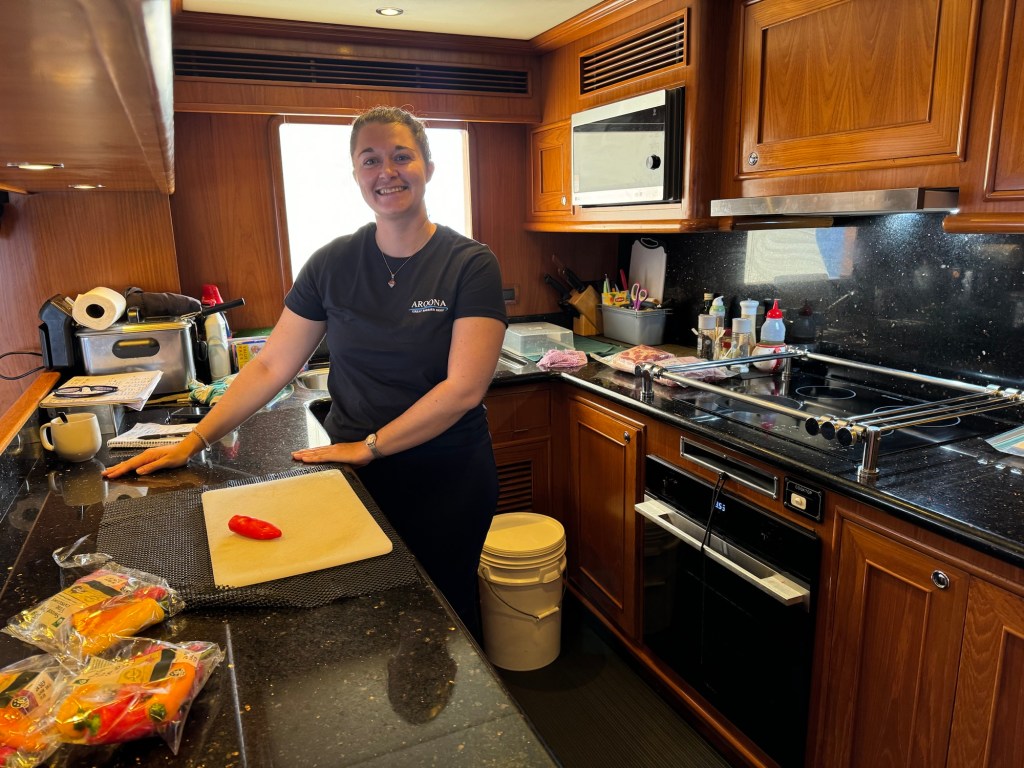
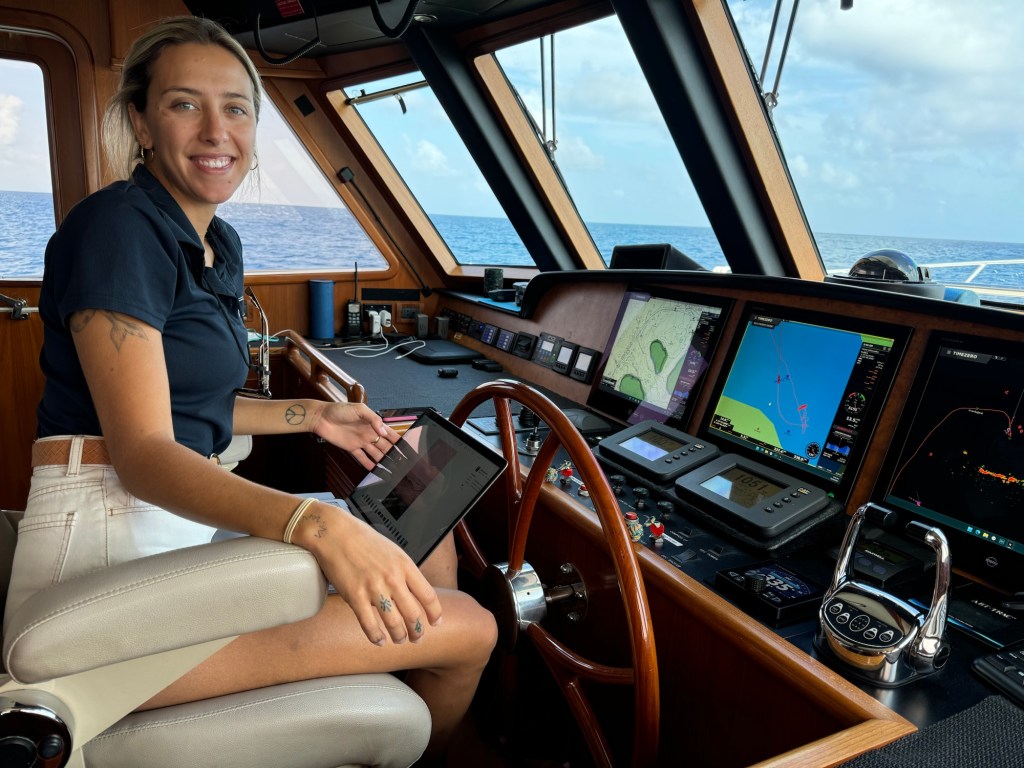
The Captain is a charming Italian fellow named Lorenzo, who grew up in Venice. The Hostess is Eva, a Queensland Australian, the chef is a French lady named Adele, the Dive Instructor is a South African named Jarryd, and the Deck hand is Fletcher, a young man from the nearby aboriginal town of Mossman. Fortunately for us, they all speak perfect English and they are all friendly and talkative.

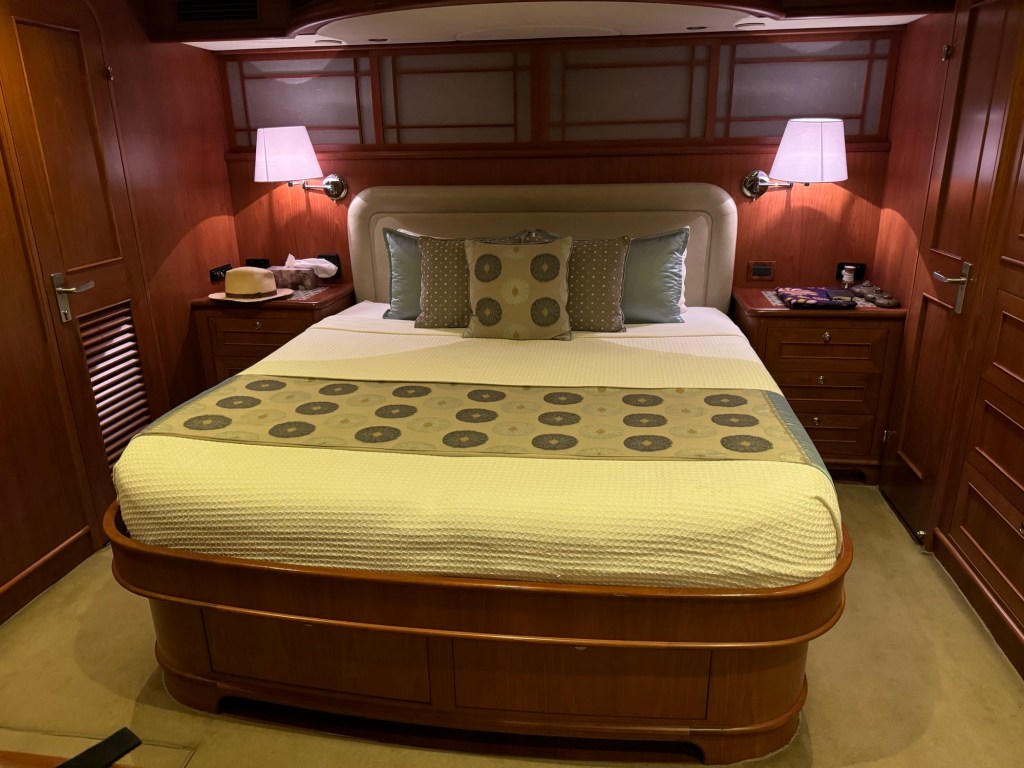
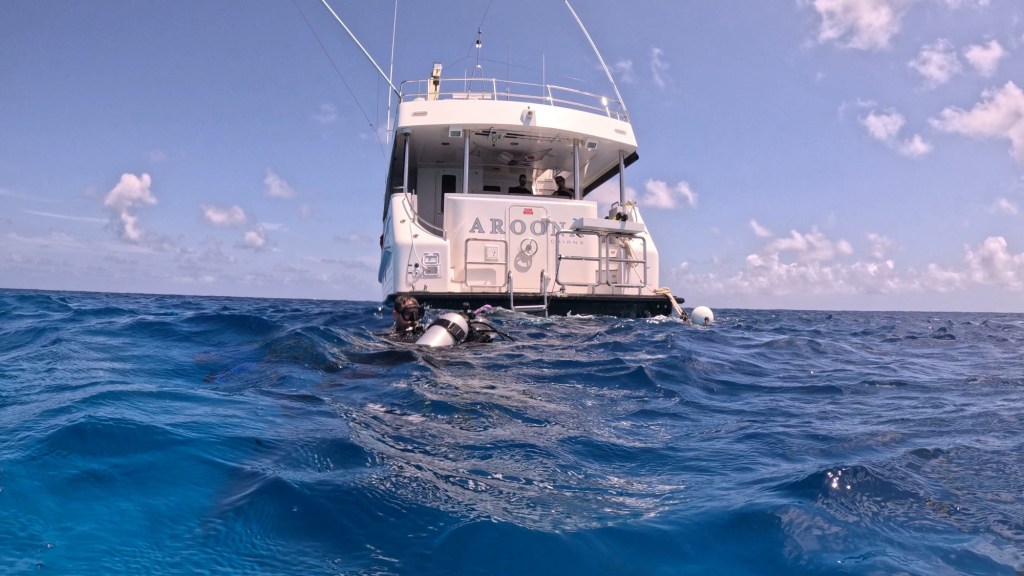
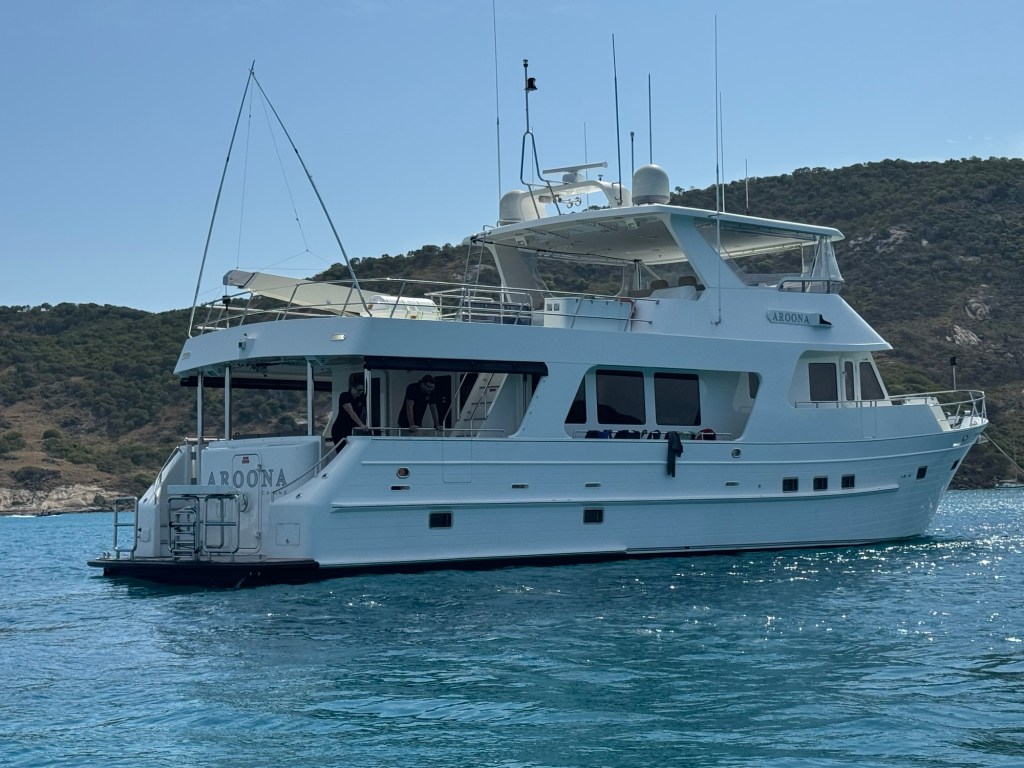
Along the way, Lorenzo gave us some details about Aroona. Her name has 2 meanings. One is “Clear Running Water” and the other is “Place of Peace”. Both are nice. She was built in 2011, is 70 feet long, has a draft of 5.25 feet and can take 9 passengers at a time. Everyone is happy with just 2 passengers. She can hold 2300 gallons of fuel and 500 gallons of water. However, she has continuous fresh water making capabilities. She also has maximum communication capabilities, so we are set for blogging and zoom calls.

We arrived at Mackay Cay about 1pm and suited up for snorkeling. I was very tentative, which was obvious from my hesitancy, but Mark and Jarryd were with me and I managed to snorkel about a half hour. I did not see many fish and thought the coral was sparse and dull looking. Maybe it was me. The life vest was too large and slipped up to my neck. I also had a noodle holding me up and that was not helpful. I was glad to quit and get out of the water. A hot shower and dry clothes felt good. Mark seemed to have a better experience. We called it a day and relaxed on the boat. Adele made a nice pork and pasta dinner and we ate together as a family. Had a lively conversation about each person. Lorenzo kept the boat in the same spot overnight. I slept really well, but snored too much for Mark.

Tuesday, September 24, 2024

Mark got up for a zoom meeting at 5:30am. At 6am the boat was moving and I was up too. The boat reached the dive site Lorenzo had in mind, called Ribbon Reef 3, and we were ready to go snorkeling by 11am.

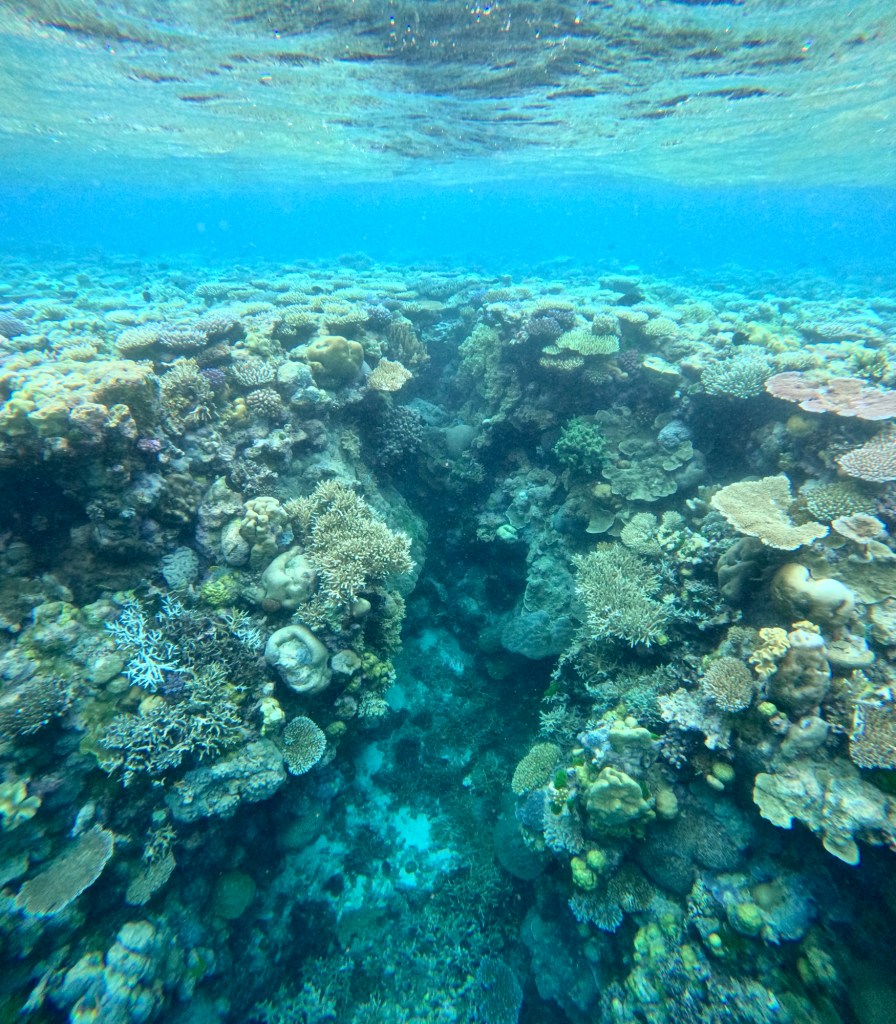
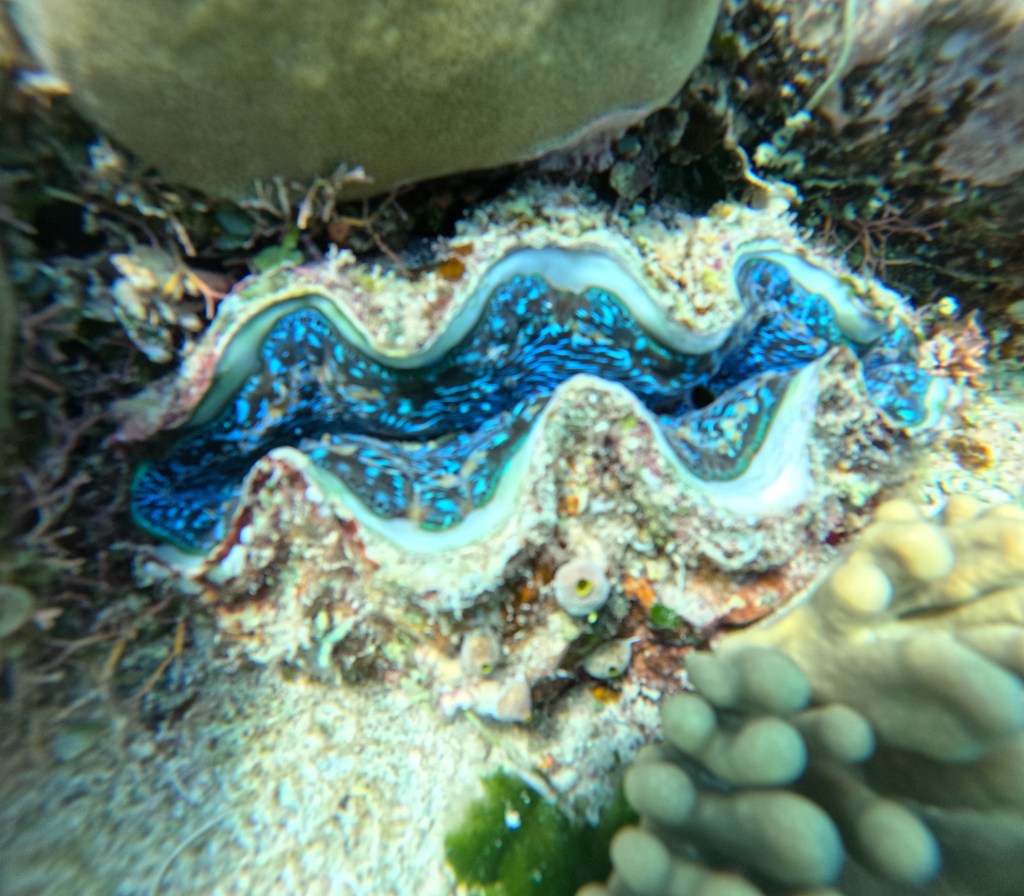
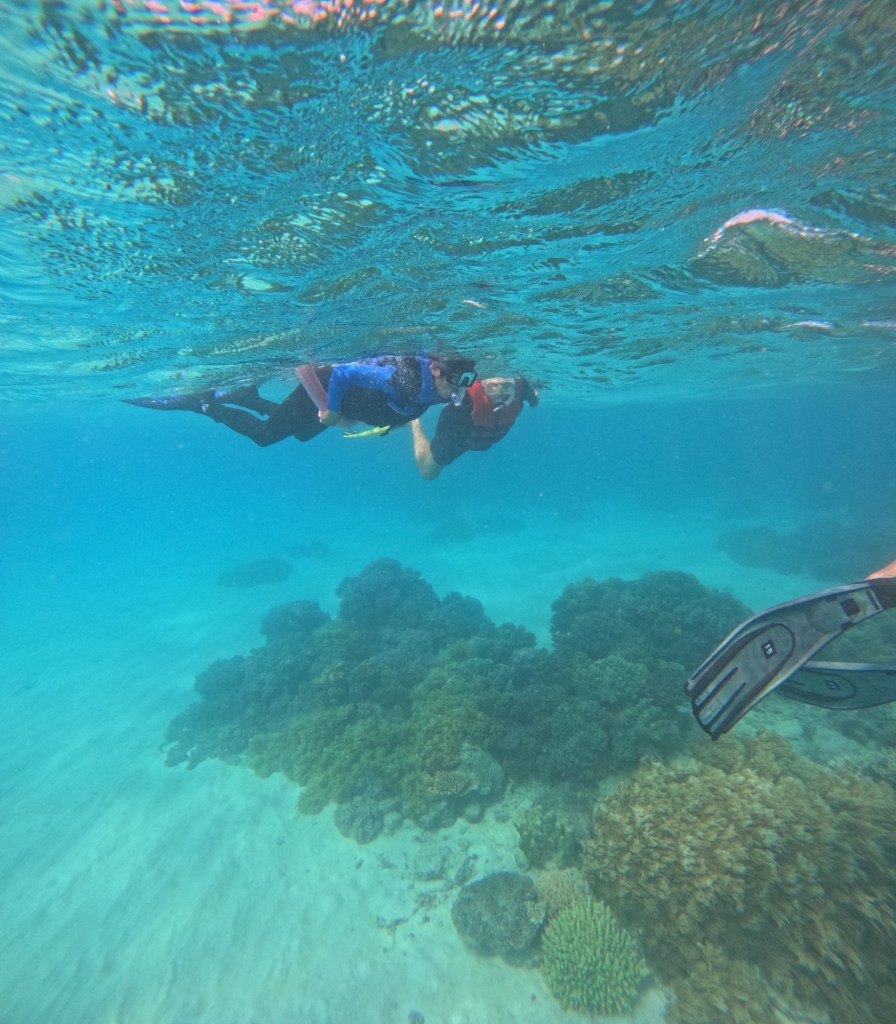
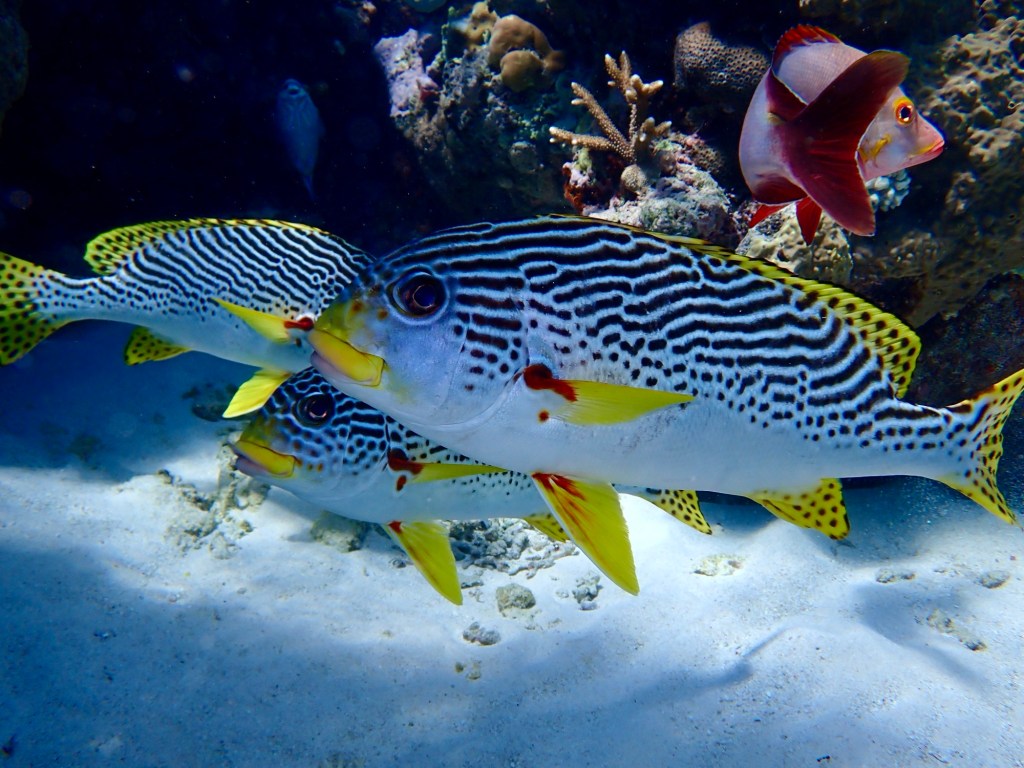
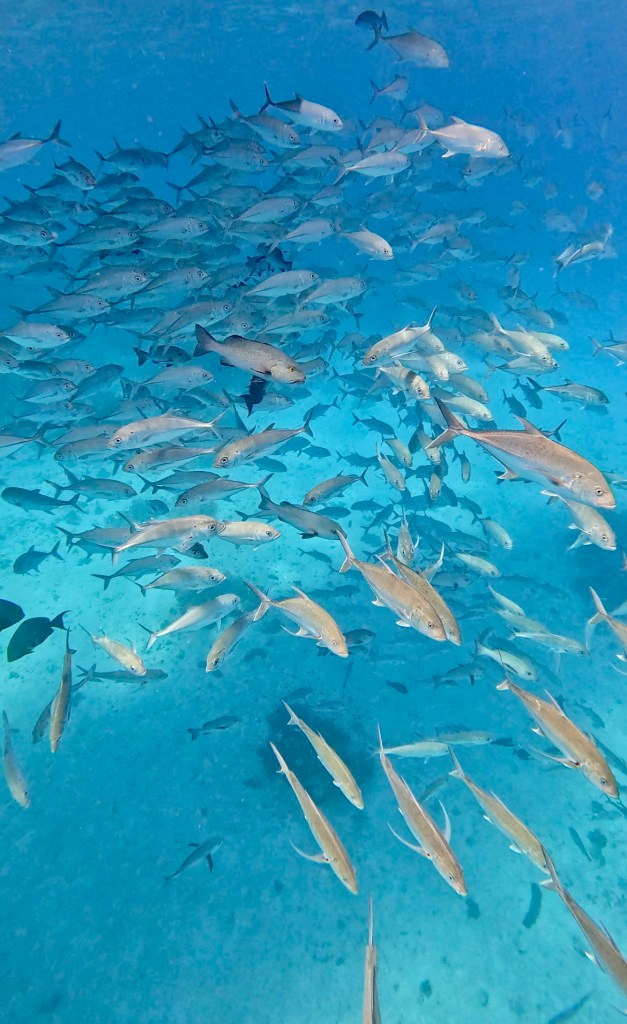
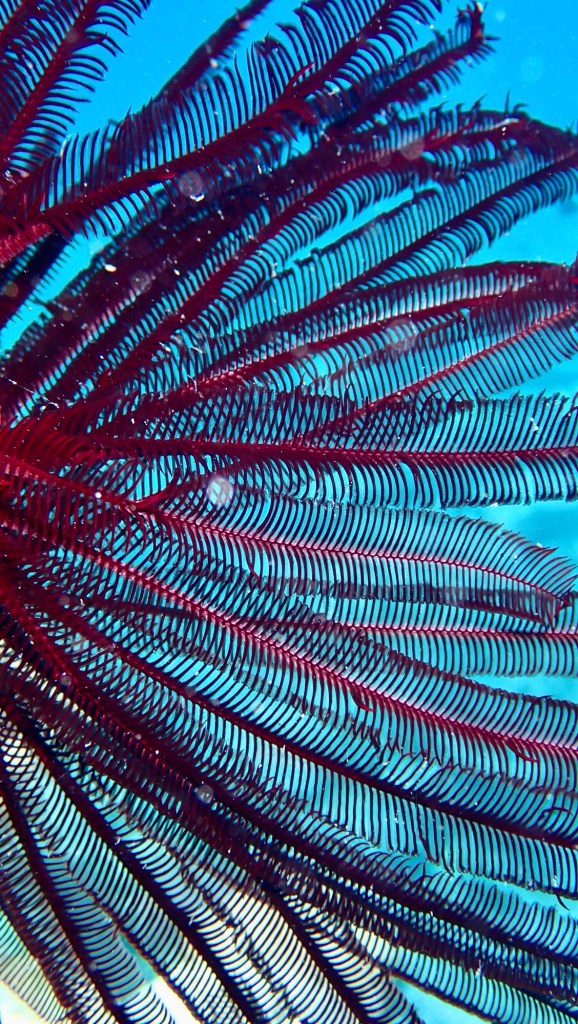
I felt much better and my equipment fit better too. I had on two wet suits and a better fitting vest We were in the water 45 minutes plus and I was still not feeling cold. The water temperature was in the low 80’s and very pleasant. There was a fairly strong current and I had a hard time moving against it. Fortunately, Jarryd and I were holding opposite ends of a safety float and he was able to pull me when I could not keep up. We saw a lot more fish and coral at Ribbon Reef 3. Meanwhile, Eva was busy free diving and taking photos of the things we were seeing, so I have included them here. Neither Mark nor I have an underwater camera.

After the snorkel and a hot shower, we relaxed and enjoyed motoring through the reef toward our next stop.

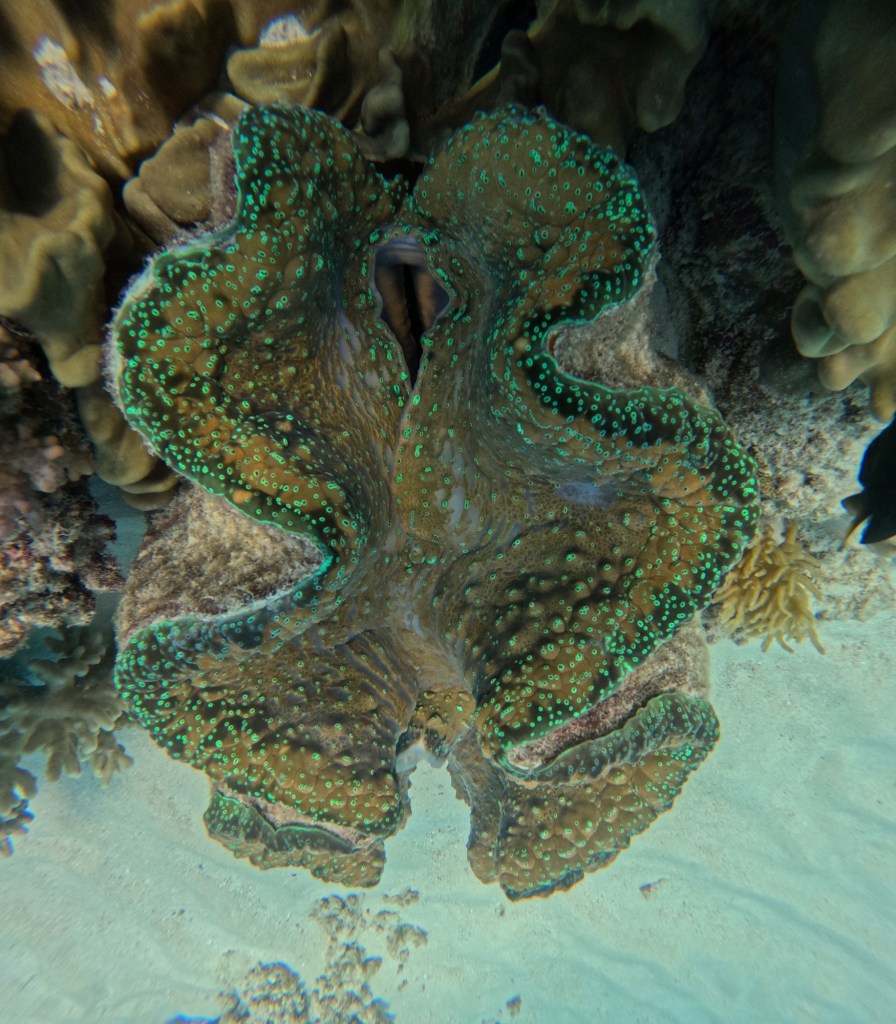
A giant tridacna clam

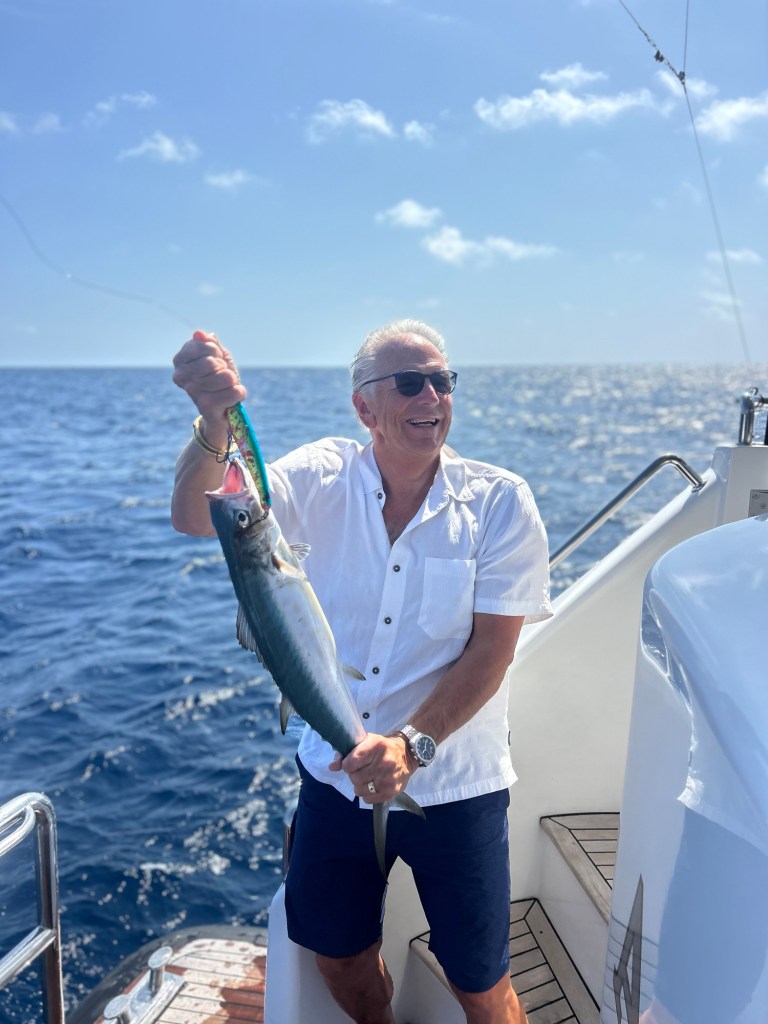
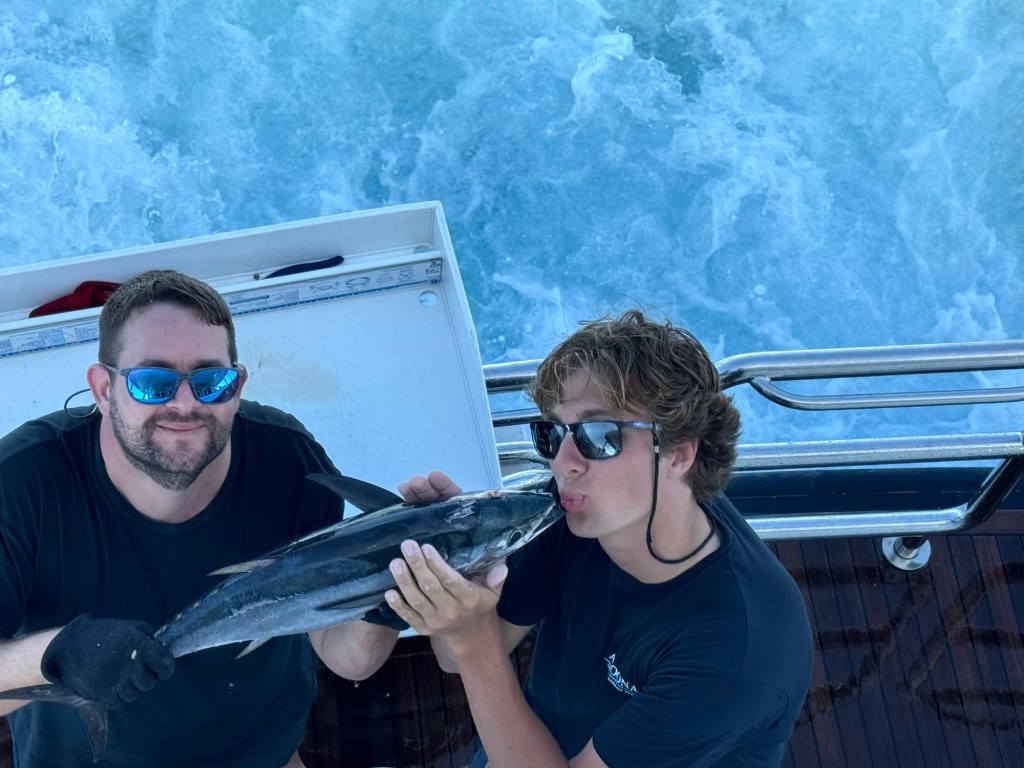
As we were trolling, a 30 inch Spanish mackerel caught the line. Fletcher realed it in and cleaned it for Adele to prepare. After a group discussion, she prepared the fish for seveche and grilling.

I got too much sun and need to watch out from now on. The air is breezy and cool, but the sun is intense. Went undercover on the upper deck. I invited the crew to play a game and they were up for it. The only game they had on board was a card game called Uno, so that is what we played. We had a lot of laughs and fun for a couple of hours until it was dinner time. We have asked the crew to eat with us rather than separately and our conversations are much more interesting. The fish was delicious and oh so fresh.

Wednesday, September 25, 2024

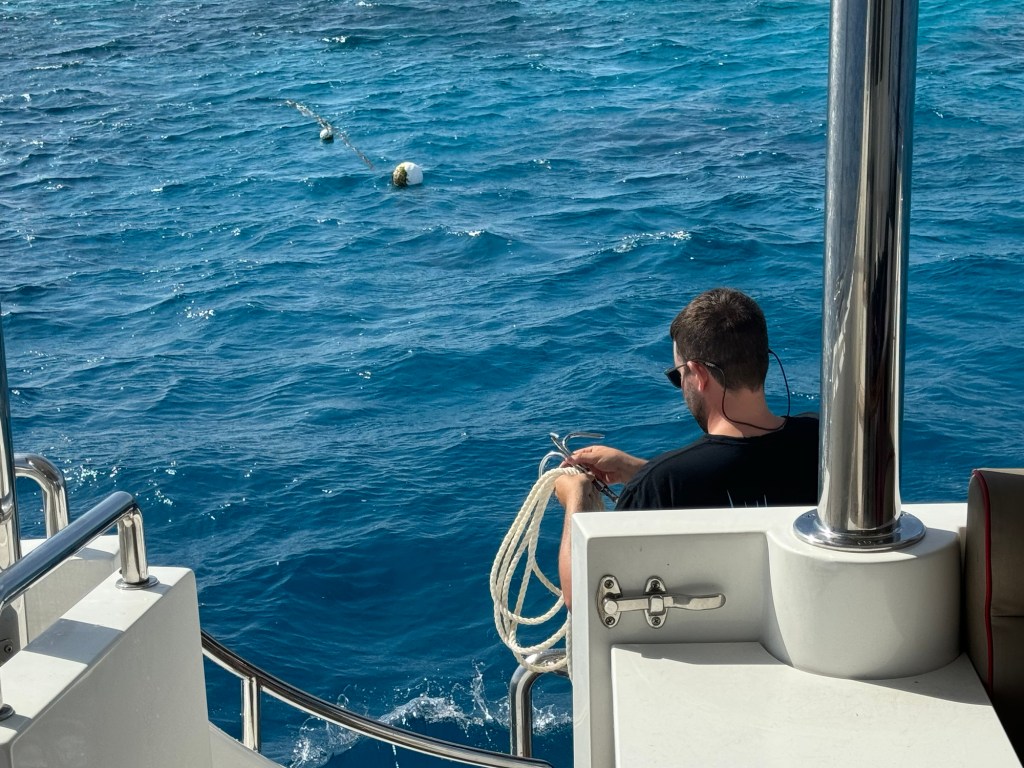
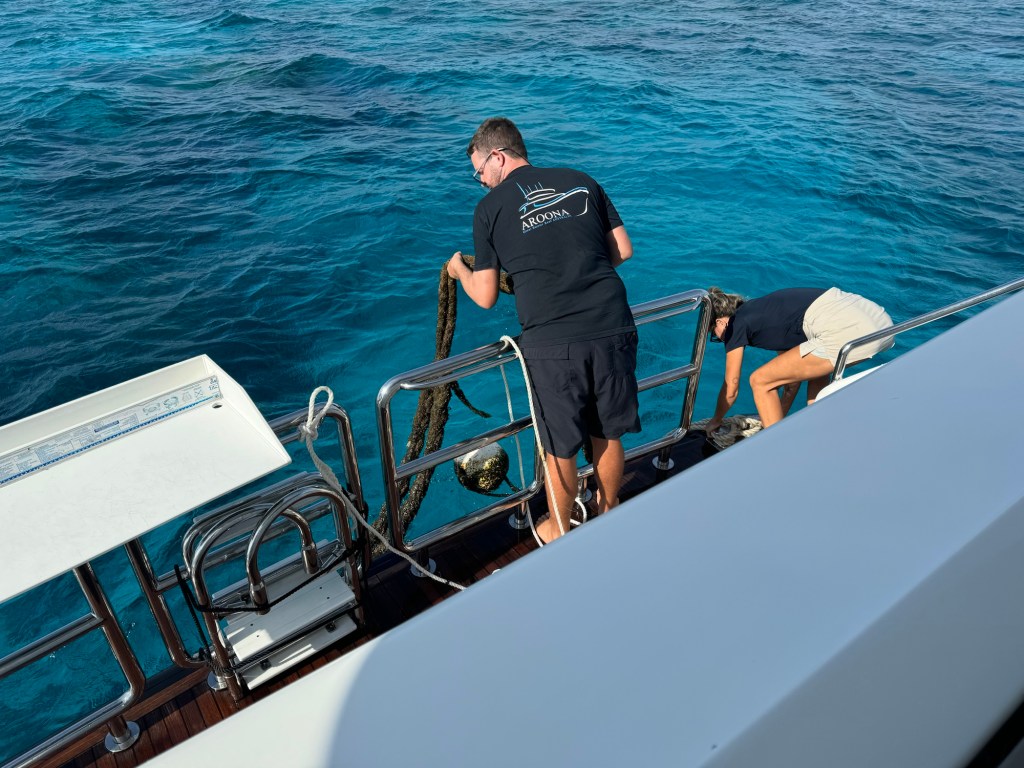
After a good night’s sleep, we were up at 6am. The boat was still at anchor from last evening and everyone else was already up. Coffee was ready and shortly fruit and fresh orange juice were ready too. After breakfast, the crew pulled the anchor and we motored closer into Ribbon Reef 5 where we will snorkel and maybe dive too. About 9am, Lorenzo tied up to a reef bouy and we prepared to snorkel and dive.

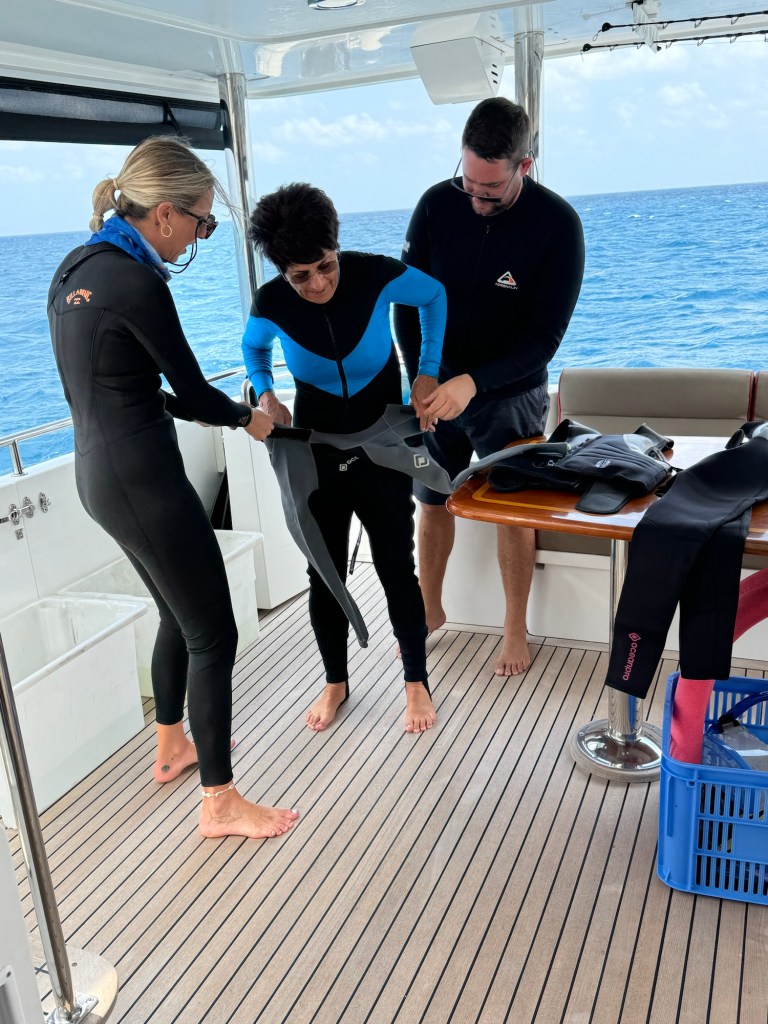
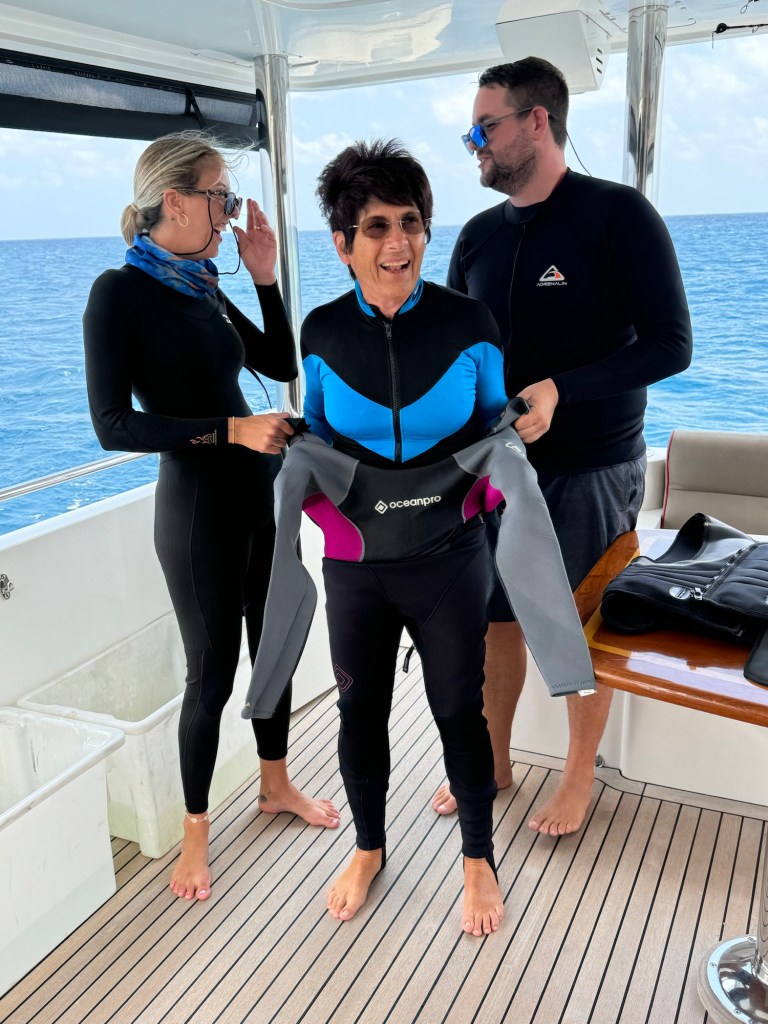
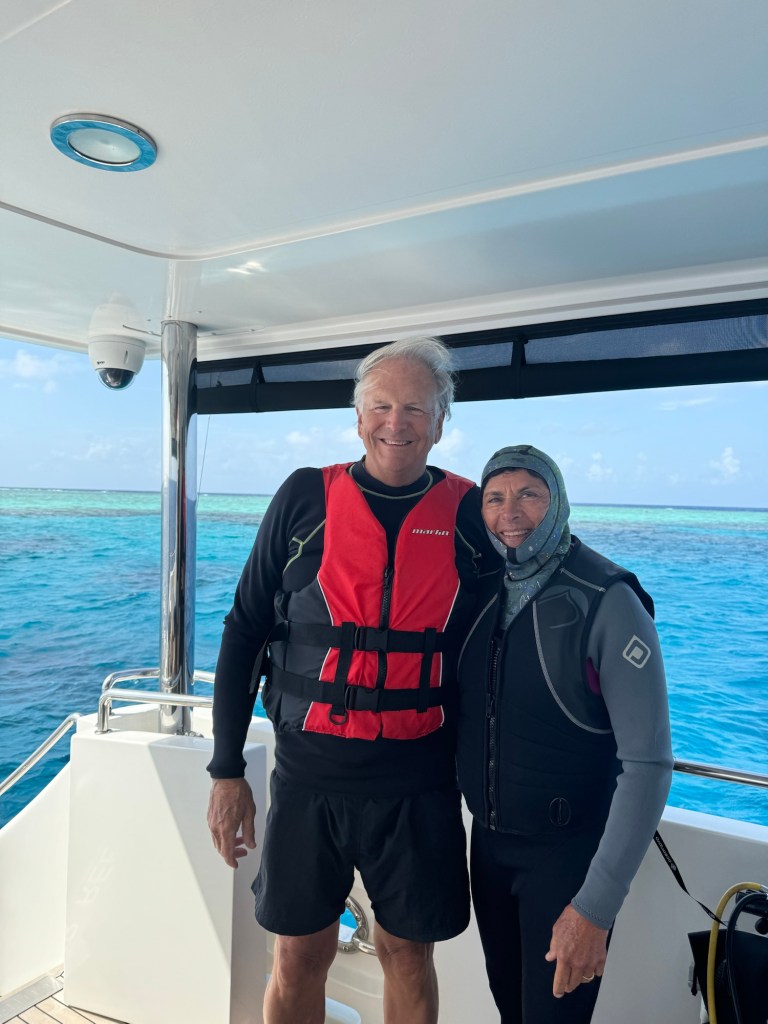
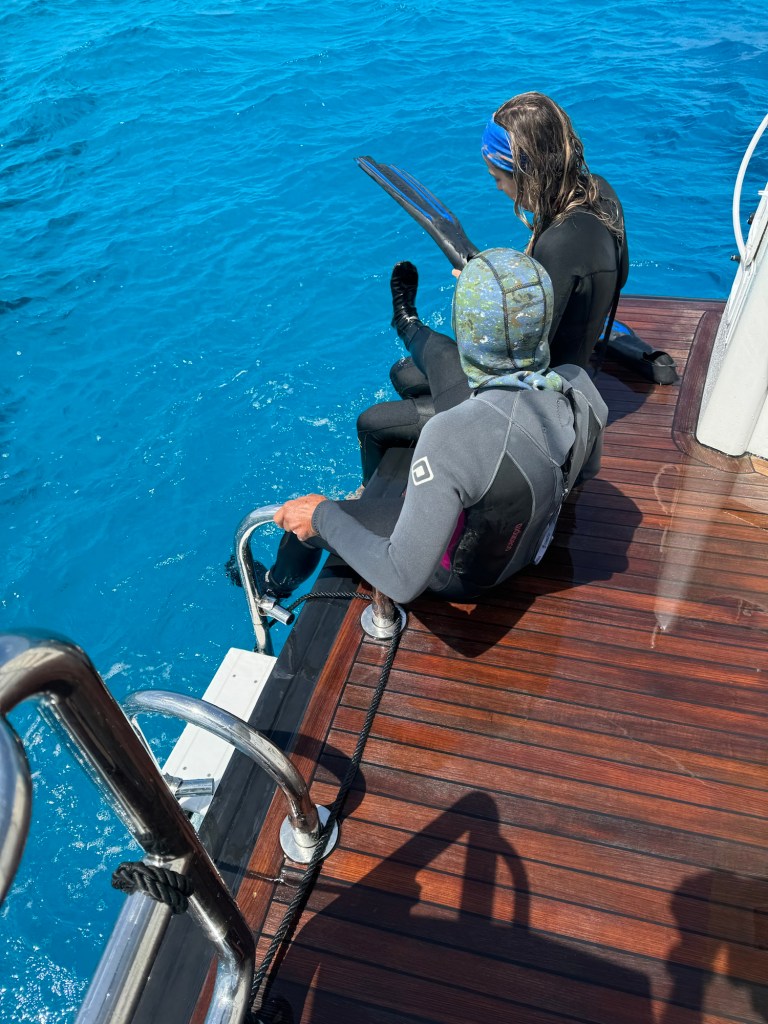
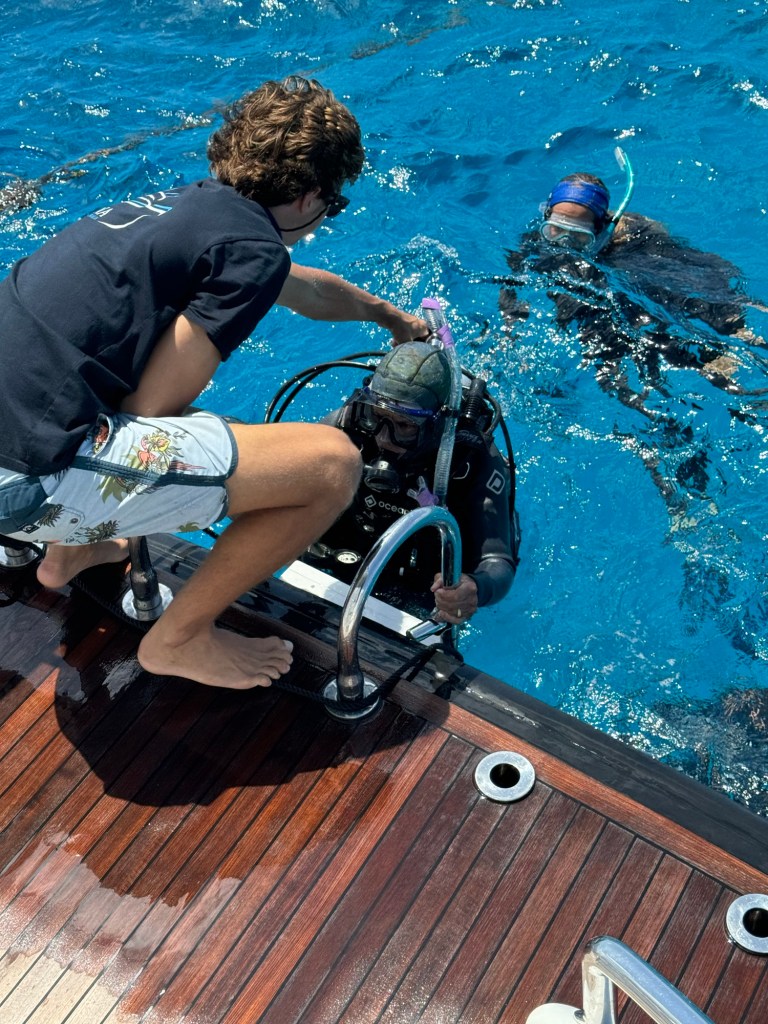
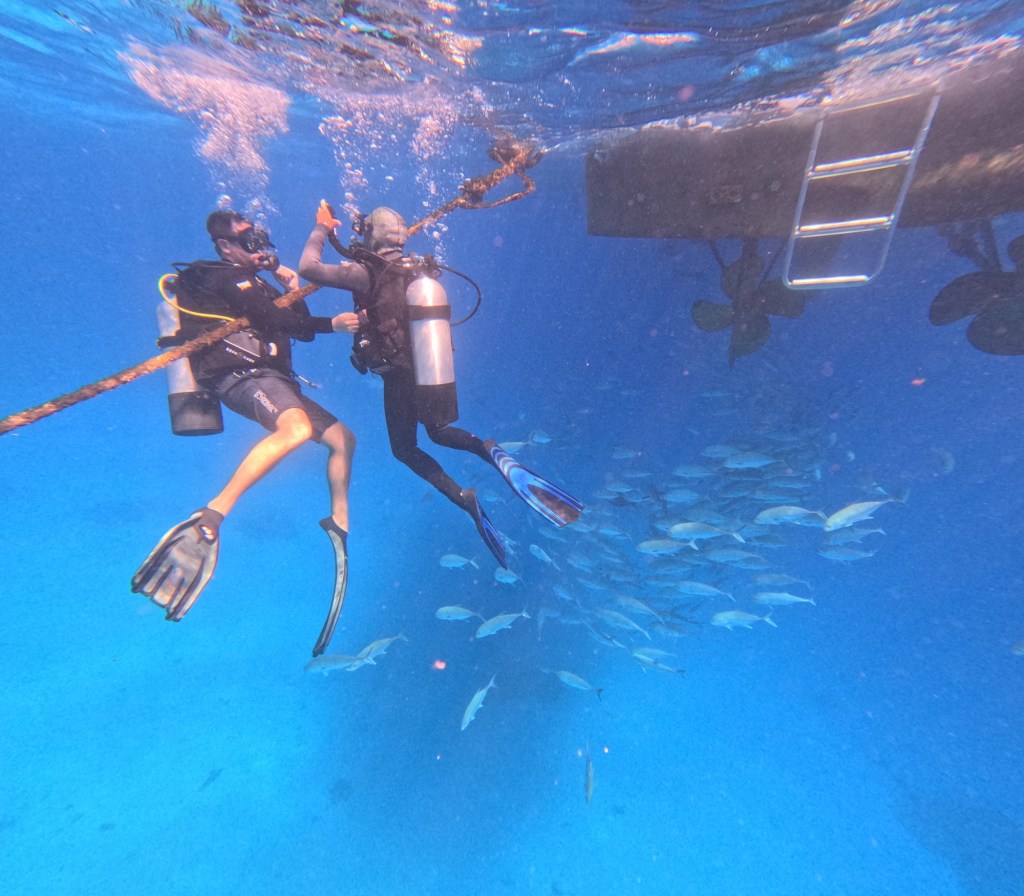
Jarryd reviewing the dive equipment with me

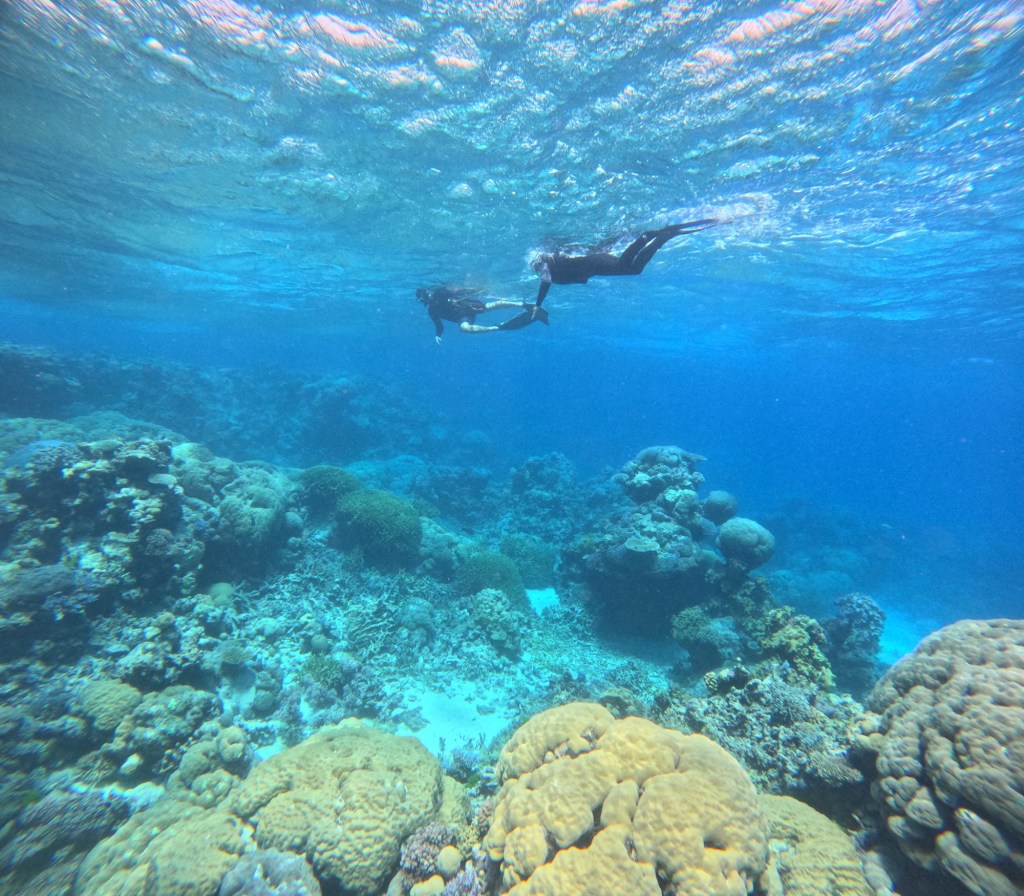
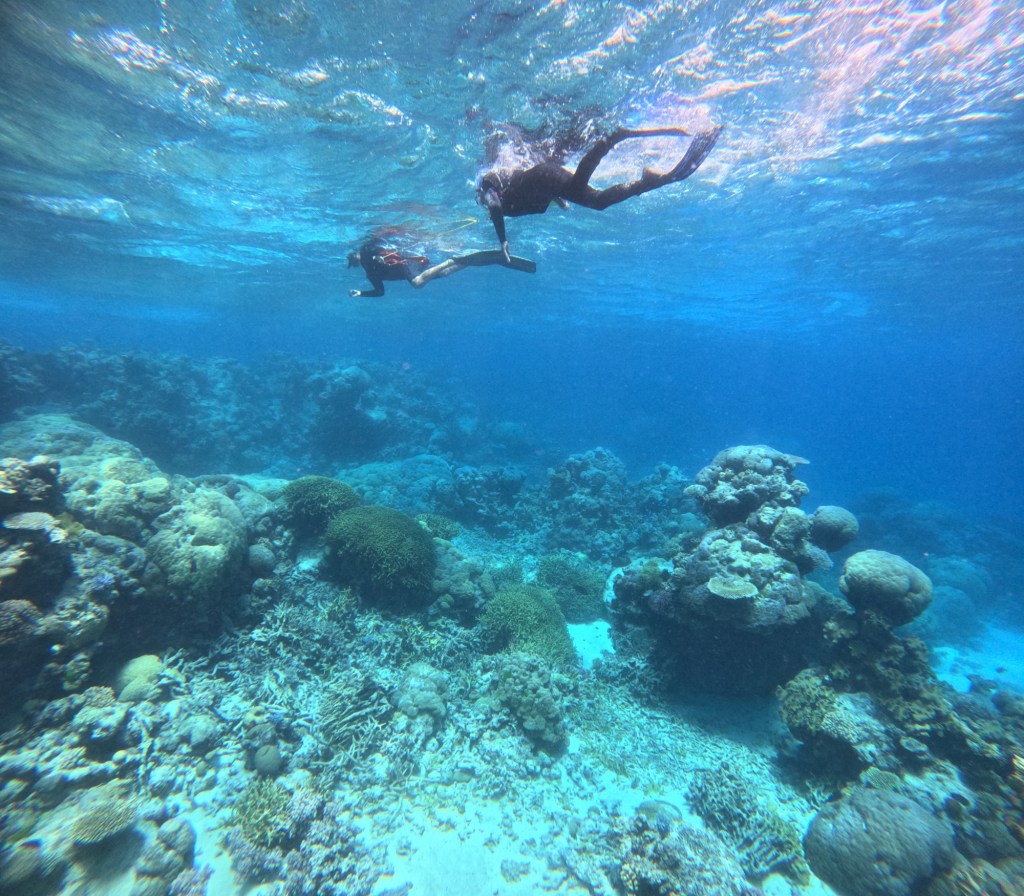
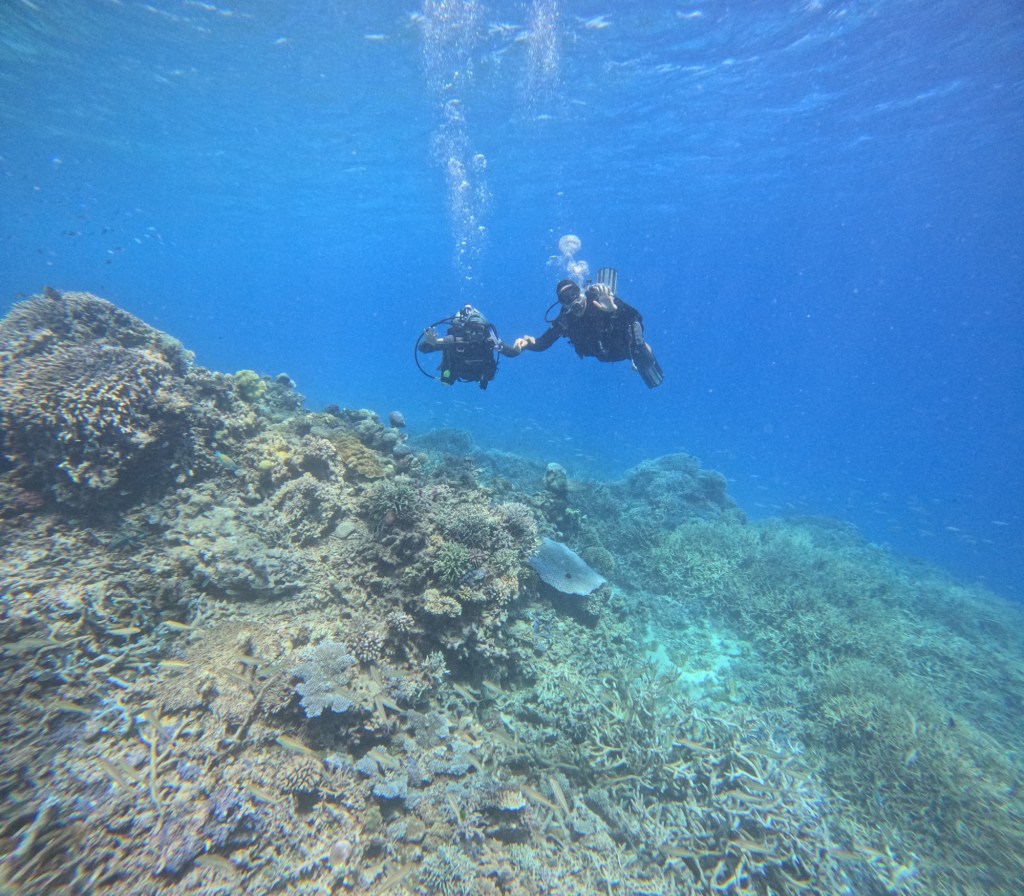
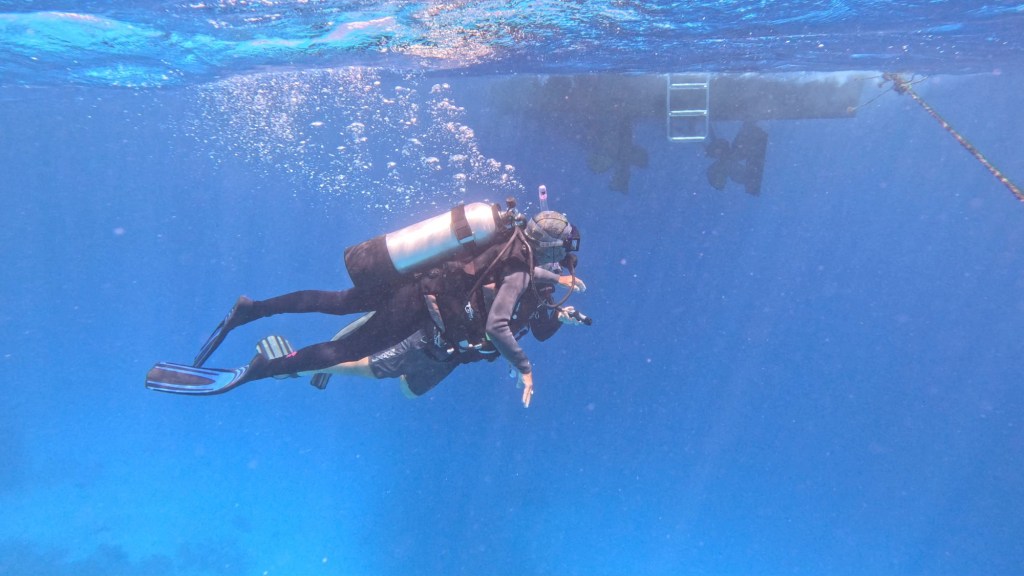
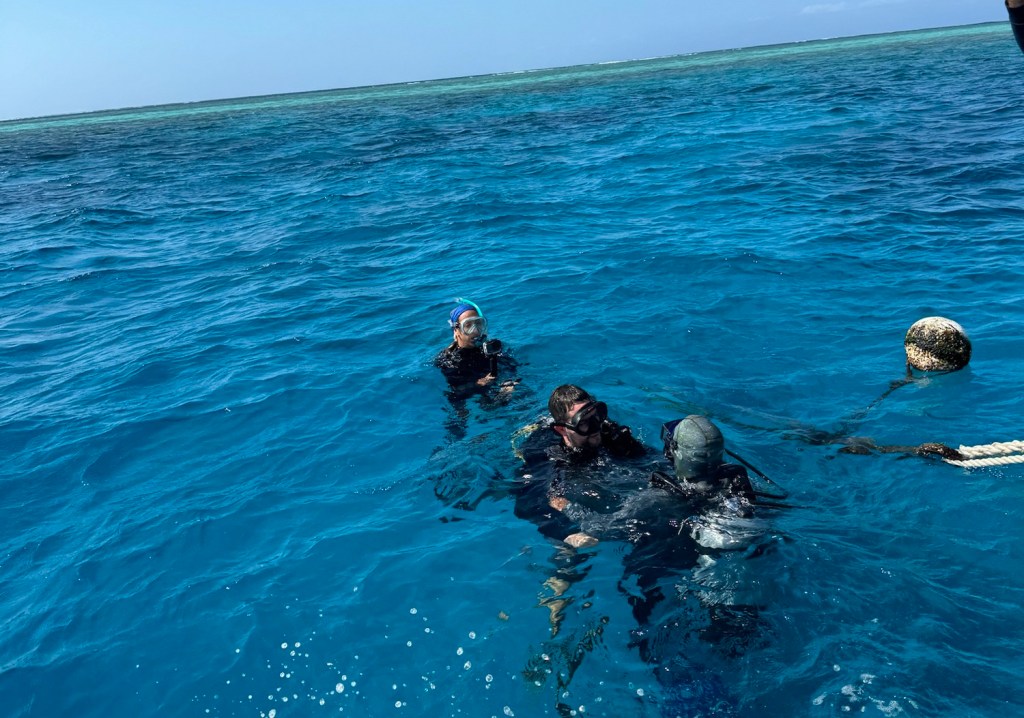
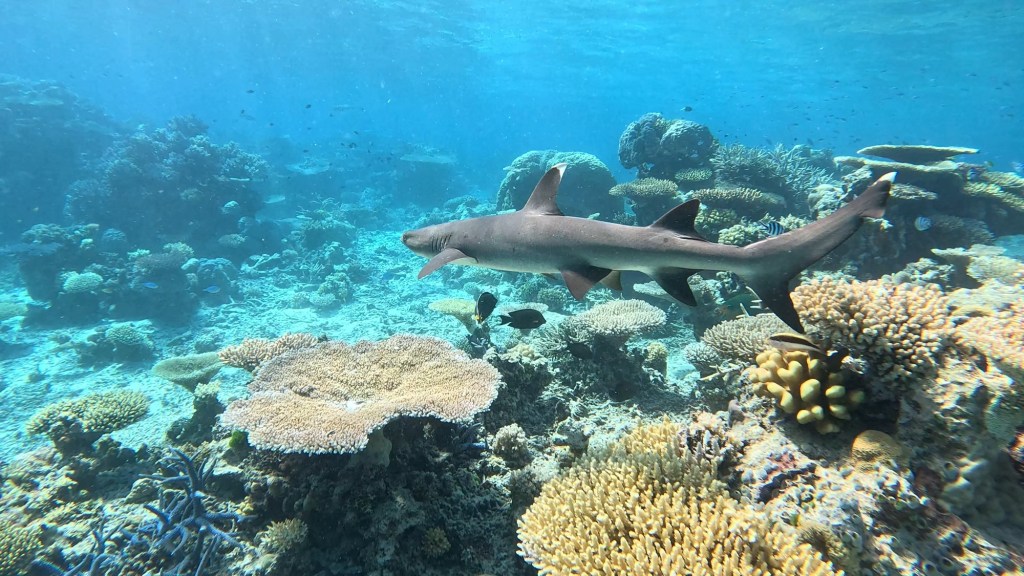
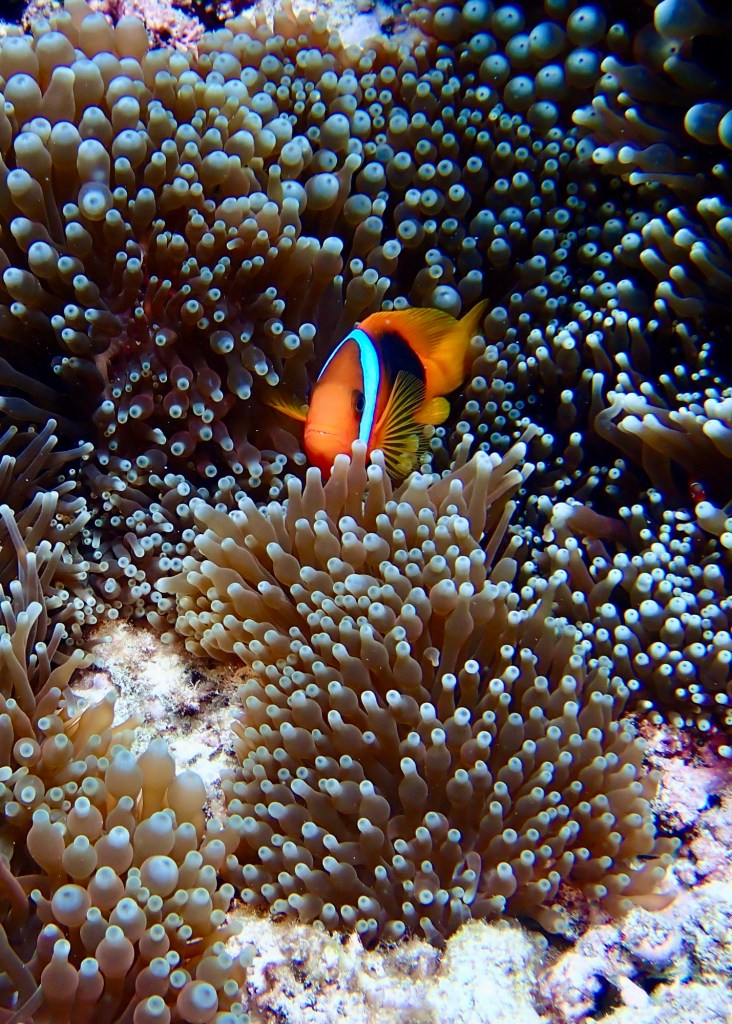
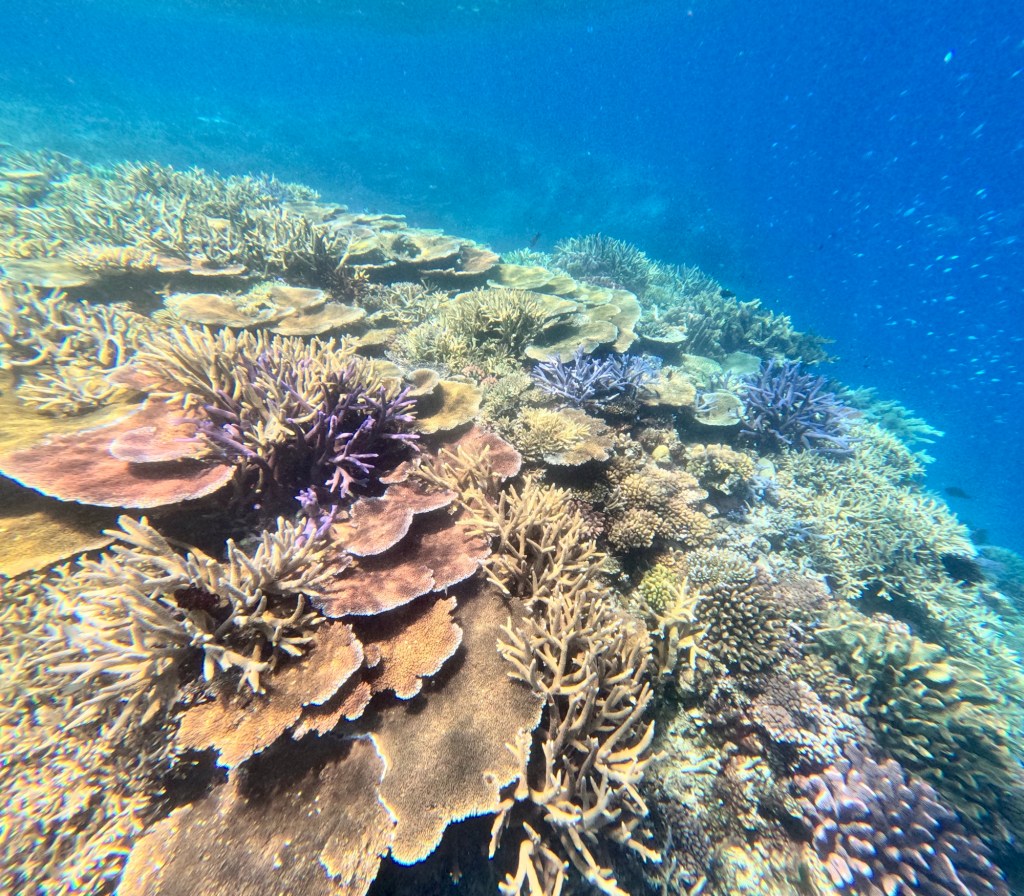
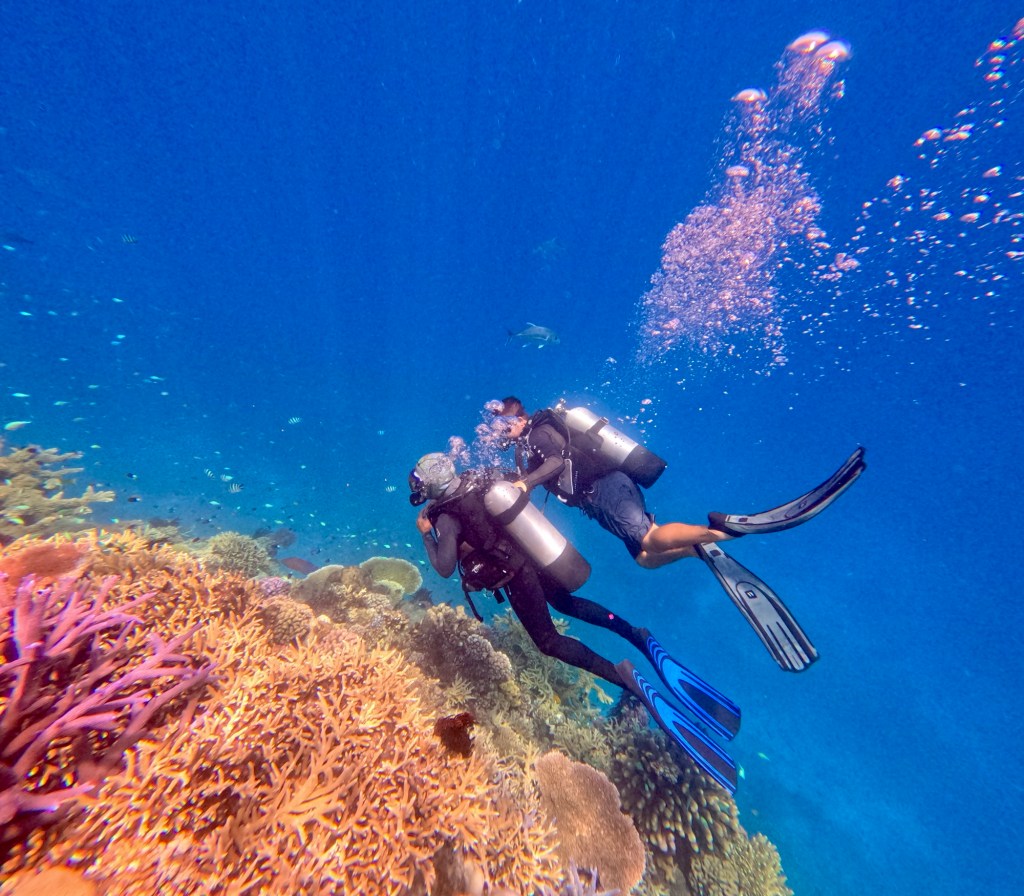
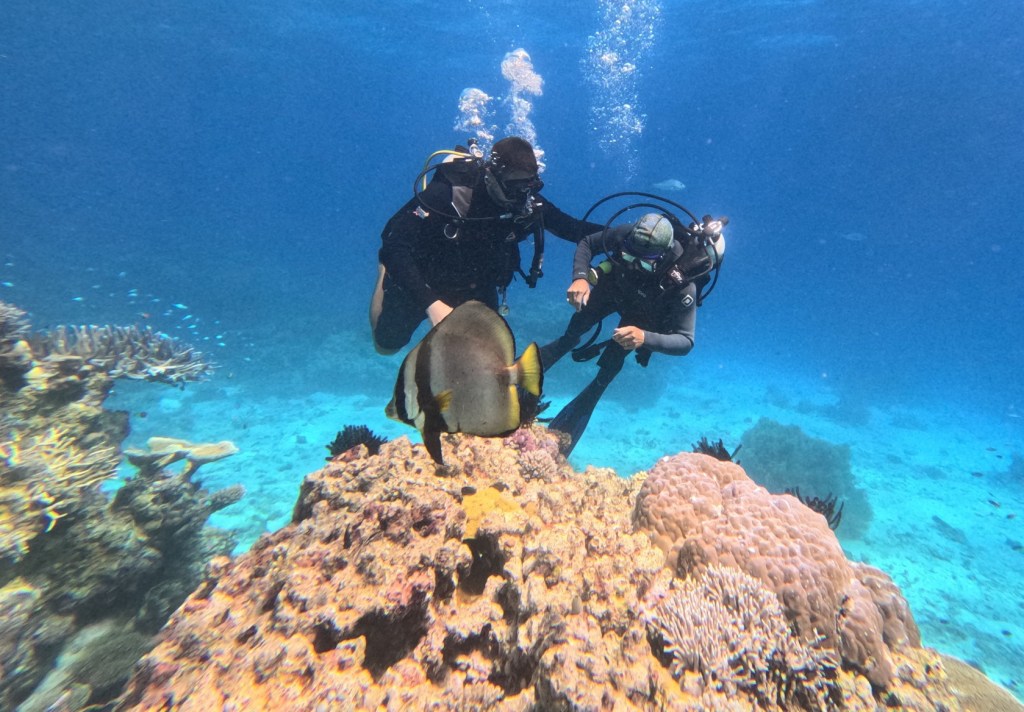
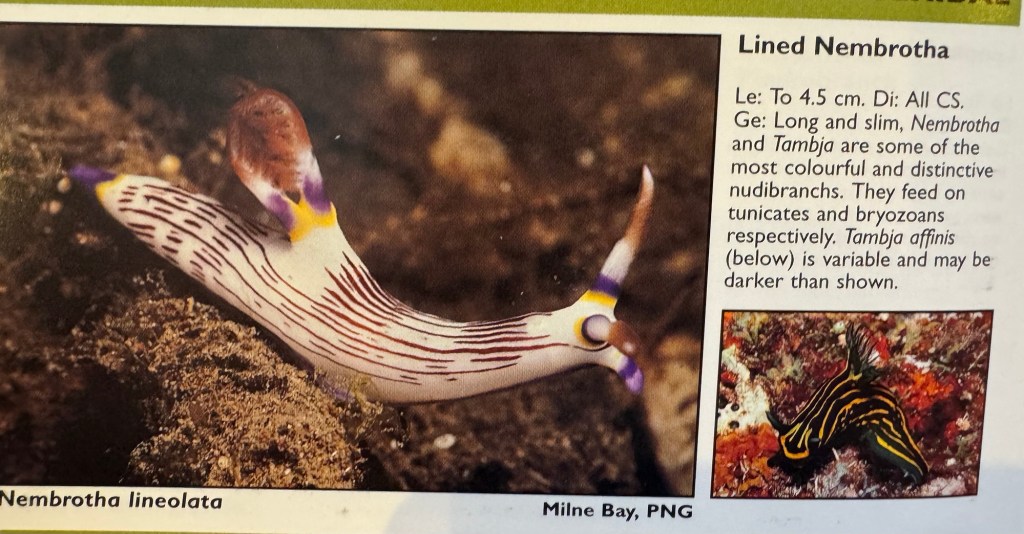
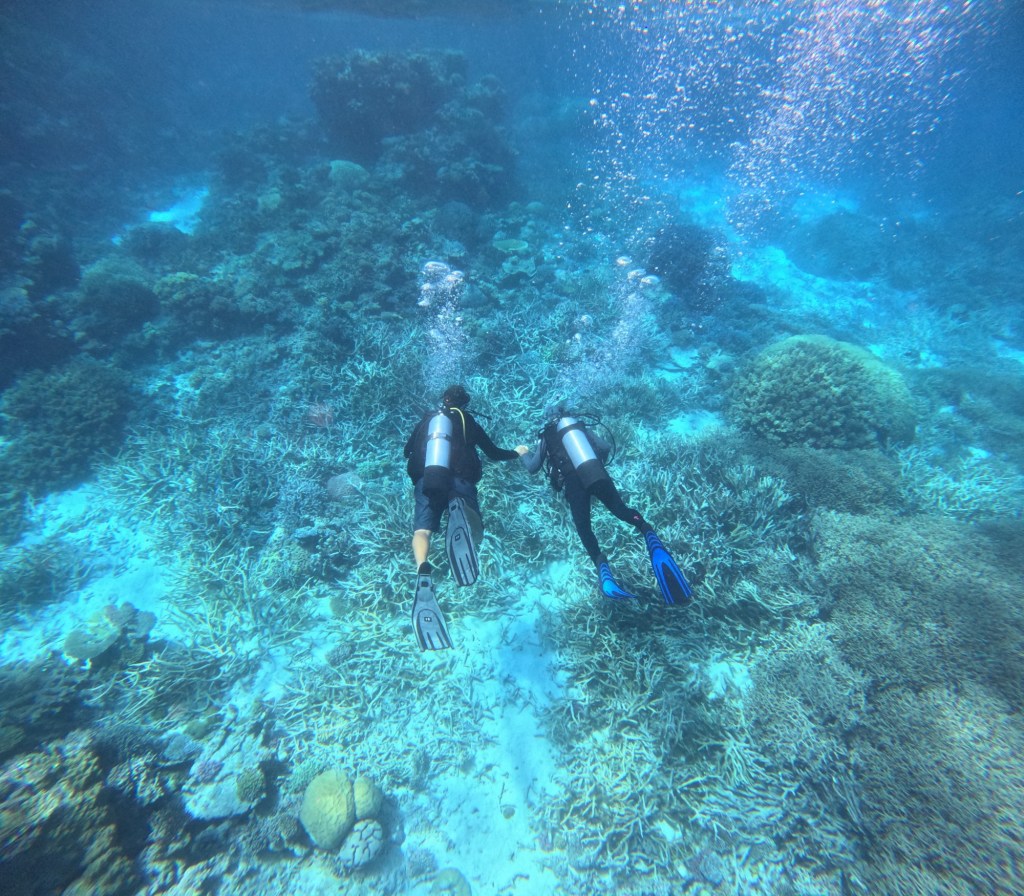
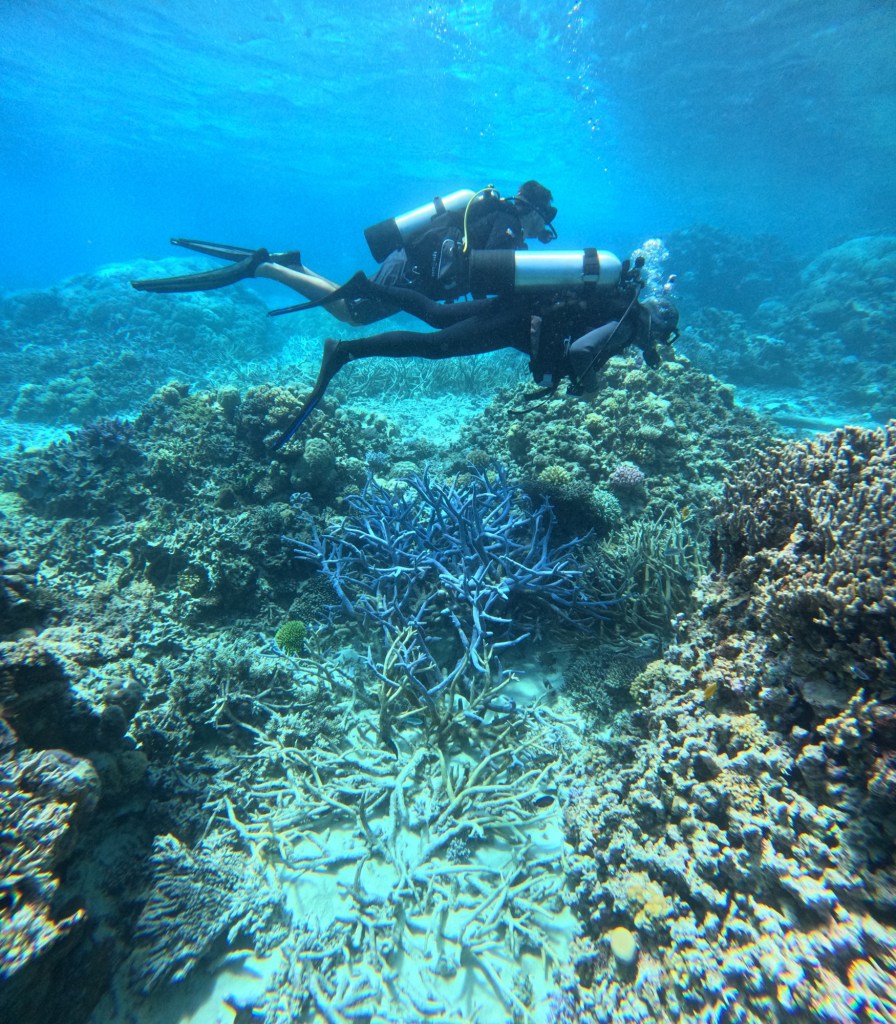
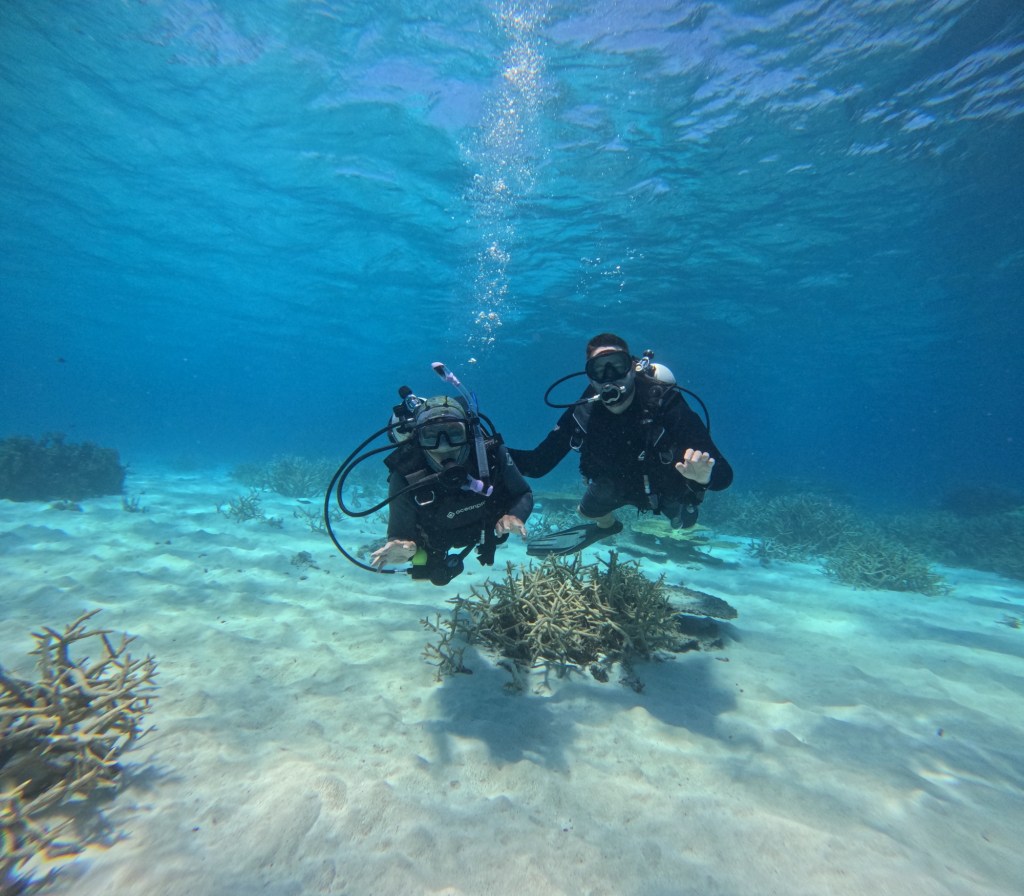
Jarryd stayed close to me at first as we slowly went down to about 20 feet, where the bottom was. Gradually I let go of him, relaxed and swam on my own. There were lots of different fish and coral. We saw fish in many sizes and colors. I wish I could name them all. The easy ones included clown and anemone fish, parrot fish, trigger fish, sea slugs and moorish Idols. The coral were not as colorful as I had hoped, but they were plentiful, especially purple acropora and blue staghorn coral. After about 30 minutes I finally got cold and signaled to Jarryd to go in.

I was very pleased with myself that I had finally, after 50 years of wanting to, done a dive in the Barrier Reef and am now looking forward to more dives. WooHoo!!! Mark and the crew were all happy for me too.

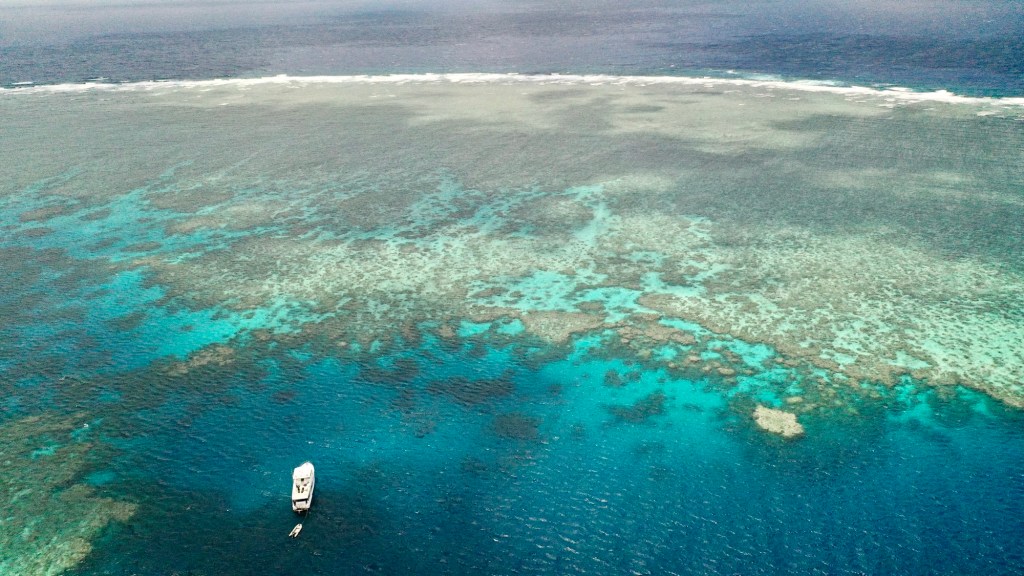
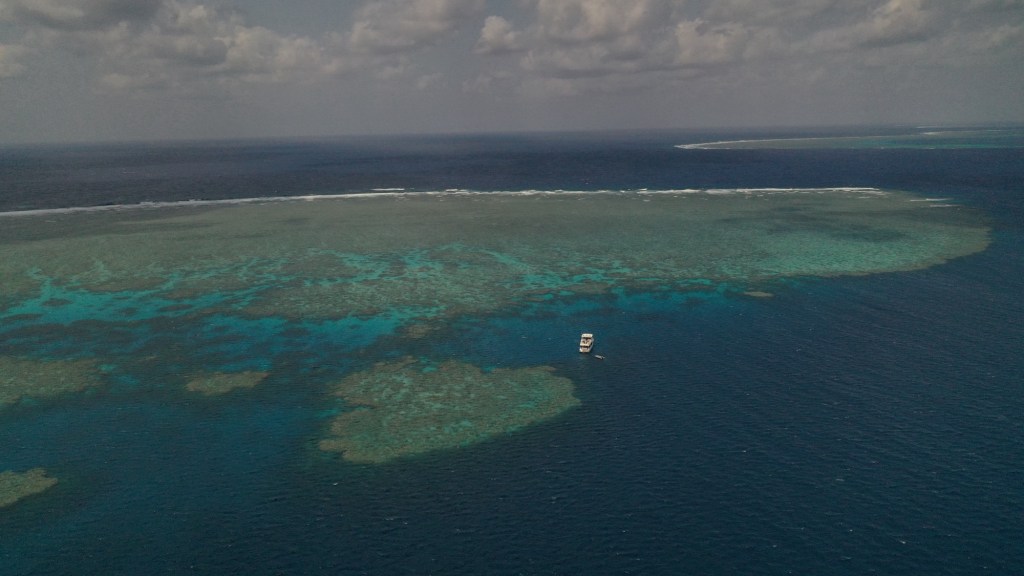
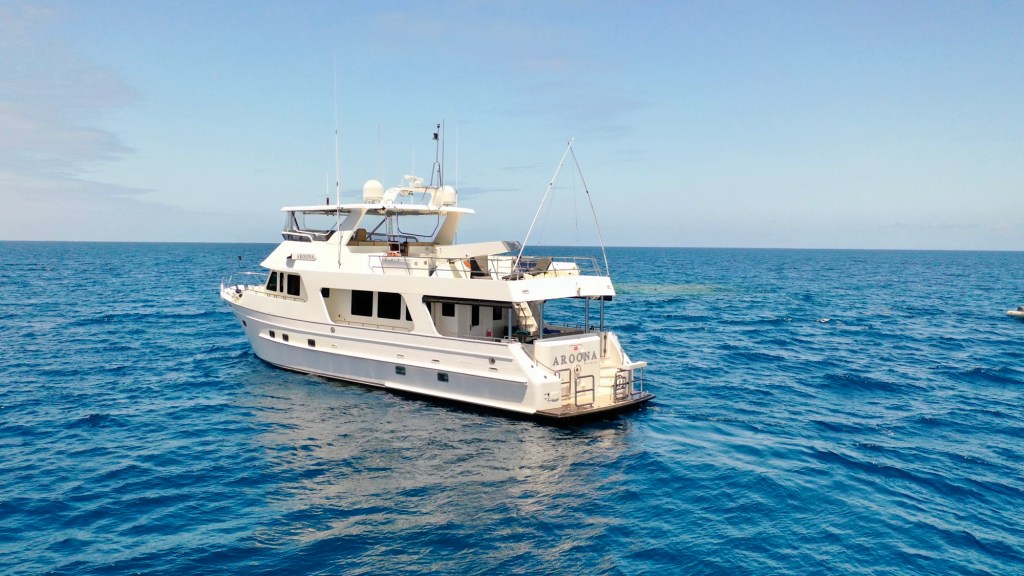
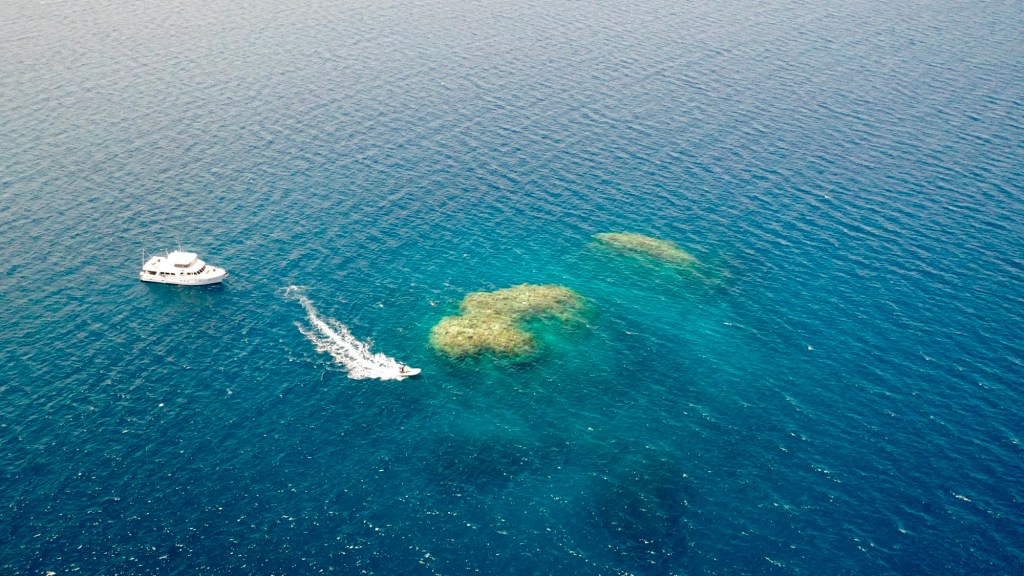
The Aroona parked in front of a large reef. Lorenzo’s drone takes the photo.
Mark caught a shark mackerel. Not good eating
so he tossed it back

This is a good day. A dive and a fish.

In the late afternoon we all played another round of the game Uno. Silly game, but good fun. Then we had appetizers and dinner on the back deck so we could all sit together.

Appetizers and Uno

I asked everyone to share their knowledge and or feelings about aboriginal people and they each had different experiences to share. In all, they are friendly toward aboriginals and each has a few close aboriginal friends. They all support the notion of live and let live.

Finally, about 9:30 the boat generators were turned off and we were all in bed.

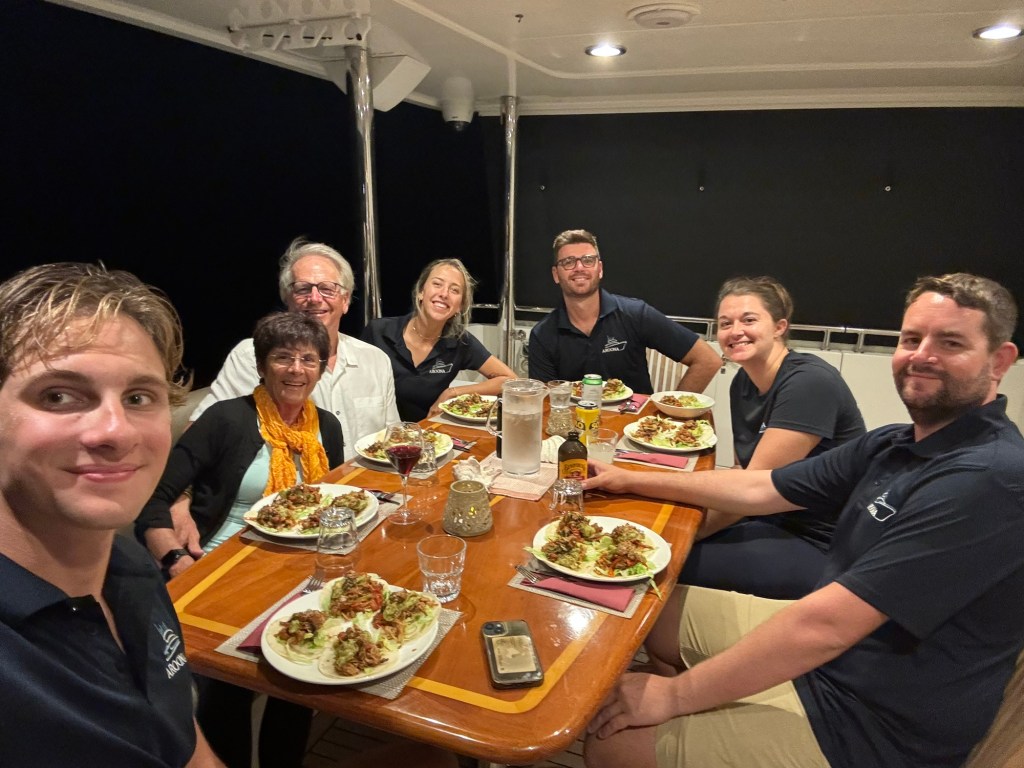
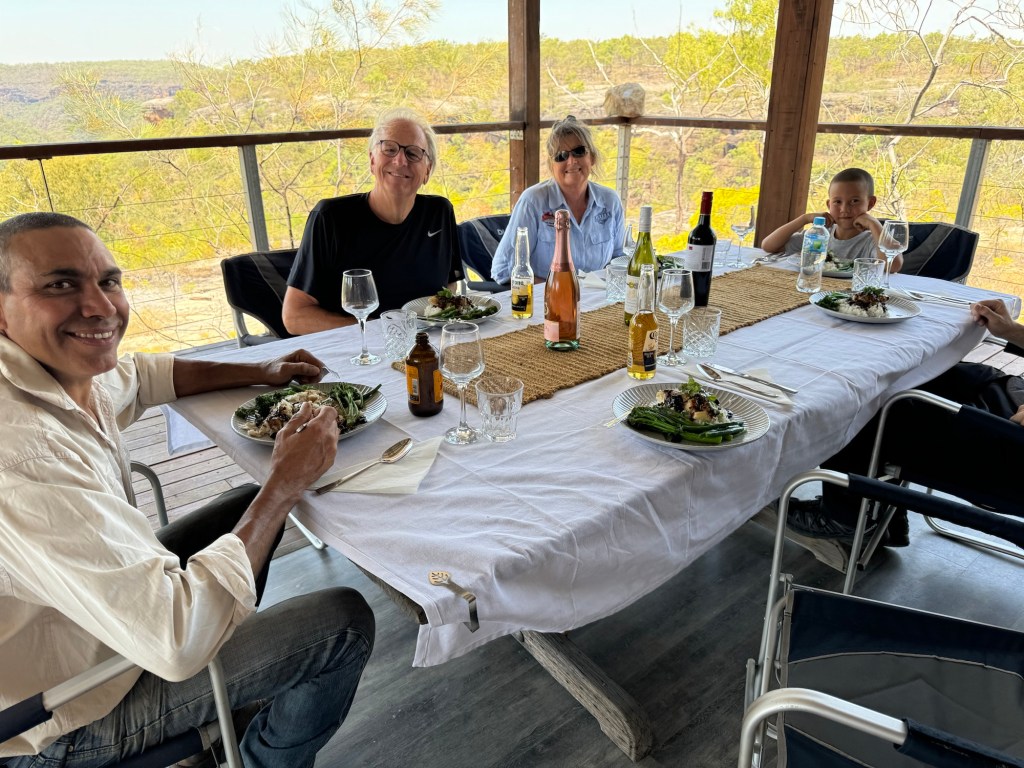
Fletcher, me, Mark, Eva, Lorenzo, Adele and Jerryd enjoying a pork taco dinner.

Thursday, September 26, 2024

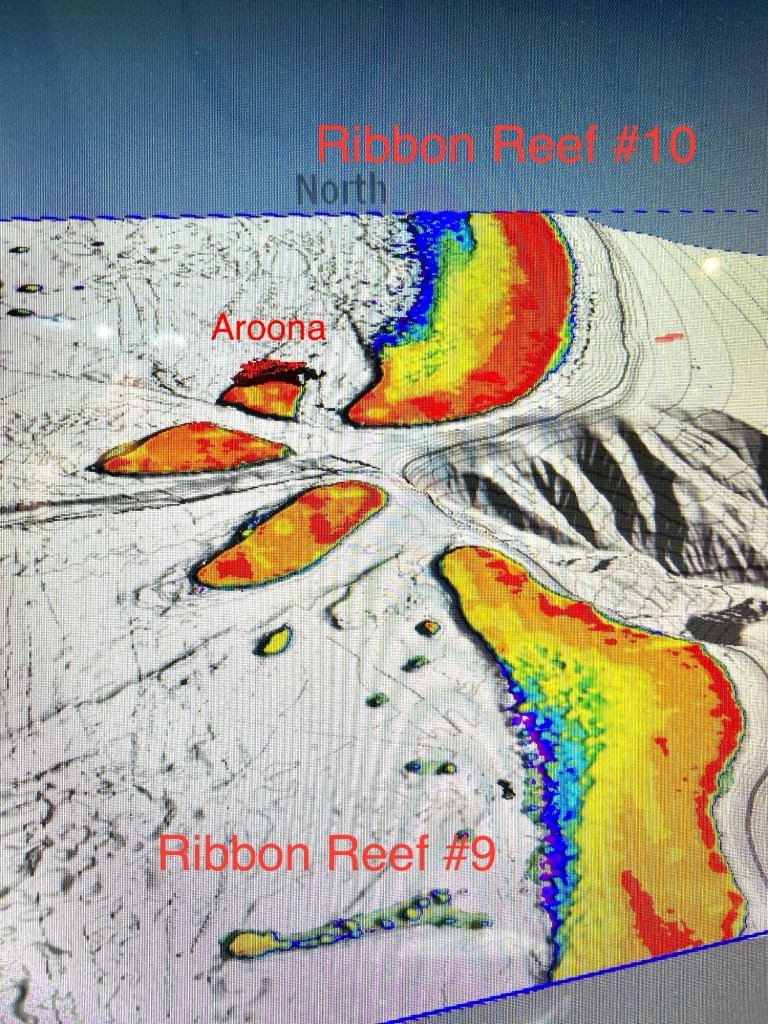
After breakfast, the crew moved the boat to a dive buoy between Ribbons 9 and 10.

We parked over the dive site. This is a photo of the boat’s computer screen.

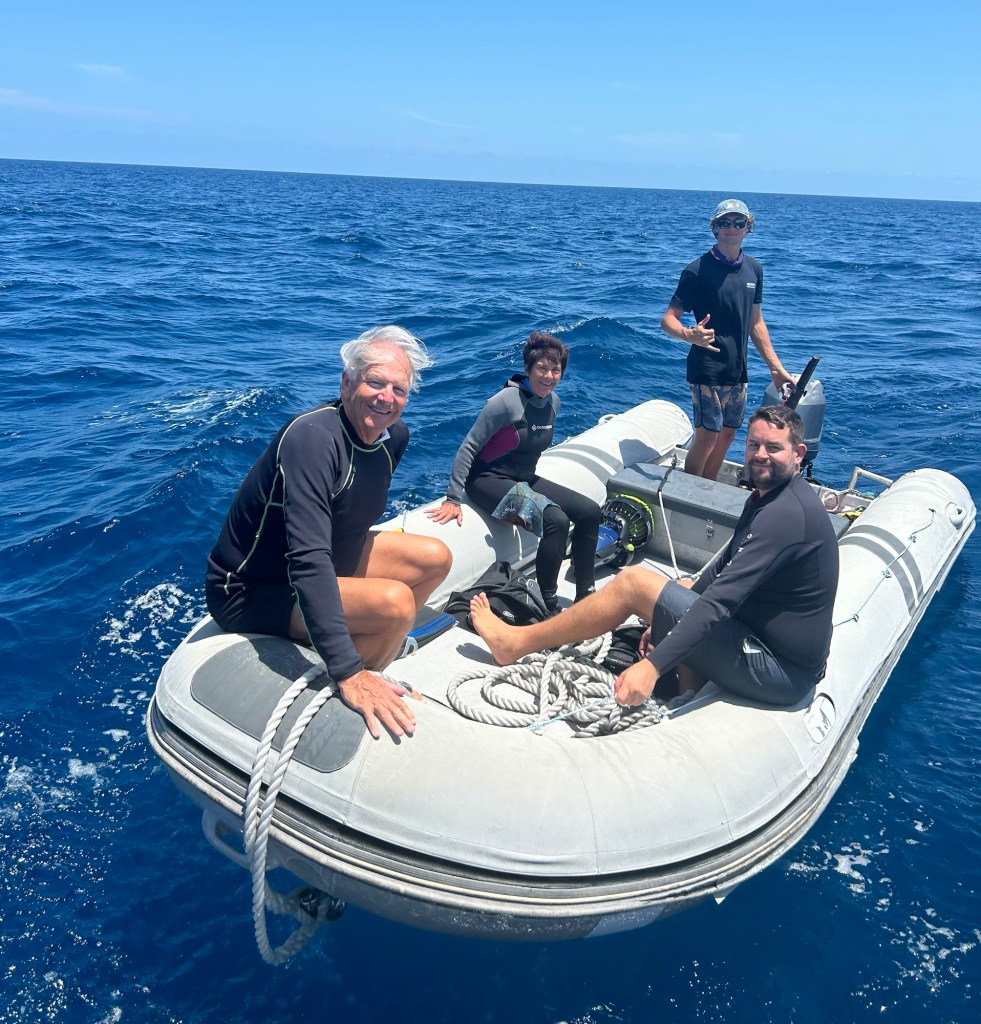
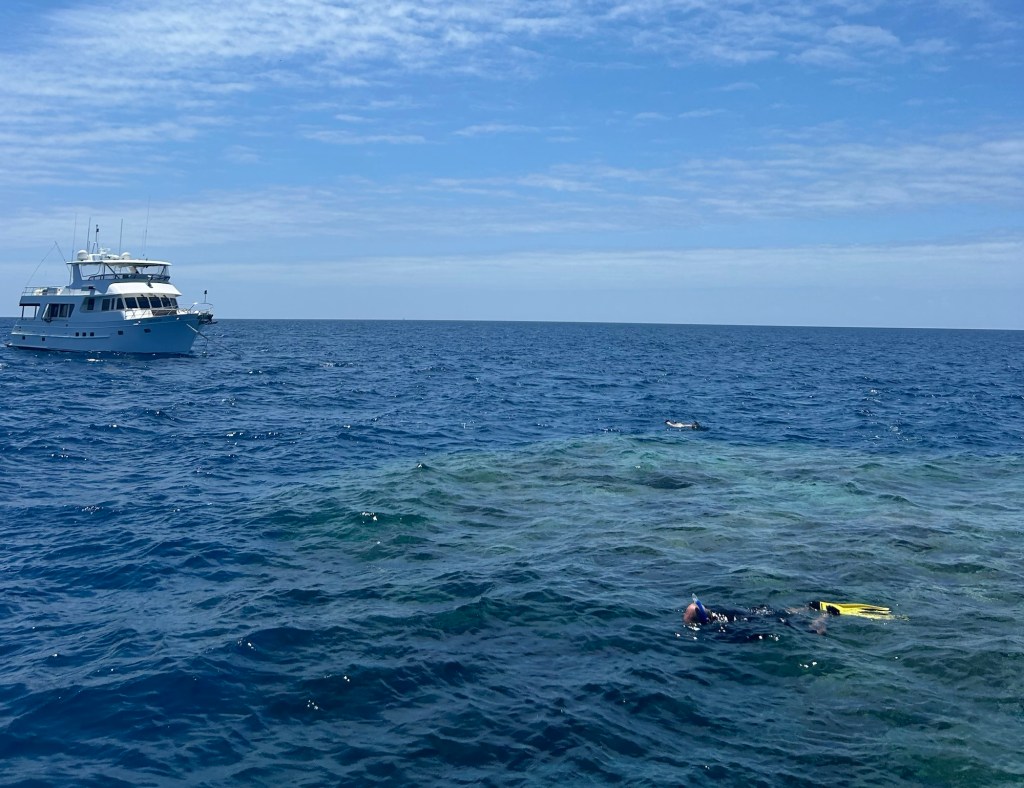
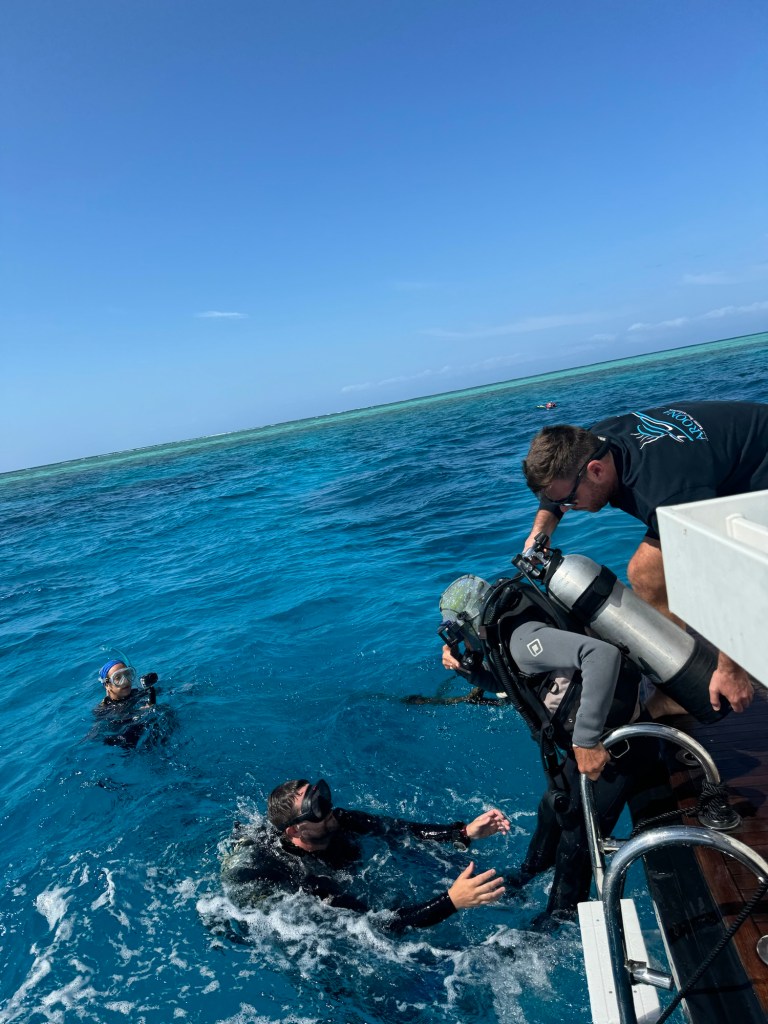
From the Aroona location, Mark used a sea scooter to do a long snorkel, while Jerryd and I went scuba diving.

Between dives we rested and warmed up. 40 minutes in the water makes me really cold even though the water temp is 84 degrees. After 2 hours we suited up to go again. This time to the twin towers site, which is 20 minutes north of Ribbon 9.5 Lorenzo raved about the site and it lived up to his praise.
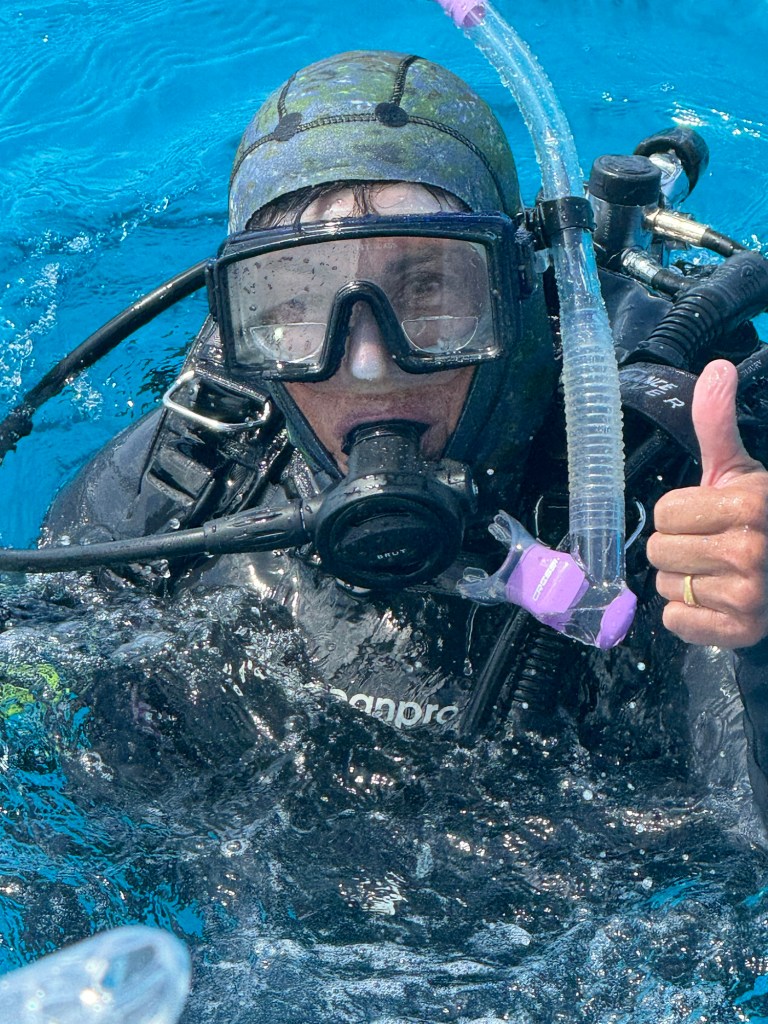
Video of me entering the water for dive at twin towers site
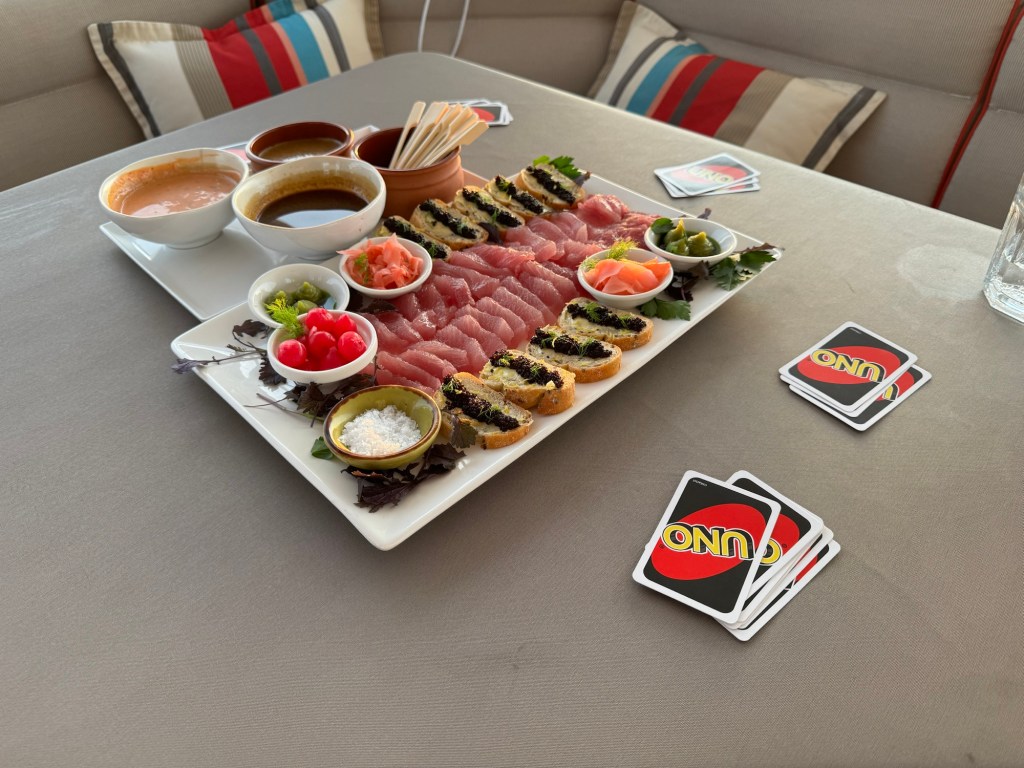
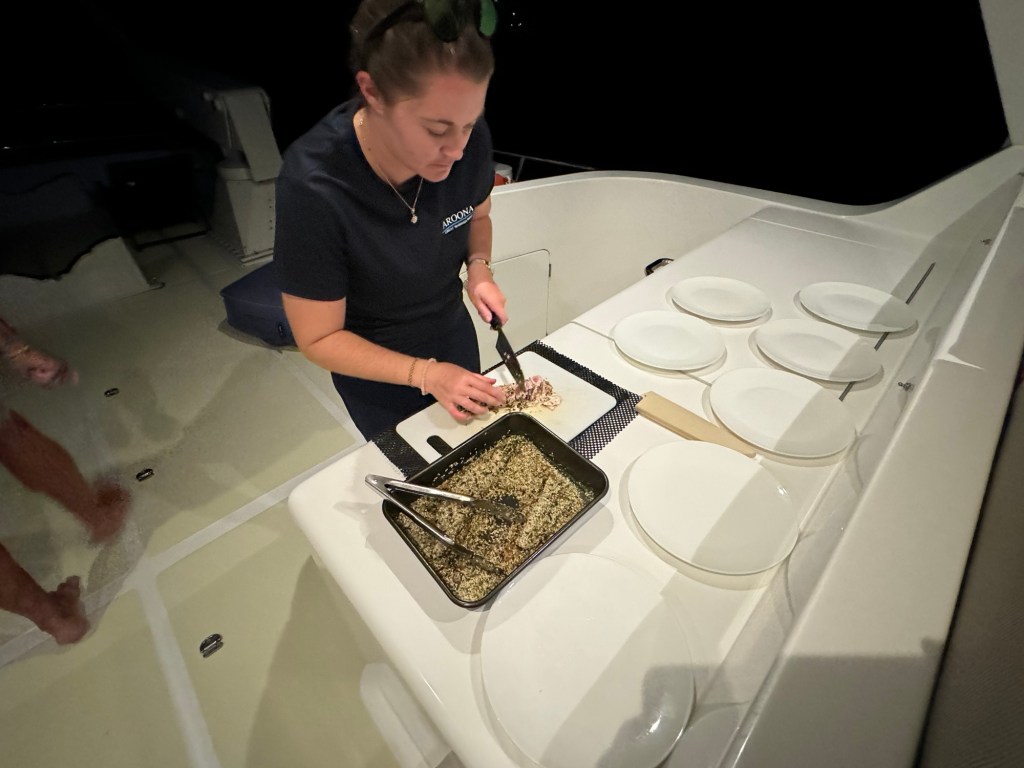
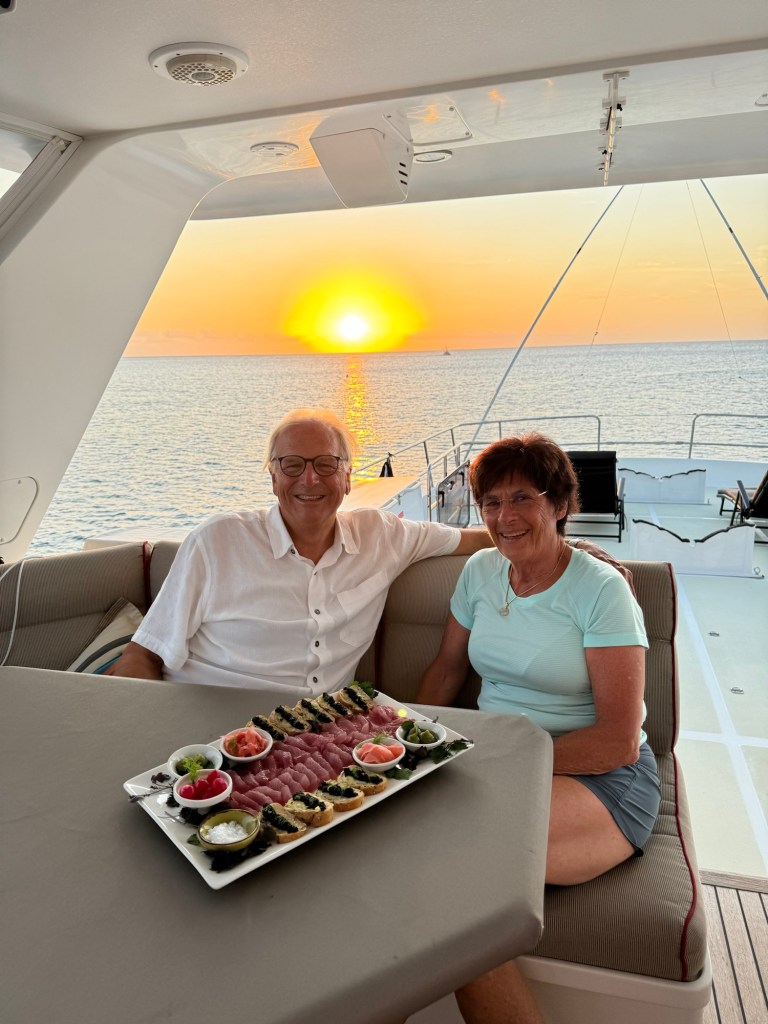
The tuna appetizer dish Adele made for our last night

Back to Darwin and on to Silky Oaks, Queensland

Friday, September 20, 2024

After saying good bye to Sab, we went to the airstrip near Davidson’s camp and flew back to Darwin in an old Cessna 210,

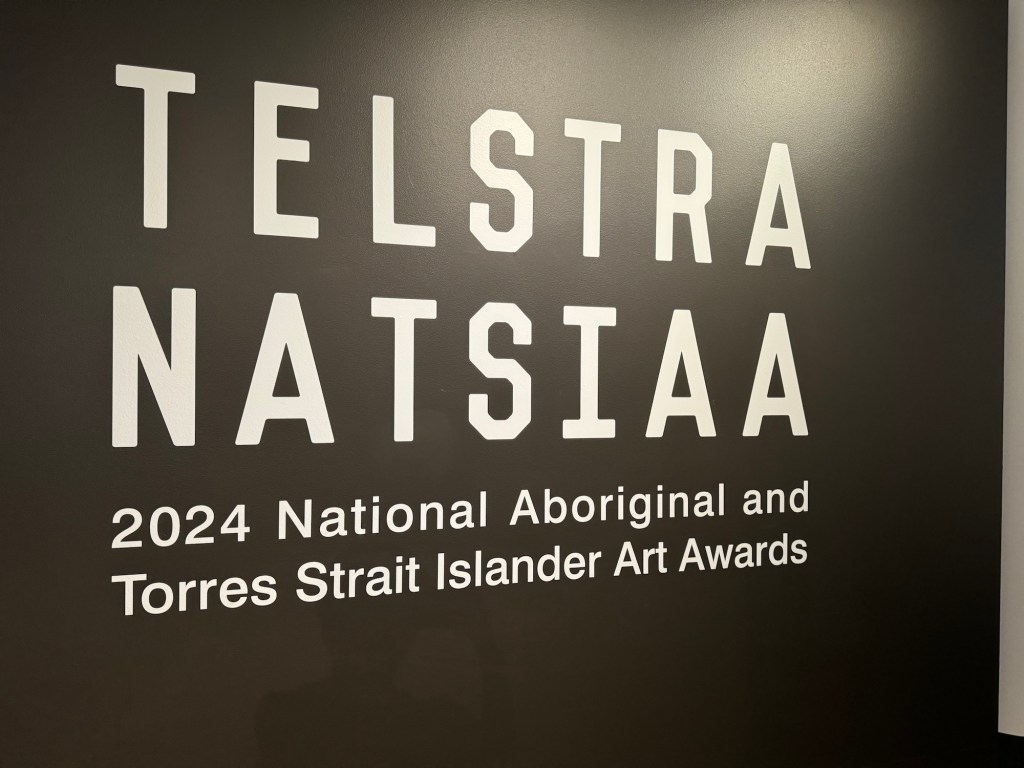
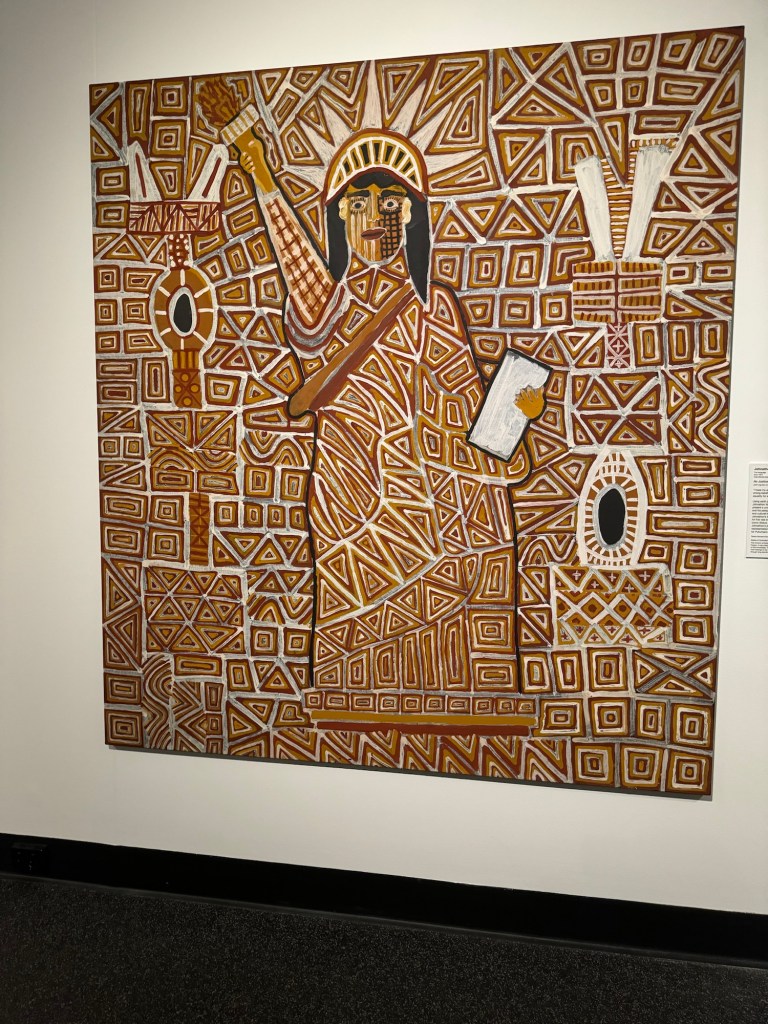
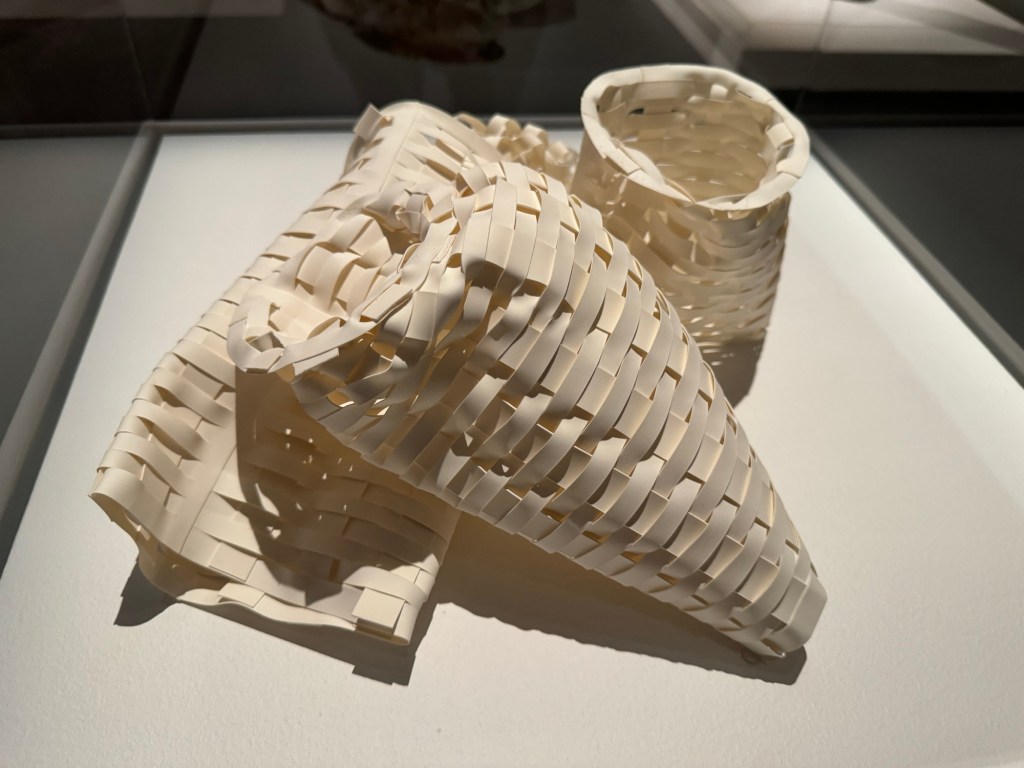
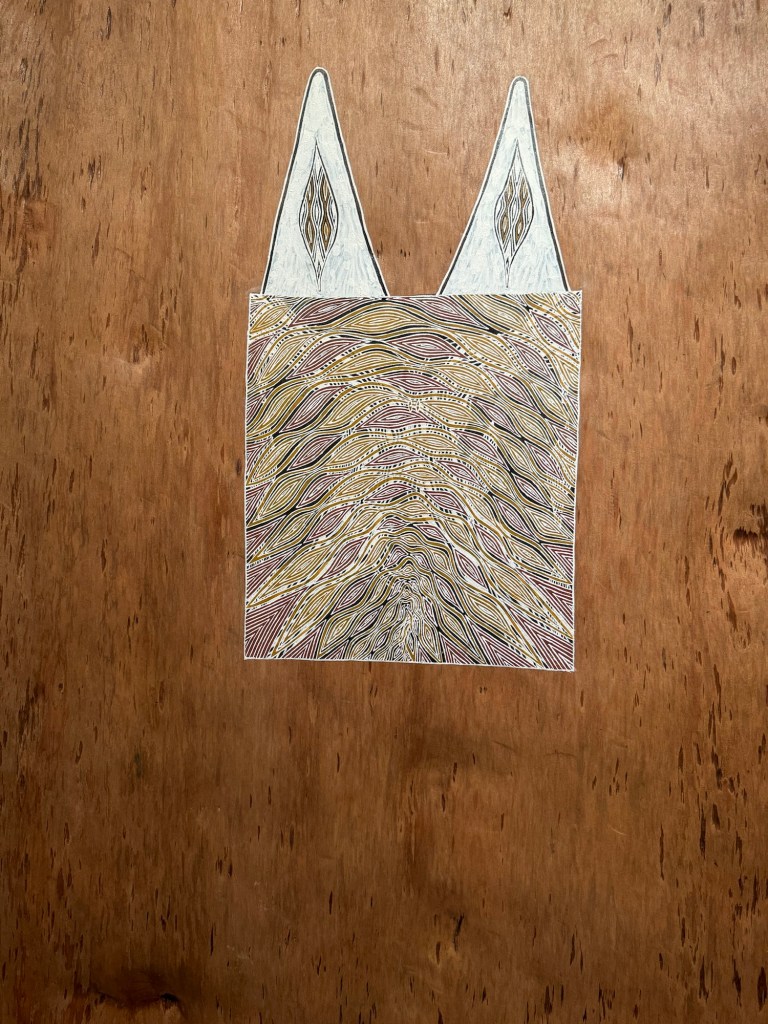
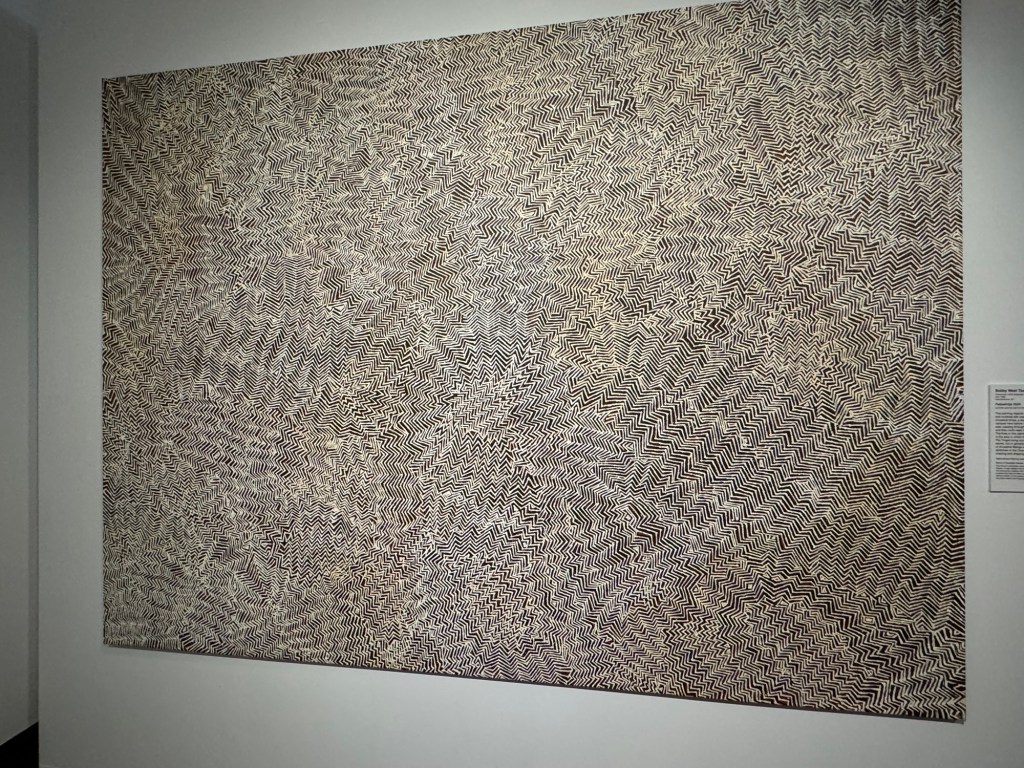
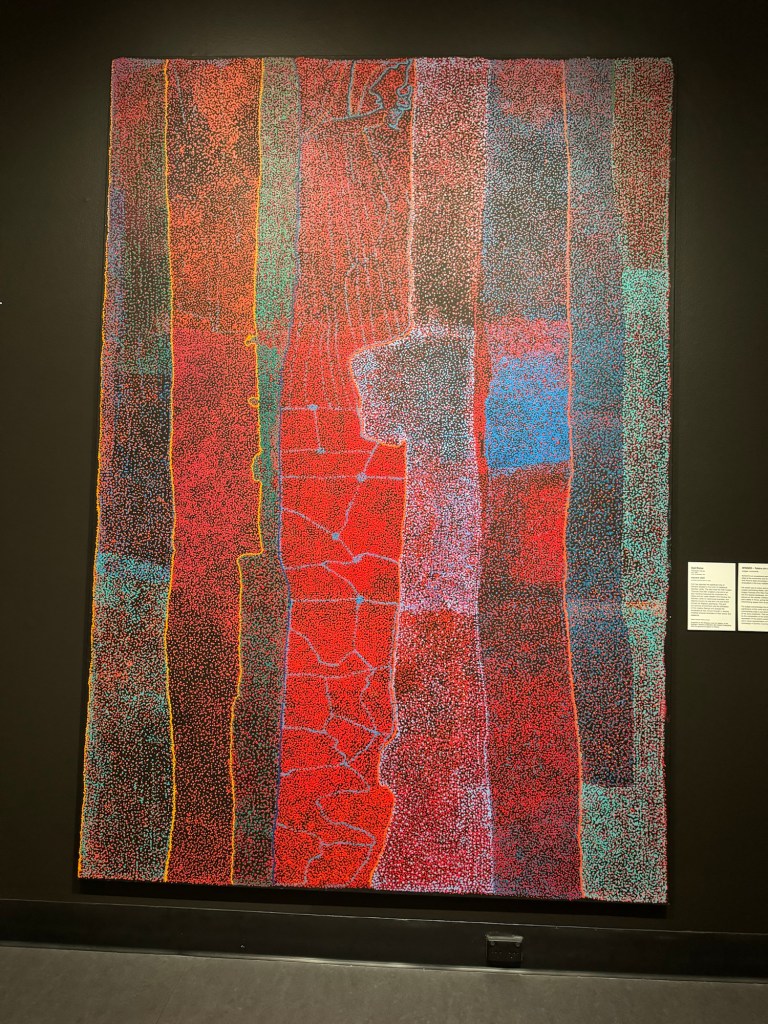
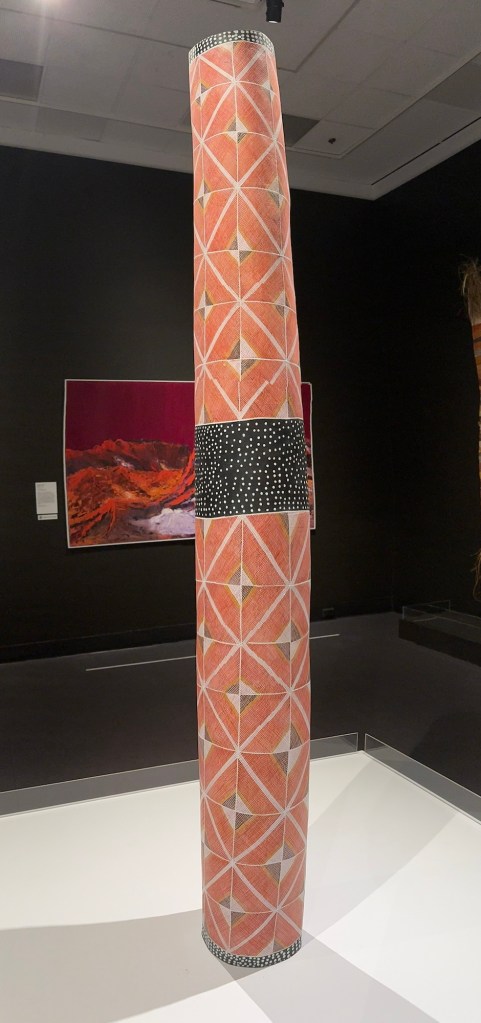
where we were immediately picked up and driven to the Darwin Museum and Art Gallery of Northern Territory for a private one hour tour of the current aboriginal Exhibition.

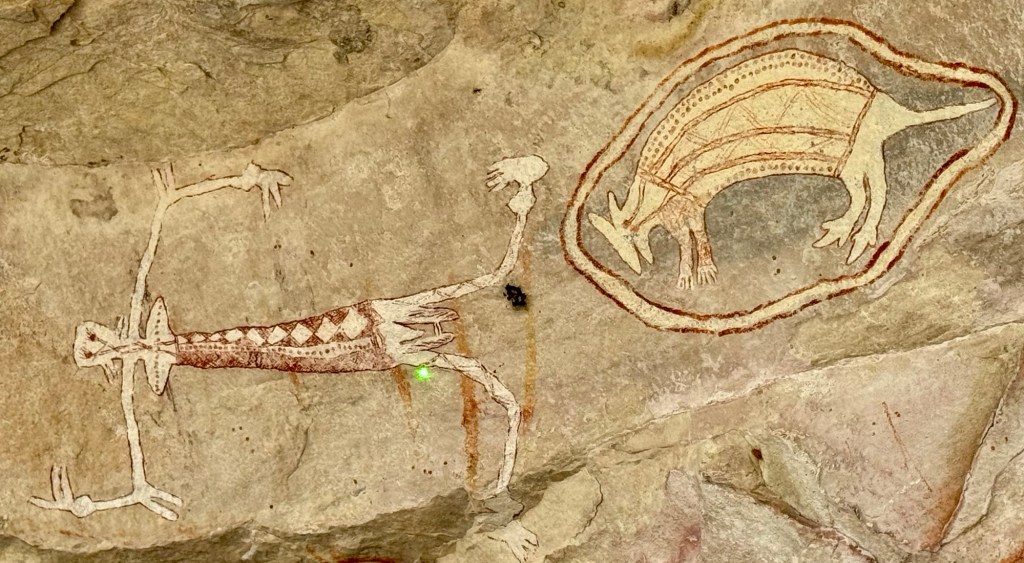
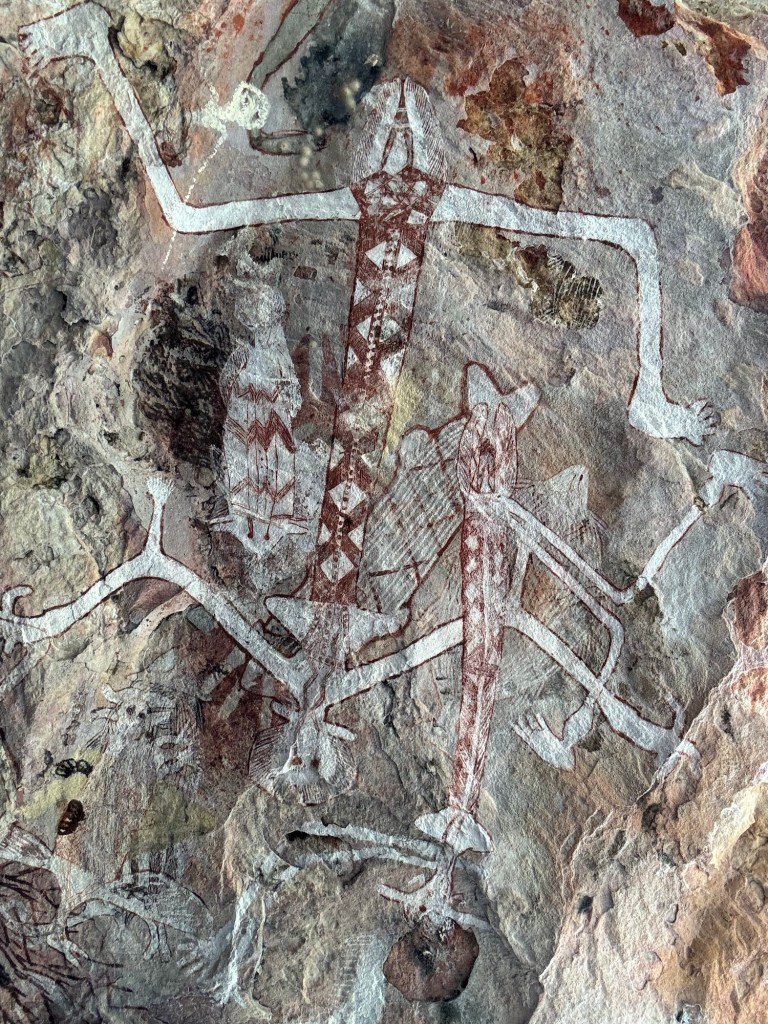
The curator, Bryony Nainby, met us at the entrance and wasted no time imersing us in aboriginal art. Here are some of the most impressive pieces we saw. Double click for a full view.

After the tour we had a quick bite, and were driven back to the airport for our 3:30 commercial flight to Cairns. It was a crazy day, but we made all our connections and got to Cairns in time to catch our ride to the Silky Oaks lodge, have a light dinner……and slide into bed. Hope tomorrow is a slower day.

Saturday, September 21, 2024

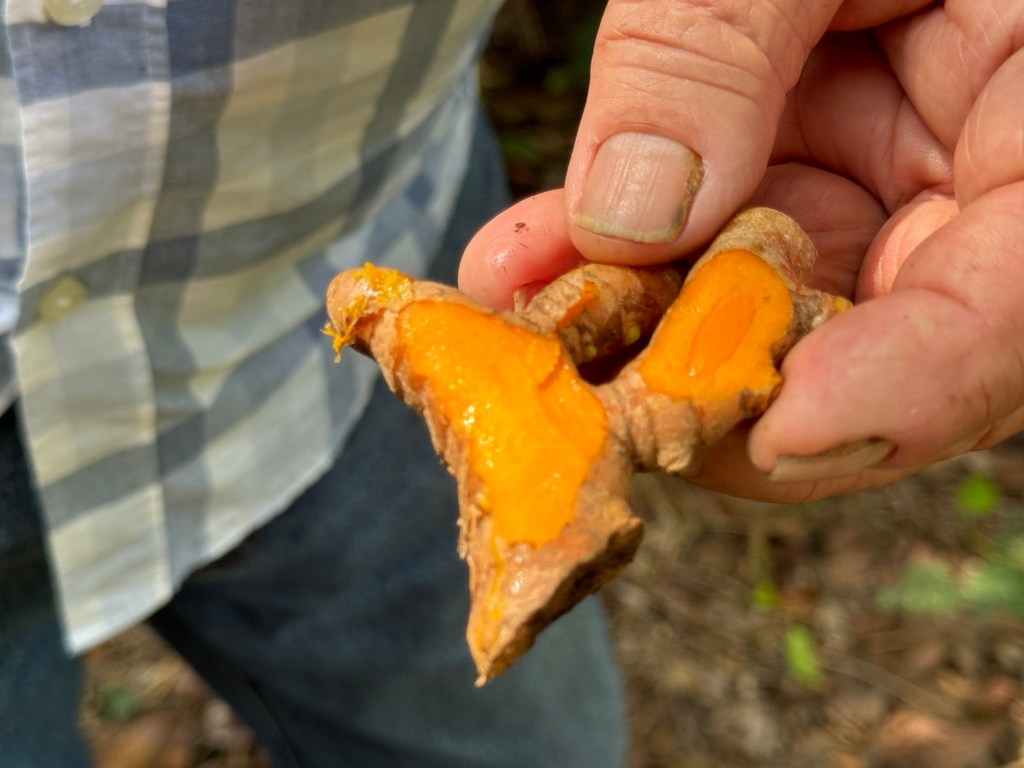
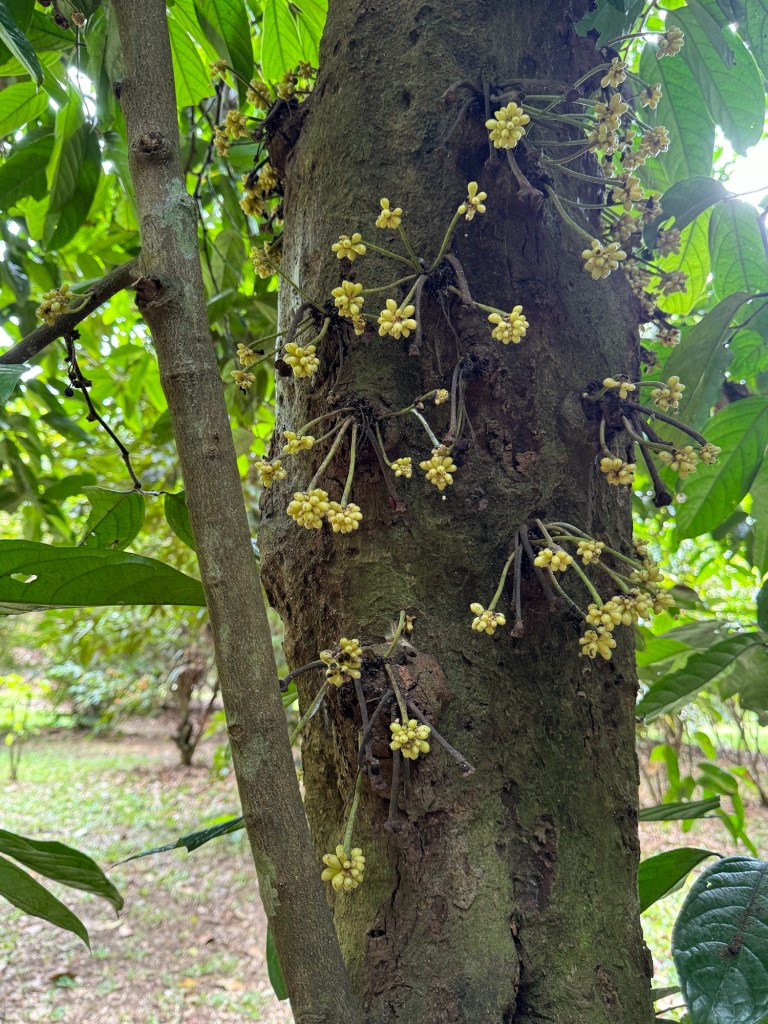
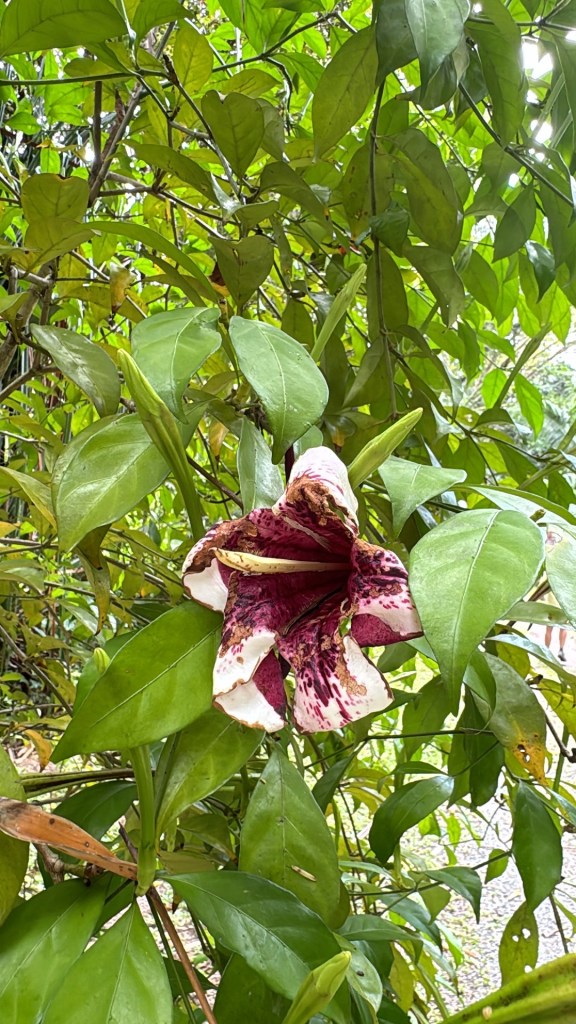
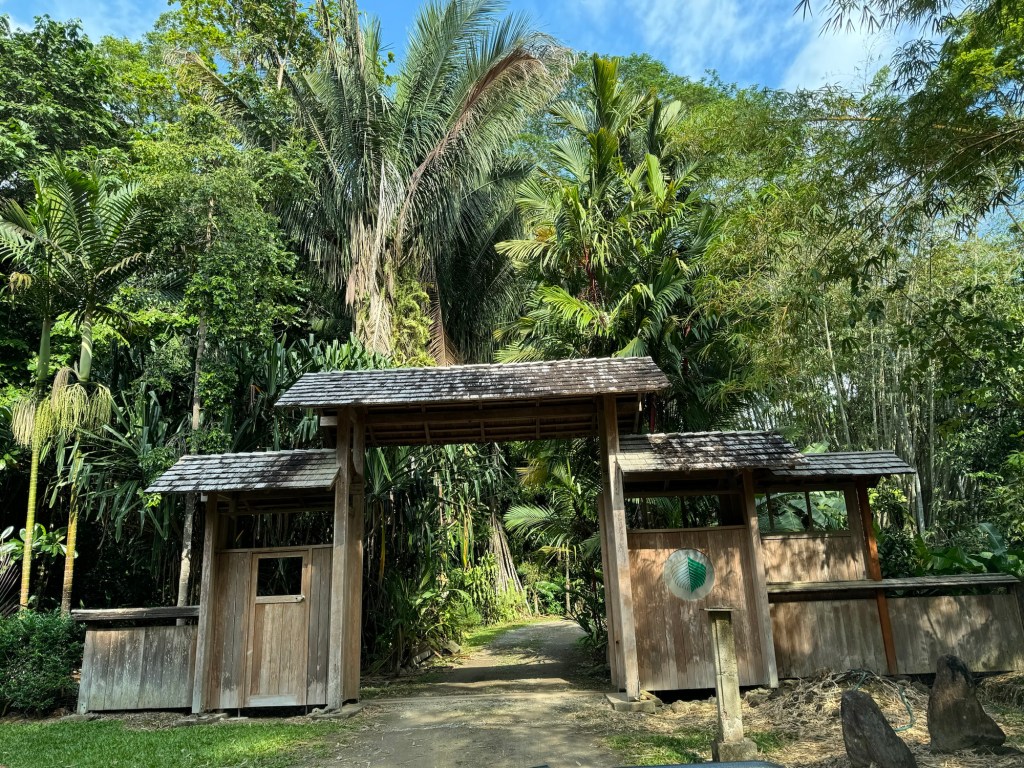
Our accommodations are in a lovely lodge called Silky Oaks on the bank of a river in the middle of a rainforest. It was nice to wake up to the sound of the river just outside our cabin. After breakfast, we were met by Cathy Wharton, our guide for the next two days. Off we went for a drive through the countryside to the rainforest property of Alan and Susie Carle, which they named, Botanical Ark. Cathy introduced us to them and soon we went walking into the forest with Alan to learn about his property and his life’s work of saving rainforests everywhere. He talked about starting with an empty 21 acre piece of ground and collecting seeds from all over the world to plant in his Botanical Ark. The plants have grown quickly in the 43 years since they acquired the property. His ark is now a magnificent rainforest.
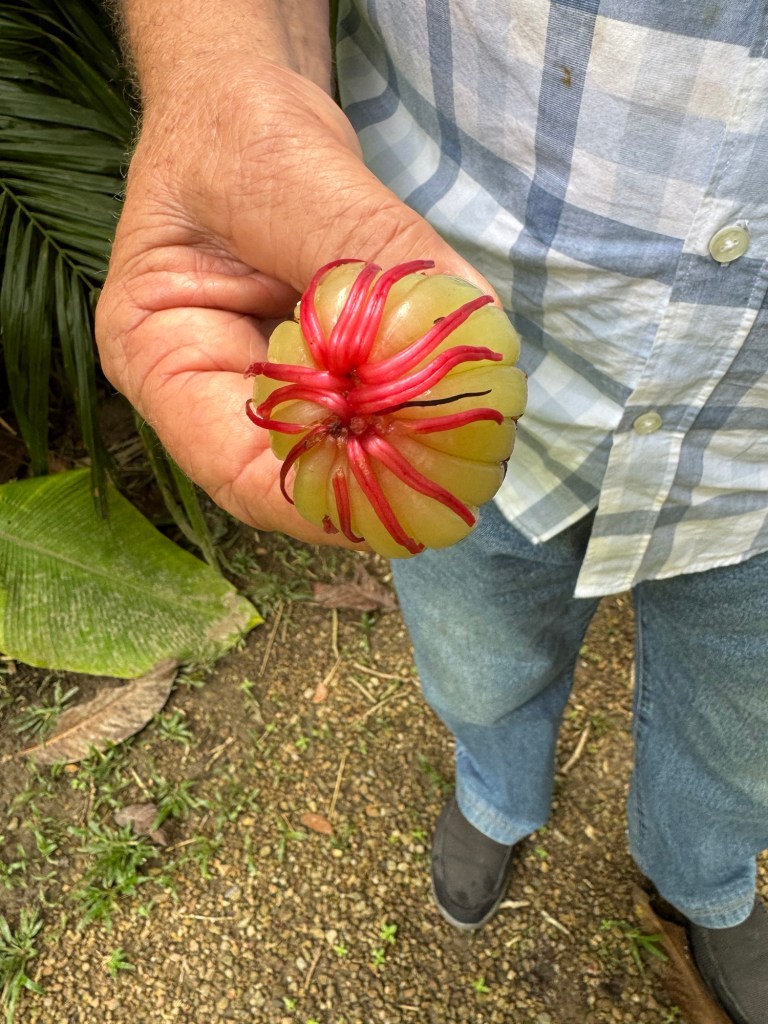
He and Susie wanted tropical fruit so they started with 25 fruits from Asia. Then purchased 80 more fruits and kept them in pots while they grew. To date they have collected 500+ different fruits and flowers. Åt one point they had 2500 different flowers.

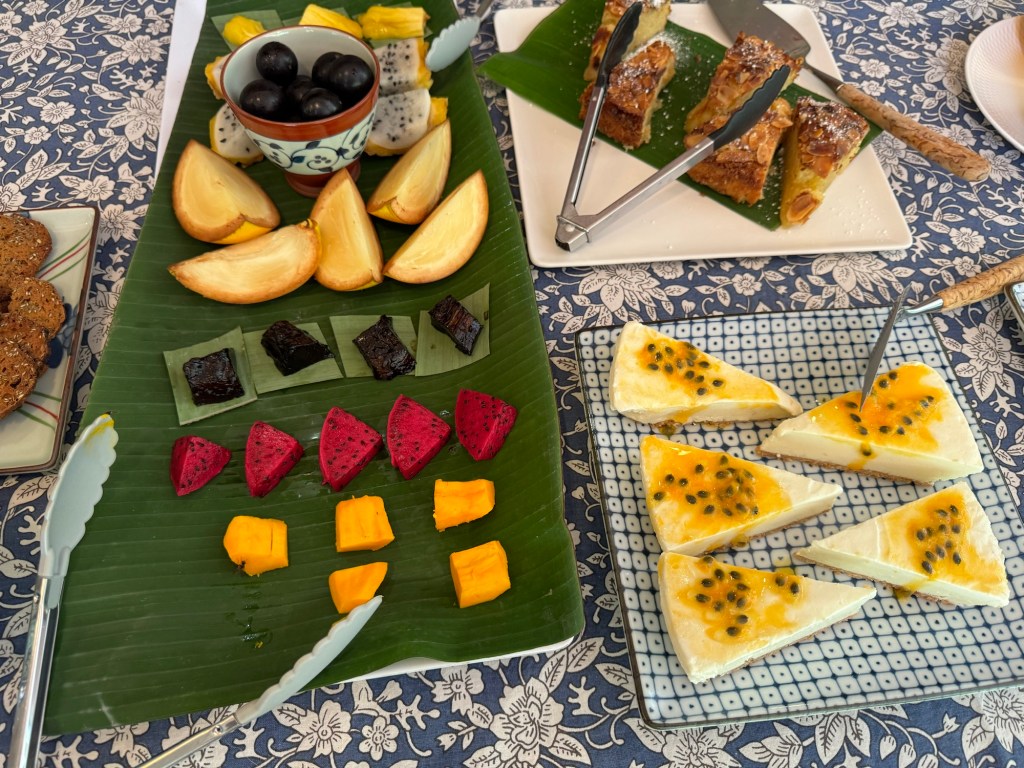
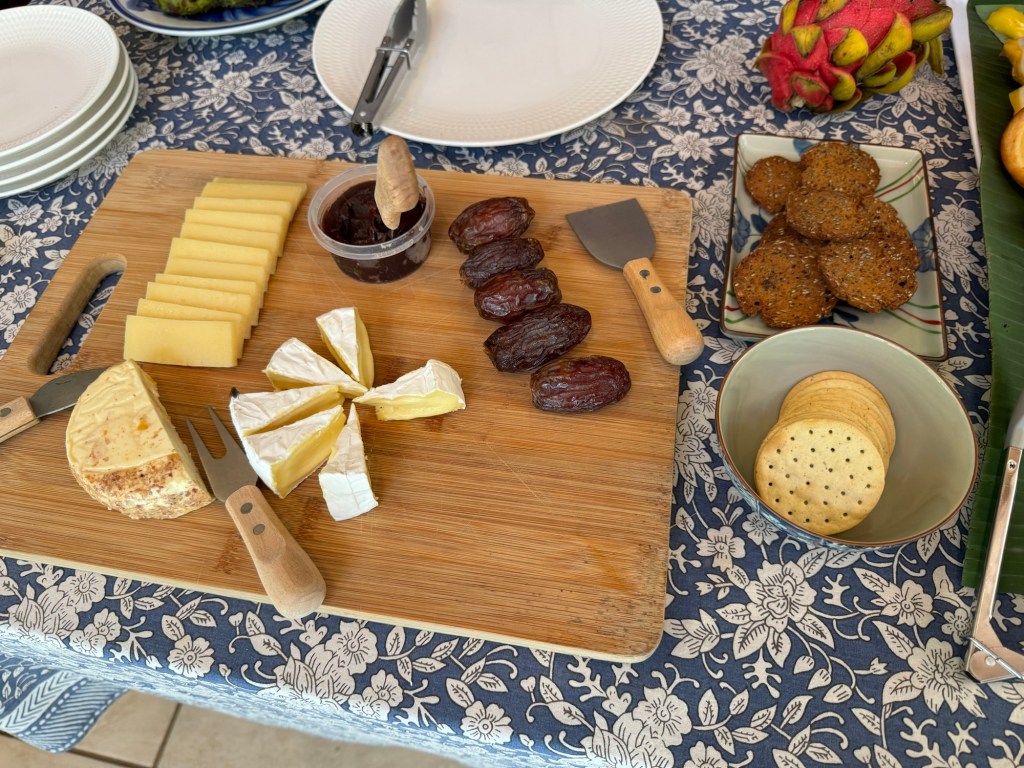
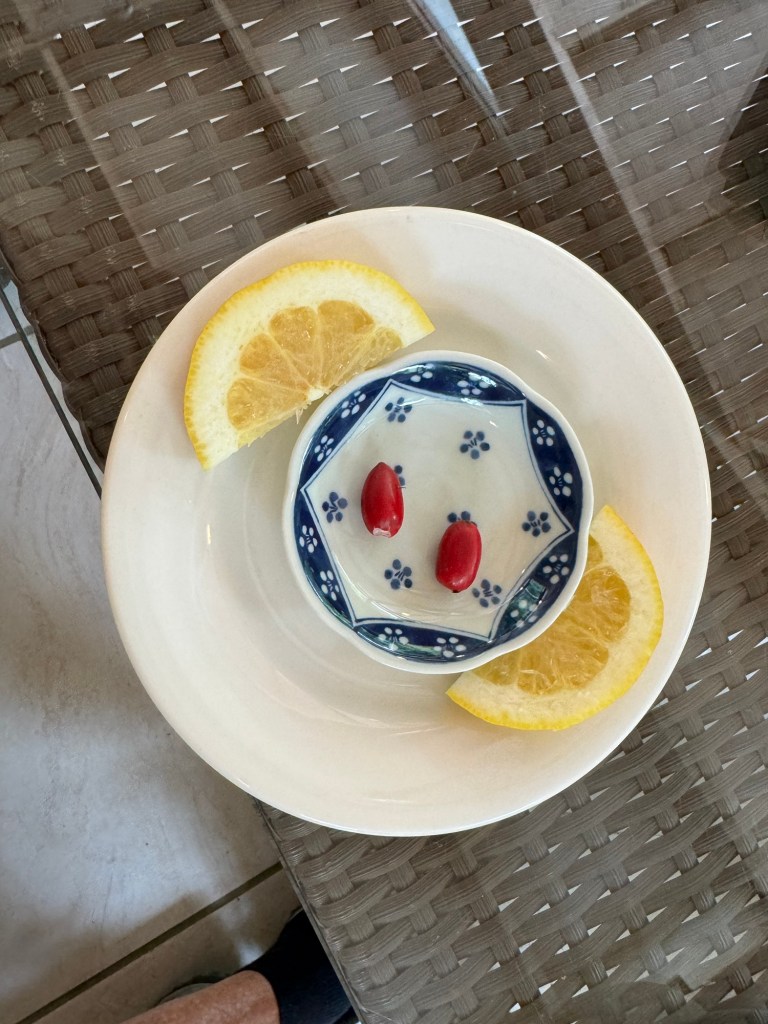
Sue had a very nice spread laid out for us and we sampled a few pieces, took a photo and departed.

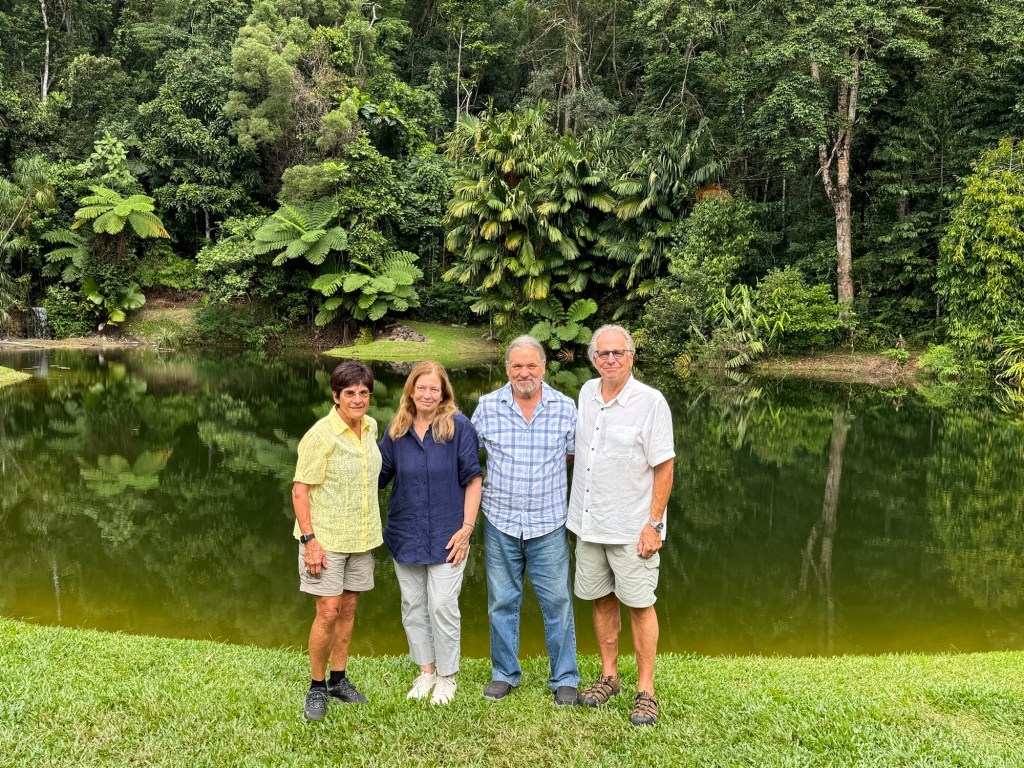
Alan, Sue and us in their rainforest garden

We left Alan and Sue around noon and headed to lunch at a restaurant in the National Park after crossing the Daintree River on a ferry to get there.

The nearby Daintree Forest contains 900,000 acres and is a National Park. At 1.45 million years, it is the oldest rainforest in the world.

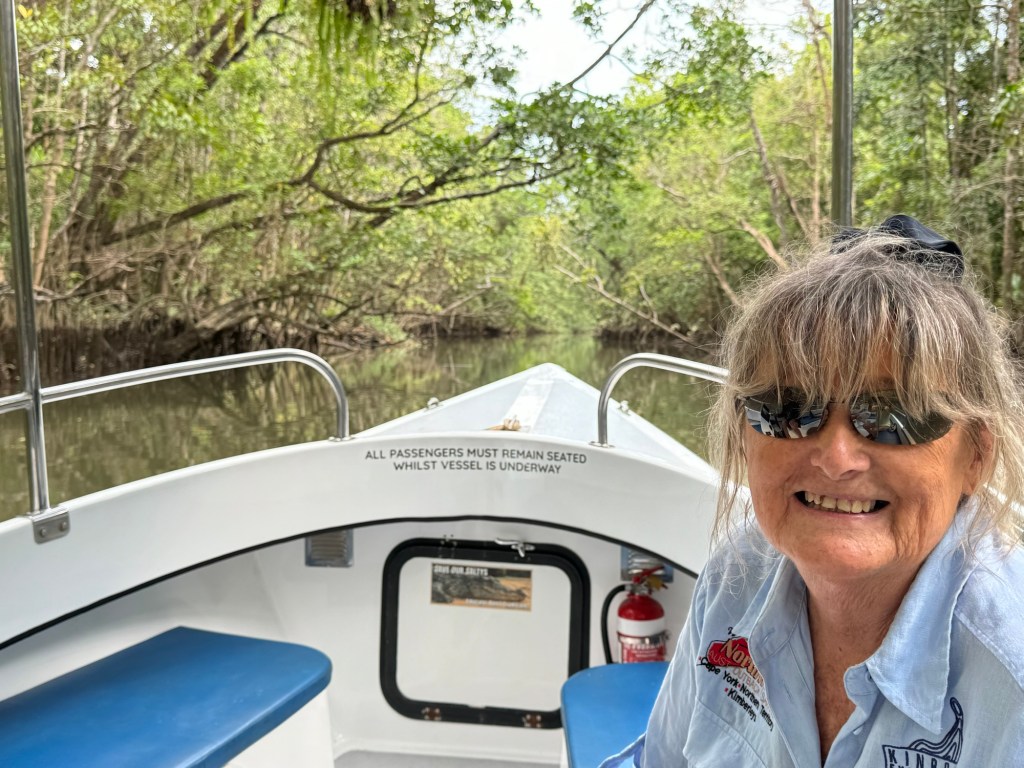
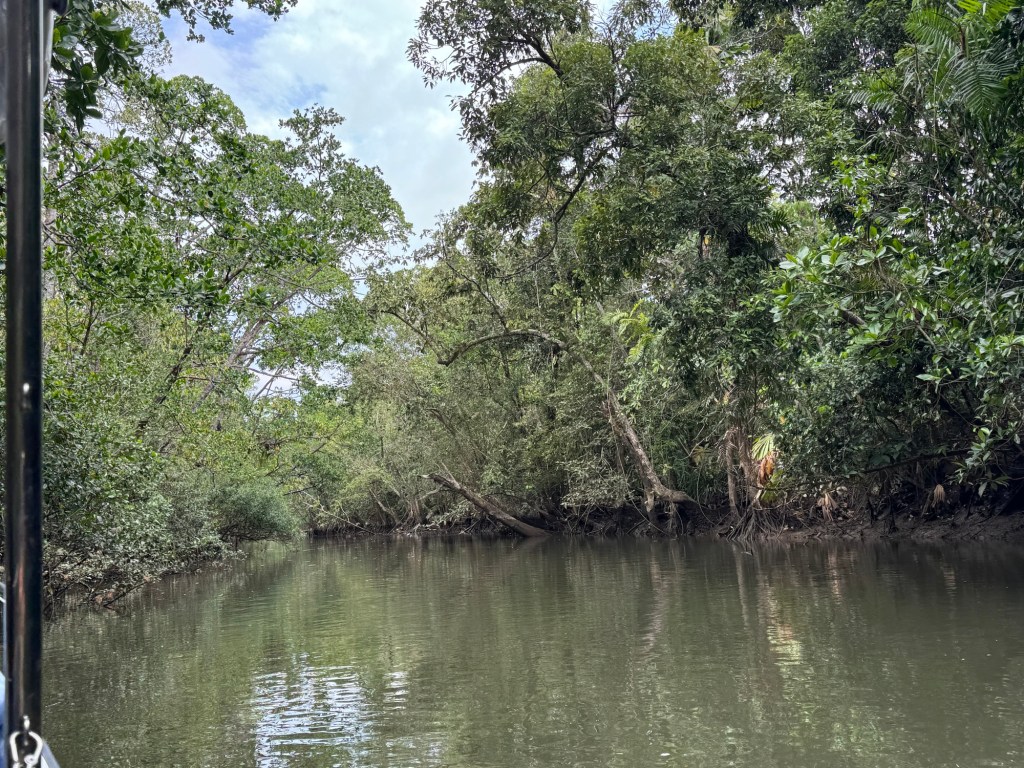
After lunch we went for a boat ride on the Daintree River.

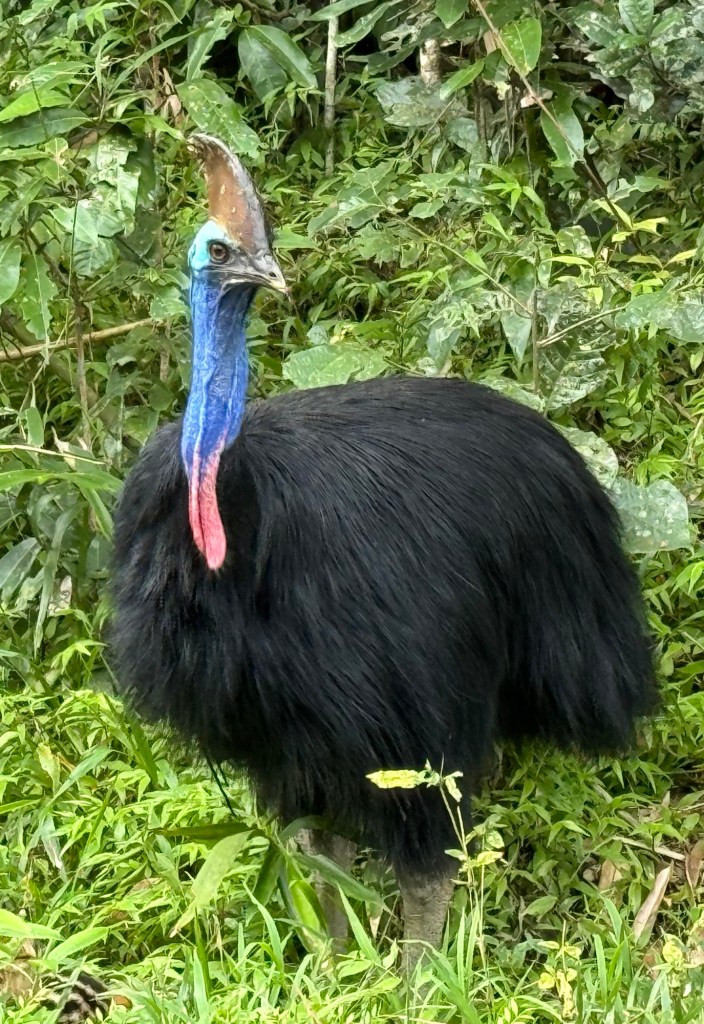
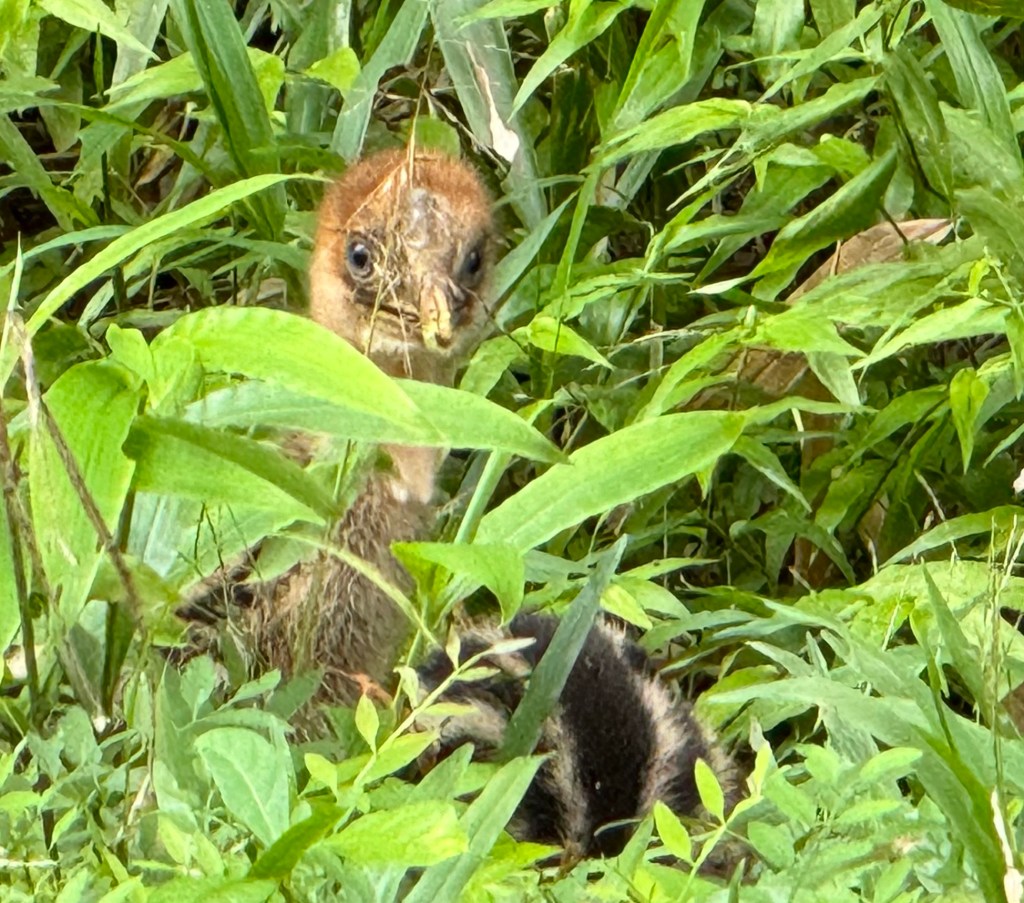
The most exciting part of the afternoon was finding the cassowary bird and her two chicks along the roadside. The rest of the day was quiet.

Sunday, September 22, 2024

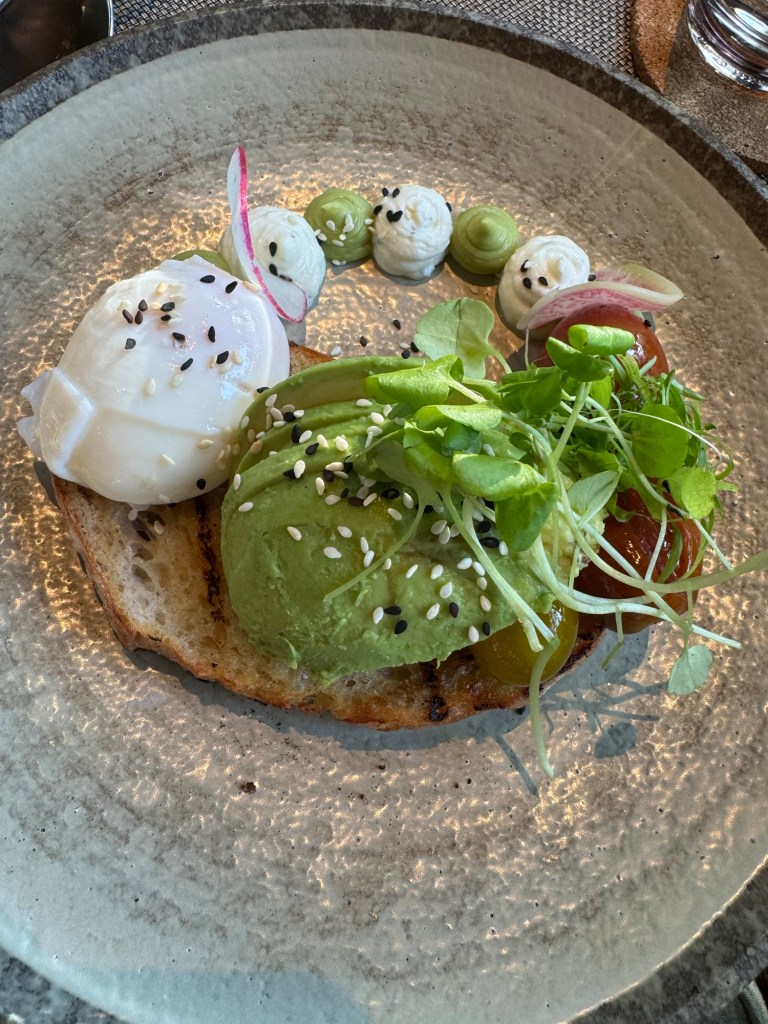
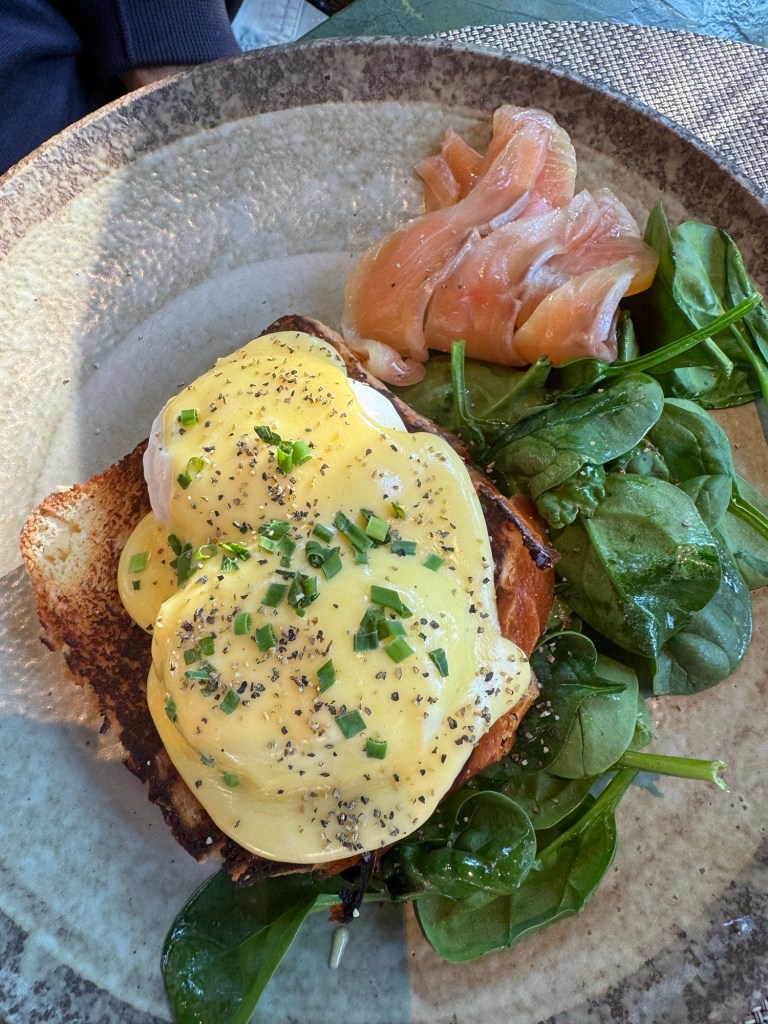
Silky Oaks puts on lovely meals. This morning was no exception. I had Avocado Toast and Mark had smoked Salmon with poached eggs and spinach with hollandaise sauce.
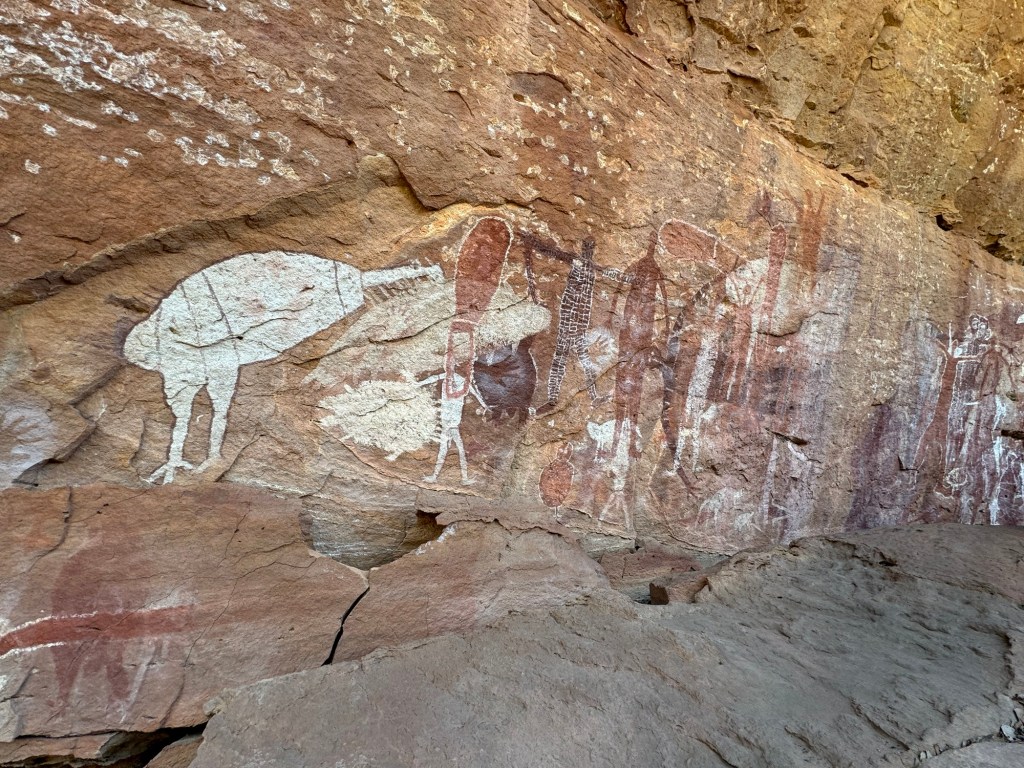
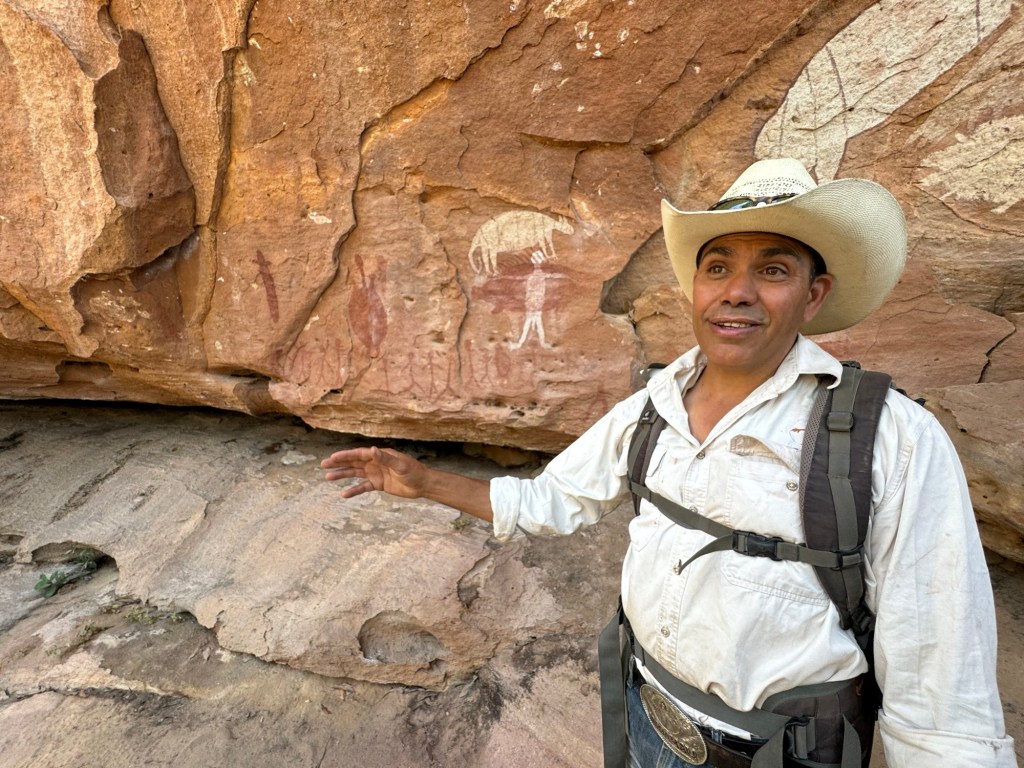
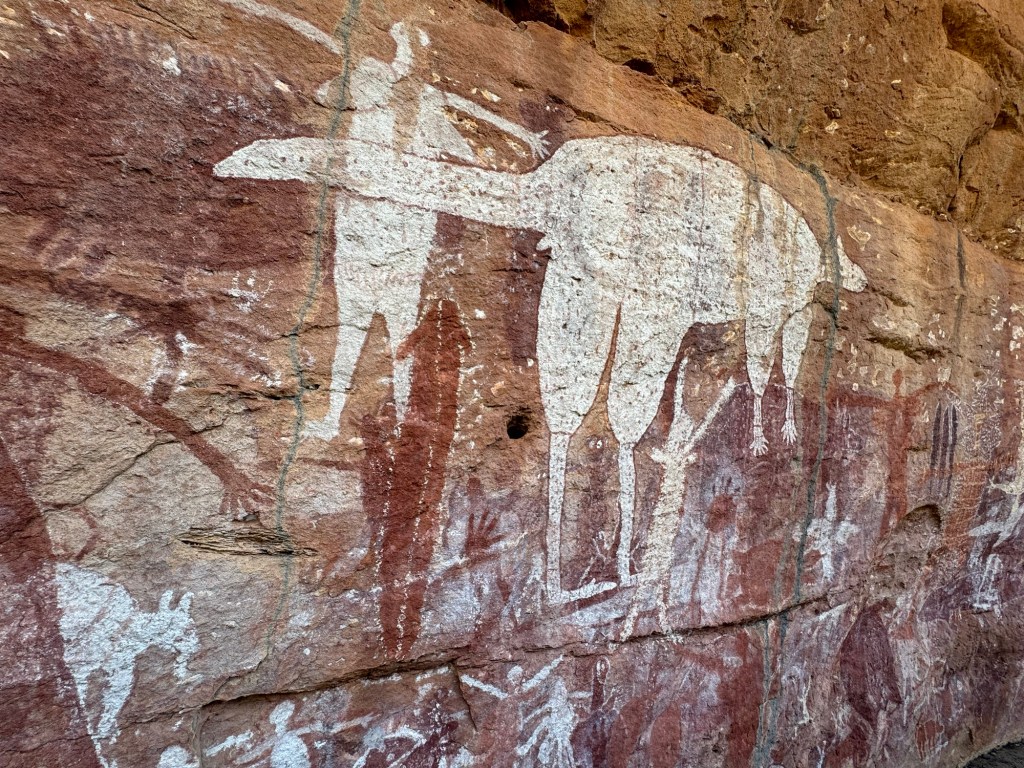
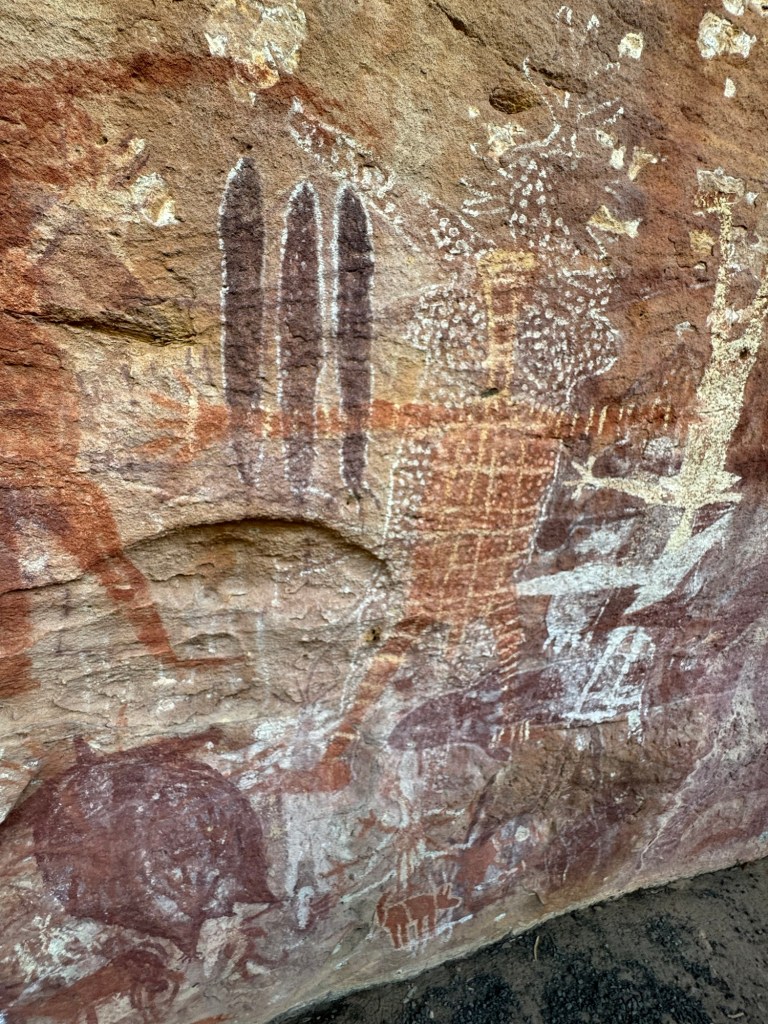
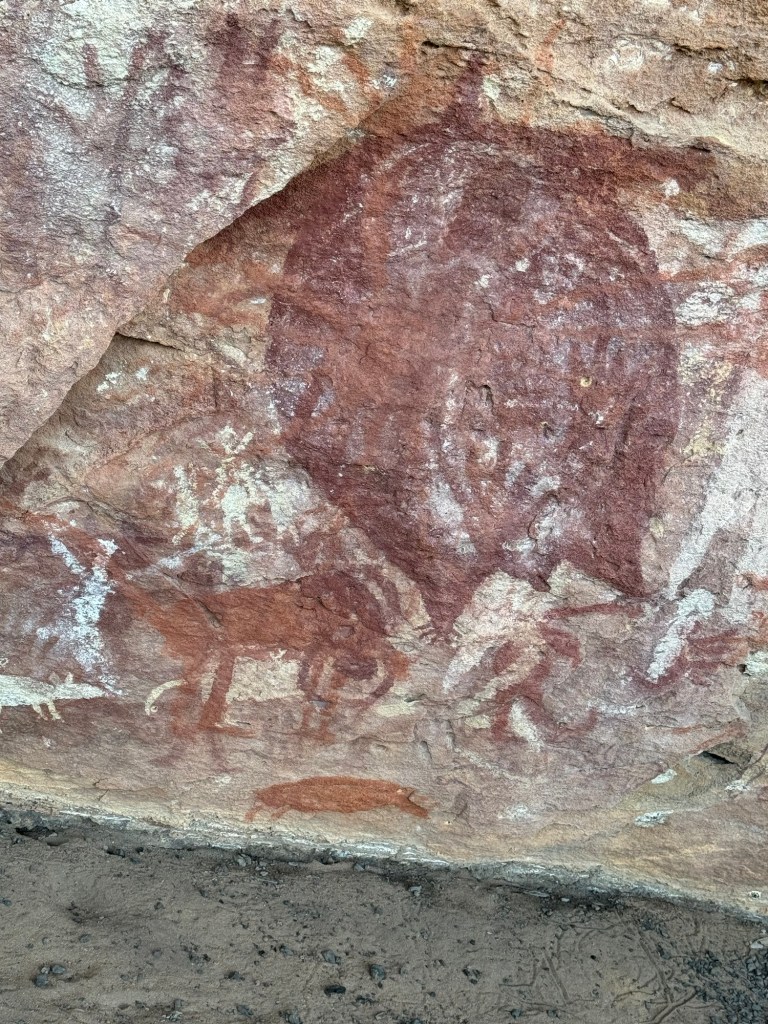
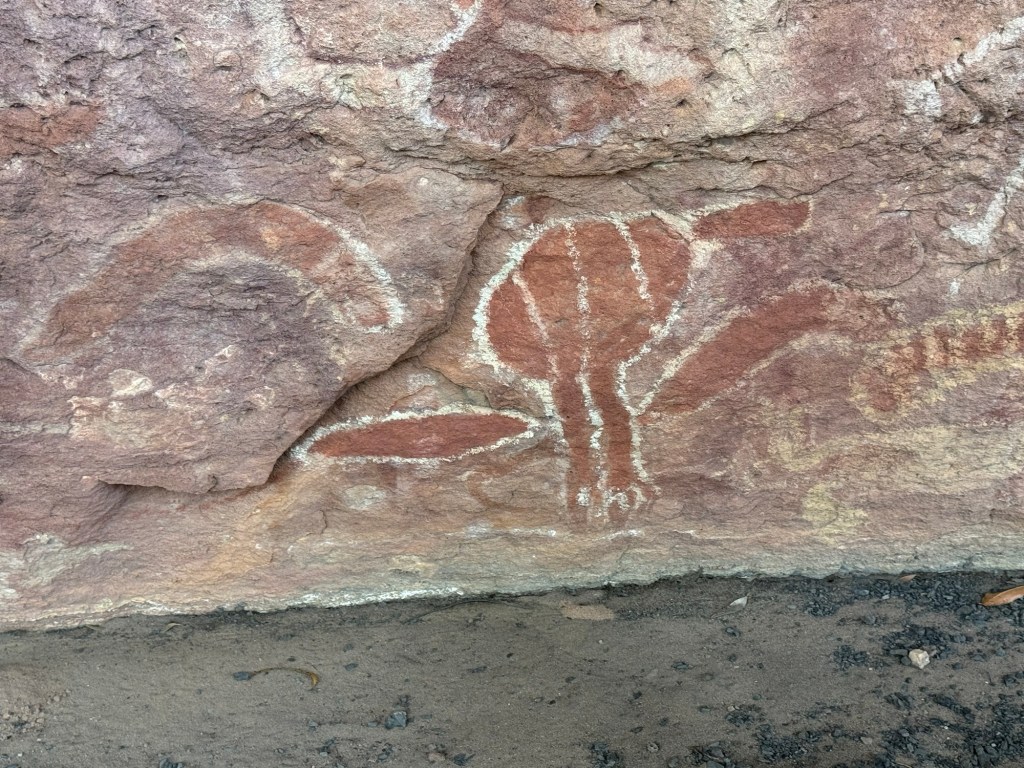
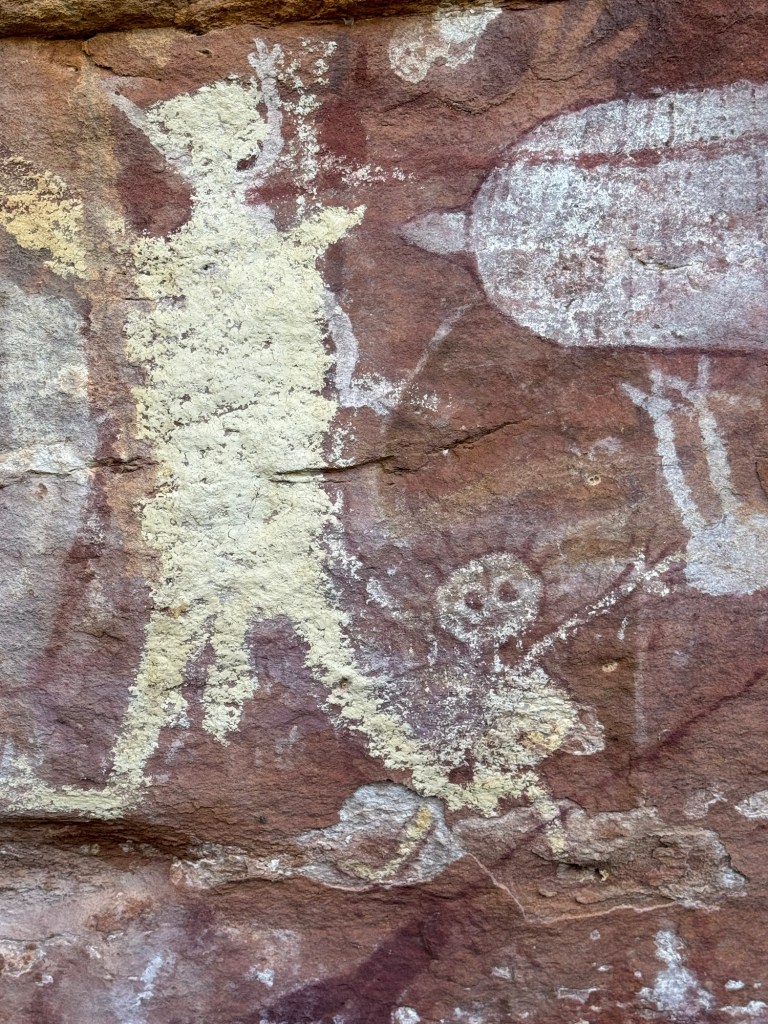
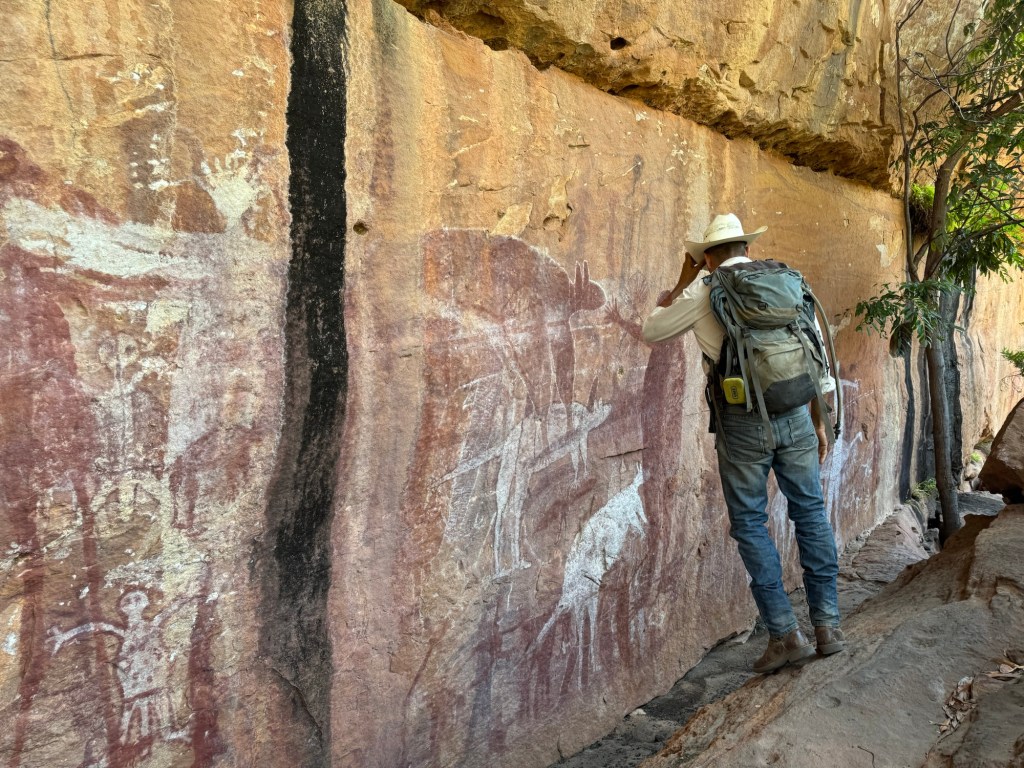
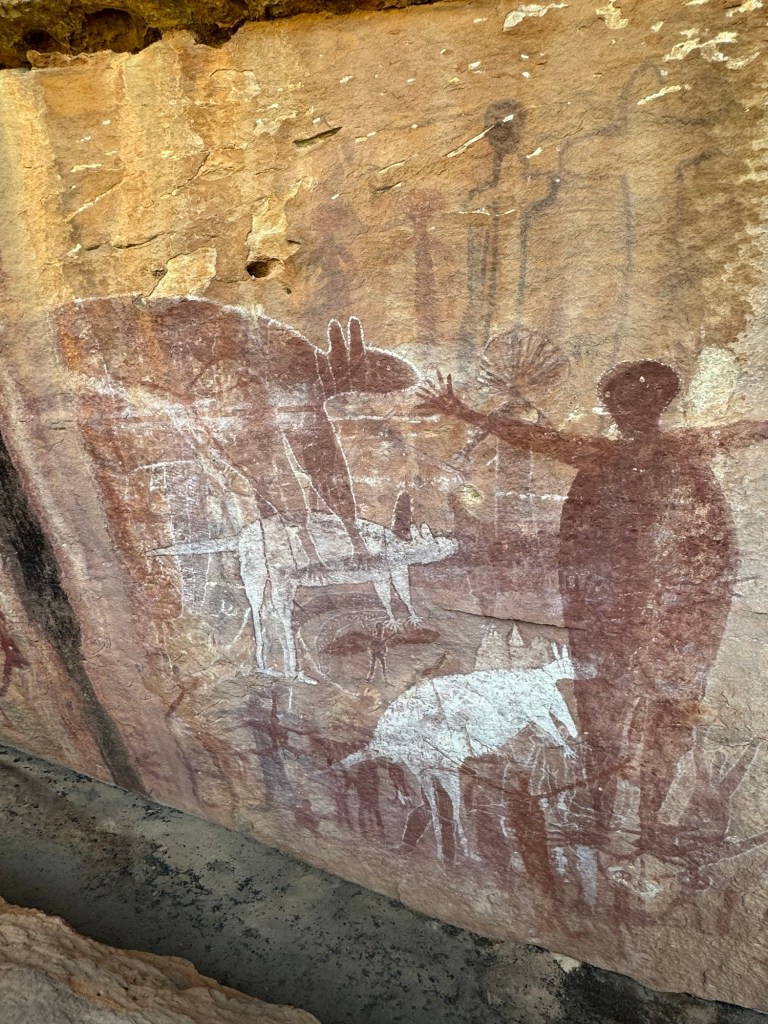
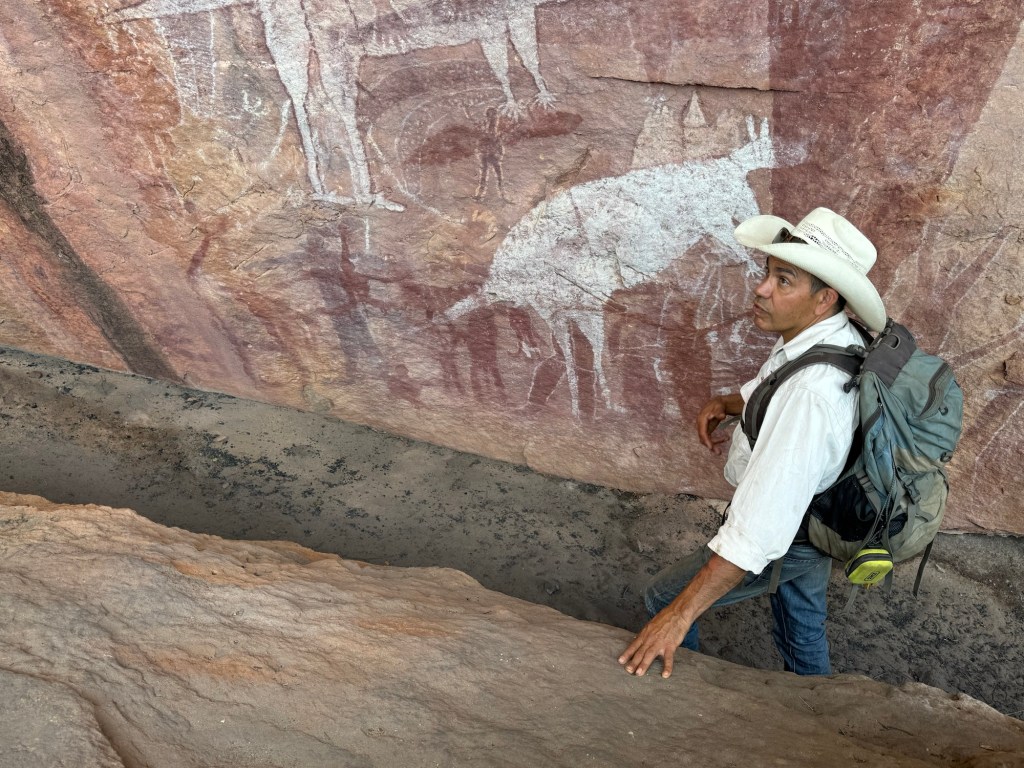
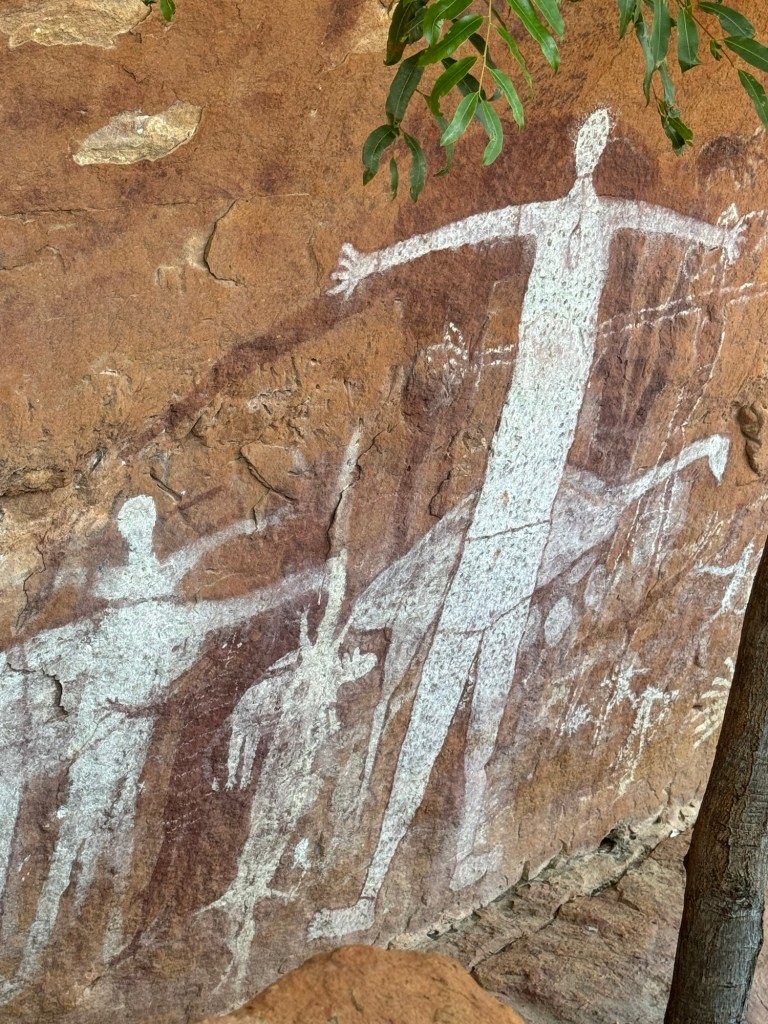
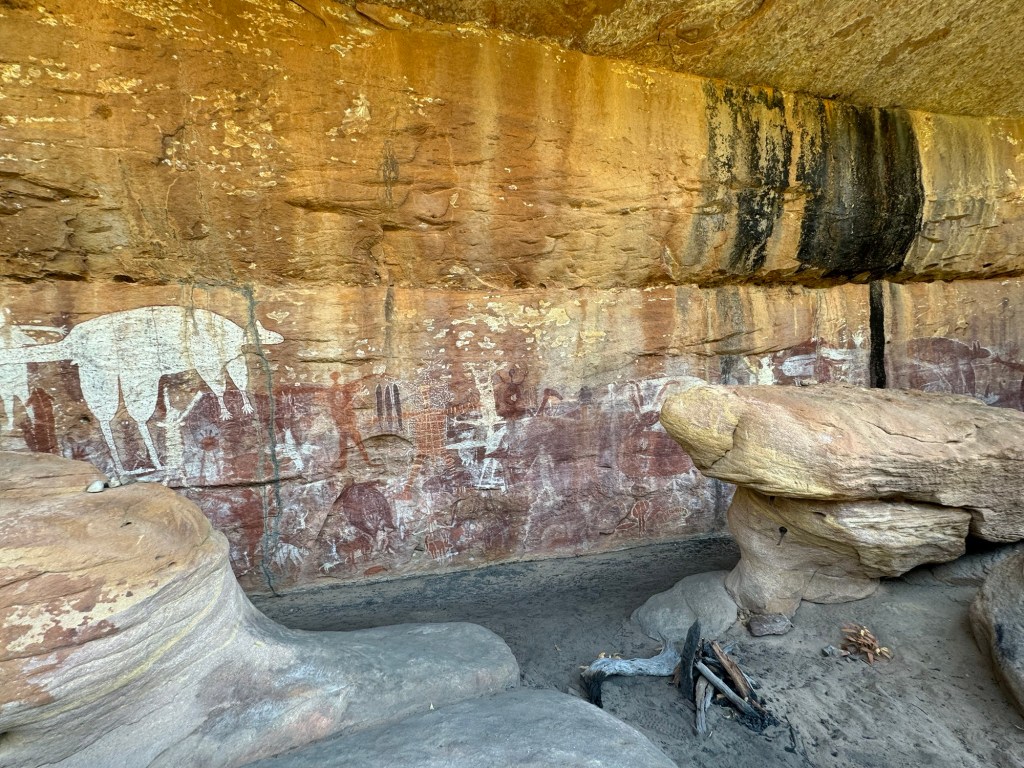
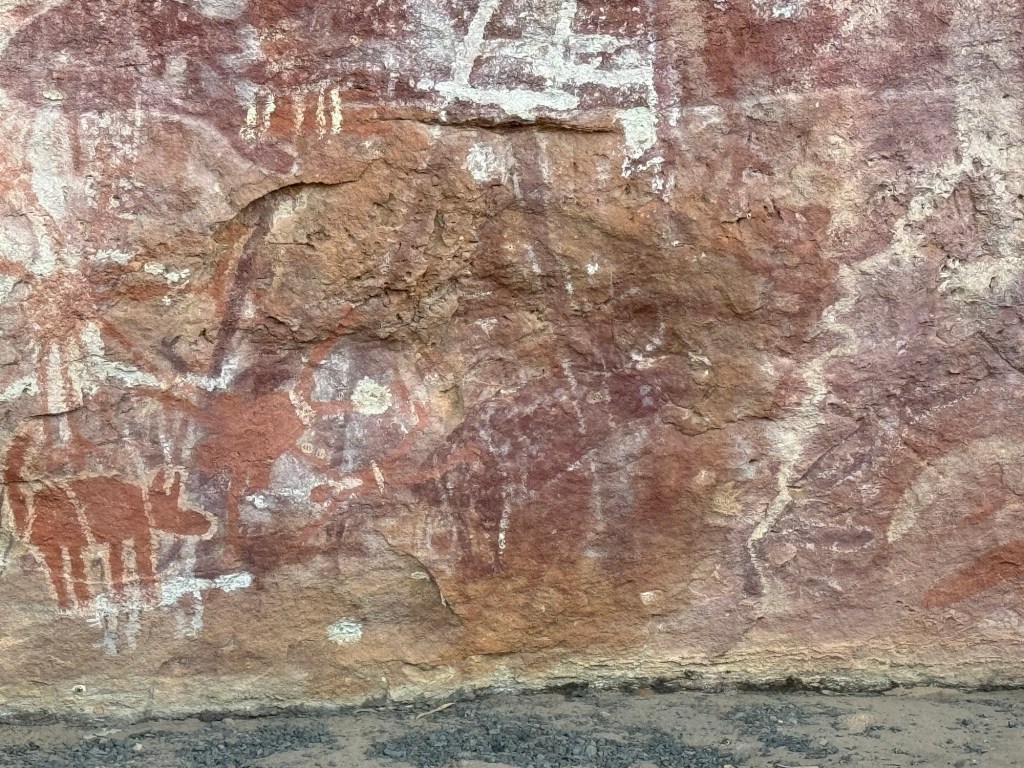
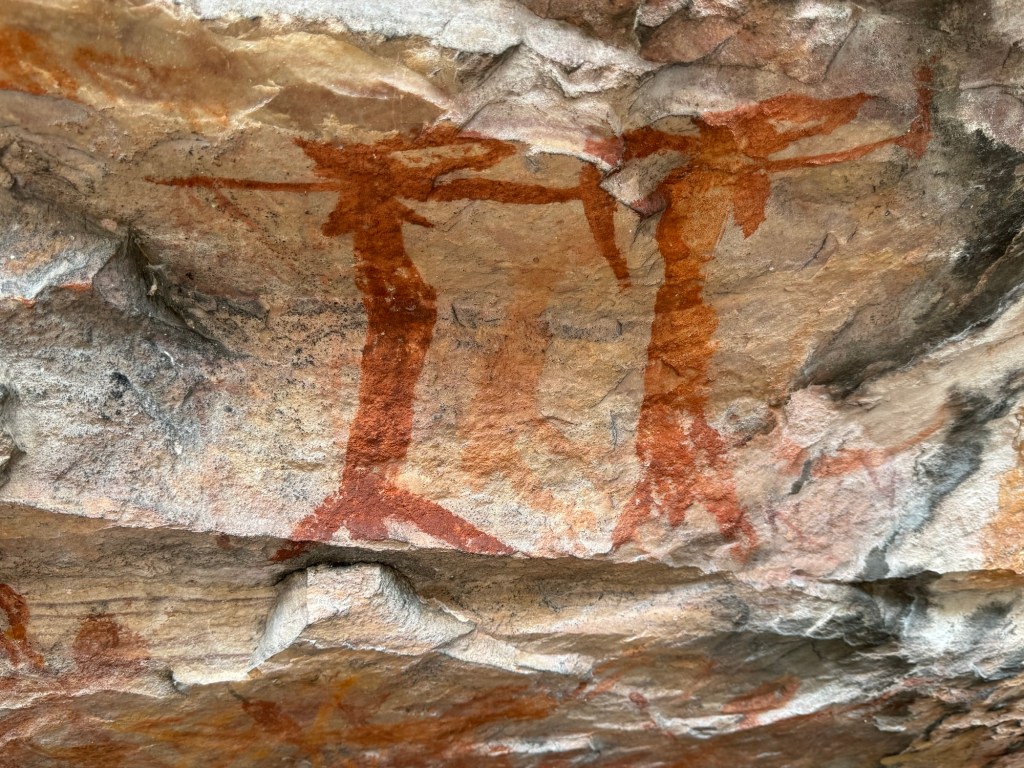
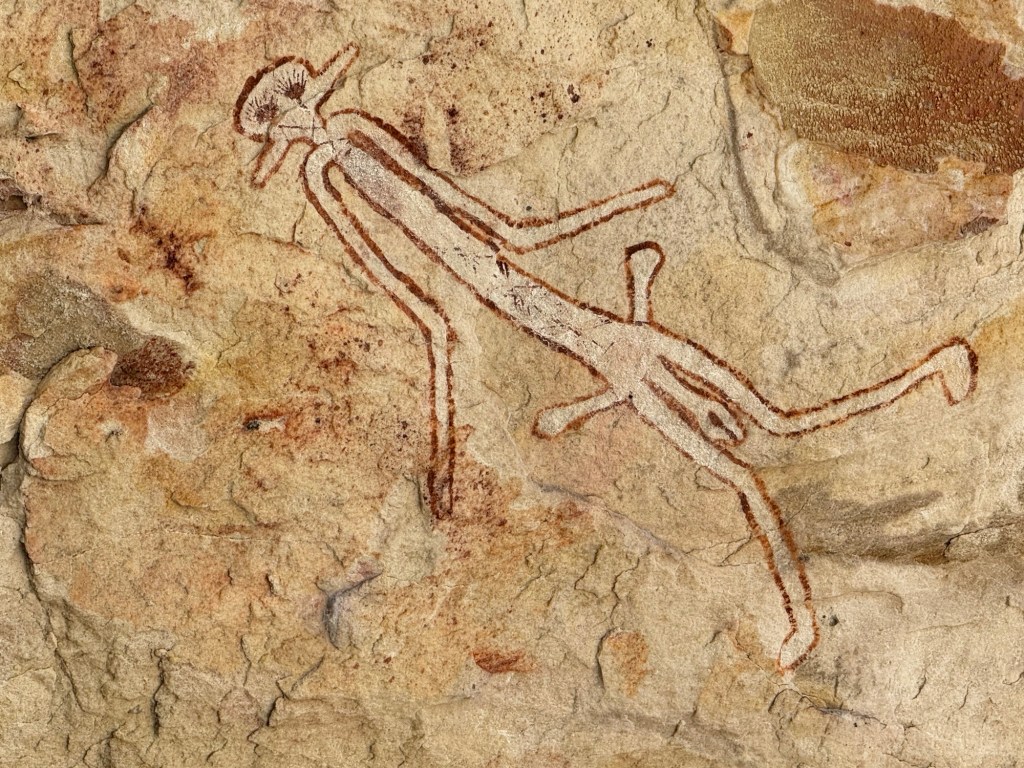
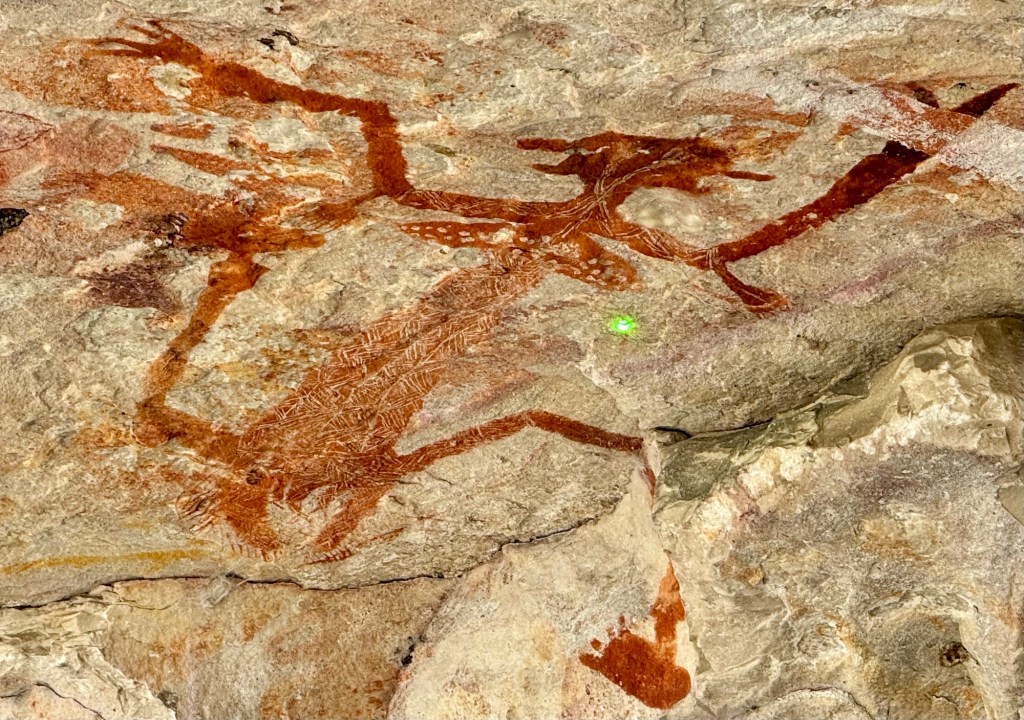
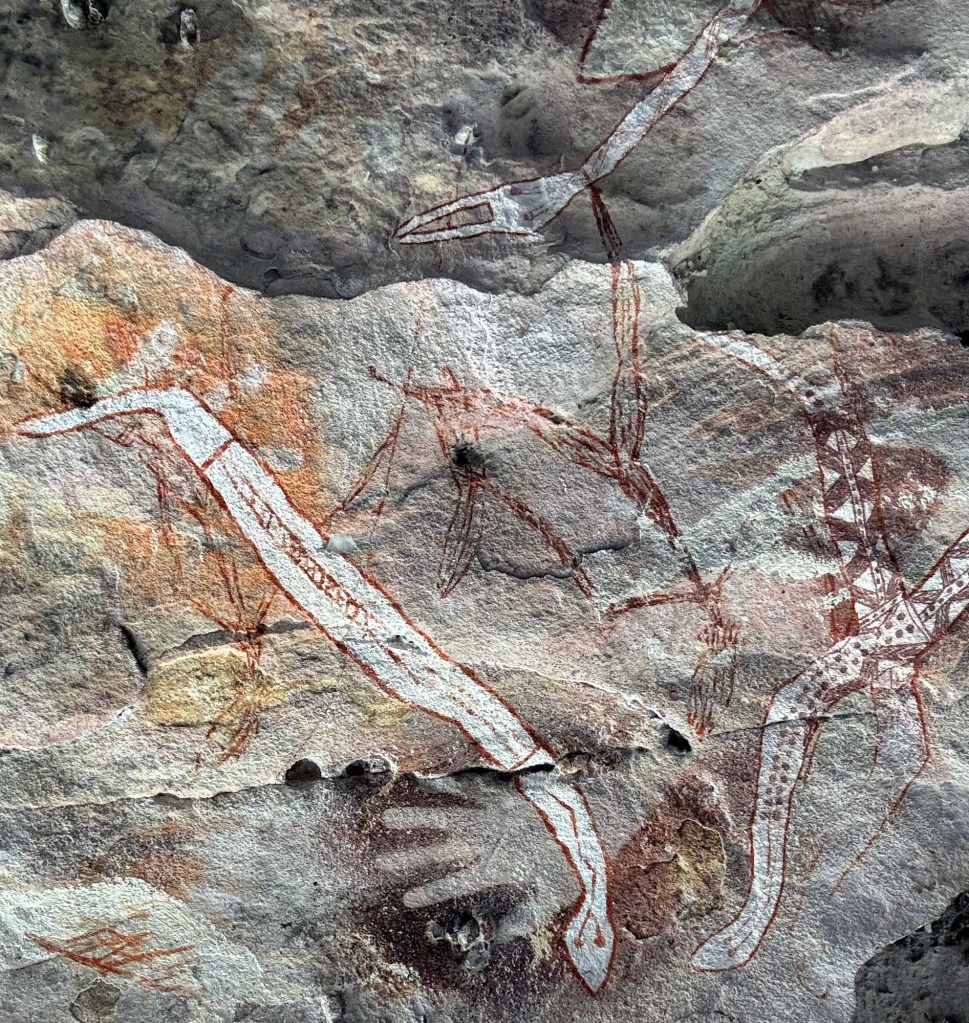
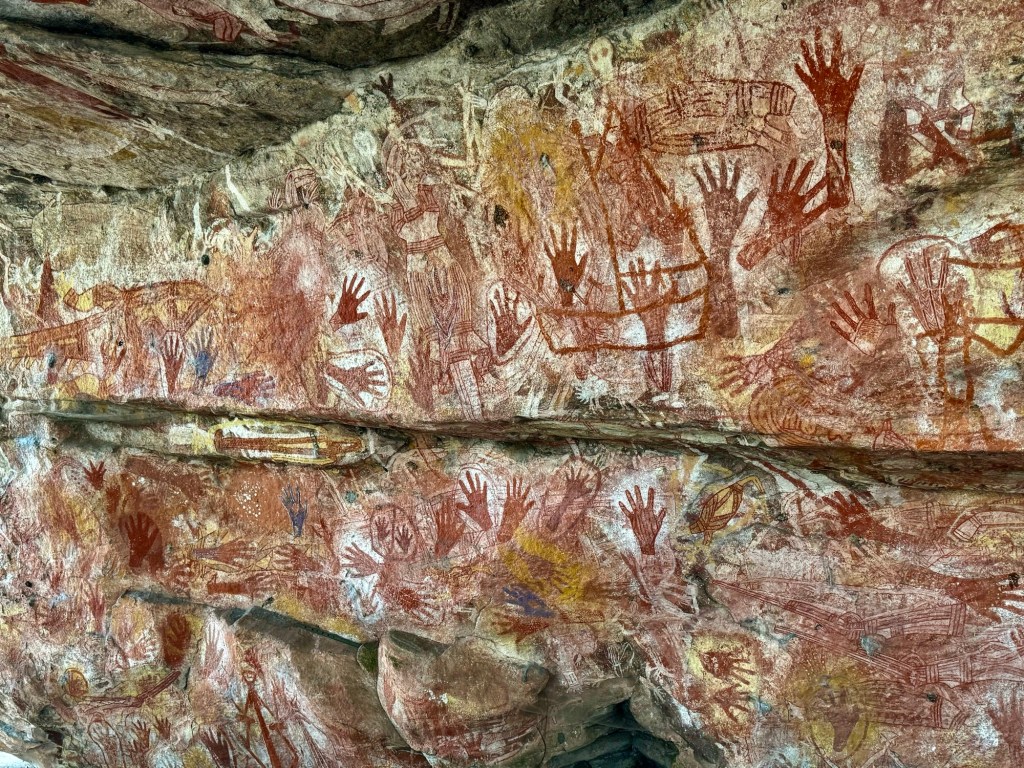
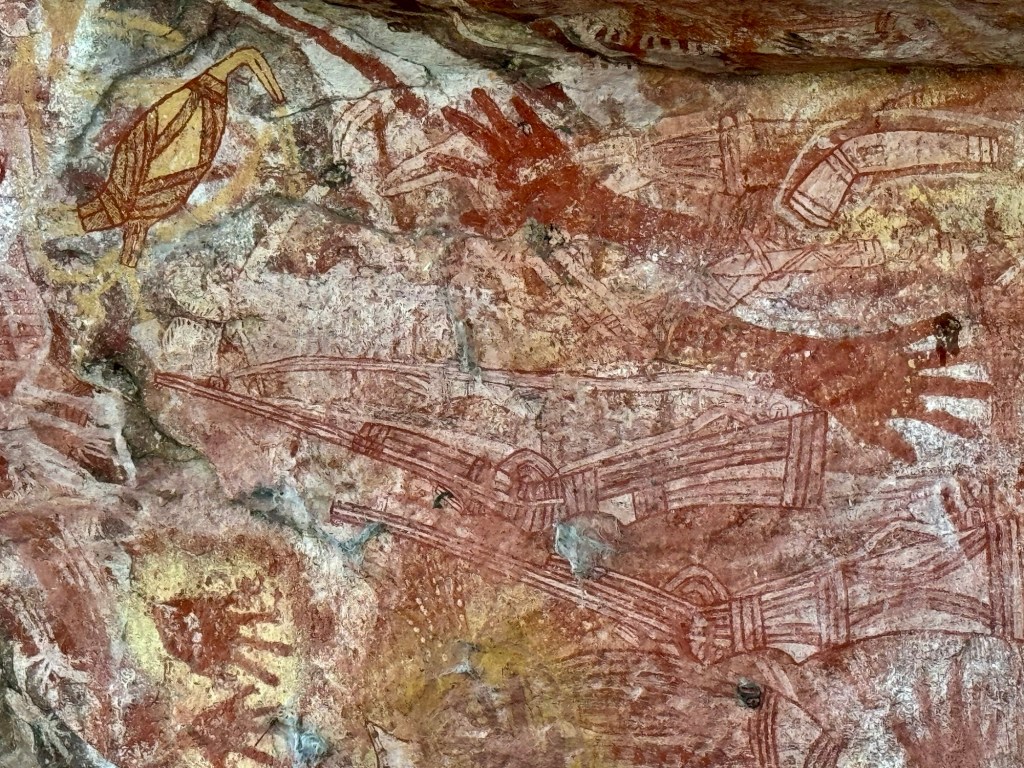
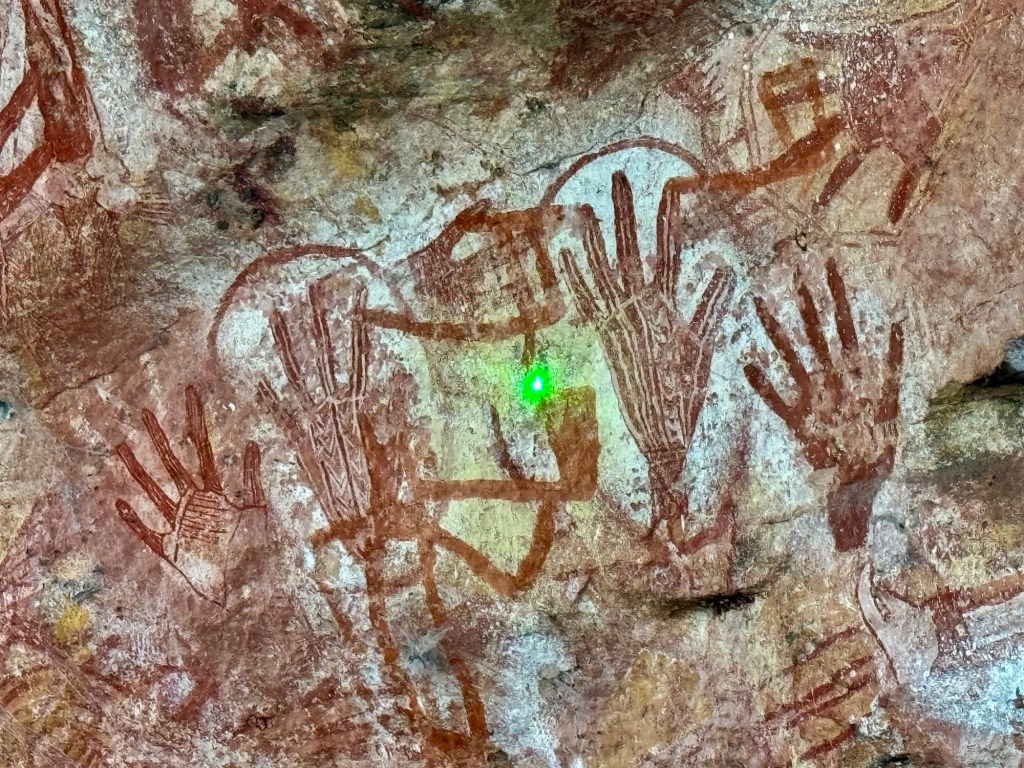
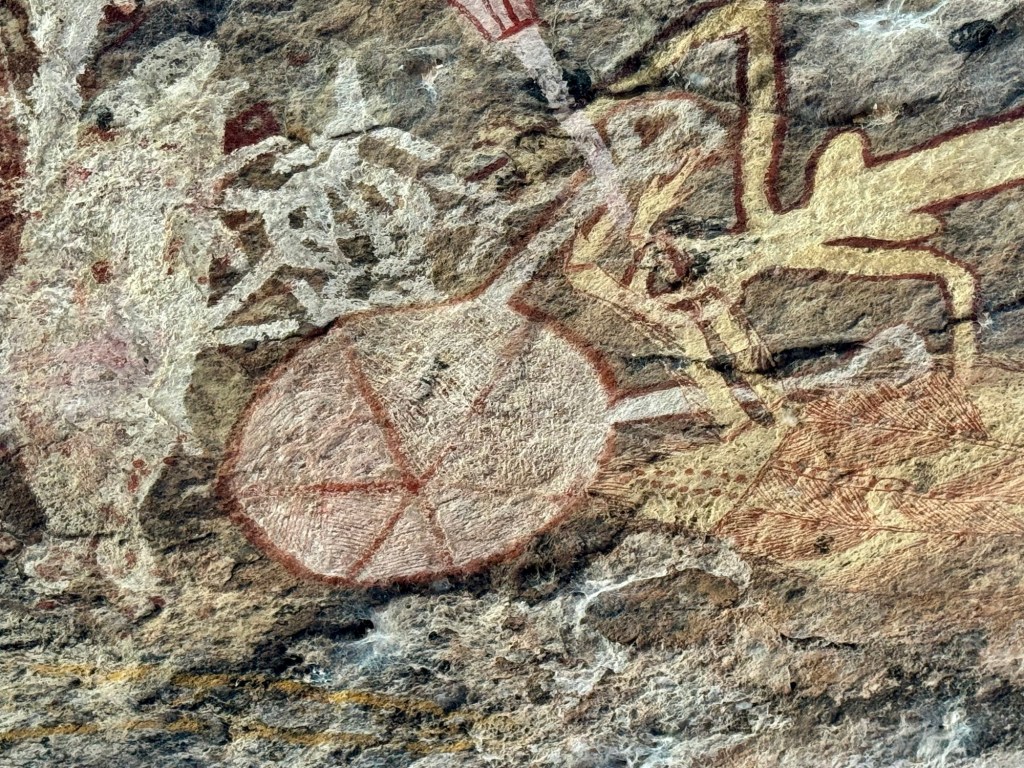
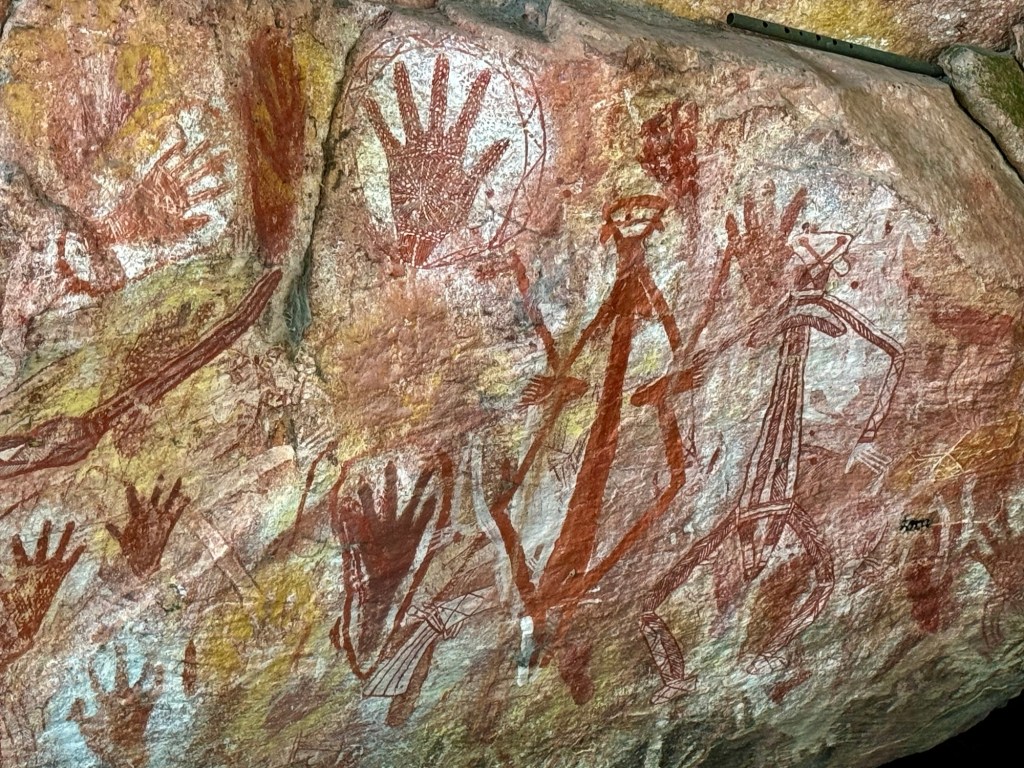
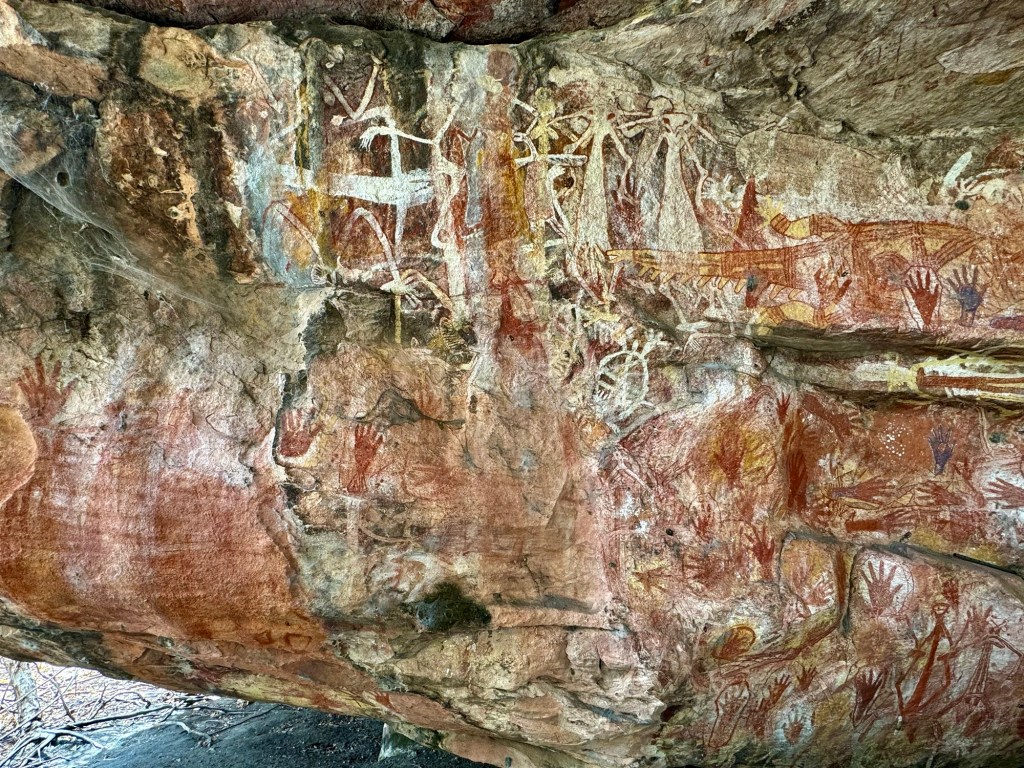
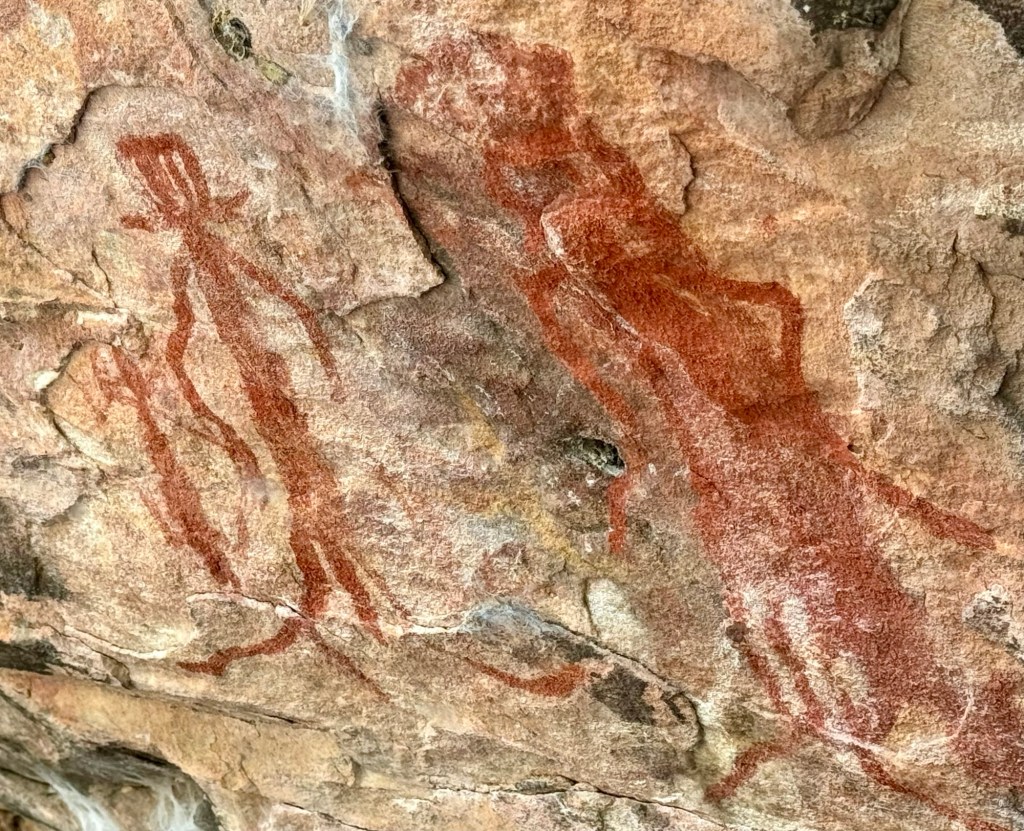
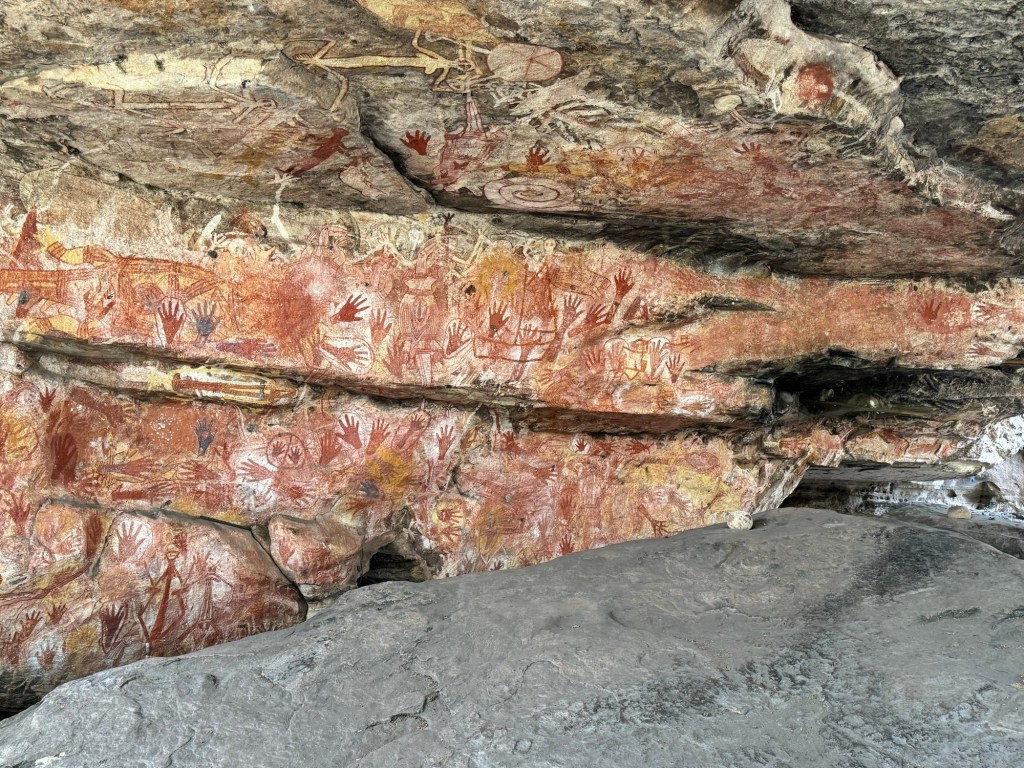
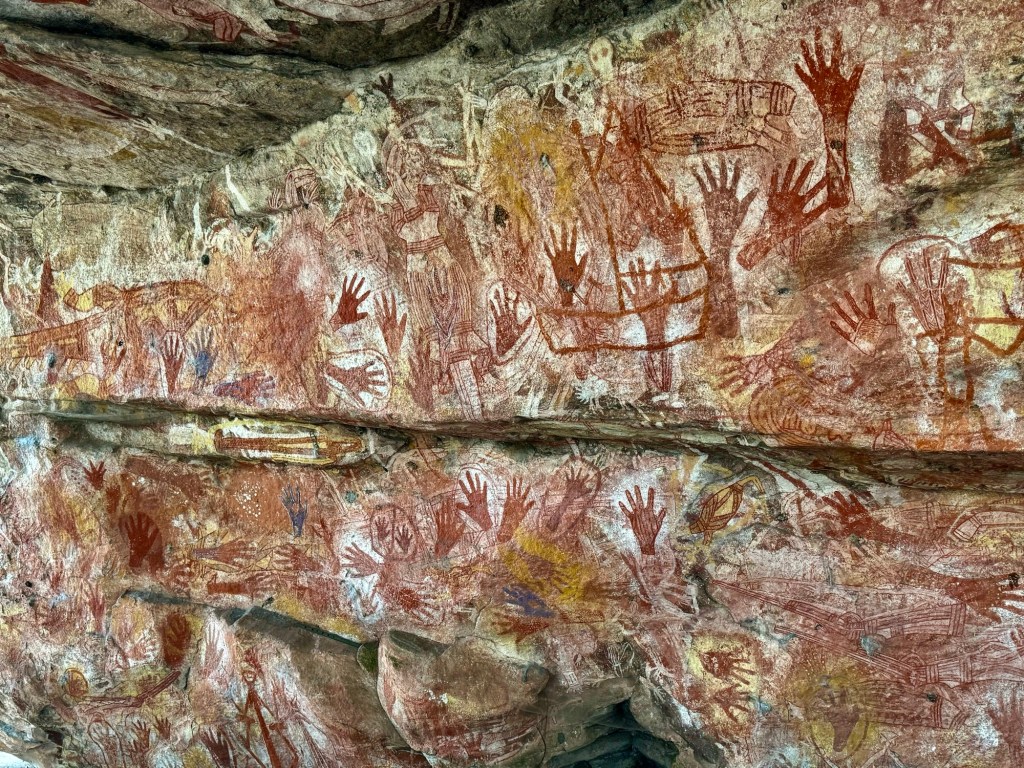
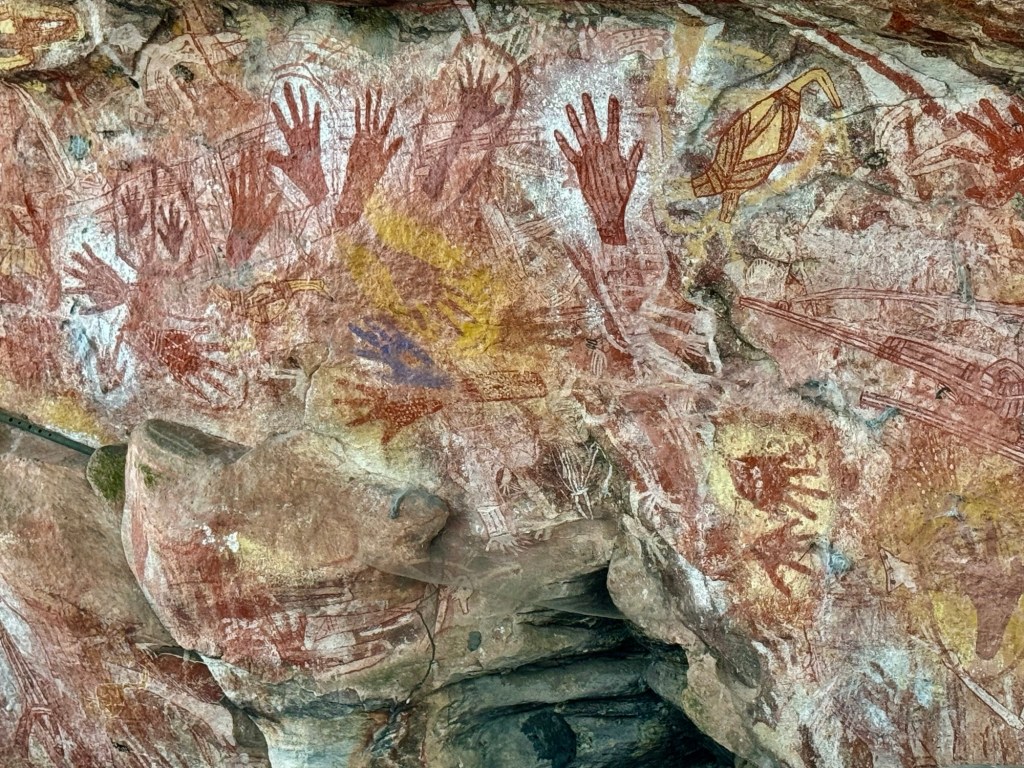
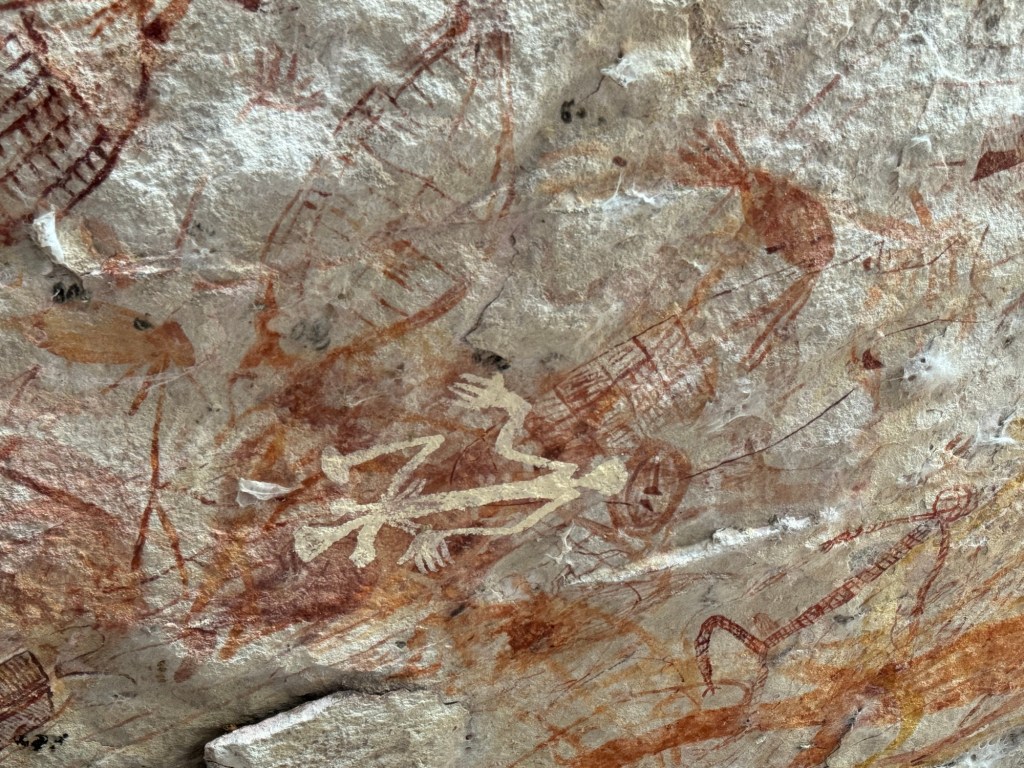
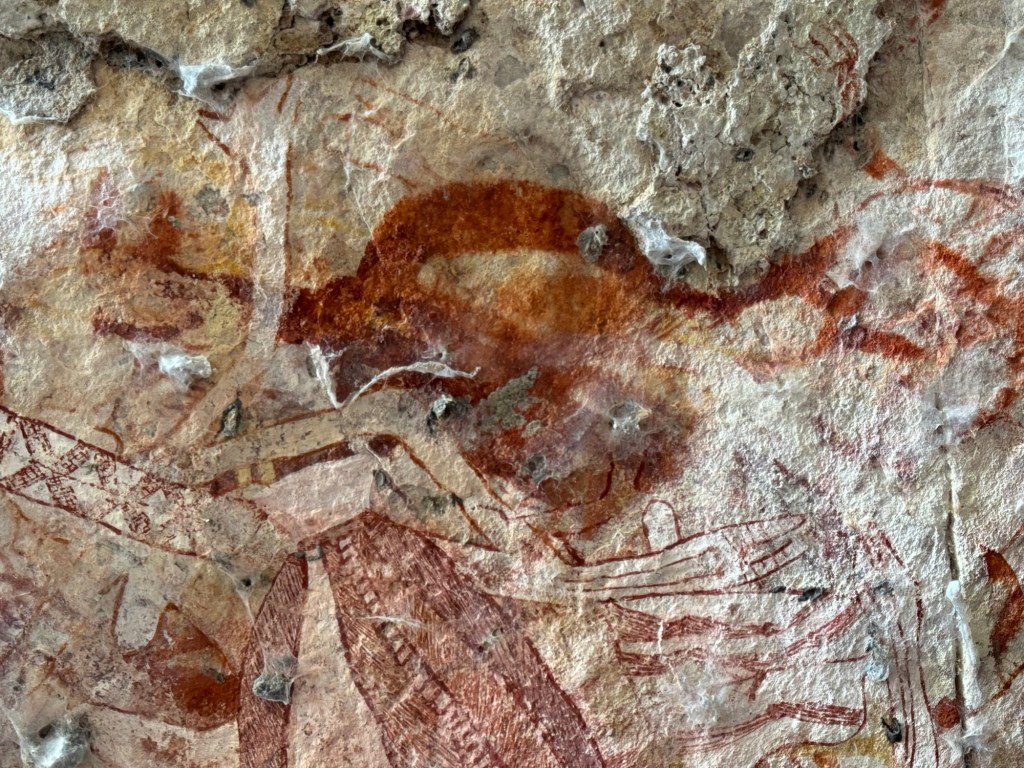
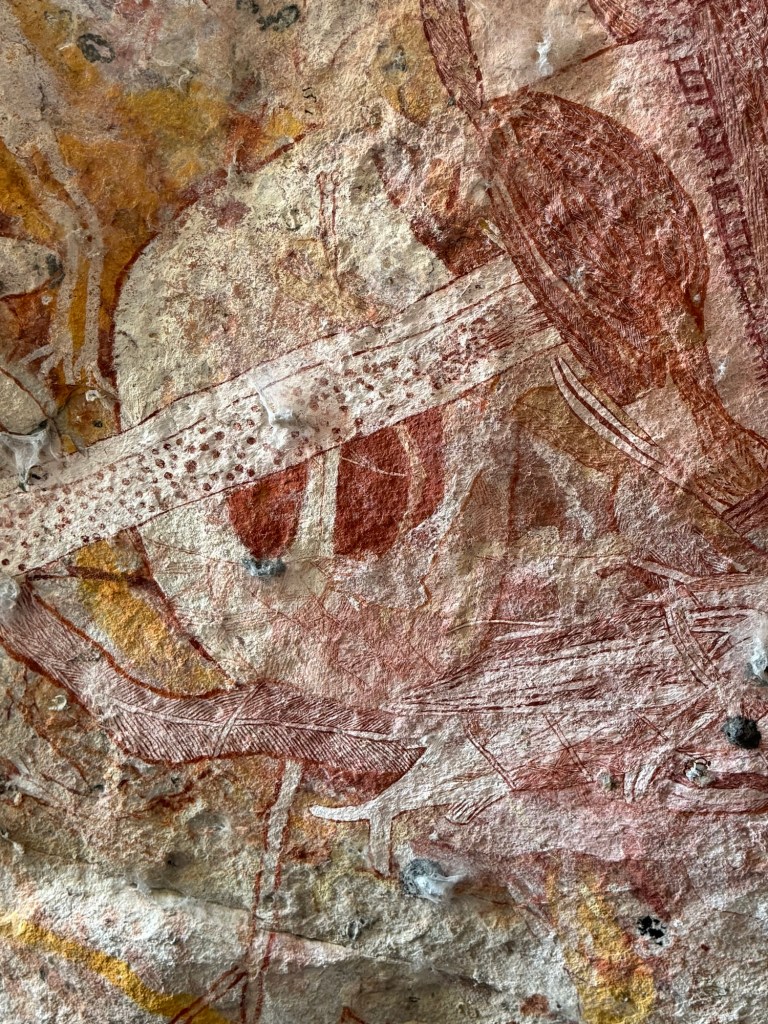
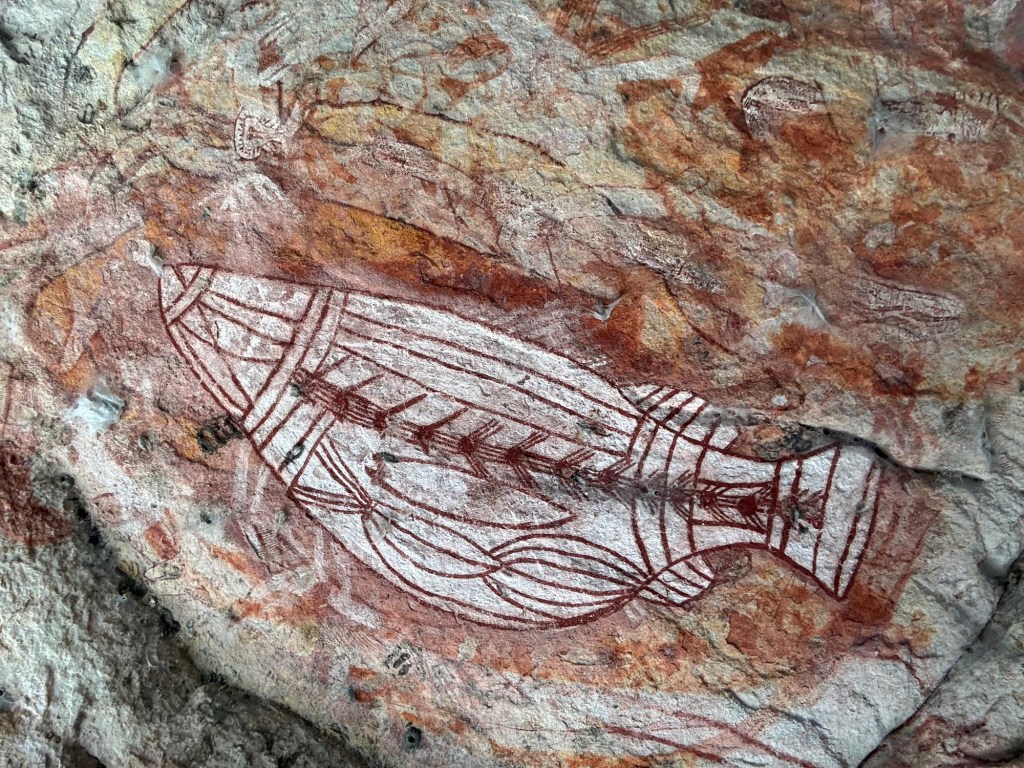
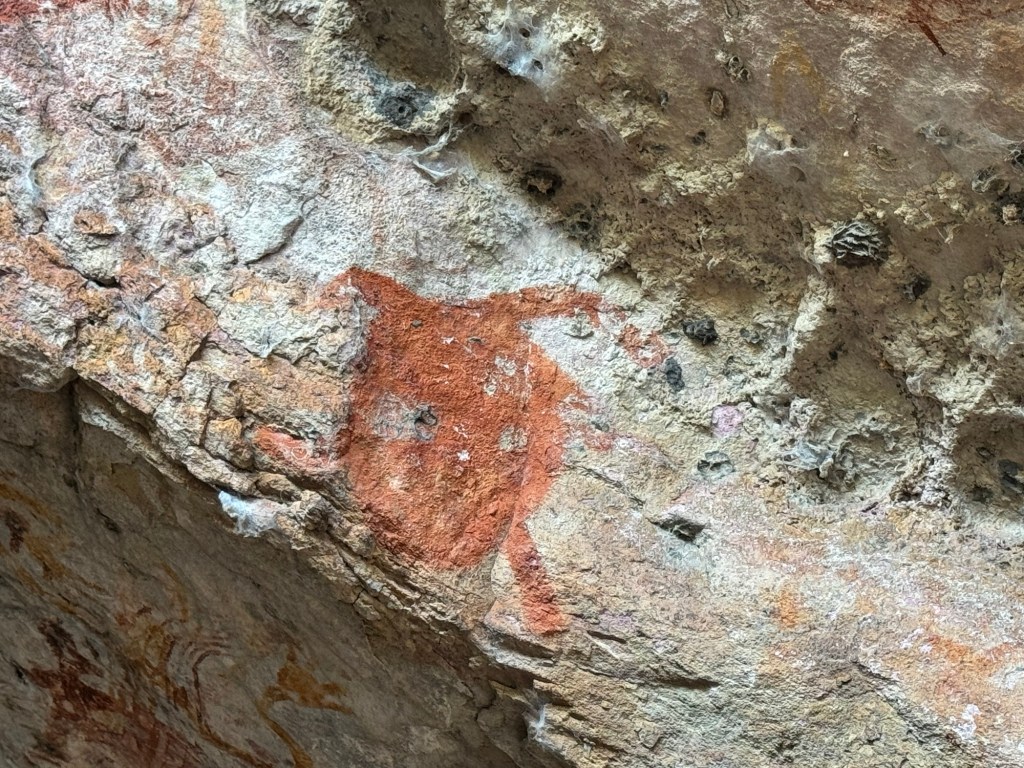
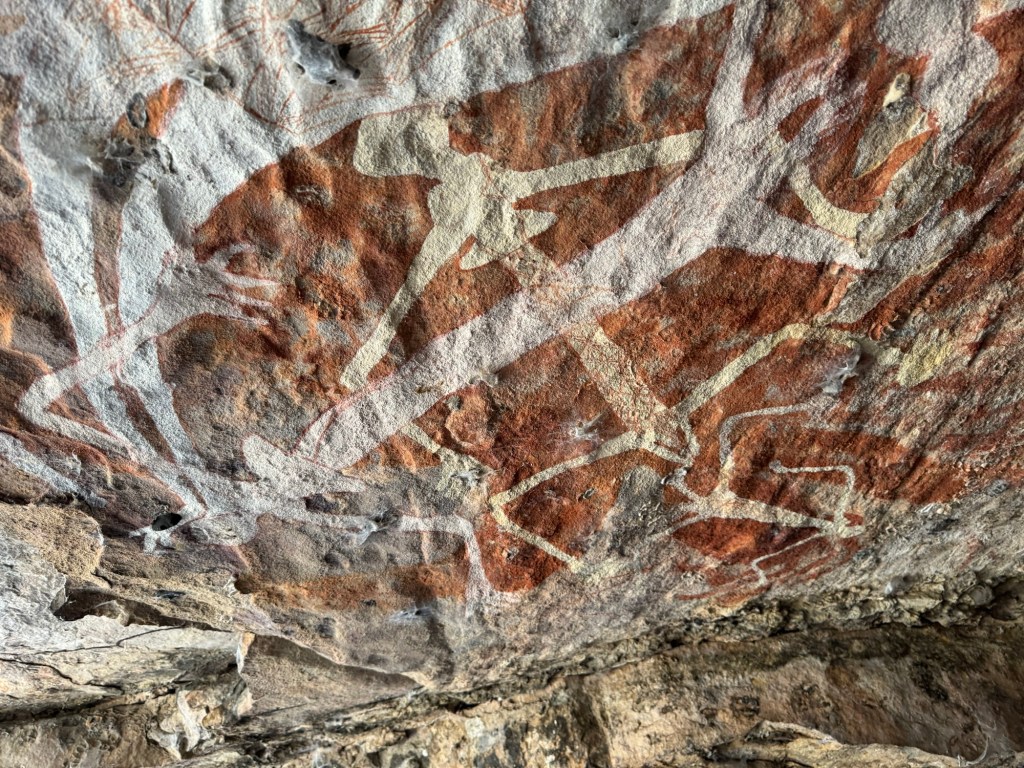
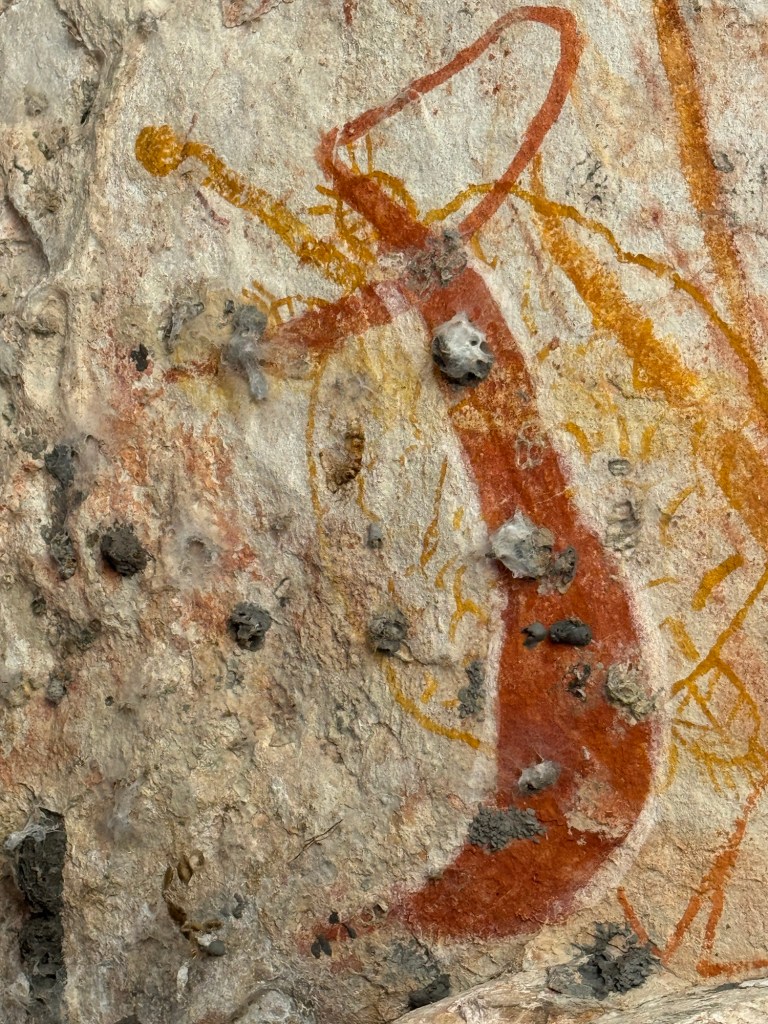
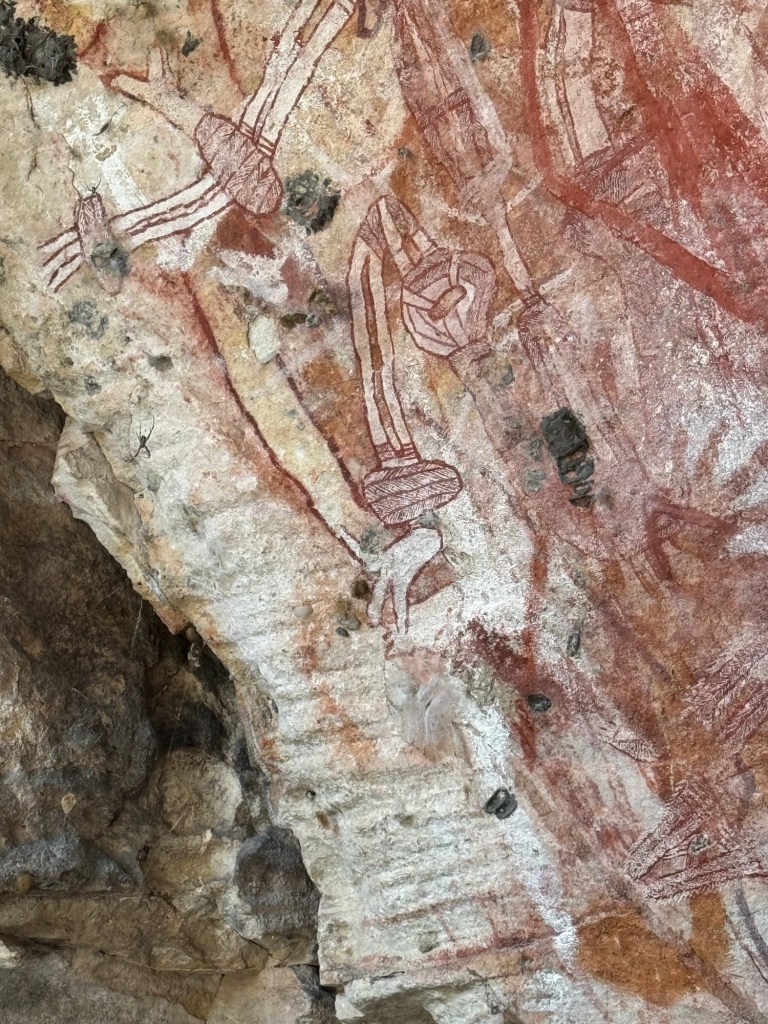
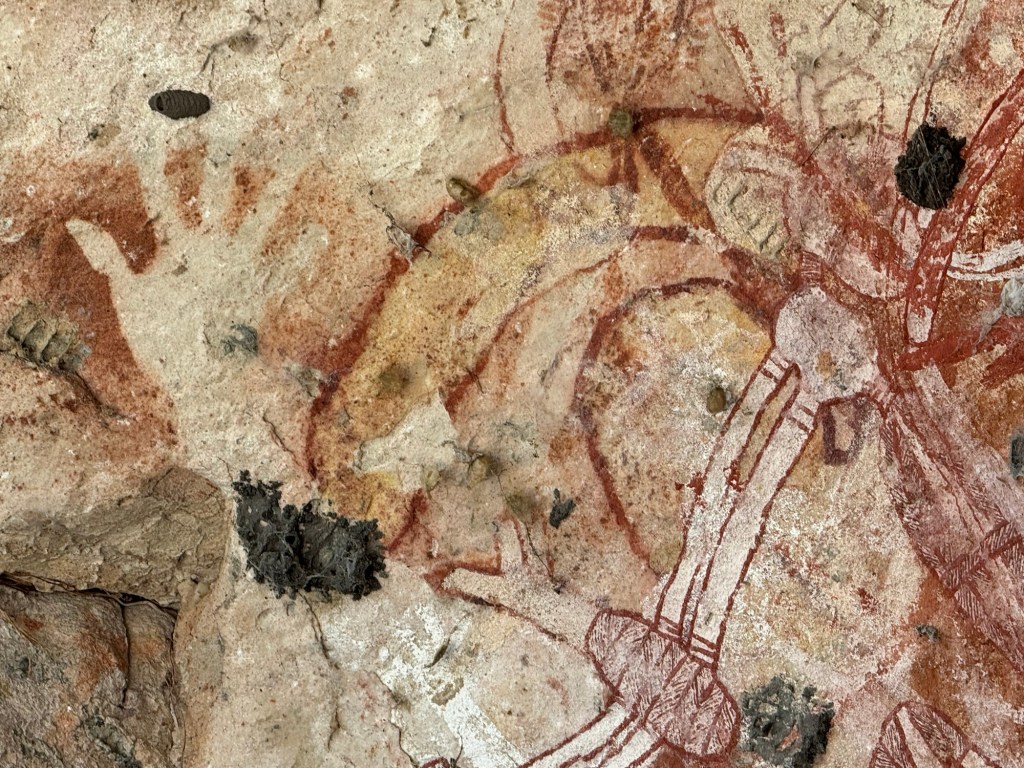
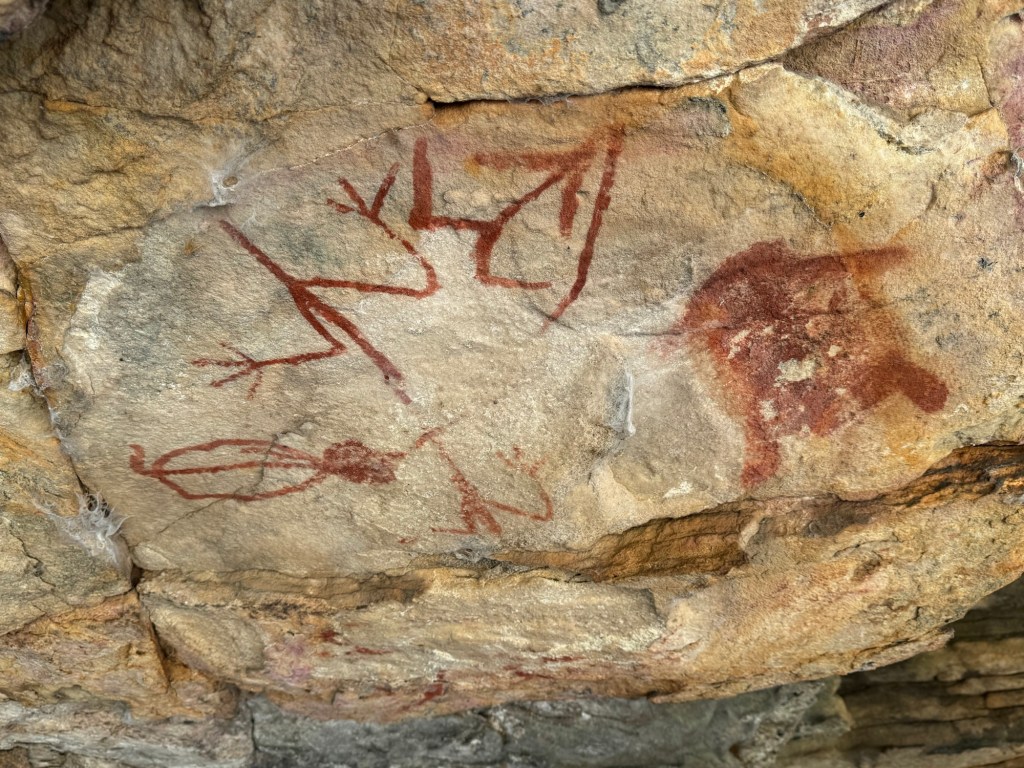
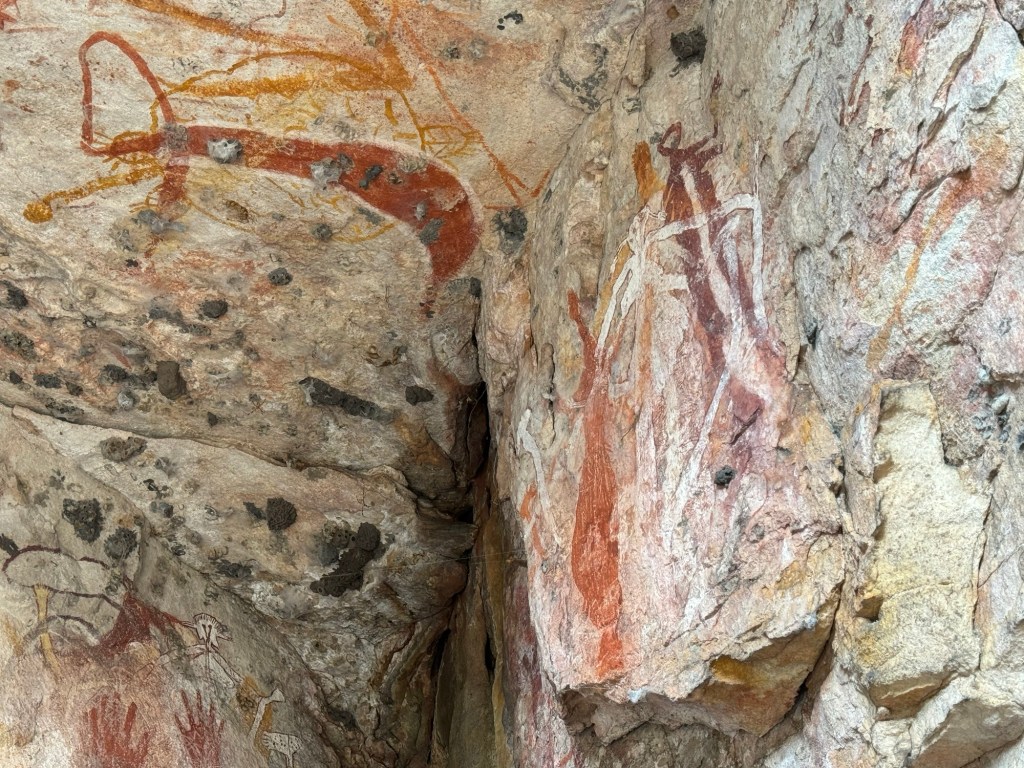
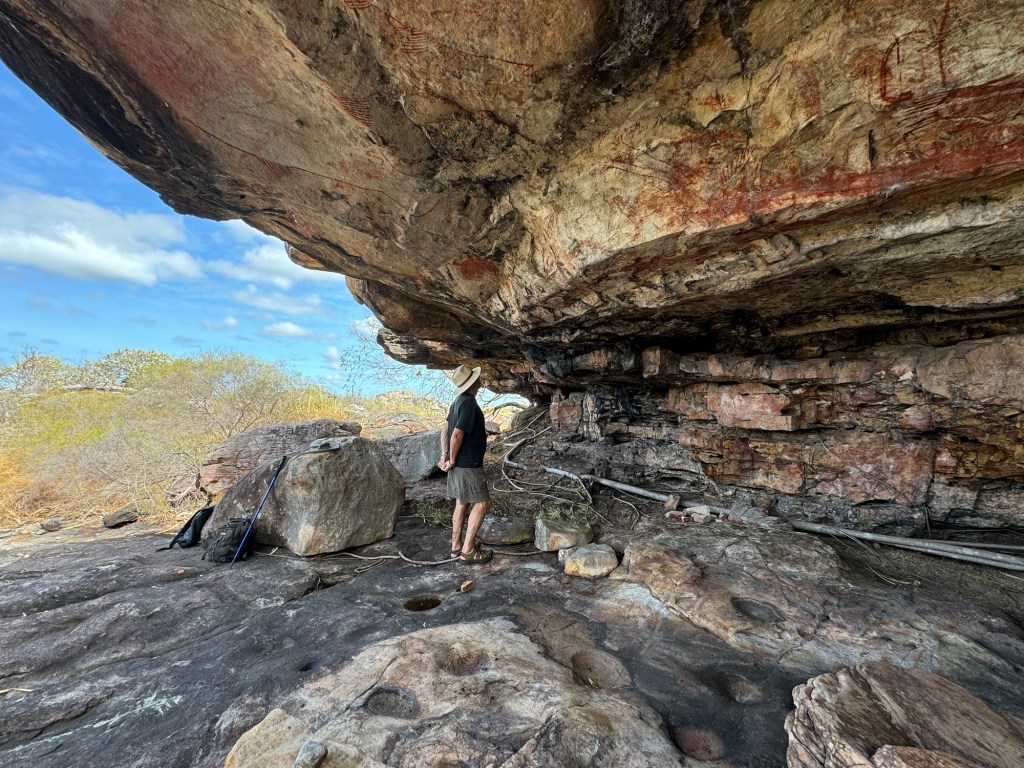
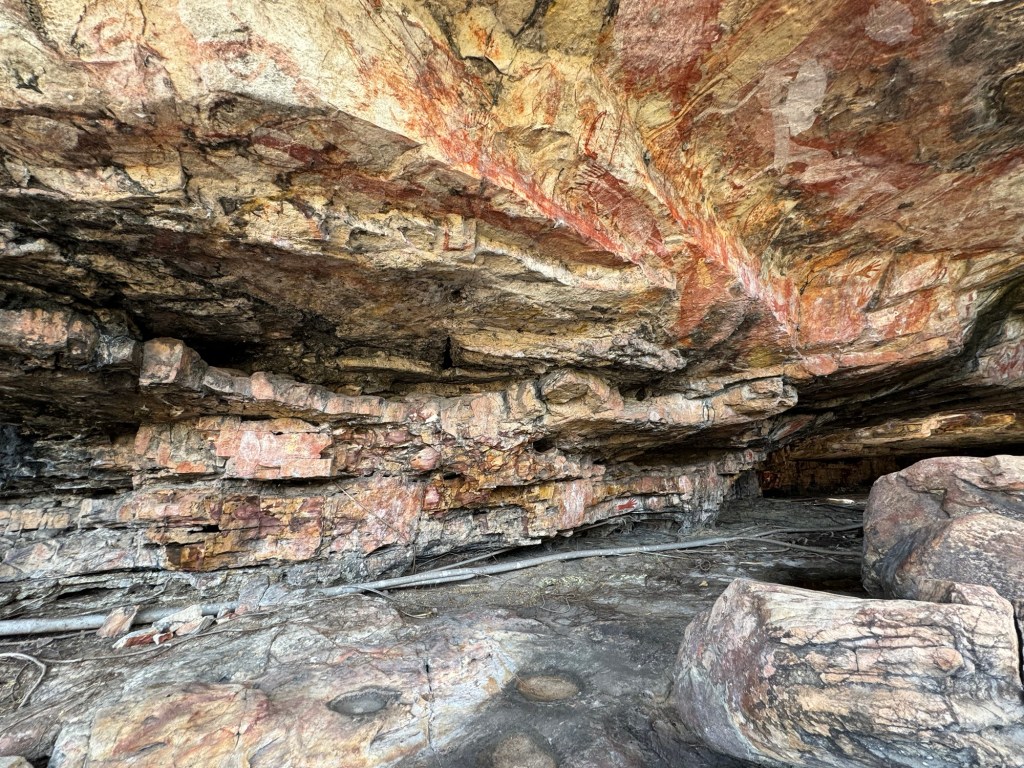
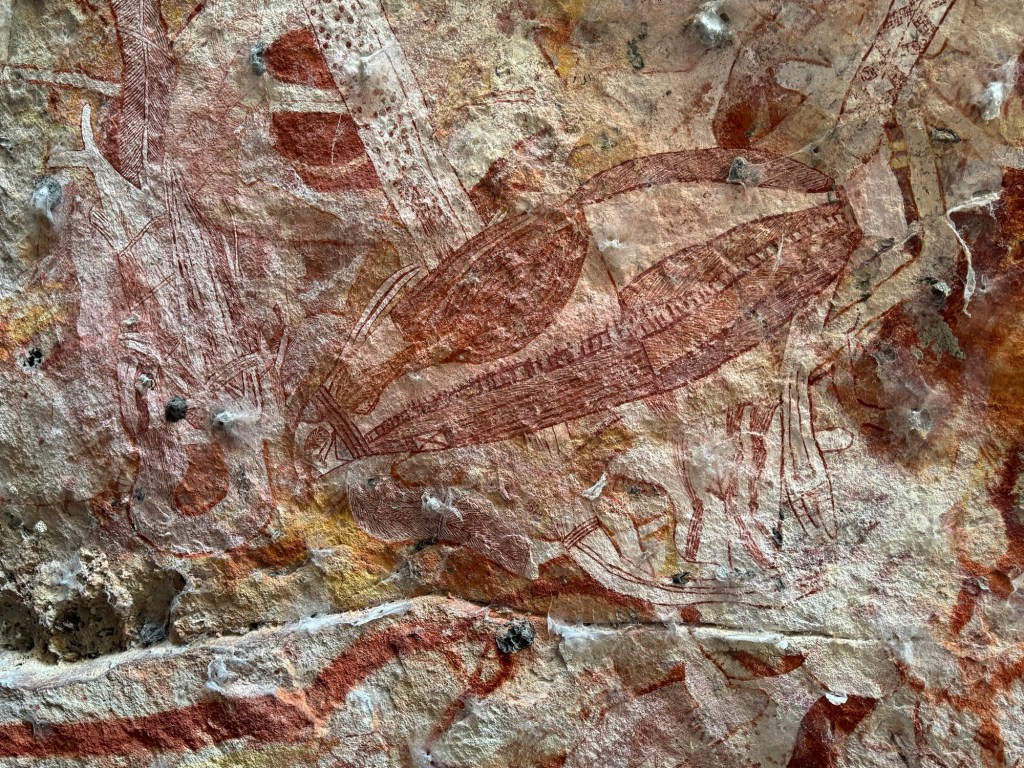
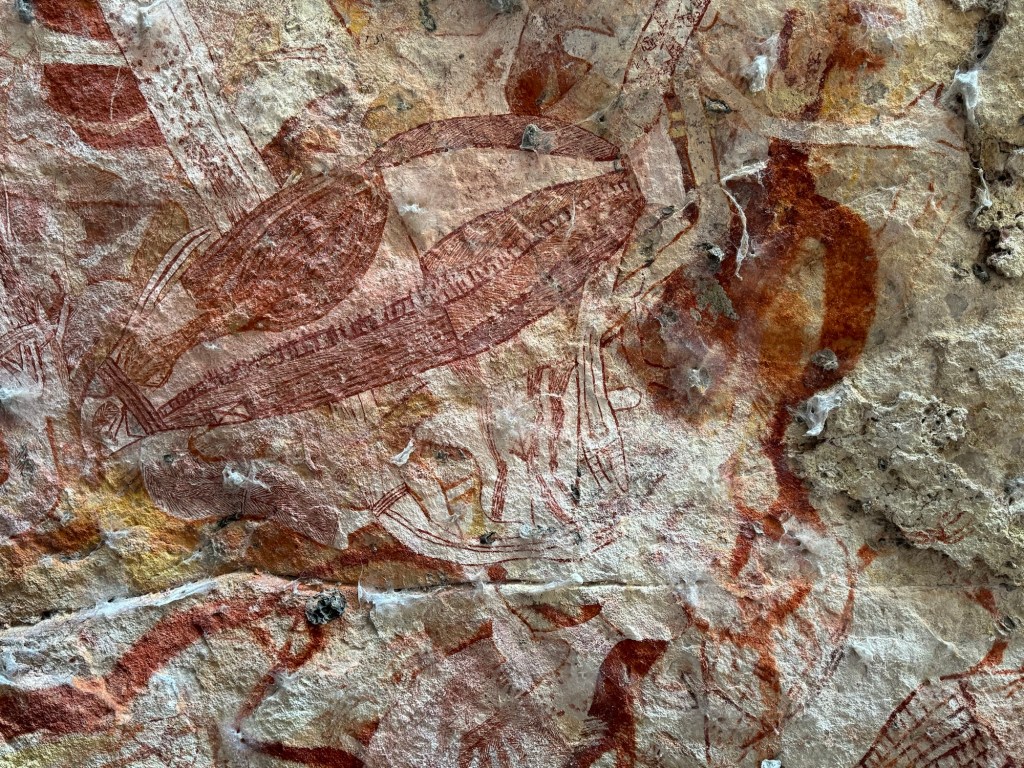
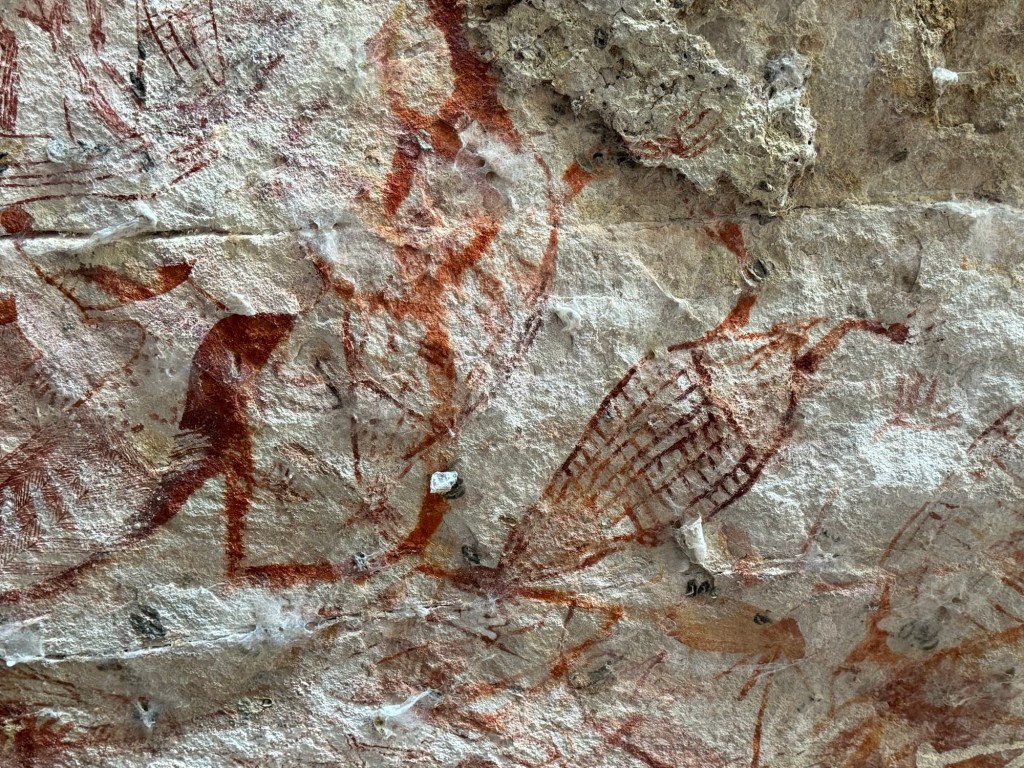
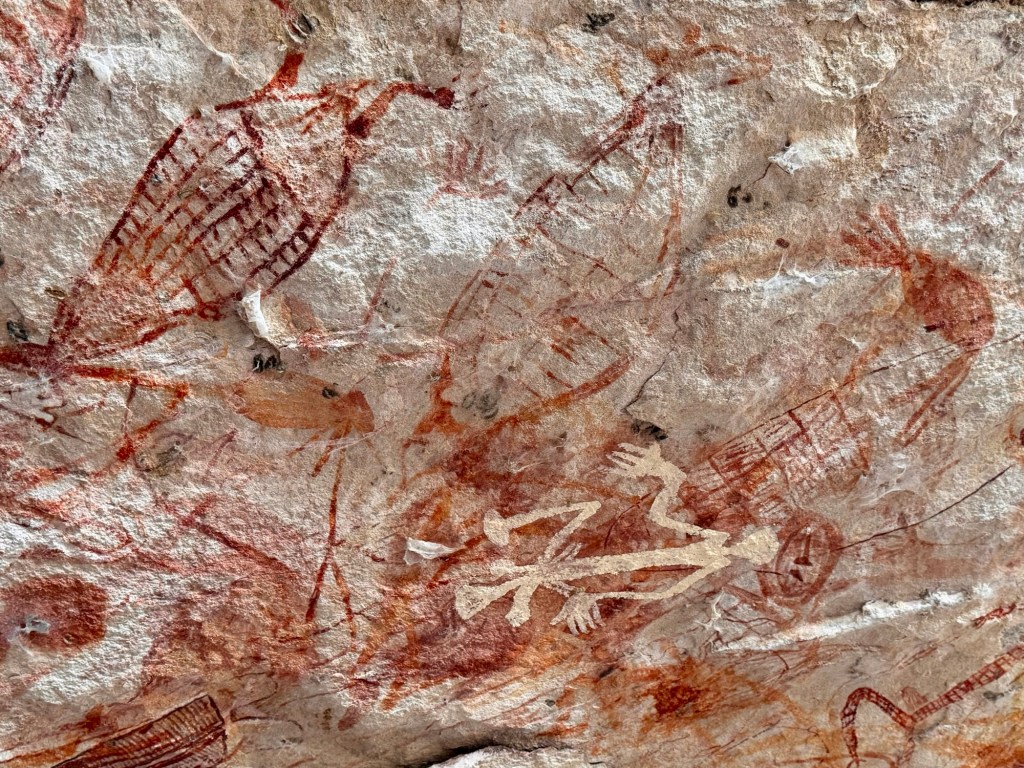
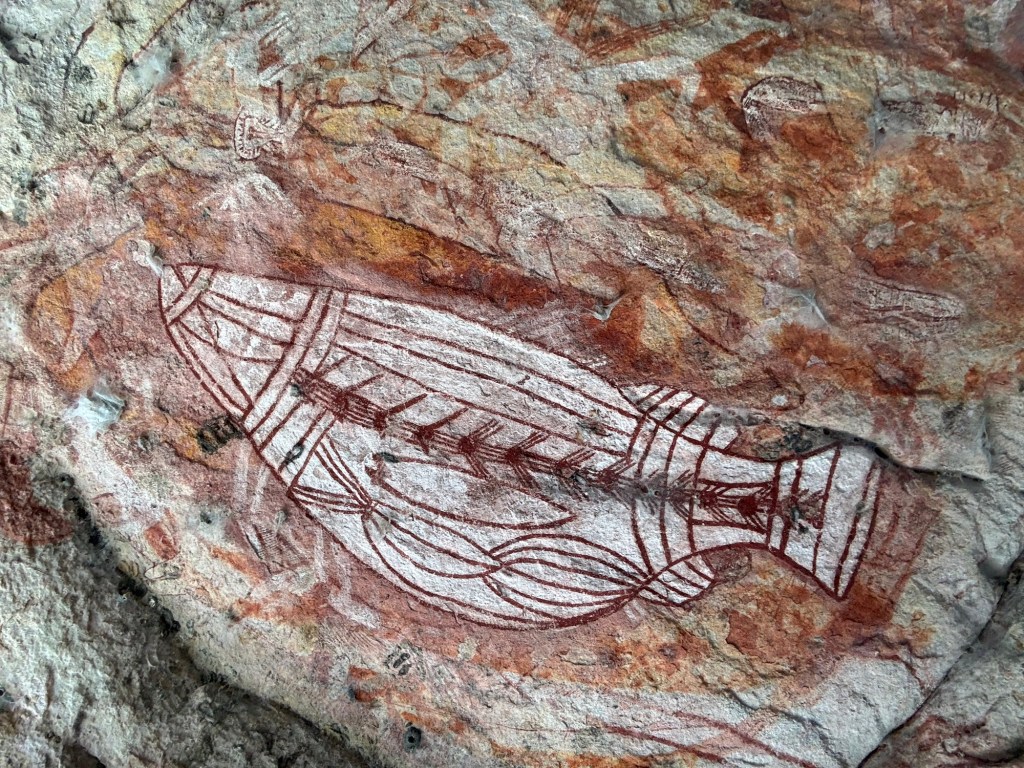
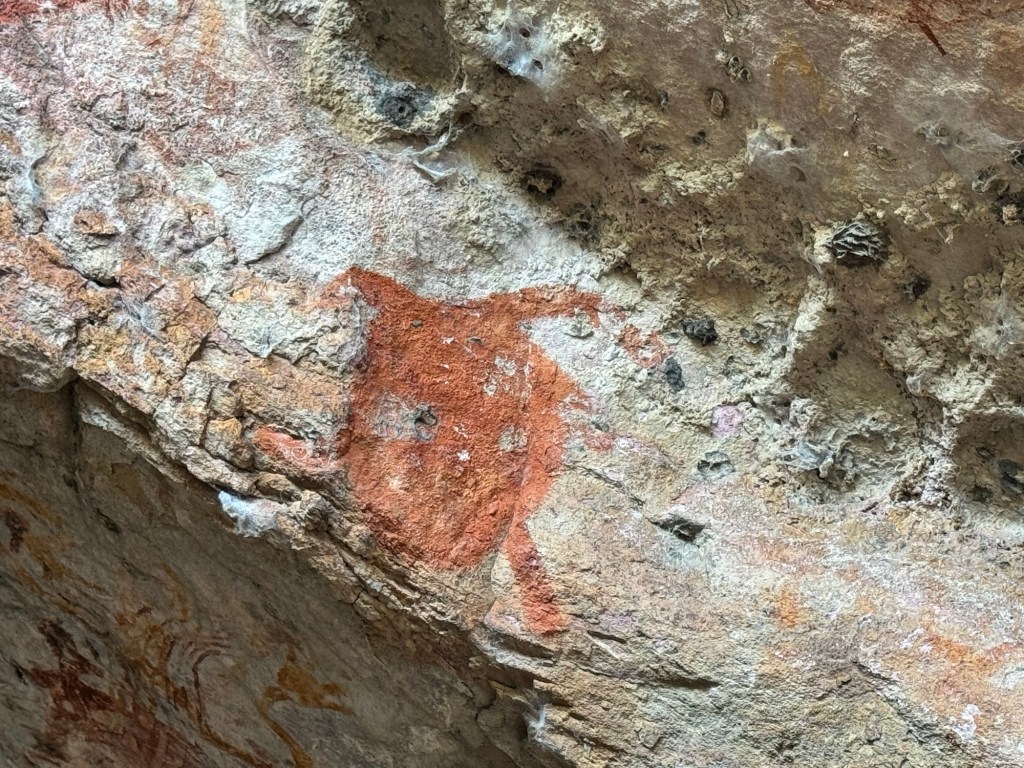
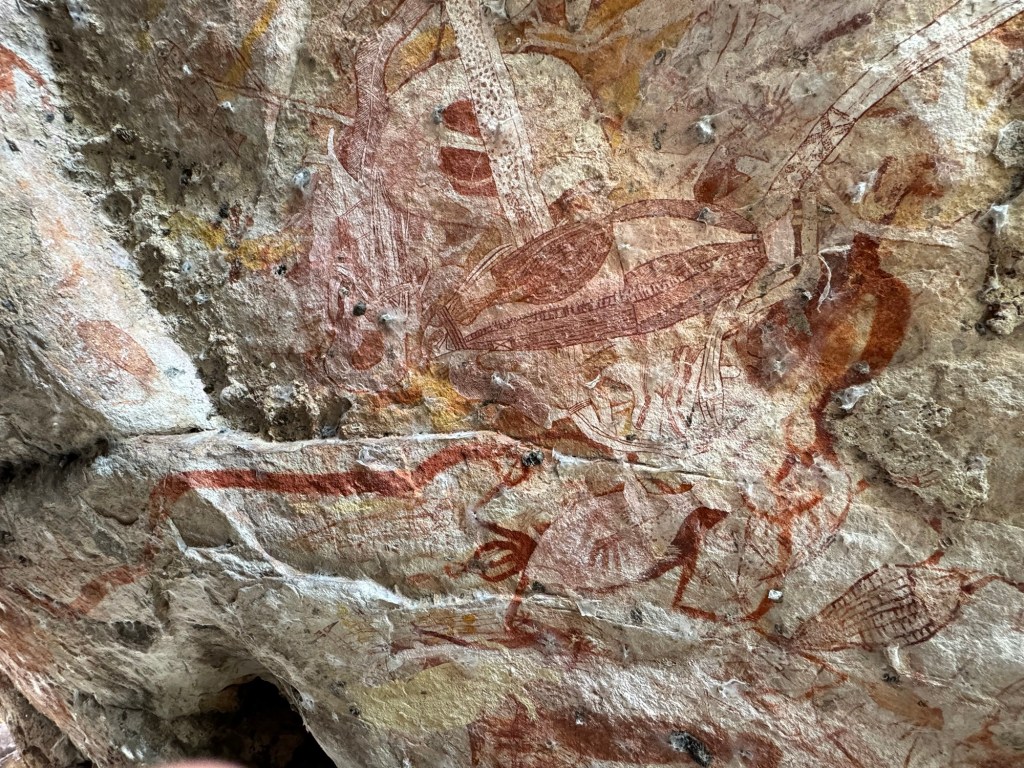
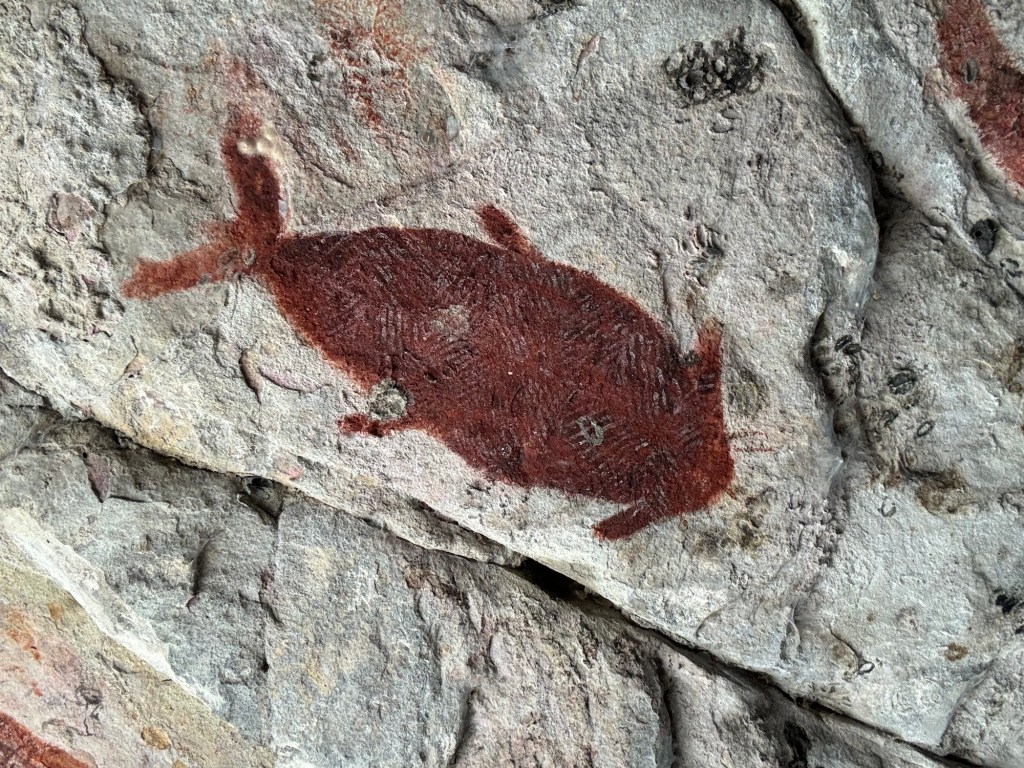
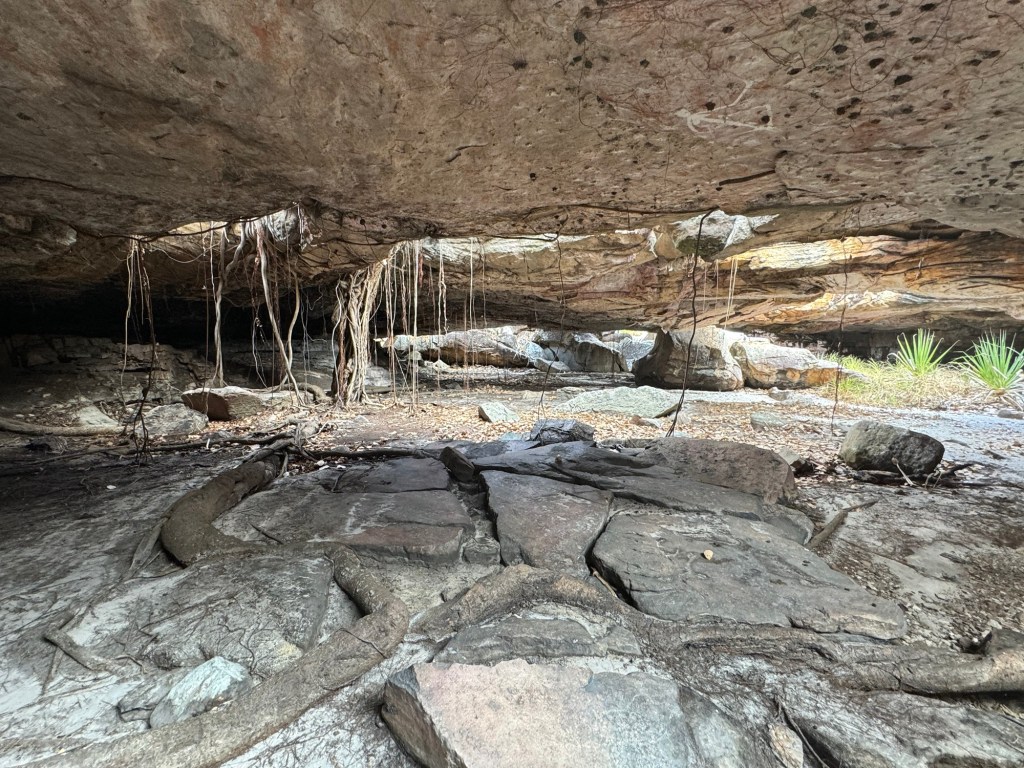
Then we drive to the nearest helicopter pad a few miles away and flew about an hour to a place called Jerramali, which means “thunderstorms”to meet another couple who are friends of Cathy. This couple belong to the western Yalanji people, “people that belong to this place”. They are Johnie, his wife Erica and their three children. There are thousands who belong to this group of people. Johnie will be showing us the traditional art gallery on his property. He has an old utility ATV that he uses to take people close to the art site. It is a scary ride, but better than walking. Anyway, there is still more boulder walking after exiting the vehicle before we are finally at the art gallery. Johnie is pretty good at explaining the figures. What I notice is that the drawings are different in style and color and shape from the art in the Arnhem collection. Here are samples from the art wall.

Once we finished visiting the art wall, we had lunch with Johnie’s family and helicoptered back to the car.

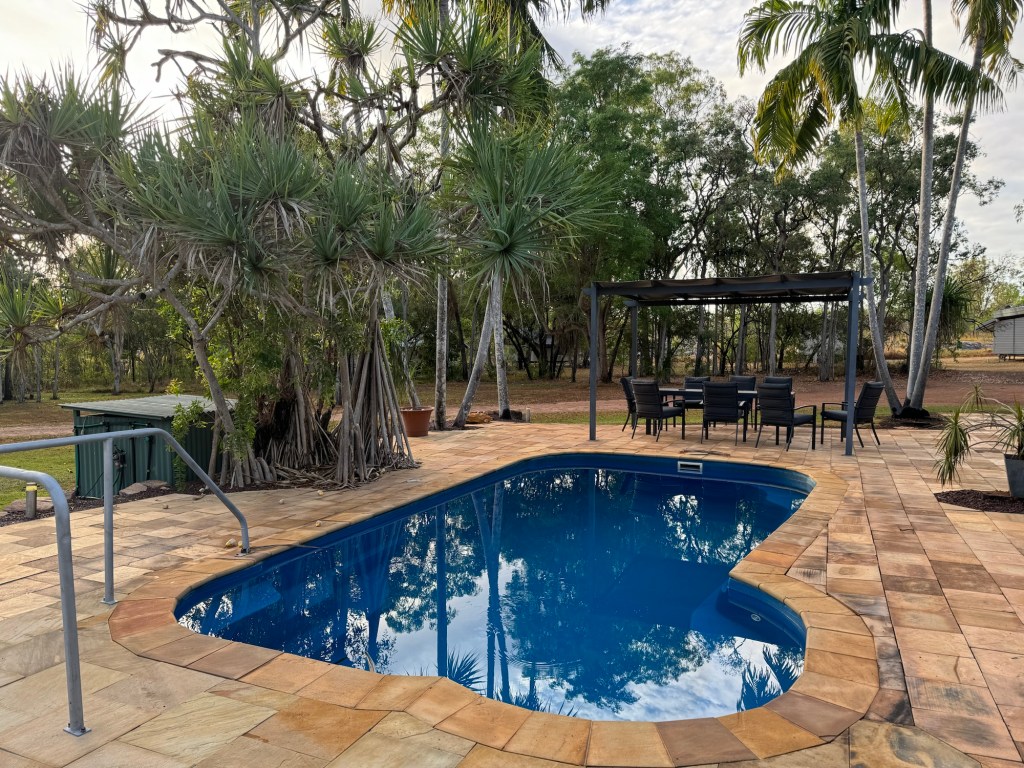
Back at the heliport, we say farewell to Cathy and take the hotel car back to Silky Oaks. We both felt sticky enough to want to jump in the pool, so we did, then chilled the rest of the day. I finished this post and got it ready for Mark to proof it.

Time to pack and head for the Aroona. Time is flying by.

The top End of Down Under

Monday, September 16, 2024

The flight from Singapore to Darwin took 4 1/2 hours and was uneventful except for a nearby child who cried nearly the whole flight. We arrived about 2:30 pm and went directly to our hotel on the waterfront in downtown Darwin. The room was thankfully cool, but not an inviting place to hang out. The outdoors was very hot and sticky, but offered a walk on the waterfront and restaurants to check out, so out in the sticky heat we went. It wasn’t long before we just wanted to eat and go to bed, so we settled on a place called Pink Chopsticks and filled up on sizzling shrimp, pork belly and rice noodles. Back in the room, we cooled off and crashed.
Tuesday , September 17, 2024

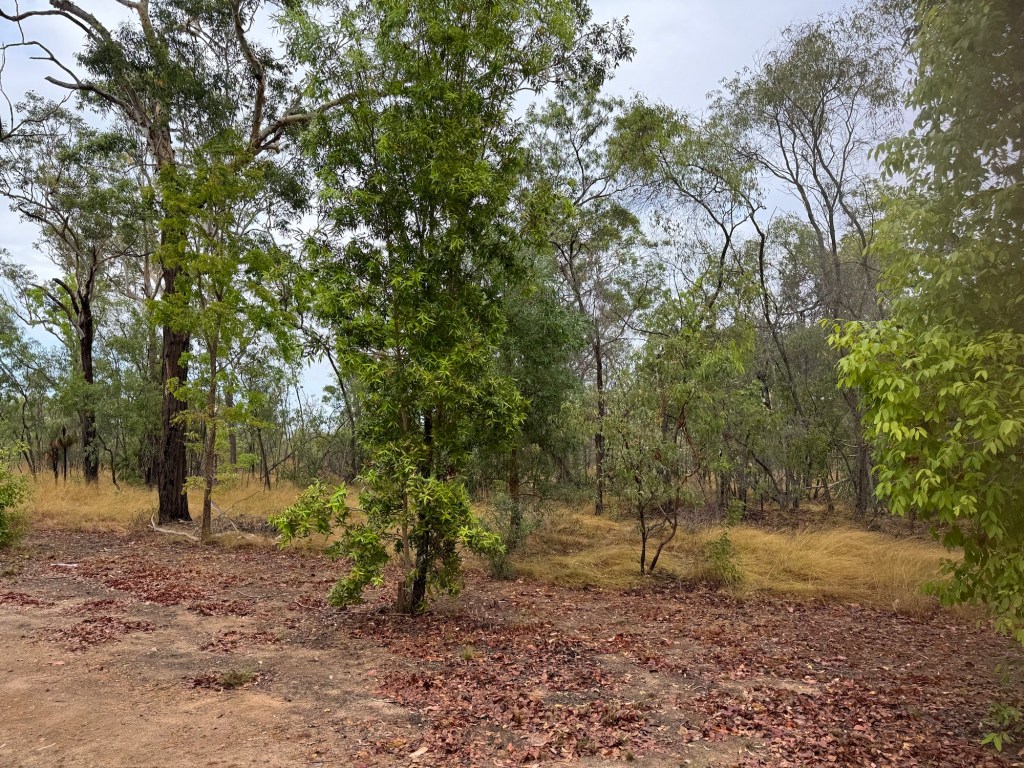
It feels like we have finally arrived at the point of beginning now that we are in Australia. After a simple breakfast, we were met by our guide Sab Lord. He is more than a guide, he is also the owner of Lords Kakadu & Arnhem Land Safaris, the company Martina booked for us, and a very interesting fellow. We embarked on an all day drive through flat land full of paperbark, eucalyptus and Sand palm tree forests, aka the bush, that receives controlled burns on a regular basis.

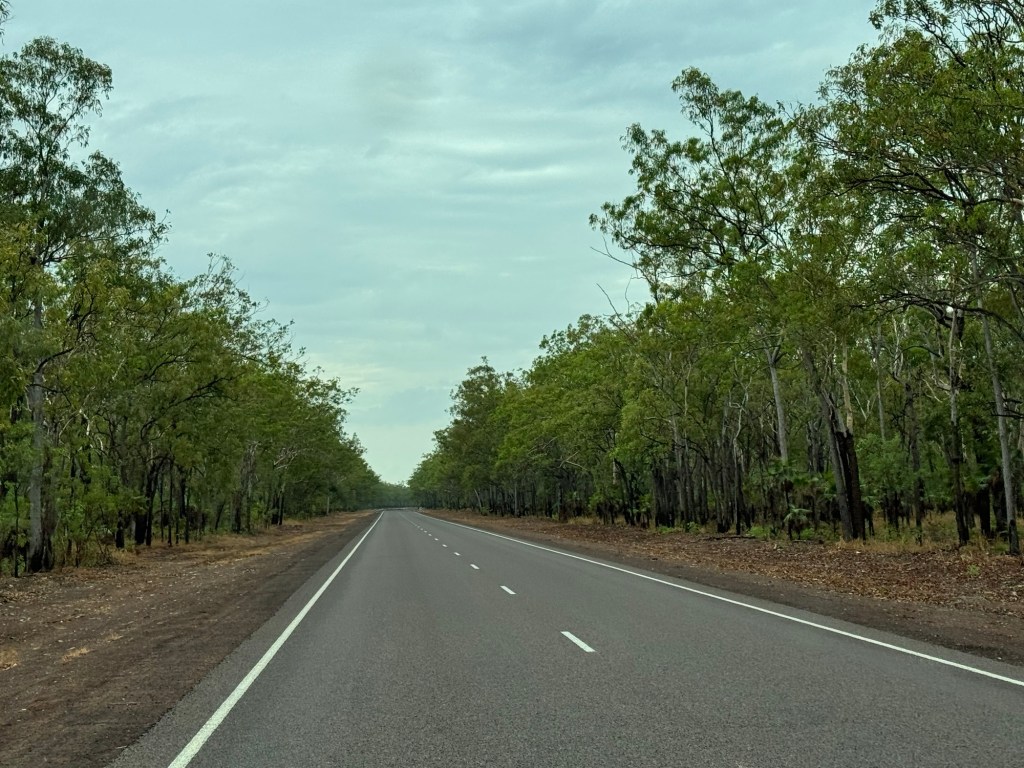
Driving through the bush

Fortunately, the monotony of the drive is interrupted by the conversation with Sab. He is 64 and getting ready to retire from the business next year, but shares many of his experiences of living in the bush and his knowledge of the aboriginal people. They are 3.5% of the 26M national population. Today’s aboriginals are heavily subsidized by the government, making them very dependent on Government hand outs.
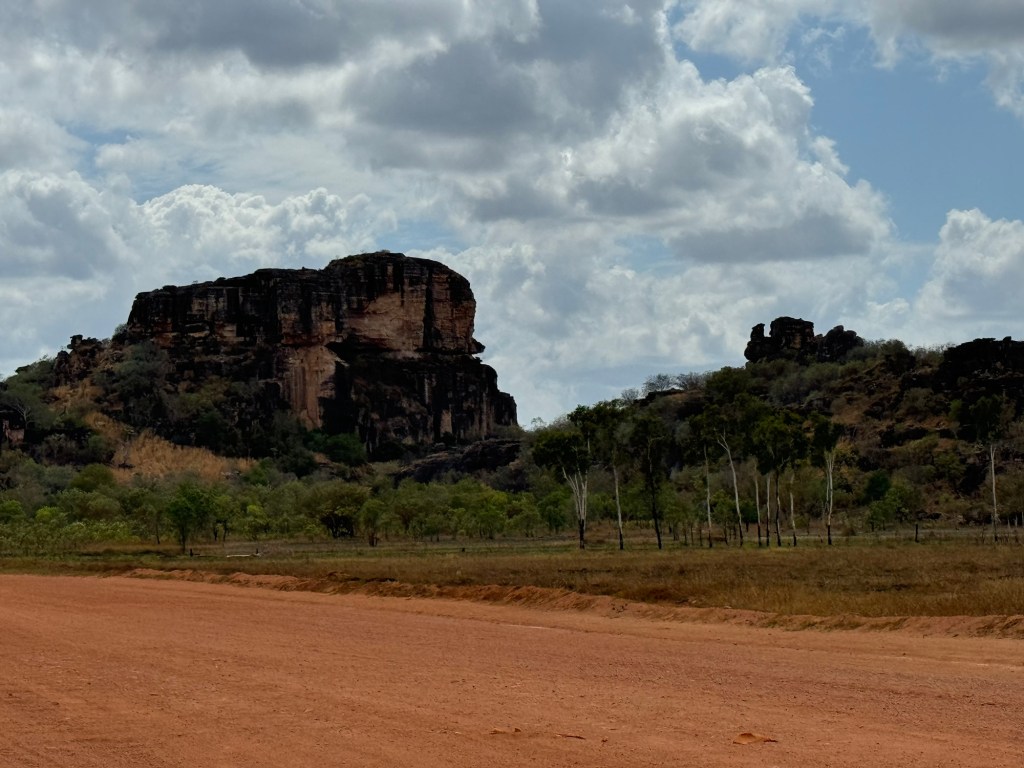
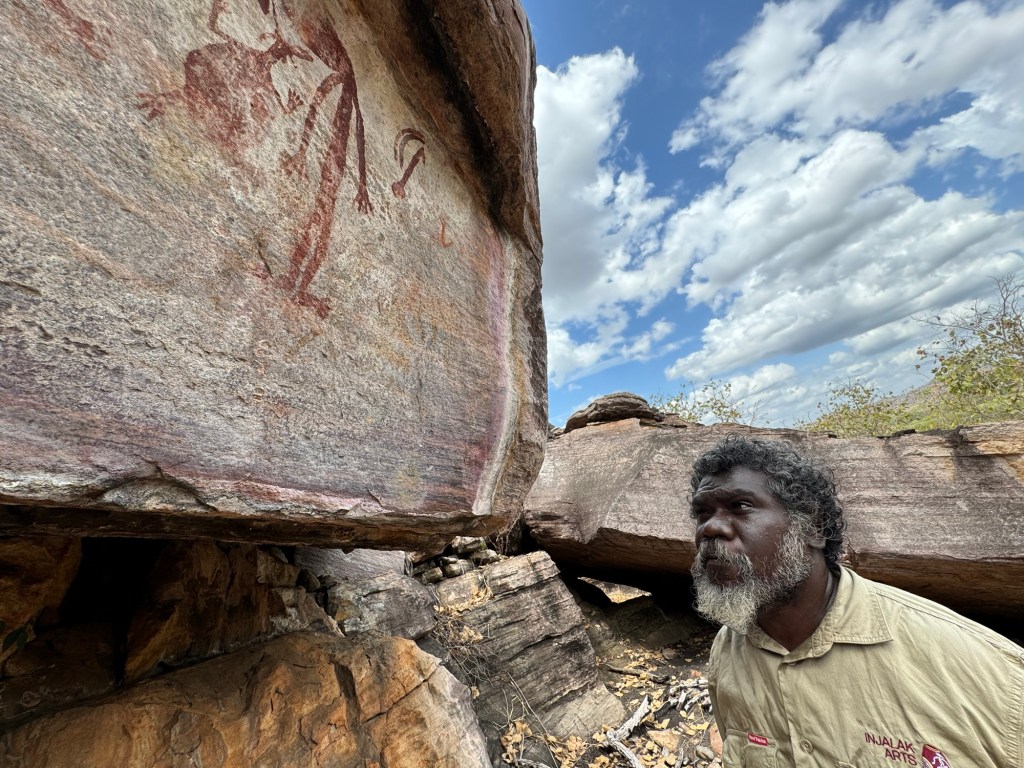
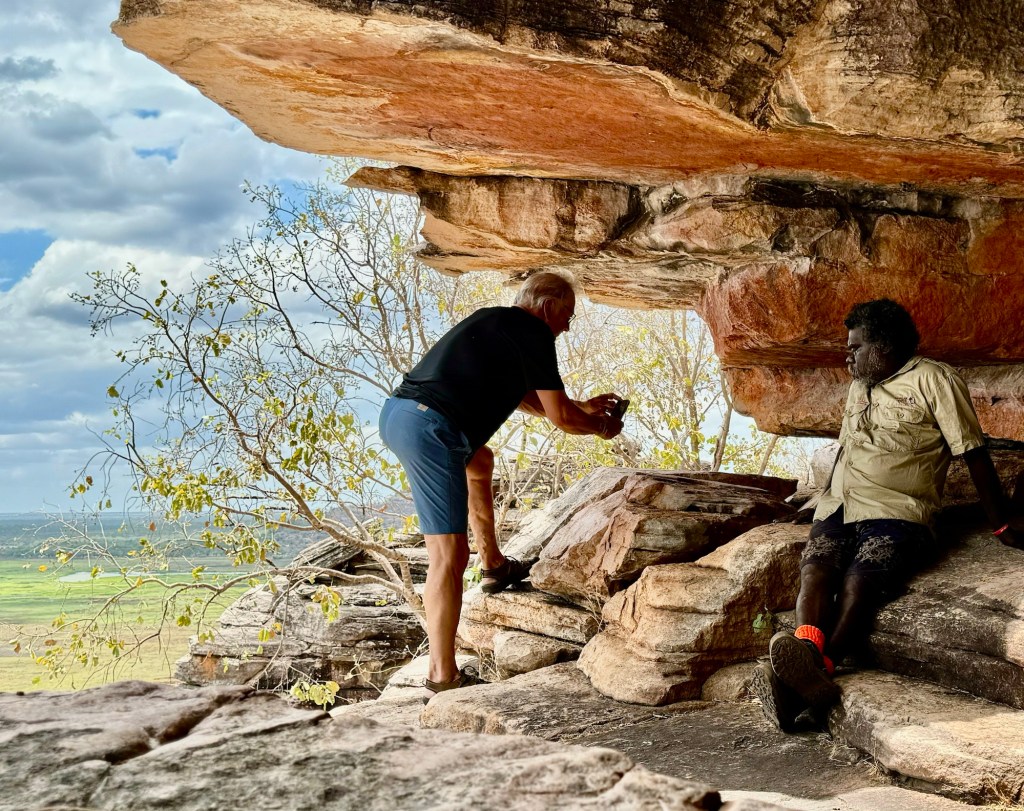
After 2 hours we arrived at Injalak Hill, an iconic indigenous rock art site, that protrudes above the landscape. Sab introduced us to a local aboriginal guide named Dallas, who led us up the boulder strewn hill to see the art. It was a bit rough going in the heat, but, with Mark’s help, I managed. Dallas spoke very little but was clearly proud of his ancestors’ work. He seemed content with his quiet life and uninterested in changing. I couldn’t help comparing him to our Native Americans, many of whom are independent, industrious and participating in American society.

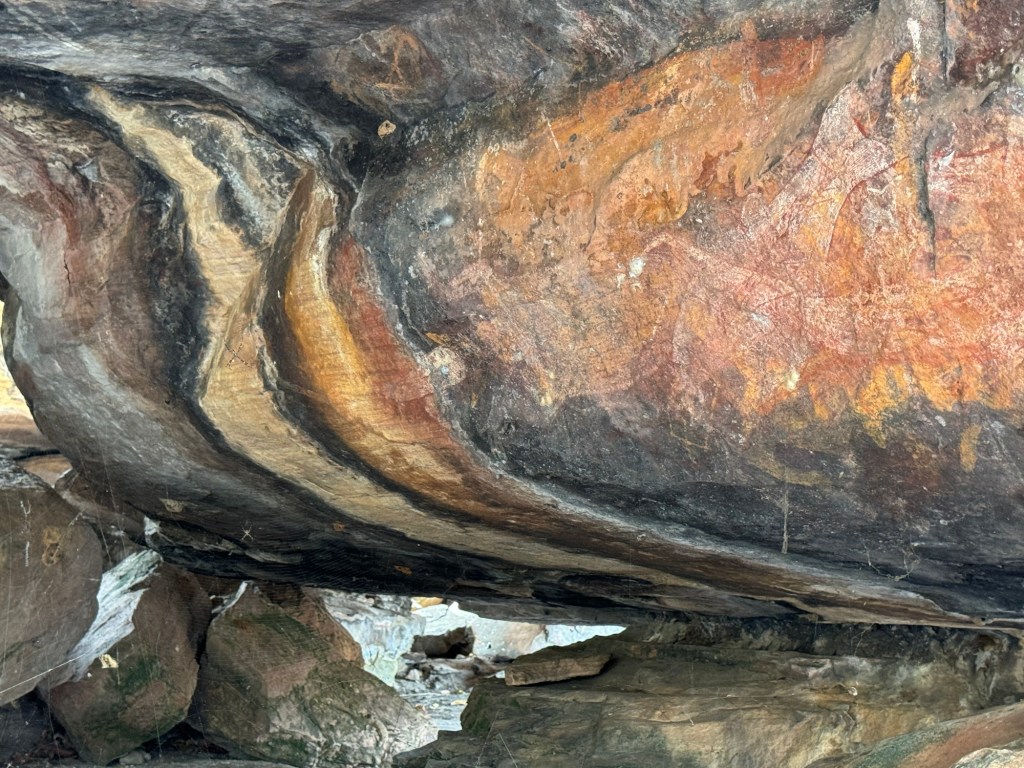
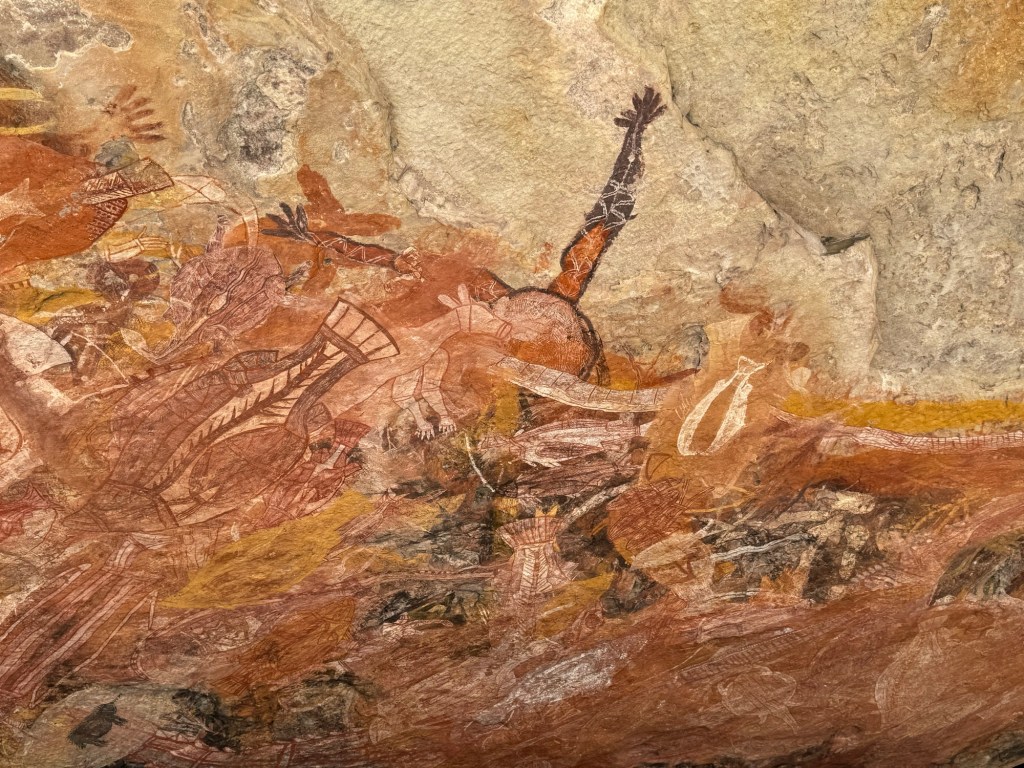
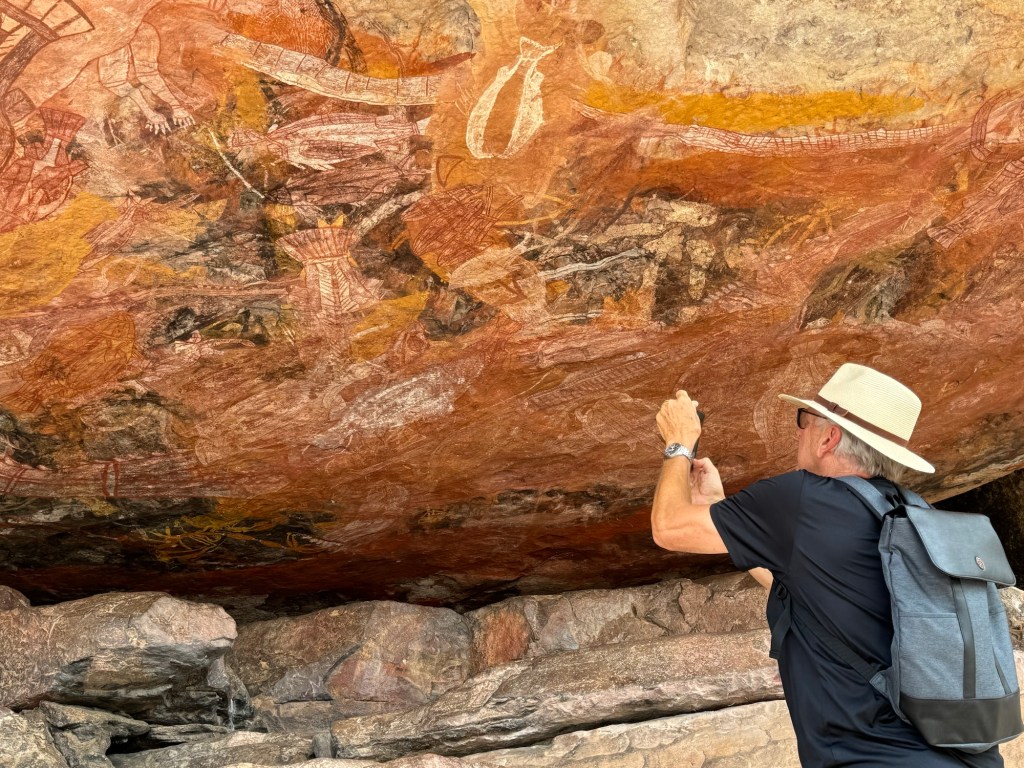
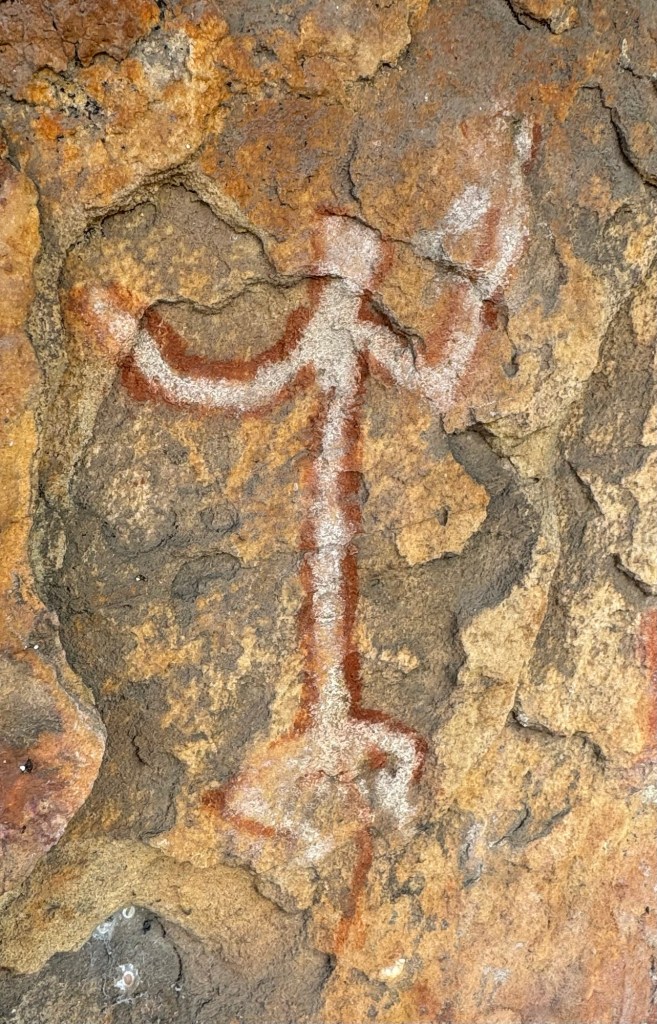
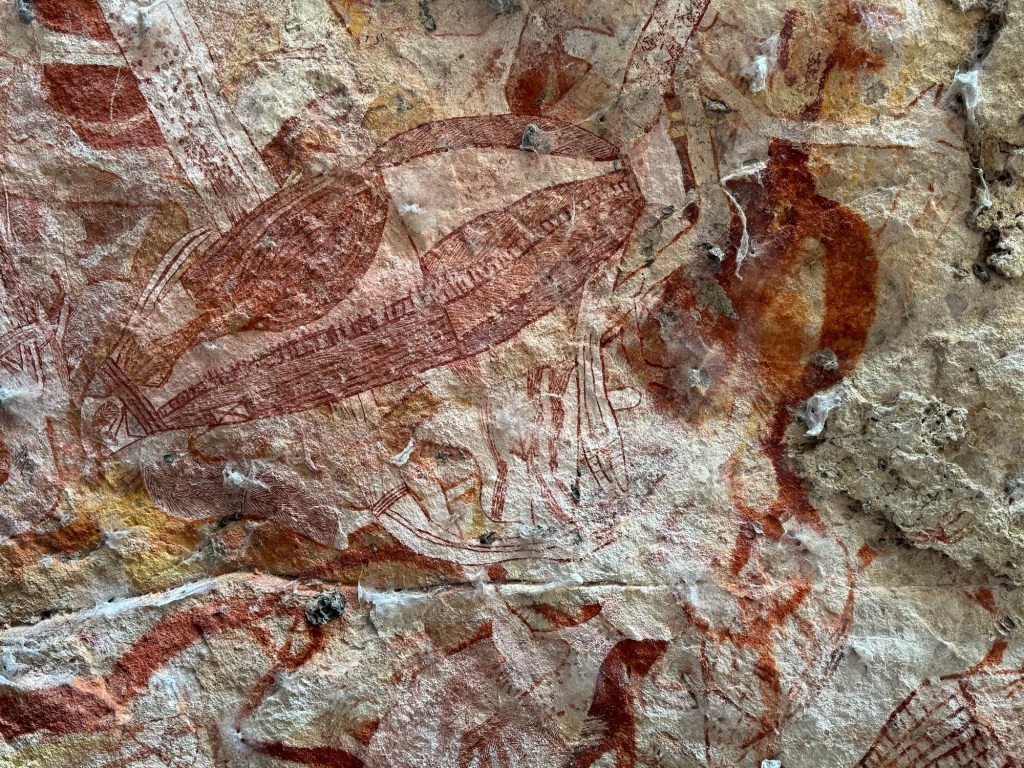
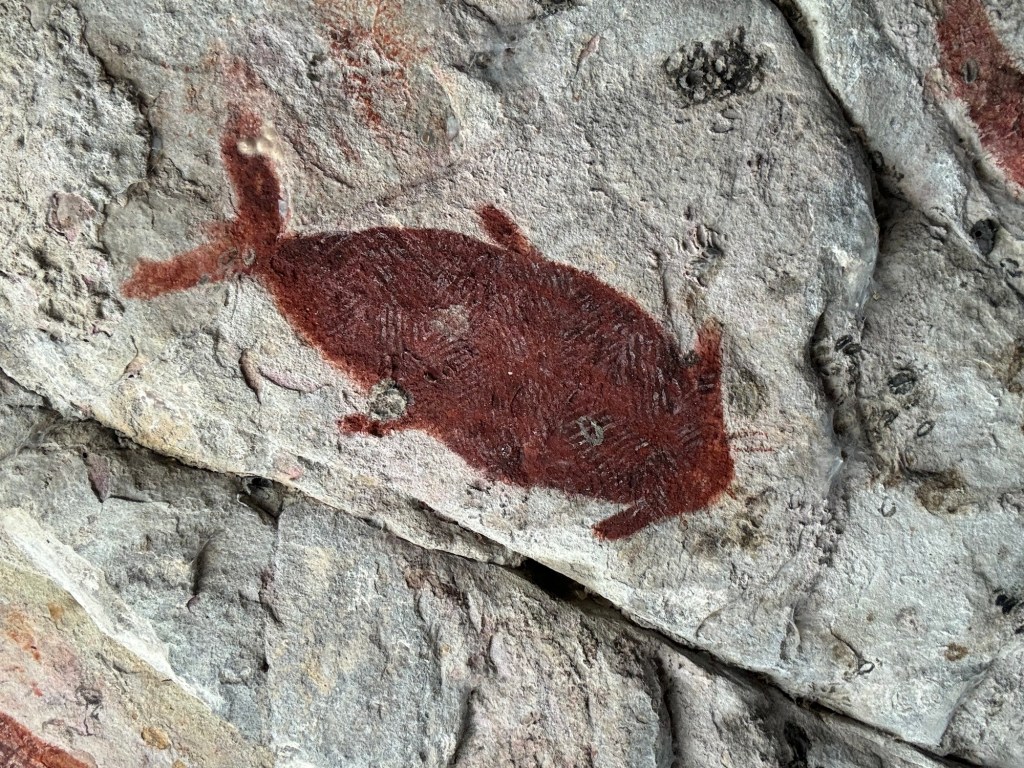
Anyway, the art we saw was exquisite. The subjects were mostly fish, birds and animals with a few stick figure people and lots of painted hands. The art was made with pulverized red and yellow colored sandstone, charcoal and blood. Sab said the art on this hill dates from 90 to 3000 years. Some of it was beautifully drawn and artfully colored.

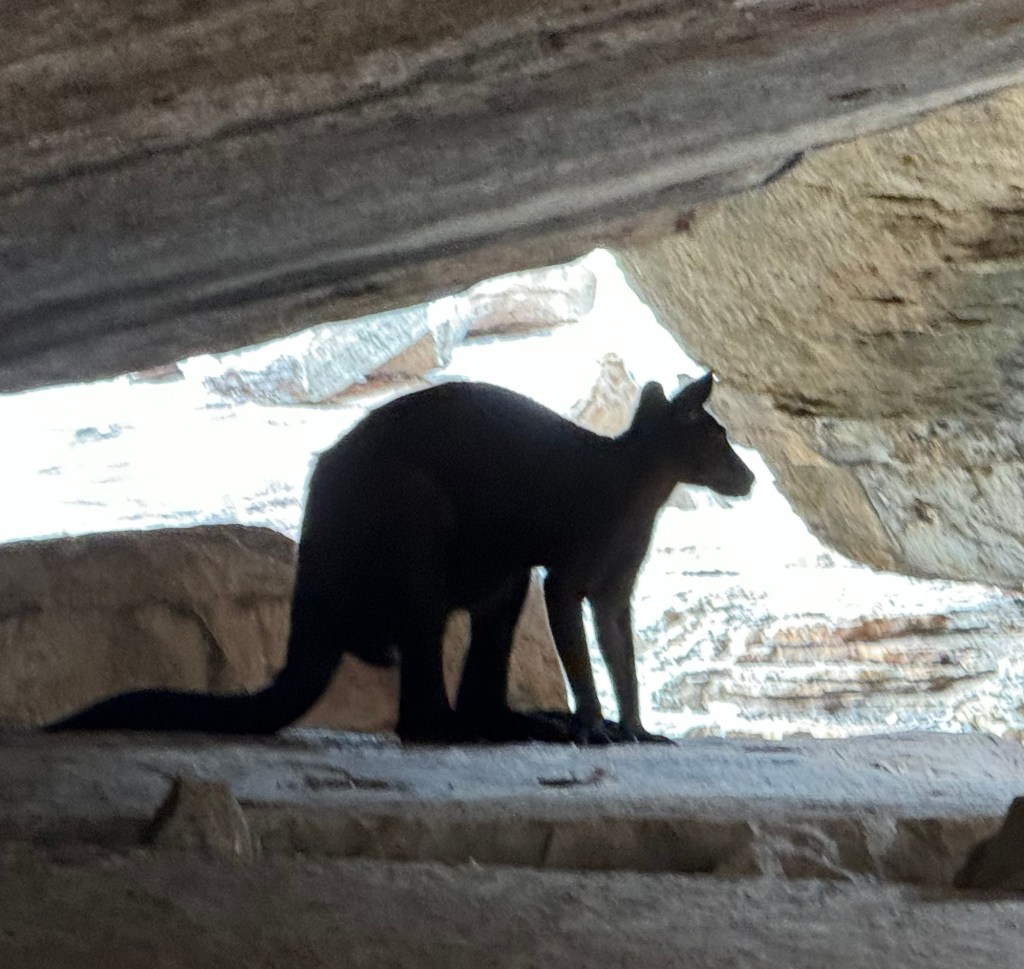
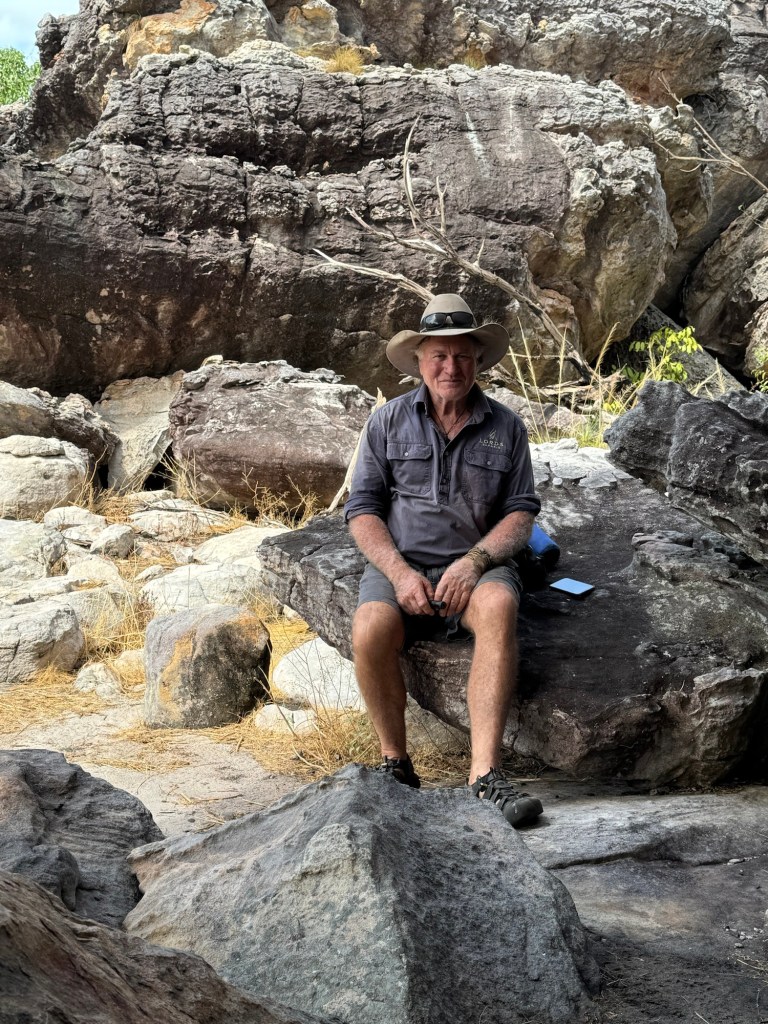
Near the top of the hill we stopped for lunch in a rock cove. Sab put out a delicious sandwich spread and we each made our own. I learned that Sab stands for Sebastian. Just as we finished lunch, we spotted a black Walaroo, somewhat rare,which is slightly larger than a Kangaroo and captured a decent photo of it.

Mark helped me hike back down the hill to the car. We drove another 2 hours through the bush, a flat landscape composed mostly of paperbark, eucalyptus and small palm trees on a dirt track to Davidson’s Safari Camp.

We were assigned our own cabin and found it pleasantly comfortable, except there was no AC. Fortunately, there was a large ceiling fan that kept us almost cool. Once settled in we checked out the lodge, met the few other guests, as the season was almost over, had dinner with Sab and went to bed early. I did learn that I can’t down load photos or publish posts as there is no WI-FI or internet in the bush, but I can keep writing.

Wednesday, September 18, 2024

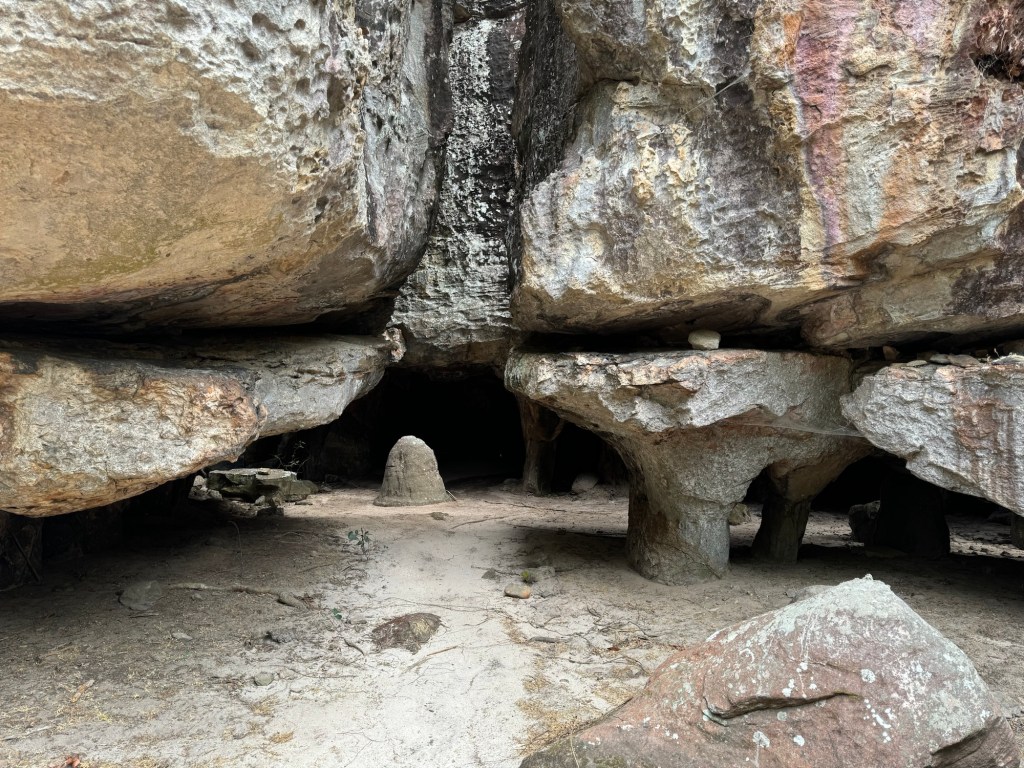
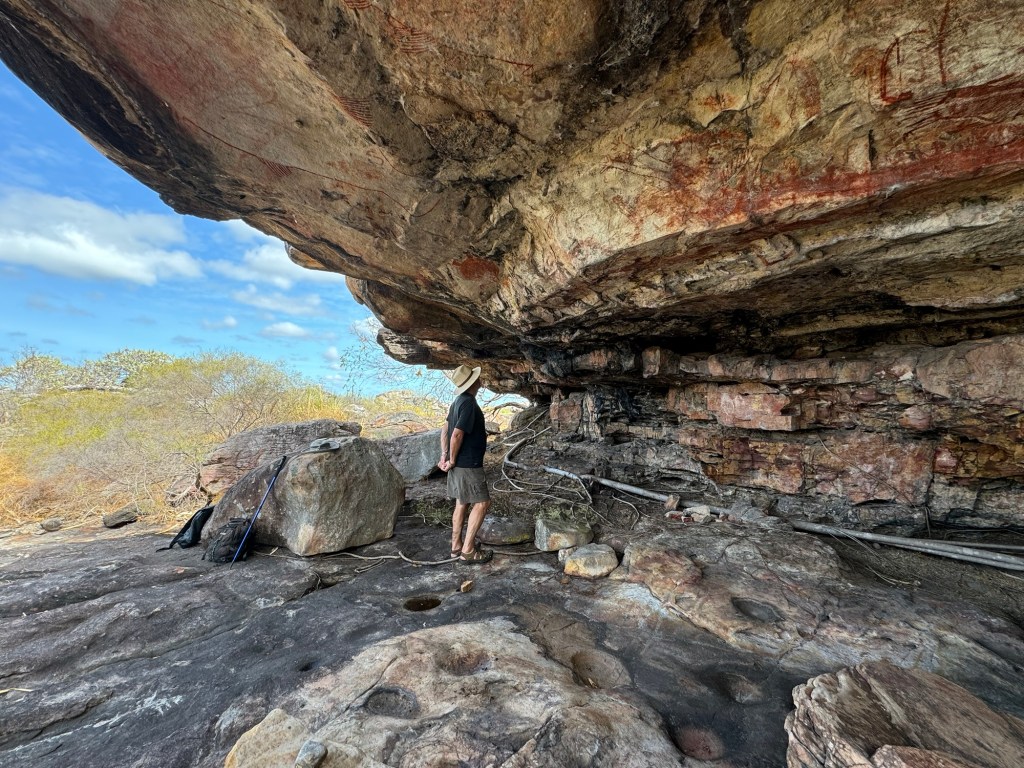
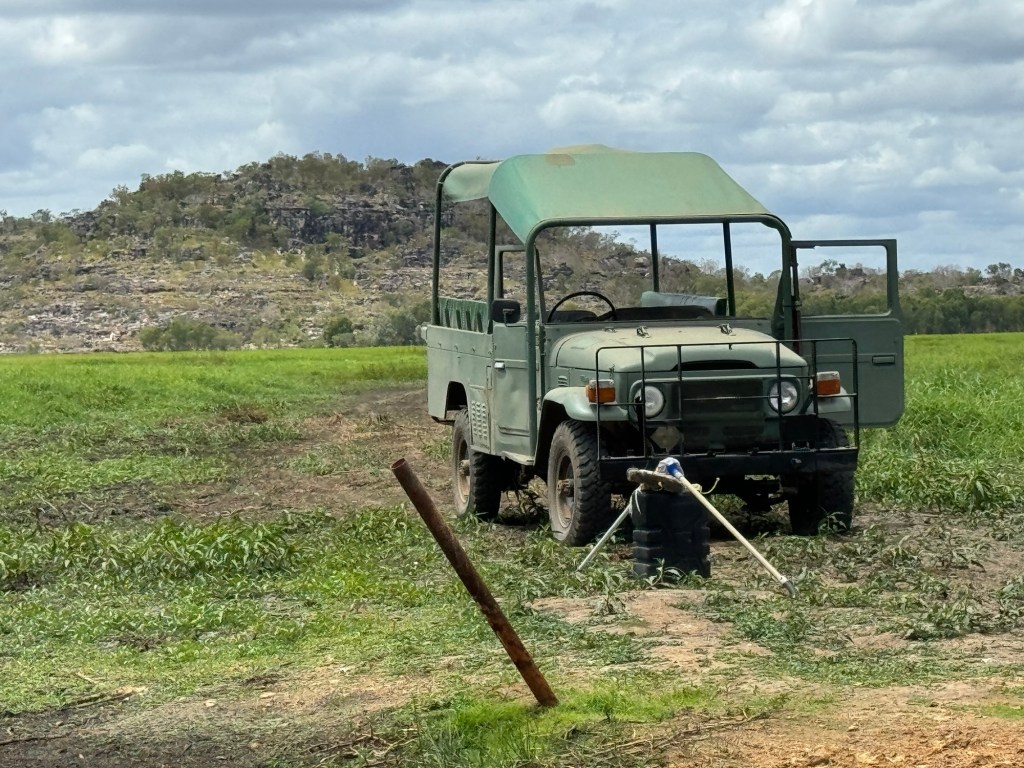
Up and ready to roll by 8:30, Sab drove us in an old safari Land Cruiser to the edge of a large marsh about 30 minutes away. From there, we walked another 30 minutes to a site called The Major Art Gallery.

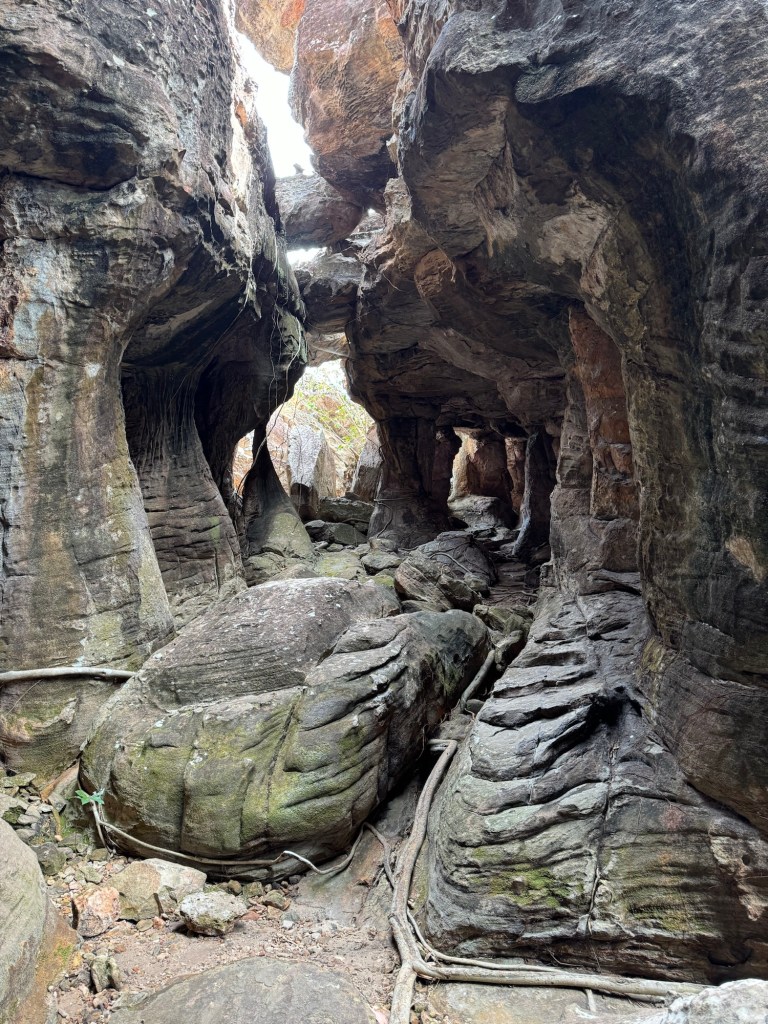
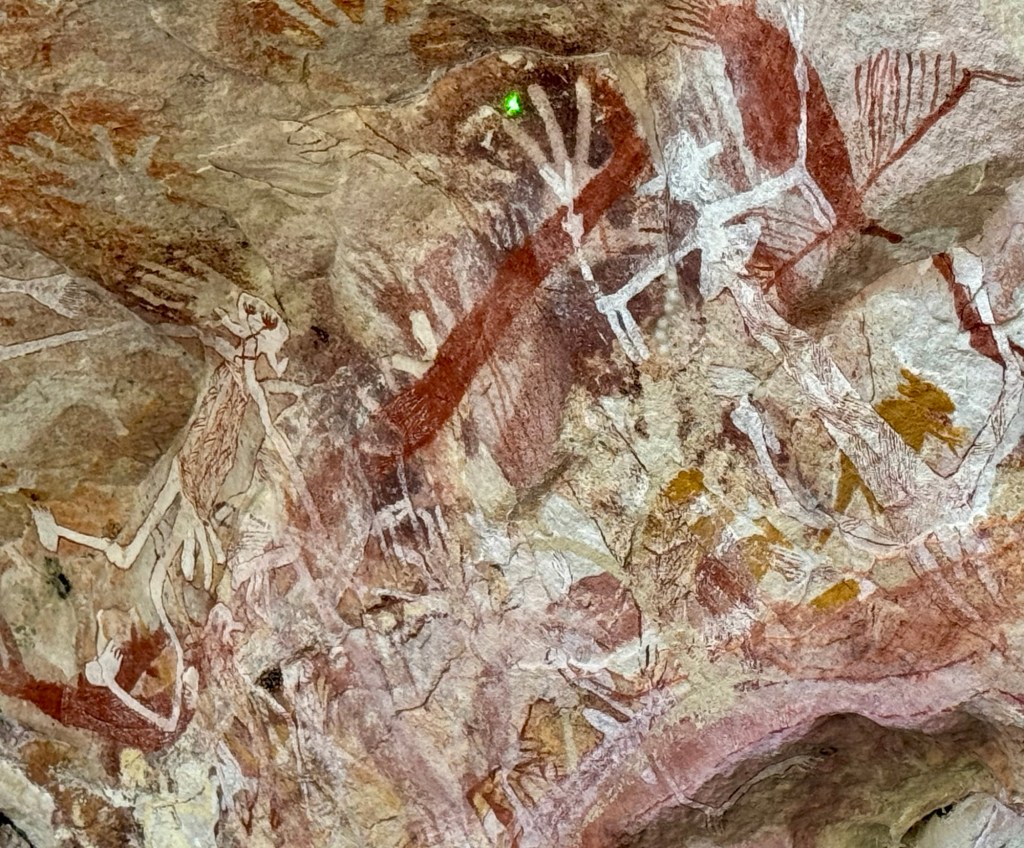
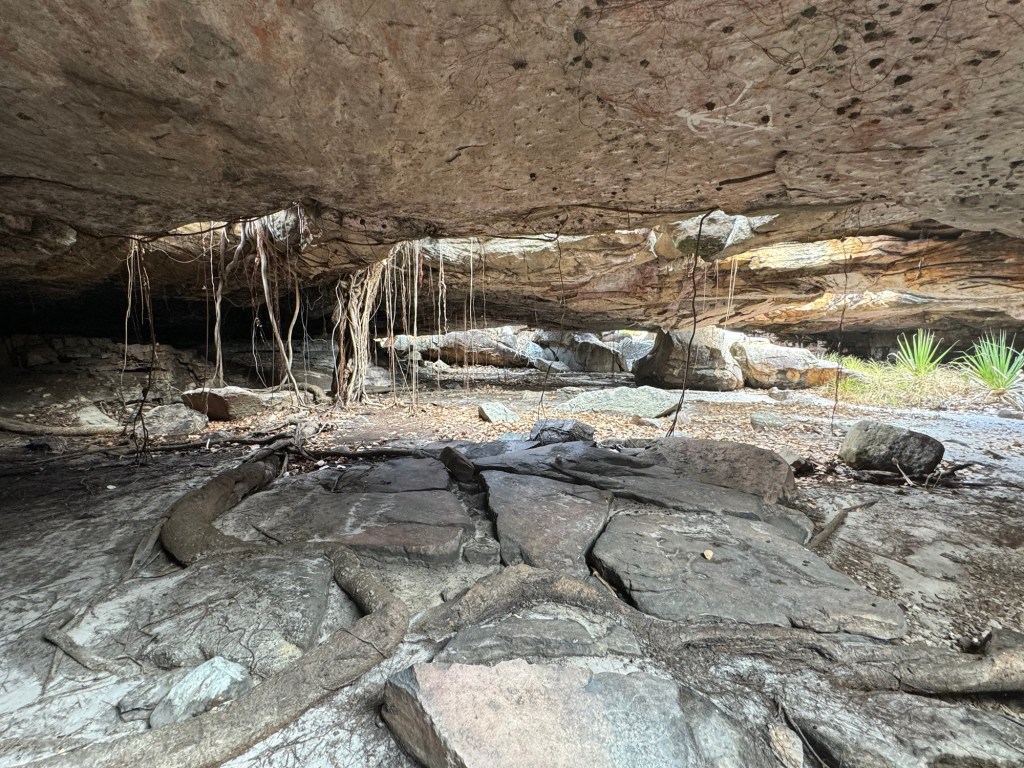
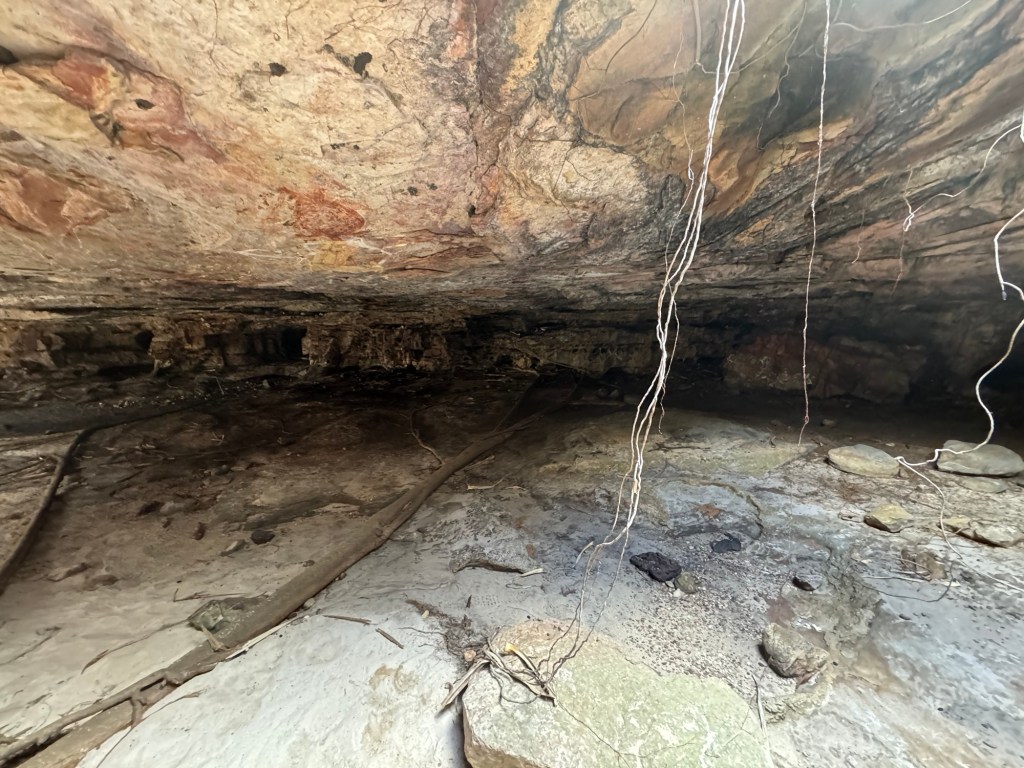
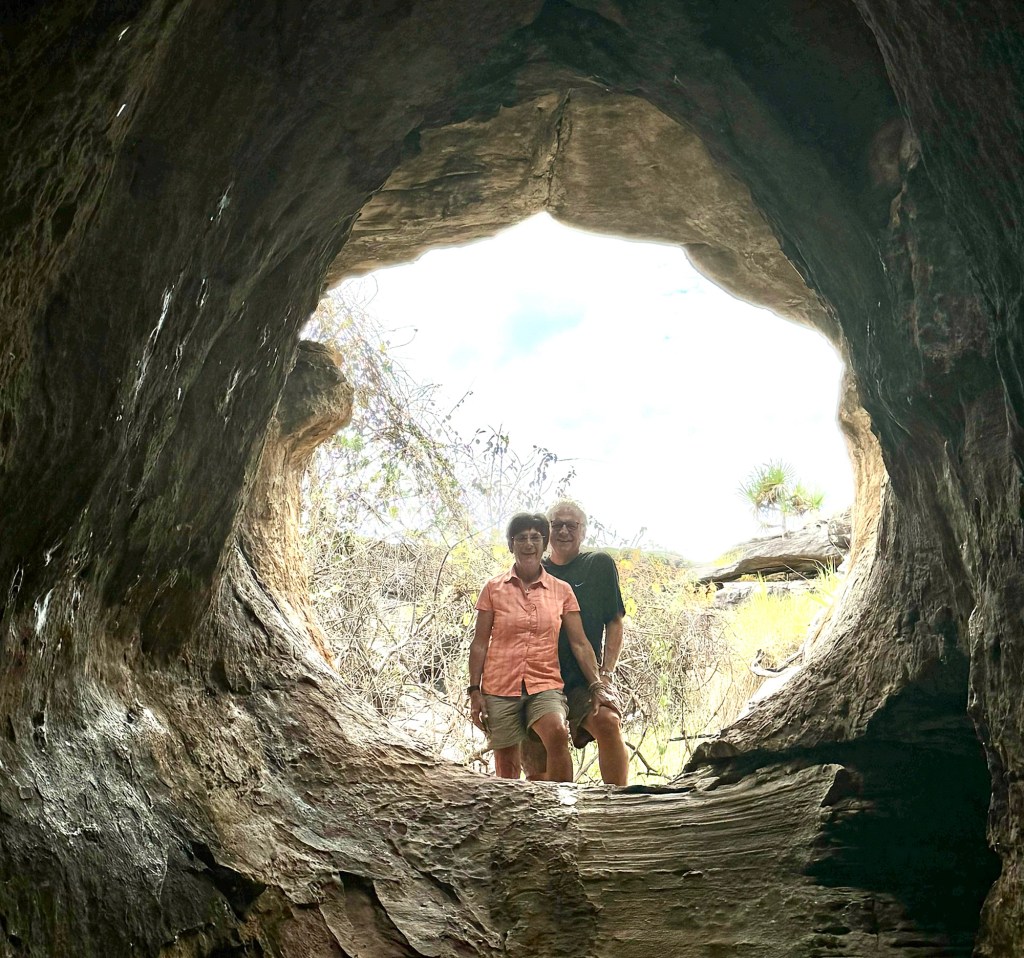
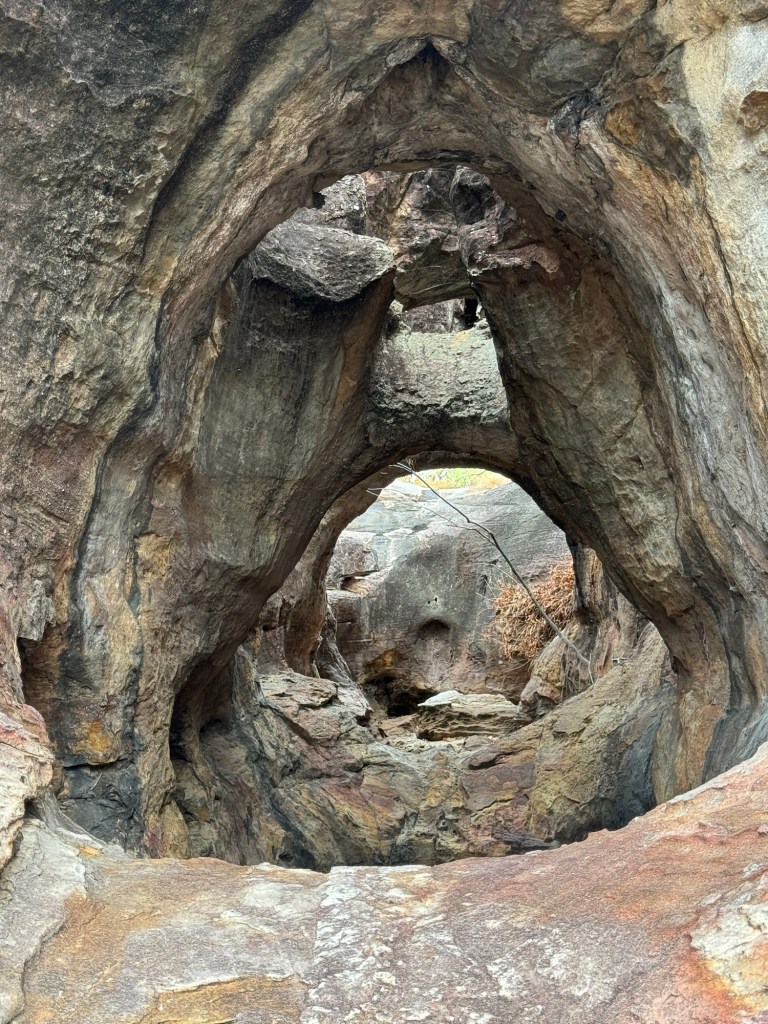
The rock walls themselves were complex and numerous and the site was like a maze with large boulders we had to weave ourselves through to get to the art walls. The paintings were awesome and numerous. Sab took a long time telling us about each one as he sorted them out from the mass of work.

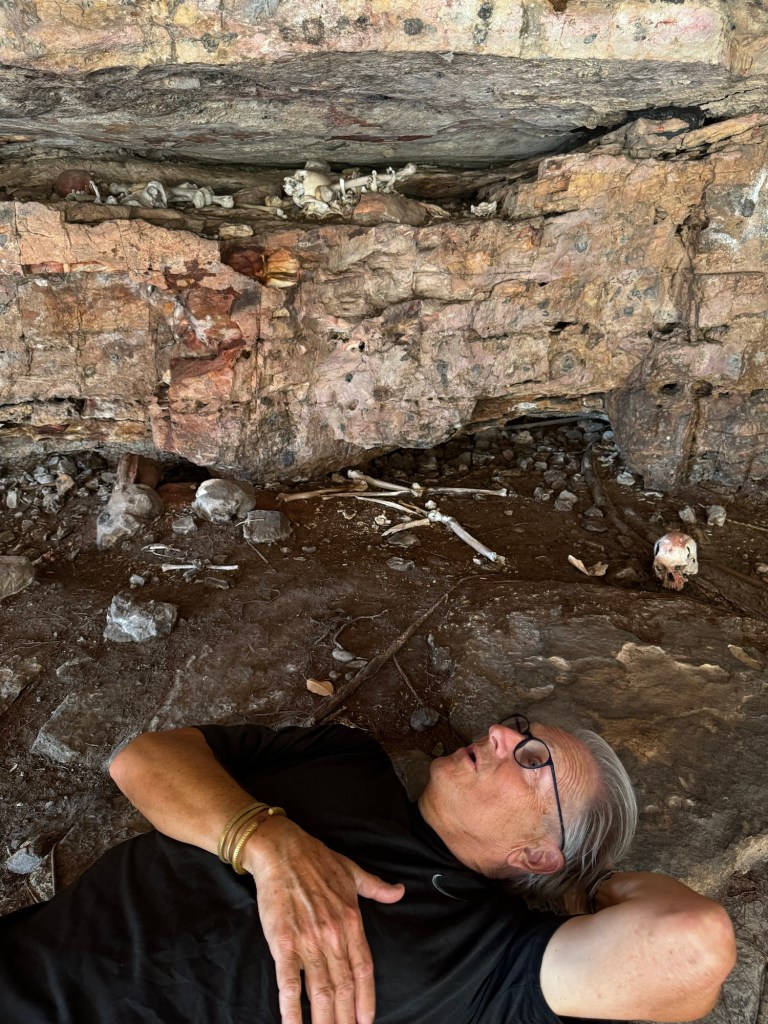
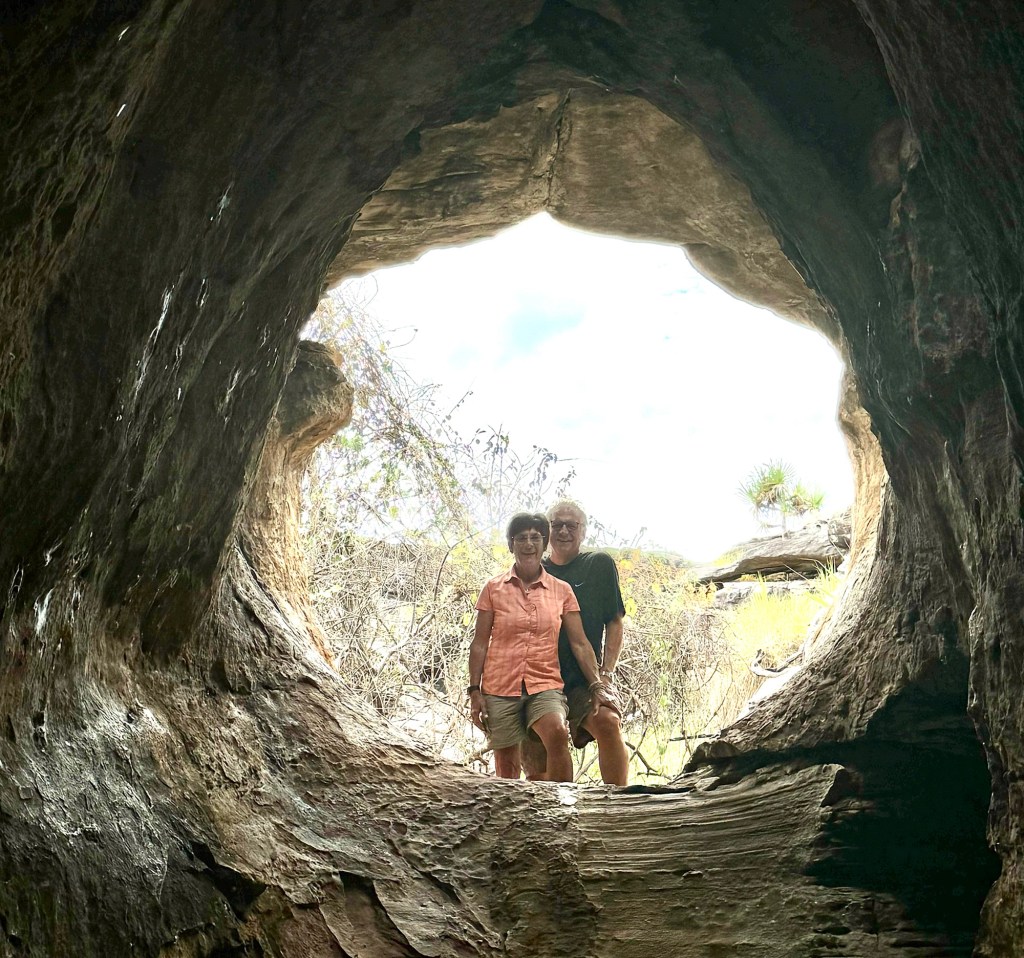
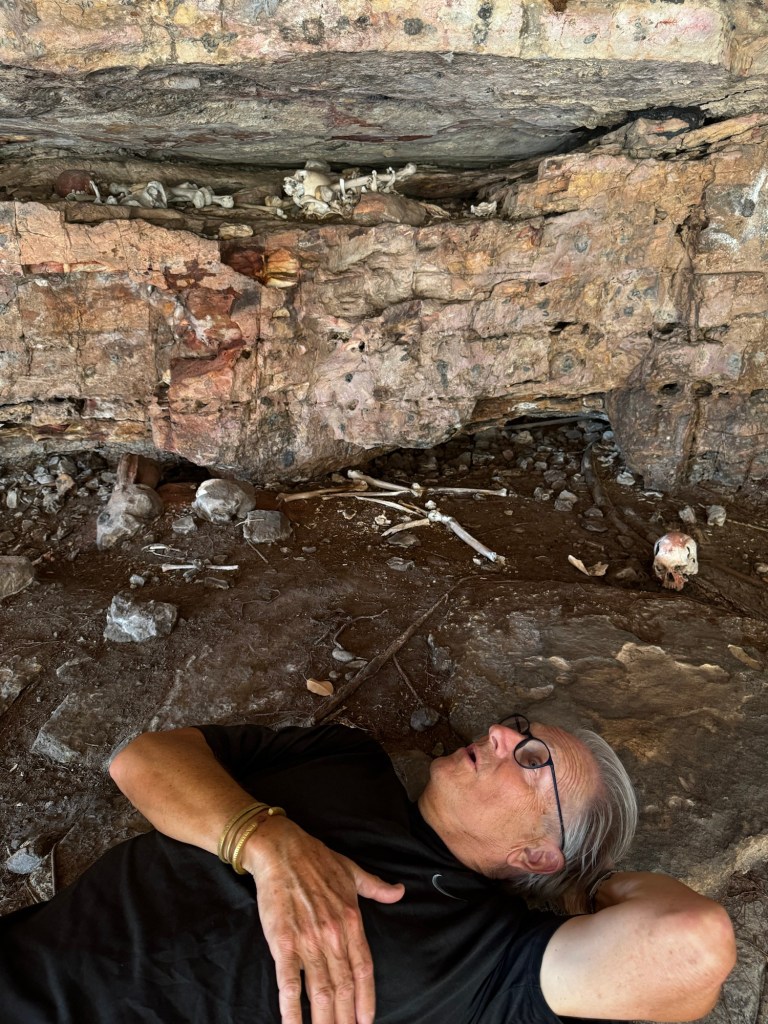
There were many layers going back thousands of years. It was clear that the site was used as a dwelling place as well as a burial site and art gallery. The scene was very fascinating and we stayed there a couple of hours trying to absorb it all.

On the way back through the marsh, we saw a few wild pigs and a water Buffalo in the tall grass. The drive back to camp through the bush was uneventful. At lunch Sab talked about the size of the land owned by an aboriginal man named Charlie, who is 90 years old now and will leave the 376,000 acres he owns to his nephew. All the art sites we are seeing lie within his property and he is very possessive about keeping everything in tact.

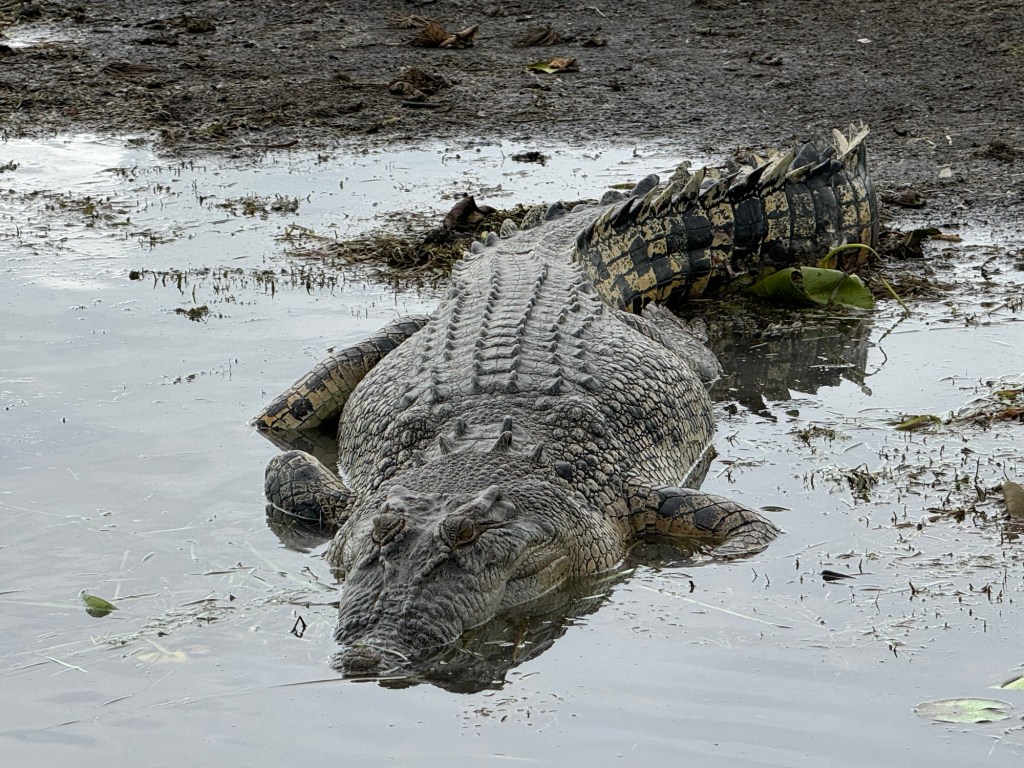
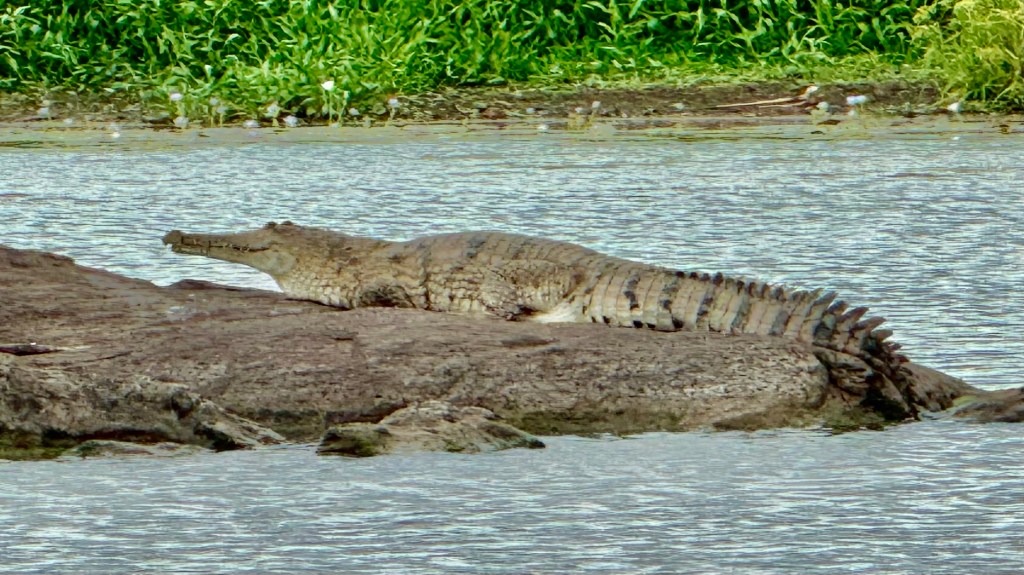
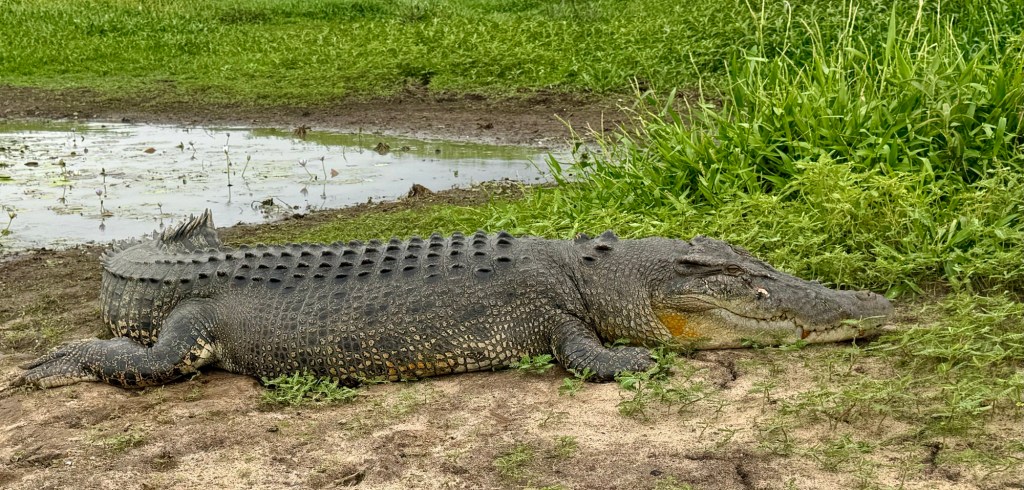
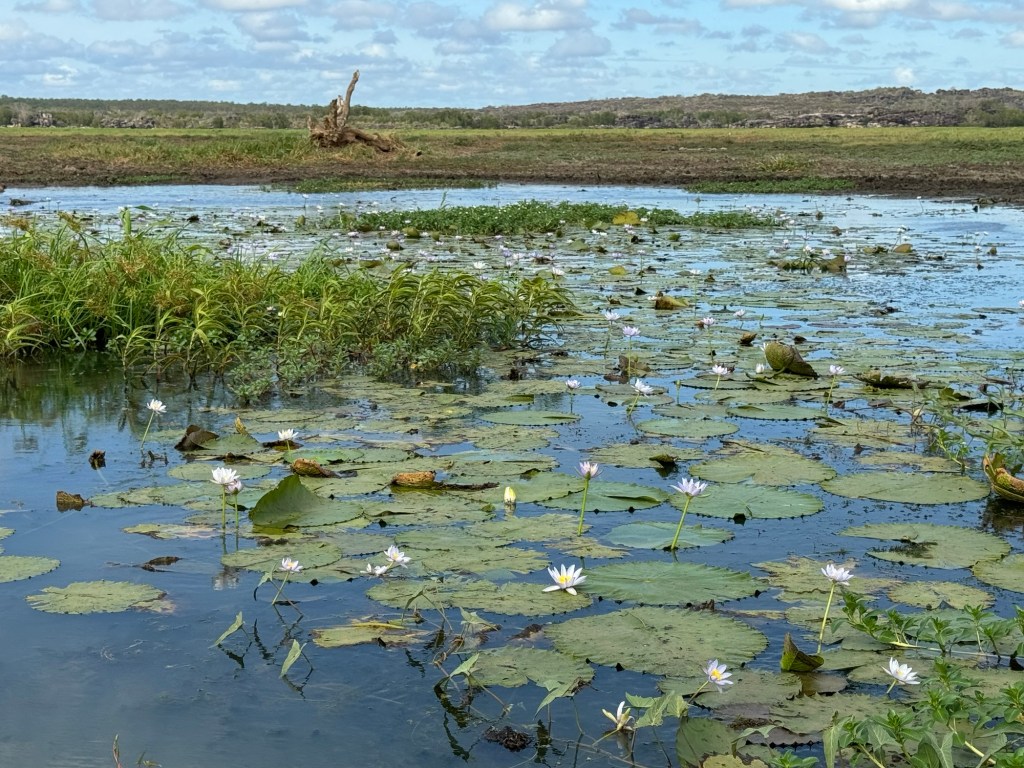
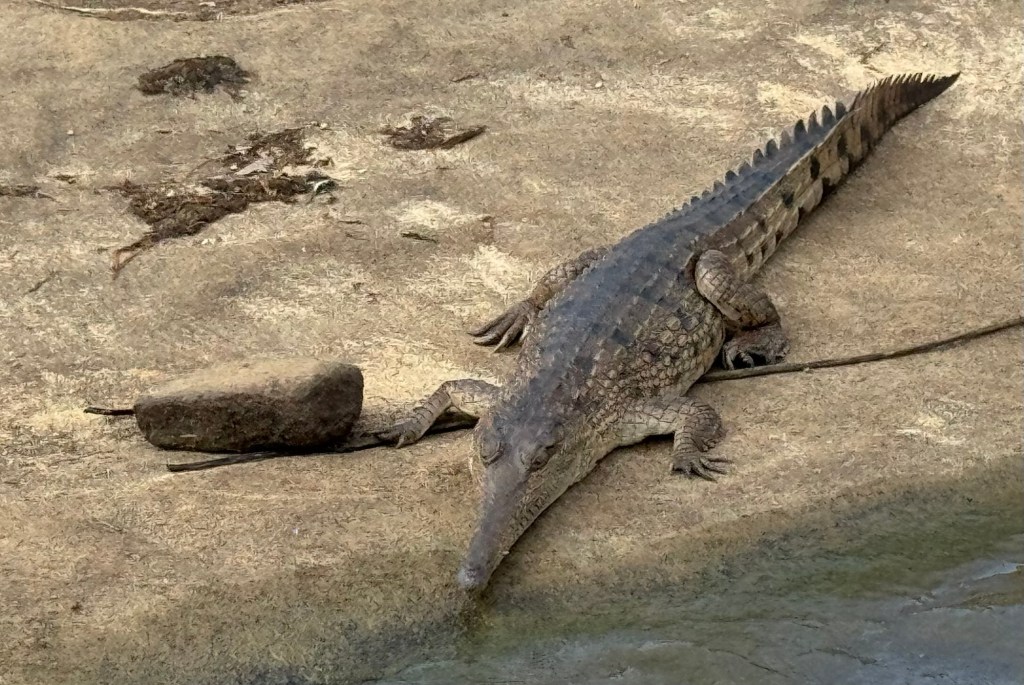
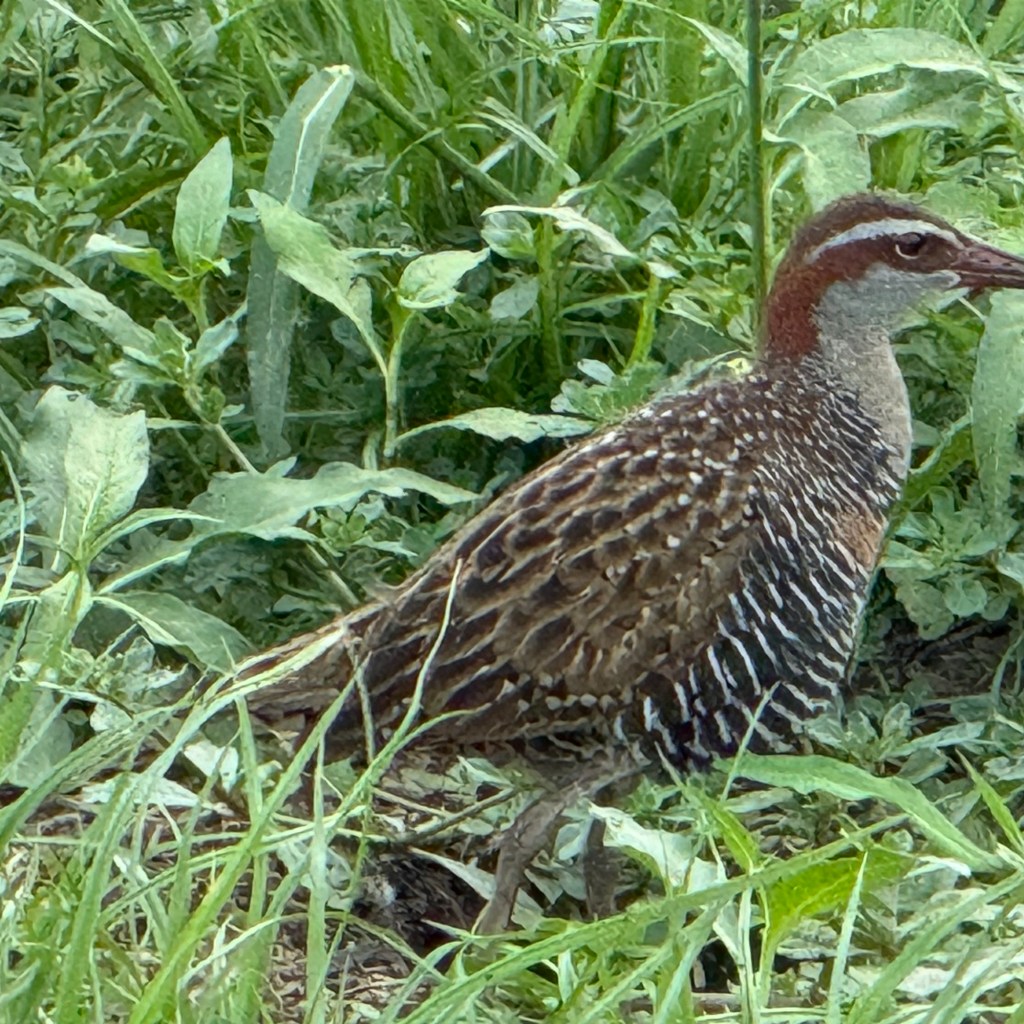
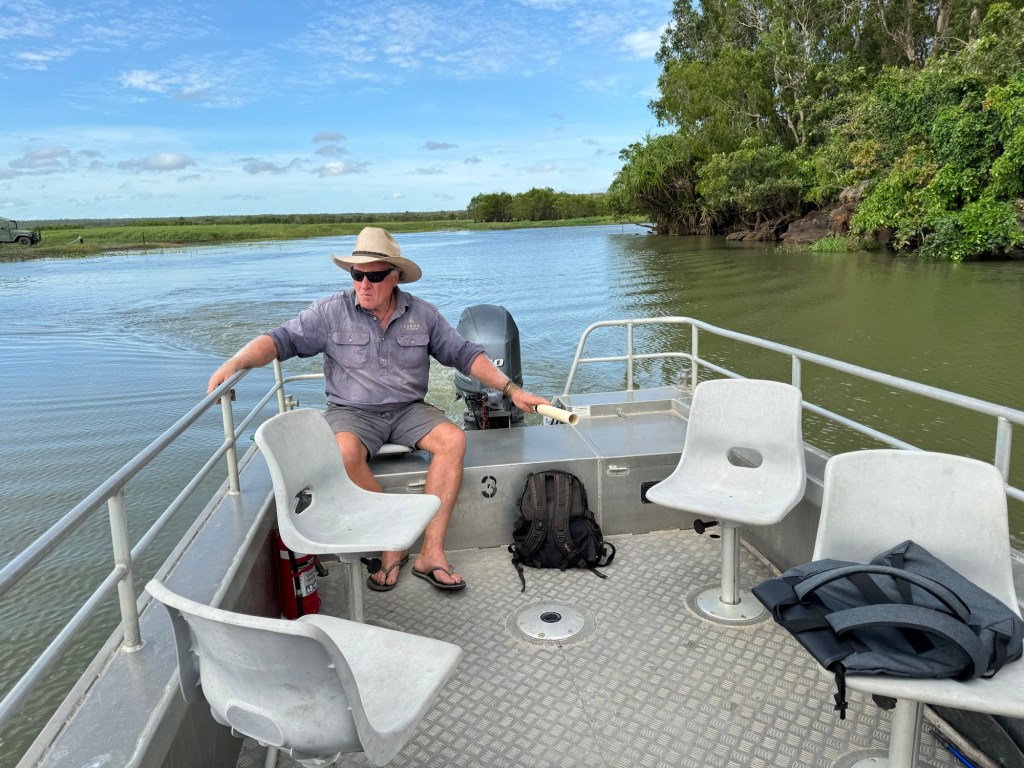
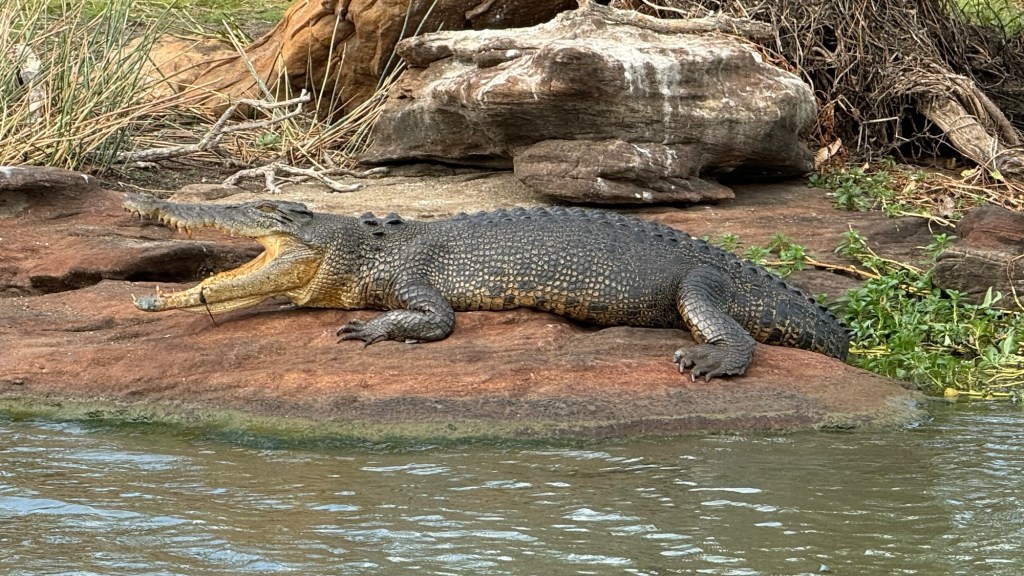
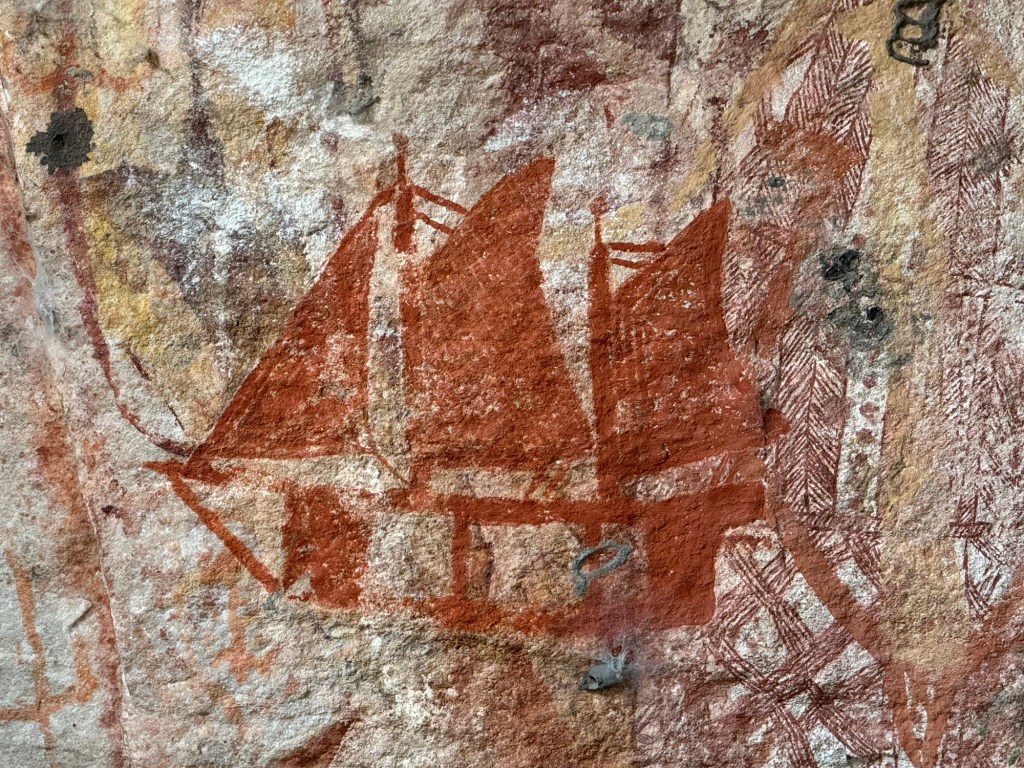
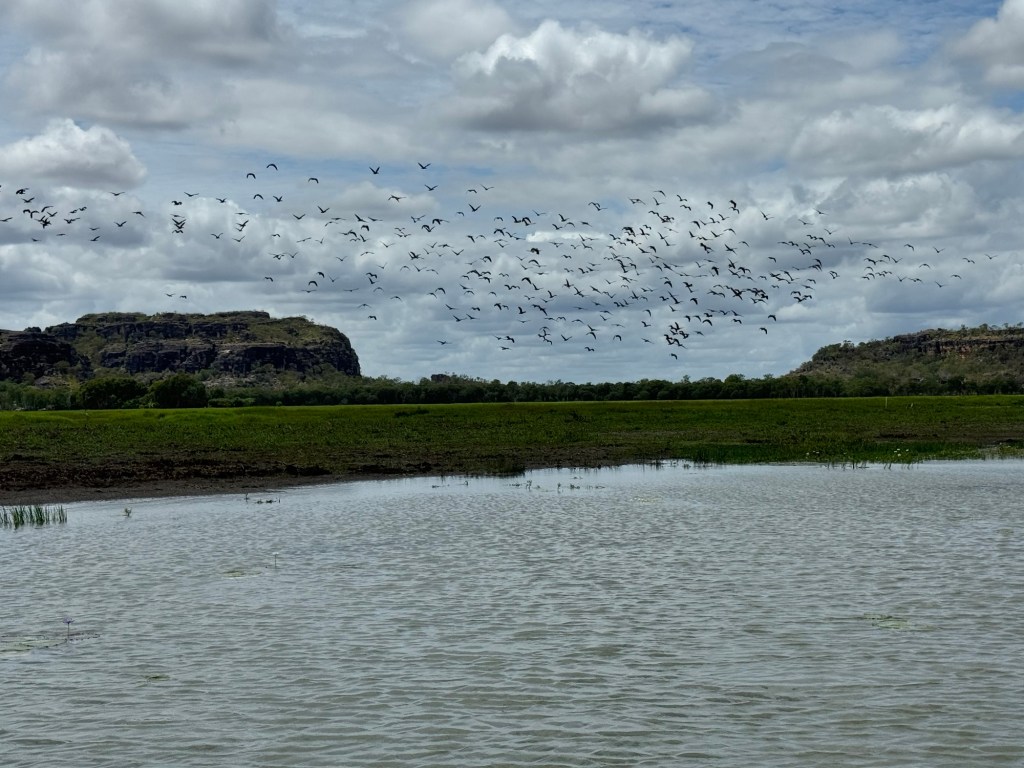
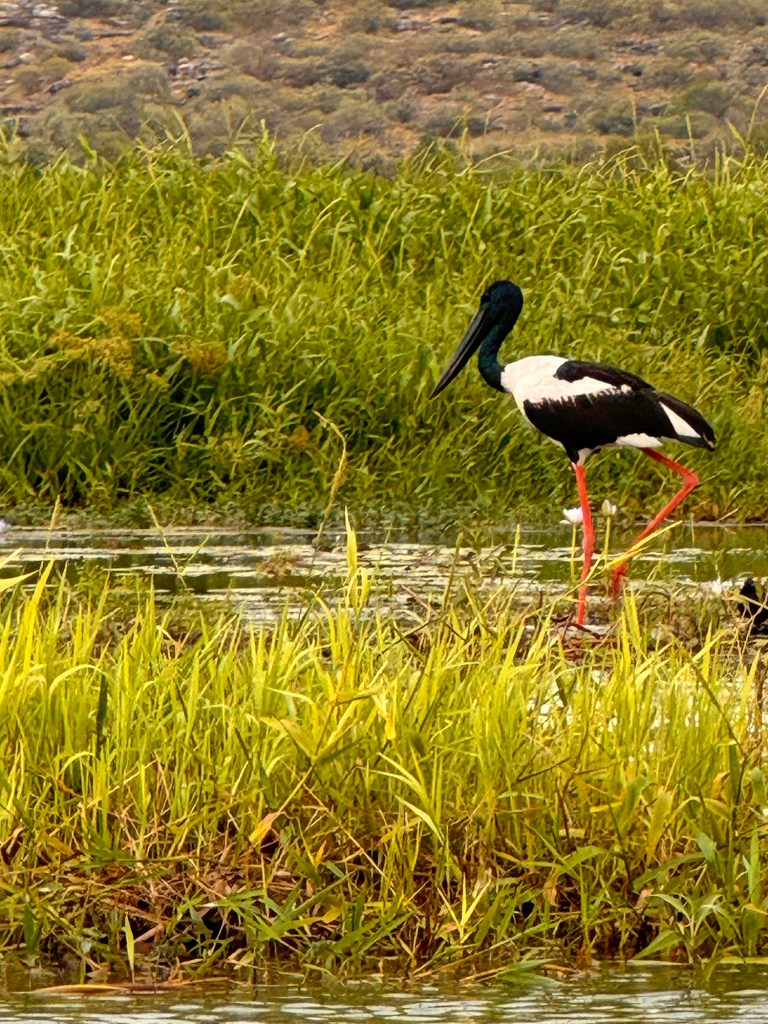
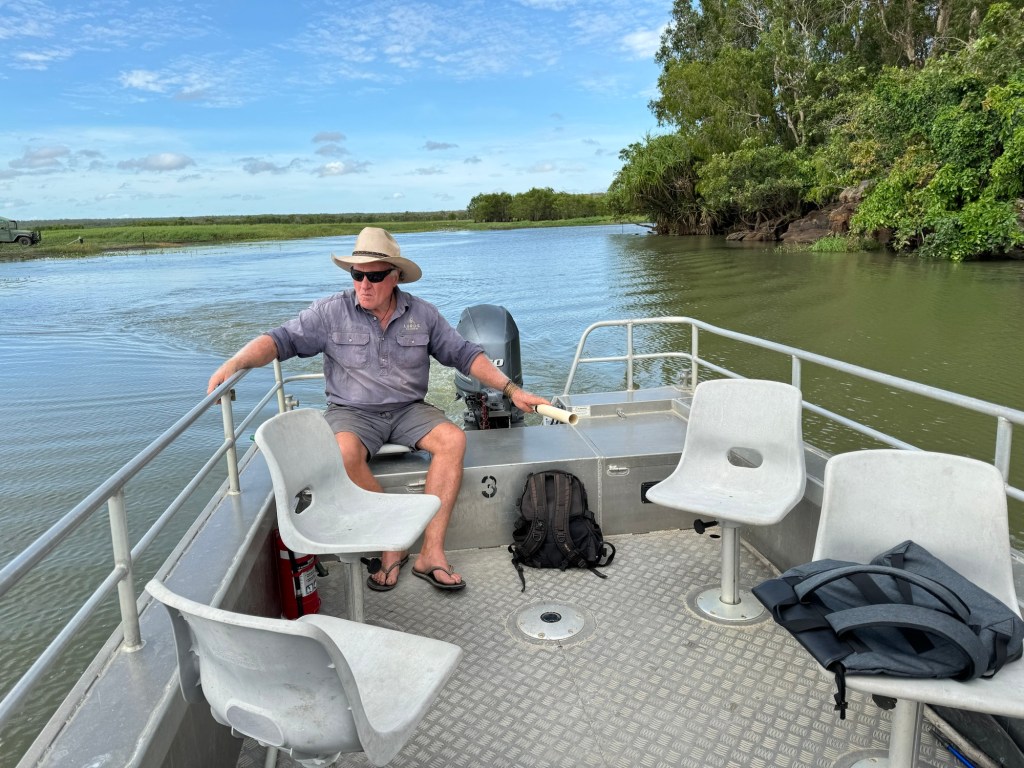
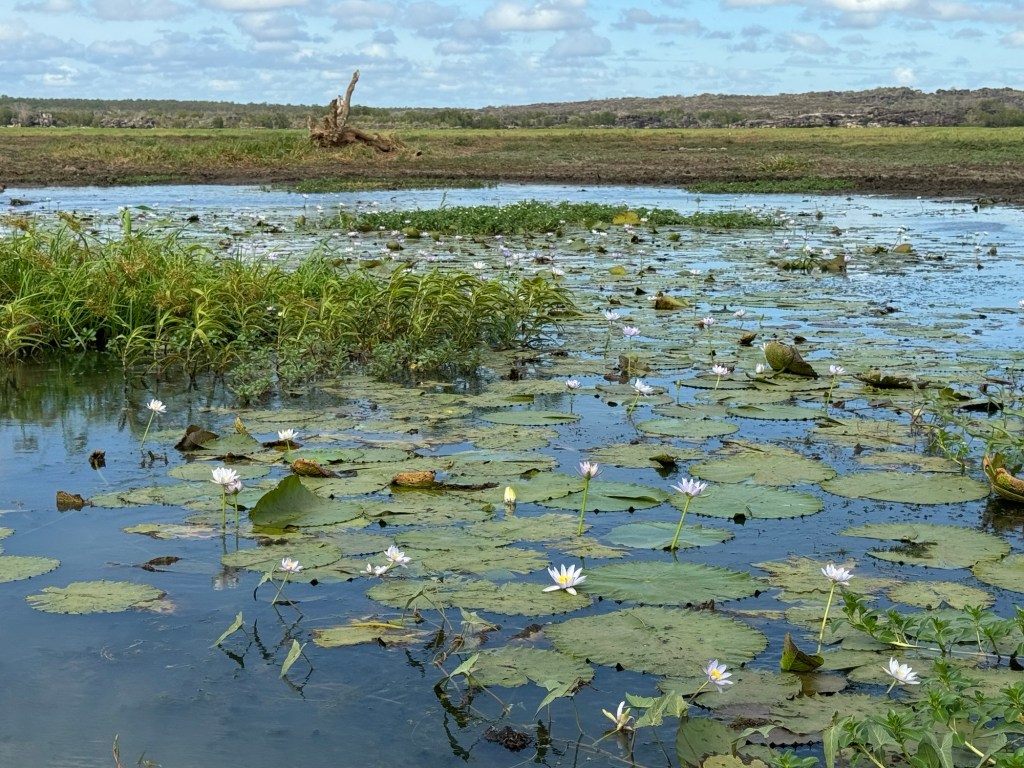
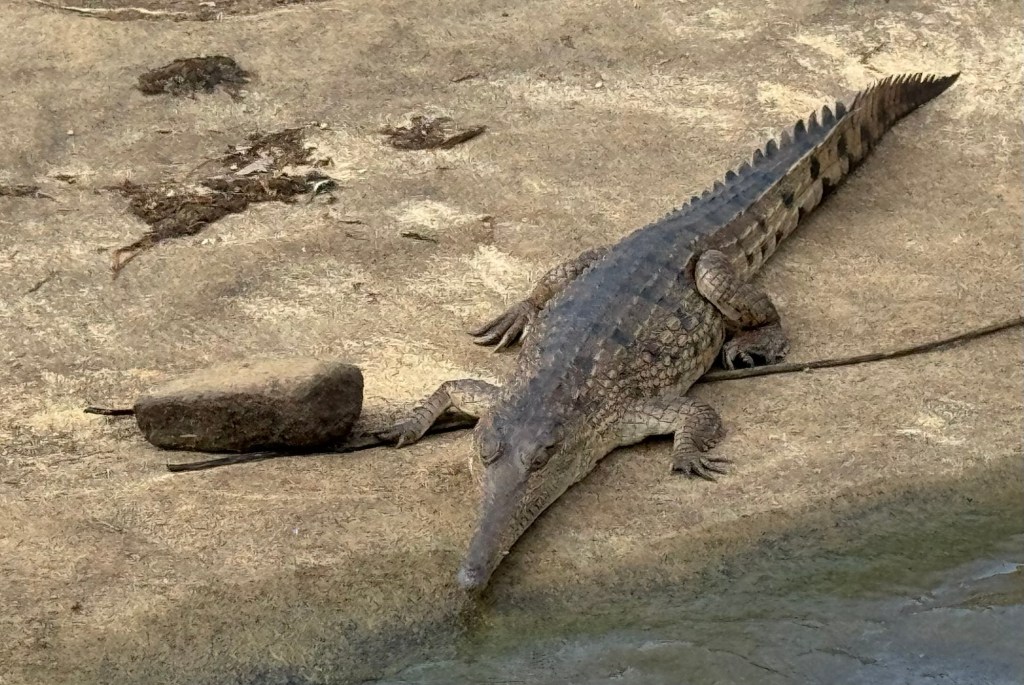
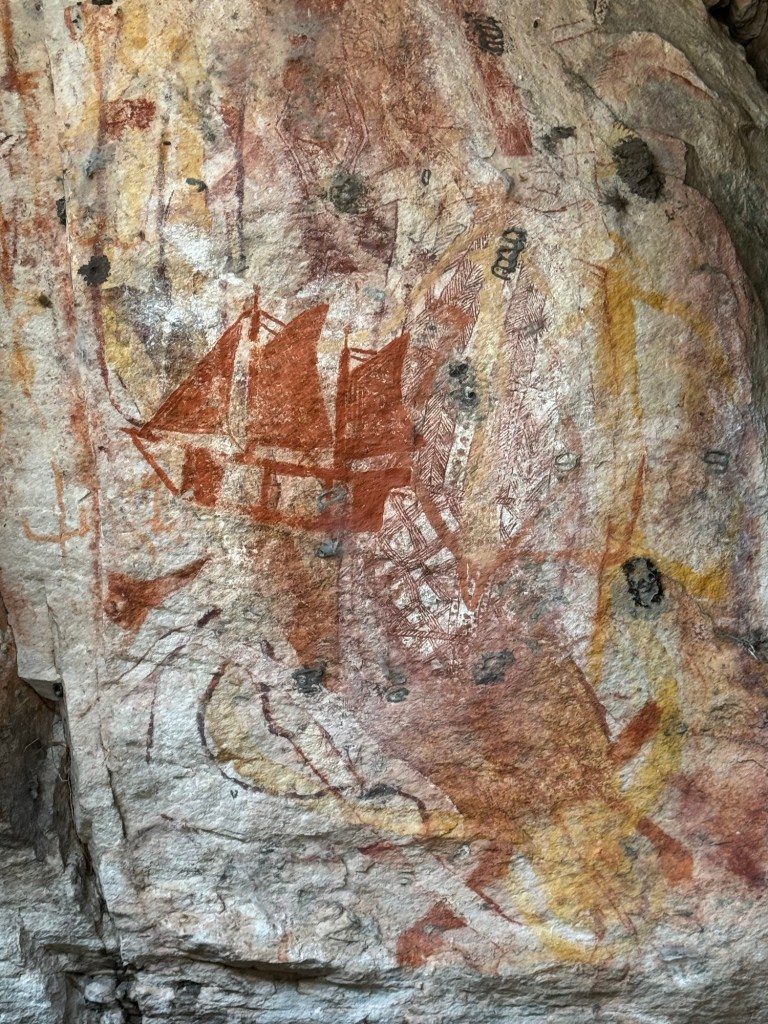
In the afternoon, we were back in the Land Rover heading in another direction to a Billabong (body of water), where we got into a flat-bottom, aluminum, pontoon boat and motored slowly between water lilies and crocodiles looking at Ibis, Jakibu, and a rare bird called a rile. Unfortunately, I cut off its nose. The site was called Mt Borradaile by the aborigines, pronounced Bordilo by white people, and had many lovely works of art.

It is called contact art, because it has been painted since the beginning of colonial times. This is some of the earliest contact art we have seen.

Back on the boat we had sundowners as we drifted along and talked about the lovely evening. Sab is a delightfully pleasant and informed guide and we are enjoying his company.

Back at camp we had a quiet dinner for 2 and were in bed before 9pm.

Thursday, September 19, 2024

Ready to roll at 8:30, we joined Sab at the Land Rover and headed for another billabong.

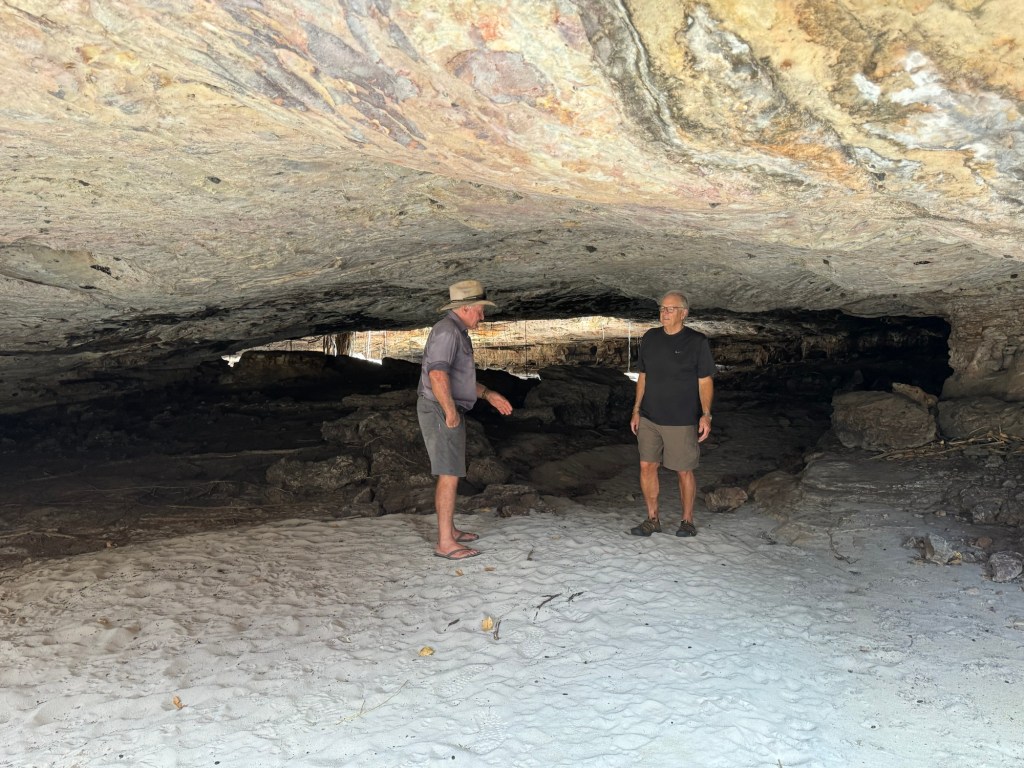
Shortly we stopped at a beach head, from which we could walk to the “Left hand Gallery”, named that for the “Left hand Billabong” it is near. It was an easy walk to the art gallery, which was also a burial site and an aboriginal dwelling site. The art was as beautiful as other sites we have seen, however the burial site and dwelling area were much larger.

Although the art gallery was not quite as imposing. It seemed that centuries of weathering have deteriorated the art and it is completely gone in some places.

After lunch and a long, cooling swim in the pool, we joined Sab for a fishing excursion in the nearest billabong. Sab had us outfitted for catching barramundi. The three of us cast out hundreds of times and got only one nibble at the end of the day, but nothing that stayed on the line. While fishing we enjoyed looking at many water lillies and a few large crocks lounging on the shoreline. As the sun went down, we enjoyed a beer, still hoping for a catch. It was almost dark when we gave up on fishing and motored to the beach head.

We enjoyed one last dinner and conversation with Sab before calling it a day and heading for bed. We are almost on Australia time now.

Fridays, September 20, 2024

One final breakfast with Sab. Being an ex dive master, he lectured me about scuba diving and hopes I will only snorkel. I told him I would consider my options seriously. I appreciated his concern for my wellbeing. Then he departed and Mark and I hung out until time for our flight back to Darwin.

Some Prehistory of the Aboriginal people and a stop in Singapore

Monday, September 16, 2024

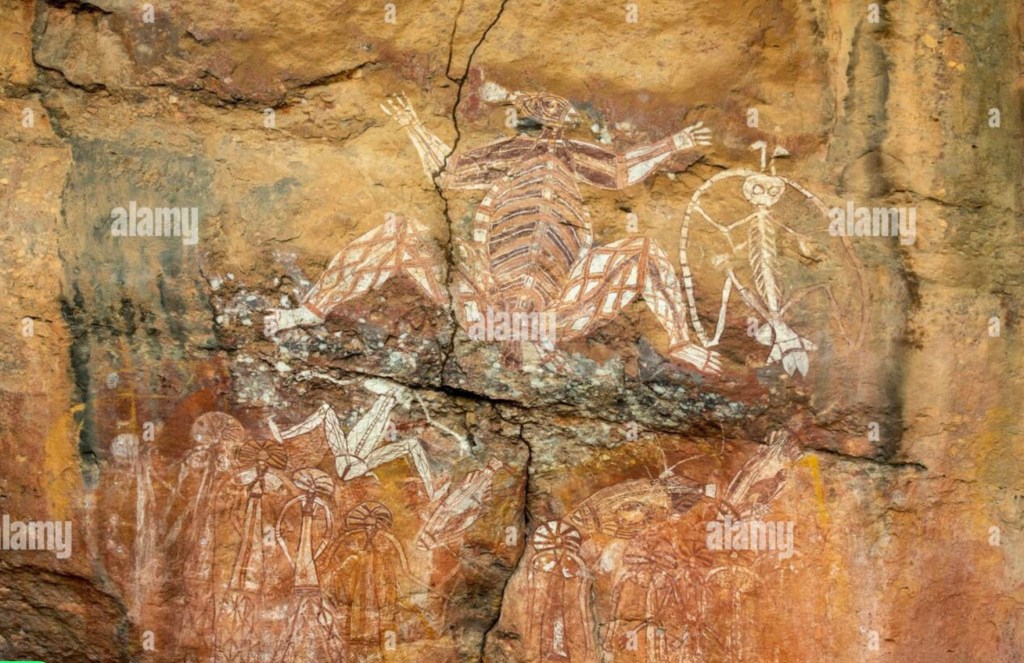
It is believed that humans arrived in what is now the Northern Territory about 65,000 years ago via land bridges and short sea crossings from Southeast Asia, during a period of glaciation when New Guinea and Tasmania were joined to the continent of Australia. Knowledge of this period comes from oral tradition prior to the arrival of the first Europeans. The oldest site showing the presence of humans is a rock shelter in Arnhem Land, near Darwin.

An ancient Aboriginal rock painting

At the time of European contact, it is estimated the Aboriginal, “original inhabitants”, population ranged from 300,000 to one million. There were about 600 tribes speaking 250 languages. They were complex hunter-gatherers, who had diverse economies and societies. Some groups engaged in “fire-stick” farming or controlled burning. Some engaged in fish farming. Semi-permanent shelters were built. It is unclear if any groups engaged in agriculture.

We are headed to the Northern Territory to see where and how the first people lived and to see their art. They may have landed in Western Australia about 60,000 years ago and settled across the continent within 6,000 years

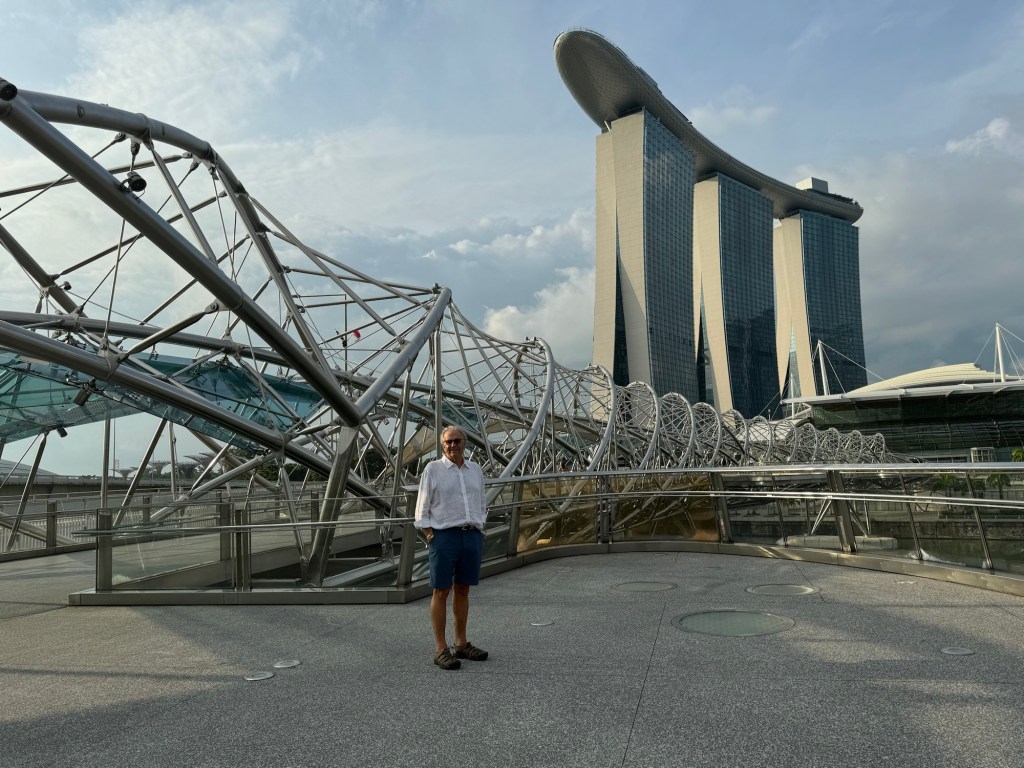
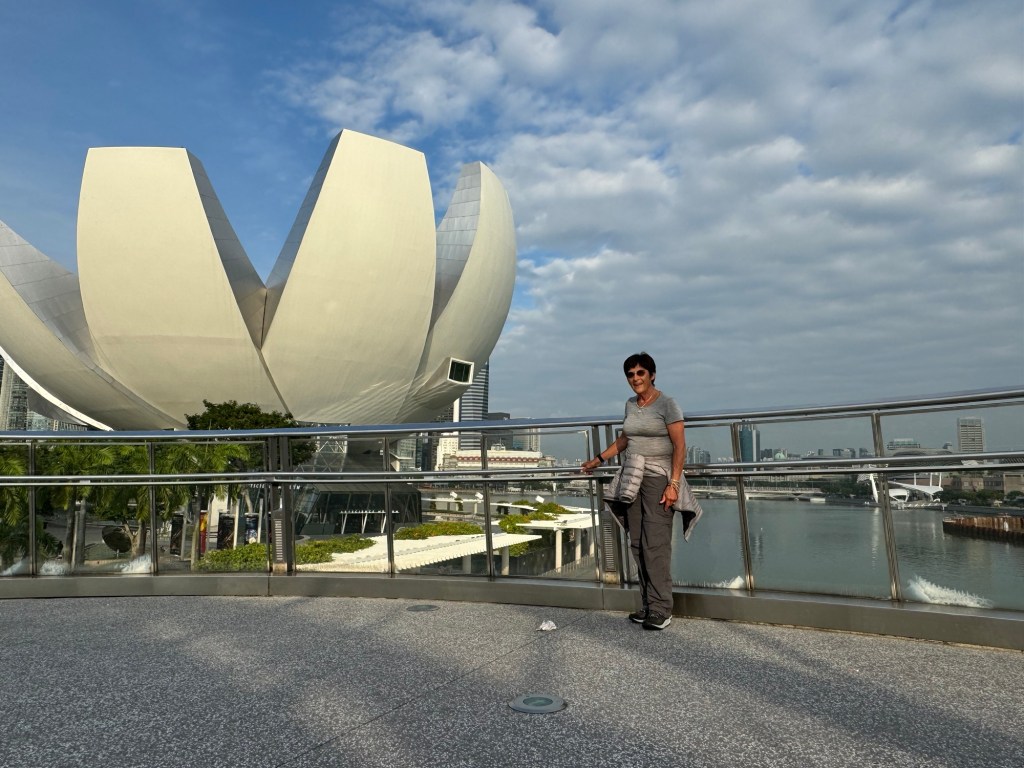
Enroute to Darwin, we stopped in Singapore for a day and two nights to get acclimated after the 15.5 hour flight from SFO on Singapore Airlines. The flight was not so bad as we both took sleeping pills and were out for several hours each. The bed was the flattest, roomiest and most comfortable we have had on an airplane. An escort was at the gate to meet us and walked us through the arrival process and to our transport with no stress or fuss. The ride to the hotel was an easy 25 minutes as it was very early morning. We were wide awake so we stayed up, had a light breakfast in the hotel and then went for a long walk around the area.

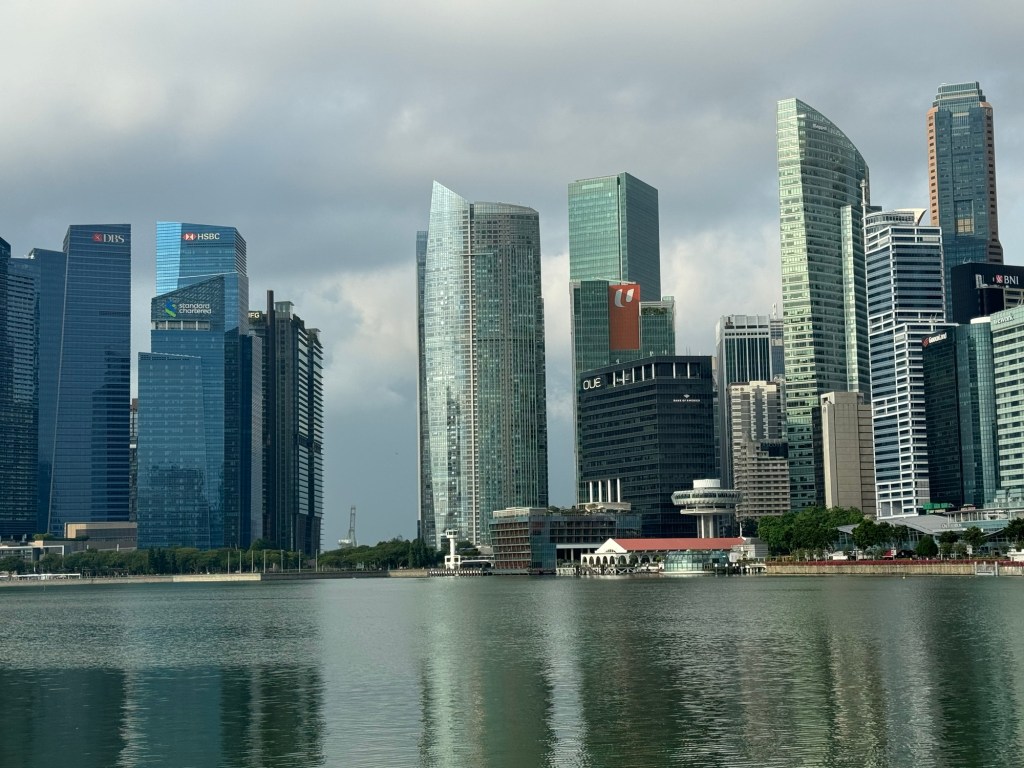
We reminisced about our first time in Singapore in 1993. It was the first stop on our honeymoon. Our big activity was afternoon tea at Raffles Hotel. It was quite a do at the time. Today, Raffles seems small and old compared to the dozens of sky scrapers we see today. Our hotel, not Raffles, is the small building in the center foreground of the image (left of the low white & red pitched roof.)

Singapore Skyline

After a 2.7 mile walk we returned to the hotel just in time to miss a down pour. Our room was quite pleasant with a porch and a good view, so we hung out until our 2:30 food tour with a lady named Charlotte. She gave us some info about Singapore and told us we would be spending time in Chinatown and Little India eating foods from those cultures.

Chinese and Indians arrived in the area 800 years ago to develop trade. Europeans arrived in the 1800’s. The first one was a fellow named Raffle, an employee of the East India Company. British rule reigned from 1924-1963, when the area merged with Malaysia for 2 years. In 1965 Singapore became free and independent.

The current population is 5.6 million, with 4 million being citizens. 75% of the population is Chinese; 14% are Malay; 9% are Indian. 1.4 million residents are people with work passes, who come mostly from Bangladesh and the Philippines.

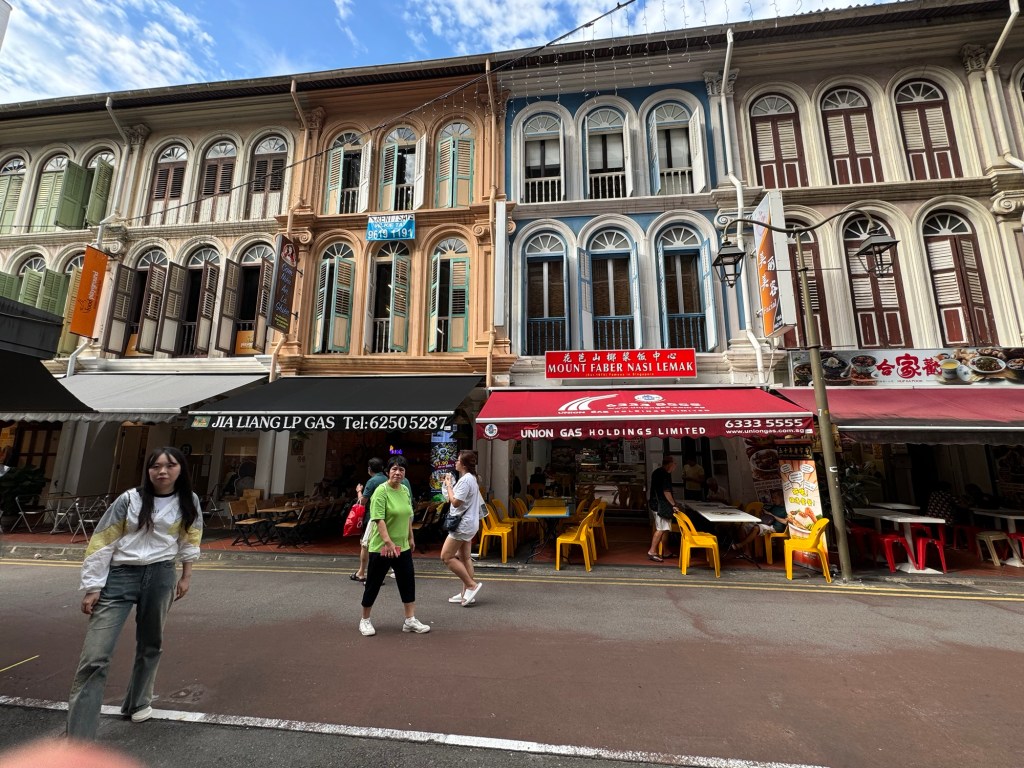
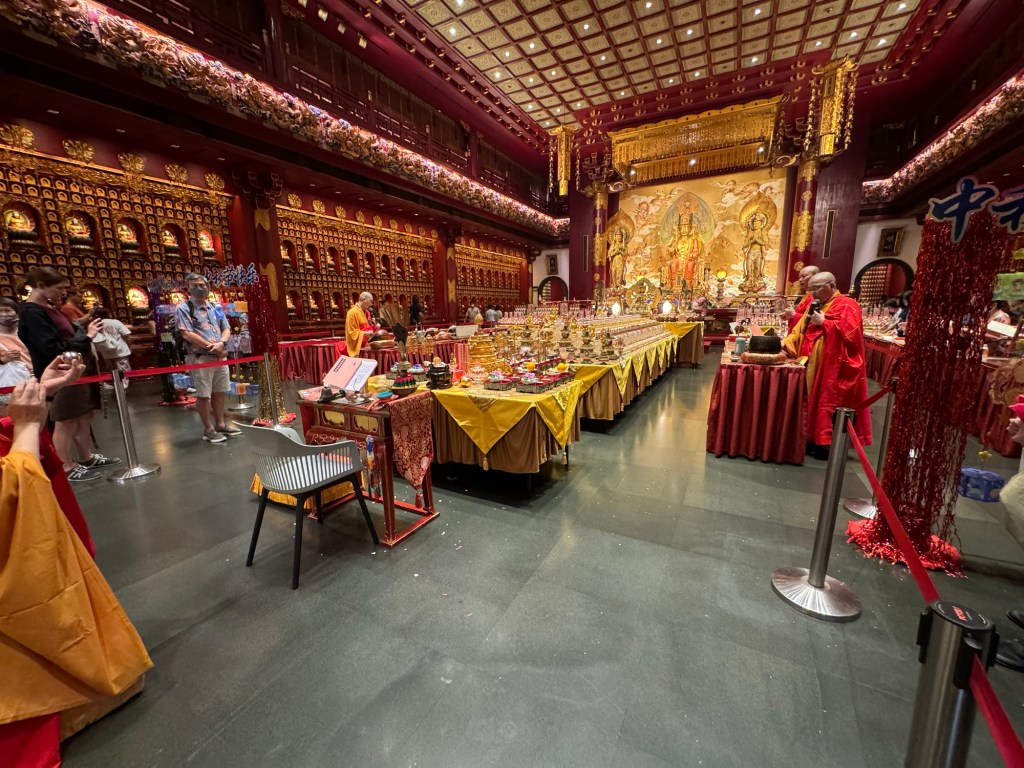
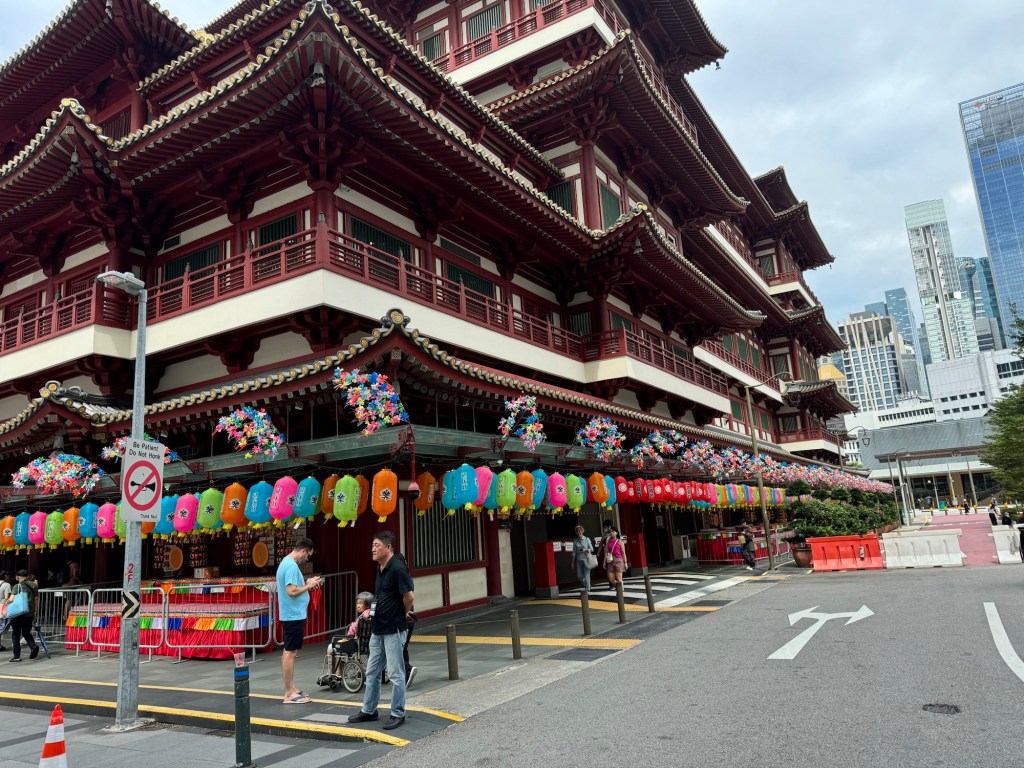
According to Charlotte, Singapore has the busiest transportation port in the world. It is certainly huge. She pointed out a government housing project that provides 99 year leases, A pedestrian street full of restaurants where the upstairs used to be a red light district and a Taoist Temple that housed a relic of Buddha’s tooth, brought from Sri Lanka. We had to smile as we remembered being in the Taoist Temple in Sri Lanka and seeing the same, or similar, tooth.

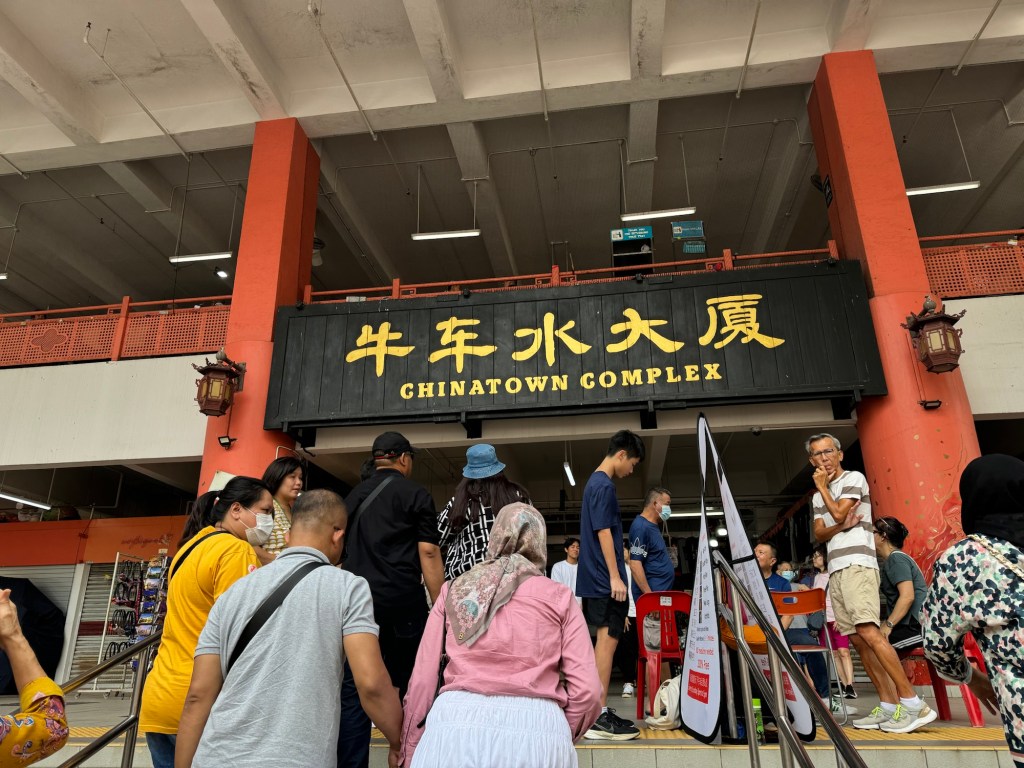
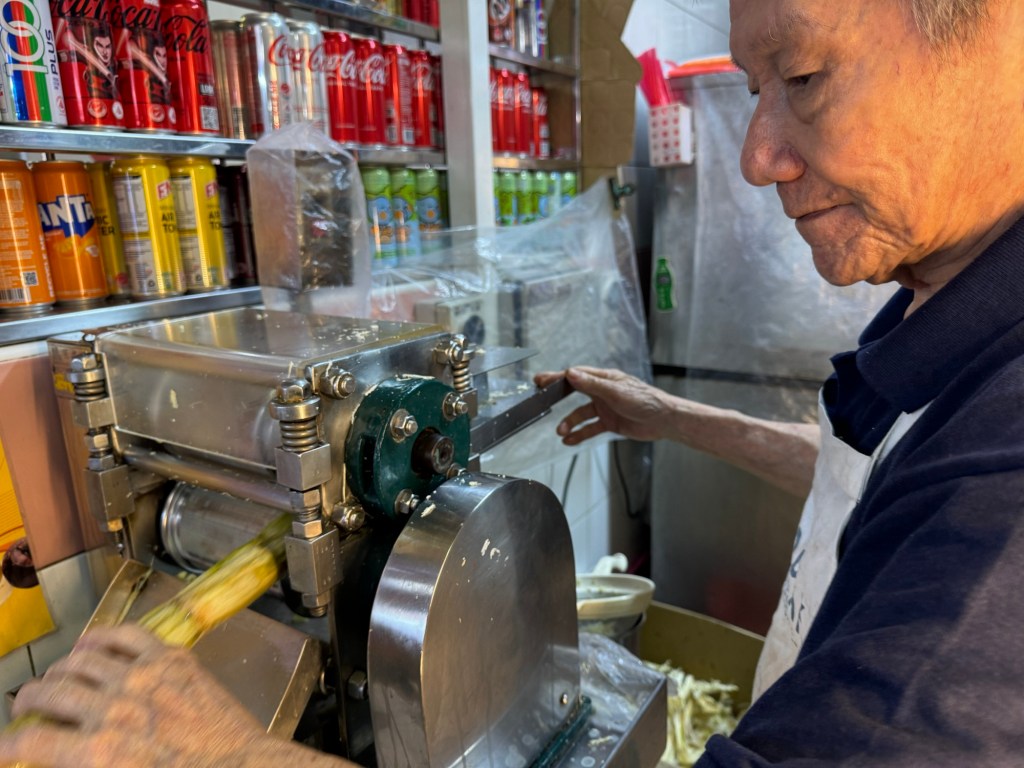
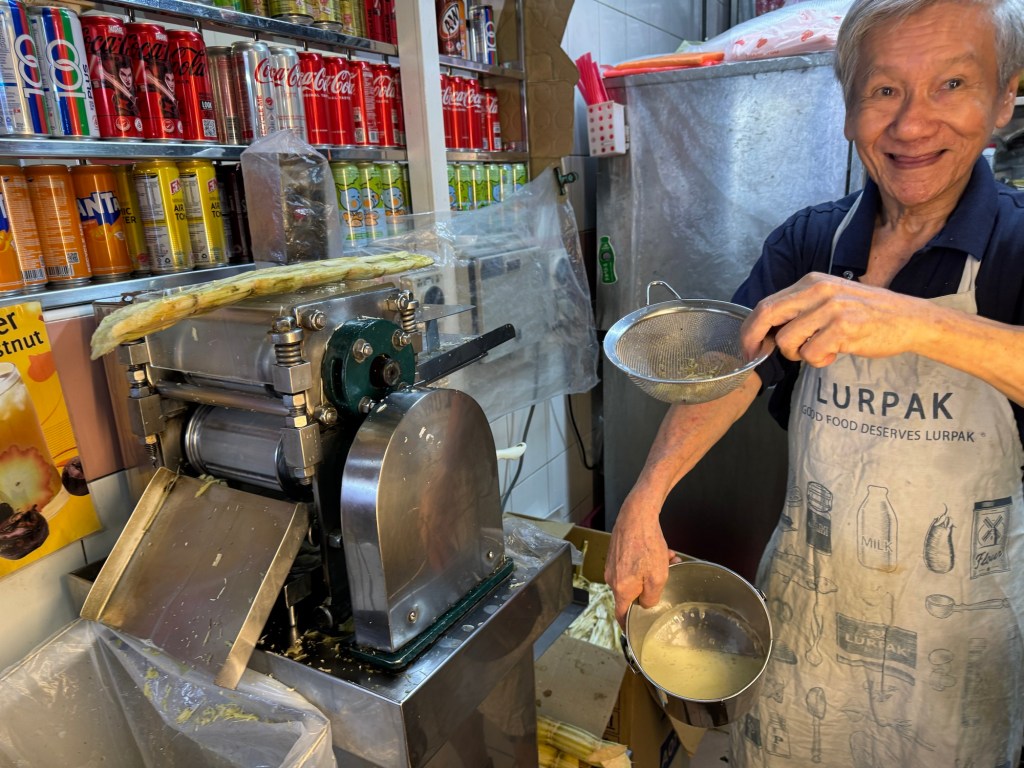
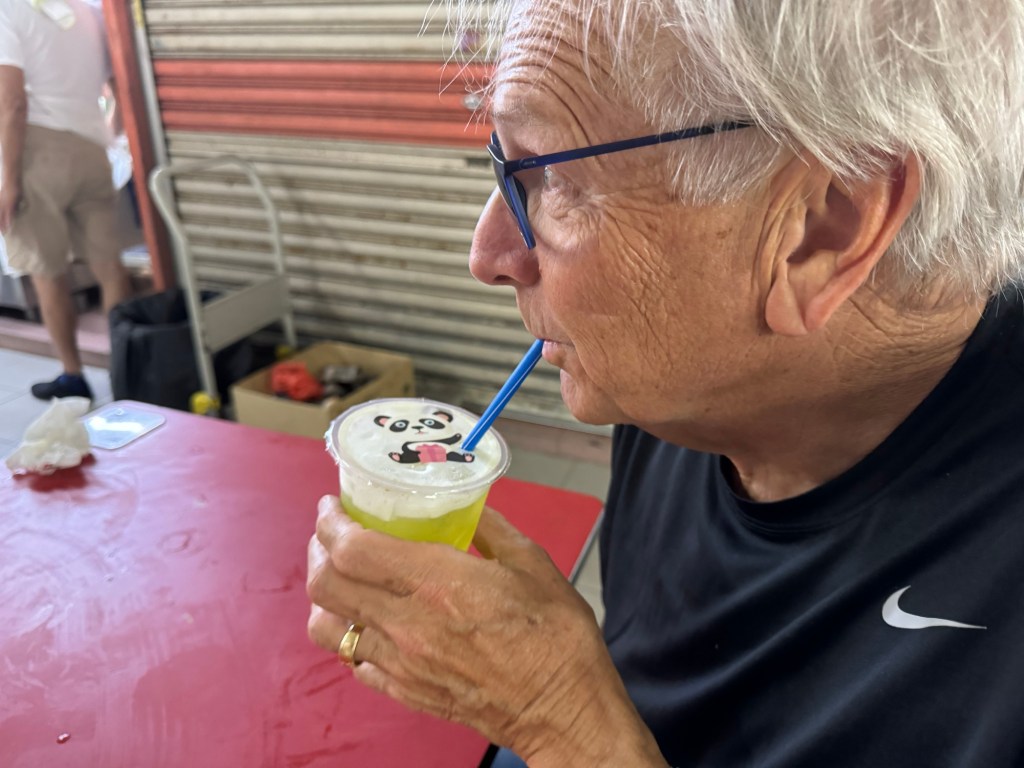
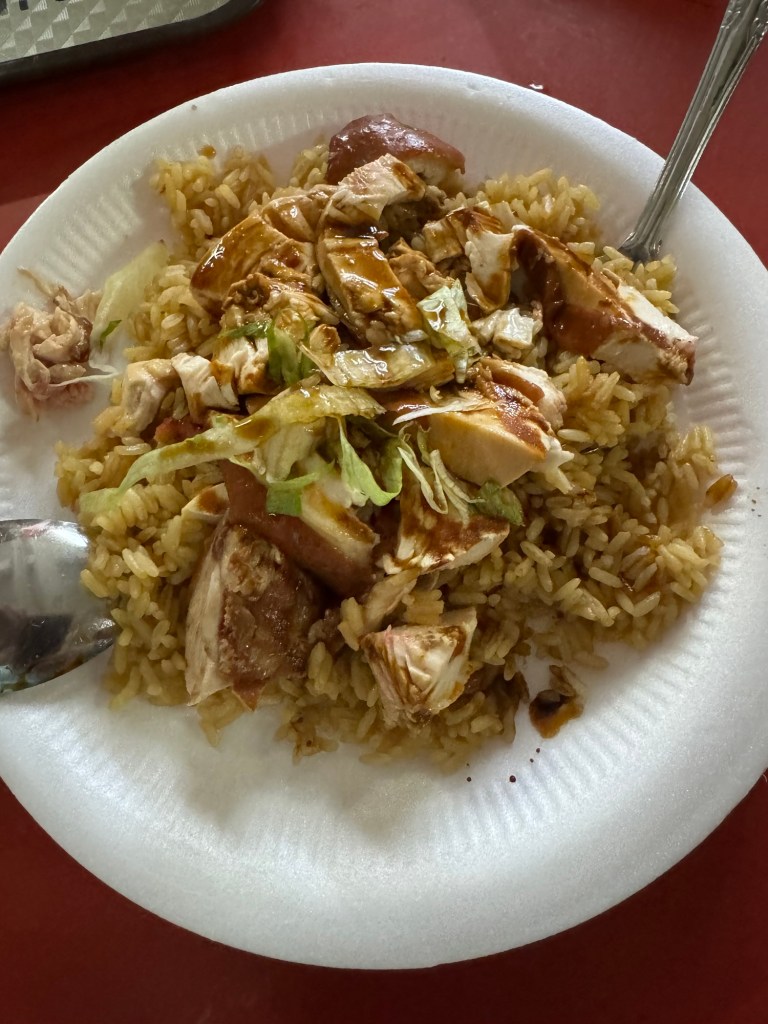
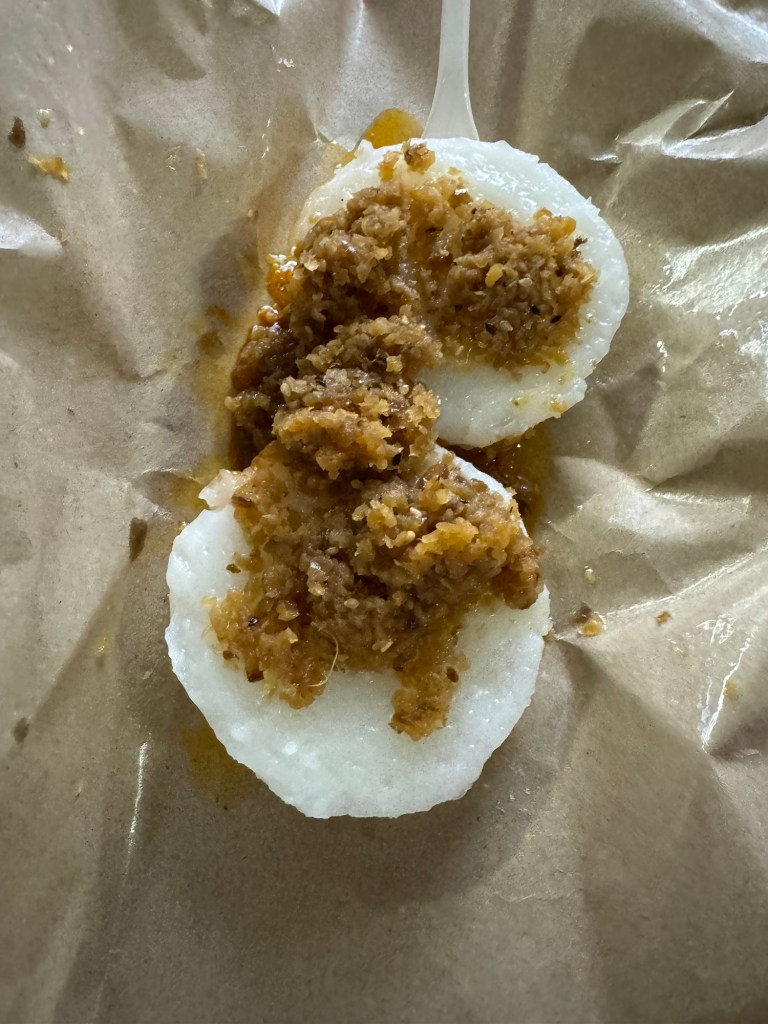
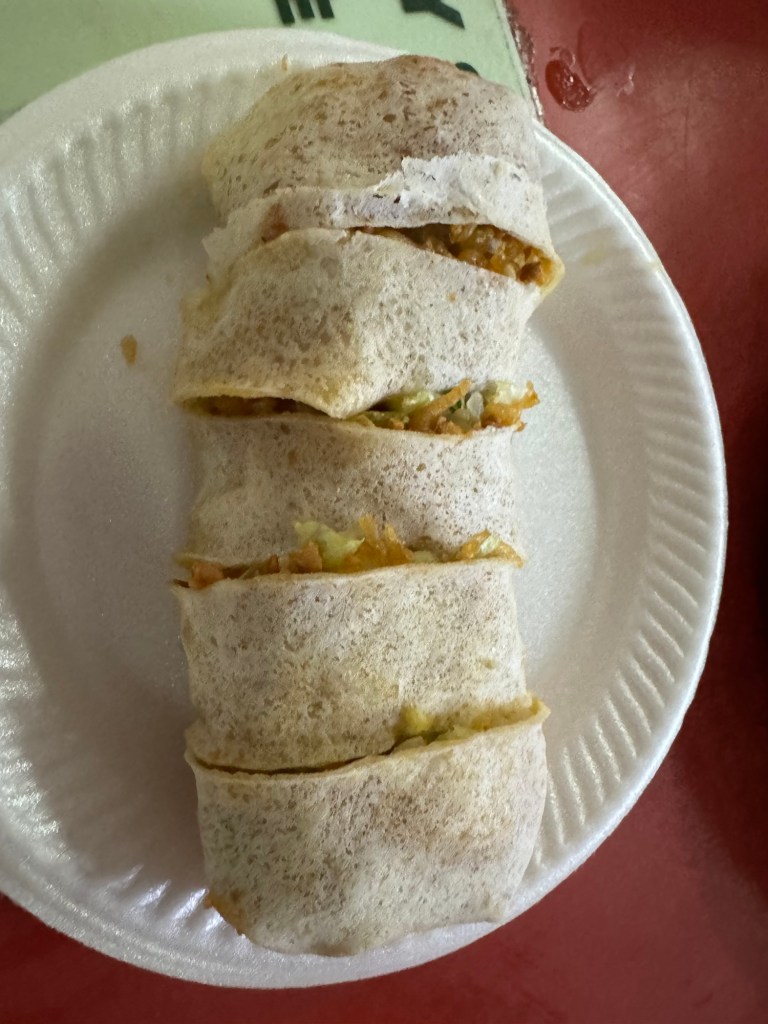
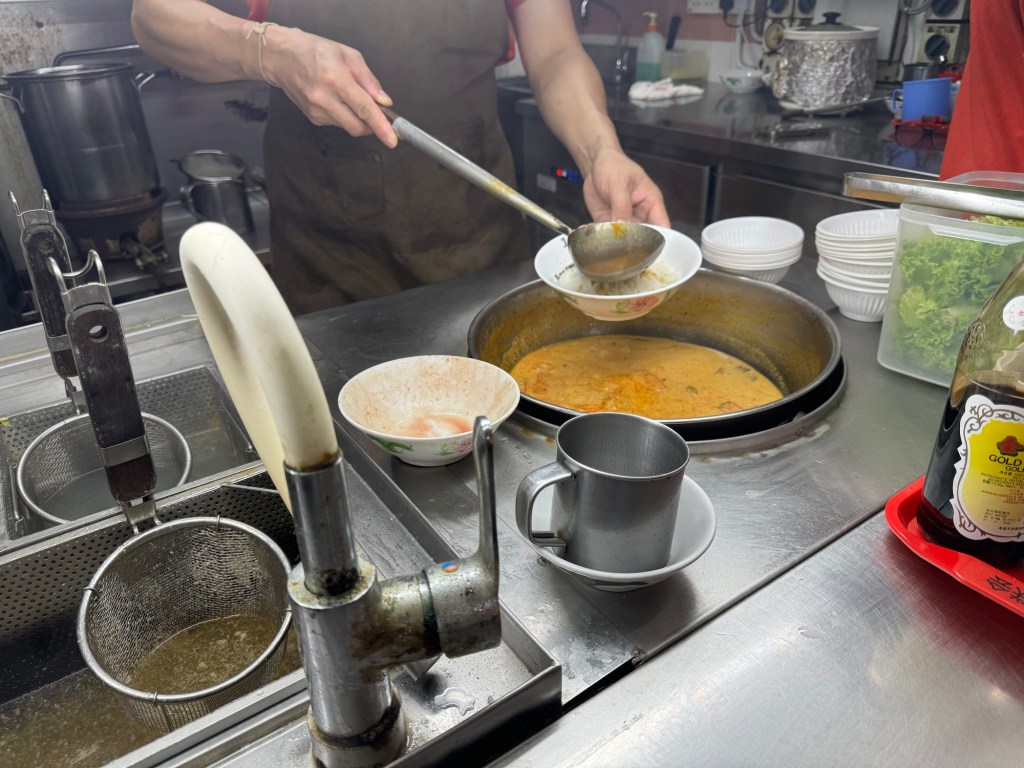
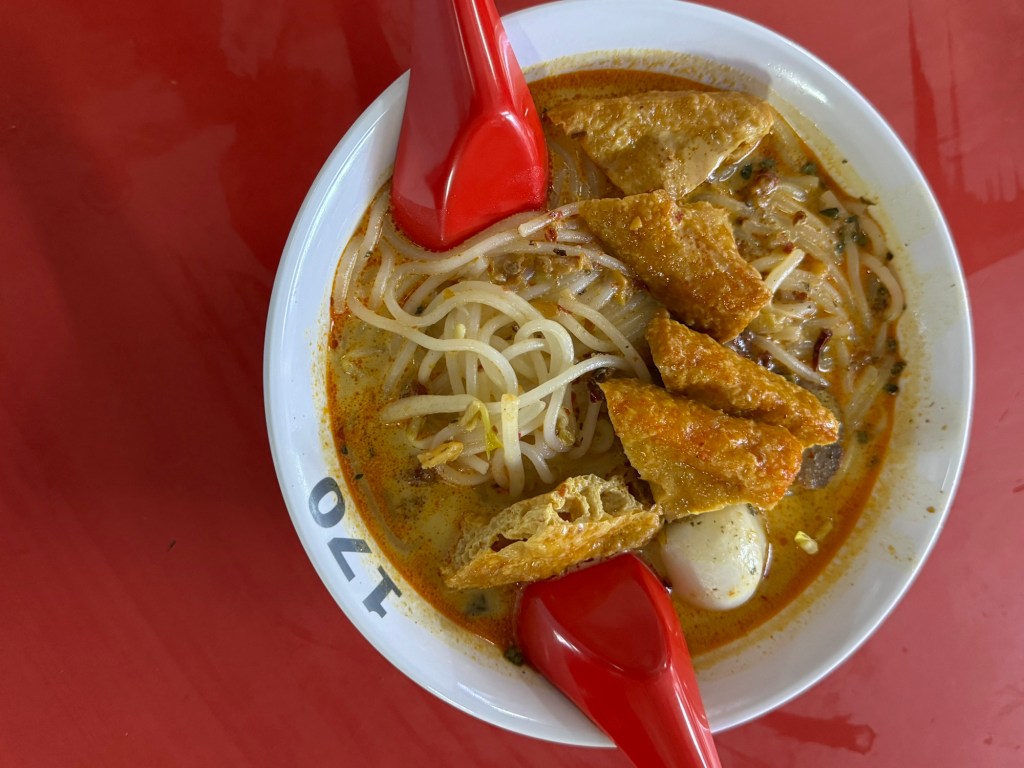
We took a taxi to Chinatown and went into a huge food vendor court. The place was packed with vendors, tables and people buying and eating various food items. Charlotte sat us down at a dirty table, which we cleaned ourselves, while she shopped for 3 different food items starting with a drink of freshly squeezed sugar cane juice. The first items she brought were a plate of Braised chicken and rice; Water cake made with rice flour and a spicy condiment; carrot cake made with daikon. Her next trip produced a dish called Popiah, made with a large, thin biscuit and Jicama; and Laksa, a soup bowl with rice noodles, soy beans, mushrooms and fish. That was enough already. My favorite was the Laksa. We wandered around the court looking at other food offerings, which we were too full to sample.

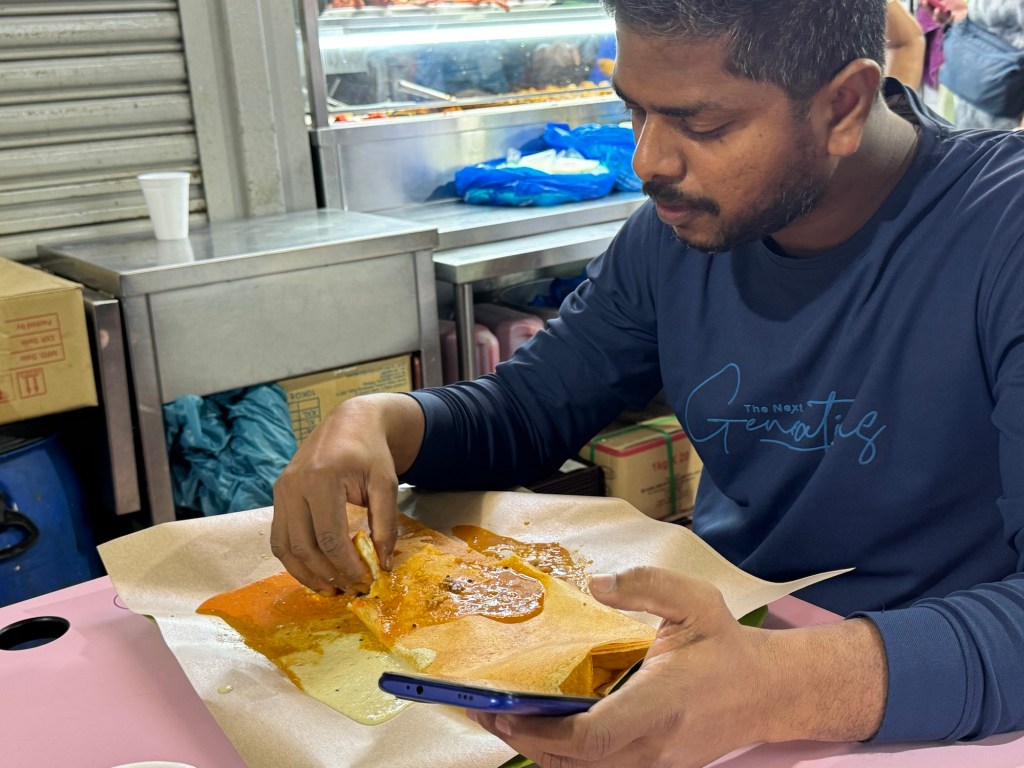
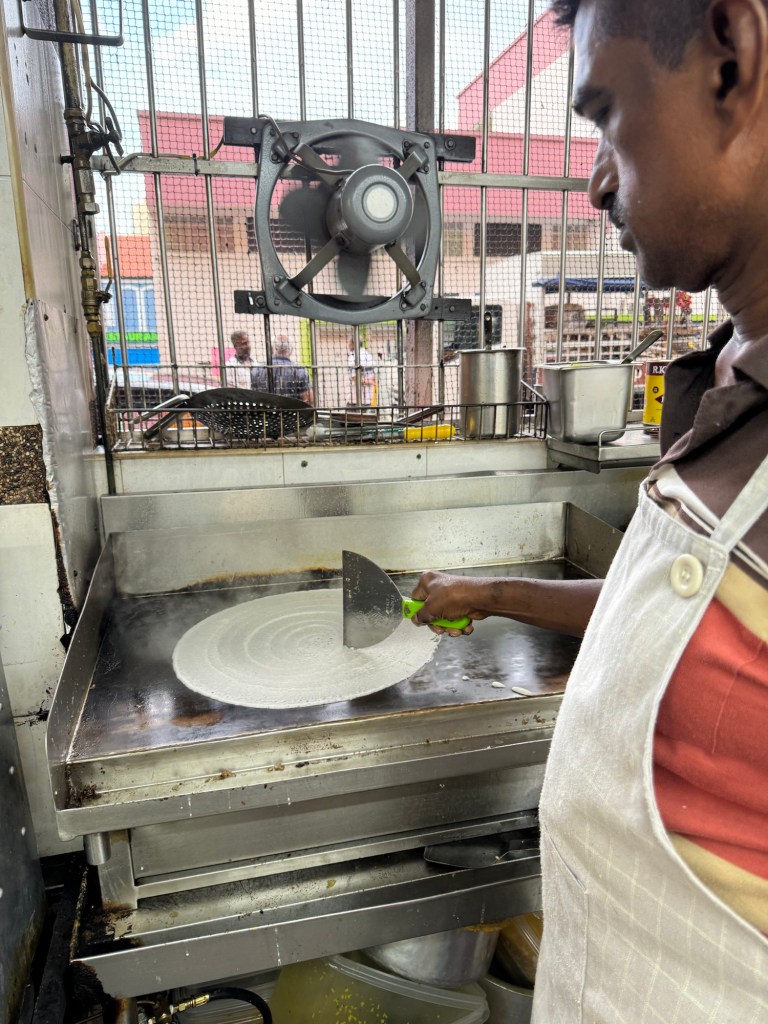
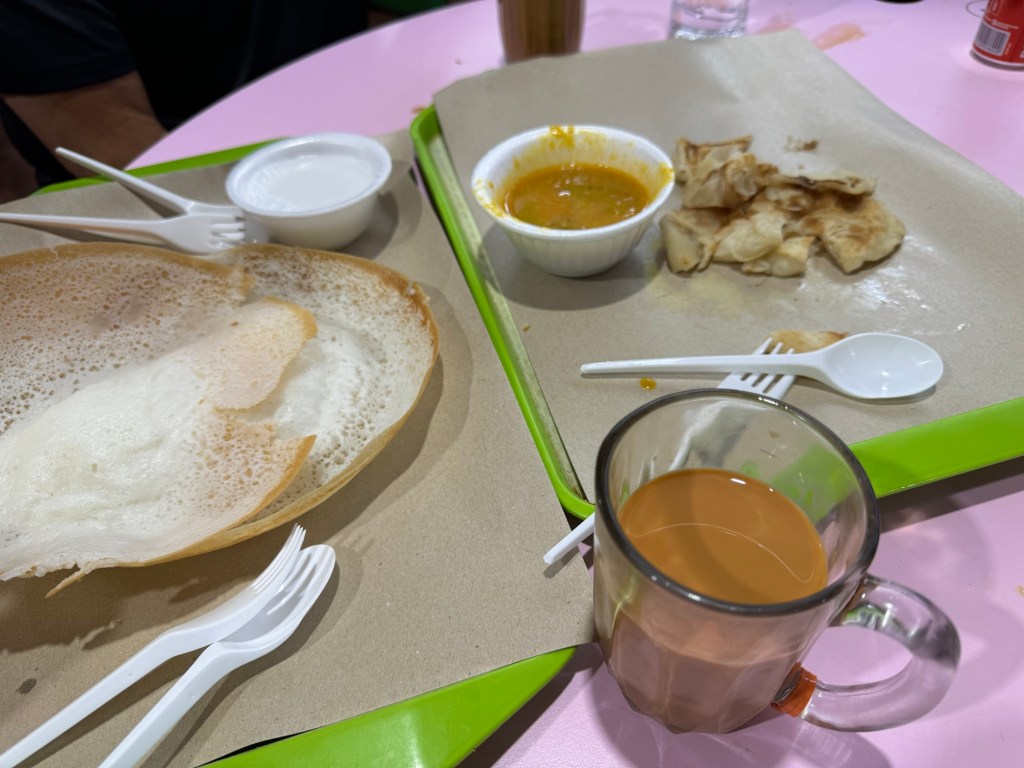
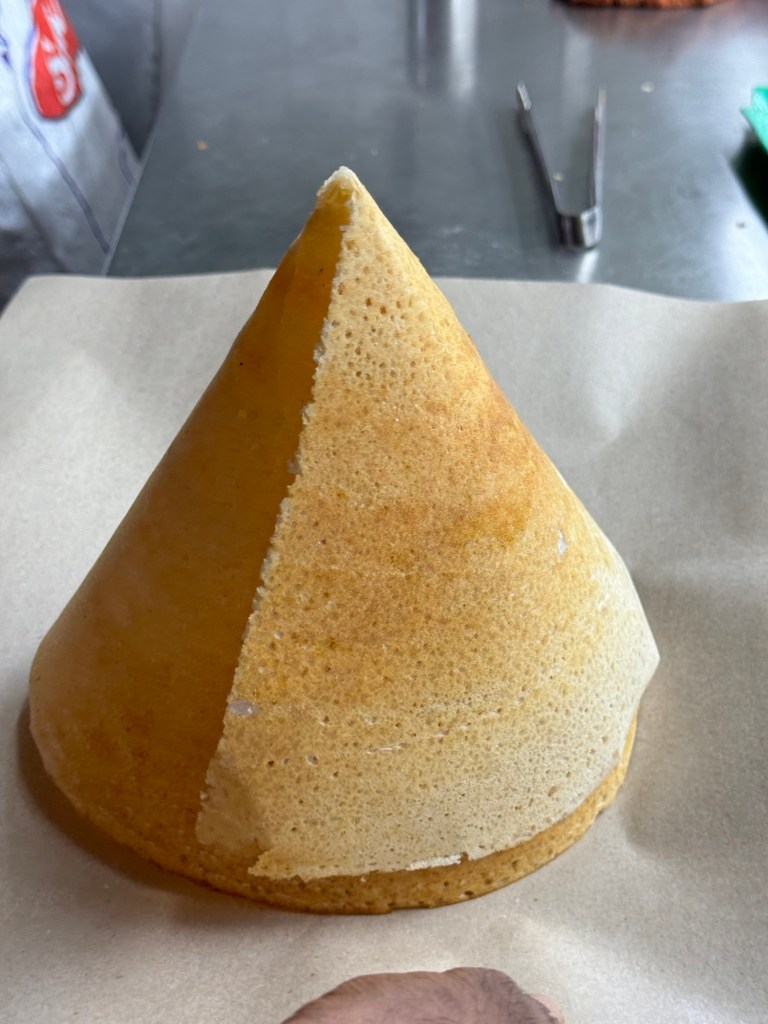
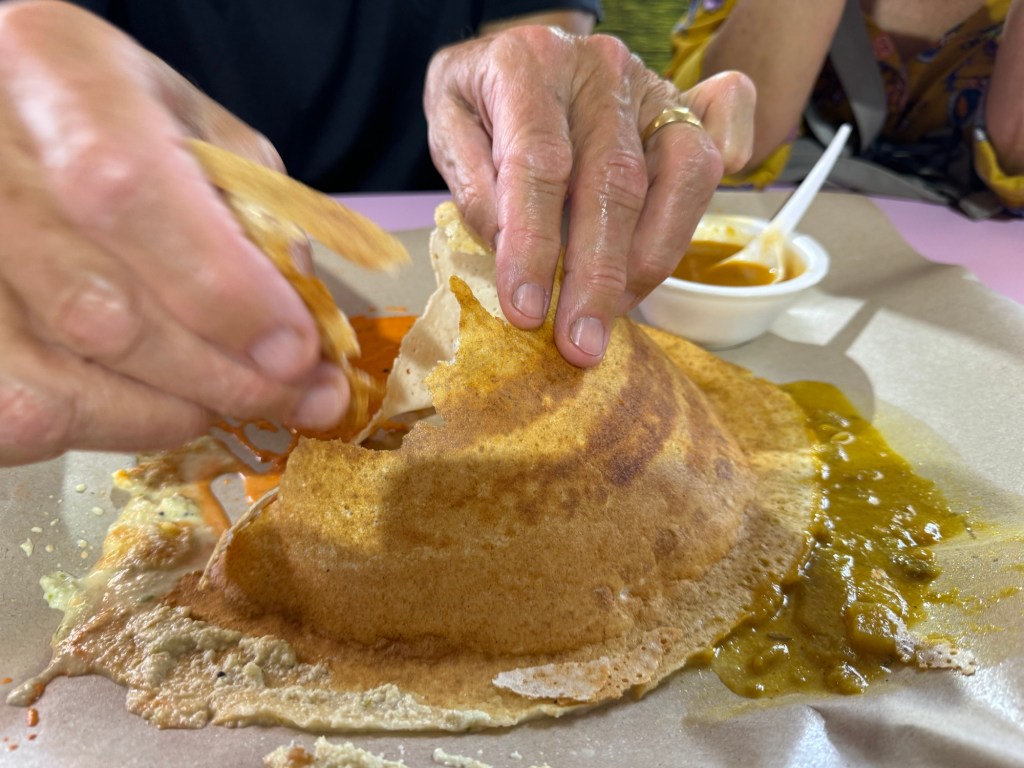
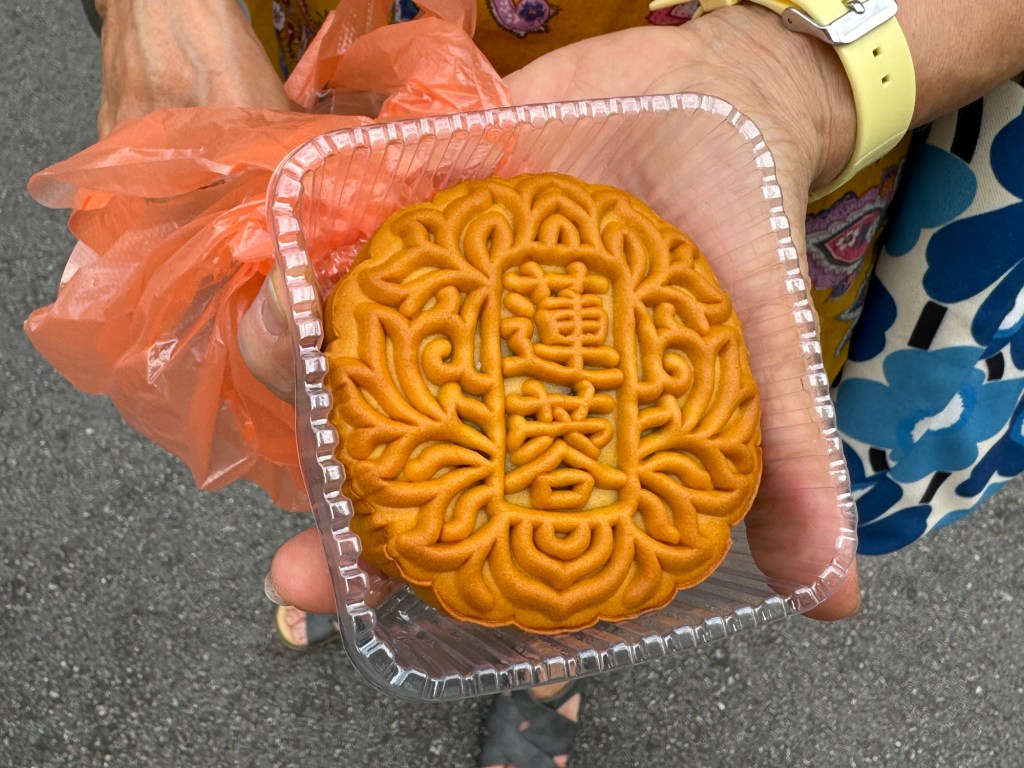
Then we took the subway to Little India where we sampled a version of hot Chai; a dish called Prata, a flat bread made with wheat flour, accompanied by a curry and lentil sauce; Appan, a large crepe made with coconut milk and rice with a dipping sauce of warm, sweetened coconut milk; and finally Thosai, another crepe made with fermented black dough and rice with a dipping sauce. Prata was Mark’s favorite food. For dessert, Charlotte gave us a moon cake to split. It was filled with lotus paste.

Here are some photos of what we ate in Chinatown. First there is a photo of a Chinese building near the entrance to the Chinatown Complex. The next three photos are of the suger cane juice vendor making juice and serving Mark. The first food dish is Braised chicken and rice, followed by Water cake and Carrot cake. The last dish was Laksa, a noodle soup with several condiments

The Little India food dishes we tasted included: hot chai; Prata; Appan; Thosai; and Moon cake.

We were so stuffed we did not want another thing. We said our good bye’s to Charlotte and took a taxi back to the hotel, where we went straight to bed at 8pm.

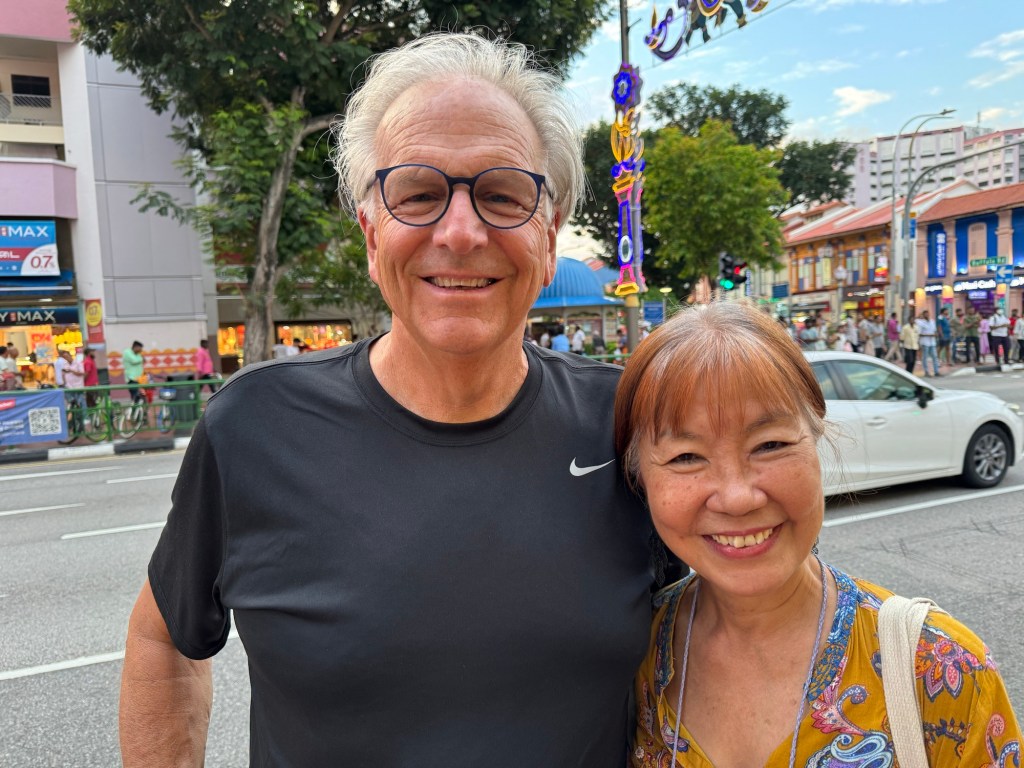
Mark and our food guide, Charlotte

Getting ready for Australia

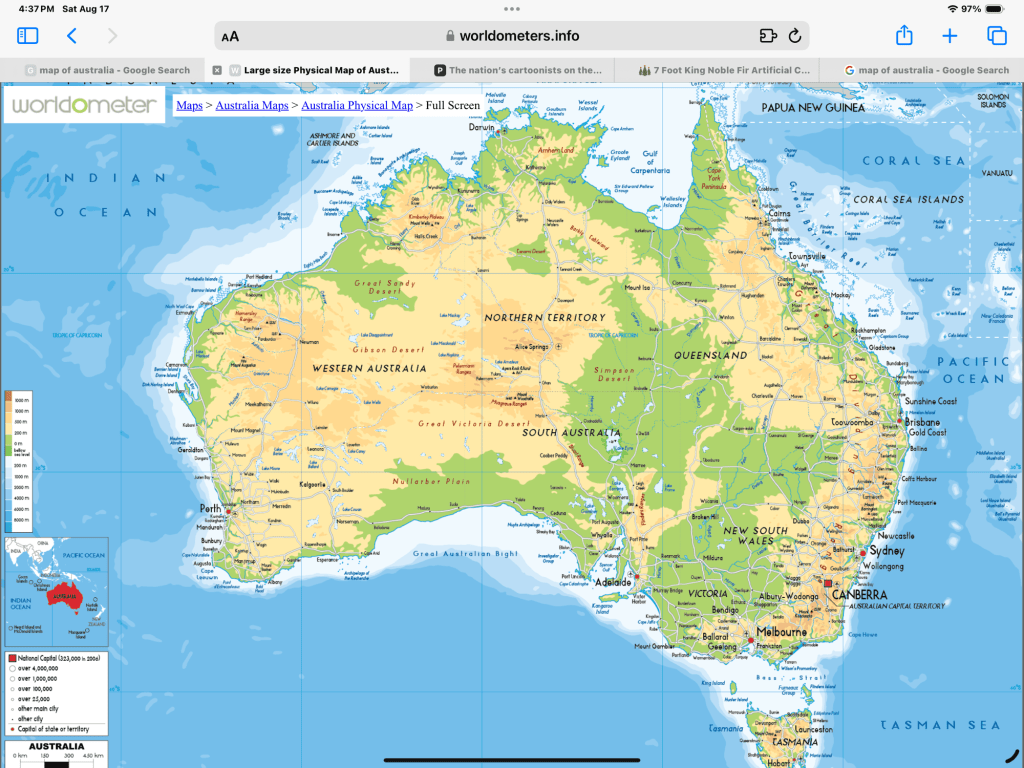
The continent of Australia

September 11, 2024

Mark and I have booked a 6 week trip to Australia and are thinking about the final details of preparing for the trip. What extra clothing should we take for the weather we expect? We plan to travel from Darwin in the north where it will be quite hot, to Tasmania in the far south where it will be quite cool, plus many stops in between.

Northern Territory

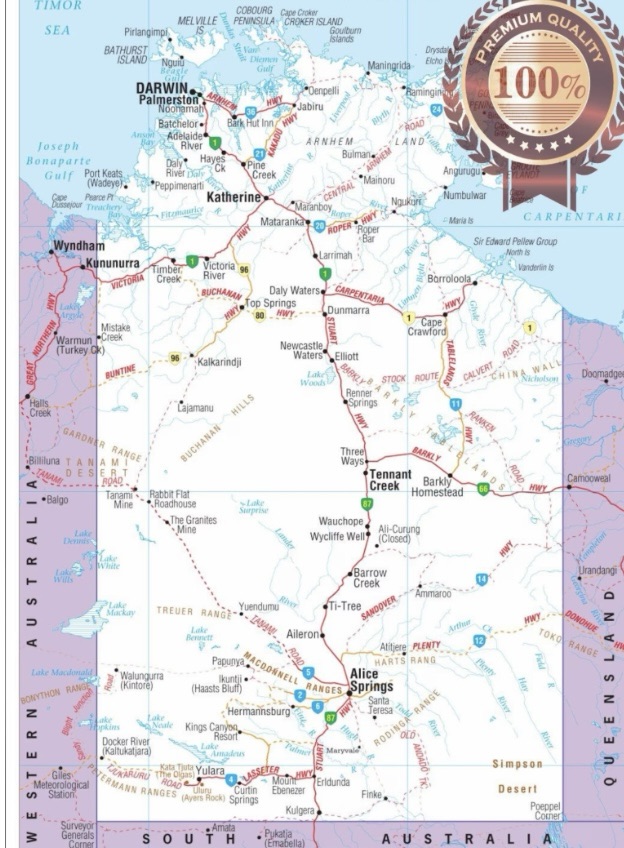
The first part of the adventure will include locations in the Northern Territory where we will learn about the Aboriginal people, their history and ancient art. Look for the area called Arnhem, slightly southeast of Darwin. We also plan to visit a special museum in Darwin that features the First Nation people.

Great Barrier Reef

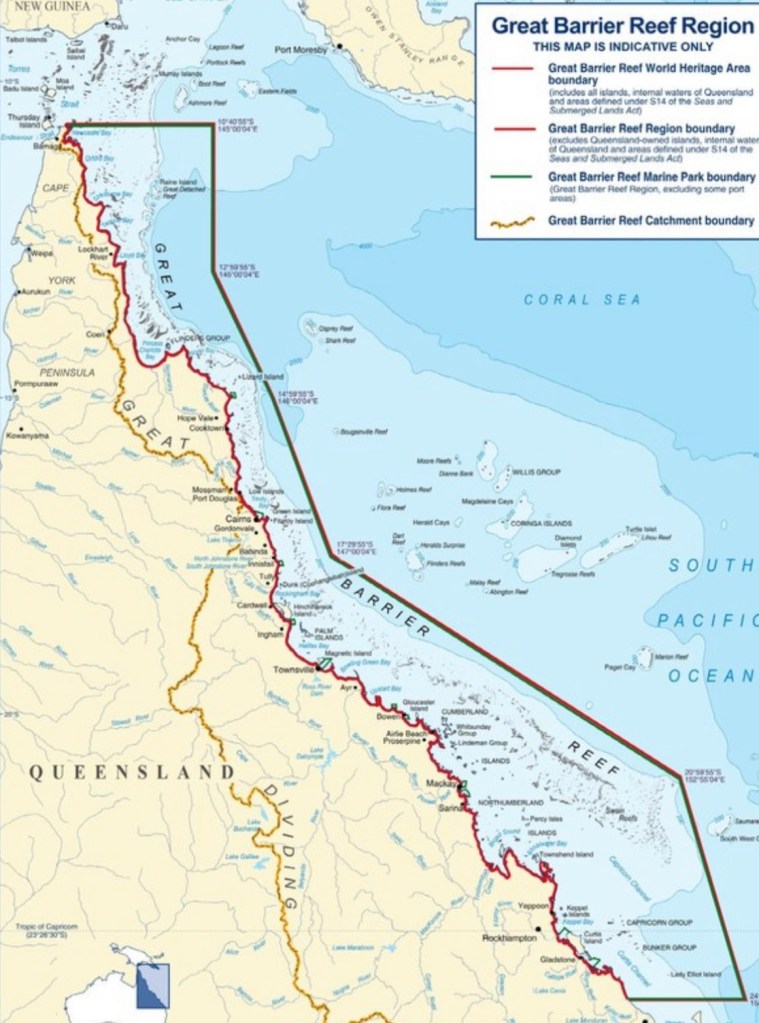
Then we will fly east to Port Douglas in Queensland and the Great Barrier Reef, where we will spend four days living on a boat called Aroona. We expect to do a lot of snorkeling and maybe some scuba diving. Then the boat will drop us off at Lizard Island for a few days of R&R.

Melbourne & Great Ocean Road

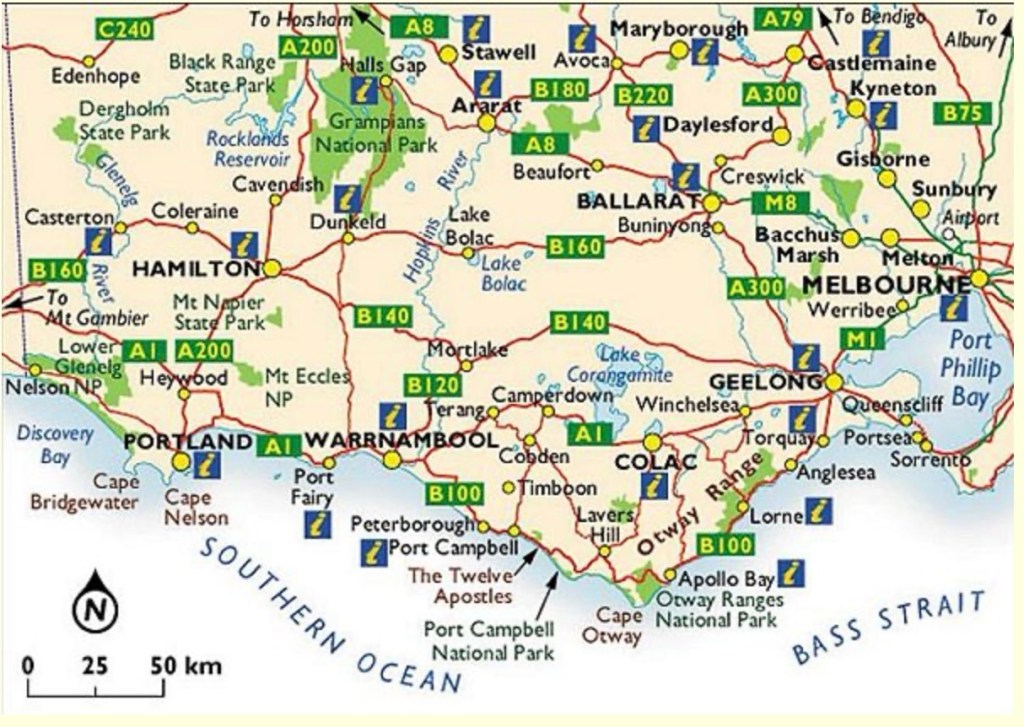
From there we will fly south to Melbourne to visit that city and experience the Great Ocean Road on the southern edge of Australia, which is at least as famous as our Highway 1 in California.

Tasmania

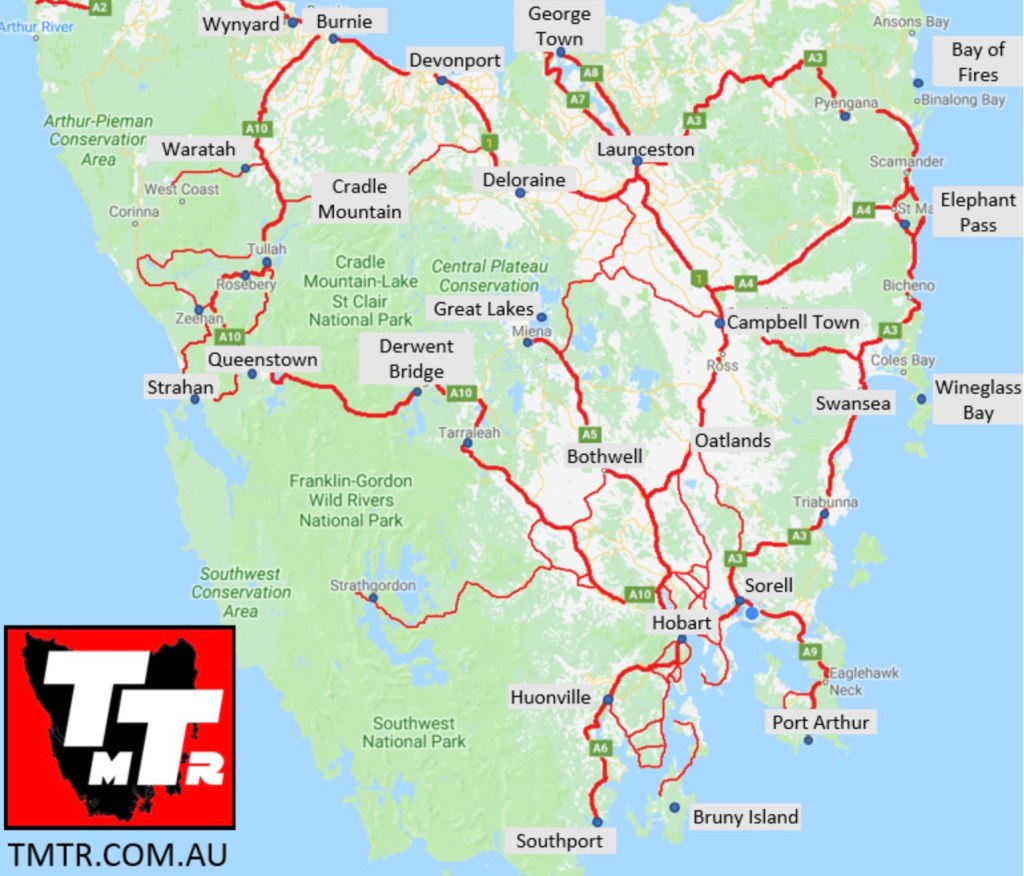
From Melbourne we will fly to Hobart in Tasmania, where we hope to learn about and meet the indigenous population, see local wild animals, and the scenery.

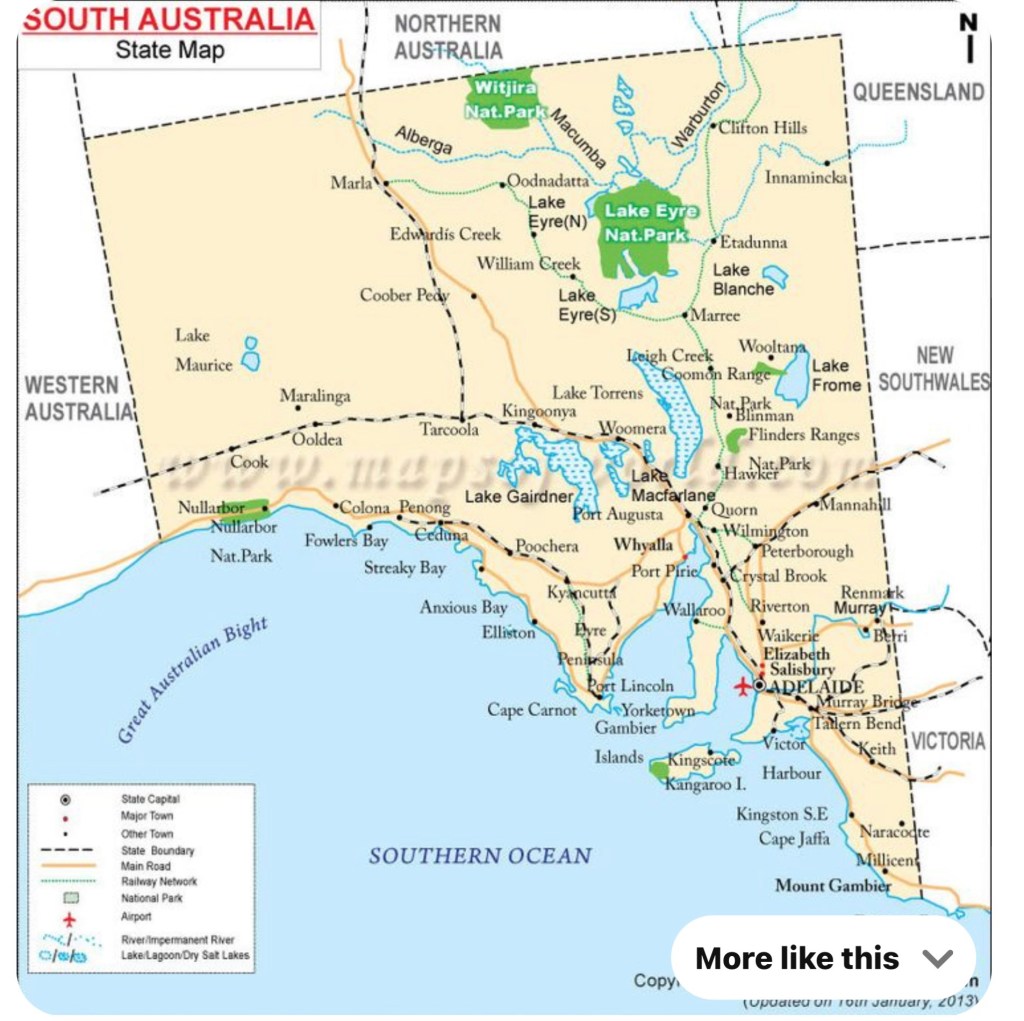
Our adventures continue in South Australia, just north of Tasmania, where we will visit Adelaide, Gawler Ranges National Park, Port Lincoln National Park and other sights. We will also visit Kangaroo Island and the local wildlife there.

Adelaide & South Australia

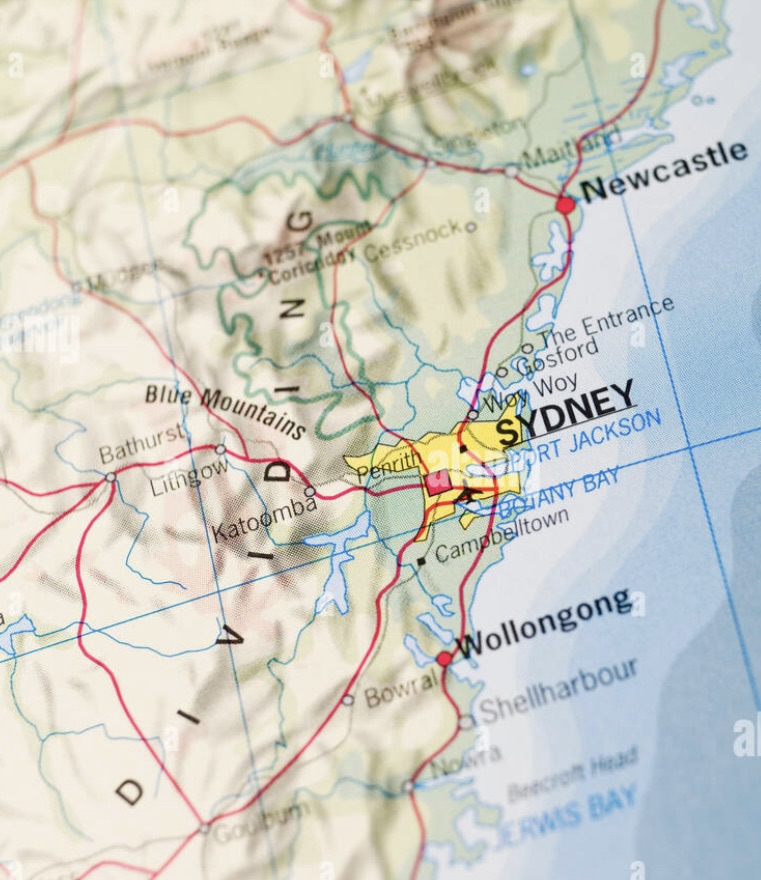
After several days in the far south we will fly from Adelaide to Newcastle, just north of Sidney, New South Wales, to meet our friends Catherine and Martin, who will host us for a few days at their Newcastle home, and then share a week with us in Sidney. After a full collection of activities they have planned for us there, we will finally fly home via Singapore on October 28, 2024.

Newcastle, Sydney and the Blue Mountains

I hope we do not wear you or ourselves out before it is over. Do save the above maps for reference purposes as we move about the country.