Monthly Archives: October 2024

A week in Sydney

Monday, October 21, 2024

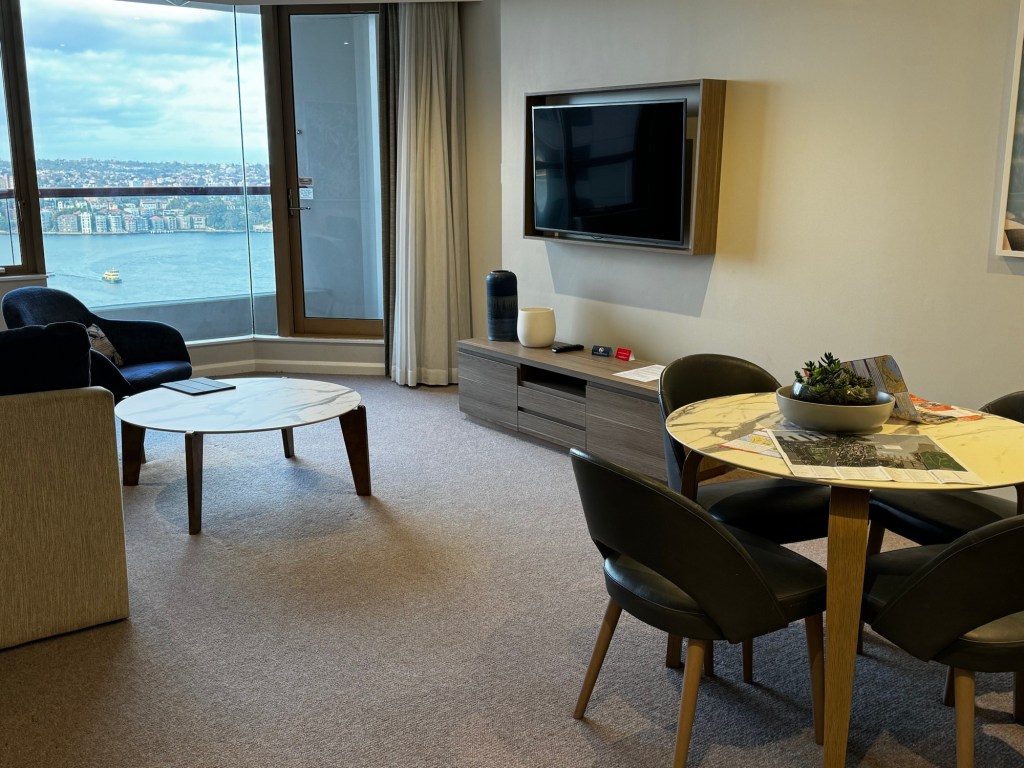
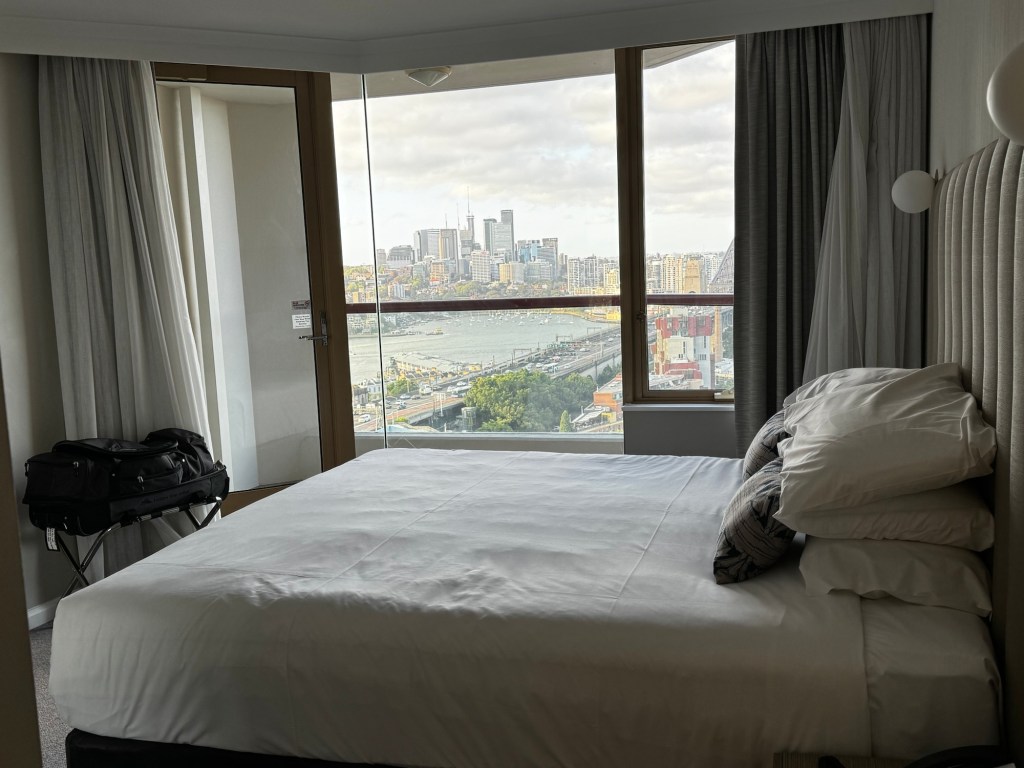
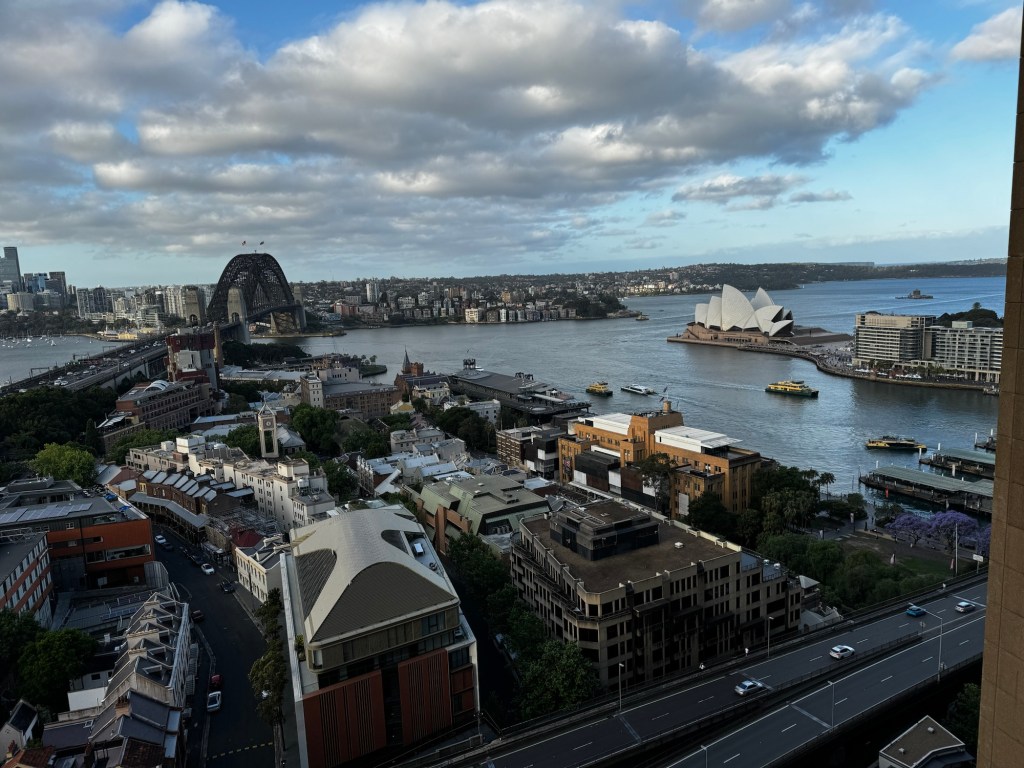
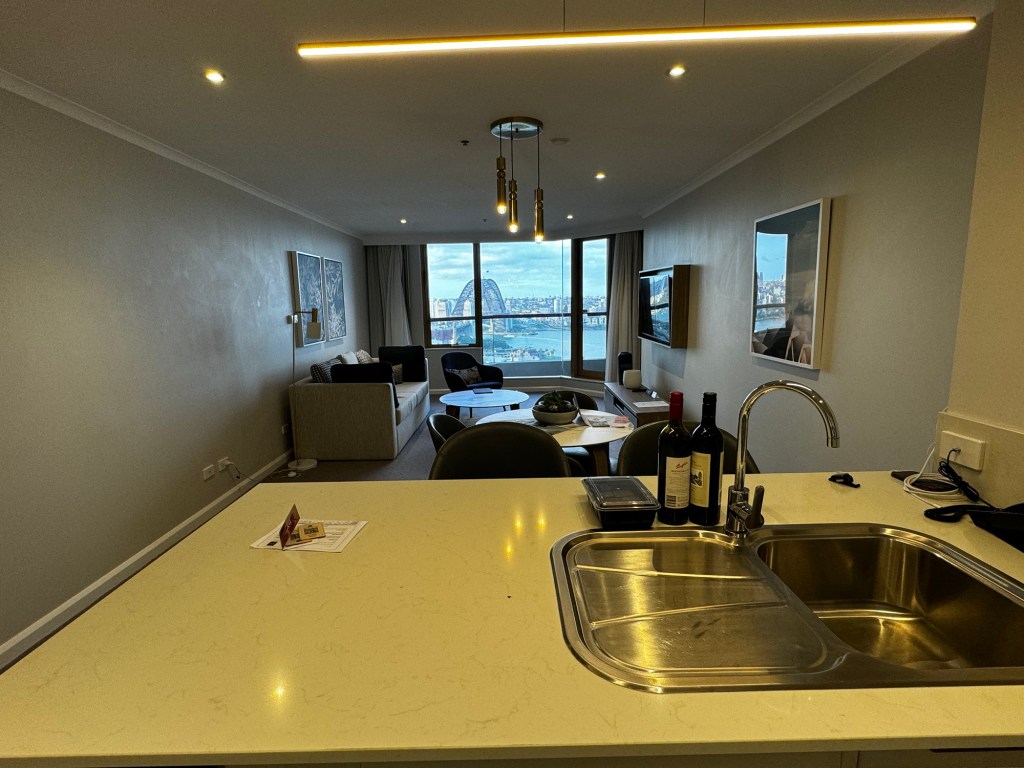
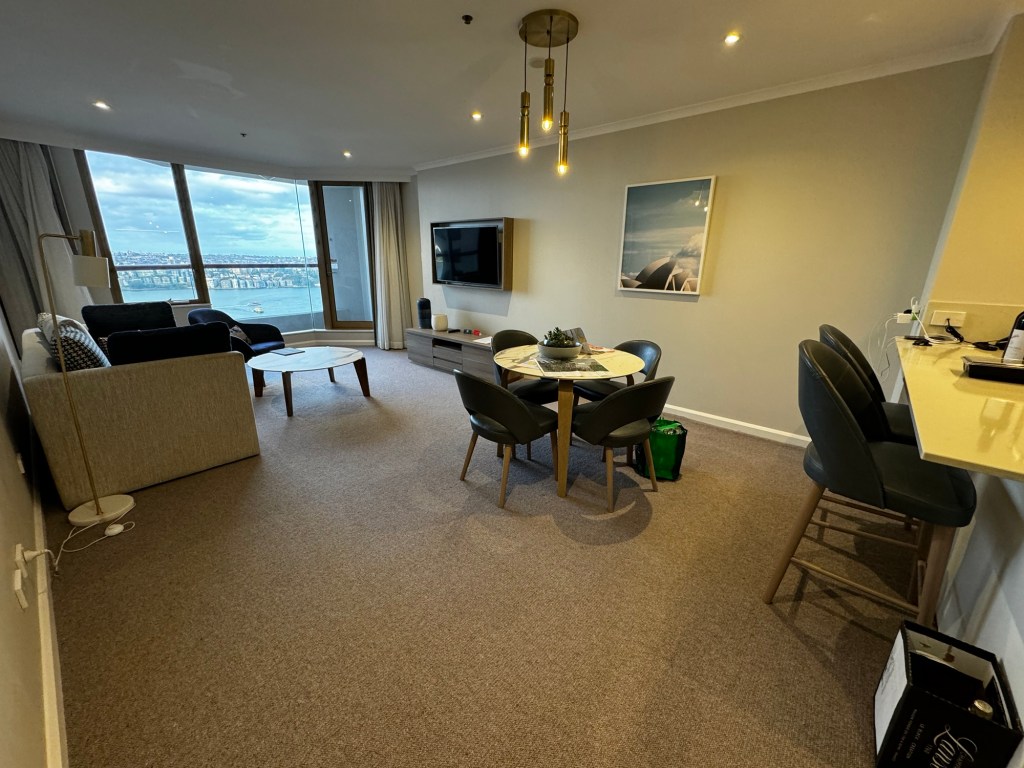
Left Newcastle for Sydney at 11am and arrive at our hotel parking garage about 1pm. The garage is at least 8 floors underground and we drove down to level 6 before finding a spot. Finally reached the Lobby at 1:30 and were in our room at 1:40. Catherine booked the Sebel Quay West Hotel for us months ago and it certainly lived up to expectations. Our room has a spectacular view of both the bridge and the Opera House and is very close to everything we are interested in visiting.
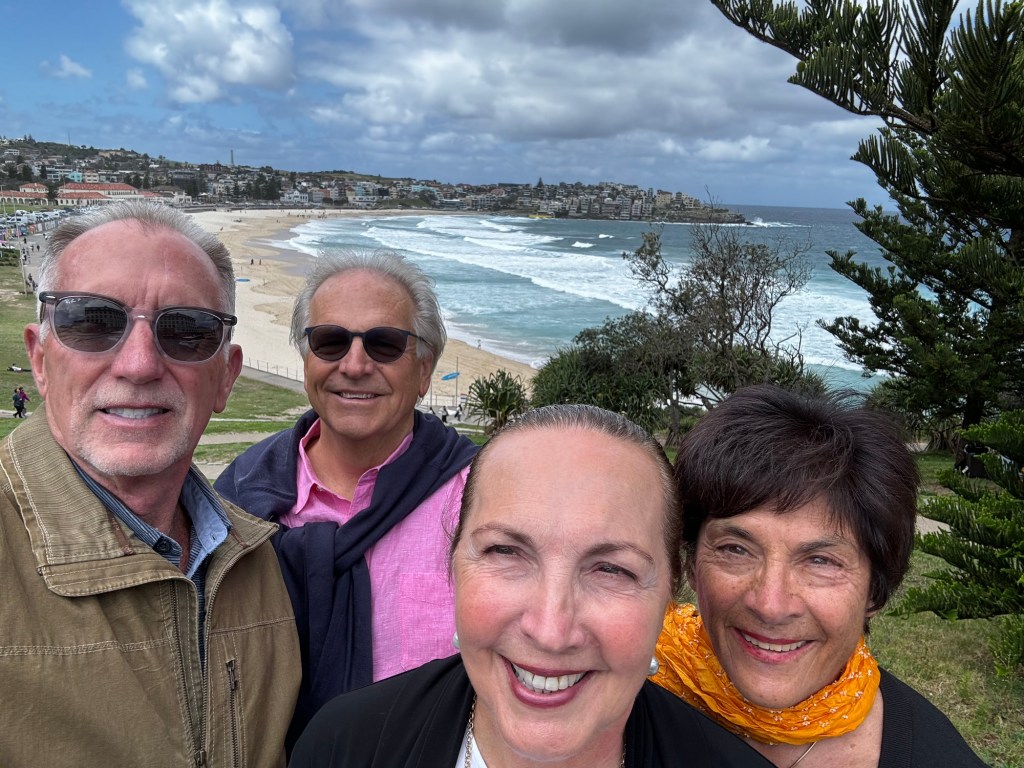
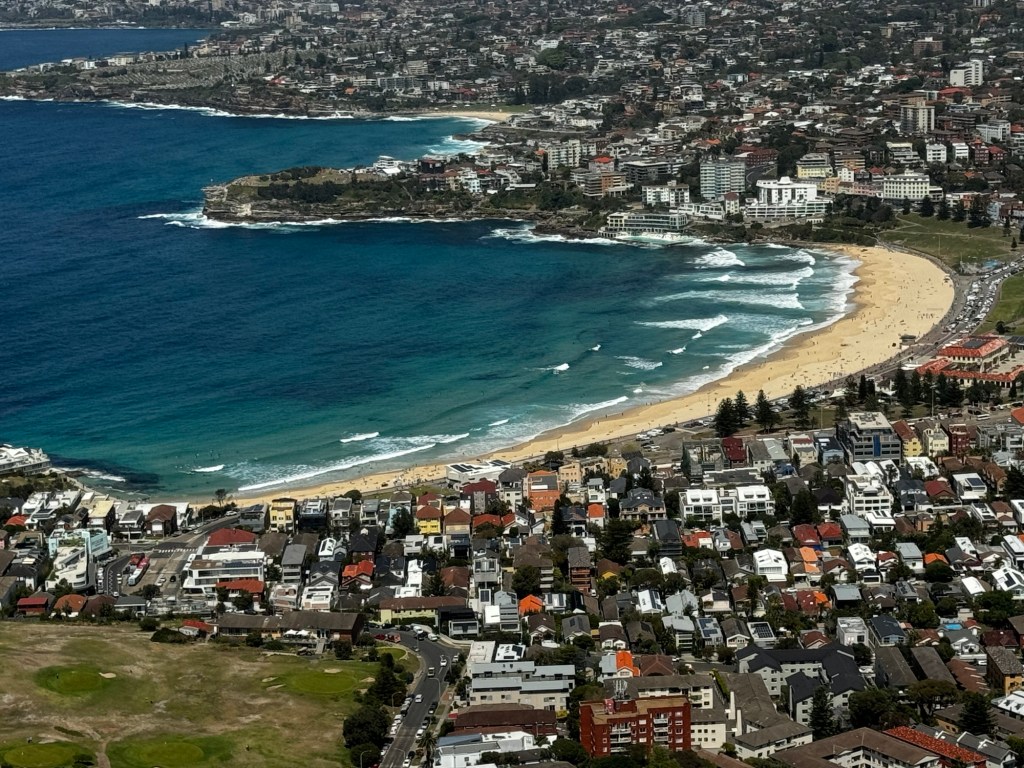
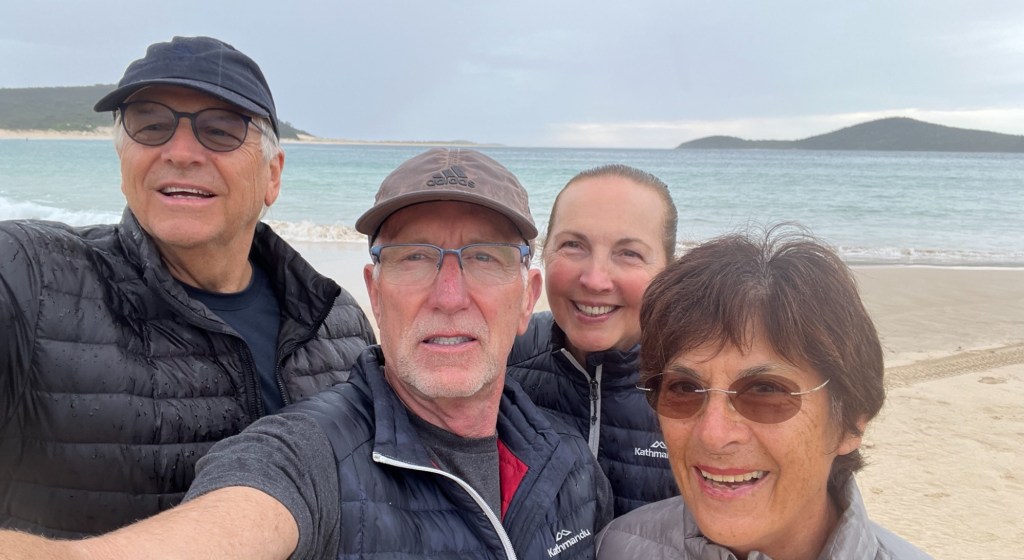
Martin, Mark, Catherine and me at Bondi Beach.

We hung out in the room a short while and then took an Uber to the Bondi Icebergs Restaurant overlooking the famous Bondi Beach, which Catherine had also booked months in advance and where we had a late lunch with the plan of skipping dinner.

Everyone had a delicious meal including my cuttlefish entree and Mark’s Whiting fish main dish. After lunch we admired the Beach view awhile and headed back to the Sebel Quay West where we hung out until we all got sleepy. Catherine and Martin have a similar room on a different floor.

Tuesday, October 22, 2024

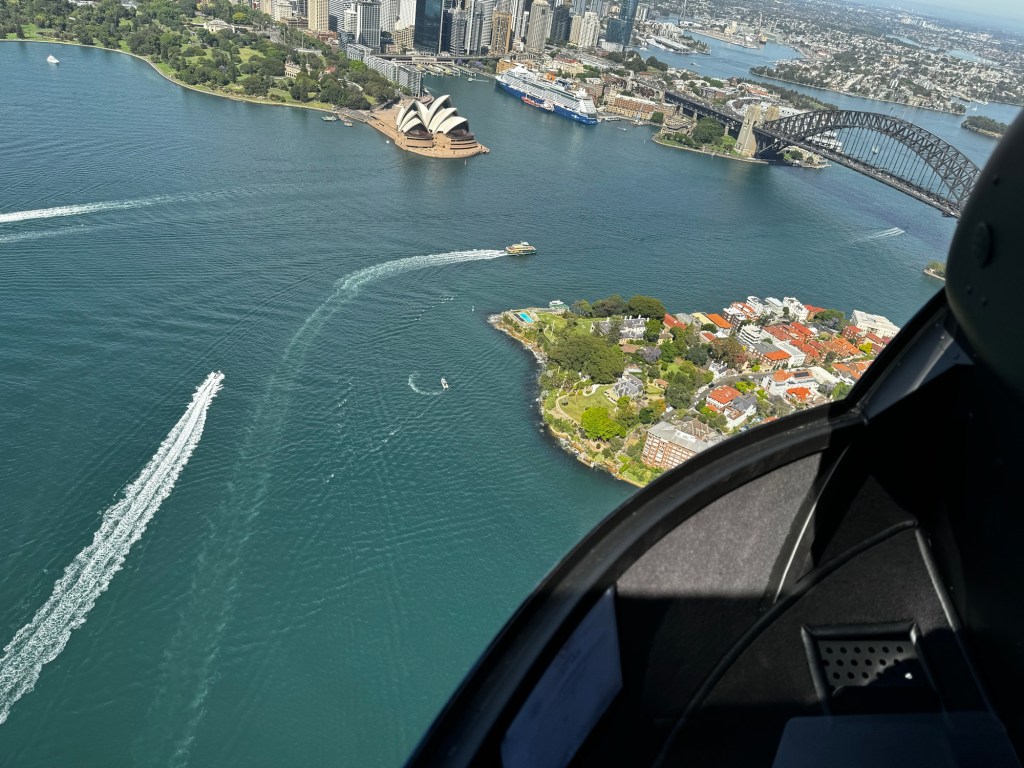
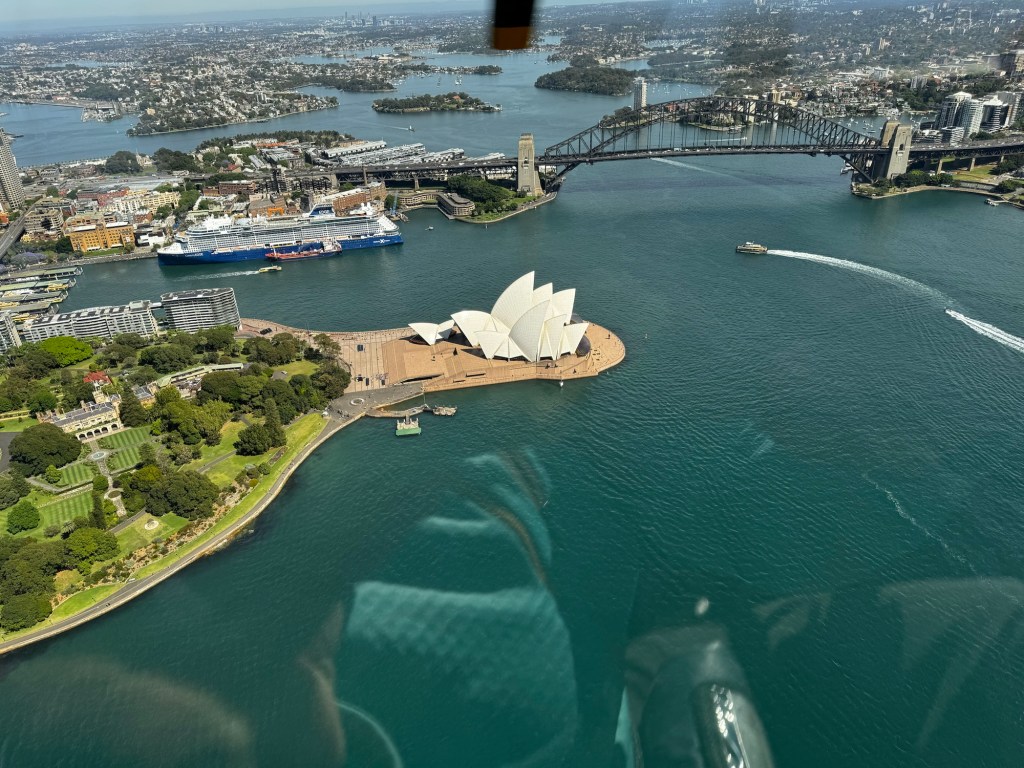
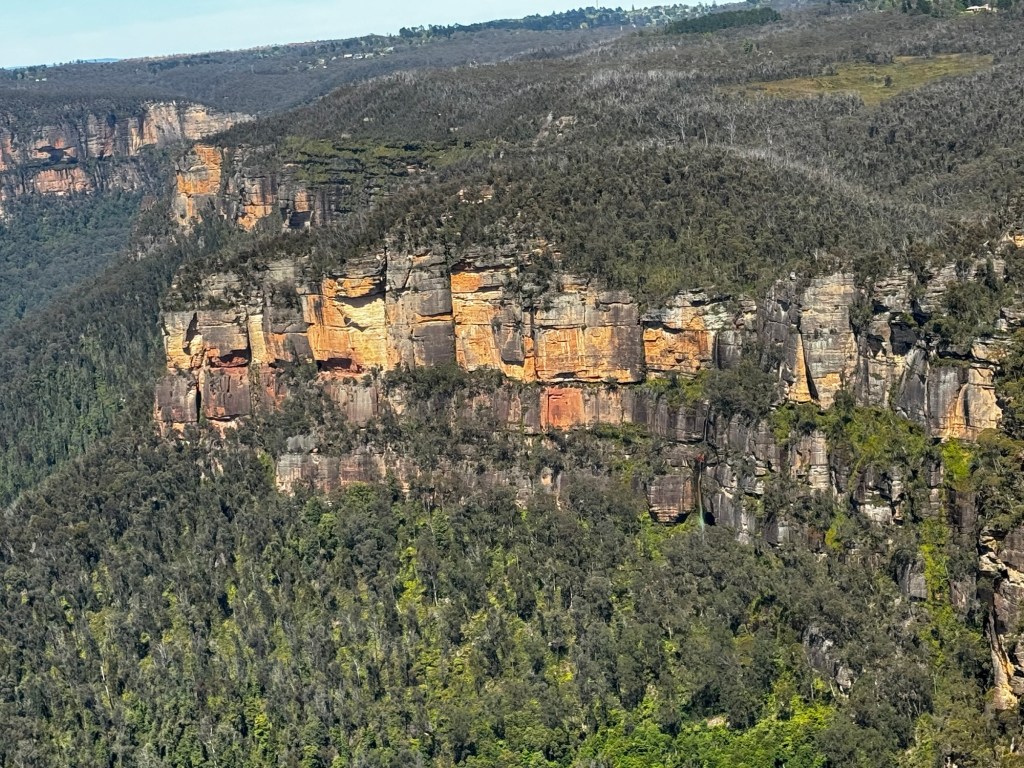
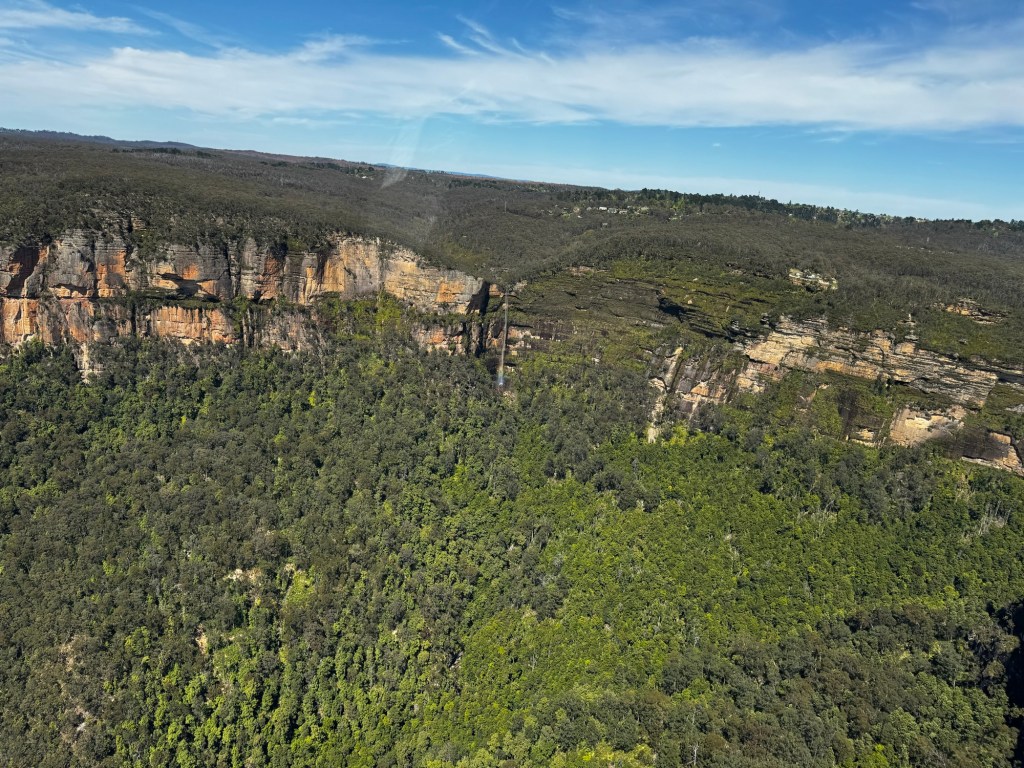
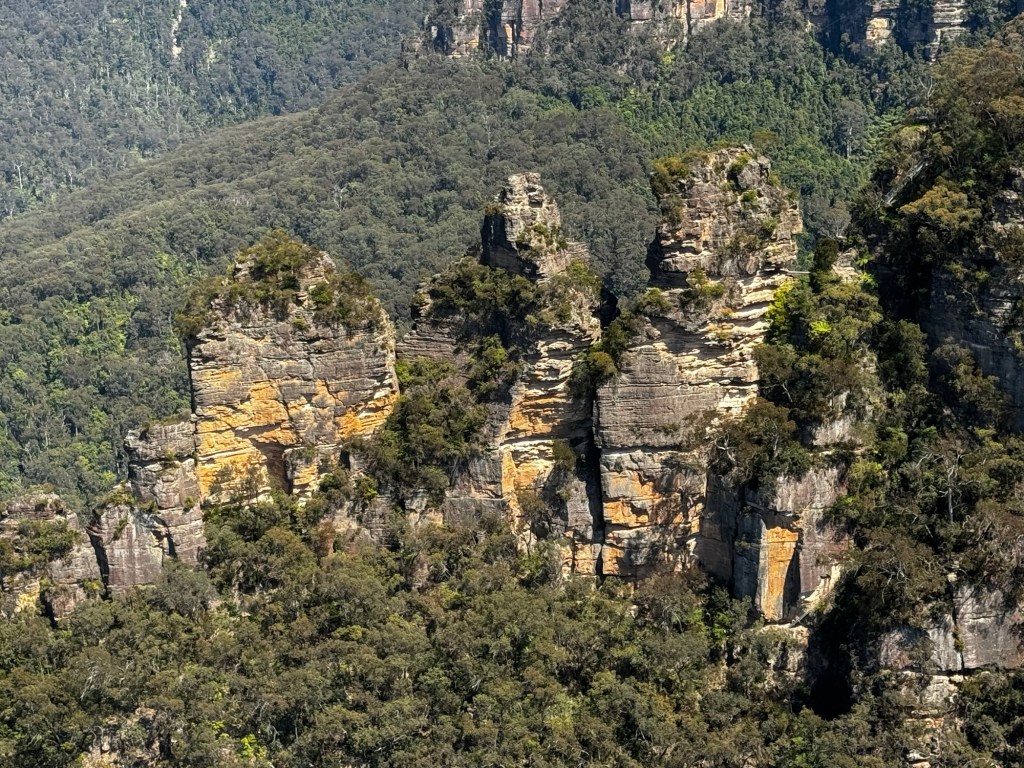
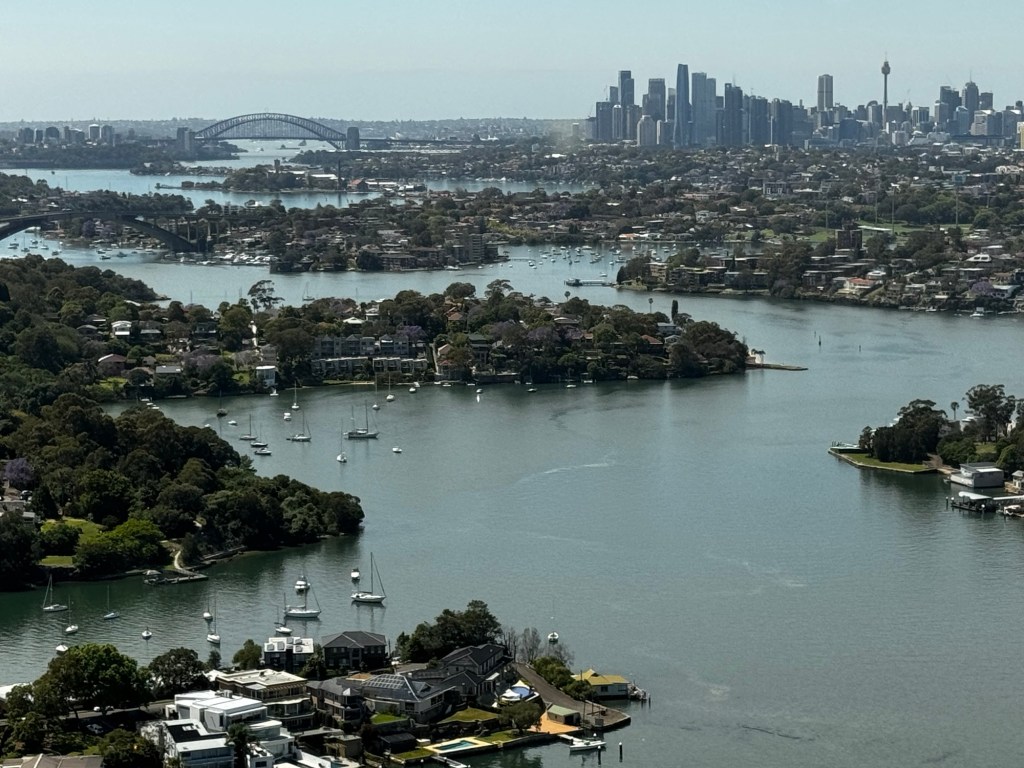
Our plans for the day were action packed. Mark and I went on a 90 minute helicopter ride over the Sydney area and out to the Blue Mountains to see the scenery, especially the Three Sisters rock formation. We took lots of photos and enjoyed the ride.

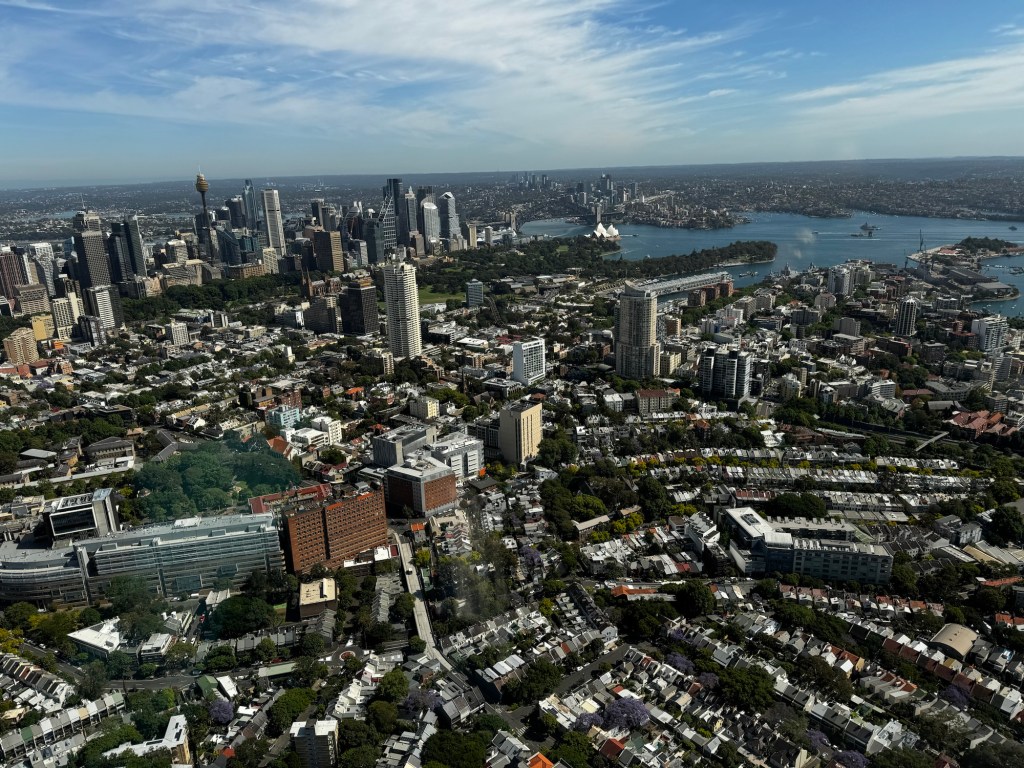
After that we went for a walk in the Botanical Gardens and had a light lunch in a cafe in the gardens. We walked back to the hotel for a brief rest and then headed for our second big event of the day, the BridgeClimb, on the Sydney Harbor Bridge.

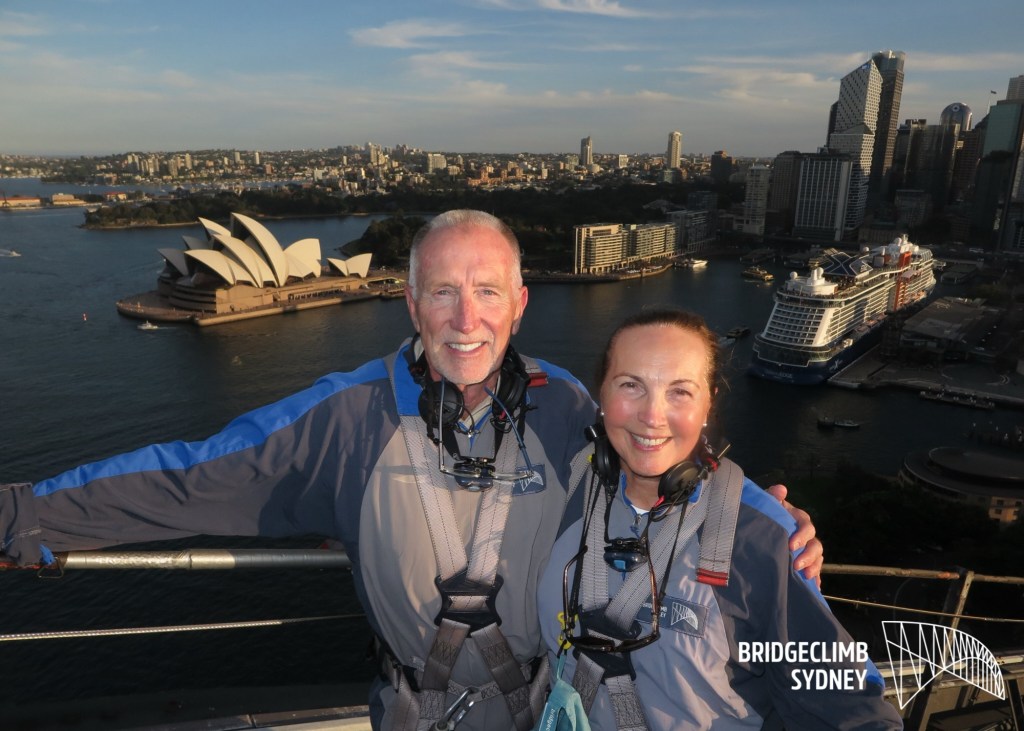
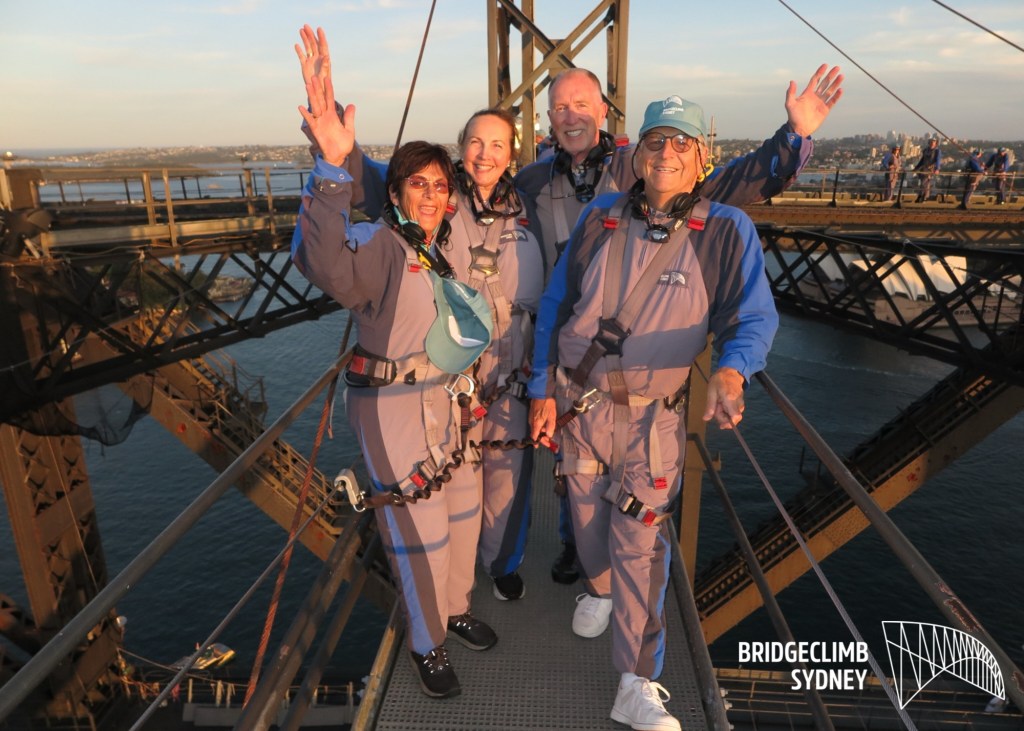
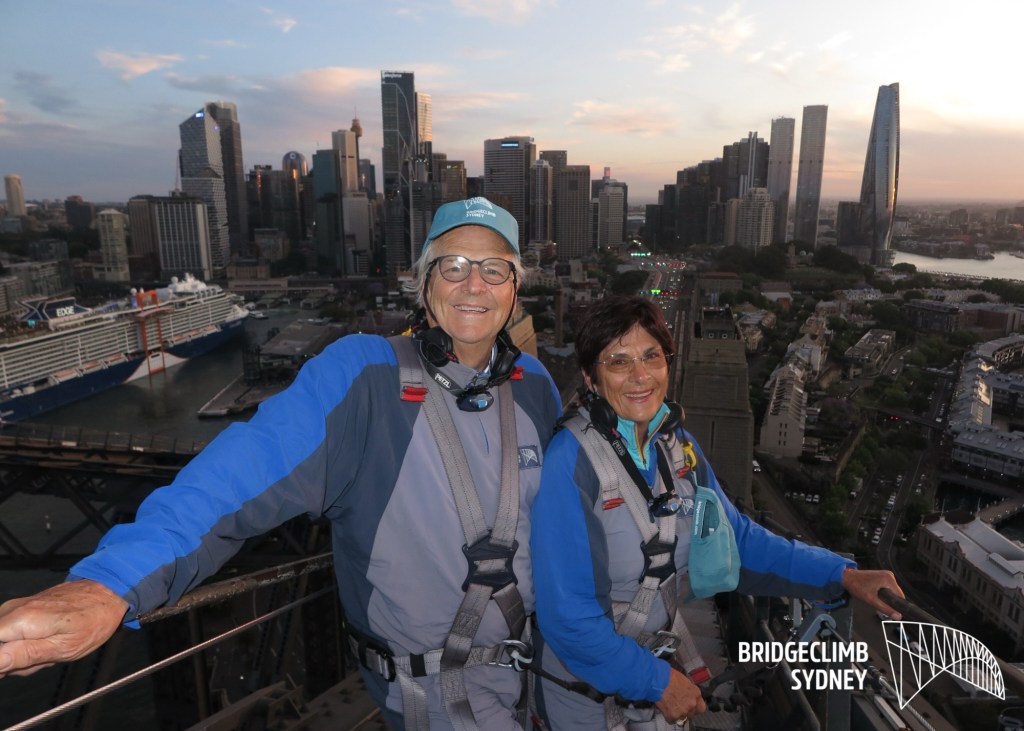
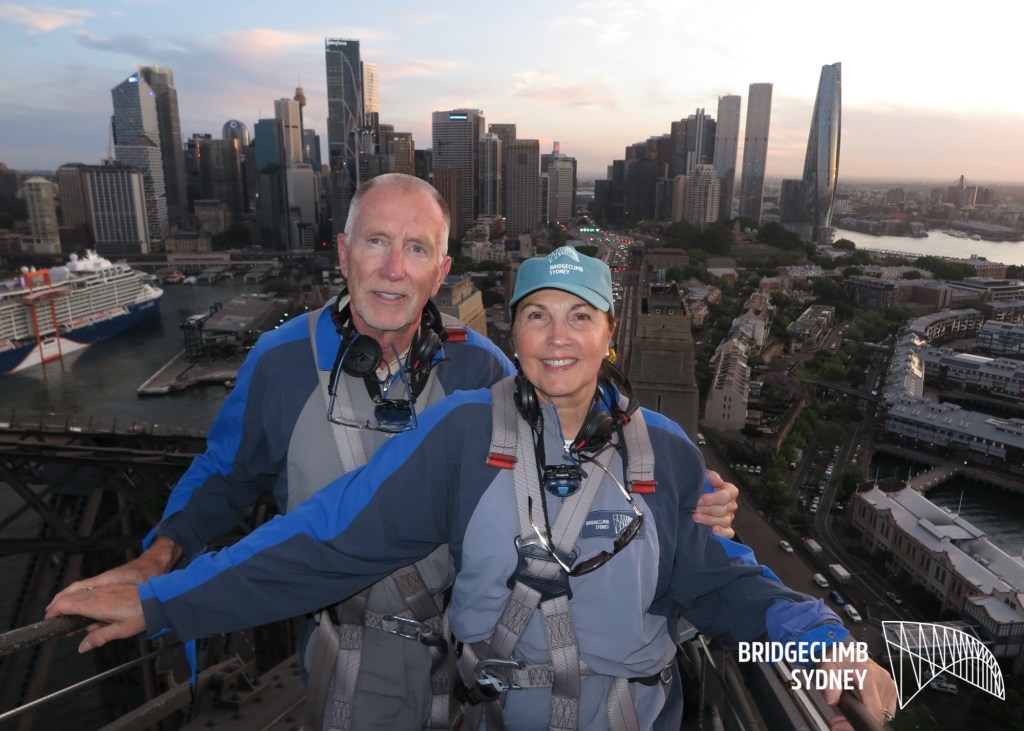
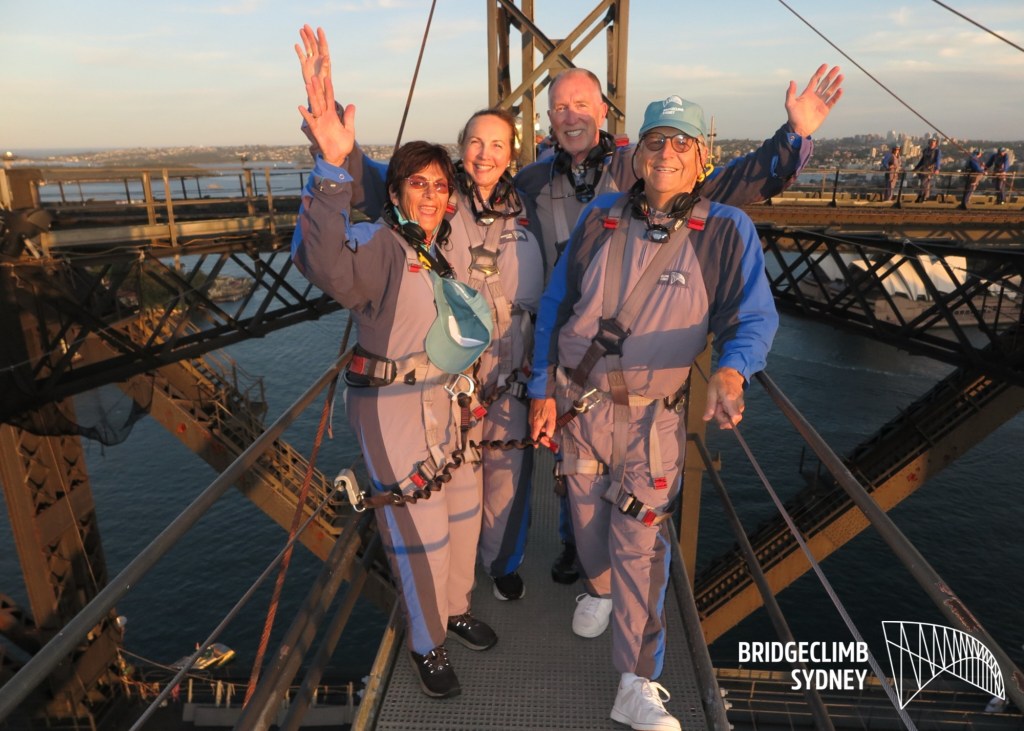
We arrived at the Bridge climb check in and gift shop at 4pm and began the process of getting prepared for the walk. There was still some concern about my health, but after talking a few minutes, the staff was satisfied. The lecture about do’s and don’ts, the process of getting prepared, putting on all the clothing and gadgets required for a safe walk and double checking each person before heading out took almost 60 minutes. Unfortunately, we were not allowed to have our cameras so I have no photos of the experience except the ones the bridge crew took.
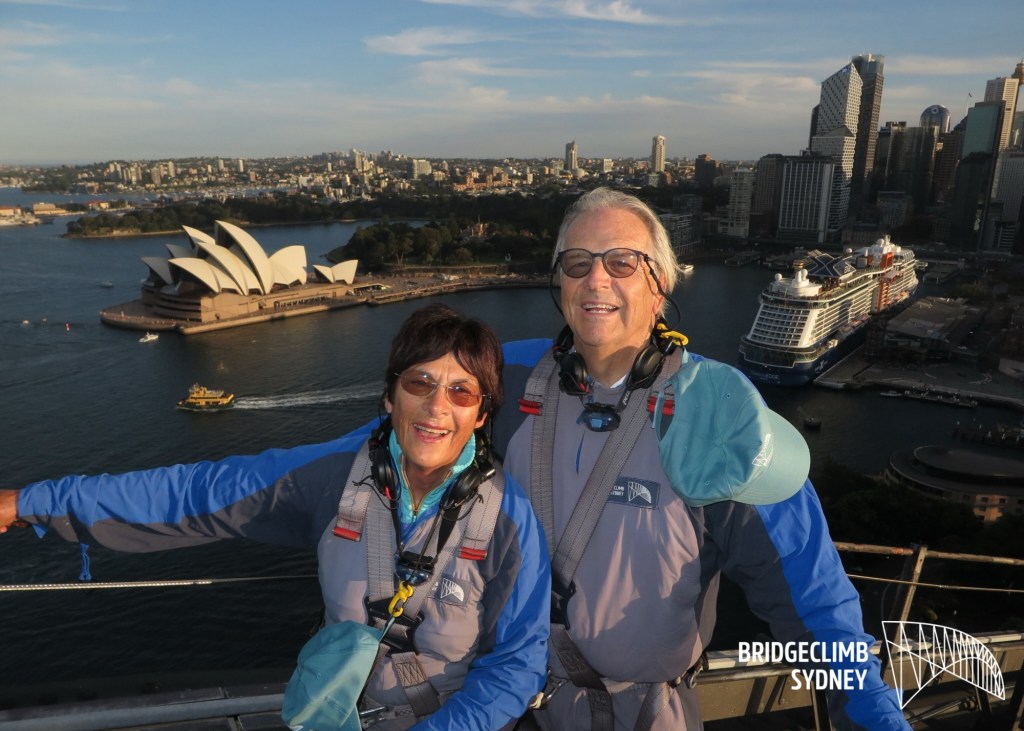
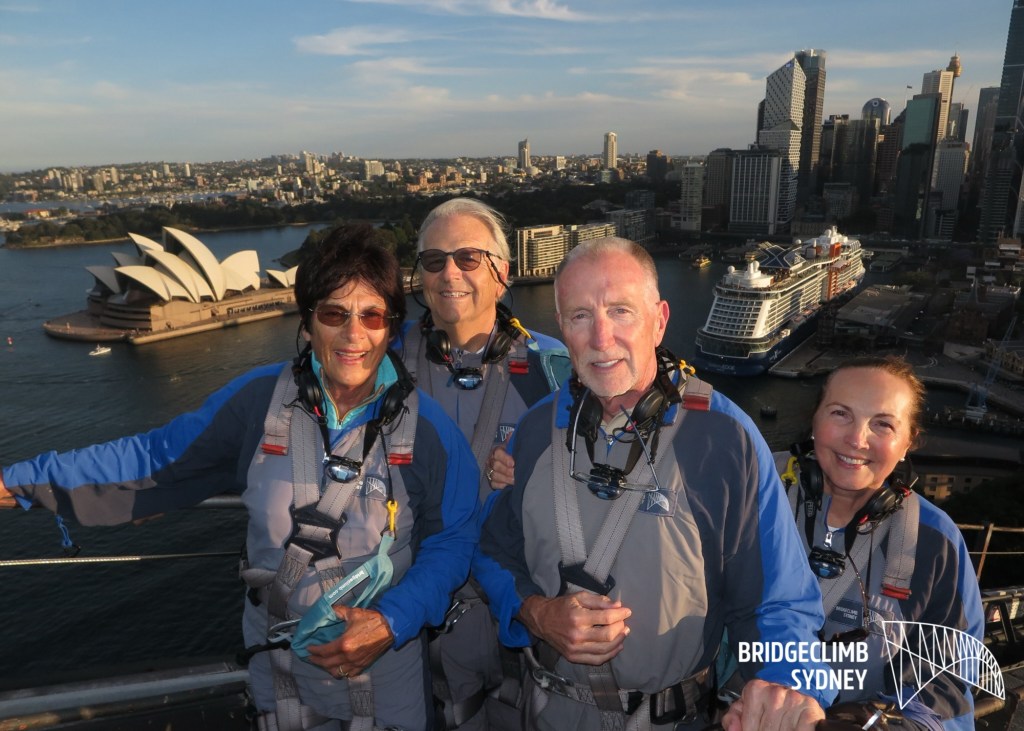
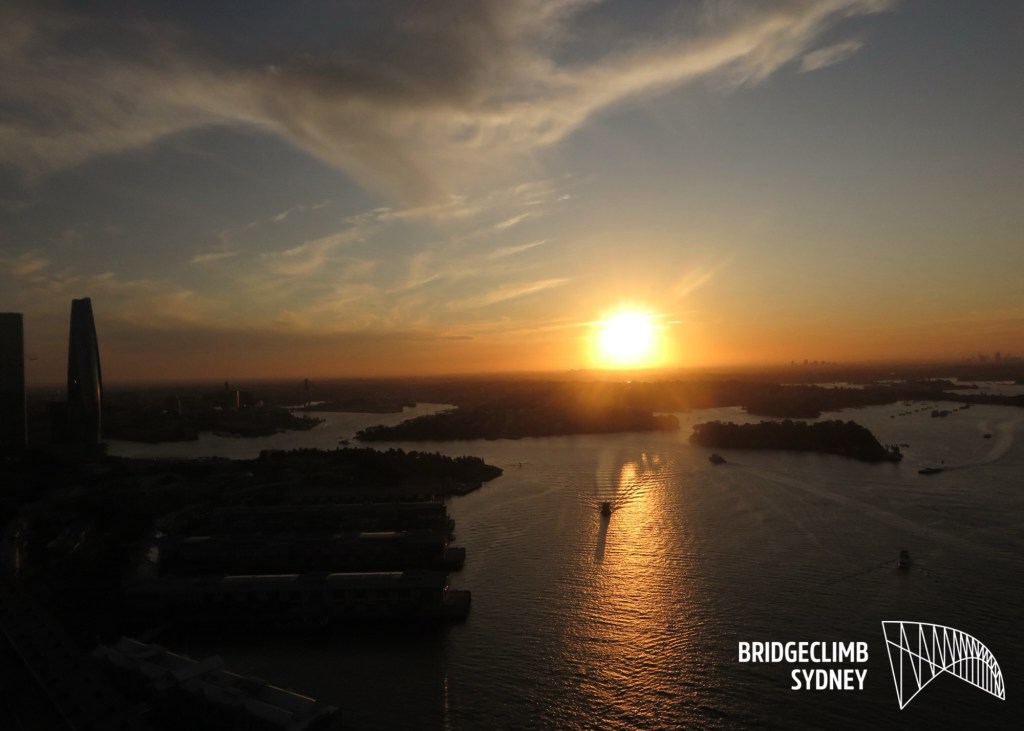
Our clothing included a full jumpsuit and harness, hat, headset to hear the crew while on the walk, a cable attachment for the entire walk, a scarf to use if your eyes or nose need whipping, croakies to attach my glasses, headset and hat. Nothing could be unattached in case something should fall onto a vehicle on the bridge. We were assigned to a group of 14 walkers and one leader. After dressing, we assembled and went through an orientation including saying our name and where we were from and being assigned a position in the group lineup. Being the weakest person, because I admitted to being terrified of falling, I was put in the first position with Mark behind me. Our leader, Jesse, instructed us on how and where and when to walk and off we went. To make us take our mind off the walk, he talked about the history of the bridge and told a few funny stories. It did help, but at first I had a hard time taking more than baby steps, but Mark kept nudging me on and eventually I walked faster, though I was not able to look around, only down at the walk way. Jesse had us stop at a few designated photo stops where the crew took photos of each couple and group. We arrived at the top of the bridge just a few minutes before sunset. The crew took several photos there and we continued across and down the other side. I began to feel more comfortable on the way down and walked faster. But I could look around only when we were not walking. It was a huge relief when we finally reached the bottom and were back in the changing room.
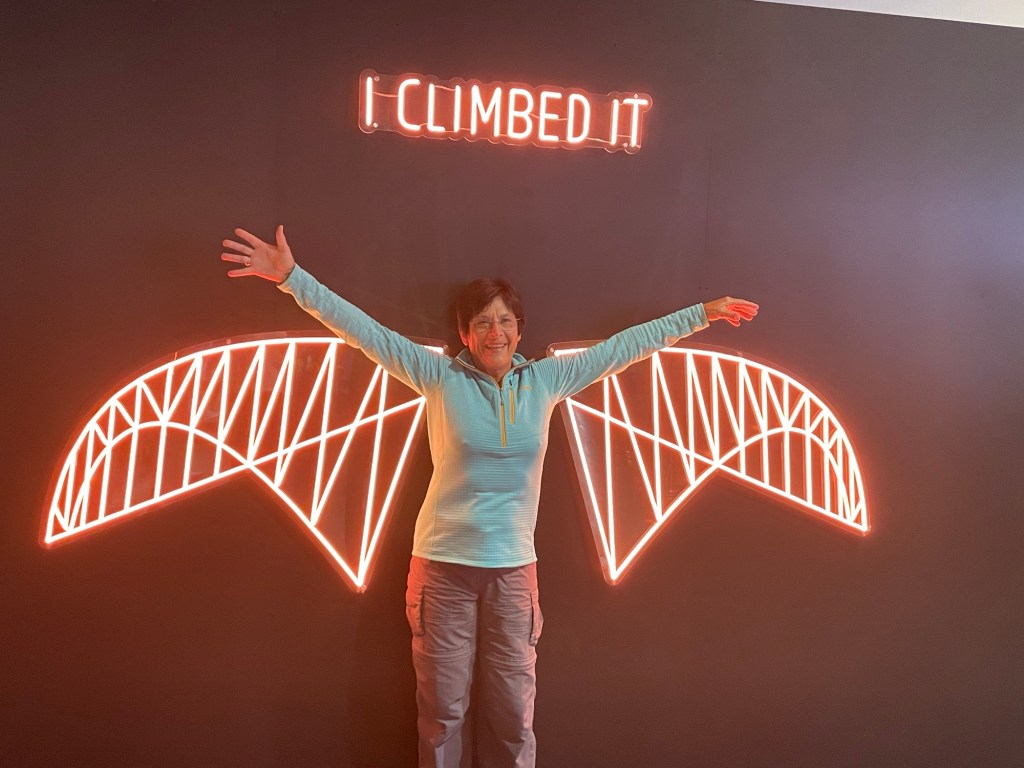
I certainly felt like celebrating and couldn’t wait for my first scotch. We went directly back to our room where drinks were waiting. I ordered some hot pasta from room service while drinking my first scotch. The rest of the group drank Champaign and wine and ate cheese and crackers Catherine had brought from home. I proceeded to polish off the pasta and 2 more scotches and it wasn’t long before I was ready to crash. Soon Catherine and Martin left and Mark joined me in bed. It had been quite a day.

Wednesday, October 23, 2024

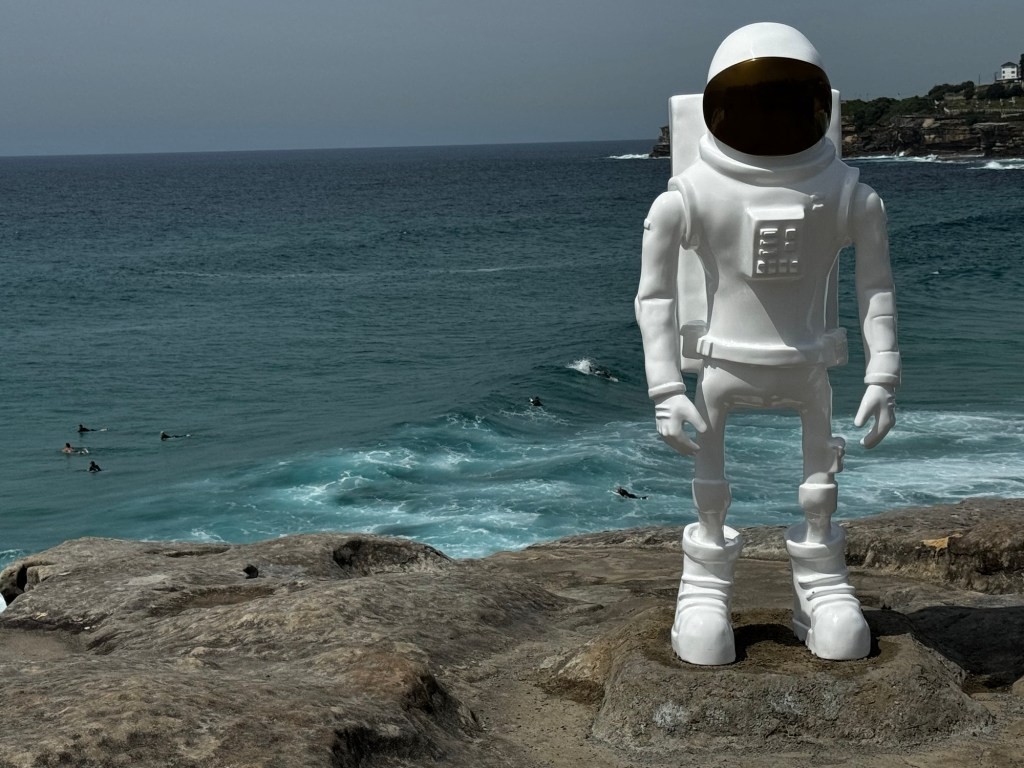
The 26th Exhibition of Sculpture by the Sea.
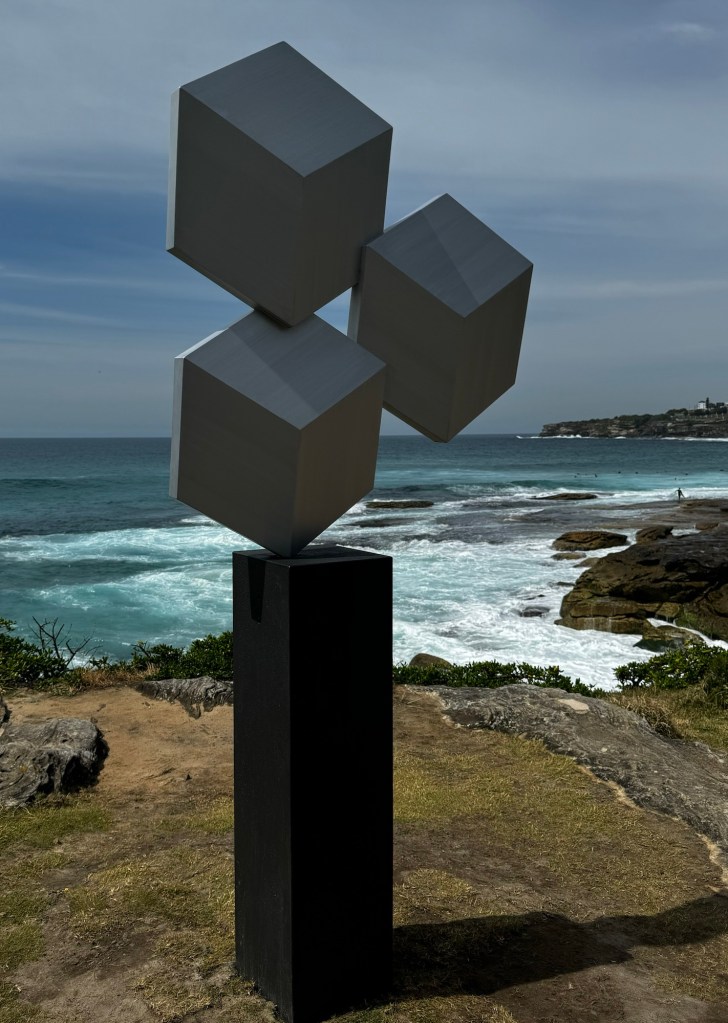
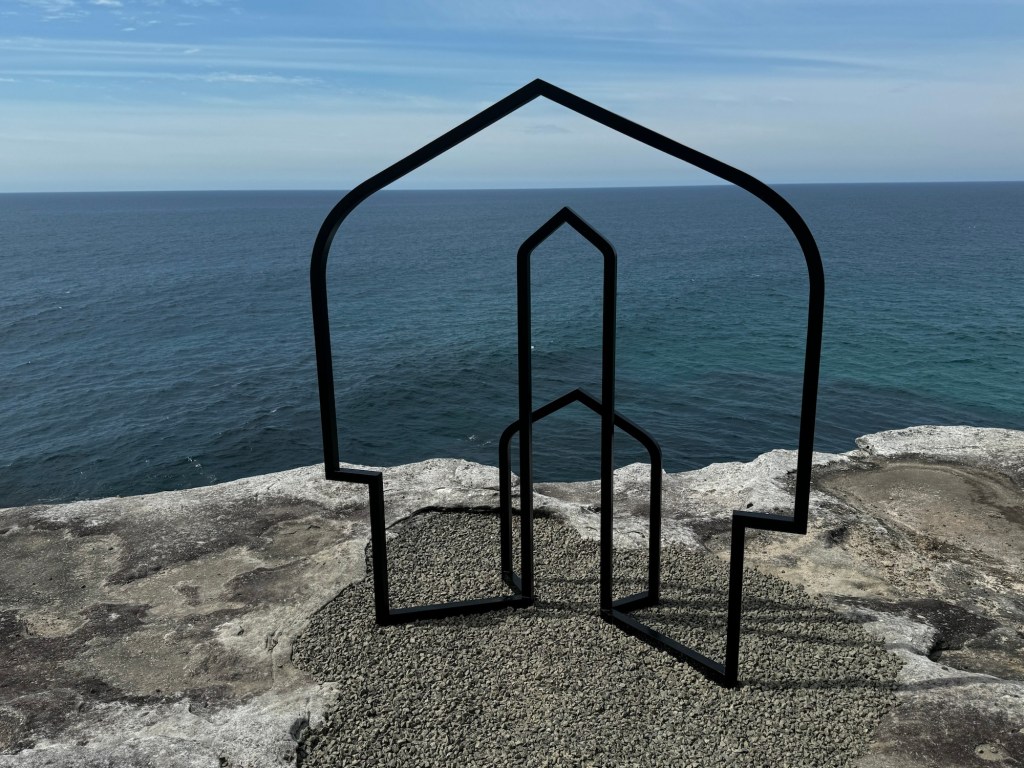
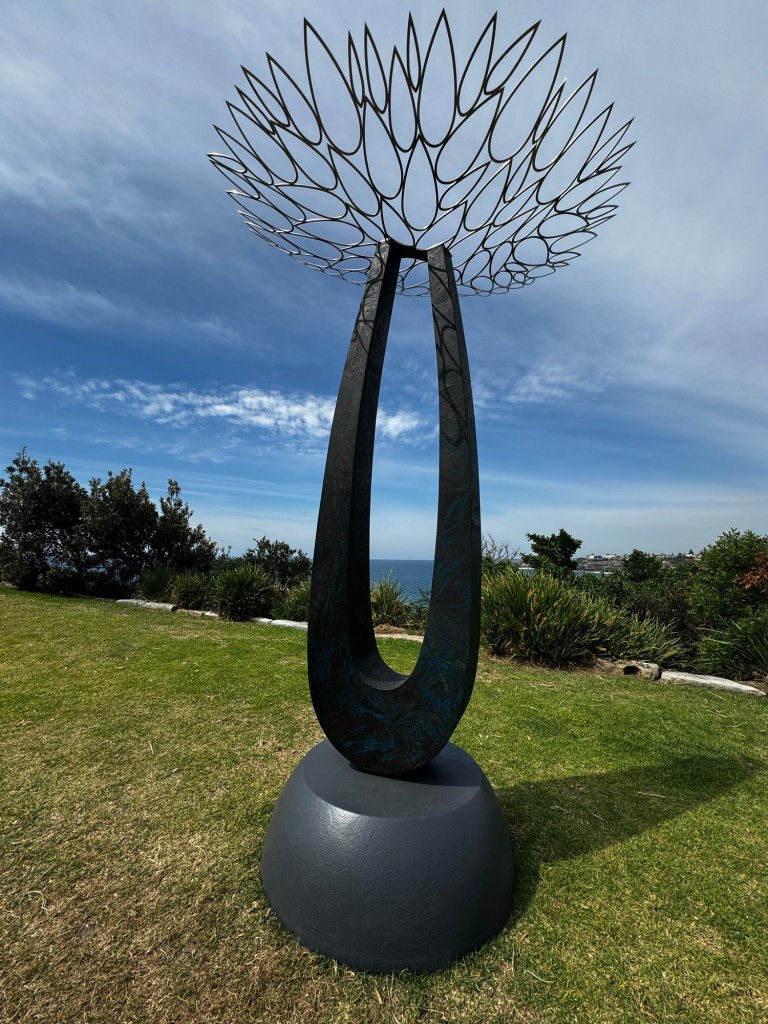
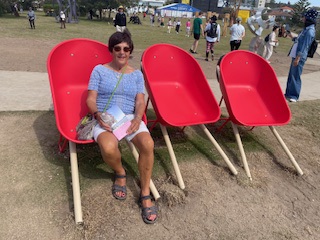
This was a much more relaxing day for all of us. A leisurely breakfast was followed by an Uber ride to Bandi Beach, where Mark, Catherine and I walked the 26th Exhibition of the Sculpture By The Sea. There were 100 pieces and we managed to take in almost all of them. Most were not of much interest to us, but a few were very good. The walk followed the shoreline and ended at another beach called Tamarama. Here are a few of the pieces I liked.

The gaze of a king-between conceit and indifference. The freedom to be oneself.
The turbulent Tamarama Beach

I took a short walk on Tamarama Beach, and then the three of us took an Uber to a fish restaurant called Doyle’s, where we met up with Martin and feasted on a delicious lunch of fish and chips and mussels.

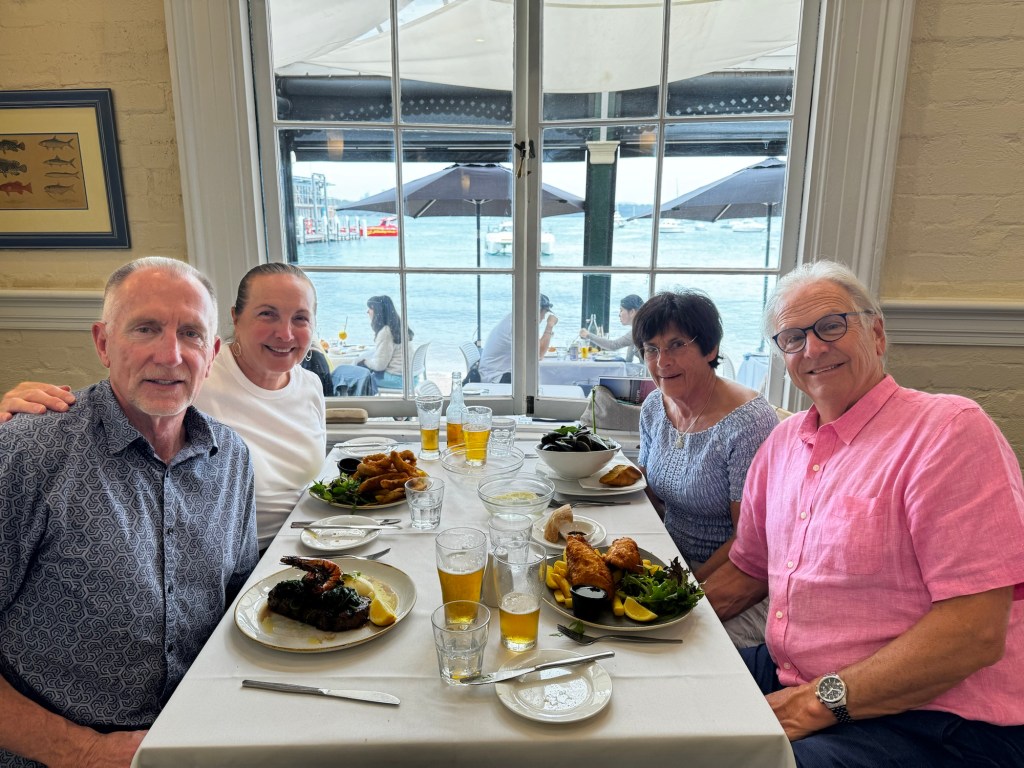
Then we hopped on a Hop on-Hop off boat and rode it to our hotel stop. By then it was late afternoon and we were all ready to have some down time and call it a day. We did meet up later in the evening for a light dinner and beer at a nearby pub.

Thursday, October 24, 2024

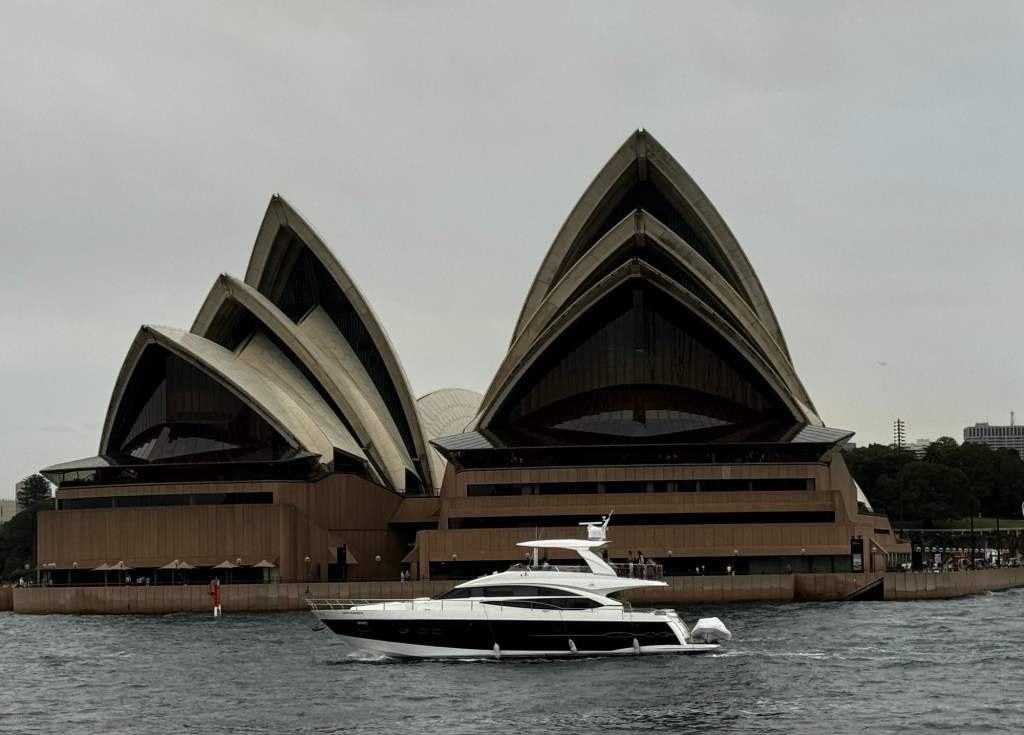
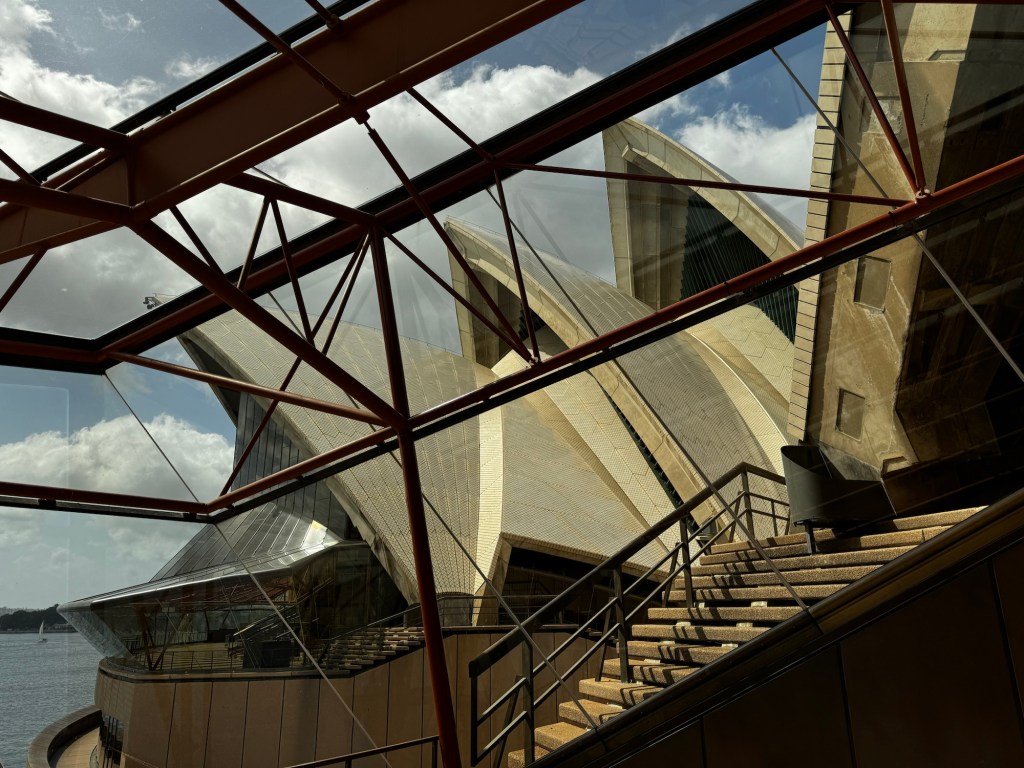
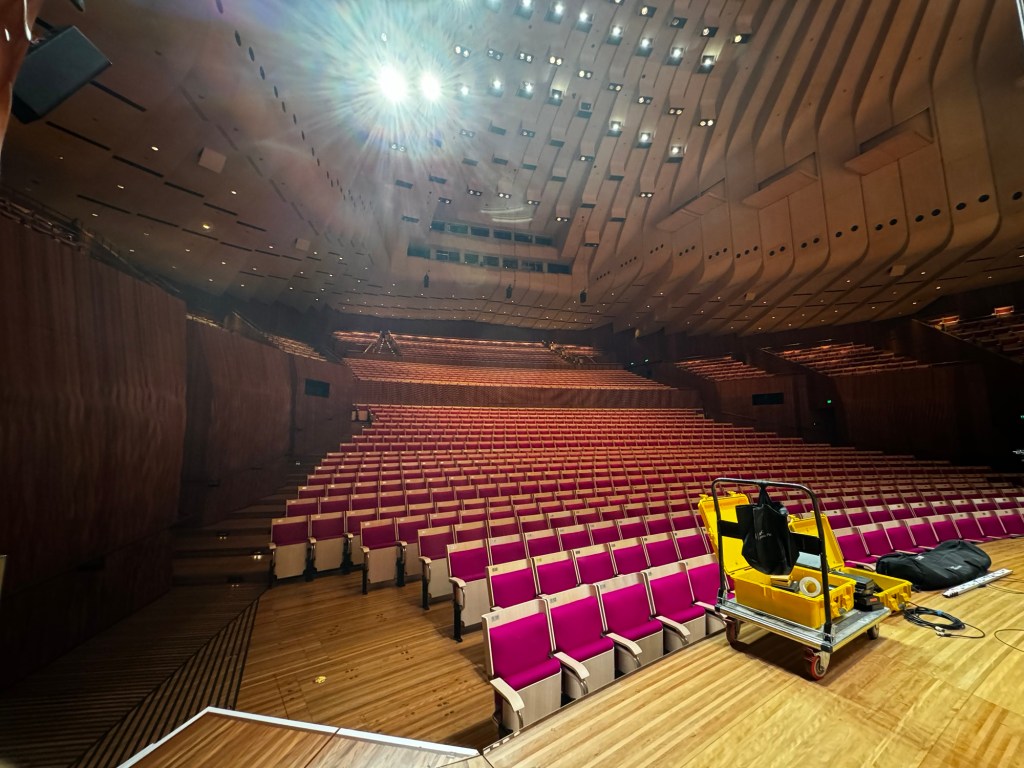
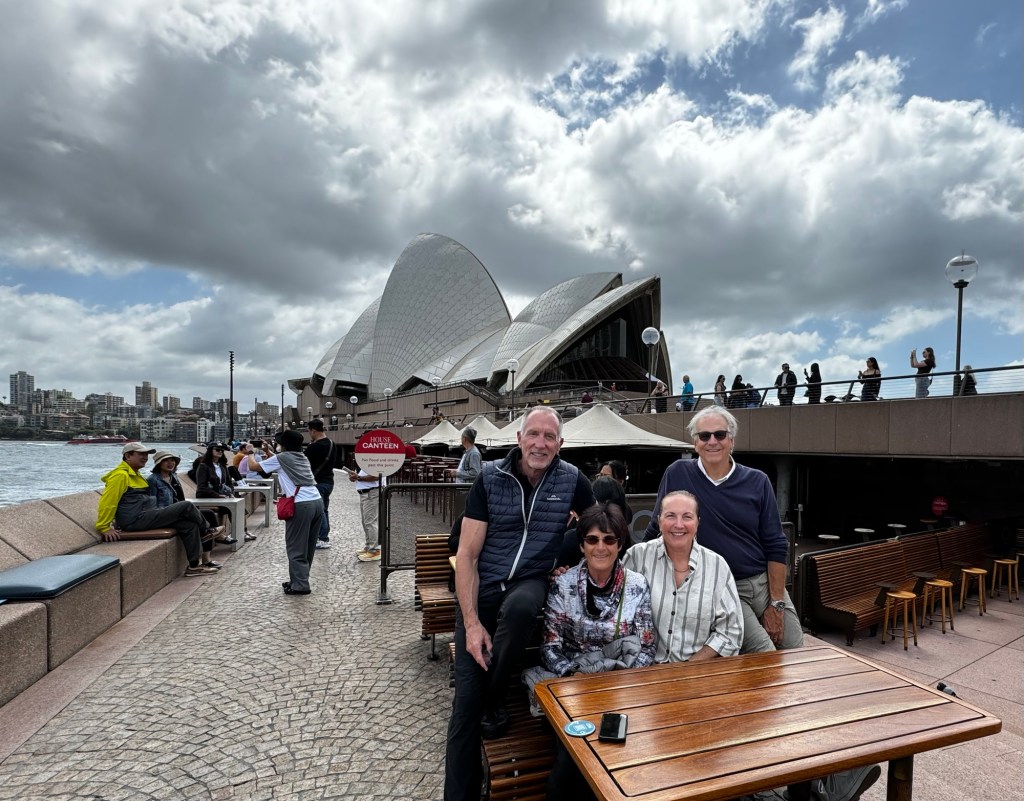
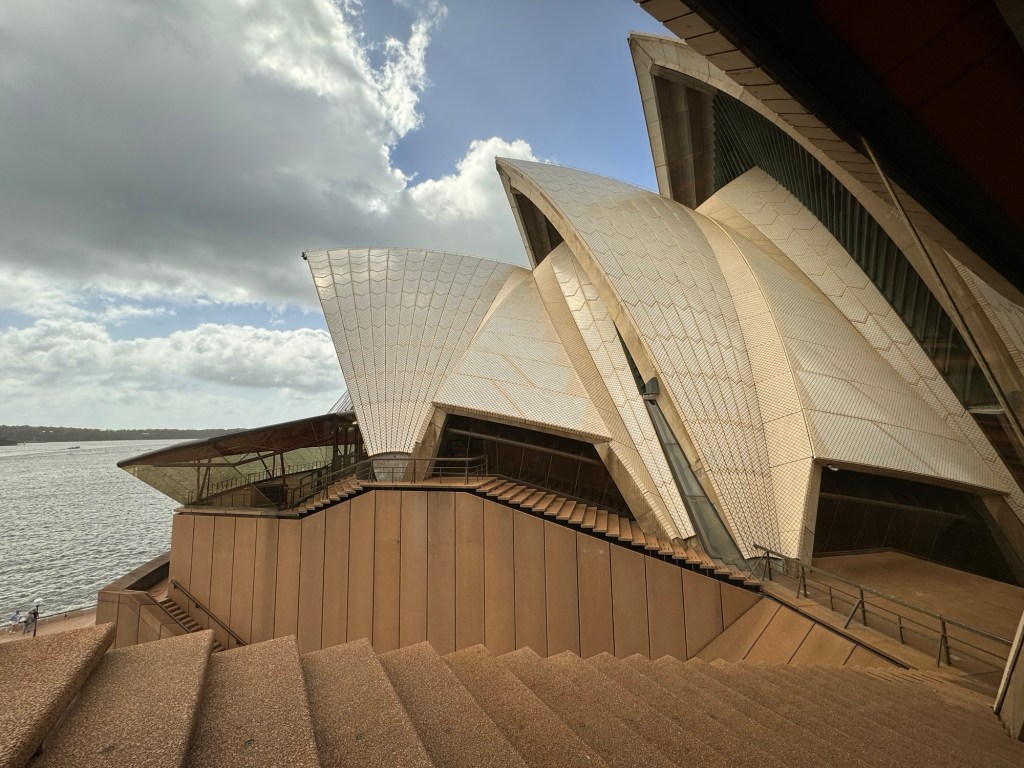
Sydney Opera House-near side is opera hall, far side is symphony hall. Seats descend facing left. The stages are under the tallest “sails”.

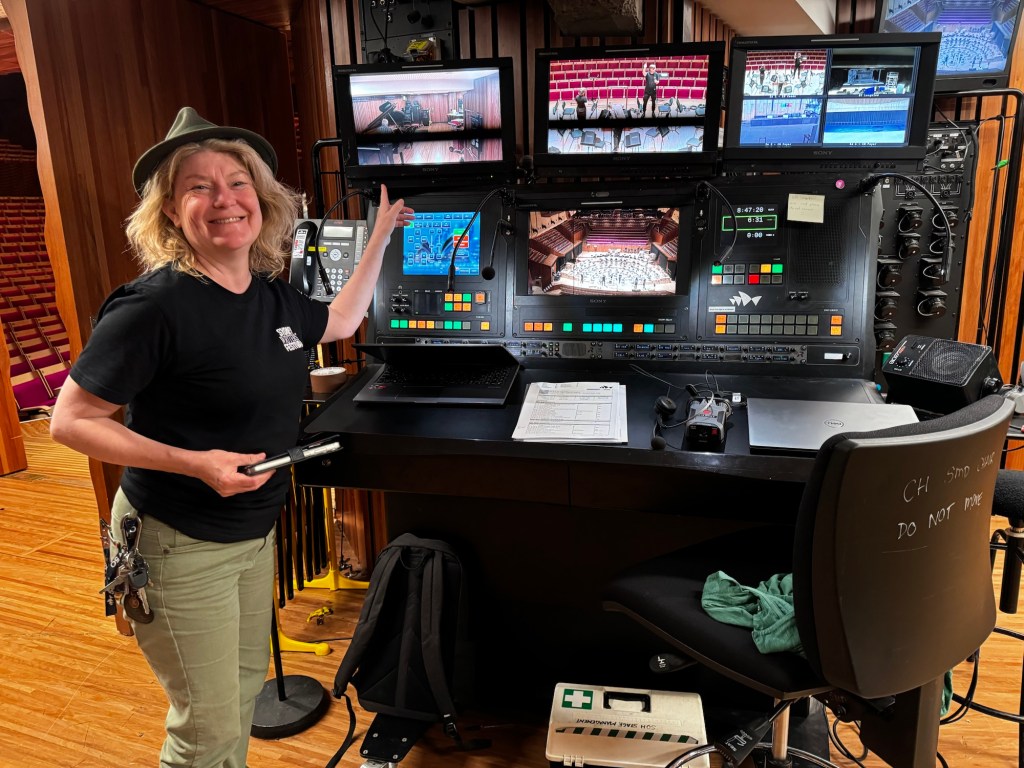
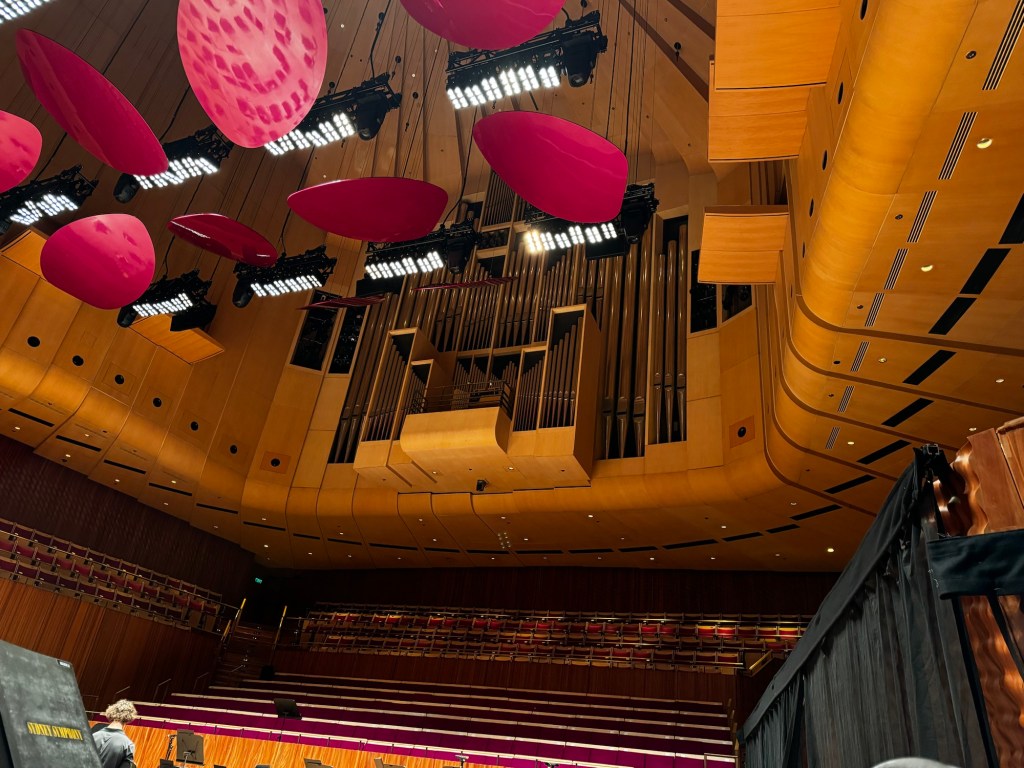
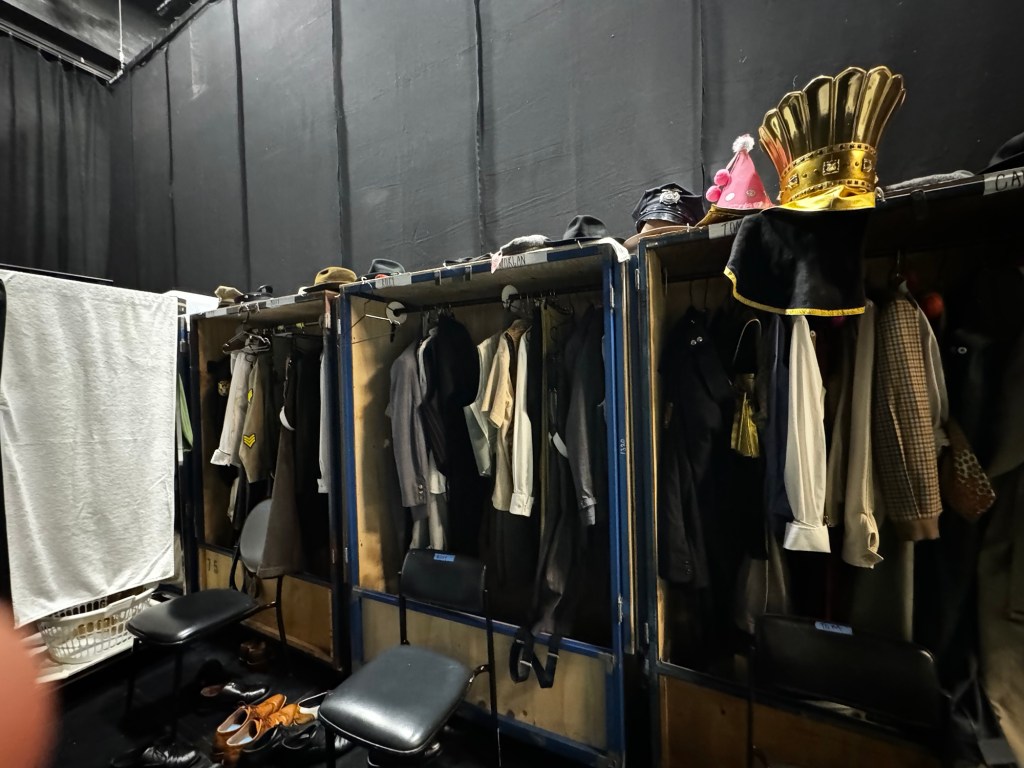
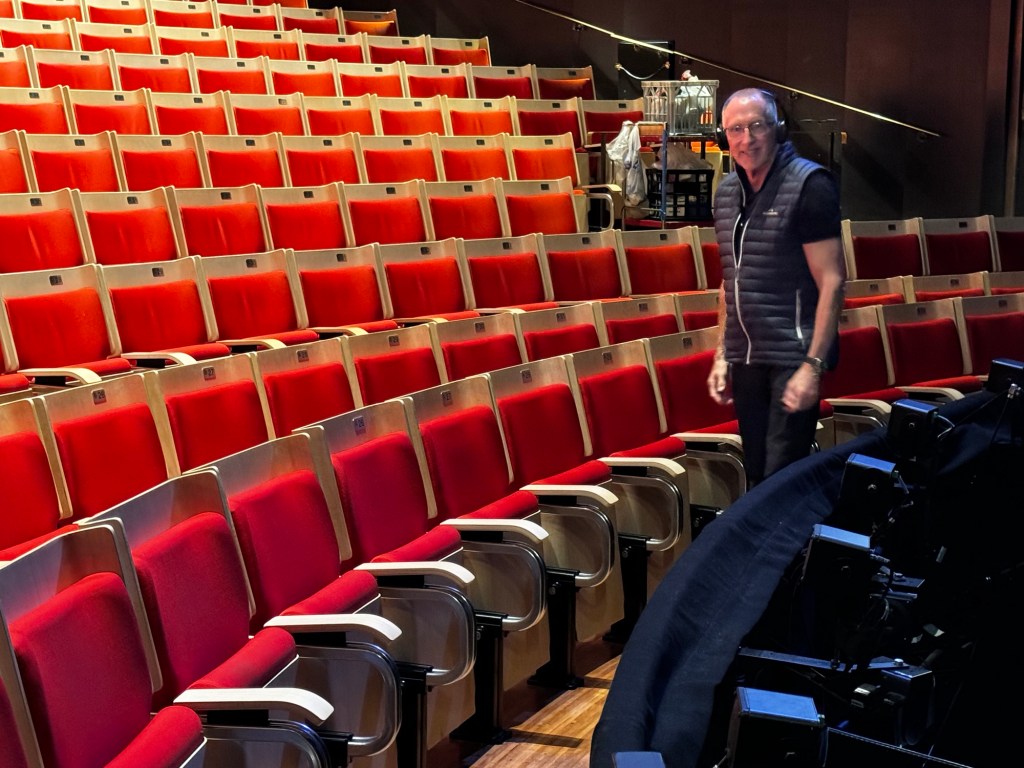
This was our Sydney Opera House day. We were up and at the opera house at 7am for our first tour, the inside of the house, back stage tour.We got to see all 5 of the theaters in the building and learned a few details. Building the facility took 16 years, somewhat longer to build than the original timeframe of three years, from 1956-1973. There were many architectural problems that took years to be resolved, including firing the design architect, Jorn Utzon. Renovations and adjustments were completed in mid 2023 at the cost of 255 million. The original cost of the building was estimated at 7 million but the final cost was 102 million. There are 12 floors below street level as well as several above. The largest hall, the Symphony Hall, has 2700 seats, all made with white birch as it is a soft, absorbent wood. The Opera Hall, named for Joan Sutherland, whom I heard sing in the San Francisco Opera House in the 70’s, has 1500 seats. The building occupies 4.4 acres of land, is 600 ft long and 394 ft wide. It is as tall as a 22 story building. The interior is substantially covered in white ash plywood from northern Australia.
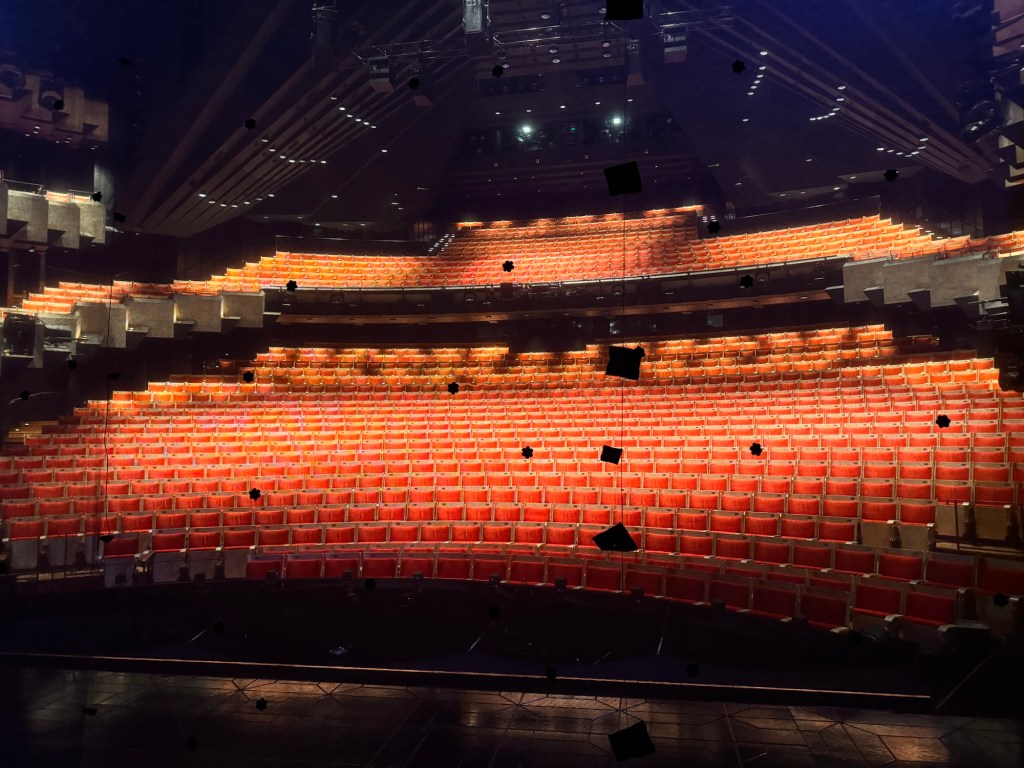
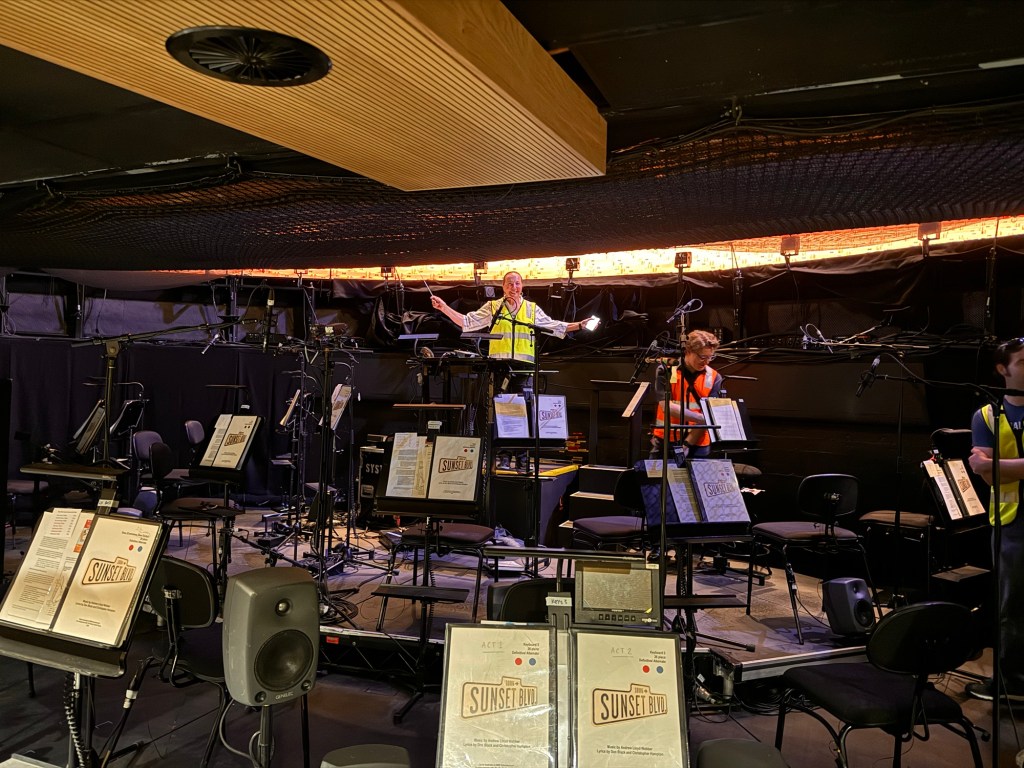
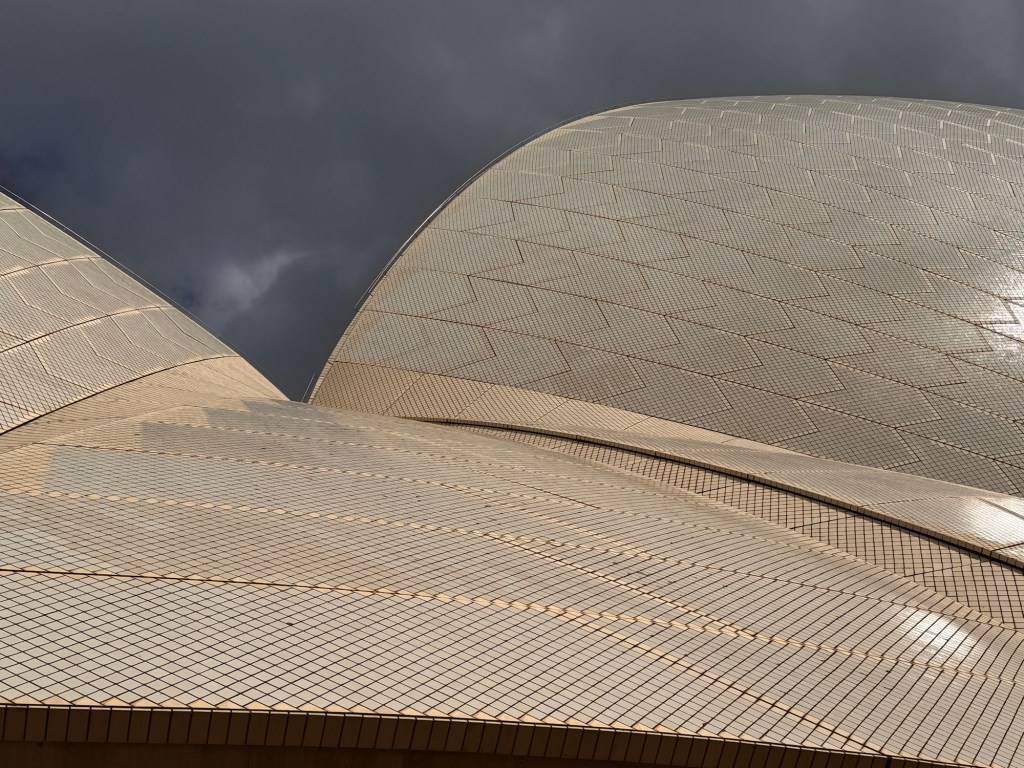
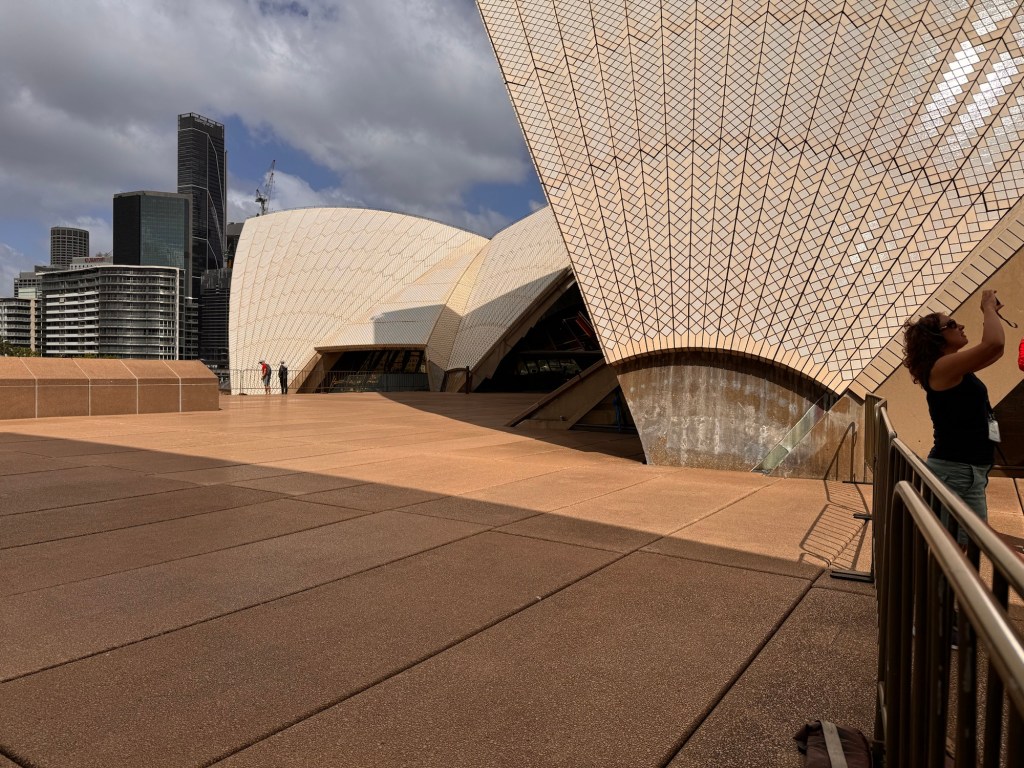
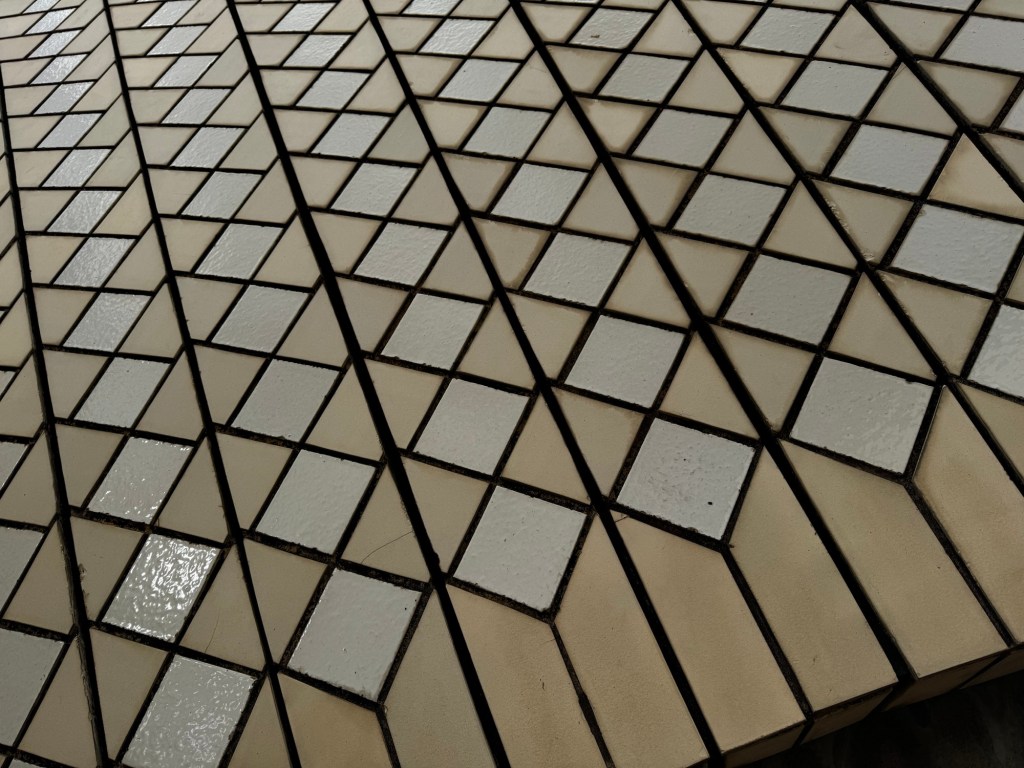
Then we had breakfast in the employee cafeteria and dashed to our second tour of the exterior of the building. There are 1,056,006 tiles covering the opera house. There are two colors,polished white and matte cream.

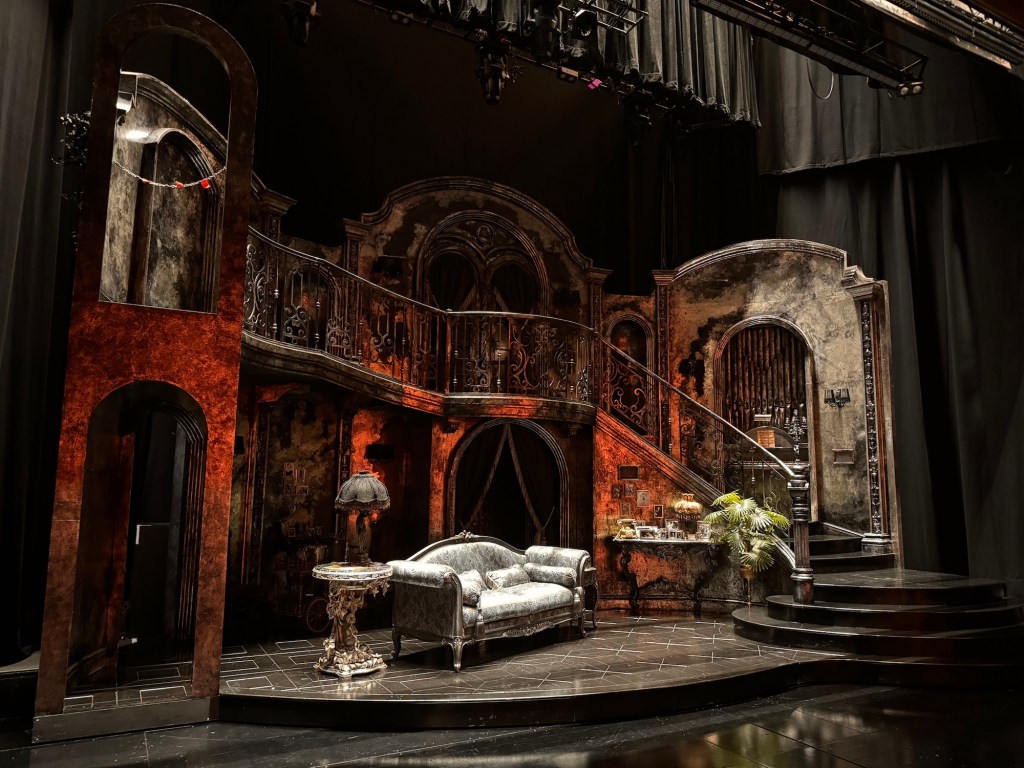
Prop for Sunset Boulevard

Back at the hotel by noon, there were no plans and we all felt like taking a break so we stayed in our rooms until 5:30 when we assembled in Martin and Catherine’s room for Champagne and pizza.
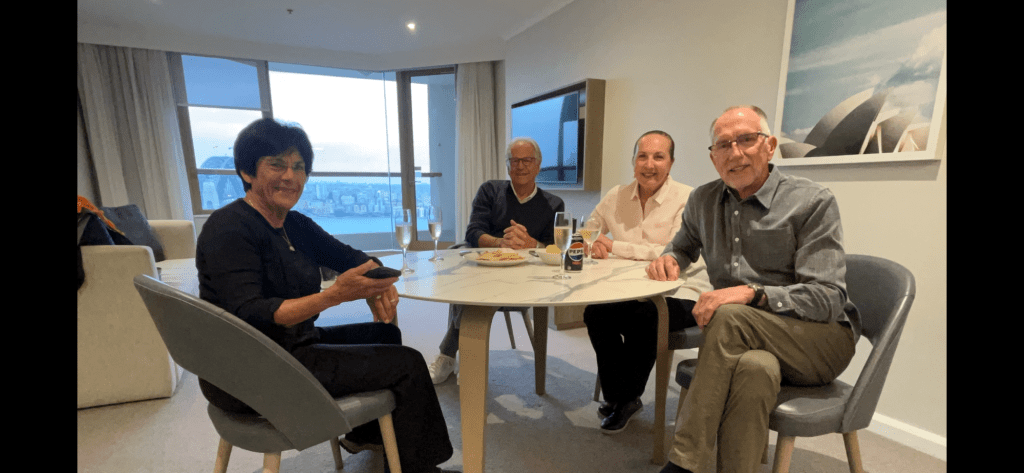
By 6:30 there was a light sprinkle so we wore our rain coats to the opera house for the 7:30 performance of Sunset Boulevard, a production by Andrew Loyd Webber. We had excellent seats in the third row center, but neither the music nor the performances were very exciting. Apparently even the newspaper had unflattering reviews about Sarah Brightman, the elderly actress who played the lead. Mark and I smiled at each other during her bad opening song. I was embarrassed for her, but the audience seemed to support her with enthusiasm and gave her a standing ovation at the end. We did not stand.

There were still a few light sprinkles on the walk back to the hotel so we wore our raincoats again. As it was 10:45 when we returned to our hotel. We all went directly to bed.

Friday, October 25, 2024

At breakfast we were still talking about Sarah Brightman and getting a good laugh. Then the subject moved to Trump and we stopped laughing.

At 11am we checked out of the Sebel Quay West Hotel, which we had enjoyed so much for its perfect location and stunning view. Martin, meanwhile, rescued his car from the 6th underground floor and off we went to the Toranga Zoo for our last adventure with the Whites.
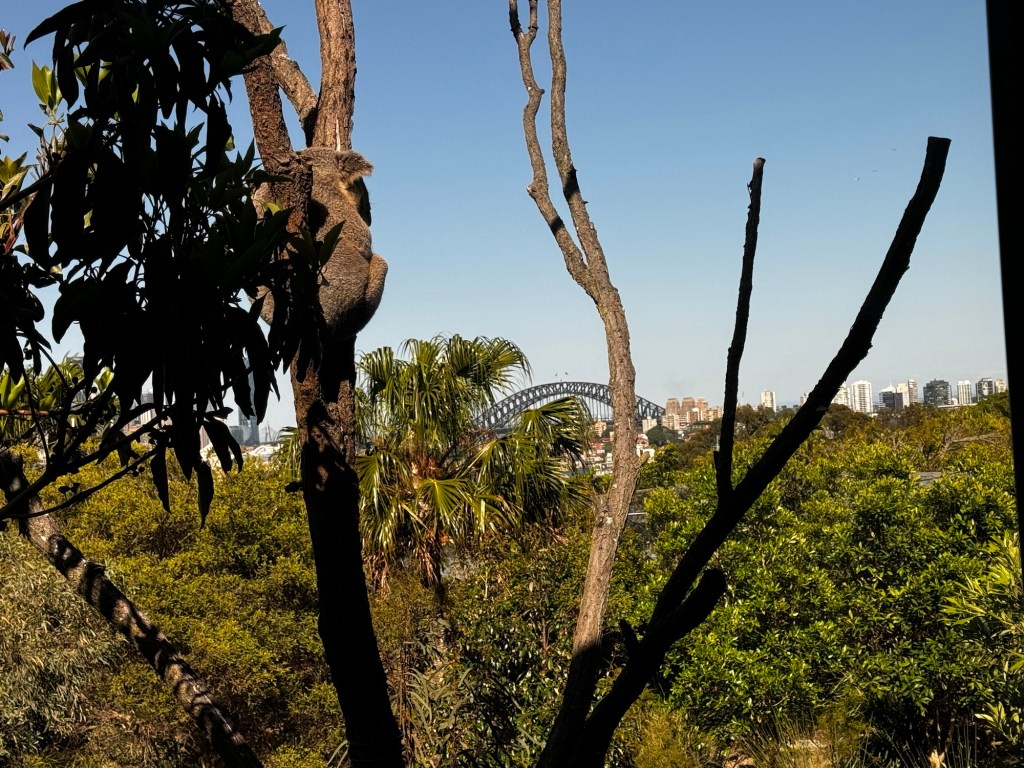
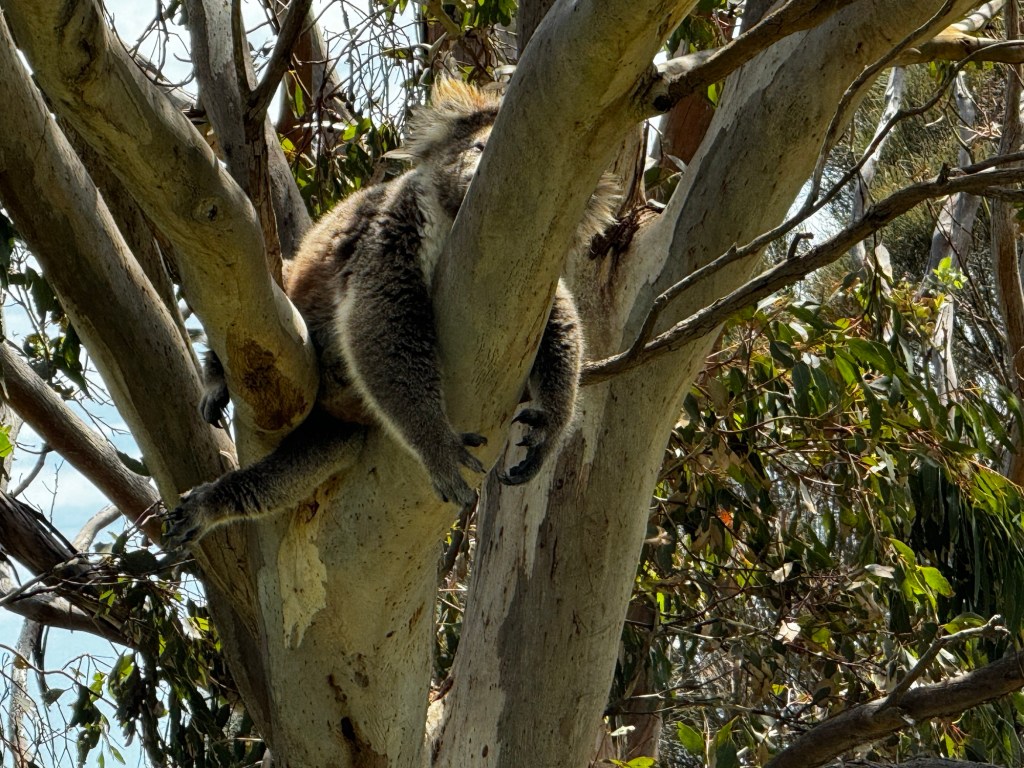
The city view from our Wildlife Retreat room with a sleeping koala

It was a 45 minute drive through the city to the outskirts where the Tarango Zoo was located. We checked into our rooms in the Wildlife Retreat at Toranga, and headed into the zoo.
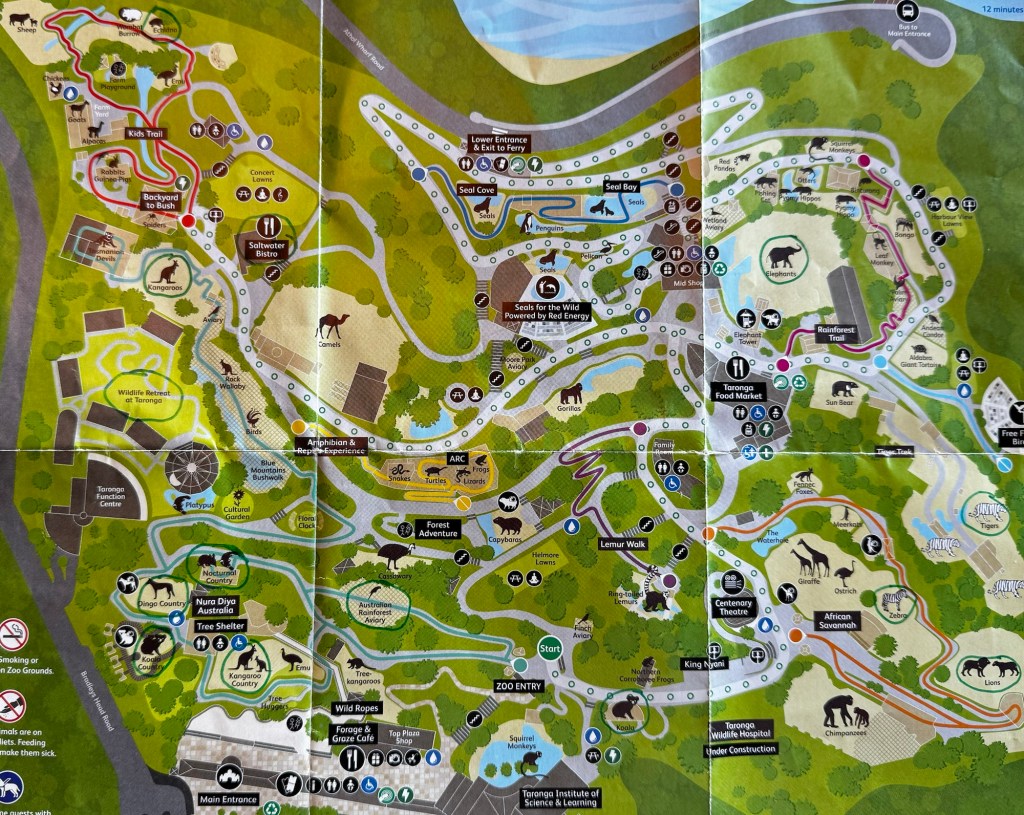
Our map was comprehensive. We circled the animals we most wanted to see and started walking.
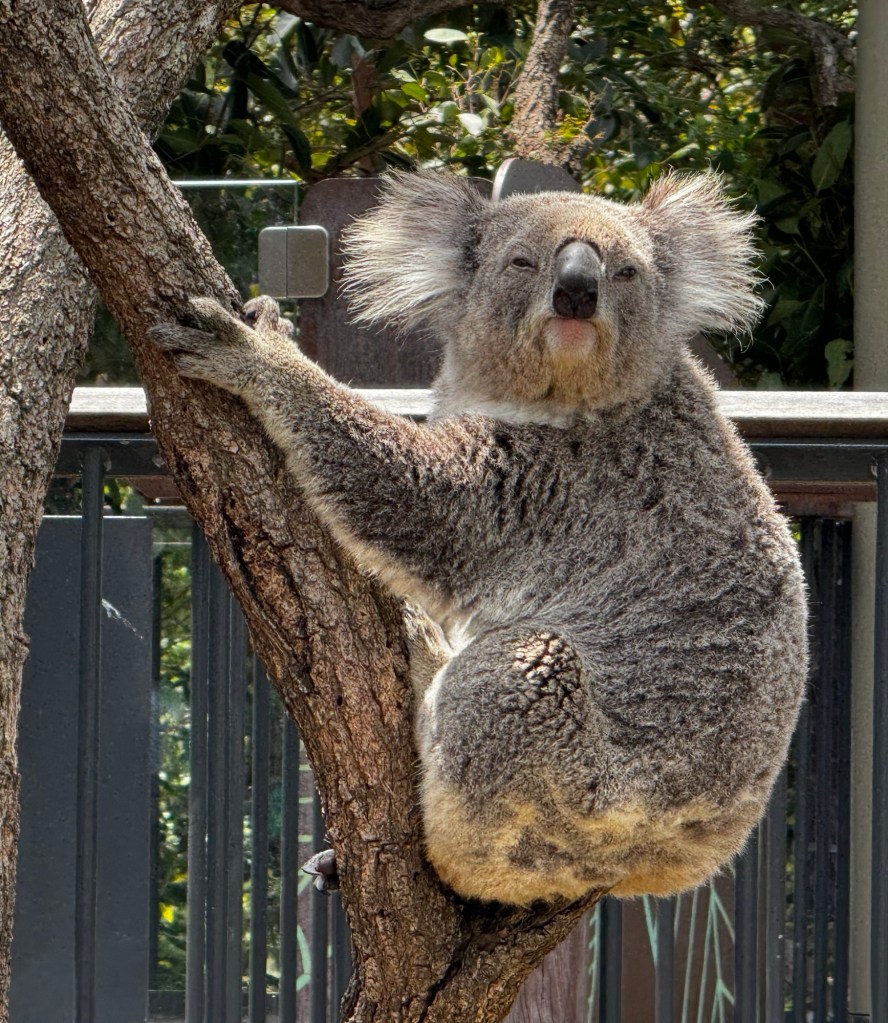
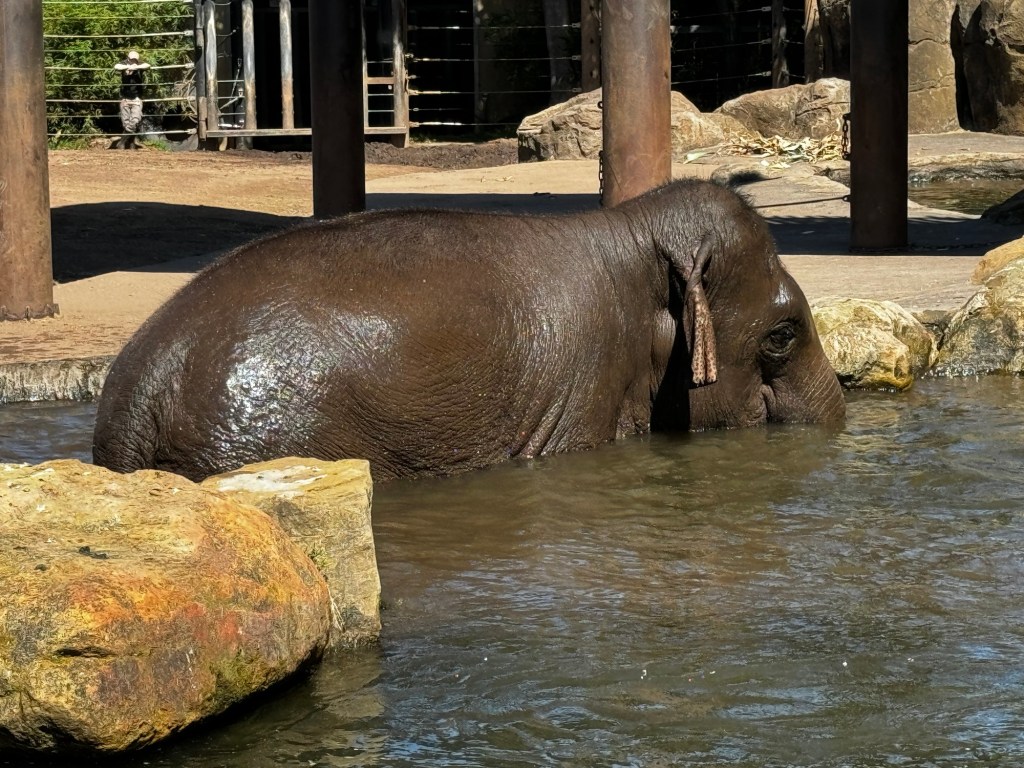
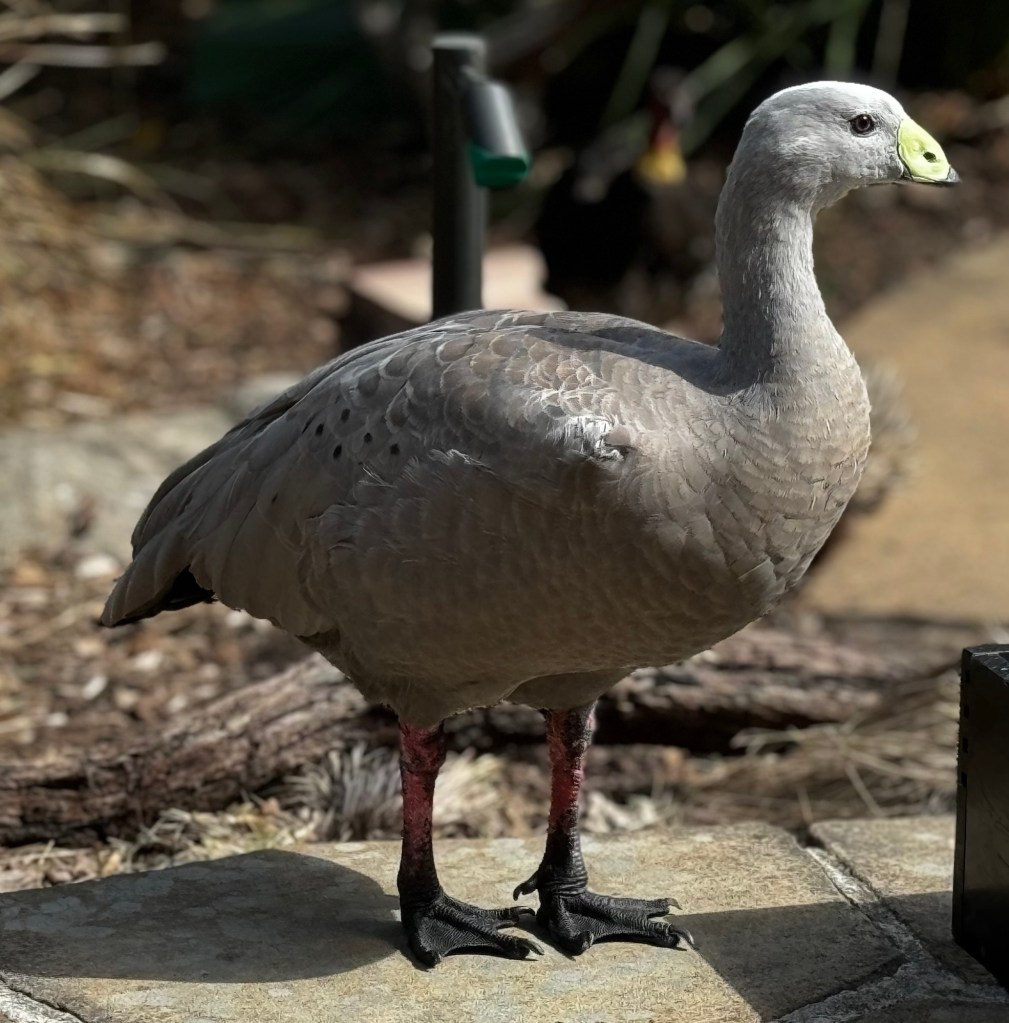
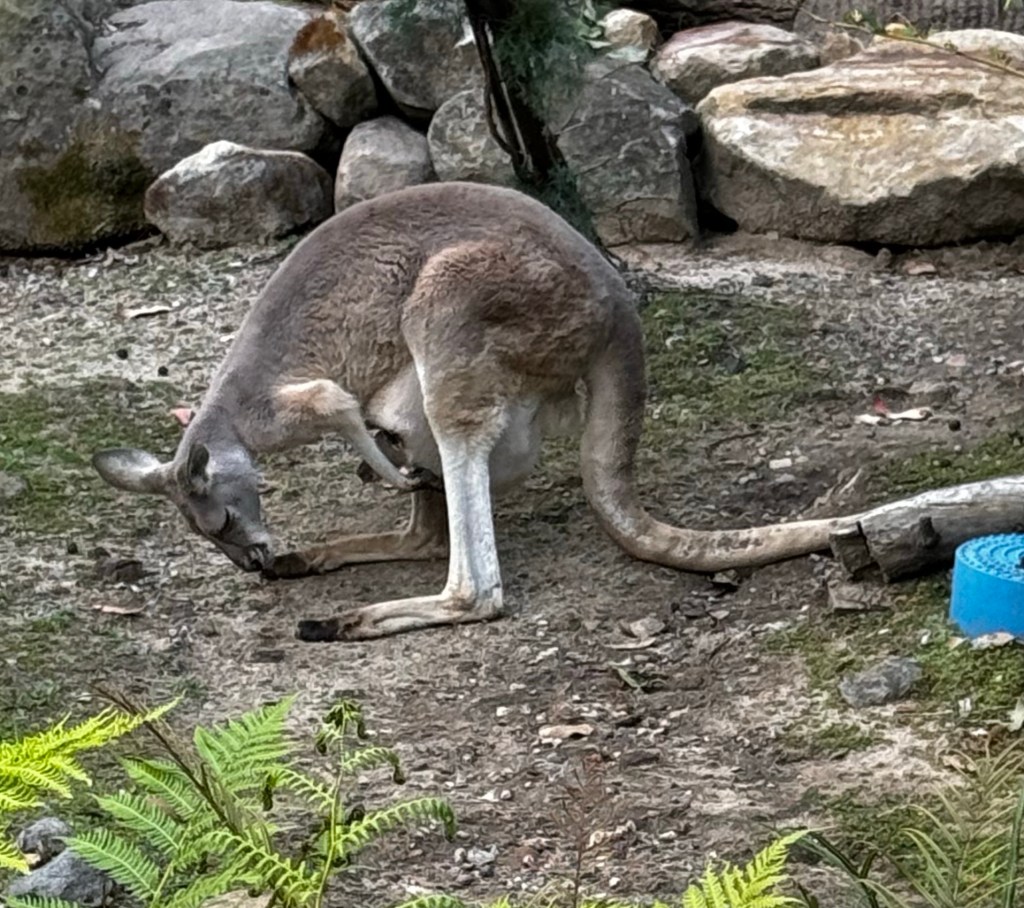
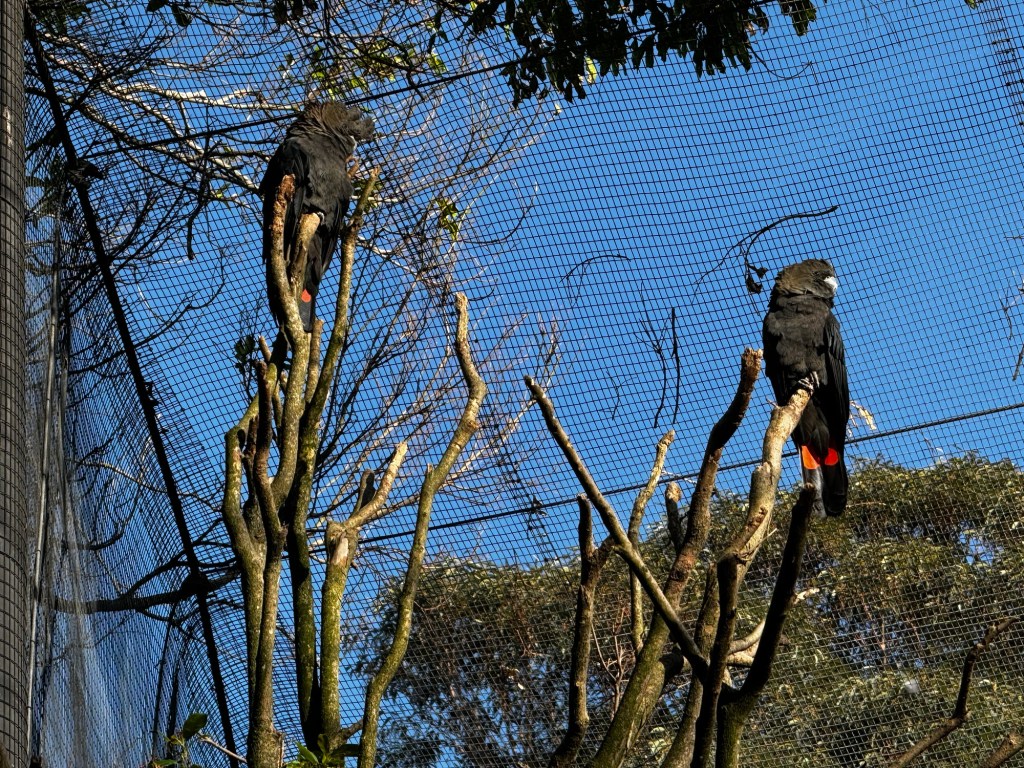
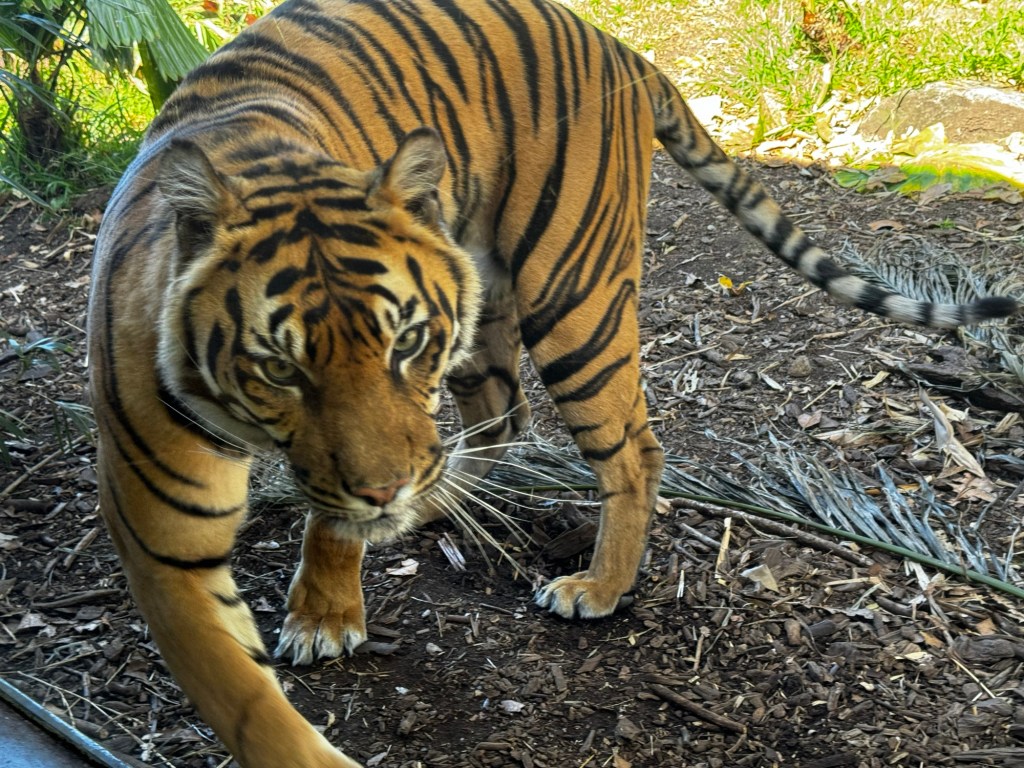
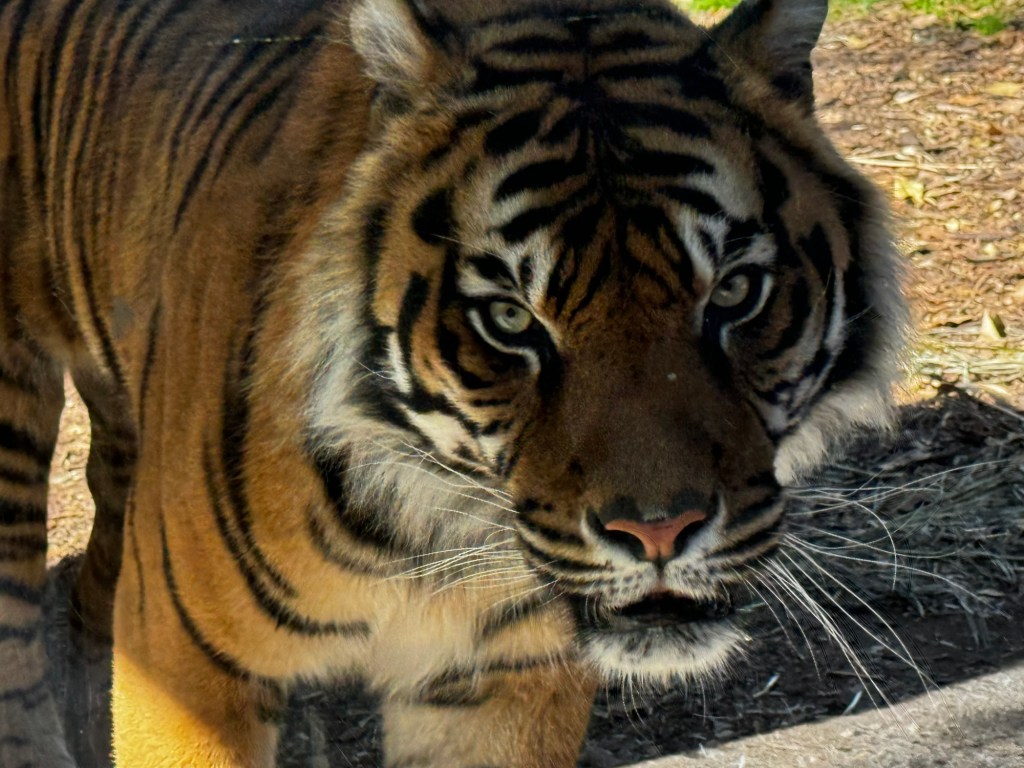
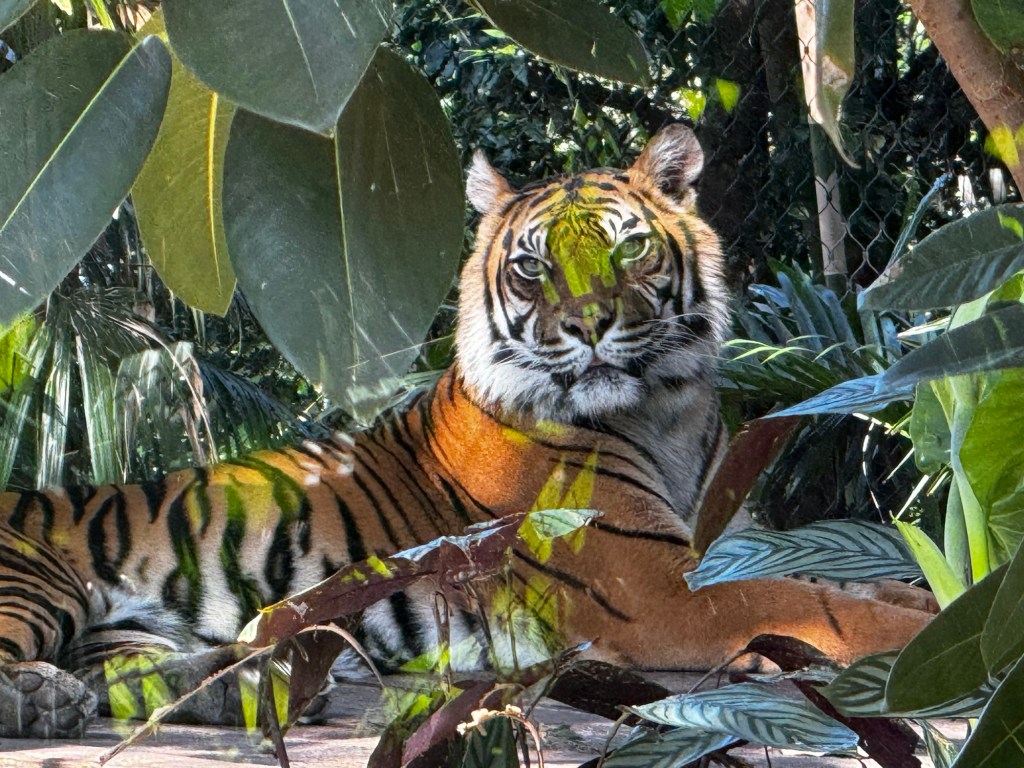
First we went through the Aviary, which was full of birds even Mark could not identify. Then we covered Kangaroos and Wallabys, Koalas, Lions, Zebras, Elephants, Gorillas, Echidnas, other animals and finally Nocturnal creatures, trying hard to see the platypus, to no avail.

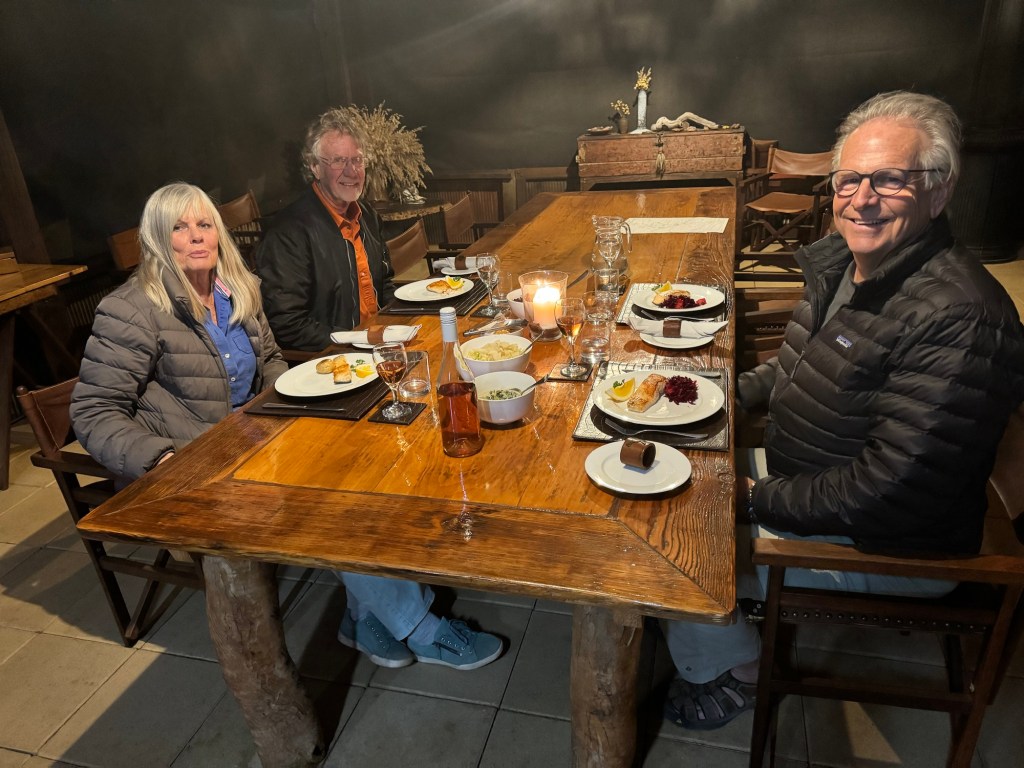
Enough animal watching for one day. Back in the Retreat, we cleaned up and had one last dinner together right at the hotel. A “feast” of a meal we enjoyed along with several glasses of wine and much good conversation. We have already made plans to get together when they come to Nevada City next week, a few days after we get home.

Saturday, October 26, 2024

After breakfast and saying good bye to Catherine and Martin, we headed back into the zoo to see the animals we had missed. Here they are.
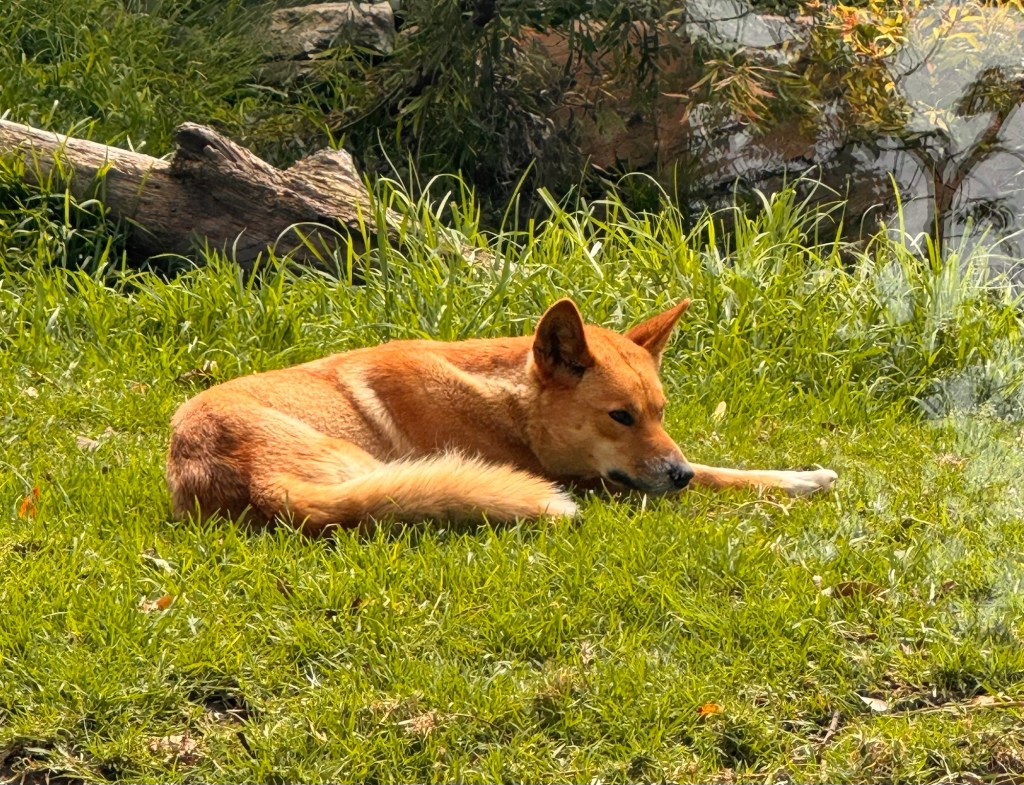
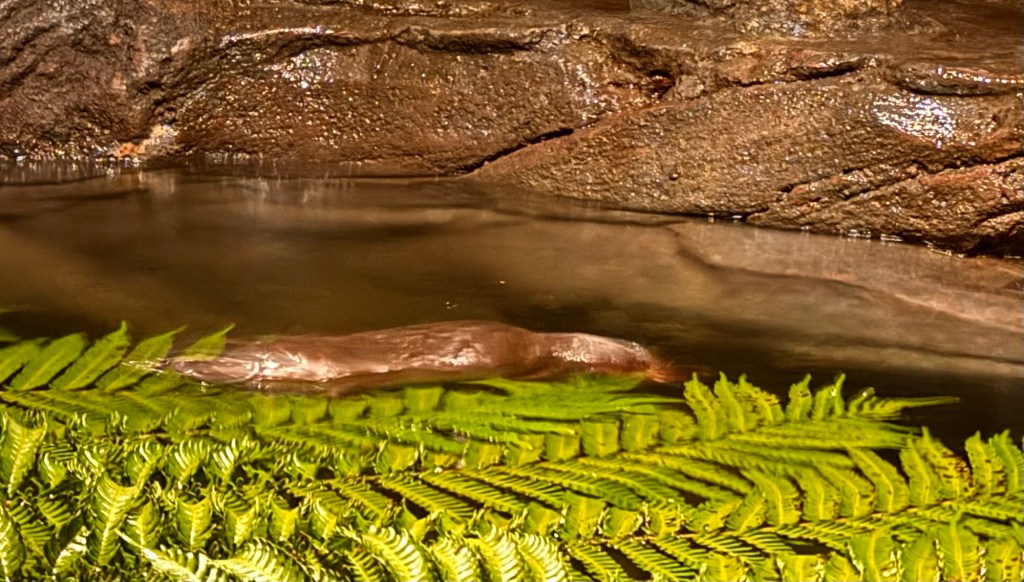
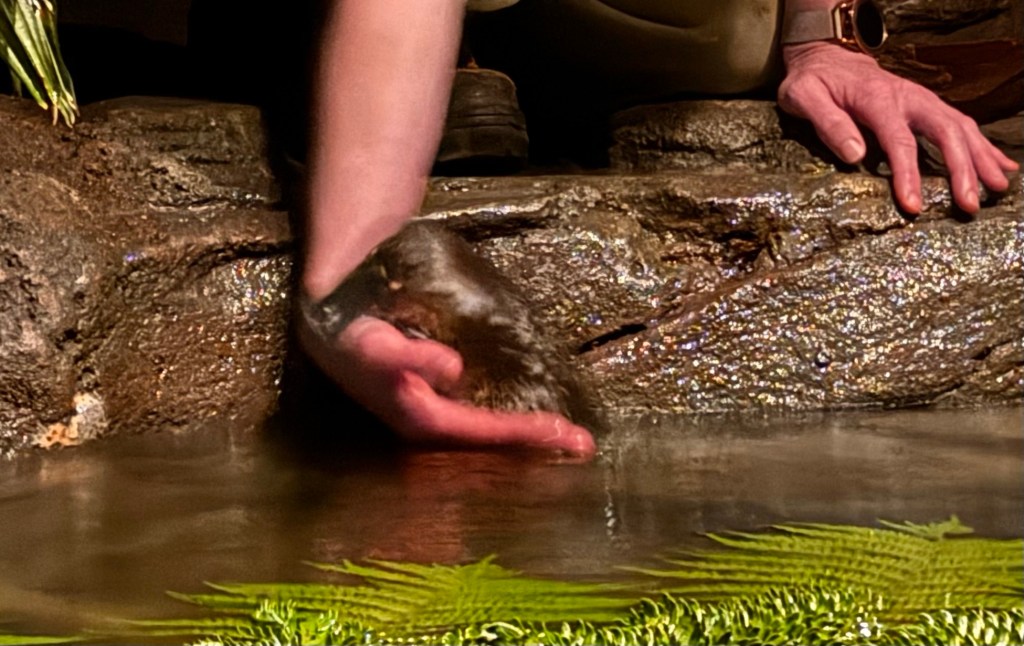
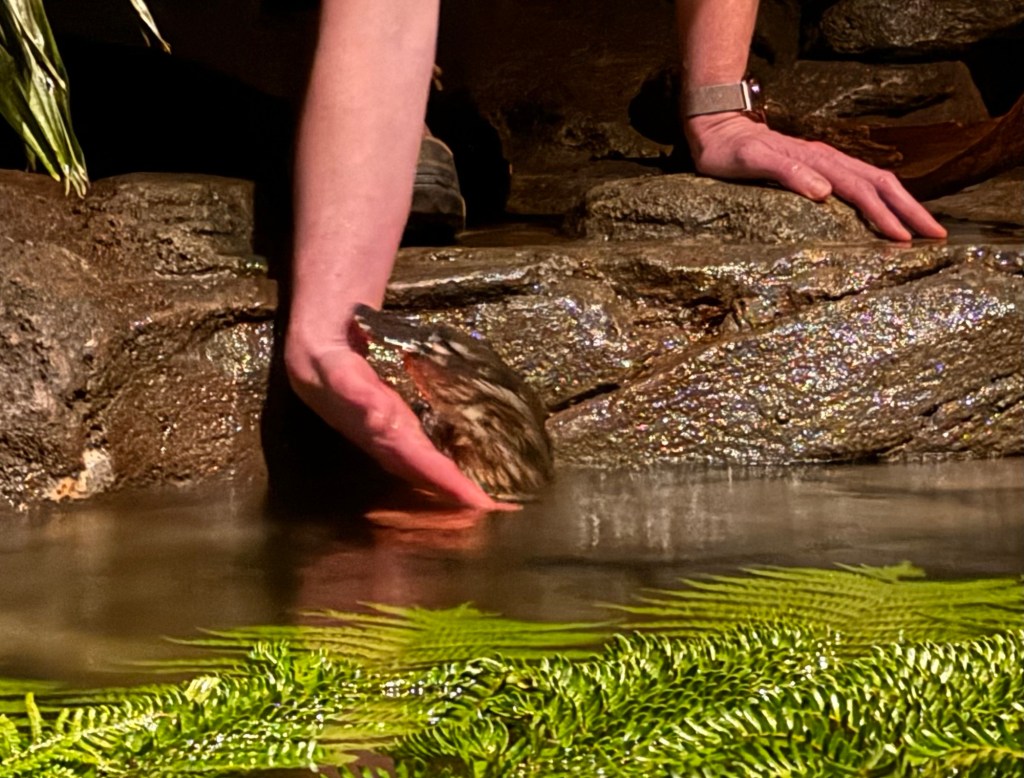
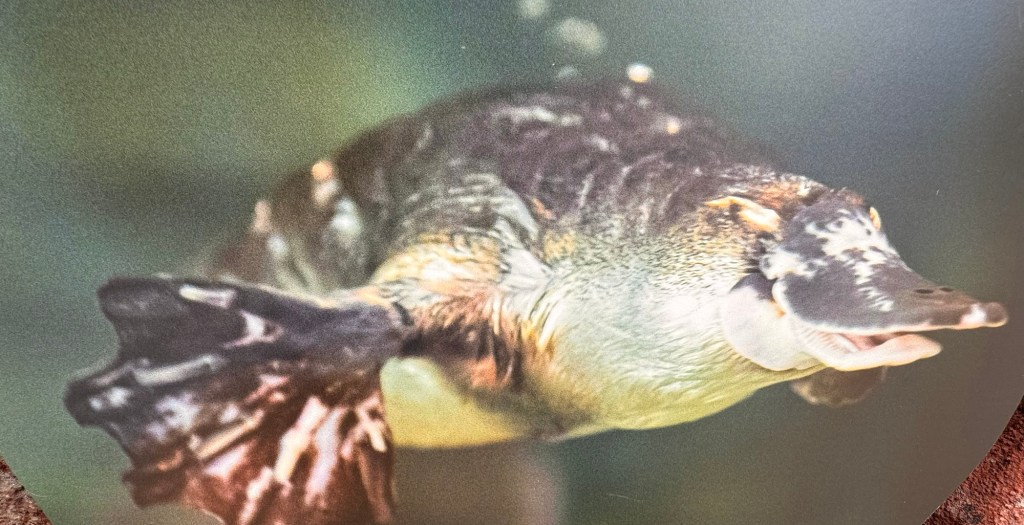
Mark and I had a reasonable viewing of them all this time, especially the platypus, named Matilda. I added another hour with the reptiles, but they were not very photogenic.

We packed up and left the Wildlife Retreat at about 12:30 and Uber’d back into the city for our final hotel stay, the Park Hyatt, which is located on the Harbor looking directly at the Sydney Opera House.
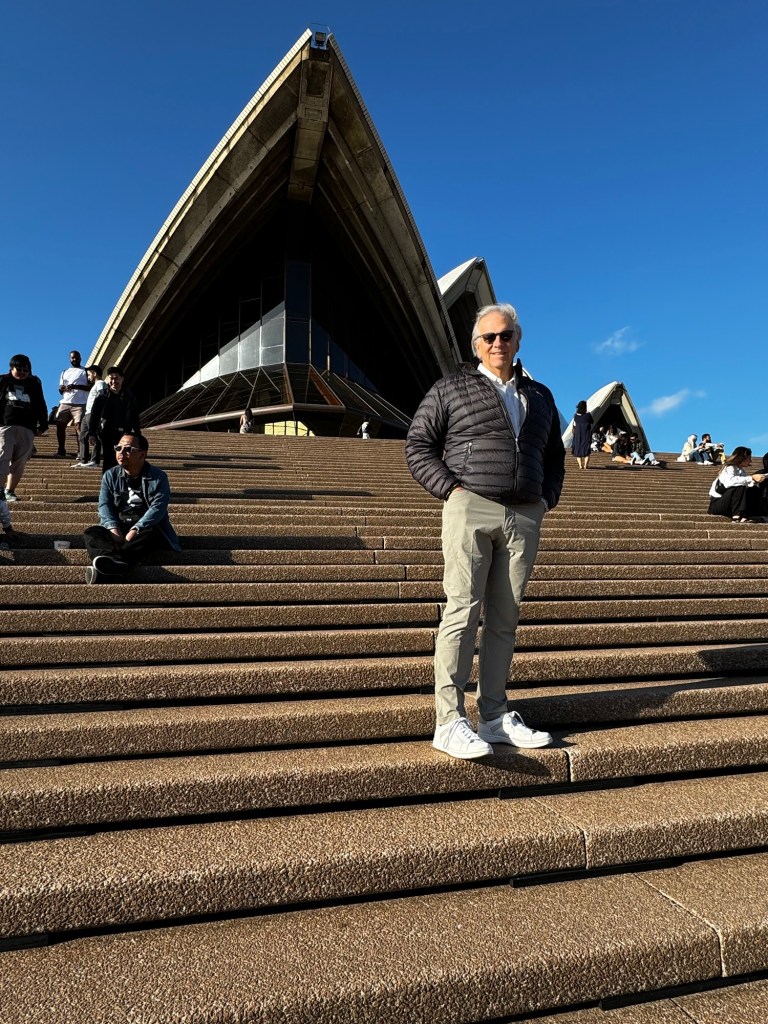
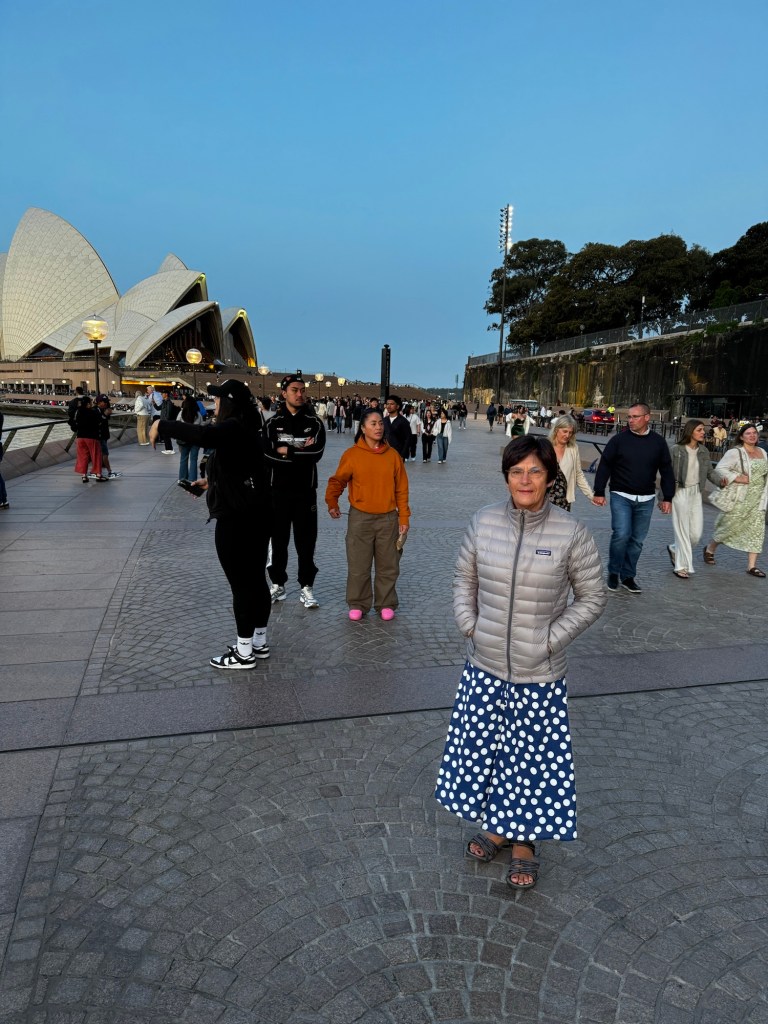
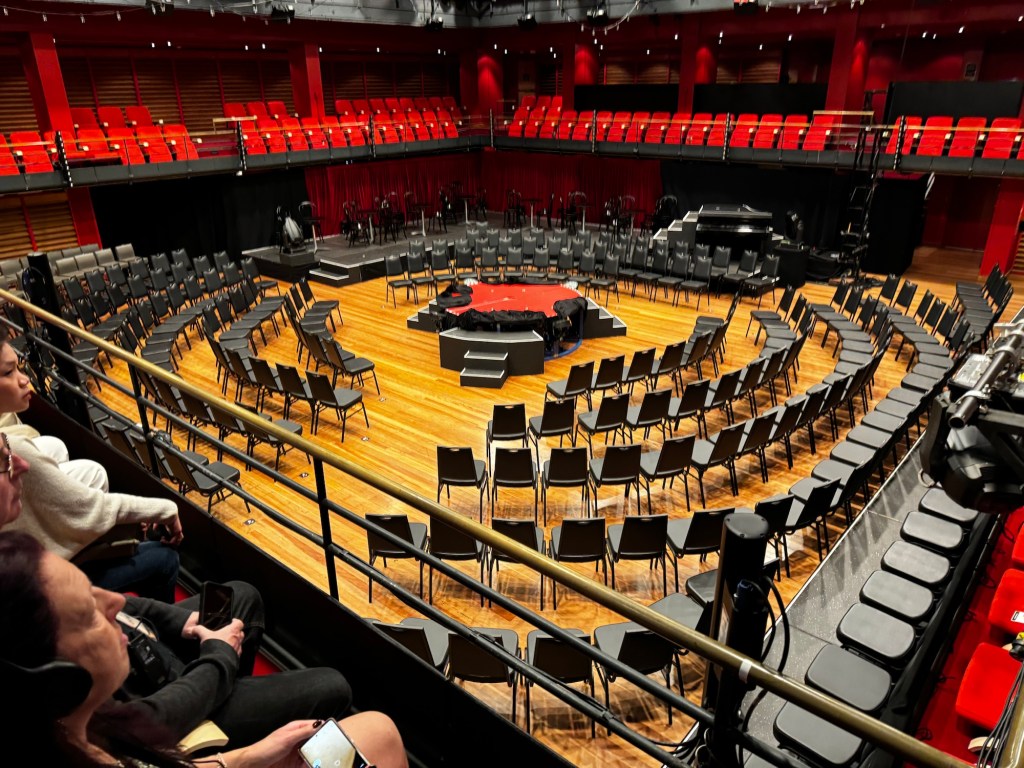
We relaxed the rest of the afternoon until time to go to our second performance at the Opera House. It was a risqué program being held in the Studio, the smallest of the 5 Opera House halls. It was set up as a theater in the round. There is a photo of it taken during the tour earlier. Here is the only photo I captured just before the show. And yes there was a bathtub in the opening act and lots of people in the front rows got wet.
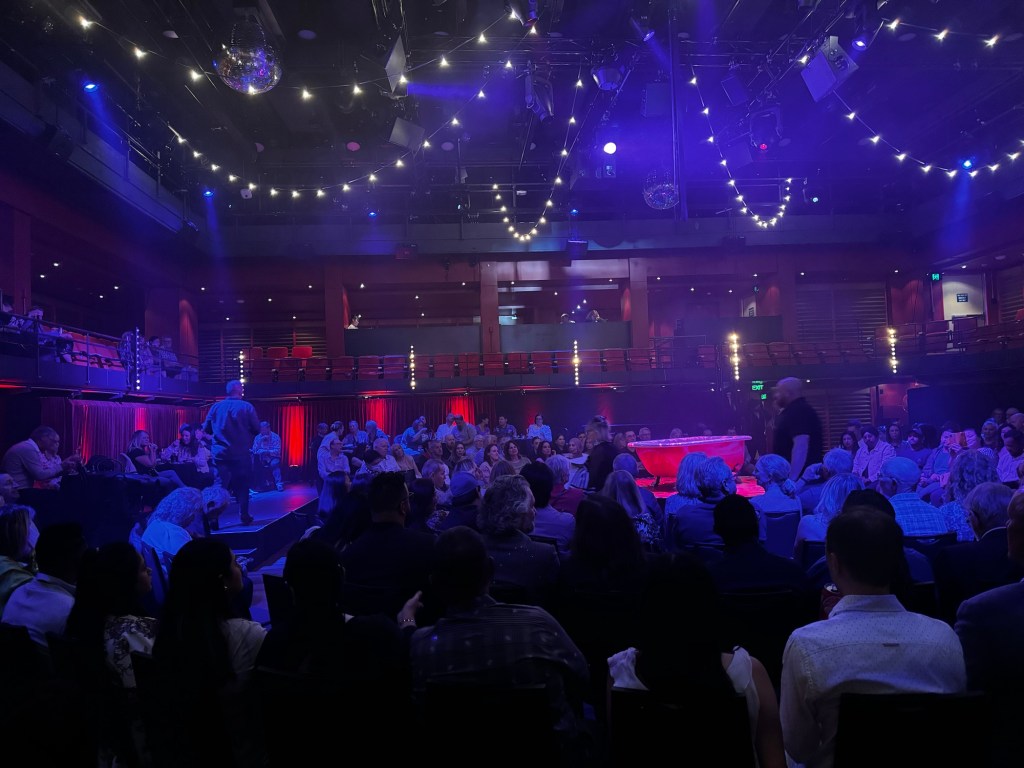
The place was packed and the entertainment baudy to say the least. There were 8 performers, each doing separate acts one right after another. Three acts were performed in the nude. What impressed me most was the muscular shape their bodies were in. Three other performances were done with silks and they were excellent. One lady did a performance with 4 umbrellas that was delightful. That and the last silk performance even impressed Mark. The show lasted about 1.5 hours and once out of the theater, we had diner at an outdoor cafe between the Opera House and our hotel. Mark had oysters again and I had scallops. We figure he has eaten about 6 dozen oysters on this trip.

Sunday, October 27, 2024

Another leisurely morning followed by a long walk through the part of the city called The Rocks. Bought a few souvenirs, including a new purse for me. Apparently Mark did not like the purse I have carried through this entire trip. Now I have a nice new one.
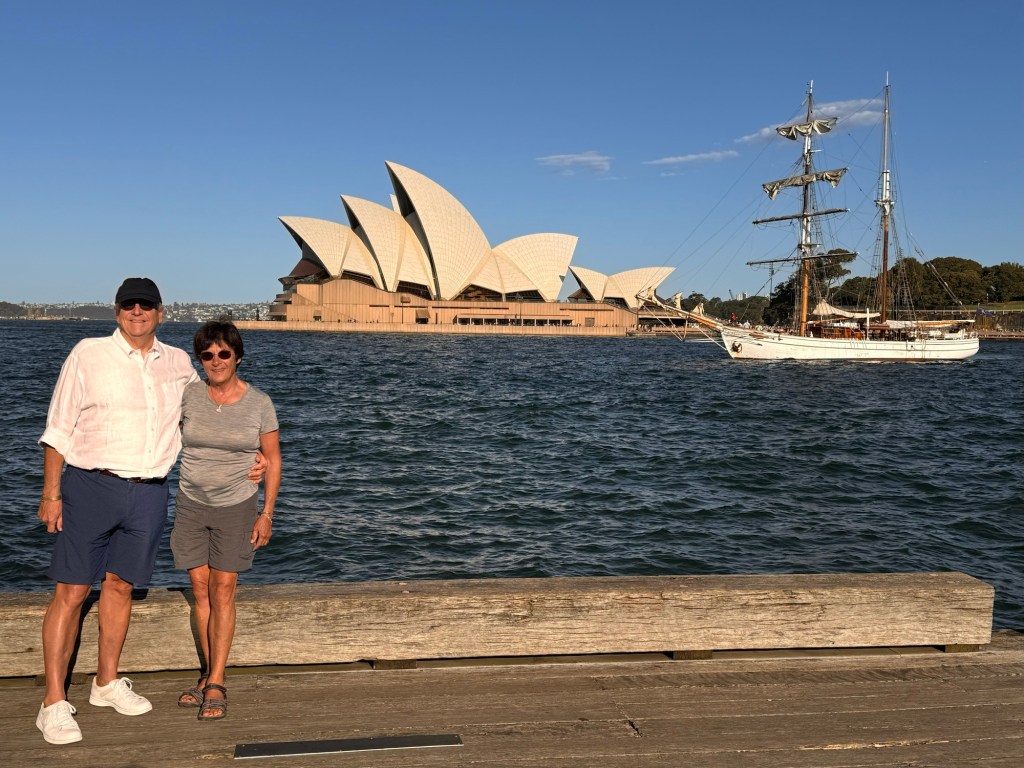
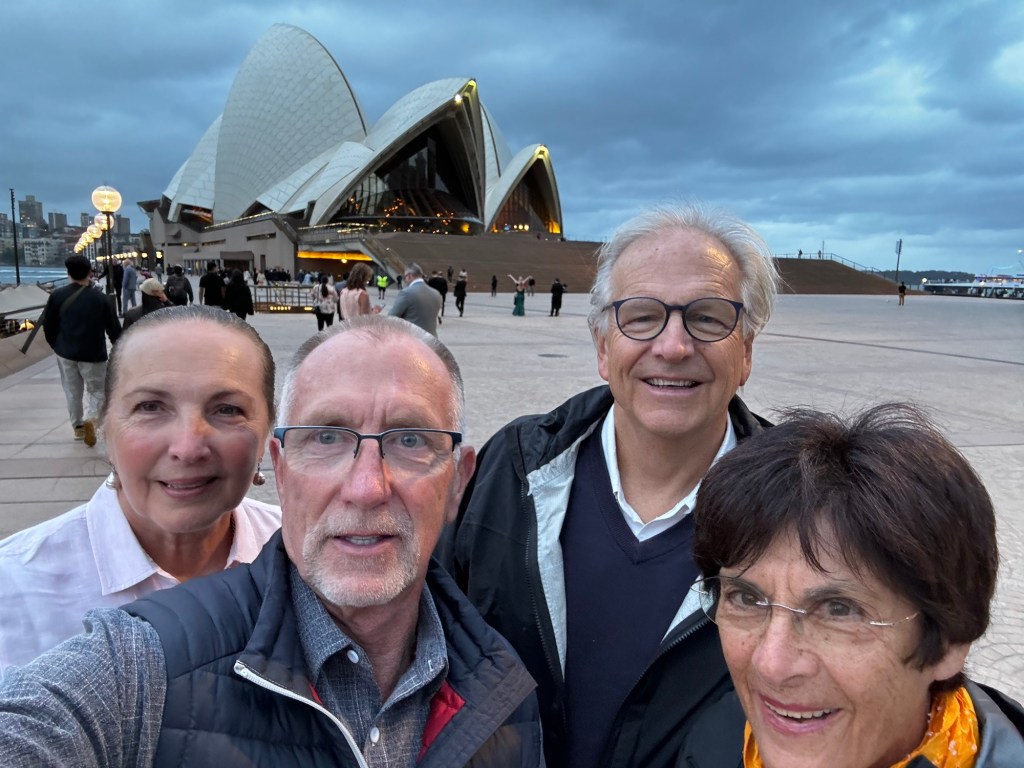
Last photo in front of Opera House

We had an early dinner on the street overlooking the Opera House. I ordered lobster and ate almost all of it. Mark had pork belly and ate the pasta in my lobster dish along with some of my lobster.
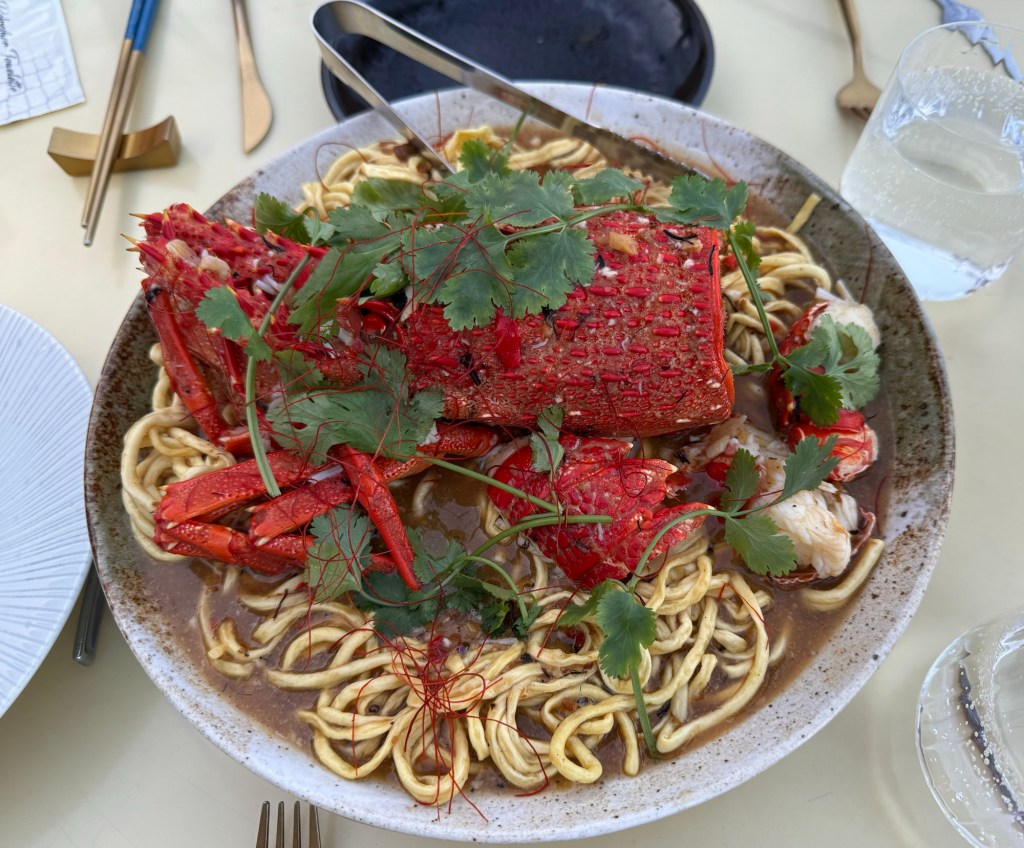
Fresh Rock Lobster and home made noodles

It was very tender and tasty. After dinner we walked back to the room and ordered dessert delivered. Nice finishing touch to our meal. Tomorrow morning, October 28, 2024, we get picked up at 9:30 and begin our return to Nevada City. After 24 hours of traveling, it will still be October 28 when we get home, a 41 hour day.

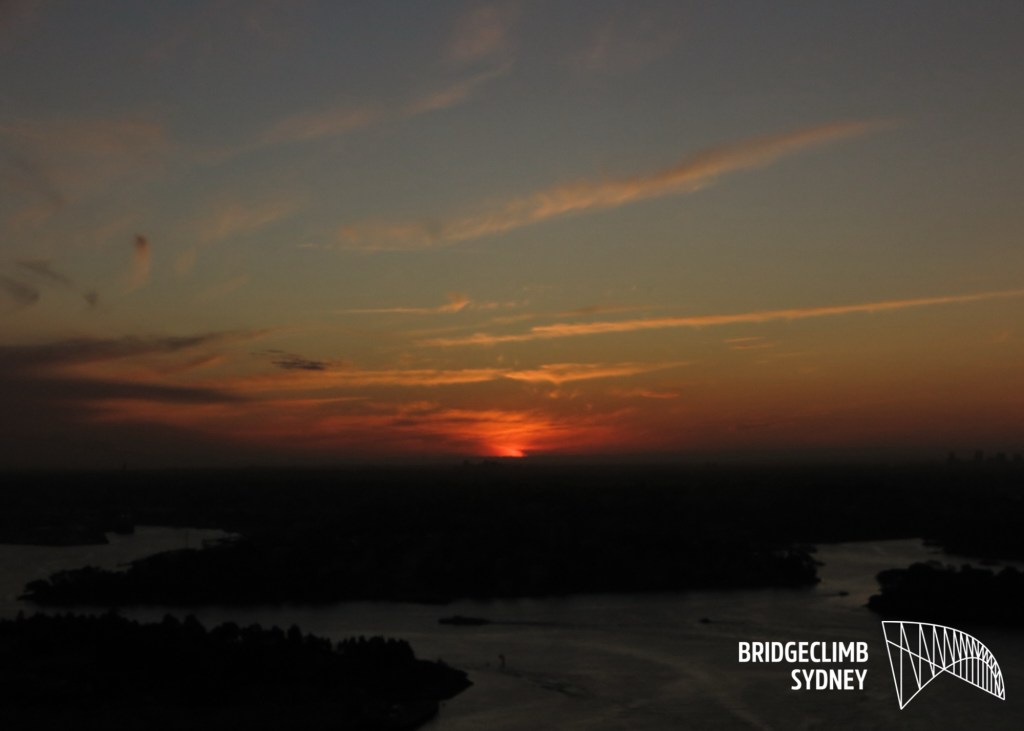
Sunset at Toronga zoo

Around Newcastle, New South Wales

Where we were with the Whites

Thursday, October 17, 2024

It was a long, slow travel day with one cancelled flight, another flight that was delayed, a missed connection and a wait for a third flight that put us into Newcastle at 8:30pm. We were supposed to be there at 3:30. Consequently, we missed dinner with our friends, Catherine and Martin, and instead, had a late snack, a glass of wine and some time to chat in their Fingal Bay house. We had no trouble getting to sleep.

Friday, October 18, 2024

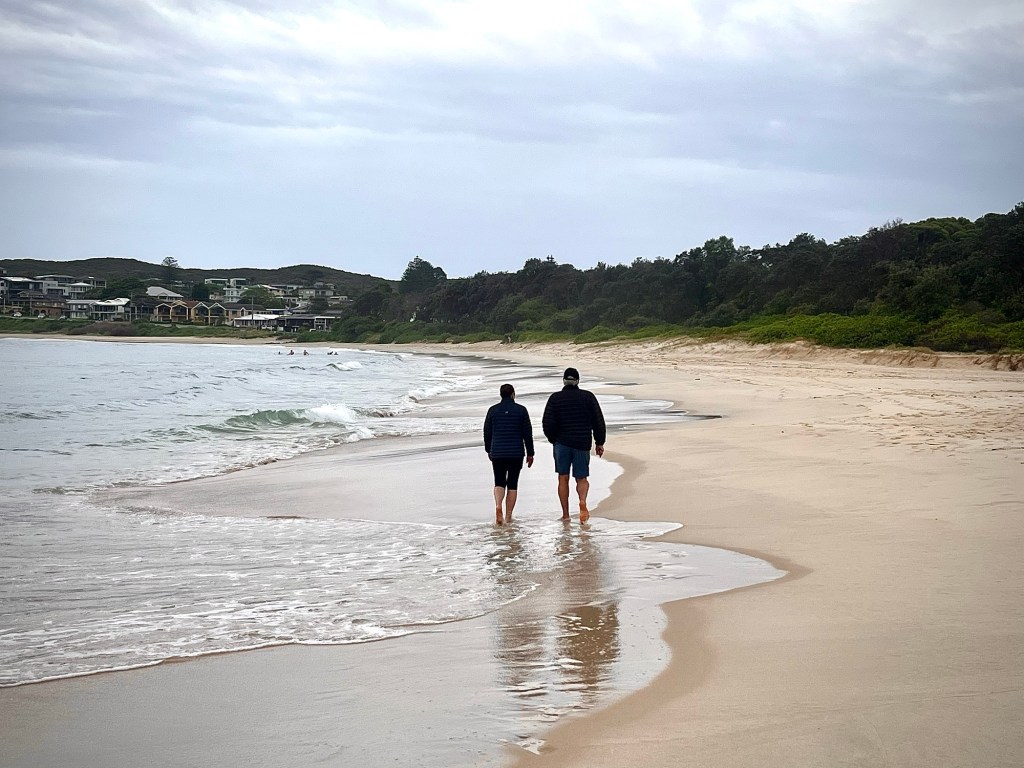
Fingal Bay is a small town right on the Pacific Ocean about 3 hours north of Sydney. Martin and Catherine gave us a tour of the town and we had a pleasant stroll at Nelson Bay marina and Shoal Bay beach in front of their townhouse.

Fingal Bay Beach

Back at the house, Catherine made us all tasty grilled cheese sandwiches, we packed up our bags and left for their primary home in Newcastle, an hour south.

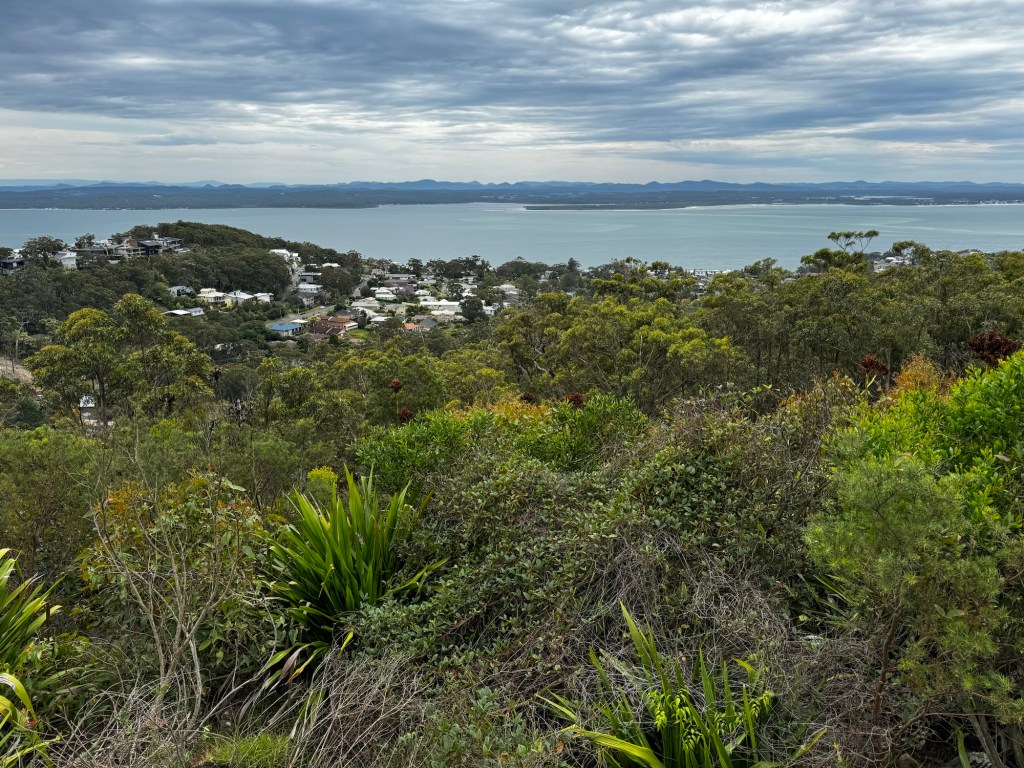
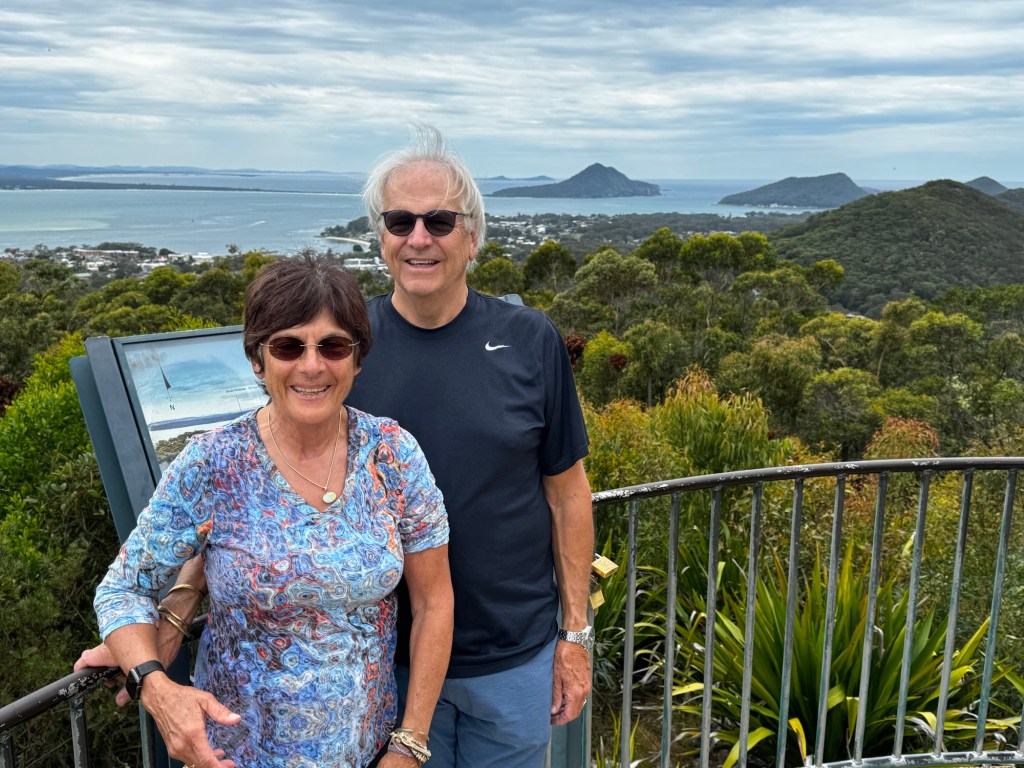
On the way, Martin drove us to the top of a hill called Gan Gan, the aboriginal word for “white breasted fish hawk”, where we got a commanding view of the countryside including small towns, beaches and the Pacific Ocean.

We learned that the population of Newcastle is 500+K. That the city was founded in 1801 as a coal harbor and a penal colony. The city is still a major exporter of grain and coal. After arriving in the dark it was nice to see the setting around us.

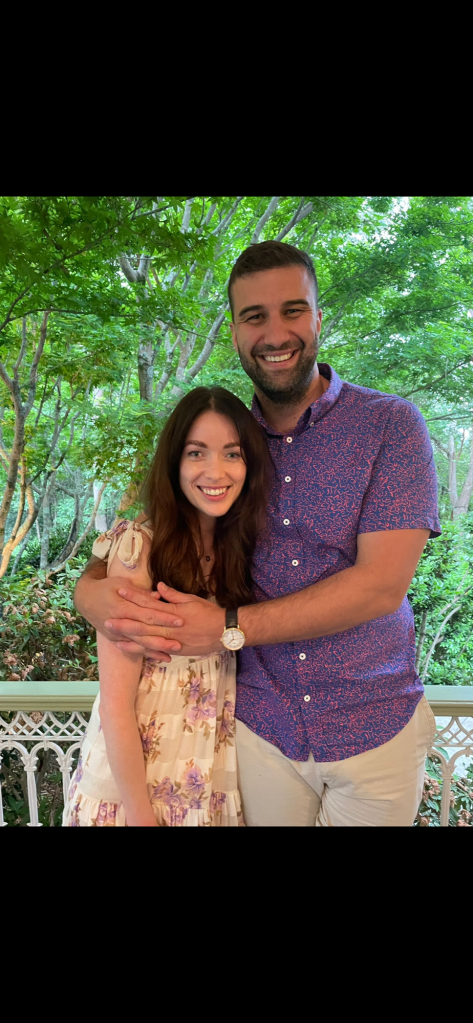
Mark, Martin, Catherine and Julia on Fingal Bay

We arrived at their home in Newcastle about 1pm. We had heard about it for a long time and it was nice to finally get to see their lovely 2 acre garden and expansive home.

We did not have much time to settle in before Catherine delivered me to a shop in Hamilton, a suburb of Newcastle, where I received a much needed pedicure and some purple polish. Then she drove me to a hair salon where I received a cut and color. Those beauty jobs done, the 4 of us drove to their son Andrew and his wife, Sinead’s (pronounced Shinade) apartment for cocktails and a view of nearby Bar Beach. We were so engaged in the conversation that we forgot to take any photos, but we did get some details about them. Sinead is a psychologist and Andrew is a business manager. They are young, enthusiastic and career oriented and made me aware of my age.

Late afternoon we returned to Catherine and Martin’s home and were soon joined by their daughter Sophie, a newly graduated anesthesiologist in training, and her husband Luke, a construction project manager. They too are young, enthusiastic and career oriented.

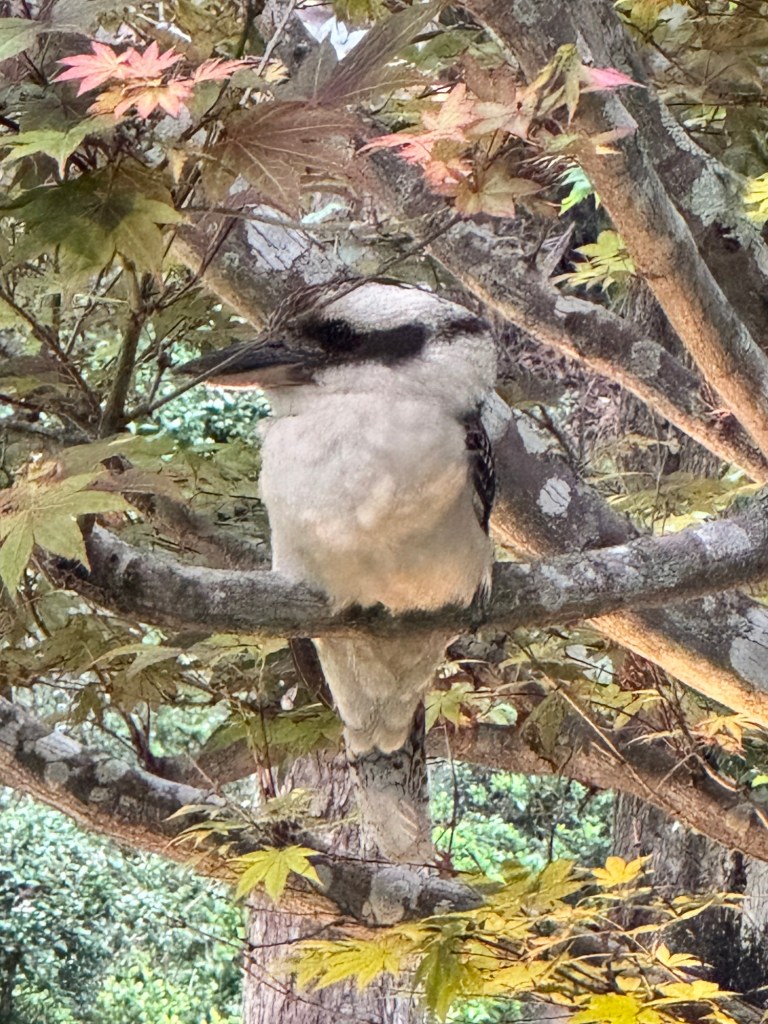
I did get some photos of their lovely home and a local kookaburra bird sitting in the old gum tree.

Saturday, October 19, 2024

Martin and Catherine are up early swimming in their pool, an activity they do every day. By 8am we were having breakfast and discussing the day, The plan was for us to do a morning walk followed by a drive to Hunter Valley, return to the house and prepare for a party at 4pm for about 30 friends of the White’s and their family.

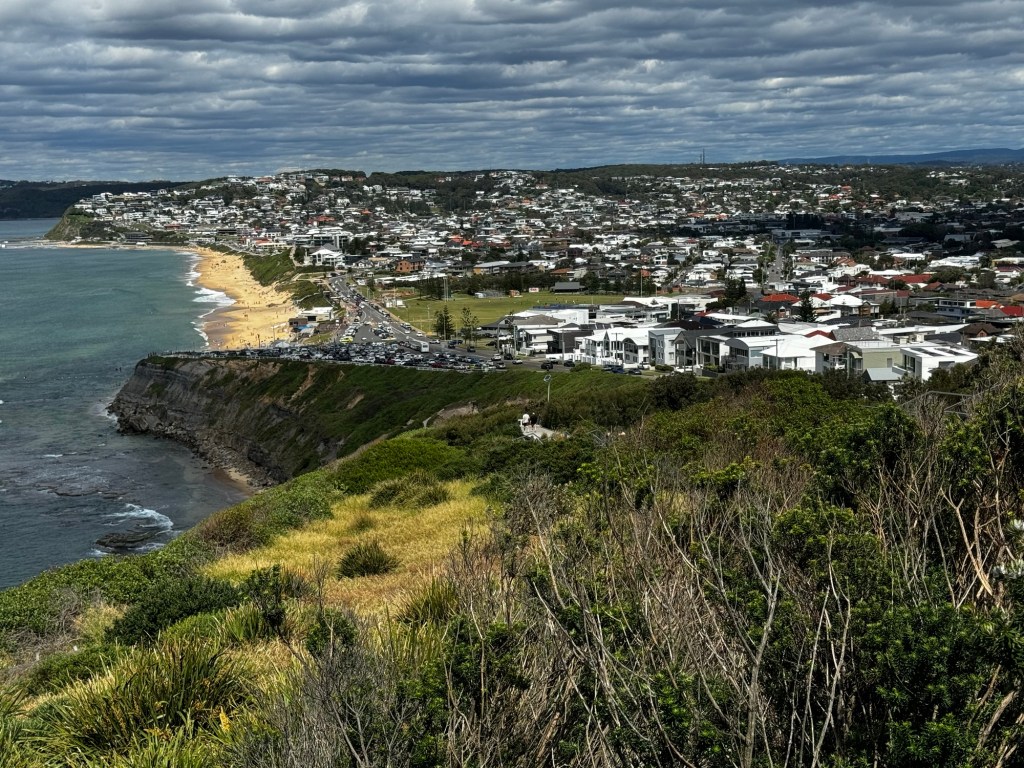
The walk was very interesting as it was on an elevated walkway called ANZAC, for Australia, New Zealand Army Corp. in memory of the people who fought in WWI. We also walked along Bar Beach.

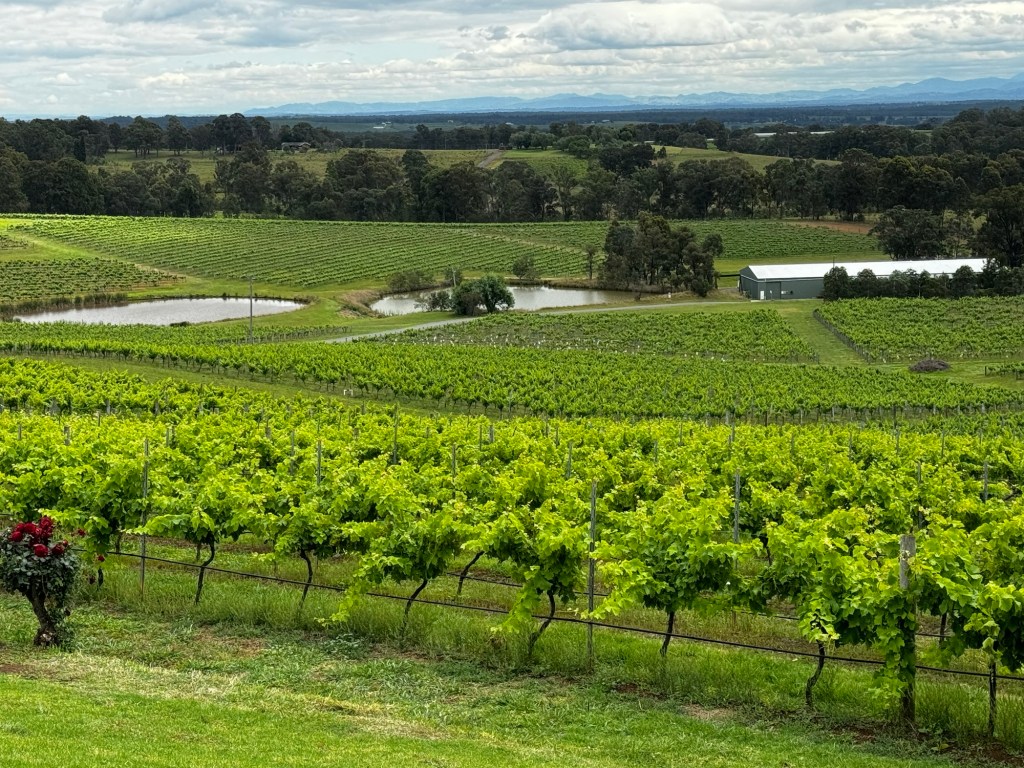
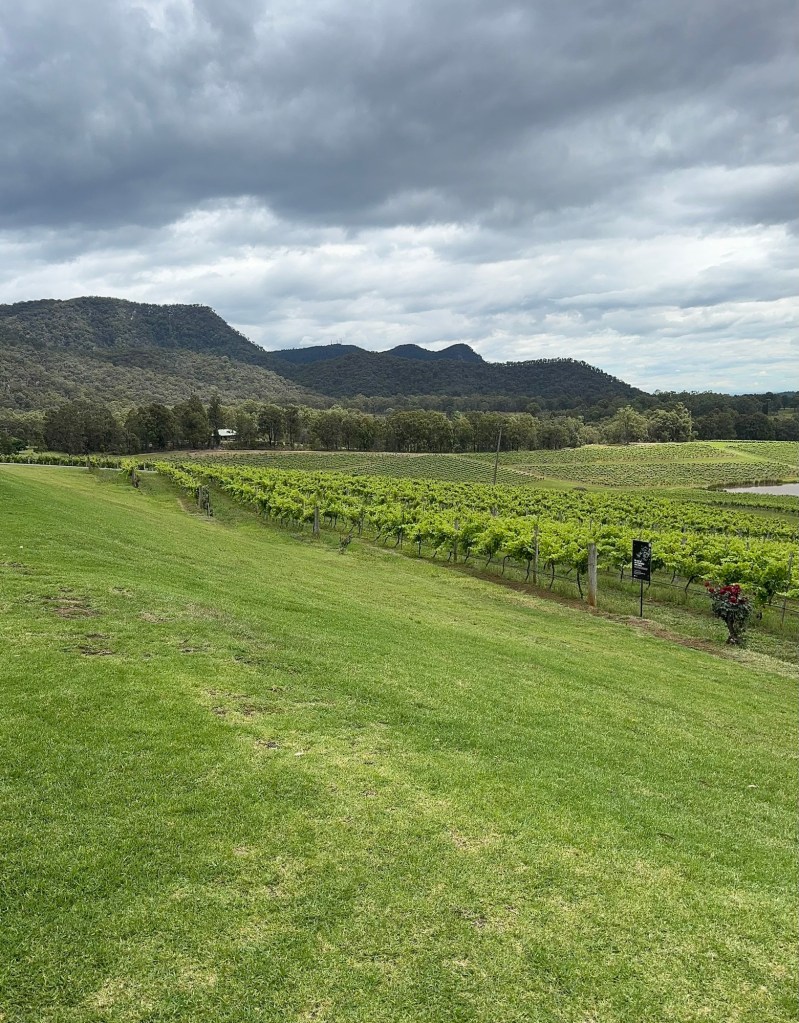
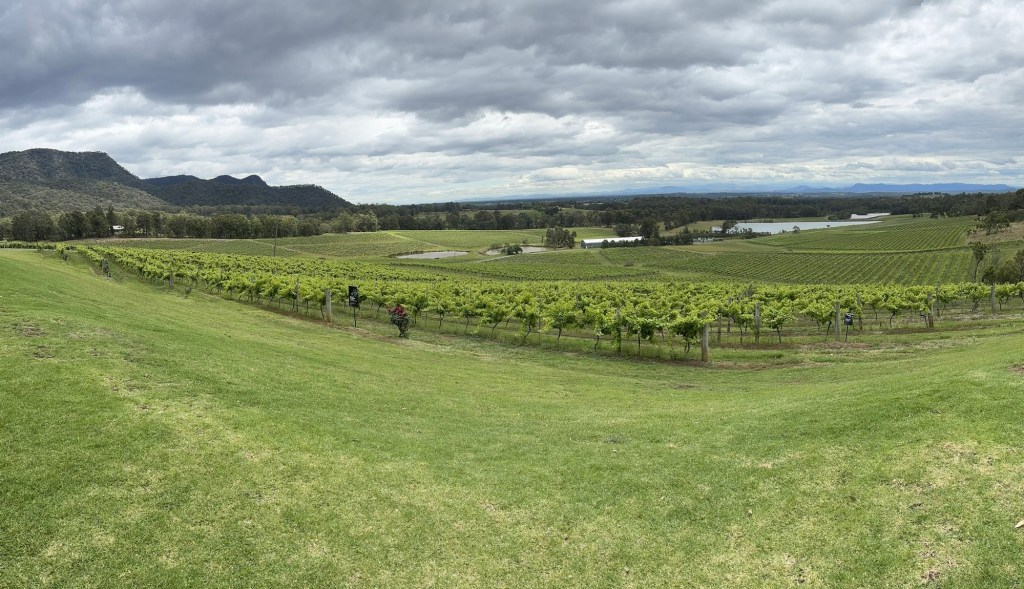
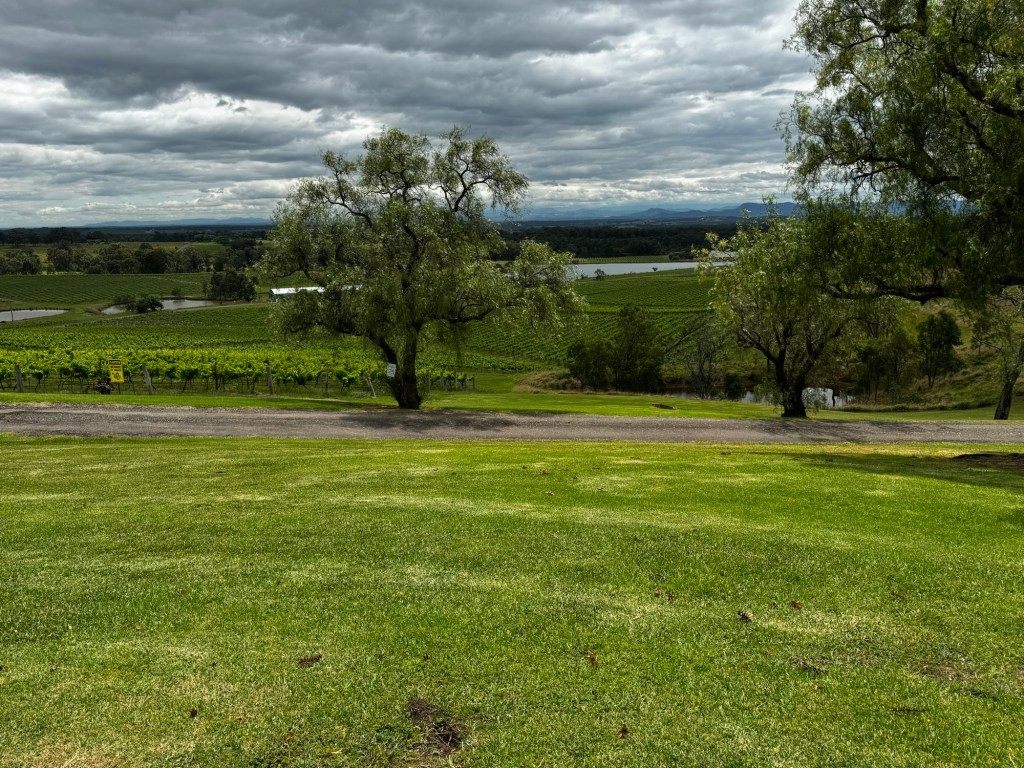
Then we drove 35 kilometers west to the wine country. Beautiful rolling green hills full of vines.

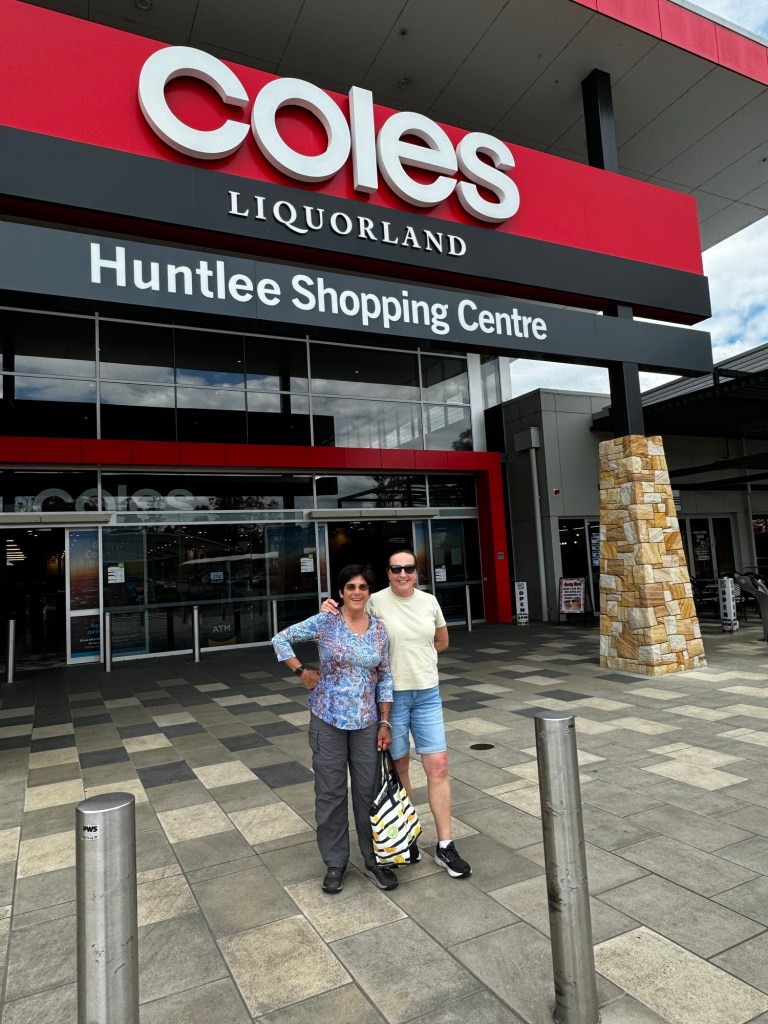
We stopped at one winery but did not stay as the place was fully booked. From there we stopped at a grocery store called “Coles”in a large new subdivision to see the place and buy a few items for the afternoon party. Then it was full steam ahead to get home and ready for the party.

At 3:30 the family arrived, including Joan Smith, Sinead’s mother. We had a pleasant time together, before the guests arrived.

Sunday, October 20, 2024

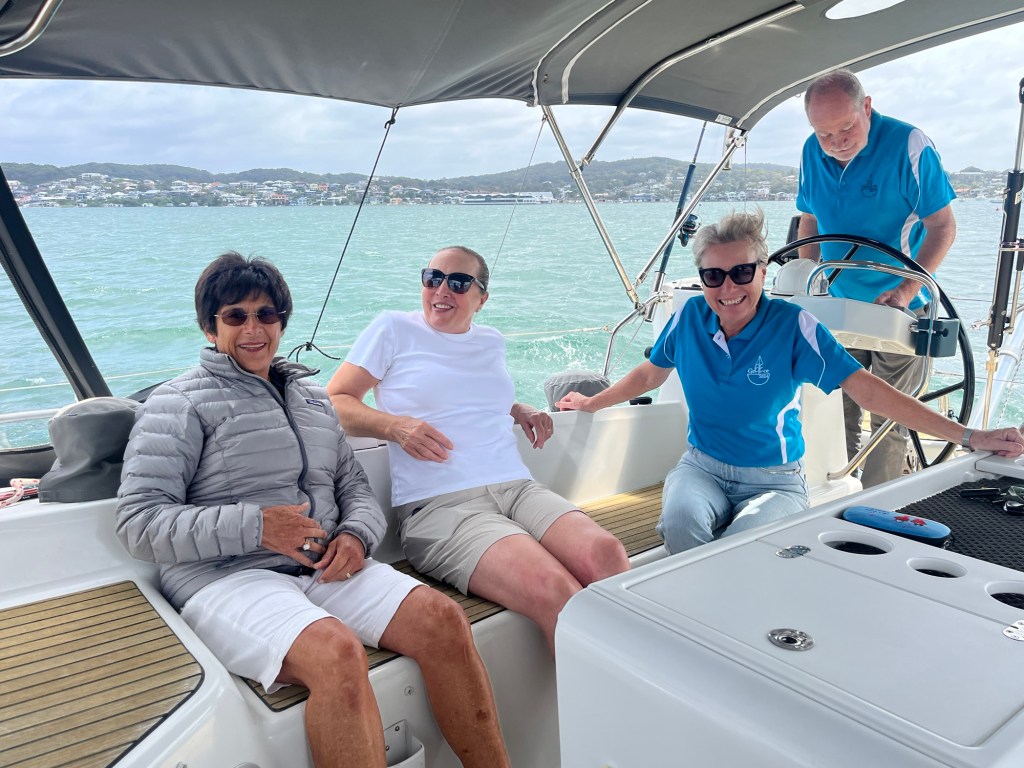
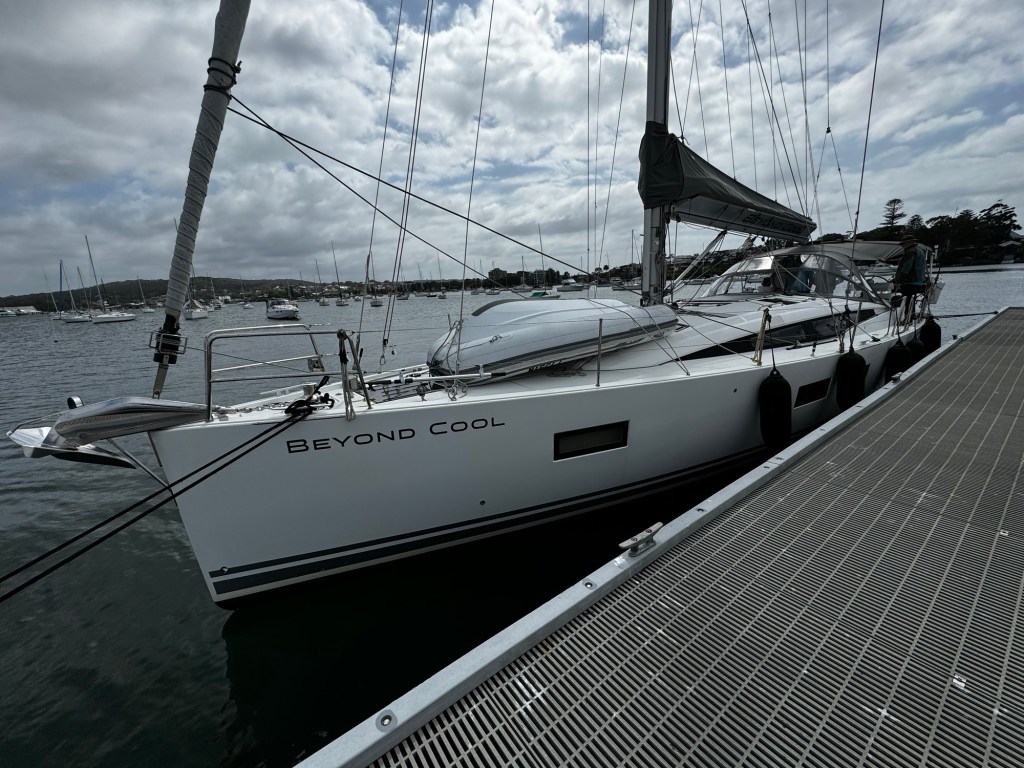
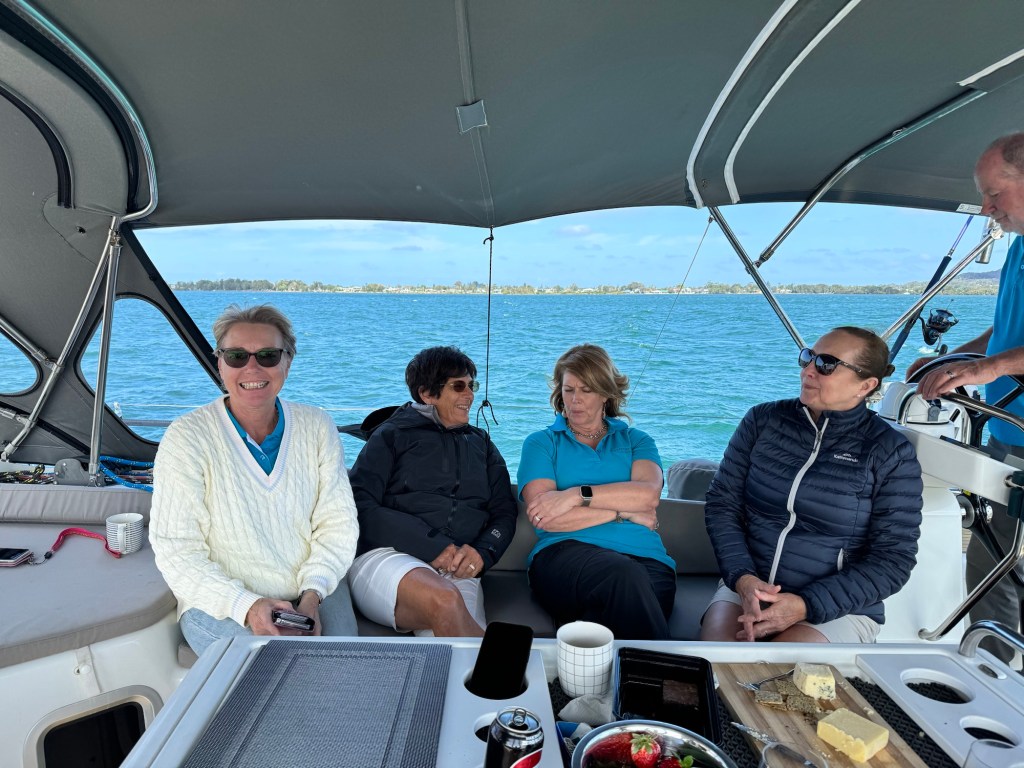
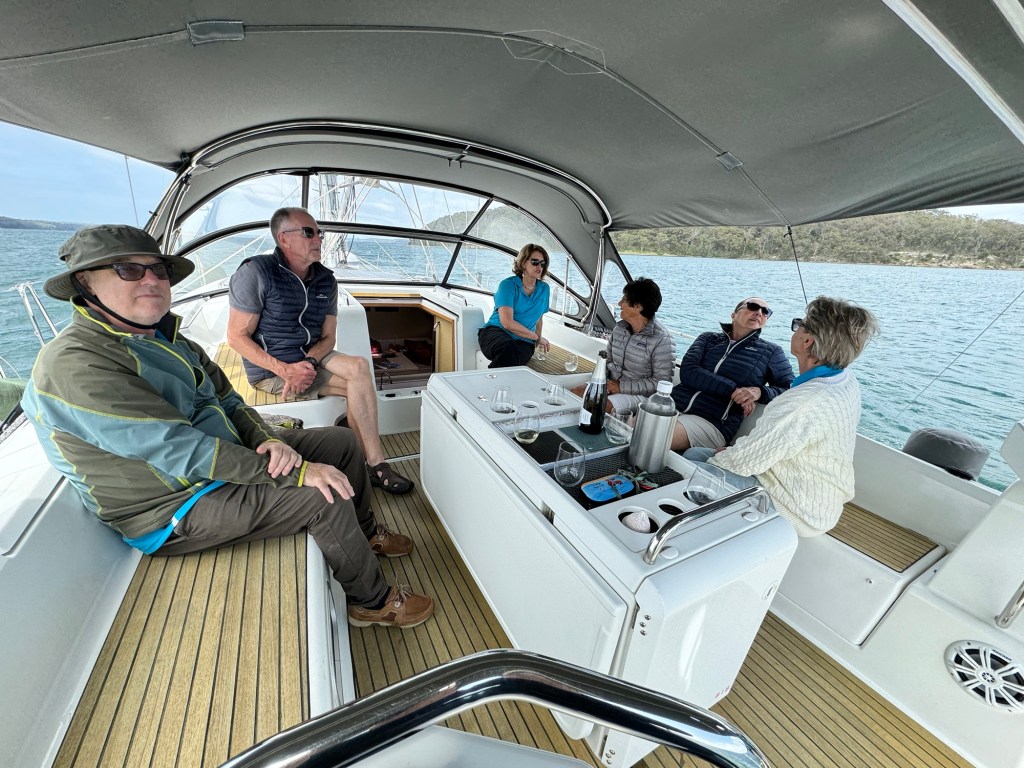
After a leisurely morning we left the house at 10am and headed for Lake Macquarie and our new friend’s boat, the Beyond Cool. It is owned by Mark and CarolAnne Clement, who graciously welcomed us onto their boat along with Catherine and Martin and Rob, who was Martin’s anesthesiologist and his wife, Jana. Everyone, except Mark and I, brought food to share and a feast we did have after motoring an hour into the lake to the lee of an island where we dropped anchor and began eating and drinking. The weather grew warmer and sunnier as the day went on. Soon we were eating boiled prawns with a mustard sauce. Then, Mark fired up the BBQ, and cooked a boneless lamb shoulder that had been seasoned in a Greek marinade. Then it was rested in a faux fur blanket until the rest of dinner was ready, including roasted potatoes, and slaw salad with cashews. We all ate like kings, who, speaking of which, is in Australia at the moment and will be in Sydney when are. It will be interesting to see how that turns out.

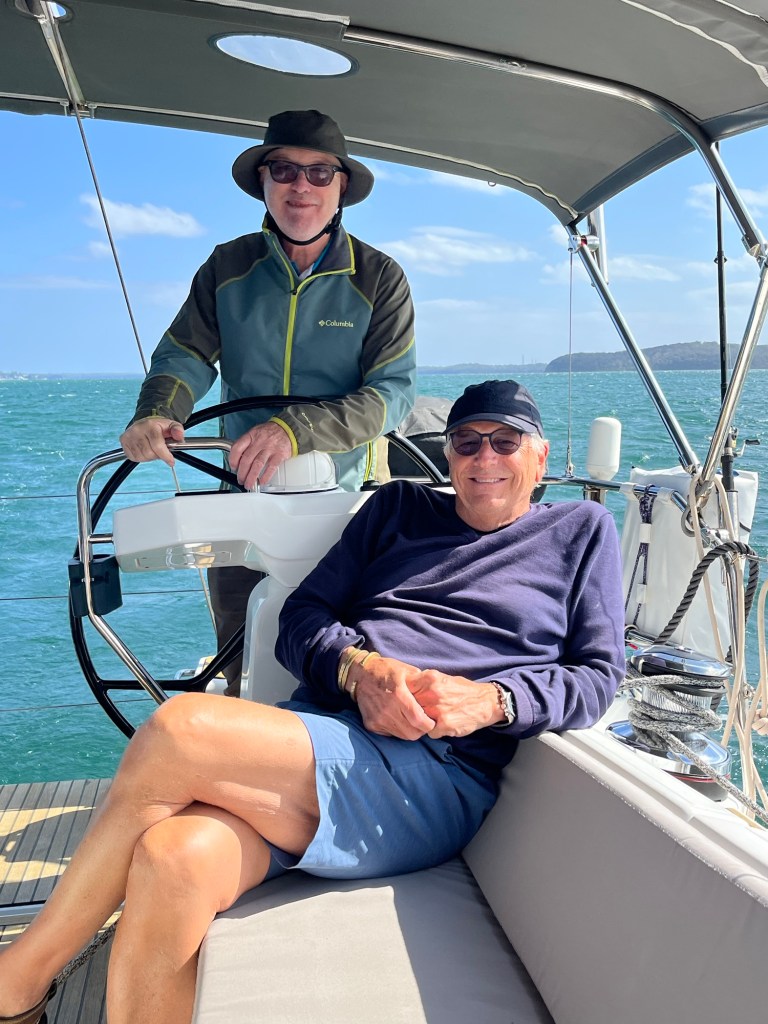
Mark at the helm & Rob, a longtime friend

Everyone had a grand time. Finally, at about 4pm, Mark put up the head sail and we flew home on a tailing wind. By 5pm the four of us were home and chilling. It had been a delightful and busy weekend. Tomorrow we head for Sydney.

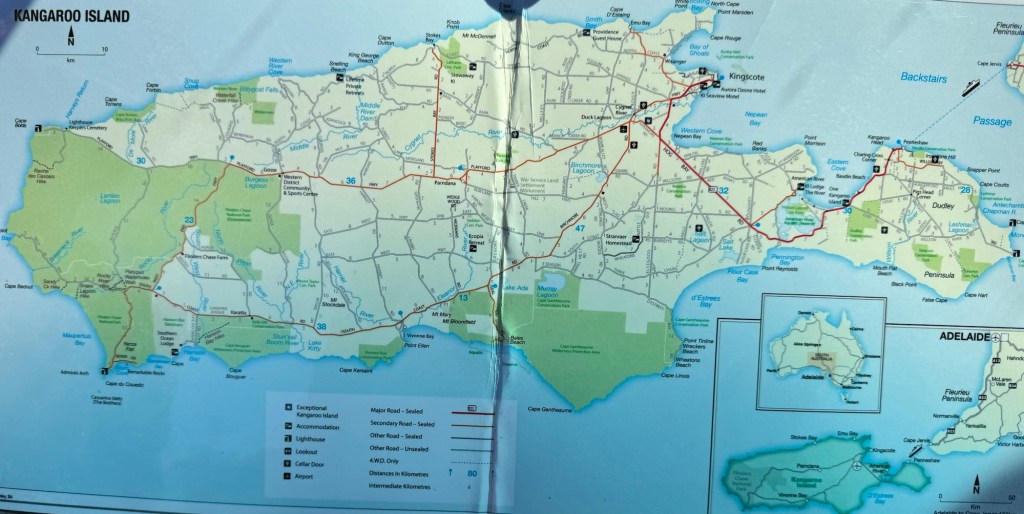
Kangaroo Island

Monday, October 14, 2024

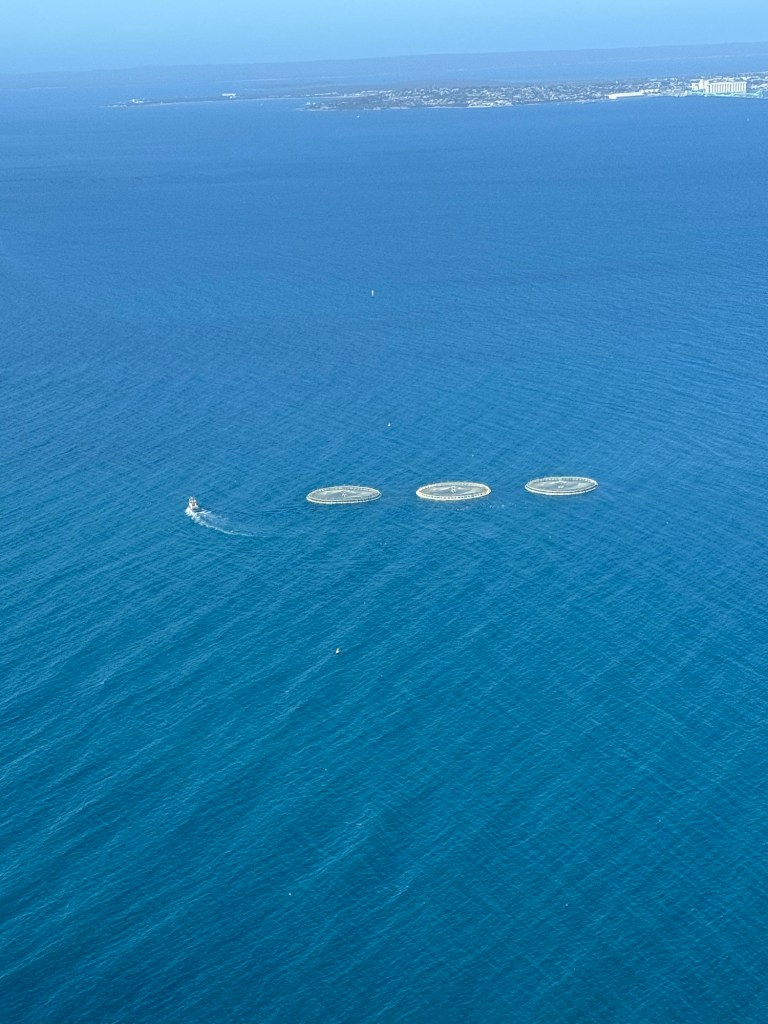
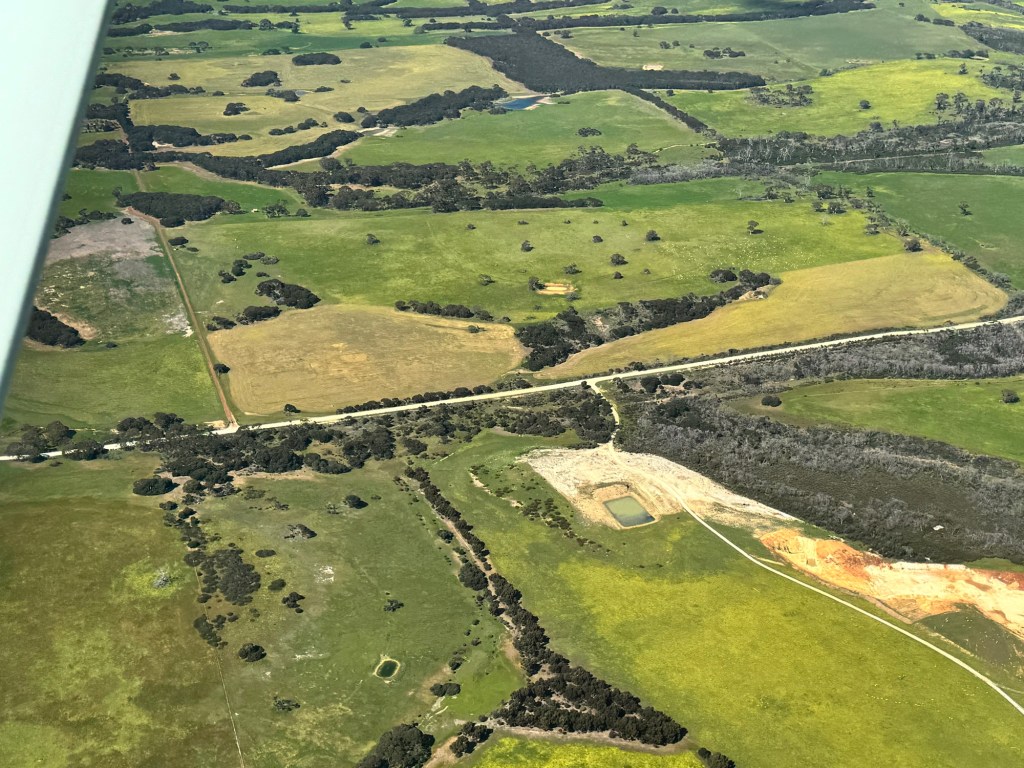
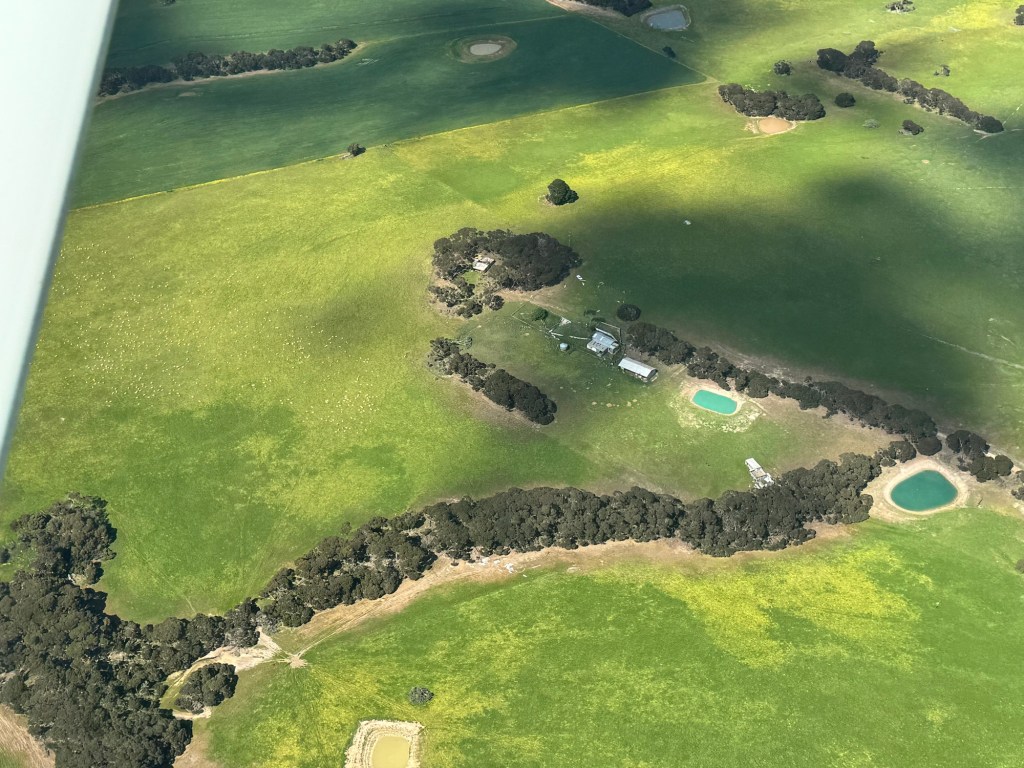
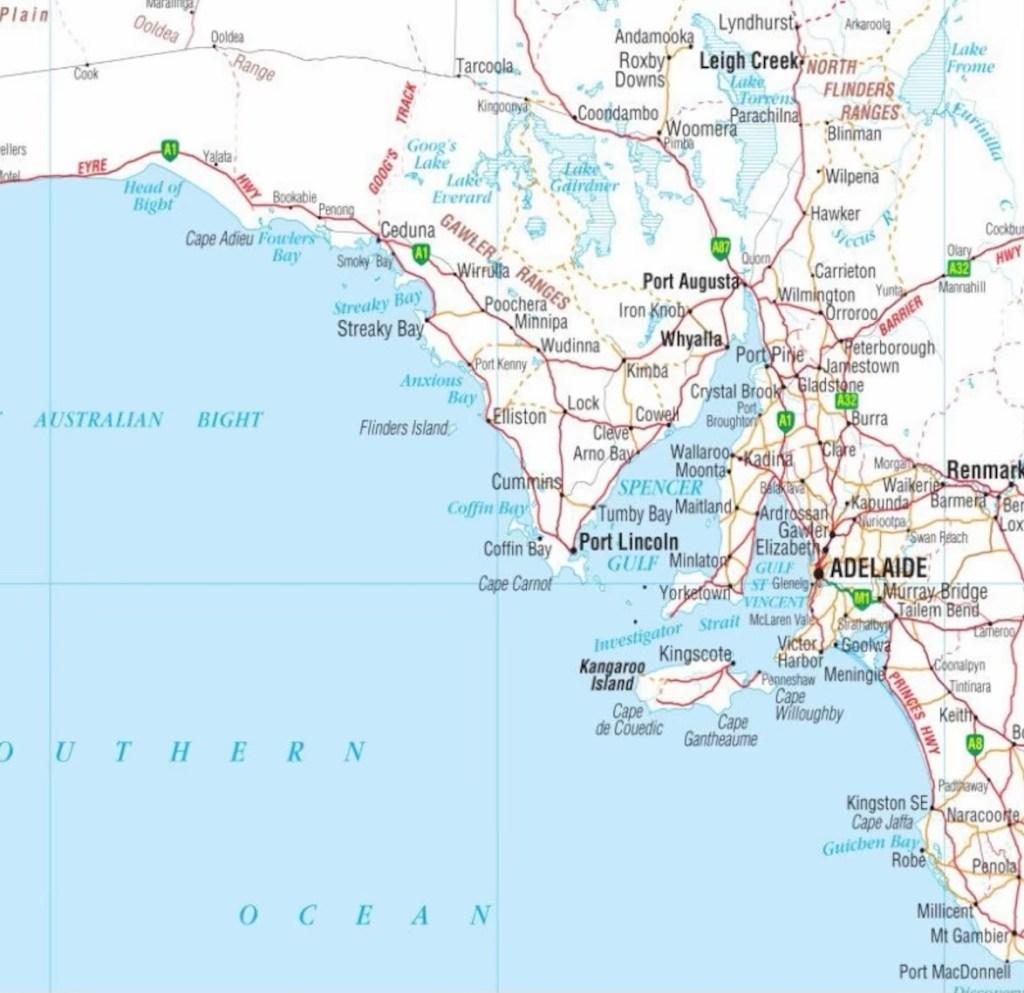
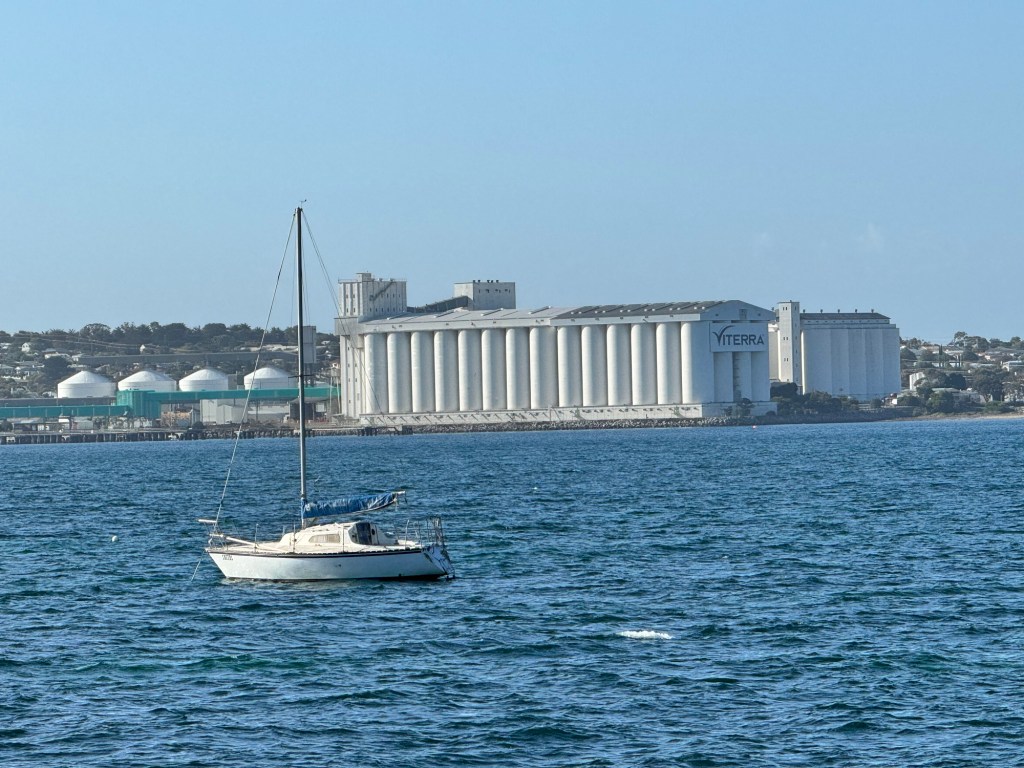
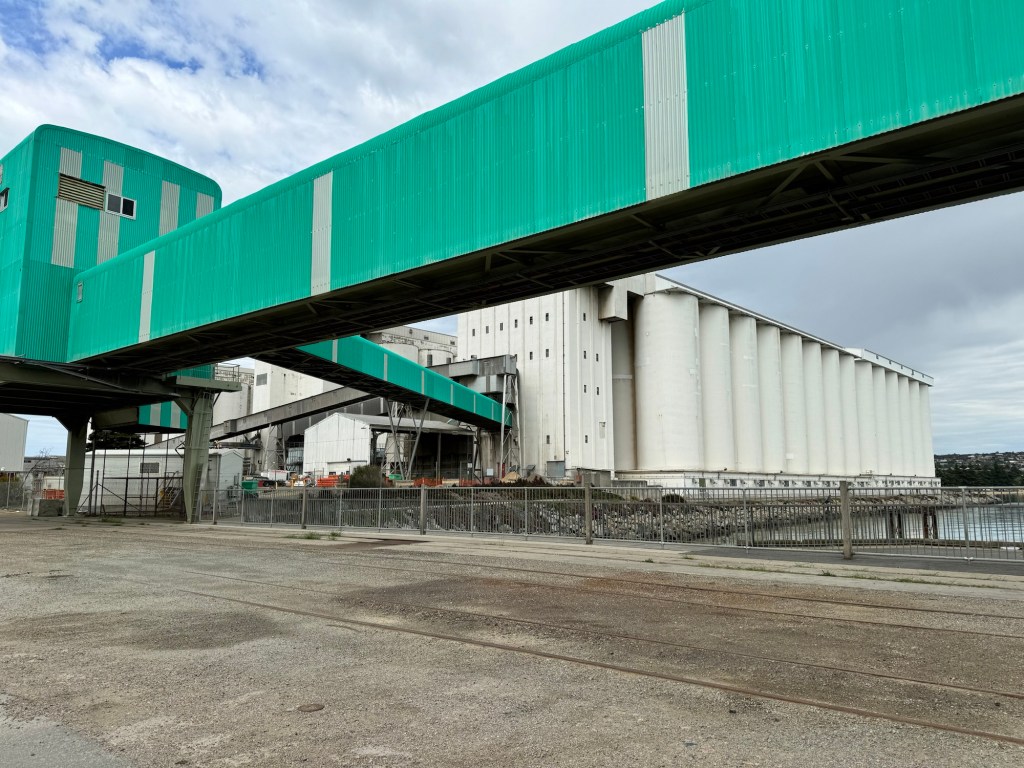
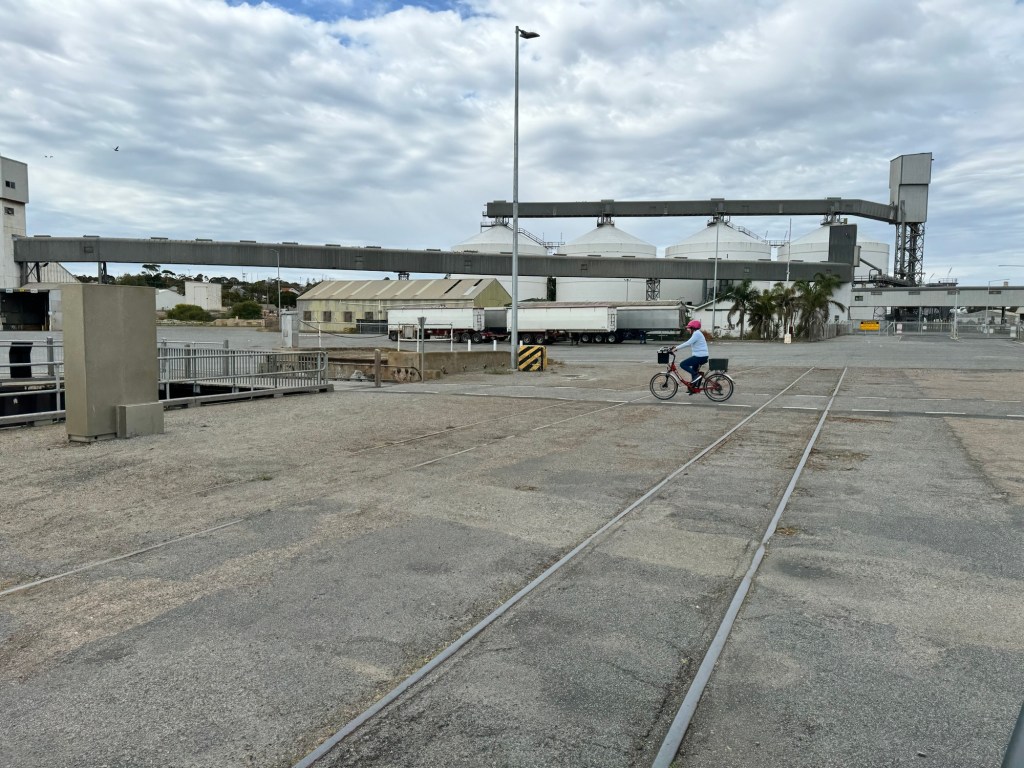
The flight from Port Lincoln to Kangaroo Island was itself interesting. Shortly after take off, we flew over the large rings where Blue fin Tuna are being fattened and Kingfish are being raised along with mussles, abalone, prawns, crabs and flounder. Port Lincoln, I learned, is the seafood capital of Australia. We also got a good shot of the grain loading conveyor belts in Boston Bay. The biggest problem for the small city of 14.500 people is lack of water. The town is considering building a desalination plant. After 40 minutes over the Southern Ocean we were over Kangaraoo Island with green fields and many rain water catchment basins.

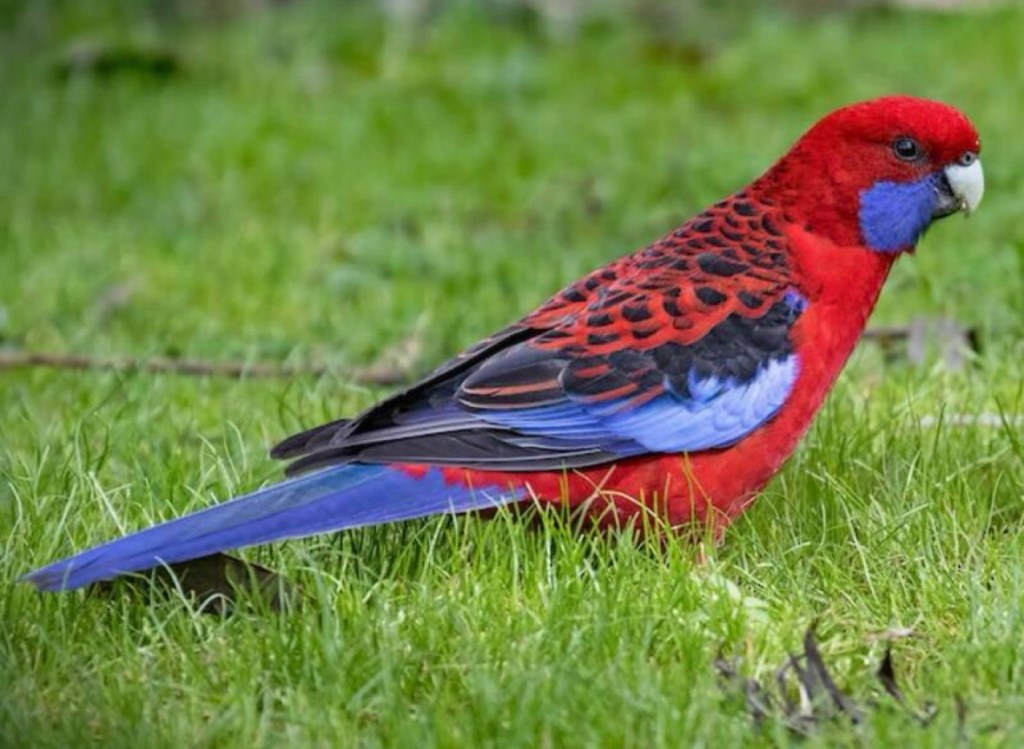
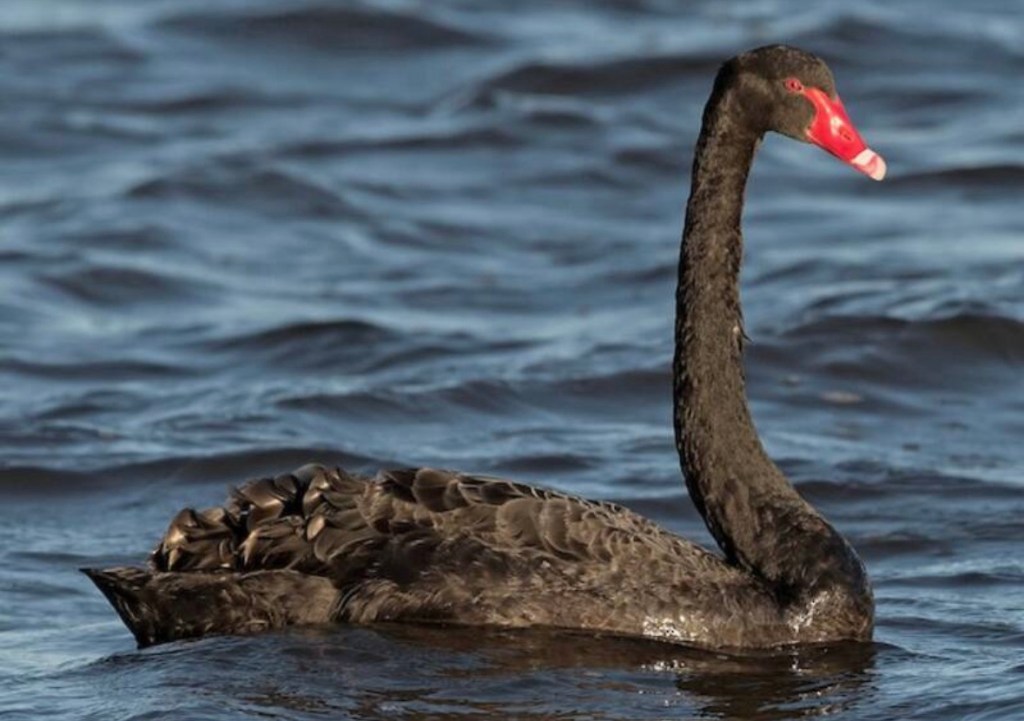
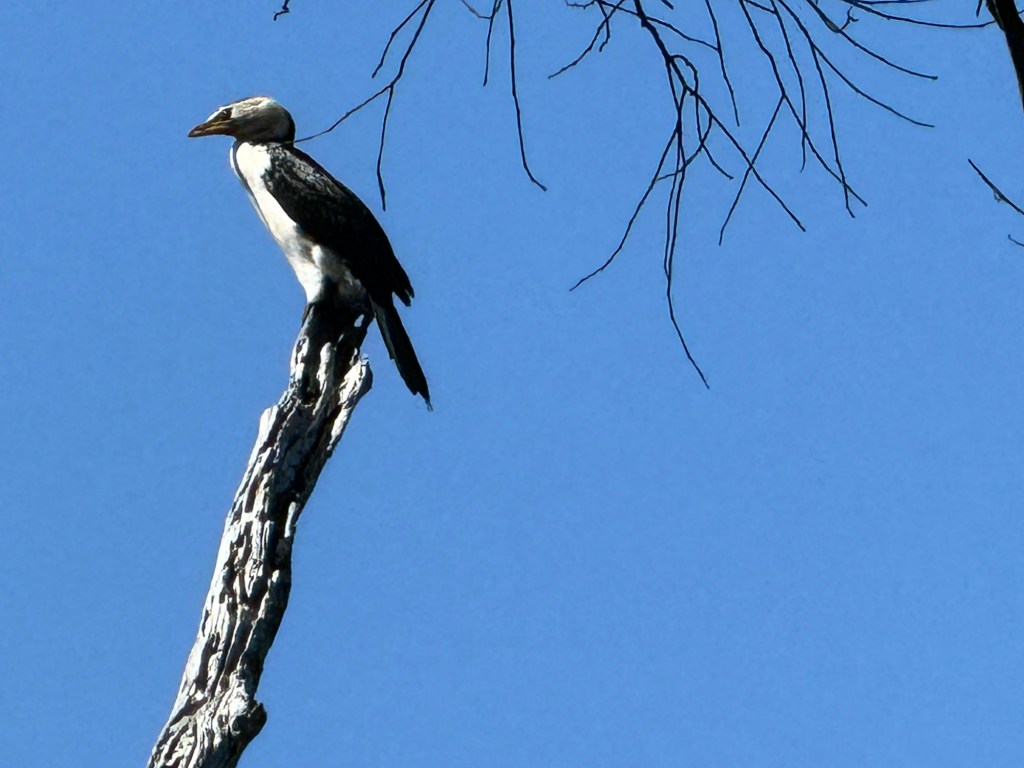
We landed near Kingscote on Kangaroo Island and were met by our next driver guide, Lee. He wasted no time getting our program started by driving us to a place called Duck Lagoon, where we had tea and coffee and saw lots of birds including: black swans with several cygnet (baby swans), ibis, pied cormorant, galah, crimson rosella and several koala asleep in the trees. Lee told us there are 273 endemic birds in all of Australia, but too many koalas on Kangaroo Island. Meanwhile, there are only 4,500 people. The island is approximately 100 miles long and 50 miles wide and has 335 miles of coastline with a lot of it being white sand and wild seas.

A fire in 2020 wiped out half the island. The 60K koala were reduced to 30K. Eucalyptus oil is made on the island and exported for use as cleaning products. While Lee waxed long about eucalyptus, we were more interested in the birds, especially the three below.

Crimson Rosella
Black Swan
Pied Cormorant

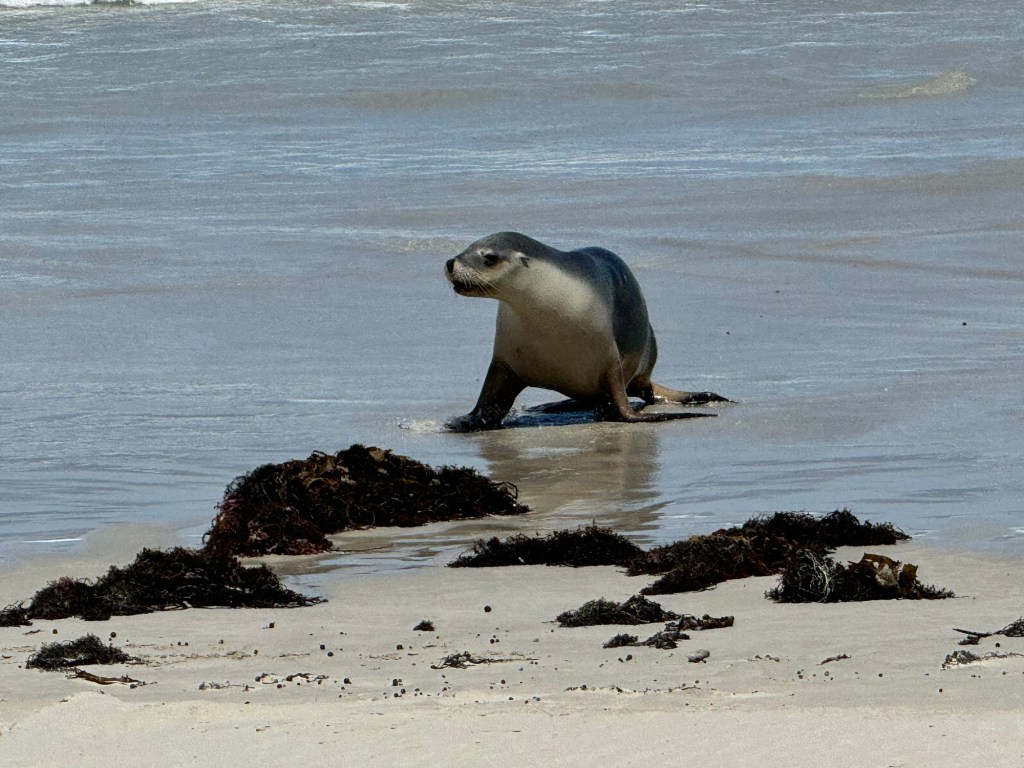
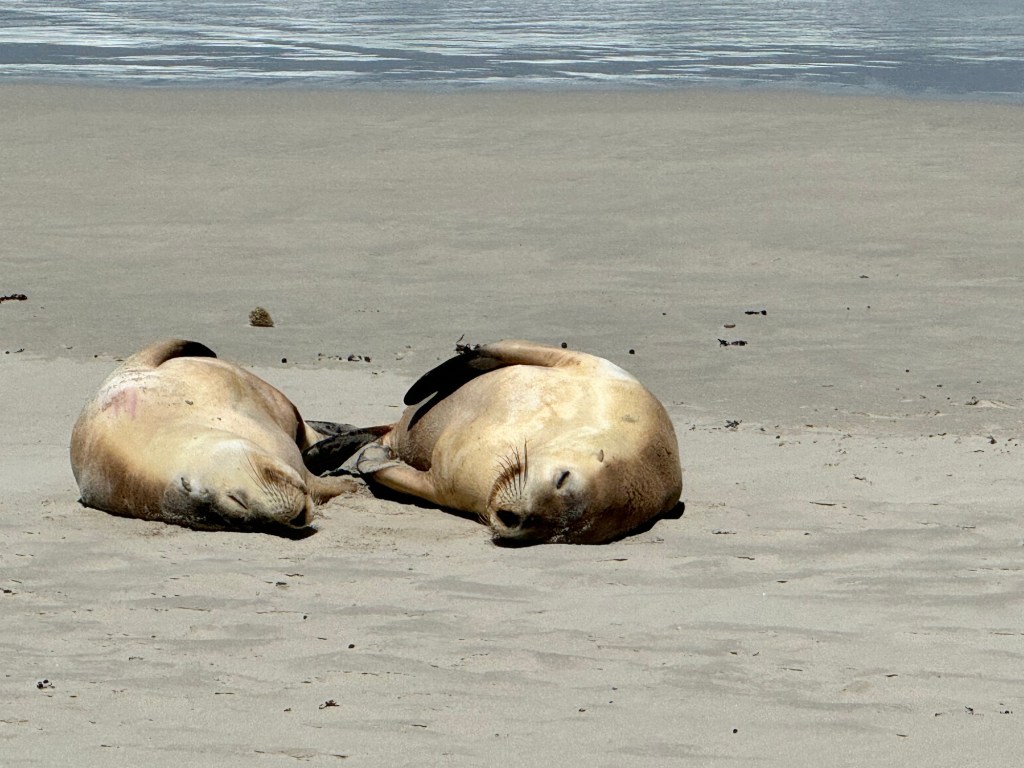
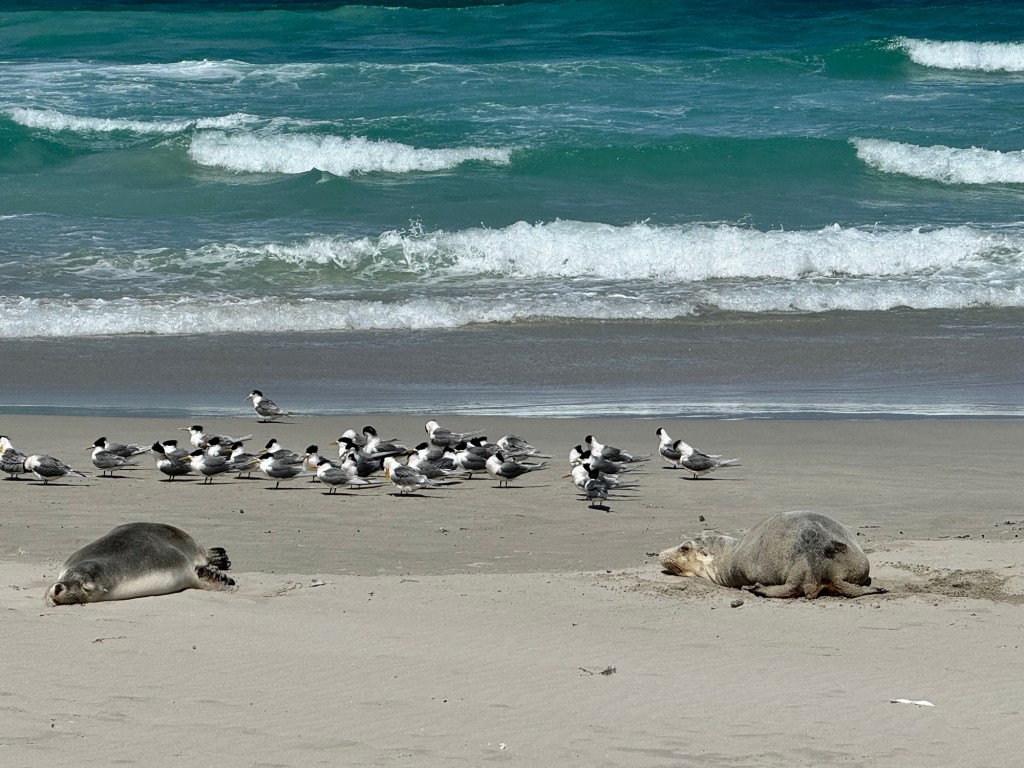
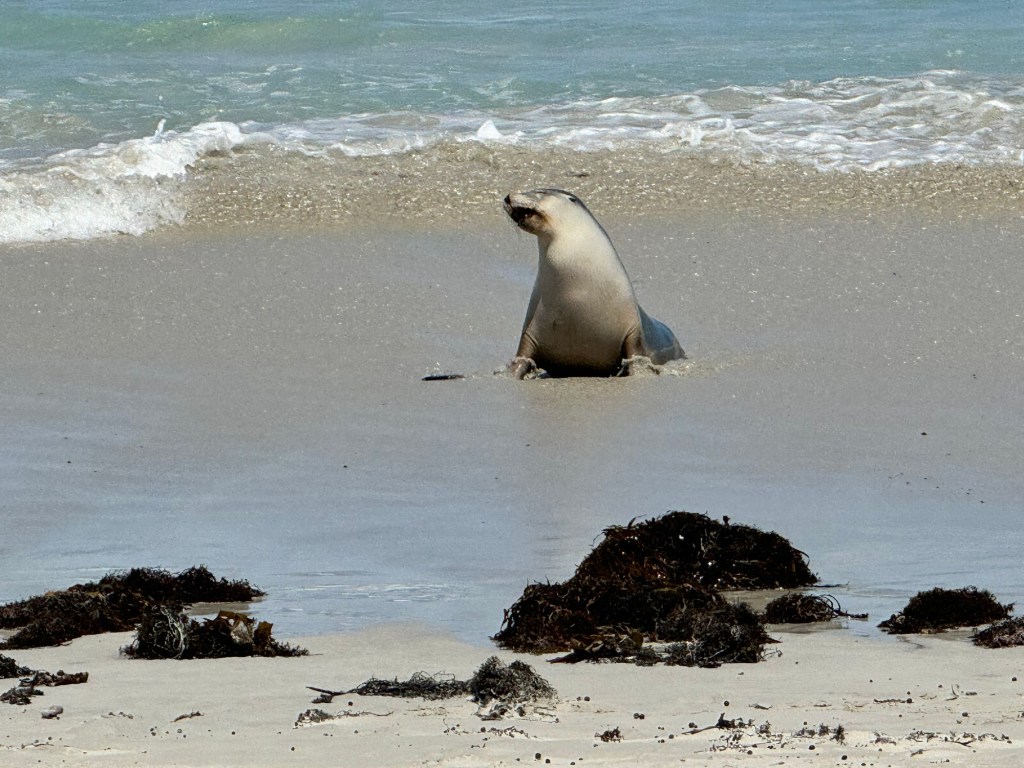
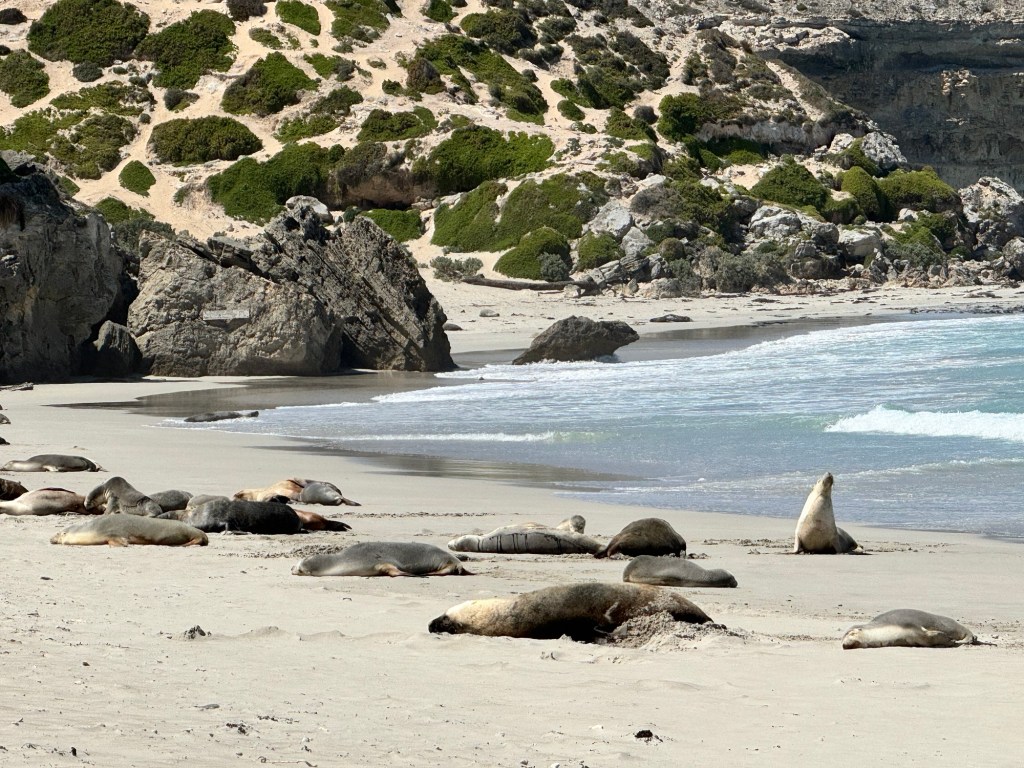
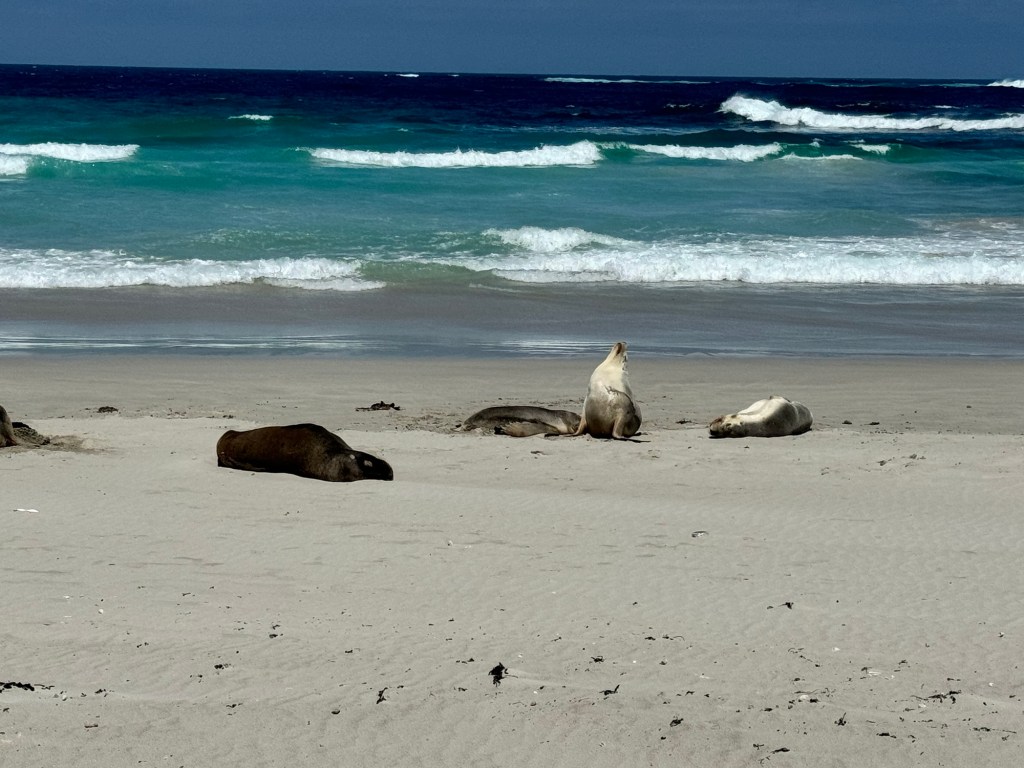
From there we went to Seal Bay where we saw many sea lions warming up on the beach and a flock of Great Crested Terns.

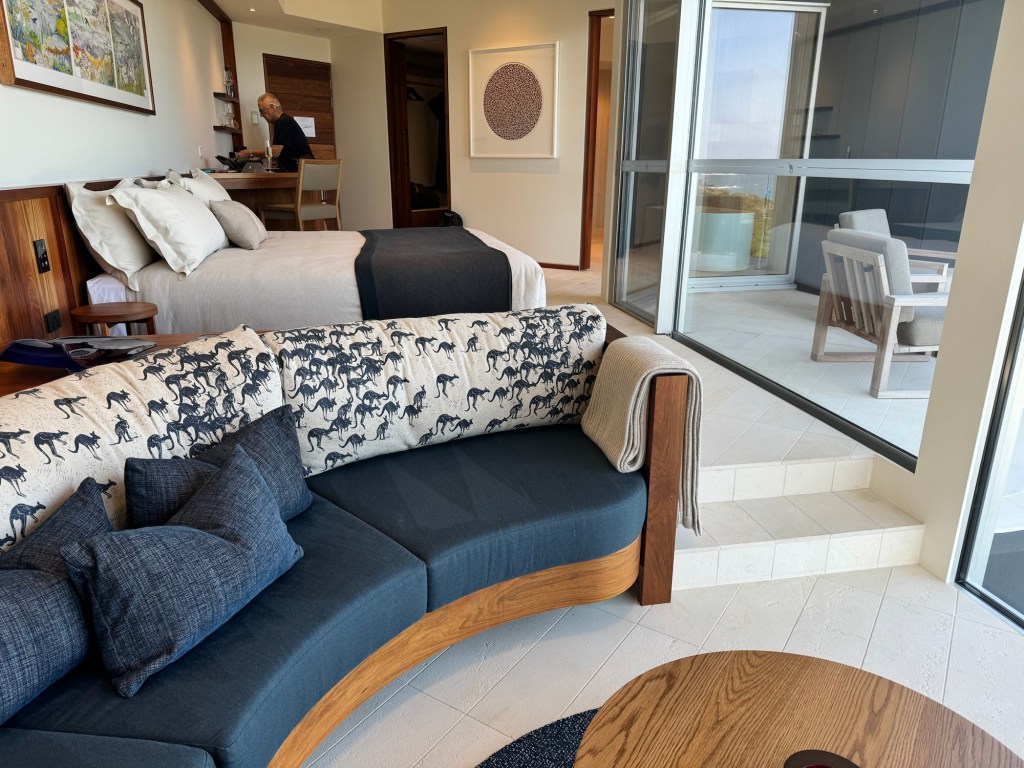
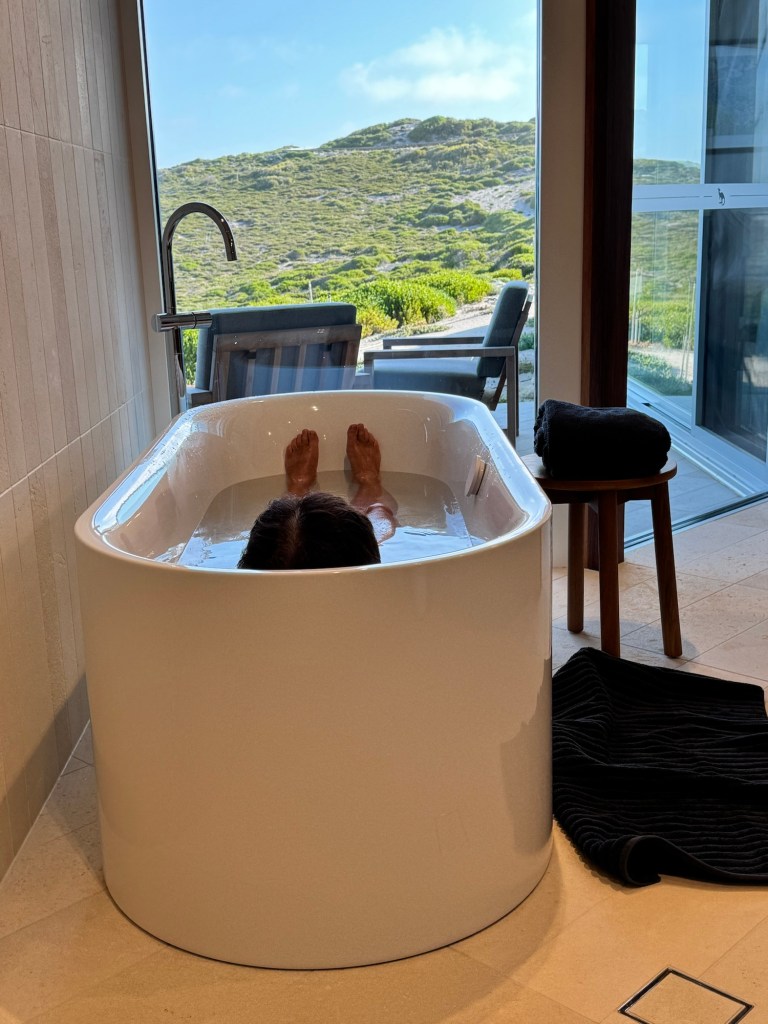
Finally, we arrived at our hotel, the Southern Ocean Lodge. We were glad to stop moving and settle into our rooms with a Southern Ocean view.

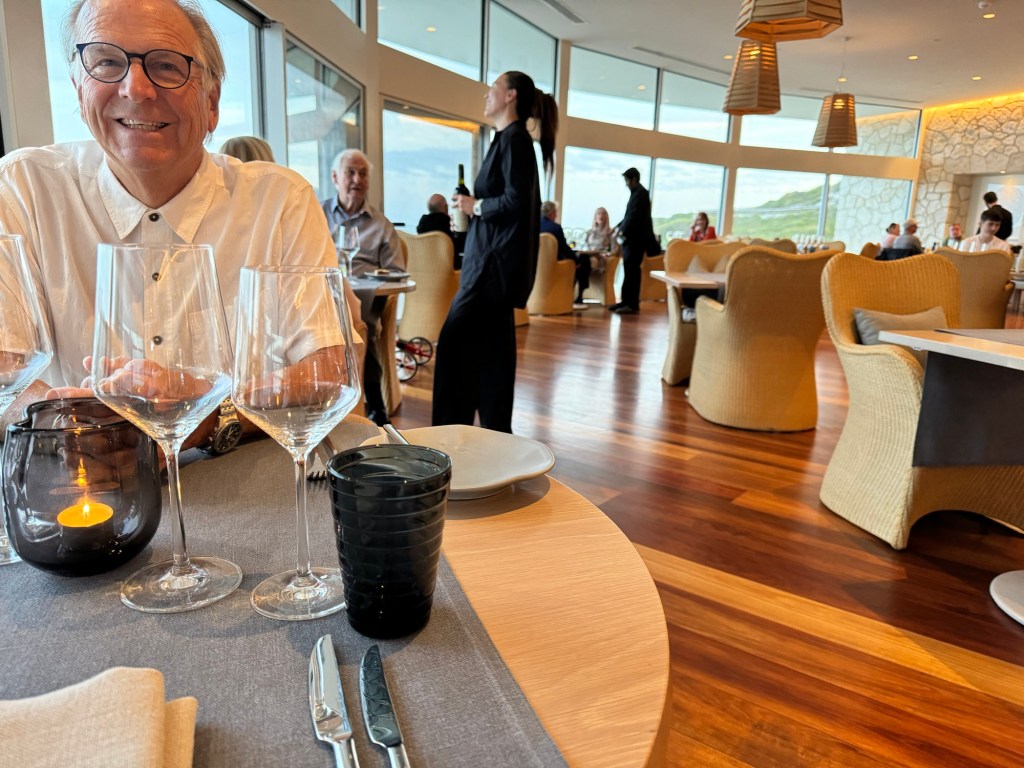
Hotel Restaurant dining room. I was in for a light meal. It was excellent and small.
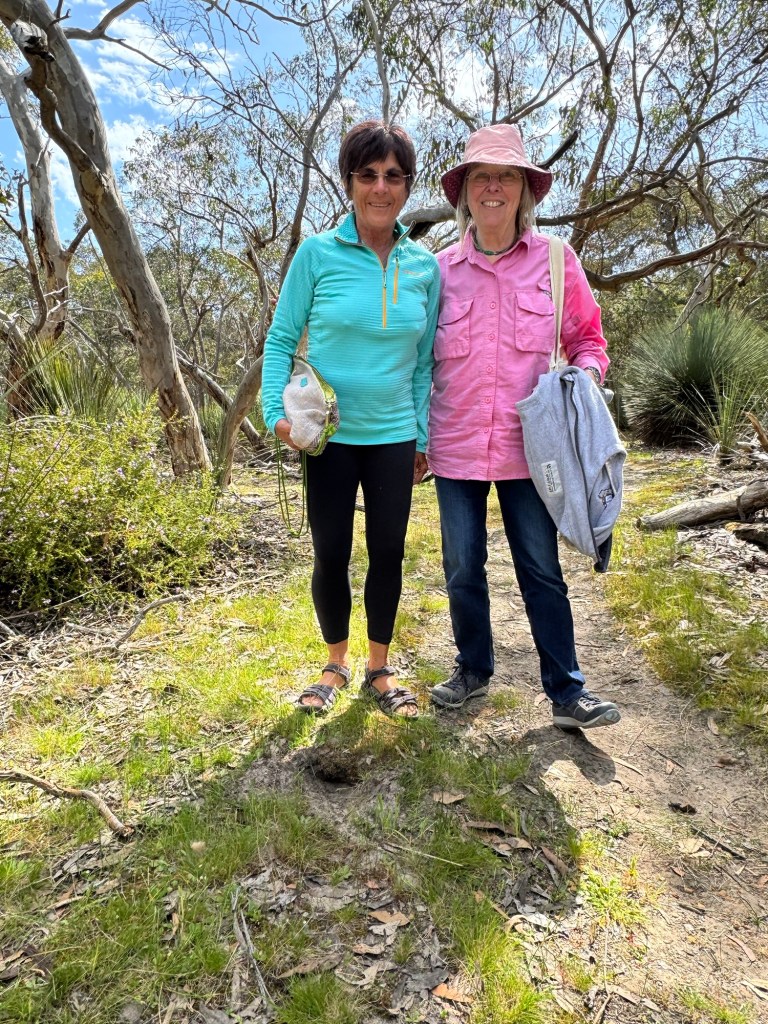
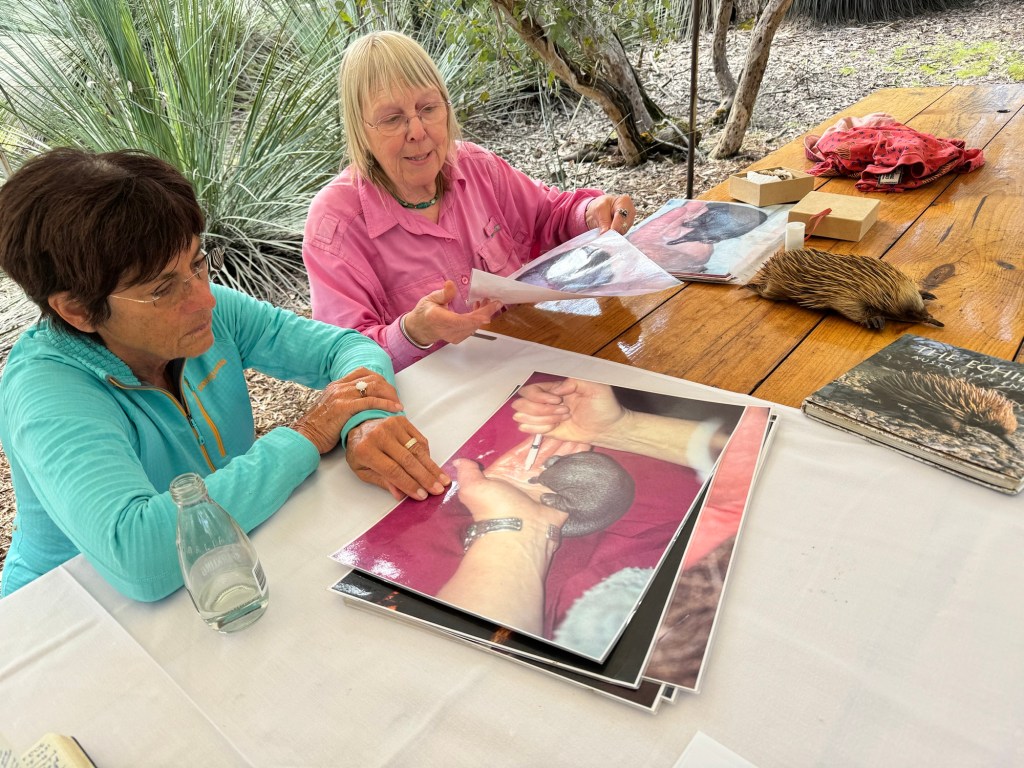
I am standing with Peggy Rismiller over looking an echidna hole in front of my left foot. She has agreed to join us for a picnic lunch and talk about echidnas, a topic she is an expert on. She is an internationally recognized Environmental Physiologist who lives and works on Kangaroo Island and specializes in reptiles including Rosenberg’s goanna.
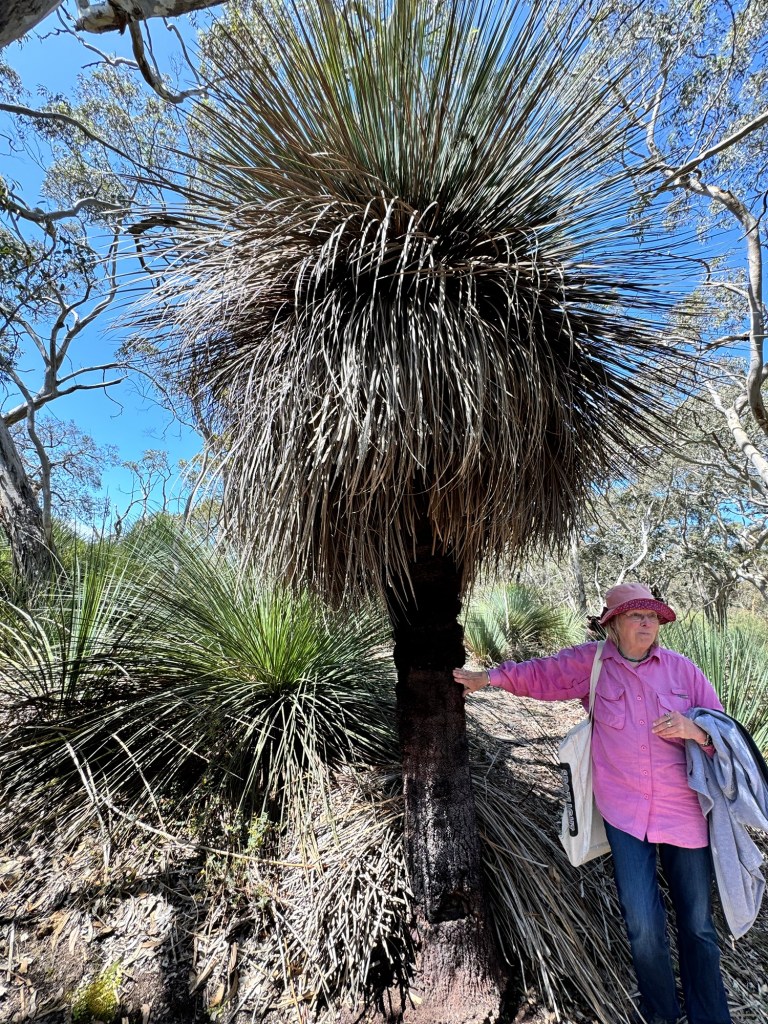
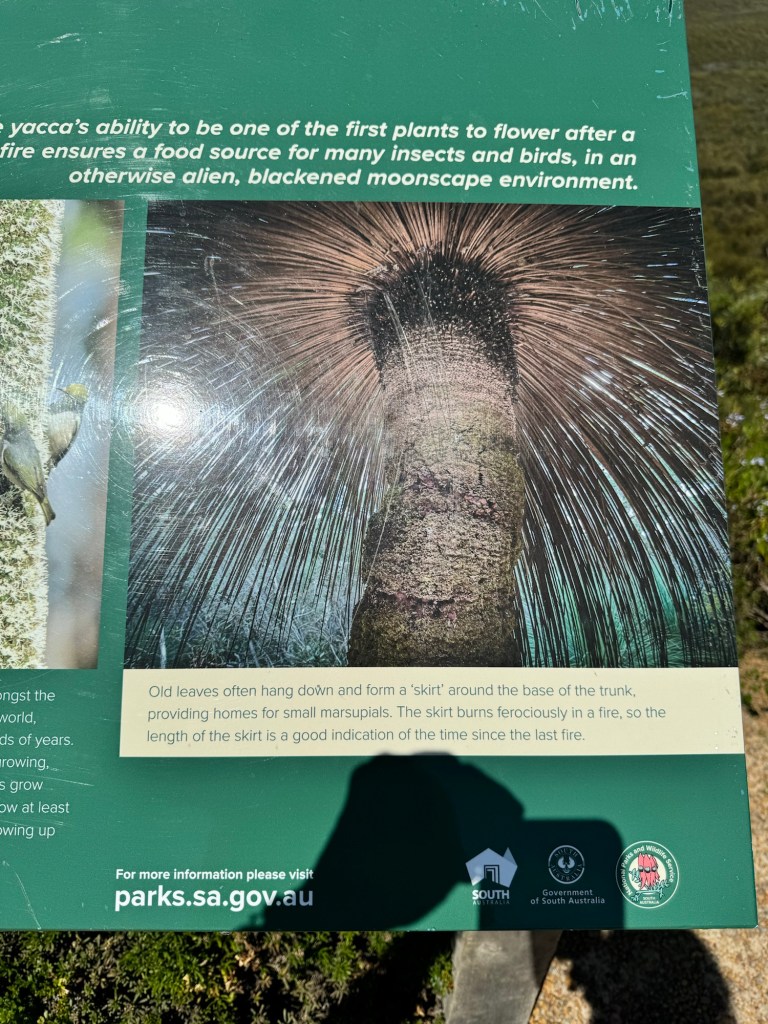
Turns out she knows a lot about many things. In this case, she is telling me that Yakka plants grow a centimeter a year and their leaves protect many tiny animals and invertebrates during fires and winter storms.
After lunch she showed me several photographs of echidna in different stages of growth. In this photo she is feeding a baby. A dead Echidna is on the table in front of her.

Tuesday, October 15, 2024

Gray Guinea
Hansons Bay

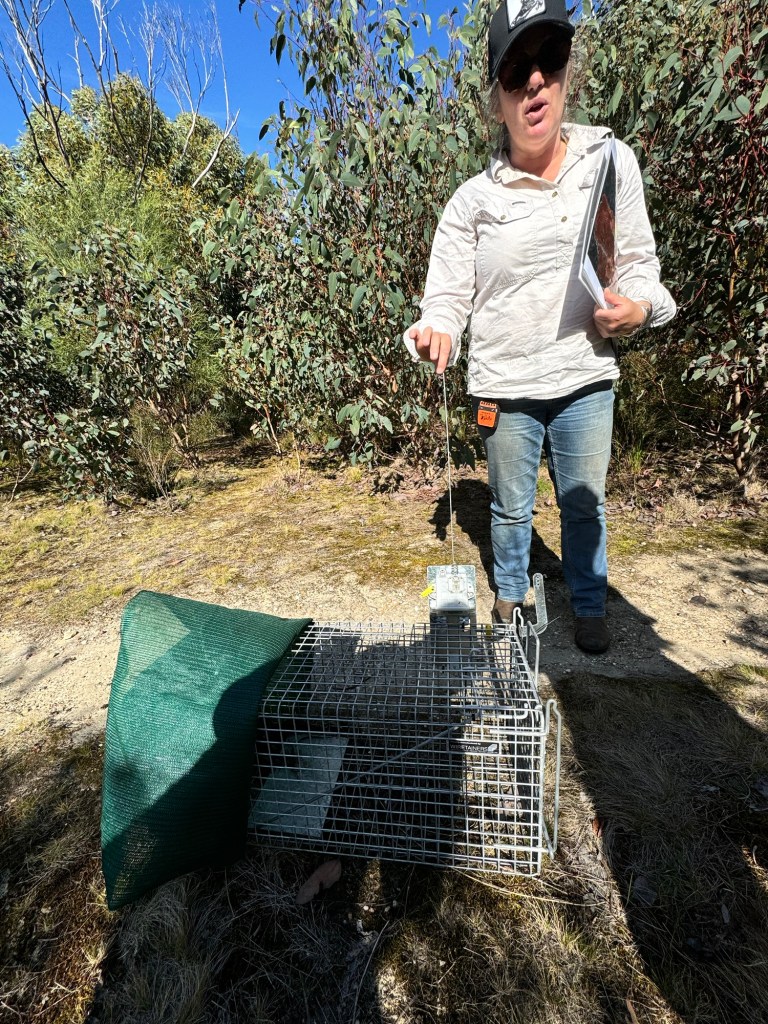
Lee picked us up at 9:30 and off we went to the nearby Hansons Bay to get a look. Then we continued to a rendezvous place to meet Heidi Griffey, a Dutch conservator whose goal is to eradicate feral cats on the island. She owns 200 acres of her own and works with other small land owners to capture and eradicate the unwanted animals.

Heidi demonstrates her cat capture process, which is baited with chicken wings or cat urine. This method catches too many animals besides cats so it is being phased out.
This machine is capable of face recognition and sprays poison on the recognized cat, which licks itself, goes to sleep and then dies, both methods are successful and do not require much attention. However the machine is costly. Heidi is trying to develop more funding as many farmers cannot pay for the machine.
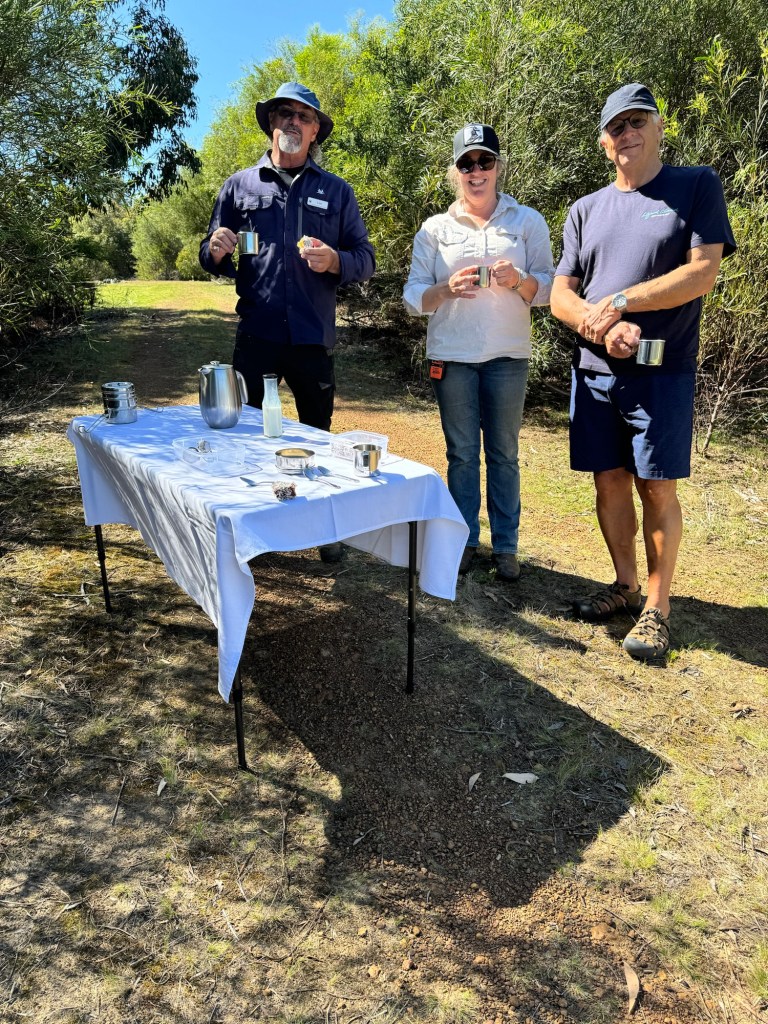
Having tea with Heidi, Lee and Mark
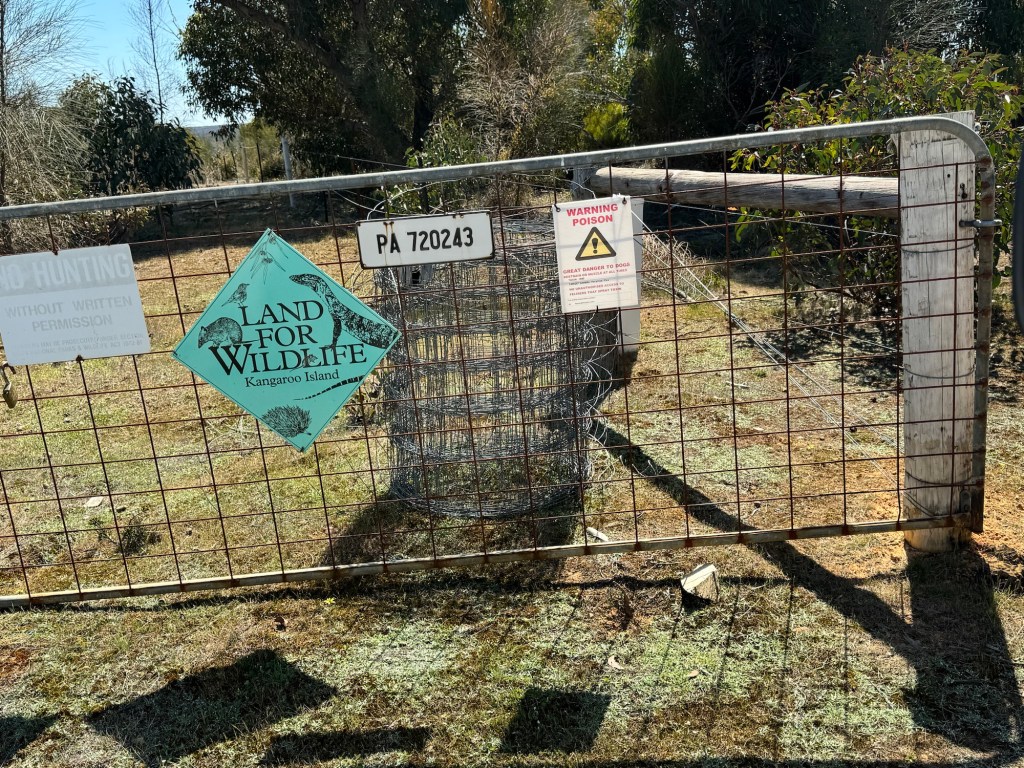
Heidi’s fence with her Land For Wildlife sign.

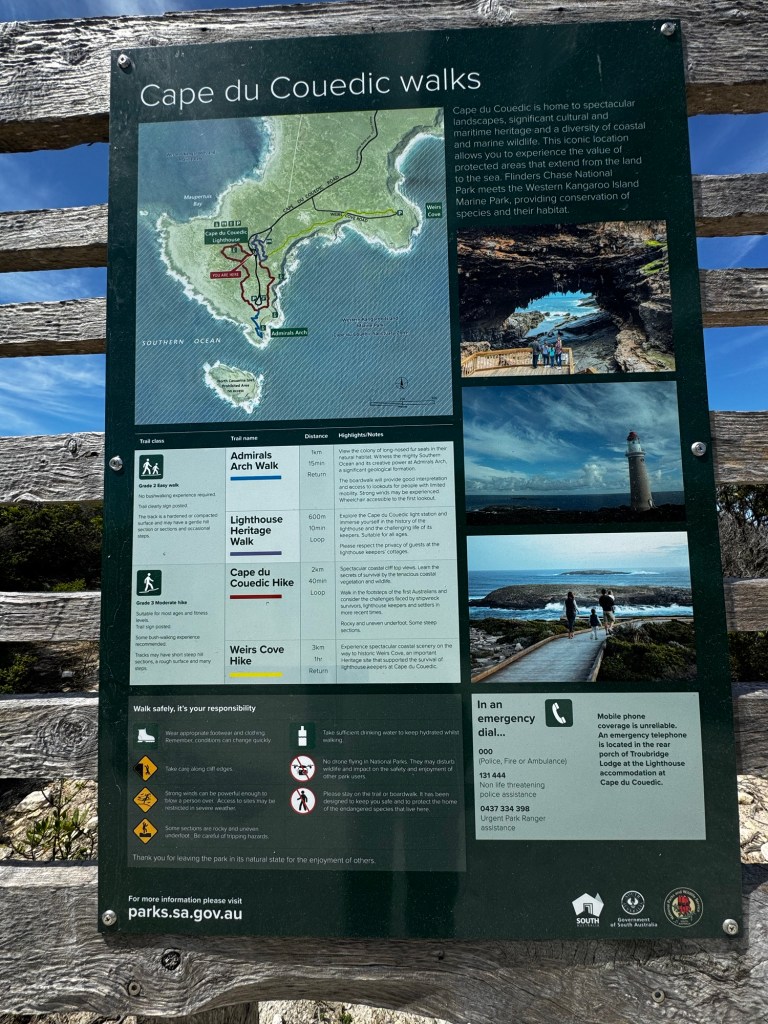
After we left Heidi, we checked into Flinders Chase National Park Headquarters to get permission to enter.

Wednesday, October 16, 2024

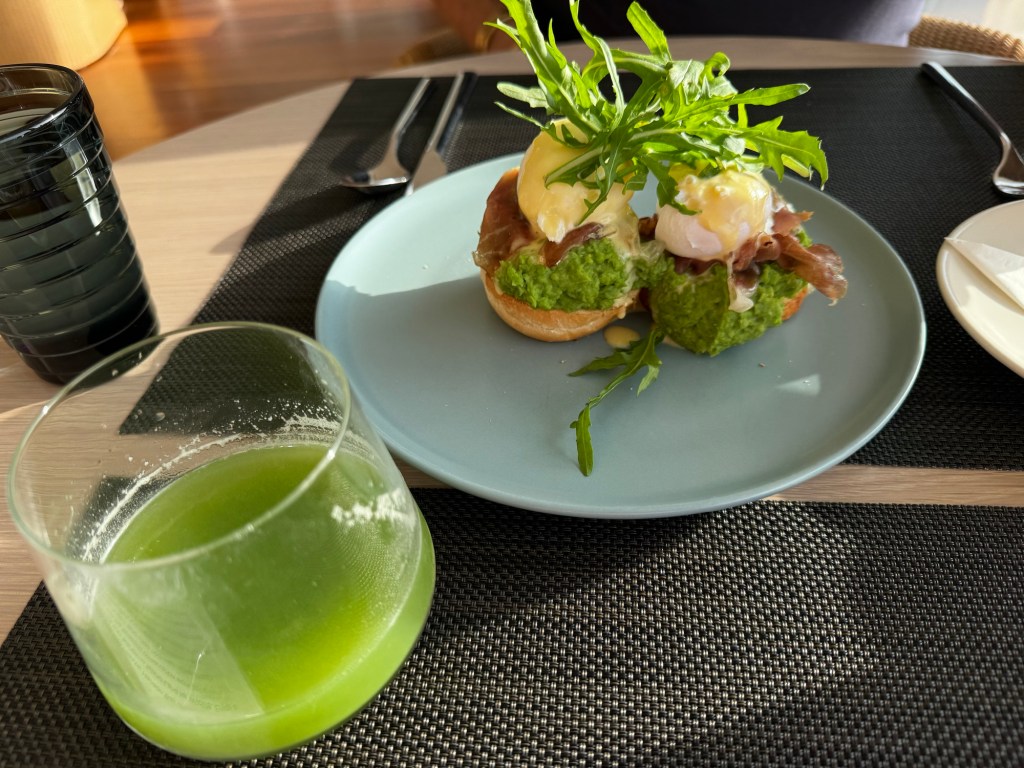
Meet Lee at 9:30 for a day of exploring beaches. But first, Mark fortified himself with an Eggs Benedict that had smashed peas in it.

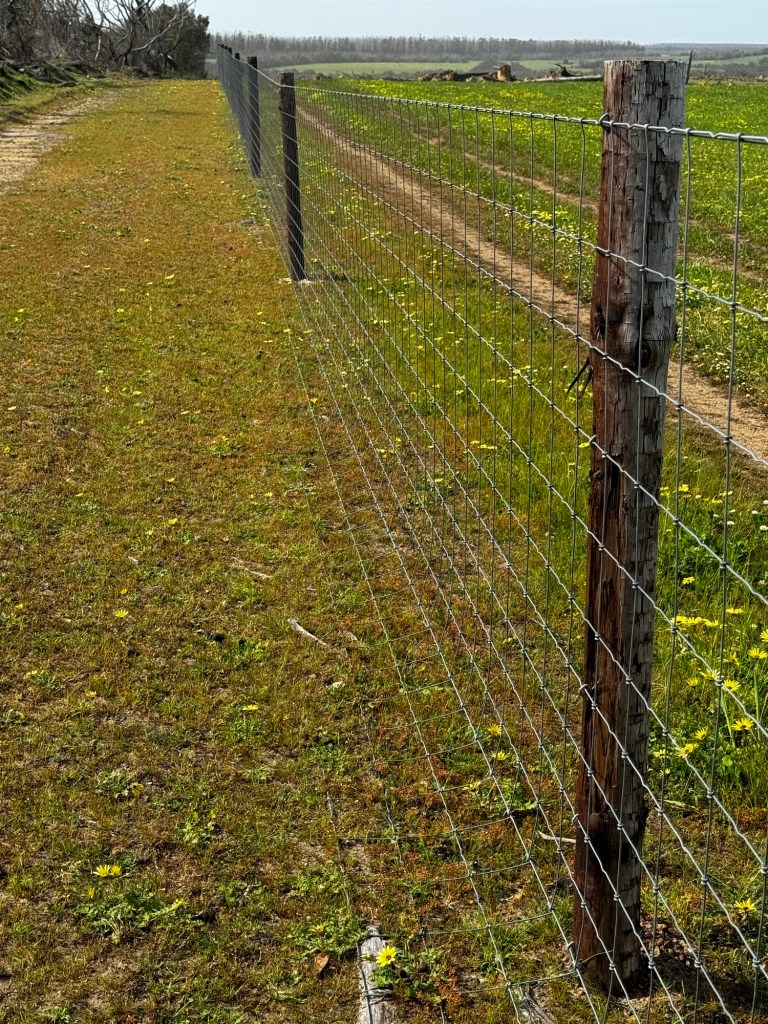
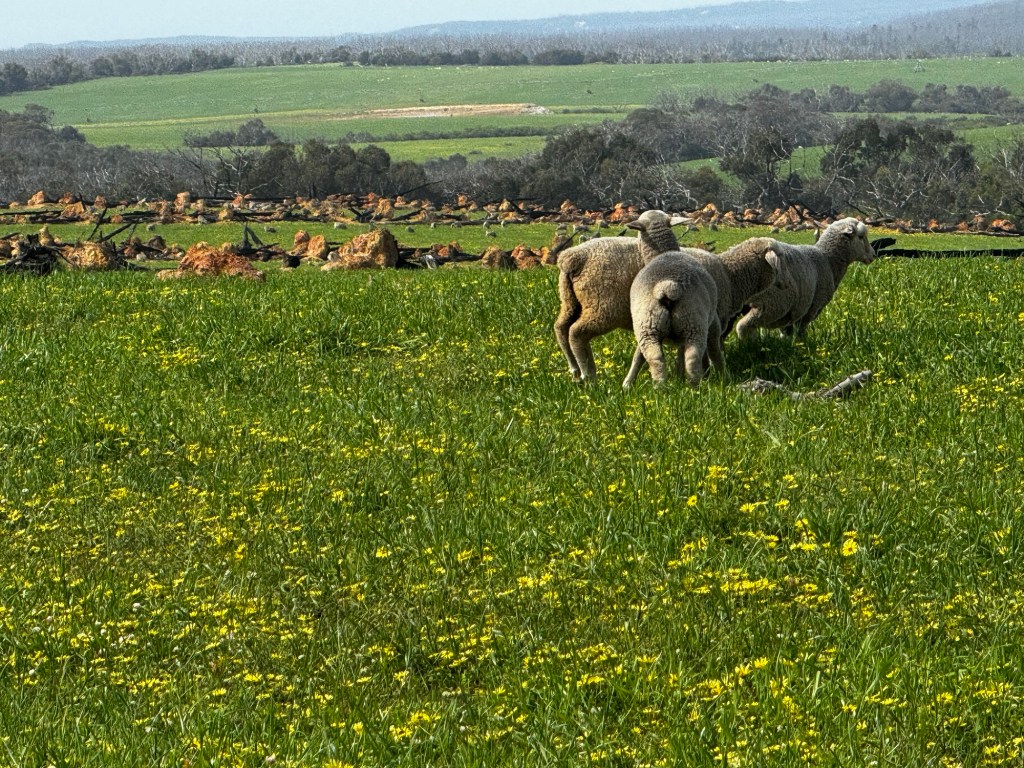
As we headed north for the Western River Cove, we stopped along the way to see some fencing to get a good look at what they call varmit fencing that we refer to as hog wire. All the fencing is new due to the huge fire that wiped out so very much in 2019-20. The landscape is a beautiful green where the trees have been cut. The sheep have just been sheered and they look very happy. The hog style fencing is installed so the bottom foot is folded out away from the protected area. There is no barbed wire on the top. A lot of trees still need to be removed, but much has been done and both people and animals are slowly recovering.

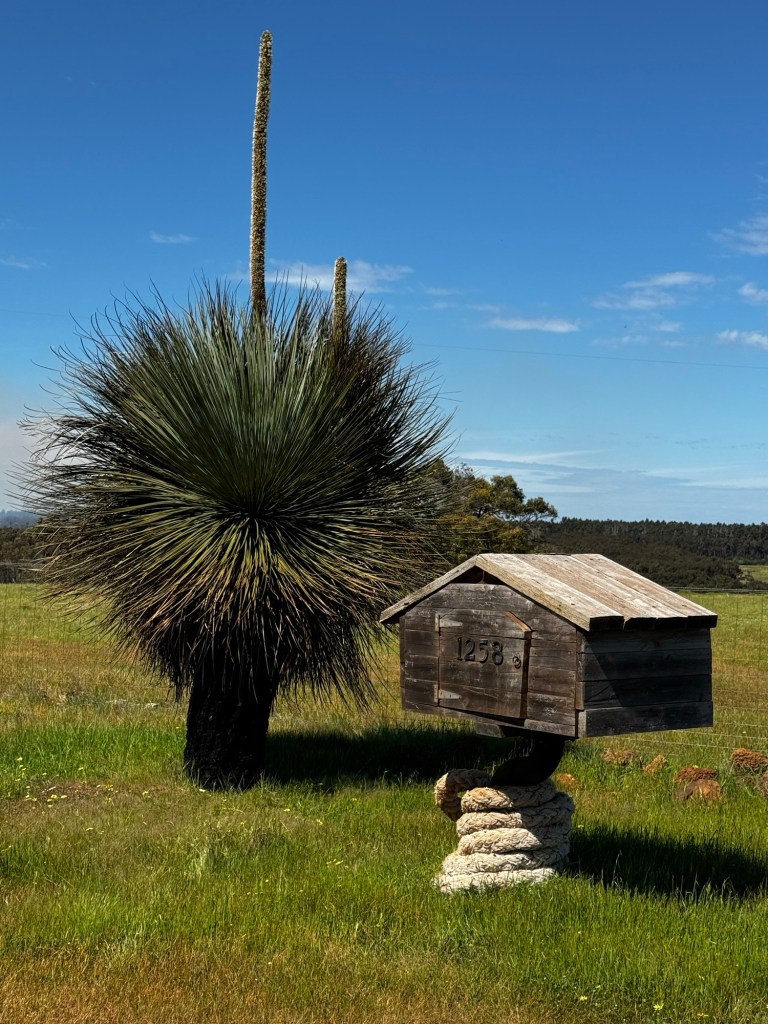
A rural mail box and a yucca tree that is just finishing flowering
A Willy Wagtail

At the convergence of the Western RIver with the Beach, we walked across a foot bridge and had a close encounter with a Willie Wagtail, who danced around for a long time, before flying away.

After a pleasant hour on the lovely and nearly deserted beach, we drove on to our next Beach experience, Snelling Beach. Along the way we saw a few koala in the trees. This was our lunch stop and Lee served a delicious spread of meats and salad. This beach was almost as nice as Western River Cove.

Snelling Beach
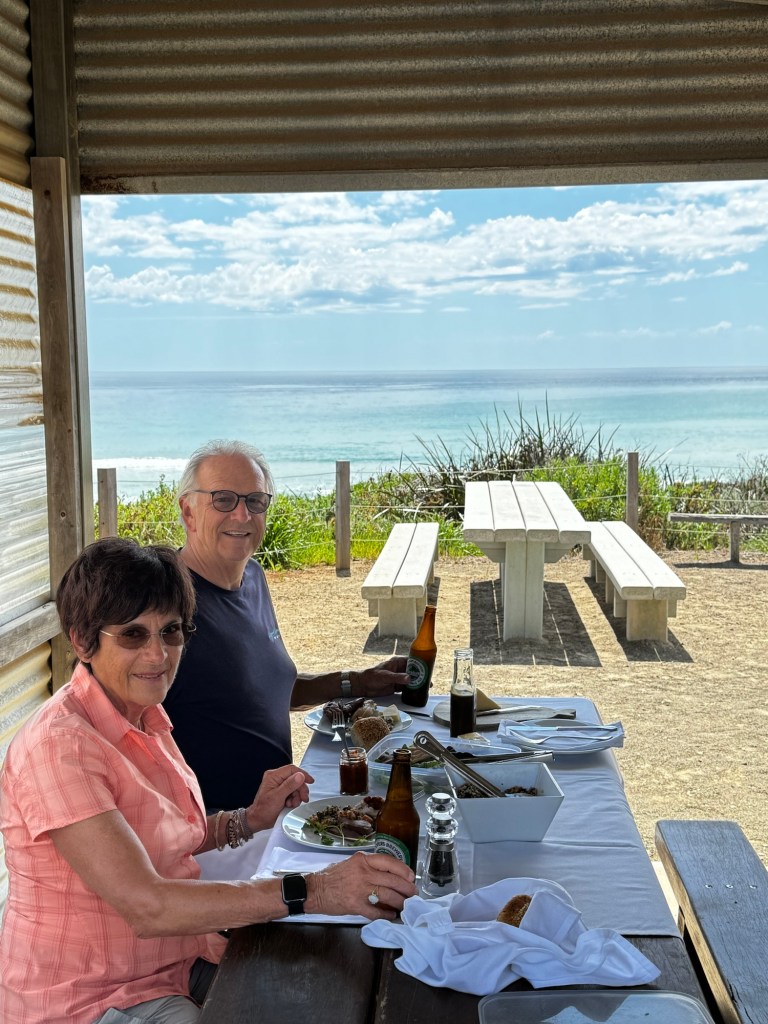
Lunch at Snelling Beach

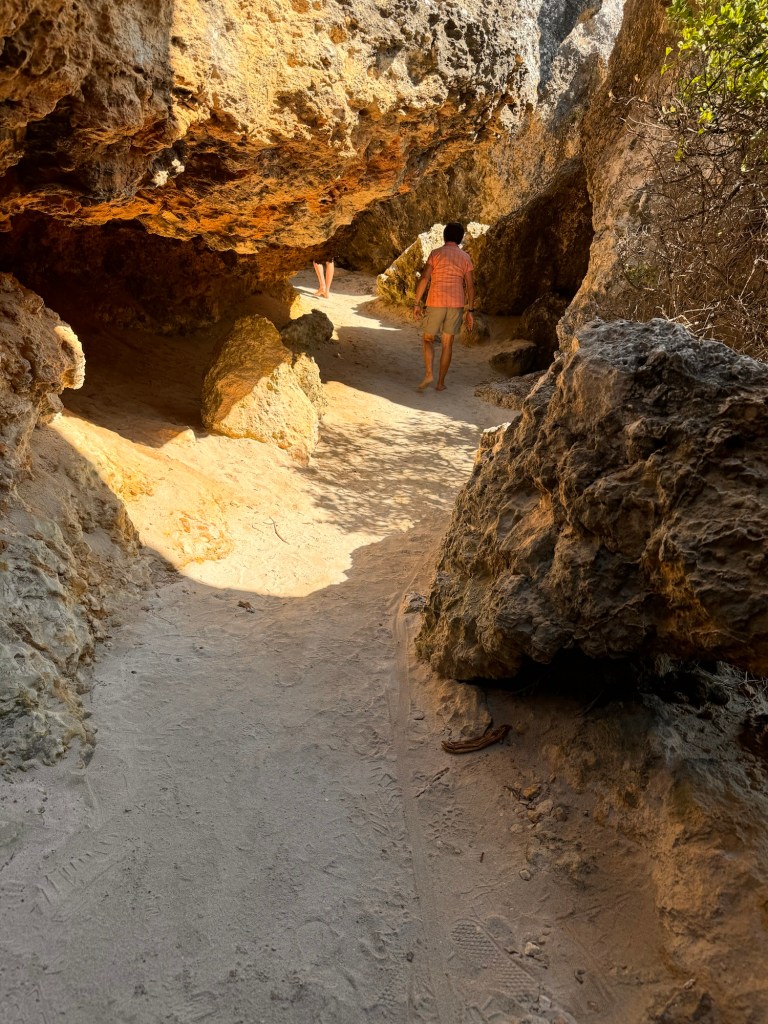
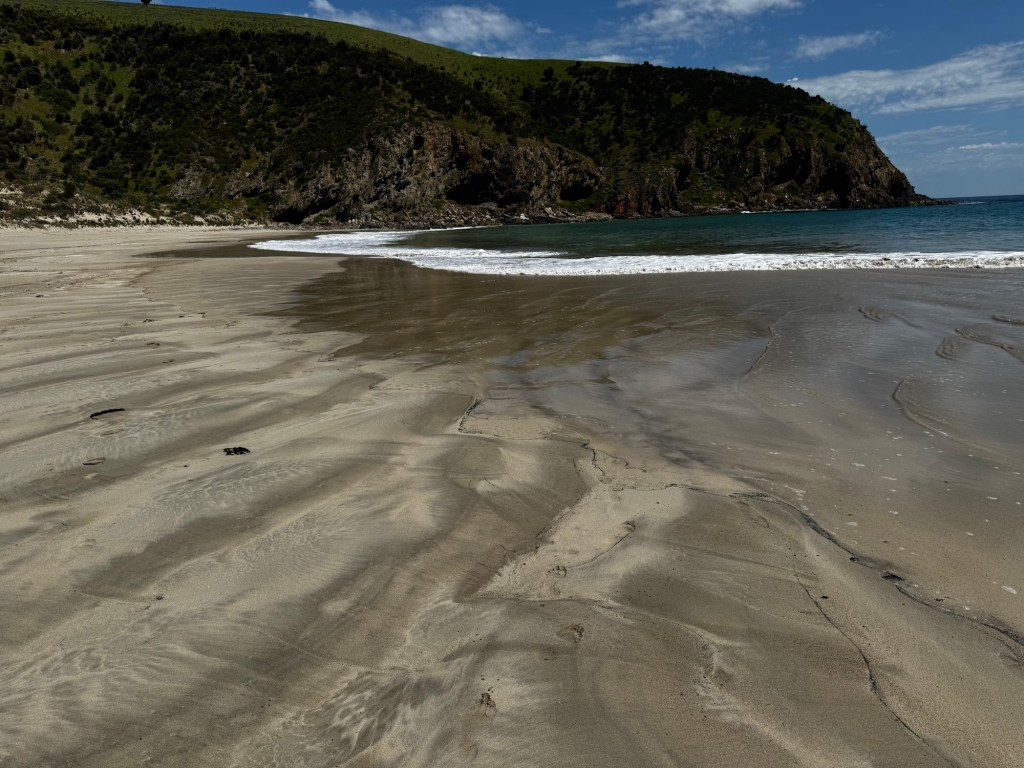
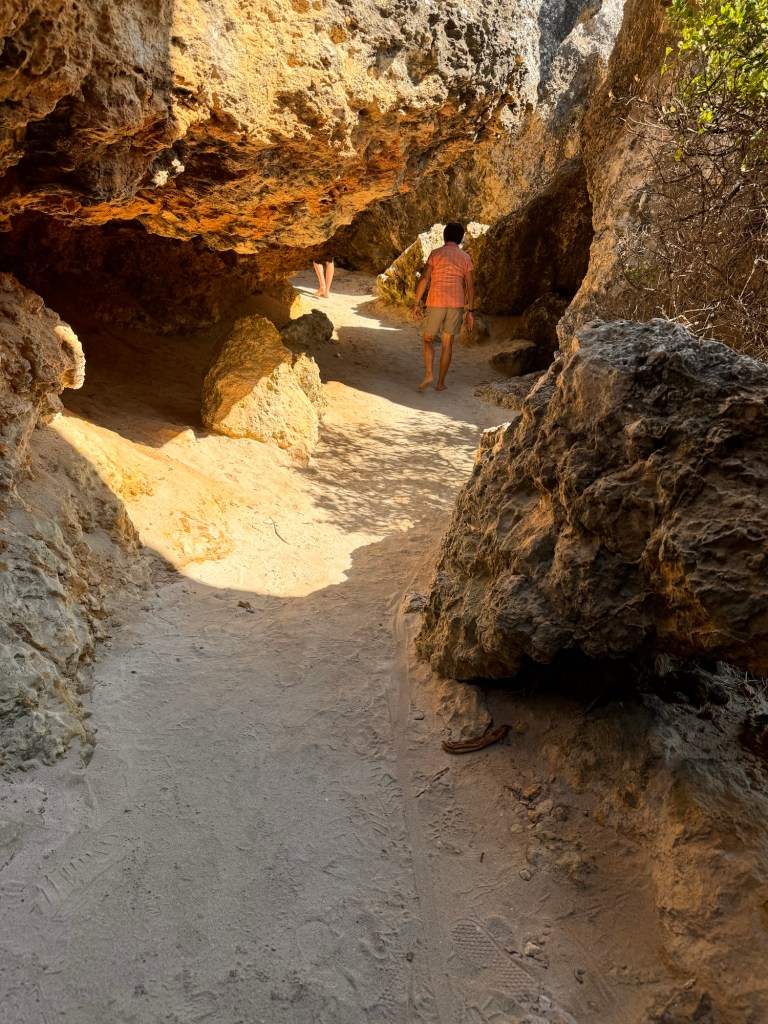
Our last beach of the day was Stokes Bay and Lee was looking forward to showing us a special tunnel. When we arrived we were not impressed with what we saw as the beach was full of rocks, dried kelp, pebbles and trash. Then he told us to follow him and soon we were navigating a narrow passage among large boulders.

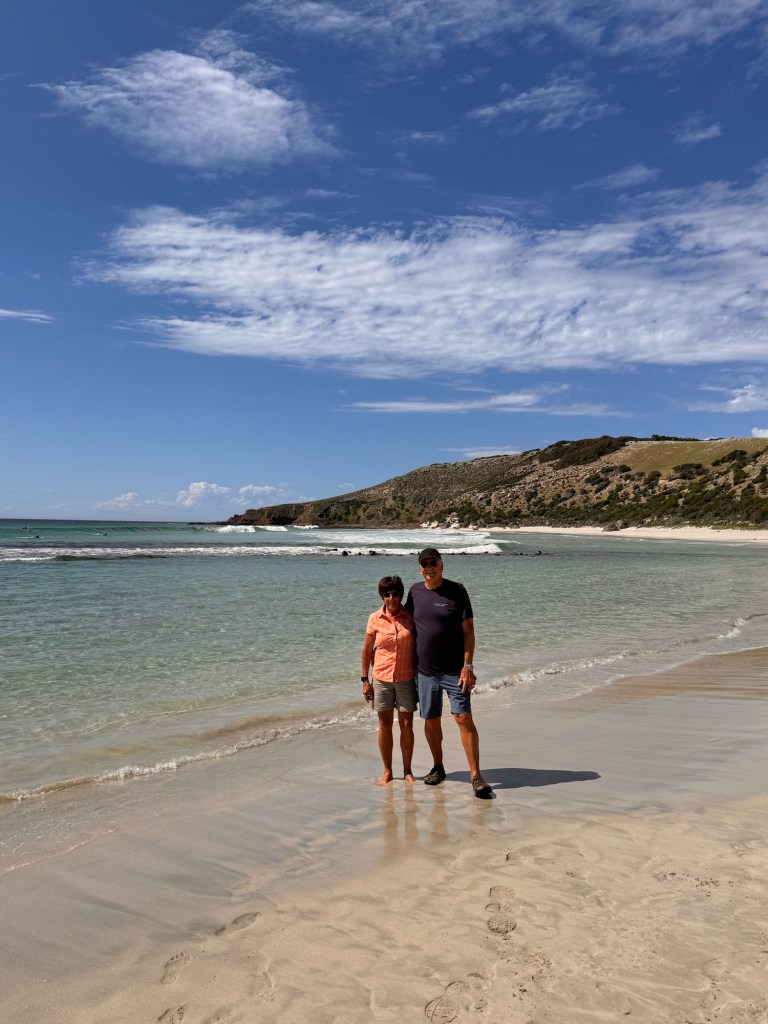
Eventually we passed the last boulder and stepped into the sunshine on another beautiful beach. What a pleasant surprise. After a pleasant walk on this beach, we headed back to the hotel.

The beach on the far side of the tunnel at Stokes Bay

It turns out Kangaroo Island is full of lovely beaches and the locals are very spoiled. The water is pretty cold, but not uncomfortable in late spring and summer.

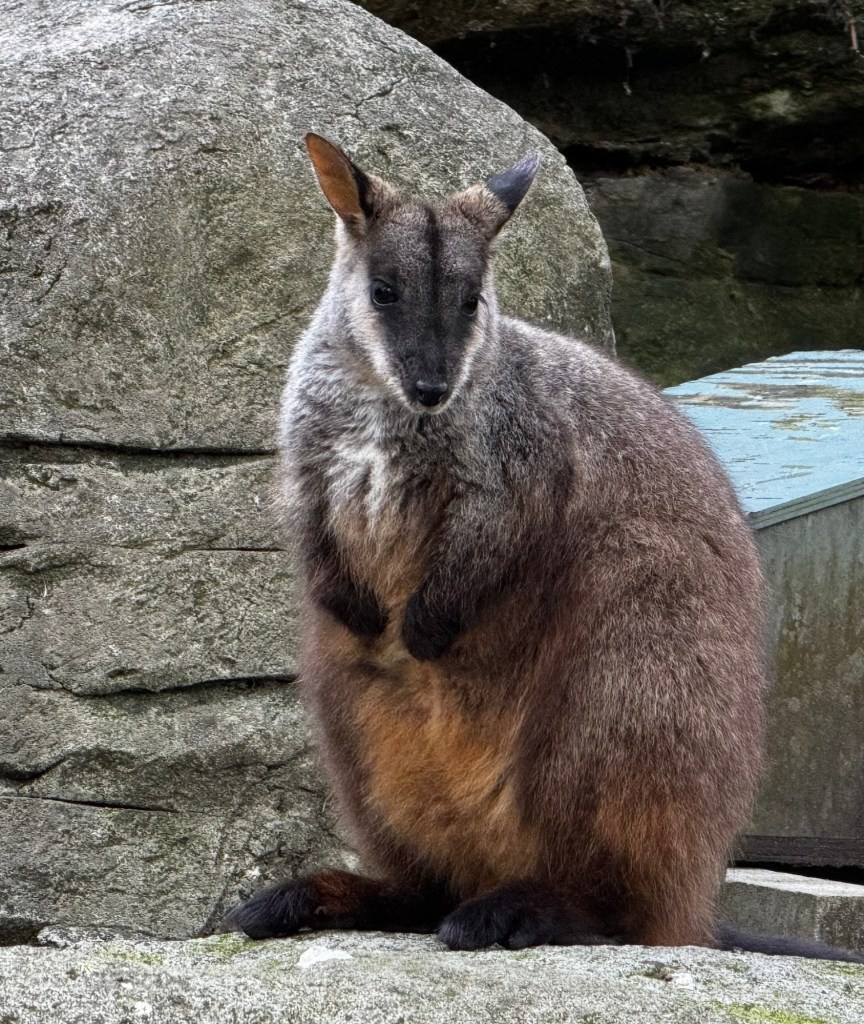
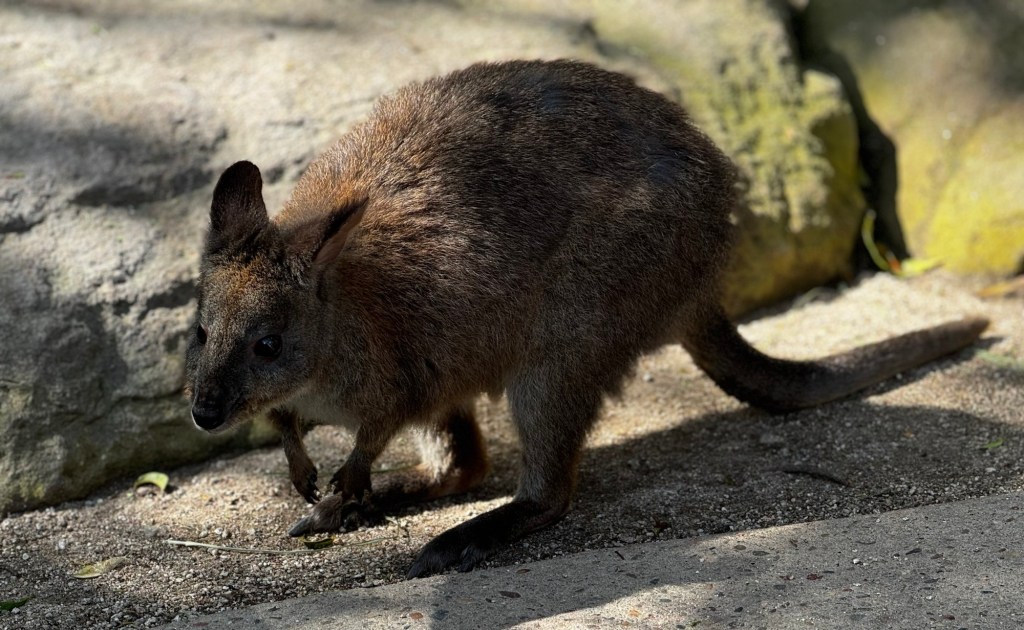
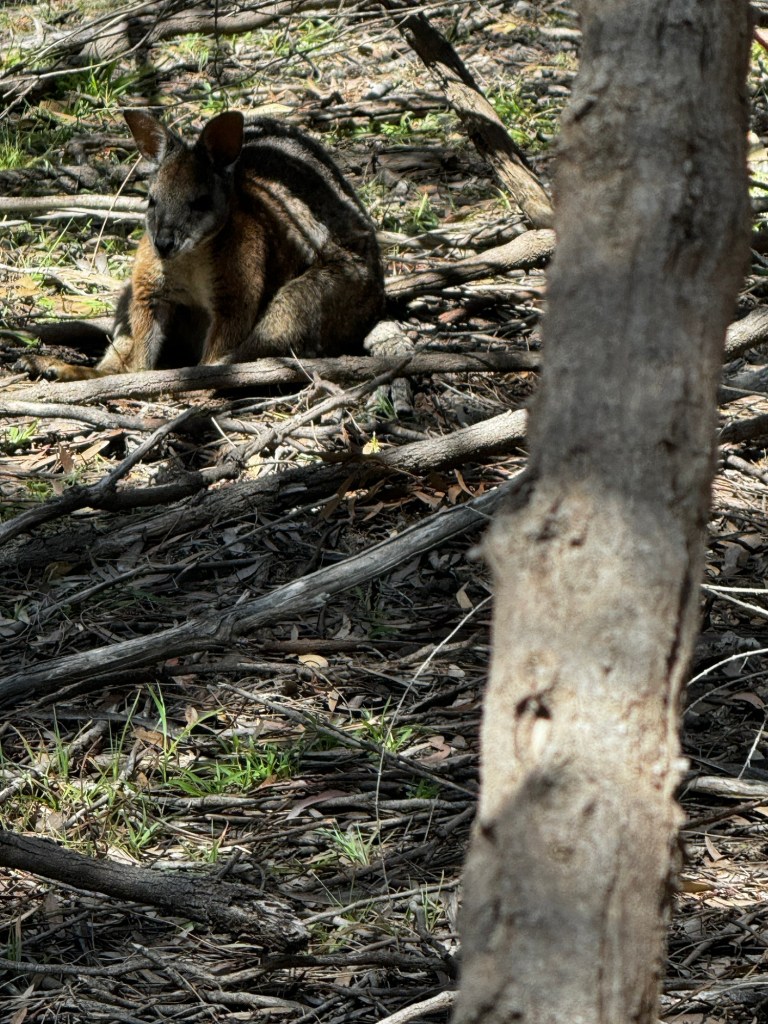
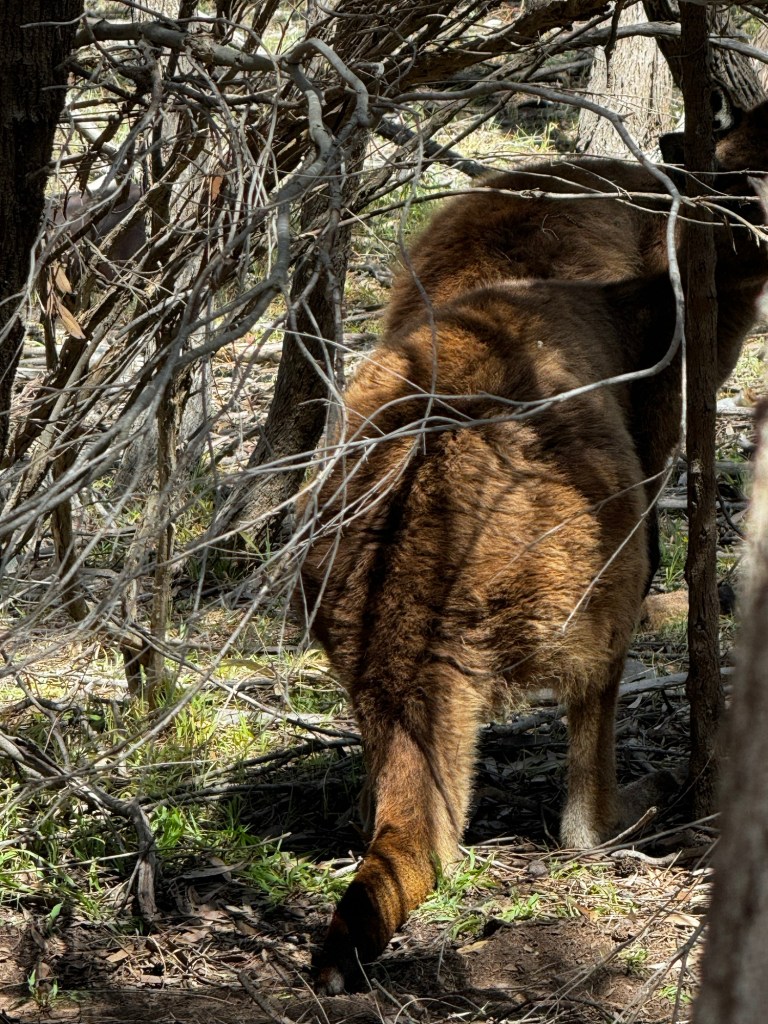
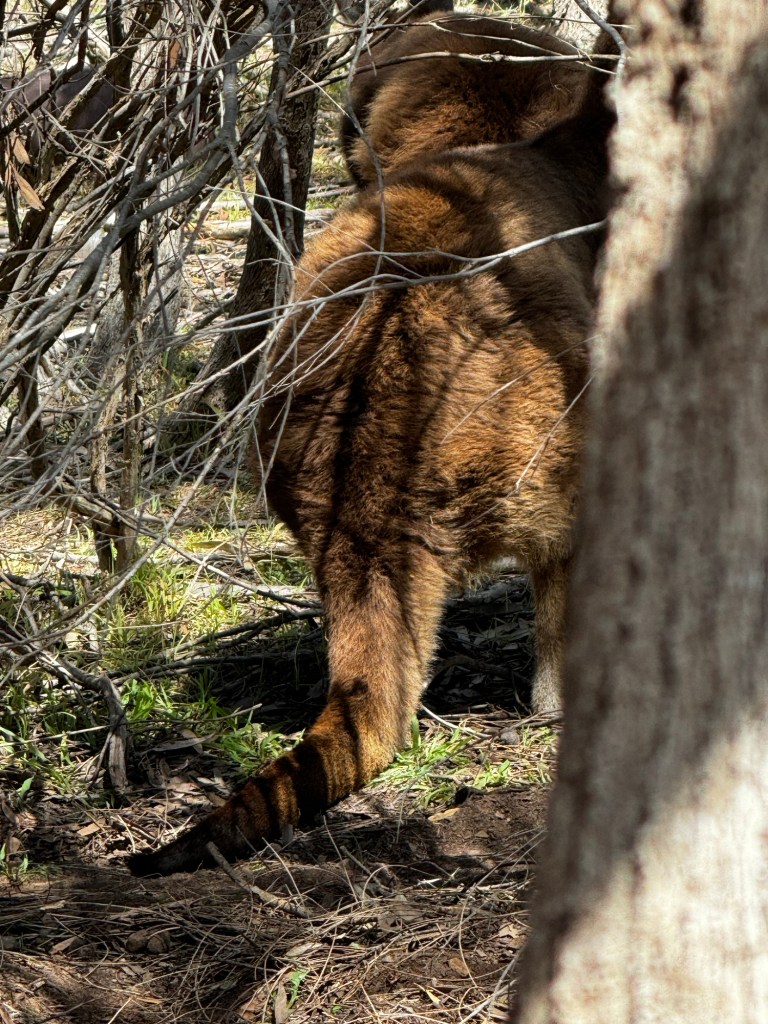
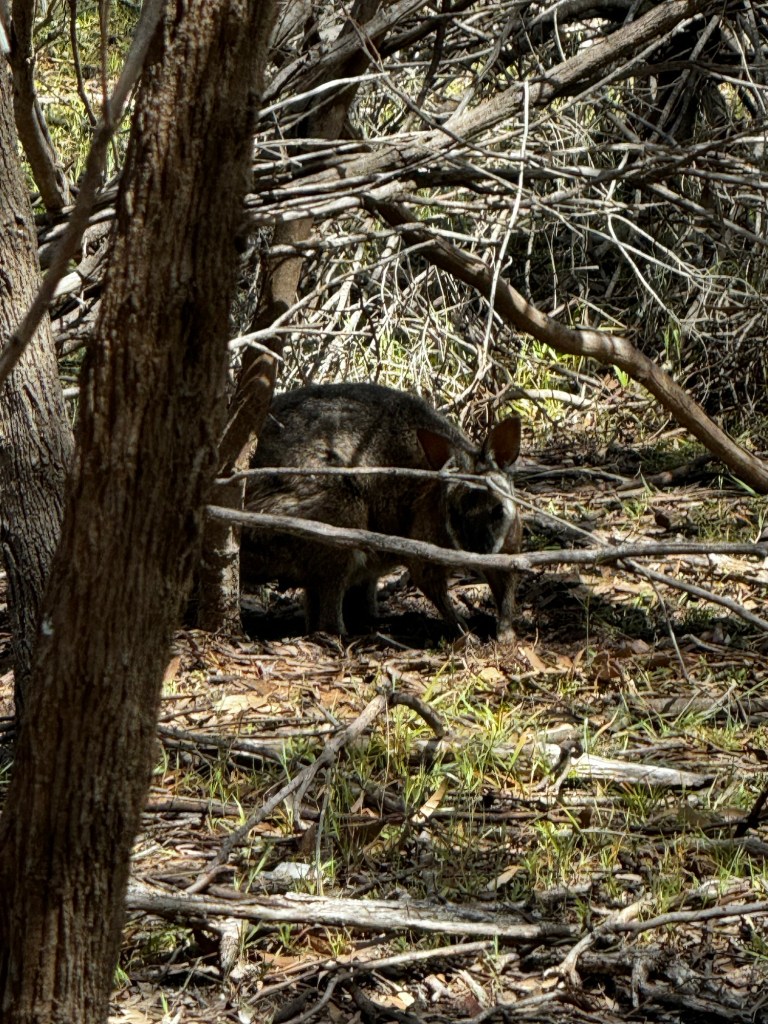
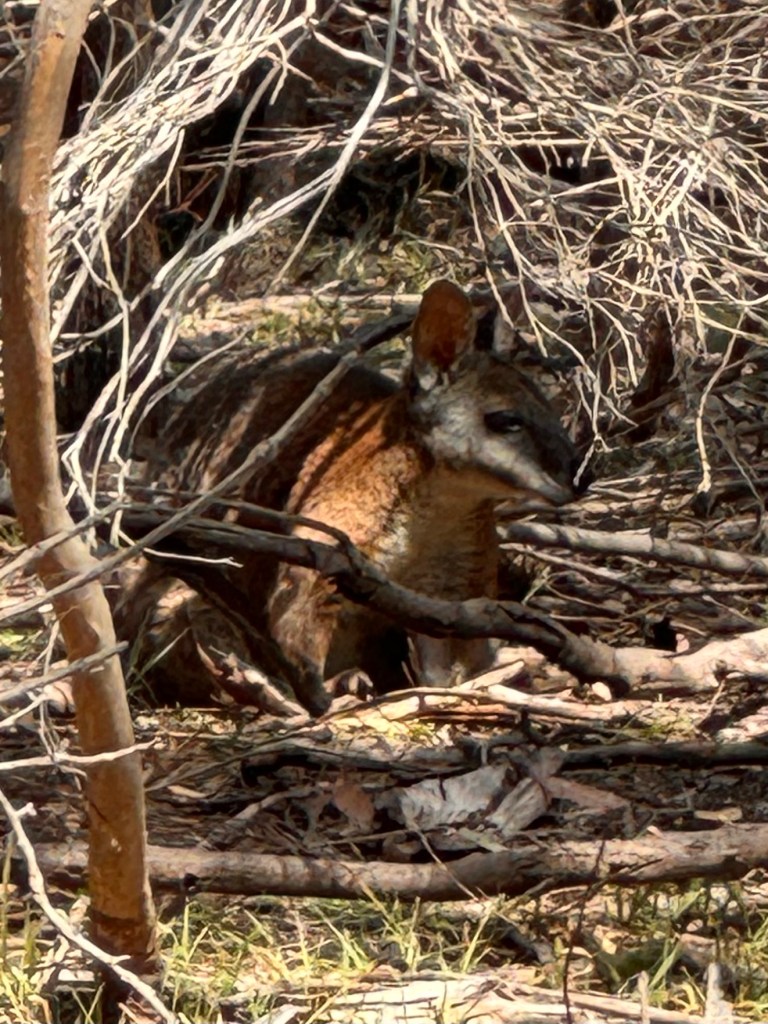
On the way back to the lodge from the north coast beaches, Lee spotted several wallabys and Mark was able to snap this one. Really good of him as Tammer is the only wallaby on Kangaroo Island.

A Tammer Wallaby hiding in the bush.

Thursday, October 17, 2024

It is Thursday morning and we are sitting at the airport terminal waiting for our Quanta’s flight to Adelaide followed by another wait for an onward flight to Newcastle. So I end this most southerly part of our trip.

South Australian Outback

Tuesday, October 8, 2024

Southern half of South Australia

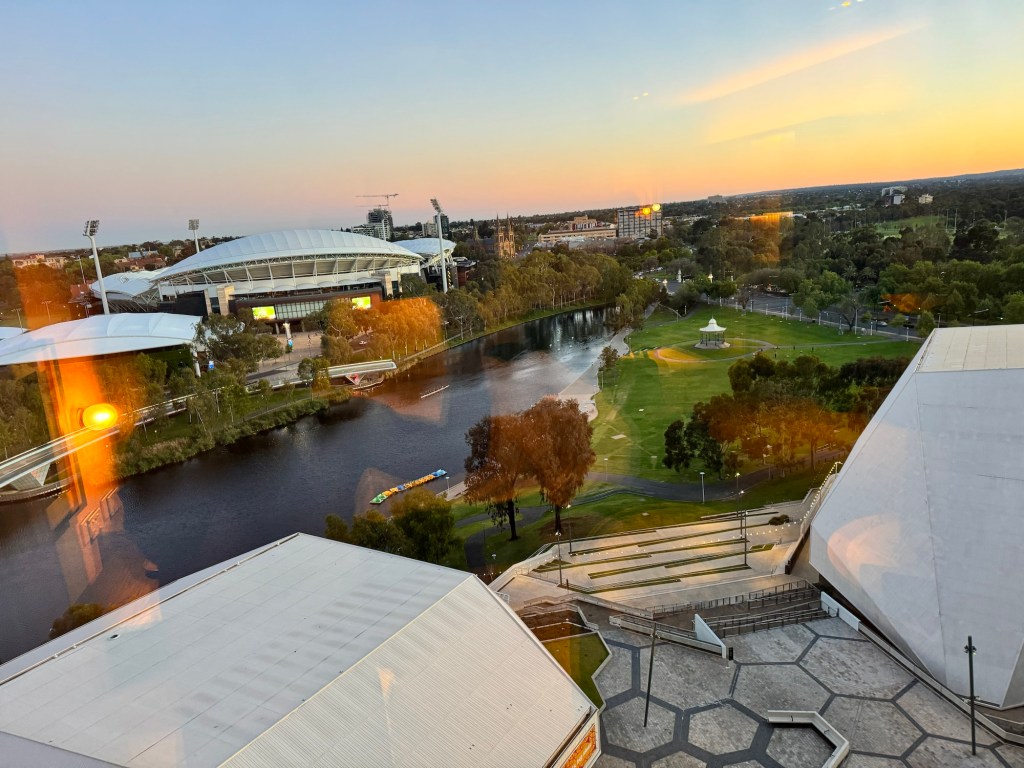
Depart Hobart at 9am. Transit Melbourne and arrive Adelaide in South Australia at 4pm. We had only one afternoon and evening in Adelaide. We walked around a few streets and ended up in a neighborhood of massage parlors and strip clubs. There were a number of restaurants and we settled on one called ShoboSho, that was Japanese fusion. We had two kinds of potstickers that were excellent. The place was full of young people. Adelaide seems like a nice city with a defined one mile square plan surrounded by parklands. It is named for Queen Adelaide, who was the wife of King William the IV. The city was founded in 1836.

Wednesday, October 9, 2024, Our 31st wedding anniversary. Mark gave me a lovely anniversary card. I forgot to reciprocate, as usual, when we are traveling. Very sorry Mark.

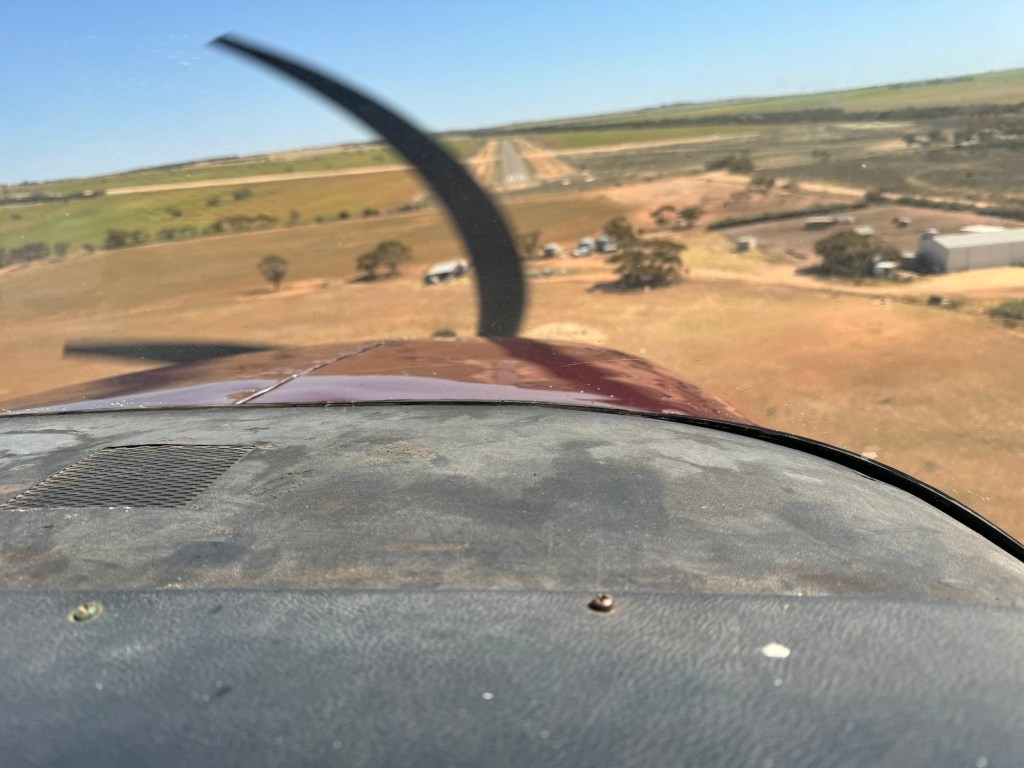
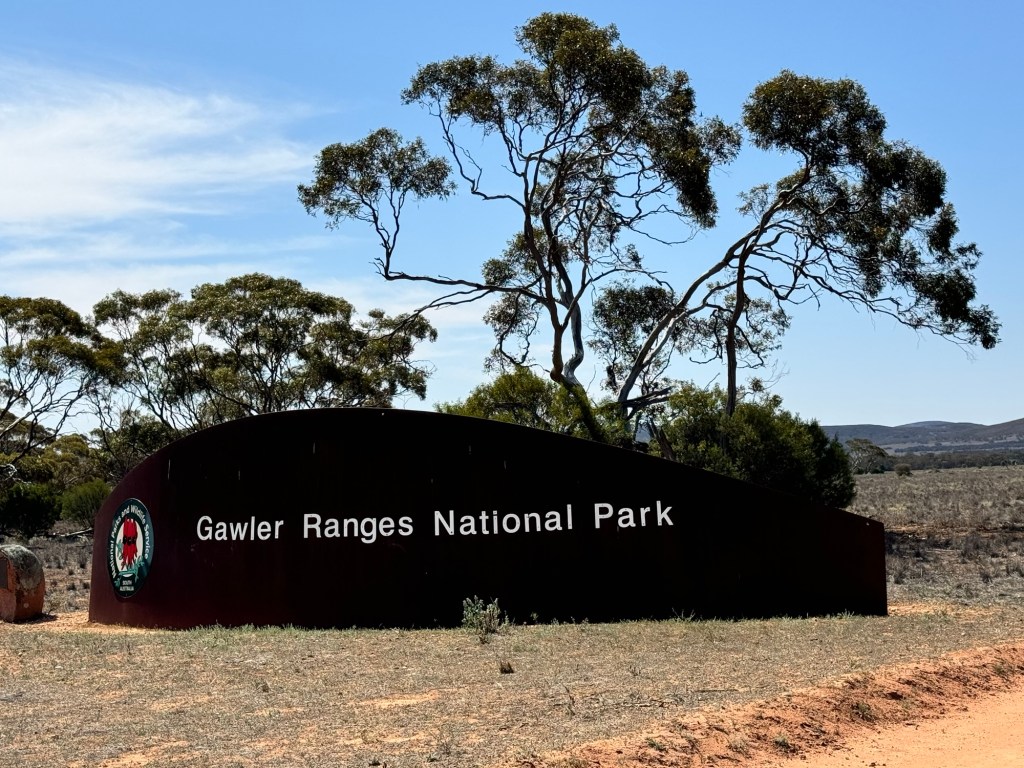
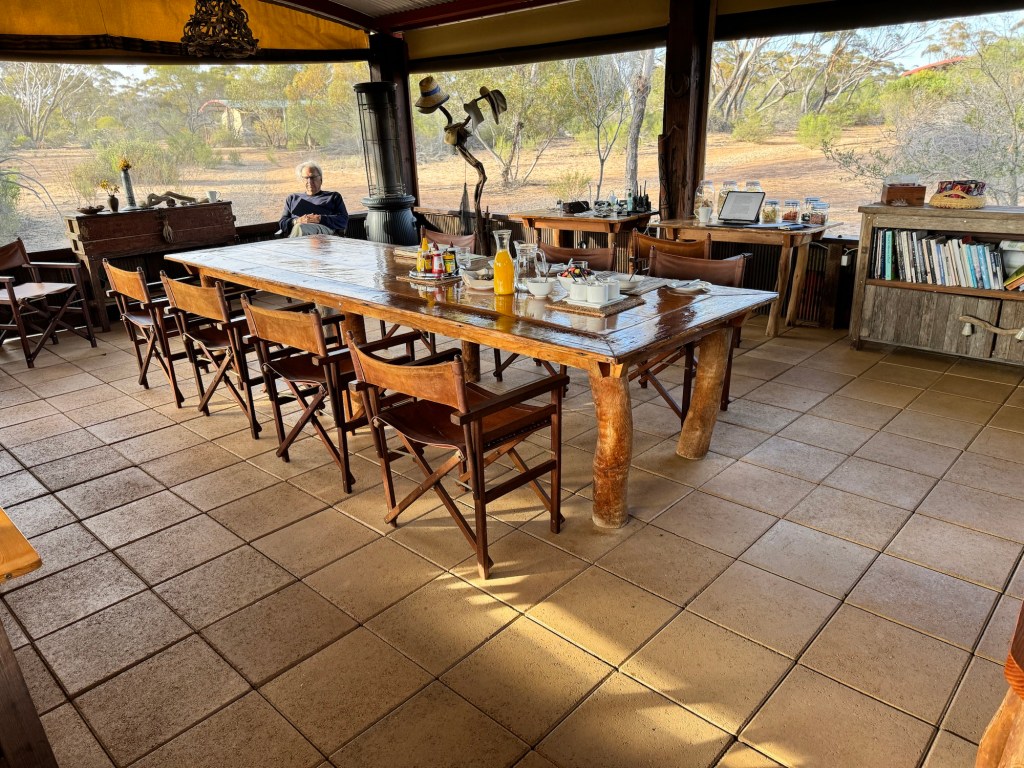
We leave Adelaide at 9am in a Cessna 210 and arrive Wudinna, a thriving town of 600 people, at 10:30. It is a successful farming community due to wheat, barley and canola being grown locally and sold to China and Saudi Arabia. Getting out of the plane, we were surrounded by flies, lots of flies, all trying to gain access to my mouth, eyes and nose, which was disturbing at first. Met by our camp driver/guide, Rosie Woodford Ganf, who seemed unfazed by the flies and chatted away while driving us 40 minutes to Kangaluna Camp next to Gawler Ranges National Park. Flies were everywhere and drove us a bit nuts. Fortunately our tent and the dining tents were screened. We are told to use face nets if we can’t stand the flies.

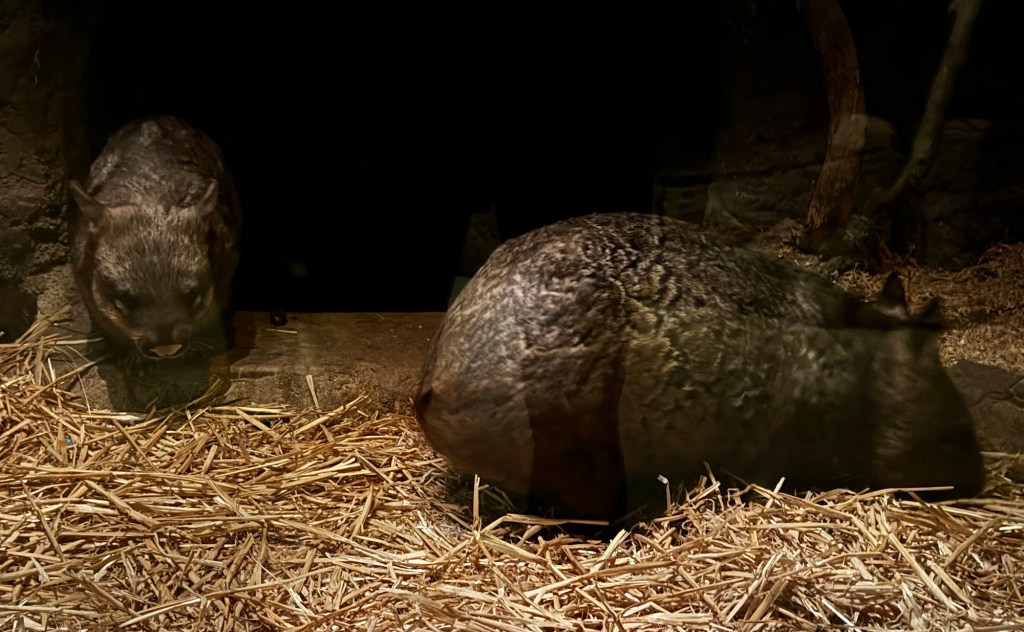
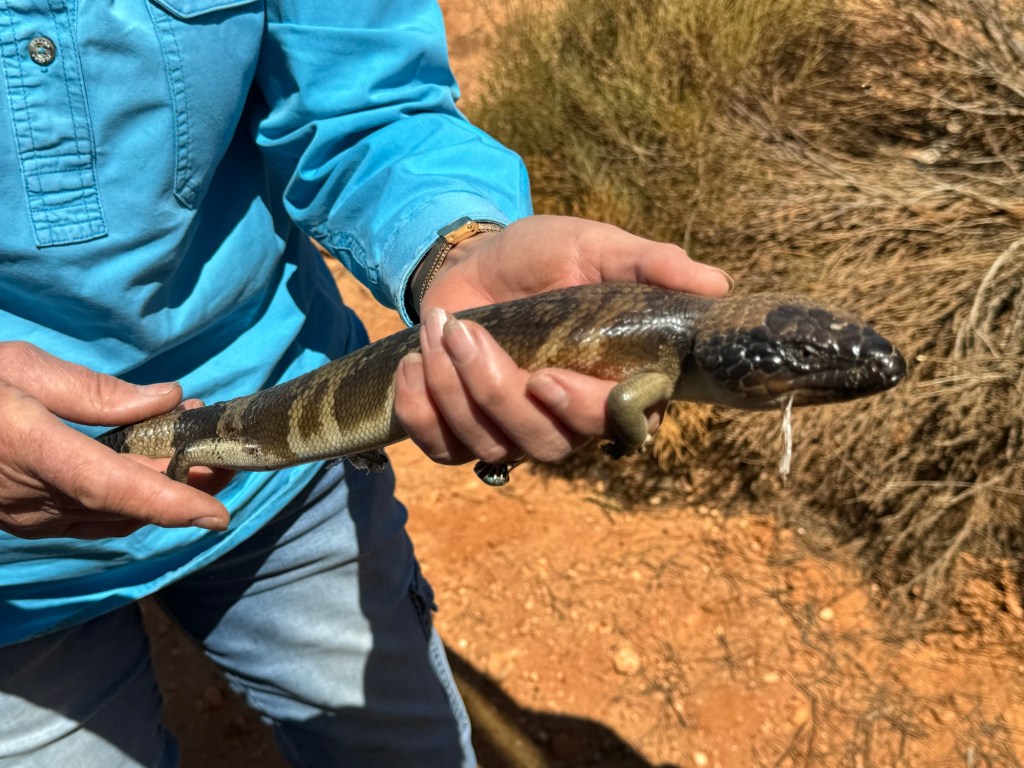
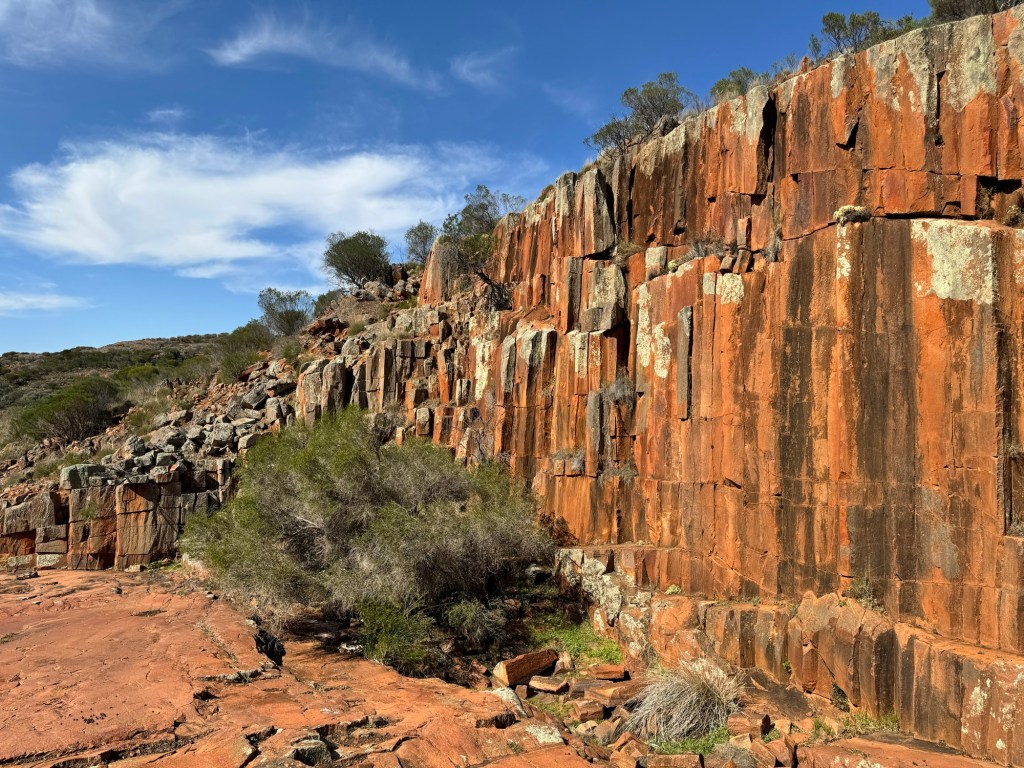
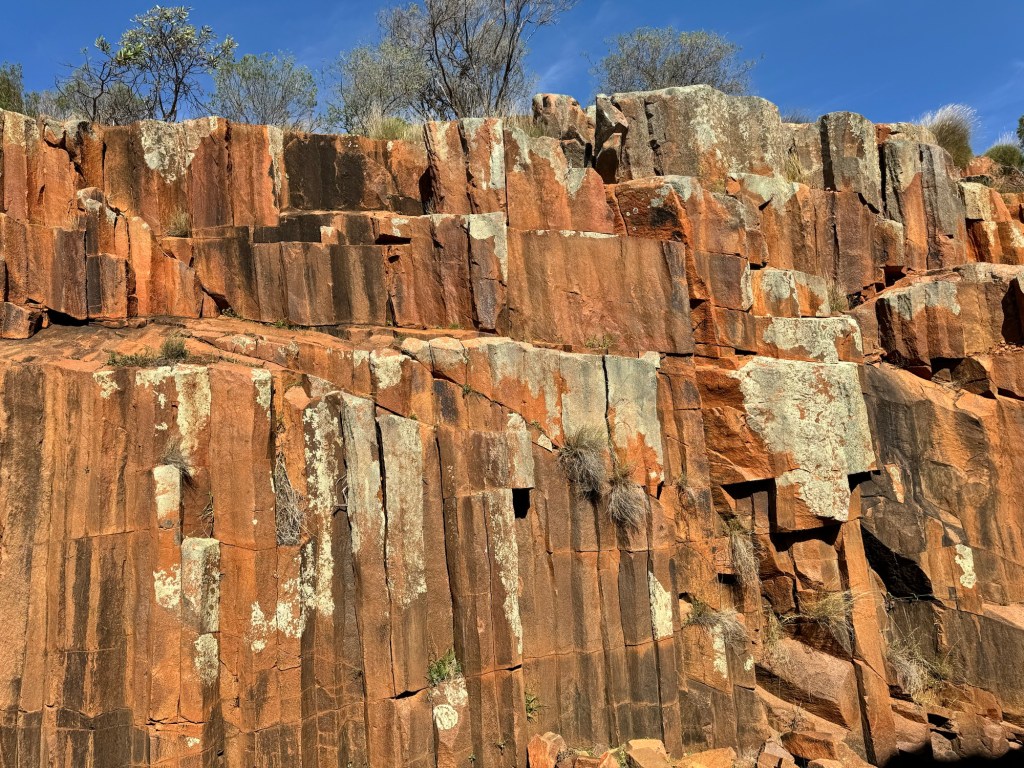
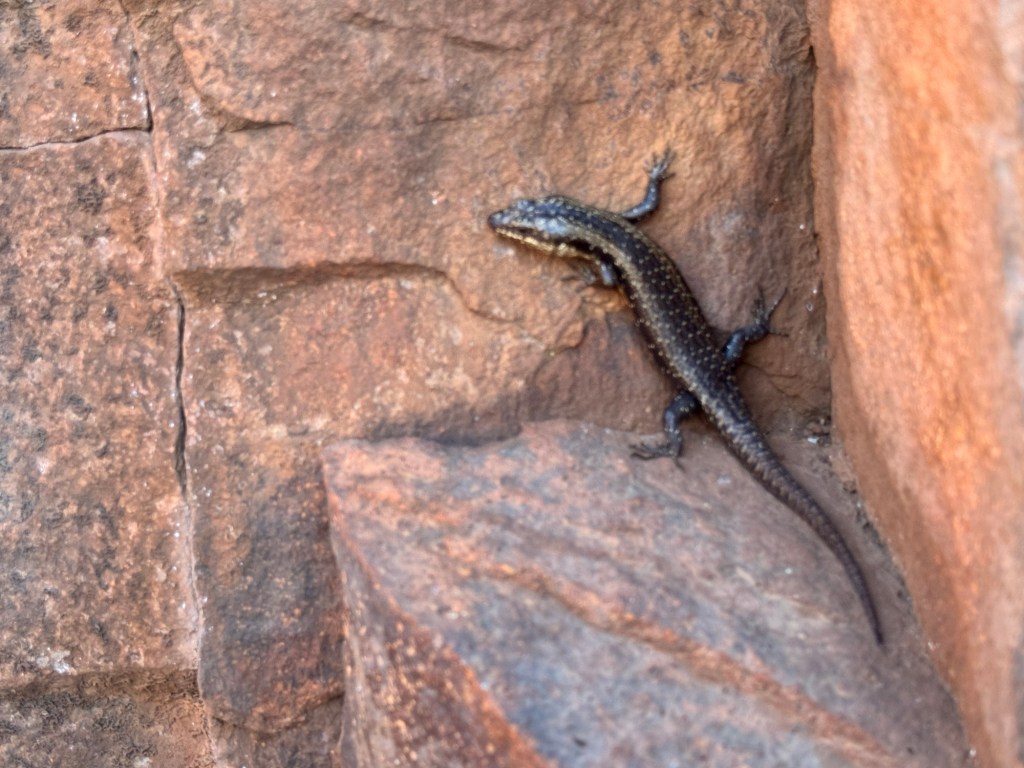
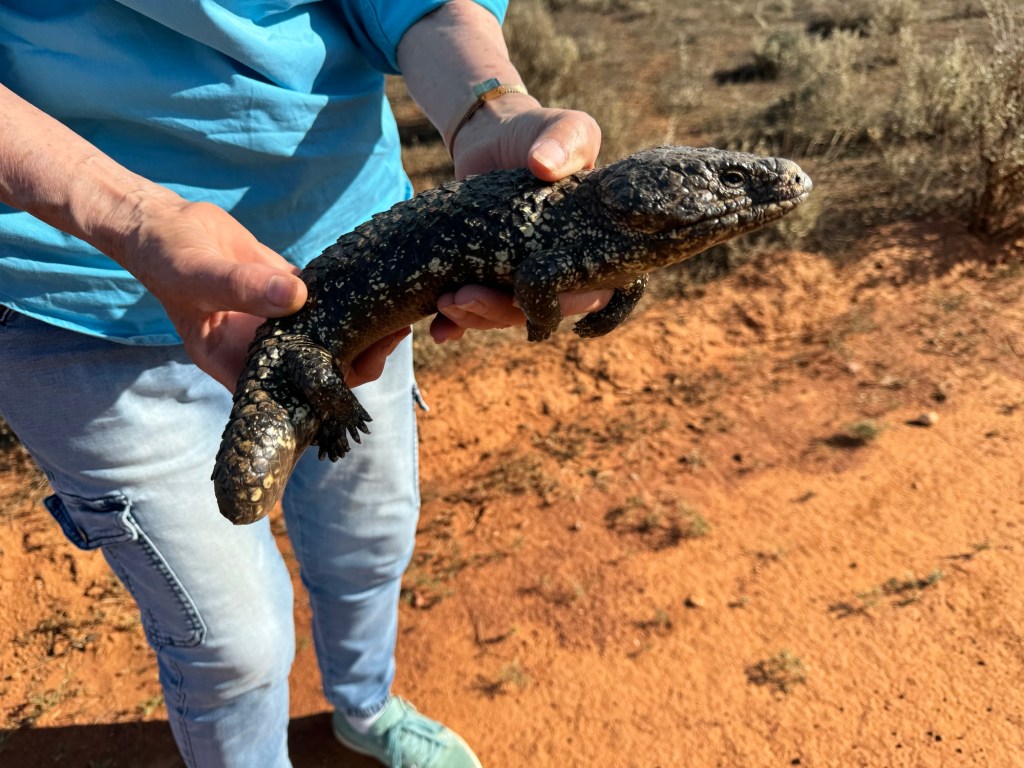
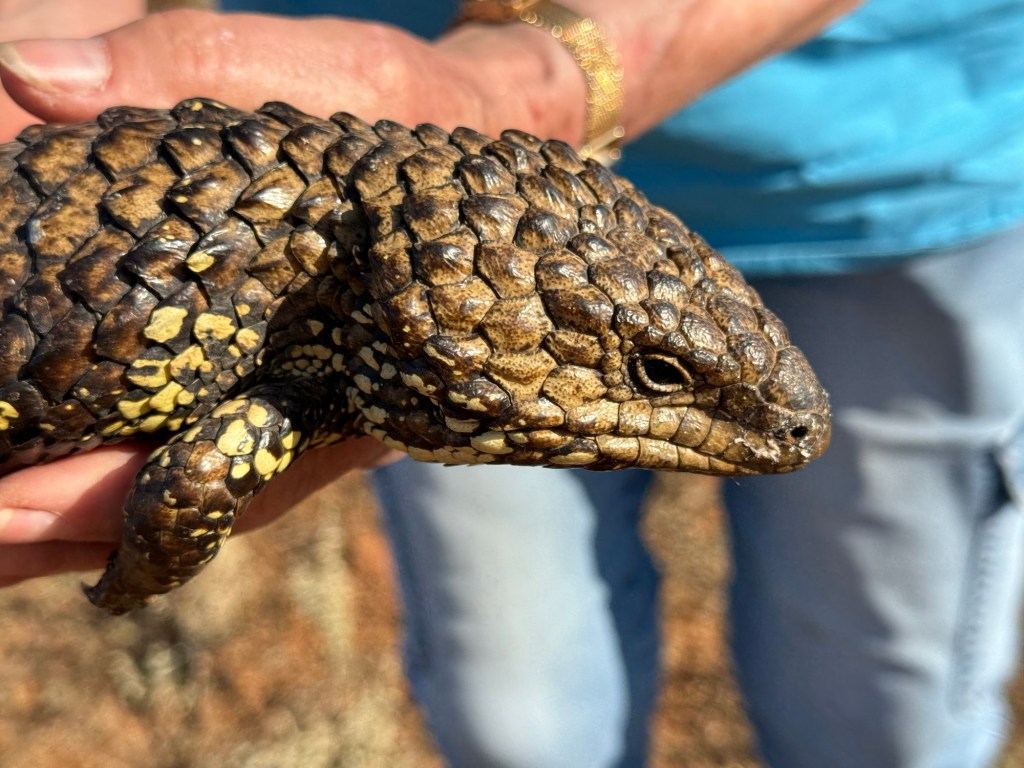
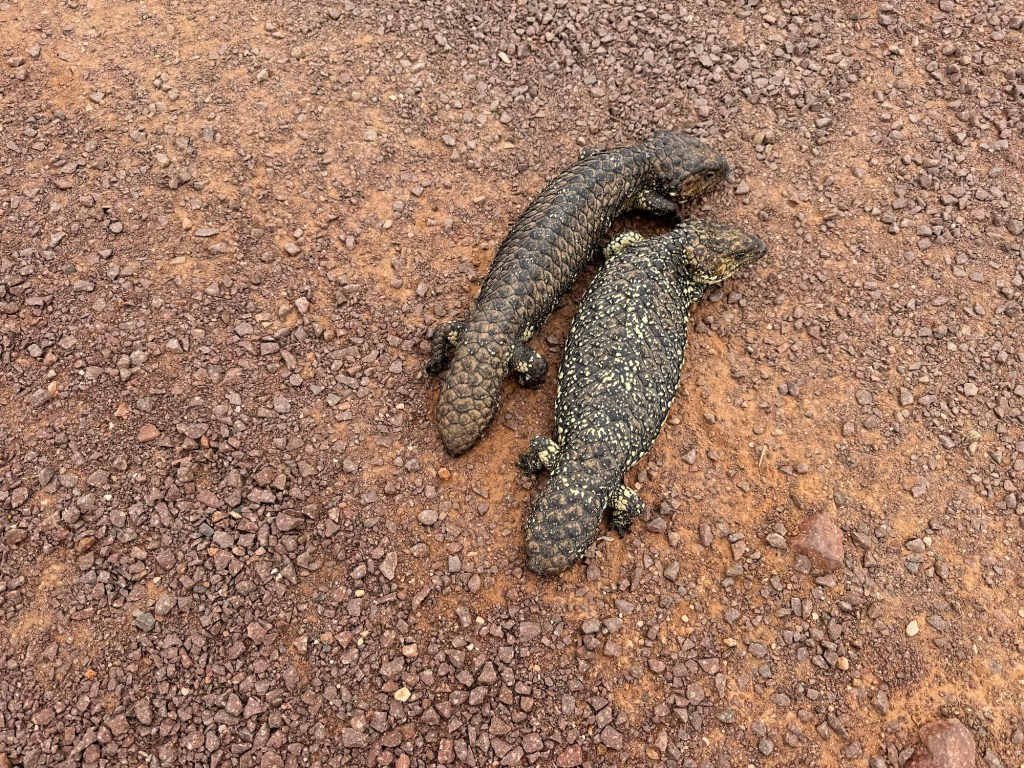
We had lunch and moved into our tent. Late afternoon Rosie took us Mirica Falls, which has no water, but where we had nibbles and drinks. The falls are made of Rhyolite and look like Devils Post Pile in Mammoth Lakes. They are red instead of black. We got some photos of a water skink who happily ate the chopped carrot we gave it. Rosie had no trouble picking up a couple of Shingle back or sleepy skinks as well as the blue tongue. They are slow reptiles that mate for life and live about 3 years. Colorful creatures for sure. On the way back to camp we finally spotted a wombat next to its hole. Not very close but the best we could do.

Southern hairy Nose Wombat

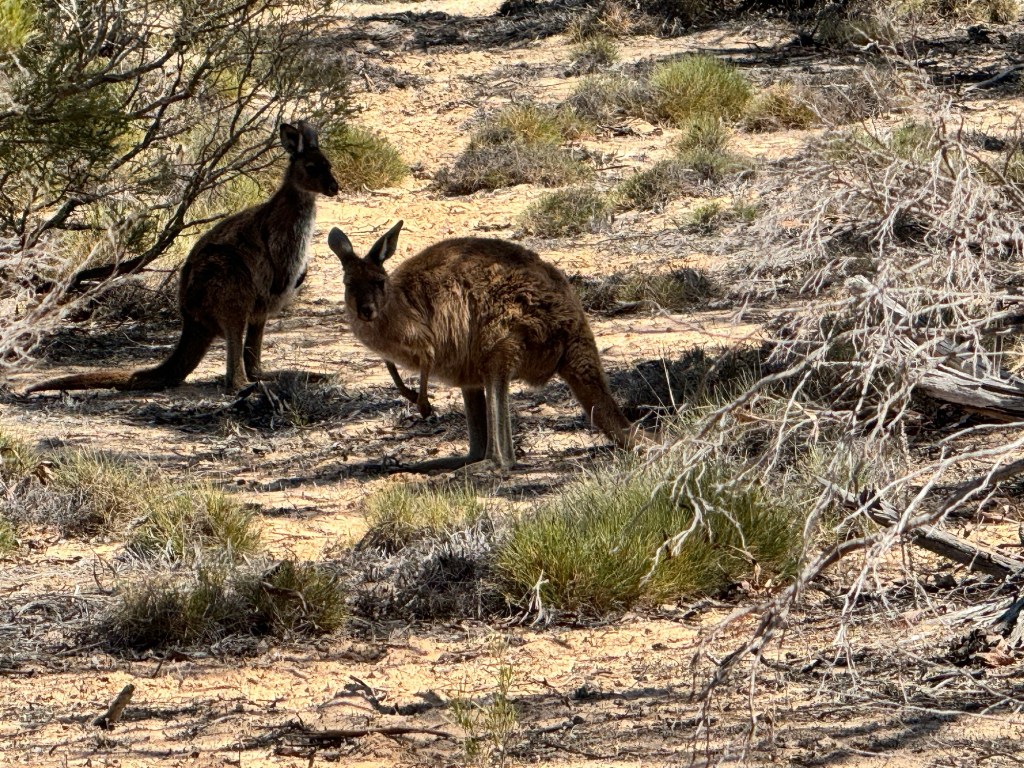
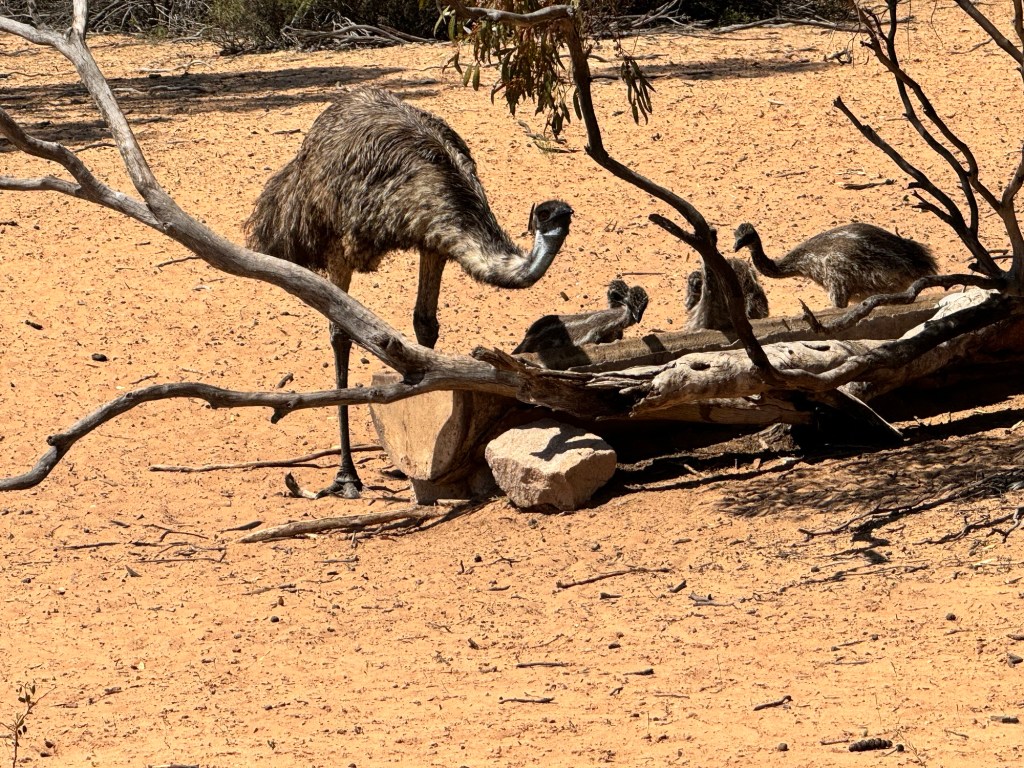
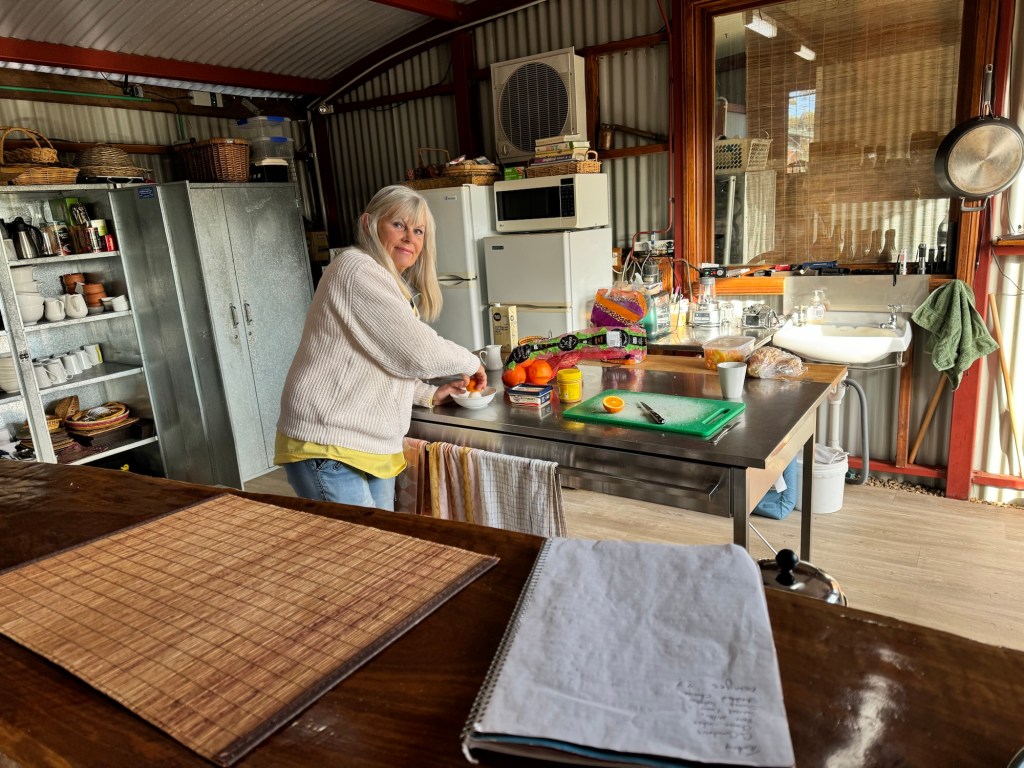
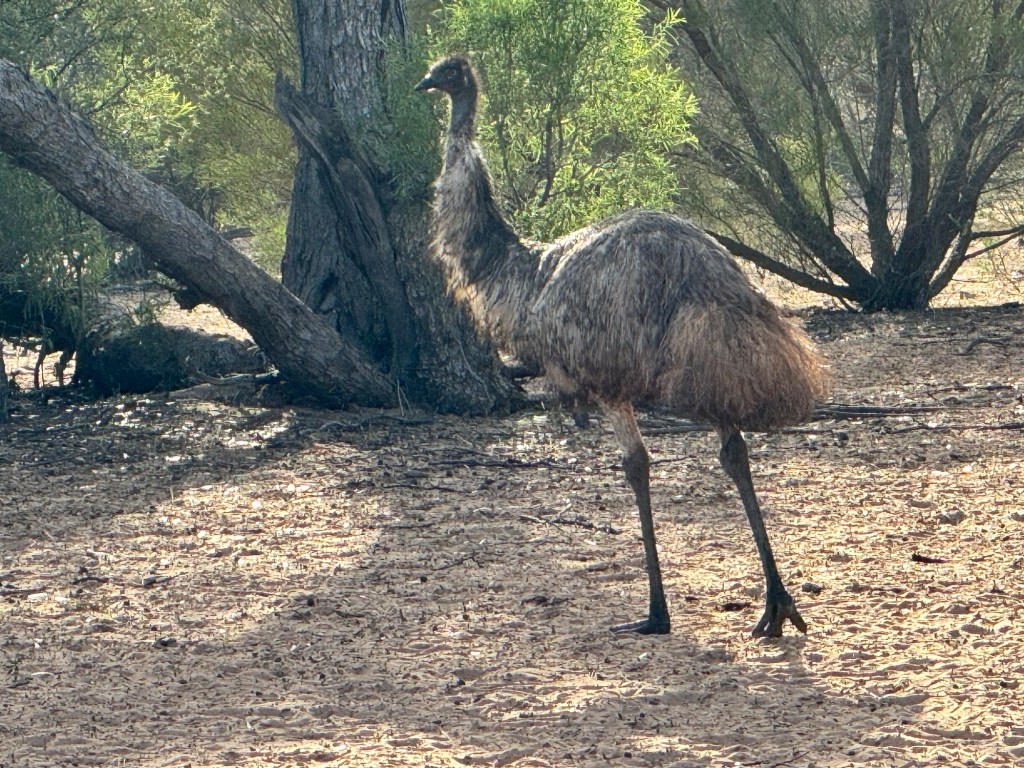
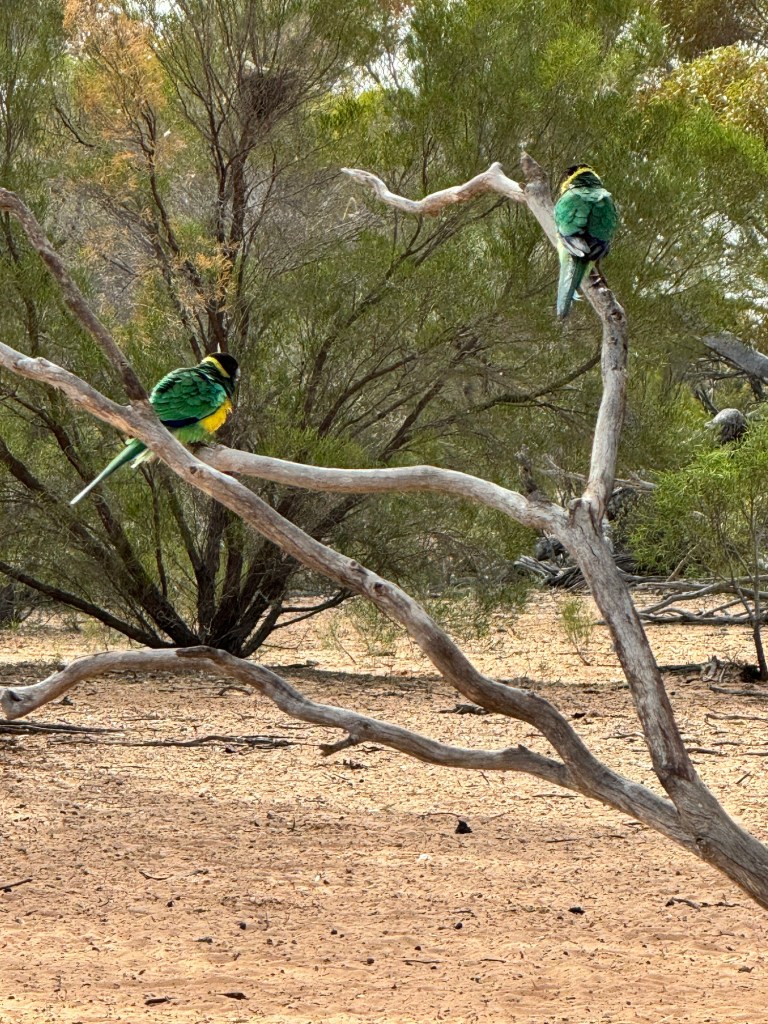
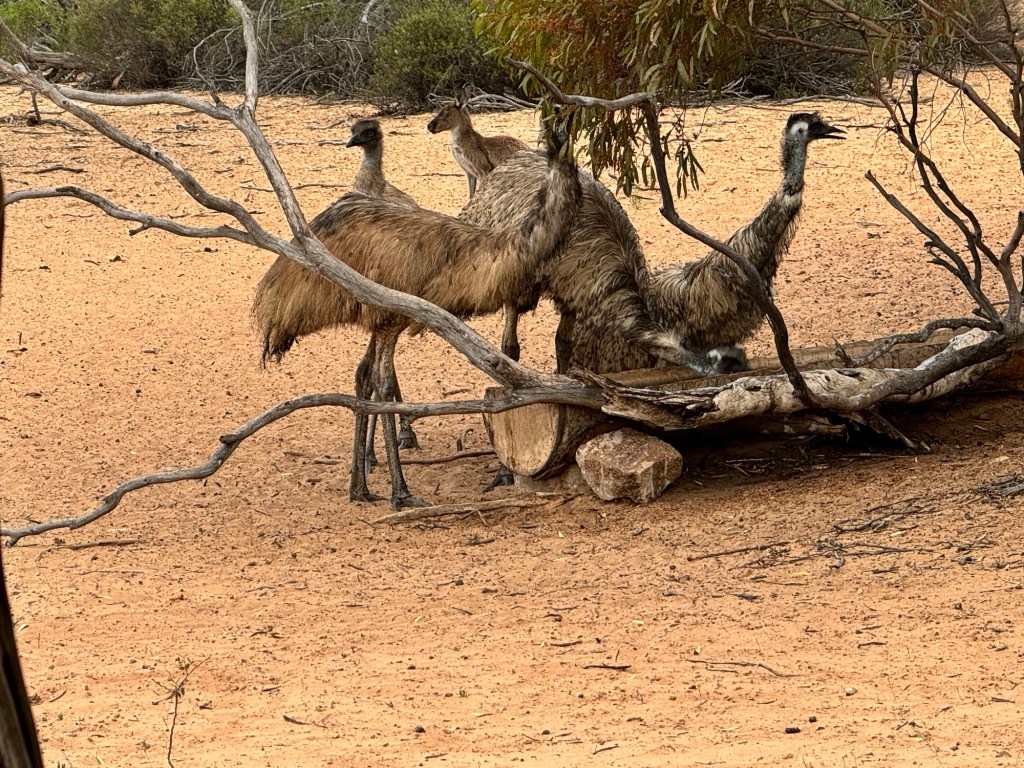
Back at camp, Rosie and Jeff Scholz, the manager and cook of the camp, chatted with us while they made dinner. As we are the only guests in camp at the moment, the conversation was casual and friendly. Just outside the dining tent we saw several Emu, kangaroos and birds. It was a bit like being at a water hole in an African camp—with different creatures.

I asked Jeff how to define “outback” and he said the lands outside the surveyed and agriculture areas of Australia are considered Outback. The survey line was set at 10 inches of rainfall to quantify the limit of cultivated agriculture development. The land beyond is known as “outback”. Kangaluna Camp is in the outback. More than half Australia is considered outback.

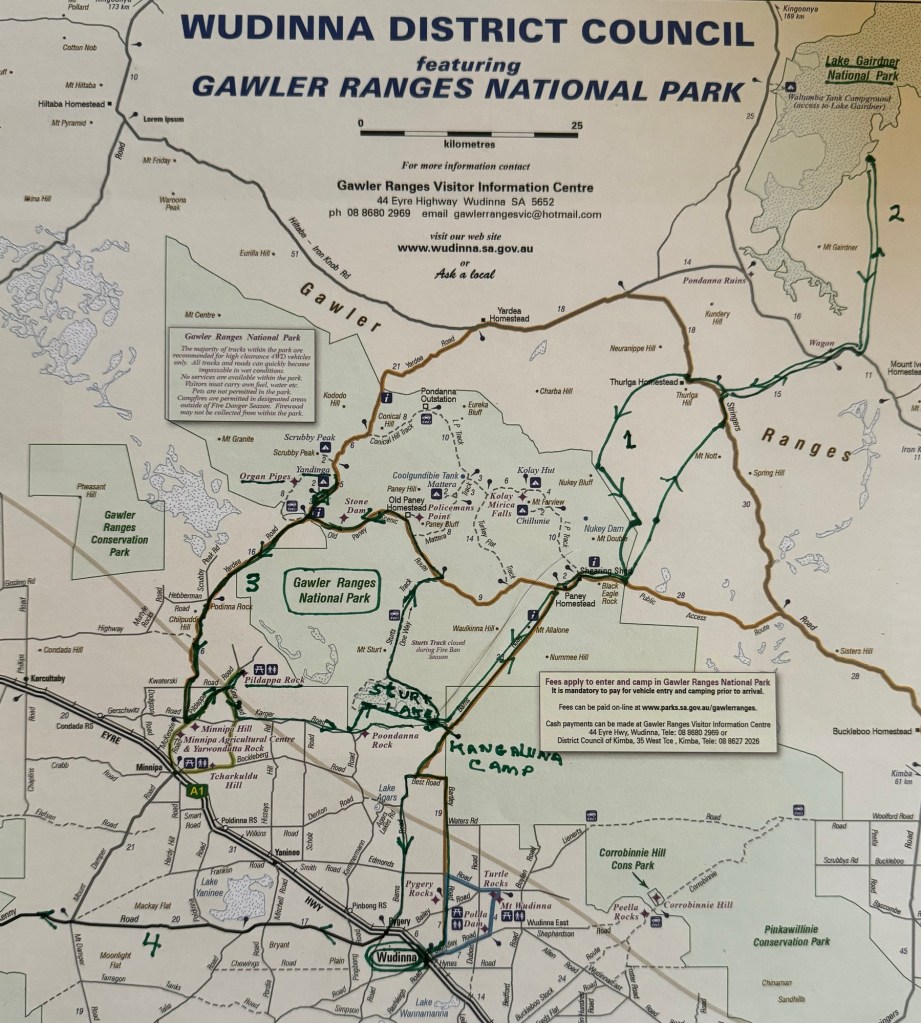
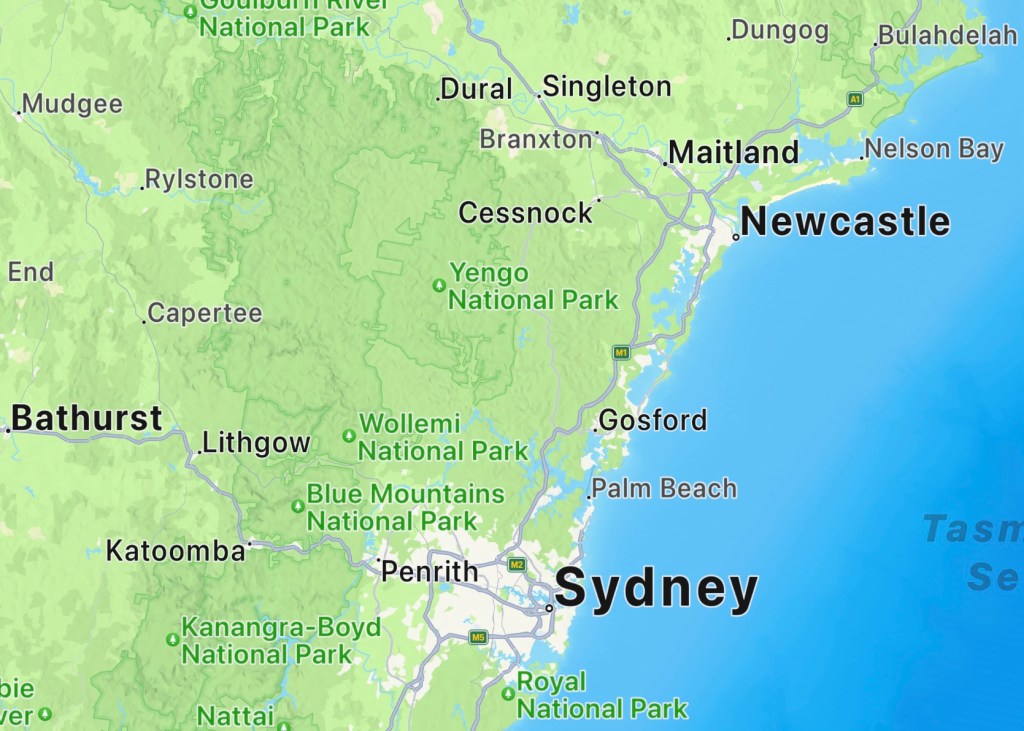
We are taking several outings in the area. This map shows the way.

Map of areas we visited while in Kangaluna Camp.

Thursday, October 10,2024

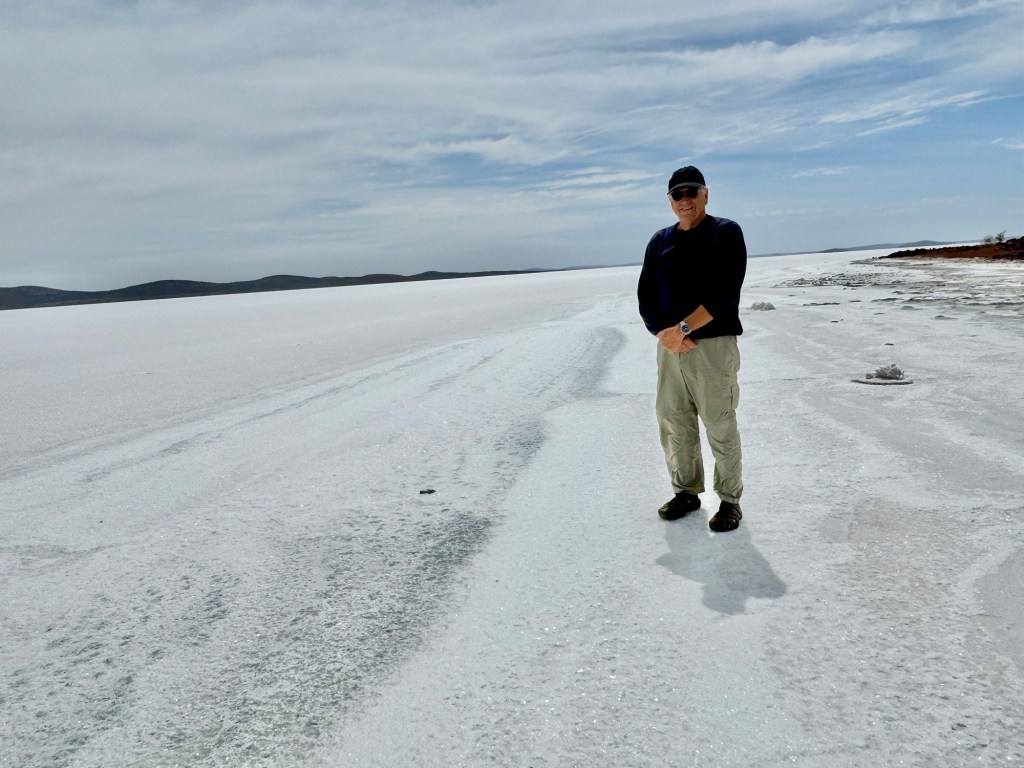
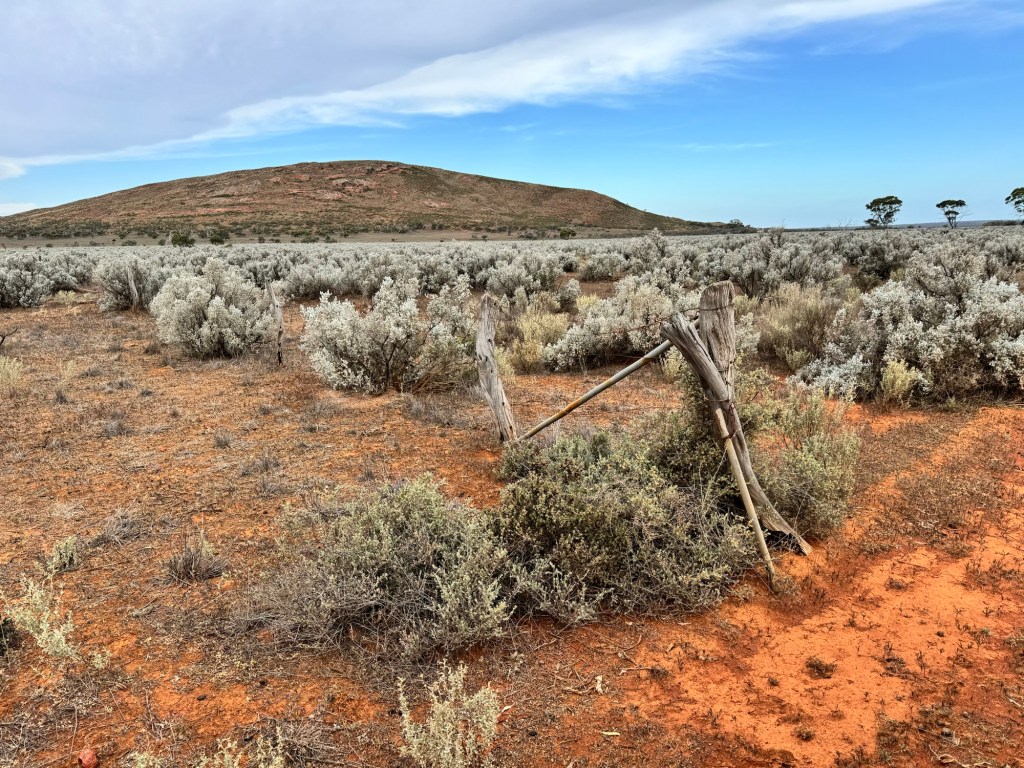
Each day at Kangaluna we drove and hiked in a different direction. Our first day was on a game drive in the national park to Mirica Falls where we fed a water skink carrots. Number 1. Our second day was to drive through the park and 3-4 large sheep stations to the totally salt Lake Gairdner an hour and a half north of camp. Number 2.

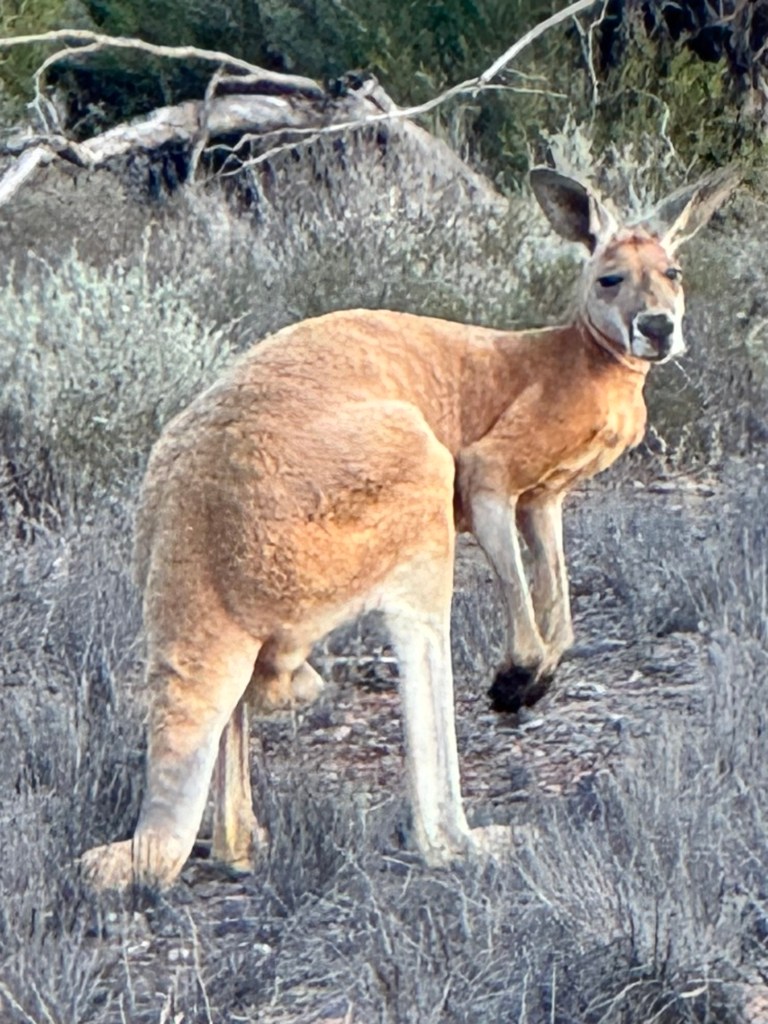
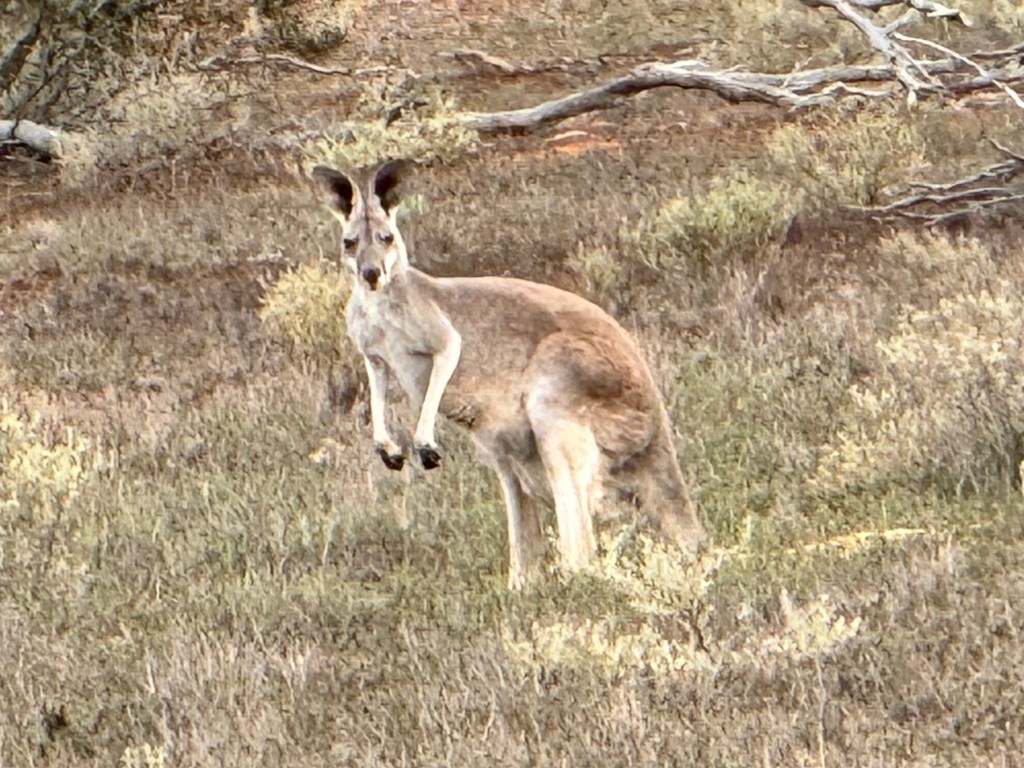
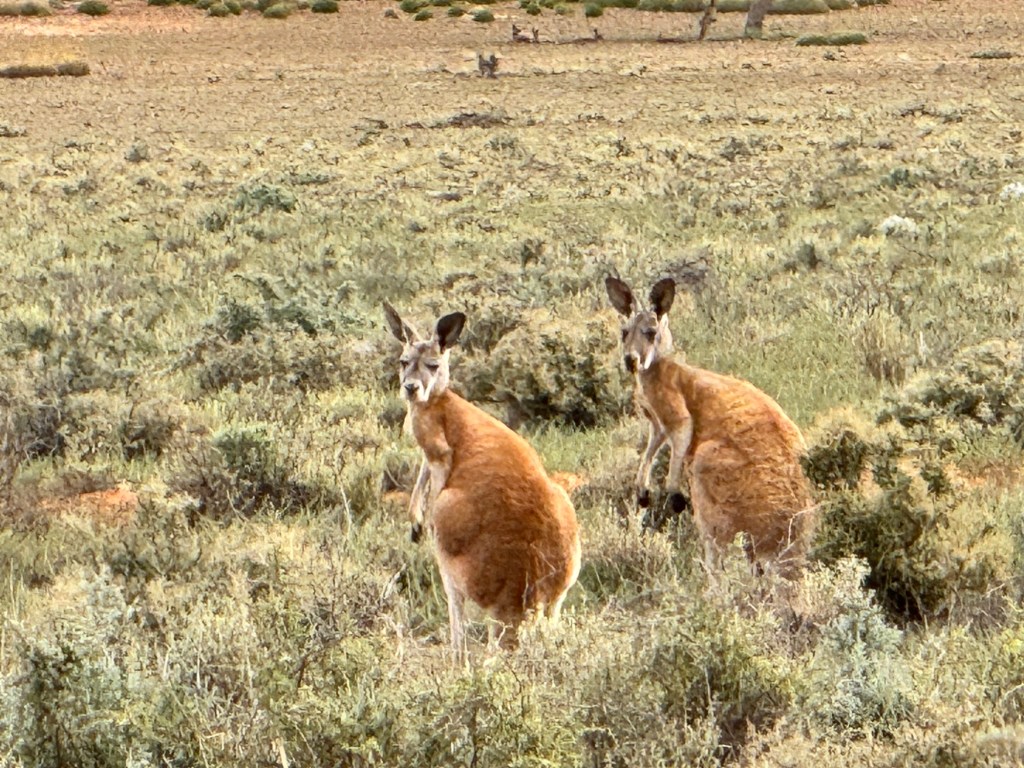
It was an interesting drive. We saw many red kangaroos as well as sheep and goats along the way.

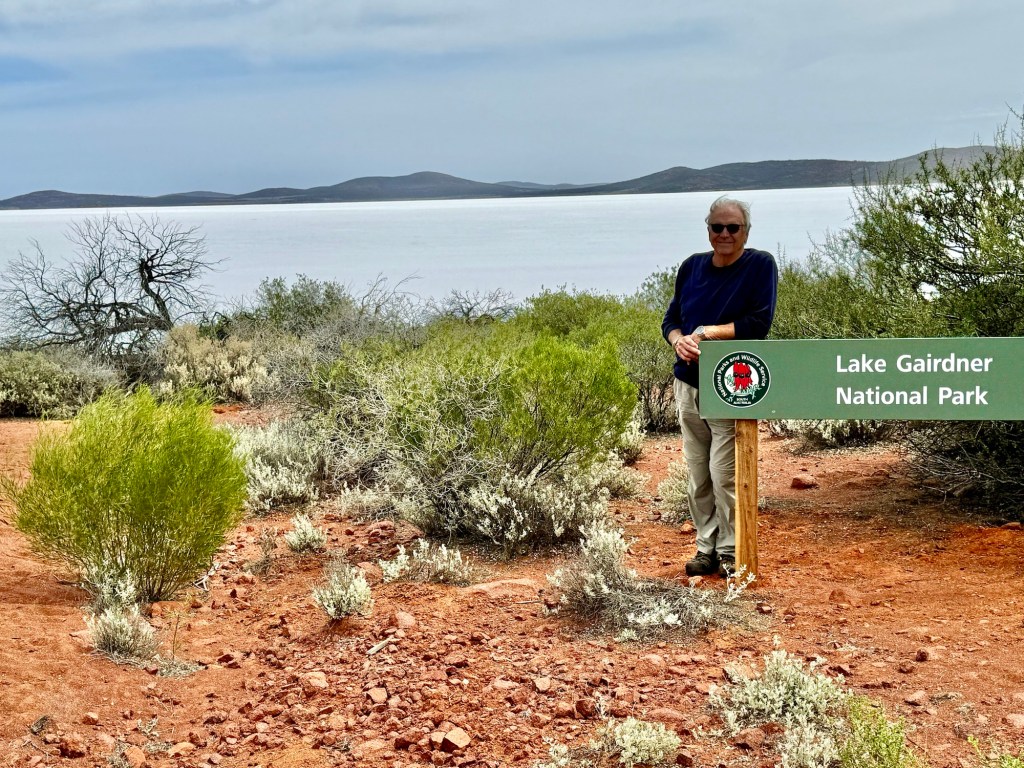
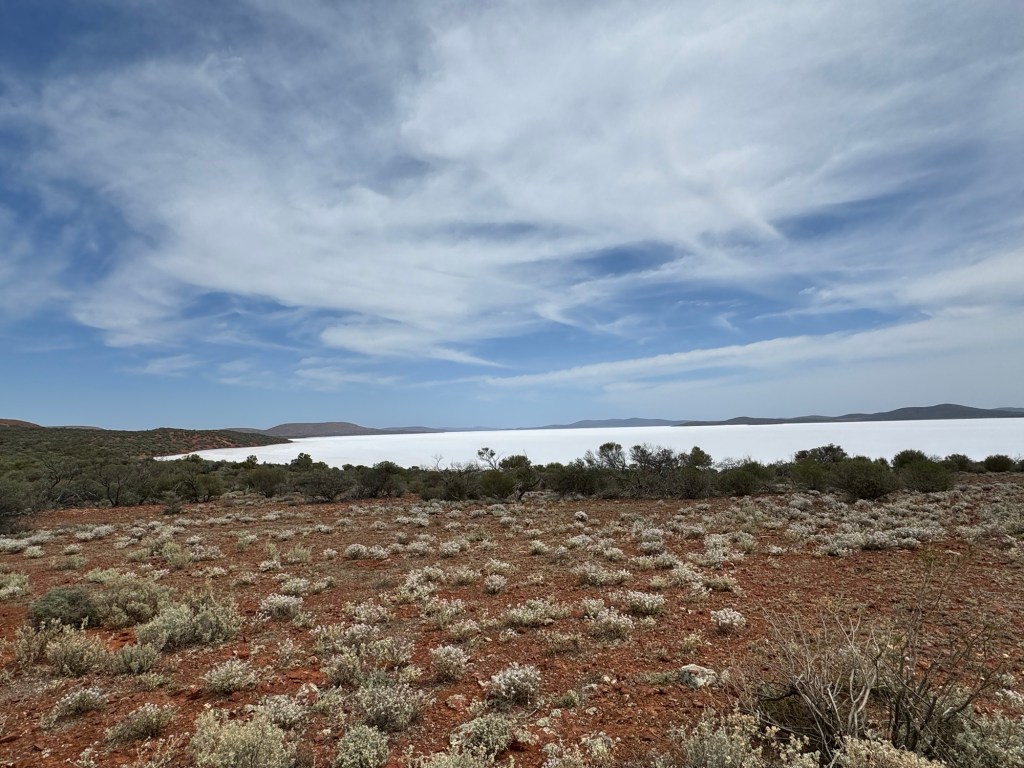
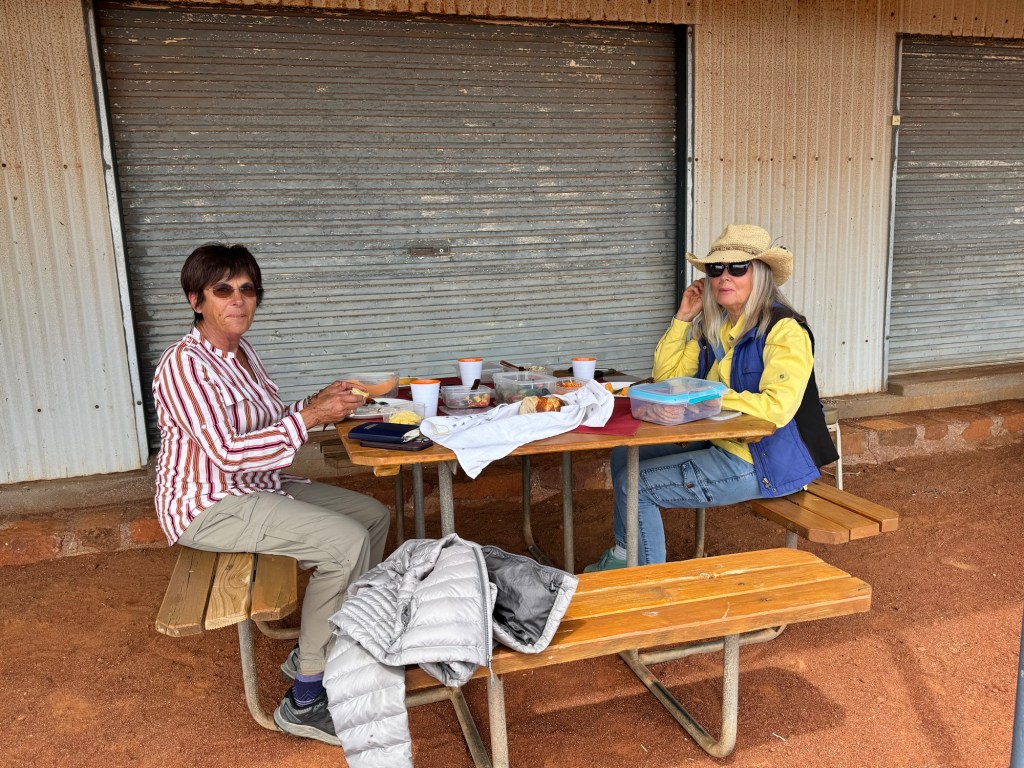
The salt lake is 100 miles long and 31 miles wide. Huge and awesome. Did not get tired staring at it while we ate a picnic lunch.

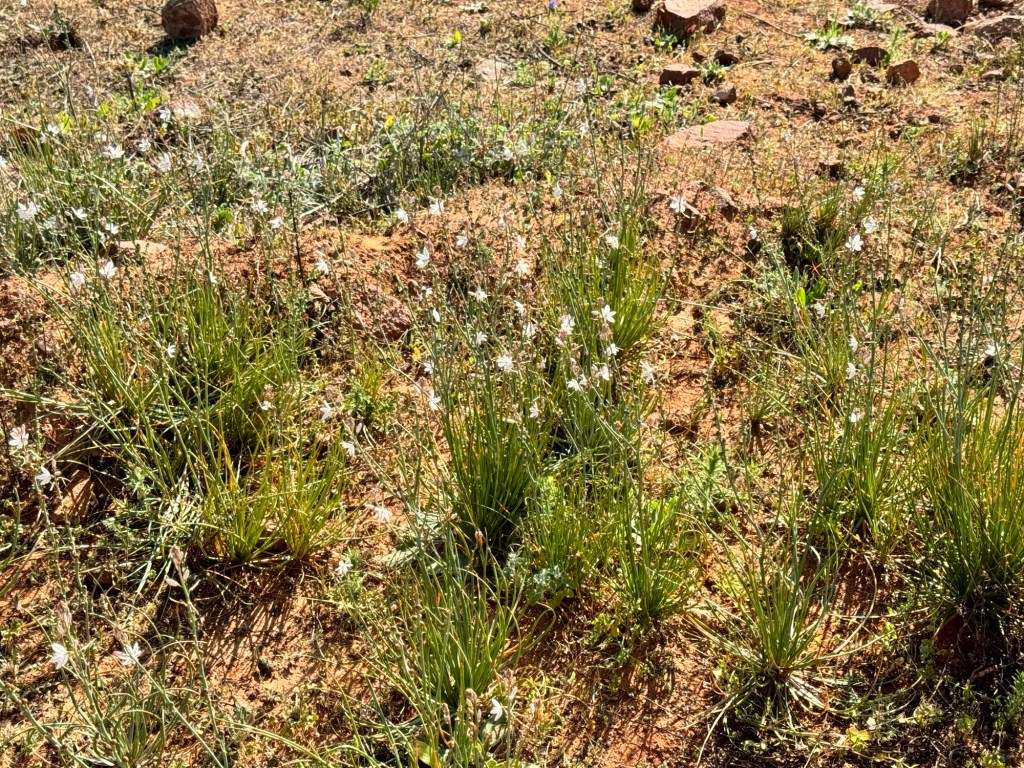
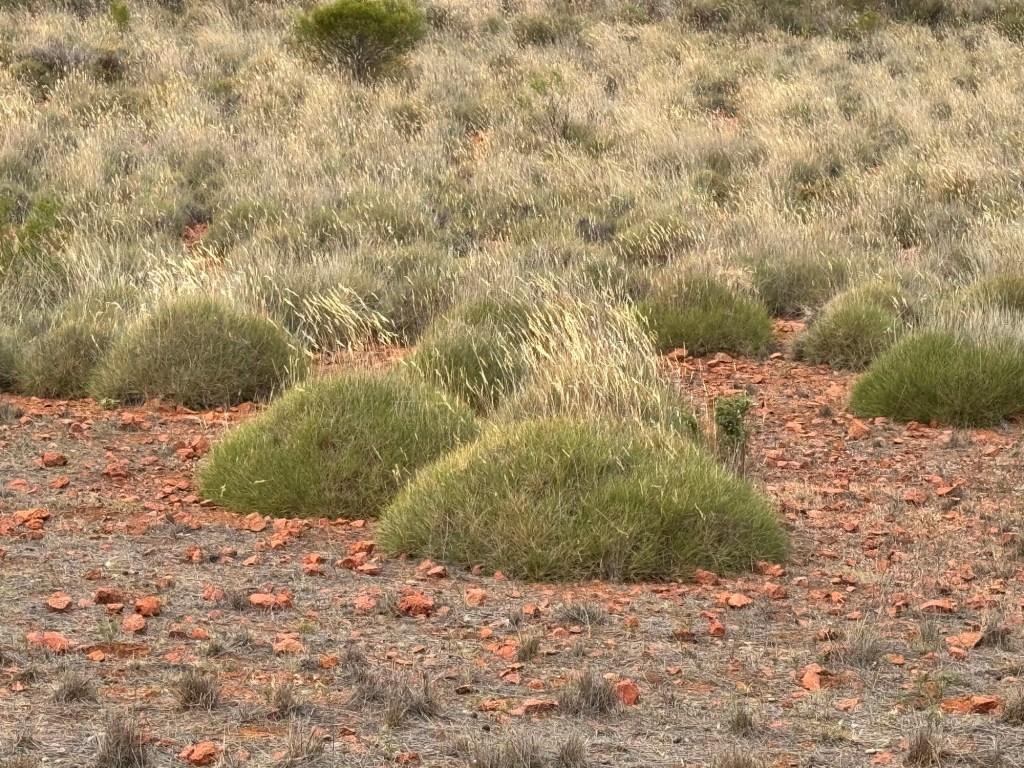
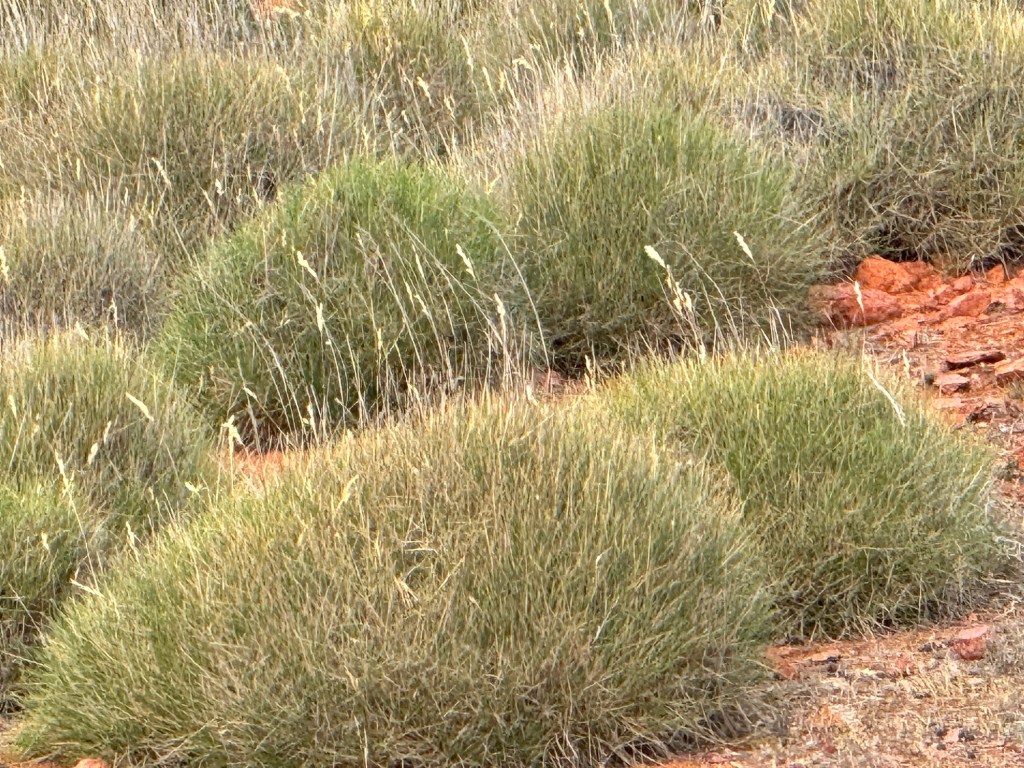
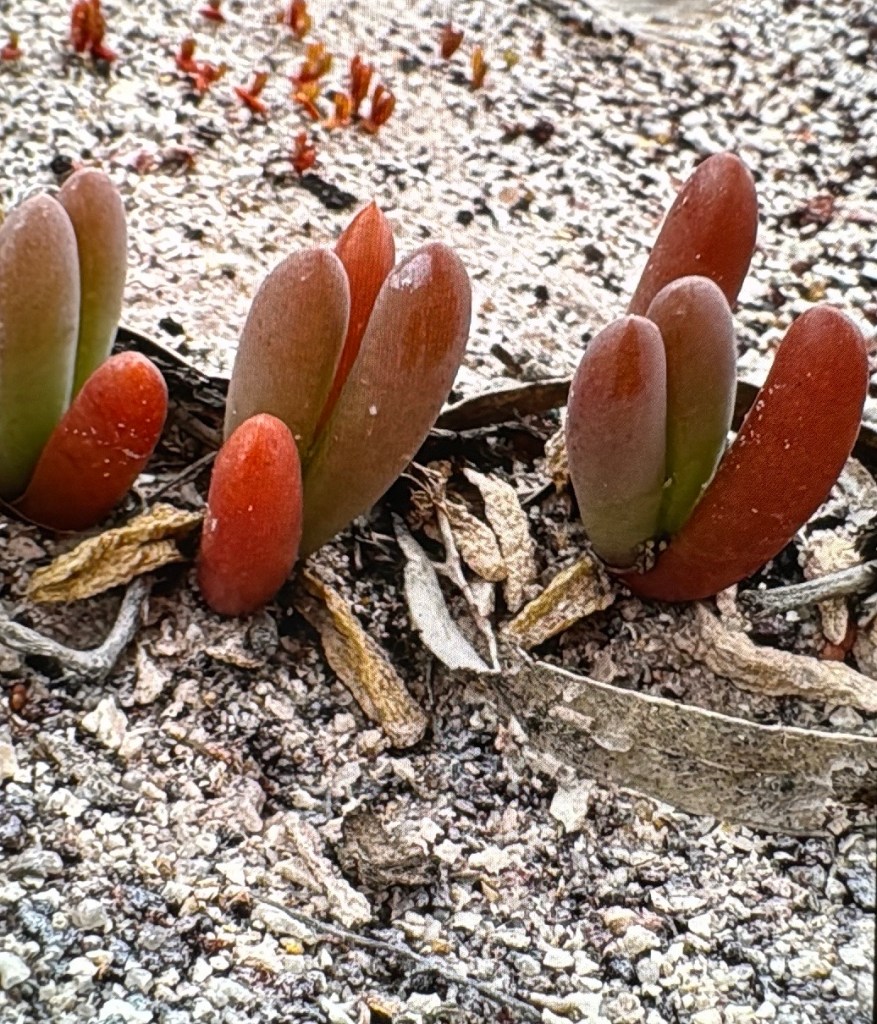
In addition to the pretty red Roos, we saw Pig Face ice plant, Yellow camel weed, Pearl Blue Bush and Spinifex grass, which is pretty, but prickly so nothing eats it.

Red Kangaroos

Pig Face Ice Plant
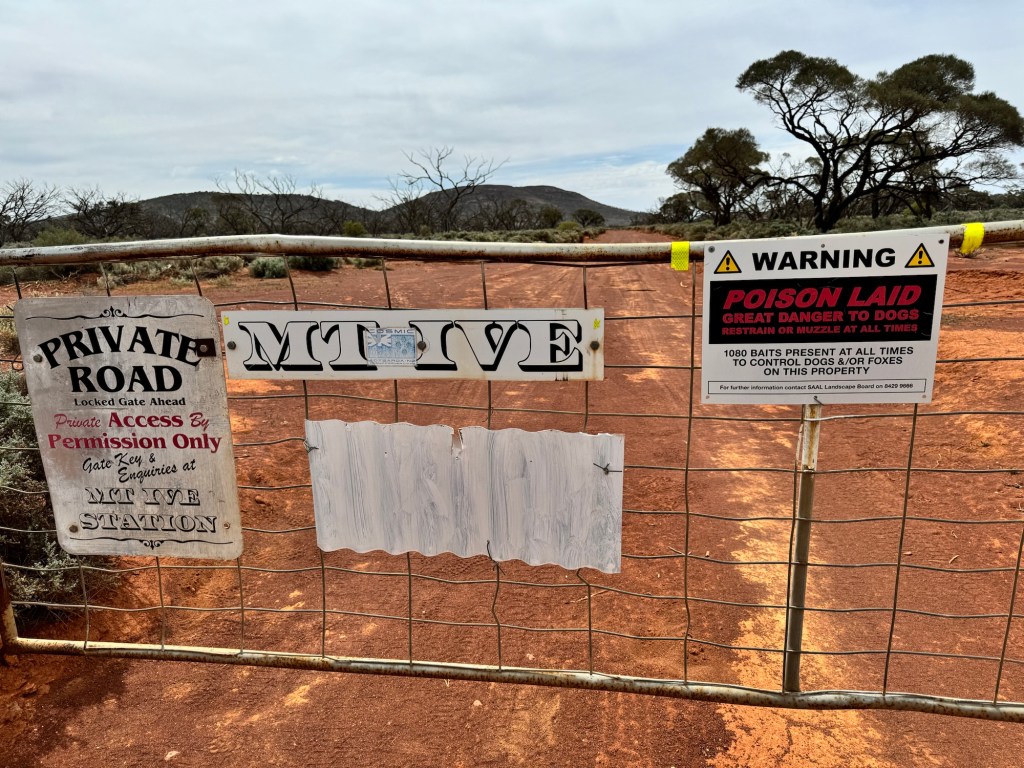
One of the three 400,000 acre stations we crossed getting to Lake Gairdner. 1080, a poison used for killing rabbits, feral cats and foxes.

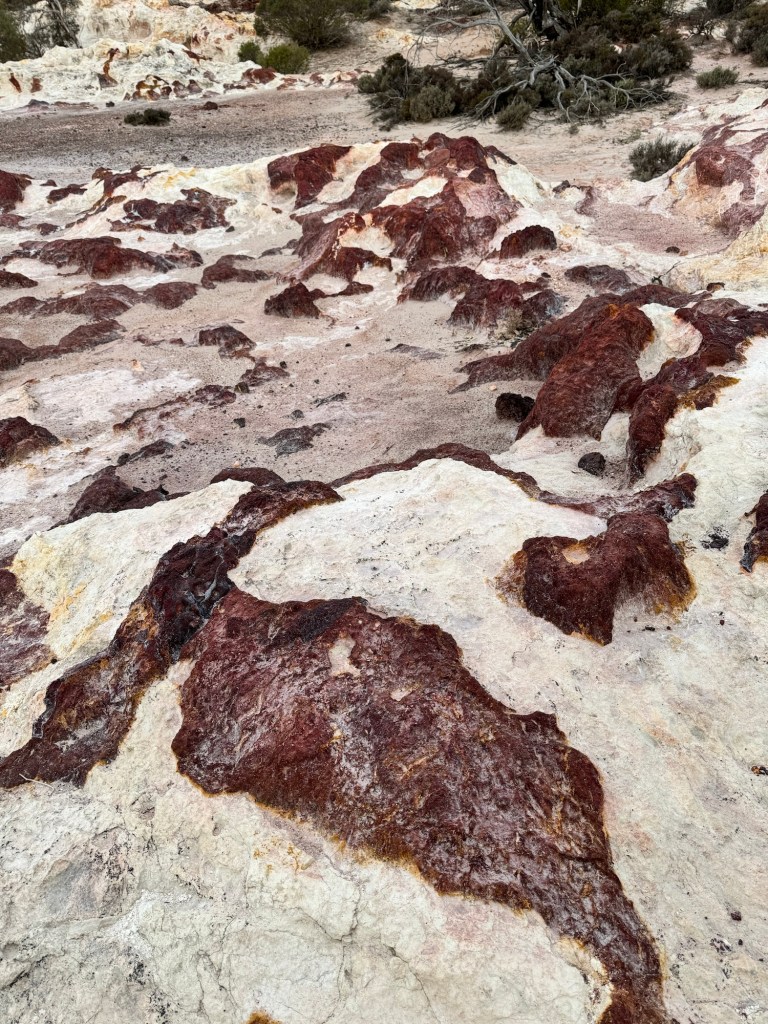
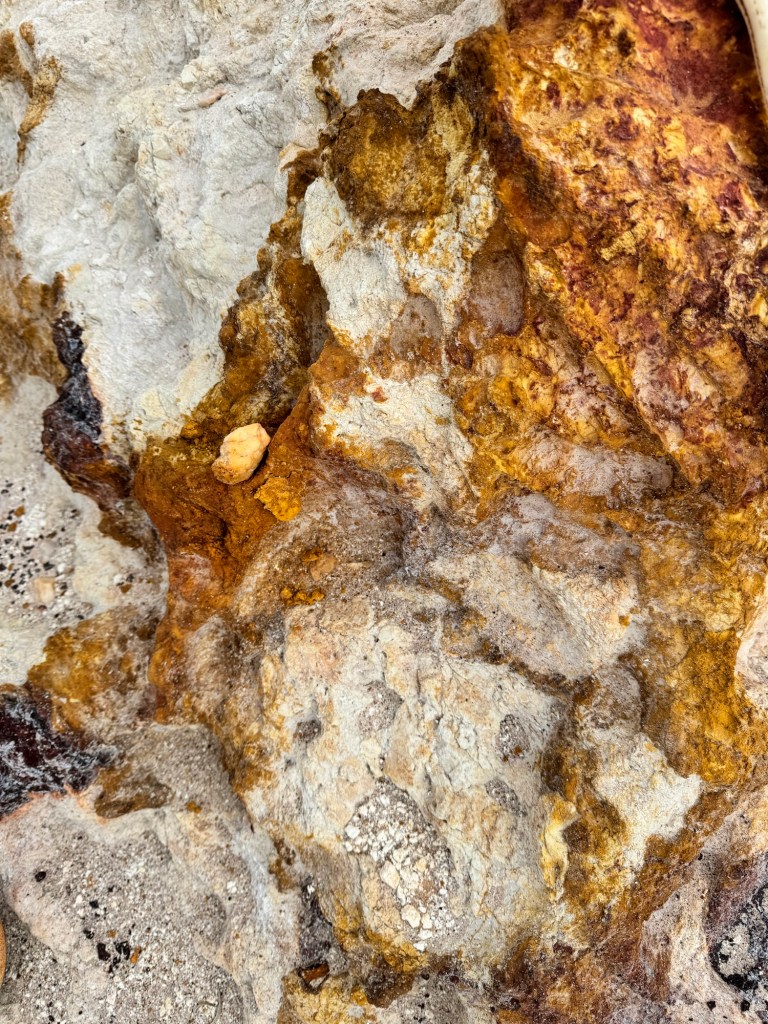
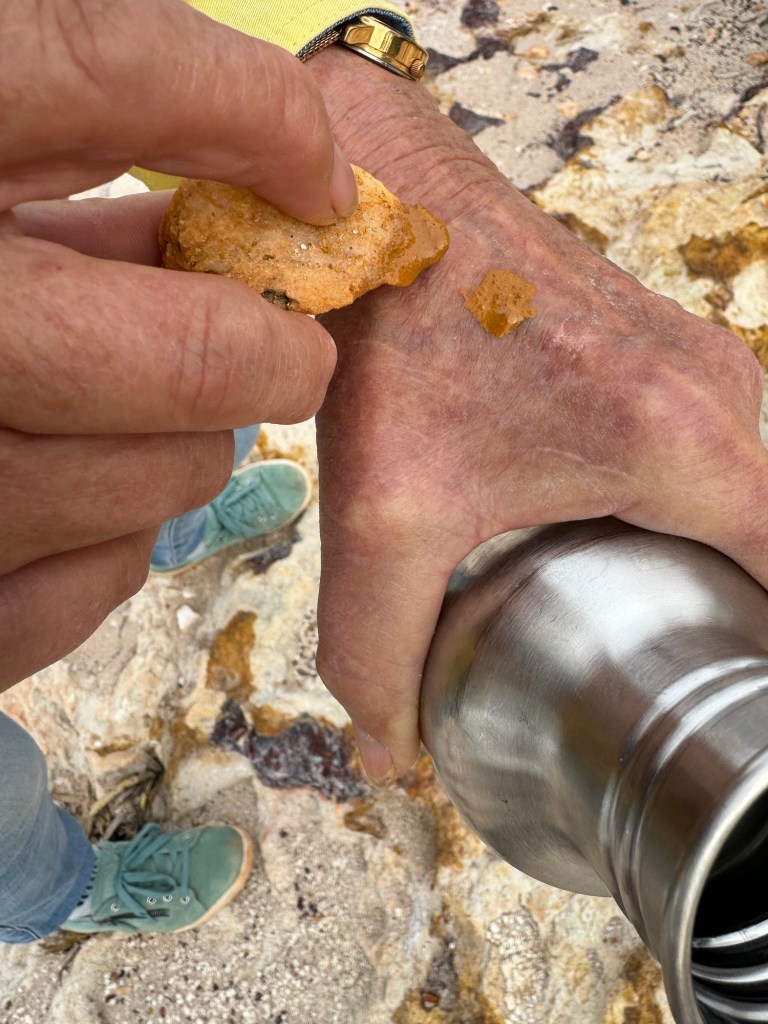
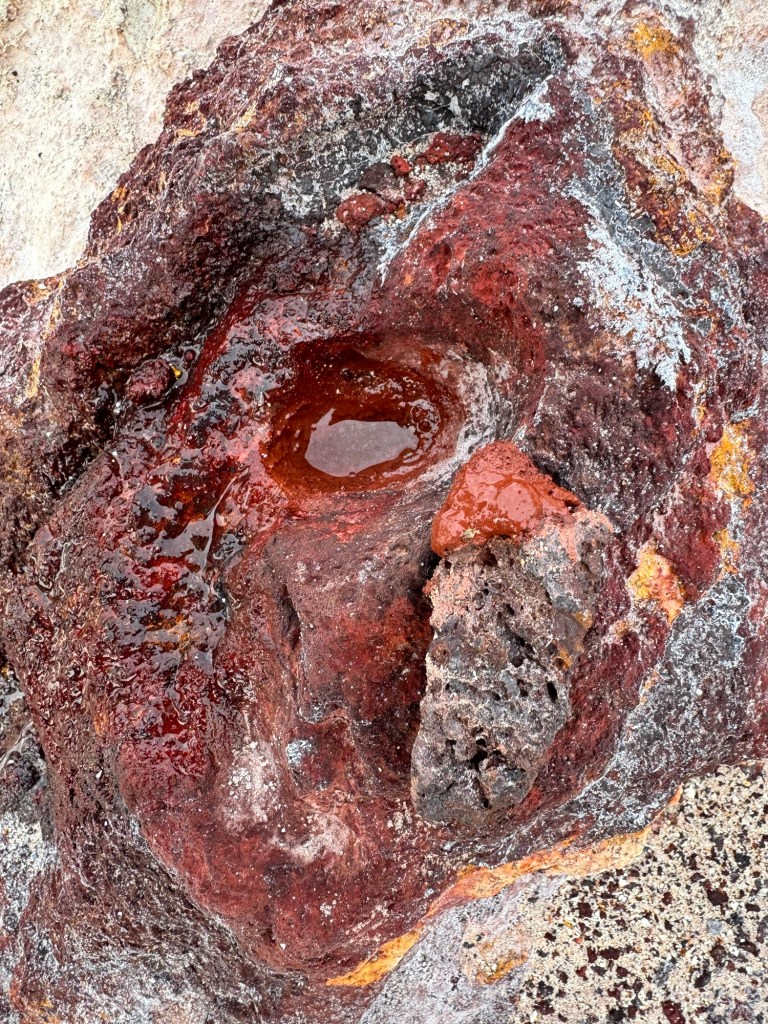
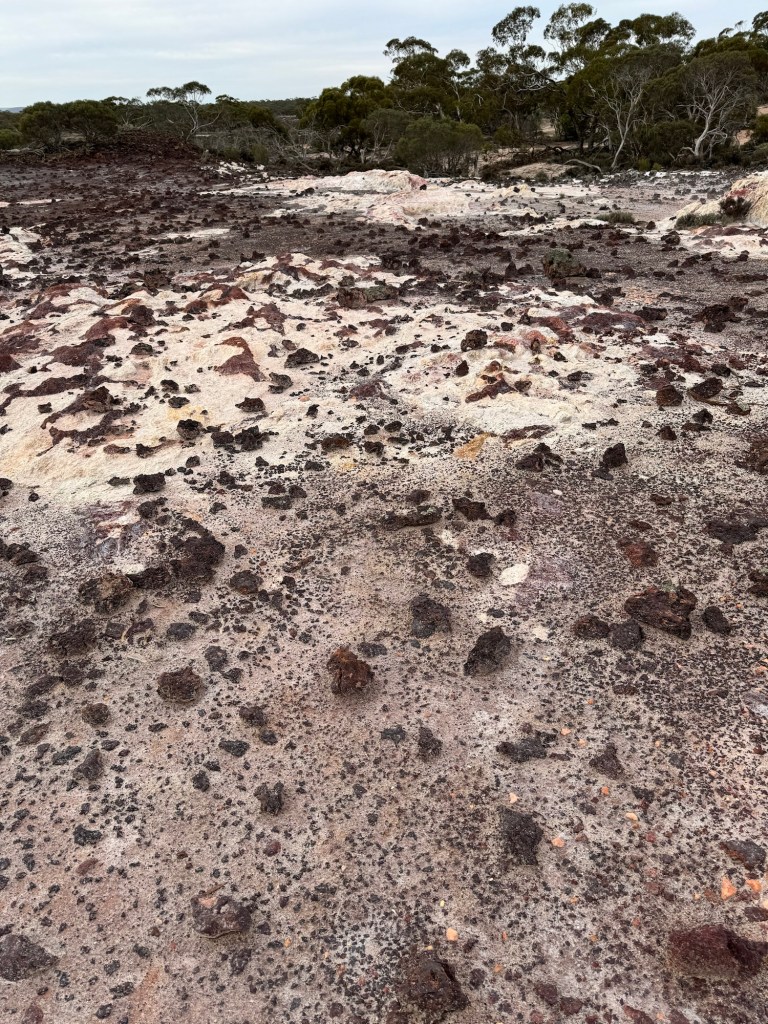
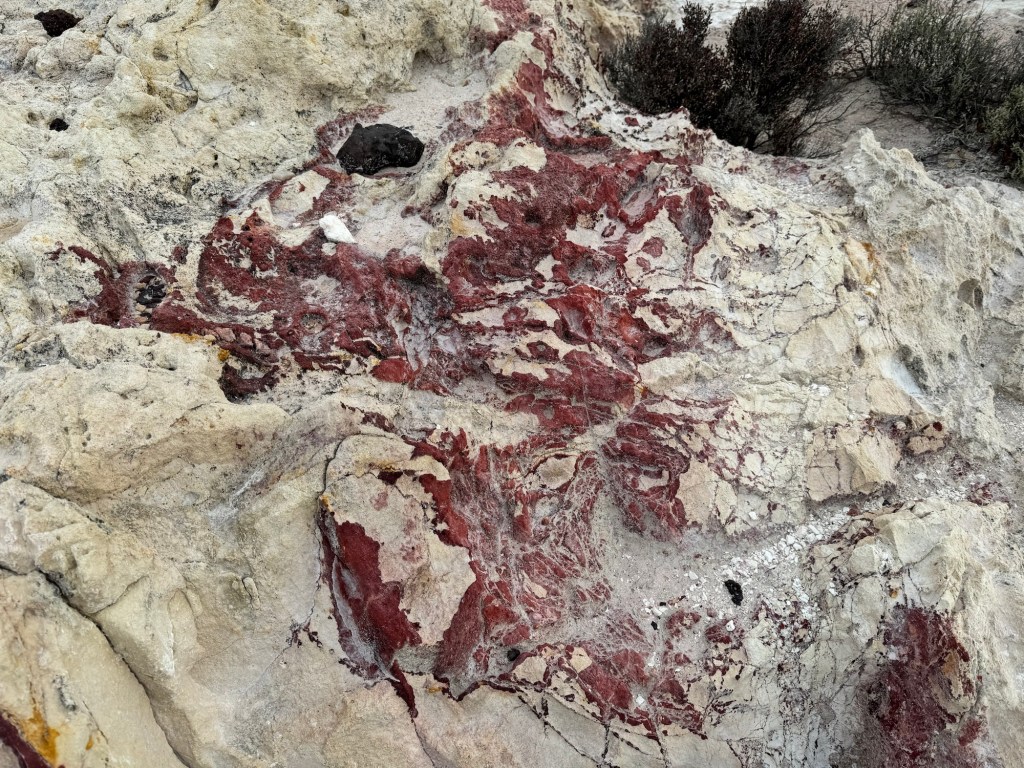
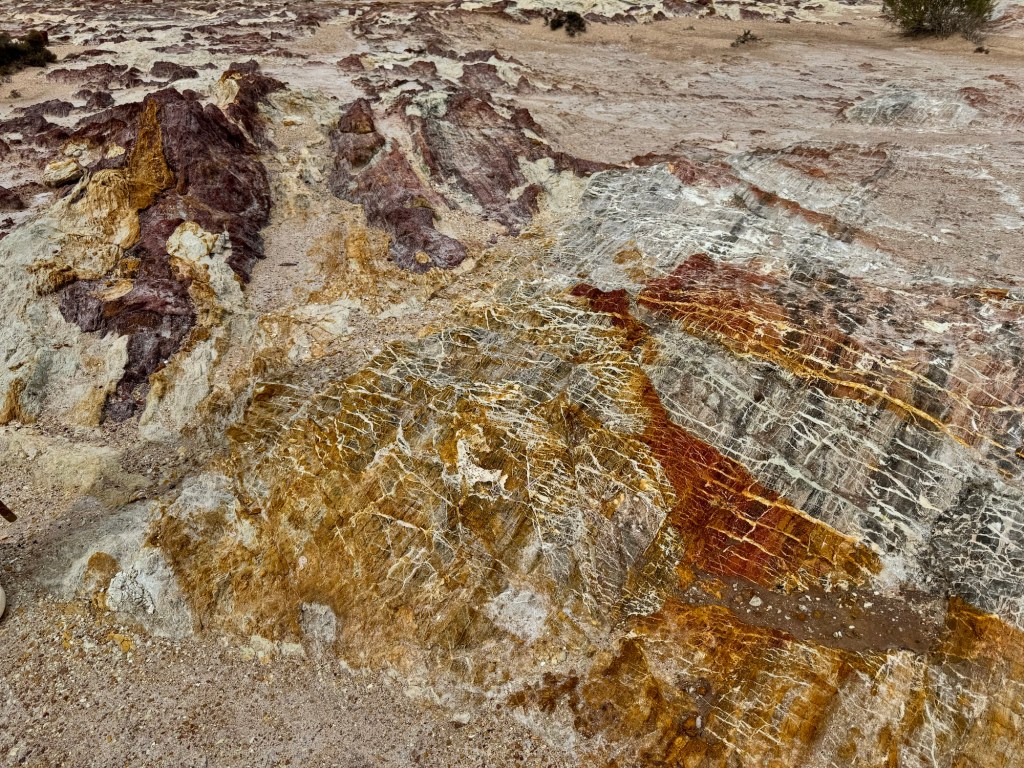
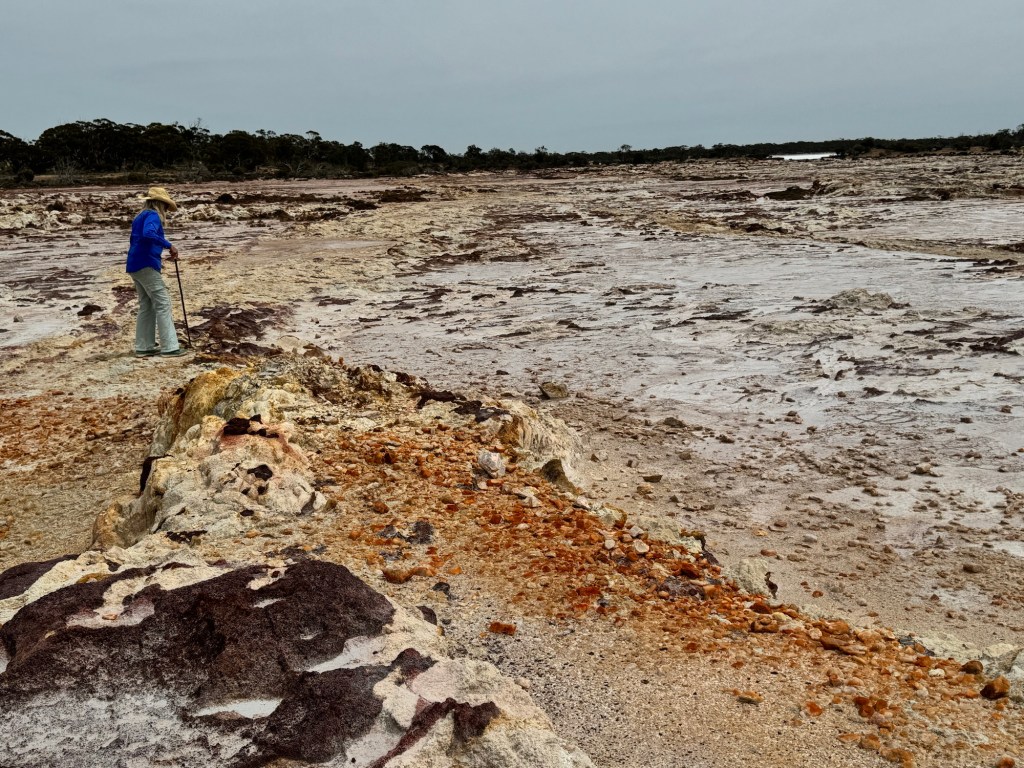
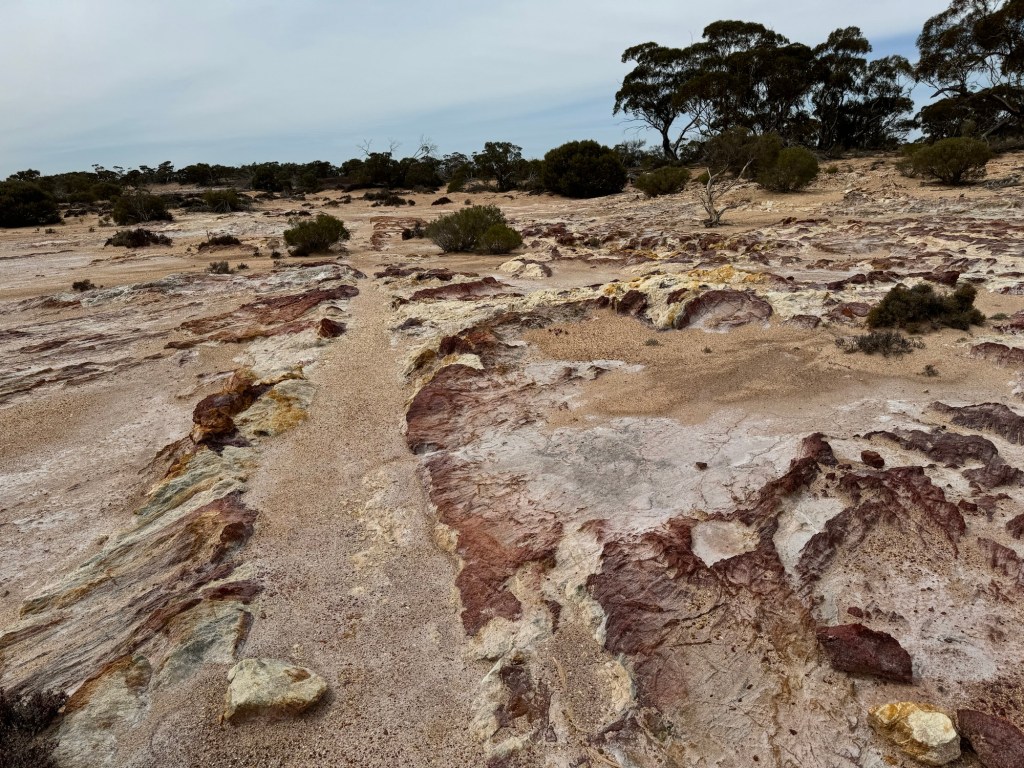
Before returning to camp, Rosie made a stop for us to see a patch of ancient ocher deposited in mud. Number 3 drive on the map. The colored stone comes from dissolved iron. The pit was used by aboriginal people many thousands of years ago, to make ochre dyes. The colors we saw included: yellow, orange, red, many shades of pink and white. Rosie ground each color with a piece of rock of the same color to get some powder, then mixed a bit of water with the powder and applied the dye to her hand. She did it with several colored rocks and produced a variety of colors, all shades of ochre. The color is determined by the amount of iron in the stone. White stone contains no iron. The black rocks scattered on the ochre rocks are an iron stone called ferrocrete

Over dinner we learned that the flies get worse the further west you go. Uluru (Ayer’s Rock) is insufferable with flies. That being the case, this is as far west as we care to go. Give us anywhere in Africa, where we have never seen flies.

Friday, October 11, 2024

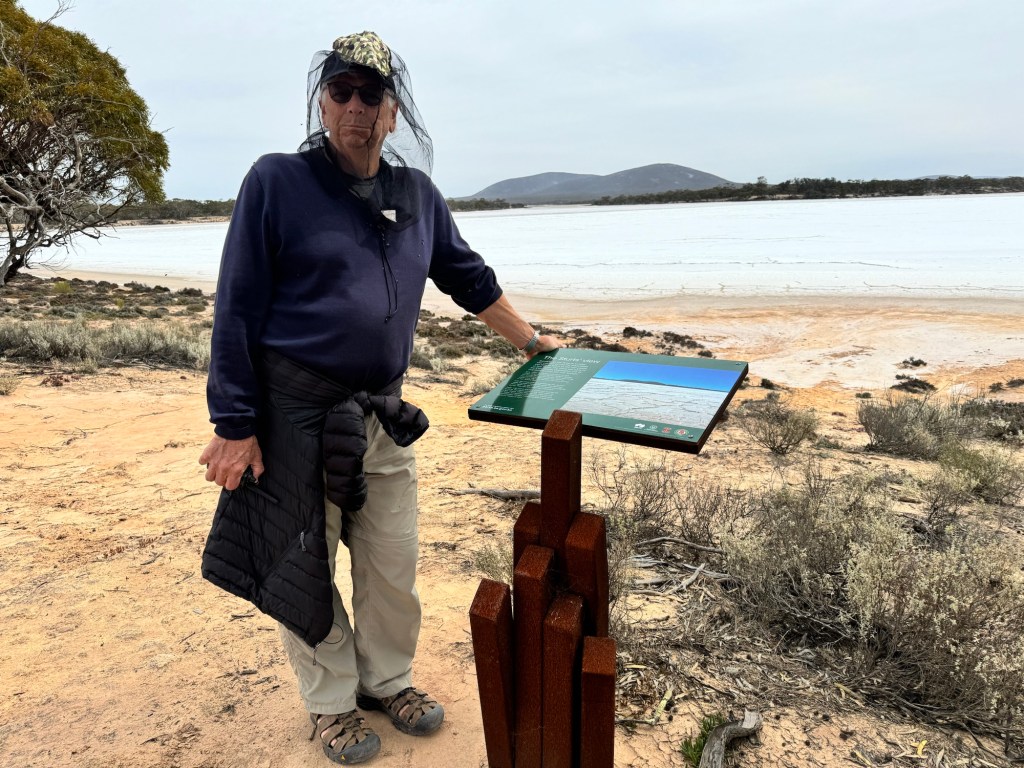
Protected with a fly net, Mark checks out Sturts salt lake

Fortunately, the flies don’t like wind and disappear at night. So far we have managed reasonably well wearing a head net.

On Friday morning, Mark and I walked a couple miles to another salt lake. Rosie joined us with the car and off we went on another long drive about. The landscape looks the same to me, but Rosie constantly tells stories about the place. At lunch we stop at the Old Paney Homestead, where we eat indoors to avoid the flies. Rosie tells us about the family that originally occupied the place. While the husband spent weeks out working the property and taking care of sheep and goats, the wife raised 11 children in this small building.

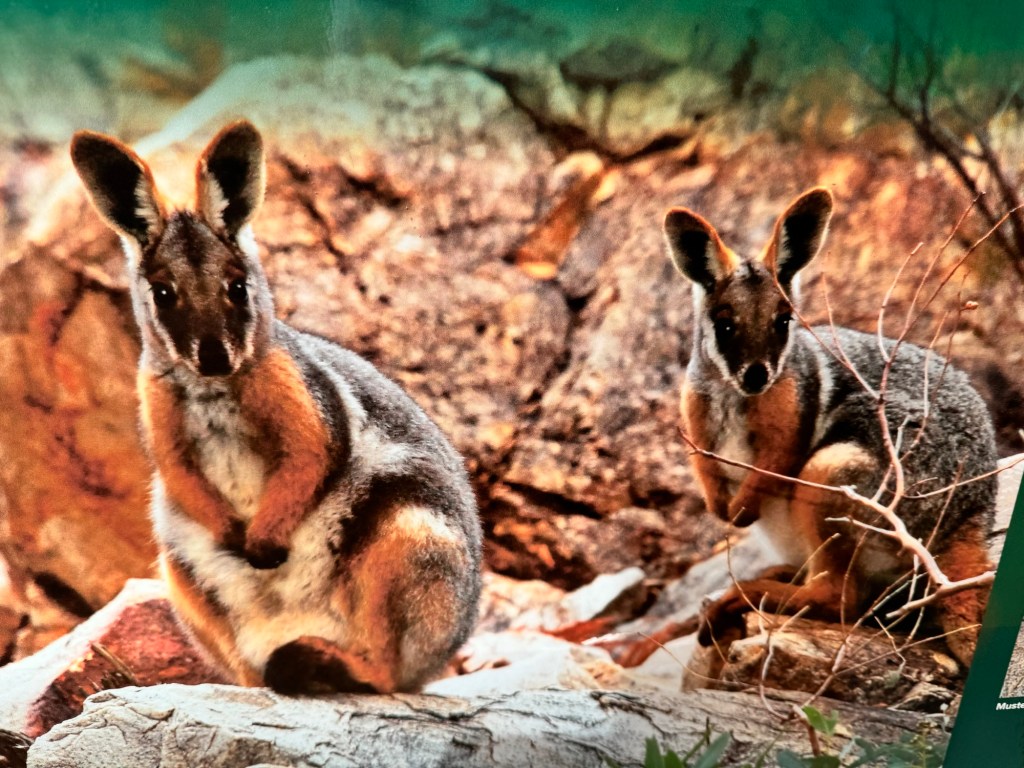
After lunch we drove to Yandinga Canyon looking for a rare wallaby, the yellow footed rock wallaby. We spent about a hour scanning the area with no success. Too bad, as it is a very pretty wallaby. Here is a photo anyway.

Yellow footed rock wallaby

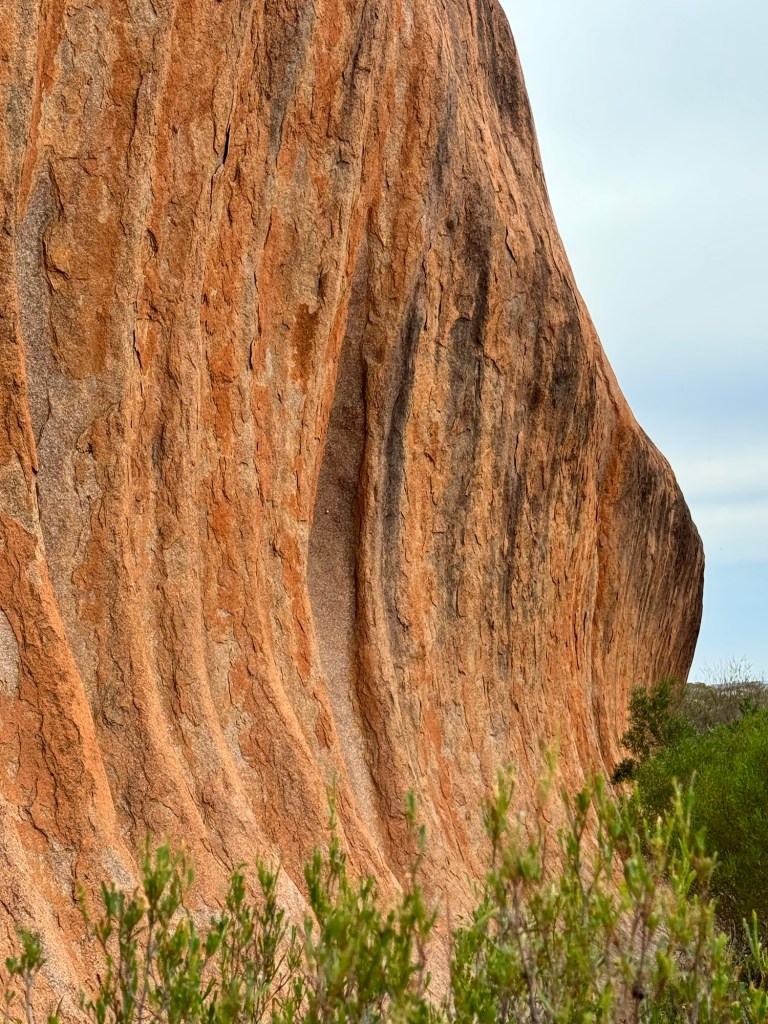
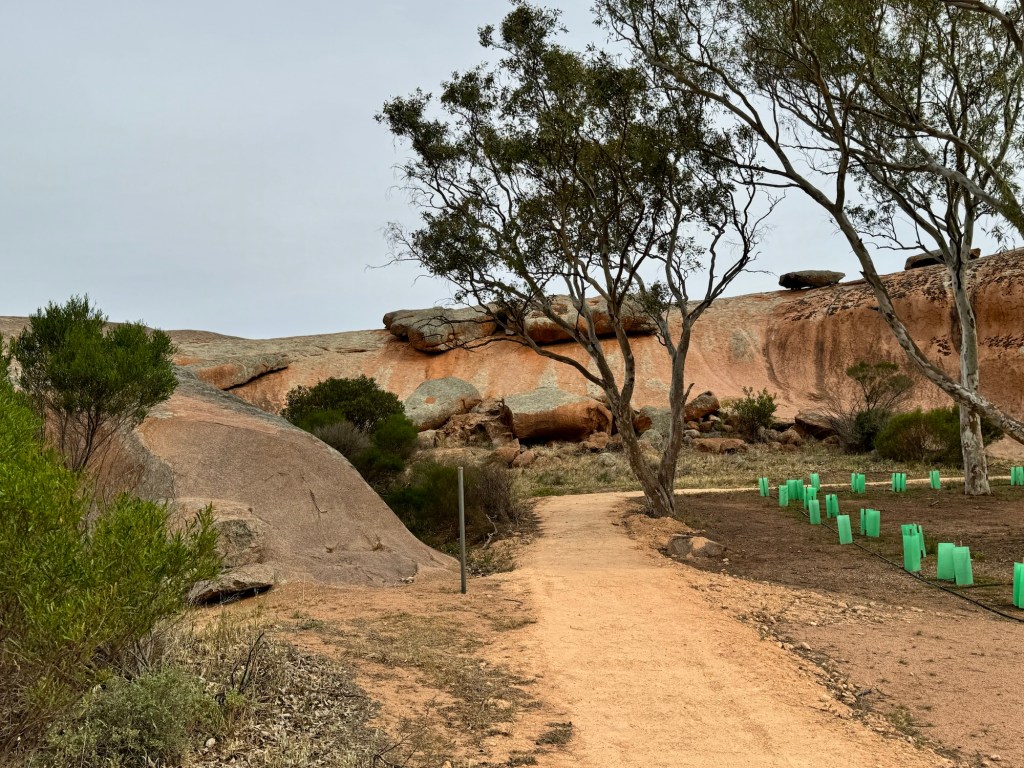
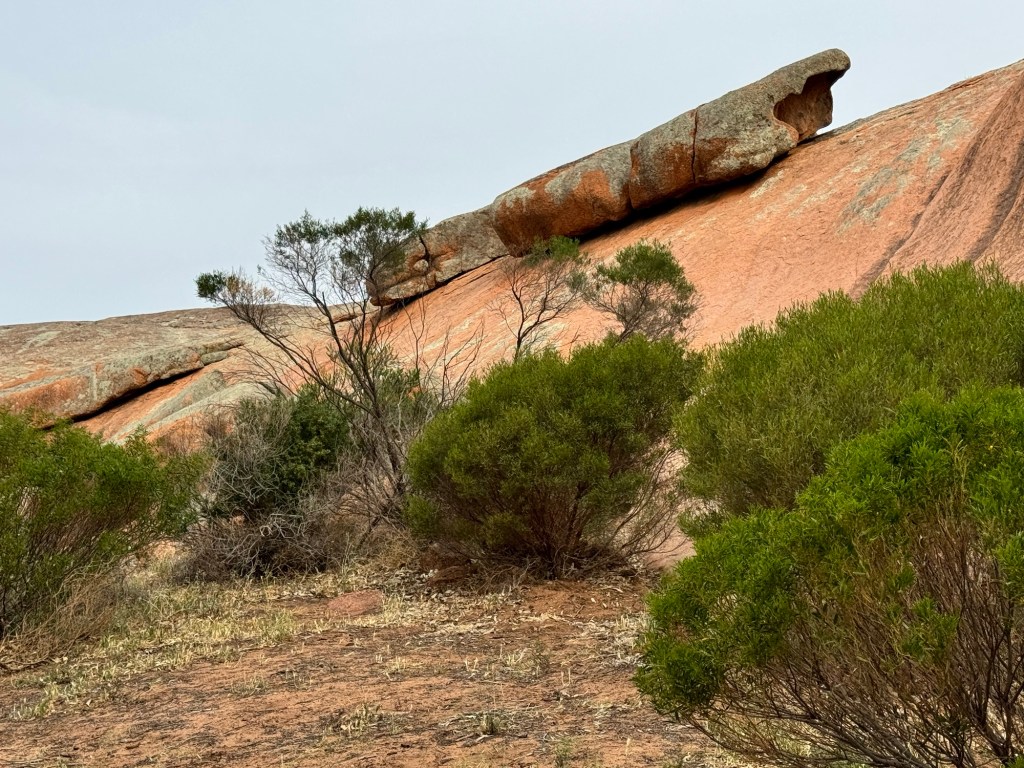
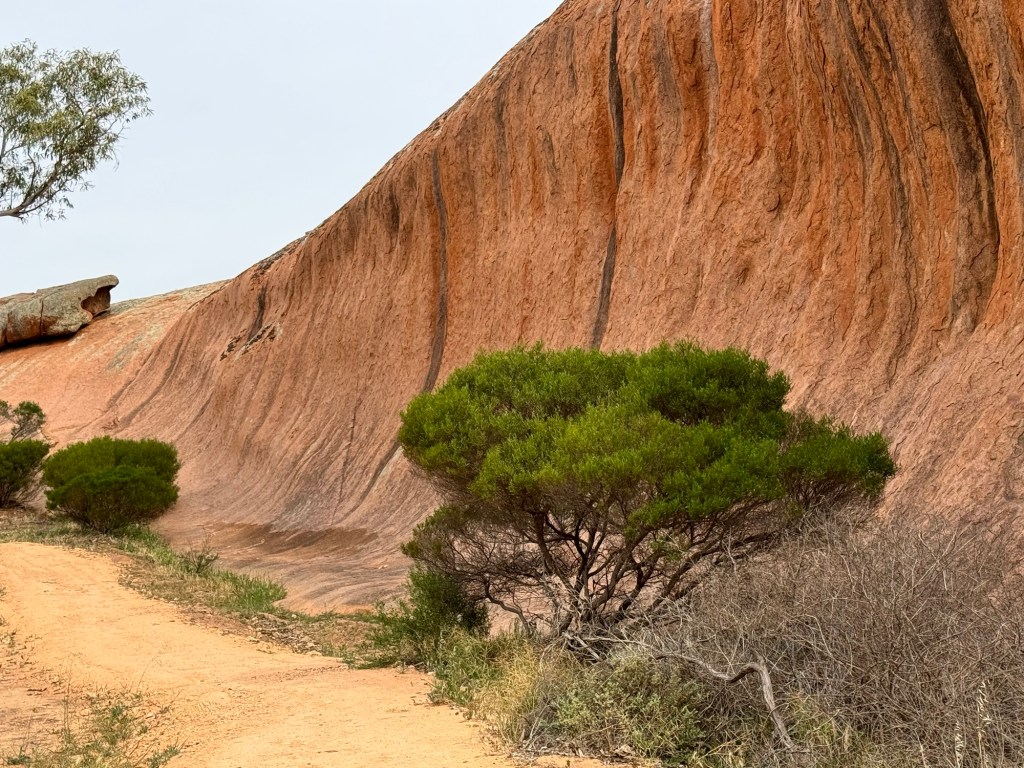
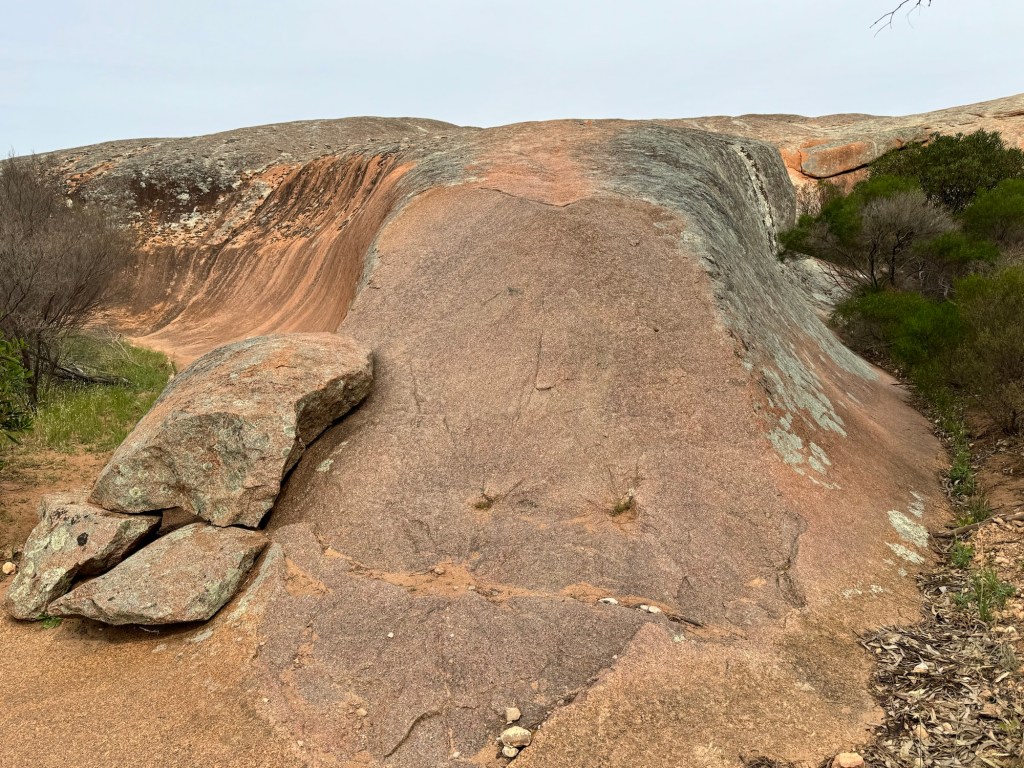
From there we drove on to the Pildappa Rock to see a monolithic stone that features the shape of a wave. Although huge, it is no where near the size of Uluru.

Pildappa Rock

Over dinner that evening Rosie and Jeff Scholz, our camp host, talked a lot about the animals and scenery we are seeing including some of God’s creatures we saw in several places.

Saturday, October 12, 2024

We have been on the road a month now. Today we leave Kangaluna Camp and drive to Port Lincoln. Rosie is Back at the wheel. Number 4 track on the map.

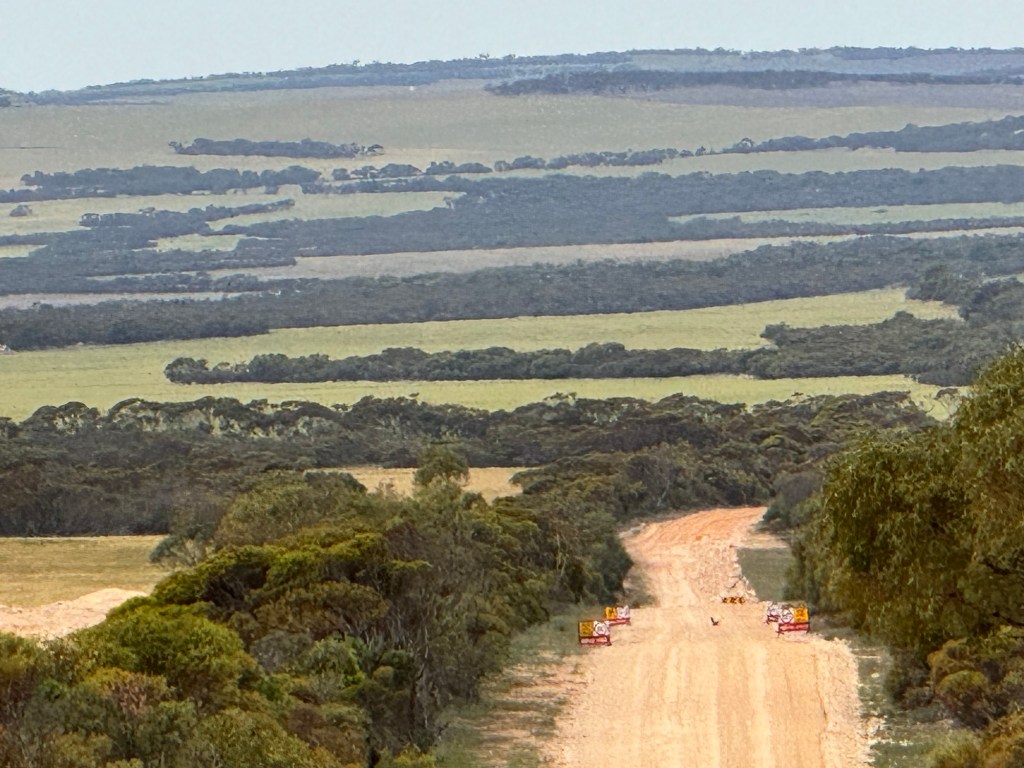
Driving through South Australia. The roads are a mix of clay and sand and are in very good condition. The scene here is wheat interrupted by the required 15% bush.
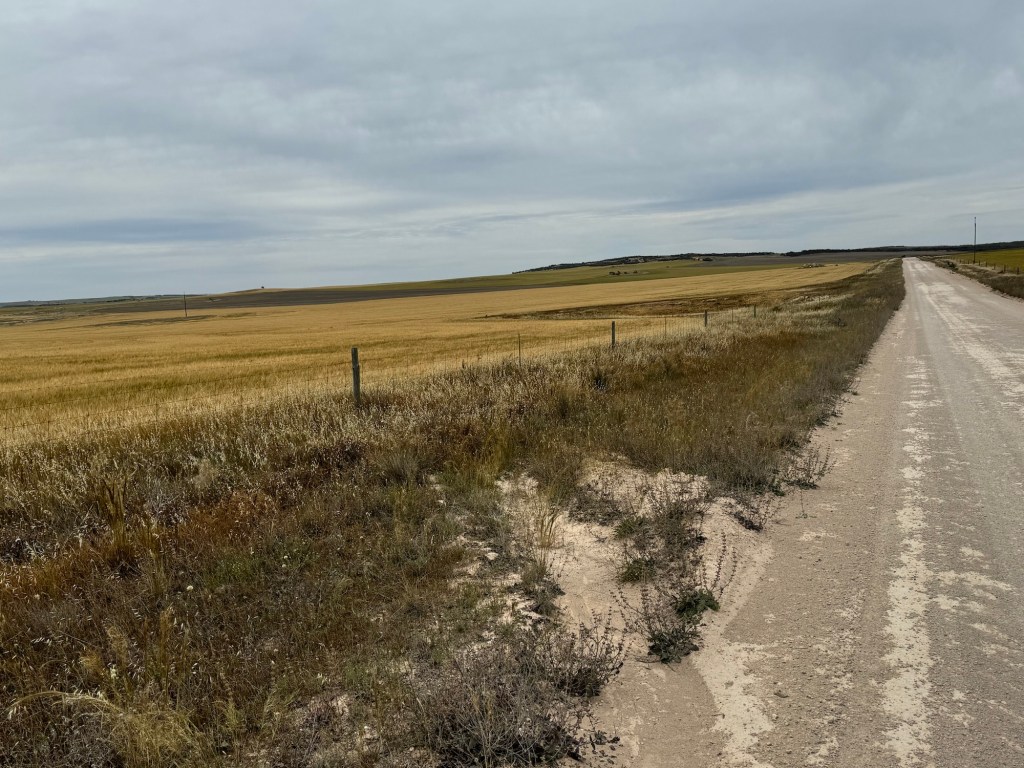
A huge station full of wheat.
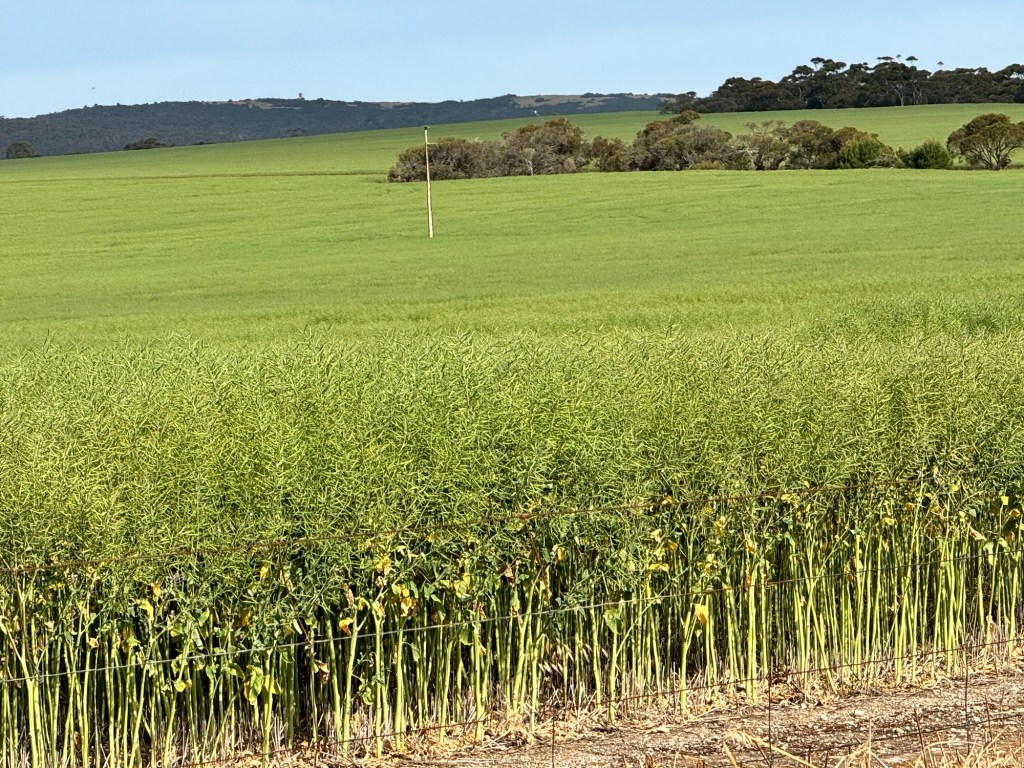
Another huge farm full of Rape seed for making canola oil, which gets sent to China.

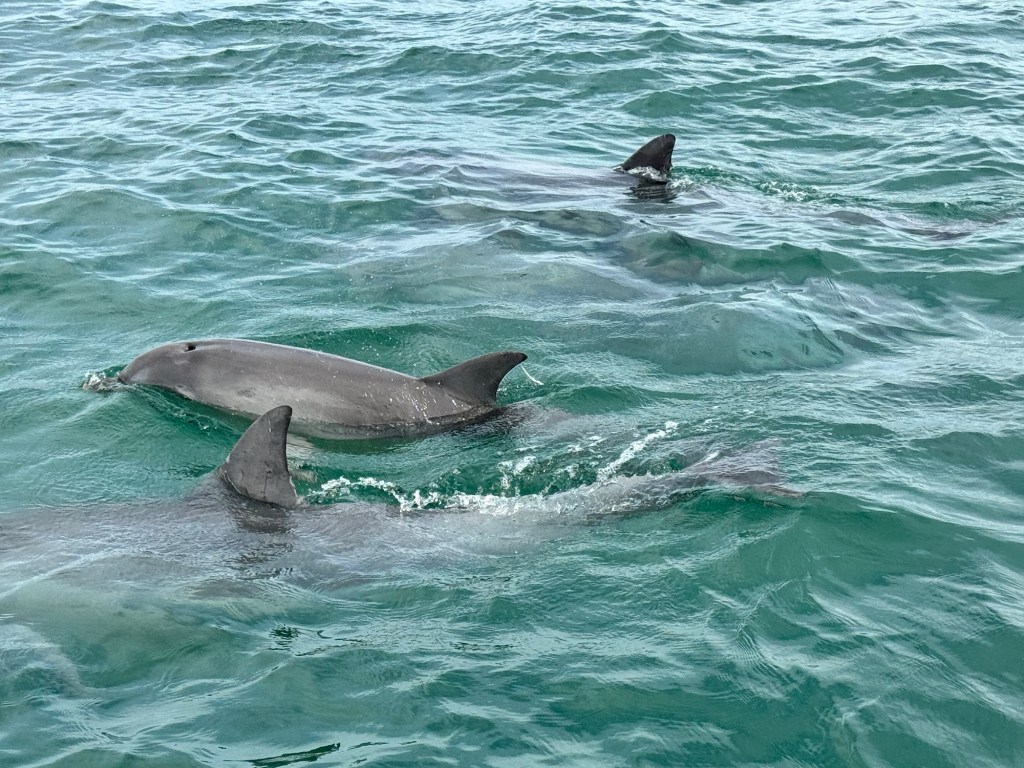
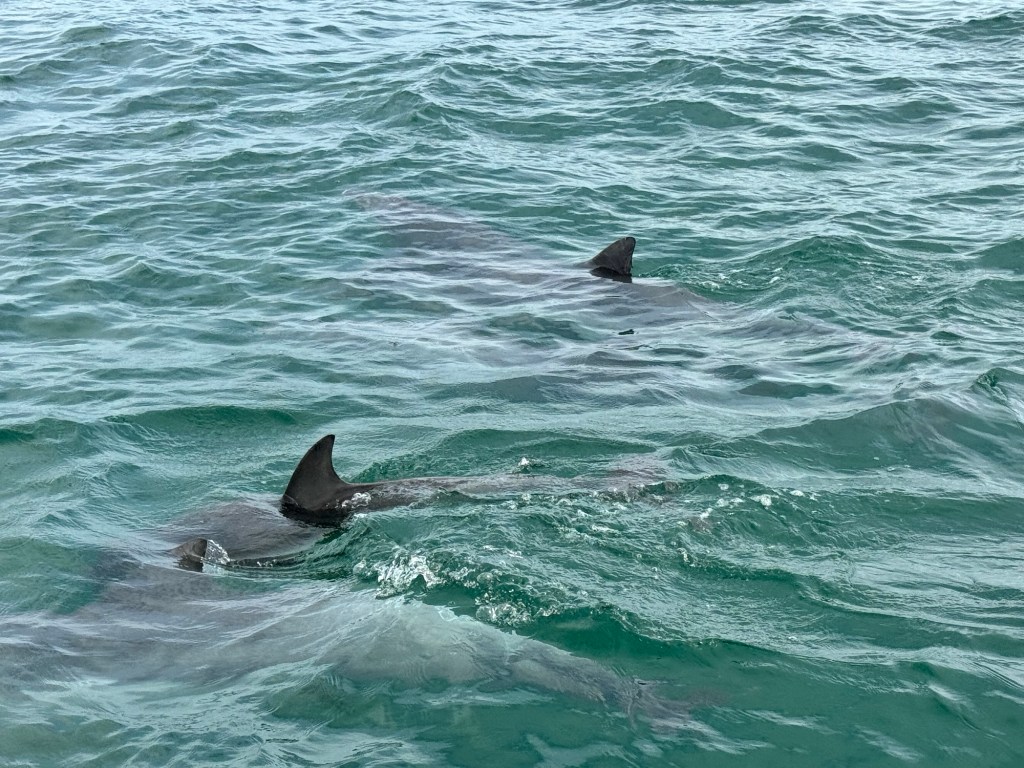
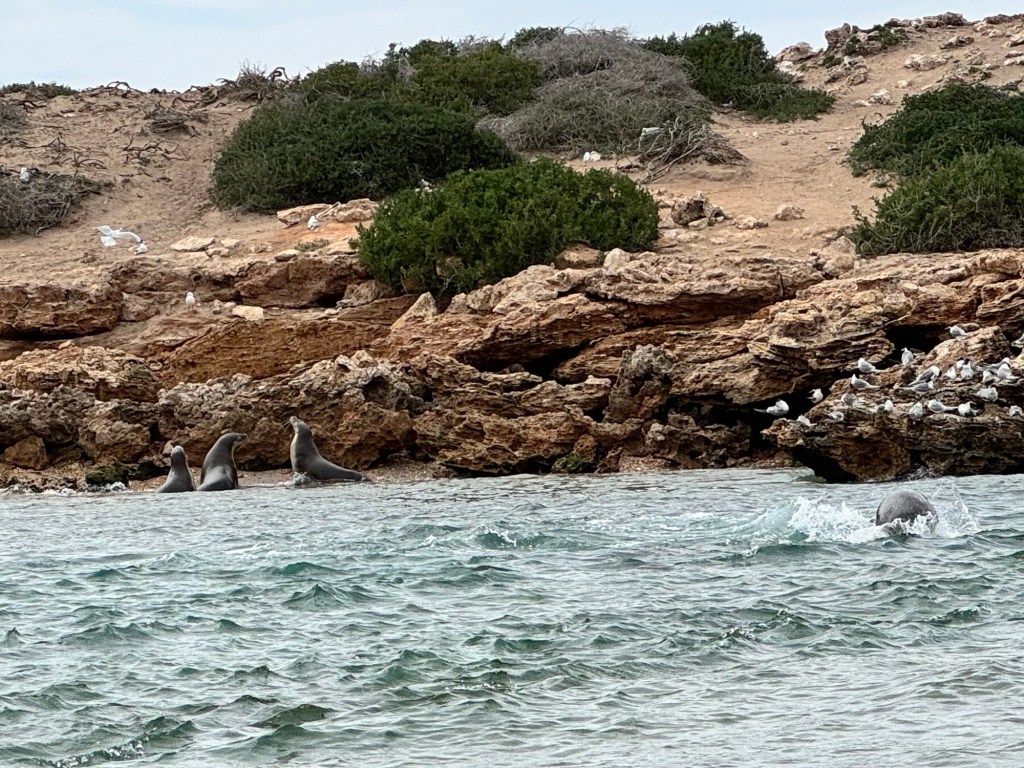
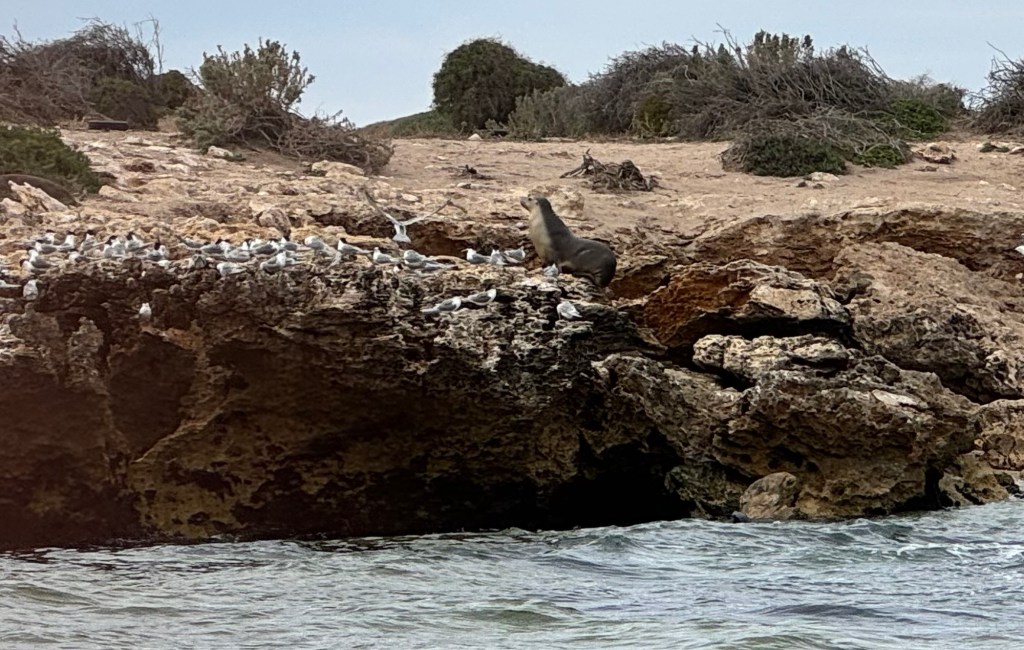
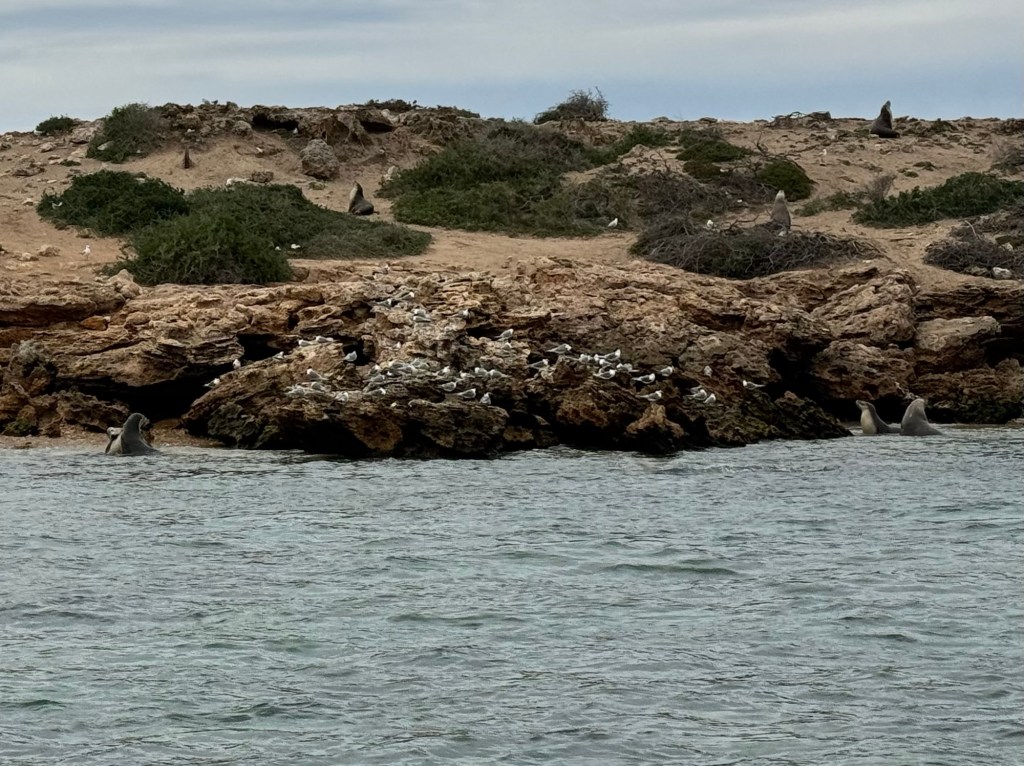
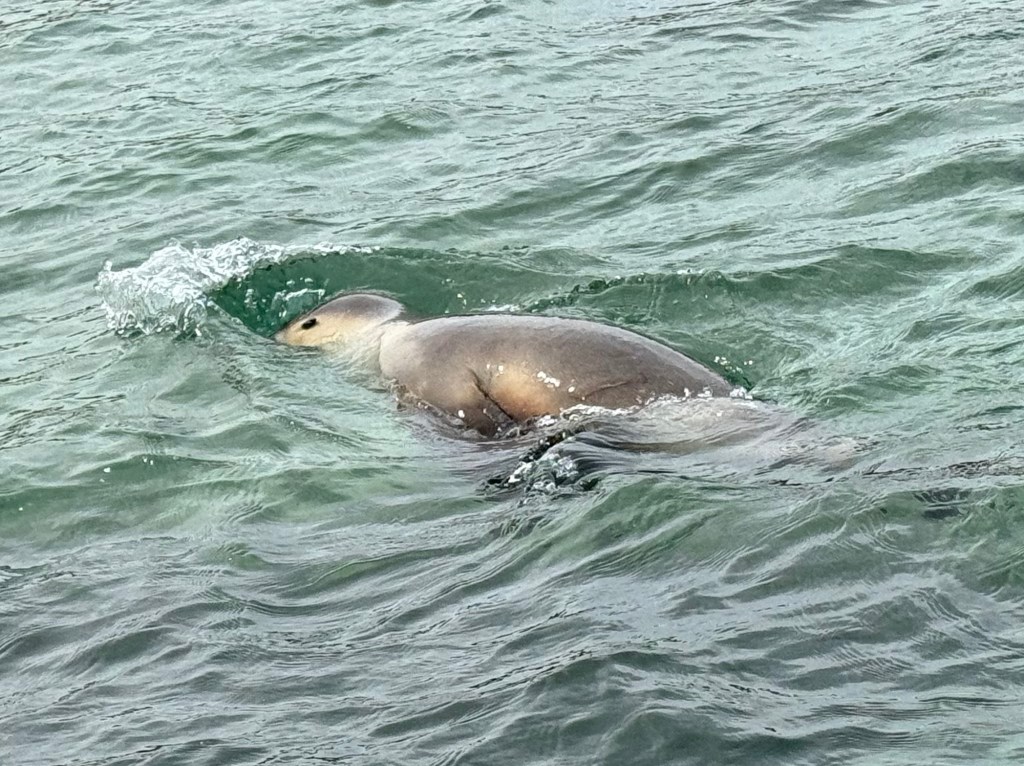
We drive west for 2 hours to Baird Bay Expeditions, where we join a boat tour that is taking guests swimming with dolphins and sea lions. Mark wanted no part of the freezing 58 degree water, complimented by a cool breeze.

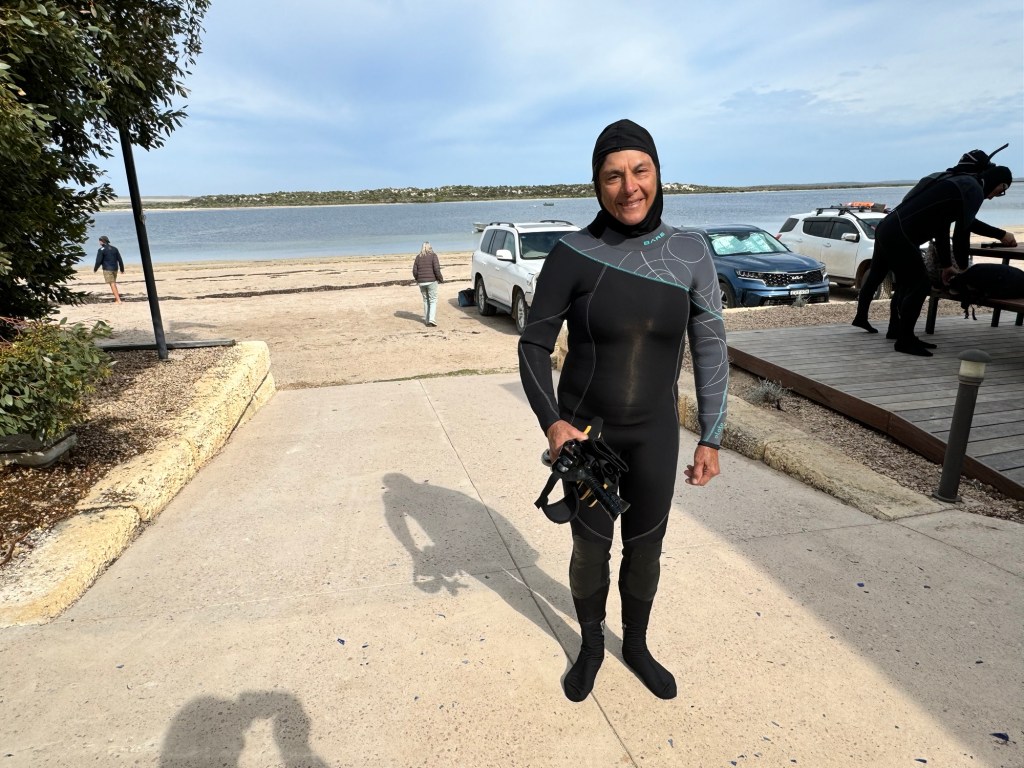
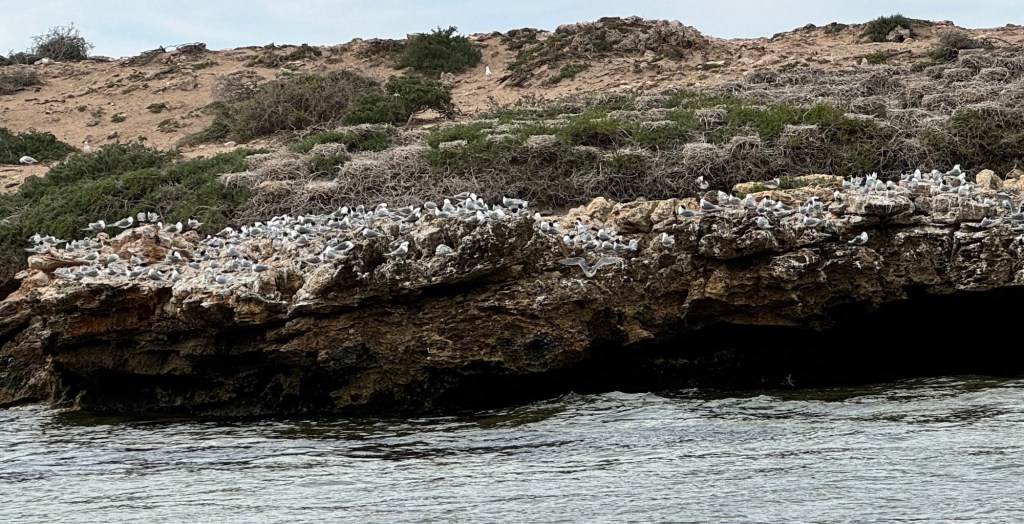
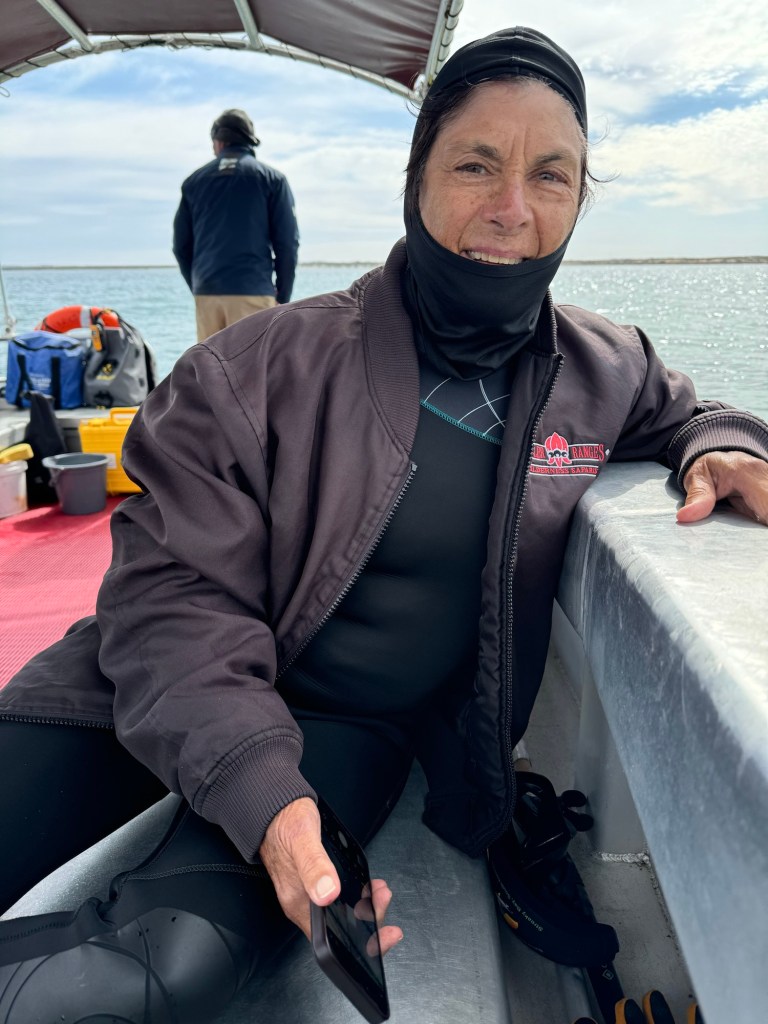
I suited up in a 5 ml wet suit, just in case I would be motivated. Off we went. By the time we were to get in the water, I was freezing and chickened out. It turns out, Mark and I saw almost as much fish activity being in the boat as the snorkelers did. We got very close to the sea lions and many dolphins swam right up to the boat. The skipper shared much with us that the swimmers did not hear, so we felt good about the experience. Along with the animals were thousands of crested terns, pelicans and cormorants.

It was a short drive to Rosie’s home in Venus Bay.

She showed us around and we ate lunch on the patio in her succulent garden, which needs little water. From there we drove into Port Lincoln where we had reservations to stay in a B&B home overlooking the bay.

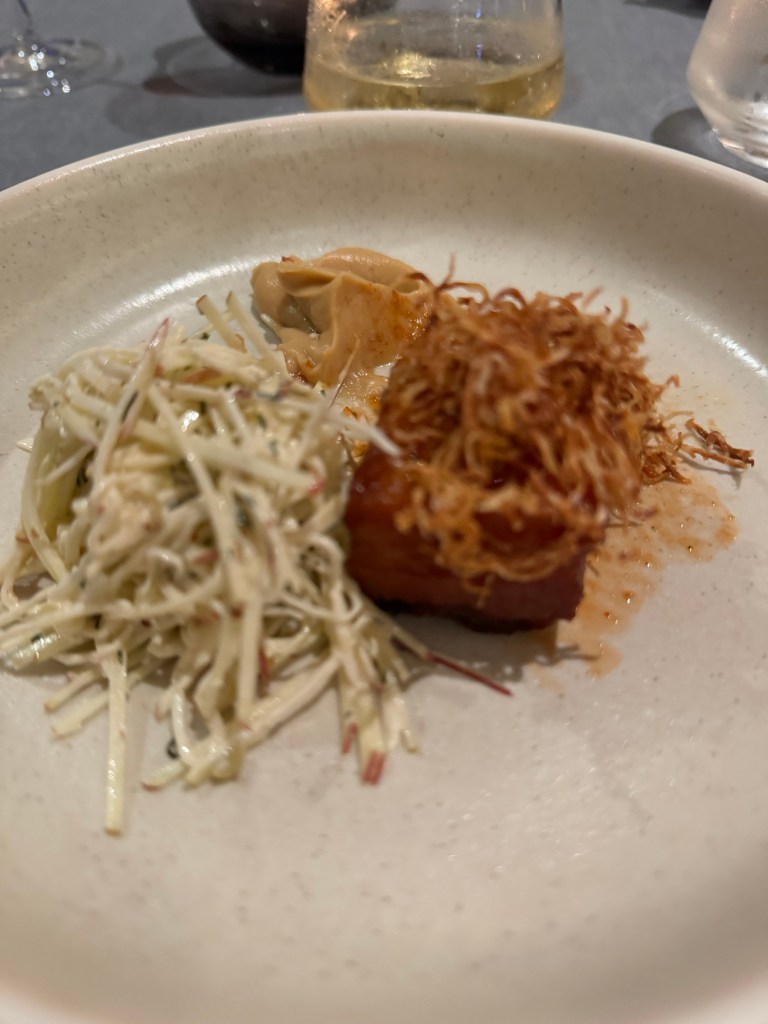
We met the manager of the house, Robin, and the chef, Kerry. She made us a delicious king fish fillet, on a bed of cabbage slaw, topped with roasted tomato. After she cleaned up and left, we relaxed awhile and went to bed.

Sunday, October 13, 2024

We were picked up at 10am by David Doudle, our guide for the day. He told us we would be going to Winters Hill Lookout first thing to get the lay of the land.

Then we would go to Flinders Port Wharf to see what drives the local economy. That is wheat, barley and Canola. This port is so large that it can handle 504 thousand tons of grain at any one time. 2.2 billion dollars of product, grain and seafood, is exported each year.

Kerry, our chef who is married to a fisherman, told us the Southern Bluefin Tuna fishing boats go out for 3 months at a time. One boat drags a huge cage into which the live fish are put. The drag boat slowly drags the live catch around the ocean, while continuing to collect the harvest from other boats. The fish in the cage are fed for a few months until they are ready for market, then divers get into the cage and put the fish on conveyor belts that drag the fish into the boat, where they are killed immediately and snap frozen. When the boat returns to port, the fish are ready for shipment to Japan and some other countries.

From there we drove to Wanna Lookout to drive on the sand. David deflated the tires to 20 psi and put up a safety flag before driving through the dunes. He gave us a spectacular hour’s ride up, over, around and through the dunes. Finally, he stopped for lunch on a limestone cliff top overlooking the Southern Ocean. The next landfall is Antarctica, only 5500 kilometers away.

After lunch, Dave reinfected the tires with his on board compressor and we drove to a private property where wild animals are conserved. We saw several dozen koalas, a few Emu, Kangaroo, shingle back lizards and one Rosenberg Goanna, a rare monitor lizard. The koalas were delightful to see. There were often 2-3 in a tree.

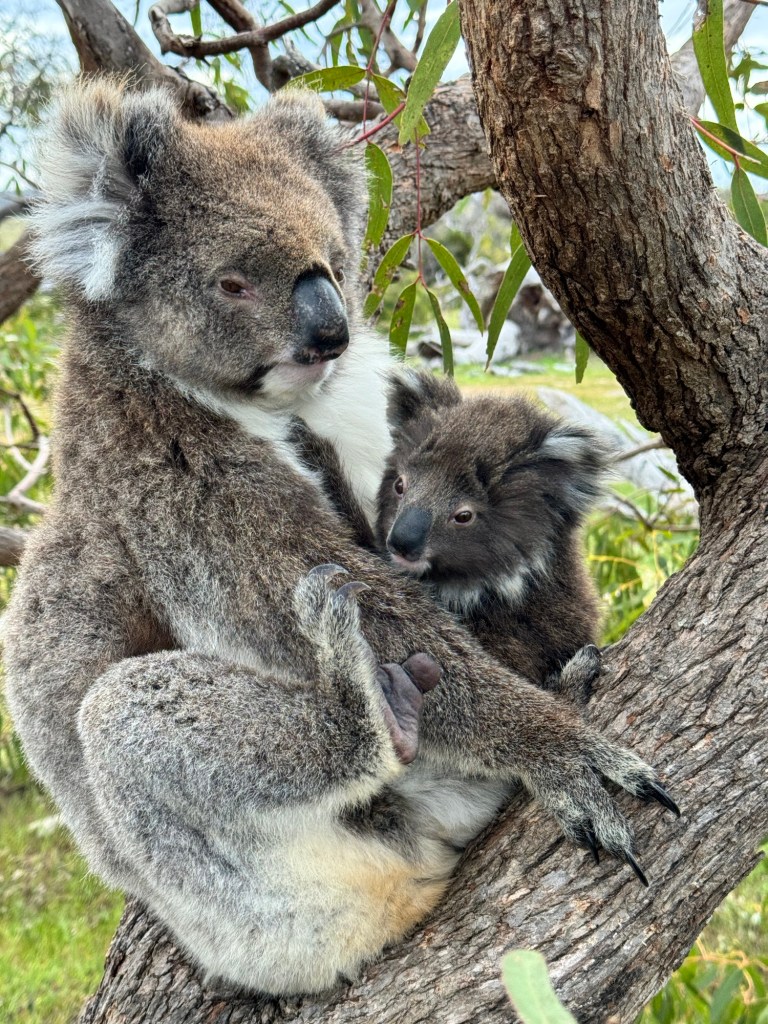
Koala and Joey
A koala scratching herself

It was a super day with great activities. Four wheeling in the sand was over the top as was seeing so many koalas in such a short time in just a few trees.

David blew us away with the action packed day.

Monday, October 14, 2024

Dave drove us to the Port Lincoln General Aviation Airport at 9am where we said good bye to him and joined a pilot who flew us in a Cessna 210 to Kangaroo Island.

Tasmania

Tazmania

Friday, October 4, 2024

We arrive in Hobart from Melbourne at 10am. Our driver, Andrew, was delightfully charming and informative. Much more than a transport driver. Soon I was taking notes. The population of the state of Tasmania is 565,000 and is approximately the size of West Virginia. It is the least populated state in the country. The half of the population lives in Hobart, the capital. About 100K has some aboriginal heritage. Tasmania claims to have 4 distinct seasons as they are 40 degrees south of the equator. As Grass Valley is about 39 degrees north of the equator, our climates must be similar. The temperature was 63F in Hobart.

The first European to land on the island was Abel Janzoon Tasman in 1642. The state was named for him in 1856. Originally a prison colony, 190,000 prisoners were sent to Tasmania from England. Roughly half came to Tasmania and half went to Sydney. The first successful European settlers came in 1804 and settled in what became Hobart. It has the 2nd deepest port in the world. Money-making products were fish and organic foods. Whiskey was also a moneymaker.

Then Andrew dropped us off at the Museum of Natural Art (MONA) and we began our 11am tour, which was a self guided computer app. It was the most unusual museum I have ever experienced. The art is all over the globe in terms of subject and translation. There is no map of the layout to follow or any organization to understand. After wandering around for almost 2 hours, we were tired and confused and wanting the experience to be finished. We left the building, knowing there must be a lot we missed. We had lunch in the museum, but found it somewhat confusing too.

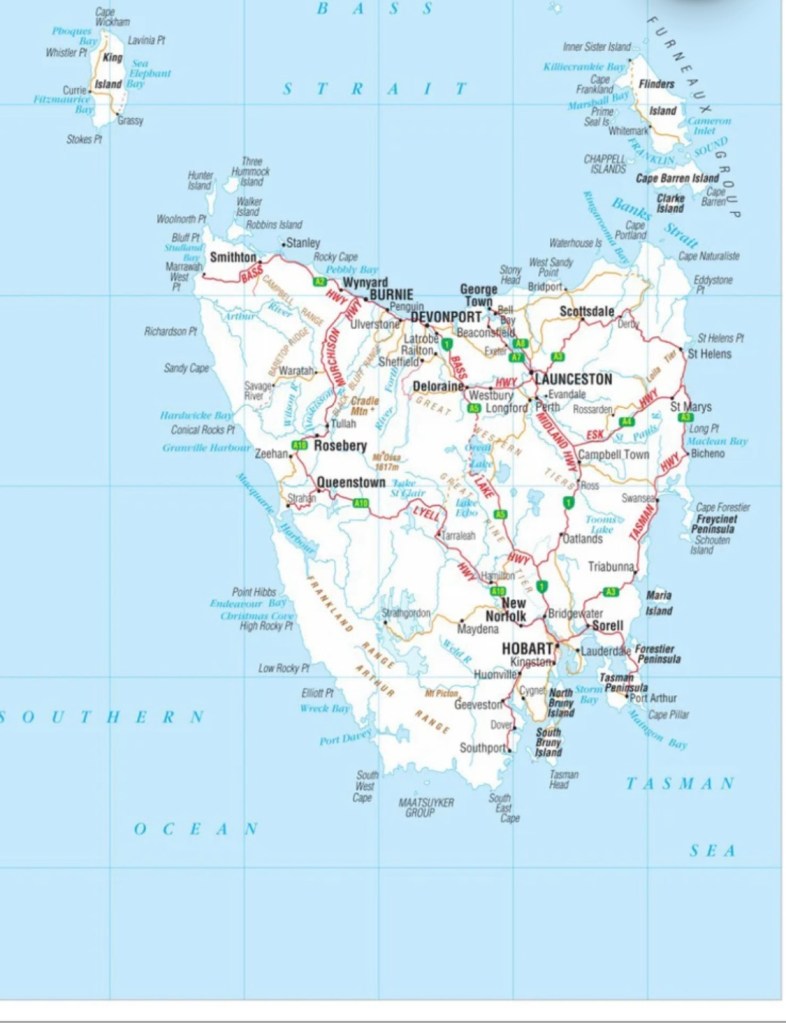
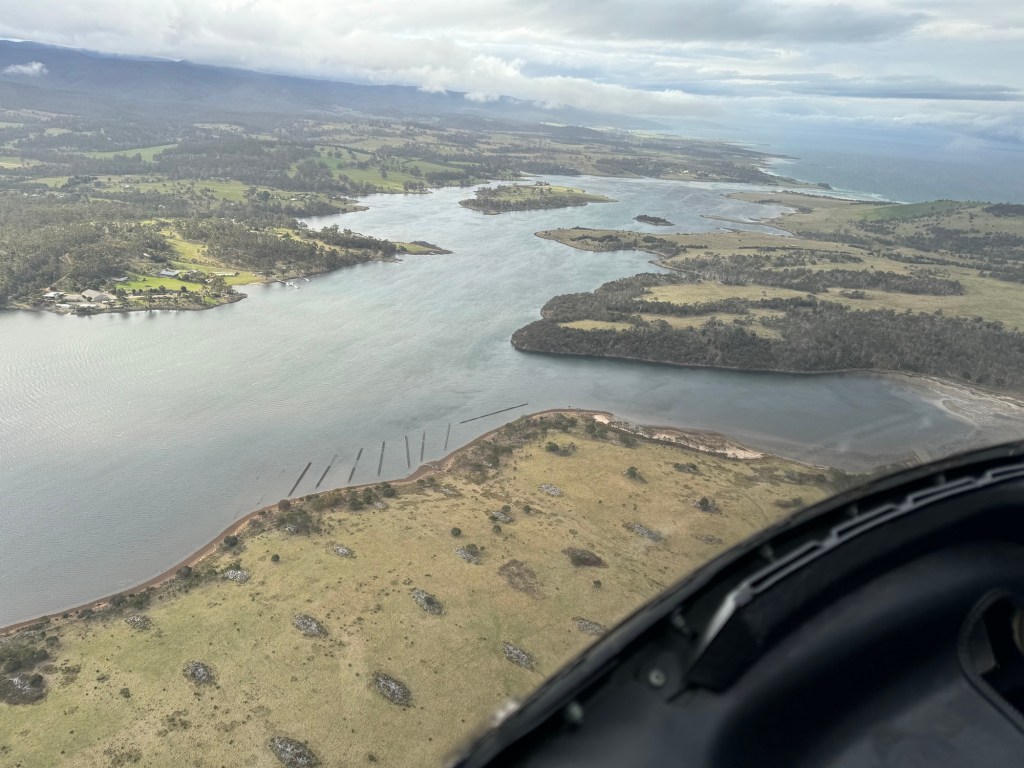
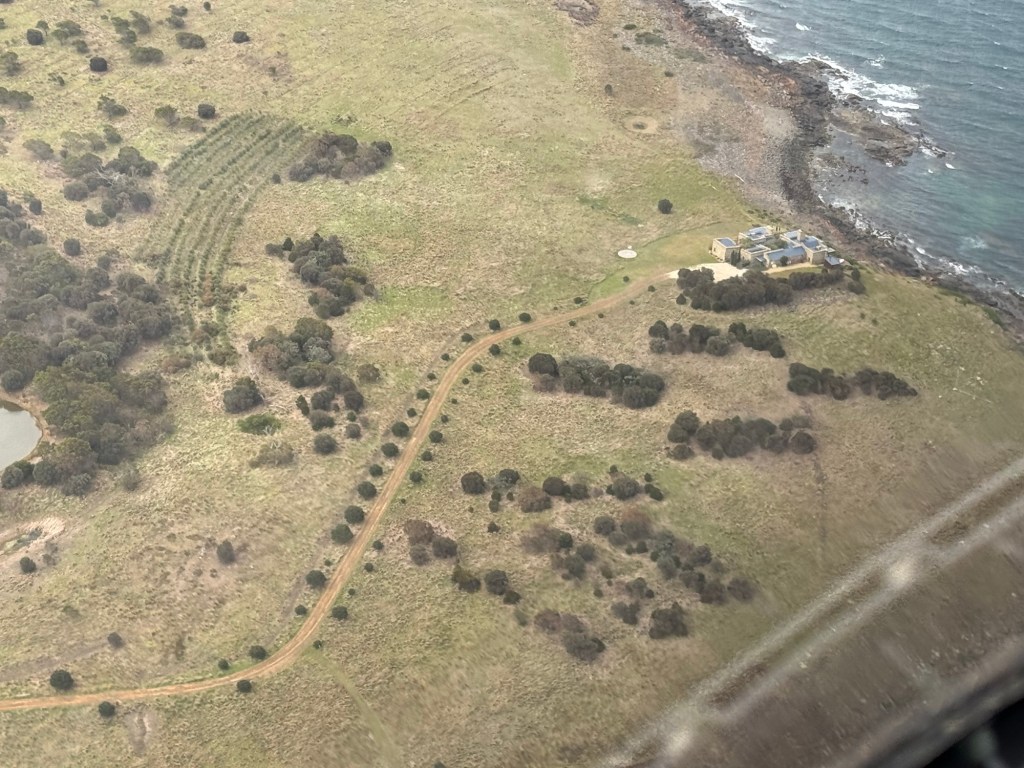
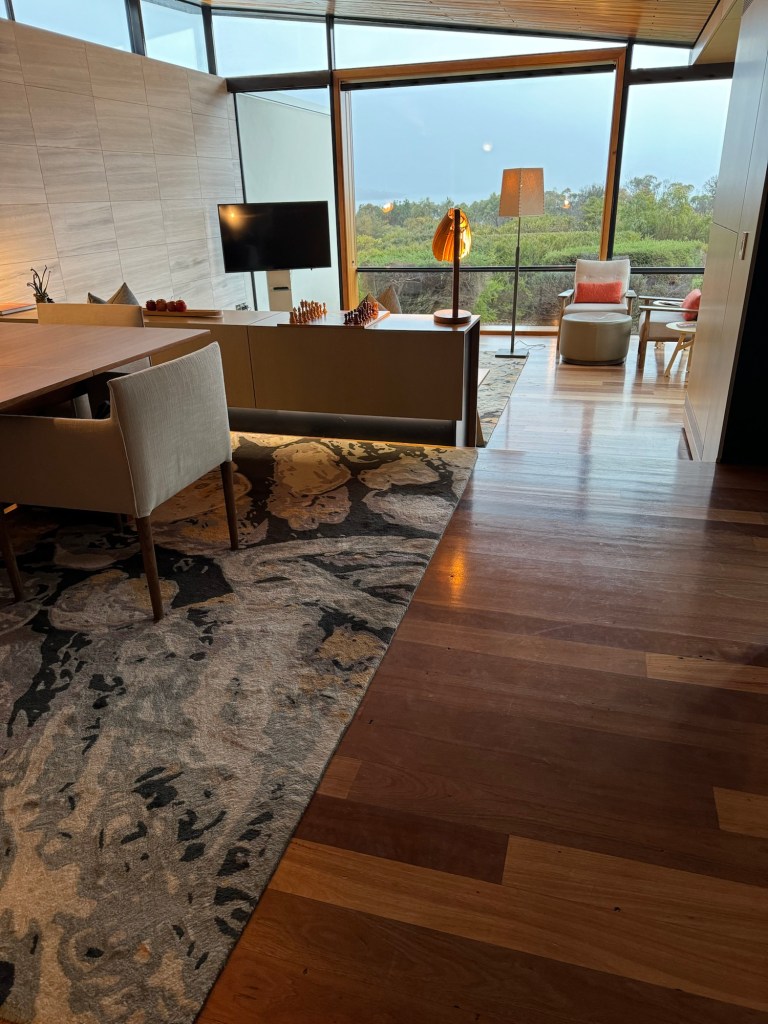
When we left the museum, the sky was raining lightly and Andrew quickly took us to the heliport for our 50 minute flight to our Hotel, the Saffire Freycinet on the east side of the island. (The Freycinet Peninsula is marked on the map). The pilot was happy to get airborne and off we went.

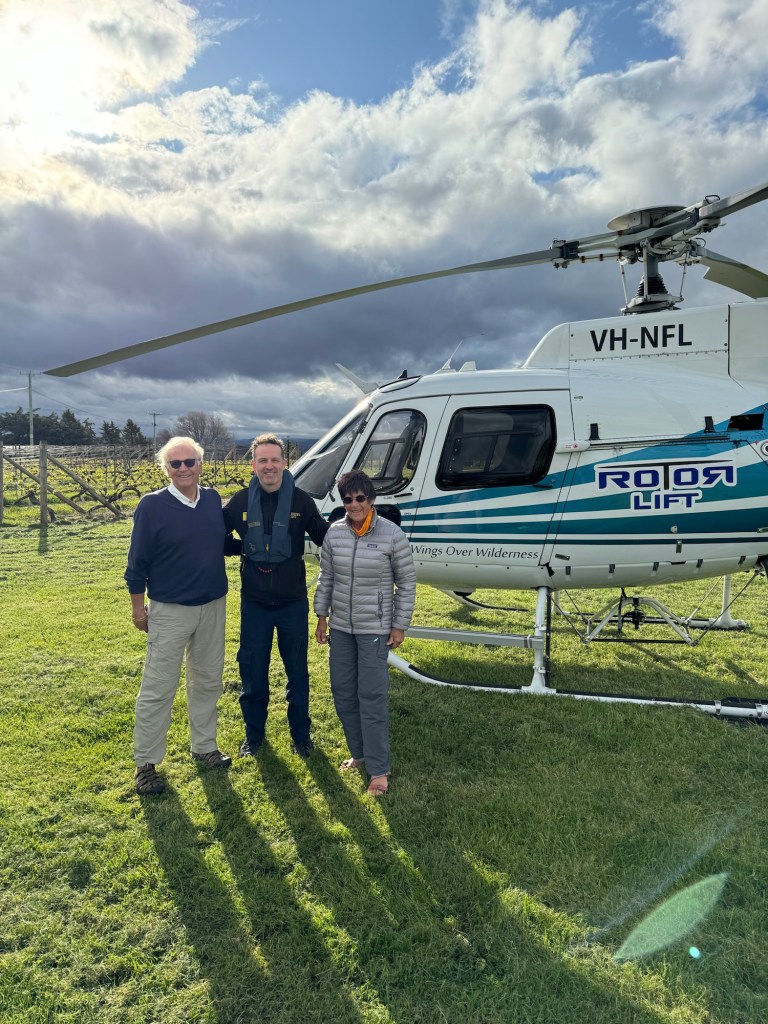
After 40 minutes the fog had descended below minimums and he decided to put the chopper down in a winery vineyard, short of our hotel destination. Very shortly a friend of the pilot’s drove up and agreed to take us the rest of the way to the hotel. It is so nice in a small country, where everyone knows everyone and is willing to lend a hand. We were on our way by car in just a few minutes and reached the hotel about 30 minutes later. Everyone was so very nice. Soon we were in our hotel room and able to relax.

Apparently the Freycinet brothers arrived in the area in 1802 and mapped the area, but did not live here.

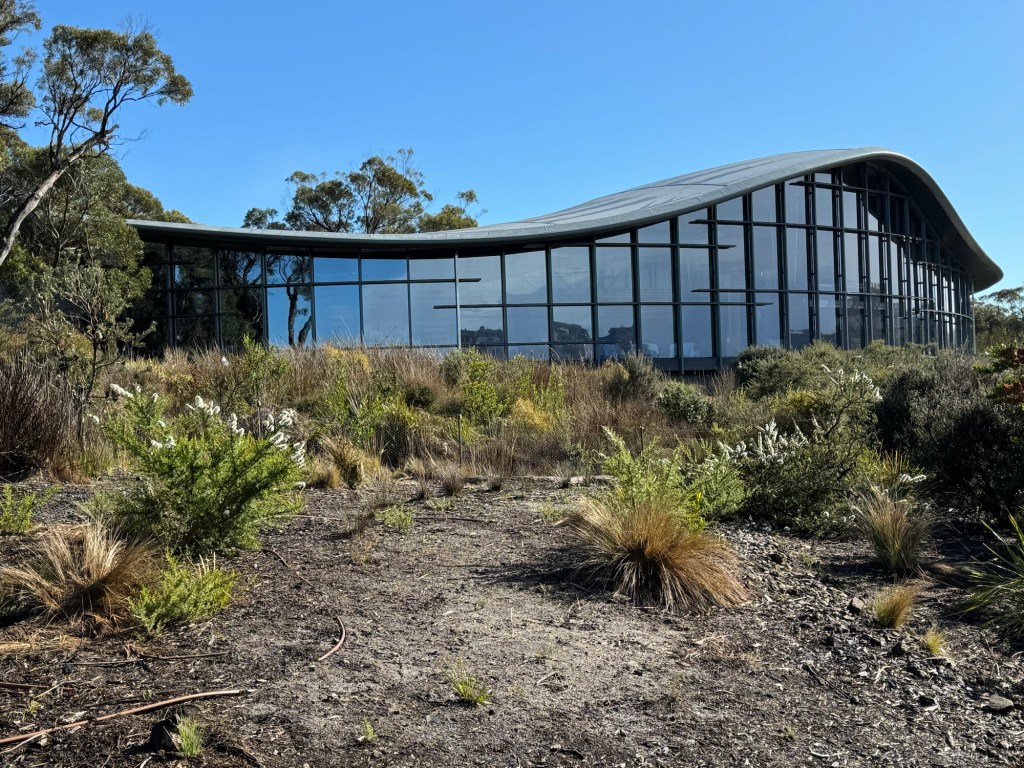
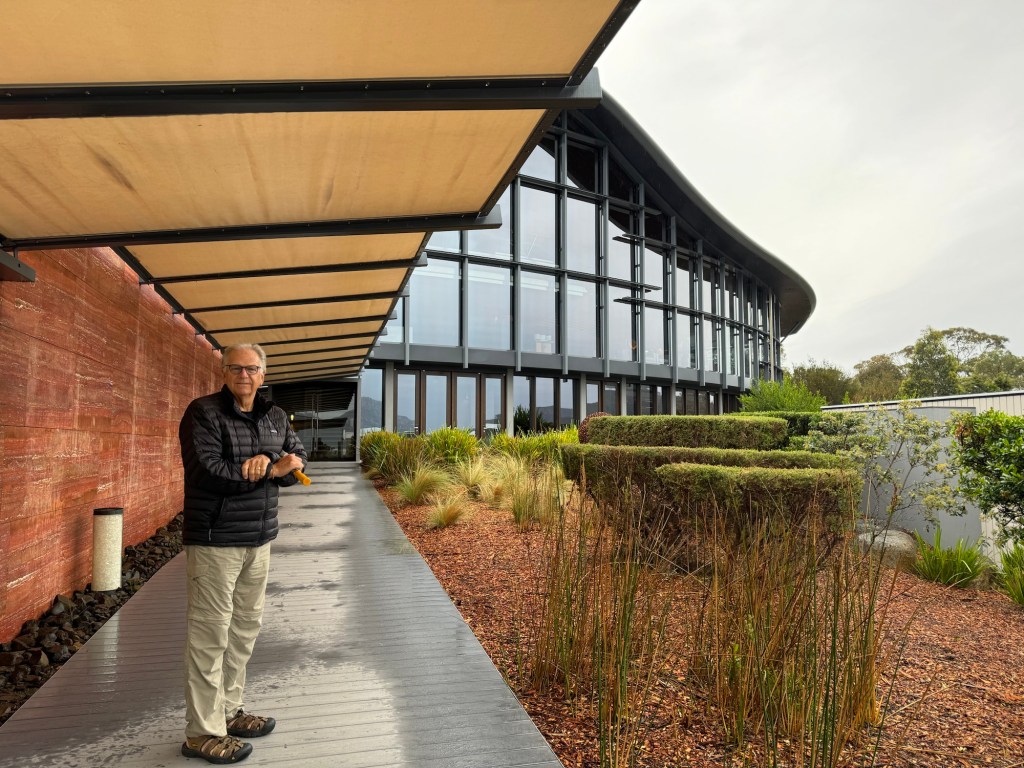
We had a light simple dinner and were happy to relax in our room. The building is designed to look like a Southern Eagle Sting Ray.

Saturday, October 5, 2024

Up and out for a reasonably sunny day, with a light breeze and a few clouds. Simple breakfast followed by a ride then walk hike with the hotel guide, Nicole. We walked on a very easy trail that was most pleasant. Nicole identified many plants and lichen, with a limerick: “Freddy fungi and Alice algae met and took a lichen to each other”.

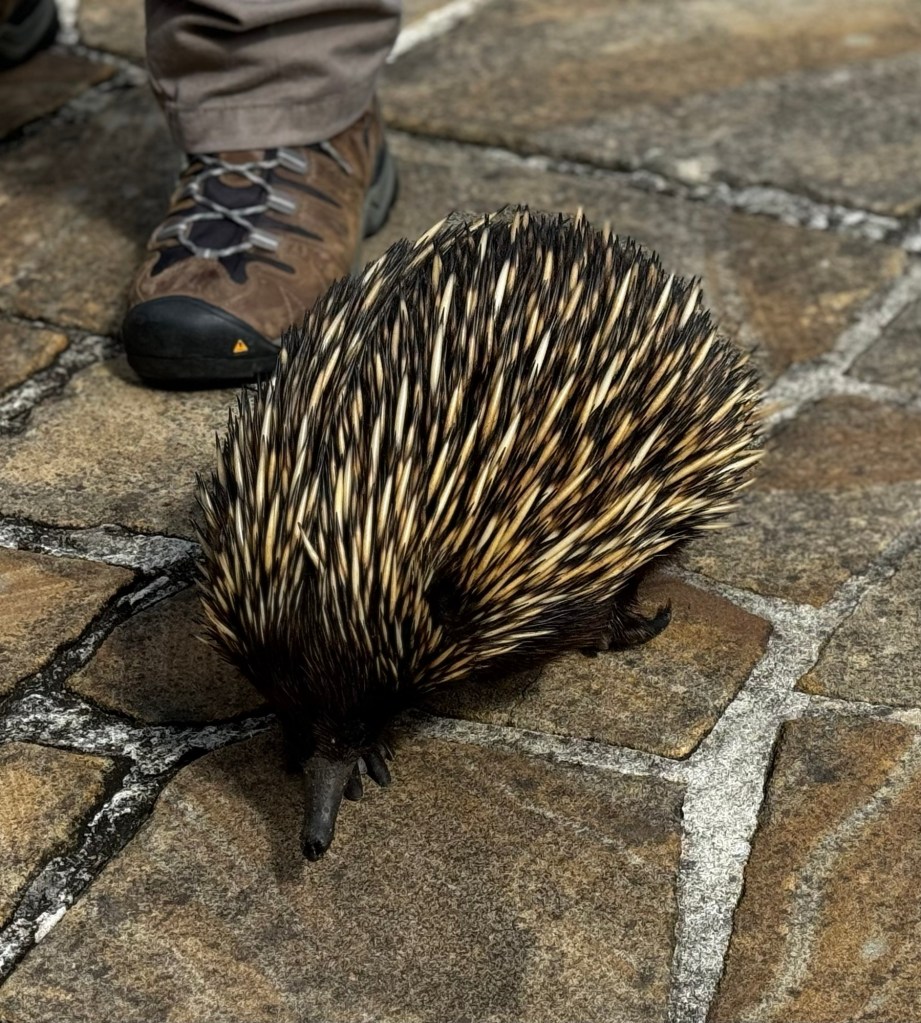
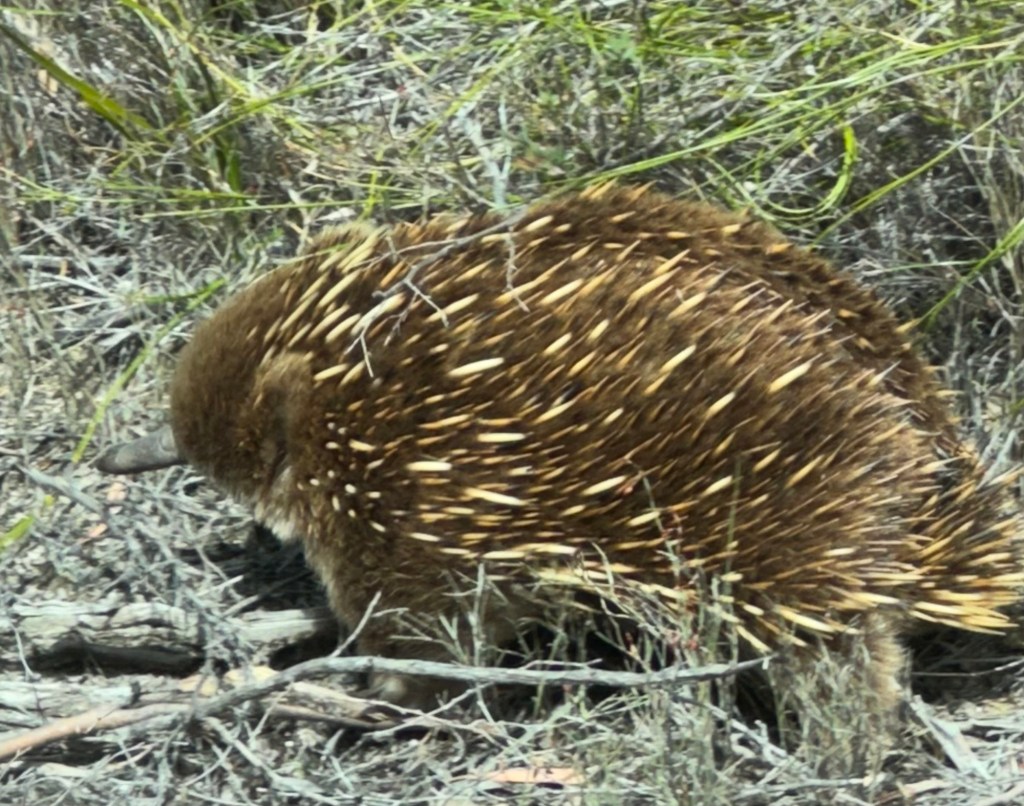
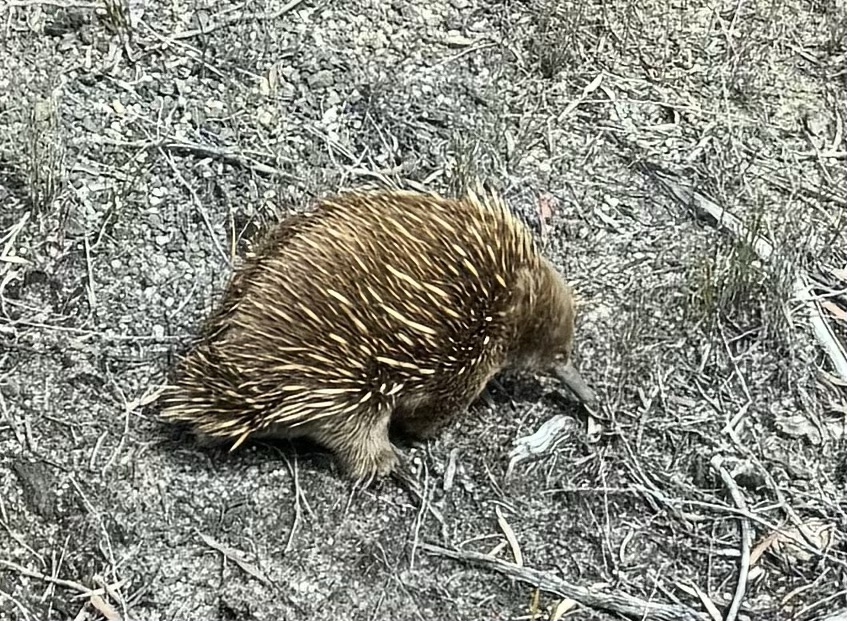
The echidna has quills as well as soft fur.
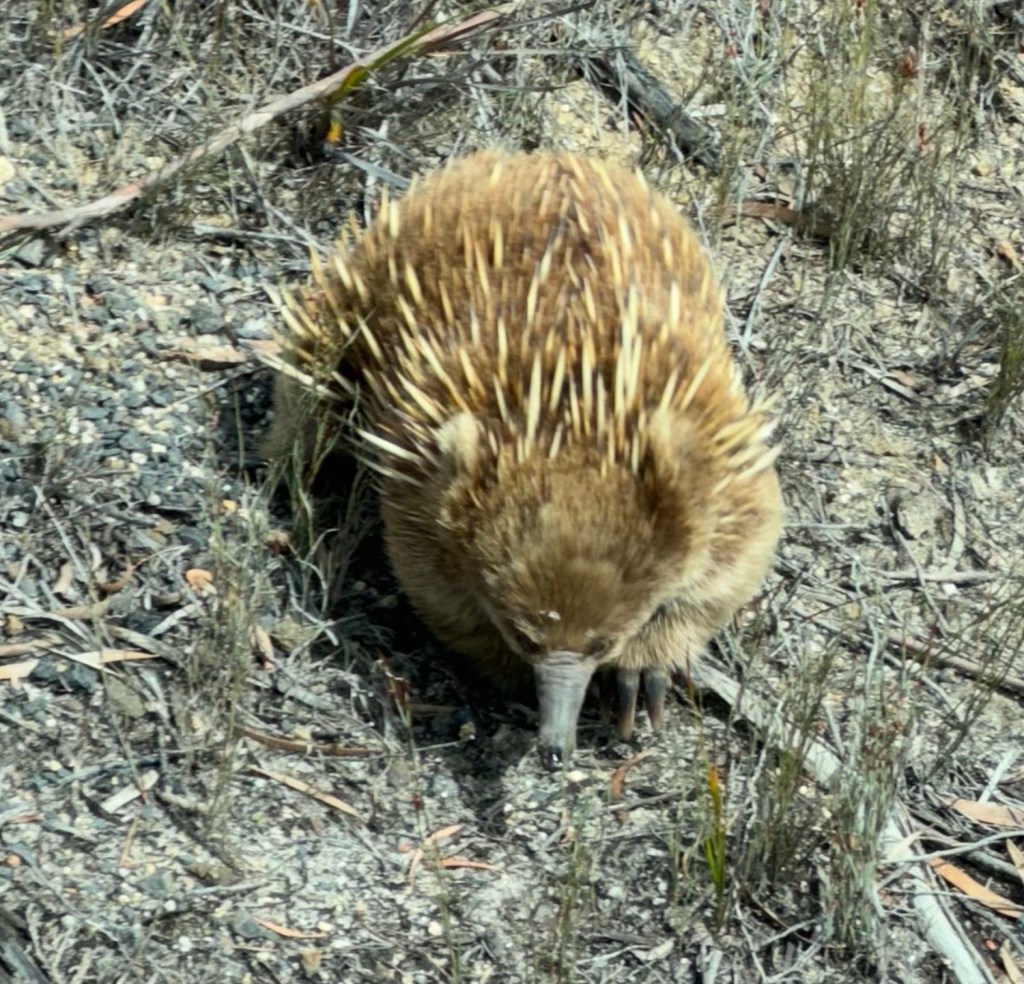
Look at that nose
See the Echidna nose or beak, sharp claws and small eyes. They have a great sense of smell and hearing.

On our drive with Nicole, we saw three different Echidna along the roadside and were thrilled to see them and get these photos. Echidna is a Greek word for “spiny ant eater”. They live only in Australia, and are very smart, having the largest frontal cortex in relation to their size of all mammals including humans. Along with the platypus, they are the only living mammals that lay eggs. About 30 days after mating the female deposits a single, soft shelled, leathery egg in her pouch. The egg hatches after 10 days and the baby lives in the pouch for 7 weeks. The mother gives pink milk due to high iron content of her diet, which includes termites, ants, earth worms, beetles and moth larvae.

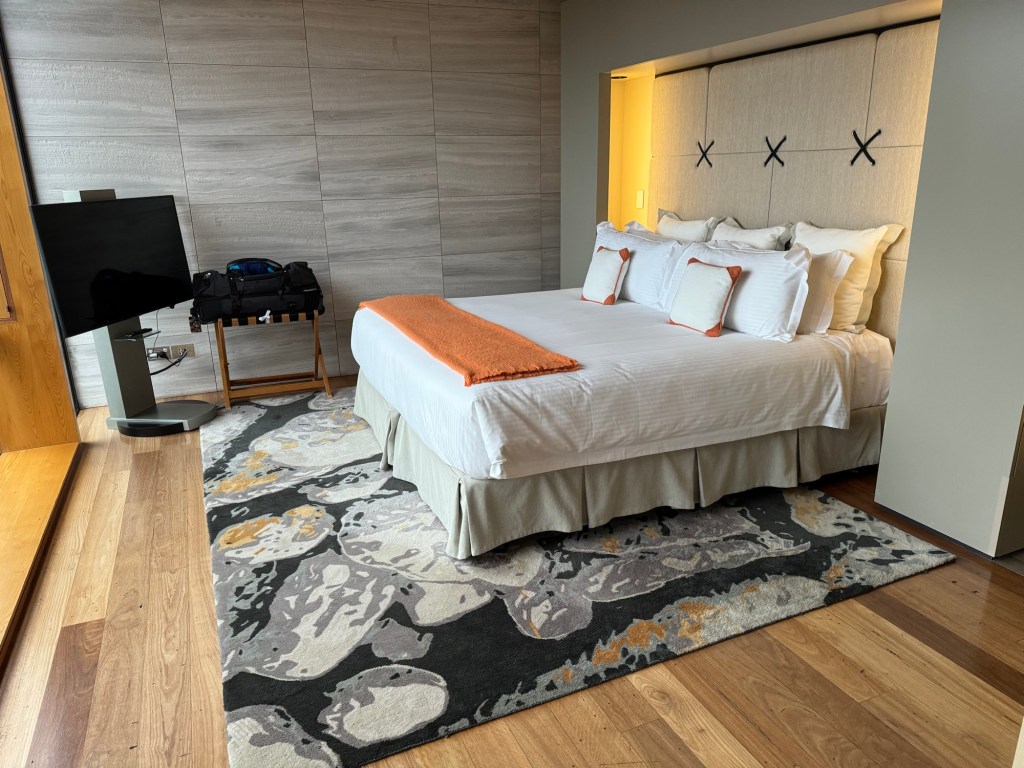
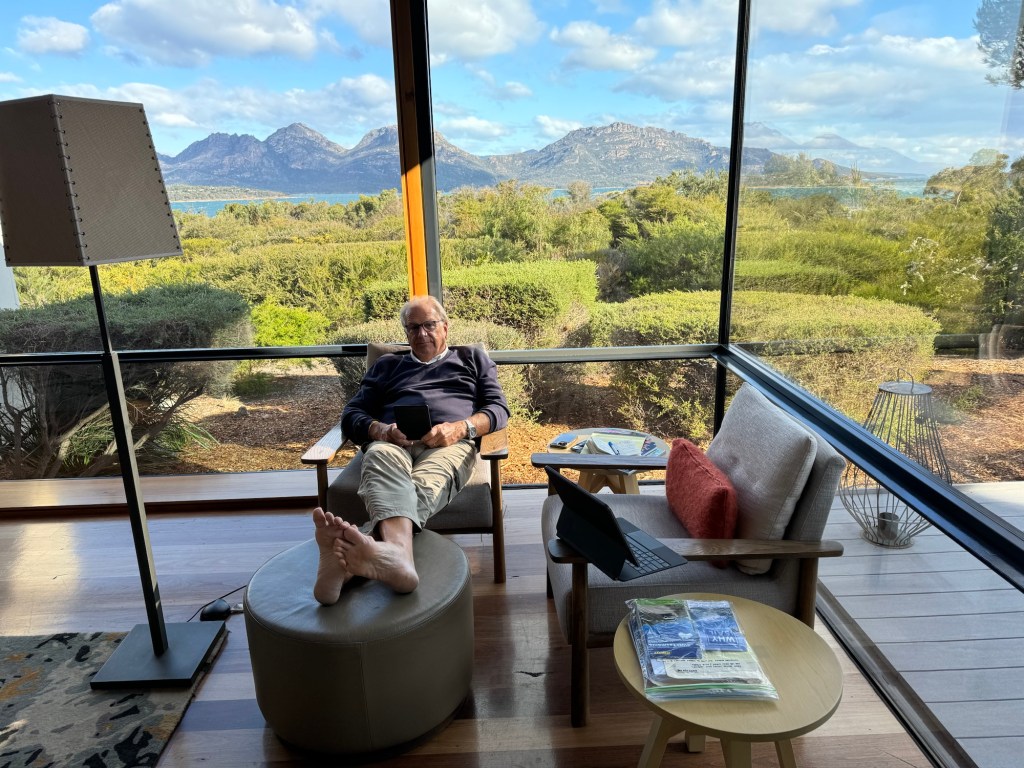
Relaxing in our suite

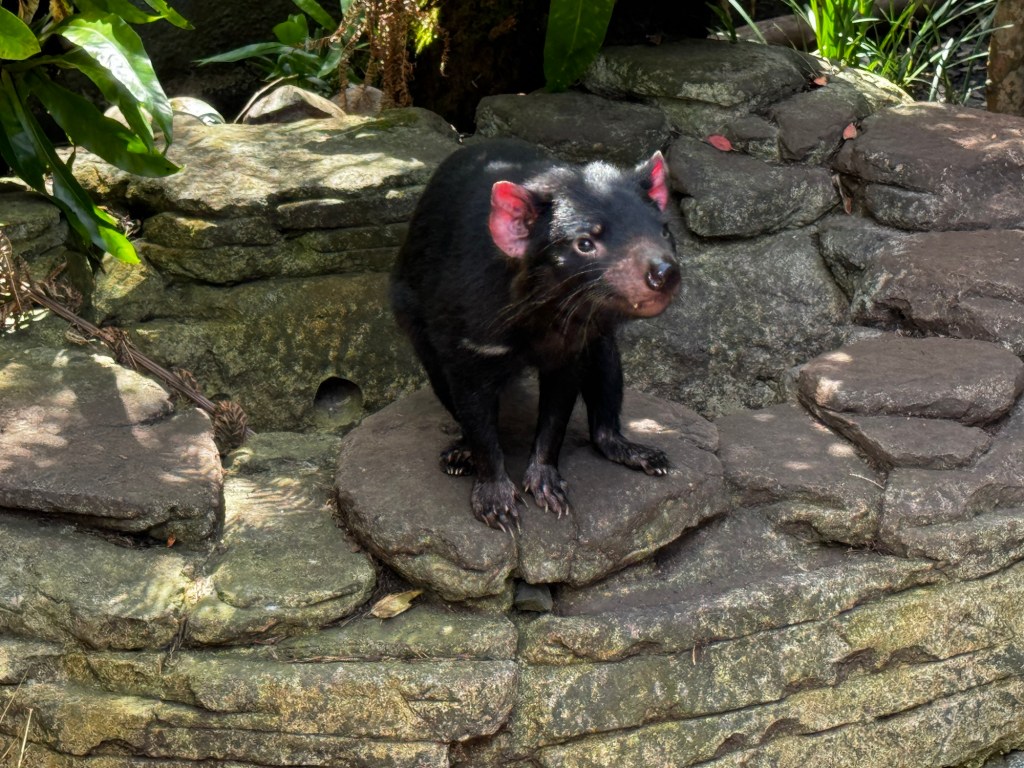
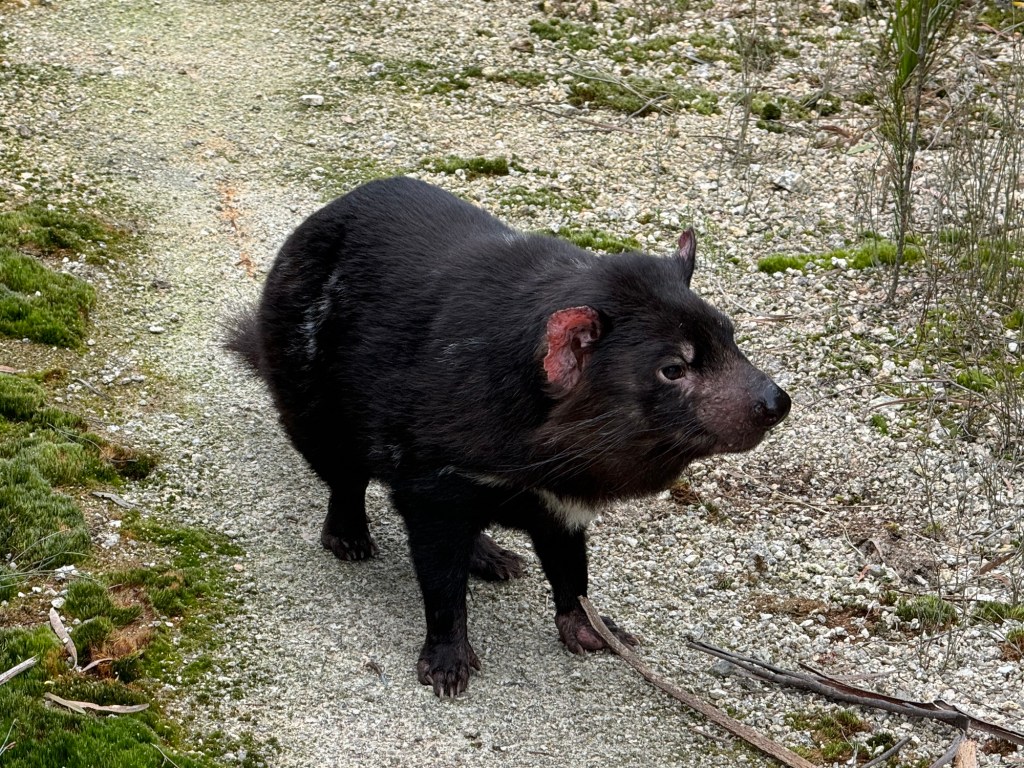
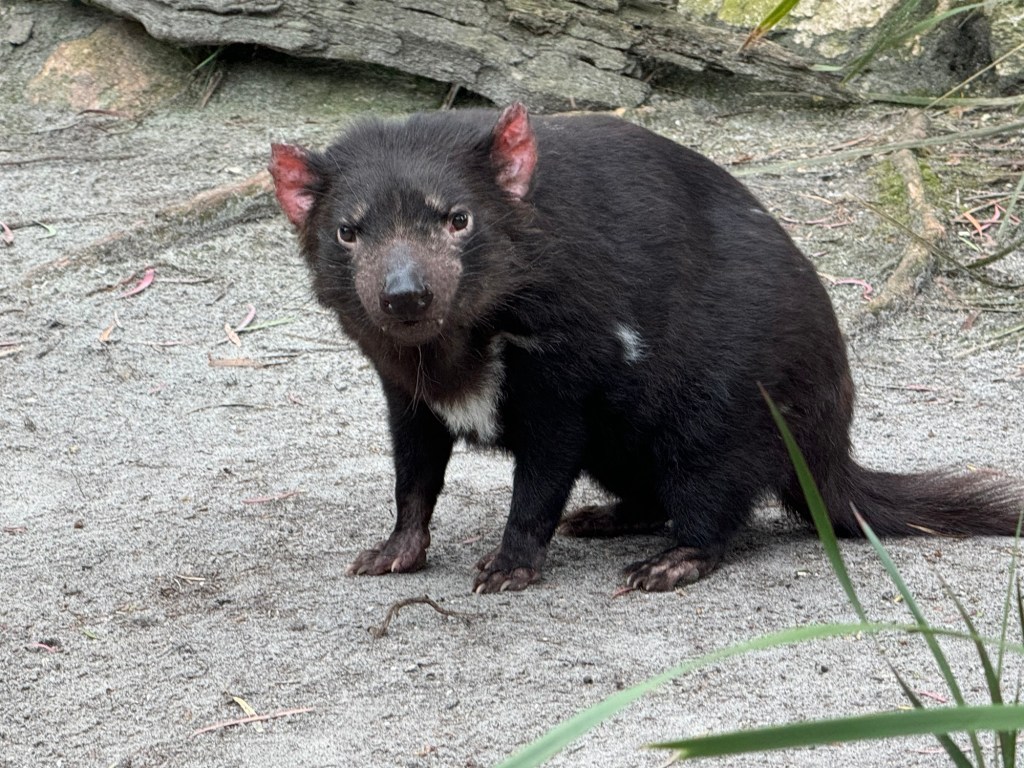
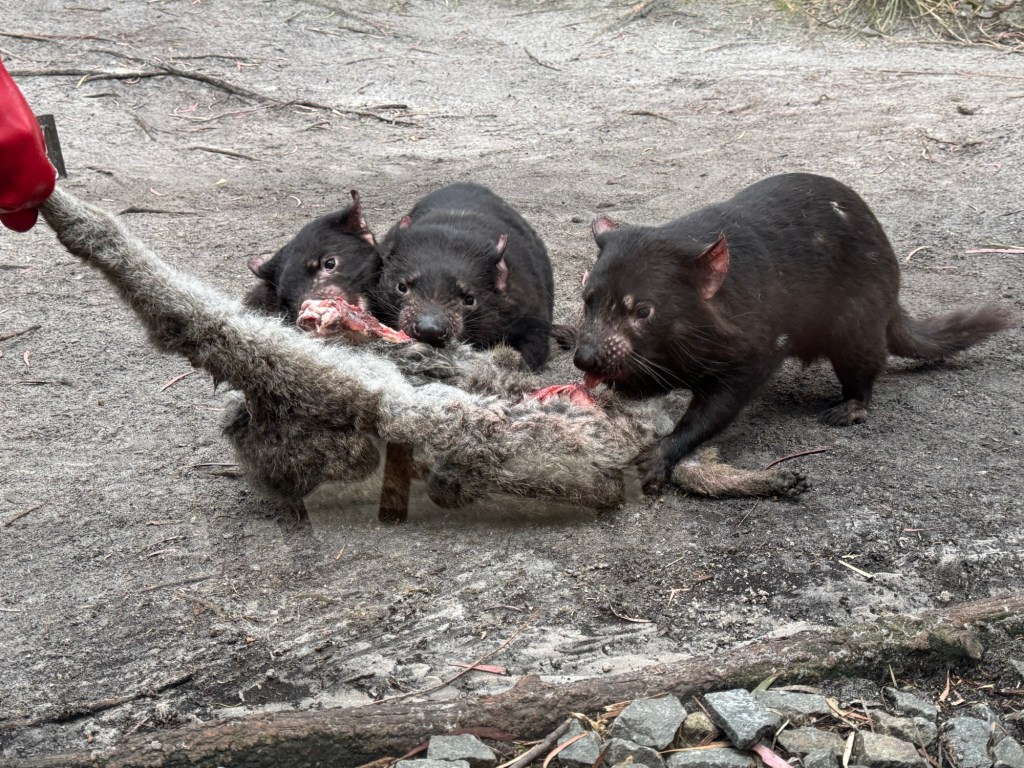
Back at the lodge, we had lunch and relaxed until 4pm, when we had our next planned activity—a visit to the Tasmanian Devil enclosure. It is on site at the lodge and a big part of its conservation efforts. The enclosure is 2.5 acres in size and currently contains 5 aging female devils. The only male had died a couple of weeks ago.

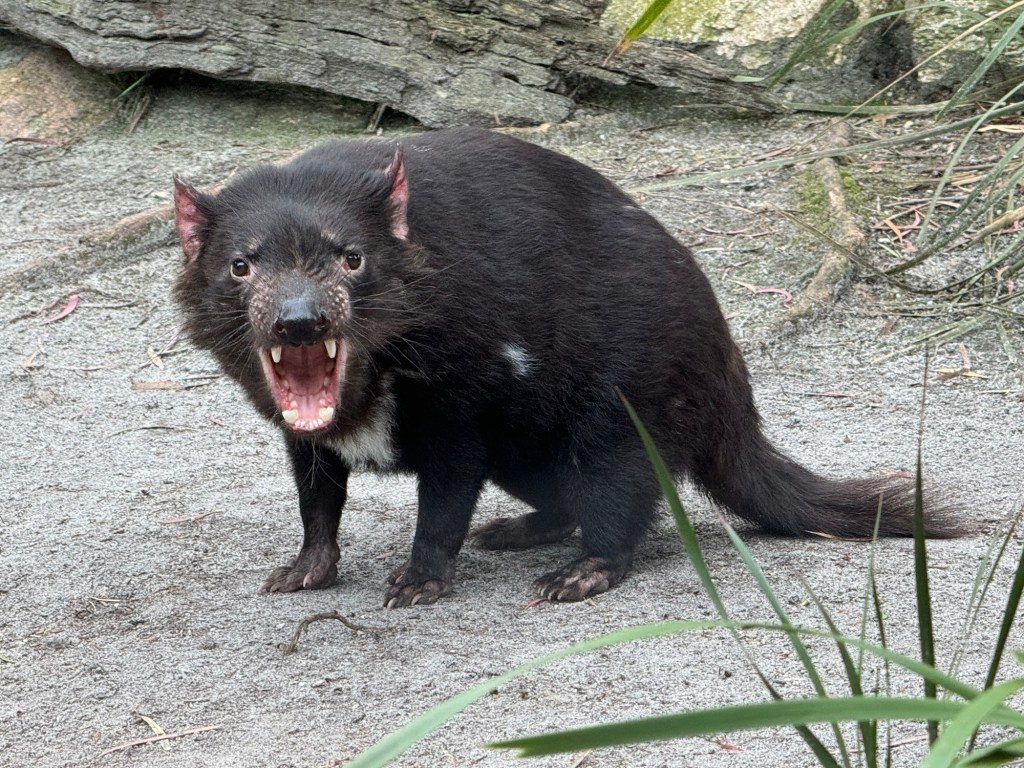
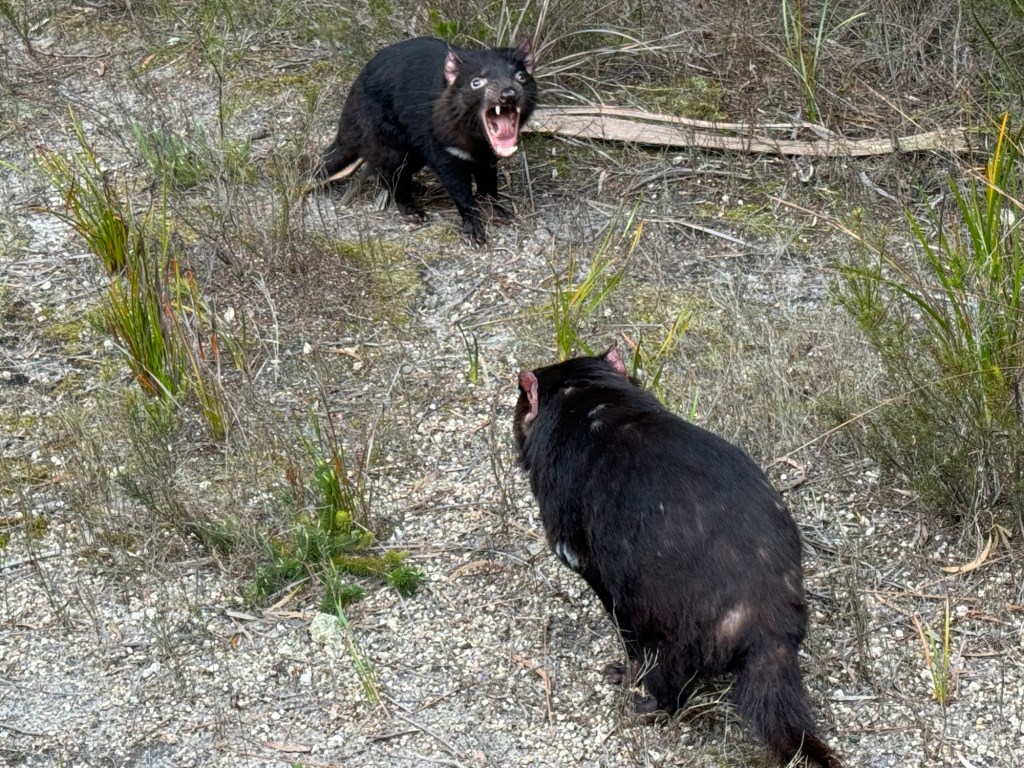
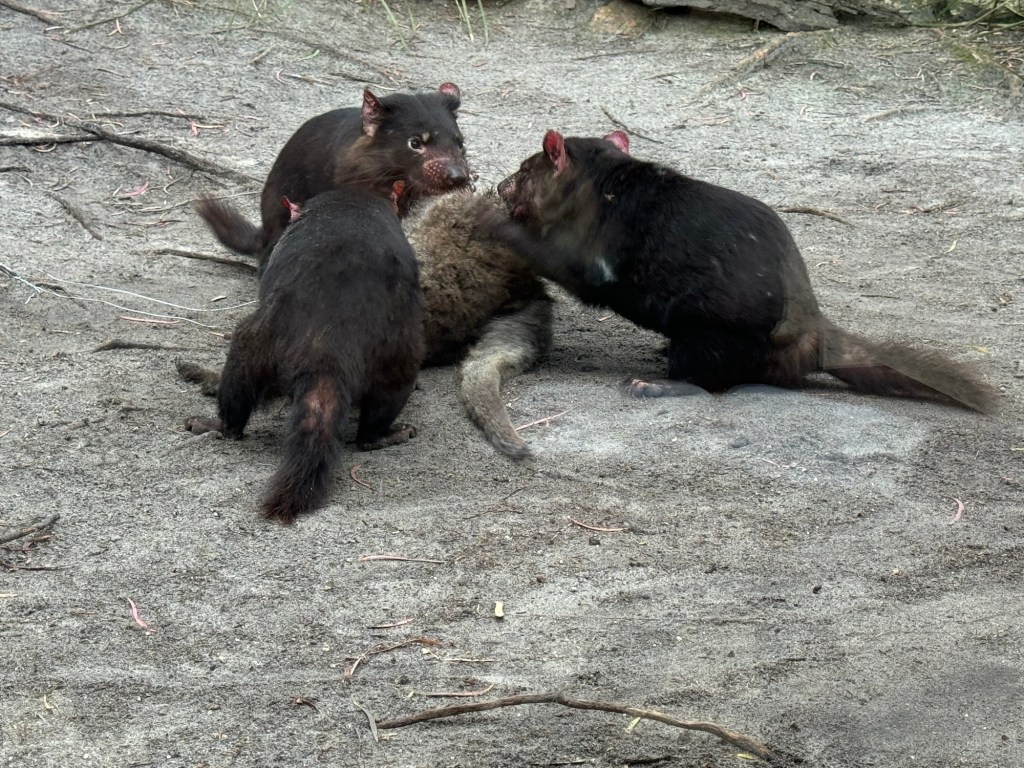
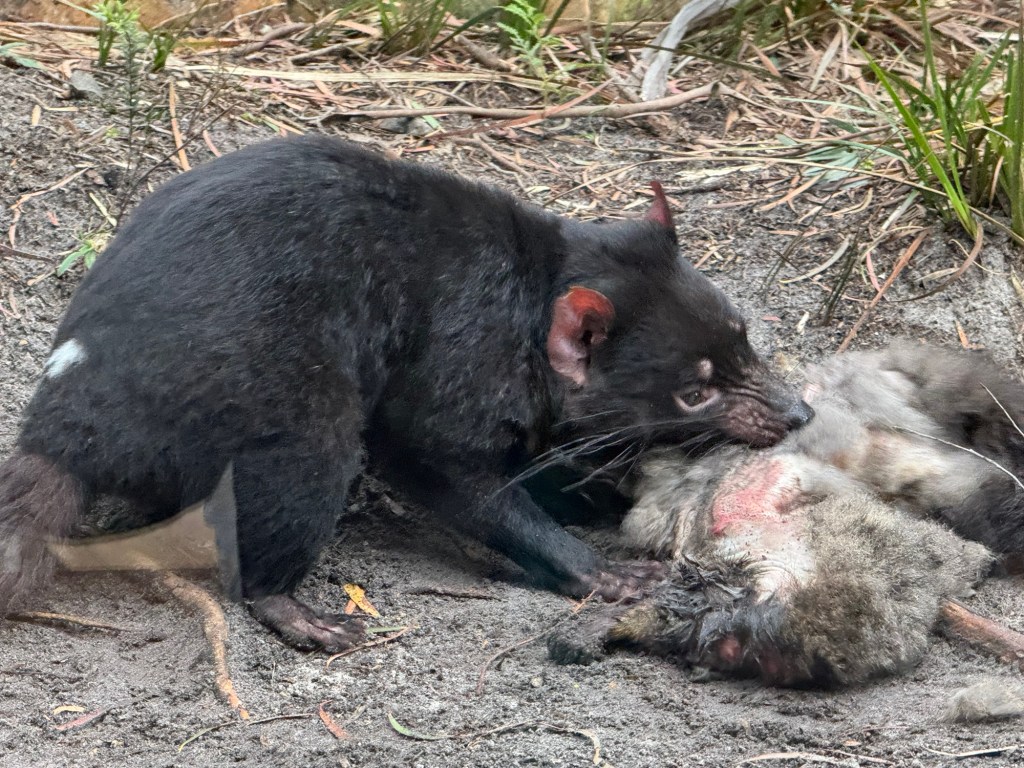
Tasmanian Devils are the largest carnivorous marsupials in the world and have the strongest bite for their size of any mammal. They only live on Tasmania as they became extinct everywhere else 3500 years ago. They eat up to 40% of their body weight in a day. Here at Saffire Freycinet, the devils are fed wallaby or possum every other day. They scream and shout and act like they are about to fight with each other, but they are displaying dominance and generally don’t fight.
These ladies don’t mate anymore, but those that do will have a litter of 20-40 Joeys, each the size of a grain of rice. As the mother has only 4 teats, that is all that will survive. They leave the pouch after 105 days and become independent after 9 months. Devils are very timid and quiet as a rule. They would rather run than fight. There are only 7-12,000 left in the wild. They are dying due to a very contagious cancer. A vaccine has been developed to eradicate the cancer, but inoculation is slow in happening.

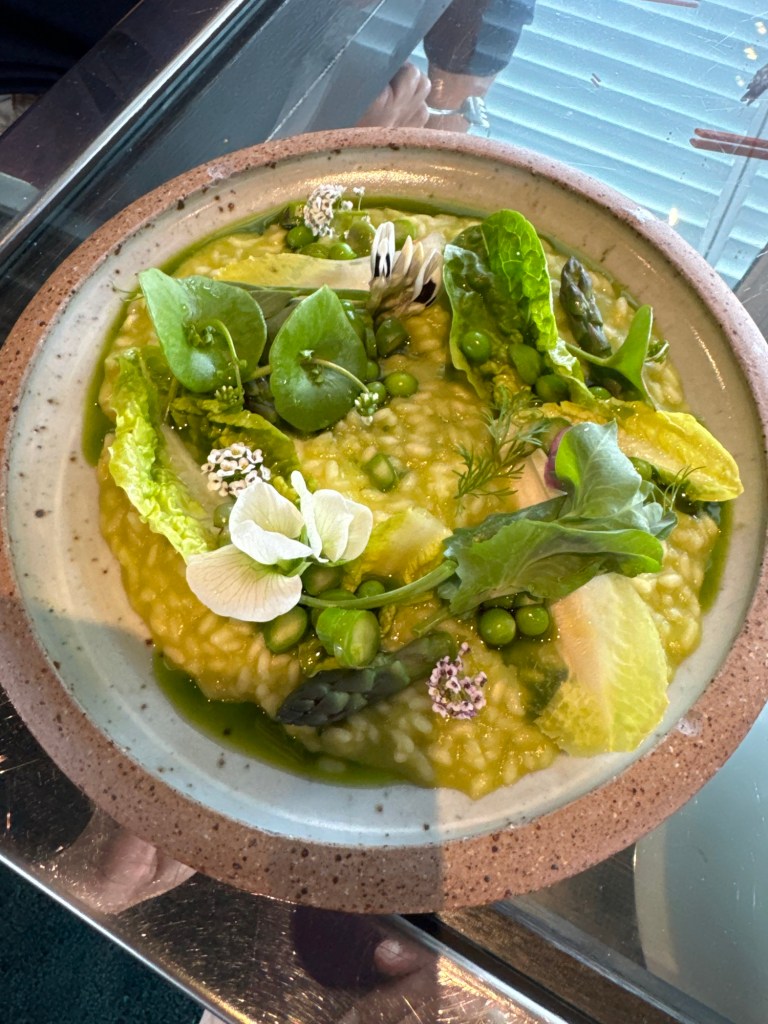
Back inside the dining room, we found the place packed. Turns out to be a long holiday weekend for locals and we got the last table in the house. Mark enjoyed a bunch of very fresh oysters, while I ate a raw scallop. Excellent start. Next course was venison for Mark and a nice flaky fish for me. We even had room for dessert. Then early to bed.

Sunday, October 6, 2024

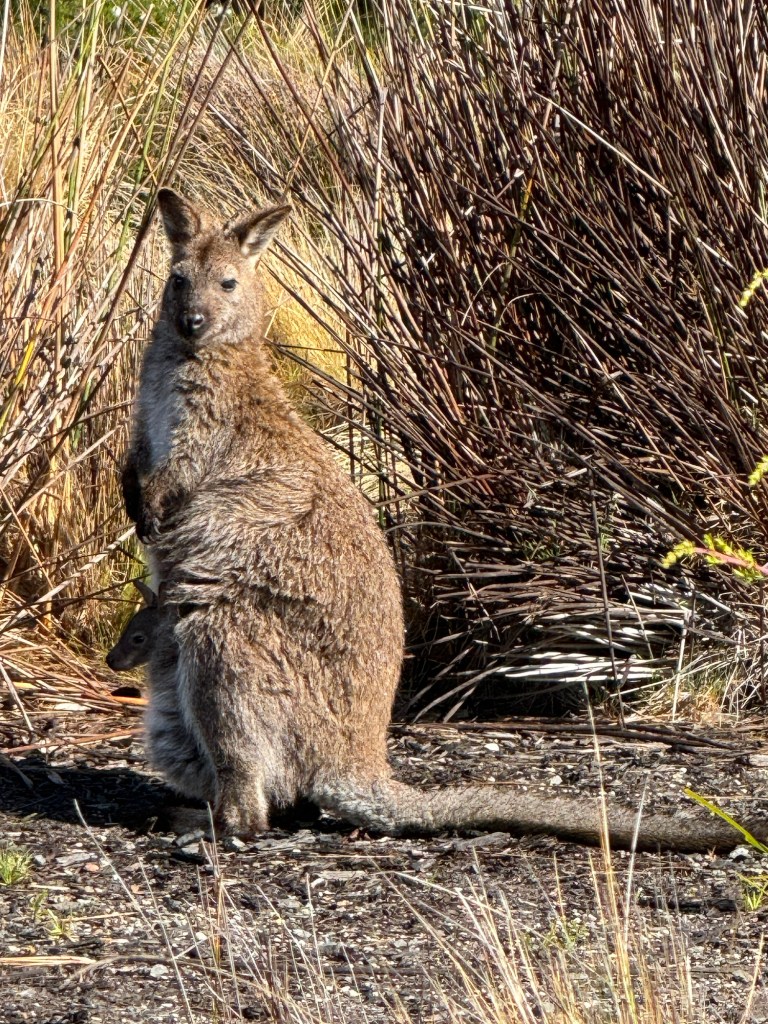
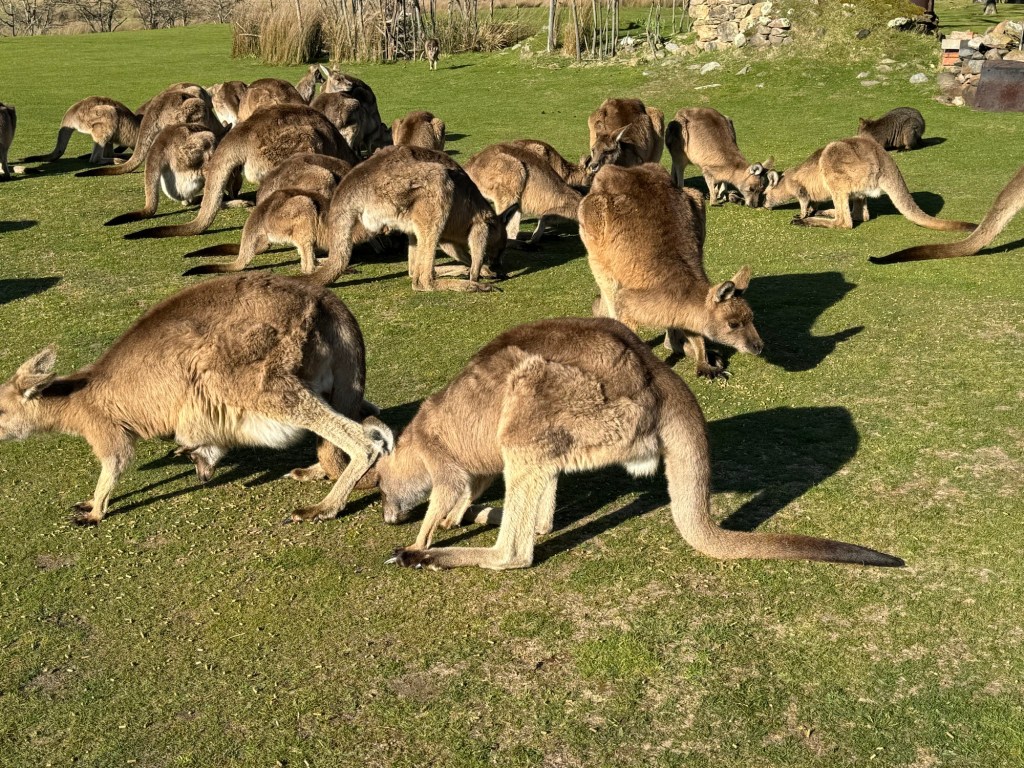
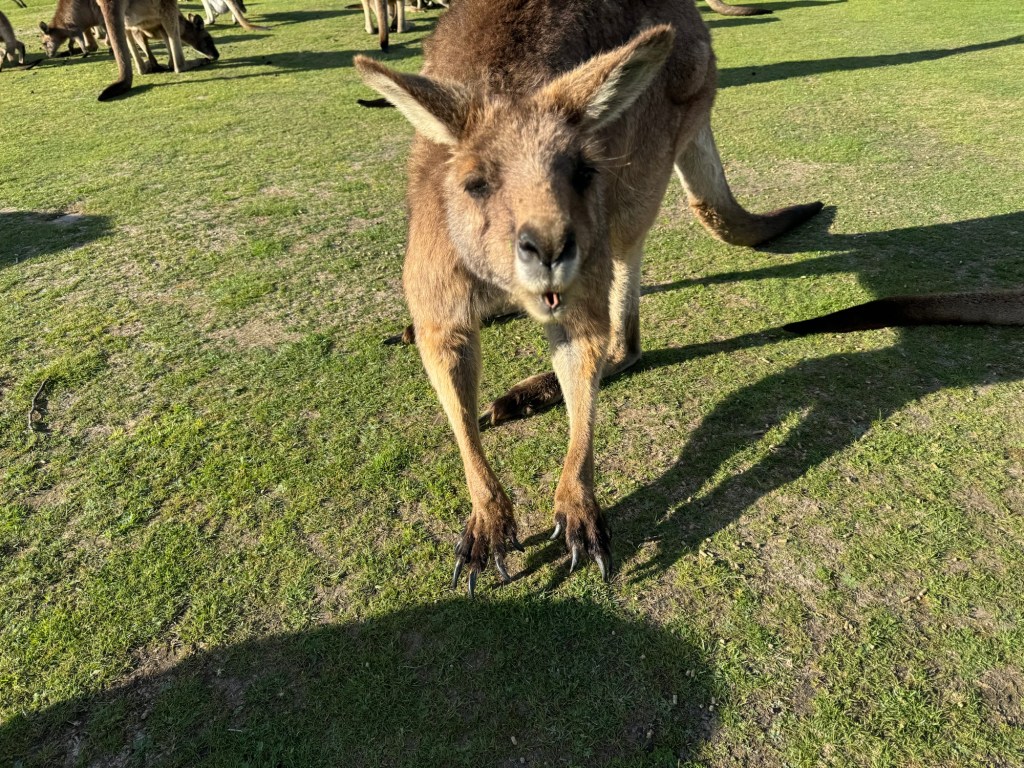
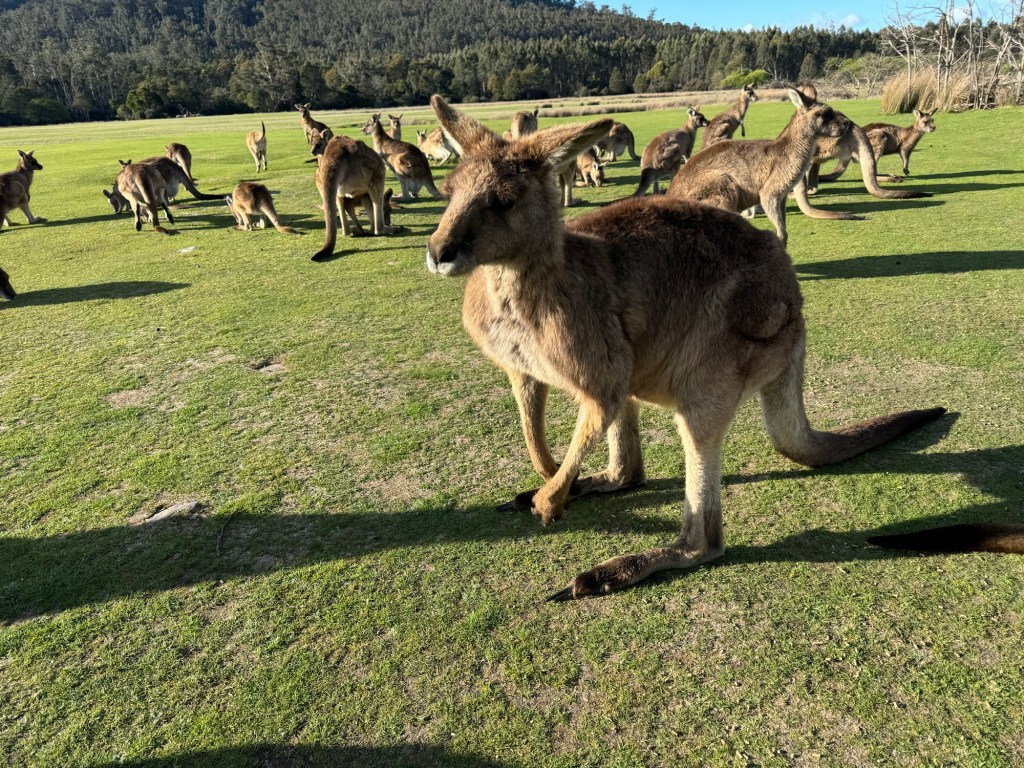
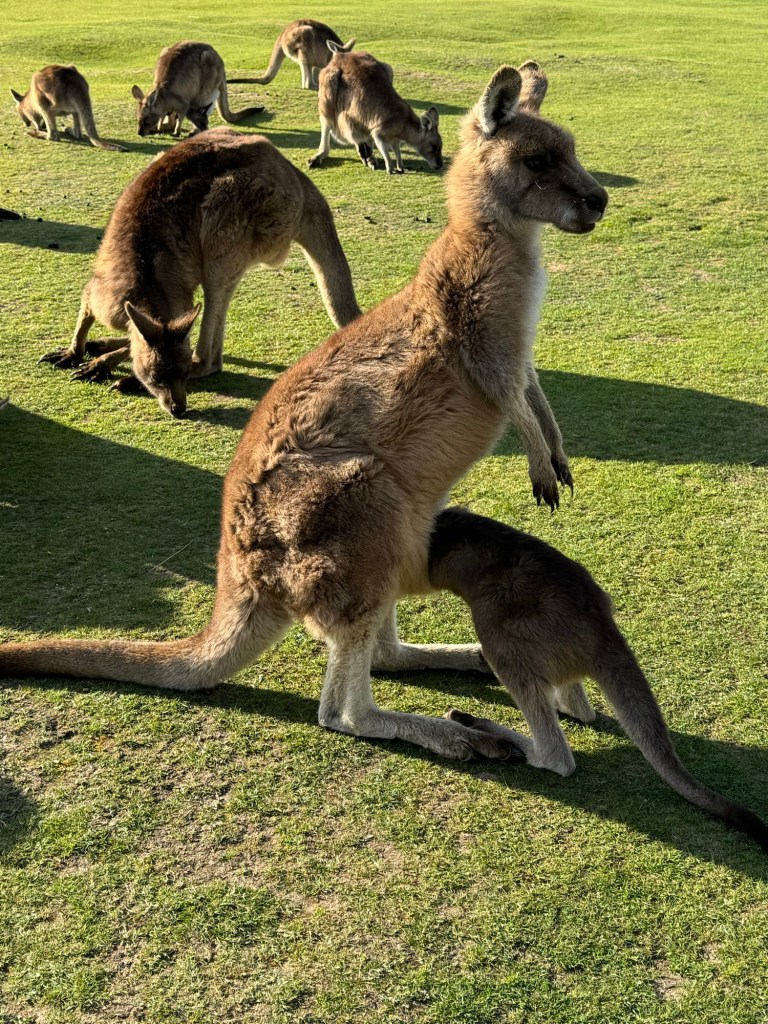
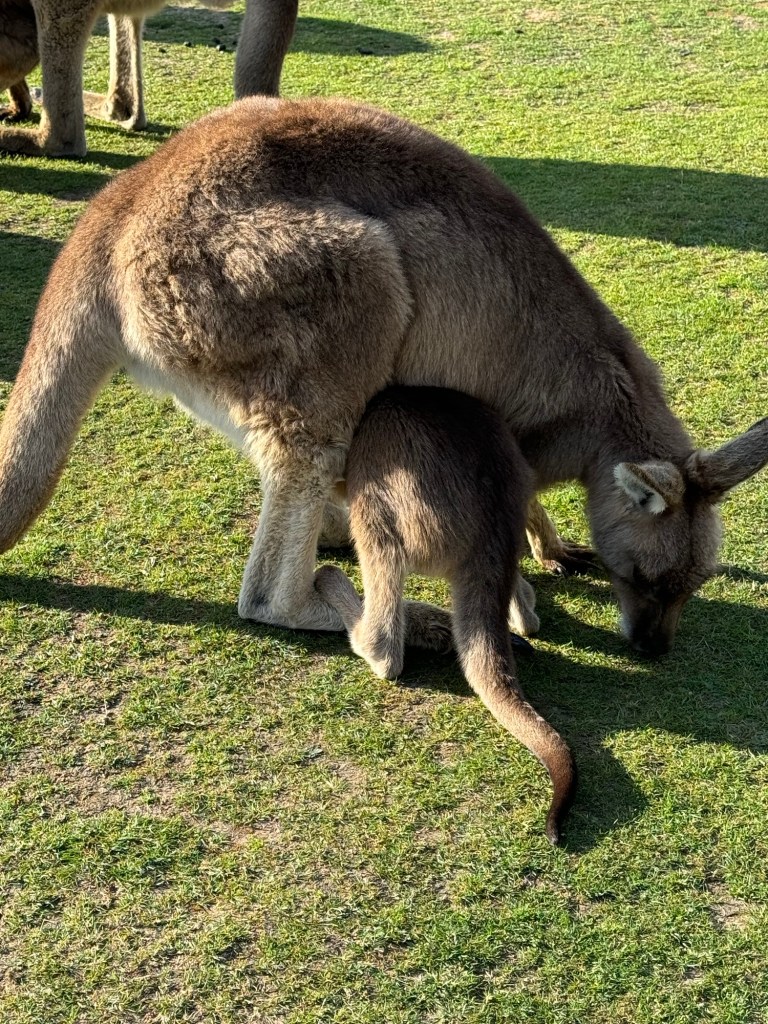
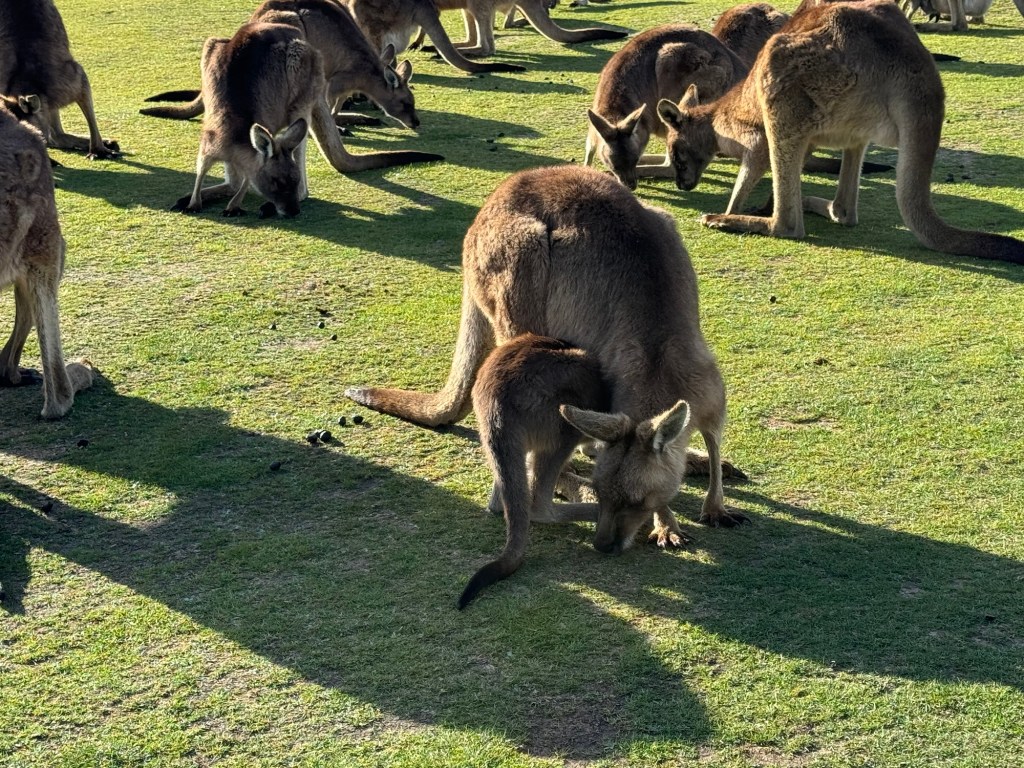
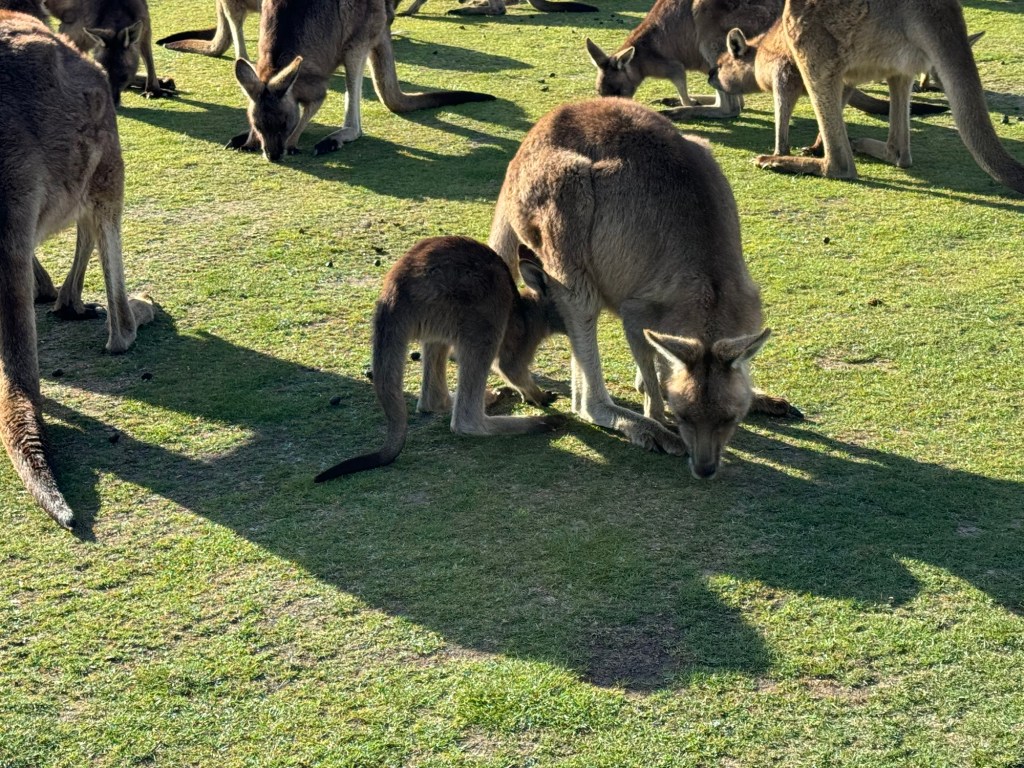
Coffee and Fresh OJ arrived at 7am, so we enjoyed the early morning in our room. There was almost no one in the dining room for breakfast. On the way we encountered this Kangaroo and her Joey.

We had no plans until 2pm, so we enjoyed our private space.

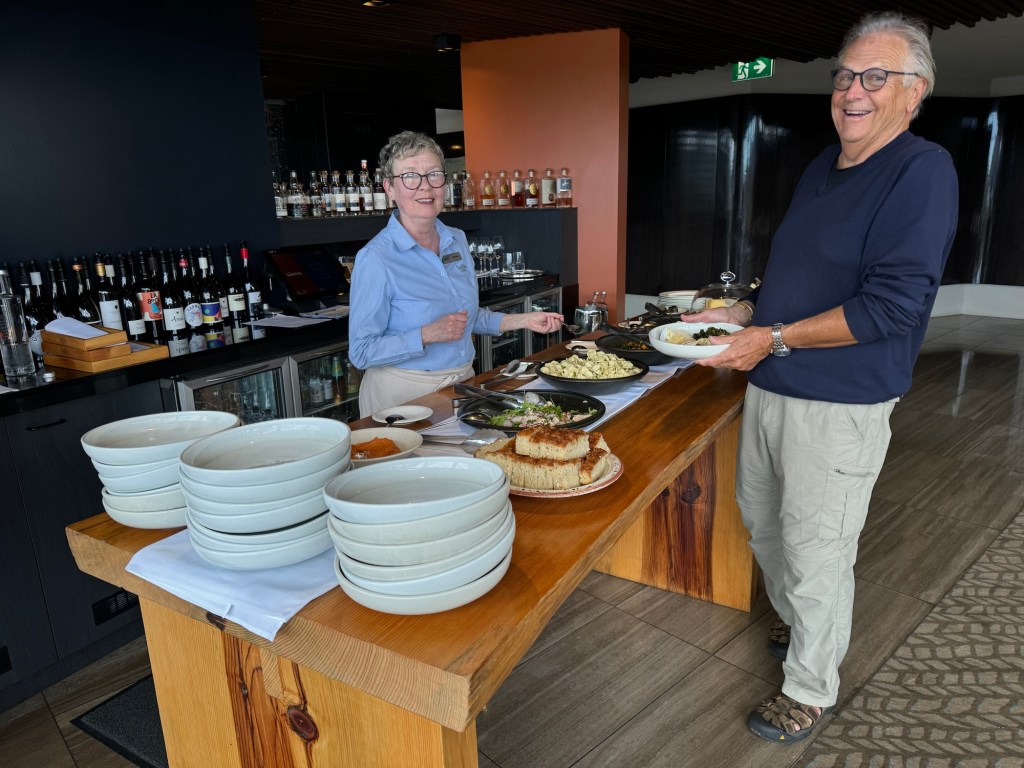
Lunch was a casual buffet in the lounge.

Then we were off on a helicopter ride to see more animals. The copter is a brand new airbus helicopter with only 20 hours of flight time. It holds 7 people and we both got to sit in the front with the pilot Ben.

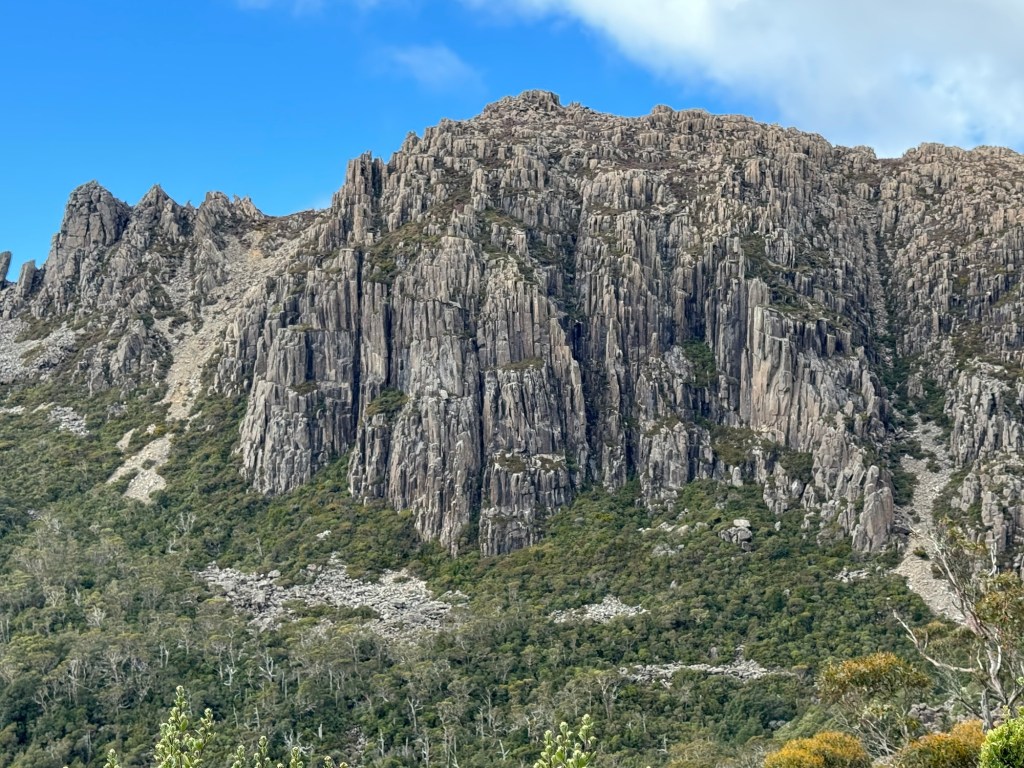
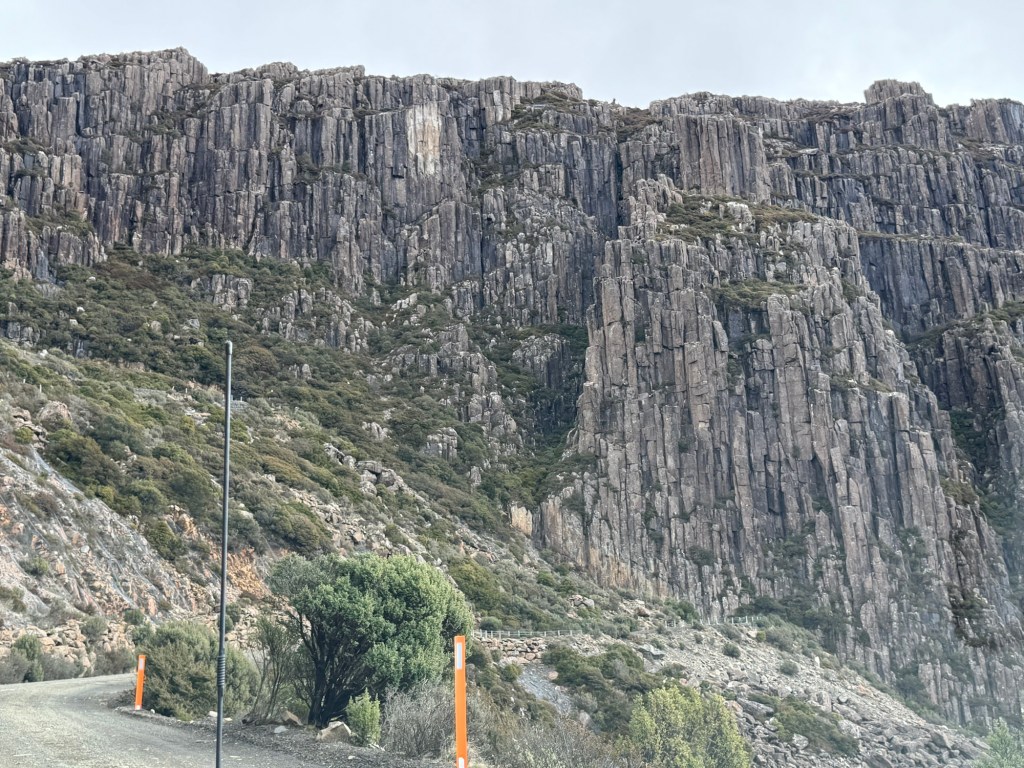
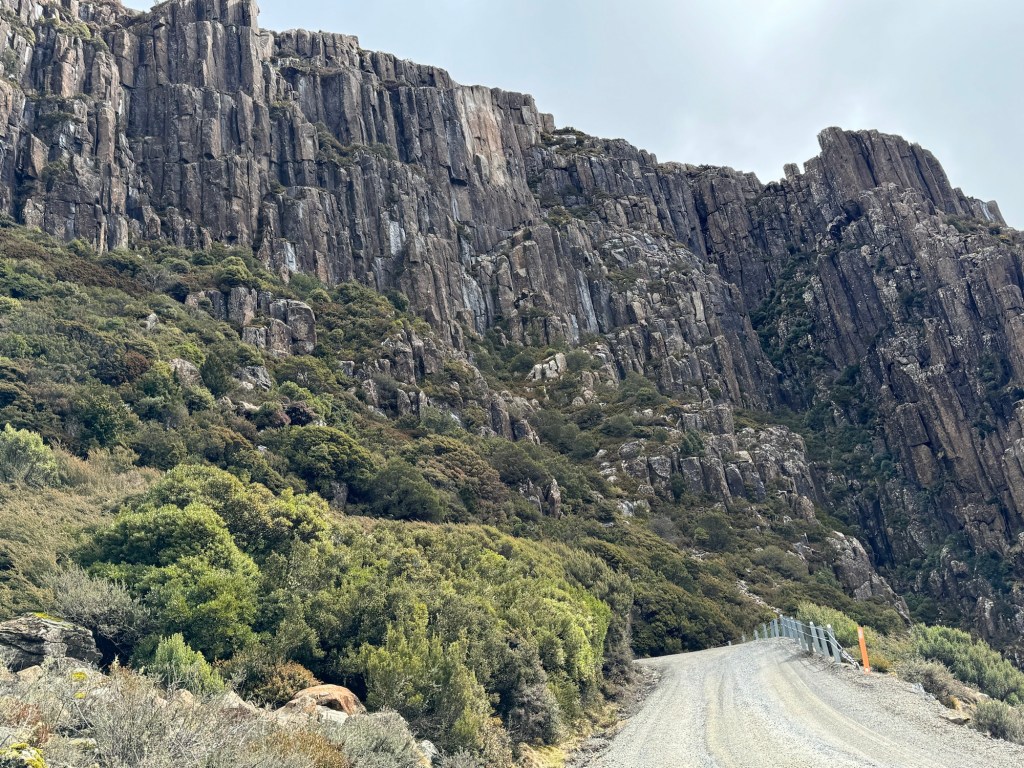
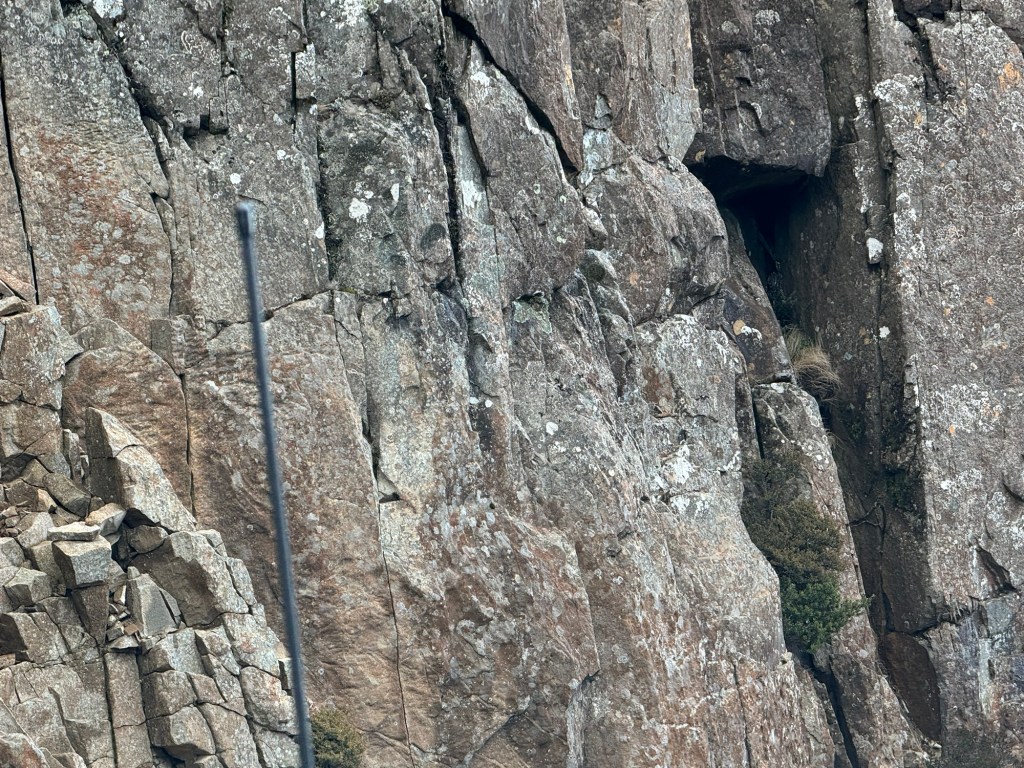
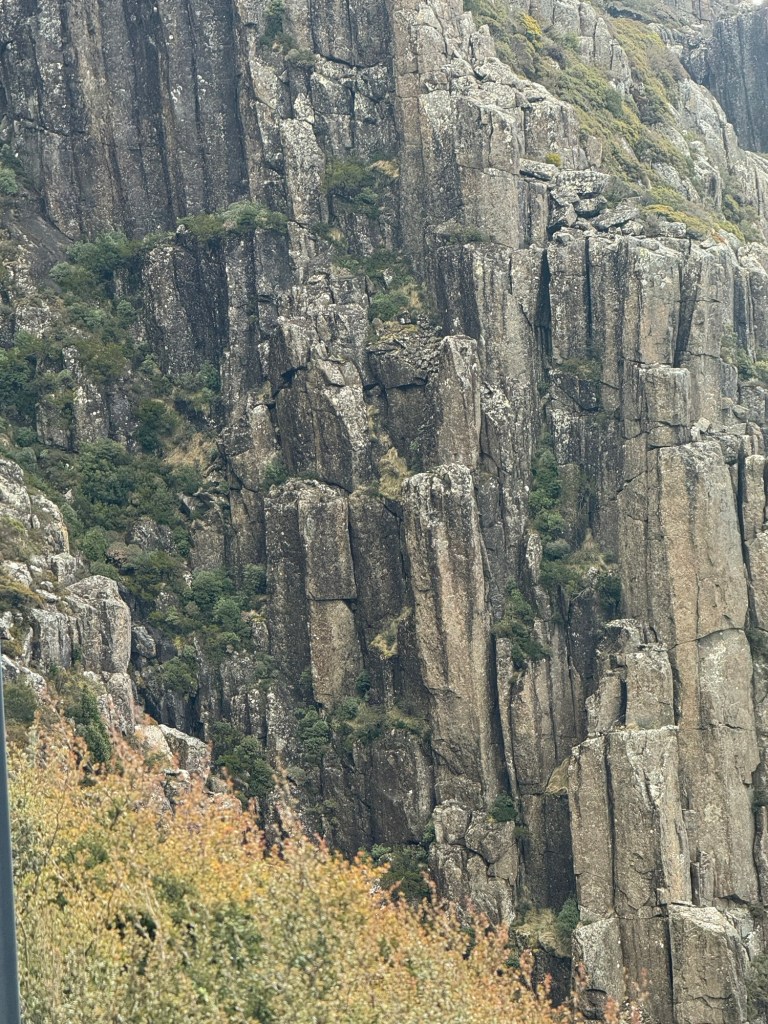
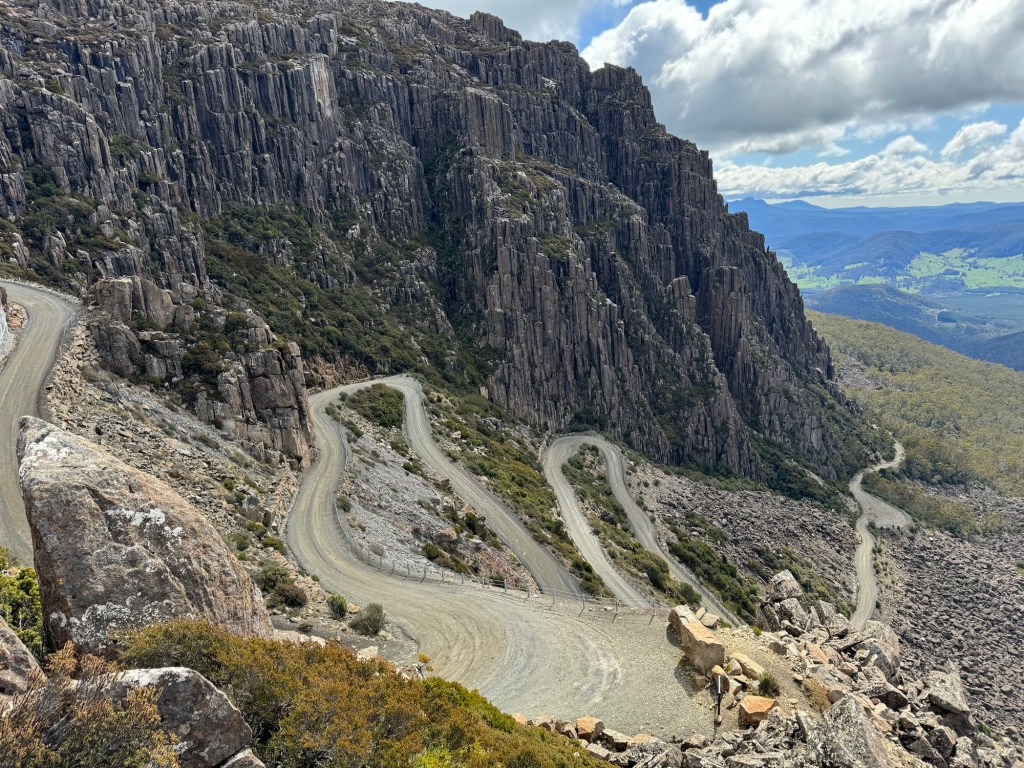
We flew about 45 minutes over densely wooded hills and lush green valleys to a prearranged open place where our guide, Bushy, met us. Off the copter went and we joined Bushy in his vehicle. He drove us to Ben Lomond, the second highest mountain in Tazmania and the peak of a Jurassic Dolomite mountain. We saw some very interesting rock formations that were similar to the Devil’s Post Pile near Mammoth Lakes.

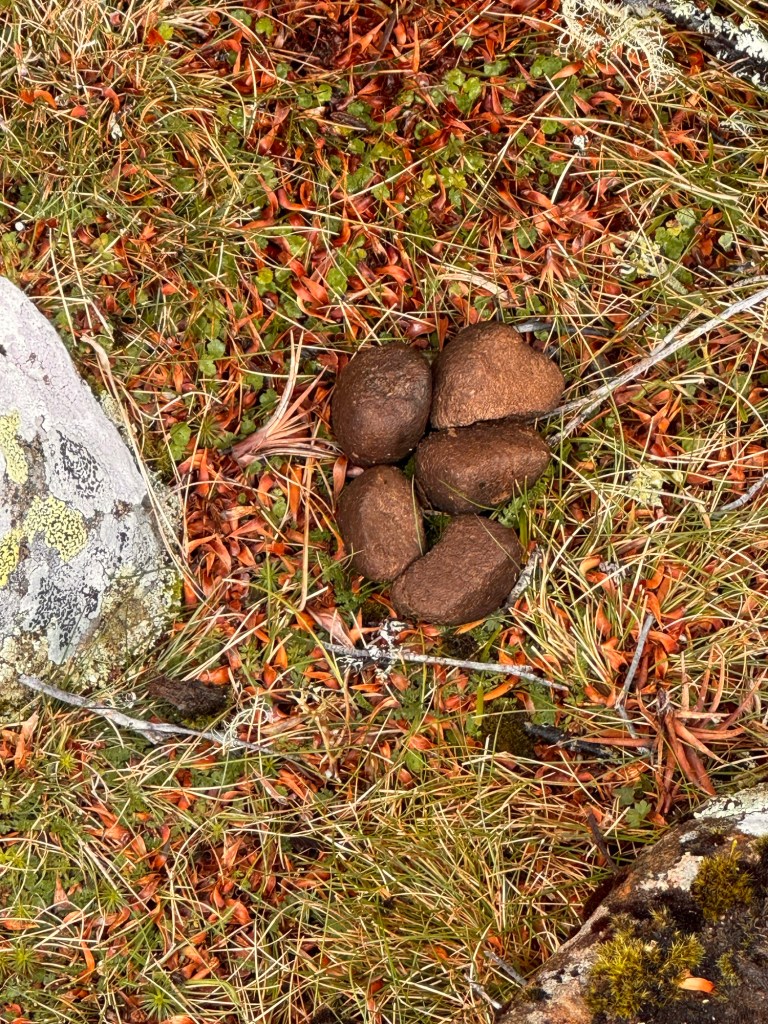
While there we saw the back end of a Wombat and its cube shaped poop.

We saw another echidna and I got to pet both its soft and spiny fur.

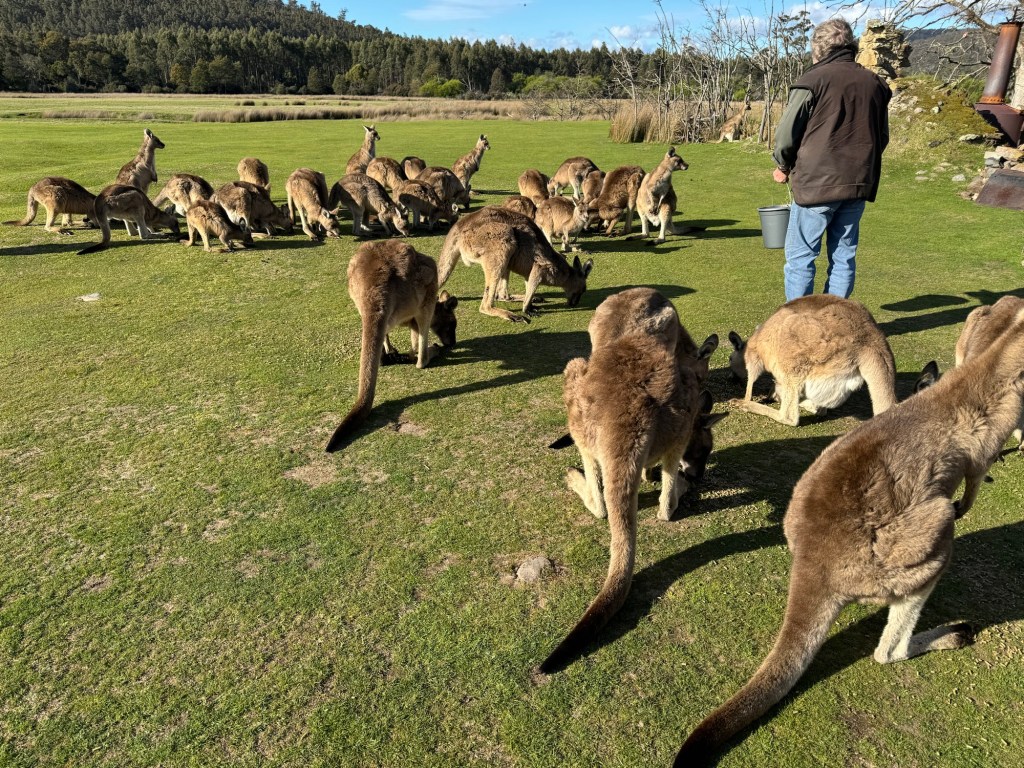
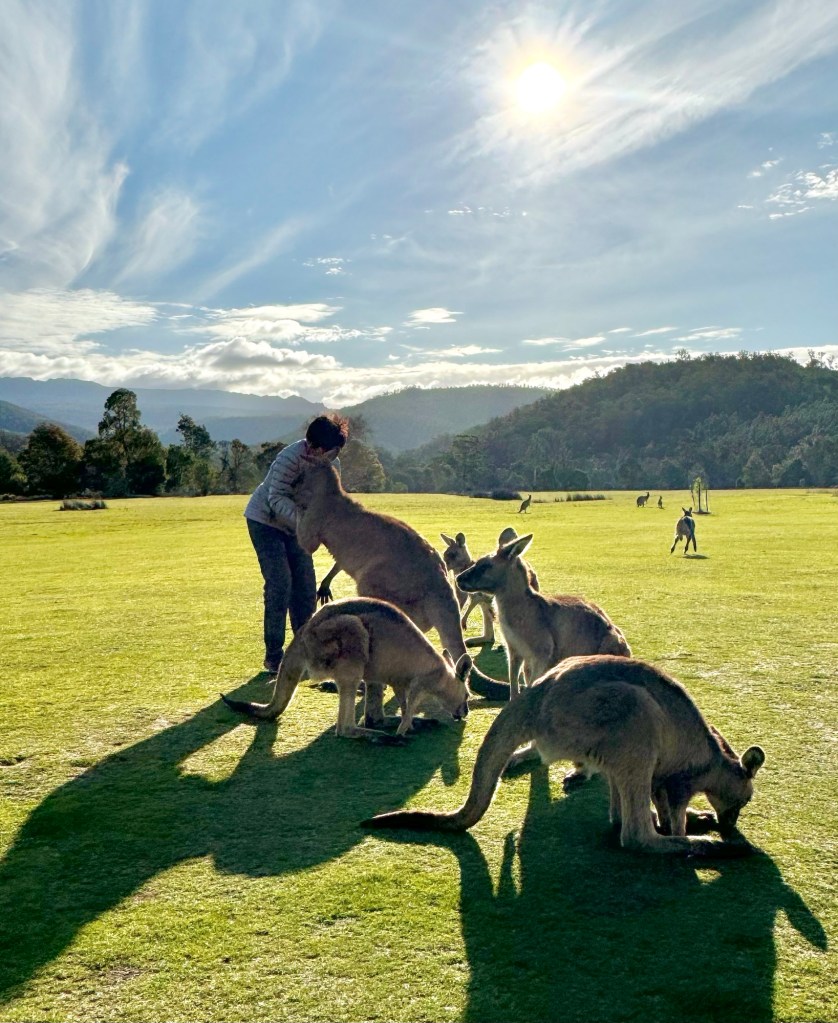
From the mountain we drove to Bushy’s bush camp. (On the map it is about where the “n” is in the town called Launceston.) He did not tell us any details about the camp, wanting us to be surprised, and surprised we were. We no sooner drove into the property when we were surrounded by a “Mob” of Kangaroo, and three pademelon, which we had not seen before. We got a kick out of his very rustic cabin, outhouse, wood stove and fire pit. Bushy served us a drinks and then fed the animals a large quantity of pellets.

Bushy feeding the mob

The name Pademelon means “small kangaroo from the forest’. They are small marsupials with dark brown to grey brown fur. They are killed for their meat and soft fur and are now endangered due to loss of habitat. They have a life span of 4-9 years.

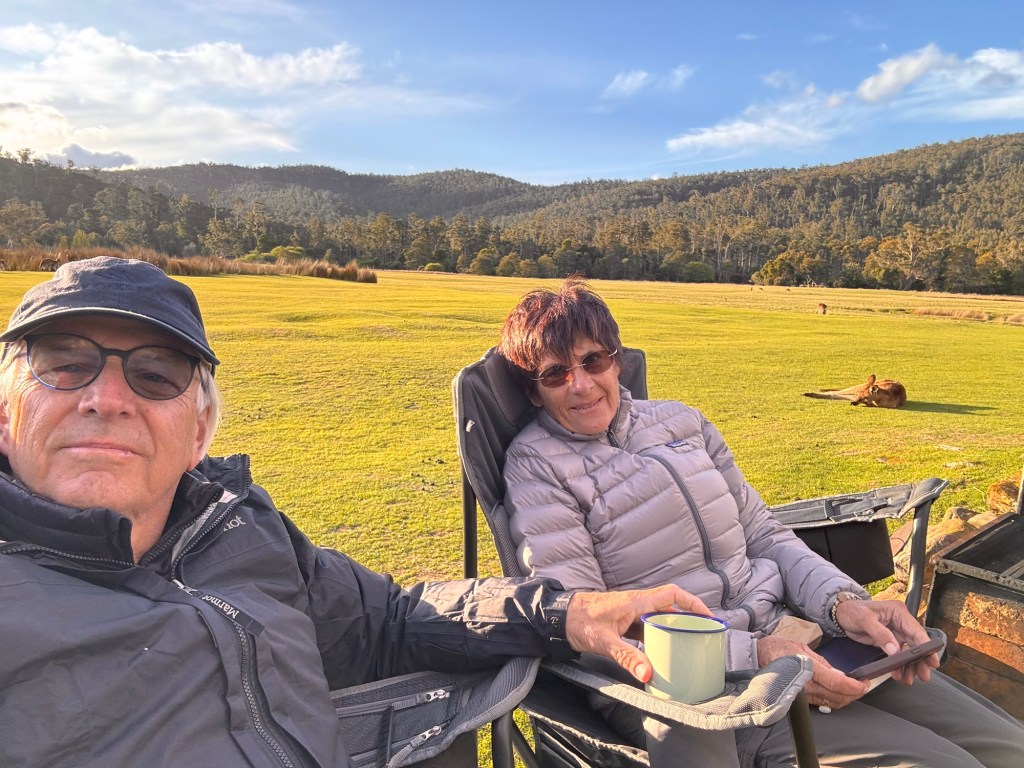
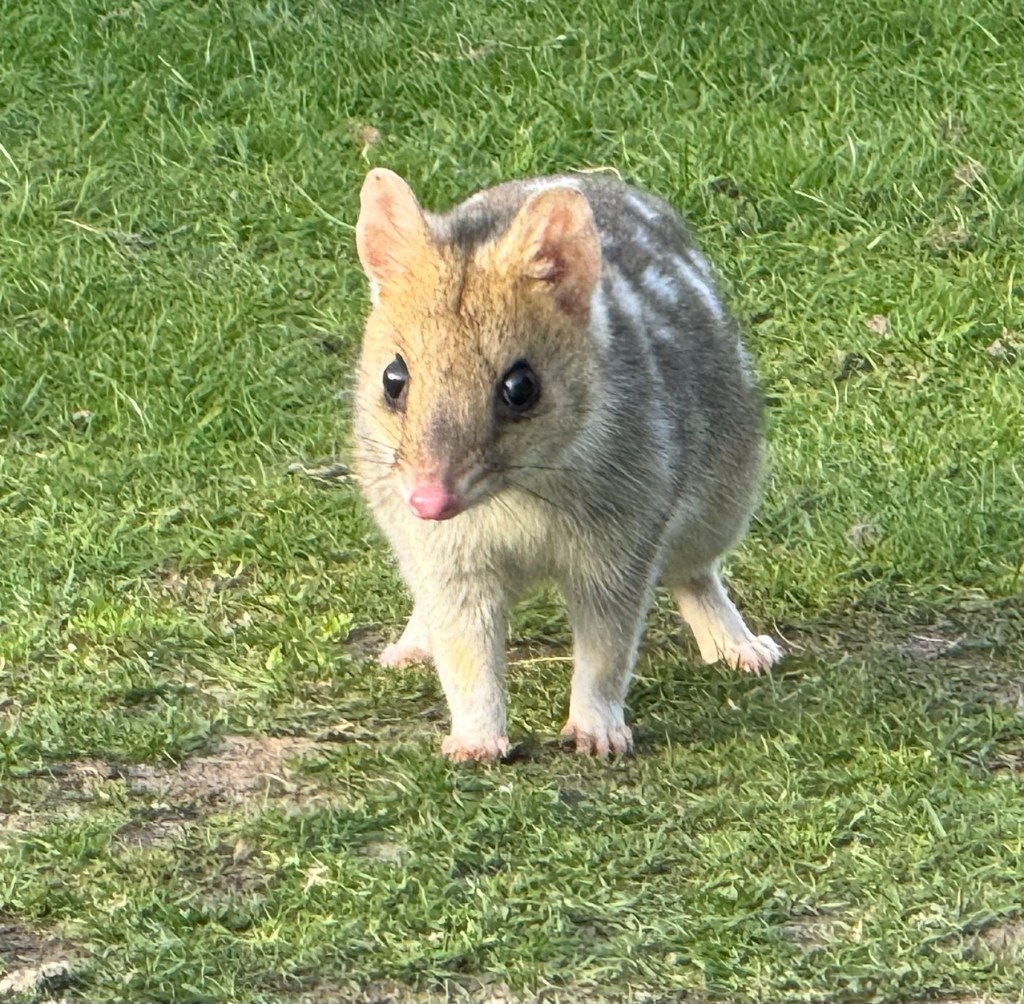
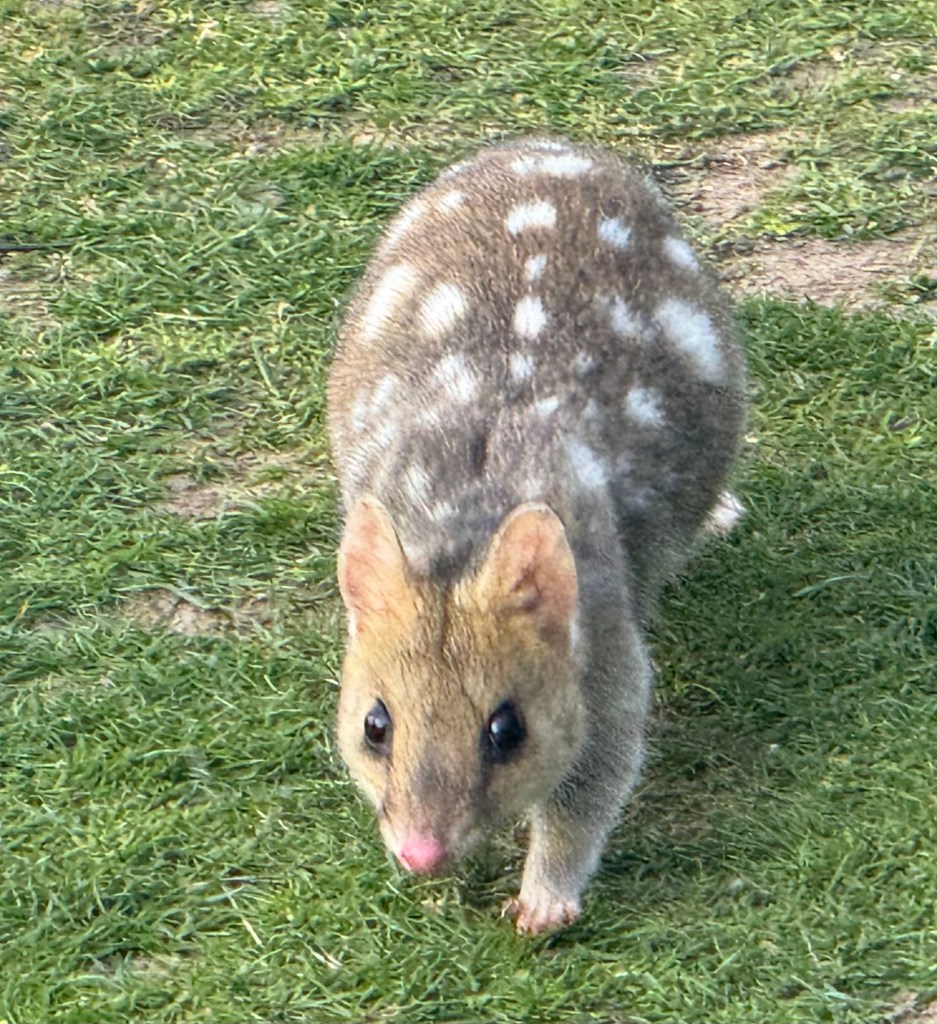
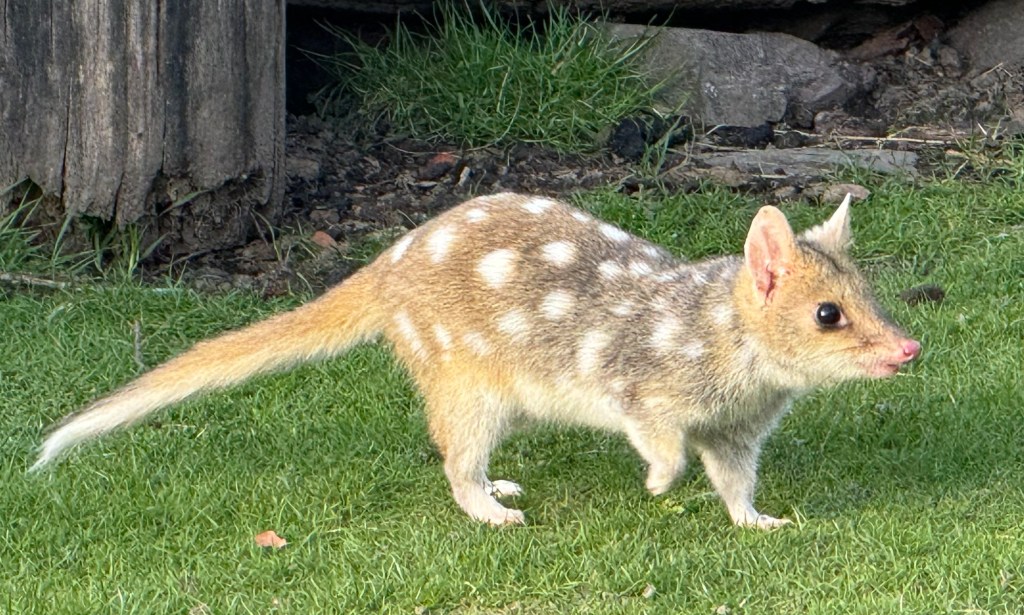
Finally, the elusive spot tailed Quoll made its appearance. It was high on my list of animals to see and I was glad to see one, but here we saw 4. They are carnivorous marsupials, primarily nocturnal and spend most of their days in a den. They are highly mobile and travel several miles each night. They have litters of 6 every year, live 4-5 years in the wild and can get to 1 meter long.

Spot tailed Quall

After a tasty meal of fresh salmon and salad, that Bushy prepared himself, he drove us back to the Saffire lodge. It was a 2.5 hour drive and we were ready for bed by the time he dropped us off at 10pm.

Monday, October 7, 2024

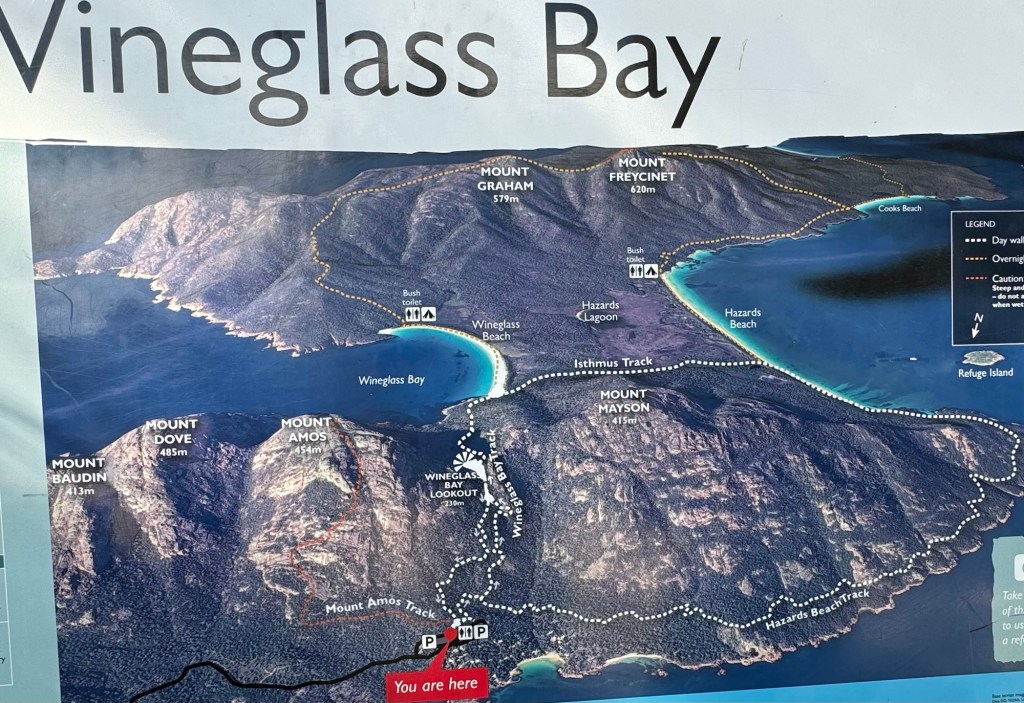
This morning we had a 9:30 hike scheduled to see the Wineglass Bay. Our guide, Chris, drove us to the “You are here” sign about 5 miles from our hotel, and we hiked 1.7 miles in a loop up and back. It was a pleasant walk with lots of people on the trail. Chris was very entertaining and introduced us to plants and trees we had not known.

The hike to the Wineglass Bay lookout

It rained pretty heavily on us during the end of our hike and we were all cold. Back at the lodge, we warmed up and had lunch.

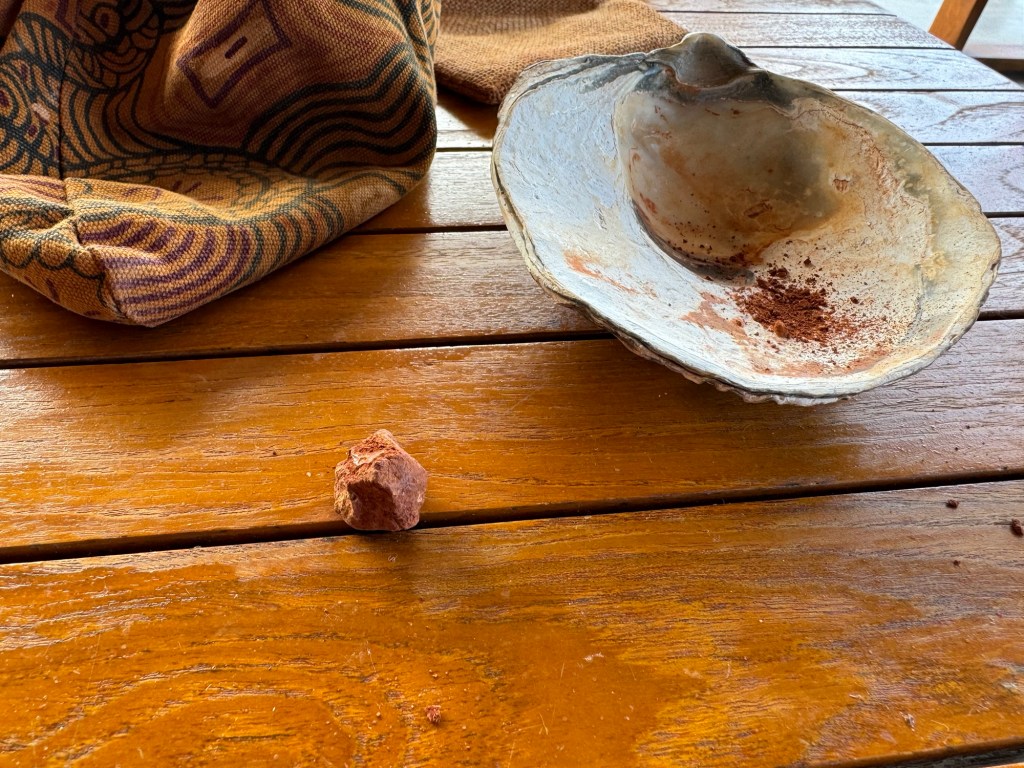
We had one last activity planned and Mark decided to pass. At 2pm I met Mick Quilliam, a full aboriginal, who shared some of his culture with me. He belongs to the tribe called Minapelaver, which means “Lagoon people”. They arrived in Tasmania 42,000 years ago. Today there are 25,000 indigenous people in 9 different tribes on Tasmania. The tribes gather together about 3 times a year and live by their own tribal rules. Mick showed me how to make tough string from bull rushes; how to use seal fat to make soft skins and pelts; how to mix egg white and ocher and use it for painting. We had a nice conversation for about an hour and a half.

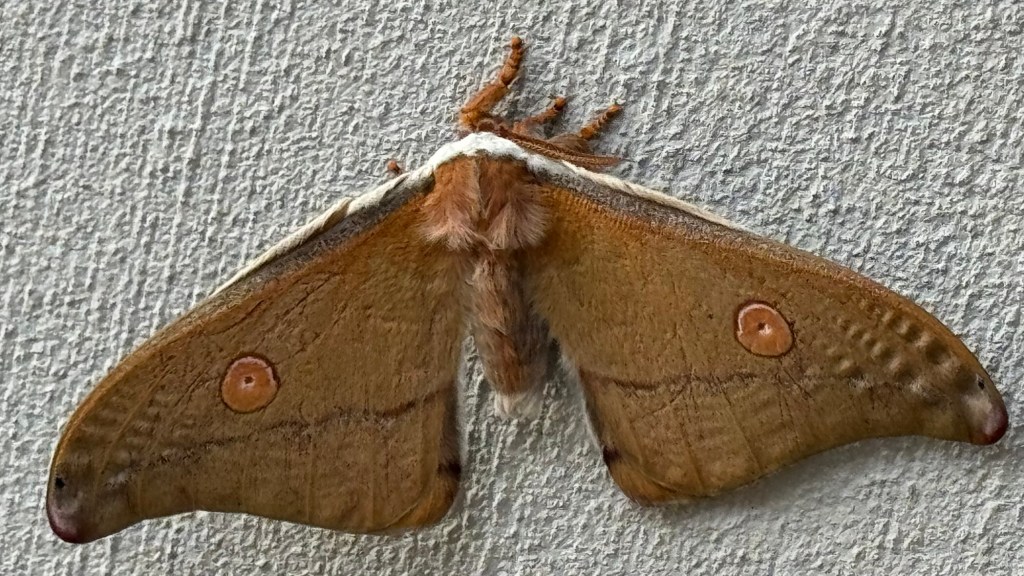
On the wall next to our suite was a very pretty moth. We learned it was an Emperor Gum Moth. It looks like it is covered in fur like I was with Mick. For dinner Mark had more oysters and short ribs. I had wallaby back strap and spaghetti with olives. A meal we both enjoyed.

Tuesday, October 8, 2024

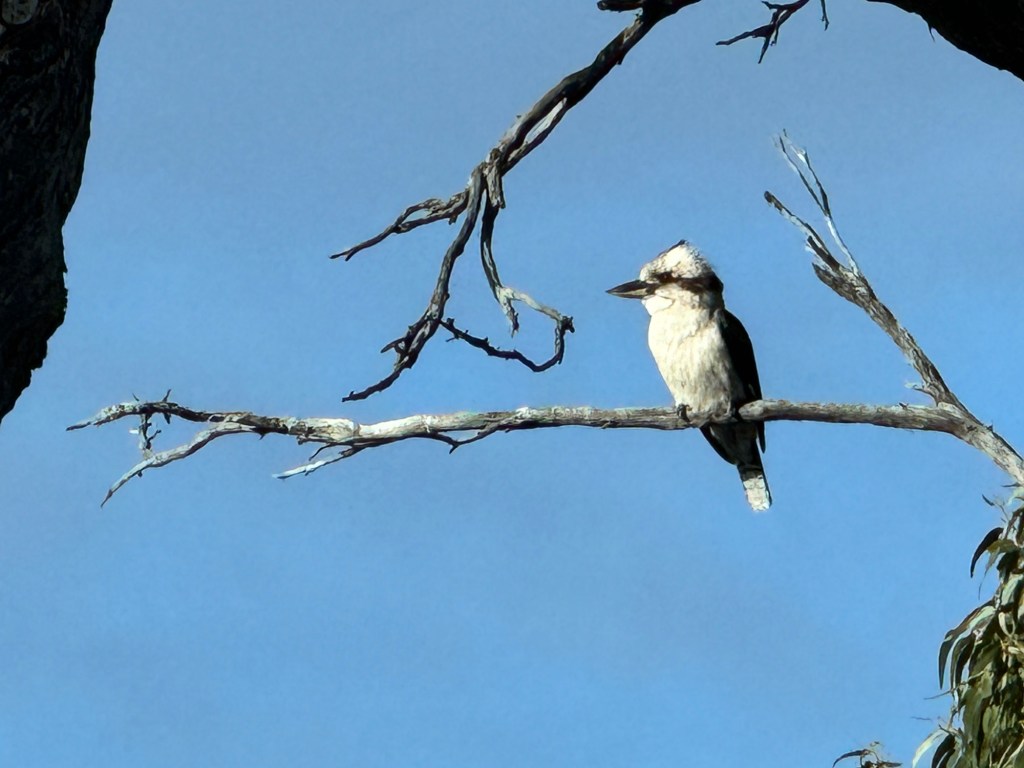
During breakfast I captured a kookaburra on a nearby tree.

A kookaburra, is a very large kingfisher
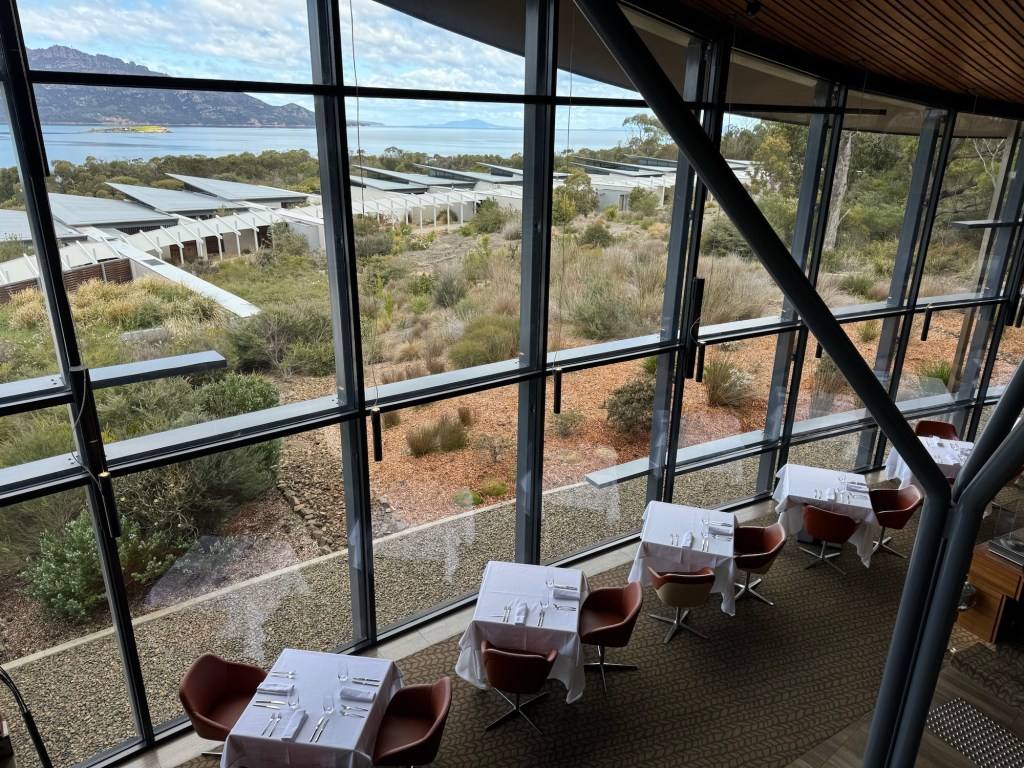
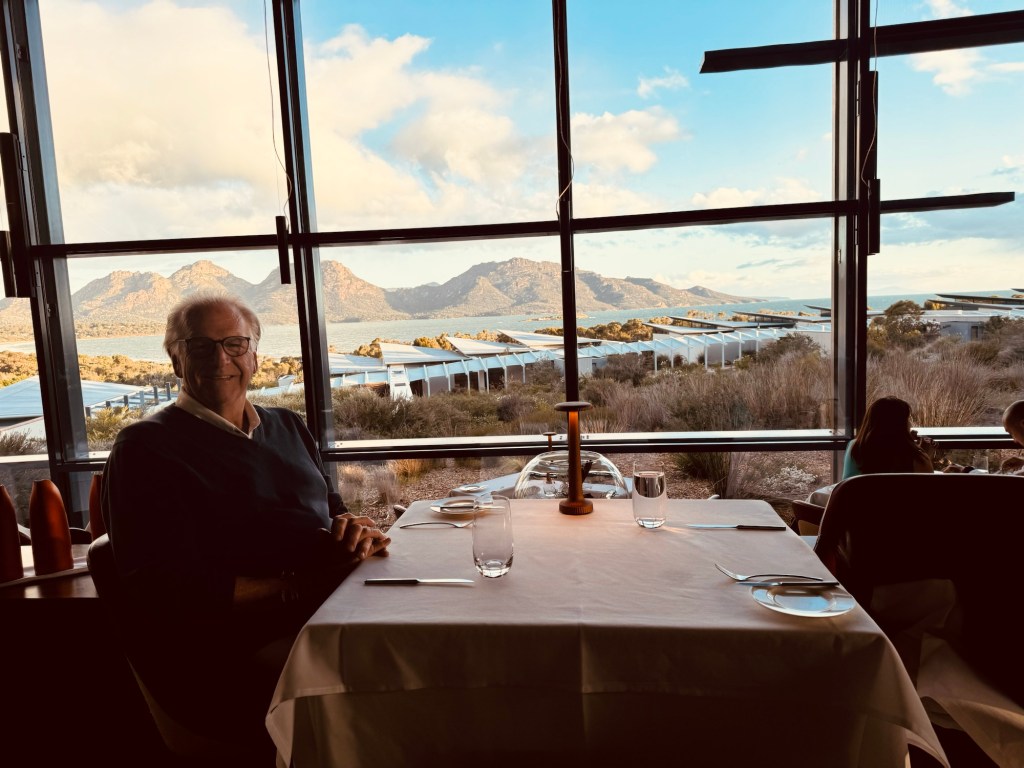
The Hazard Mountains from the Saffire dining room as we wait for breakfast

We said good bye to the Saffire staff and began our 3 hour drive to the Hobart airport. Our transport driver, Gil, was quite chatty and gave me lots of information.

We talked about convicts. The first ones arrived in 1804 along with free settlers and military. The last of them to arrive in Tasmania, came in the 1870s. Their sentences were all 7 years, during which time they built roads and bridges, worked on farms, built structures, etc. When their term was over, they usually stayed in the country and continued to work for hire.

Gil talked about products produced in Tasmania. Vegetables are prolific in the North West of the state, which we did not get to see. In the dryer parts of the country we saw sheep, cattle, dairy cows, berries, cherries, and many vineyards. Seafood and oysters are also big crops.

The most valuable products are minerals, especially zinc.

The average age of the population is 43. There are not enough workers and more of the oldest and least educated people. Tasmania, like other parts of the world, is shrinking.

We arrived at the Hobart Airport at noon, said good bye to Gil, and found the Saffire lounge. No food, but snacks and a comfortable resting place. We had about half an hour before boarding a Virgin Australian aircraft for a flight to Melbourne, followed by another flight to Adelaide, where we will spend the night. We are slightly more than half way through our Australian adventure.

Melbourne

Tuesday, October 1, 2024

We have landed at the Park Hyatt Hotel in downtown Melbourne. The sky is clear but cold. The temp is 50 but feels colder. We have moved South from summer to spring but it feels like winter.

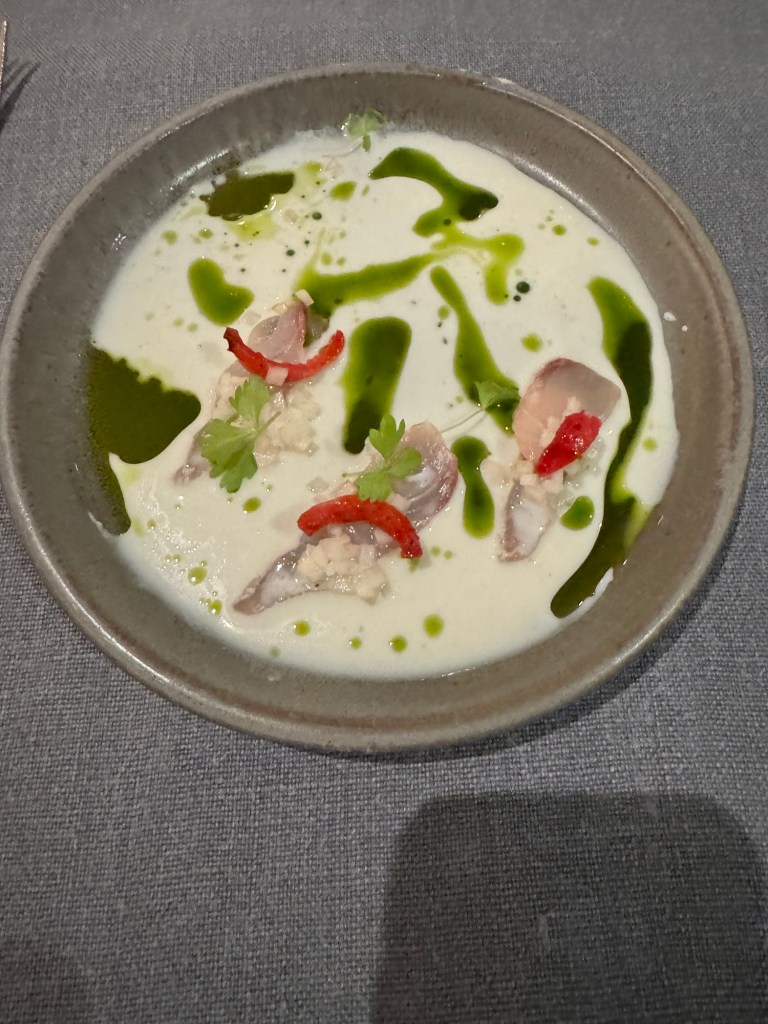
Last night we had dinner at a place called Nomad. It was very full of young, upscale people eating unusual food. We had dishes of bone marrow and flatbread, fried green olives, kingfish crudo, lamb neck pie, and Jerusalem artichoke salad. All very tasty. Apparently Melbourne is famous for its food and restaurants abound. Martina booked us into three places and now I can see why. There would be no getting into popular eateries without a reservation.

Melbourne is the coastal capital of the southeastern Australian state of Victoria. The city was founded in 1835 and the population is 6.7 million. Currently the country population is 27M and 90% of the people live near the coast. Melbourne was the capital of the country from 1901 to 1913 when the capital shifted to Canberra. During the Victoria Gold Rush of 1851, Melbourne became the richest and largest city in the world. In 1956 it hosted the Olympics and invited 150 Italian chefs to the city to bring good coffee and food to stimulate activity. It worked. It is now a coffee and food Mecca and today 60% of the city’s residents were born outside the country.

Daniel Platt, the owner of the travel agency, Localing, and our guide for the day, drove us around many areas in the city as well as taking us on a walking tour. We learned that the downtown is planted with plane trees for beauty and shade.

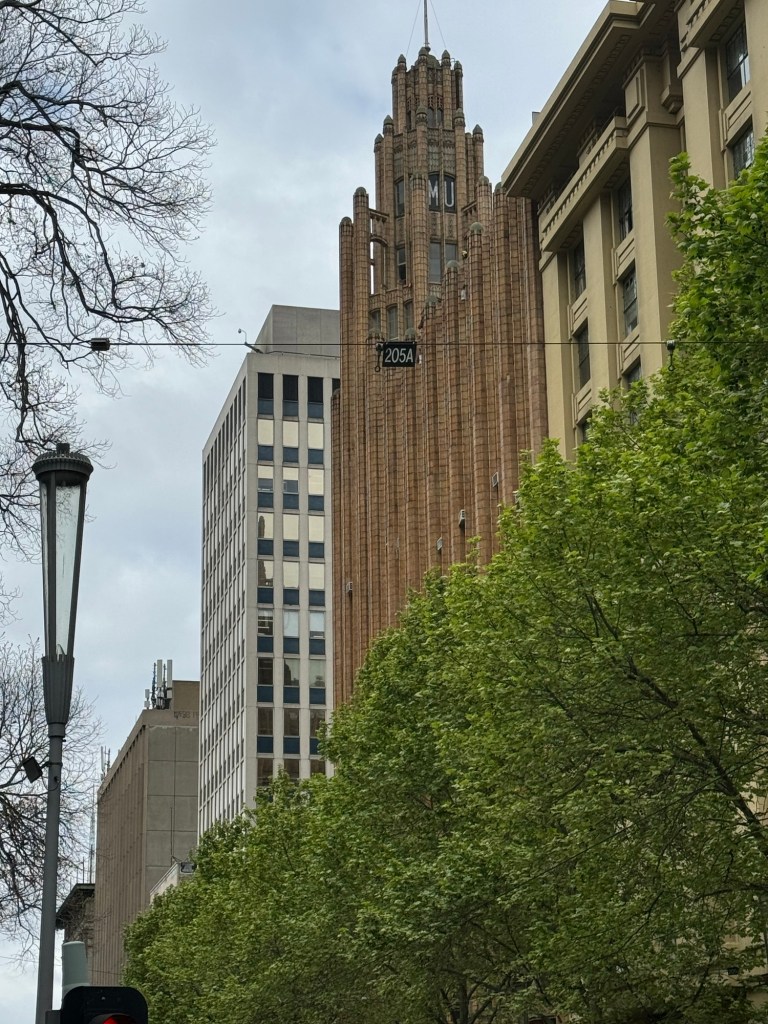
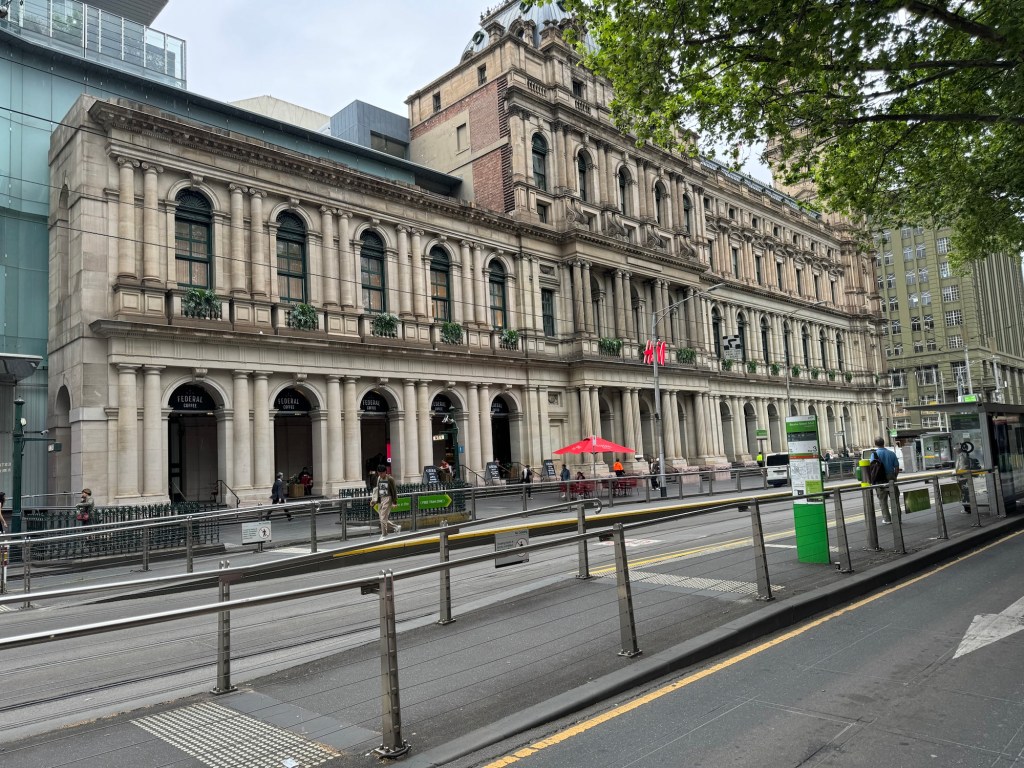
He pointed out the Manchester Unity Building that is modeled after the Tribune Building in Chicago.

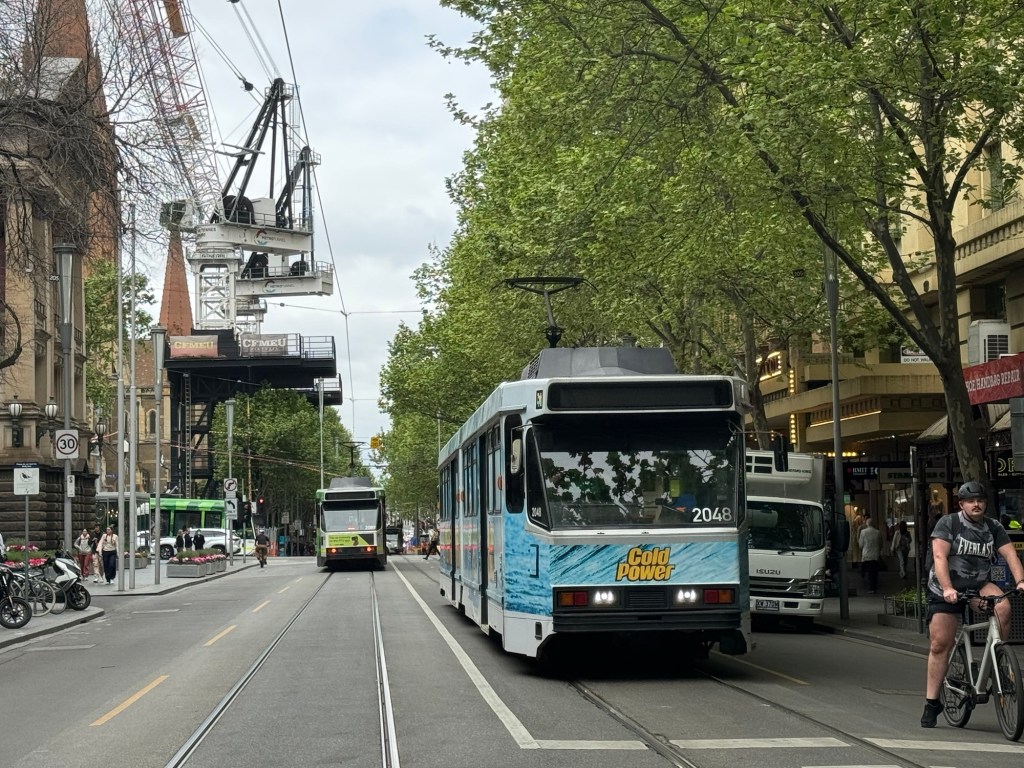
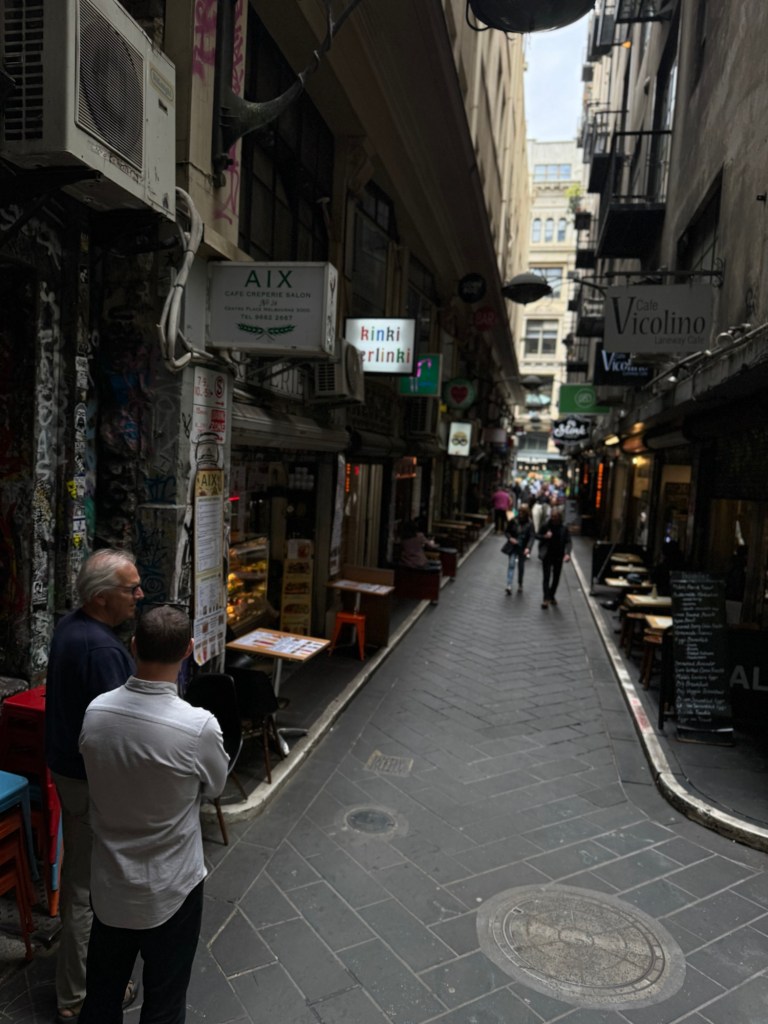
The boulevards are 99 feet wide and allow for the free tram system to function well. In between boulevards are 66ft lanes and 33ft allies that provide for smaller more intimate businesses and restaurants to flourish. Having three sizes of streets works well and is a pleasure for everyone.

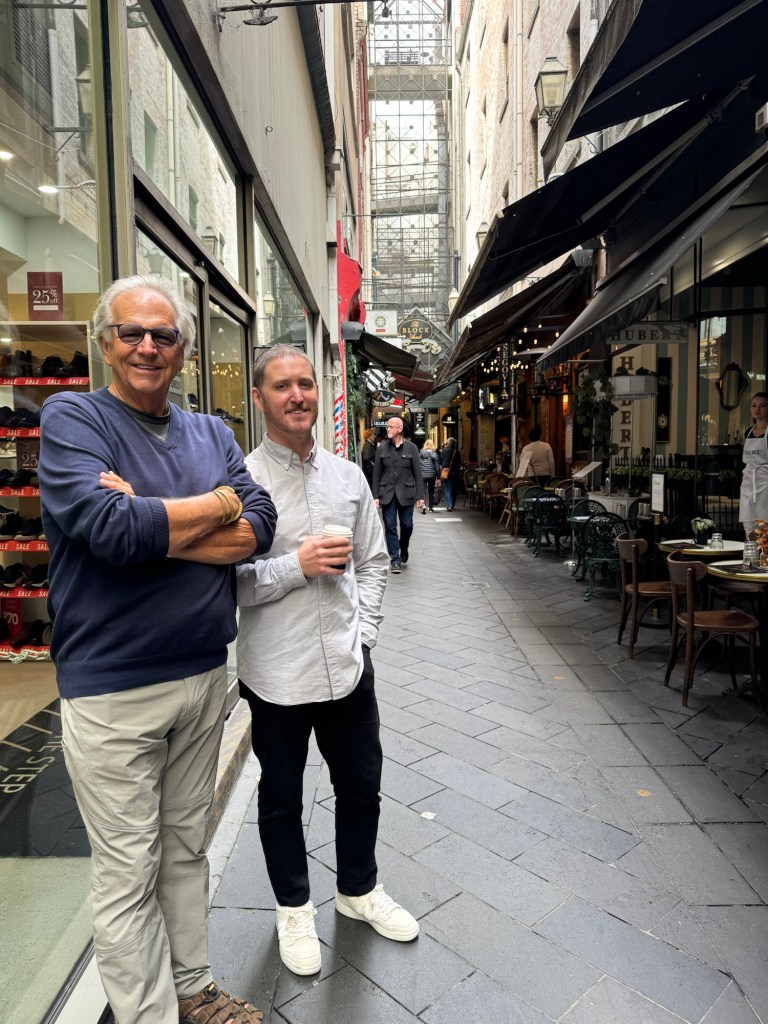
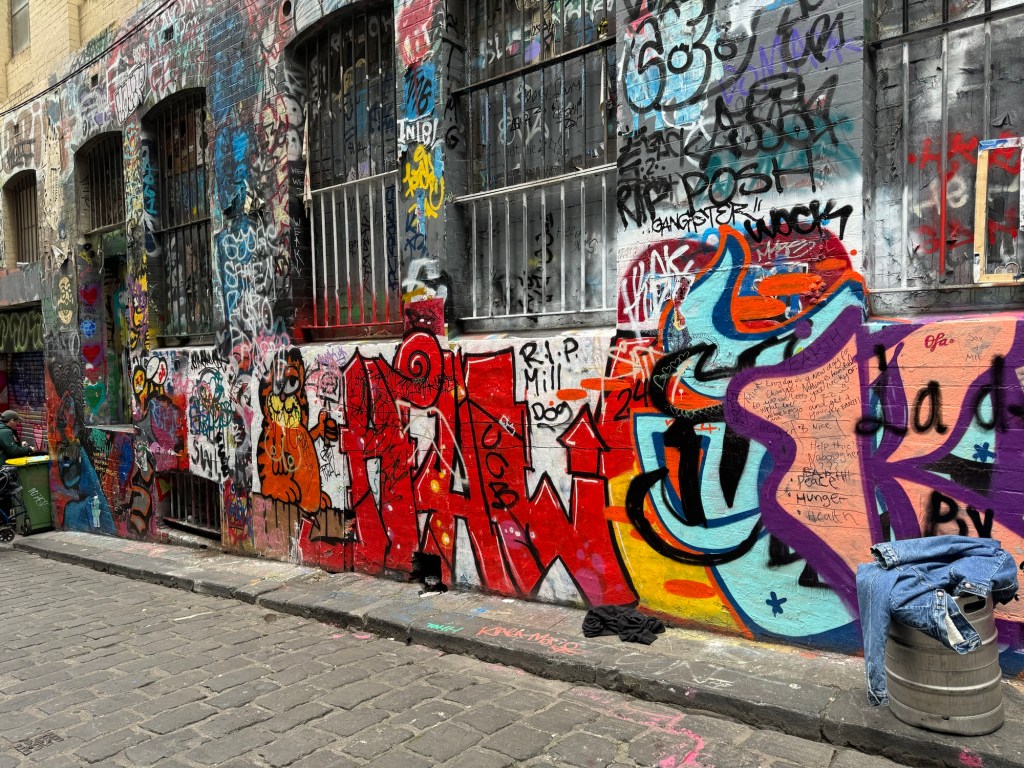
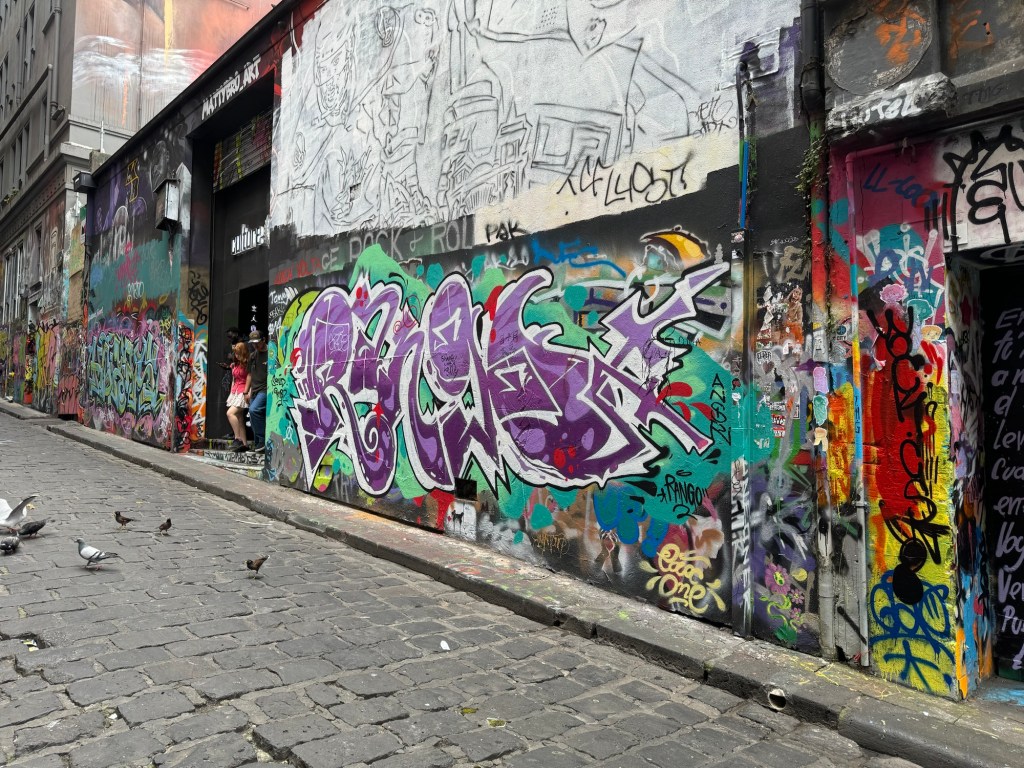
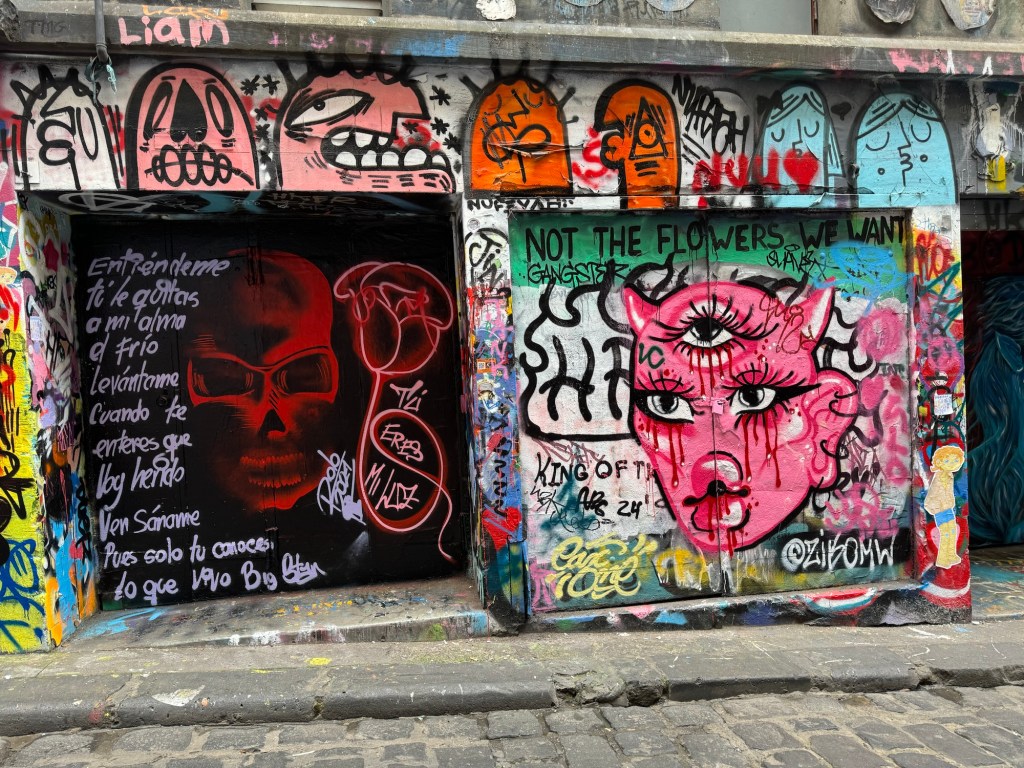
More than 60% of all businesses in the state of Victoria have only 1-6 employees. Together they create a robust economy. One alley in particular, was full of permitted graphite art.

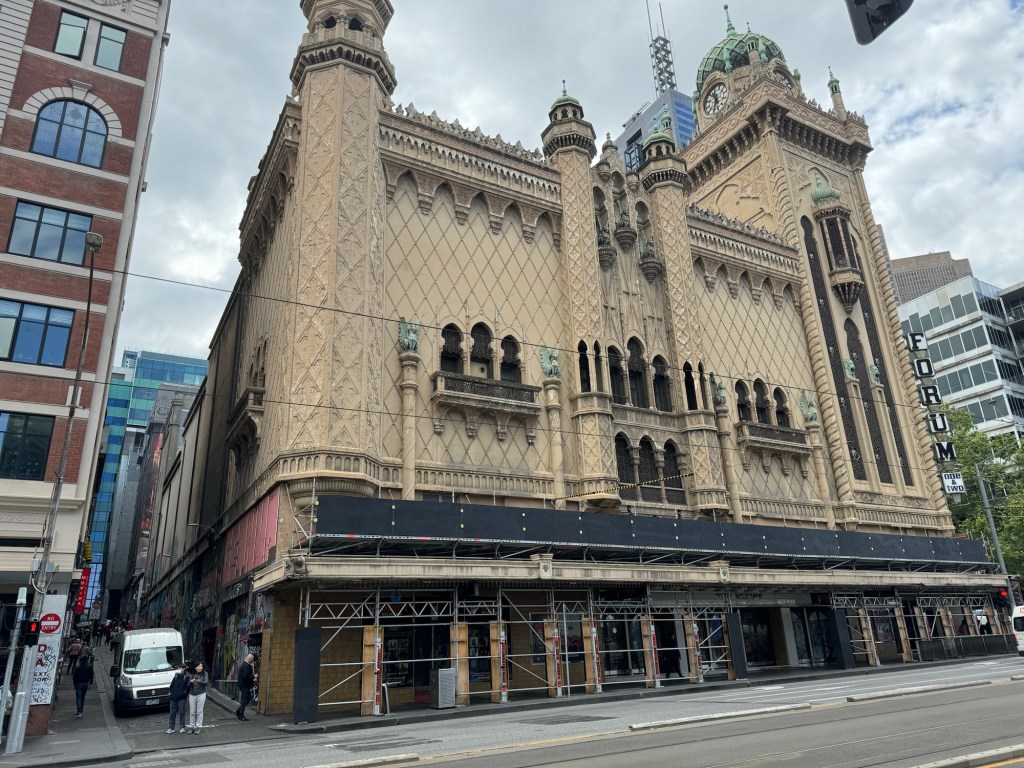
The Forum Theater where alternative artists perform

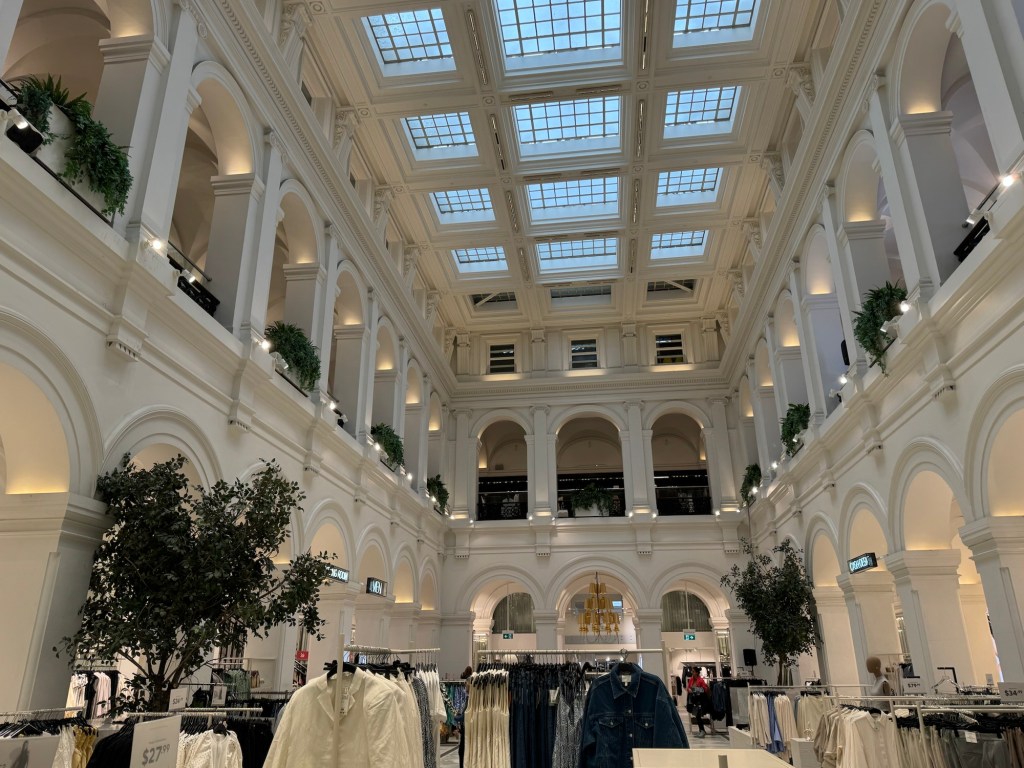
Then Dan showed us the popular and dynamic public space called Federation Square. Under the steel shell is a geometrically patterned glass and steel walled atrium. The building is used for art exhibits, performances and a multitude of public events.

We stopped for lunch at a fusion Asian restaurant called Supernormal, that happened to be across the street from Nomad, where we had dinner the night before. Dan ordered a variety of dishes including: Korean rice cakes, prawn dumplings, duck leg in plum sauce and a lobster roll.

Since 2011, Melbourne has been voted the World’s most livable city almost every year.

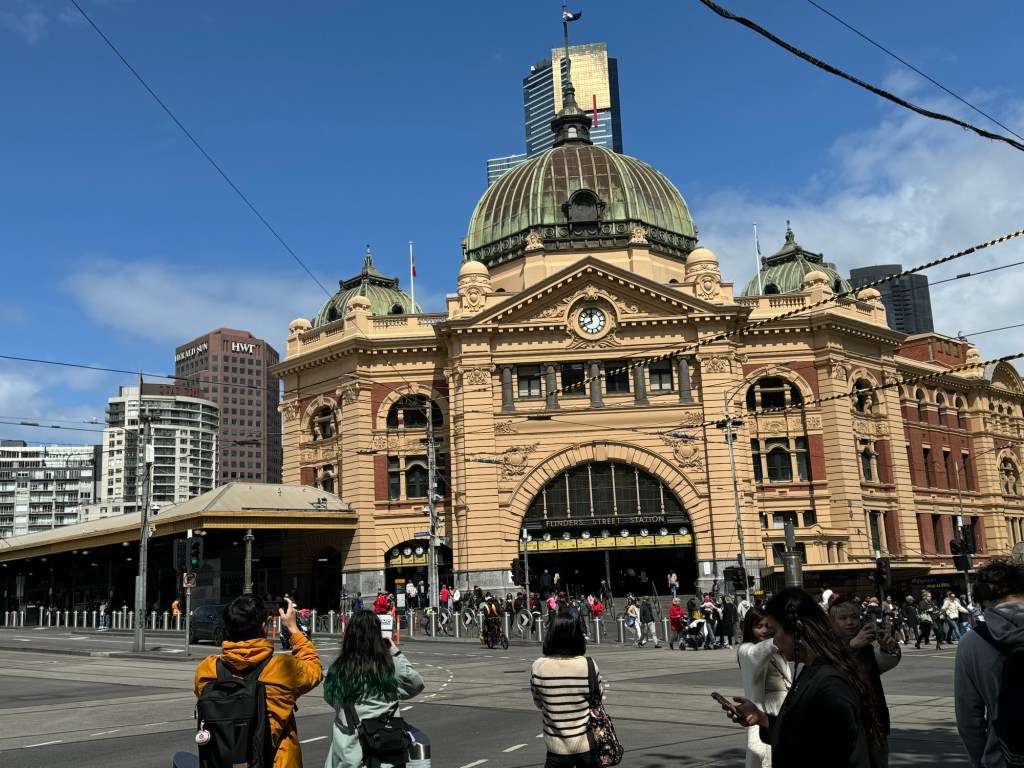
Flinders Street Station is the central train terminal.

After lunch Dan drove us all over the city looking at different business districts and neighborhoods from the relatively poor to the super rich. The city is quite large, flat and very spread out. Some neighborhoods front on the ocean and many others take advantage of being on or near the Yarra River, that runs through the heart of the city.

It is a very pleasant city. No wonder residents we spoke to like living here. Even the cold morning warmed up during the day.
Our dinner location was a short Uber away at a place called Carlton Wine Bar. It was small like the other places we have eaten in Melbourne, but packed. We would not have gotten in without an advanced reservation. Martina has thought of everything.

As we were early, we sat at the bar. Our first event was signature cocktails. Normally I pass on fancy drinks, but I could not resist getting a rhubarb daiquiri. It was so delicious that I had a second one. Over the top for me. We were treated very nicely and ordered a few small dishes rather than a big meal. The food is very different, but interesting and tasty. One dish we ordered was a pasta that had rigatoni, white beans, cavolo Nero, pan grattato, and pecorino. Enjoy looking up descriptions of the terms 😘. There was also fabulous potato focaccia bread, we could not resist. It did not take long before we were both full. Again I forgot to take photos.

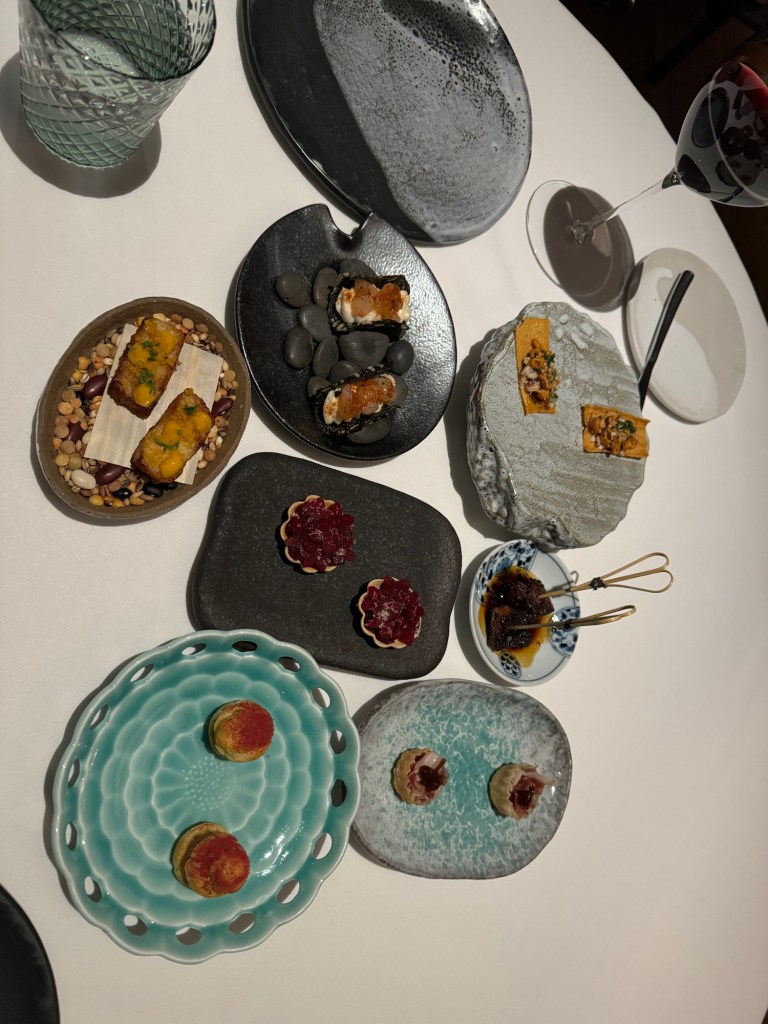
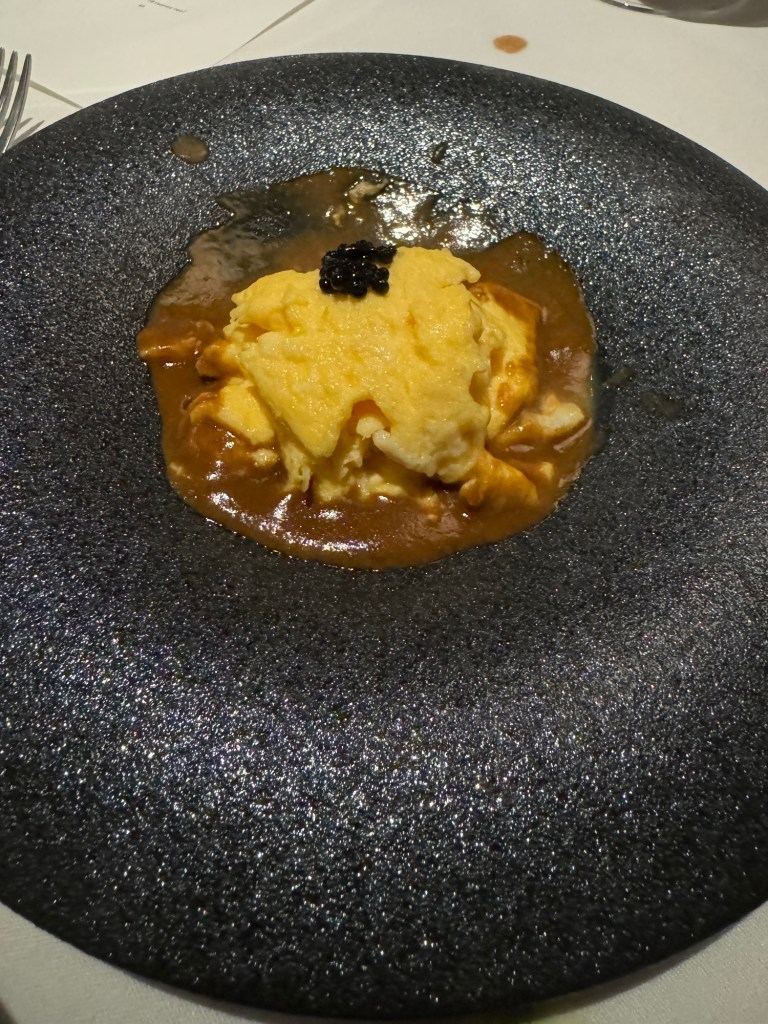
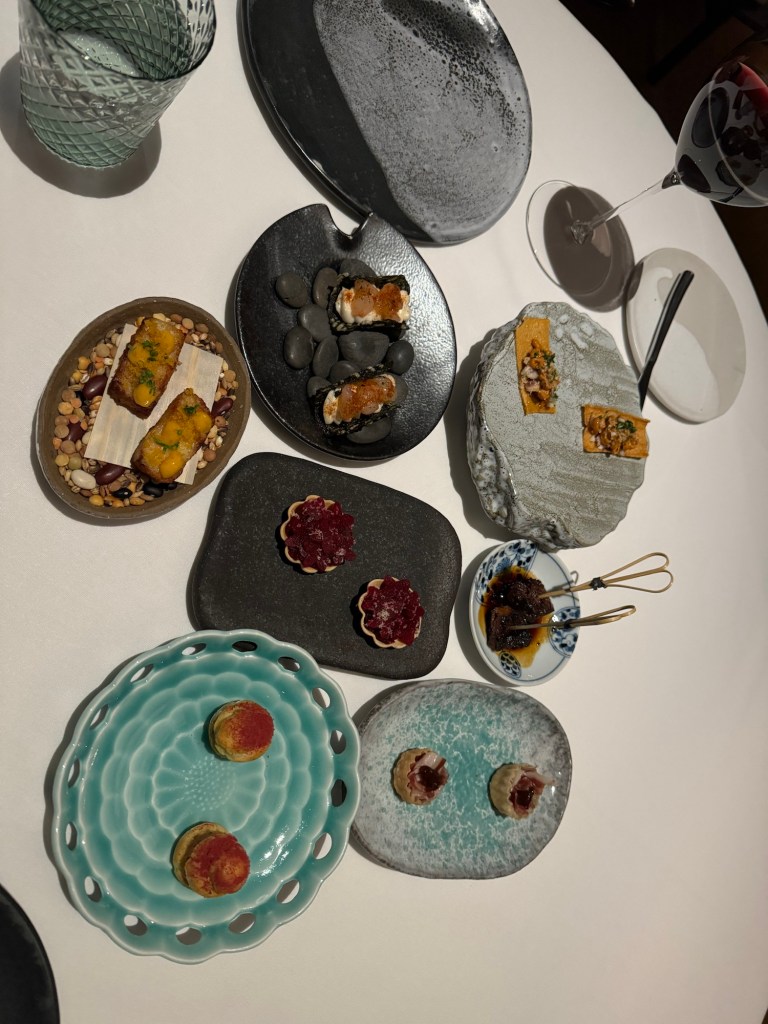
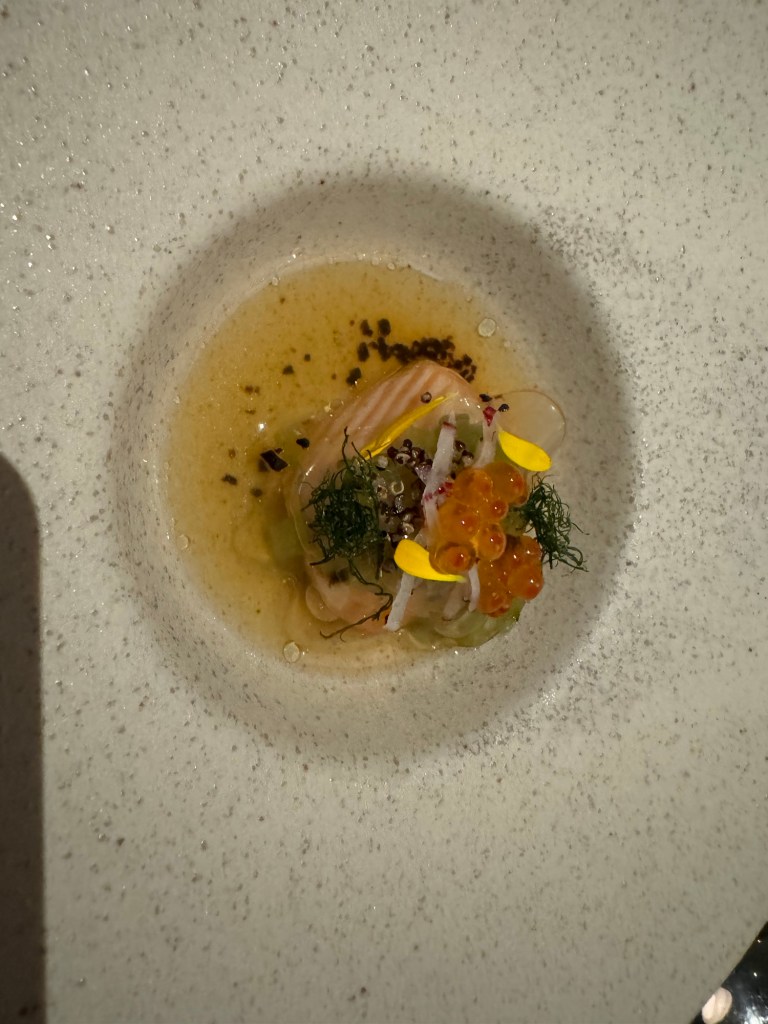
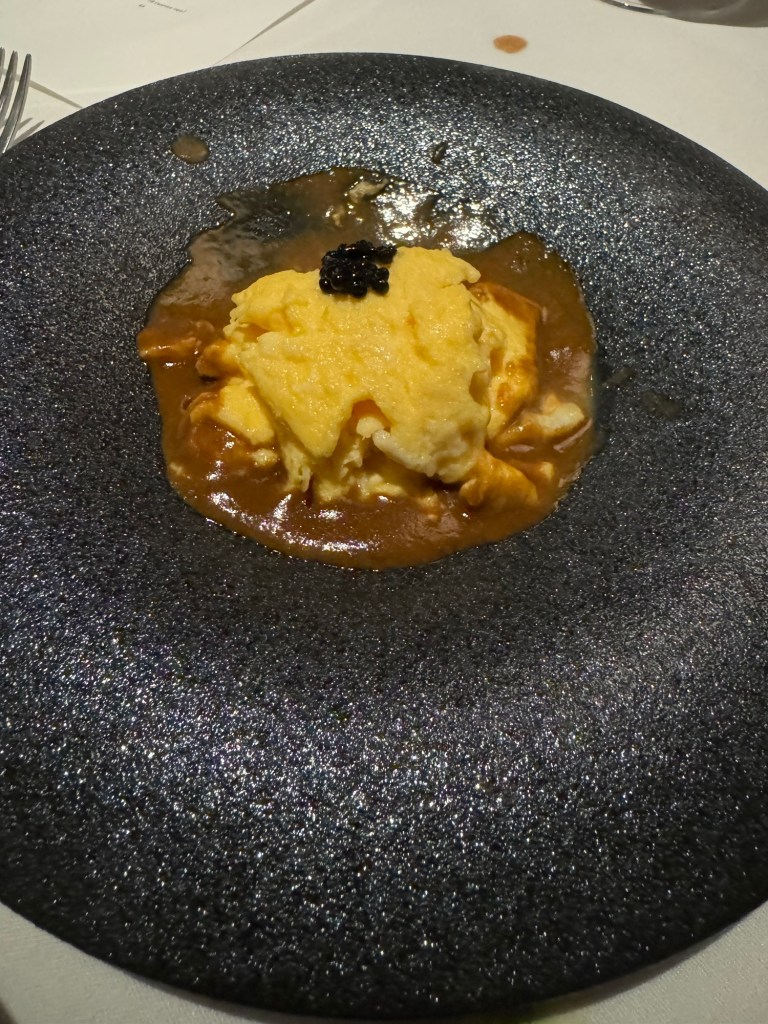
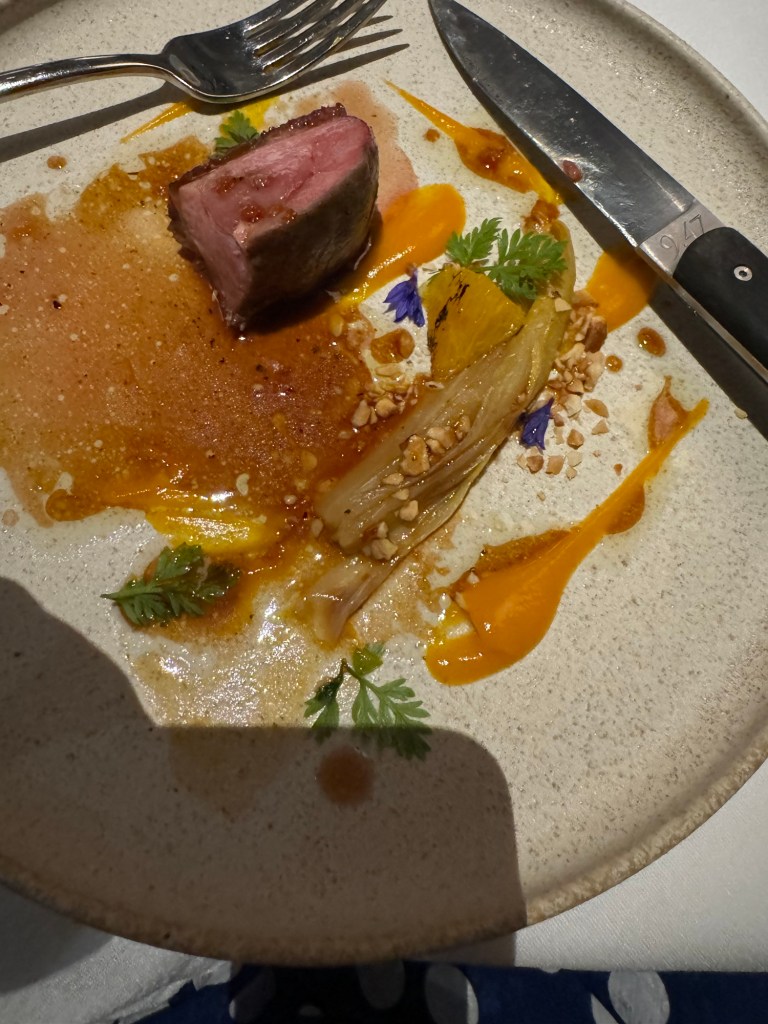
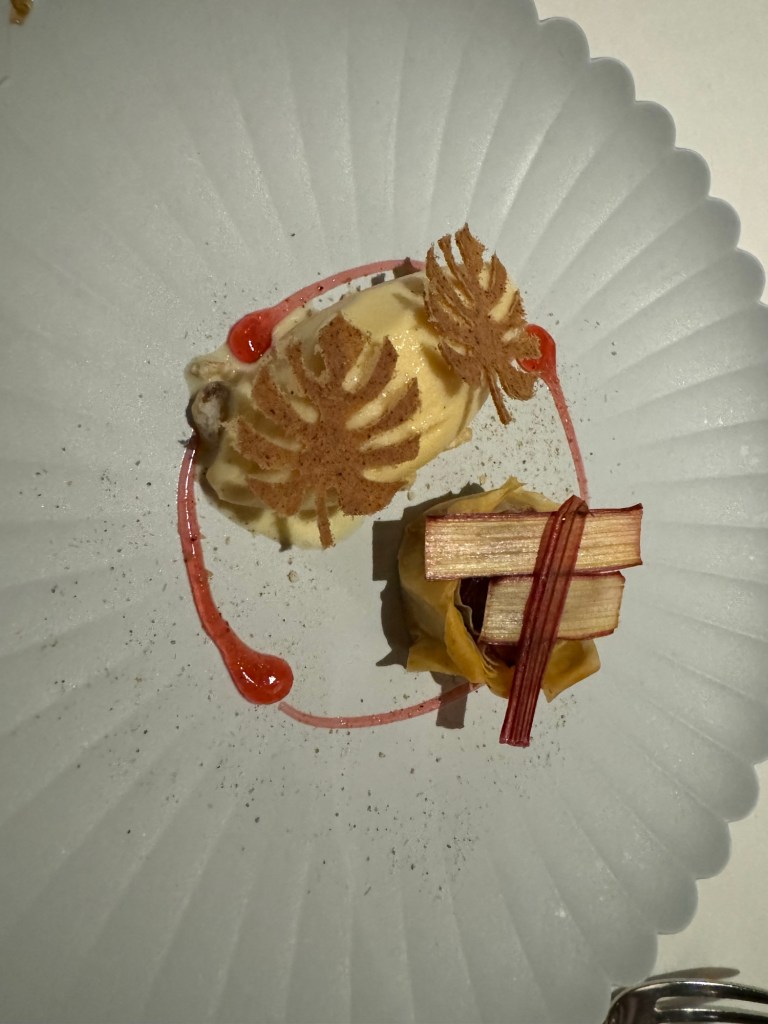
We repacked for an overnight on The Great Ocean Road, where we expect it to be cold, had dinner in a Japanese restaurant called Kazuki. We were served a Michelin style meal with 6 small courses. One course included Ox tail and another was duck.

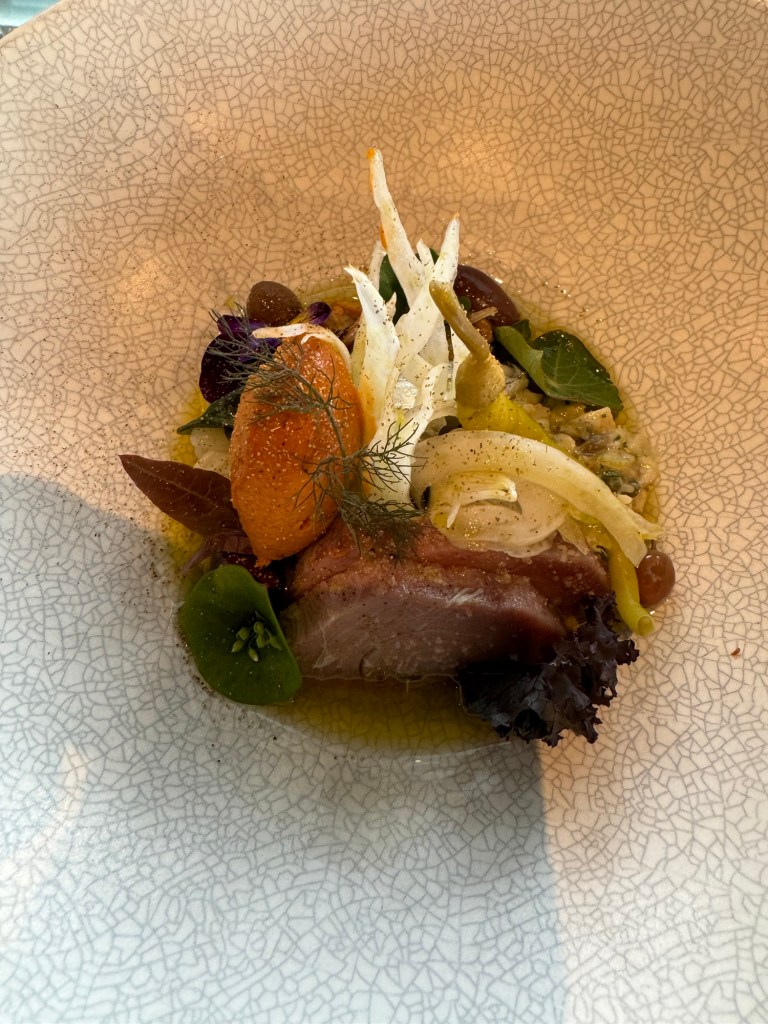
We both liked the oxtail and the duck. I liked the ice cream and cardamom.

Wednesday, October 2, 2024

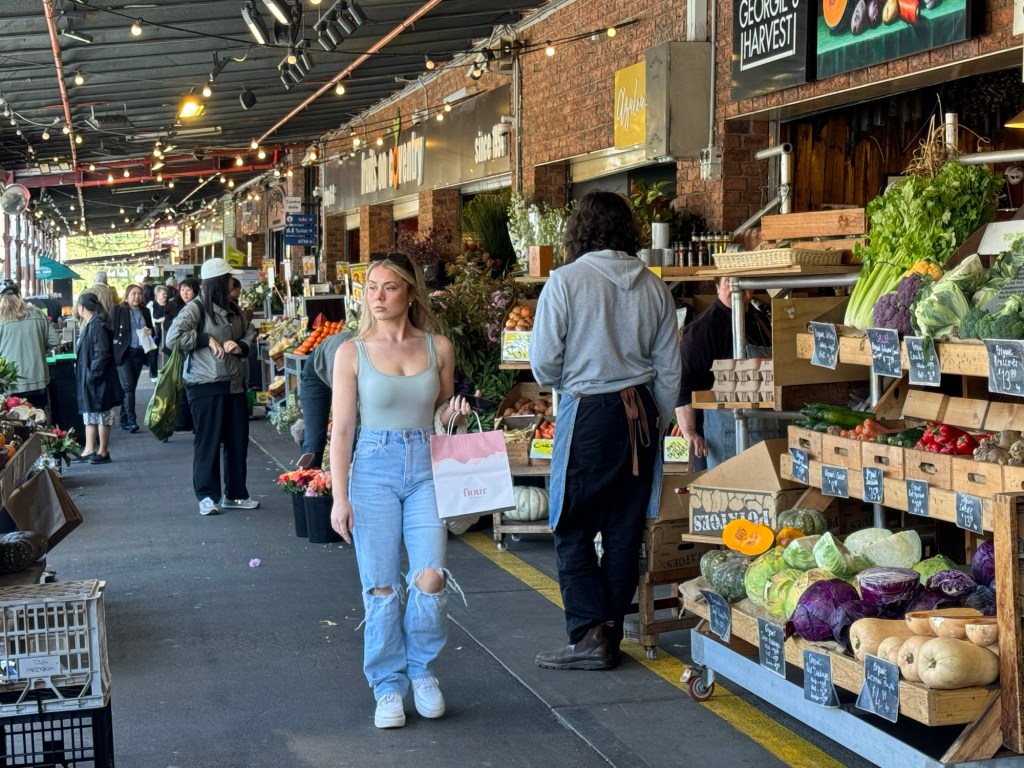
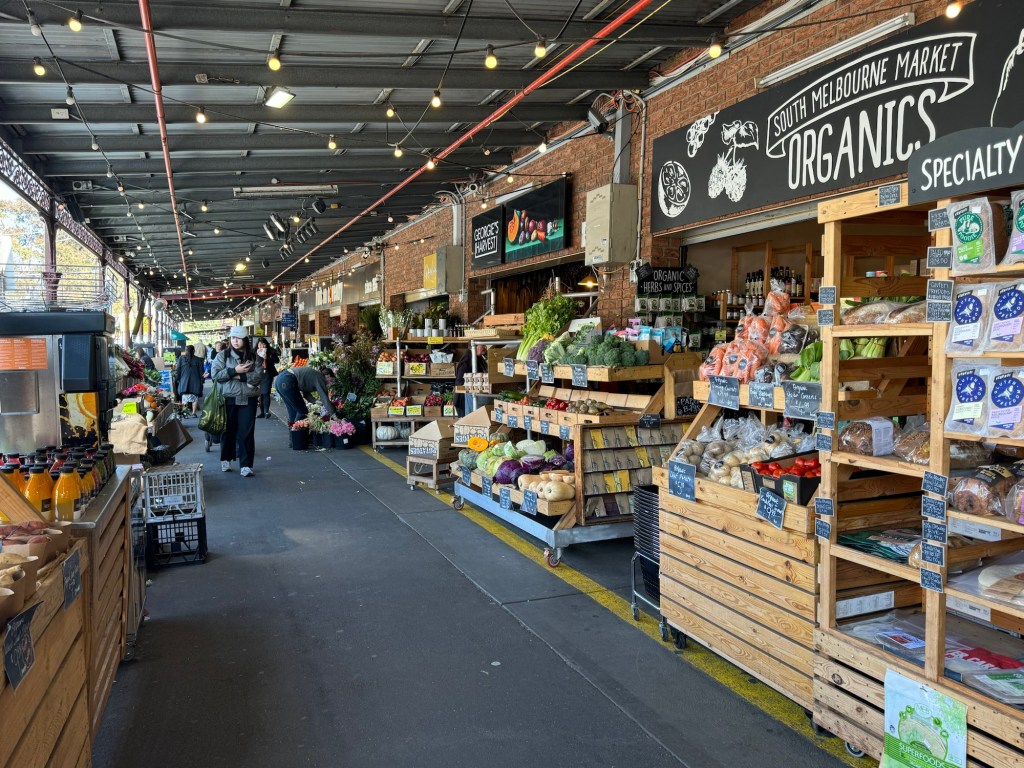
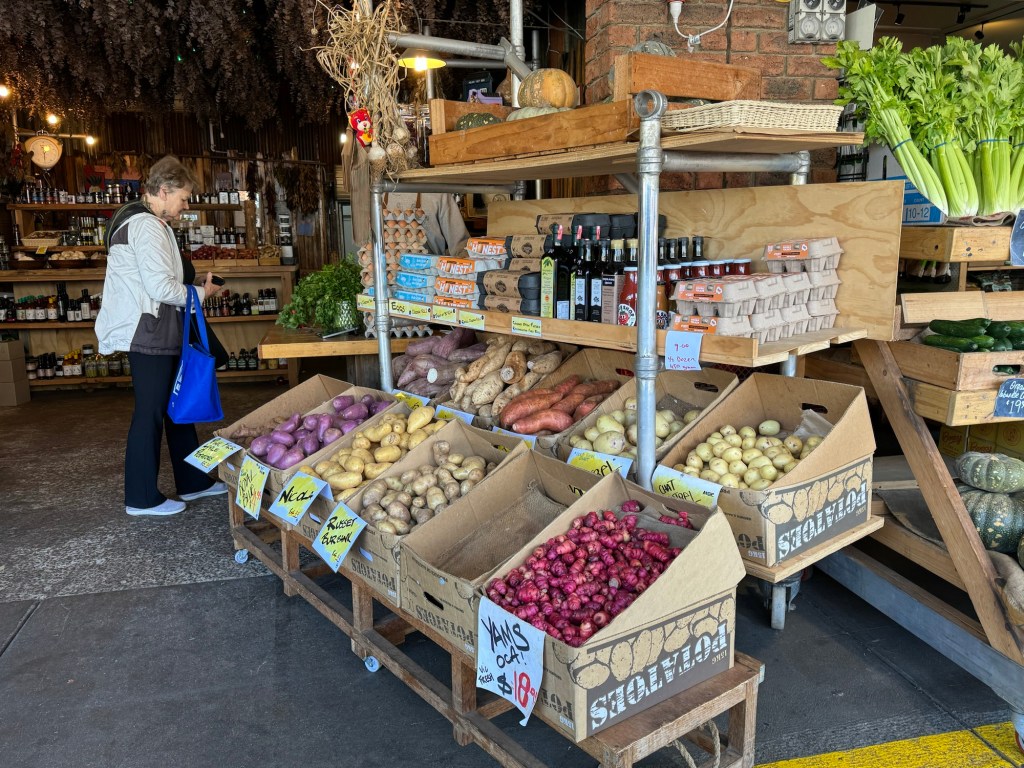
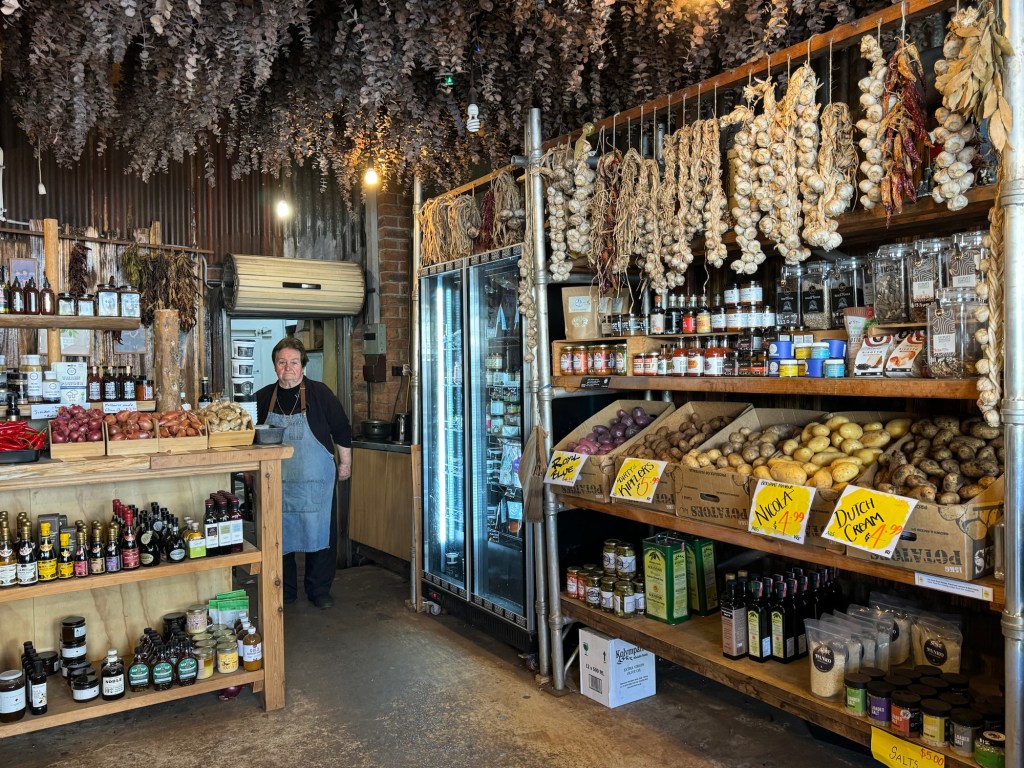
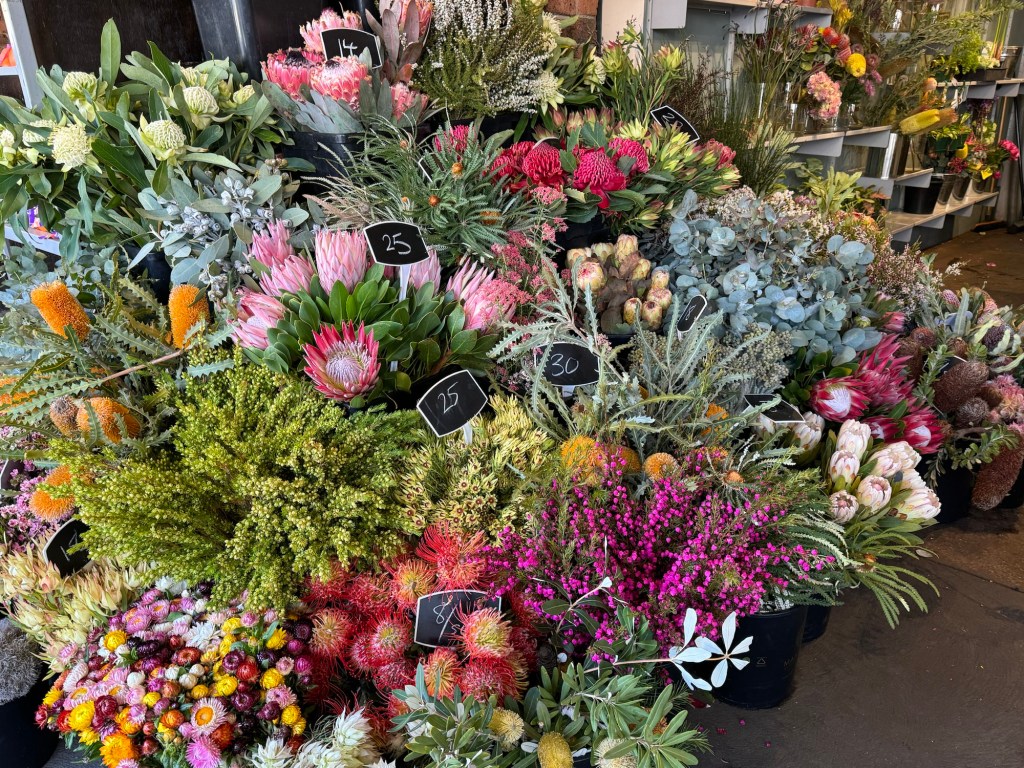
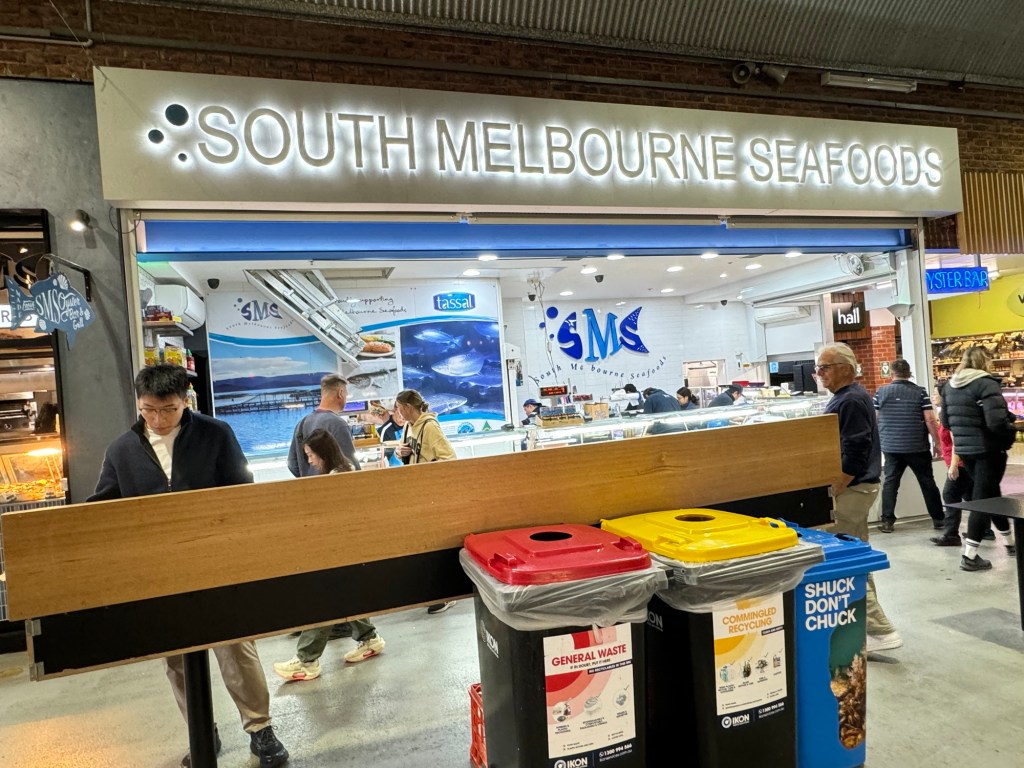
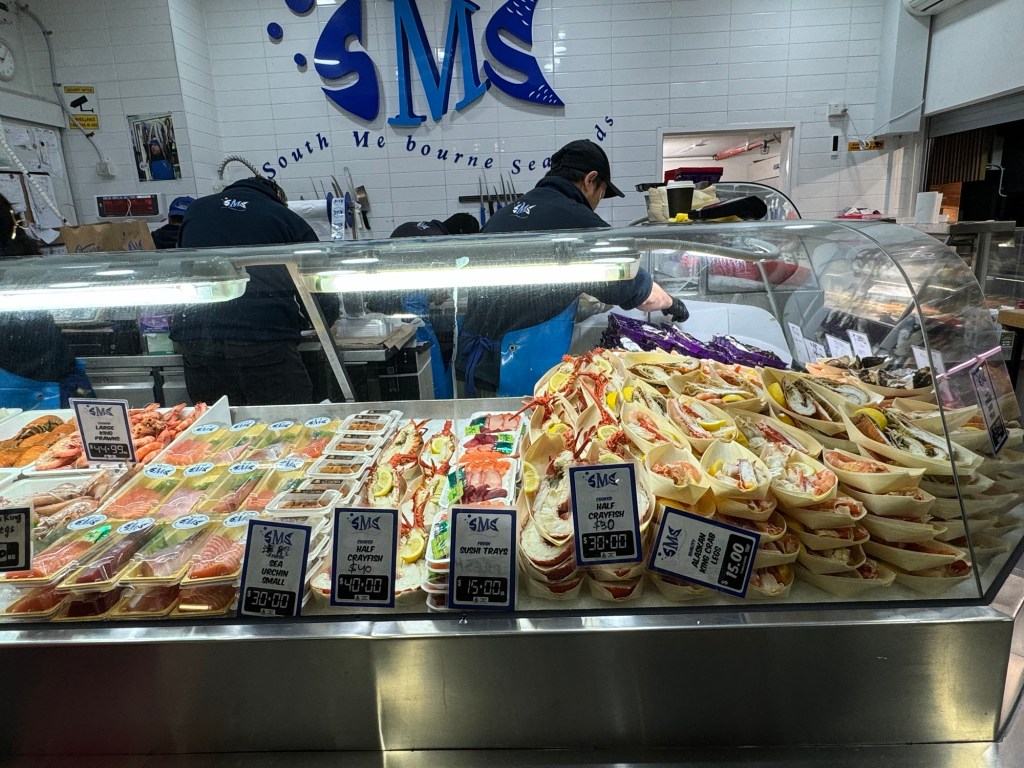
Up early and repacked. We will be traveling overnight on the Great Ocean Road, so we are not giving up our room as we will back in it tomorrow night. We are taking a small overnight bag as there is limited room on the helicopter we will be using to return from the ocean tomorrow. We were soon with Simon Greenfield, our new guide for the Great Ocean Road trip. Before leaving the city we stopped at the South Melbourne Market to check it out. It is a huge facility full of many individual vendors peddling every food imaginable plus flowers and other goods.

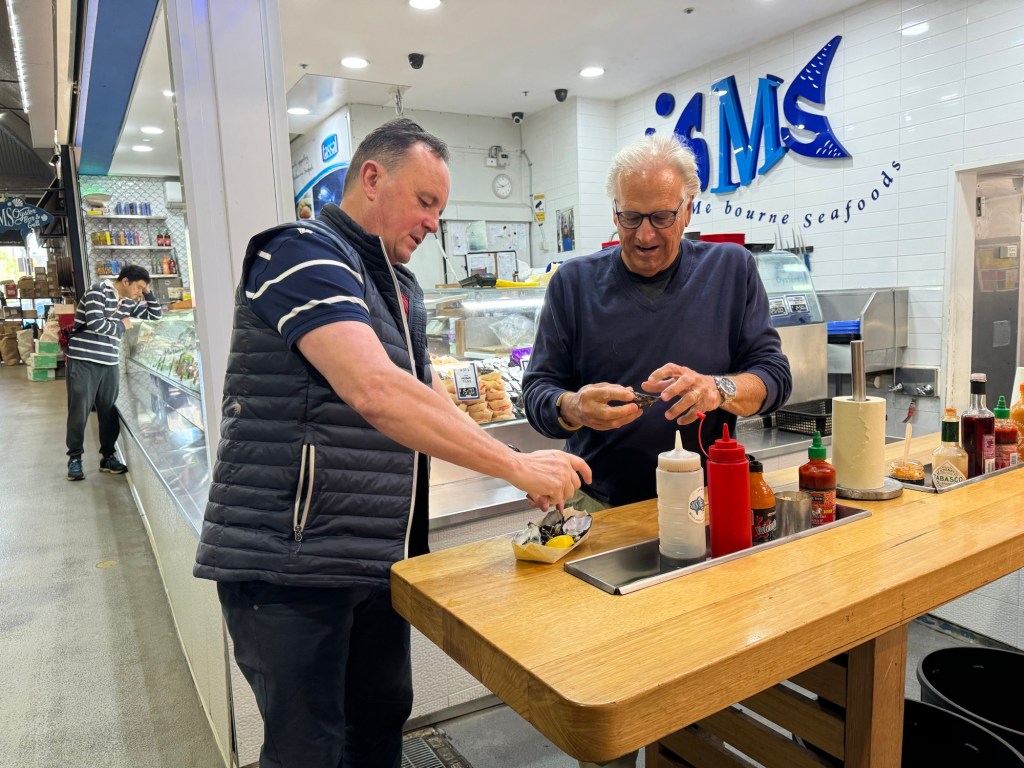
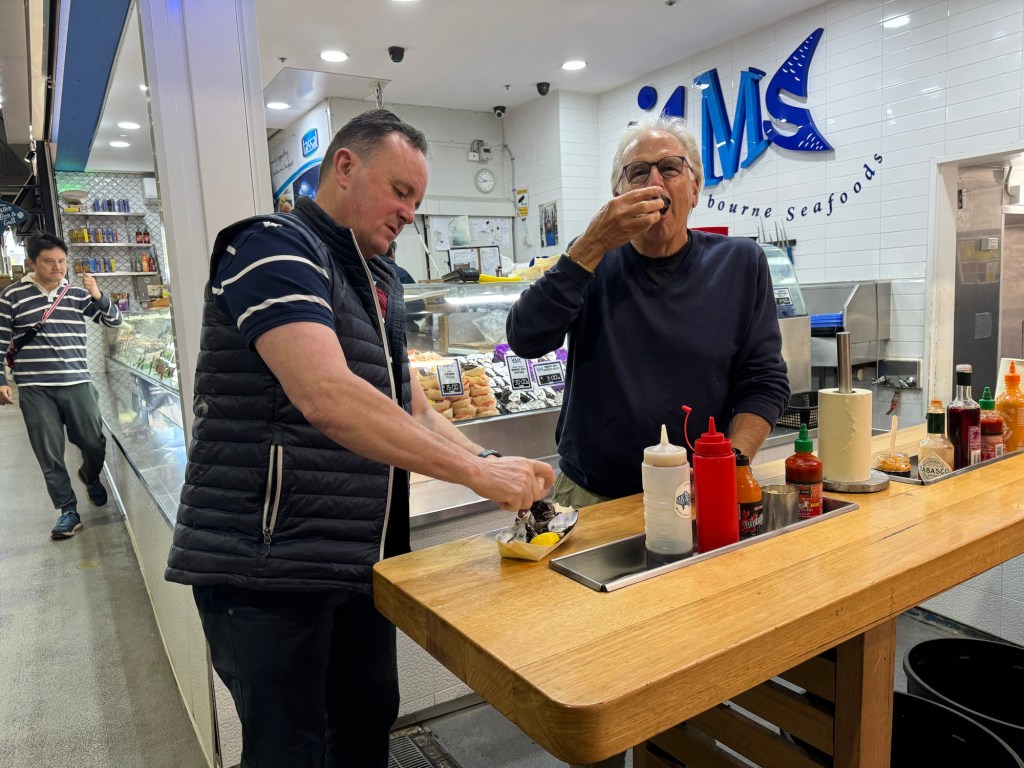
He says people like to shop in it because it is very social as well as providing really fresh products. We enjoyed walking around and indulging in some coffee and focaccia. Simon and Mark scarfed several exceedingly fresh oysters for breakfast.

Back in the car, we headed south out of the city toward the very bottom of the country.`

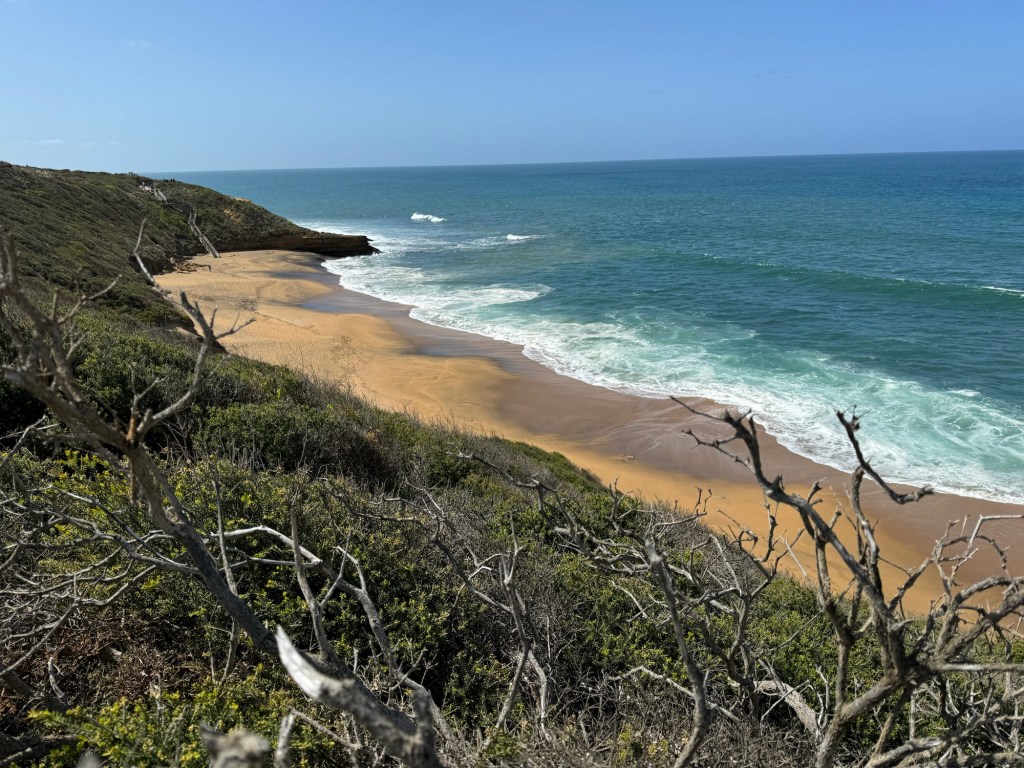
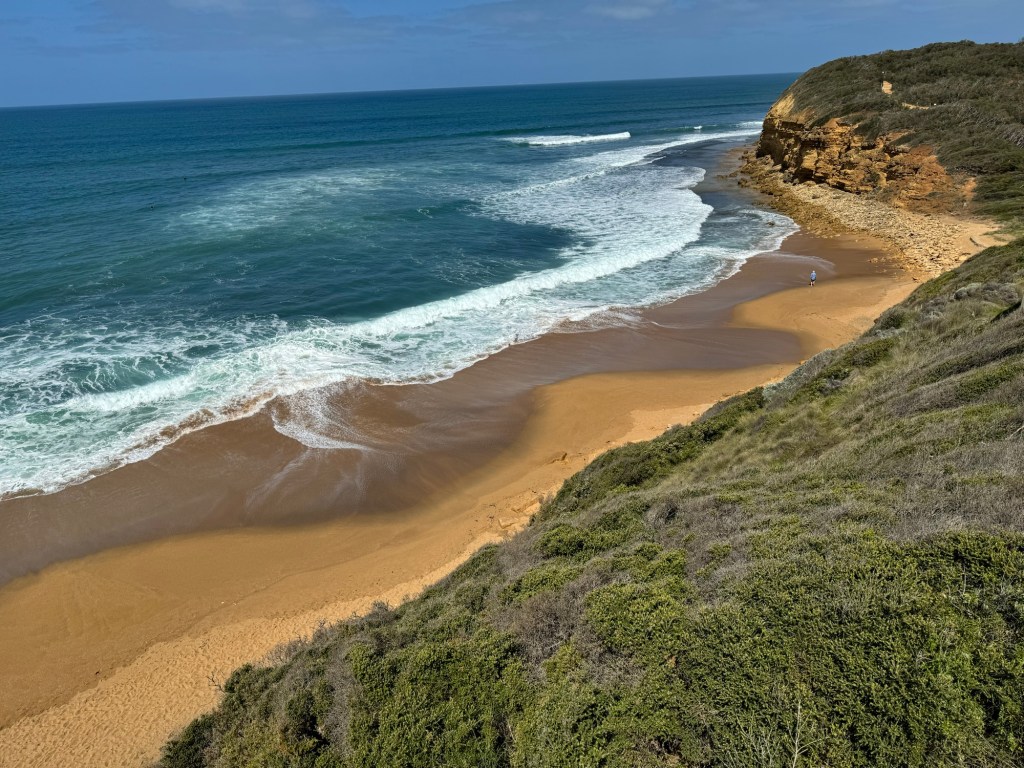
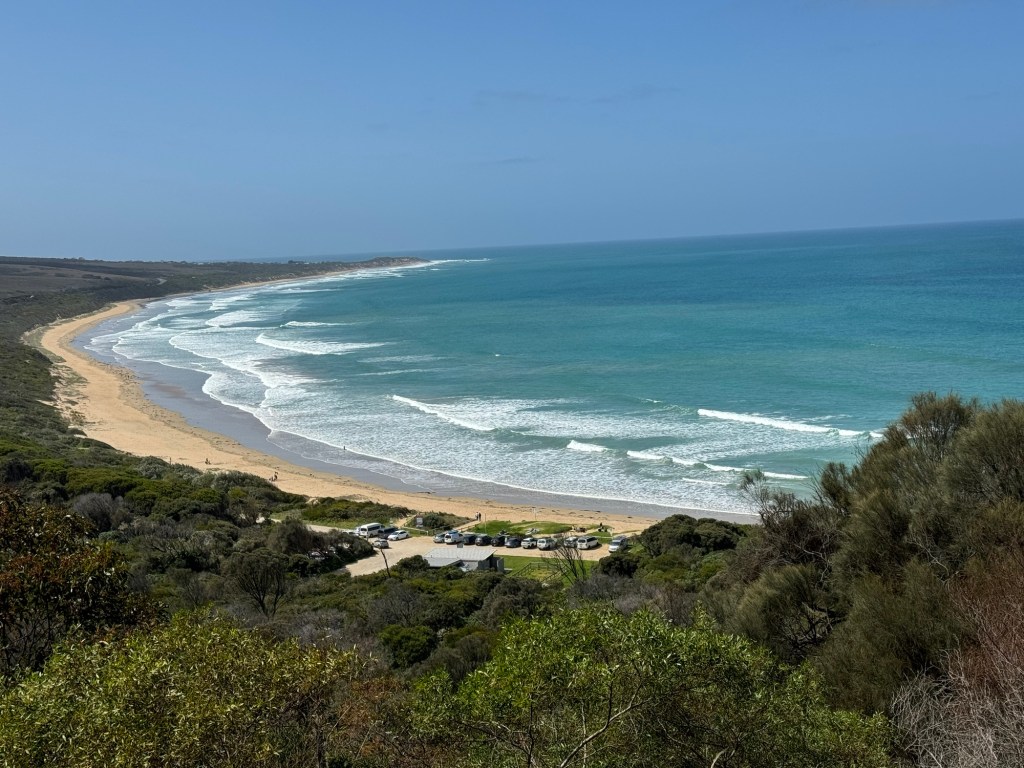
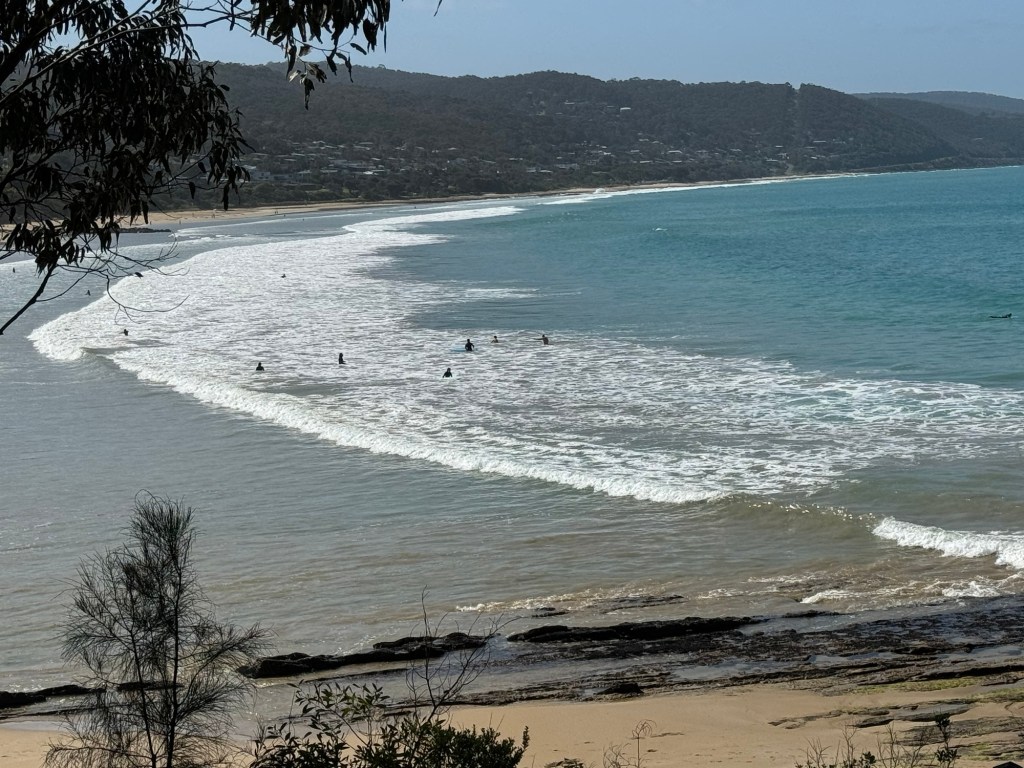
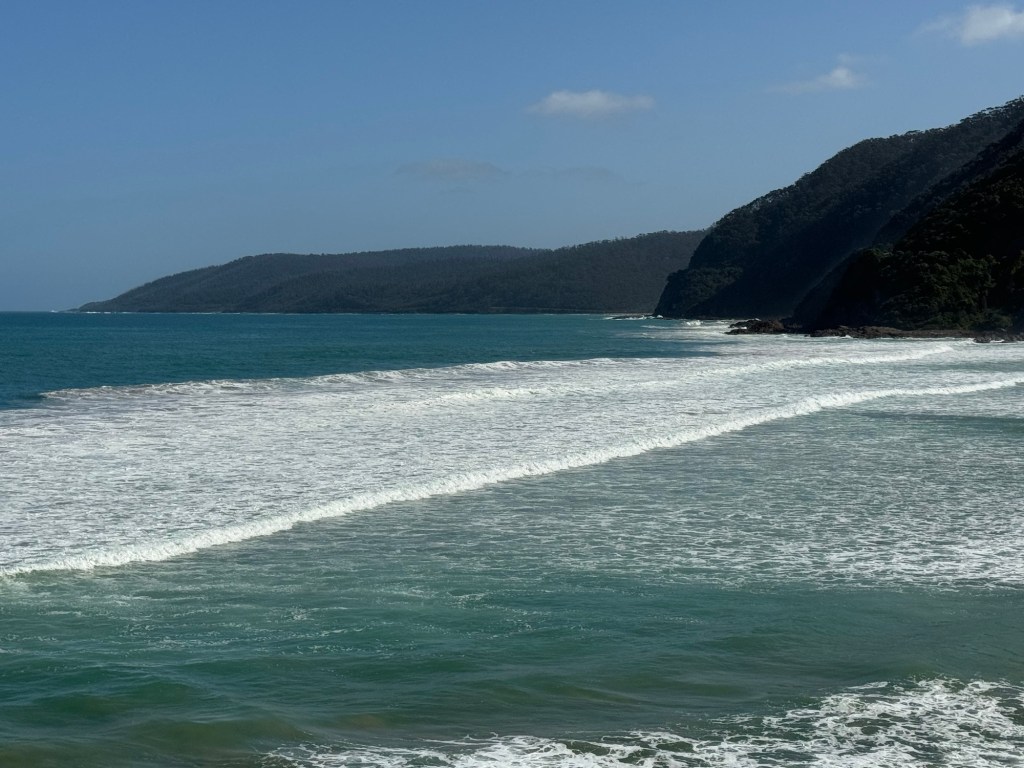
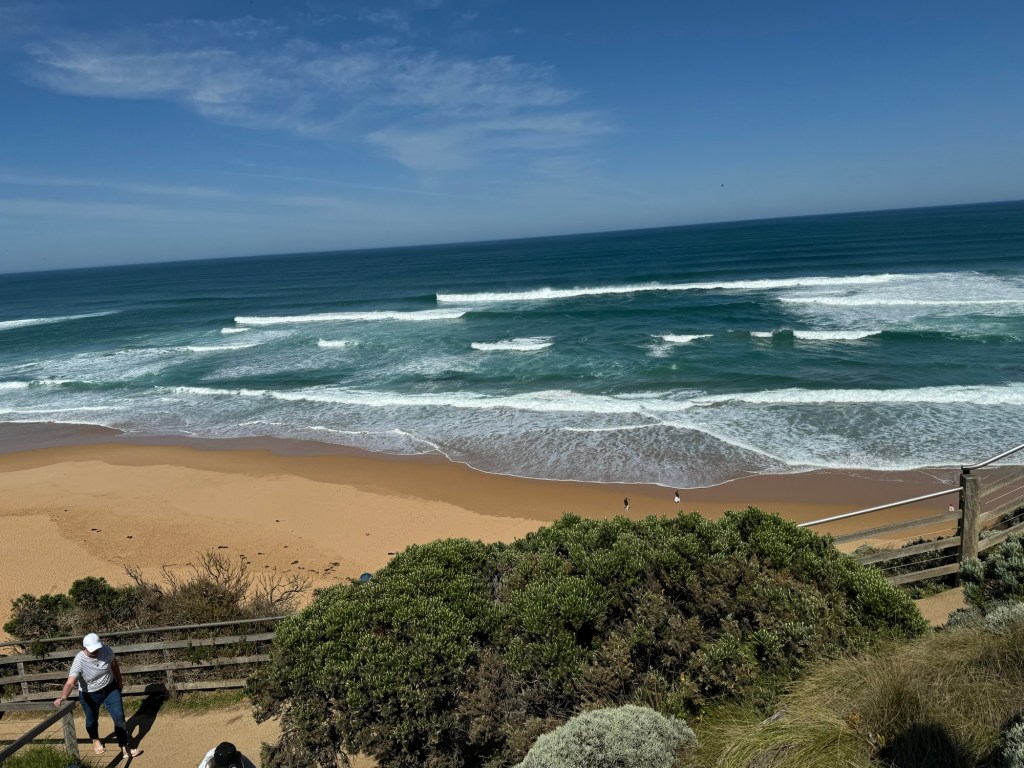
Within an hour we were at Bell’s Beach, the beginning of the Great Ocean Road and a beach that provides great surfing. When we were there the waves were hitting 12 feet.

No place for beginners. After watching the half dozen surfers in the very cold water awhile, we continued along the coast road to Angelsea and Lorne,

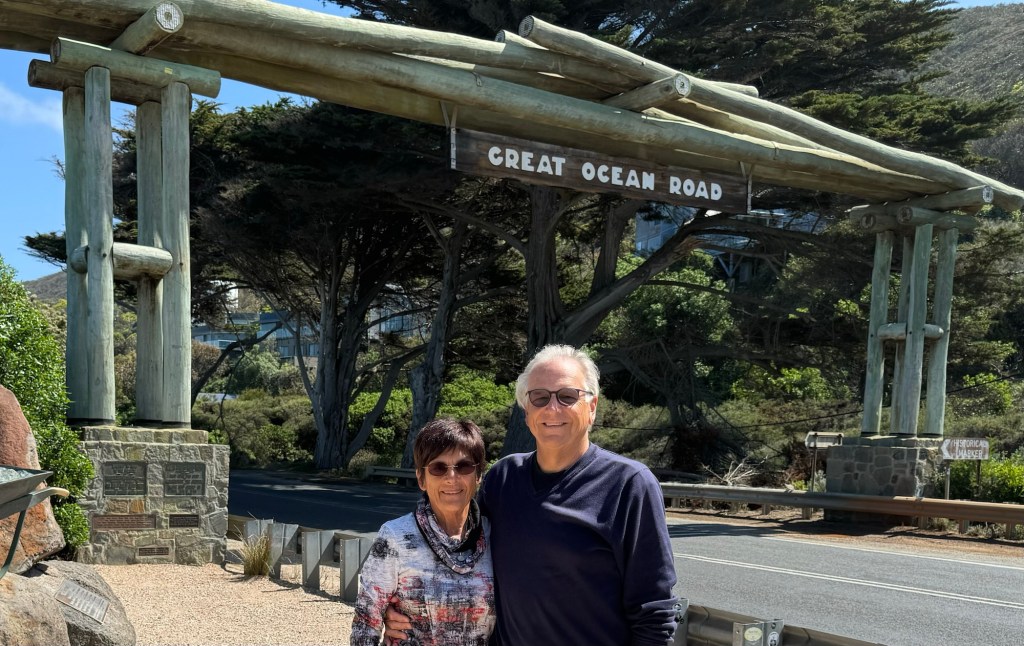
where we passed under the Road arch and stopped for lunch. The Great Ocean Road is 170 miles long.

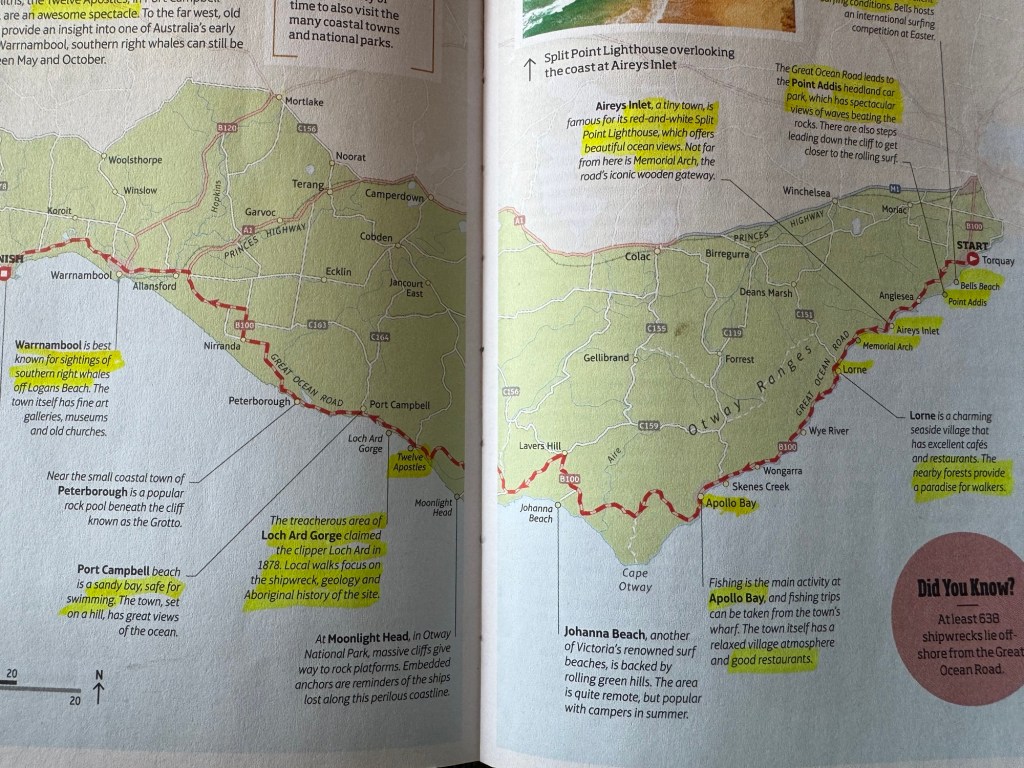
Map of the Great Ocean Road at the south end of Australia.

I had “gummy shark”, fish and chips.

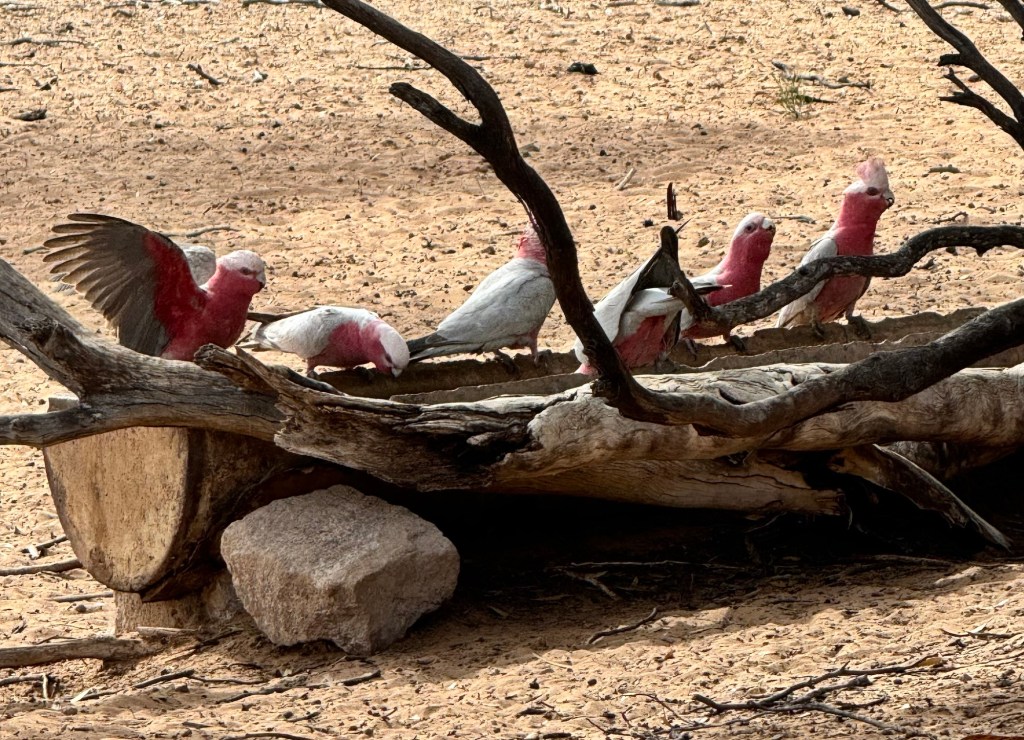
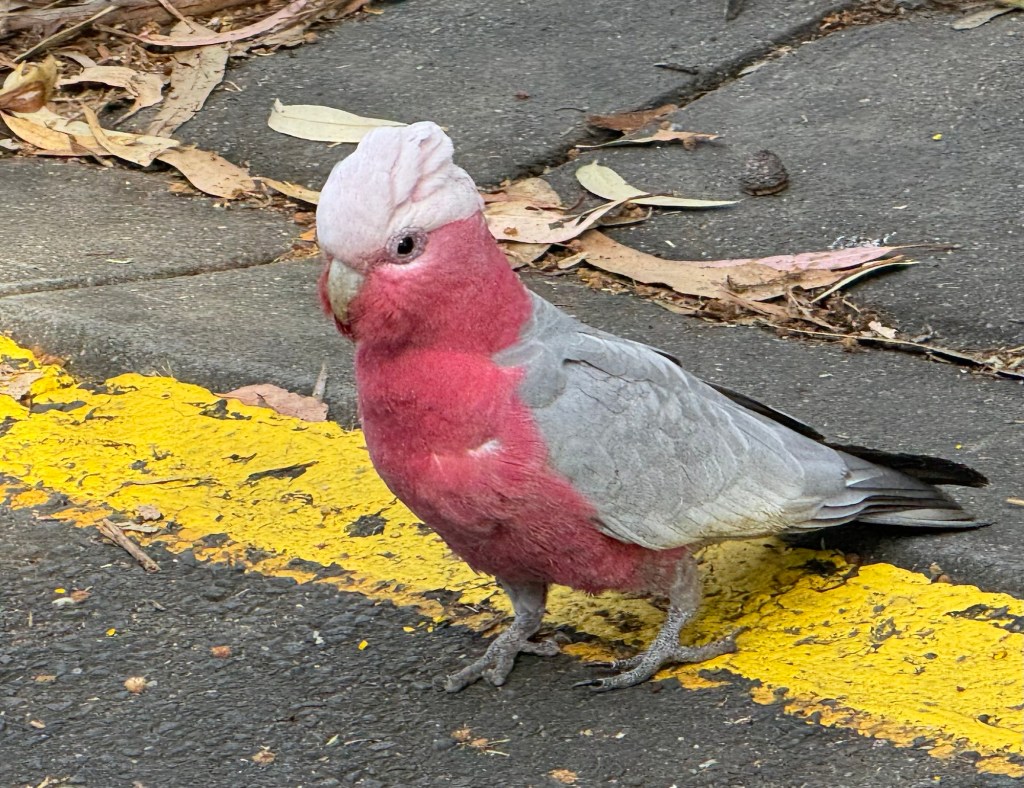
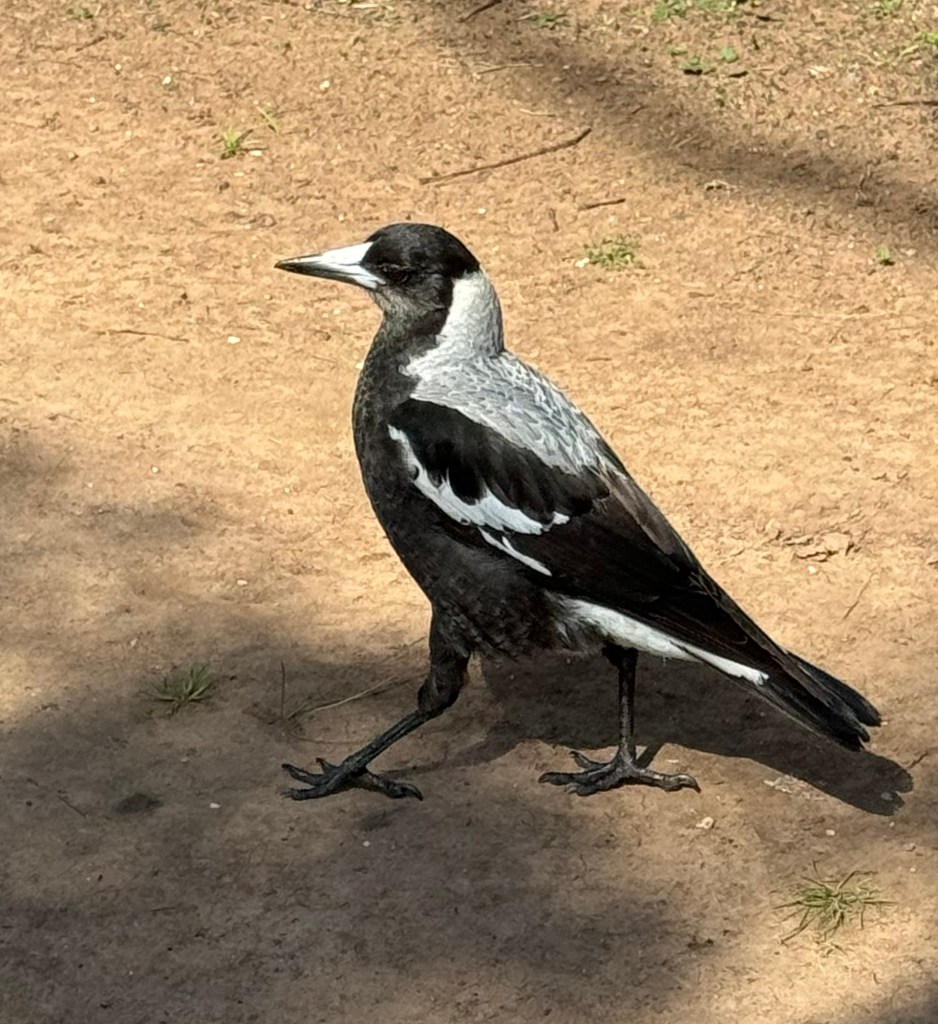
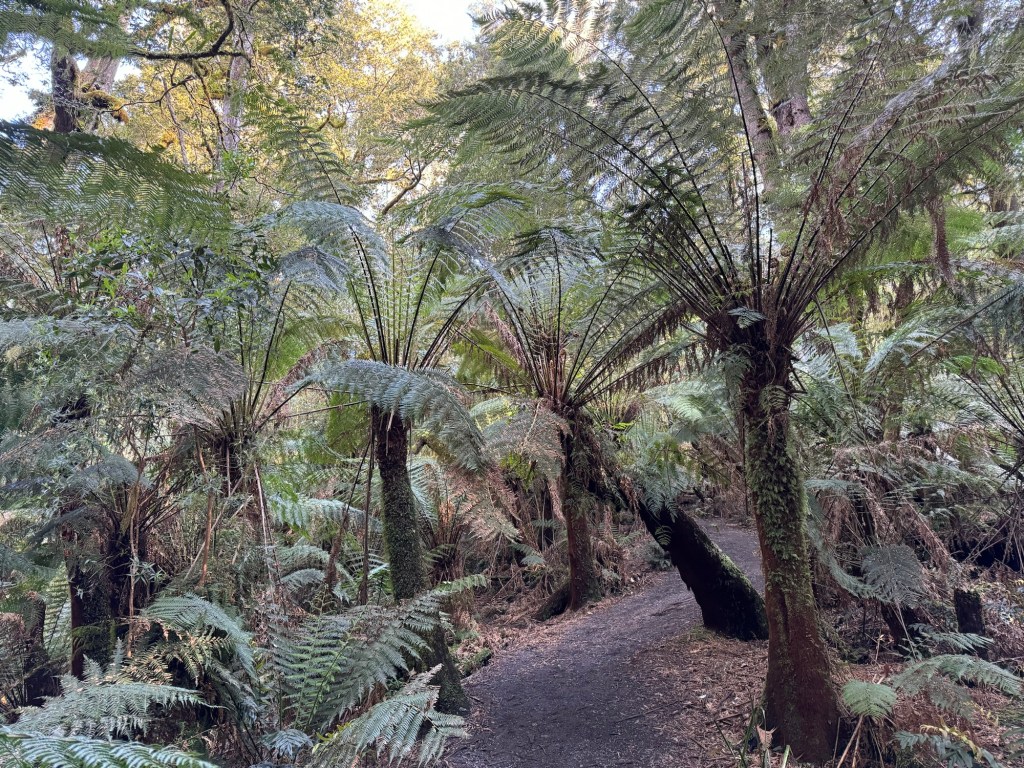
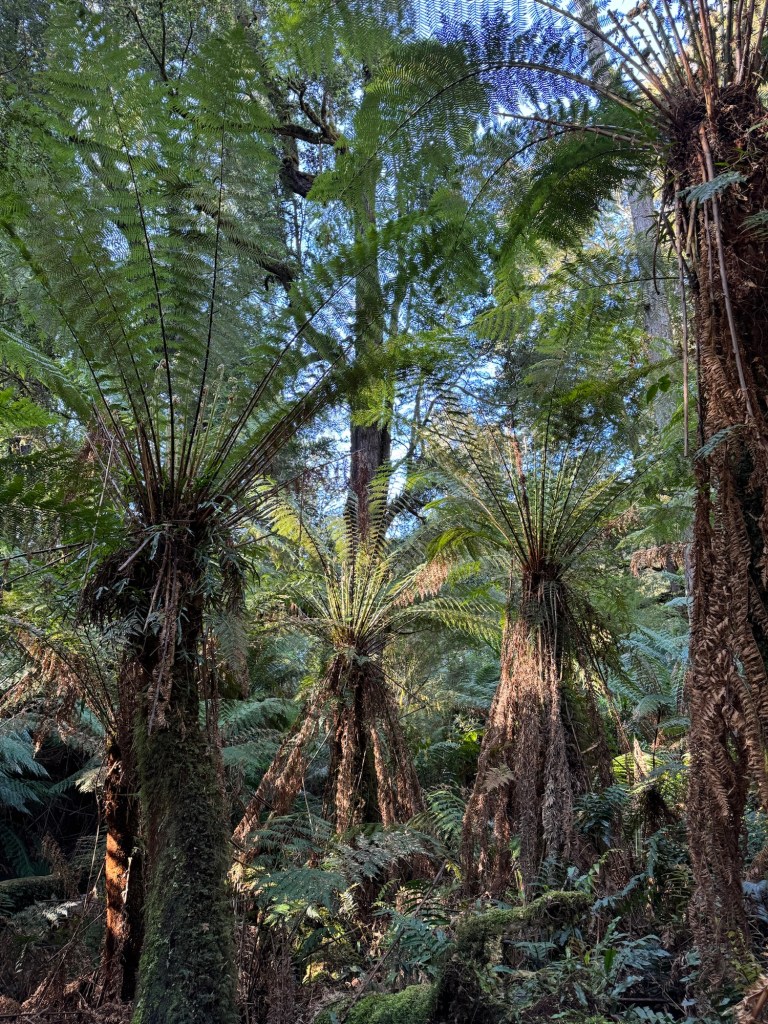
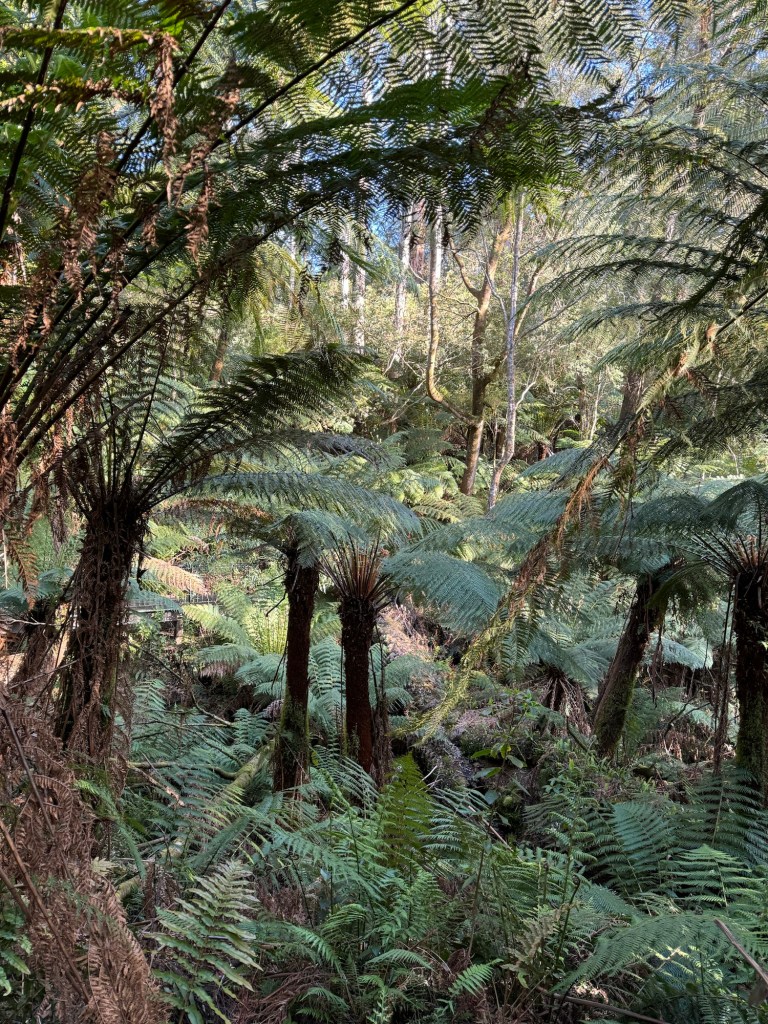
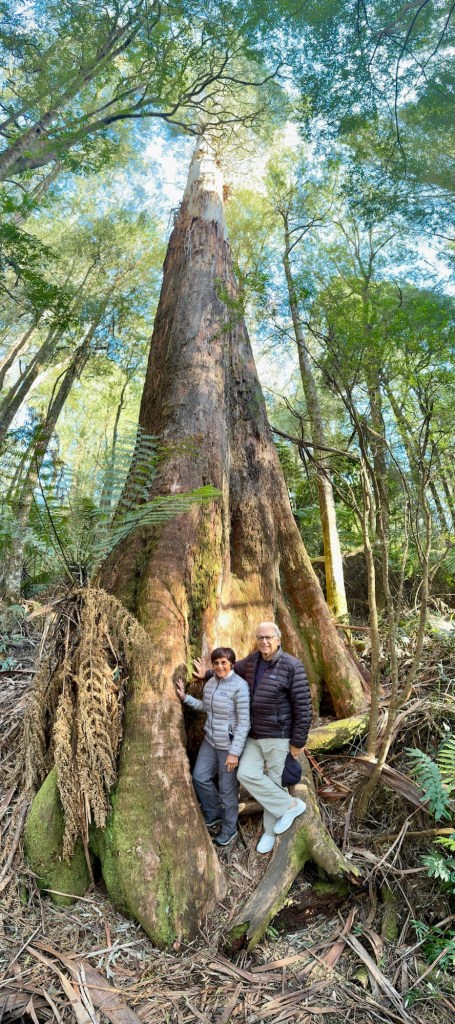
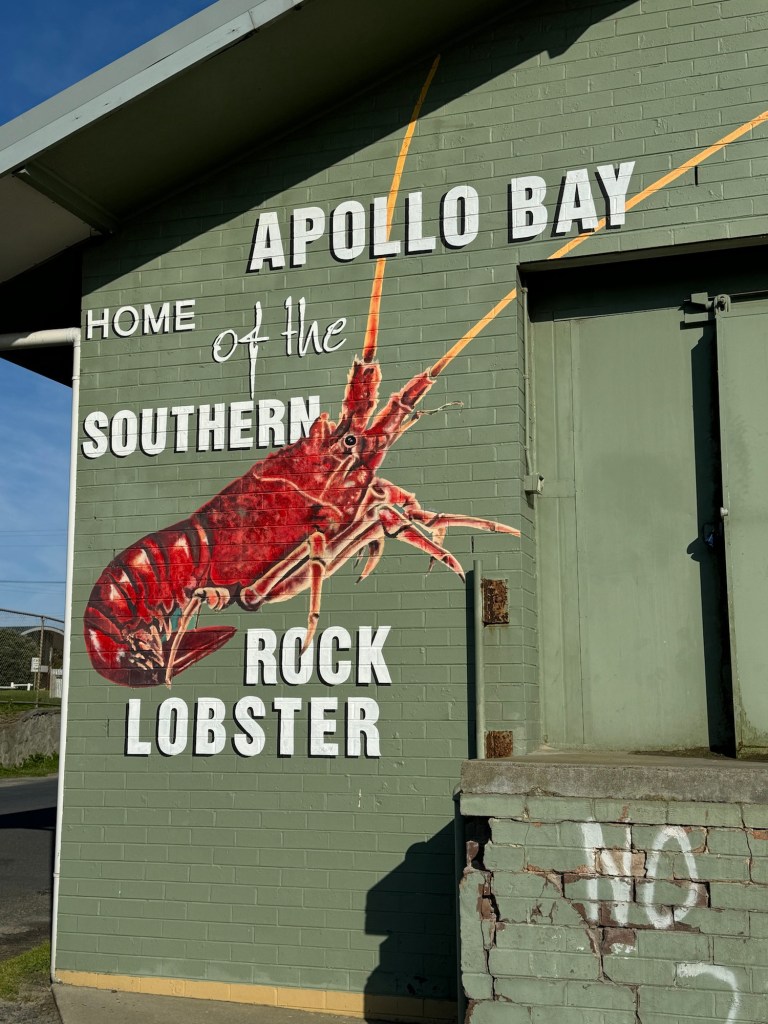
On a short walk about, we got some good bird photos: a galah, which is a member of the parrot family, a cockatoo, and an Australian magpie. Then we drove through Apollo Bay and on into the temperate rainforest near Cape Otway. The rain forest was quite lovely with huge eucalyptus trees and ferns and many other flowering plants. Some of the trees were close to 300 feet tall. The latitude here is 43 degrees south, compared to our latitude of 39 north. Not surprising that the spring here is like our spring. Meanwhile the temperature is a pleasant 68F.

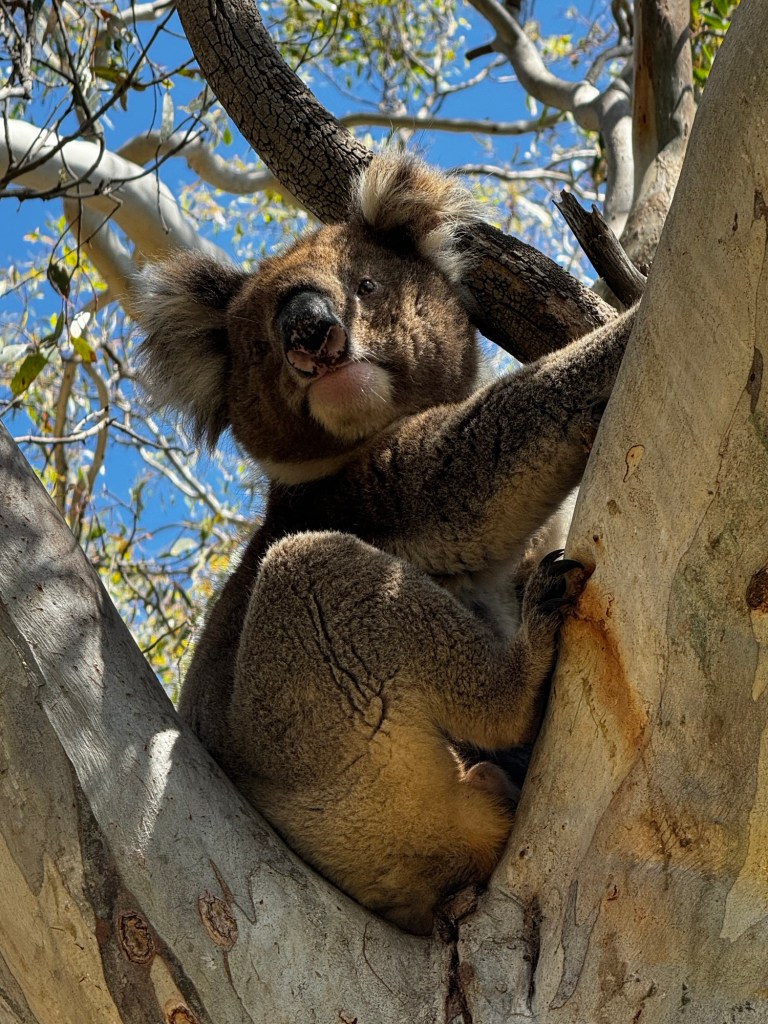
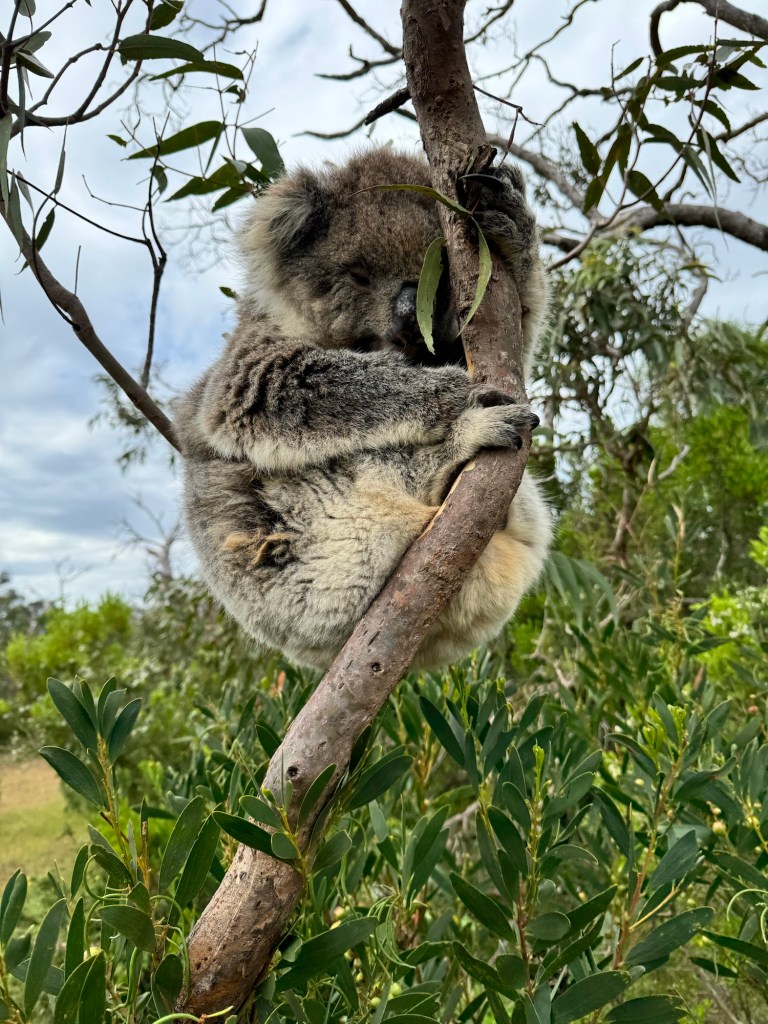
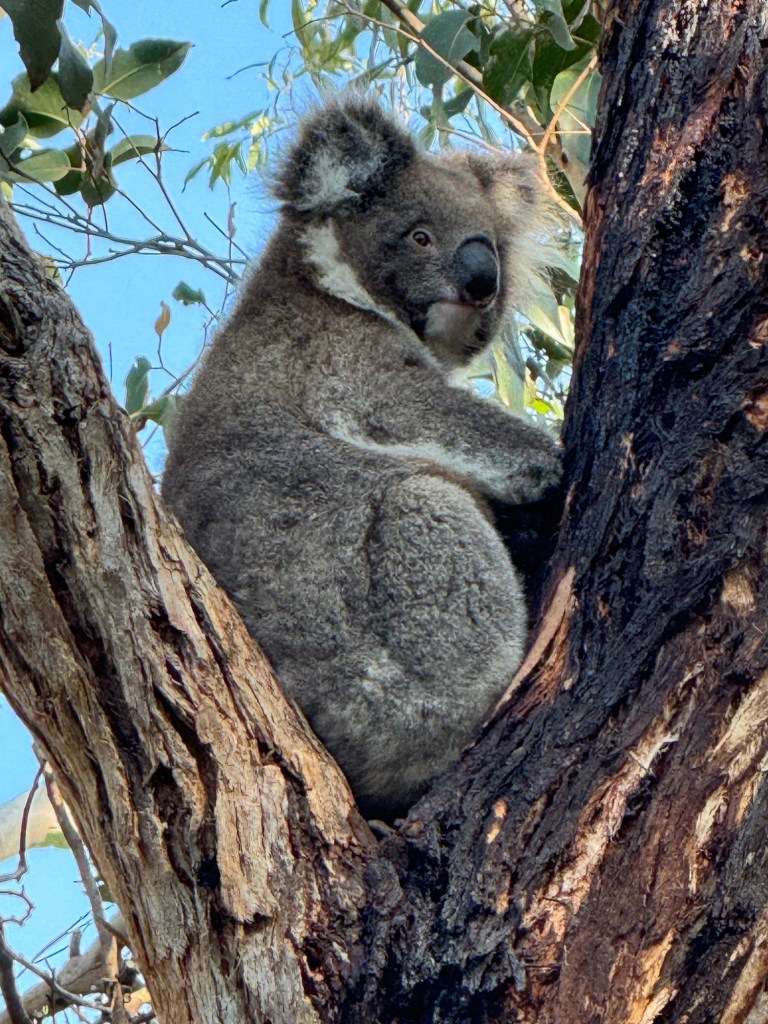
Simon drove us around looking for koala bears. We found a couple but couldn’t get them to look at us. Finally one looked our way and here it is.

Back in Appolo Bay, we checked into our room for the night. It was a 2 block walk to the east facing beach and an 2 block walk to an Italian restaurant, so we were set. Met Simon for dinner, had a somewhat familiar puttanesca and went to bed early.

Thursday, October 3, 2024

Got up at 5:30 to see the sunrise in the east over the Bass Strait/Southern Ocean. It was a clear, cloudless morning with an uninteresting sunrise, but we were there to see it.
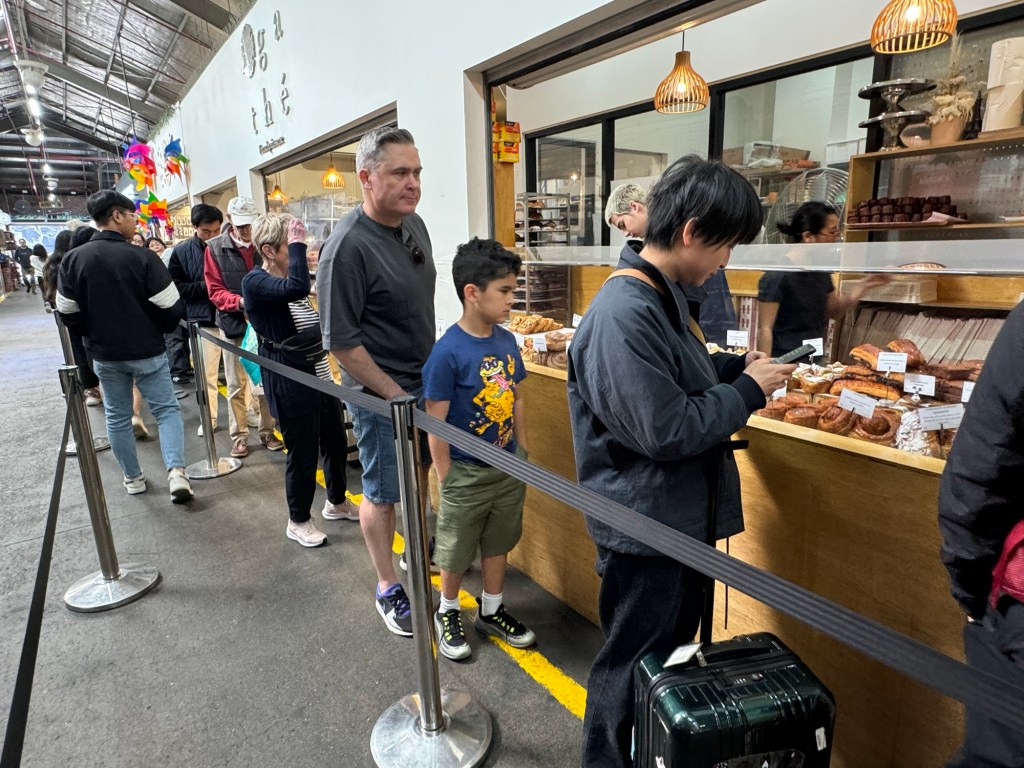
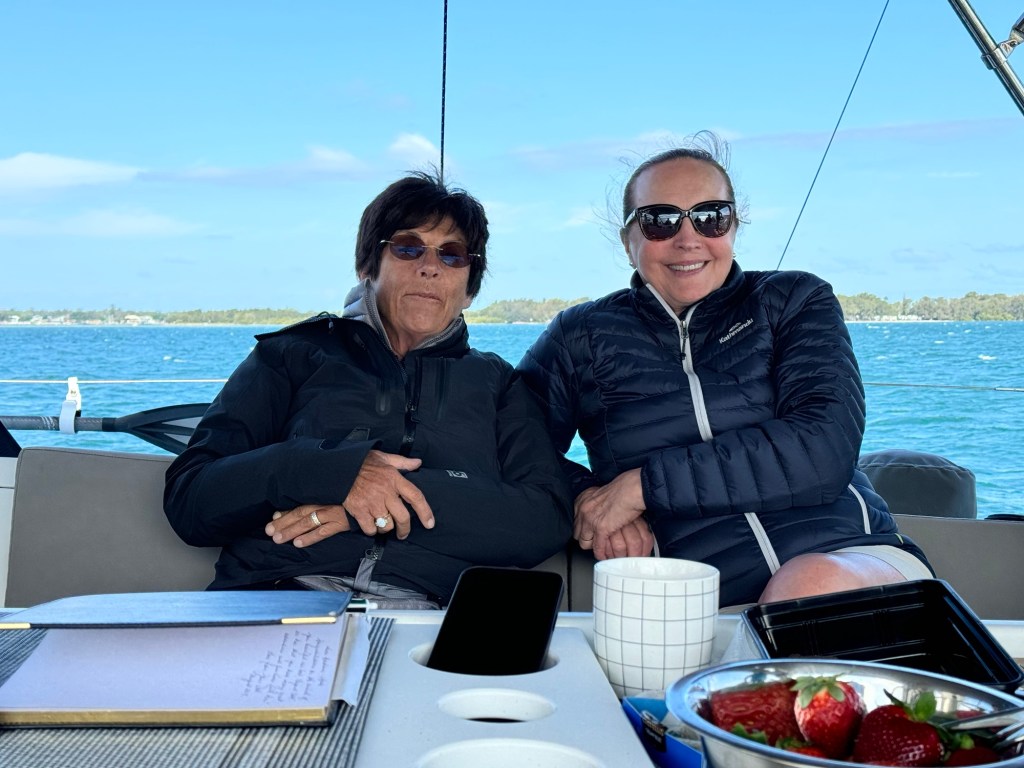
Simon knew a lot of people in town and introduced us to the owner of the local bakery where we hung out awhile.

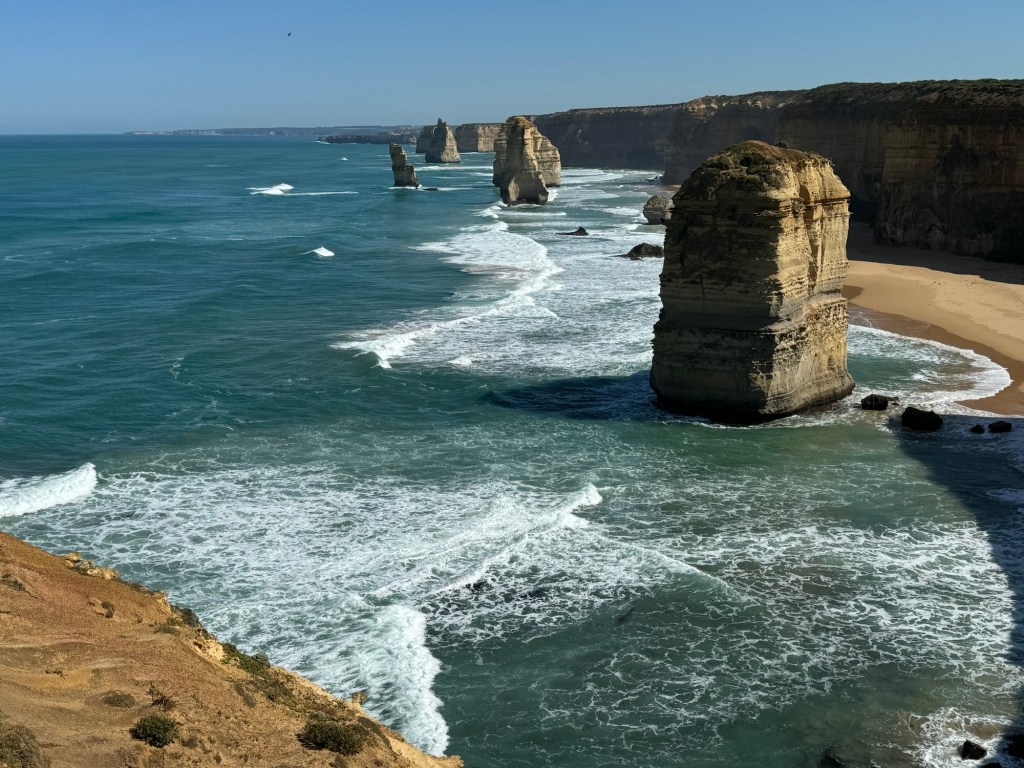
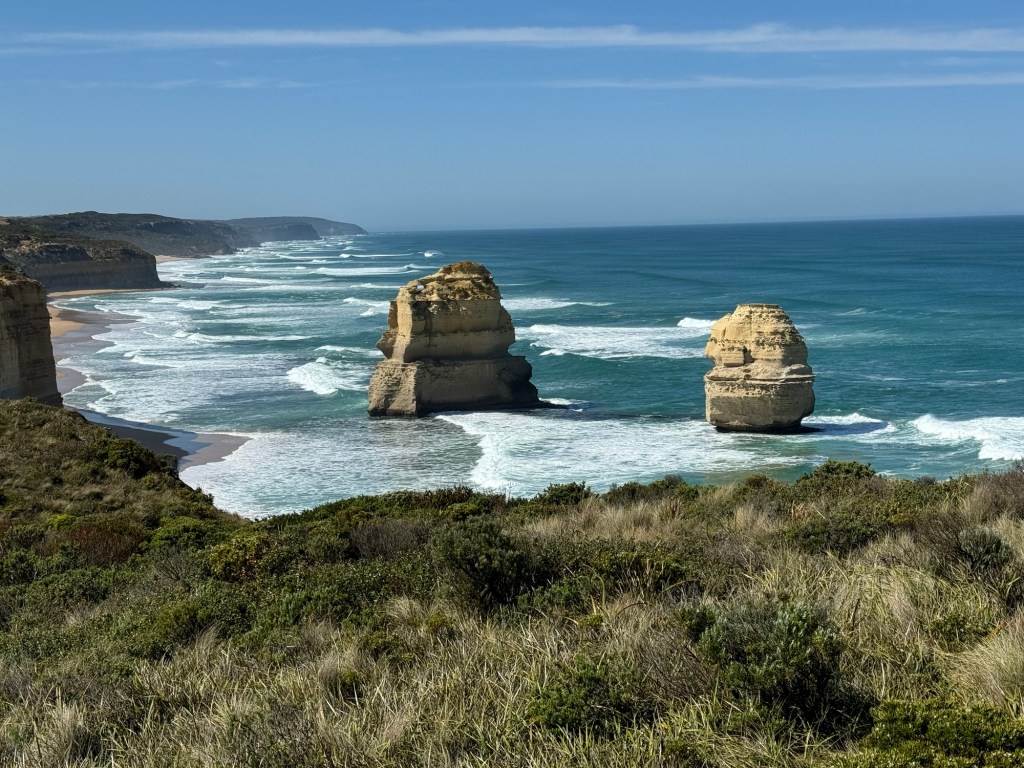
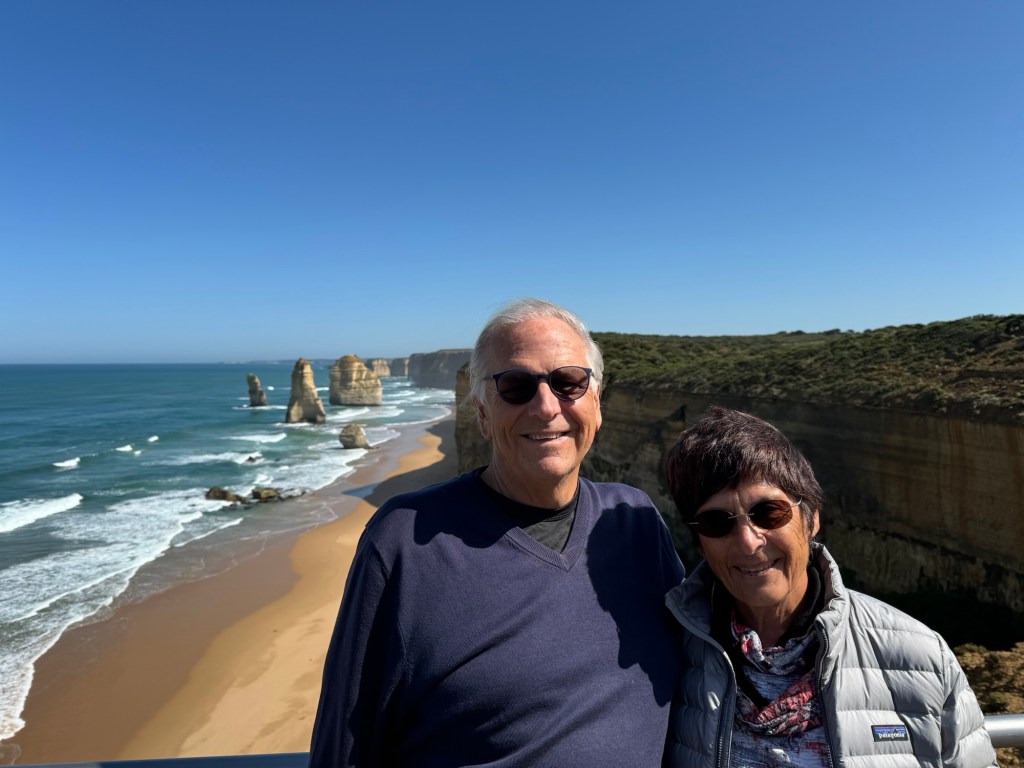
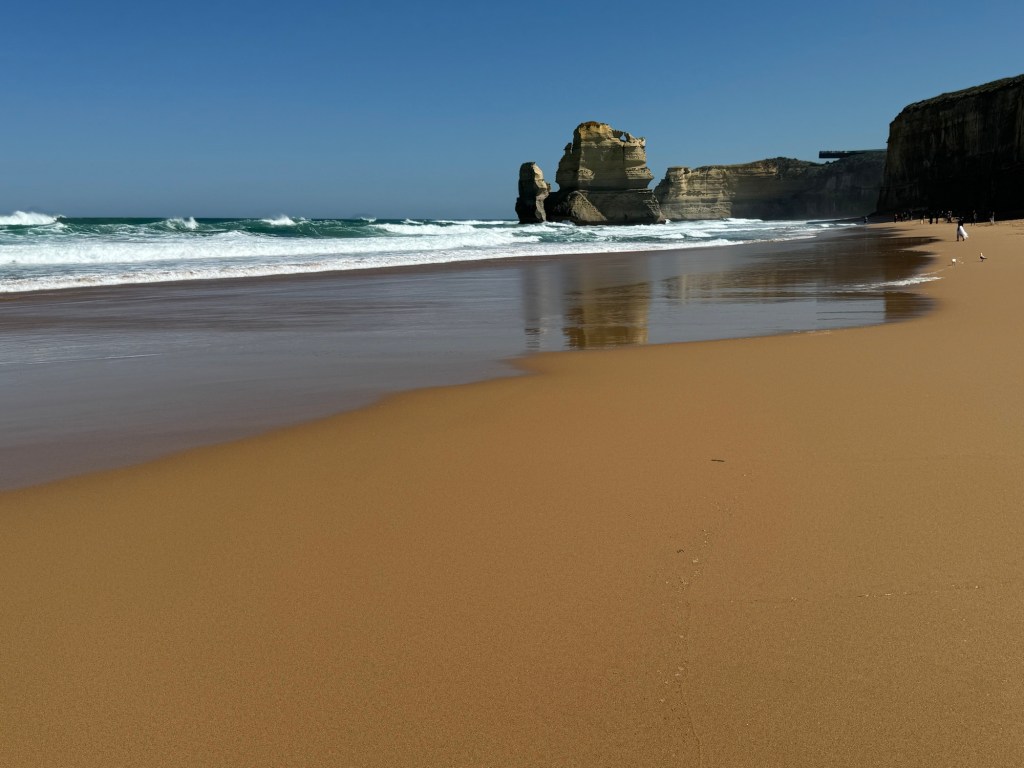
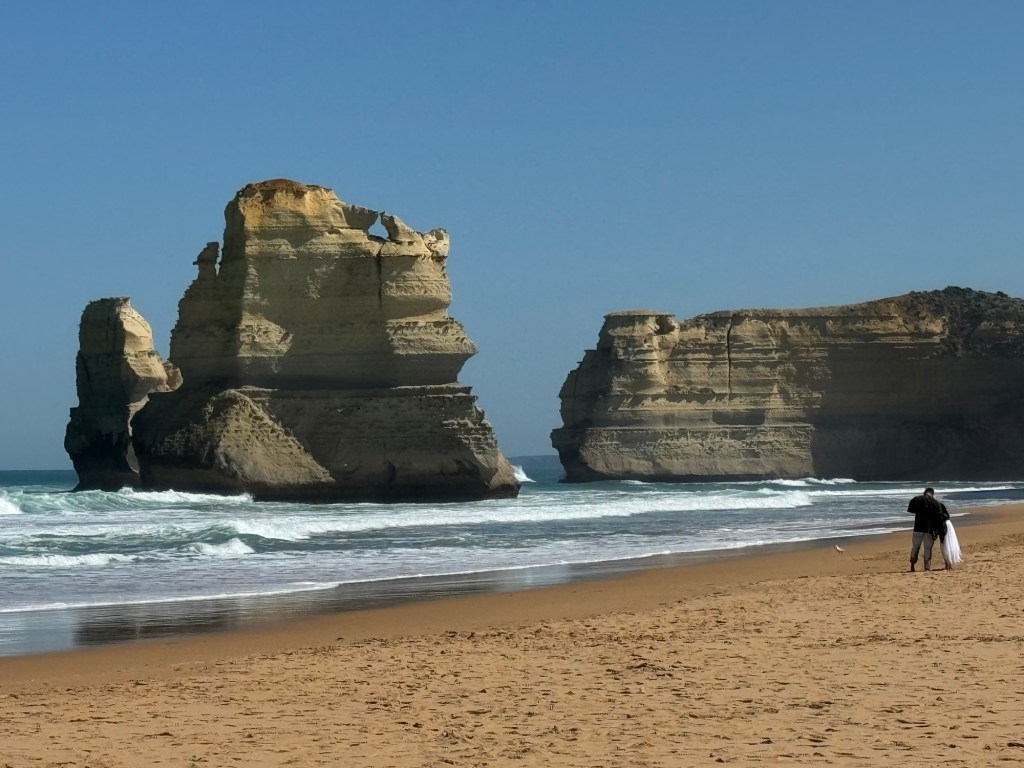
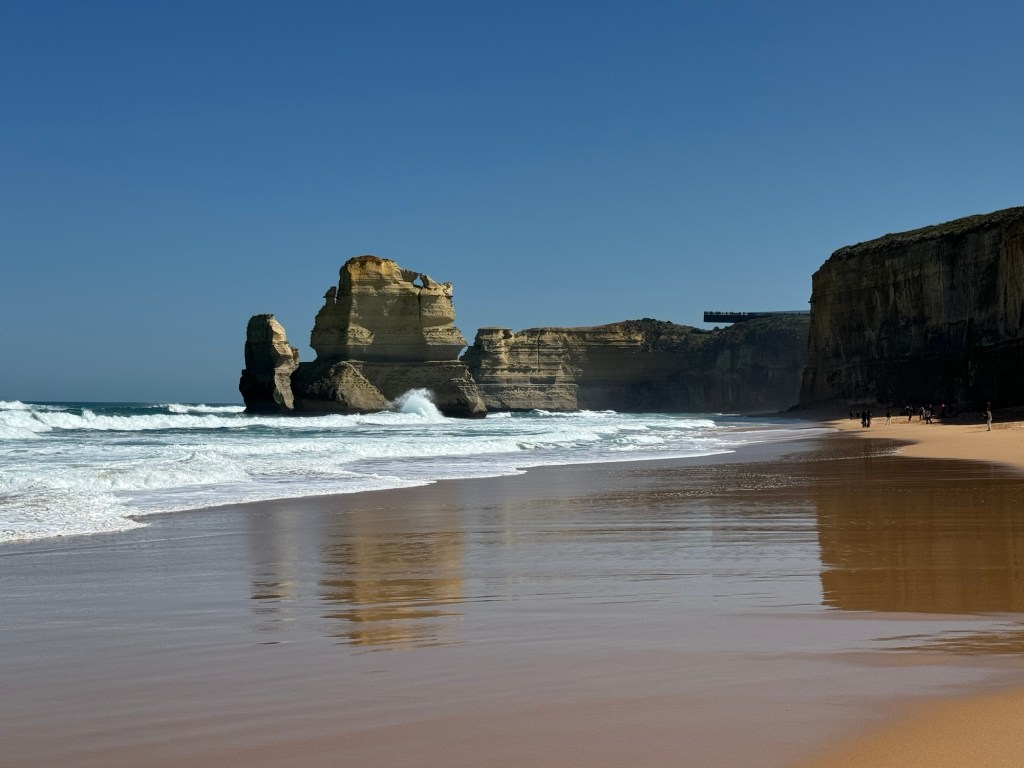
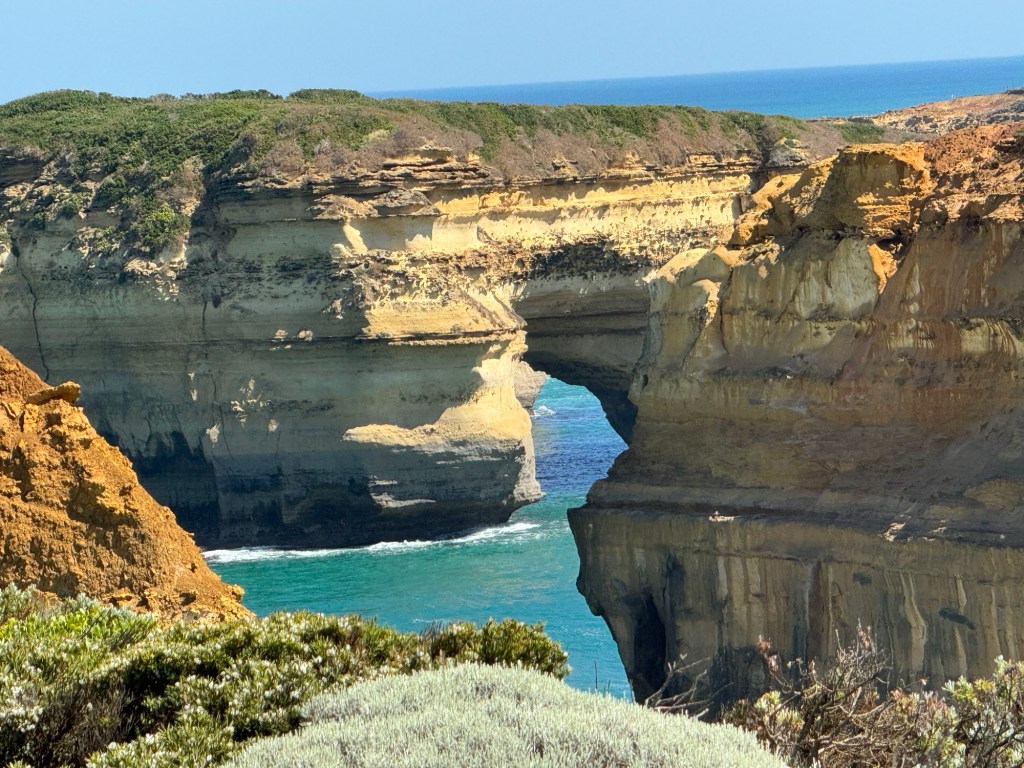
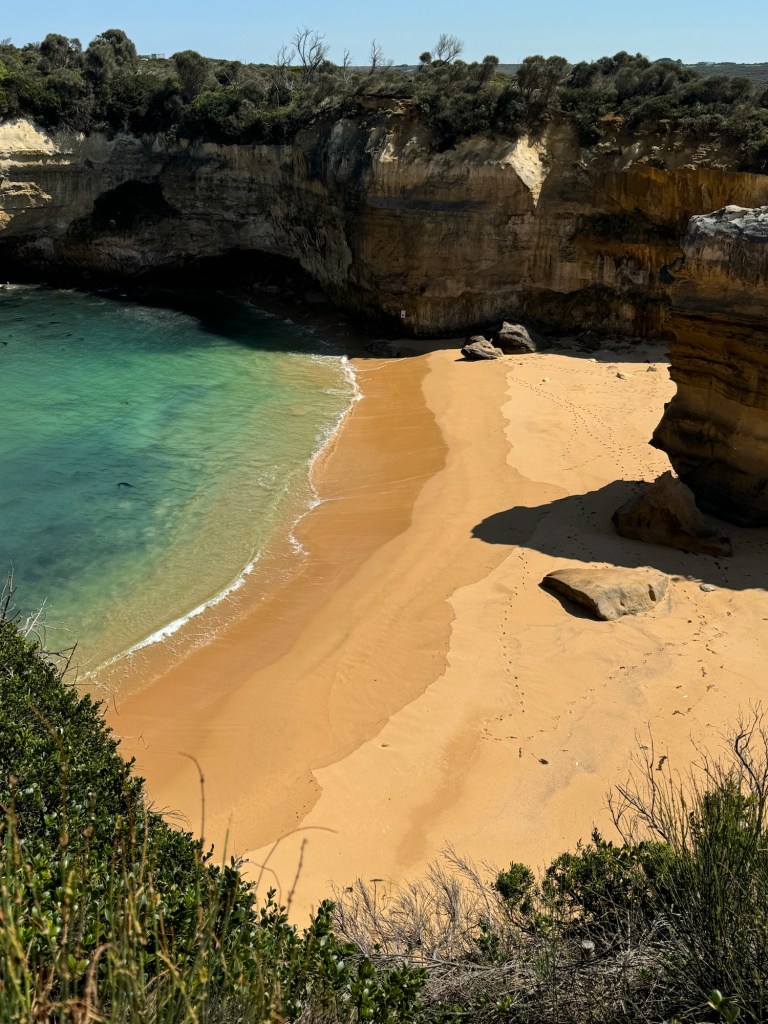
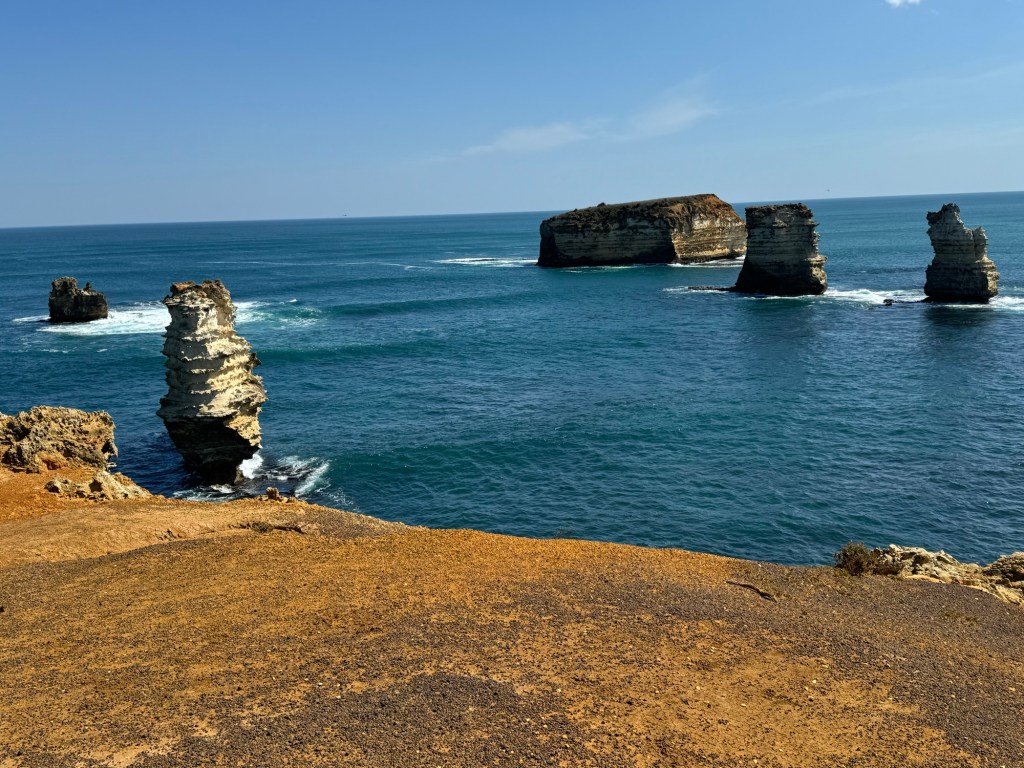
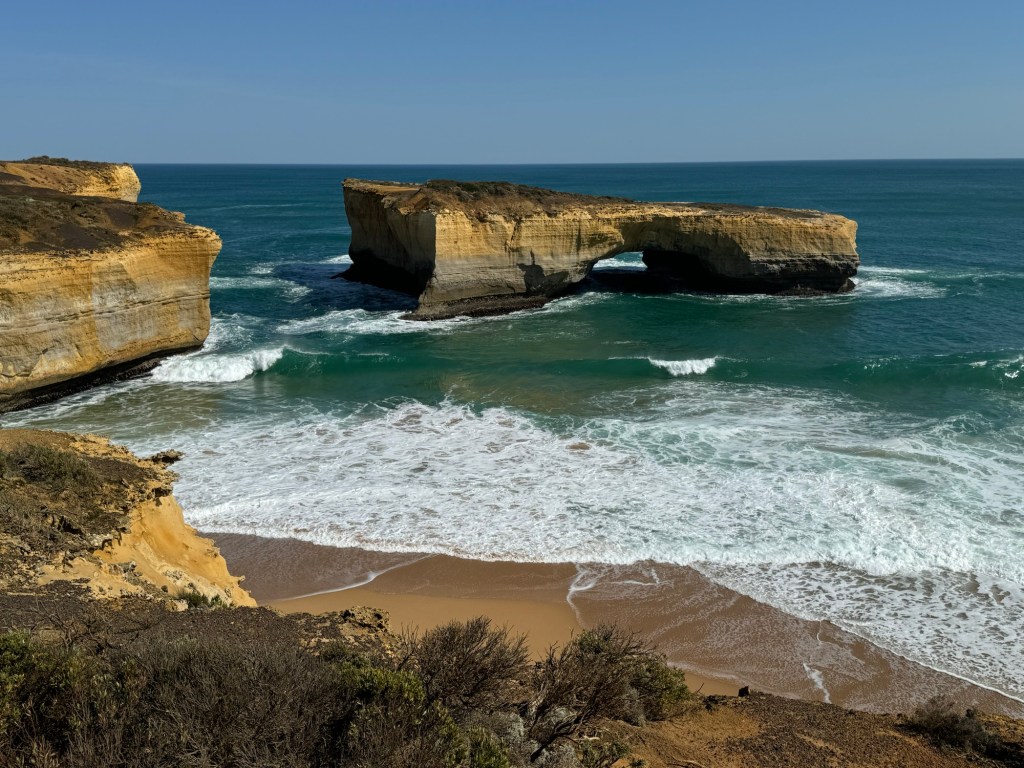
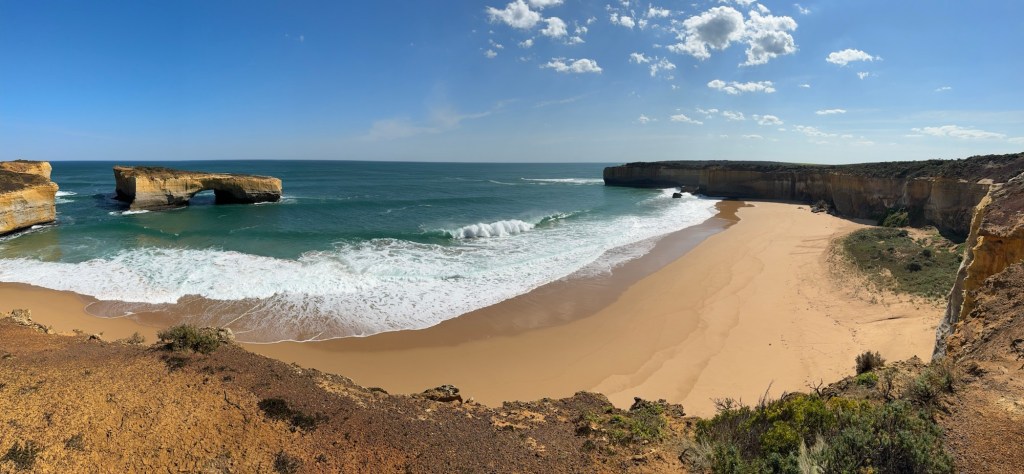
Back on the road we head for the famous 12 apostles. There are not 12 any more, but they live up to the hype about them.

About 3pm he drops us off at the heliport and a pilot flies us back to Melbourne. We thought the flight would end at the airport, but the pilot surprised us by landing downtown on a city helipad next to the river. It was not far from our hotel. Made us feel unreasonably important. Unfortunately, both our phones were dead at the moment, so no photos.

Back in our hotel, we repacked for Tasmania, expecting it to be cold. We also packed up a box of things we will not need, such as our snorkles and masks, and had the hotel send the box home. Helped free up some space.

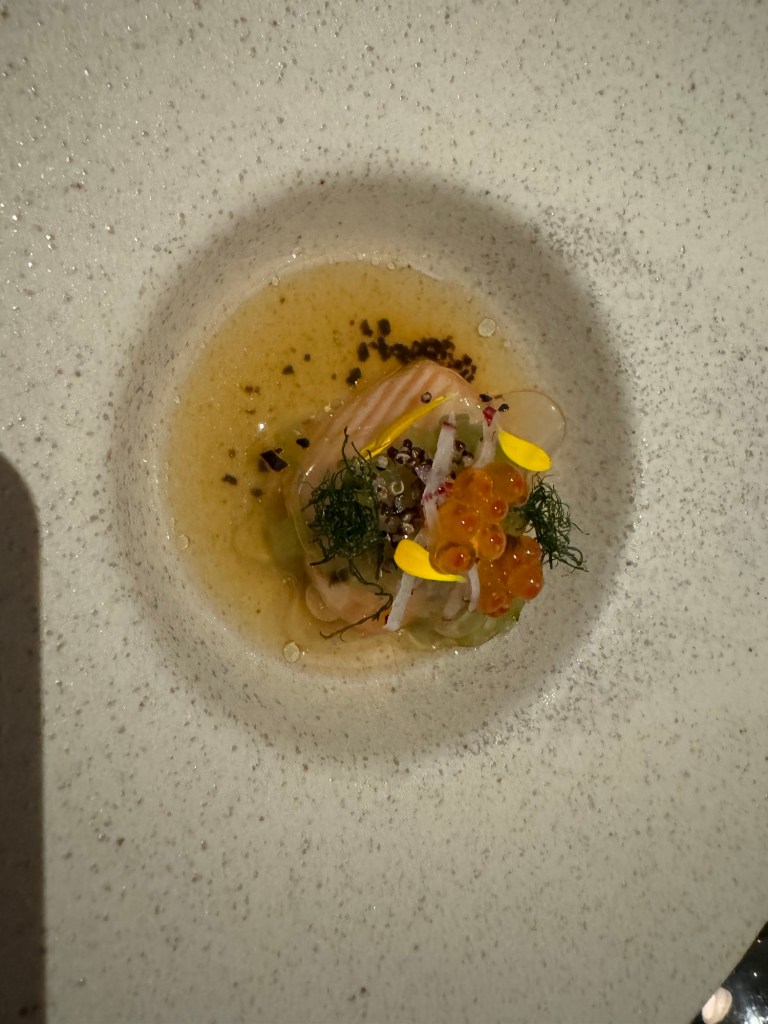
Then we went to dinner at a Japanese restaurant called Kazuki. They served us a 6 course Michelin style meal, which was good and especially interesting. Mark loved the ox tail and duck. I loved the dessert.

We Ubered back to the hotel, enjoyed the city view from our 19th floor windows and went to bed. Tomorrow we start a new adventure in Tasmania.