
Friday, October 4, 2024
We arrive in Hobart from Melbourne at 10am. Our driver, Andrew, was delightfully charming and informative. Much more than a transport driver. Soon I was taking notes. The population of the state of Tasmania is 565,000 and is approximately the size of West Virginia. It is the least populated state in the country. The half of the population lives in Hobart, the capital. About 100K has some aboriginal heritage. Tasmania claims to have 4 distinct seasons as they are 40 degrees south of the equator. As Grass Valley is about 39 degrees north of the equator, our climates must be similar. The temperature was 63F in Hobart.
The first European to land on the island was Abel Janzoon Tasman in 1642. The state was named for him in 1856. Originally a prison colony, 190,000 prisoners were sent to Tasmania from England. Roughly half came to Tasmania and half went to Sydney. The first successful European settlers came in 1804 and settled in what became Hobart. It has the 2nd deepest port in the world. Money-making products were fish and organic foods. Whiskey was also a moneymaker.
Then Andrew dropped us off at the Museum of Natural Art (MONA) and we began our 11am tour, which was a self guided computer app. It was the most unusual museum I have ever experienced. The art is all over the globe in terms of subject and translation. There is no map of the layout to follow or any organization to understand. After wandering around for almost 2 hours, we were tired and confused and wanting the experience to be finished. We left the building, knowing there must be a lot we missed. We had lunch in the museum, but found it somewhat confusing too.
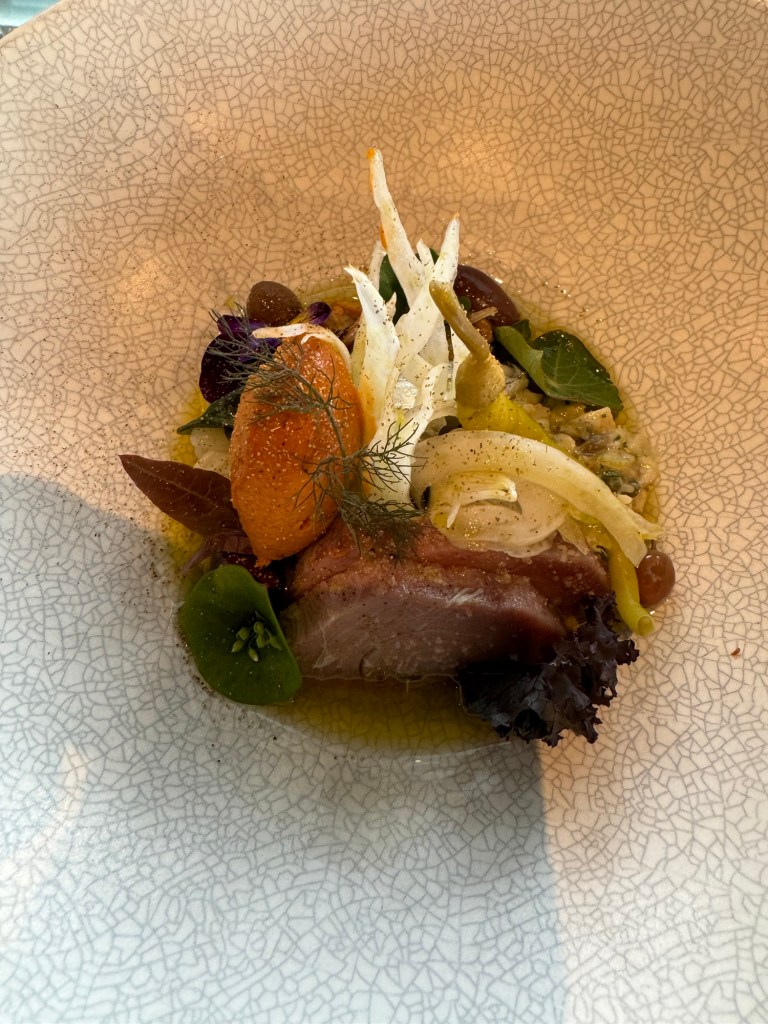
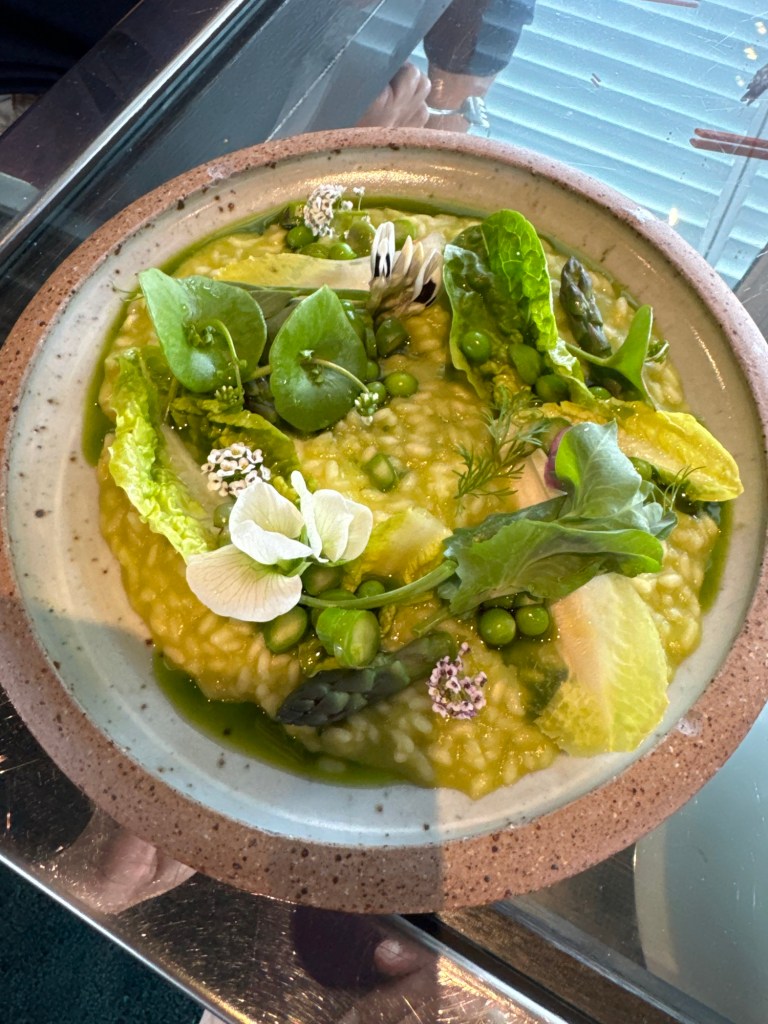
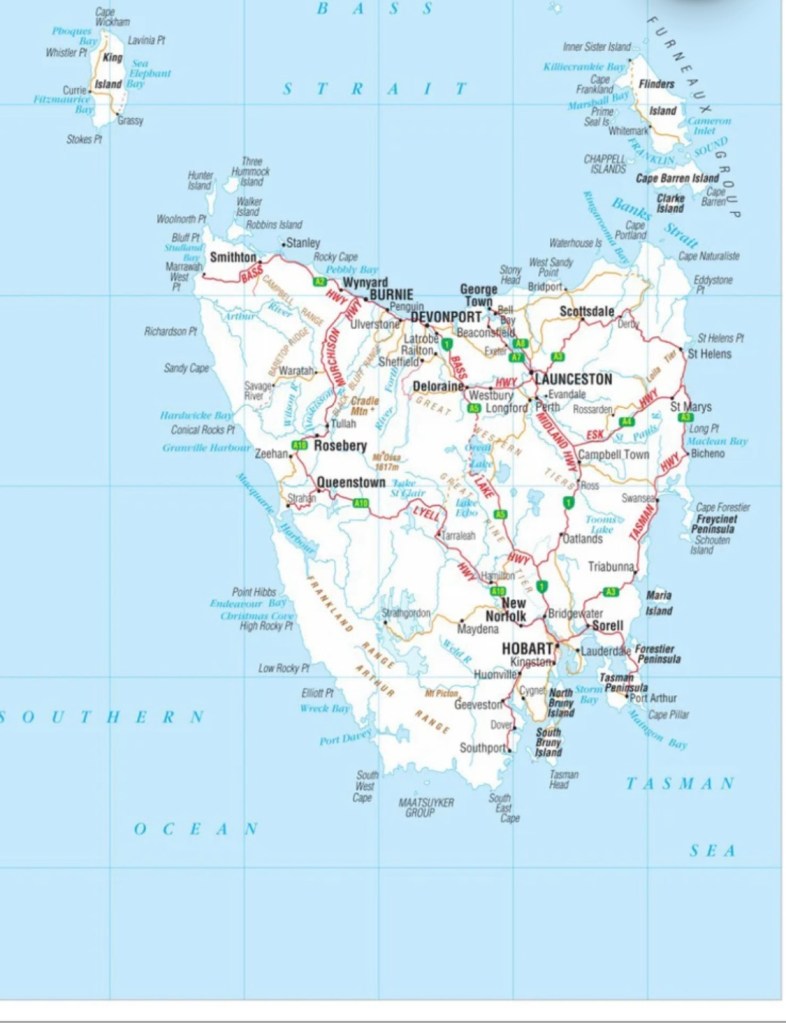
When we left the museum, the sky was raining lightly and Andrew quickly took us to the heliport for our 50 minute flight to our Hotel, the Saffire Freycinet on the east side of the island. (The Freycinet Peninsula is marked on the map). The pilot was happy to get airborne and off we went.
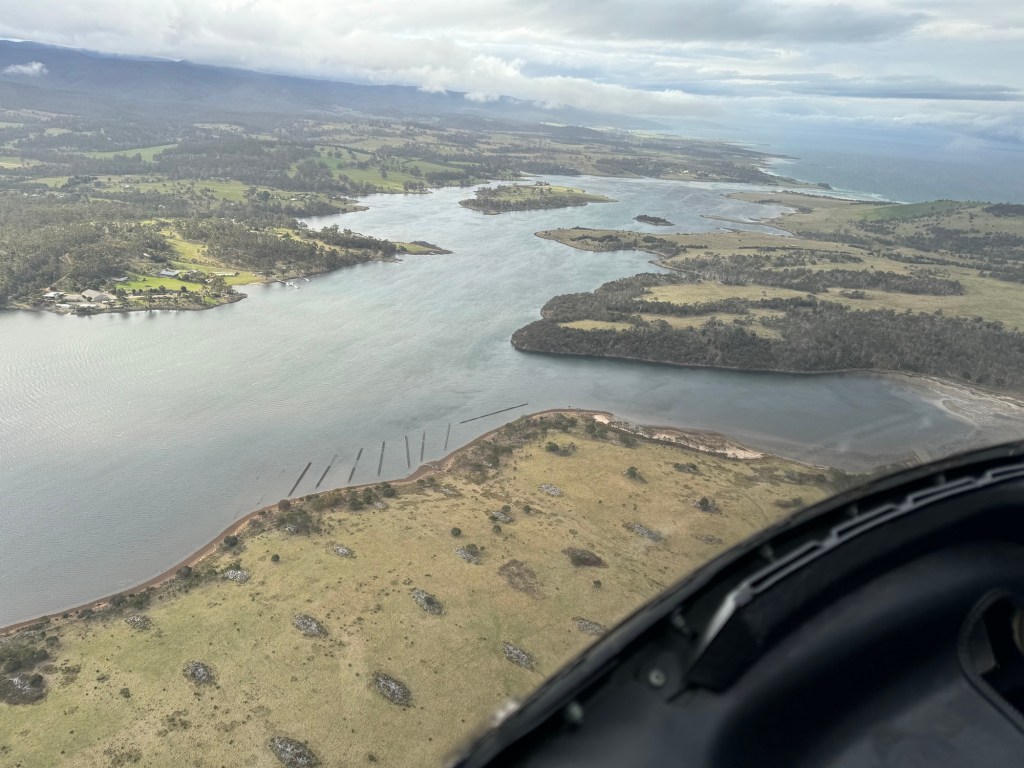


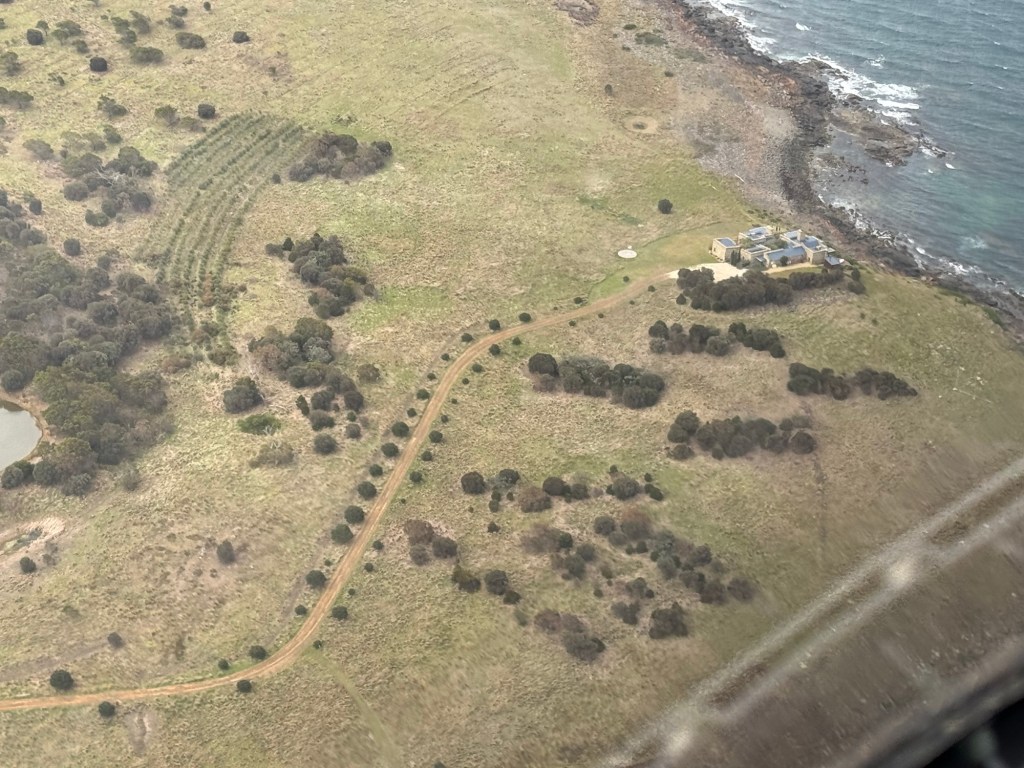
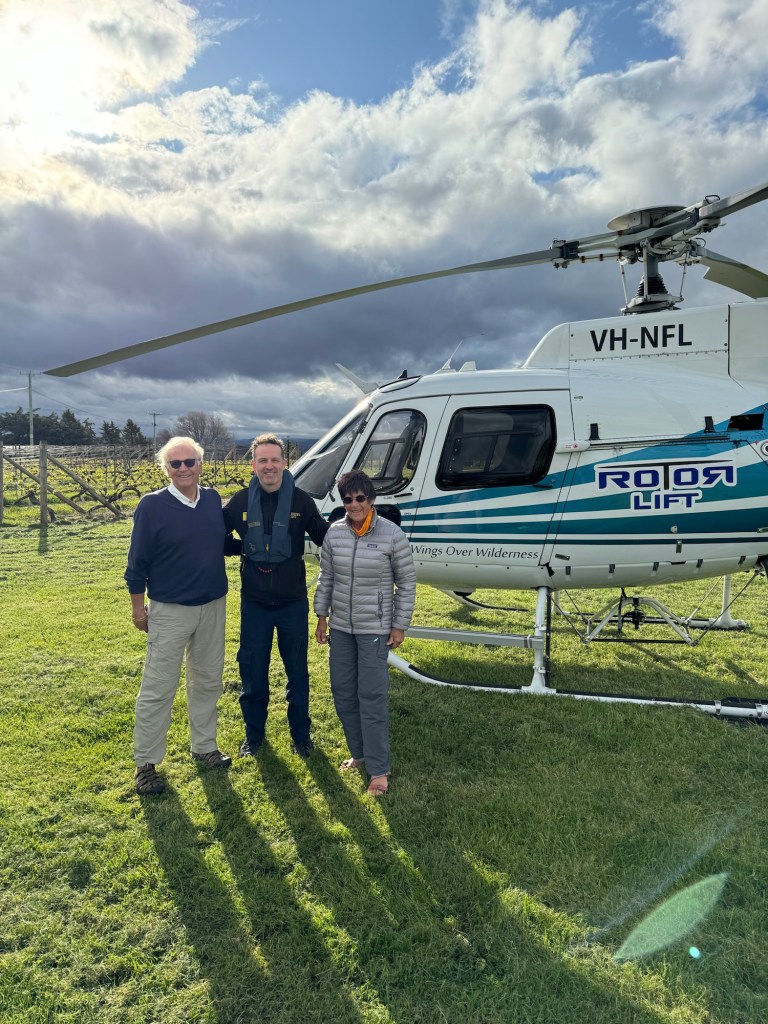
After 40 minutes the fog had descended below minimums and he decided to put the chopper down in a winery vineyard, short of our hotel destination. Very shortly a friend of the pilot’s drove up and agreed to take us the rest of the way to the hotel. It is so nice in a small country, where everyone knows everyone and is willing to lend a hand. We were on our way by car in just a few minutes and reached the hotel about 30 minutes later. Everyone was so very nice. Soon we were in our hotel room and able to relax.
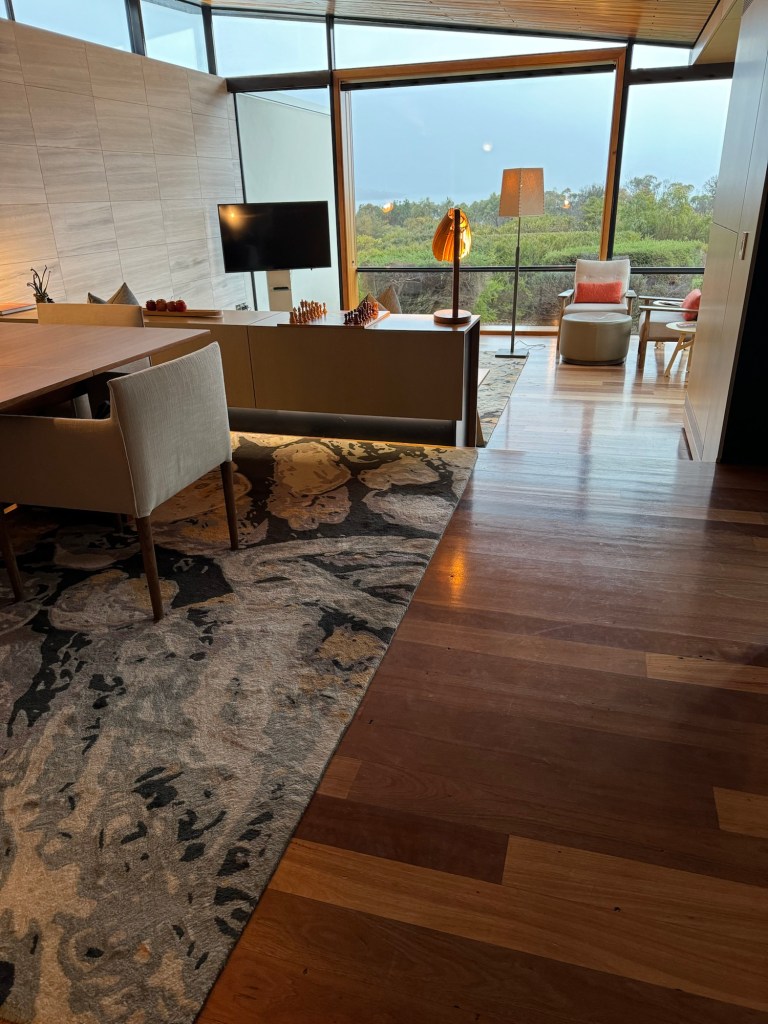
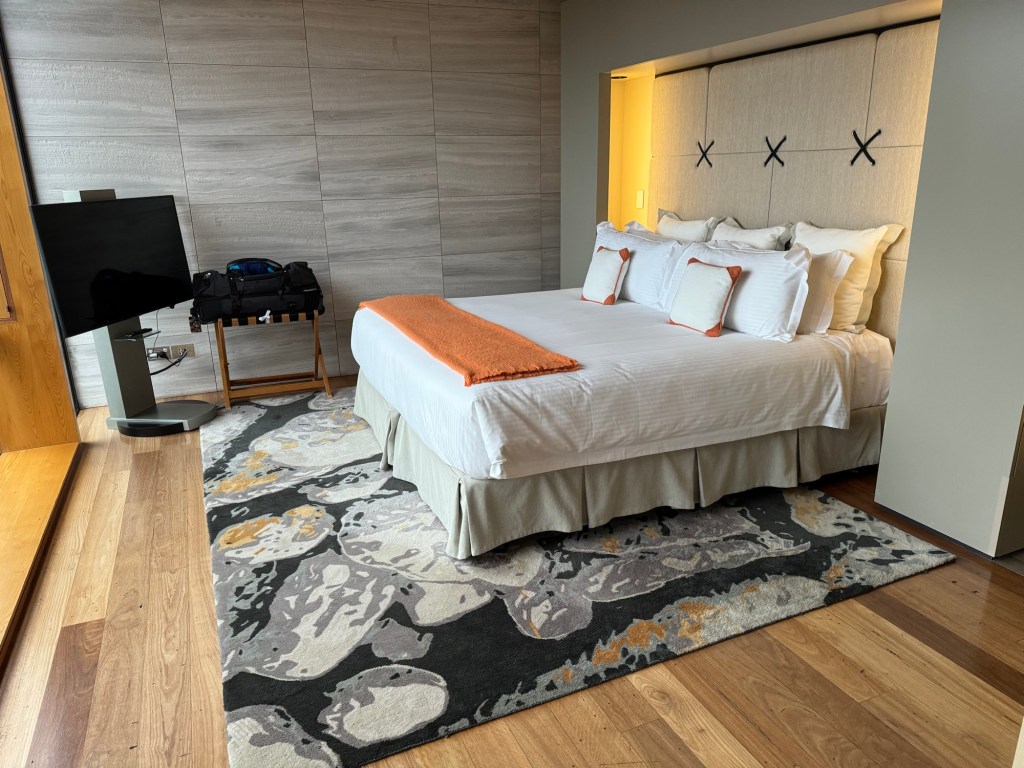

Apparently the Freycinet brothers arrived in the area in 1802 and mapped the area, but did not live here.
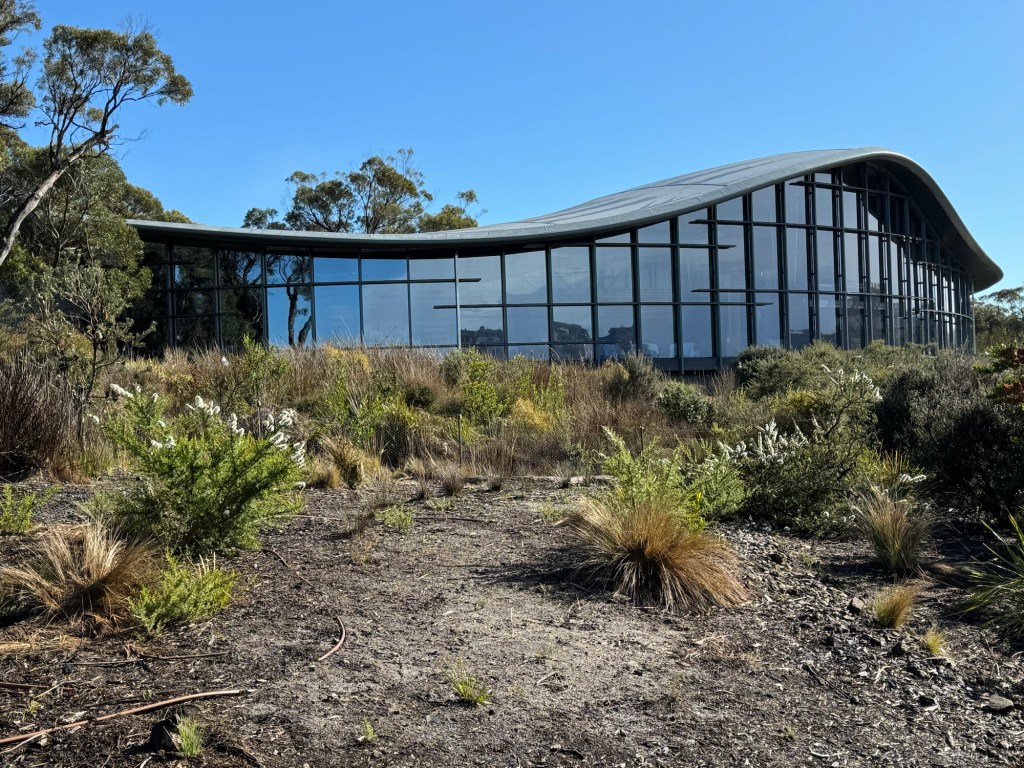
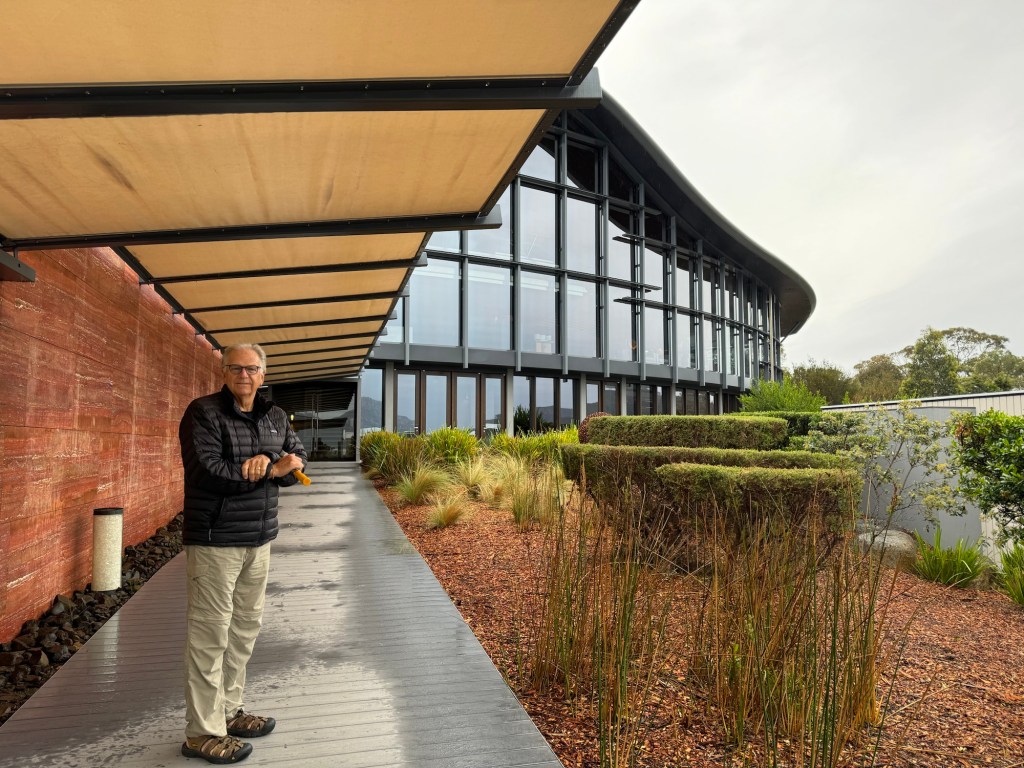
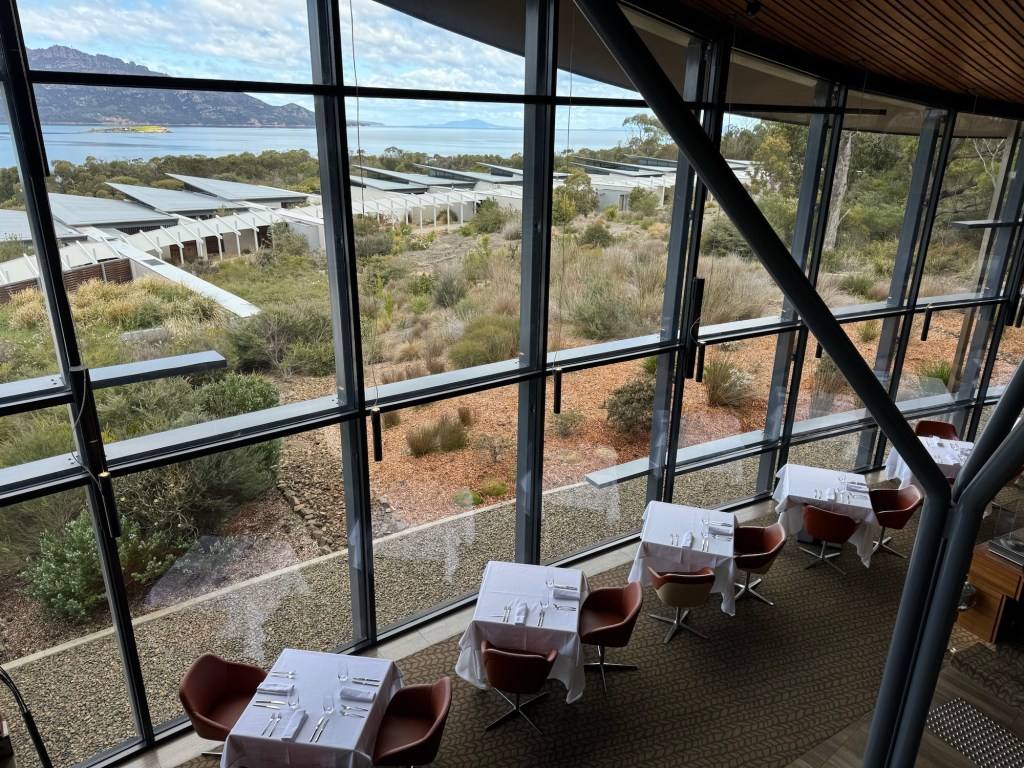
We had a light simple dinner and were happy to relax in our room. The building is designed to look like a Southern Eagle Sting Ray.
Saturday, October 5, 2024
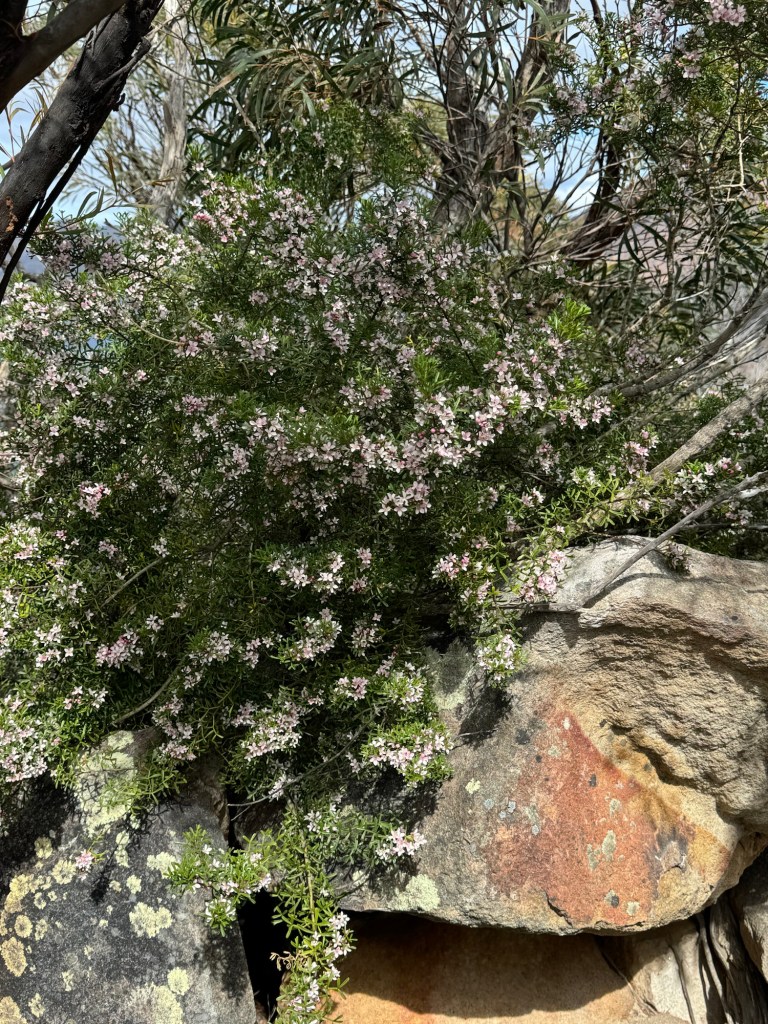
Up and out for a reasonably sunny day, with a light breeze and a few clouds. Simple breakfast followed by a ride then walk hike with the hotel guide, Nicole. We walked on a very easy trail that was most pleasant. Nicole identified many plants and lichen, with a limerick: “Freddy fungi and Alice algae met and took a lichen to each other”.
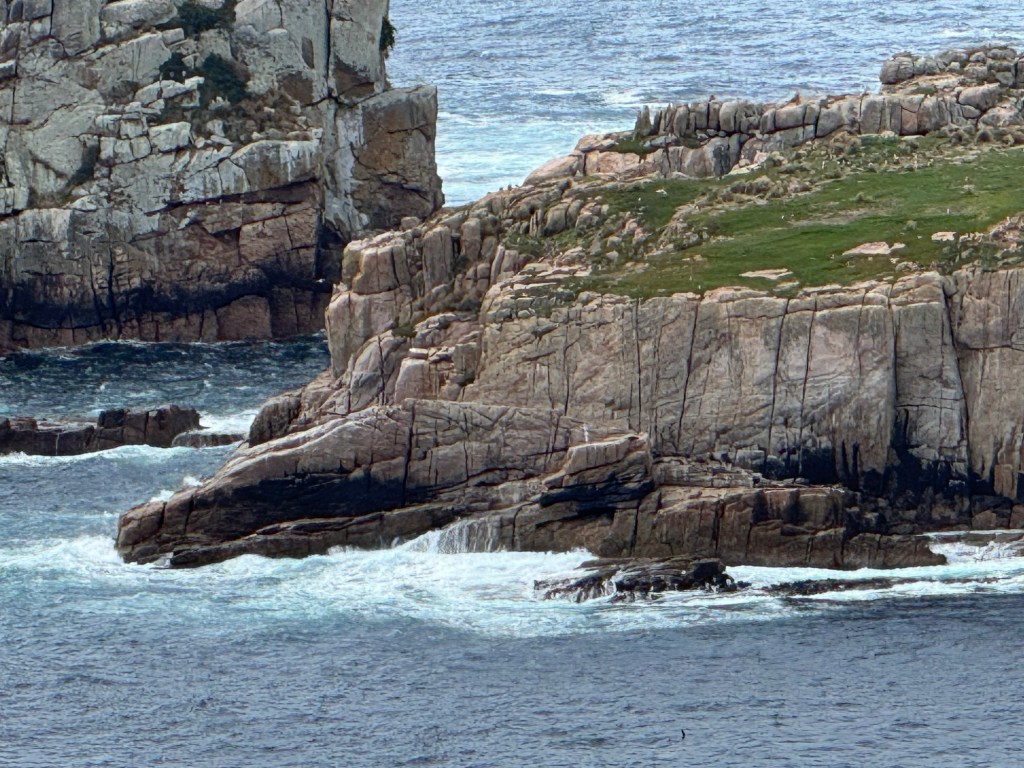
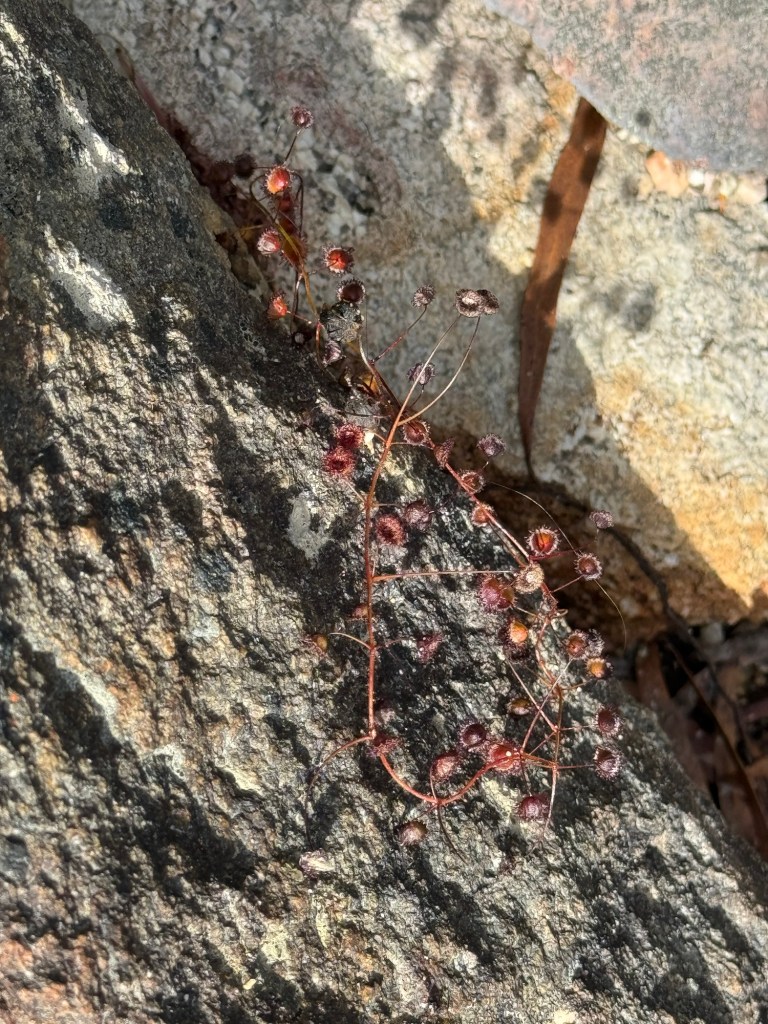

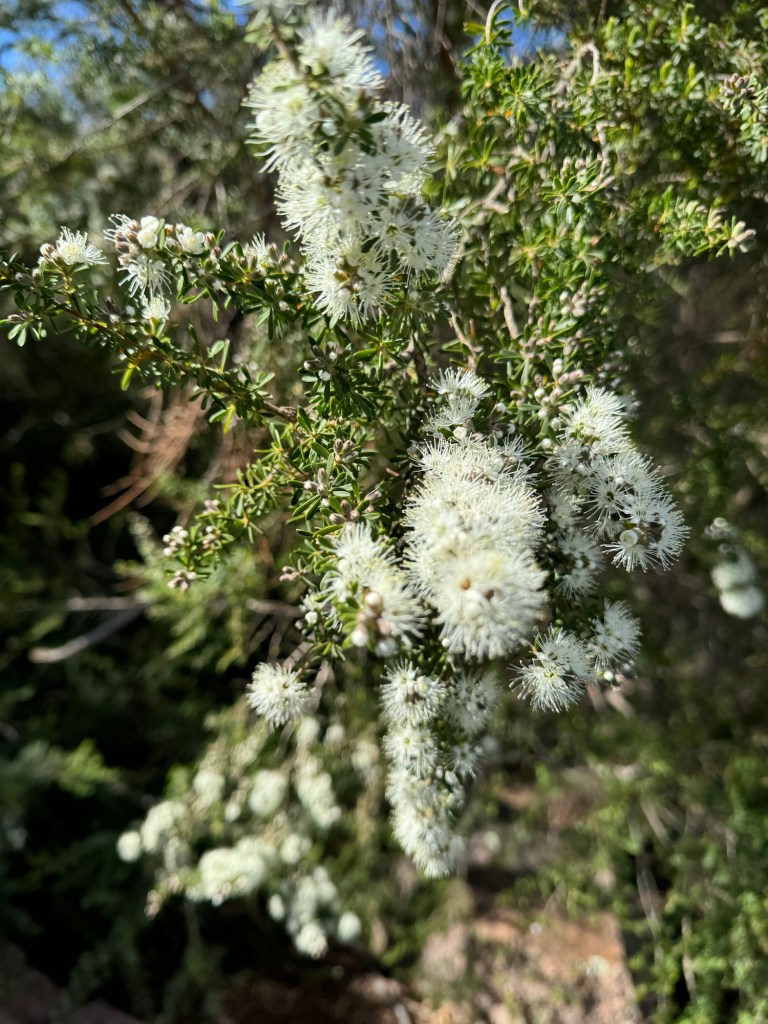
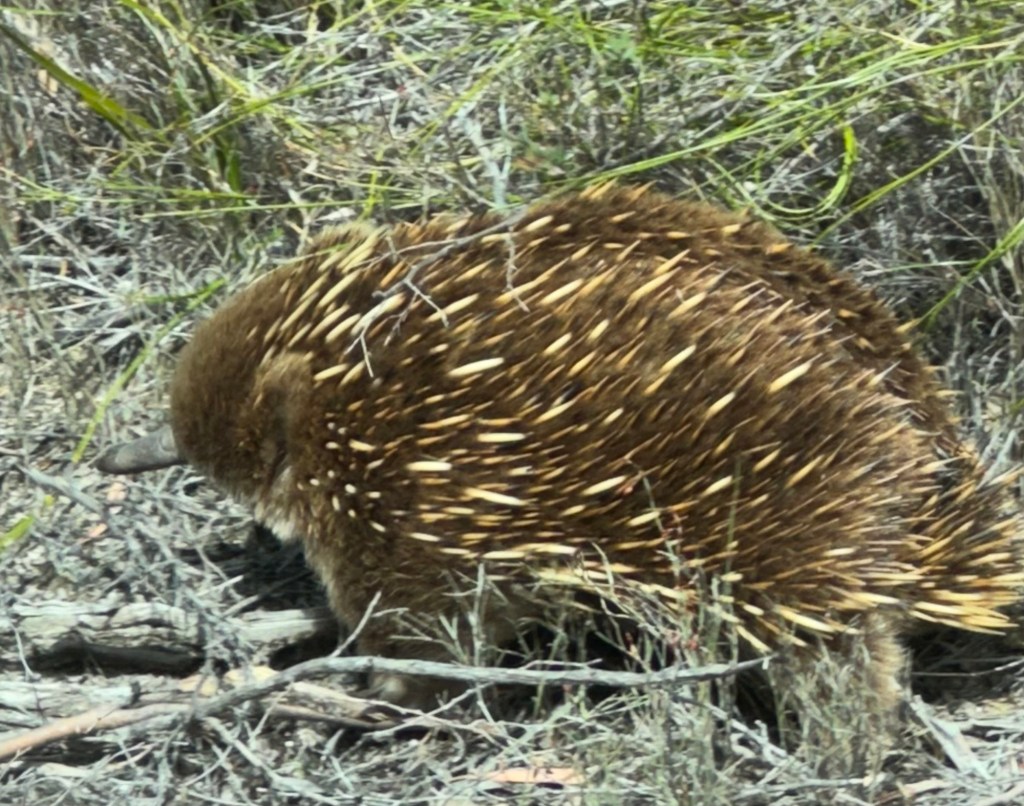
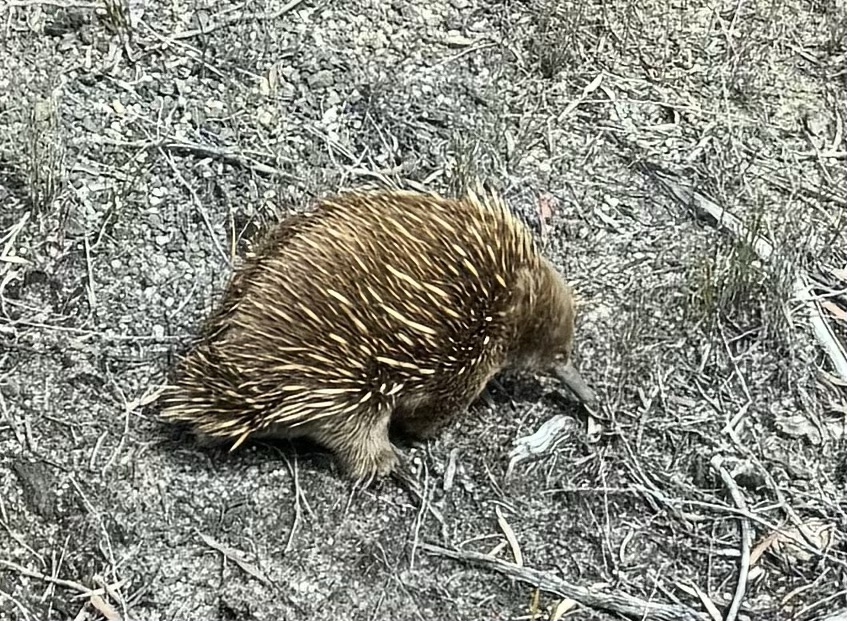
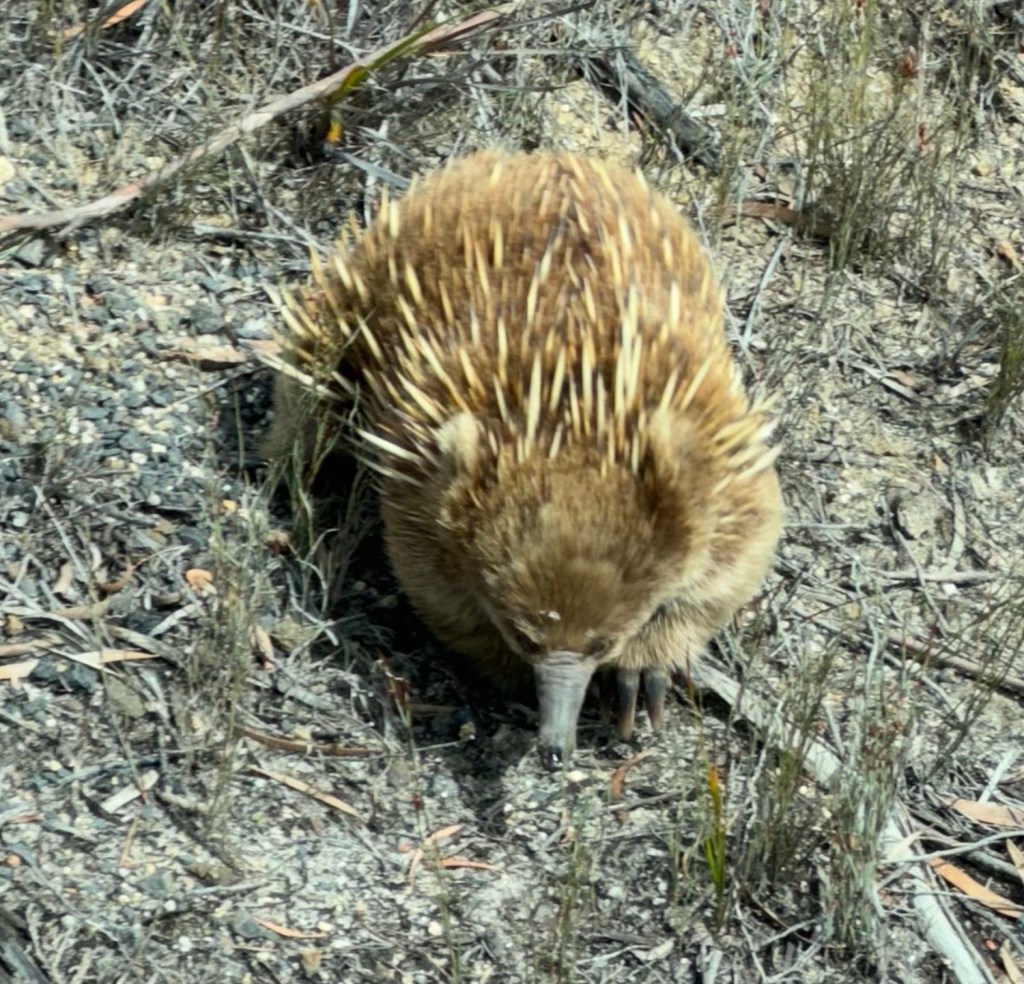
On our drive with Nicole, we saw three different Echidna along the roadside and were thrilled to see them and get these photos. Echidna is a Greek word for “spiny ant eater”. They live only in Australia, and are very smart, having the largest frontal cortex in relation to their size of all mammals including humans. Along with the platypus, they are the only living mammals that lay eggs. About 30 days after mating the female deposits a single, soft shelled, leathery egg in her pouch. The egg hatches after 10 days and the baby lives in the pouch for 7 weeks. The mother gives pink milk due to high iron content of her diet, which includes termites, ants, earth worms, beetles and moth larvae.
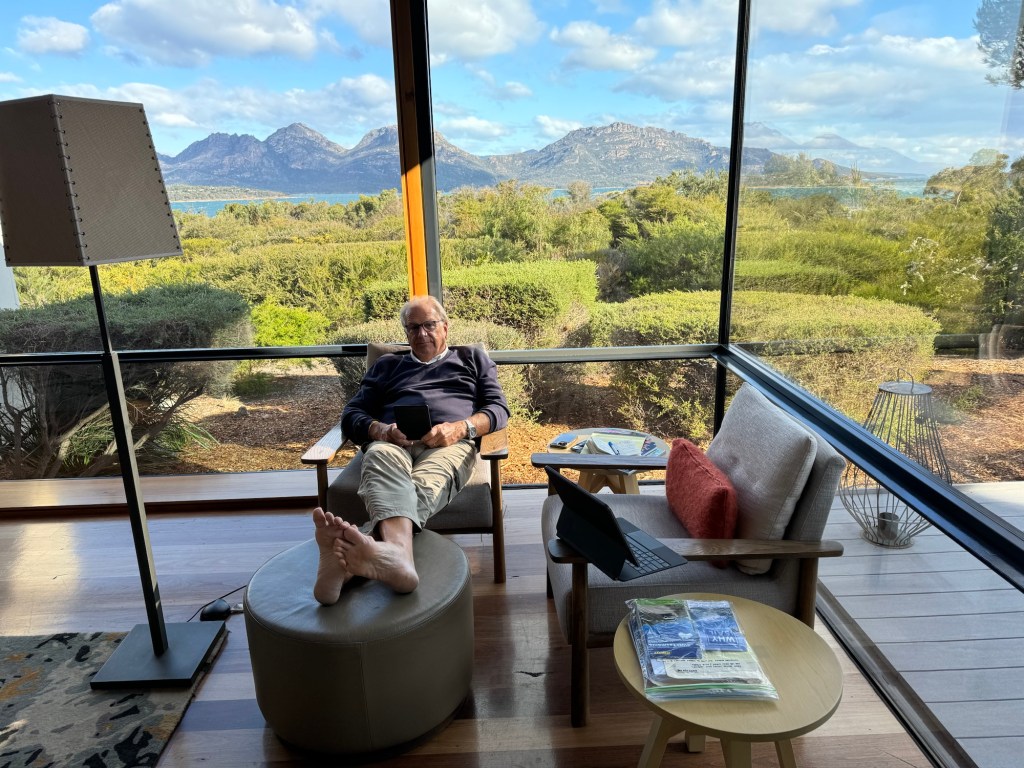
Back at the lodge, we had lunch and relaxed until 4pm, when we had our next planned activity—a visit to the Tasmanian Devil enclosure. It is on site at the lodge and a big part of its conservation efforts. The enclosure is 2.5 acres in size and currently contains 5 aging female devils. The only male had died a couple of weeks ago.
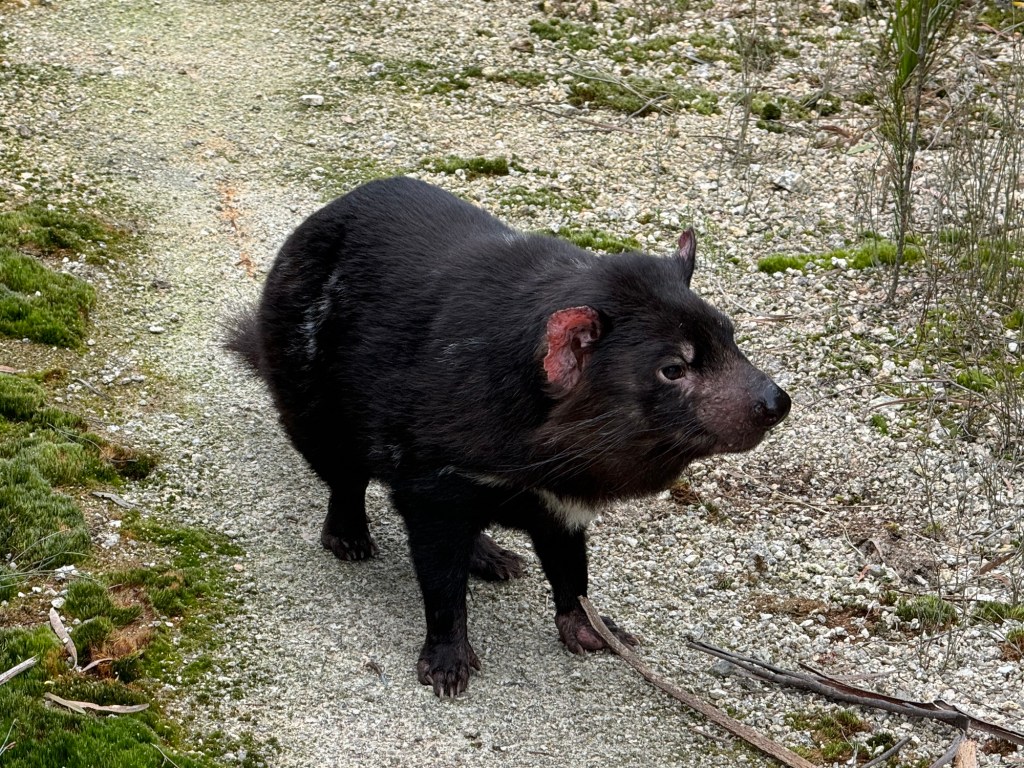
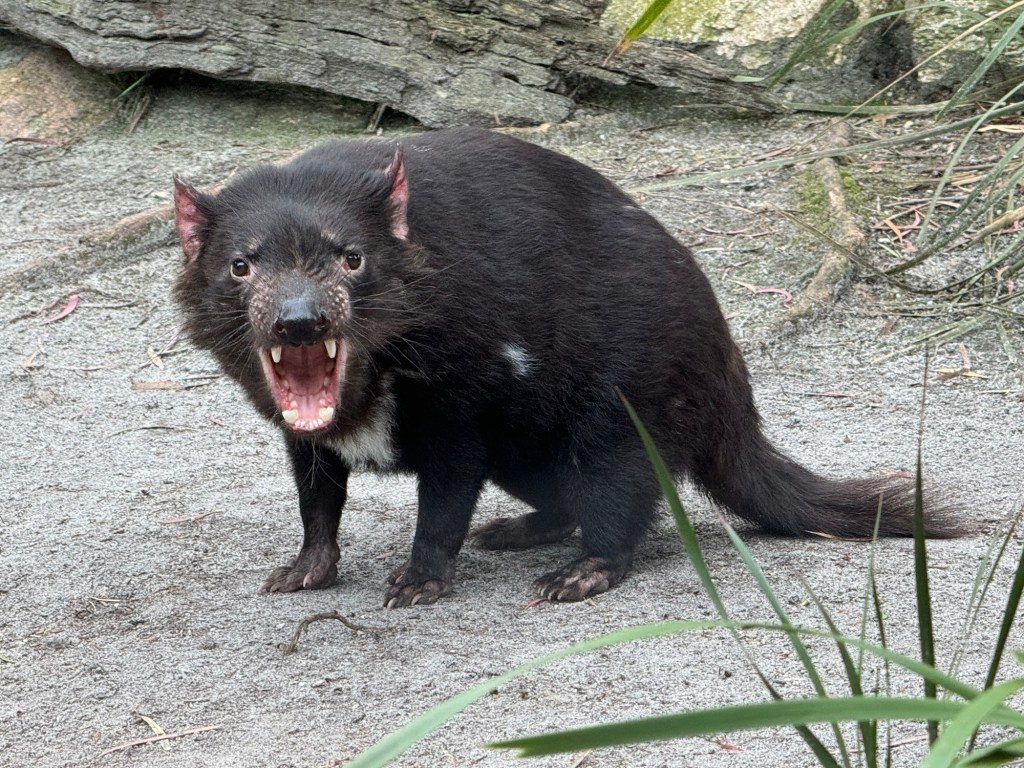
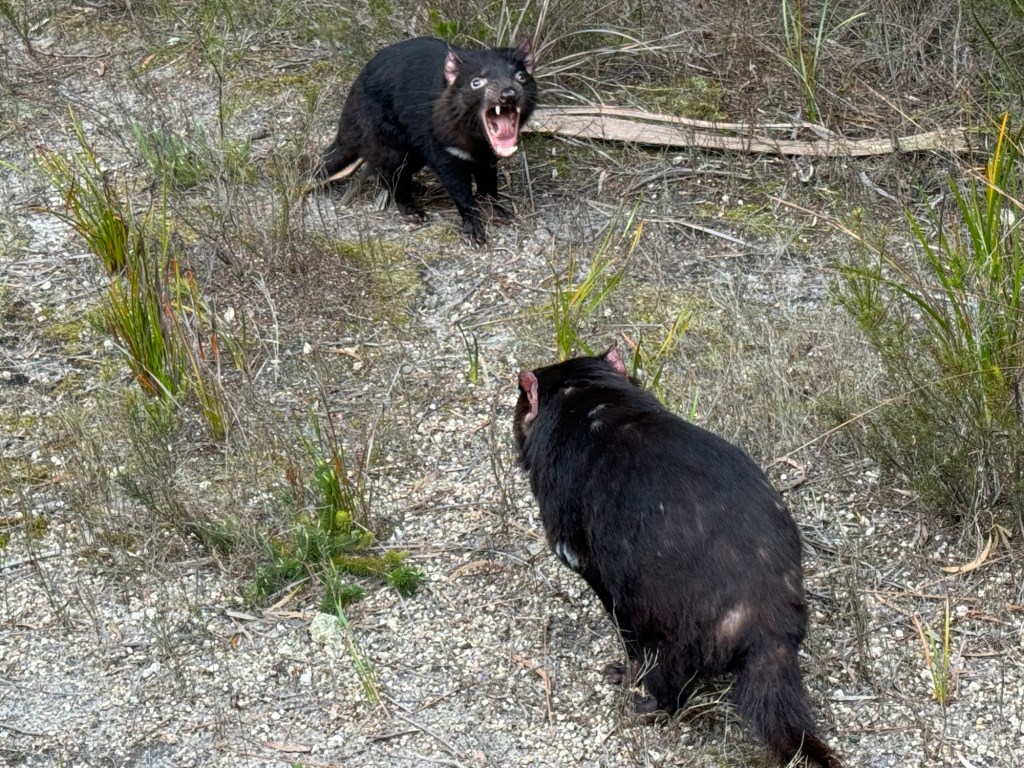
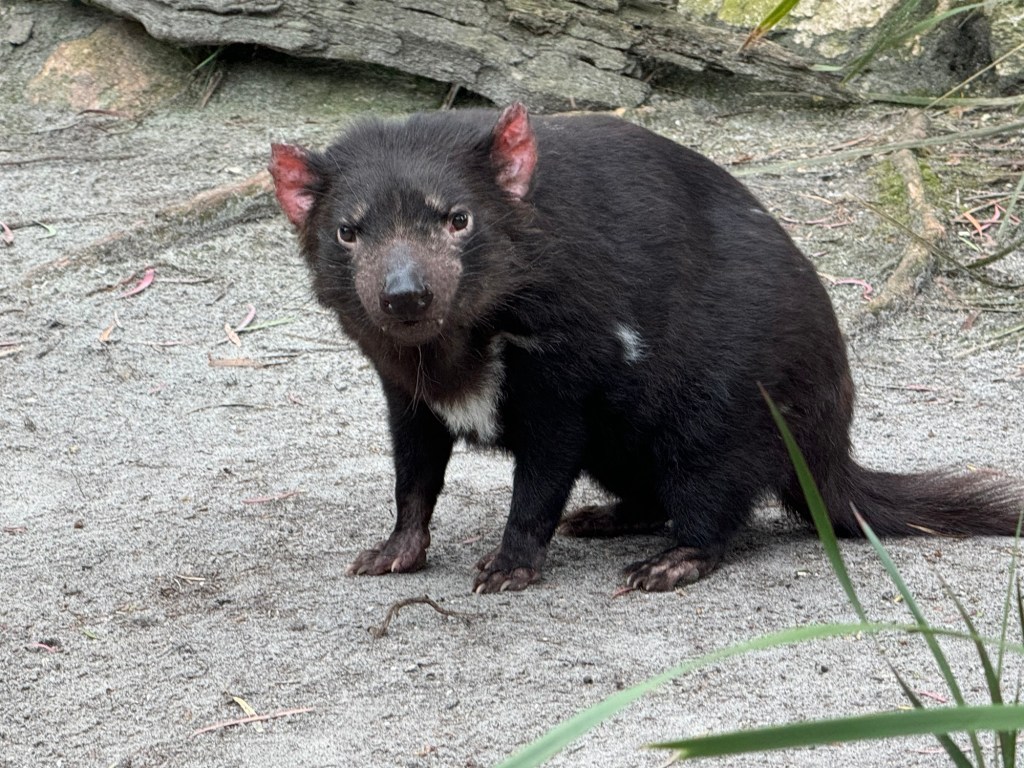


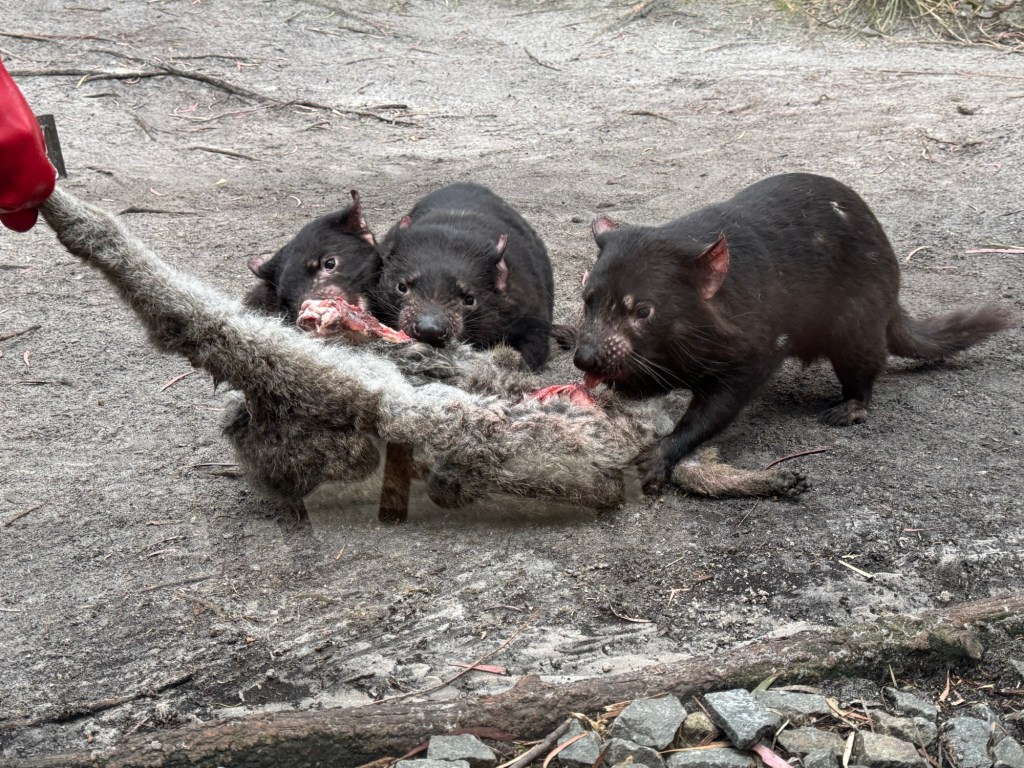
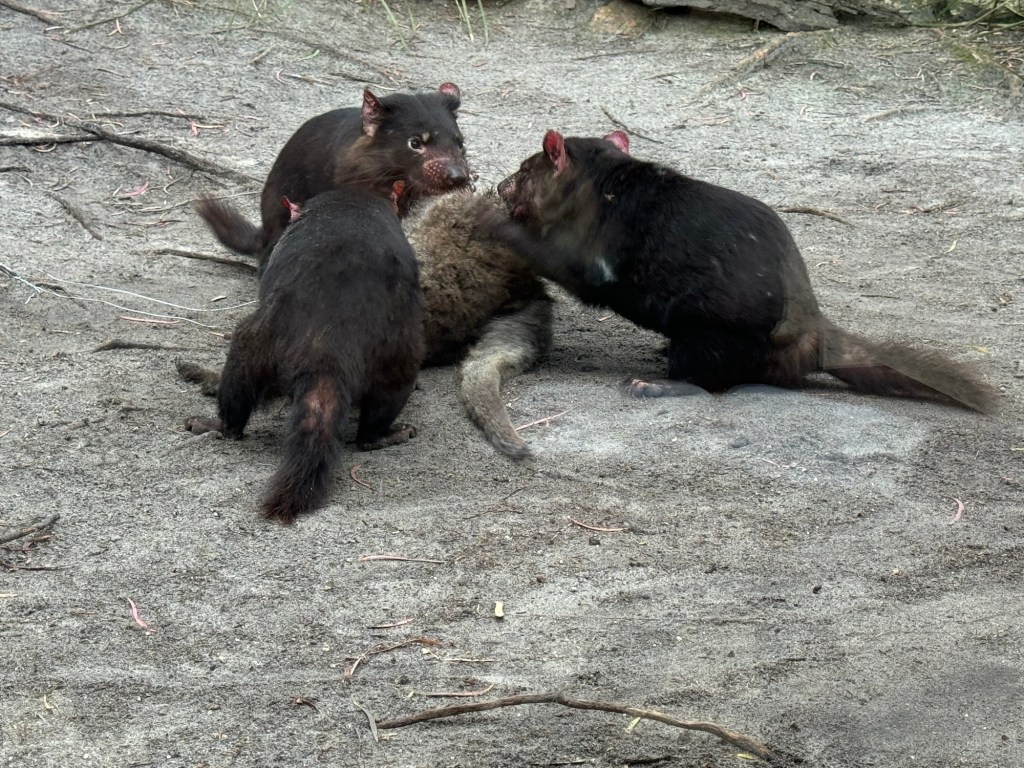
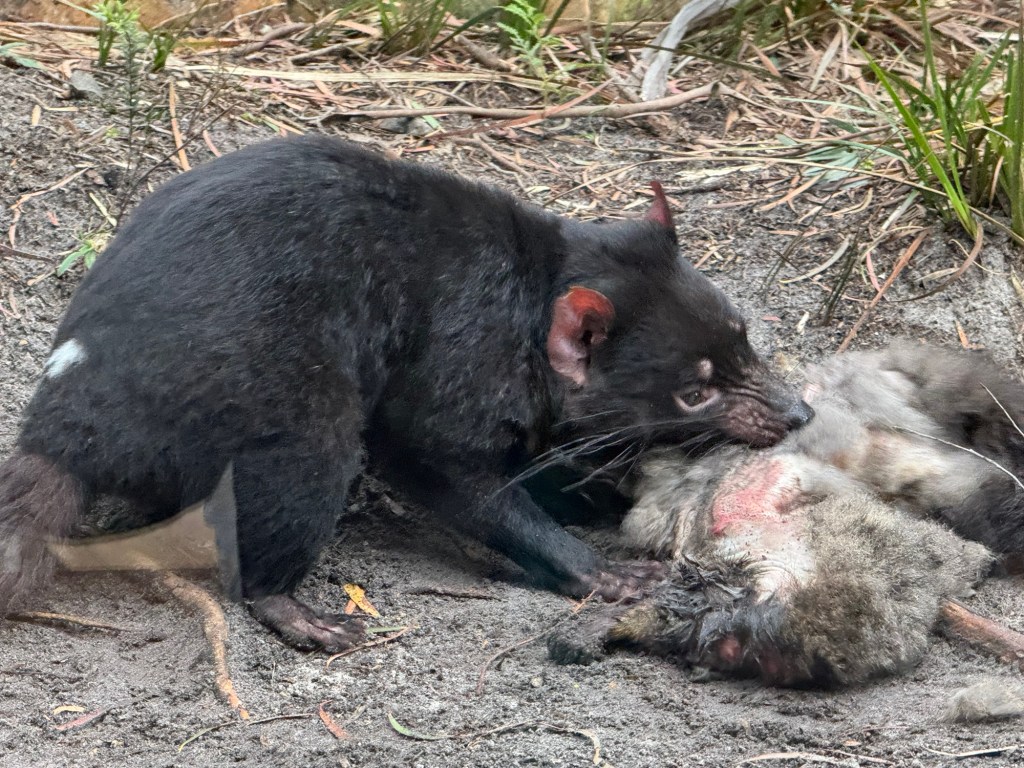
Tasmanian Devils are the largest carnivorous marsupials in the world and have the strongest bite for their size of any mammal. They only live on Tasmania as they became extinct everywhere else 3500 years ago. They eat up to 40% of their body weight in a day. Here at Saffire Freycinet, the devils are fed wallaby or possum every other day. They scream and shout and act like they are about to fight with each other, but they are displaying dominance and generally don’t fight.
These ladies don’t mate anymore, but those that do will have a litter of 20-40 Joeys, each the size of a grain of rice. As the mother has only 4 teats, that is all that will survive. They leave the pouch after 105 days and become independent after 9 months. Devils are very timid and quiet as a rule. They would rather run than fight. There are only 7-12,000 left in the wild. They are dying due to a very contagious cancer. A vaccine has been developed to eradicate the cancer, but inoculation is slow in happening.
Back inside the dining room, we found the place packed. Turns out to be a long holiday weekend for locals and we got the last table in the house. Mark enjoyed a bunch of very fresh oysters, while I ate a raw scallop. Excellent start. Next course was venison for Mark and a nice flaky fish for me. We even had room for dessert. Then early to bed.
Sunday, October 6, 2024
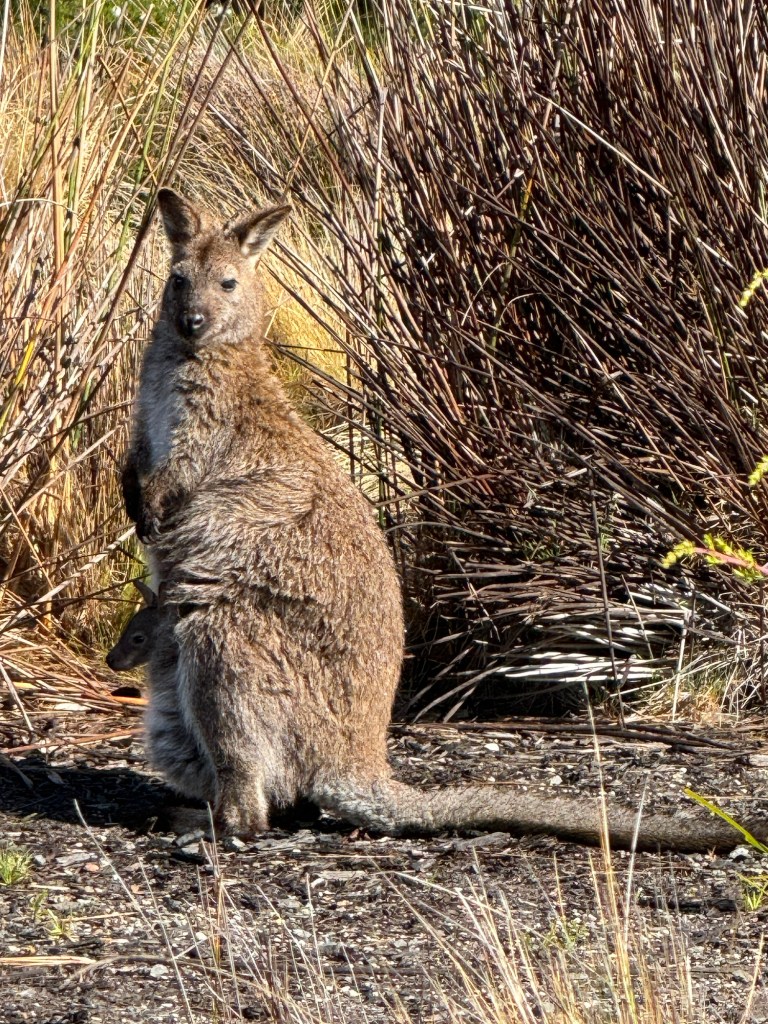
Coffee and Fresh OJ arrived at 7am, so we enjoyed the early morning in our room. There was almost no one in the dining room for breakfast. On the way we encountered this Kangaroo and her Joey.
We had no plans until 2pm, so we enjoyed our private space.
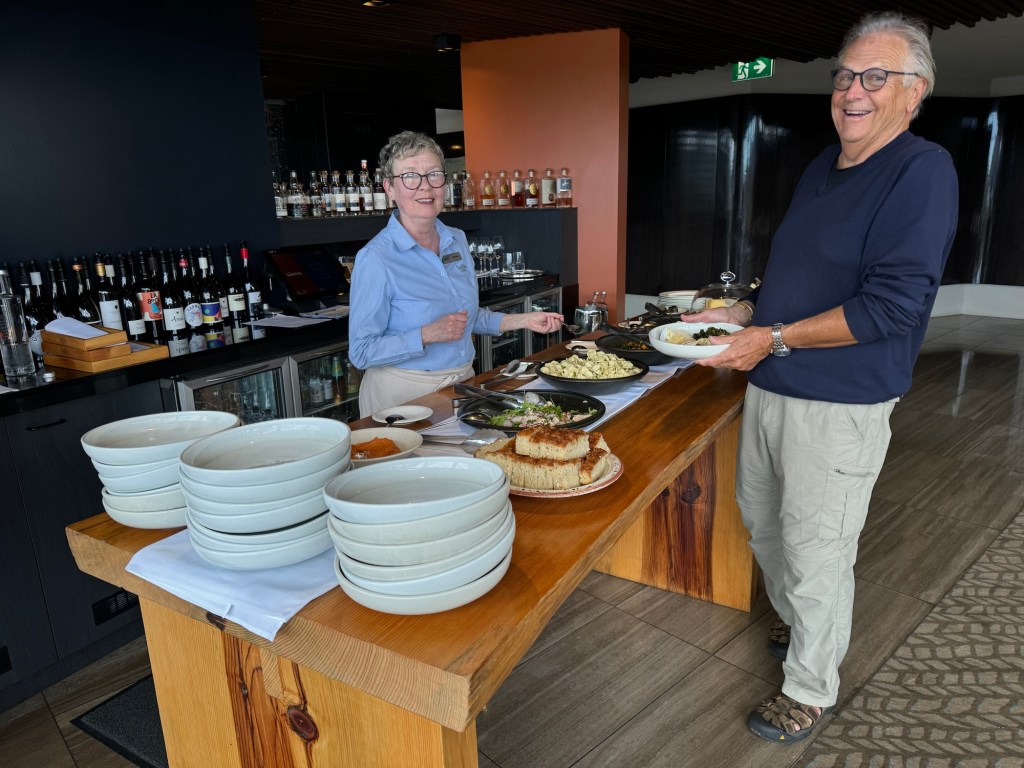
Lunch was a casual buffet in the lounge.

Then we were off on a helicopter ride to see more animals. The copter is a brand new airbus helicopter with only 20 hours of flight time. It holds 7 people and we both got to sit in the front with the pilot Ben.

We flew about 45 minutes over densely wooded hills and lush green valleys to a prearranged open place where our guide, Bushy, met us. Off the copter went and we joined Bushy in his vehicle. He drove us to Ben Lomond, the second highest mountain in Tazmania and the peak of a Jurassic Dolomite mountain. We saw some very interesting rock formations that were similar to the Devil’s Post Pile near Mammoth Lakes.
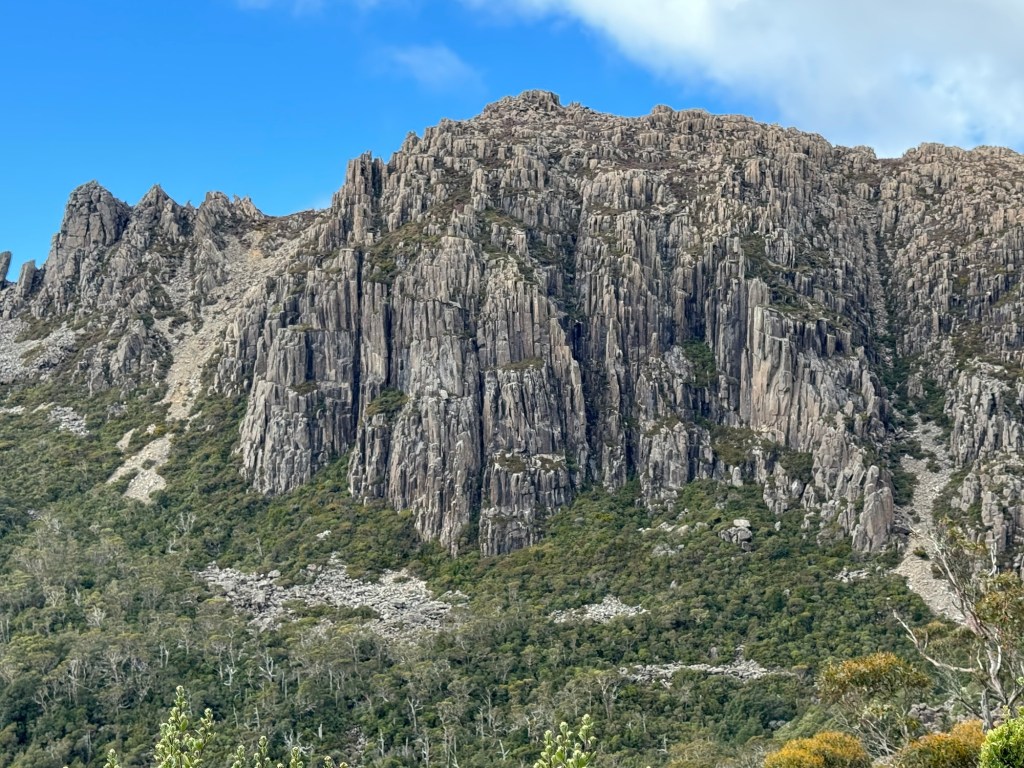
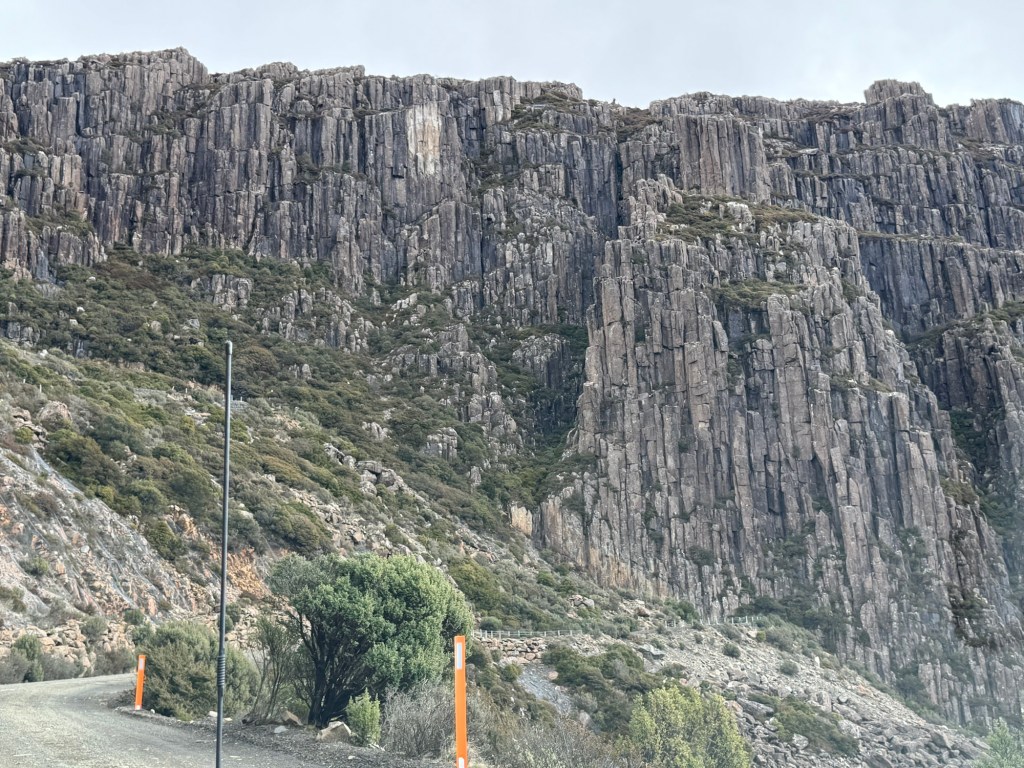
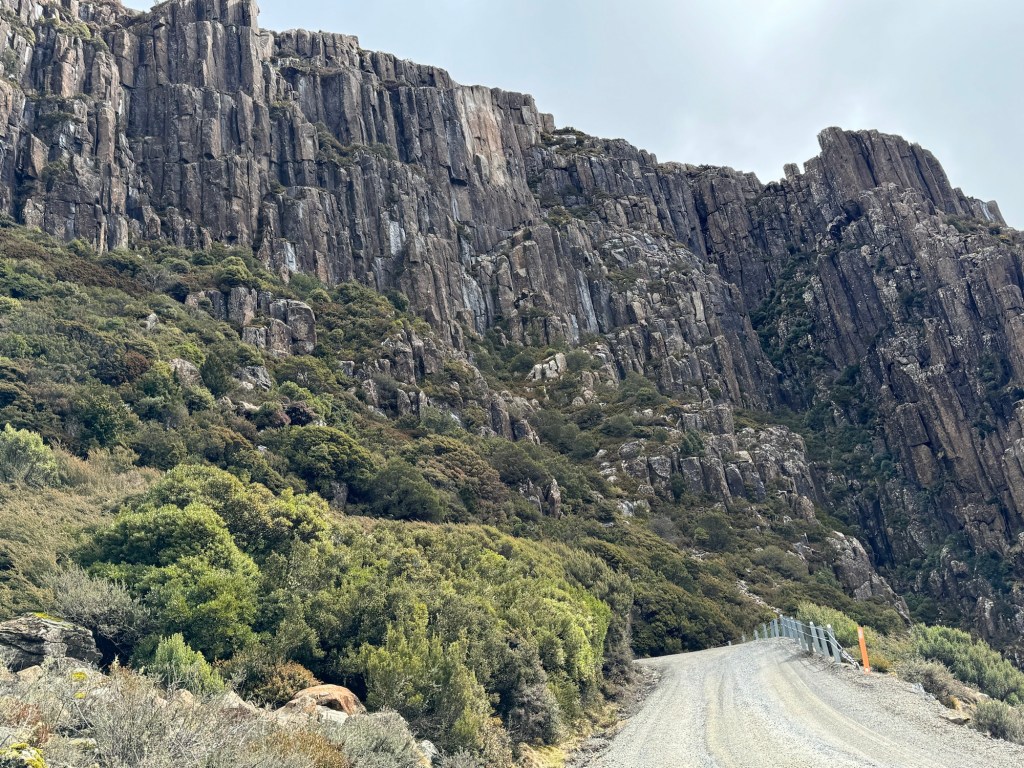
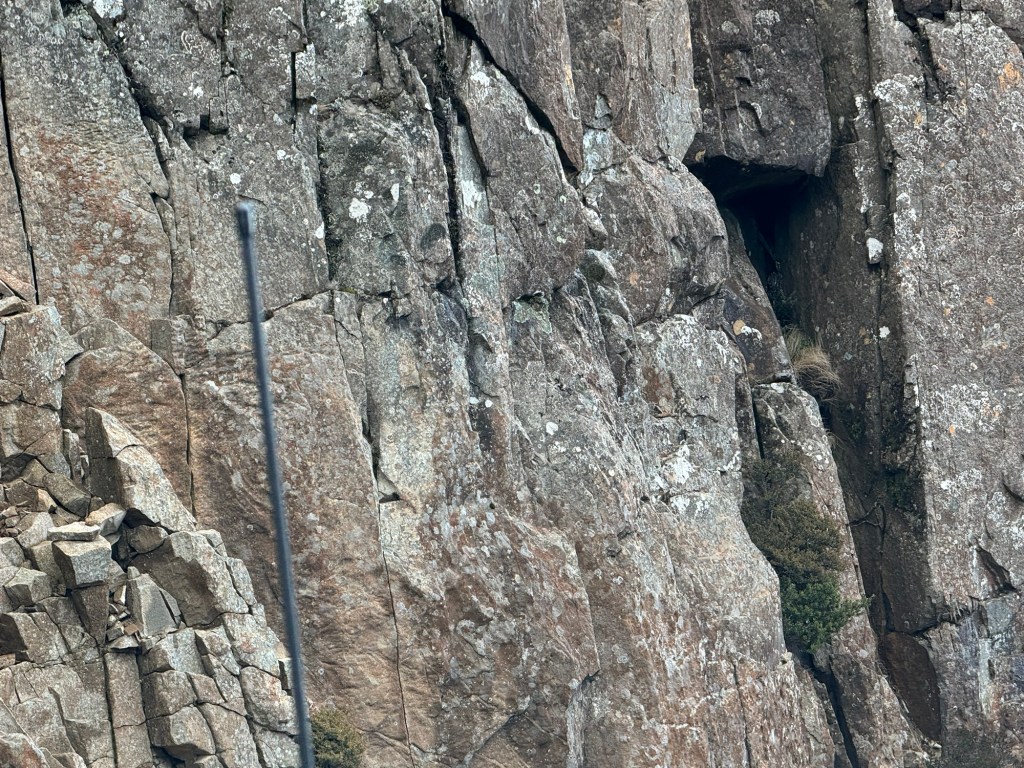
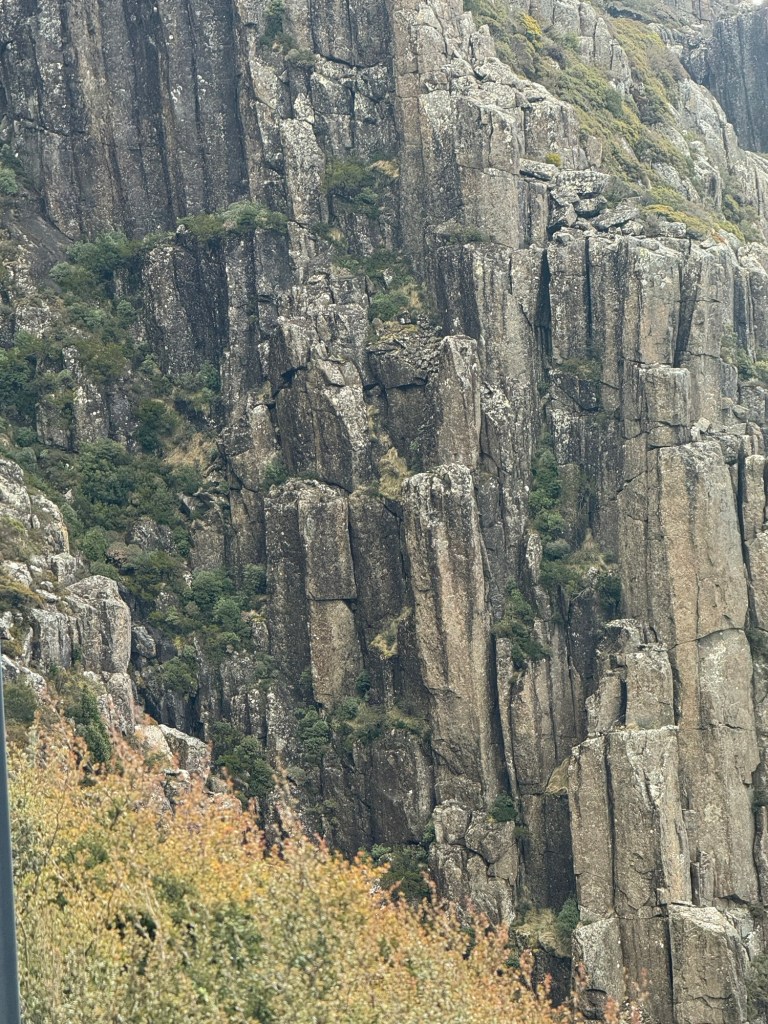
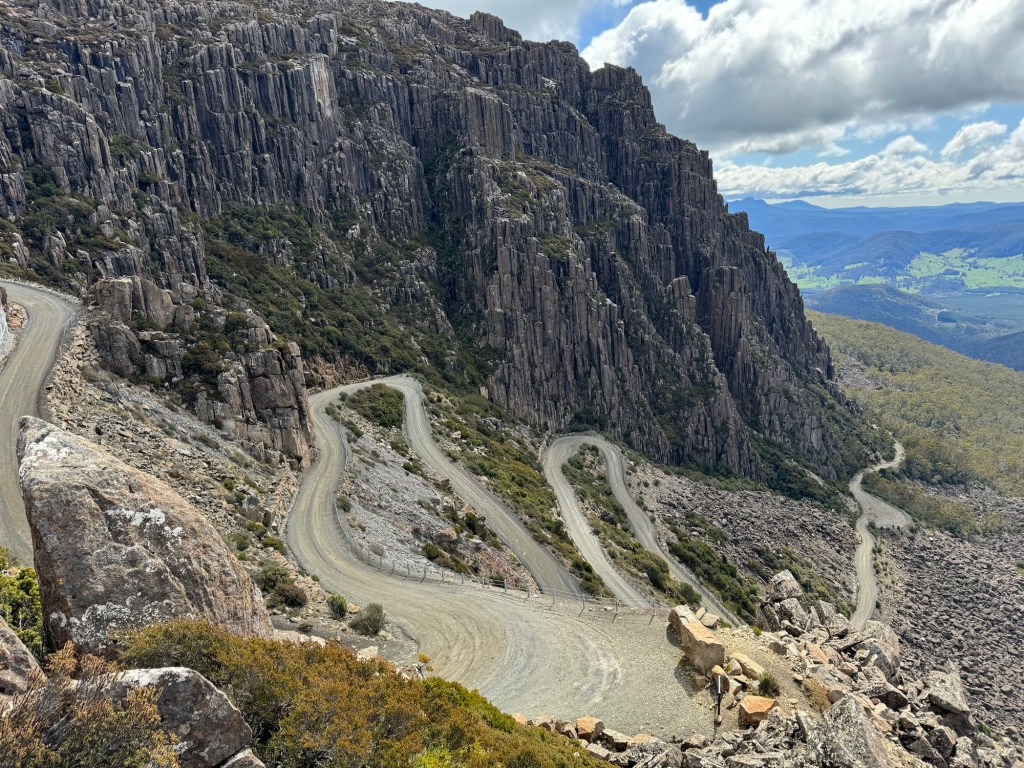

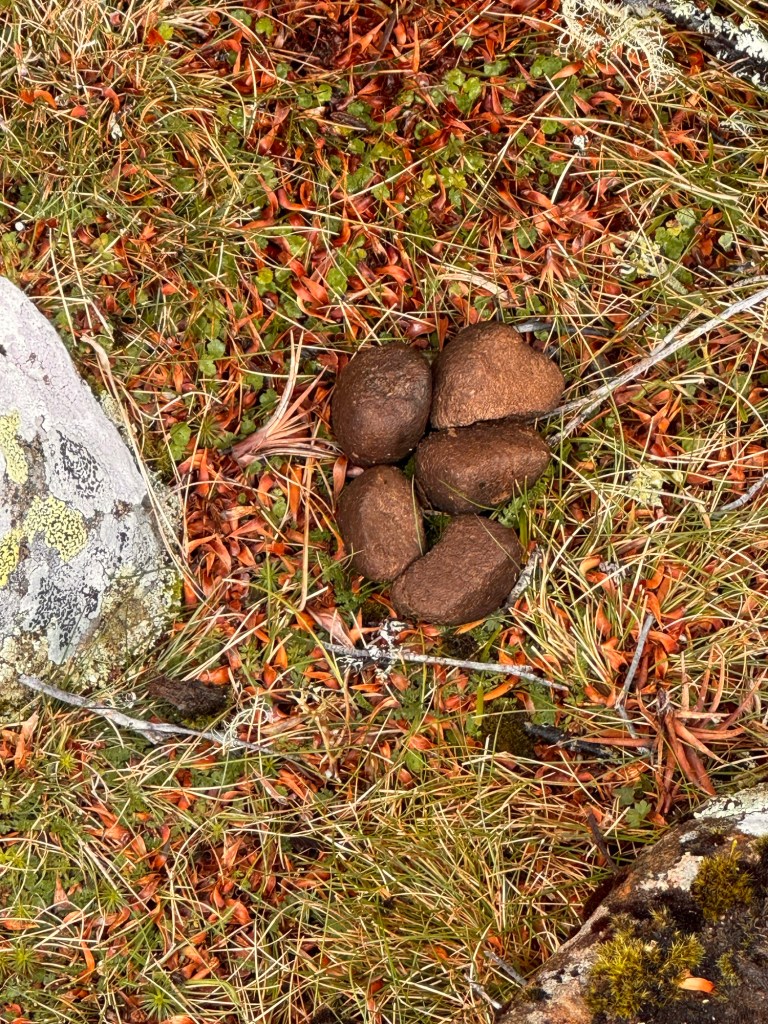
While there we saw the back end of a Wombat and its cube shaped poop.

We saw another echidna and I got to pet both its soft and spiny fur.


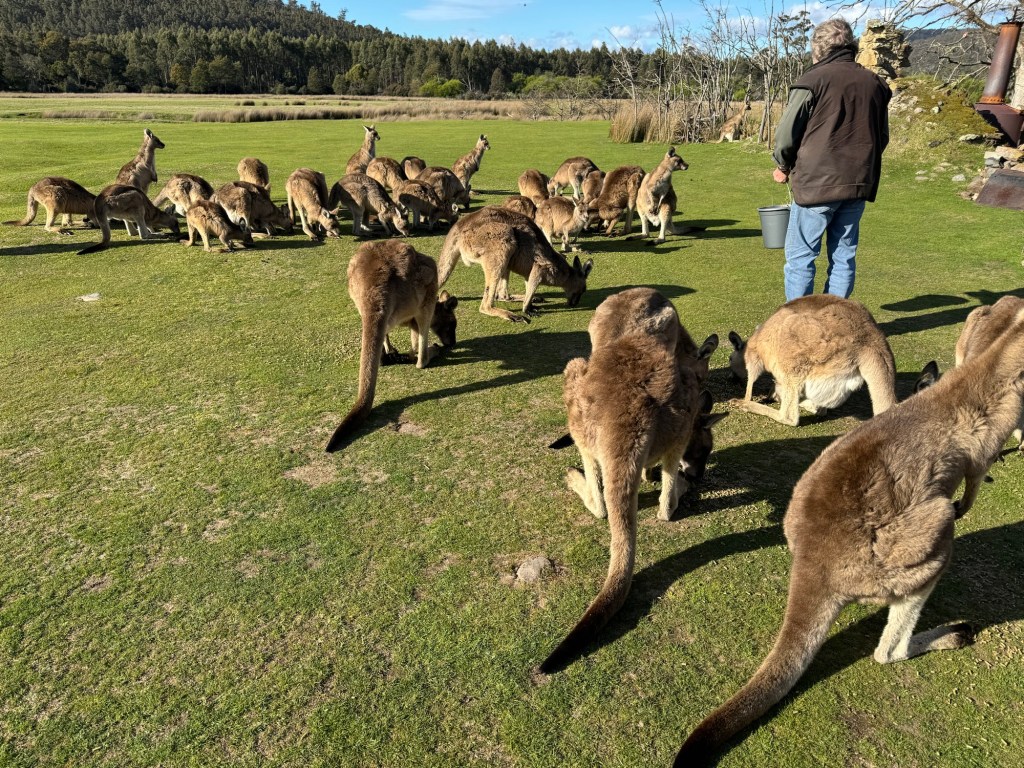
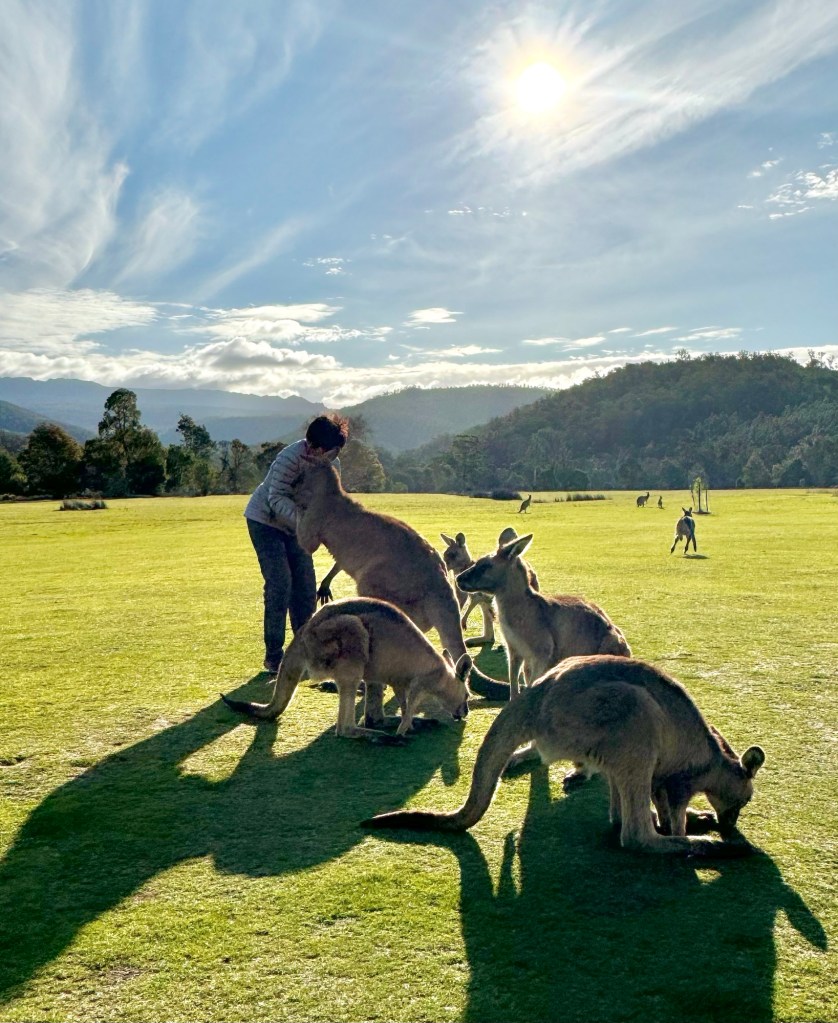
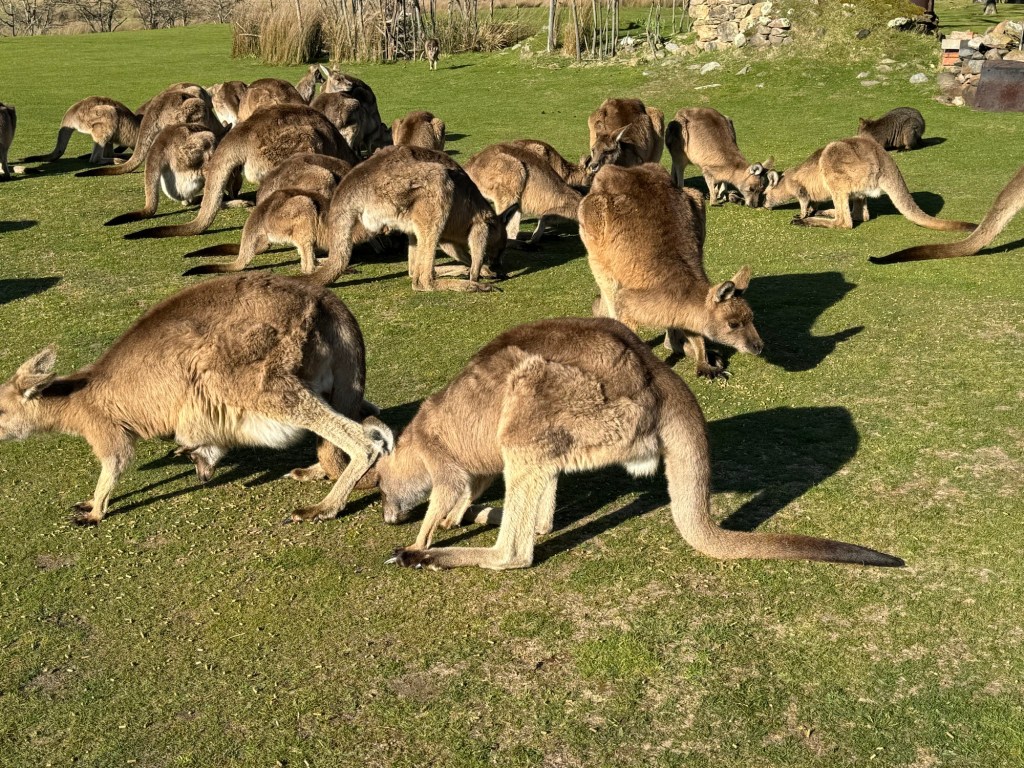
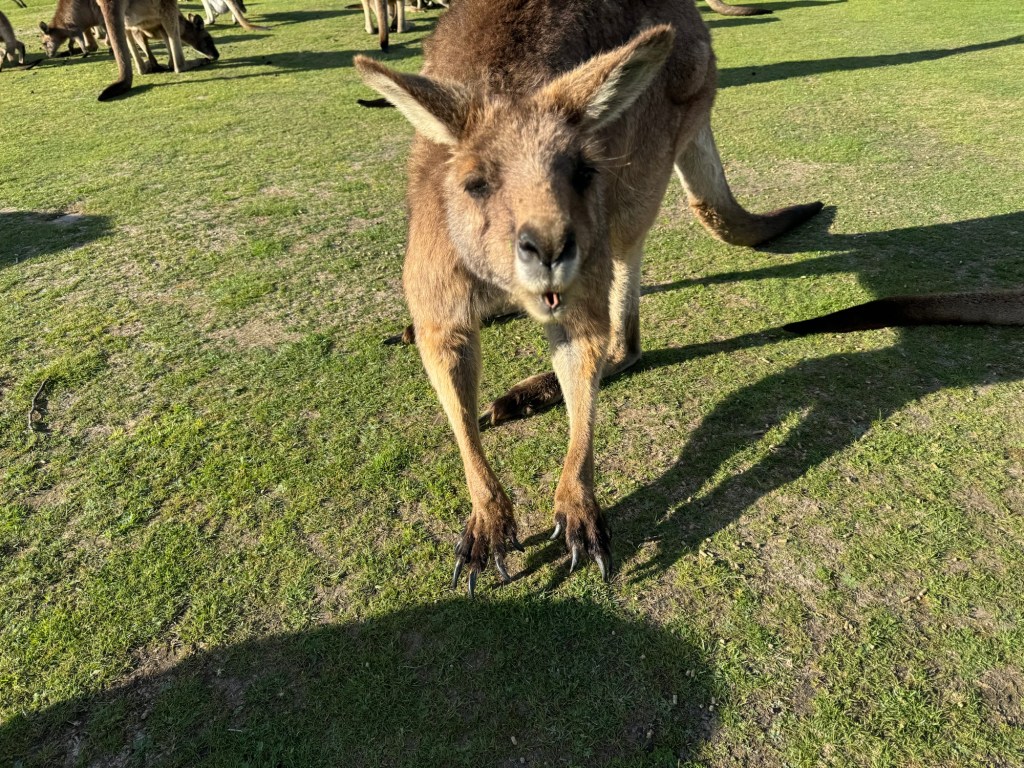
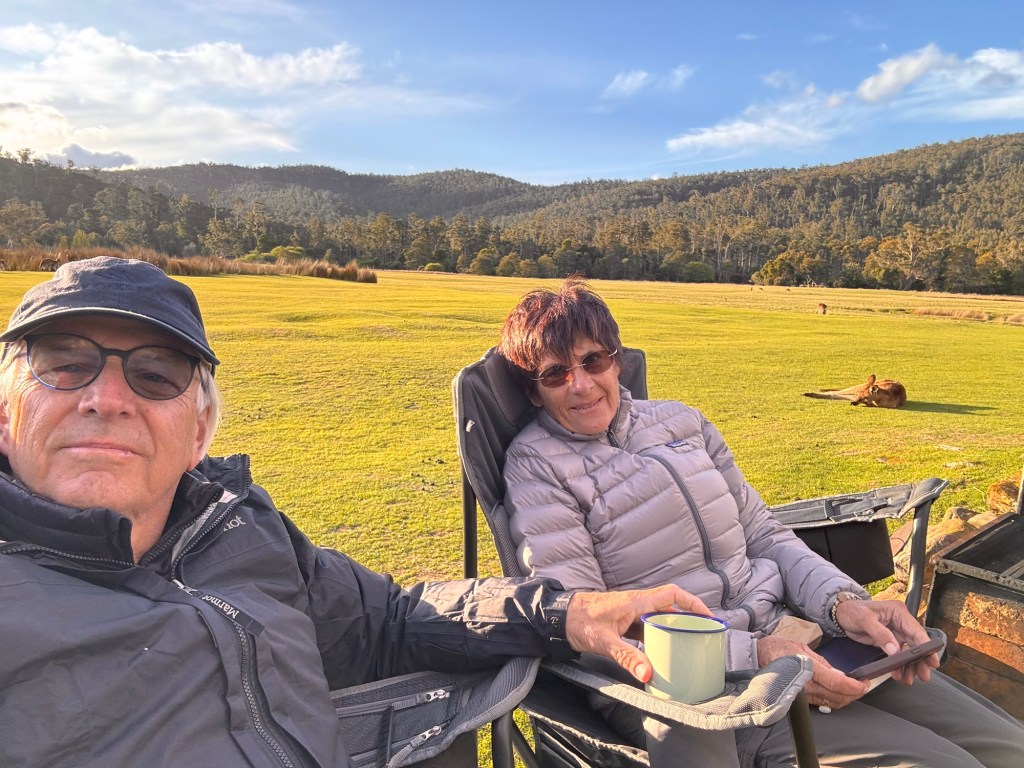
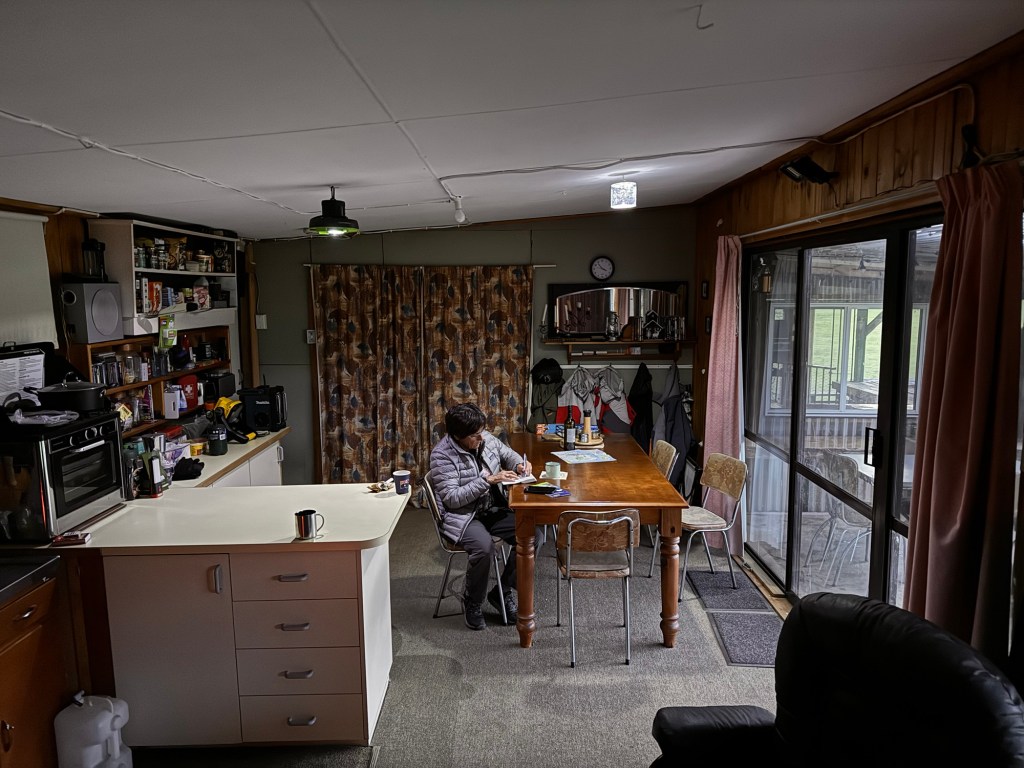
From the mountain we drove to Bushy’s bush camp. (On the map it is about where the “n” is in the town called Launceston.) He did not tell us any details about the camp, wanting us to be surprised, and surprised we were. We no sooner drove into the property when we were surrounded by a “Mob” of Kangaroo, and three pademelon, which we had not seen before. We got a kick out of his very rustic cabin, outhouse, wood stove and fire pit. Bushy served us a drinks and then fed the animals a large quantity of pellets.
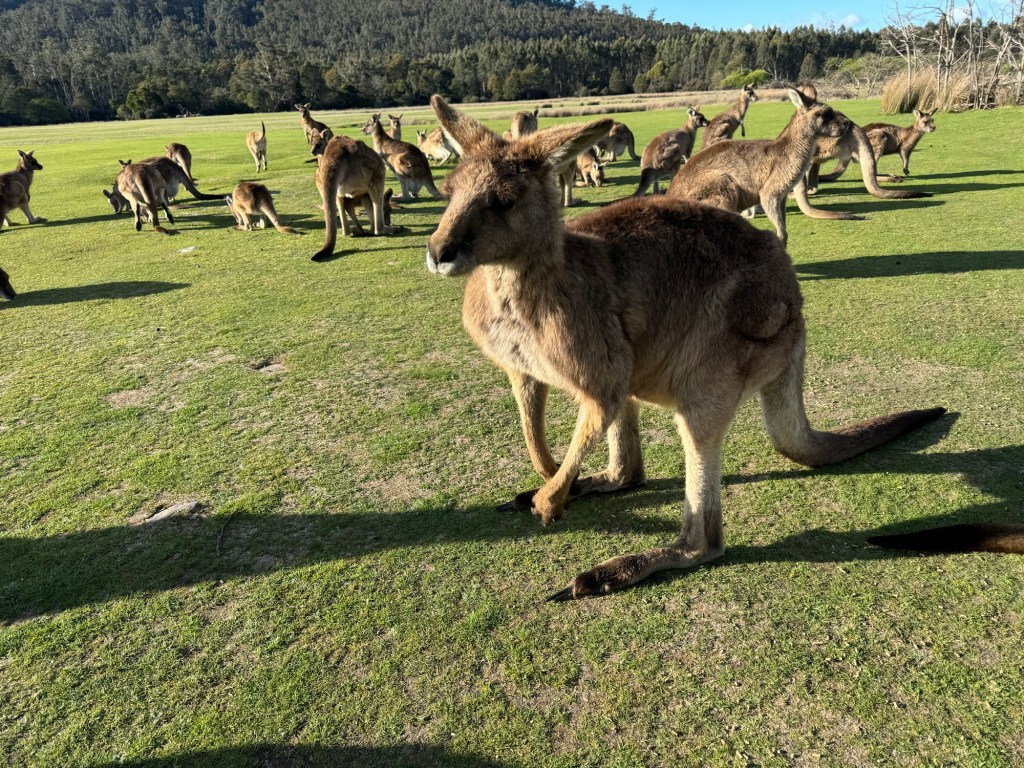
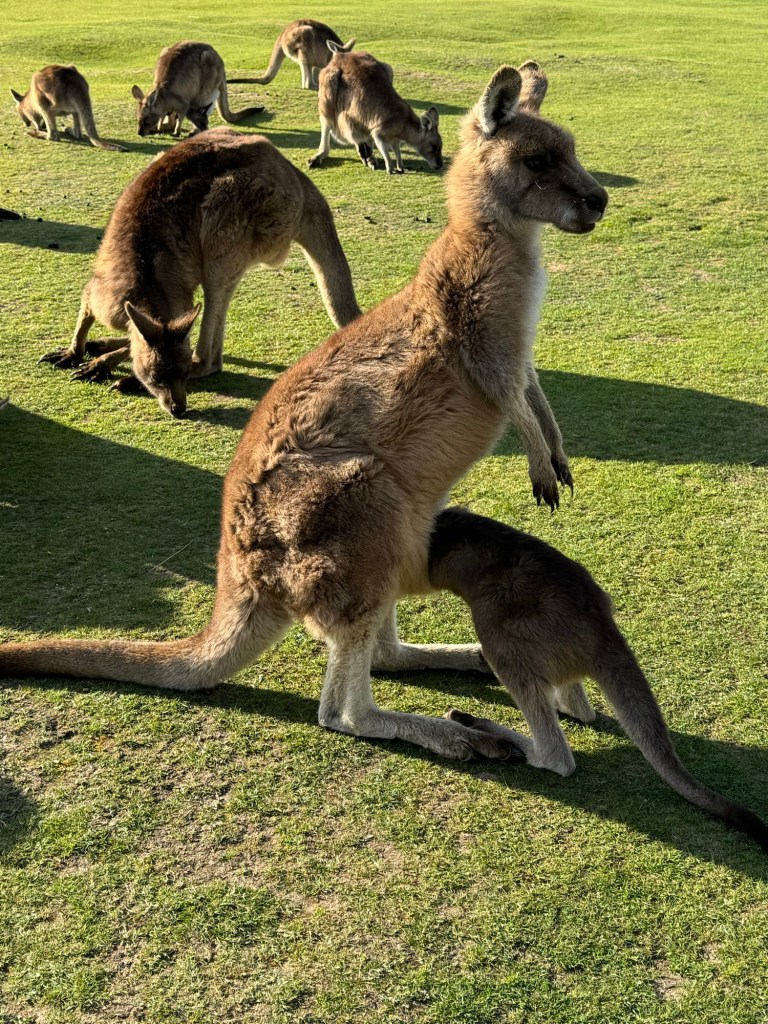
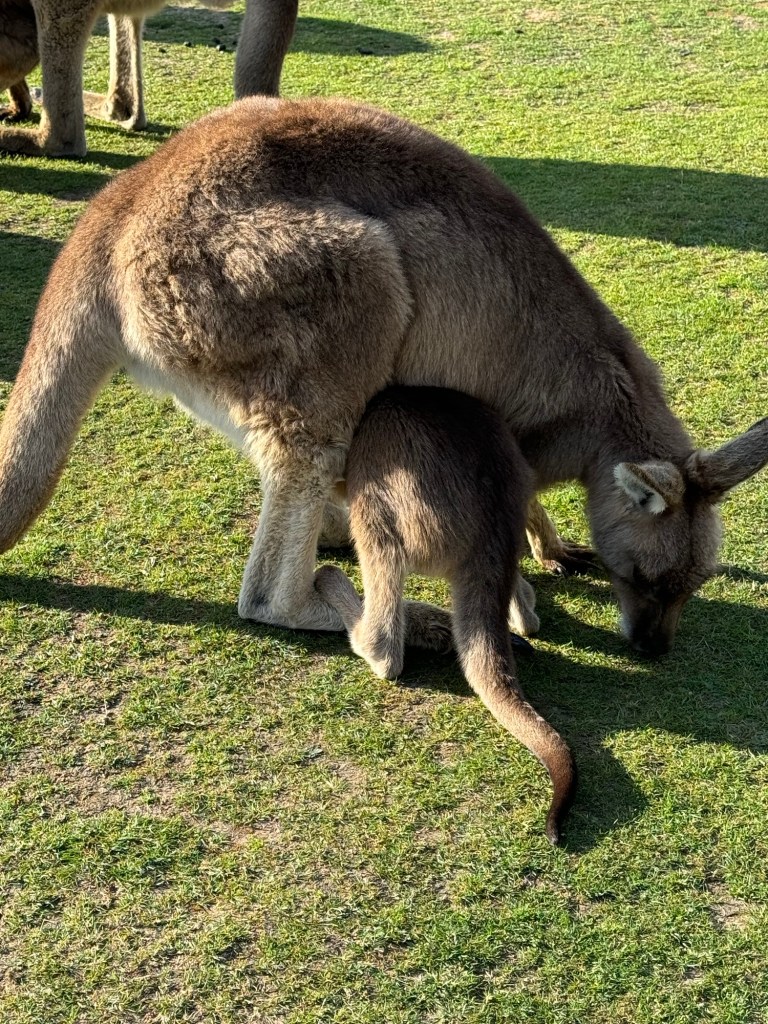

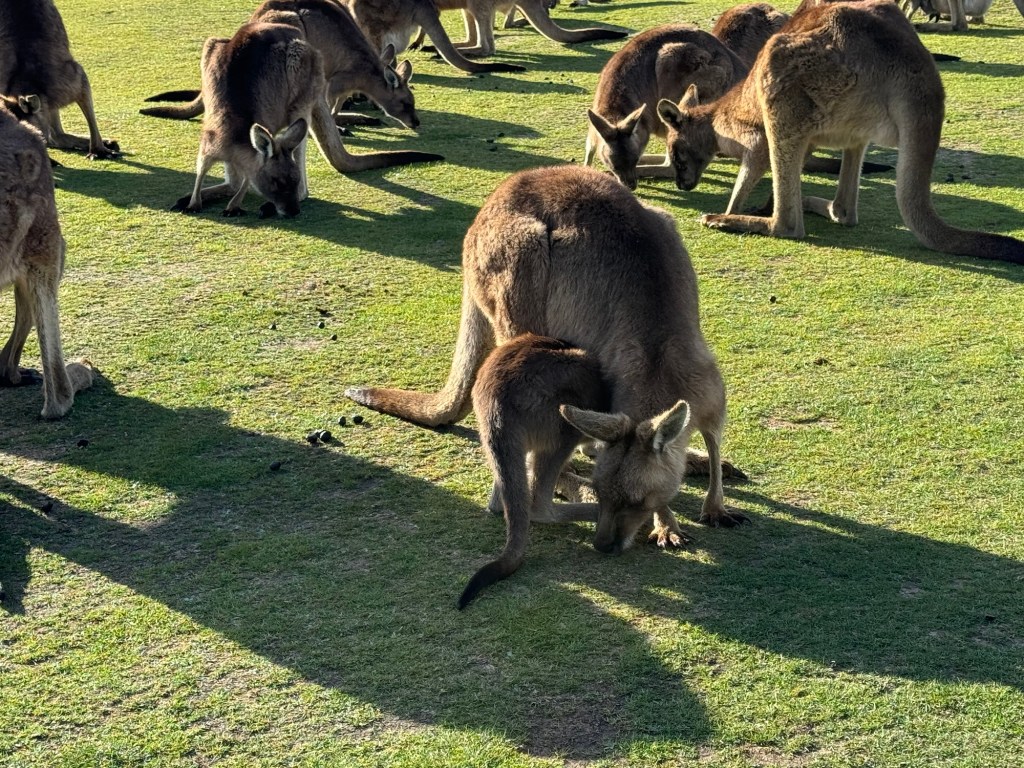
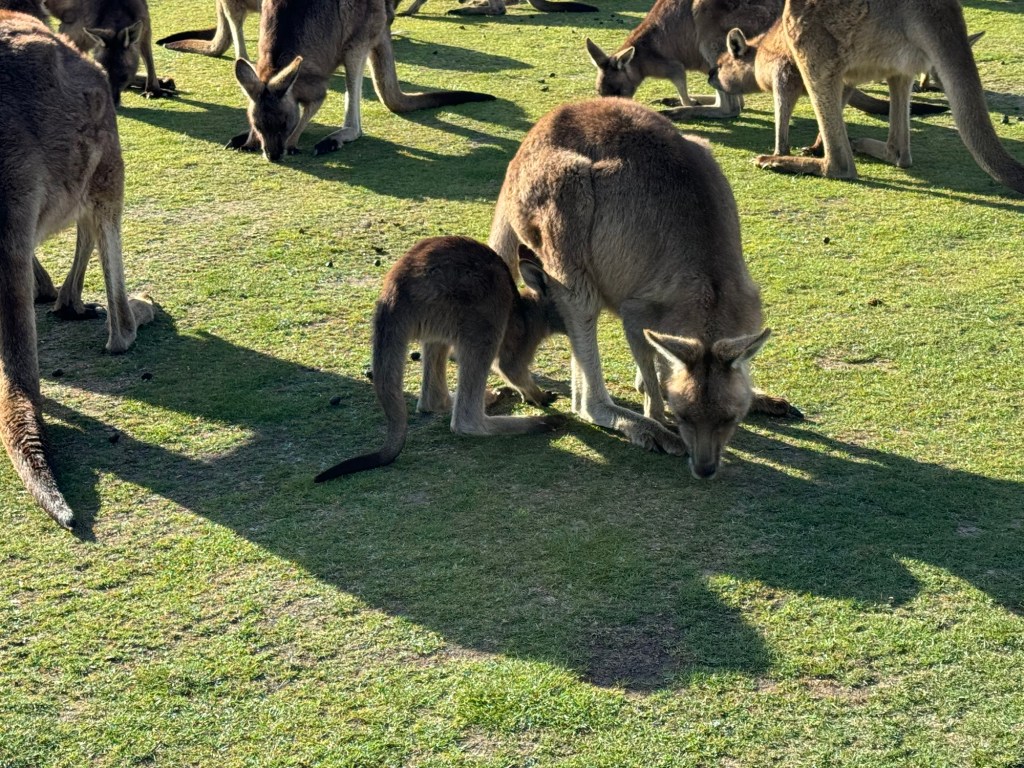


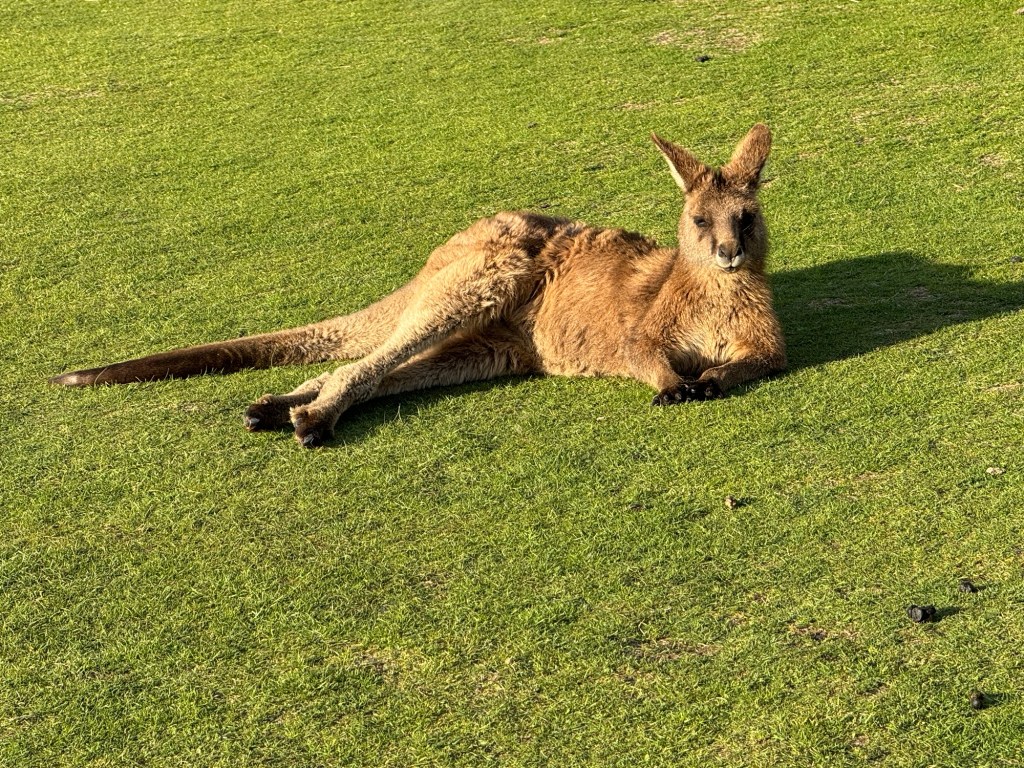
The name Pademelon means “small kangaroo from the forest’. They are small marsupials with dark brown to grey brown fur. They are killed for their meat and soft fur and are now endangered due to loss of habitat. They have a life span of 4-9 years.
Finally, the elusive spot tailed Quoll made its appearance. It was high on my list of animals to see and I was glad to see one, but here we saw 4. They are carnivorous marsupials, primarily nocturnal and spend most of their days in a den. They are highly mobile and travel several miles each night. They have litters of 6 every year, live 4-5 years in the wild and can get to 1 meter long.
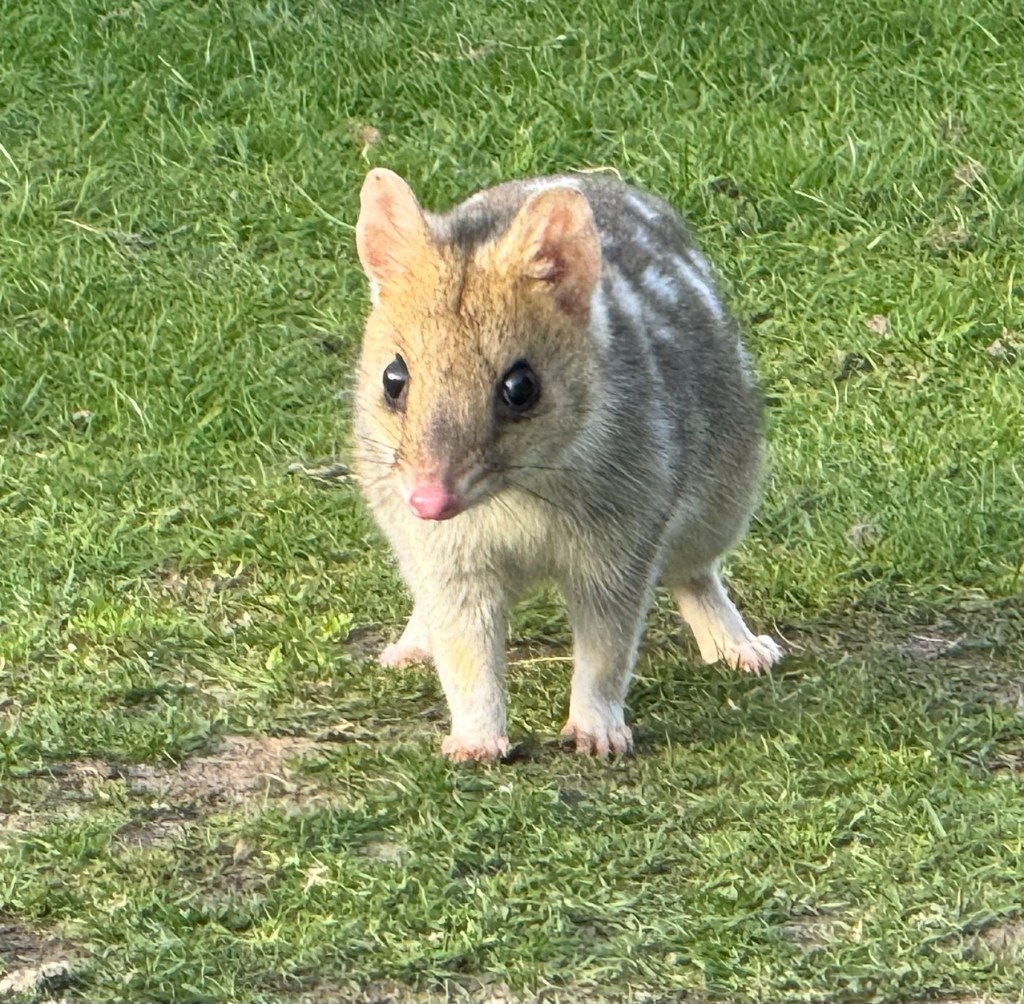
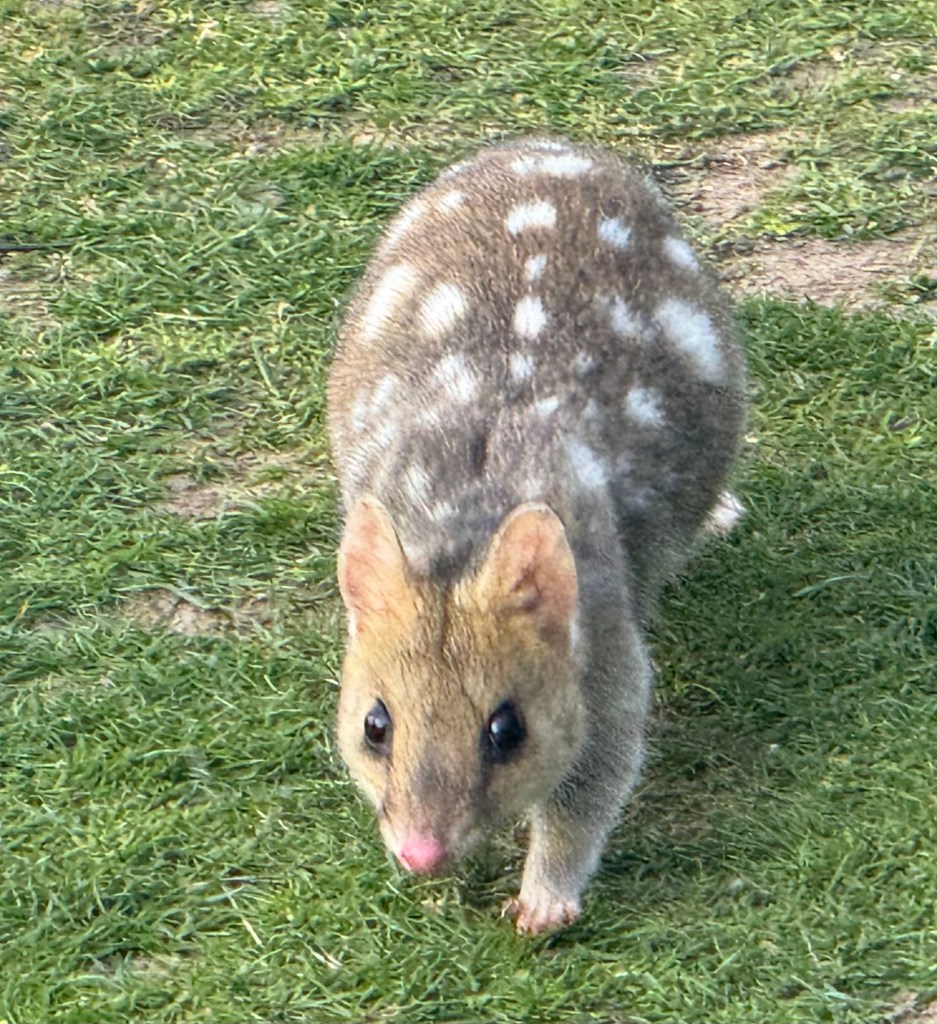
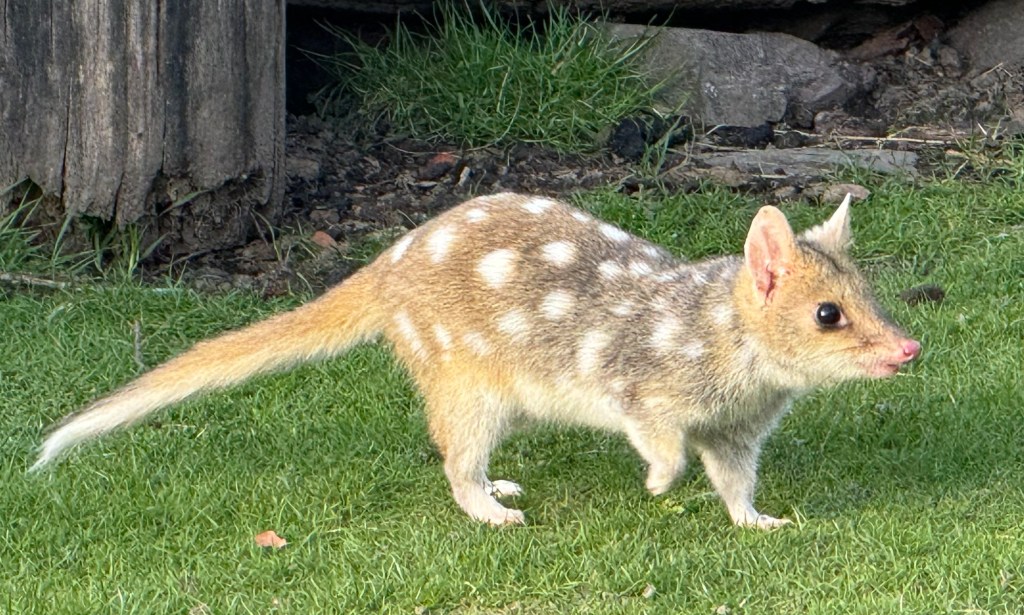
After a tasty meal of fresh salmon and salad, that Bushy prepared himself, he drove us back to the Saffire lodge. It was a 2.5 hour drive and we were ready for bed by the time he dropped us off at 10pm.
Monday, October 7, 2024
This morning we had a 9:30 hike scheduled to see the Wineglass Bay. Our guide, Chris, drove us to the “You are here” sign about 5 miles from our hotel, and we hiked 1.7 miles in a loop up and back. It was a pleasant walk with lots of people on the trail. Chris was very entertaining and introduced us to plants and trees we had not known.
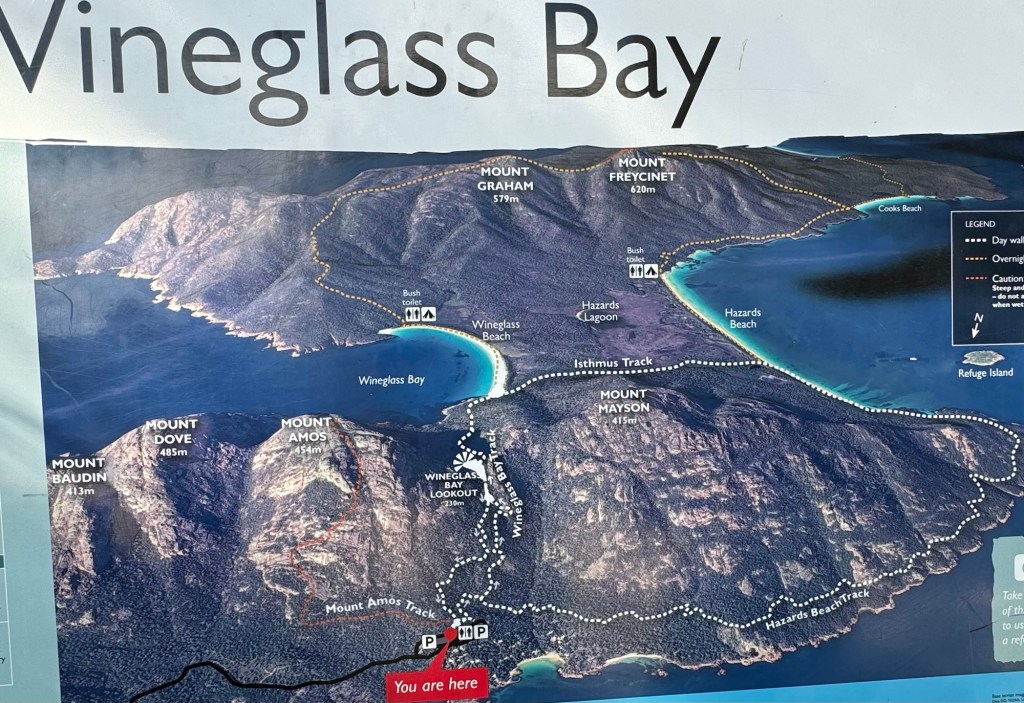
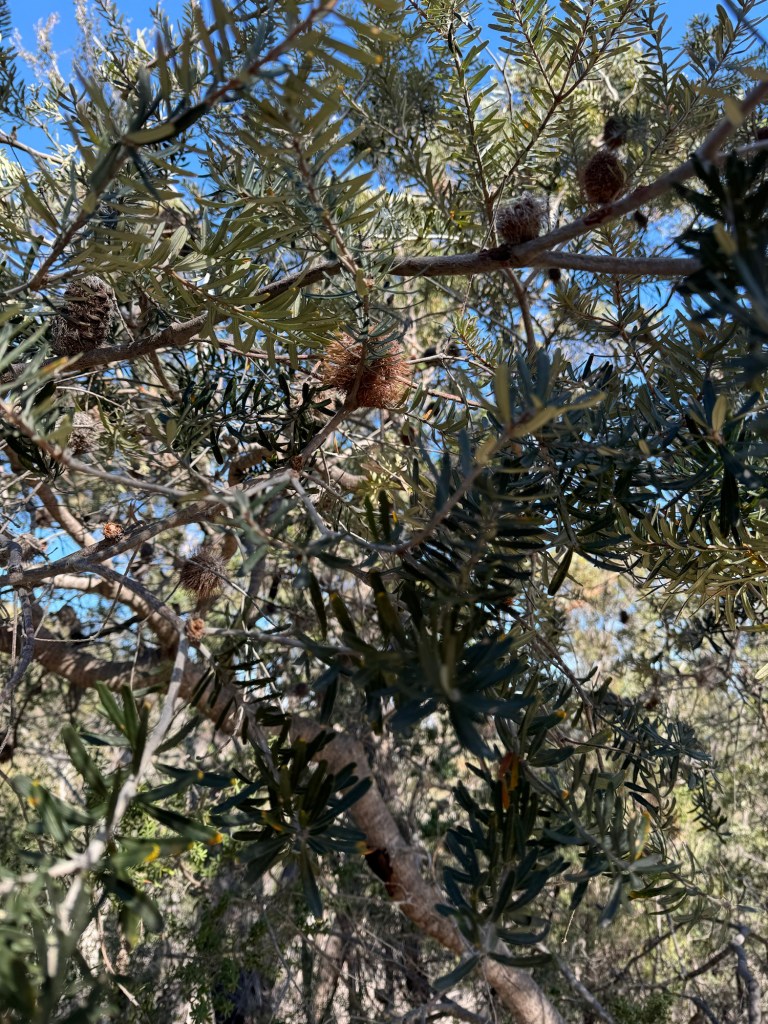

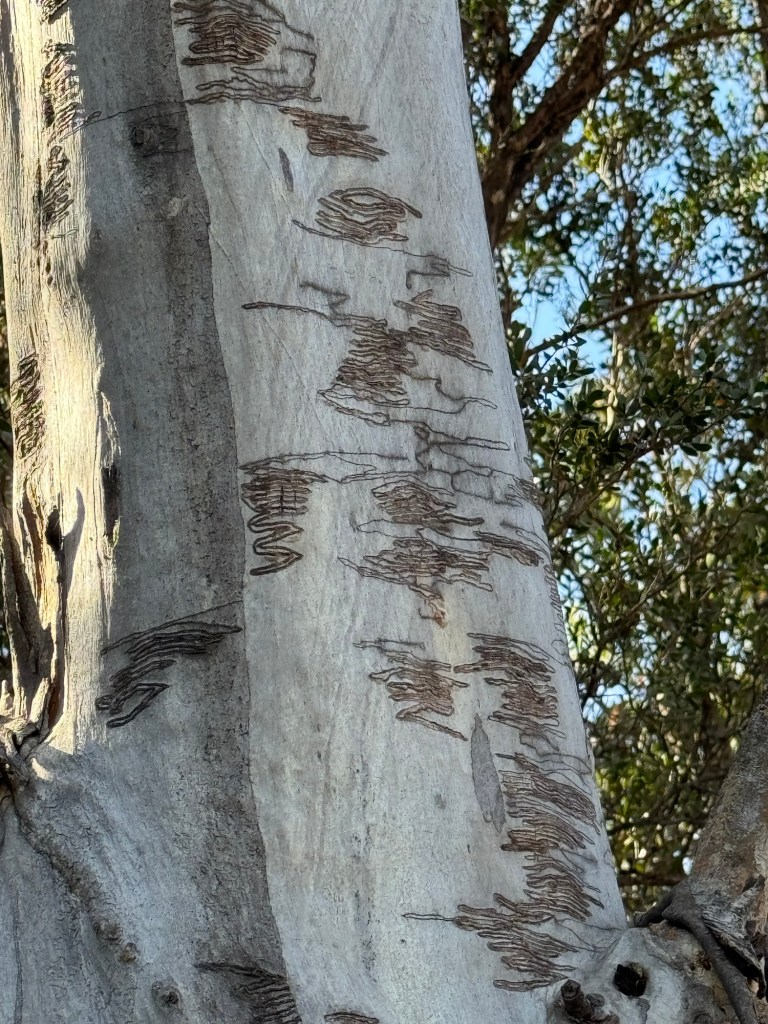
It rained pretty heavily on us during the end of our hike and we were all cold. Back at the lodge, we warmed up and had lunch.
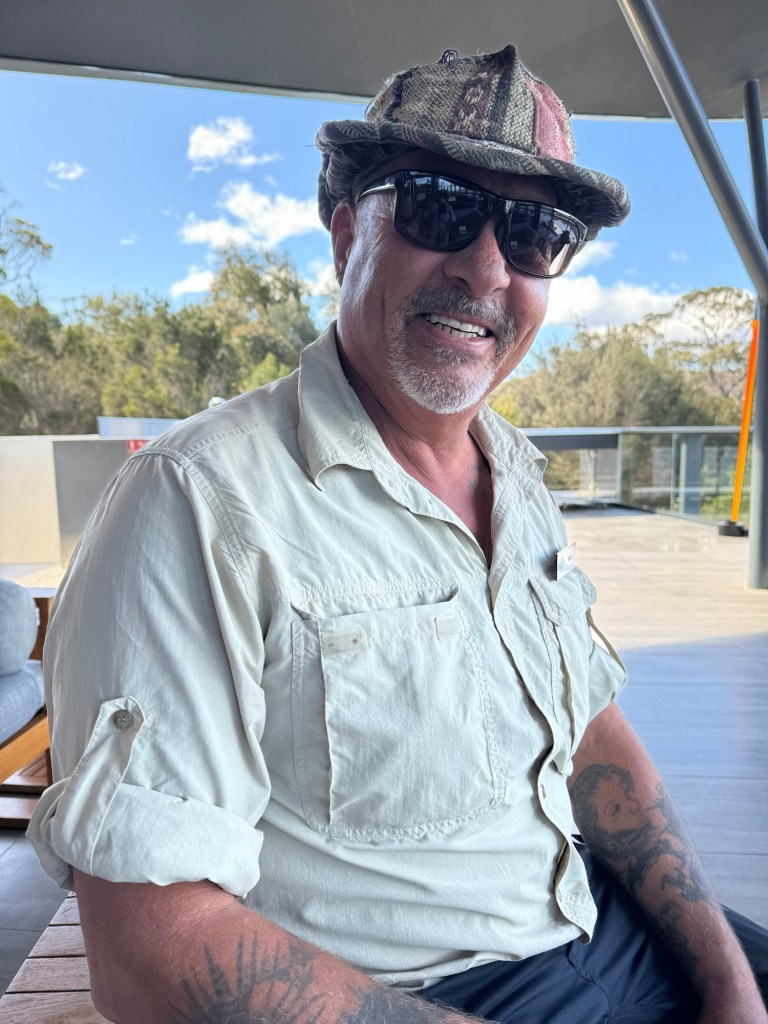
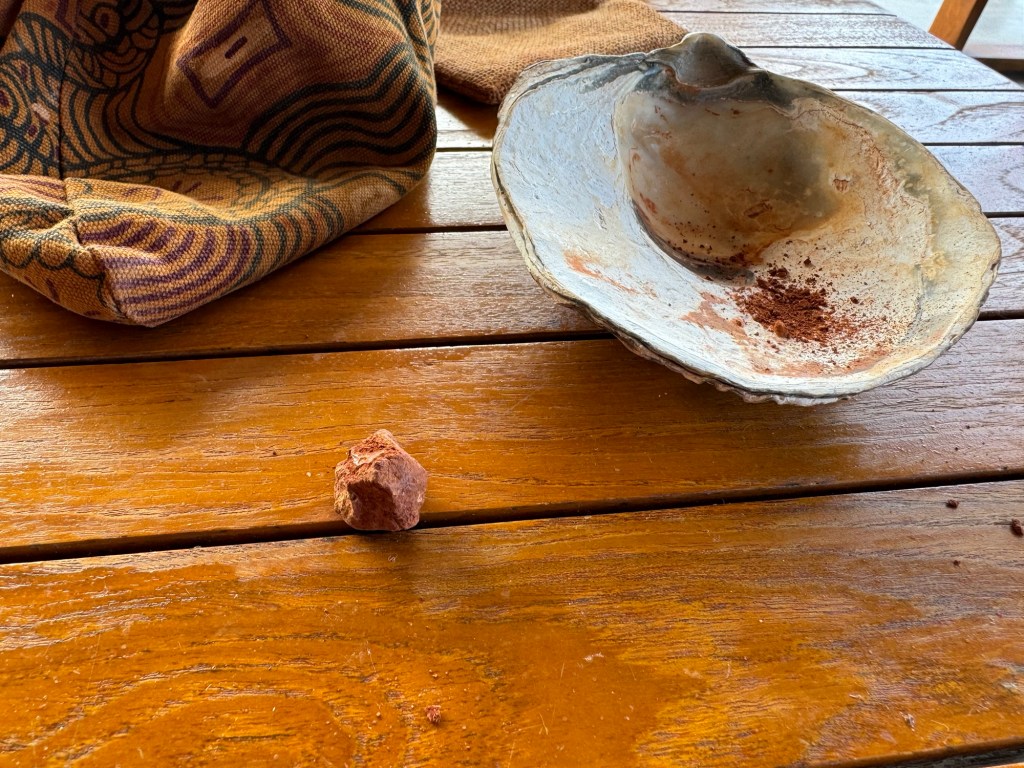
We had one last activity planned and Mark decided to pass. At 2pm I met Mick Quilliam, a full aboriginal, who shared some of his culture with me. He belongs to the tribe called Minapelaver, which means “Lagoon people”. They arrived in Tasmania 42,000 years ago. Today there are 25,000 indigenous people in 9 different tribes on Tasmania. The tribes gather together about 3 times a year and live by their own tribal rules. Mick showed me how to make tough string from bull rushes; how to use seal fat to make soft skins and pelts; how to mix egg white and ocher and use it for painting. We had a nice conversation for about an hour and a half.


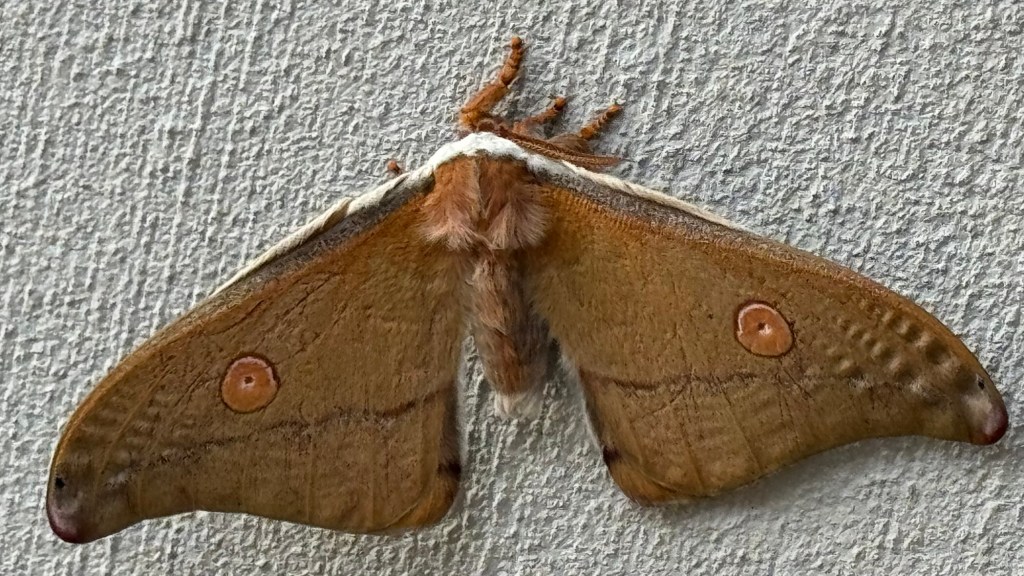
On the wall next to our suite was a very pretty moth. We learned it was an Emperor Gum Moth. It looks like it is covered in fur like I was with Mick. For dinner Mark had more oysters and short ribs. I had wallaby back strap and spaghetti with olives. A meal we both enjoyed.
Tuesday, October 8, 2024
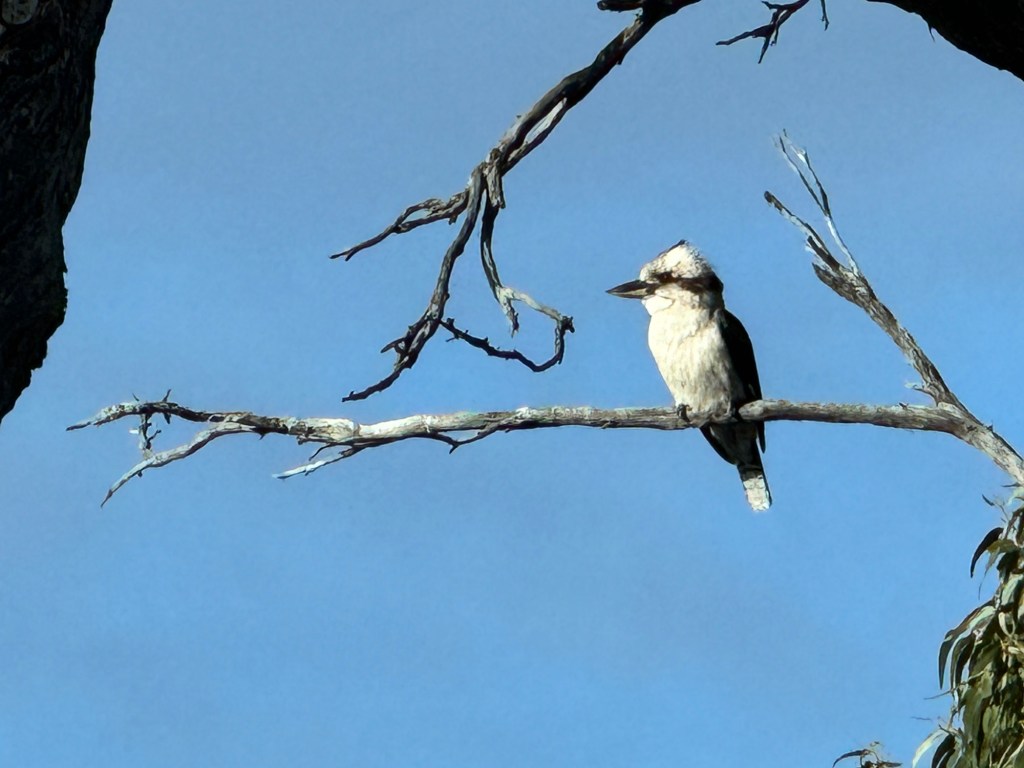
During breakfast I captured a kookaburra on a nearby tree.
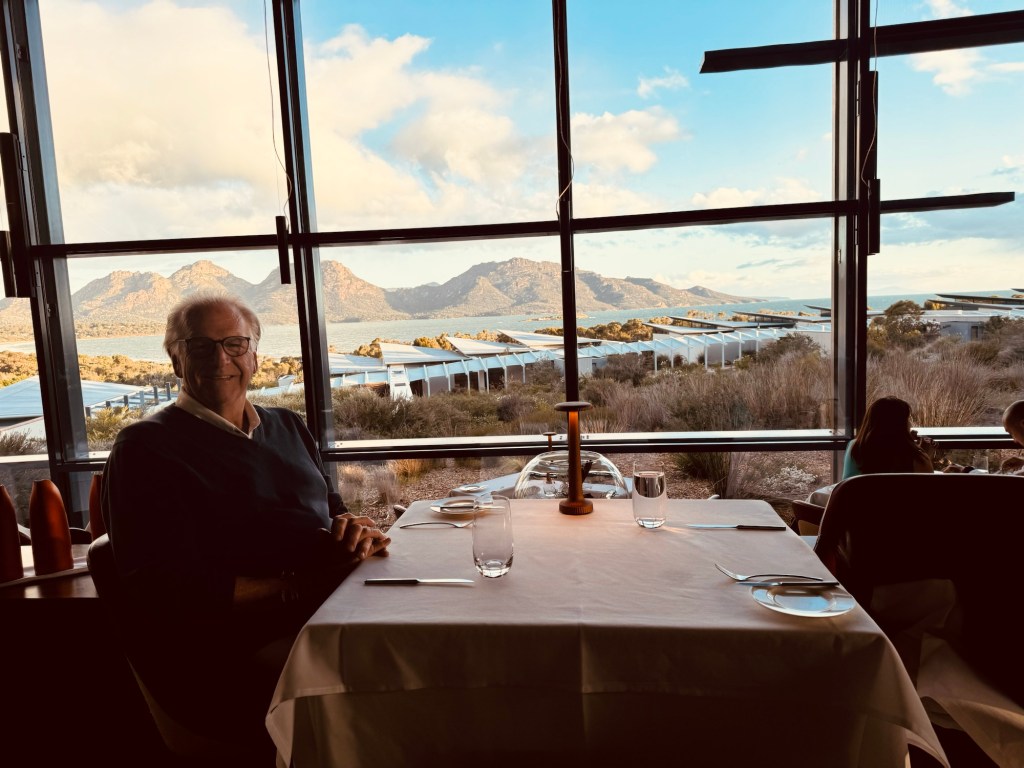
We said good bye to the Saffire staff and began our 3 hour drive to the Hobart airport. Our transport driver, Gil, was quite chatty and gave me lots of information.
We talked about convicts. The first ones arrived in 1804 along with free settlers and military. The last of them to arrive in Tasmania, came in the 1870s. Their sentences were all 7 years, during which time they built roads and bridges, worked on farms, built structures, etc. When their term was over, they usually stayed in the country and continued to work for hire.
Gil talked about products produced in Tasmania. Vegetables are prolific in the North West of the state, which we did not get to see. In the dryer parts of the country we saw sheep, cattle, dairy cows, berries, cherries, and many vineyards. Seafood and oysters are also big crops.
The most valuable products are minerals, especially zinc.
The average age of the population is 43. There are not enough workers and more of the oldest and least educated people. Tasmania, like other parts of the world, is shrinking.
We arrived at the Hobart Airport at noon, said good bye to Gil, and found the Saffire lounge. No food, but snacks and a comfortable resting place. We had about half an hour before boarding a Virgin Australian aircraft for a flight to Melbourne, followed by another flight to Adelaide, where we will spend the night. We are slightly more than half way through our Australian adventure.
 Adventures with Julia
Comments
Always enjoyed your notes. Several animals I had never seen/heard of before. Thanks
Karen