
Tuesday, October 8, 2024
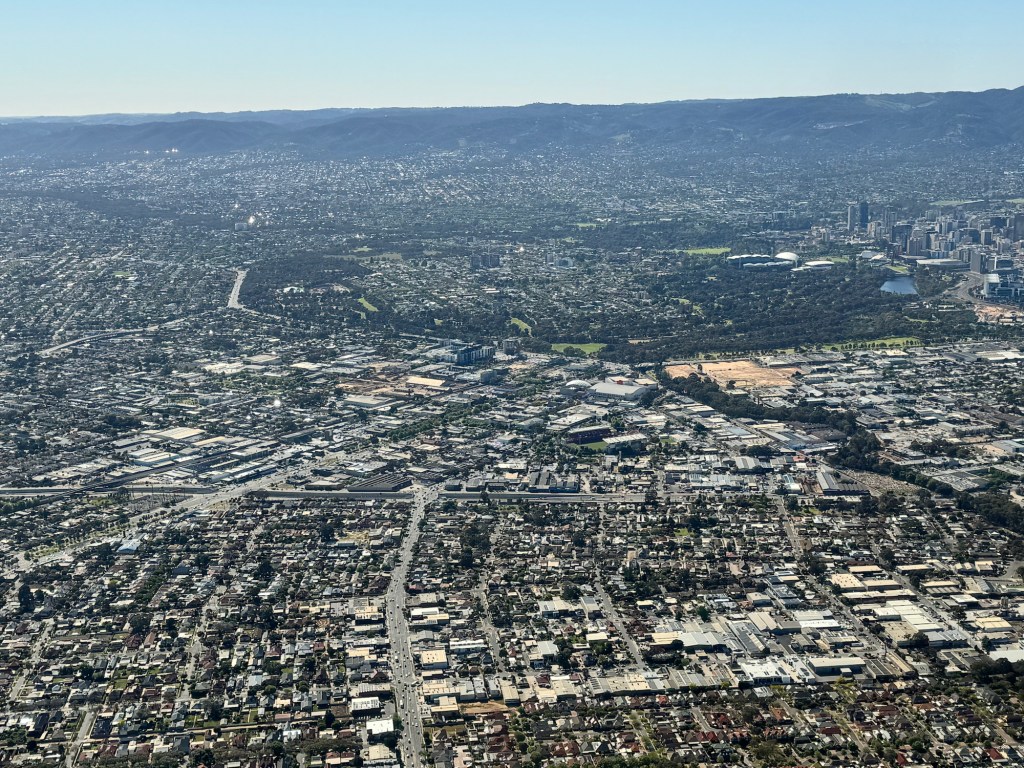
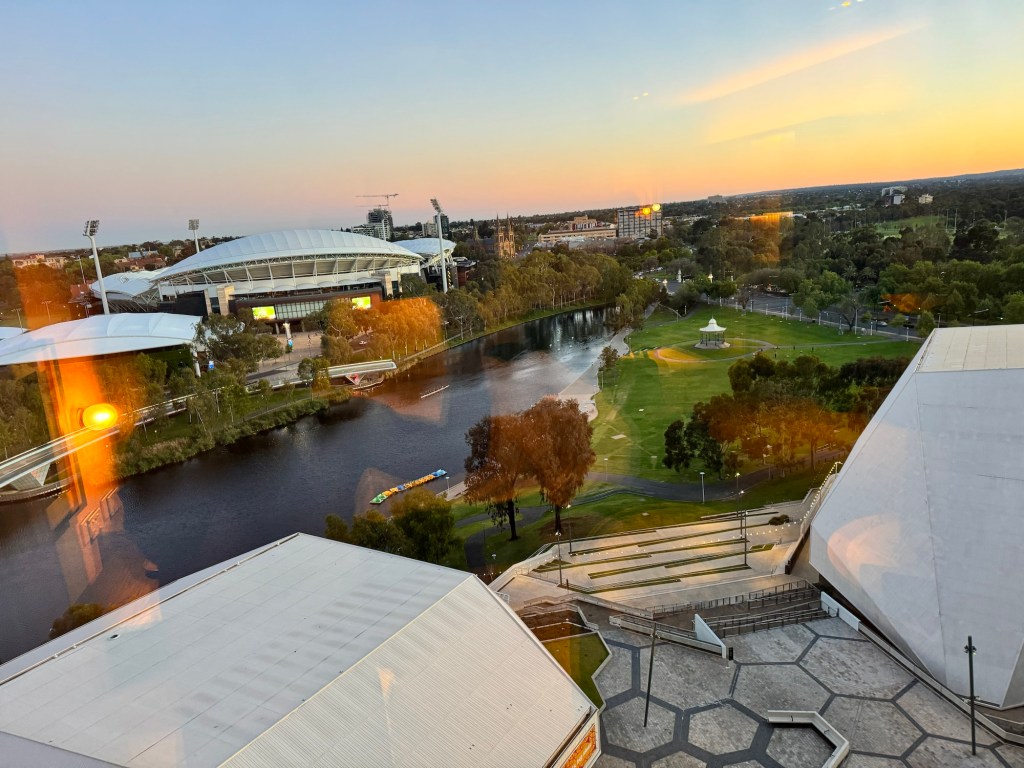
Depart Hobart at 9am. Transit Melbourne and arrive Adelaide in South Australia at 4pm. We had only one afternoon and evening in Adelaide. We walked around a few streets and ended up in a neighborhood of massage parlors and strip clubs. There were a number of restaurants and we settled on one called ShoboSho, that was Japanese fusion. We had two kinds of potstickers that were excellent. The place was full of young people. Adelaide seems like a nice city with a defined one mile square plan surrounded by parklands. It is named for Queen Adelaide, who was the wife of King William the IV. The city was founded in 1836.
Wednesday, October 9, 2024, Our 31st wedding anniversary. Mark gave me a lovely anniversary card. I forgot to reciprocate, as usual, when we are traveling. Very sorry Mark.
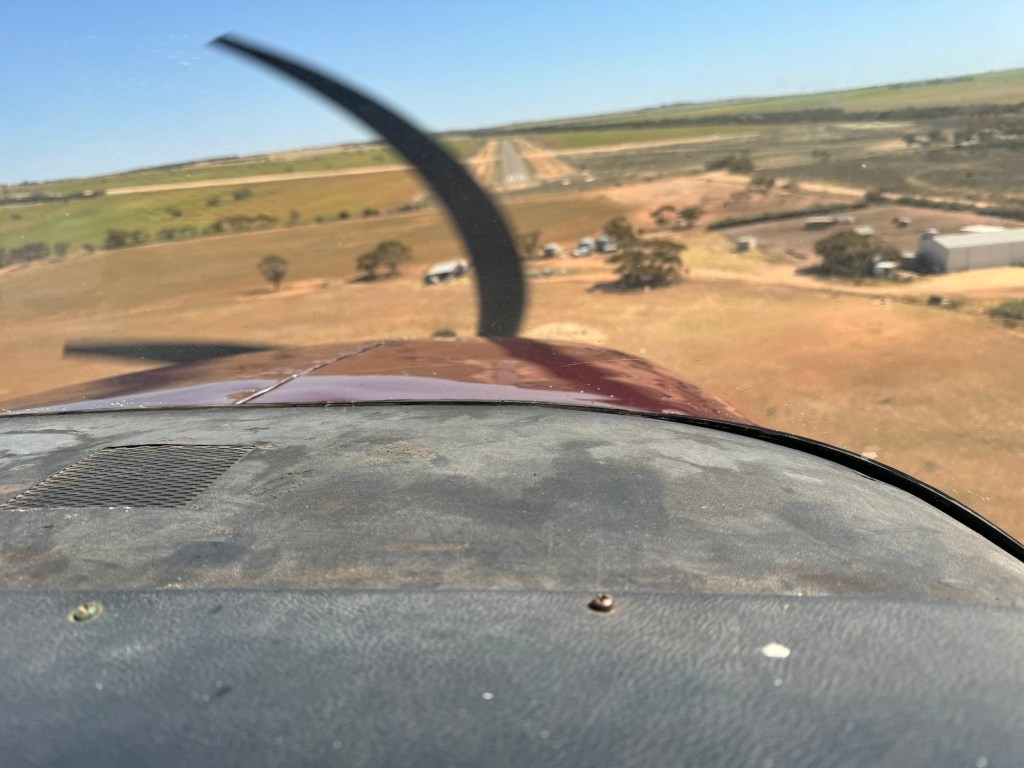
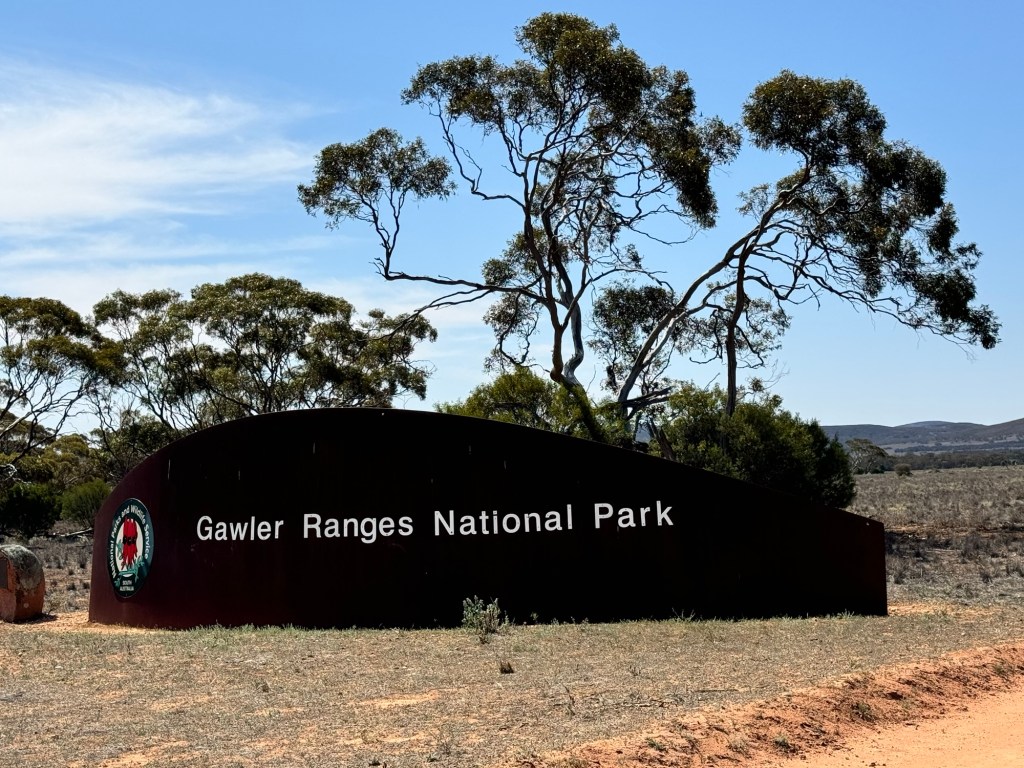
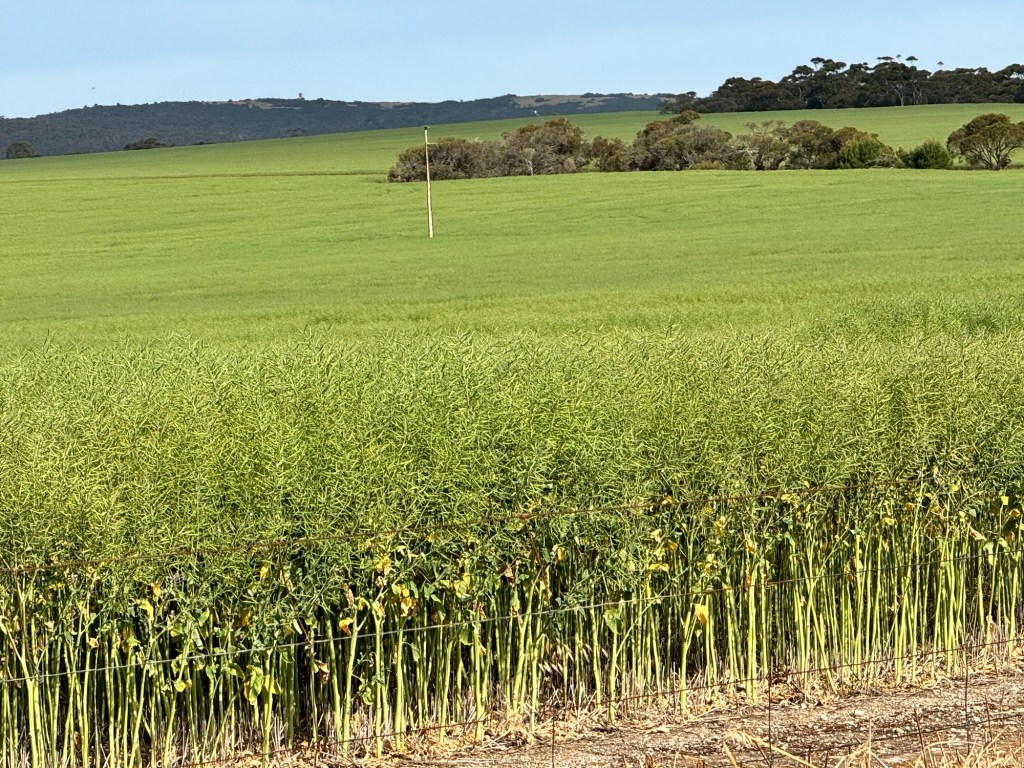
We leave Adelaide at 9am in a Cessna 210 and arrive Wudinna, a thriving town of 600 people, at 10:30. It is a successful farming community due to wheat, barley and canola being grown locally and sold to China and Saudi Arabia. Getting out of the plane, we were surrounded by flies, lots of flies, all trying to gain access to my mouth, eyes and nose, which was disturbing at first. Met by our camp driver/guide, Rosie Woodford Ganf, who seemed unfazed by the flies and chatted away while driving us 40 minutes to Kangaluna Camp next to Gawler Ranges National Park. Flies were everywhere and drove us a bit nuts. Fortunately our tent and the dining tents were screened. We are told to use face nets if we can’t stand the flies.

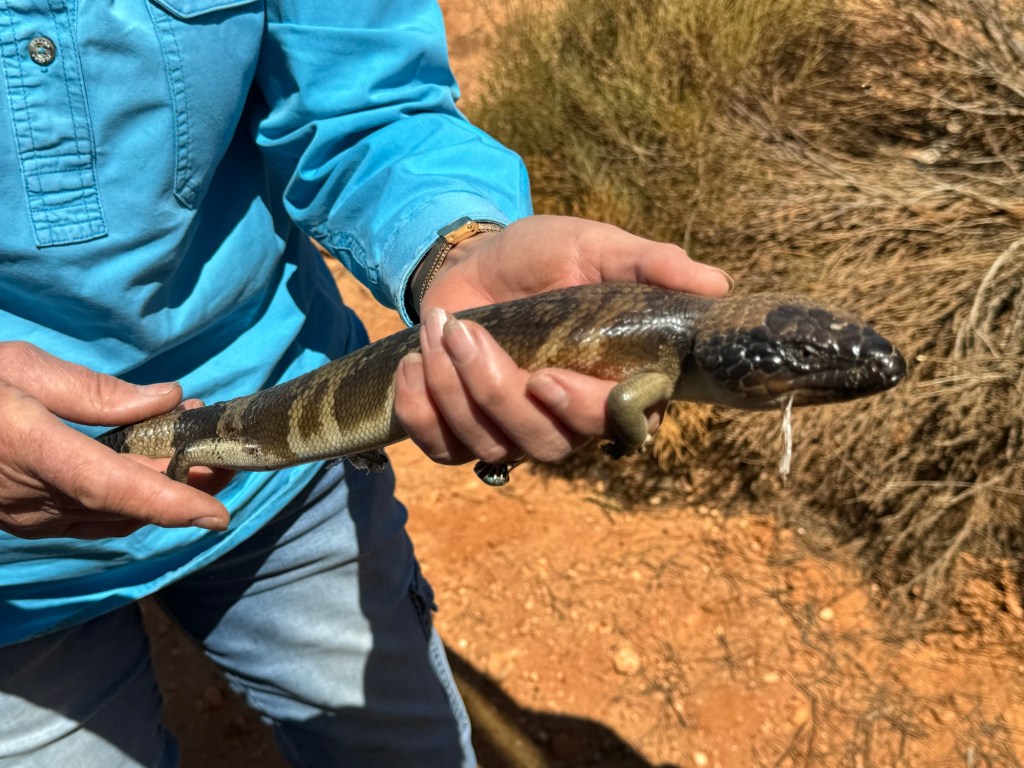
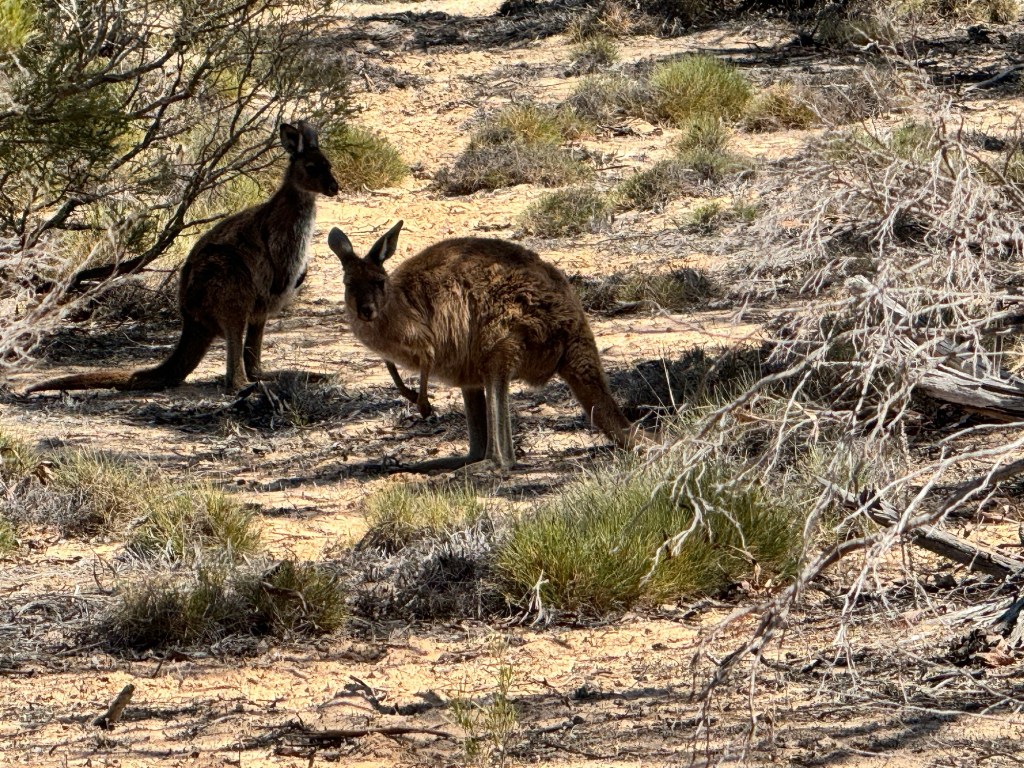
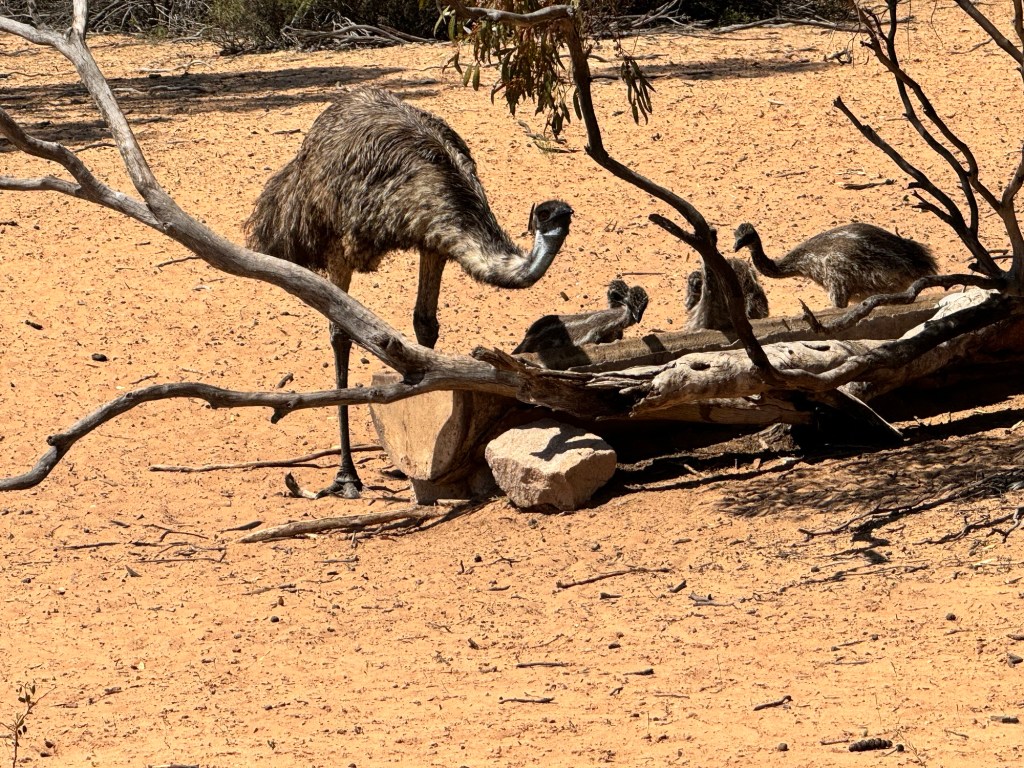
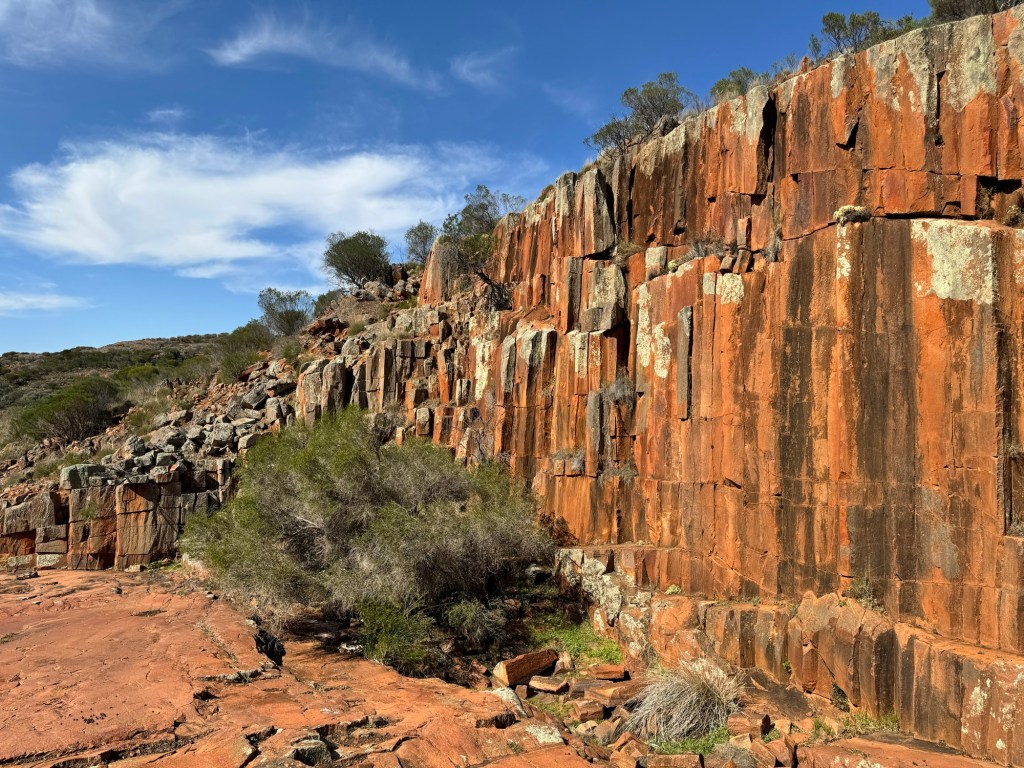
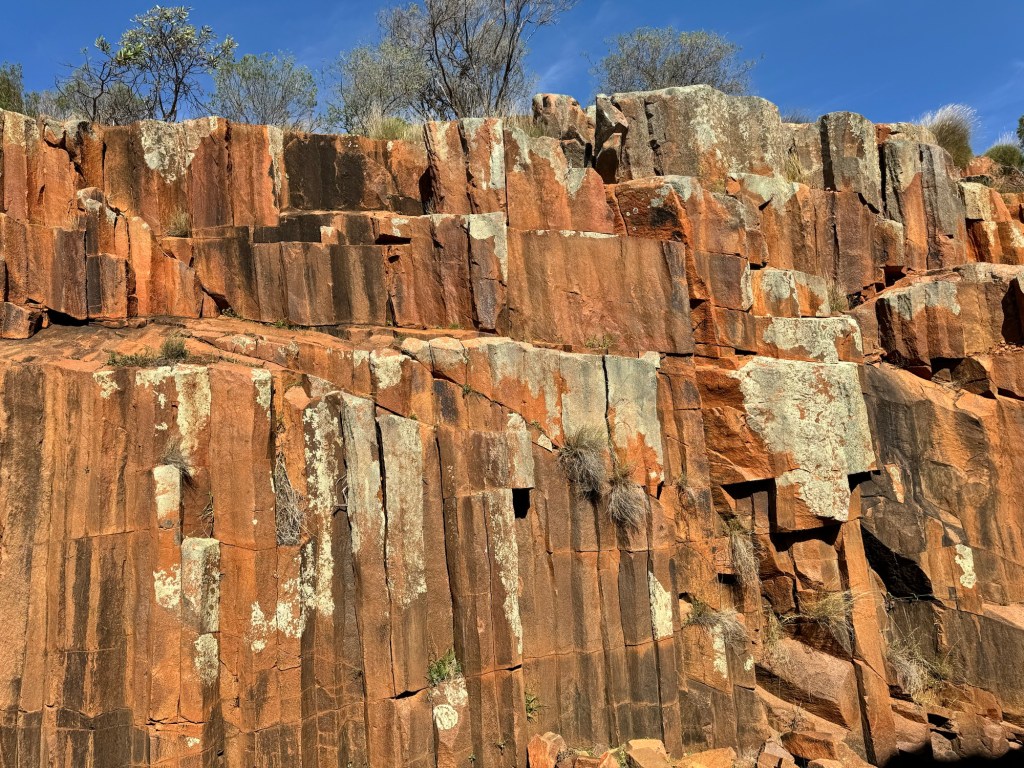

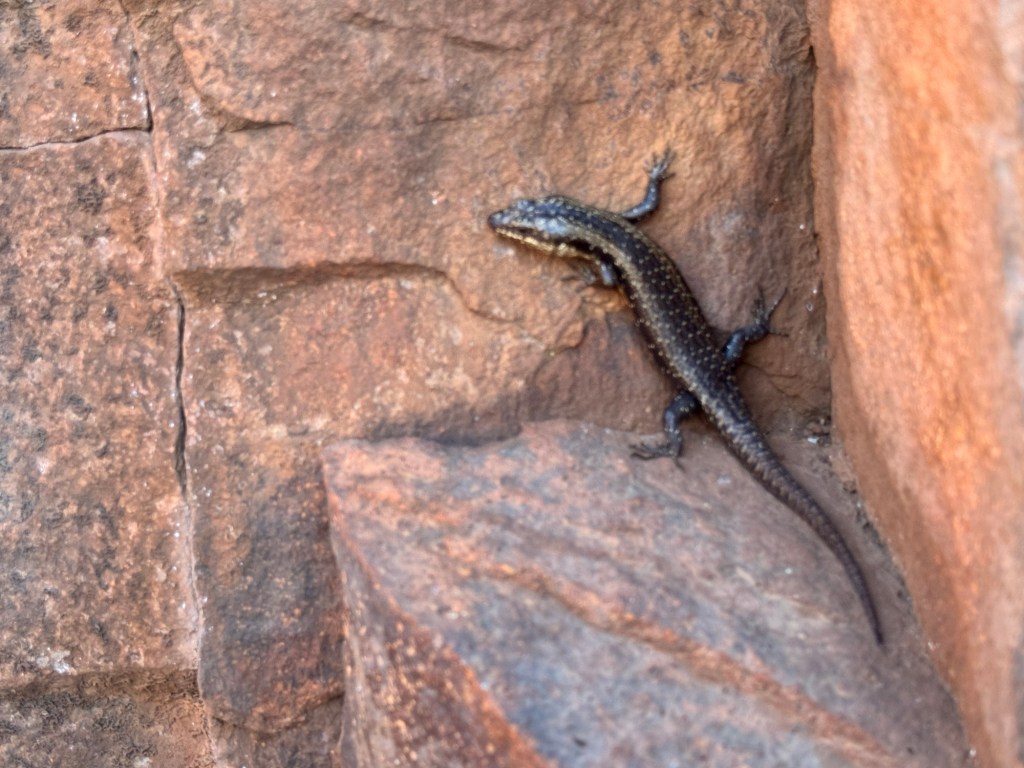

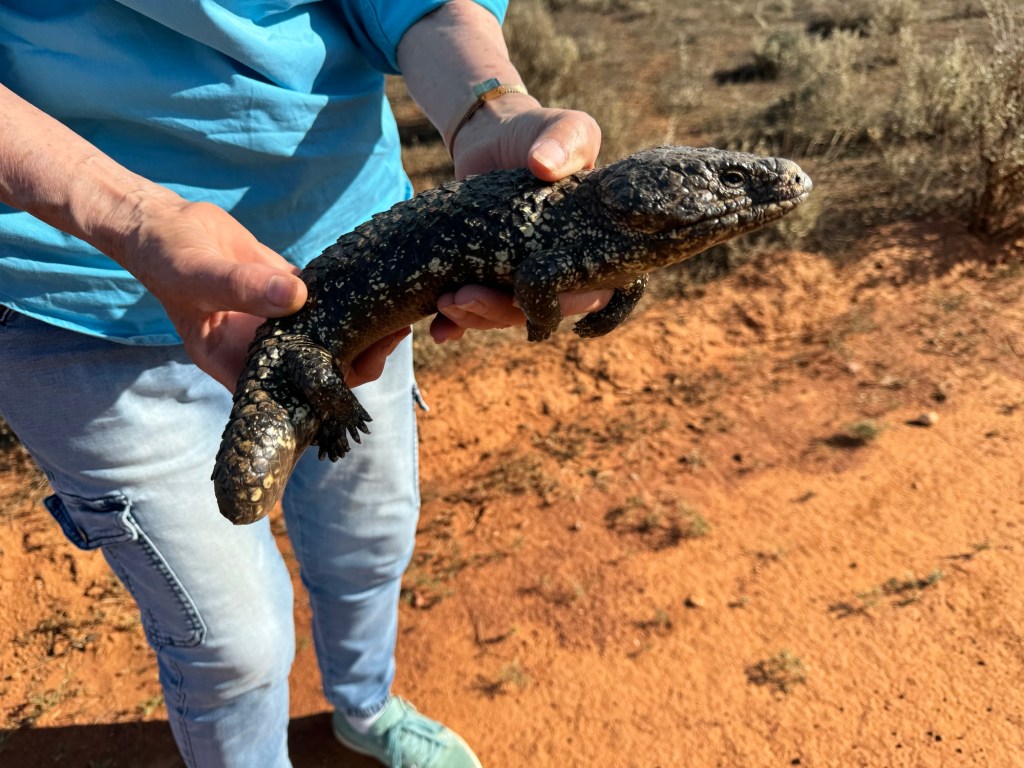
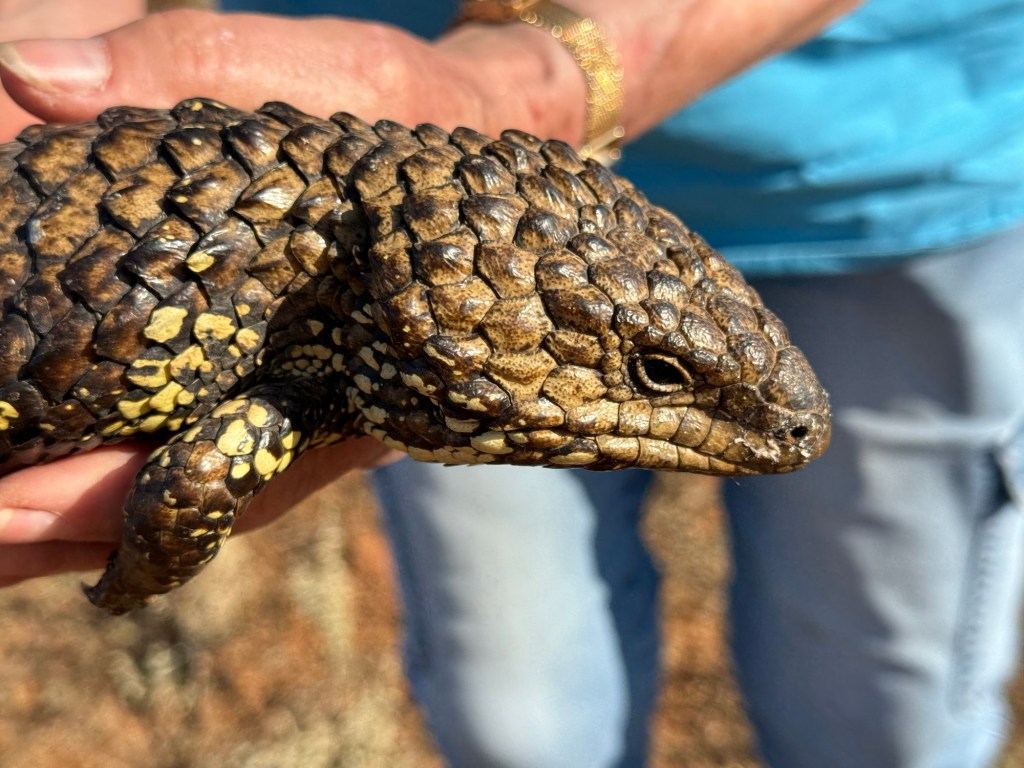
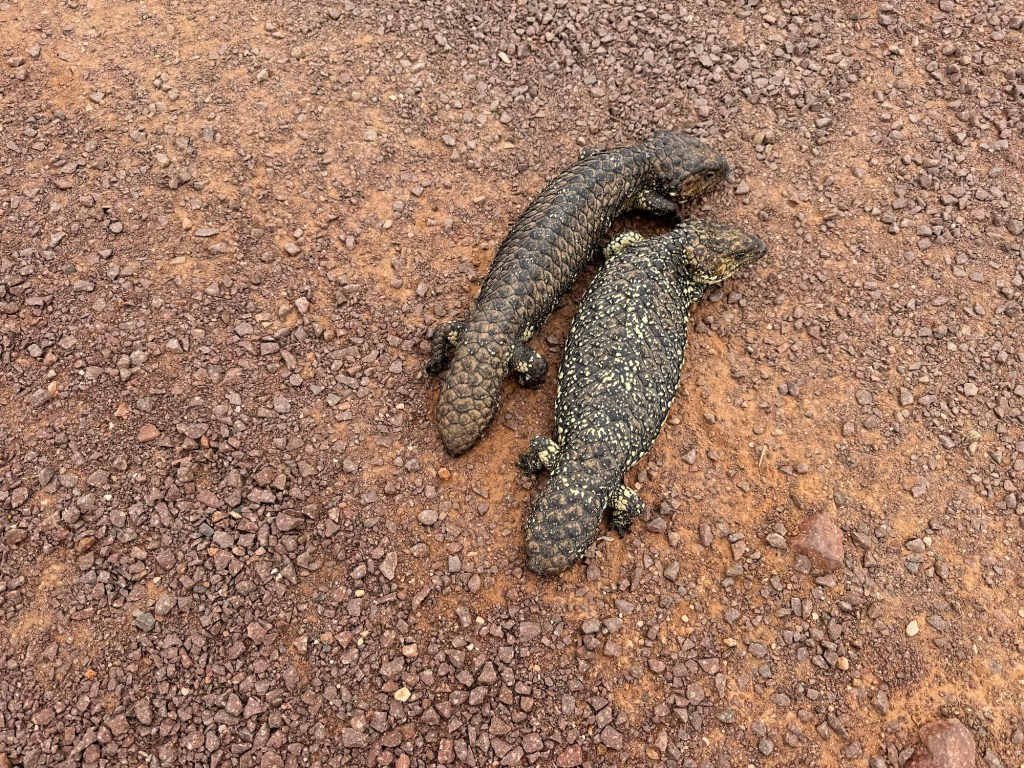
We had lunch and moved into our tent. Late afternoon Rosie took us Mirica Falls, which has no water, but where we had nibbles and drinks. The falls are made of Rhyolite and look like Devils Post Pile in Mammoth Lakes. They are red instead of black. We got some photos of a water skink who happily ate the chopped carrot we gave it. Rosie had no trouble picking up a couple of Shingle back or sleepy skinks as well as the blue tongue. They are slow reptiles that mate for life and live about 3 years. Colorful creatures for sure. On the way back to camp we finally spotted a wombat next to its hole. Not very close but the best we could do.

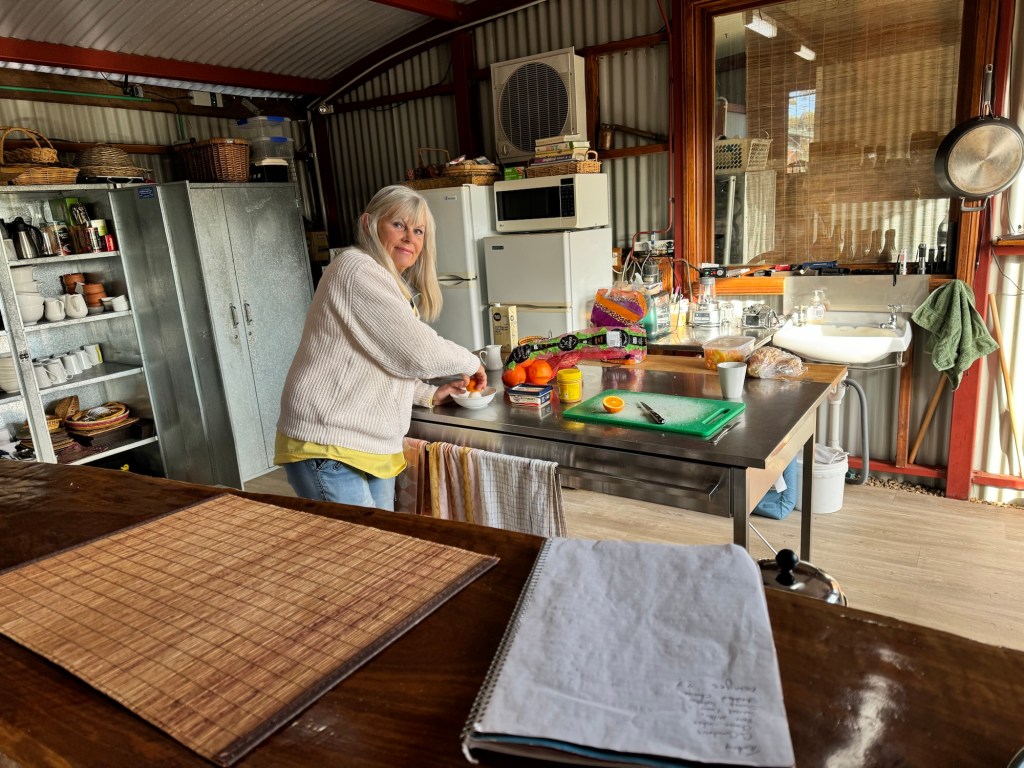
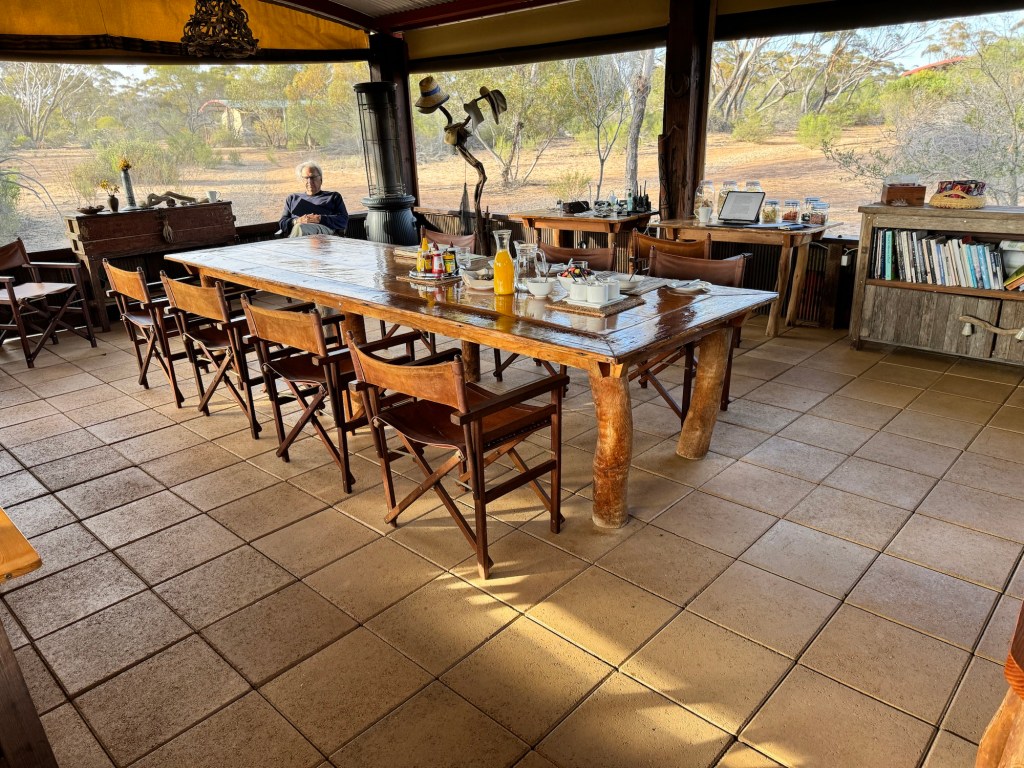
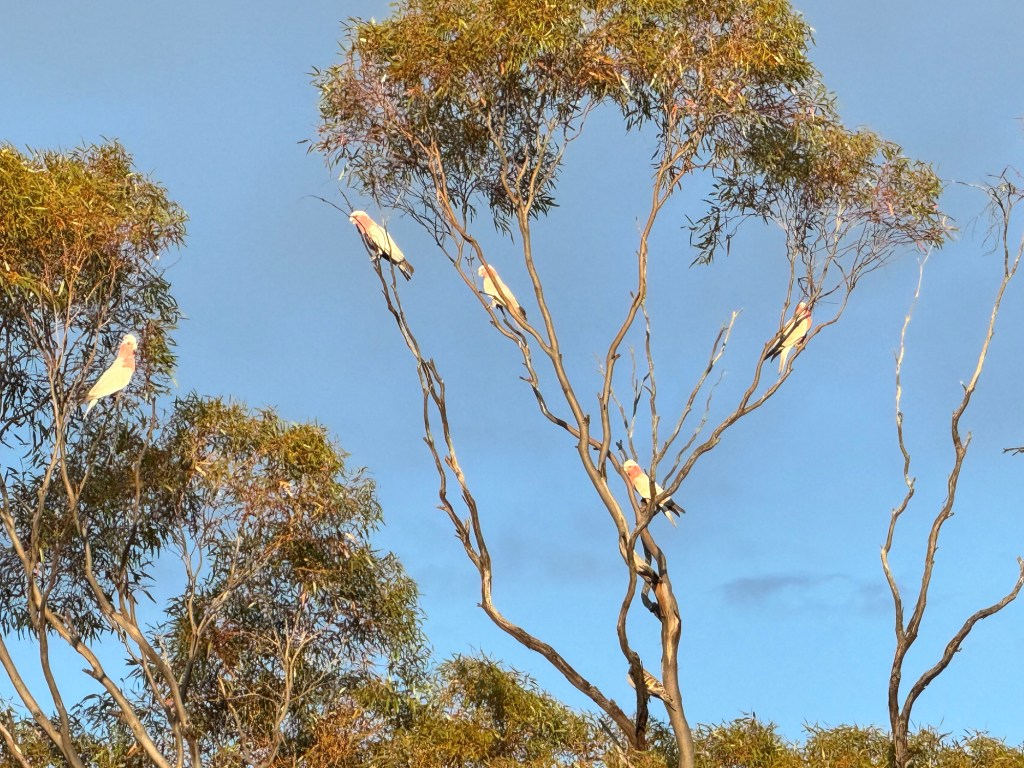
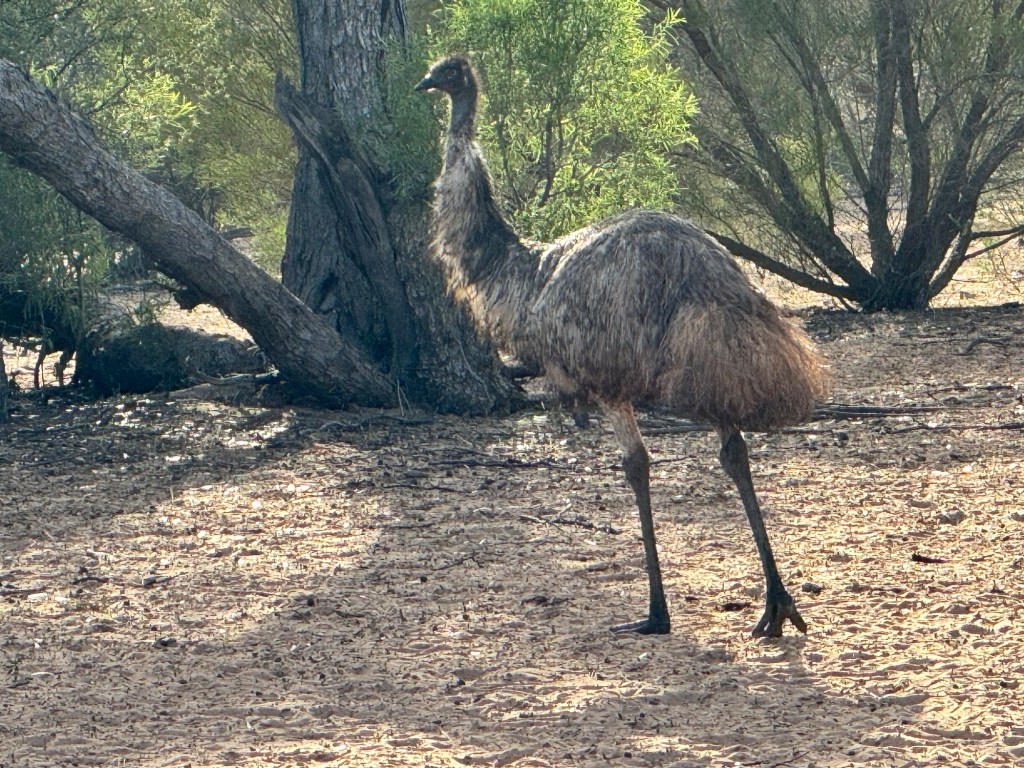
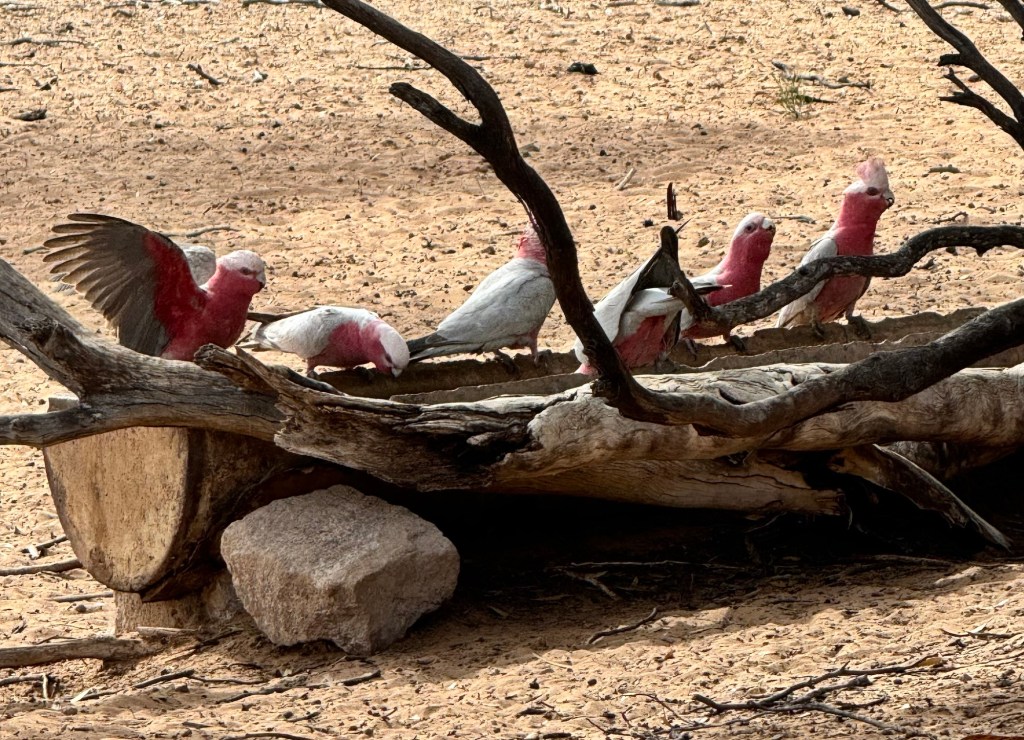
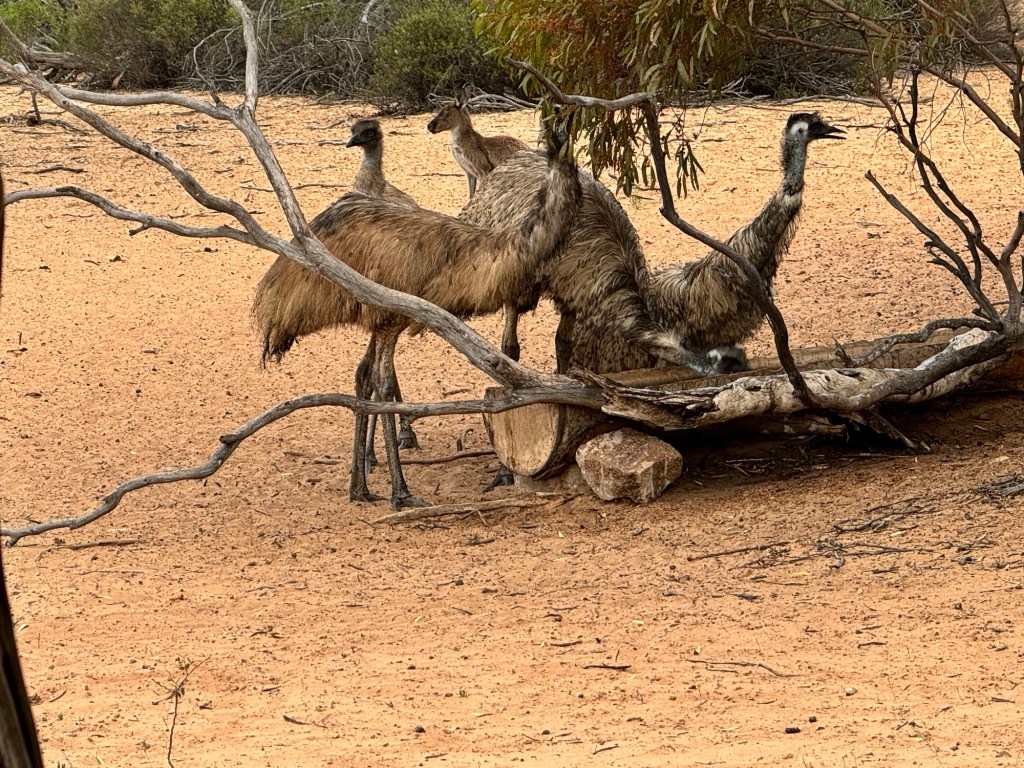
Back at camp, Rosie and Jeff Scholz, the manager and cook of the camp, chatted with us while they made dinner. As we are the only guests in camp at the moment, the conversation was casual and friendly. Just outside the dining tent we saw several Emu, kangaroos and birds. It was a bit like being at a water hole in an African camp—with different creatures.
I asked Jeff how to define “outback” and he said the lands outside the surveyed and agriculture areas of Australia are considered Outback. The survey line was set at 10 inches of rainfall to quantify the limit of cultivated agriculture development. The land beyond is known as “outback”. Kangaluna Camp is in the outback. More than half Australia is considered outback.

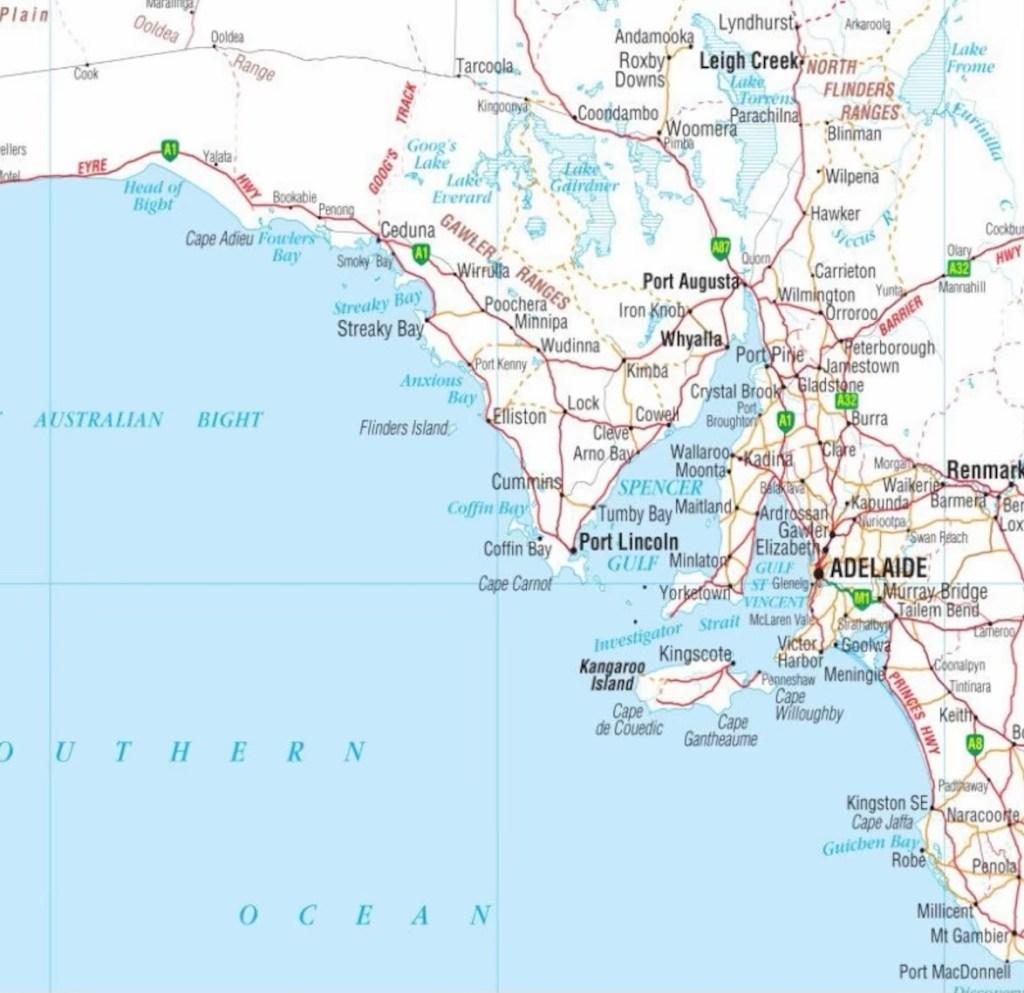
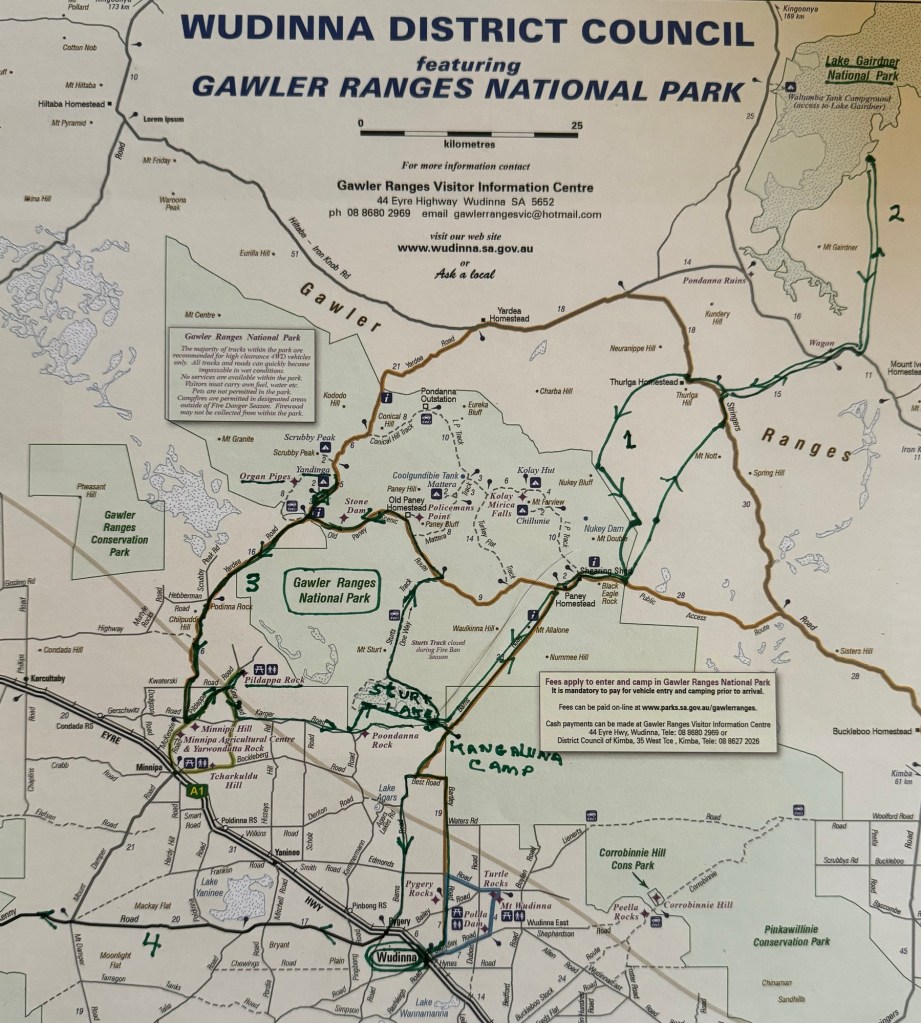
We are taking several outings in the area. This map shows the way.
Thursday, October 10,2024
Each day at Kangaluna we drove and hiked in a different direction. Our first day was on a game drive in the national park to Mirica Falls where we fed a water skink carrots. Number 1. Our second day was to drive through the park and 3-4 large sheep stations to the totally salt Lake Gairdner an hour and a half north of camp. Number 2.
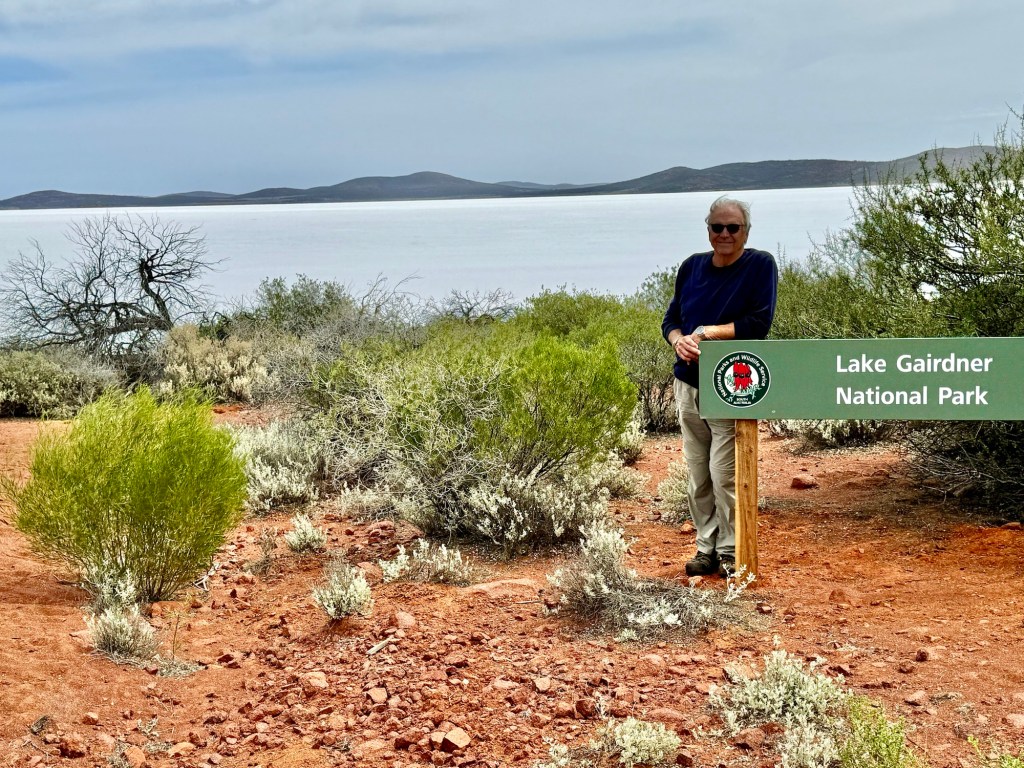
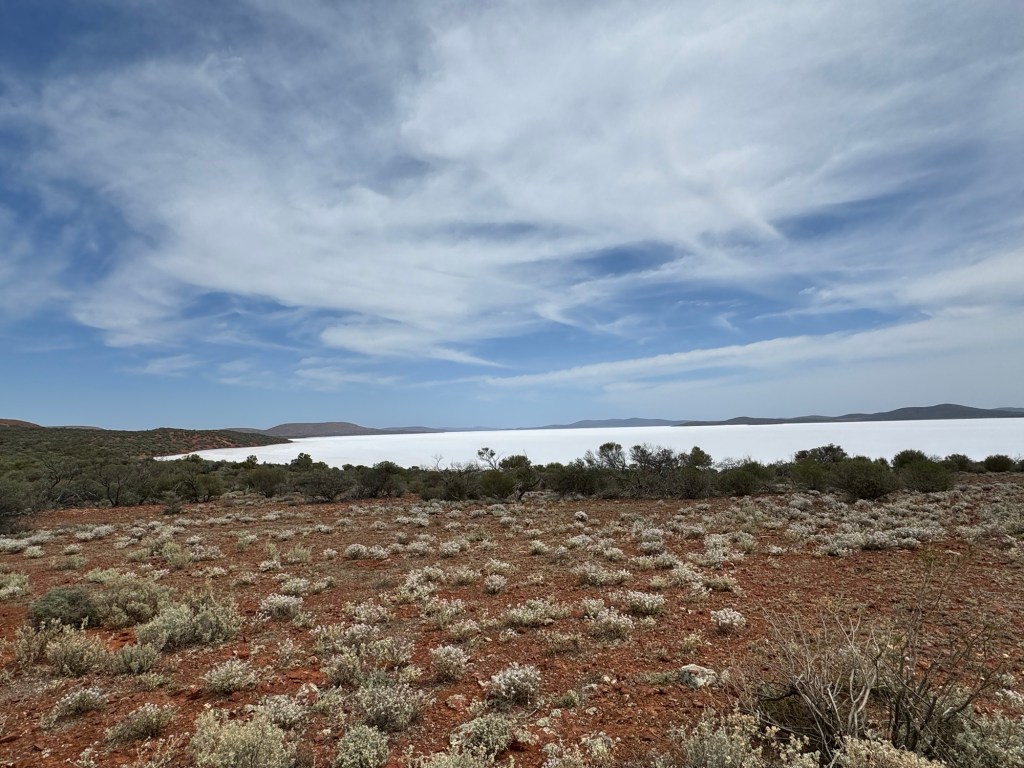
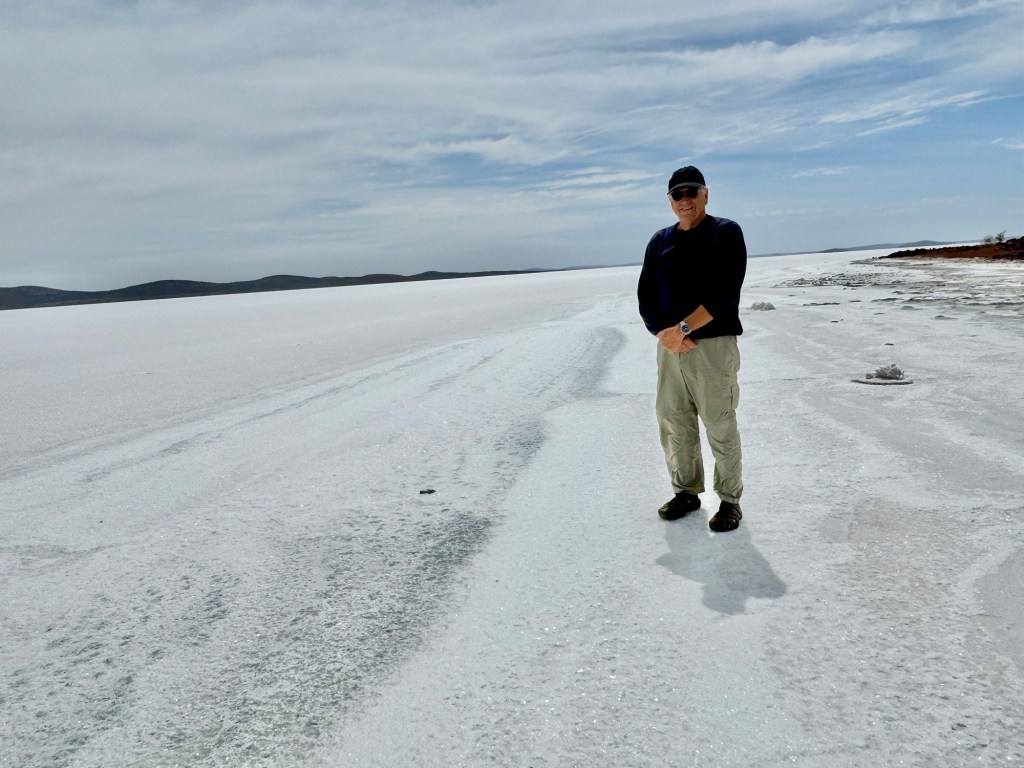

It was an interesting drive. We saw many red kangaroos as well as sheep and goats along the way.
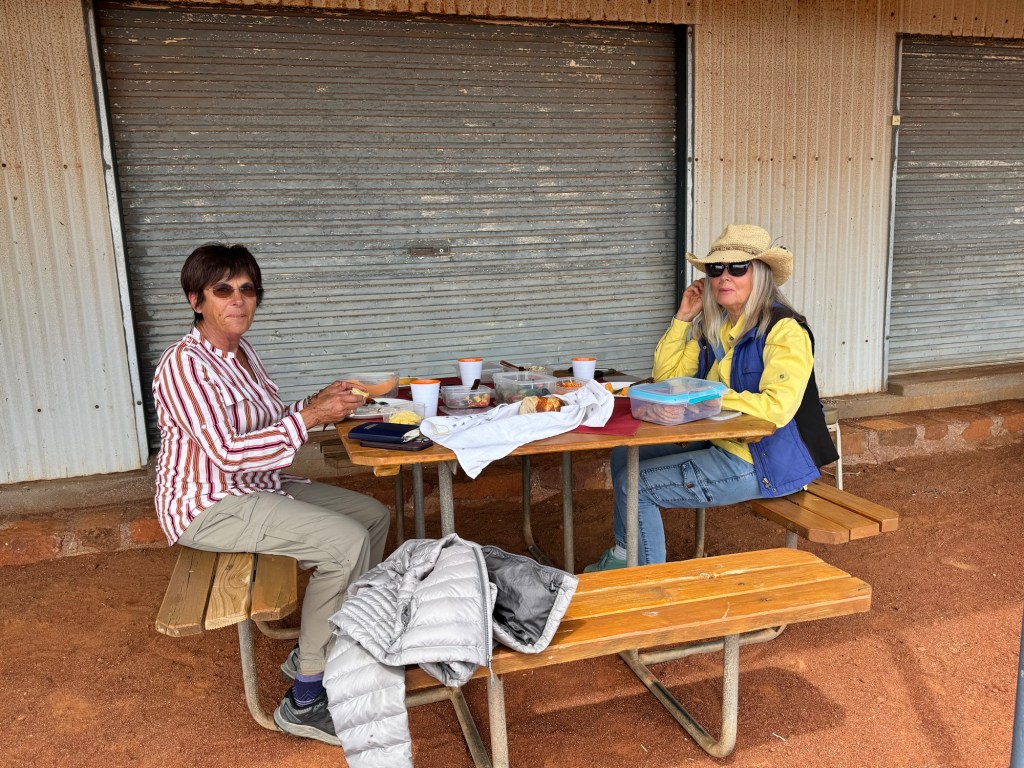
The salt lake is 100 miles long and 31 miles wide. Huge and awesome. Did not get tired staring at it while we ate a picnic lunch.
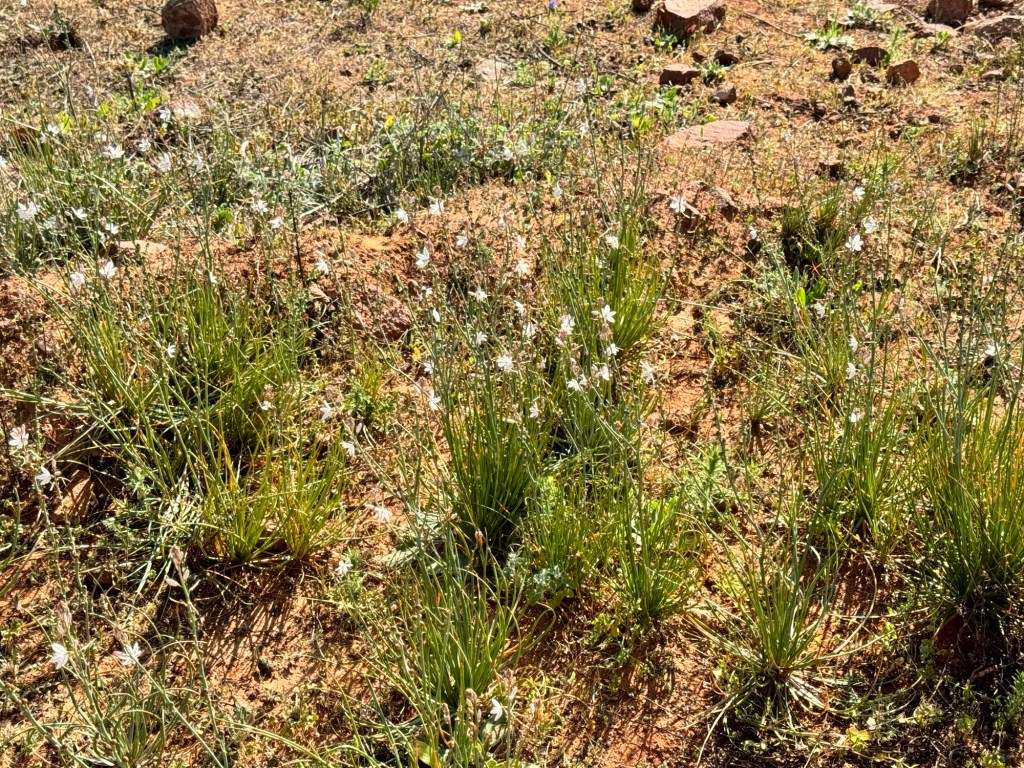
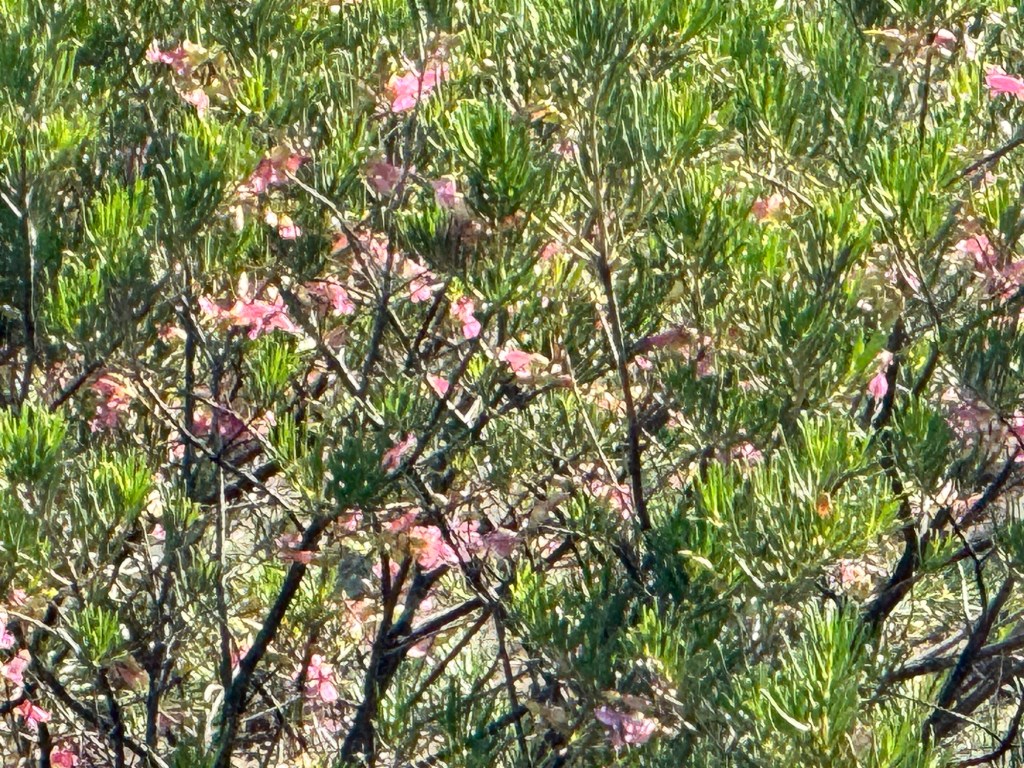
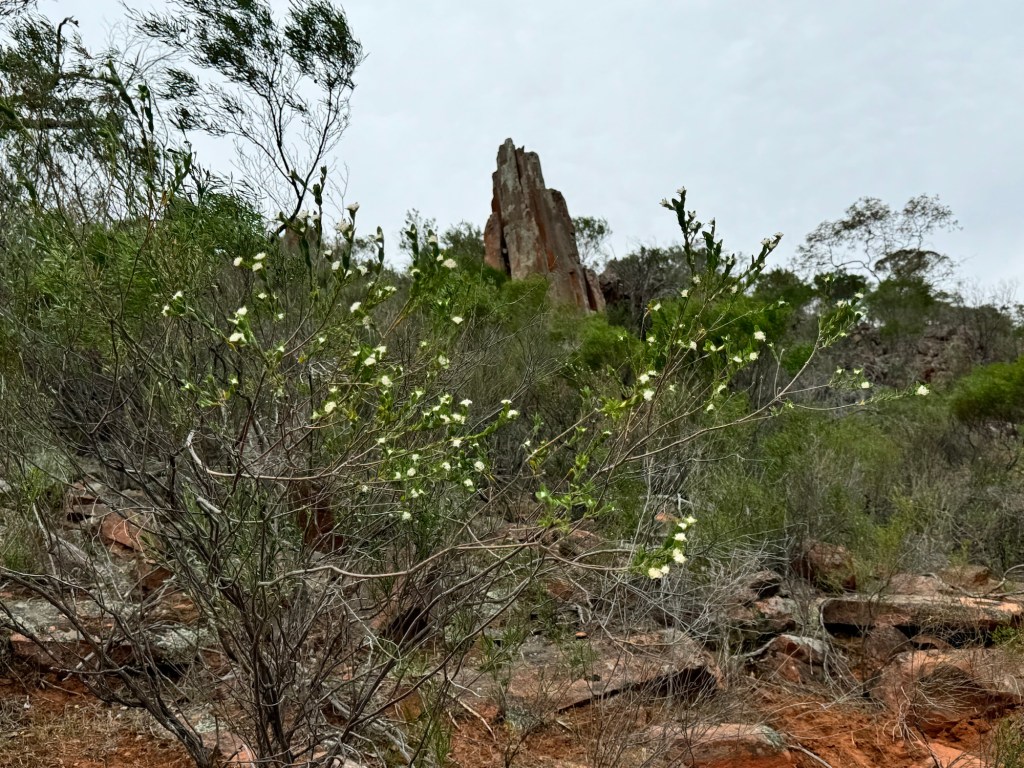
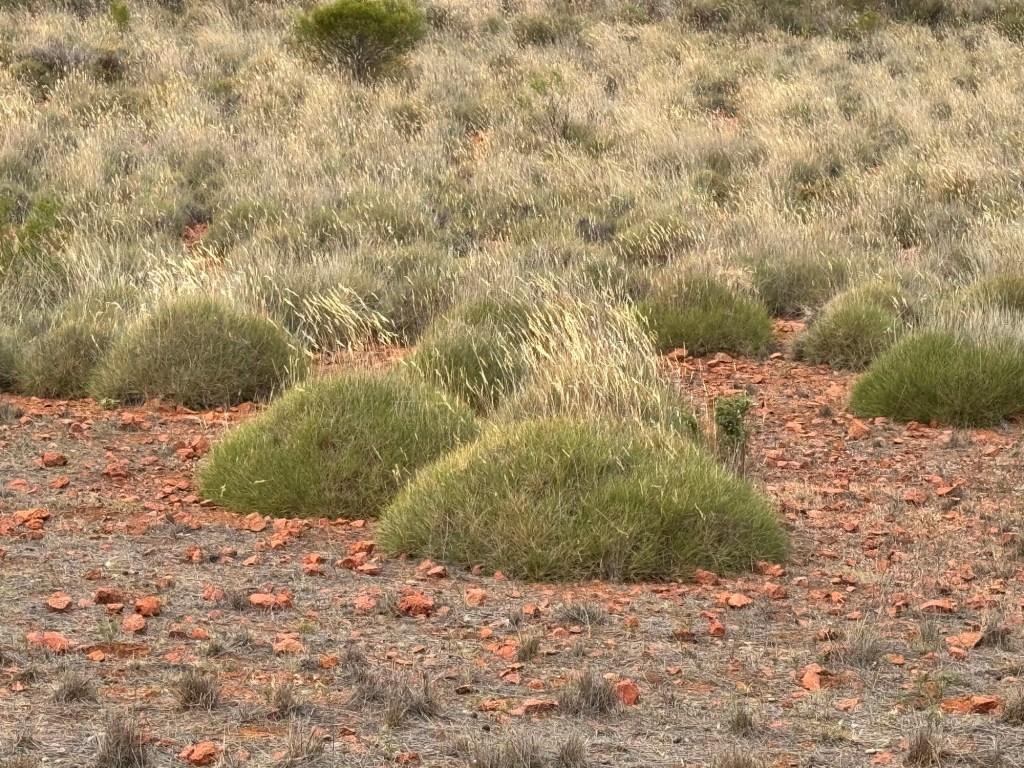
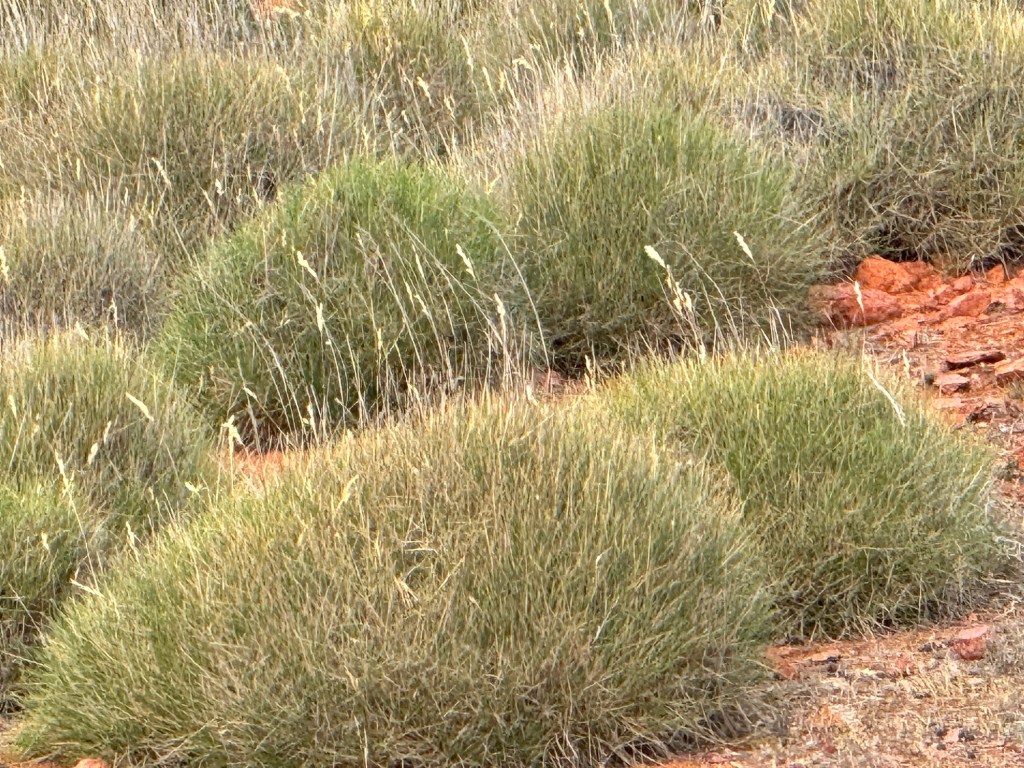
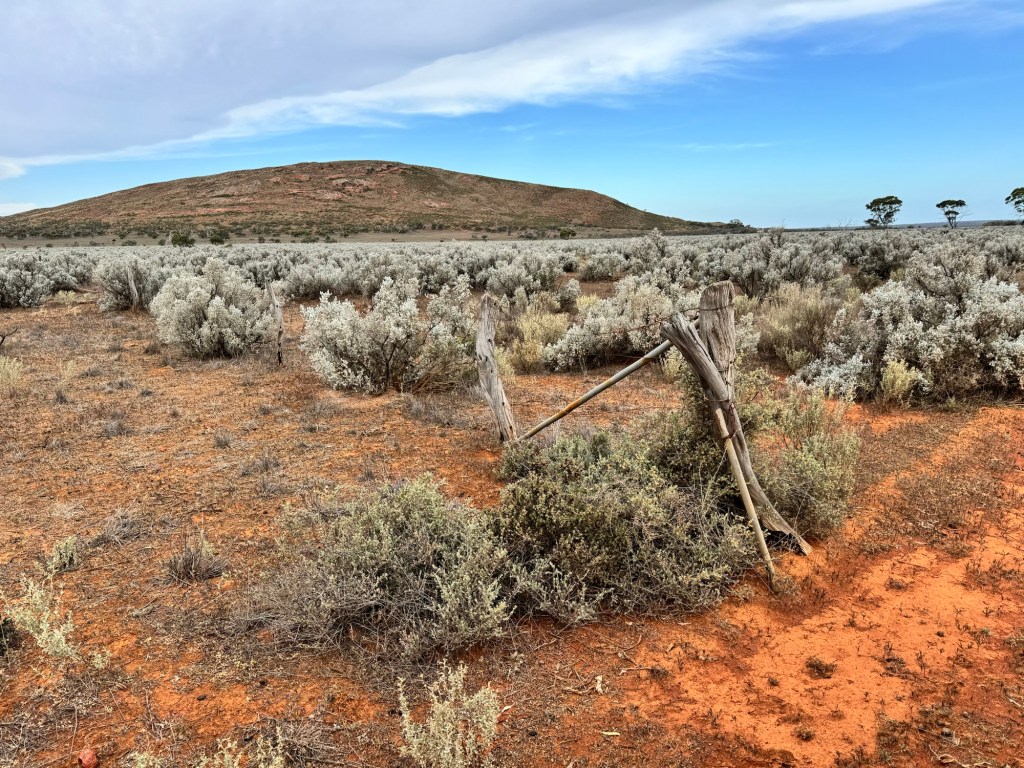
In addition to the pretty red Roos, we saw Pig Face ice plant, Yellow camel weed, Pearl Blue Bush and Spinifex grass, which is pretty, but prickly so nothing eats it.
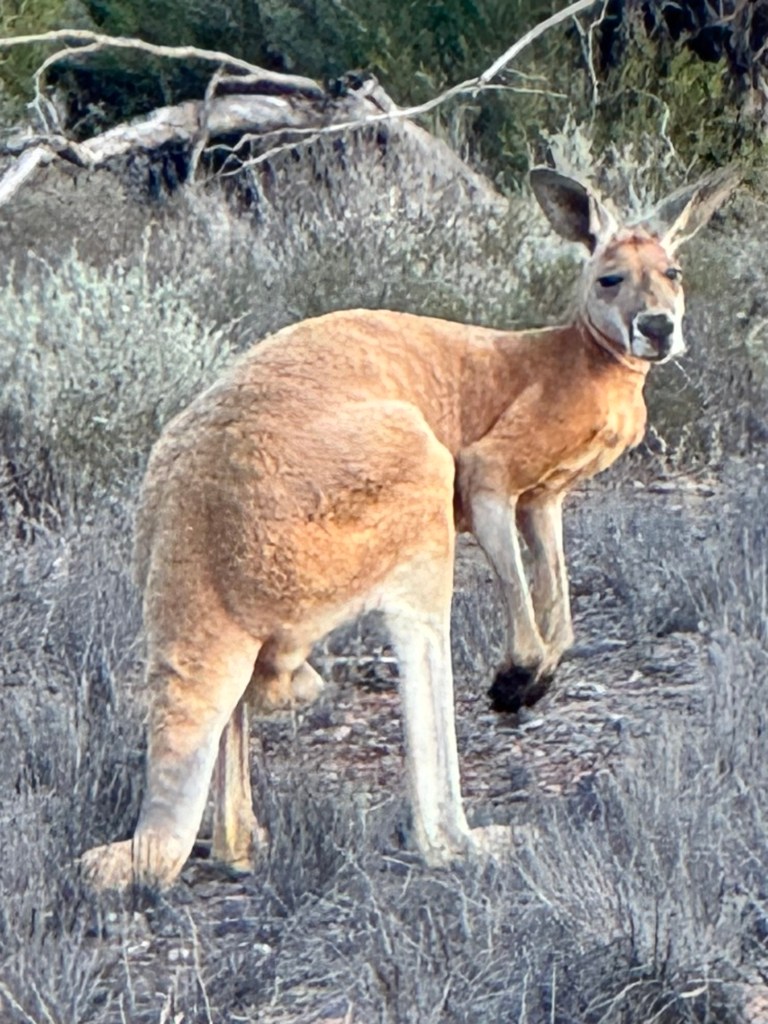
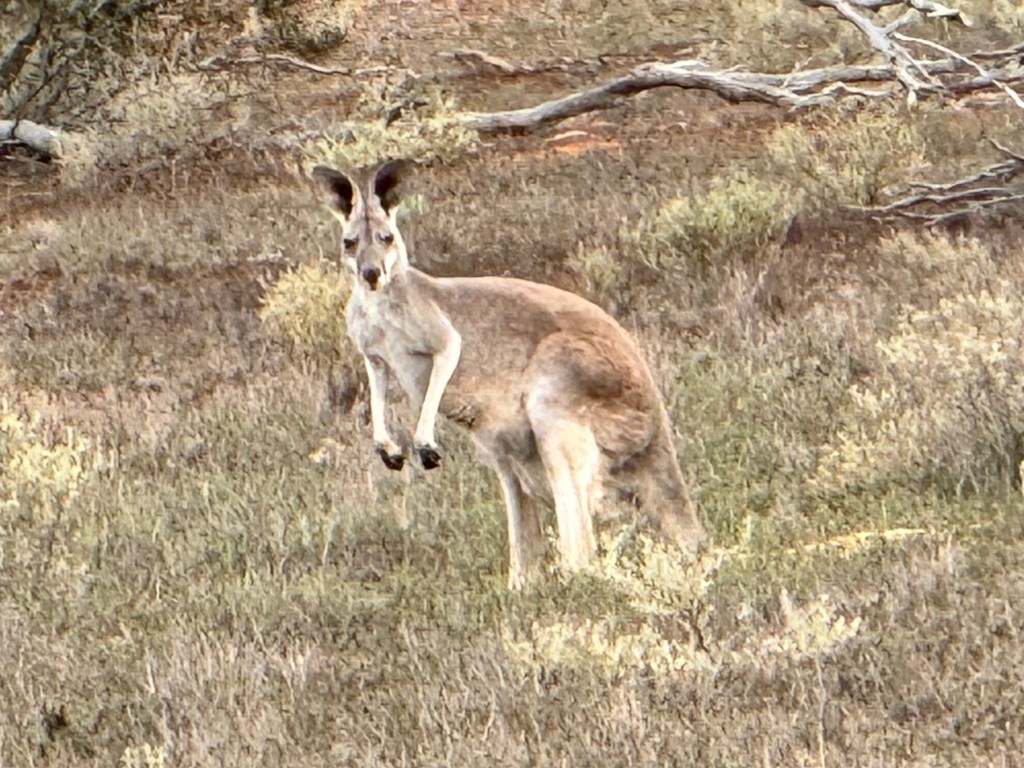
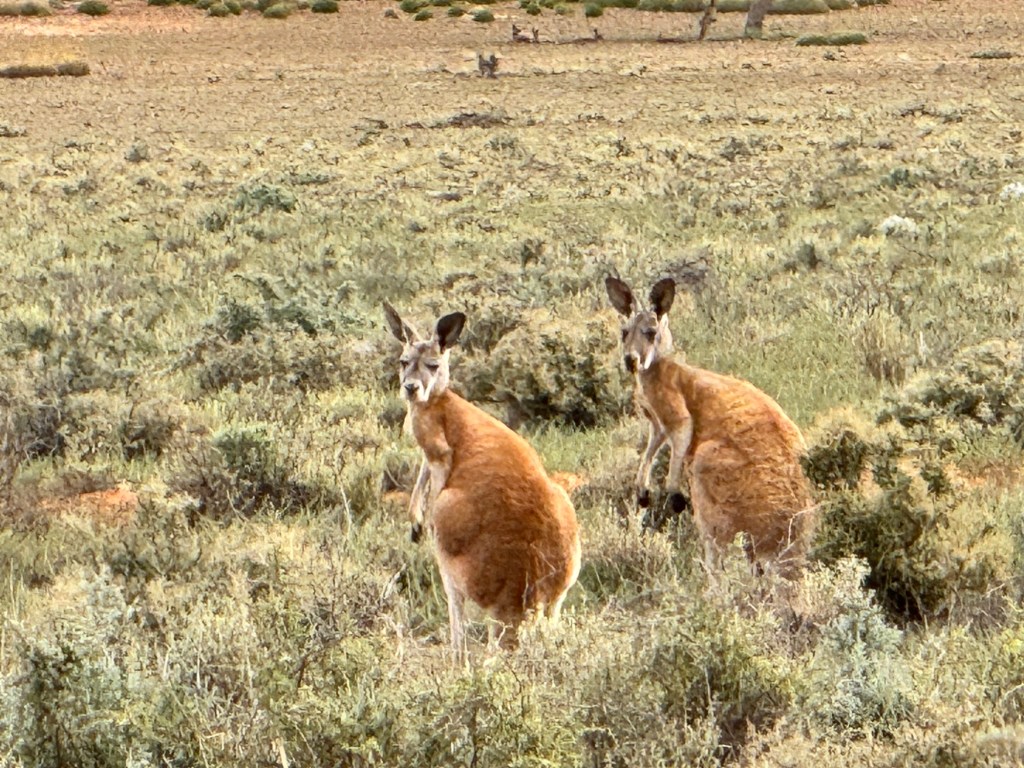





Red Kangaroos


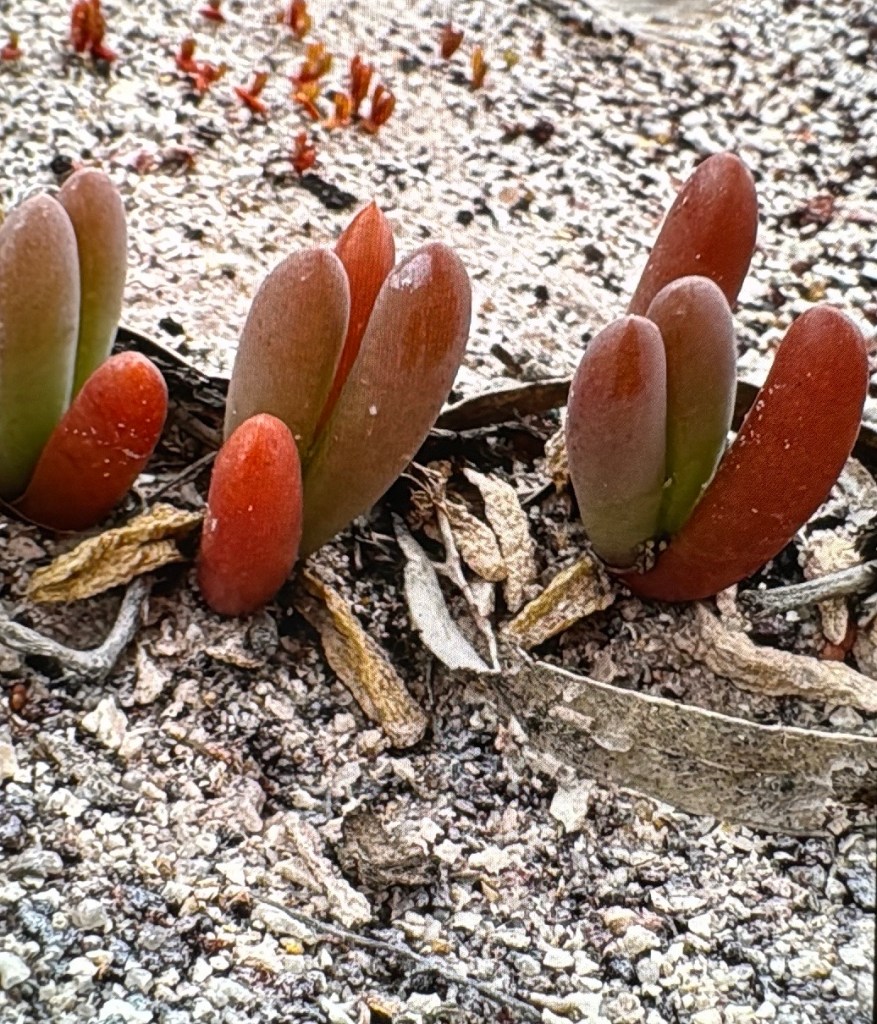
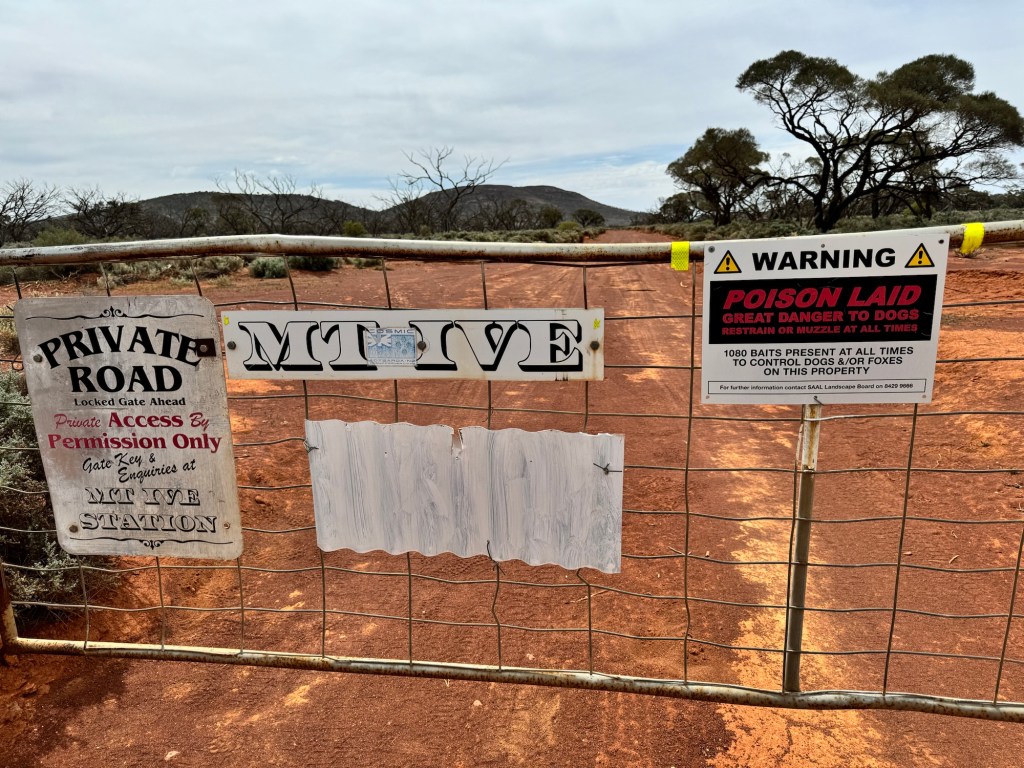
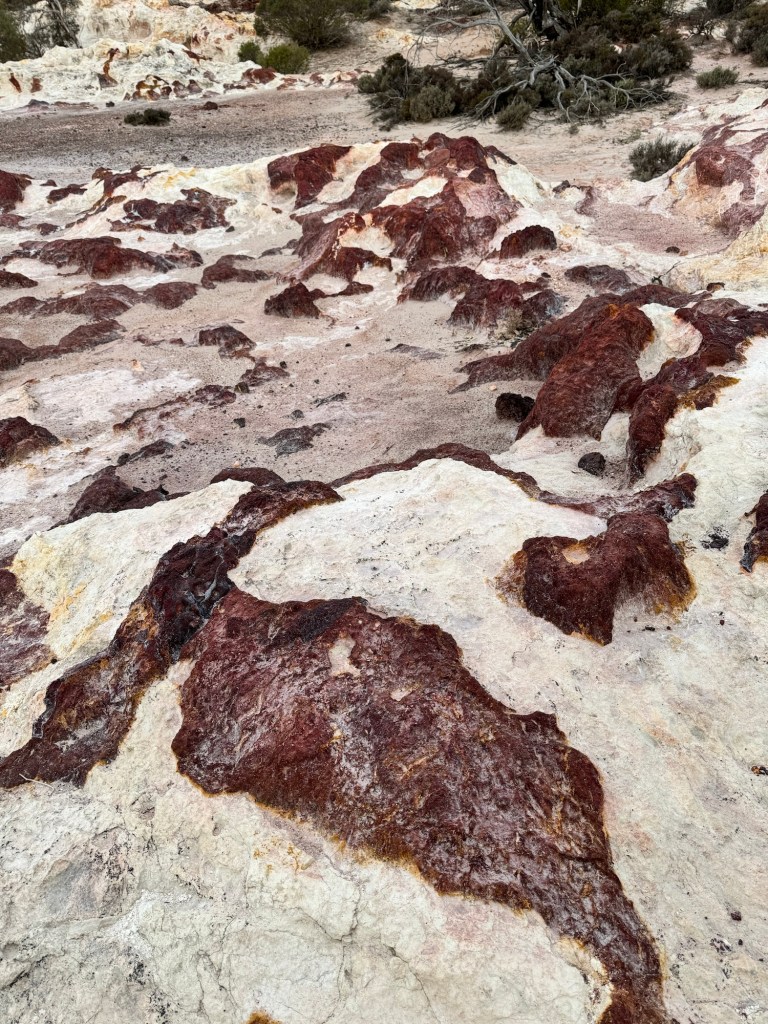
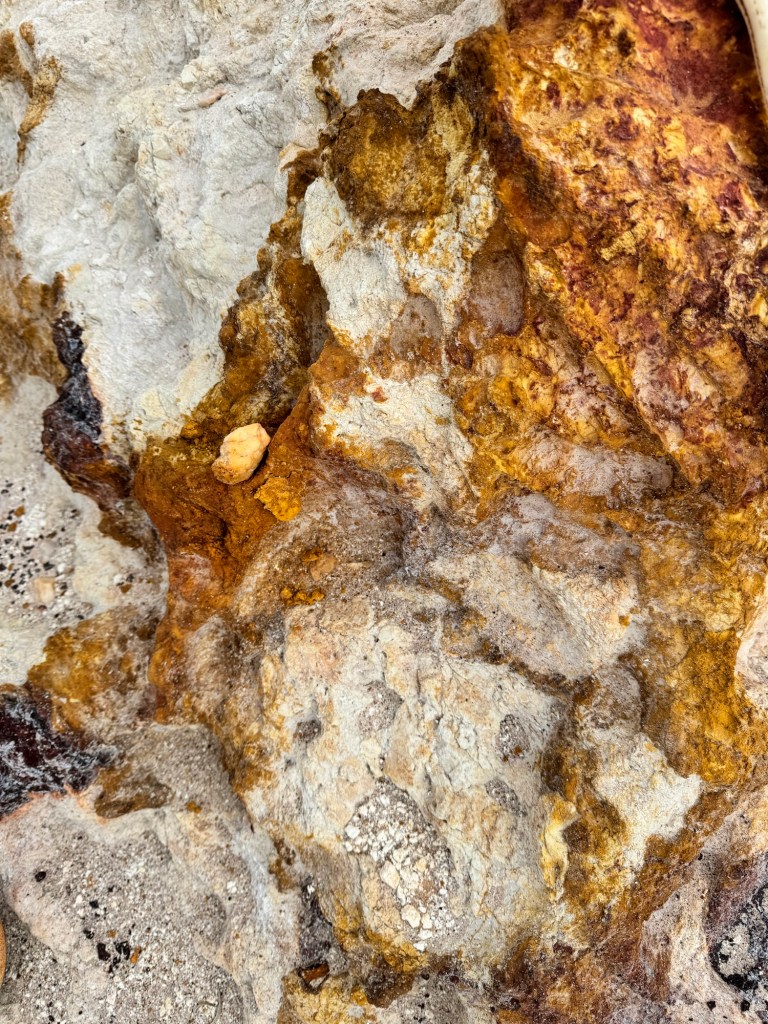
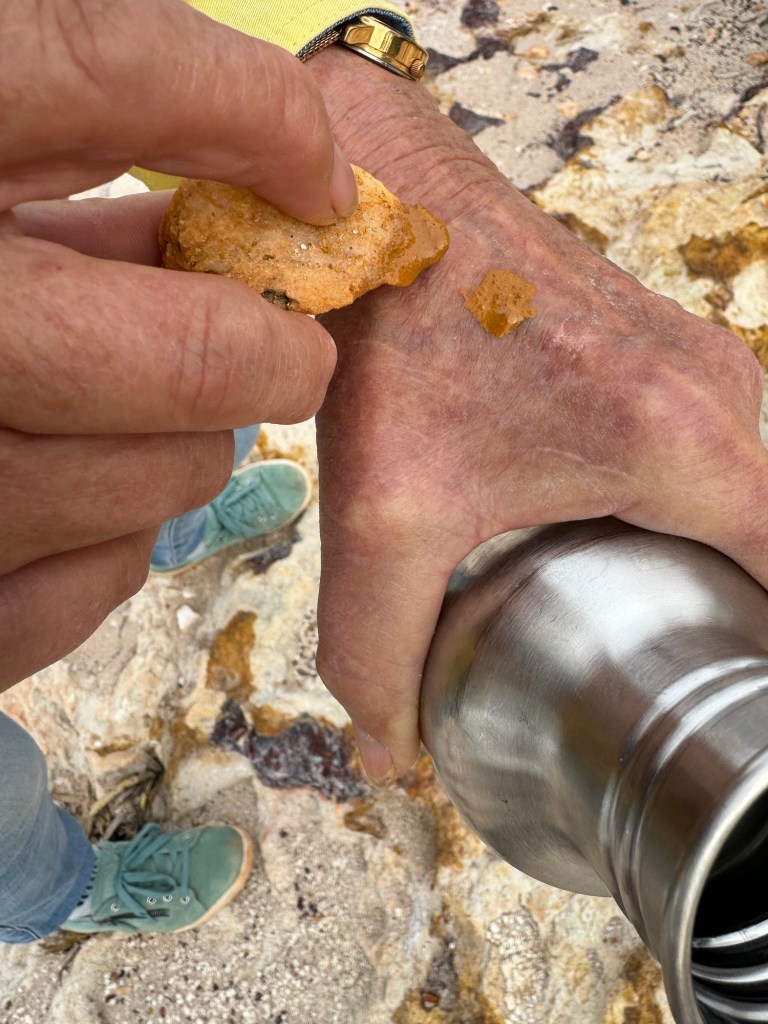
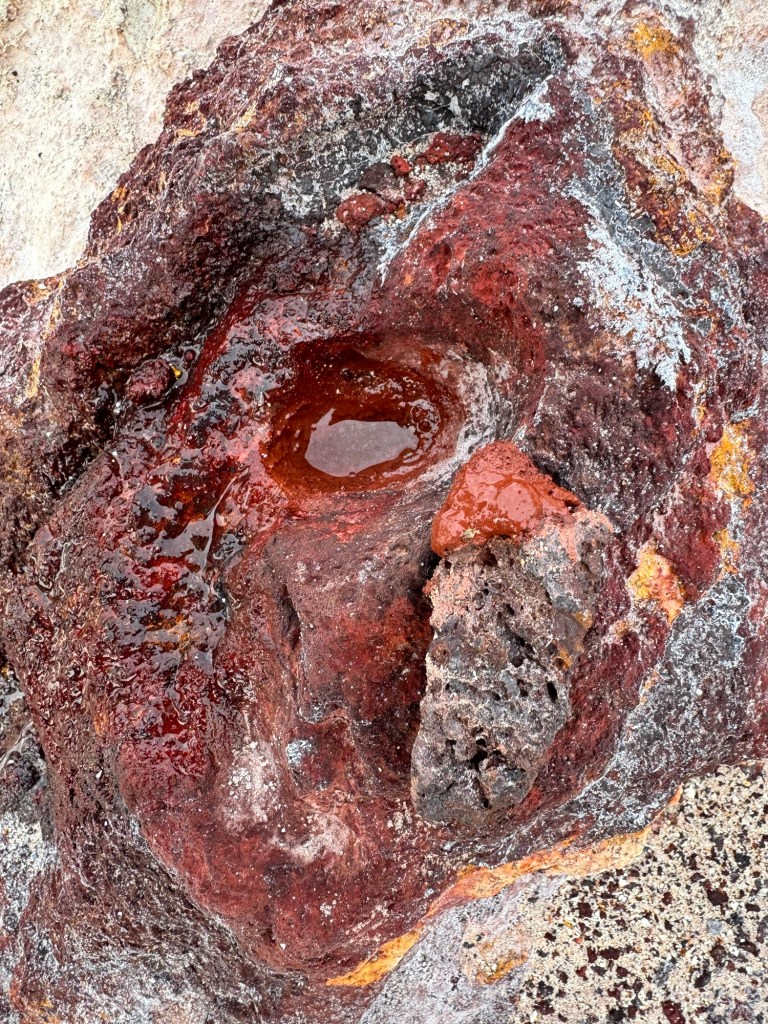
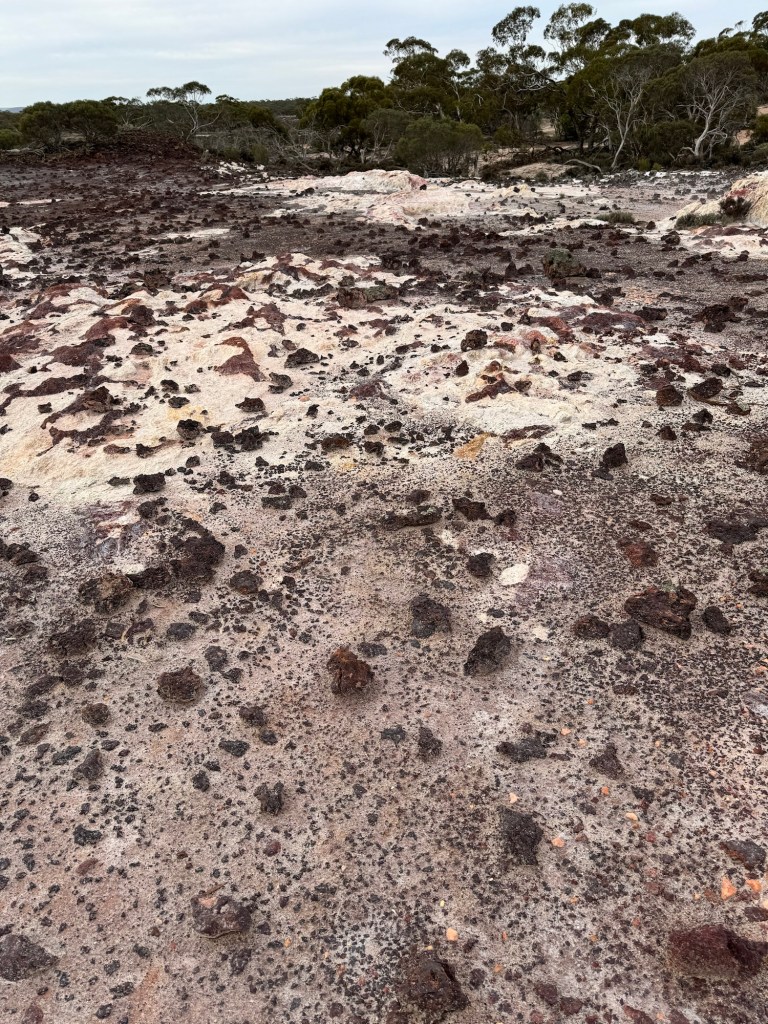
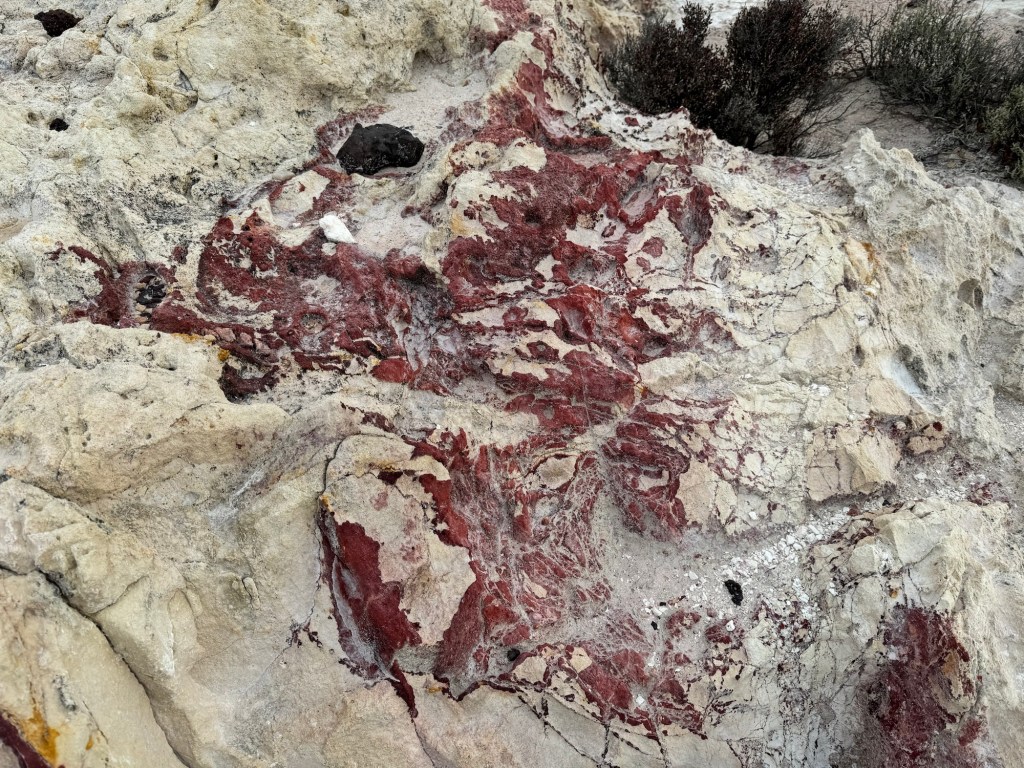
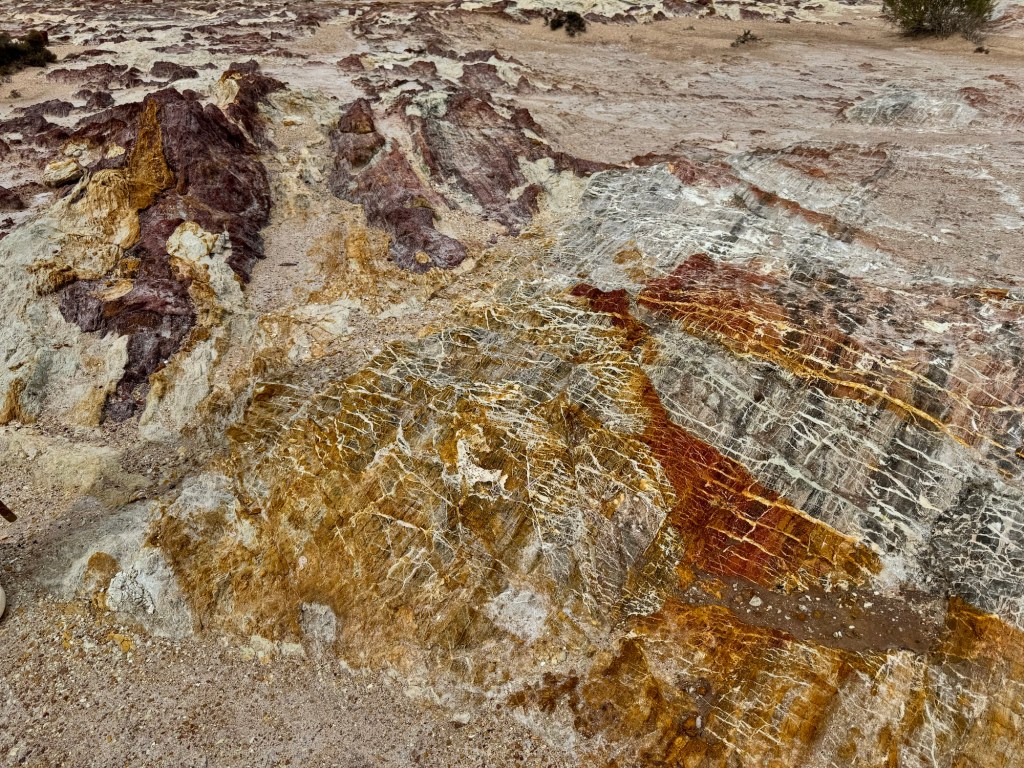
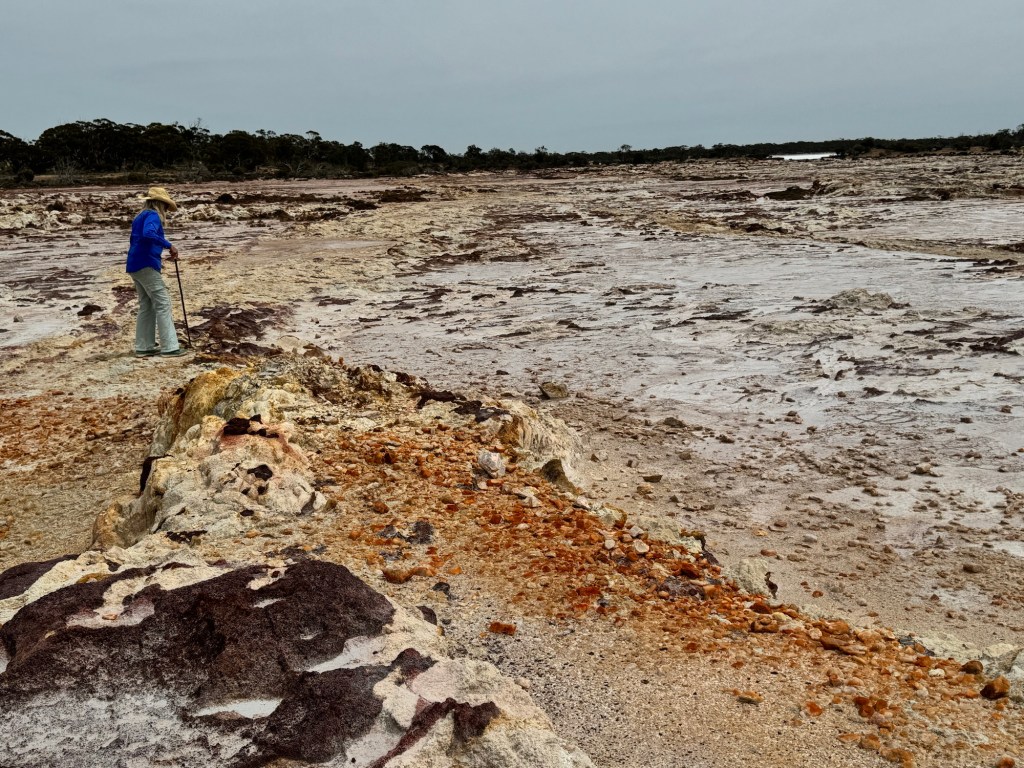
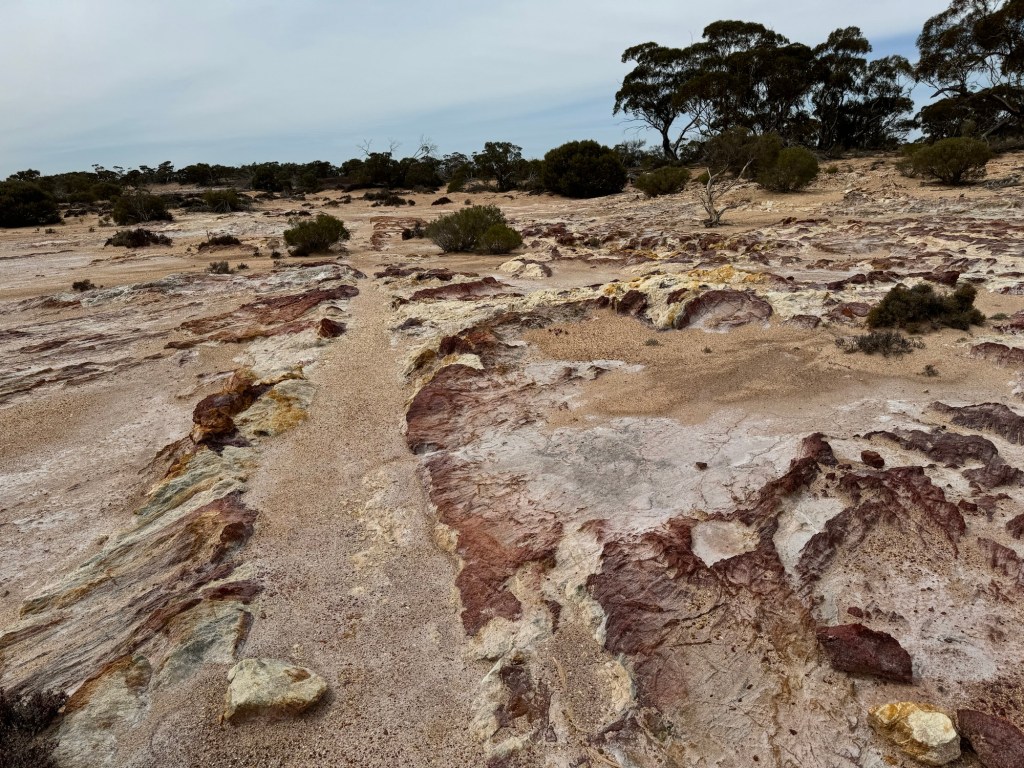
Before returning to camp, Rosie made a stop for us to see a patch of ancient ocher deposited in mud. Number 3 drive on the map. The colored stone comes from dissolved iron. The pit was used by aboriginal people many thousands of years ago, to make ochre dyes. The colors we saw included: yellow, orange, red, many shades of pink and white. Rosie ground each color with a piece of rock of the same color to get some powder, then mixed a bit of water with the powder and applied the dye to her hand. She did it with several colored rocks and produced a variety of colors, all shades of ochre. The color is determined by the amount of iron in the stone. White stone contains no iron. The black rocks scattered on the ochre rocks are an iron stone called ferrocrete
Over dinner we learned that the flies get worse the further west you go. Uluru (Ayer’s Rock) is insufferable with flies. That being the case, this is as far west as we care to go. Give us anywhere in Africa, where we have never seen flies.
Friday, October 11, 2024
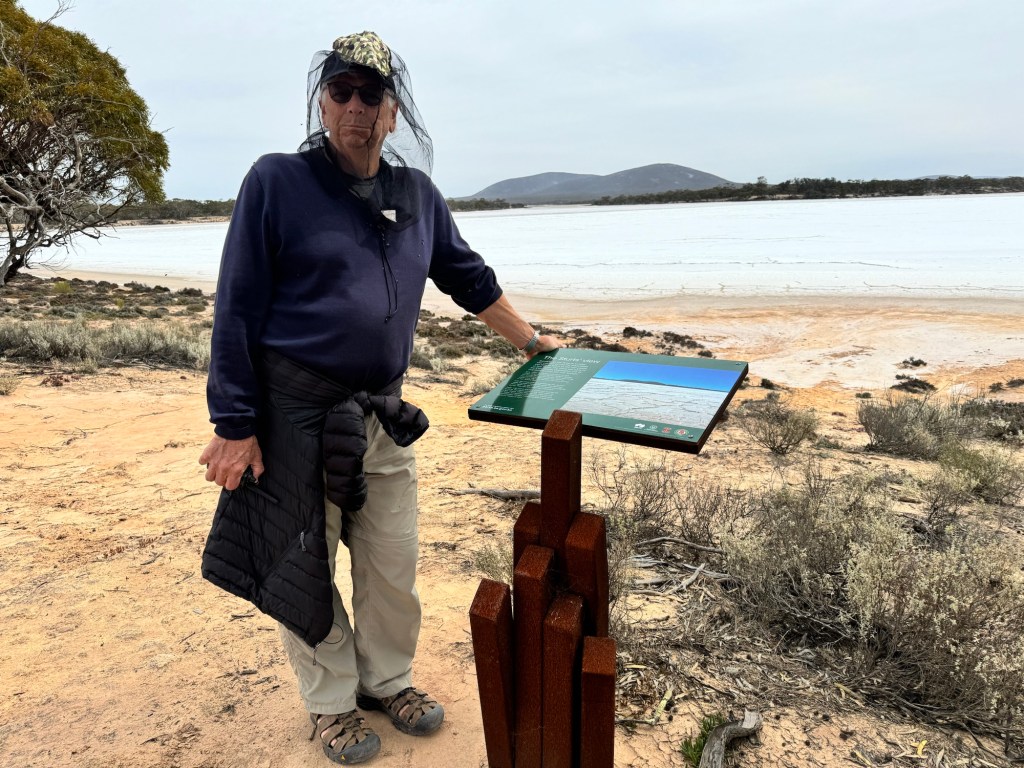
Fortunately, the flies don’t like wind and disappear at night. So far we have managed reasonably well wearing a head net.
On Friday morning, Mark and I walked a couple miles to another salt lake. Rosie joined us with the car and off we went on another long drive about. The landscape looks the same to me, but Rosie constantly tells stories about the place. At lunch we stop at the Old Paney Homestead, where we eat indoors to avoid the flies. Rosie tells us about the family that originally occupied the place. While the husband spent weeks out working the property and taking care of sheep and goats, the wife raised 11 children in this small building.
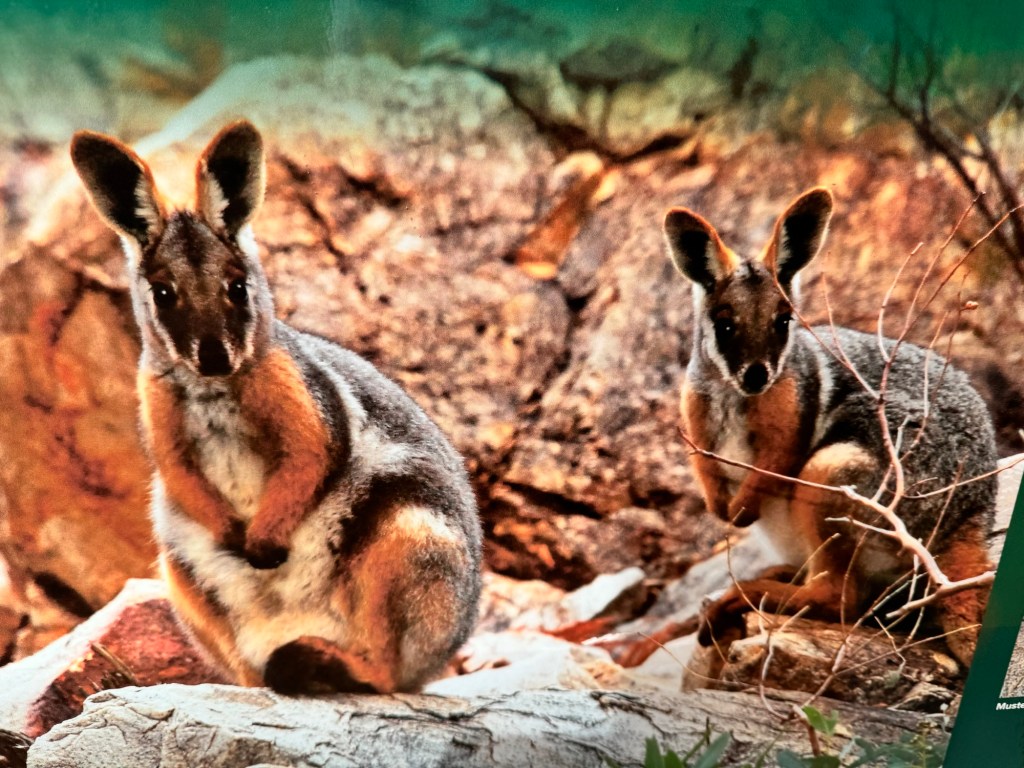
After lunch we drove to Yandinga Canyon looking for a rare wallaby, the yellow footed rock wallaby. We spent about a hour scanning the area with no success. Too bad, as it is a very pretty wallaby. Here is a photo anyway.
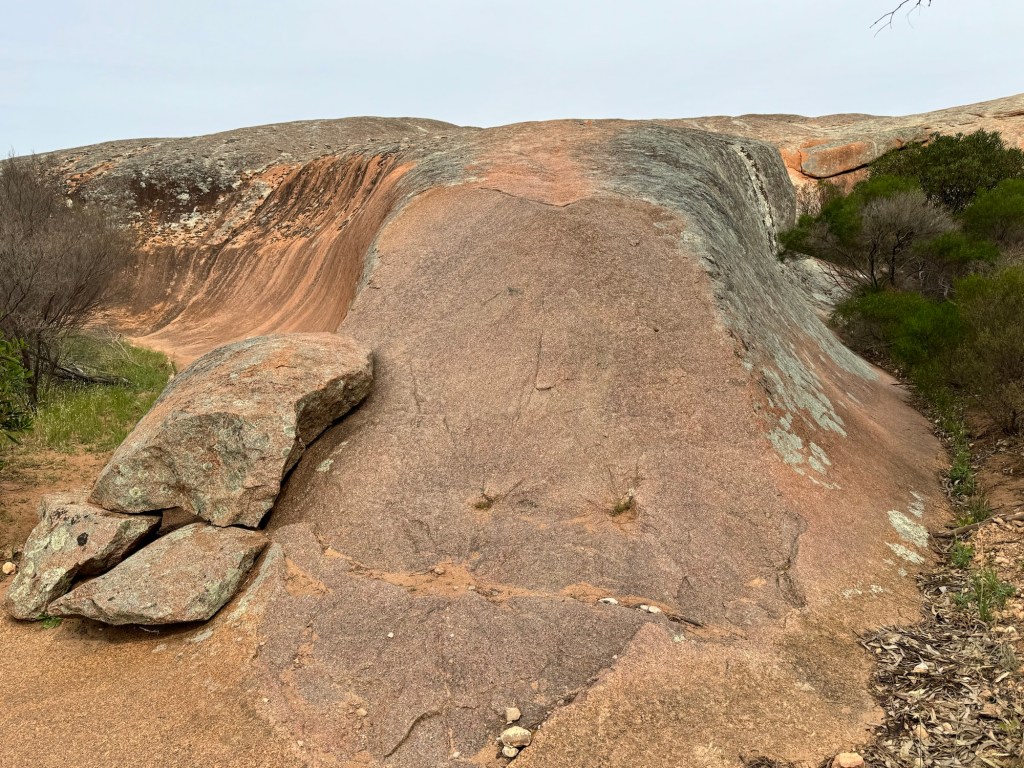
From there we drove on to the Pildappa Rock to see a monolithic stone that features the shape of a wave. Although huge, it is no where near the size of Uluru.
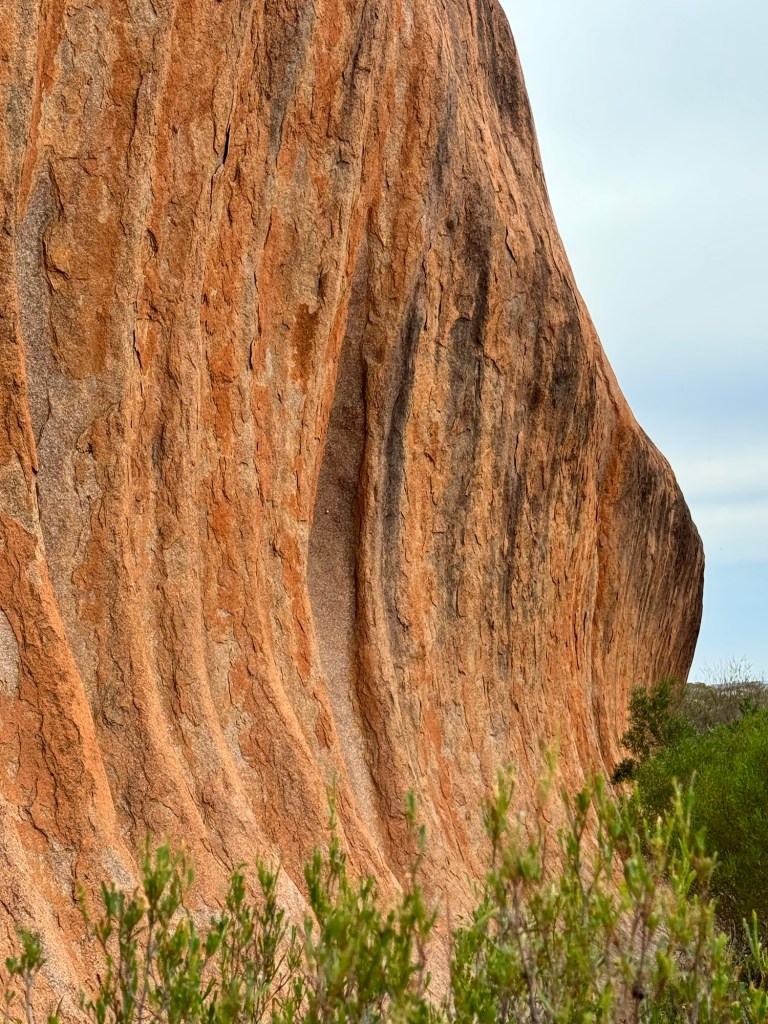
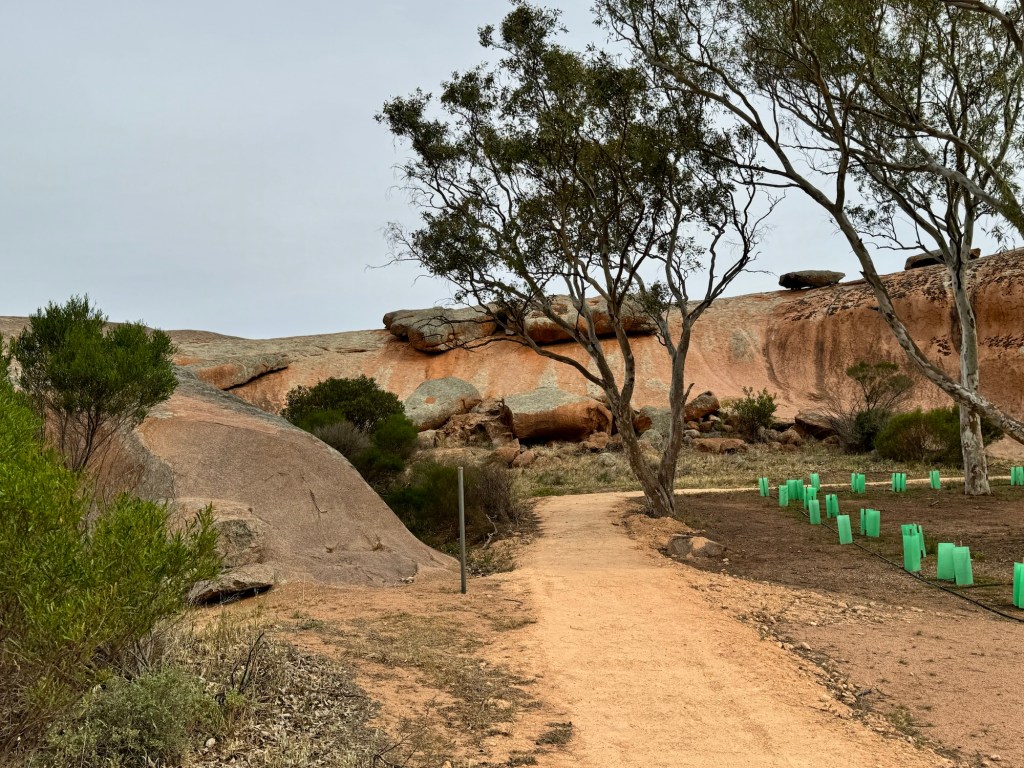
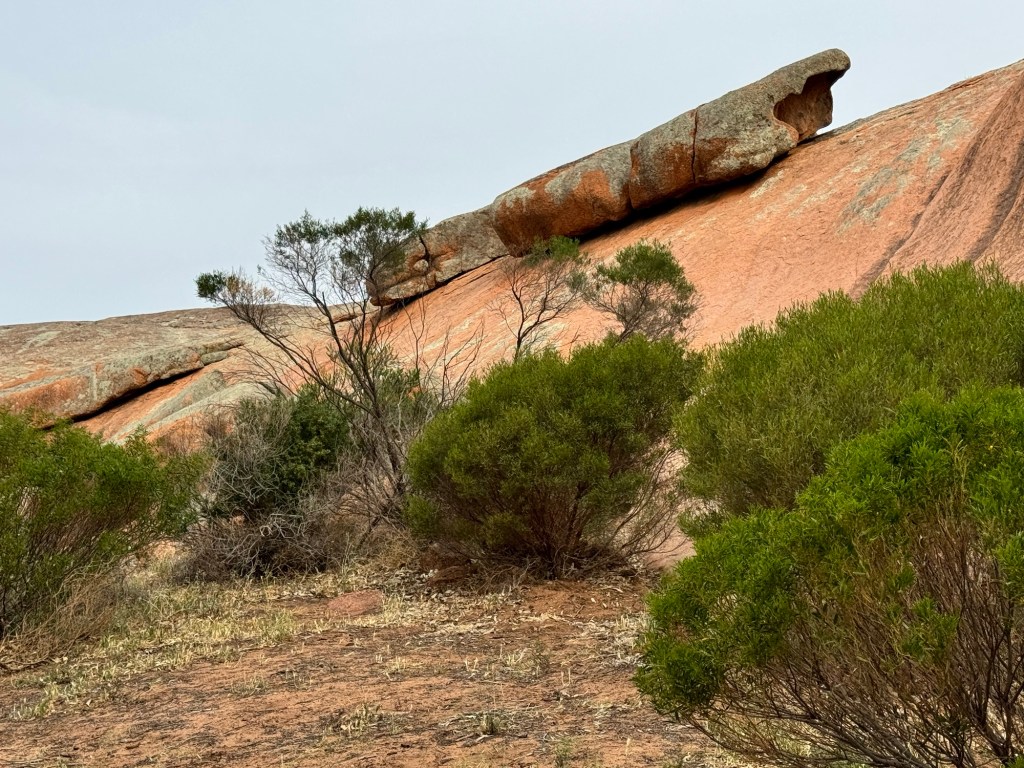
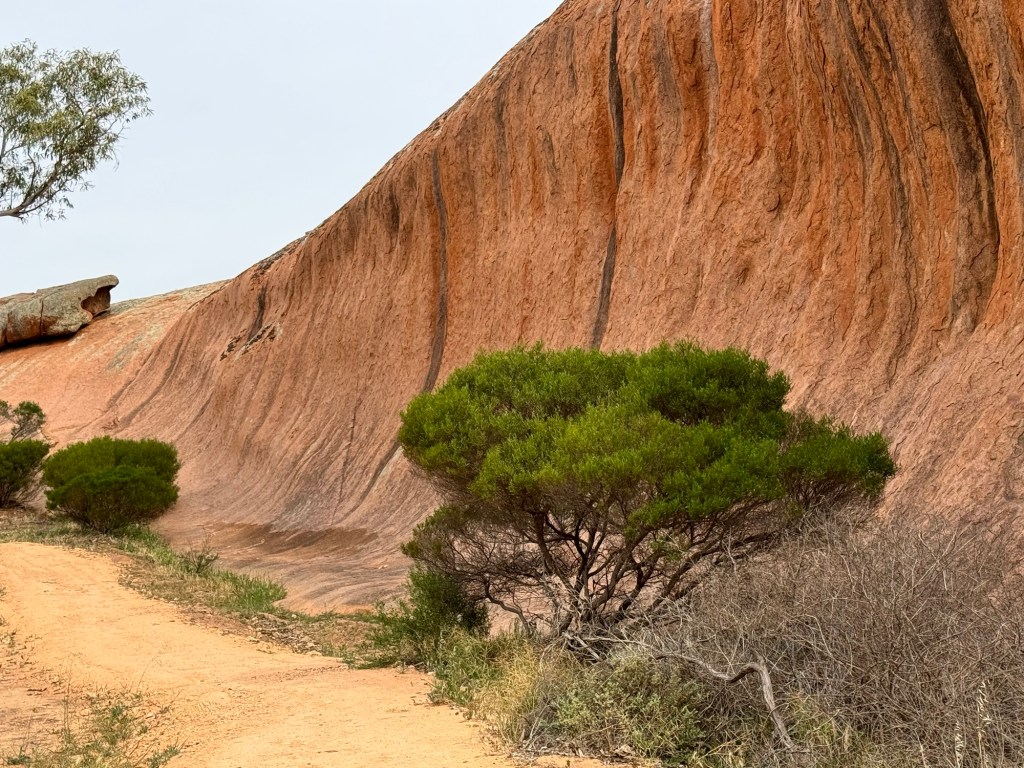

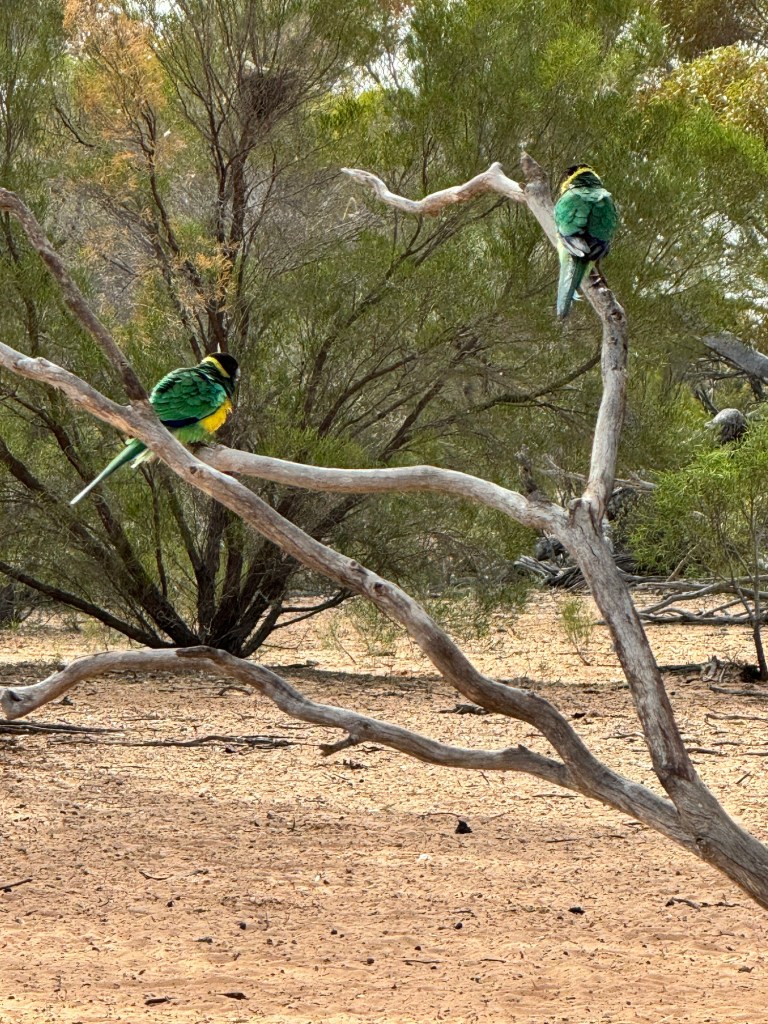
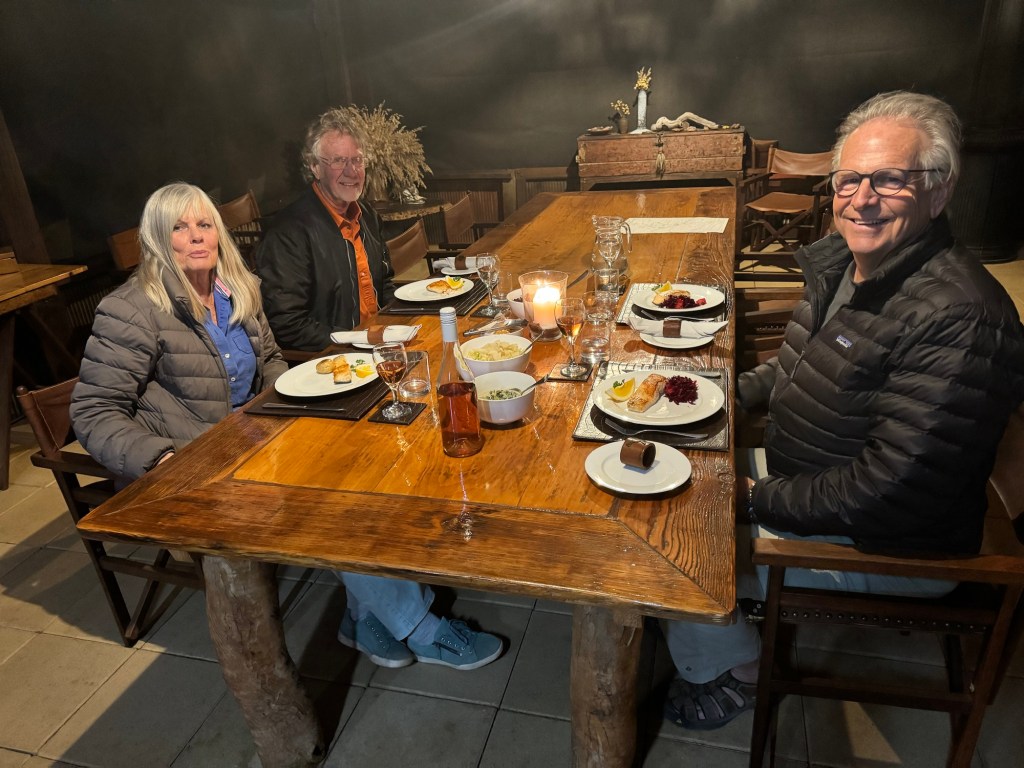
Over dinner that evening Rosie and Jeff Scholz, our camp host, talked a lot about the animals and scenery we are seeing including some of God’s creatures we saw in several places.

Saturday, October 12, 2024
We have been on the road a month now. Today we leave Kangaluna Camp and drive to Port Lincoln. Rosie is Back at the wheel. Number 4 track on the map.
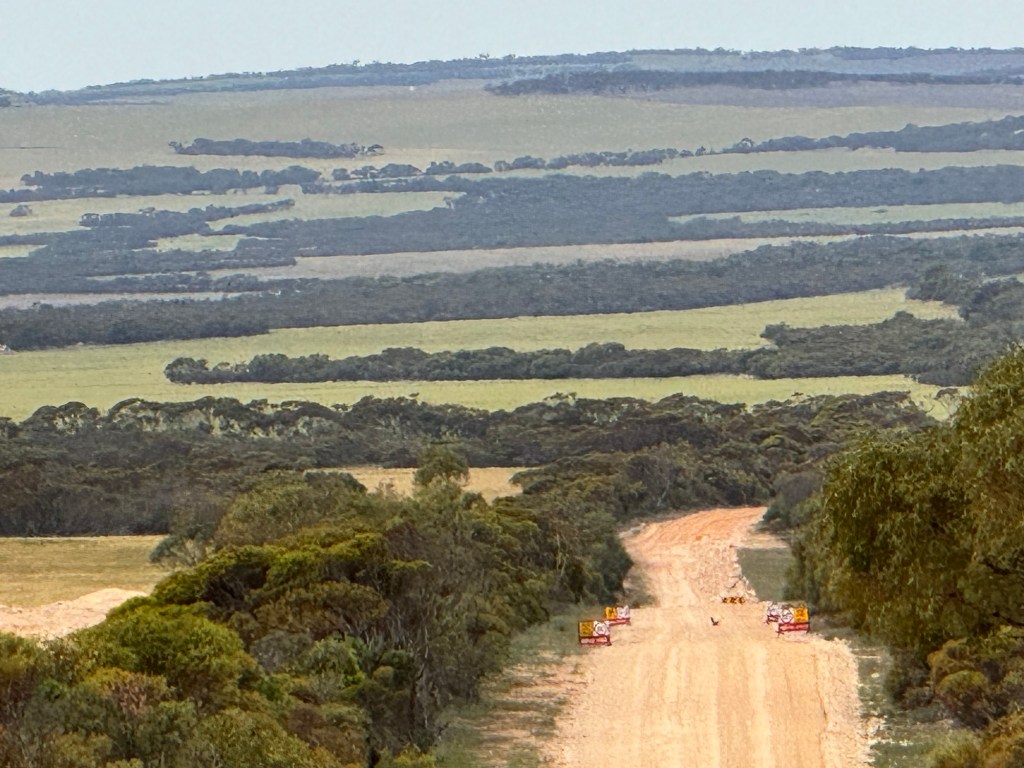
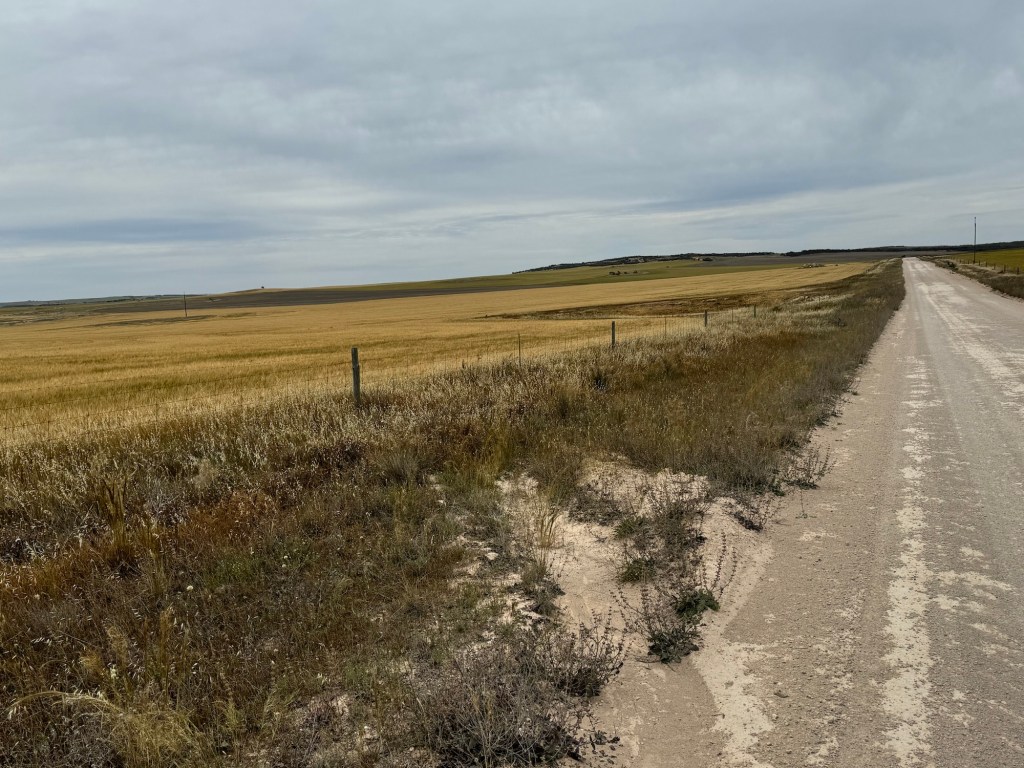
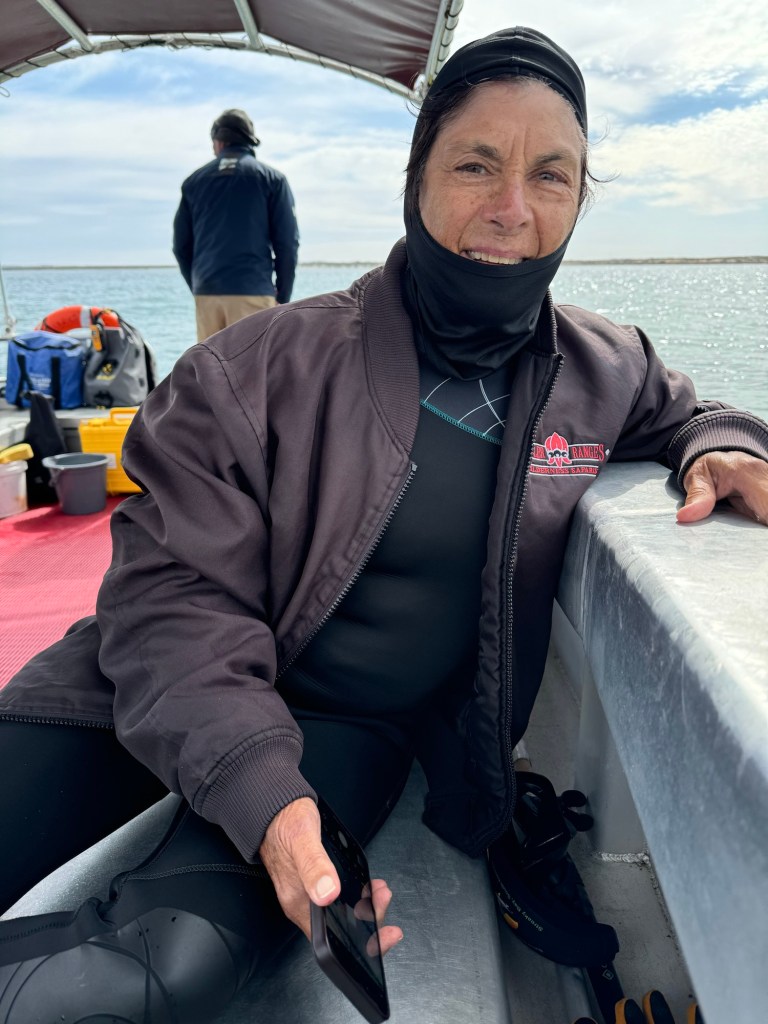
We drive west for 2 hours to Baird Bay Expeditions, where we join a boat tour that is taking guests swimming with dolphins and sea lions. Mark wanted no part of the freezing 58 degree water, complimented by a cool breeze.
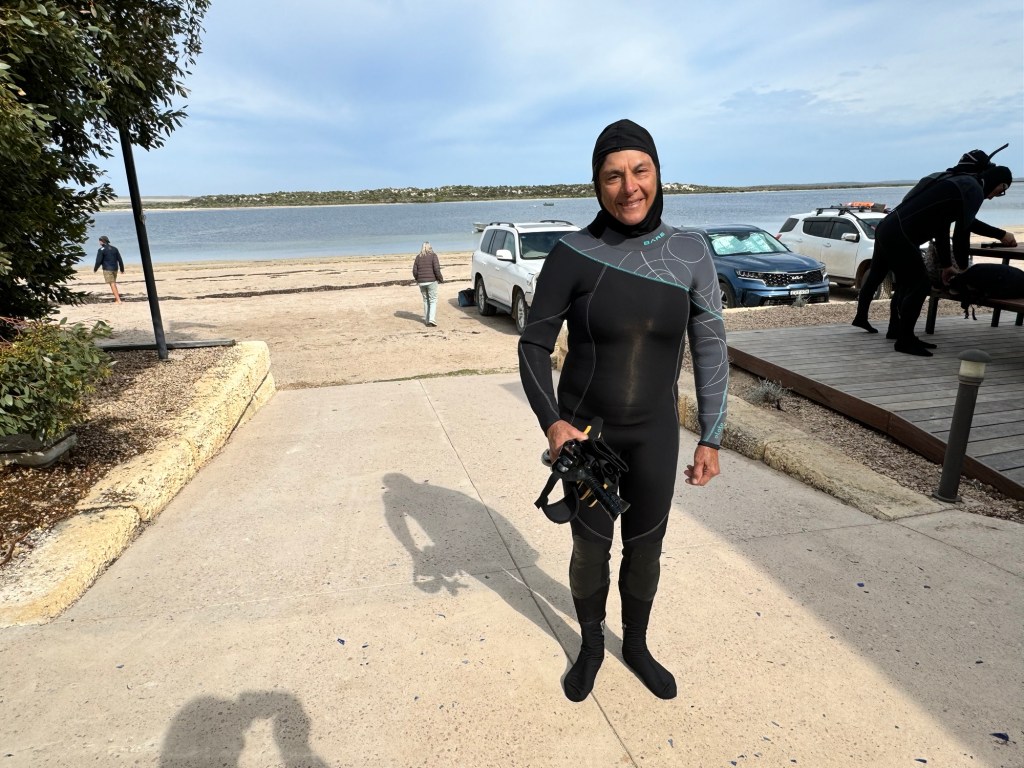
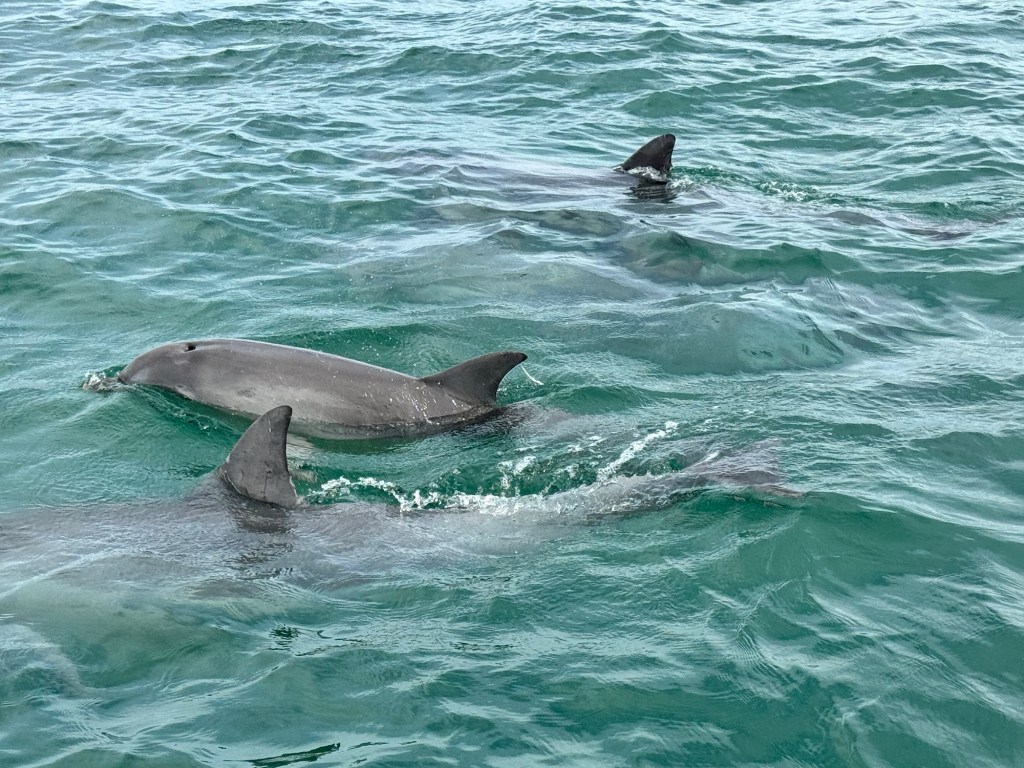
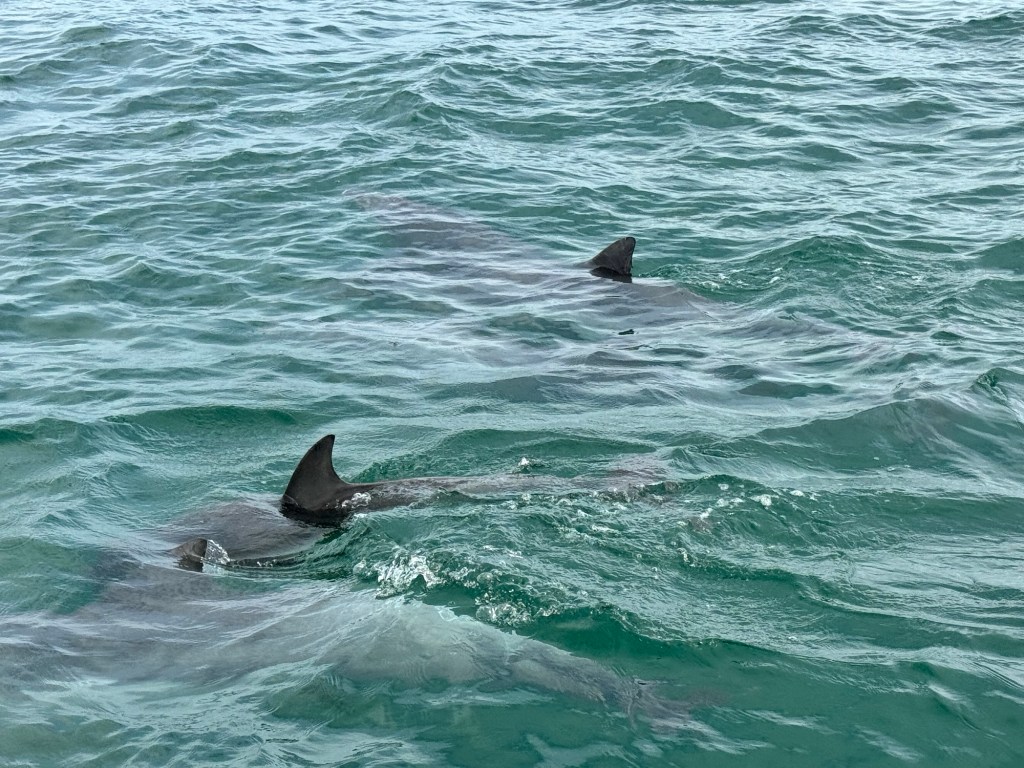
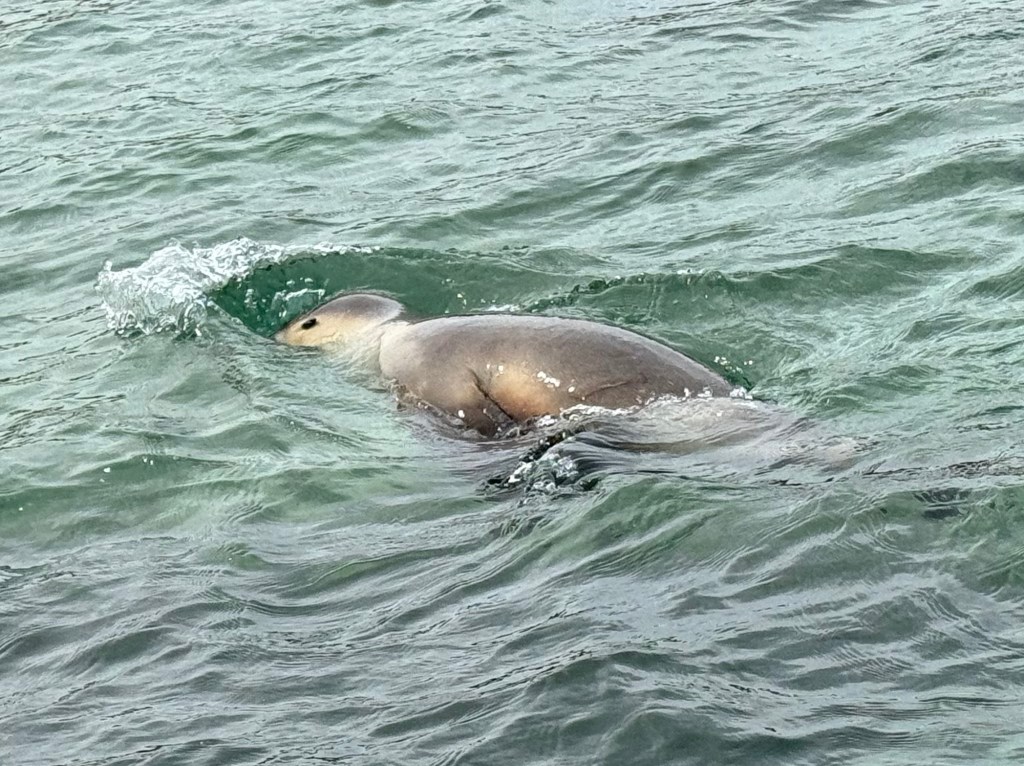
I suited up in a 5 ml wet suit, just in case I would be motivated. Off we went. By the time we were to get in the water, I was freezing and chickened out. It turns out, Mark and I saw almost as much fish activity being in the boat as the snorkelers did. We got very close to the sea lions and many dolphins swam right up to the boat. The skipper shared much with us that the swimmers did not hear, so we felt good about the experience. Along with the animals were thousands of crested terns, pelicans and cormorants.
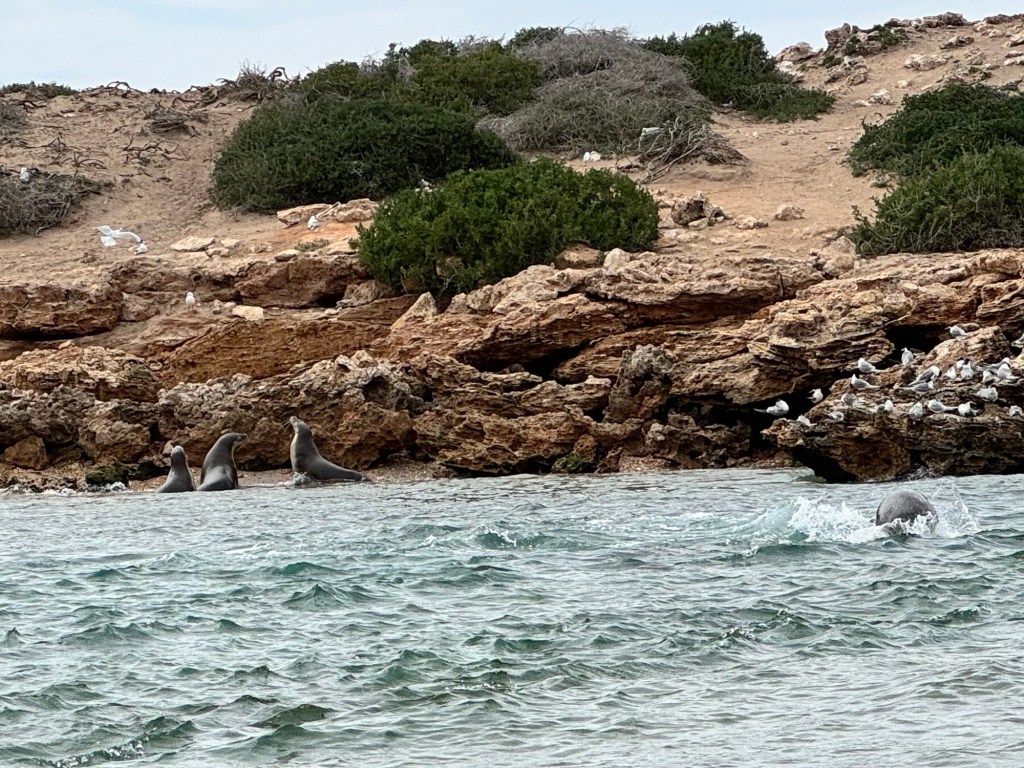
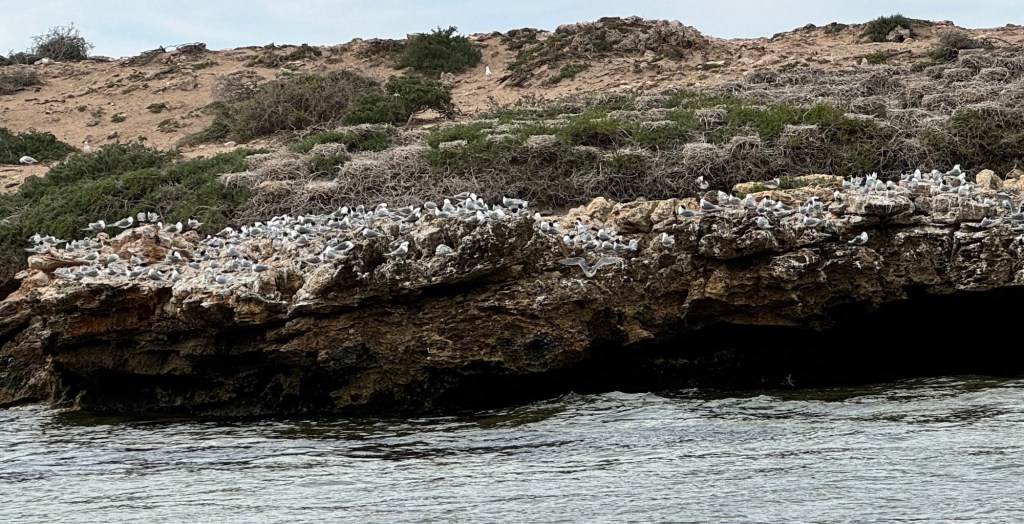
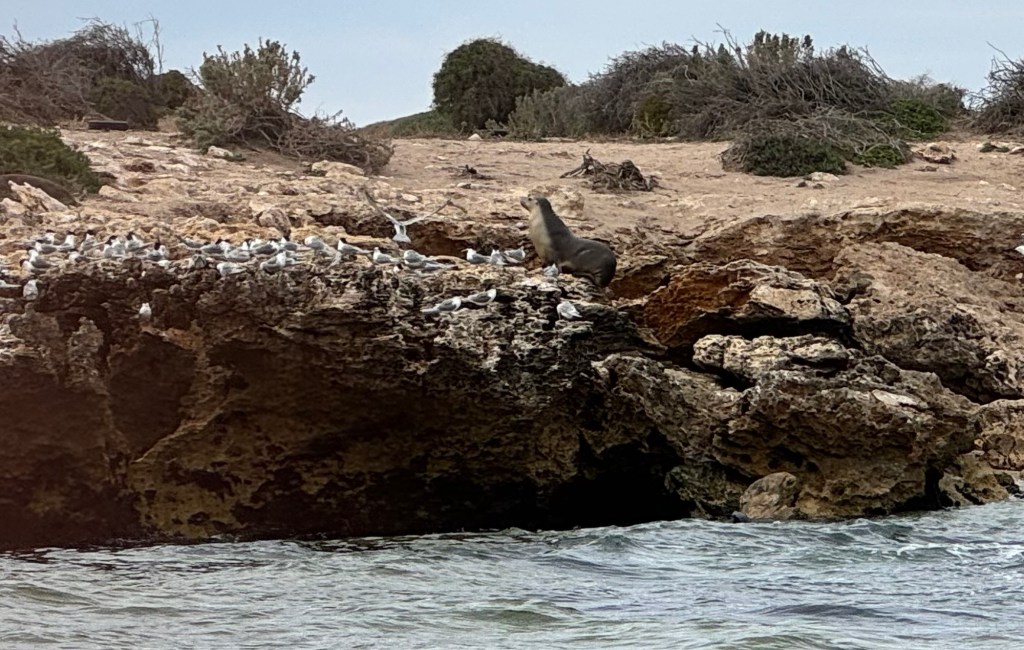
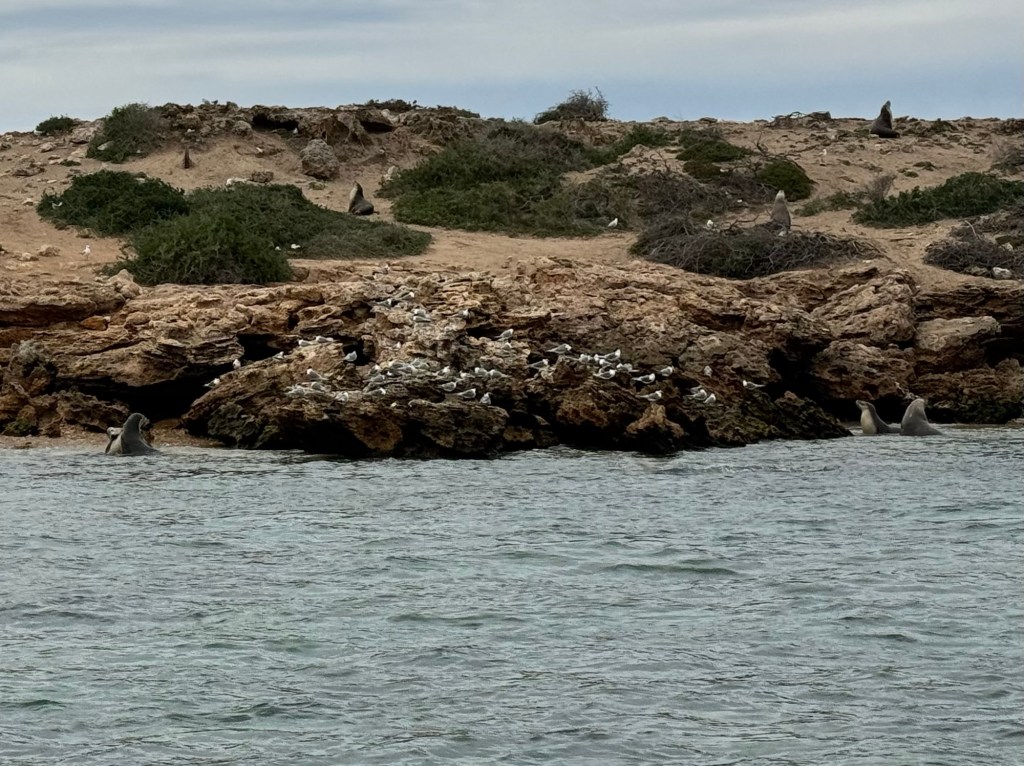
It was a short drive to Rosie’s home in Venus Bay.
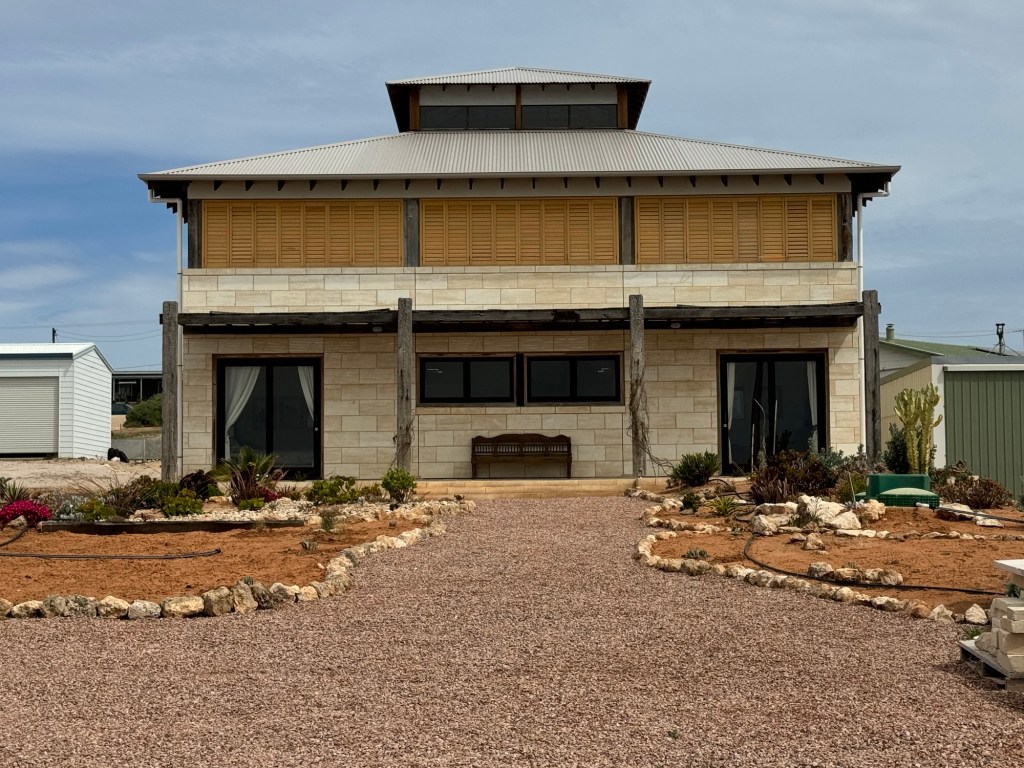
She showed us around and we ate lunch on the patio in her succulent garden, which needs little water. From there we drove into Port Lincoln where we had reservations to stay in a B&B home overlooking the bay.
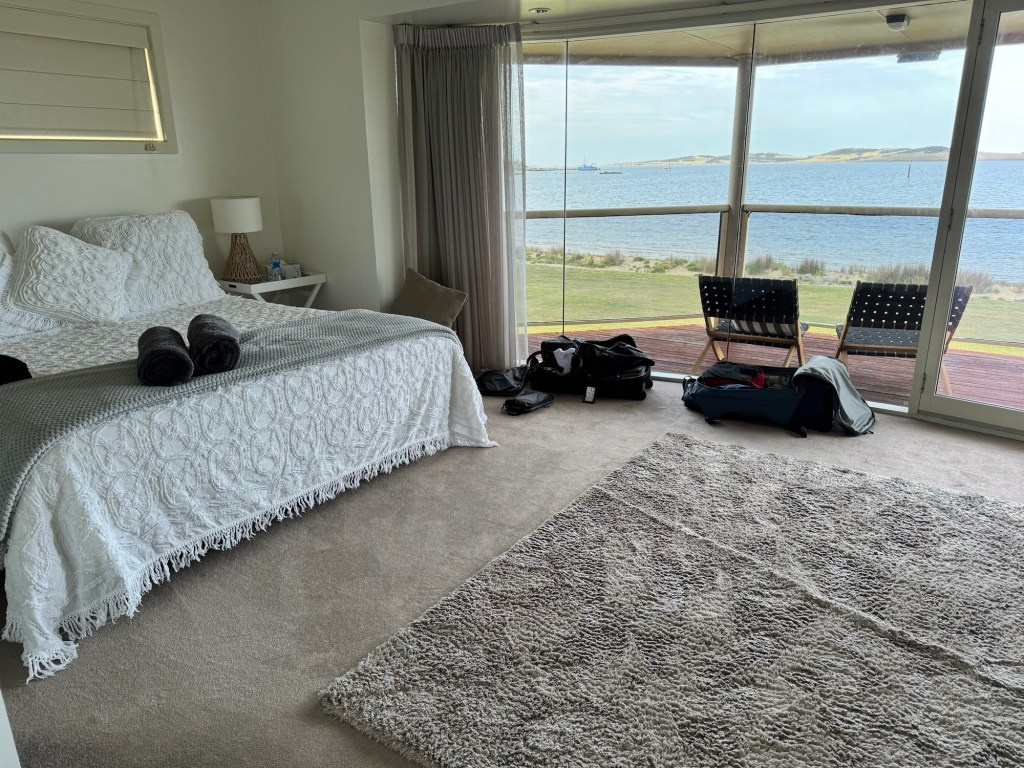
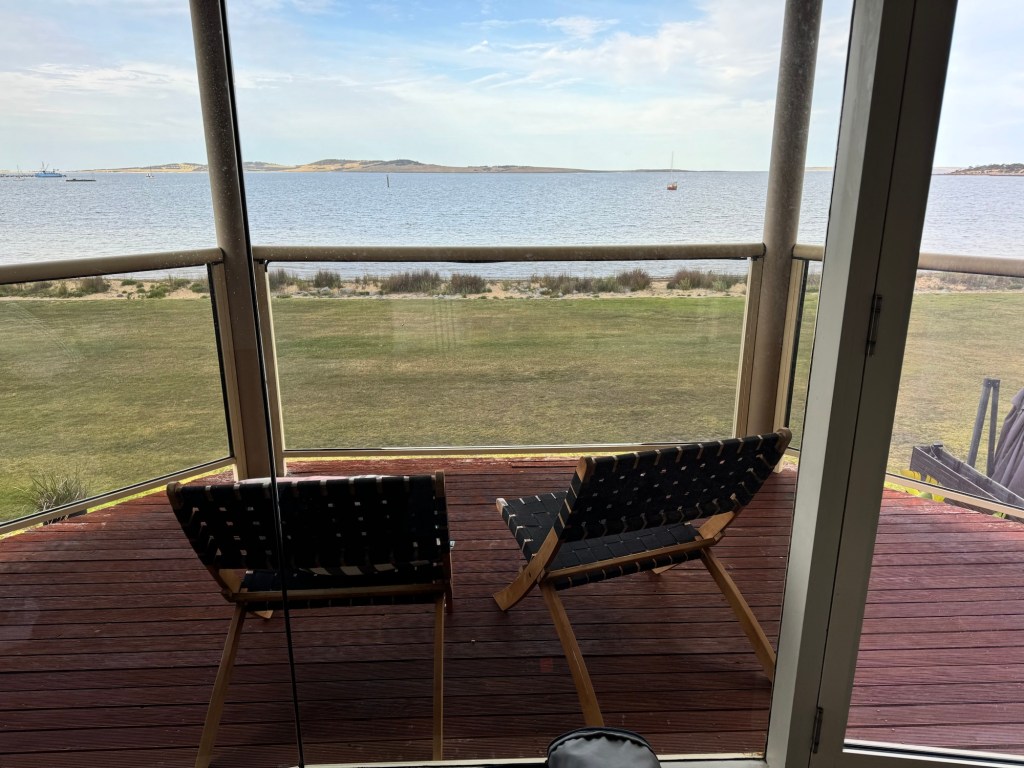
We met the manager of the house, Robin, and the chef, Kerry. She made us a delicious king fish fillet, on a bed of cabbage slaw, topped with roasted tomato. After she cleaned up and left, we relaxed awhile and went to bed.
Sunday, October 13, 2024
We were picked up at 10am by David Doudle, our guide for the day. He told us we would be going to Winters Hill Lookout first thing to get the lay of the land.
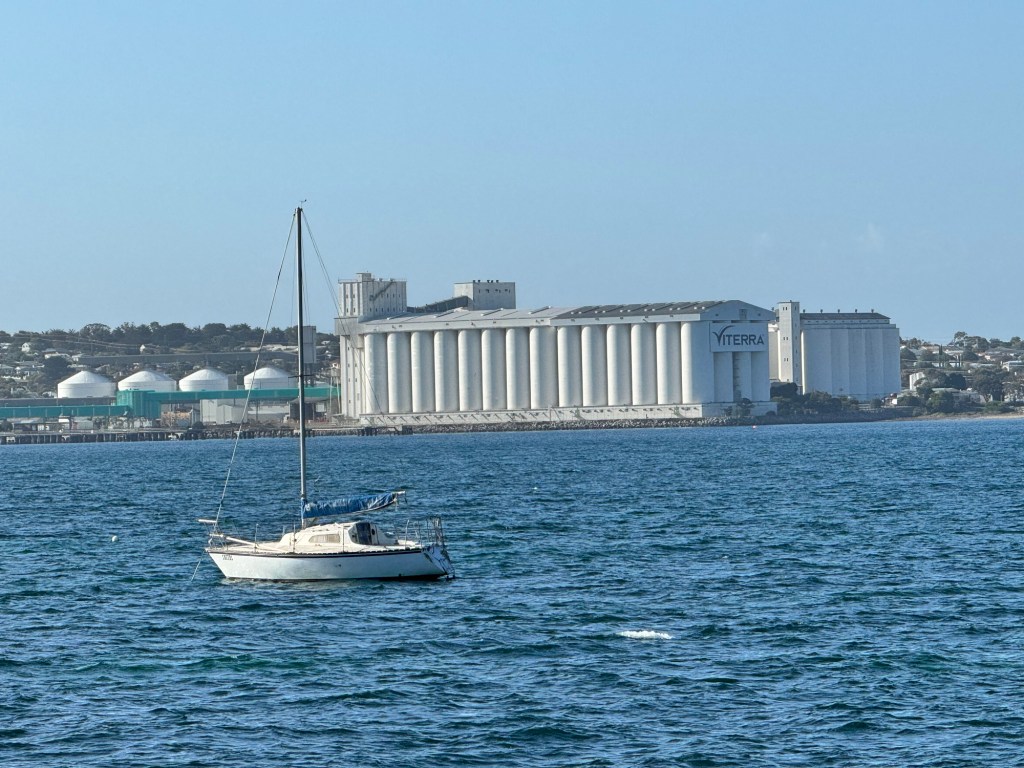
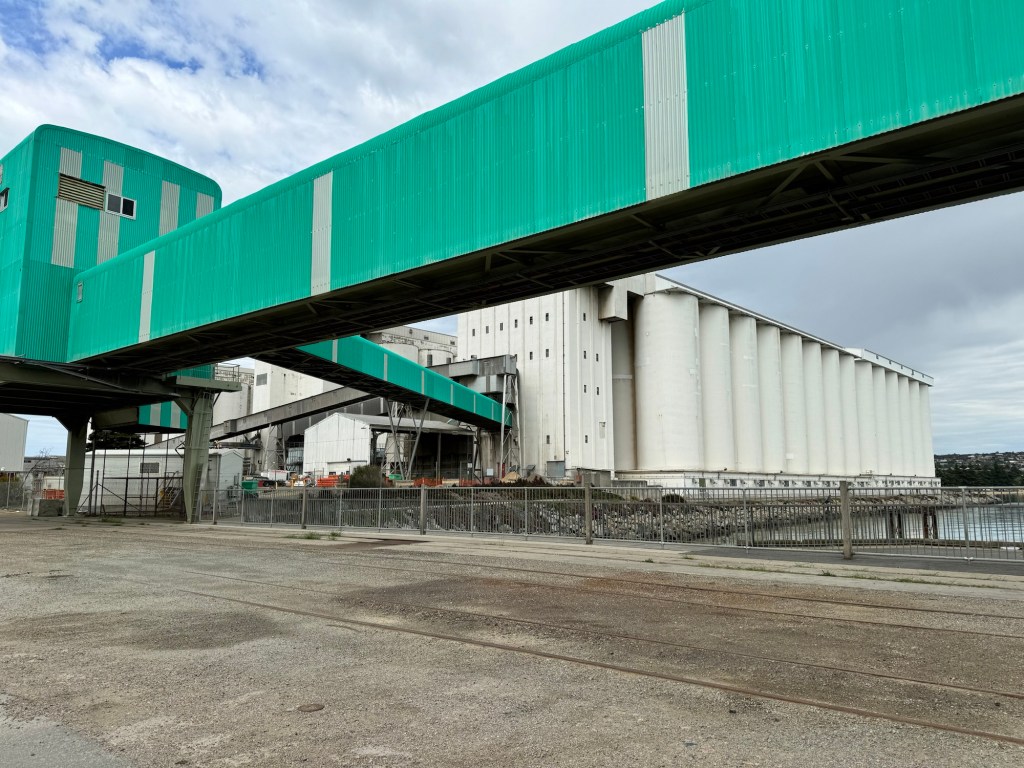
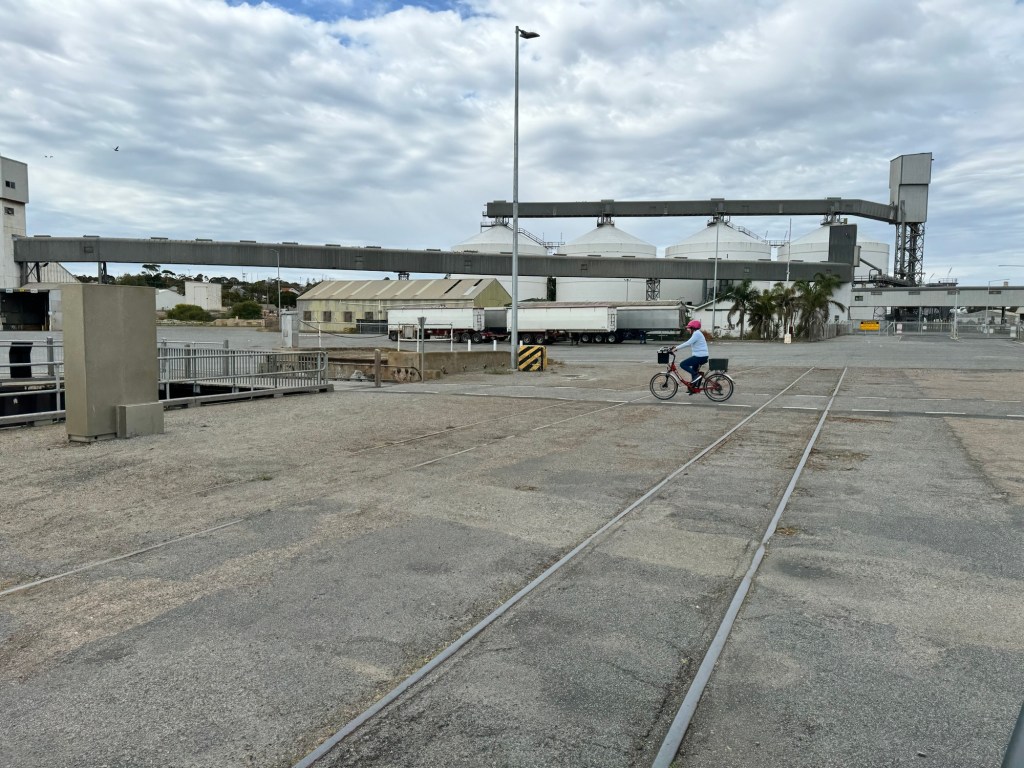
Then we would go to Flinders Port Wharf to see what drives the local economy. That is wheat, barley and Canola. This port is so large that it can handle 504 thousand tons of grain at any one time. 2.2 billion dollars of product, grain and seafood, is exported each year.
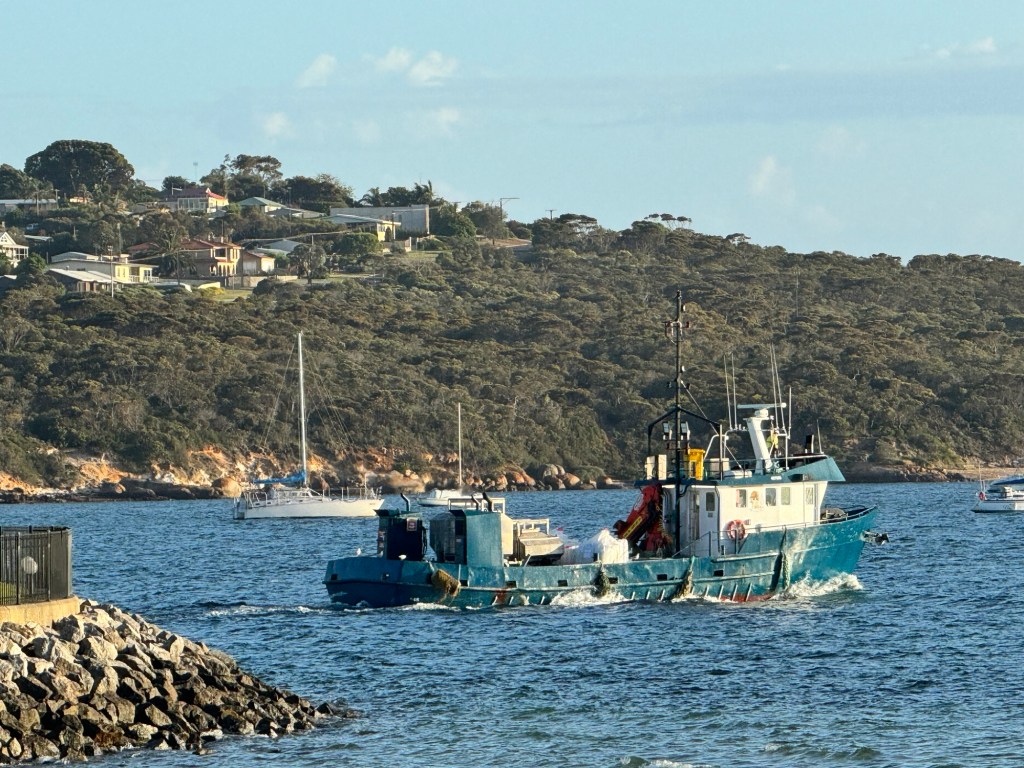

Kerry, our chef who is married to a fisherman, told us the Southern Bluefin Tuna fishing boats go out for 3 months at a time. One boat drags a huge cage into which the live fish are put. The drag boat slowly drags the live catch around the ocean, while continuing to collect the harvest from other boats. The fish in the cage are fed for a few months until they are ready for market, then divers get into the cage and put the fish on conveyor belts that drag the fish into the boat, where they are killed immediately and snap frozen. When the boat returns to port, the fish are ready for shipment to Japan and some other countries.

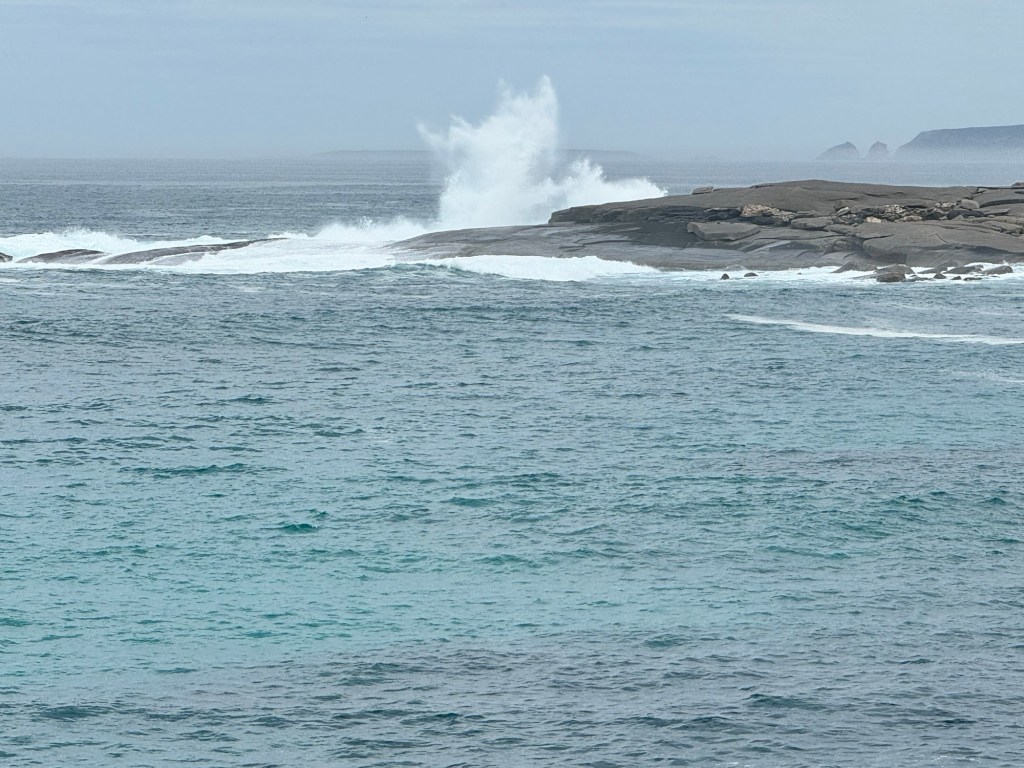


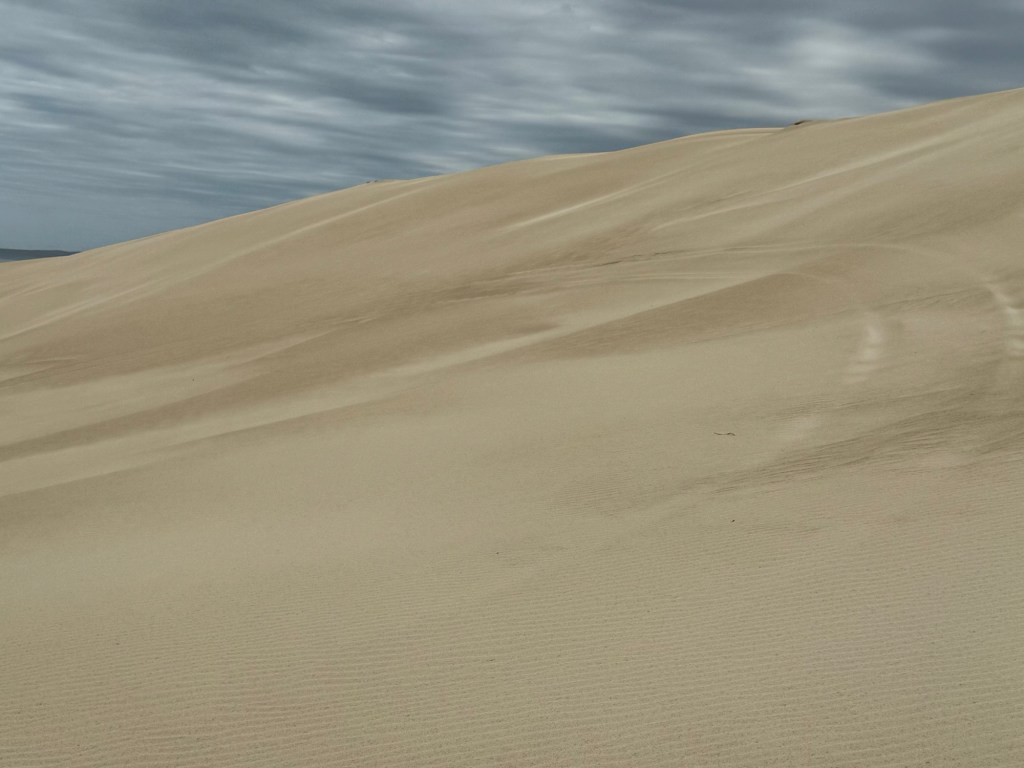
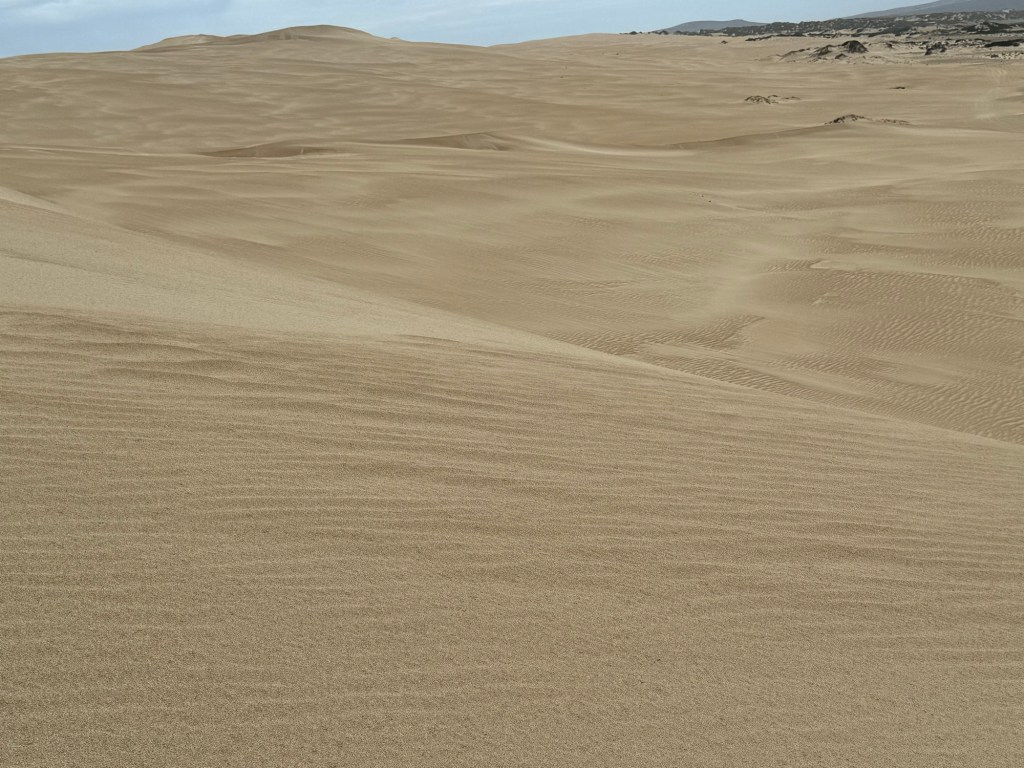
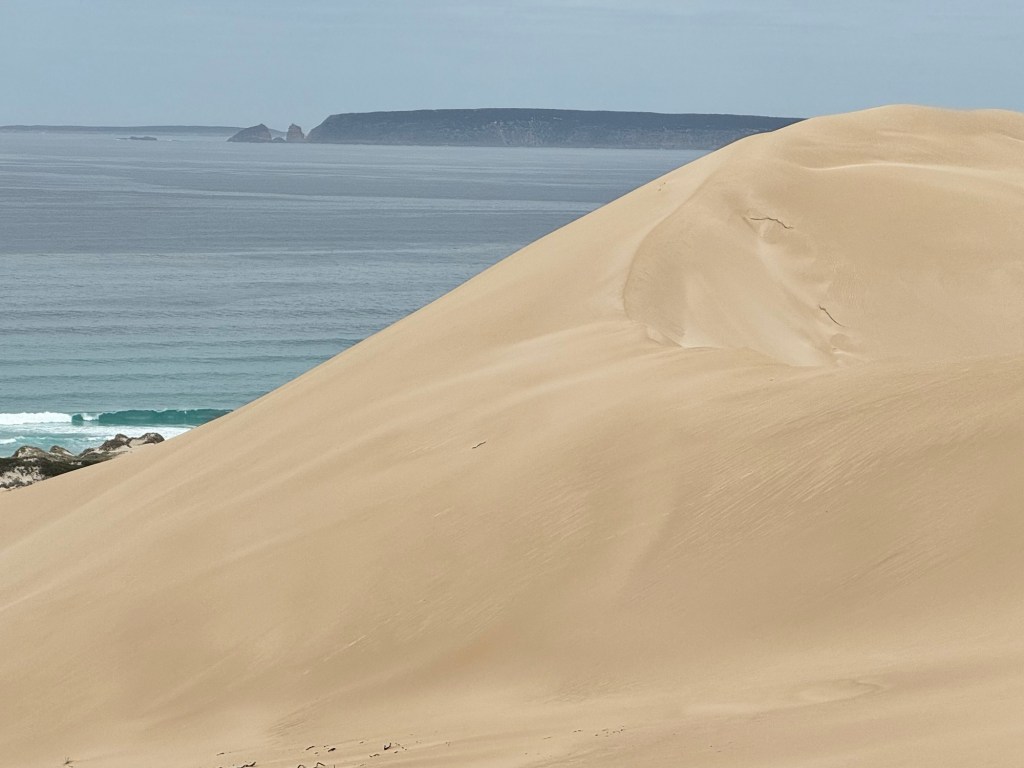

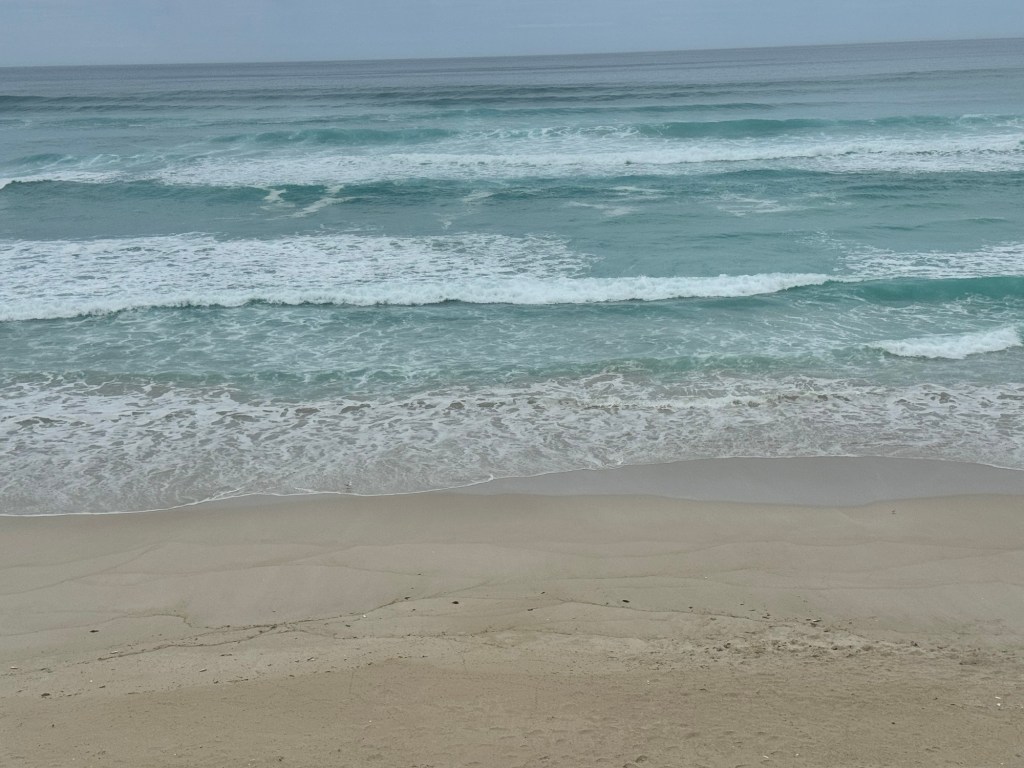
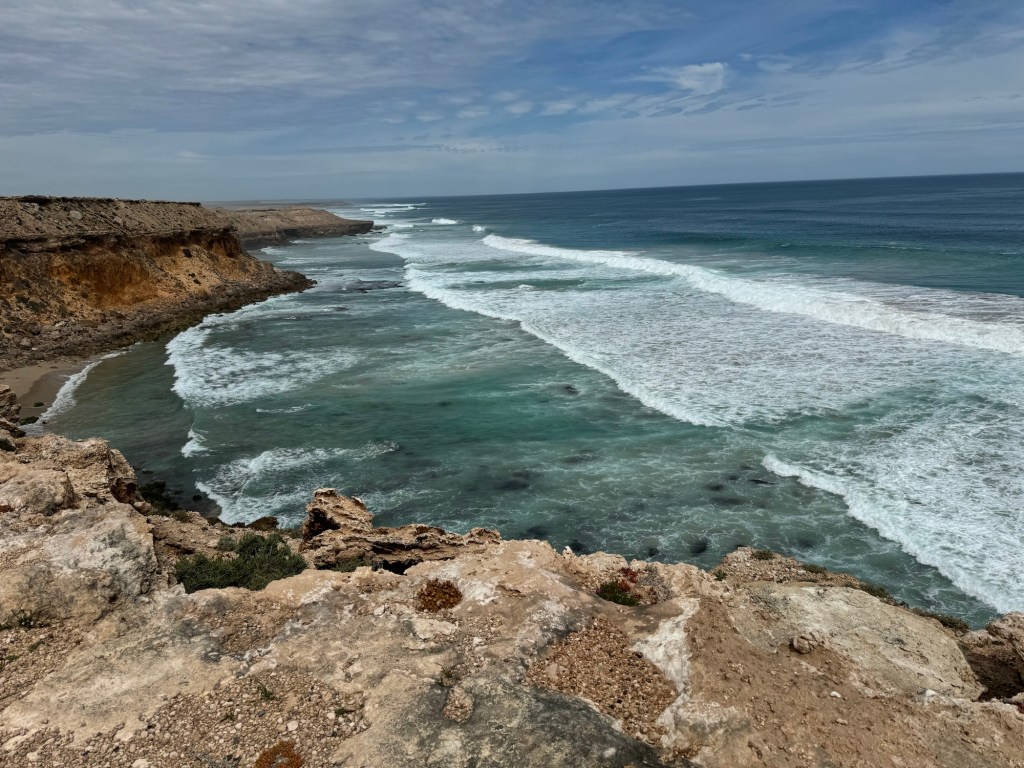
From there we drove to Wanna Lookout to drive on the sand. David deflated the tires to 20 psi and put up a safety flag before driving through the dunes. He gave us a spectacular hour’s ride up, over, around and through the dunes. Finally, he stopped for lunch on a limestone cliff top overlooking the Southern Ocean. The next landfall is Antarctica, only 5500 kilometers away.
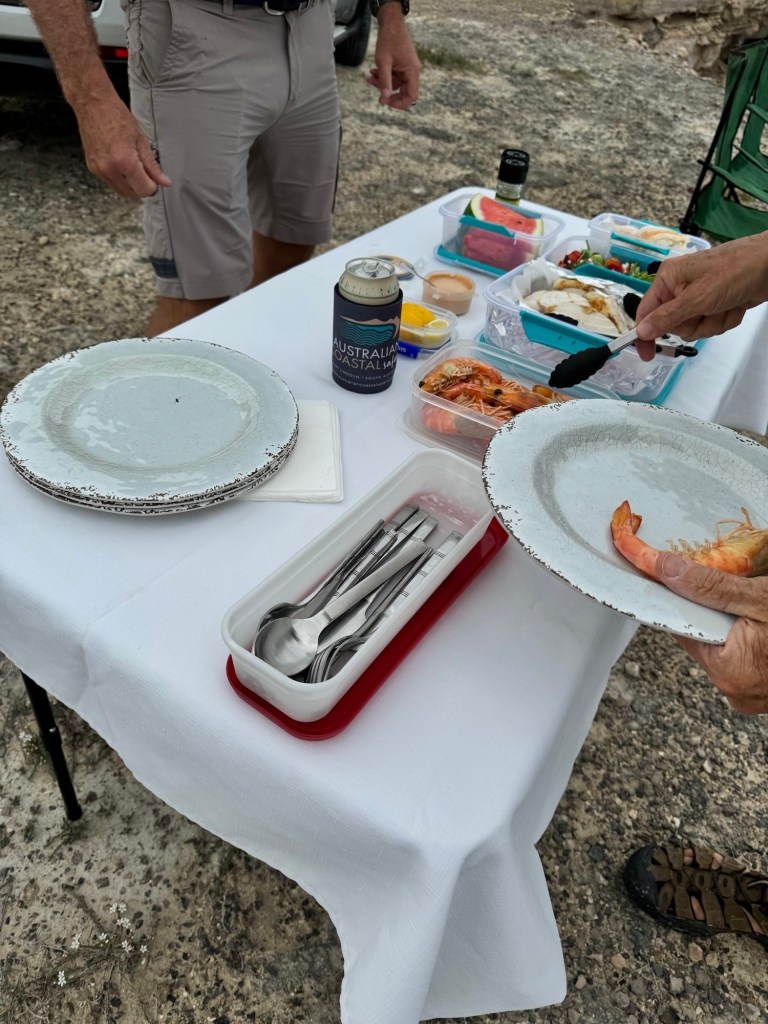
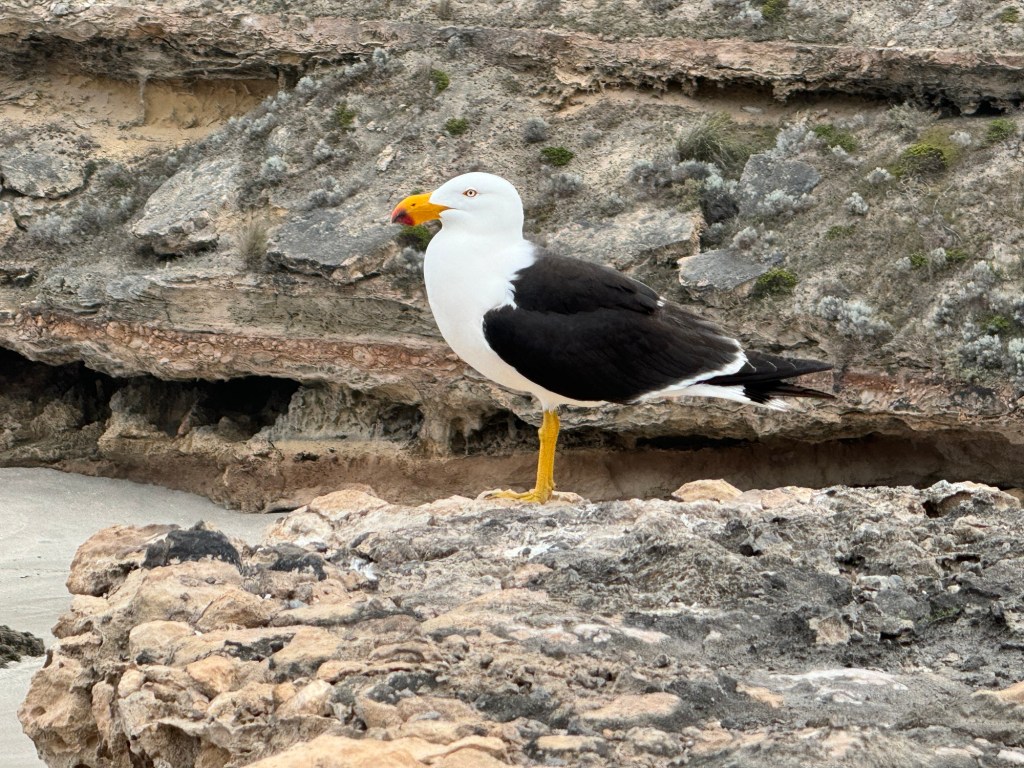
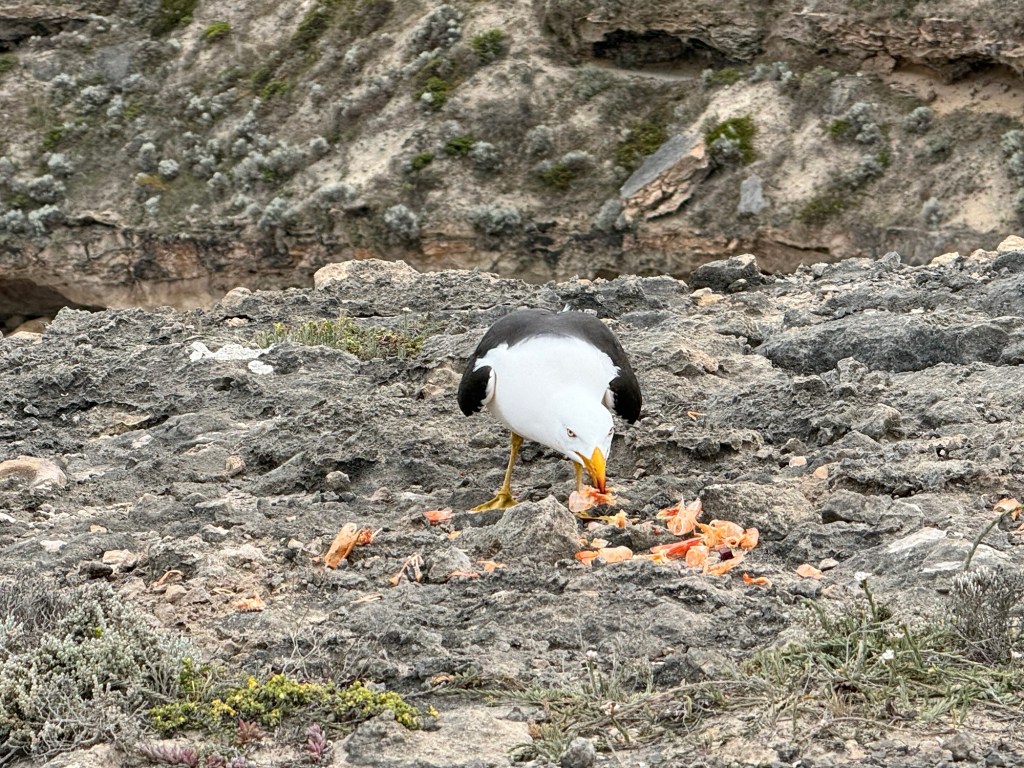
After lunch, Dave reinfected the tires with his on board compressor and we drove to a private property where wild animals are conserved. We saw several dozen koalas, a few Emu, Kangaroo, shingle back lizards and one Rosenberg Goanna, a rare monitor lizard. The koalas were delightful to see. There were often 2-3 in a tree.
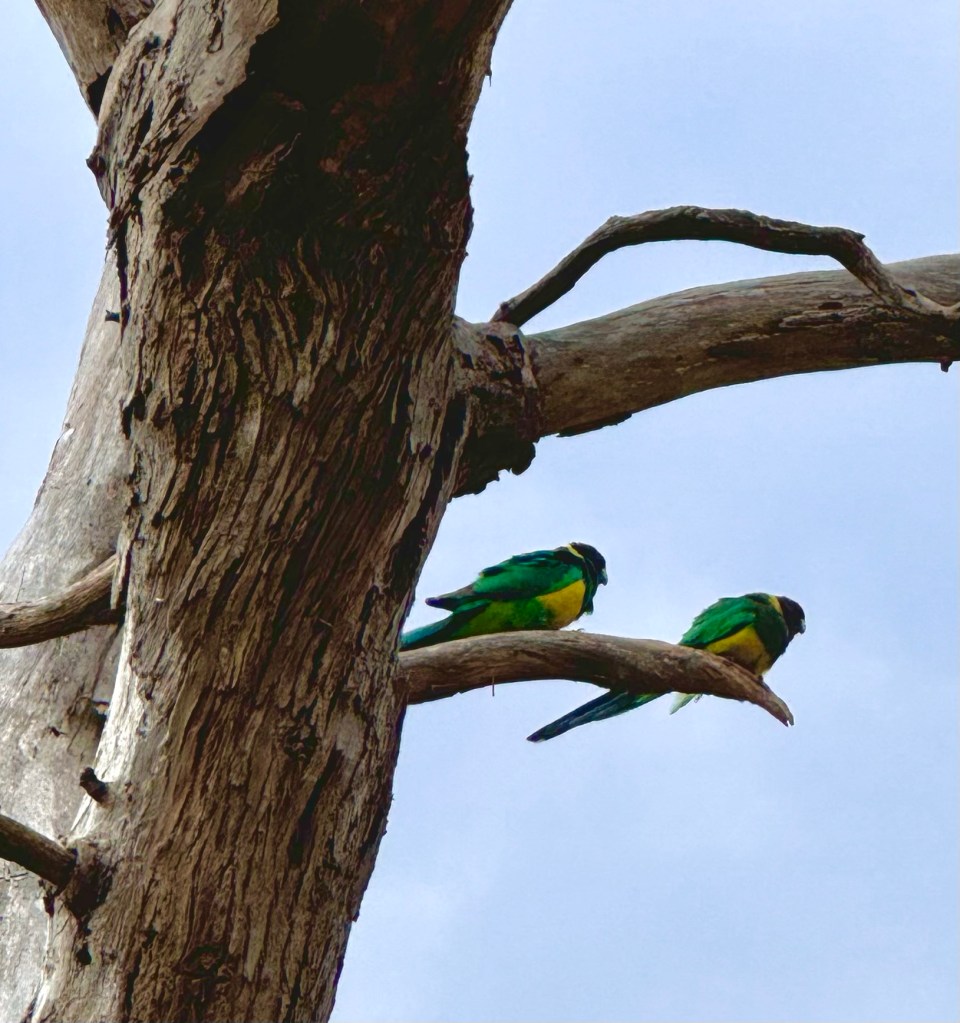
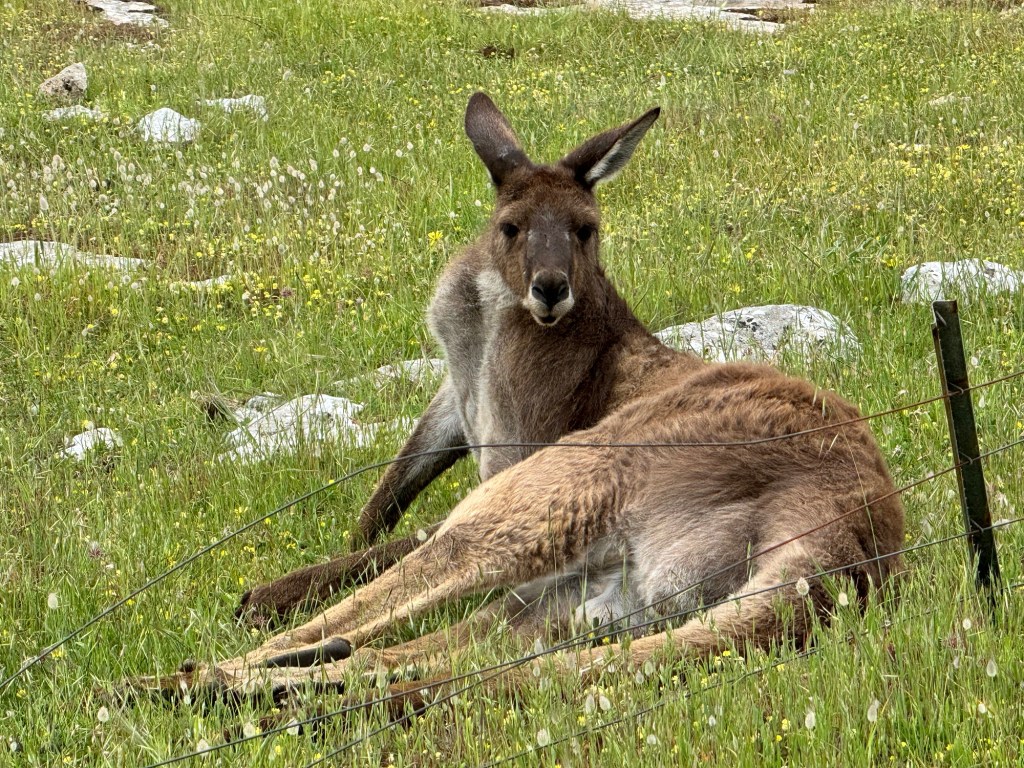
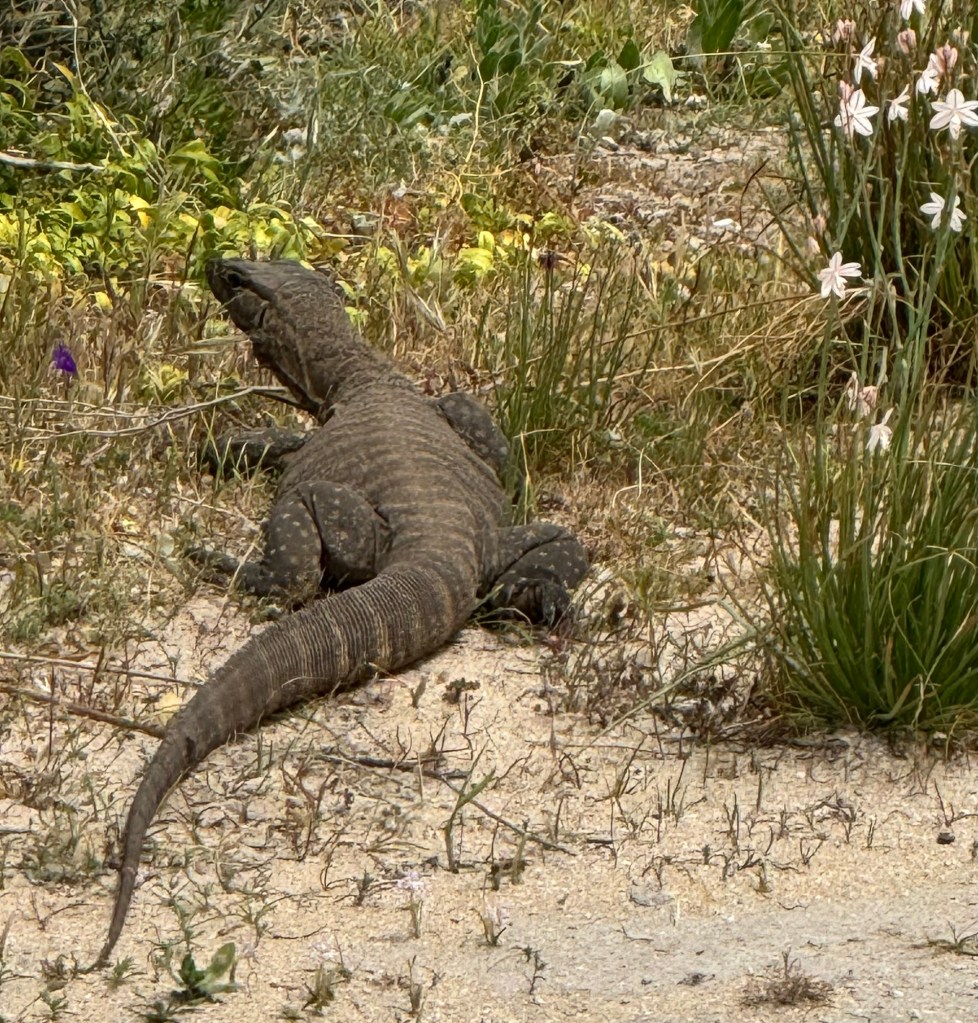
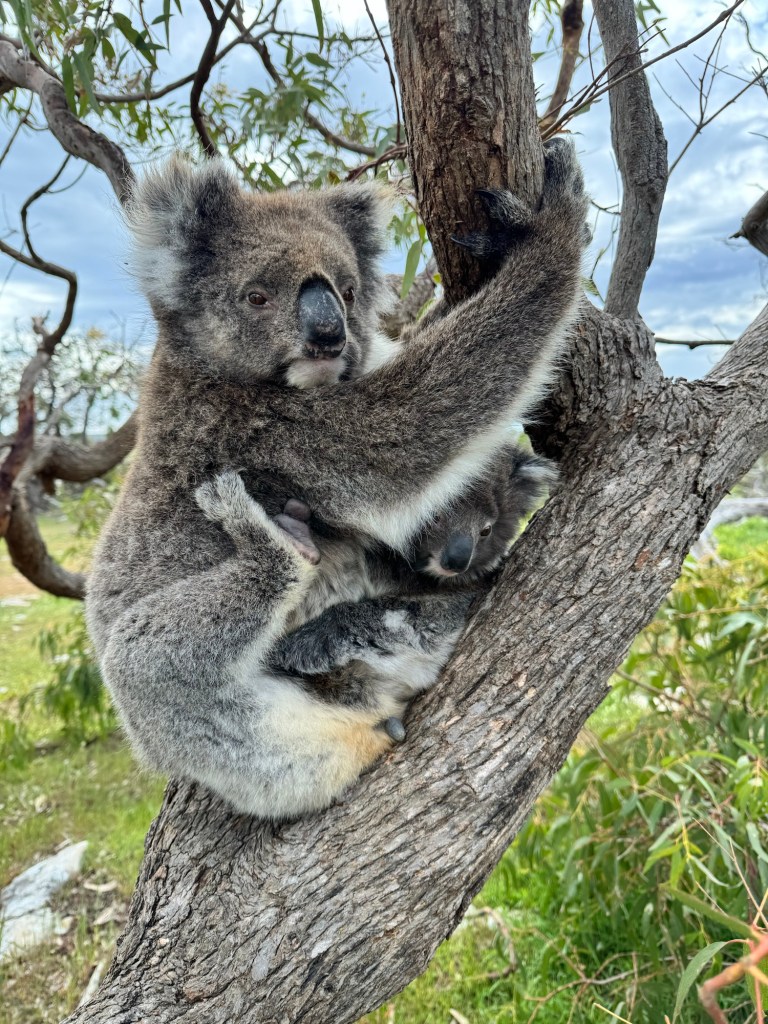
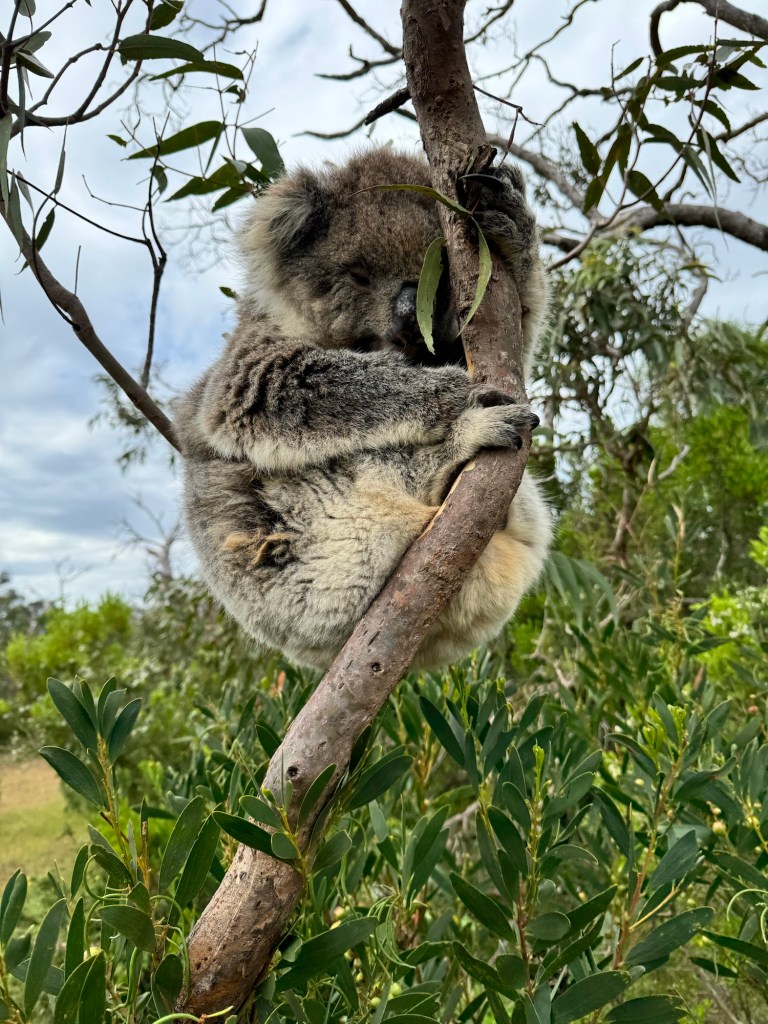
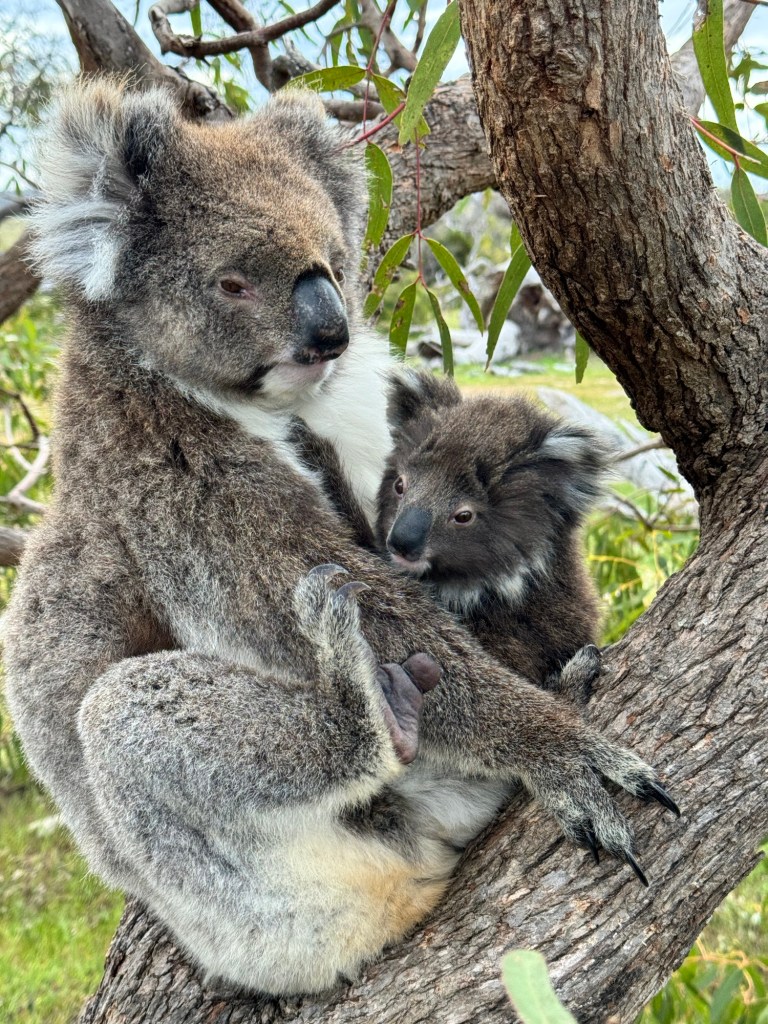

It was a super day with great activities. Four wheeling in the sand was over the top as was seeing so many koalas in such a short time in just a few trees.
David blew us away with the action packed day.
Monday, October 14, 2024
Dave drove us to the Port Lincoln General Aviation Airport at 9am where we said good bye to him and joined a pilot who flew us in a Cessna 210 to Kangaroo Island.
 Adventures with Julia