Monthly Archives: September 2025

Iguacu to Paraty

Monday, September 29, 2025

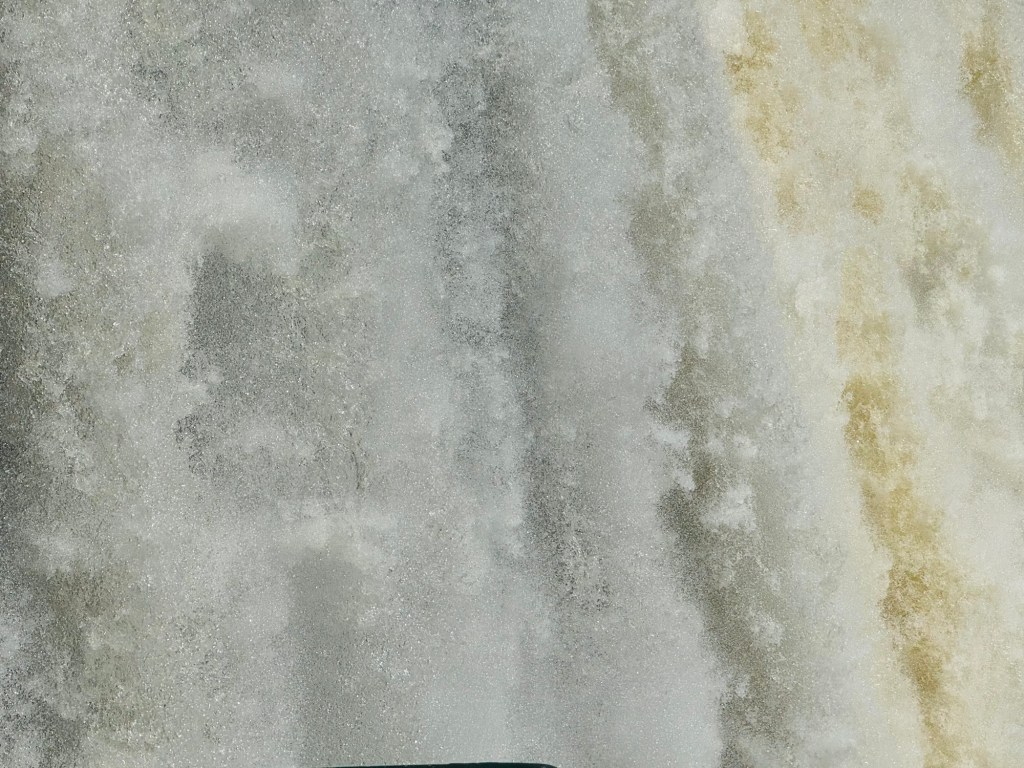
Guarani, the world’s second largest aquifer, covering 1.2 million square kilometers under Brazil, Paraguay, Uruguay and Argentina. The largest aquifer at 1.7million square kilometers is in Australia.

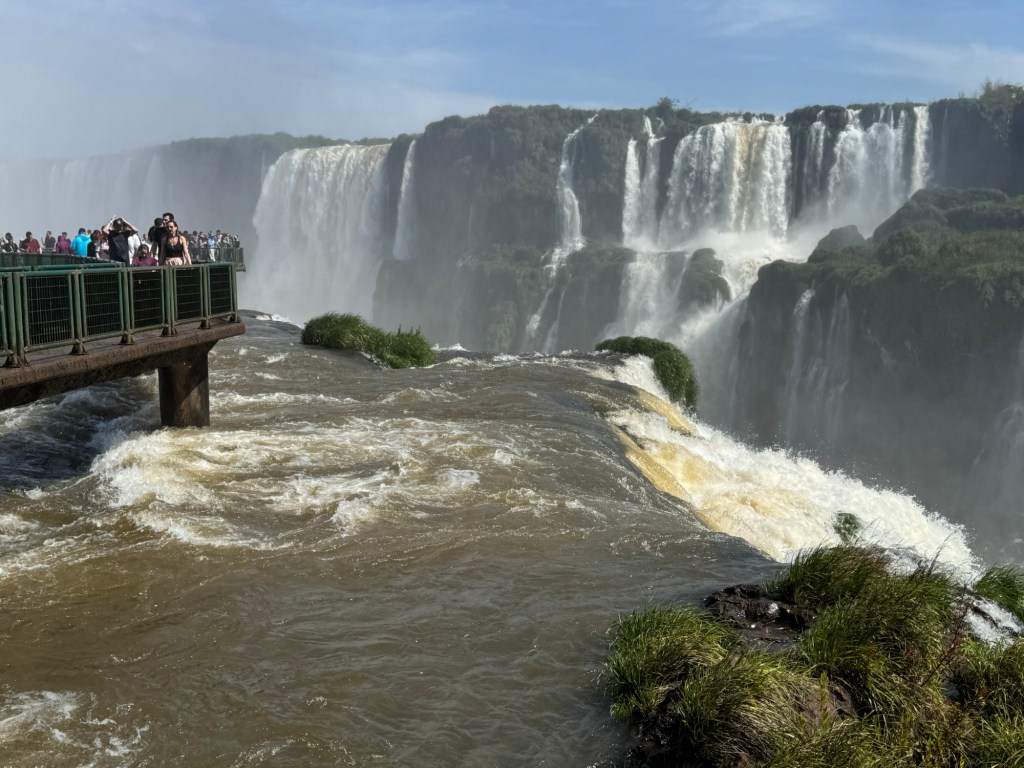
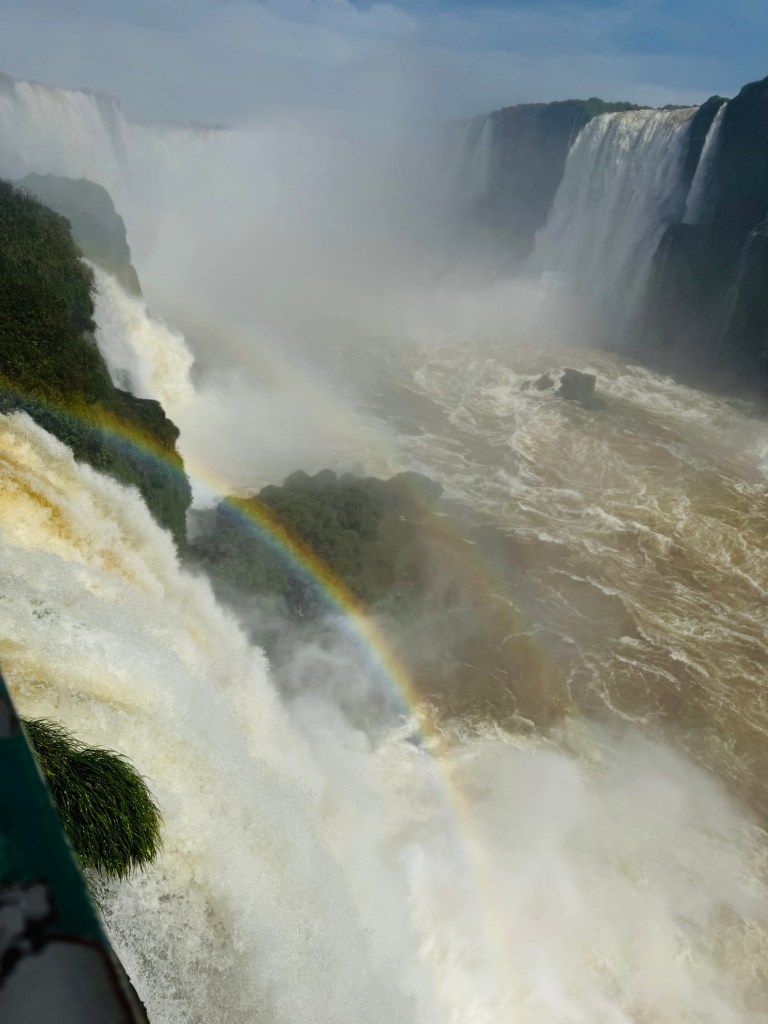
I had no idea about the aquifer until we arrived in Iguacu. Hope you enjoy this image of it.

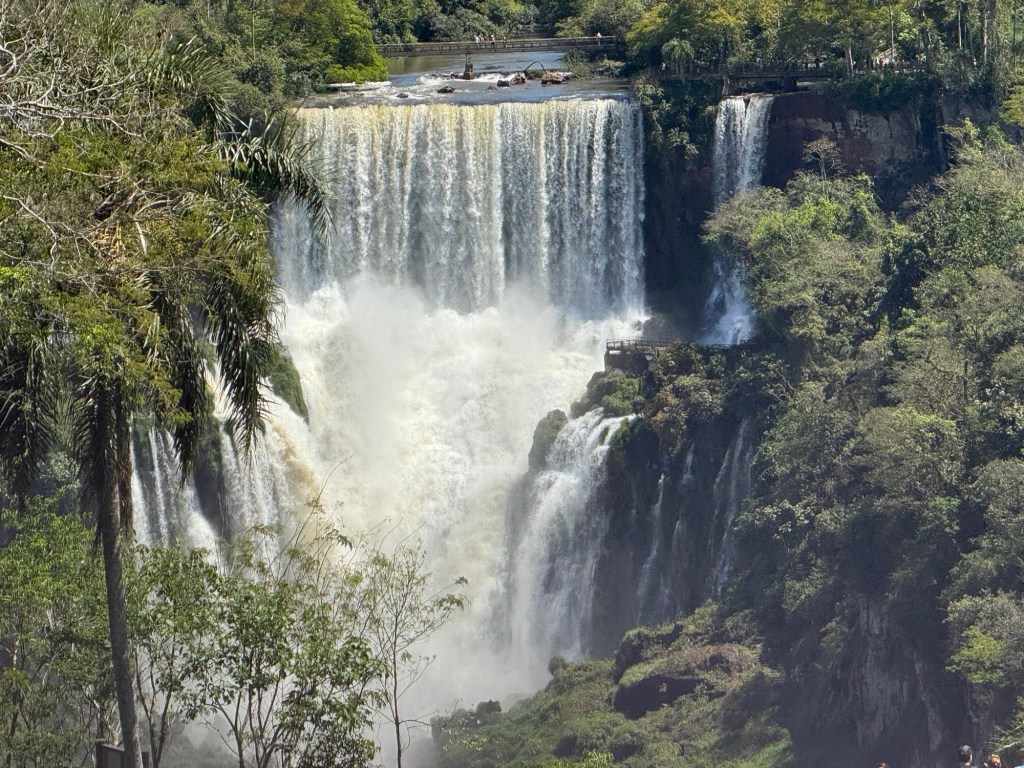
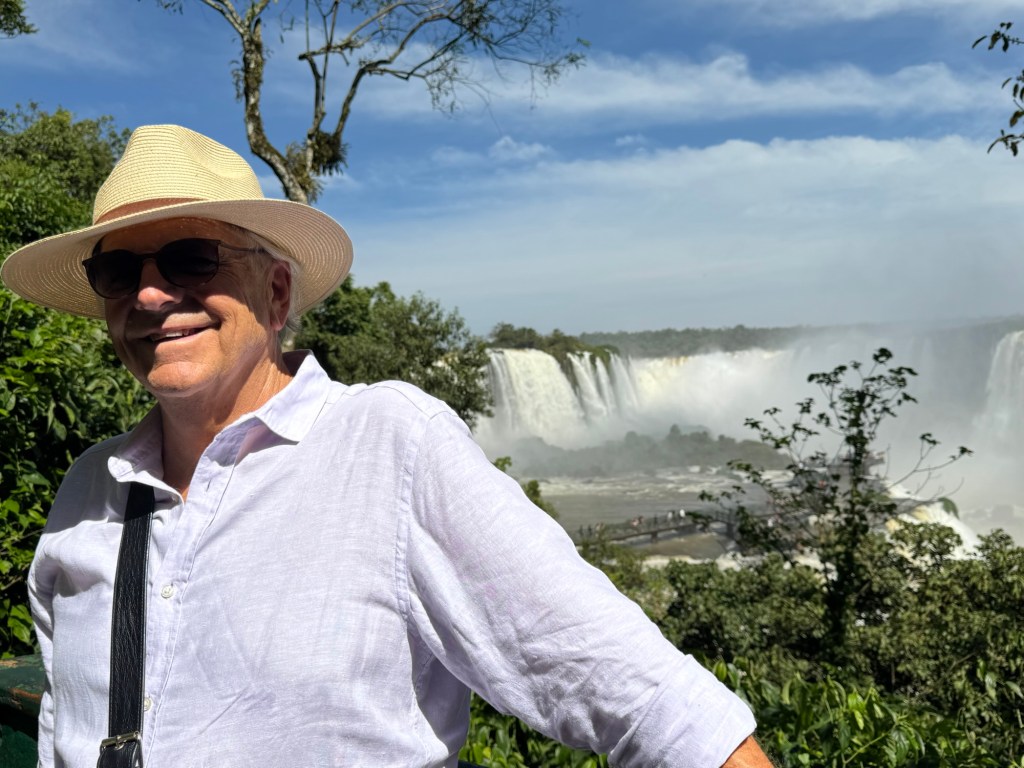
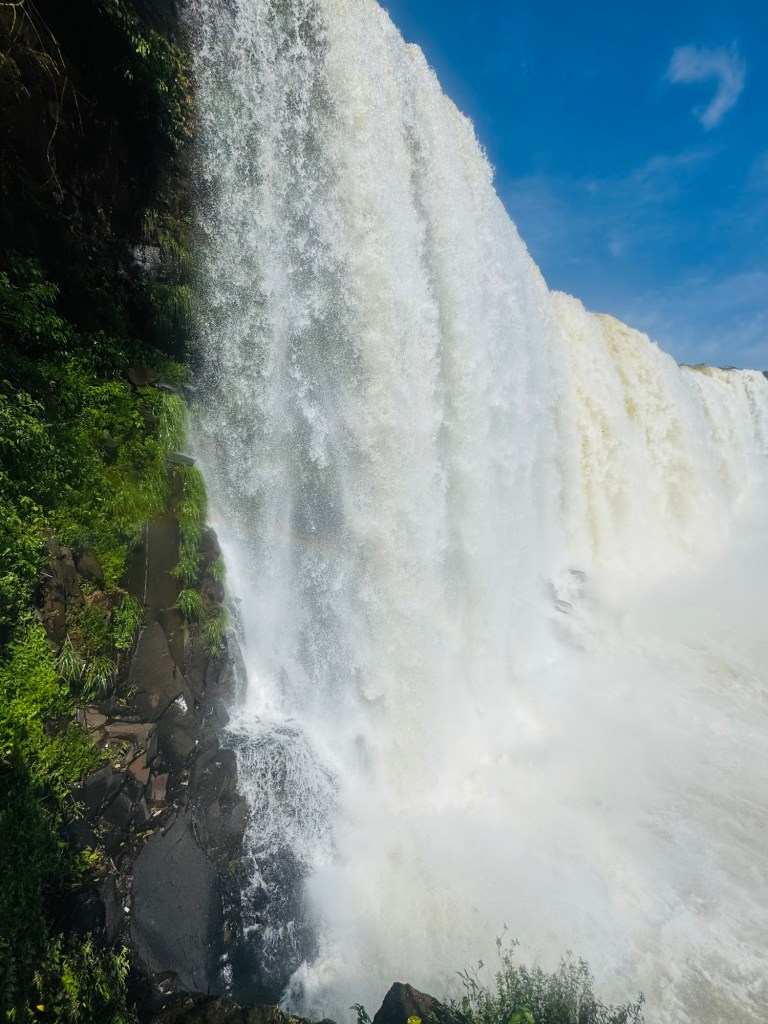
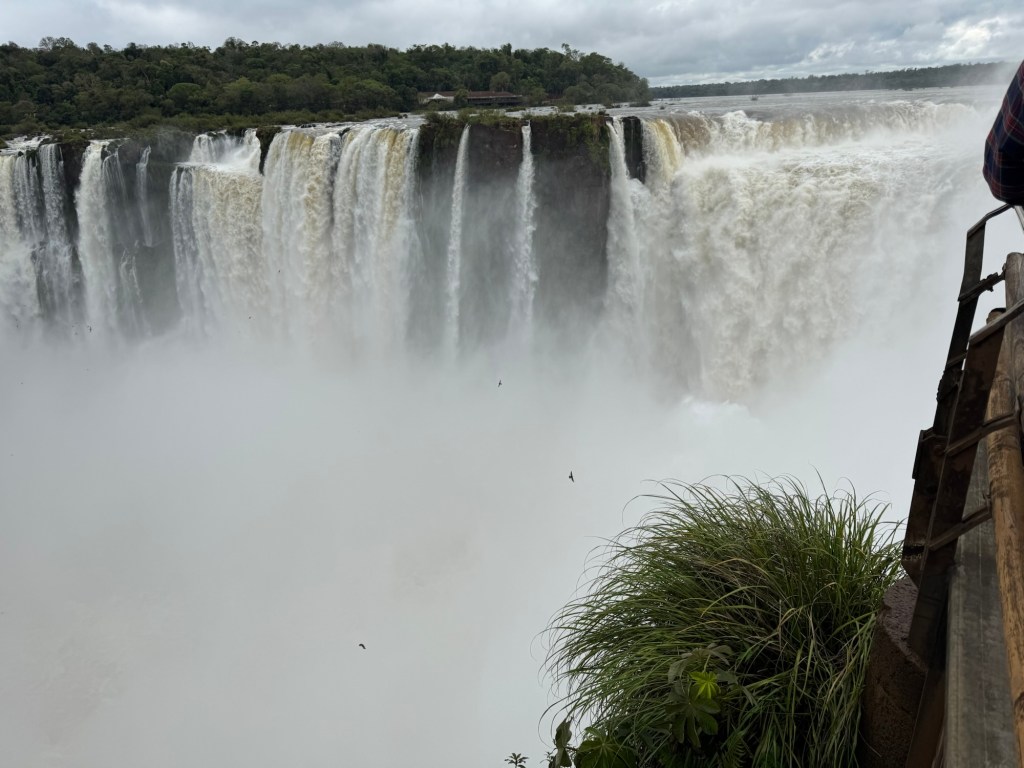
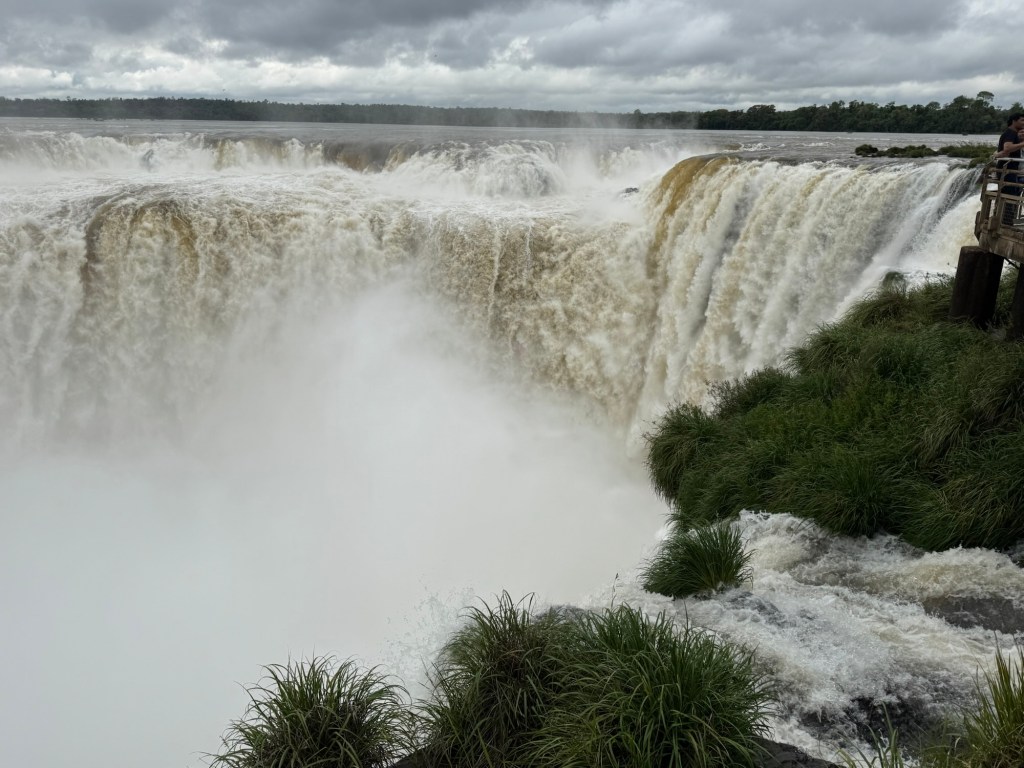
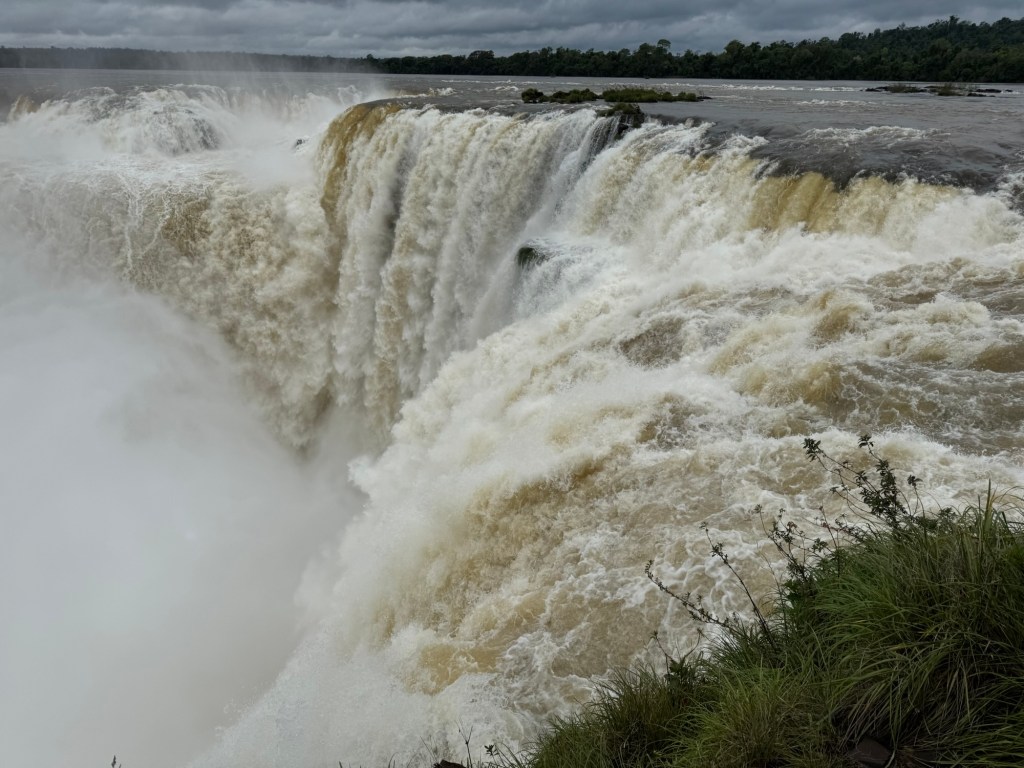
The Falls are spectacular in every way—size, volume, sound, area. No wonder my parents were impressed. We got to stand where I believe they stood for a photo.

We were so engrossed in our dinner last evening that I forgot to take any photos. The chef, Fabio Dall Antonia Taveira, met us upon arrival at his home, gave us a tour of his garden, and escorted us into his dining room overlooking his kitchen. All the while he was chatting away about the garden and asking questions about us. He was very charming from the moment we met him. We sat at the only table preset for us and sipped on our first drink, while he told us his personal history.

Born in São Paulo, he first studied music and still plays the sax, but eventually he transitioned into cooking, studied to become a chef and worked in many places before finally settling on catering private meals for tourists. His focus is on the history and preparation of Brazilian cuisine. While we tasted each creation he presented, he shared the history behind the food and the ingredients in each dish. He even shared how to make cassava palatable. Fortunately, he did not serve us much of that indigenous food, which was part of the first course. Other courses included a fish stew, a roasted Tucupi duck and a Portuguese dish called Feijoada, a bean dish which reminded me of the same dish served to us by Dad’s family when we visited the Azores with my parents in 1997. The dessert was a condensed milk flan that even Mark liked. After two and a half hours we finally finished our history lesson and dinner, complete with a musical performance by Fabio. Our driver was waiting and we departed.

If you want to read more about Fabio and his cuisine, here is a link to try; http://www.brazilianfoodtales.com

Chef Fabio
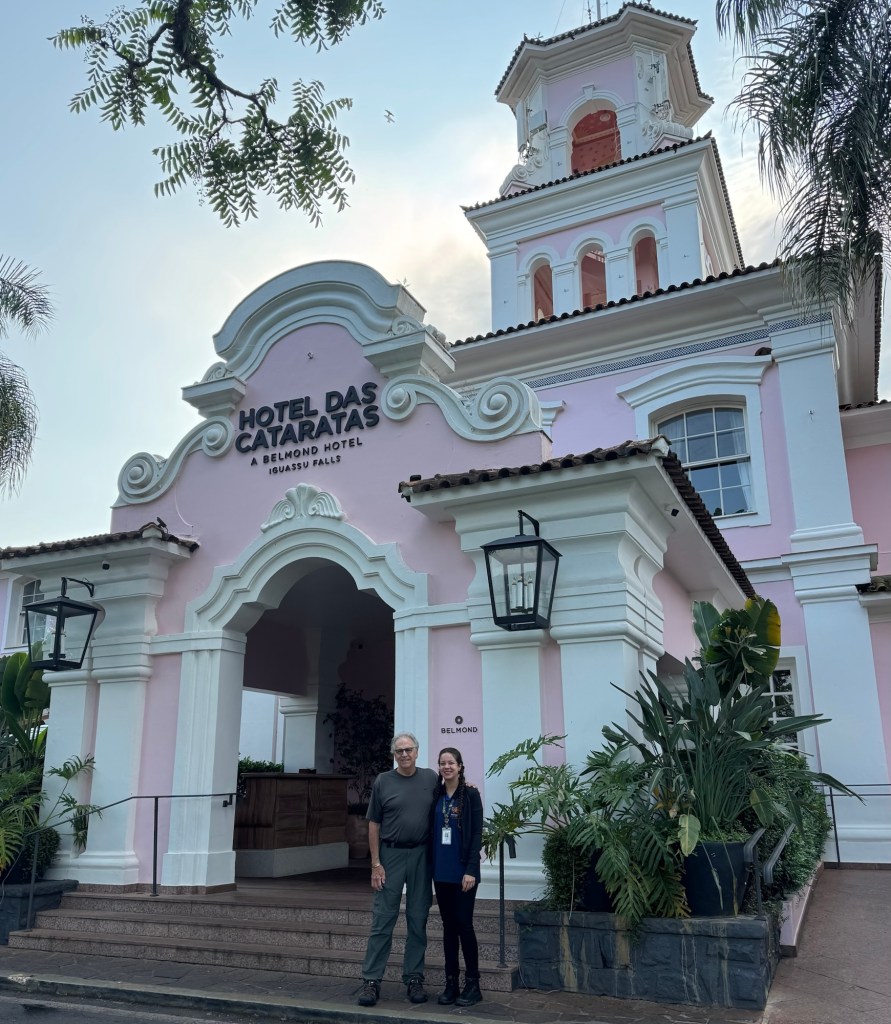
We say good bye to Anna as we leave the hotel

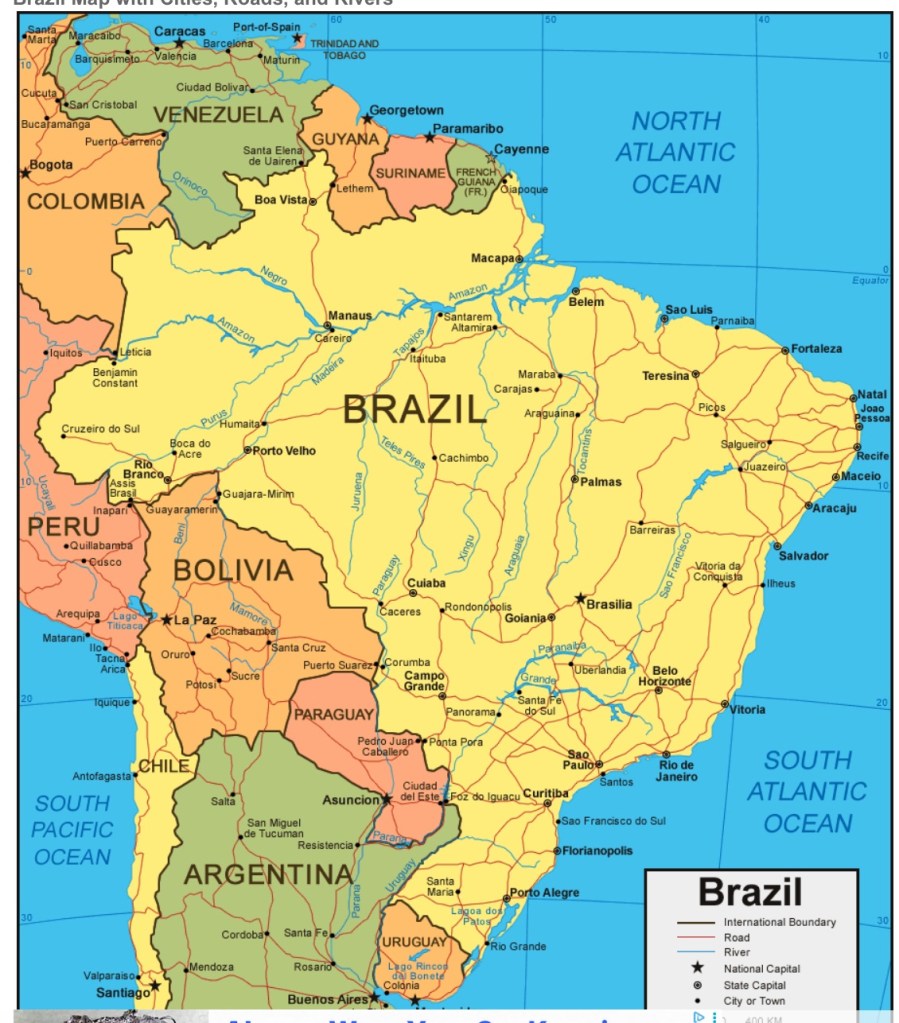
Today we flew back to São Paulo. From there we took a flight on a King Air 200 to Paraty, which is on the coast slightly south of São Paulo on the map.

The King Air 200

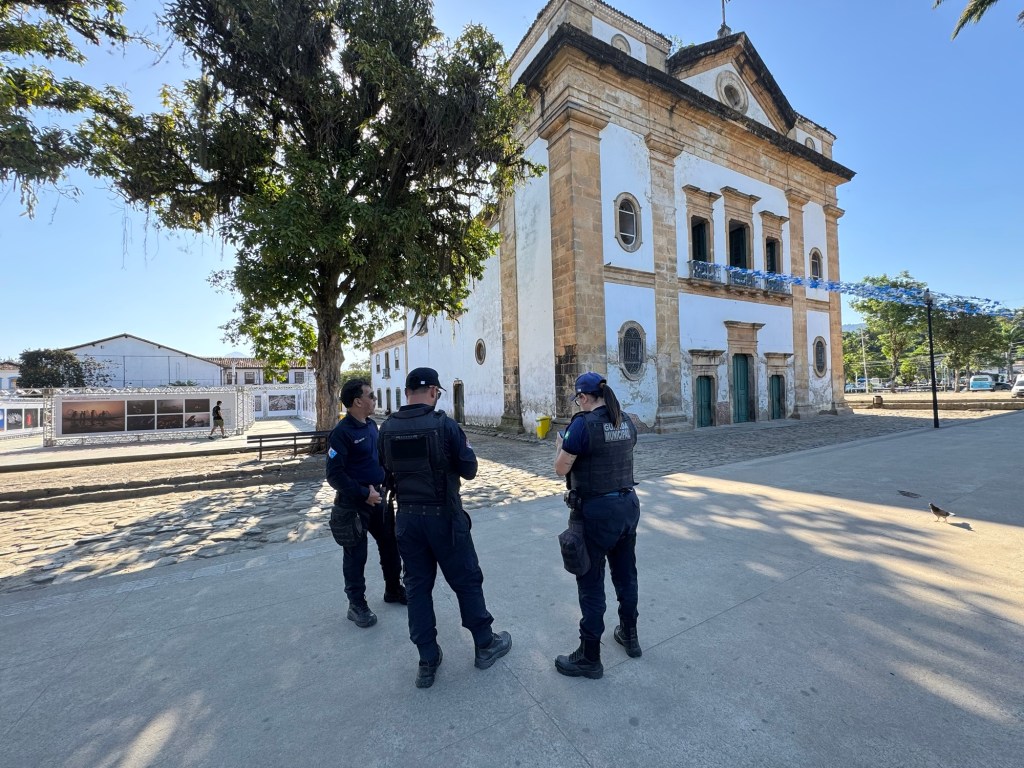
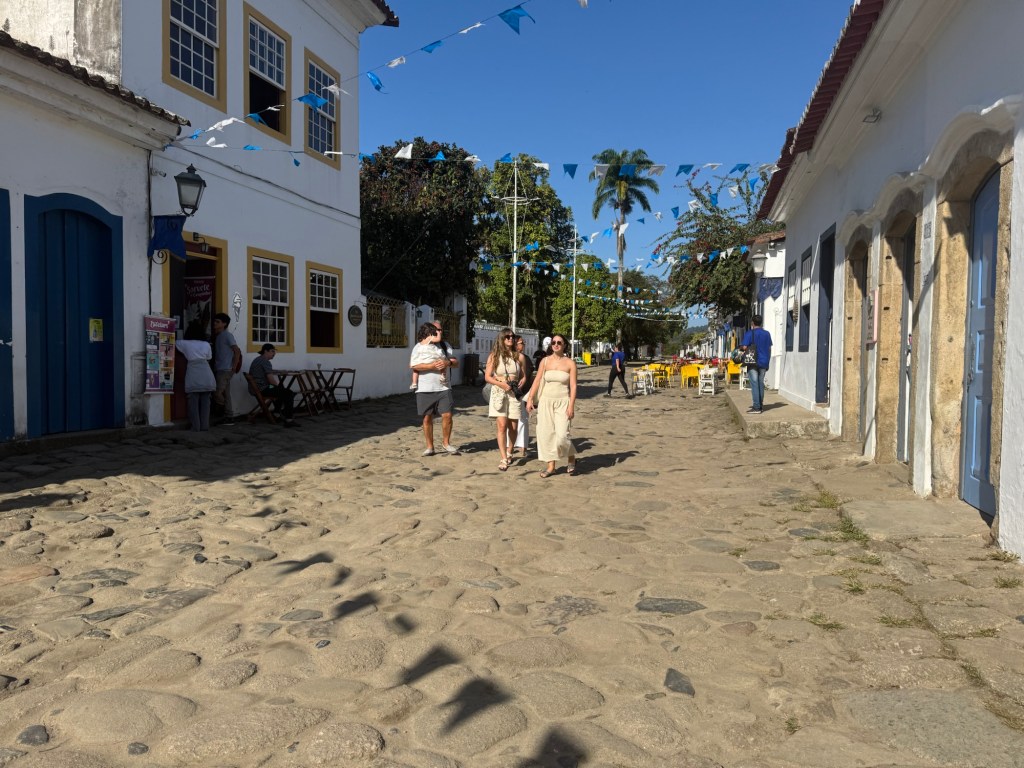
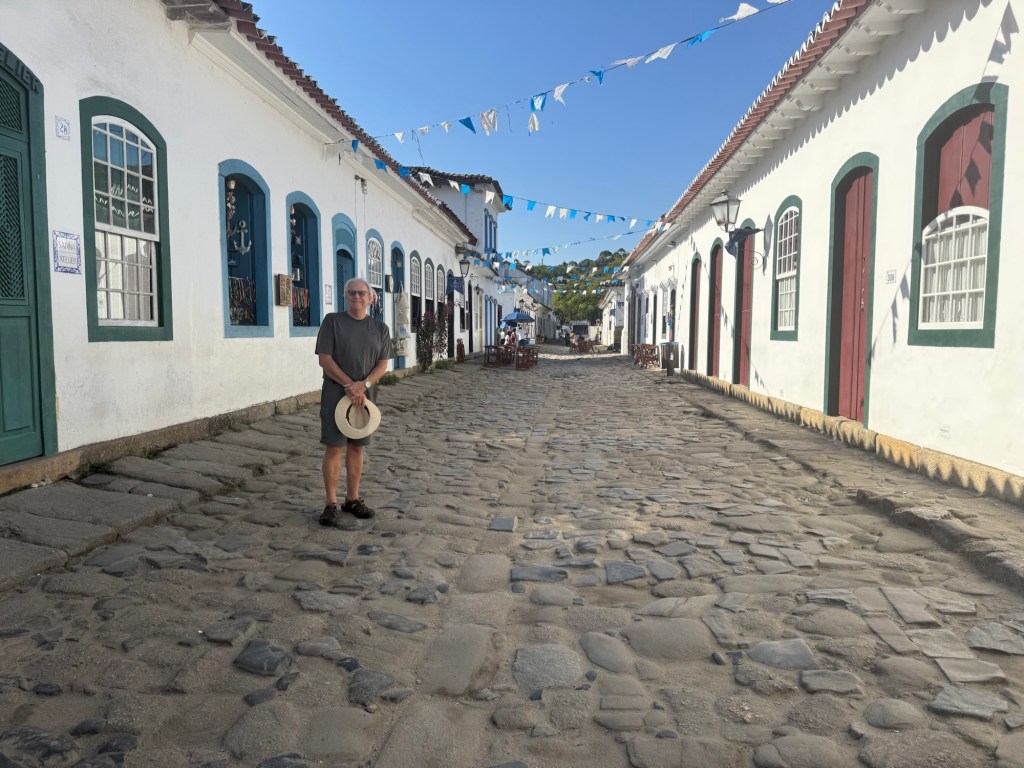
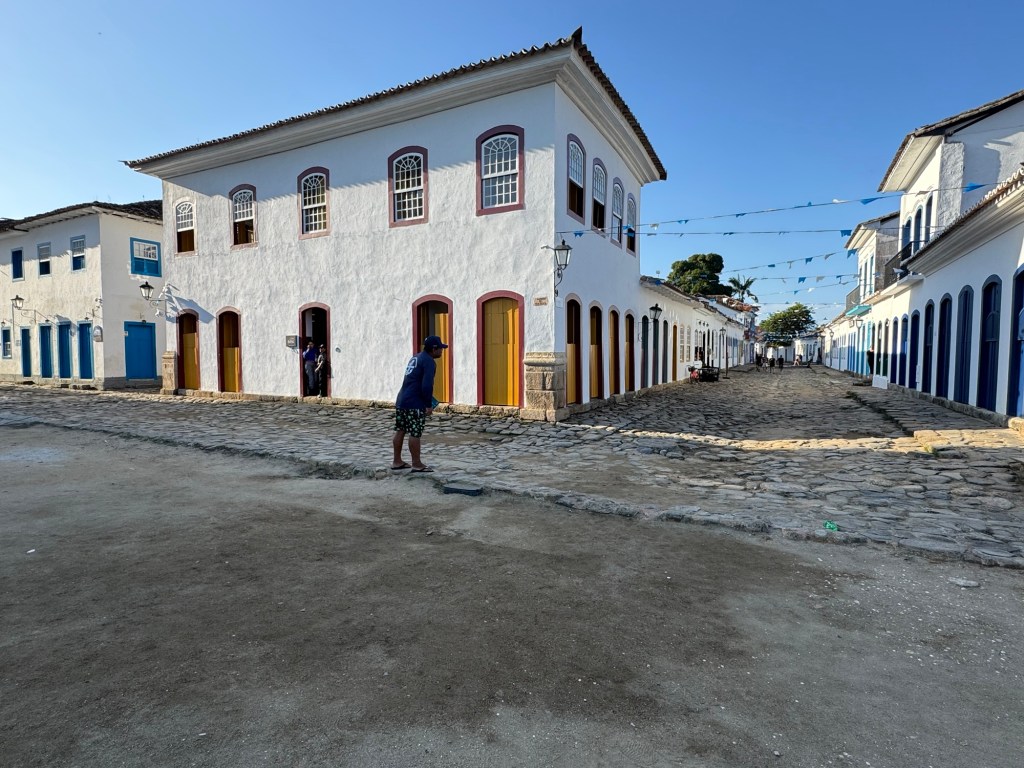
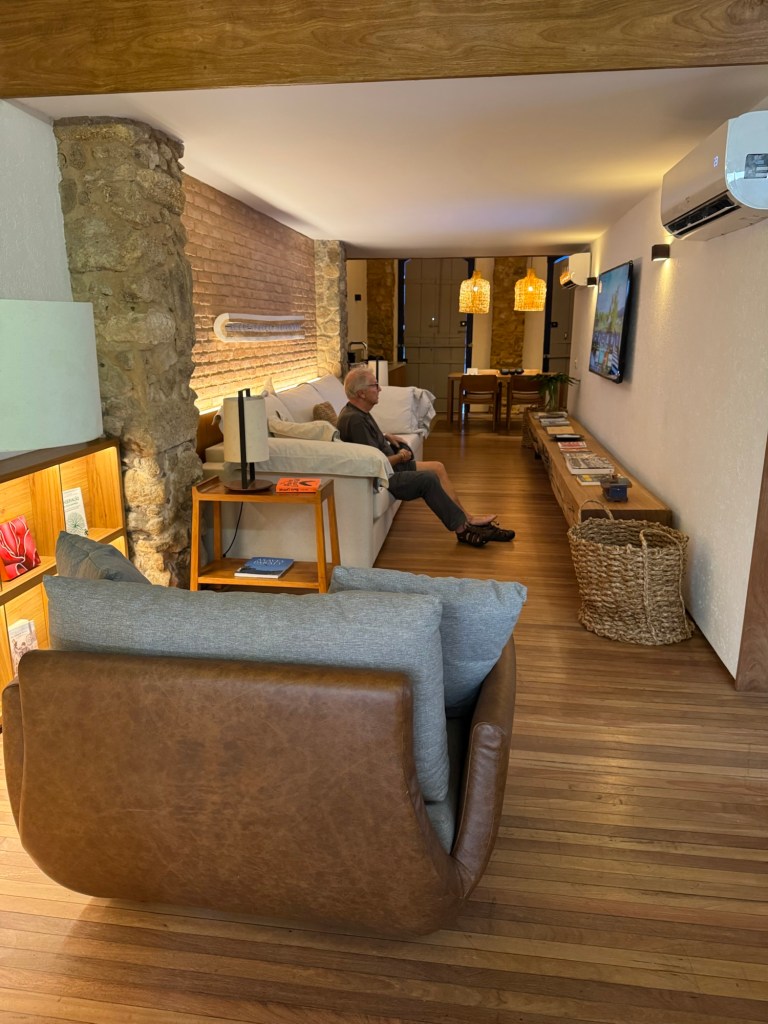
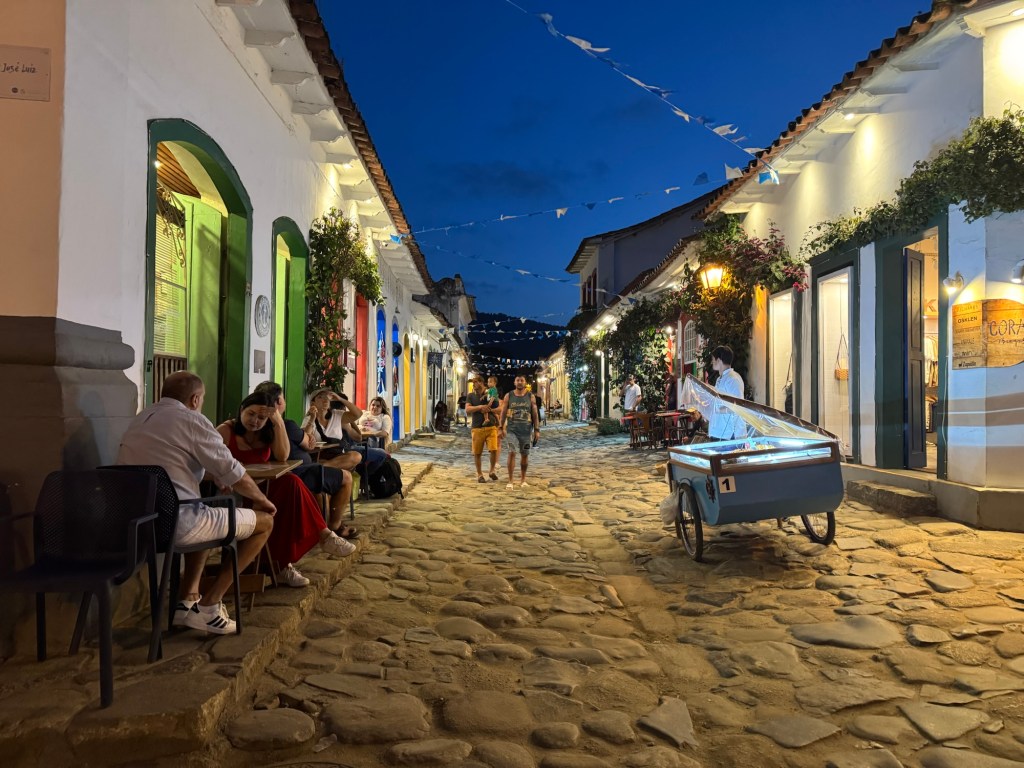
Arrived in Paraty approximately 2pm and were picked up by our next guide, Rodrigo. Our hotel was only 5 minutes away in this small colonial town of approximately 20,000. Our hotel is called Literaria Pousada. After checking in, Rodrigo joined us as we ate a light lunch. He told us about our activities for the next few days and then we went for a leisurely walk about the nearly deserted town. Apparently it exists exclusively for the tourist trade and we are here on the edge of the season. We have had perfect weather since we arrived in South America and it is wonderful this day too. Sunny, warm, a light freeze and no bugs.
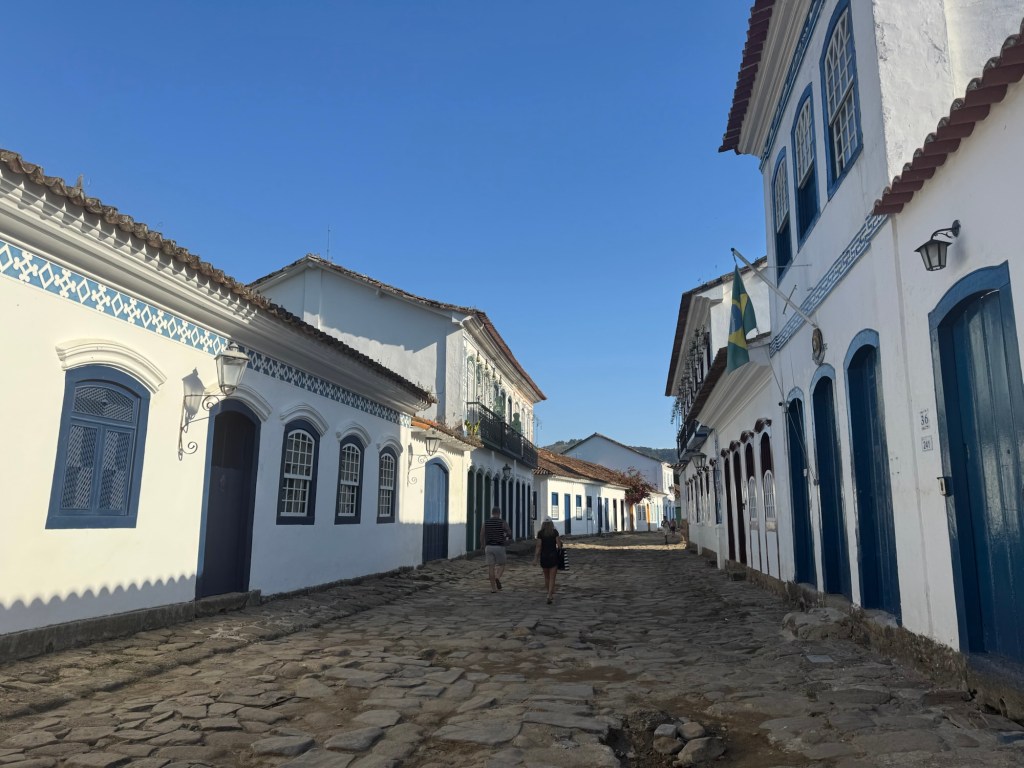
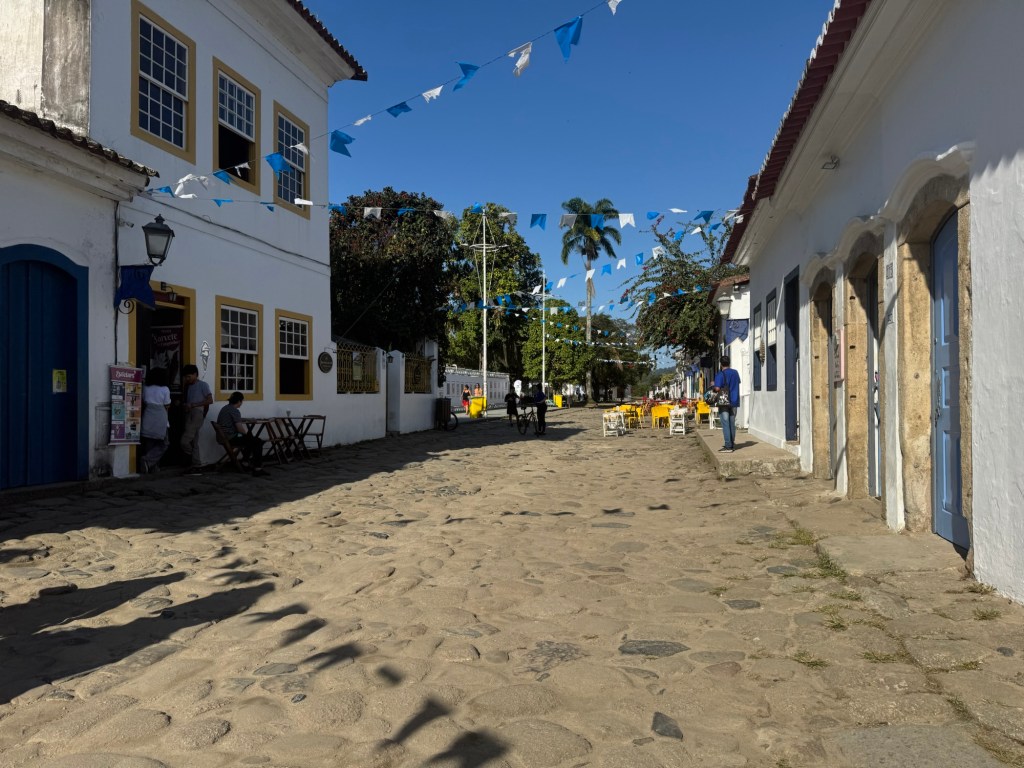
The only problem for me is the uneven cobblestone steps that constitute the surface of every street and walkway. Thankfully Rodrigo held my arm the whole time. After a couple of hours we were ready to get off our feet and headed back to our room. Felt good to stop moving.

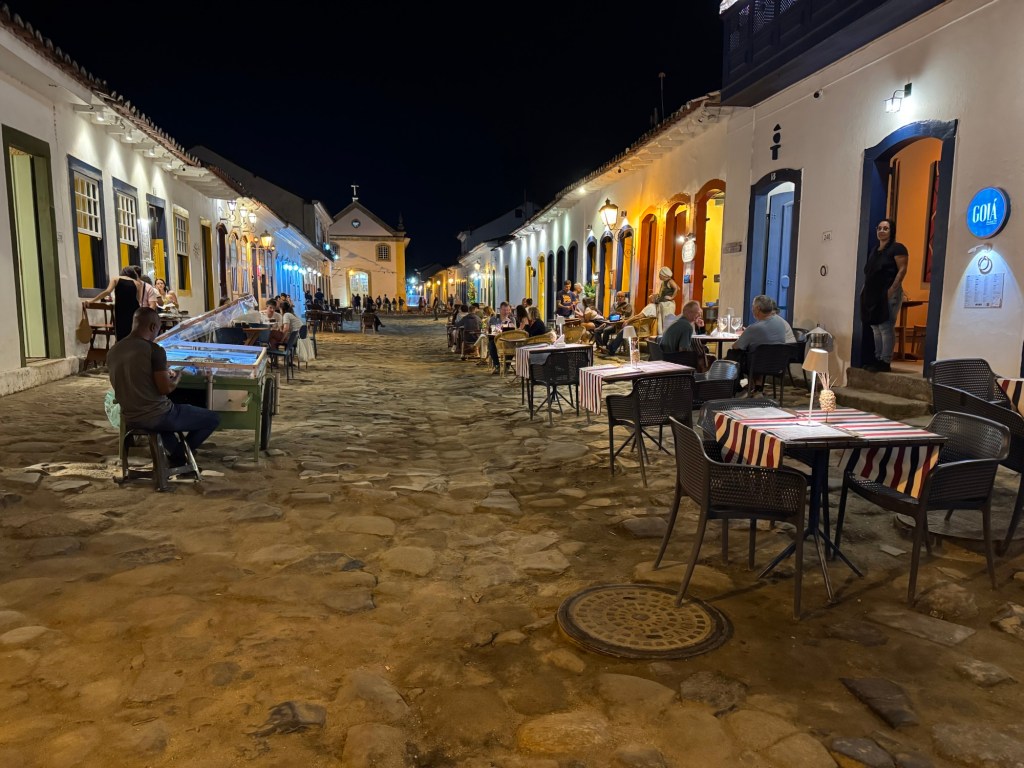
At 6:30 we walked to our recommended restaurant, Banana Da Terra. I had a delicious sea bass cooked in a banana sauce, while Mark had sea bass baked and served with risotto. We were both very satisfied. Walking back to the hotel, we found the streets finally busy and the stores and eateries all open. The town came to life. We stumbled our way back to the hotel and settled in for the evening.

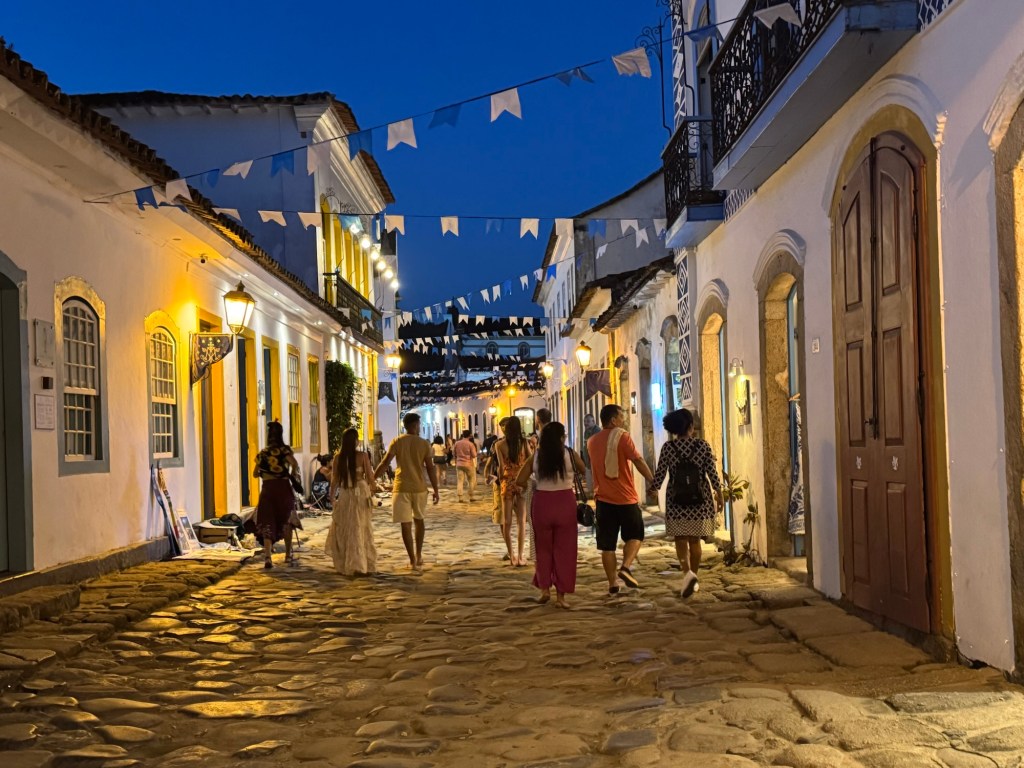
Paraty is a Portuguese colonial town that developed next to a perfectly protected bay from which the Portuguese shipped the gold they found in Brazil back to Europe. It is also a port where slaves were brought from Africa. Brazil received the largest number of African people as slaves—4 million.

Tuesday, September 30, 2025

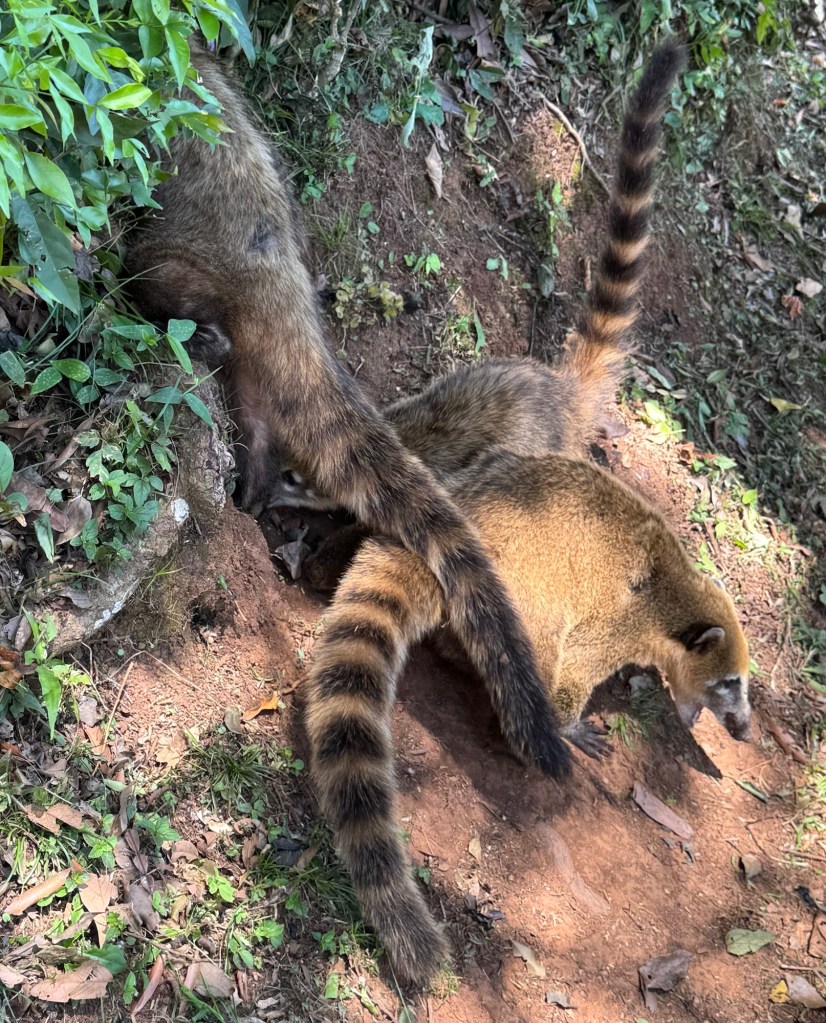
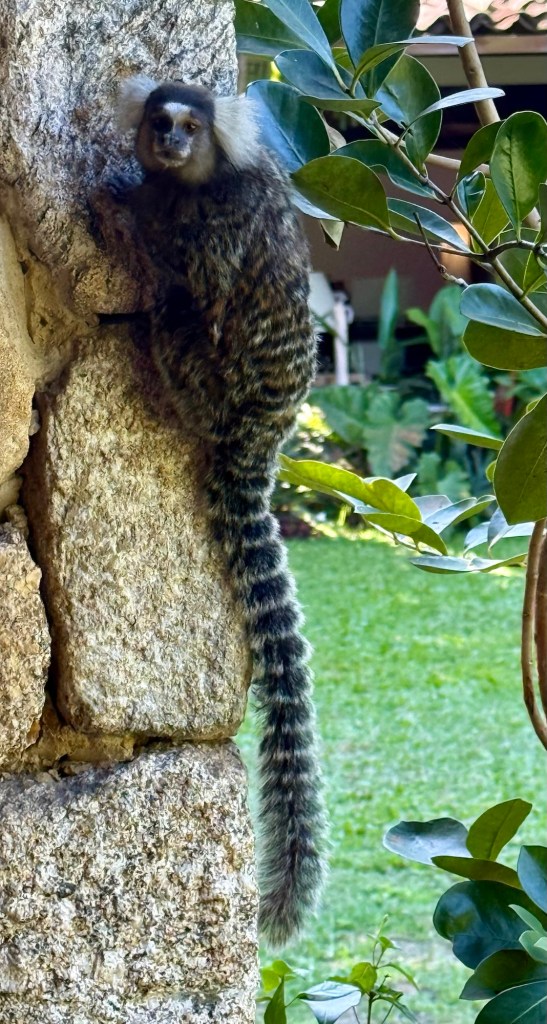
This Brazilian monkey, a Sanqui, tried to join us for breakfast.
We are off again. This time to South America—starting with Brazil, September 2025.

We have had a pleasant summer sharing time, food and overnights with friends at Lake Tahoe as well as plenty of relaxing down time. When we were not at the Lake, we were attending medical appointments in and around Grass Valley. It was late in the summer before we managed to organize our appointments so we were traveling back and forth less often.

Map of Brazil

Now we are organizing our time, packing and anticipating details that might come up in our absence. We will be gone 7 weeks, including 4 in Brazil, 10 days in Bolivia and 10 days in Columbia. We both hope we have not overdone the time. The last time we were gone this long was our honeymoon 31 years ago. If all goes well we will be home November 16, in time for Thanksgiving with Mark’s family in So Cal.

Our trip starts on September 26 with flights from SFO to Dallas (3.5 hours), then Dallas to São Paulo (10+ hours) on American Airlines, followed a couple hours later by a 2-hour flight from São Paulo to Iguacu Falls on Latam Airline. All together it will take about 24 hours to get from home to the southern end of Brazil. From there we will gradually work our way north. The time in Brazil is 4 hours later than in California.

Iguacu Falls is at the point on the map where Brazil meets Argentina and Paraguay. It is the largest falls in the world and we are excited to see it.

September 27,2025

Finally, we have left San Francisco, flown 3.5 hours to Dallas, 9+ hours to São Paulo, transited through the airport there and flown 2 hours to Iguacu Falls. The three flights have been smooth and uneventful, although all of them have departed late. We arrive at Iguassu Falls in late morning, after having a few hours sleep between a Dallas and São Paulo.

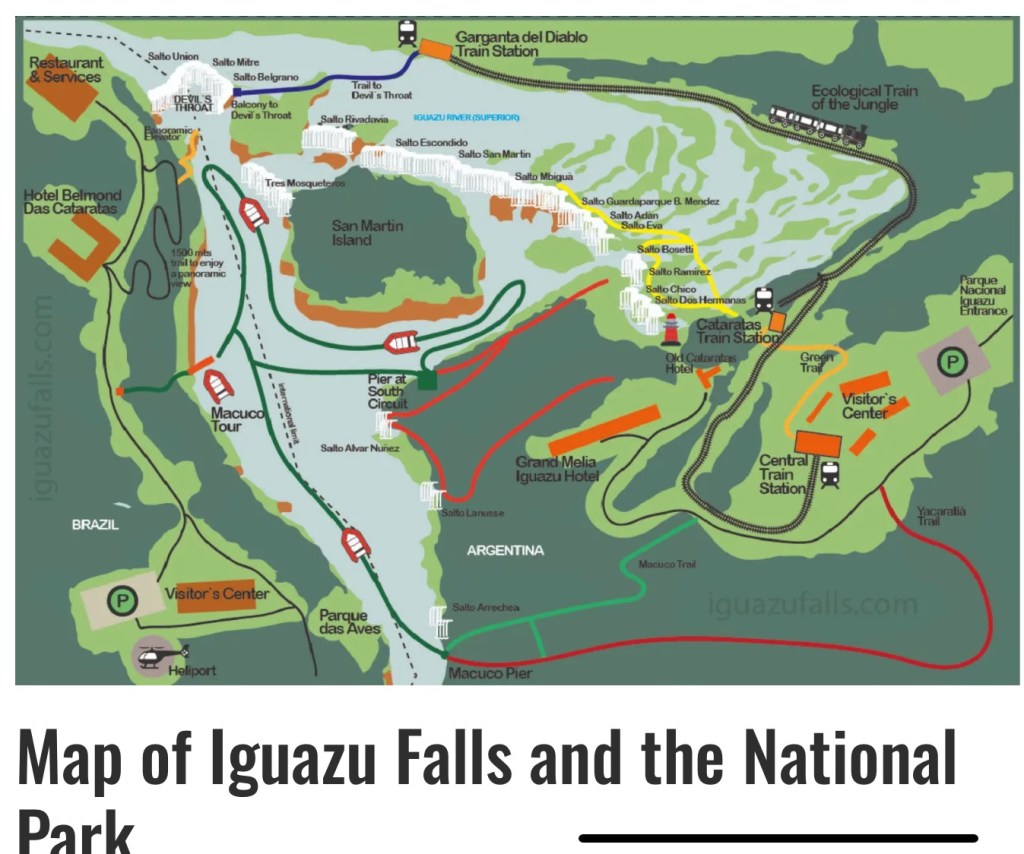
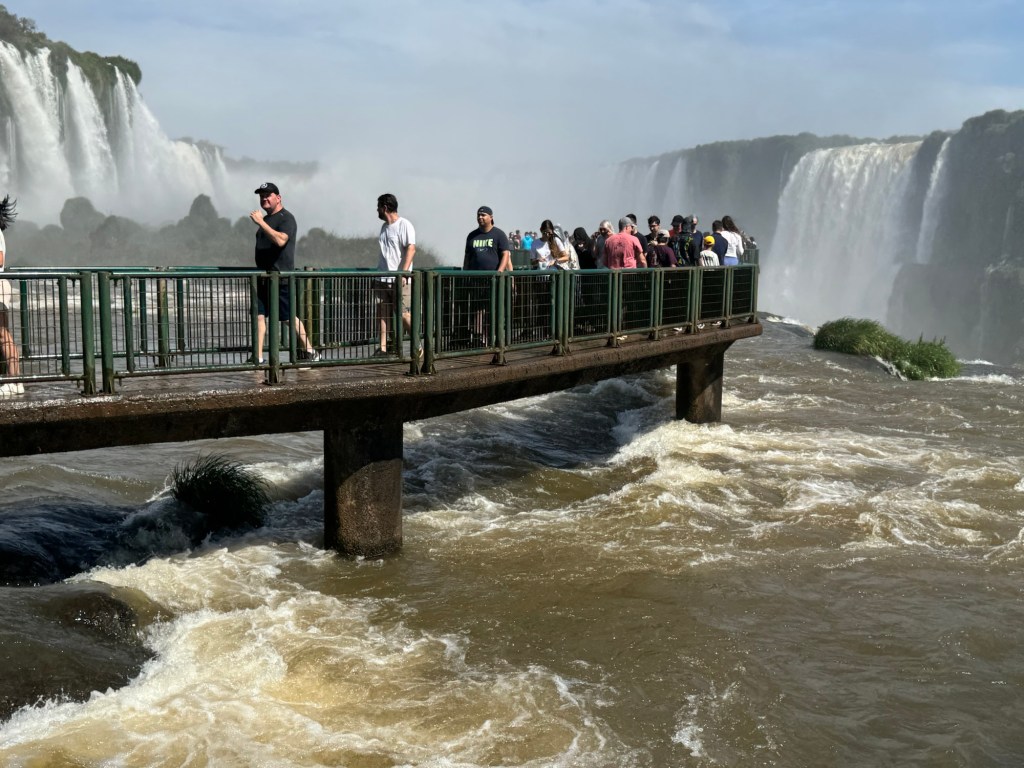
Our guide, Anna, was waiting for us and suggested we do a walking tour of a section of the falls before taking a nap. Although the bed called us, we checked into the Hotel das Cataratas, the only Brazilian hotel in the park, and headed out for a walk in the forested park with views of the falls nearly every step of the way. At one view point we got soaked by the spray from a section of the falls. As the day was very warm, we did not mind getting wet.

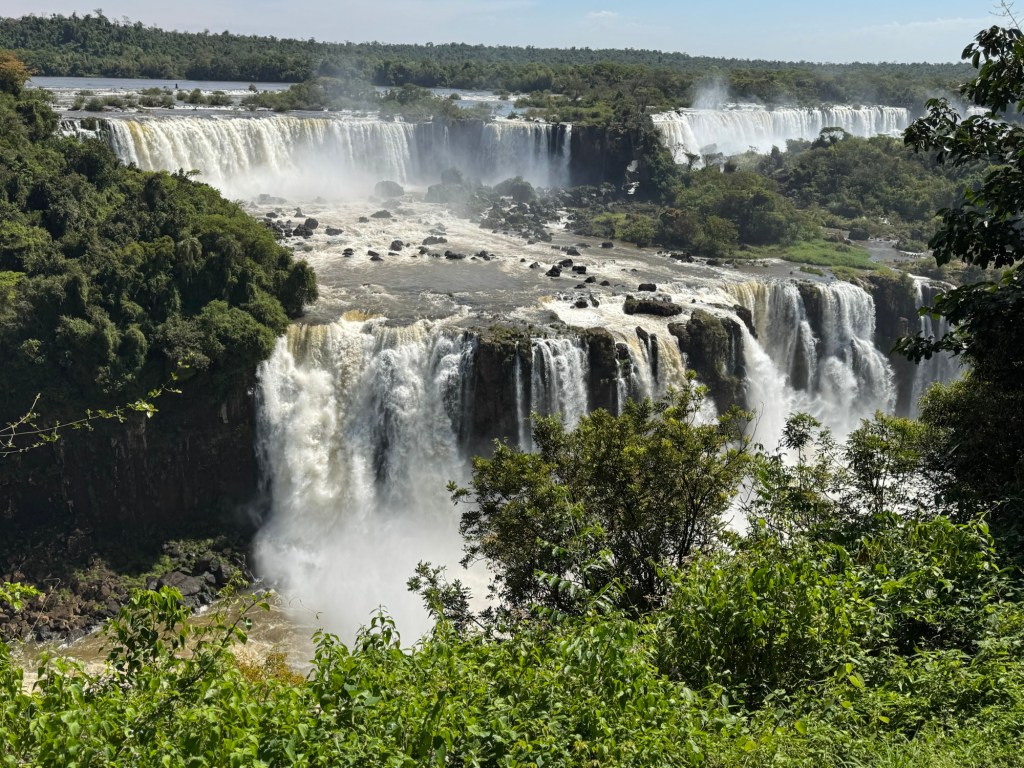
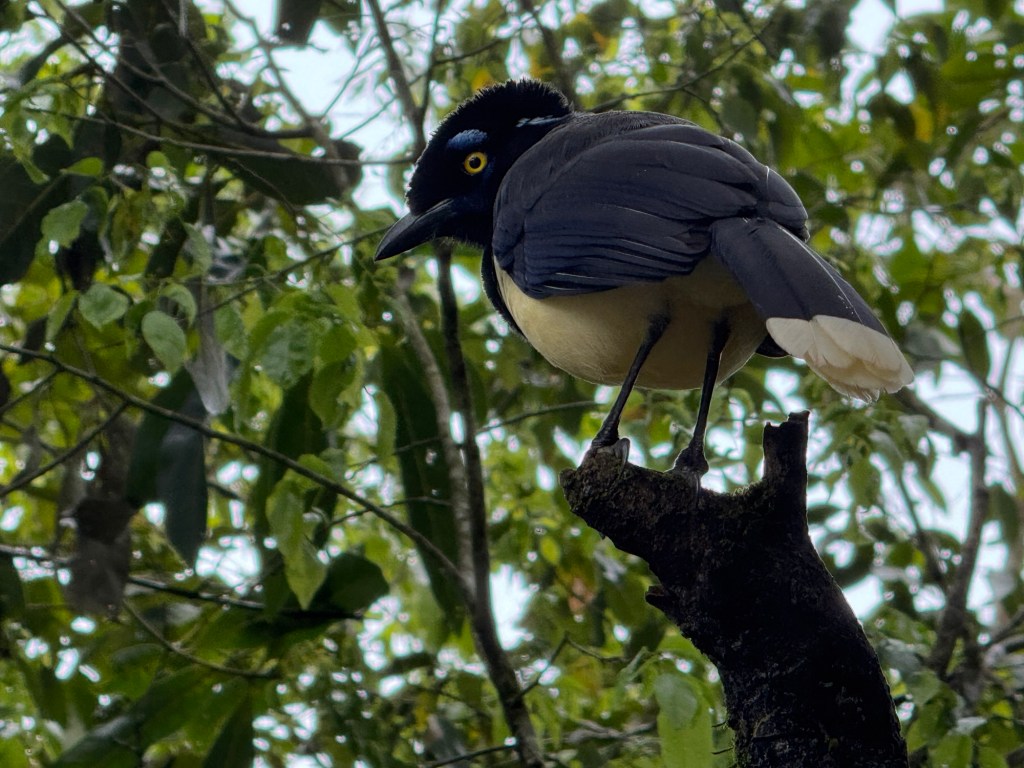
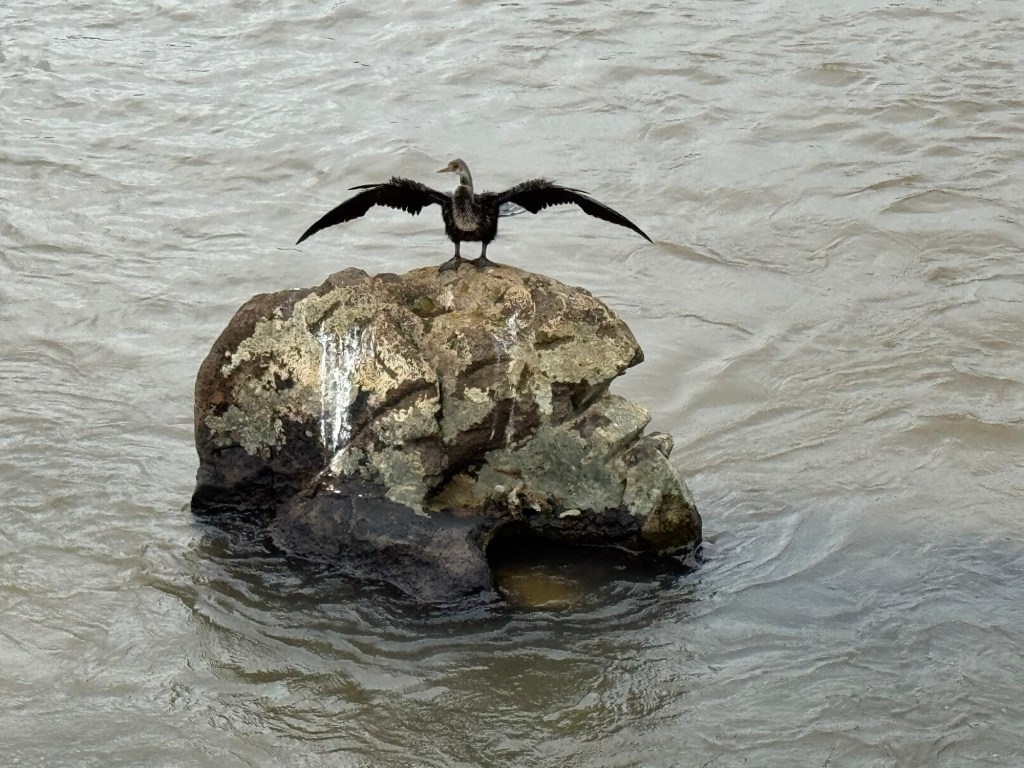
The next day we were out at 7am to walk to the main part of the falls including one called Devils Throat. We walked along an elevated steel mesh walkway for a couple of miles seeing smaller falls along the way as well as some birds and animals. The falls are stunning and even overwhelming. The source of all this water, 2 million cu/ft per sec today, is an underground aquifer that is 43 thousand cubic kilometers under parts of Brazil, Argentina, Paraguay and Uruguay.

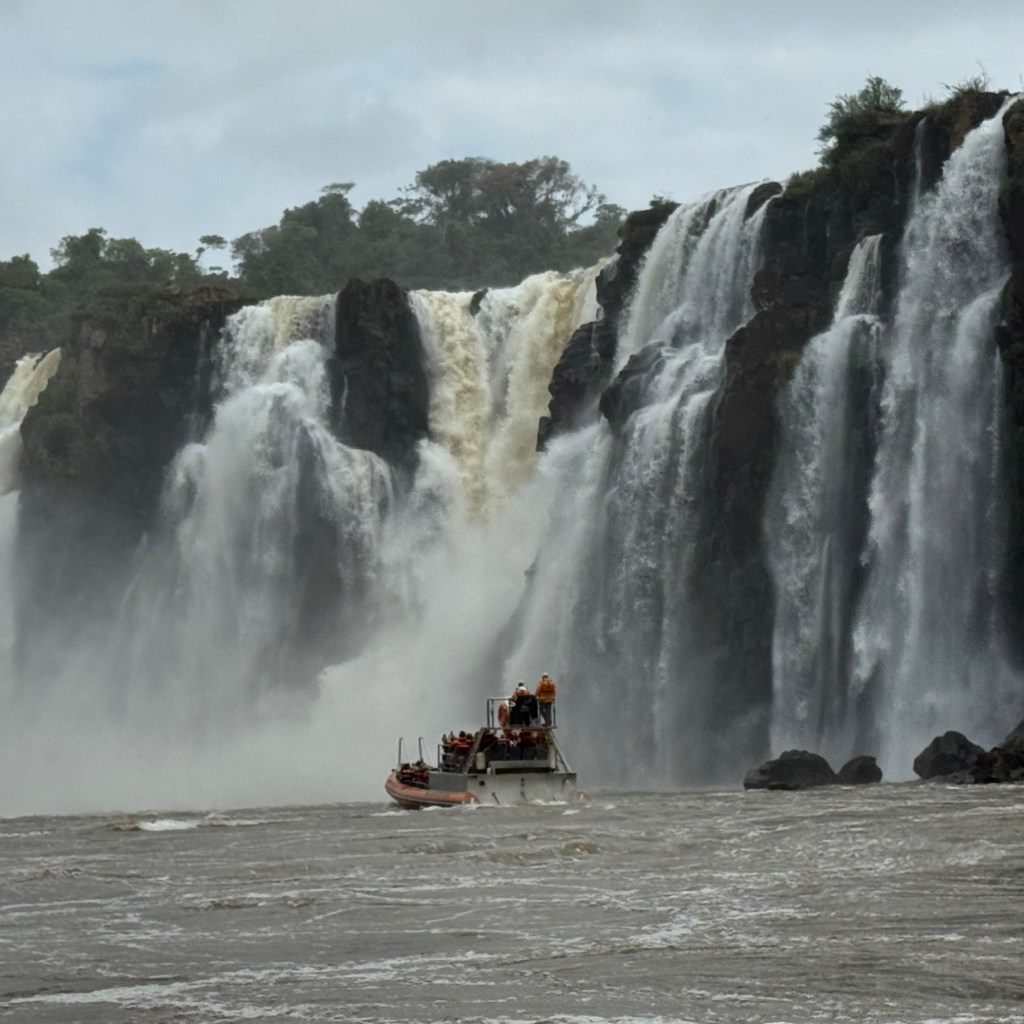
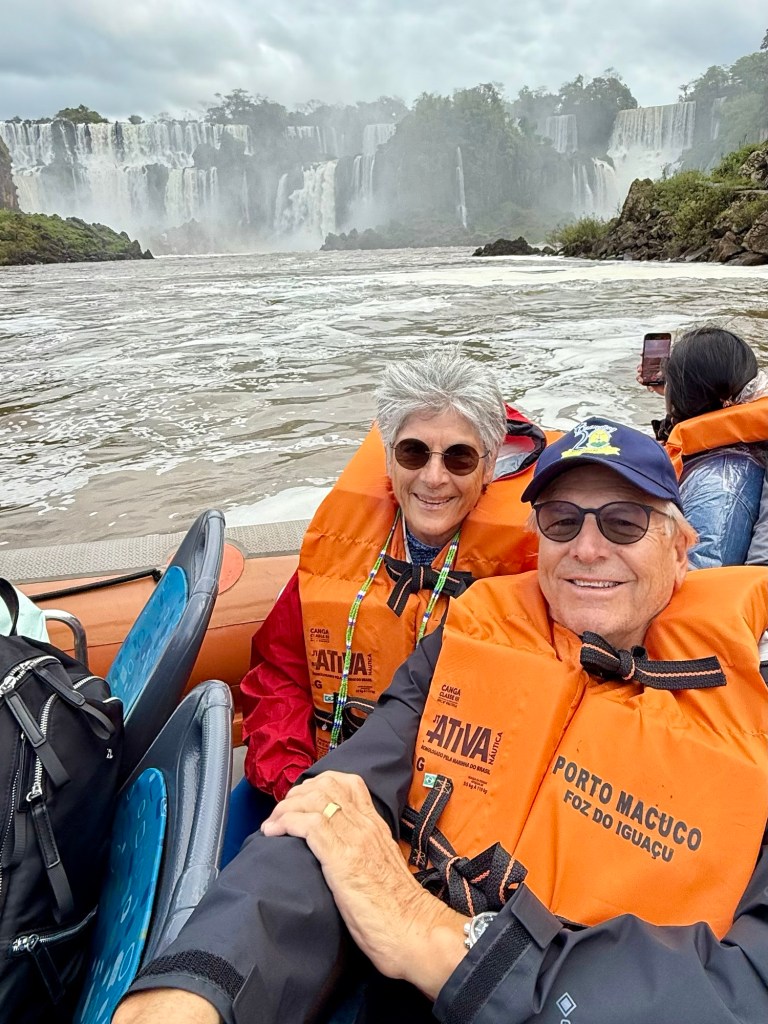
After driving to Argentina and passing through customs we went to Argentina Iguazu Falls Park and walked to Devils Falls and back to the start. Then we took a bus, a jeep and a funicular through the forest to the boat launch and chose a dry boat ride rather than a wet one, which all the young people were doing. It was an exciting ride over huge waves to the foot of the falls. The driver managed to keep us dry, while we could see other boats getting very wet.

The bedrock of the falls is a vast basalt plateau formed by volcanic eruptions 135 million years ago. Over millions of years the river carried water from the Serra do mar mountains eroding softer sandstone layers, creating undercuts in the harder basalt and forming the dramatic cliffs and channels of the falls. Over the milenia, the falls have retreated 28 kilometers upstream.

Iguacu Falls were the second National Park established in the world, right behind Yellowstone National Park in 1934. In 1984, the Falls were declared a UNESCO World Heritage Site for their outstanding natural beauty and biodiversity. They are also recognized as one of the 7 Wonders of Nature.

The falls are most often compared with Victoria and Niagara Falls. Victoria is 5,604 feet wide and Iguacu is 8,900 feet wide, while Niagara is only 3,947 feet wide. Victoria is 354 feet high, Iguacu is 210-269 feet high and Niagara is 167 feet high. The flow is where Niagara moves ahead. Victoria falls 38,400 cu ft/s, Iguacu falls 61,700 cu ft/s and Niagara falls 85,000 cu ft/s. A couple of differentiating facts are that half the water approaching Niagara is diverted for hydroelectric power. Iguacu has 2 drops which give it a combined height of 479 feet.

I remember that my parents went to Iguacu Falls in the 60’s and came home with great photos of the falls and raved about their experience, Thus the source of my desire to see them too.After 2 days at the falls, we will fly back to São Paulo tomorrow on 9/29 and connect with a helicopter for a ride to the colonial town of Paraty. The flight is about 45 minutes and takes us over the coast, a particularly beautiful section of Brazil, we are told. Paraty is the bay from where the Portuguese colonizers sent the gold found in Brazil back to Europe. The history is well preserved and the city is now an UNESCO site.