
Thursday’s October 2, 2025
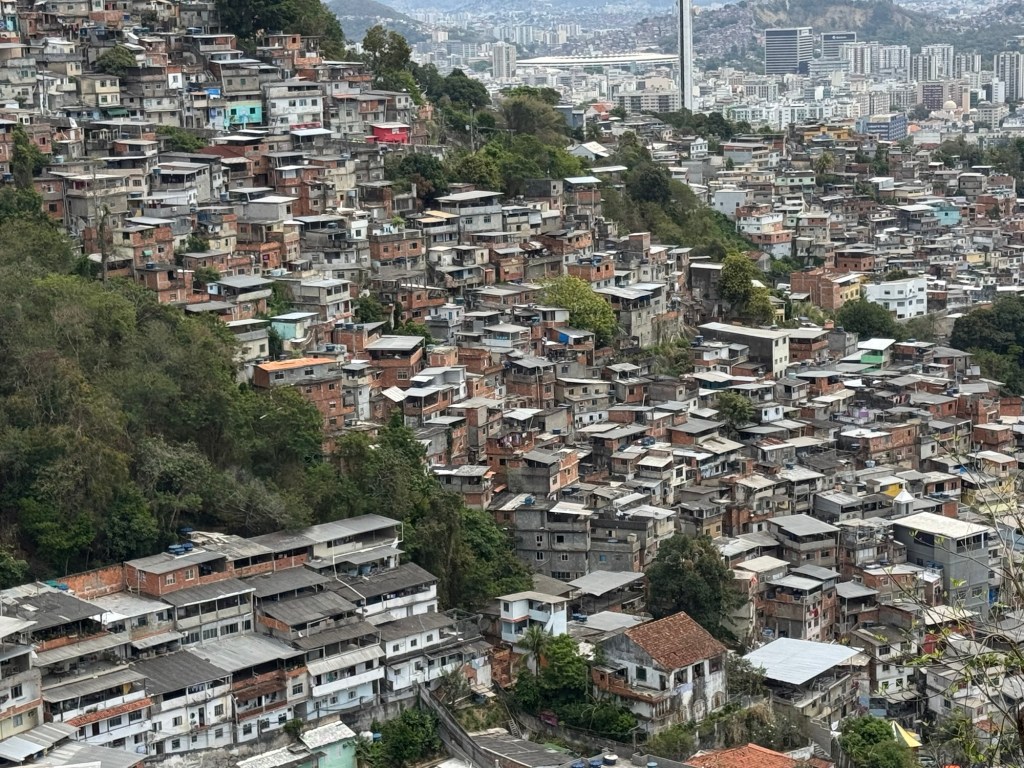
We departed Paraty at 8am with new driver named Sassa, who had lived in the states for several years and spoke good English. As we drove along the coast headed for Rio we learned about him and other details he shared about Brazil. There are 27 states in Brazil. 17 million people live in the state of Rio and 5.5 million live in the city. 15% of the Rio population is very poor and live in more than 700 favelas, each of which consists of jerry-built shacks packed together on the outskirts of Brazilian cities. They have some electricity and water, but most often, no sewer. Pretty miserable conditions, compounded by drug gangs that steal, fight and hurt people. Sassa warned us to stay away from the favelas. Sounded good to us. He told us the minimum wage in Brazil is $300 per month and 27% of the population of the country live below the poverty line. Not even close enough to live on. Rio alone received 1 million slaves, while the entire US received only 800 thousand. Interesting statistic.
Soon we arrived at the home and gardens of Burle Marx, a famous landscape architect. On arrival we met our Rio guide, Mica, who joined us on our tour of the gardens. The garden guide was a man named Mateo. We learned much from him as we walked through the garden, park and buildings.
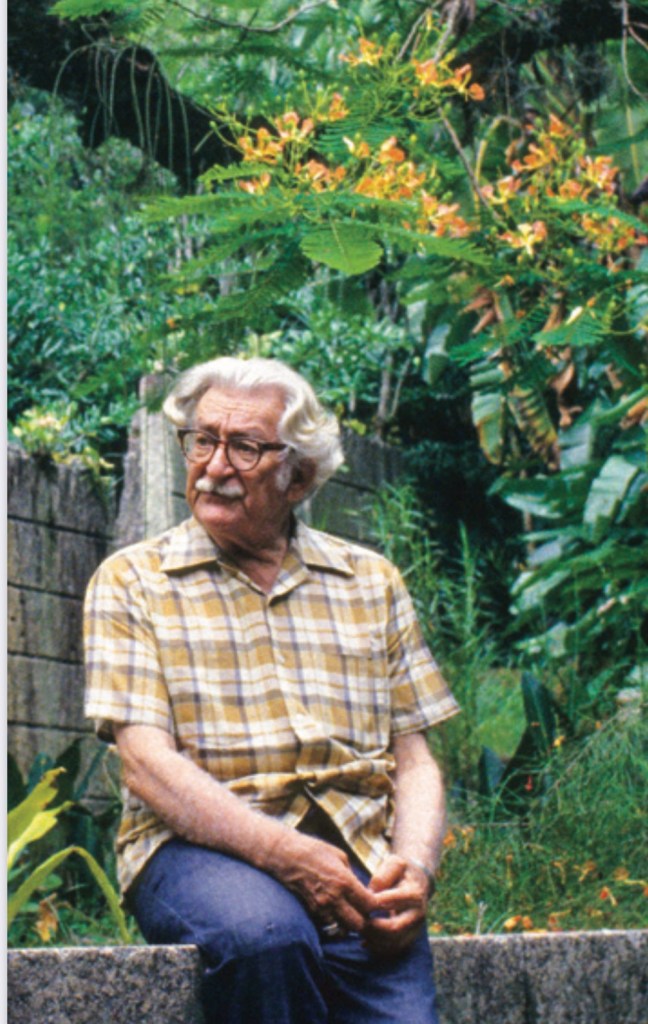
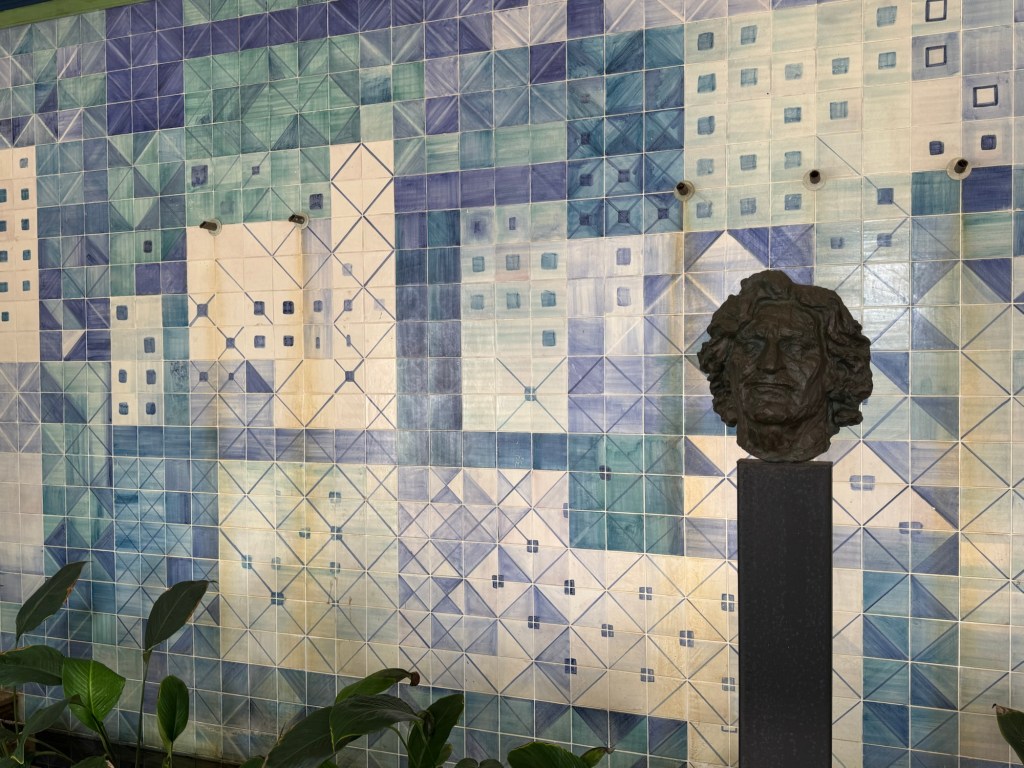
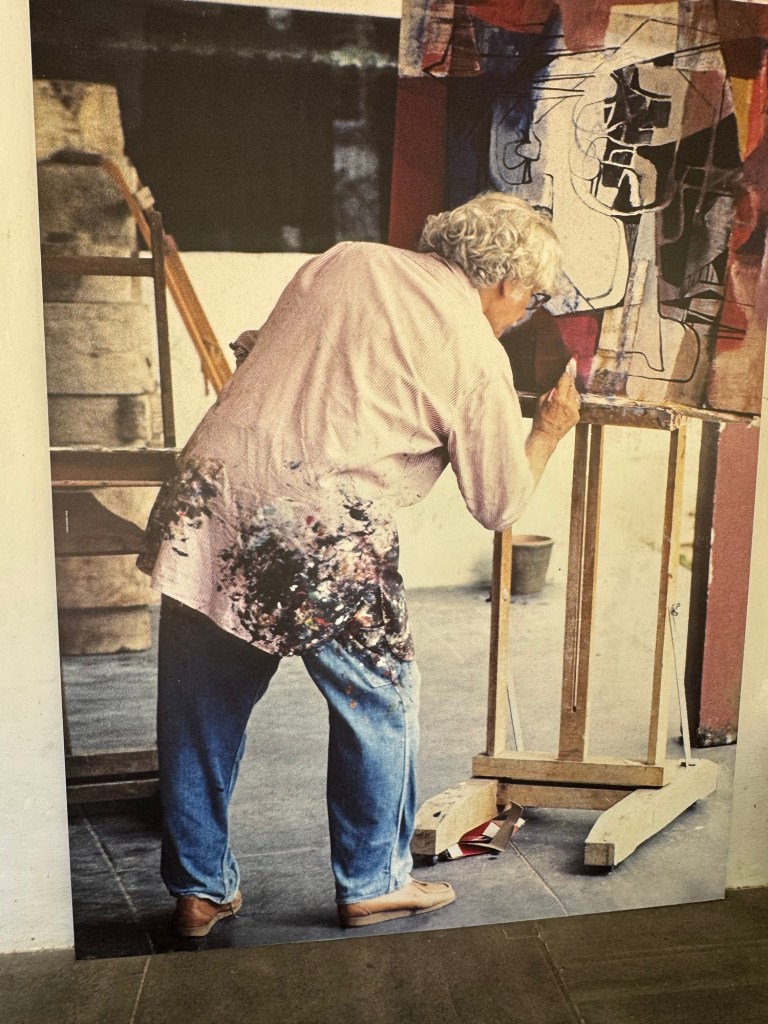
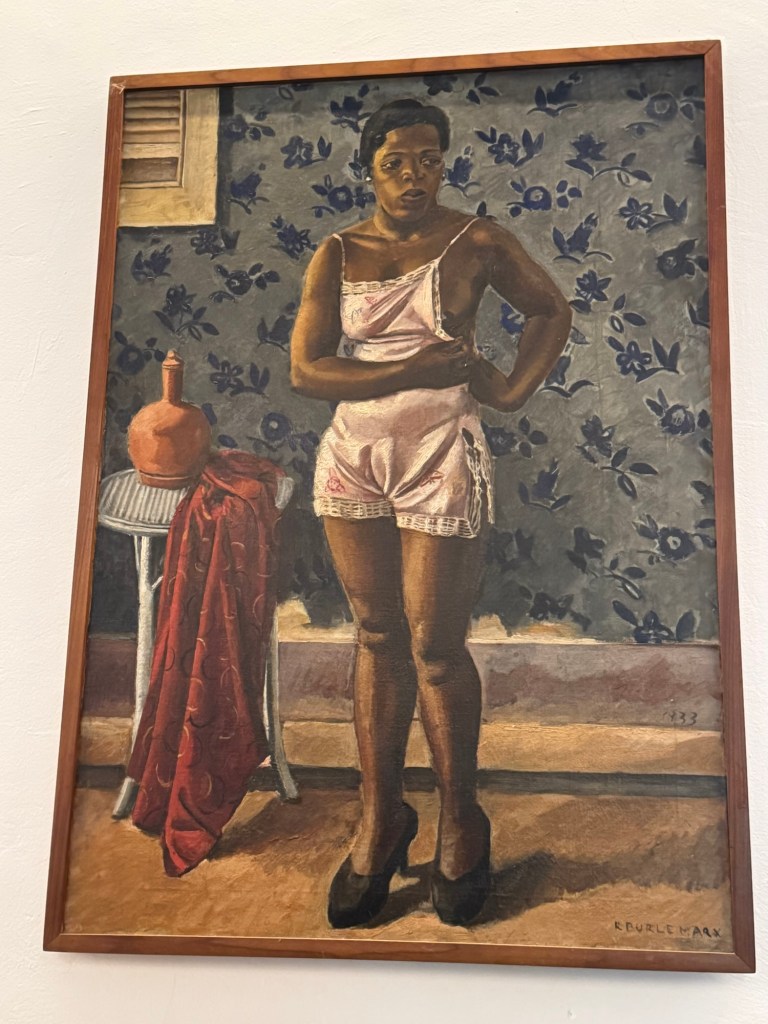
Turns out Burle Marx was a versatile fellow of many talents including painting, tile design and piano playing, as well as landscape design. He purchased 98 acres of land near Rio in 1949 and converted it into a lovely park and garden over many years. He was able to move onto the property in 1963 and lived there until his death in 1994 at the age of 84, without finishing his labor of love. He did give the property to the government, which has maintains the grounds and opened them to the public. His landscape talent and ideas spread around the country and he is famous throughout Brazil and internationally.
Brazil has 11% of the world’s 350,000 plant species, the most of any country.
The plants and names are listed here as best I can remember them.
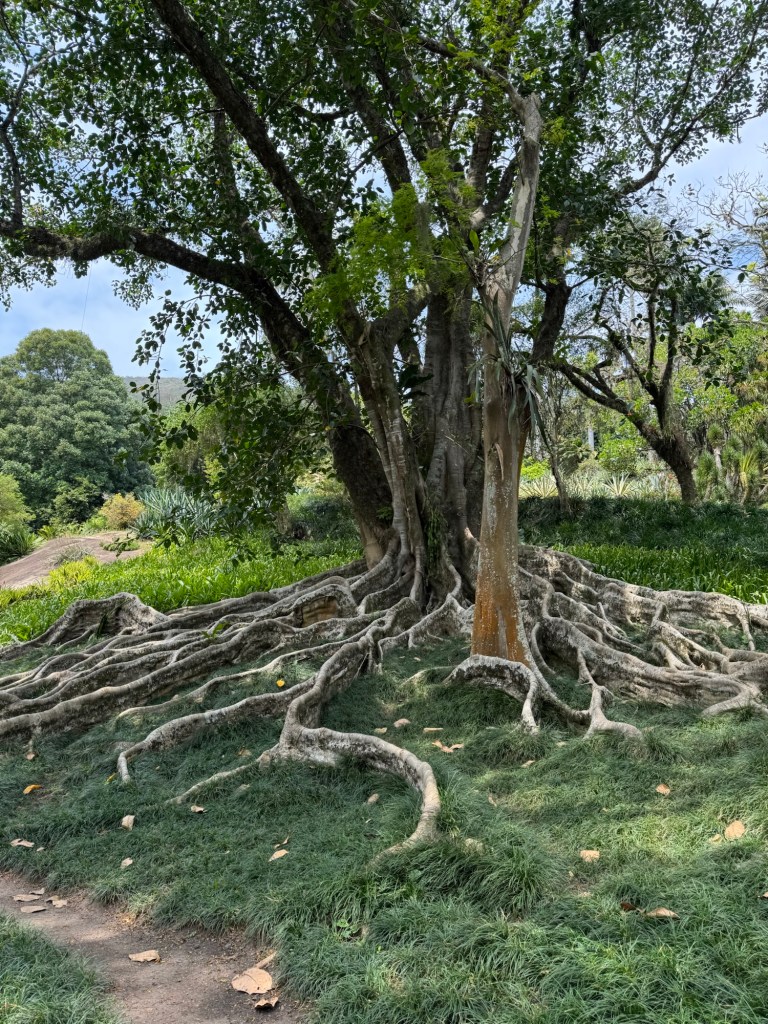
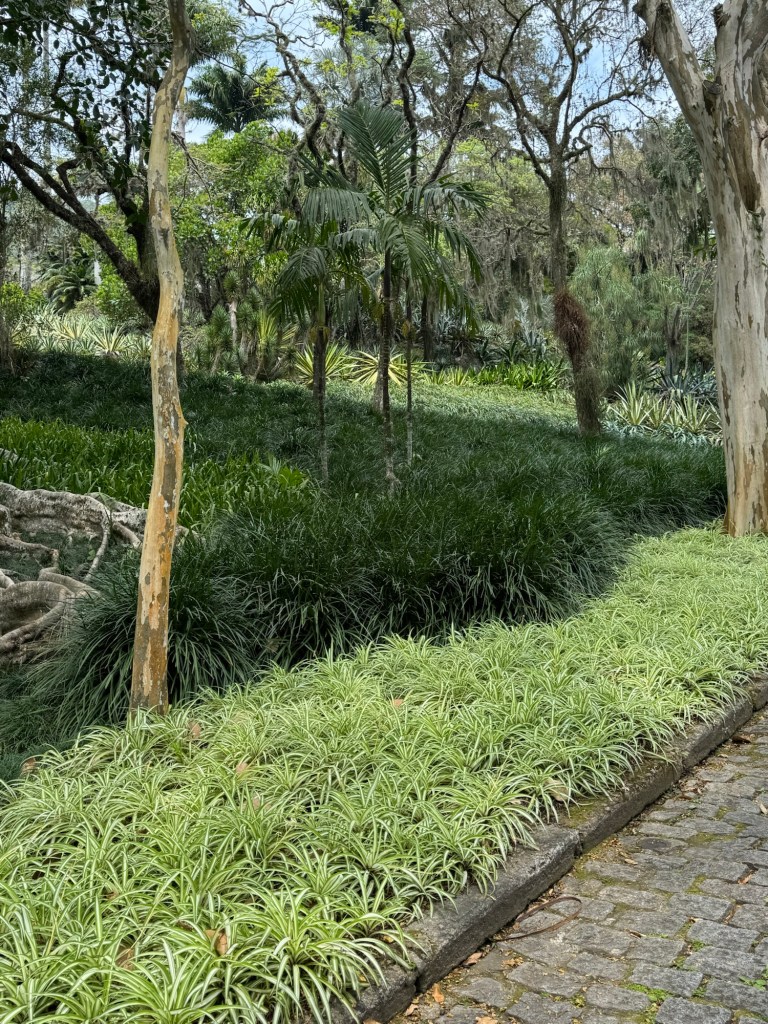
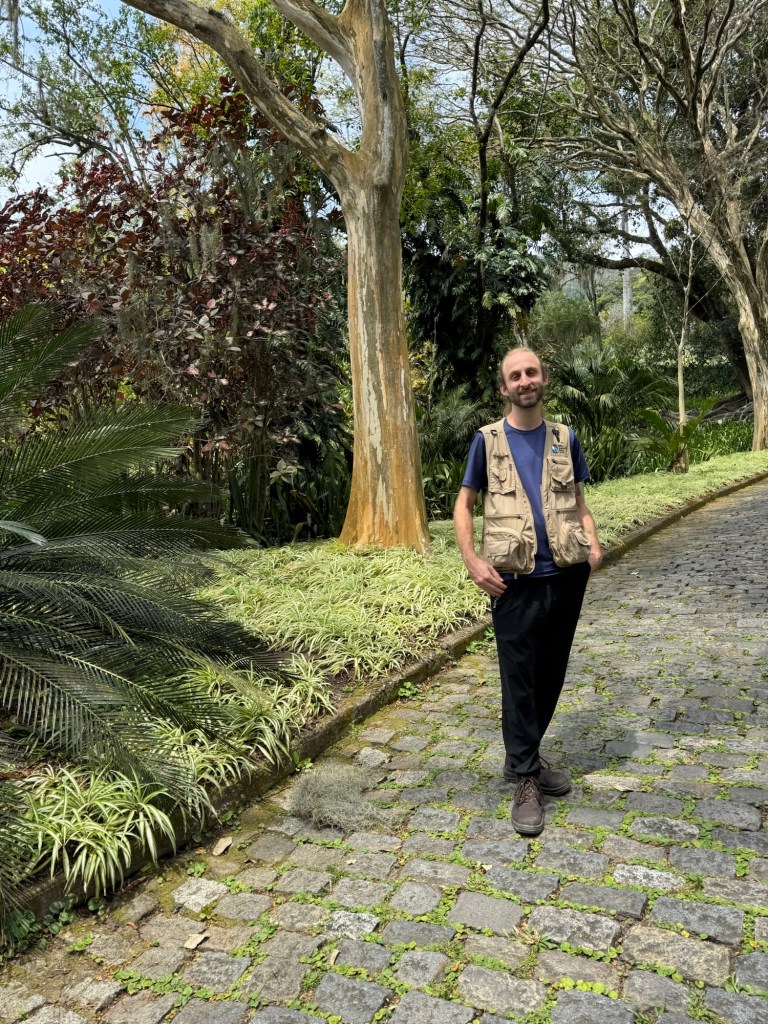
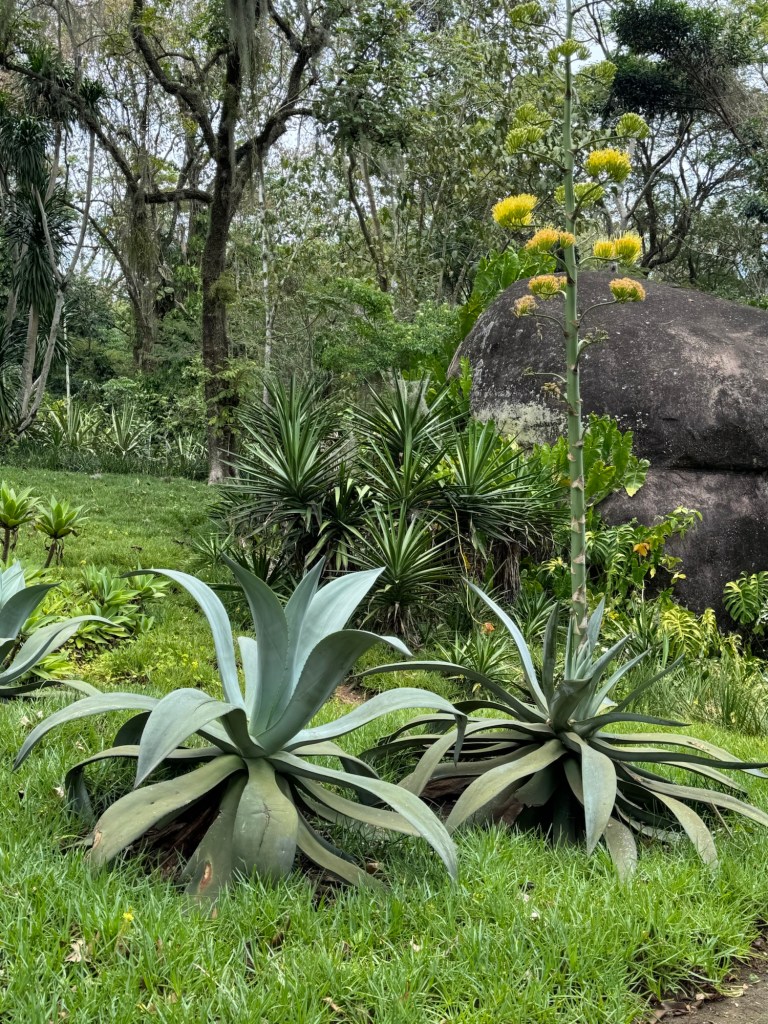

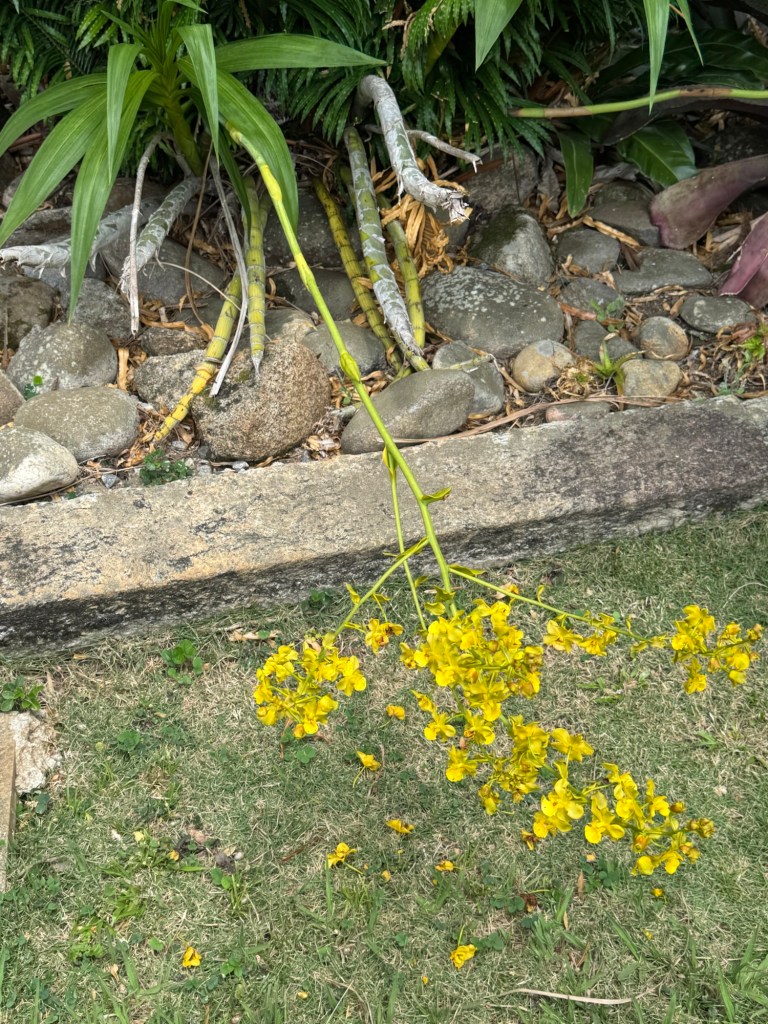
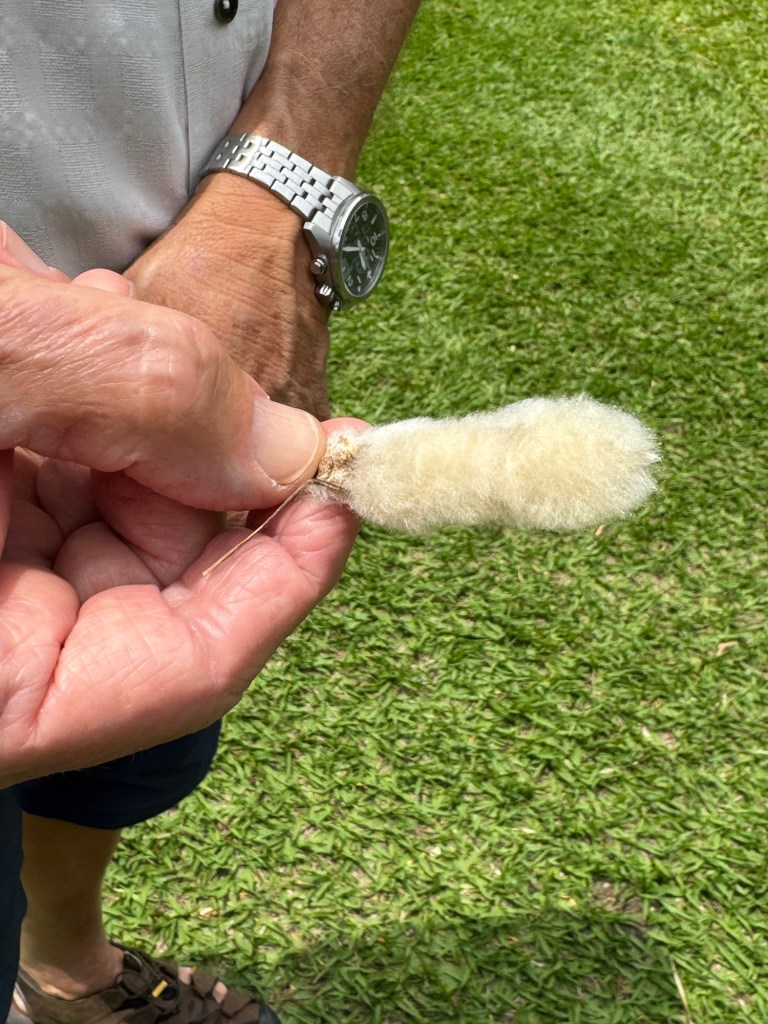
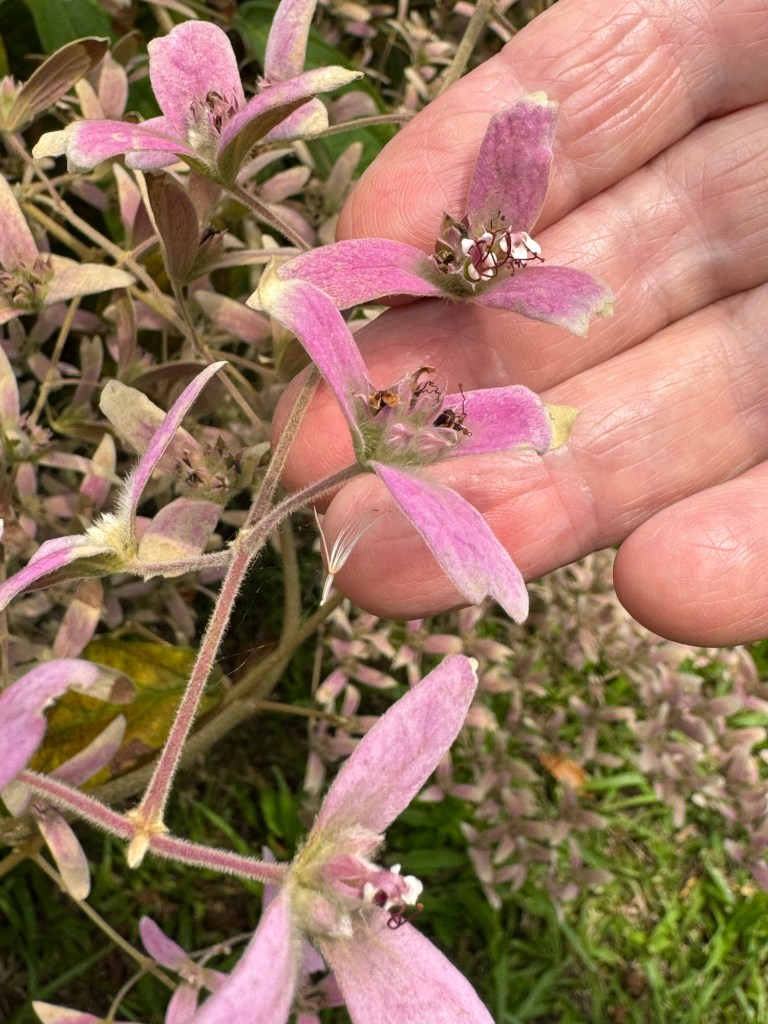

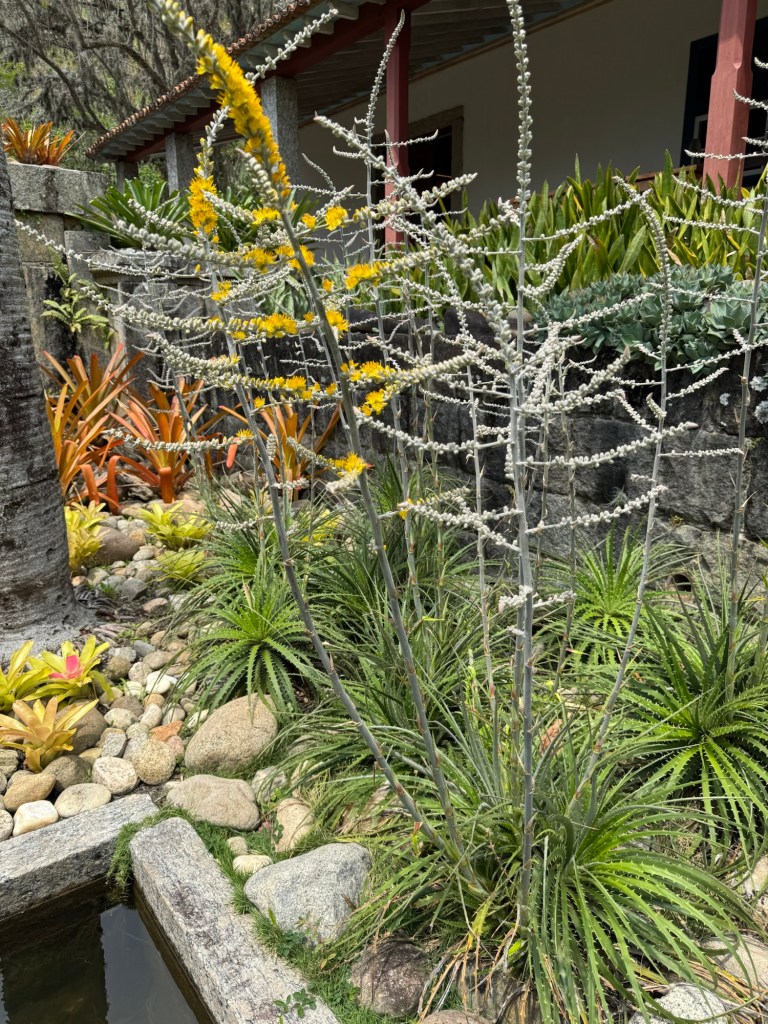
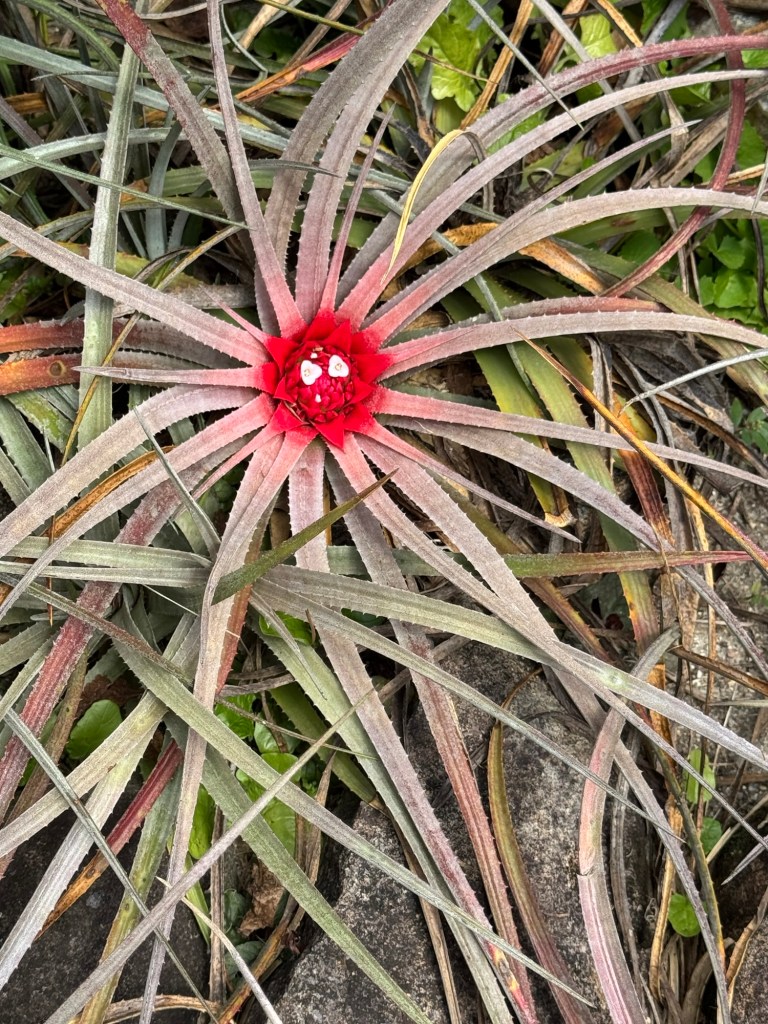
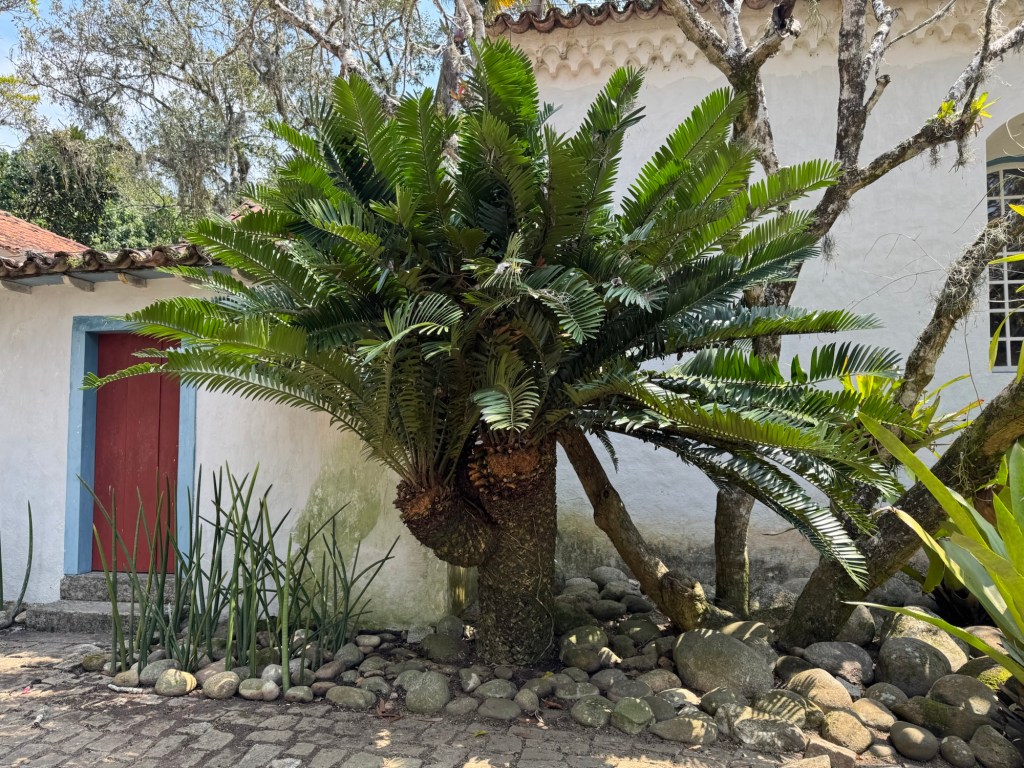
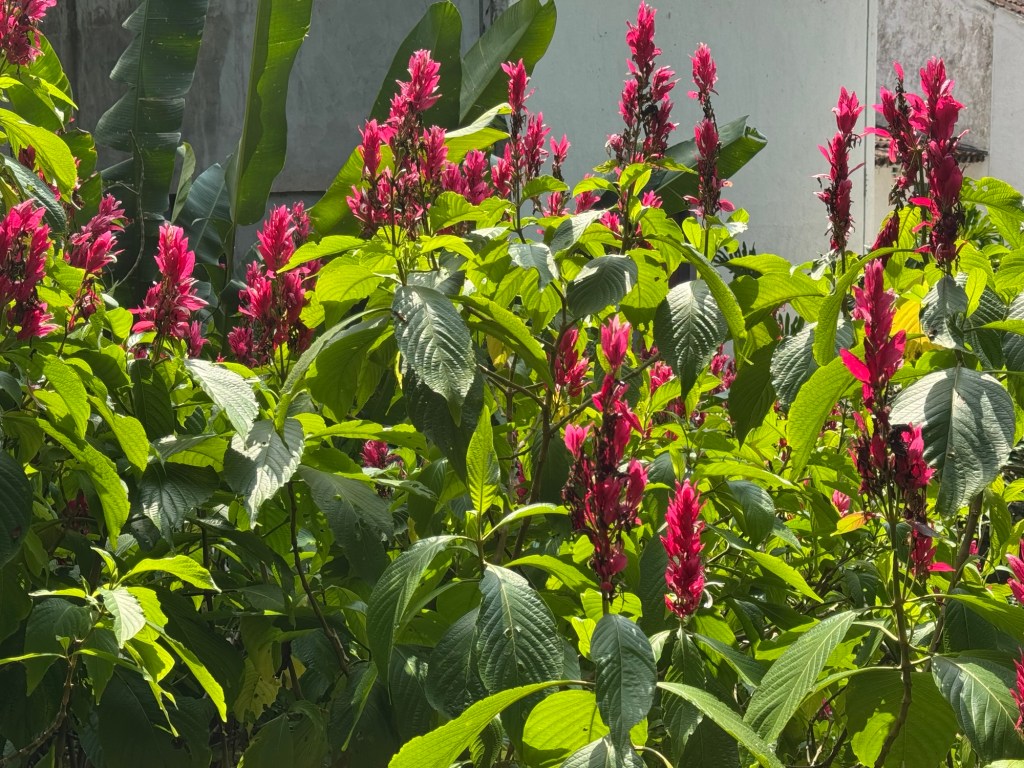
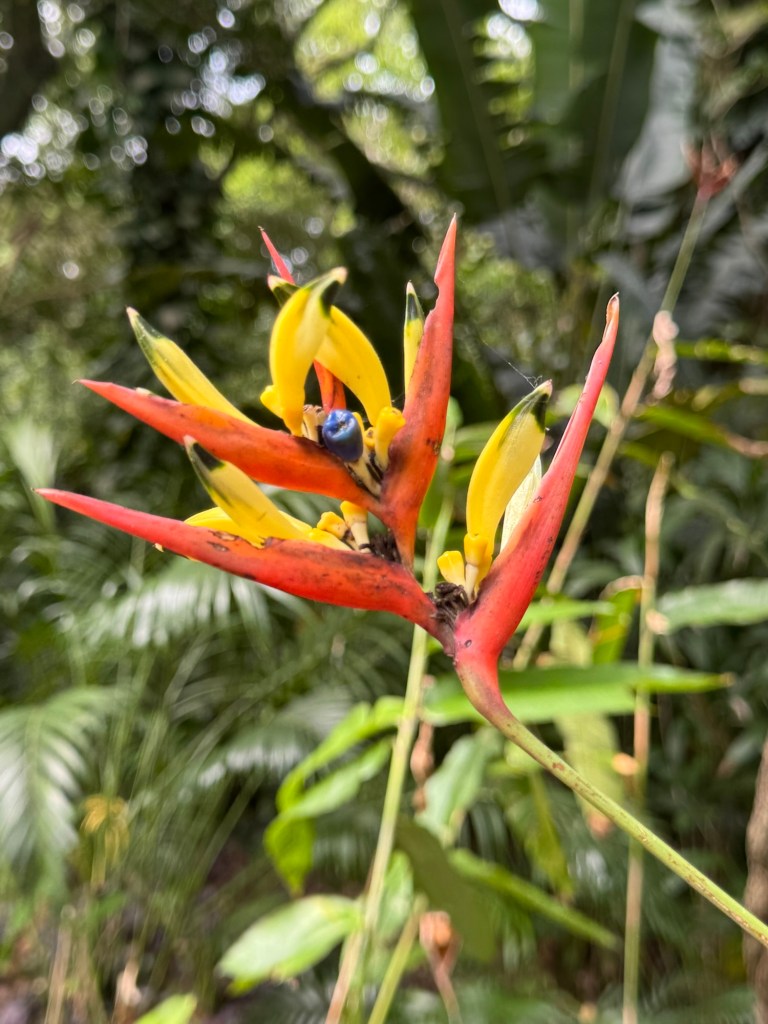
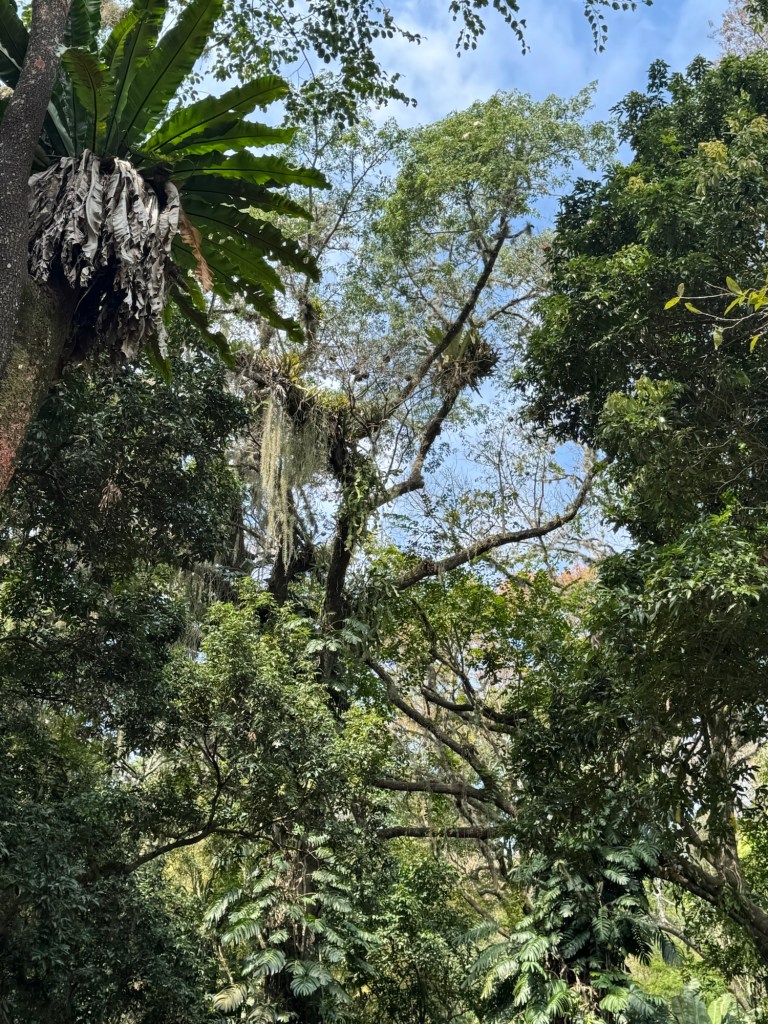
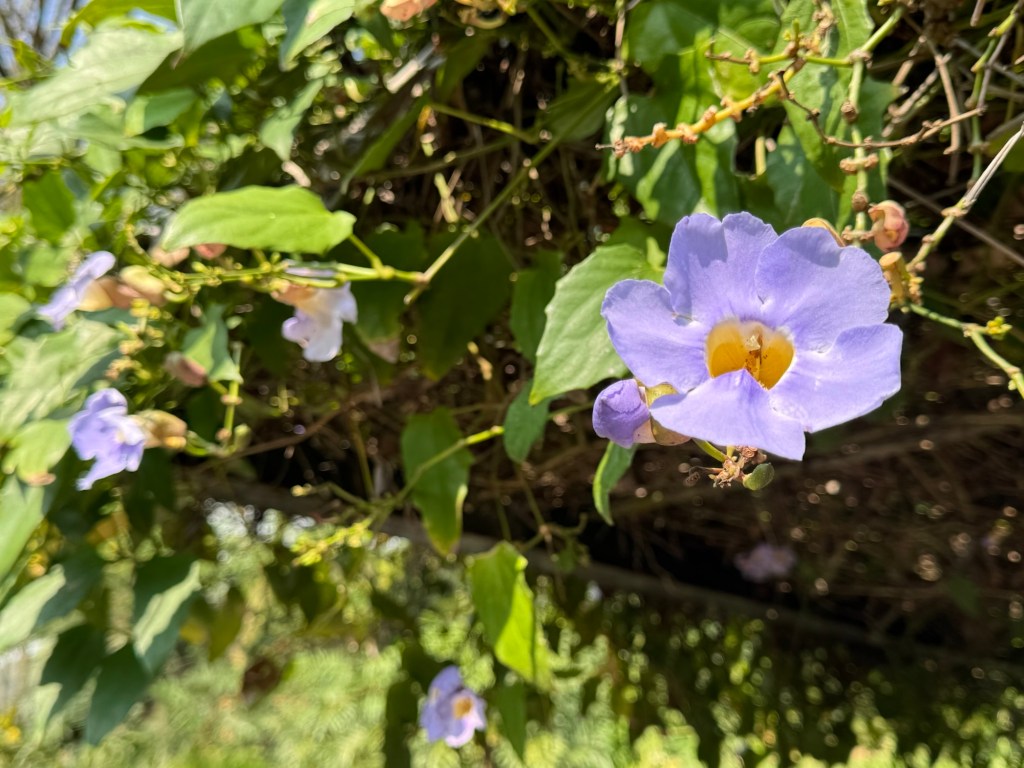


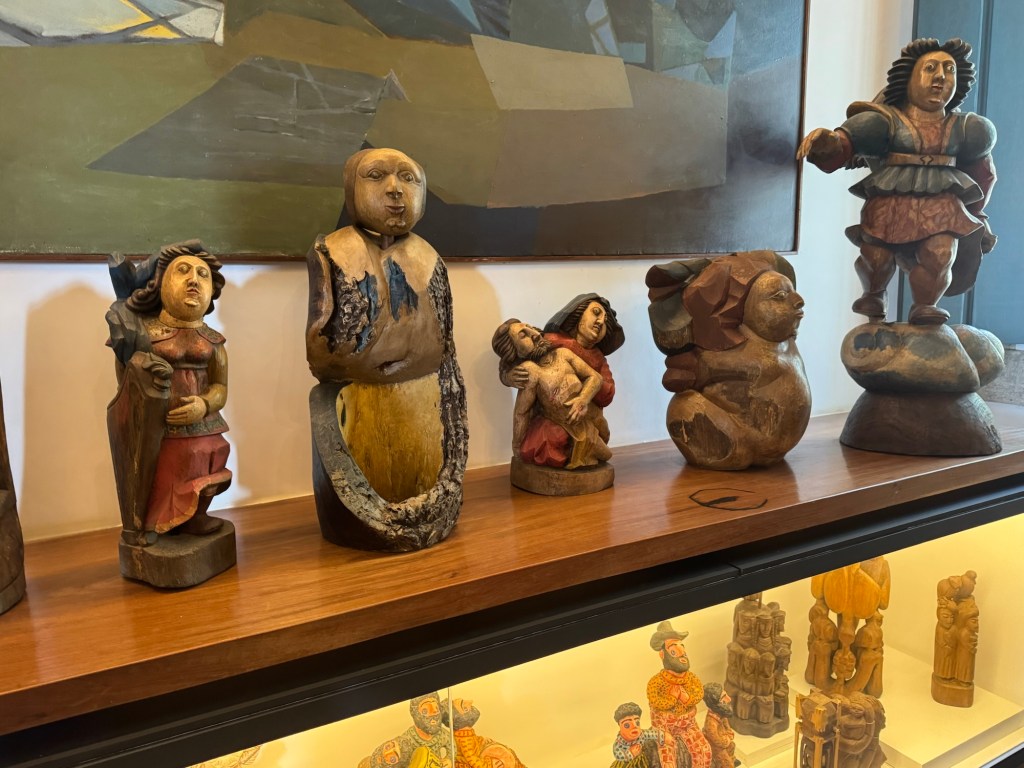
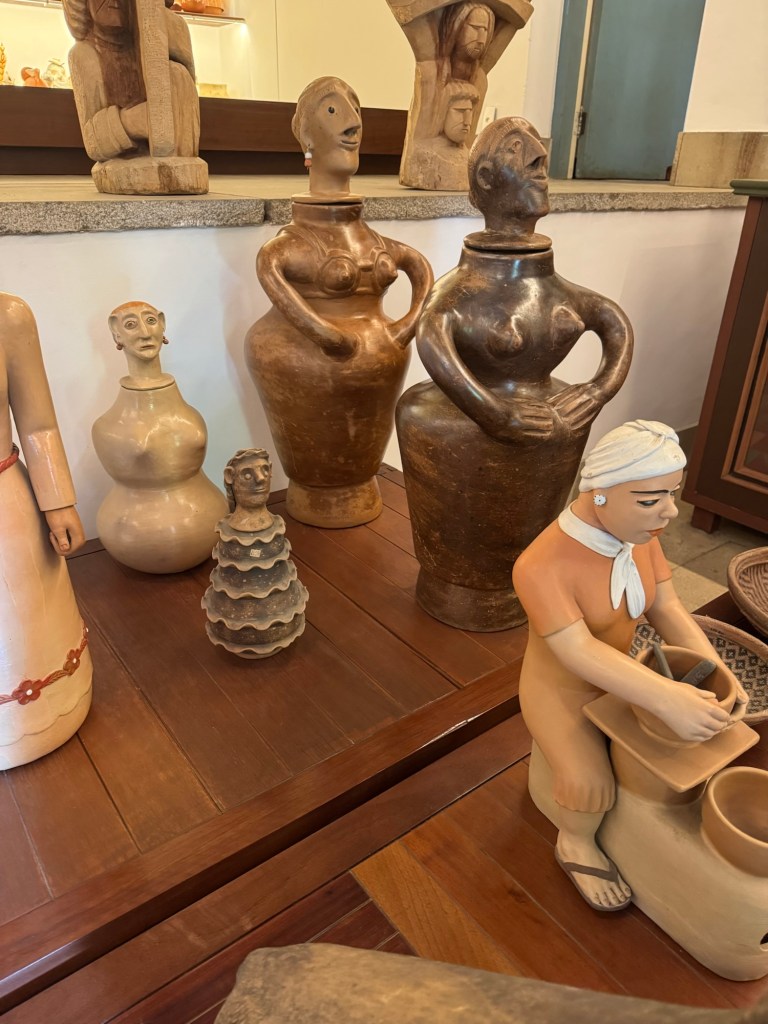
In addition to the gardens we toured the buildings Marx used including his home and work spaces. We saw his ceramic collection, his piano and his own paintings.

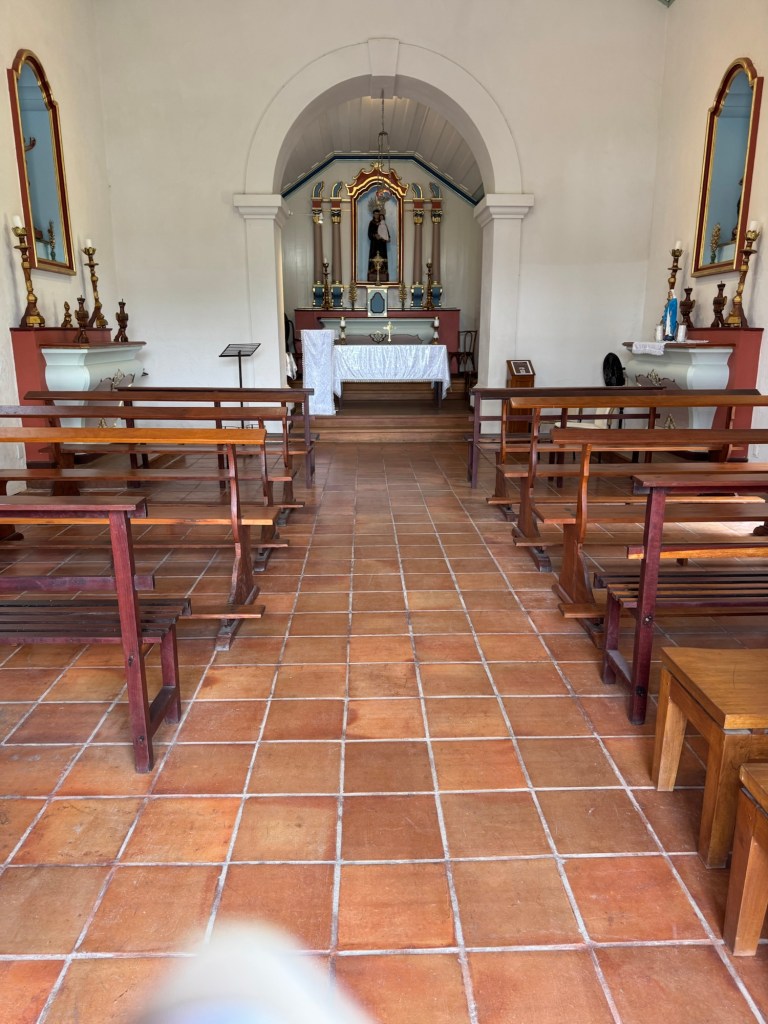
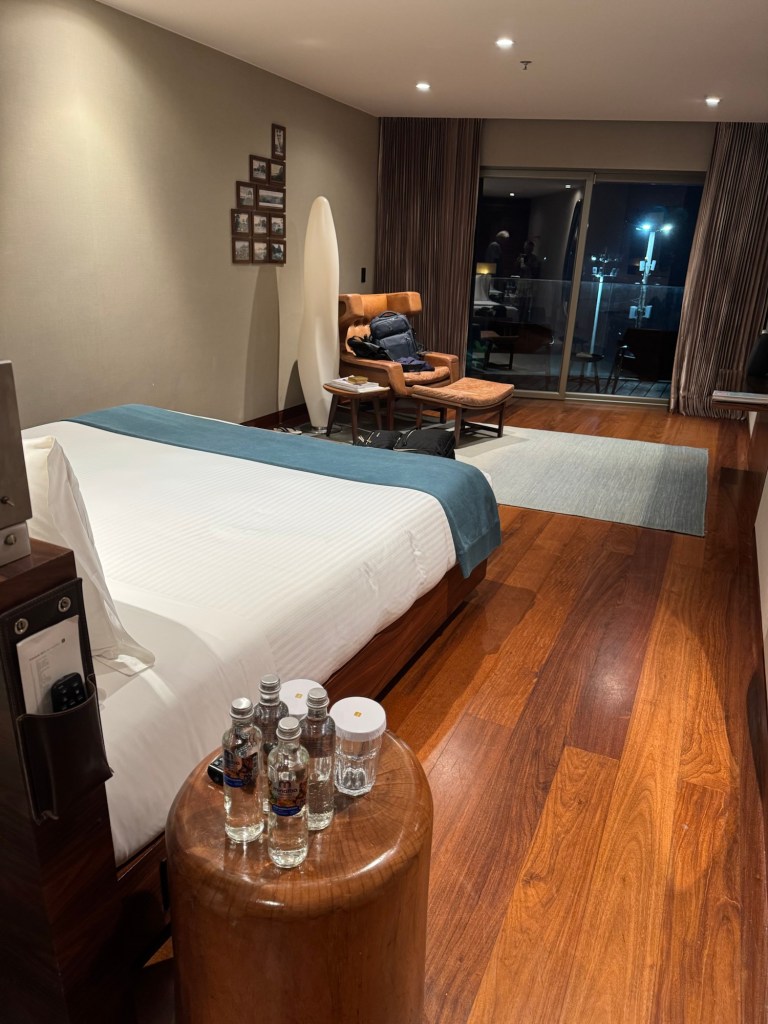
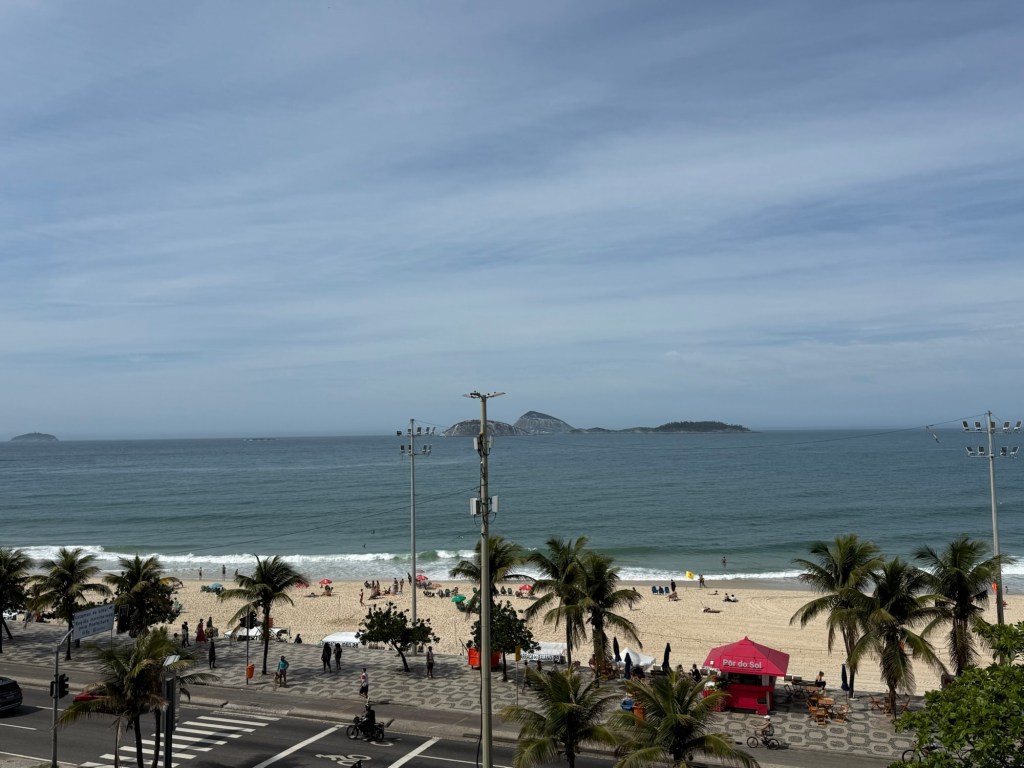
Finally, we arrived at our hotel, the Fasano Rio de Janeiro. The room is not large, but it has a wonderful view overlooking Ipanema Beach and is interestingly laid out to take advantage of the tight space. In the triangular hallway is a stuffed chair in the shape of a woman. Mark took advantage of the opportunity.
After the garden tour, we had lunch a favorite place of Mica’s. The super dish we had was called Moquech, or Shrimp Stew. Excellent.

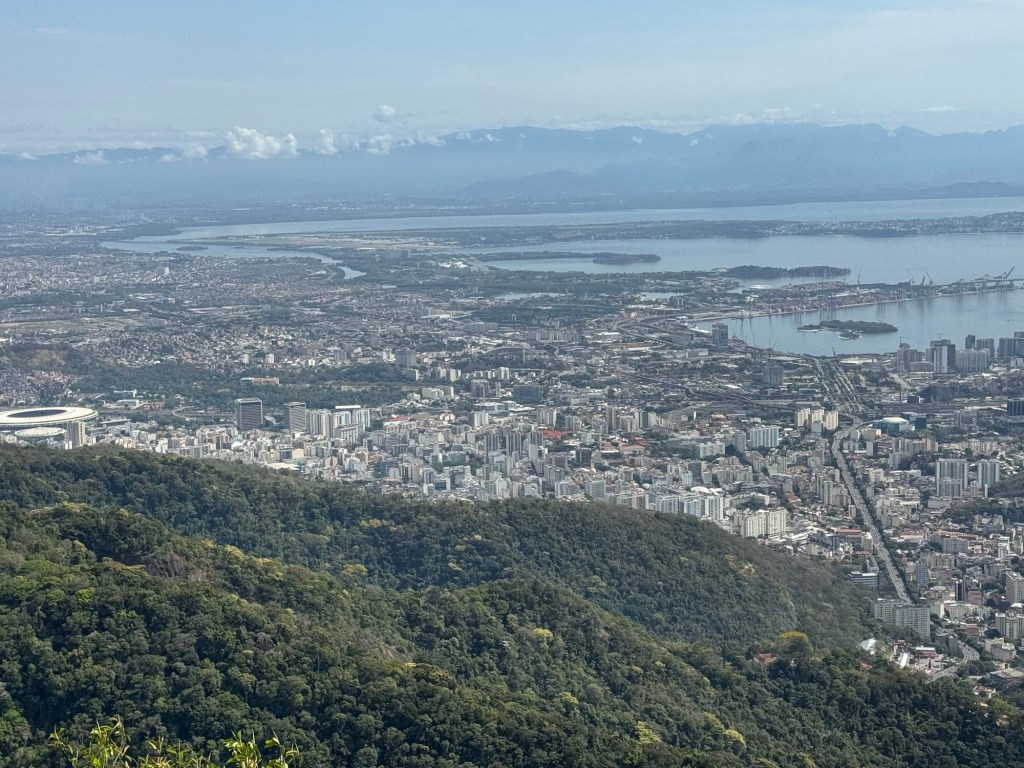
After lunch we drove to Sugarloaf mountain and rode 2 cable cars to the top for views of the city and The Redeemer. Mica paid $70 each for us to have VIP benefits. It was near dusk when we arrived and the platform was full of young people partying. We quickly checked out all the view locations using our VIP tickets to cut through the lines, and left. It was too crowded for our taste.
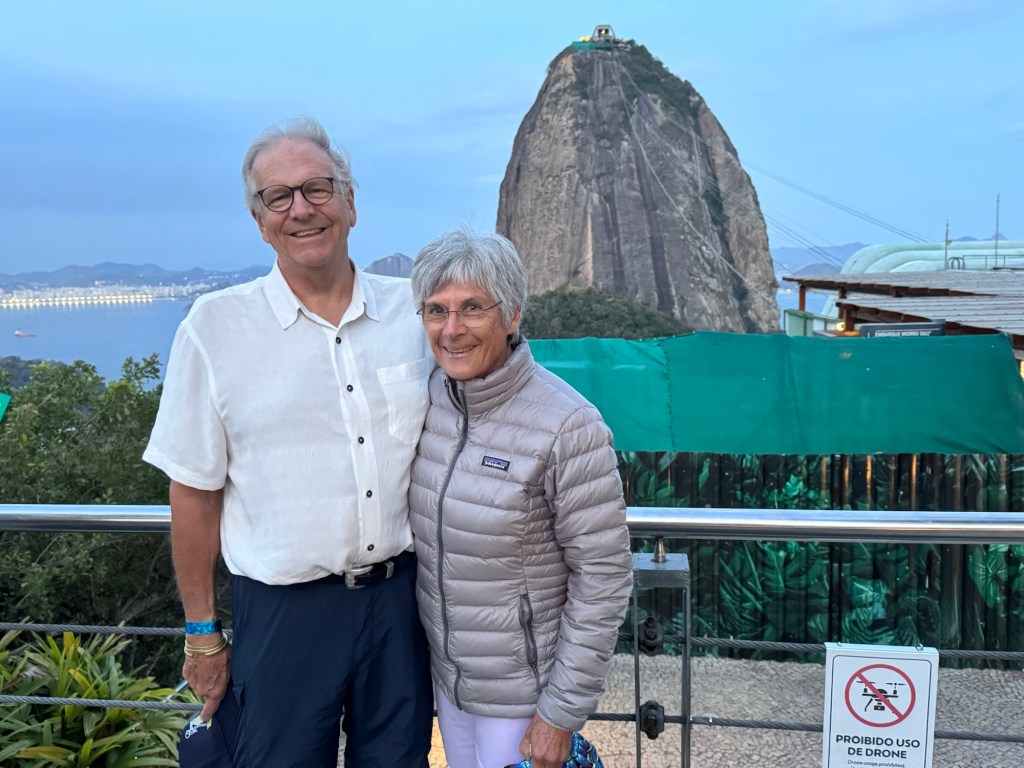
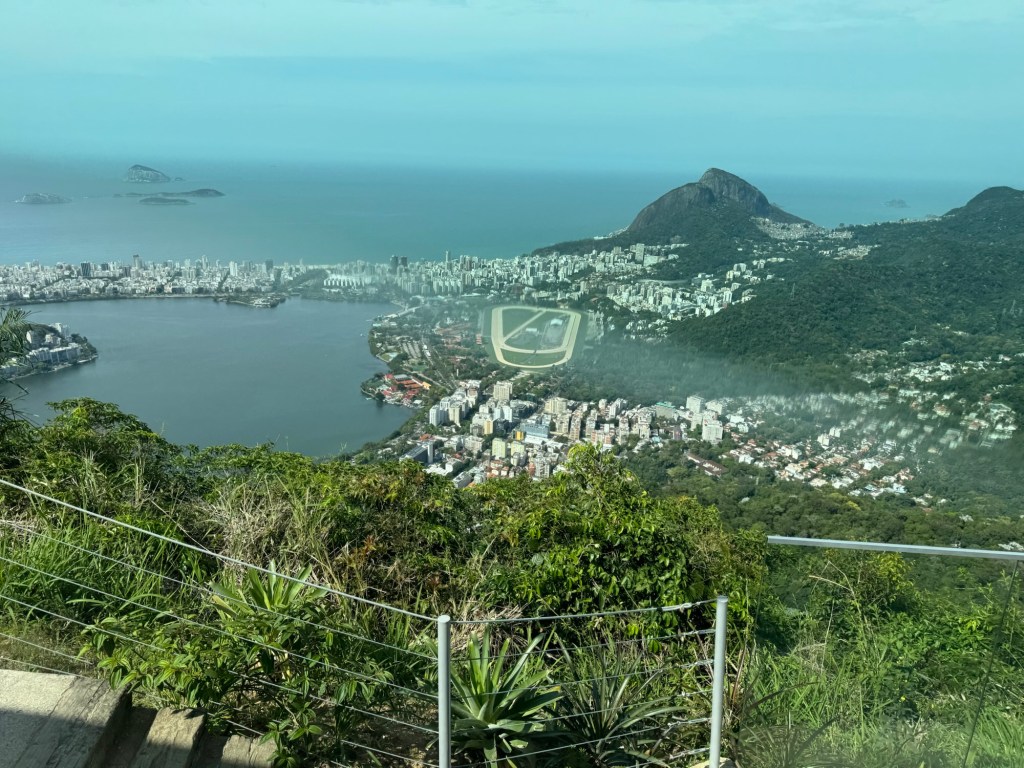
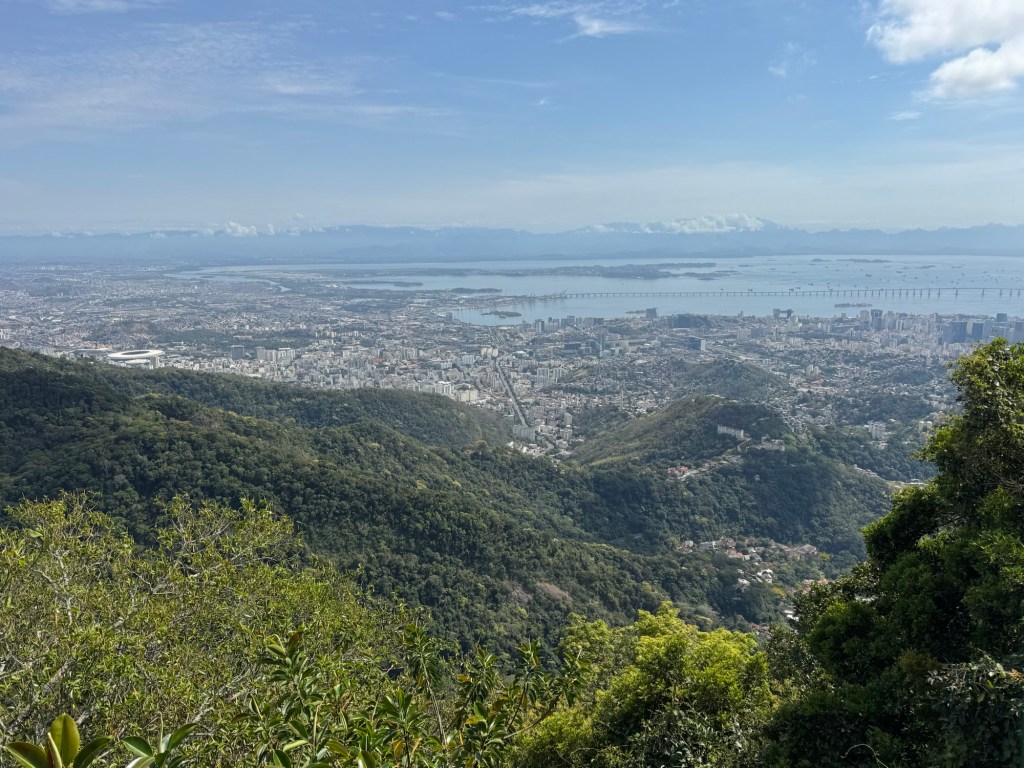

Friday , October 3, 2025
We met Mica at 8am for a very long day of sightseeing. First we drove through the city to the foot of hill where the Christ the Redeemer is located. On the way Mica talked about the Portuguese coming to Brazil. The Portuguese king when the country was colonized was John VI. He was followed by Peter I who declared independence from Portugal. His son Peter II was the longest reigning king and was good for Brazil as he promoted science and the arts. It was a cultural time. However, on 11/15/1889, Peter II was overthrown and exiled to Paris by a Coup d’ etat. Frequent coup d. etats occurred over the next several years. Then Balsonaro was elected President. Today, Lula is president. Regardless of popularity, he and Balsonaro appear to be the only two electable politicians at the moment, even though Balsonaro has been banned from running.
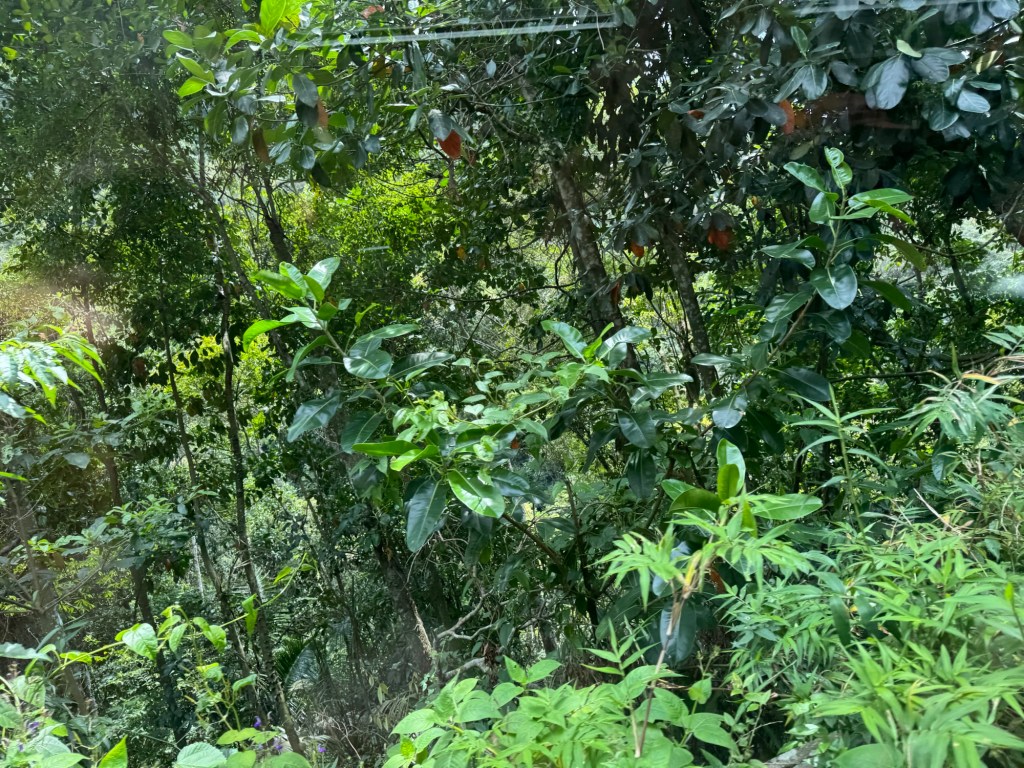
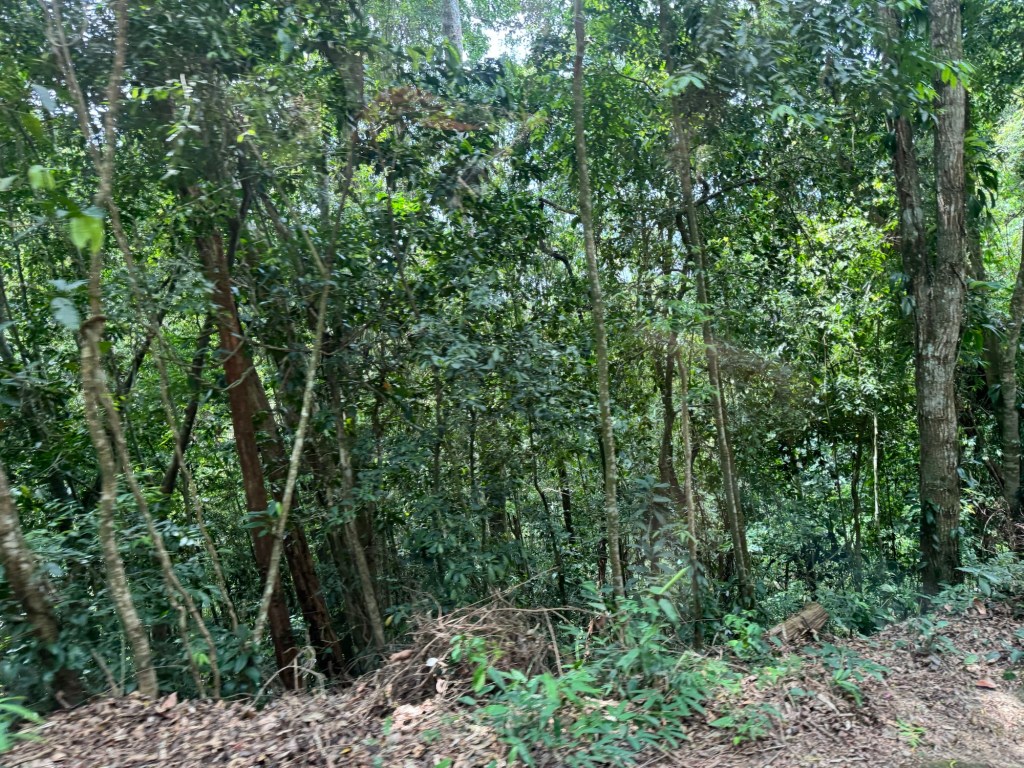
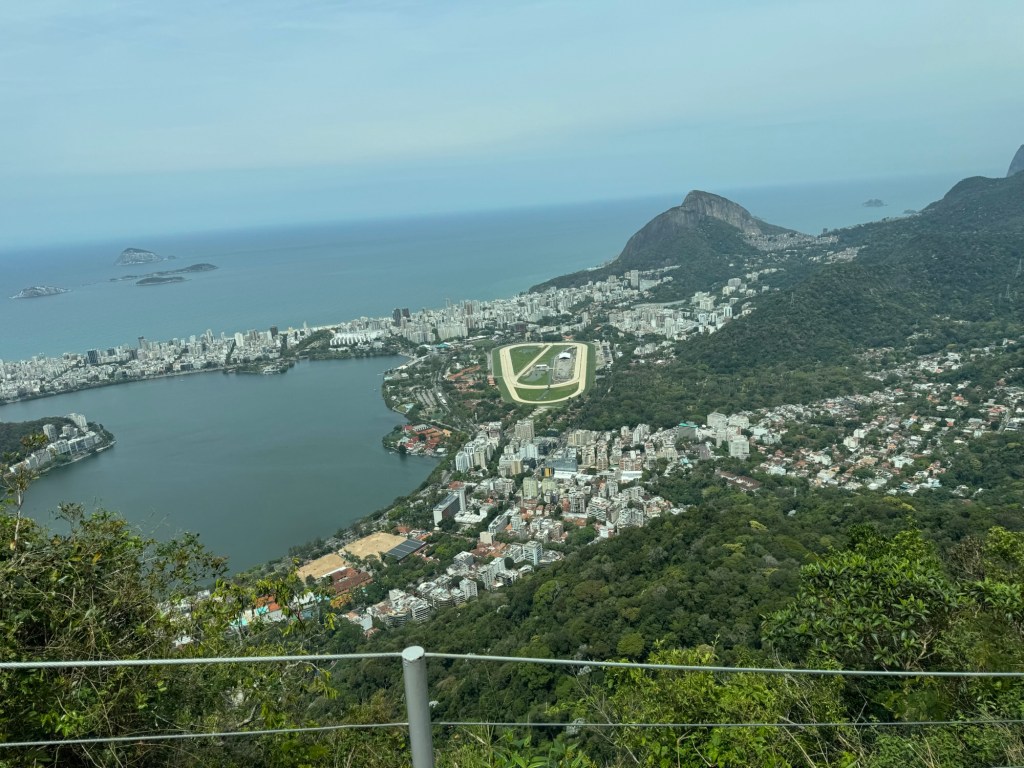
At the bottom of the Redeemer hill is the platform for the cable car. We paid $40 each and managed to get good seats in the car with Mica’s direction. No VIP tickets were available. The cable car passed through the world’s largest replanted urban forest. 100 thousand trees were planted by 11 slaves over 13 years under the direction of Peter II between 1861 and 1874.
Mica is a musician who sings and plays drums, writes and records music. So it was no surprise that he believes black culture permeates the country and that “Samba music is the father of pleasure and the son of pain“ He made samba sounds all day long. Fortunately, samba is very pleasant to listen to.

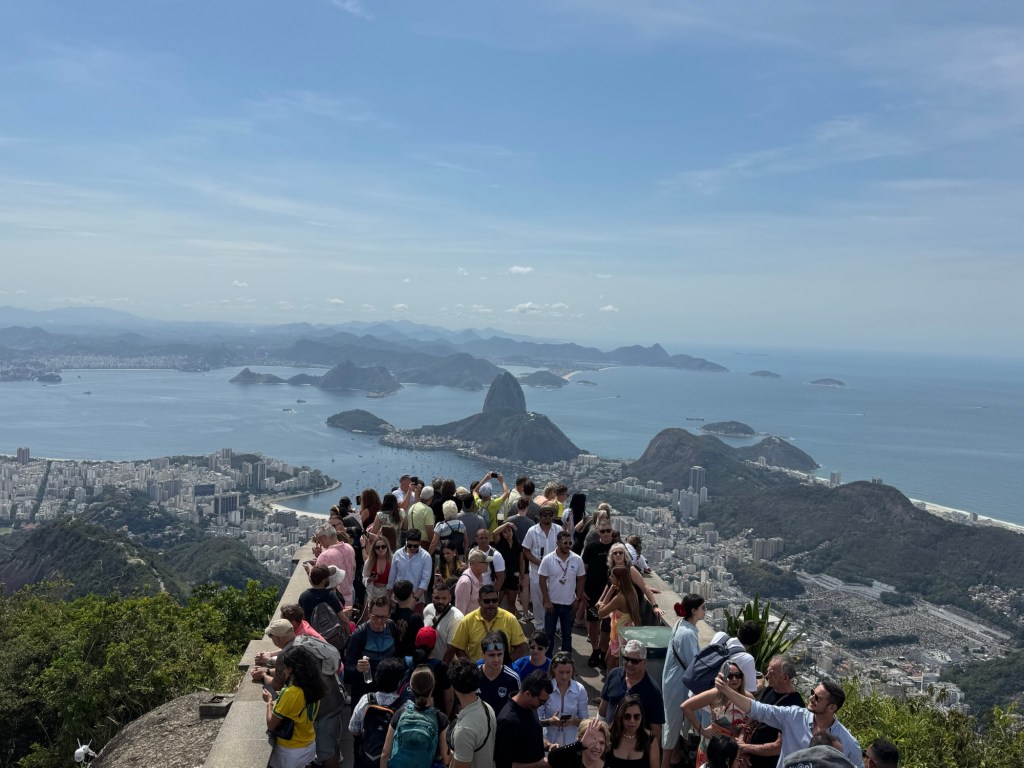
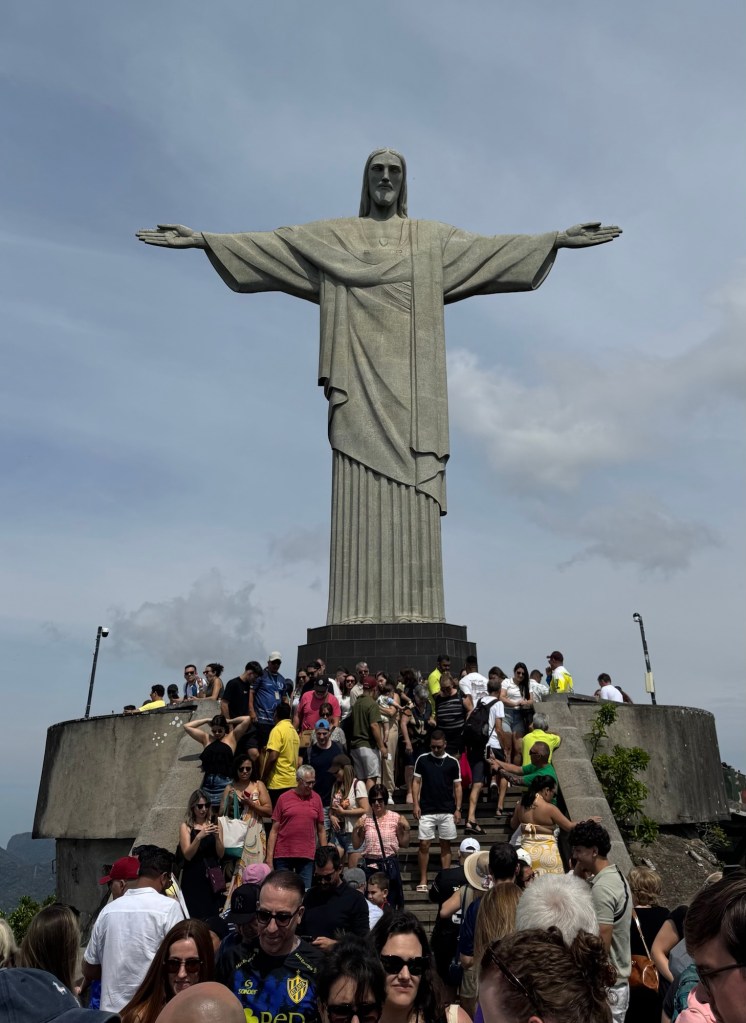
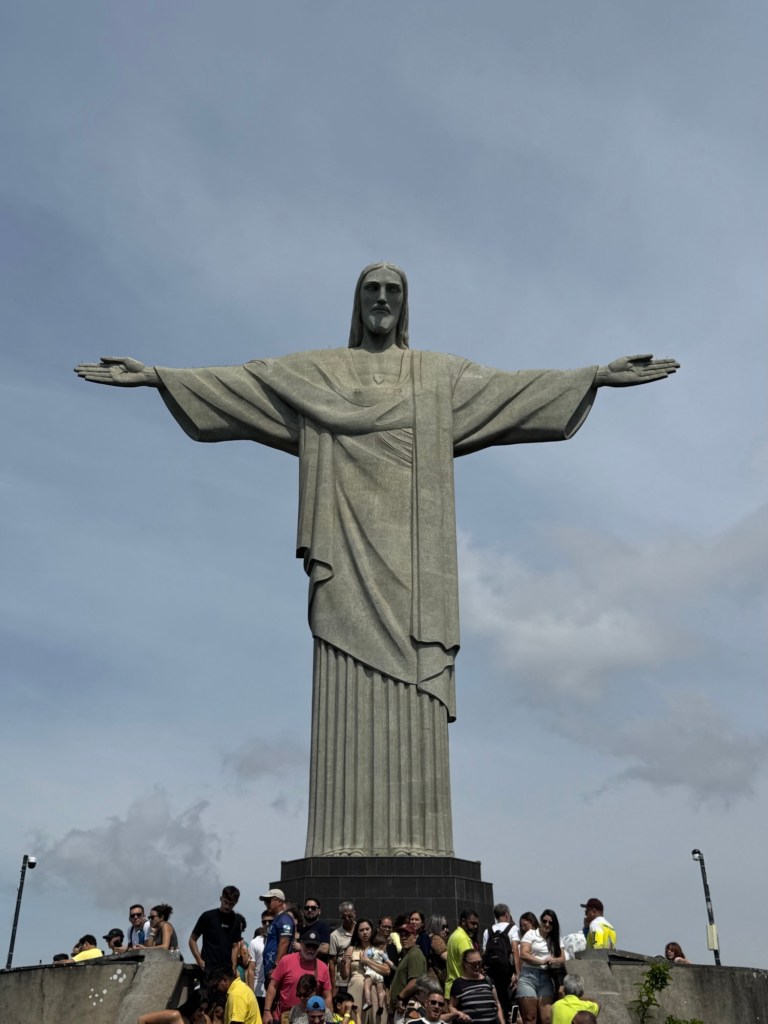

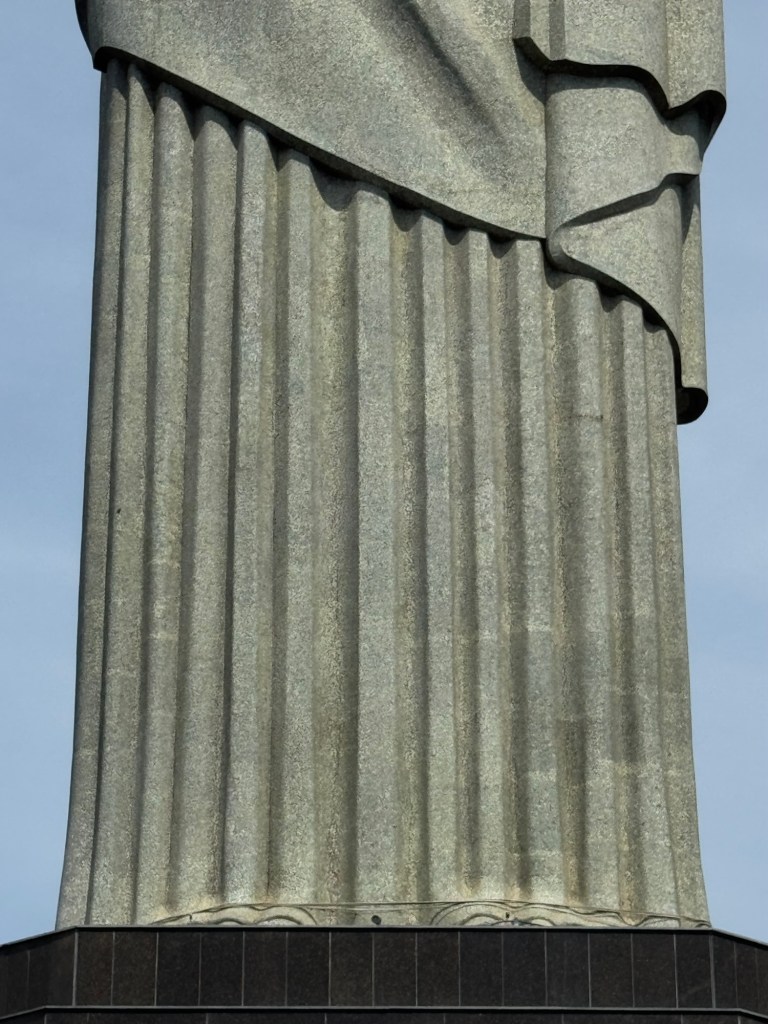
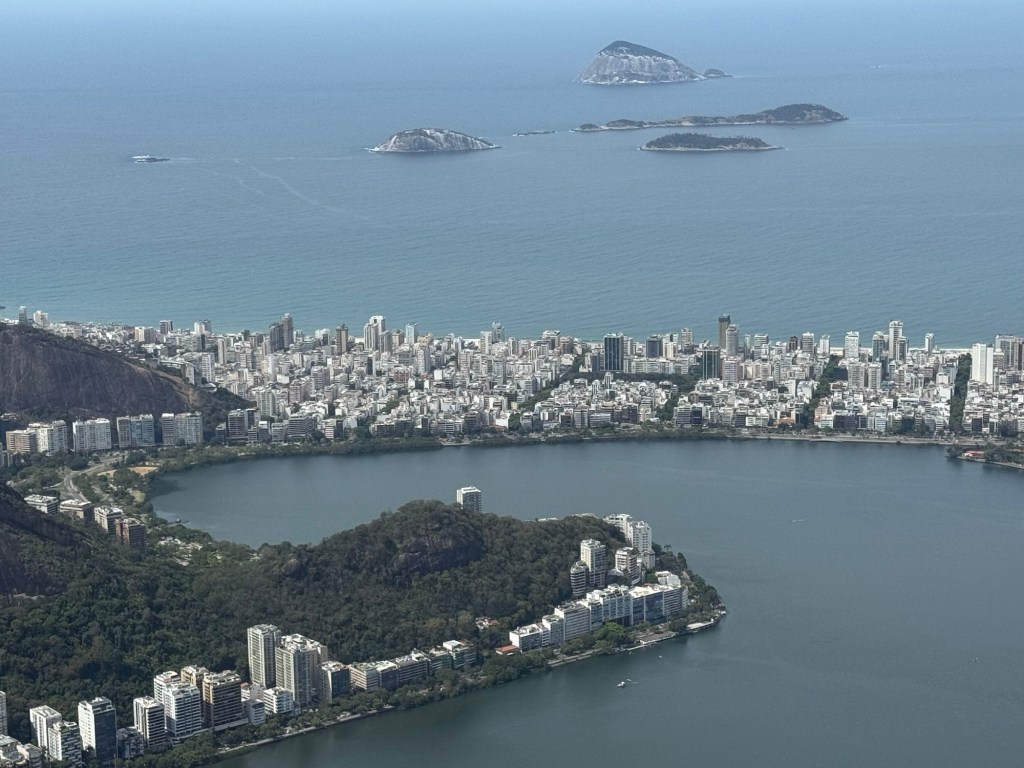
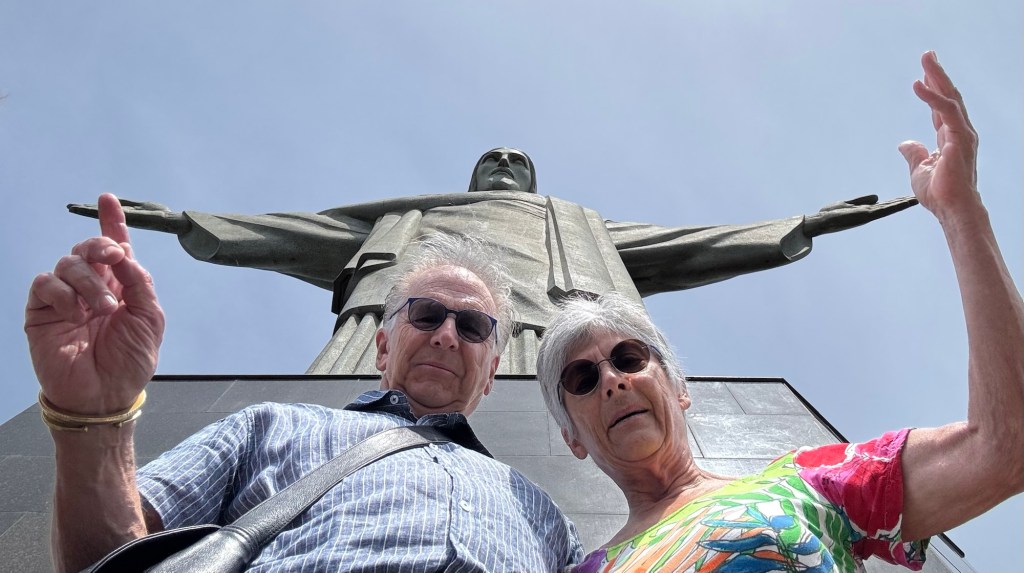
At the top Redeemer platform we threaded our way through the crowds to get vantage points. At 6’4” tall Mica was very good at that. And he knew all the best places to take photos.
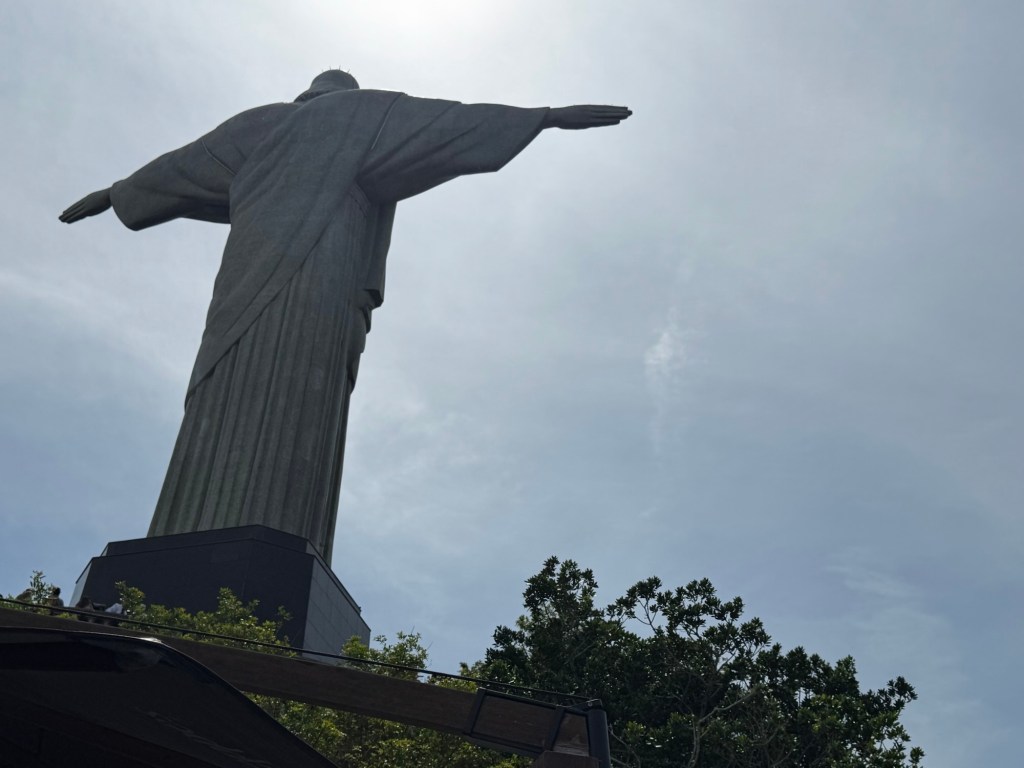
We learned that the body of the statue was completed in 1931 by a collaboration of people; the head and hands were made in France by a French artist and shipped to Rio; the workers signed their names on the back of the Redeemer’s heart that they you can see in the photos.
The statue is 98 feet tall, the pedestal is 24 feet and the span from hand to hand is 92 feet. The statue weighs 2500 lbs. It is hollow except for a staircase. A lightening strike nicked the tip of the long finger on the left hand. It is barely noticeable. It was last cleaned in 2010. 2.5 million people visit the statue each year, 6.8 thousand each day. The Catholic Church, which owns the property, is doing very well.
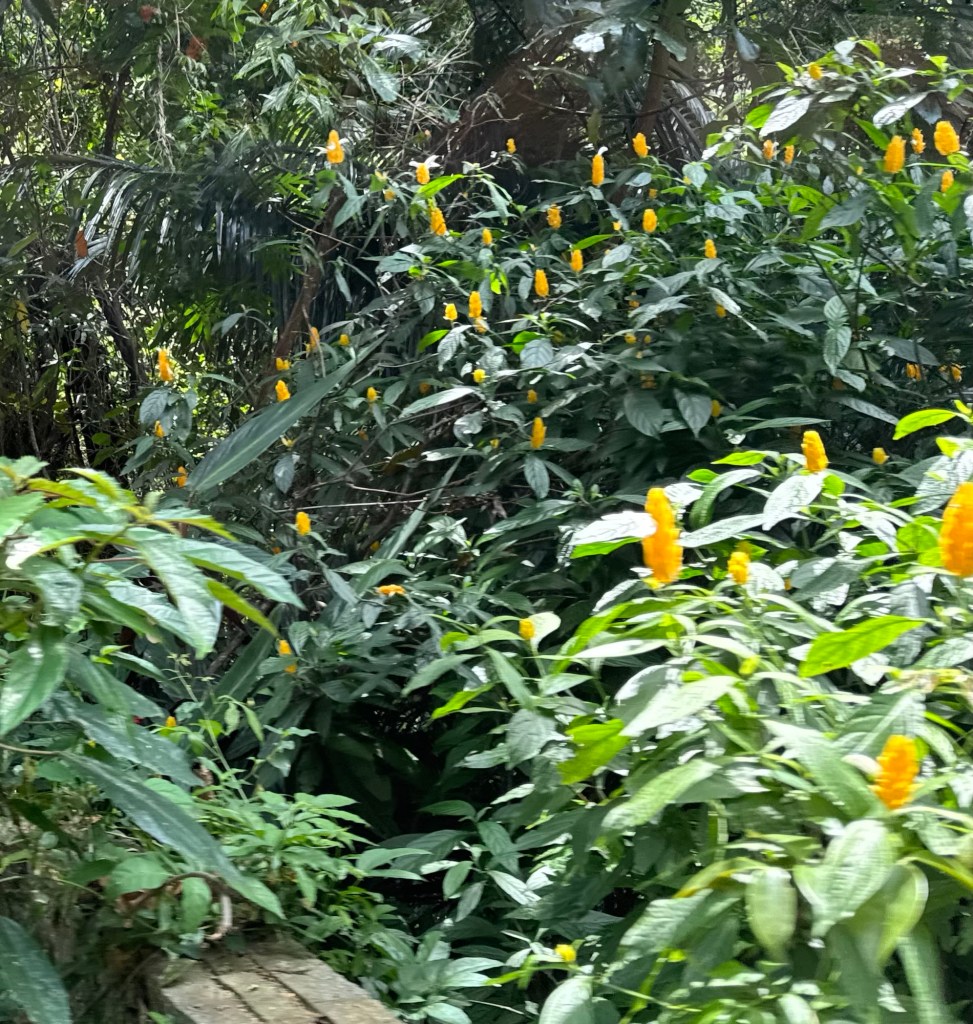
On the way down, we captured a photo of a nearby favela and a pretty yellow plant called a shrimp flower.
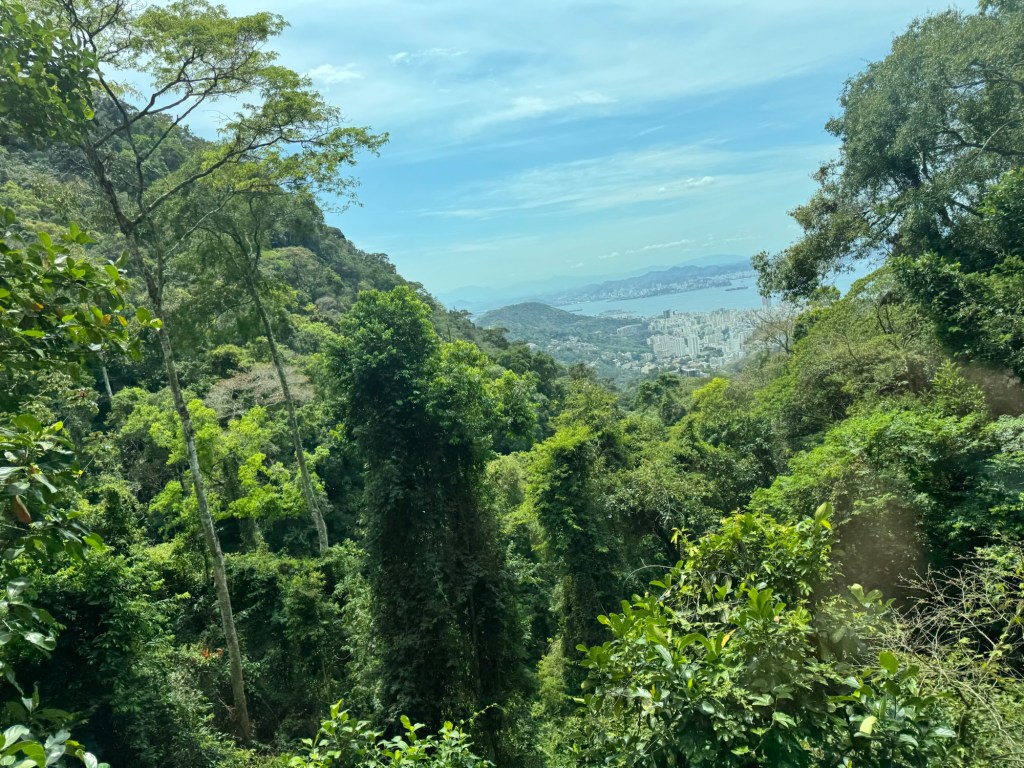
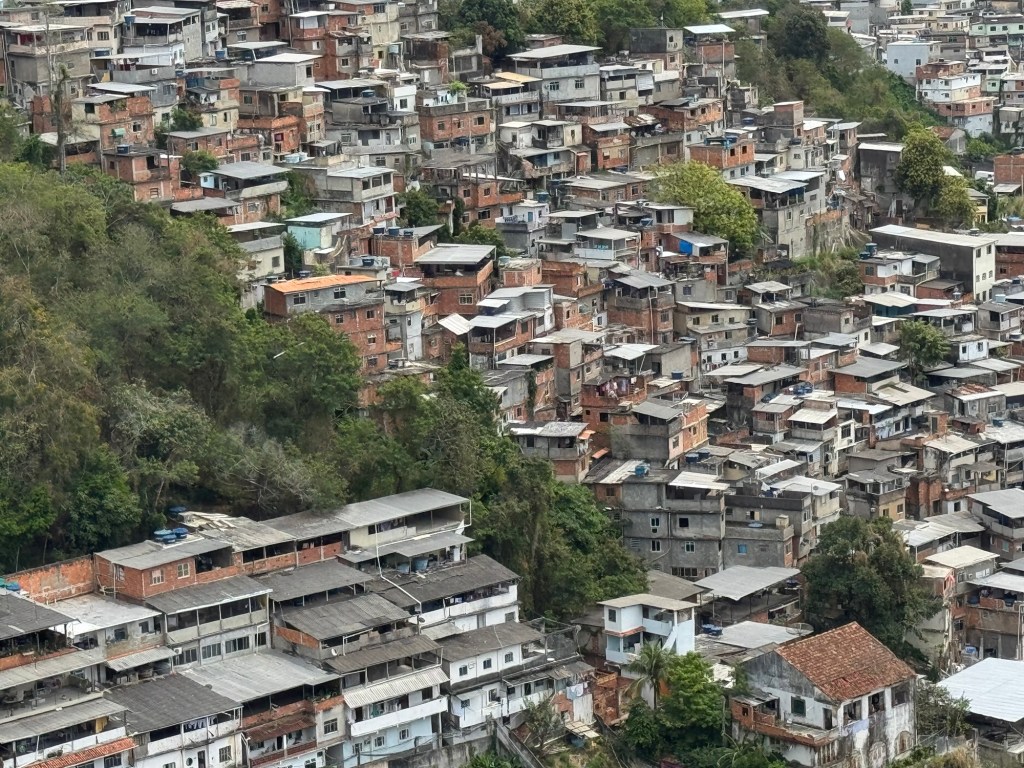
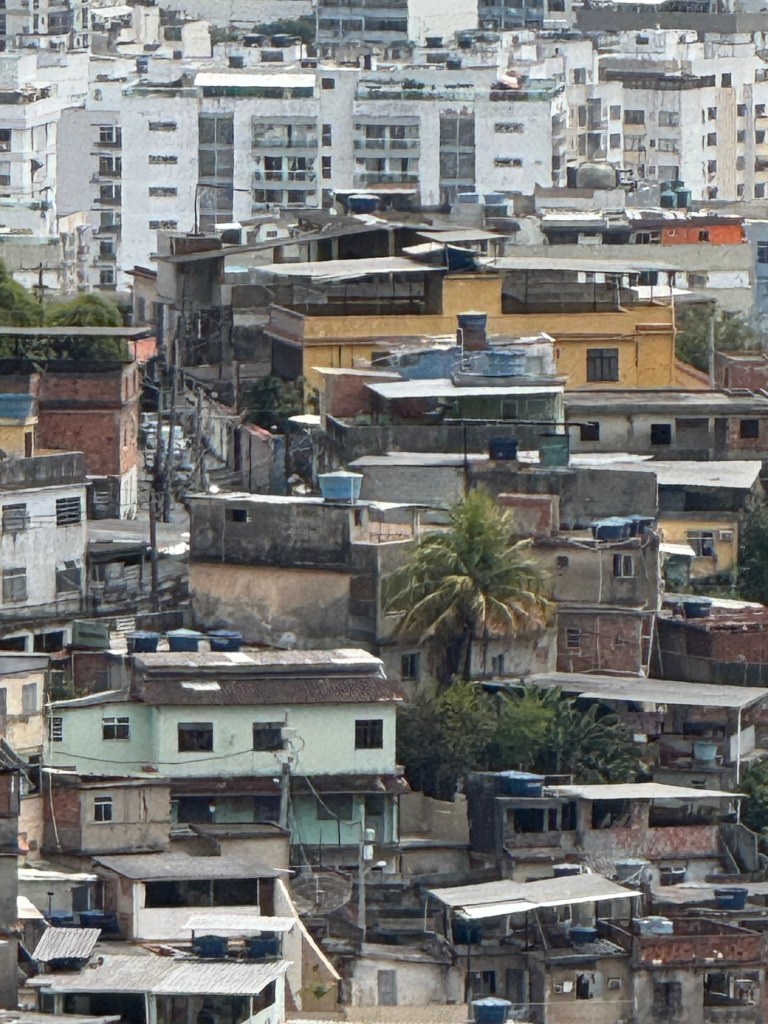
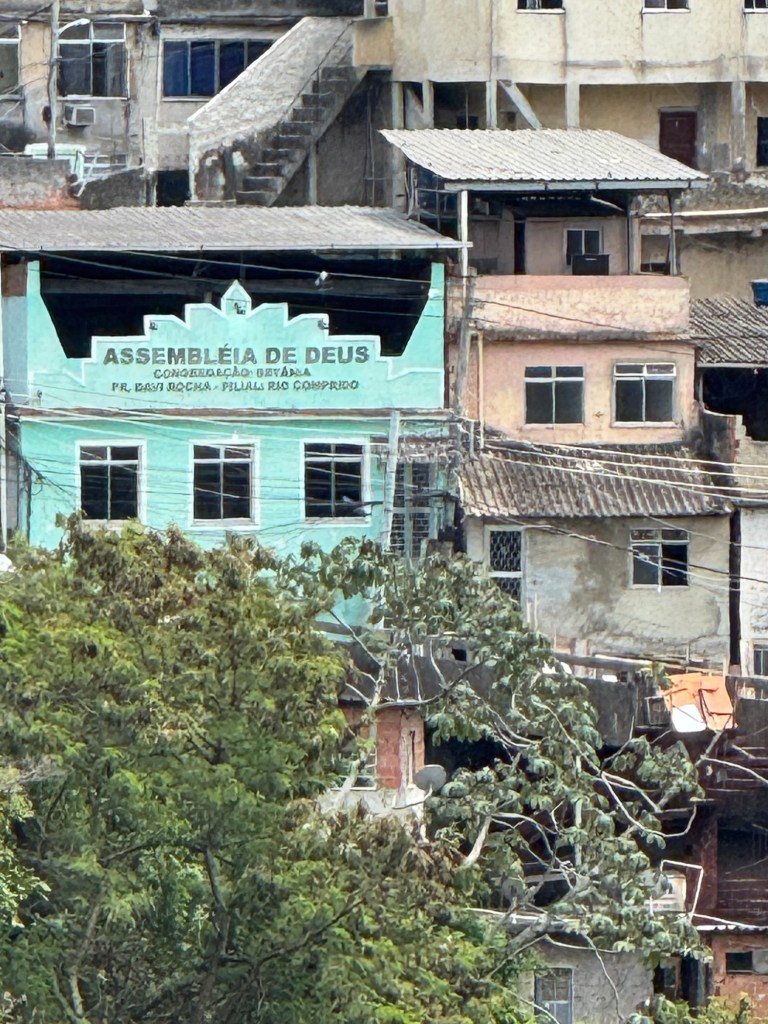
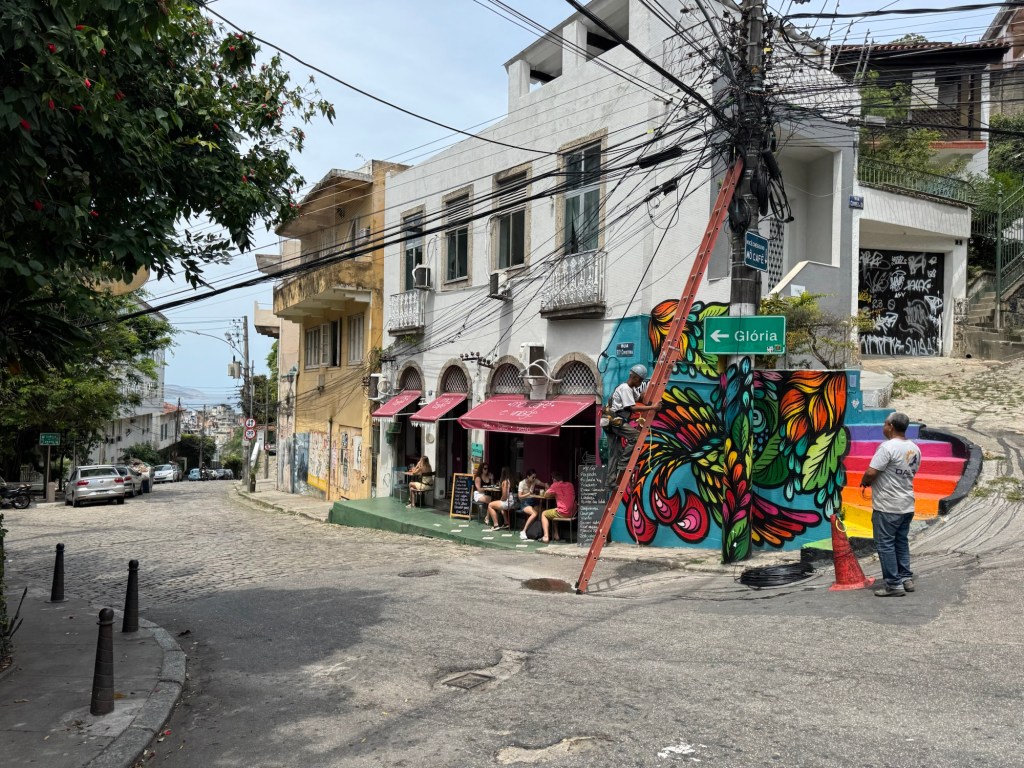
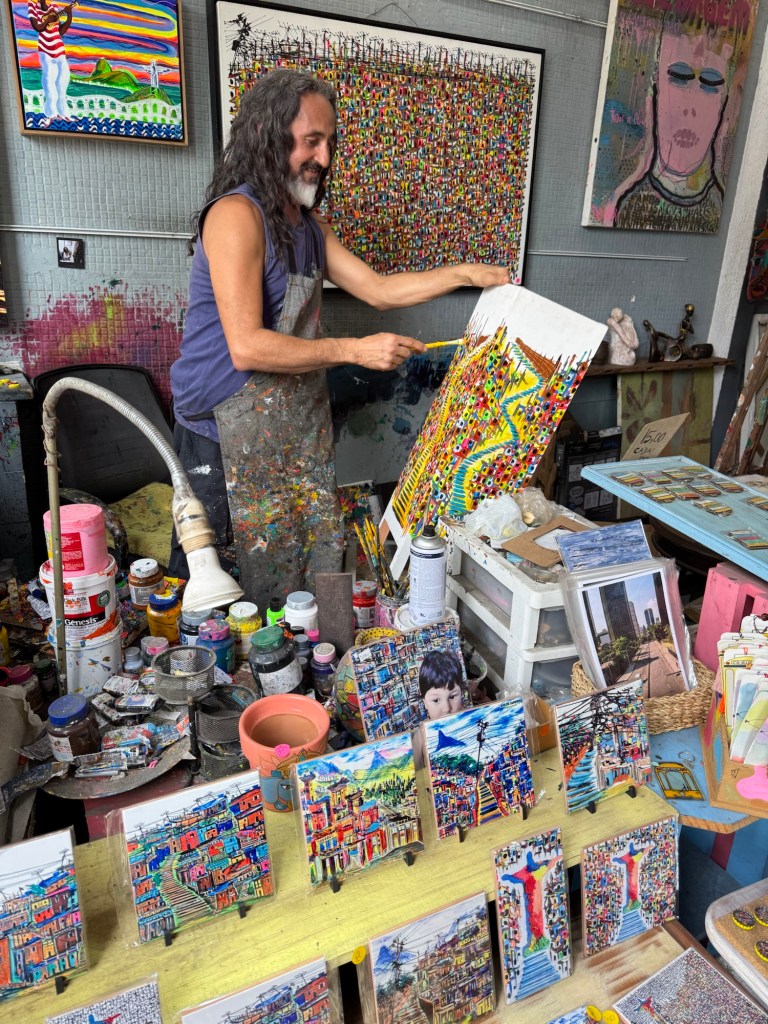
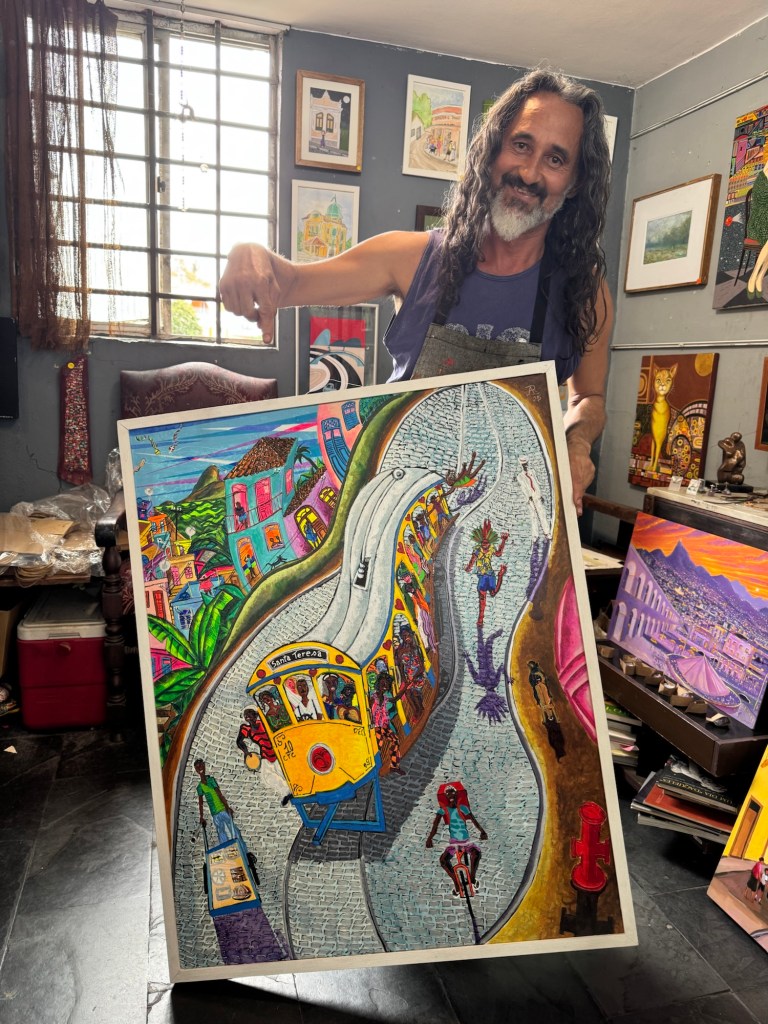
From the Redeemer, Sassa drove us by several lookout points looking over interesting neighborhoods, favelas, small neighborhood clothing stores and art galleries. We stopped in one gallery where we could not help ourselves and purchased a painting by a local artist. I also bought some clothes, for which I have almost no room. Eventually we stopped for lunch at Territorio Aprazivel, meaning Pleasant territory, and had a wonderful fresh heart of palm. Again, I forgot to photograph it. We had never seen an actual heart of palm in its casing and cooked to eat right out of the shell. Very unique. Hope I get another chance to photograph one.


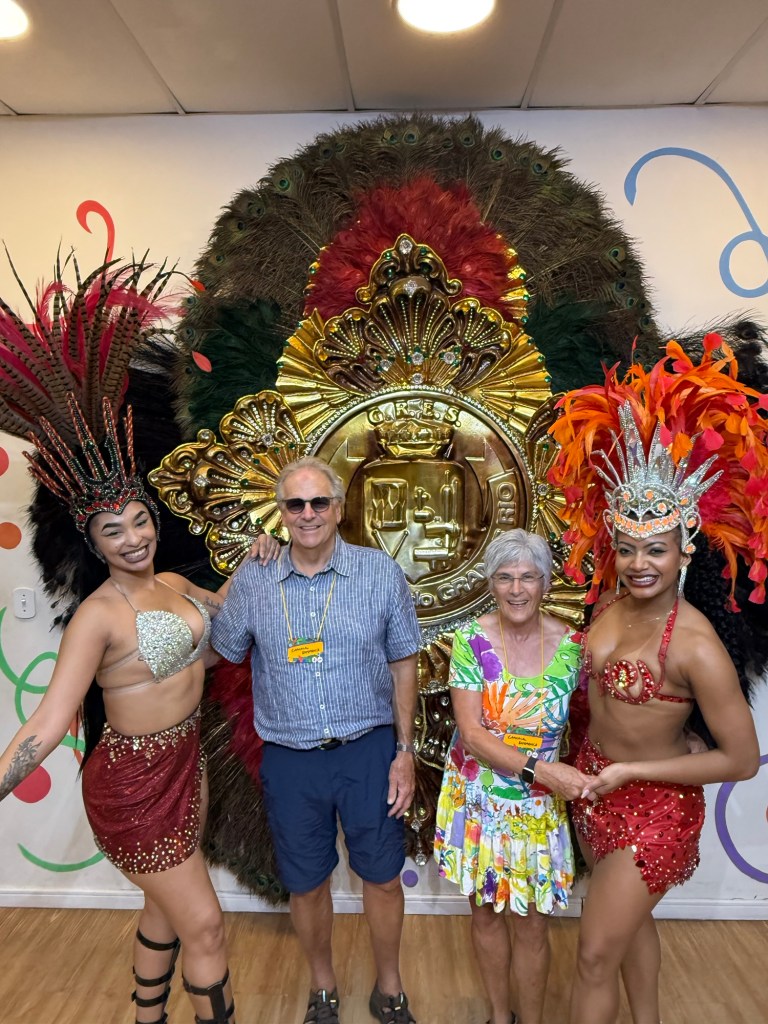
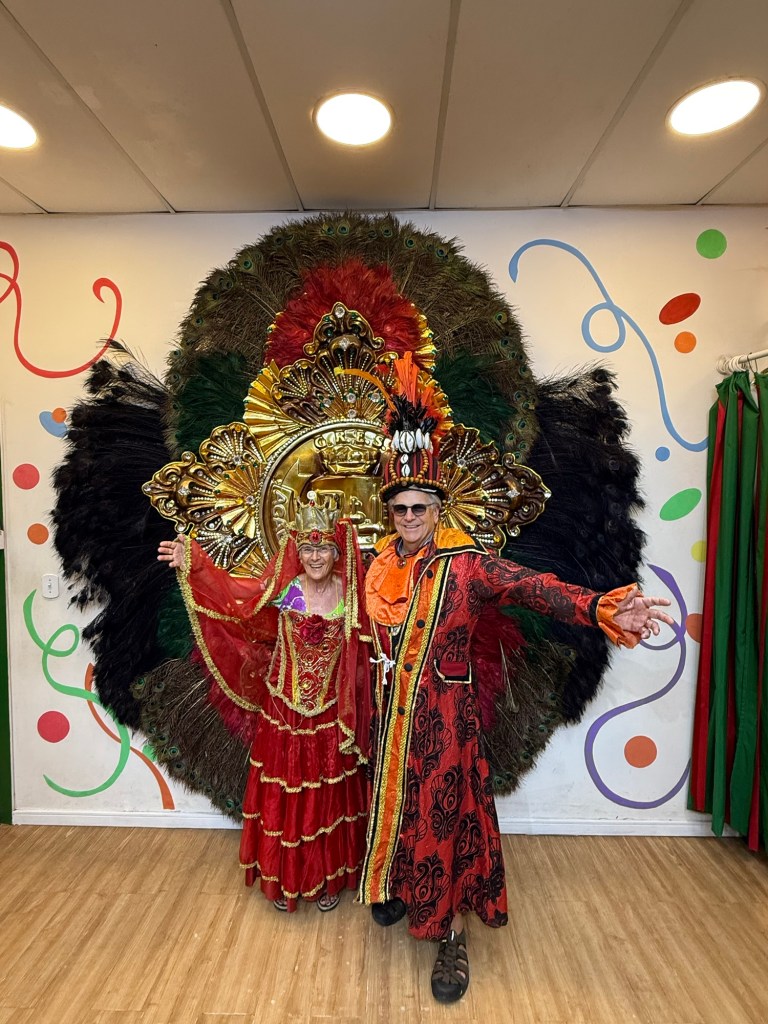
At 3:30pm we arrived at the Carnival Experience Warehouse for a tour of the facility. Boy were we in for surprises and treats. Met by a professional lady dancer, we were told all about the history of carnival going back to 1932 and shown parts of the current construction for the next carnival. After giving us the information, she had us dress in last year’s costumes, participate in a dance with other professionals, learn to play some samba drum music and have hats made for each of us. Mica enjoyed watching us make fools of ourselves and took way too many photos. It was all good fun as well as informative. We watched snap shots of last year’s parade.

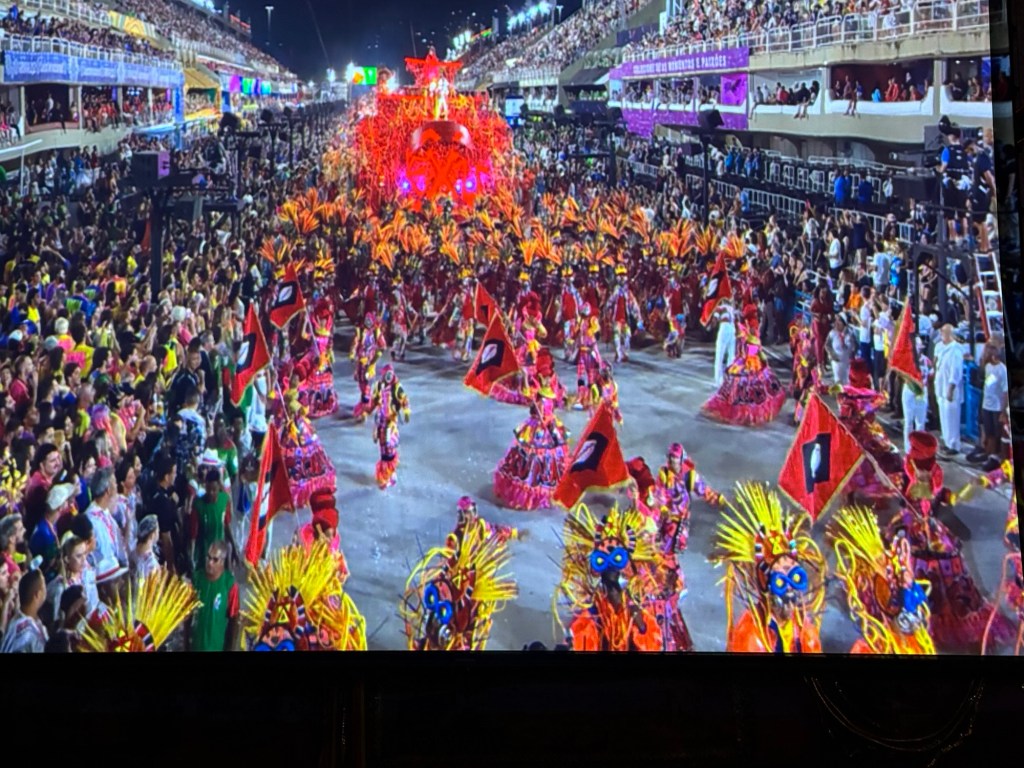
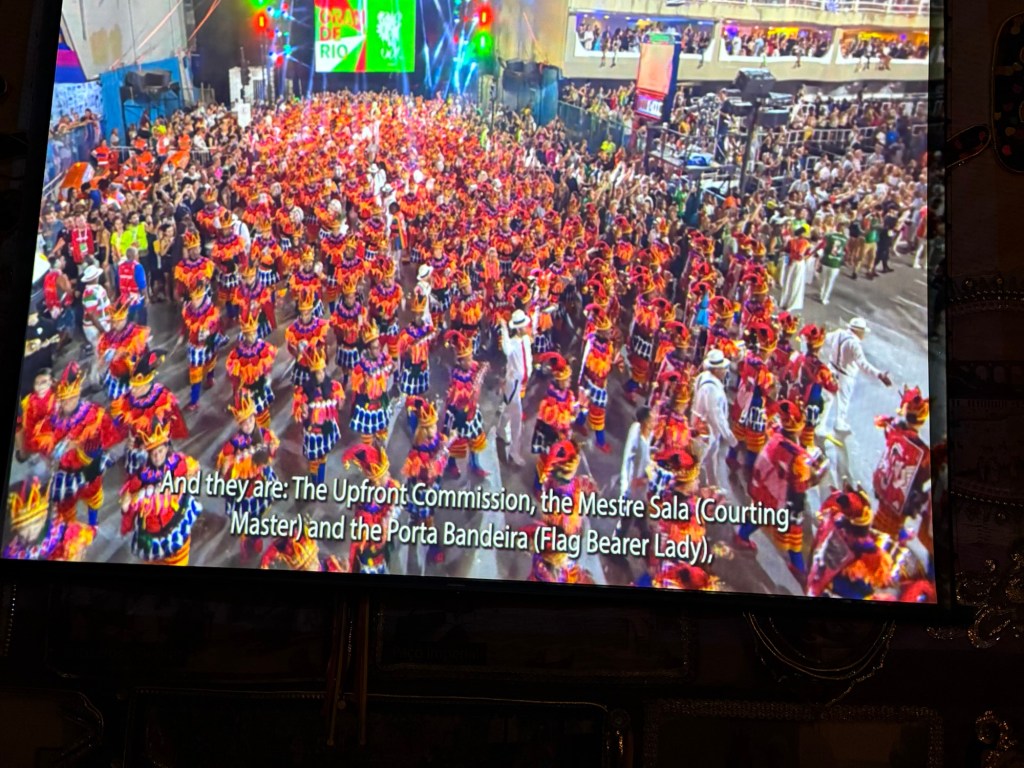
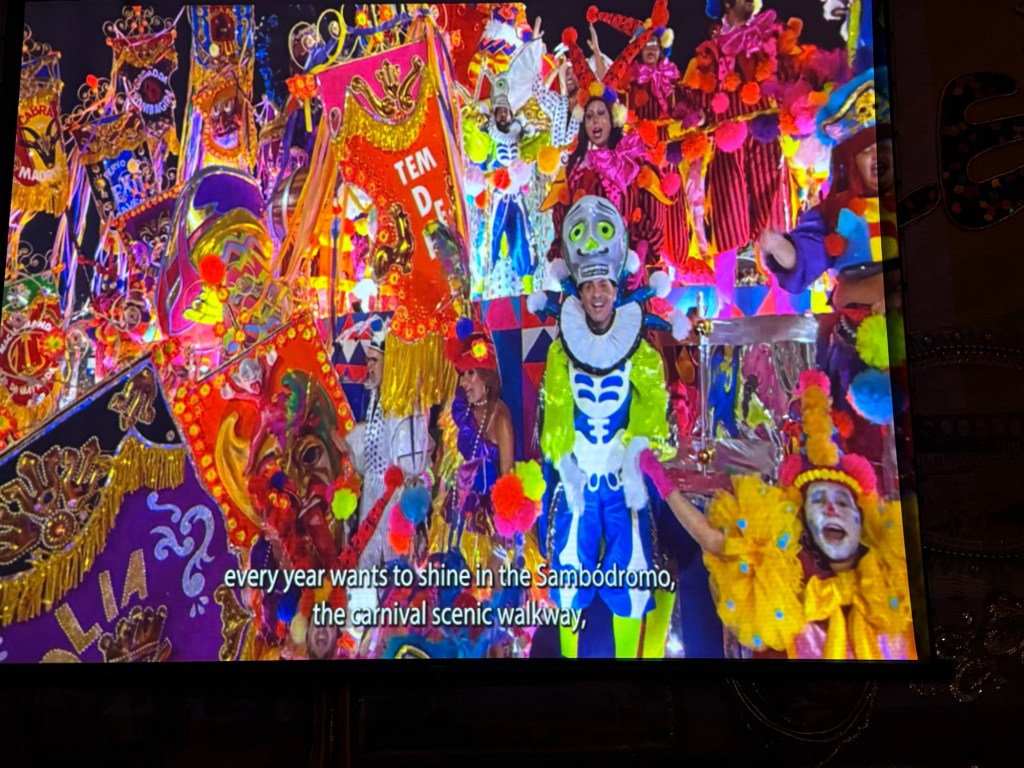

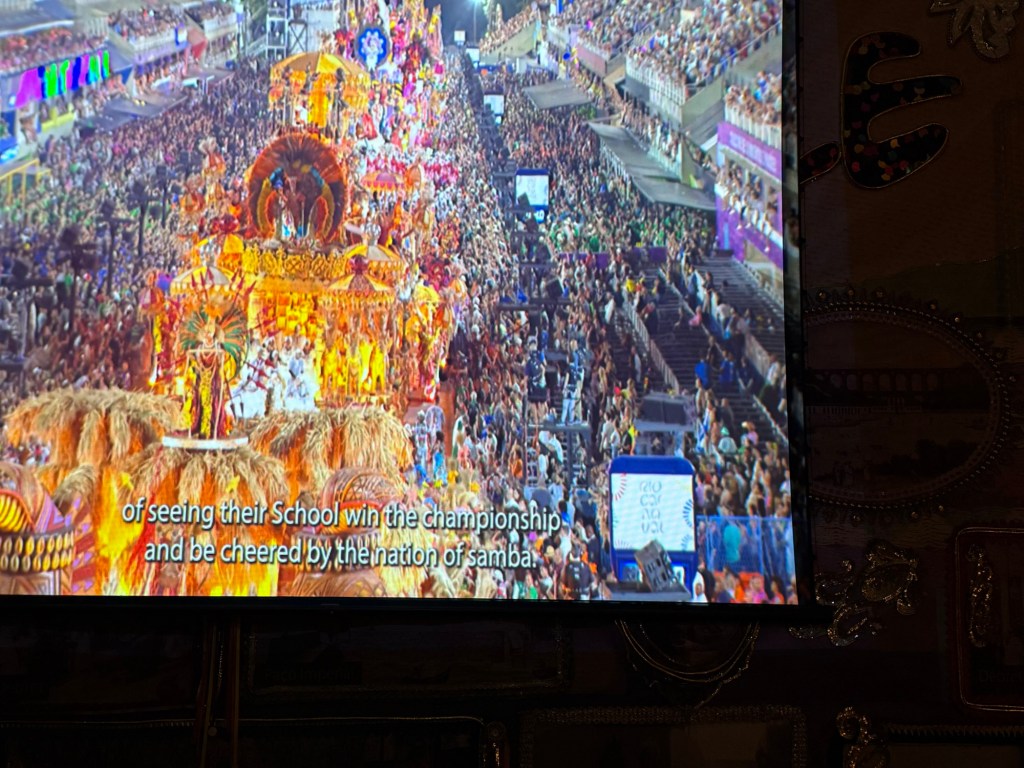
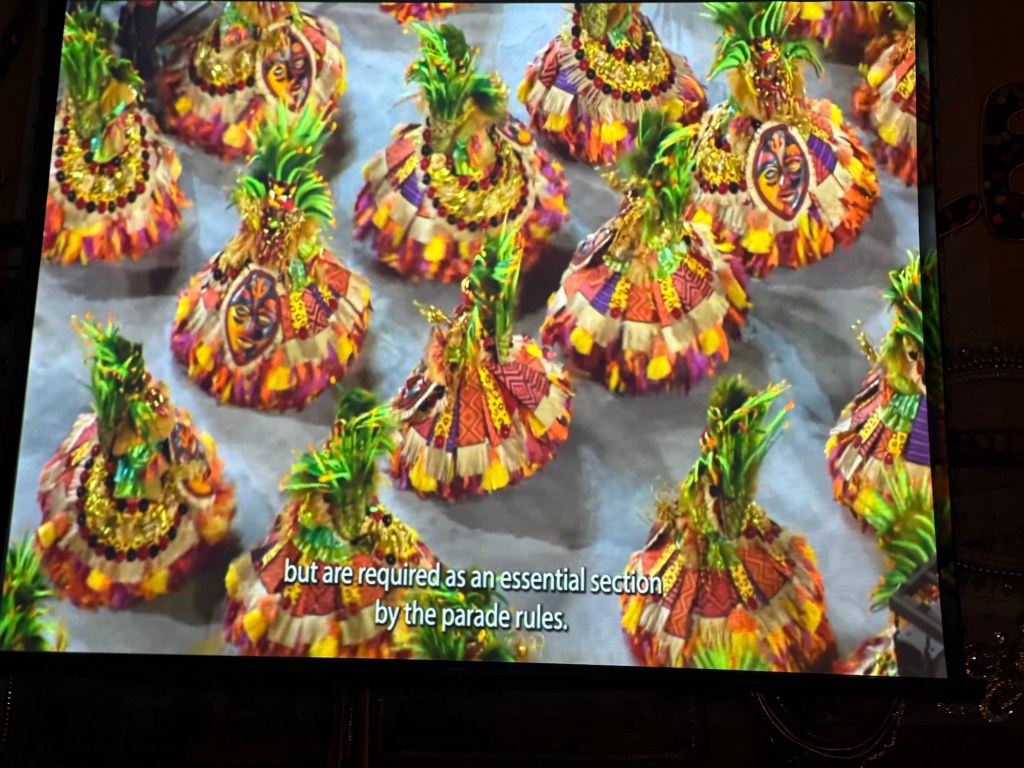
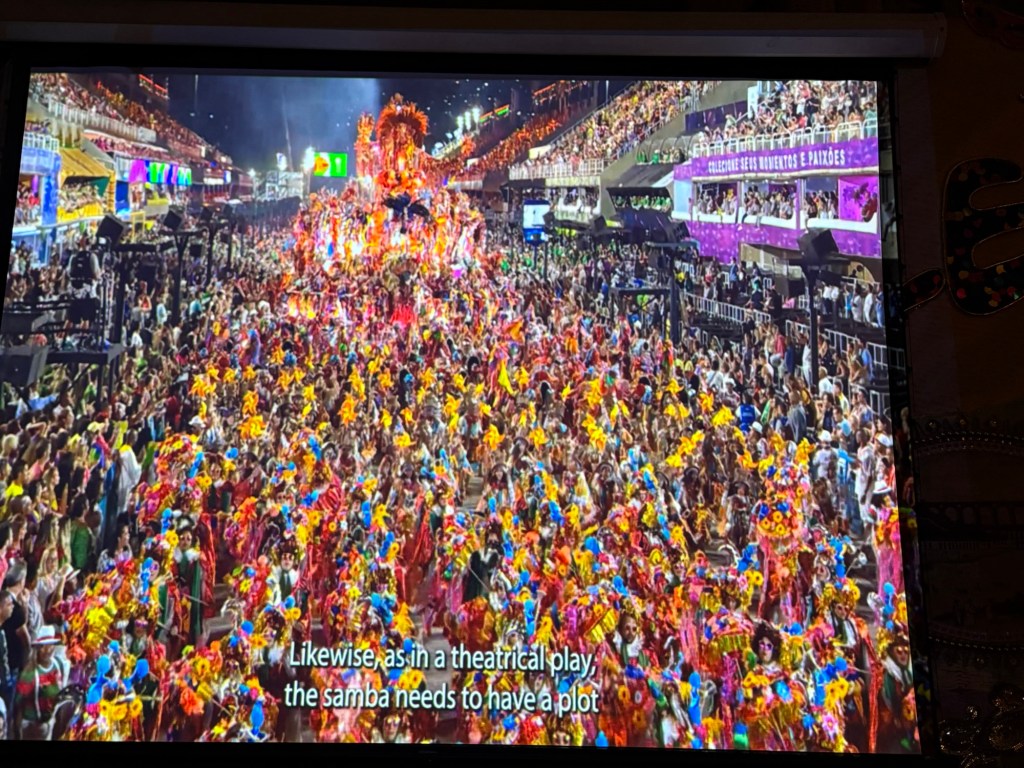
There are 5 different major groups, with 12 clubs in each group. Each club creates a theme, designs and builds 5 floats as part of their theme, hires 3000 costumed participants in addition to primary performers and people on each float. The parade lasts 1 hour and 20 minutes with participants traveling along a straight stretch of roadway with bleachers on both sides. The top winners on the first day, repeat the parade a second day with winners being announced at the end of the second day. The cost for each production is about $4.5 million.


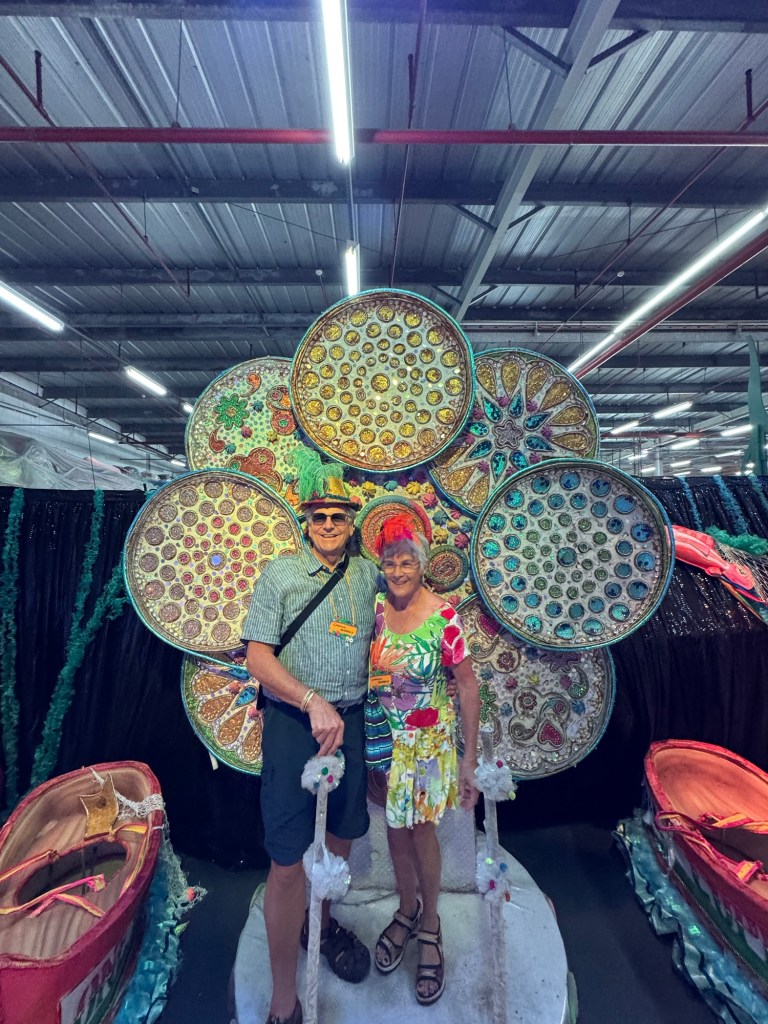
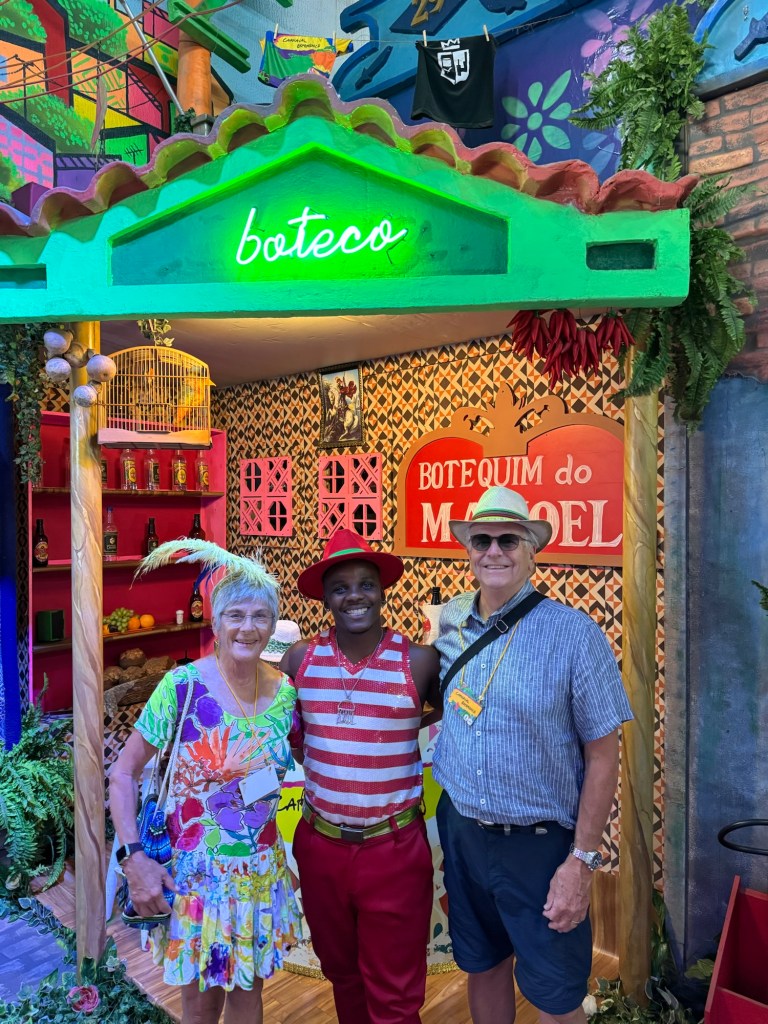
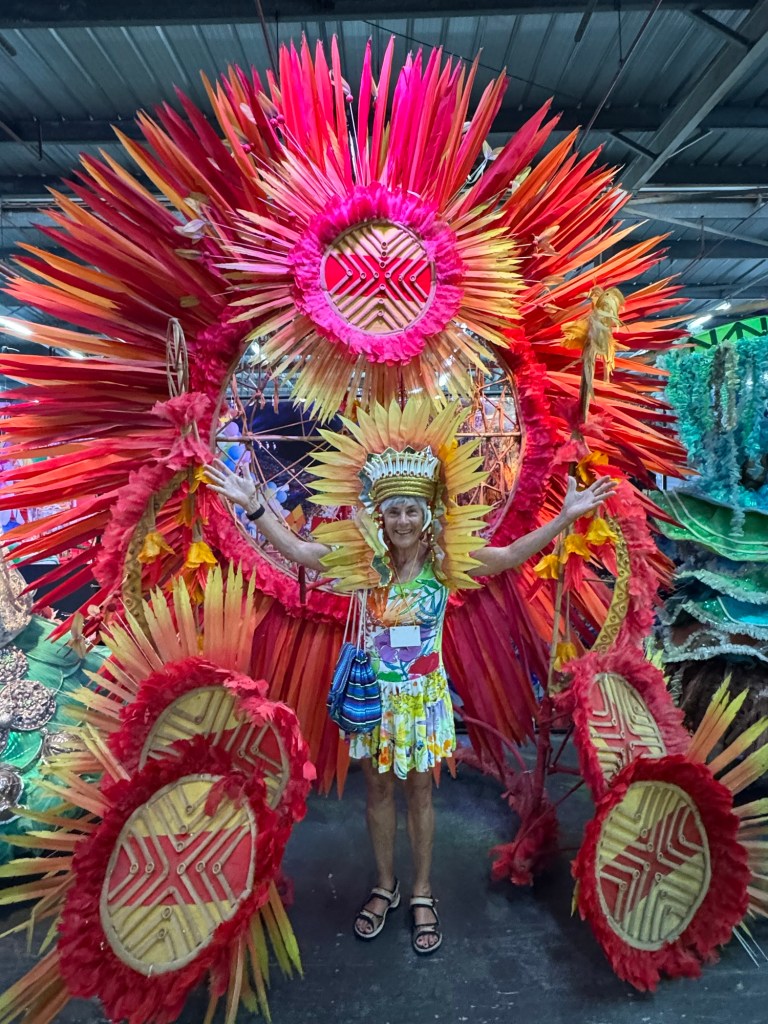
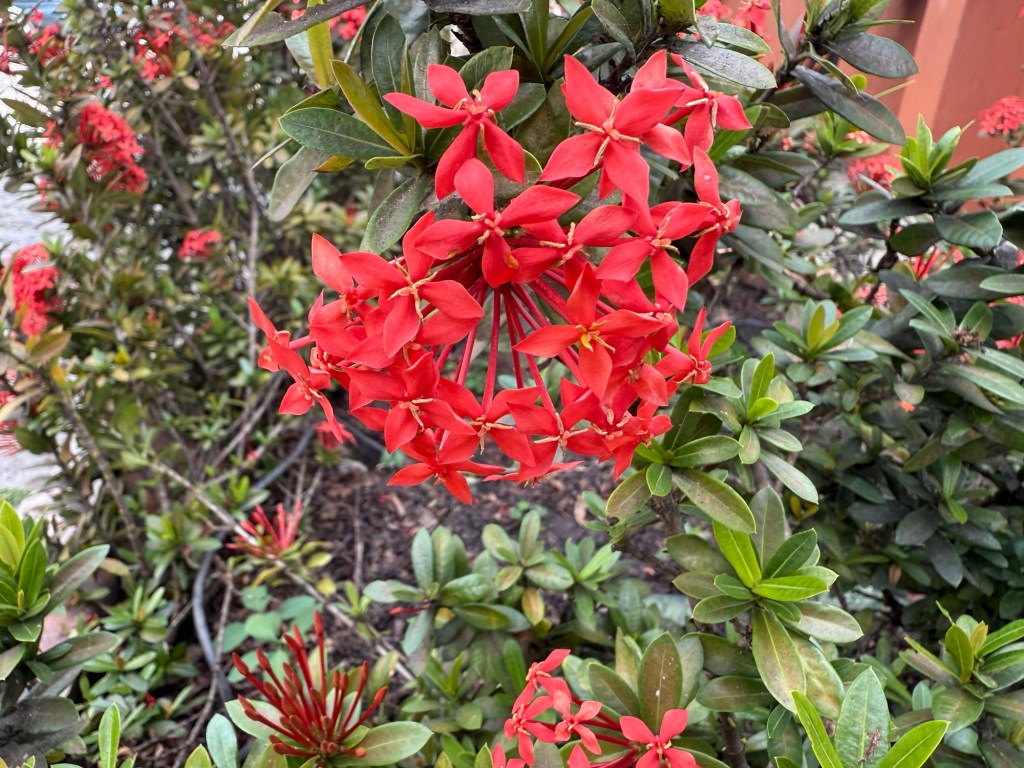
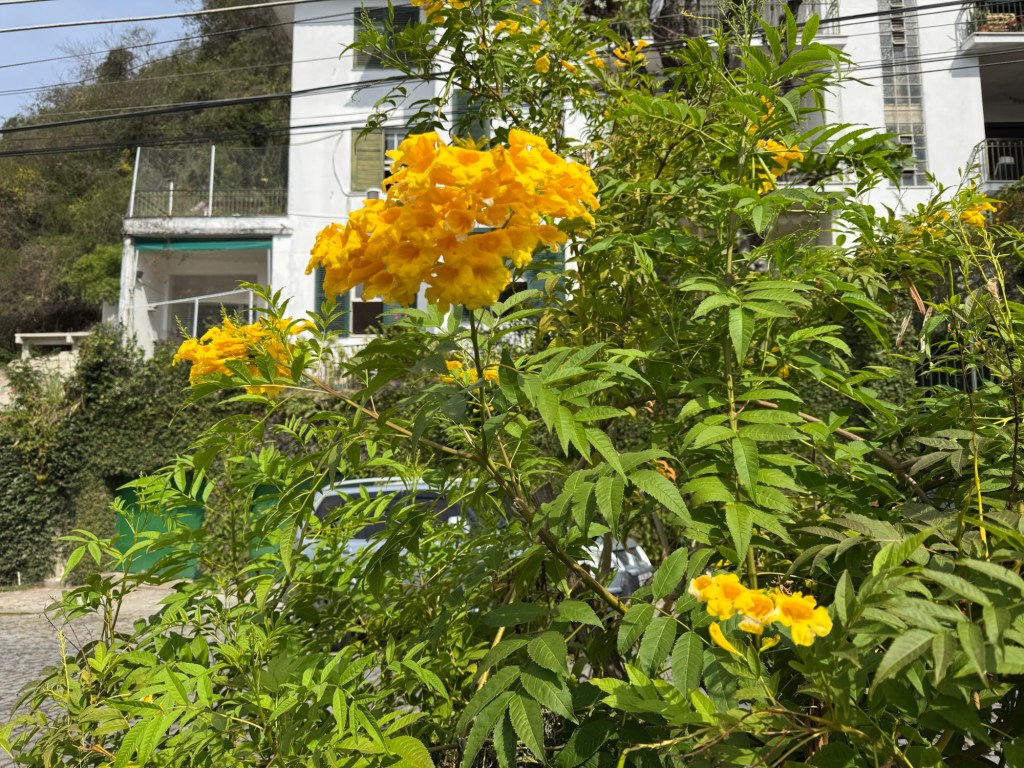
I picked up a couple more flowers on the way back to the hotel. We grabbed a bite in the hotel bar on the top floor and went to bed. It had been a very pleasant, yet long, day.
Saturday, October 4, 2025
Our one day without guides or an itinerary. Slept in and hung out in the room watching the Ipanema Beach scene. Went for a walk in the afternoon and had an early and delicious dinner at Zaza Bistro, a few blocks down the street. It was another good recommendation by Mica. Walked back o the room and packed to depart early in the am for Salvador.
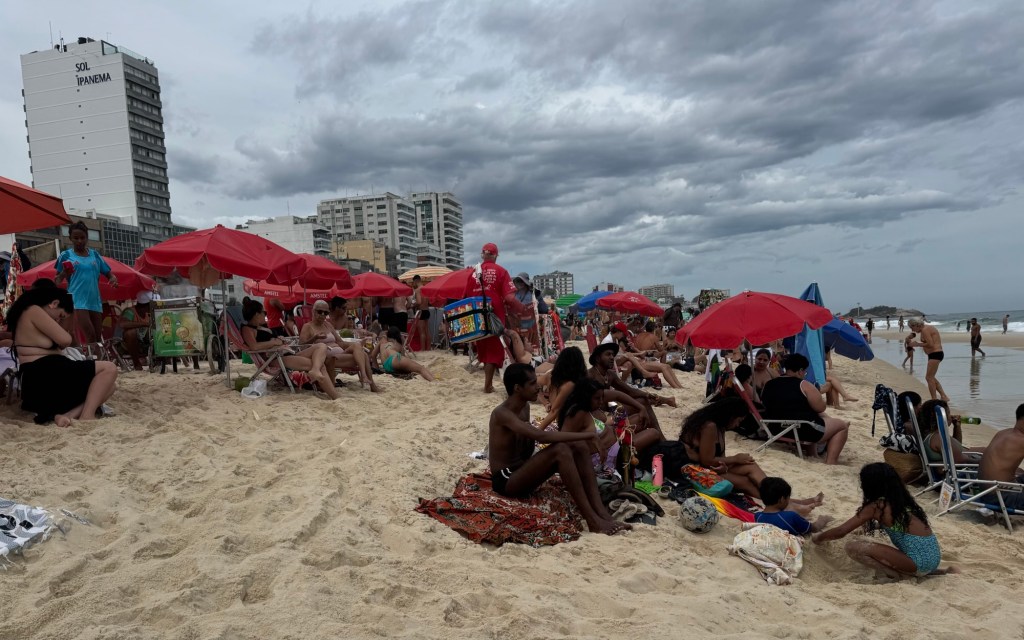

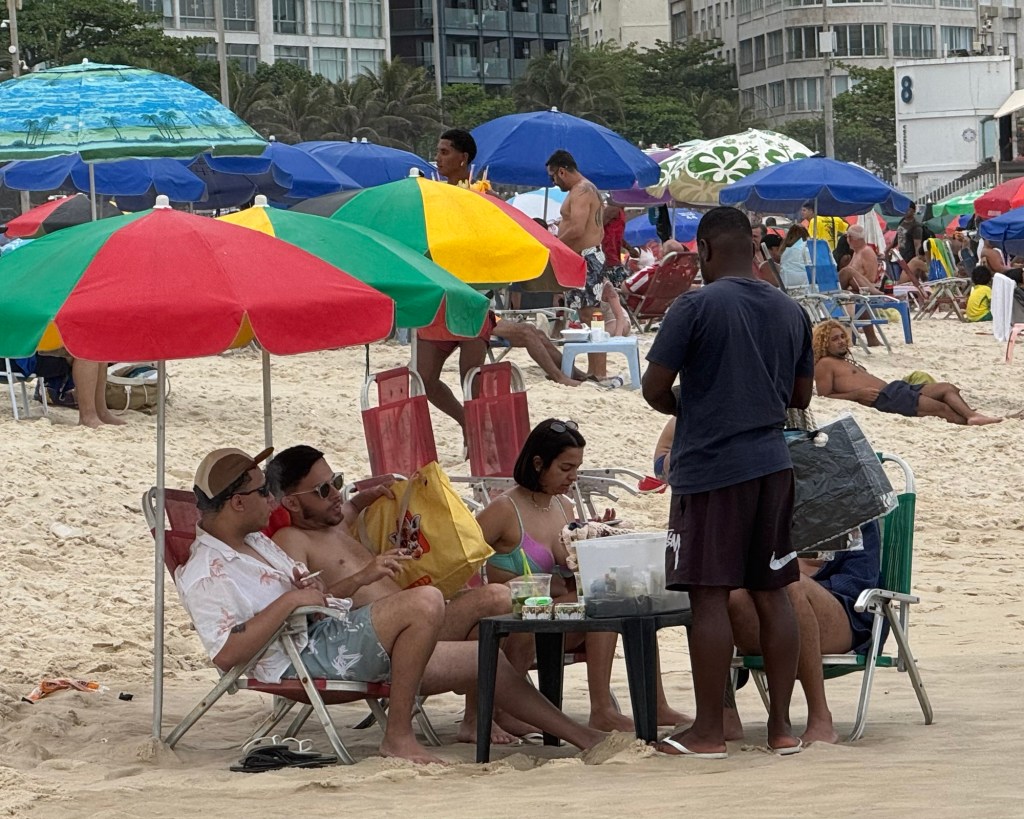

We never found Hope and Crosby. Guess they moved on.
 Adventures with Julia
Comments
Fun blog. Great pictures. I especially loved the gardens and extravaganza. I smiles everytime you talked about the view from your hotel room and thought of the song “the girl from Ipanema.”. Is Rio in the tropics?