
Sunday, October 5, 2025

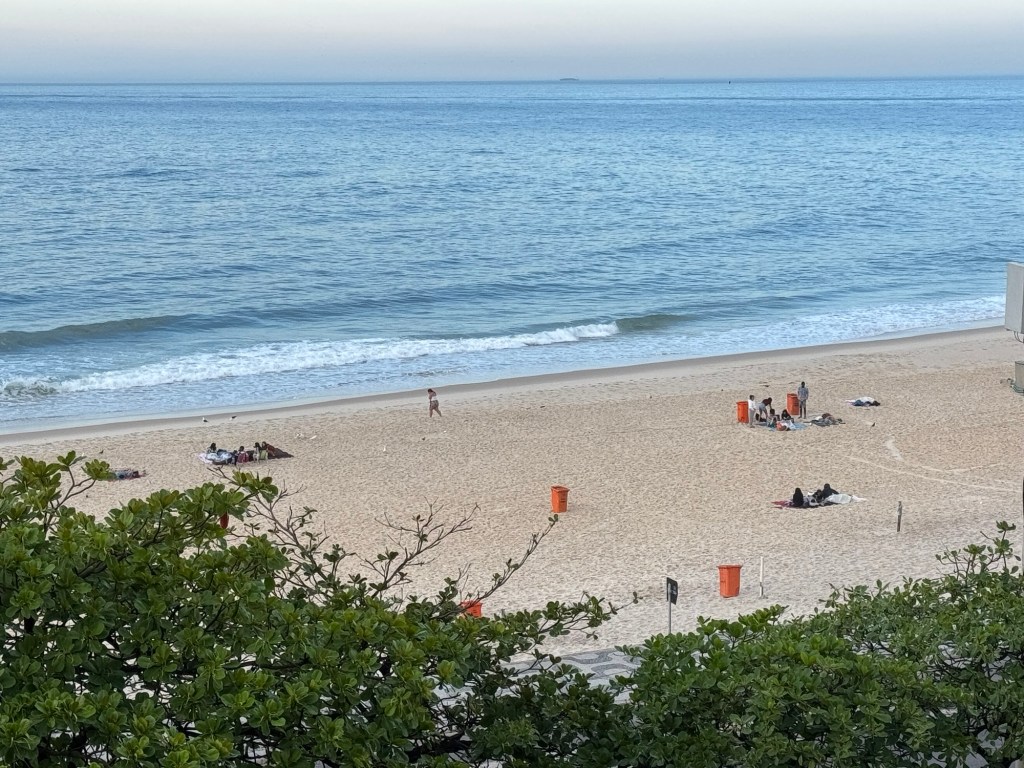
Departed Rio at 8:30 and arrived at Salvador at 10:30. Were met by Icaro, our local guide. He reminded us that Salvador, which means Savior, has the largest proportion of black population in Brazil. The city’s population is 2.4 million, 80% of which is black. Of the 13-15 million slaves brought to Brazil, most of them came through Salvador.
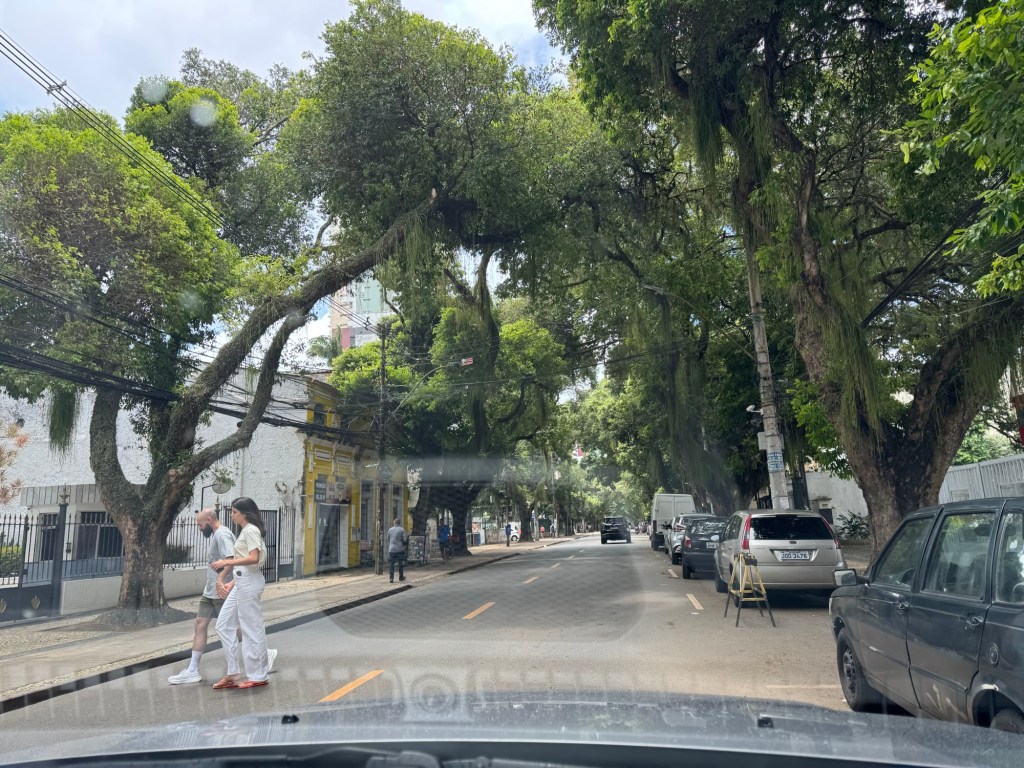
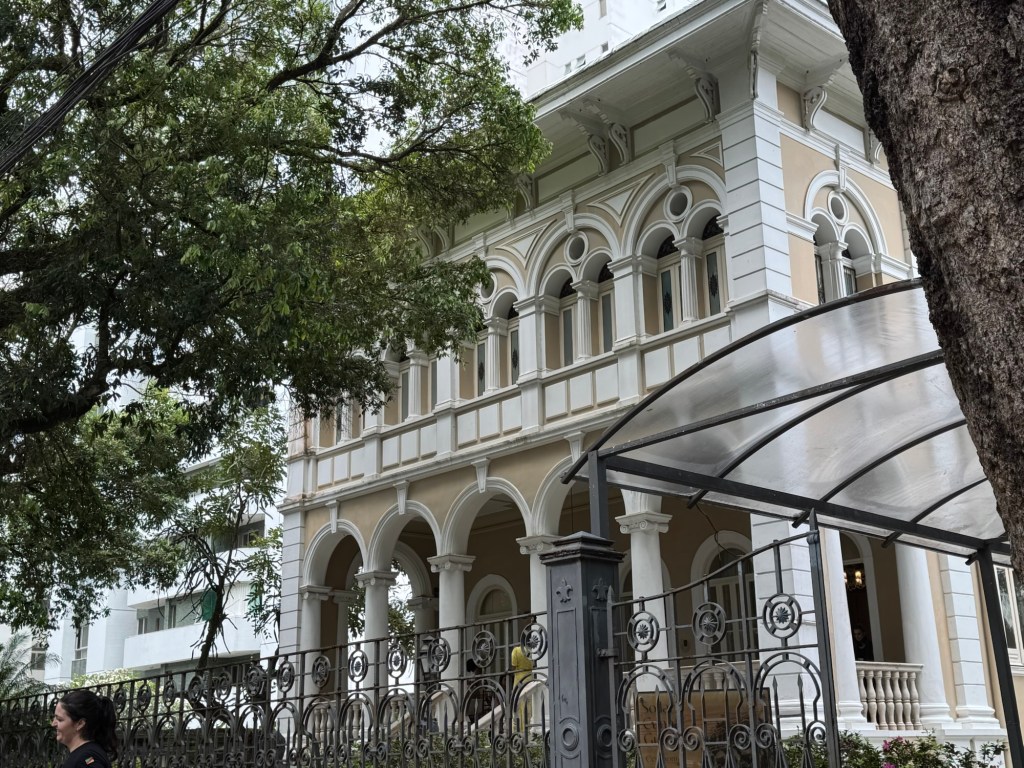
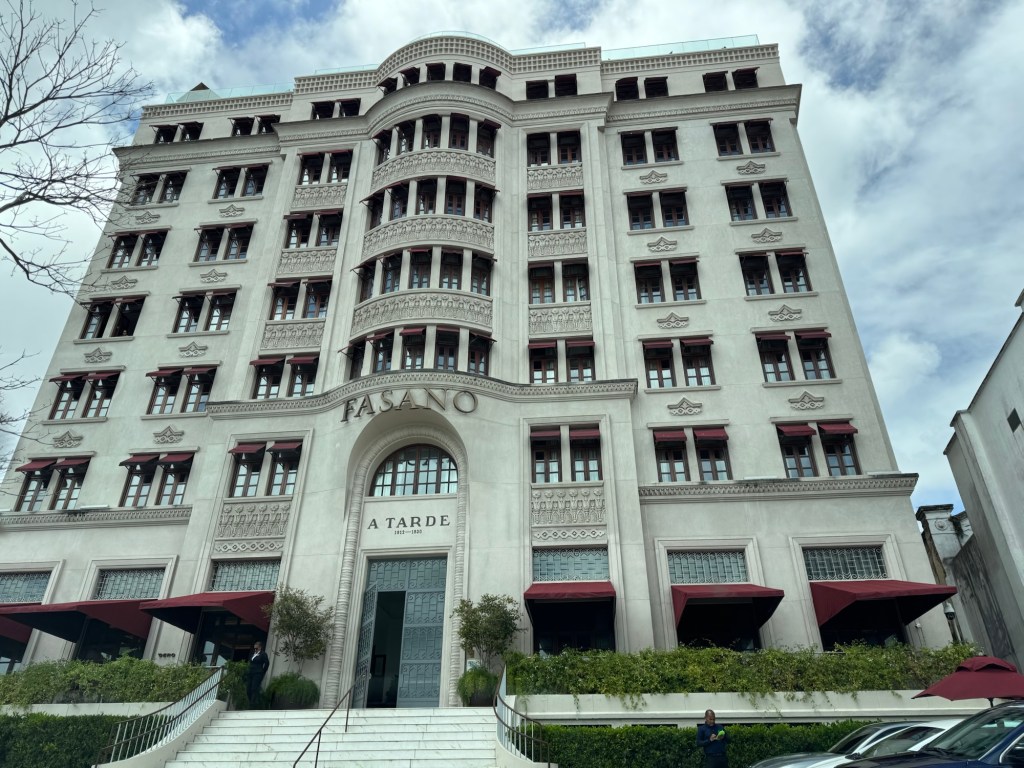
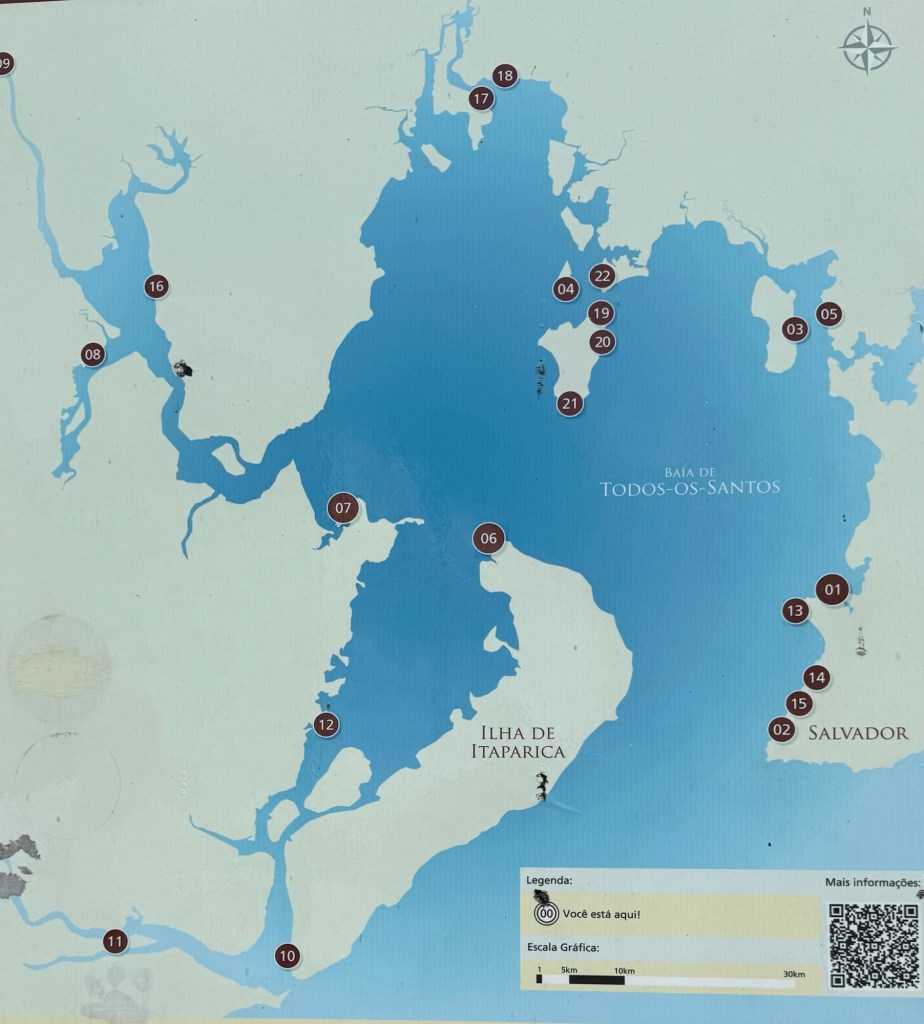
Salvador is the third largest city in Brazil behind São Paulo and Rio, but it was the first capital from 1549 to 1763. It was important as the main city on the Brazilian coast that defended against pirates as it is on the banks of the second largest bay in the world, the largest bay being Hudson Bay. It is named the Bay of All Saints because it was discovered on November 1, All Saints Day on the Catholic calendar. Rio was the capital from 1763-1960, when Brasilia was built and became the capital.
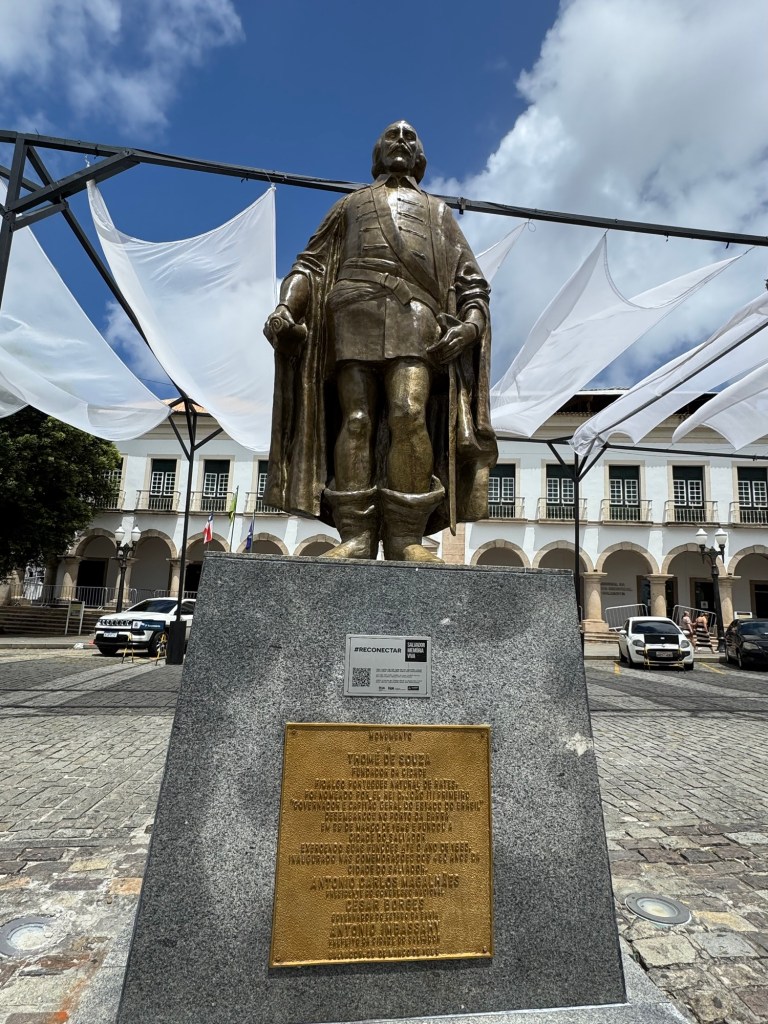

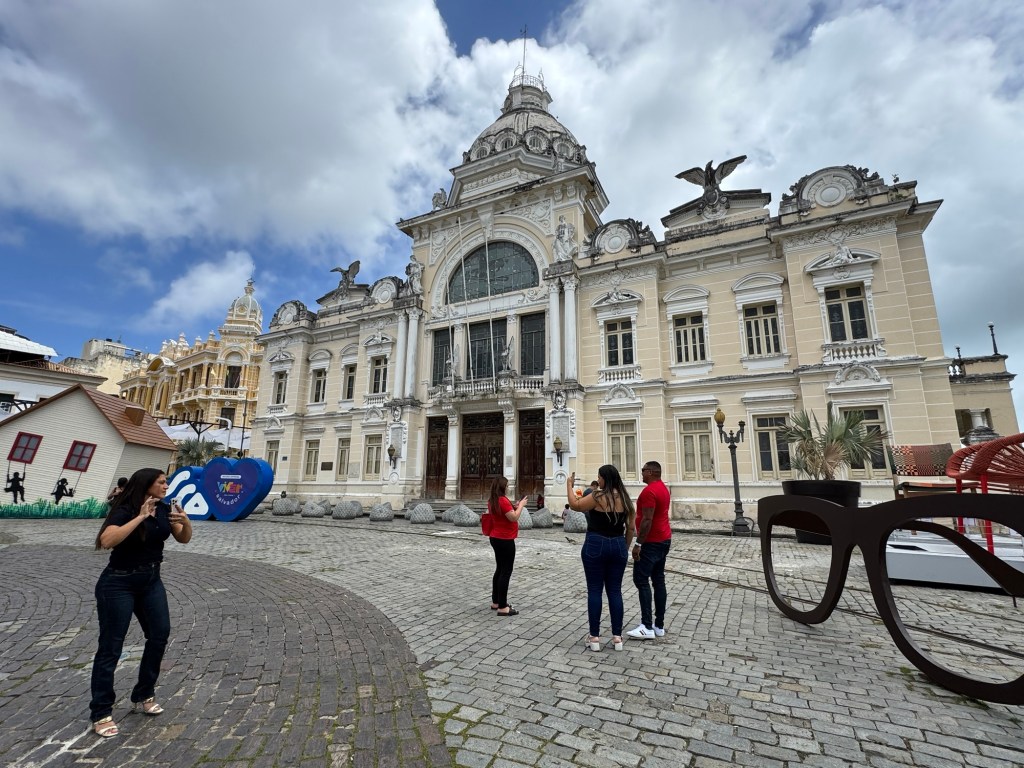
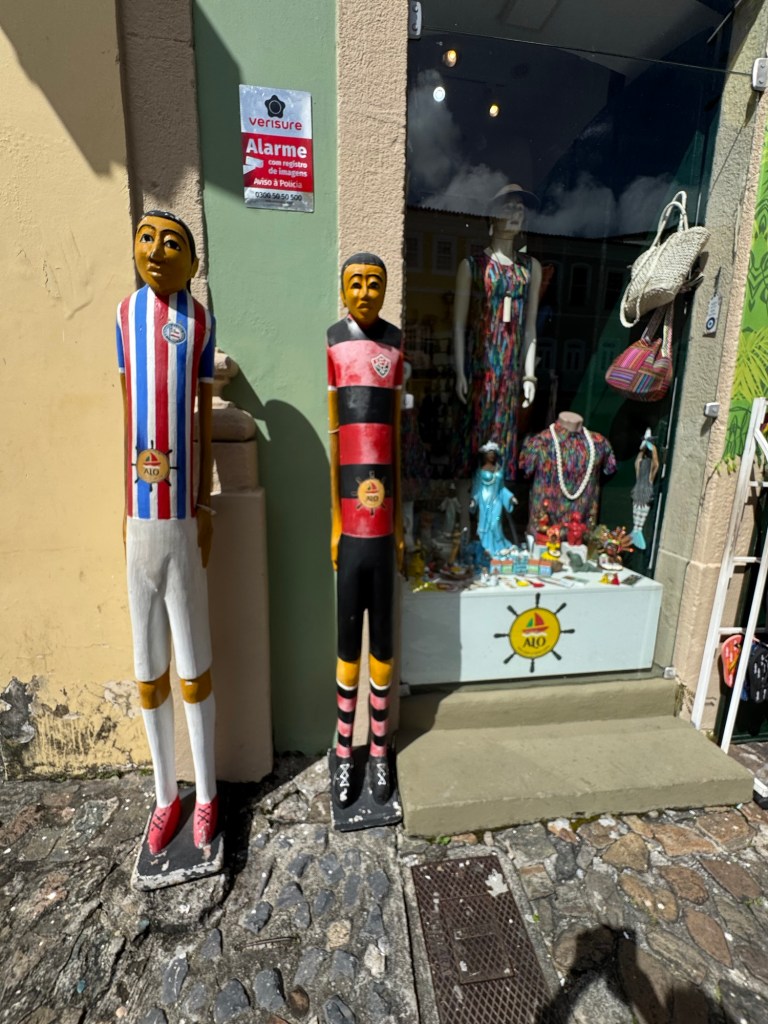
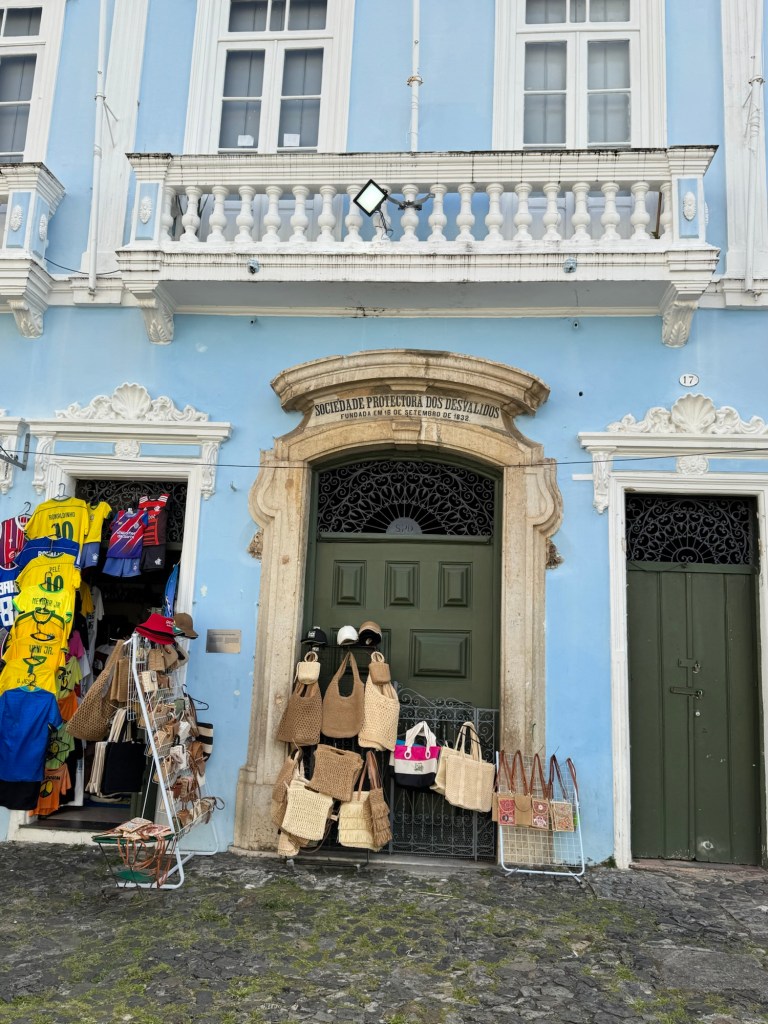
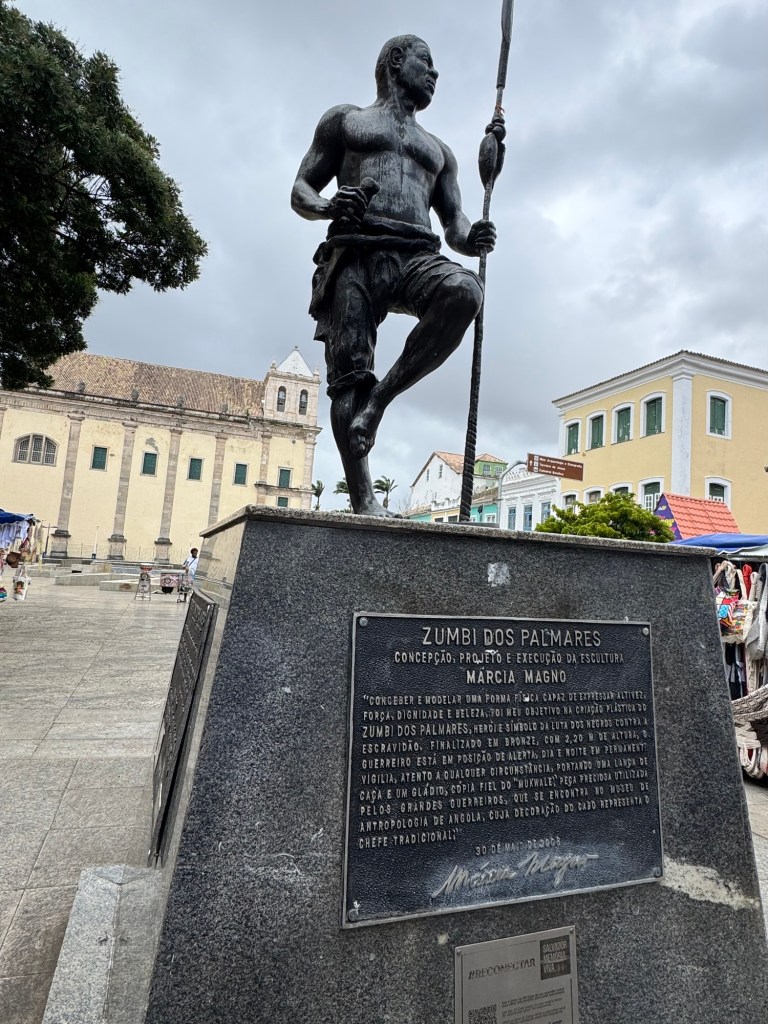
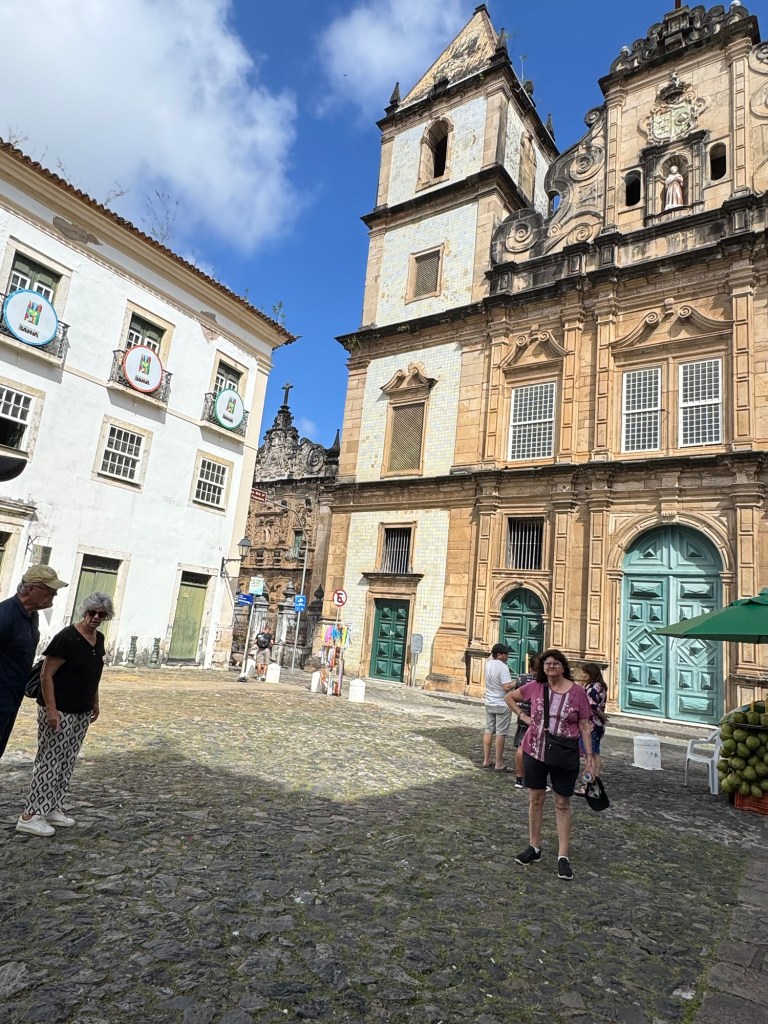
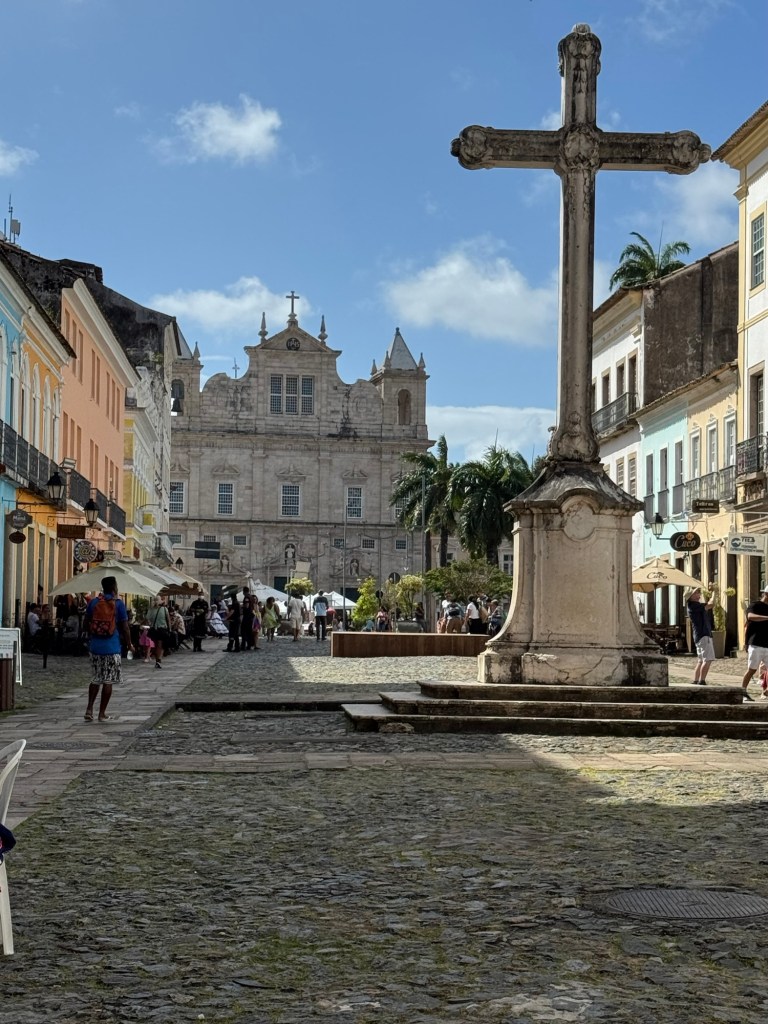
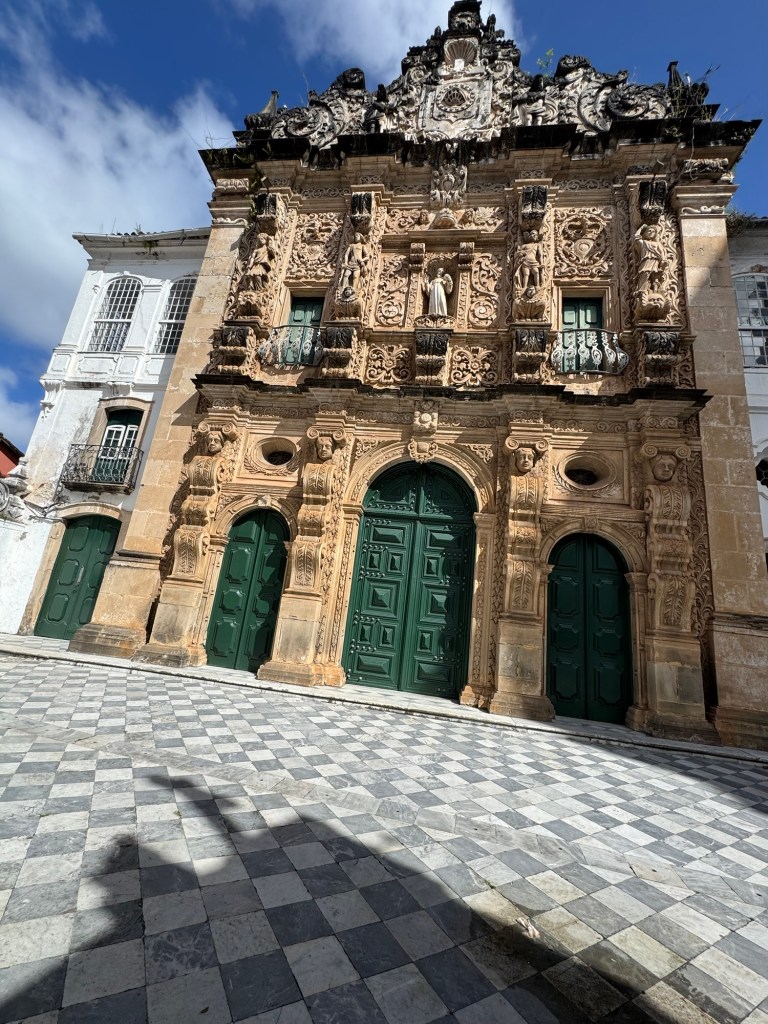
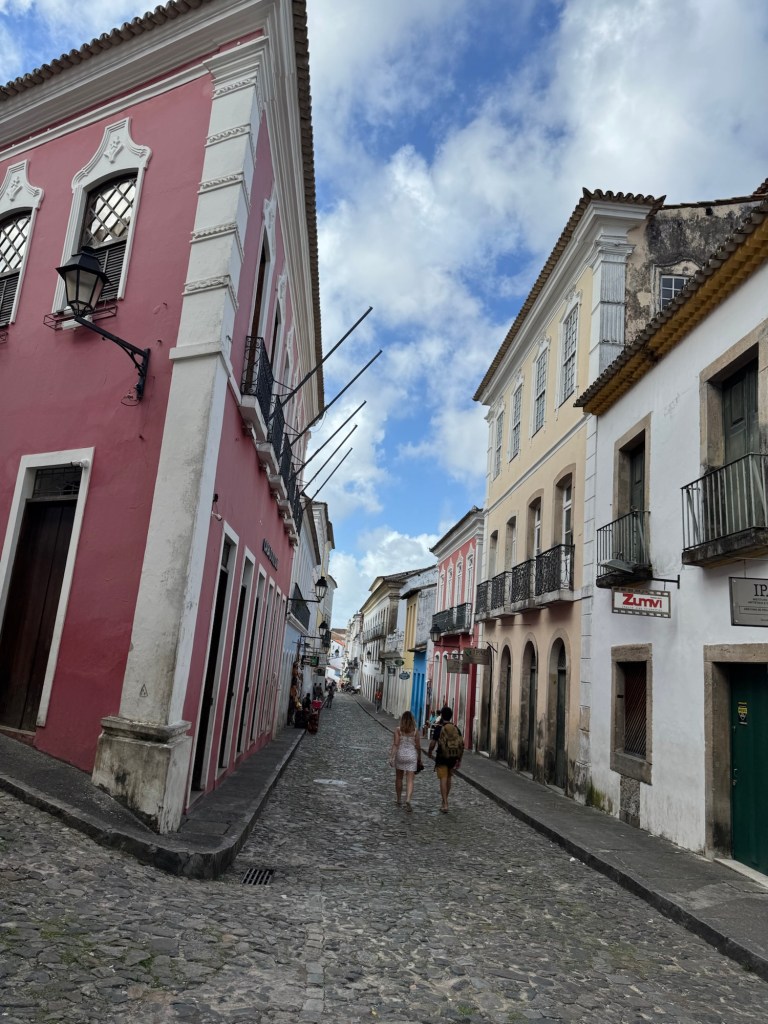
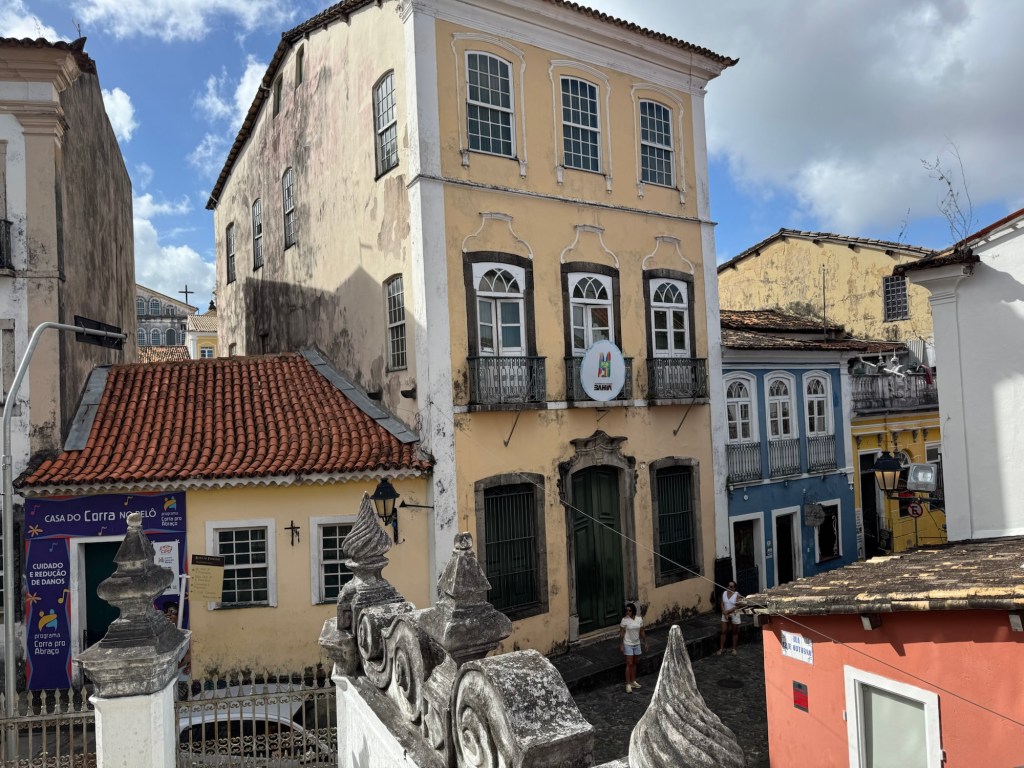
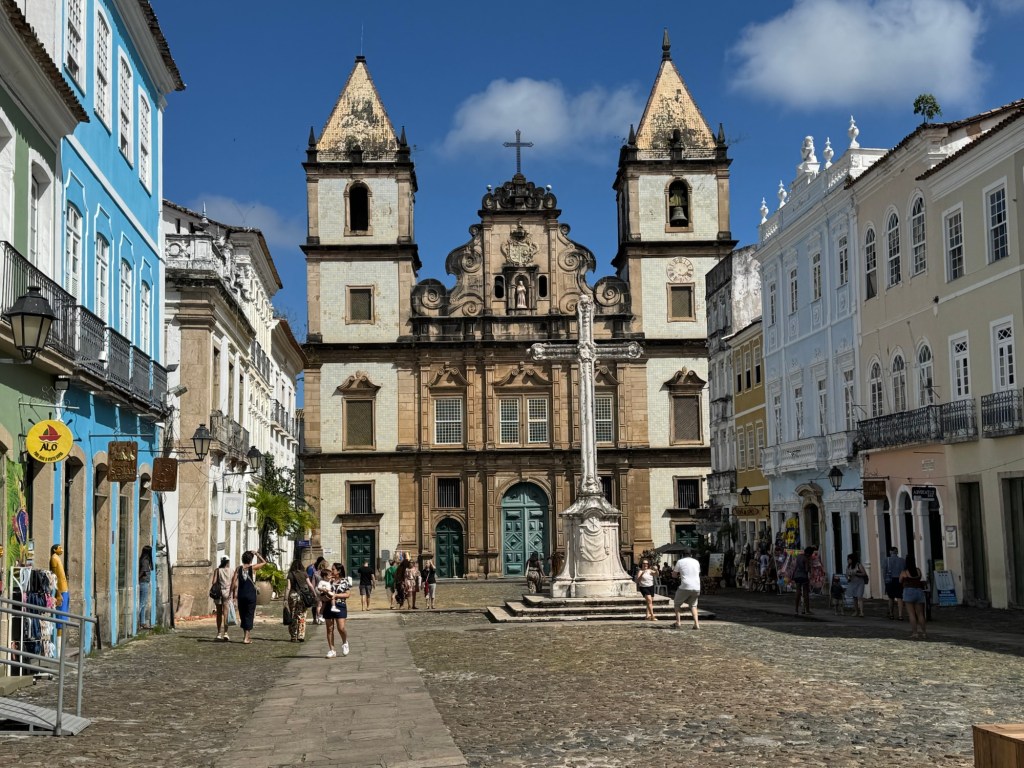
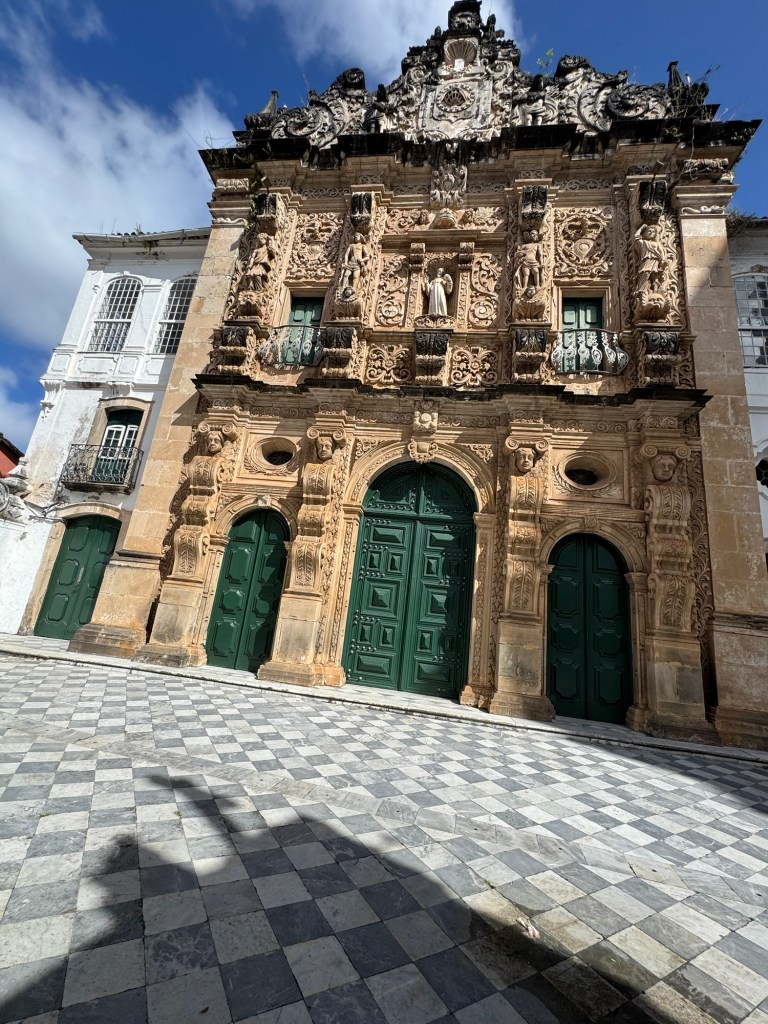
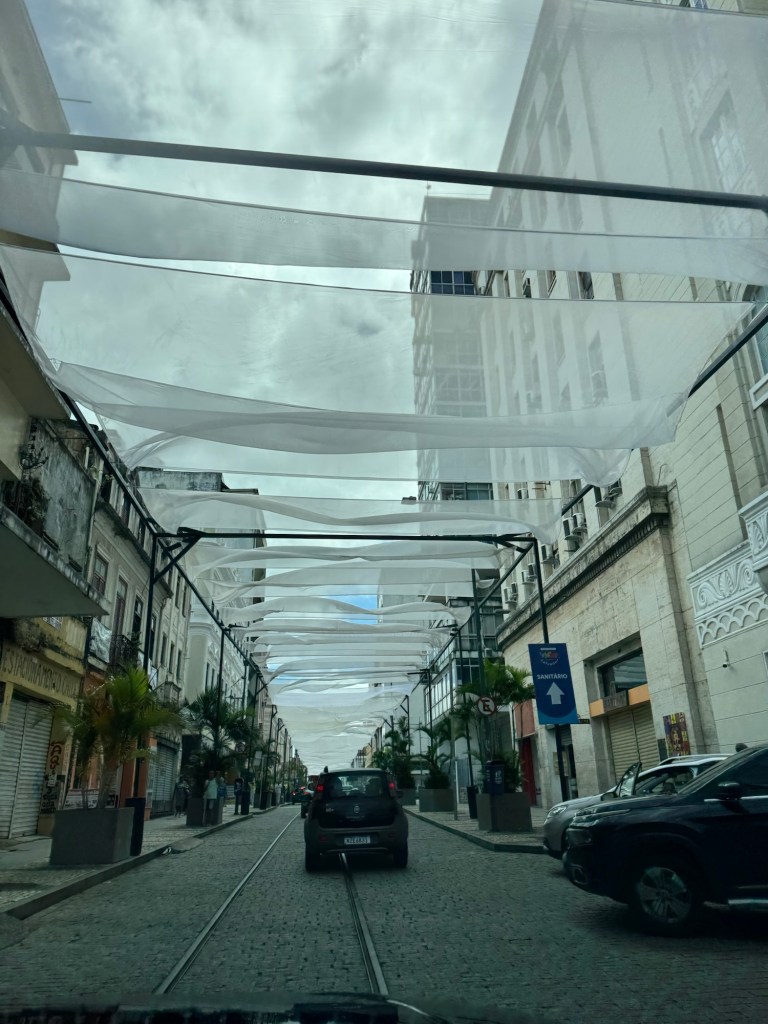
As we walked around the old down town we saw a statue to a man named Thome de Souza, who was the first governor of the colony of Brazil beginning in 1549. The styles of architecture we saw included colonial, eclectic and art deco, baroque and Spanish baroque. Some of the buildings still sport Lios marble door frames. Salvador is the only city in Brazil that had stone walls. Some parts still exist.
The weather was warm and slightly humid, but not too hot for walking. Eventually we stopped for lunch at a place called Cuco Restaurant. The place was full of people, but what we ordered, shrimp and ceveche, was just ok.
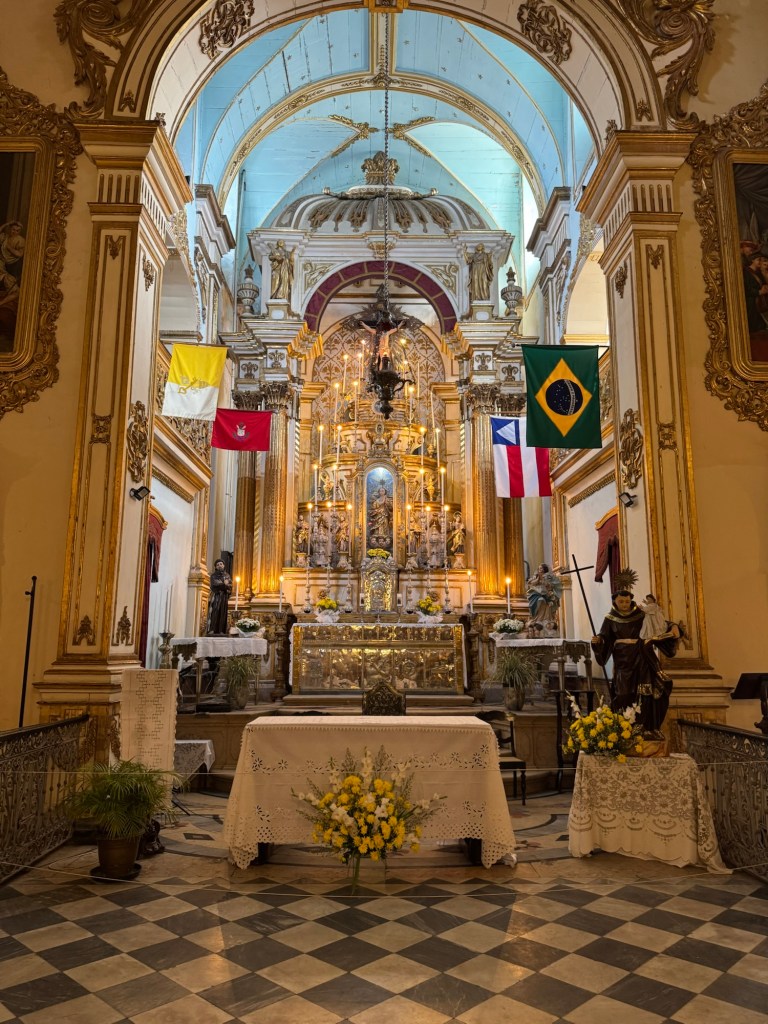
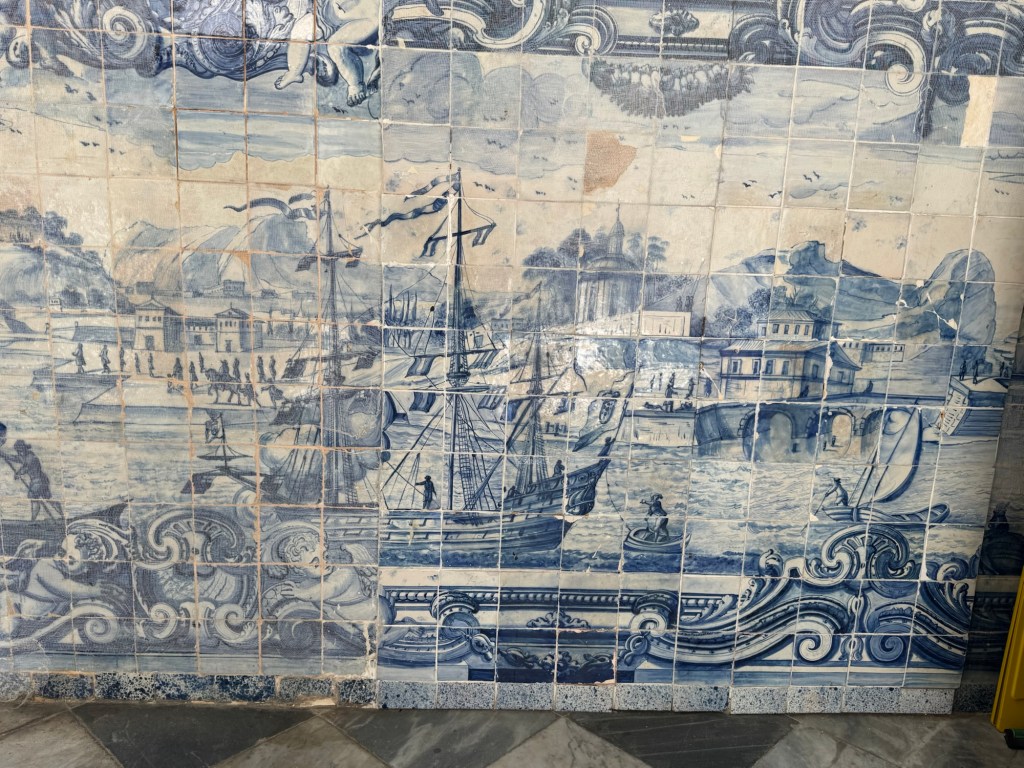
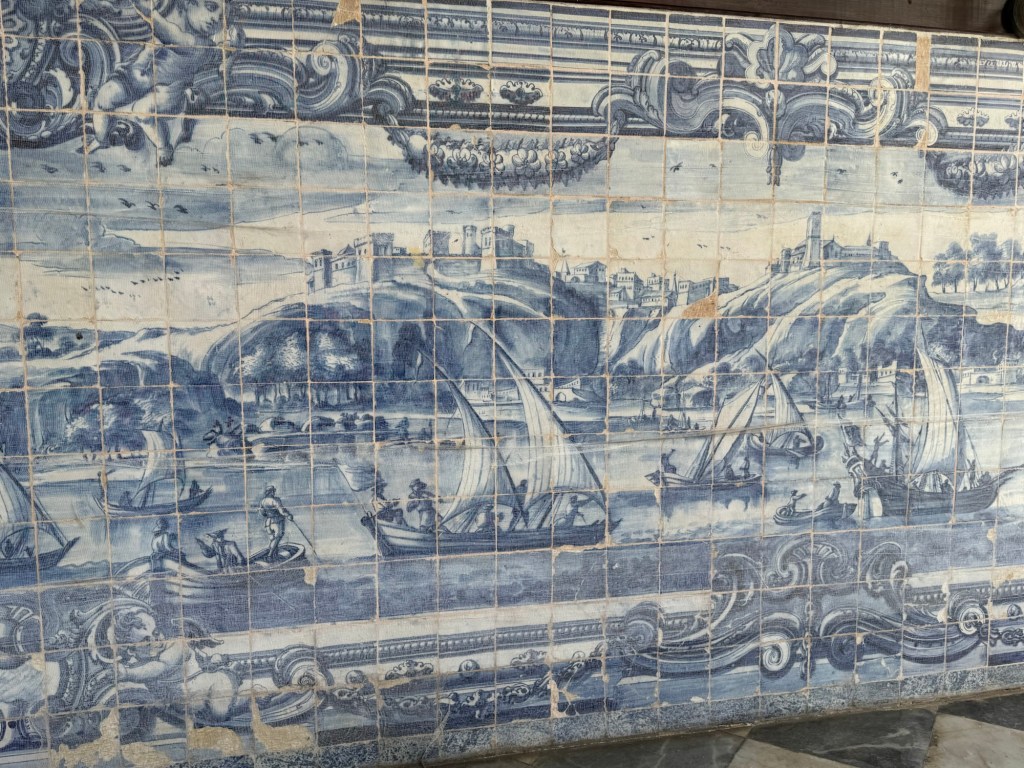
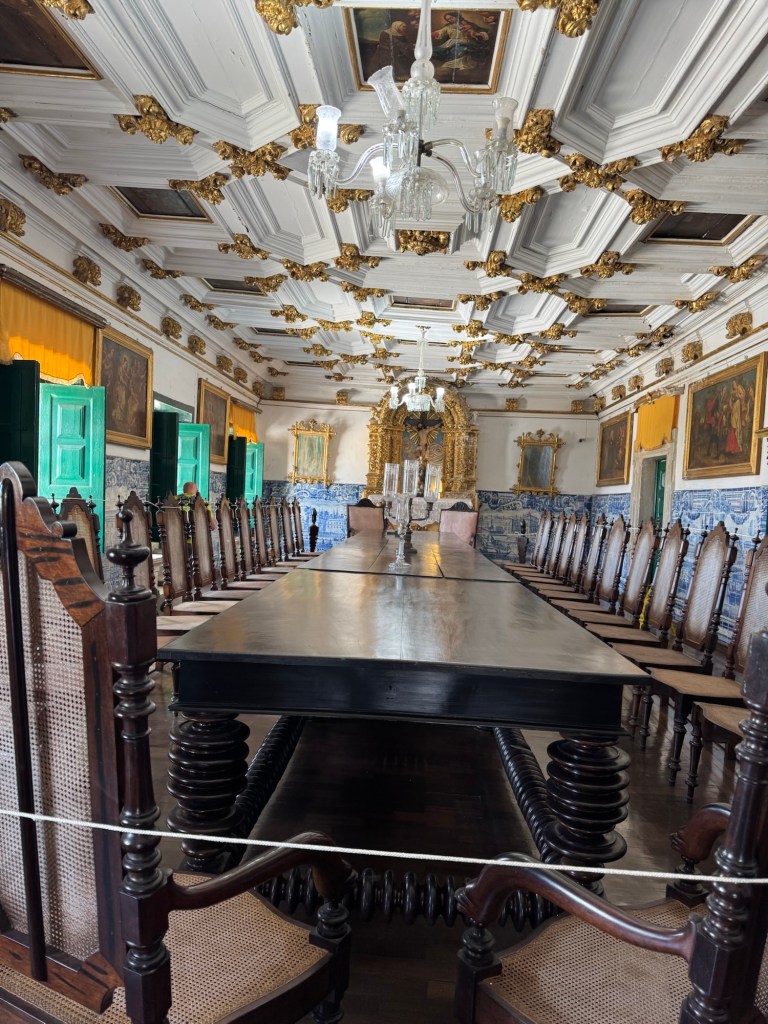
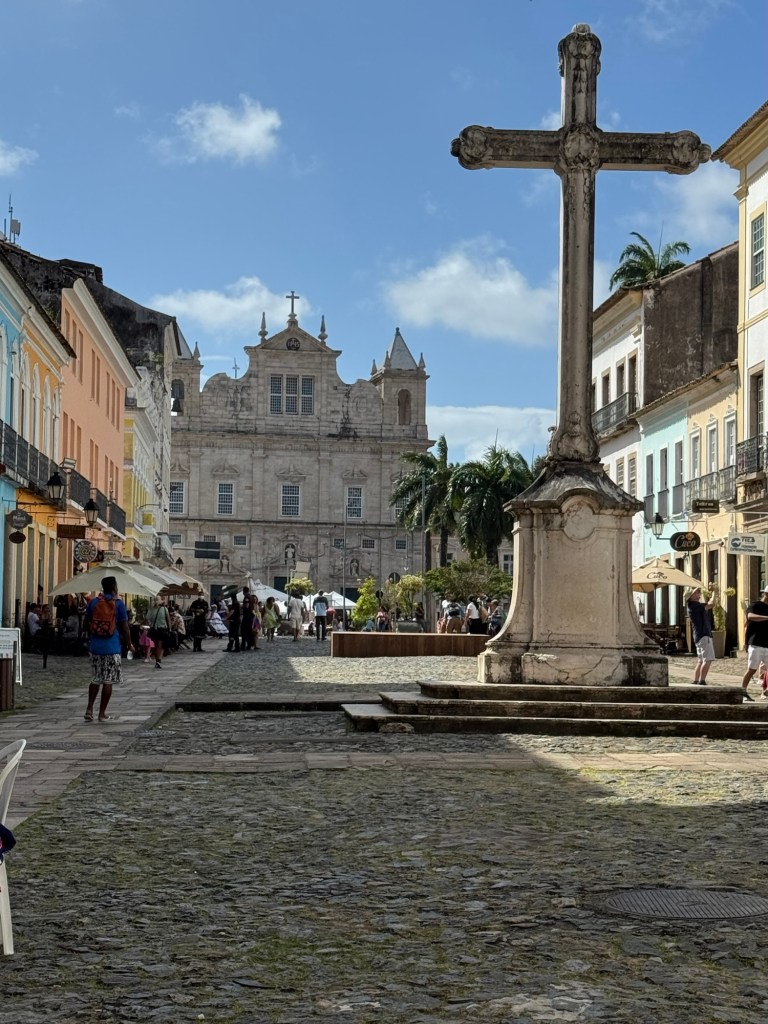
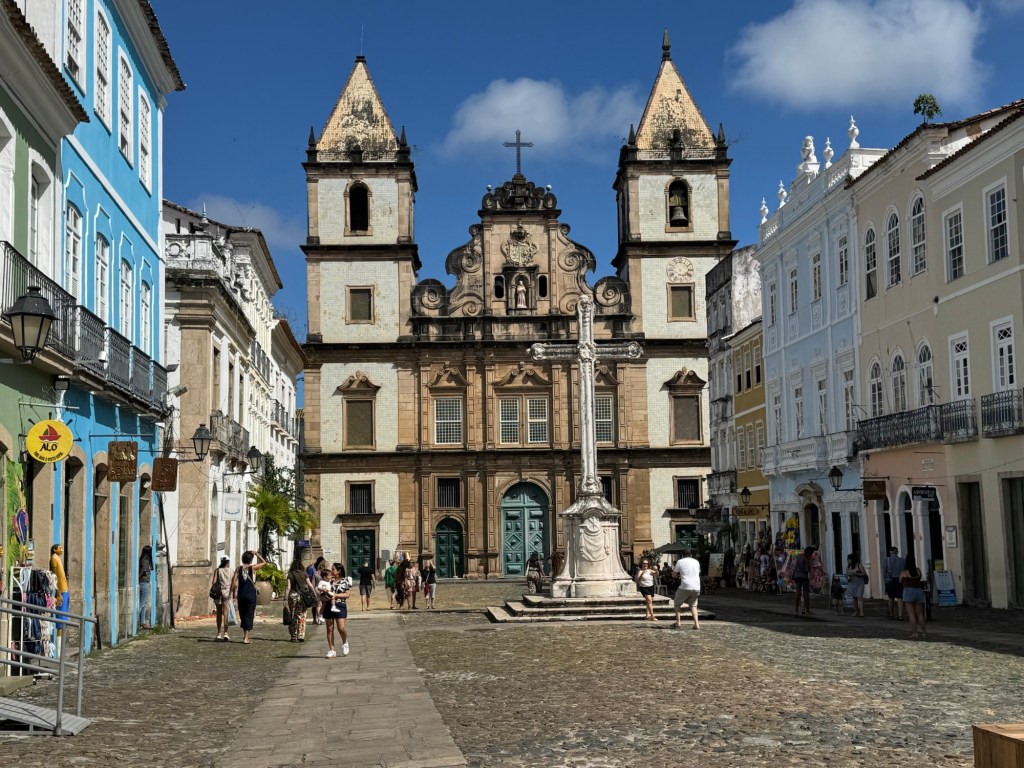
We visited a couple of churches for their architectural style. One church was famous for its blue tiles that came from Portugal in the 1700s to decorate the interior of the sacristy of the baroque St Francis Church. The church was quite rich during those years. There was a huge jacaranda wood dining table set for 32 people in the sacristy and beautiful blue Portuguese tiles depicting stories of historical events that ornamented the walls of the sacristy.
We saw the exterior of several churches we could not enter. There are 377 Catholic churches in Salvador. Many churches are private and operate on an ad hoc basis when paid for service. Others only open for Mass and to visit. We paid to enter St Francis Church, third order, which works like a private institution.
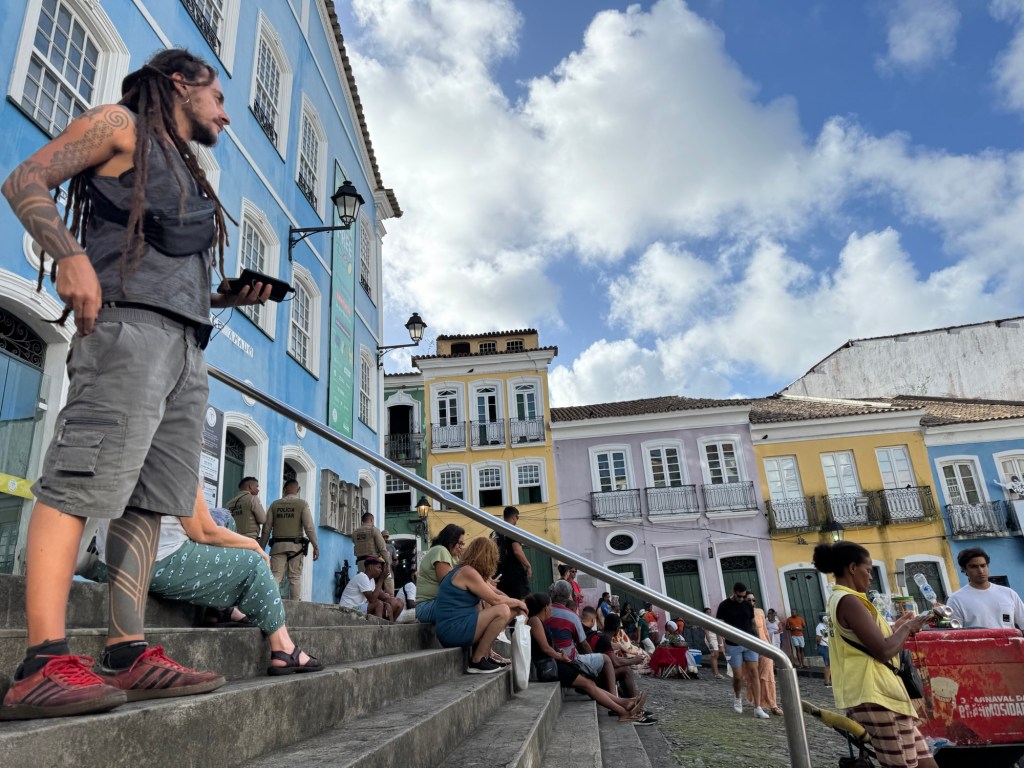
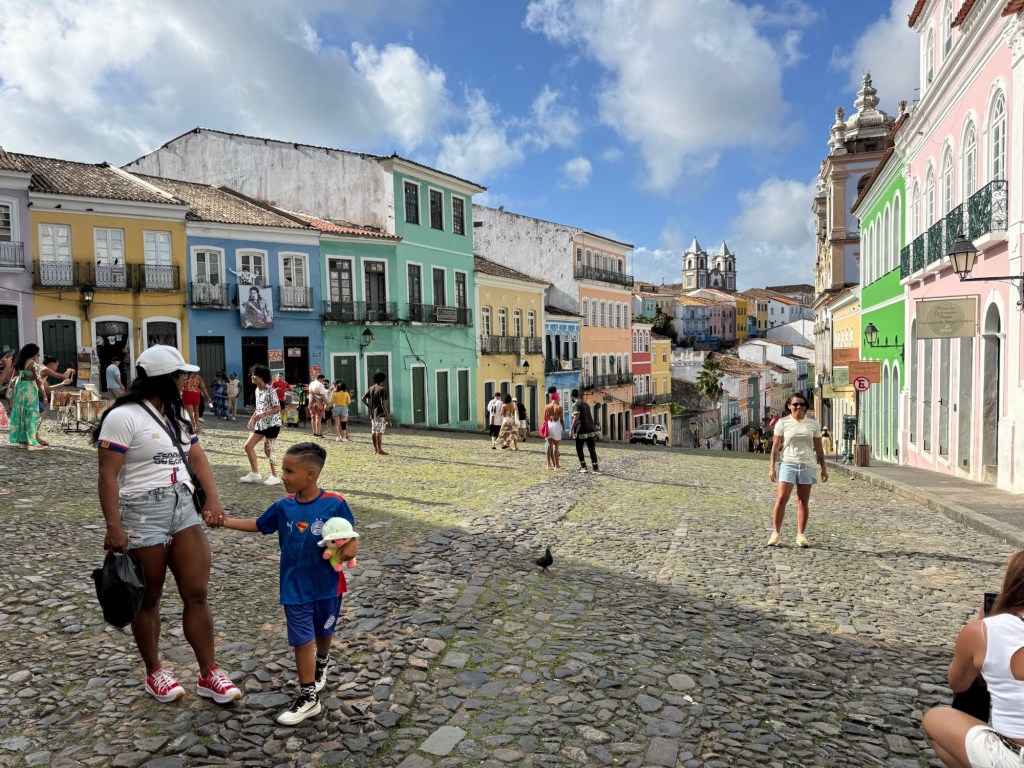

After leaving St Francis, we sat enjoying the view and the cool breeze at the top of Pelourinho Square, AKA the whipping post square during slave years. The square was on a slope. While there, 5 ladies from the Dida Banda Femanina arrived playing drums. They had been hired by our Brazilian tour operator, Tami, to give us a personal experience of drumming. After several minutes they turned and proceeded back up the street with us and others following. At the entrance to their drumming school-office-practice place, they stopped playing and we followed them into the building and their practice room.

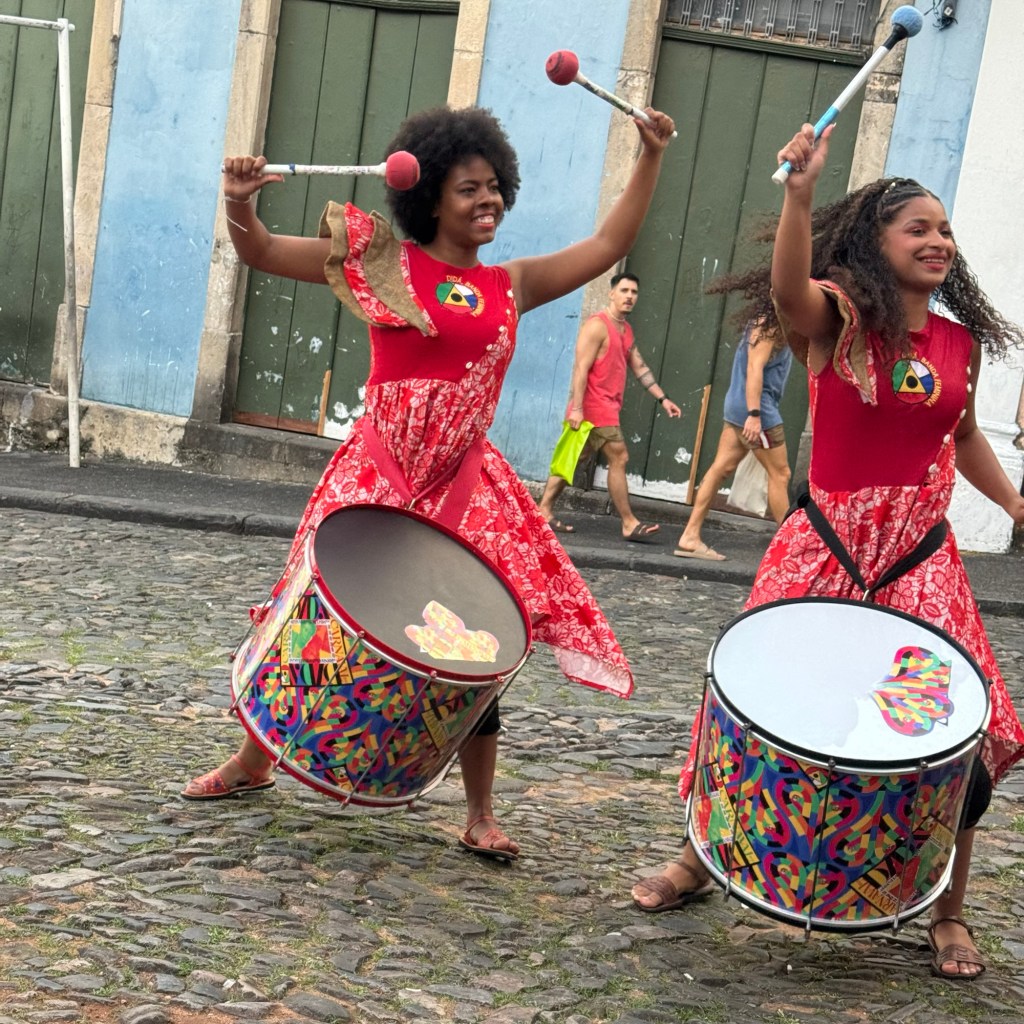
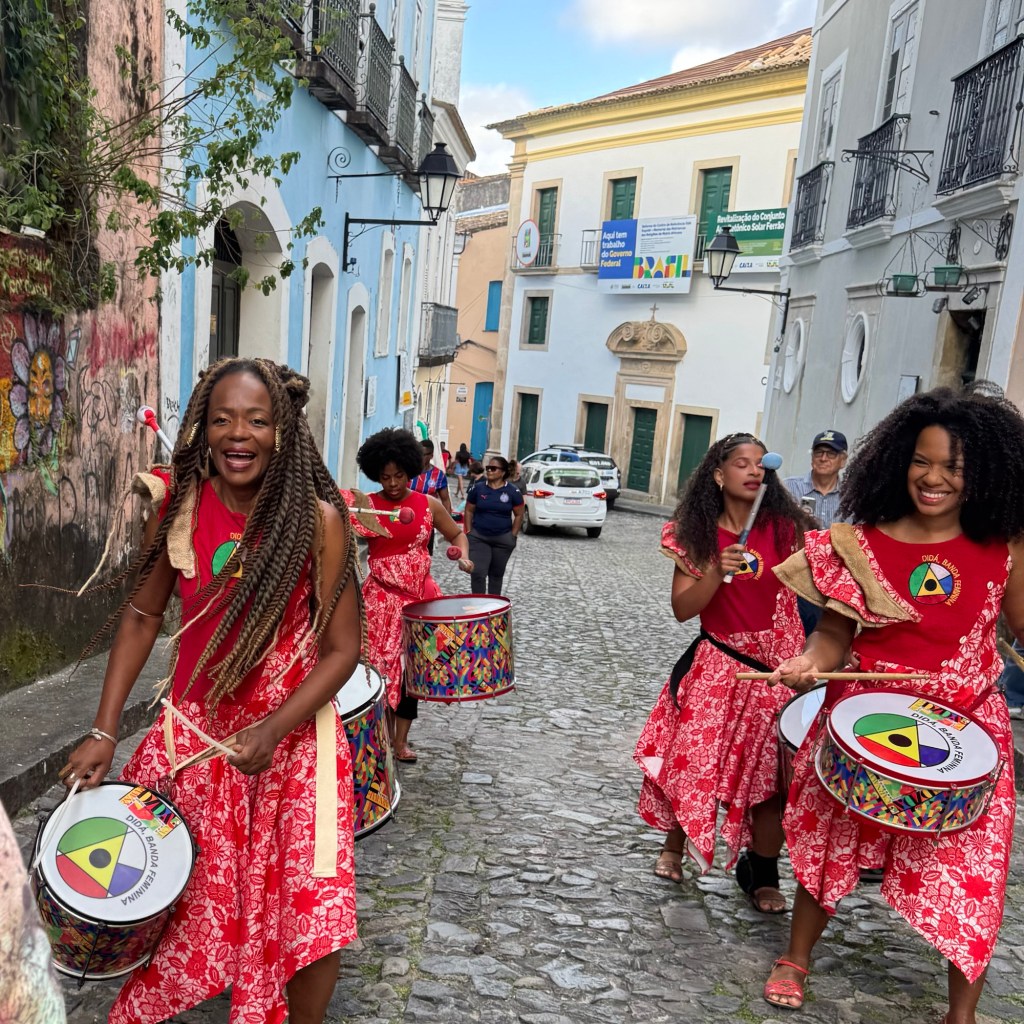

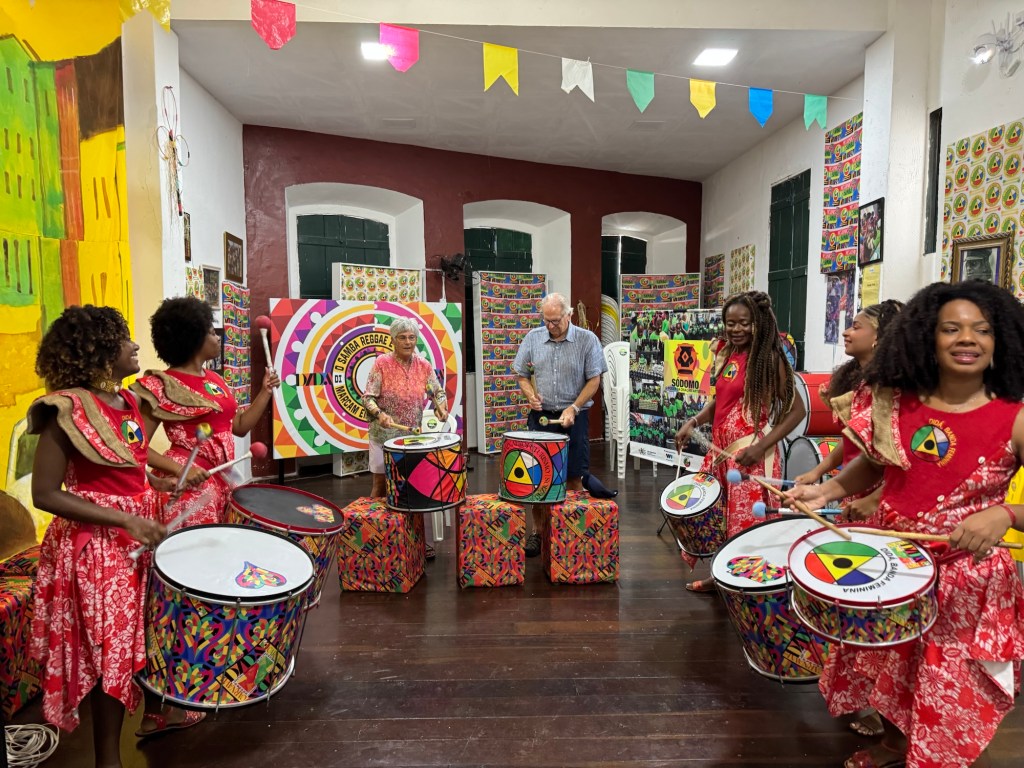
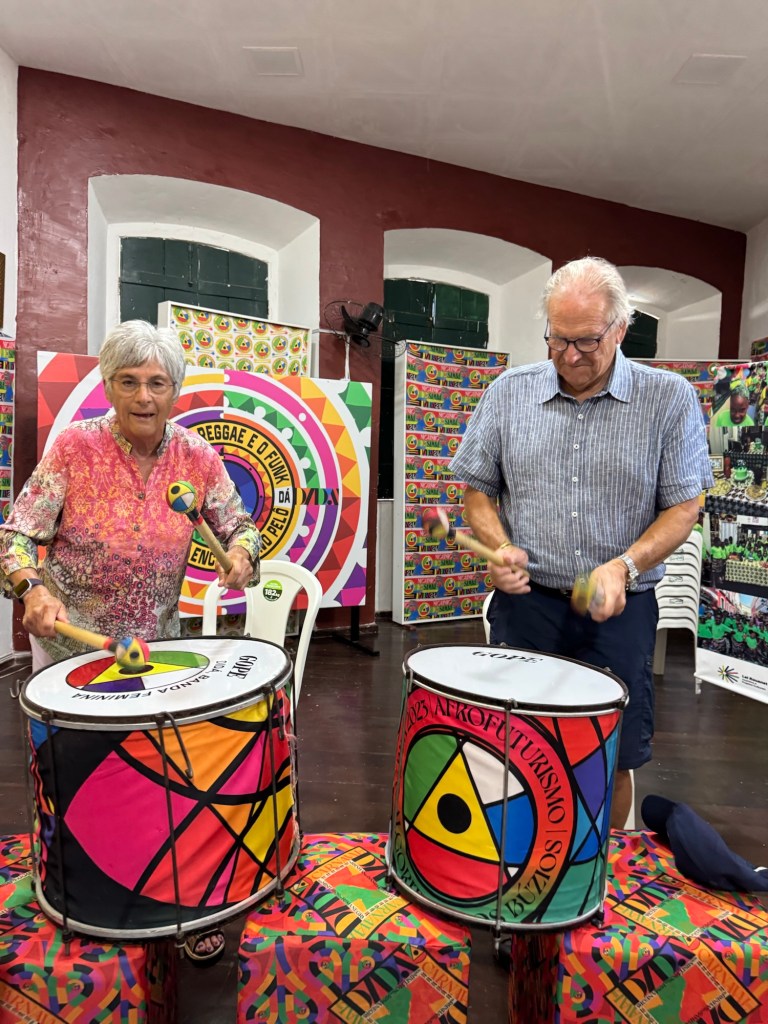
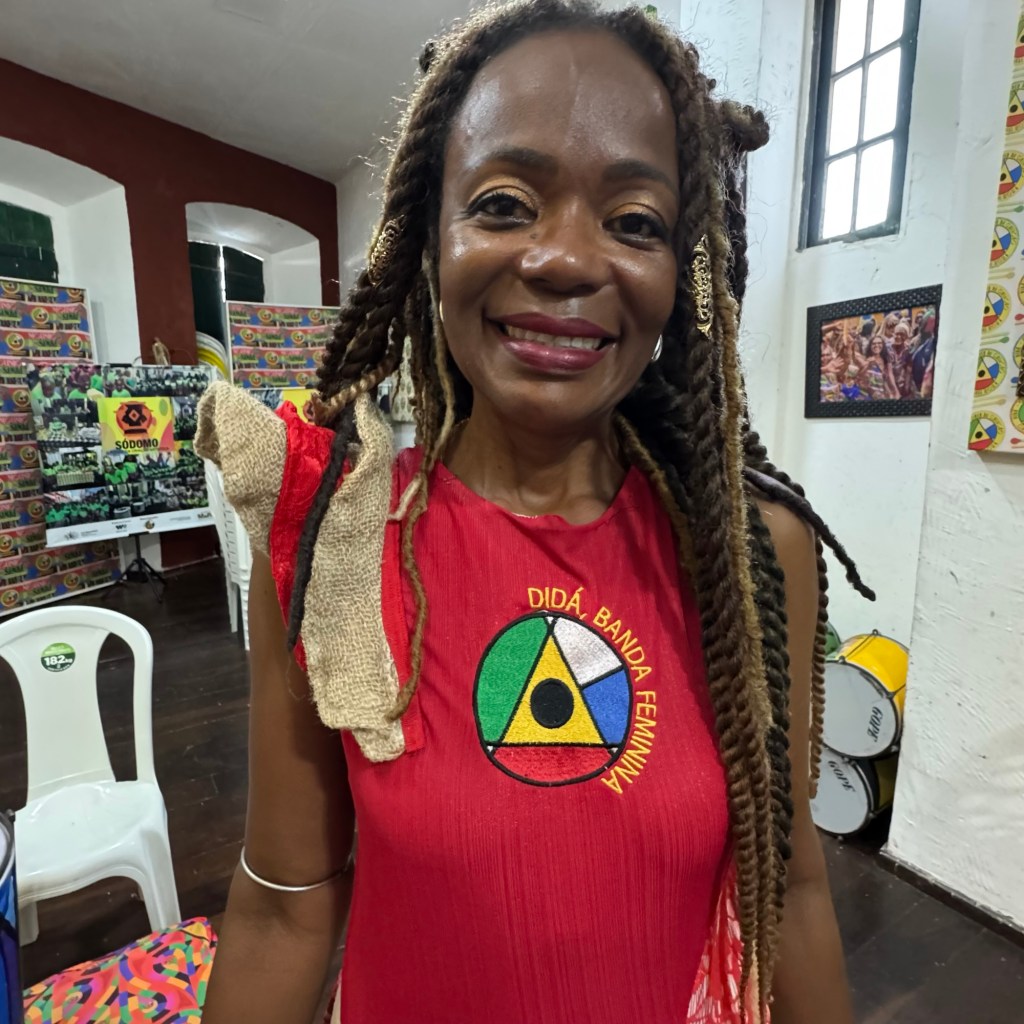
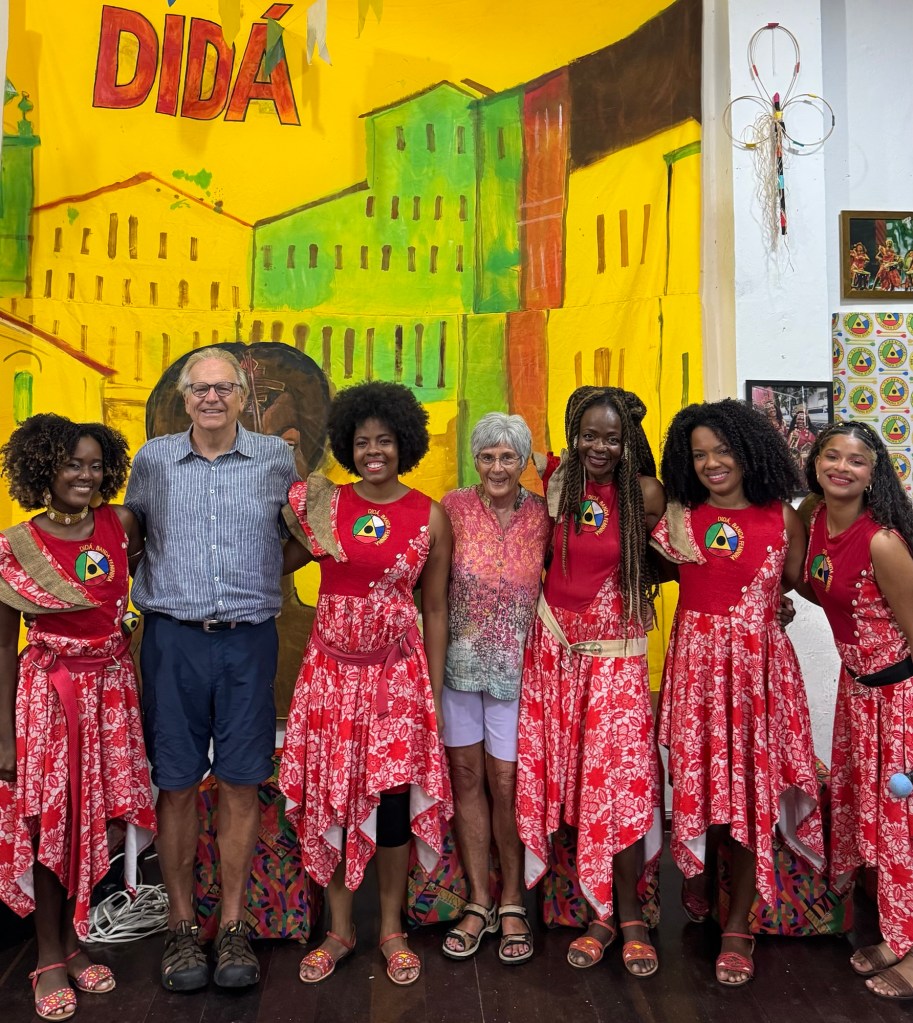
Soon they were drumming again with Mark and I joining in on our designated drums. It was a lot of fun and loud enough that you could not hear our mistakes. Once we all stopped playing, they introduced themselves and told us a bit about how they each got into drumming. They ranged in age from 17 to 55. Some had families that supported them and others had fathers who did not. There are about 40 ladies who drum during the year and 90 who participate in carnival time.
We left the school at 5:45 and drove to our hotel. Up on the roof top we had a drink, then went to dinner in the hotel dining room. I was in bed asleep at 8pm. Very nice day, but too much booze at dinner for me.
Monday, October 6, 2025
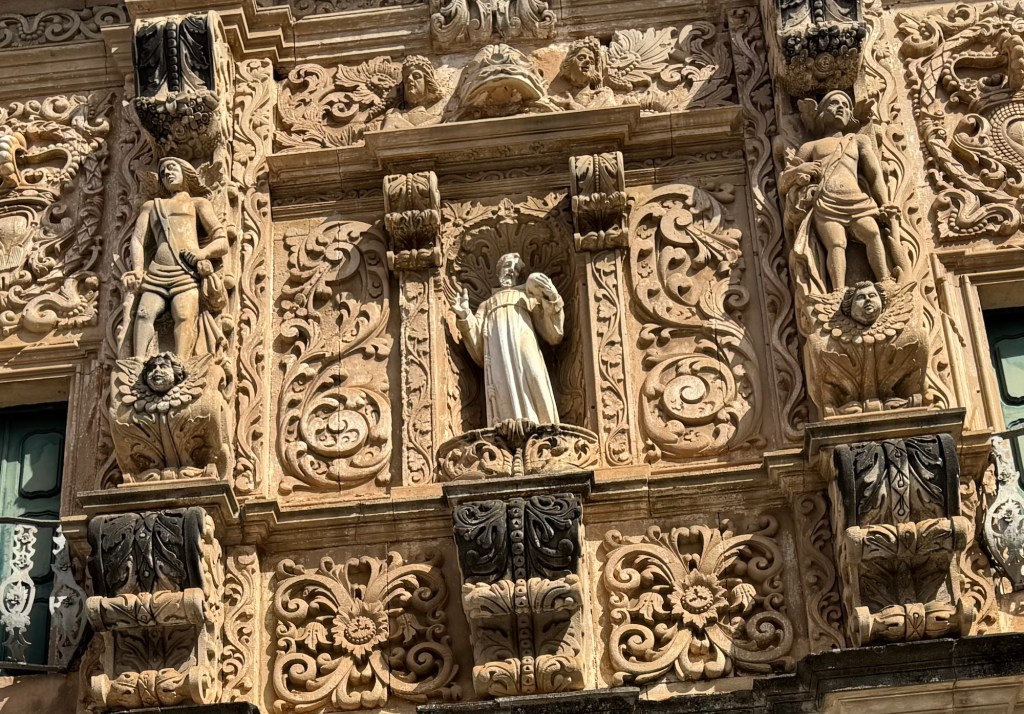
Lots to see and learn today. The style of buildings is important in Salvador as each building is prominent even if it is derelict, as many are. We learned to differentiate between, colonial—2 stories with simple lines and visible roofs and light colors; baroque—more fancy with roof not visible, 3 stories or more and use of different stones; eclectic—a mix of several styles influenced by French and Italian design; art deco—transition style in the 40’s between eclectic and modern; rococo—blue color on roofs, very ornamental; Spanish baroque—more ornamented than Portuguese baroque.

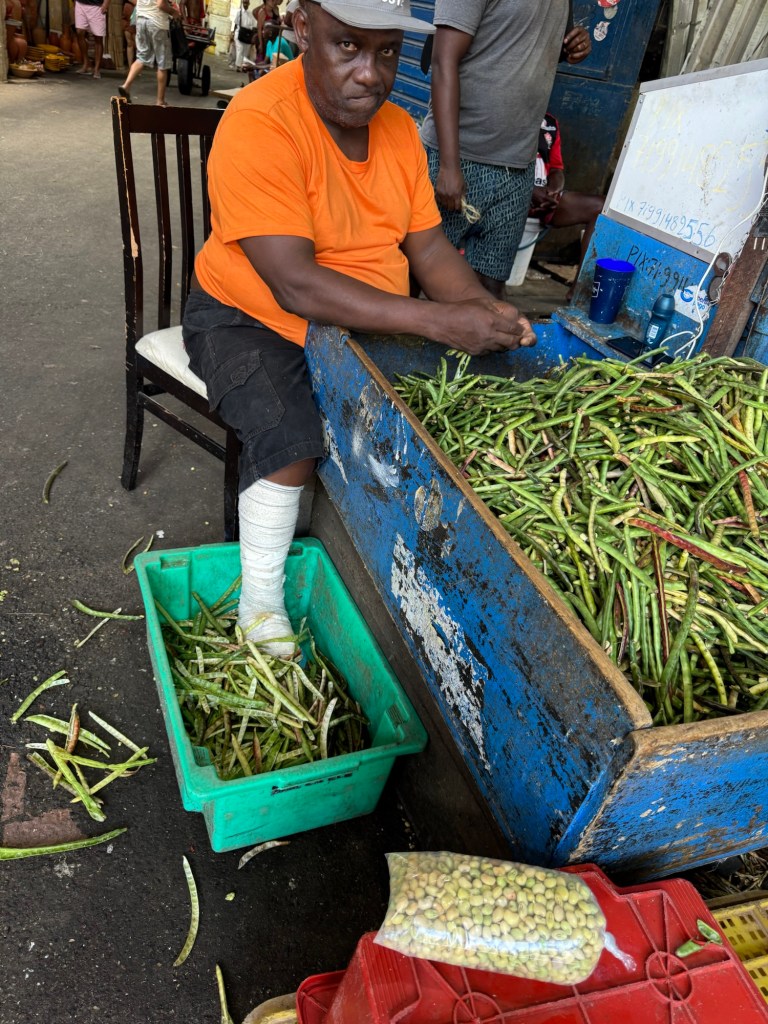
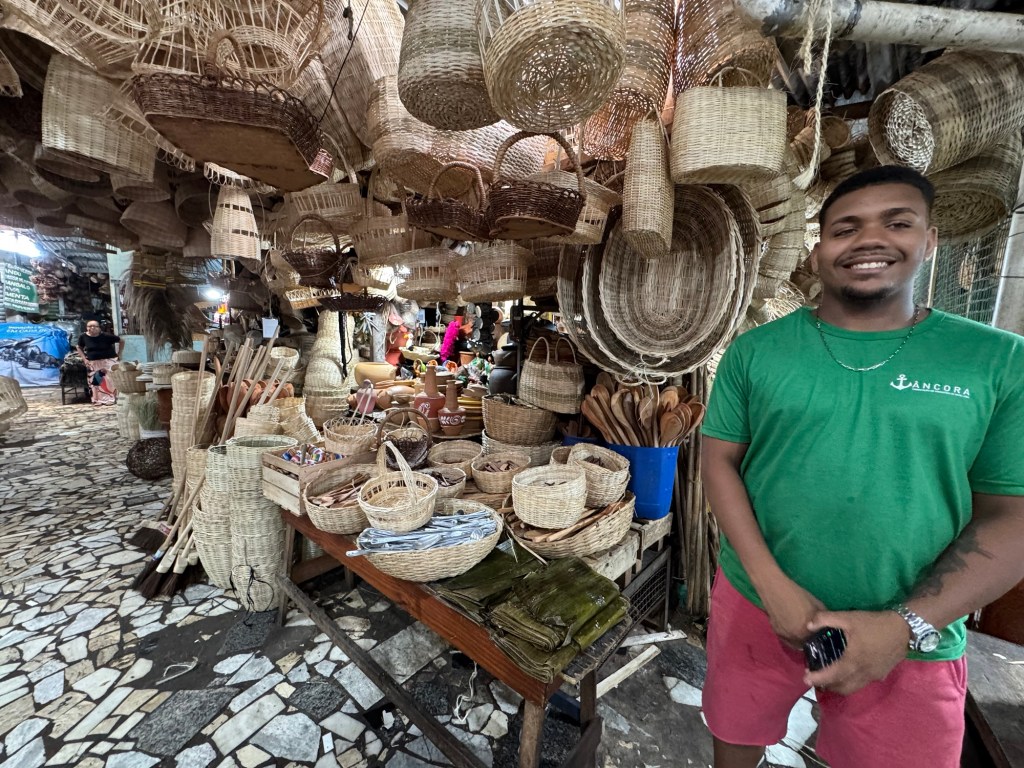
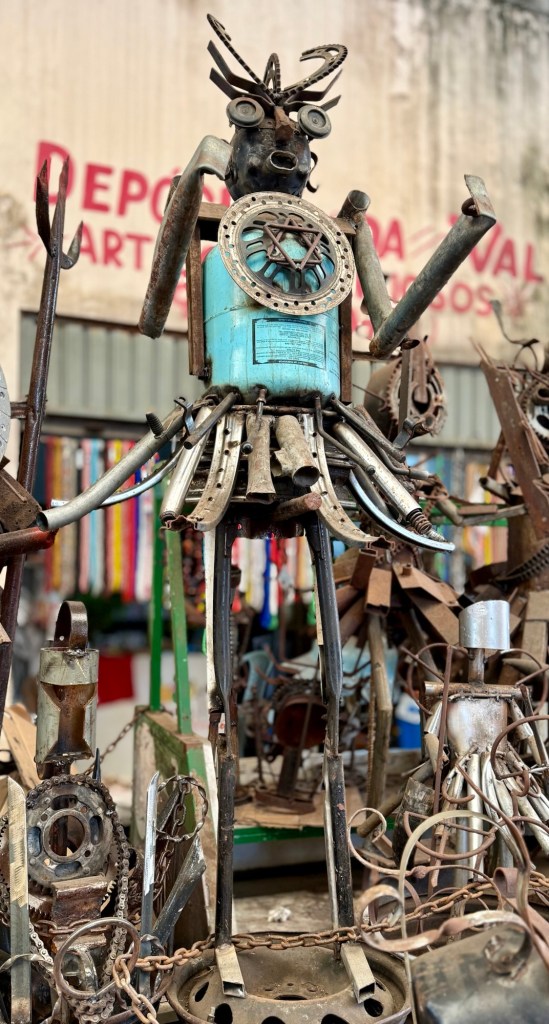
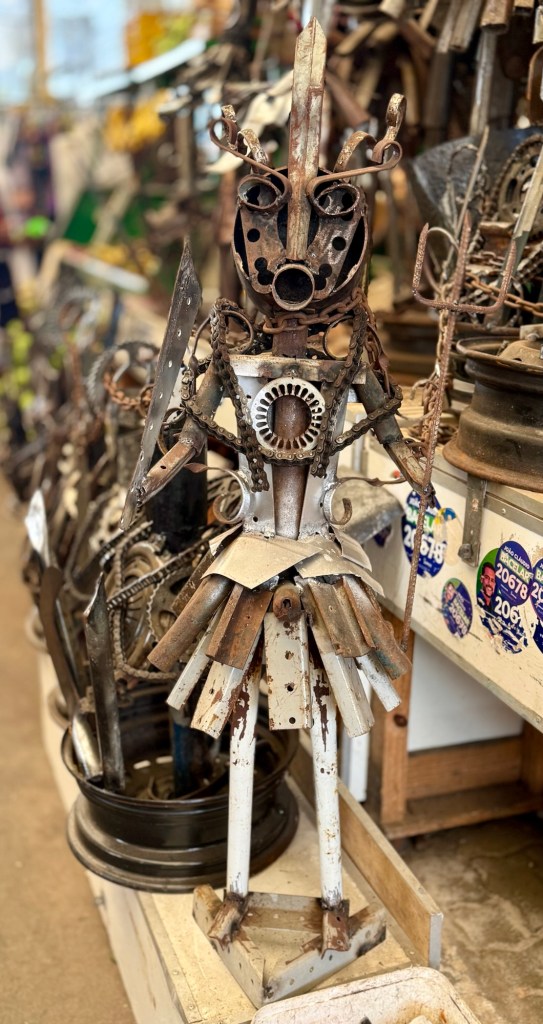
While looking at various styles of buildings we drove to the city’s large African market and did a long walkabout identifying different foods. The indigenous African religions are represented by different products for sale including woven baskets, special foods and religious, metal sculptures we saw. The name of the local religion is Candomble. It became popular in Brazil in the 1800’s, especially in the state of Bahia, where Salvador is located. Here are some baskets and statues.
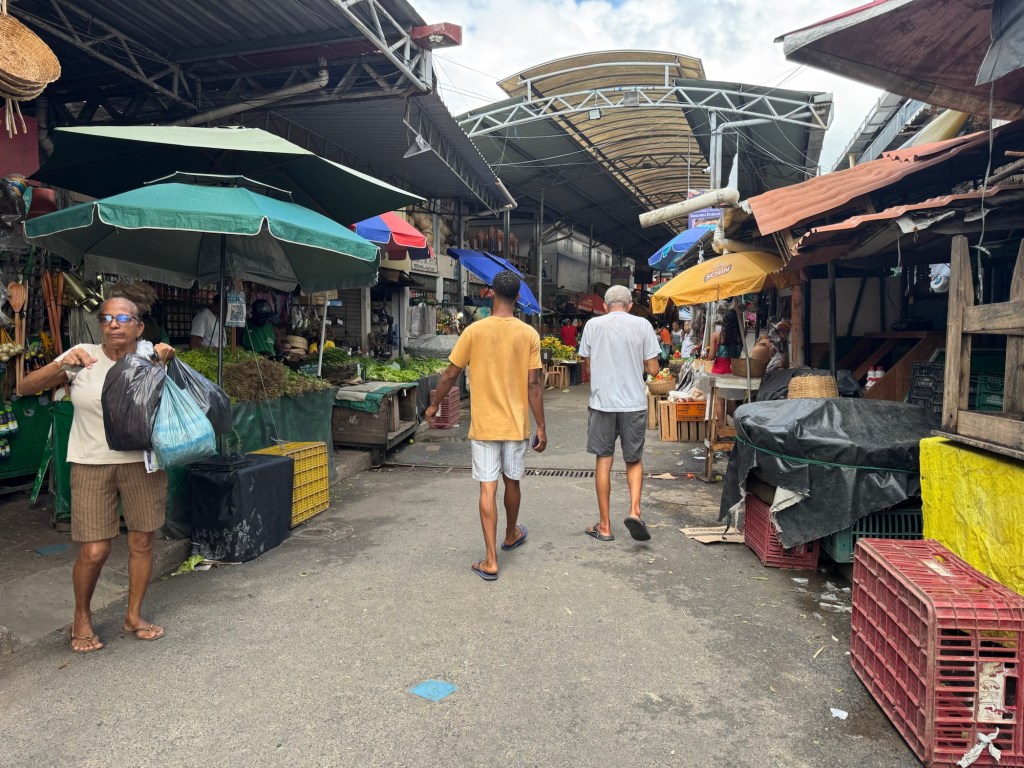
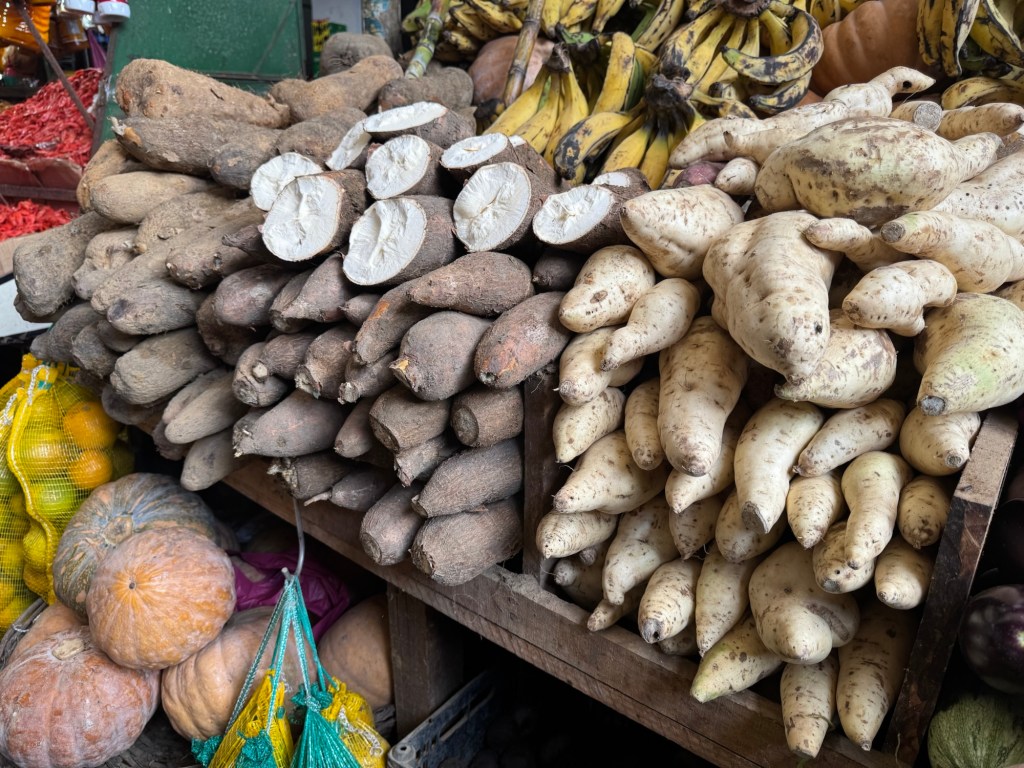
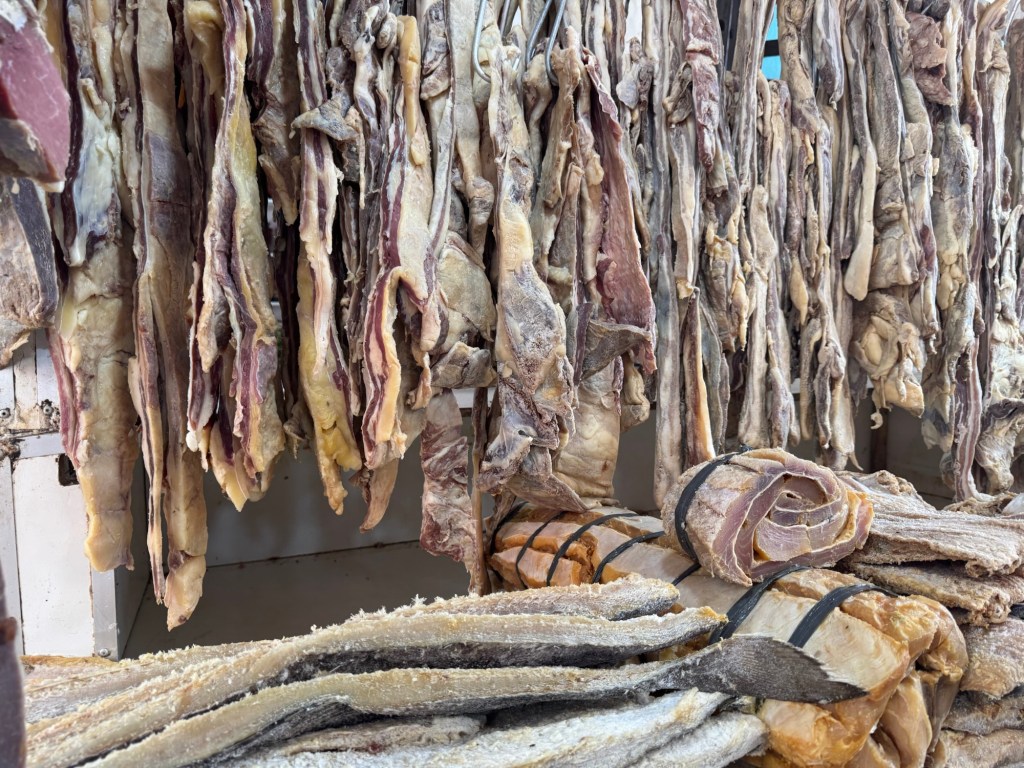
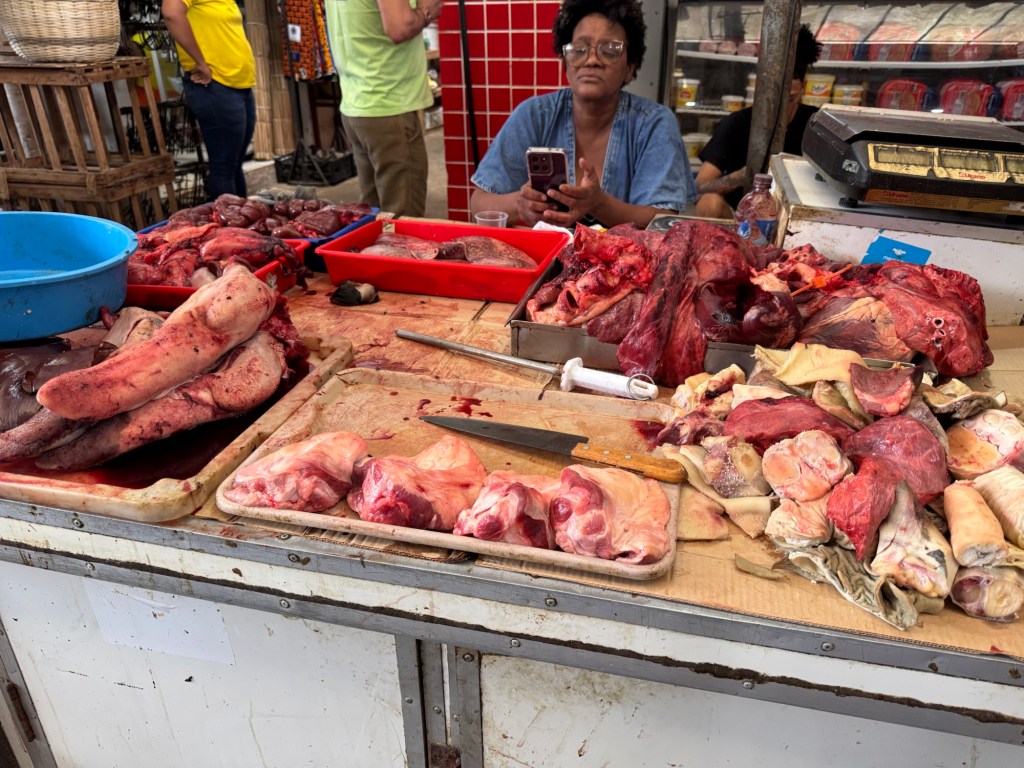
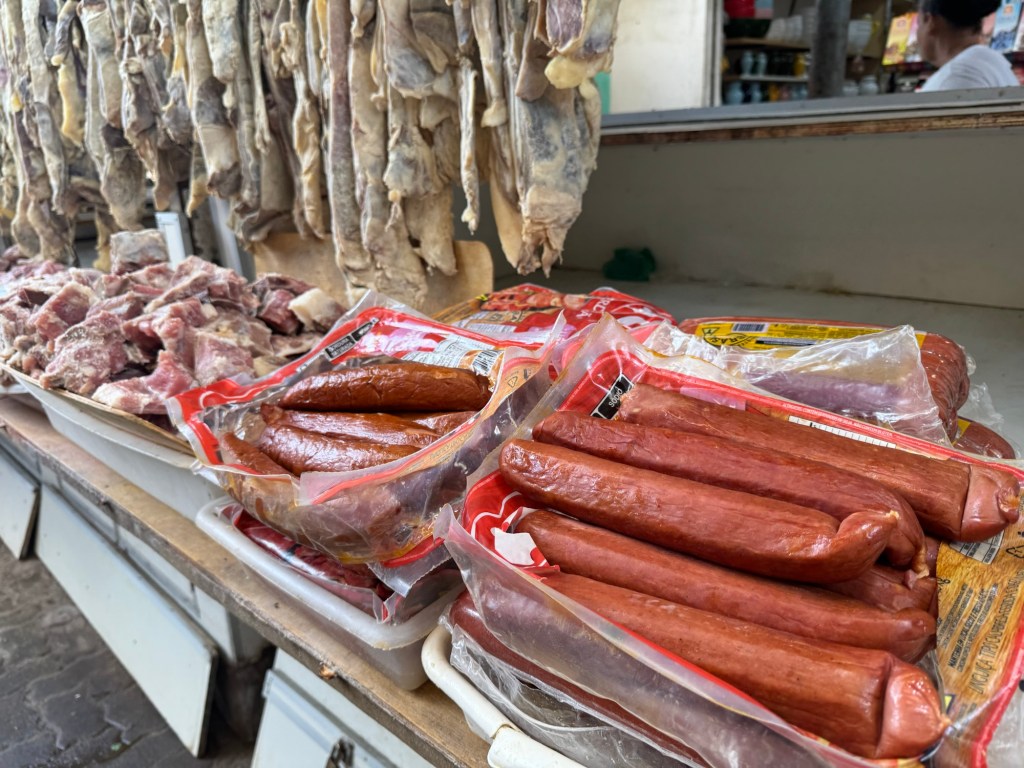
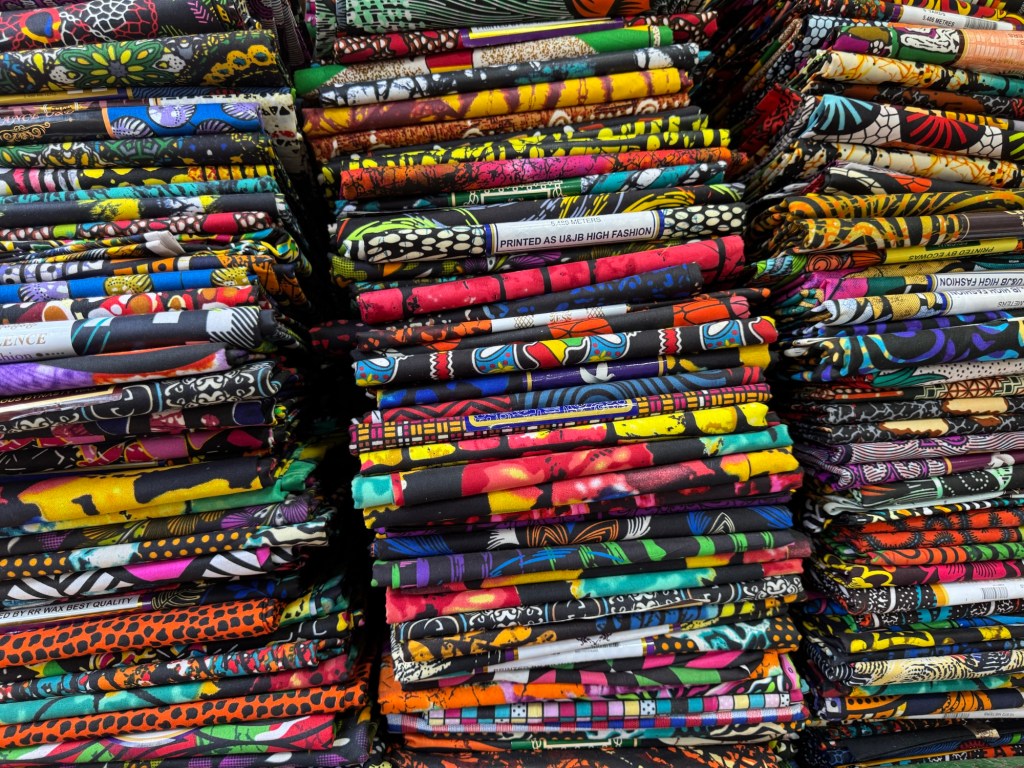
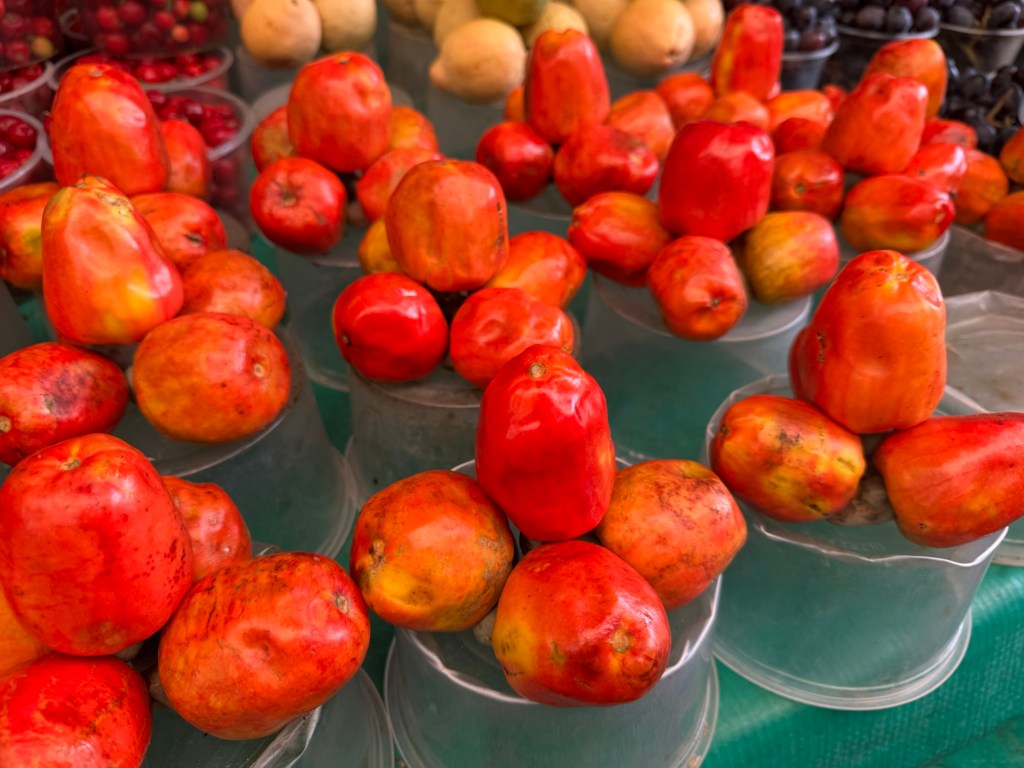

We also identified several foods: acerola, looks like a cherry, but is sweet and sour and exceeding high in Vitamin C; cashew fruit, looks like a cashew nut; sweet potato, cassava and Inhame, an African root; massive, a vegetable; Tamarine, a sweet and sour spice; Tobaco, used for religious offerings and for fertilizer; genipapo, similar to a fig, dark and sweet and used to make liquor. And other things I did not catch.

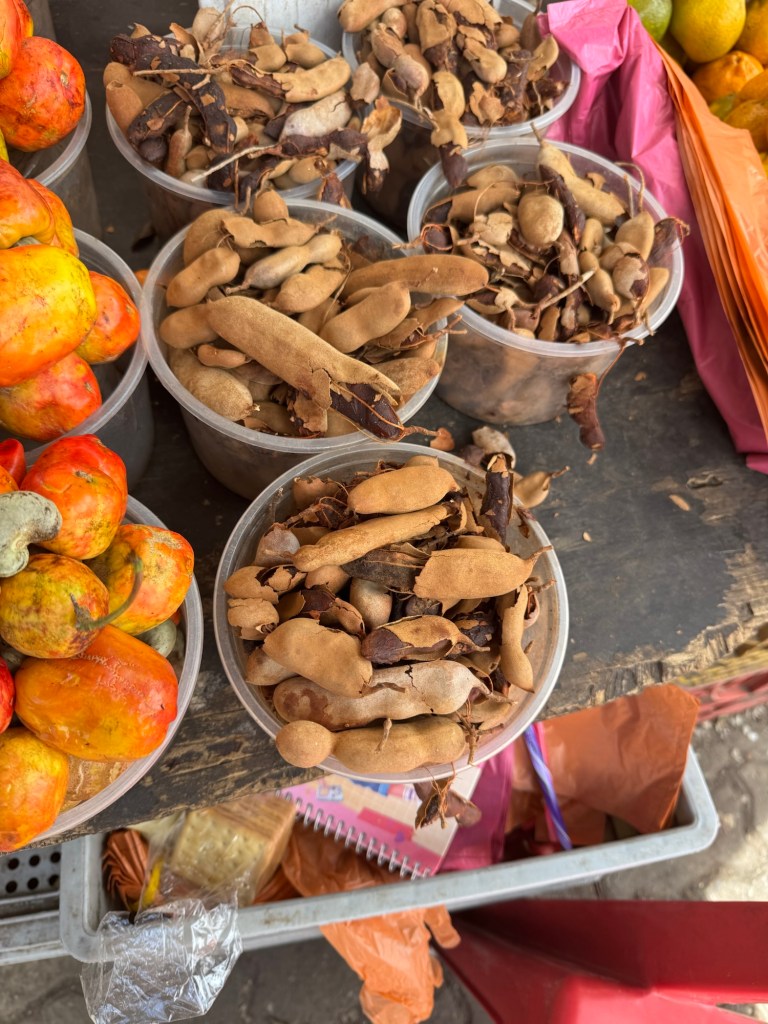
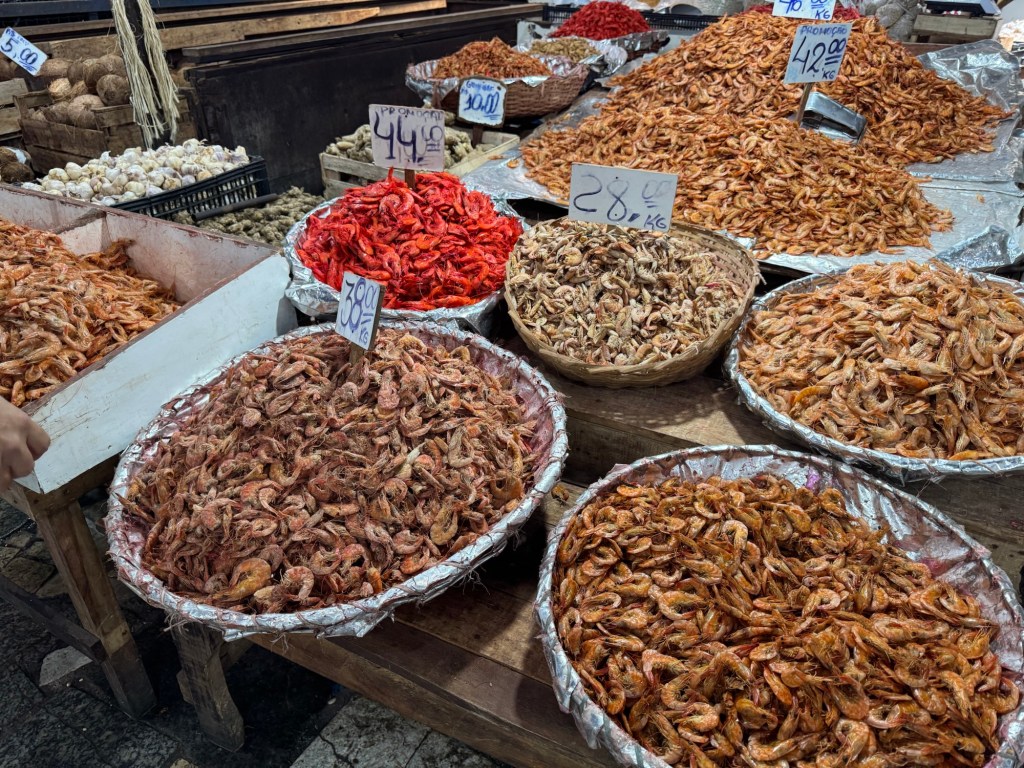
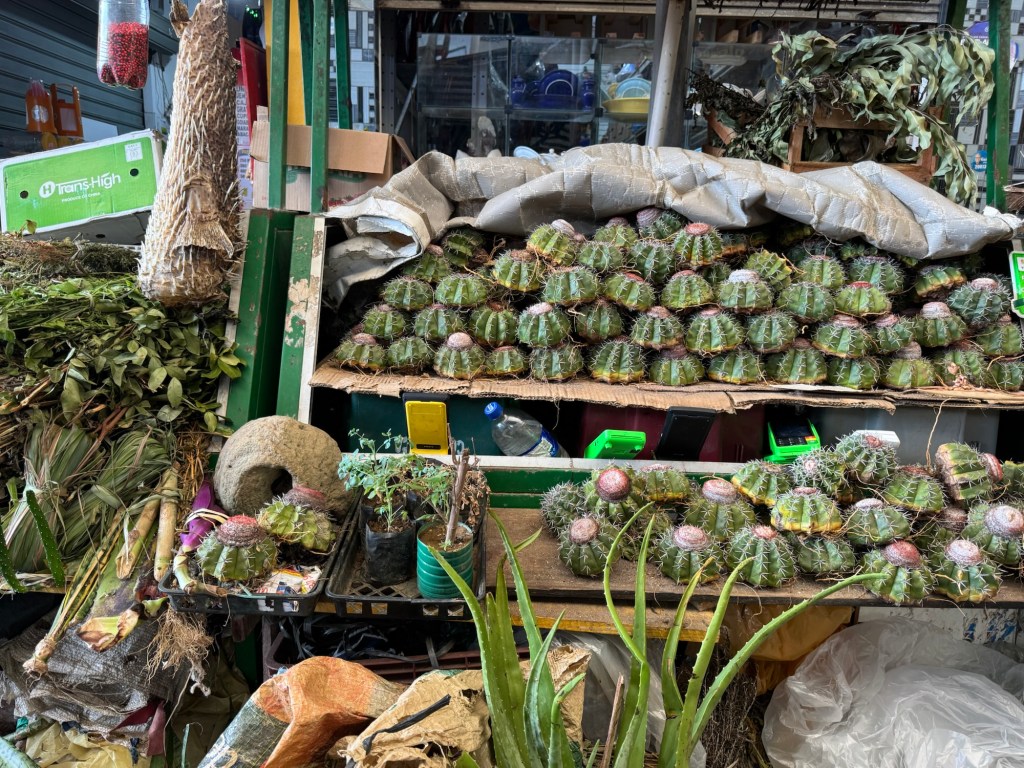
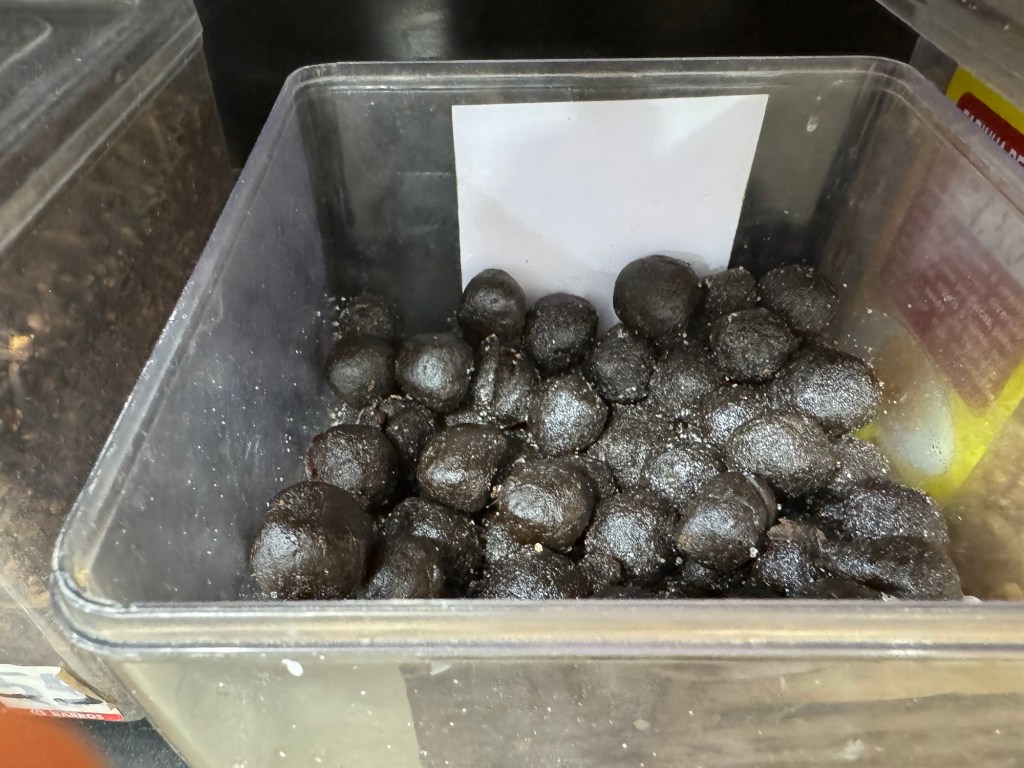

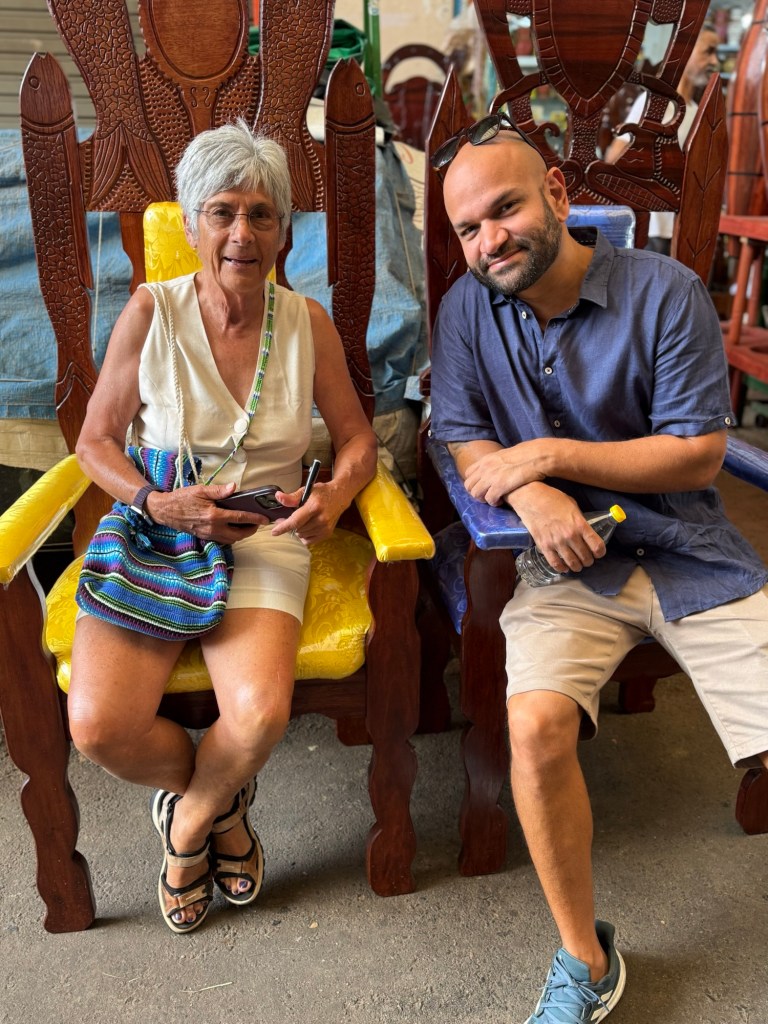
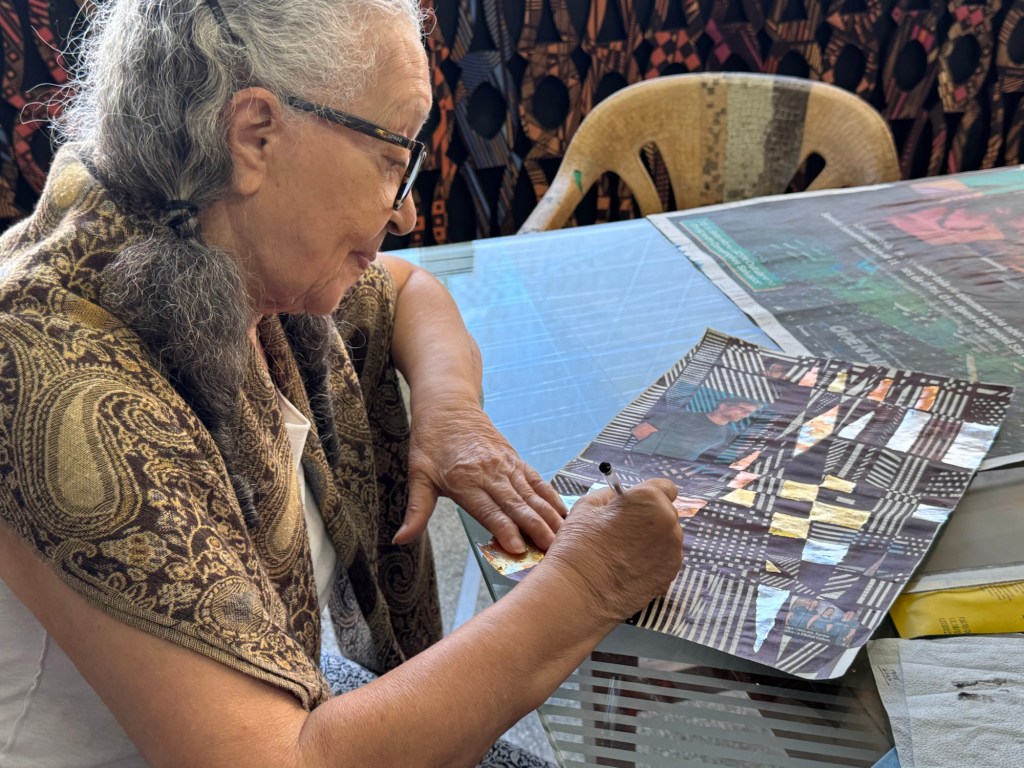
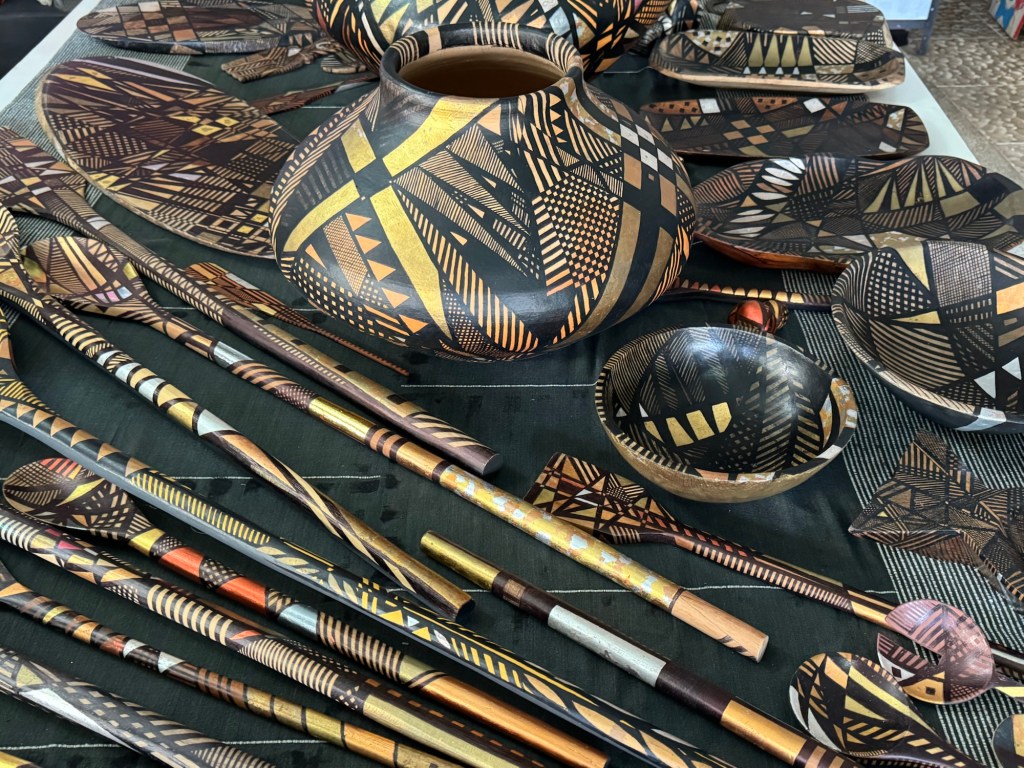
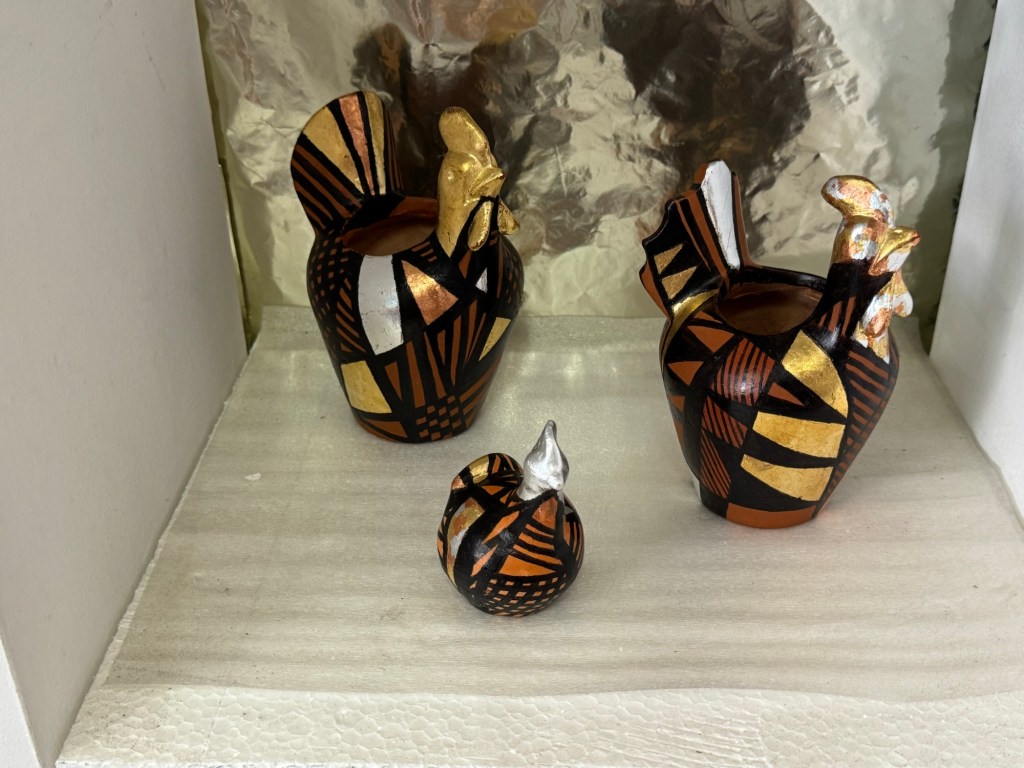
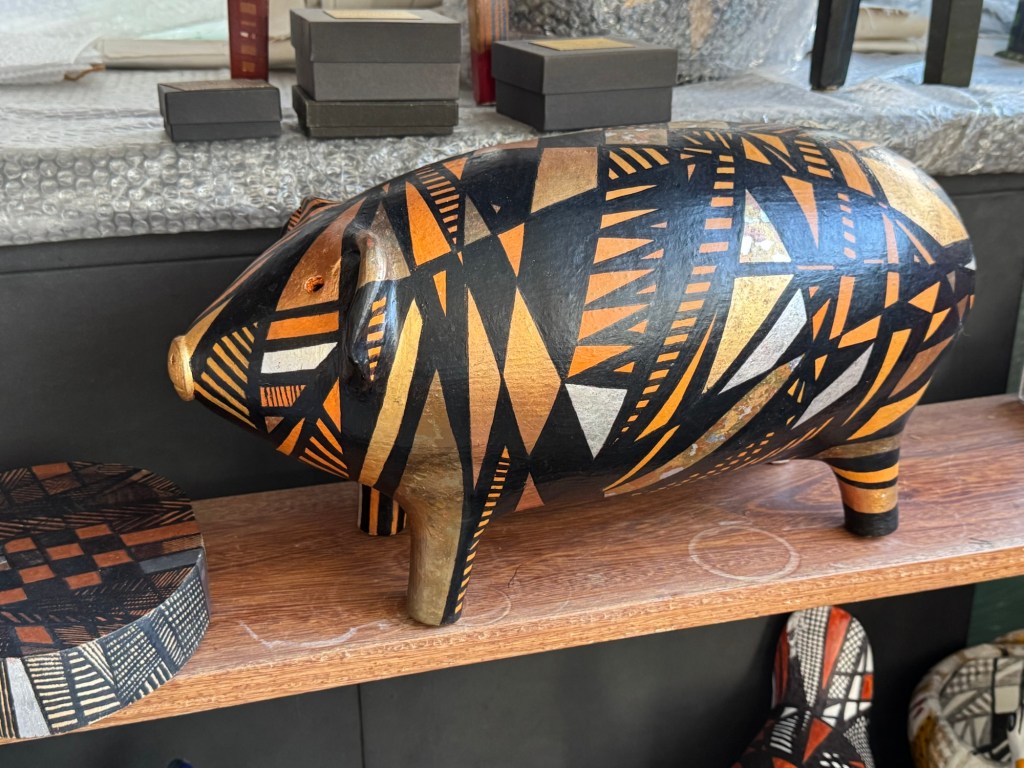
From the market we went directly to the home and kitchen of Chef Murilo. He is a delightful character along with his mother, an artist of some note, who is preparing for a show she is calling “Black is Beautiful”.
After some light conversation we began the class. The first course will be Casquinha de Siri, or little shell crab. The main course will be another Moqueca, like the one we had with Mica, only with Hake fish rather than shrimp.
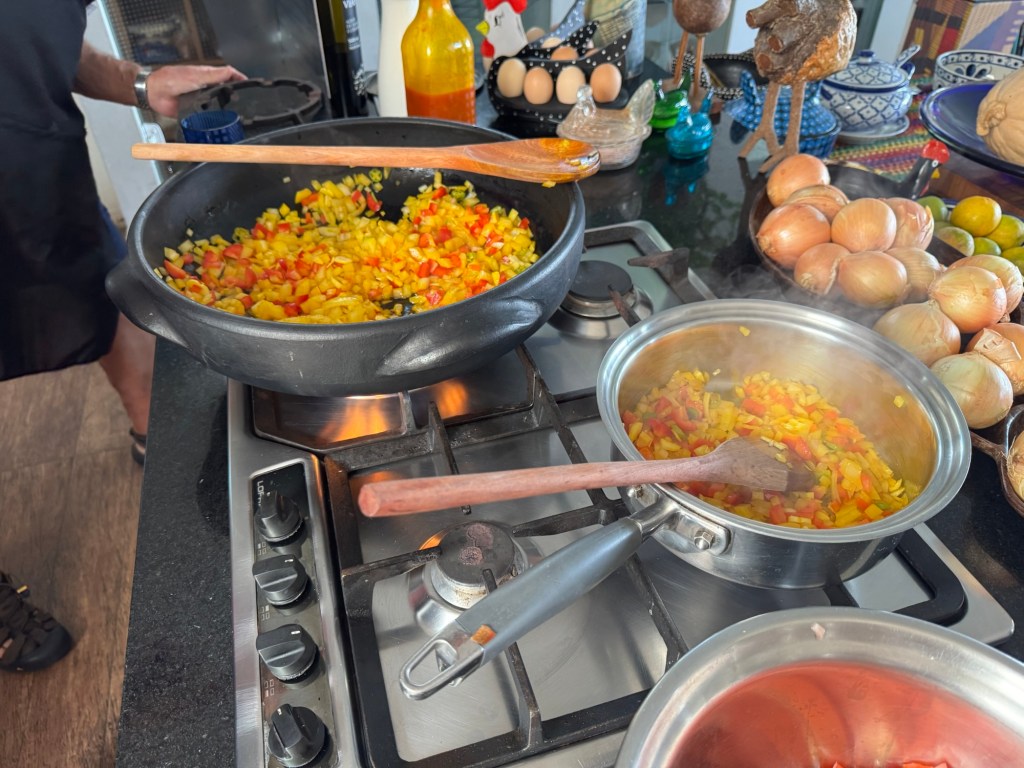

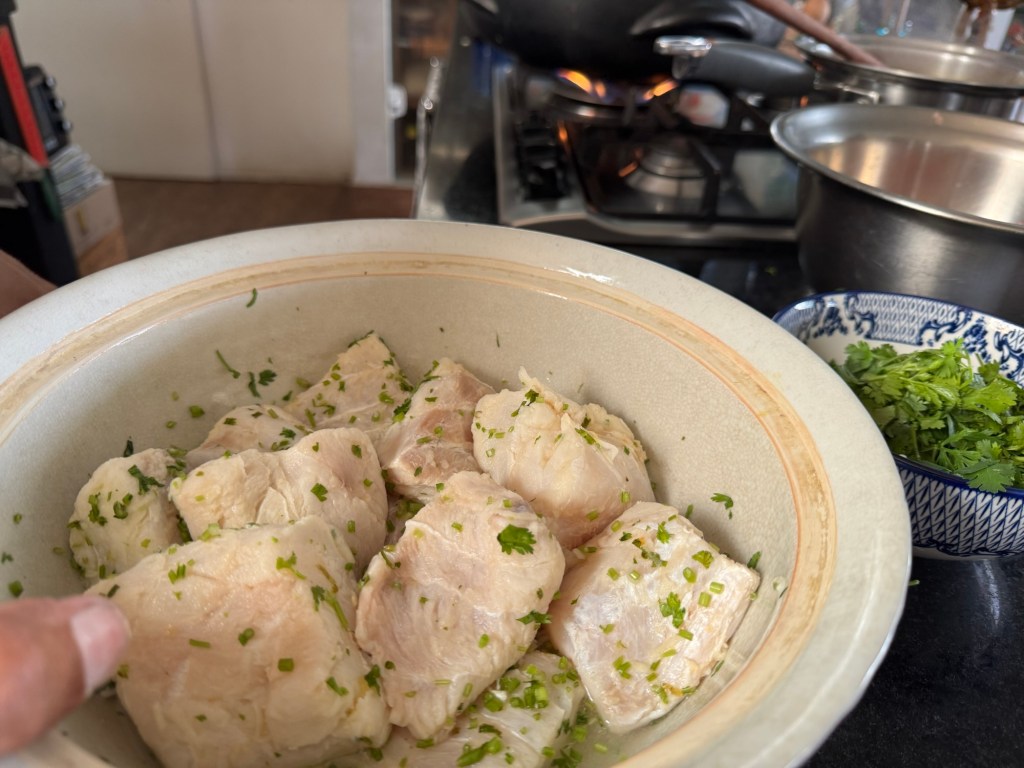
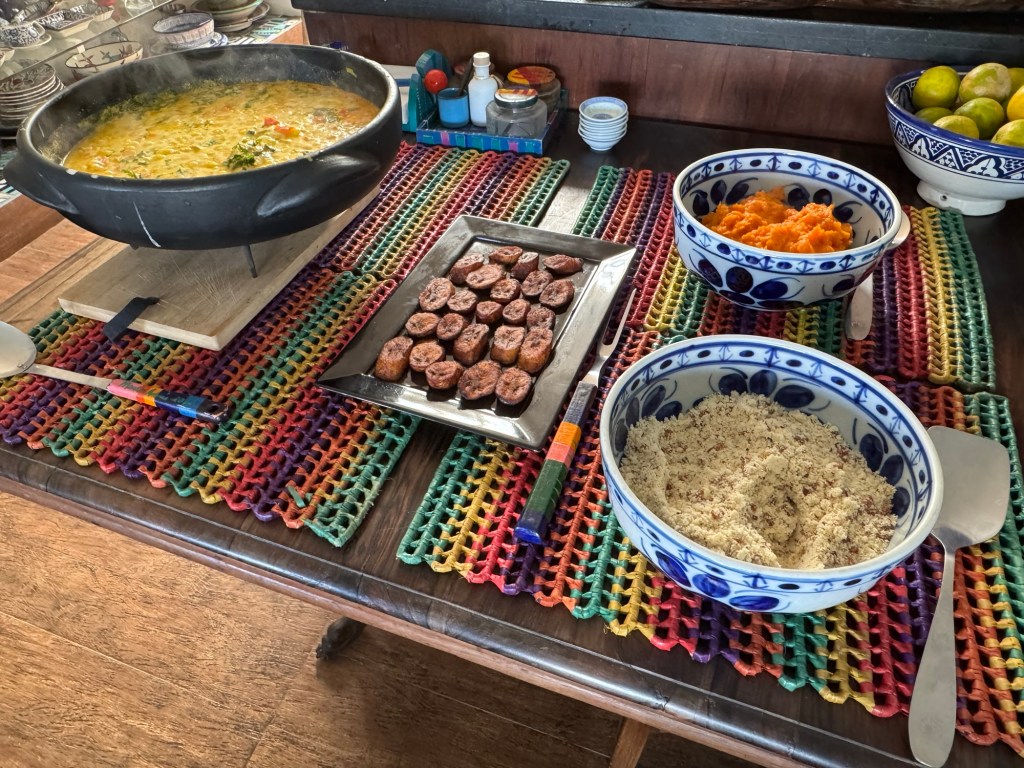
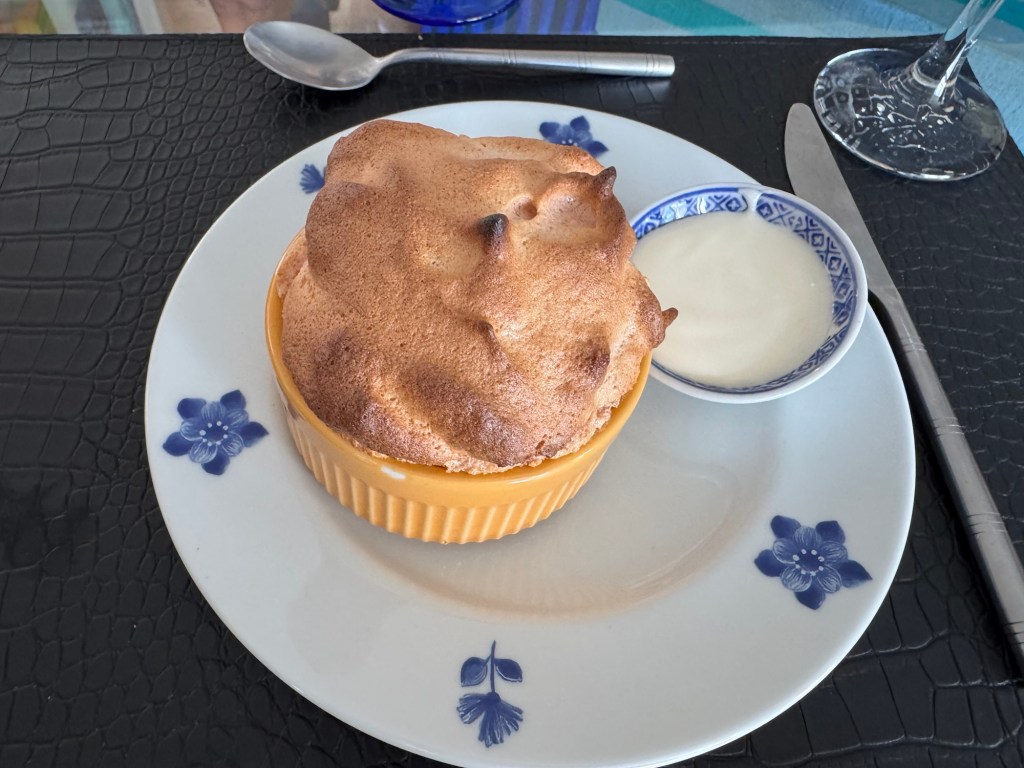
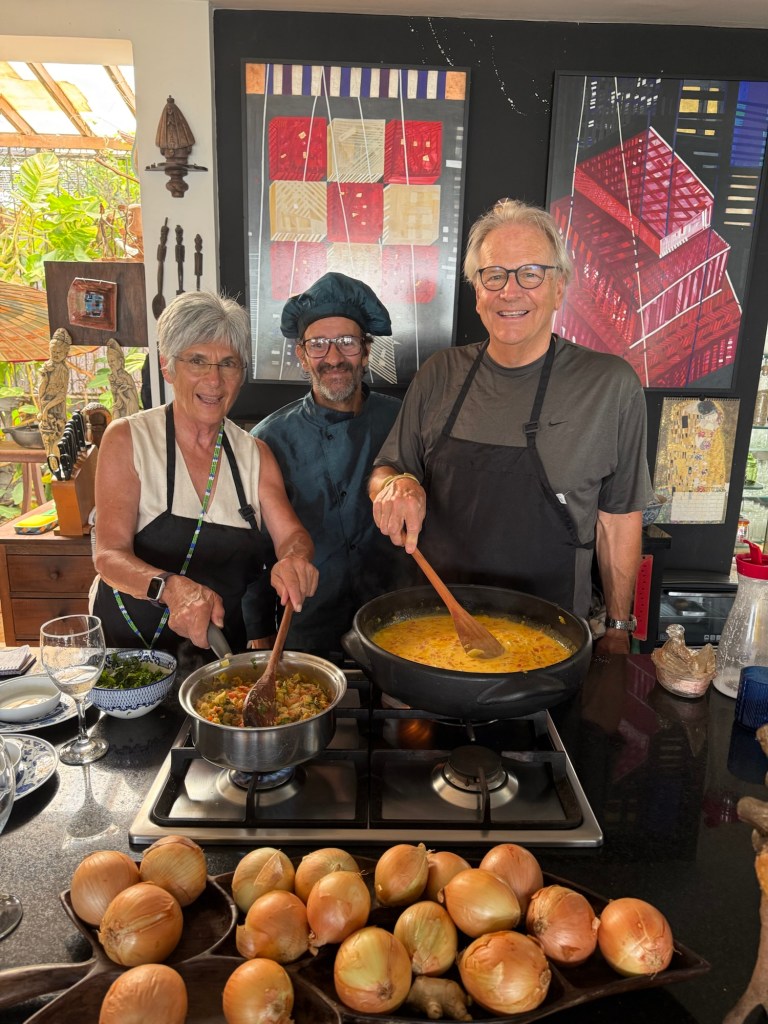
Our task was to chop the onions, tomatoes, peppers, cilantro while the Chef poured olive oil and palm oil into two heating pans. The large pan was made of clay crockery. When the pans were hot, Mark put part of the ingredients in the small pot for the first course and the rest of the chopped vegetables into the large one. We chatted about the Chefs history while waiting for the food to cook. Eventually, the chef put the fresh crab into the small pot and I stirred it while Mark watched the large pot. The chef put hake fish into the large pot and served up the crab dish along with cassava.
The crab dish tasted better than I expected. When we finished the crab, the hake was cooked and we each served ourselves. I already knew the Moqueca would taste good and was happy to learn how it was made. Hopefully, Mark will make it when we get home.
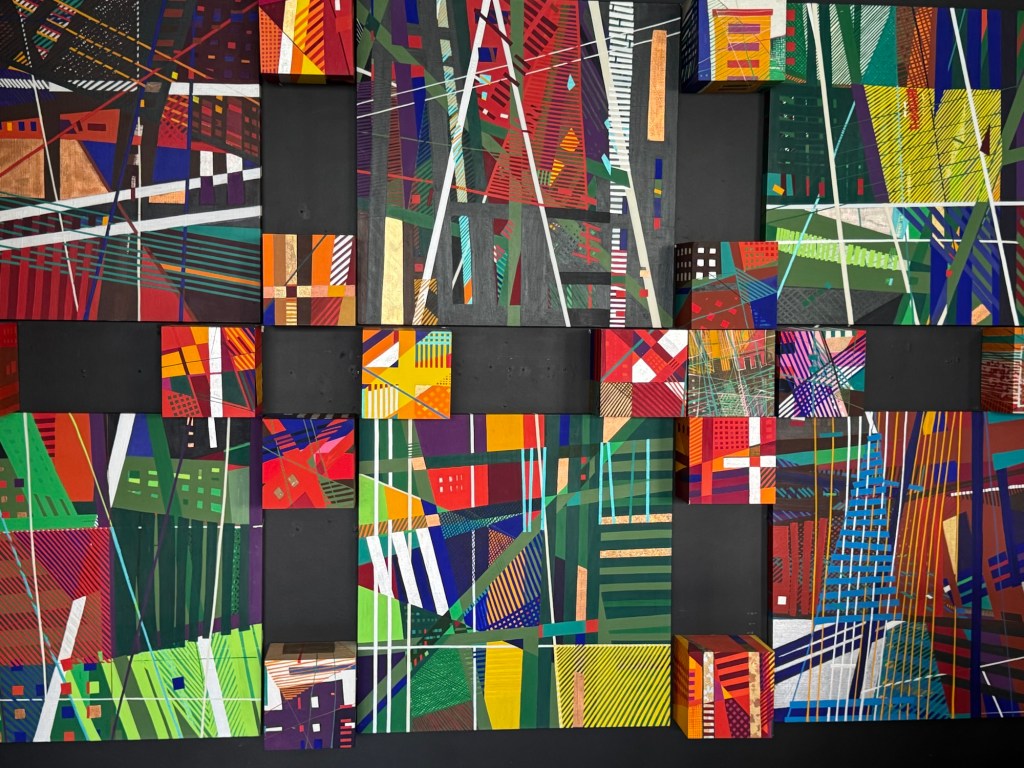
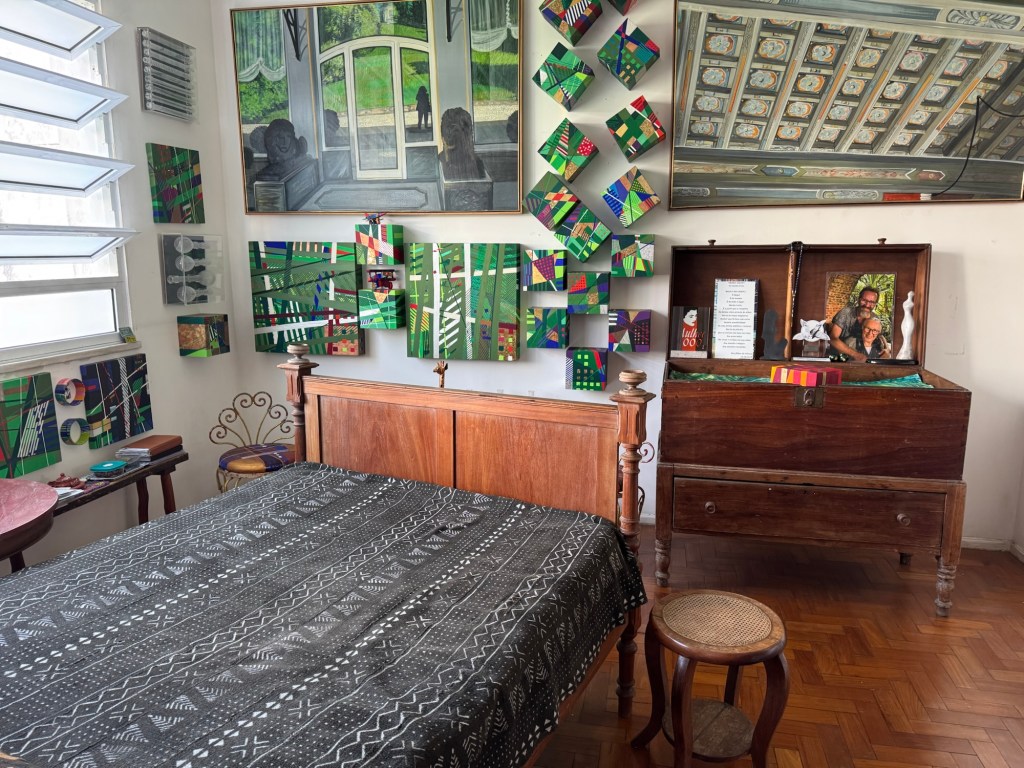
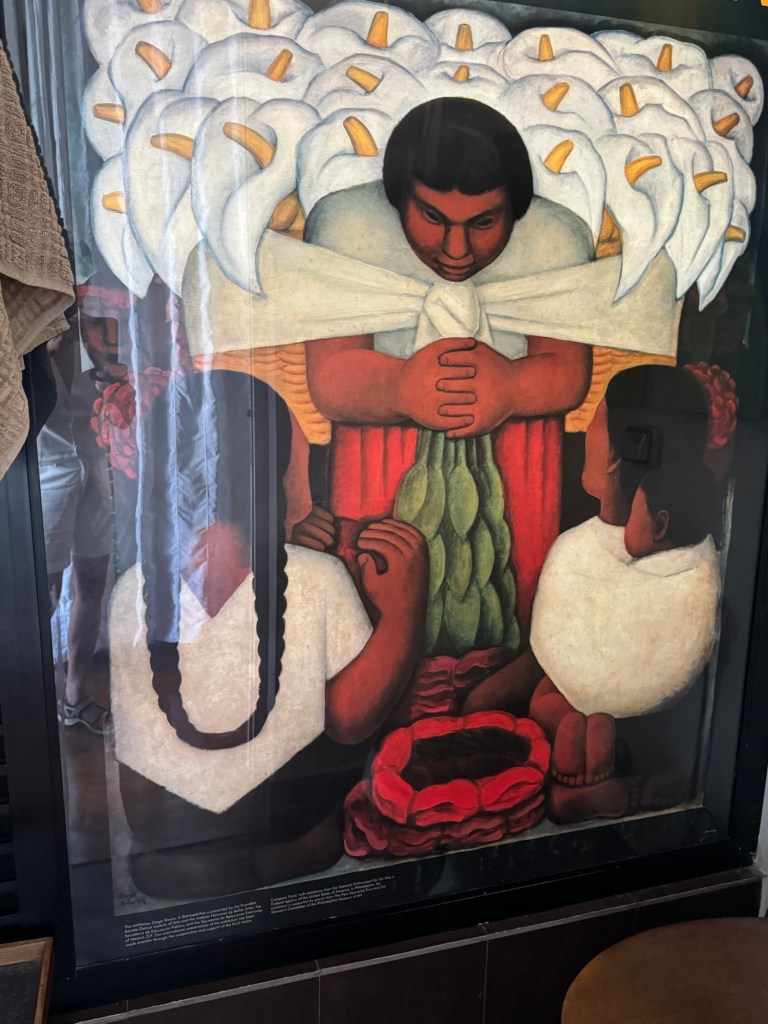
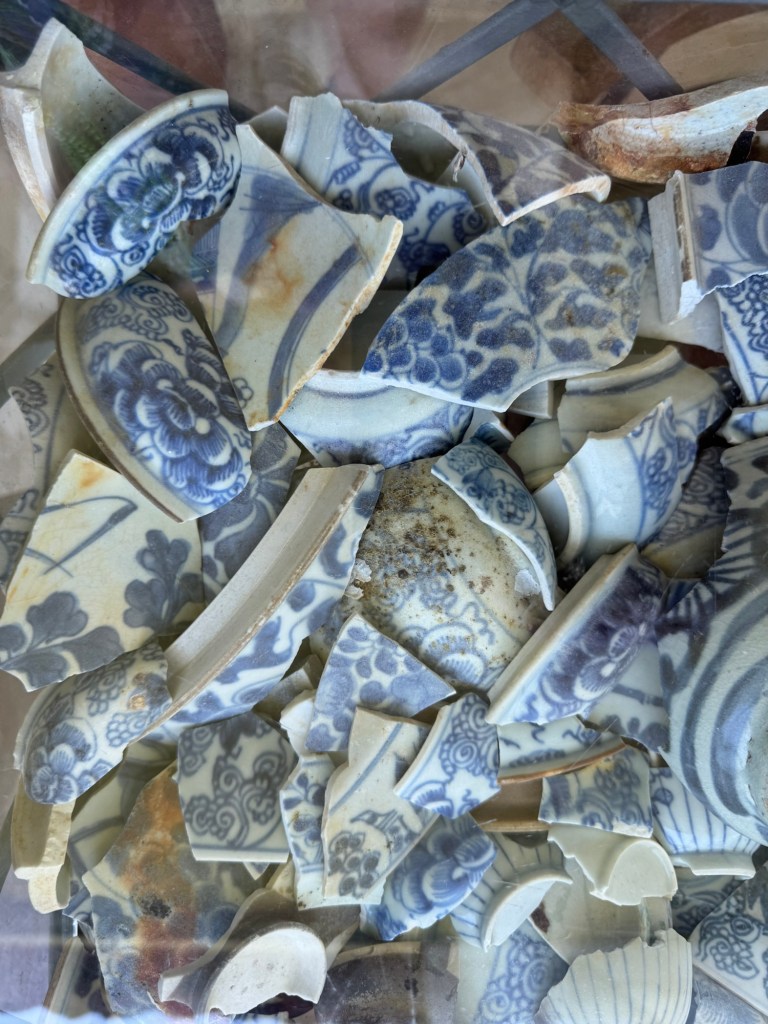
The chef and his mother gave us a tour of their 4 story house. Every corner was full of her art, including the furniture itself. They made for an interesting pair and I almost hated to leave.

From there we drove back to the whipping post square to see the inside of the Our Lady of Black People Church.

At the entrance is the Virgin Mama Muxima. The church was built between 1709 and 1890 outside the city walls. It was designed, built and painted by black people. The ceiling was painted by Joseph Pinto Lima Dos Reis in 1890. It was finished at the time slavery was abolished. We toured the church, sacristy and upstairs rooms.
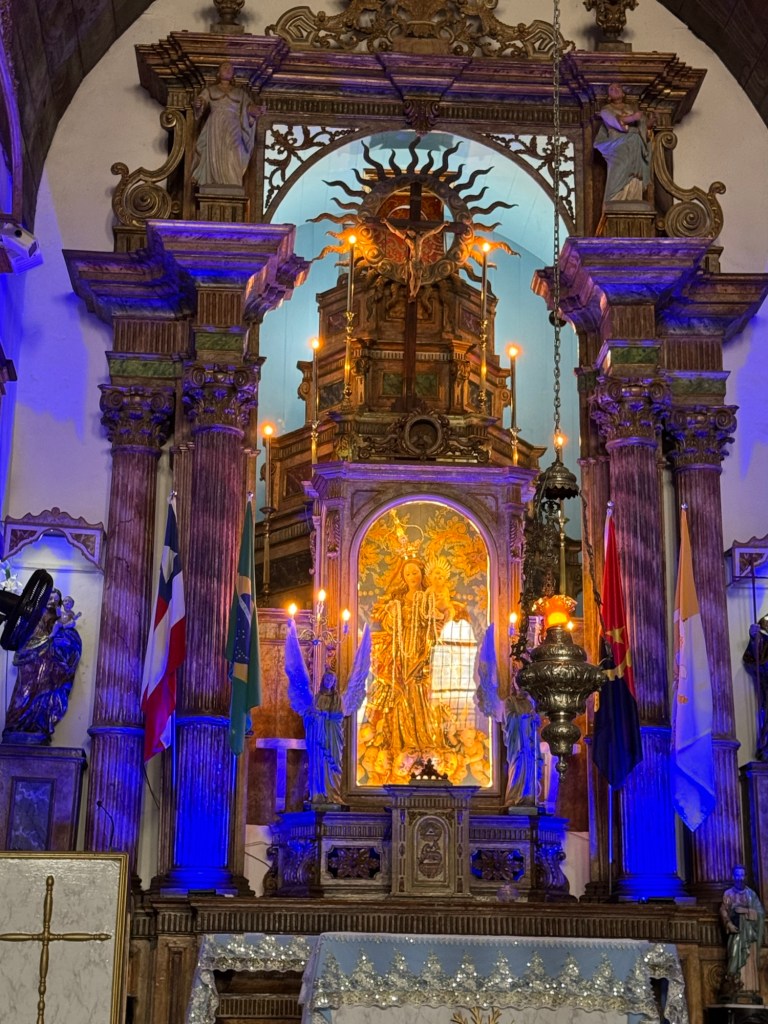


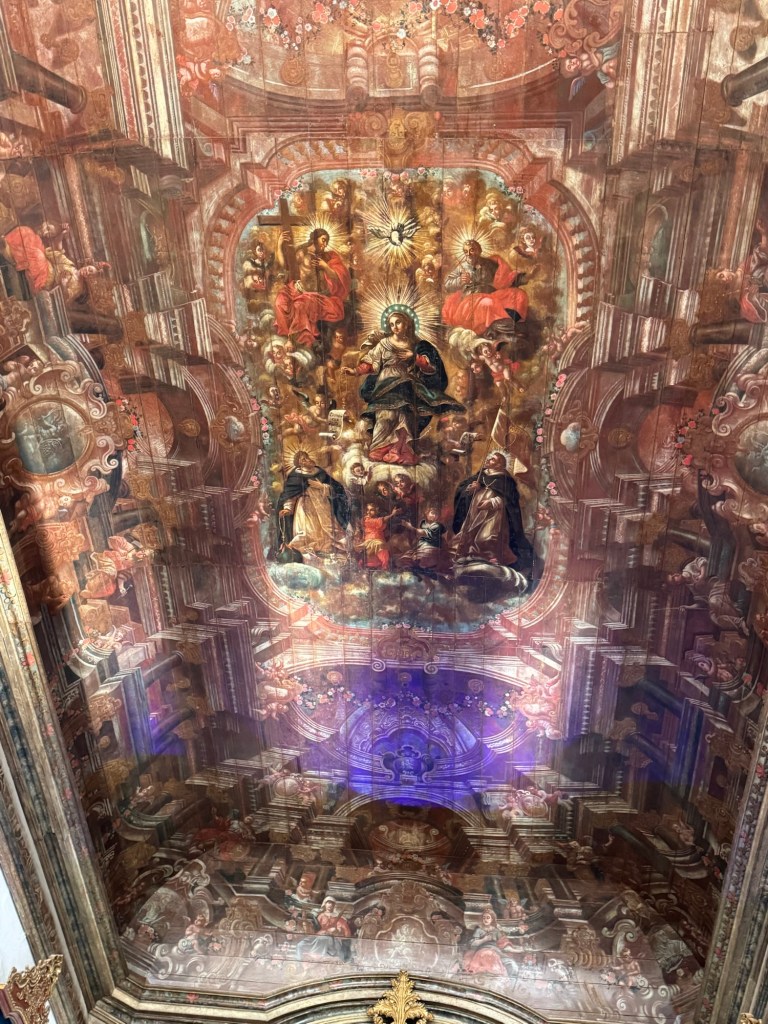
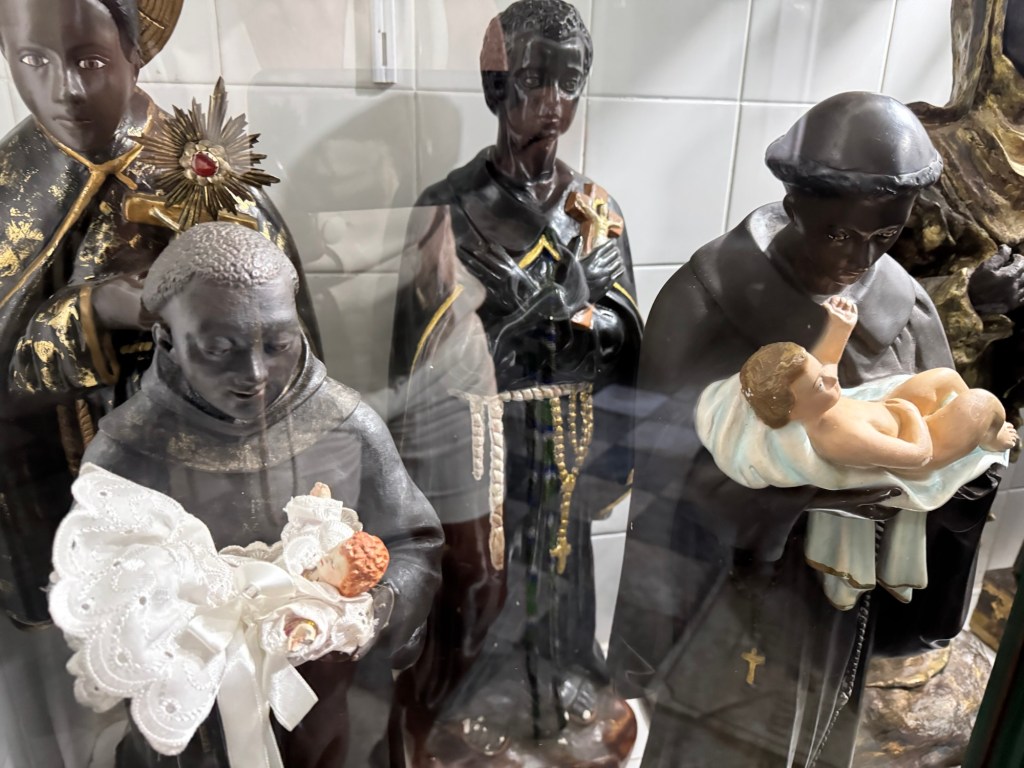

The statues include saints I never heard of; St Benedict’s, St Efigenia, St Anthony from Categero, St Domingos de Gusmao. I did recognize Our Lady of Conception, St Joseph and the Pieta.
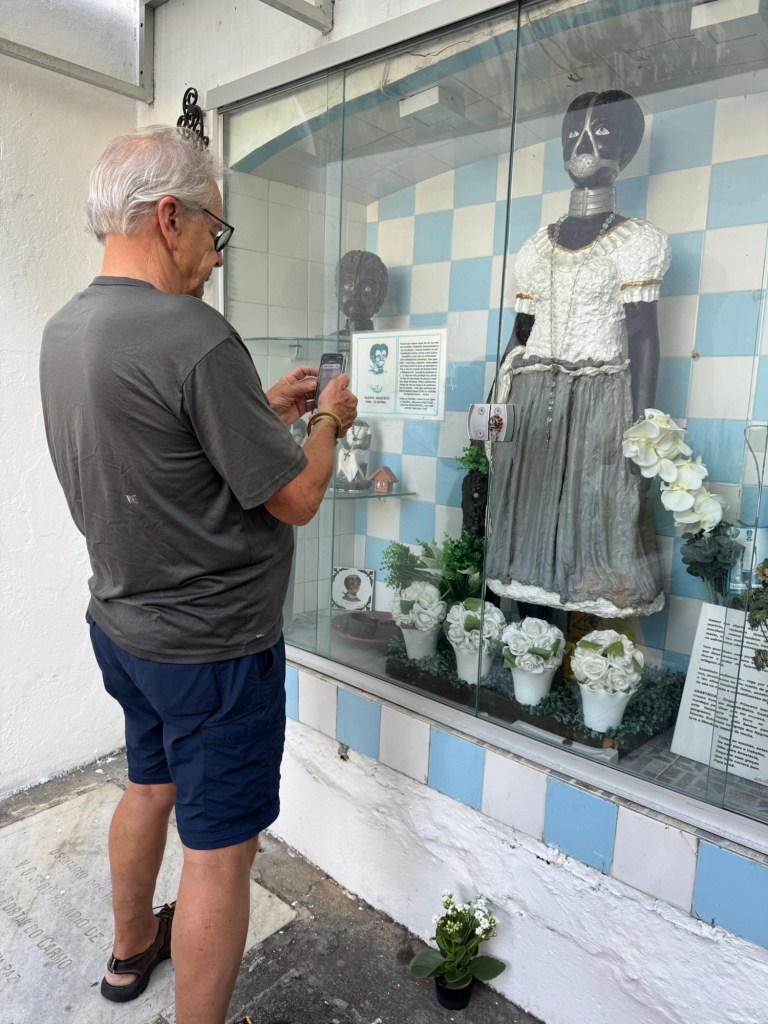
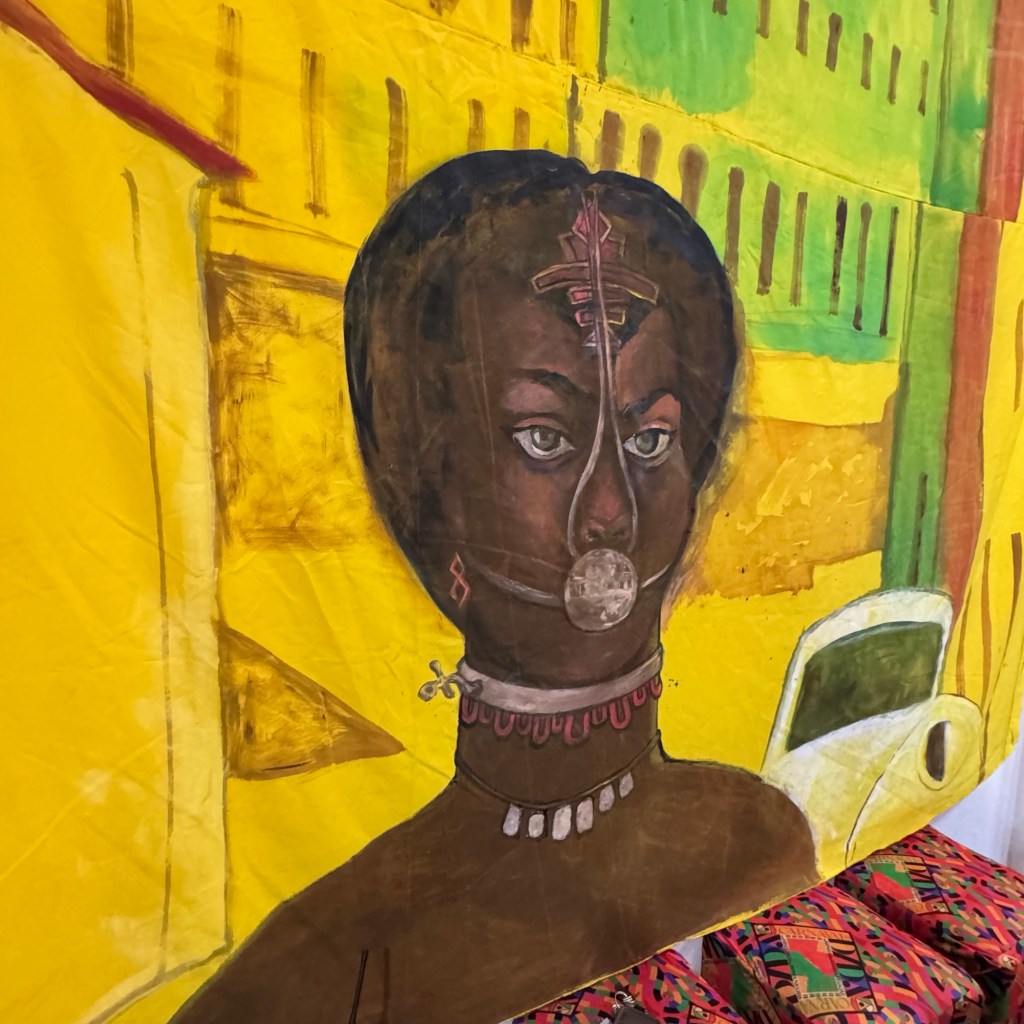
There was also a photo of a beautiful lady named Anastacia (born around 1740), who was a slave with piercing blue eyes. She rebelled against her slave owner and slavery and was forced to wear a metal mask and collar that kept her from speaking. She died of tetanus from wearing the collar and has been considered for sainthood by the Catholic Church.

Some of the last arriving slaves went back to Benin after they were freed. They had come to Brazil as Muslims, returned to Benin and built a mosque according to the style they learned about while in Salvador. They were recognized as “Agudas”, returnees after the abolishment of slavery.

In the evening we went to a Folklorico Show about the Indigenous religion and dances. We saw costumes of the different gods, dances they did as well as a samba dance.
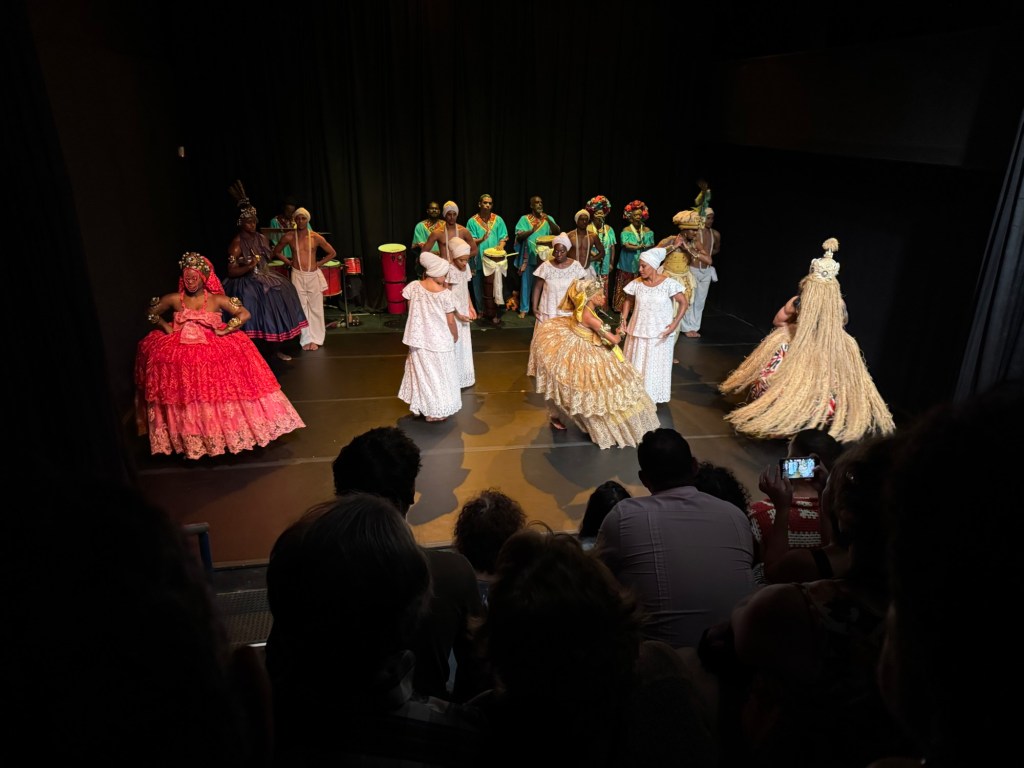
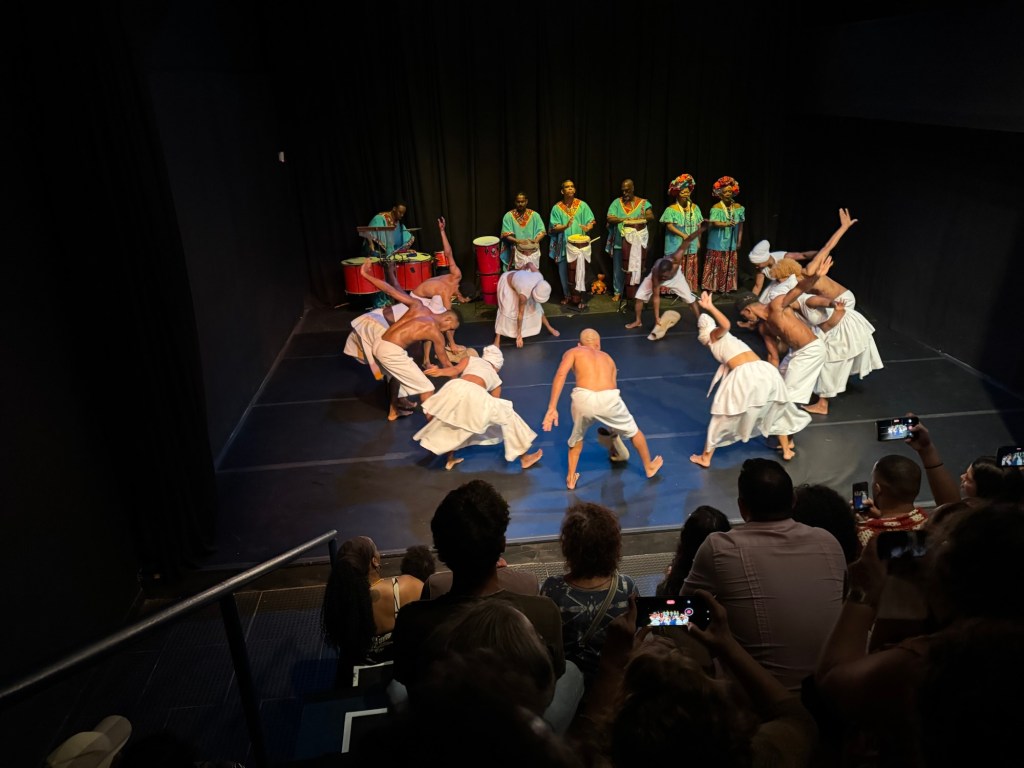
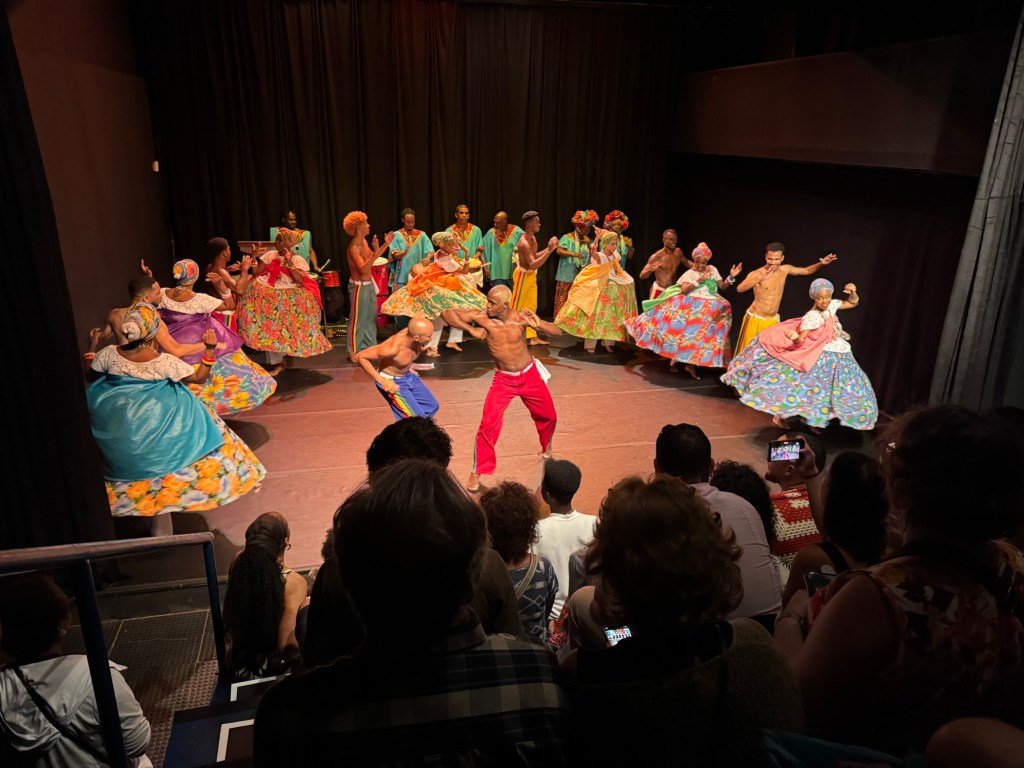
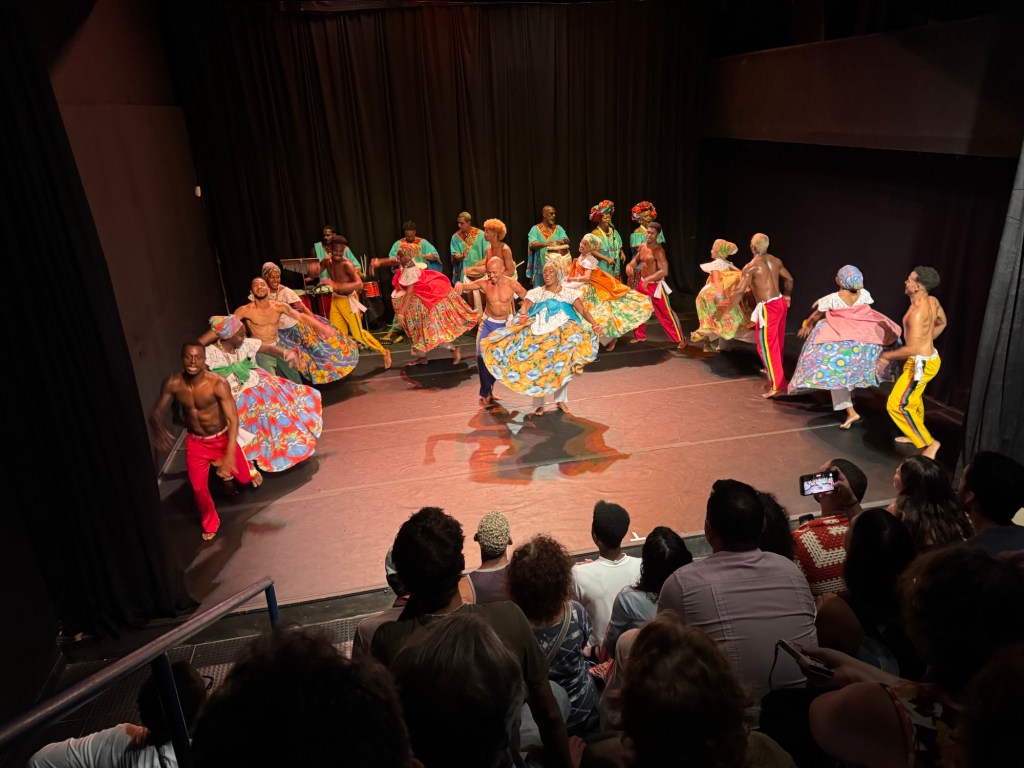
The dances were interesting, but long. The gods represented include: Red for god of storms; Yellow for attraction and sensuality; Straw for skin disease and healing; Black for war and iron; Green for god of forests, hunting and hunters.
The small theater was full. Icaro told us they perform three times a week and have done so for years. As folklore shows go, it was better than most.
After the show, Icaro joined us for some pizza and beer on the plaza. Then off to the room and bed.
Tuesday, October 7, 2025
Relaxed morning with airport pickup at noon. Time to get some blog work done.
 Adventures with Julia