
Monday, October 13, 2025
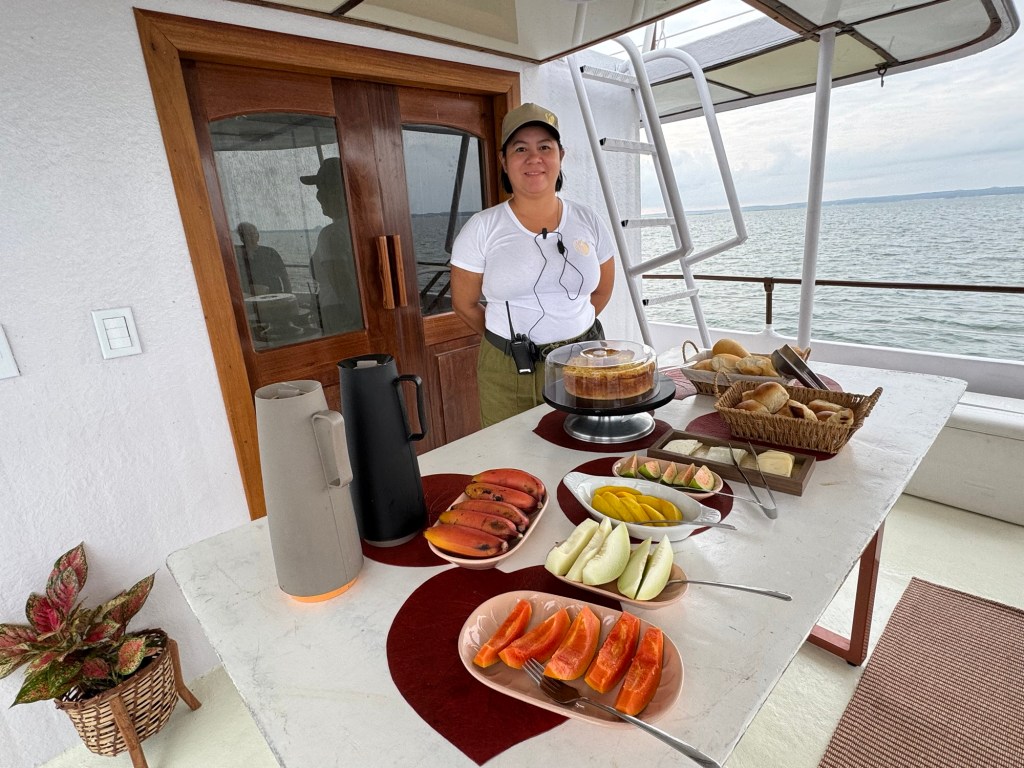
Sunrise and breakfast at 6am.


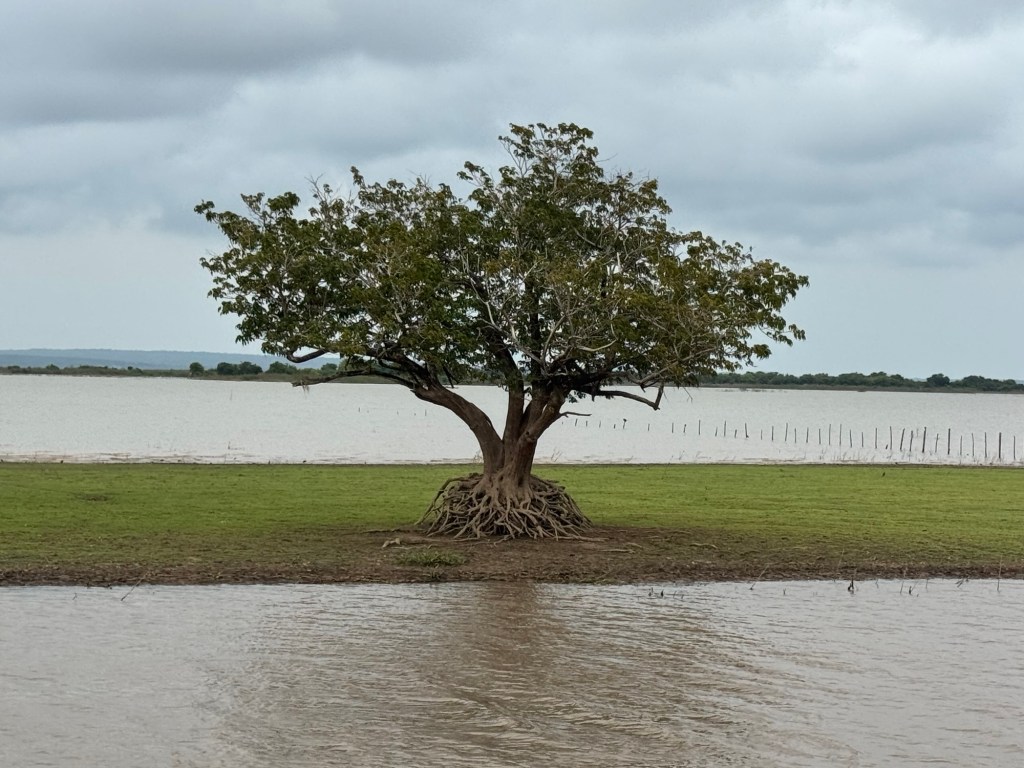
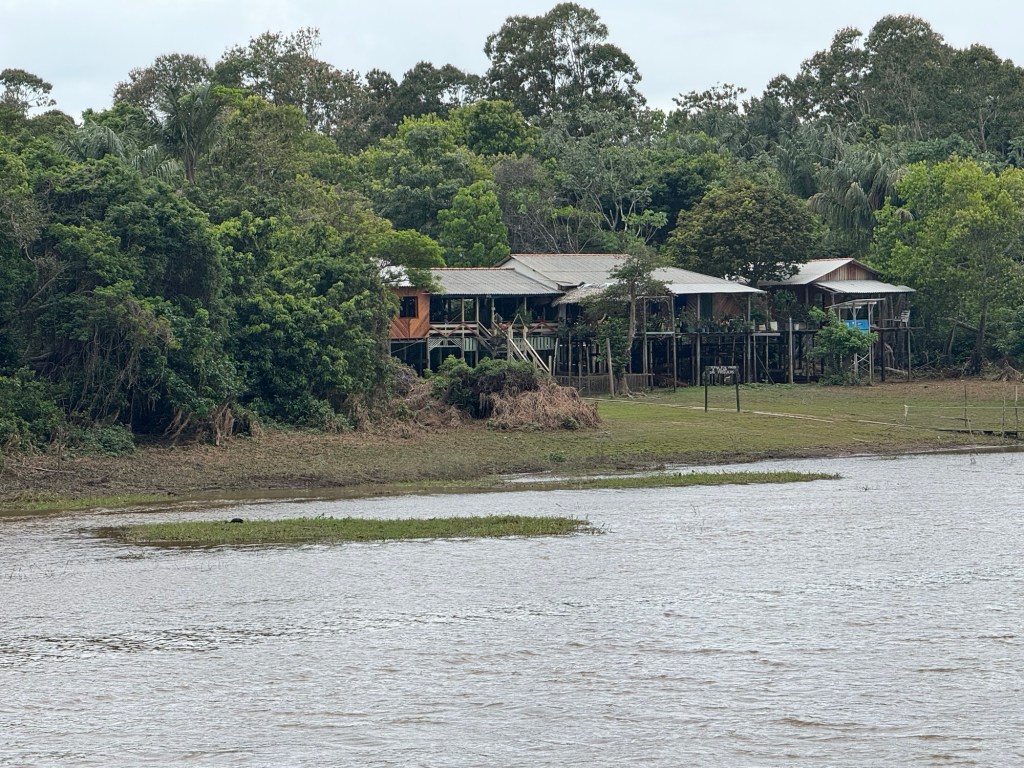
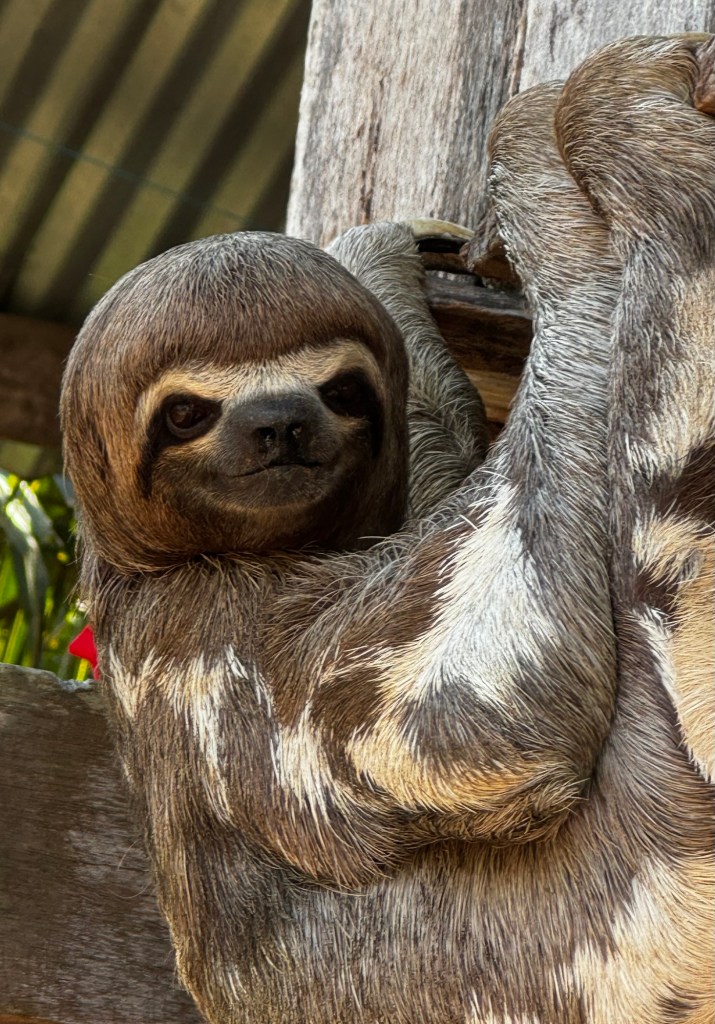
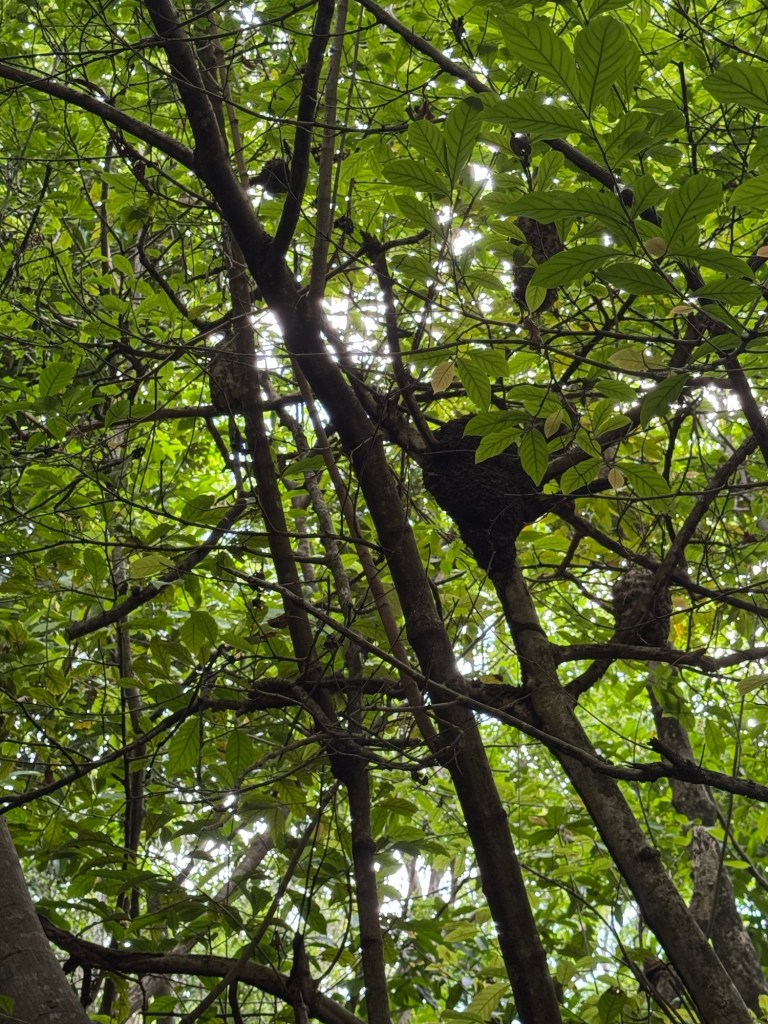
The captain motors slowly down river and into the Jari channel, an arm of the Amazon River, to a private home where the owner, a woman named Rosangela, gives us a tour of her forest preserve, which she called the Trail of the Sloth. She pointed out three sloths high in the trees but they were unphotographable. So we have included a photo of a Peruvian sloth you may remember from a post last year.
We also saw a couple of Potoo, nocturnal owl-like birds, though not related, that were asleep high in the trees. We were able to photo its backside. It feeds on insects and makes a very loud sound.

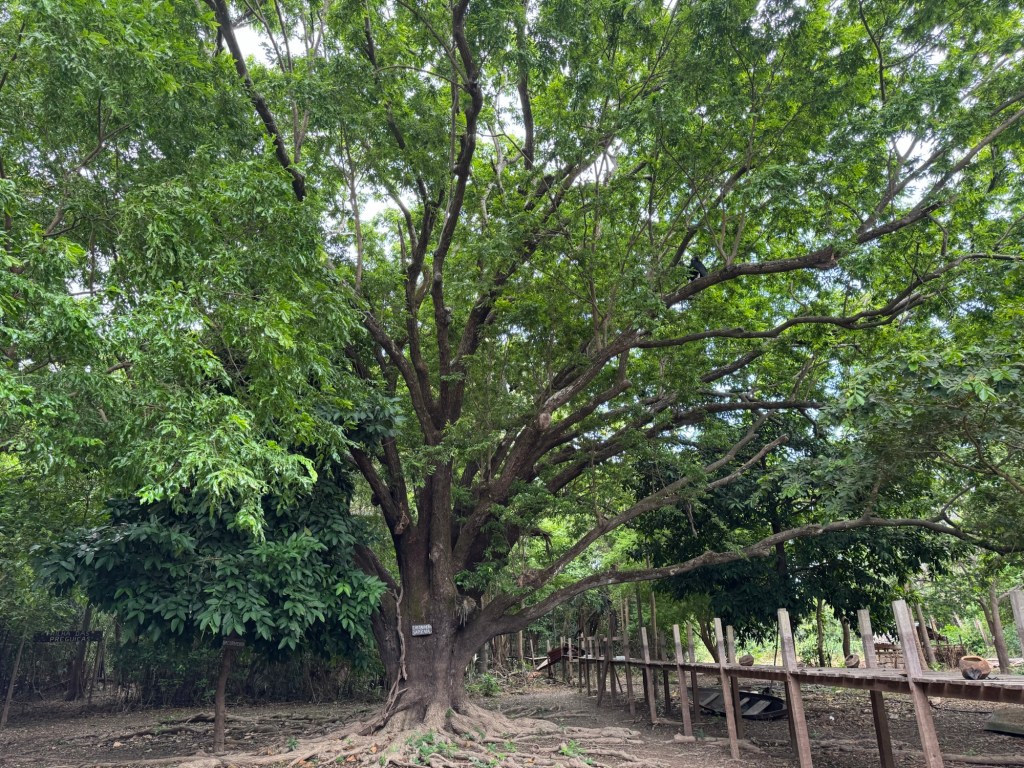
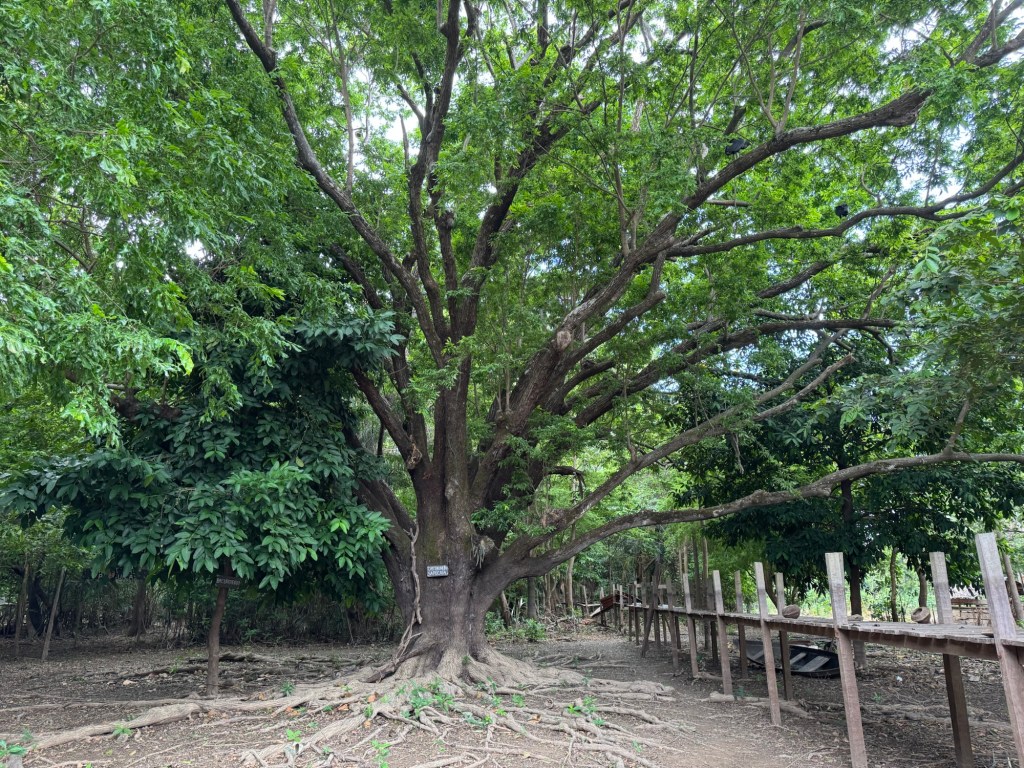
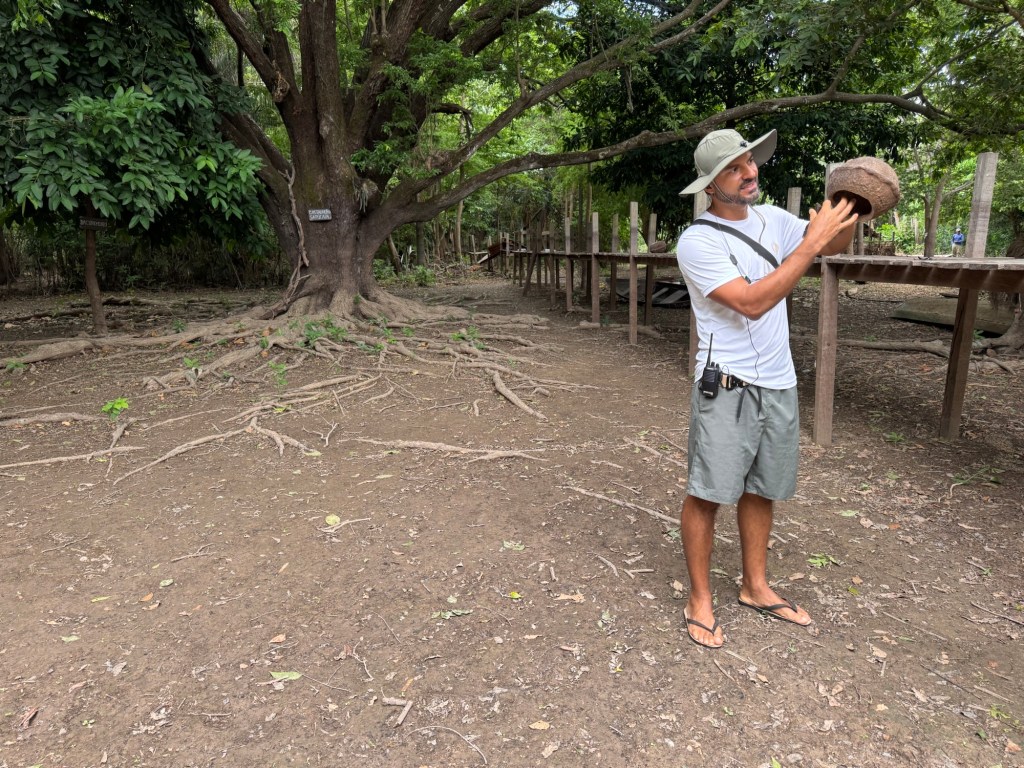
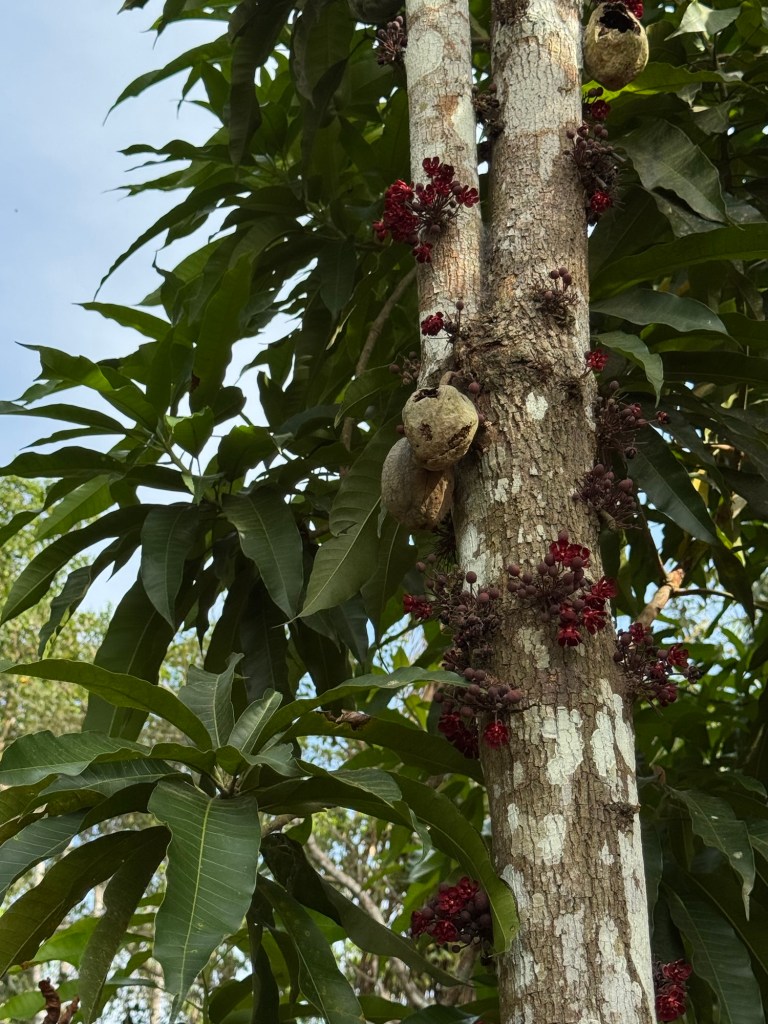
Of considerable interest were Sapucaia, Monkey pod trees, that are huge. The trees give great shade and produce huge fruits that are woody, pot-like and suitable for a monkey to use. Each fruit contains many edible nuts. The tree is a tropical hardwood used for making furniture, curing stomach aches and treating blood pressure problems.
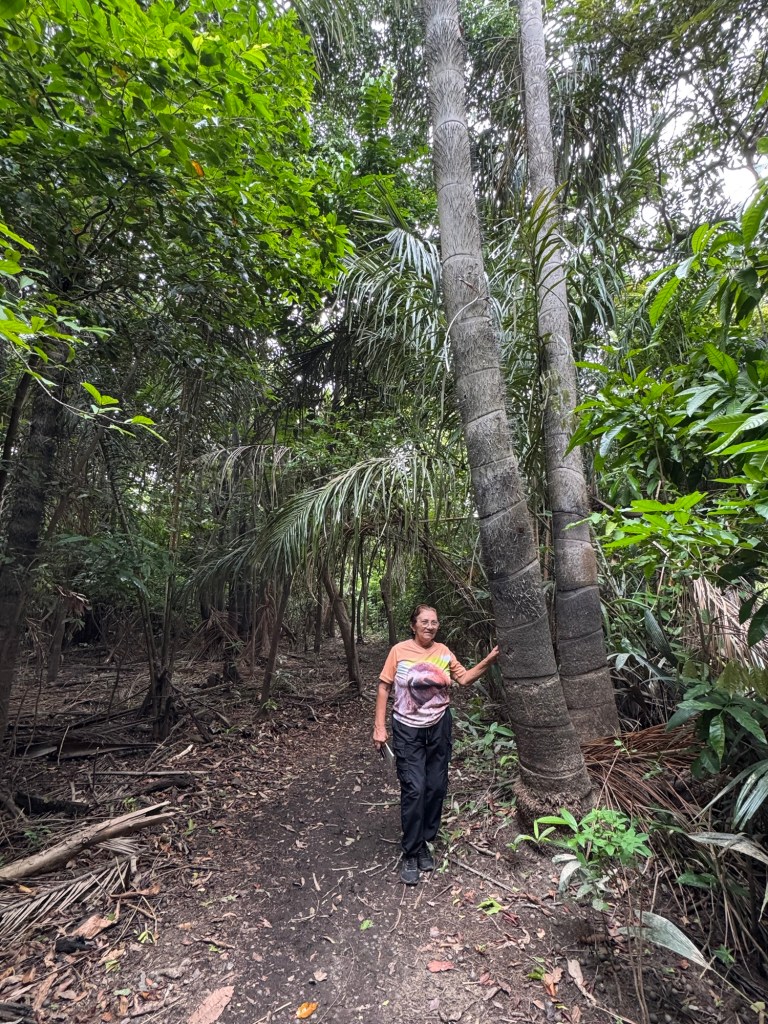
Other things we saw include
Back on the boat I learned about the Brazilian flag. The words on the flag say “order and progress” in Brazilian. Green is for forests, yellow is for mineral wealth, blue is for the sky. The 26 stars below the text are for the 26 states and are displayed as they were on 11/15/1889 in Rio the day of the founding of the republic. The single star above the words is for the state of Pará, the last state added and the largest territory north of the equator. Interesting flag.

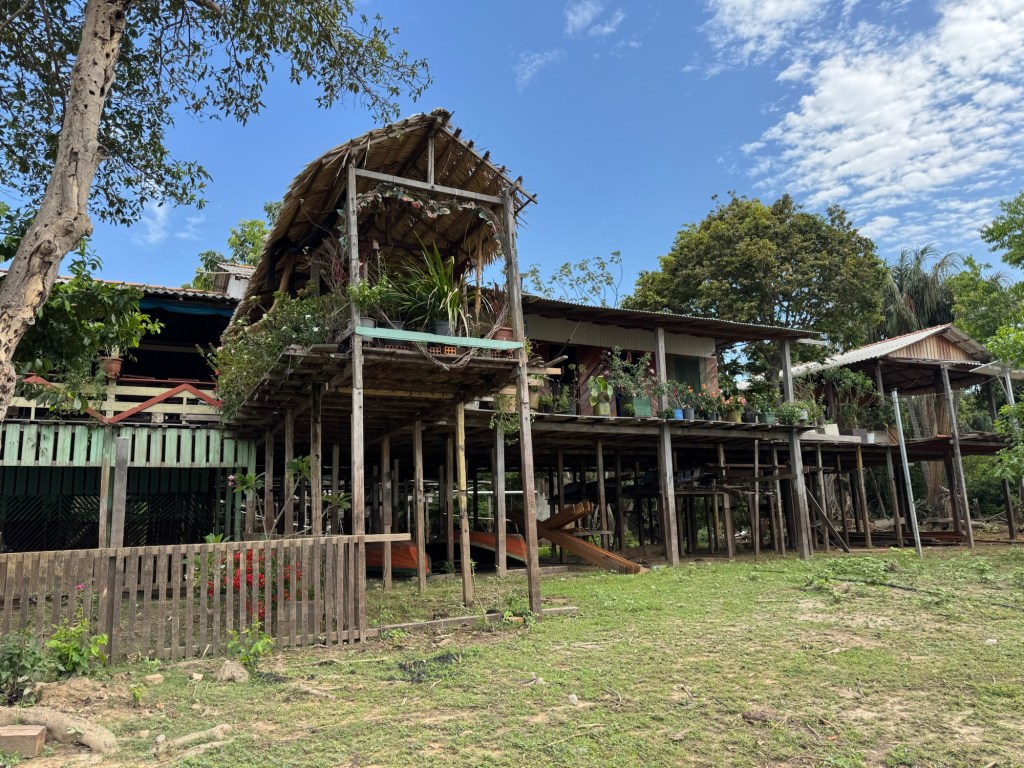
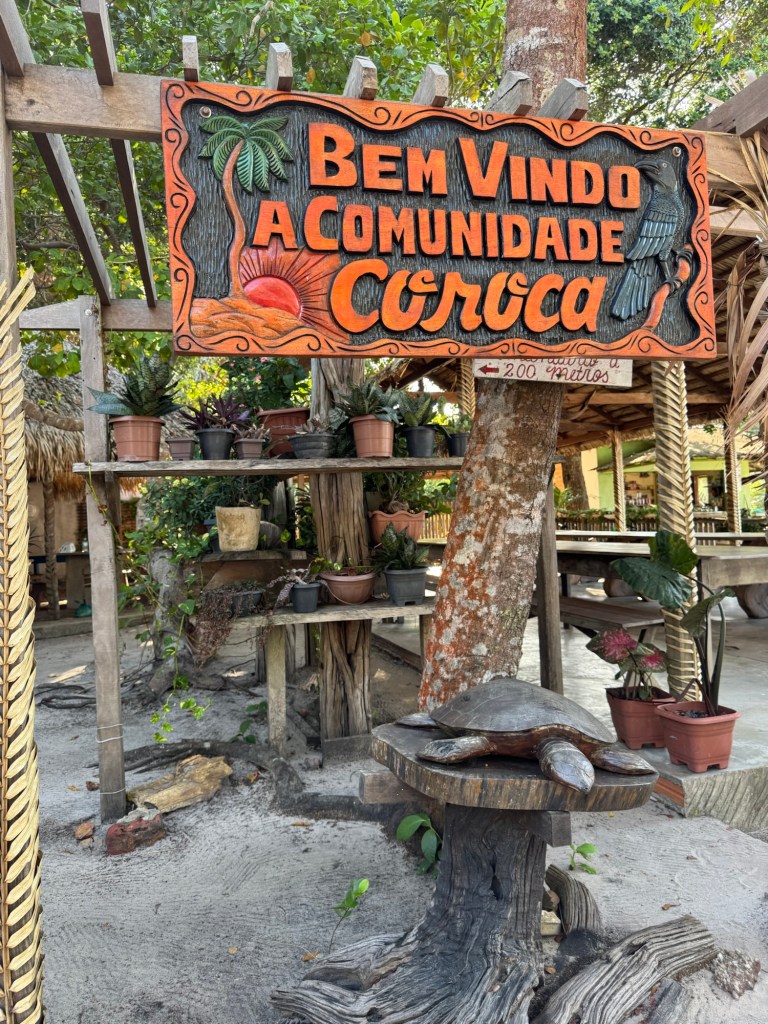
We spent more time on the beach and in the warm water trying to stay cool. Had a nice salad lunch and more beach time until 4:30 when we went ashore to visit the Coroca community. In this village there are 23 families with 70 people.



A middle aged man met us and told us we were about to visit a turtle conservancy, a stingless bee farm making honey and a small, palm frond industry making colored grasses that are then woven into crafts for sale. They also made tie dye shirts as a gift for us.
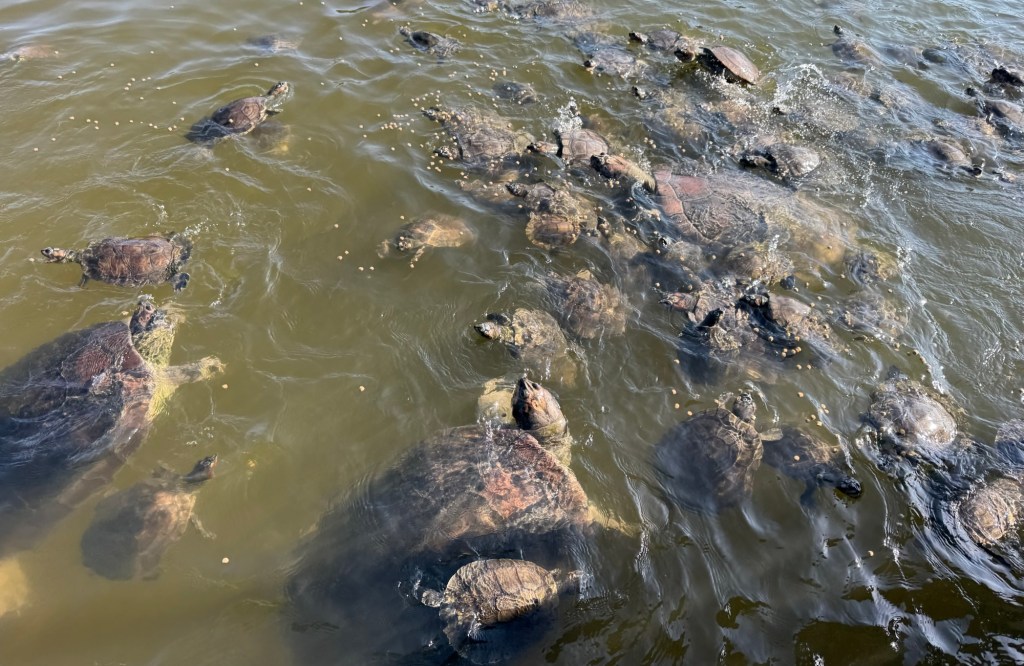
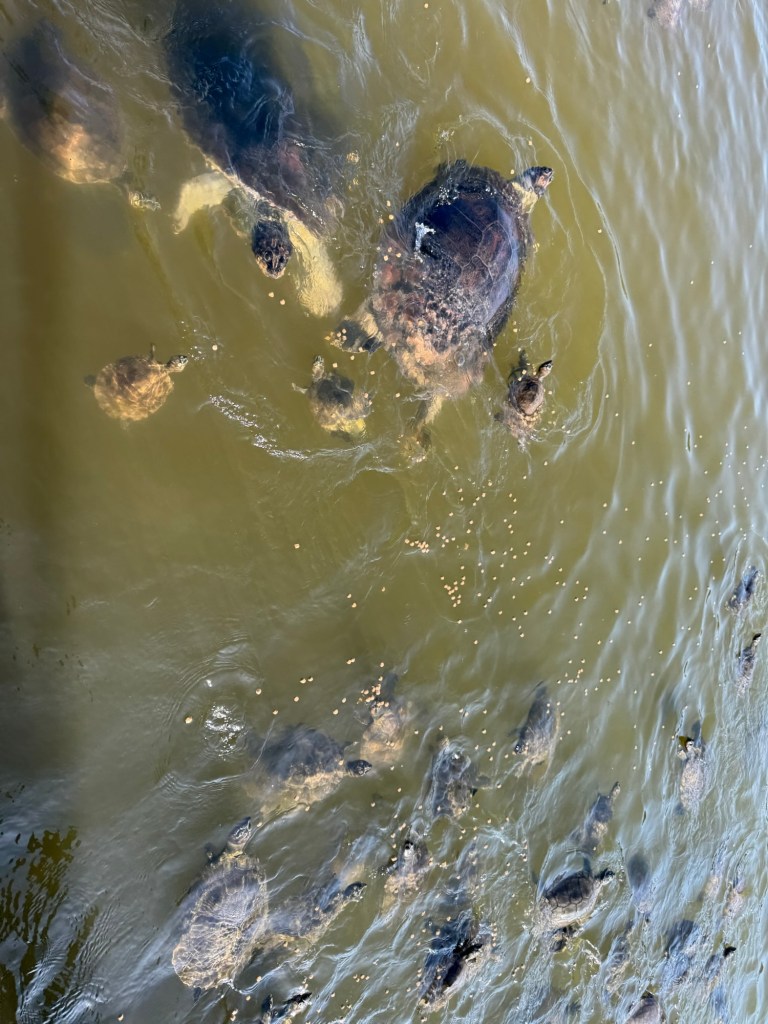
We walked to a small holding tank where 500 turtles are kept separate for several months while they grow. Each turtle produces 90 eggs a year, resulting in 3000 baby turtles per year. 80% are let go into the river and 20% are moved into a large pond where 5000 turtles are kept to reproduce. There are all sizes, with turtles up to 28 years of age. We watched the turtle keeper feed the turtles a bucket full of pellets.
From there another man led us to an area where stingless bees are kept in several boxes. He opened one box and extracted a syringe full of liquid honey for me to sample. It was delicious. Then he sealed up the box and told us the honey is harvested each year from September to November at the rate of half a liter per box per month. The bees extract sap from trees as there is very little flowering fruit growing in the forest.
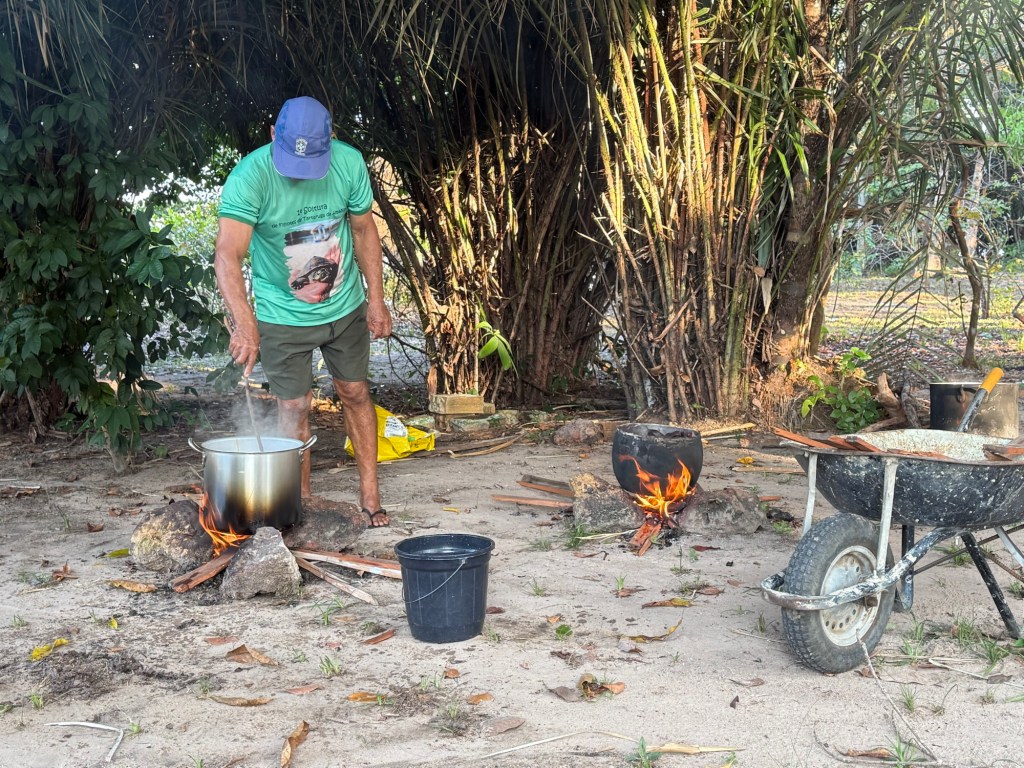
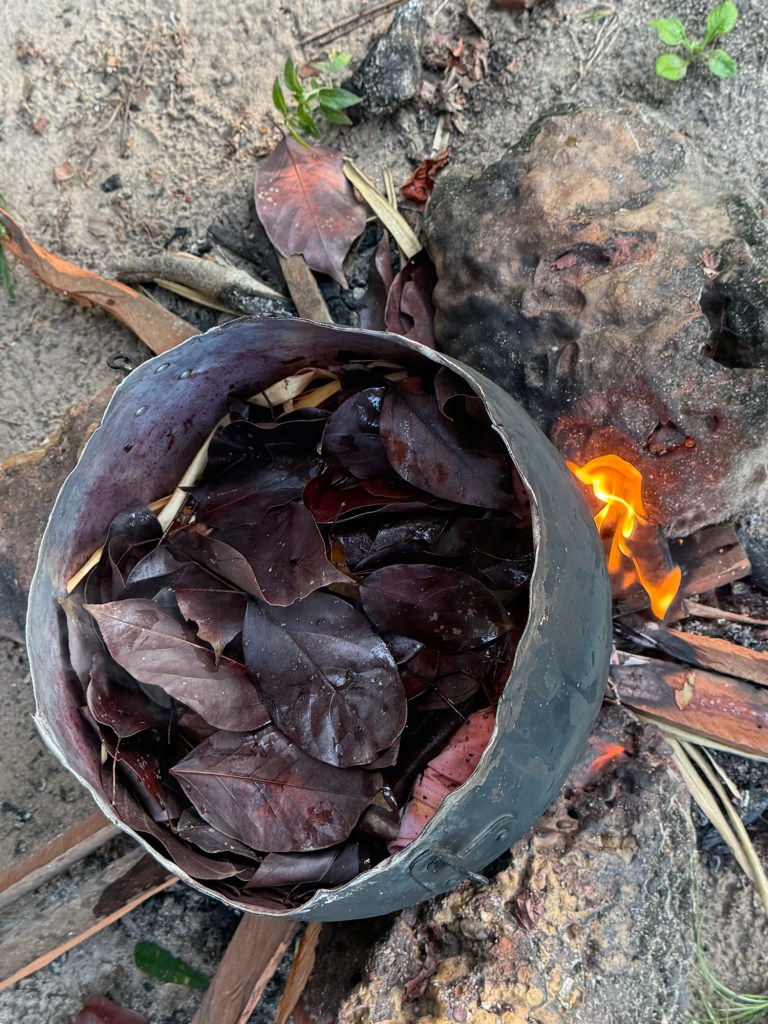
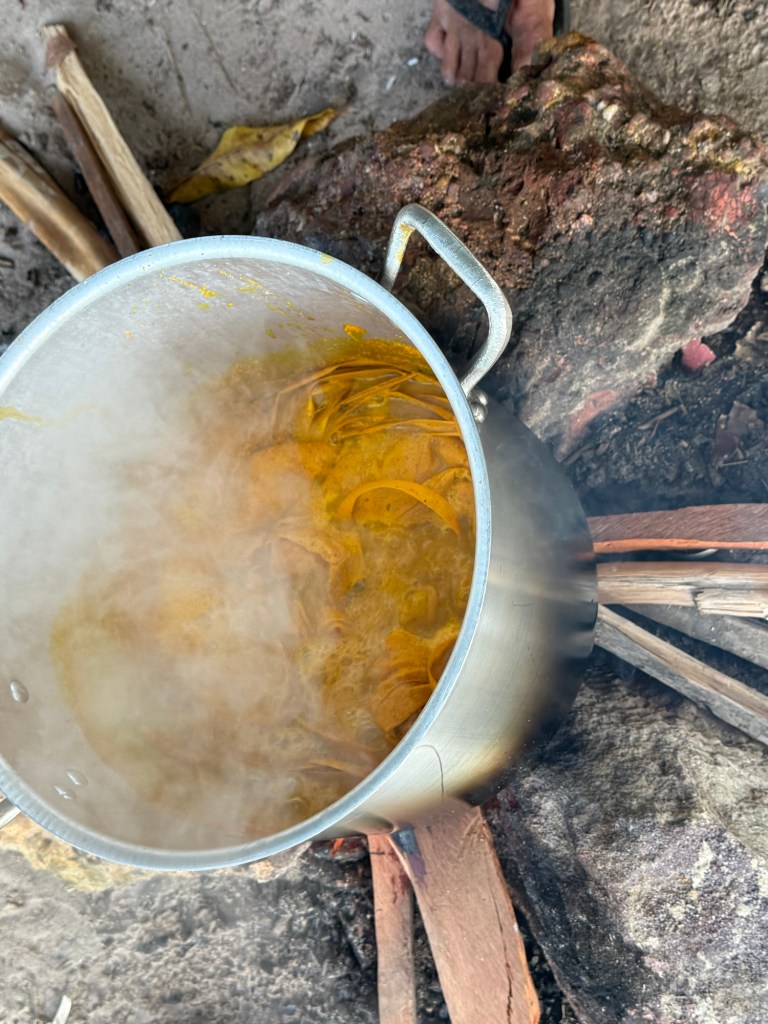
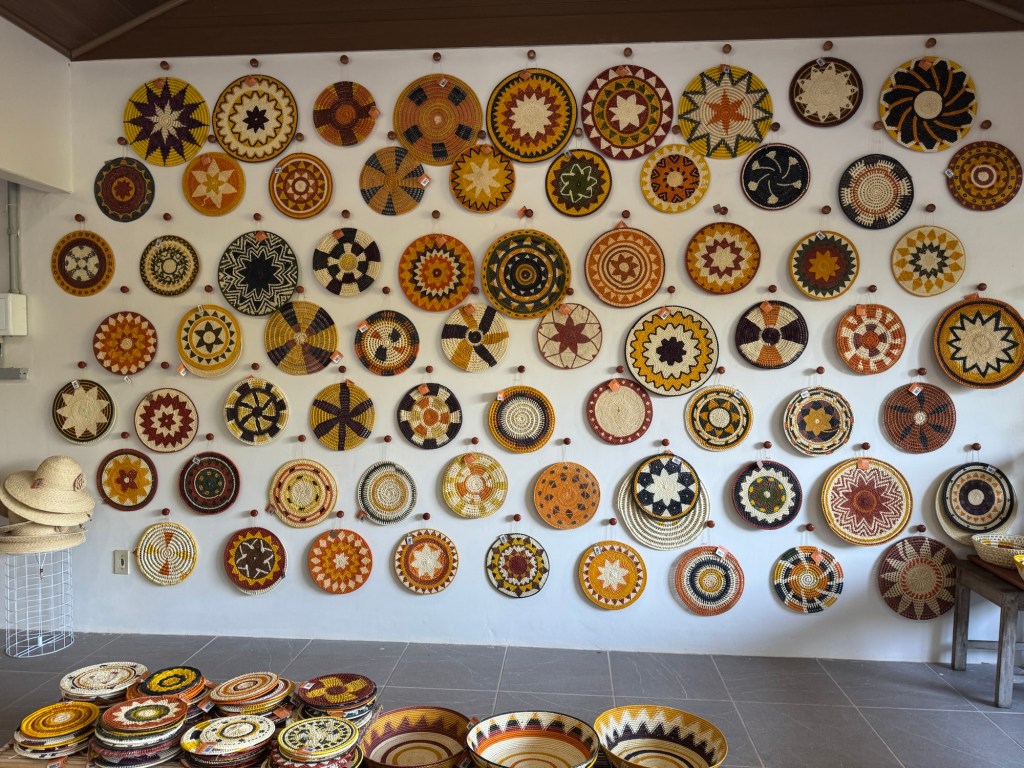
The community makes crafts from a special palm tree called a Tucuma. The palm fronds are dyed different colors—primarily red, blue and yellow—to be woven into different objects for sale. Another man made tie dyed shirts in the vats of boiling dye for us. Mine will be red and Mark’s will be yellow. Meanwhile, we bought some soap and a small jar of honey. Hope we get it home without breaking it.
During our walks through the forest we learned about many different trees. The more important ones include:
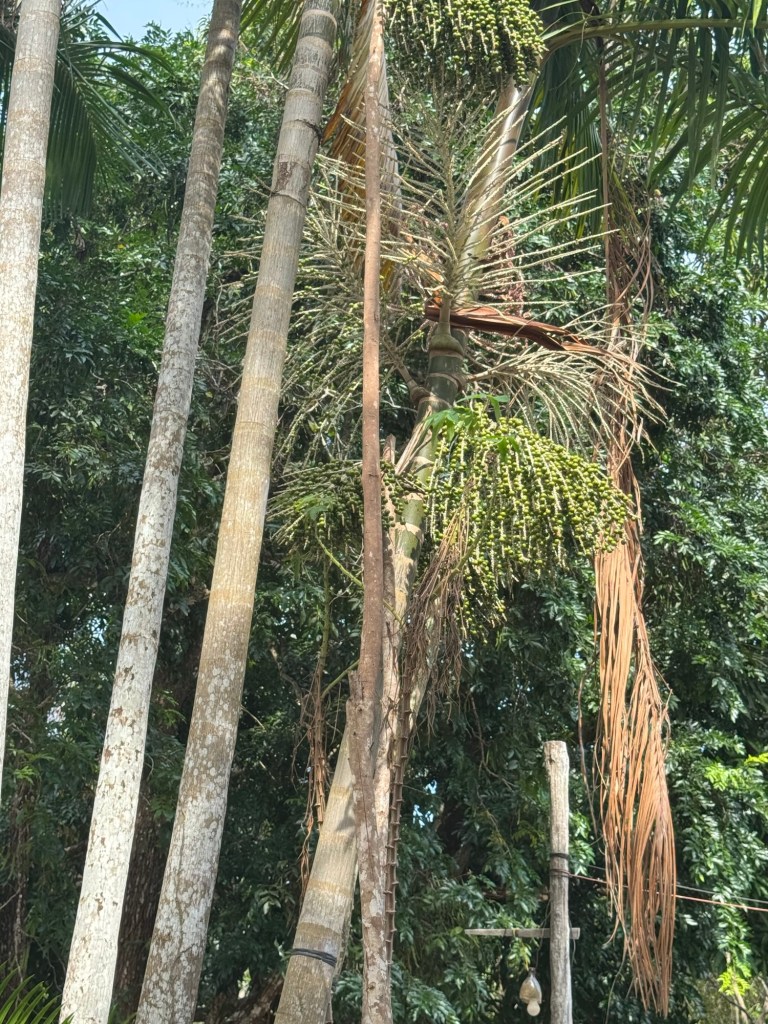
Açaí, a tree which produces many tiny purple fruits that, when the pulp is boiled off the seeds, tastes like dirt, according to Mark. It tastes somewhat better with lots of tapioca popcorn and sugar. However, it is much better as ice cream, which we had after dinner.
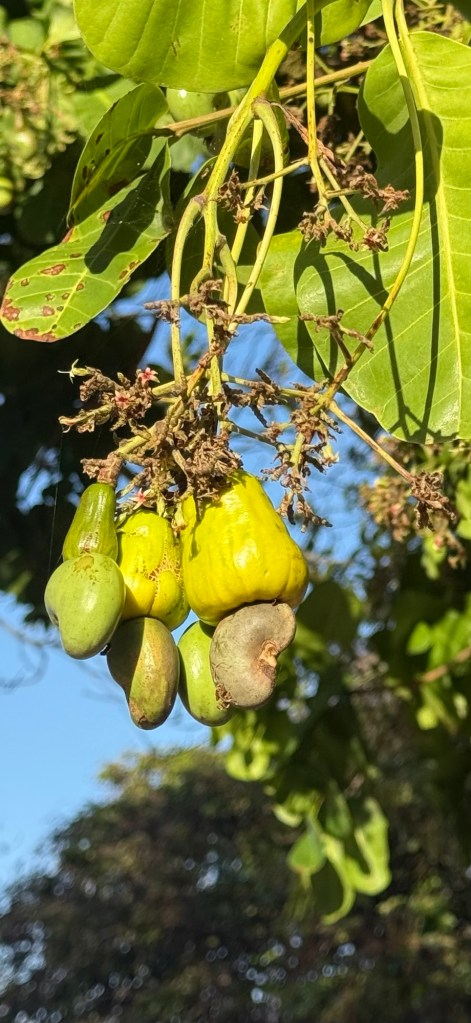
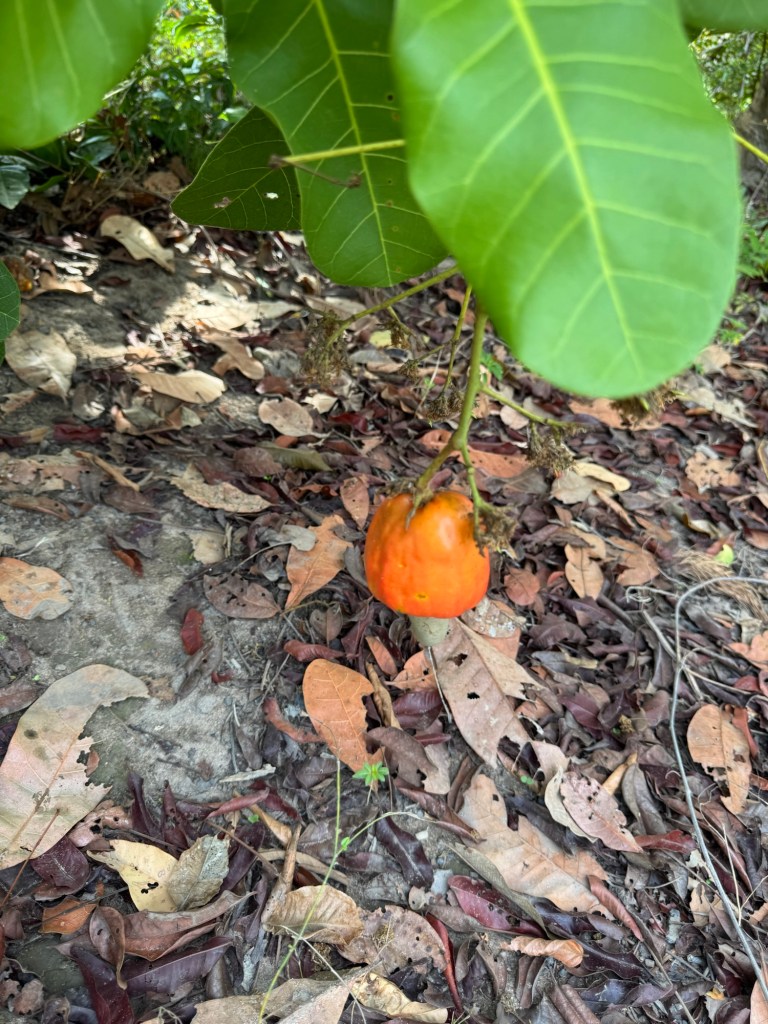
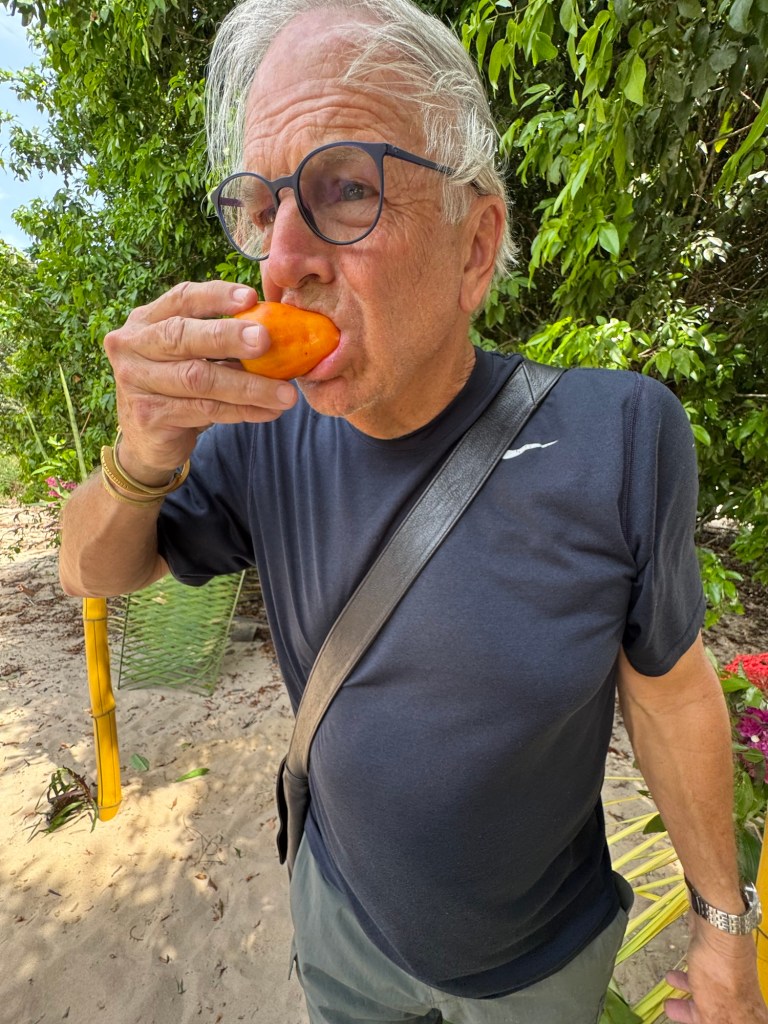
Another tree is the Jungle Cacau.

Later in the day we visited another Community called Atodi. They are an industrious community as they run a hammock hostel, maintain a school for their children, cultivate medicinal plants and sell medicinal products, and operate a library project called, Vagalume, which means “firefly”. The community has 48 families and 143 people.
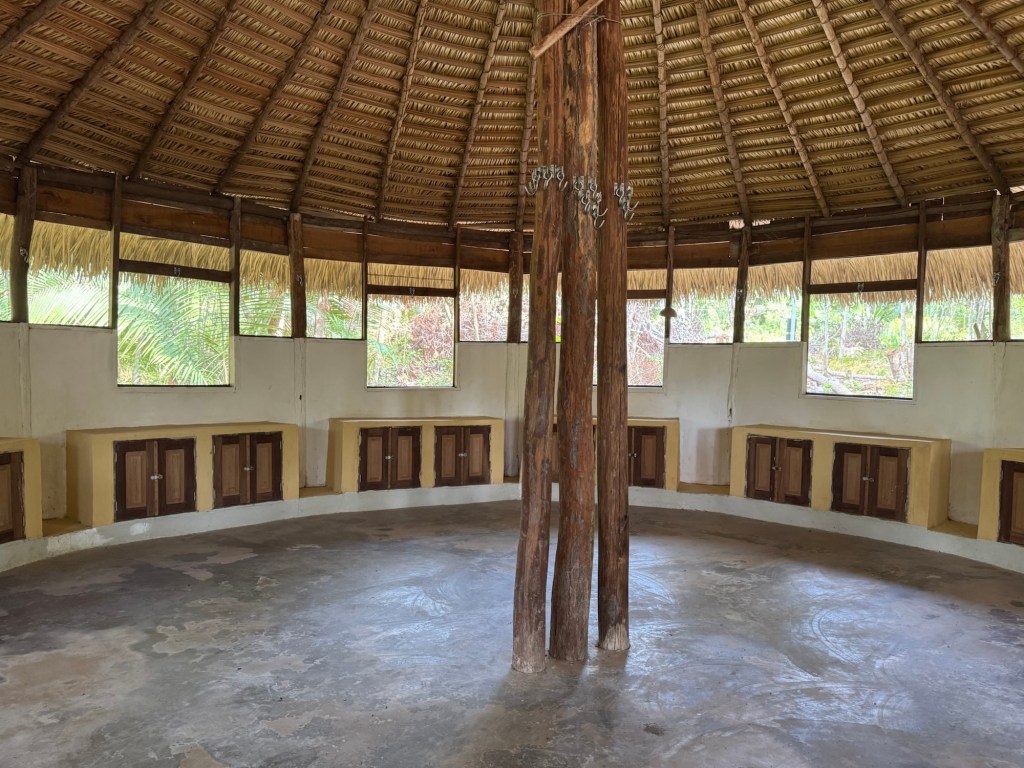
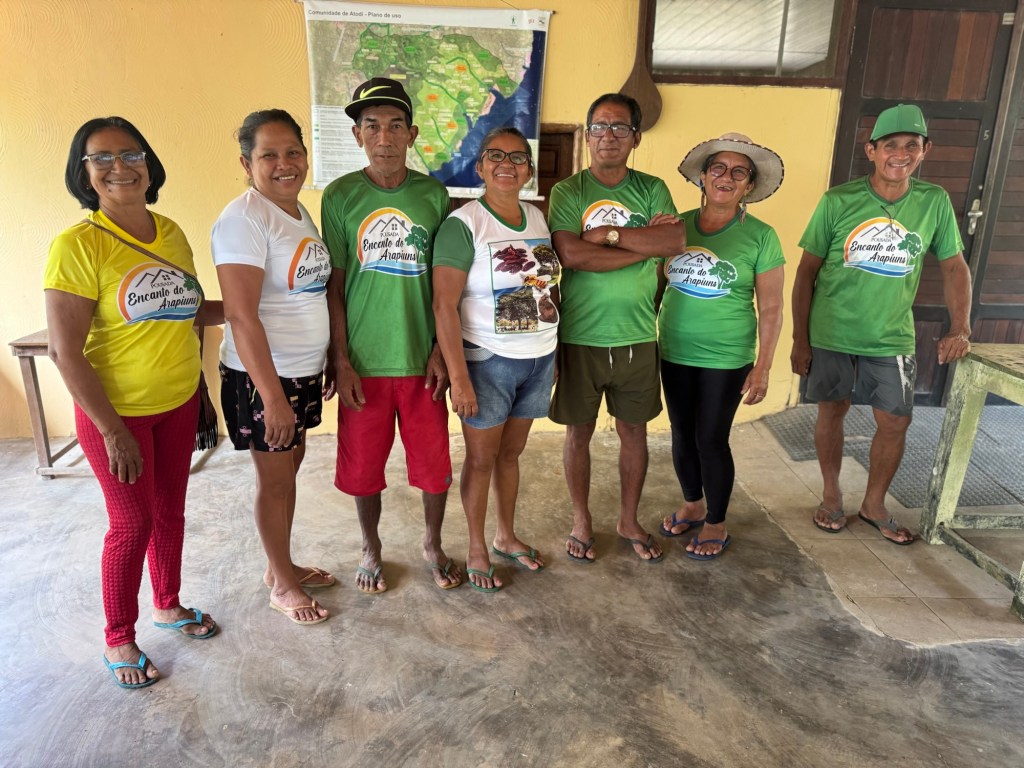
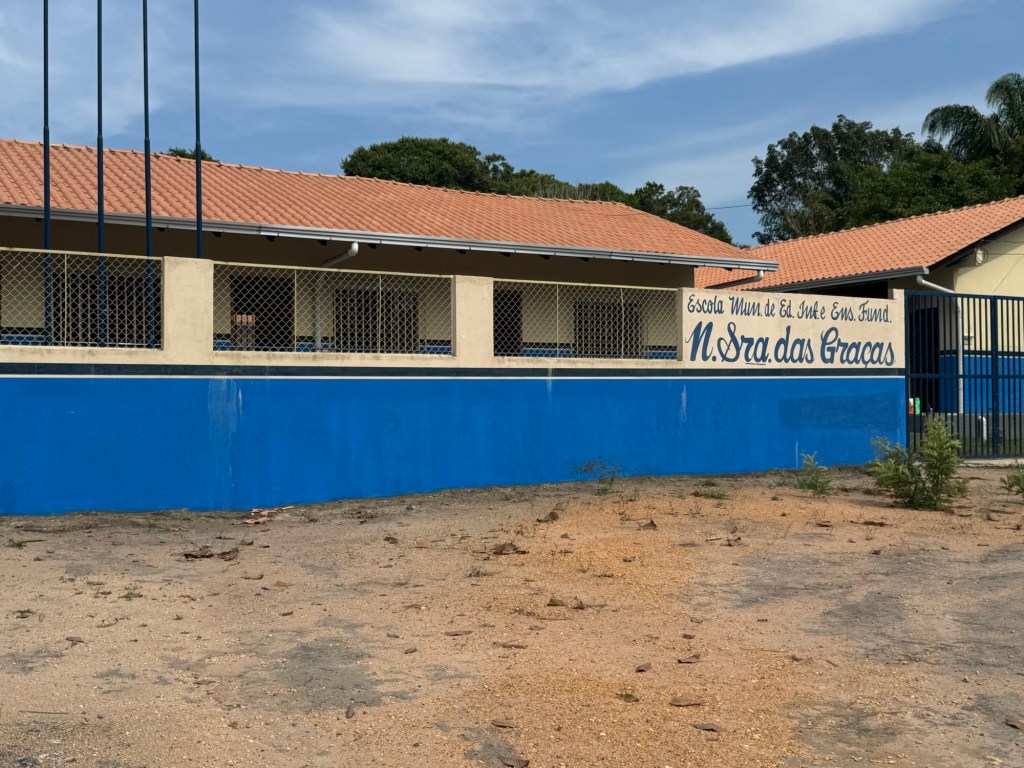
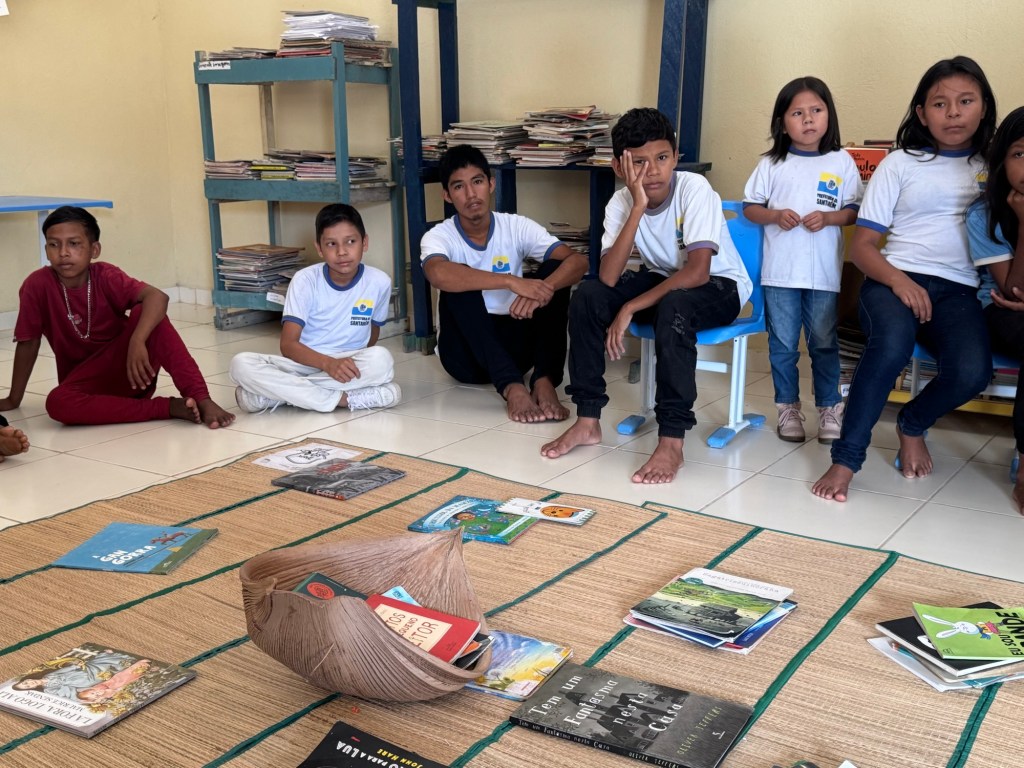
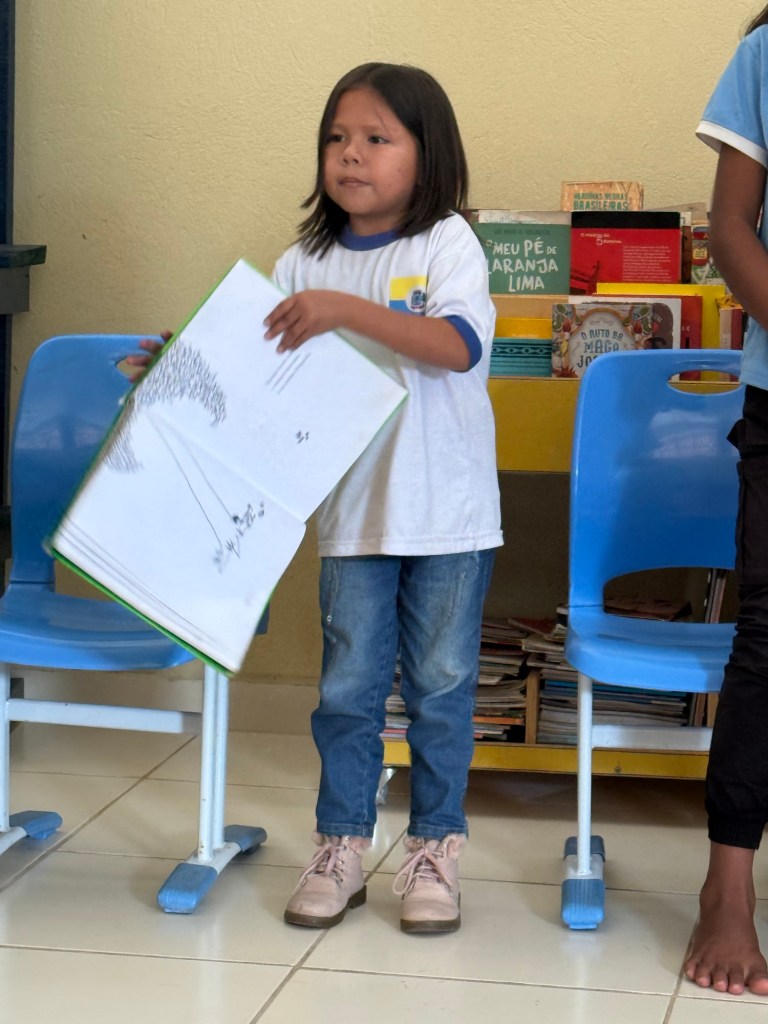
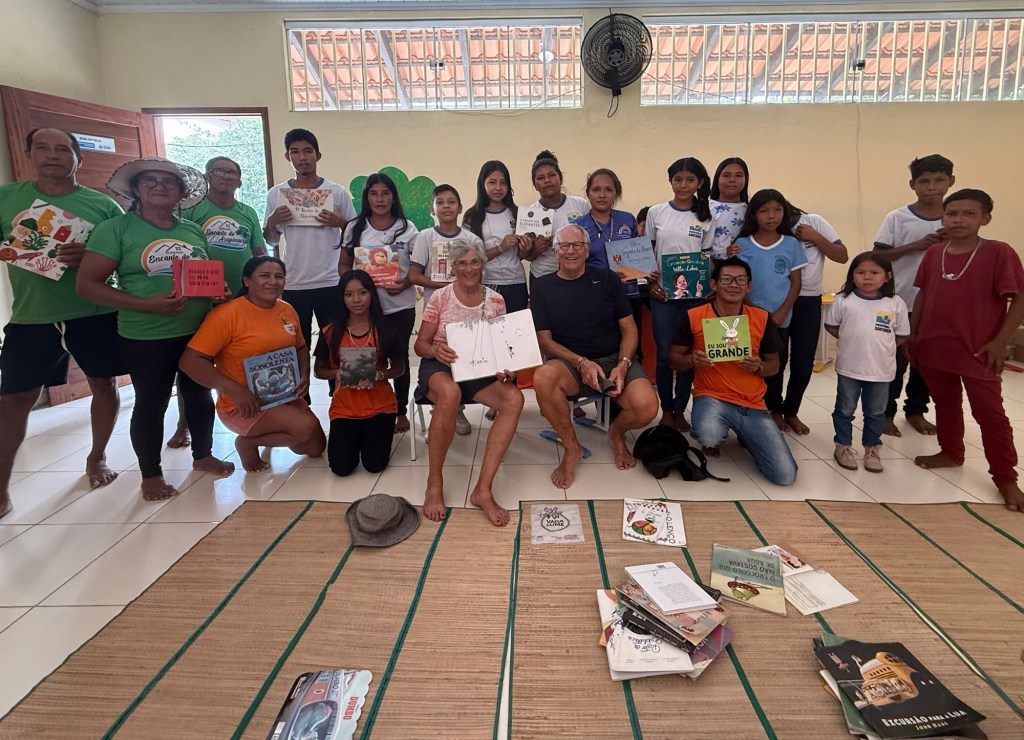
We met the management team of the community, toured the hammock hostel, visited the school and listened as the students reading to us from the book, “The Giving Tree” by Shel Silverstein.
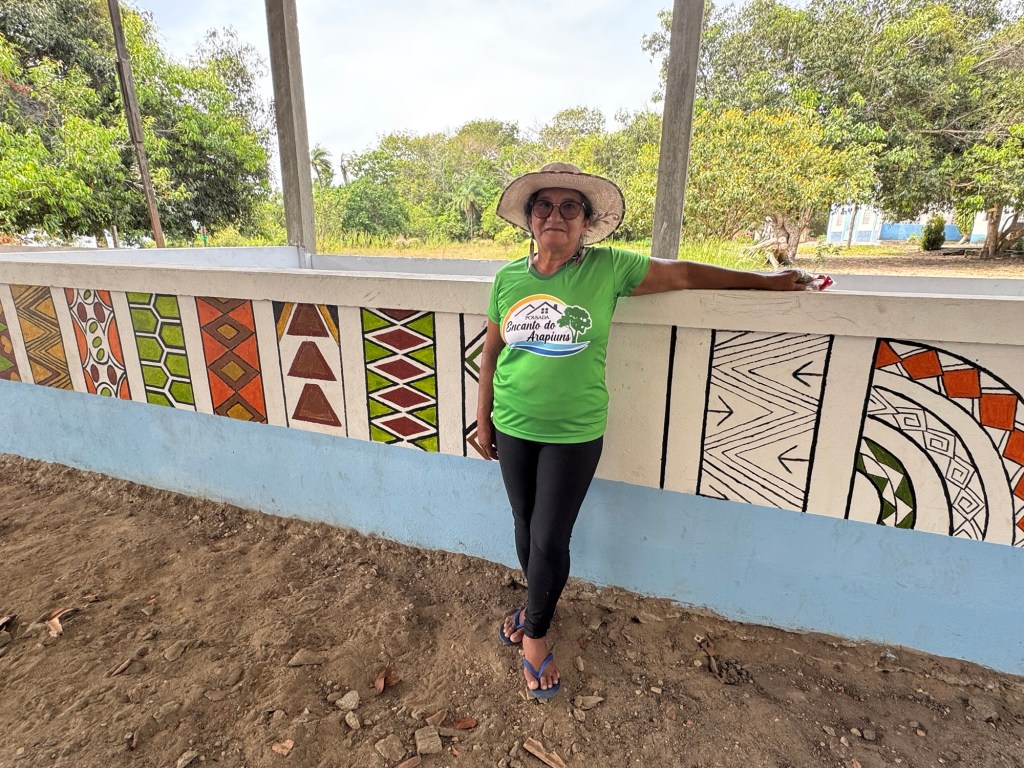
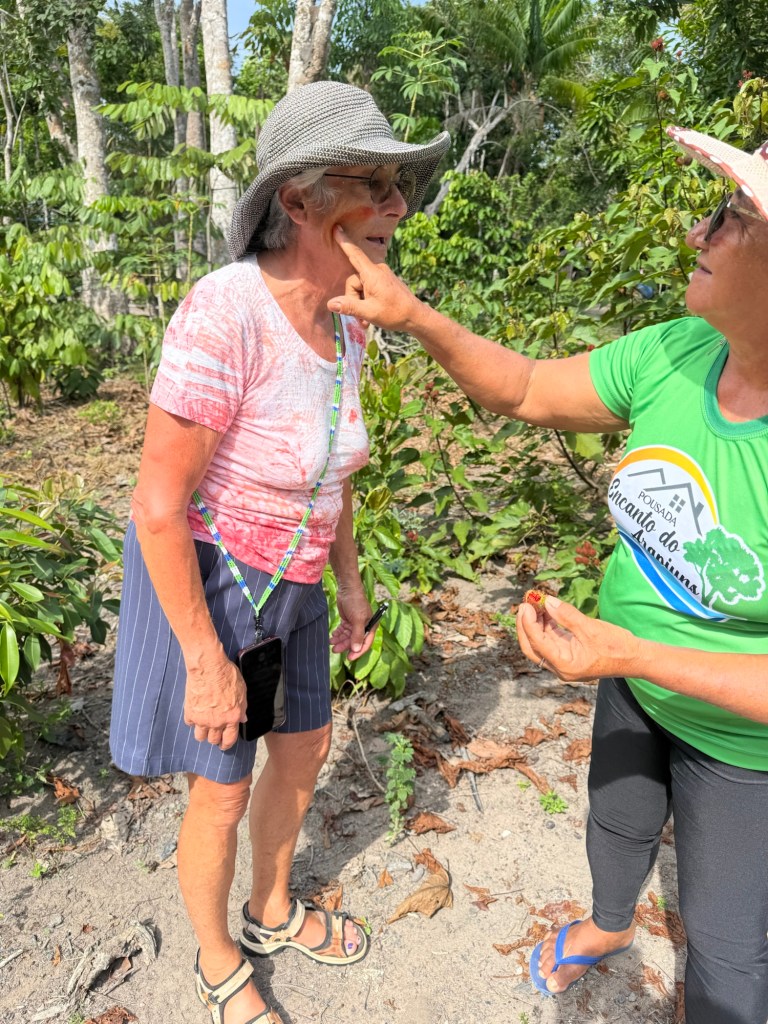
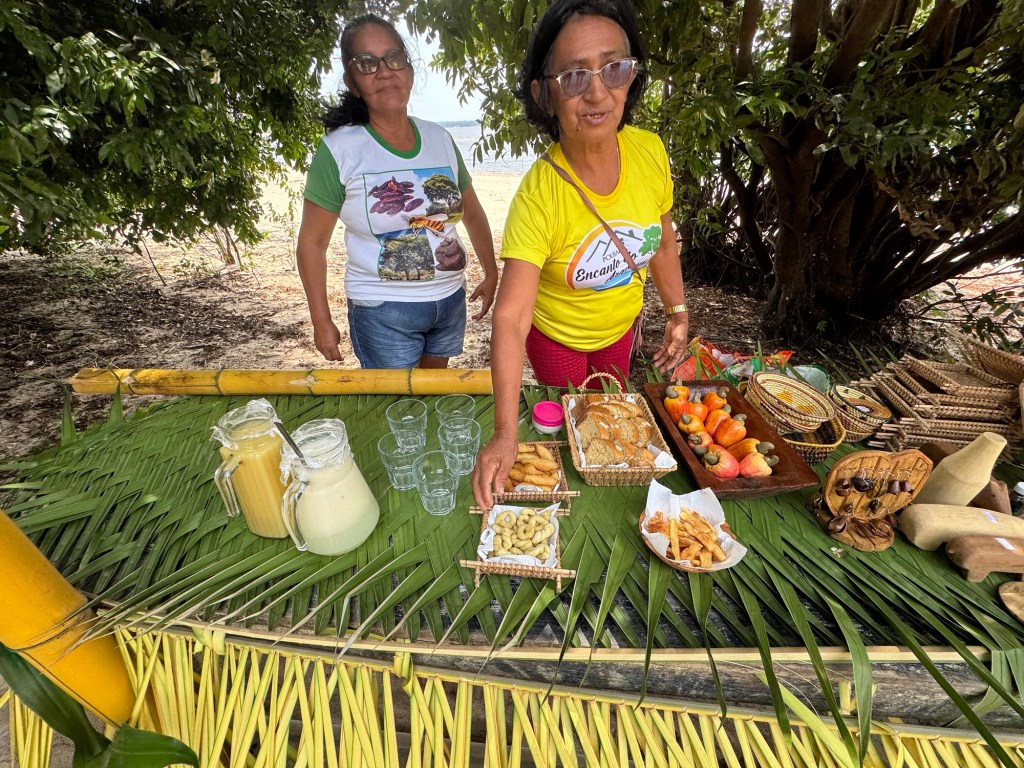
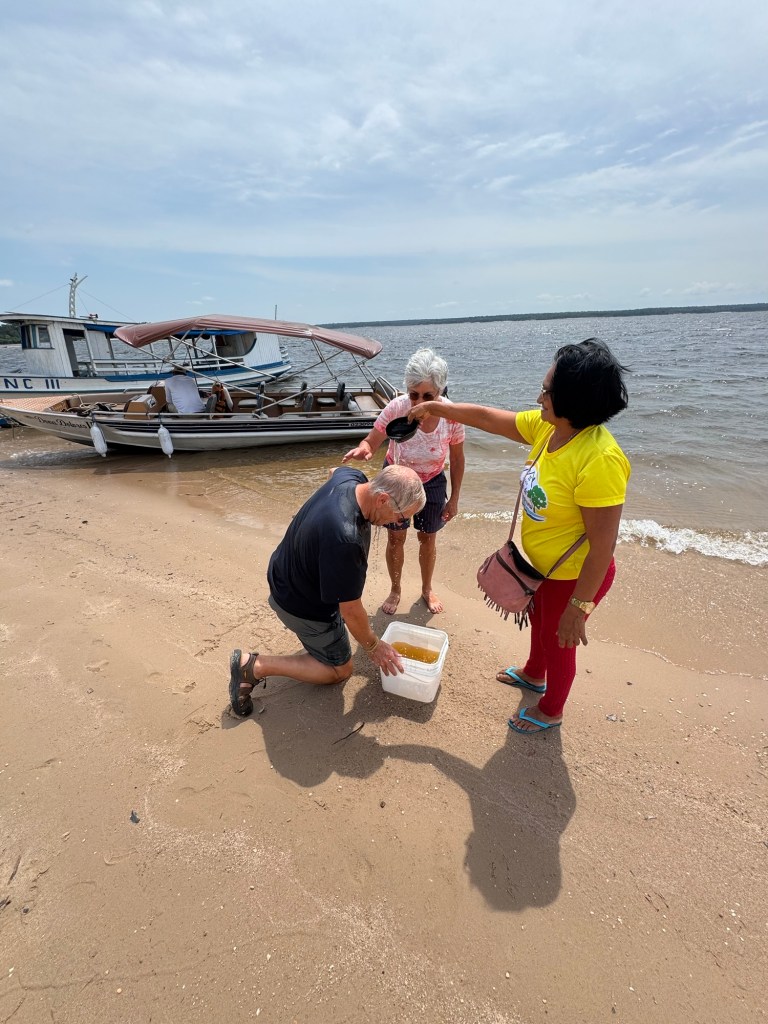
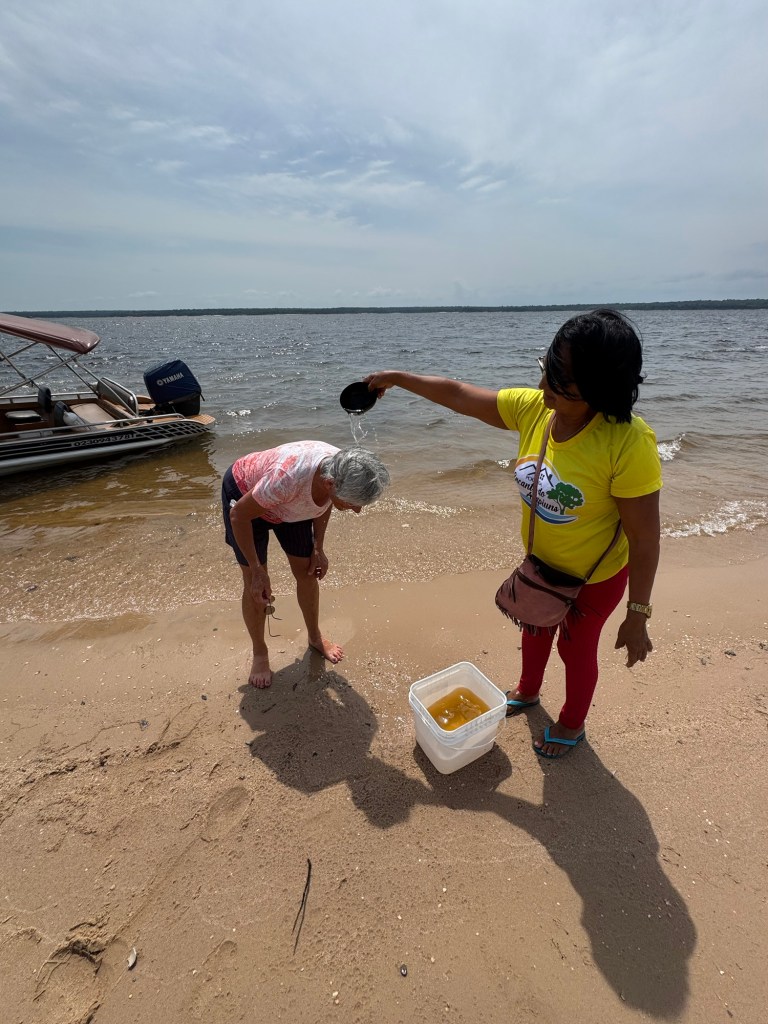
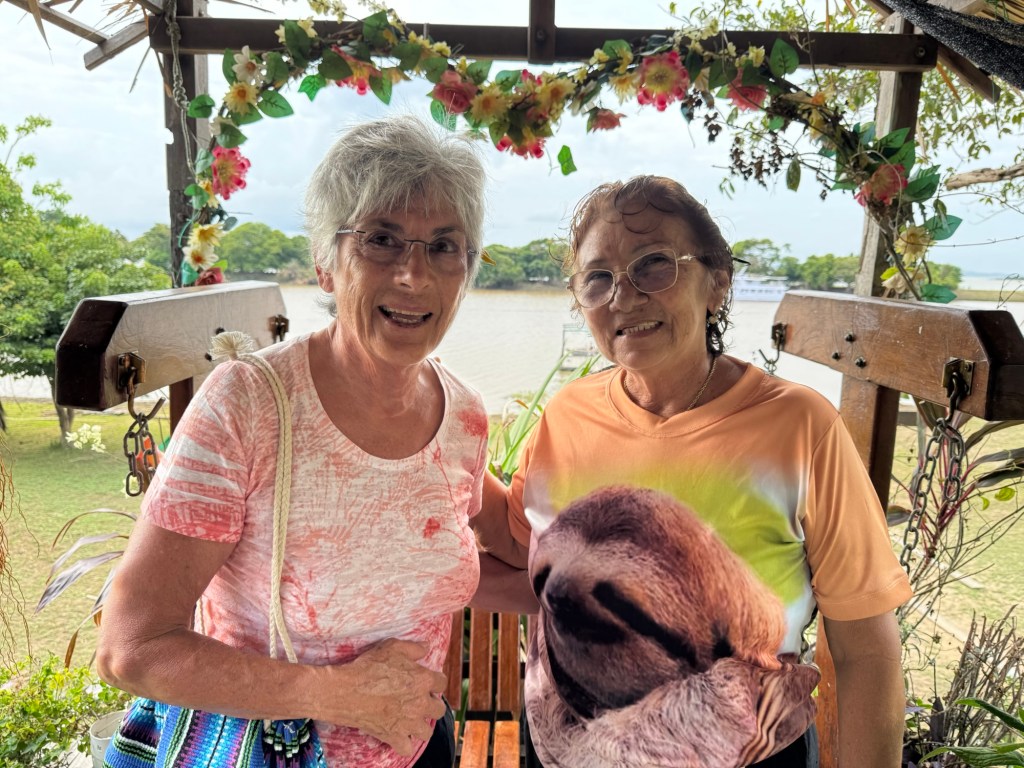
One member of the team, Neucimar, stayed with me as we toured the community. At one point she put red dye from a plant called Urucun on my face and I wore it the rest of the day. She posed for me against a wall of indigenous art. At the end of the tour we all ended up near the beach at a table full of special cassava snacks and crafts. We tasted the snacks and gave the crafts a pass. The team prepared a flower shower ceremony that took us by surprise. We marched to the edge of the river and water with the smell of flowers was poured over our heads. It did smell like flowers, though there were no flowers in the water. Apparently flowers are allowed to soak in the water for hours and the removed. Fortunately, we were very hot and the water was cooling. It was time to say good bye and Neucimar and I gave each other a big hug.
Back at the boat, we had lunch and an hour to relax before visiting another community. This time it was to learn how cassava is processed.
In the community called São Marcos, which has 13 families with 50 people and is set up to manufacture cassava flour, as well as tapioca and tucupi sauce for community use. There are 2 species of cassava, one of which is poisonous, which is the one these people use to produce flour. The non-poisonous cassava is eaten without being processed.
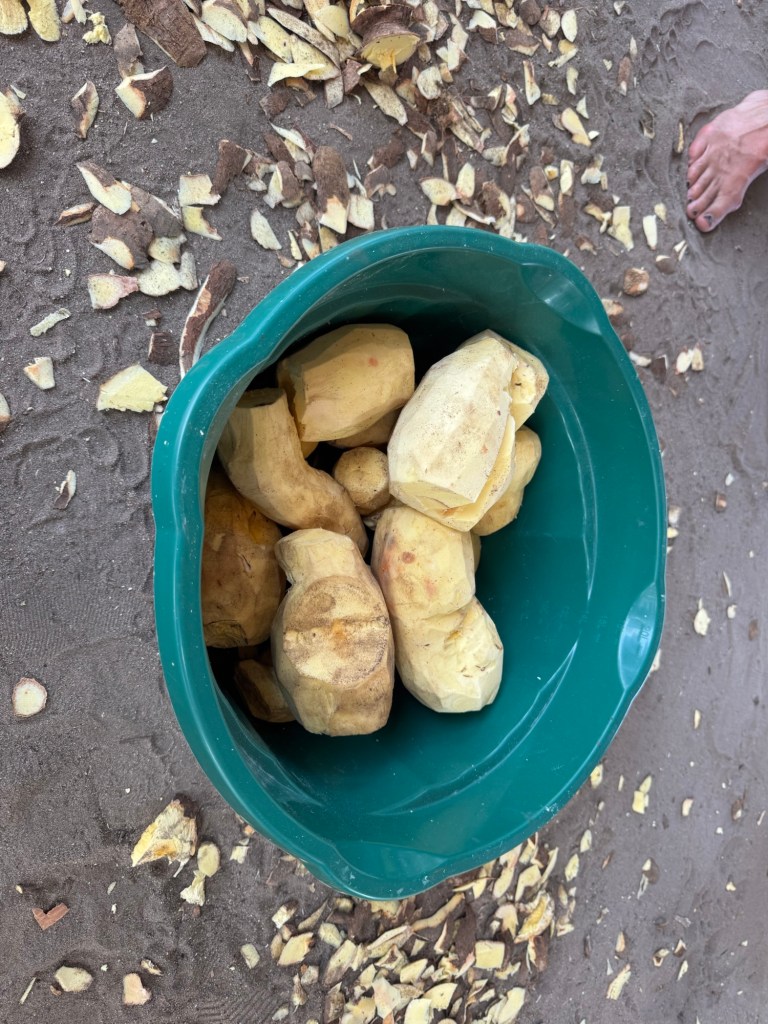
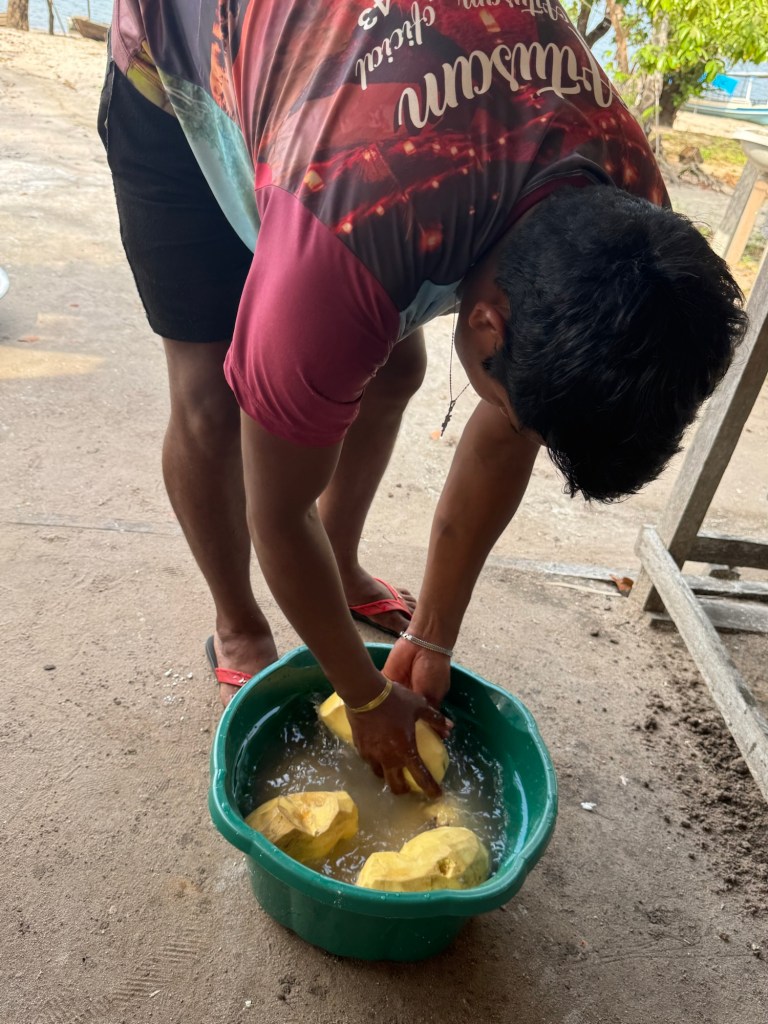
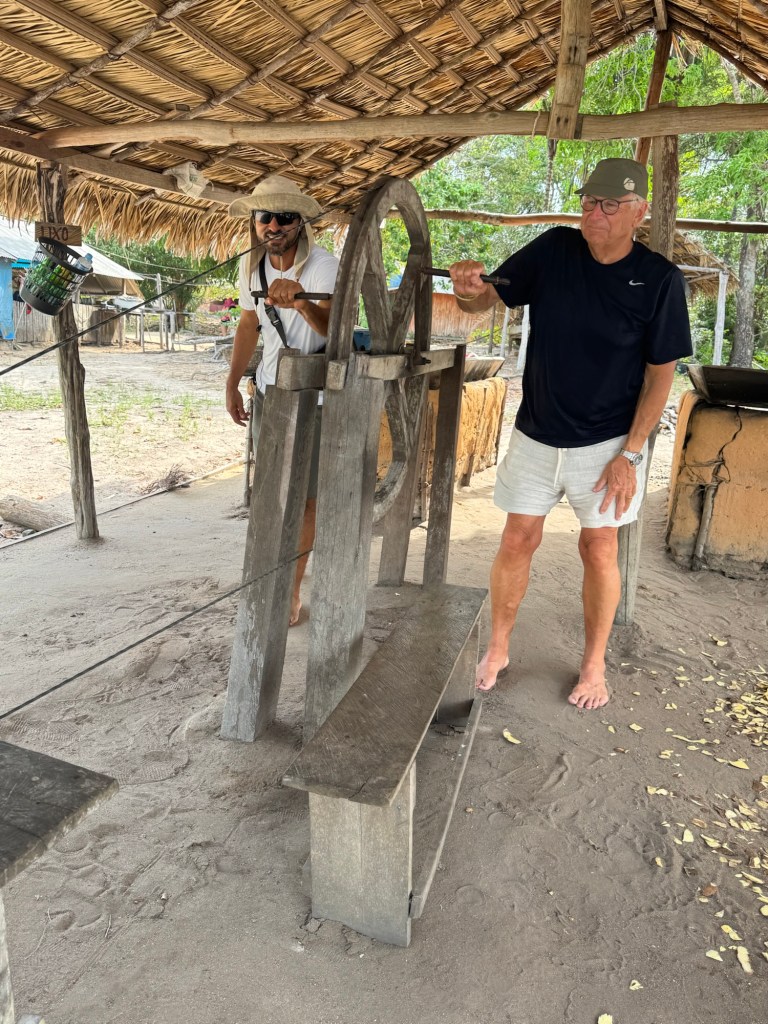
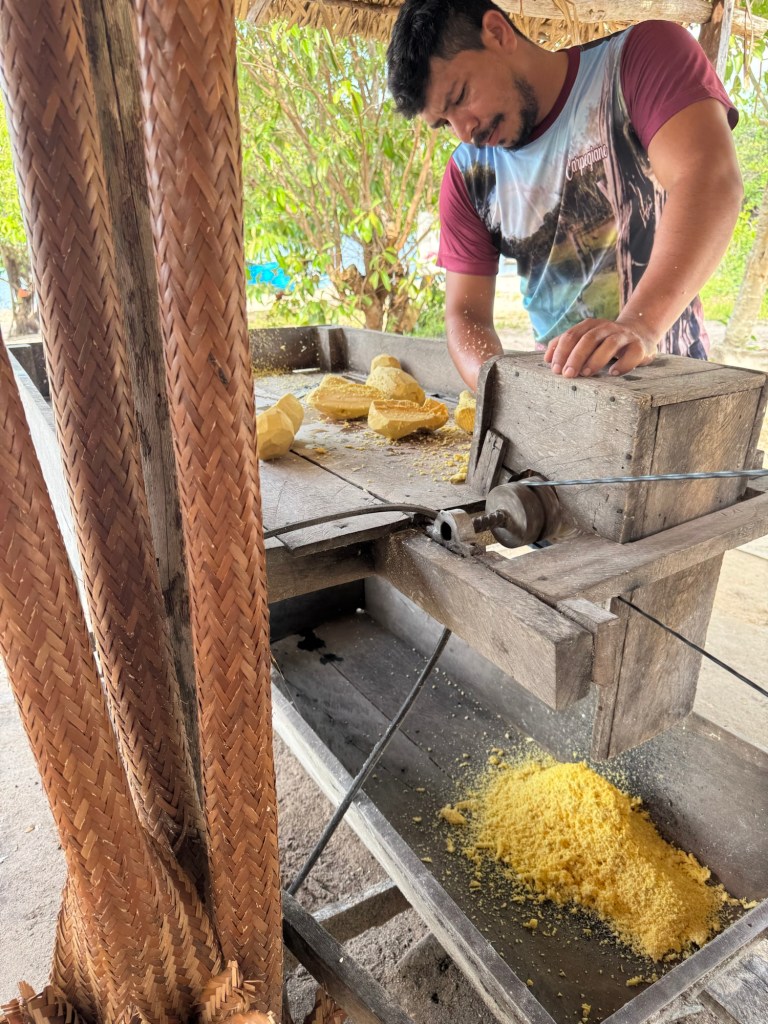
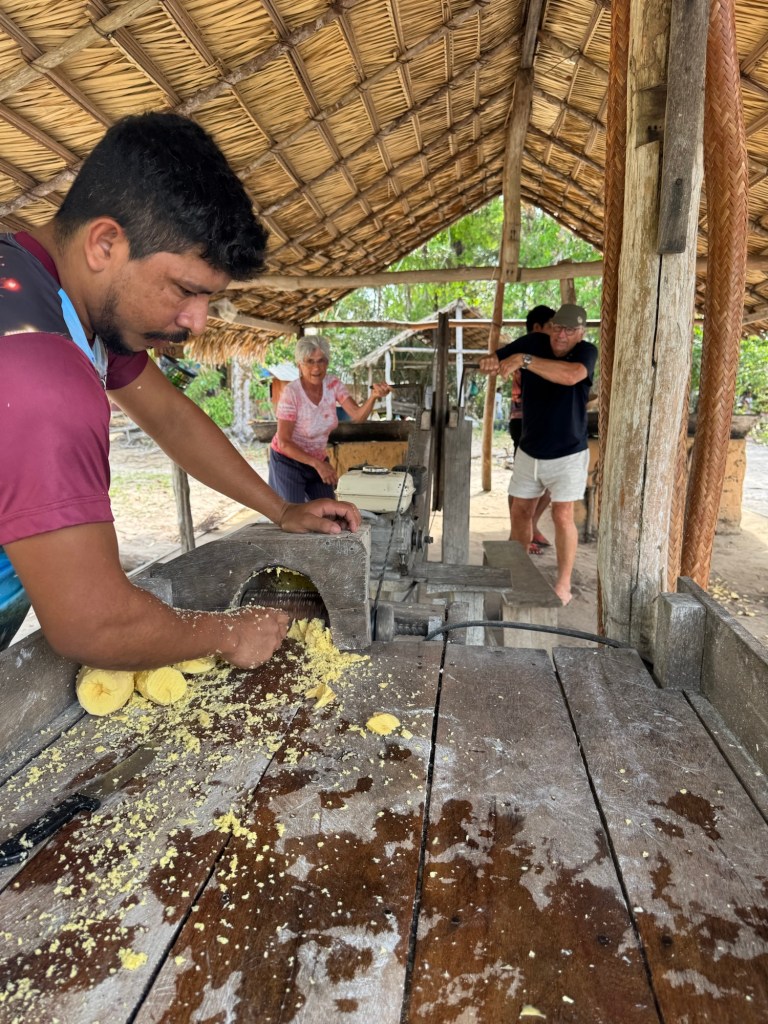
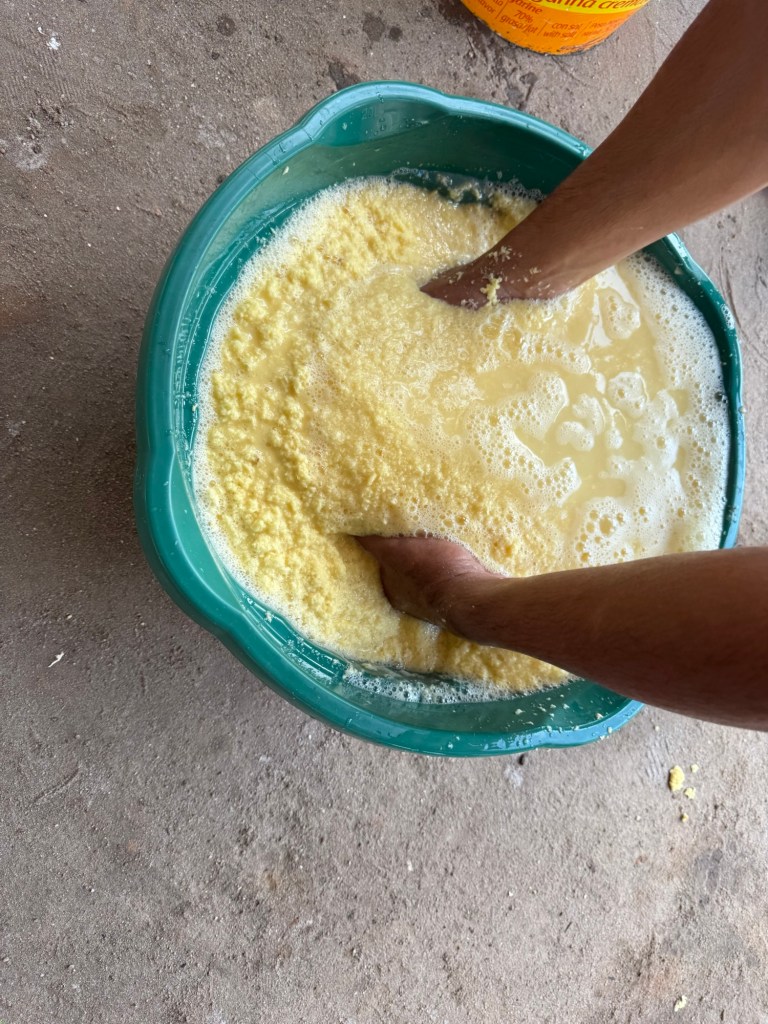
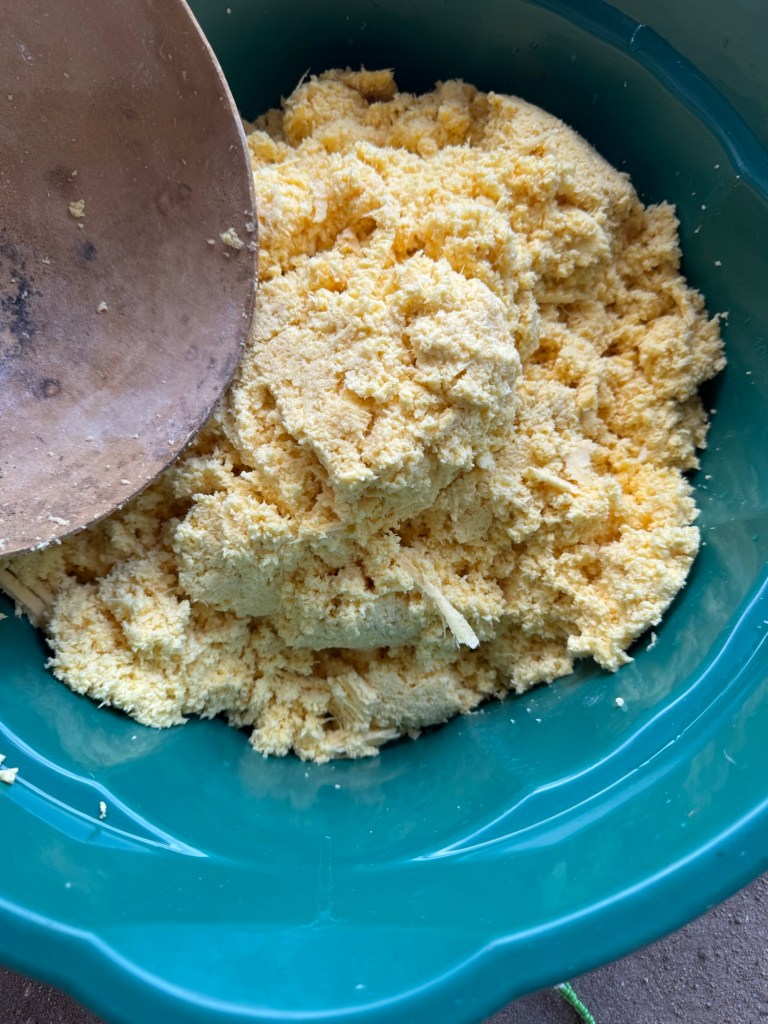
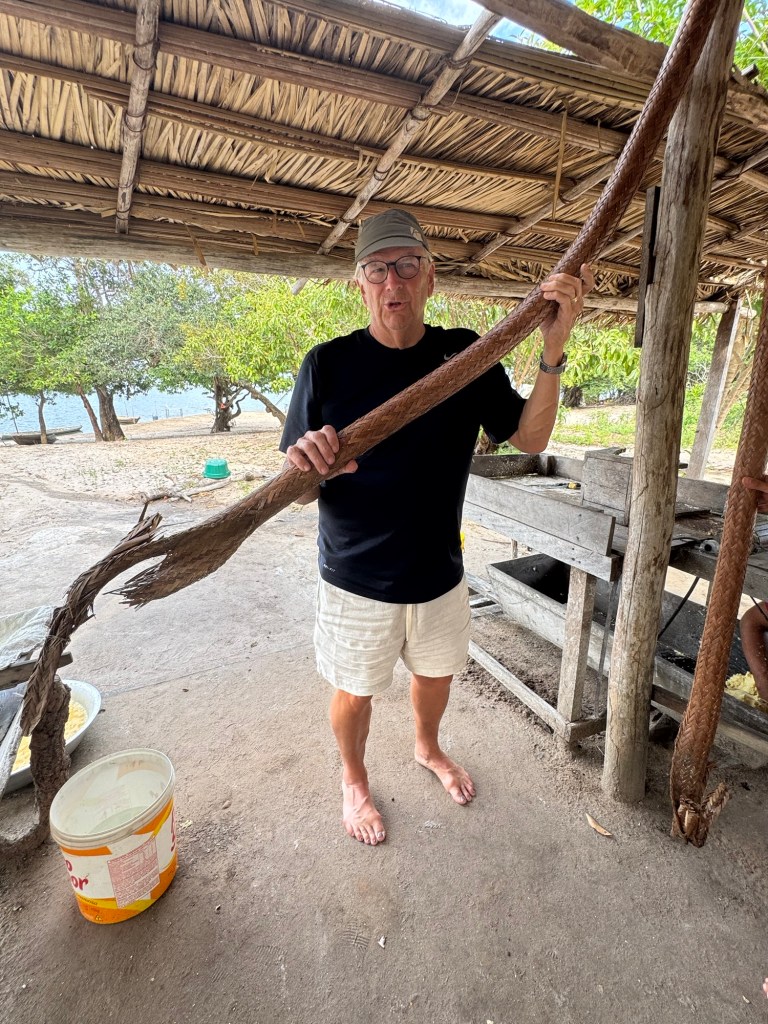
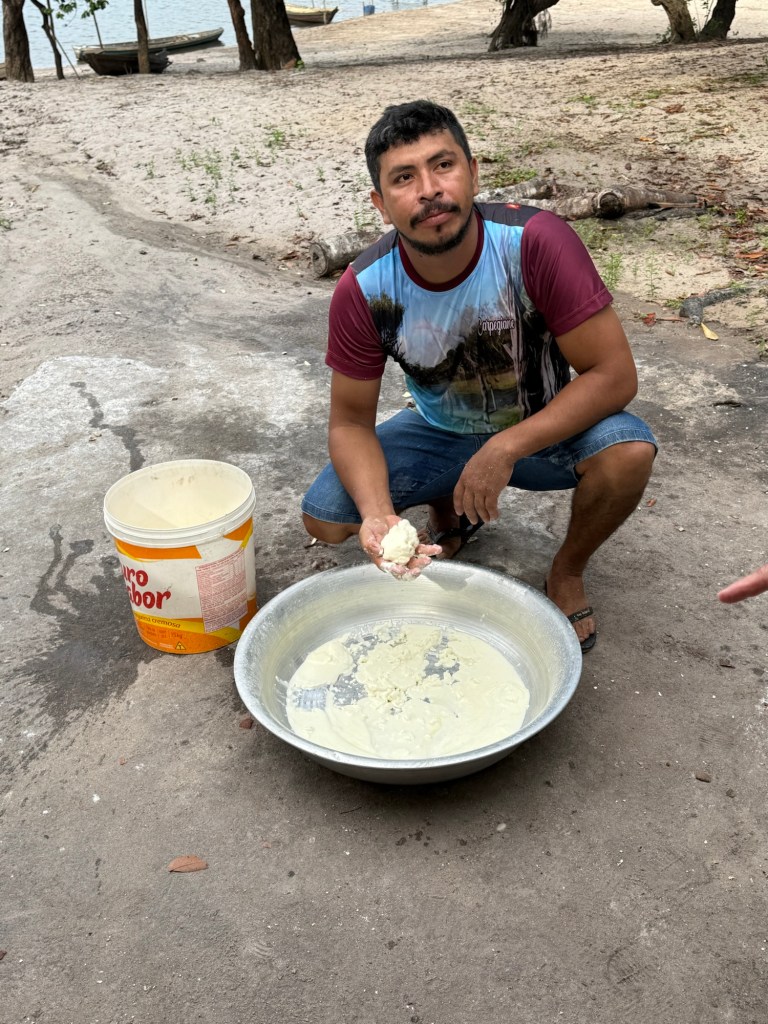
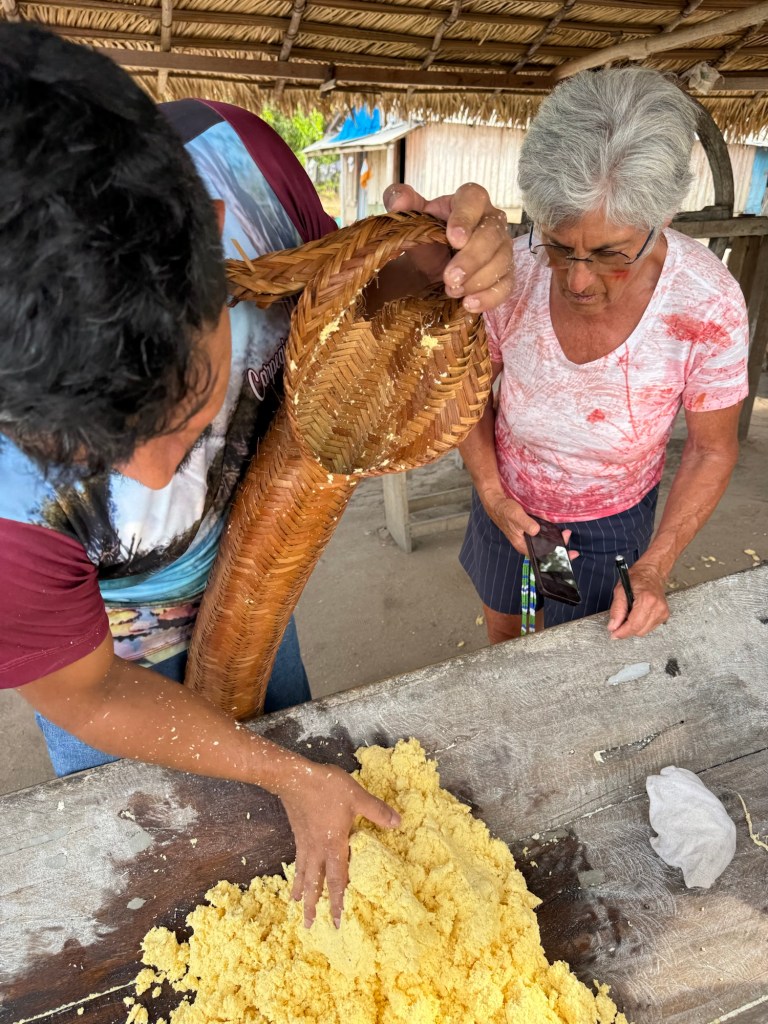
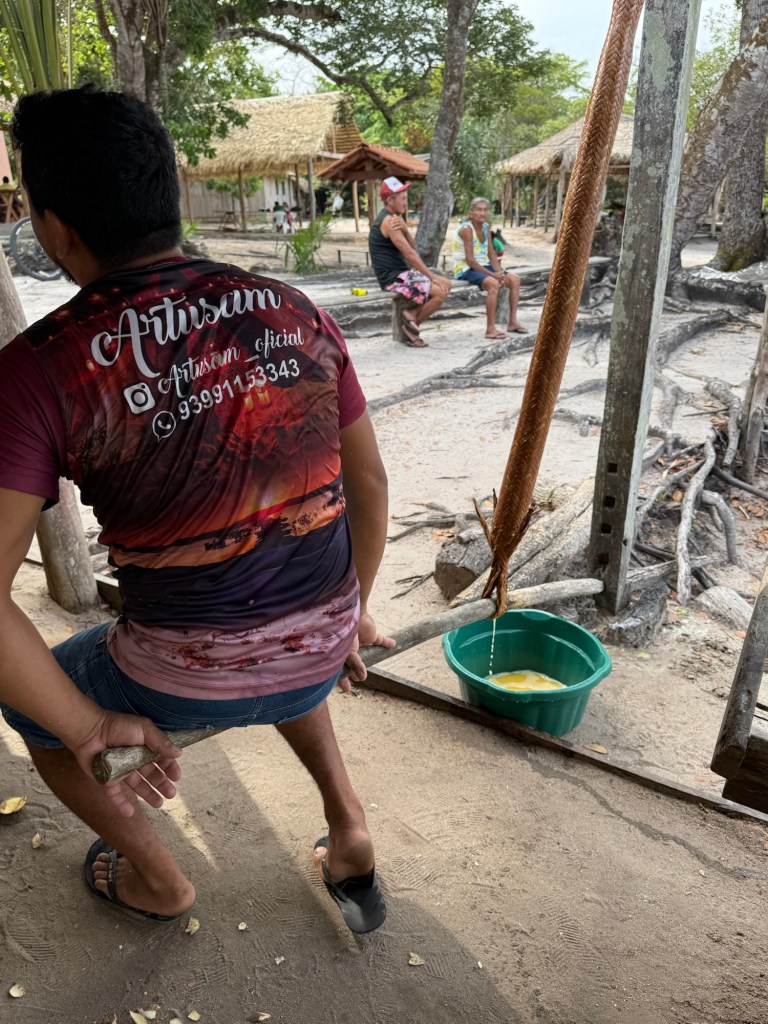
The first step in making cassava flour is to peal the roots, wash and then grind them.
Next add water and squeeze out the liquid by hand into a pot that will eventually become, tapioca and tucupi sauce. Meanwhile, peel a batch of cassava root that has been soaking for 3 days and is about 1/3rd the size of the first batch.
Hand mix the two batches together and squeeze the mash into a tipiti, a long woven tube made of jacatana palm leaves.
Once all the cassava is in the tube, hang it from a post, slip a long pole through the loop in the bottom of the tipiti, secure the pole to a notch in bottom of the post and apply weight to the pole. Water will pour out of the tipiti for some time as more weight is applied.
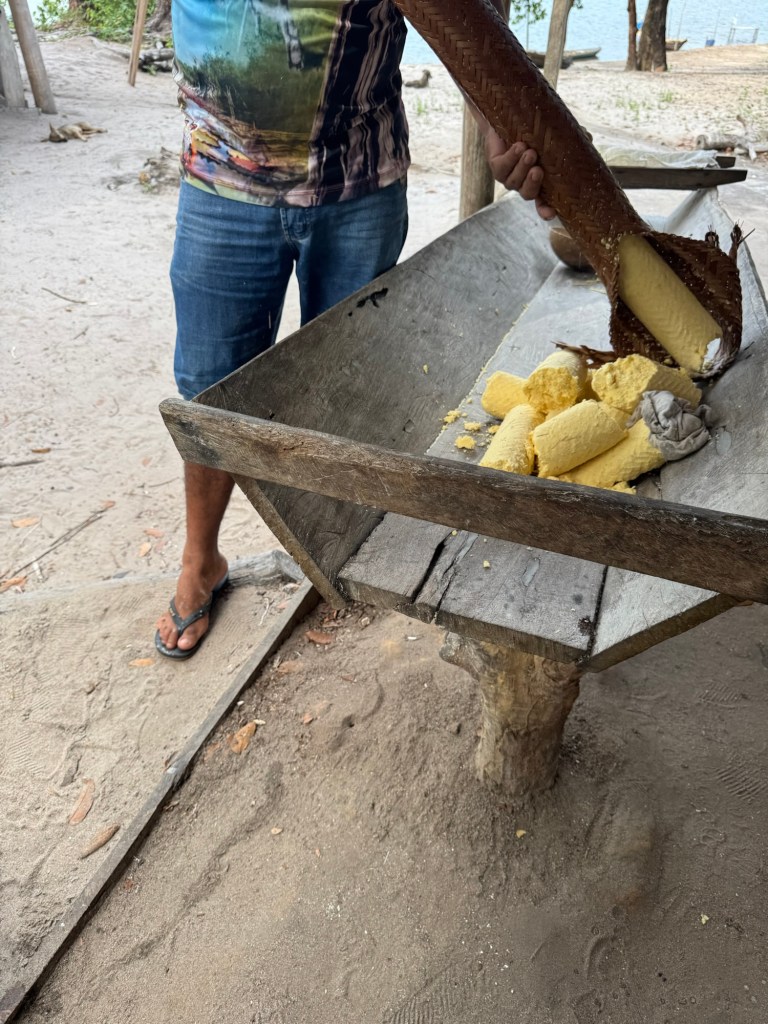

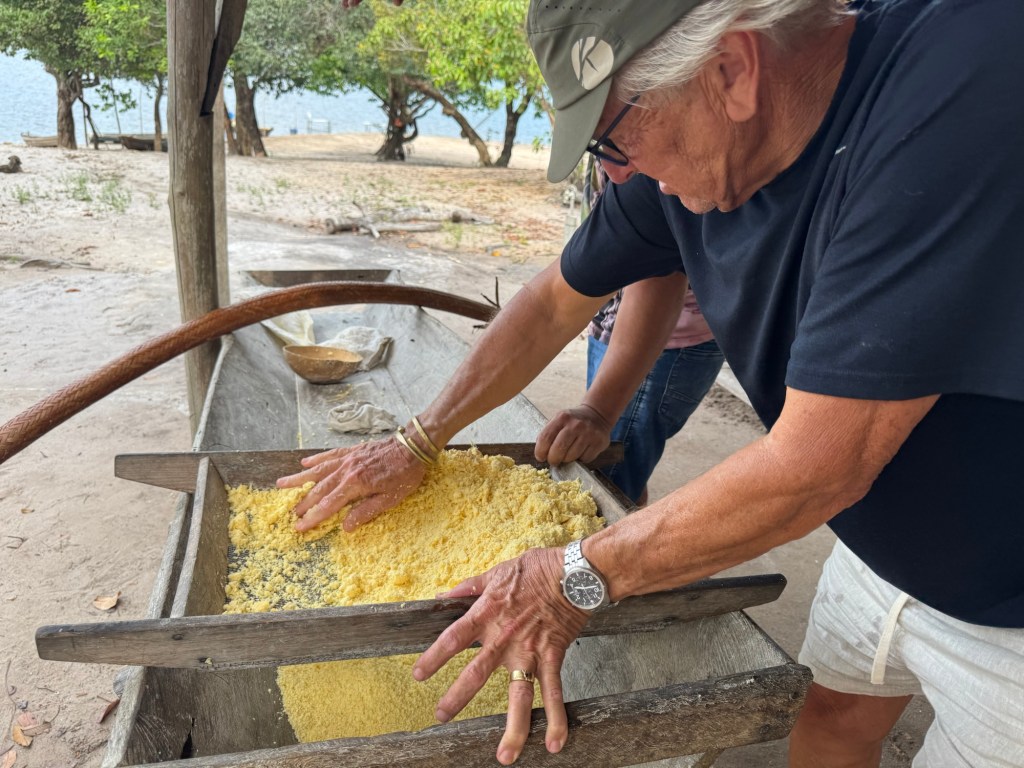
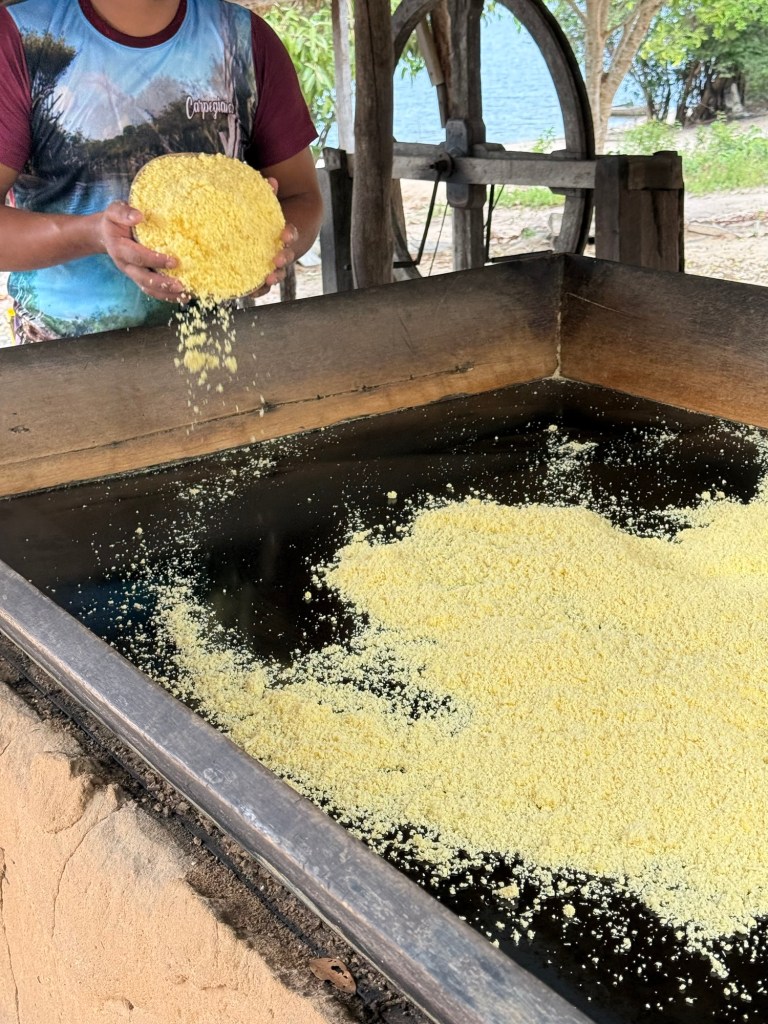
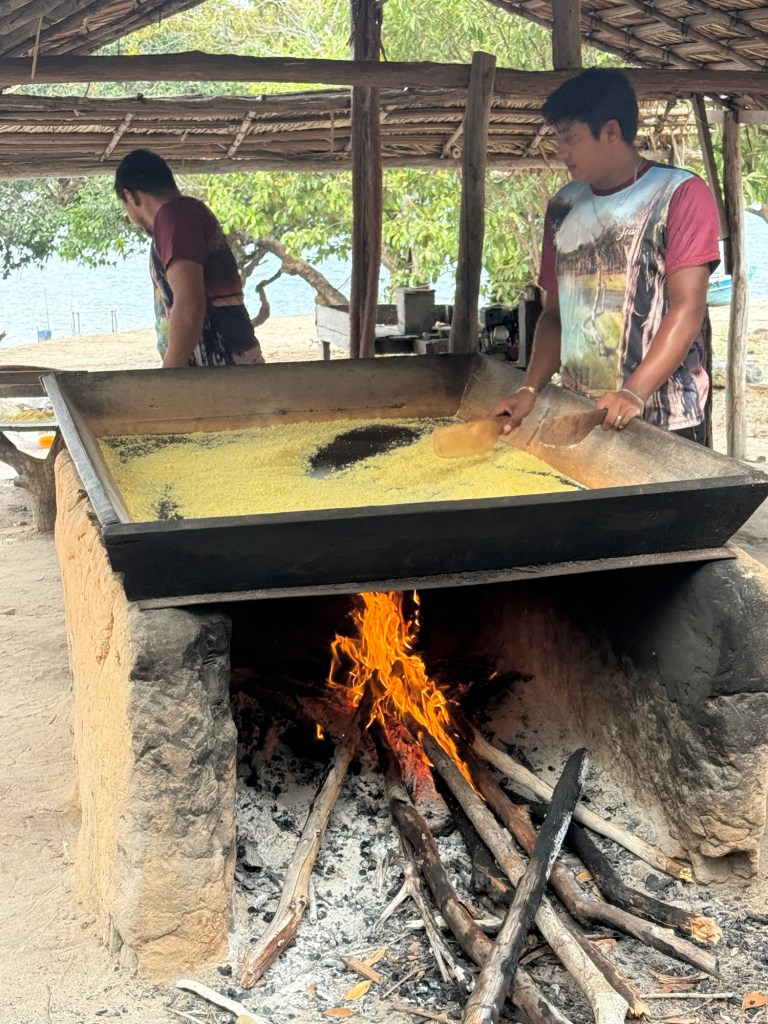
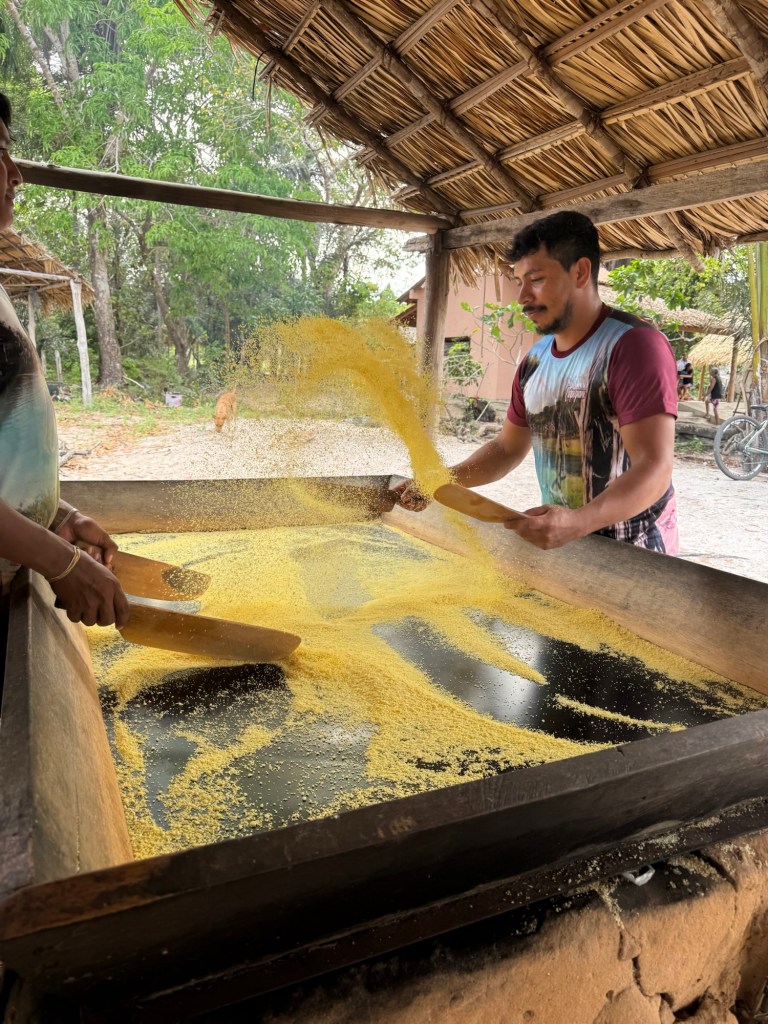
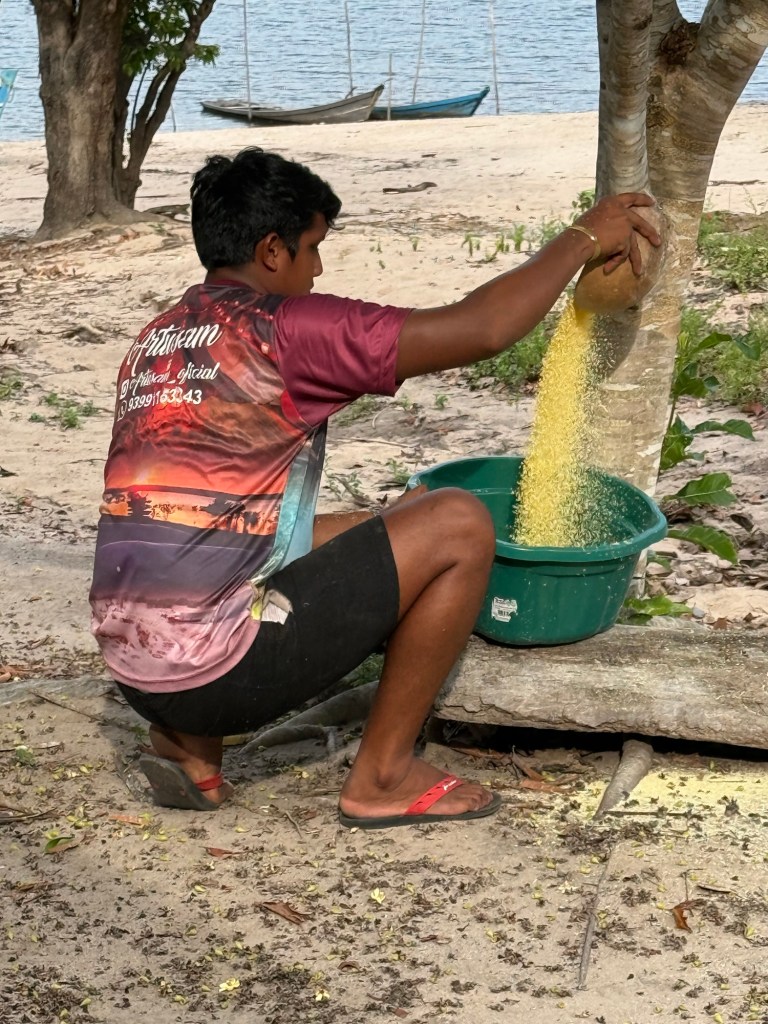
When no more water comes out, remove the cassava from the tipiti, put it through a shaker to loosen the fruit, then cook it stirring constantly until it is completely dry. Finally, aerate the flour to remove the dust. At that point you have edible cassava flour and the poison is gone. The process took two hours and we were ready to get back to the boat, and the beach.
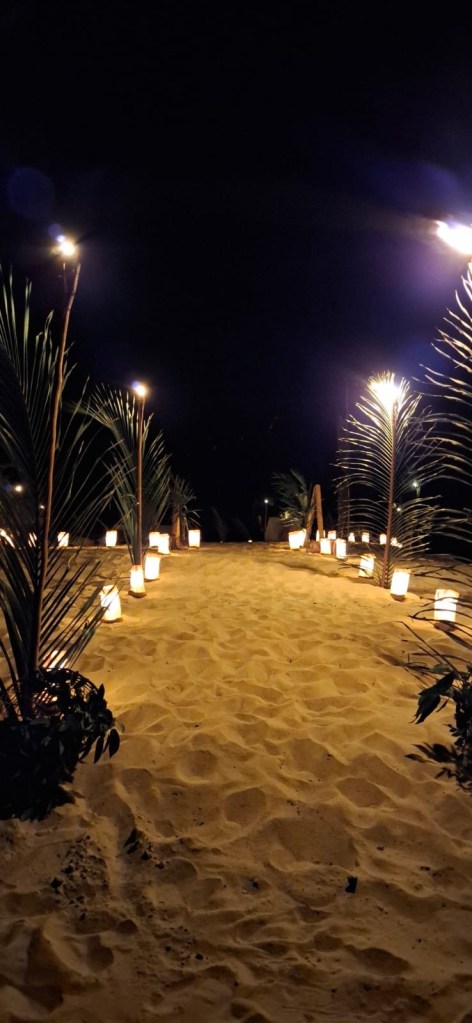
This was the last and special evening for us and the boat crew. It started at 7:30 when we walked off the boat in the dark and onto the beach, which had been transformed into an oasis.
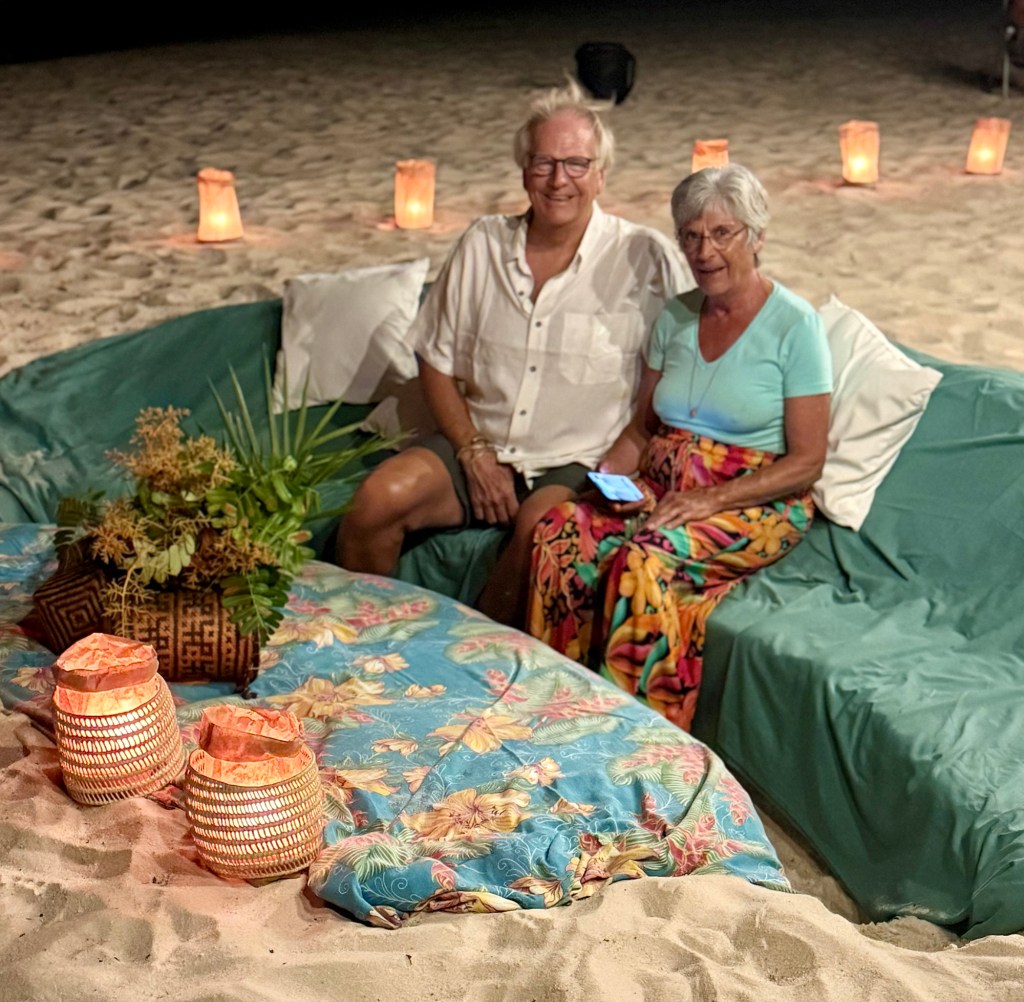
Luminaries lit our path to a sofa excavated out of sand and covered with fabric and pillows. When we sat on it we were tickled to experience a sofa on the beach. Milena served us cocktails and we enjoyed the scene with palm fronds placed in the sand as trees, luminaries everywhere and our table prepared behind the sofa.

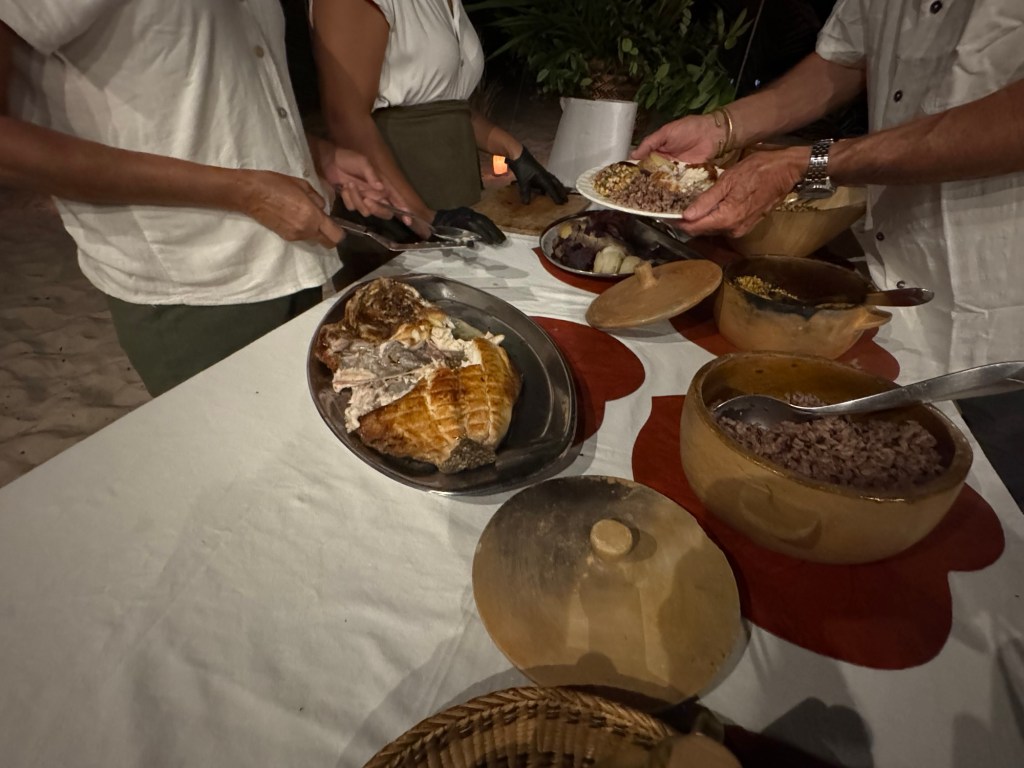
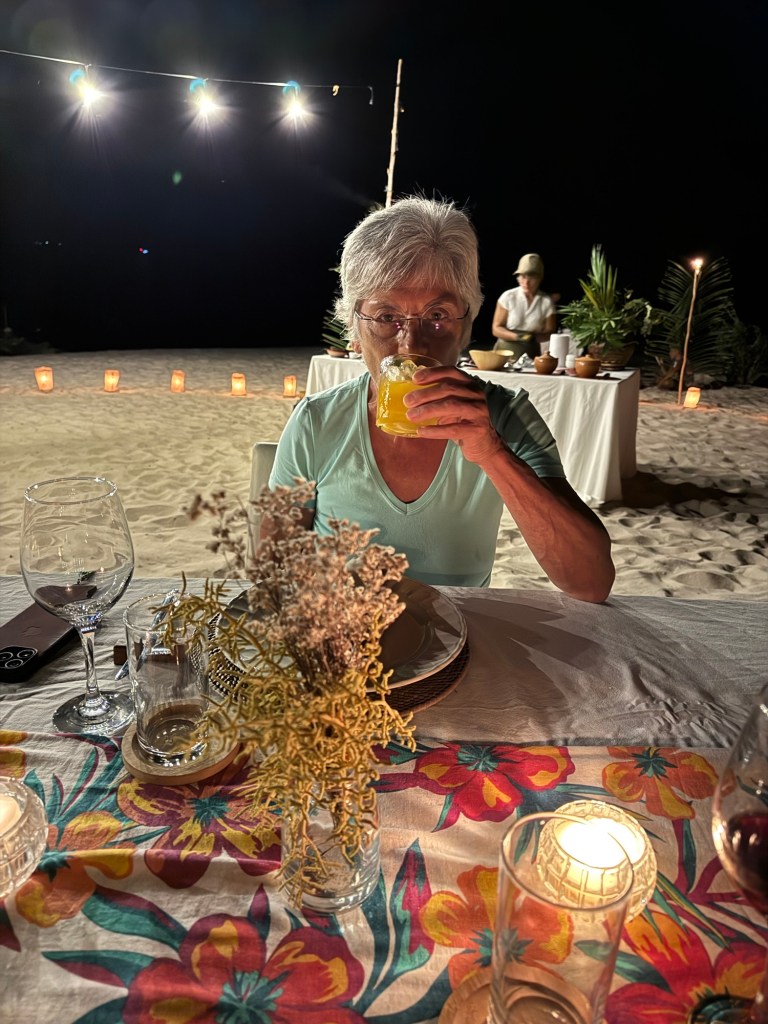
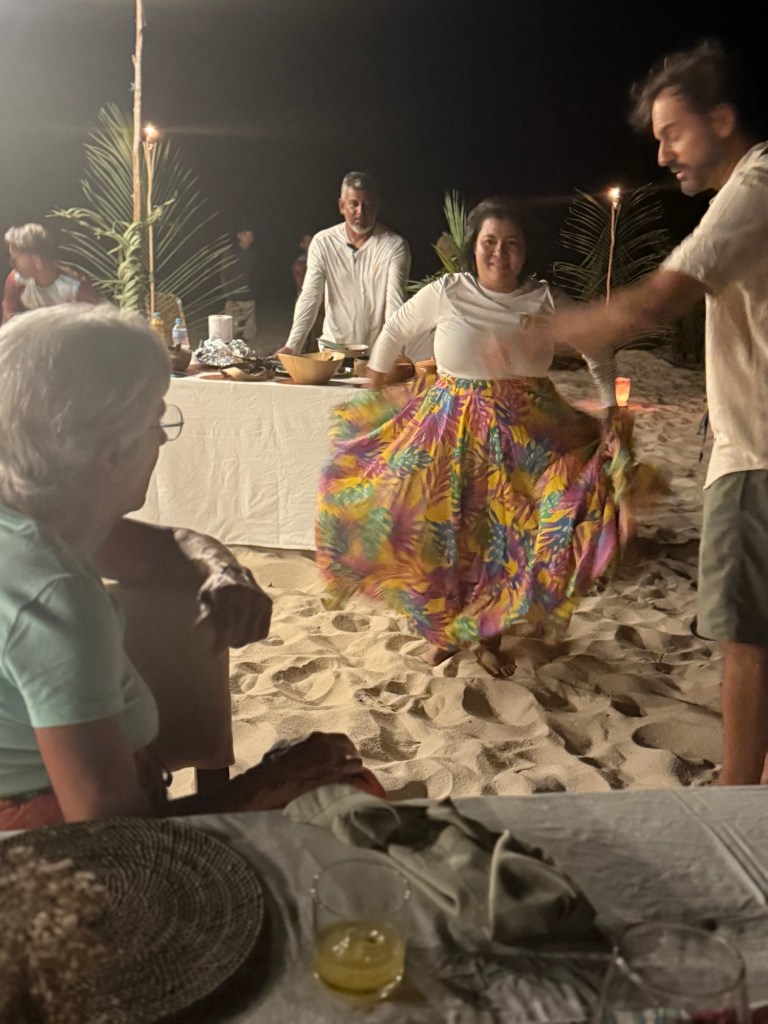
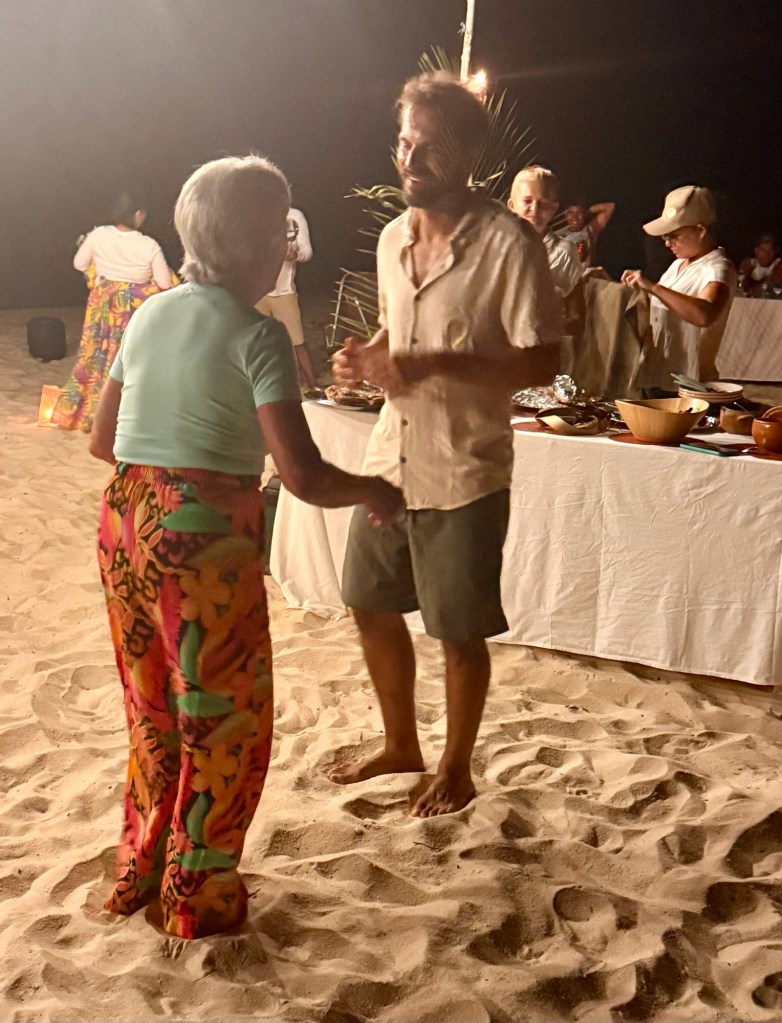
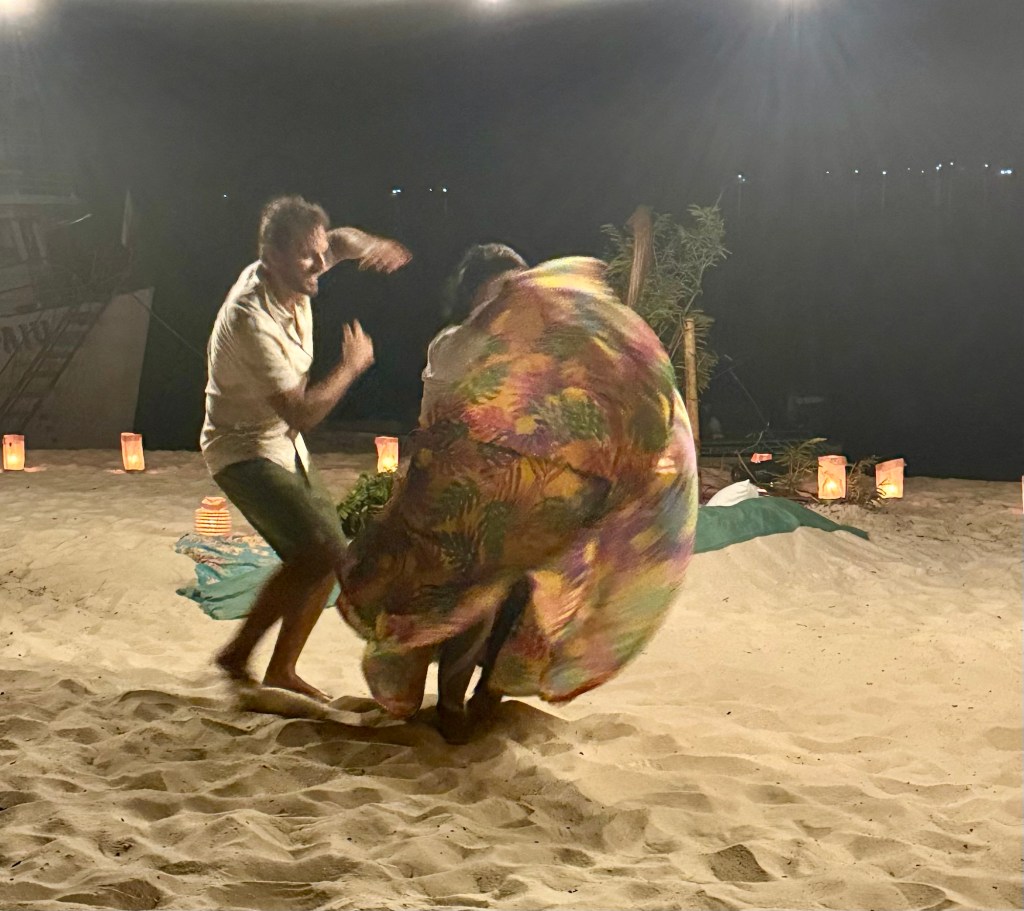
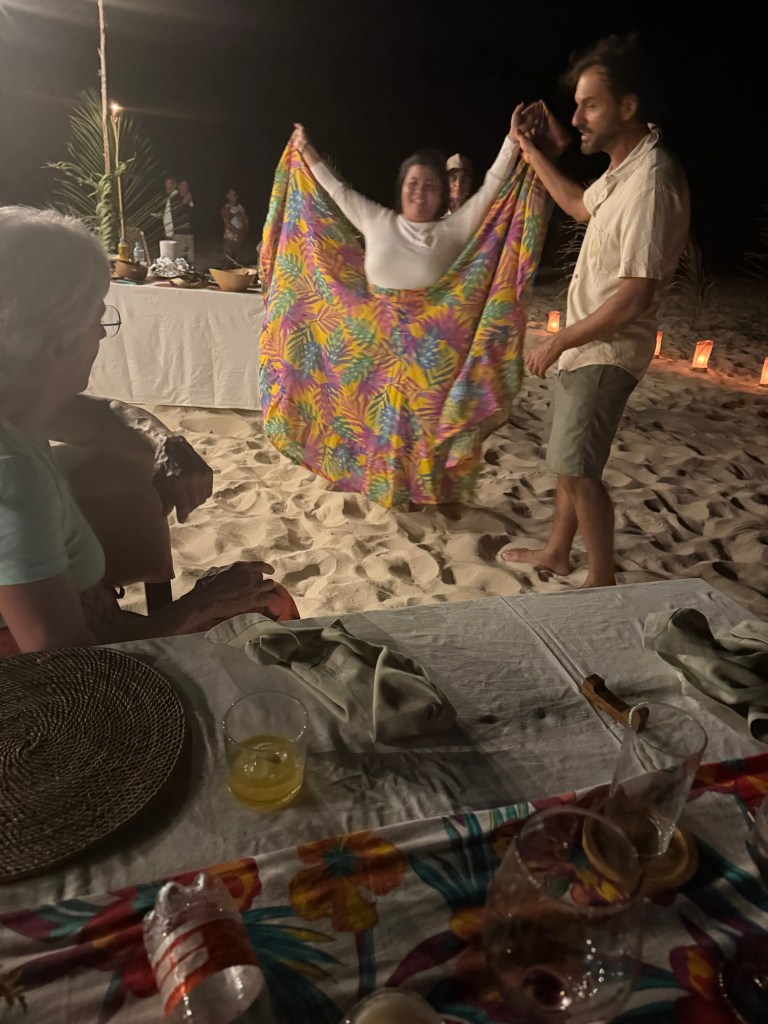
Soon we had dinner with a very delicious fish called Tambaqui that had been barbecued perfectly and was served with a variety of side dishes. Such an event is called a Piracaia, or “fish bar-b-que on the beach”. After dinner, Carlos started music playing and the dancing began.
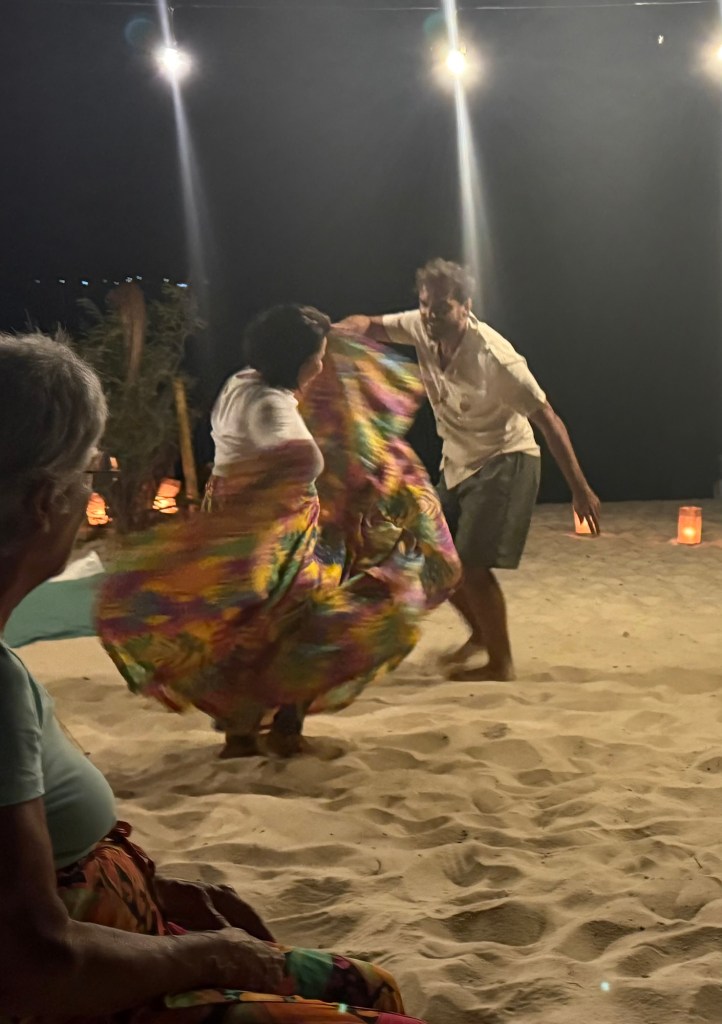
Finally, the evening ended and we were off to bed.
Tomorrow will we have breakfast, enjoy the final leg of the boat ride, disembark and head for the Santarem airport.
 Adventures with Julia