
Sunday, October 19, 2025
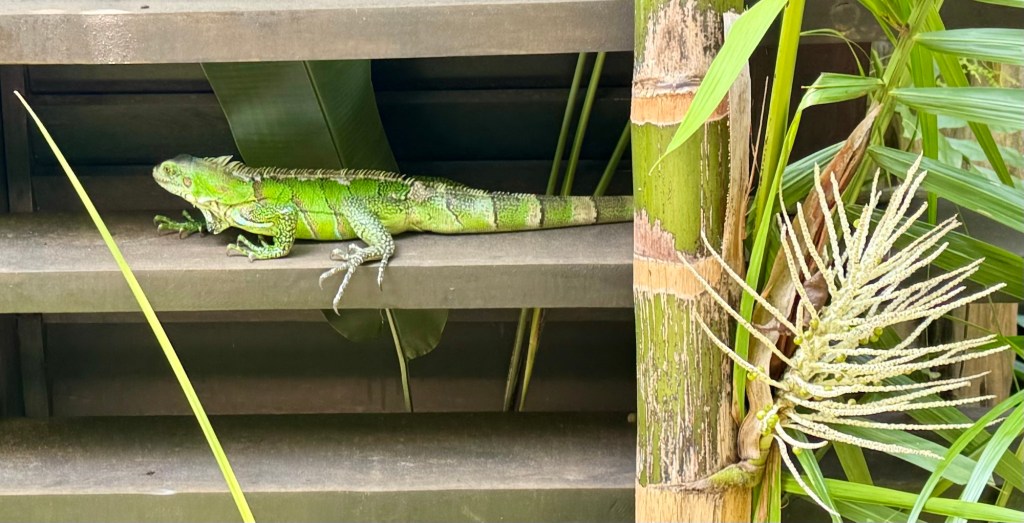
A colorful iguana outside our door bid us adieu and off we went to our next adventure`.
We lifted off Mirante do Gaviao Lodge beach in the seaplane at 7:50 with the same crew that brought us to the lodge. They gave us an equally delightful return to Manaus, flying low over the jungle
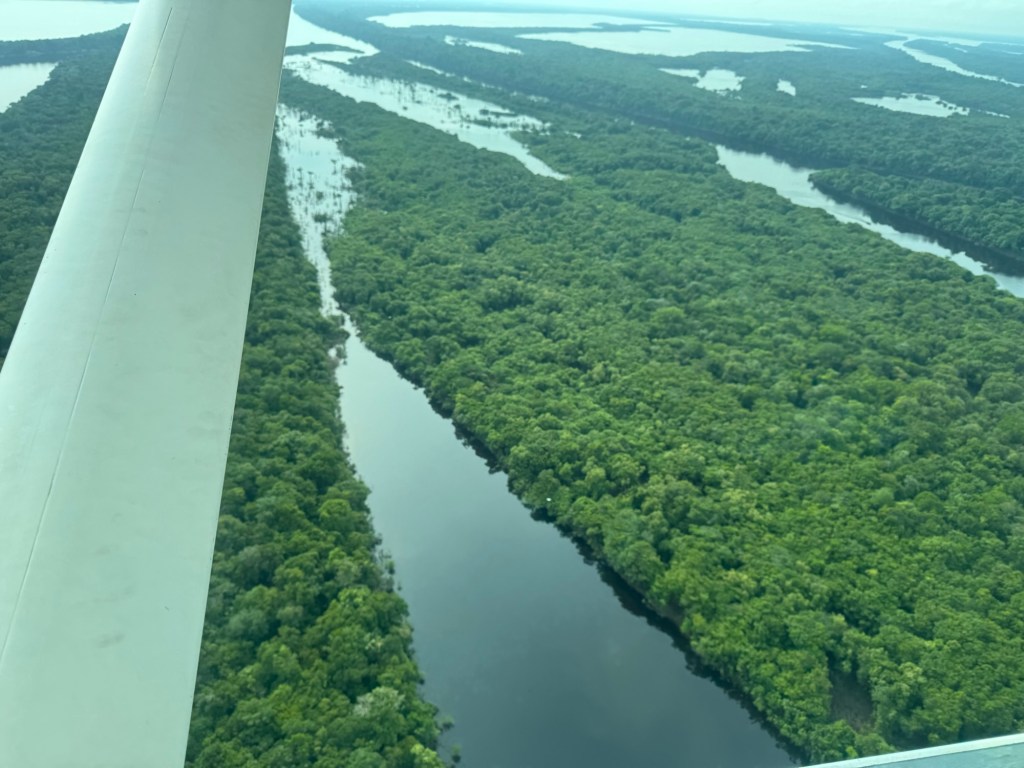
and very close to the river. Near Manaus we encountered the muddy Amazon again. Almost touching the water.
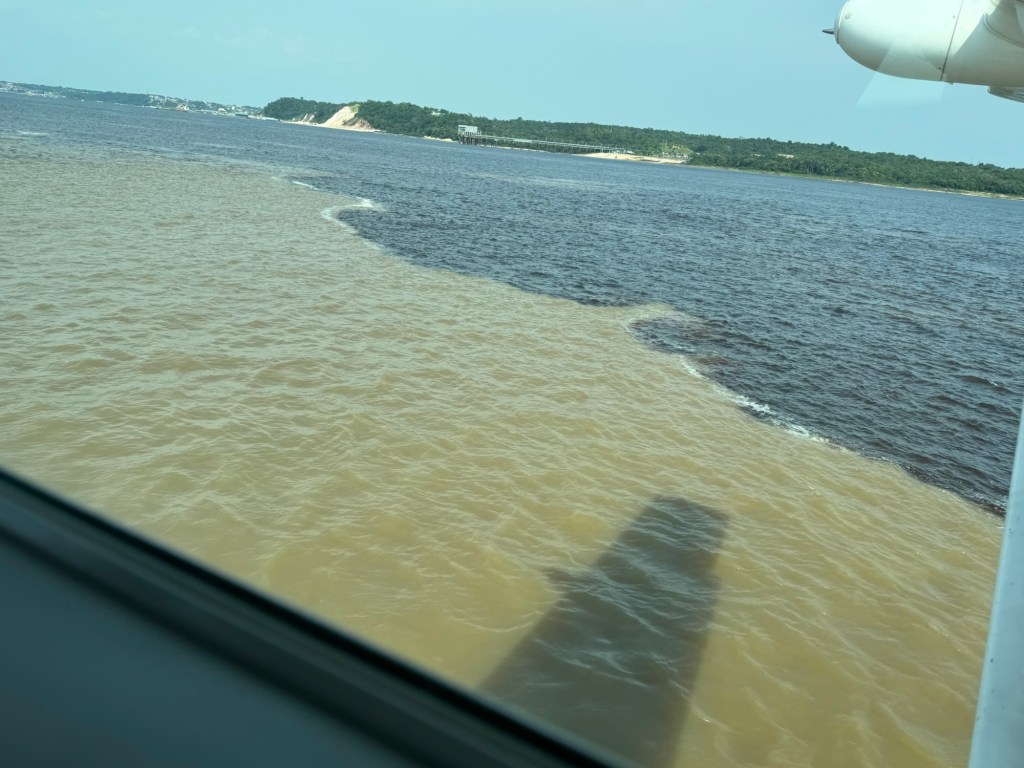
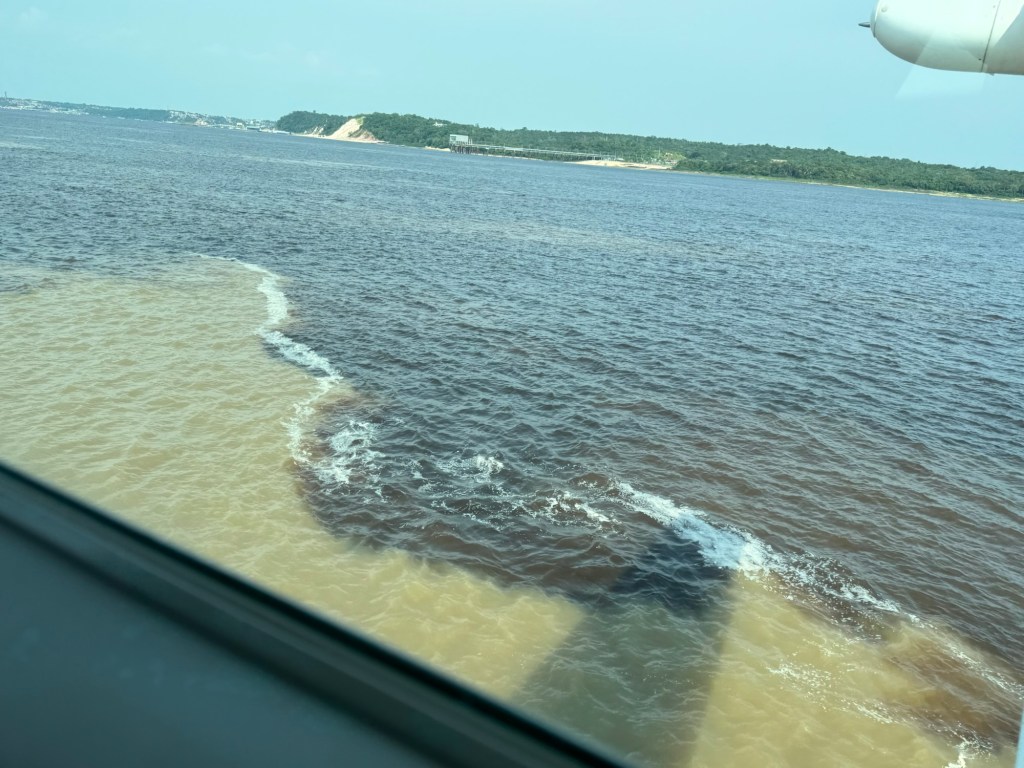
Although we have not been on the Amazon River at all this trip, we have been in the Brazilian state of Amazonia and people refer to the area as if being on the river.
The Pantanal, our next destination, is a natural region encompassing the world’s largest tropical wetland area, and the world’s largest flooded grassland. Located mostly in the Brazilian state of Mato Grosso do Sul, it extends into the state of Moto Grosso and portions of Bolivia and Paraguay. (Refer back to the map of Brazils states.) It sprawls over an area between 54,000 and 75,000 square miles with various sub regional ecosystems that each have distinct hydrological, geological and ecological characteristics. Roughly 80% of the Pantanal floodplains are submerged during the rainy seasons, nurturing a diverse collection of aquatic plants and helping to support a habitat for nearly one thousand species of animals and many aquatic birds. Fishing is an important industry in the local economy and is also a staple food. Although much larger, the Pantanal has a habitat similar to the Everglades in Florida.
We will be visiting Caiman, an oasis in the Pantanal founded in 1987 with the purpose of conserving its flora, fauna and culture in the Pantanal Matogrossense National Park. “Thick bush” is the meaning of ”Matogrosso”. Our accommodations are in the lodge called Caiman on a 131,000 acre ranch that sustains many white Brahma cattle as well as thousands of birds, animals, amphibians, fish and bugs all being conserved and made available for tourists to experience.
We spent over 6 hours in a King Air C90A getting from the Amazon region to the Pantanal. The weather was so stormy south of Manaus that we bounced all over the sky and were forced us to divert around several storms cells. After a refueling stop in a place called Alta Floresta and another 3 hours in the air we landed on the Caiman airstrip in front of the Caiman lodge. Fortunately, the weather was cooler, barely humid and most pleasant. We felt comfortable again.
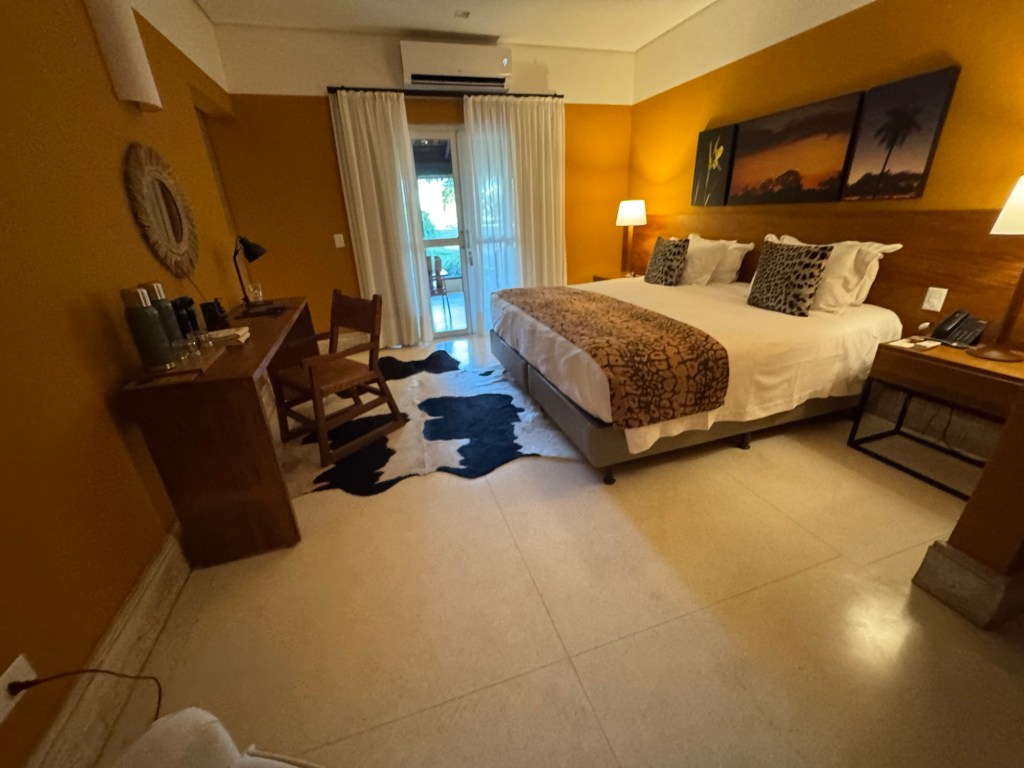
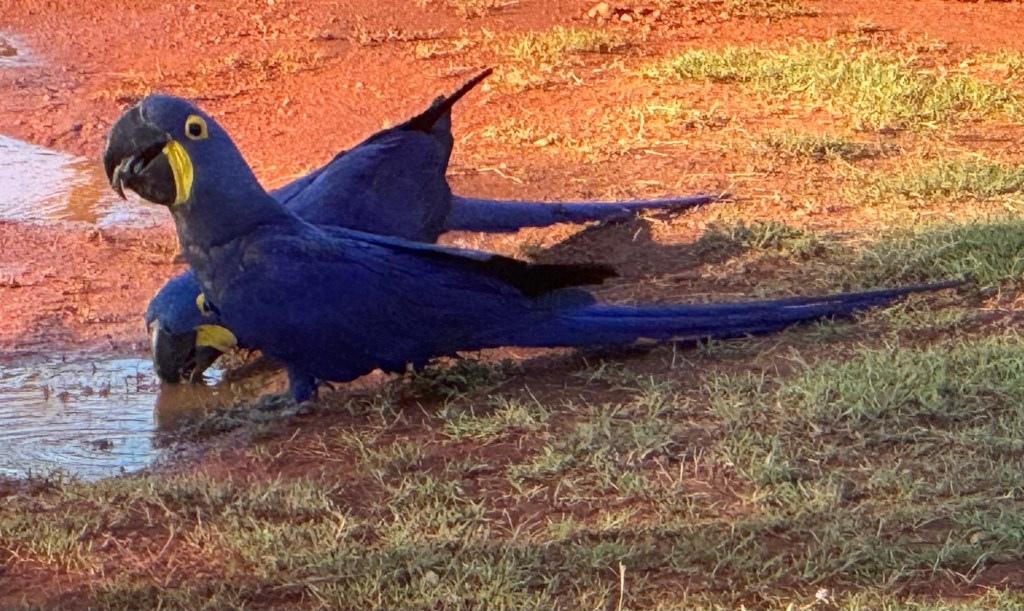
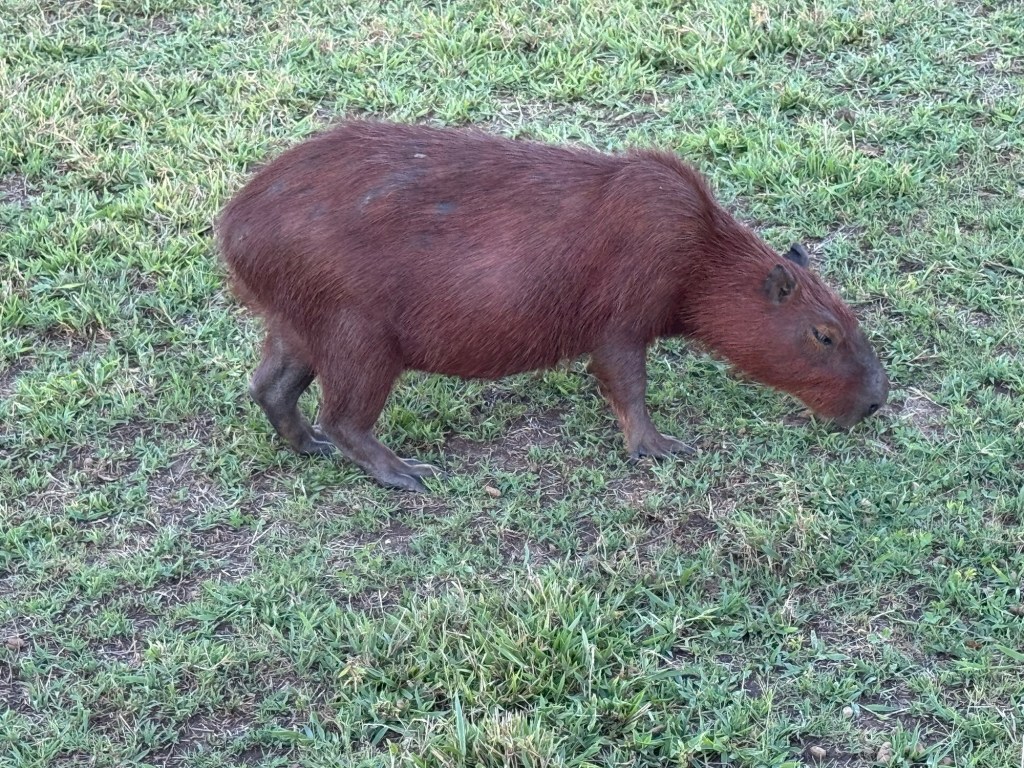
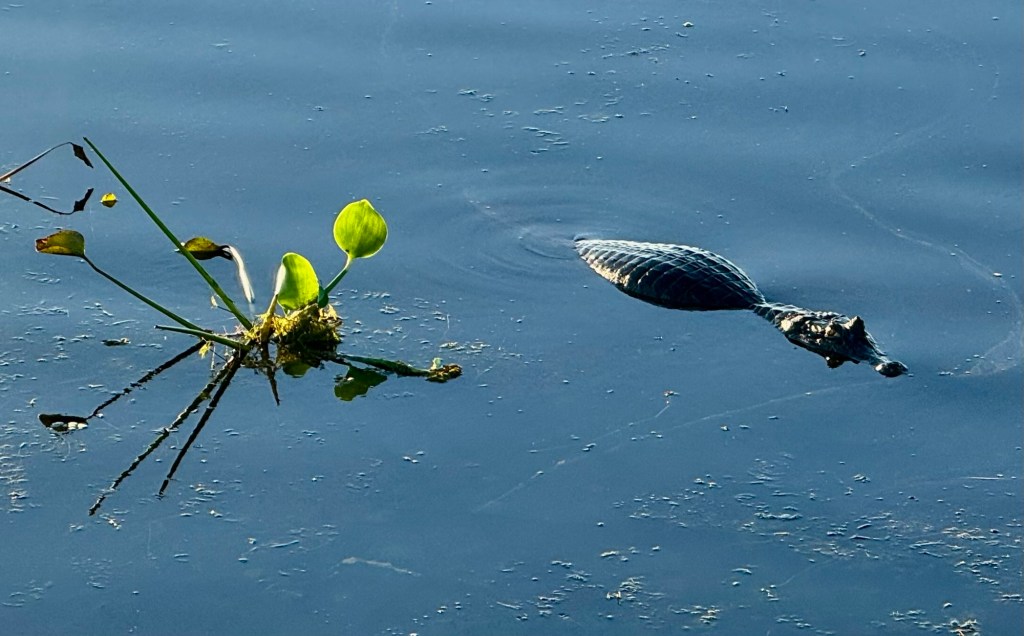
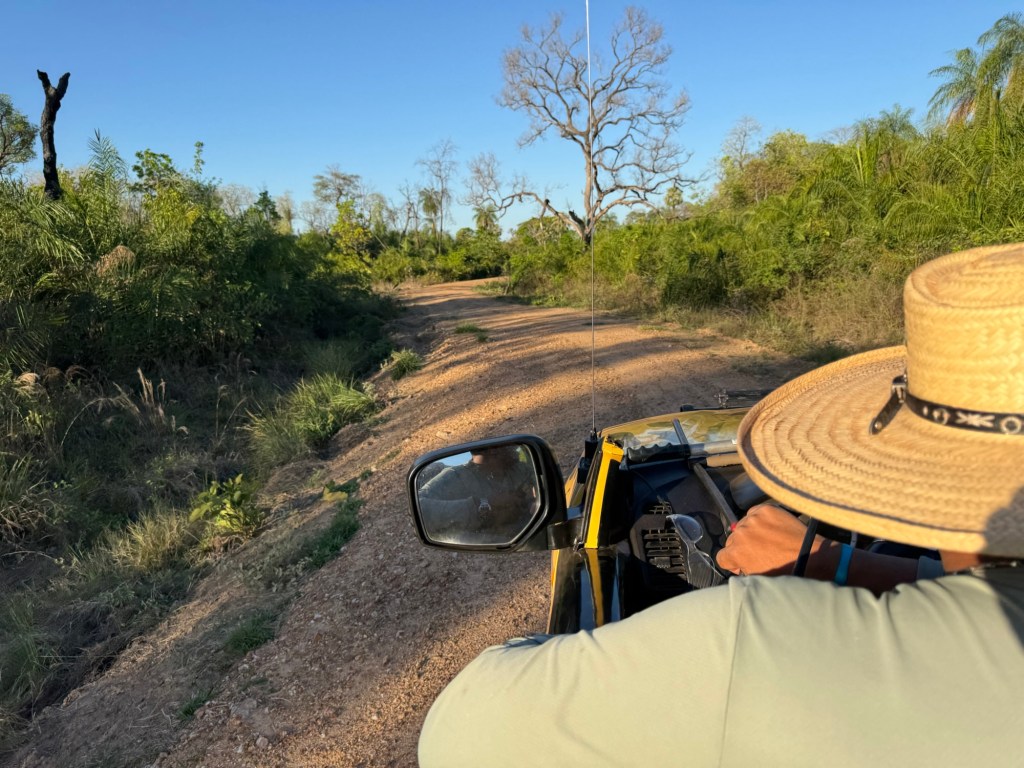
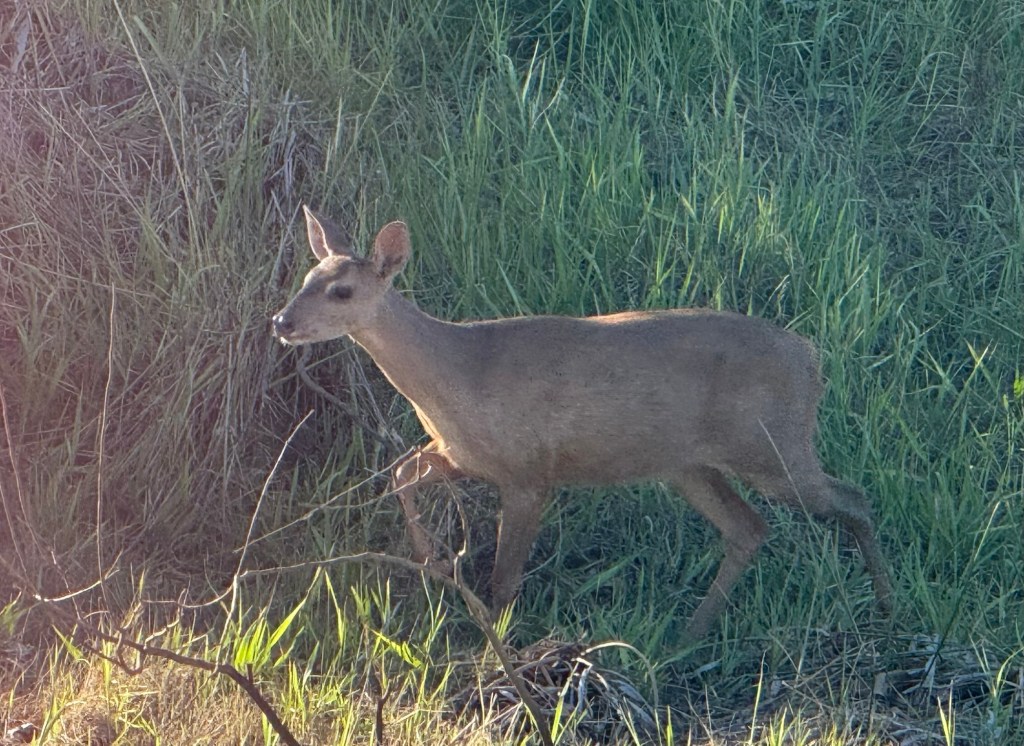
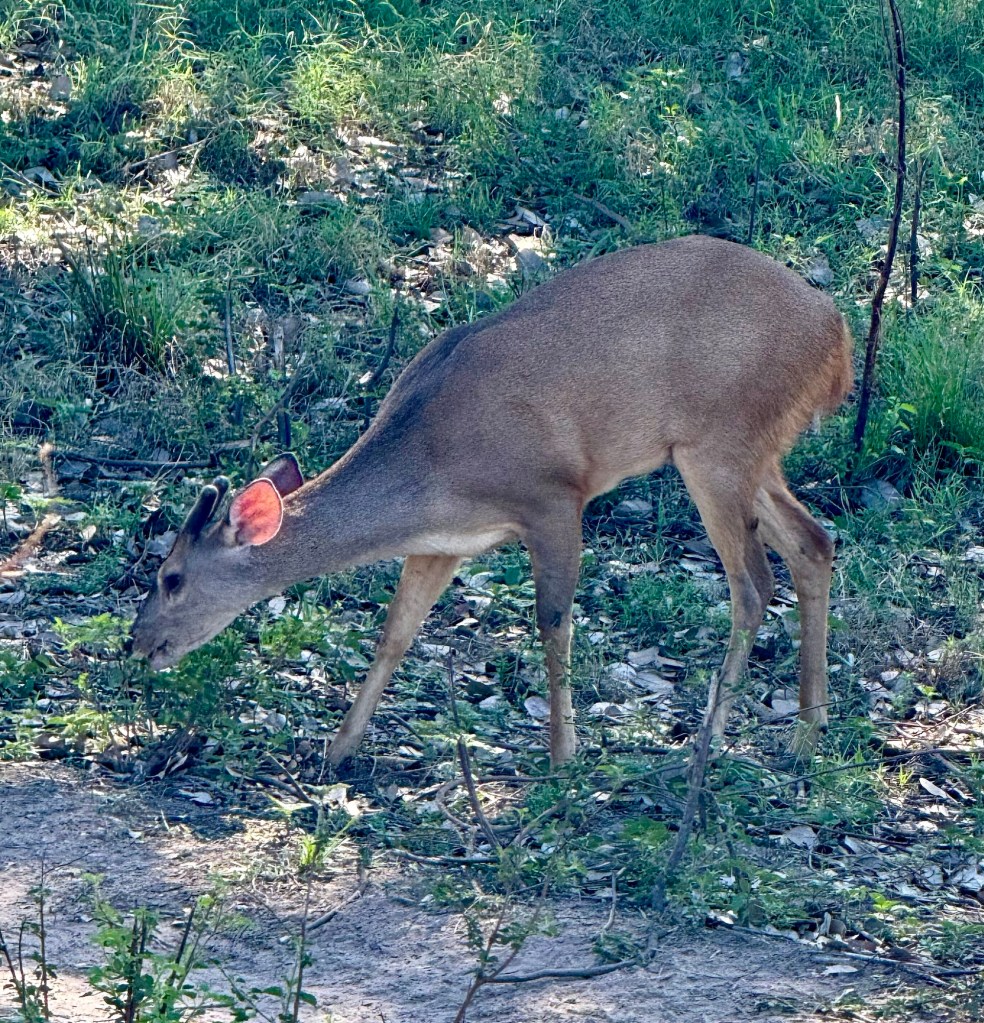
Waiting to greet us were a young lady named Laura and her driver named Coche. They were ready to take us on a game drive, so after checking into our room, we were in a safari vehicle on a game drive. We saw several animals and birds in short order and were cooler and happier than we had been anywhere in the Amazon. Our first sighting were several of the world’s largest rodent, the Capybara, then a crab-eating fox, a pair of turquoise-fronted Amazonia birds, which are actually green parrots, several pampas deer, like our deer only smaller. Laura told us we would have a different guide for the next three days as we will be on a special program for jaguar conservation. These are the animals I succeeded in photographing.
The drive with her lasted until dark and dinner at 7:30pm. The meal was buffet and included several pizzas, an attraction for us after weeks of Brazilian food…good but not like home.
Monday, October 20, 2025
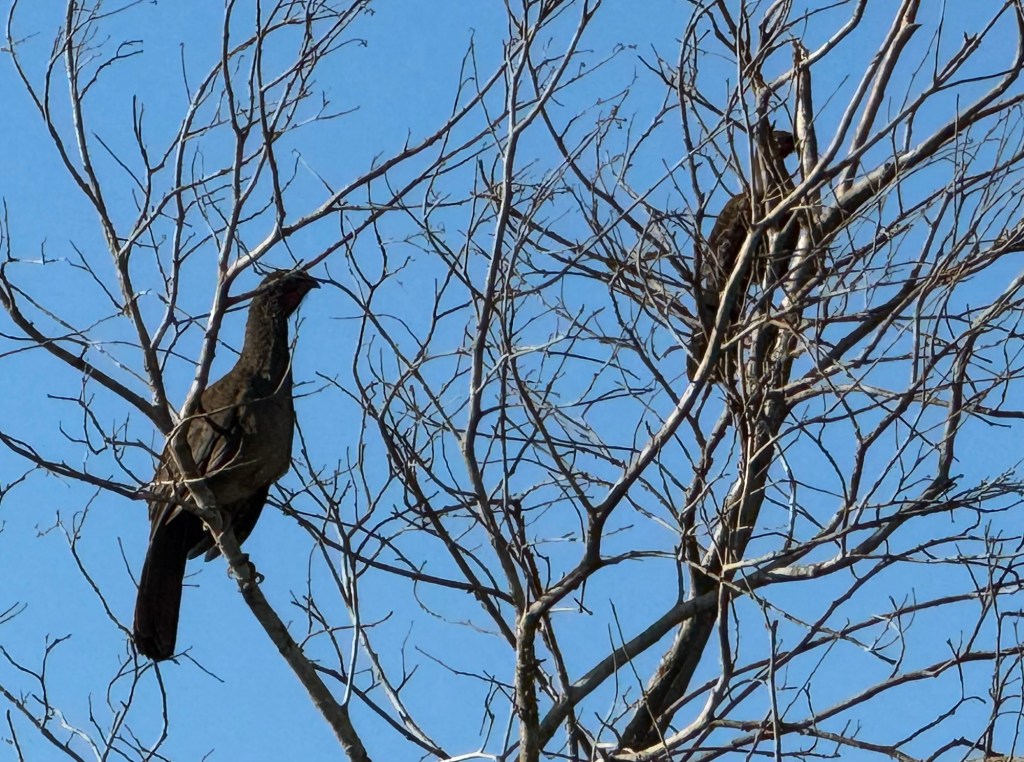
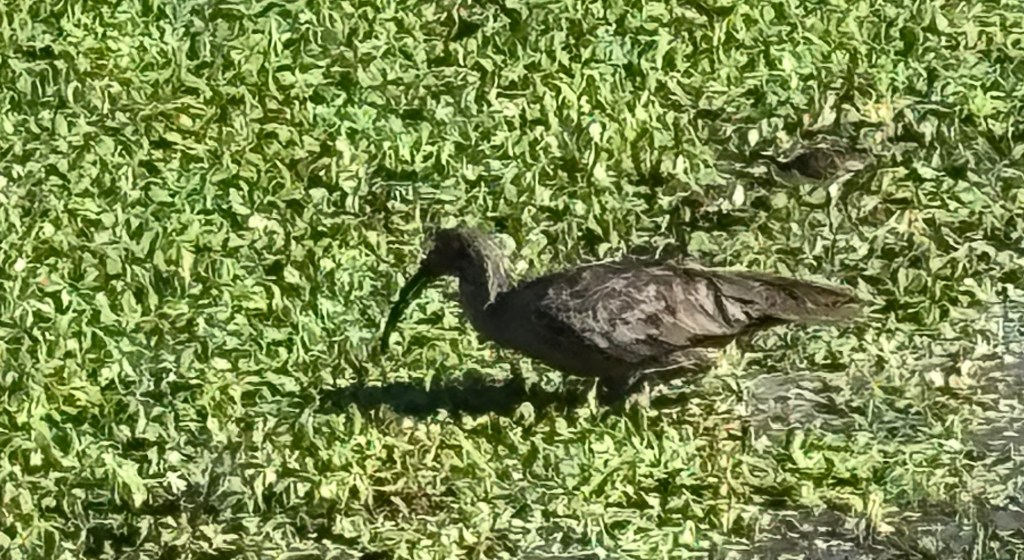
Up at 5am and on safari by 5:30, we met our Jaguar conservation guide, named Rafael, and our new driver, Chipa. Rafael immediately began telling us about the early morning birds: a Burrowing Owl, a buff-necked Ibis, many big and noisy birds called Chaco Chachalaca and the largest birds of all, a pair of rhea, ostrich-like birds.

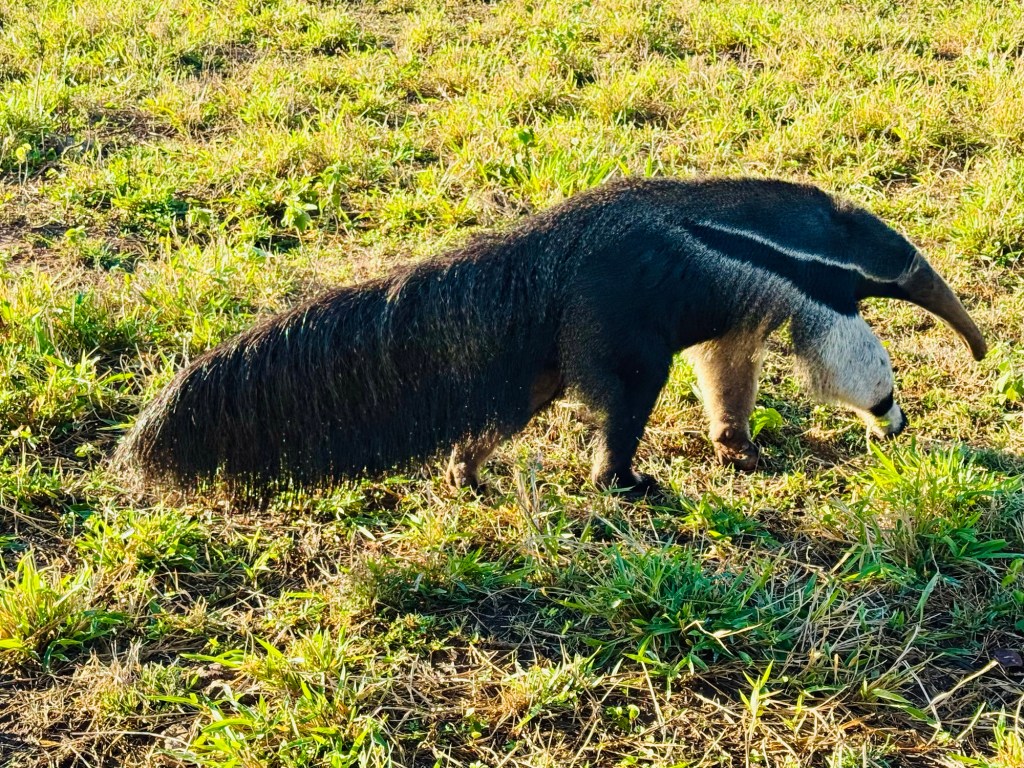
Then we saw a large anteater slowly eating its way through a termite hill. Anteaters apparently have bad hearing and vision, but a good sense of smell.
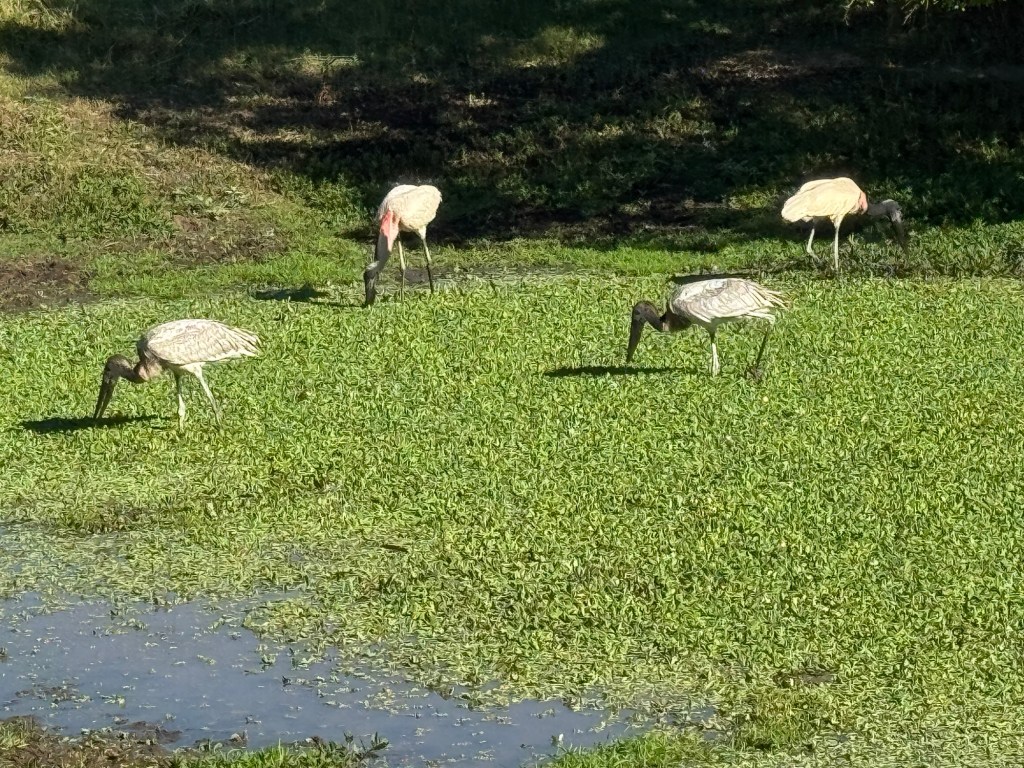
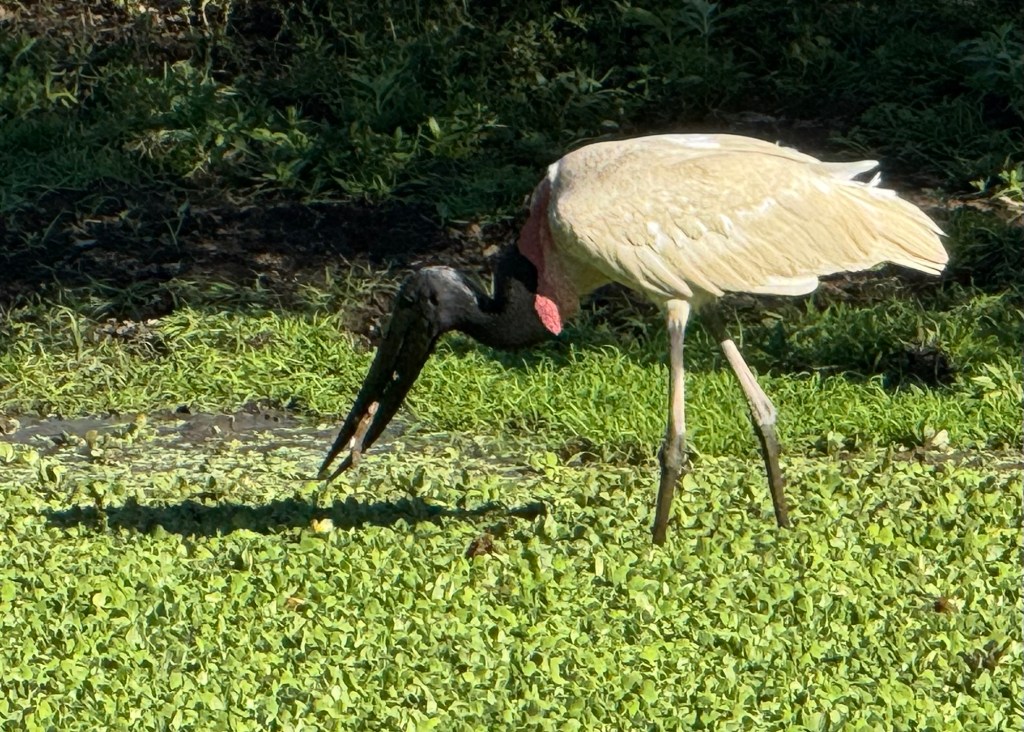
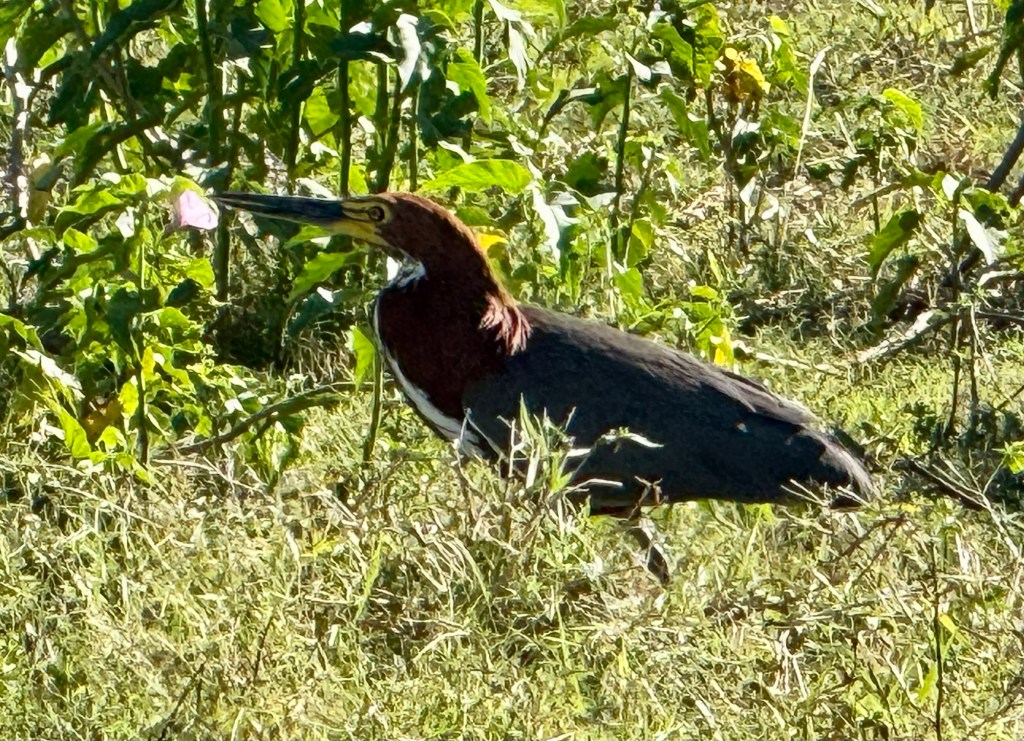
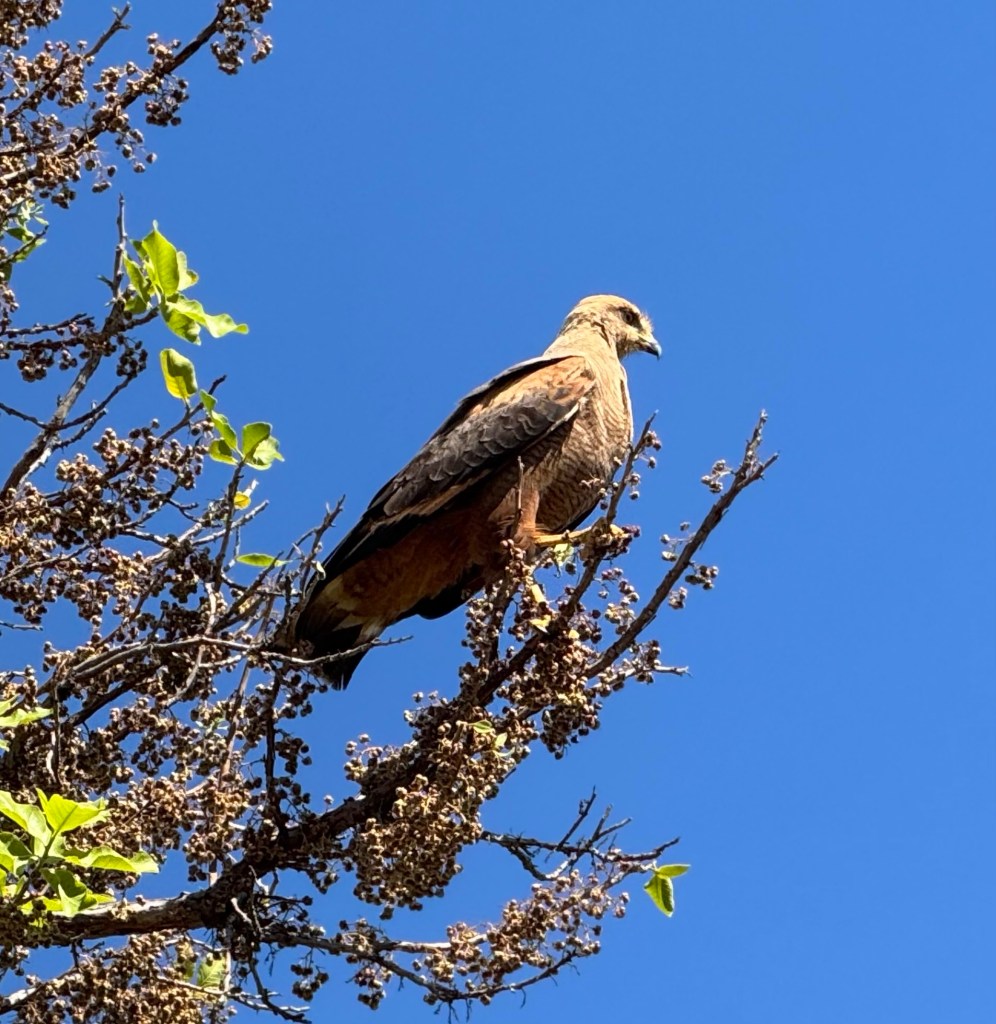
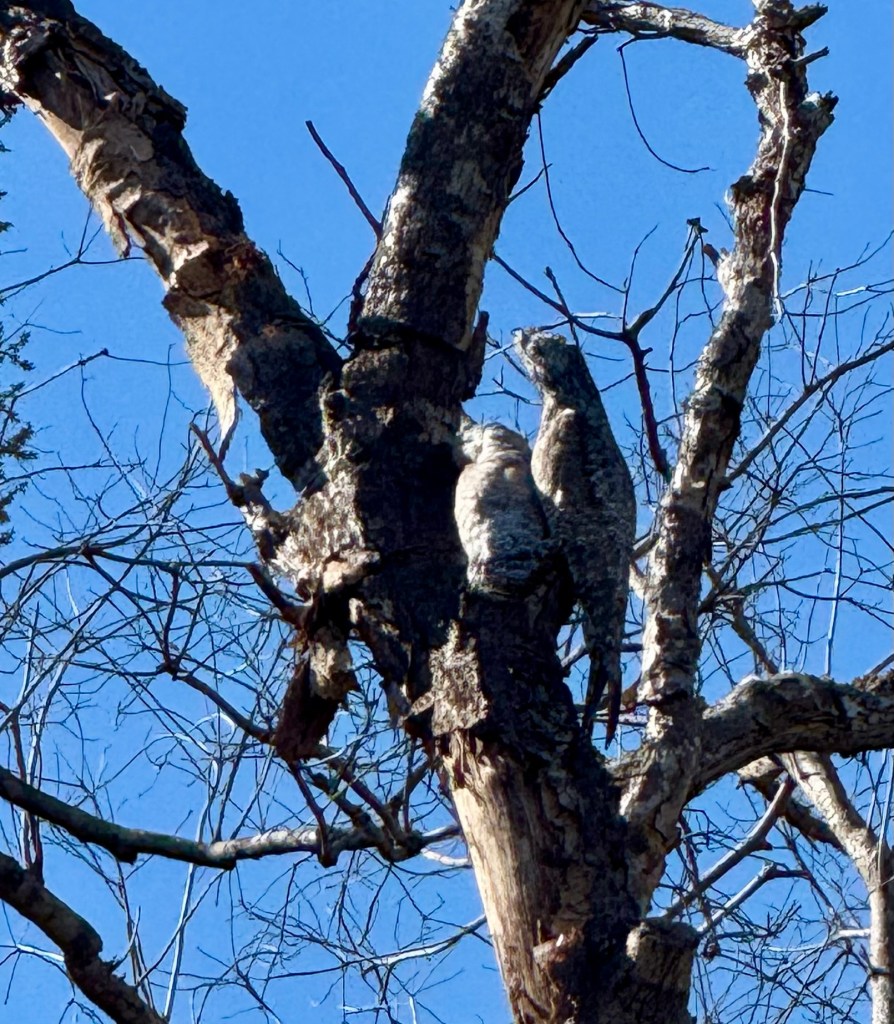
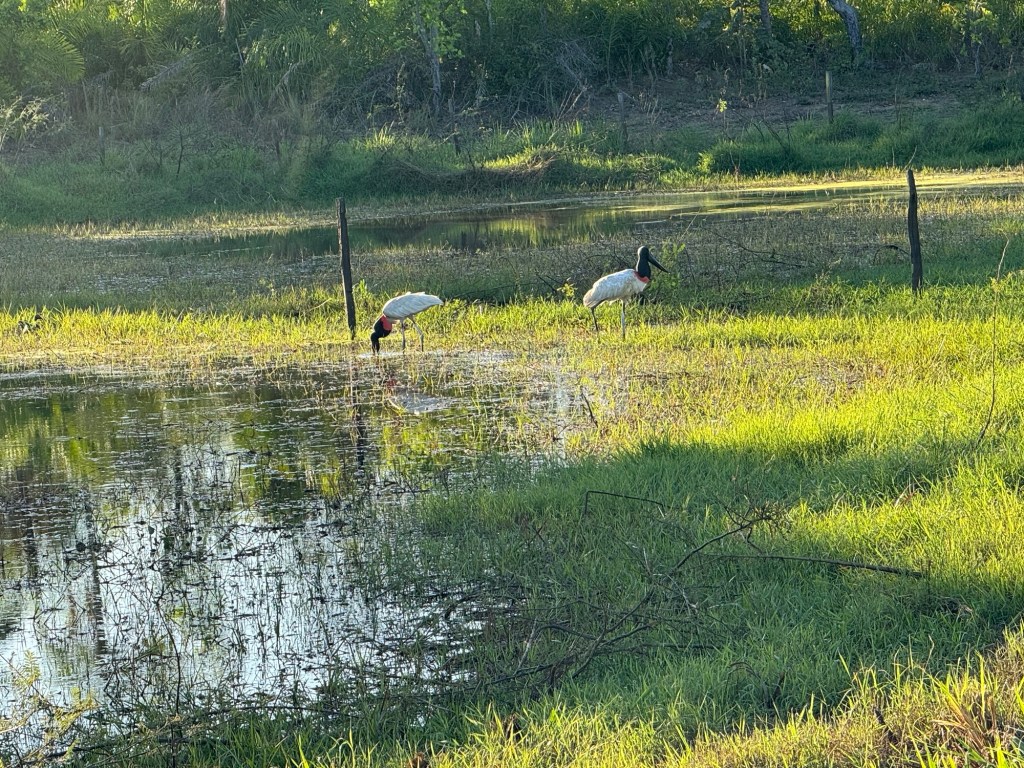
We stopped at a flower-covered watering hole and saw parakeets, green ibis, bare-faced ibis, large jabiru storks, a tiger heron, a falcon and a hyacinth macaw. Back in the plains and open grass land we spotted a Great Potoo and its chick in the crook of a tree. Very well camouflaged.
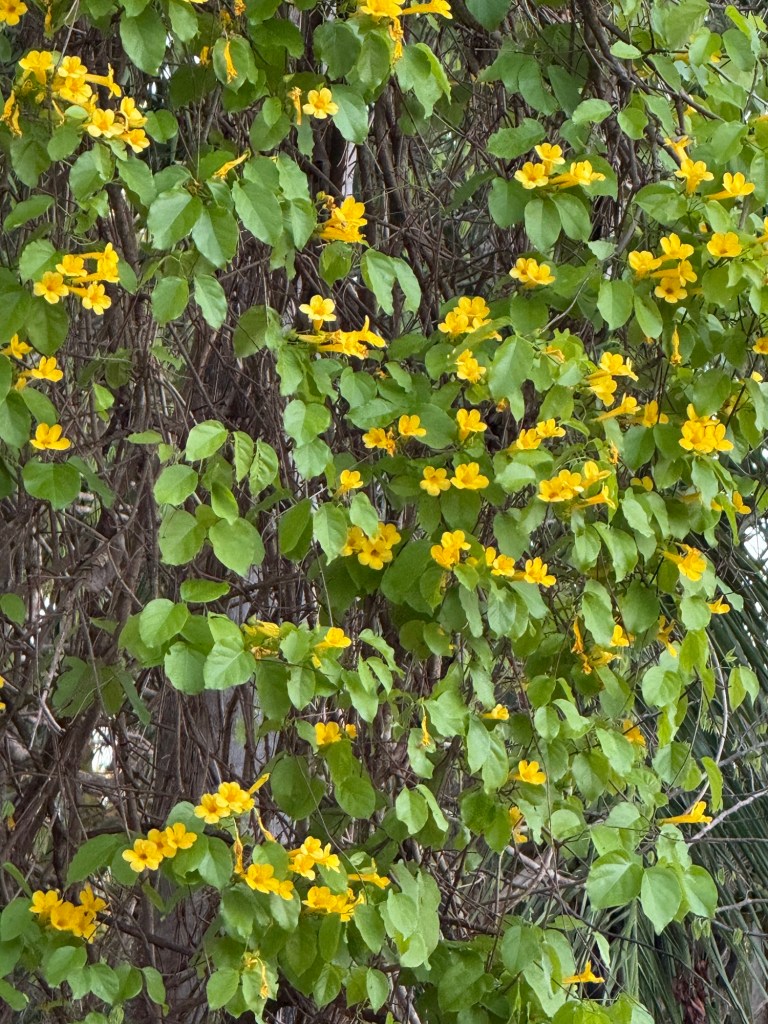
Tuesday, October 21, 2025
Here are some of the Pantanal creatures we say during our second day’s safari.
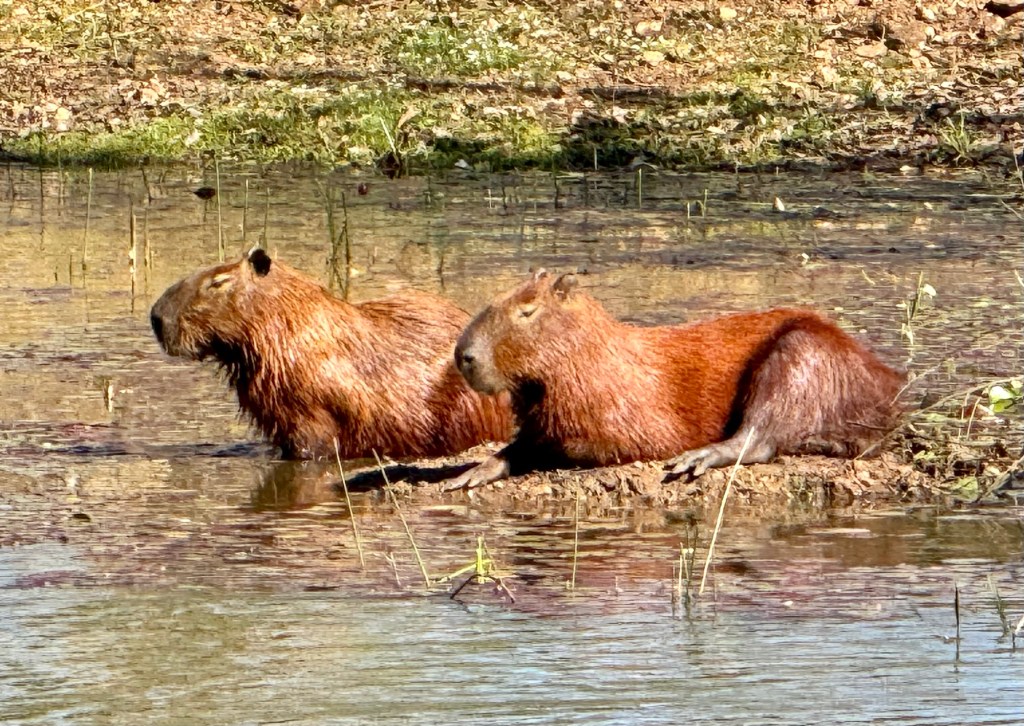
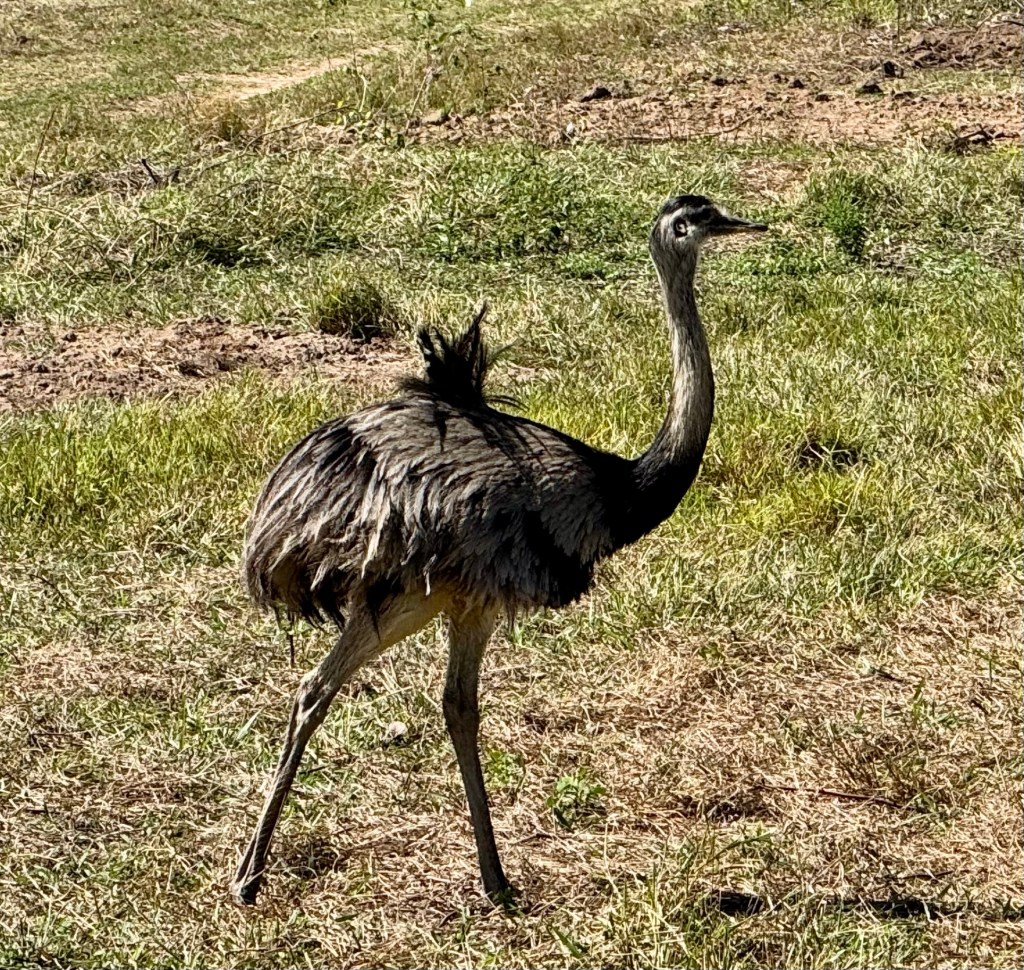

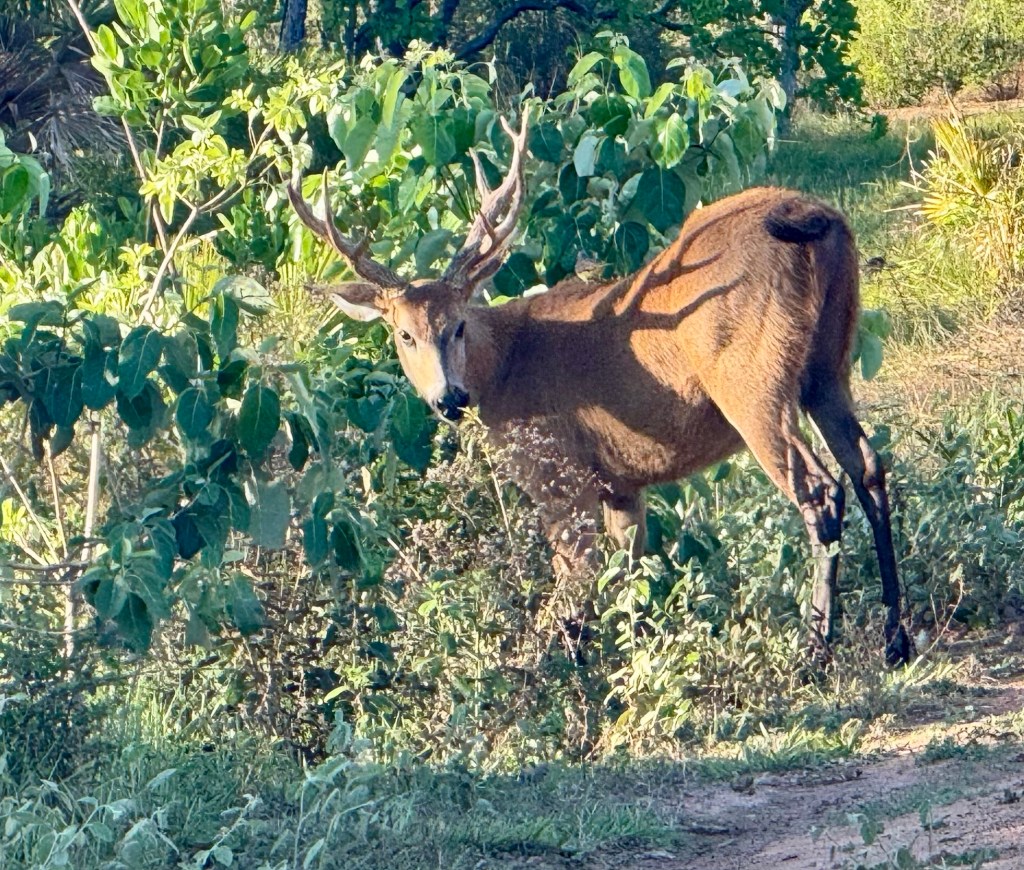
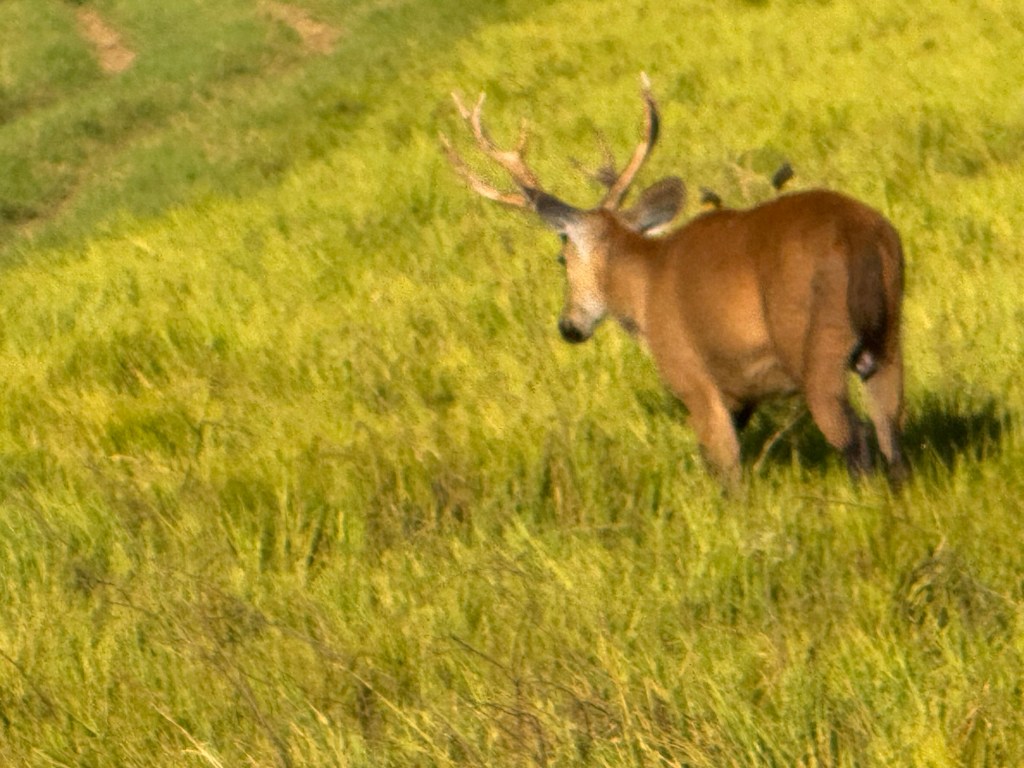
During the late afternoon game drive we saw a Marsh deer, the largest in the Pantanal, a grey rocket, similar to a small deer, and a yellow-billed cardinal. We did a lot of driving around to see animals and birds we could not photograph well.
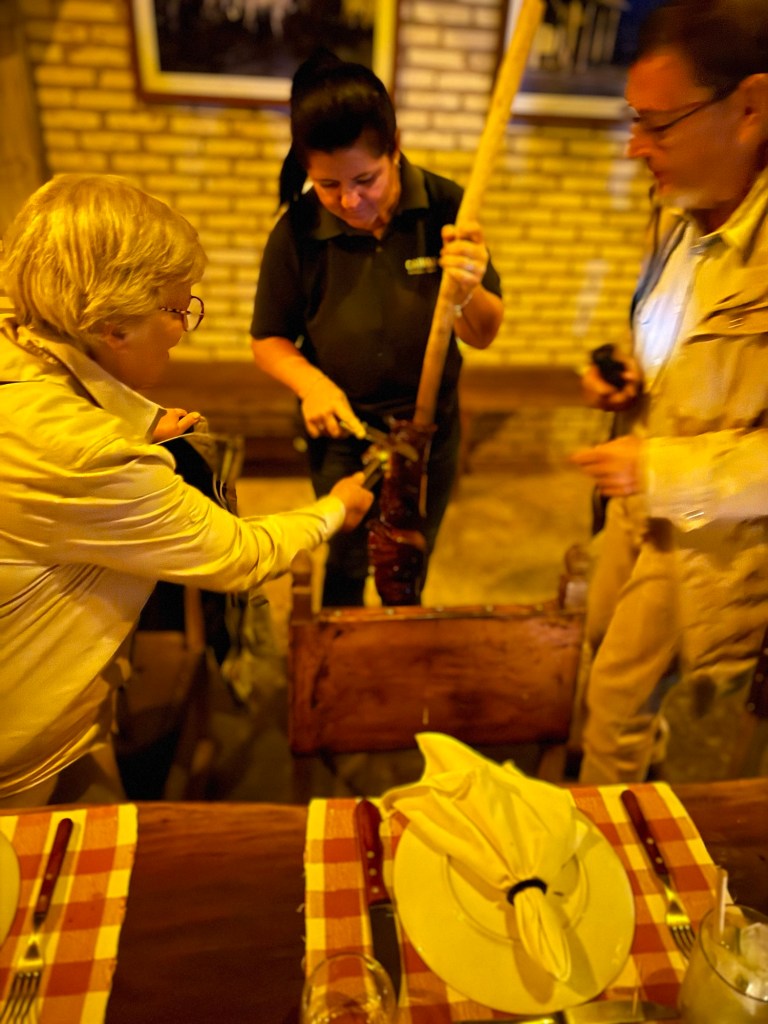

Dinner was an interesting outdoor bar-b-que with the beef rolled on 2 inch thick, 5 foot long sticks and rotisseried. I was able to get some rare pieces and found it tasty. This lodge, unlike other places we have been, is completely full.
Wednesday, October 22, 2025
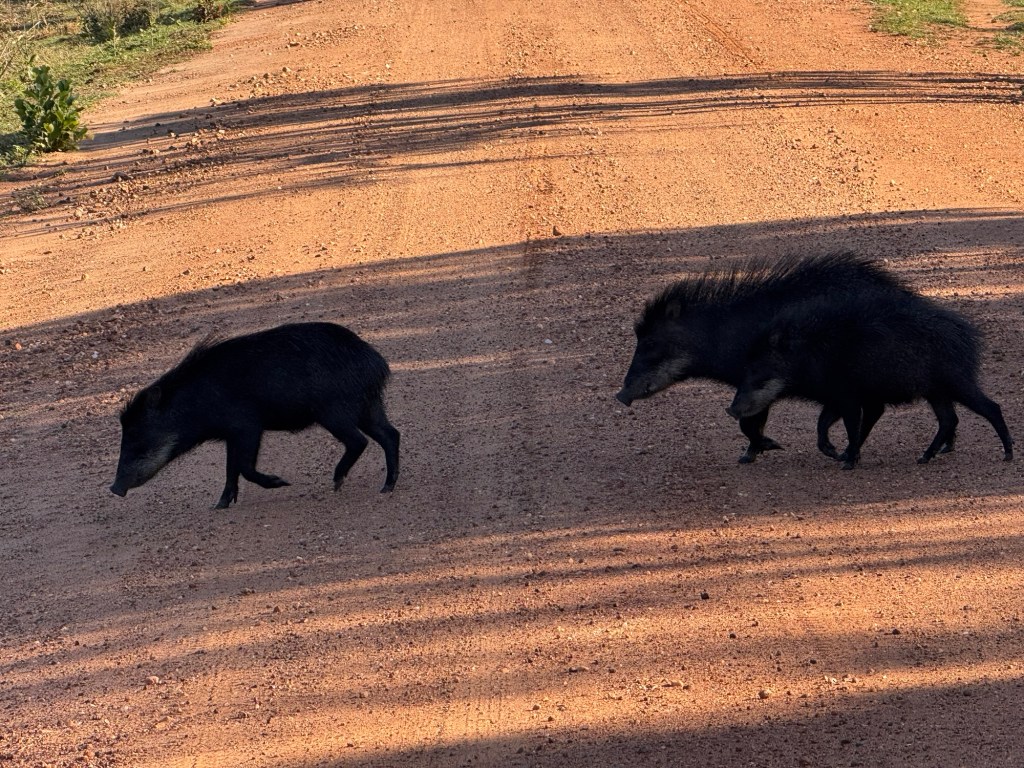
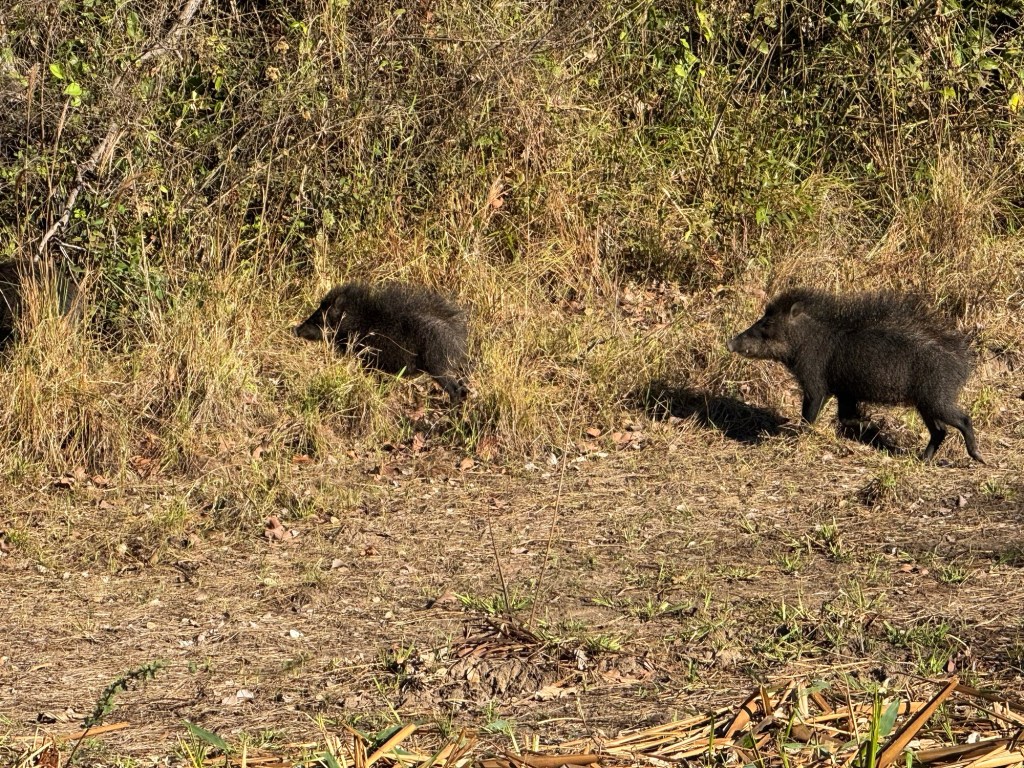
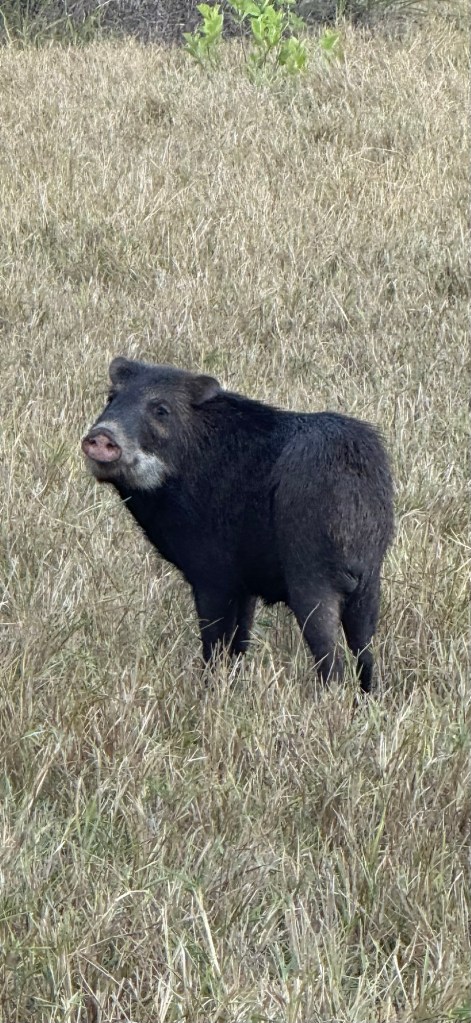
Another early start and an animal we saw frequently was a white lipped peccary. This animal travels in large groups and is always on the move. Mark managed to get this one to stand still for a photo.
At 9am it was time for breakfast and the air was getting hot. After breakfast, we headed for a shady spot on the edge of the pool. At 4pm we reconnected with Rafael for our evening game drive.
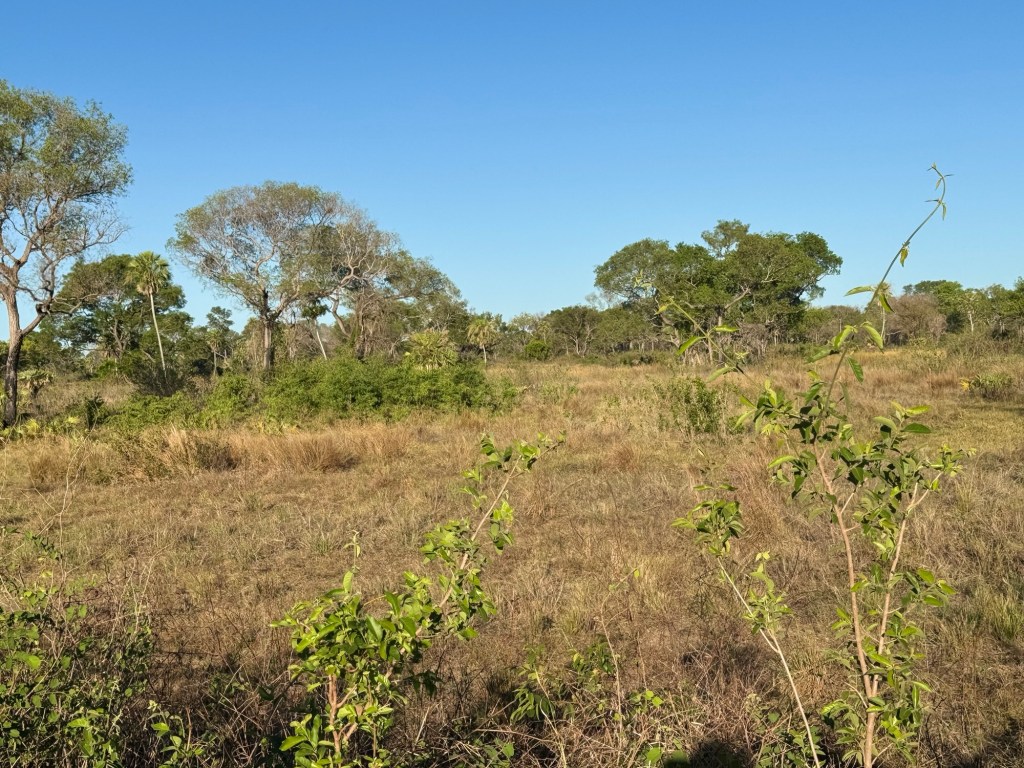
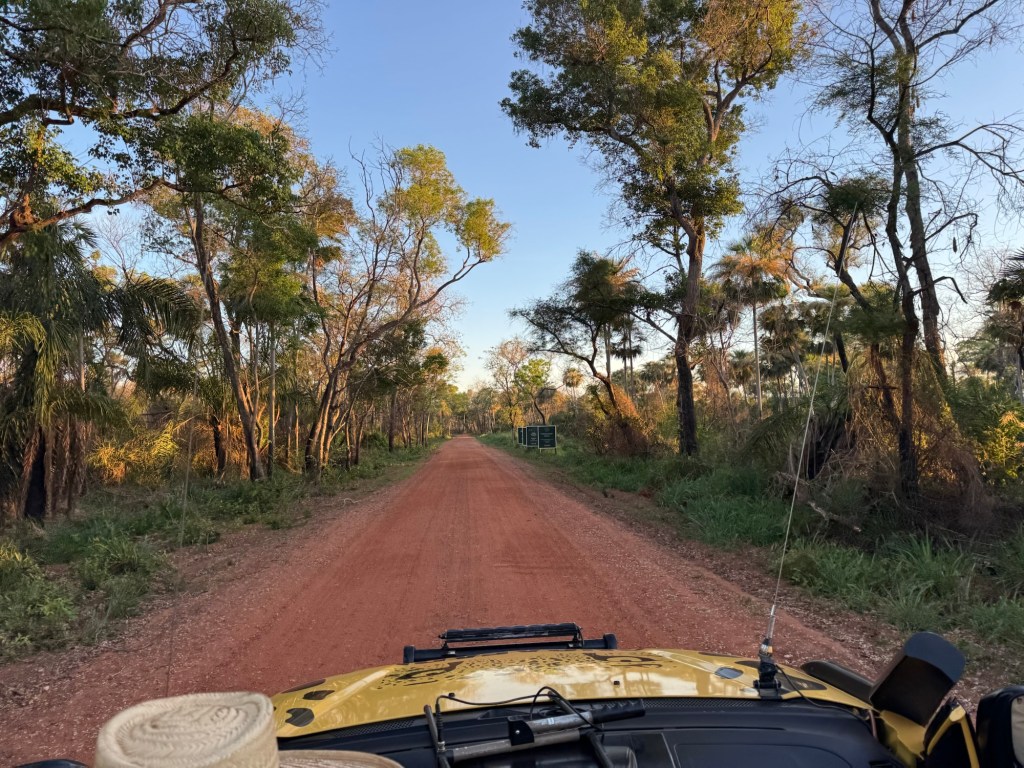

The heat of the day was fading and the drive was pleasant. Not long after leaving the lodge, we heard there was a jaguar sighting and off we went in search of it.
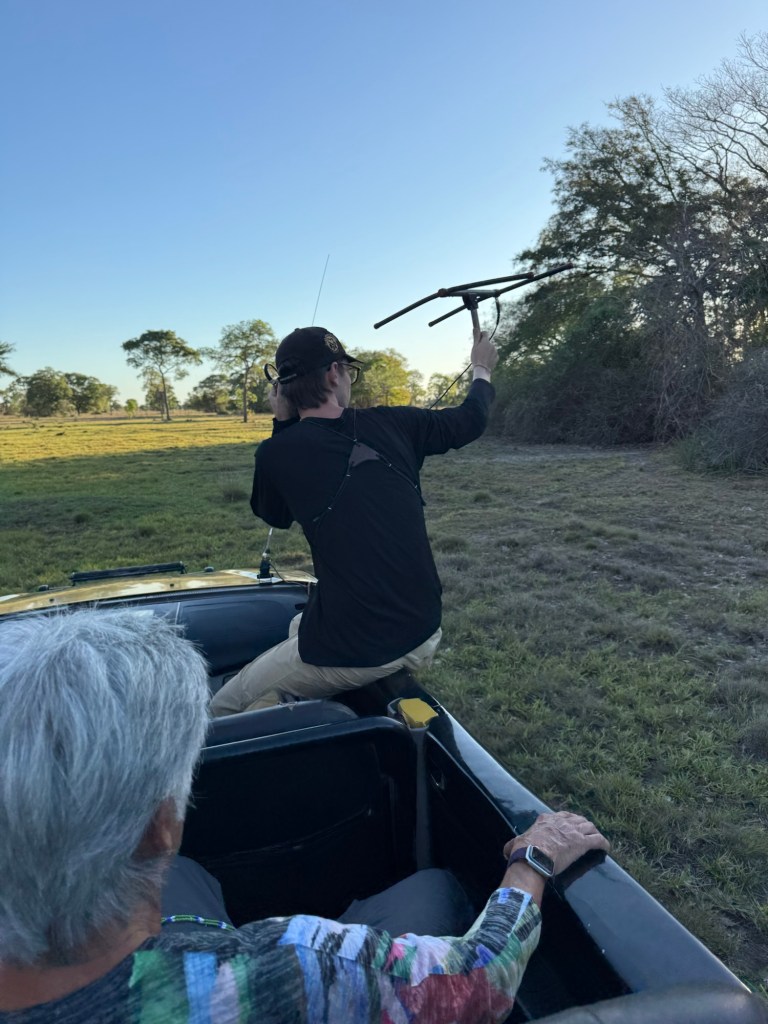
Finally, our driver and Rafael tracked the collared animal and we soon realized there were three jaguars; a mother, named Aroeira and 2 one and a half year old male cubs, Jatoba and Jacaranda.
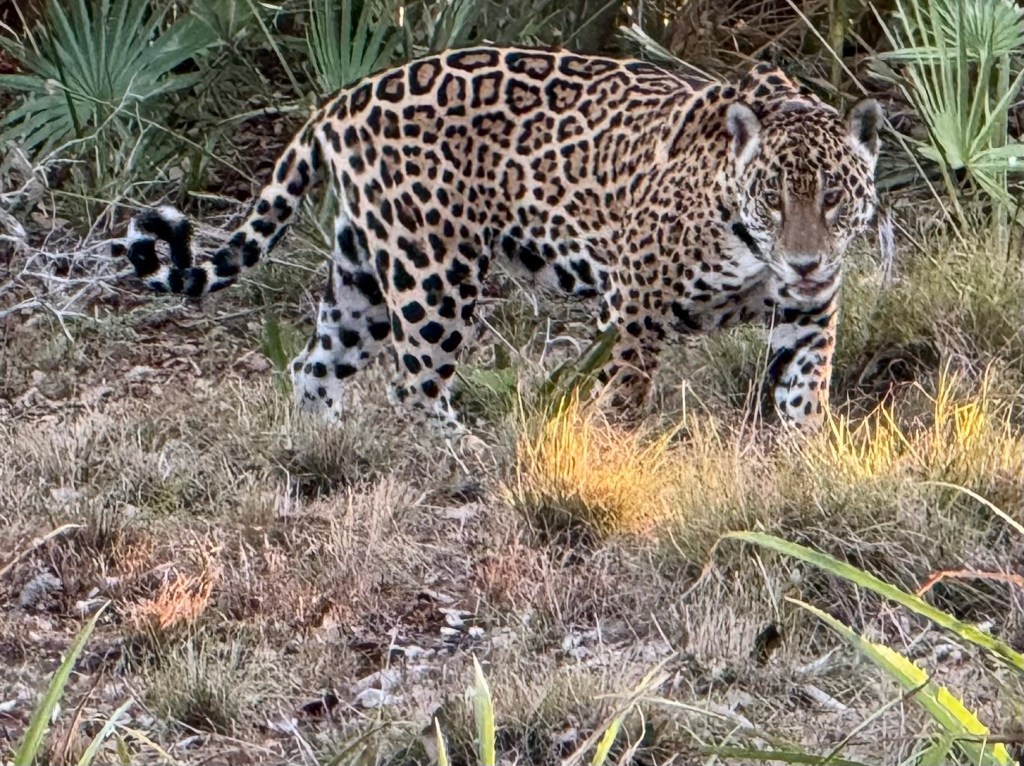
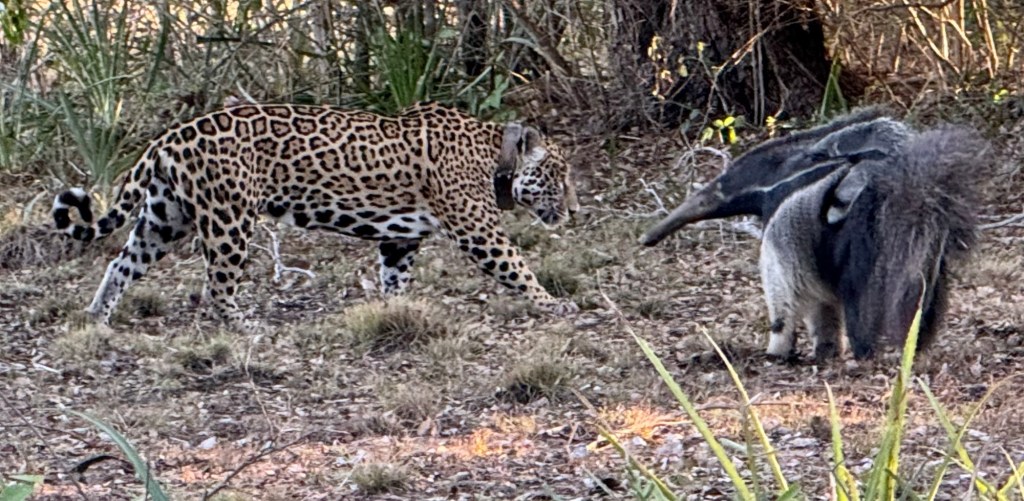
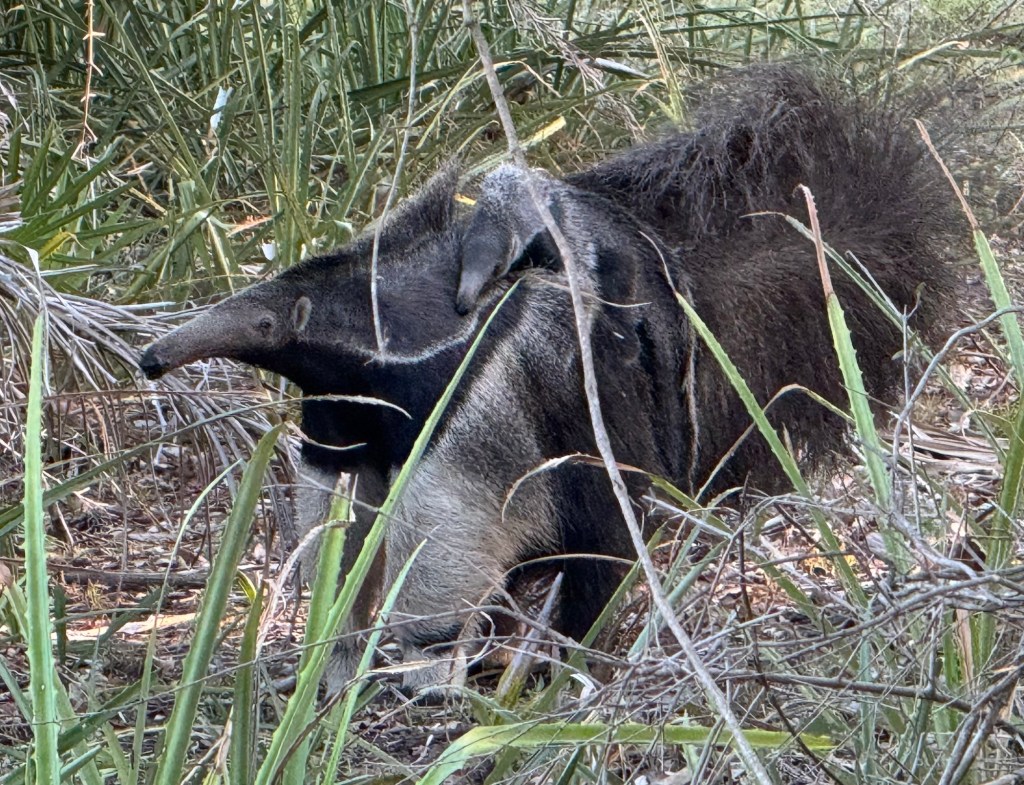

But more than that, there was a Giant Anteater with a baby on her back that was challenging the jaguars. It was fascinating to watch the animals chasing one another and then backing off. No one was going to win this exchange. Unfortunately, the challenge took place in the woods and we struggled to see what was happening.
Tuesday, October 21,2025
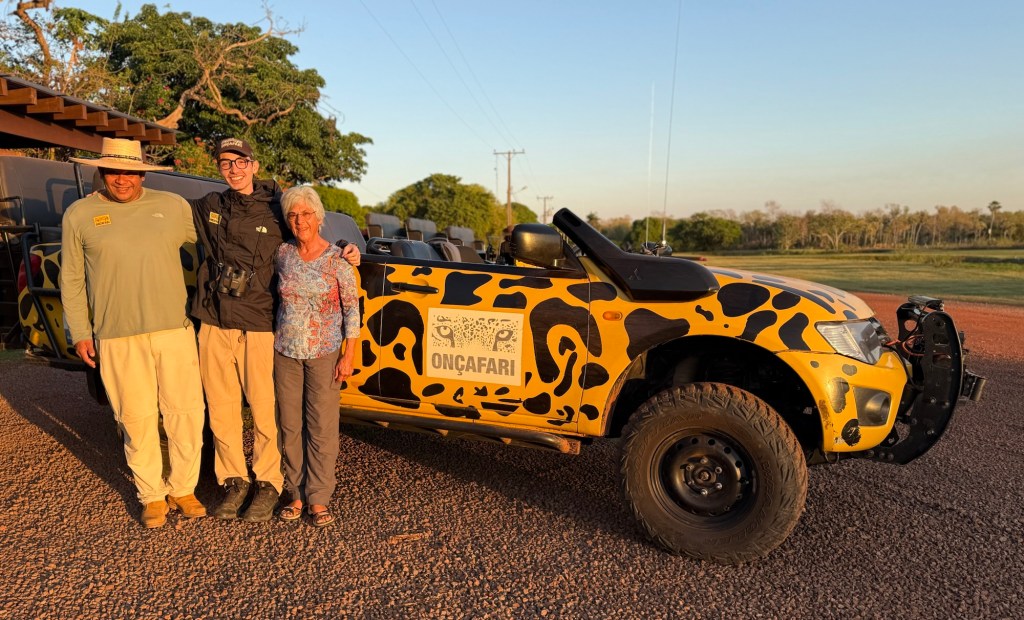
A quick cup of coffee and we were back on the road for our second safari day with Rafael and Chipa. Having met our goal of seeing jaguar, we were interested in seeing what else the Pantanal had to offer.
Our first sighting was a bird called Crested Oropendola and its unusual nest. The bird flew away before I could get to my camera, but I did get the nest.
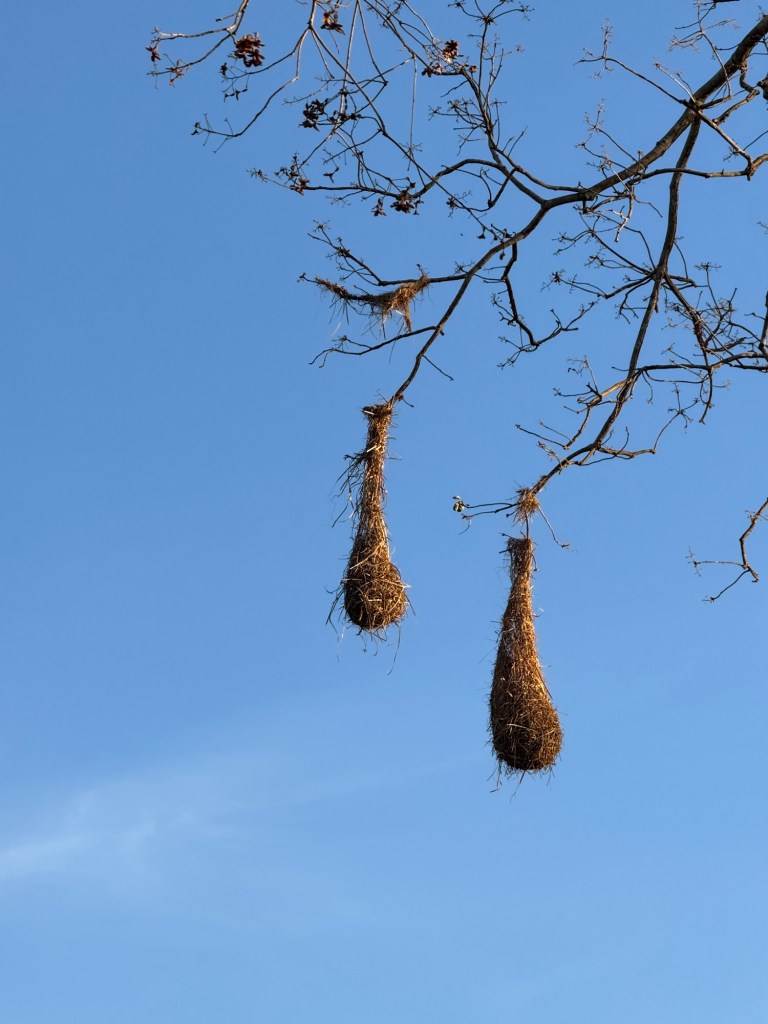
The bird is quite large for such a nest, but squeezes into a hole near the top and settles into the bottom, causing the entrance hole to close. Then we saw another Crested Caracara, and a herd of white-lipped peccary on the run.
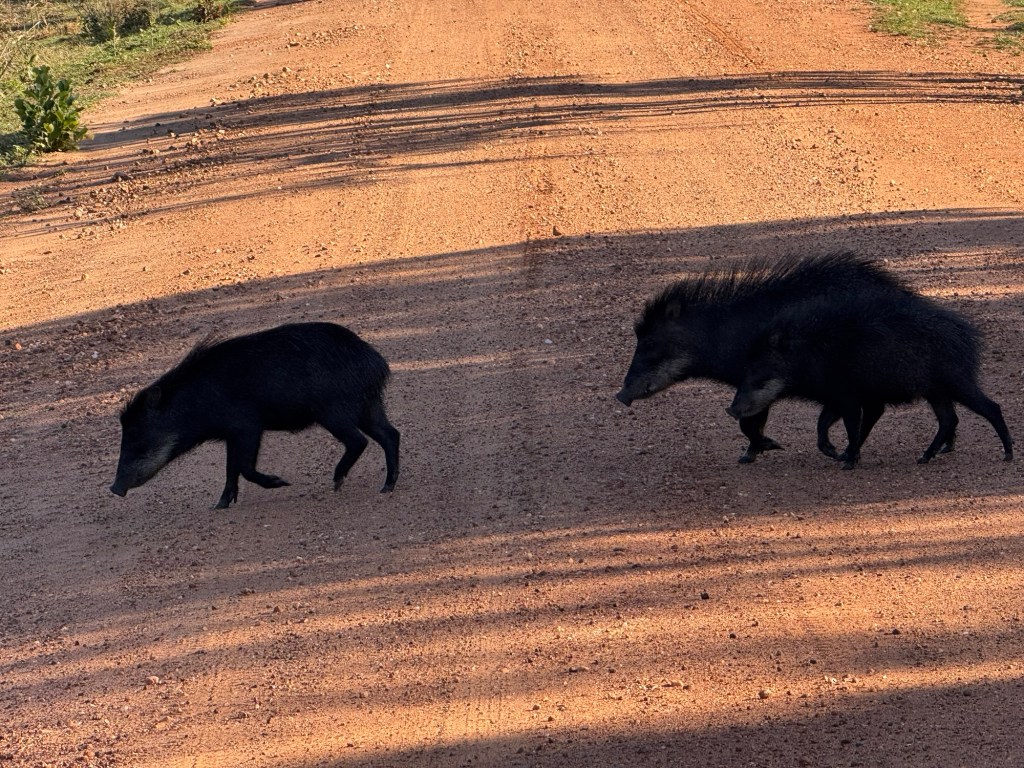
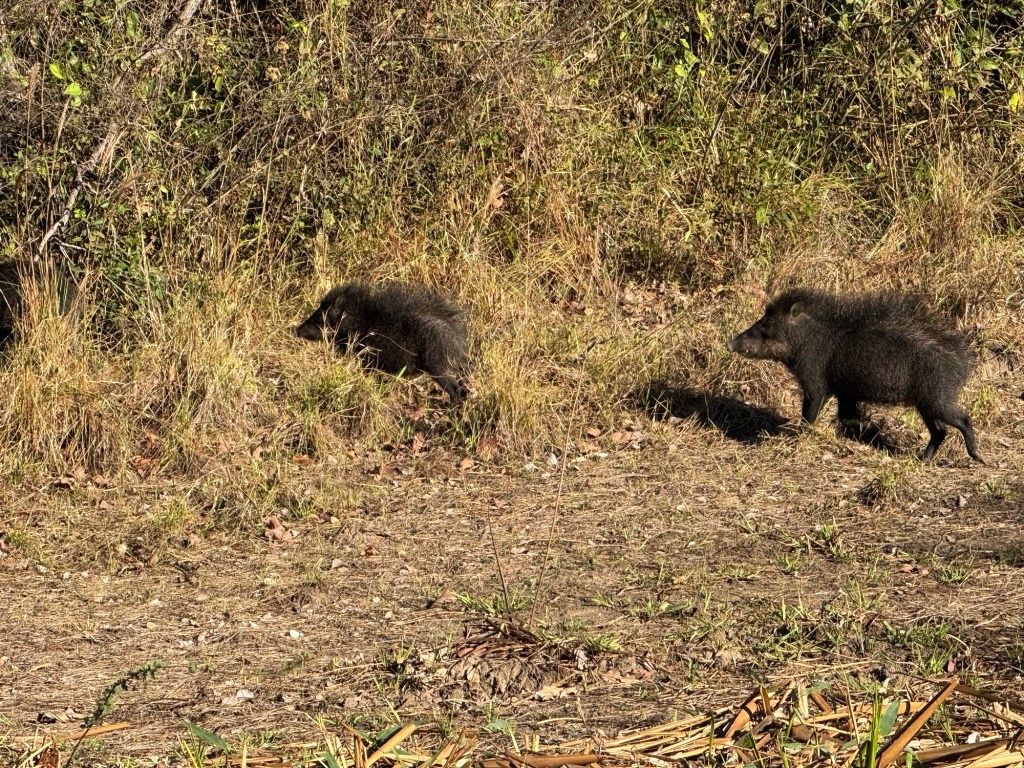
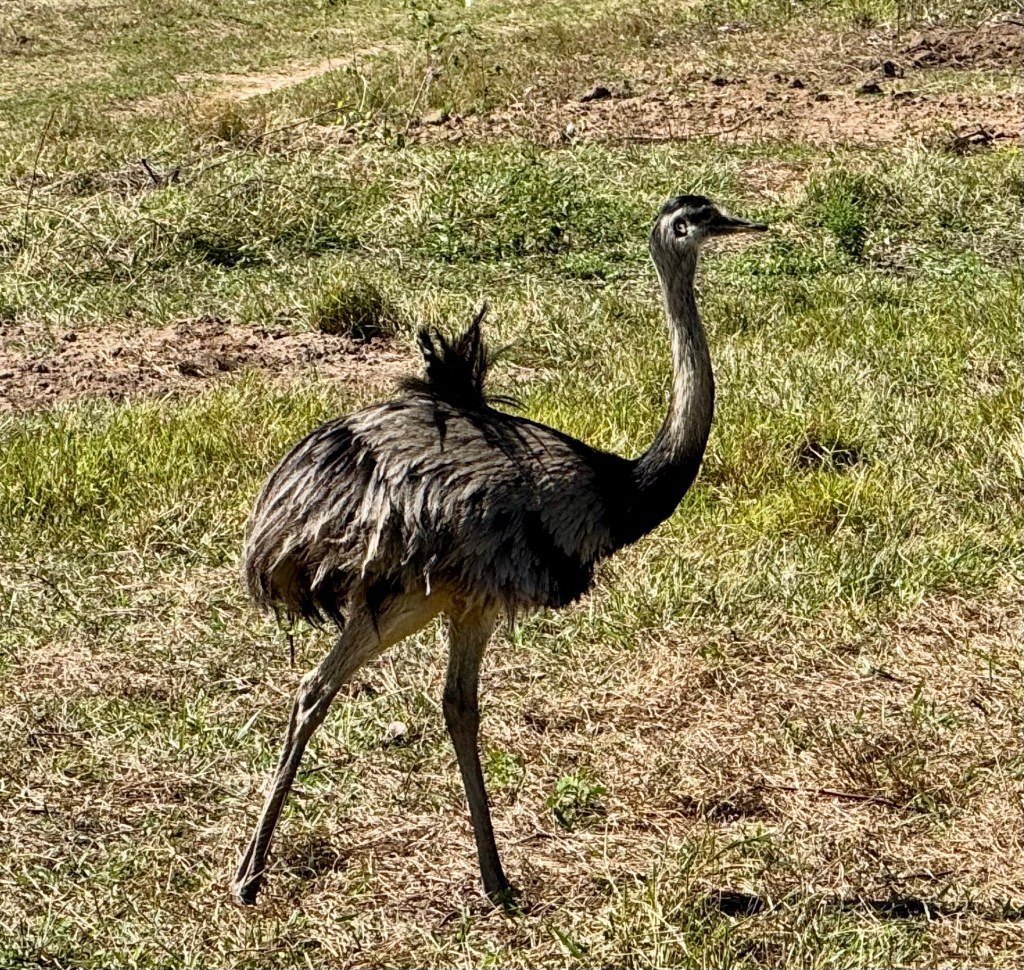

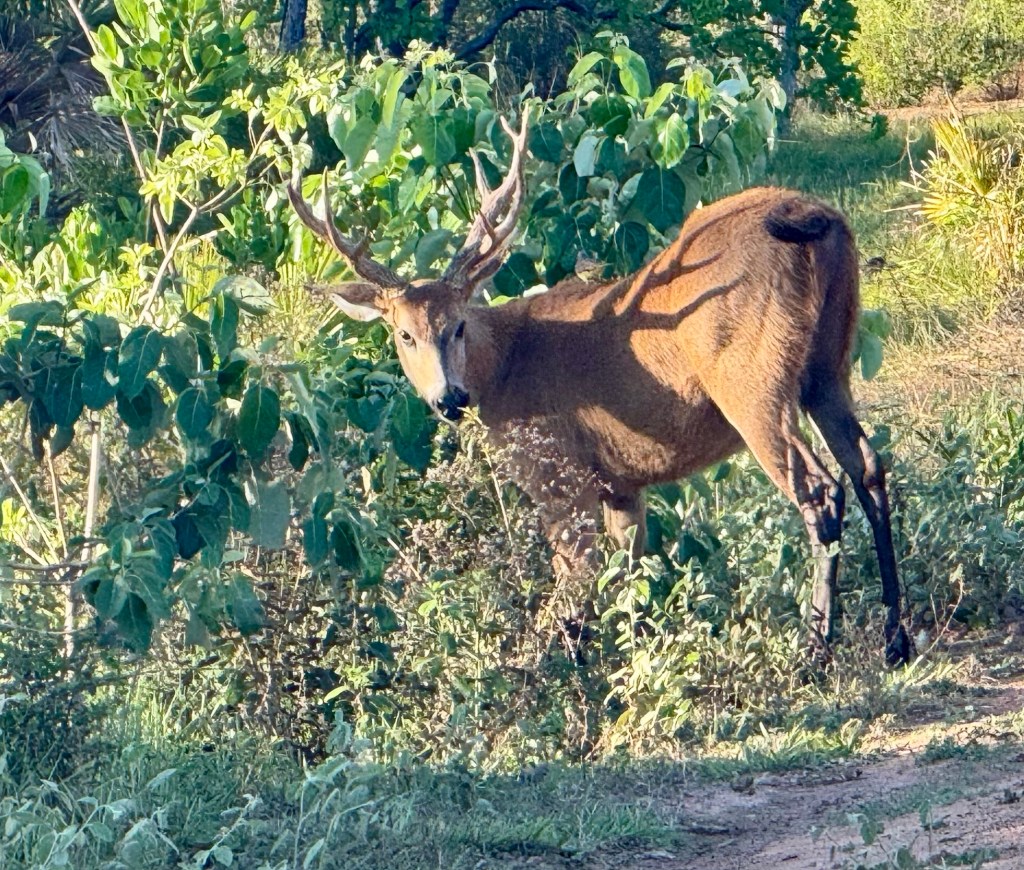
There were many other birds and animals we were unable to capture with our iPhone cameras. Am sorry we did not have better camera equipment. In the middle of the day we chilled in our cool room. The day was exceptionally hot and humid. Too much even for the poolside.
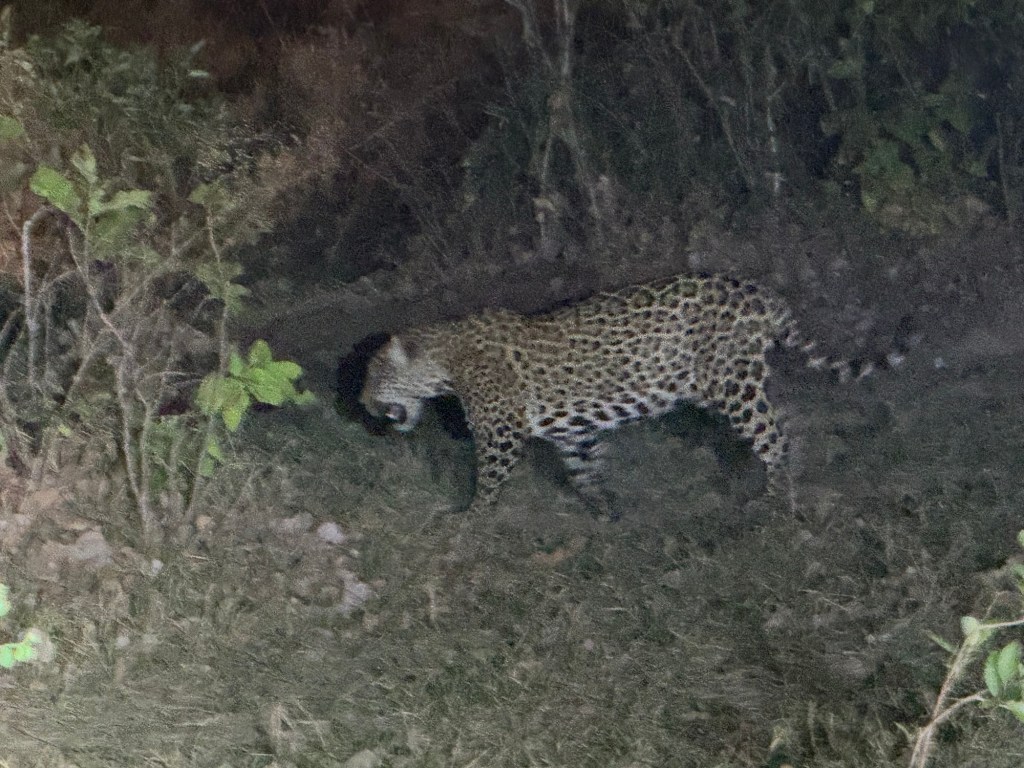
On the evening game drive, Rafael told us another Jaguar had been spotted, so we headed through the countryside to find it. It was nearly dark when we came upon a collared female named Surian and her 2 year old male cub, named Dakari. I was only able to get snaps of Dakari.
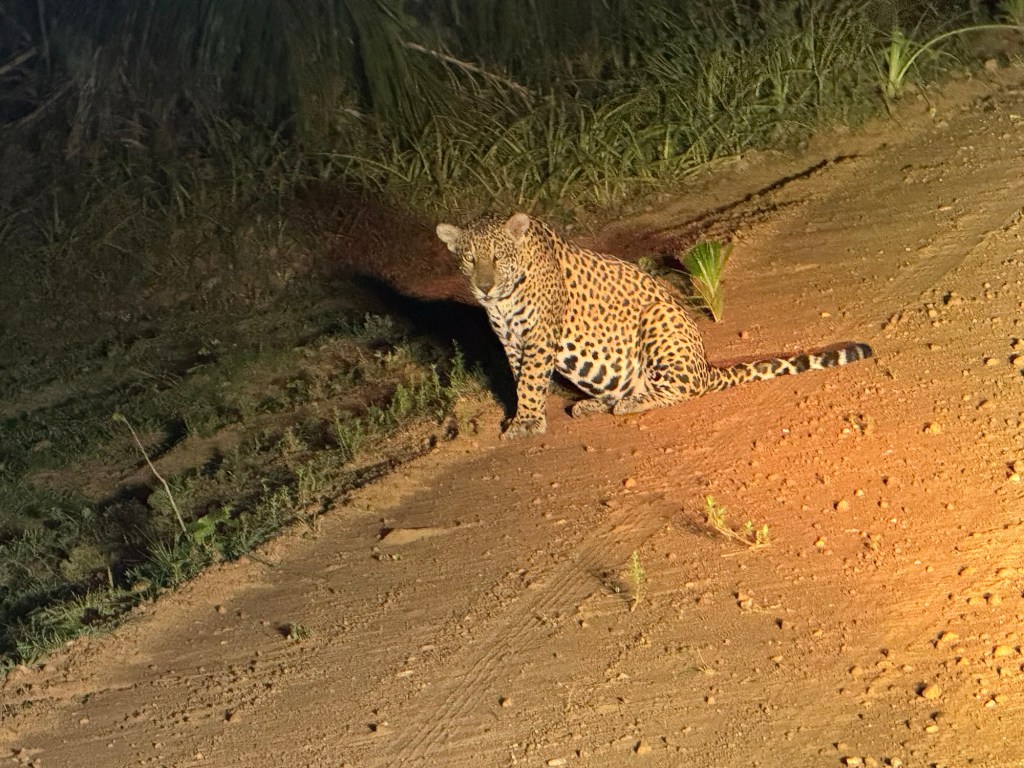
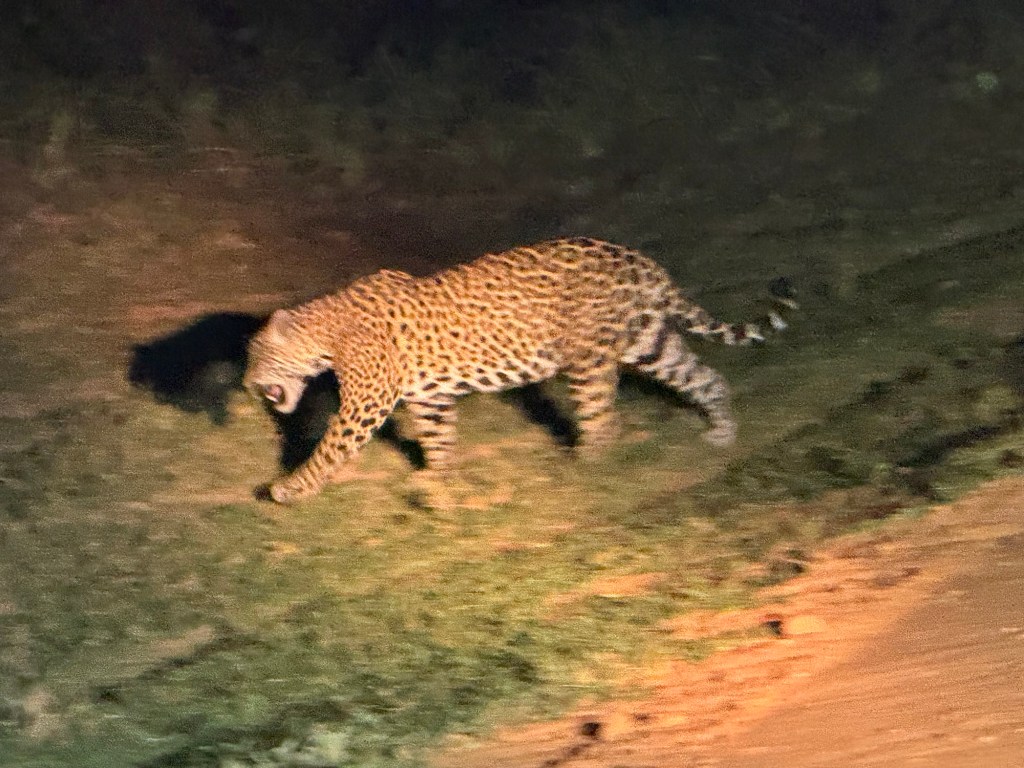
Dinner was an outdoor bar-b-que with beef rotisseried on 2 inch round, 5 feet long sticks. When asked for thin rare slices, the server was able to shave off a few pieces. The meat tasted good.
We sat next to a couple from Geneva, who spoke enough English we were able to converse. Although they have children and grandchildren, they refuse to let kids keep them from traveling, an attitude we could appreciate.
Wednesday, October 22, 2025
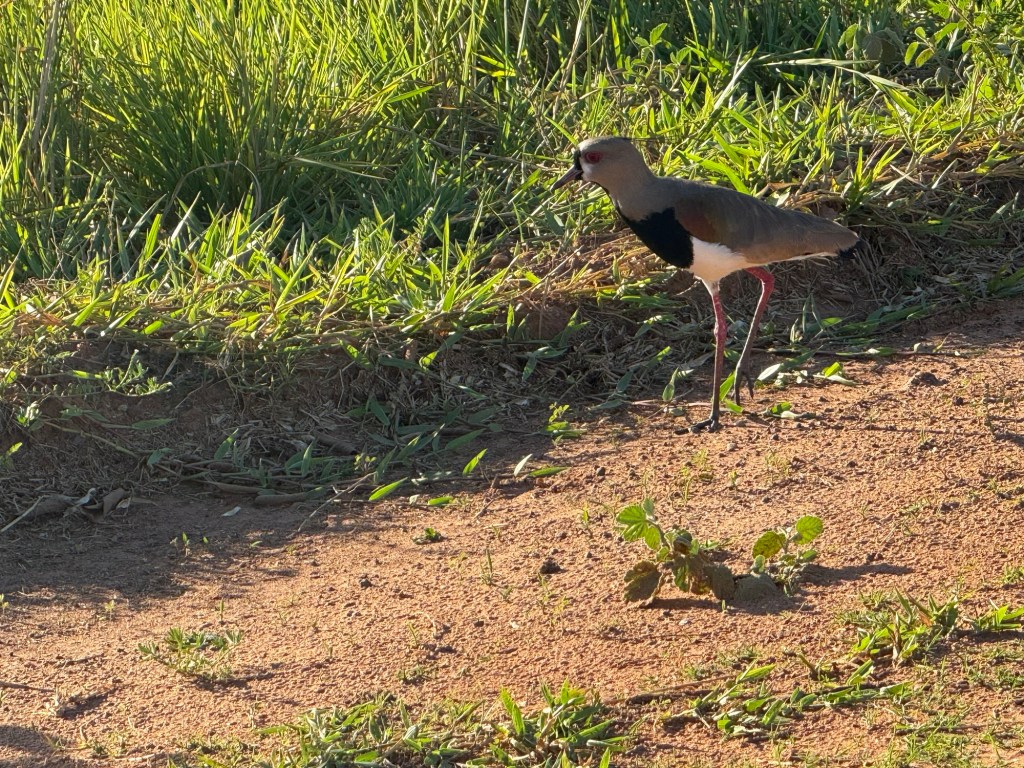
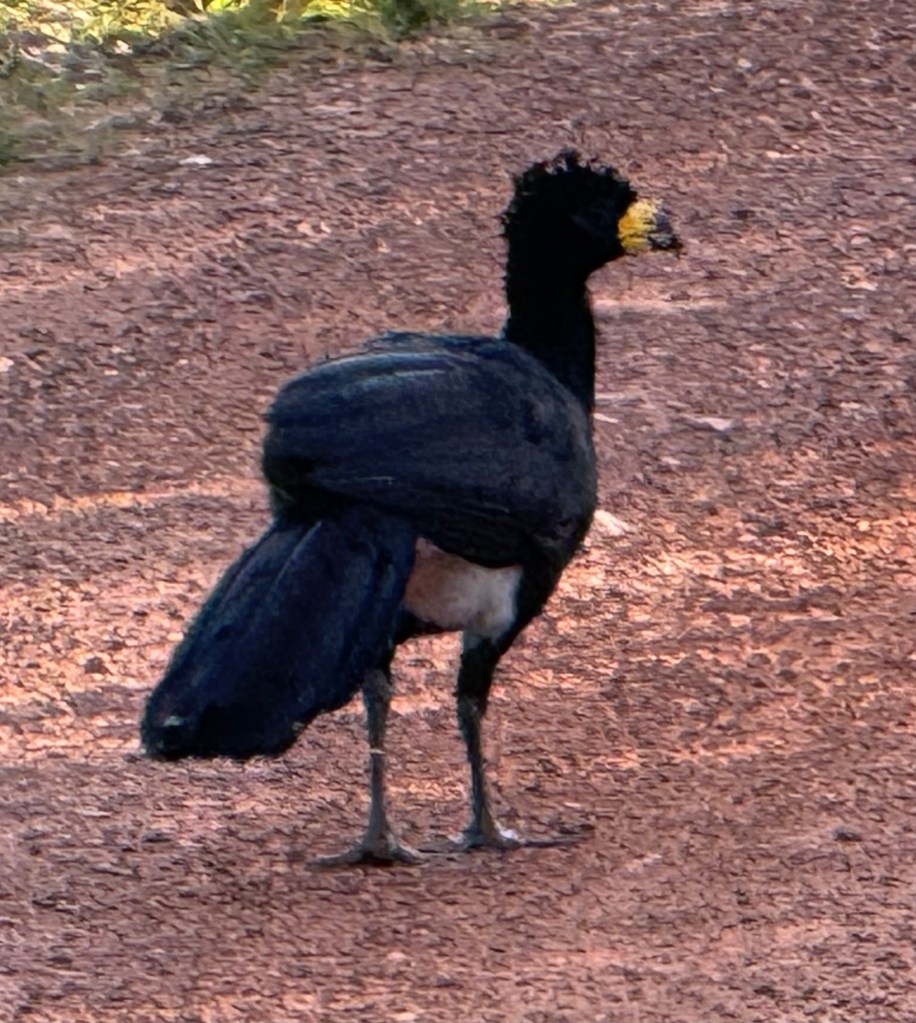
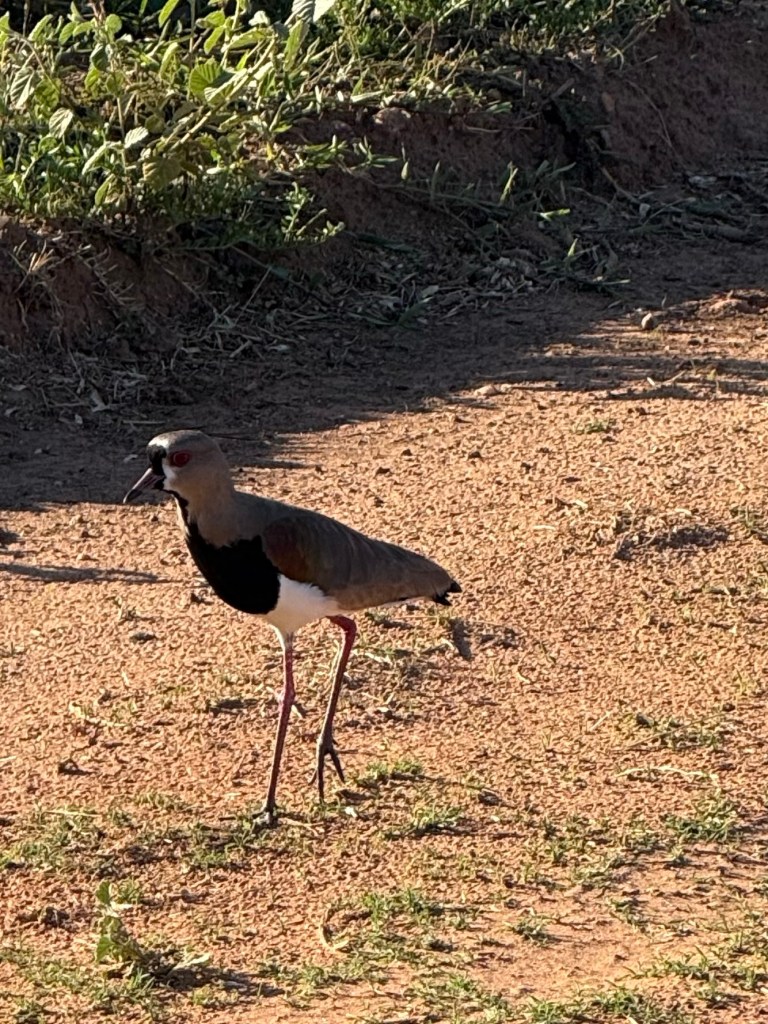
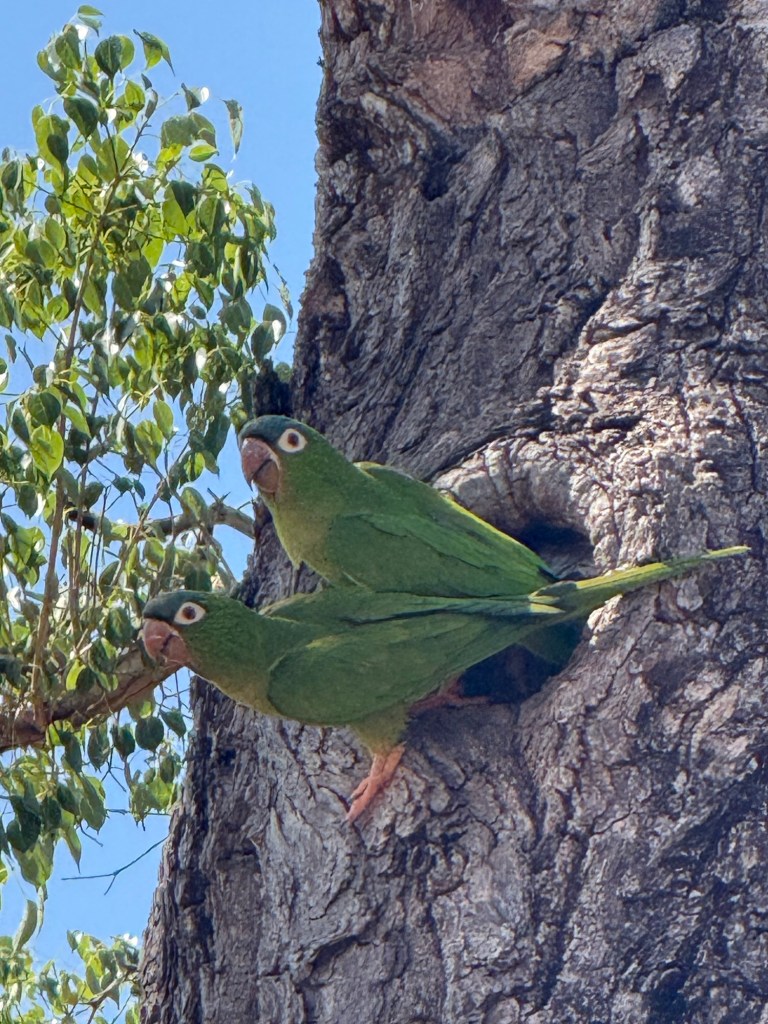
Our third 5:30am safari start. We started off seeing a group of Copybera, munching on the grassy lawn, a bare-faced Curassow, a Pied lapwing, a cute antelope like animal called a Grey Bracket. Mark nicely captured a pair of Blue-crowned Parakeets nesting in a tree hole.
Then Rafael told us a BBC crew was working on a Jaguar project, so we headed to the site and took up a station out of the BBC crew’s way.
We sat watching a new pair of Jaguar, Arancy, a collared female, and her 7 month old son, Mocoha, for a long time. Tried to get good photos, but, not having a good, long, lense, we are hampered.
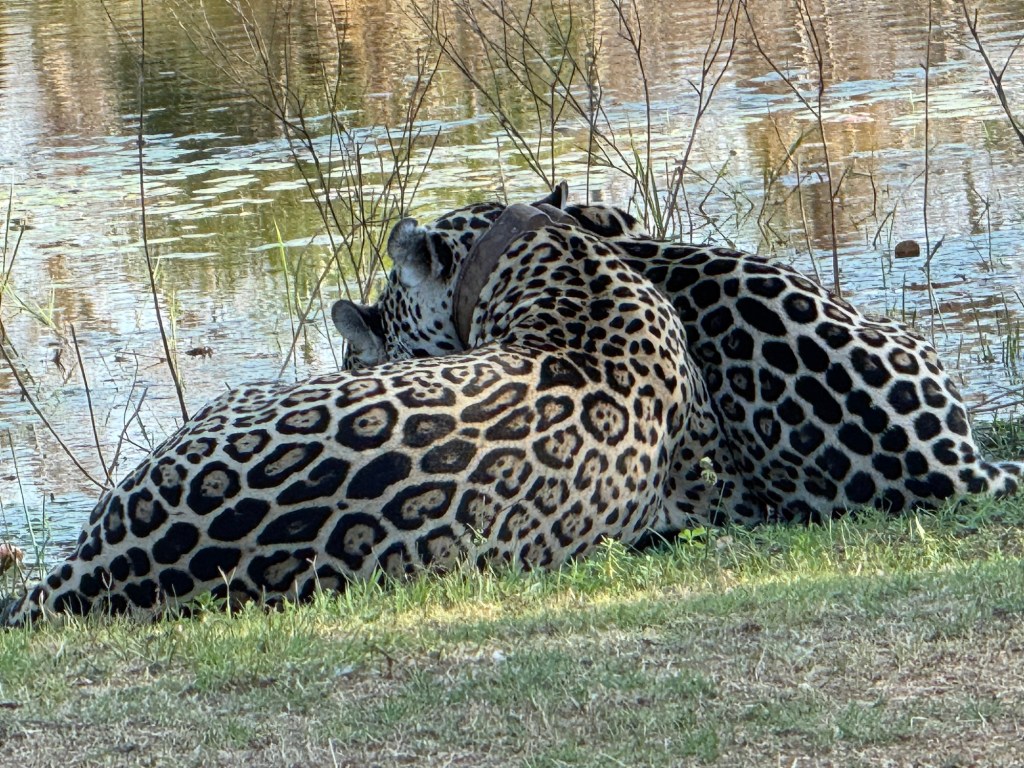
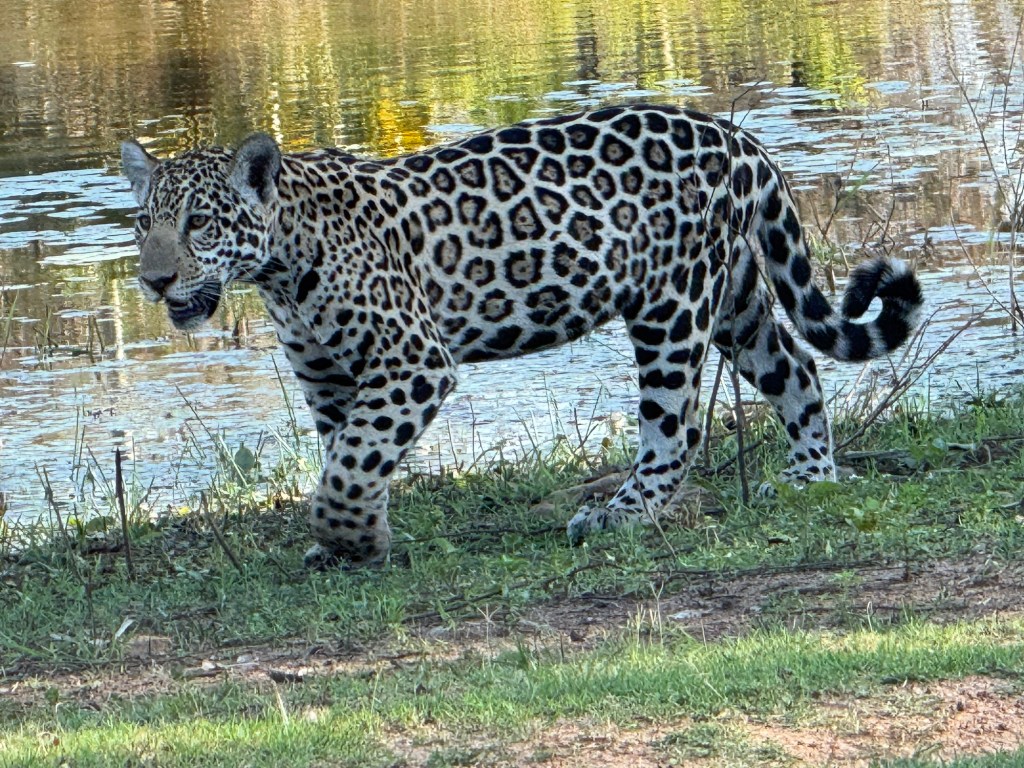
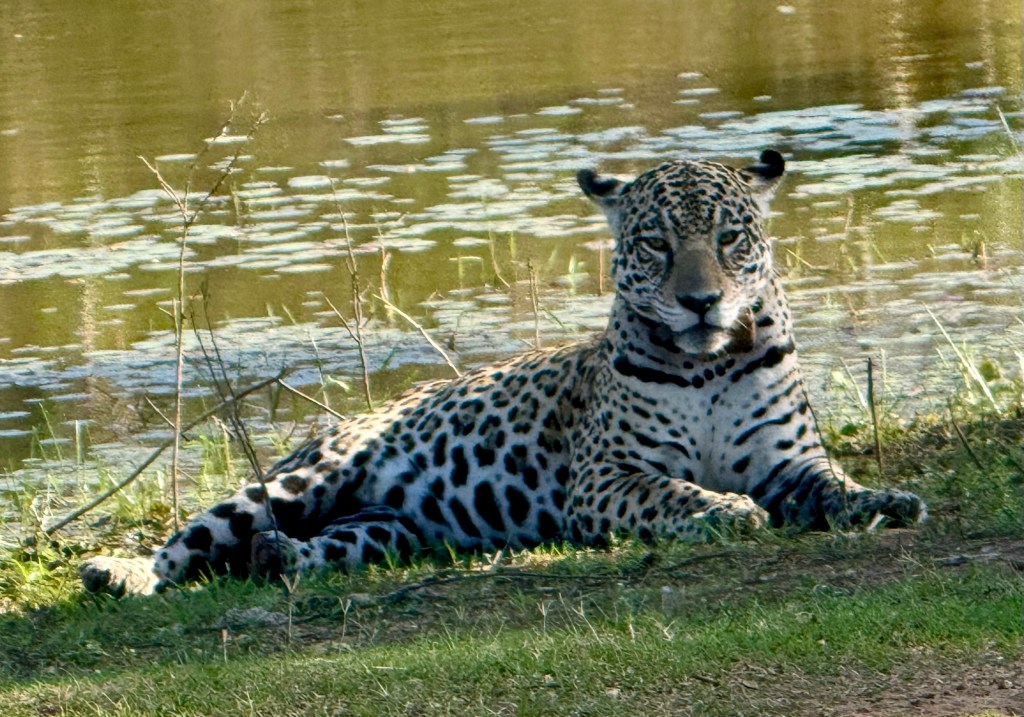
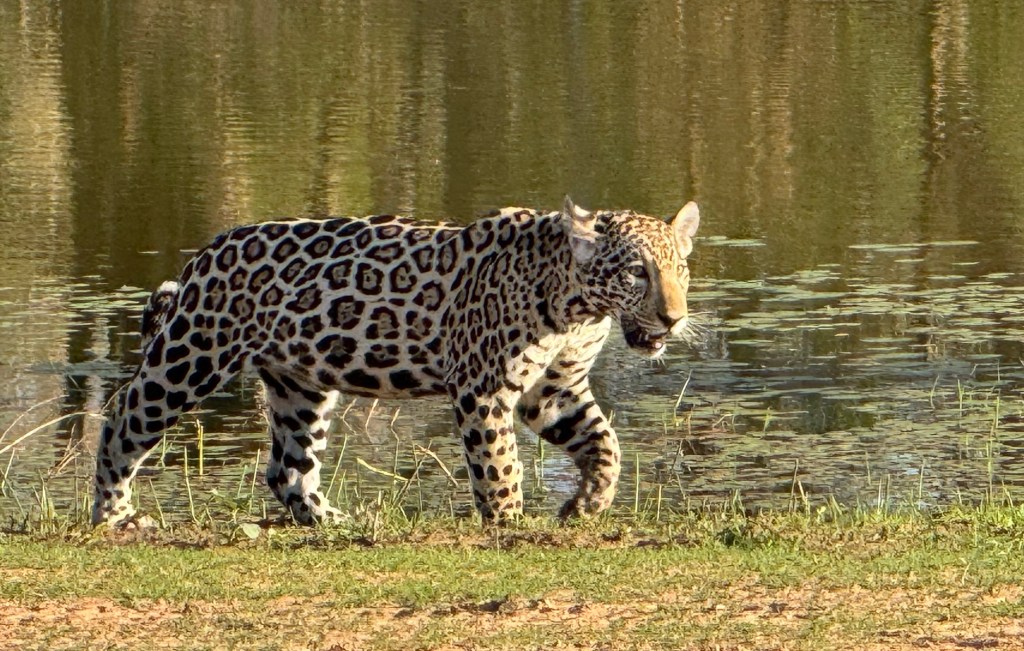
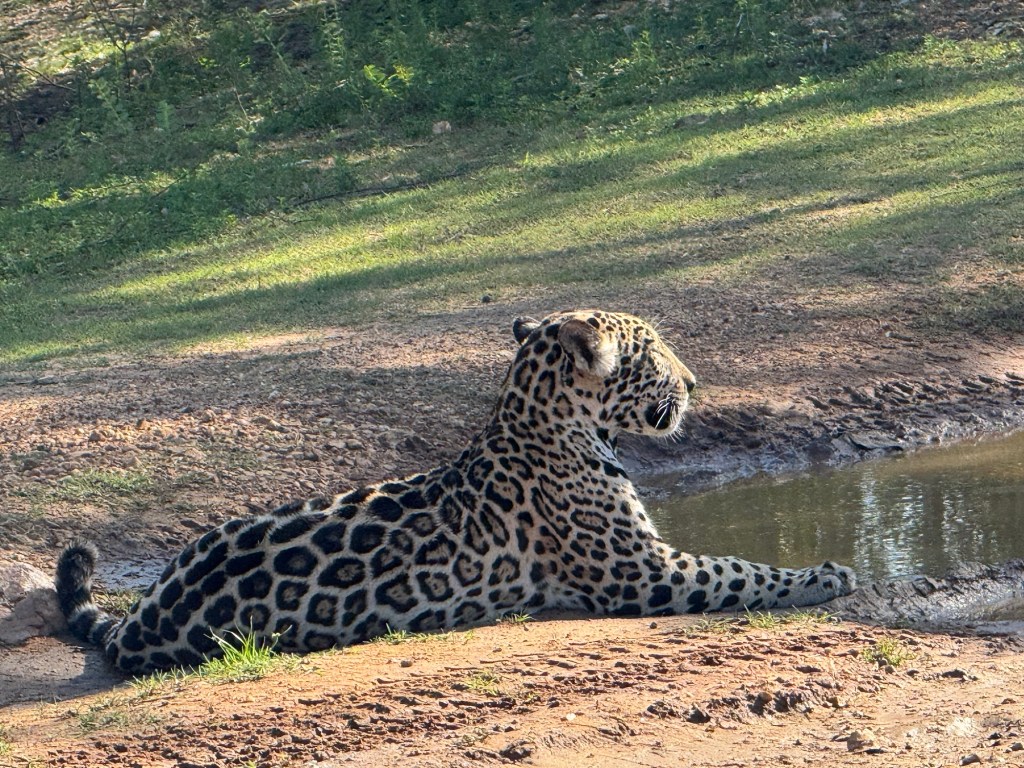
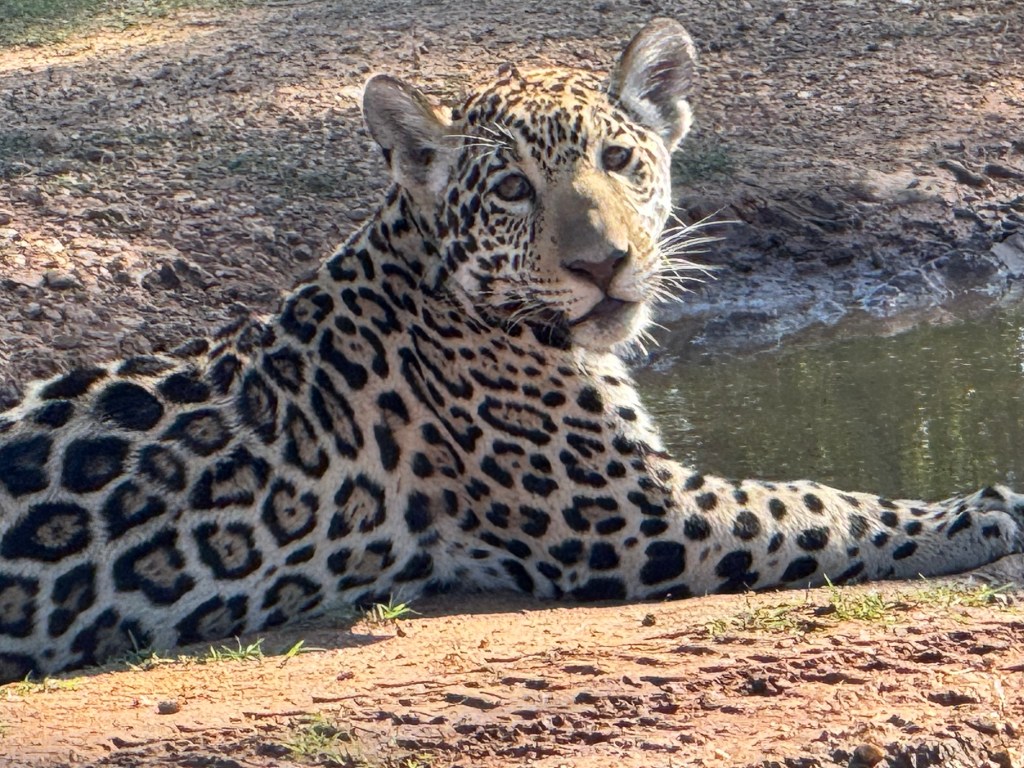
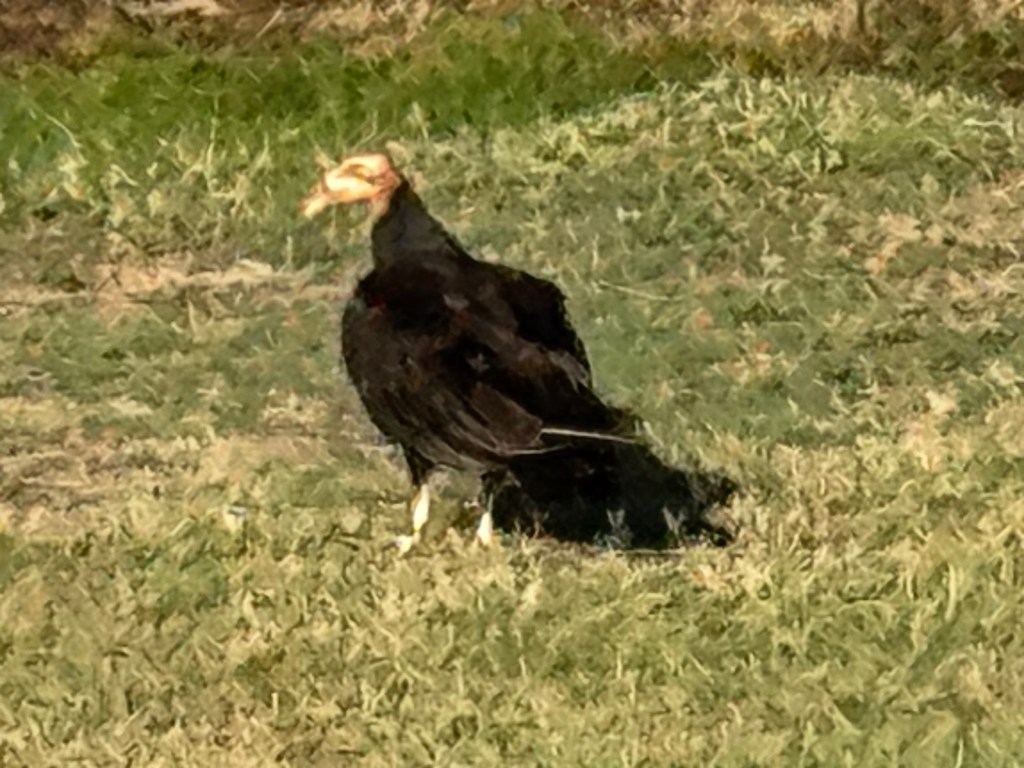
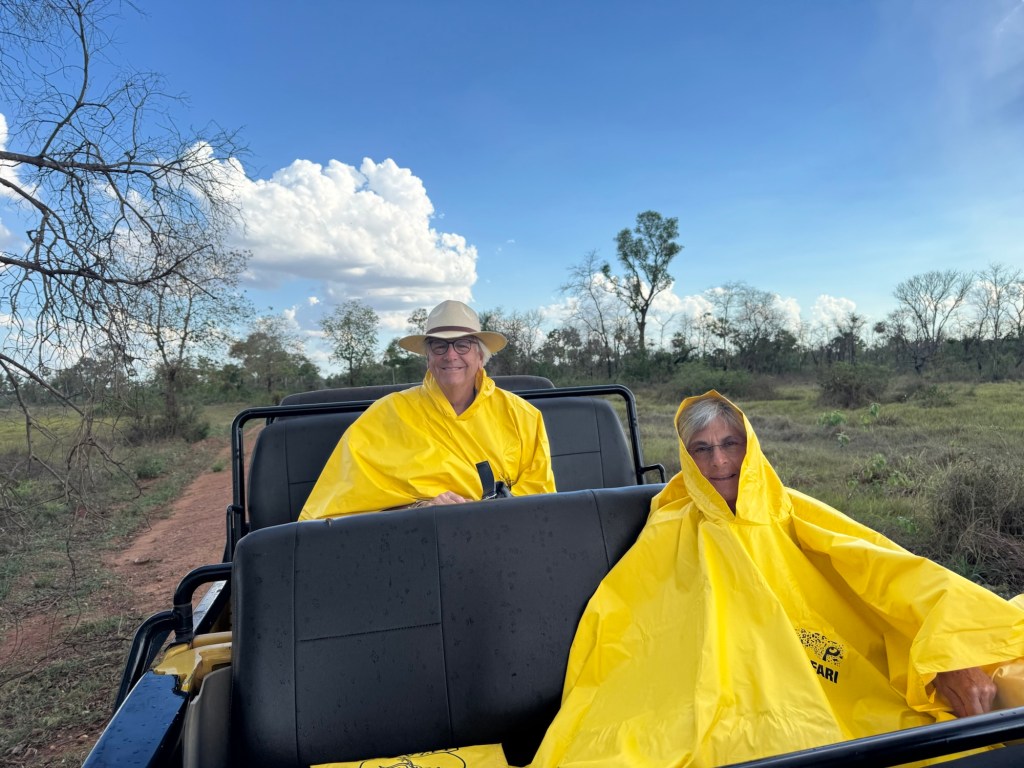
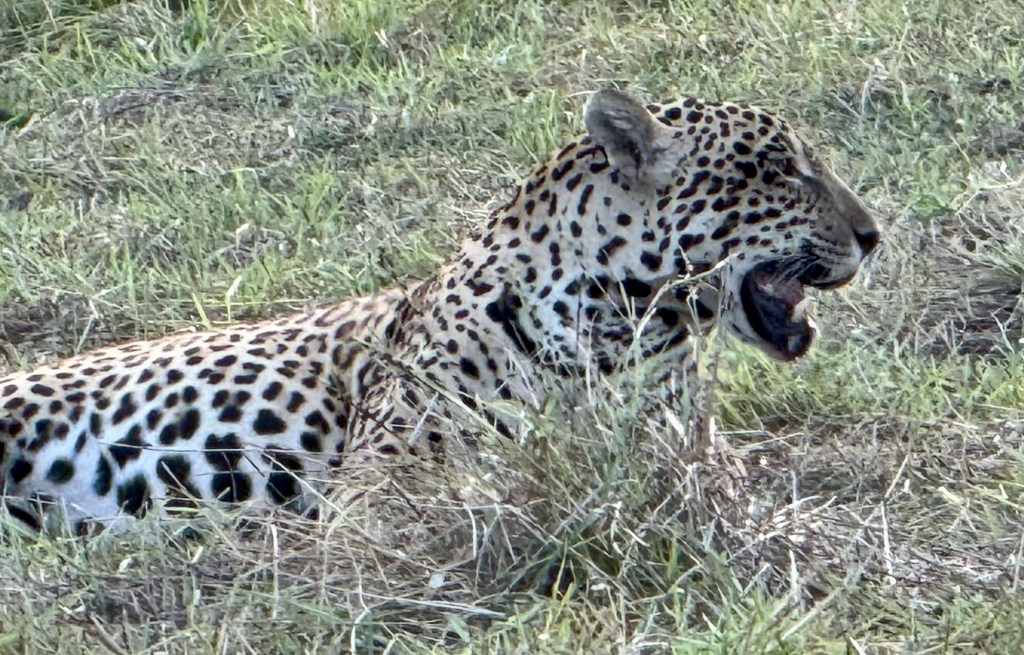
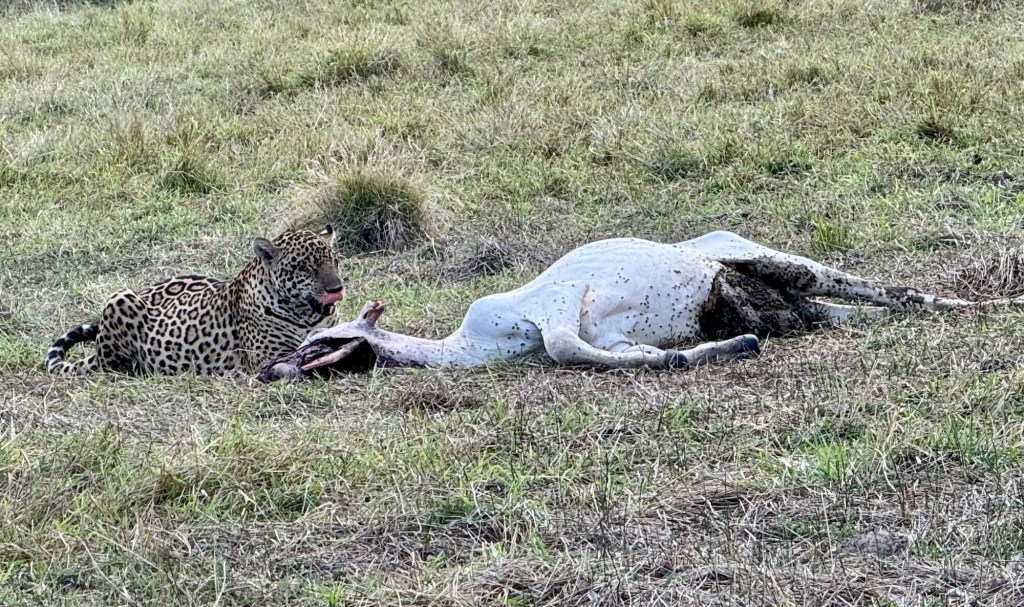
Late afternoon drive started with rain. Thankfully it was brief. The ponchos were very heavy. We drove for 40 minutes to the sight of a dead cow to see what was happening to it. These photos tell the tale.
Thursday, October 23, 2025
And so we end our very interesting adventure in the Pantanal. We have seen 8 different jaguars and many other creatures we have not seen elsewhere.
And so we fly onward from the Caiman Lodge airstrip to Alta FLoresta, then we have a 1.5 Hour drive and a 30 minute boat ride to our next destination.
Unfortunately, I have had several glitches with this post and some events are out of order. The content is all here, if dislocated. Please forgive the errors.
 Adventures with Julia