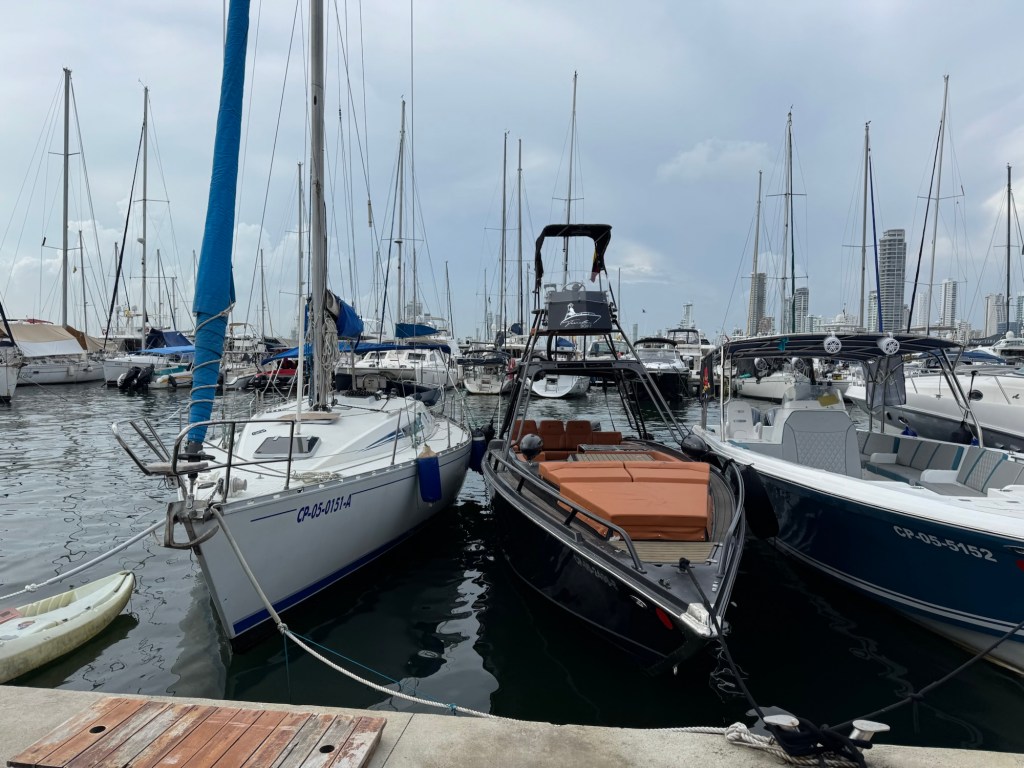
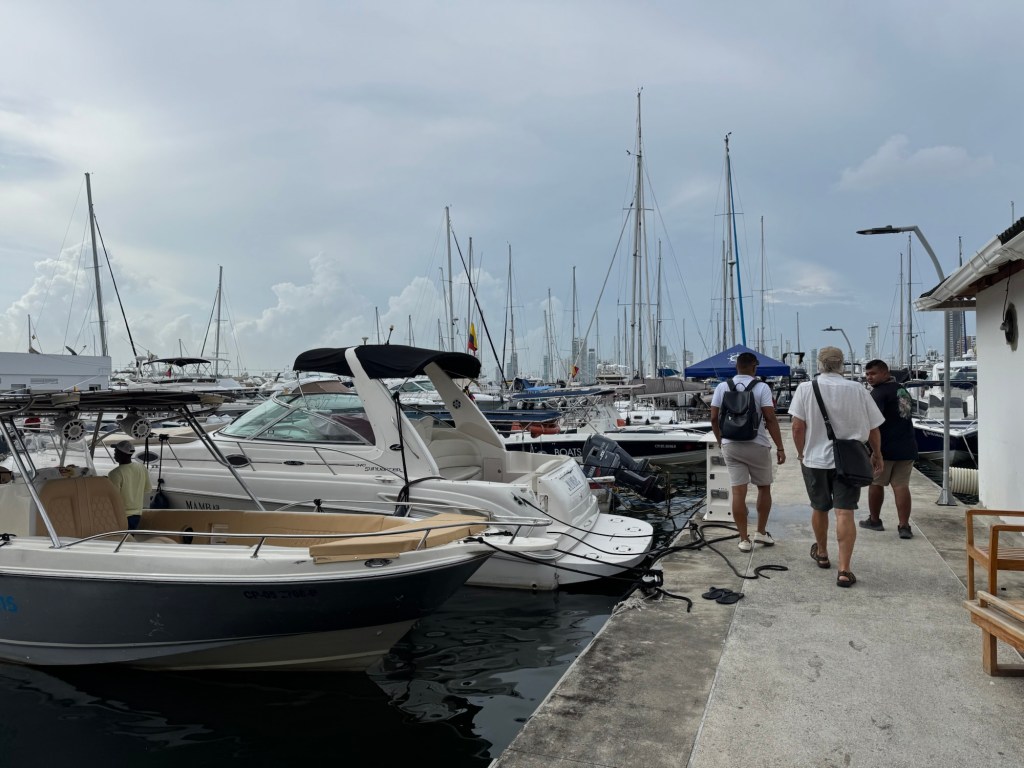
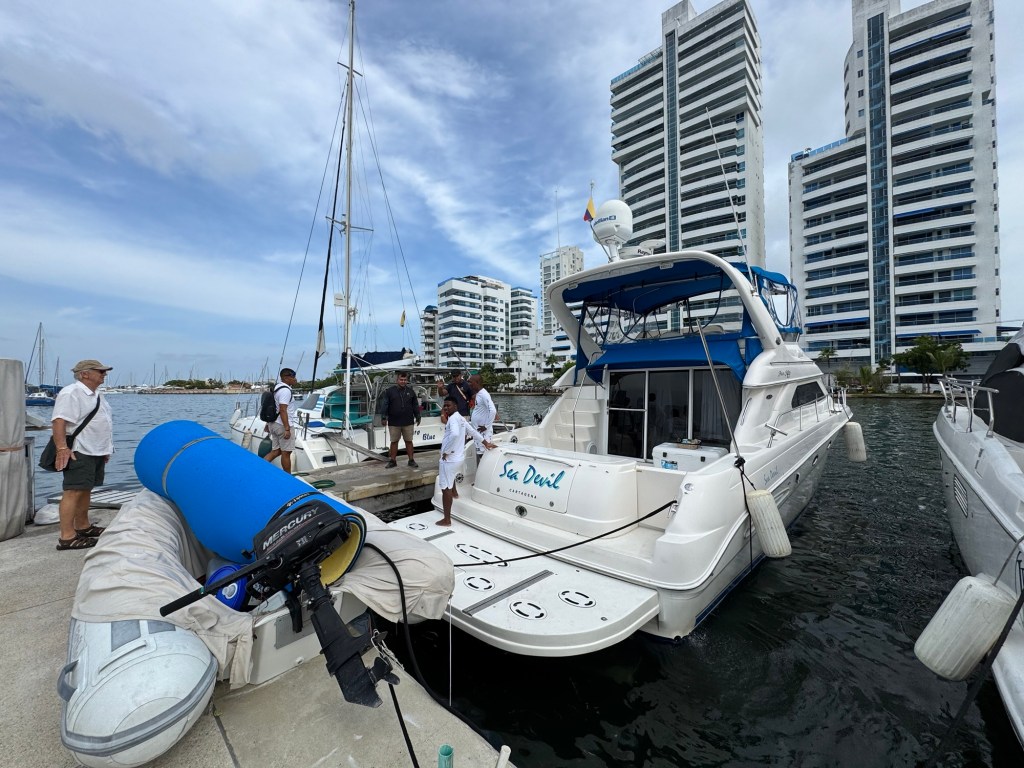
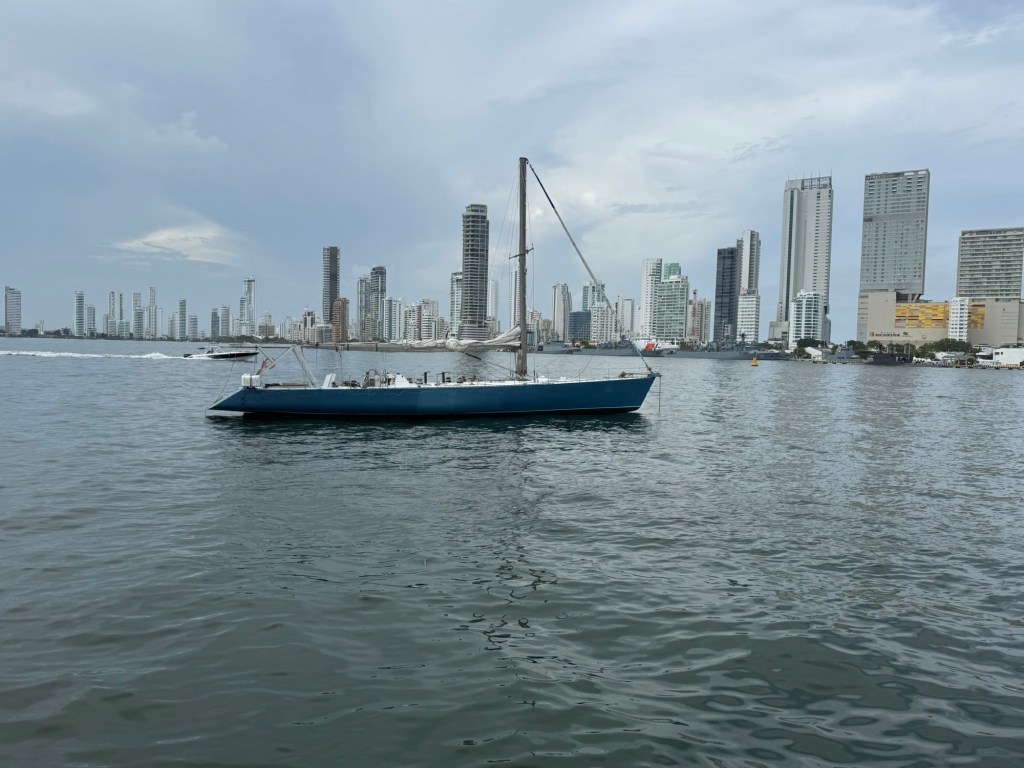
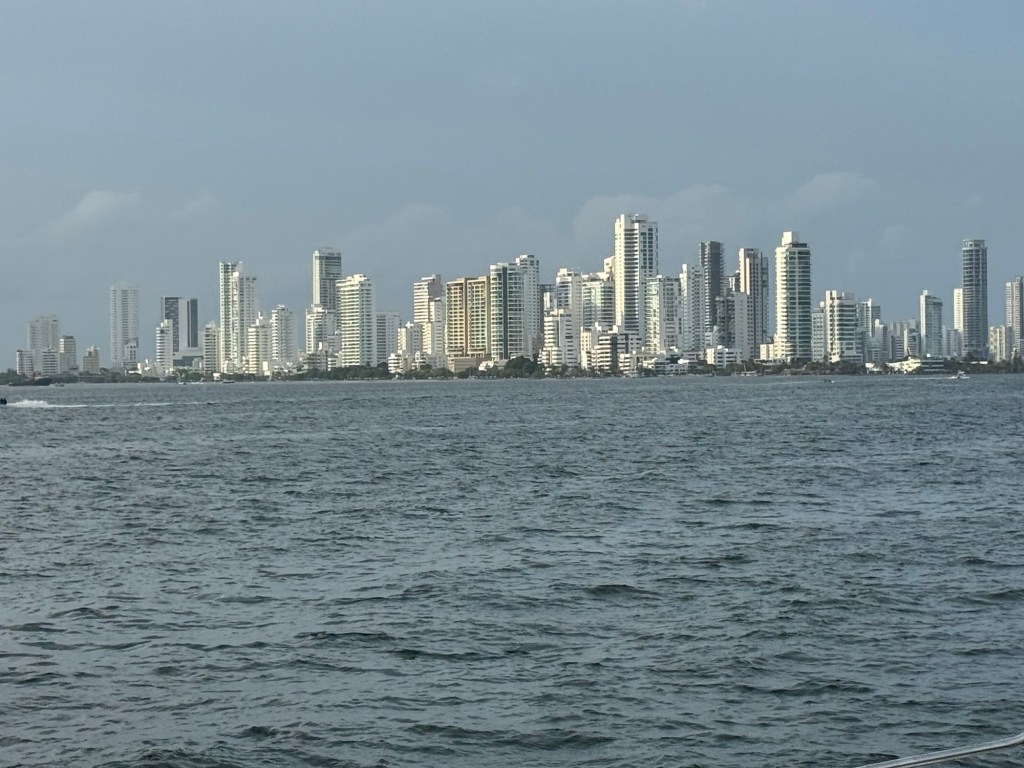
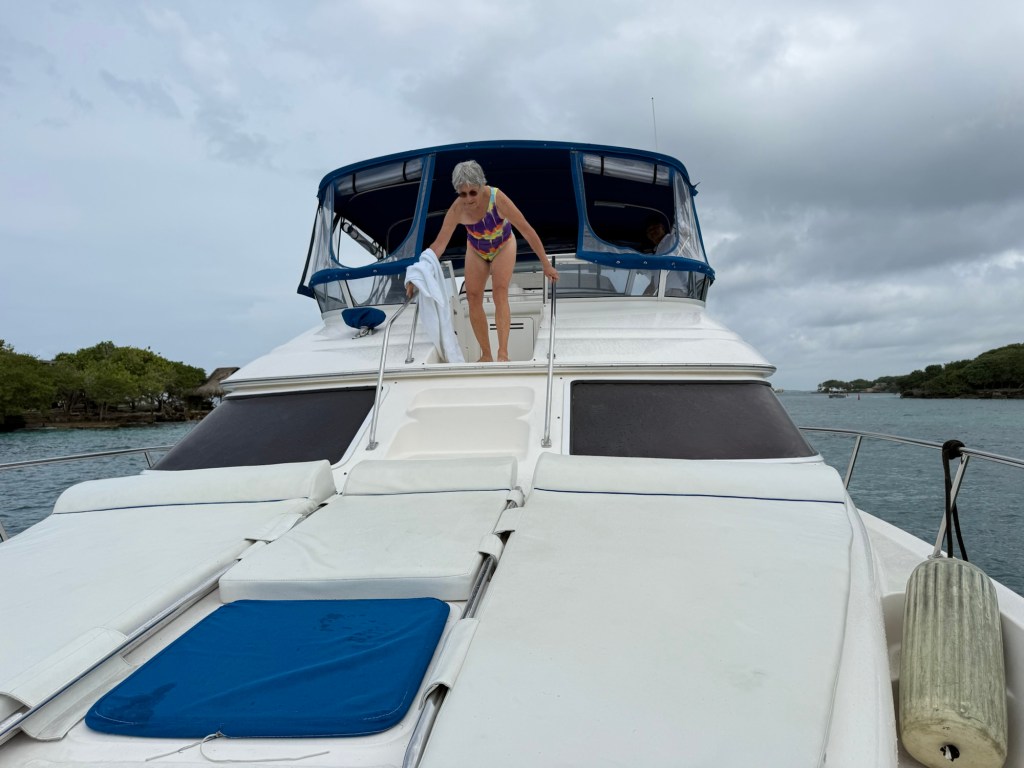
At 9am we met our host for the day, Gustavo. We drove through the city to the marina where we walked to our yacht, Sea Devil, and headed out into the bay.
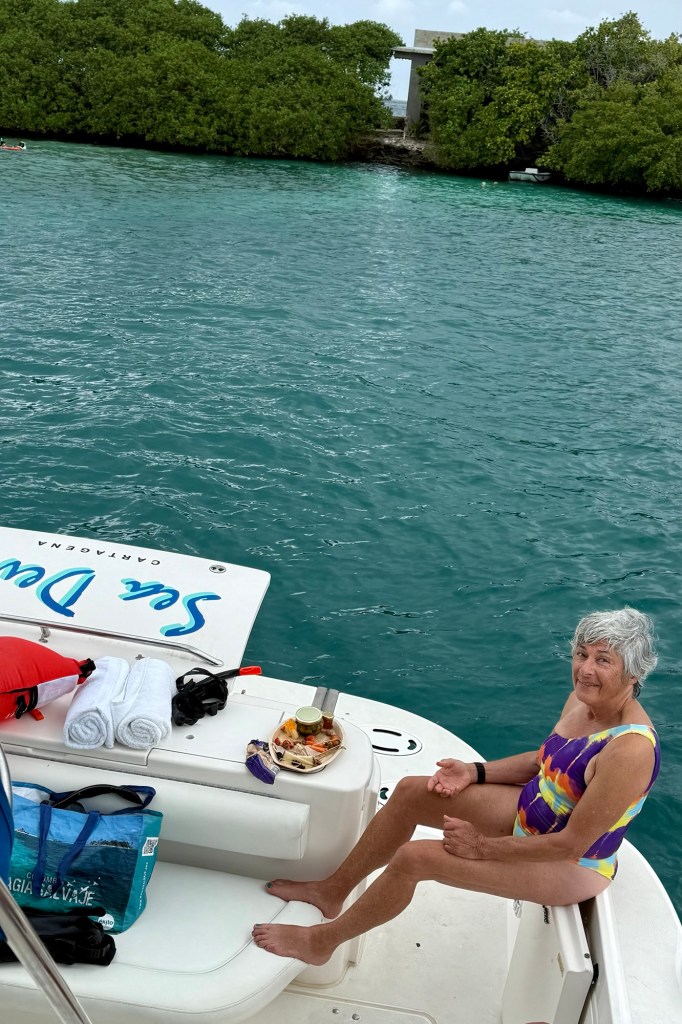
The wind was at our back and the skipper managed 13 knots all the way to our destination, the Rosary Islands, where we went swimming and snorkeling. The water was pleasant, but the coral was in very poor shape and the fish were few. Anyway, we enjoyed being in the Caribbean Sea.
Then we motored to nearby Sakai Island for a swim in the fresh water pool near the beach side restaurant. That was super as the water was clear and refreshingly cool. Then we had a delicious lunch of ceviche and French fries.
When we got back on the yacht, there was engine troubles and we bobbed around while the crew sourced the problem and, thankfully, got the engine going again. The wind was in our face all the way back to Cartagena and we were completely covered in sticky salt. But the wind kept the air cool. We could barely wait for showers when we returned to the hotel at 5:15.
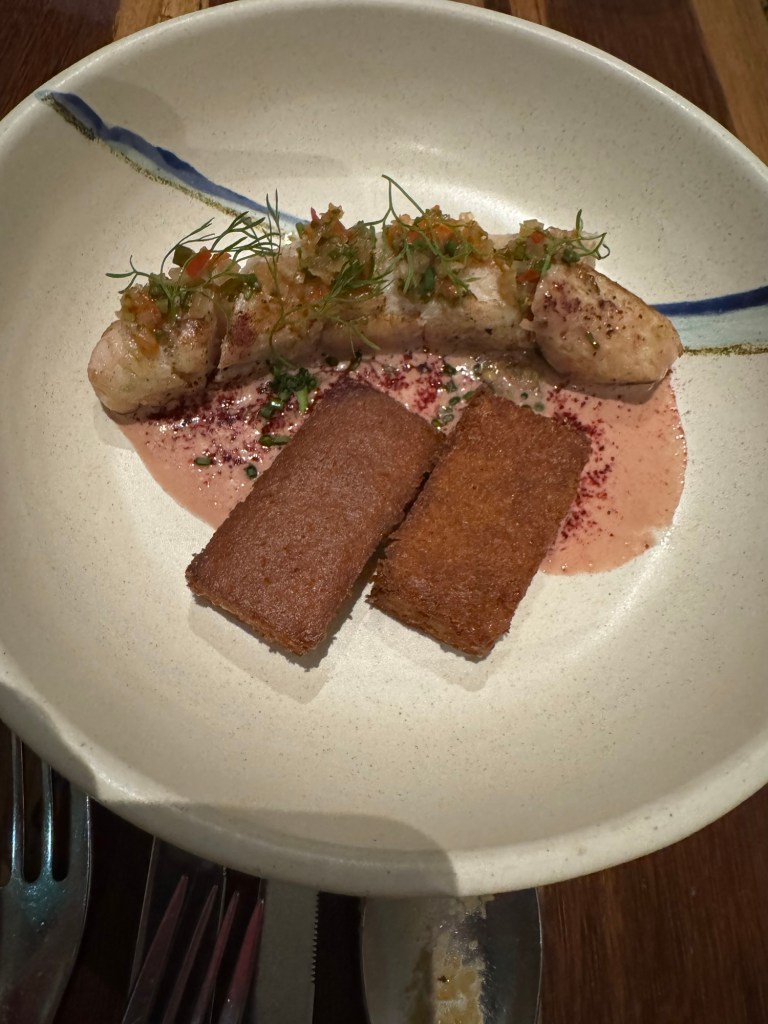
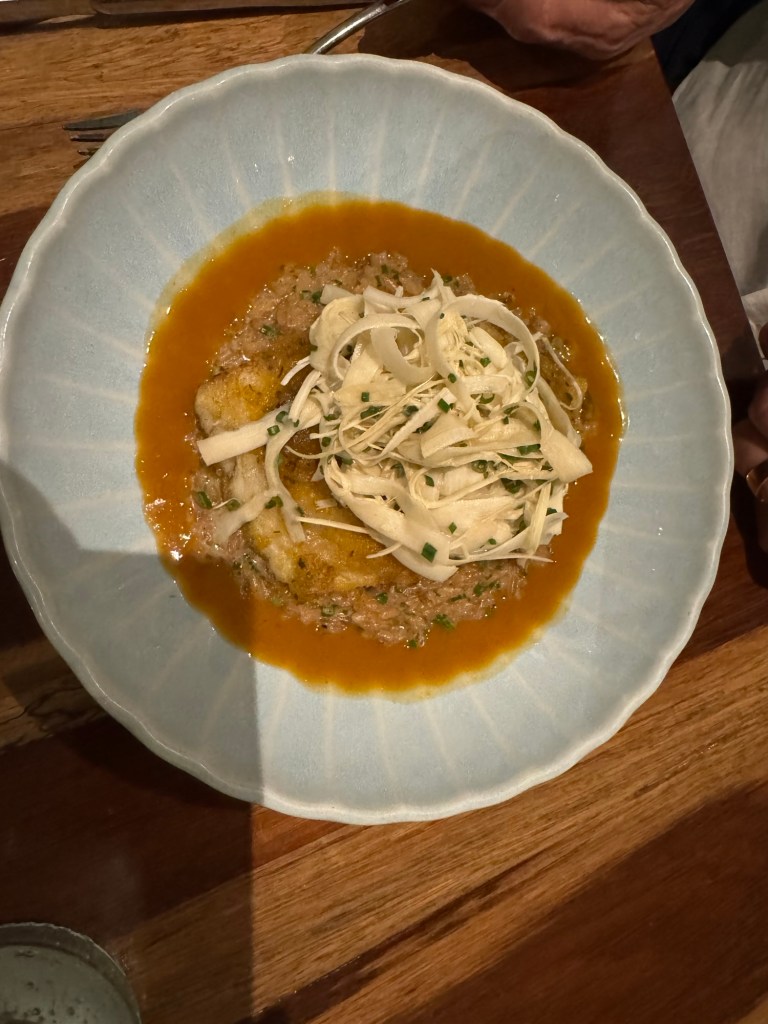
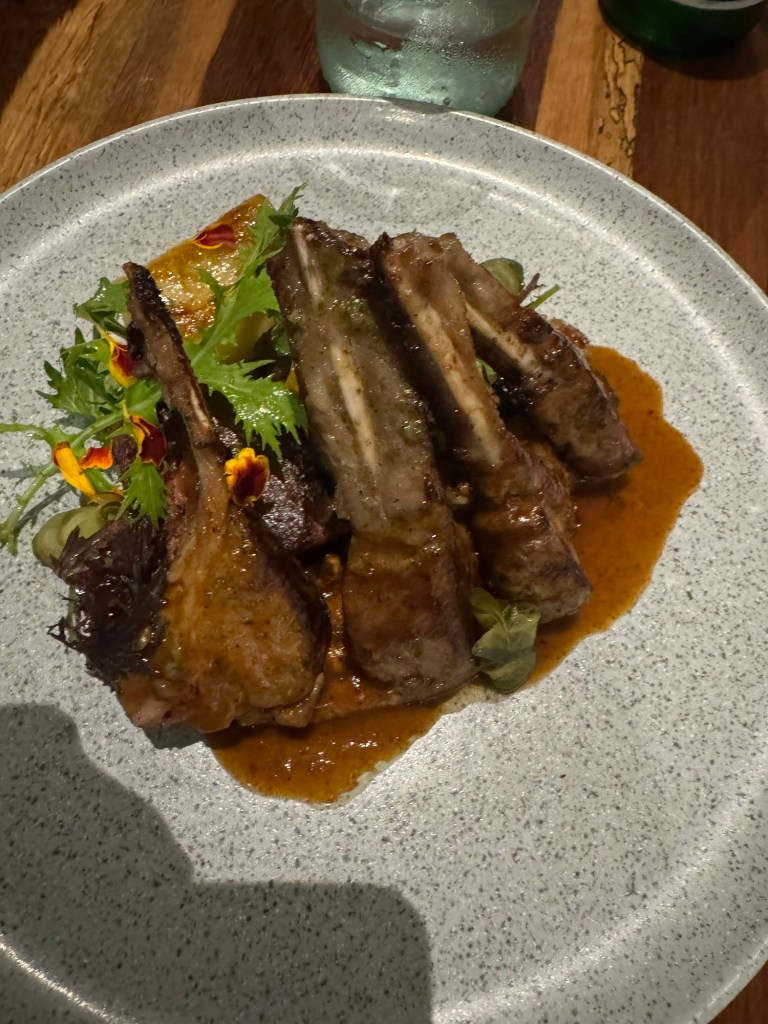
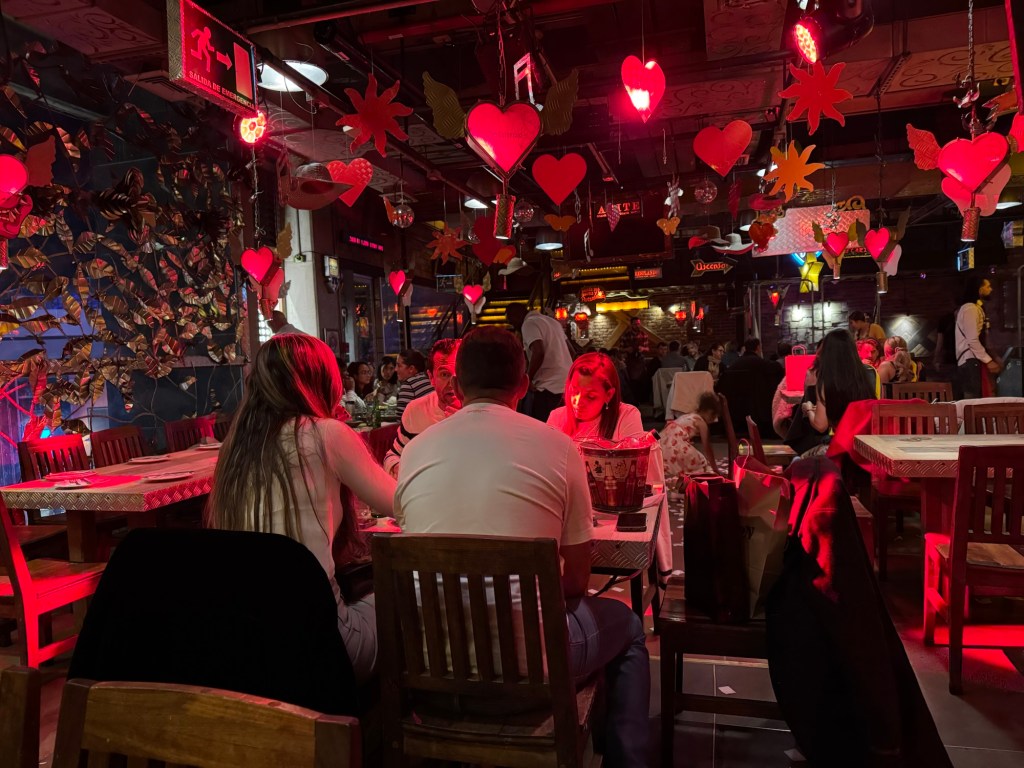
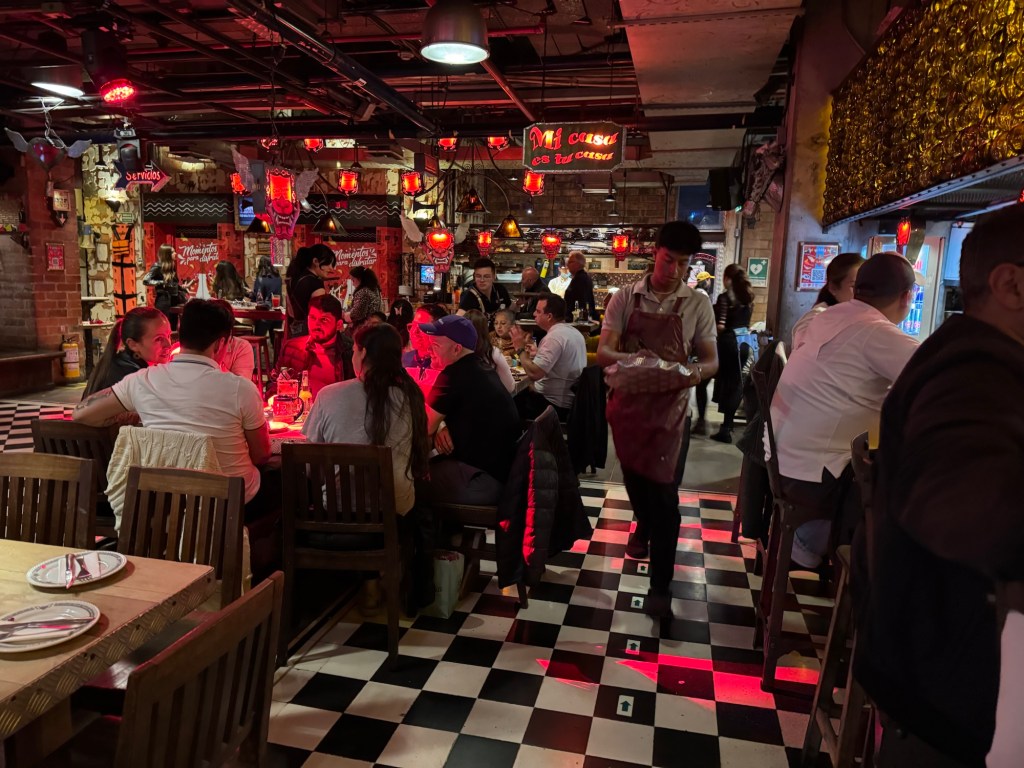
Cleaned up and in fresh clothes, we walked the half mile to our dinner restaurant, Carmen. We arrived right at 7pm and were, as usual, the first people to walk in the door. By the time we left, however, the place was full of diners. We remembered to take photos this time and for you foodies, here is what we ate.
For starters we had Chorizo Del Mar—shrimp and fish sausage, sweet corn and local Costeno cheese cake, Caribbean crème fraiche, and coastal palm berry foam.
Mark’s entry was; Pez Palma—artisanal Colombian fish, coconut rice, fresh Amazonian heart of palm with peach, palm sweet and Sauer sauce.
Julia had; Cordero—Andean lamb collar and ribs cooked on the embers, hummus, cucumber, Caribbean sesame seeds.
It was all quite tasty, except the lamb collar, which was not as interesting as I had hopped.
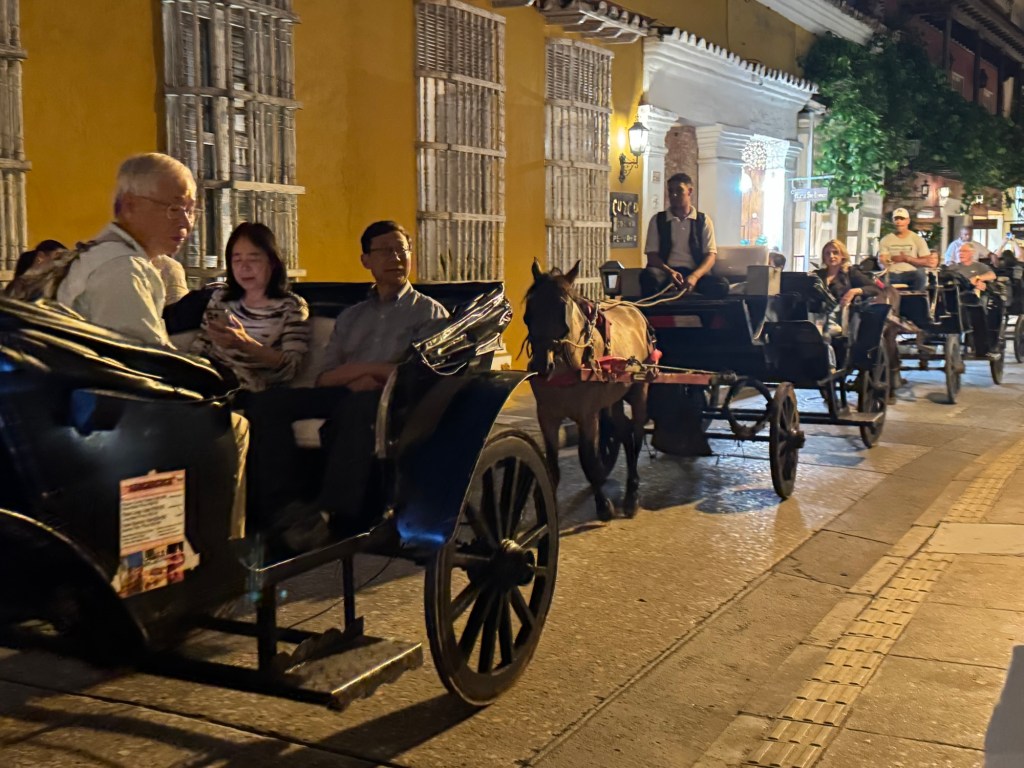
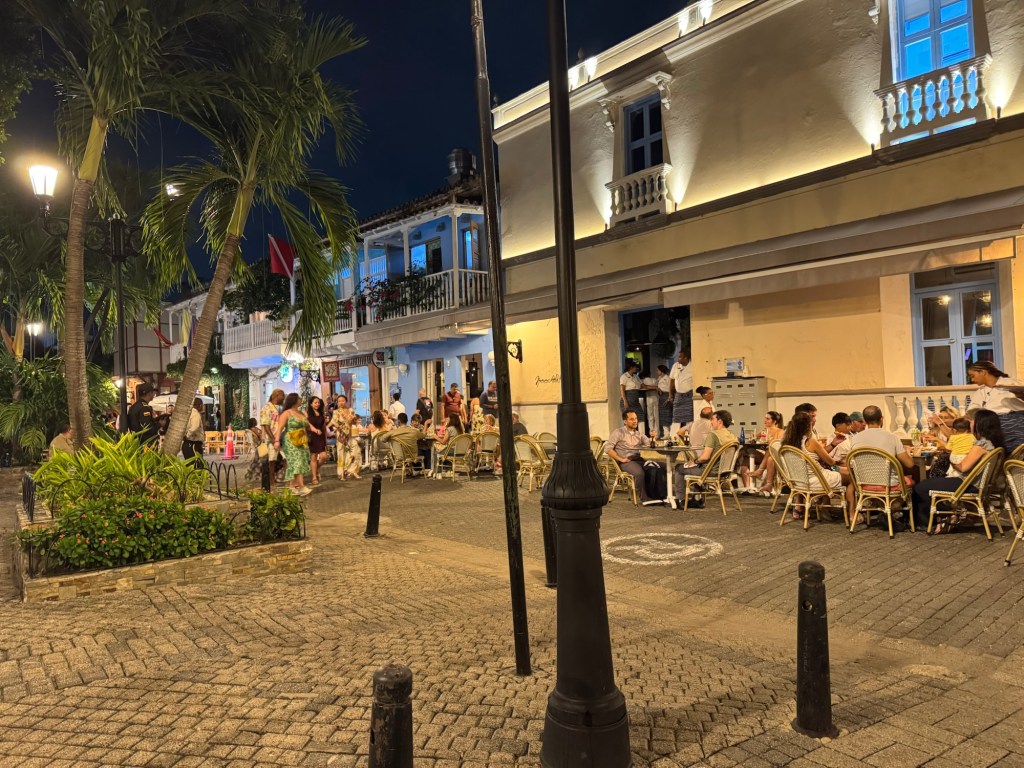
The streets were packed with revealers enjoying the last night of the Independence Festival. Caribbean music was in the air everywhere.
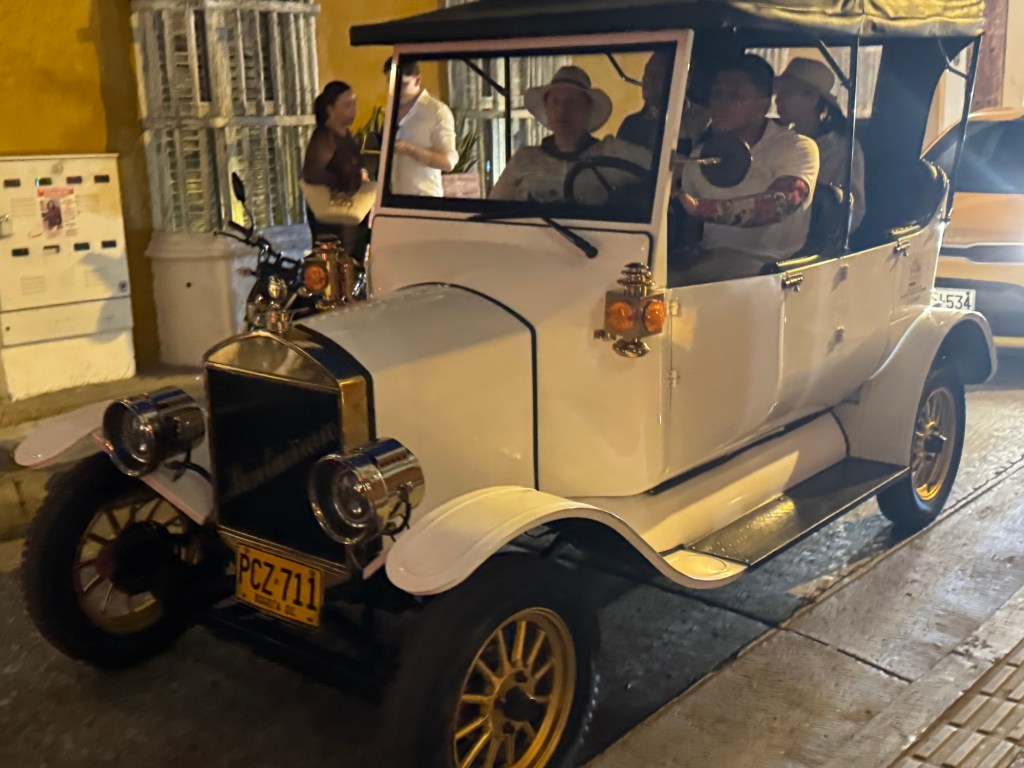
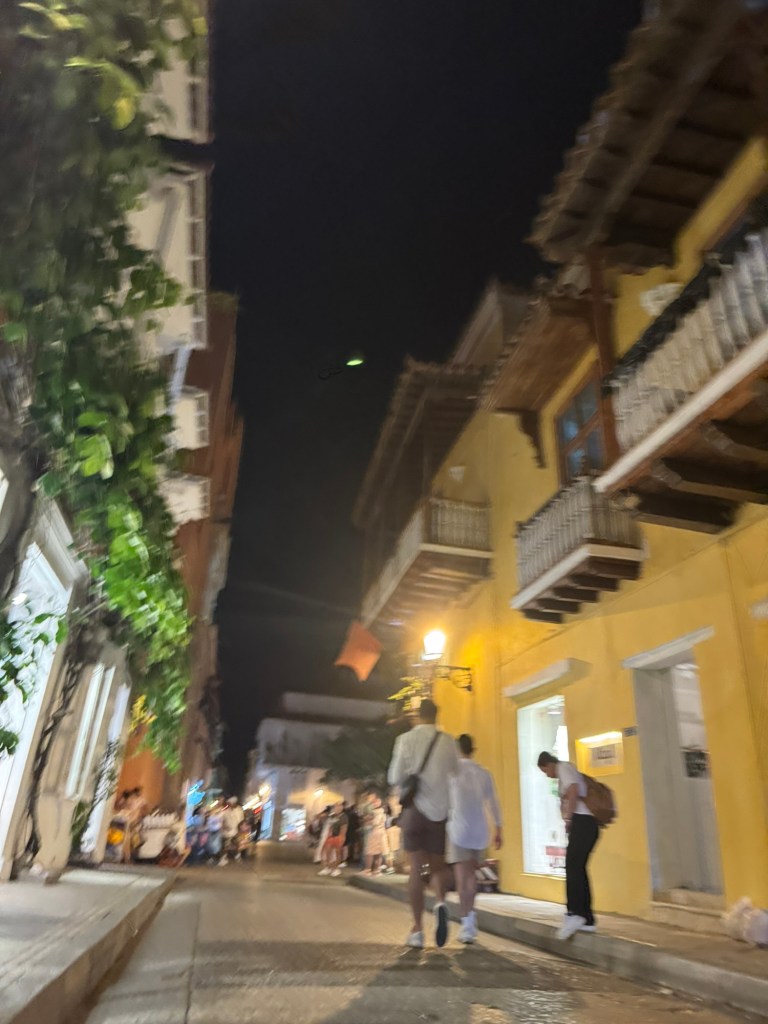
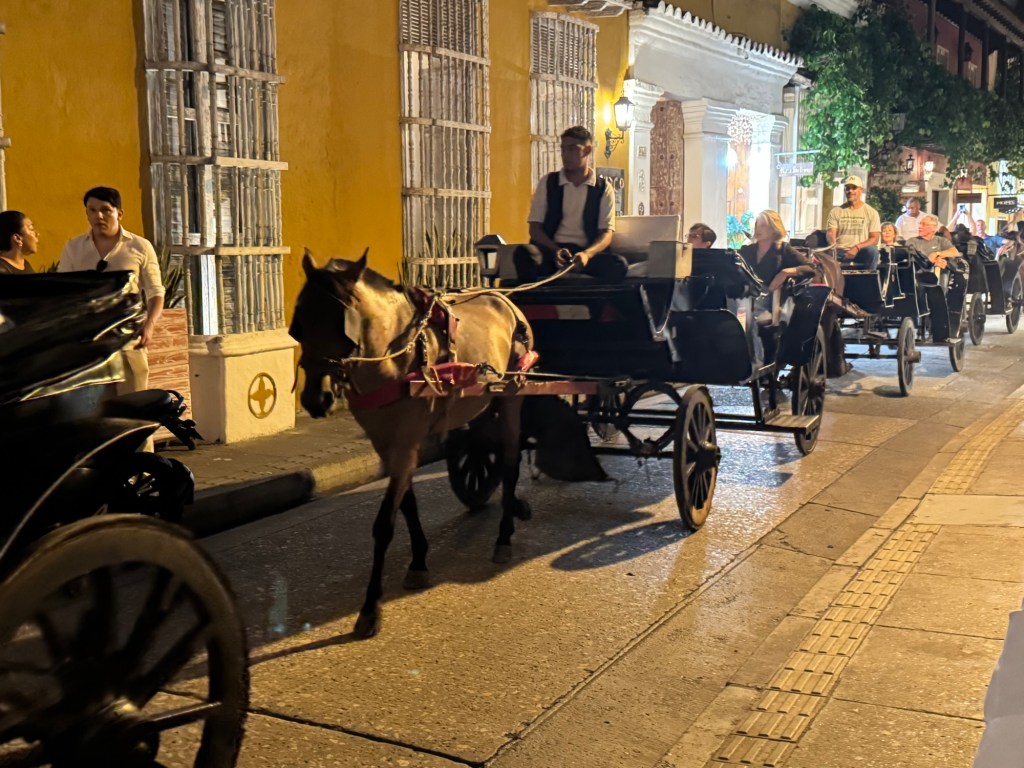
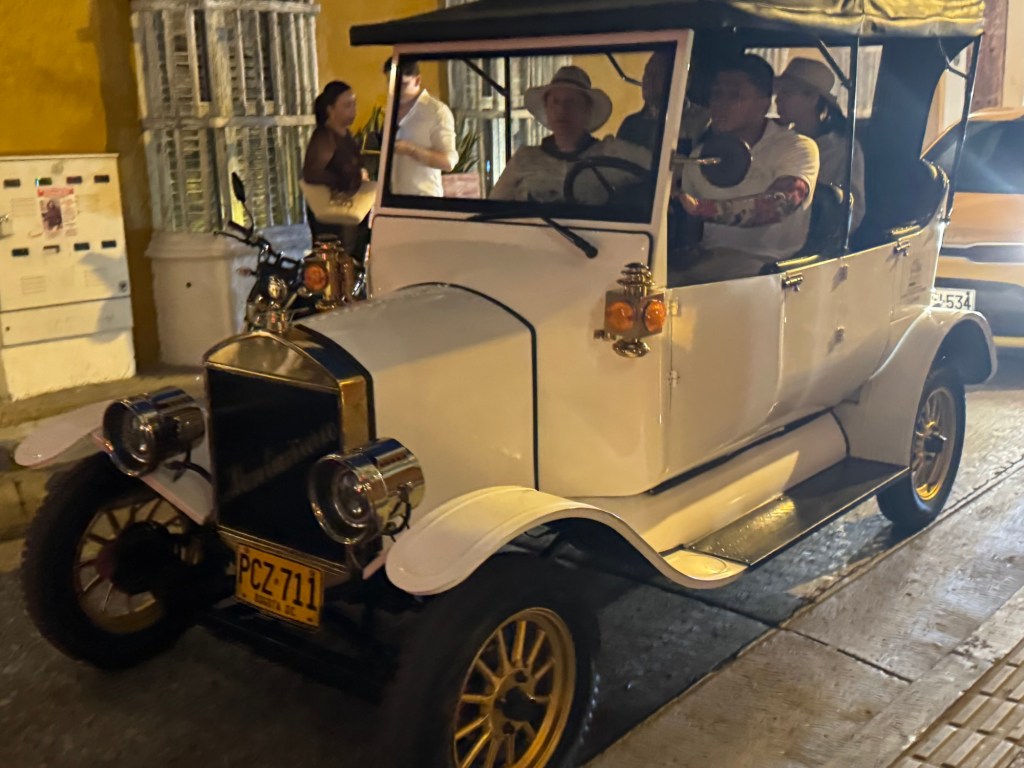
Horse carriagesElectric antique carsStreet dinersA shop all lit upOur balcony hangs over the busy street belowChatting with Angelyn, our hotel entry host
I would have loved to see some salsa dancing, but there was no place nearby and we were both tired. Our air conditioned room and bed were a bigger draw.
Sunday, November 16, 2025
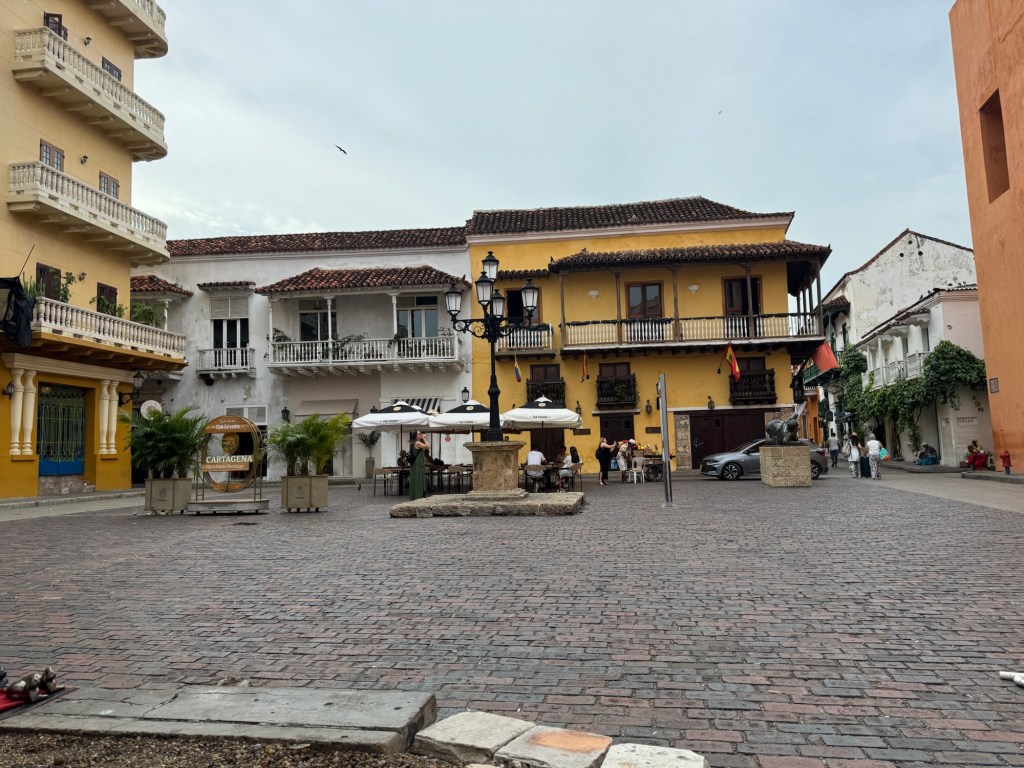
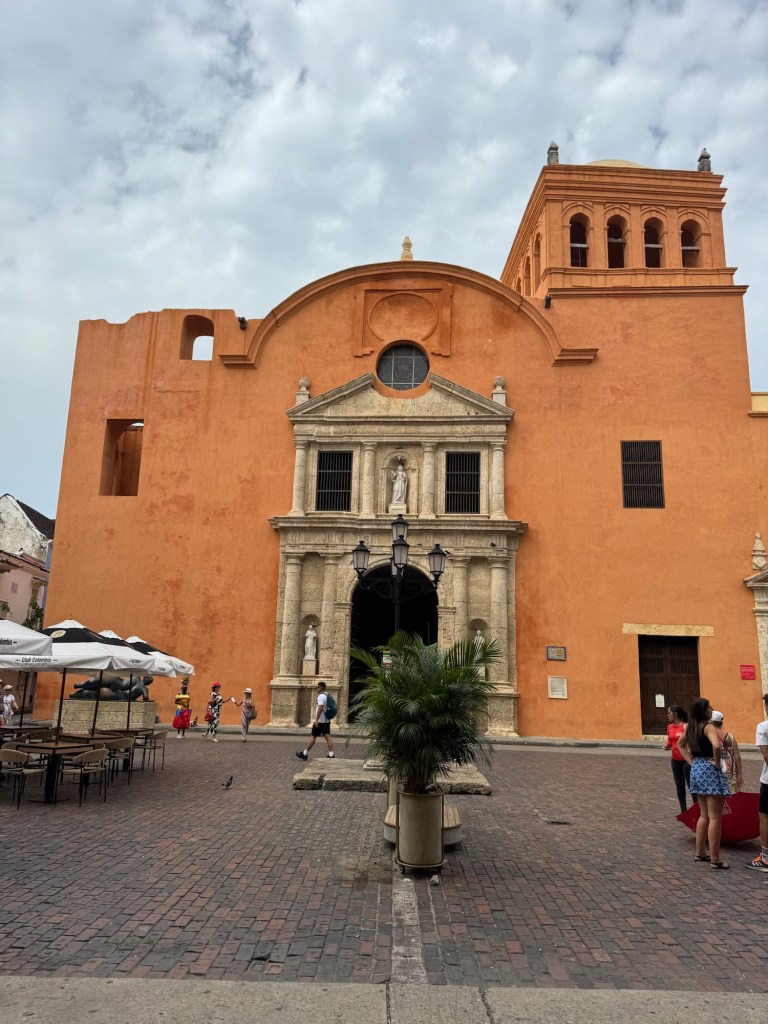
Departure day. We enjoyed a relaxed morning as pick up for the airport was not until noon. I took a walk into Santo Domingo Square, half a block from our hotel, found a place to sit and watched the scene. There were no tourists at first, but slowly more people came through the square.
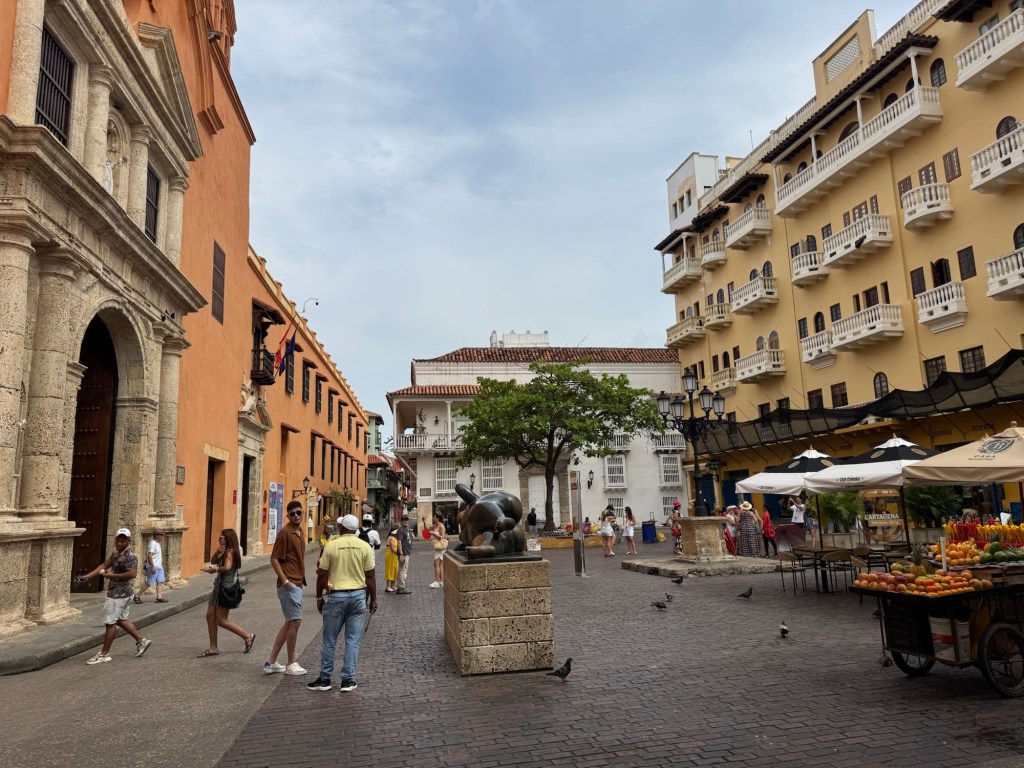
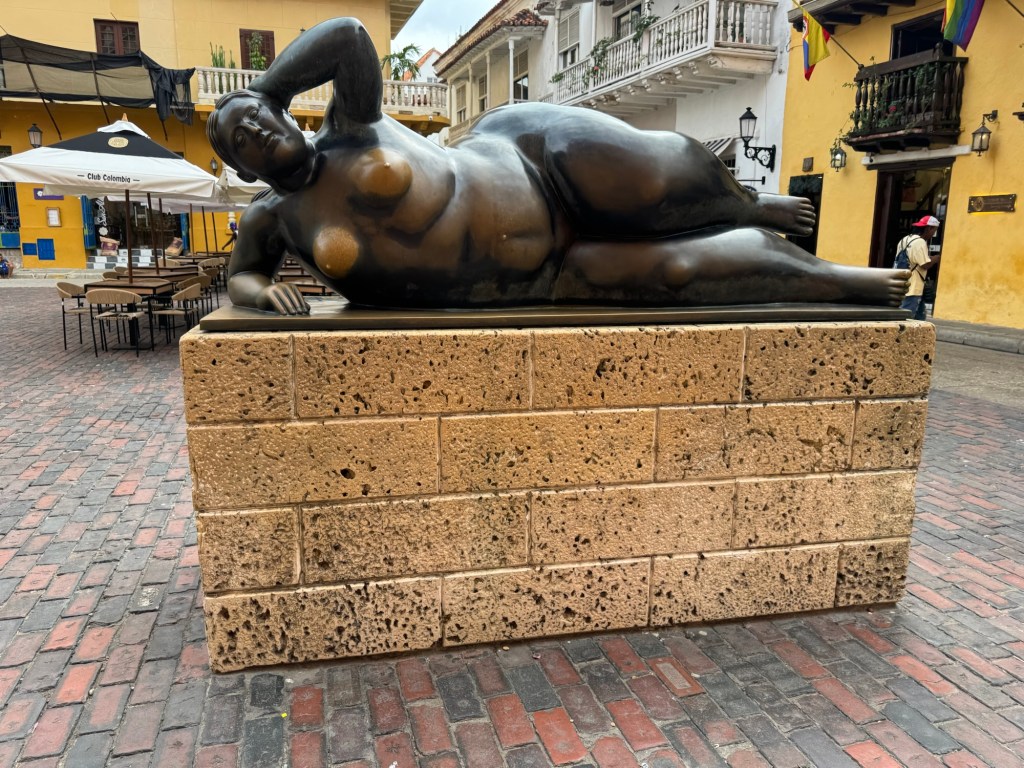
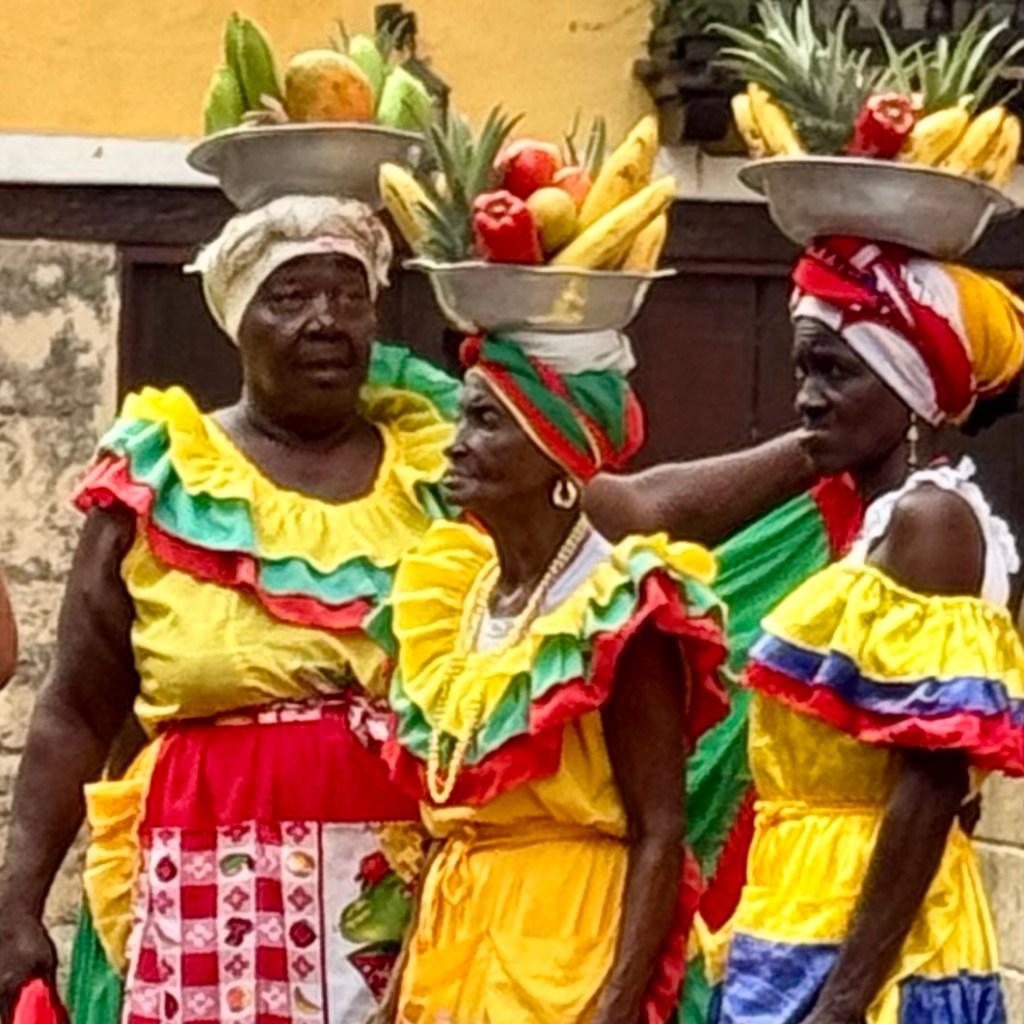
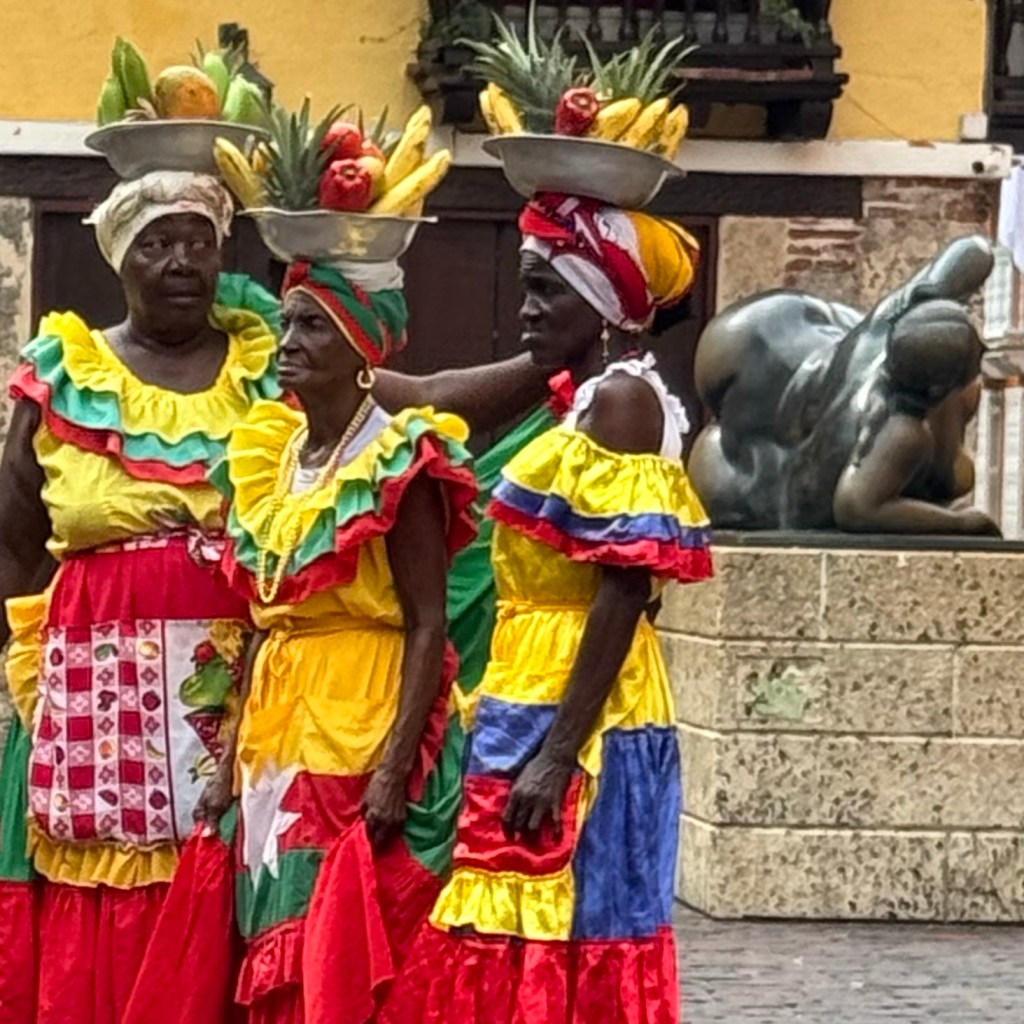
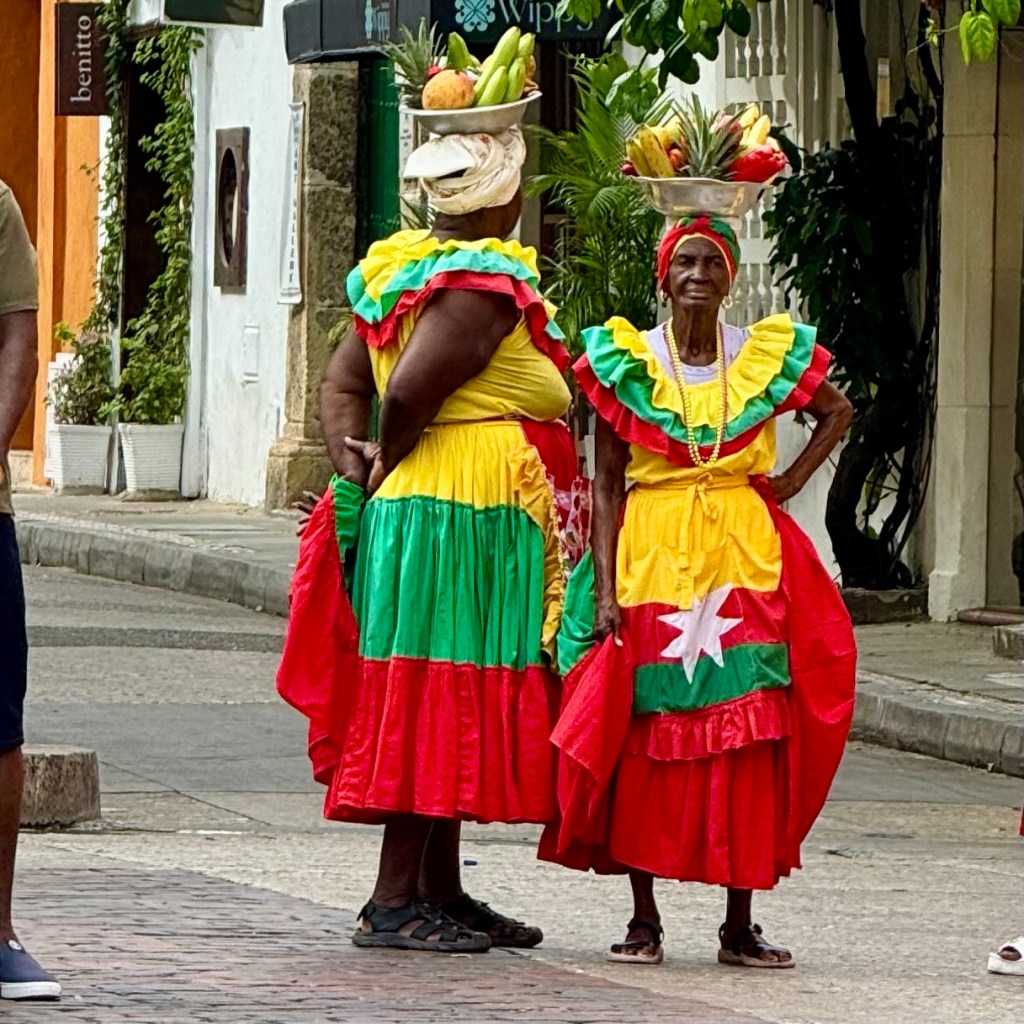
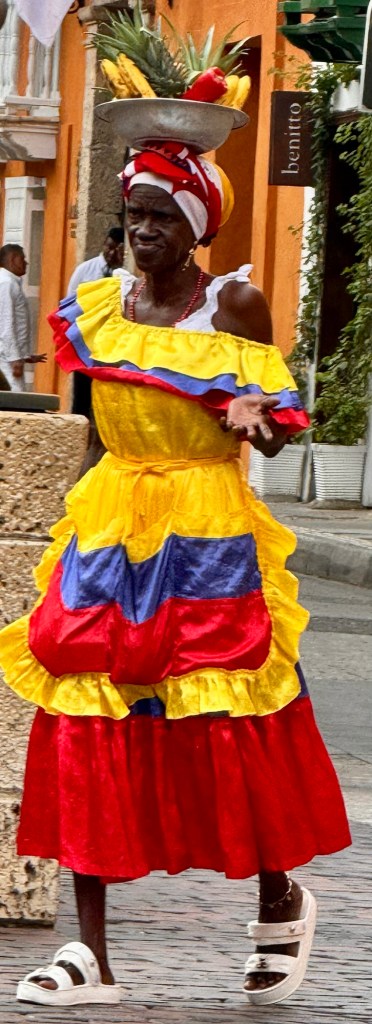
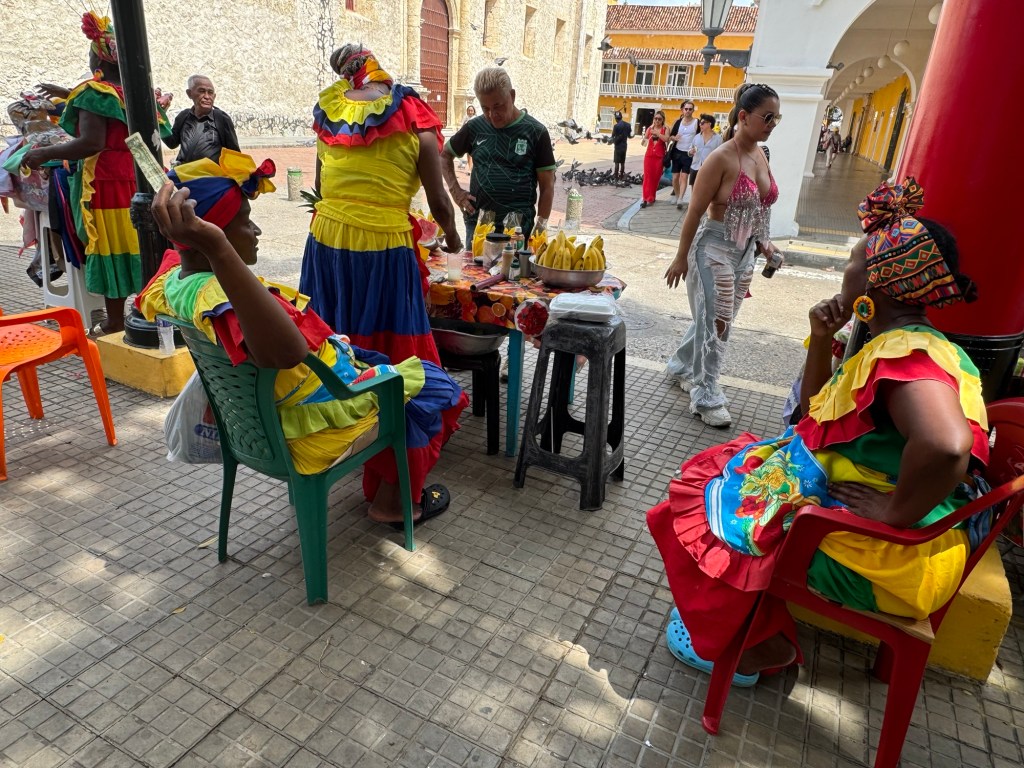
Scenes from Santa Domingo SquareBotero’s scupture, GordeLocal ladies looking for photo money
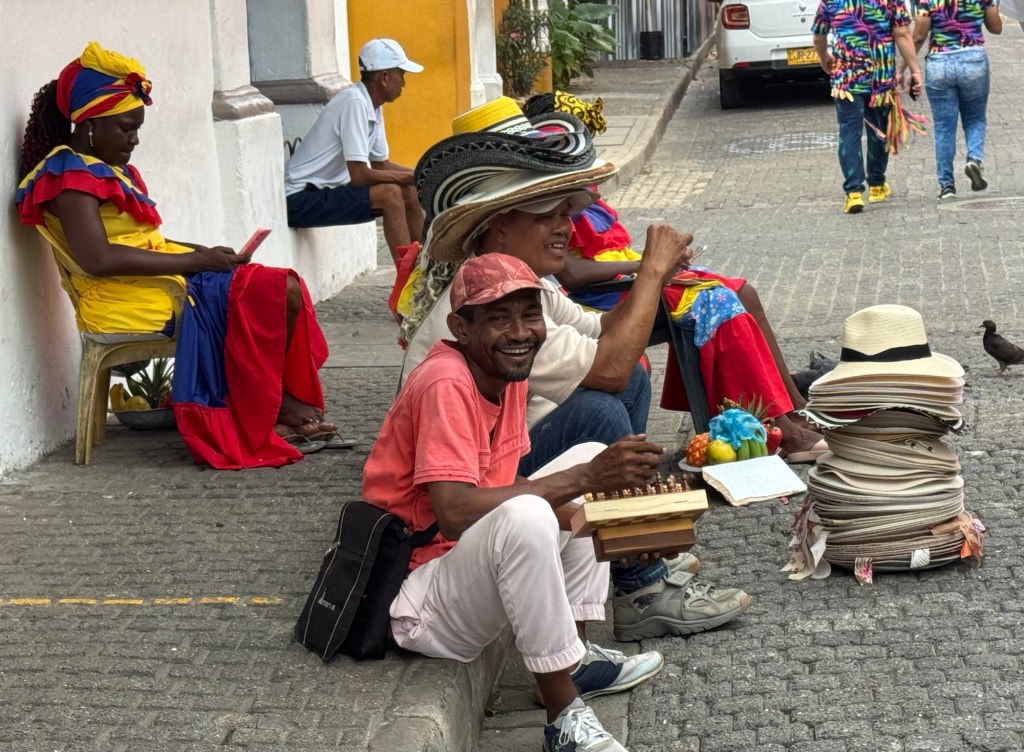
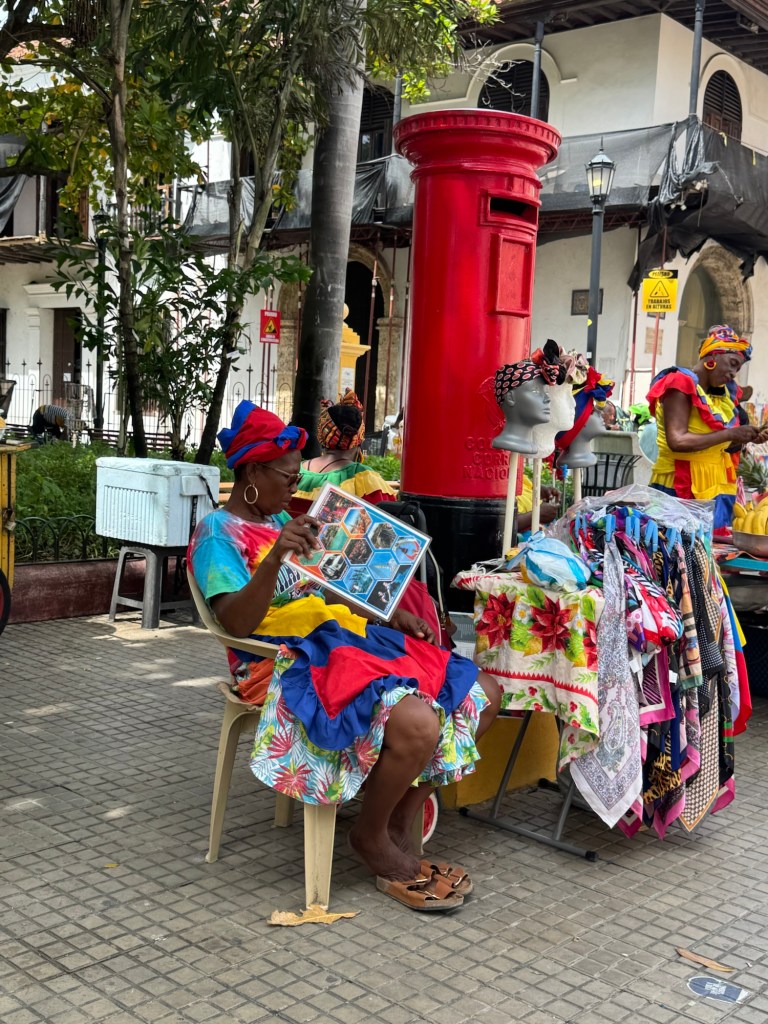
In the square is a sculpture of Botero’s Gorde Gertrudi’s, where people pause to take photos, especially with three local ladies, wearing Caribbean costumes with fruit filled hats and looking for photo donations.
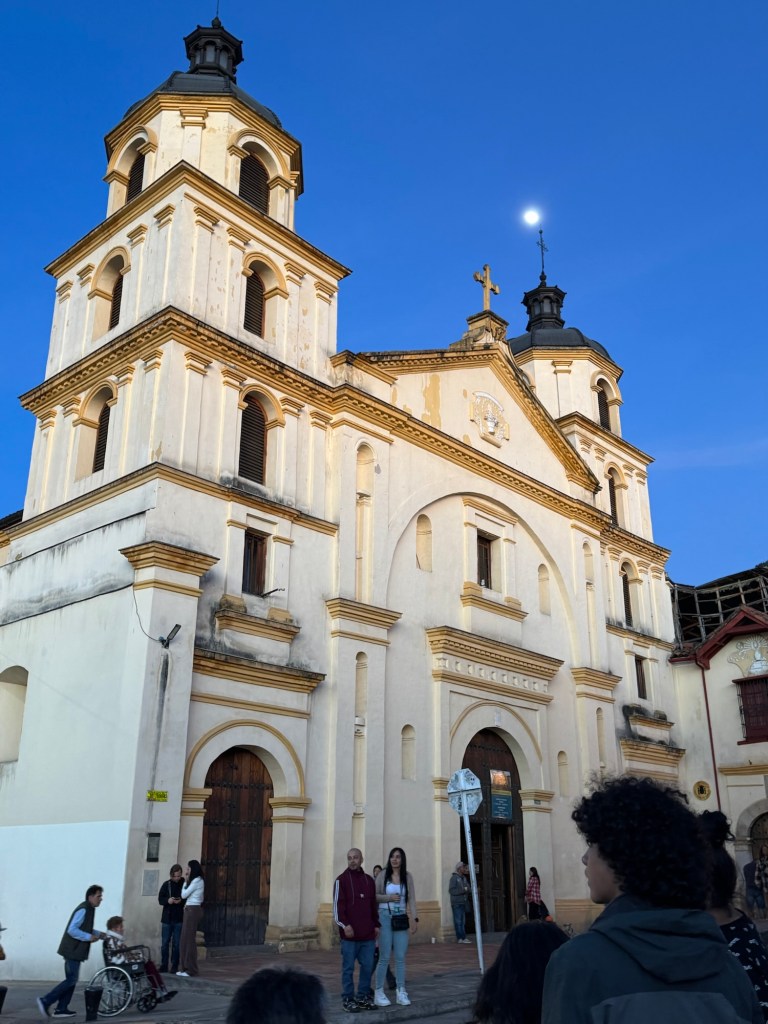
Saint Domingo Catholic Church
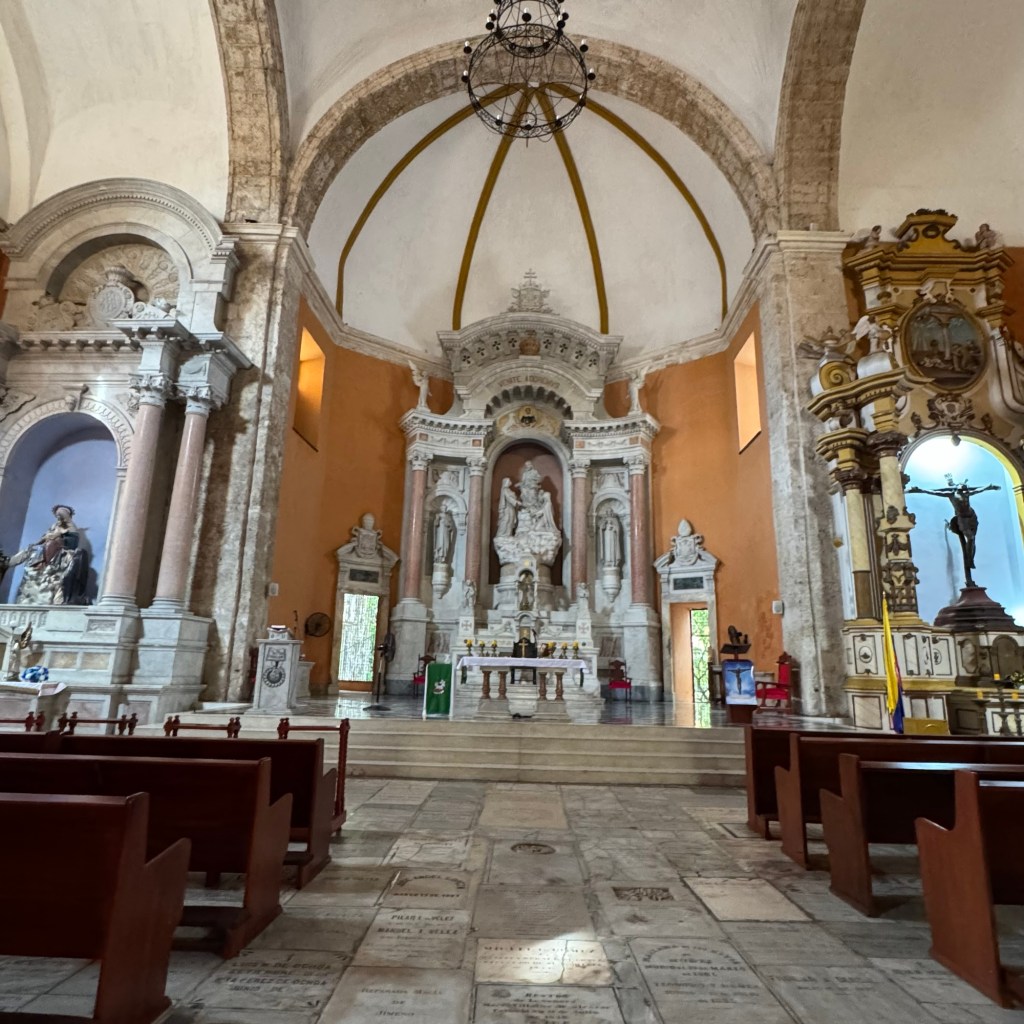
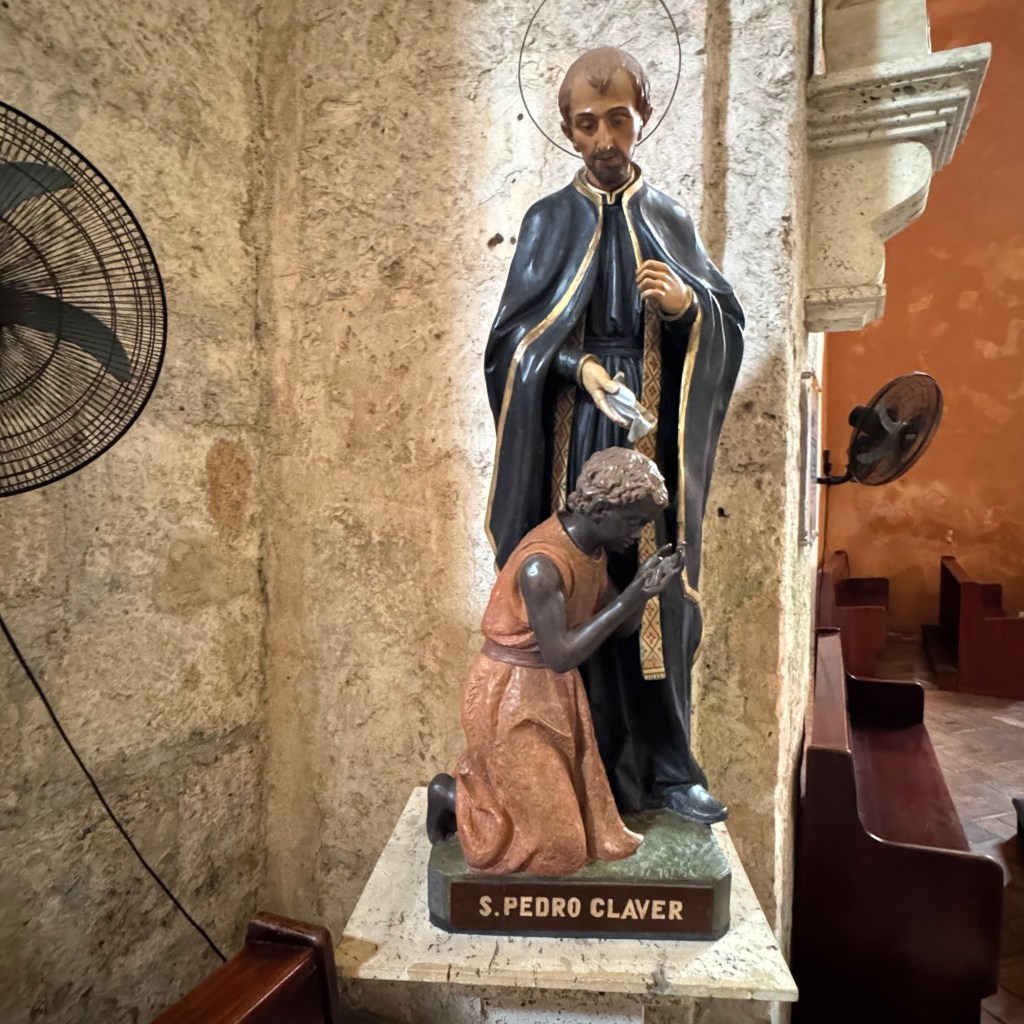
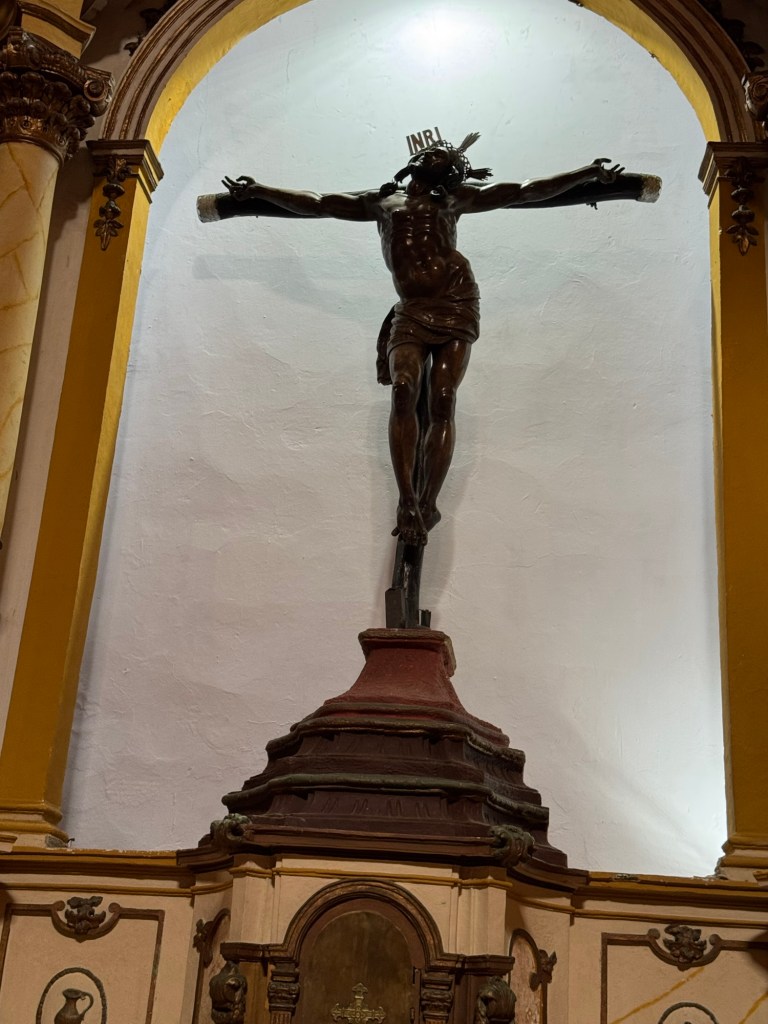
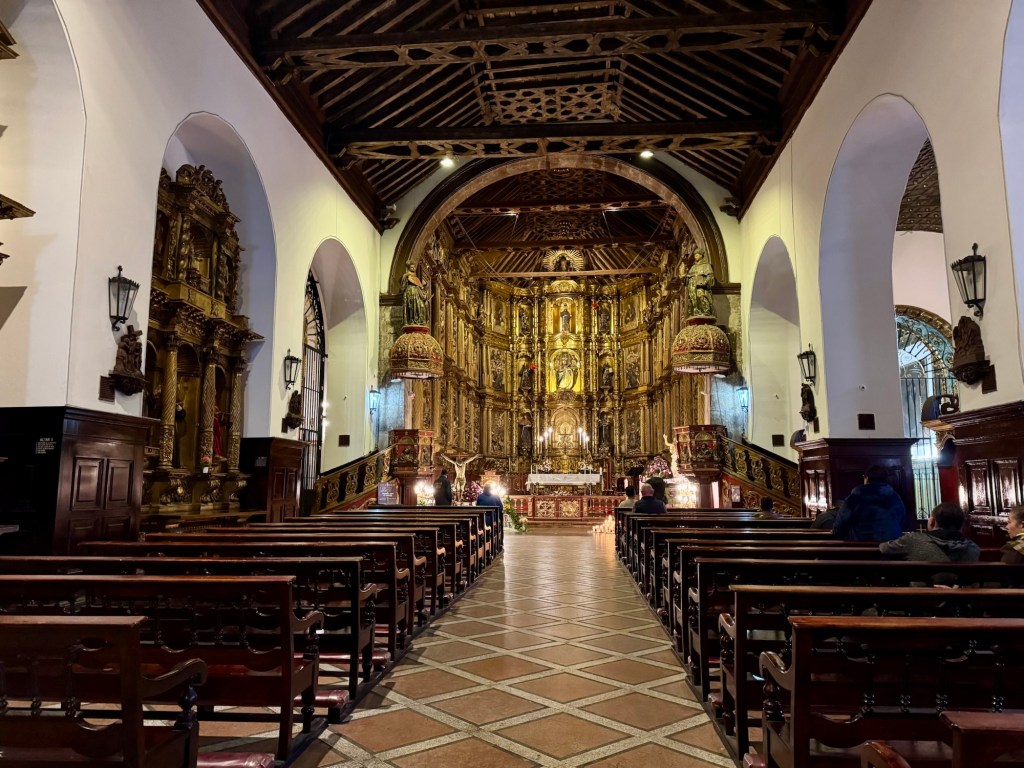
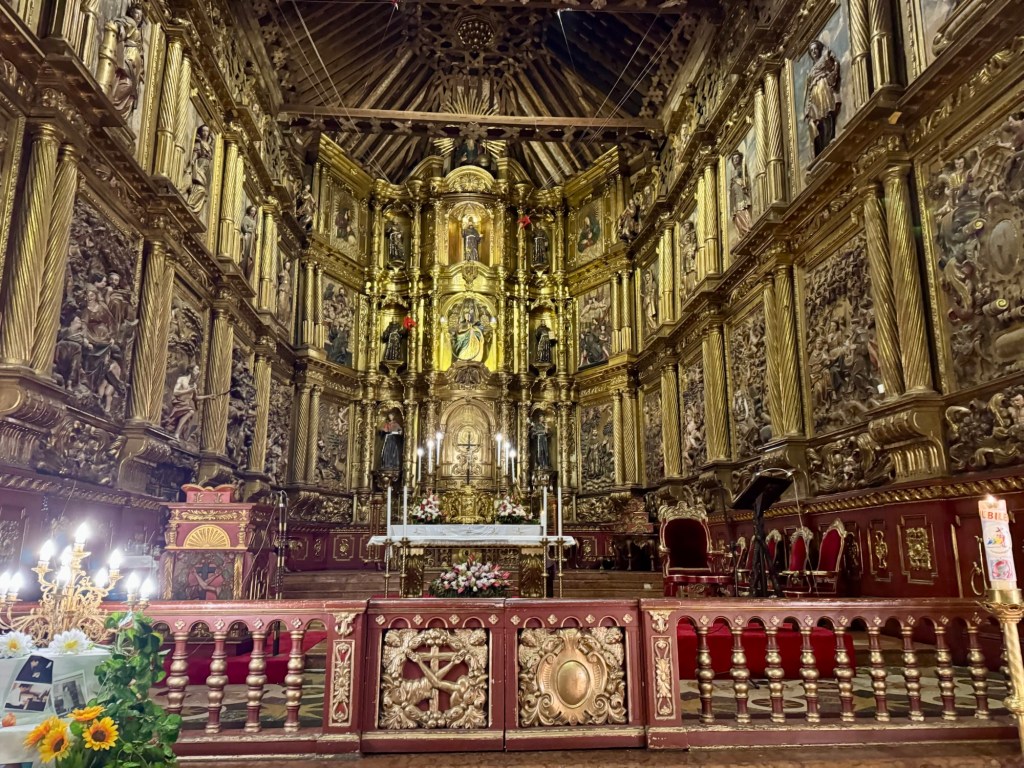
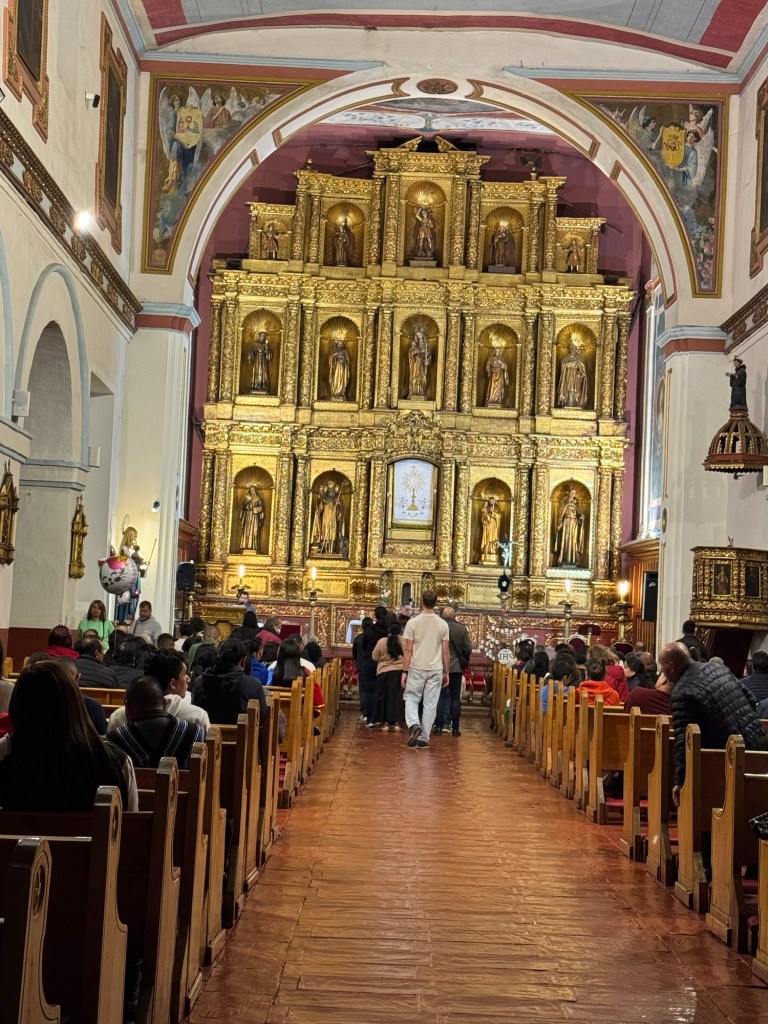
From looking at a photo of the church, I noticed that the church tower was crooked. A sign in the square confirmed it. Eventually, the Church of Saint Domingo’s doors were opened and I went in to find a very pretty church, with many burial stones covering the floor and an interesting statue of Saint Claver with the slave he converted as well as a striking statue of Jesus on the cross. Finally, it was time to head for the airport.
The concourse was full. People waiting for delayed flights plus on time flights. Even the lounge was full and taking no more people. We found single separate seats in the public waiting area and waited. It was 12:50 and our flight was scheduled for 2:20pm. Eventually some lounge space opened up and we moved.
Although it’s time to come home, I am ambivalent. It has been a wonderful experience and a happy time for the two of us as a couple. We agree that we will do more traveling, but with longer stays at each stop. We are already working on our next trip back to Uganda in March with time in southern Africa before or after Uganda.
Mark wants me to speak about my observations and feelings about our travels. Every trip, I observe that people are friendly, welcoming and generally happy being alive, wherever they have been planted. Even the poorest people smile and laugh and ask about us when language permits. The saddest part about traveling for me is the inability to communicate. Clearly there is a mutual desire to connect, but language differences inhibit both of us. I am grateful for the many English speaking guides we have had on this long adventure. We connected well with most of them, especially the ones with whom we spent several days. Without them and their knowledge and English skills, our adventures would have been much less rich and rewarding. Everywhere we go, we are asked which is our favorite country or place and we always give the same answer. Our favorite place is the one we are currently in. We have not found a country we did not like, although there are some, like Uganda, we will continue to visit. It is mostly about the people, and we have friends and now even family, our goddaughter Julianah, in Uganda.
And so this adventure ends. I hope you have enjoyed reading about our journey and adventures and will join us again wherever the next trip leads us.
Blessings to you all, weather you travel in body or only in spirit.
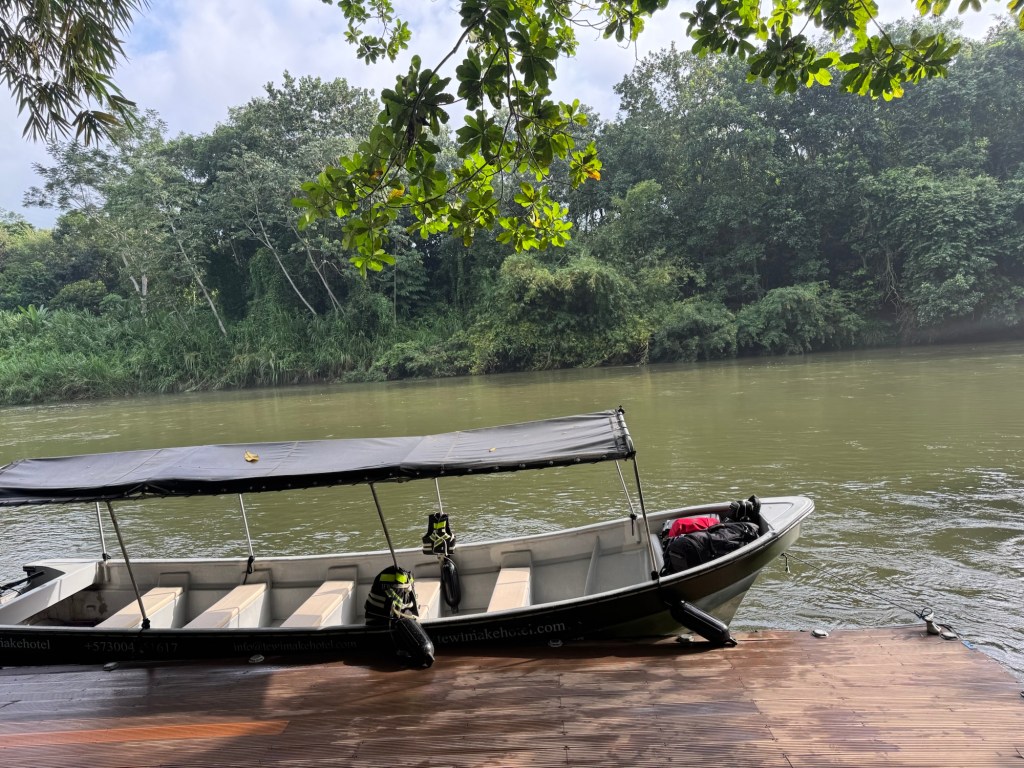
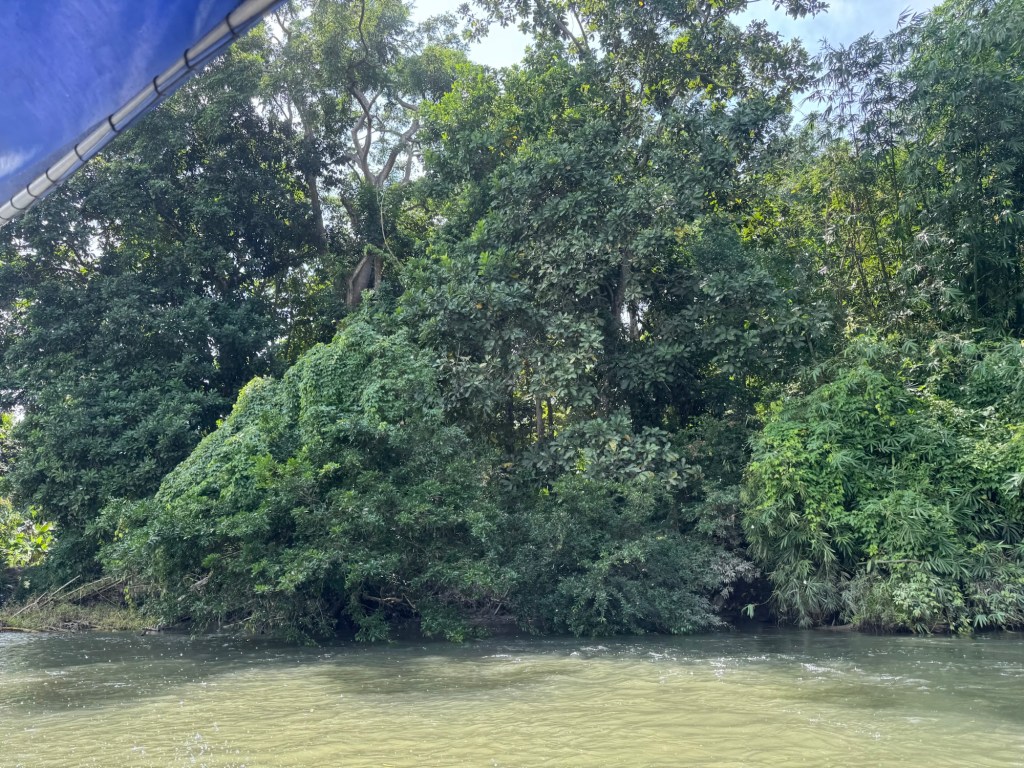
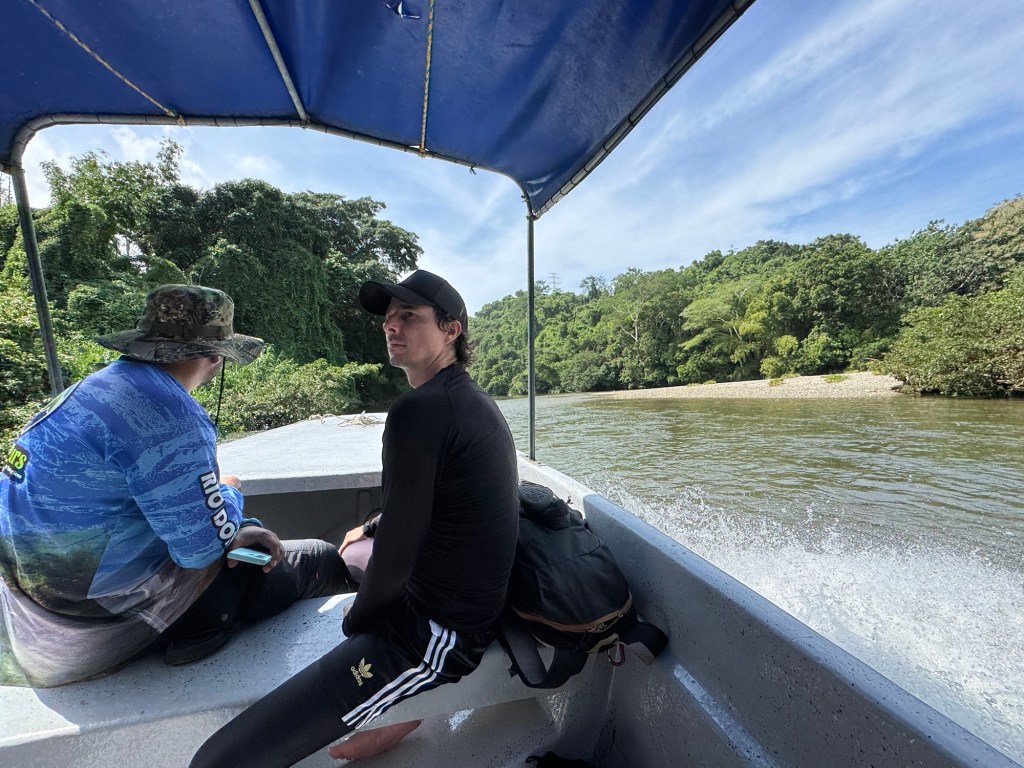
Departing Tewimake by boat to our vehicle 5 minutes down stream
Forests and jungles are in our rear view mirror as we leave Tewimake and head for Cartagena, our last stop on this 7 week long adventure through South America. The drive took 5 and a half hours including a stop to buy a sandwich midway through. The first part of the drive was mostly tree lined. Then the landscape turned into scrub and wetland with the Caribbean Ocean in the distance.
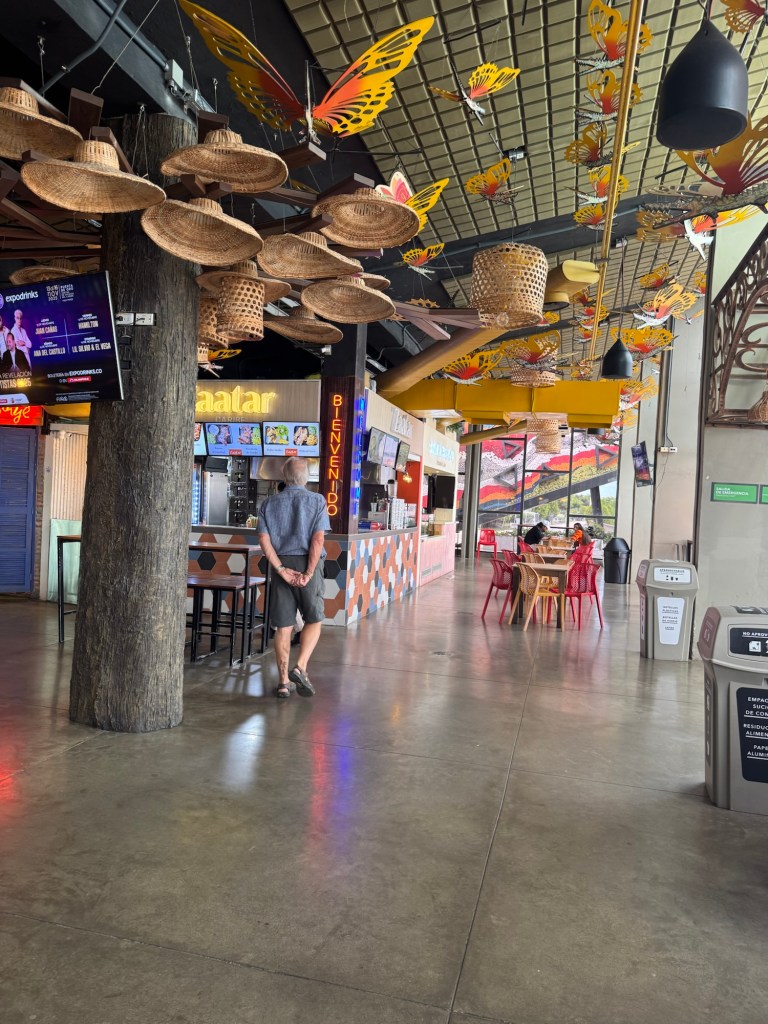
A gastronomic market where we bought sandwichesOur driver, Orlando waits for lunch
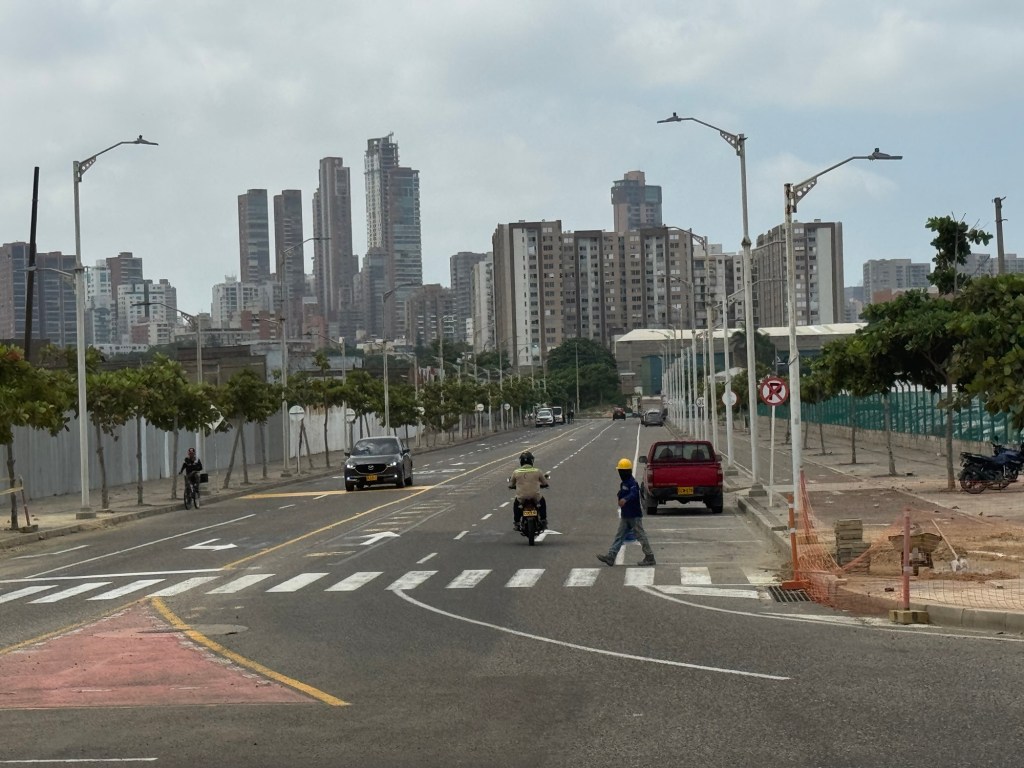
The road was two lanes for the first 2.5 hours with dilapidated and dirty villages and small towns along the way. When we reached the large industrial port city of Barranquilla, the highway became 4 lanes.
The bridge we crossed entering the cityBarranquilla
Our driver, Orlando, spoke broken English, but was able to tell us the city was larger than Cartagena, which is a tourist city, and has a busy port exporting cotton, coffee, petroleum and natural gas. It is Colombia’s largest port on the Caribbean Sea and the fourth largest city in Colombia.
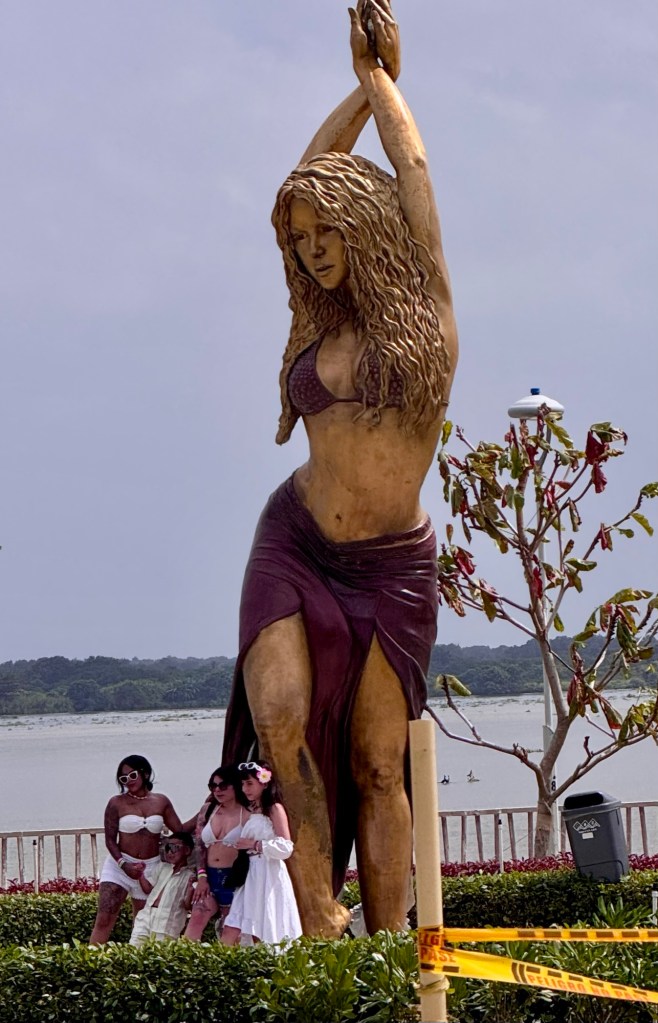
Shakira
Entering Barranquilla we passed a large bronze statue of a Colombian singer named Shakira, who was born here. We stopped to get a better look. It turns out she has won at least one Grammy award, made significant contributions to the music scene, especially for her song “Hips Don’t lie”, and does charity work as well. In addition to Shakira, Sofia Vergara was also born here.
At 1:30 Orlando dropped us off at our hotel in Cartagena and headed back to Tewimake. We were happy to check into our 4 night stay in one place. We spent the afternoon chilling in our room. It is apparent the heat and humidity have sapped our energy for sightseeing. We did Uber to our dinner at Celele, a restaurant in the neighborhood called Getsemani. It is billed as being inspired by gastronomic adventures around the Colombian coast. The food certainly was adventurous.
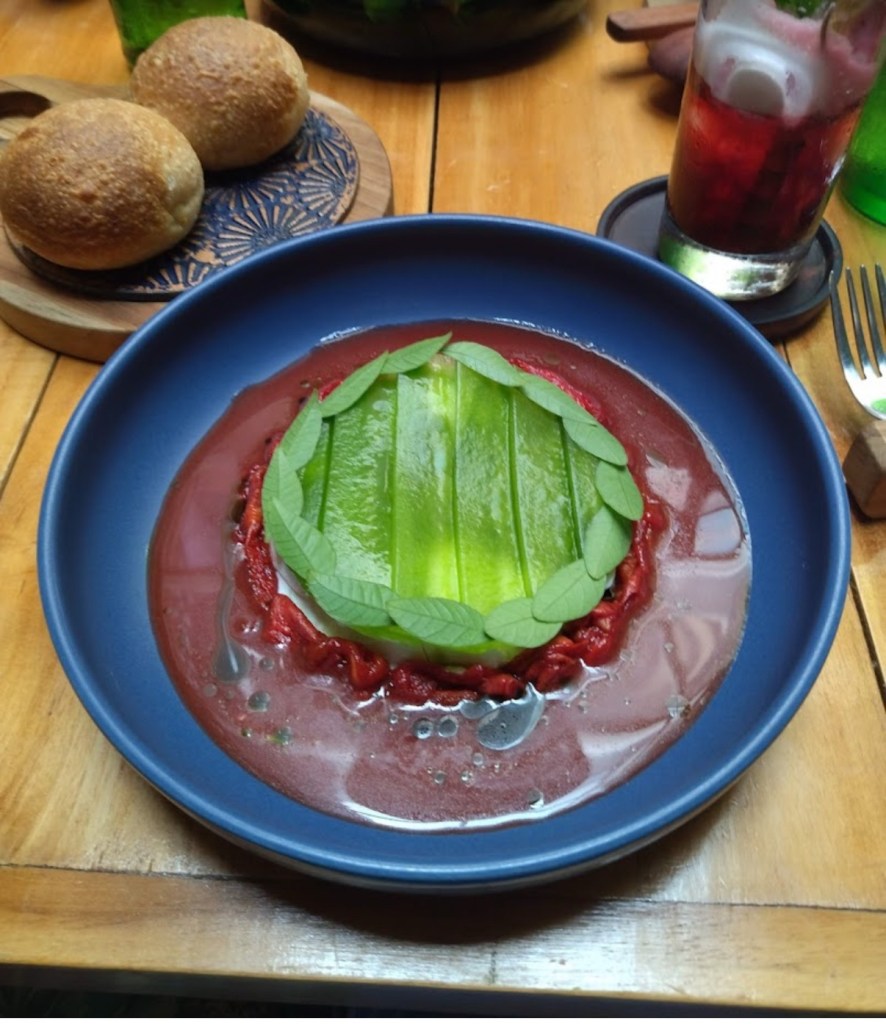
The starter course at Celele
We ordered a starter covered in green leaves. It was tasty, but hard to identify. The main dish with lobster and snails was equally unusual. We could make out the lobster and snails mixed with rice, a nutty crunchy substance and a sauce. It also tasted good, but was hard to make a connection with our expectations for a lobster dish.
Thursday, November 13, 2025 Independence Day in Cartagena
The city has a current population of 1.2 million. It was occupied for centuries by indigenous tribes, but was founded in 1533 by the Spanish explorer Pedro de Heredia. In the same year, 500 African slaves were brought from West Africa and put to work in the area. The Spanish gave the Slave trade to the Portuguese, who eventually brought 4 million humans as slaves into Cartagena until the trade was stopped in 1851 per the Womb Law, which said that anyone born to a slave after that date was a free person. Meanwhile, Initial prosperity came from the discovery of gold in the tombs of the indigenous tribes. Sir Francis Drake successfully attacked the city in 1586 and stole 400,000 ducats. To protect against further pillaging, the Spanish built fortifications and continually improved them in the 17th and 18th centuries. In 1741 the British laid siege to Cartagena, but the Spanish forces defended the city. The Cartagenians eventually won independence from Spain on November 11, 1811. The children of Spanish people had fewer rights than those who came from Spain. Eventually there were enough descendants who wanted to be free of Spain that they successfully revolted against the crown.
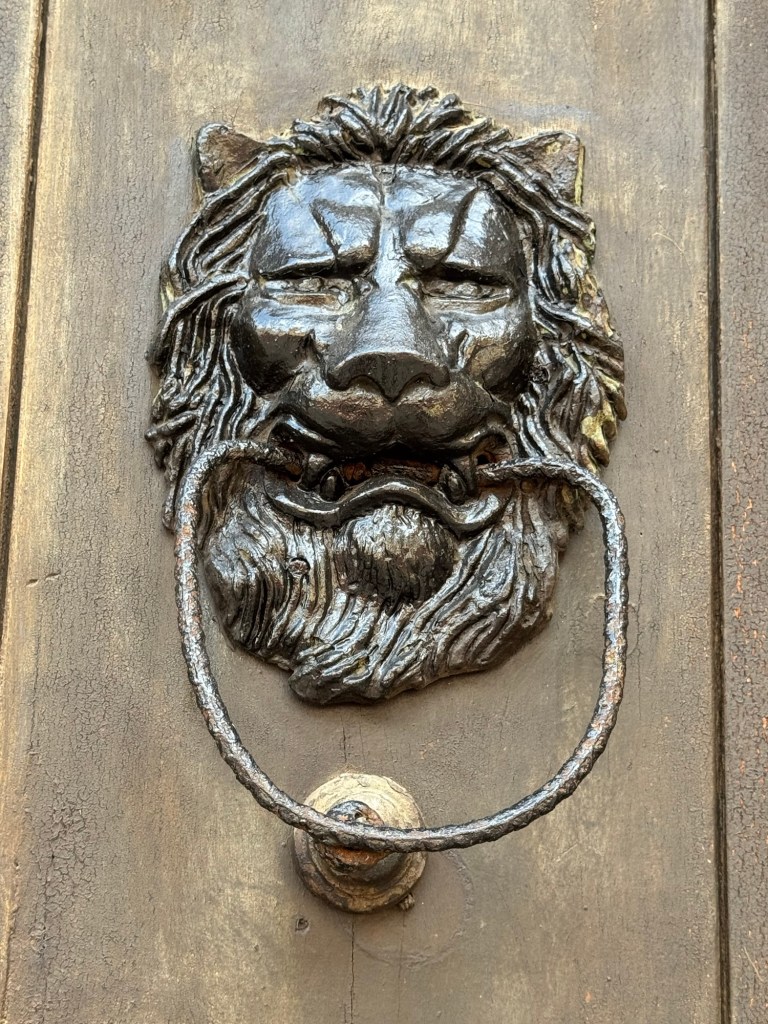
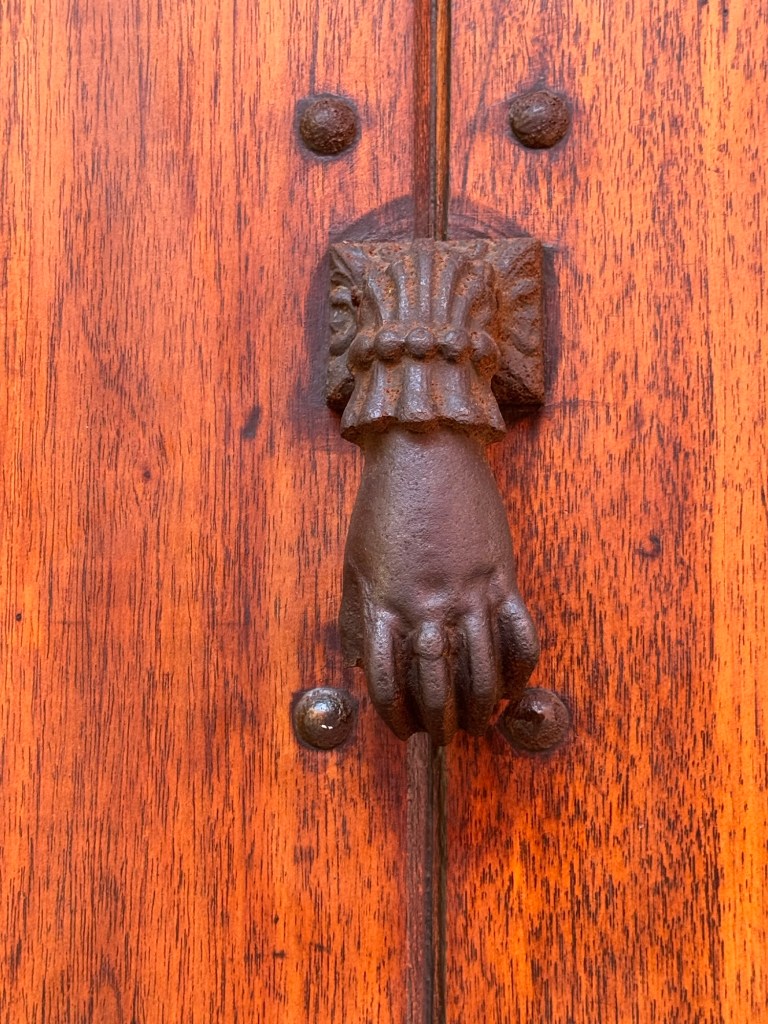
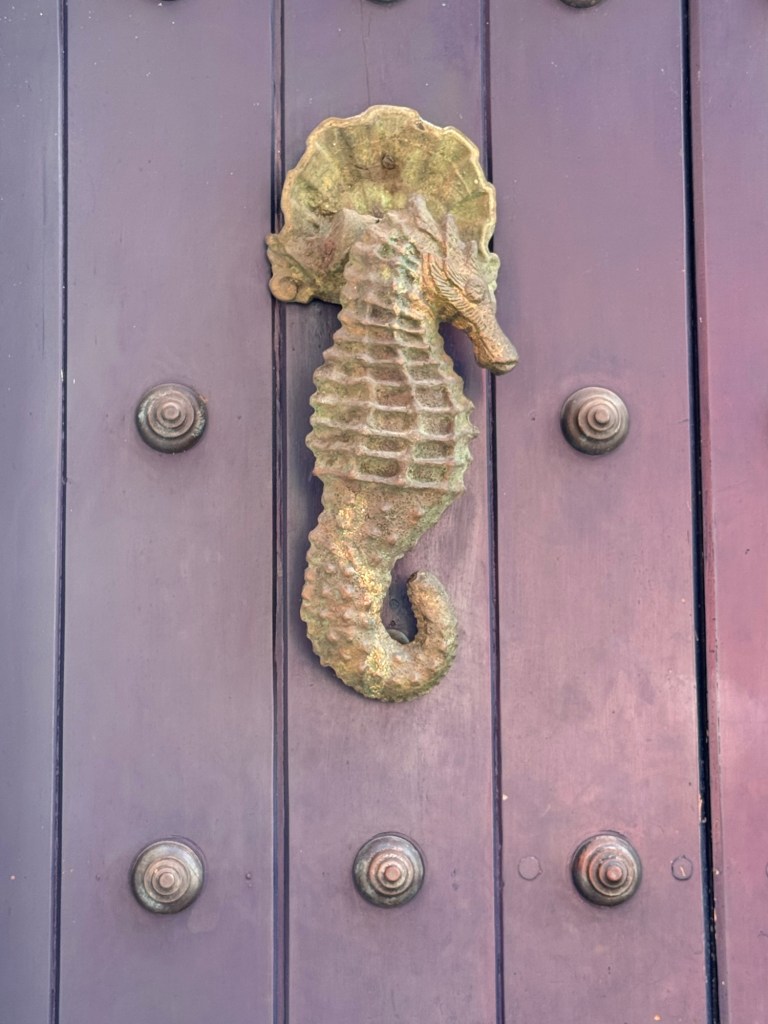
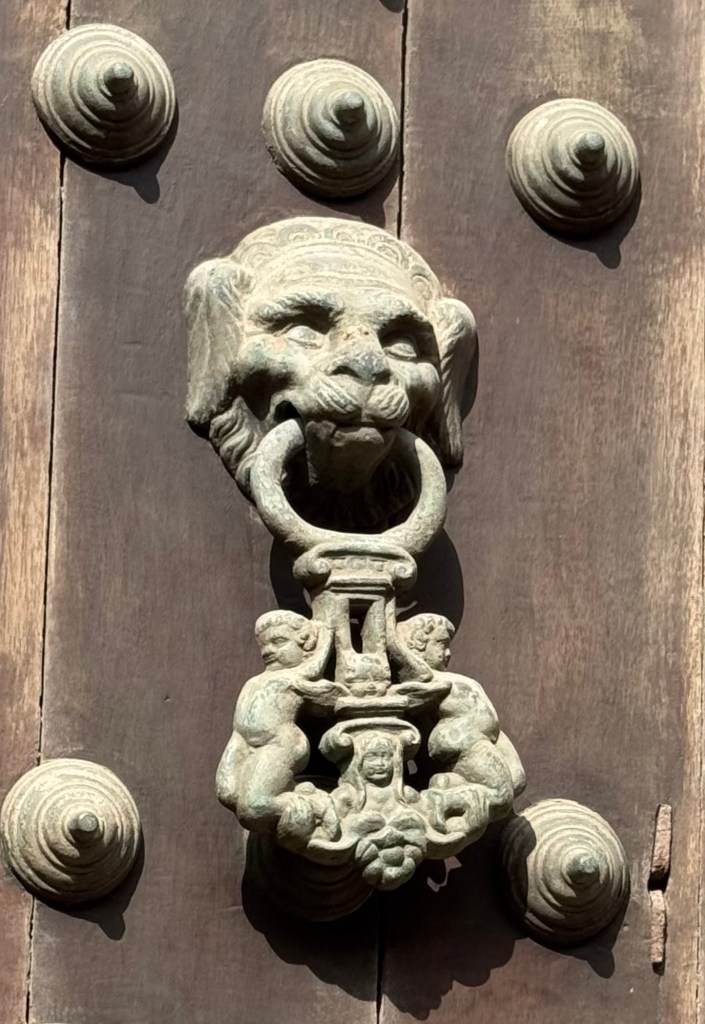
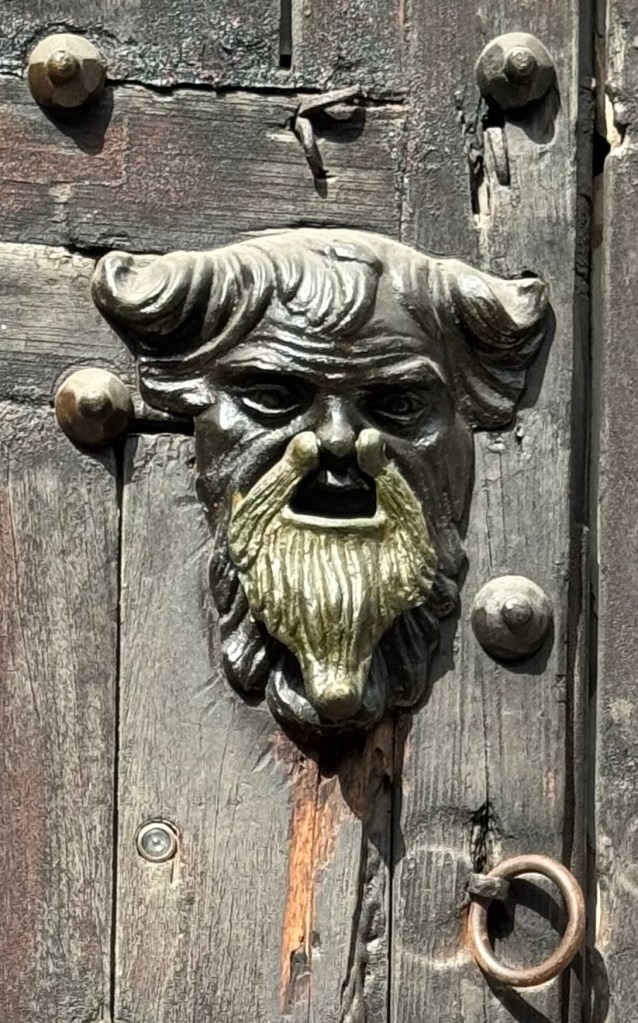
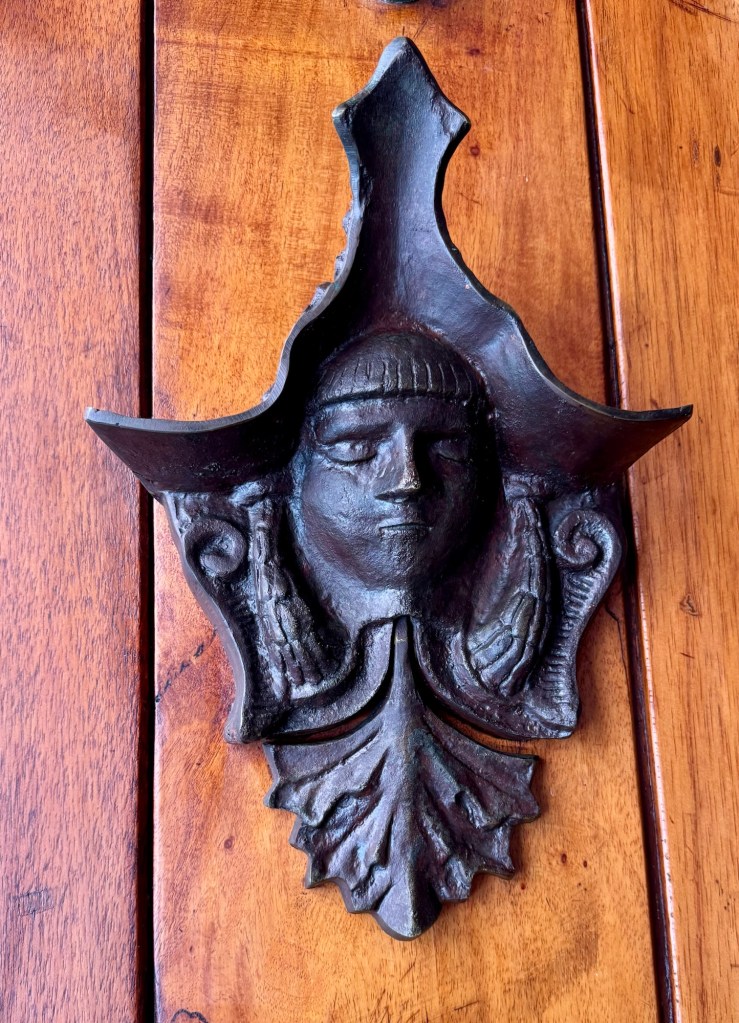
Our City tour began with our Cartagena guide, Javier, who started off introducing us to door knockers. There were several interesting one so I include some here:
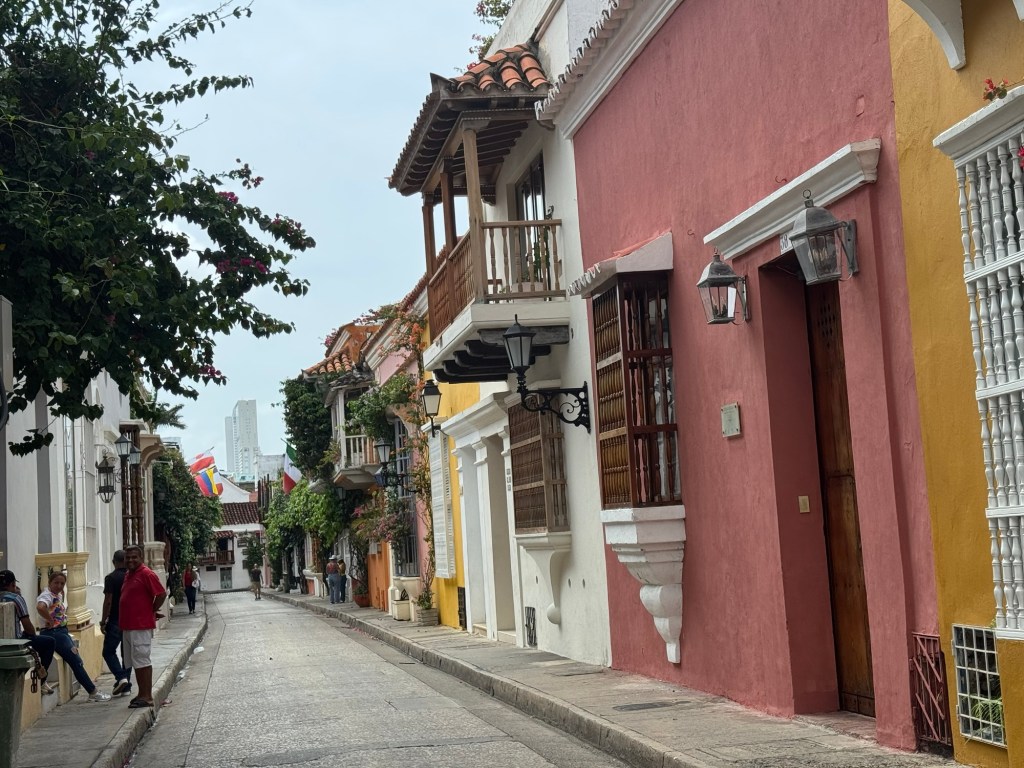
As we walked along the narrow streets dodging people, small cars and horse drawn carriages, Javier pointed out several buildings and monuments.
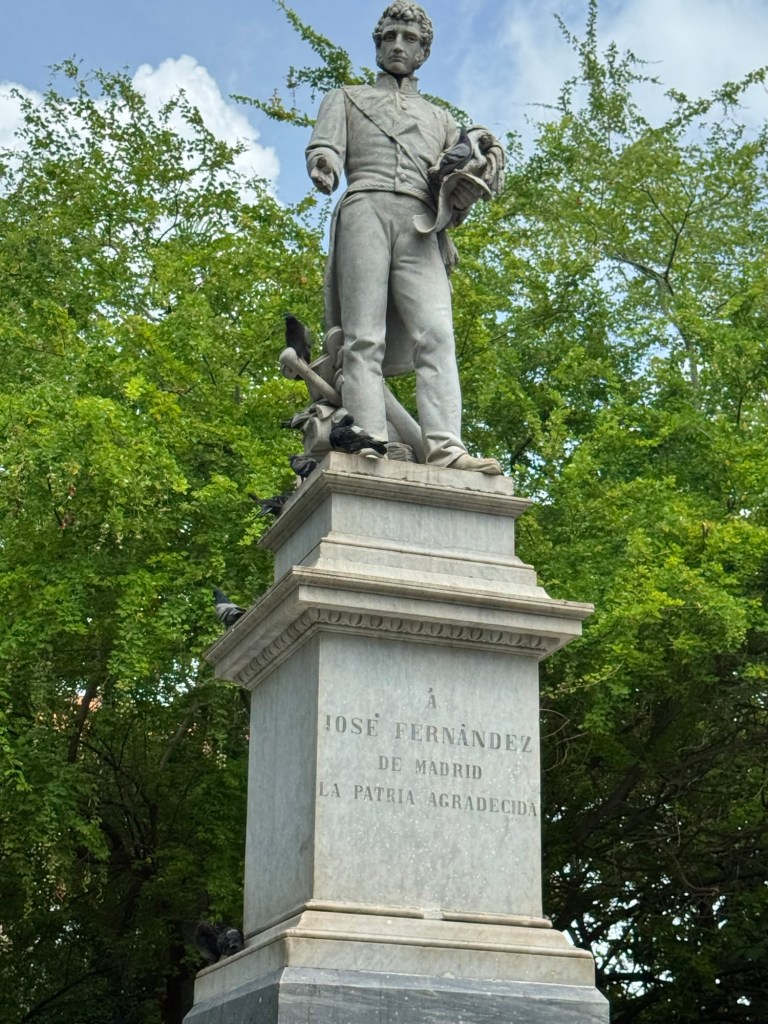
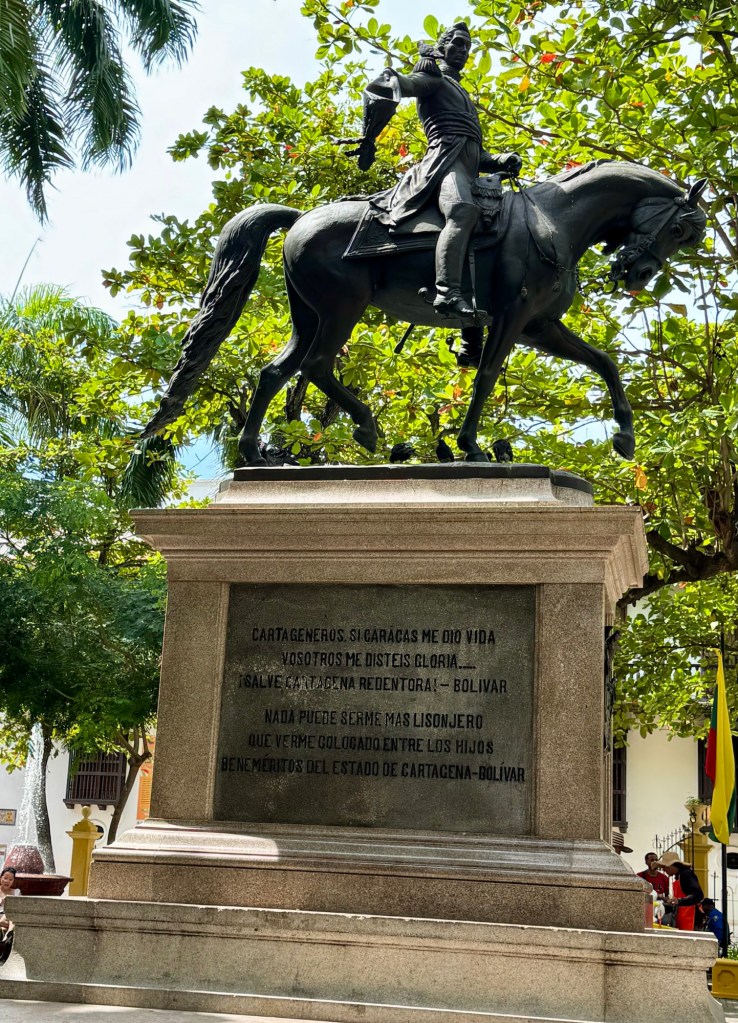
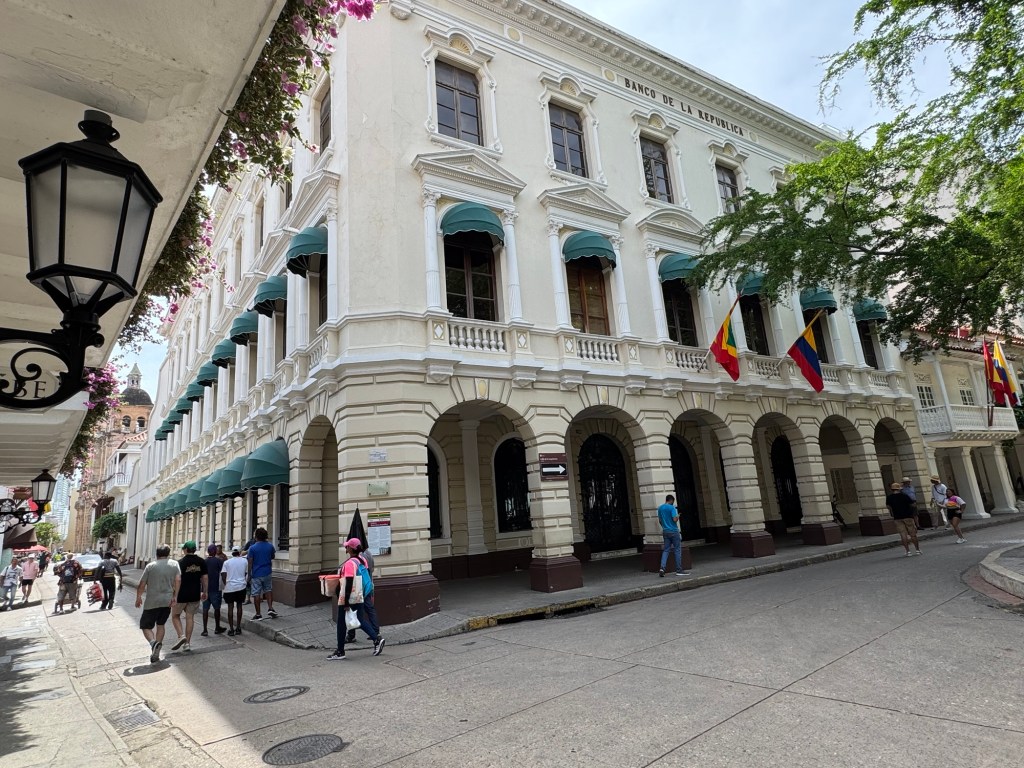
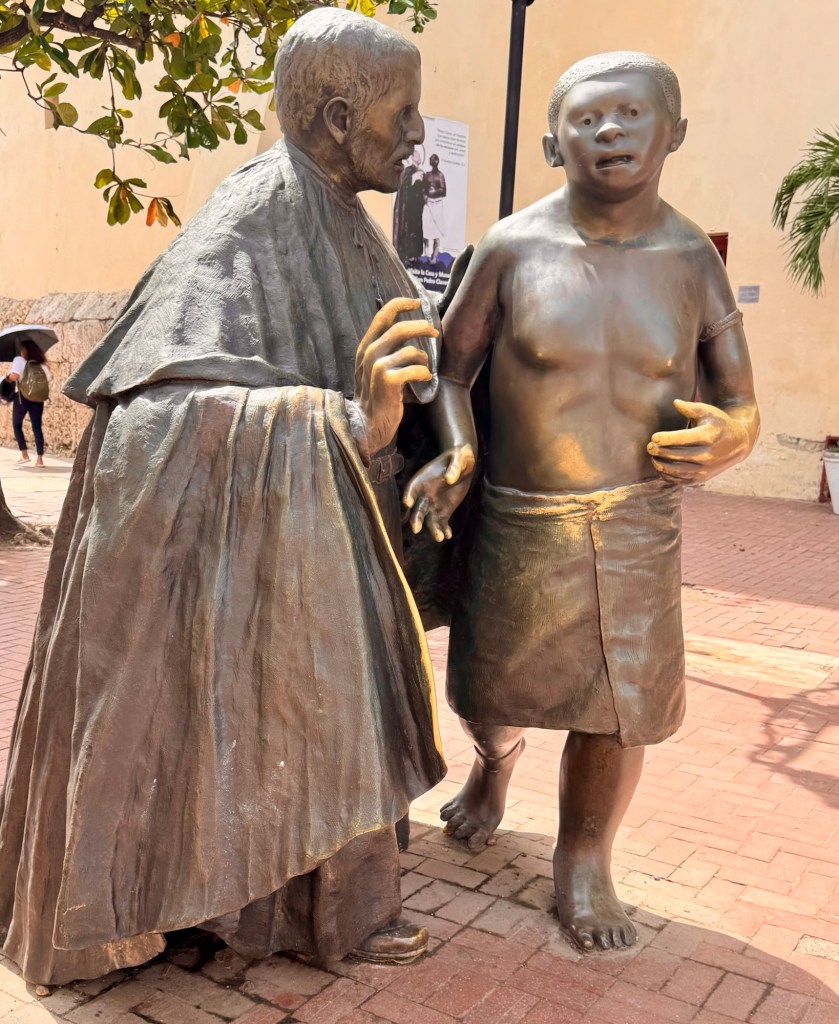
Our balcony overlooking a narrow street San Diego ChurchAdolfo Mejia, a popular local musicianSanto Toribio ChurchFernandez Madrid, wrote the constitution for ColombiaAnother Simon Bolivar Statue Bank of the Republic, eclectic architectureSt Peter Claver and Sacabuche, an educated slave St Trinity Church
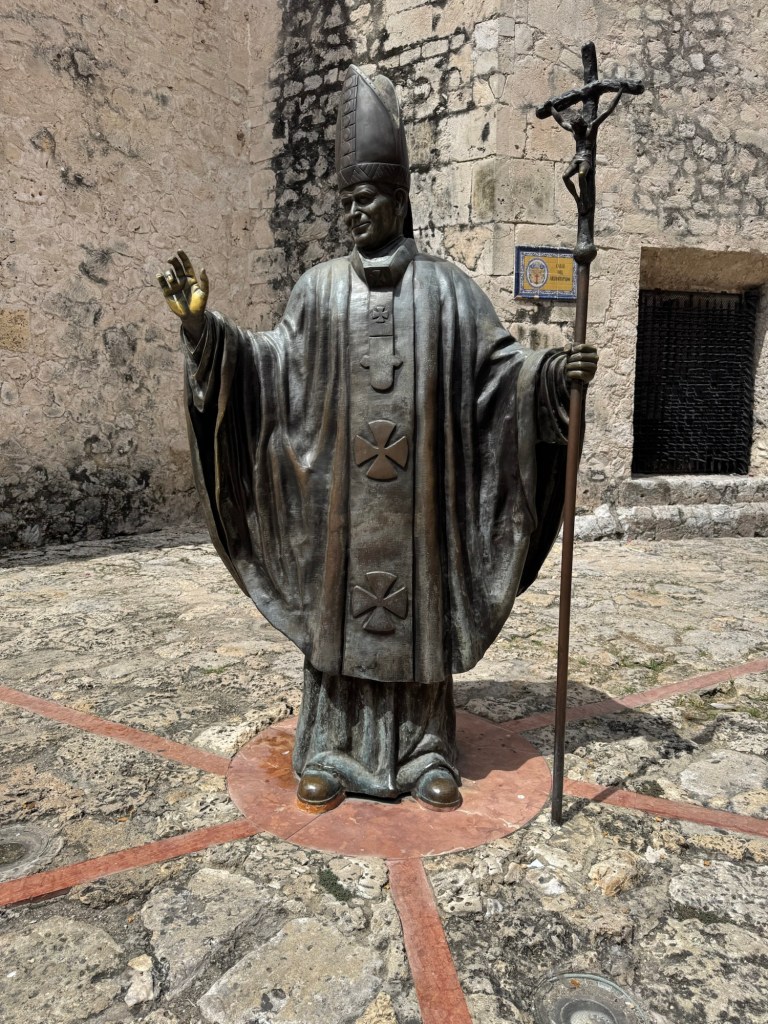
He mentioned that Cartagena has been visited by two popes in recent years;
Pope John Paul II
John Paul II was here in 1986, and Francis was here in 2017 to promote reconciliation and support the country’s peace process between the Government and leftist guerrilla groups. Pens were made from recycled bullets that read, “Bullets wrote our past, Education our future“.
Javier also pointed out the sculpture of a priest, Saint Peter Claver, and Sacabuche, a slave who spoke several languages and translated for the priest in St Peter’s Square.
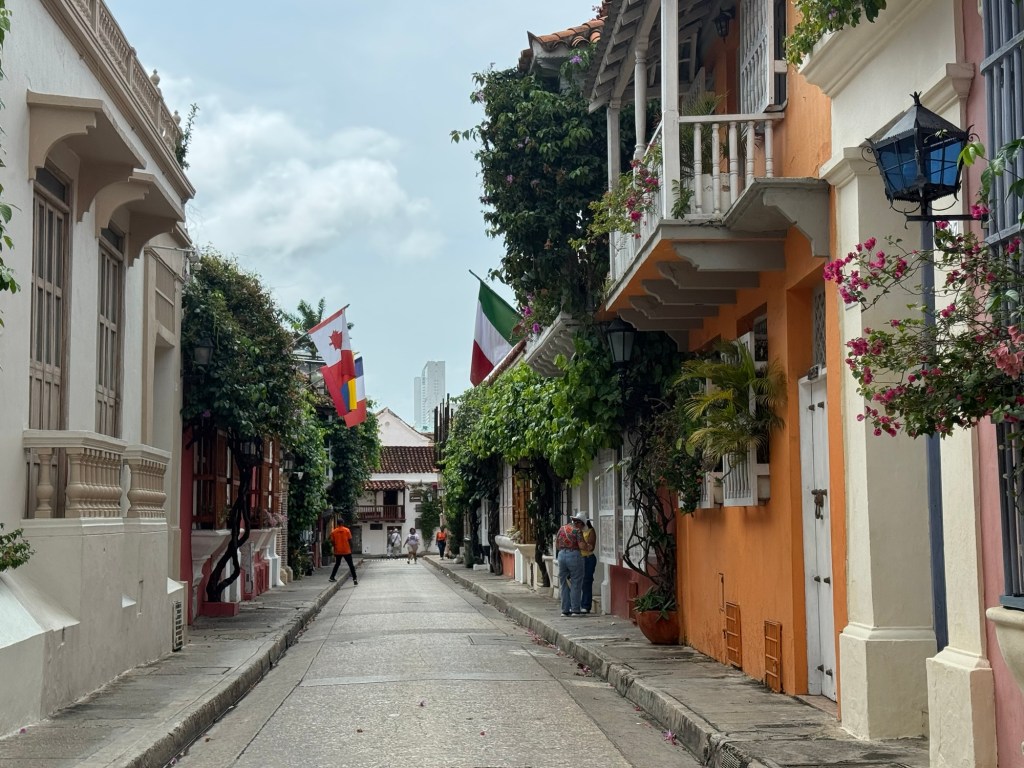
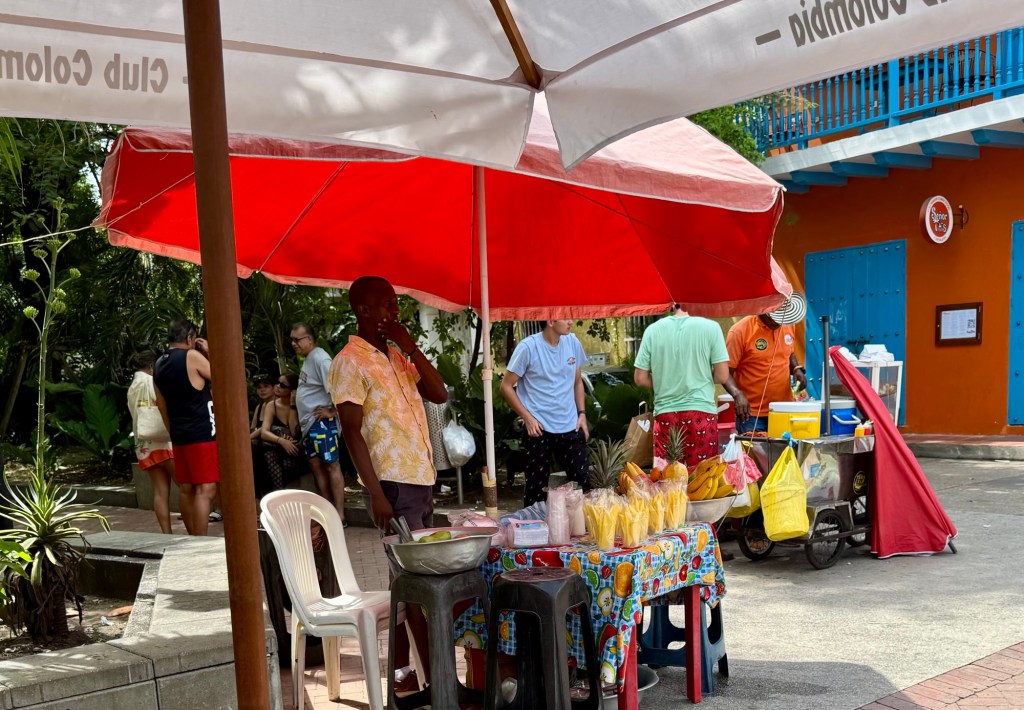
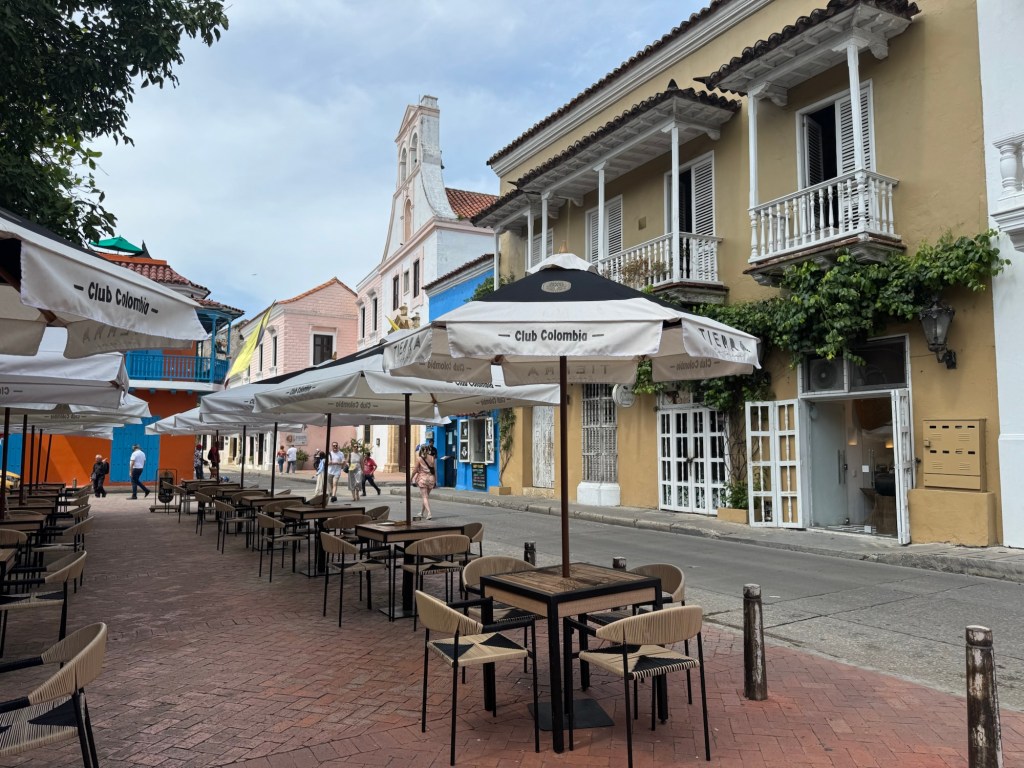
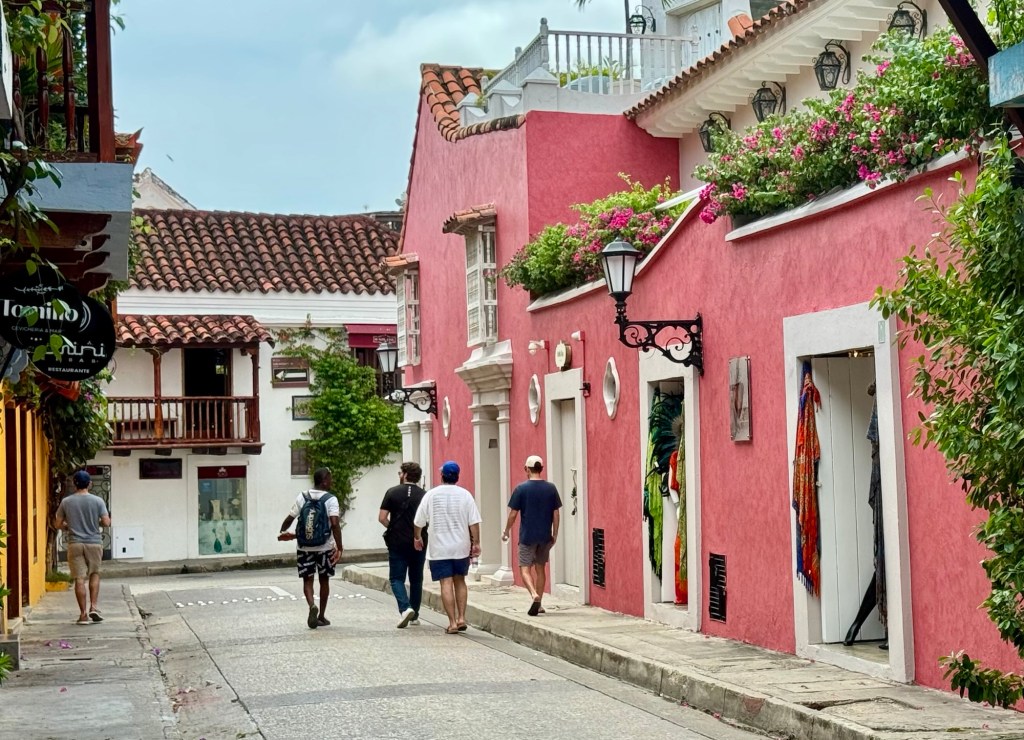
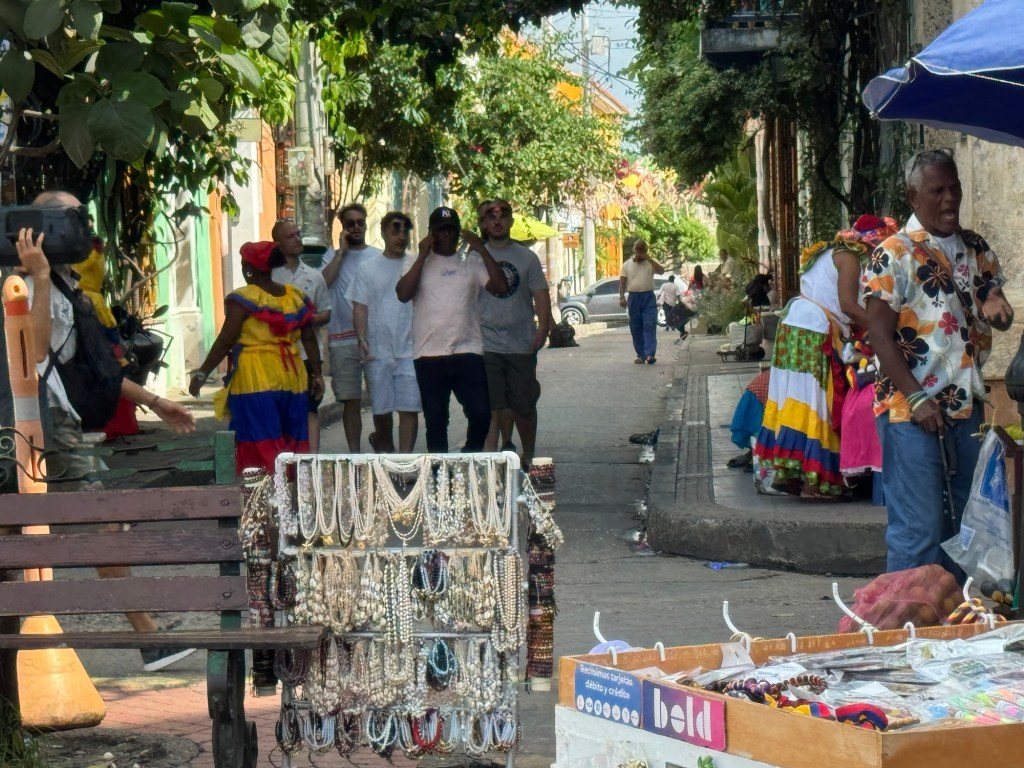
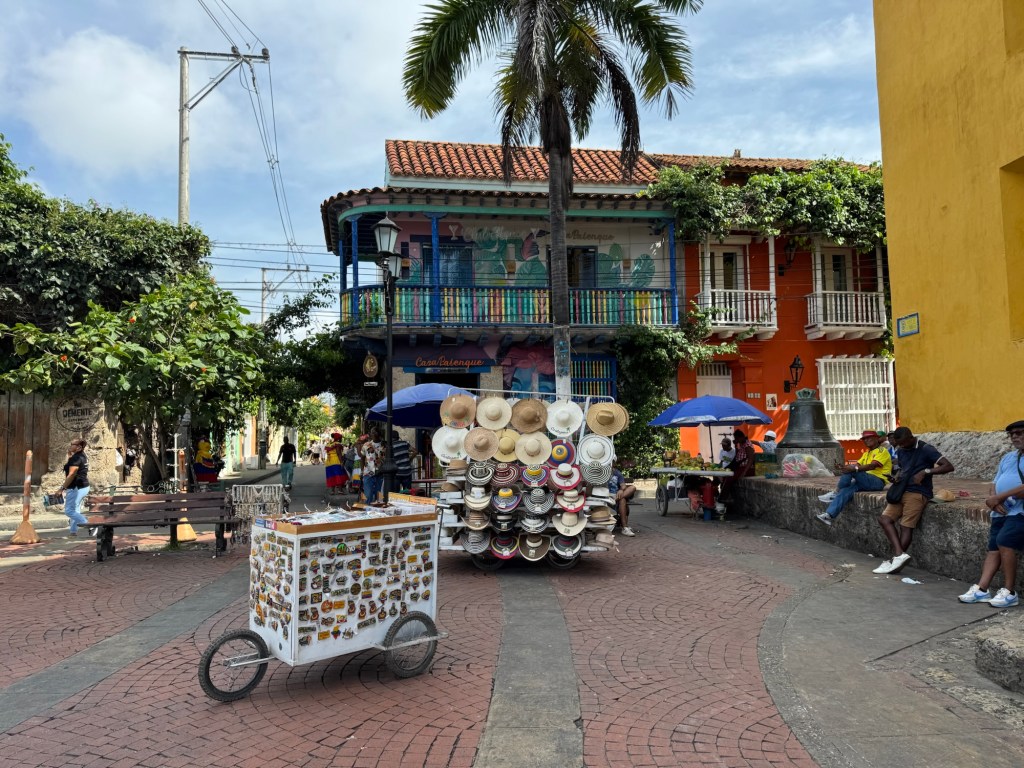
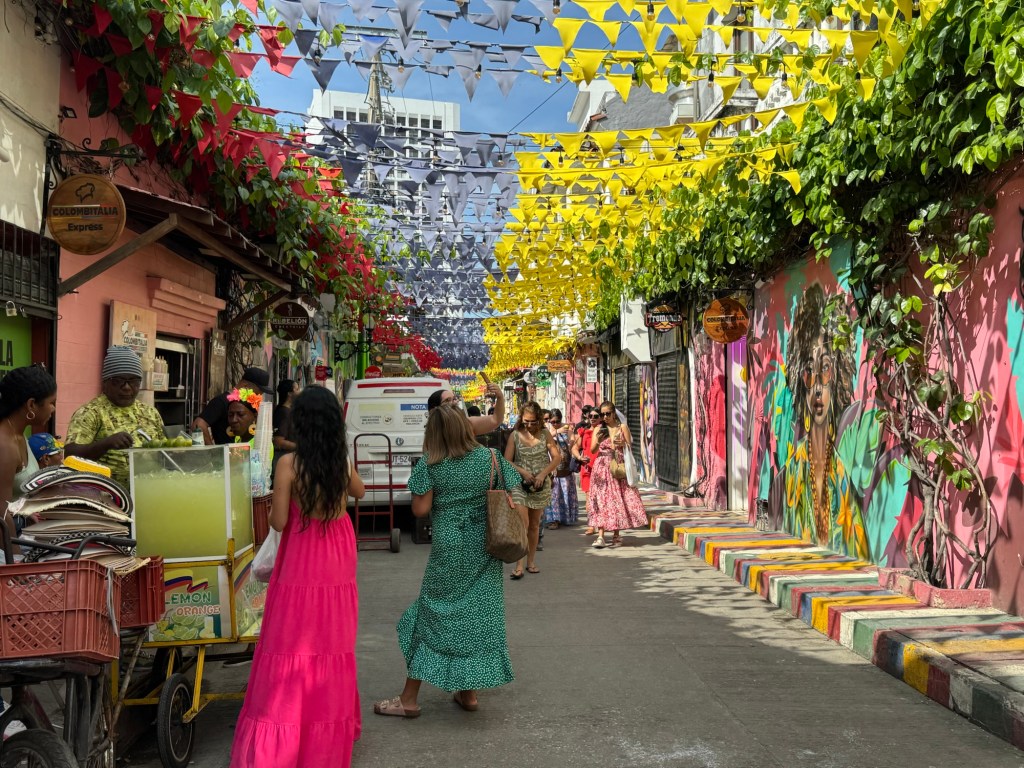
There were lots of street scenes and here are several. As it is the annual Independence Day festival, there are many more people around than usual. It is exciting and a bit nerve wracking too. These images are from the upscale neighborhood called El Centro.
After a light lunch of ceviche and salad we went back out into the heat of the day to see the middle class neighborhood of Getsemani. Between the heat and the humidity we were pretty miserable, but managed a few streets before heading for our cool hotel room.
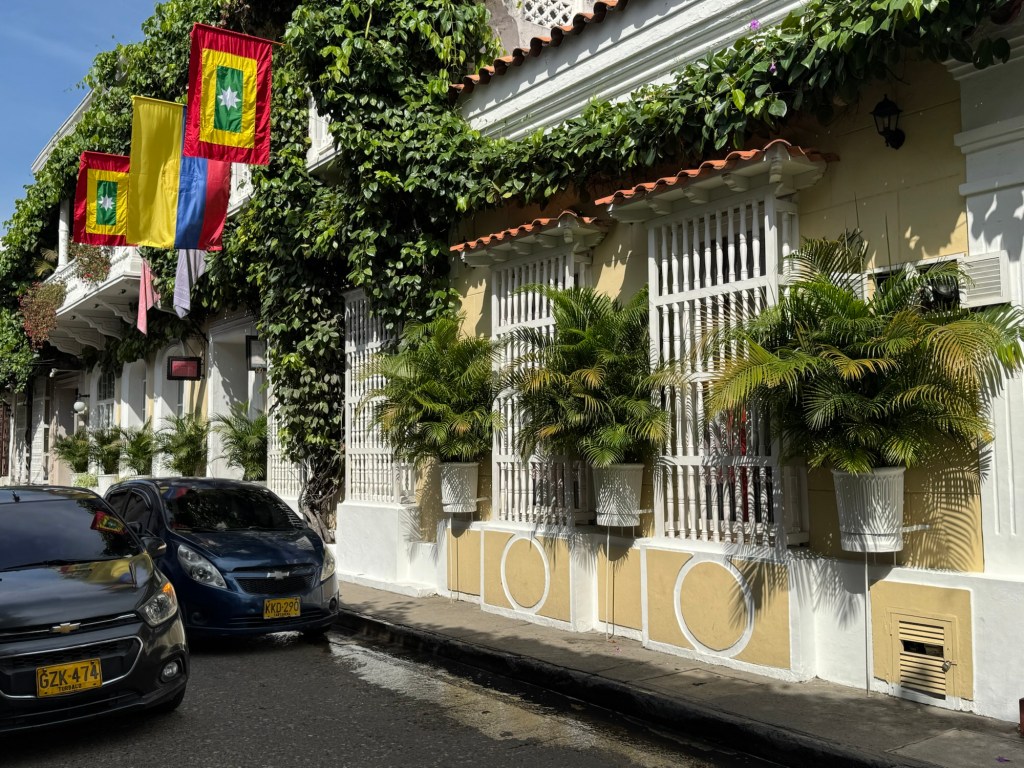
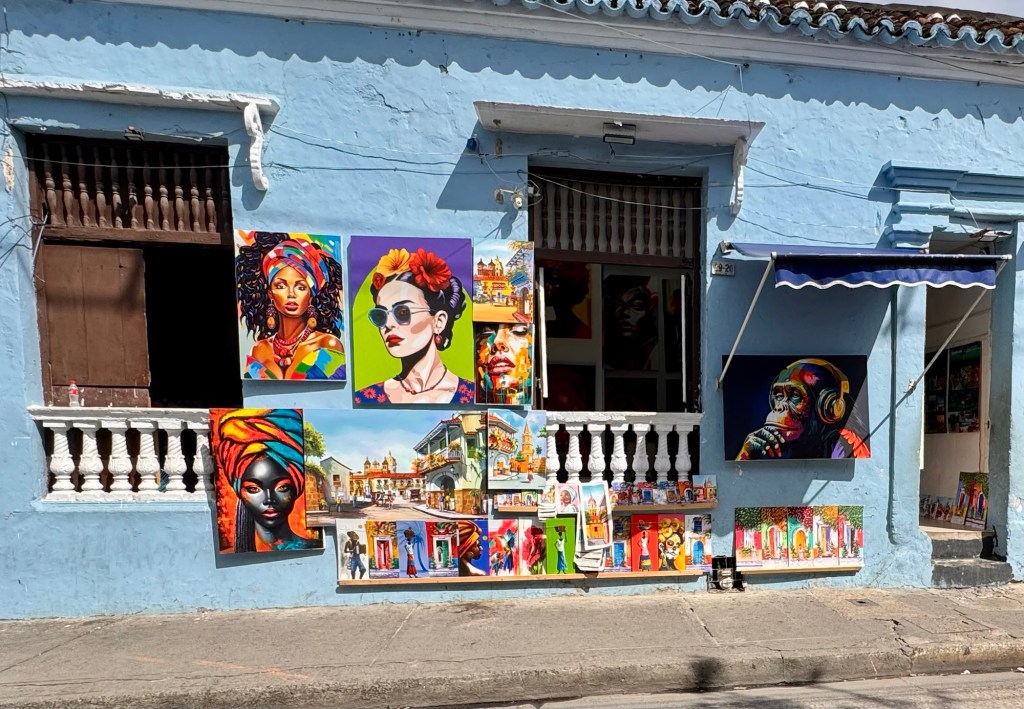
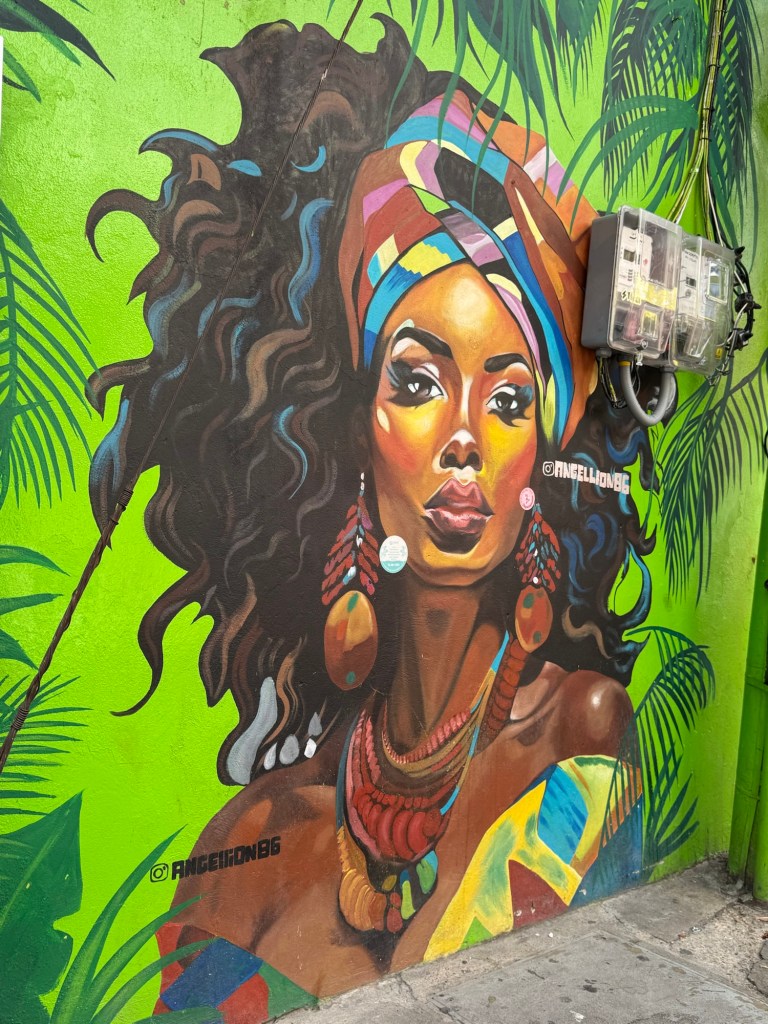
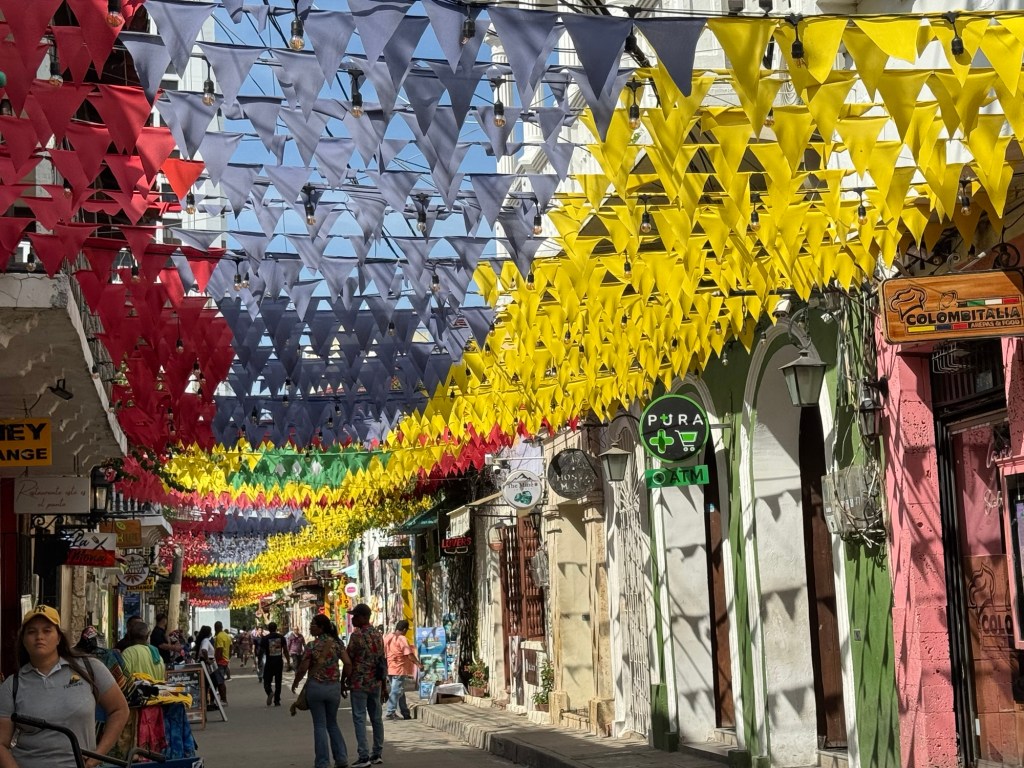
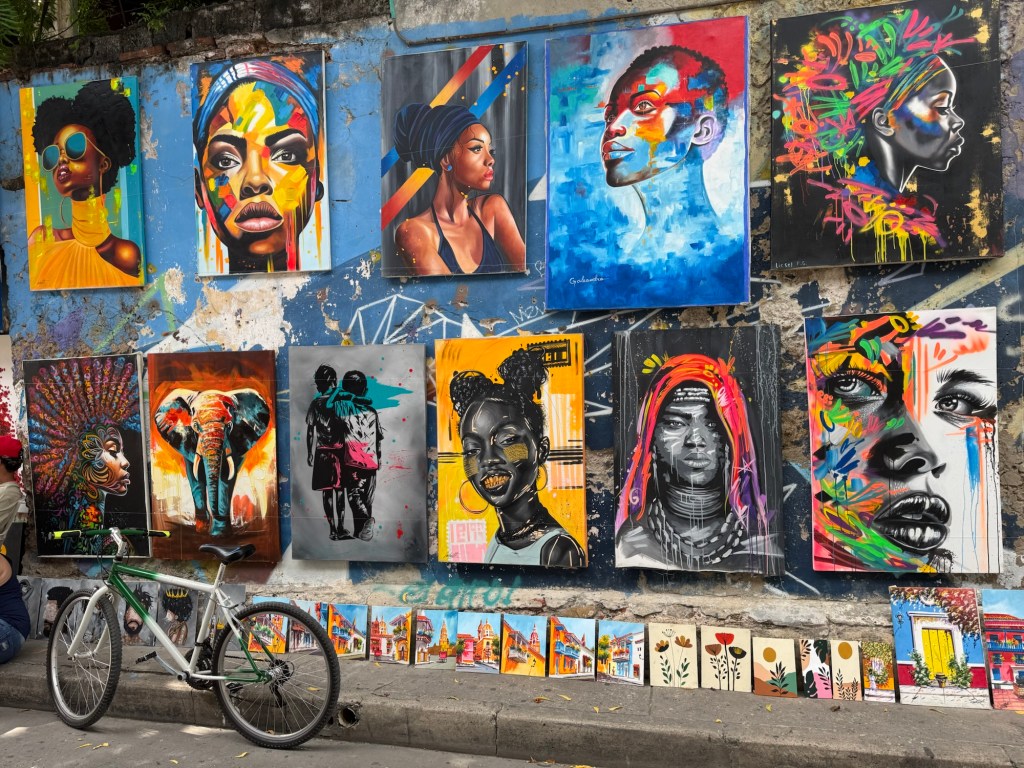
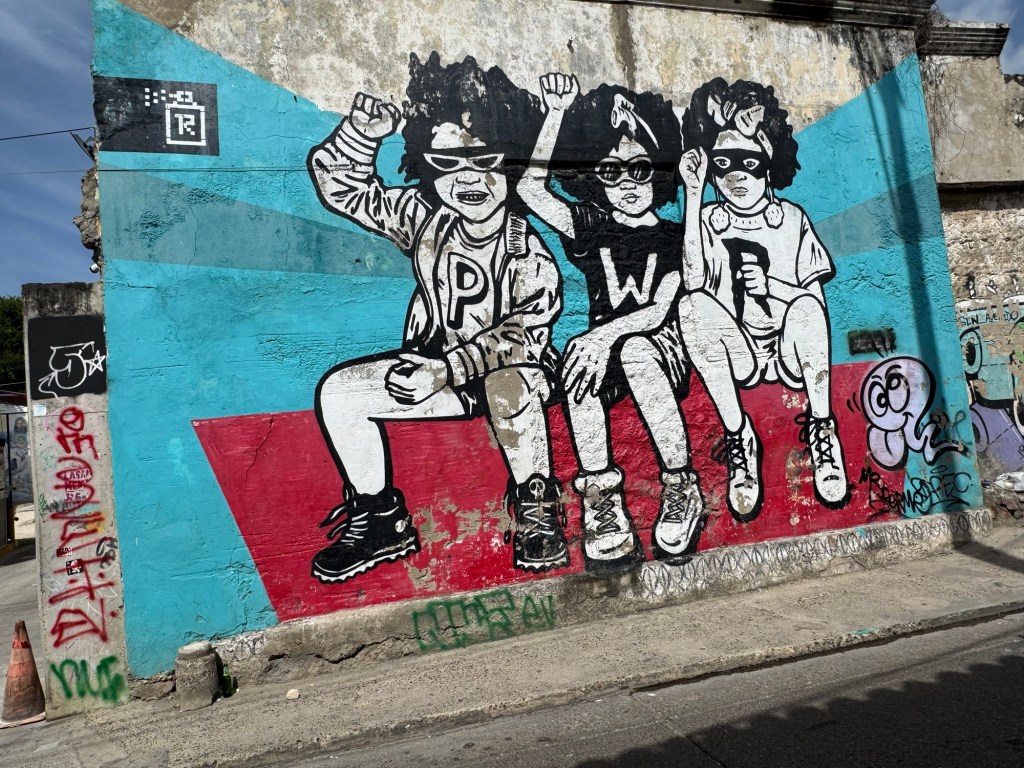
The Cartagena flagJewelry for saleA local muralArt for saleVendors work the. StreetWomen wear colorful clothesStreet artStreets decorated for the festivalStreet art for sale
Back in our hotel, we headed for the pool. Sadly the water was very warm and not the least bit refreshing. So we spent the afternoon in our cool room and walked just a few blocks to dinner at Mar Y Zielo, for contemporary Cartagena food. I had sea bass and Mark had a shrimp and pork belly dish.
Our appetizer, Crab croquettes Sea Bass with hearts of palmShrimp, pork belly and coconut rice
After dinner we walked a bit in the slightly cooler air and then headed home.
Friday, November 14, 2025
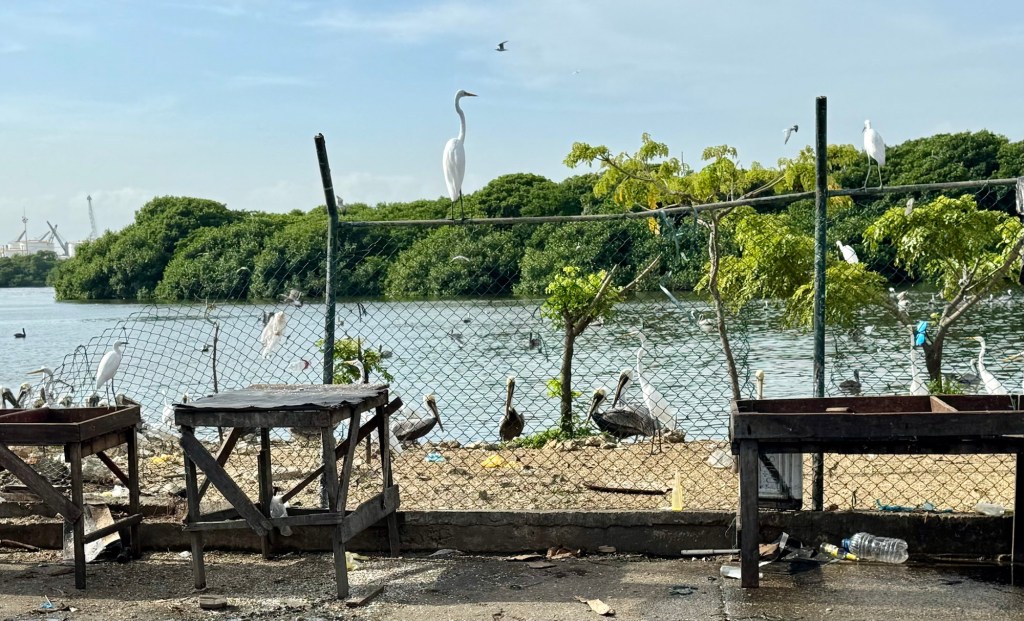
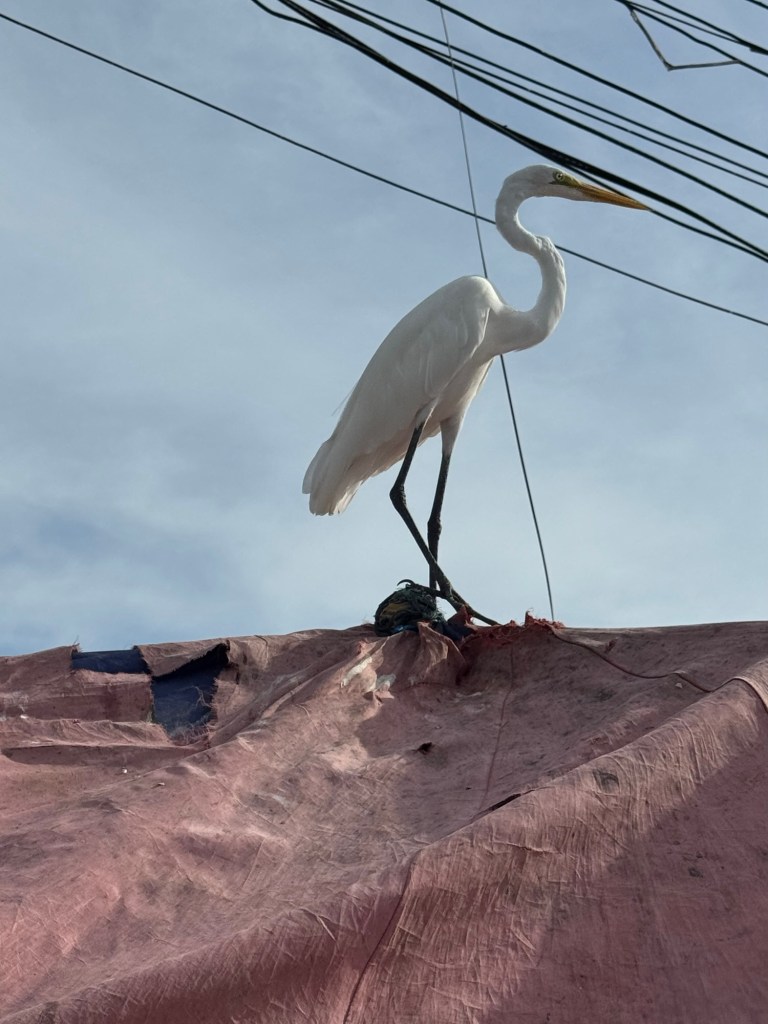
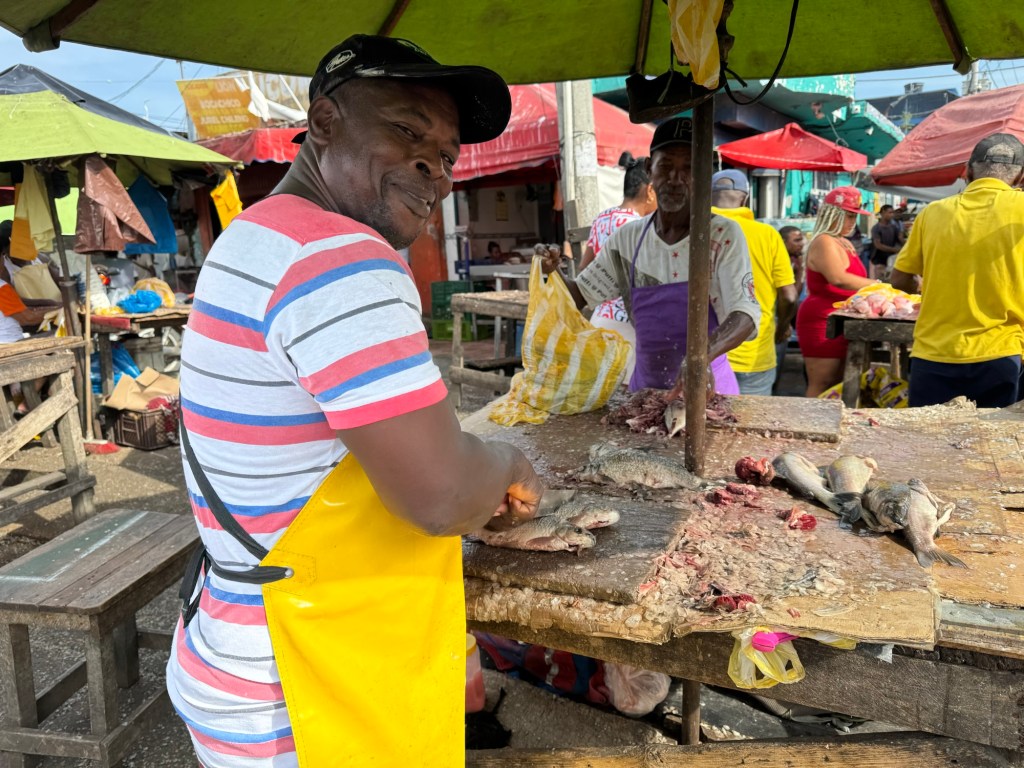
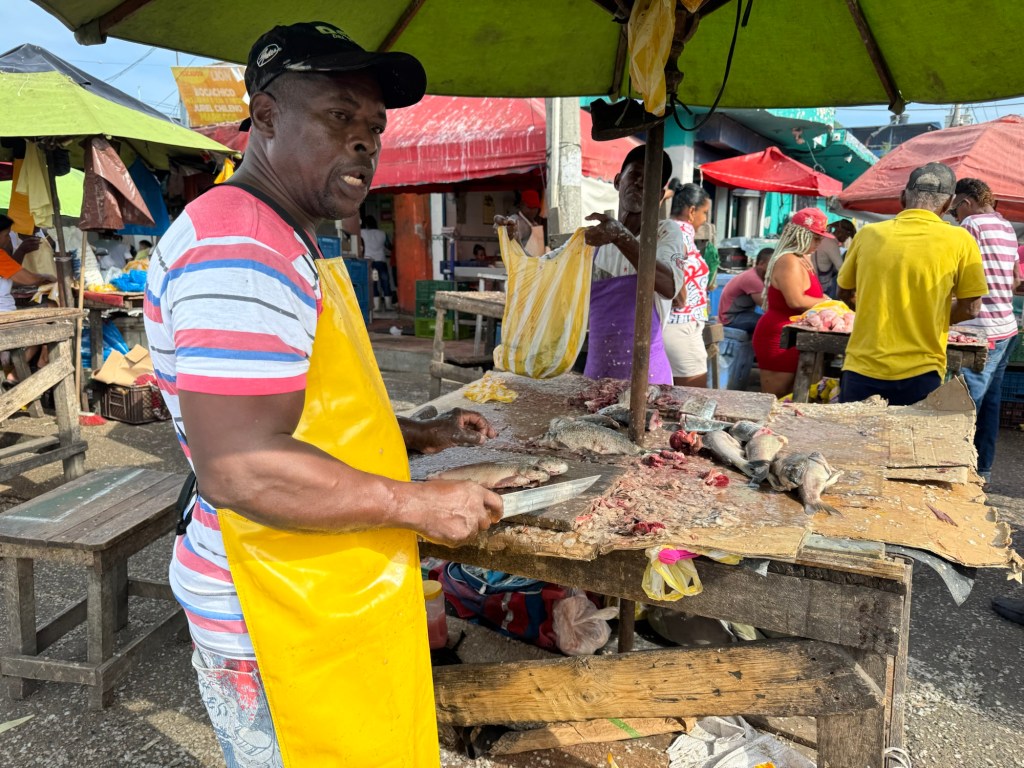
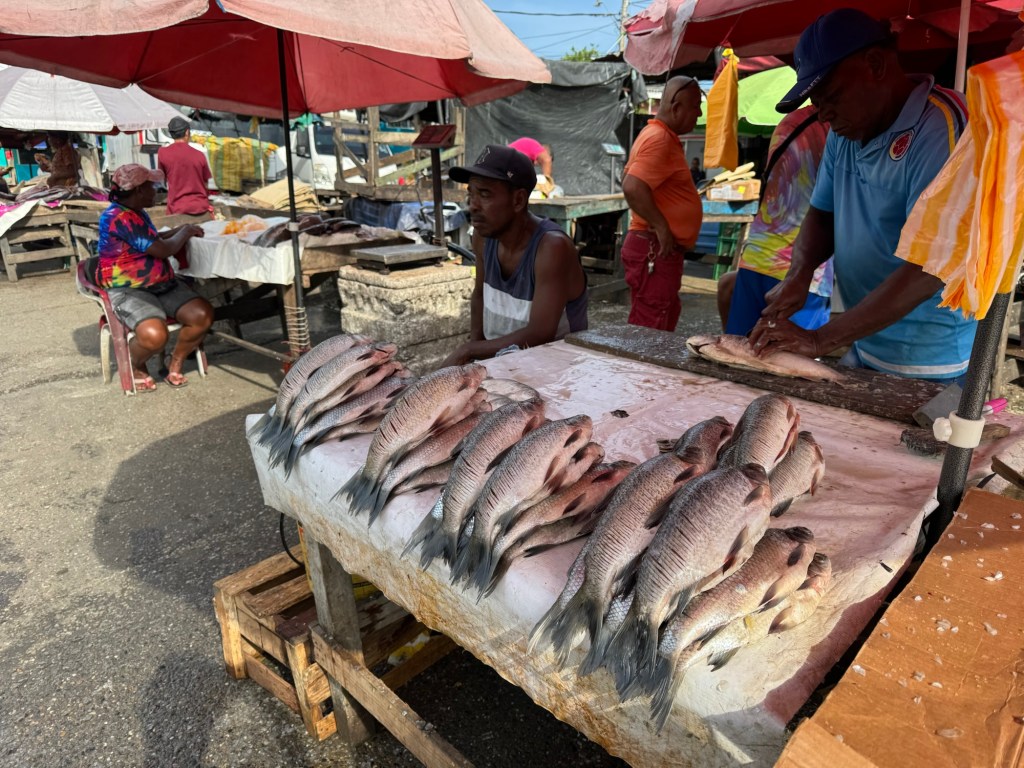
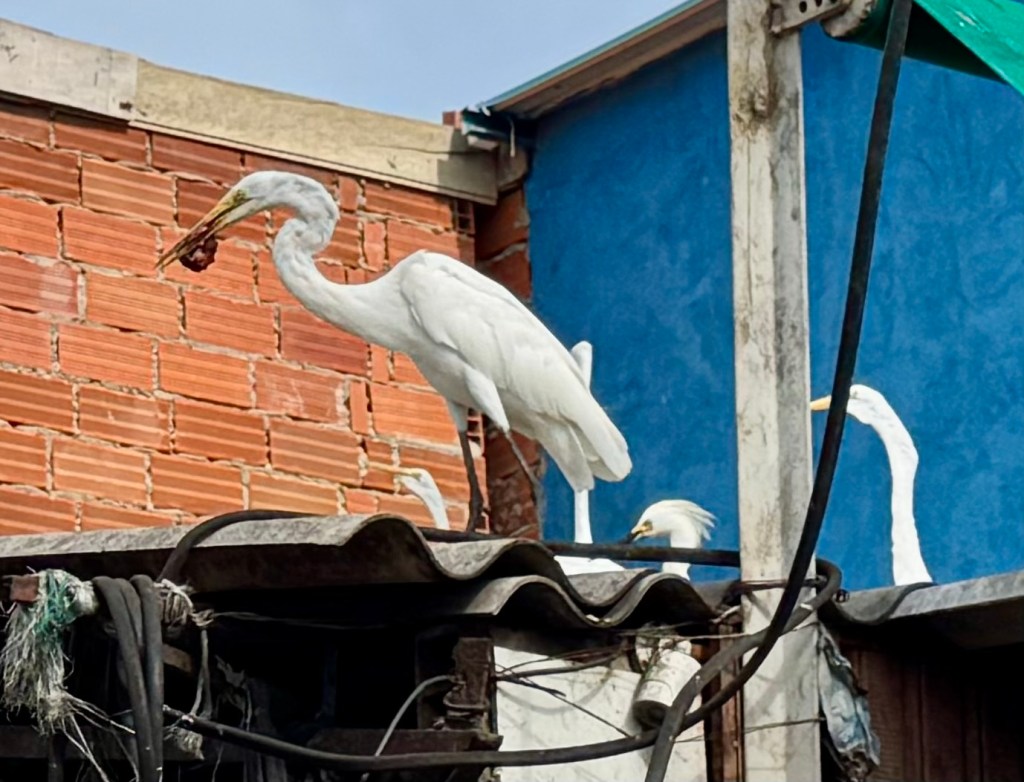
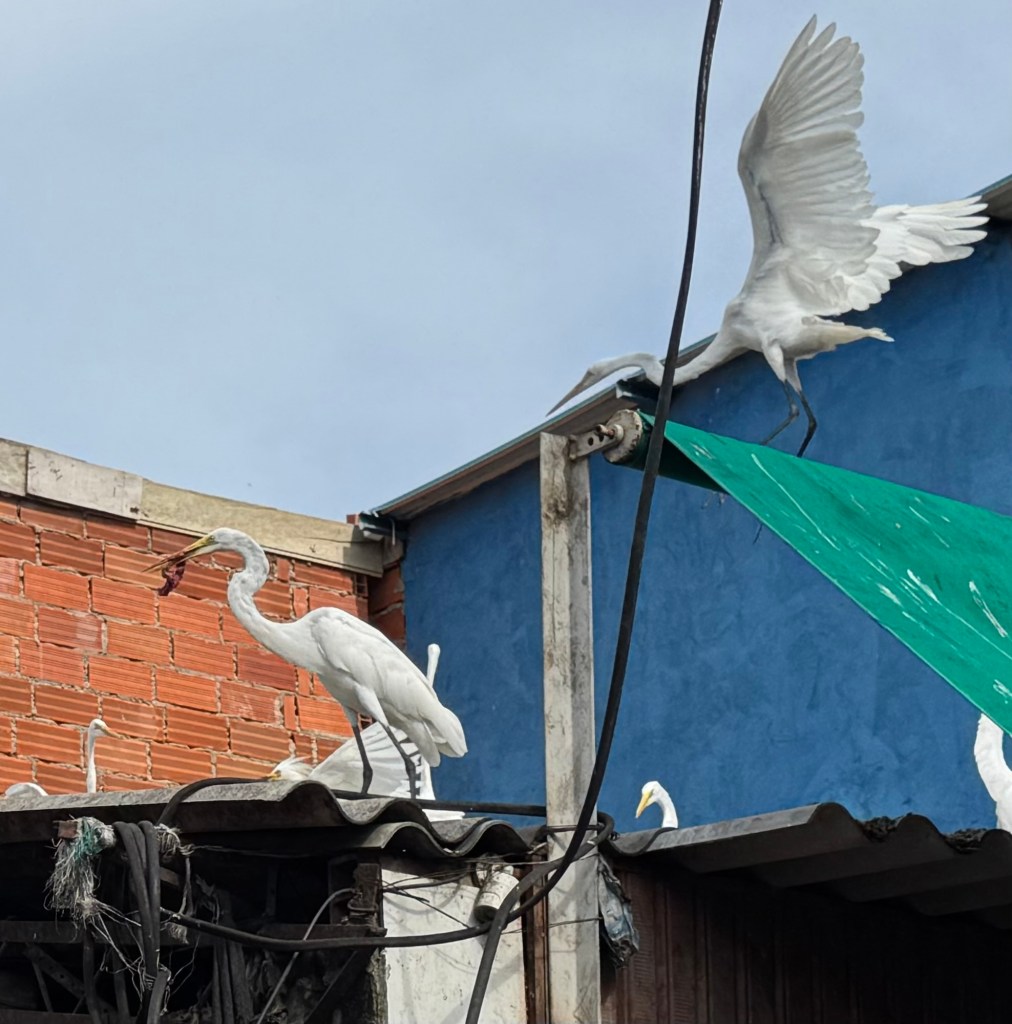
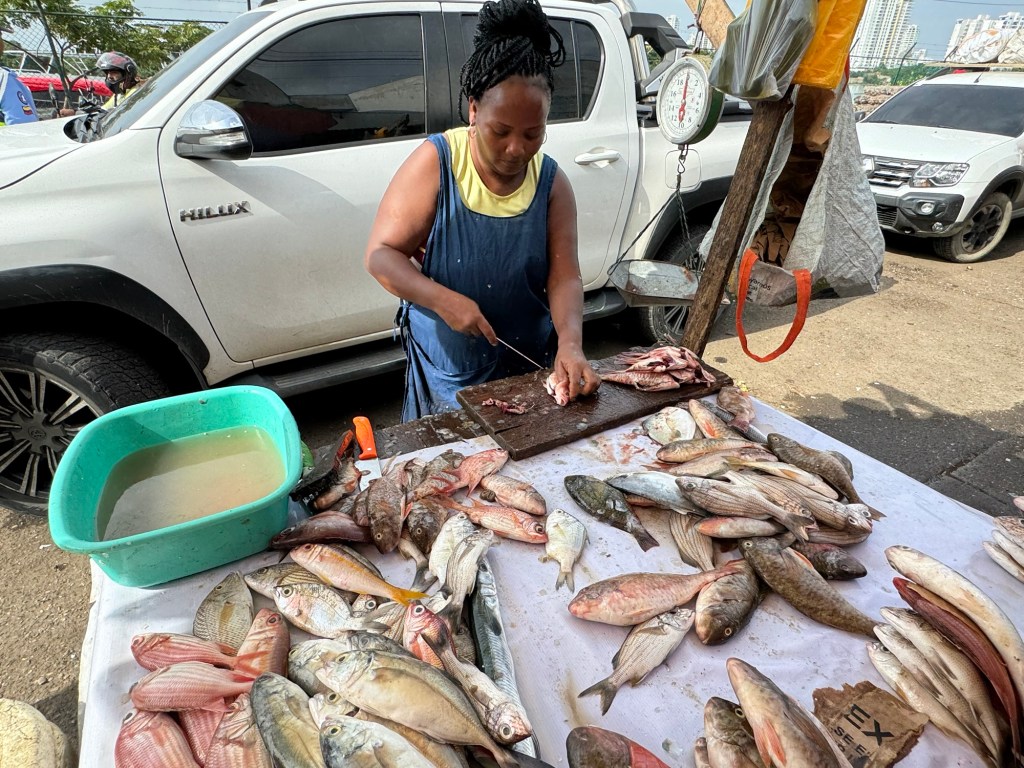
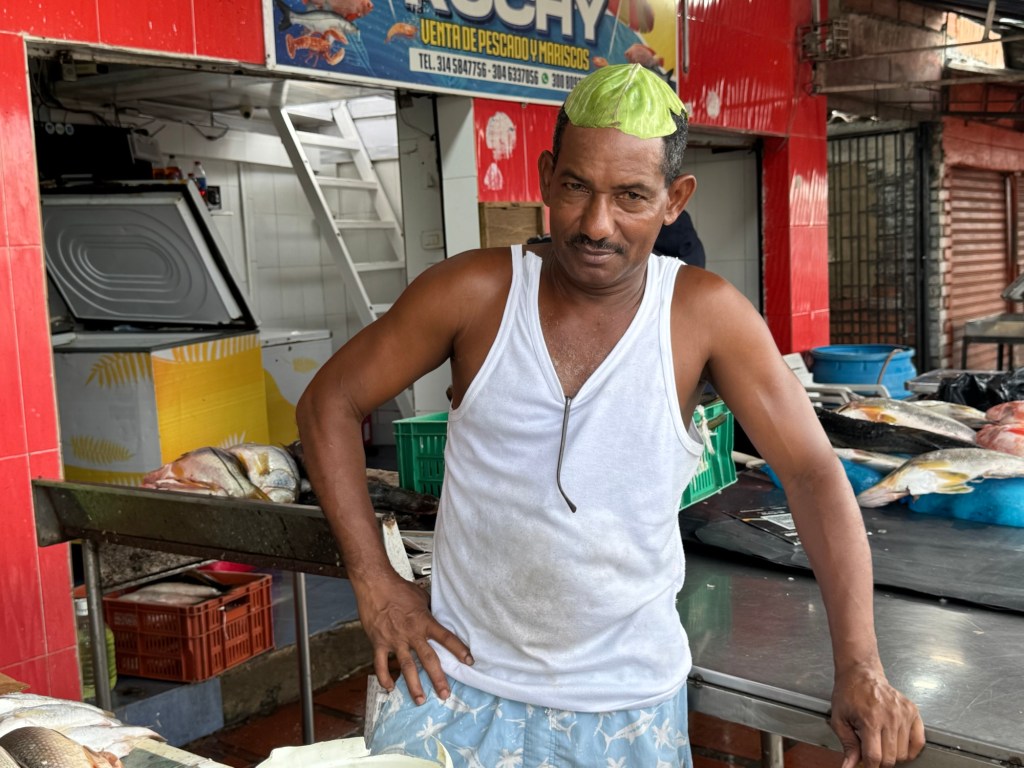
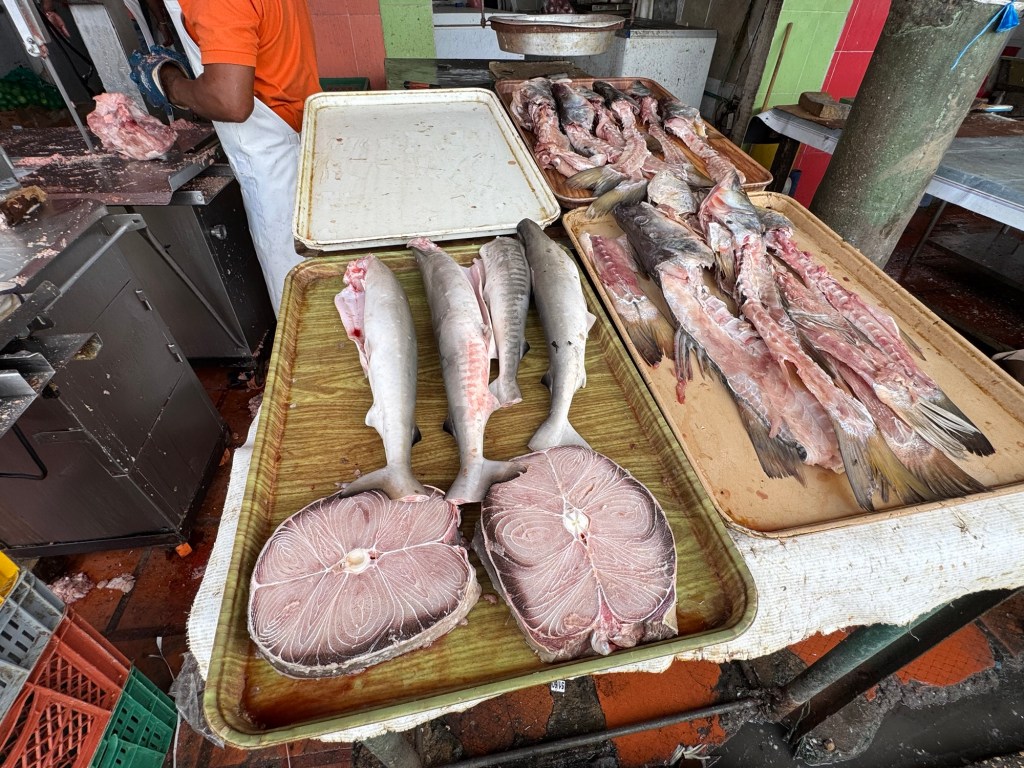
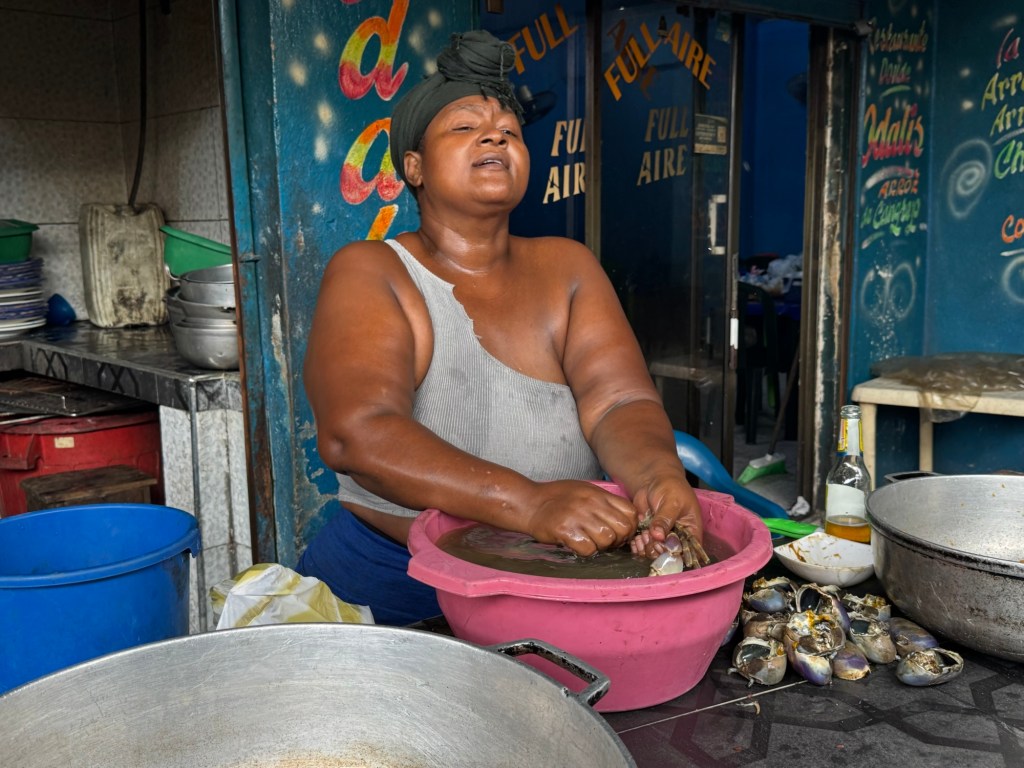
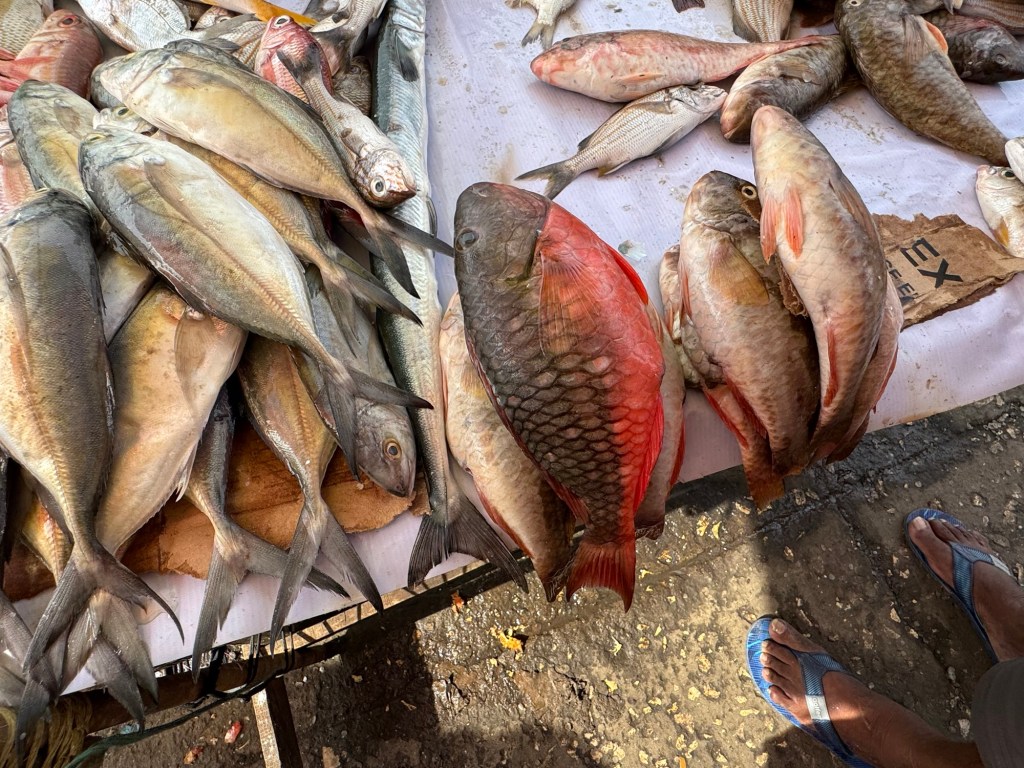
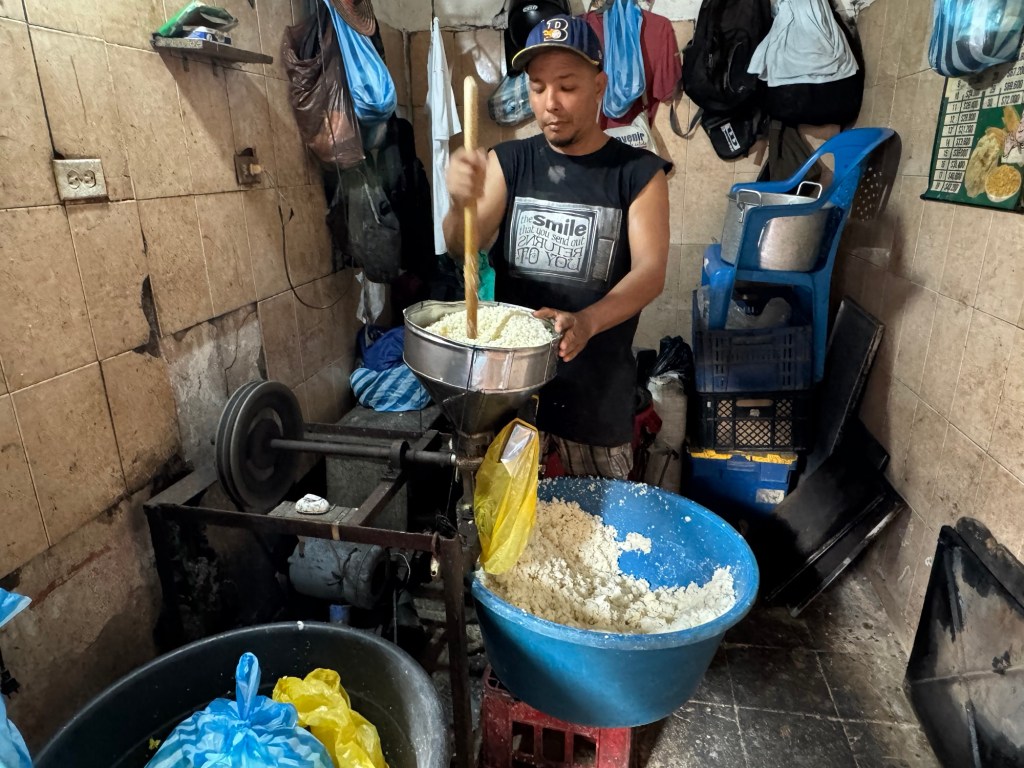
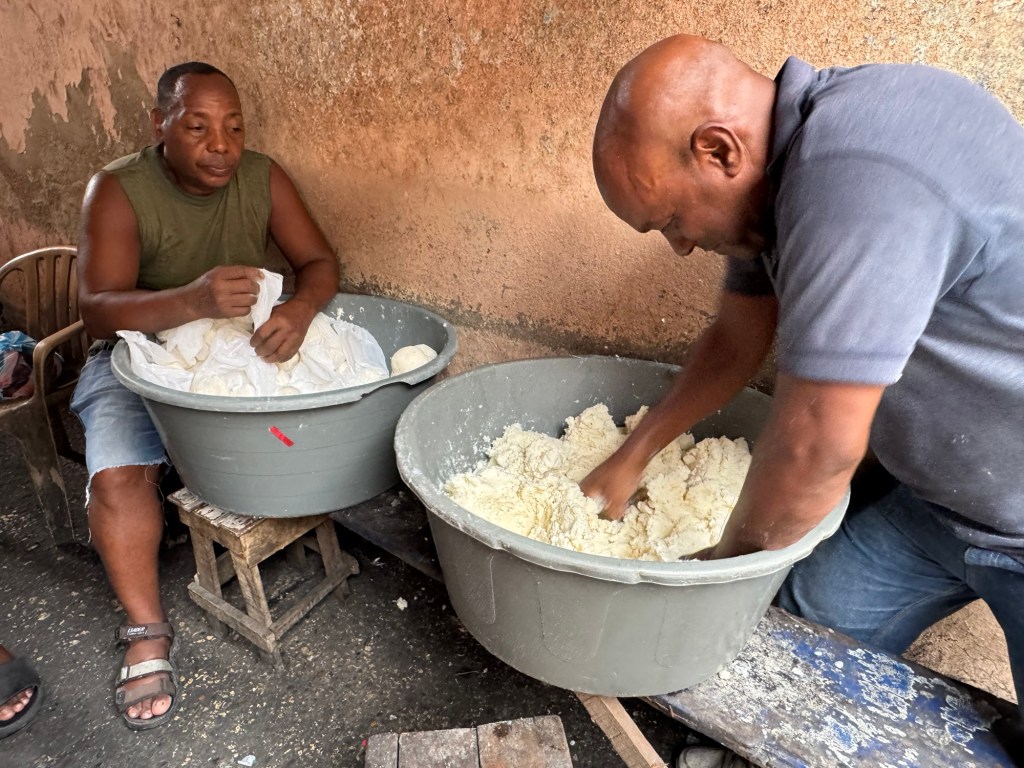
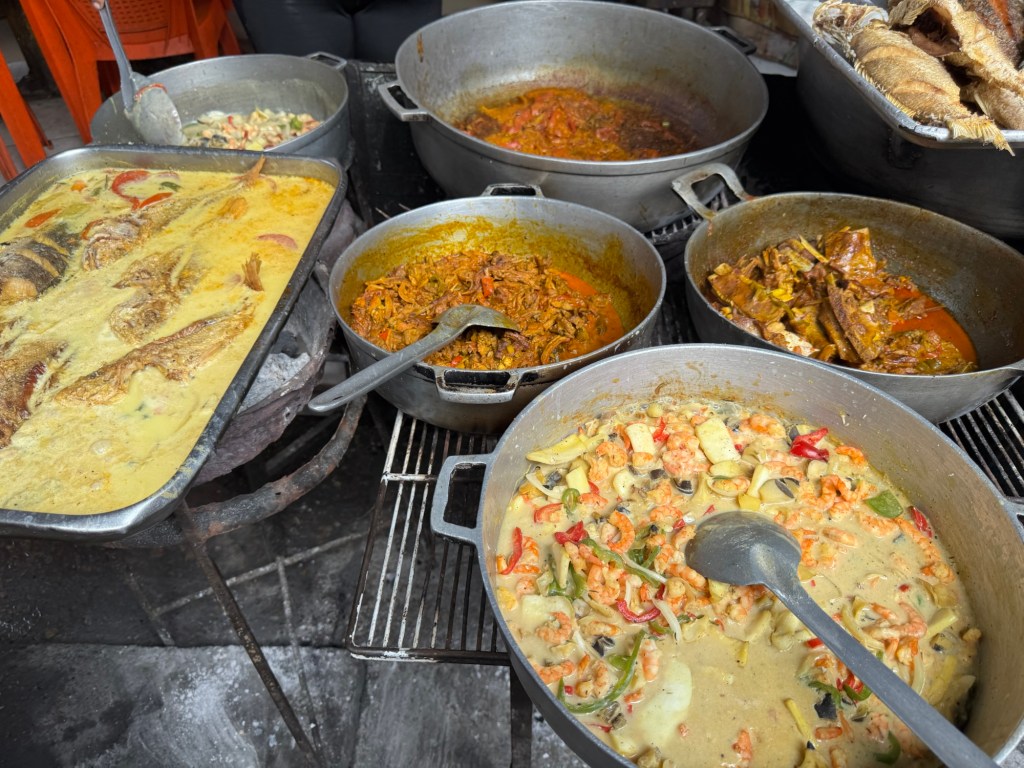
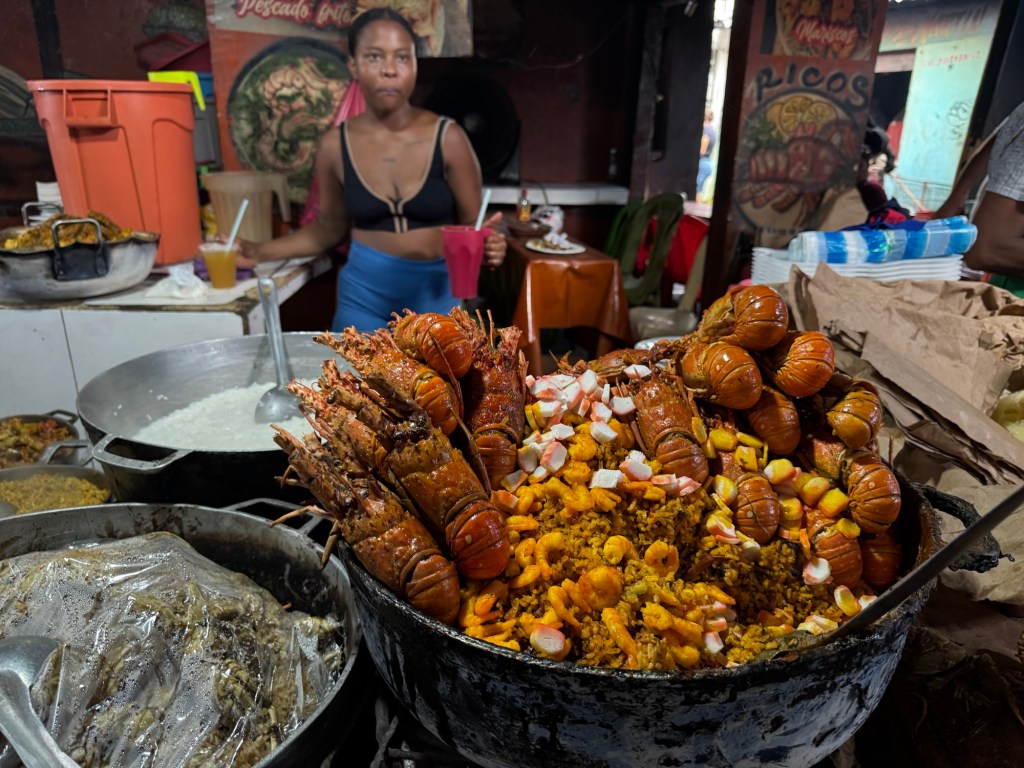
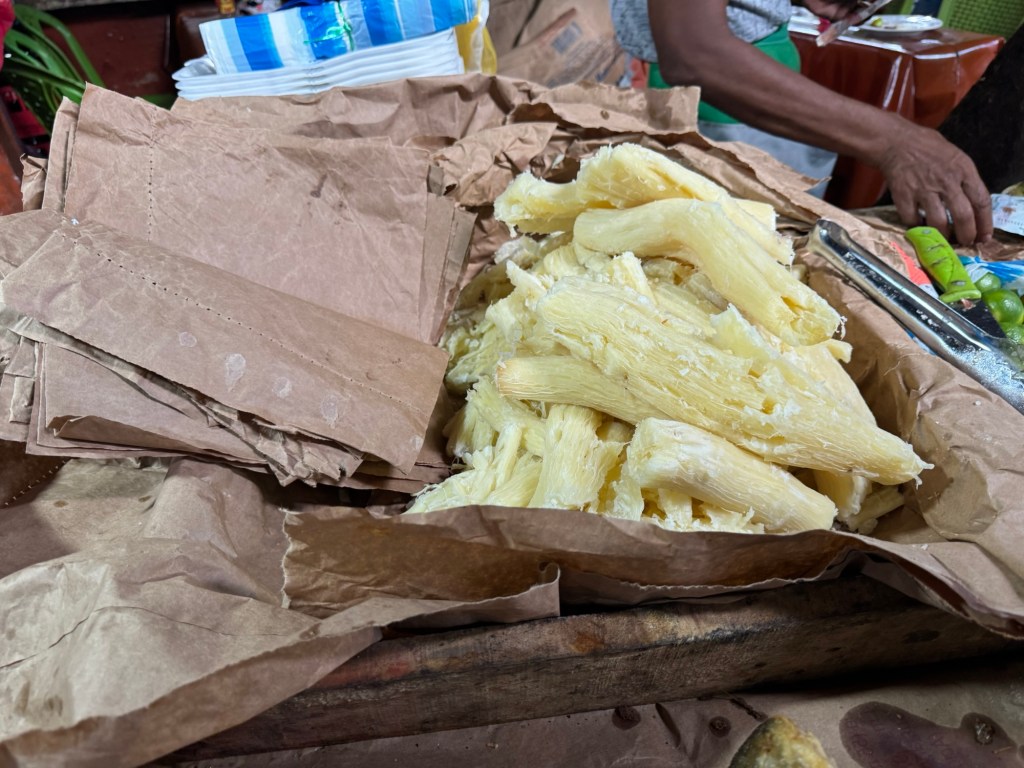
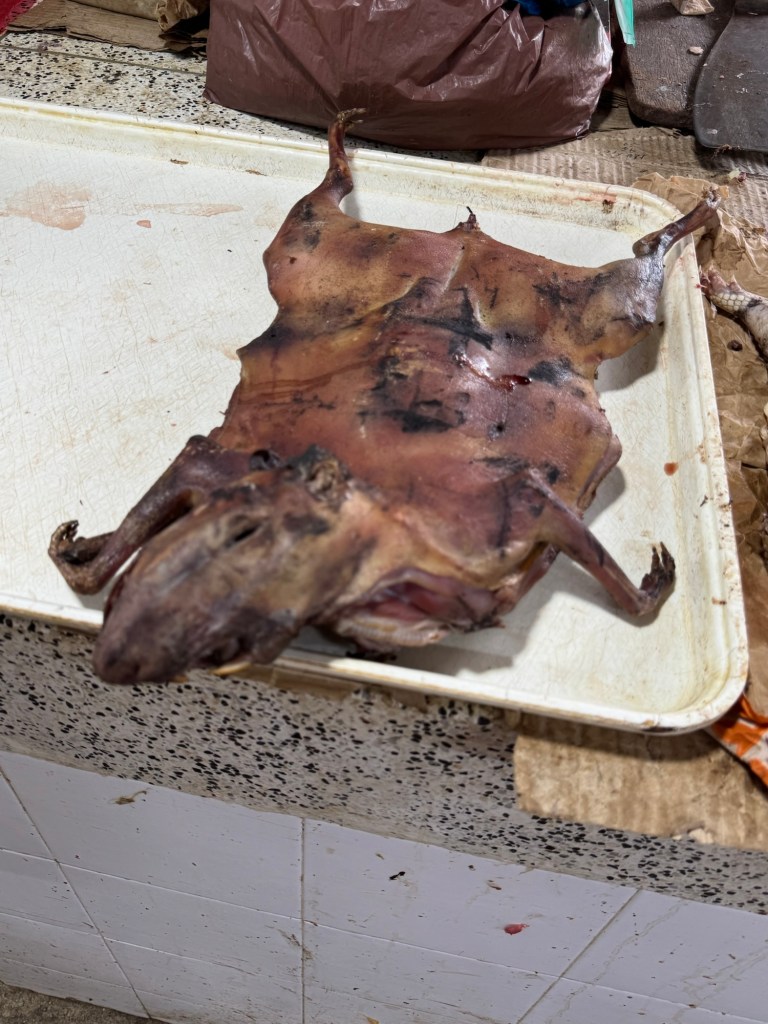
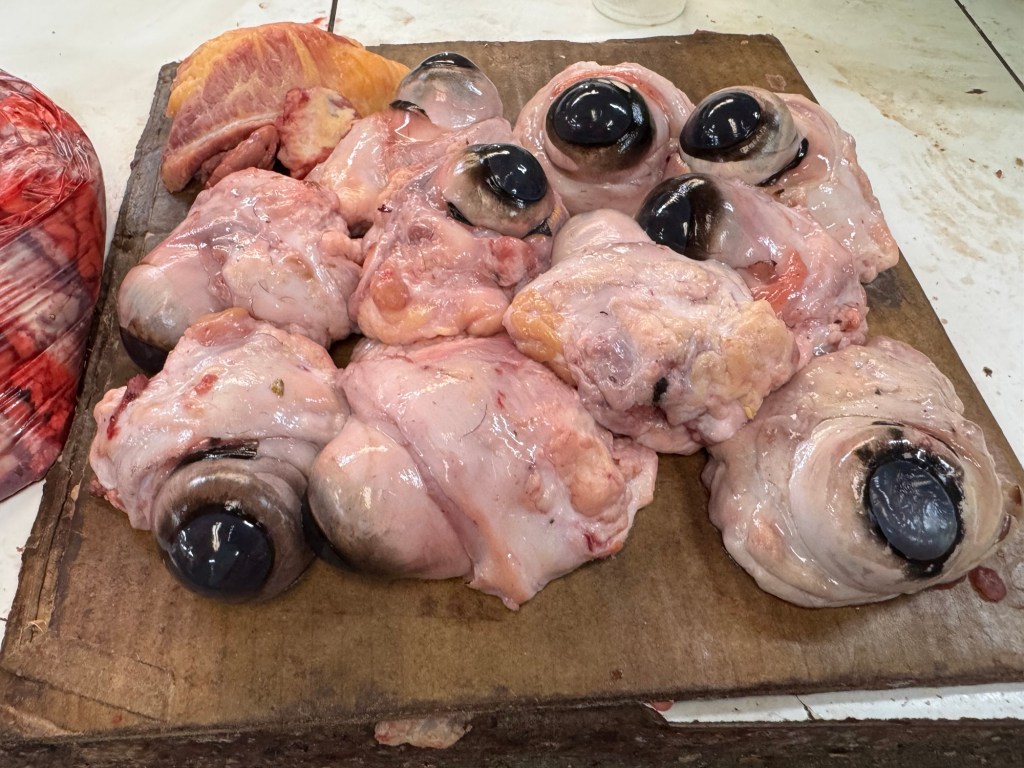
Javier met us at 8am for a tour of the main market. Compared to the market we visited in Bogota, the place was filthy, but interesting with many fragrant foods to look at and smell. We spent most of our time in the fish market, followed by the prepared foods and dining area, the meat market and finally vegetables. Most interesting were the people. We took many photos of it all, including the egrets and other birds scavenging for fish scraps. We started out hot and got hotter. By the time we left the market at 10am, we were so wet we were slippery.
The fish marketCleaning crabsGutting fishPosing with a cabbage leafShark meatIn reverie with the crabA pretty red fishMaking corn mealMixing the mealBagging it into 1 kilo packets Prepared food for market customers Lobsters and riceCooked Yucca ArmadilloIs this a rat or what?Beef eyeballsSalting intestines Beef tailAn un-enthusiastic vendorHe gave me a lookA happy vendor
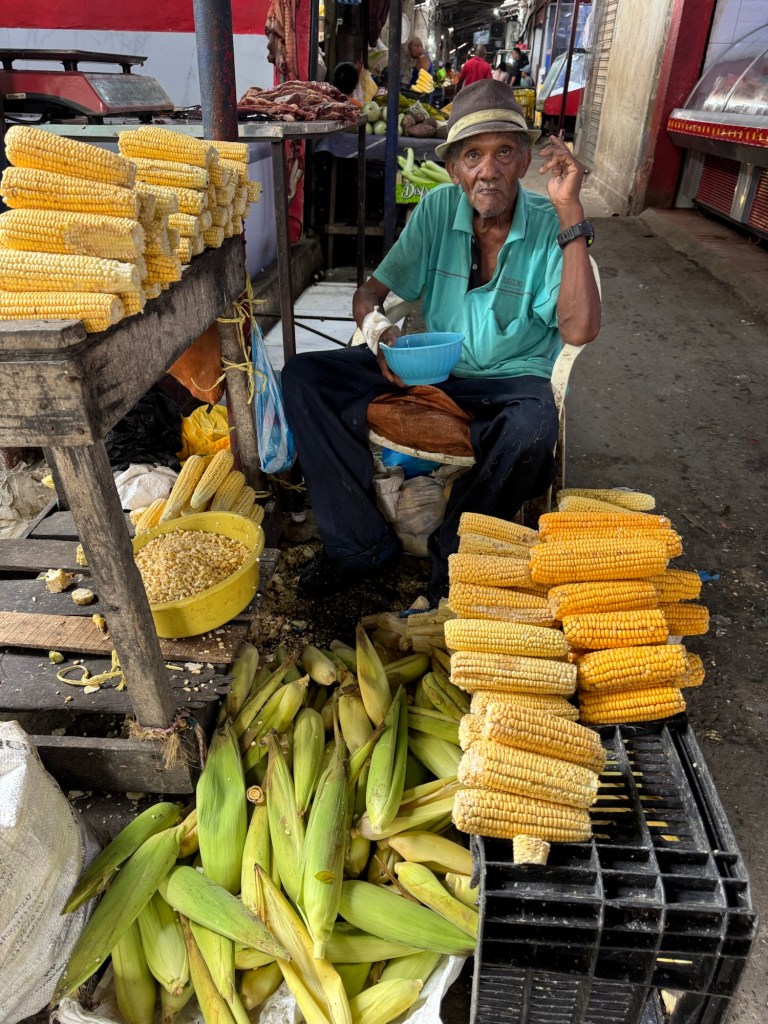
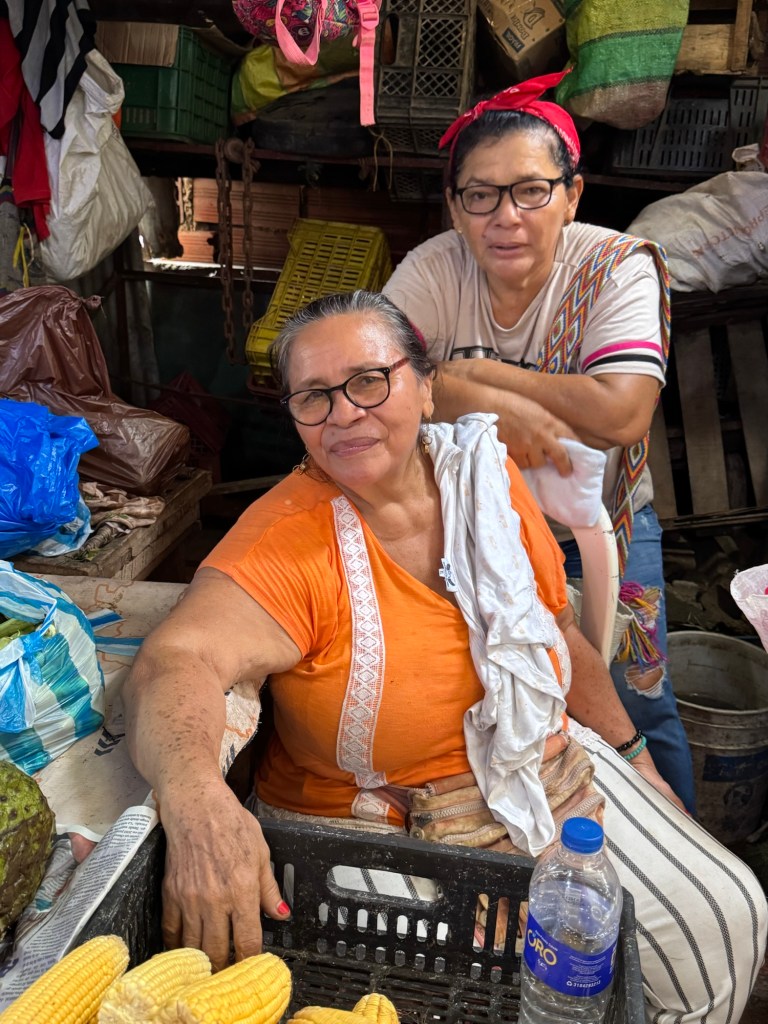
Finally we checked out the vegetables. Vendors were friendlier here and the smells more pleasant.
Sweet yellow pineappleLarge Colombian avocadoA shopper stope for my cameraTaking a break from cleaning cornThese ladies were very friendly So we got a photo together
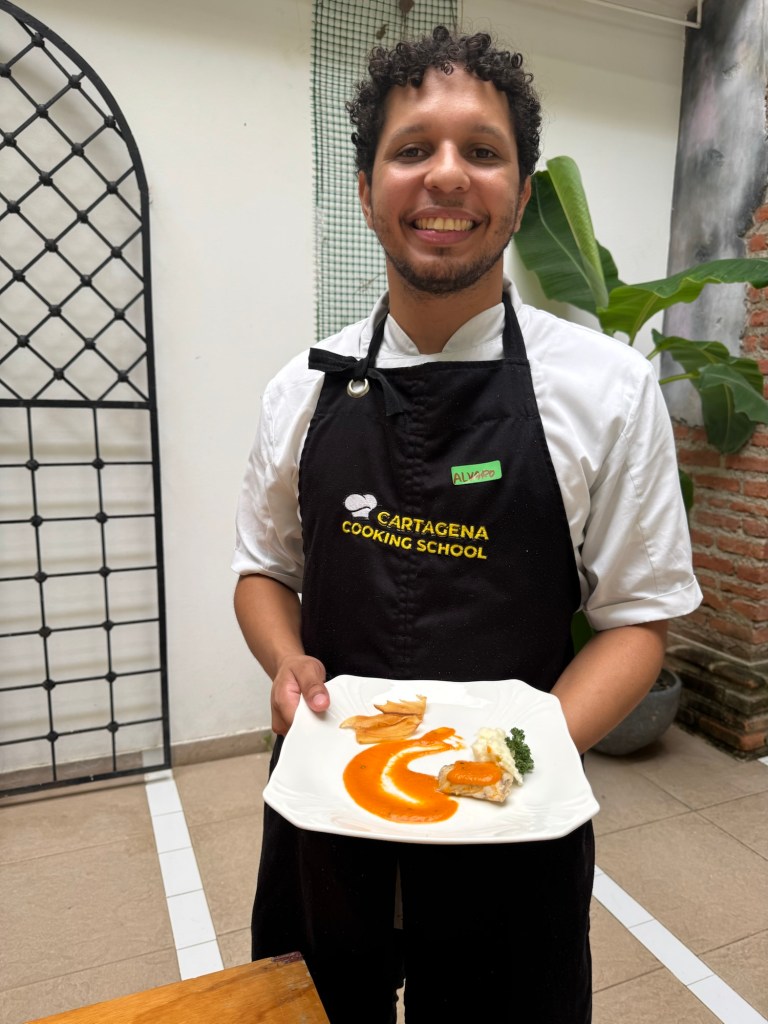
By then it was time to go to our cooking class and learn how to prepare a Colombian meal. We arrived at the chef’s kitchen and found the place slightly cooler than the market, but not Air conditioned. It took quite awhile to stop being slippery, but the chef, Alvaro, was welcoming and soon we were engaged in preparing the meal.
We are to make three courses; a starter called Boronia, or egg plant and plantain; a main of white tuna marinated in an leaf, grilled and served with a creole sauce; and dessert of caramelized red plantain with Lulo sorbet, a tropical fruit.
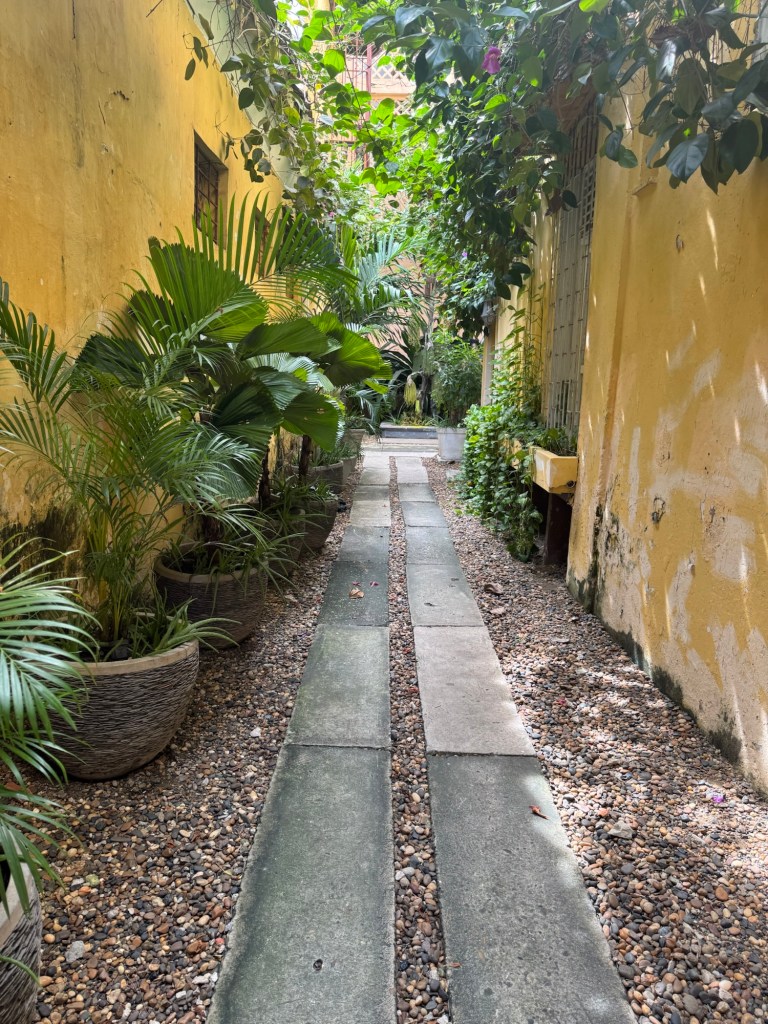
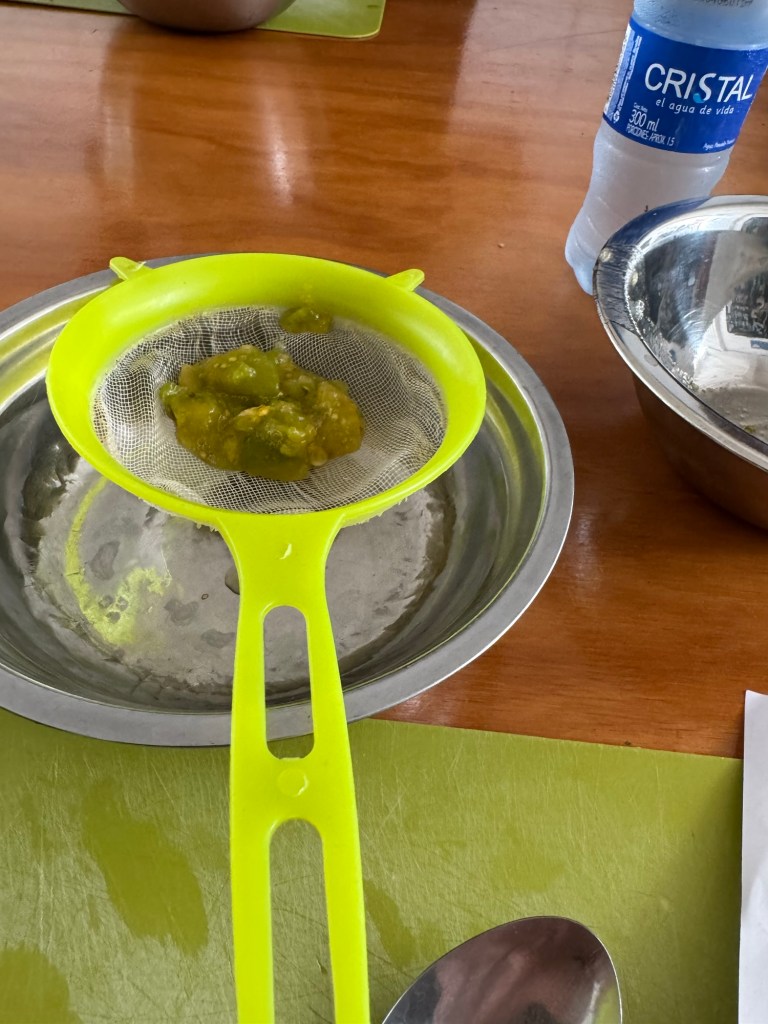
Entrance to the kitchenStraining the Lulo fruitMy portion. We made enough for three
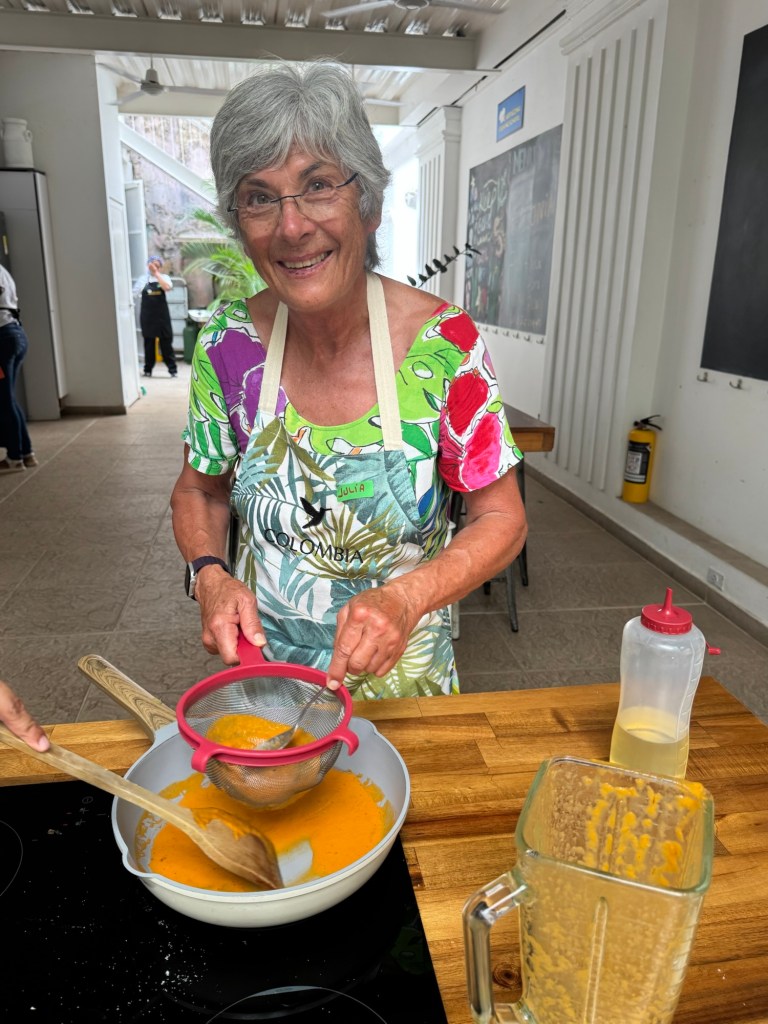
We started with the dessert, straining the Lulo fruit to separate the juice from the seeds. Then we whipped the juice and added sugar. Set the mixture in the freezer to get it to firm up. Meanwhile we caramelized plantain slices and set them aside.
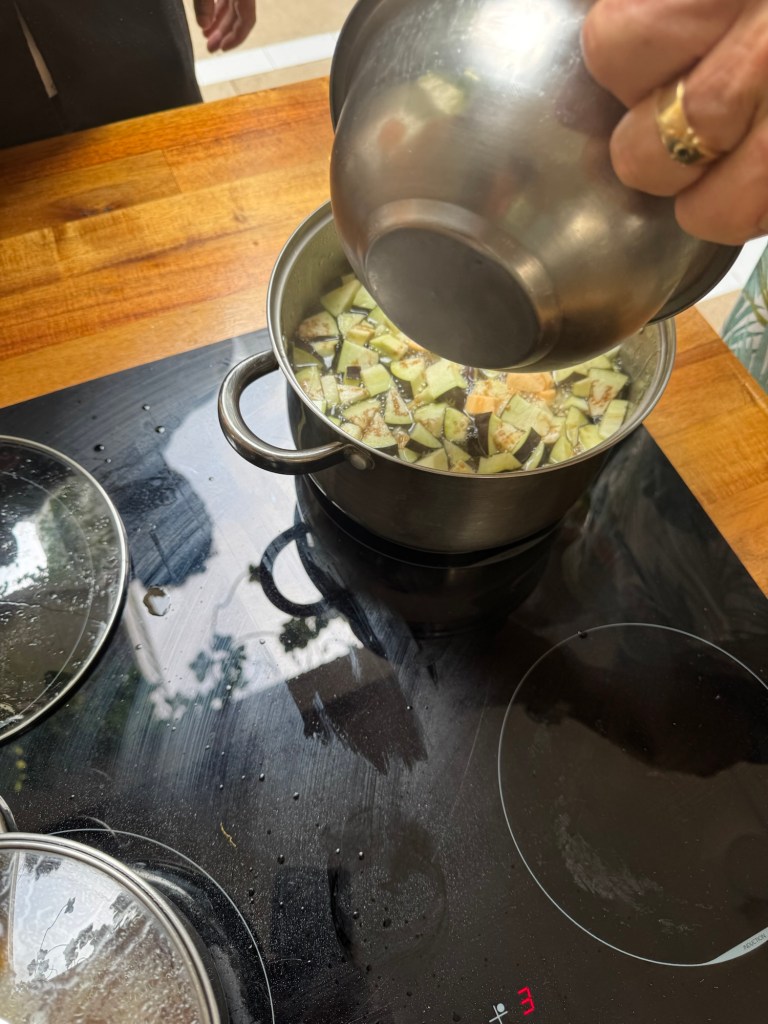
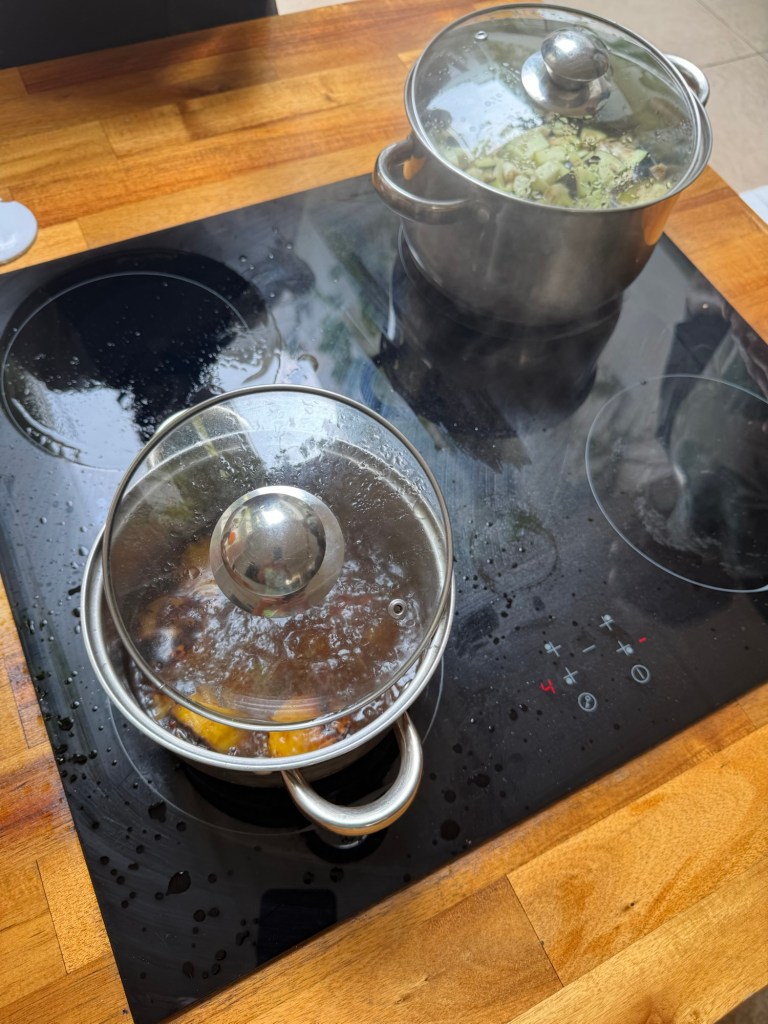
Cooking plantain and eggplantCaramelizing some plantainThe completed starter course
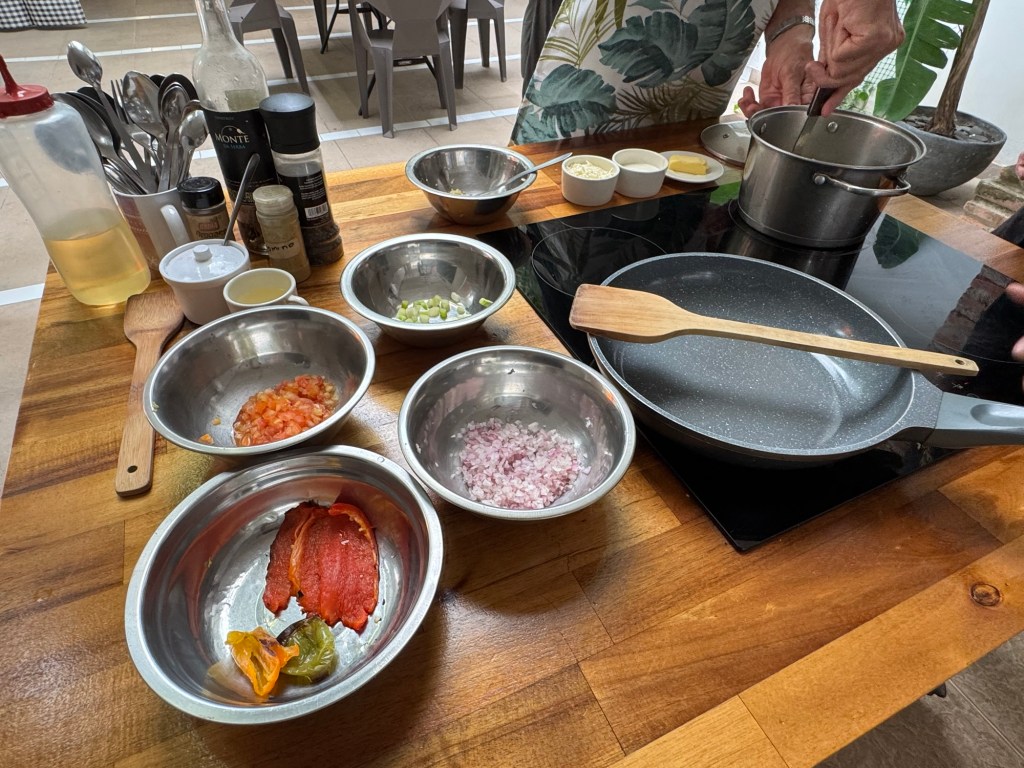
Then we worked on the starter. We chopped the plantains and egg plant and boiled them until tender. Chopped onions, scallions, garlic and tomatoes, salt and pepper and cooked the mixture to make a sauce, which we blended and mashed with the plantain and eggplant. Once thoroughly mashed, we stuffed the mixture into individual forms until packed. Then removed the form, placed fried plantain chips we had made separately on the plate and served ourselves. To make the plantain chips, we cut hunks of plantain into half inch rounds, deep fried the rounds until crisp. Then dried them and smashed them into flat pieces, which we refried for a few seconds and salted.
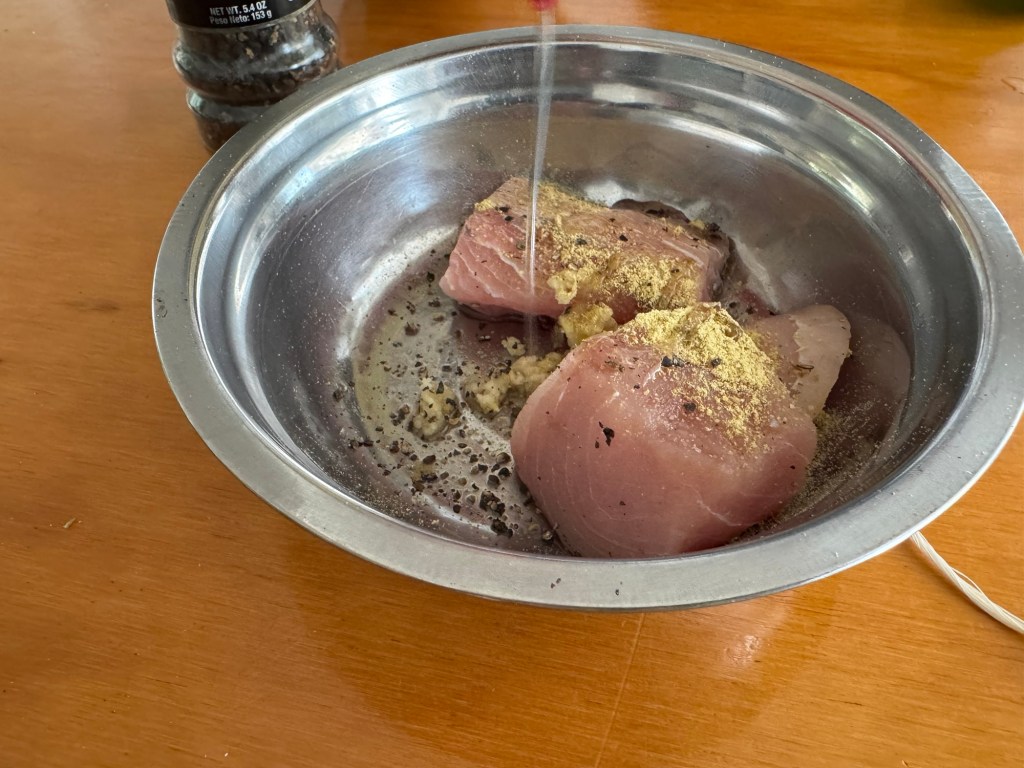
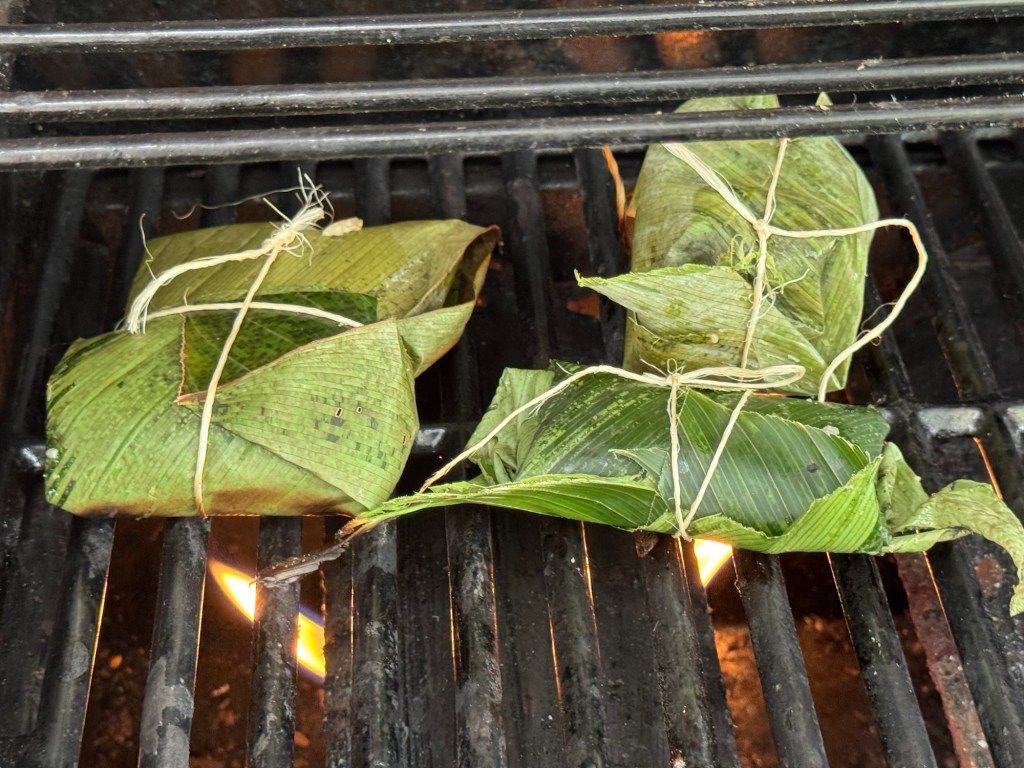
For the main course we marinated the fish in a mix of sunflower oil, onion, cumin, garlic and salt and pepper, wrapped each piece of fish in banana leaves and set the packets aside. Then we made a sauce for the fish, cooking sunflower oil, onions, garlic, scallions, tomatoes, sugar, salt and pepper.
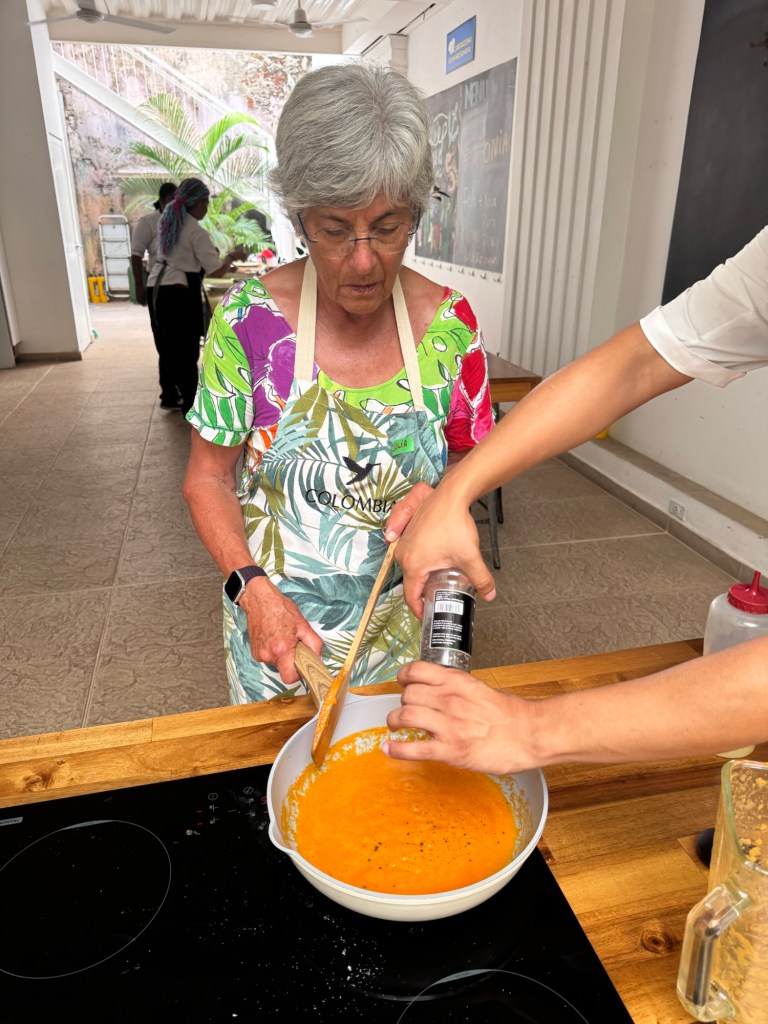
Straining the fish sauceReducing the sauce and adding spiceThe chef presented a finished plate
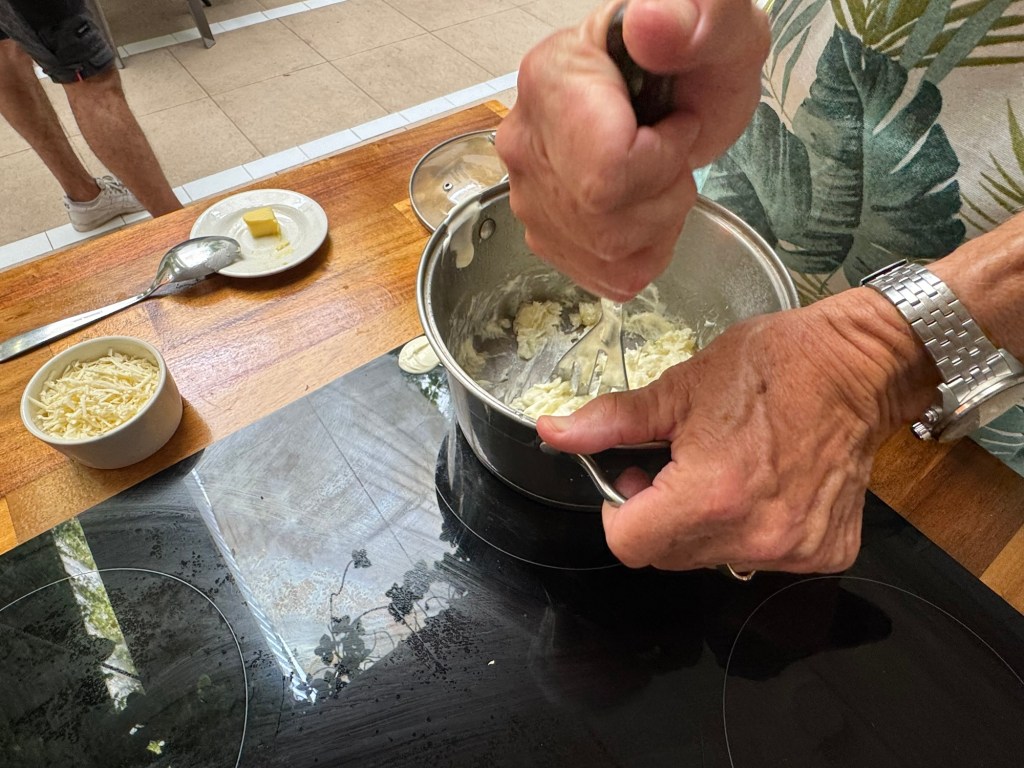
When the sauce was cooked, we ran it through a strainer and then reduced the sauce until it was thick. Meanwhile, we mashed a precooked piece of yucca plant until it was like a mashed potato. The fish was cooked on the grill. We removed the leaves from the fish, plated it and served the fish with the sauce and the mashed yucca. Simple and very tasty.
Dessert with Lulo fruit and caramelized plantain. Sorry I started eating before taking the photo.
For the dessert, we made a sauce of cinnamon, clove, molasses, rum and water, boiled it for 20 minutes on medium, then on high for 5 minutes and poured over the plantains. The Lulo dish we had made earlier was cold and almost like ice cream that the chef put on the side in little fruit cups. It was a lovely meal.
As soon as we thanked Alvaro for the fine experience we walked back to the hotel and spent the rest of the afternoon staying cool. We did not even try to go to the warm pool.
Horse carriageElectric antique carOur front door greeter, Angelyn
At 6:15 we mustered for dinner at Juan Del Mar restaurant next door to San Diego Church, pictured above. Rather than having a lot of food, we settled for 5 appetizers we shared and called it good. We have one more day in Colombia before we head for home.
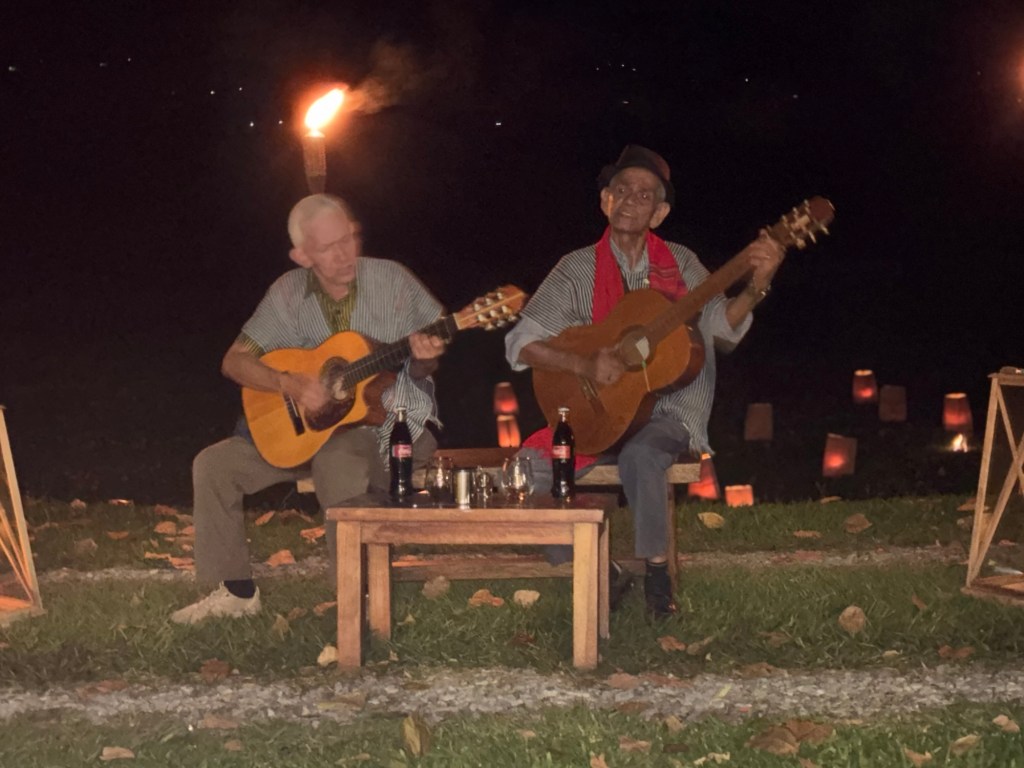
During our last meal at the hacienda, we listened to 2 excellent guitarists and I wanted to include them and their music.
Excellent musicians
Hang on through the glitch and the background chatter. The music is nice.
Sunday, November 9, 2025
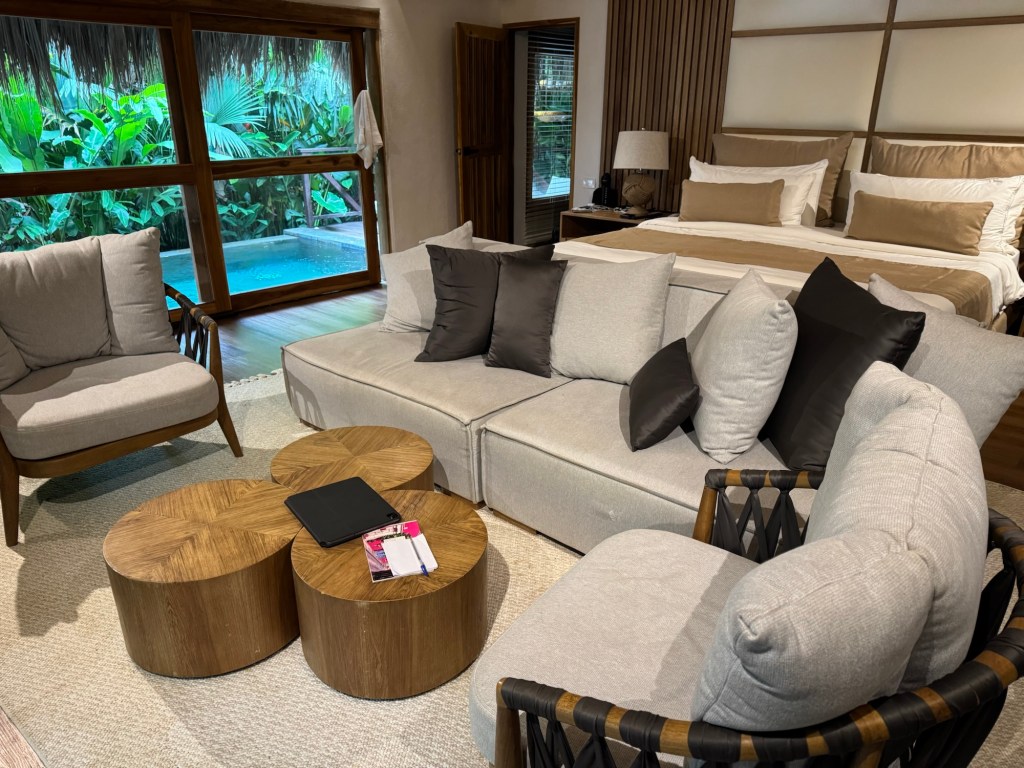
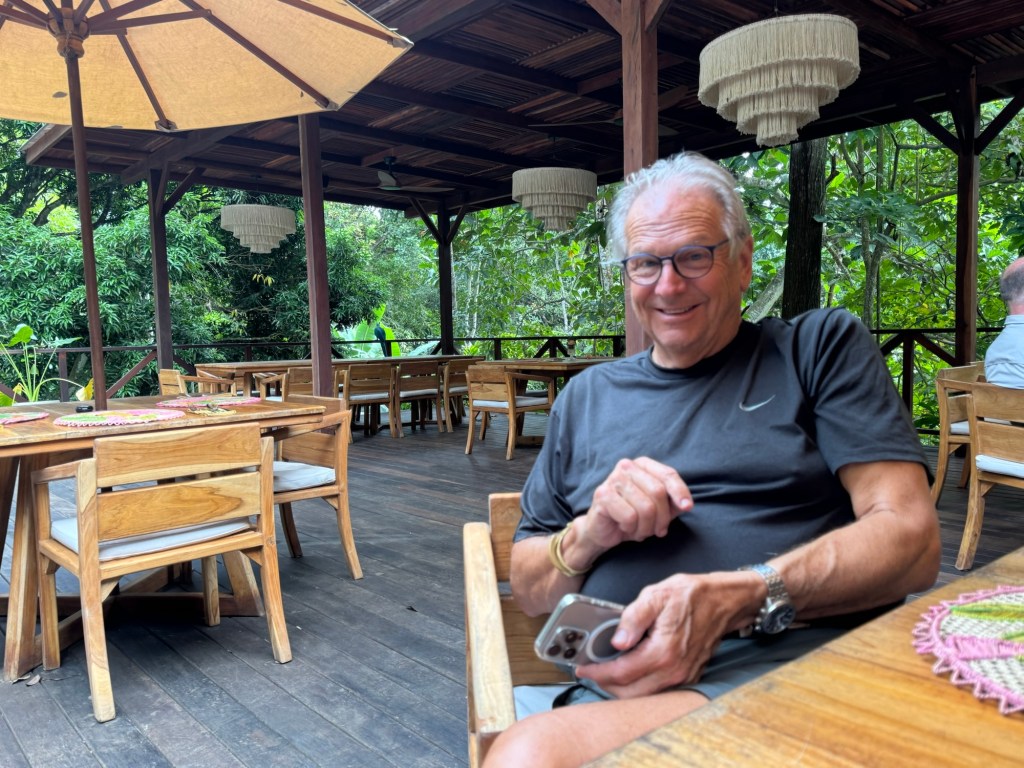
We have left the coffee region and transited through Bogota en route to Santa Marta on the Caribbean coast. The process took 10 hours. It was dark by the time we passed through Santa Marta and arrived at the village of Don Diego, where we were supposed to catch a short boat ride to the ecolodge Tewimake, but instead we road in a 4×4 UTV over a narrow dirt track for 10 minutes and arrived at Tewimake wondering what we had gotten ourselves into. Without going to our bungalow, we went directly to dinner in an outdoor dining area. I had a delicious beef stir fry dish that came 15 minutes ahead of Mark’s meal, which was accompanied by a bottle of wine, from which the server had been unable to completely remove the cork and tried to serve us with bits of cork in the glass. Apparently the manager heard about the situation and came running with another bottle of wine and took charge of properly opening and serving us. We laughed a bit about the situation, finished our meal and walked up a rocky hillside to check out our room. It was a nice space, and we were soon in bed.
Monday, November 10, 2025
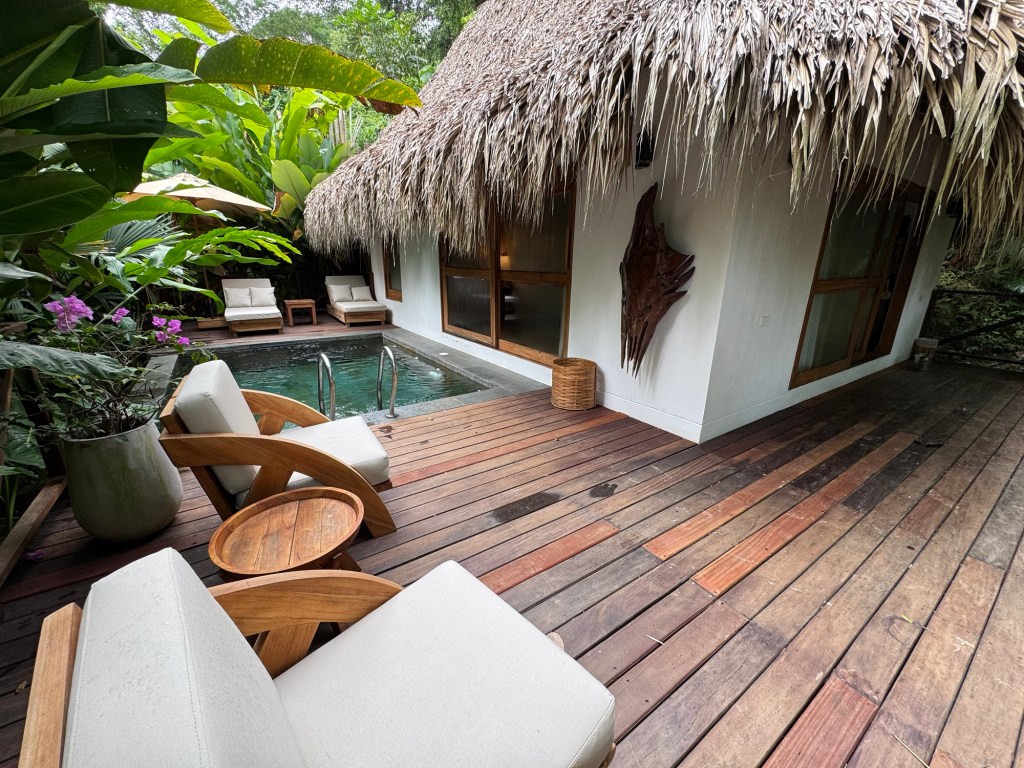
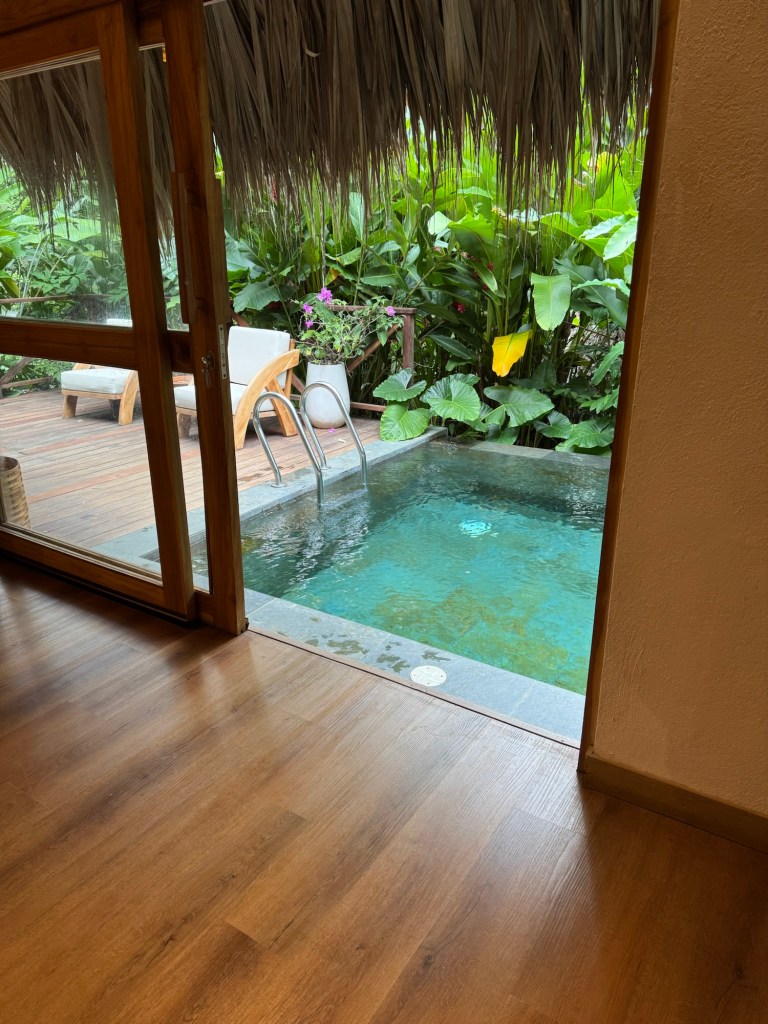
Our bungalow named TimaOur private pool. Cool, clear and delightful
We woke up to find ourselves in an elevated room surrounded by a dense palm forest. Immediately out one side was a large dipping pool.
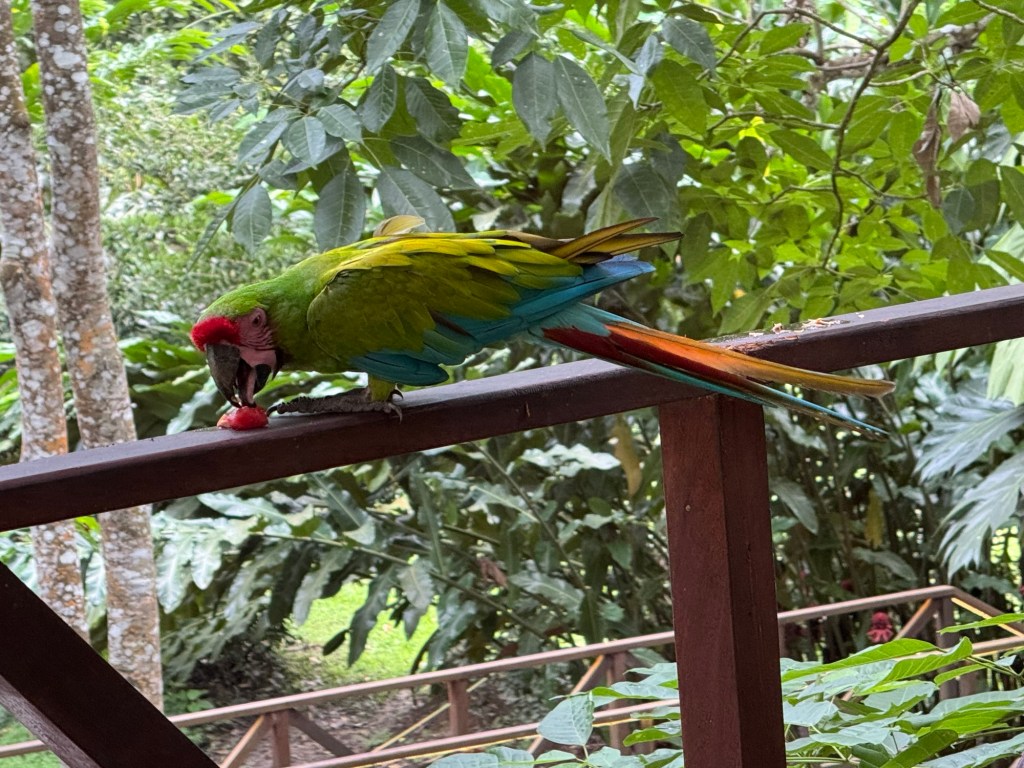
The jungle is all around the placeBlue Macaw, very noisy creatures Green Macaw being fed by staff
Out another side was an outdoor shower and an empty hot tub. We dressed and went to breakfast at the bottom of the rocky path. We could see the Don Diego River from the dining room along with very noisy Macaws scavenging from the empty tables.
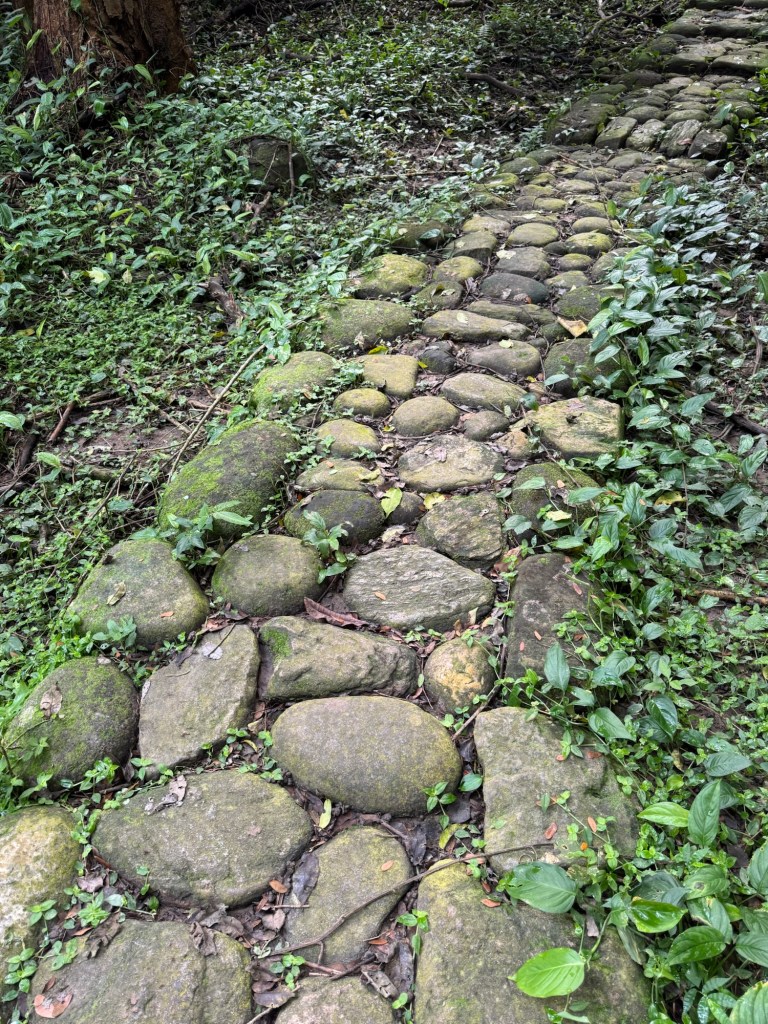
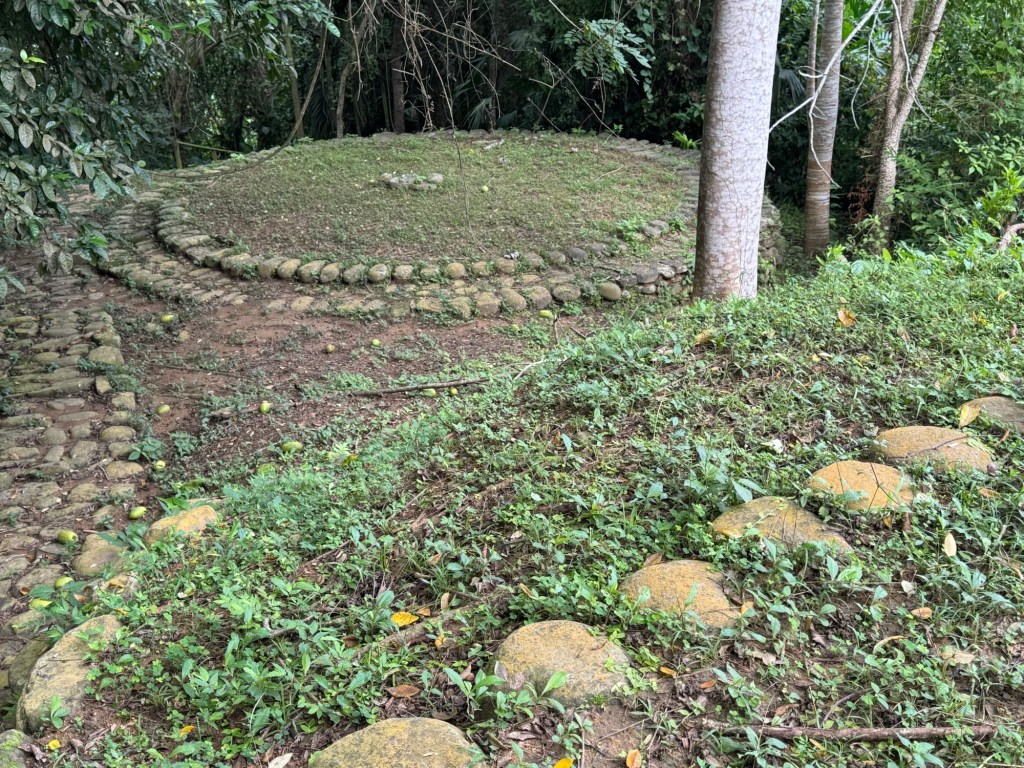
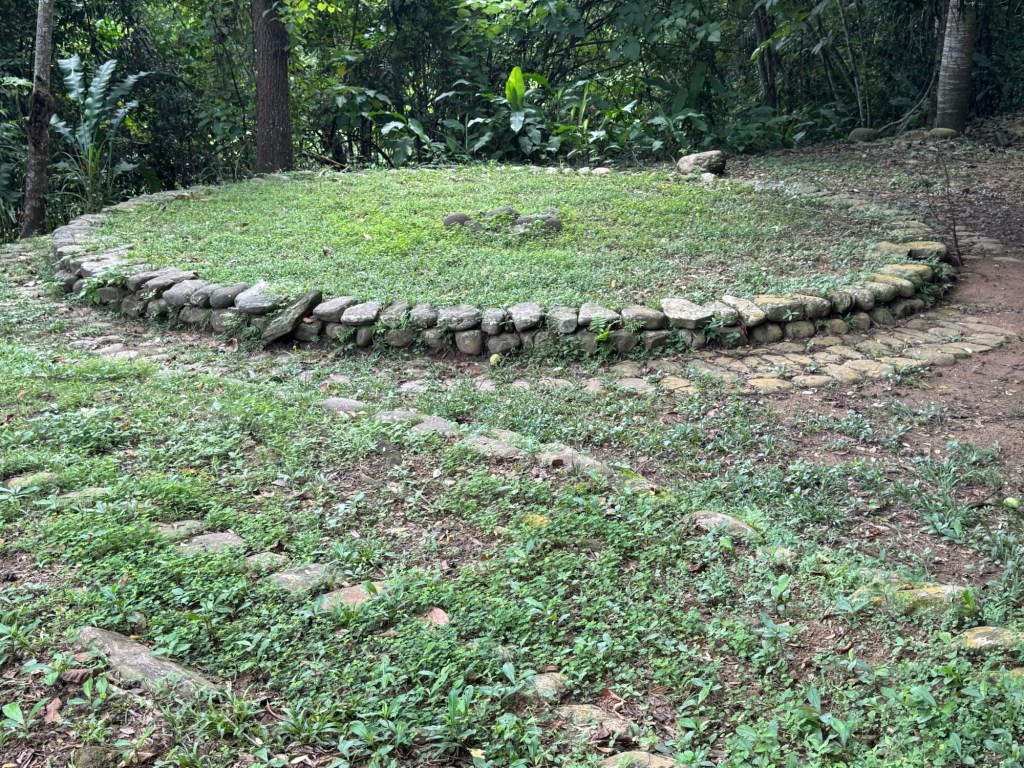
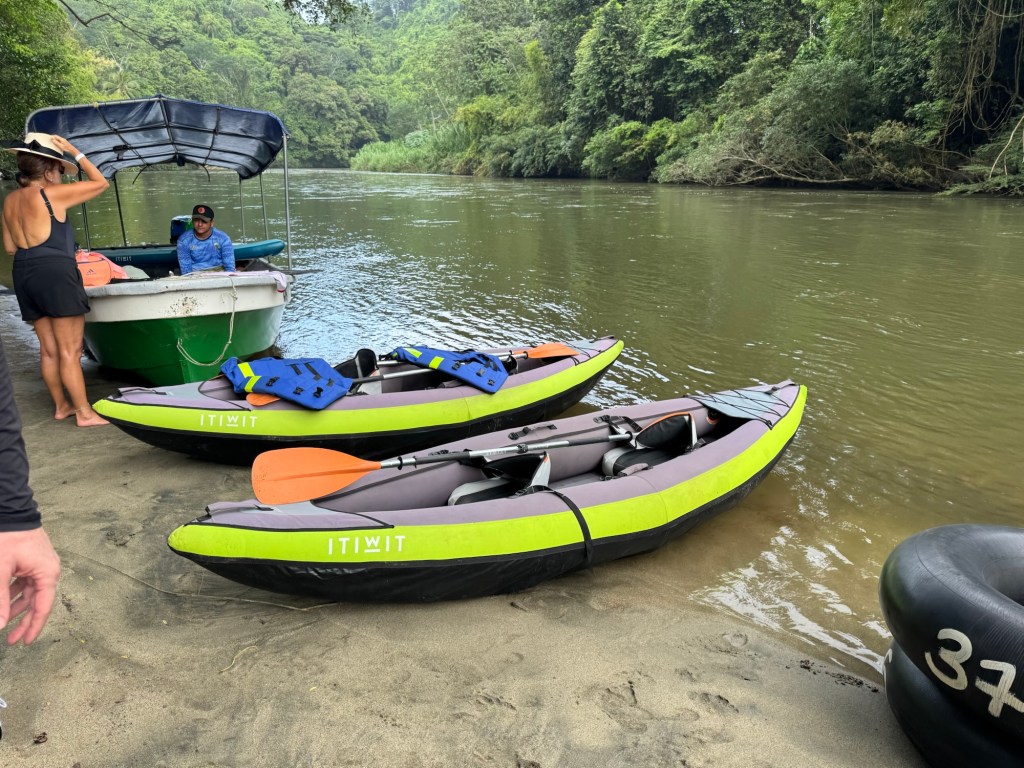
At 9am, our guide, Emilio, met us in the dining room and escorted us to the river, stopping at ancient indiginous sites along the way. We had signed up to take a kayak down stream, but very shortly after getting into the kayak, we were sorry we were not in inner tubes like other people we saw. Emilio was very accommodating and before long we switched from our kayak to inner tubes.
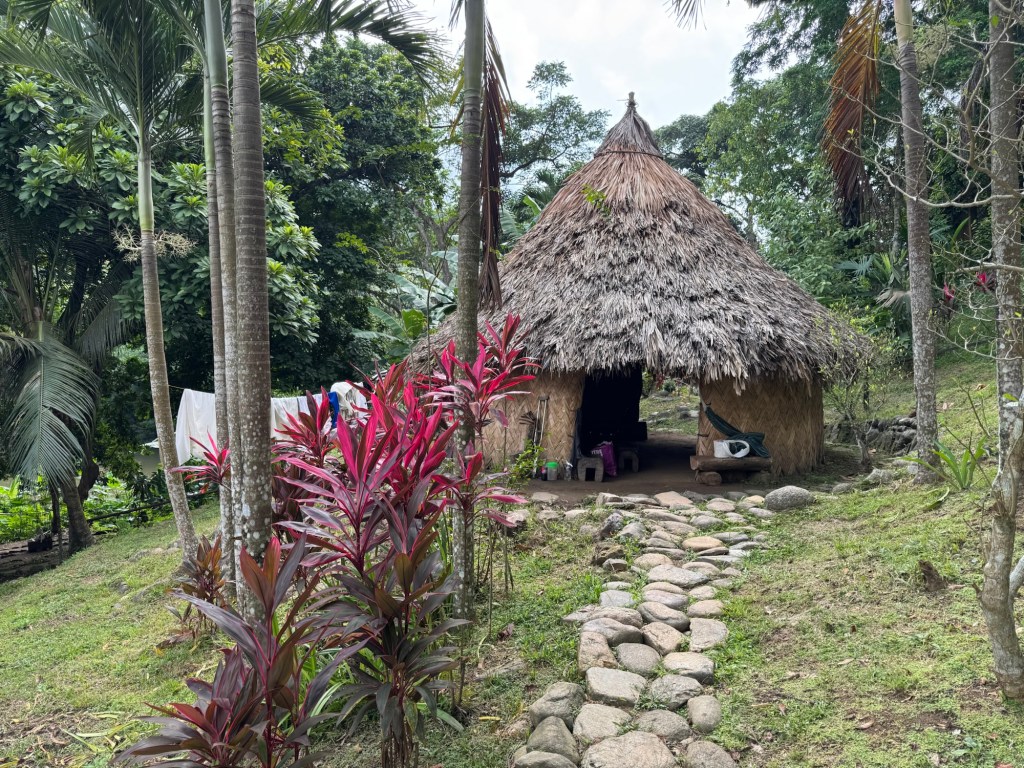
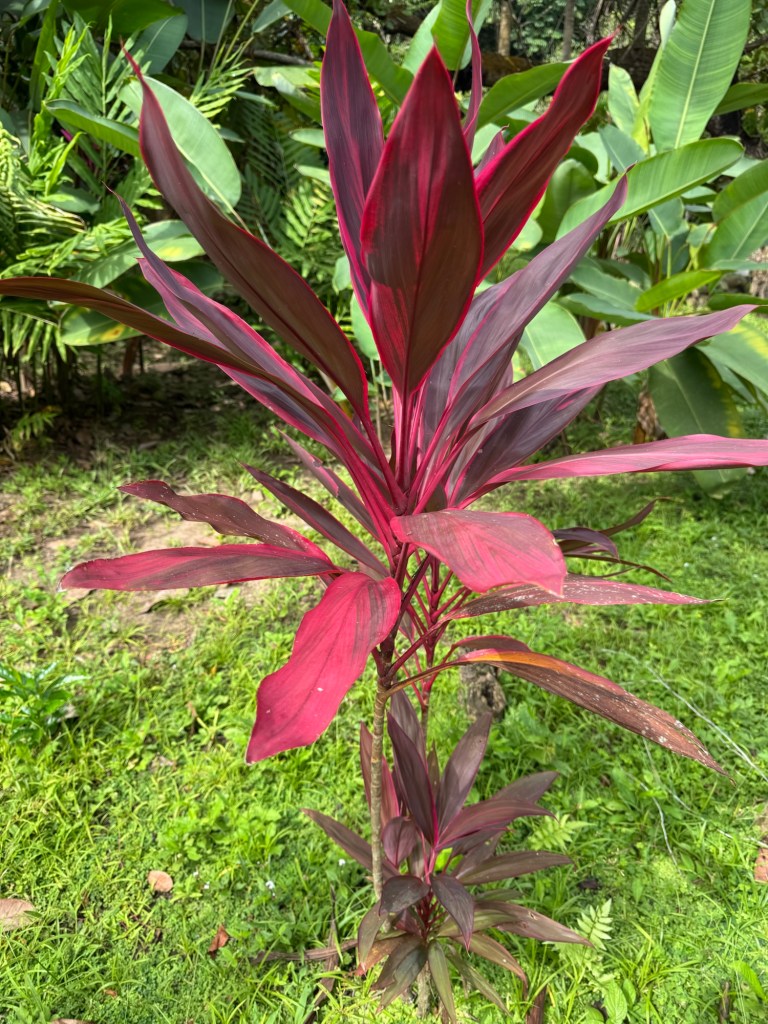
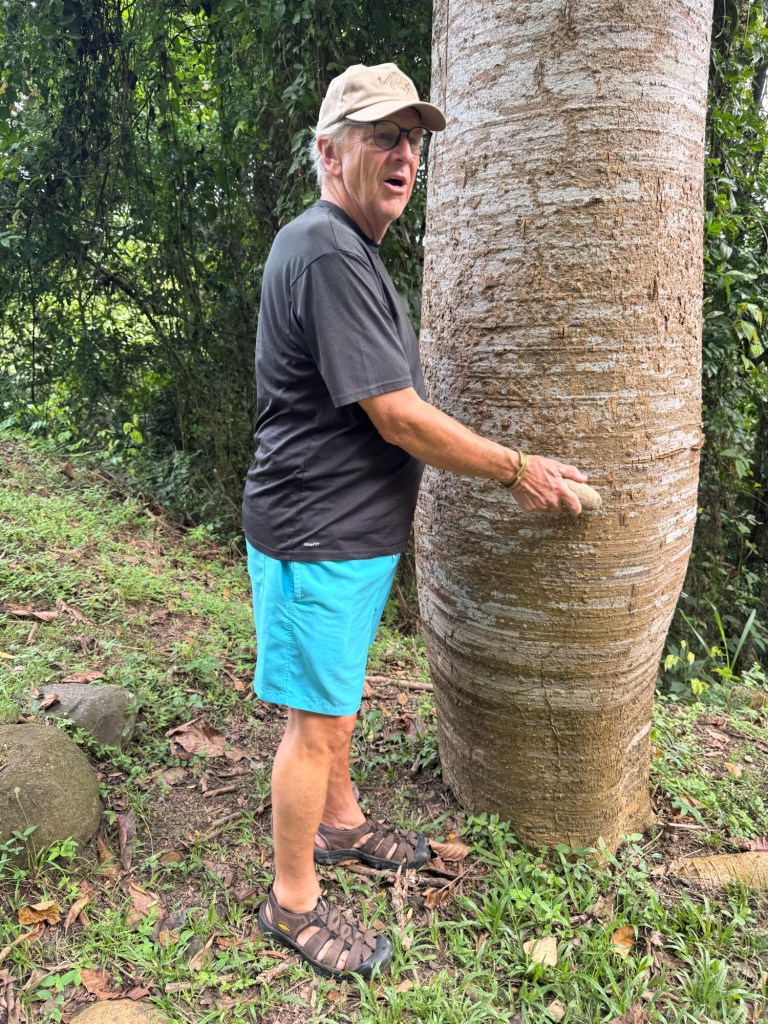
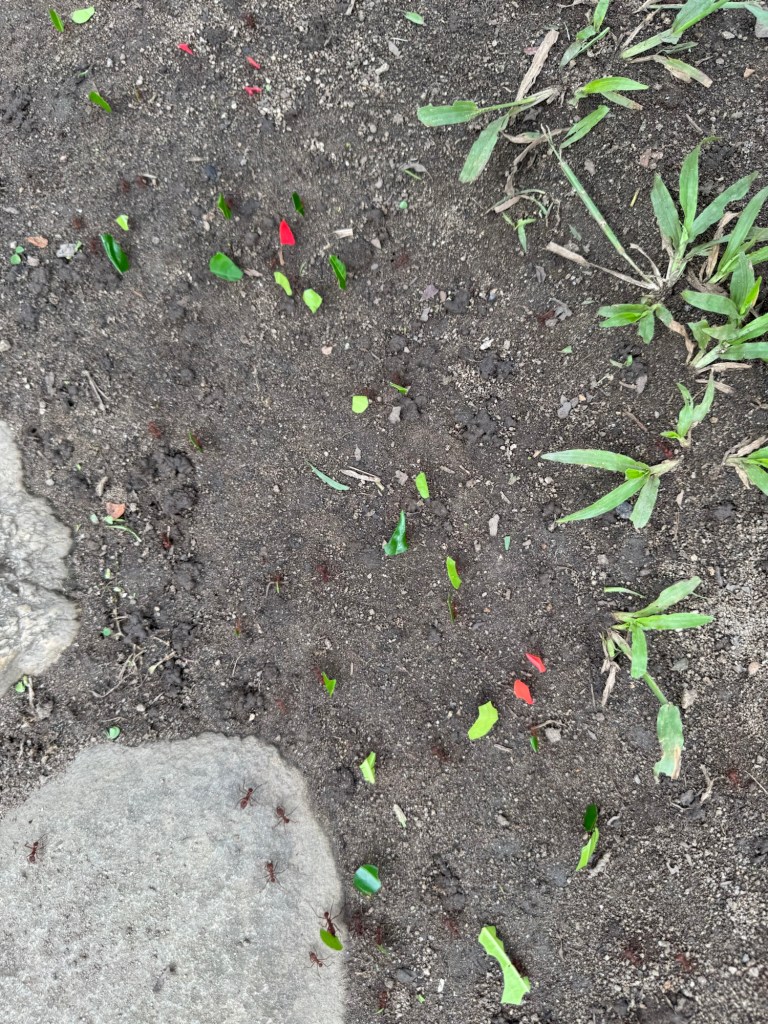
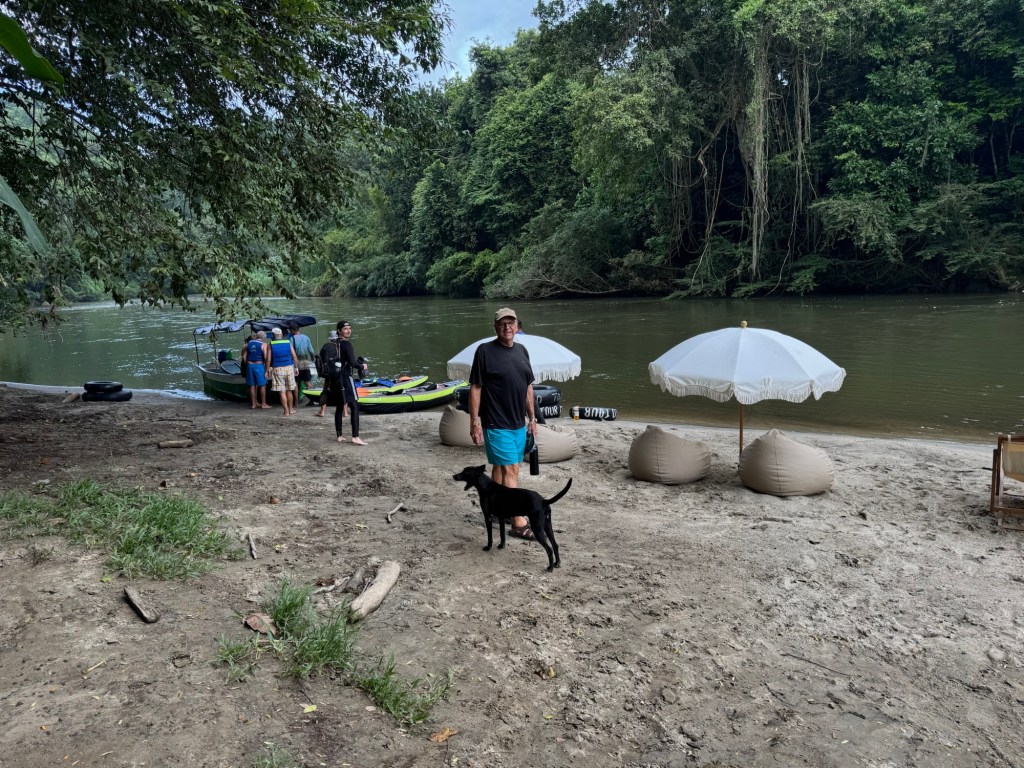
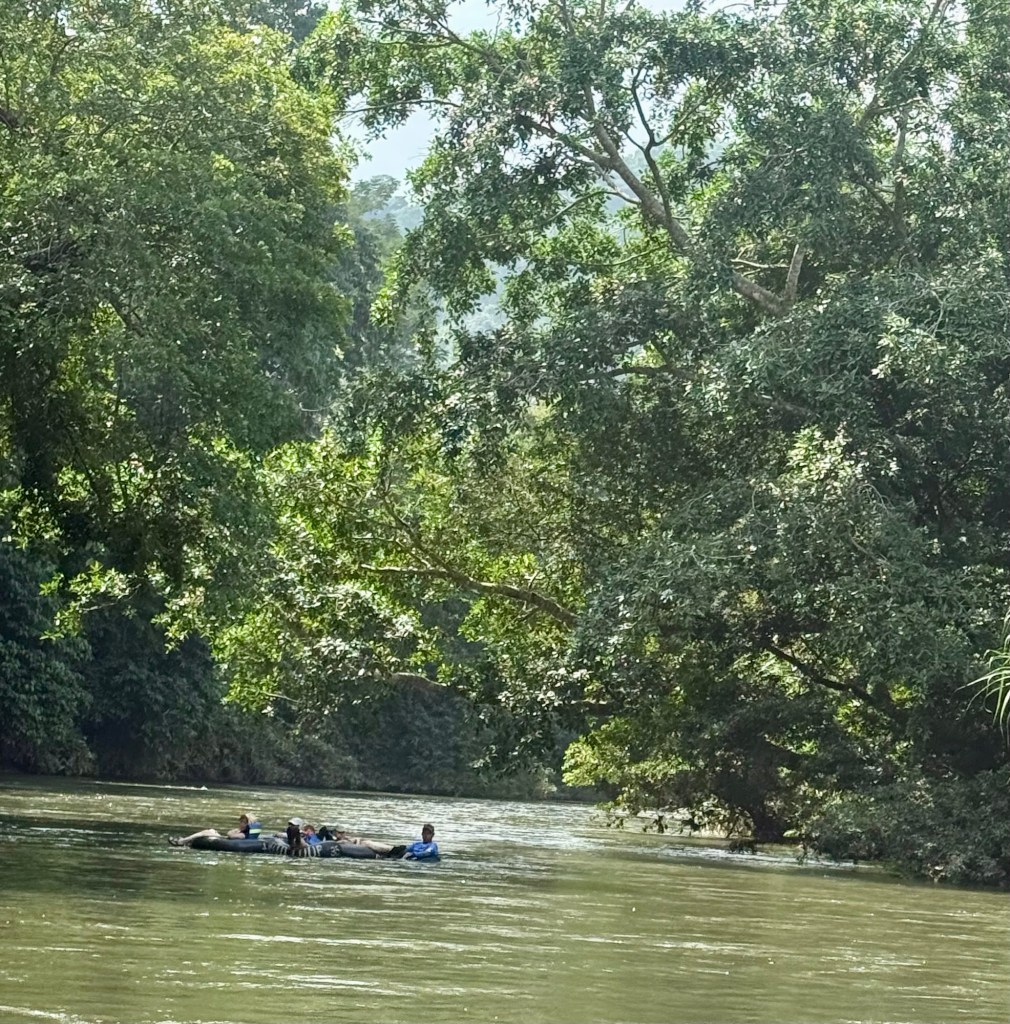
Ancient pathwayIndigenous dwelling sitesCurrent. Indigenous dwelling Hawaiian Ti plantMark tapping a hollow palm treeLeaf cutter ants hard at workOur hotel beach on the Don Diego RiverOur kayaks awaitA group like ours tubing down the river under the jungle. Were not able to take photos while in the inner tubes.
Much more pleasant experience in delightfully cool water that combats the heat and humidity of the air.
The tubing ended when we reached the Caribbean Ocean and got out on the beach.
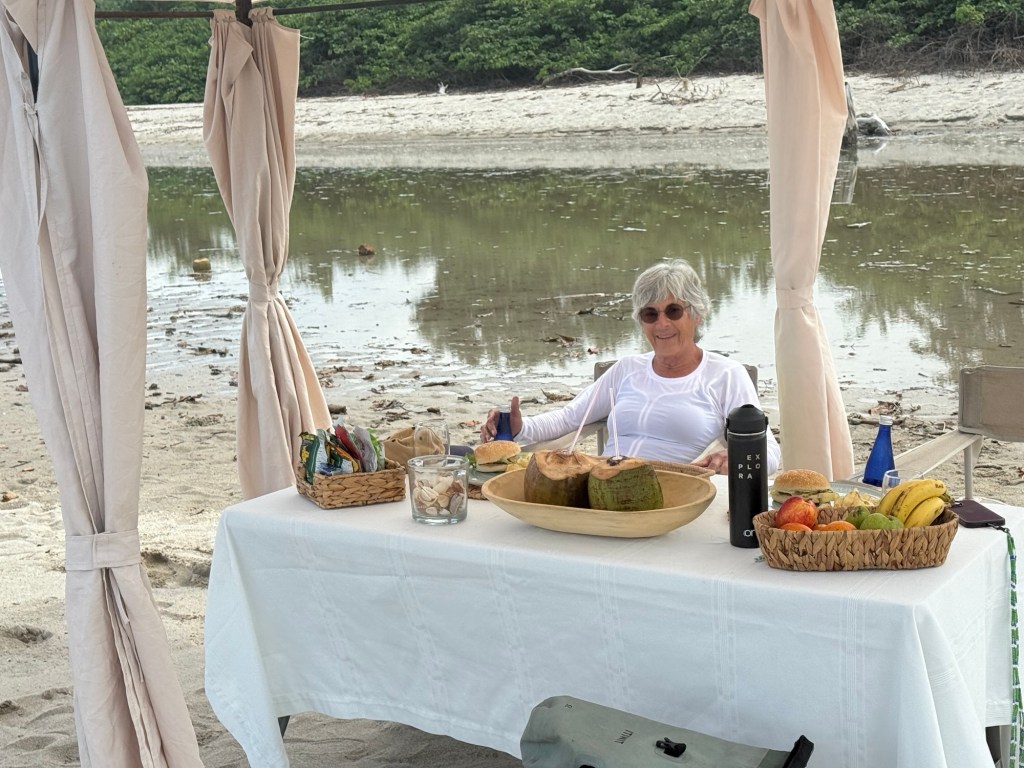
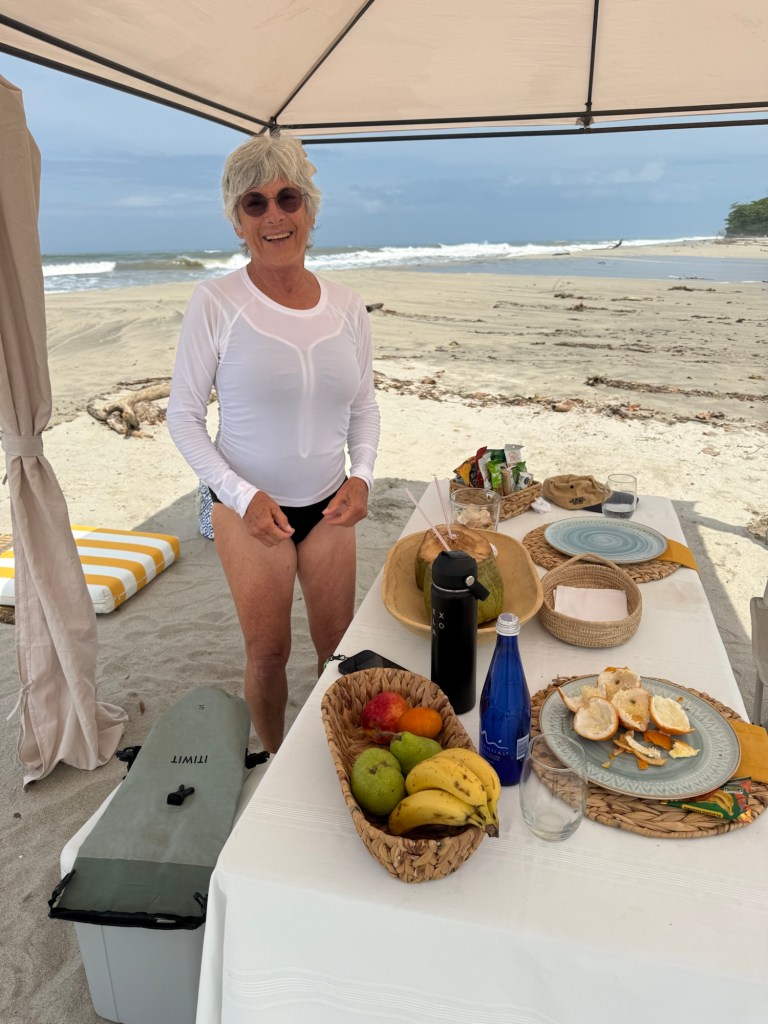
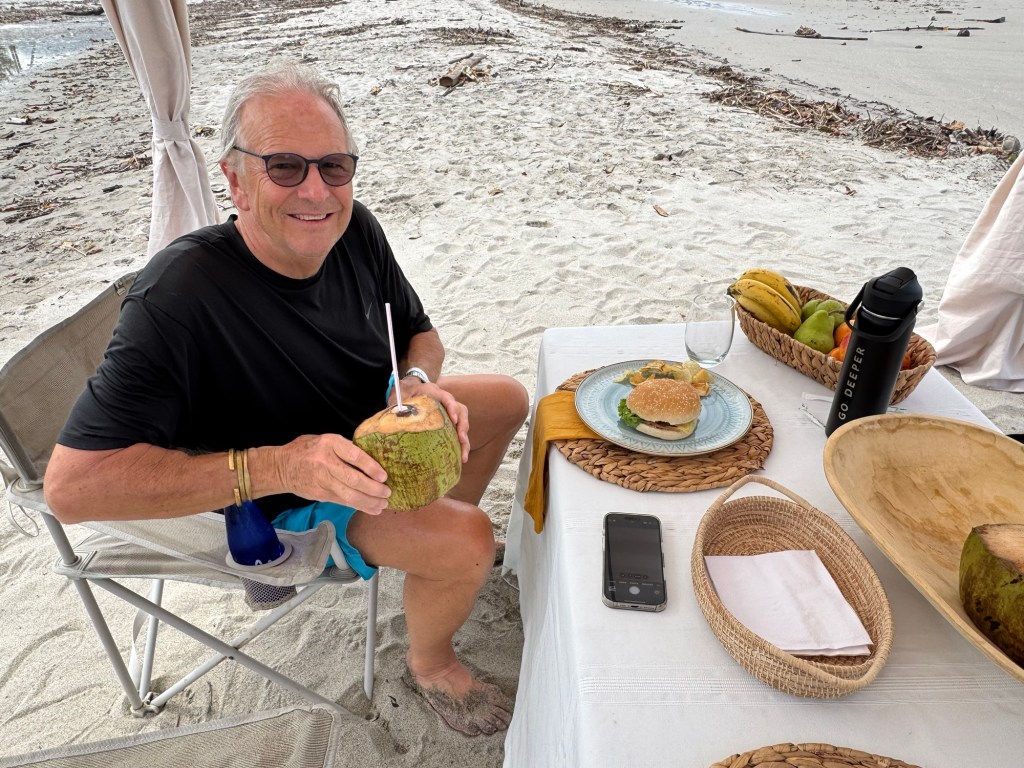
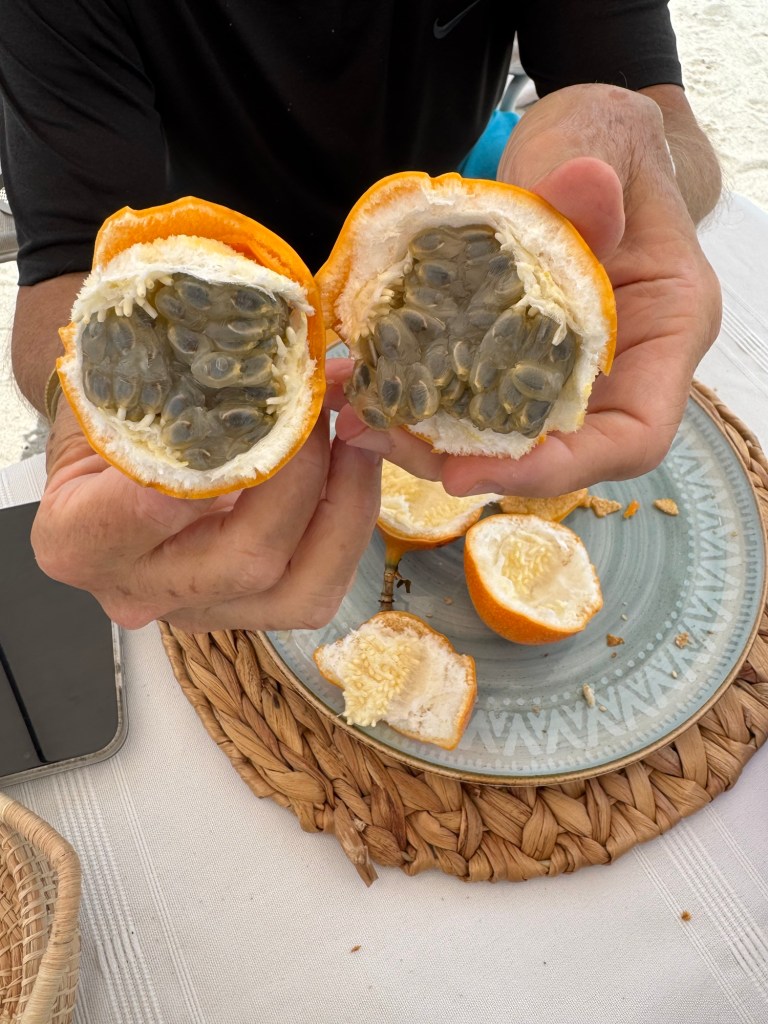
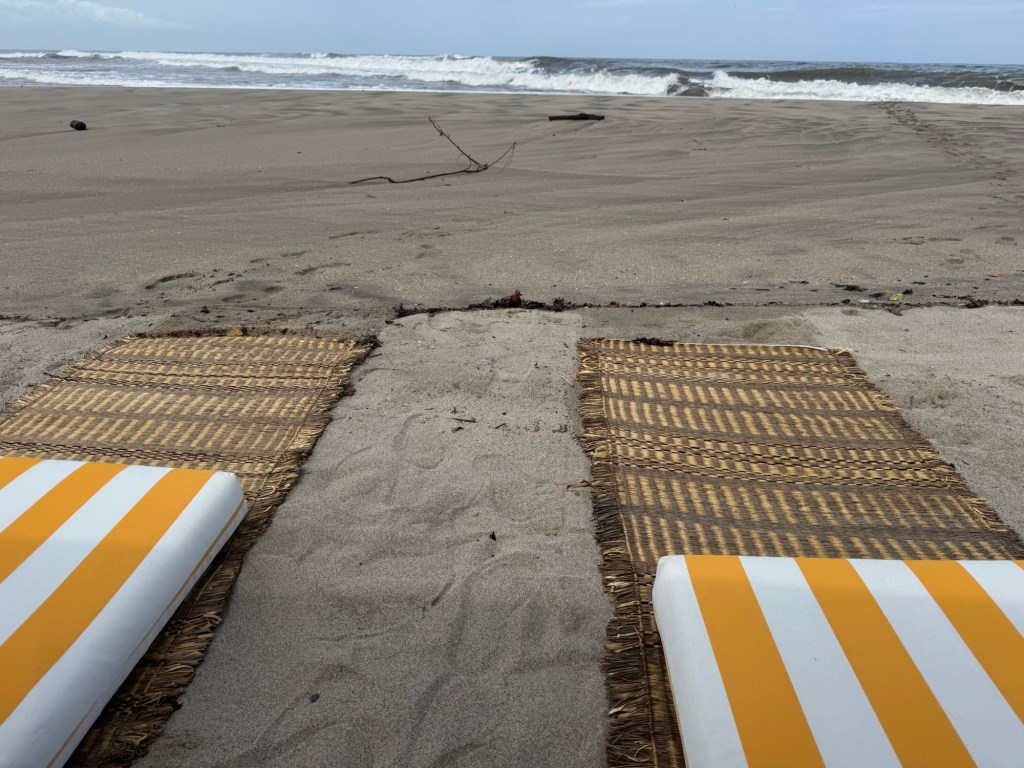
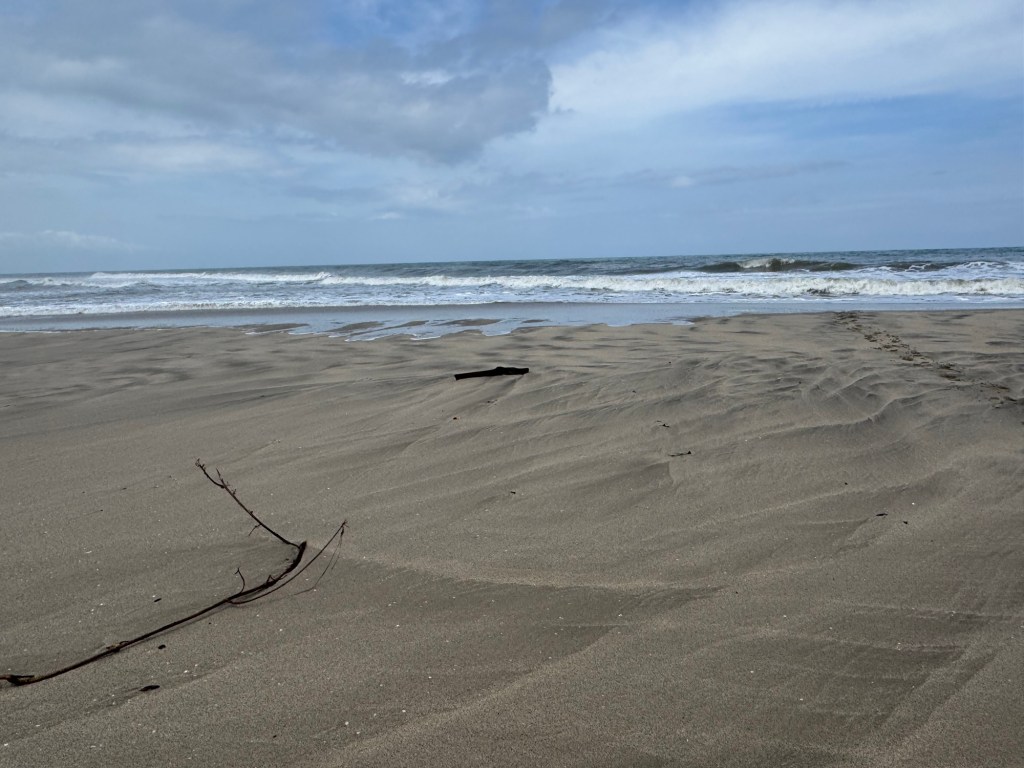
Drinking coconut juiceDelicious Sweet passion fruitBeach pads A beach free of footprints
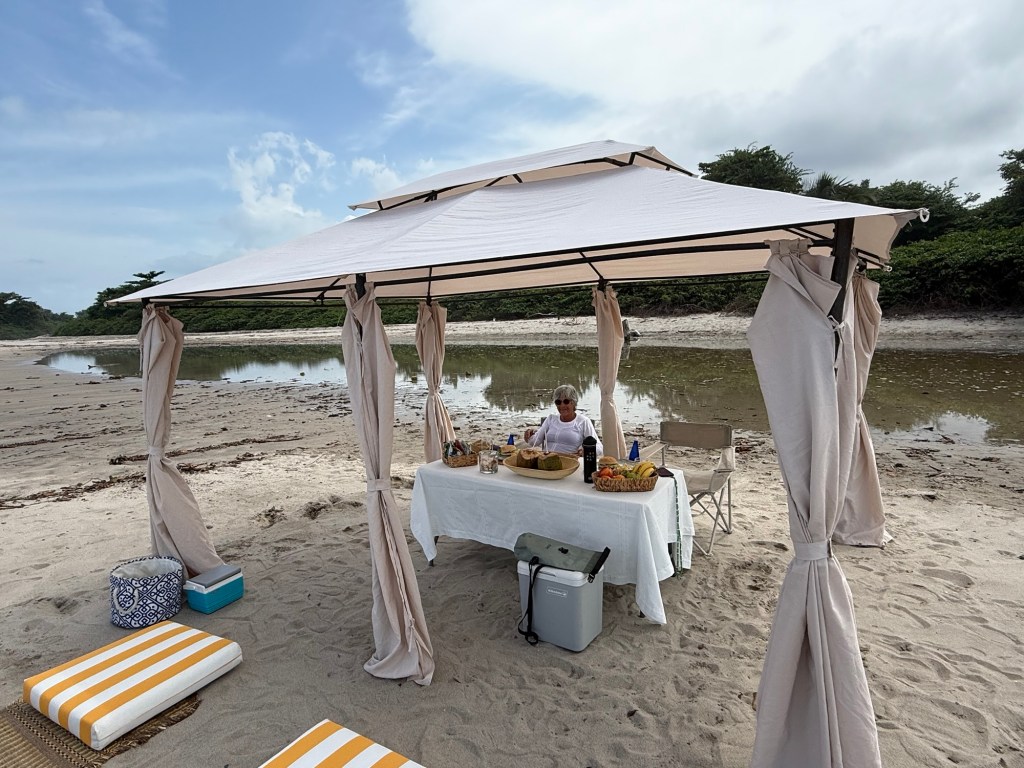
Emilio surprised us by escorting us to a shady gazebo with a prepared lunch waiting for us. This lunch was a charming surprise and just the right amount of food, including coconuts with straws to drink the contents. We were thoroughly enjoying ourselves when a woman on the beach walked over and interrupted us to ask if we were a king and queen and we should be thrilled to have such a wonderful experience. We assured her we were happy for the experience. She started telling us her story and somehow we managed to communicate that we would appreciate her departure. Her comments did remind us to be grateful for our many blessings.
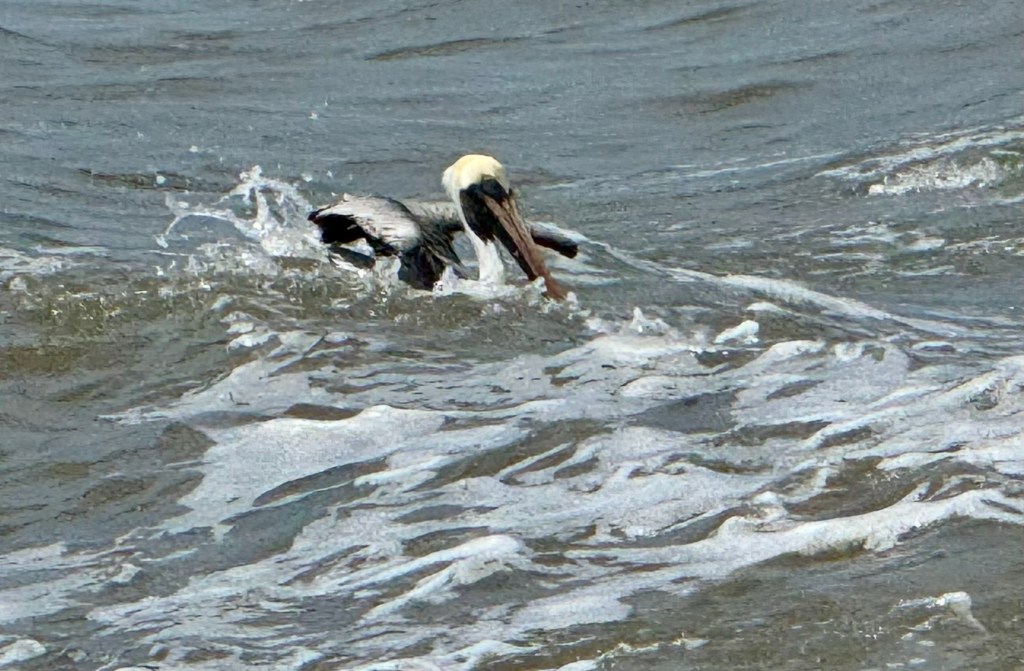
A pelican fishing in the surfReturning to the start with our gearA look into the jungleEmilio and boatman
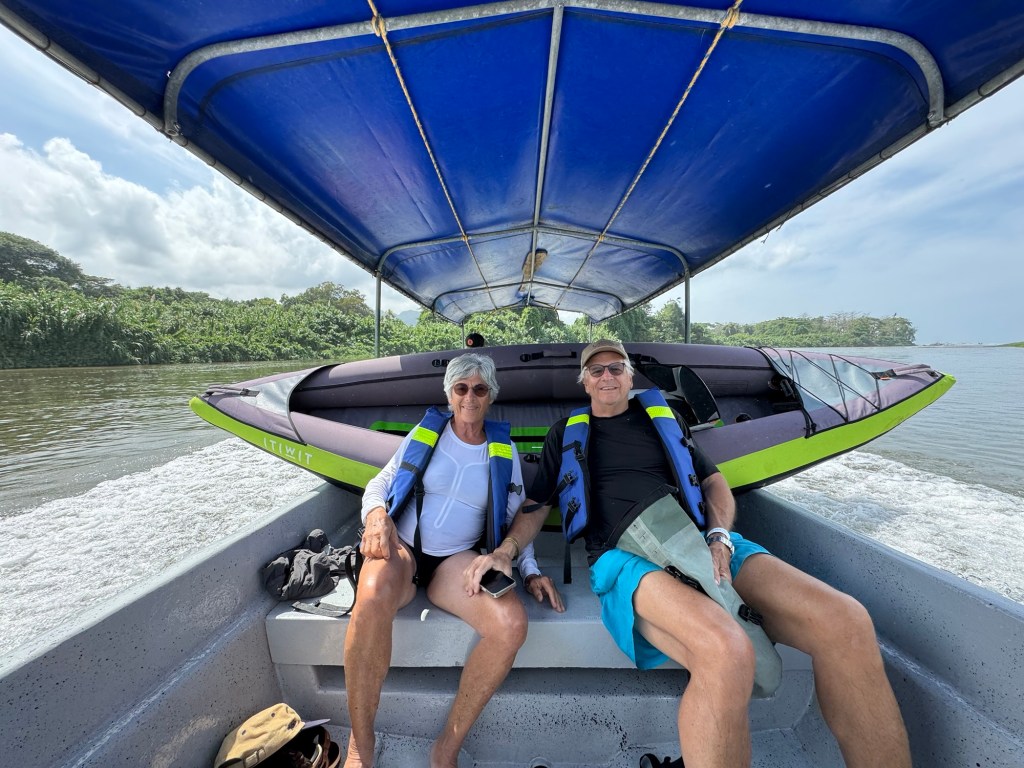
With lunch behind us, Emilio signaled time to go so we got into a boat and motored back up river to Tewimake ecolodge and our bungalow, named Tima.
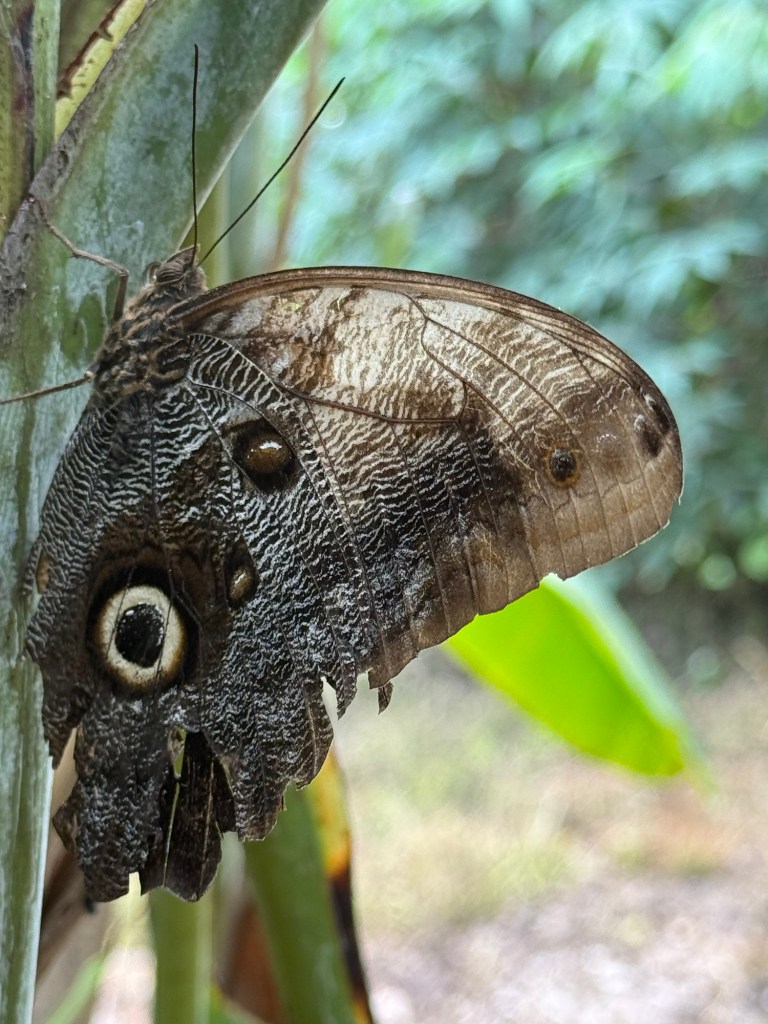
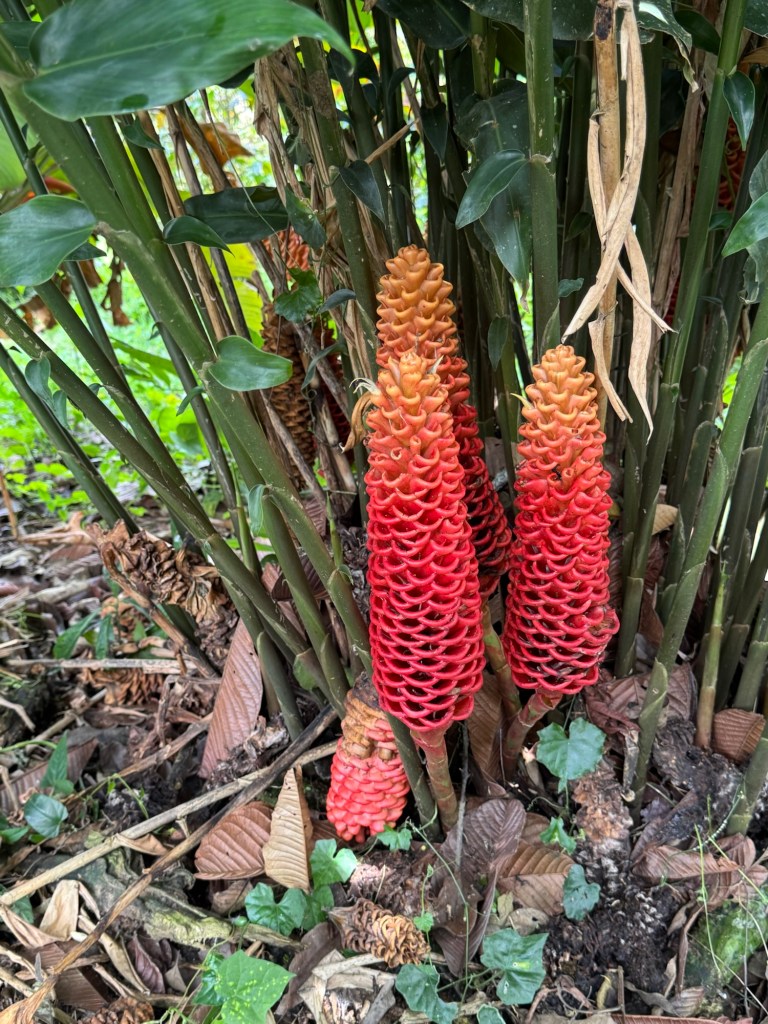
Torch GingerAn old butterfly
A hollow Macondo tree used for communication
We spent the afternoon chilling in our Air Conditioned space and looking into the forest. In the evening we were entertained by intense lightening and thunder and then rain that lasted until about 8pm. We beat the rain both coming and going to dinner. The same thing happened the night we arrived and we were told it is a daily occurrence.
November 11, 2025
The Tayrona Region we were in is approximately a 4.5 hour drive NE of Cartagena nestled between sandy Caribbean beaches and the foothills of Sierra Nevada de Santa Marta, with lush tropical jungles lining pristine beaches and 7 rivers that descend from the snow-capped mountains of the Sierra Nevada. The region’s name comes from the ancient Tayrona tribe who inhabited the region for more than a thousand years before colonialization in the 17th century and continue to live on through four indigenous tribes, including the Kogis, who have preserved the culture, language, traditions and beliefs over centuries.
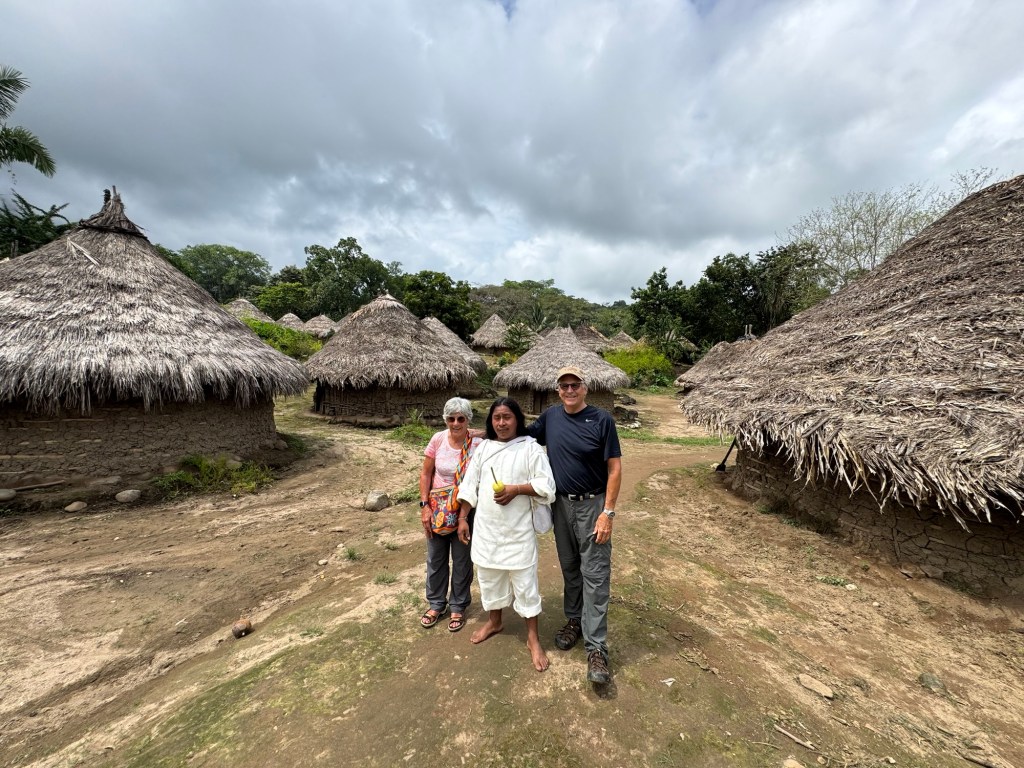
Mud houses in the villageLocal guide explains use of the poporo gourdYuka, potato-like plantMan thinking on a poporoCocoa leafCocoa plant
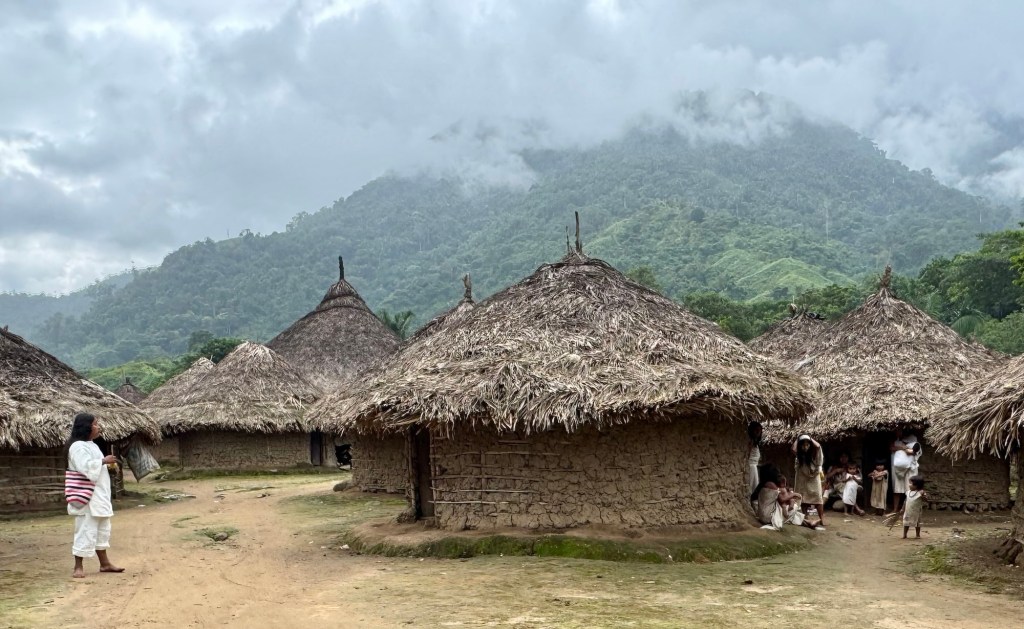
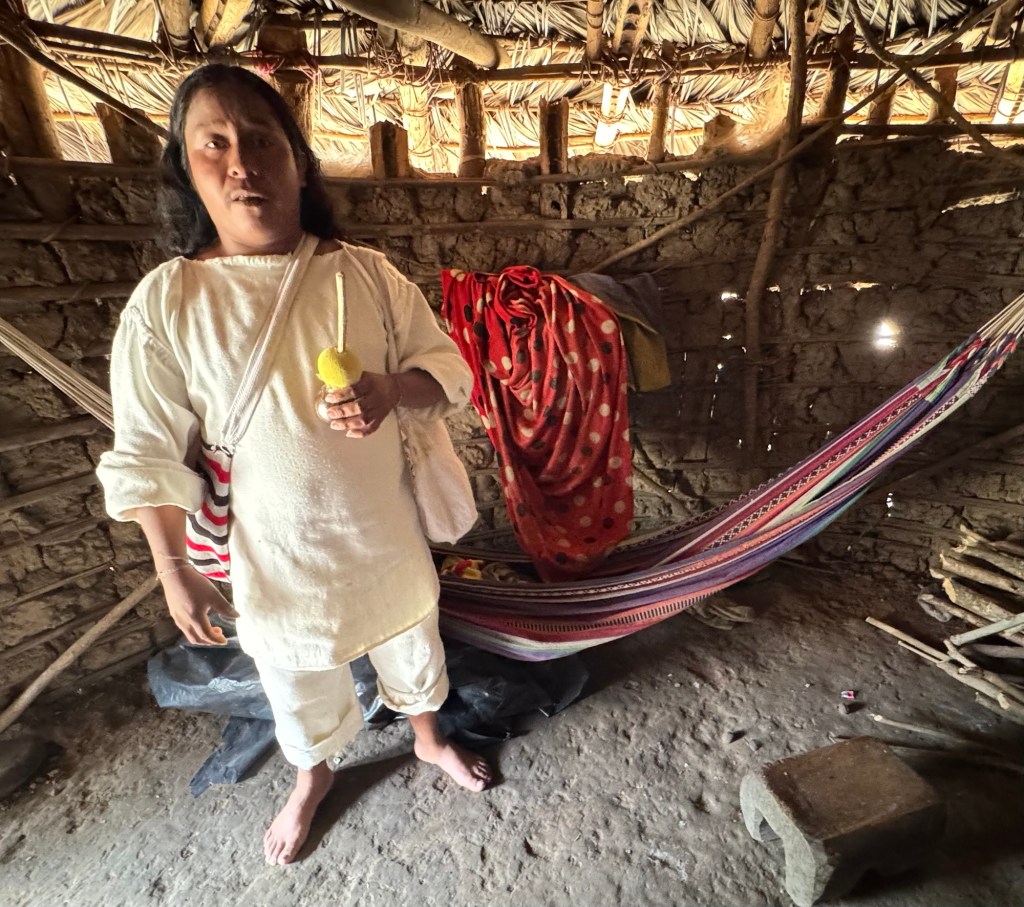
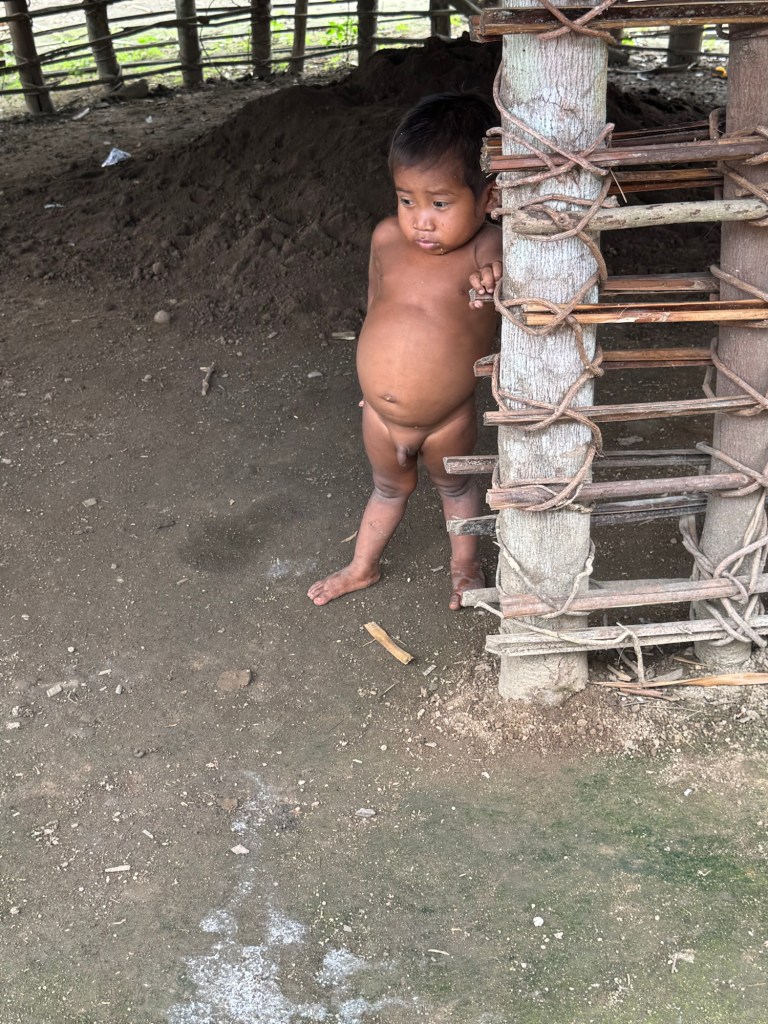
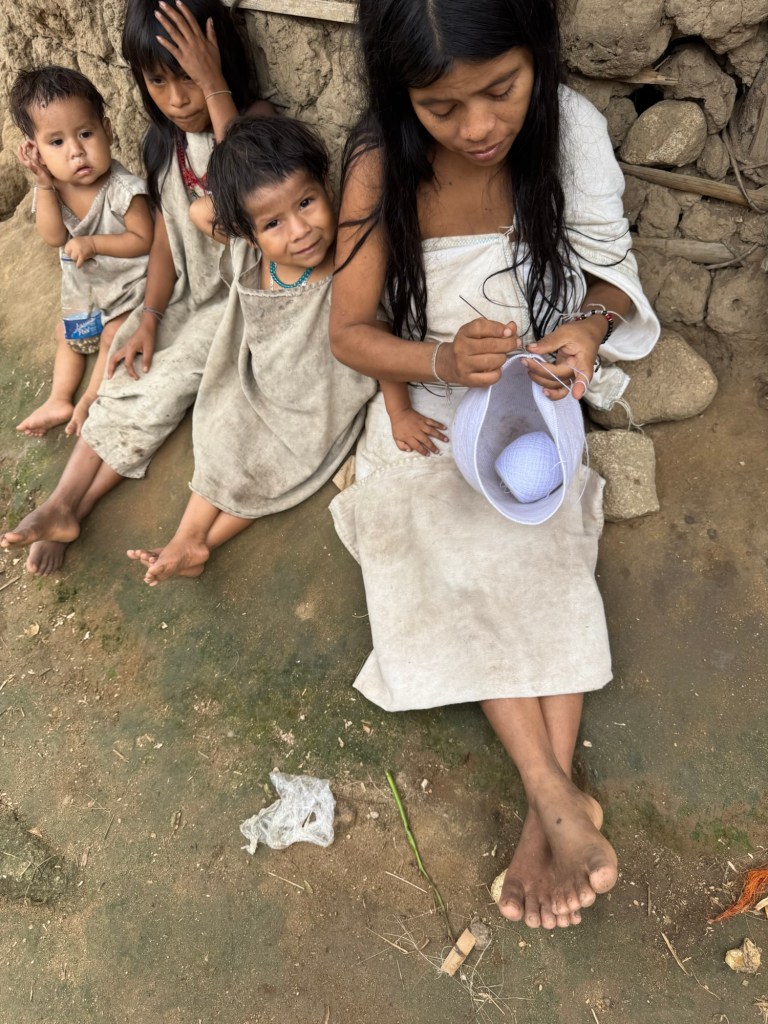
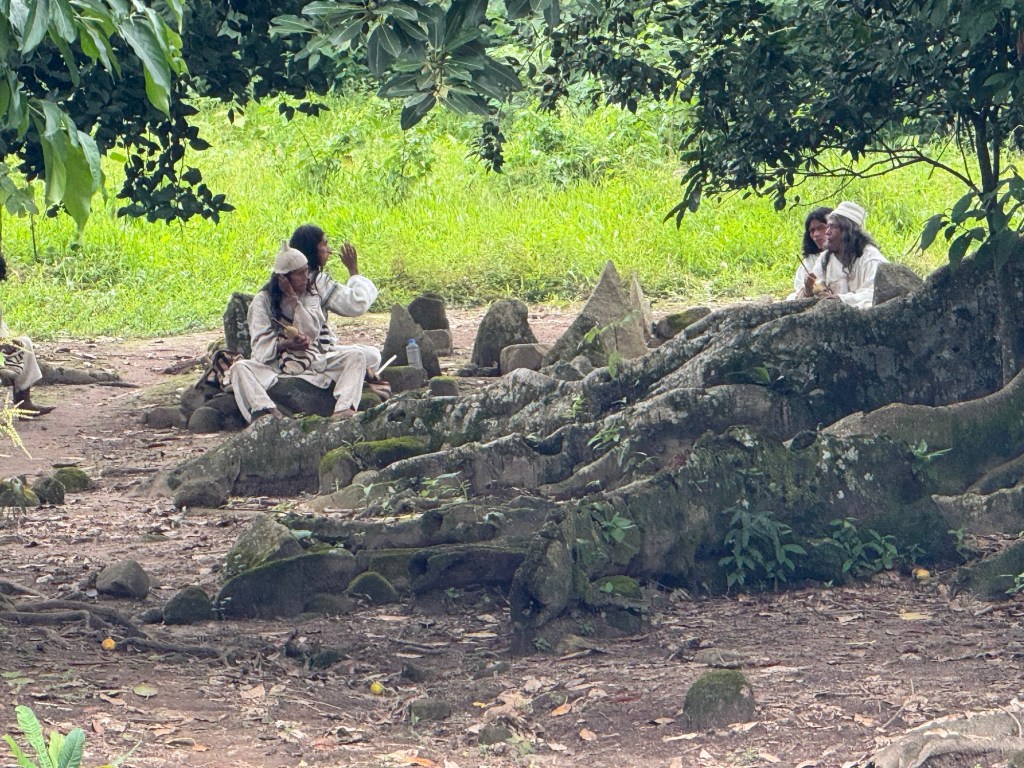
This was the day we were scheduled to visit the Kogi people in their local village, called Tumguieka. It is home to about 890 people who wear all white cotton clothing. The men wear two woven bags with straps, one for things and the second is filled with coca leaves that have been dried. As a form of greeting, the men don’t shake hands but drop a handful of coca leaves into the other gentleman’s bag. The women just wear a necklace. The men also carry a poporo, a cup-like gourd into which they put seashells that have been cooked until they turn to powder. They use a stick to stir the contents in the gourd. They chew coca leaves and mix the leaves with the crushed seashells in their mouth. Because he is chewing calcium, his people believe their teeth stay strong. I don’t know about that. I just know his mouth looked awful. Anyway, the women do not chew coca leaves. Supposedly, the reason the men rub the stick on the side of the gourd is to transmit their thoughts, a form of meditation they call “Mumbar”. The people consider themselves the “older brothers” as they have been around for many more generations than we have. We are the “younger brothers”.
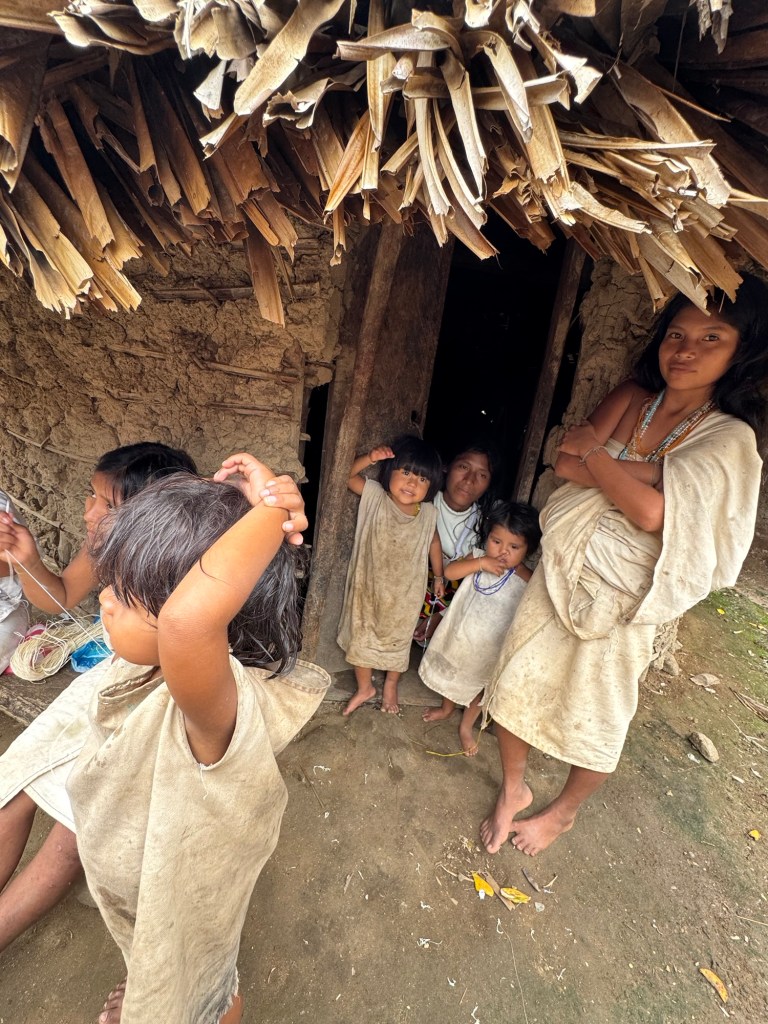
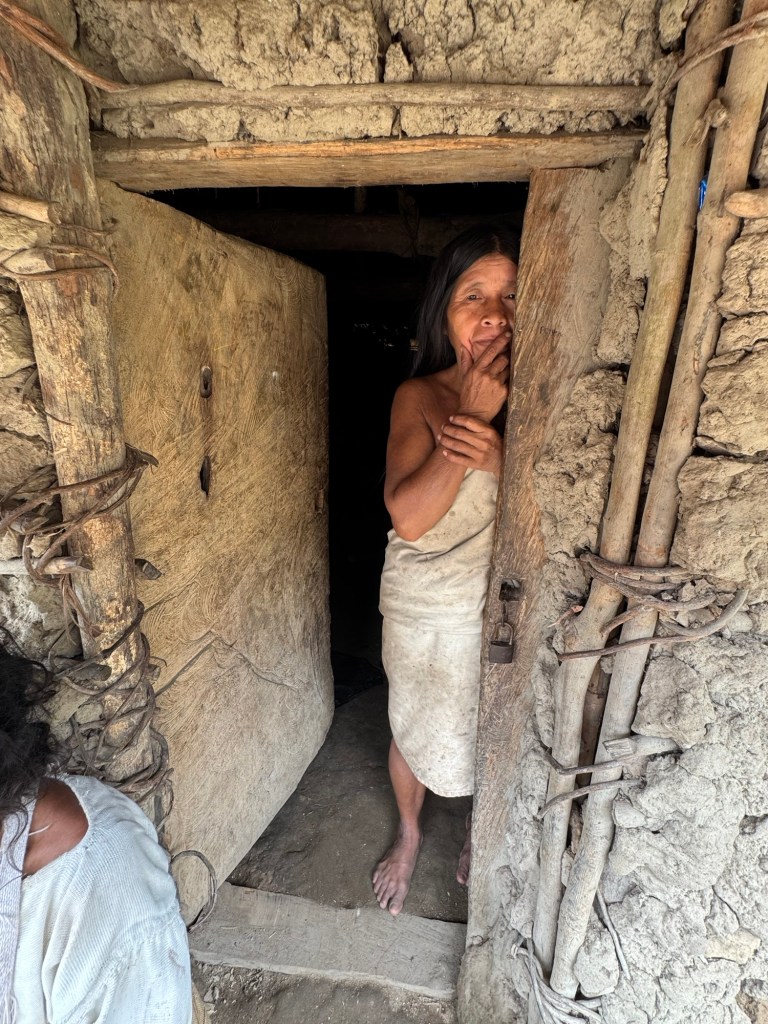
They live in mud houses similar to the Batwa people in Uganda. A few houses are built with woven palm leaves rather than mud.
Meeting house made with palm fronds rather than mud.Our local guide in his houseThe kitchen area We managed a photo with our guide
These houses are used for special meetings of the men only. Most of the people are farmers. The few men in the village were either coca chewing thinkers or spiritual leaders having a meeting. Men marry at 15 or 16 to girls who are younger. They are monogamous relationships.
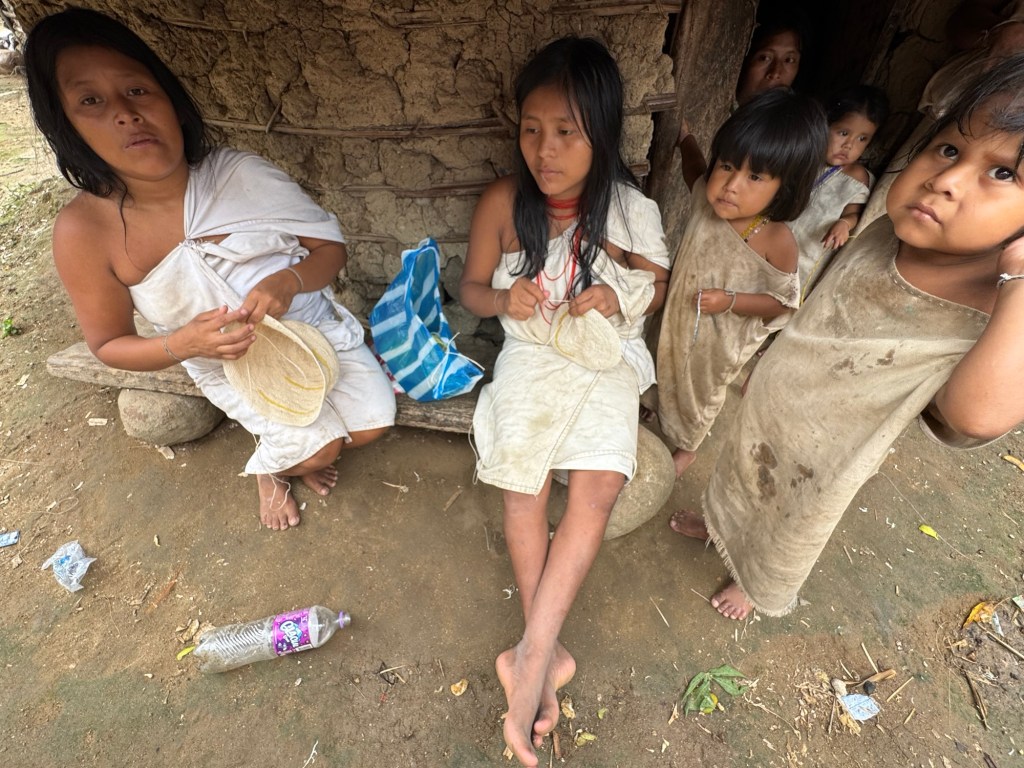
Young women crocheting bagsA house being prepared for mud.
I managed a few photos of women and children. The guide told us there were older people who were 115 years old who live up in the mountains. We were surprised by that remark, until we learned they use a different Calendar. For them the moon is the cycle of time. There are 24 moon cycles for our 12 cycles.
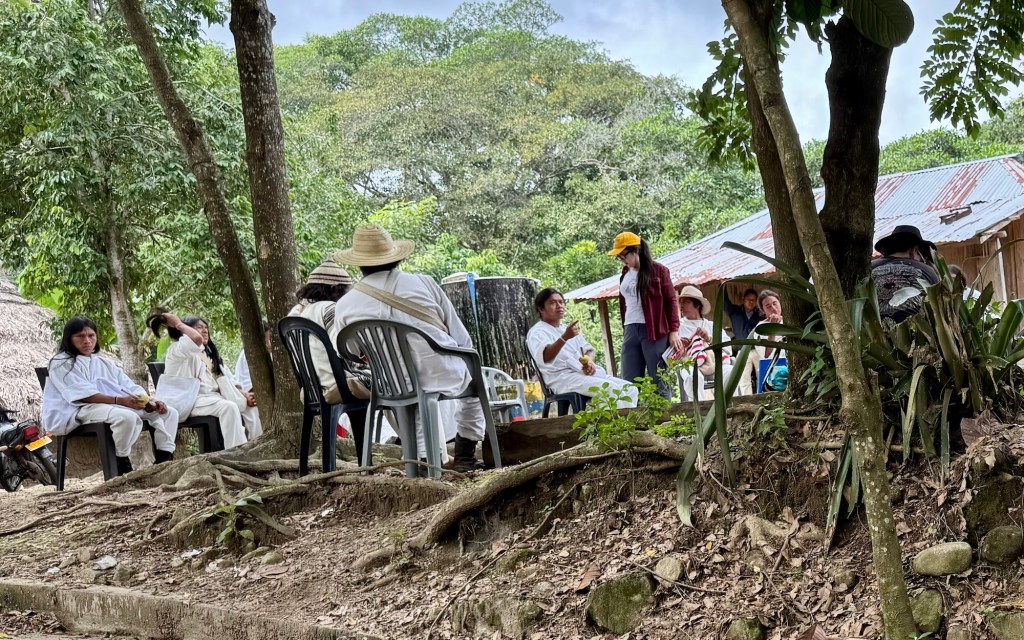
A meeting regarding the park systemA meeting of the spiritual elders
It was an interesting meeting. Hard to imagine the different worlds we live in. Then we drove back to the river along the Caribbean coast and boated up river to our lodge. We had a quick lunch and were in our pool as soon as possible. After cooling off, we enjoyed a relaxing afternoon listening to the premature rain outside. I wondered how that experience would be if we were living in a mud house. I am grateful we are “younger brothers”.
Tomorrow morning we are up and away by 8am, as we are driving 4-5 hours to Cartegena, our last stop before returning home.
This was a travel day. Picked up at 6:30 for a 9:50 flight from Medellin, pronounced Medegeen, to Pereira, that took 40 minutes. Pereira is a city in the coffee region of central Colombia with a population of 481,000 and an average elevation of 4480. The coffee region sits on the foothills of the Central Andes mountain range.
Lovely White Cecropia or Trumpet Tree, common at this elevation Lush green countrysideLarge Cecropia leaf; tree grows between 1500 and 2600 meters only in Colombia, Peru, Ecuador and Venezuela. Used by indigenous people for asthma. It is hollow and provides a home for ants.
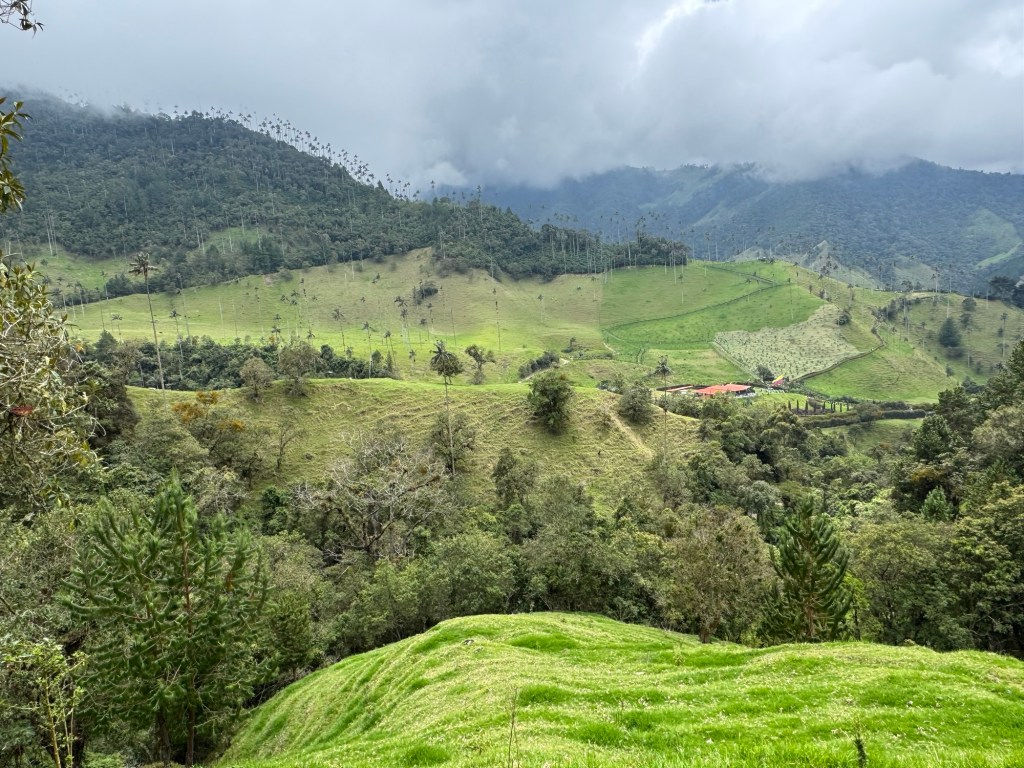
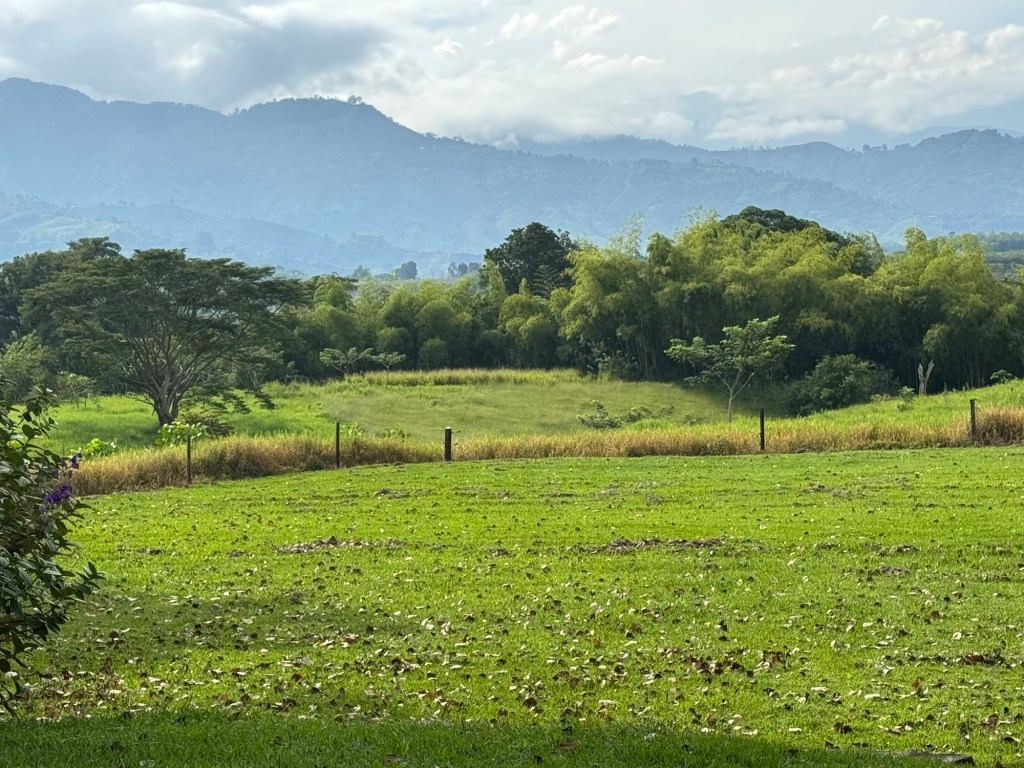
This area has its own distinctive culture centered around the land and agriculture. Since colonization in the 1840’s, the region has showcased brightly colored houses in its small towns, making a striking contrast between this region and the rest of the country. Its altitude, climate and fertile terrain are what make Colombian coffee some of the best in the world. The drive through the lush, green, rolling country side to our accommodations took 3 hours on mostly bumpy roads.
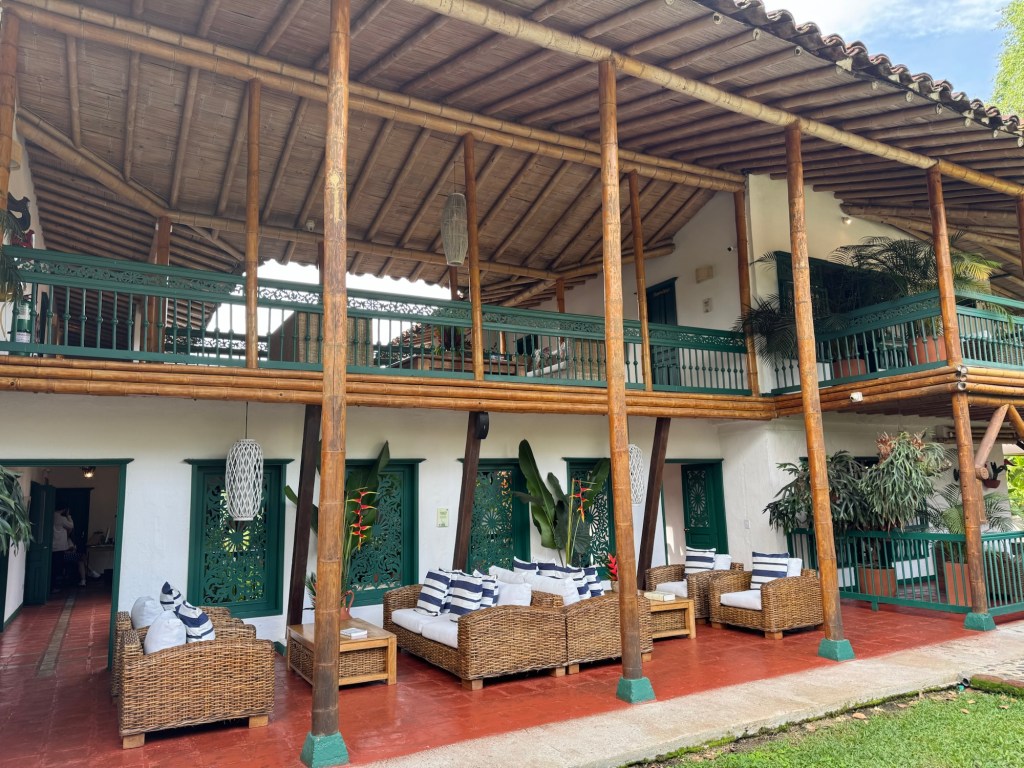
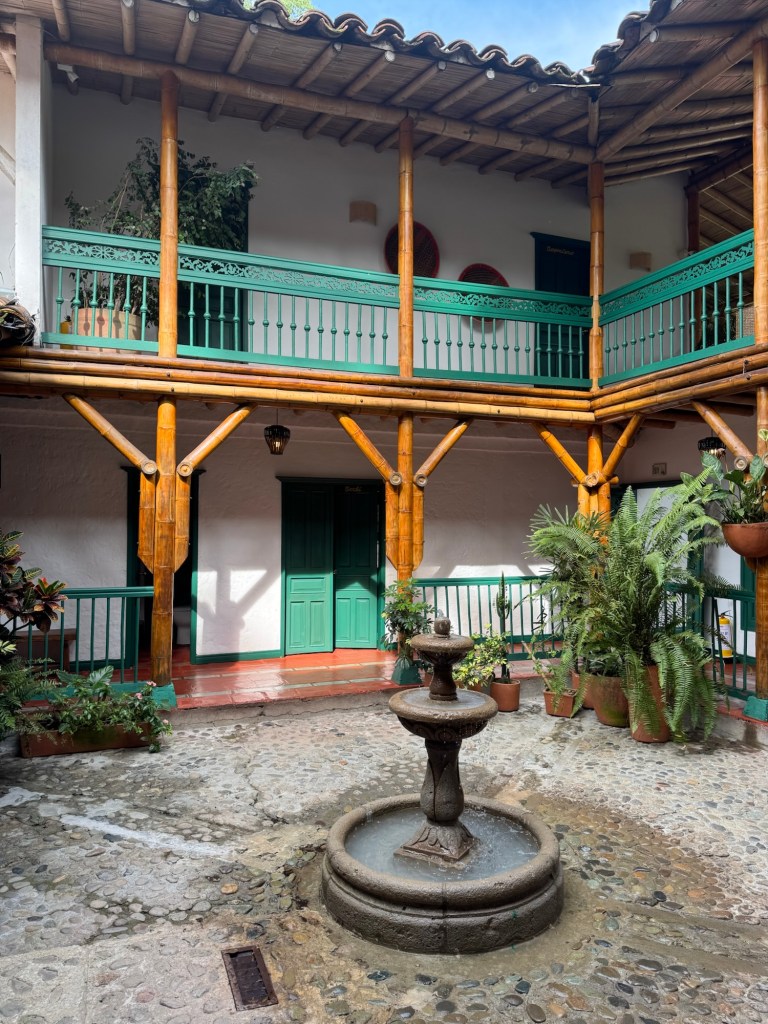
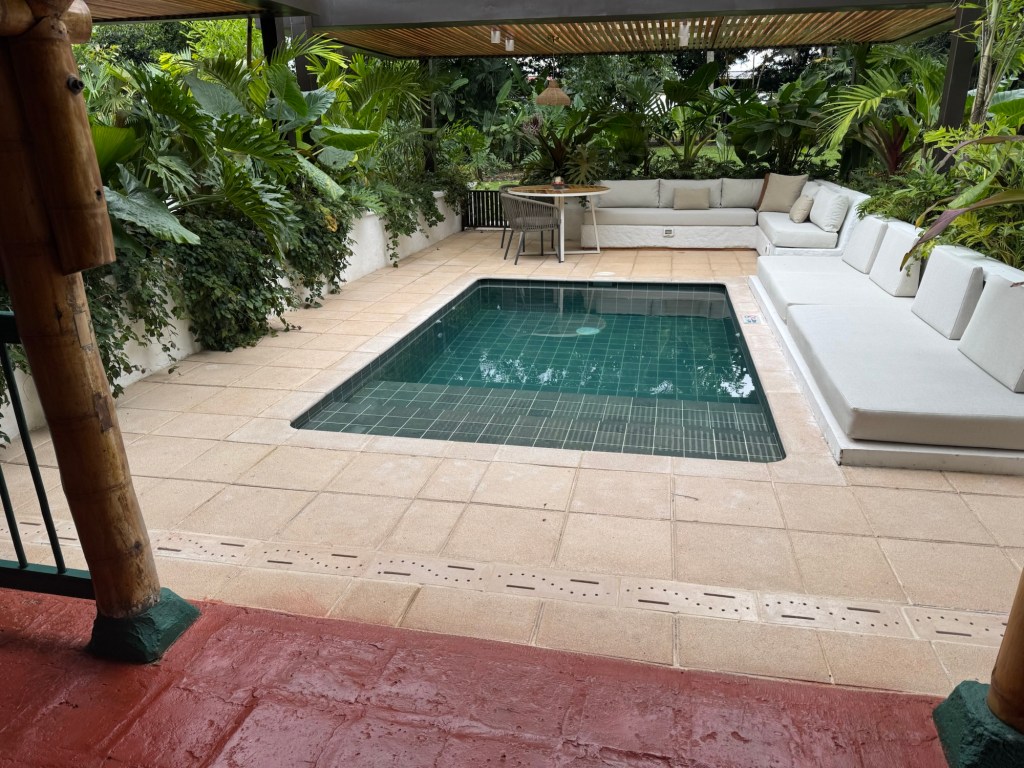
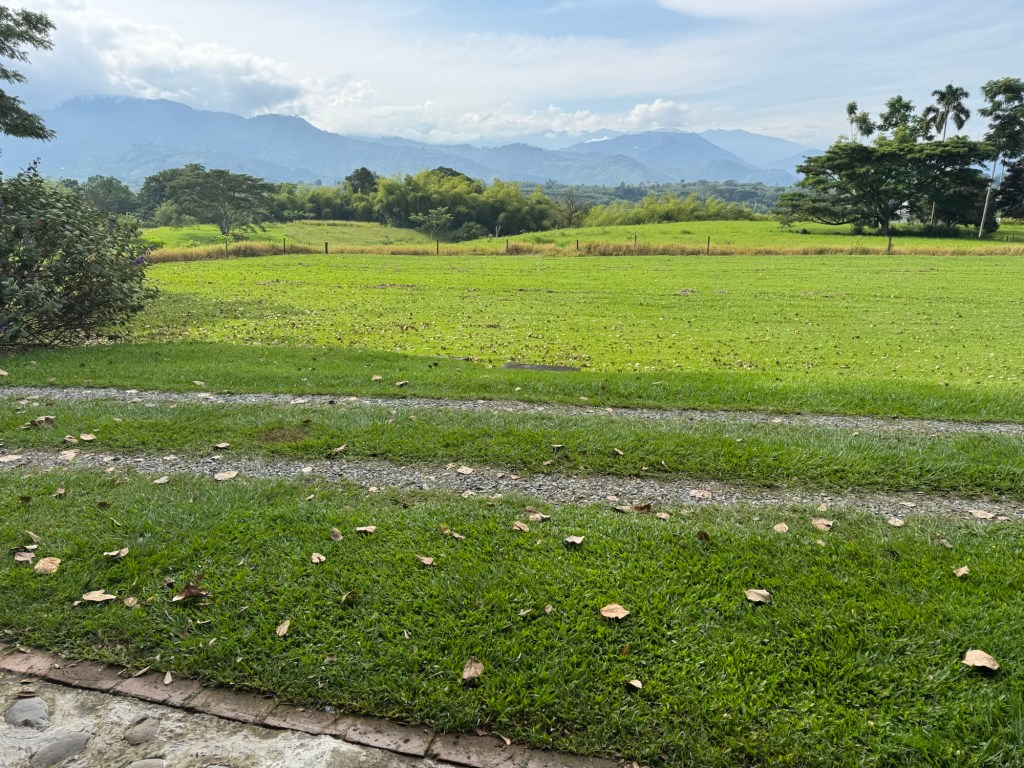
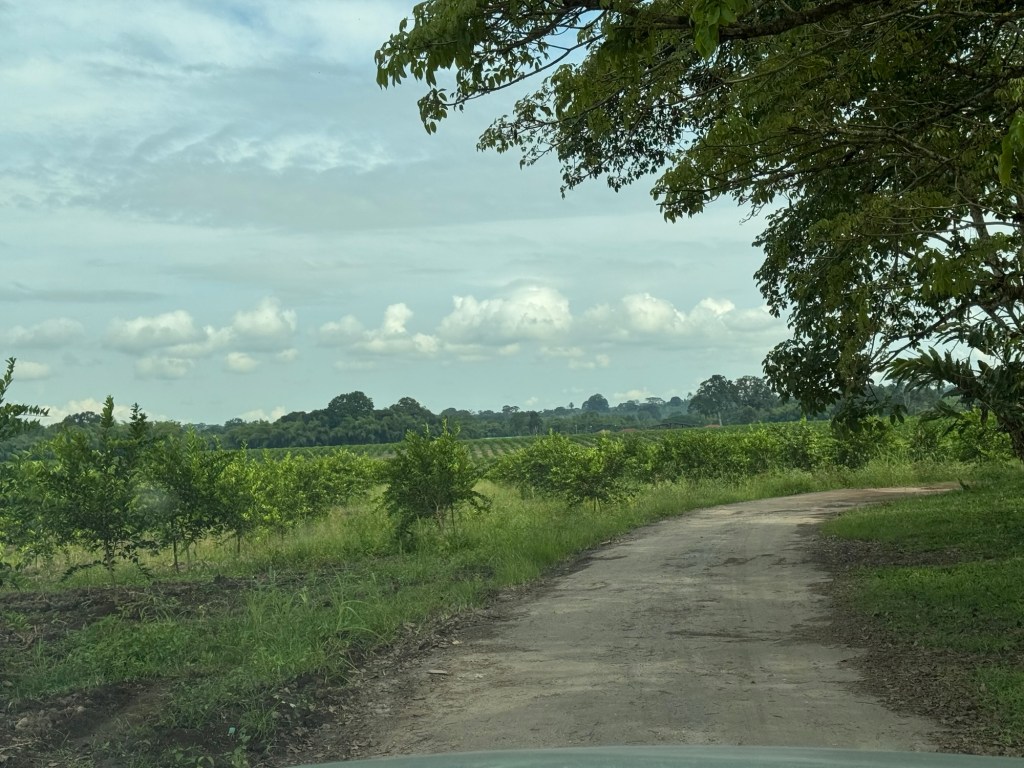
The Hacienda Bambusa was well worth the effort. It is set amongst extensive plantations of lime trees, plantain and cacao and looks out at the Central Andes. Our suite even has its own private pool, although it has not been warm enough to use.
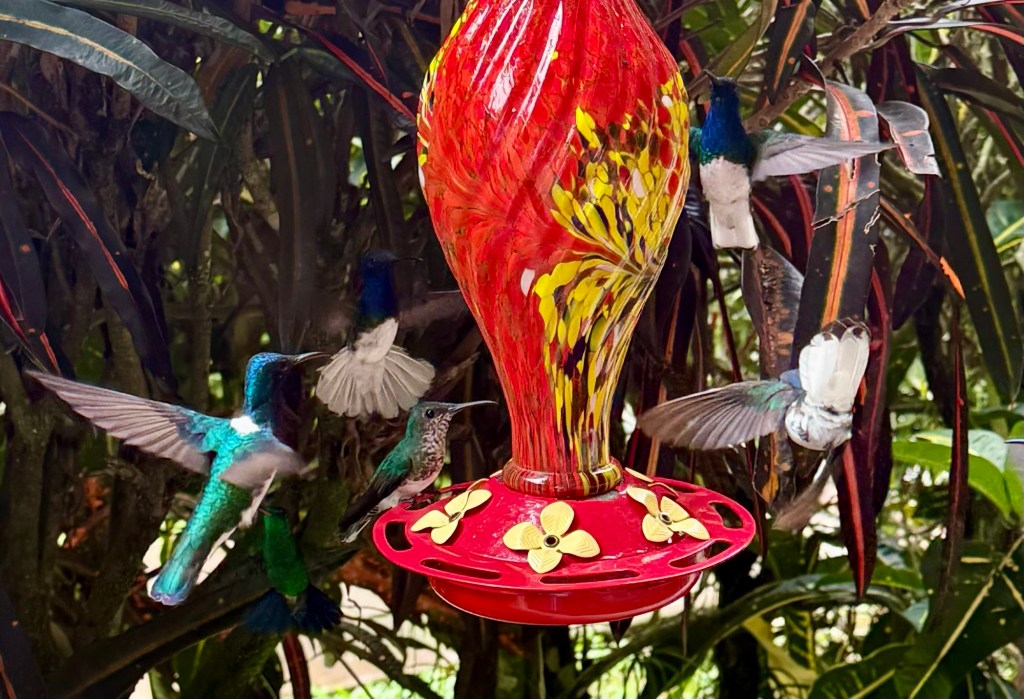
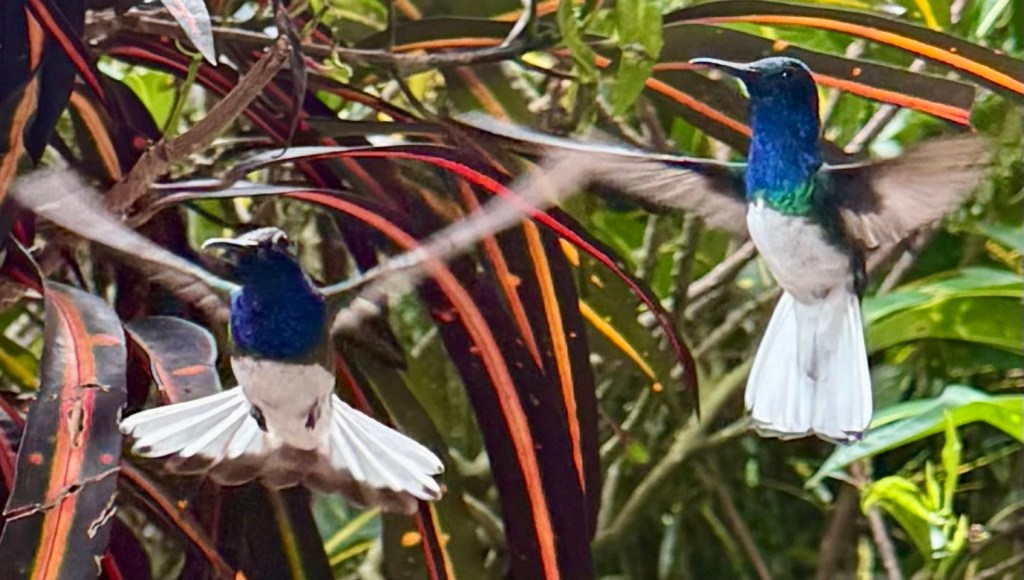
Hummingbirds in motion
There were hummingbird feeders everywhere and it was fun to watch the several different kinds fly around. We arrived in time for lunch and then enjoyed a free afternoon in the gardens and by our pool. We learned that the property is owned by a family that has 444 acres of lime trees, rather than coffee. Had an early dinner and went to bed.
Friday, November 7, 2025
Daniel and our driver picked us up at 9am and off we went to a colonial town called Salento with a population of 4000.
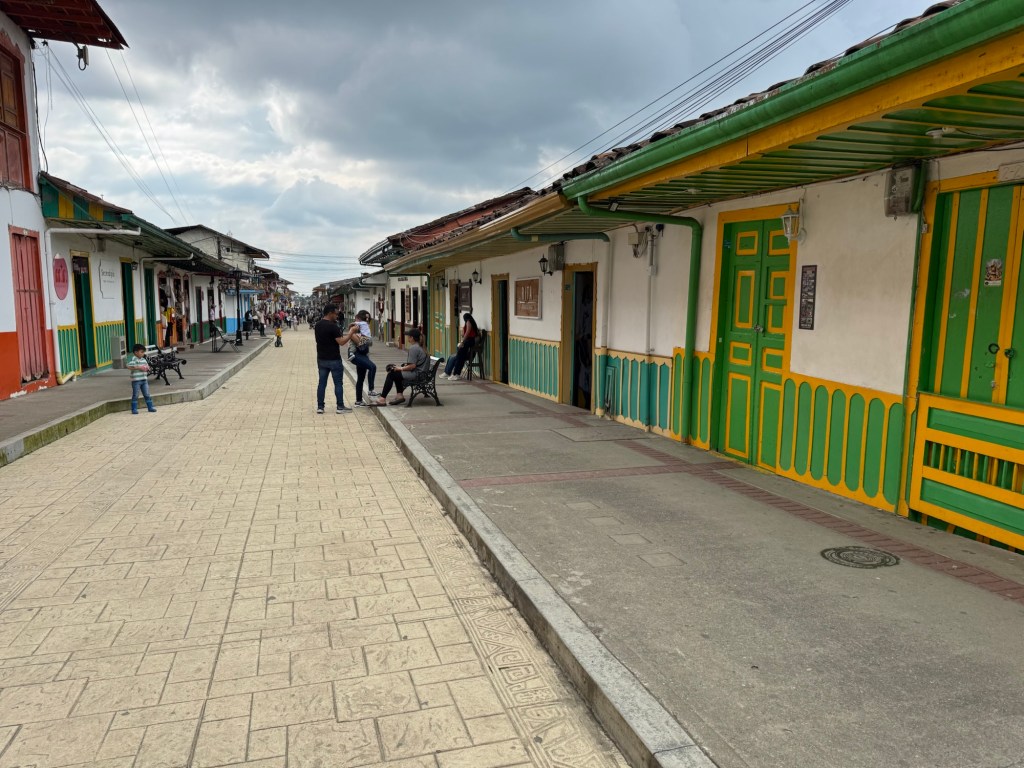
Each building must have 2 colors and a tile roof
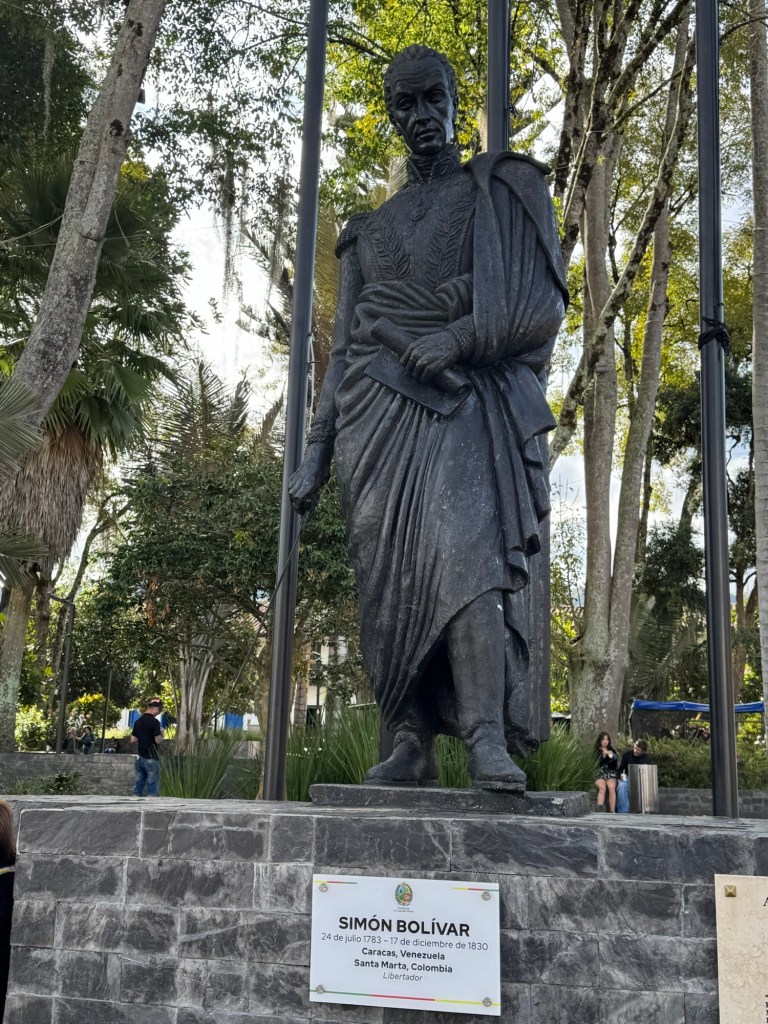
We walked the charming pedestrian streets and encountered yet another statue of Simon Bolivar (1783-1930) in the town square. Daniel told us Bolivar led the revolution against Spain and won. He became Colombia’s first president. His statue is in every town in Colombia.
Simon Bolivar
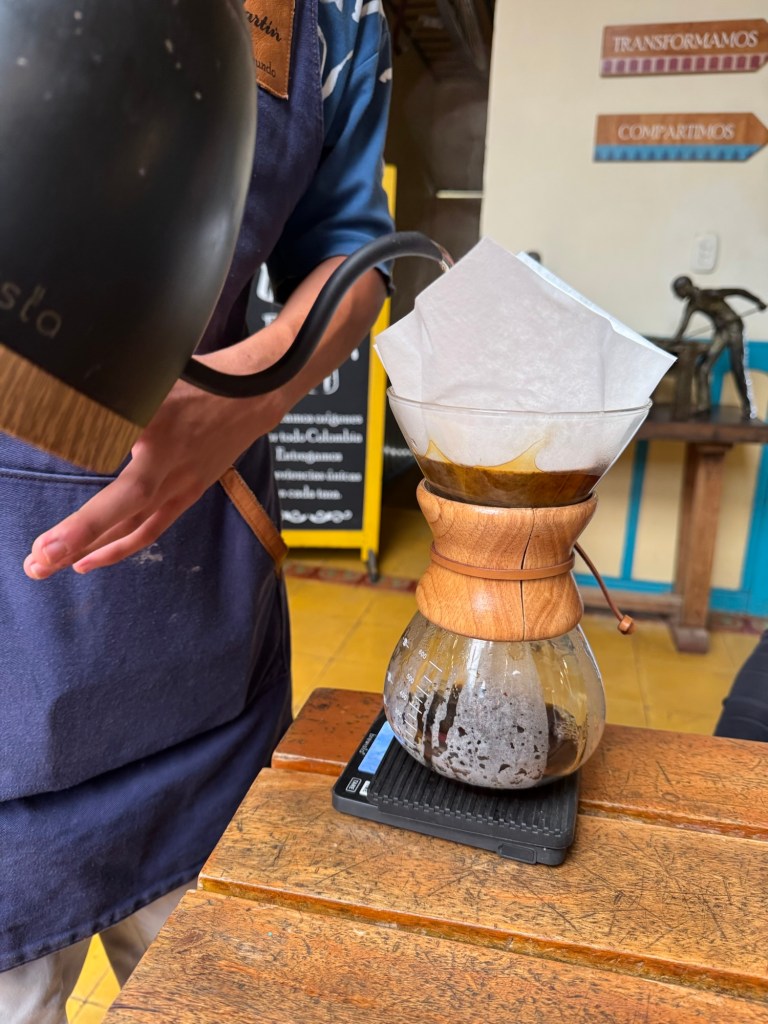
We stopped for coffee in a local cafe. We had several choices and I requested a coffee called Pink Bourbon made with the chemex process.
Coffee being made with a chemex
The coffee tasted pretty good, though I am not a good judge of coffee. Mark had a cappuccino and liked it.
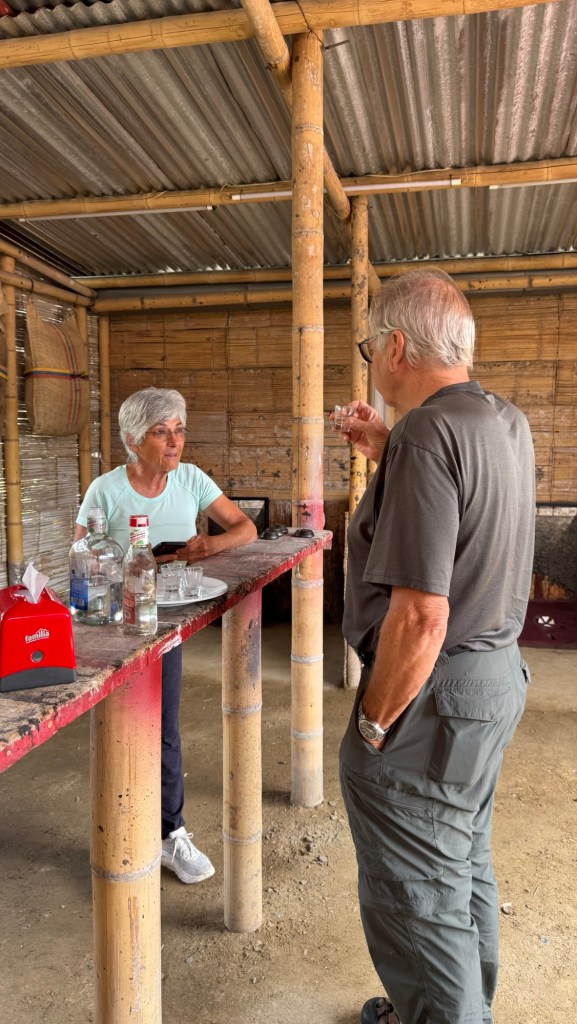
Drinking aguardiente to get ready to play Tejo
In another cafe we played a game called Tejo. The game is popular and we could see why, it’s similar to Cornhole, but with gunpowder. You throw a disc at a hard center target with four small envelopes filled with bits of gunpowder and a soft spongy clay backdrop. If you hit the target an explosion goes off and you get a point. With no effort, both Mark and I succeeded in creating mini explosions. The game was popular with indigenous people, without noise, 500 years ago.
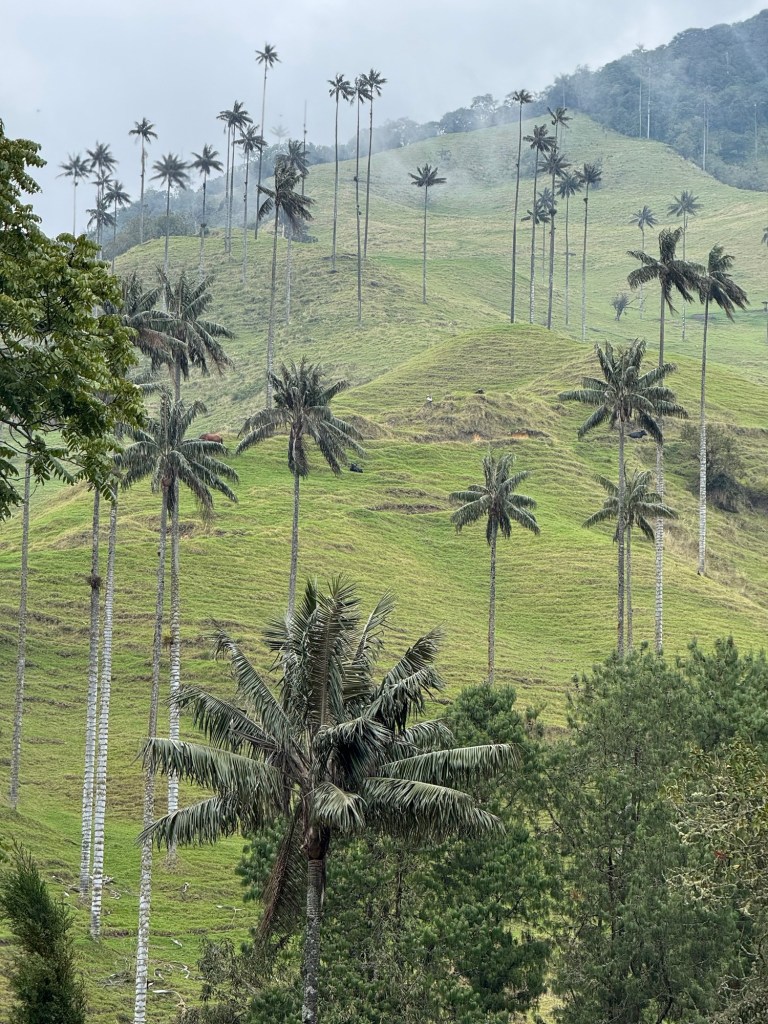
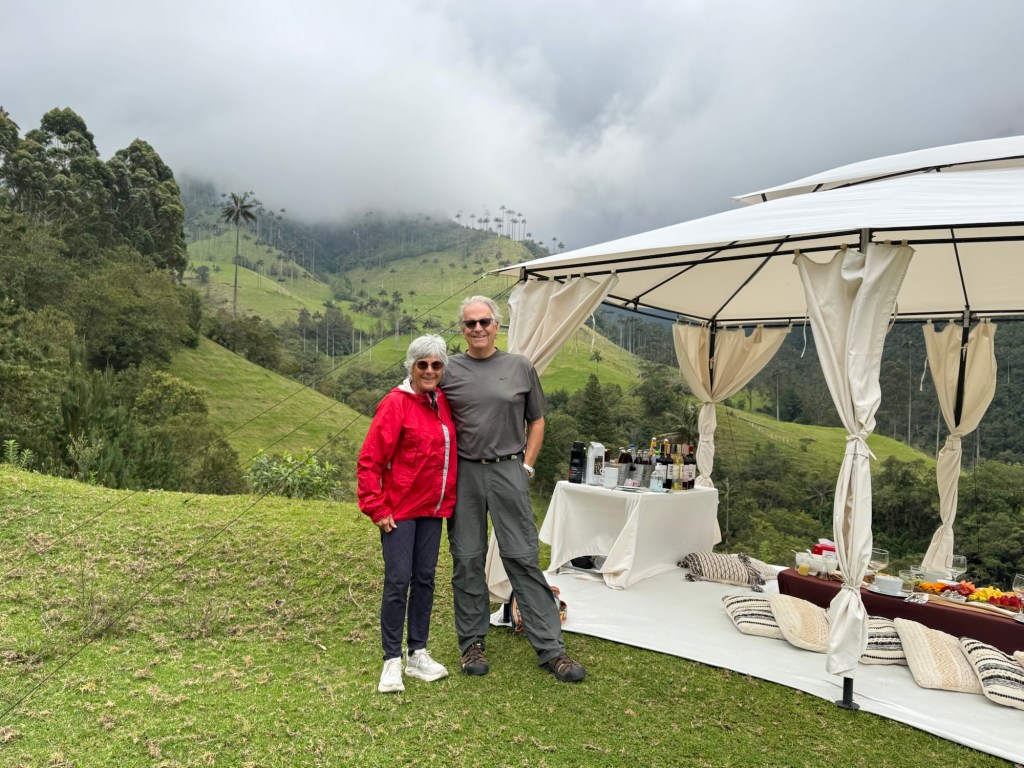
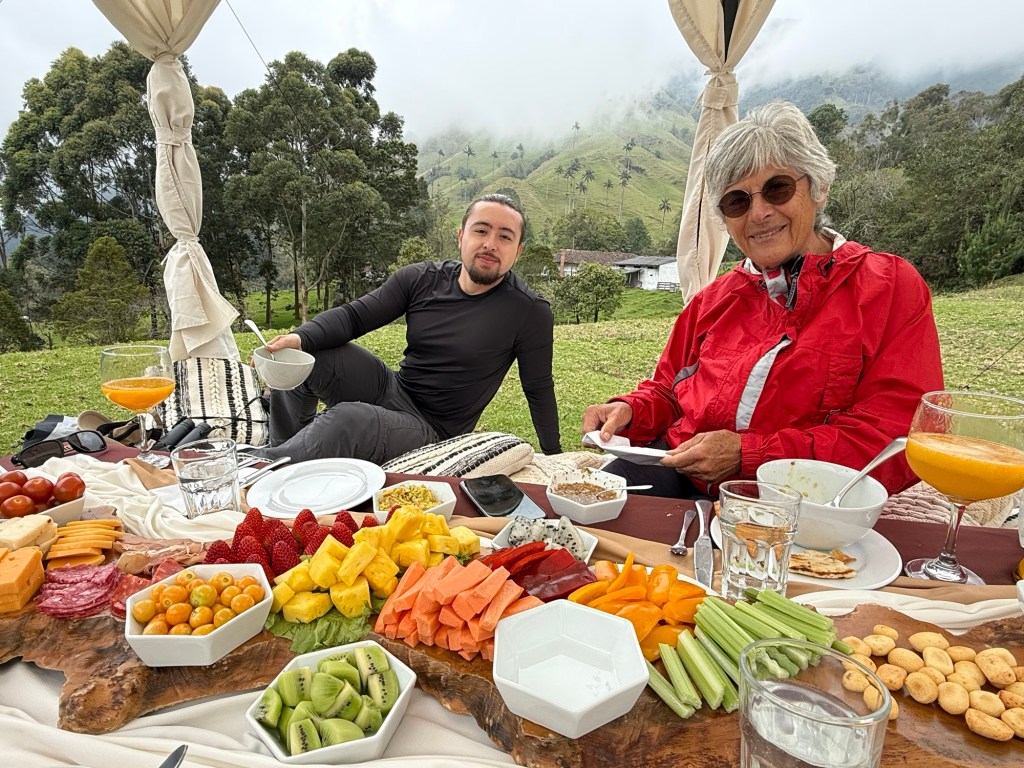
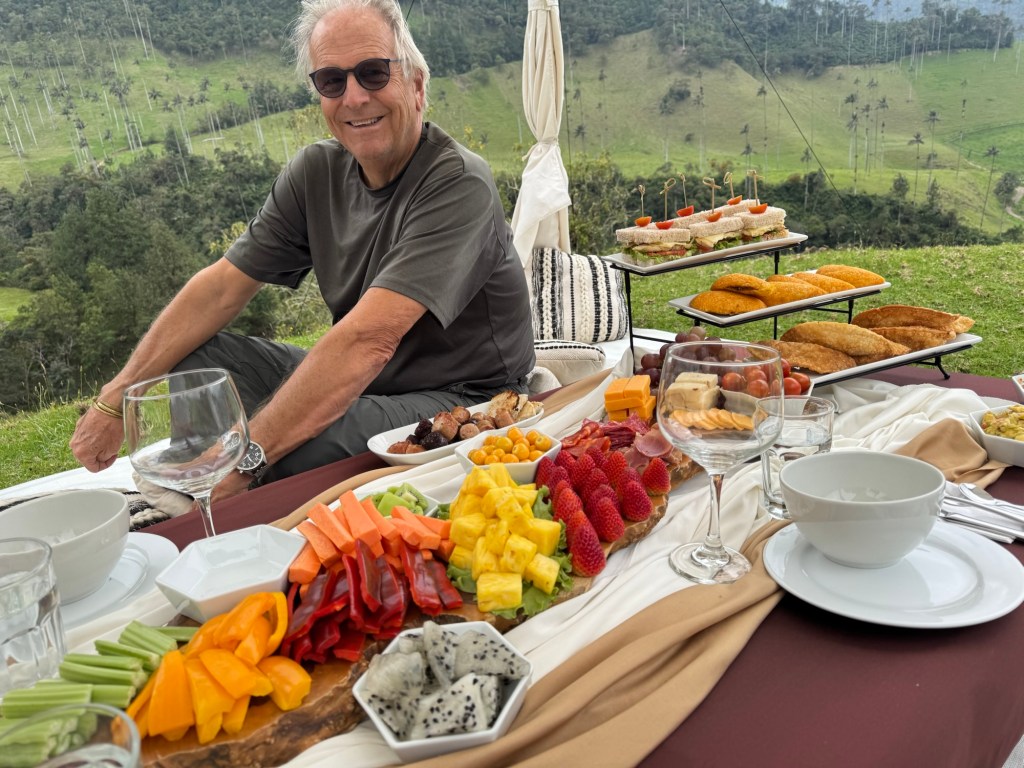
Then we drove on to our lunch sight on a hillside overlooking the mountains with the rare and tallest palm trees called Wax palms. They grow to 210 feet tall and only where we saw them.
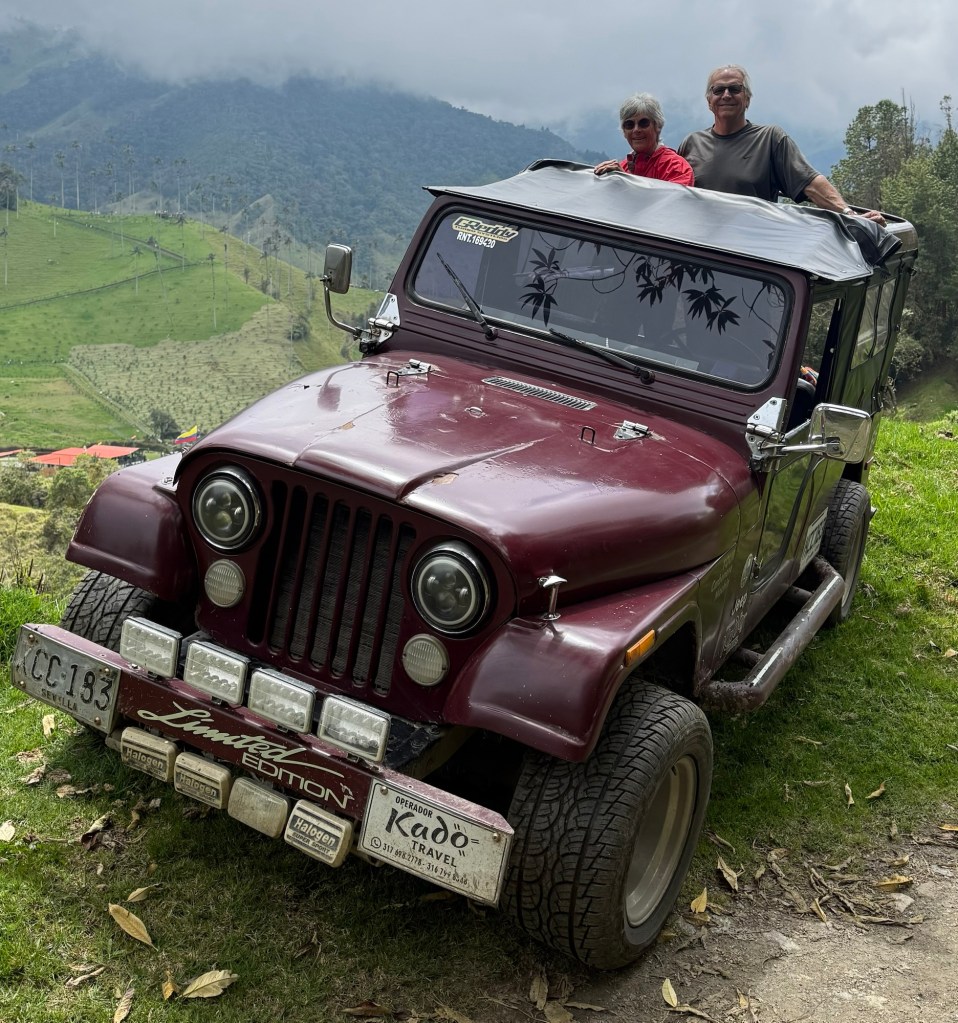
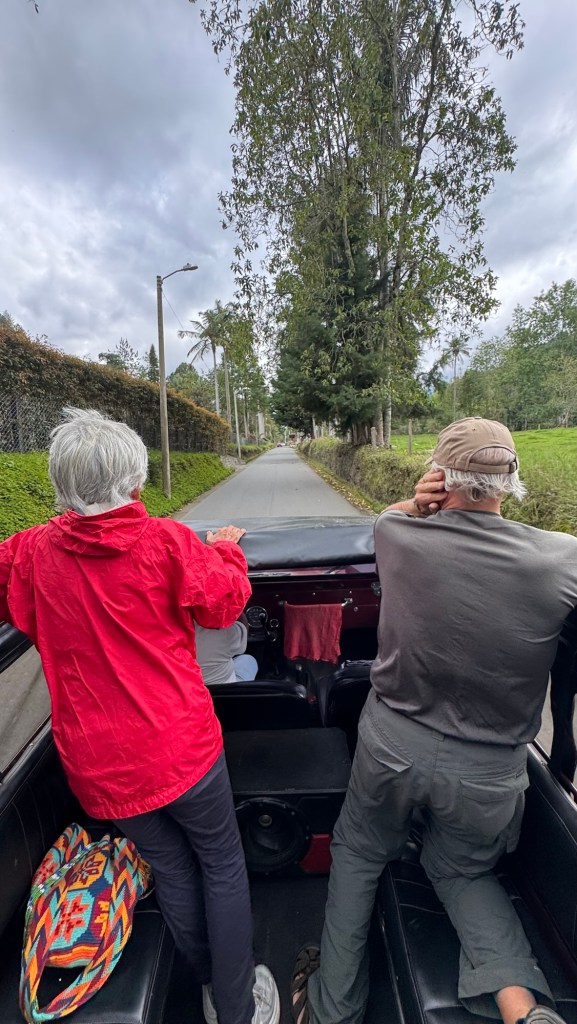
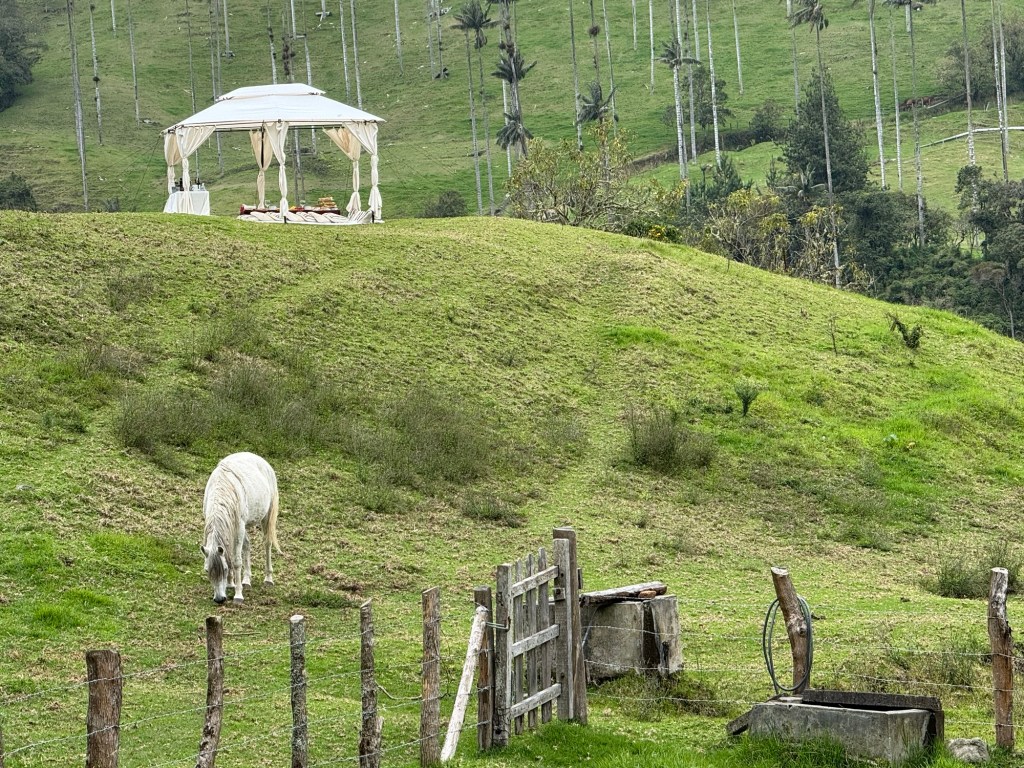
Wax Palm TreesGrow to 210 feet then dieCaptured a Andean condor Our safari jeepRiding in the back of the jeepArriving at our surprise lunch sightDaniel, our guide, and me.Over whelmed with food
On the drive back to the hacienda, Daniel told us more about the civil wars from the 50’s forward. A civil war started in the 50’s between the conservatives and the liberals. FARC (Revolutionary Colombian Army Forces) began in the 60’s. In the beginning it was farmers vs. the conservative army and civilians. Fighting continued until 2015, 65 years, when both sides compromised and signed a peace process.
The Narco cartel wars began in the late 70’s and continued until the 90’s when the government stopped them. An activity called Fake Positive was instrumental for the government to increase the numbers of dead guerillas, to make it seem like the government was gaining on FARC, government troops would kill poor, sick and disabled people, dress them in FARC clothing and tell the government they were being successful in reducing the fighting so they could get time off. The ruse worked for a time until it became obvious that the killed people were being dressed in new clothes, with new shoes, sometimes on the wrong feet, and the populace began missing their family members. What a sad way to end the fighting.
Back at the hacienda, we changed for dinner and visited with a Canadian couple also staying at the hacienda.
Pam and George Sigurdson from Winnipeg
We had a lot in common with Pam and George and chatted quite awhile, before heading off to bed.
Saturday, November 8, 2025
Out again at 9am, having had a delightful breakfast of eggs Benedict. We headed for a coffee plantation called Casa Vieja that is owned by a family named Granada. The plantation was purchased by the family in 1981 and contains 40 acres of coffee as well as other fruits and vegetables for the family’s consumption.
Along the way we saw a variety of plants.
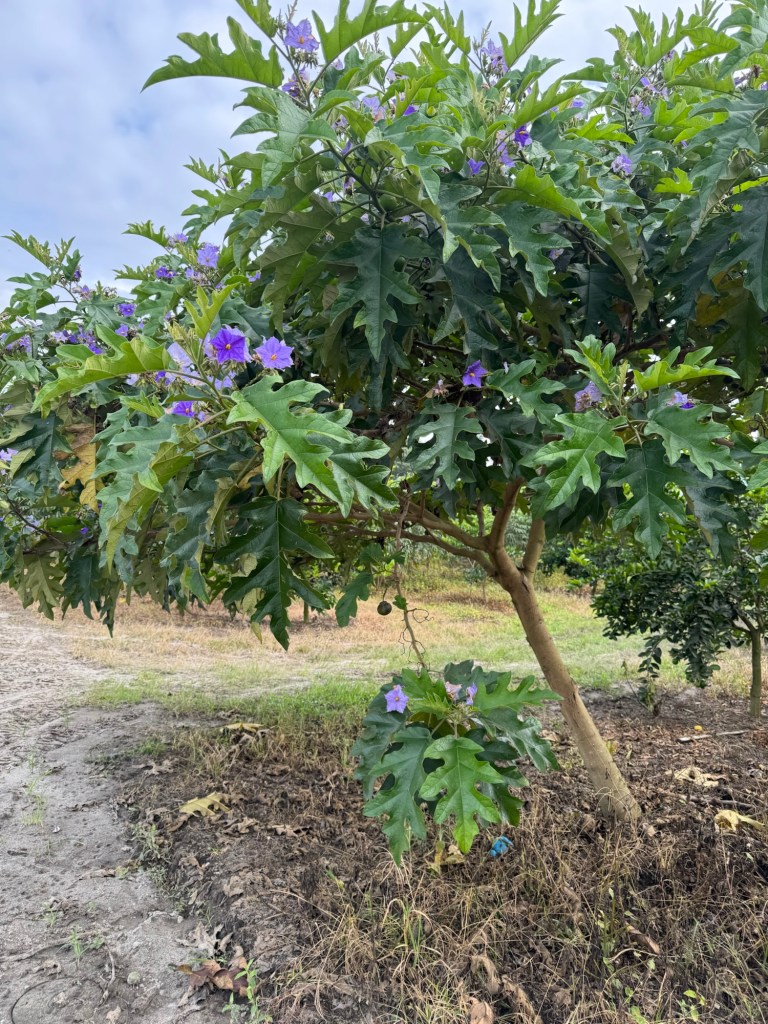
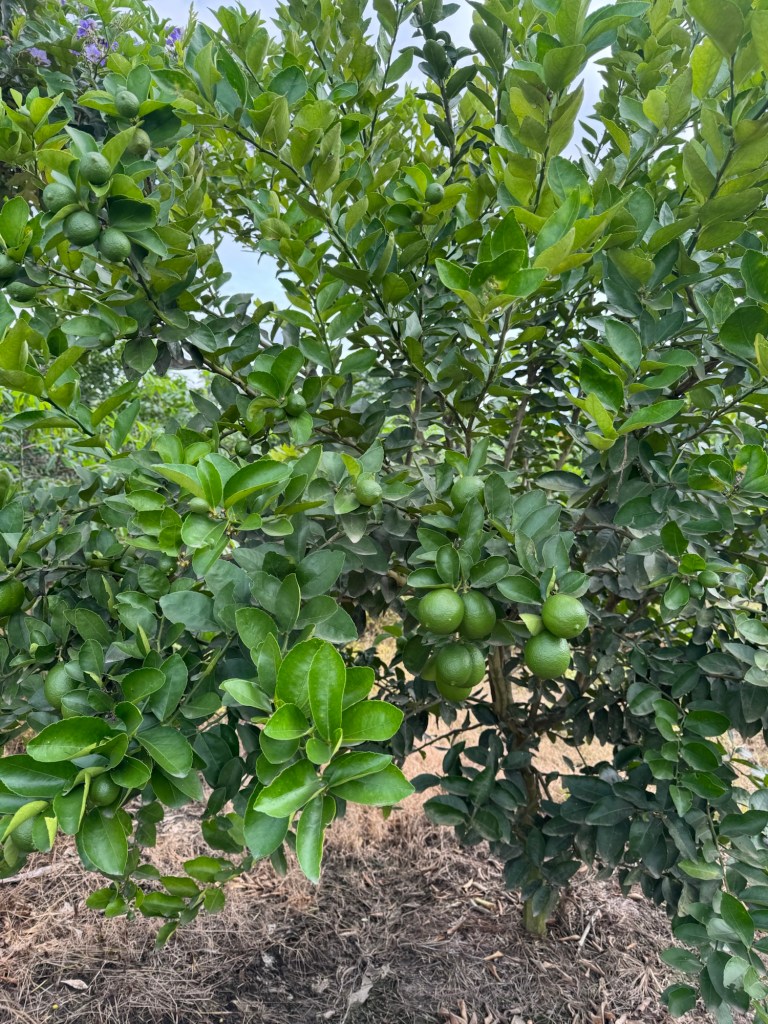
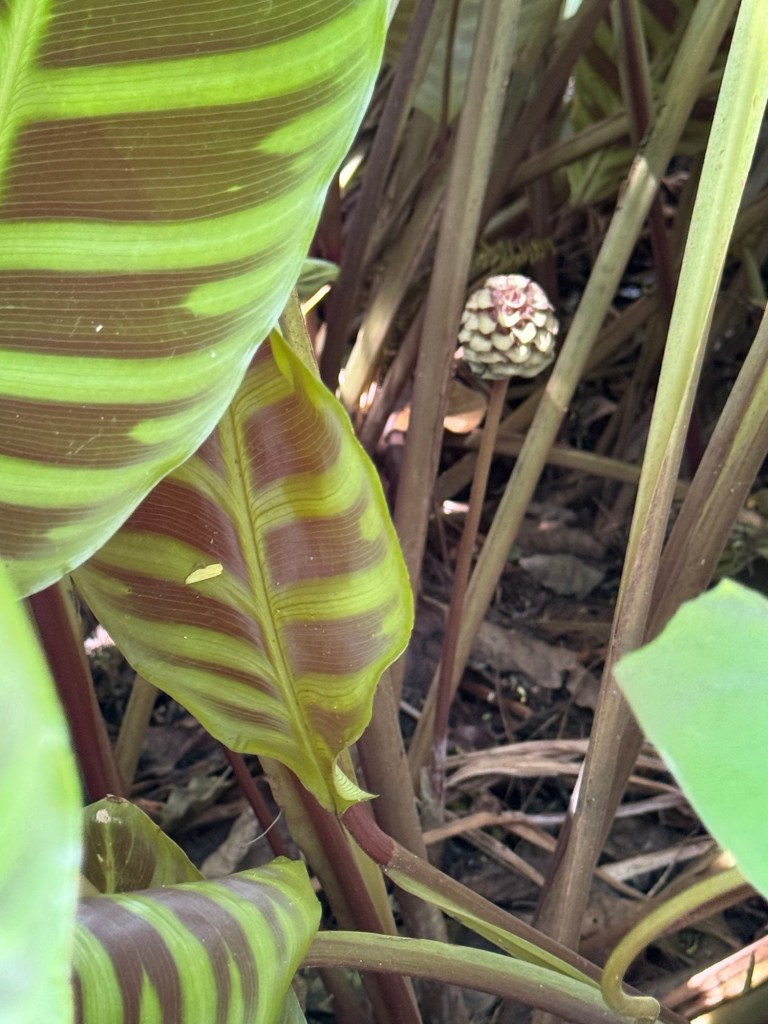
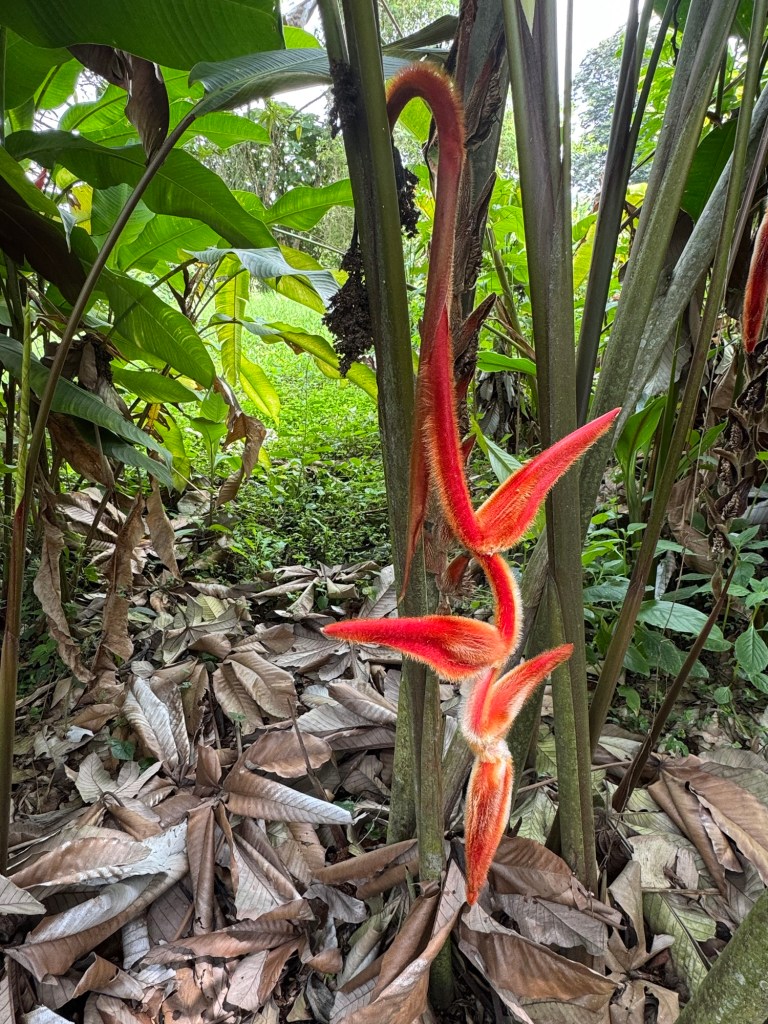
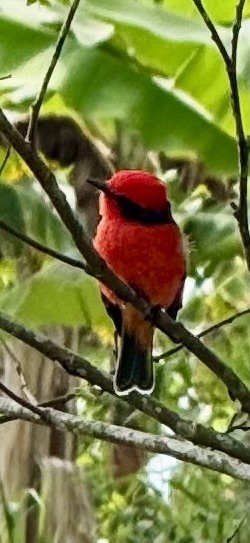
Giant Potato TreeLime plantation Lime treeBamboo, used for constructionZebra plantDrive to the hacienda through bambooGinger shampoo puts out a lot of liquidPink banana, not edible Red Velvet HeliconiaVermillion flycatcher
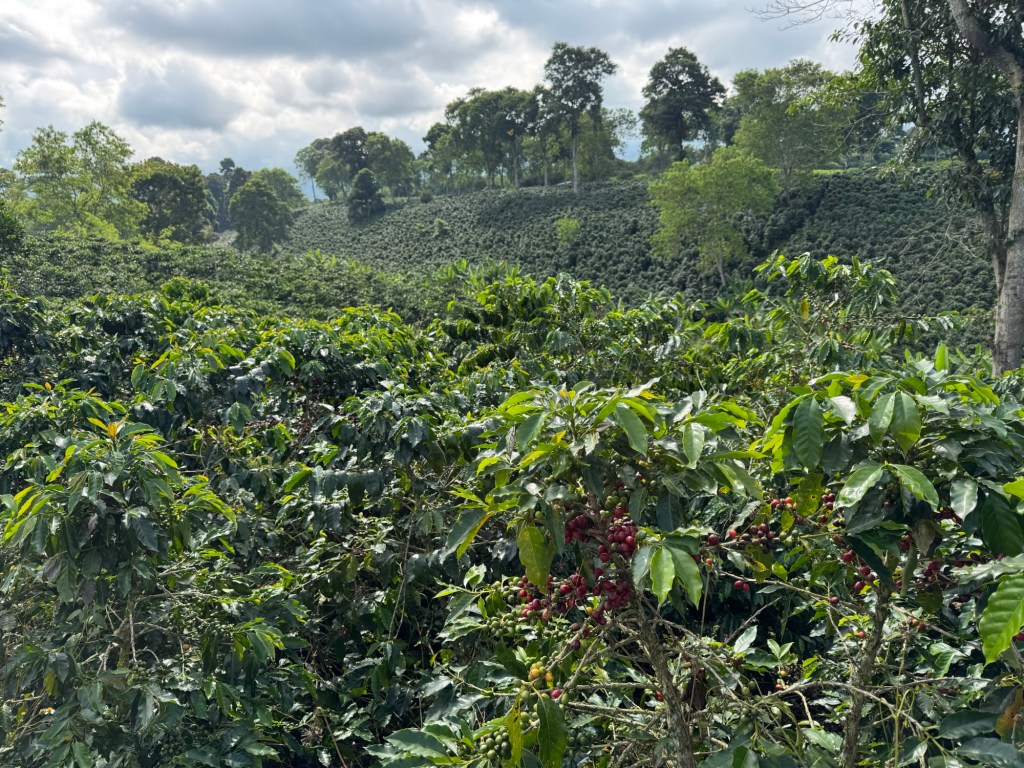
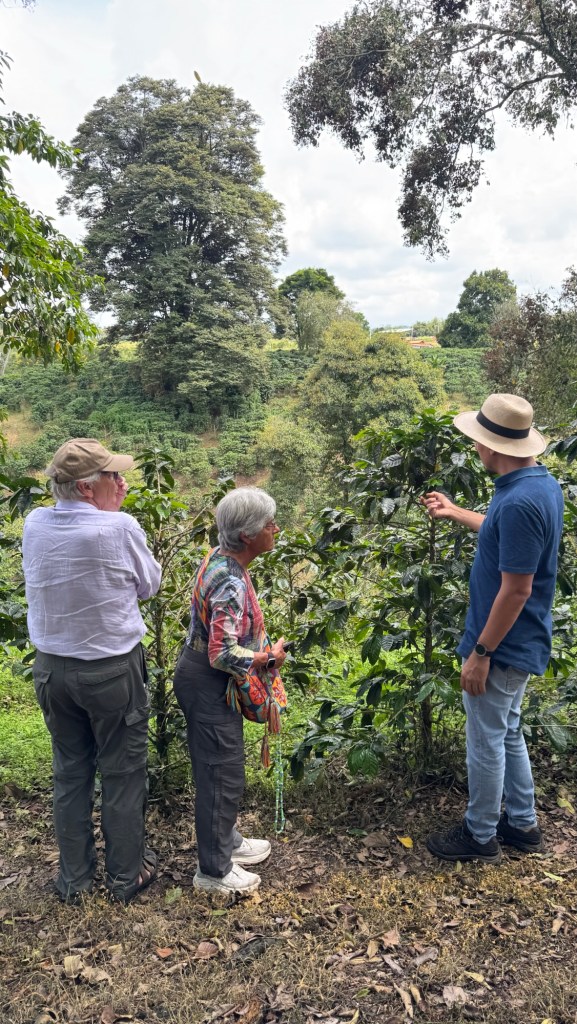
Soon we were at the coffee plantation and walking the property with the owner’s son, Santiago, who talked us through the growing, harvesting and processing steps to a cup of coffee.
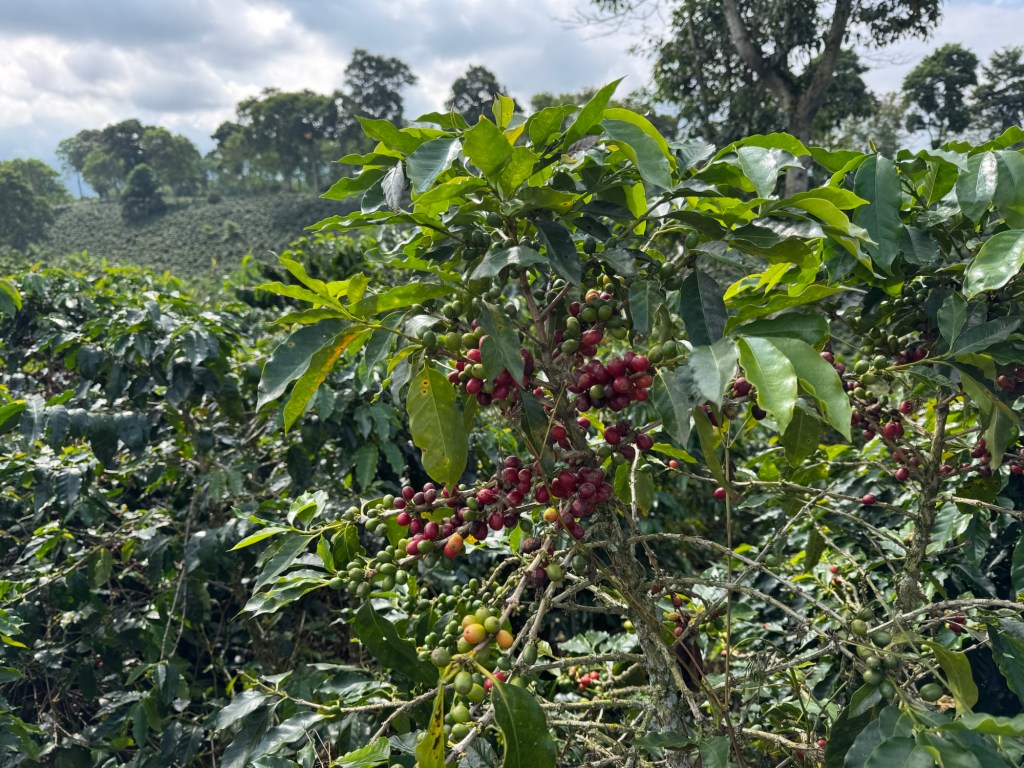
New and 5 year old plantationsMature coffee treesMany beans ripe and ready for picking
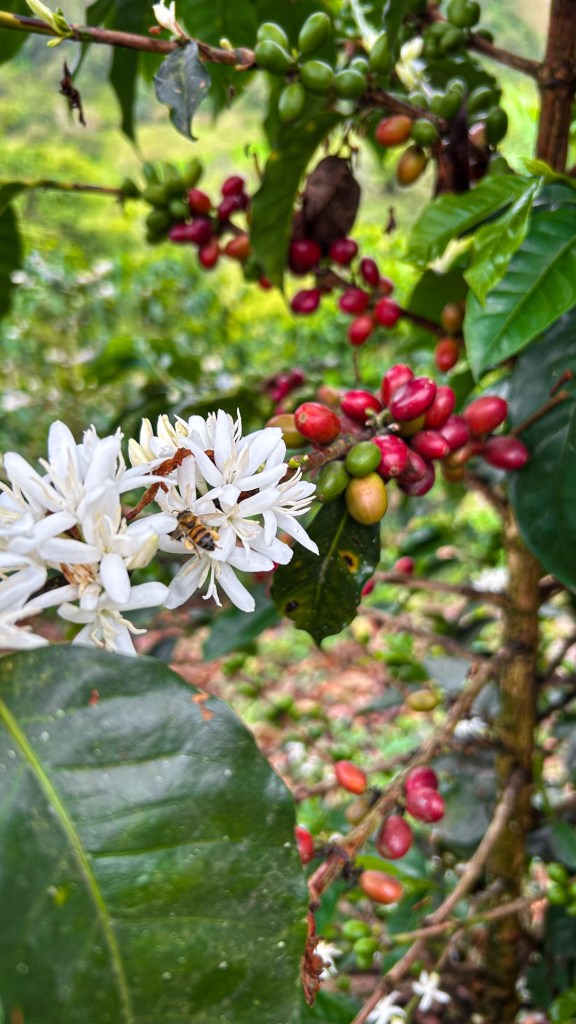
12 employees work full time all year. During harvest season August through October 30-40 picker are employed. There is also a second picking in March and April. From flower to bean takes 7 months. Trees produce well for about 20 years. When they get 5-6 feet tall, they are pruned to 18 inches. The first crop is at 2 years. Santiago said their production is 20-25,000 kilo per year.
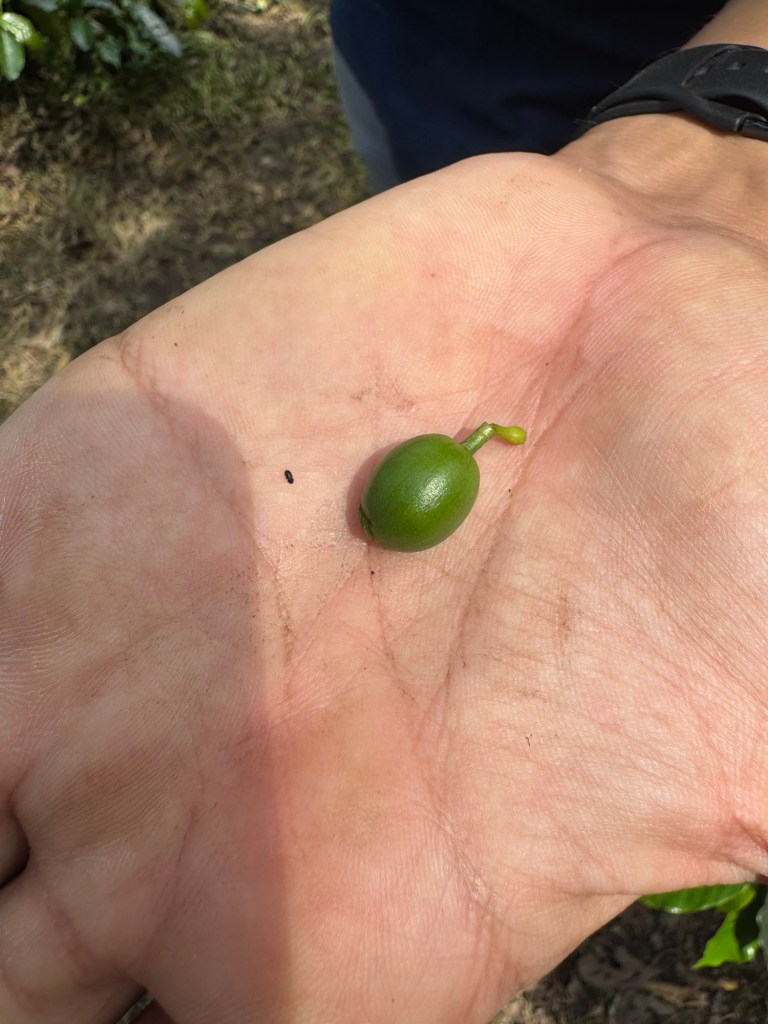
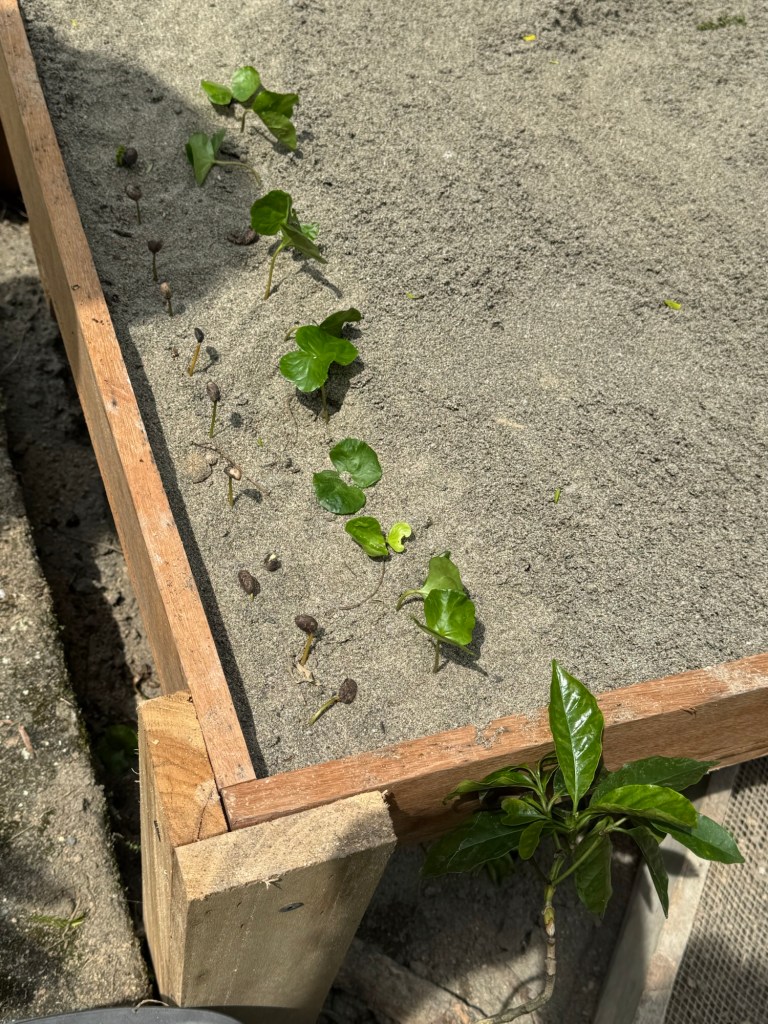
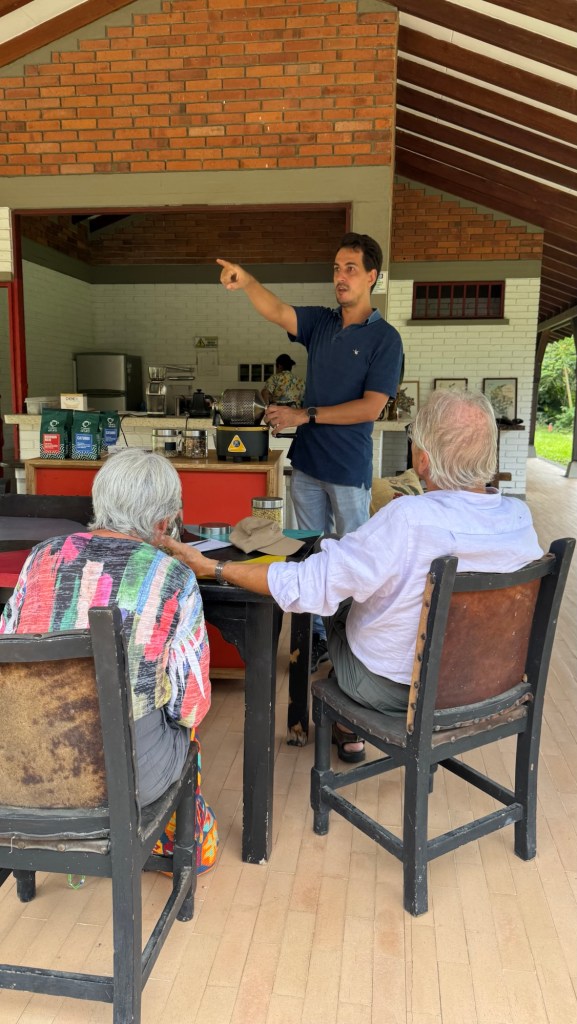
From flower to ripe beanLearning about coffee plant from Santiago Tiny borer beetle that lives in the bean and is bad for the coffeeSamples of plants. One is two weeks old. Other is 3 weeksHow the seeds are started initiallyDung beetles are good for the soilThe peeling and cleaning machineRoasting some beans while comparing roasted, mixed 2nd grade, and top grade parchment.We listen while Santiago talks about coffeeShowing off the family product
We looked at samples of roasted coffee, mixed good and second qualities, and parchment or top quality dried coffee. There are 2 commercial coffee types: Arabica, which is top grade and produced in Colombia and Brazil; and Robusto, which is 2nd grade and produced in Viet Nam, Brazil, Ethiopia and Indonesia. There are 300,000 growers in Colombia with 5 acres being the average size. 100 kilo of raw beans yields 12 kilo of roasted beans. The average amount of coffee consumed in the USA per person is 6 kilo. In Colombia it is only 1.5 kilo per person.
Colombia is the only South American country that has coastline on two oceans, Pacific and Caribbean, and it is number 1 in birds, butterflies and orchids.
Back at the Hacienda, we had a simple dinner of pasta and listened to two guitarists play and sing for us. They were quite good and we enjoyed their music until we went to bed. So far, we have enjoyed our time in Colombia very much. Next stop is Santa Marta on the Caribbean coast.
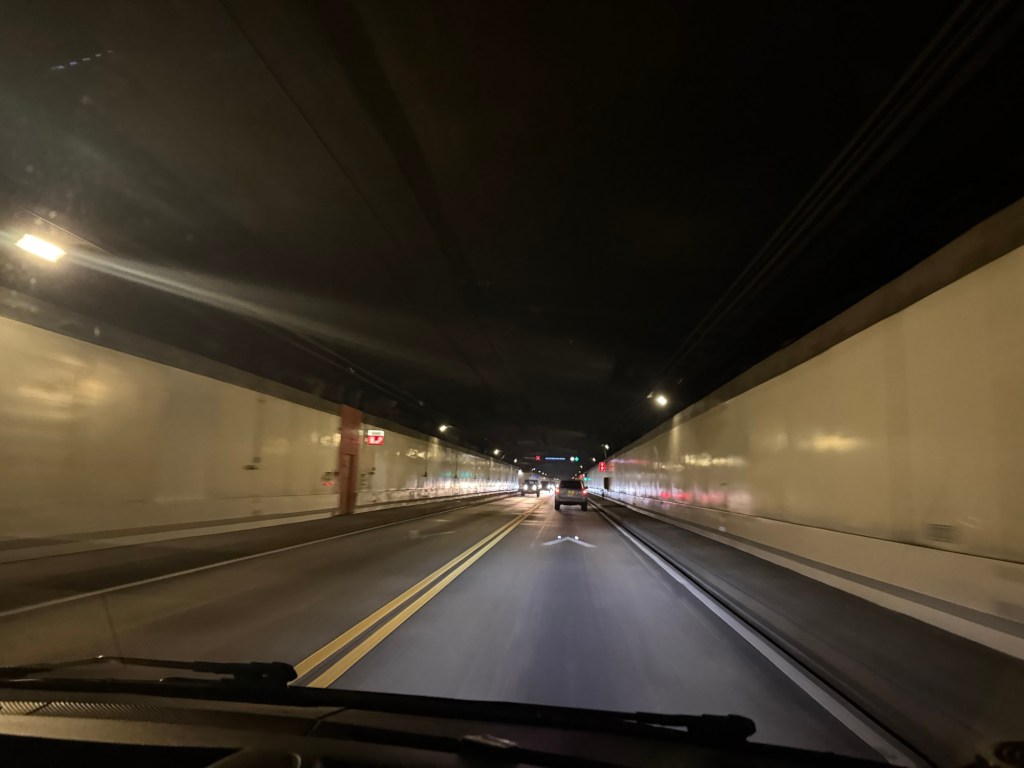
After a one hour flight from Bogota to Medellin, we arrived a little after three and met our new guide, Daniel. He wasted no time talking about Medellin, whose population is 4.5 million in a country of 51-52 million. Finally, at a very comfortable 7,500-4,200 feet in elevation, we were driving toward mountains and through tunnels, which separate the airport from the city. As we enter the first tunnel, he tells us it is 5.2 miles long and is the 2nd longest tunnel in South America. It delivers us to Medellin and, as we exit the tunnel, we are looking down on a city in a narrow valley surrounded by mountains. It is a lovely setting that immediately attracts our attention.
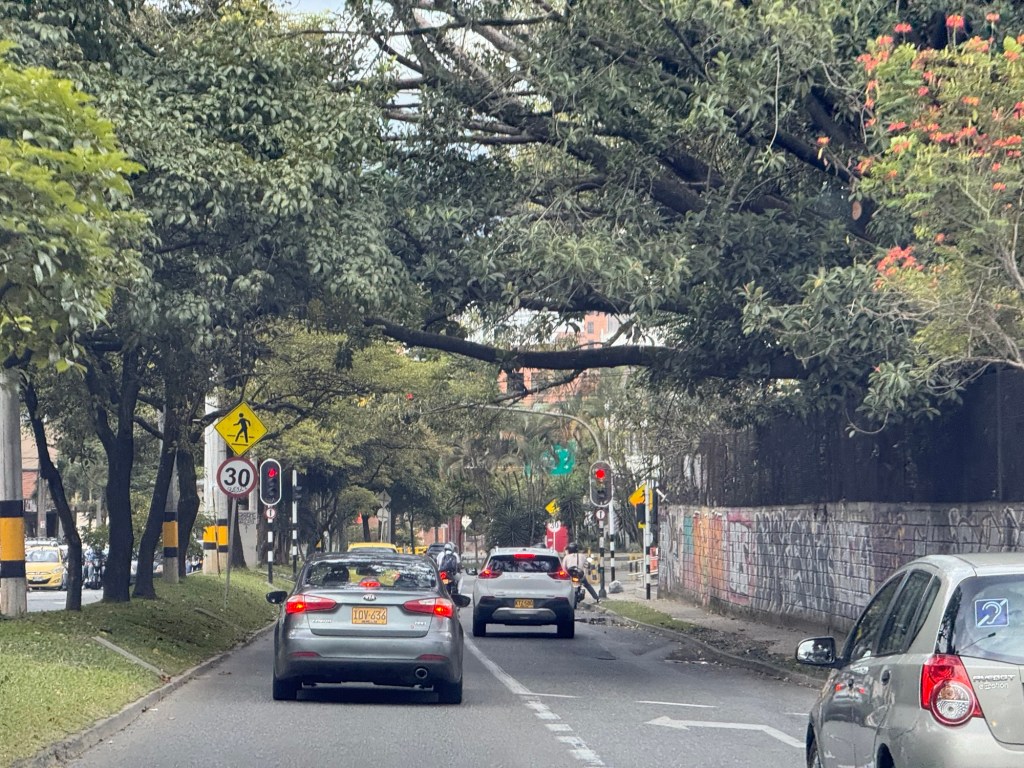
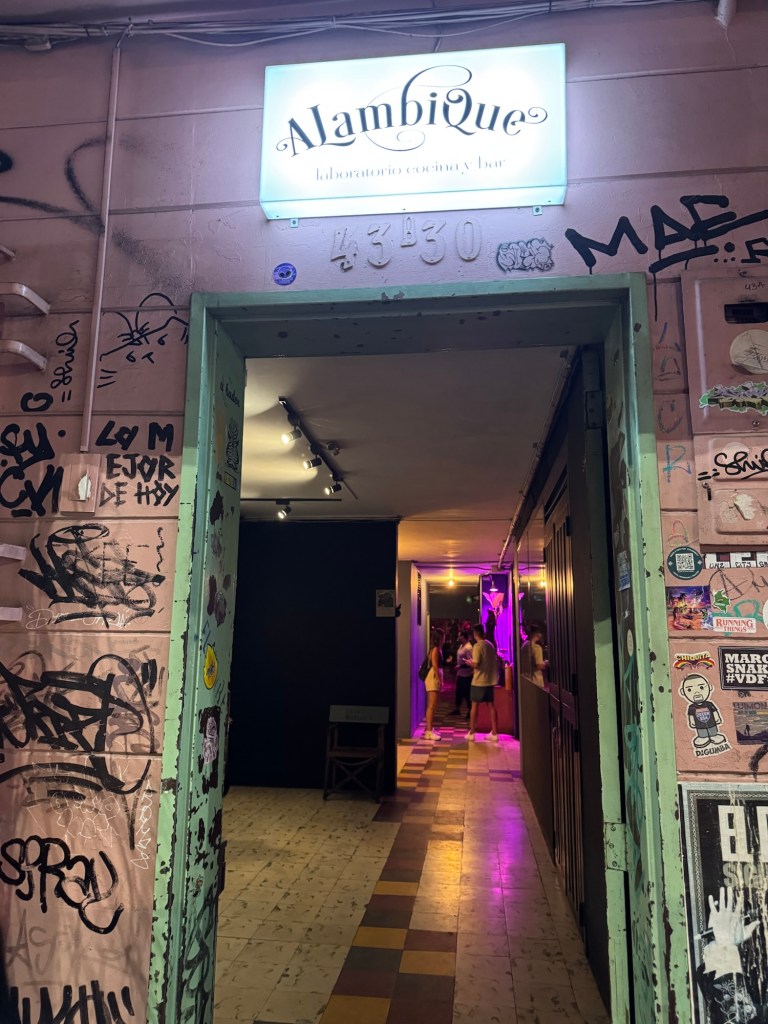
The tunnelView of the city Tree lined streetsAlambique restaurant
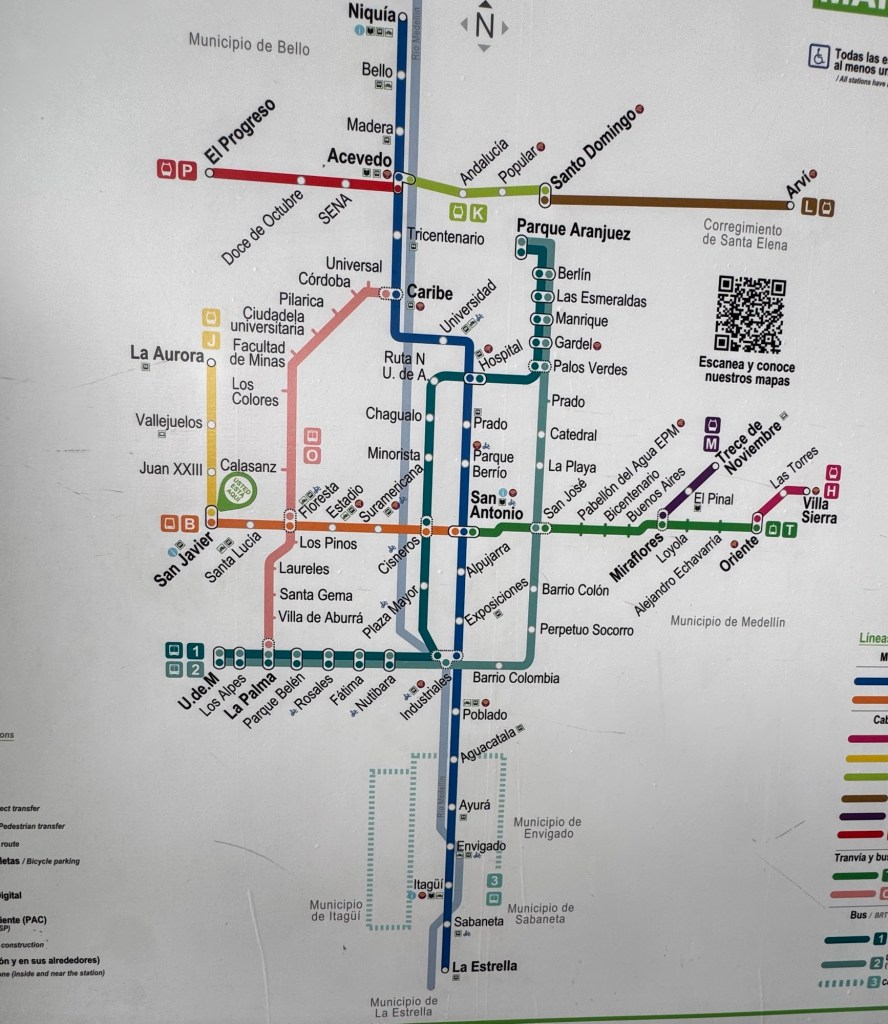
Daniel believes it is also the most successful city in Columbia because it has been very innovative in recovering from the violence of the late 80’s and early 90’s after Pablo Escobar. The city was founded in 1675 and has been growing slowly ever since. A major innovation is the transportation system developed in 1995. There are trains, busses and, especially, cable cars to move people around the city in addition to cars. There is no room for more roads and traffic is a nightmare for sure.
At our hotel, Elcielo, we chill the rest of the afternoon and take a 15 minute ride to dinner at a place called Alambique. The traffic was intense and driving was perilous. The restaurant was pretty funky in its decor, but the food was good. With no waste of time, we were back at the hotel and in bed.
Tuesday, November 4, 2025
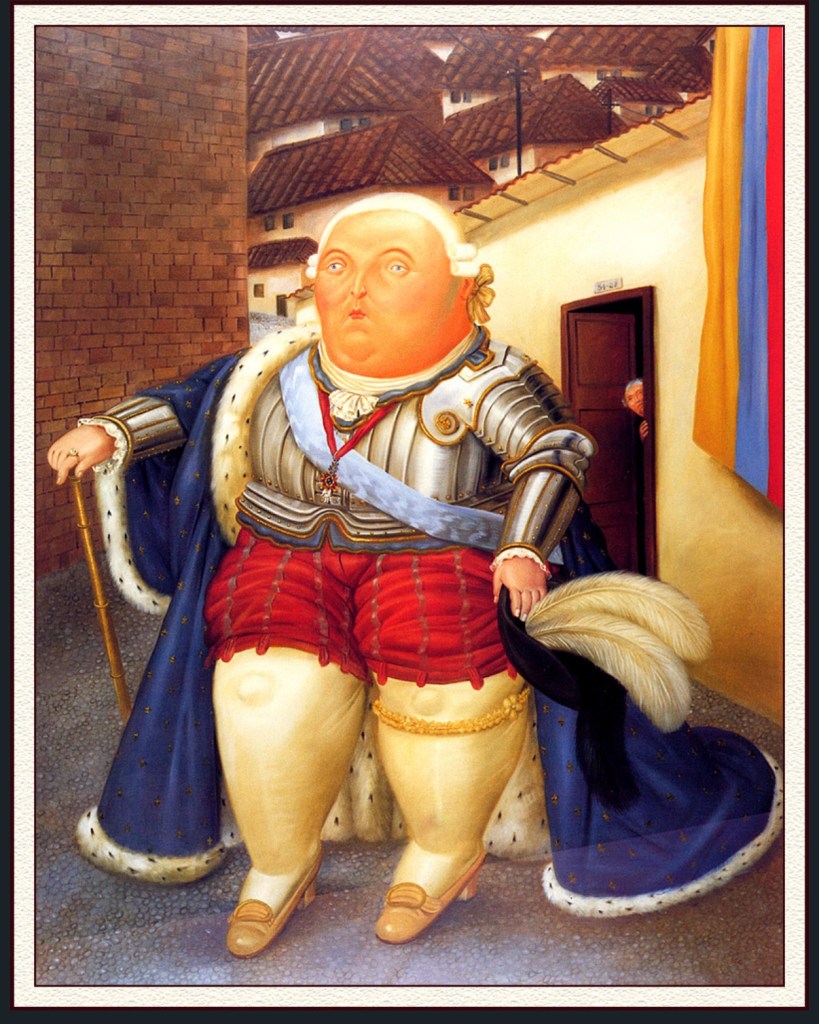
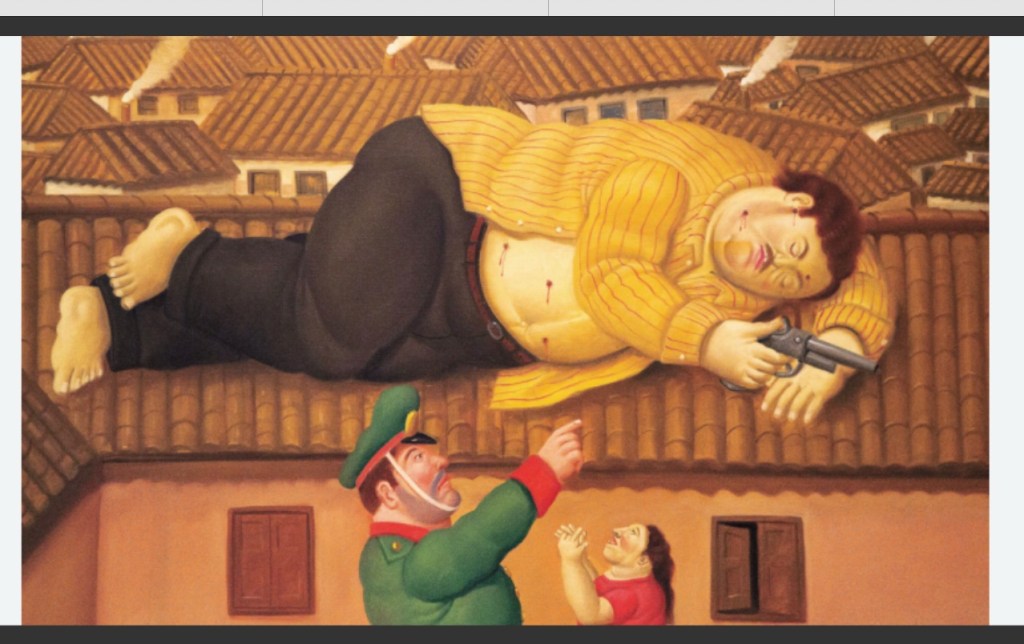
We meet Daniel at 9am for a tour of the Museum of Antioquia that houses the work of Fernando Botero (1932-2023), a famous painter and sculptor from Columbia, who organized the art in the museum himself. Unfortunately, photos of his work in the museum are not allowed. Mark managed to find copies of 2 paintings and we were able to photograph his sculptures in the town square, where there are 28 pieces. An expert museum guide, Jose, gave us a 2 hour private tour that was superb. If only I could remember more of his comments. Botero was interested in volume, size and monumentality, political criticism and humor, not in making fat people. In his work you find normal sized elements as well at outsized ones. Each one of his paintings tells a story with wit, irony, insight and critical acumen. He started with oil, then moved to water color and then into sculpture in the late 70’s. He lived in Italy in the late 70’s and studied renaissance art and the passion.
King Luis XVI
What was interesting for me was the face of Bertero’s mother poking out of the doorway. She had wanted to visit France one more time, but died before the trip. Botero has her forever looking in on the French king. The Colombian flag puts her in place. Luis’s eyes, mouth, nose, hand and feet are normal in size and the colors are brilliant.
Pablo Escobar shot several times on a rooftop. The only person sad about his death is his mother. The cop is glad Escobar is dead.
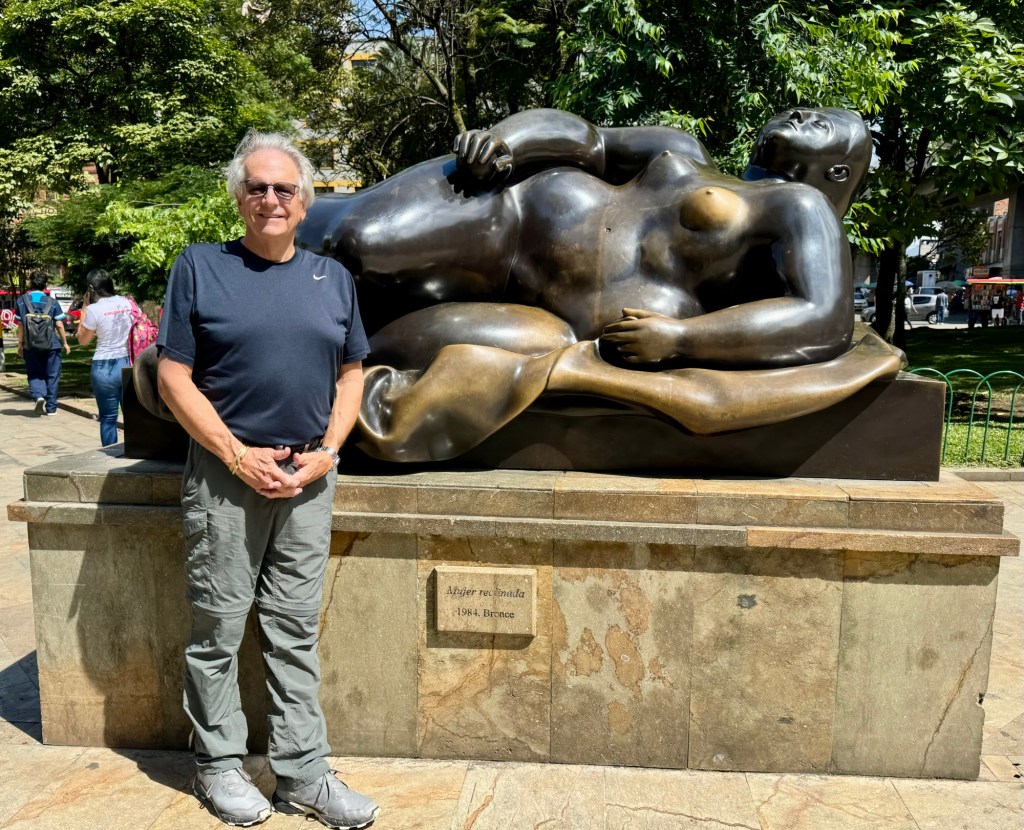
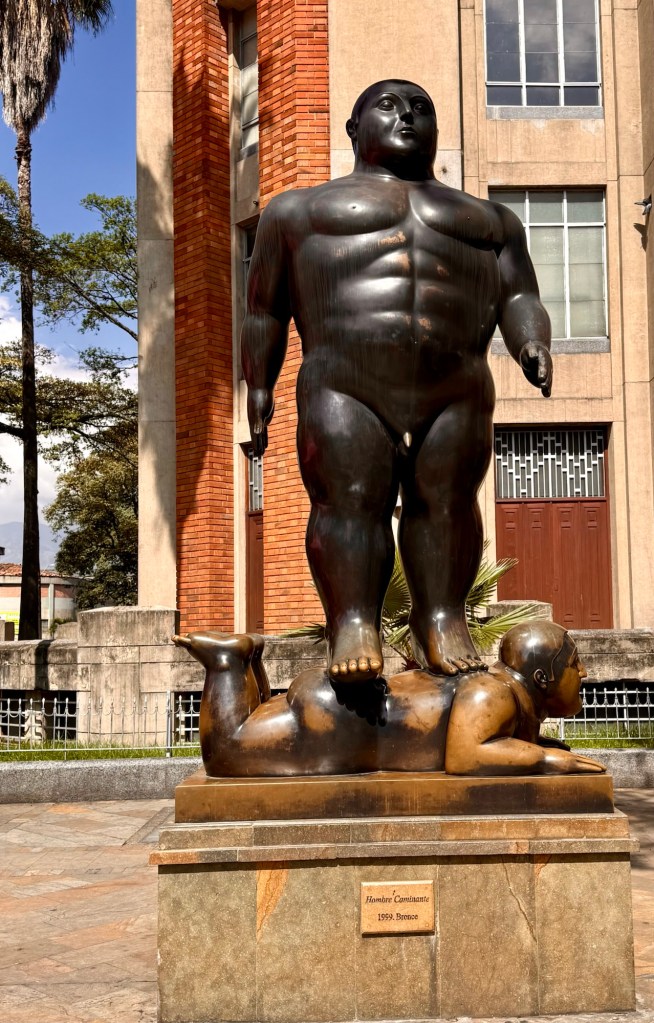
In the town square we photographed some of Botero’s sculptures.
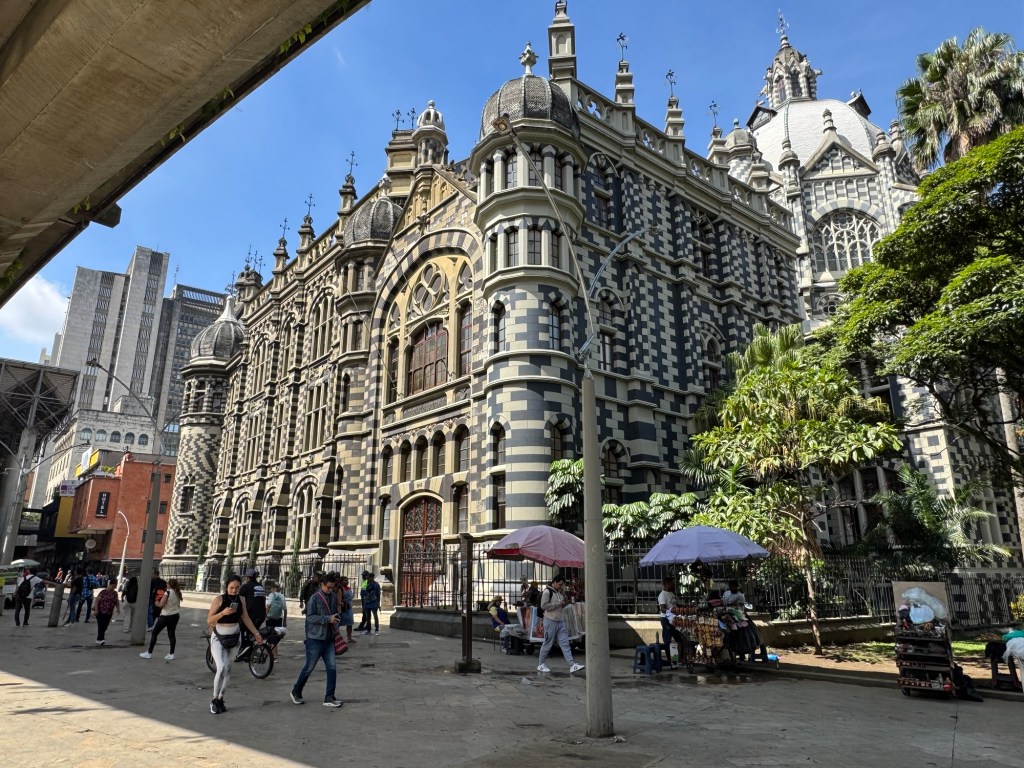
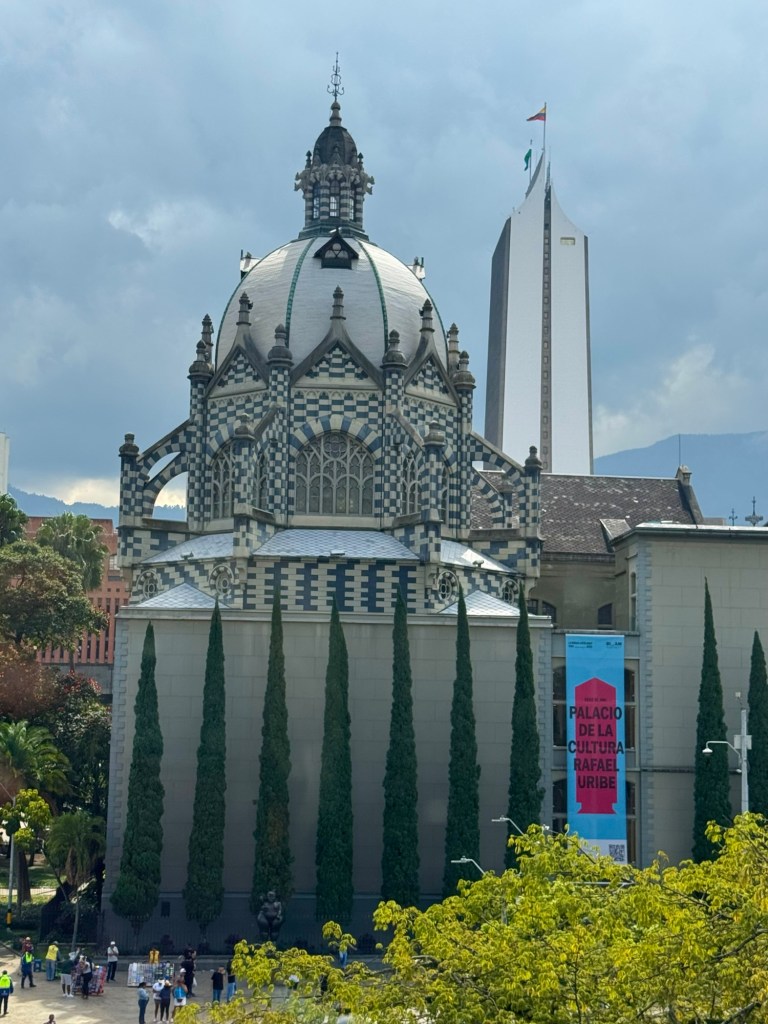
Mark with small breasted VenusPalace of Culture in Botero squareMan on a horseBack of Palace of Culture & textile building with 2 needle spiresWoman without head and armsWoman dressedMan in Command
Botero created thousands of works of art in his 91 years. It is said that he painted or sculpted every day right to the end. He had 3 wives and 4 children.
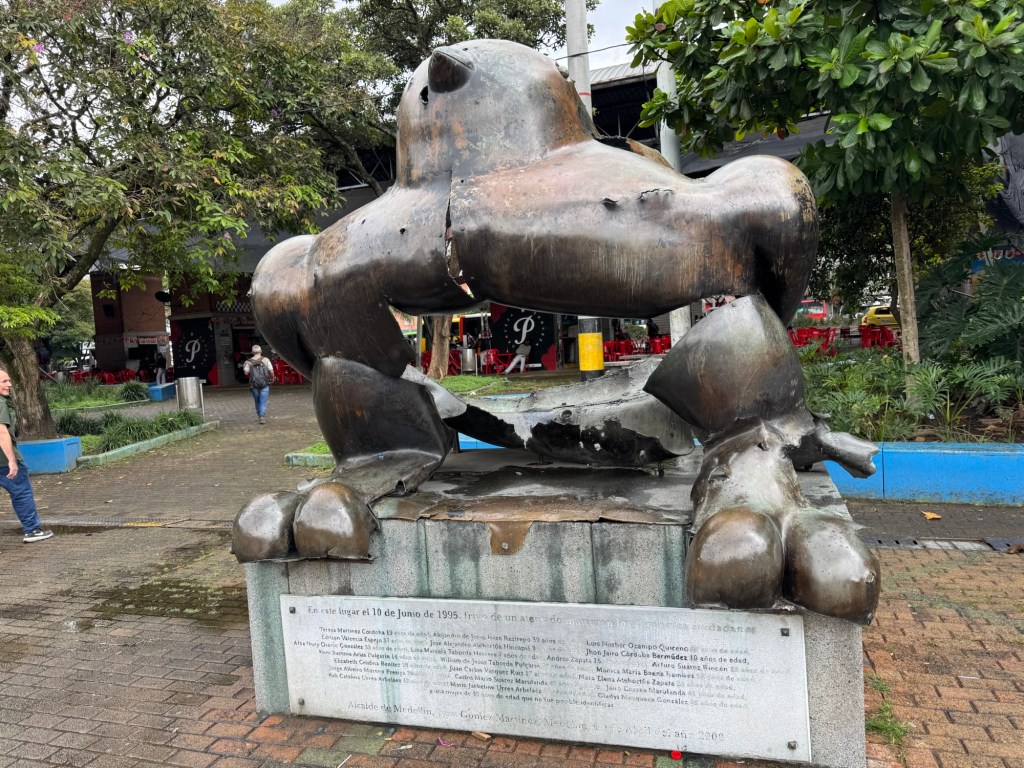
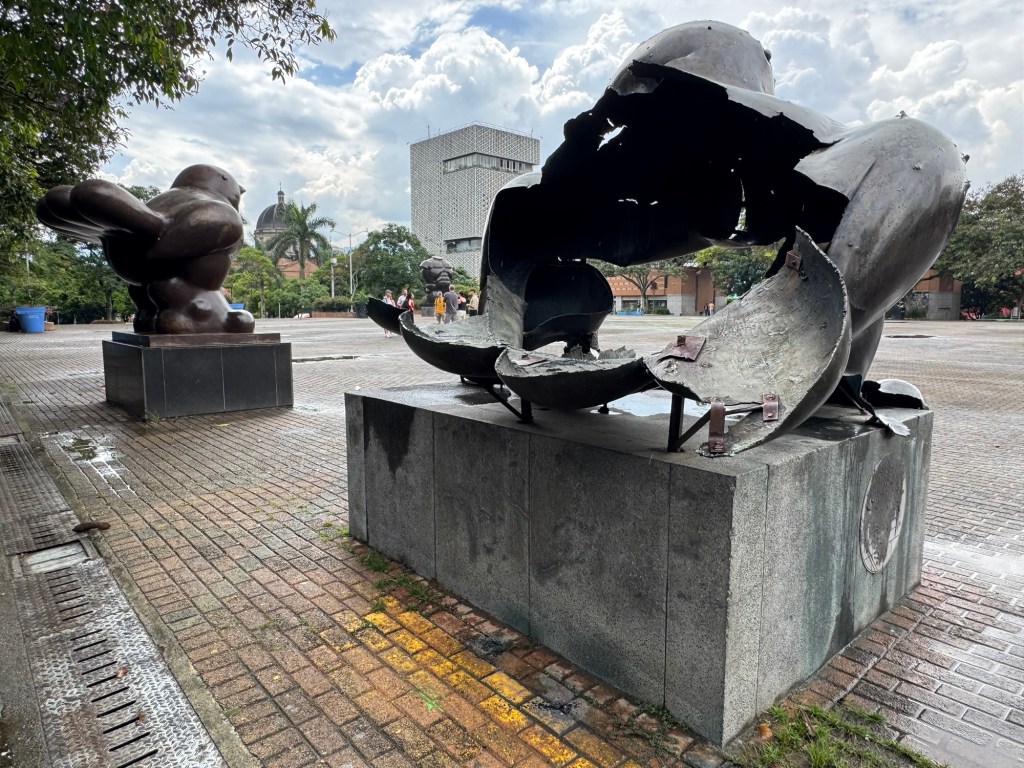
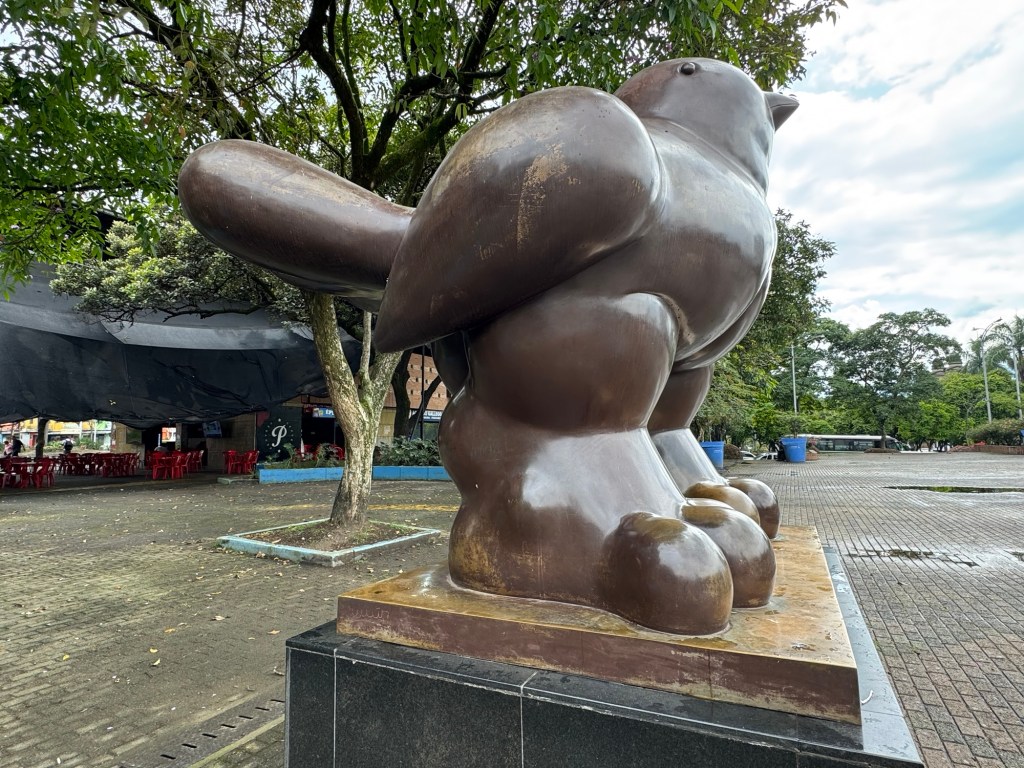
A sculpture bombed by a drug gang June 10, 1995 killing 19Botero replaced the damaged bird 1999The replacement bird
After we left the museum and headed for a cable car, Dan gave us a bit of information about Pablo Escobar, the cartels and cocaine. There was the Medellin Cartel, which Escobar headed, the Cali Cartel and the government. The latter two worked together to try to eliminate Escobar. In the 80’s and 90’s, Colombia was the world’s largest producer of cocaine. In the late 80’s, one lb of Cocaine was $100 in Colombia, $2000 wholesale in the US and $100,000 street value in the US. The US was the main market with Europe and Asia following. Escobar was making so much money that he even bought 4 hippos and kept them in his private zoo along with other animals. He helped poor people with one hand and killed other people with the other. In the end no one mourned his death, except his mother.
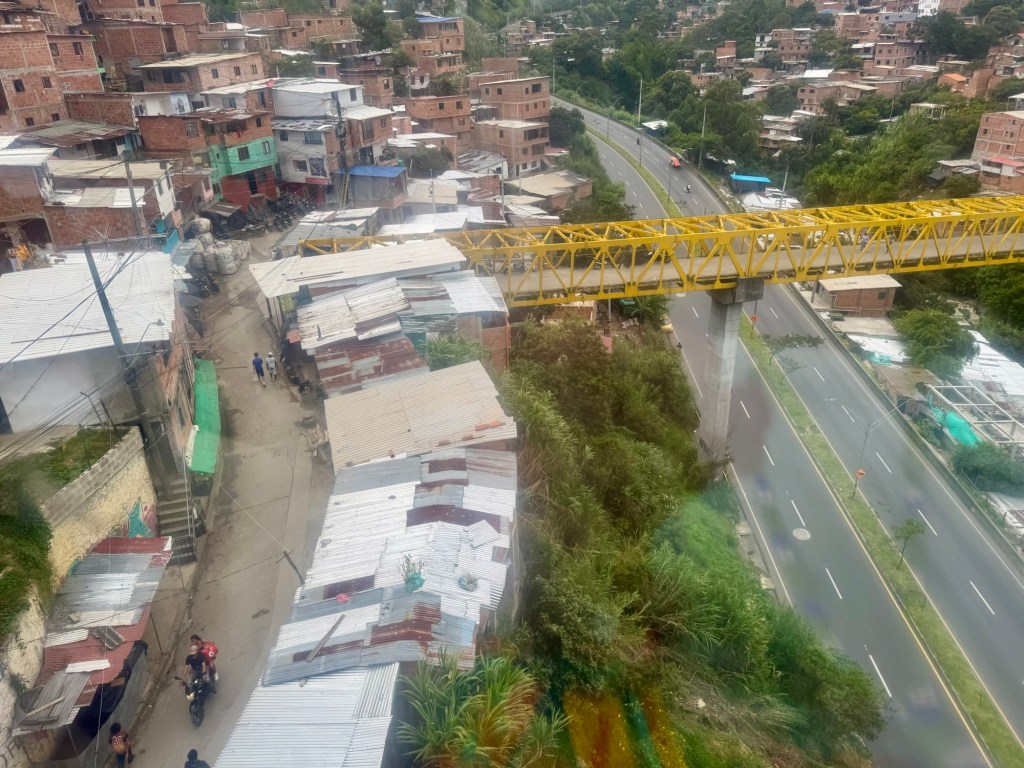
Riding the yellow line
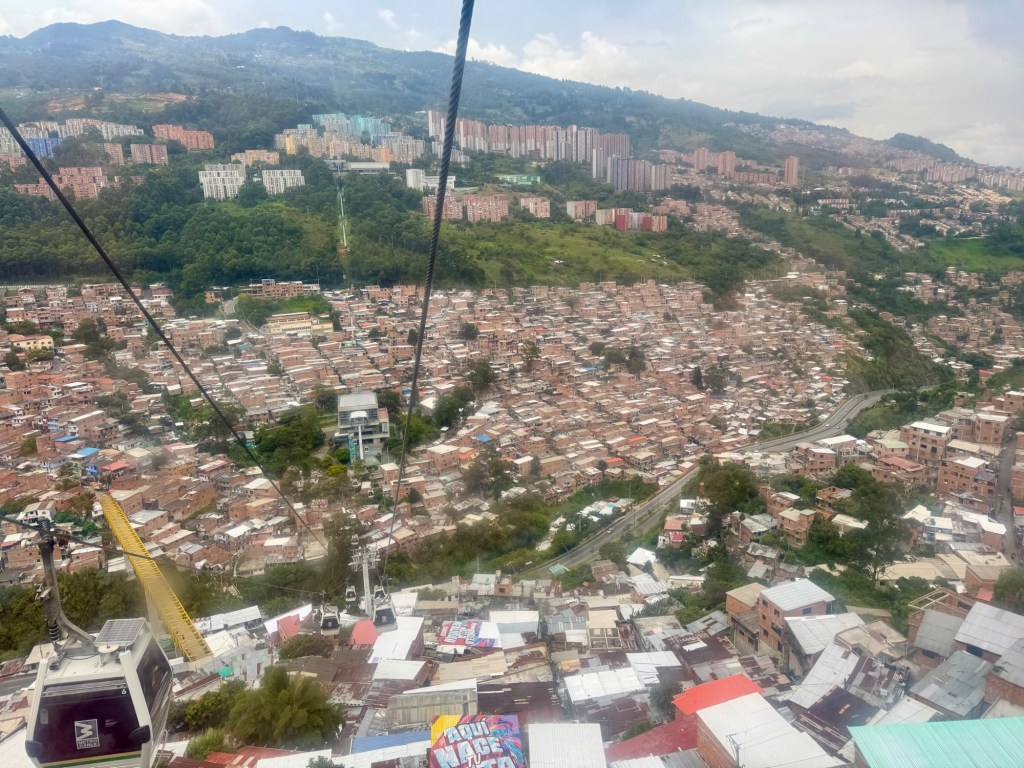
By this time, Dan had us riding 3 stops of the yellow line of the cable car system. It is amazing how much traffic is off the streets and riding the cable cars.
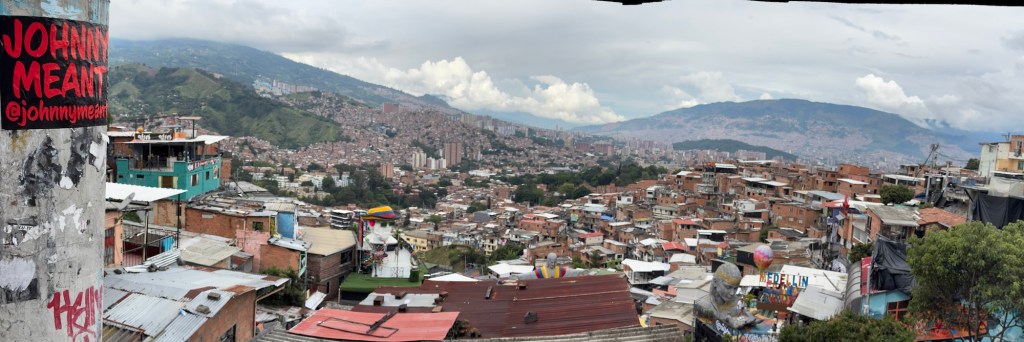
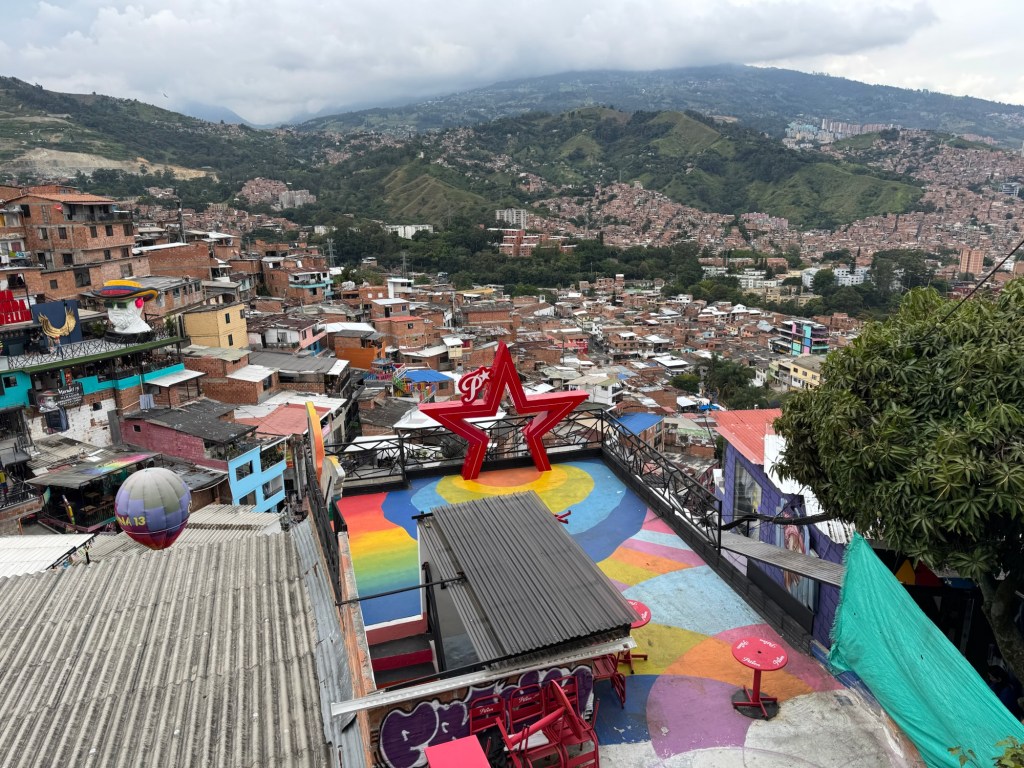
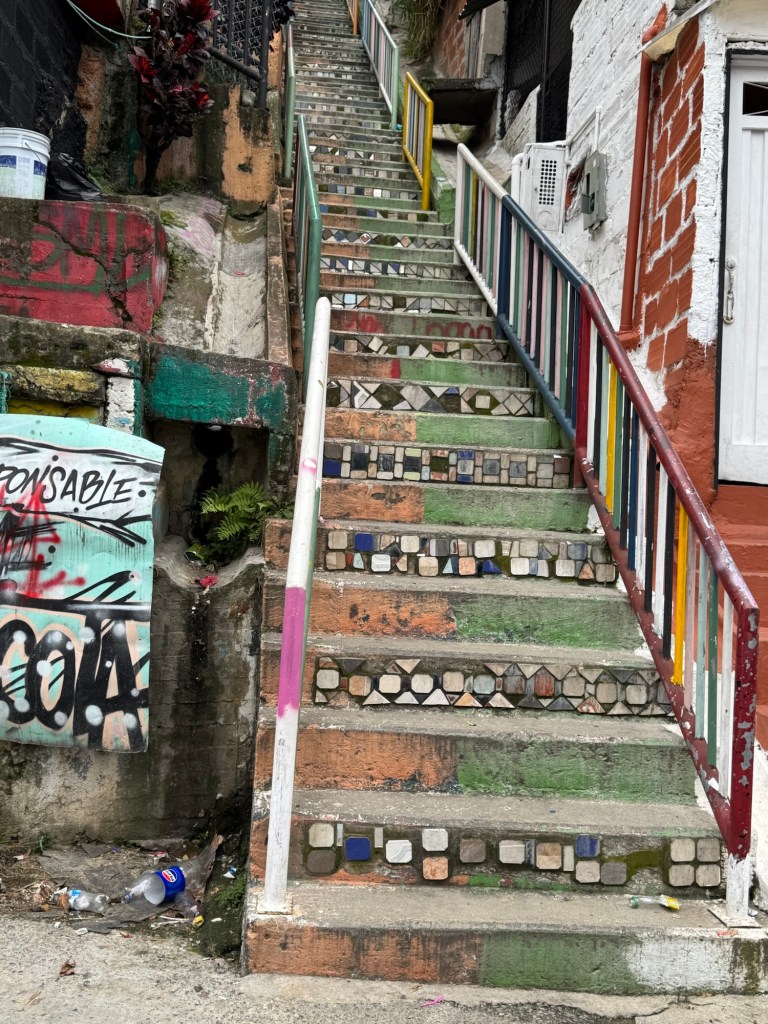
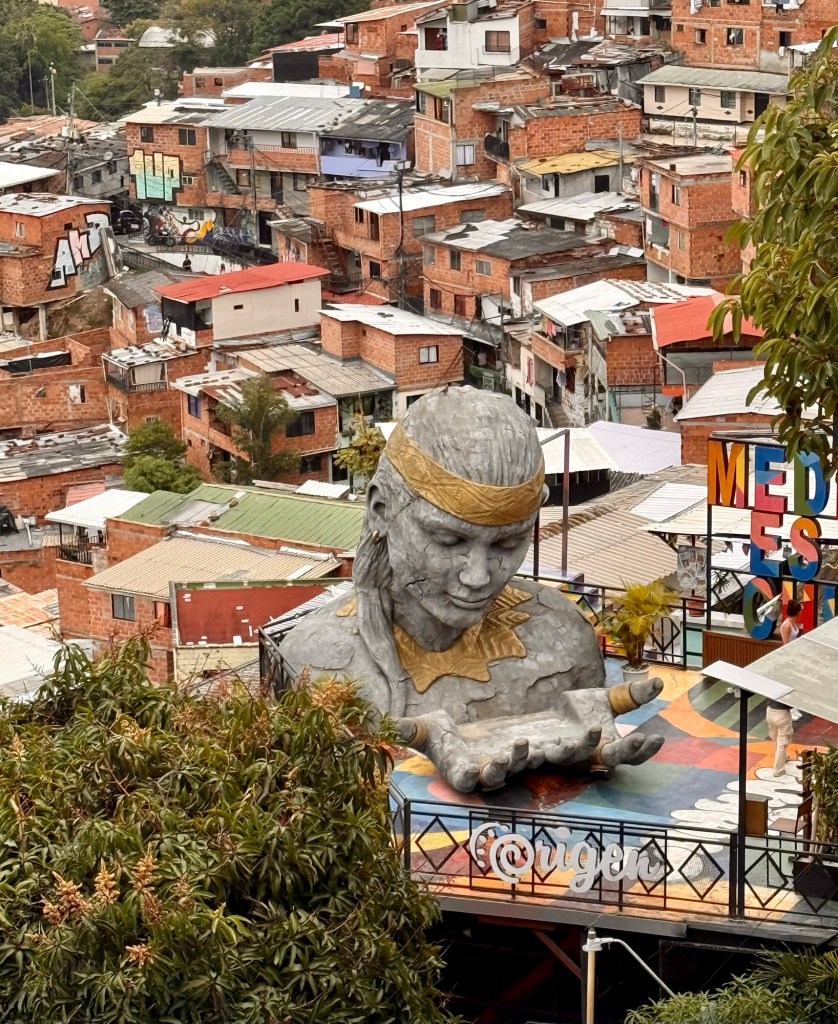
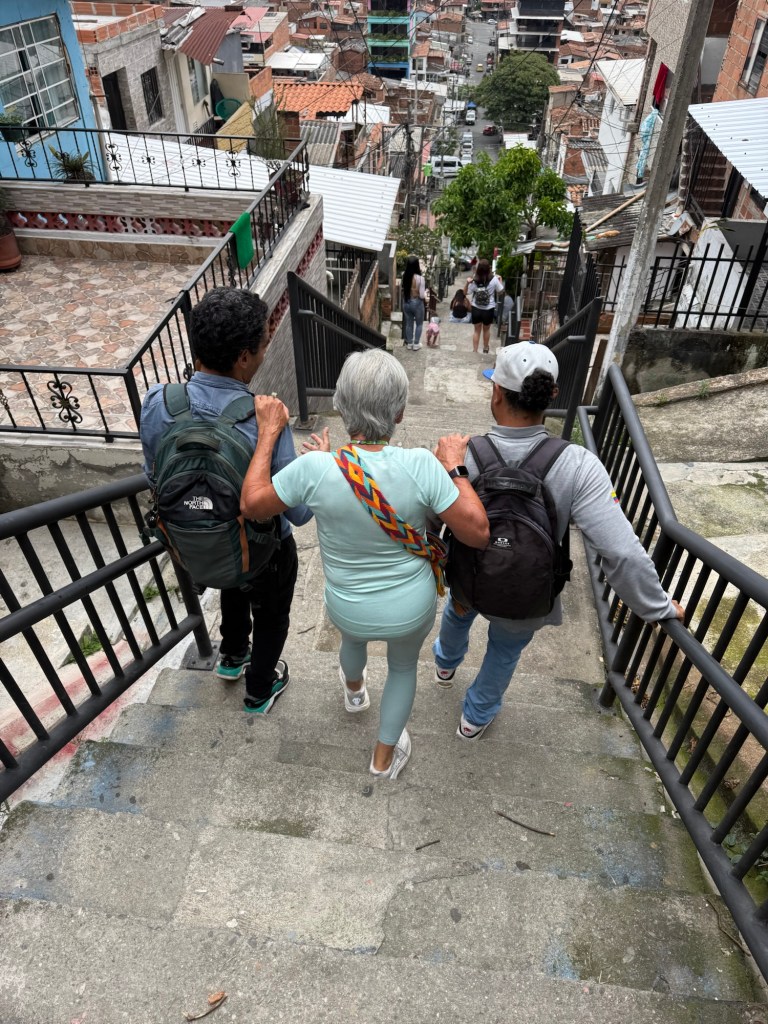
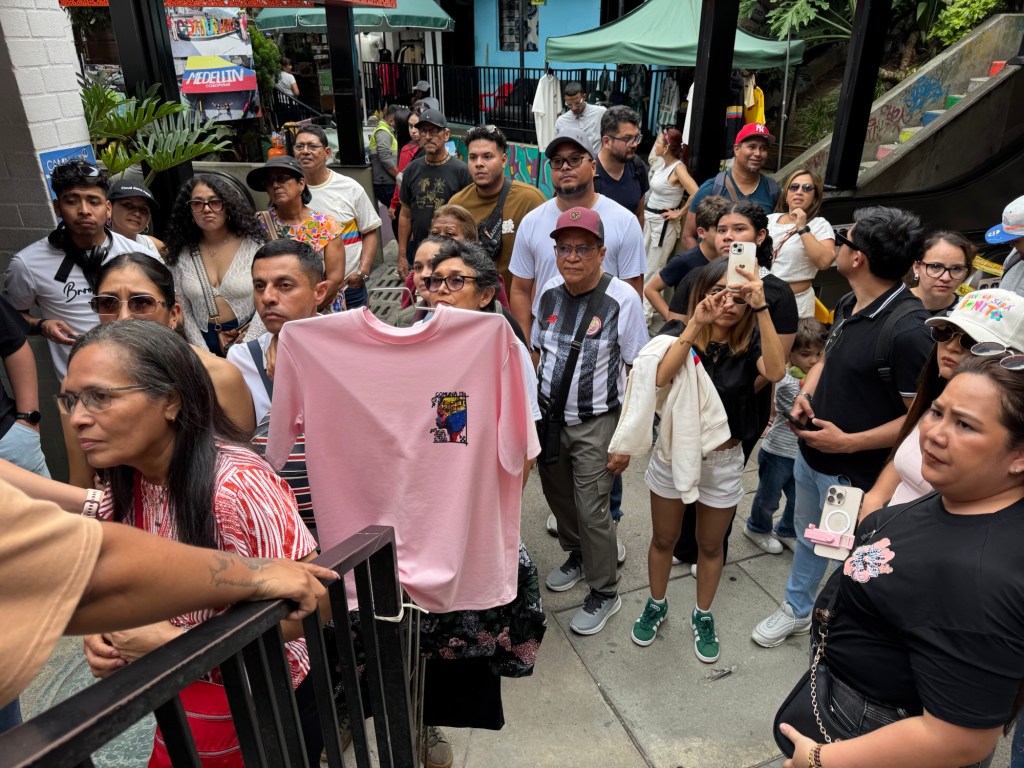
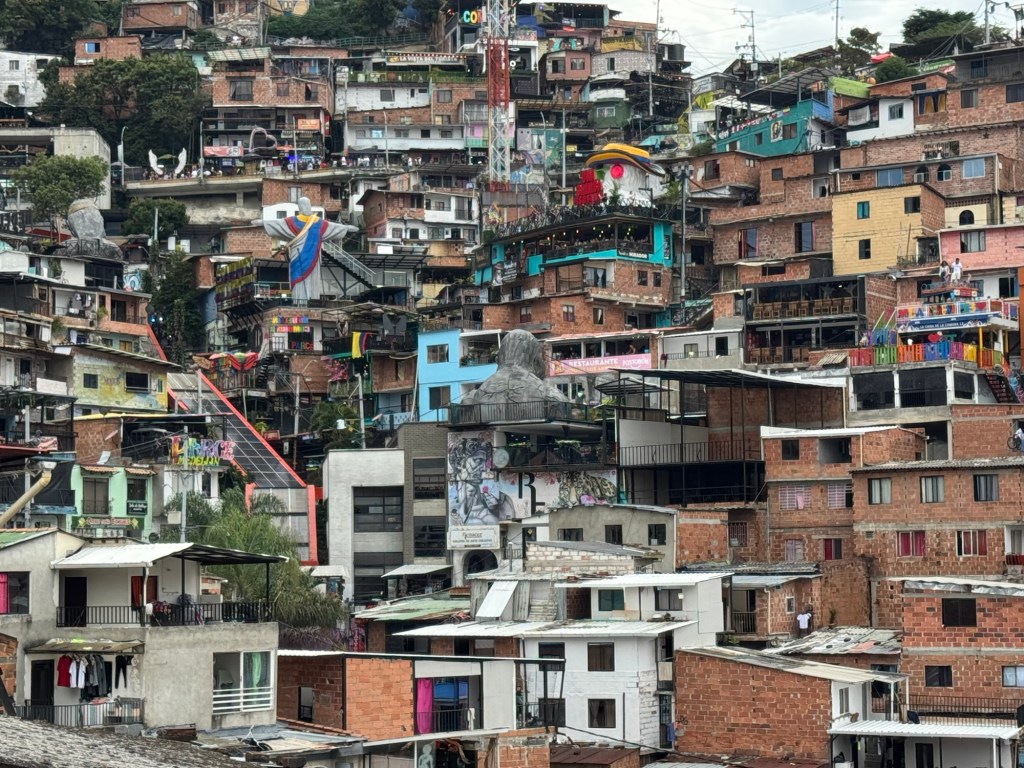
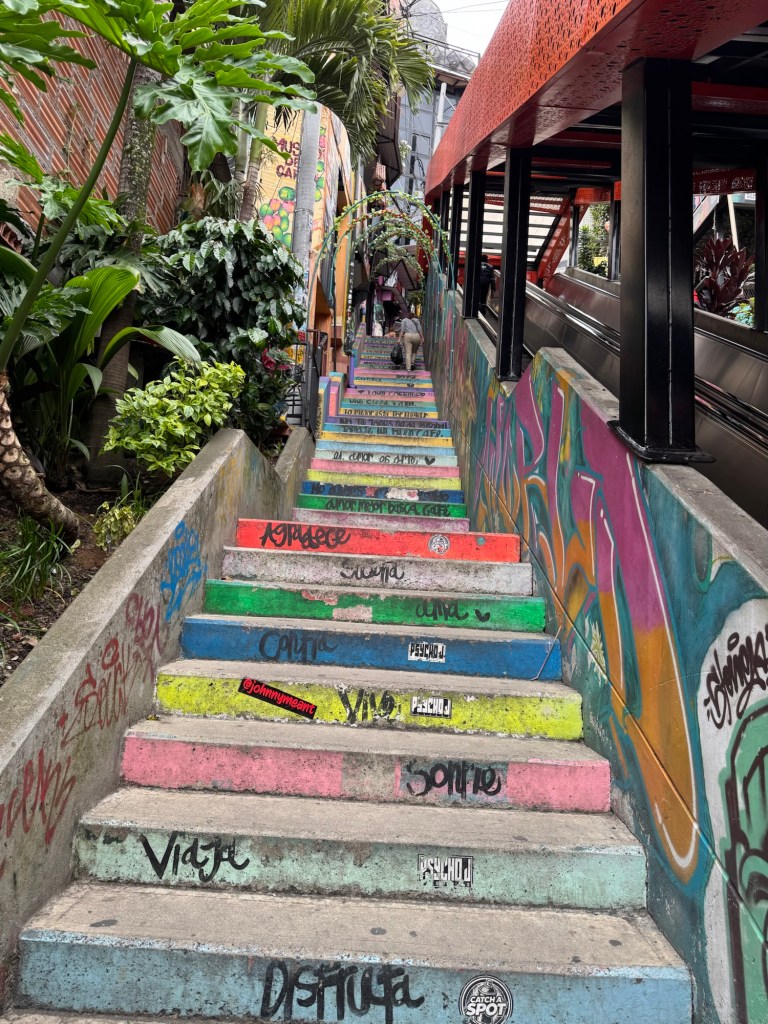
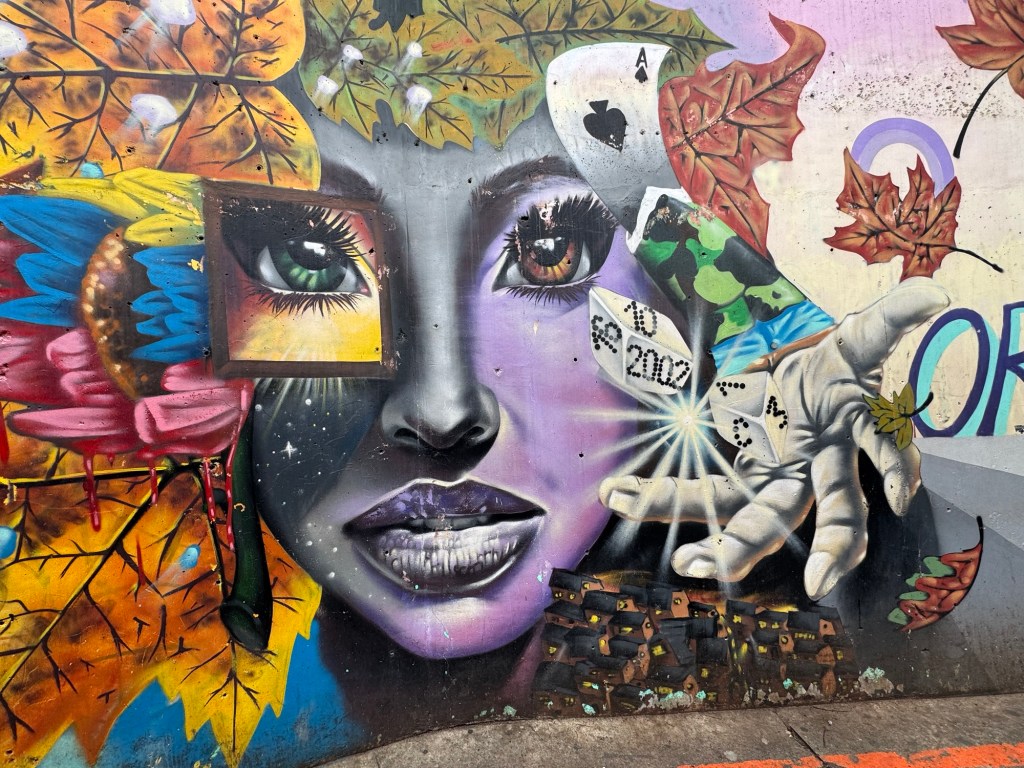
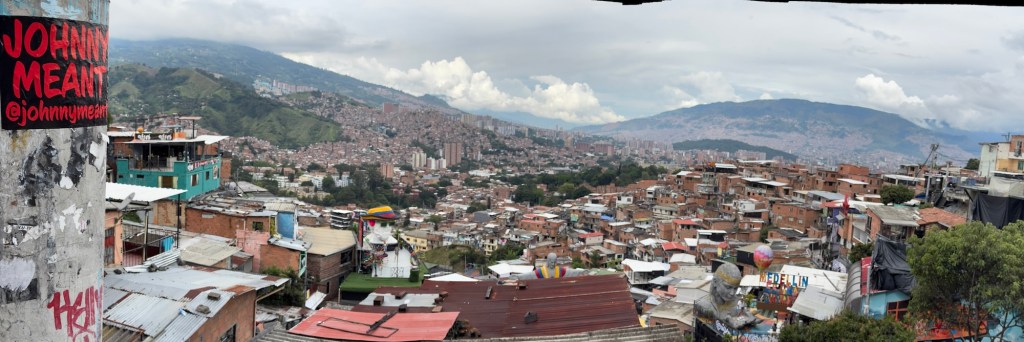
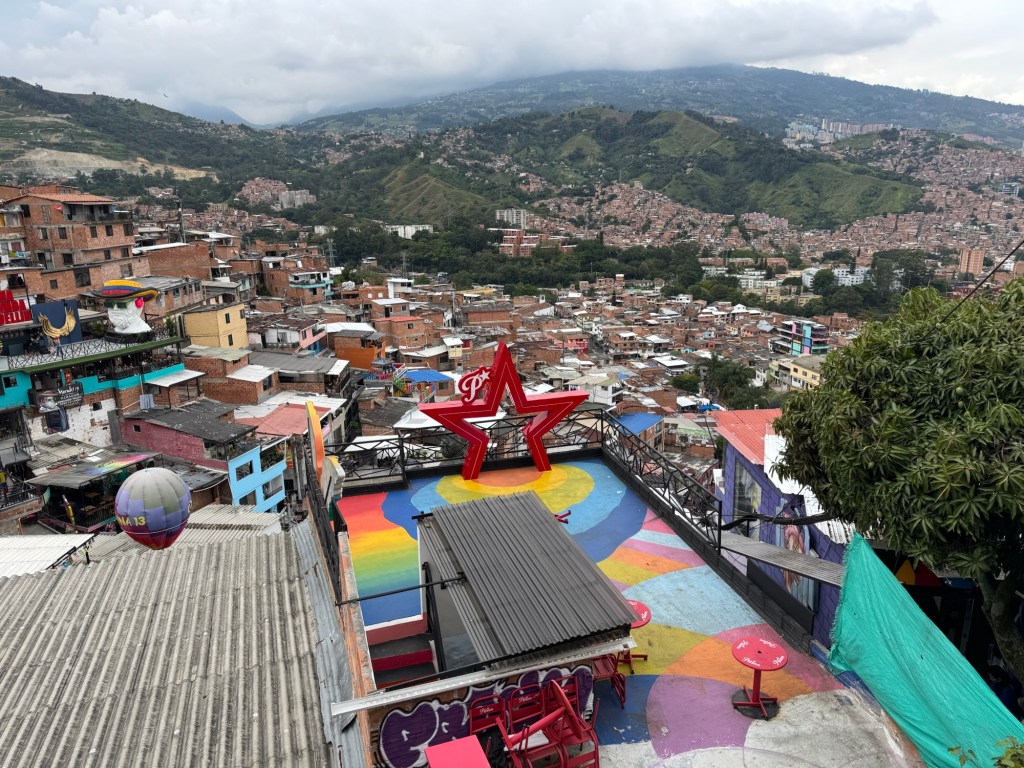
When we got off the car, we were met by another expert guide Dan had enlisted, Stephen, to show us through District 13, which had been an impoverished and drug infested neighborhood in the 80’s and 90’s and is now the in place to be with a focus on art and music. Stephen knew everyone in the hood and introduced us as we walked up and down connecting staircases. We stopped for tasty empinadas, visited art shops, bot a shirt for Mark, chatted with folk who spoke English and generally had a good time. Here are some pix from the walk and the impressive art.
The culture of District 13 or Comuna, as it is called is; Number 1–the DJ; Number 2–Breakdancers; Number 3–Rappers; Number 4–graffiti and murals.
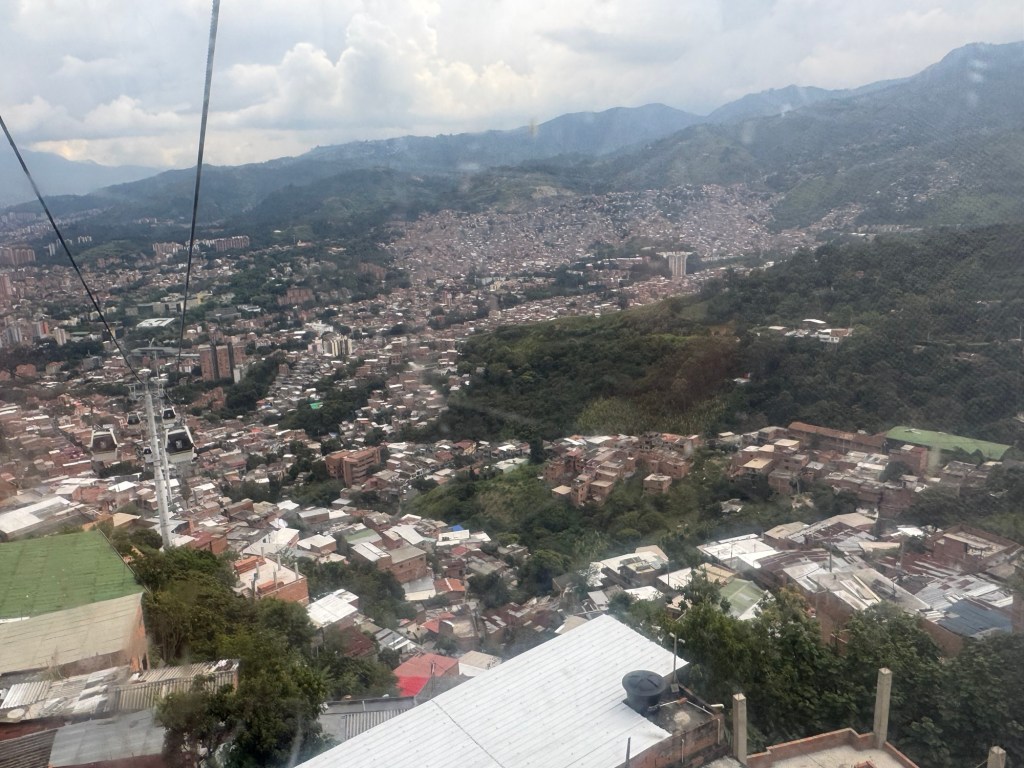
The cable car system has helped the communities in more ways than transportation. It provides overpasses from one area to another, stops have been converted to libraries where people can read and study and companies and the govt have stepped up to buy food for the very poor.
That evening, we ate dinner at a place called Ocio. We had an interesting time getting there as our Uber driver had a difficult time finding the place. We did get good local, if a bit heavy, meals. I had pork shank and Mark had short ribs. After the long day we were ready to quit when we got back to the hotel.
Wednesday, November 5, 2025
Today was our day to drive out of the city and see some of the countryside. We drove up to 7,300 feet and what is known as the second floor, Medellin being the first floor. The 2nd floor is similar to the first in that it is a long and narrow valley. Many people including our guide, live in the 2nd floor as there is currently more room to spread out.
Dan told us there are six levels of wealth throughout each neighborhood or area of the country. If you live in a level 6 area, you are considered very rich and taxed a lot to help the lowest levels. Level 5 neighborhoods are also quite wealthy. It’s not only a property tax but a sliding scale for utilities. Levels 3 and 4 areas are about in the middle and pay only a little more than what they use. Levels 1 and 2 pay no tax at all and are helped by the upper levels. Apparently this is the way taxes work in all of Colombia. I rather like it. There is 8.7% unemployment currently, the lowest in recent history.
Andean Mot Mot
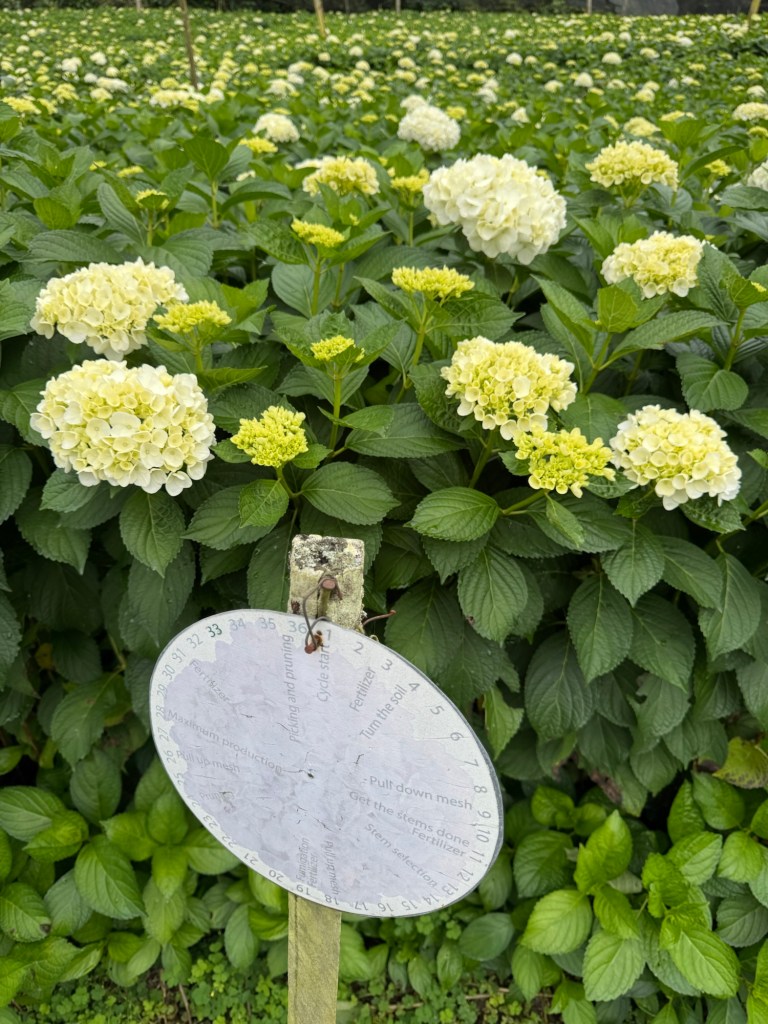
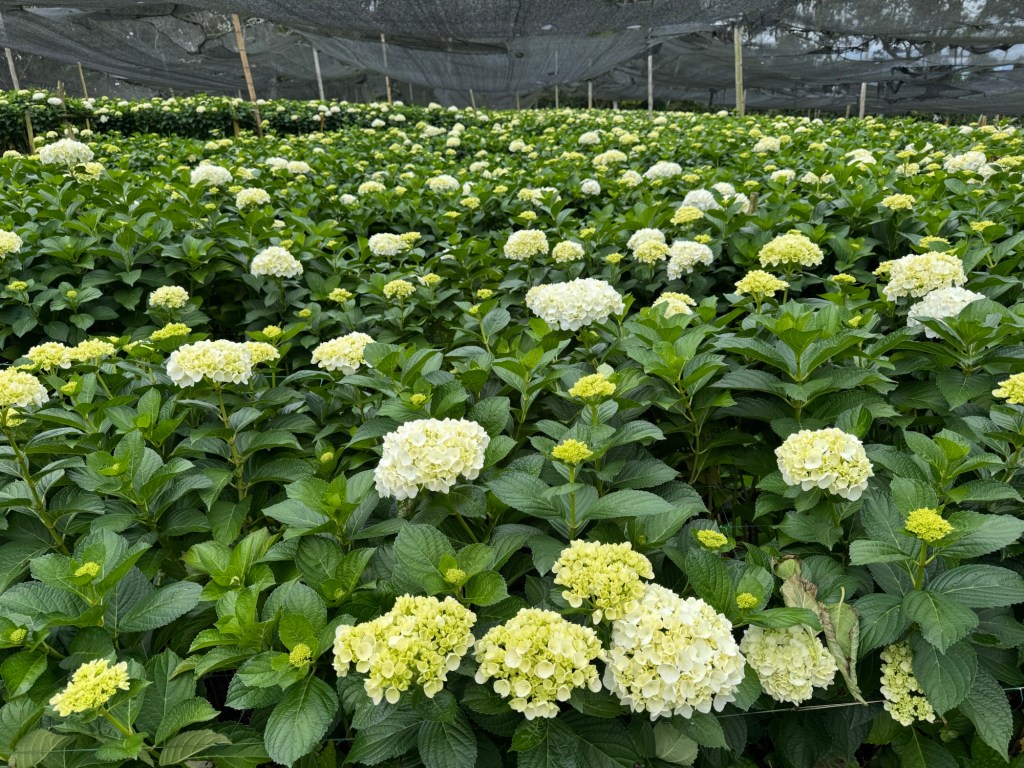
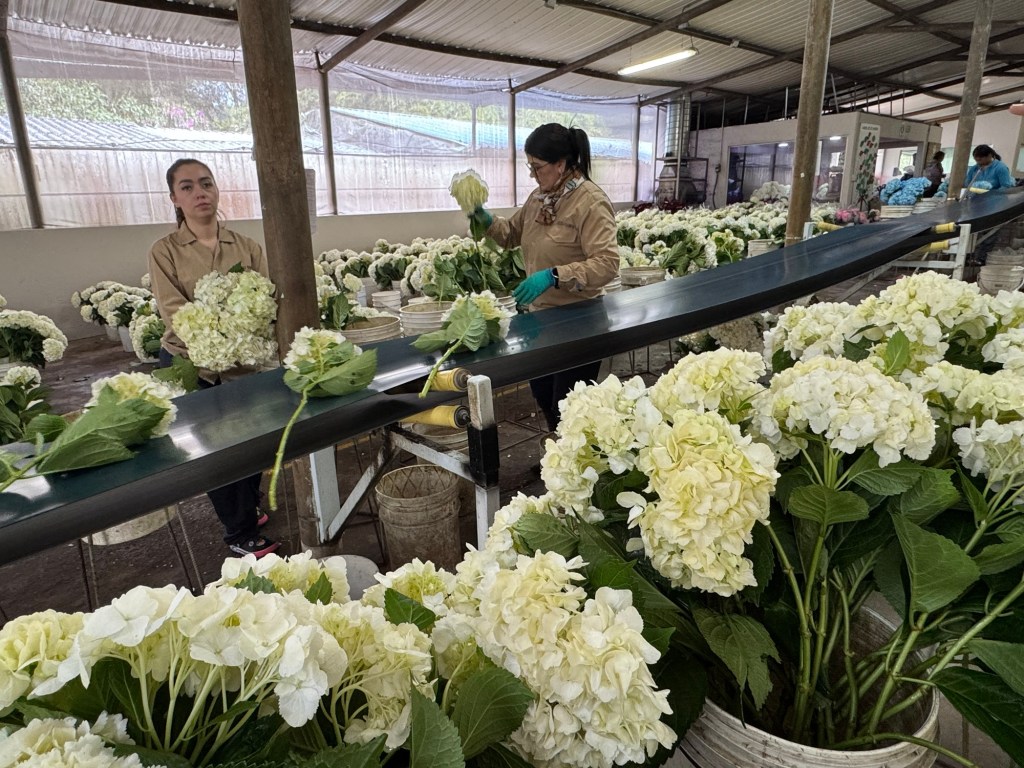
Finally we arrived at our destination for the day, the Alma del Bosque, “Soul of the Forest”, or home of the Piedrahita Family. The place is in the central Andies at 7340 feet and accommodates a stable of French saddle horses, 30 acres of hydrangeas and a couple of acres of orchids. It is quite an interesting place and we got a full tour of the flowers, but not of the horses.
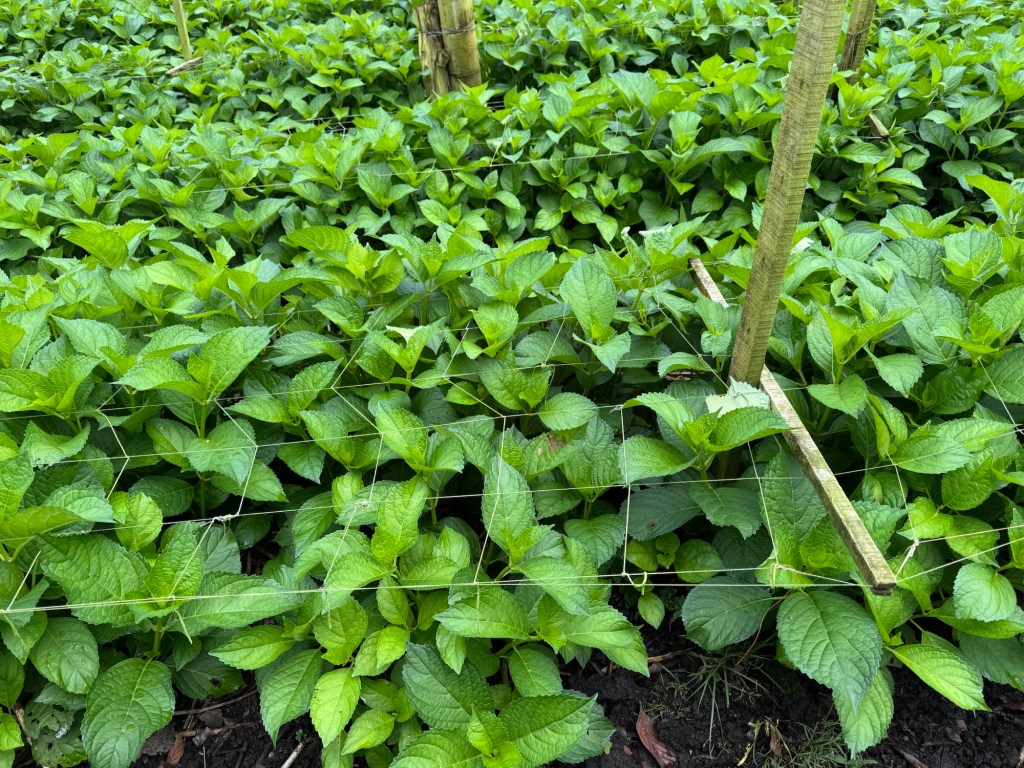
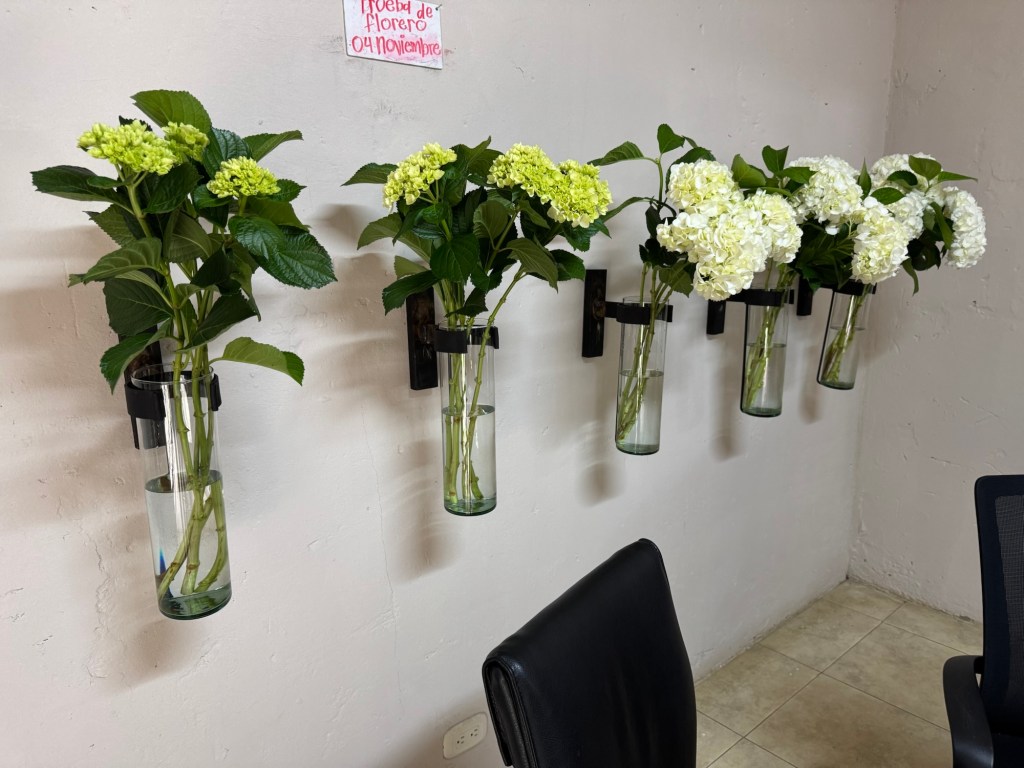
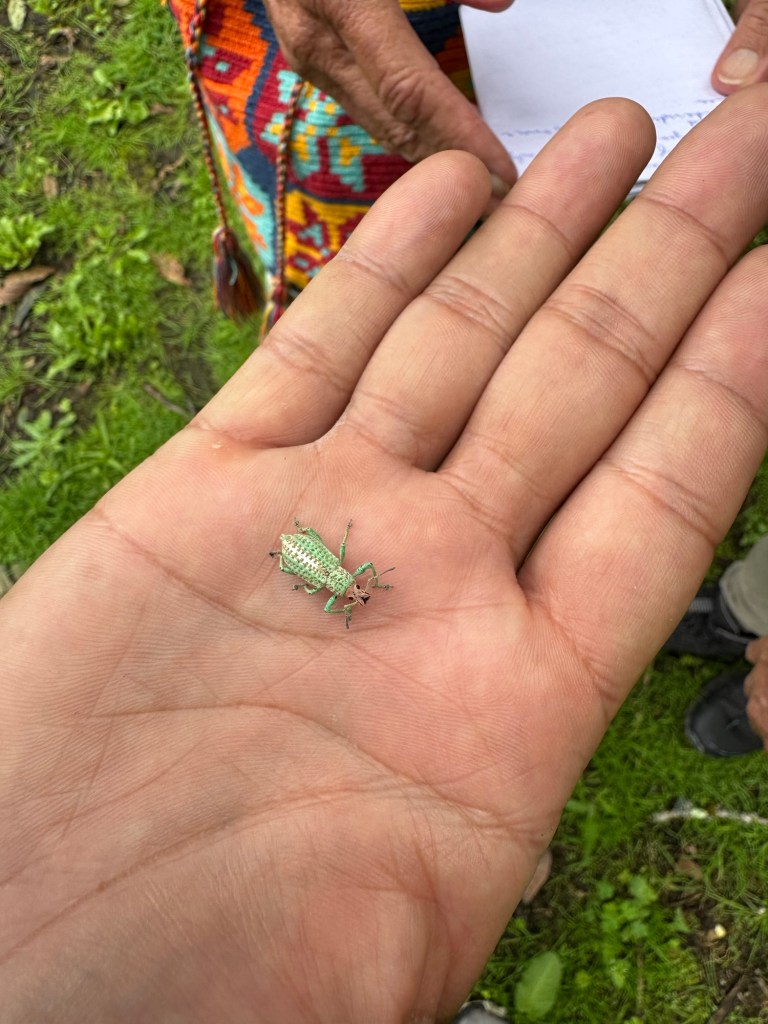
A gauge to know what stage the plants are inThe different sizes available for purchase.A bad broad nosed weevilA curly orchid in the gardenSpent crops regrow from the ground up.
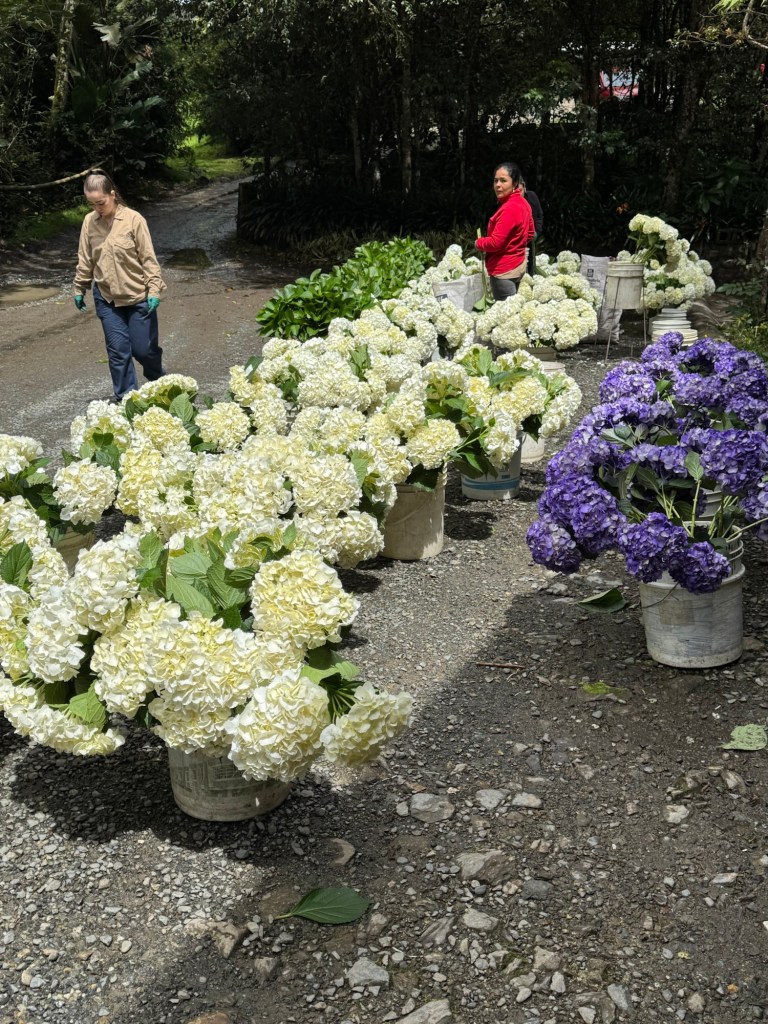
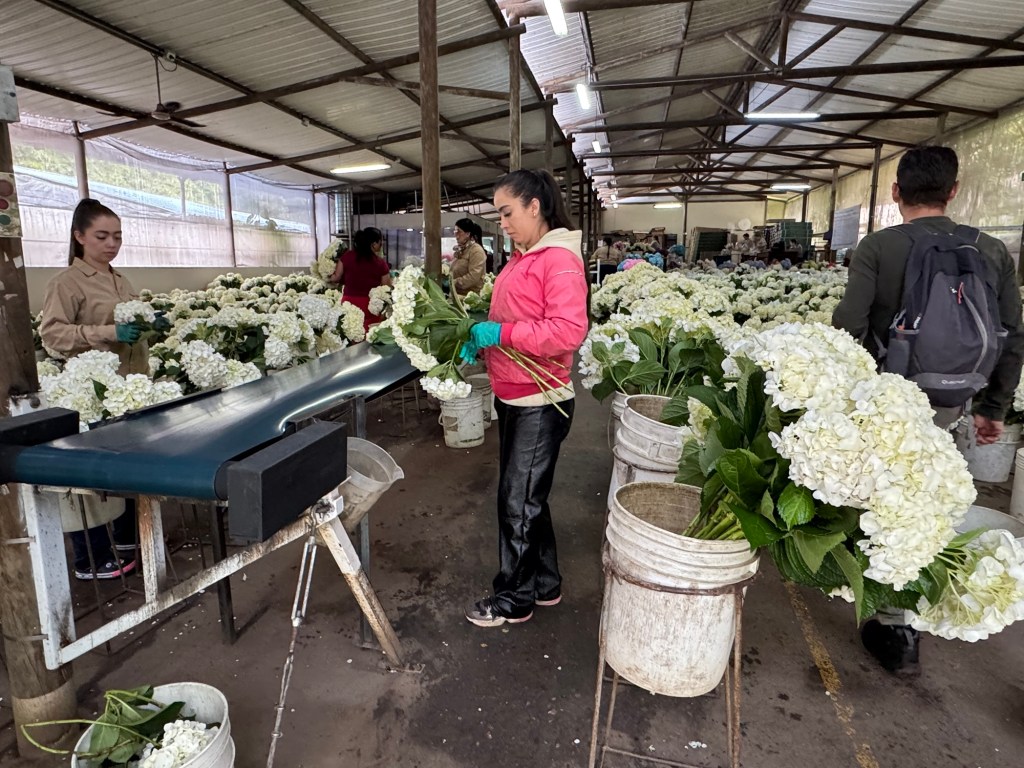
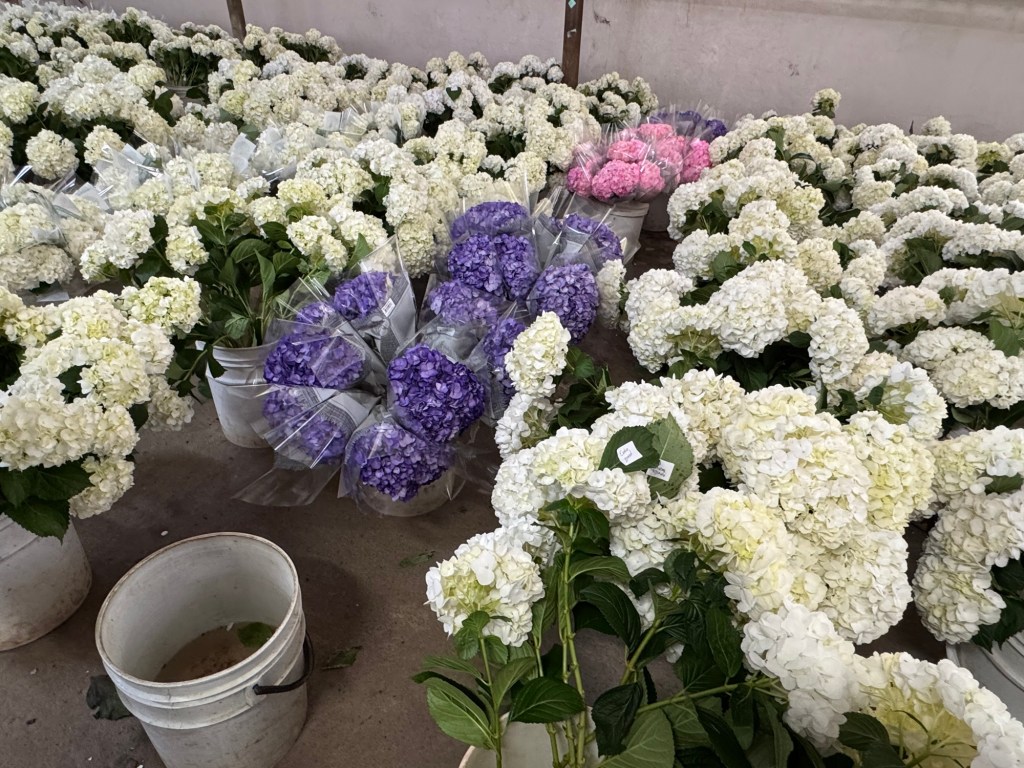
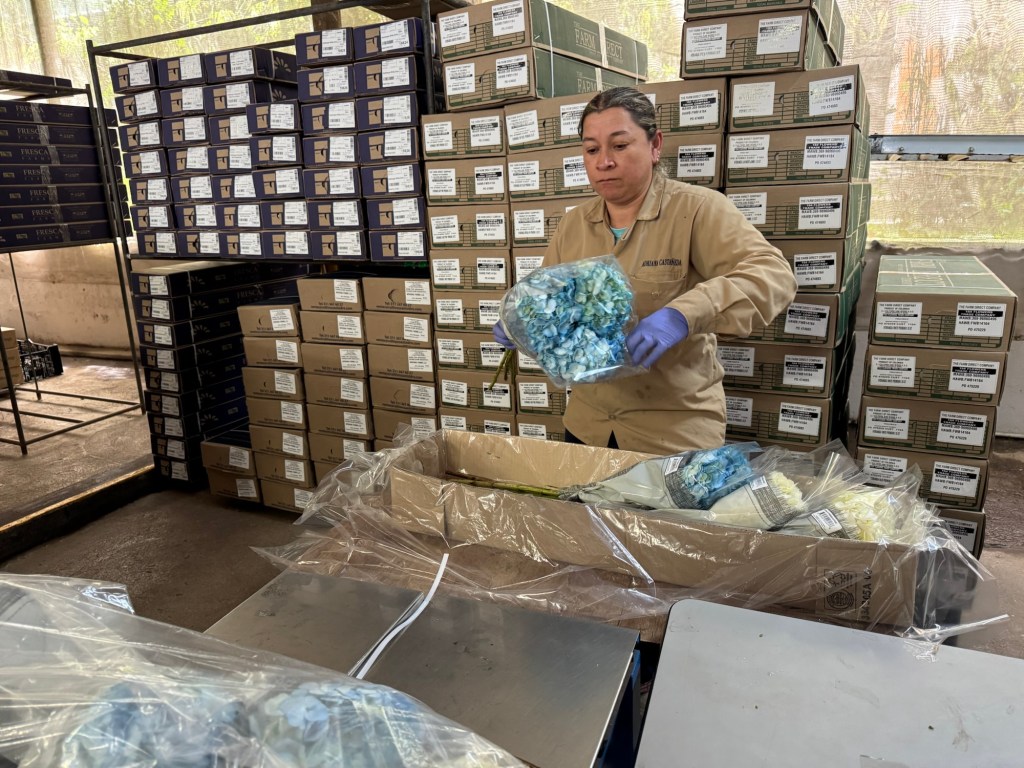
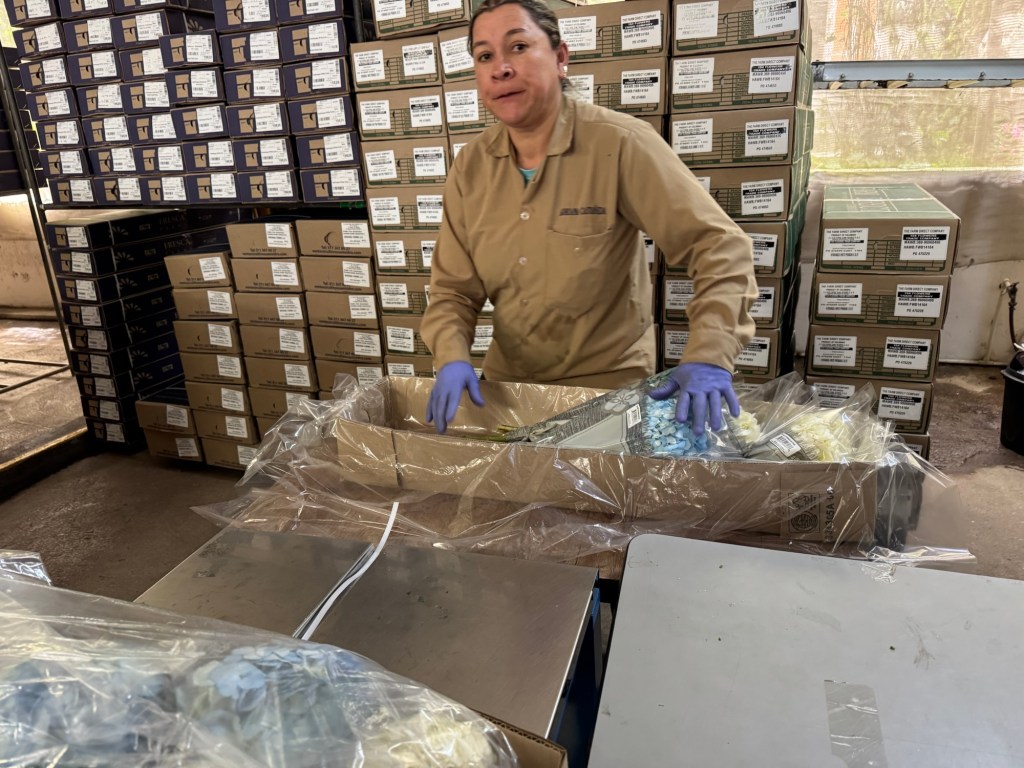
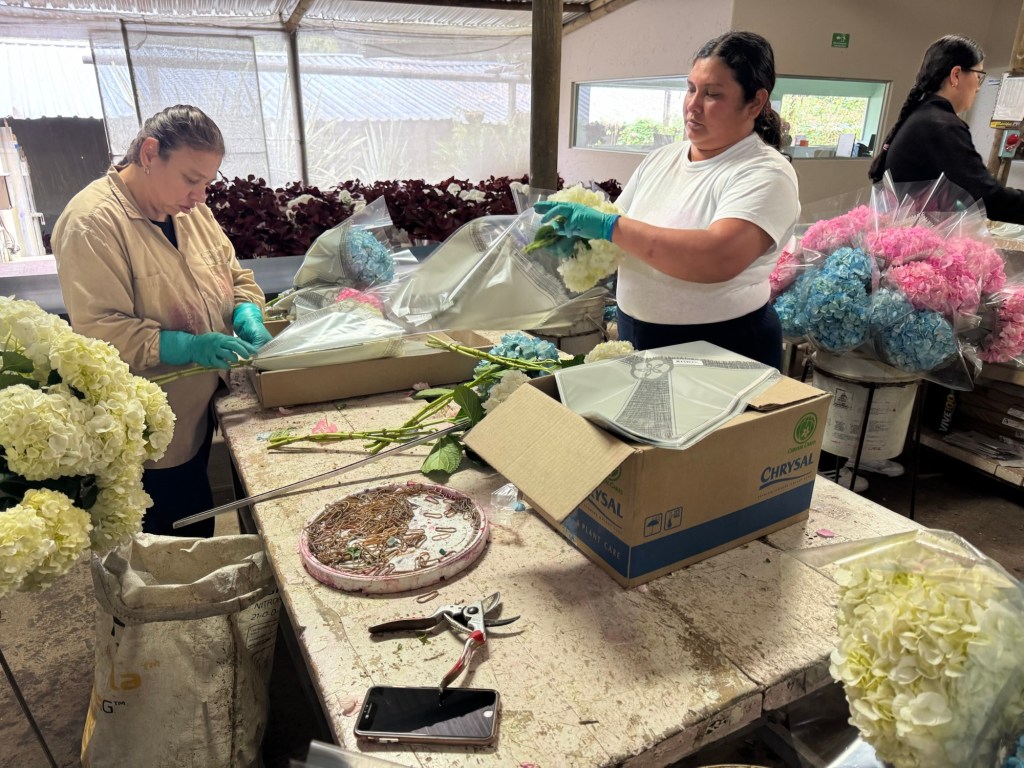
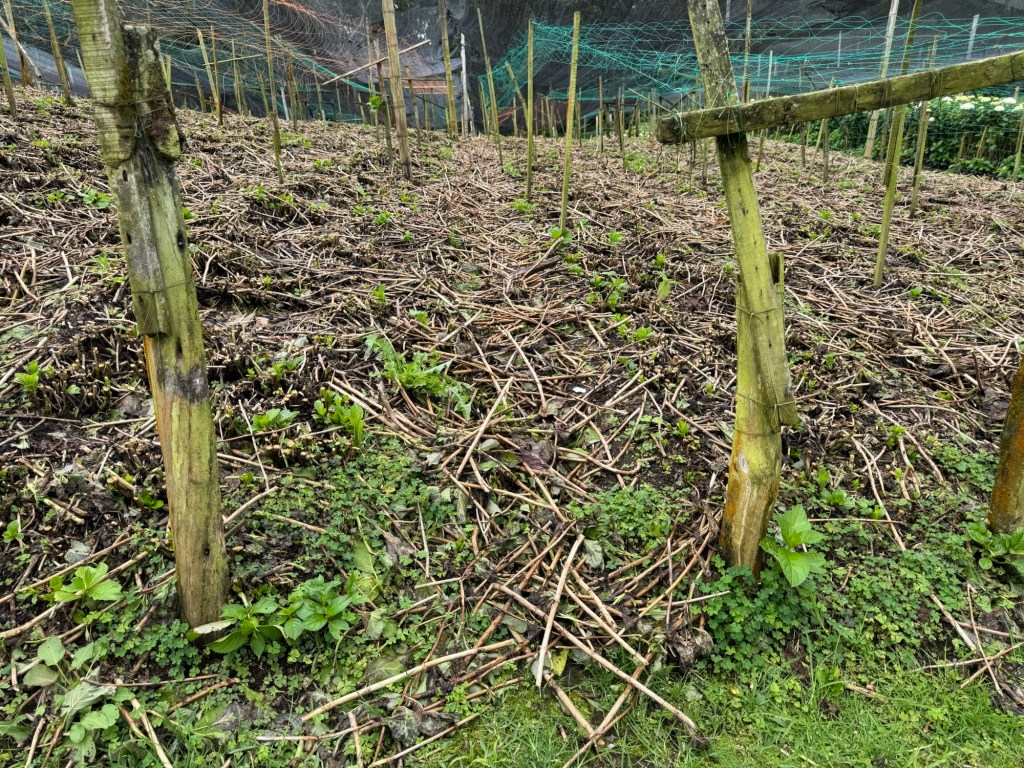
They grow only white hydrangeas, which they then color as needed for clients. We saw all the stages of the production from, growing in the fields to being sorted, colored, bound, boxed and shipped. Hydrangias need cool moist air and lots of rain. Fortunately it rains 11 0f the 12 months of the year. A crop takes 8 months to grow. There are 50 employees working full time in the hydrangeas.
Then we were treated to a very nice lunch of tilapia and veggies outdoors near the gardens.
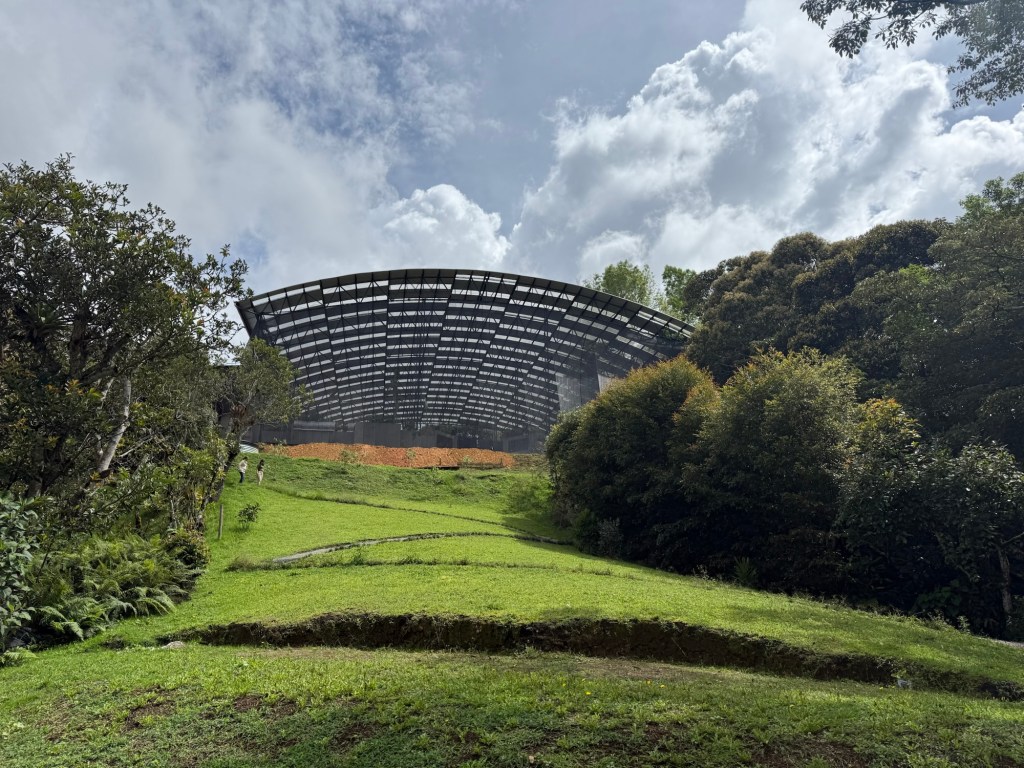
Finally it was time to see the orchids. We had been seeing the orchid building from a distance and were anxious to get inside.
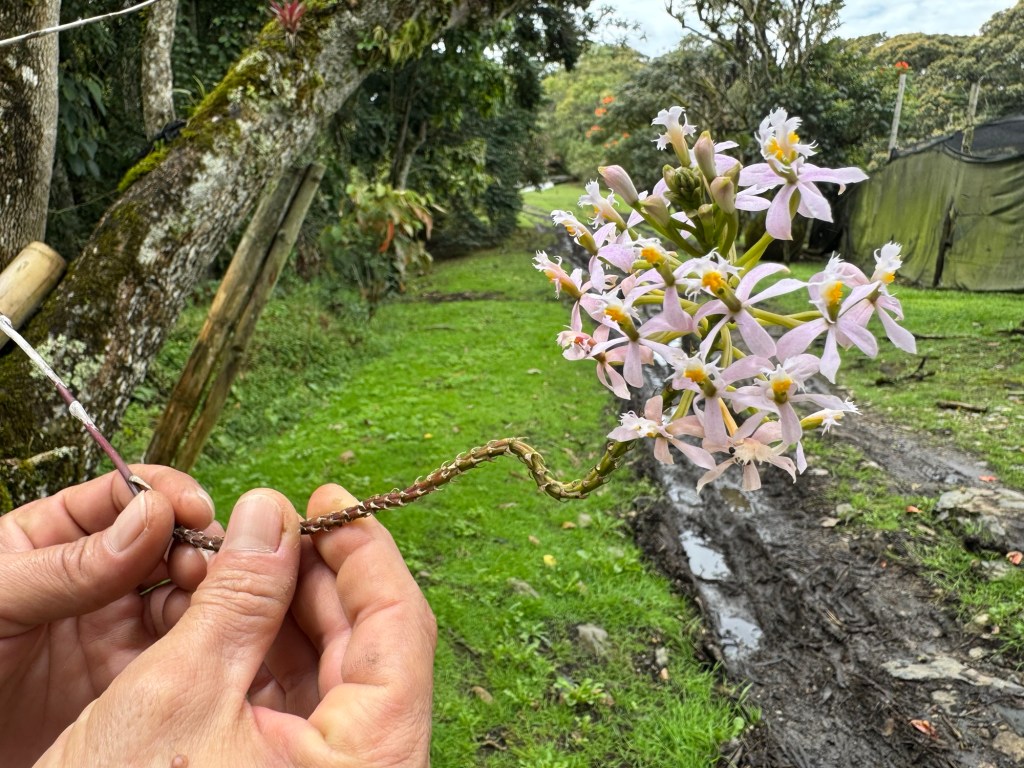
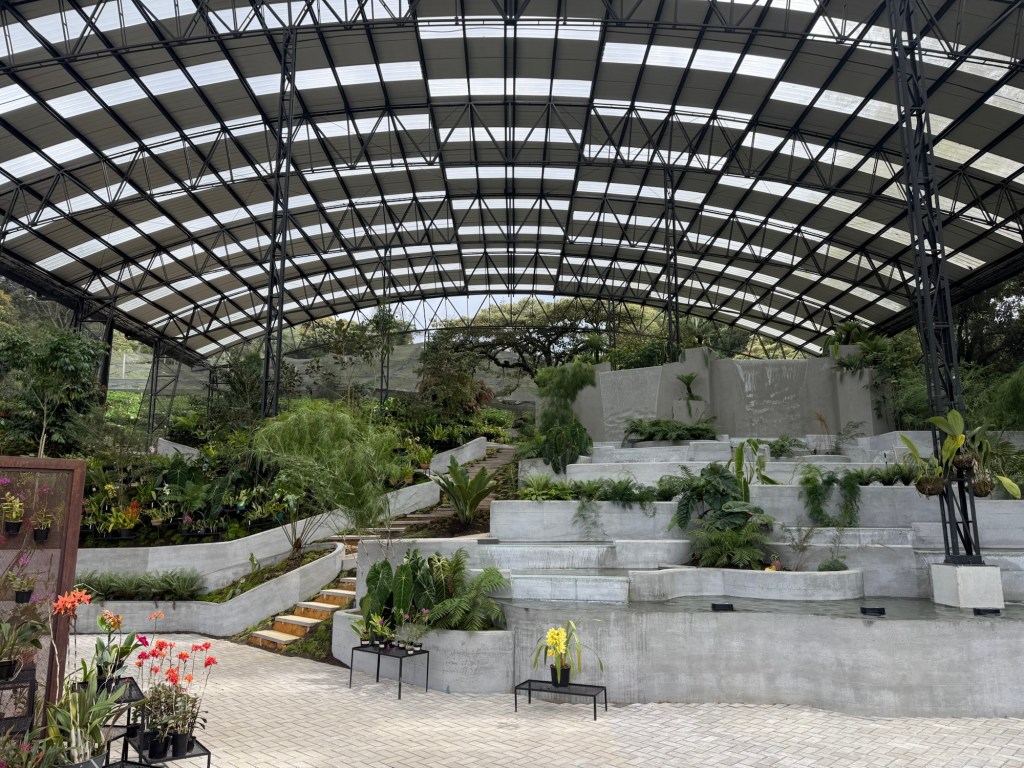
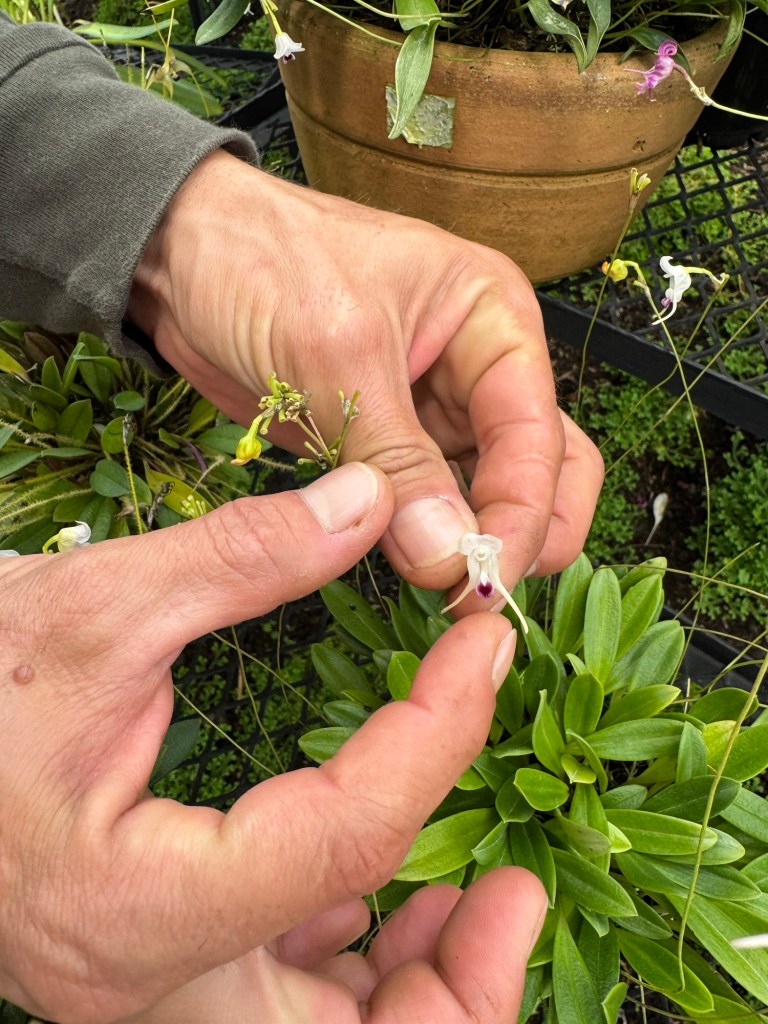
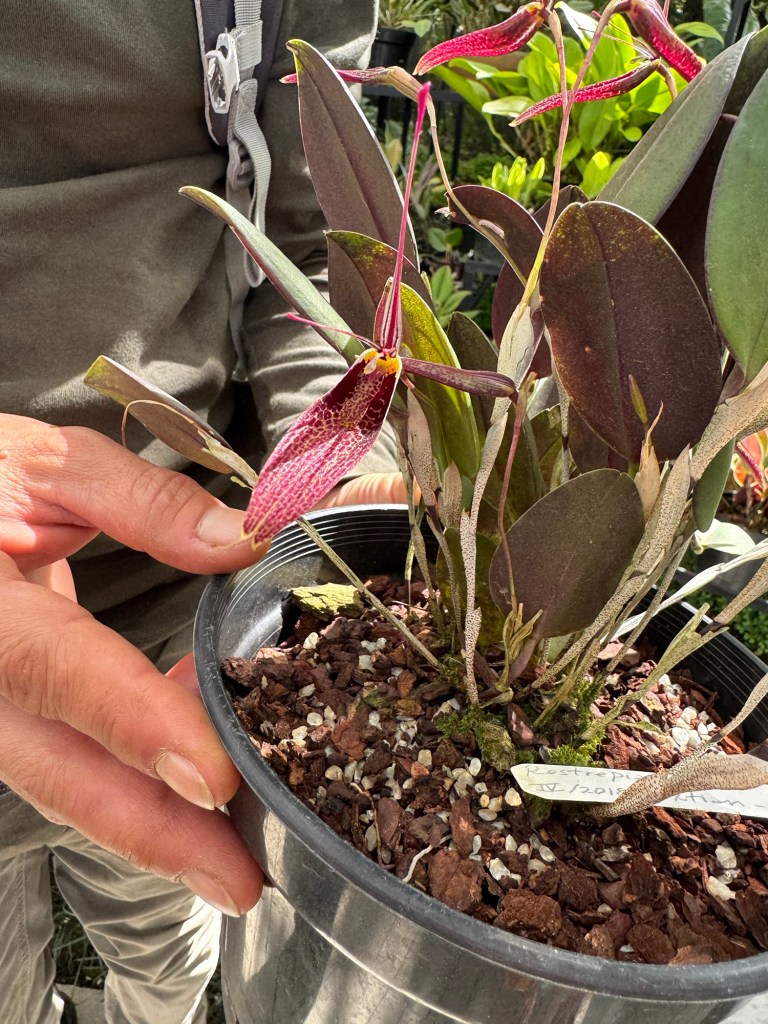
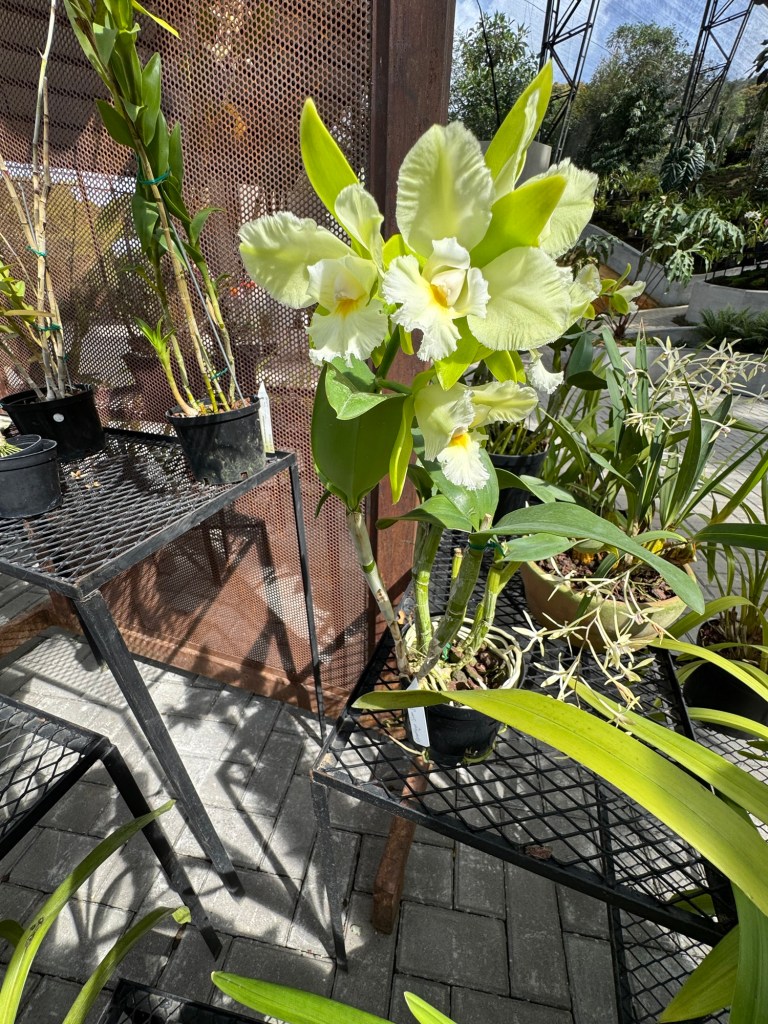
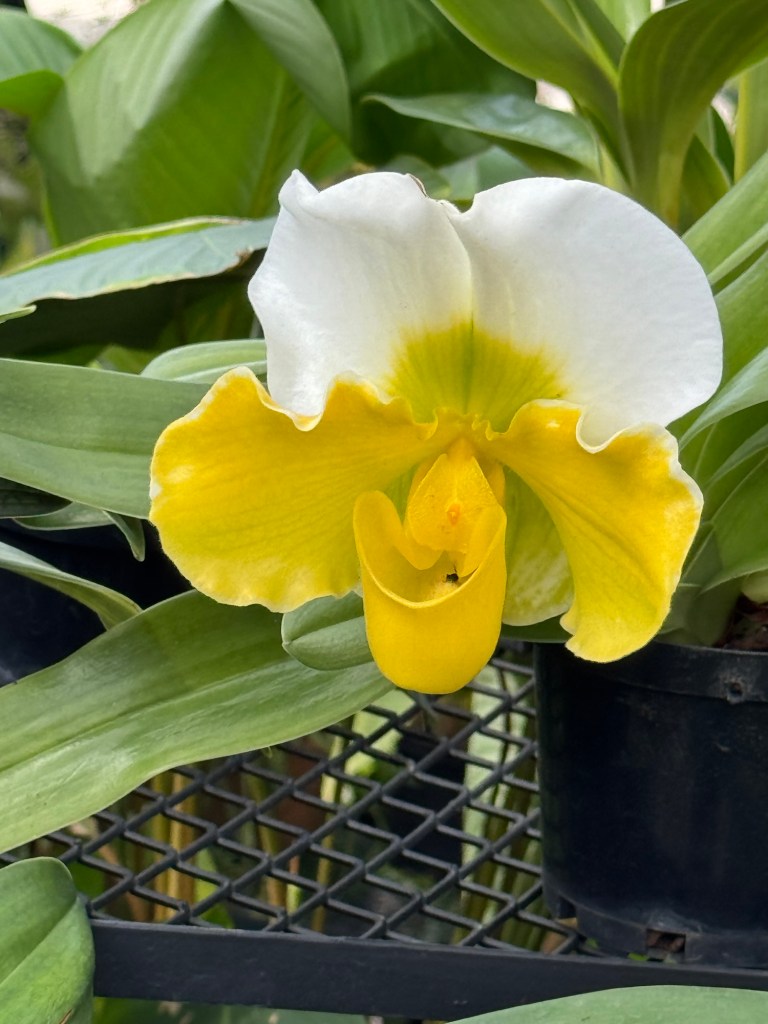
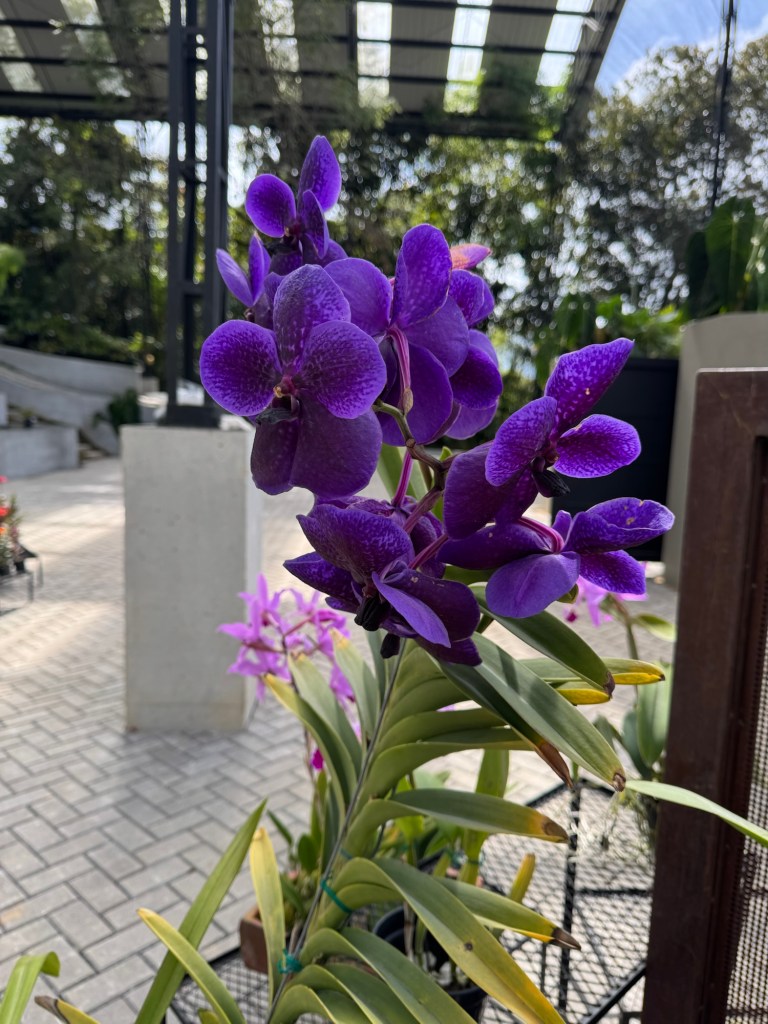
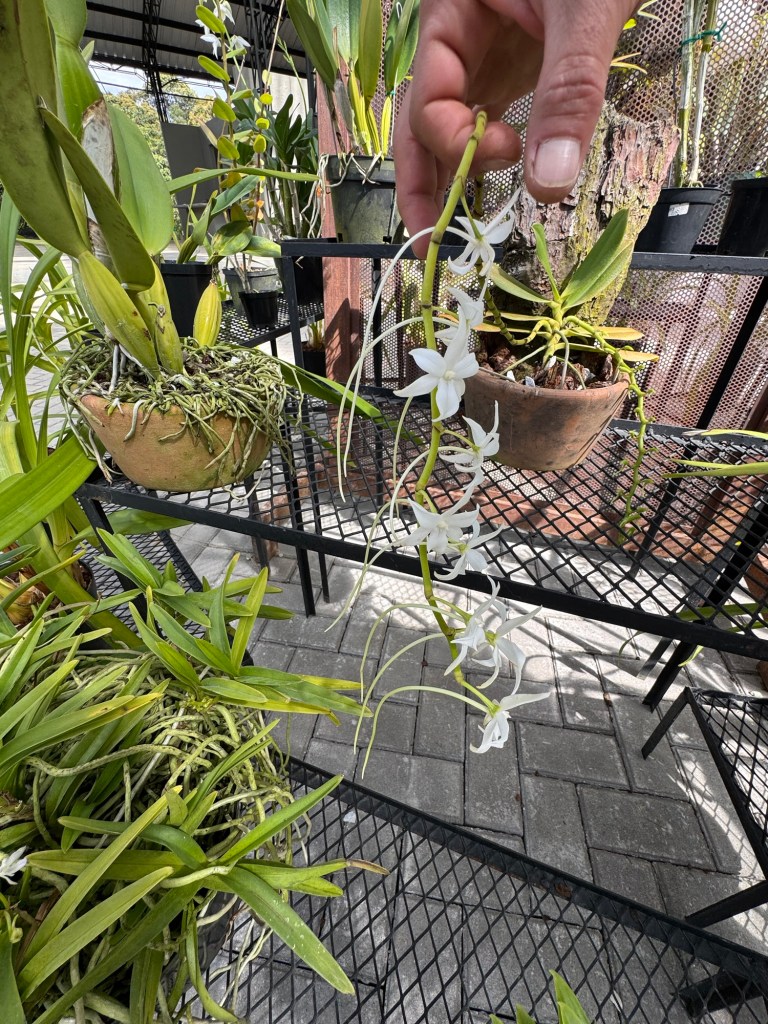
The orchid houseInspecting the tiniest flowersLiked this lemon yellow flowerA beautyAnother beautyReally unique. This flower need’s a pollinator with a very long tongue
It is quite a facility and we saw a handful of people tending to each orchid individually. We learned there are 35,000 species of orchid. Columbia has 42% of the species and 12% are here in this facility. The 6000 square foot roof lets in 33% of the natural light. The air is 60-95% humid and 1/3rd of the building is cold, 1/3rd is cool and 1/3rd is warm to accommodate the wide variety of orchids housed. All orchids have 3 sepals, 2 petals, one lip and one stamin.
From the garden we drove toward Medellin stopping in a colonial village for a coffee and a walk about. Saw a statue of Simon Bolivar, who led Colombia, Venezuela, Ecuador, Peru Panama and Bolivia to independence from the Spanish empire in the early 1800’s.
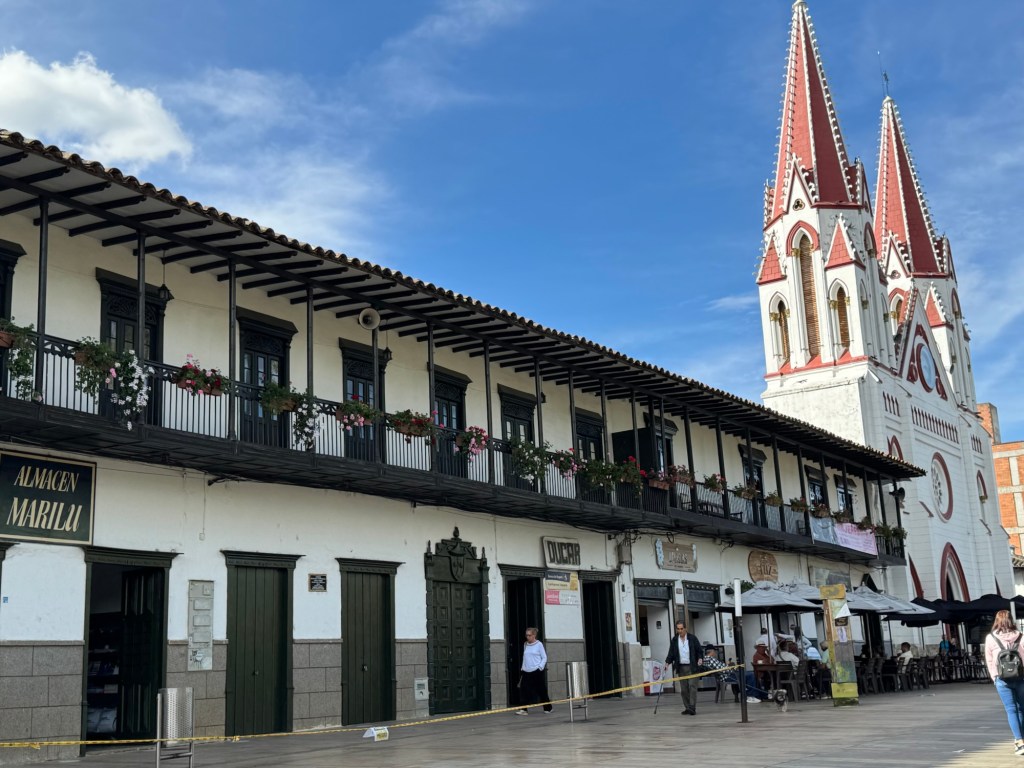
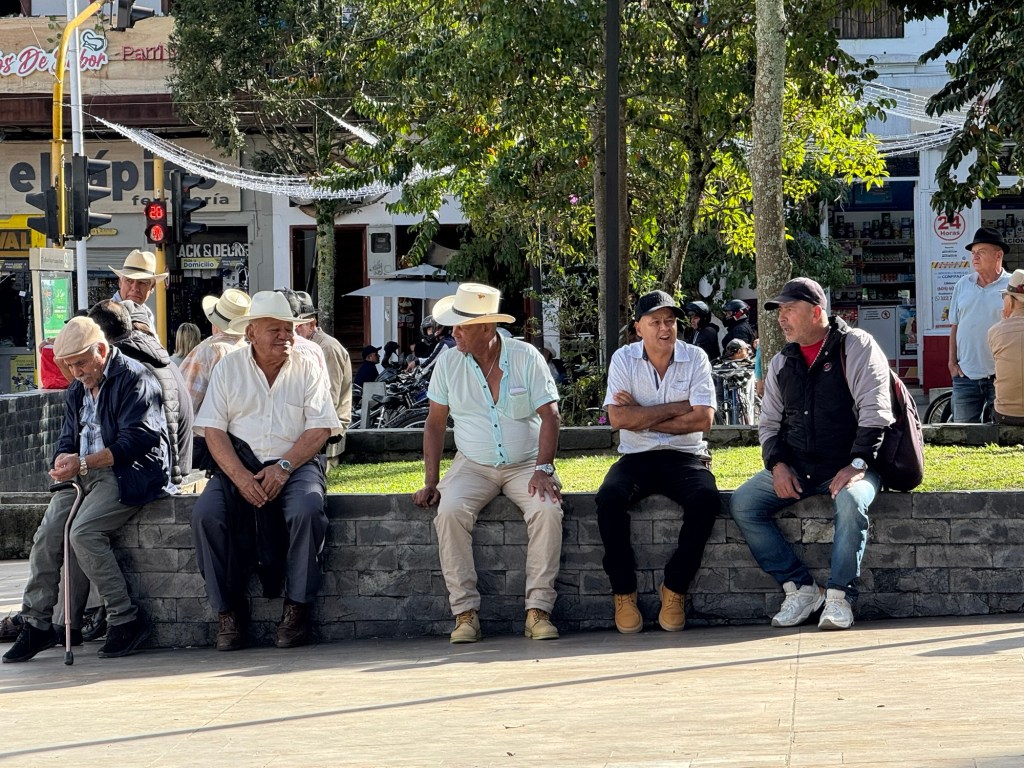
Colonial architectureA funeral is in progressThe locals hanging out
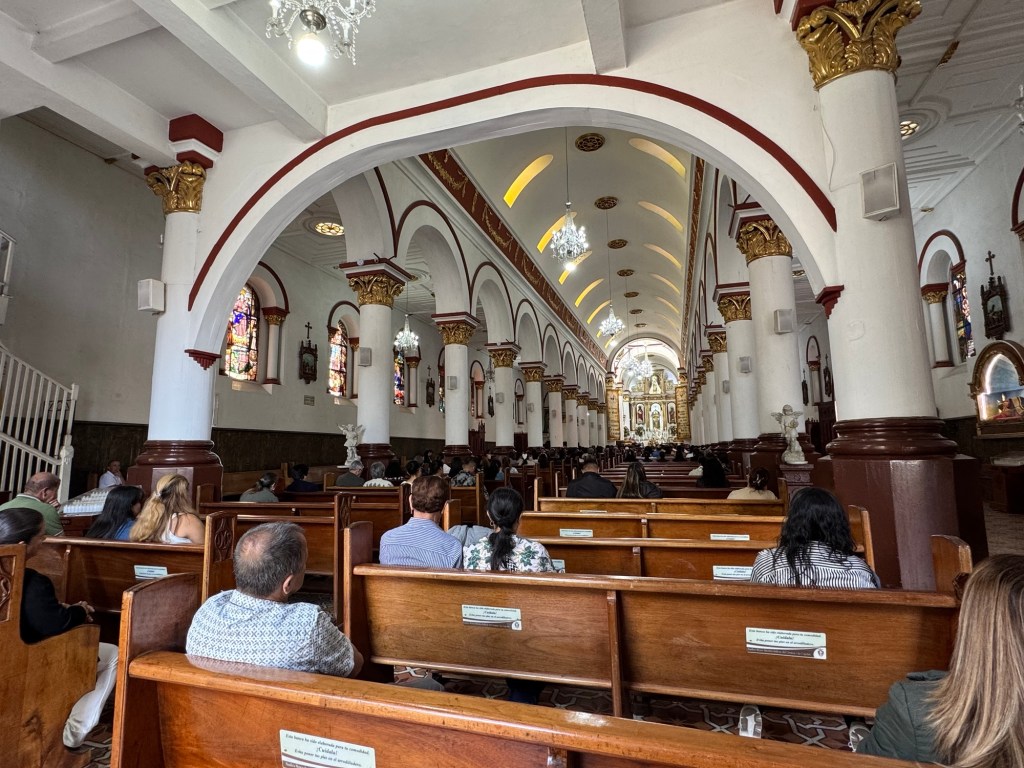
Visited the church. Then home and dinner at a place called Colosus. The view was very nice looking over the city, but the food was just ok. Home to bed.
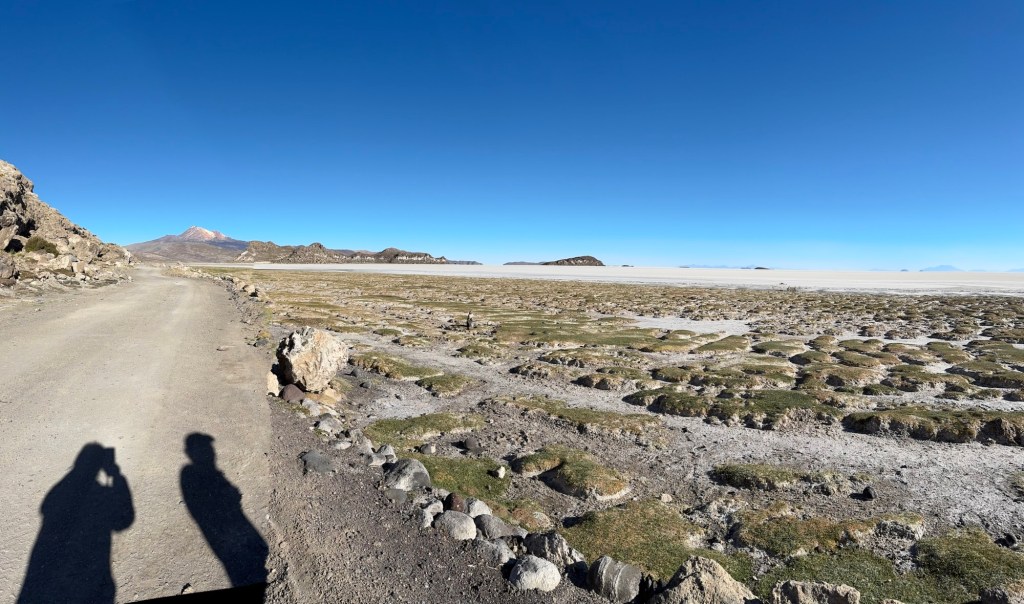
After our lunch on the salt flats, we headed back to the lodge, taking a few photos along the way.
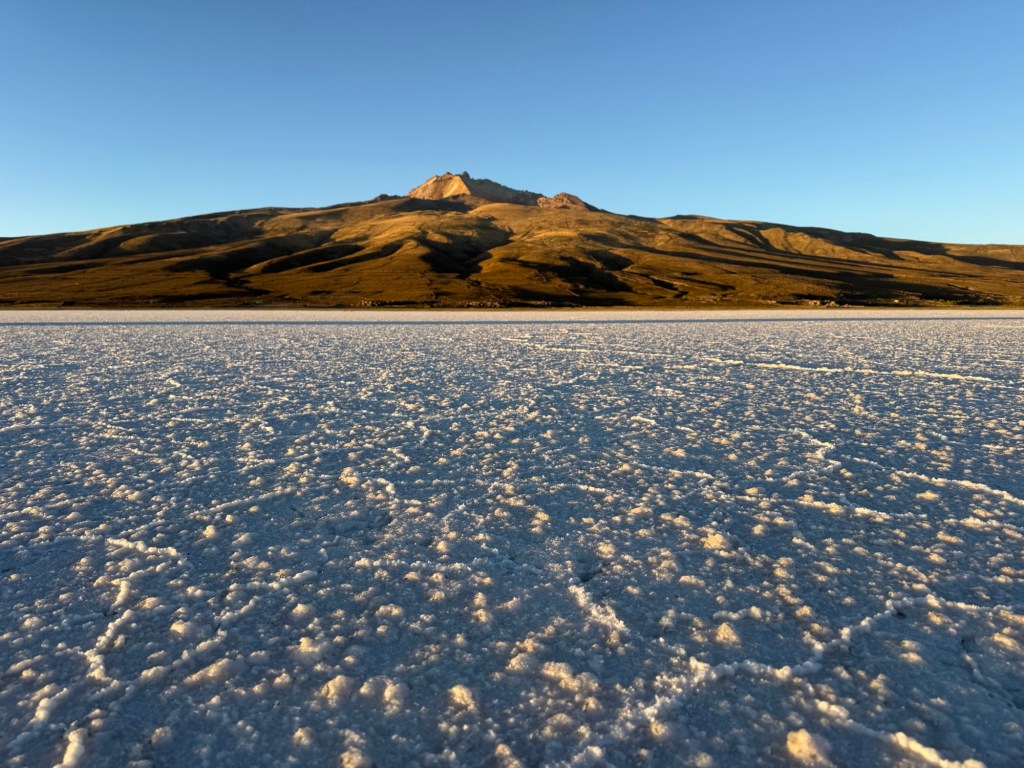
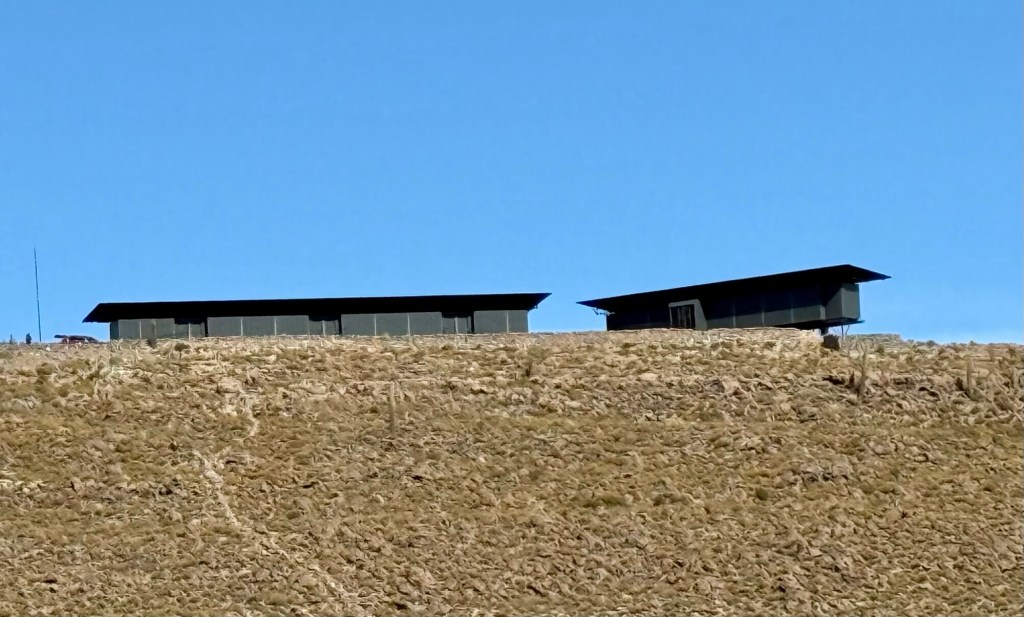
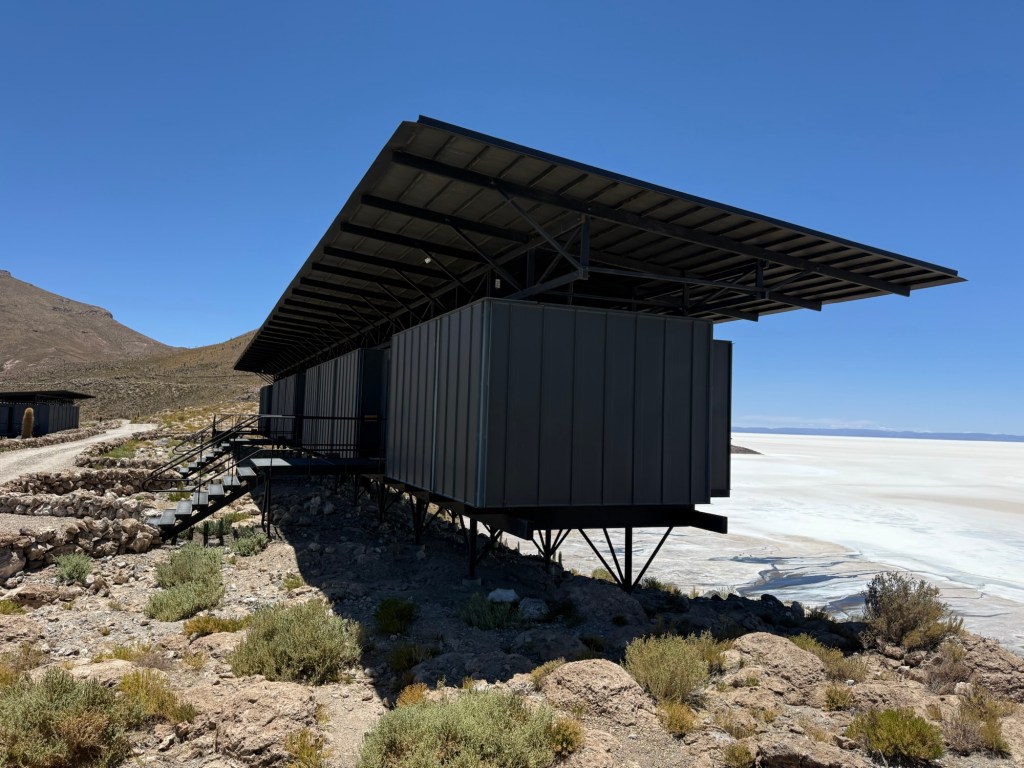
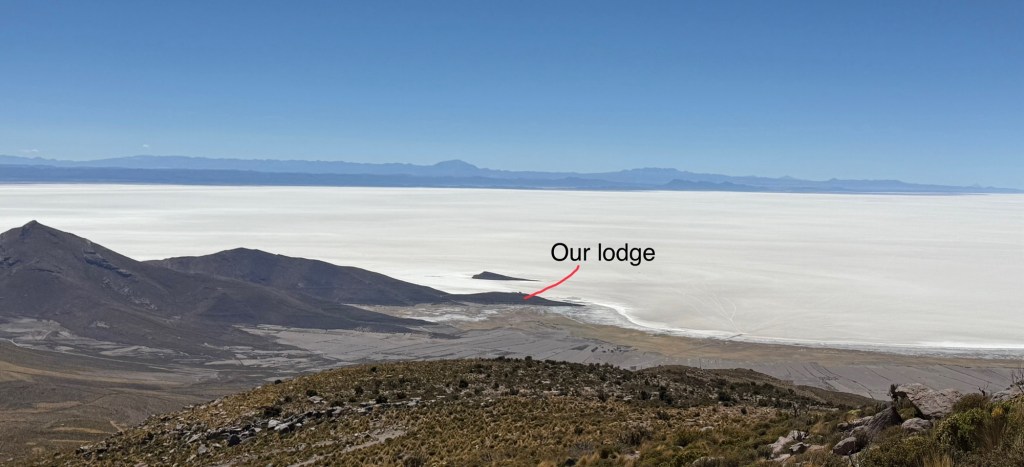
A sandstone rock wall showing water levels millennia ago.The salt flats at ground level with the volcano in the backgroundThe lodge looks barren from the flats There are six cabins in the Explora Lodge. Wind blows very strong every evening and makes the building shake. Ours was the end unit on the right.
Friday, October 30, 2025
Departed Explora Lodge and the Salt Flats early morning and drove back to the airport at Uyuni to fly to LaPaz. The altitude change was difficult as the elevation was 13,350 and I felt the difference while still on the plane waiting to exit. In spite of the high elevation, 2.5 million people live in La Paz.
We met our next guide, Gabriela, at about 11am and immediately began a 3-hour drive from the airport to Copacabana. During the ride we saw hundreds of trucks parked along the road sides waiting to get diesel fuel. Apparently the country is low on fuel and everyone is suffering from a lack of supplies due to a lack of hard currency. A newly elected president will take over soon and people are hoping he will improve the financial situation.
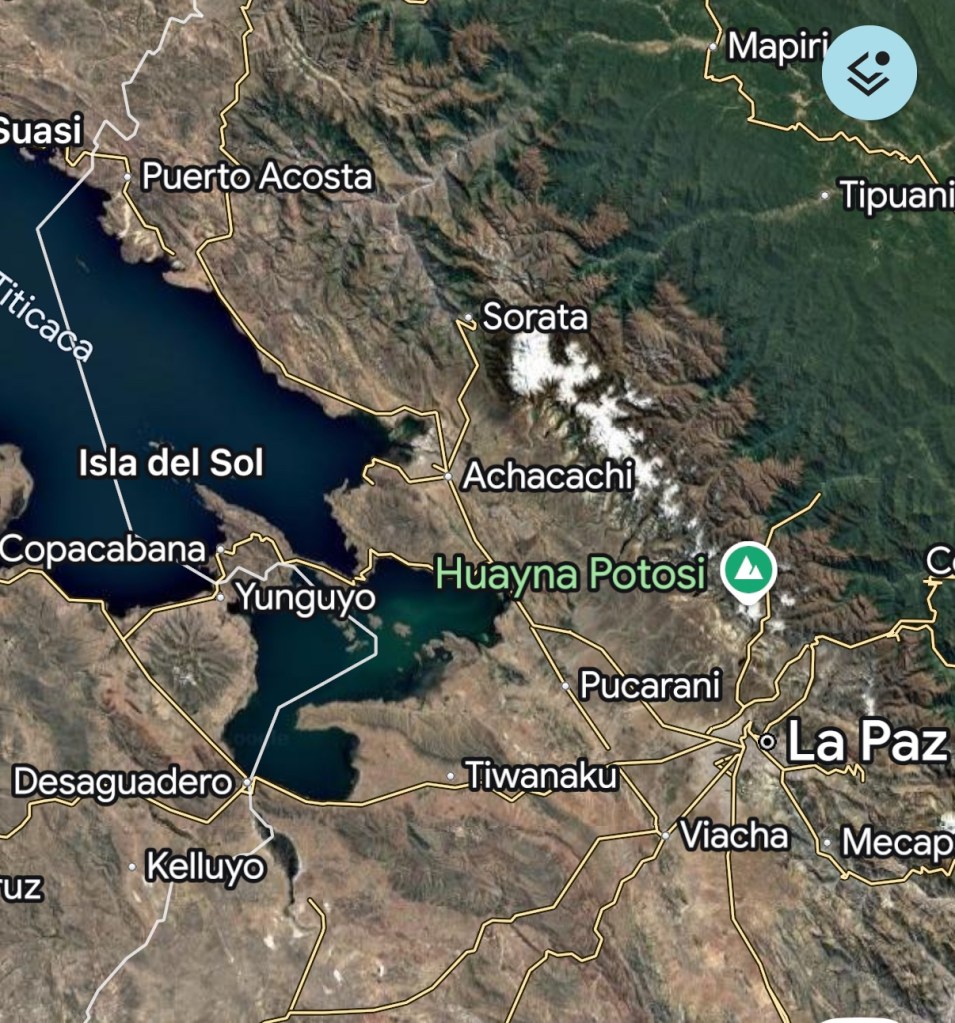
From Copaccabana we took a one hour boat ride on Lake Titicaca (12,510), the world’s highest navigable lake, to an island called Isla del Sol (Island of the Sun).
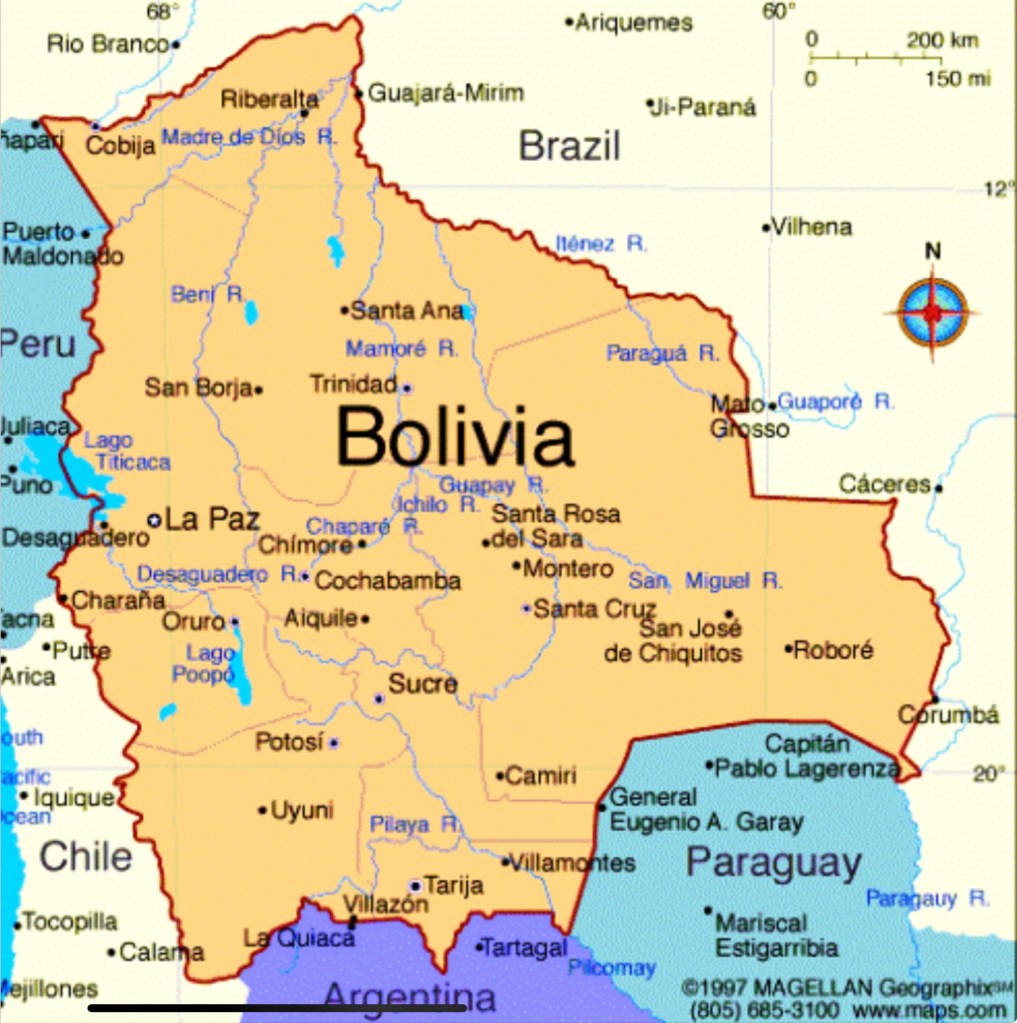
Our route was from La Paz through Huayna Potosí and Yunguyo to Copacabana, then boat to Isla del Sol
Our accommodations were an ecolodge at the far end of the island from our arrival point. It took us 2 hours to hike the very rocky two kilometer path uphill.
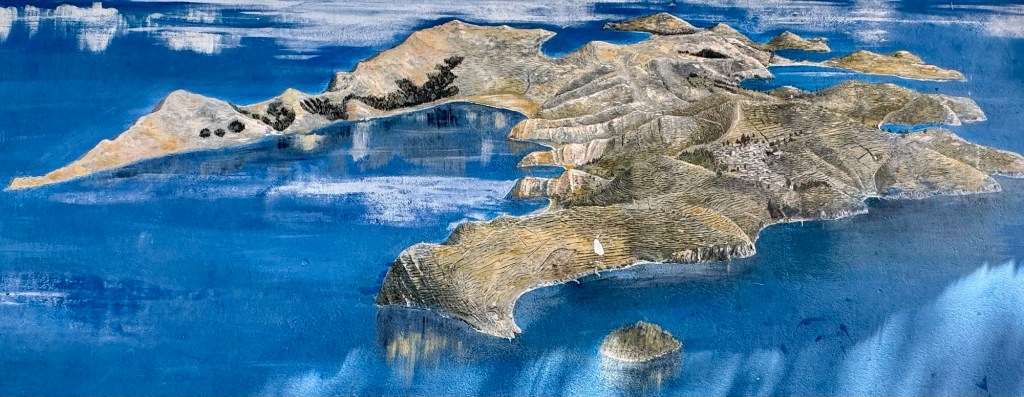
Isla del sol.
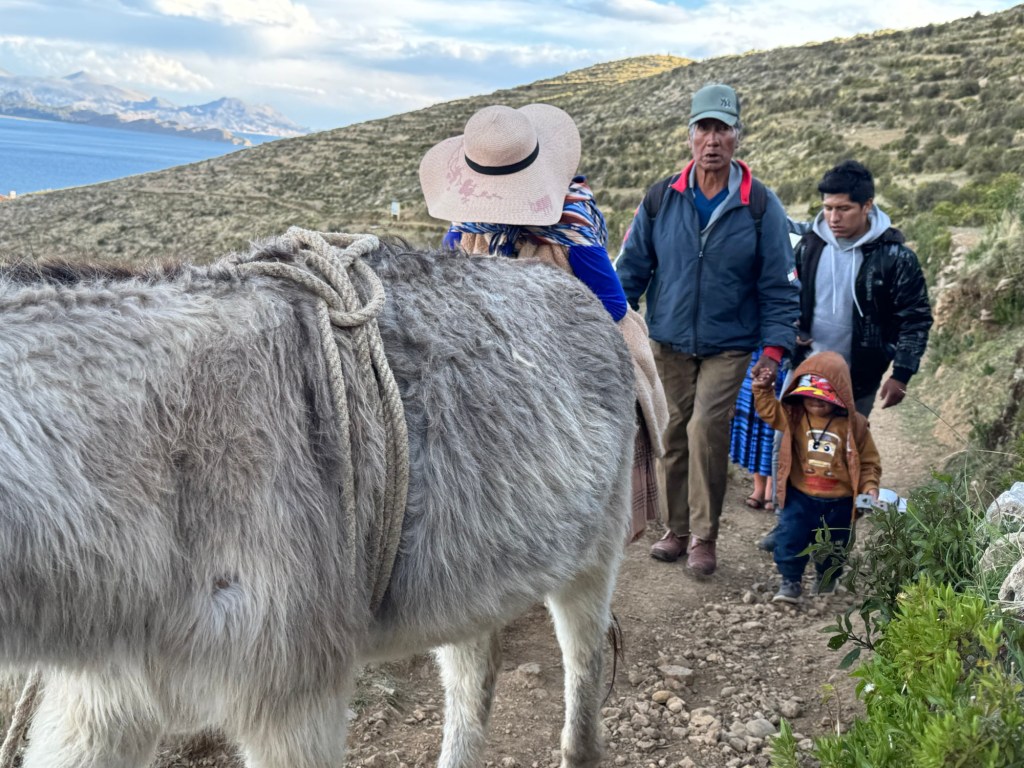
Thankfully, our bags were carried up and down by donkeys. We stopped many times along the path to catch our breath.
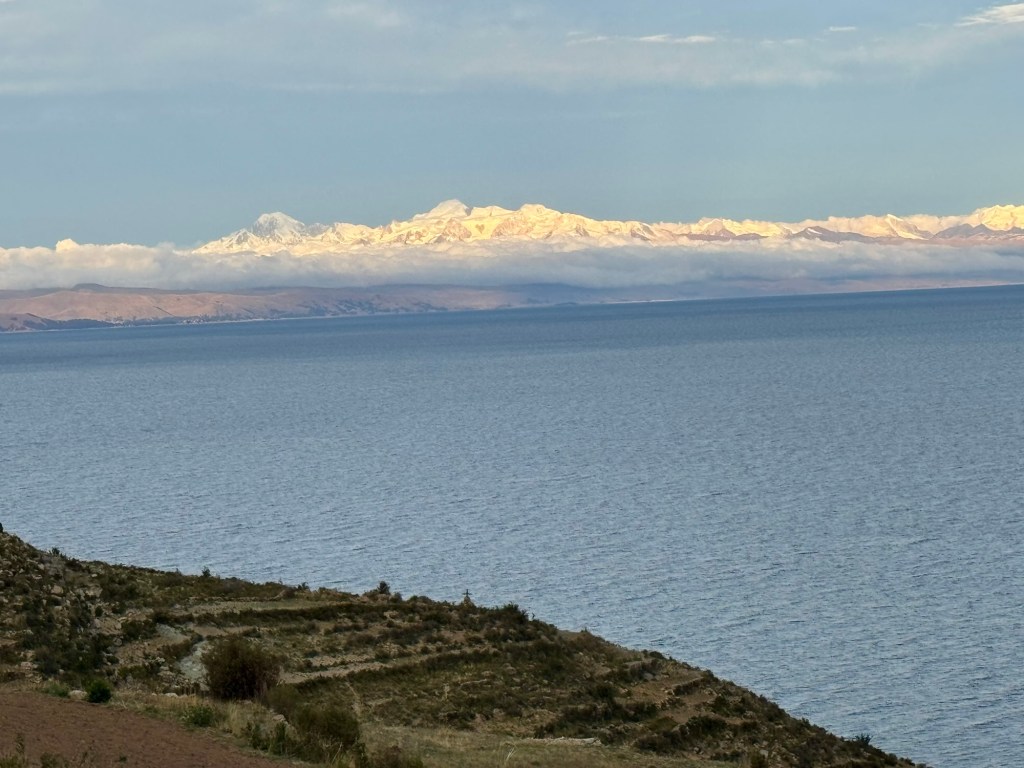
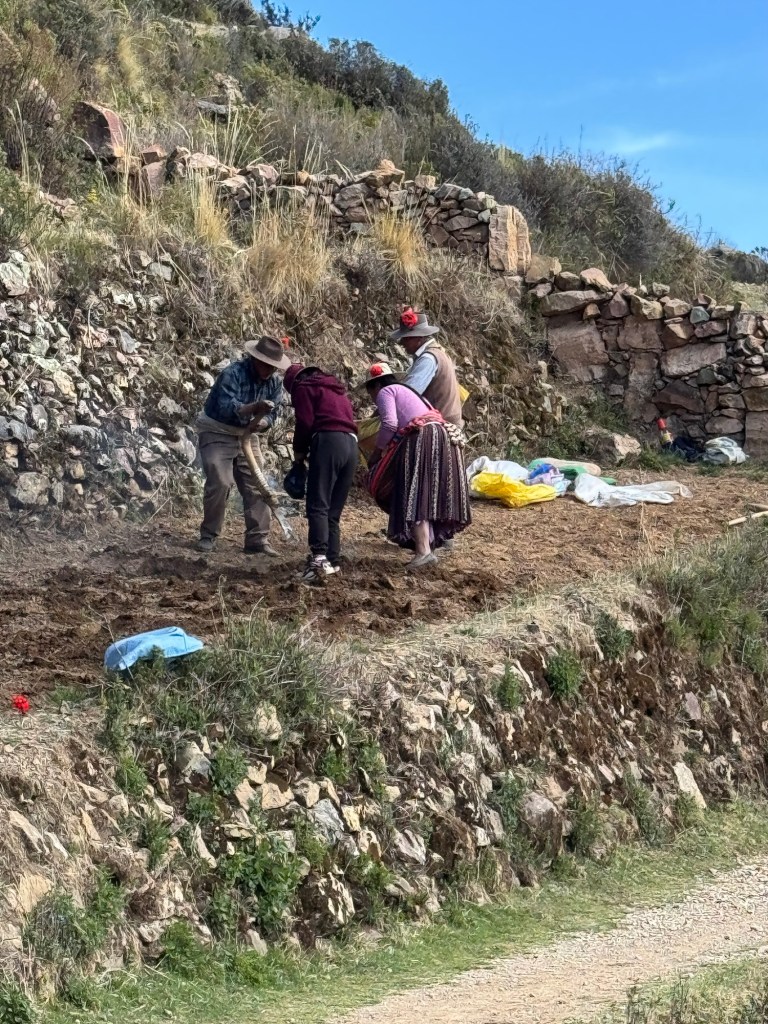
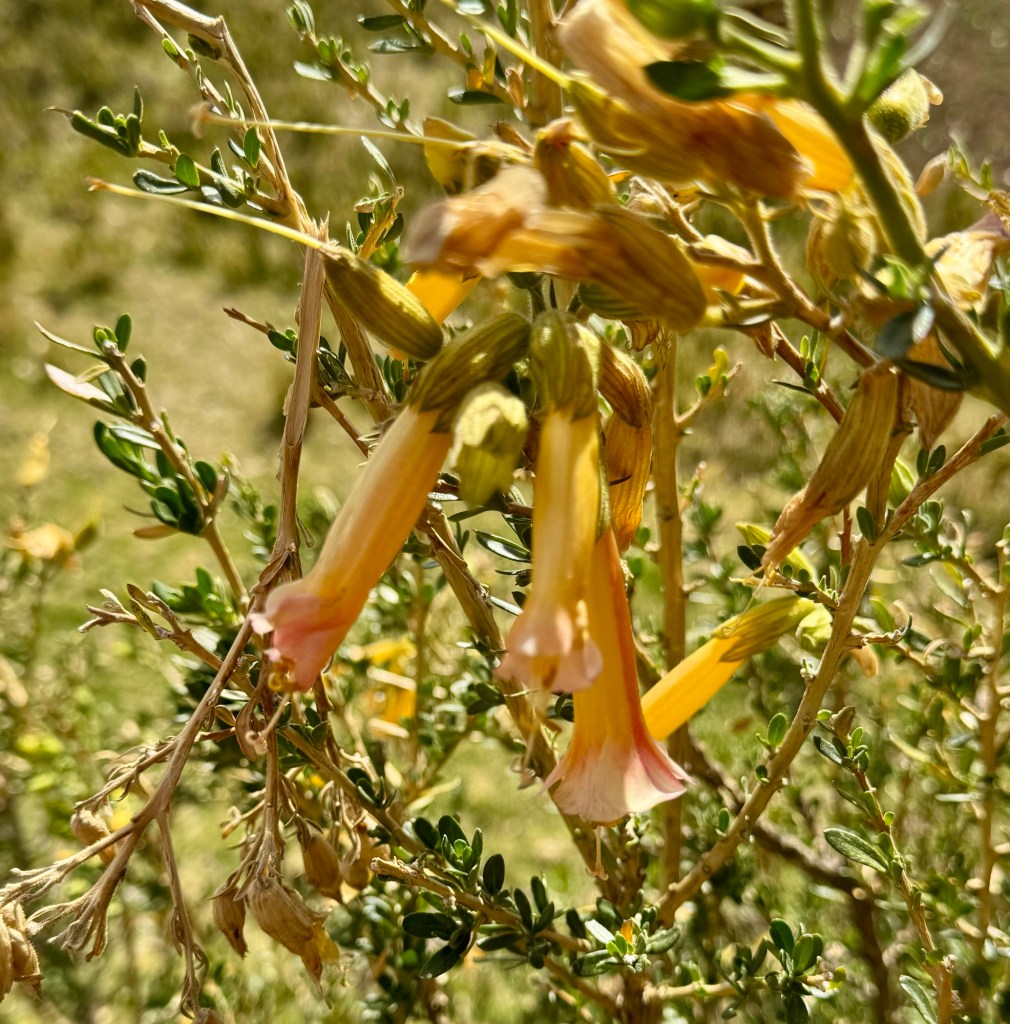
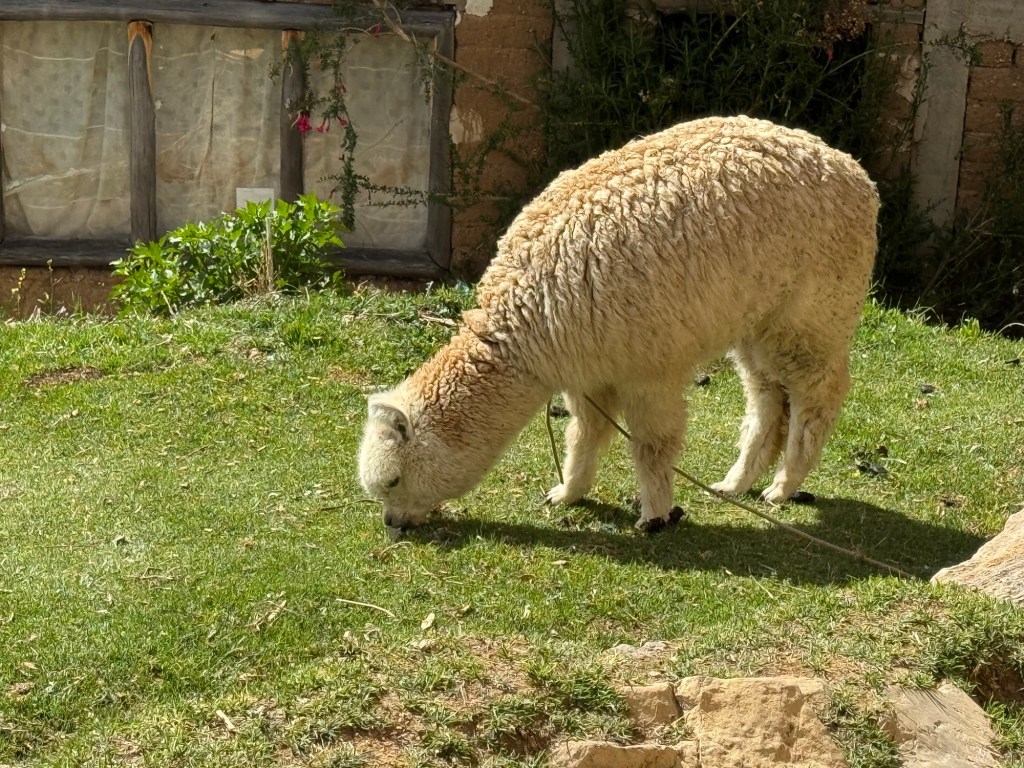
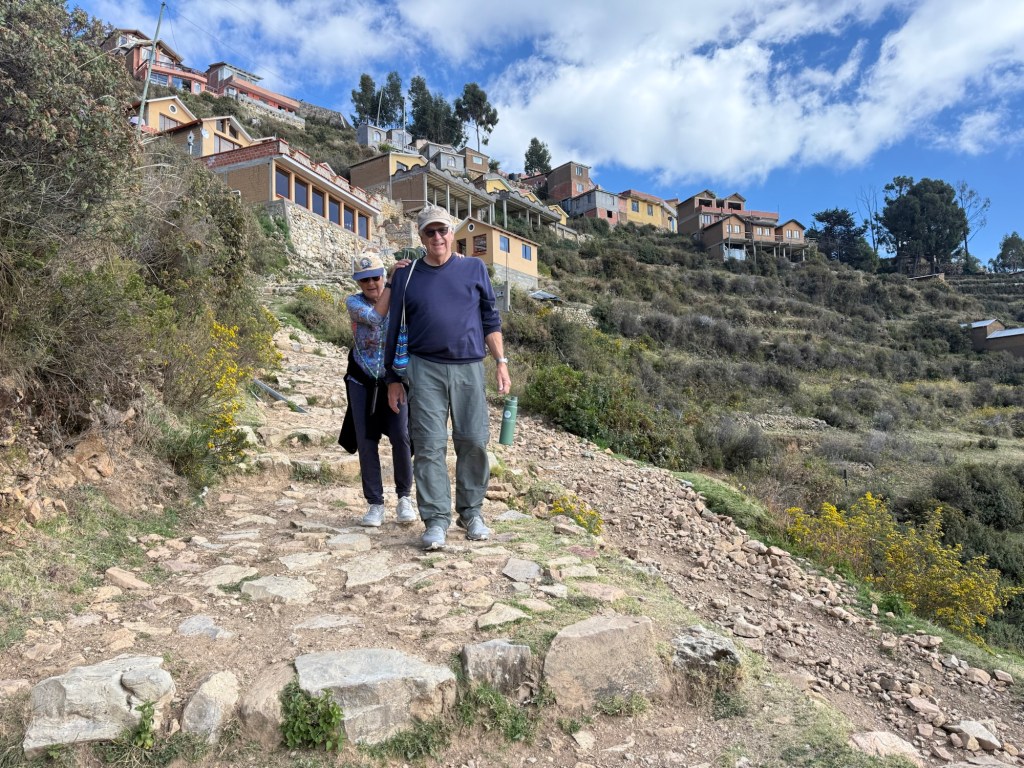
Arrival at the islandView of the snow covered AndesLocals cultivation their groundA yellow fascia-also sacred to the IncasAlpacaPoppy’sFox gloveFuschia-a sacred flower of IncasOur boat ride to the islandPre-Inca templeMark helping me walk down the rough trail
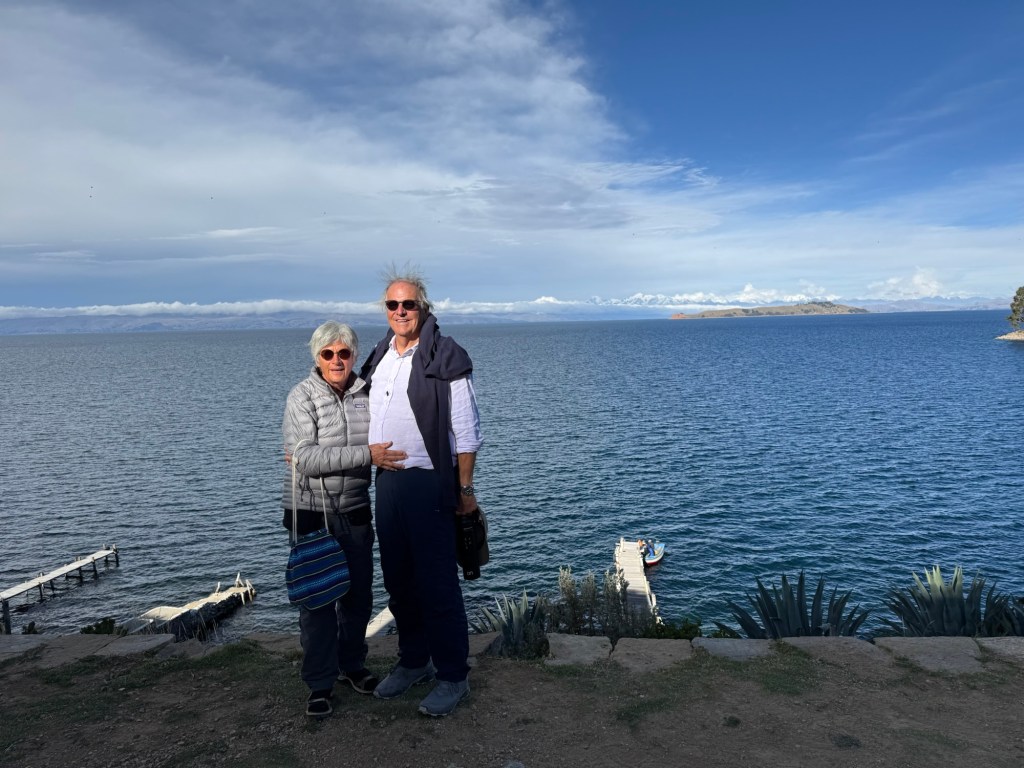
The scenery was breathtaking, but that was not why I was out of breath the whole walk. I felt very oxygen deprived and wondered if I would make it. Mark and Gabriela helped me nearly every step of the path. We did see a BC temple to ancient pre-Inca gods, beautiful snow-covered Andes mountains, the large and lovely Lake TIticaca, an alpaca grazing near the path, and many pretty flowers.
Once we got to the ecolodge (13,013), I was begging for oxygen. As my condition was not unusual, there was a bottle of oxygen available. That and a light dinner helped me get through the night. However, as Mark noted, the lodge was not much of a payoff.
Saturday, October 31, 2025 Halloween
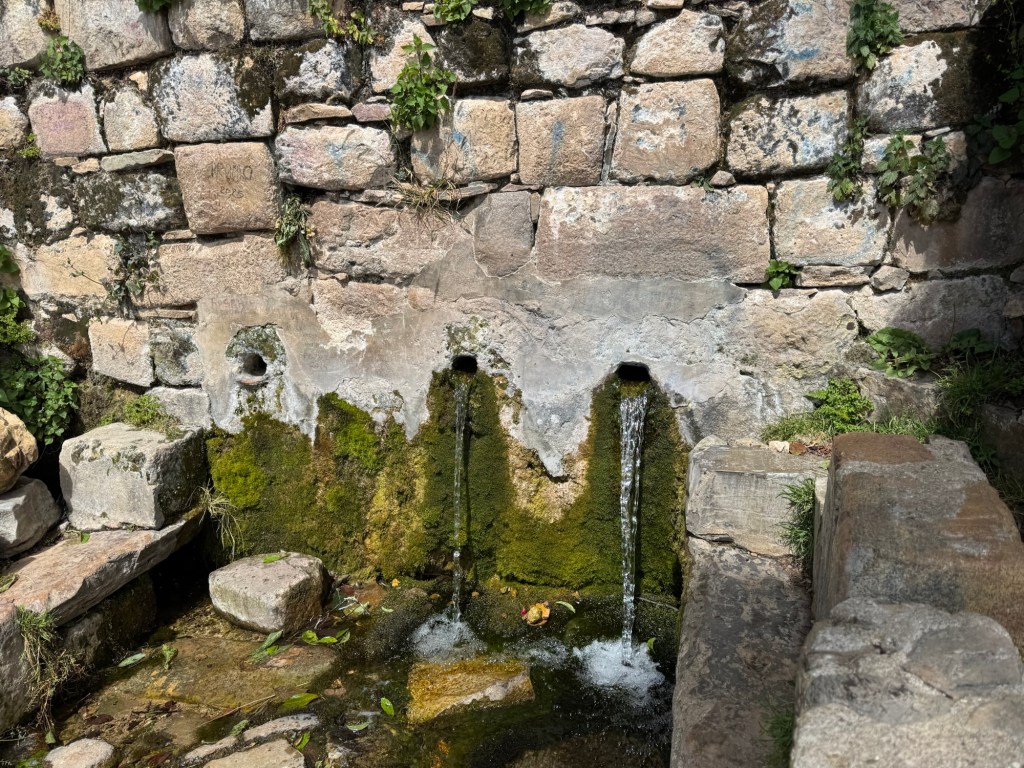
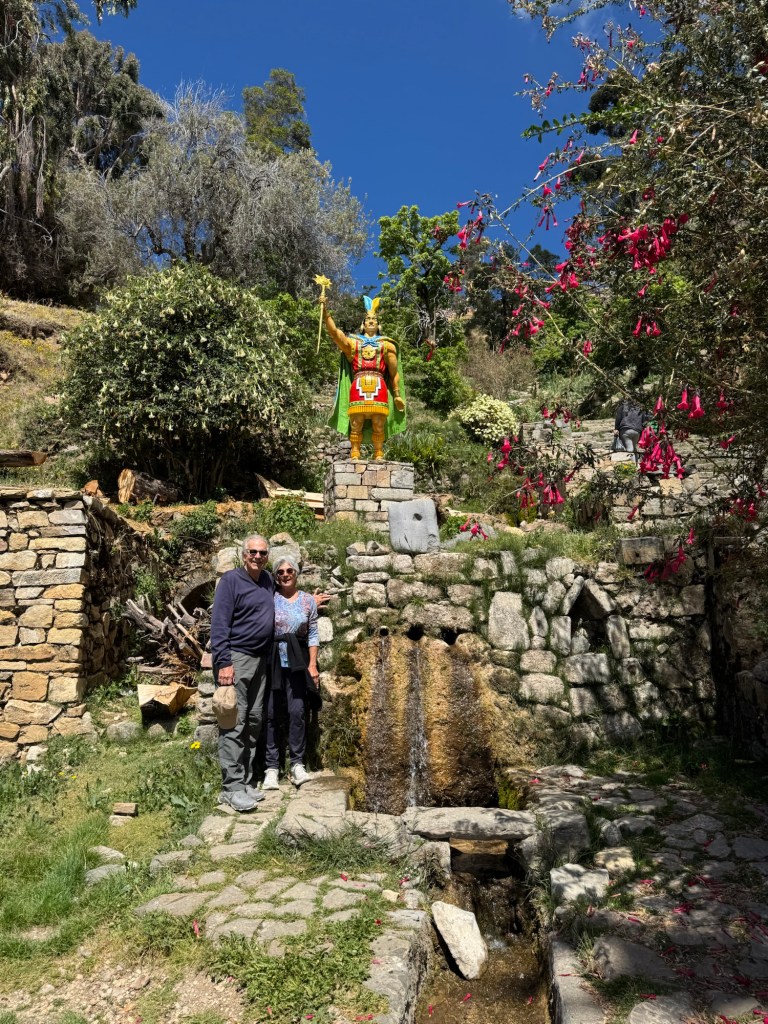
A local family on the pathThe Ancient Inca well-“Fountain of Youth”Inca Fountain of Youth with Manco Kapak, Inca godAncient Inca steps Goddess Mama Ojllo
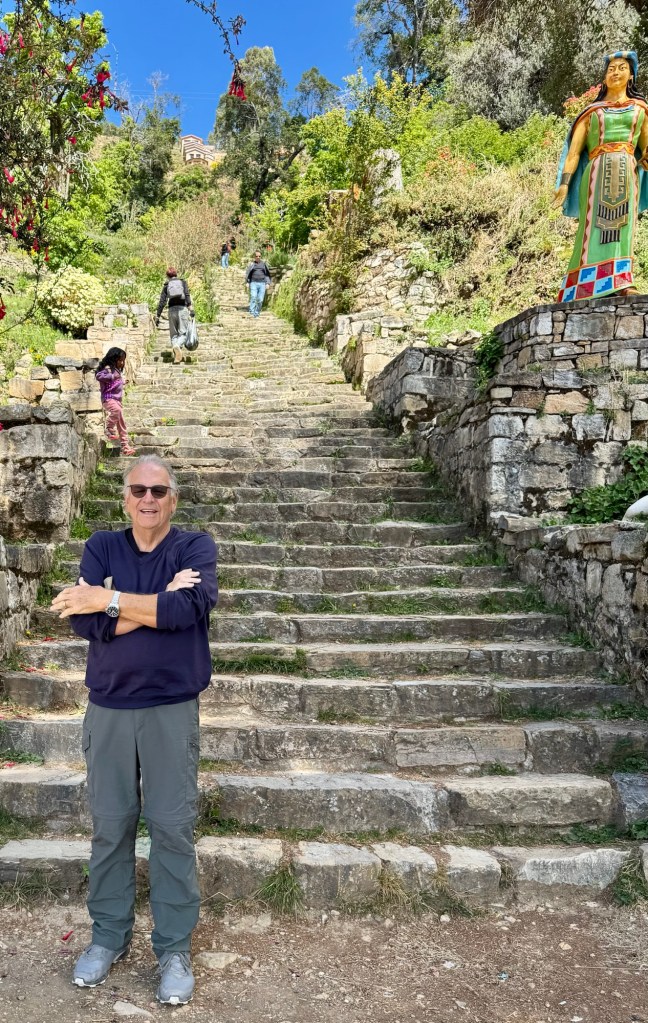
Next morning we started the return trek down the hill, stopping at the top of a sacred well on the Inca trail that has spiritual significance to the Aymara people, many of whose descendants still live on the island. At the bottom of the stairs are statues of the gods Marco Kayak and Mama Ojllo, who compare with the Adam and Eve of the Christian world.
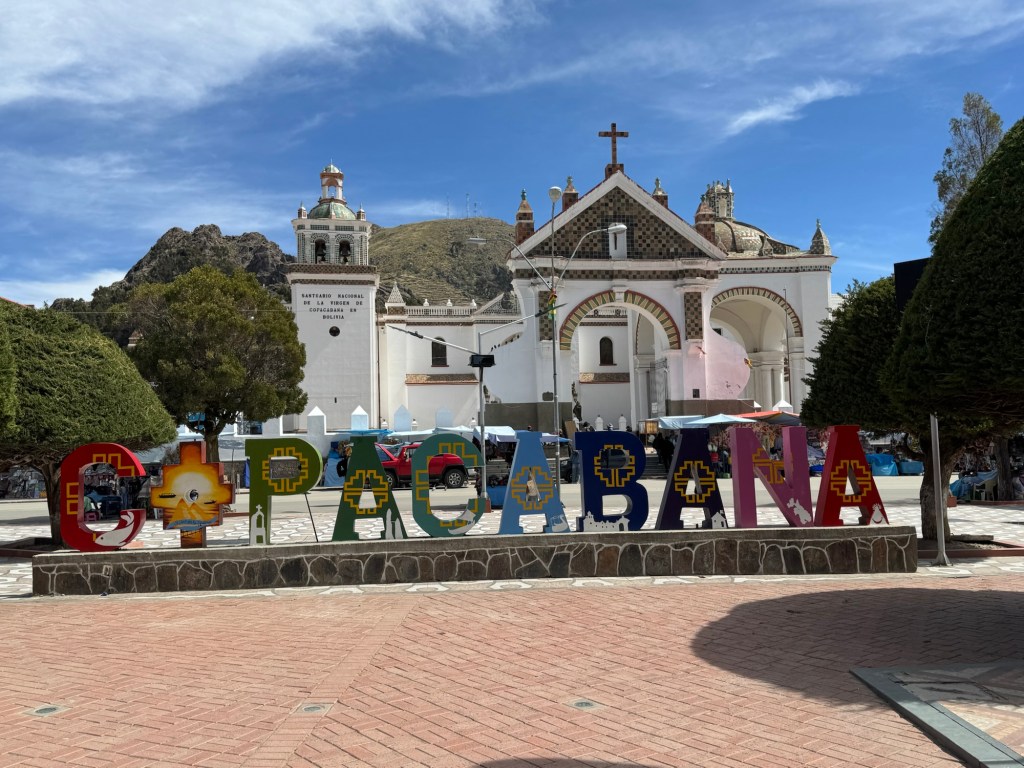
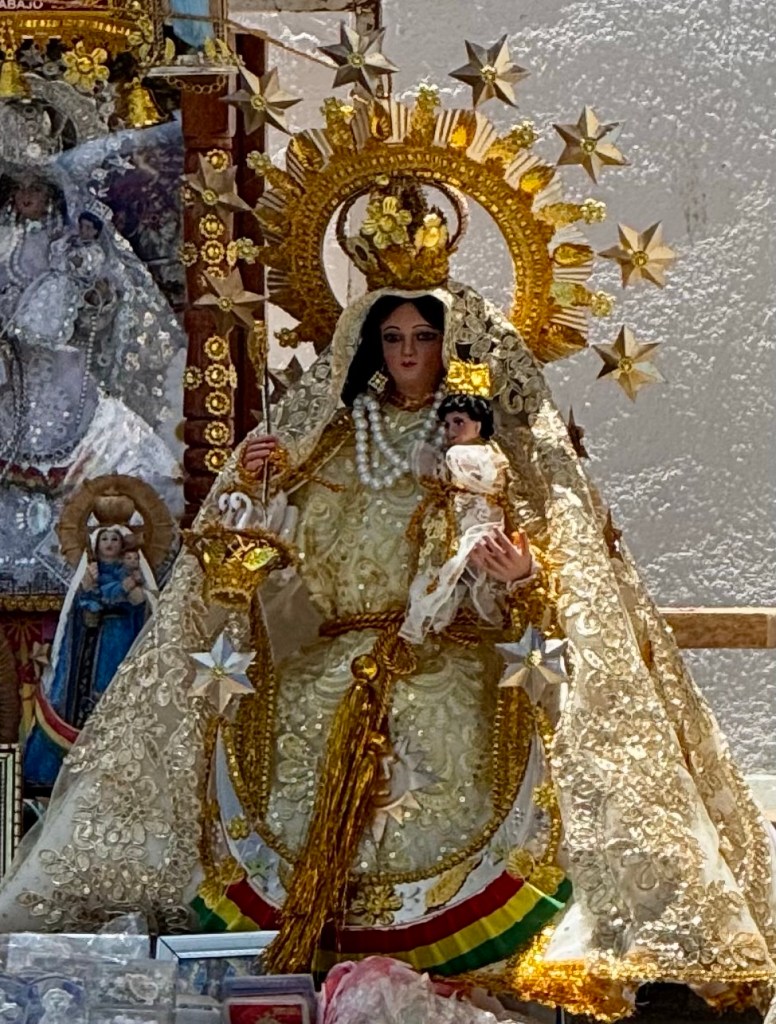
The boat was waiting for us and we returned our steps. In Copacabana we captured preparations in front of the Cathedral of the Virgin of Copacabana, aka the Bacha Mama, for the coming Day of the Dead, a major holiday for Bolivians.
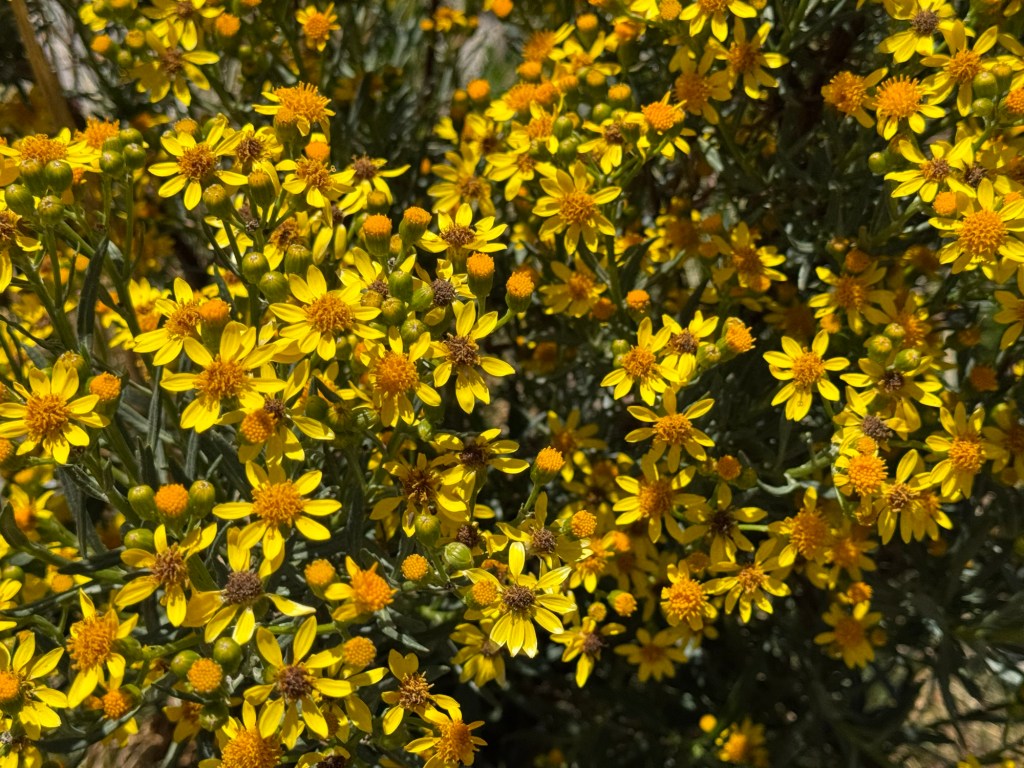
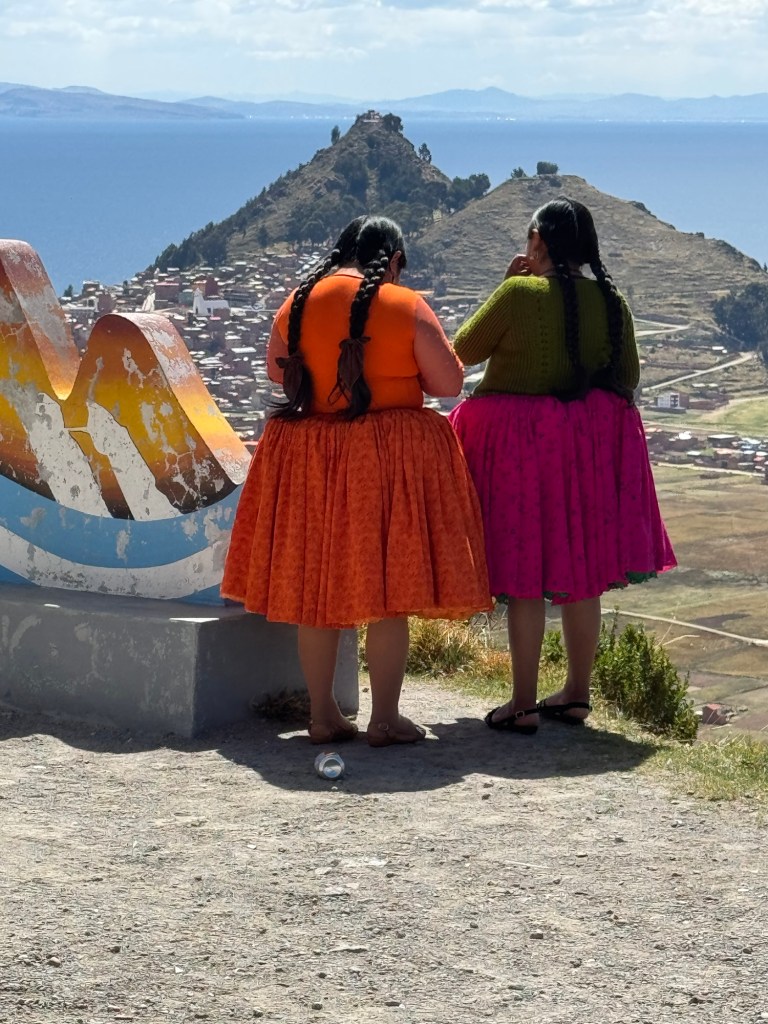
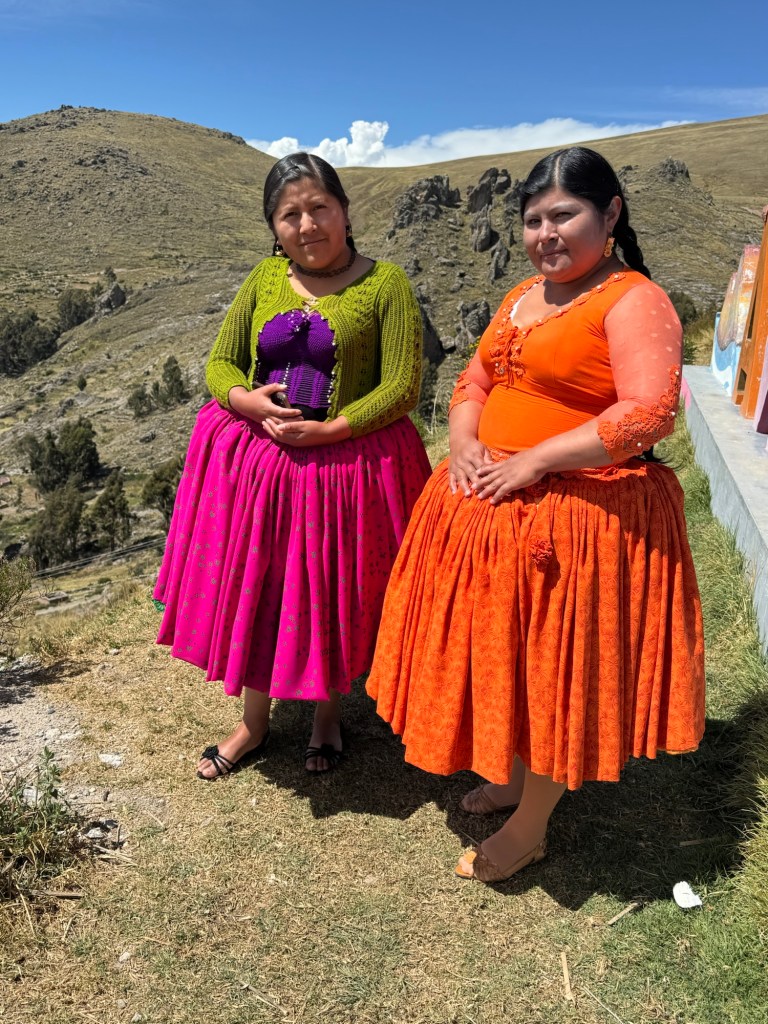
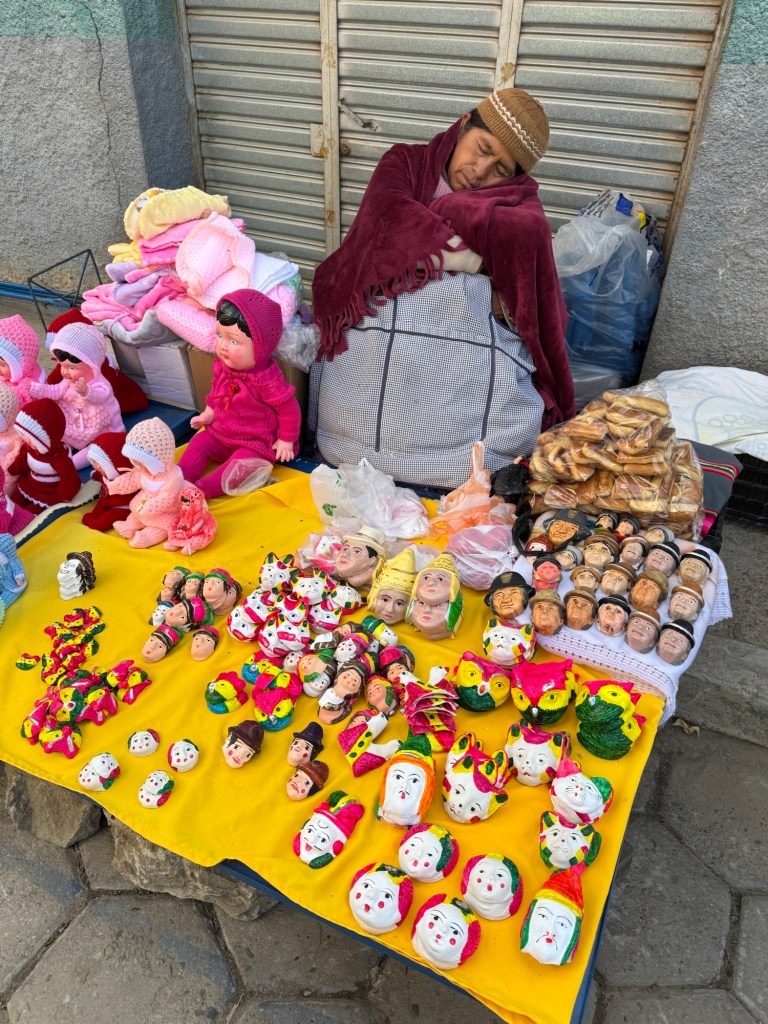
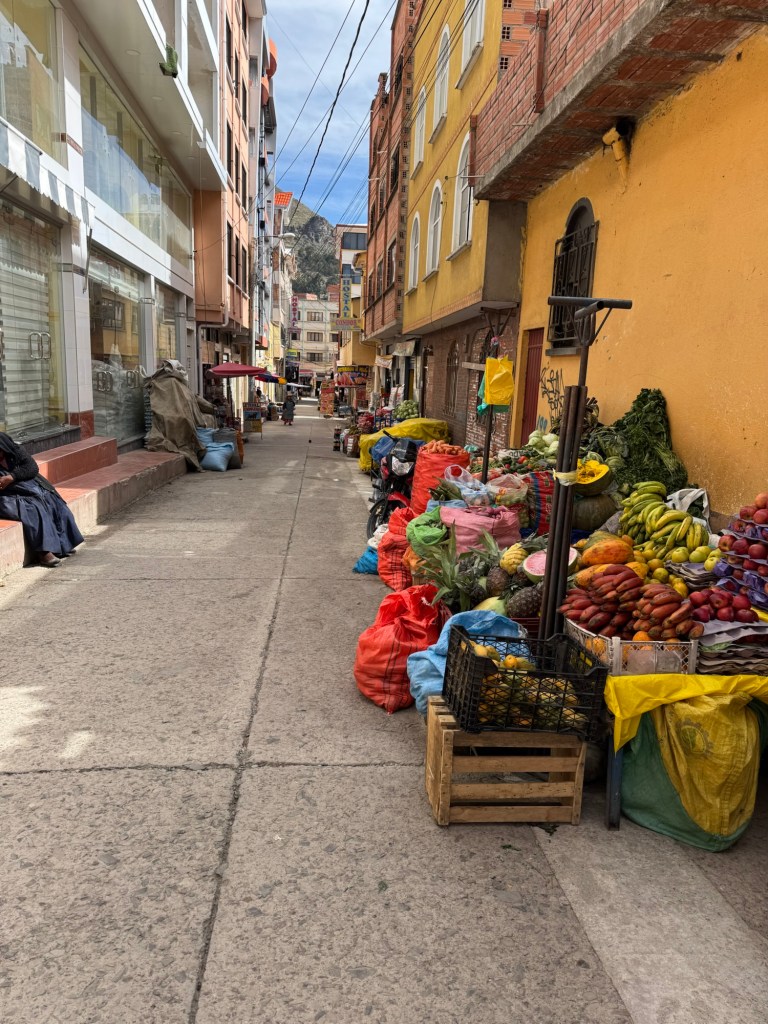
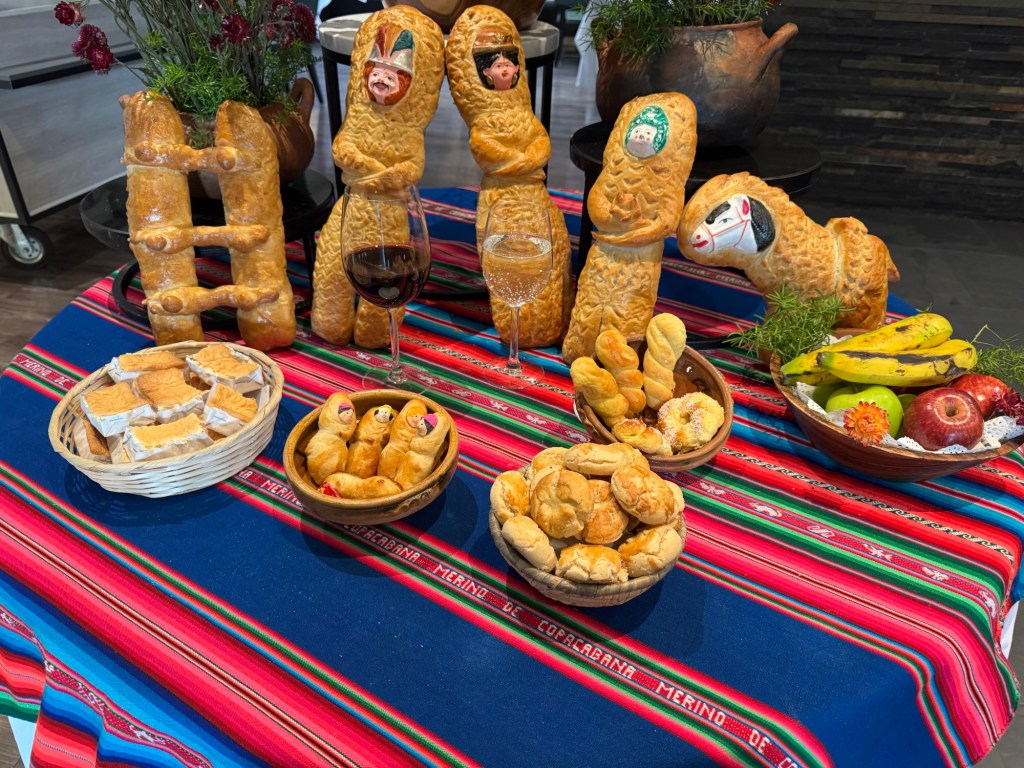
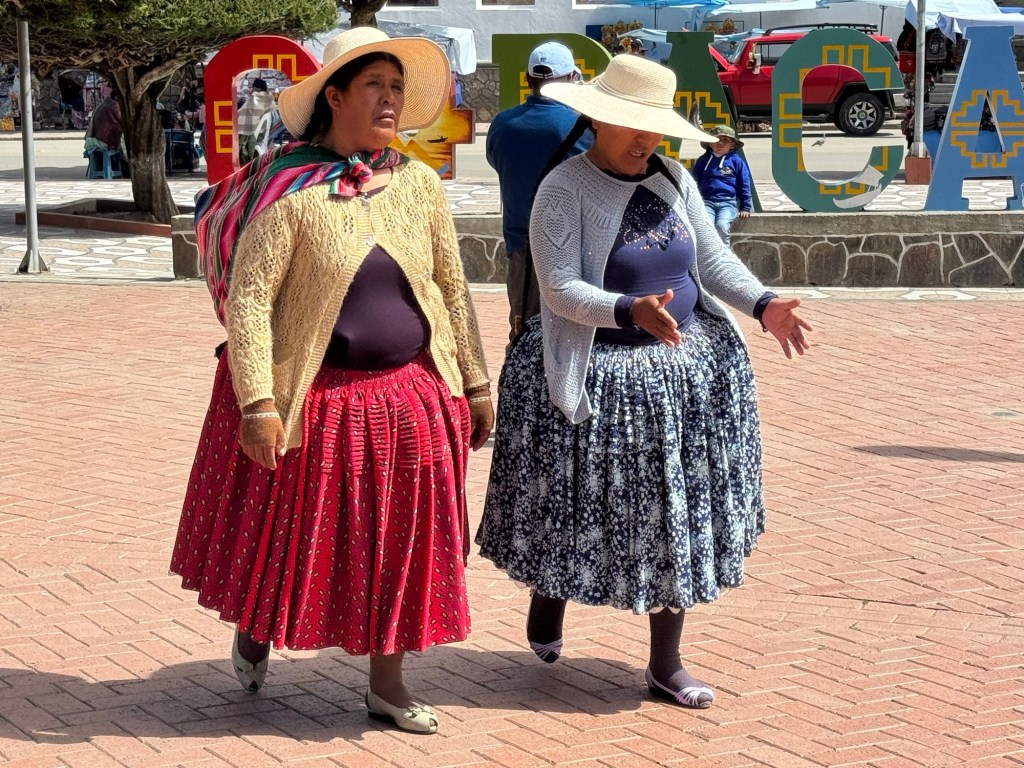
Pretty Ragwort, seen everywhere Aymara women overlooking CopacabanaPosing for the cameraCathedral of the Virgin of CopacabanaTops sold for festival breadFlower vendorFruit and flower vendors sell for the festivalFestival Breads with tops (see above)The Virgin, Bacha MamaLocal Aymara ladies I thought this was an unusual sighting in Copacabana, Bolivia
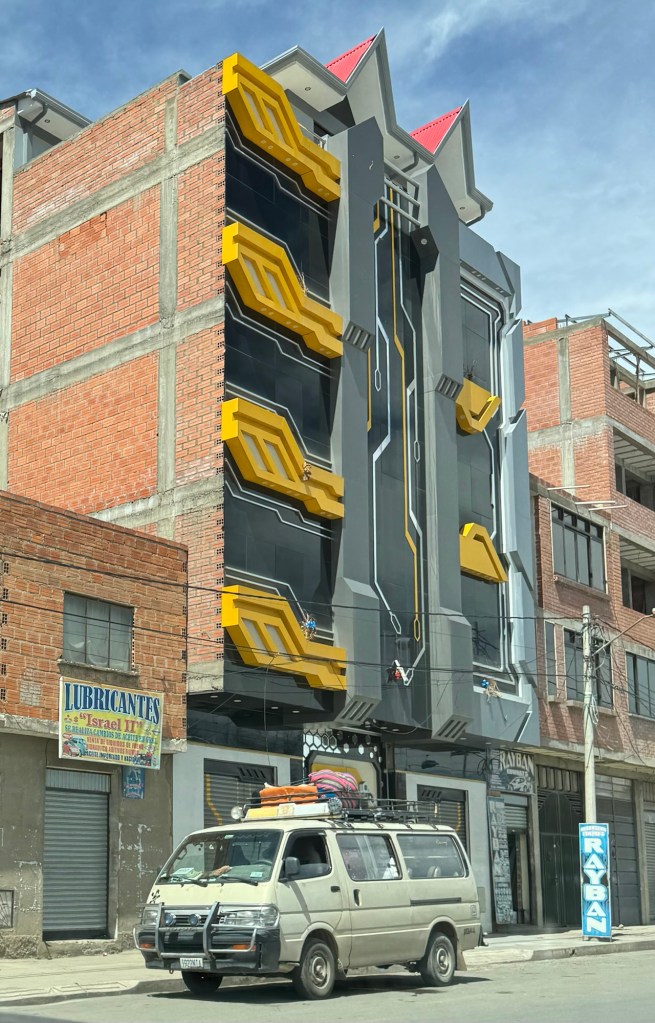
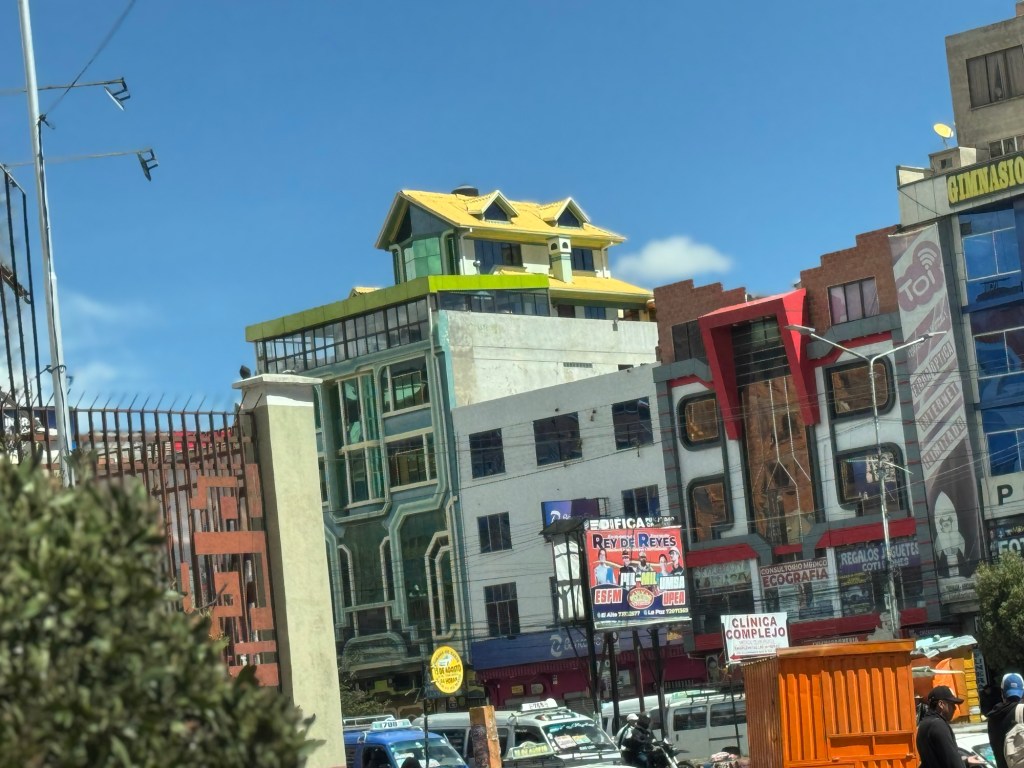
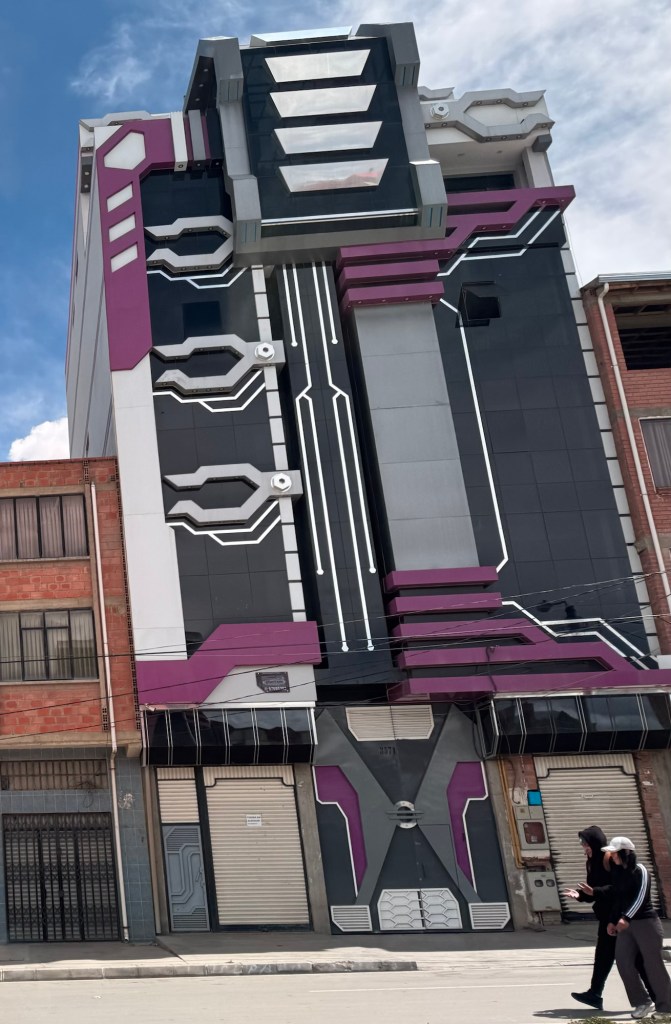
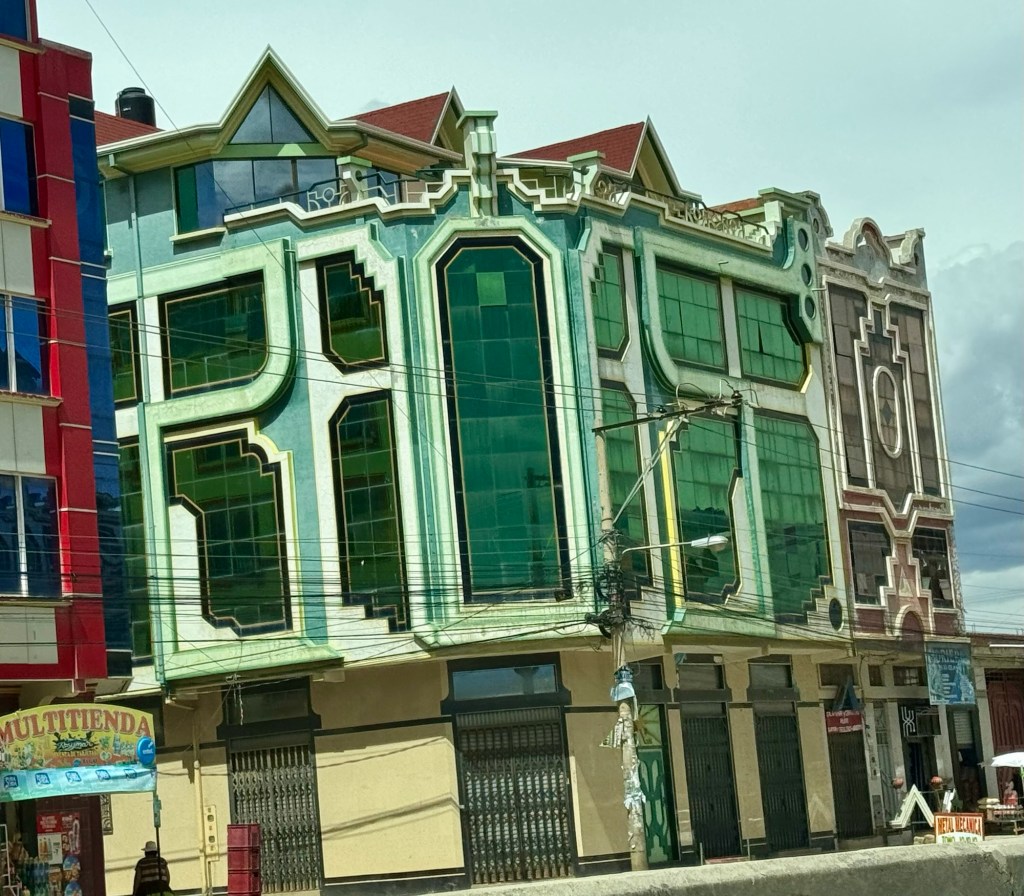
From Copacabana, we drove back to La Paz passing slowly by modern architectural motifs that made us laugh, they looked so peculiar. They generally consist of a storefront floor on the ground, two floors for ballroom dancing and parties and a residential floor above that. On top is another residence that looks very different and out of place, called a cholet, a derivation of chalet.
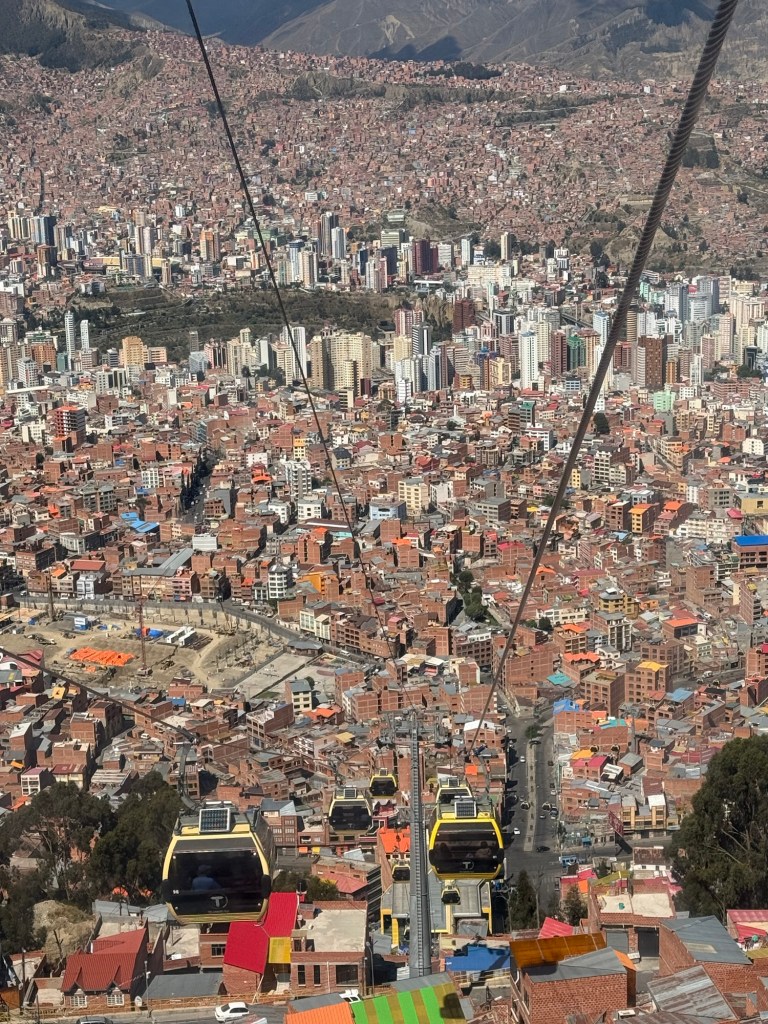
Hilly La Paz from a cable car
We pass through El Alto to get to La Paz. At Gabriela’s suggestion we road in a cable car for a couple of stops to get a feel of the city and understand how the cable car system is used as transportation for the locals. Our driver met us at the end of our cable car ride and delivered us to our hotel for the night, Atix. We arrived just in time for me to get a much needed pedicure at a nearby salon. As soon as that was done, Gabriela, Mark and I had dinner at a nearby food court. It was fast and easy and we were in bed by 7:15 as we had to sleep fast to be ready for a midnight pickup for a flight to Bogata, Columbia.
Over dinner Gabriela told us how Bolivia came to be landlocked. Part of northern Chile had belonged to Bolivia before the 1879-1884 war between Bolivia and Peru against Chile, who was supported by England. The fight was over the minerals and seagull guano that Chile wanted. Chile won the war and the minerals. Bolivia lost the coastline.
Sunday, November 2, 2025
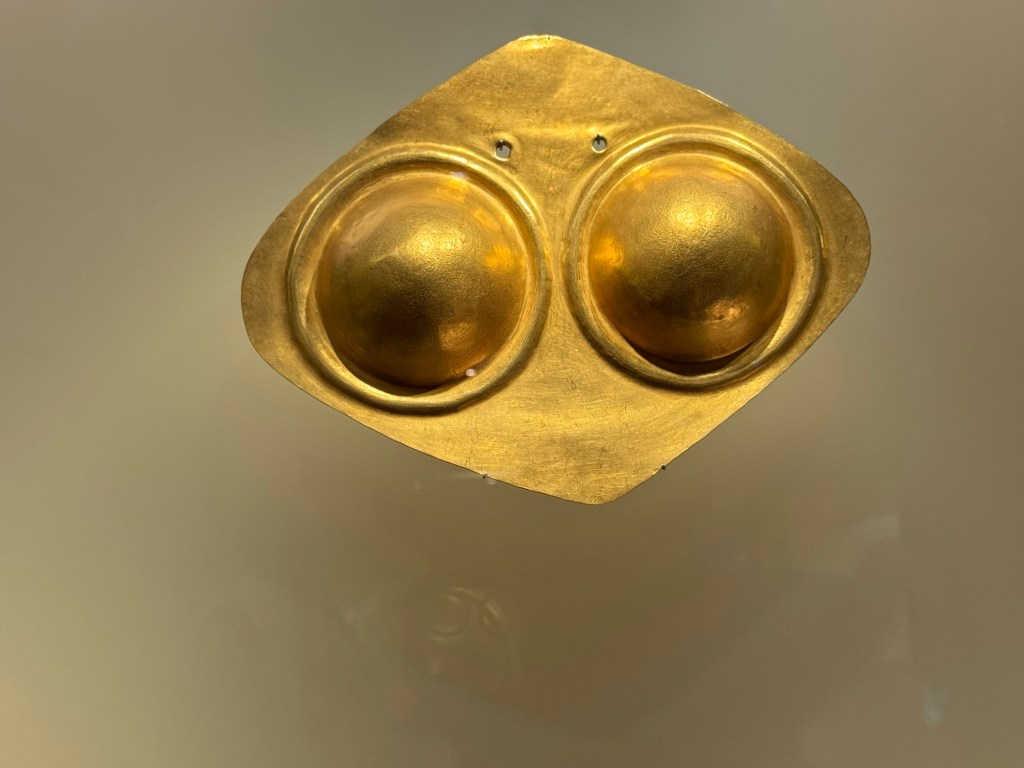
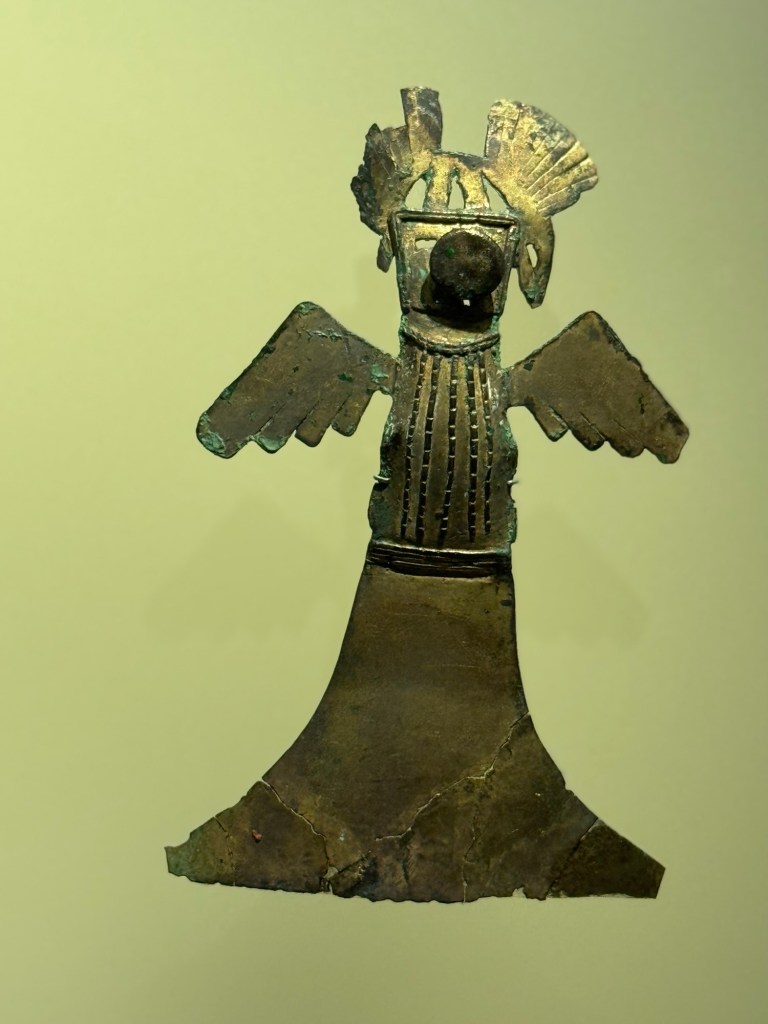
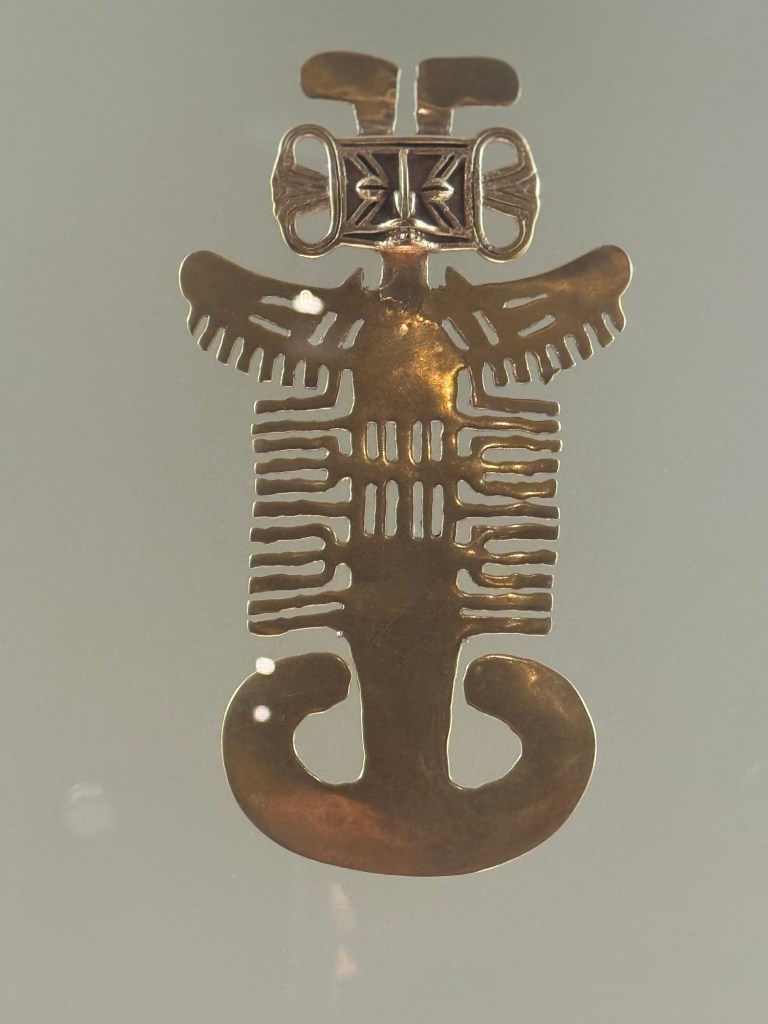
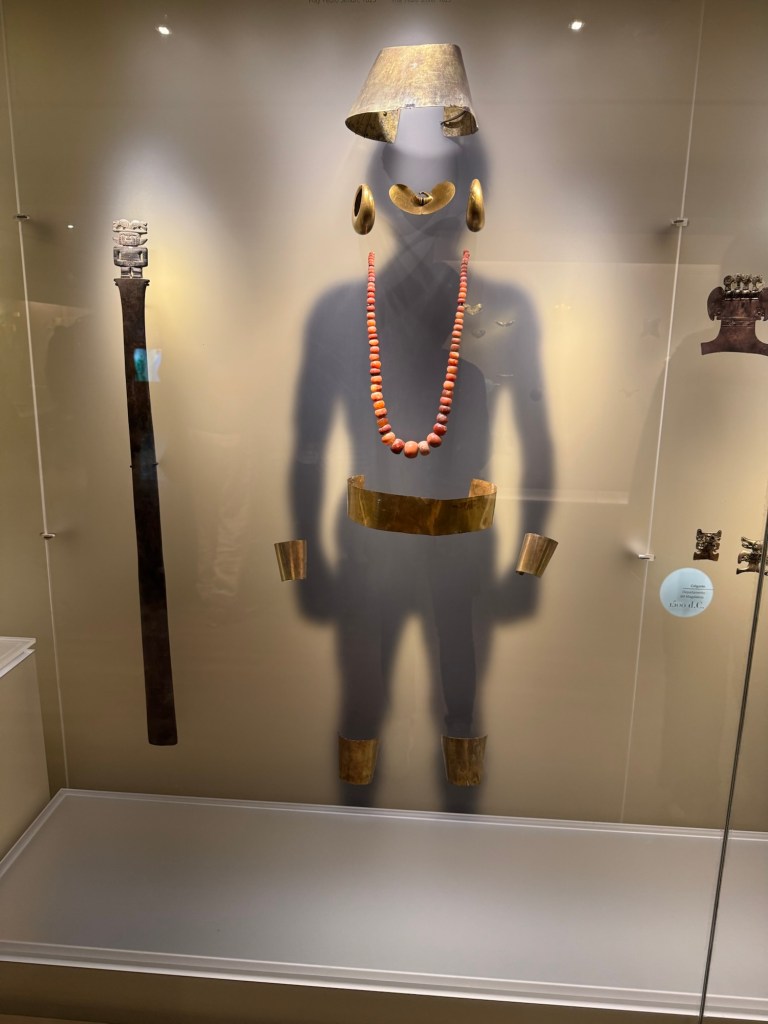
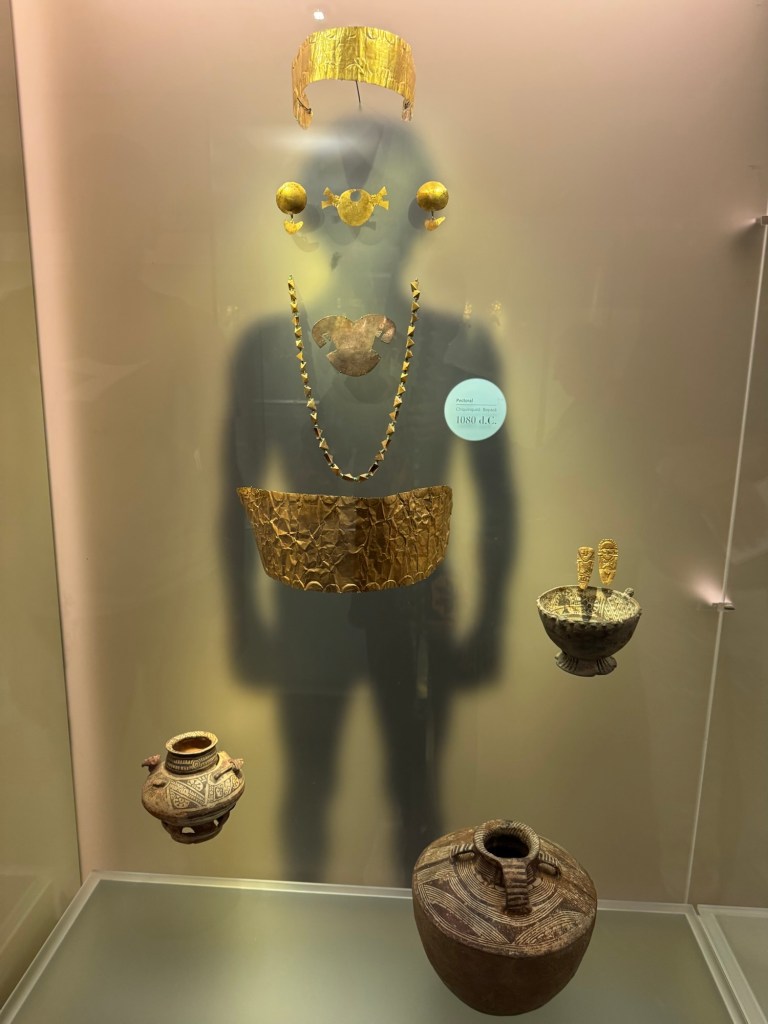
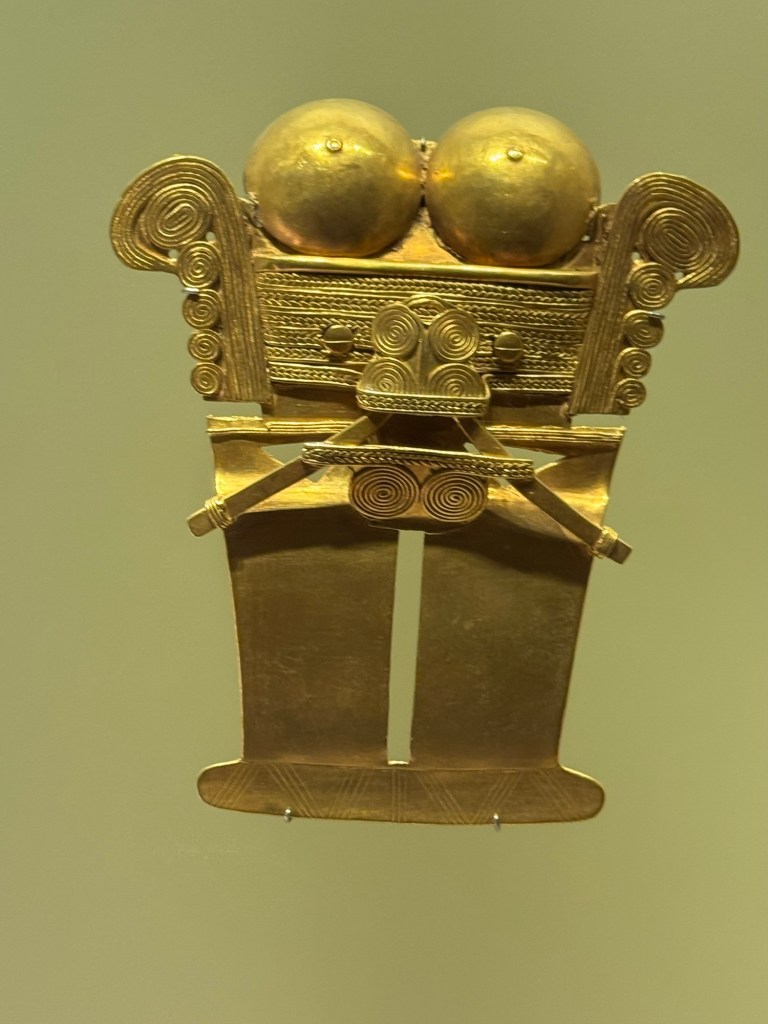
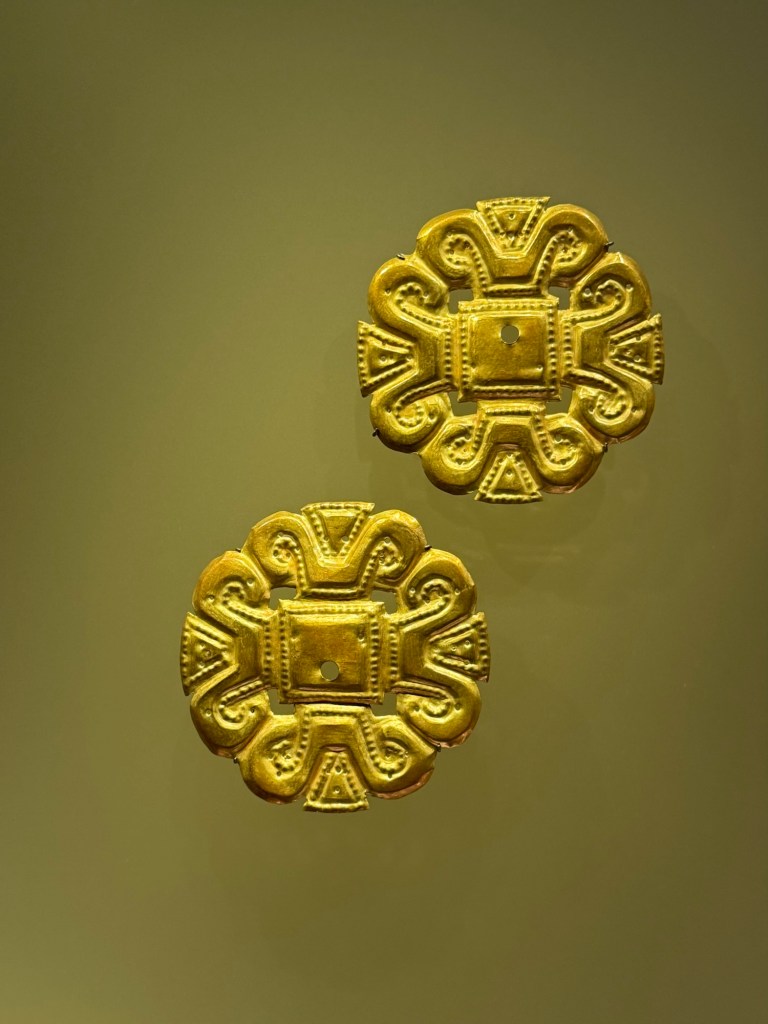
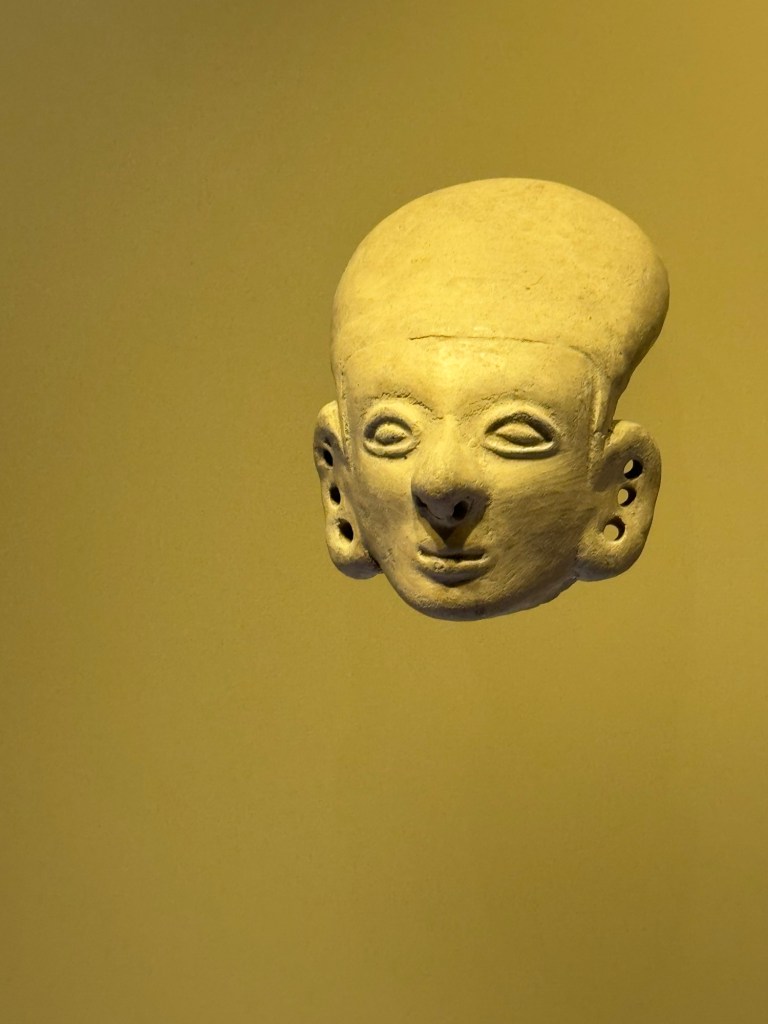
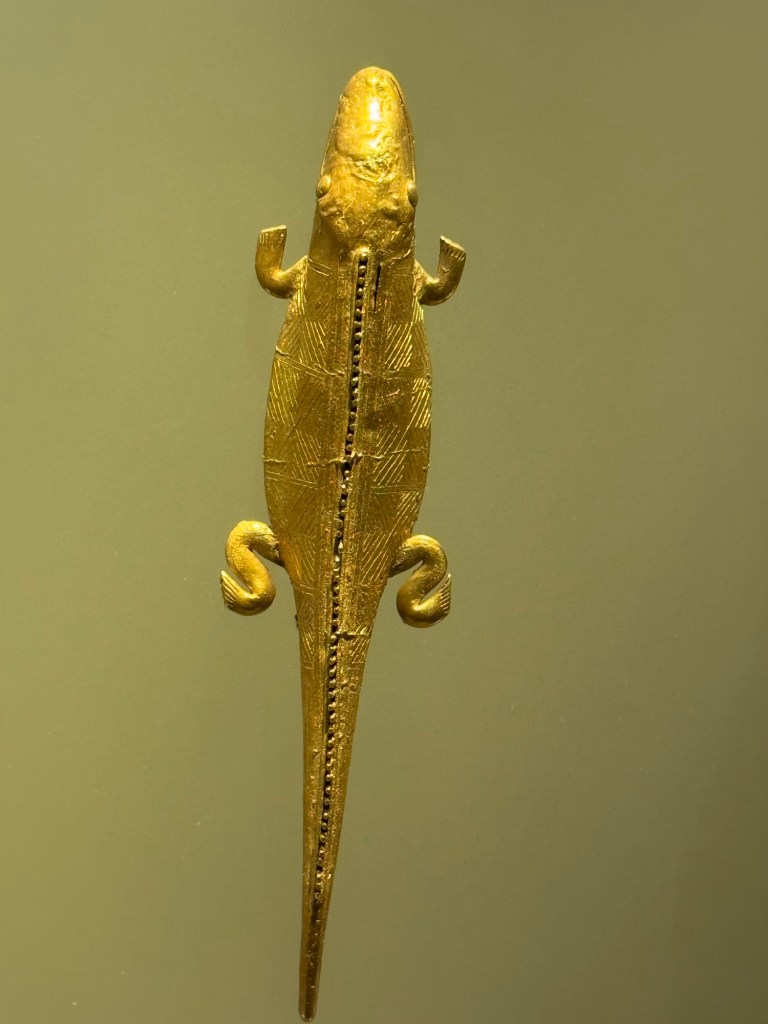
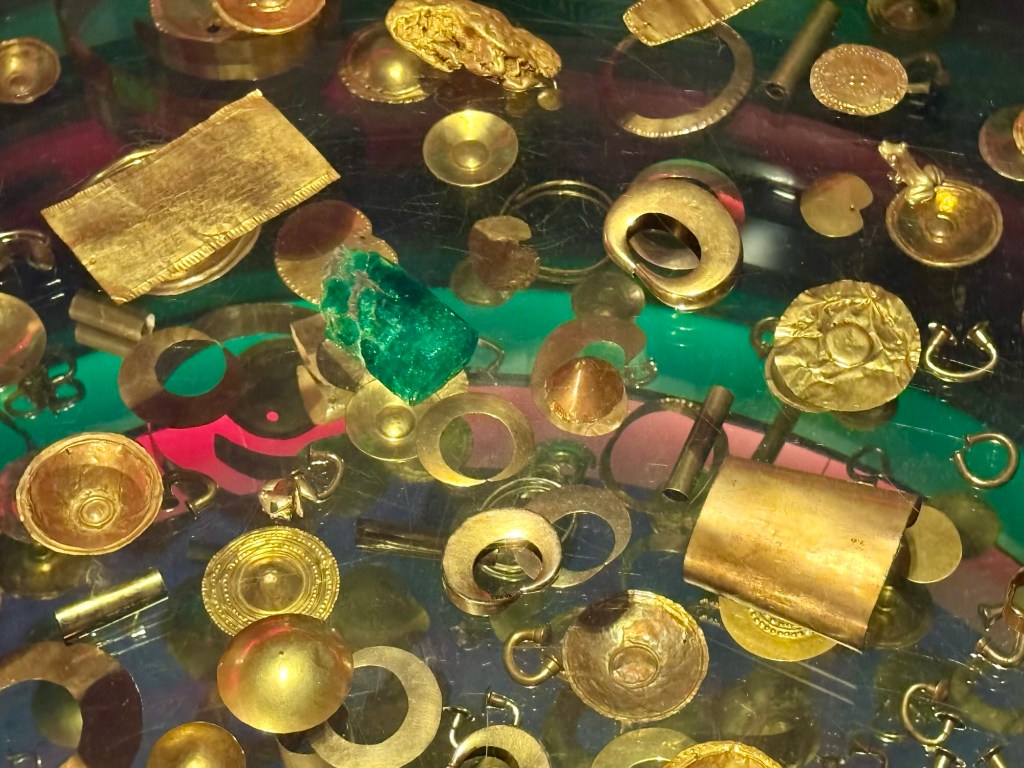
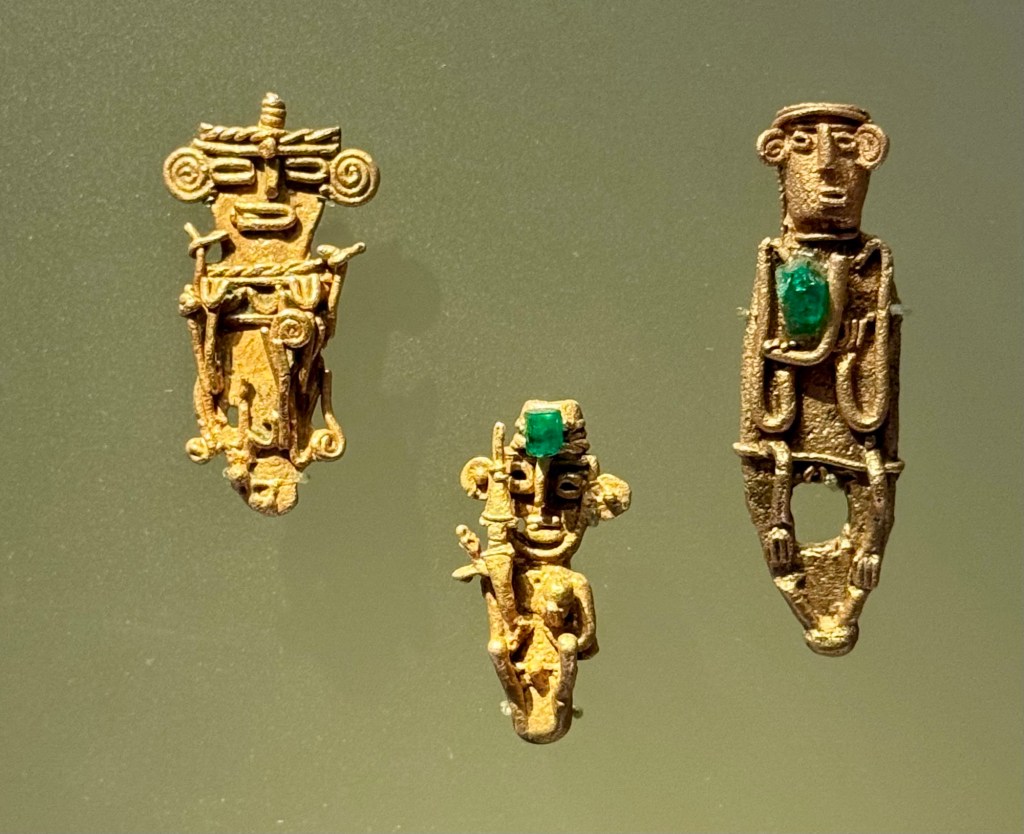
We managed to sleep through much of the flight to Bogota, and felt somewhat rested when we arrived at 6:15am and met our Bogota guide, Santiago. He escorted us to the Four Seasons Hotel at a reasonable 8500 ft elevation. The population of Columbia is 53 Million, while the population of Bogota is 8.5 million. The landscape consists of rolling hills with many trees. At 2pm Santiago retrieved us from the hotel and off we went to visit the Gold Museum. We chose it because it has the largest collection of Pre-Colombian gold. Here are some of the pieces we admired.
A female breast plateA shamanFemale burial objects with lovely coral beadsMale burial objects Female shamanMost valuable objects in the exhibitExample of head bindingGold and emerald objects in a beautiful presentationA presentation of gold piecesHuman figures with emeralds
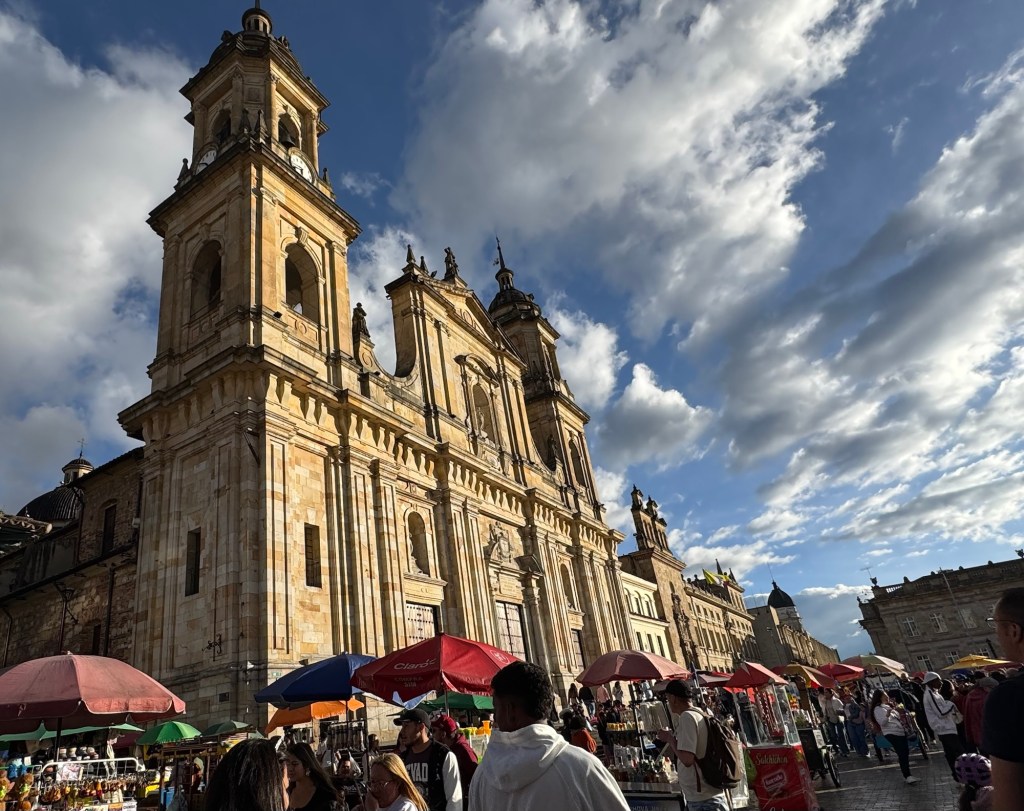
From the museum we walked through the old, colonial part of town. The area was filled with people enjoying the lovely day with friends and street activities entertaining everyone on this Day of the Dead holiday. But first we checked out the two churches full of gold leaf.
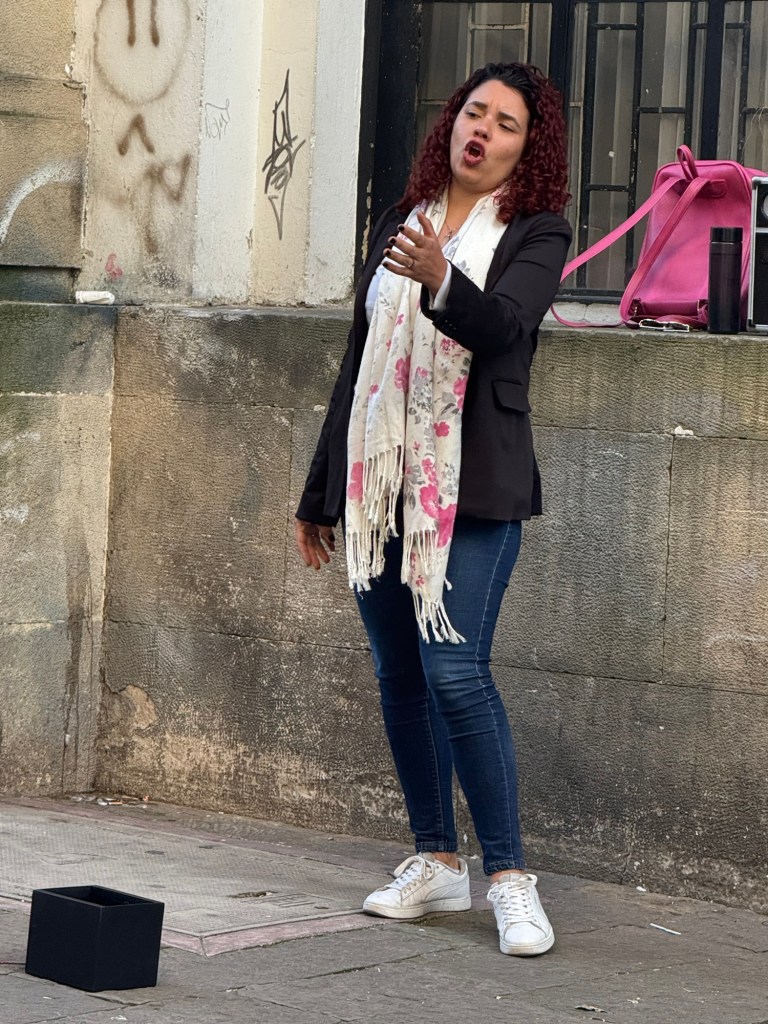
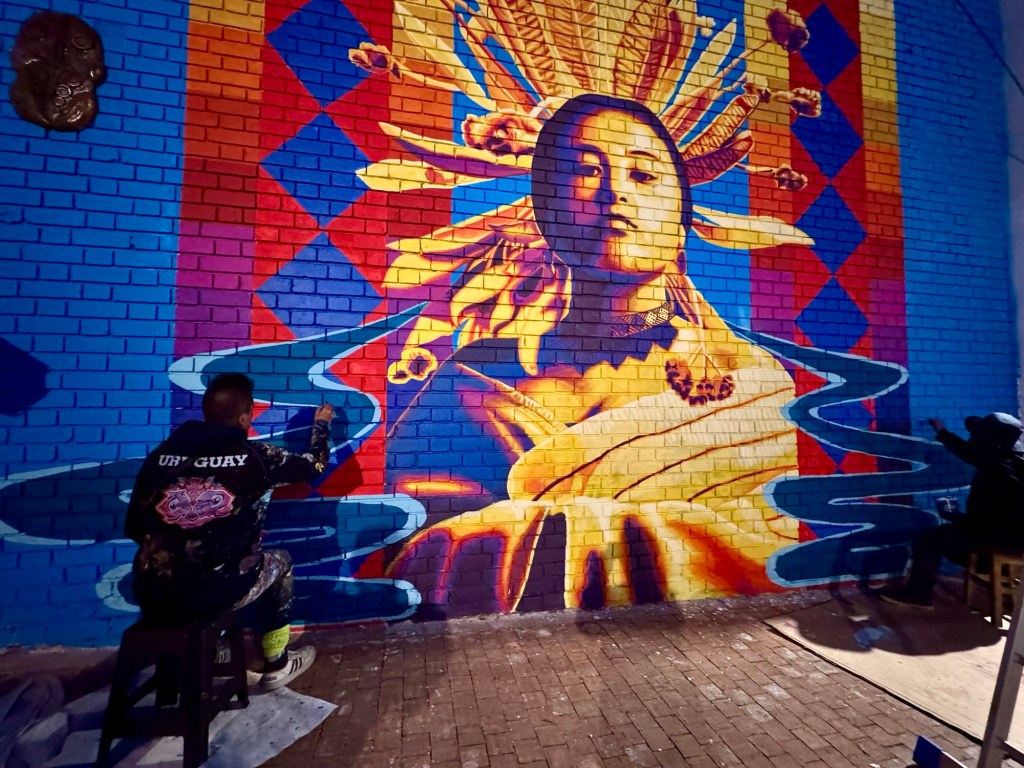
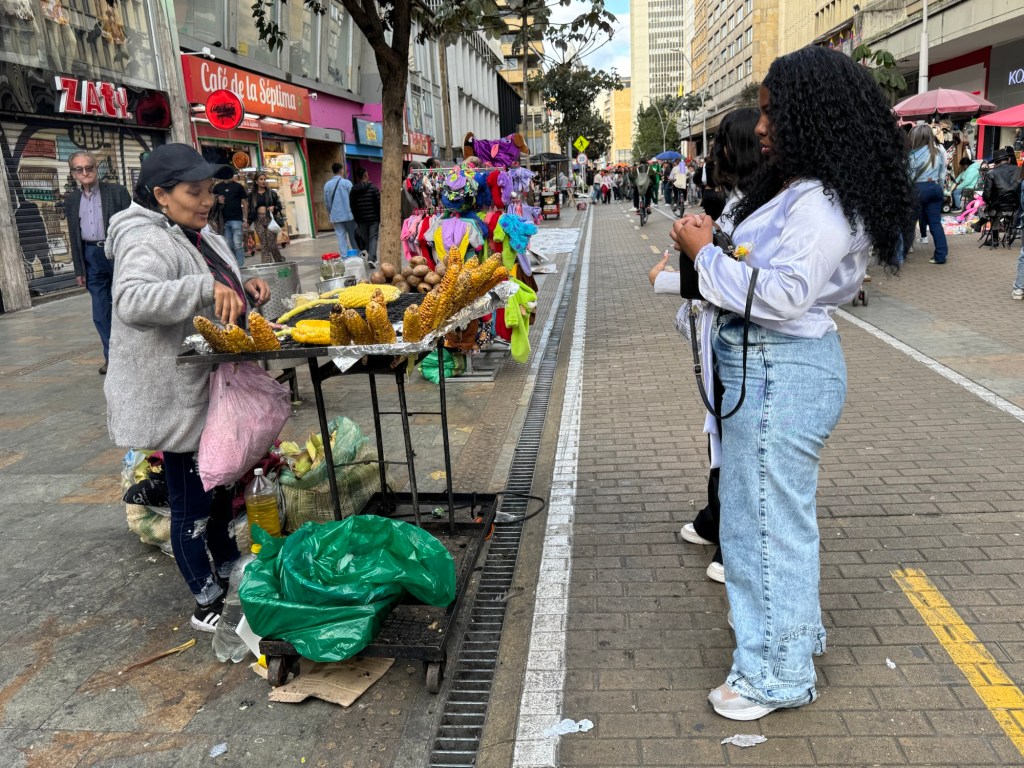
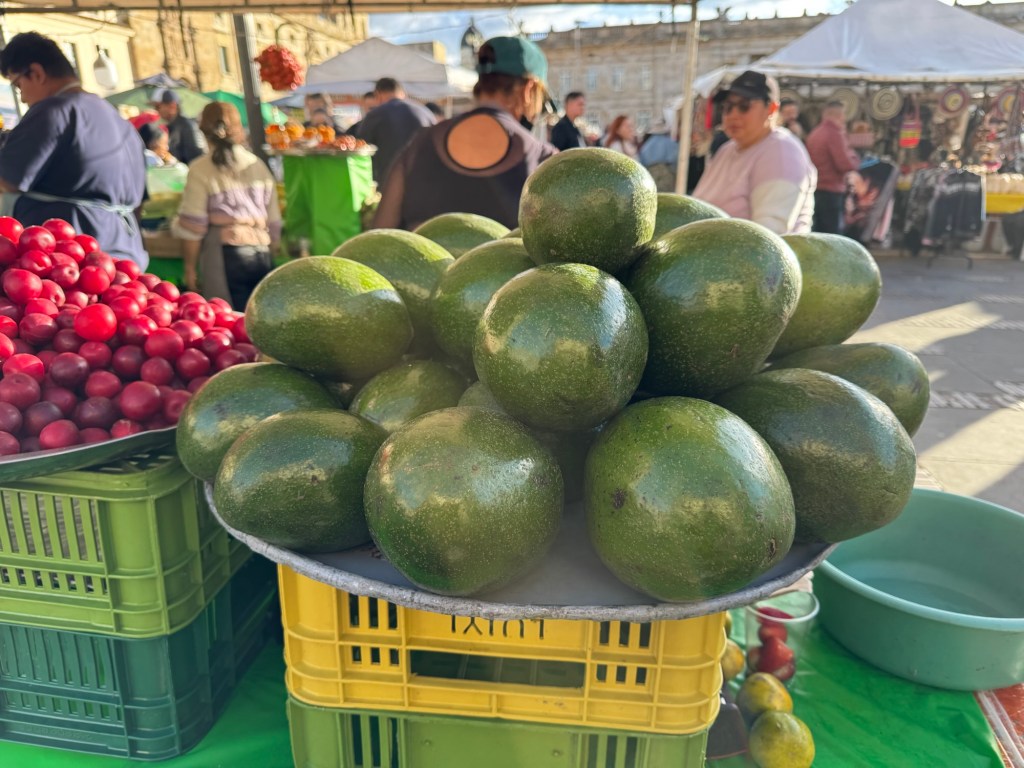
St Francis Church 1551 Latin American BbaroqueSt Francis interiorGold leaf sanctuary Colonial Church 1603 Candeleria Mass in the Colonial ChurchGovt bldg in the town squareAnother government building in the square Fruit juice vendorThe crowd taking it all inA green characterA street vendorA character in silverShe sang pretty good operaMe and Santiago watch the actionChatting with the graffiti artistThe art being finished is much more than graffitiA vendor sells corn avocados
A Michael Jackson impersonator
At dinner time, Santiago directed us to a favorite place of his called Andres DC. He gave us a suggestions about what to order to get the flavor of Colombian food. So we did. The place was amazingly crazy. There were 5 floors of tables, decorations everywhere and costumed servers.
The place was nearly full when we went at 7pm and packed when we left at 8:30 with a long waiting line. We gave the waiter the list of items Santiago wanted us to order and soon our three starters and one main began to arrive. We had a good meal of perfectly cooked beef, pork belly, French fries and other nibble bites. While there three other tables of 10-15 people were each entertained by a small costumed band for some celebration or other. We were the only party of 2 we saw. Everyone else was in a medium to large group. Finally, we Ubered back to the hotel and happily dove into bed.
Monday, November 3, 2025
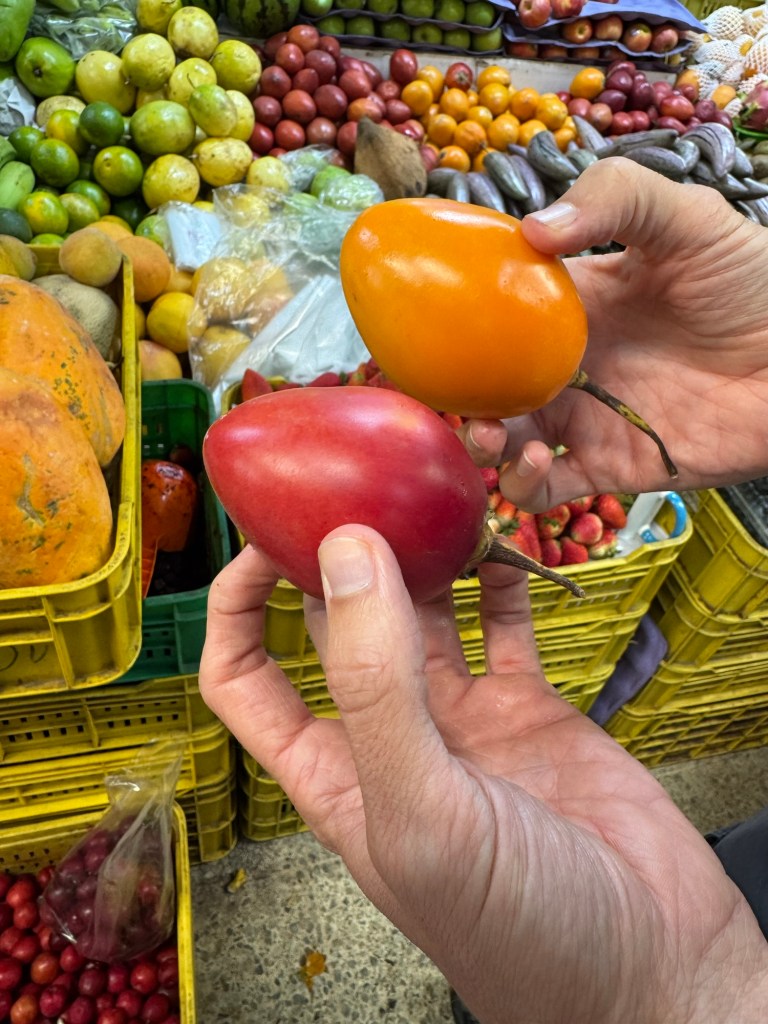
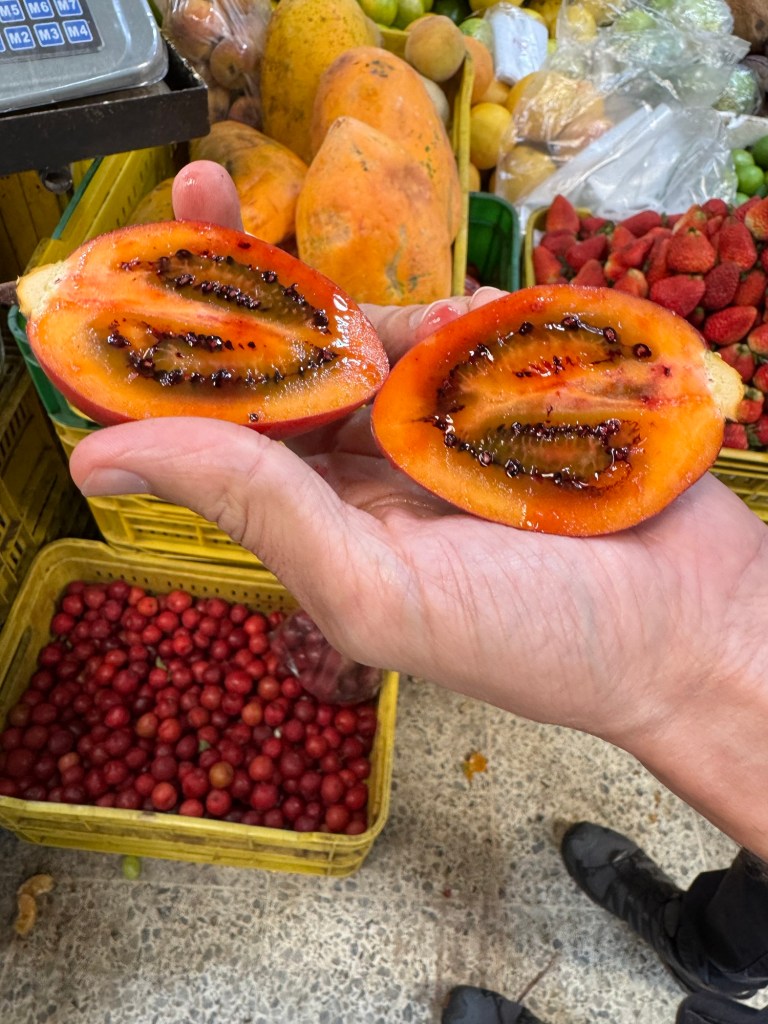
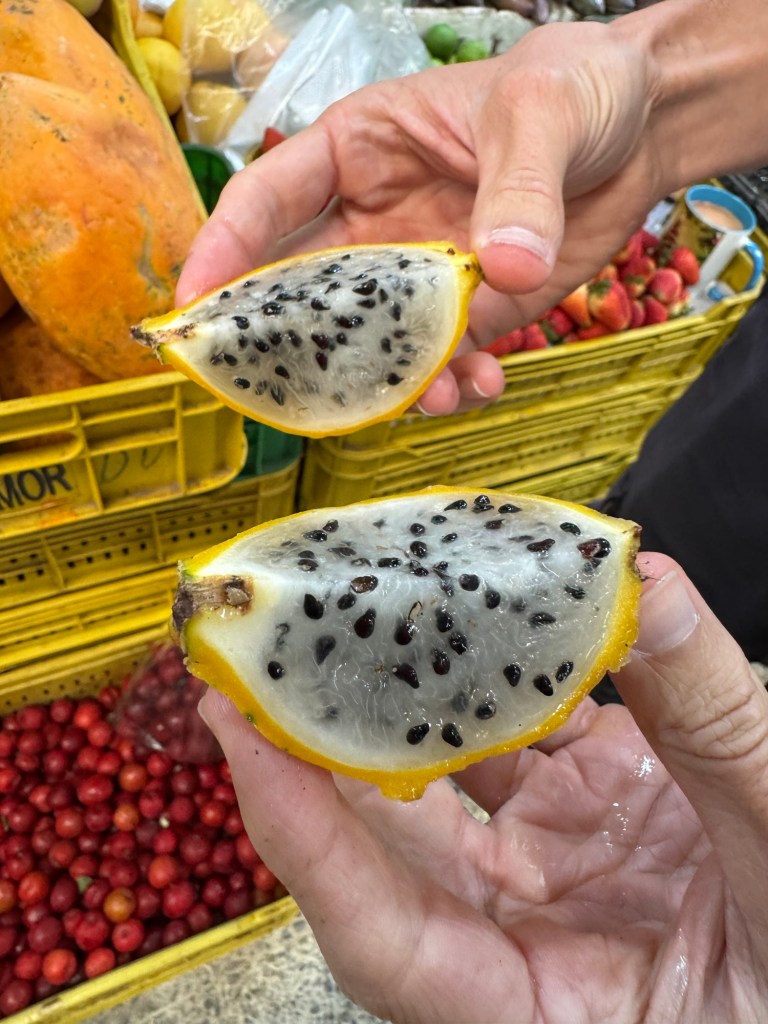
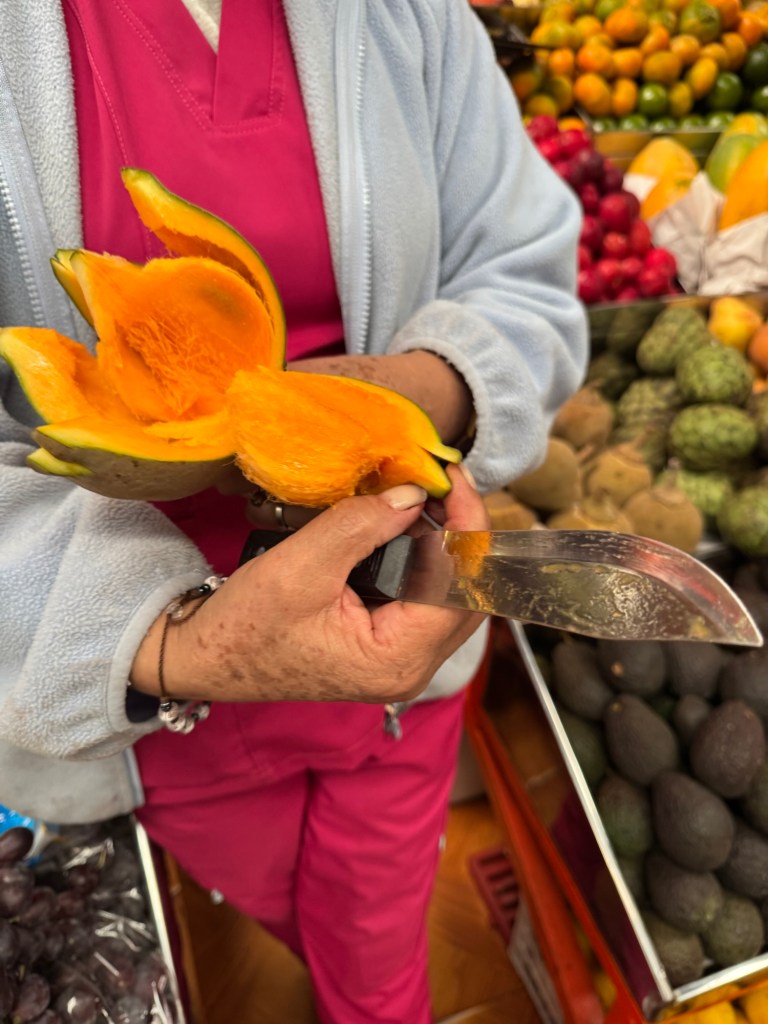
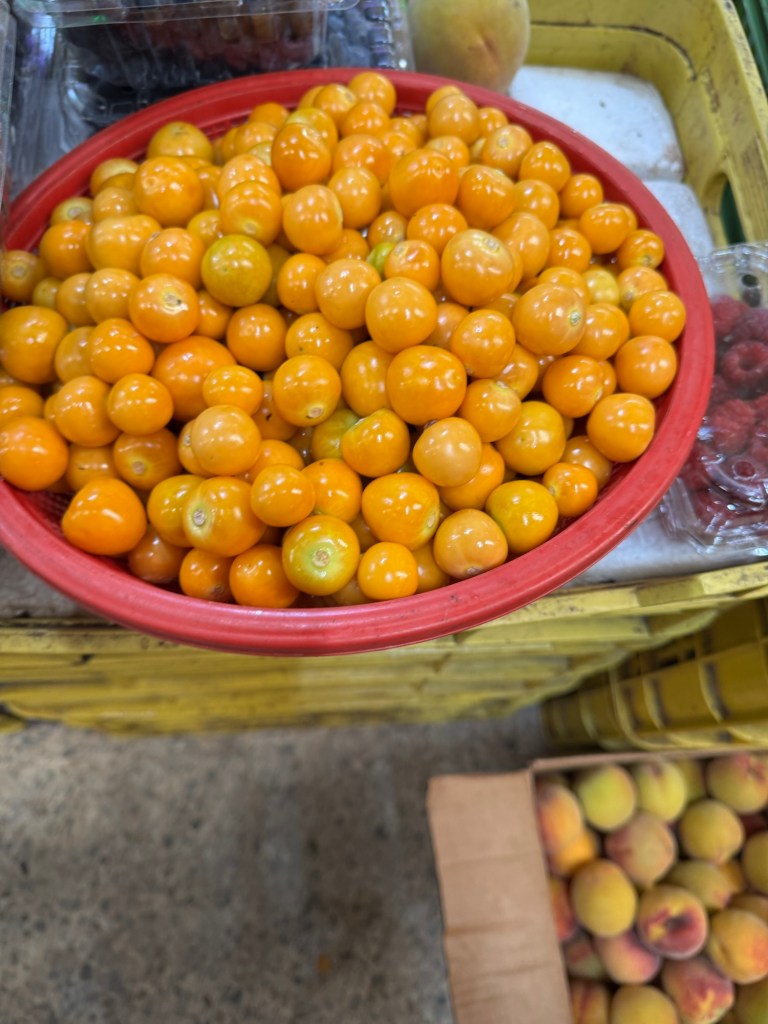
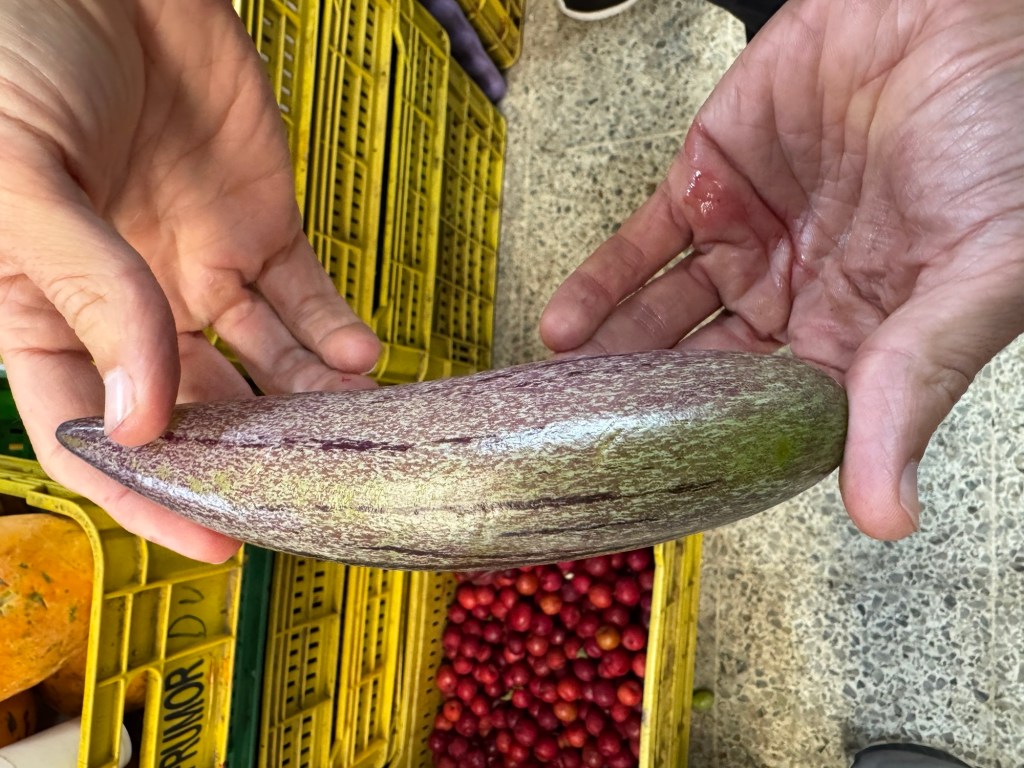
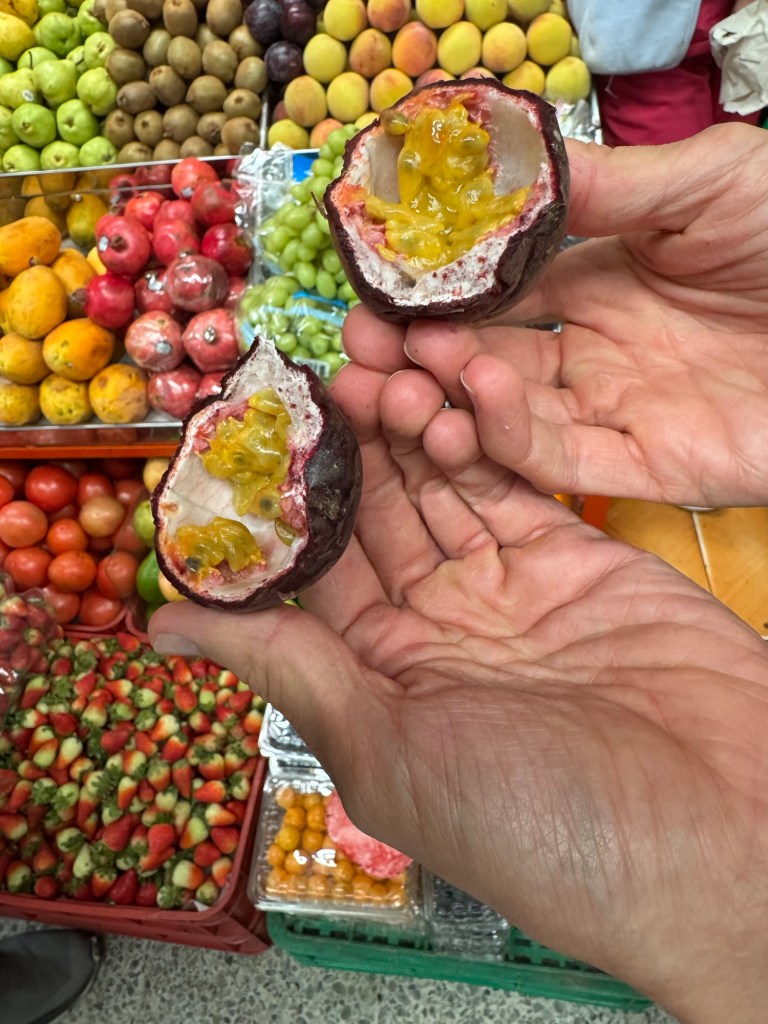
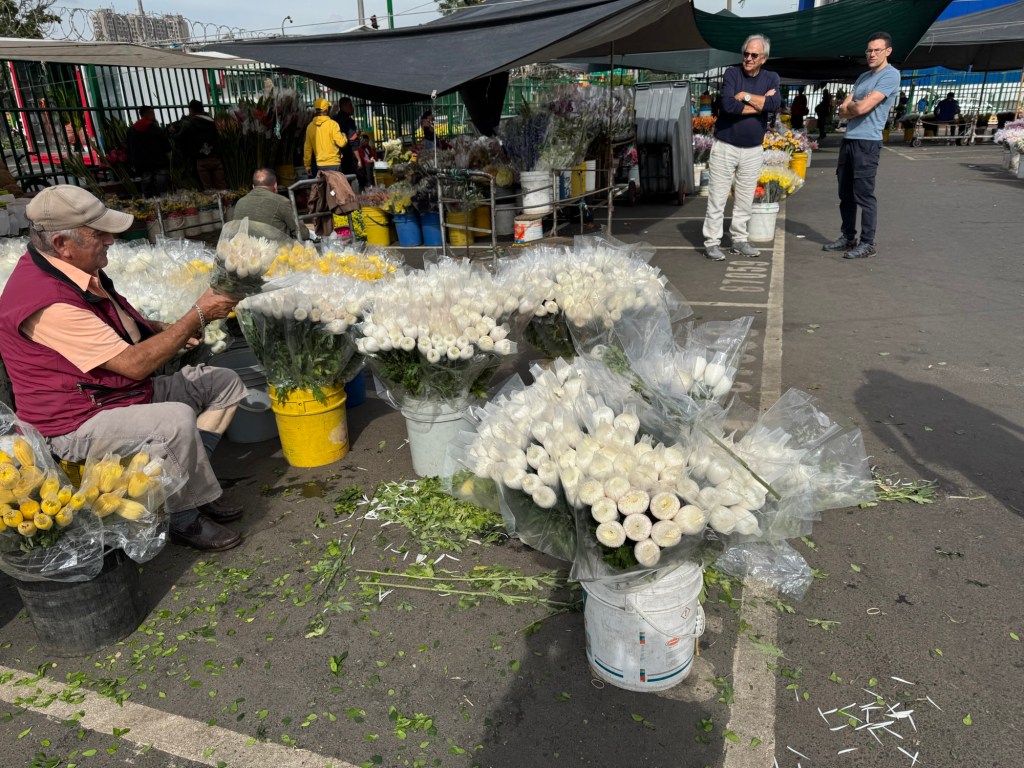
Santiago picked us up at 8am and off we went to the biggest market in Bogota to sample unusual fruits and taste other foods he considered safe to eat. The place was packed with shoppers. Here are the unusual fruits we tasted. Next to it was the flower market.
Tree tomatoColombian dragon fruitZapoteCustard appleGooseberrySweet passion fruitSweet cucumberSweet Sour passion fruitCrysanthimums in the flower market
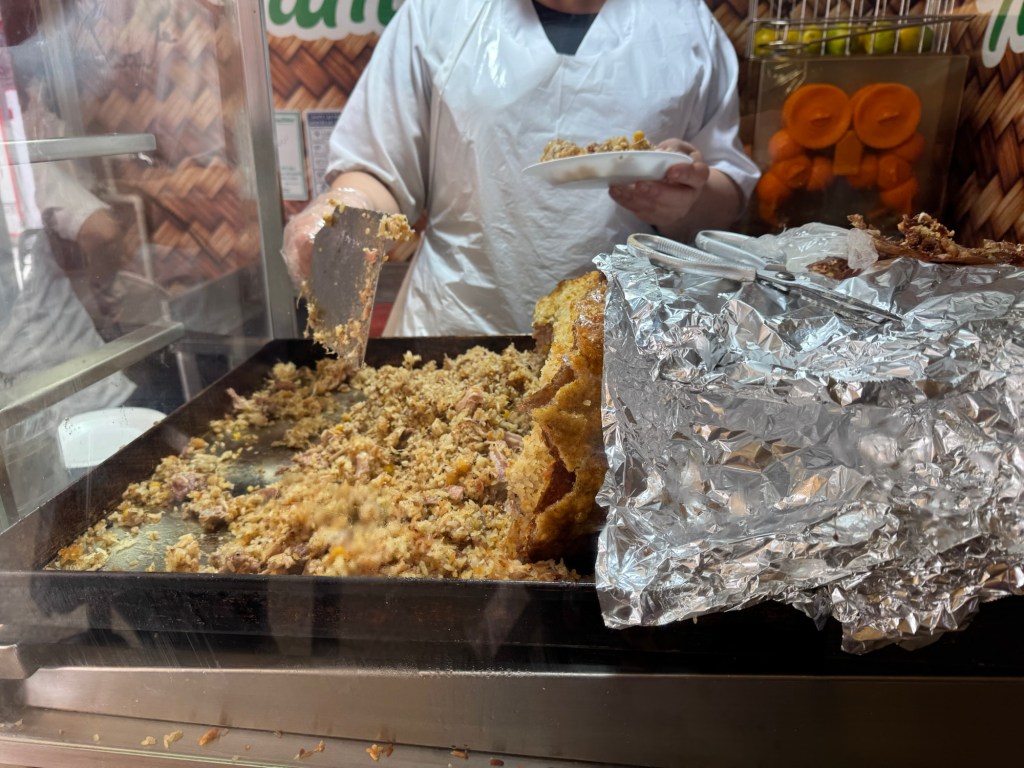
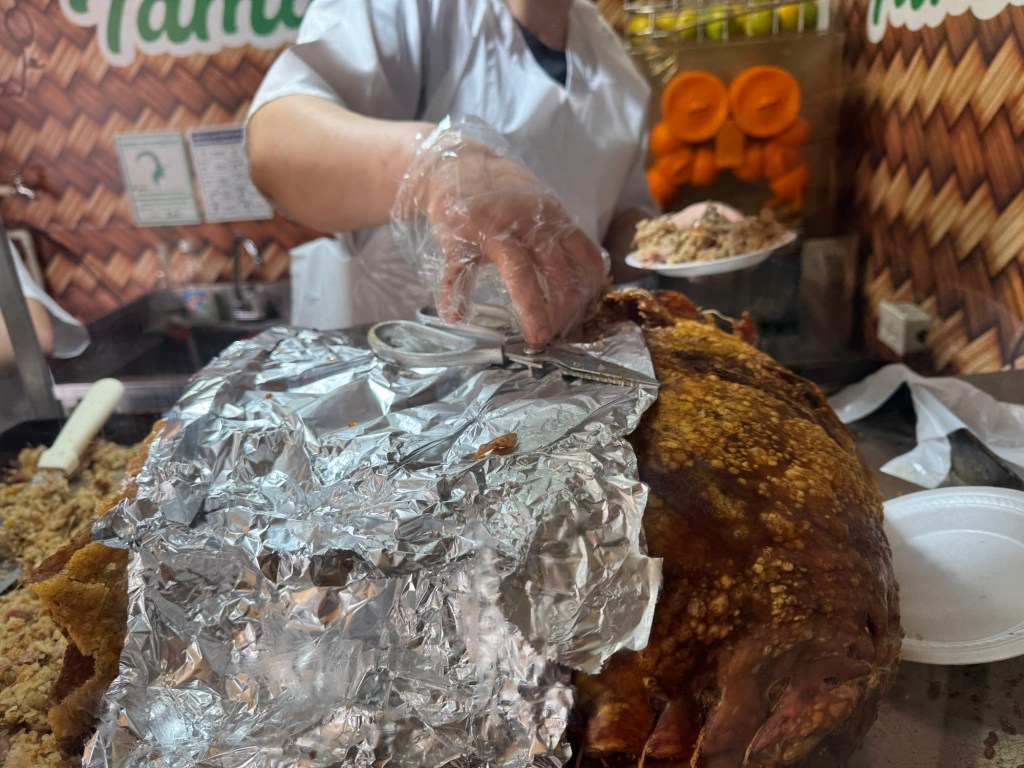
Santiago insisted we try some “breakfast” food as well.
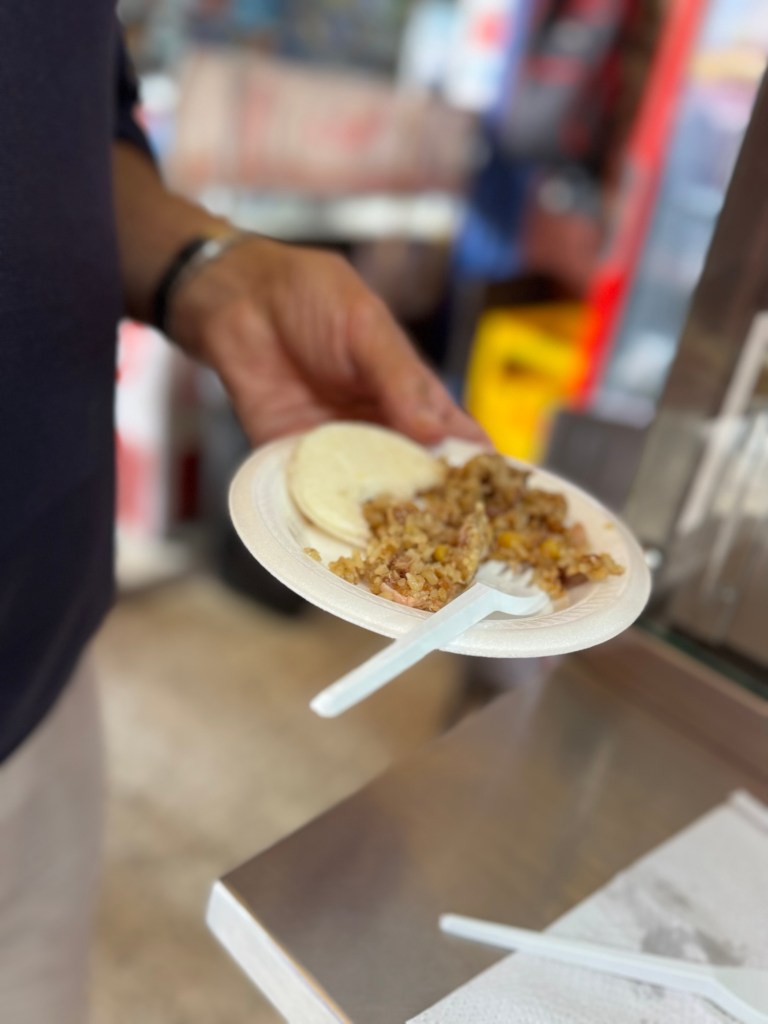
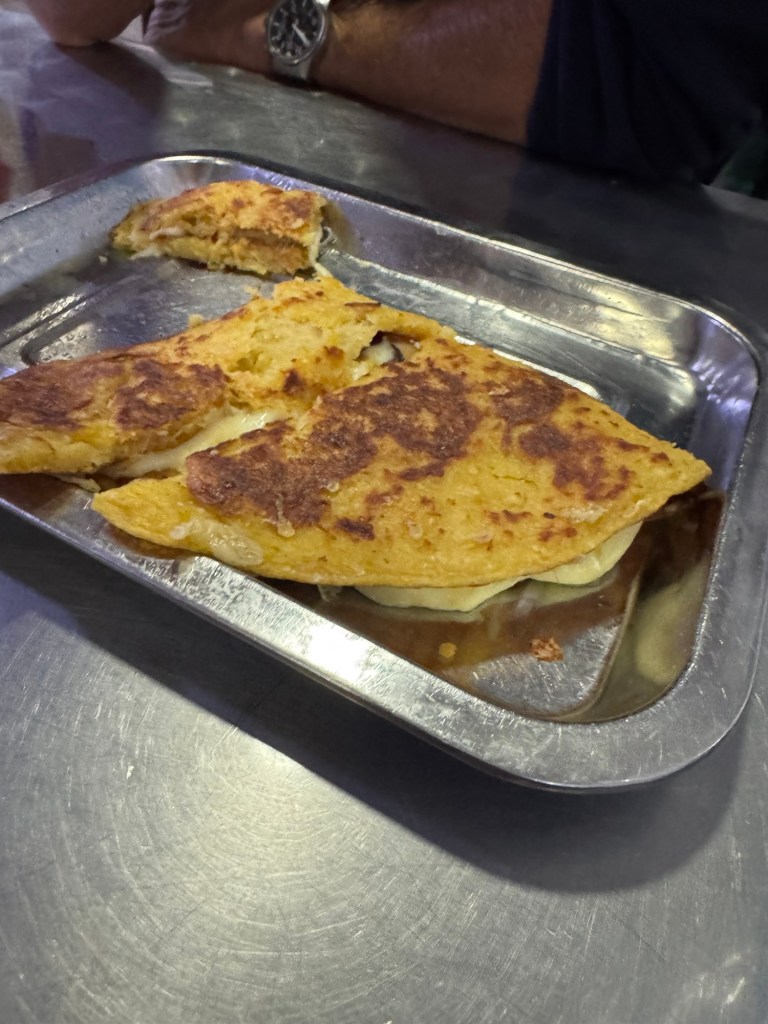
Pig skin stuffed with pork and riceAdding cracklin to the servingIt tasted pretty goodSweet corn tortilla filled with cheeseChicken stew and Choclo arepa
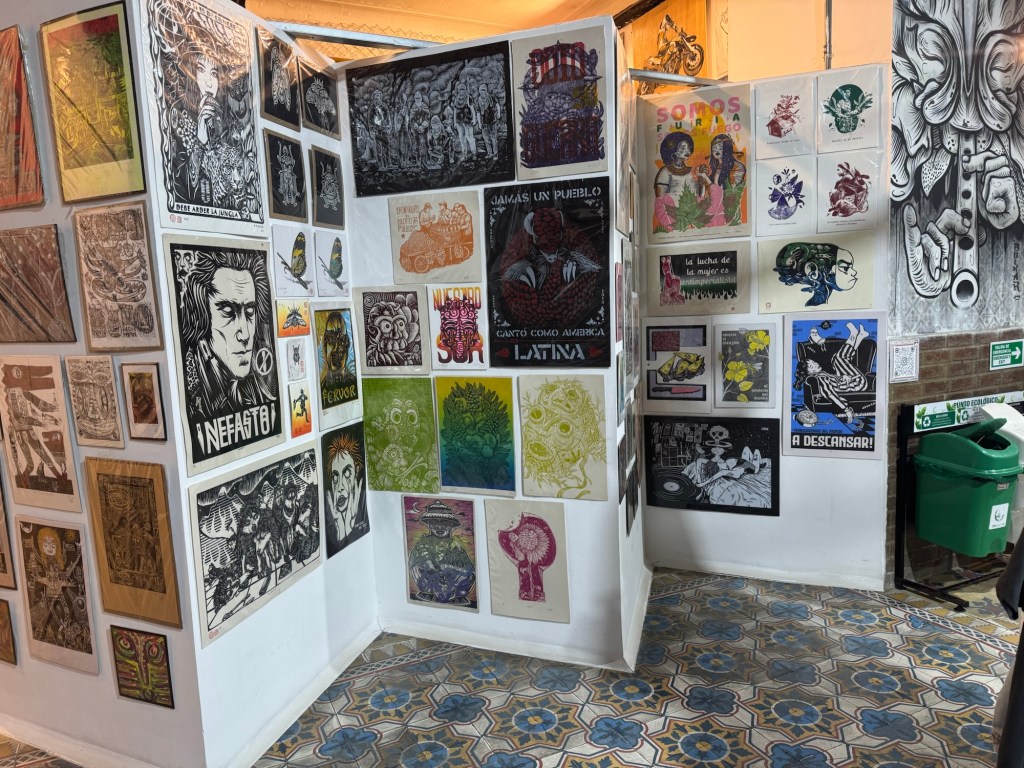
Apparently Bogota has the greatest amount of graffiti in the world. We certainly saw a lot just driving around the city. Santiago took us to a couple of shops that specialize in graffiti art, which is completely different from what he called tag art and I call graffiti. Graffiti is regulated in Bogota. You must apply to do graffiti on a specific wall. There are competitions to earn a right to a particular space. The better the artist, the more likely to get approved. A lot of illegal “tagging” still goes on, if the tagged can keep from getting caught.
A graffiti and pop art gallery/cafe
In the late morning Santiago drove us to the airport for our afternoon flight to Medellin.
As we begin to depart Brazil, we are struck with a few thoughts. Most of the places we visited were most interesting and enjoyable. However, the northern areas near Manaus and in Cristalino have been too hot and humid for us, in spite of being in the dry season. We will try to avoid such places in the future. We are spoiled with our California weather. We also realize how much we miss the wildlife in Africa. We saw a few new animals and birds in the forests and jungles of Brazil, but they do not compare with the wildlife we have experienced in the African savannah. We are ready to move on.
The effort to get to São Paulo and onward took most of the day. We boated out of the jungle, motored through the soybean fields and flew from Alta Floresta through overcast skies to Sao Paulo where we arrived in the dark at 7:30pm.
Our driver told us it would take 1 and a half hours to get to our hotel so I learned a few things from him, while we suffered through very heavy Sunday evening traffic. São Paulo has 11 million people in the city, 22 million in the metropolitan area and 45 million in Sao Paulo state. It is the most populated state in the country of 220 million. The ride reminded me of driving to the Bay Area after a long winter ski weekend. He was a pleasant looking man who admitted he had been married and divorced 4 times as was determined to stay single from now on. He loves to drive and has been chauffeuring clients like us around São Paulo for 30 years. Finally, we arrived at the Pullman Hotel. Spent a night there and flew out the next morning for Santa Cruz, Bolivia through solid overcast skies.
Monday, October 27, 2025
We visit Santa Cruz, Uyuni, La Paz, Lake TIticaca
Our Santa Cruz guide, Marta, met us after we had spent an hour securing visas, an unpleasant and expensive ($160 each) process only for Americans visiting Bolivia. We had no problem getting visas for Brazil and won’t need them in Colombia.
As we drove through the countryside and the city of Santa Cruz to our hotel, she caught us up on the political and financial situation in the country. A new president was just elected. He is a center right politician named Rodrigo Paz, who is replacing a very corrupt socialist, Luis Arce, who had run the government for 5 years after Evo Morales presidency, both from a party called MAS which bankrupted the entire country. This period lasted 20 years. Bolivia is in a an economic crisis at the moment due to a lack of dollars and fuel, especially diesel. We saw hundreds of trucks lined up along the roadside waiting for diesel. Our driver, who uses gasoline, waited 4 hours yesterday to fill his car to drive us. The country produces natural gas, but its reserves are being depleted and will be gone in 2028. The country will have to buy fuel at that point. Sad to see this third world country not improve due to corruption. Annual inflation is currently at 23.32%. The local currency is called a Bolivian Boliviano, or a Bob.
Bolivia’s population is 12.4 -12.7 million. Santa Cruz is the largest city in the country with about 2.5 million. followed by El Alto and La Paz in third at roughly 812,000.
After arriving at Santa Cruz in the late morning, driving into town, checking into the hotel, and grabbing a bite of pasta for lunch, we went on an afternoon walk around the old city with Marta.
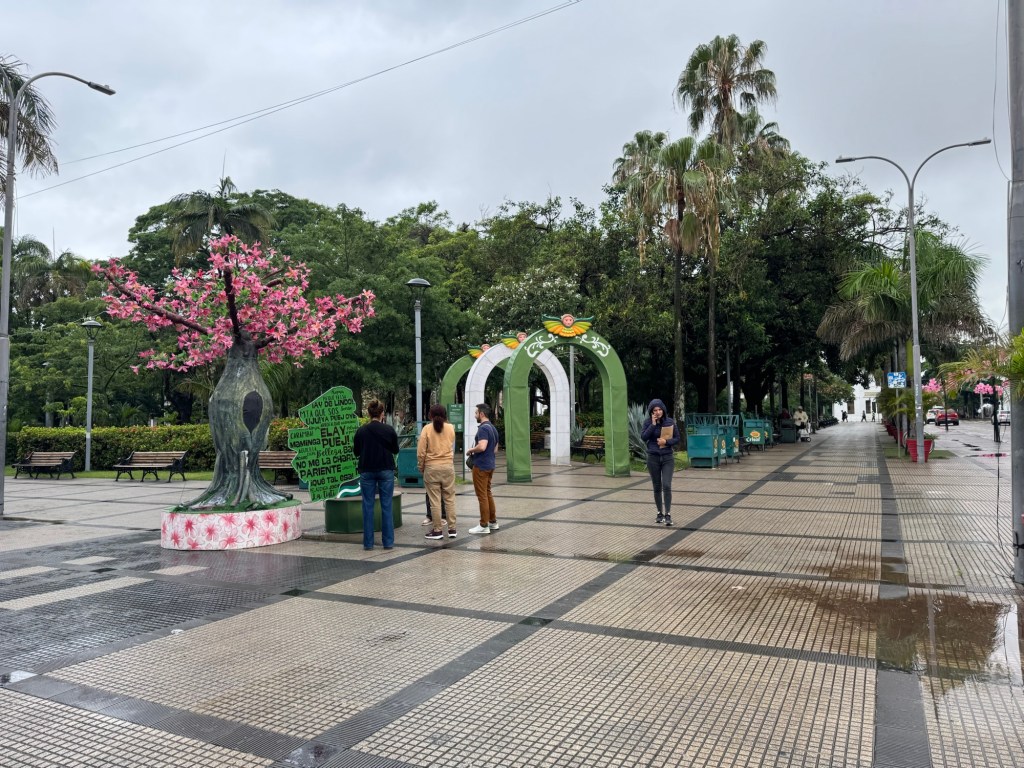
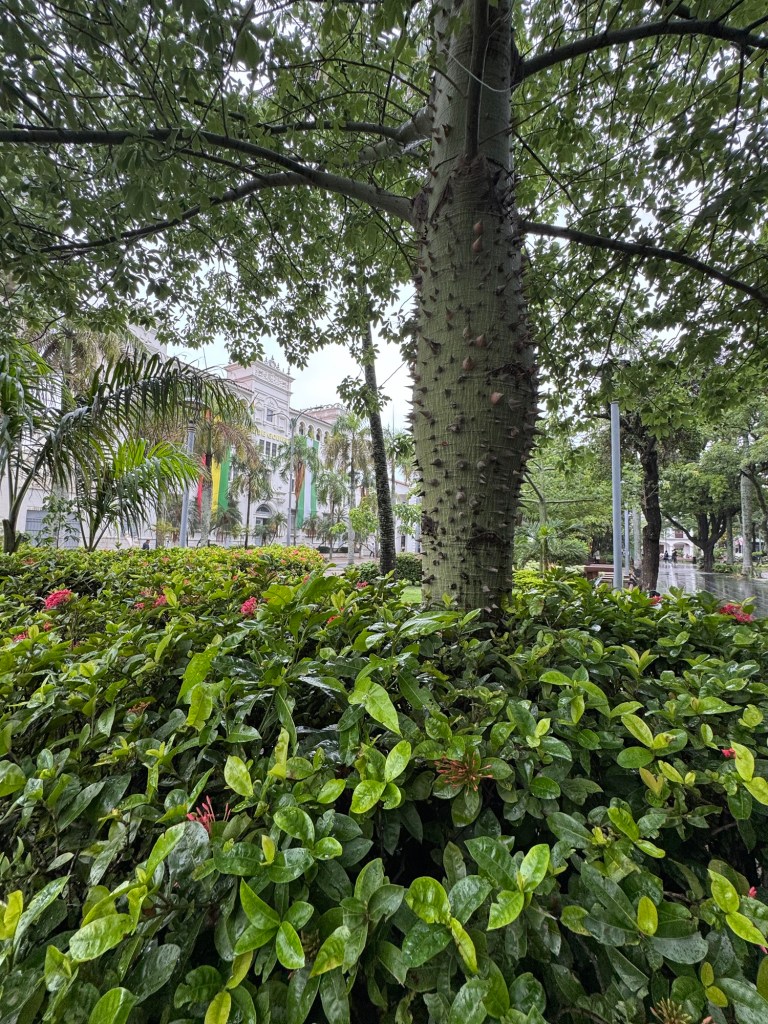
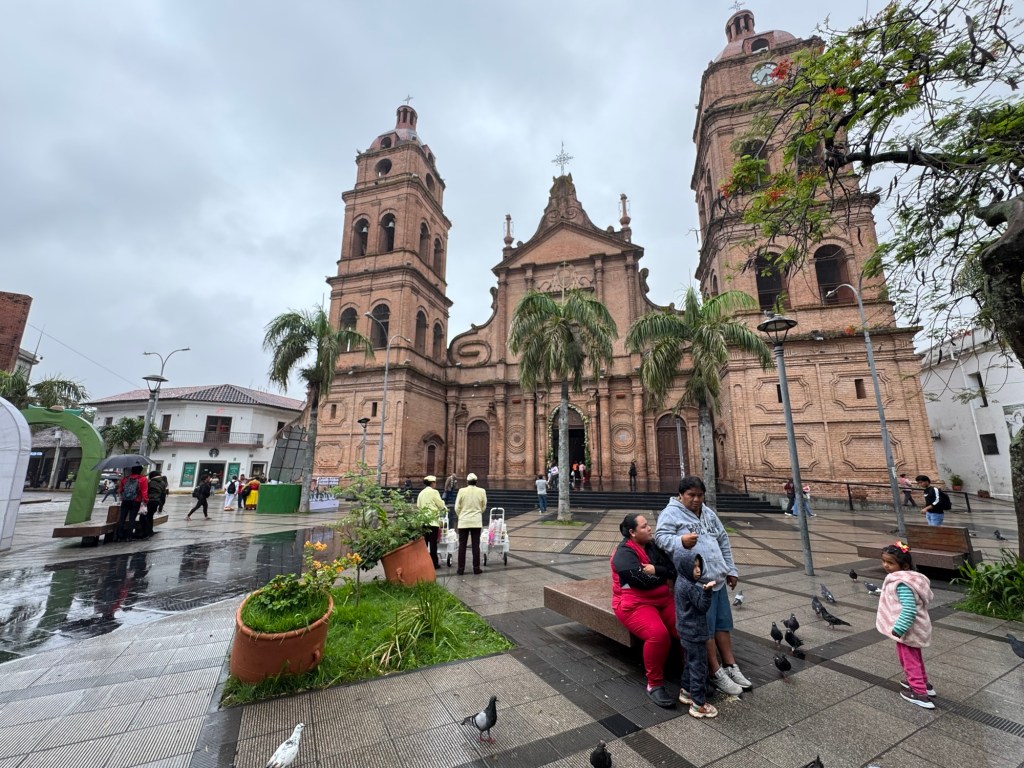
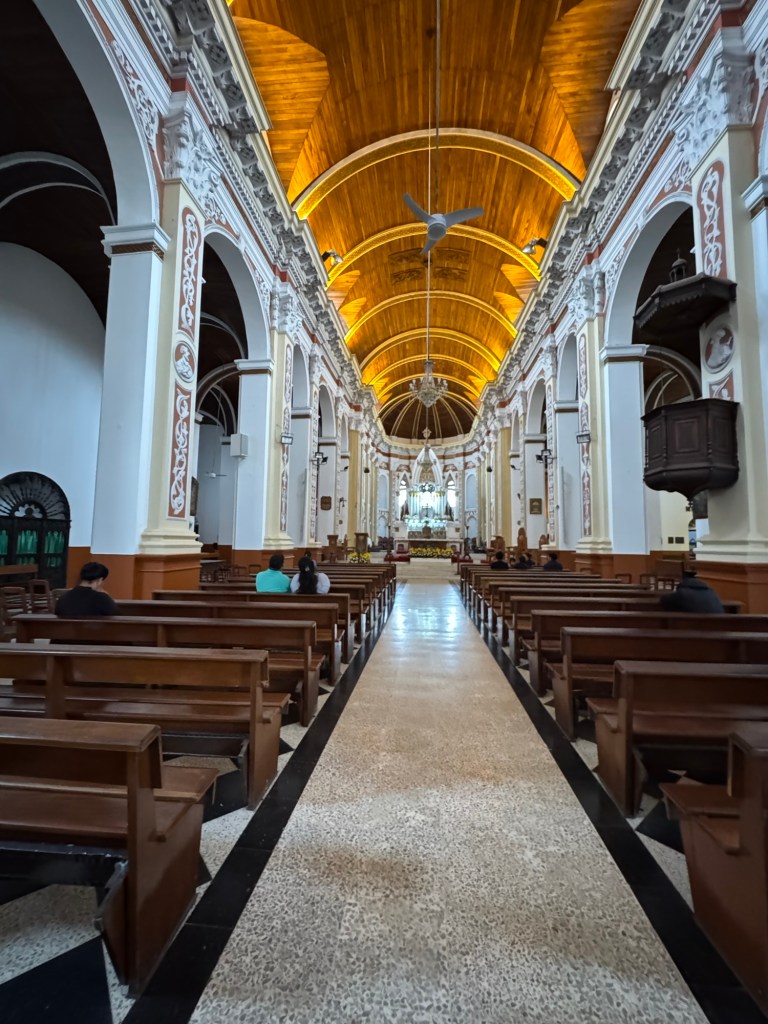
A colonial streetLa Recova Market with arched corridorsThe town squareA prickly silk floss tree looks pregnantCathedral of San Lorenzo in the town squareInside the cathedral on a weekdayOne of 12 official coffee vendors in the square. It was good and hot.
In spite of the gentle rain we encountered most of the day, we visited the old colonial streets with buildings made with wood columns and red tile roofs. La Recova Market, a narrow pedestrian street, retains its original arched corridors and keeps the colonial charm alive. The narrow street of vendors selling jewelry, leather goods, crafts and textiles was inviting, as was the town square and the Catholic cathedral. According to Marta, it and all churches in the city, are packed every Sunday.
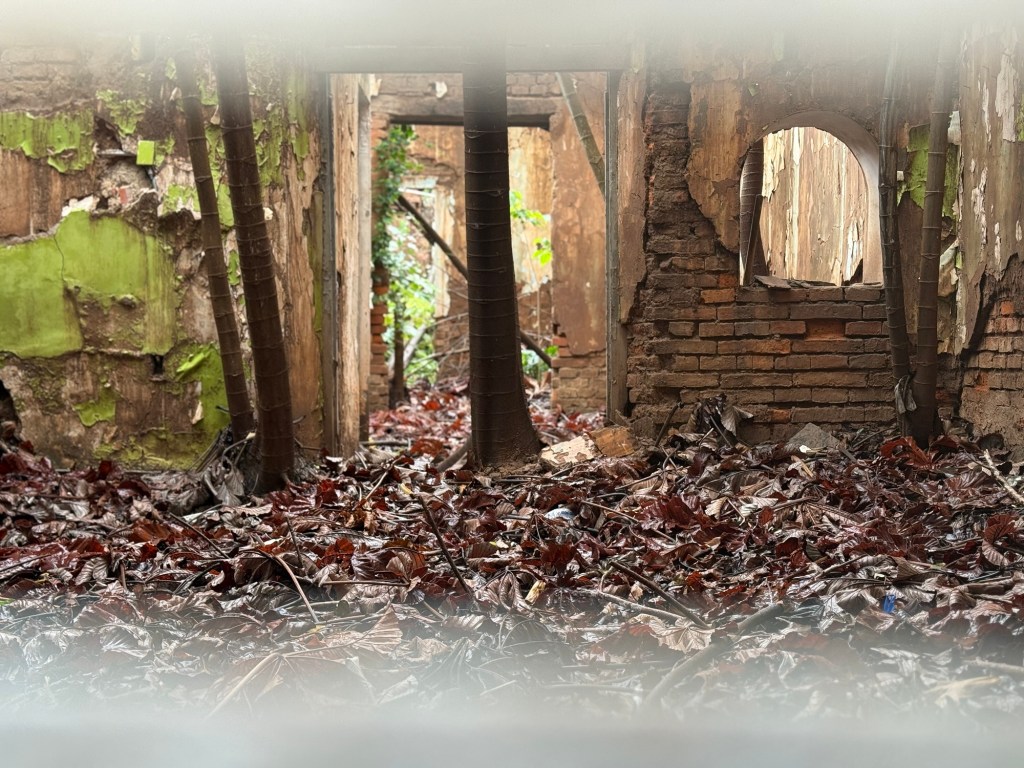
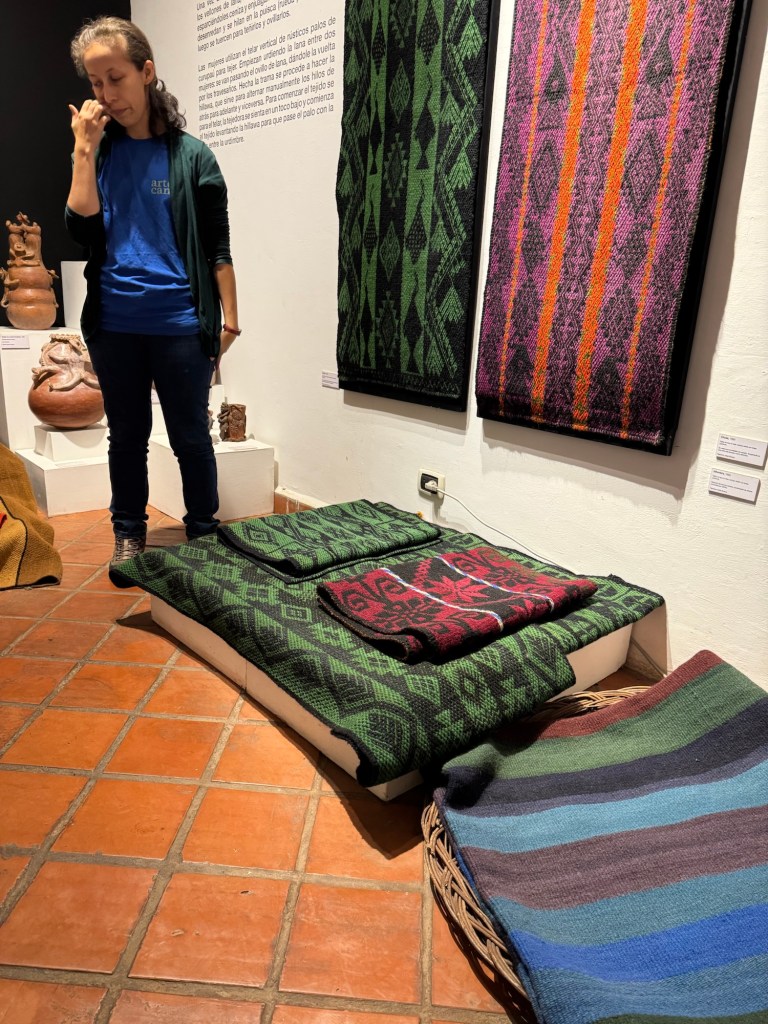
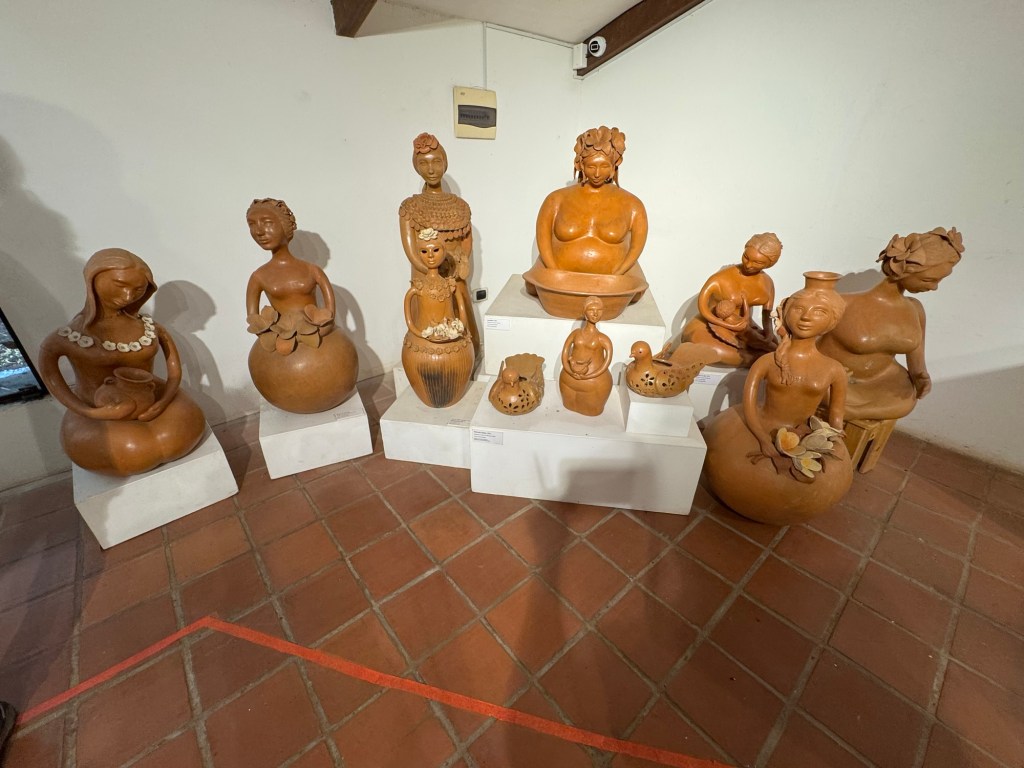
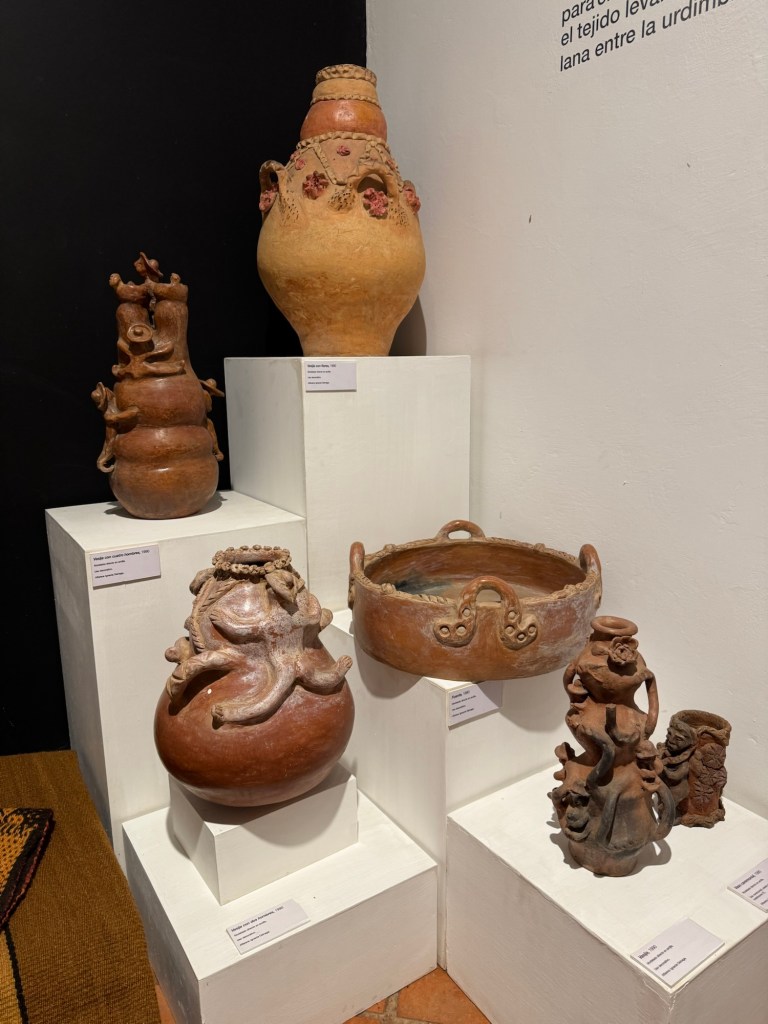
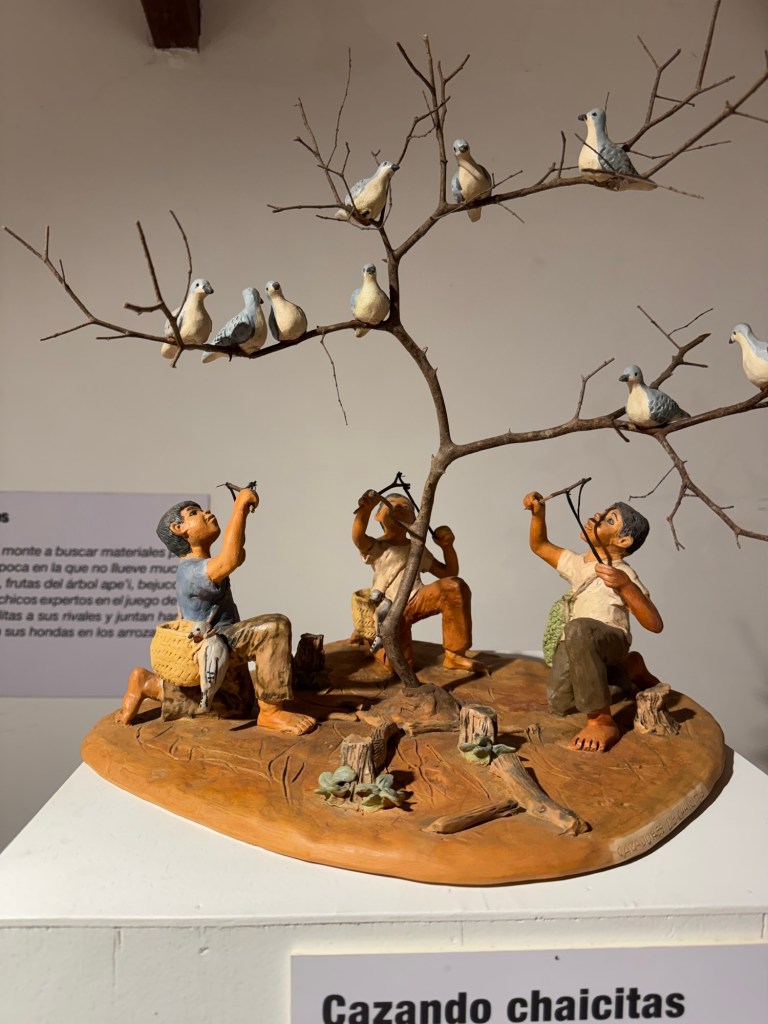
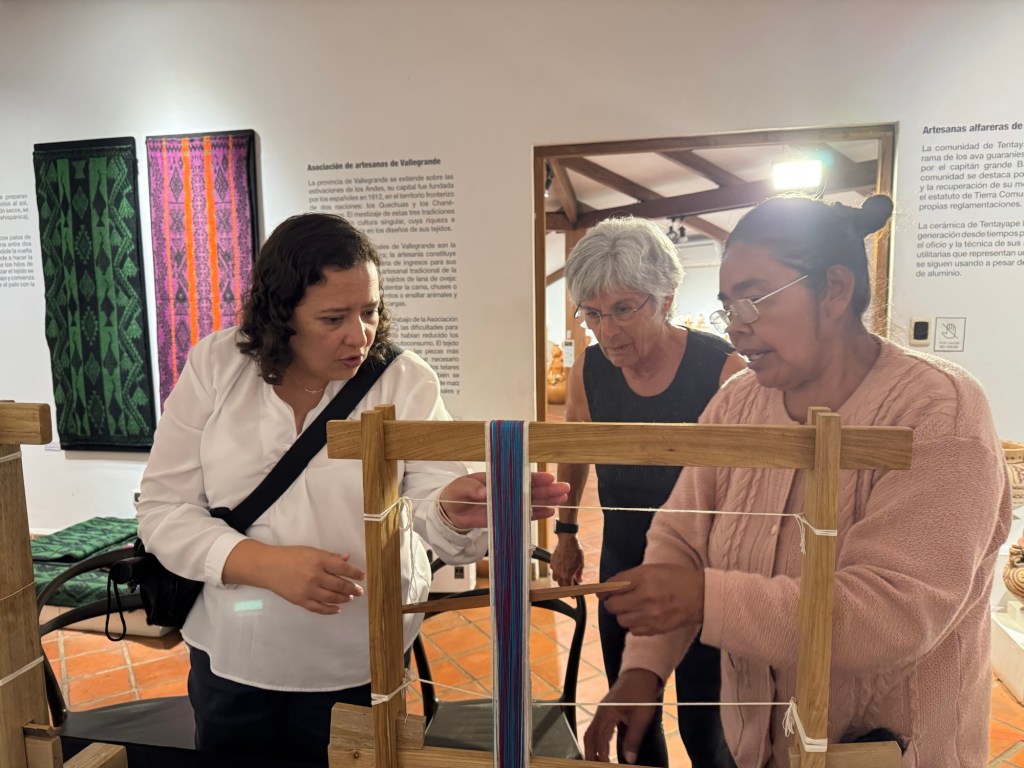
The inside of an abandoned building through a crack in the exterior wallWool weaving, both geometric and floral patternsThe Museo Artecampo—Ceramic workBeautifully formed Ceramic potsCeramic charactersMarta translates how to do the weavingMark gives the weaving a good try
Soon we found ourselves at the Museo Artecampo, a space dedicated to preserving the art of Bolivia’s lowland indigenous communities. We were treated to a private tour of the weaving workshop that represents the best work of 7 different indigenous community’s and were introduced to the experience of weaving.
After the weaving tour and trying our hand at weaving with the help of an expert indigenous weaver, we cleaned up and went to dinner at an asian restaurant on the 28th floor of the Green Tower, a new office building near our “unique” Boutique hotel. The hotel was rather funky, with photos of old movie stars and concrete floors everywhere and a 2 story apartment we stayed in until our departure at 4:30am. Glad it was only one night.
Tuesday, October 28, 2025
We landed in La Paz at 7am for a 1 hour layover to our flight to Uyuni. Unfortunately, our flight was delayed 2 additional hours. La Paz is at 13,327 feet asl and we were affected as soon as the cabin was open and unpressurized. We hoped we were adjusting as we sat in the airport waiting for our next flight.
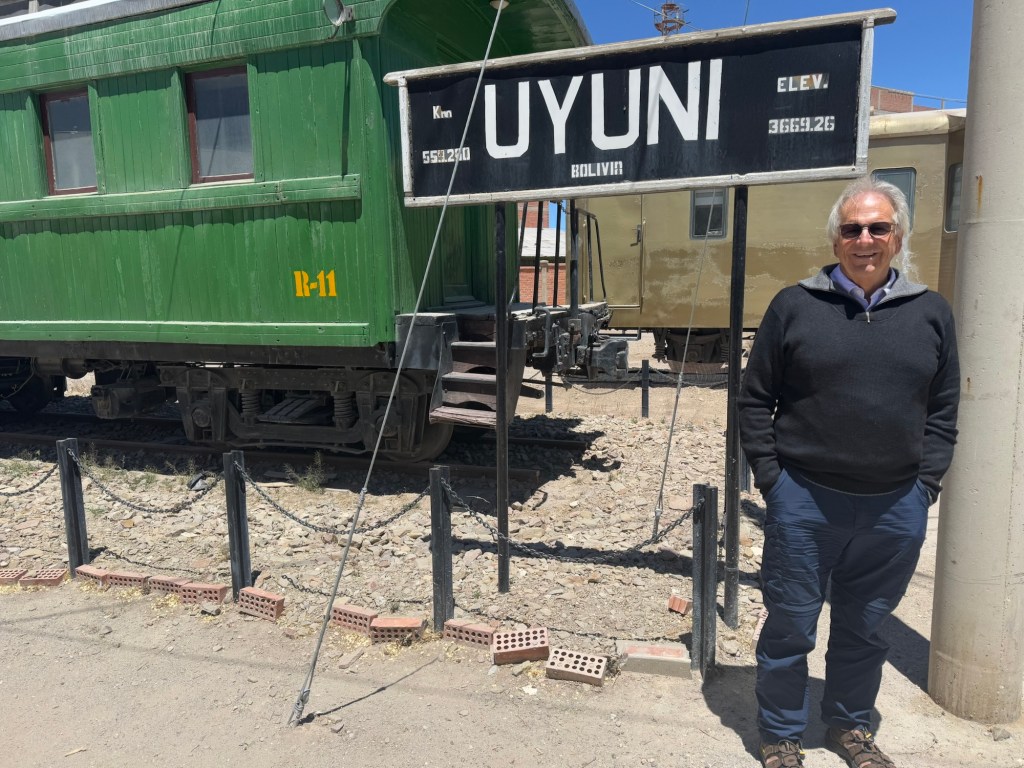
The original rail cars for transferring minerals from the mineUyuni street artDid not stay in “my” hotelShop we bought Alpaca sweatersUyuni is a major camper supply stop Our room at Explora
Uyuni (Uyu =meeting; ni =place) has a population of only 33,000 and seems to be in the middle of nowhere. The main occupations are silver, zinc and borax mining, quinoa farming and tourism. However, the elevation is also high and our hotel, on a hill above the salt flats is at 12,194 feet asl. We arrived mid day, had some lunch and spent the rest of the day trying not to be miserable. Mark skipped dinner and I ate very little. He slept through the night, while I did not.
Wednesday, October 29, 2025
Explora Lodge is minuscule in the landscape.
Explora Lodge next to the world’s largest and highest salt flats.
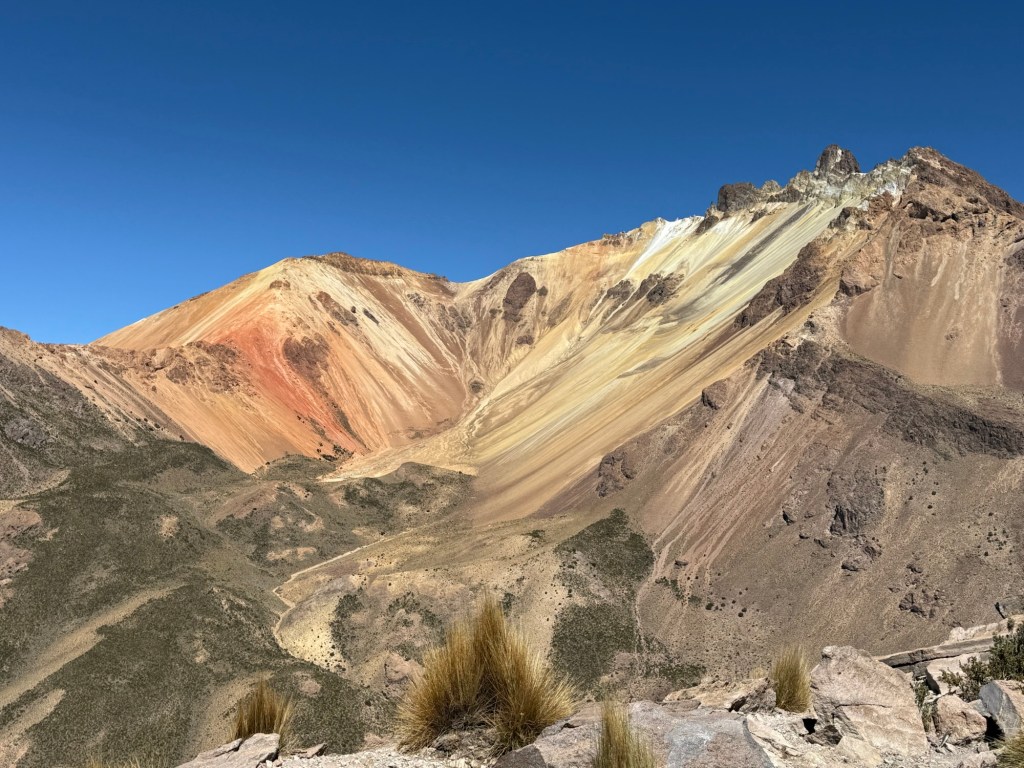
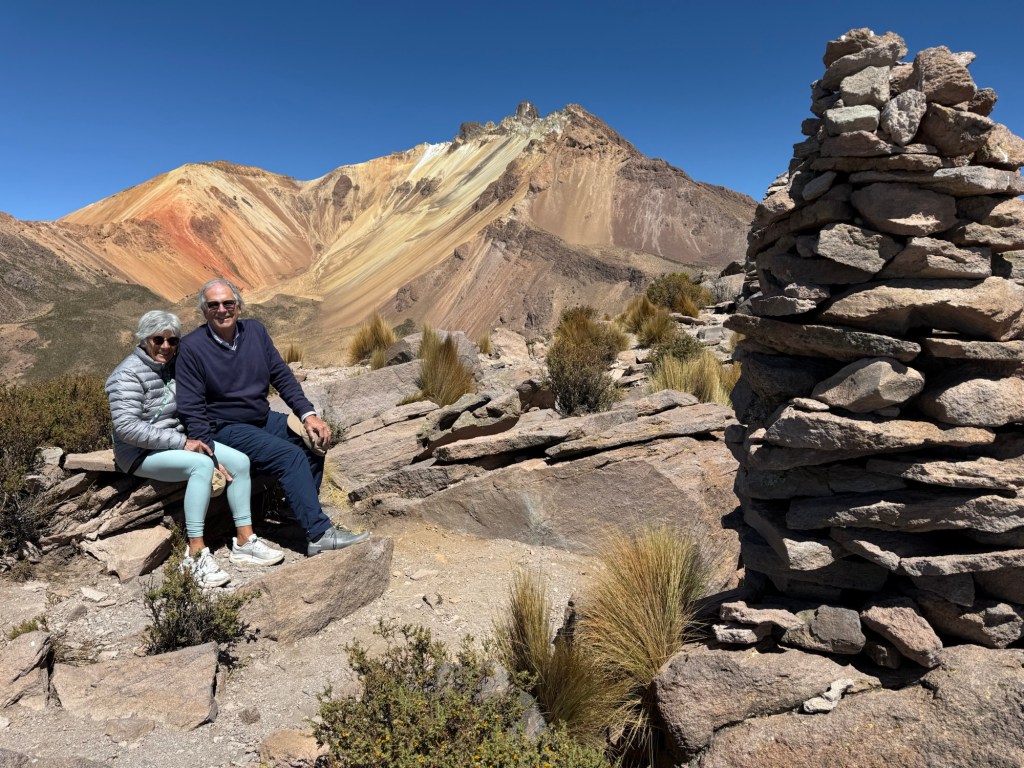
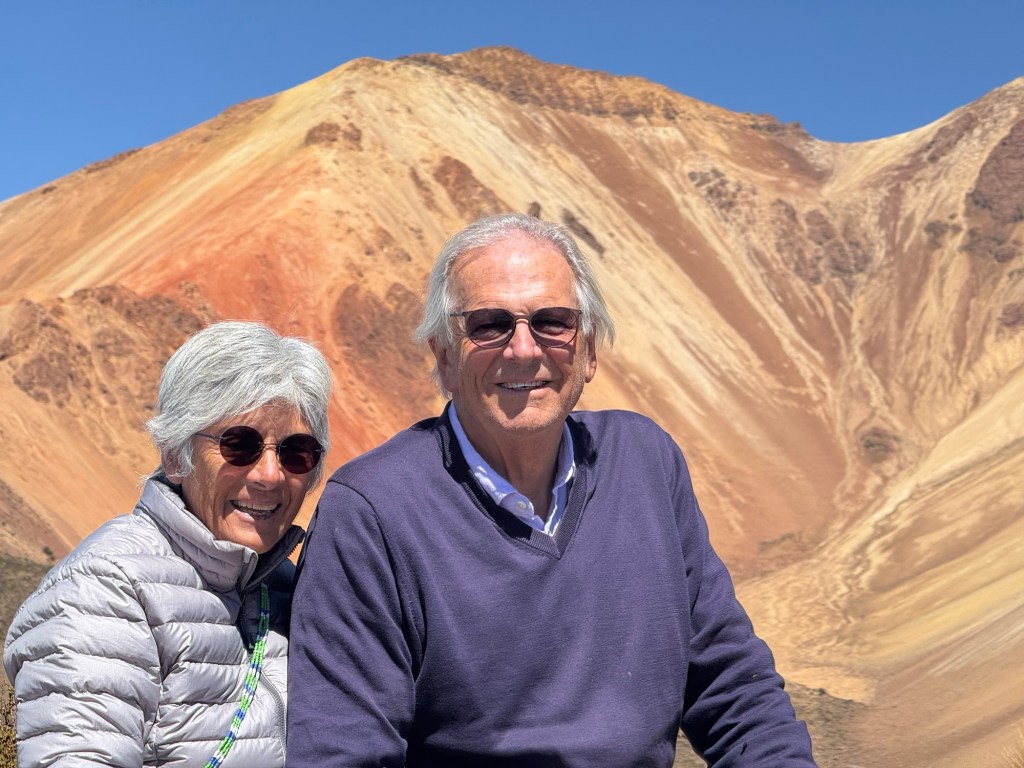
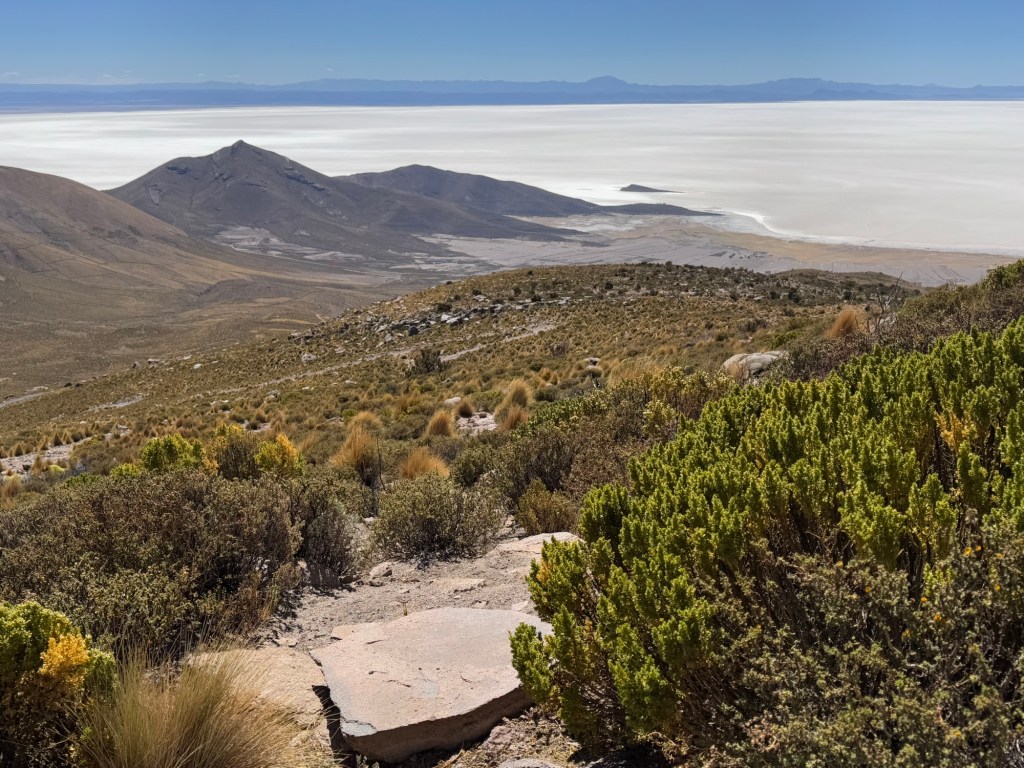
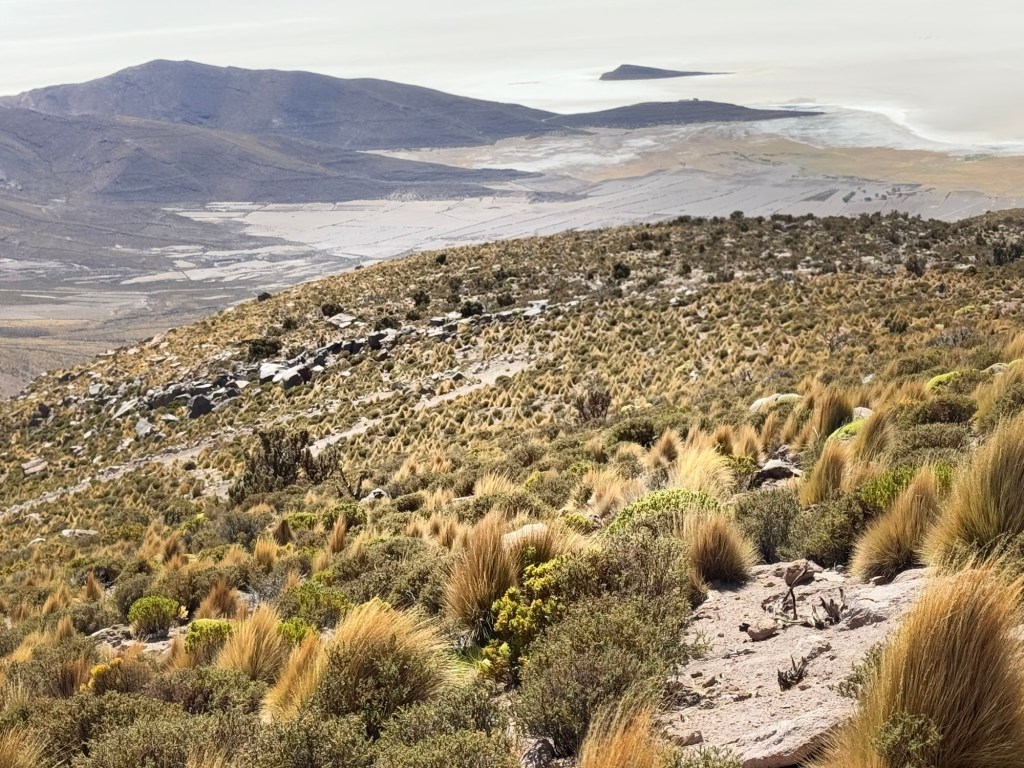
We were up and on the road by 9am, in spite of our low energy. Our driver spent an hour and a half traveling over rough roads to a short hike up to a view point of the Tunupa Volcano (17,457 ftasl). I made it with Mark’s help.
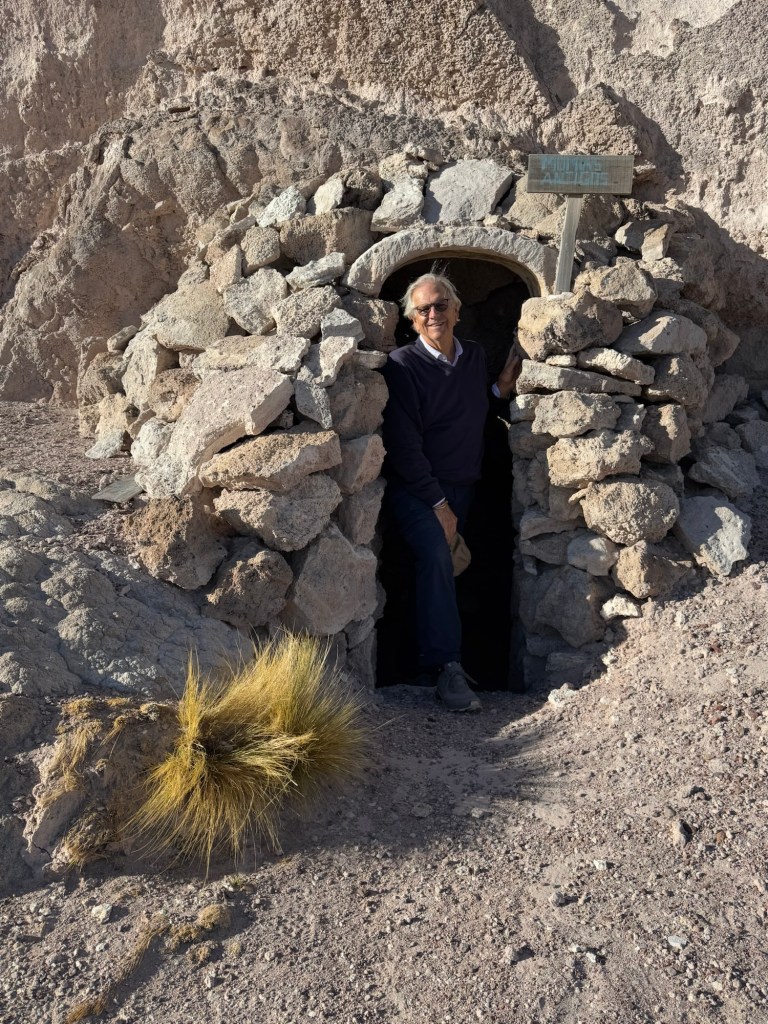
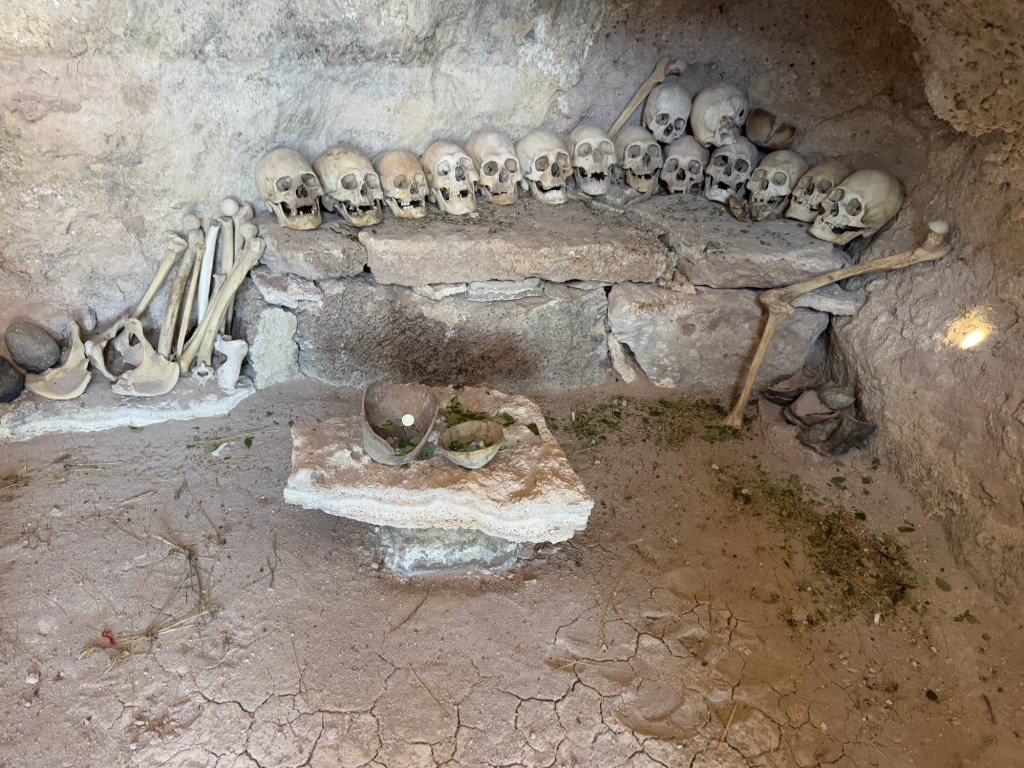
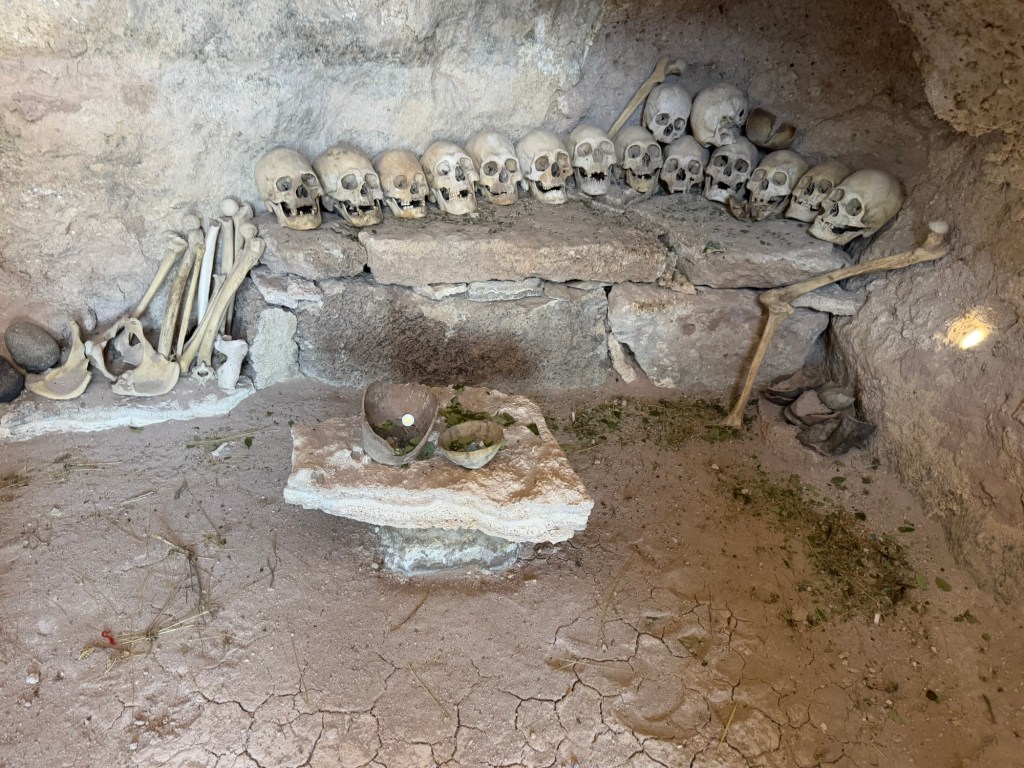
Entrance to sculls 15 ancestral sculls
Lower reaches of Tunupa Volcano converted into quinoa farming plots 900BC
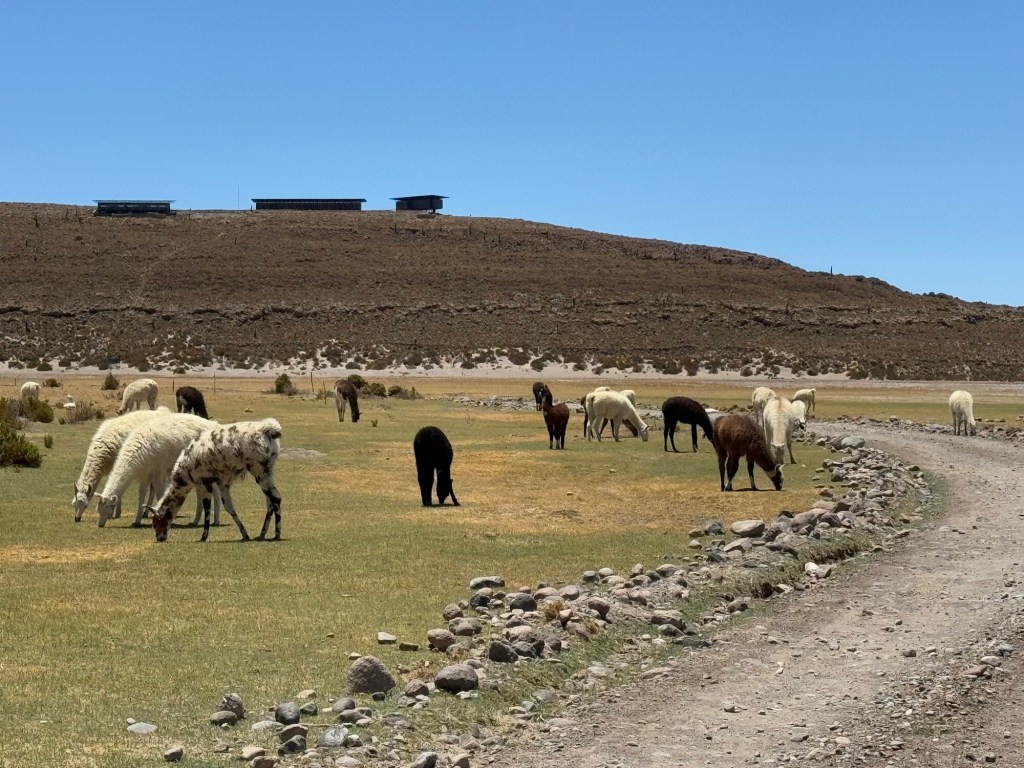
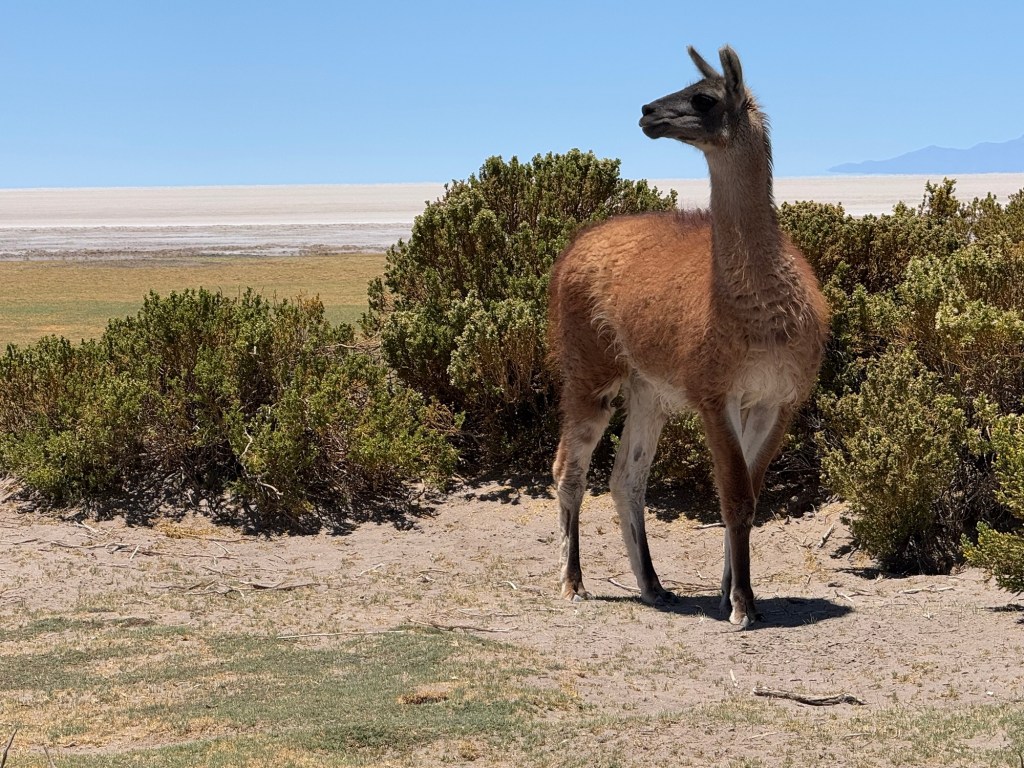
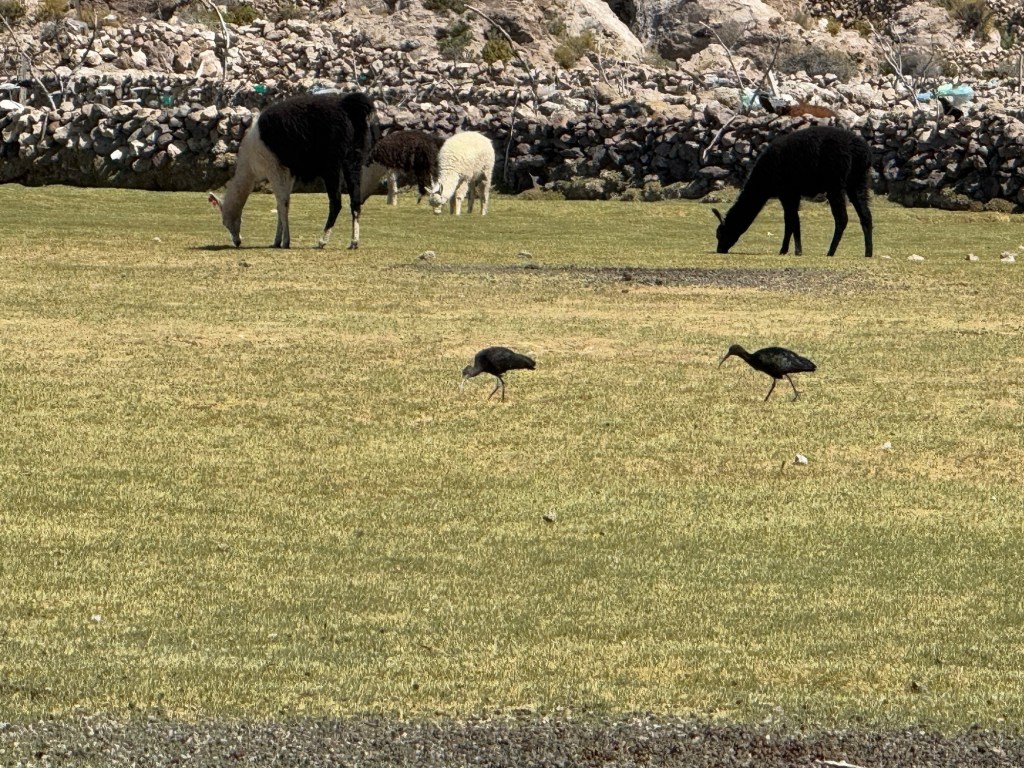
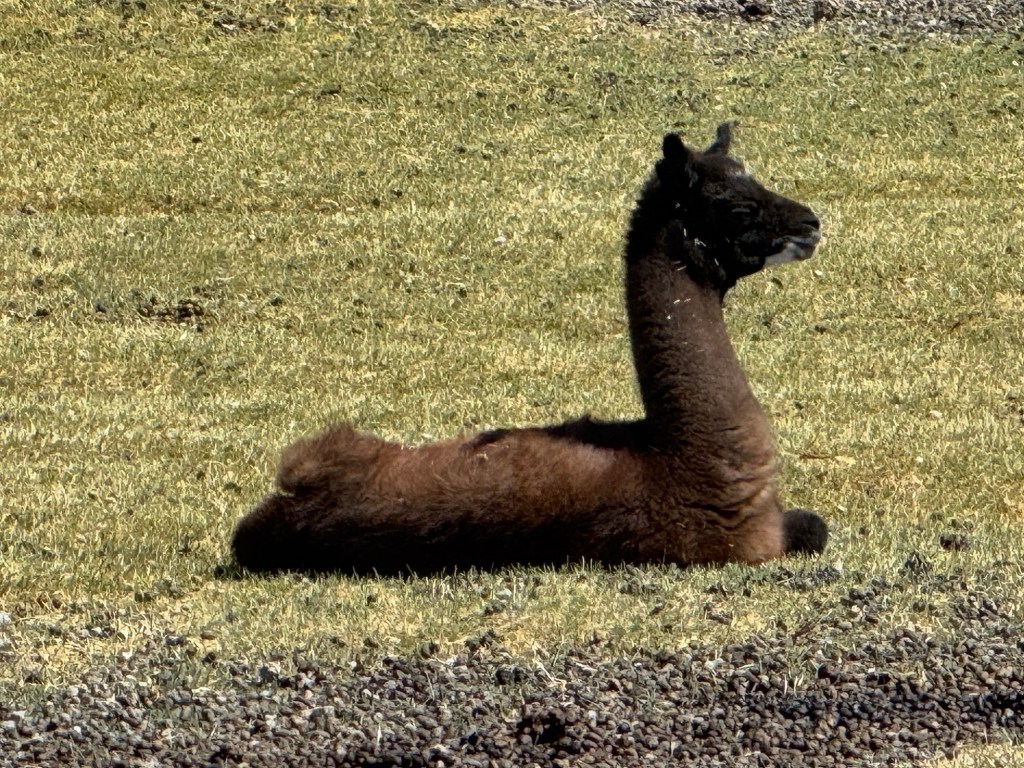
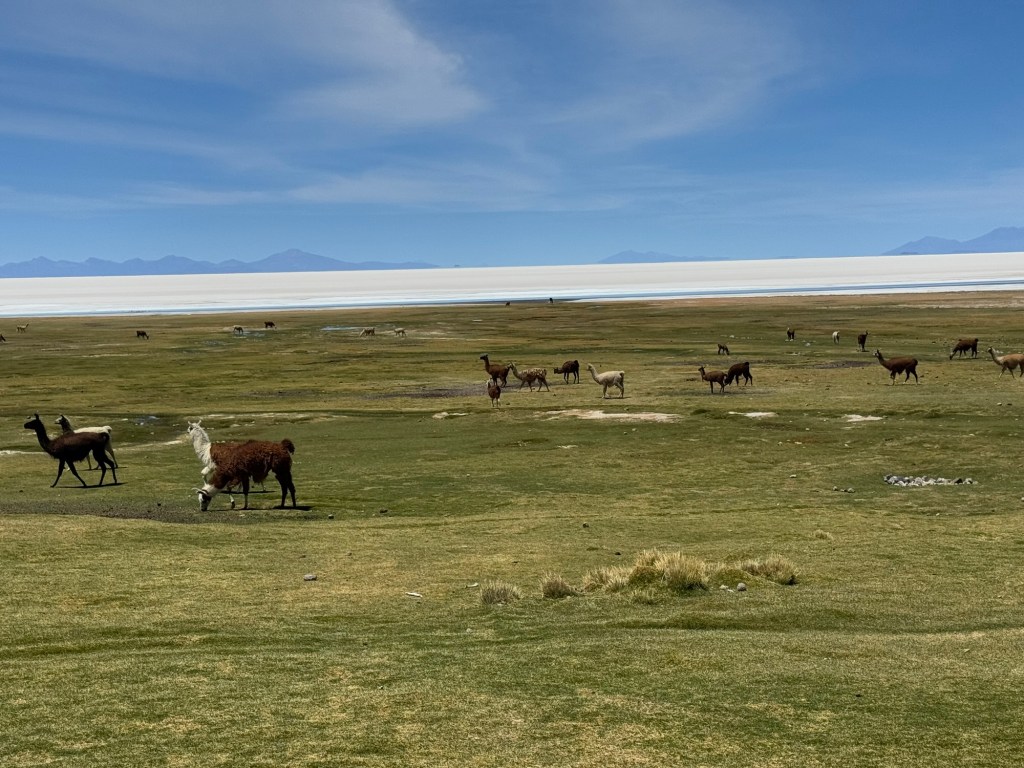
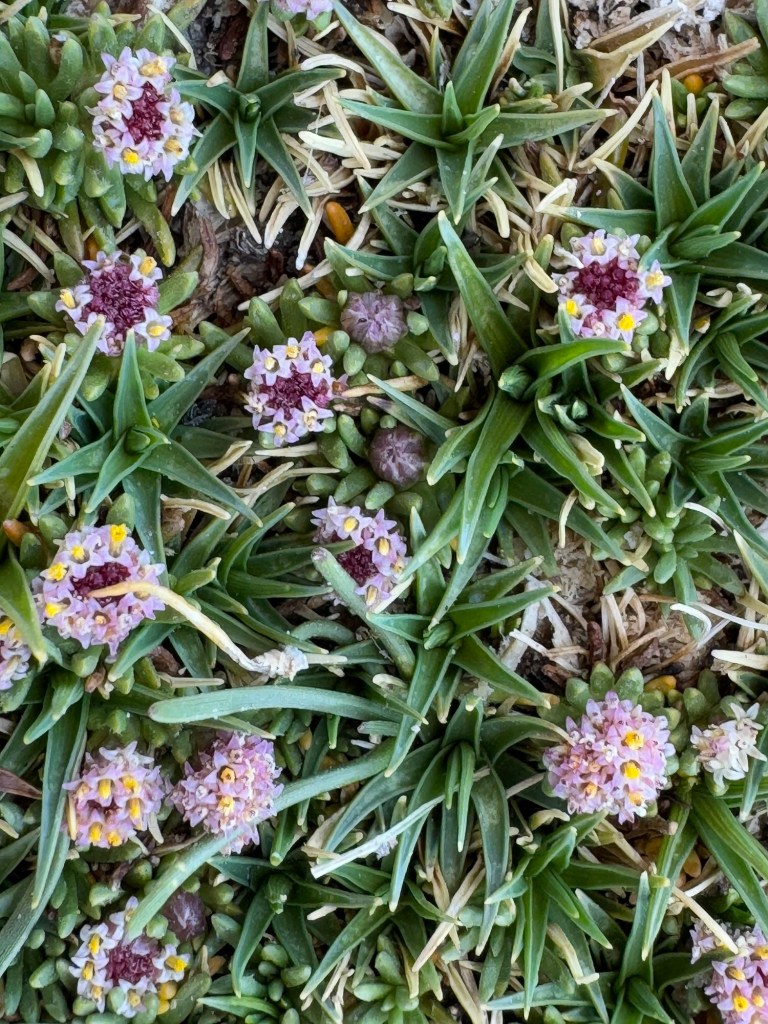
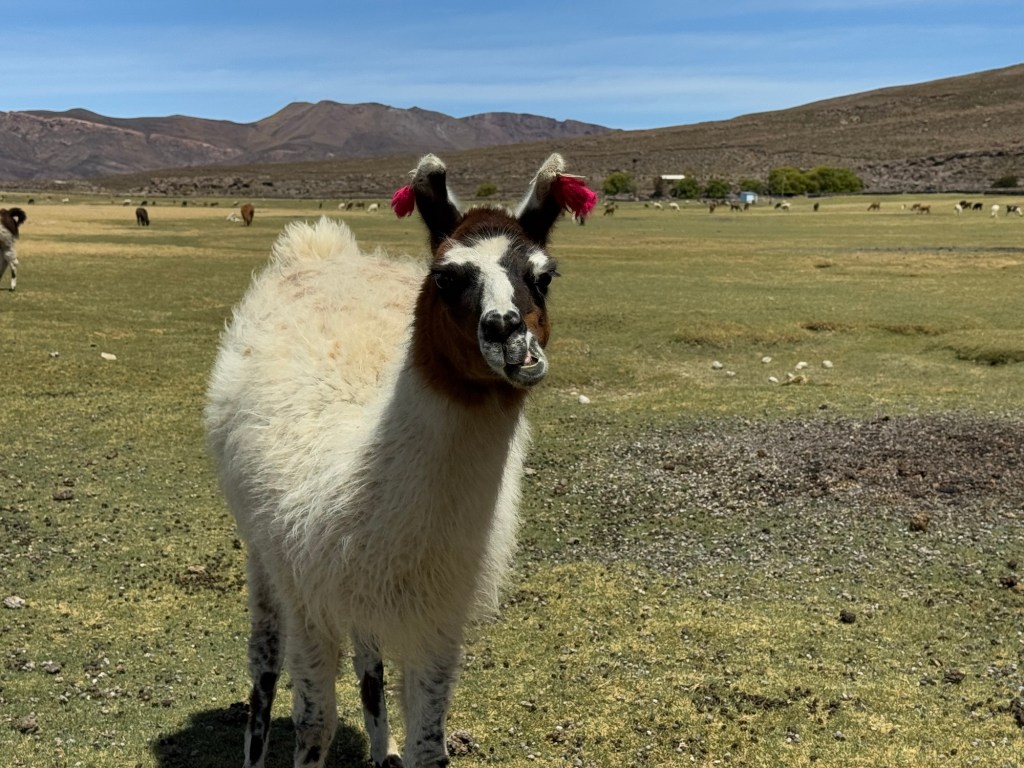
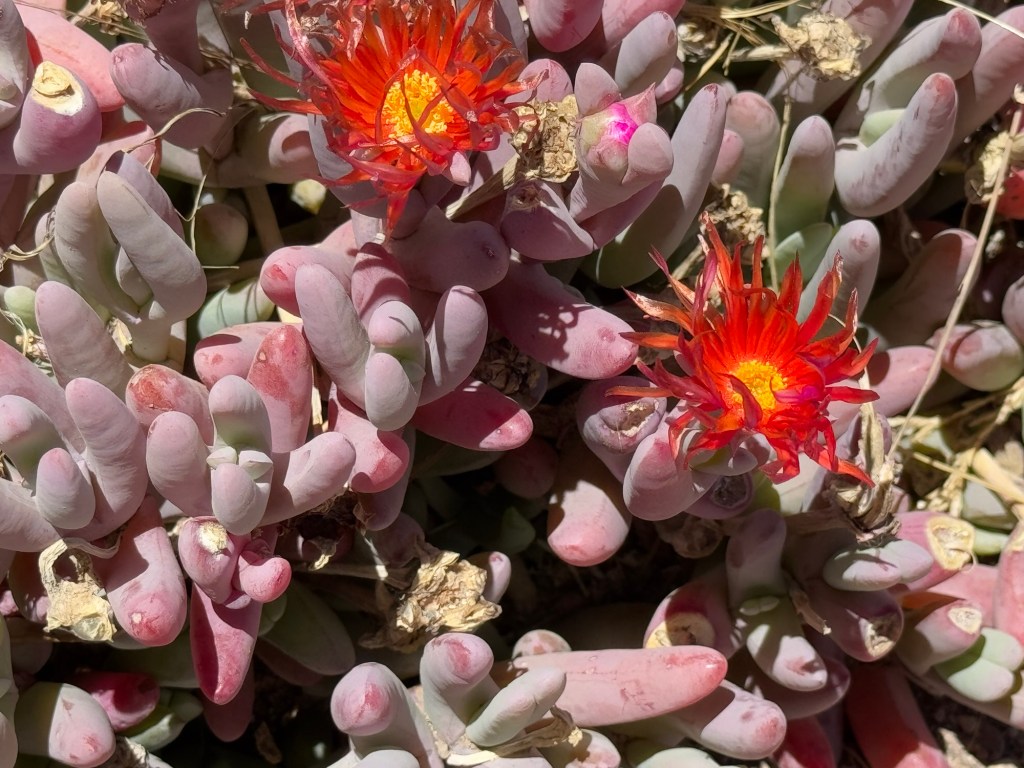
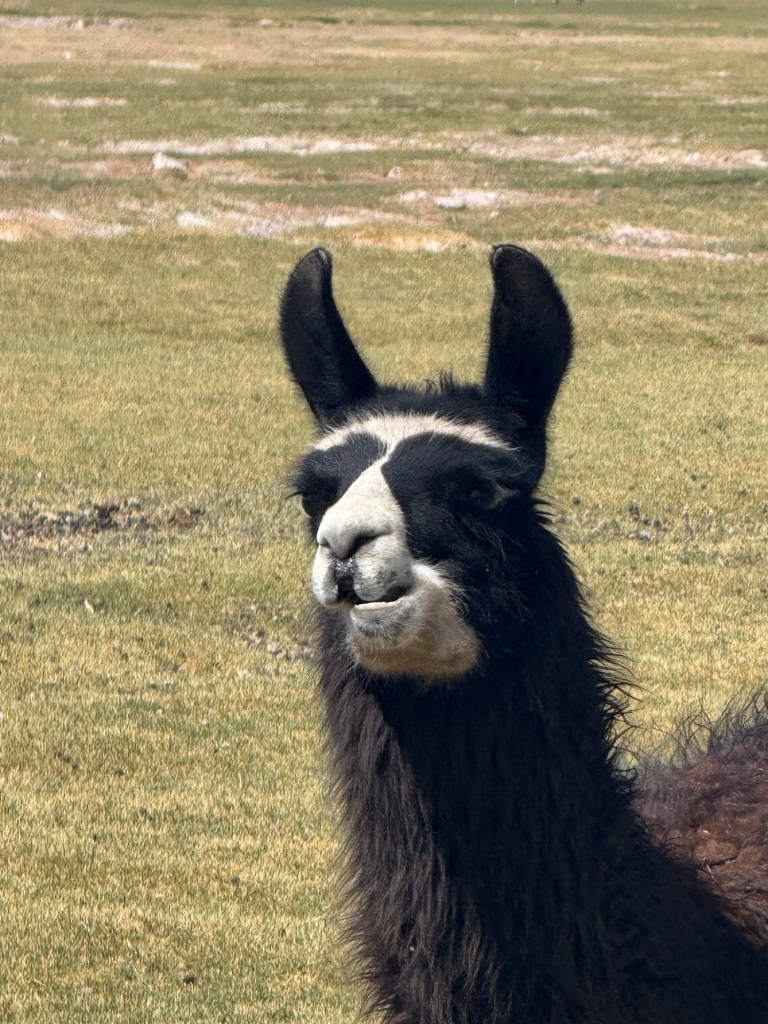
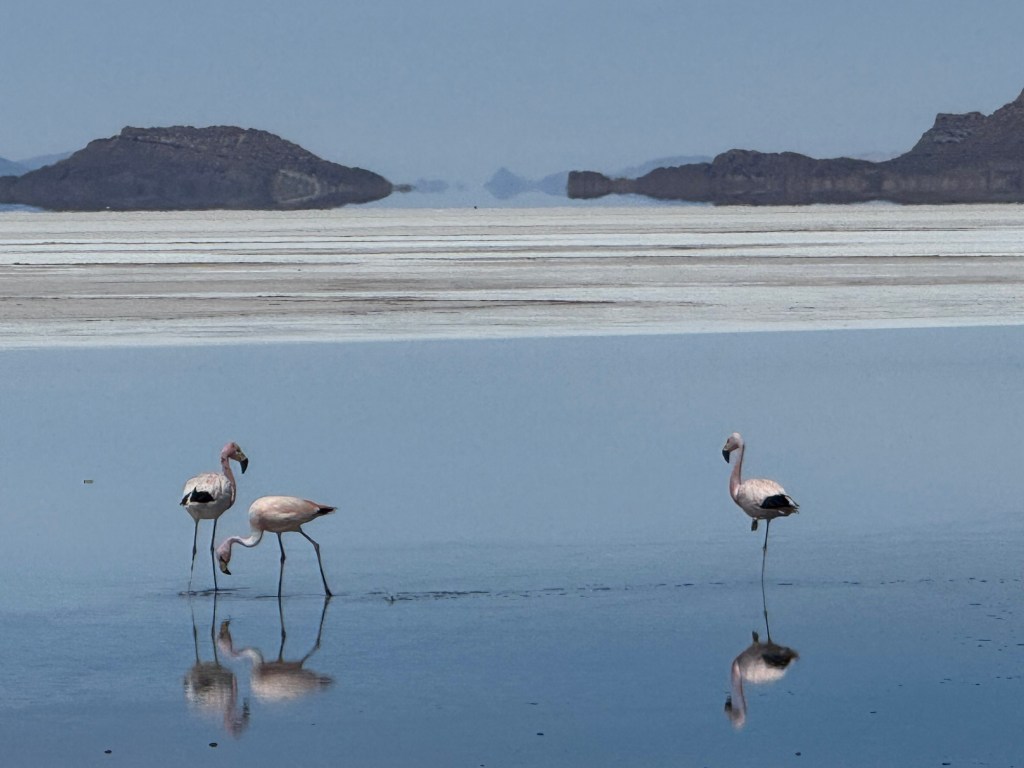
Feeling slightly better, we were out again at 9am for a drive though the salt flats to a village called Cqueya to walk with the Llamas. There were many and the field next to the salt flat looked like a lawn. We saw many llama sporting red ribbons tied to their ears as decoration. Along with them we found two different kinds of flamingos feeding in the flats near the llama as well as the succulent plants they eat
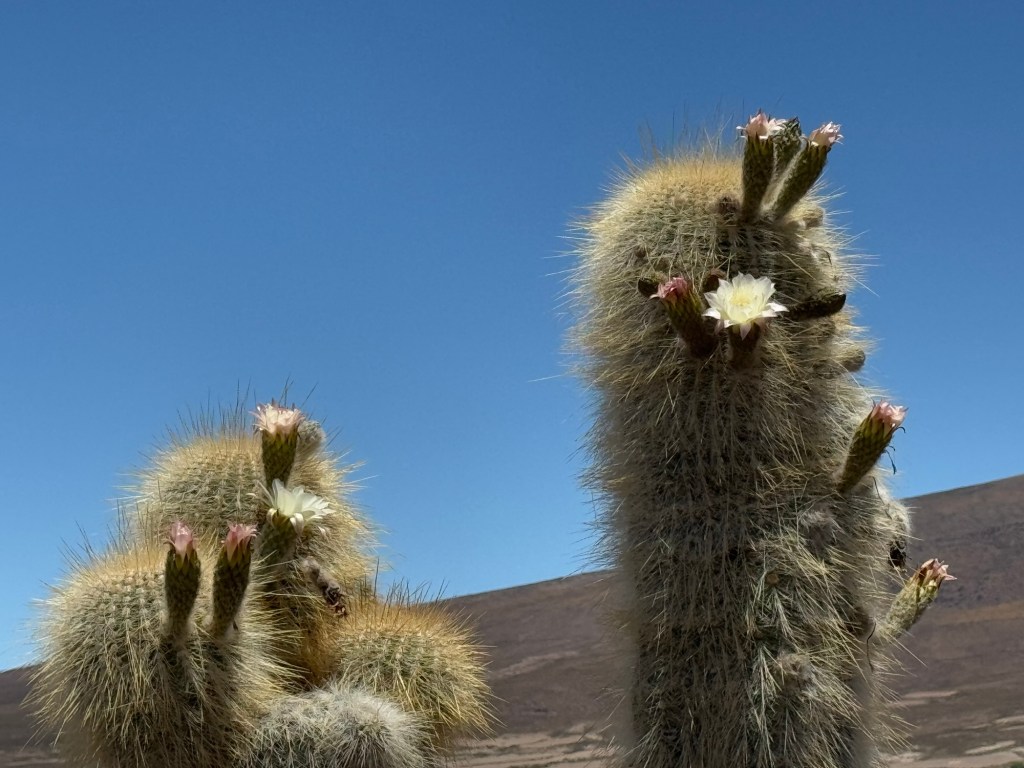
Tunupa volcanoA cactus overlooks a 10 family village and TunupaCactus beginnng to flowerLlama in front of the lodge
Driving up the rough roads to a from the lodge, we encountered many rock pile fences as well as outlined farming areas and small round sleeping shelters built, according to our guide, around 900 BC. The most common crop was quinoa.
Then we found flamingoes feeding at the edge of the salt and learned from Elsa, our guide, that the ones with black tails were Andean Flamingos and the ones with no black tail were James Flamingos. They were both different from flamingos we have seen in Africa.
There were several people in the lodge, so we had dinner with 2 Brazilians, and 4 Frenchmen. Everyone spoke English, thankfully.
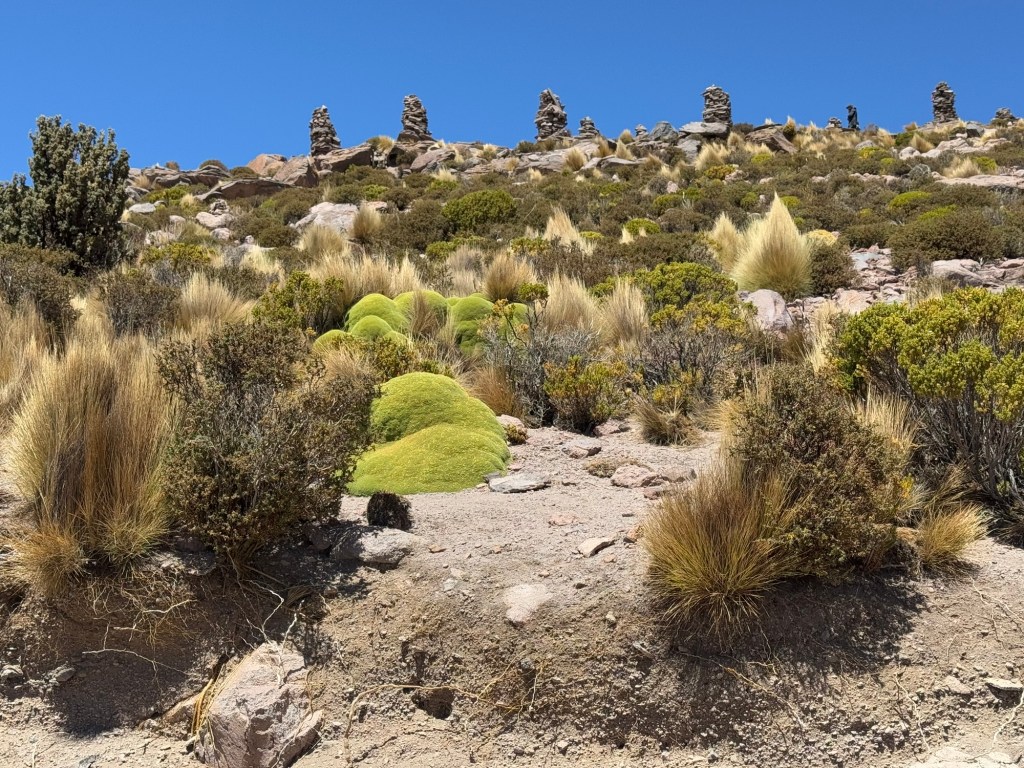
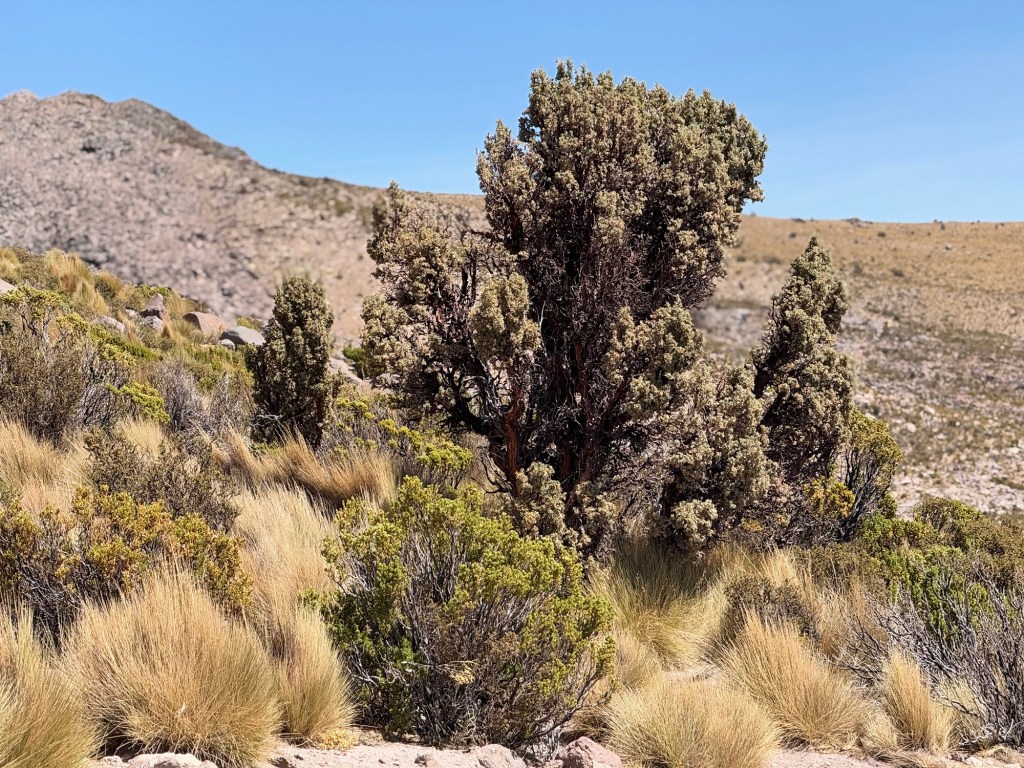
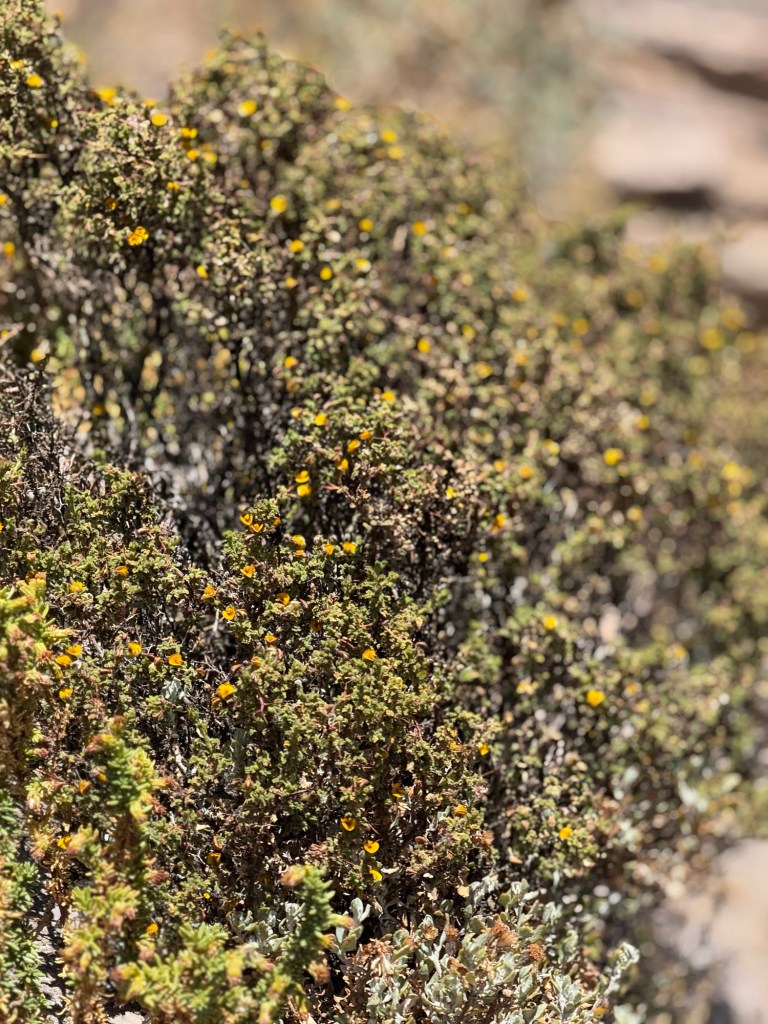
Our undefined hike took us through prickly Anawaya and Yareta to the cairns at the top.A Quenua tree grows from 13,000-16,400 feet elevationYareta, a vascular plant, used for diabetes IIAnawaya, a prickly plant liked by llamaOur hike from the end of the roadThe road up from the lodgeA majestic Llama
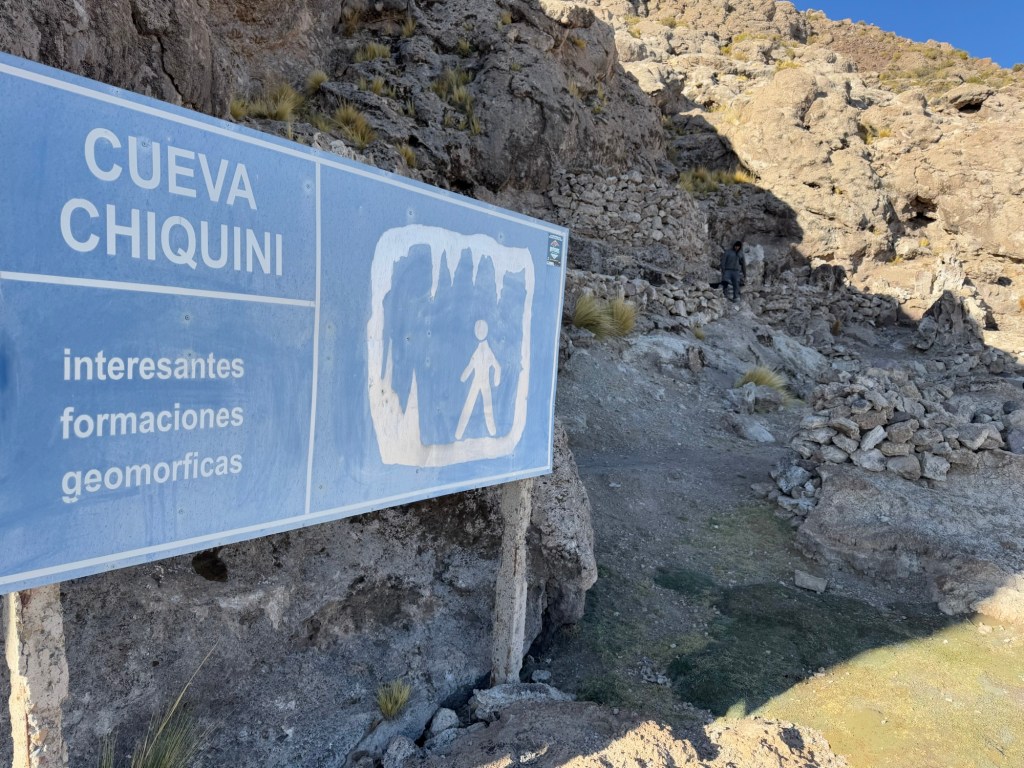
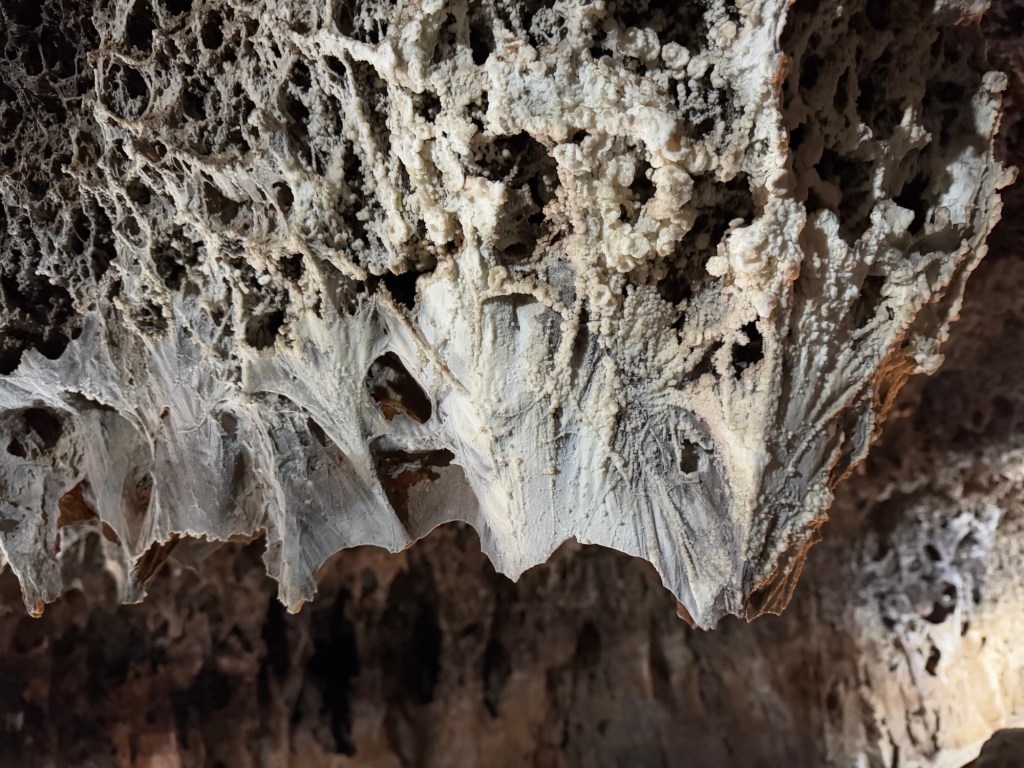
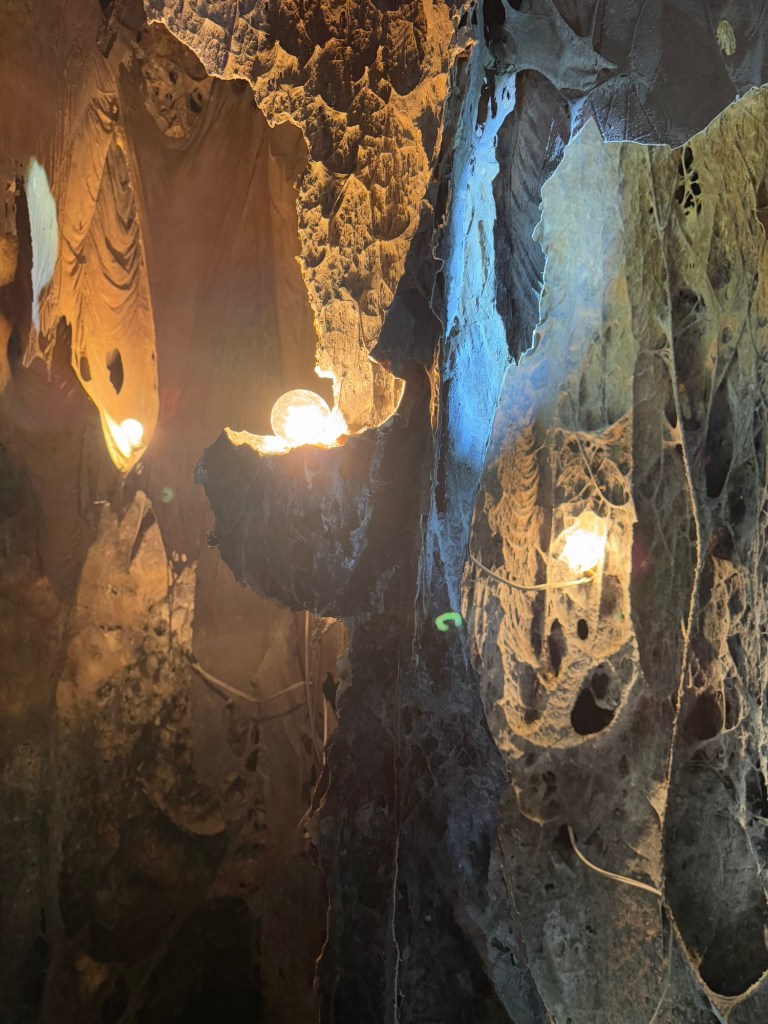
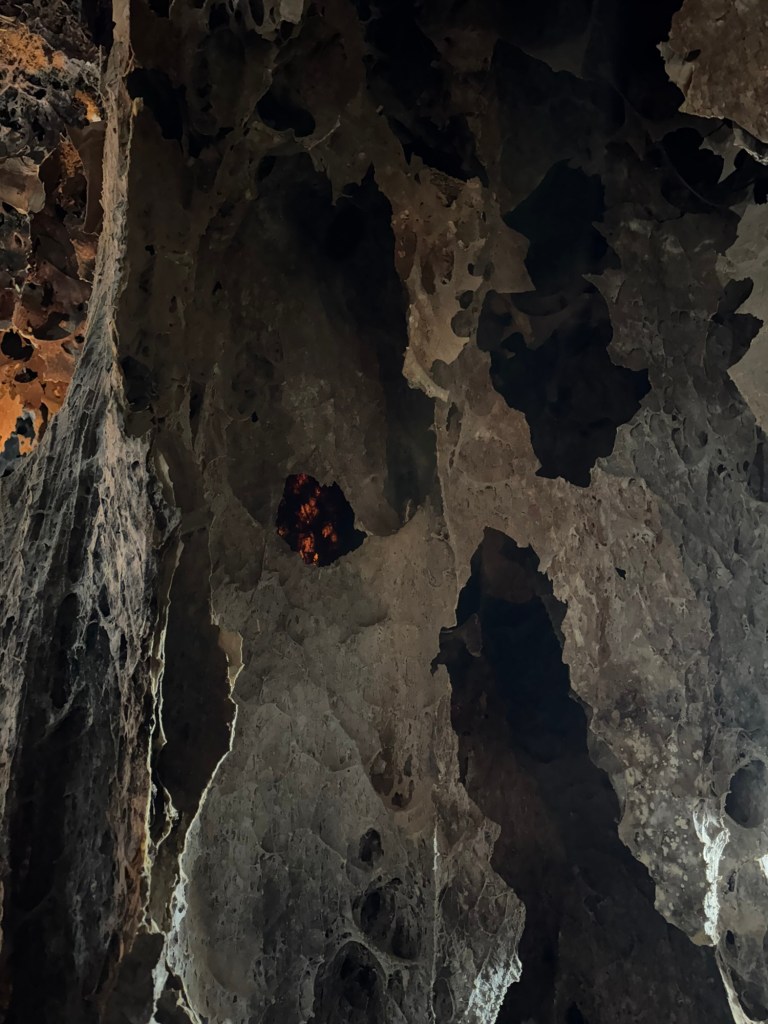
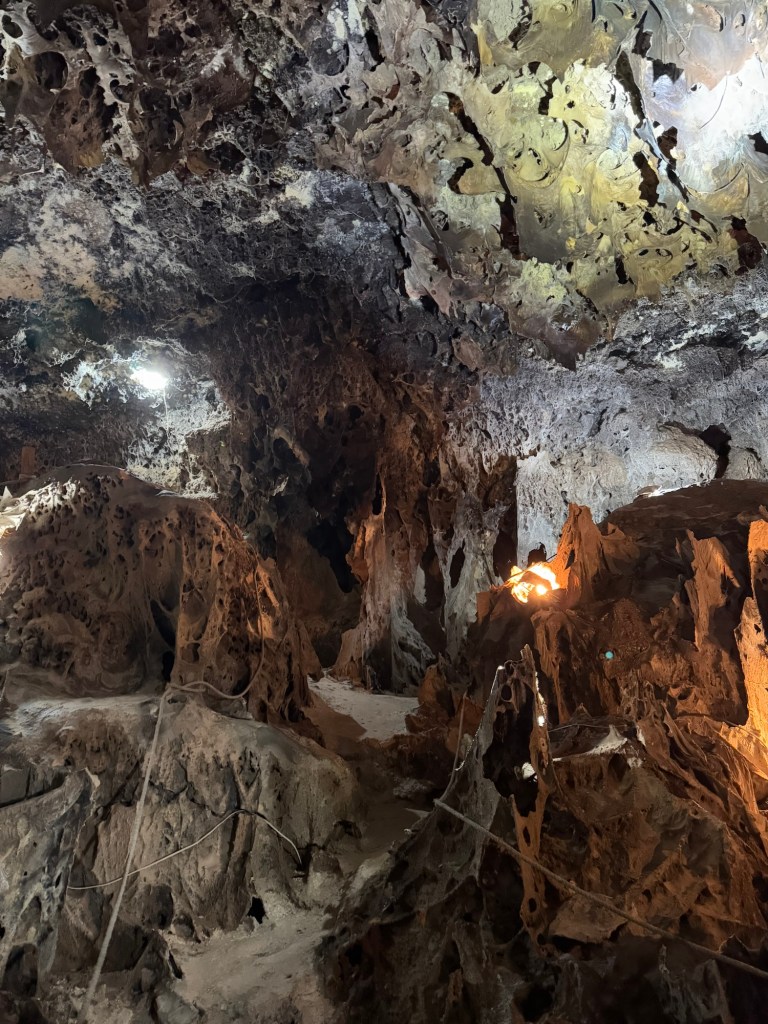
After lunch we had a bit of time to relax and then headed out for a cave an hour and a half across the salt flats and over an extension of the volcano. The Cueva Chiquini cave was interesting because the structures inside were mostly paper thin and very delicate.
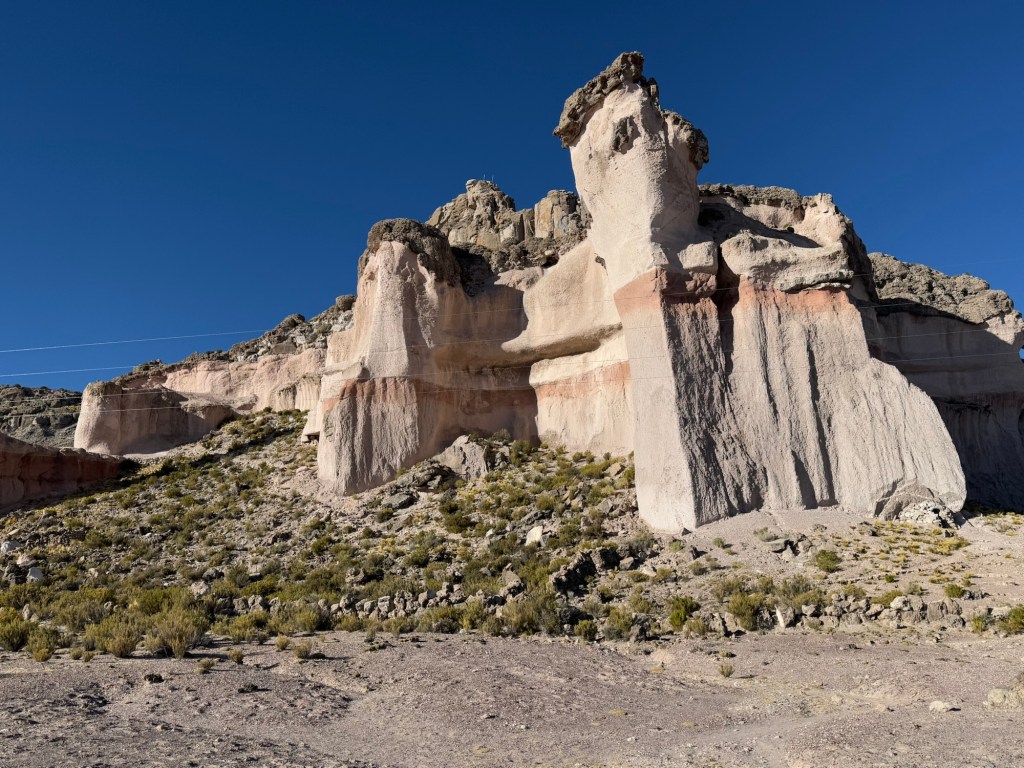
An ancient rock formation shows sea level millennia ago Exterior entrance to the caveView from cave entrance facing toward Explora LodgeCave structure looks like an animal faceAn intricate structureDisturbed by light, the structures are still interestingDelicate cave formations
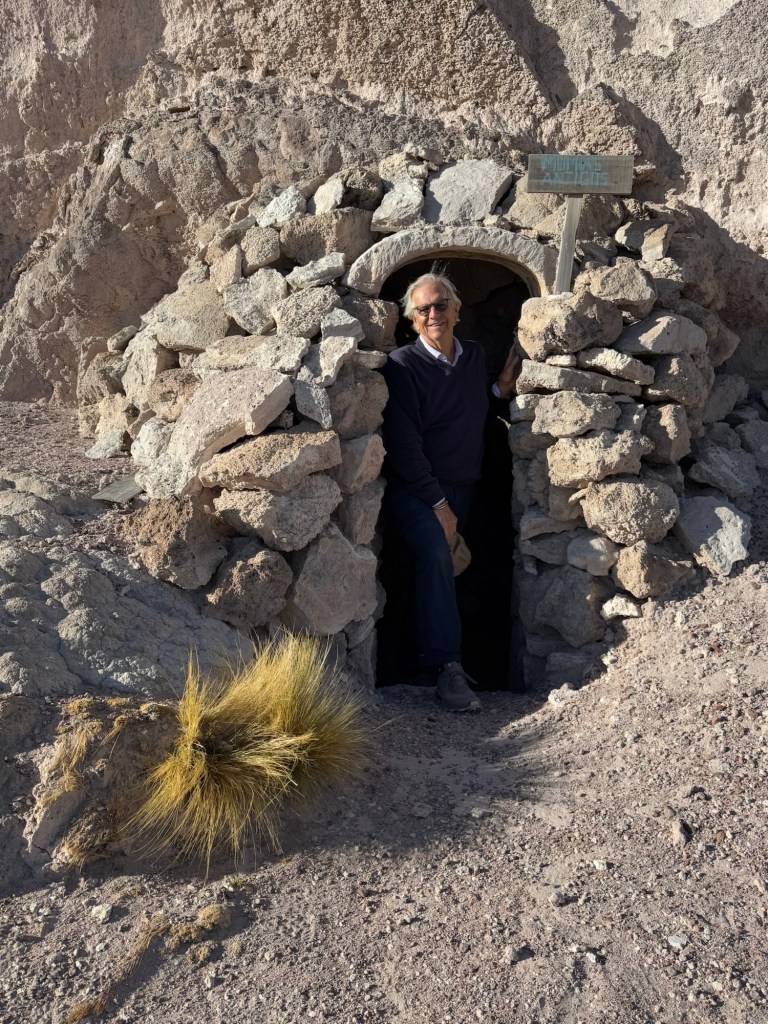
Nearby was a man-made shelter for storing the heads of 15 ancestors. They looked like they were smiling.
Exiting the cave with sculls15 happy sculls
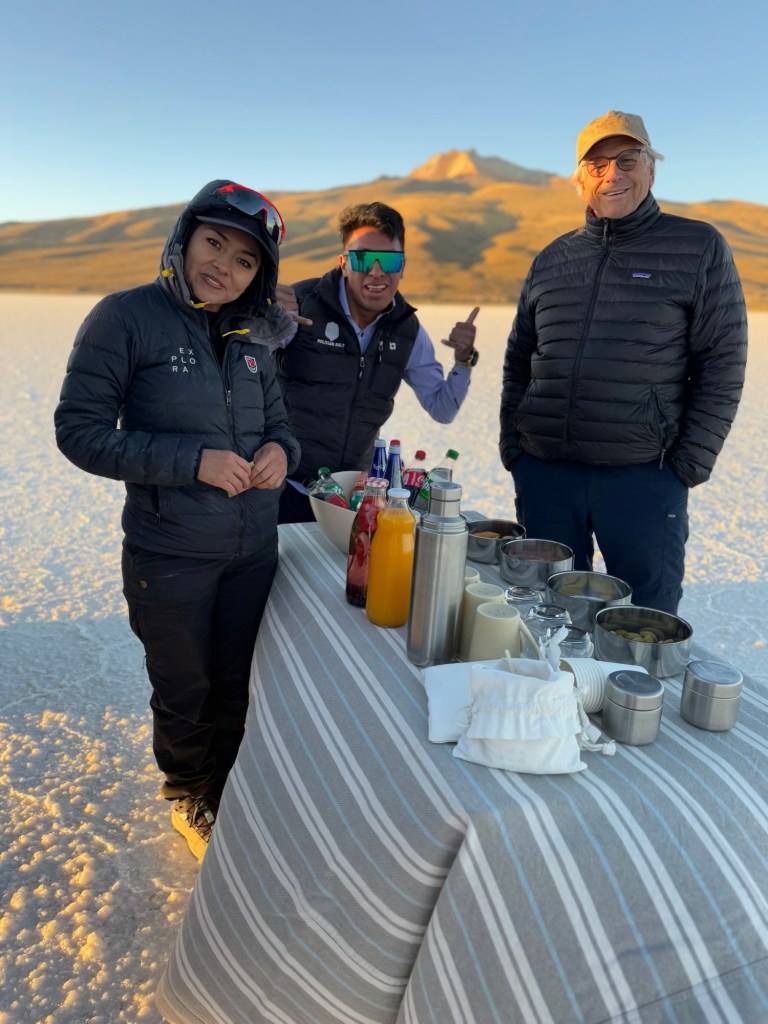
On the way back to the lodge we stopped on the salt for a sundowner in time to watch the sunset.
Our sundowner. So cold and windy,we drank hot tee in the carThe salt flats look like this for miles and miles
It was a super view, but very windy and cold. I drank my hot tea in the vehicle. Even Mark opted for hot tea.
Mark out at nightWith a cactus
Mark and Elsa went outdoors into the night to look at the stars. I was too tired, still suffering from the altitude, and went directly to bed.
Thursday, October 30, 2025
Feeling slightly better, we were out at 9am for a drive through the salt flats to a village called Cqueya to walk through the llama fields on Baccharis grass at the edge of the volcano and next to the salt.
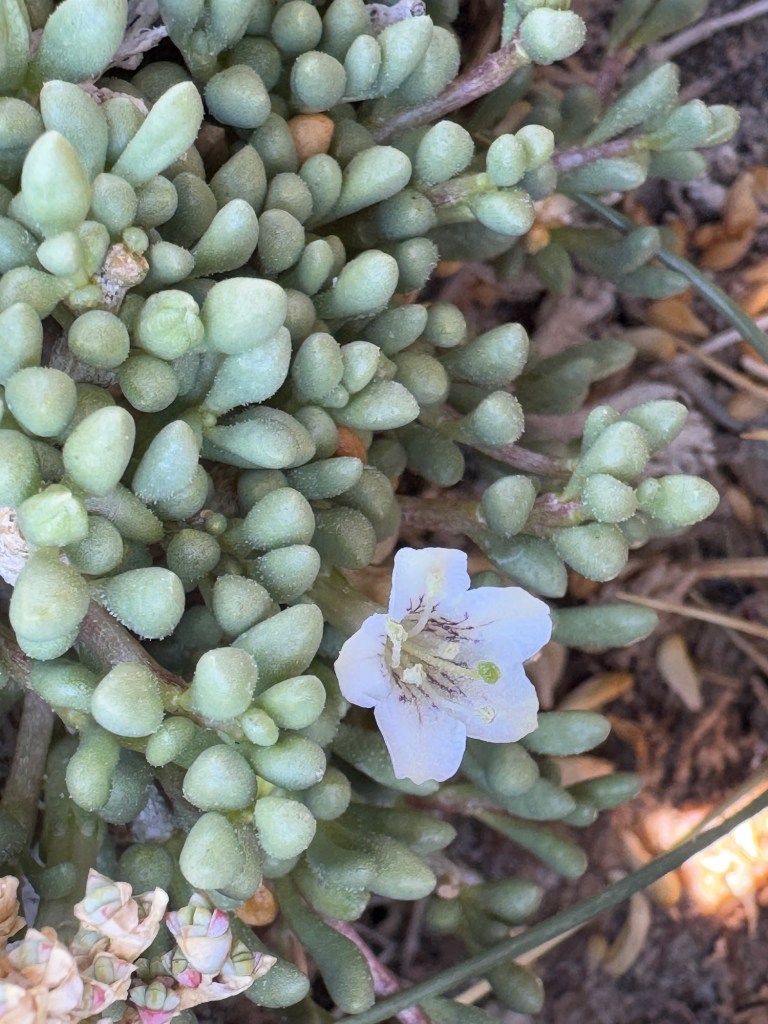
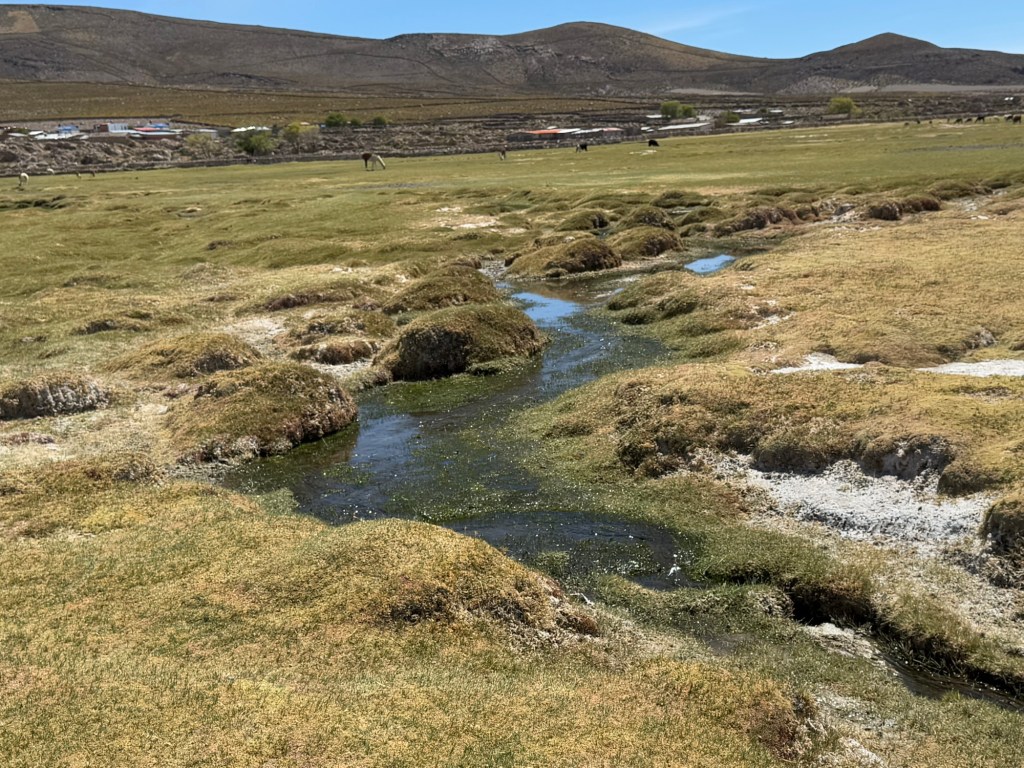
Along the way we saw succulent plants the llama like to eat. Most of the area looked like lawn. At one point we sat down to enjoy the warmth of the day. The place was very quiet. No people or cars. We could actually hear the small, nearby stream gurgle. Some of the plants we saw were green succulents called Sarcocornia.
Walking on the edge of the pan were some flamingos. There were two different kinds, some with black tails, Andean, and some without, James Flamingos. Quite a pretty sight with the salt flats behind them.
Andean Flamingos
Flying flamingos
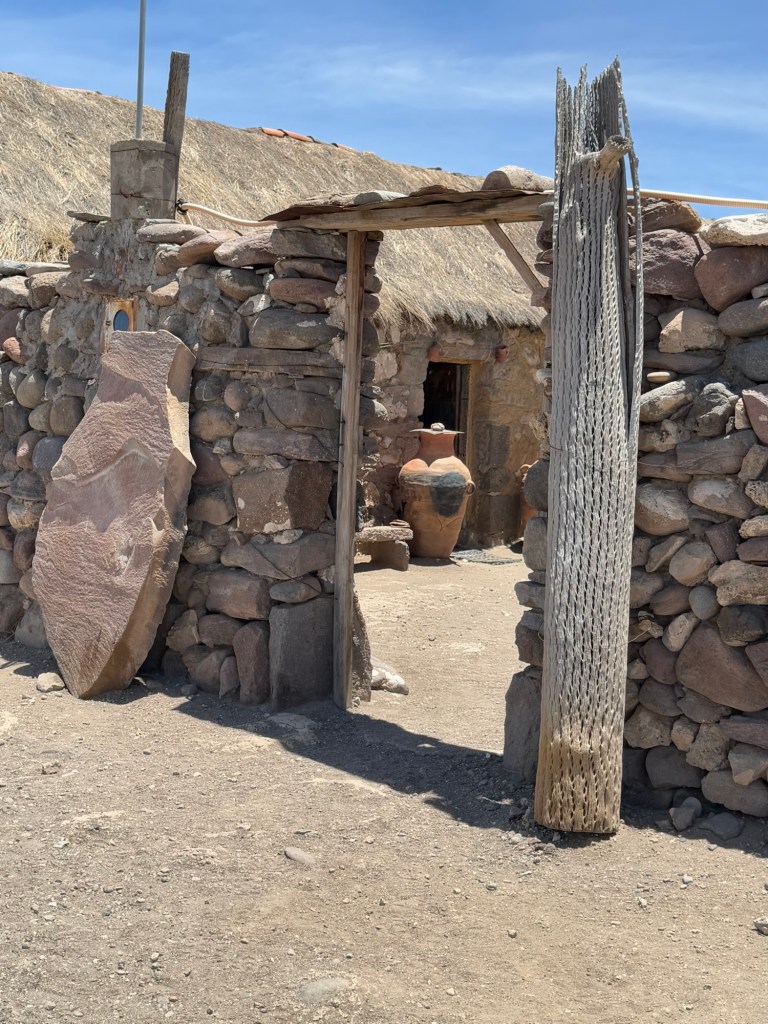
Nearby was another village called Chantani that had a museum by the same name. We stopped to visit and saw artifacts from the Aymara culture, particularly a manakin dressed in narrative clothing.
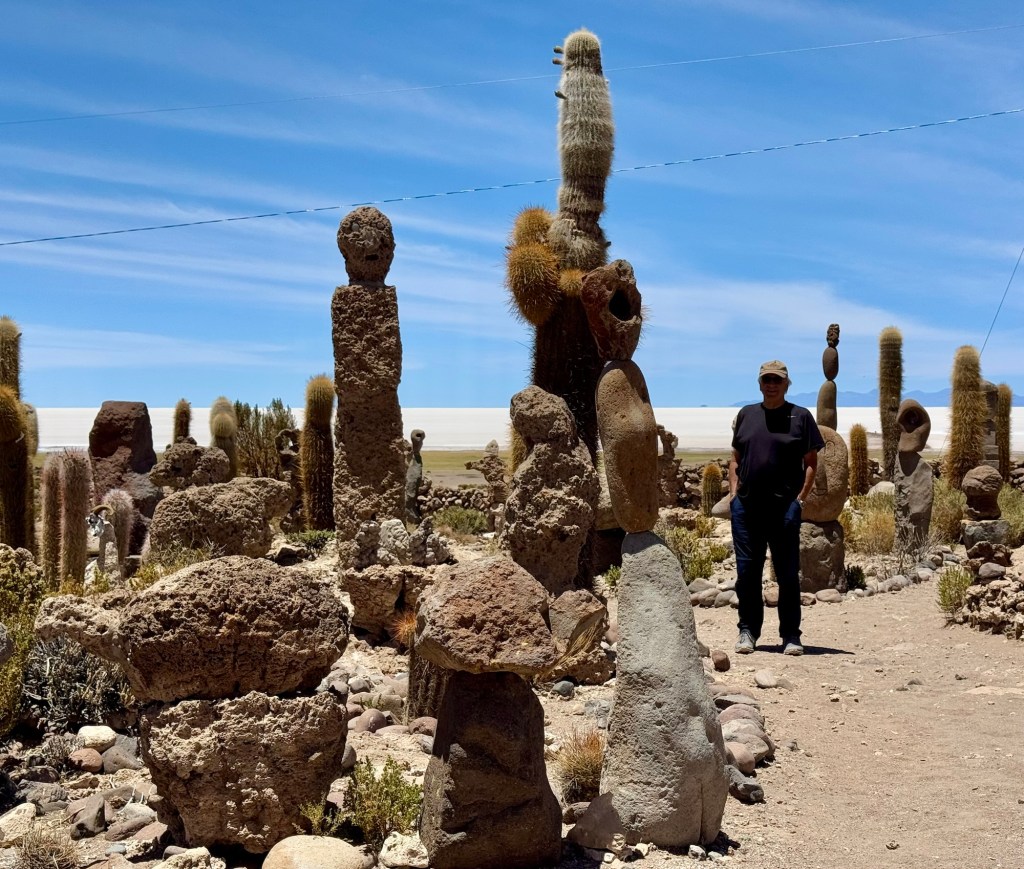
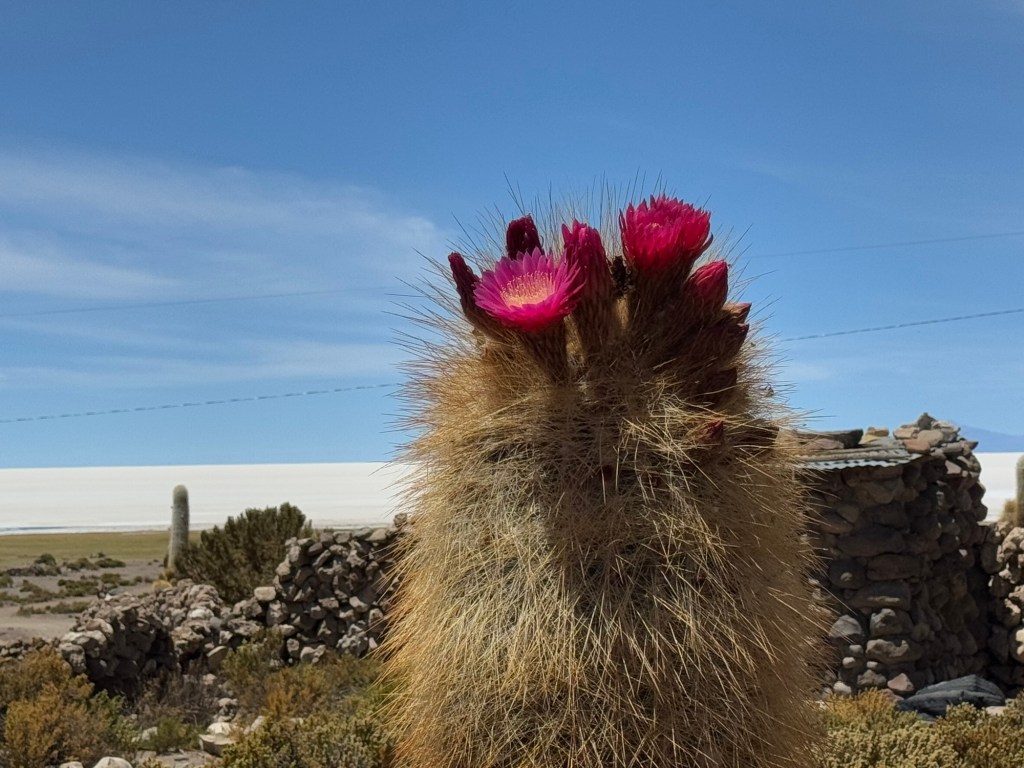
Cactus entrance to museumTraditional Aymara dressStone and cactus gardenA mummy in the garden caveCactus in bloom
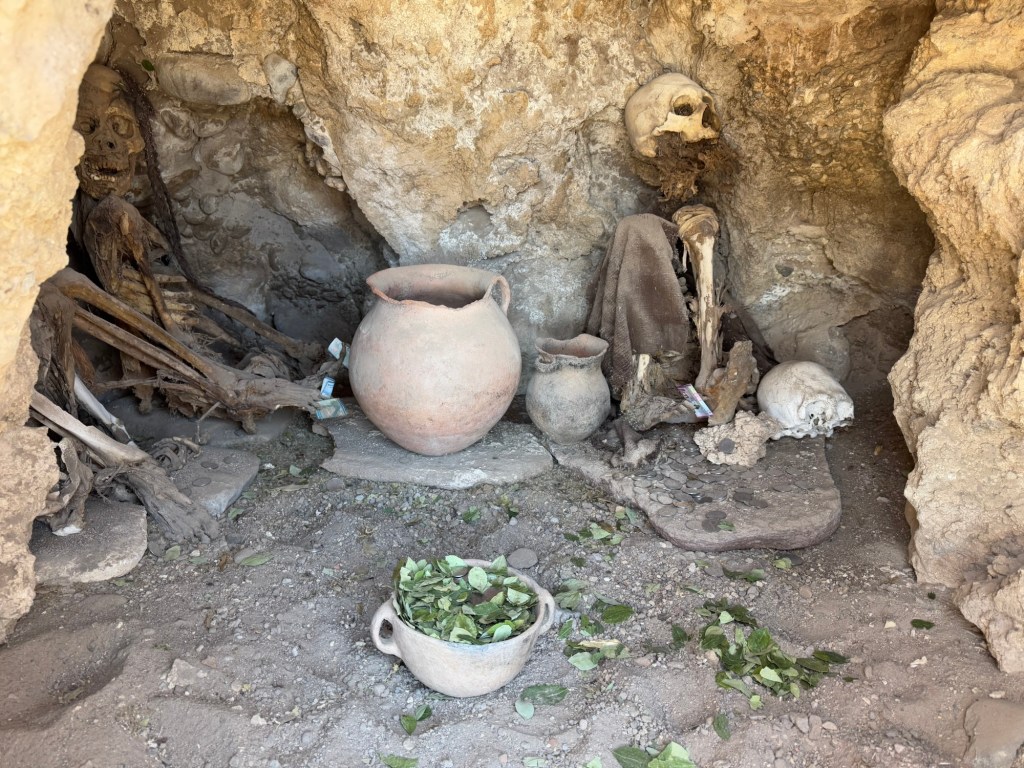
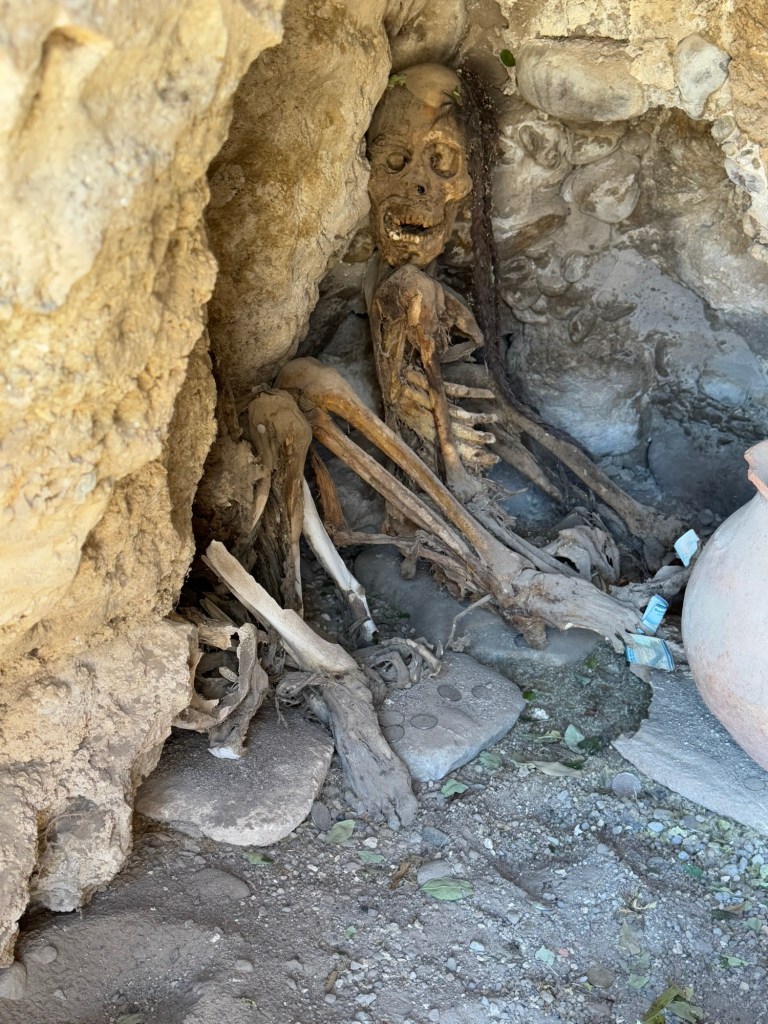
Outdoors was a stone and cactus garden. The cactus are just starting to bloom, both white and red varieties. Also in the garden was a small cave-like structure with 2 mummies inside. They were buried in the common local crouched position. Usually they were buried in large crockery vases. They were not big people when alive. Similar to the Batwa in Uganda.
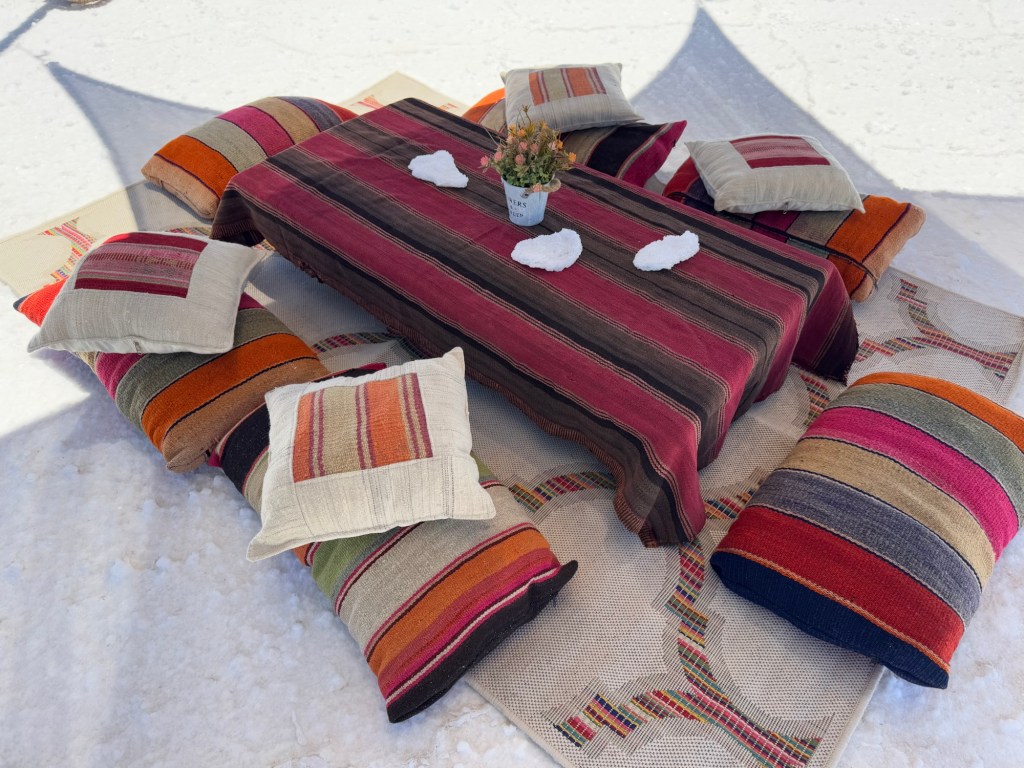
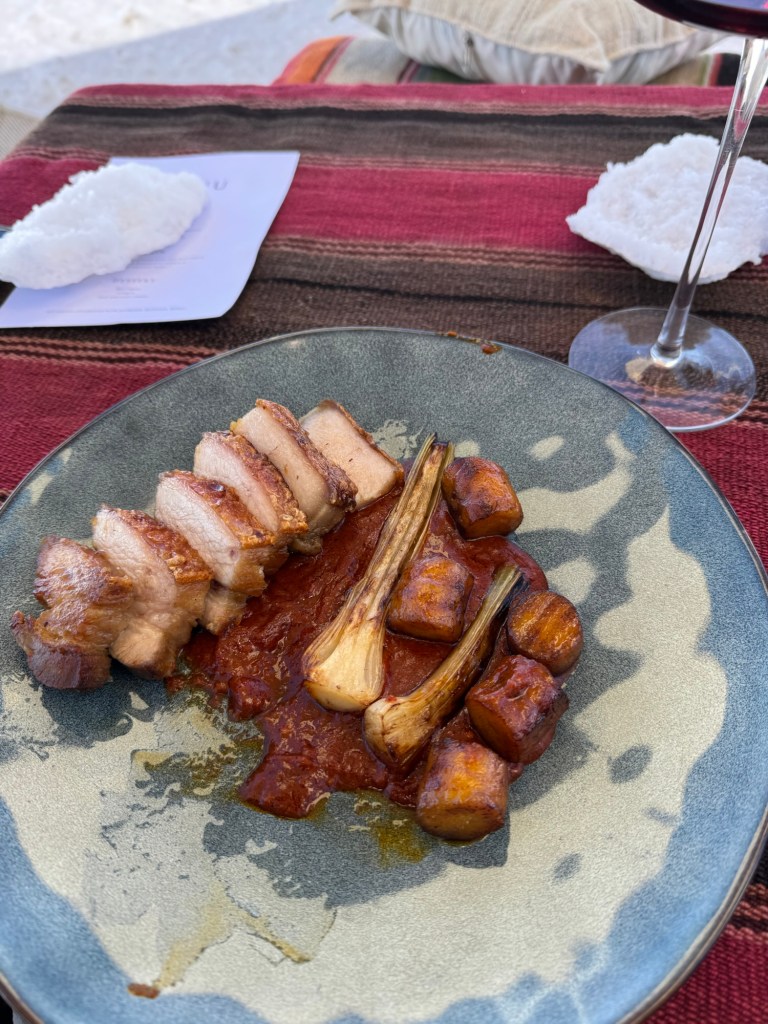
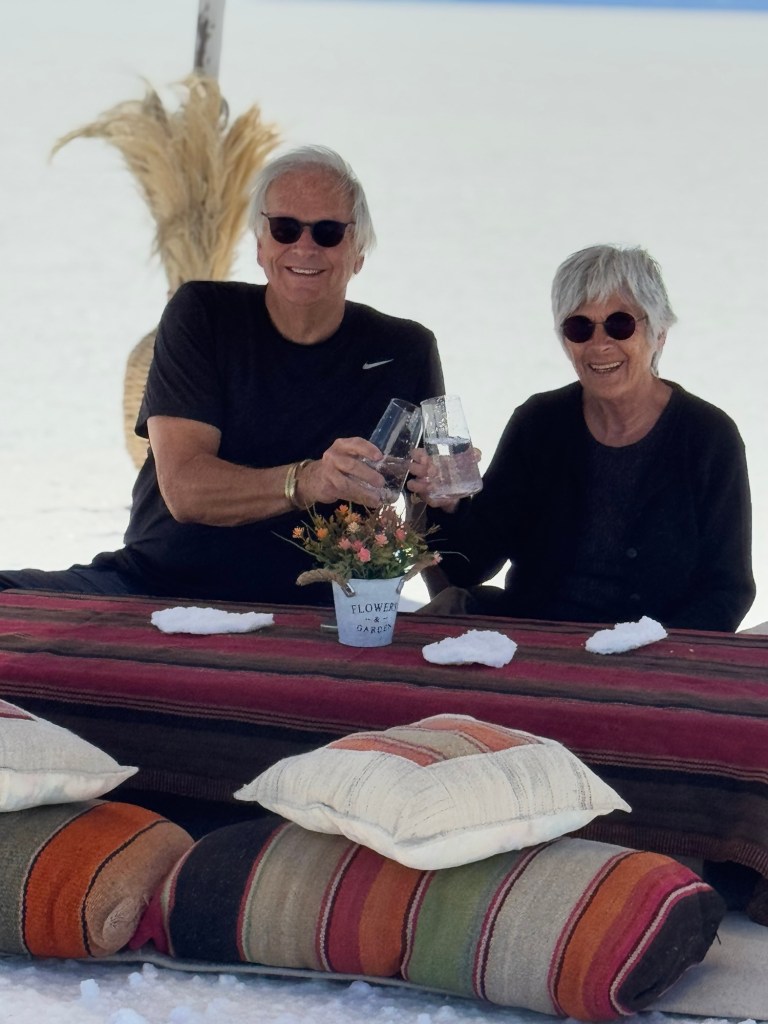
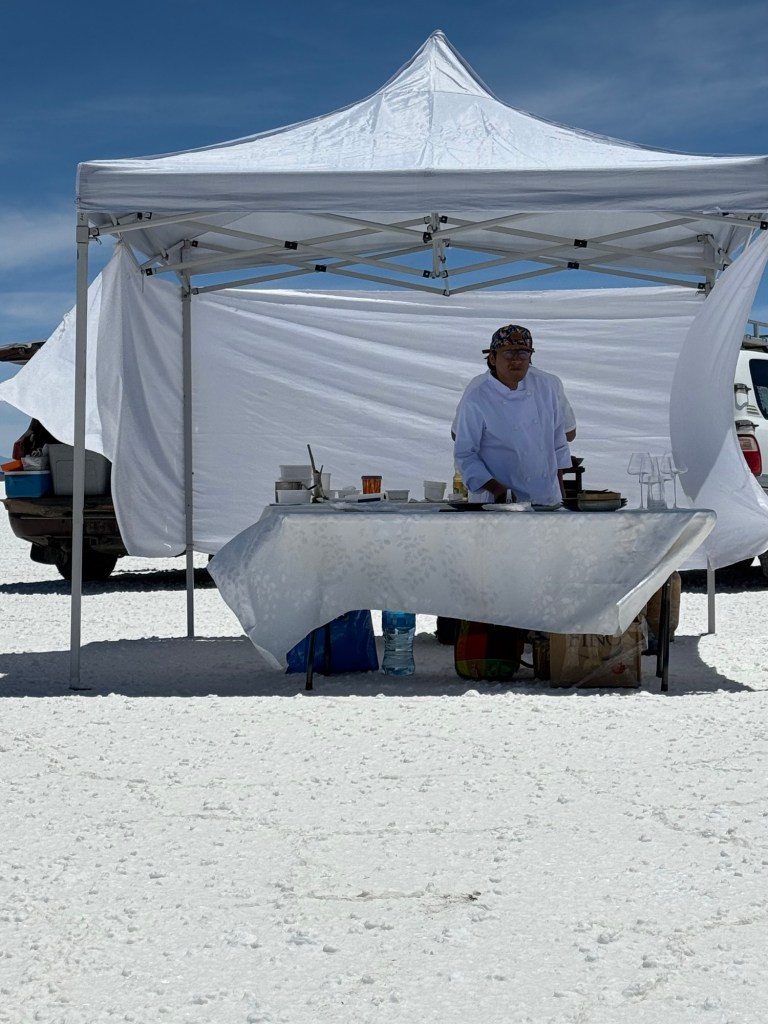
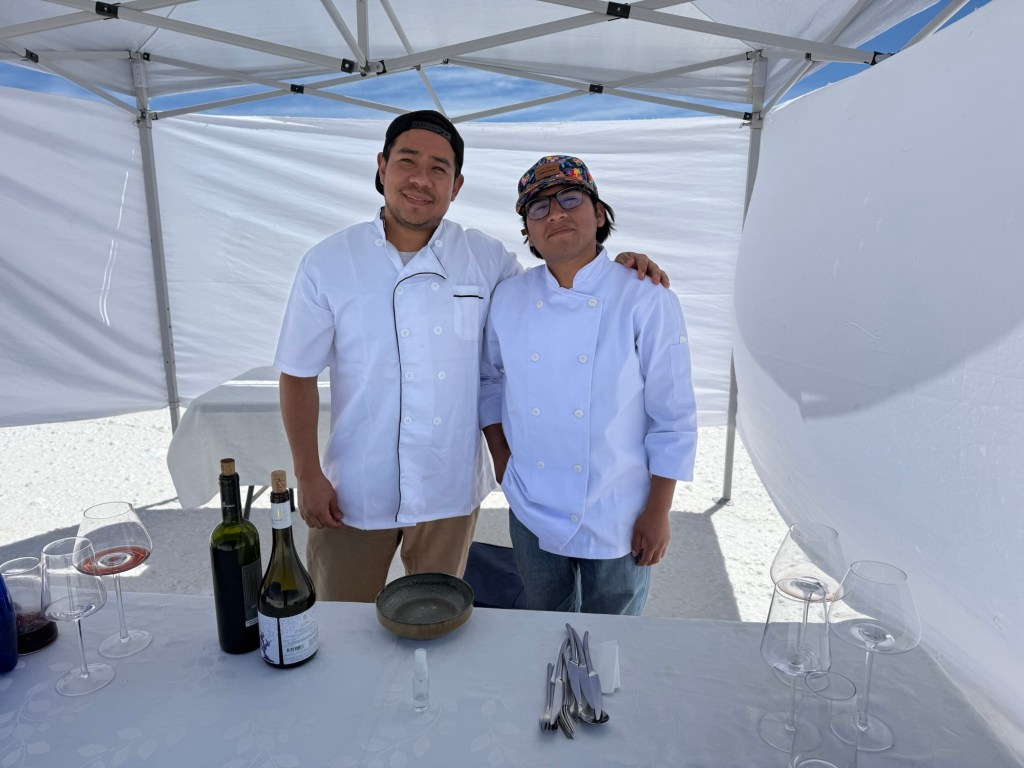
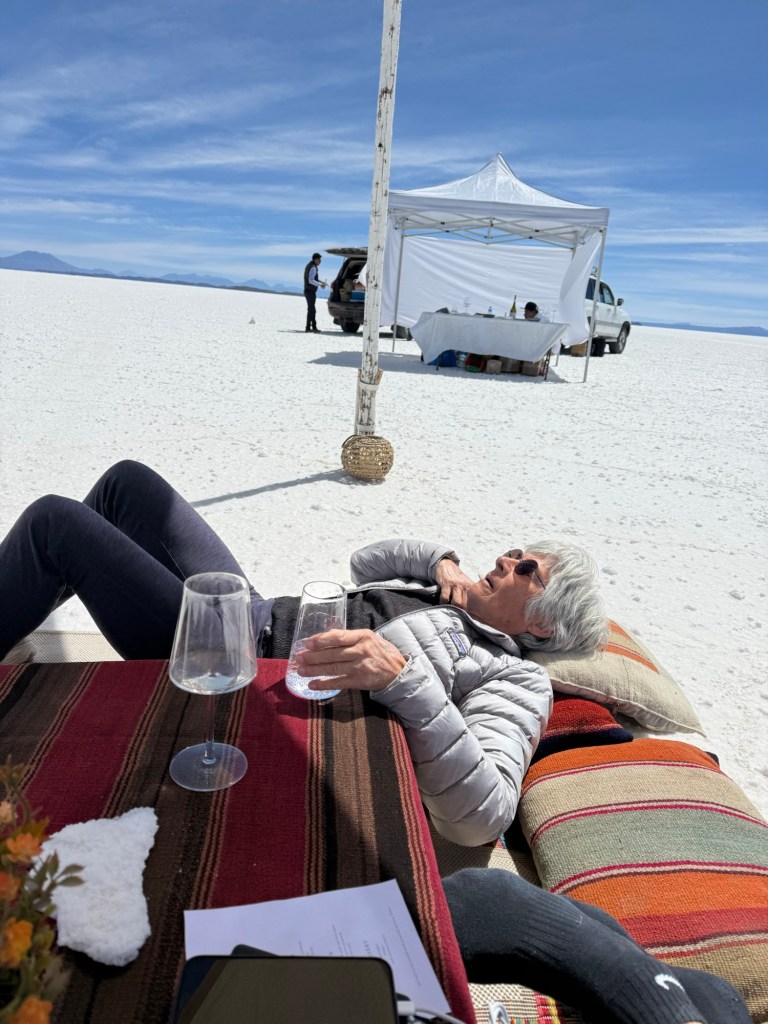
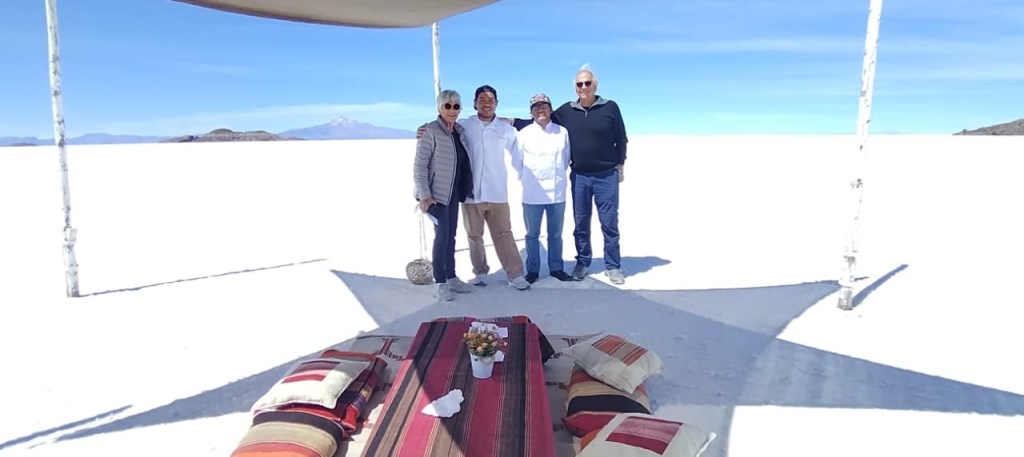
Then we continued on the salt flats to our special lunch sight in view of Fish Island. Our photos tell the story.
My travel experience began at 19 when I was an exchange student to Germany. After college I wanted to travel, but had no money so the natural choice was to become a stewardess. I was hired by World Airways and traveled all over the world on the non-scheduled carrier. It was exciting and wonderful and made me want to keep traveling even after I quit the airborne waitress business. At one point I realized that I liked flying as much as I liked traveling and earned my pilot's license at the age of 30. Since then I fly and travel as much and as often as possible. I used to write about my early travels in long hand but they were not legible. Now, with the aid of this computer, I am able to share my experiences. I hope you enjoy them.















































































 Adventures with Julia