
Sunday, October 26, 2025
As we begin to depart Brazil, we are struck with a few thoughts. Most of the places we visited were most interesting and enjoyable. However, the northern areas near Manaus and in Cristalino have been too hot and humid for us, in spite of being in the dry season. We will try to avoid such places in the future. We are spoiled with our California weather. We also realize how much we miss the wildlife in Africa. We saw a few new animals and birds in the forests and jungles of Brazil, but they do not compare with the wildlife we have experienced in the African savannah. We are ready to move on.
The effort to get to São Paulo and onward took most of the day. We boated out of the jungle, motored through the soybean fields and flew from Alta Floresta through overcast skies to Sao Paulo where we arrived in the dark at 7:30pm.
Our driver told us it would take 1 and a half hours to get to our hotel so I learned a few things from him, while we suffered through very heavy Sunday evening traffic. São Paulo has 11 million people in the city, 22 million in the metropolitan area and 45 million in Sao Paulo state. It is the most populated state in the country of 220 million. The ride reminded me of driving to the Bay Area after a long winter ski weekend. He was a pleasant looking man who admitted he had been married and divorced 4 times as was determined to stay single from now on. He loves to drive and has been chauffeuring clients like us around São Paulo for 30 years. Finally, we arrived at the Pullman Hotel. Spent a night there and flew out the next morning for Santa Cruz, Bolivia through solid overcast skies.
Monday, October 27, 2025
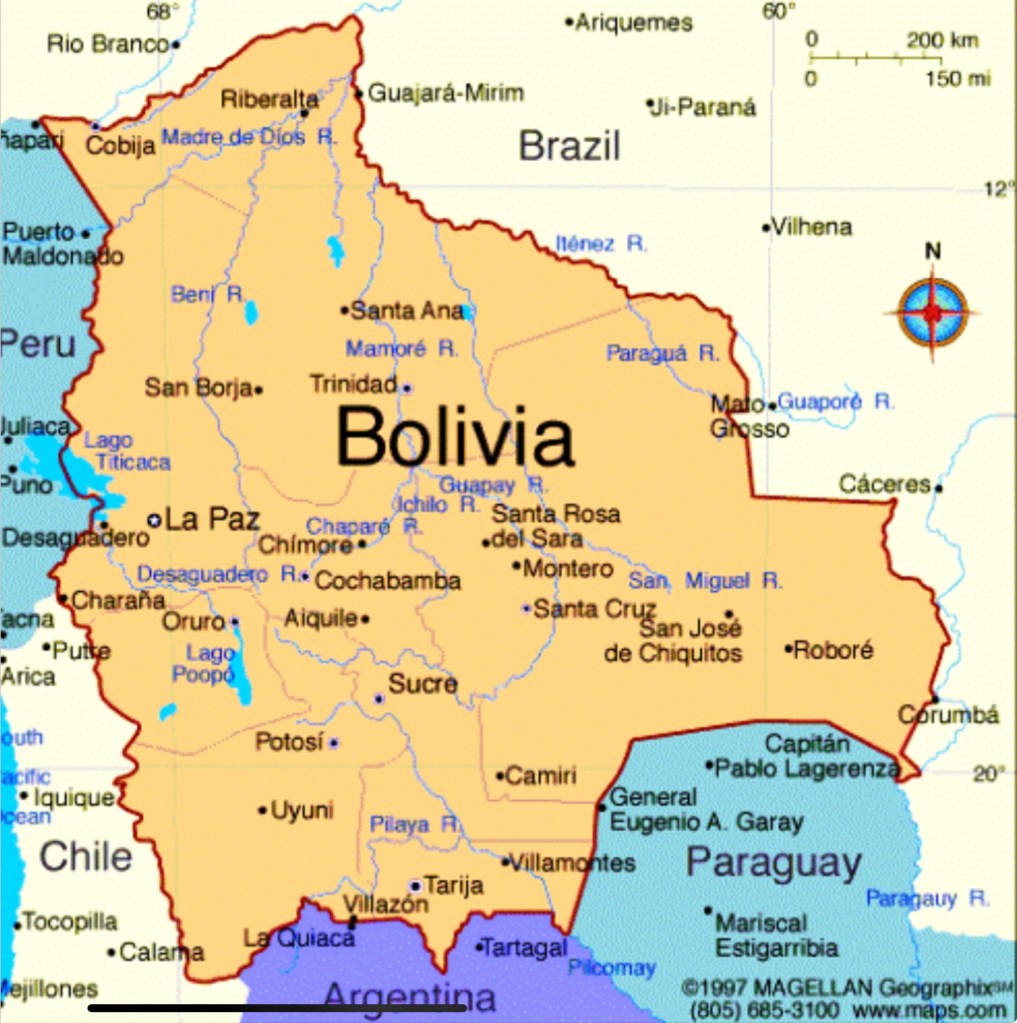
Our Santa Cruz guide, Marta, met us after we had spent an hour securing visas, an unpleasant and expensive ($160 each) process only for Americans visiting Bolivia. We had no problem getting visas for Brazil and won’t need them in Colombia.
As we drove through the countryside and the city of Santa Cruz to our hotel, she caught us up on the political and financial situation in the country. A new president was just elected. He is a center right politician named Rodrigo Paz, who is replacing a very corrupt socialist, Luis Arce, who had run the government for 5 years after Evo Morales presidency, both from a party called MAS which bankrupted the entire country. This period lasted 20 years. Bolivia is in a an economic crisis at the moment due to a lack of dollars and fuel, especially diesel. We saw hundreds of trucks lined up along the roadside waiting for diesel. Our driver, who uses gasoline, waited 4 hours yesterday to fill his car to drive us. The country produces natural gas, but its reserves are being depleted and will be gone in 2028. The country will have to buy fuel at that point. Sad to see this third world country not improve due to corruption. Annual inflation is currently at 23.32%. The local currency is called a Bolivian Boliviano, or a Bob.
Bolivia’s population is 12.4 -12.7 million. Santa Cruz is the largest city in the country with about 2.5 million. followed by El Alto and La Paz in third at roughly 812,000.
After arriving at Santa Cruz in the late morning, driving into town, checking into the hotel, and grabbing a bite of pasta for lunch, we went on an afternoon walk around the old city with Marta.
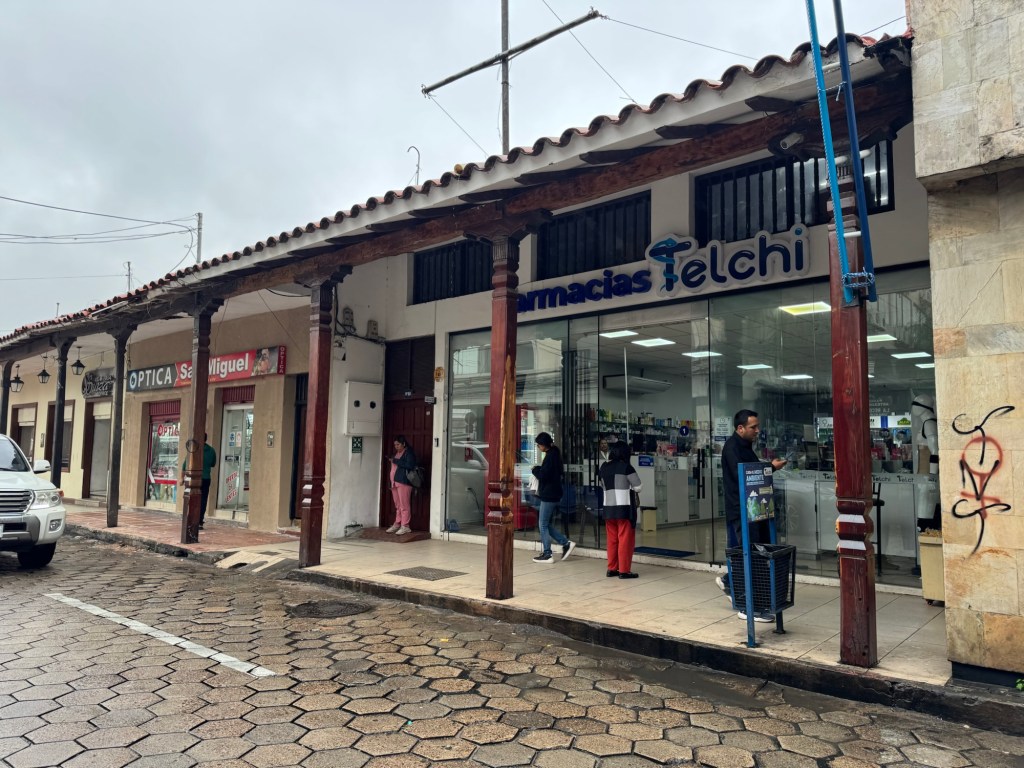
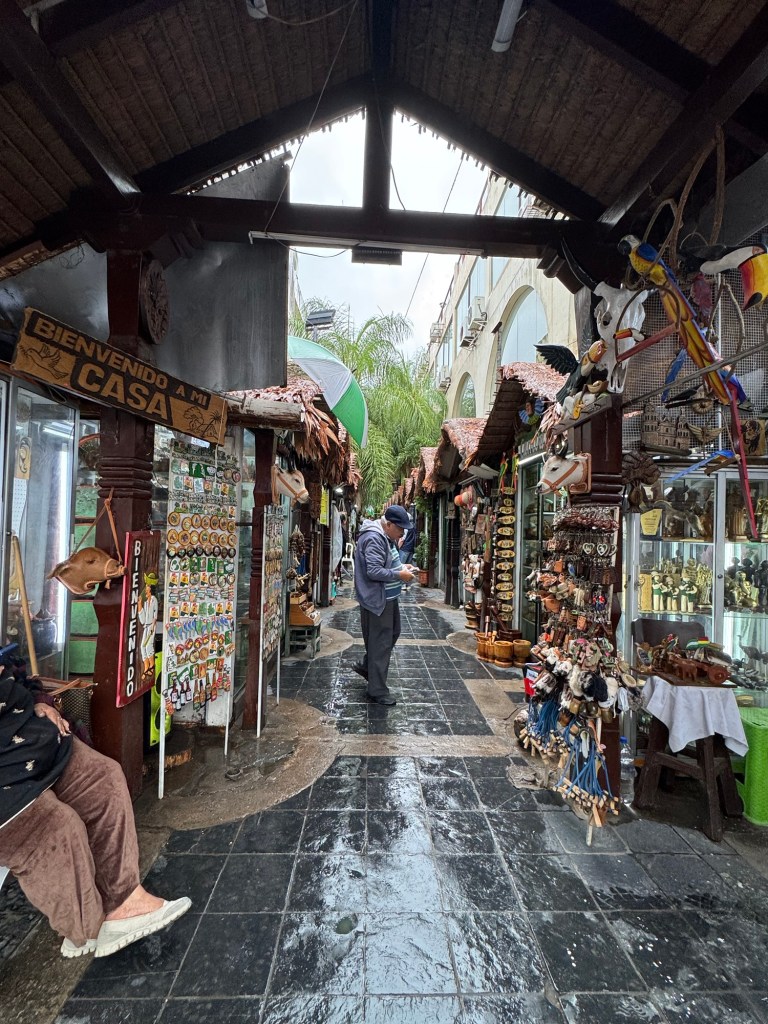
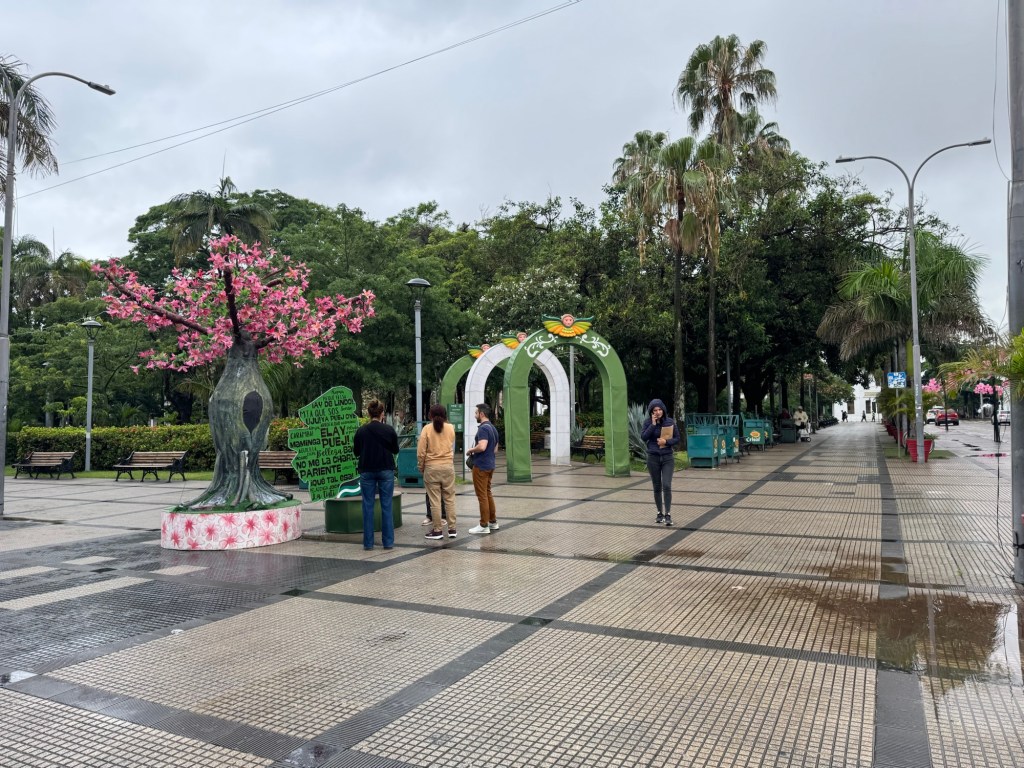
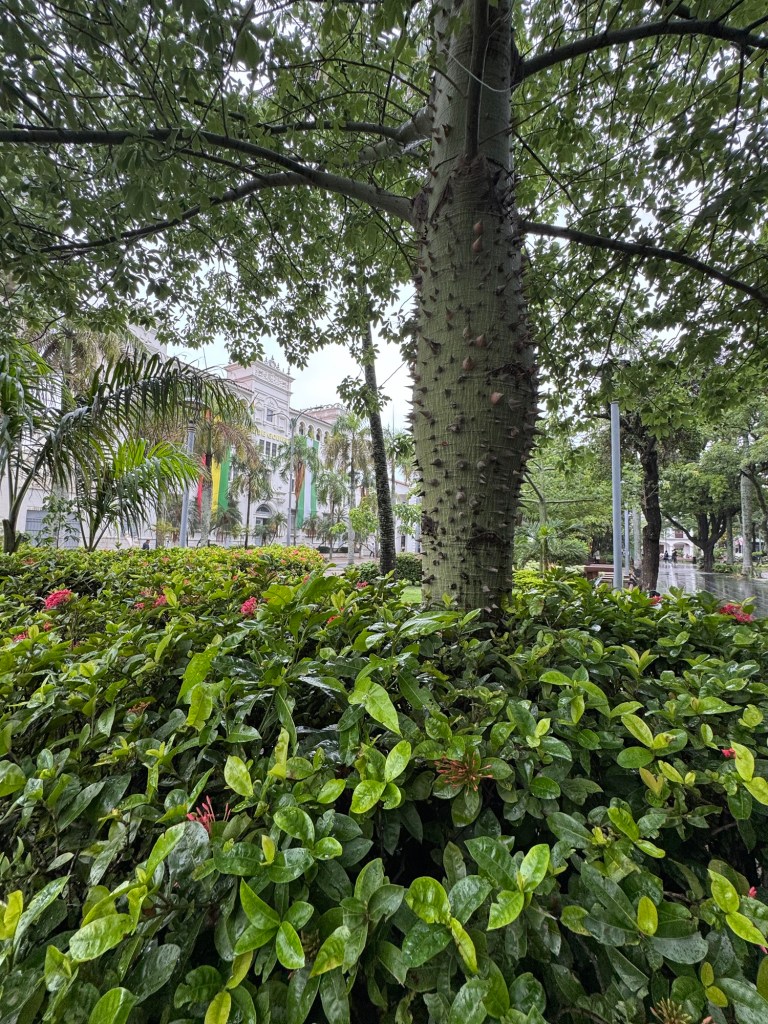
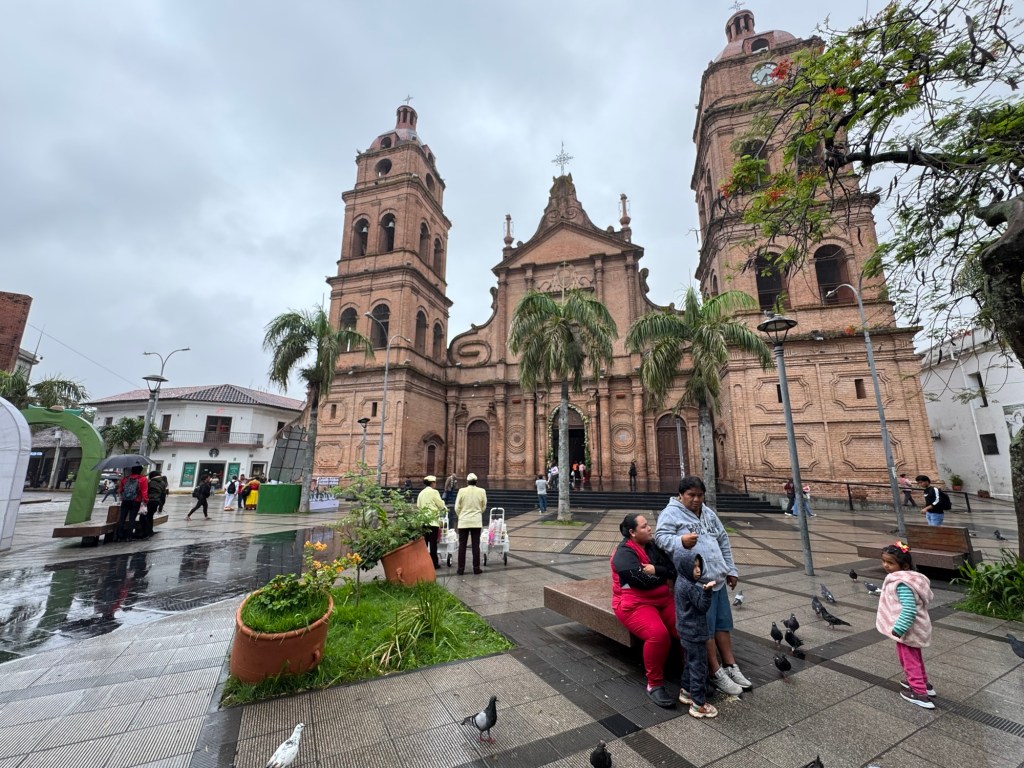
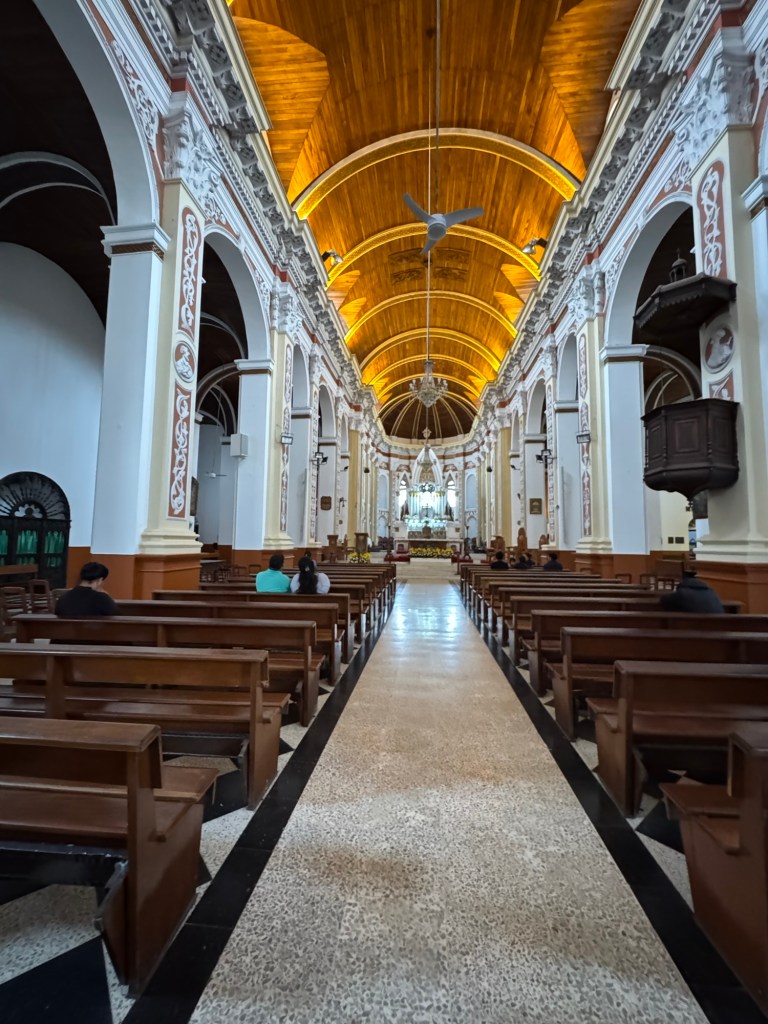
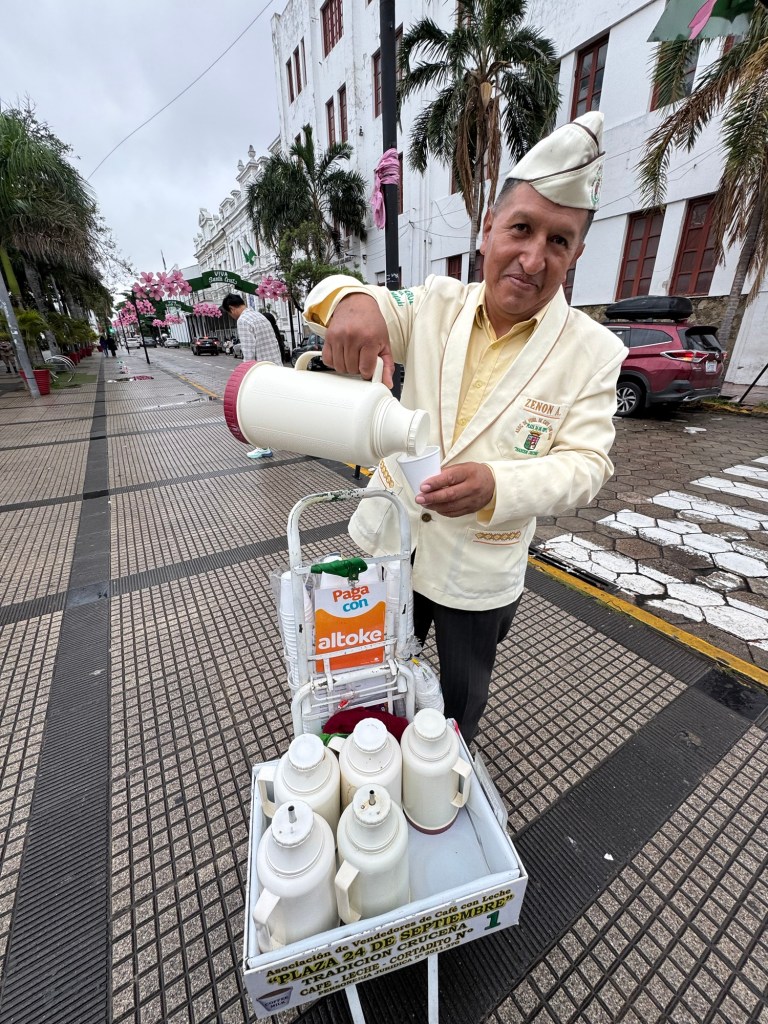
In spite of the gentle rain we encountered most of the day, we visited the old colonial streets with buildings made with wood columns and red tile roofs. La Recova Market, a narrow pedestrian street, retains its original arched corridors and keeps the colonial charm alive. The narrow street of vendors selling jewelry, leather goods, crafts and textiles was inviting, as was the town square and the Catholic cathedral. According to Marta, it and all churches in the city, are packed every Sunday.
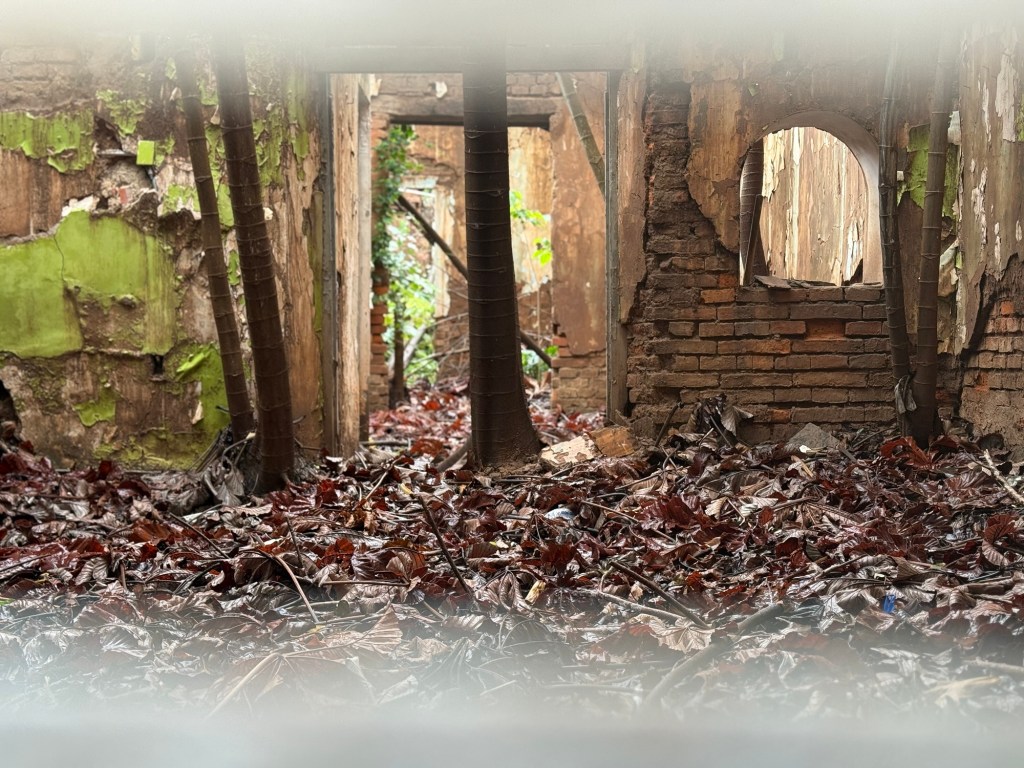
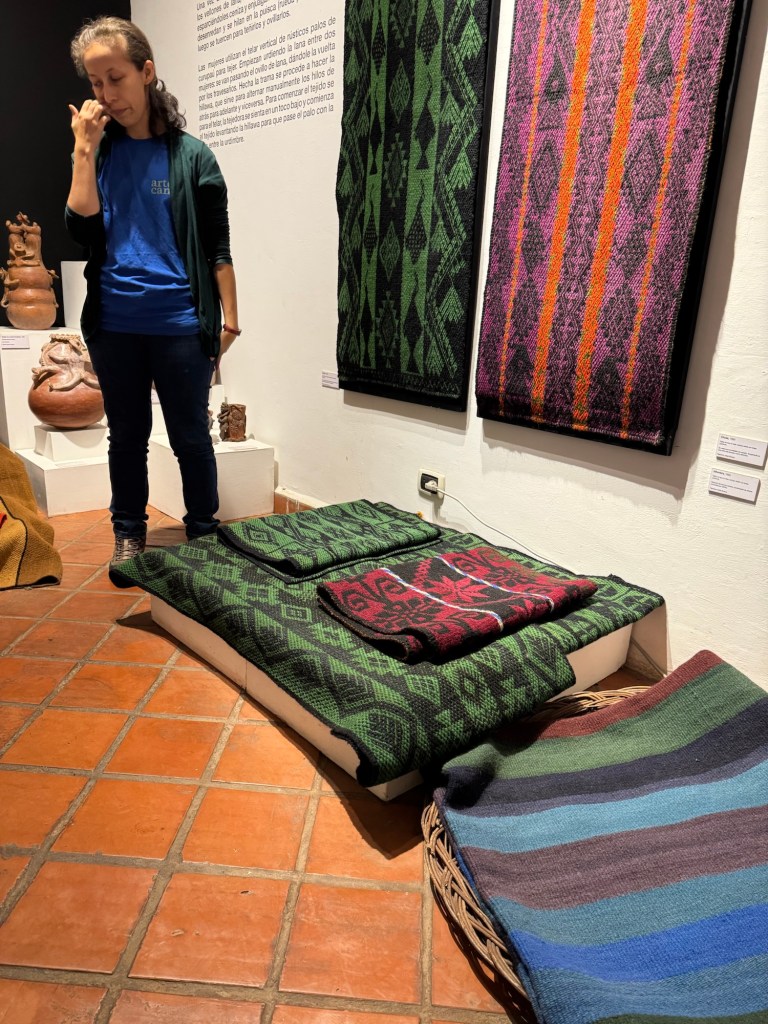
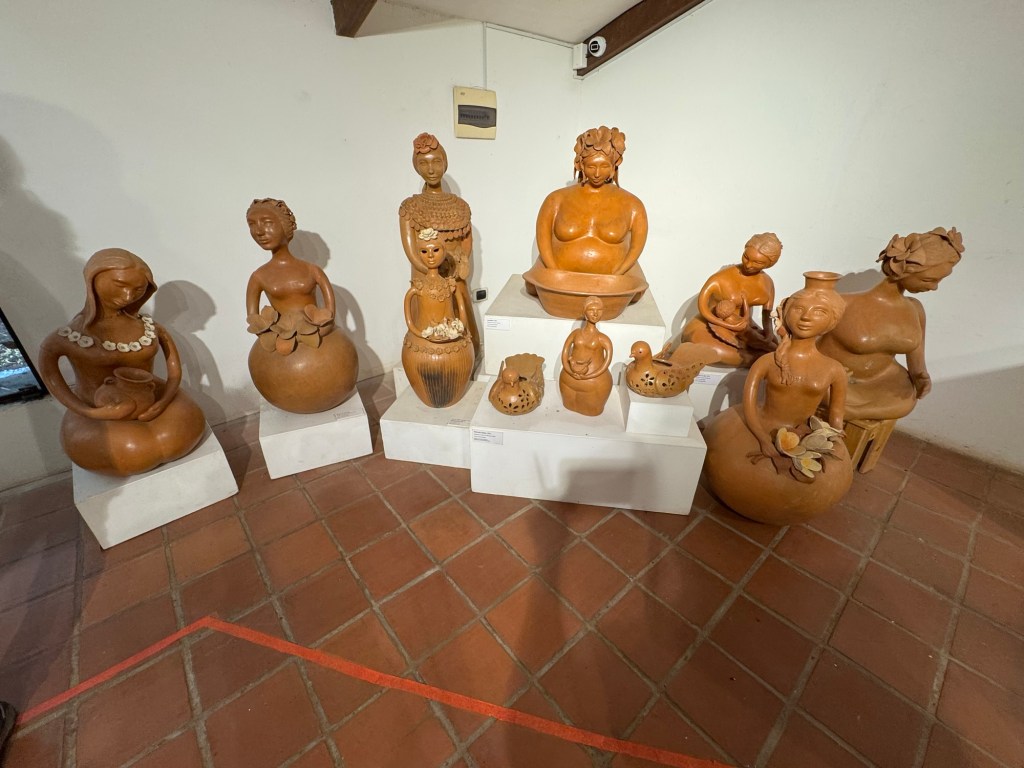
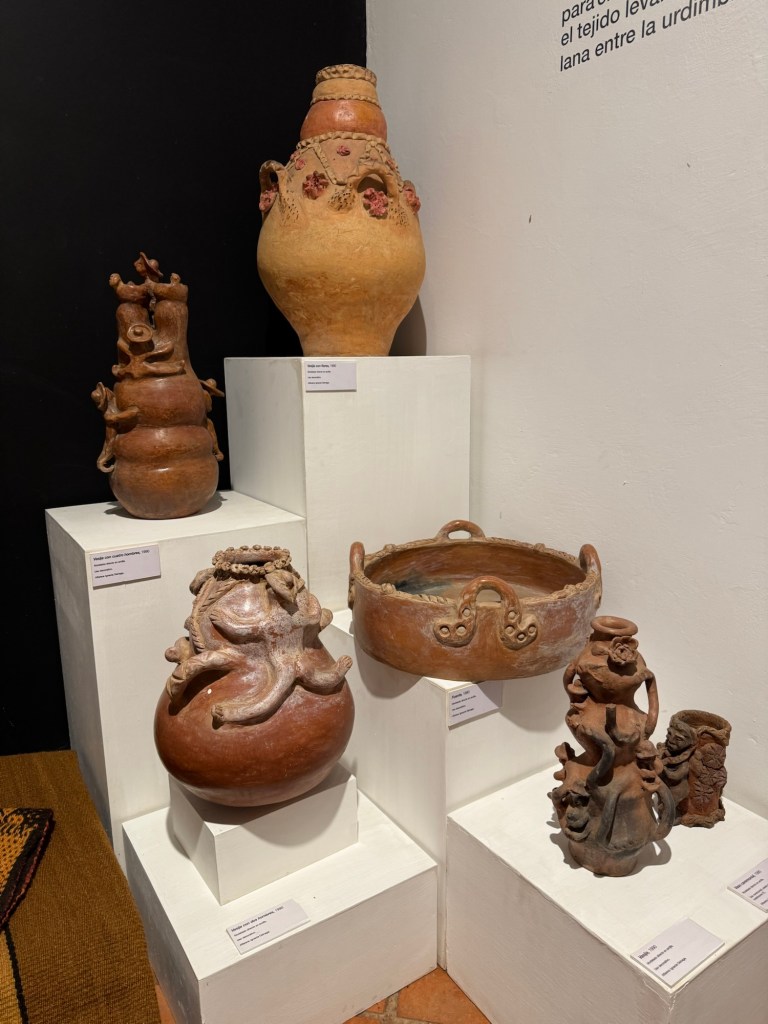
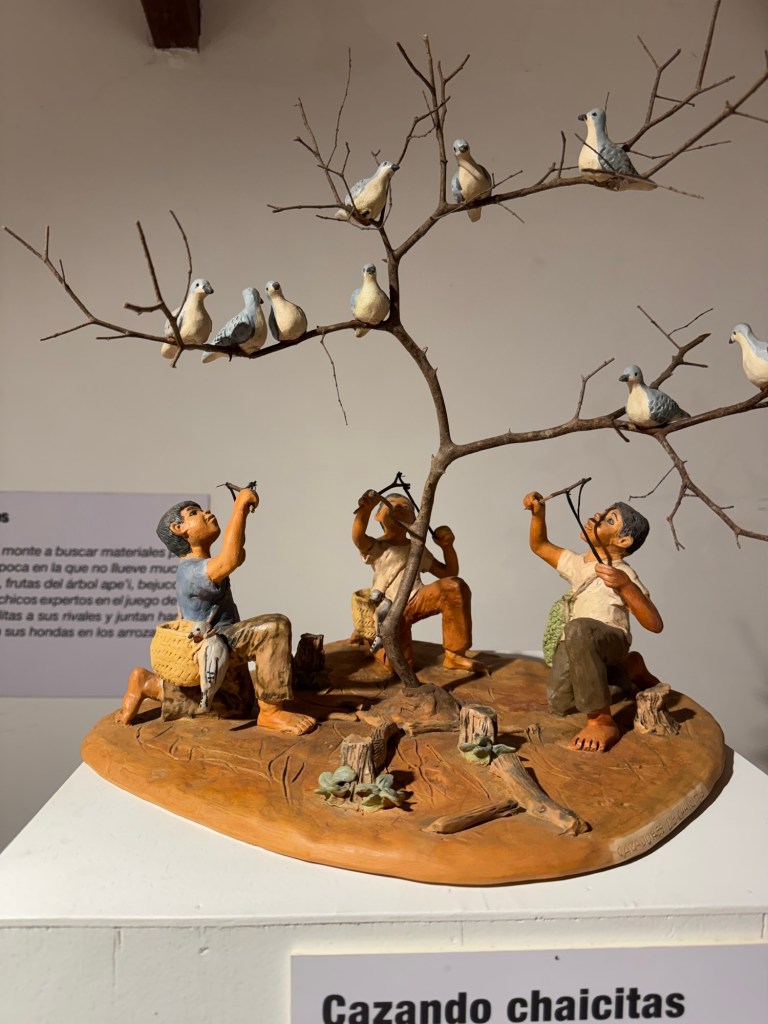
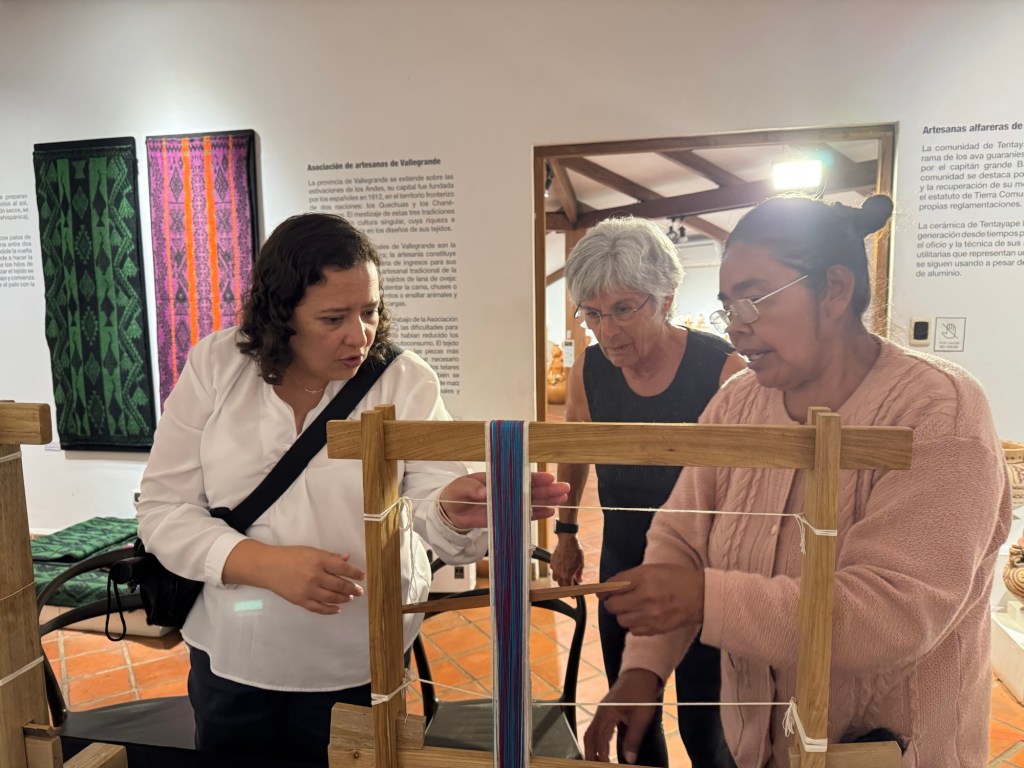

Soon we found ourselves at the Museo Artecampo, a space dedicated to preserving the art of Bolivia’s lowland indigenous communities. We were treated to a private tour of the weaving workshop that represents the best work of 7 different indigenous community’s and were introduced to the experience of weaving.
After the weaving tour and trying our hand at weaving with the help of an expert indigenous weaver, we cleaned up and went to dinner at an asian restaurant on the 28th floor of the Green Tower, a new office building near our “unique” Boutique hotel. The hotel was rather funky, with photos of old movie stars and concrete floors everywhere and a 2 story apartment we stayed in until our departure at 4:30am. Glad it was only one night.
Tuesday, October 28, 2025
We landed in La Paz at 7am for a 1 hour layover to our flight to Uyuni. Unfortunately, our flight was delayed 2 additional hours. La Paz is at 13,327 feet asl and we were affected as soon as the cabin was open and unpressurized. We hoped we were adjusting as we sat in the airport waiting for our next flight.
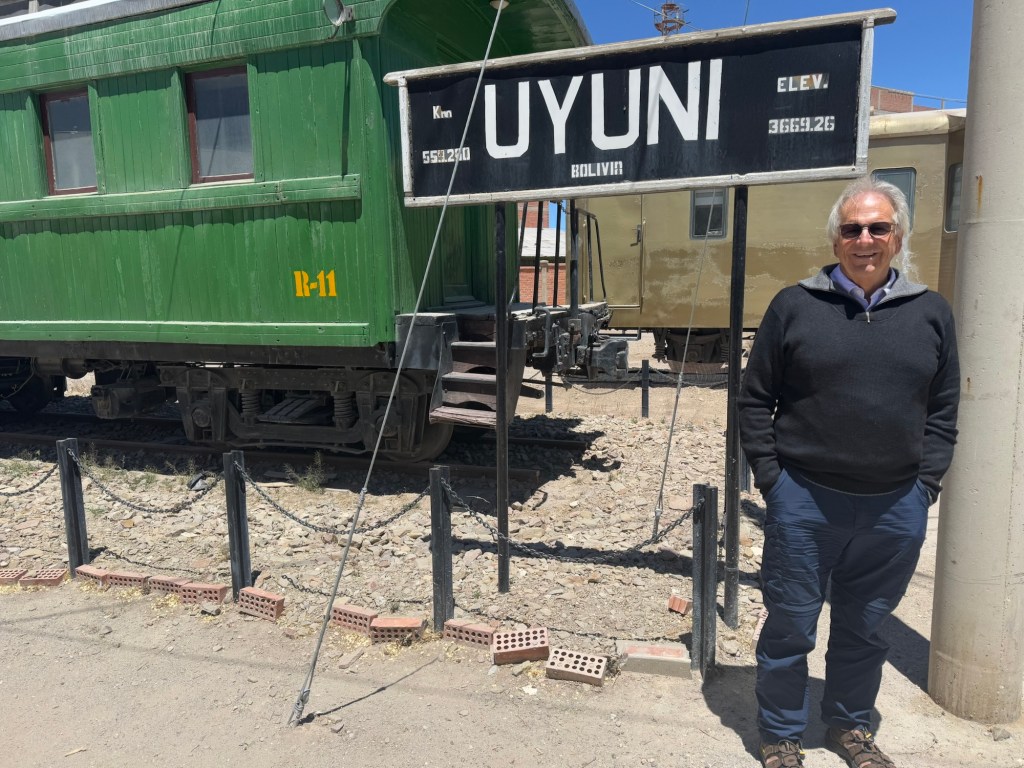
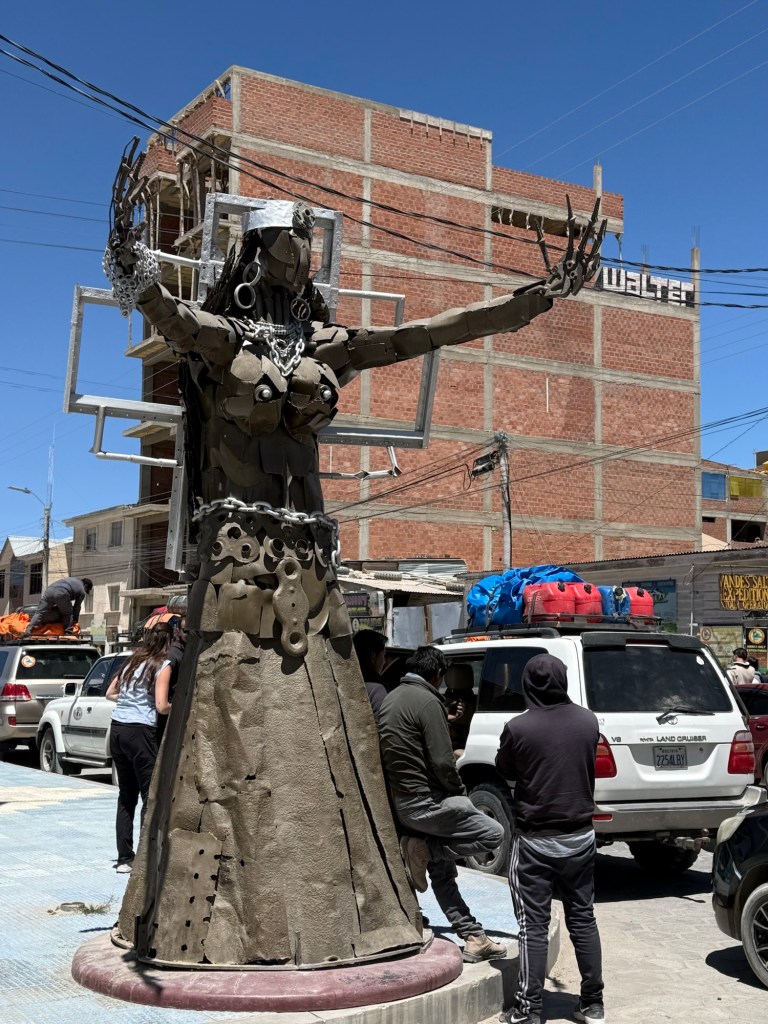
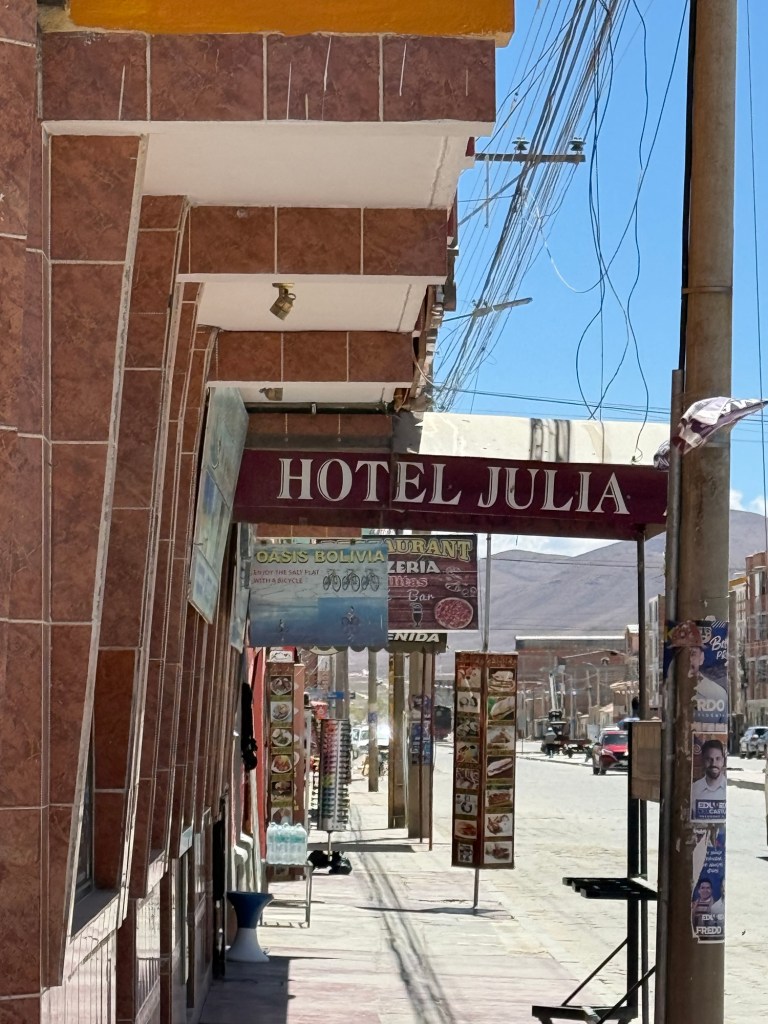

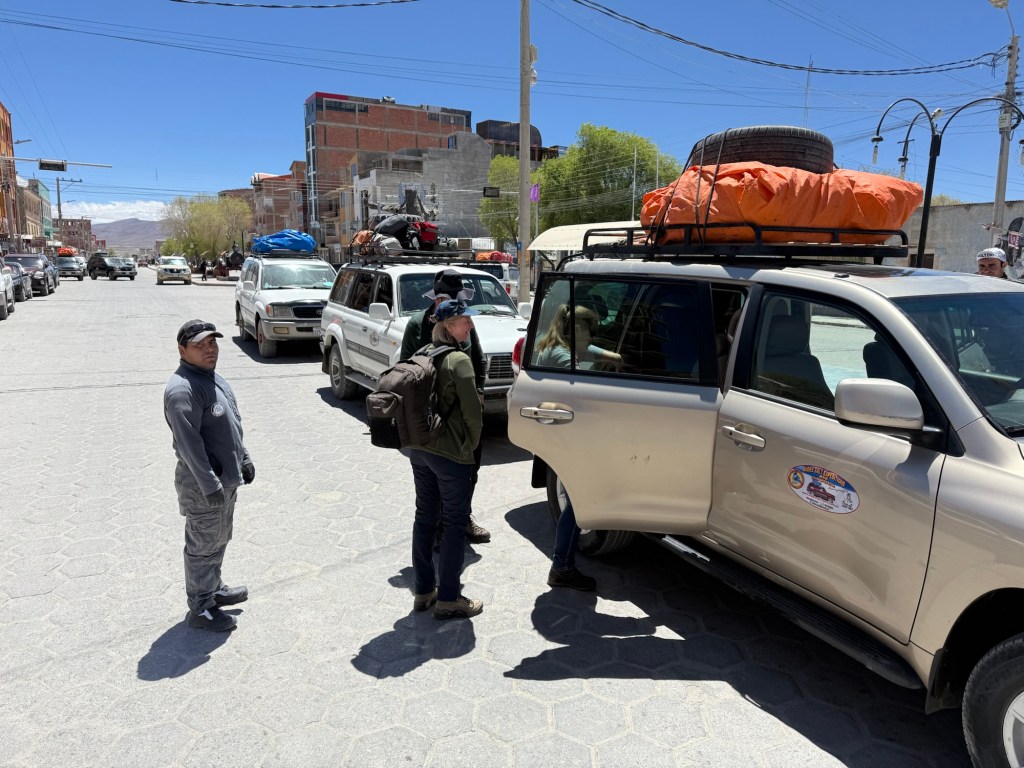
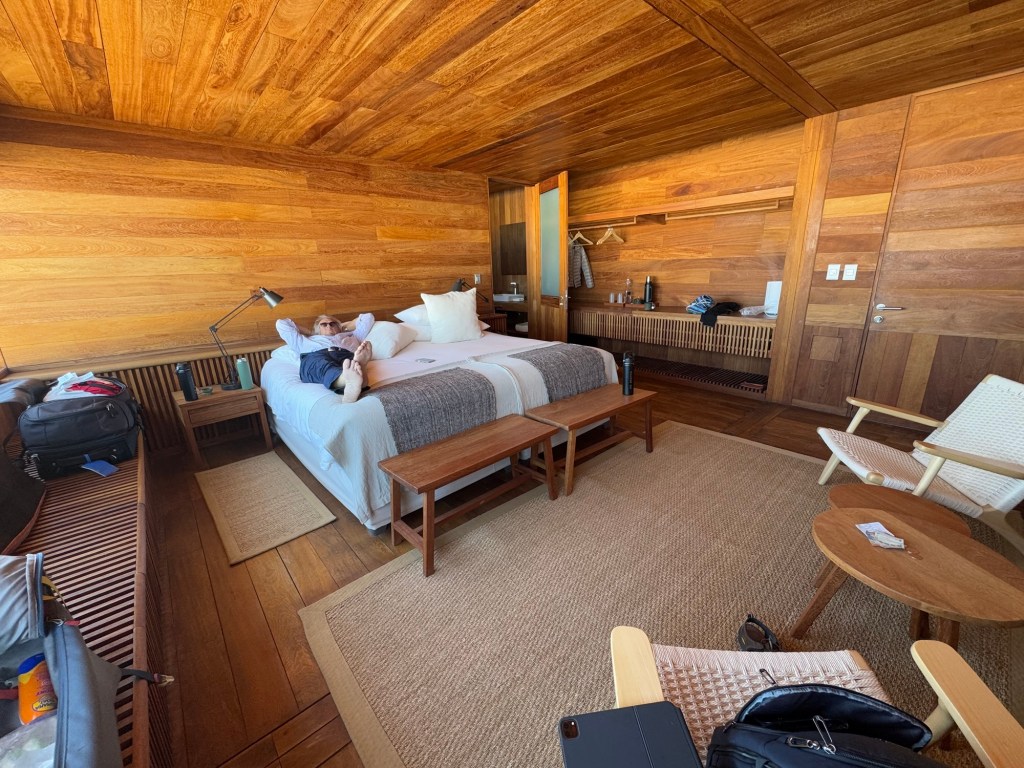
Uyuni (Uyu =meeting; ni =place) has a population of only 33,000 and seems to be in the middle of nowhere. The main occupations are silver, zinc and borax mining, quinoa farming and tourism. However, the elevation is also high and our hotel, on a hill above the salt flats is at 12,194 feet asl. We arrived mid day, had some lunch and spent the rest of the day trying not to be miserable. Mark skipped dinner and I ate very little. He slept through the night, while I did not.
Wednesday, October 29, 2025
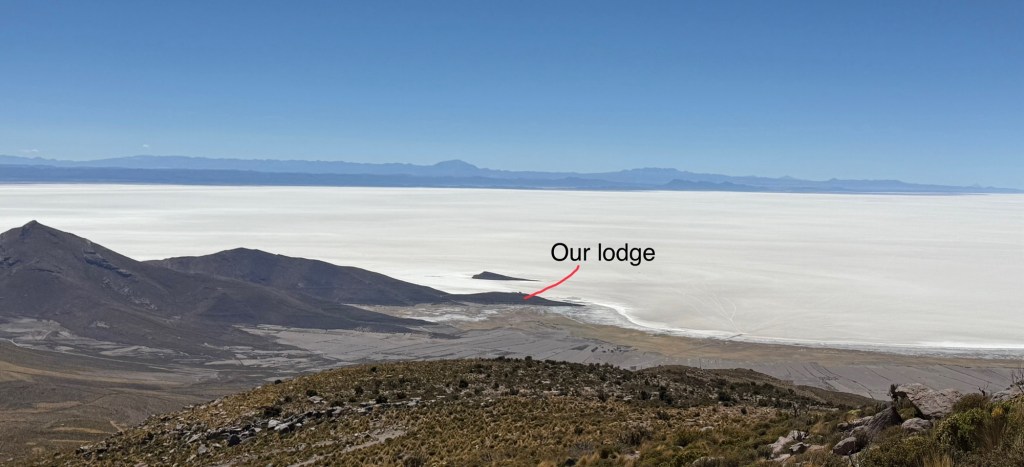
Explora Lodge is minuscule in the landscape.
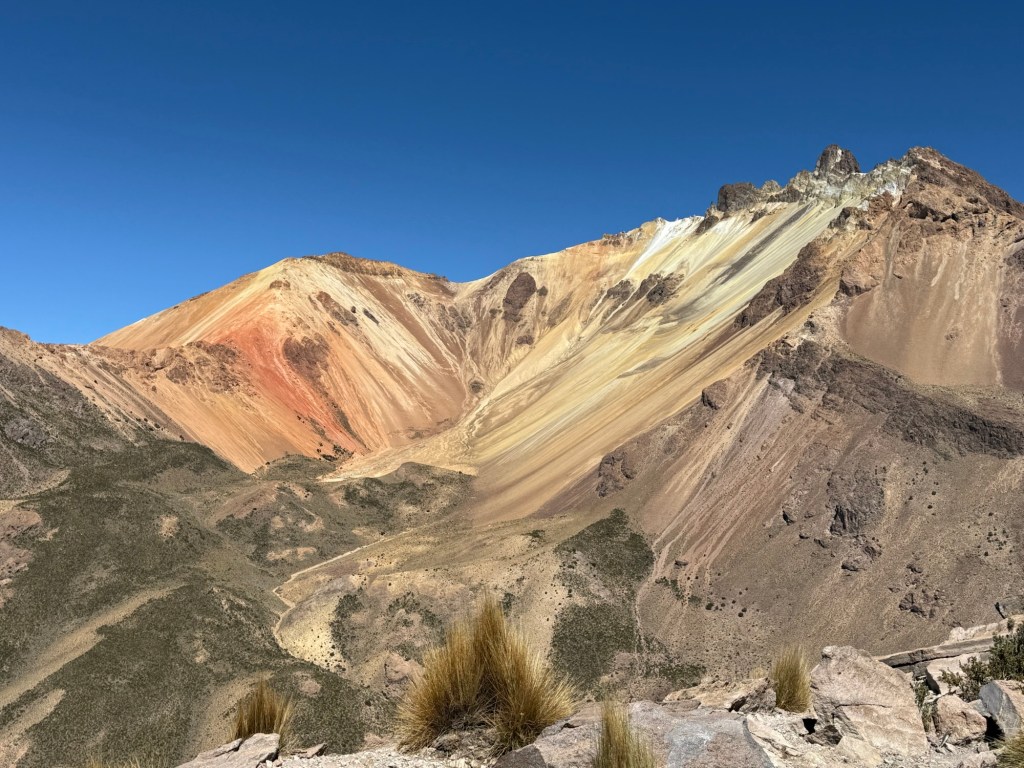
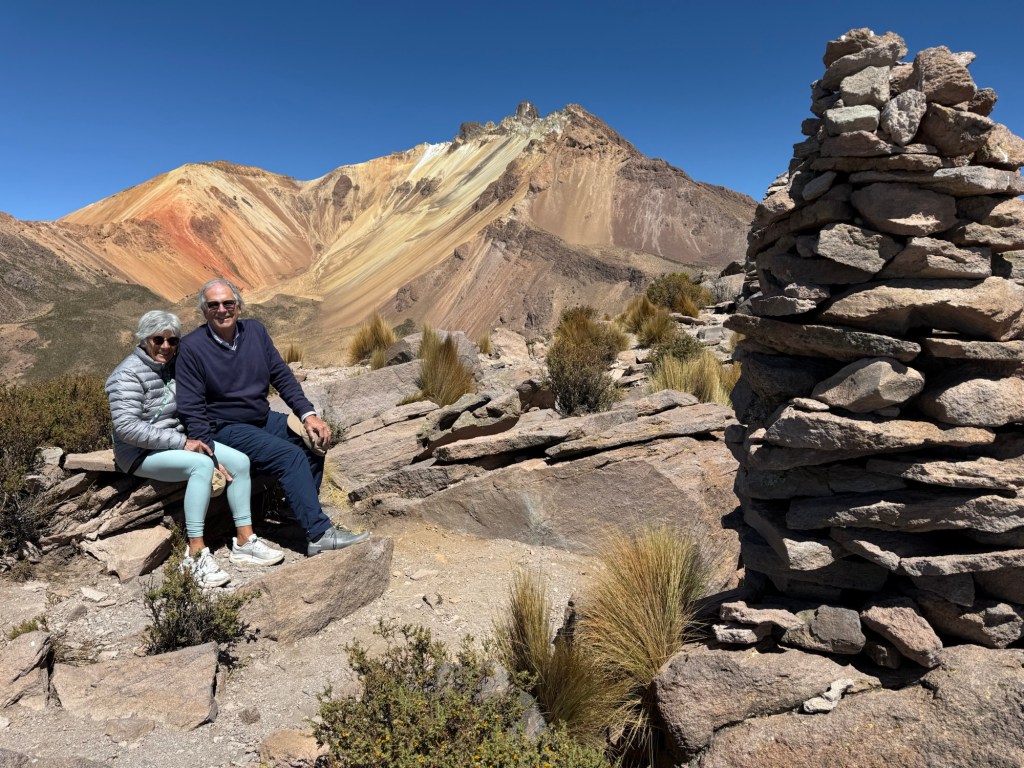
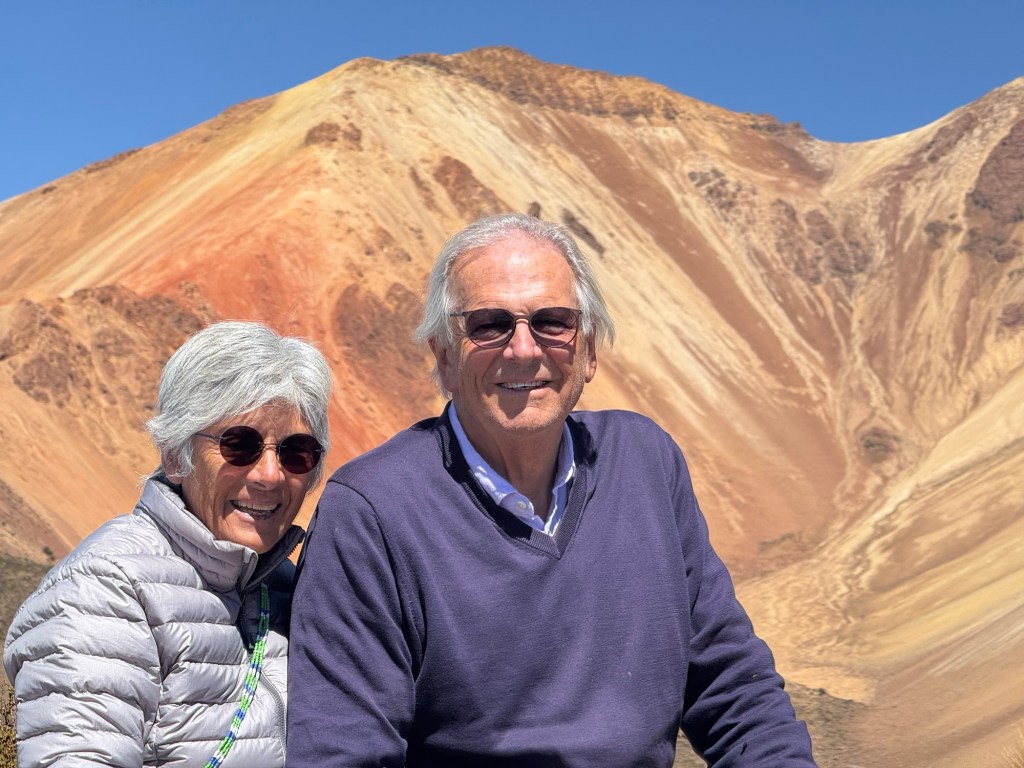
We were up and on the road by 9am, in spite of our low energy. Our driver spent an hour and a half traveling over rough roads to a short hike up to a view point of the Tunupa Volcano (17,457 ftasl). I made it with Mark’s help.
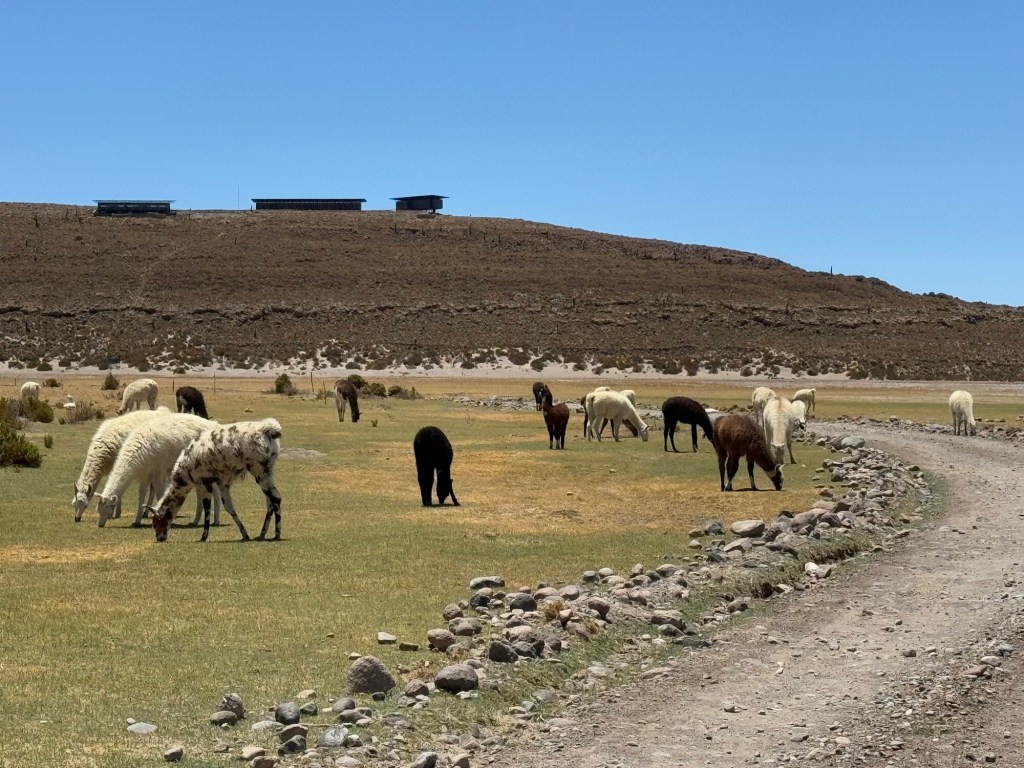
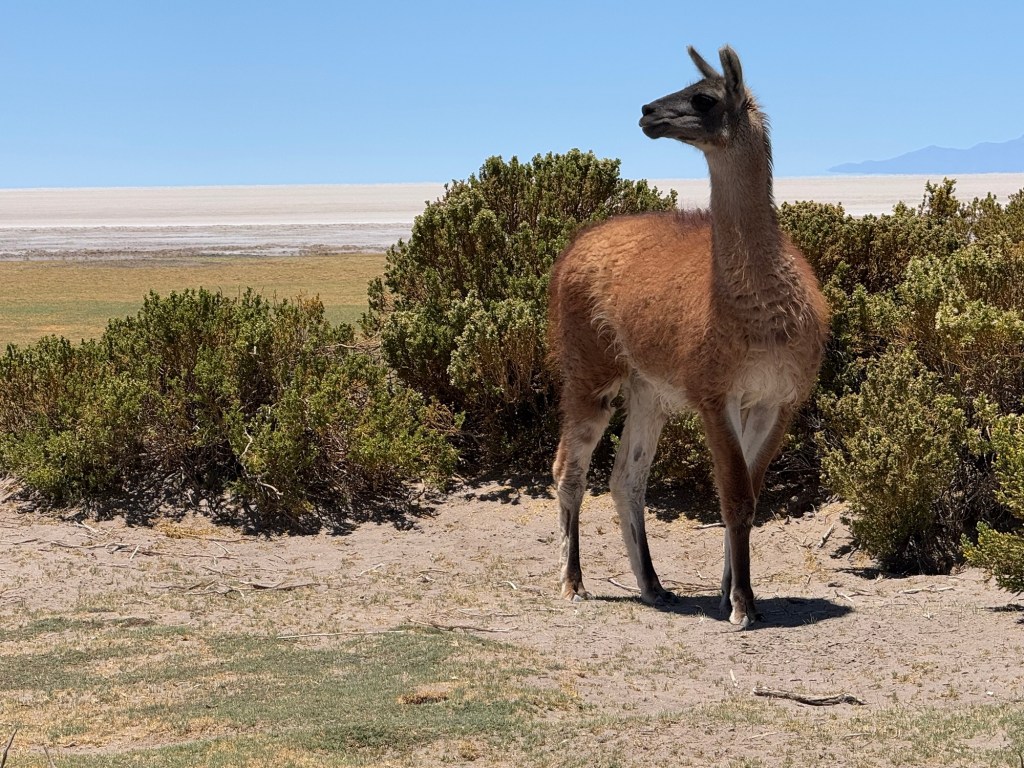
Feeling slightly better, we were out again at 9am for a drive though the salt flats to a village called Cqueya to walk with the Llamas. There were many and the field next to the salt flat looked like a lawn. We saw many llama sporting red ribbons tied to their ears as decoration. Along with them we found two different kinds of flamingos feeding in the flats near the llama as well as the succulent plants they eat

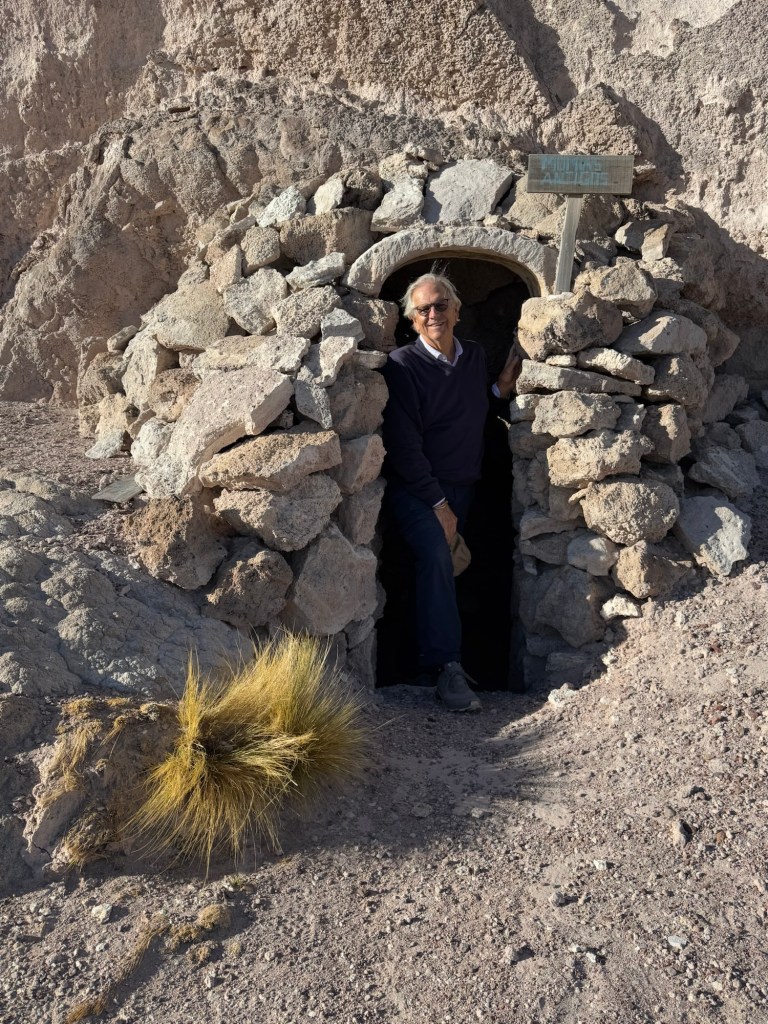
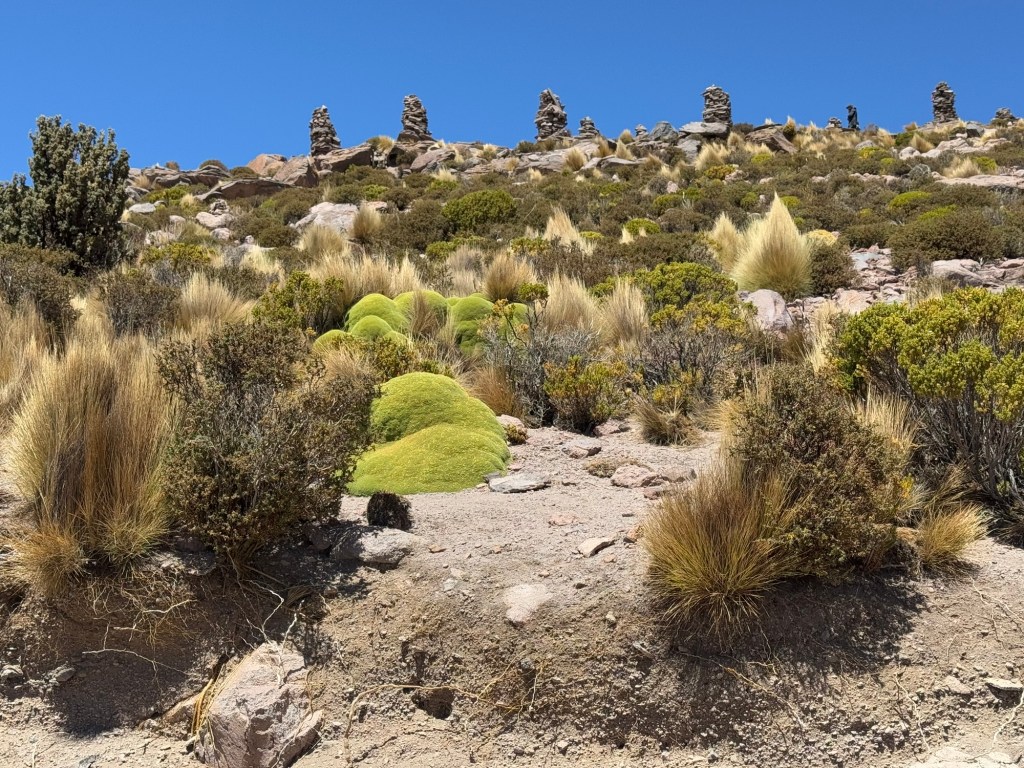
Driving up the rough roads to a from the lodge, we encountered many rock pile fences as well as outlined farming areas and small round sleeping shelters built, according to our guide, around 900 BC. The most common crop was quinoa.
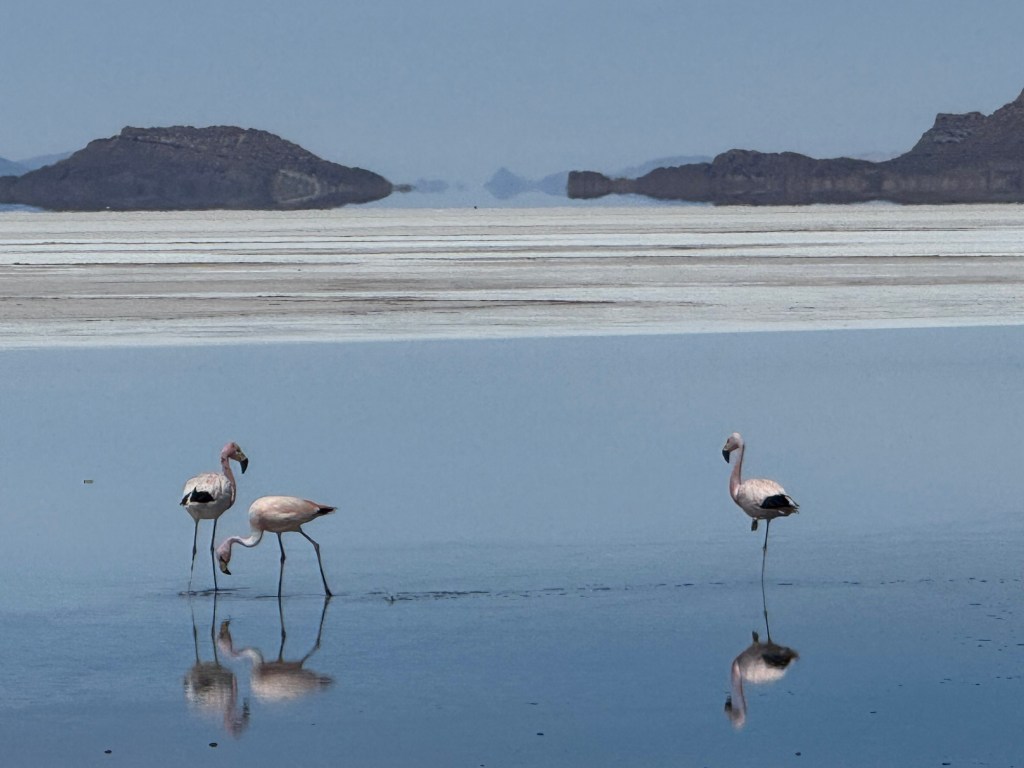
Then we found flamingoes feeding at the edge of the salt and learned from Elsa, our guide, that the ones with black tails were Andean Flamingos and the ones with no black tail were James Flamingos. They were both different from flamingos we have seen in Africa.
There were several people in the lodge, so we had dinner with 2 Brazilians, and 4 Frenchmen. Everyone spoke English, thankfully.
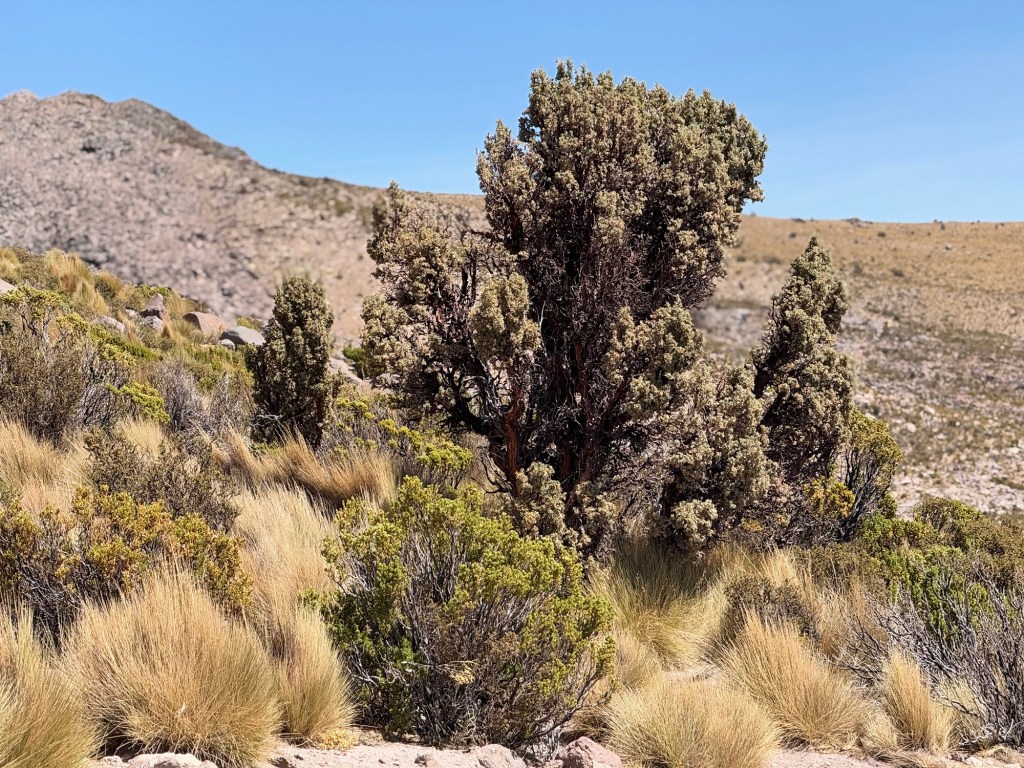

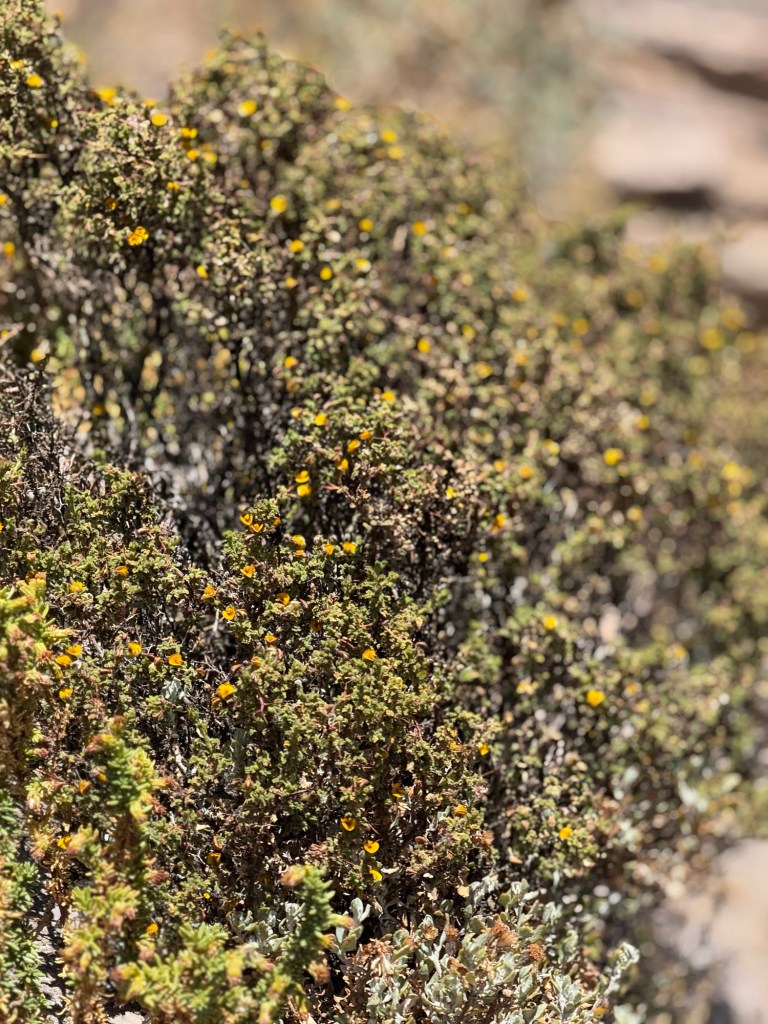
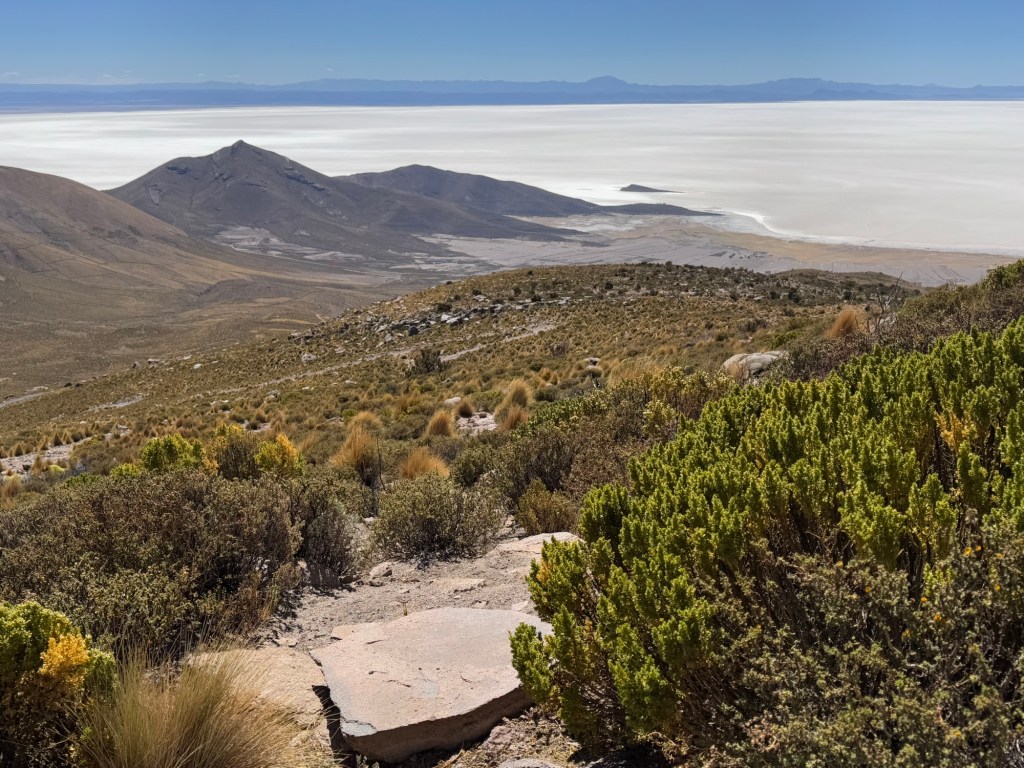
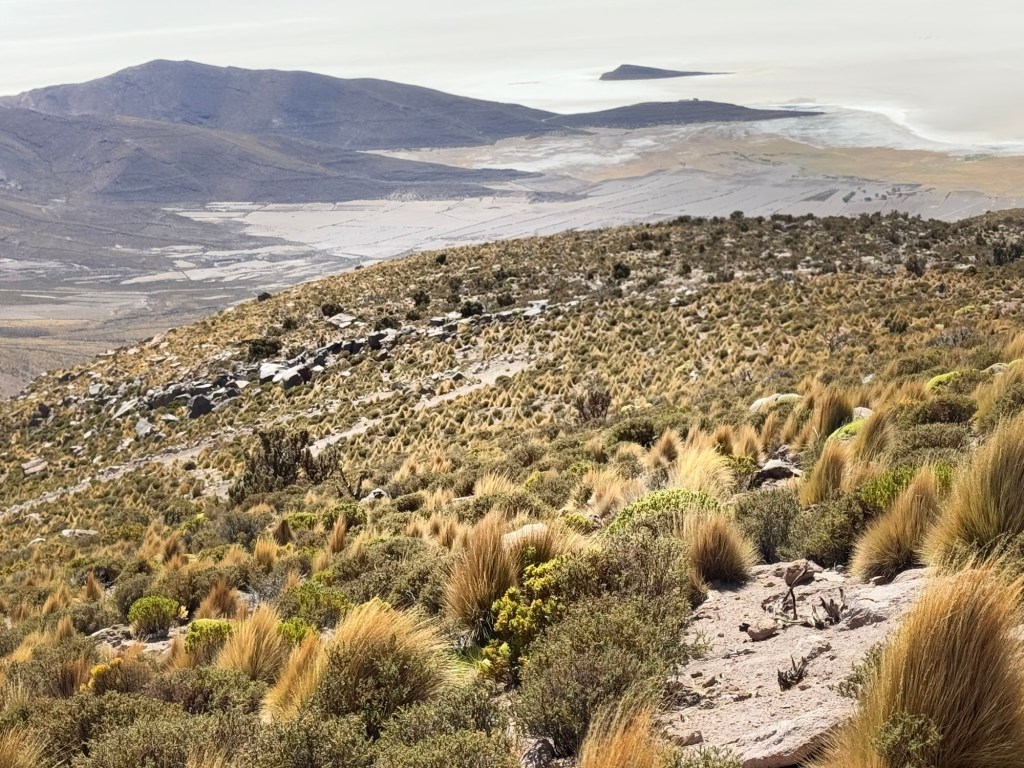
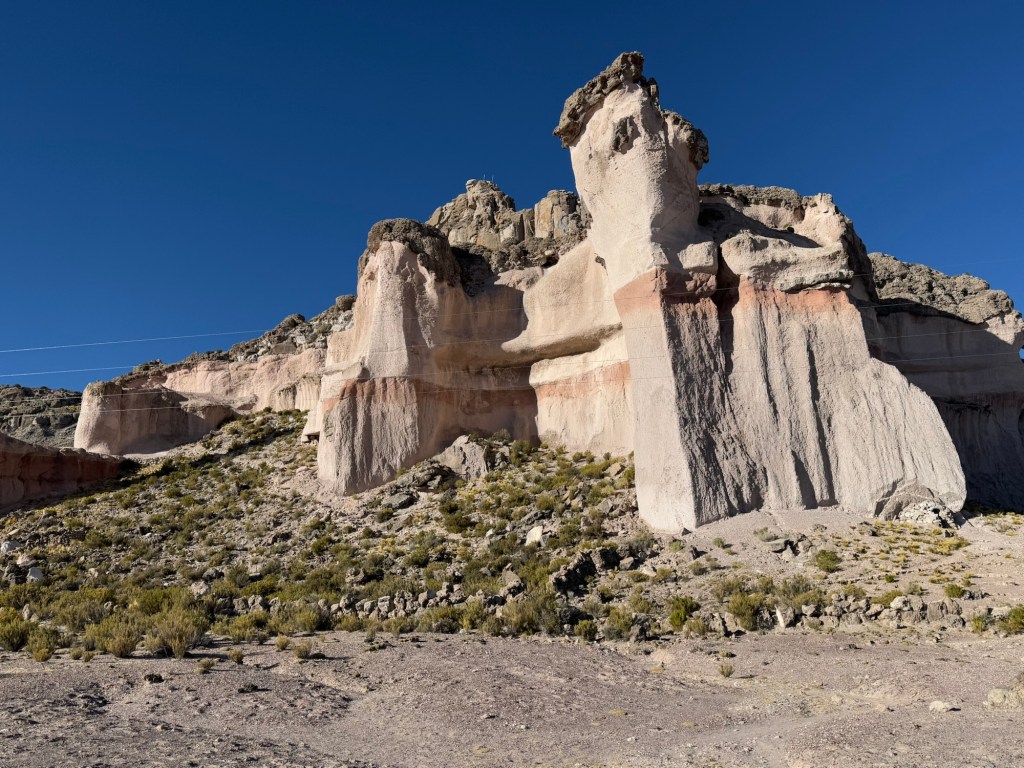
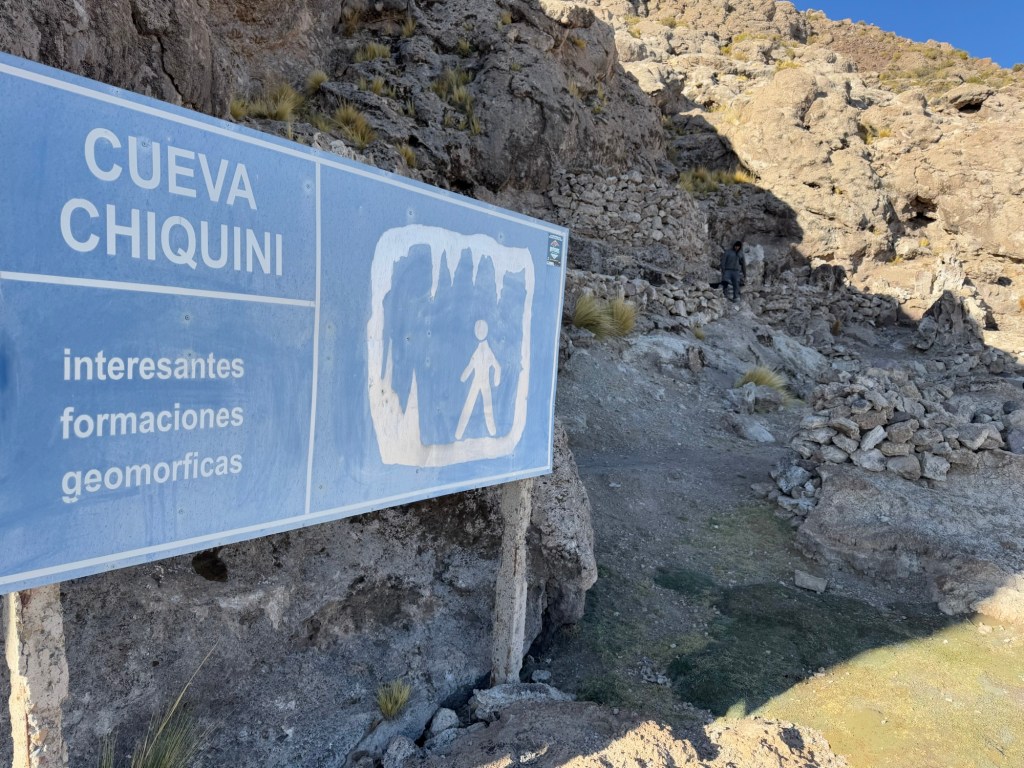
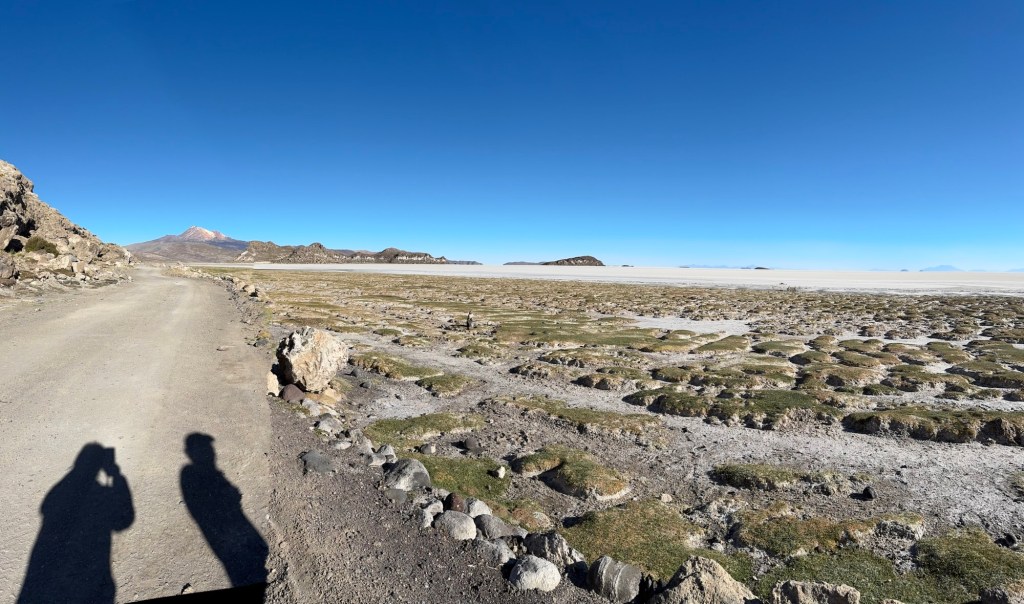
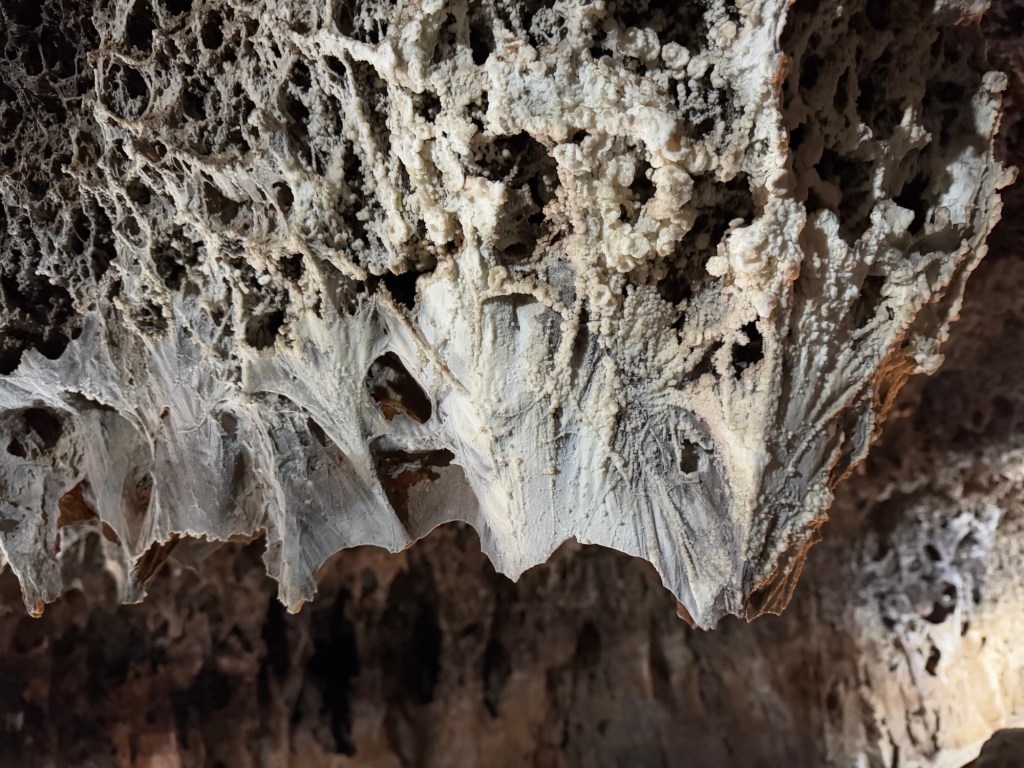
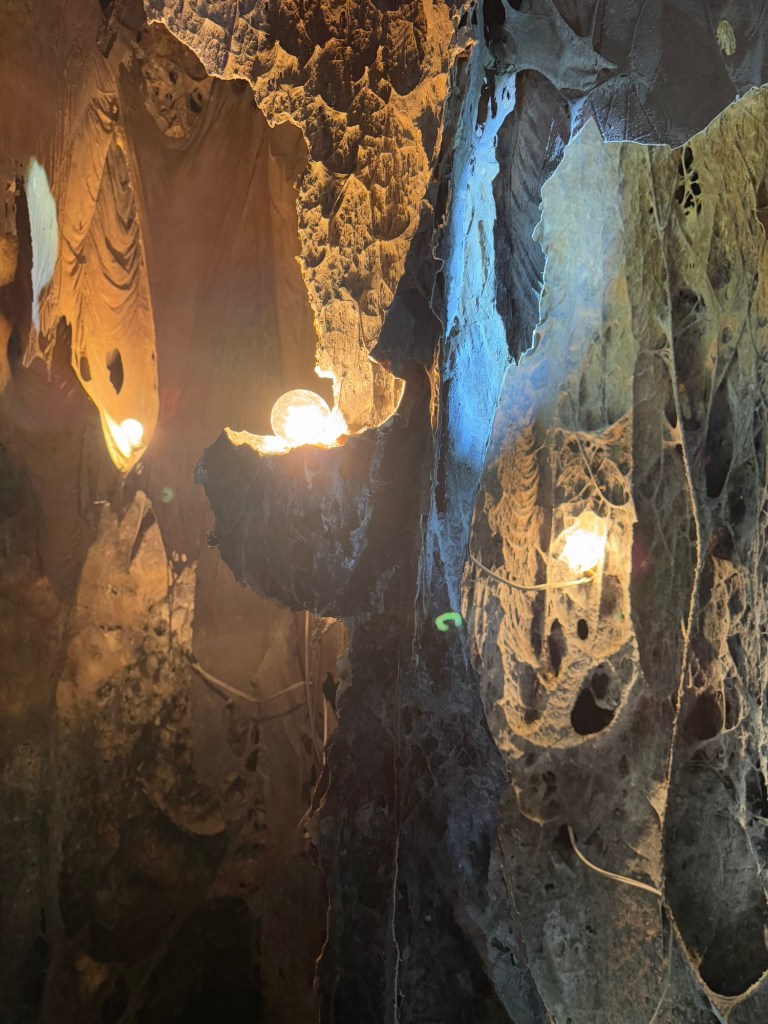
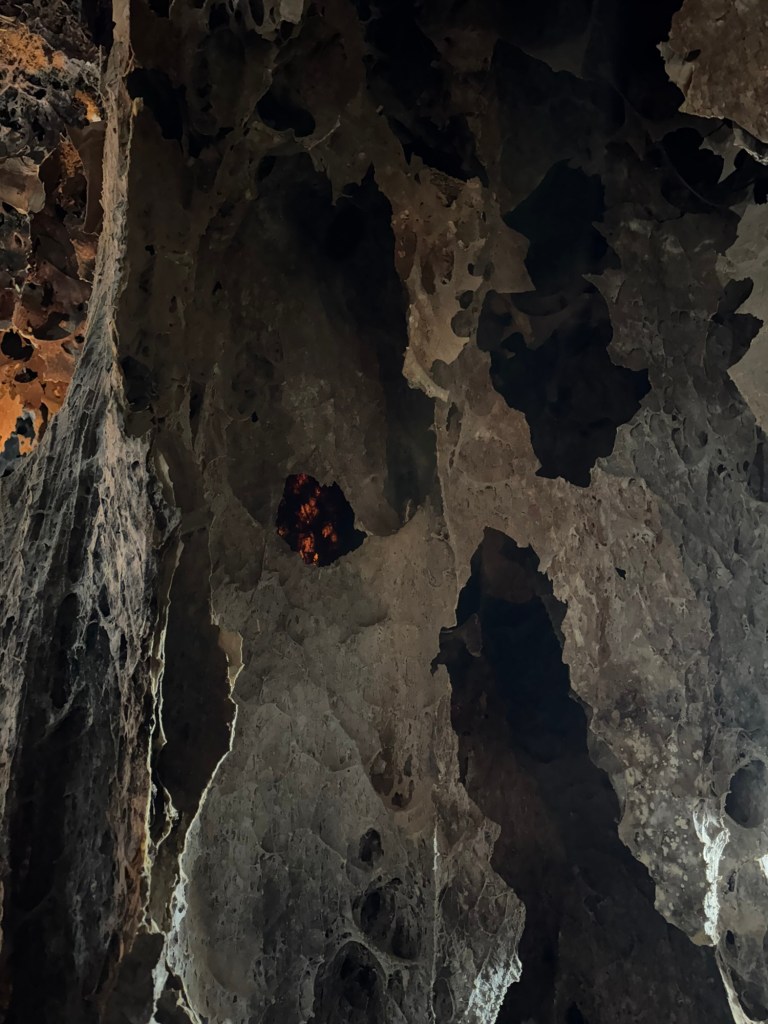
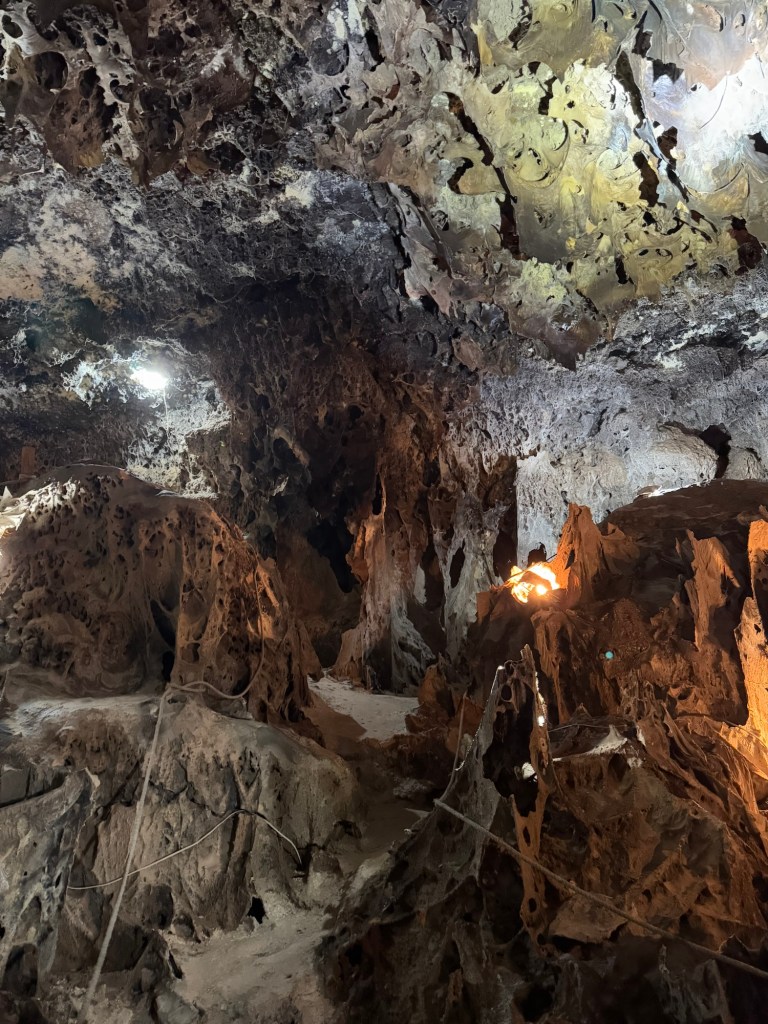
After lunch we had a bit of time to relax and then headed out for a cave an hour and a half across the salt flats and over an extension of the volcano. The Cueva Chiquini cave was interesting because the structures inside were mostly paper thin and very delicate.

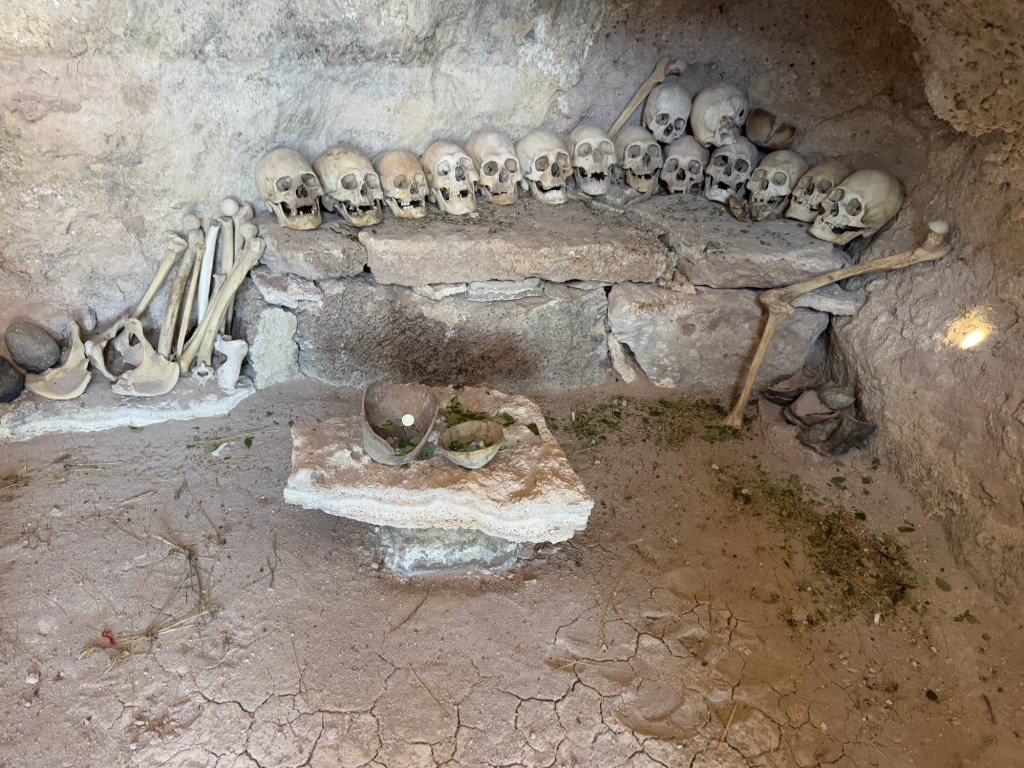
Nearby was a man-made shelter for storing the heads of 15 ancestors. They looked like they were smiling.
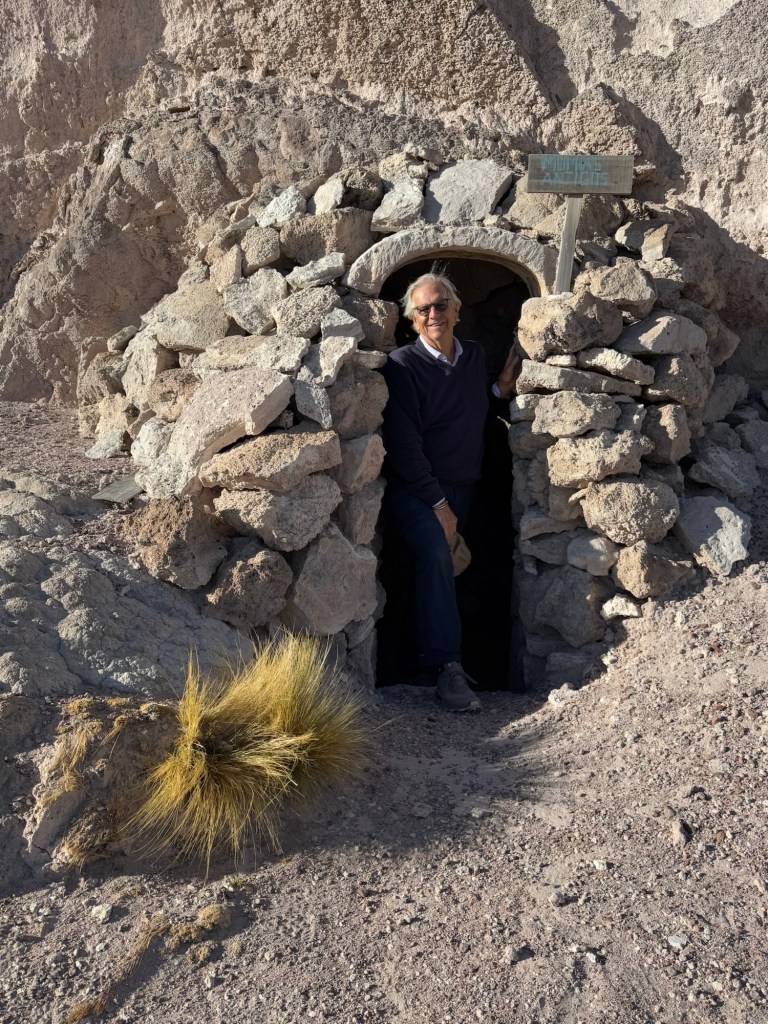
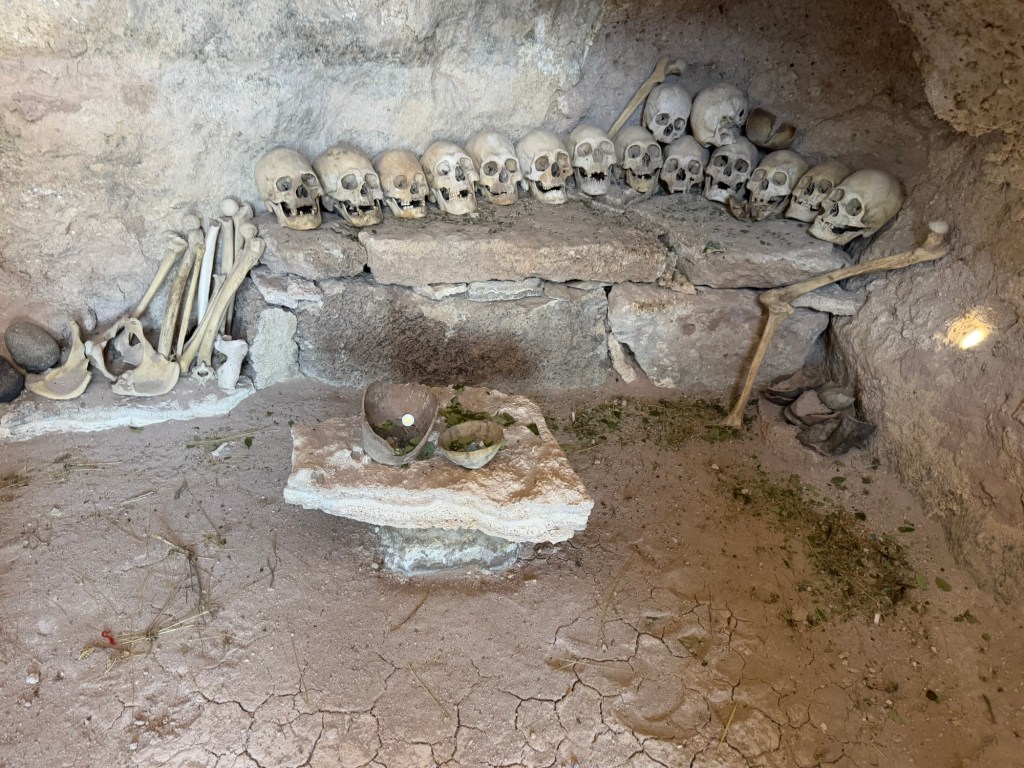
On the way back to the lodge we stopped on the salt for a sundowner in time to watch the sunset.
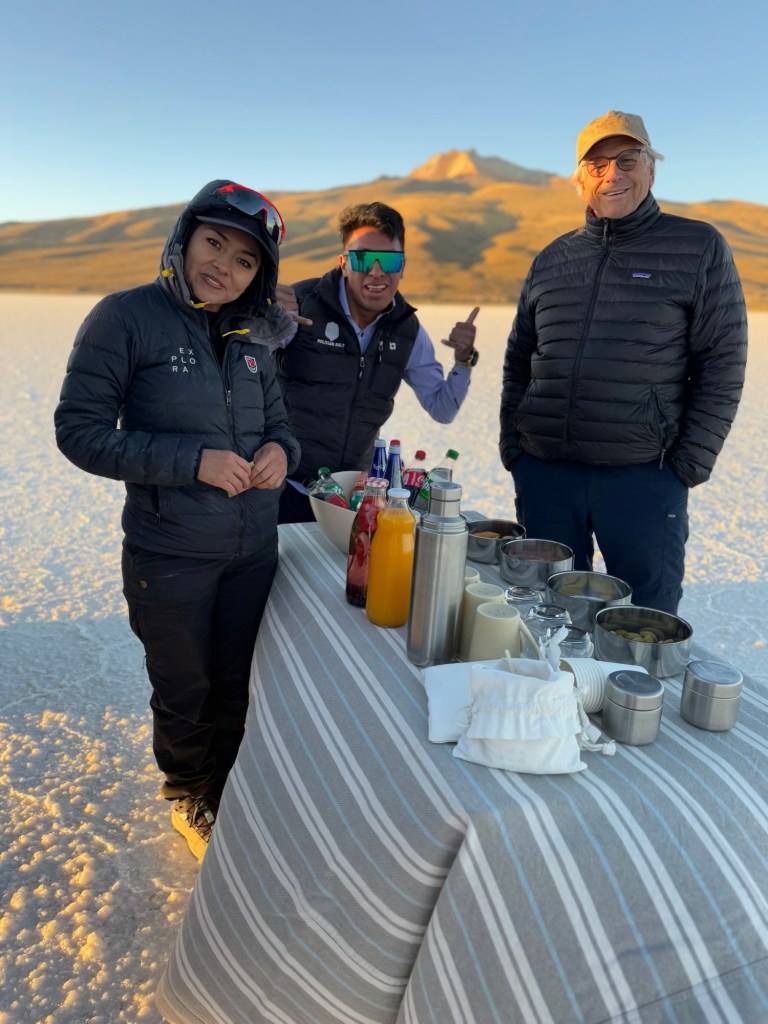
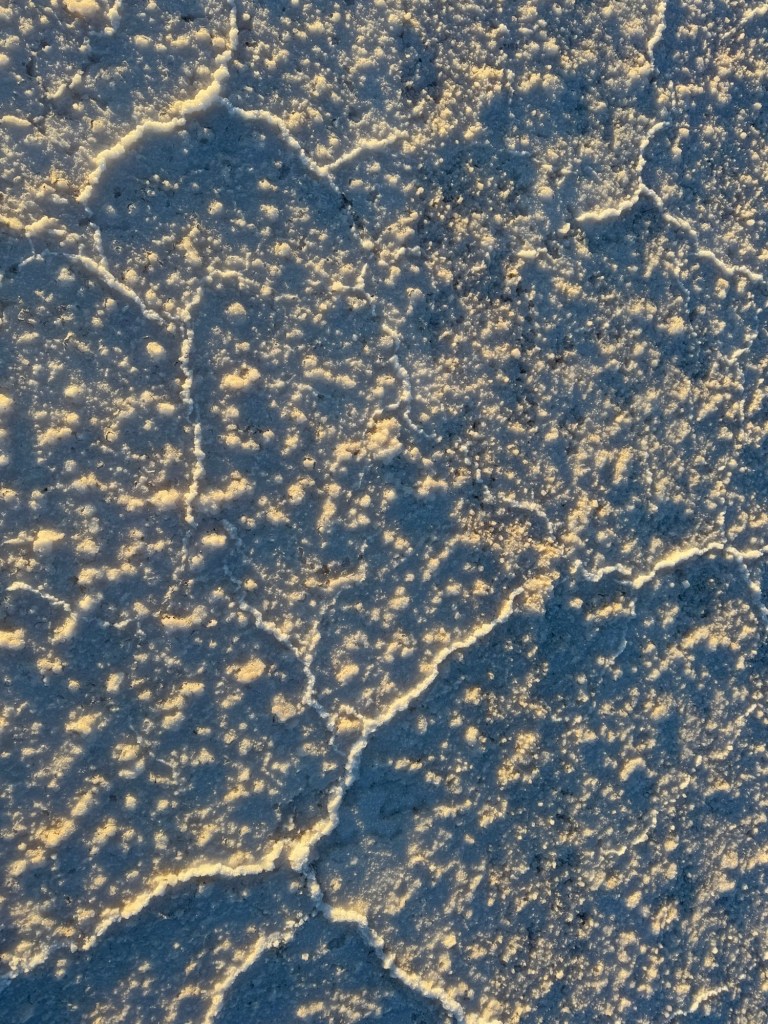
It was a super view, but very windy and cold. I drank my hot tea in the vehicle. Even Mark opted for hot tea.


Mark and Elsa went outdoors into the night to look at the stars. I was too tired, still suffering from the altitude, and went directly to bed.
Thursday, October 30, 2025
Feeling slightly better, we were out at 9am for a drive through the salt flats to a village called Cqueya to walk through the llama fields on Baccharis grass at the edge of the volcano and next to the salt.
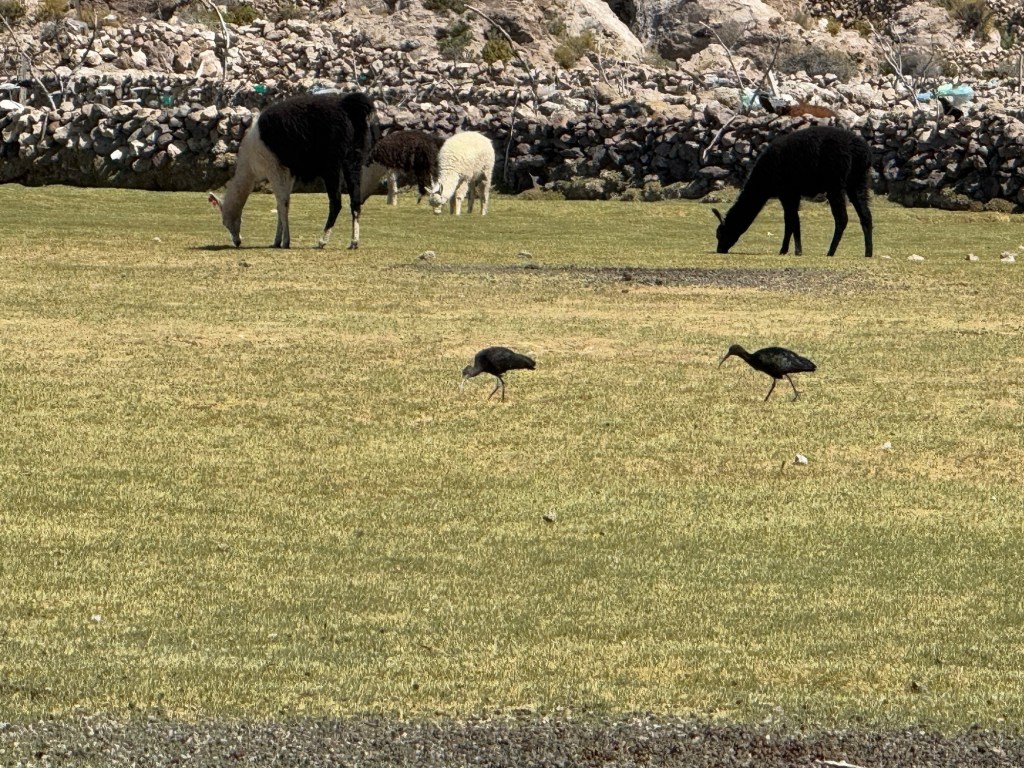
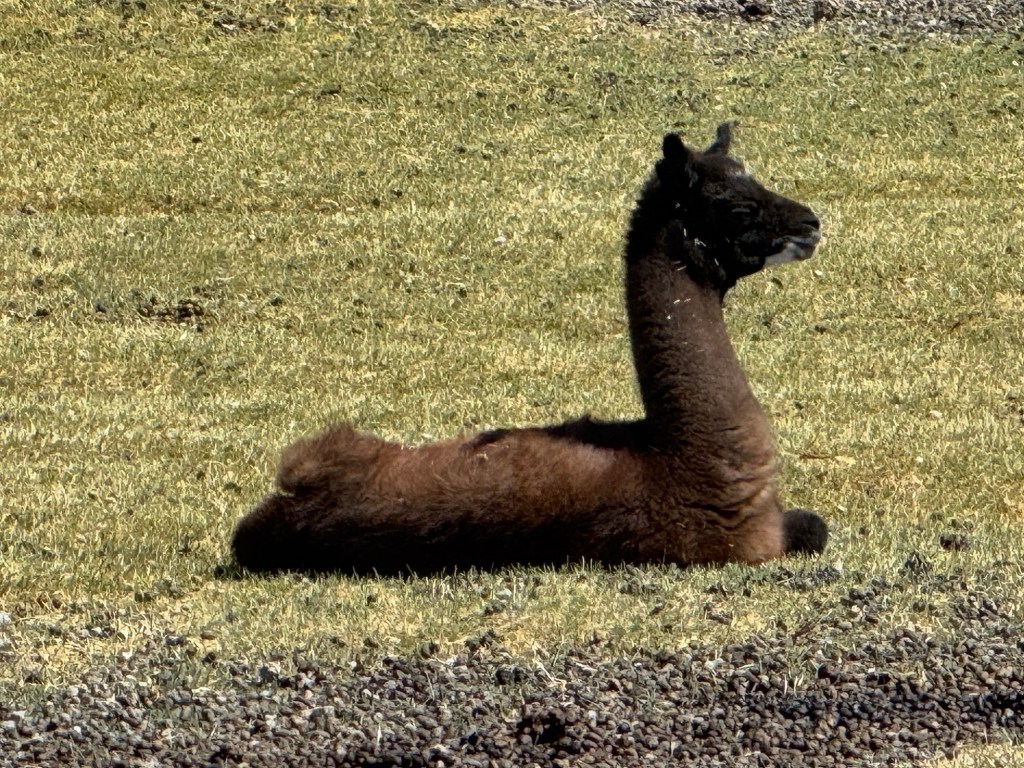
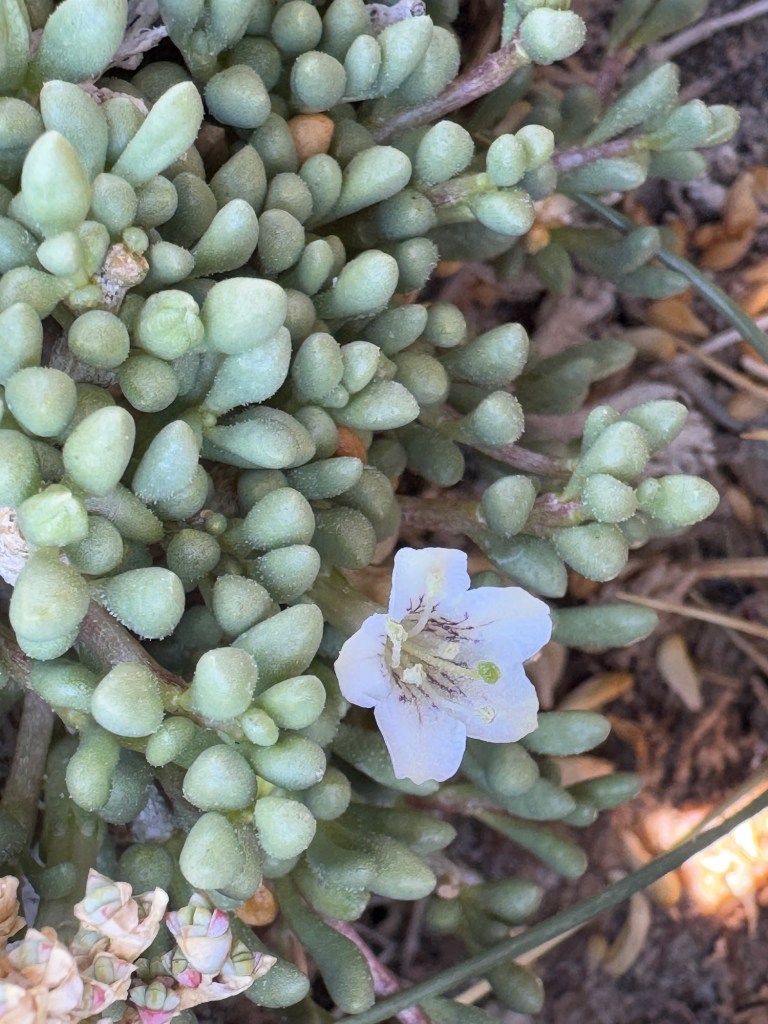
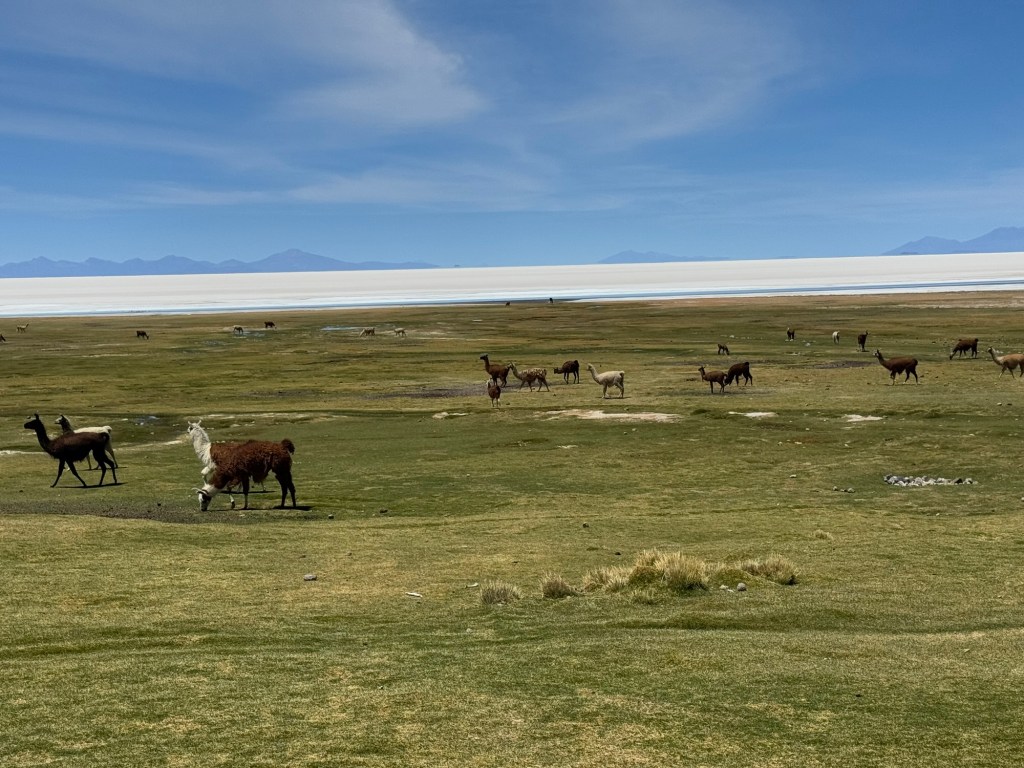
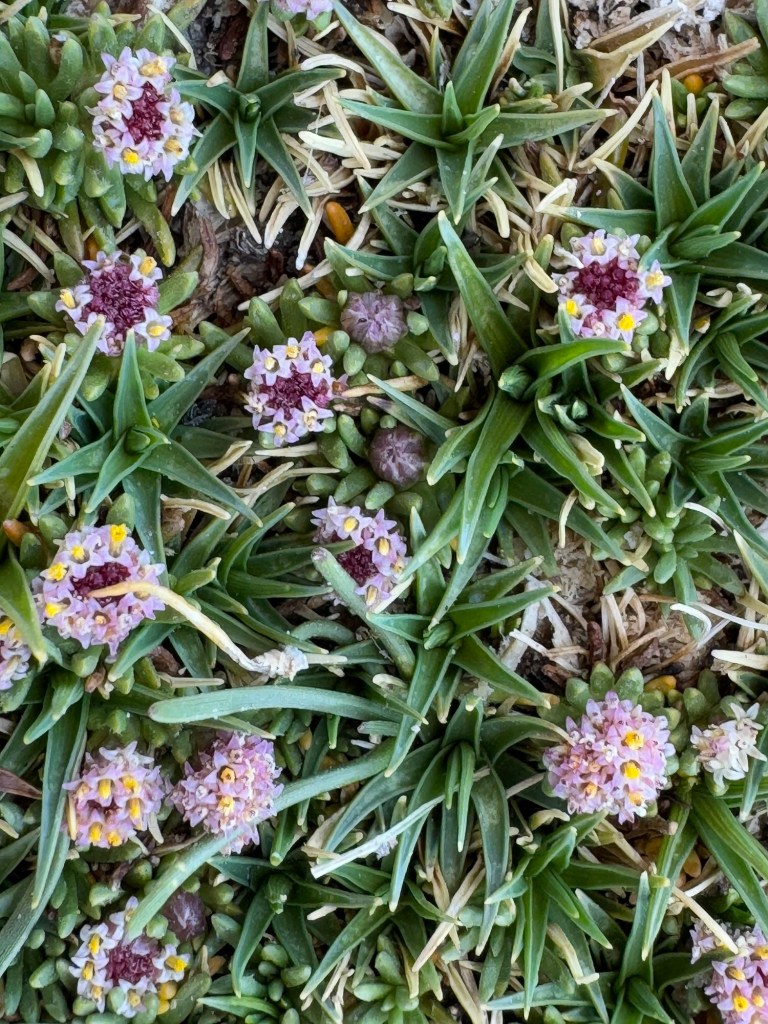
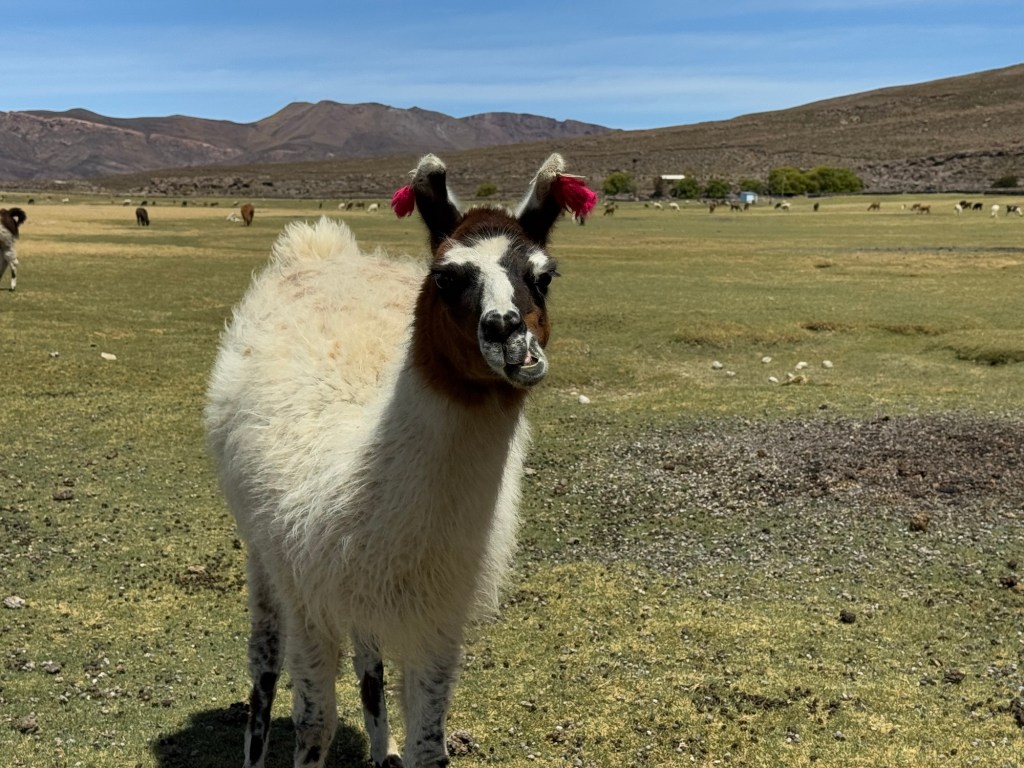
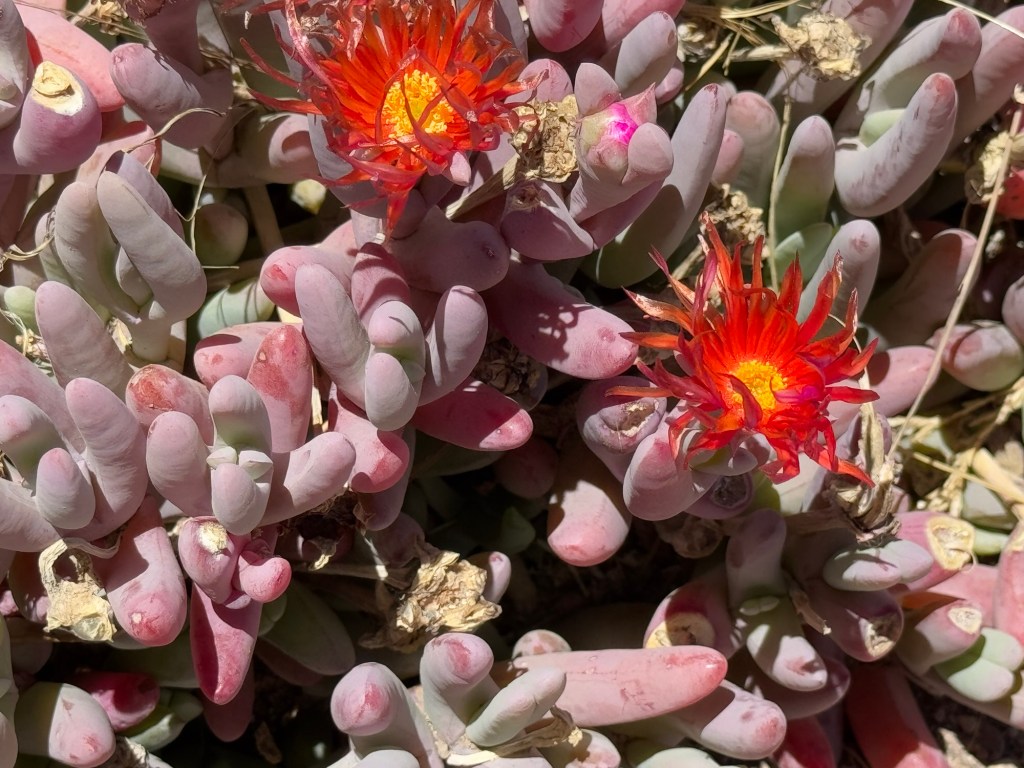
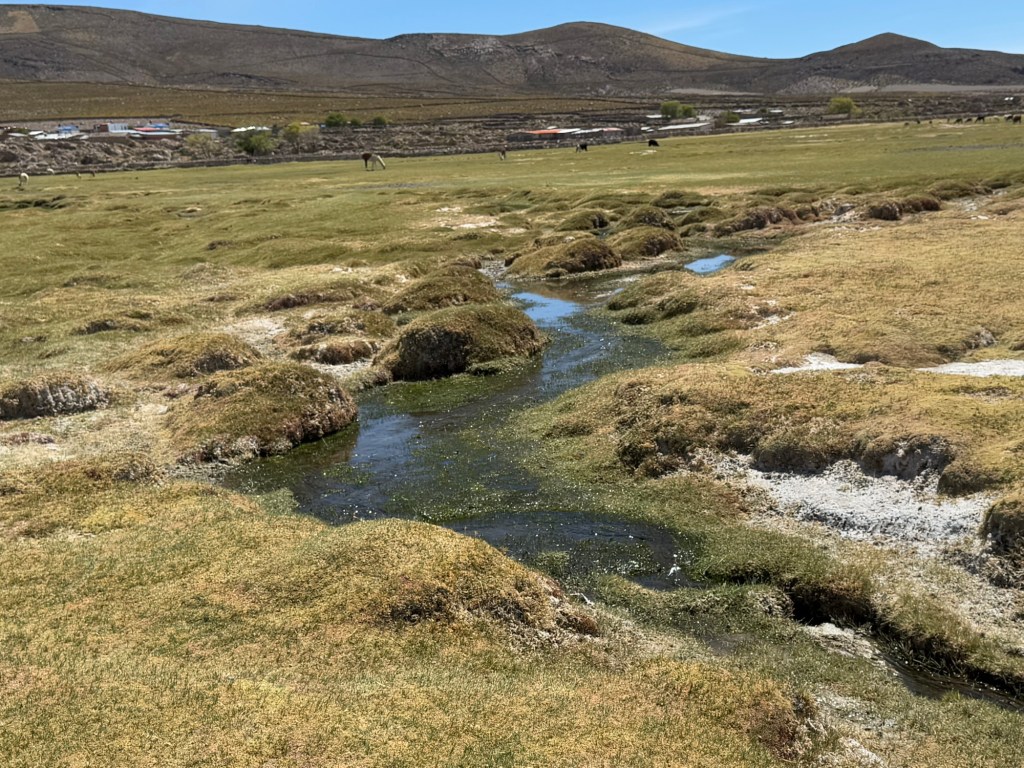
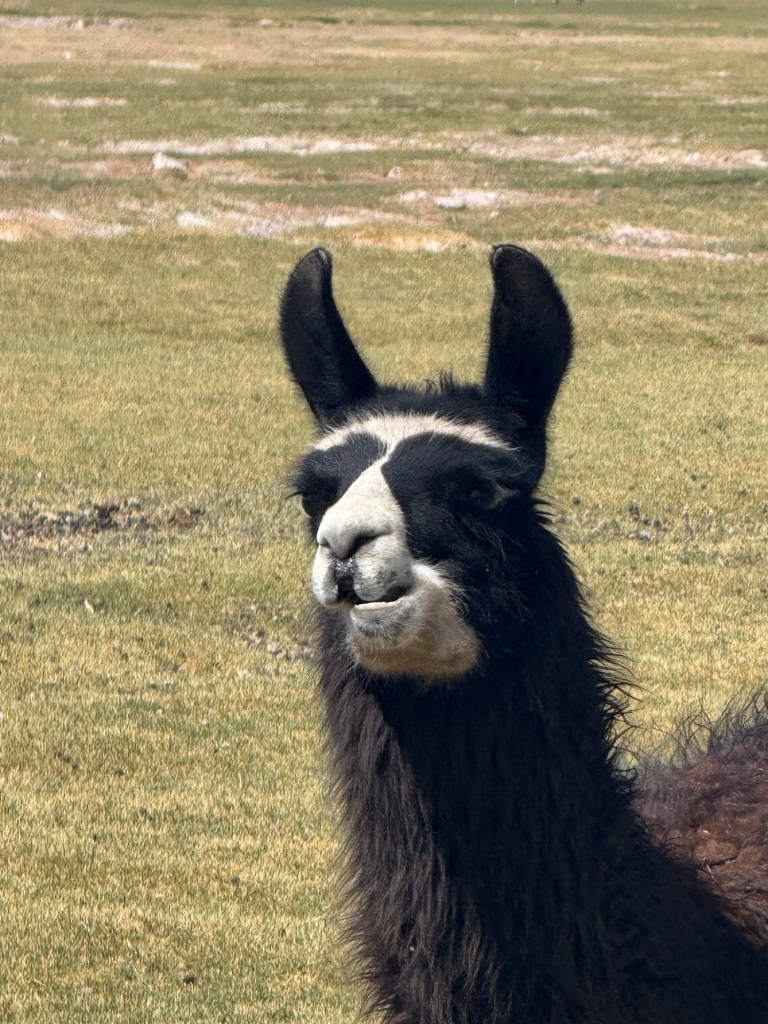

Along the way we saw succulent plants the llama like to eat. Most of the area looked like lawn. At one point we sat down to enjoy the warmth of the day. The place was very quiet. No people or cars. We could actually hear the small, nearby stream gurgle. Some of the plants we saw were green succulents called Sarcocornia.
Walking on the edge of the pan were some flamingos. There were two different kinds, some with black tails, Andean, and some without, James Flamingos. Quite a pretty sight with the salt flats behind them.
Nearby was another village called Chantani that had a museum by the same name. We stopped to visit and saw artifacts from the Aymara culture, particularly a manakin dressed in narrative clothing.
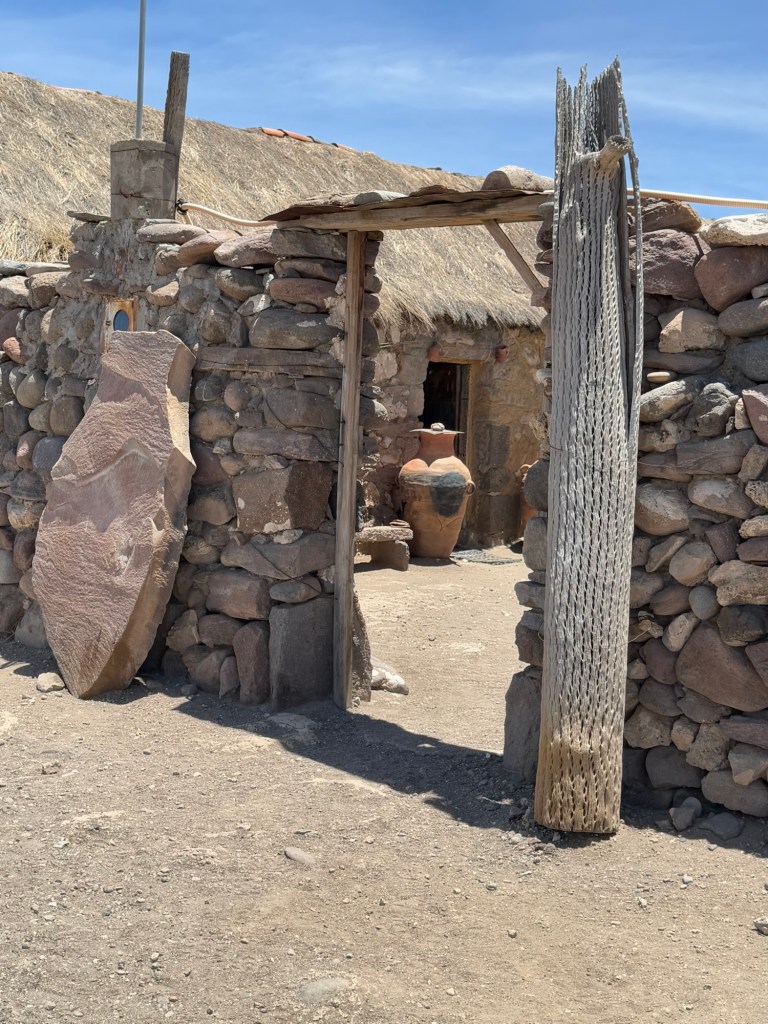

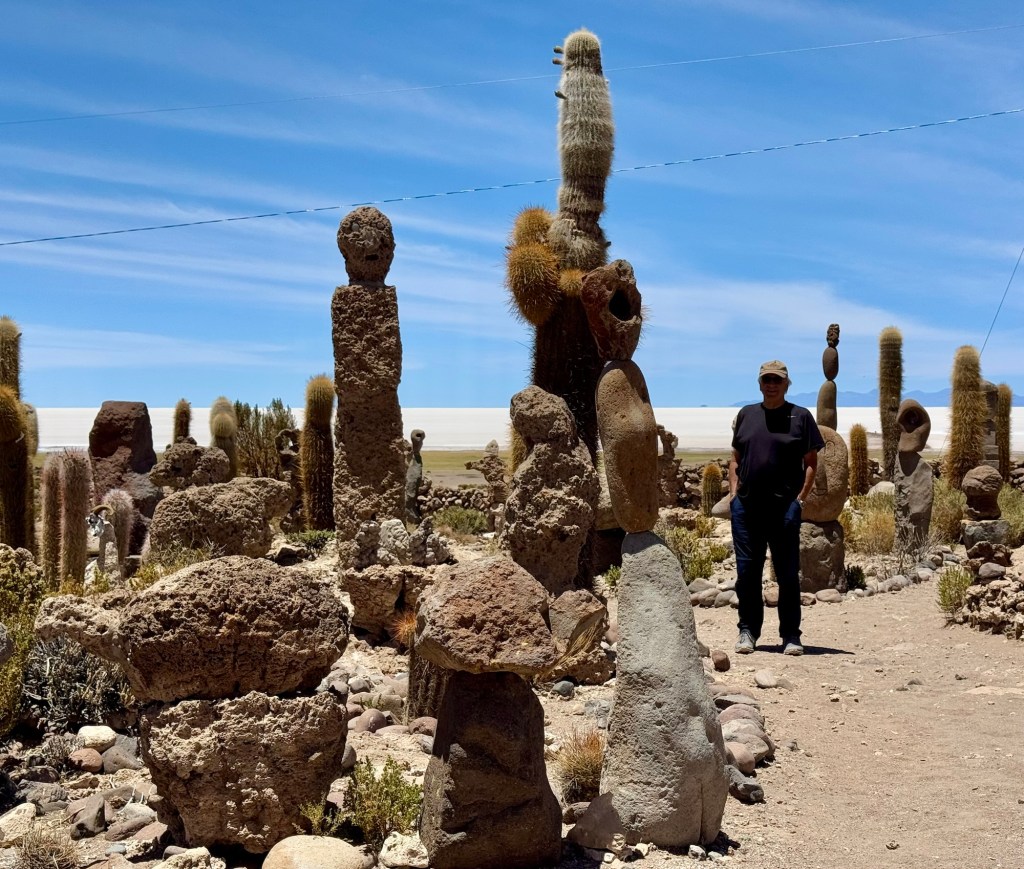
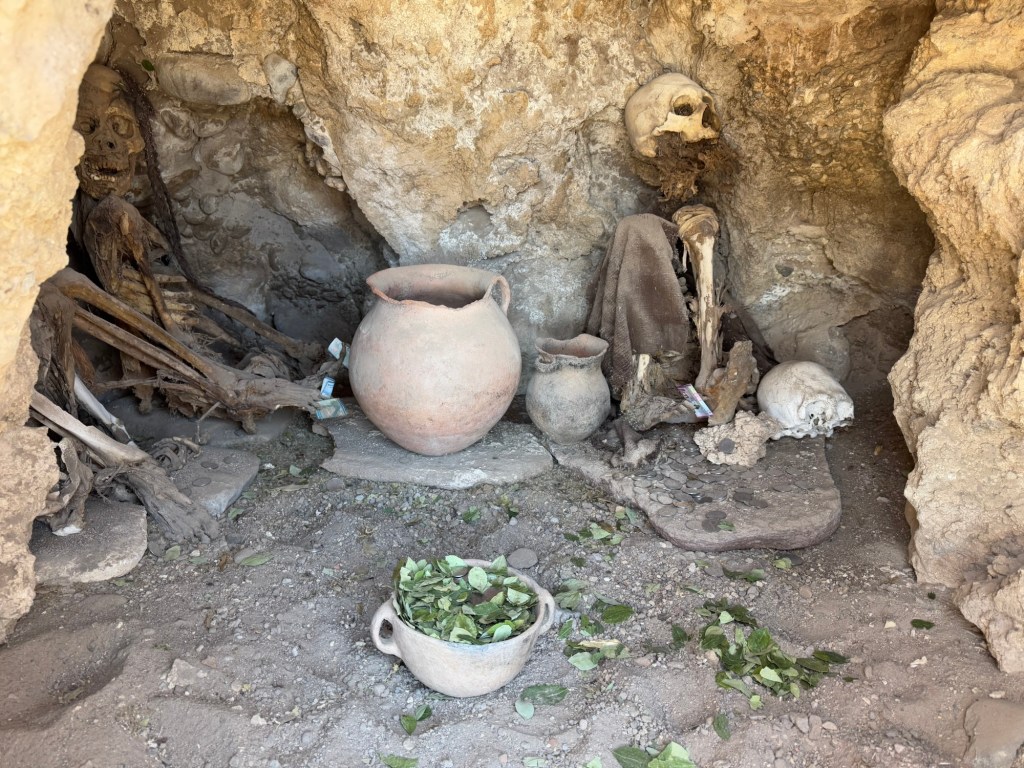
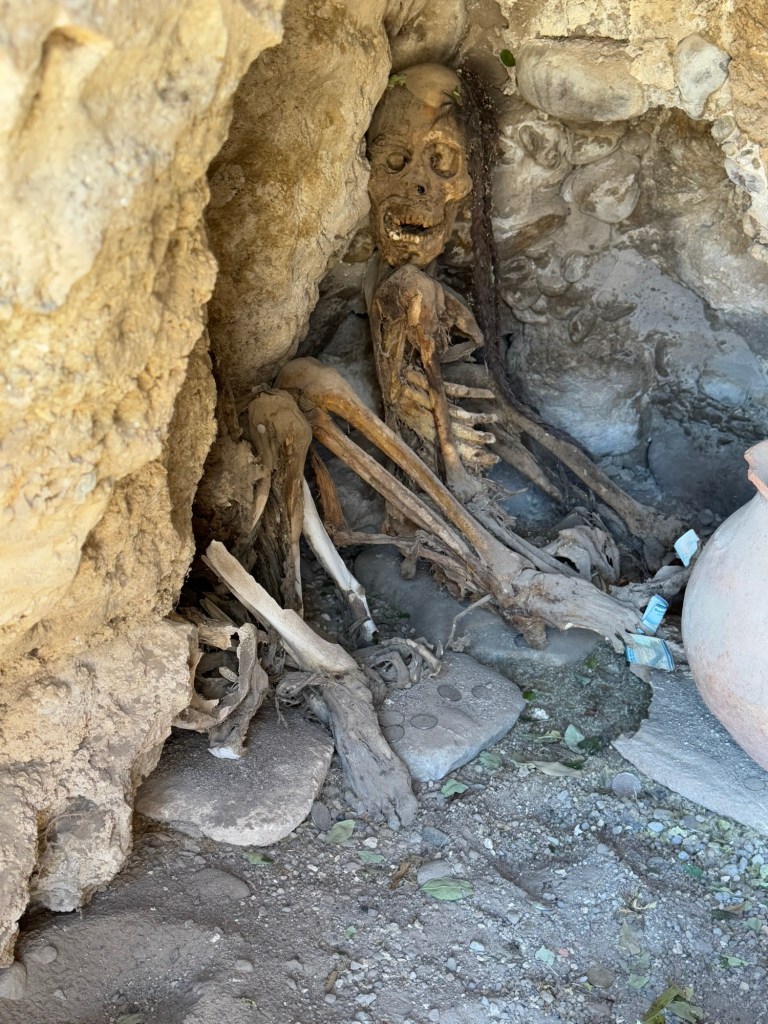
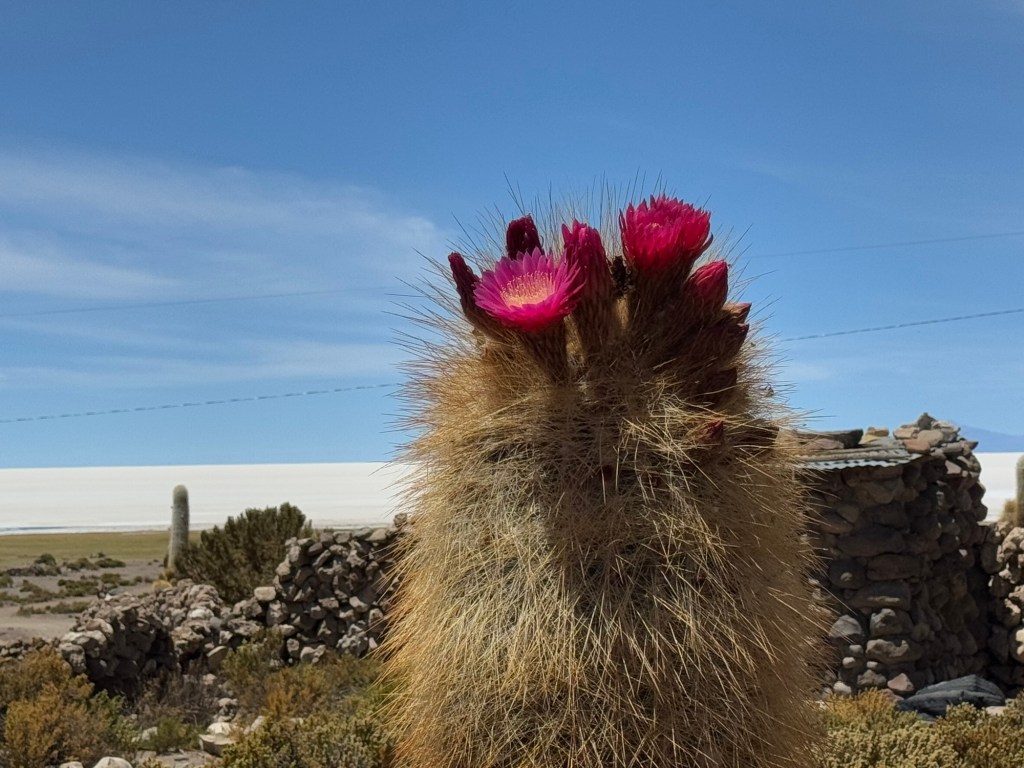
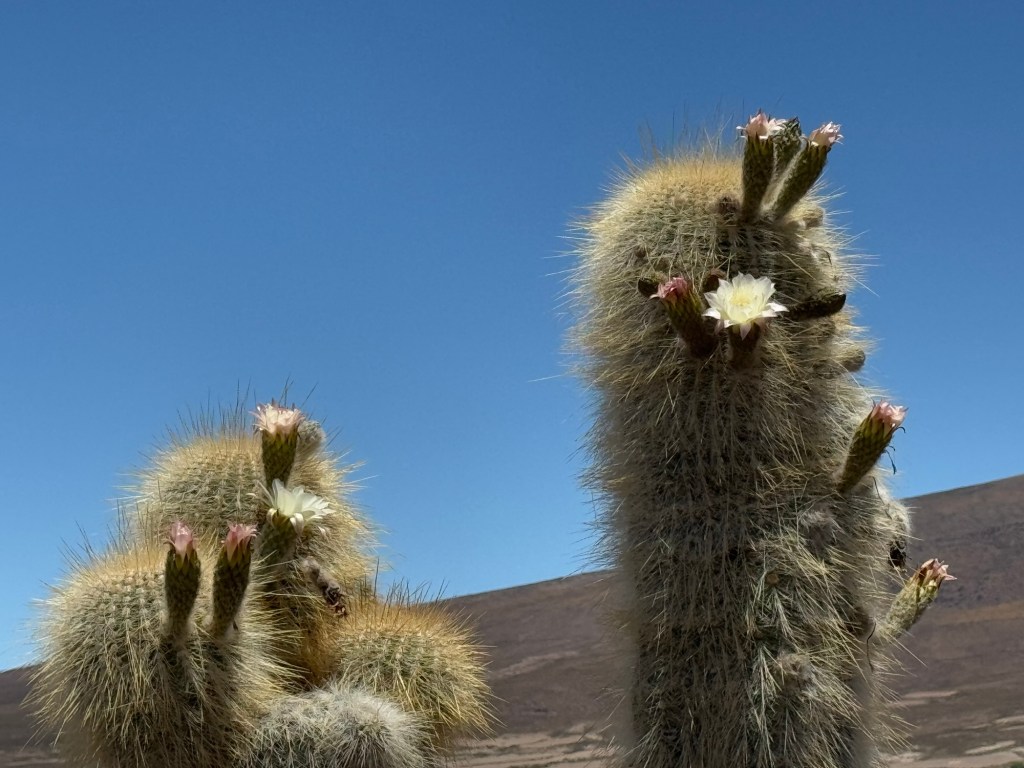
Outdoors was a stone and cactus garden. The cactus are just starting to bloom, both white and red varieties. Also in the garden was a small cave-like structure with 2 mummies inside. They were buried in the common local crouched position. Usually they were buried in large crockery vases. They were not big people when alive. Similar to the Batwa in Uganda.
Then we continued on the salt flats to our special lunch sight in view of Fish Island. Our photos tell the story.

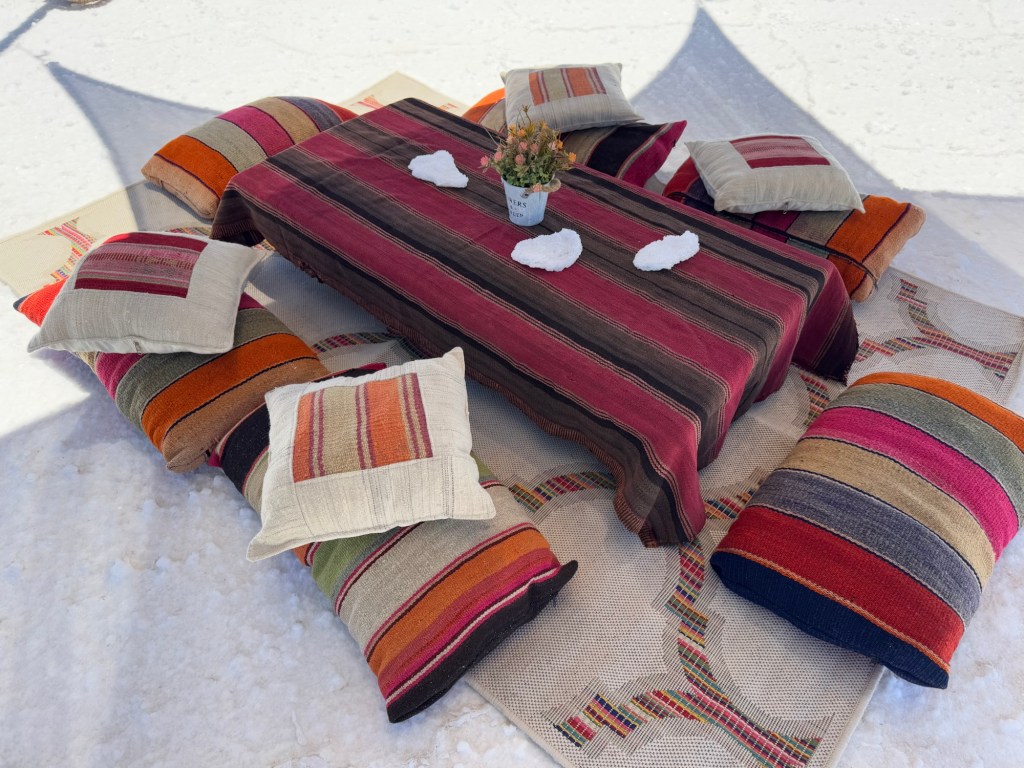

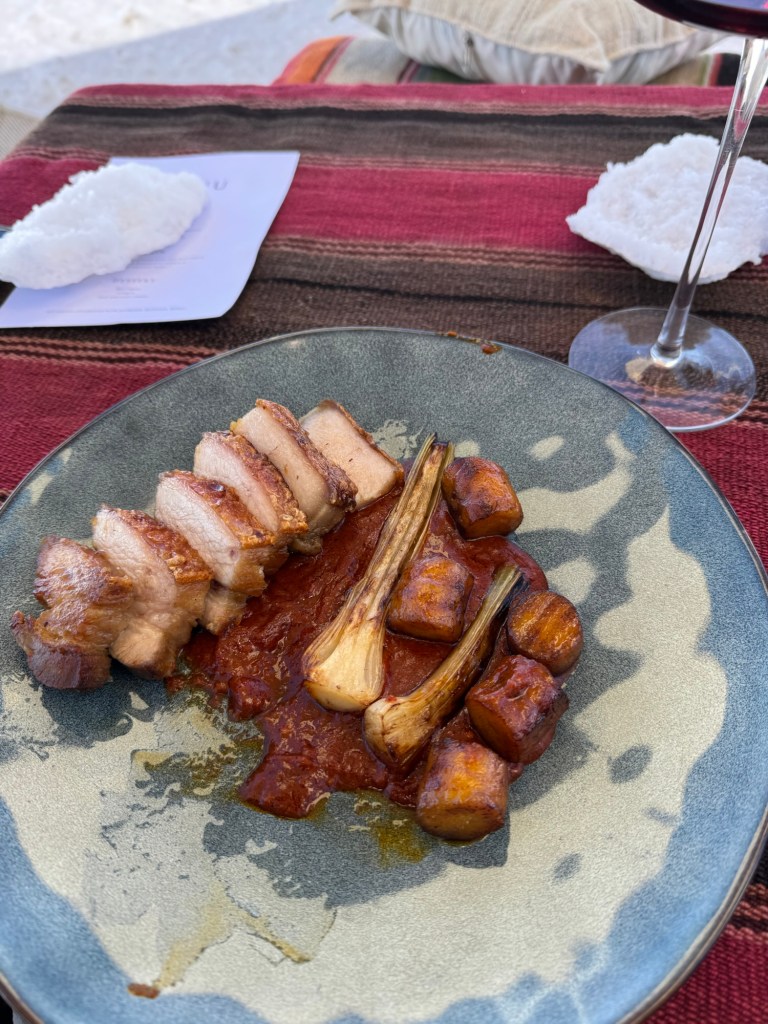
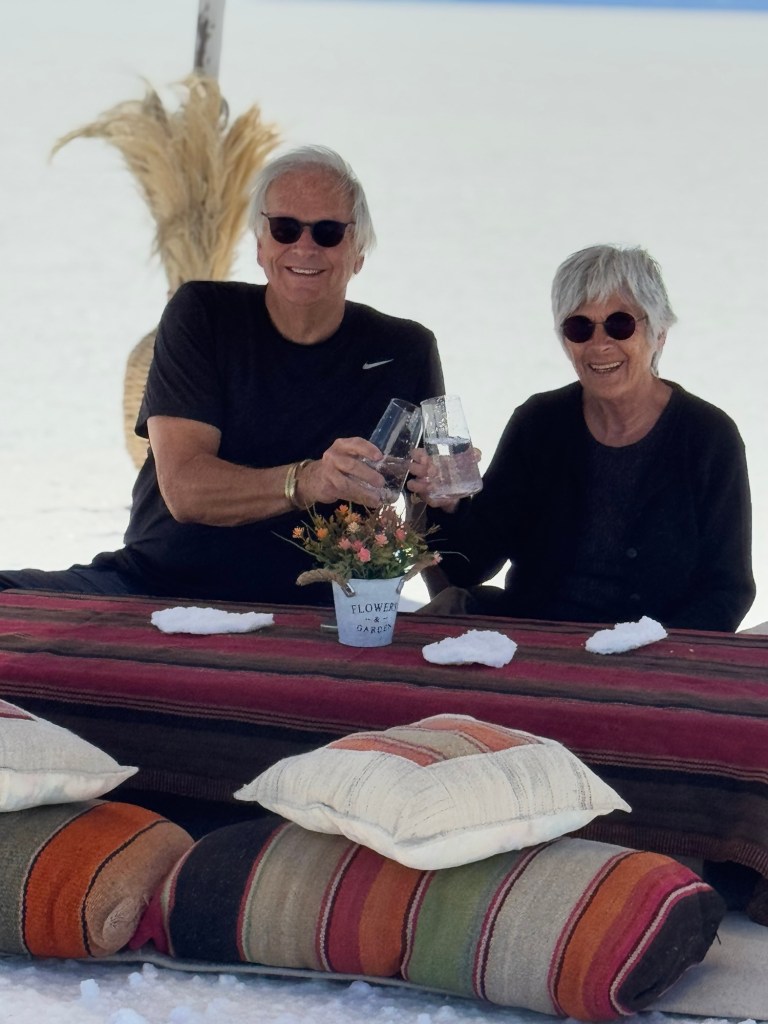
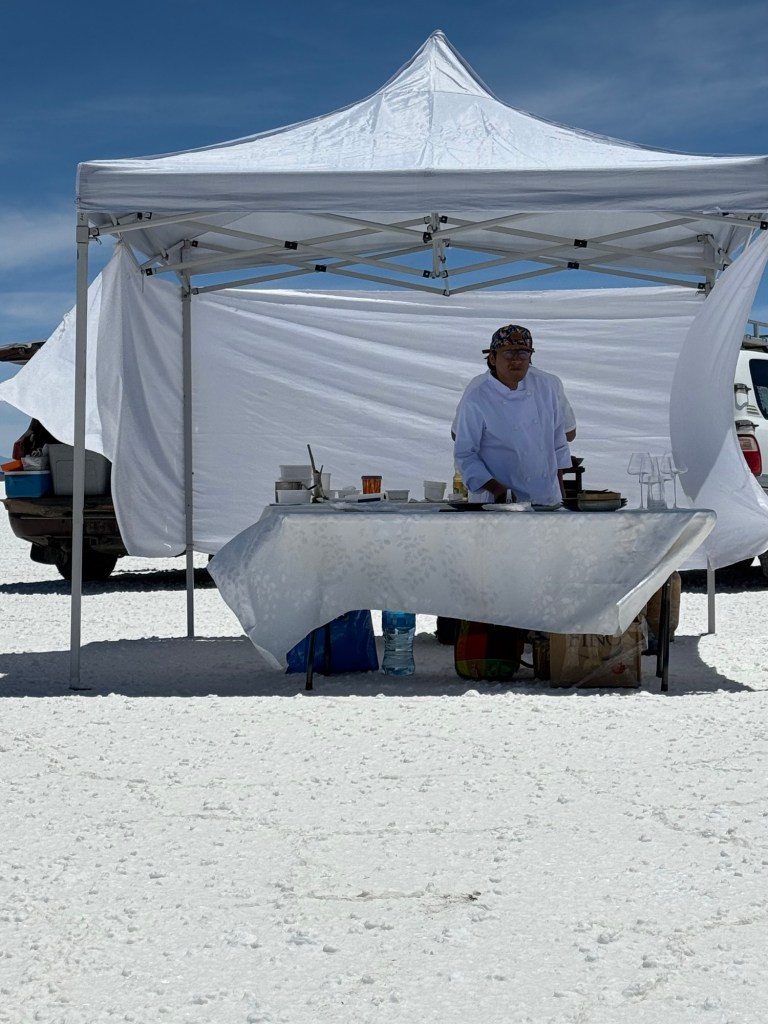
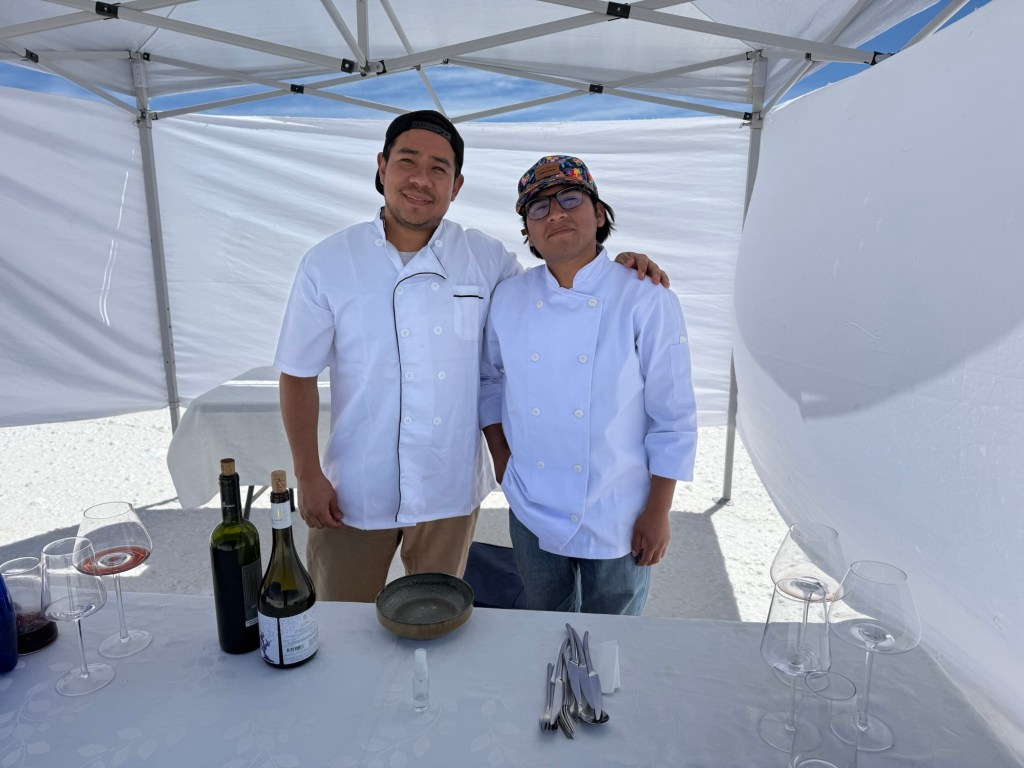
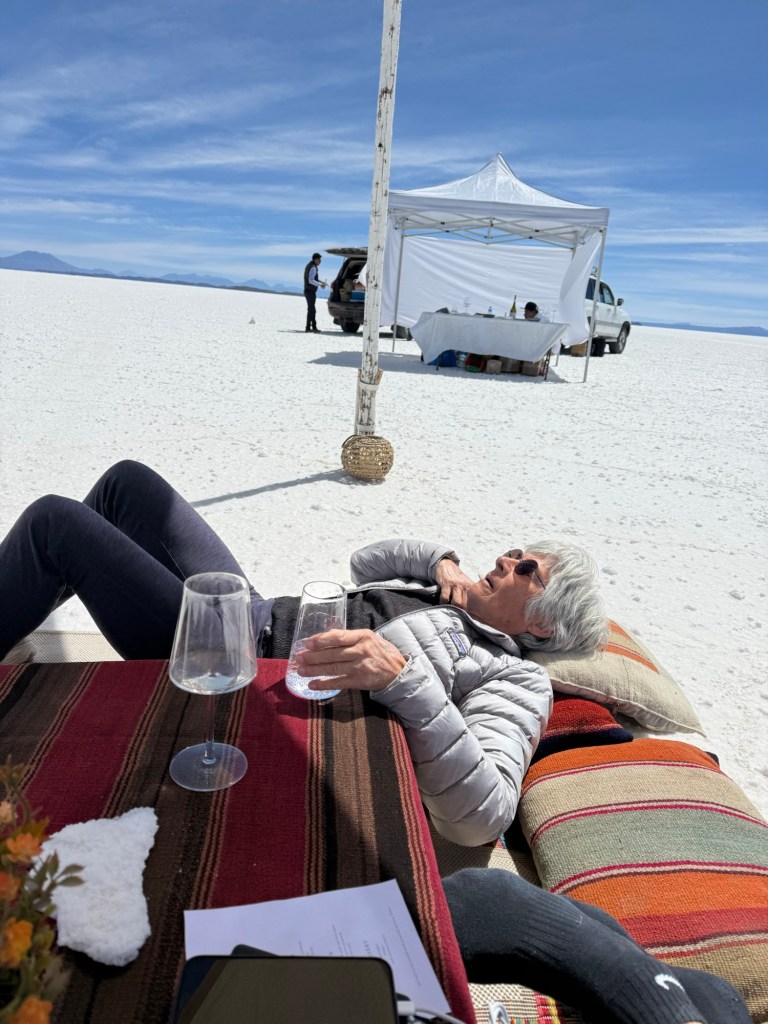
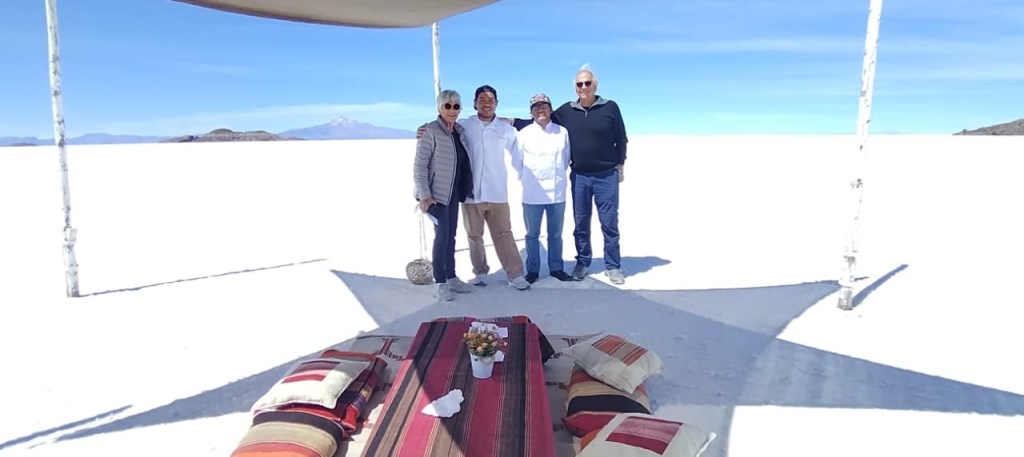
Lunch SA’s a grand affair. More later.
 Adventures with Julia