
Monday, November 3, 2025
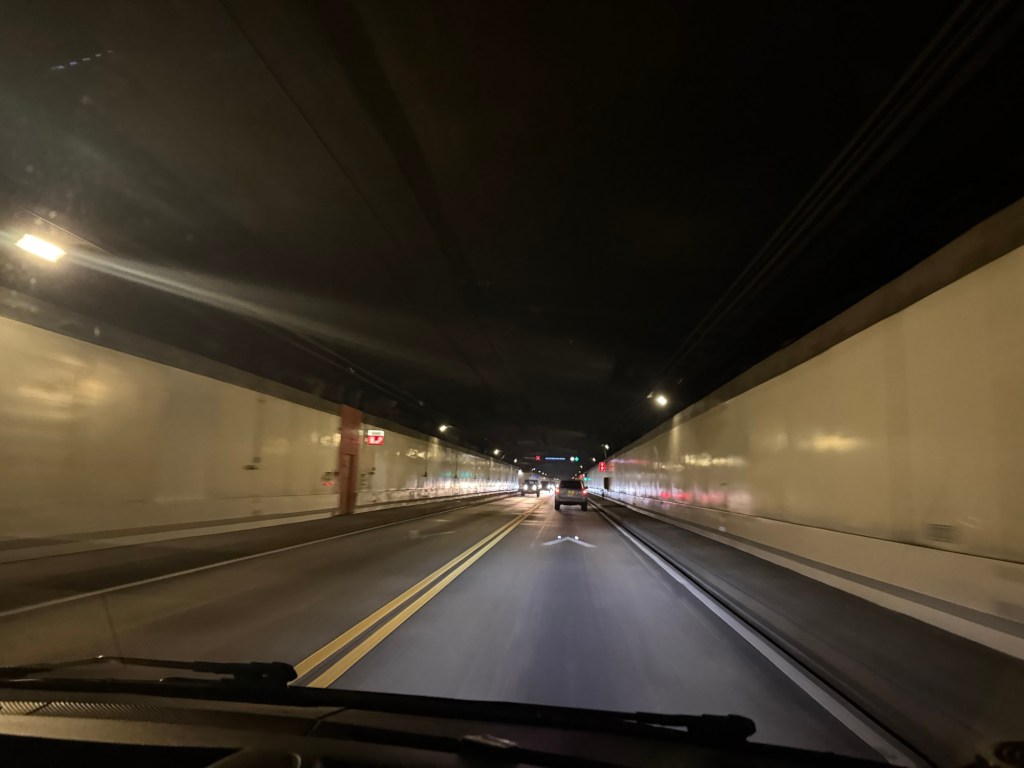
After a one hour flight from Bogota to Medellin, we arrived a little after three and met our new guide, Daniel. He wasted no time talking about Medellin, whose population is 4.5 million in a country of 51-52 million. Finally, at a very comfortable 7,500-4,200 feet in elevation, we were driving toward mountains and through tunnels, which separate the airport from the city. As we enter the first tunnel, he tells us it is 5.2 miles long and is the 2nd longest tunnel in South America. It delivers us to Medellin and, as we exit the tunnel, we are looking down on a city in a narrow valley surrounded by mountains. It is a lovely setting that immediately attracts our attention.
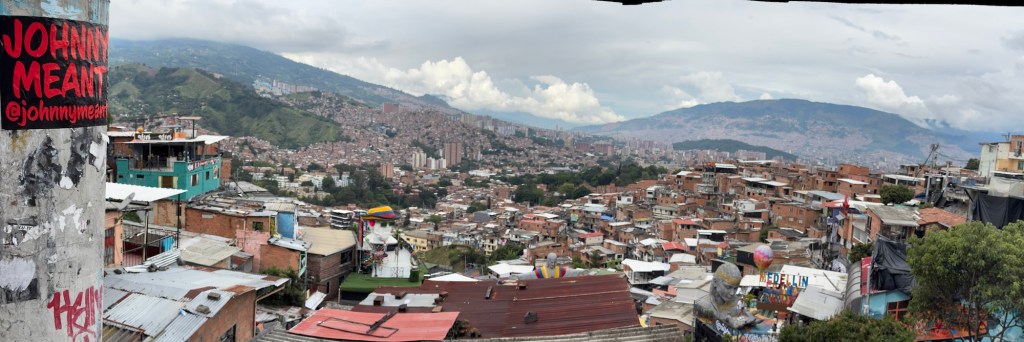
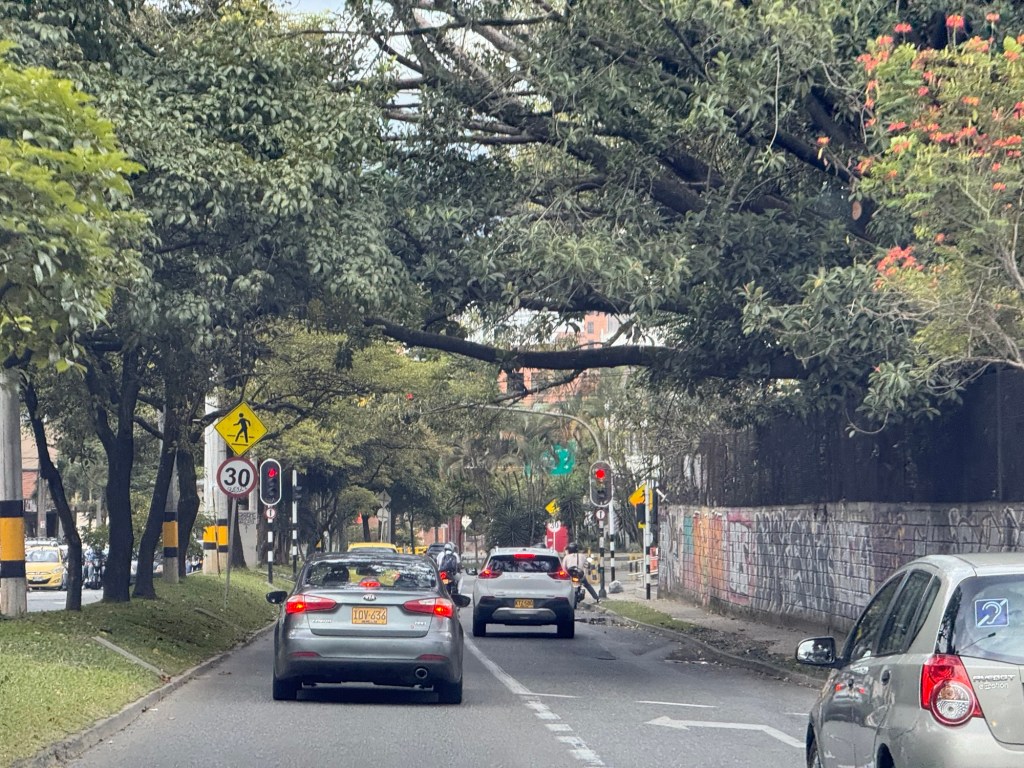
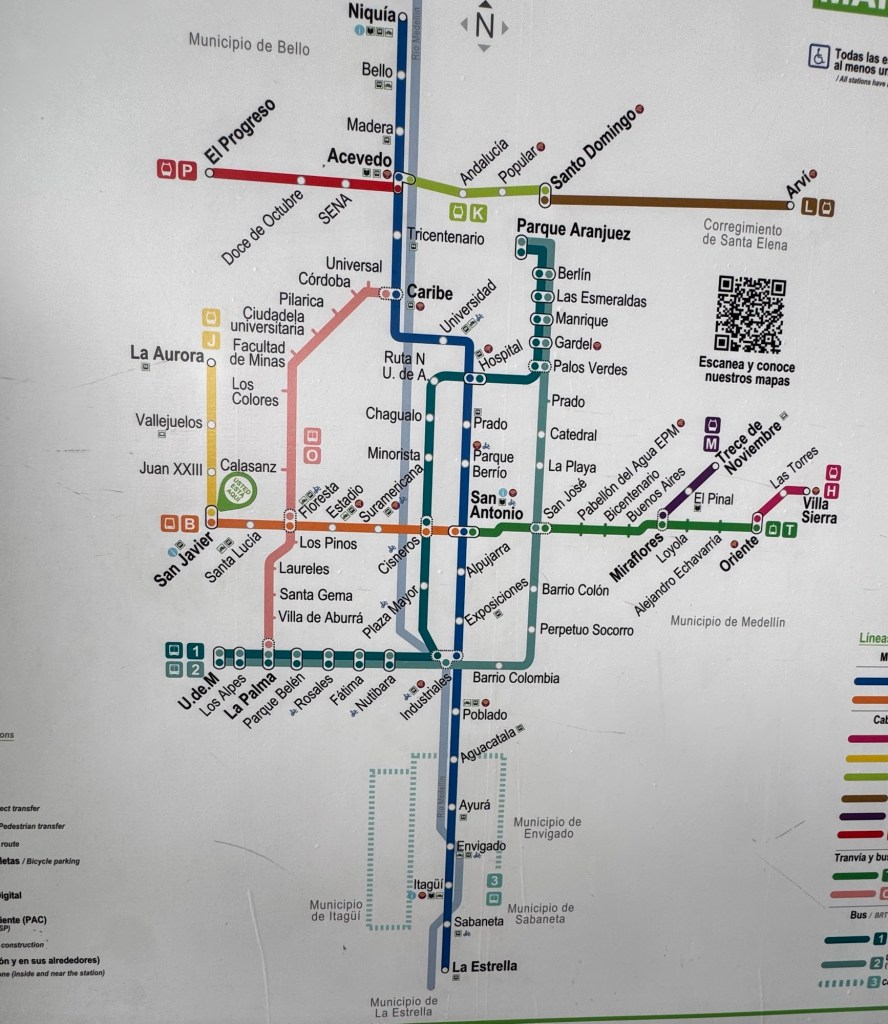
Daniel believes it is also the most successful city in Columbia because it has been very innovative in recovering from the violence of the late 80’s and early 90’s after Pablo Escobar. The city was founded in 1675 and has been growing slowly ever since. A major innovation is the transportation system developed in 1995. There are trains, busses and, especially, cable cars to move people around the city in addition to cars. There is no room for more roads and traffic is a nightmare for sure.
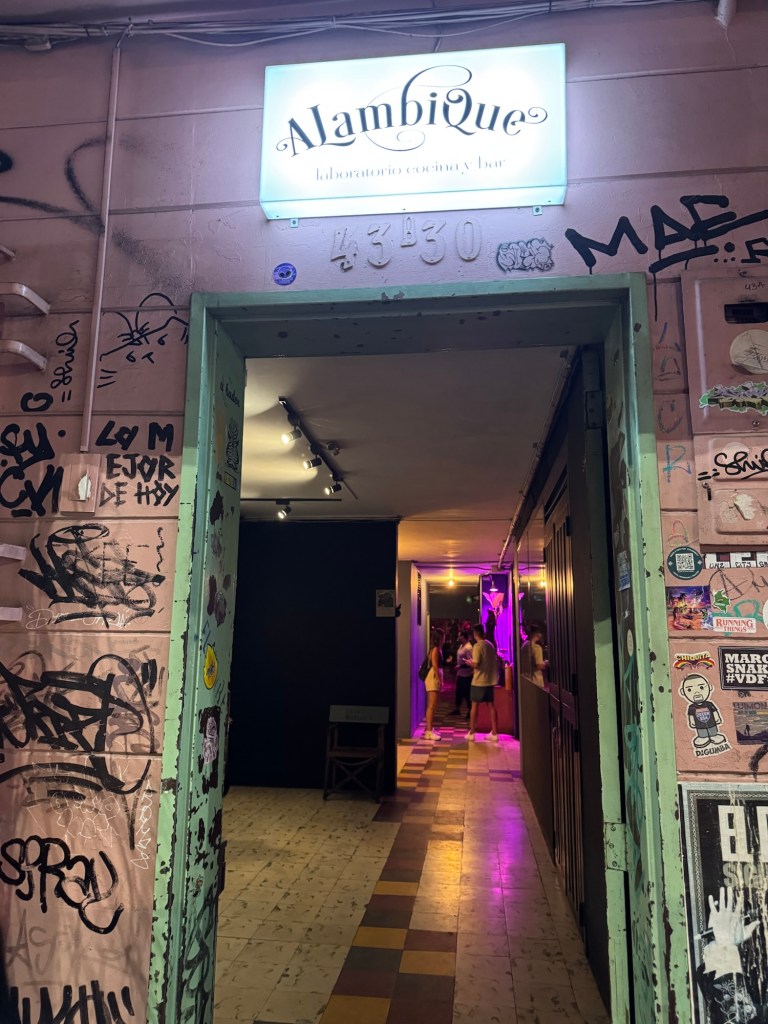
At our hotel, Elcielo, we chill the rest of the afternoon and take a 15 minute ride to dinner at a place called Alambique. The traffic was intense and driving was perilous. The restaurant was pretty funky in its decor, but the food was good. With no waste of time, we were back at the hotel and in bed.
Tuesday, November 4, 2025
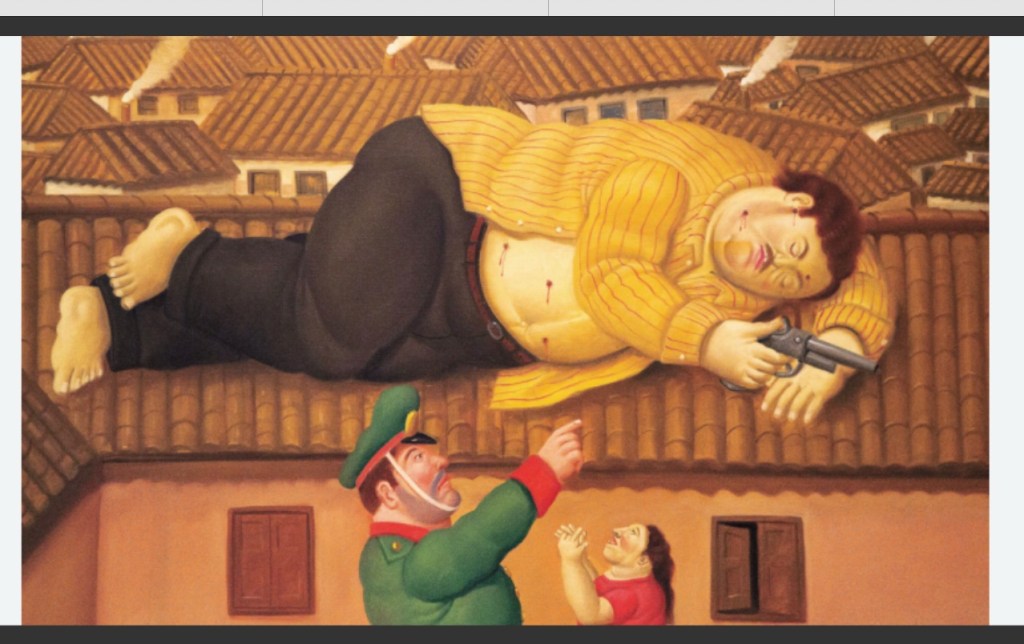
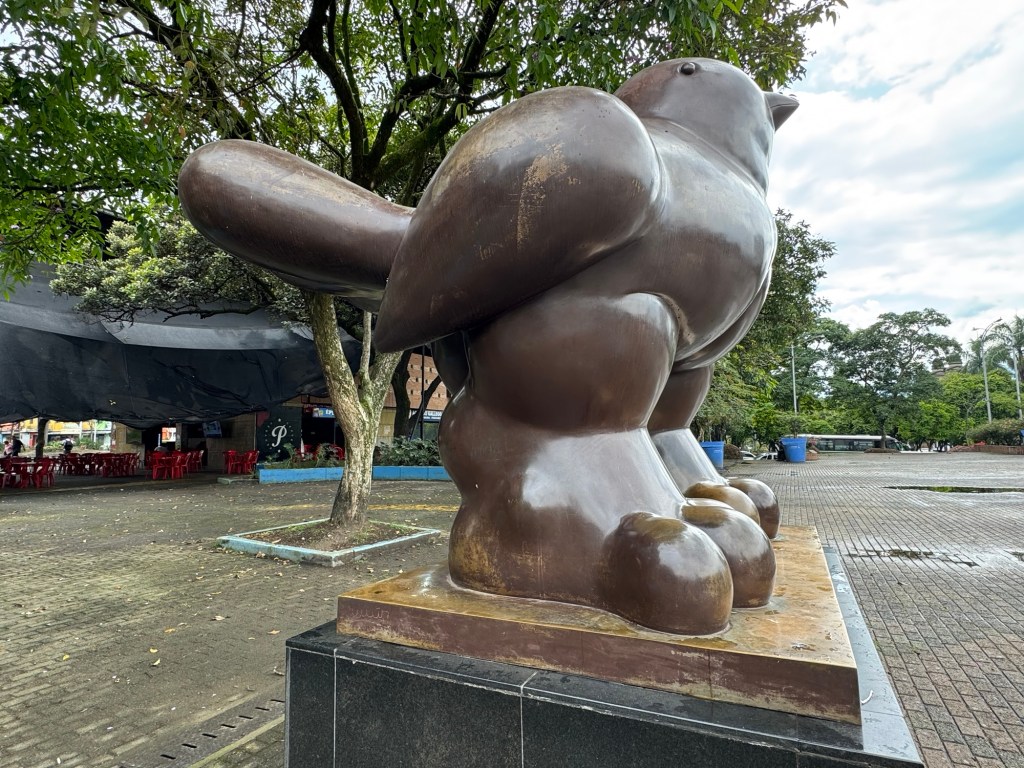
We meet Daniel at 9am for a tour of the Museum of Antioquia that houses the work of Fernando Botero (1932-2023), a famous painter and sculptor from Columbia, who organized the art in the museum himself. Unfortunately, photos of his work in the museum are not allowed. Mark managed to find copies of 2 paintings and we were able to photograph his sculptures in the town square, where there are 28 pieces. An expert museum guide, Jose, gave us a 2 hour private tour that was superb. If only I could remember more of his comments. Botero was interested in volume, size and monumentality, political criticism and humor, not in making fat people. In his work you find normal sized elements as well at outsized ones. Each one of his paintings tells a story with wit, irony, insight and critical acumen. He started with oil, then moved to water color and then into sculpture in the late 70’s. He lived in Italy in the late 70’s and studied renaissance art and the passion.
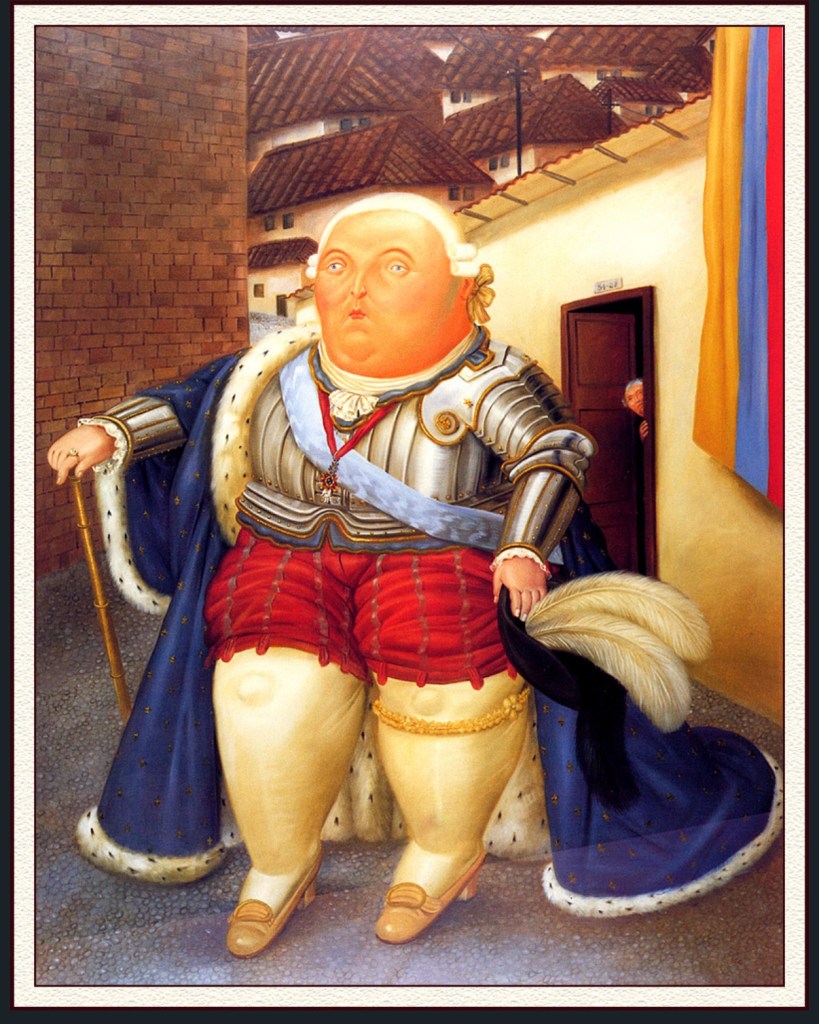
What was interesting for me was the face of Bertero’s mother poking out of the doorway. She had wanted to visit France one more time, but died before the trip. Botero has her forever looking in on the French king. The Colombian flag puts her in place. Luis’s eyes, mouth, nose, hand and feet are normal in size and the colors are brilliant.
In the town square we photographed some of Botero’s sculptures.
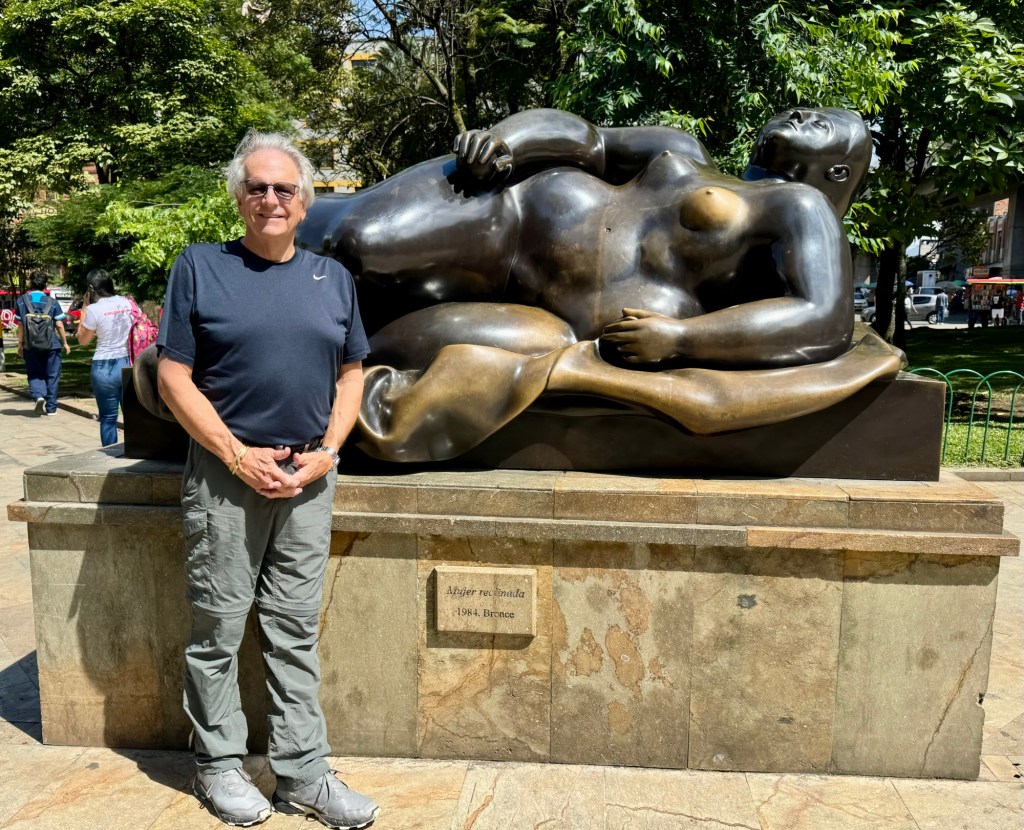

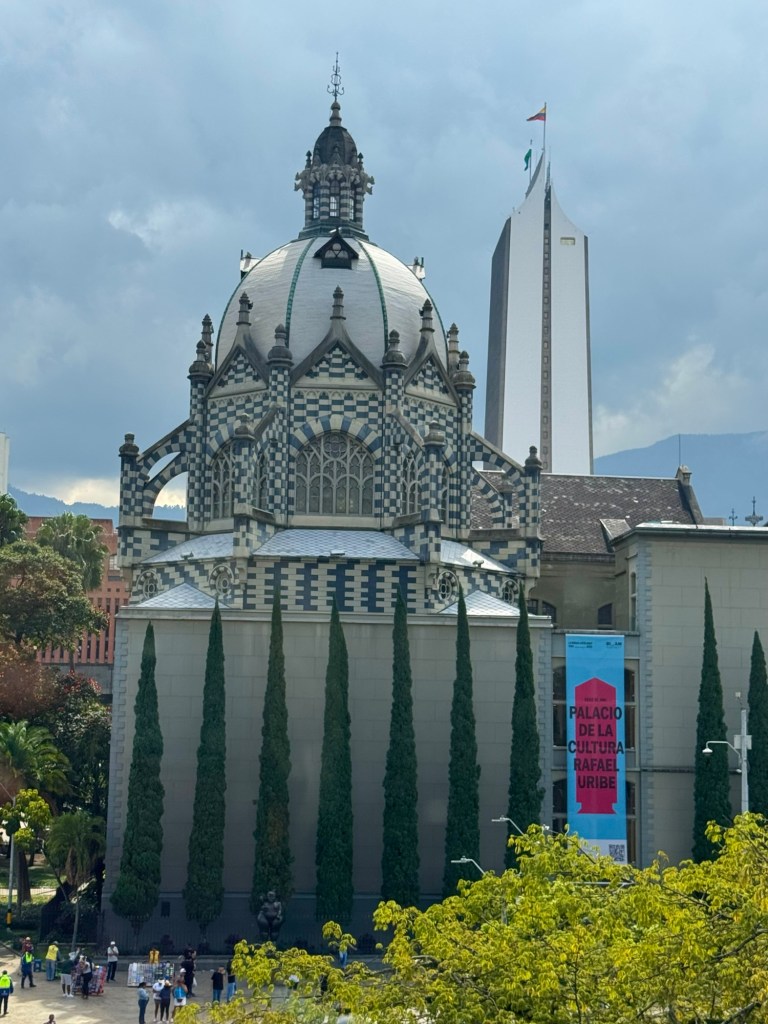


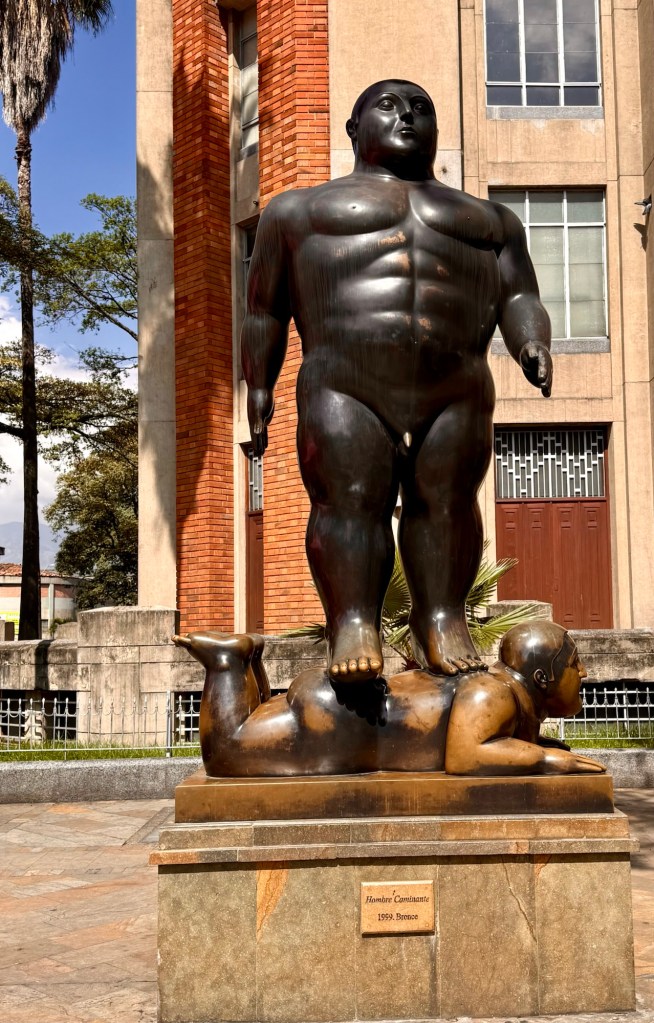
Botero created thousands of works of art in his 91 years. It is said that he painted or sculpted every day right to the end. He had 3 wives and 4 children.
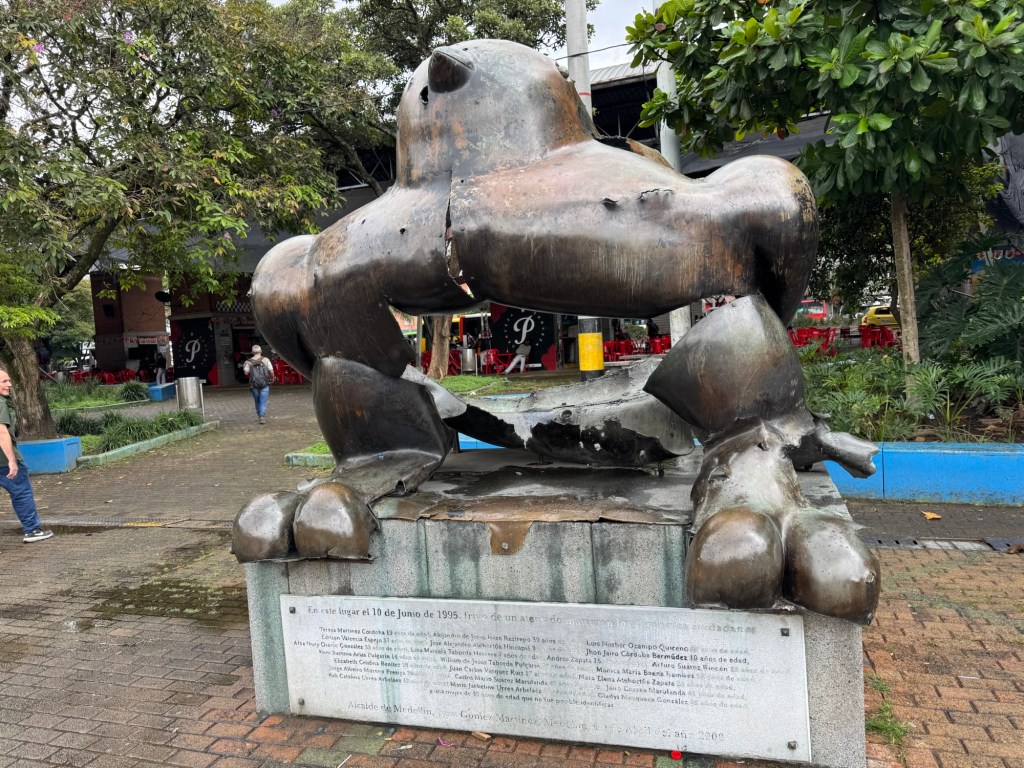
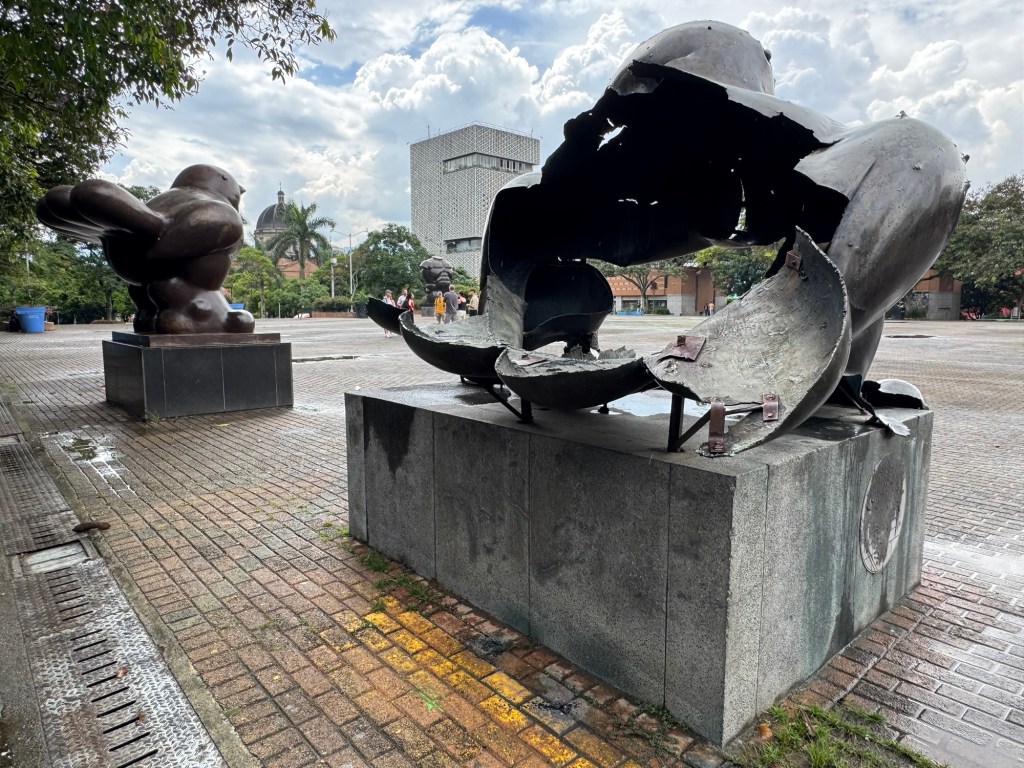

After we left the museum and headed for a cable car, Dan gave us a bit of information about Pablo Escobar, the cartels and cocaine. There was the Medellin Cartel, which Escobar headed, the Cali Cartel and the government. The latter two worked together to try to eliminate Escobar. In the 80’s and 90’s, Colombia was the world’s largest producer of cocaine. In the late 80’s, one lb of Cocaine was $100 in Colombia, $2000 wholesale in the US and $100,000 street value in the US. The US was the main market with Europe and Asia following. Escobar was making so much money that he even bought 4 hippos and kept them in his private zoo along with other animals. He helped poor people with one hand and killed other people with the other. In the end no one mourned his death, except his mother.
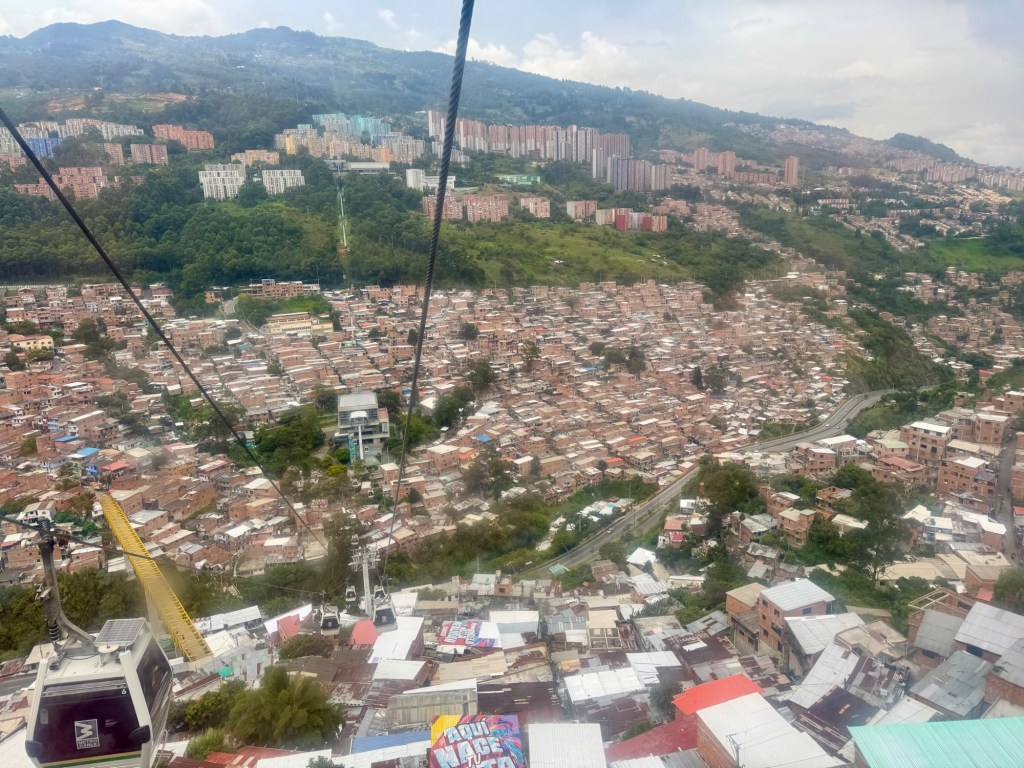
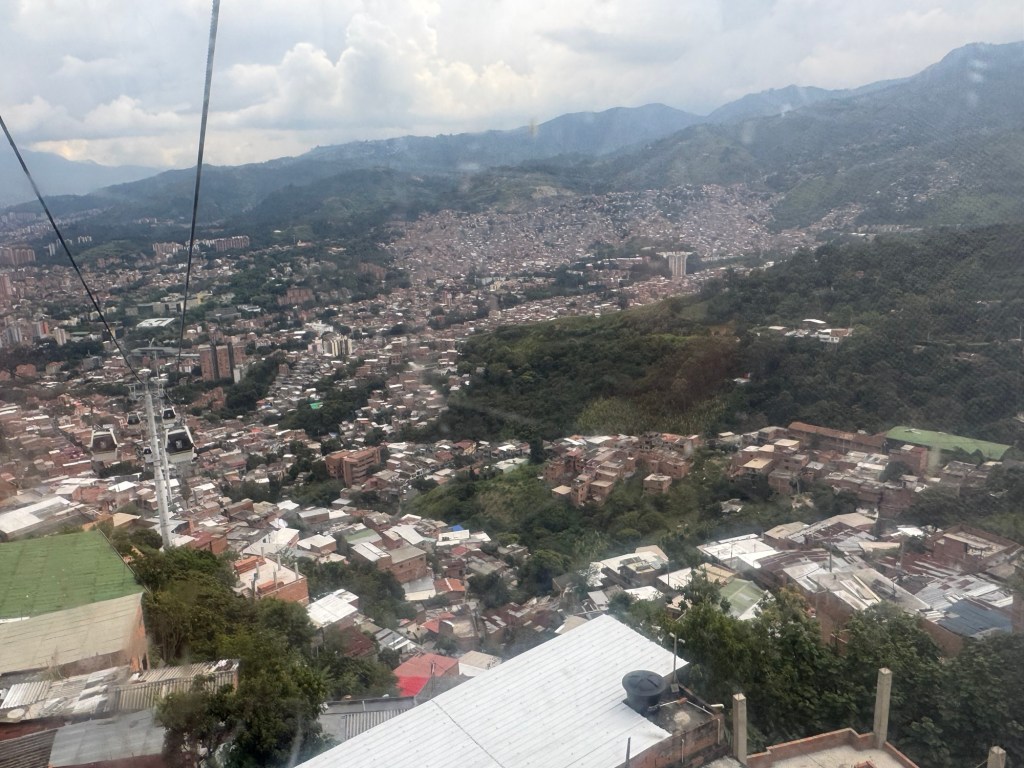
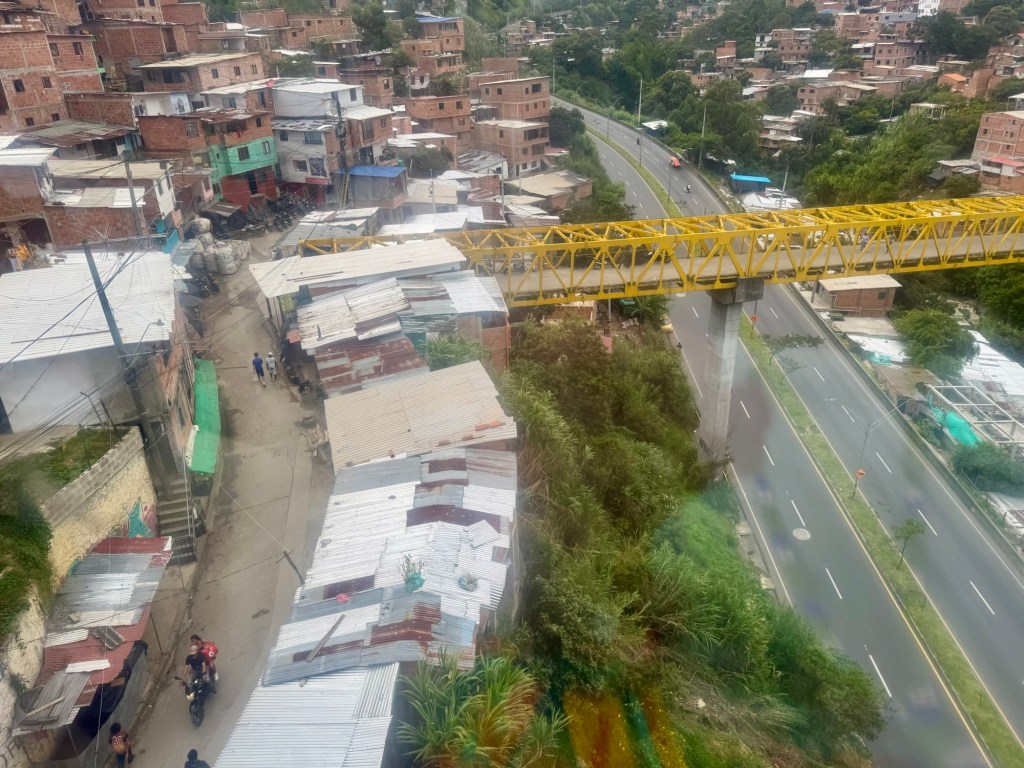
By this time, Dan had us riding 3 stops of the yellow line of the cable car system. It is amazing how much traffic is off the streets and riding the cable cars.
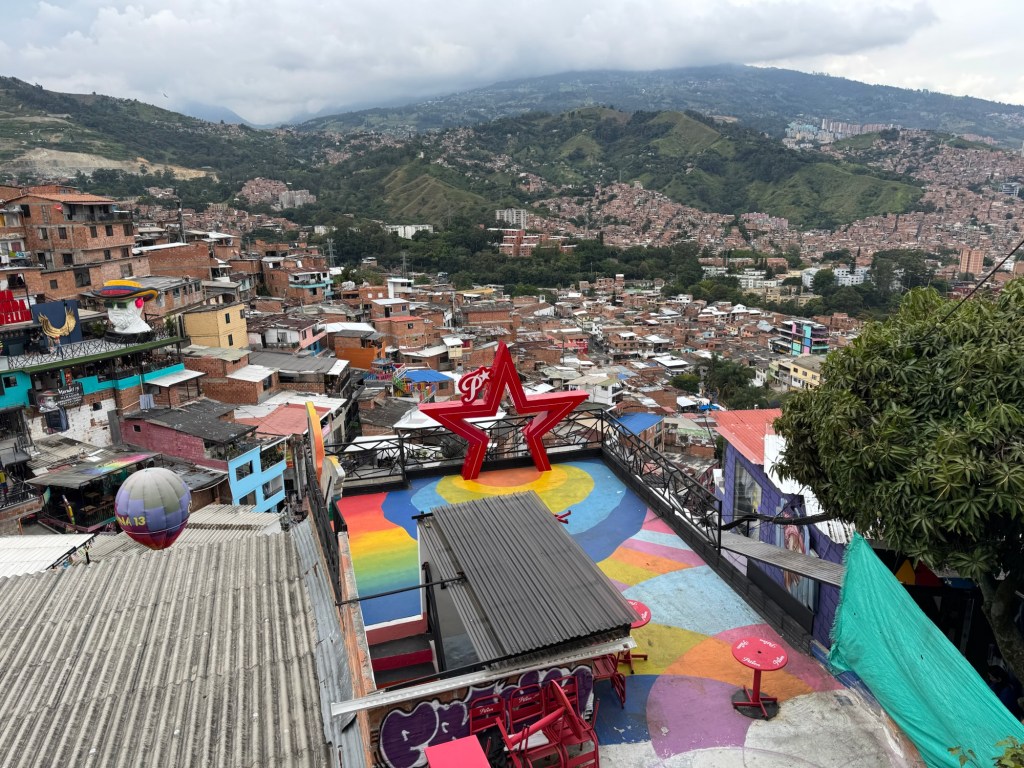
When we got off the car, we were met by another expert guide Dan had enlisted, Stephen, to show us through District 13, which had been an impoverished and drug infested neighborhood in the 80’s and 90’s and is now the in place to be with a focus on art and music. Stephen knew everyone in the hood and introduced us as we walked up and down connecting staircases. We stopped for tasty empinadas, visited art shops, bot a shirt for Mark, chatted with folk who spoke English and generally had a good time. Here are some pix from the walk and the impressive art.
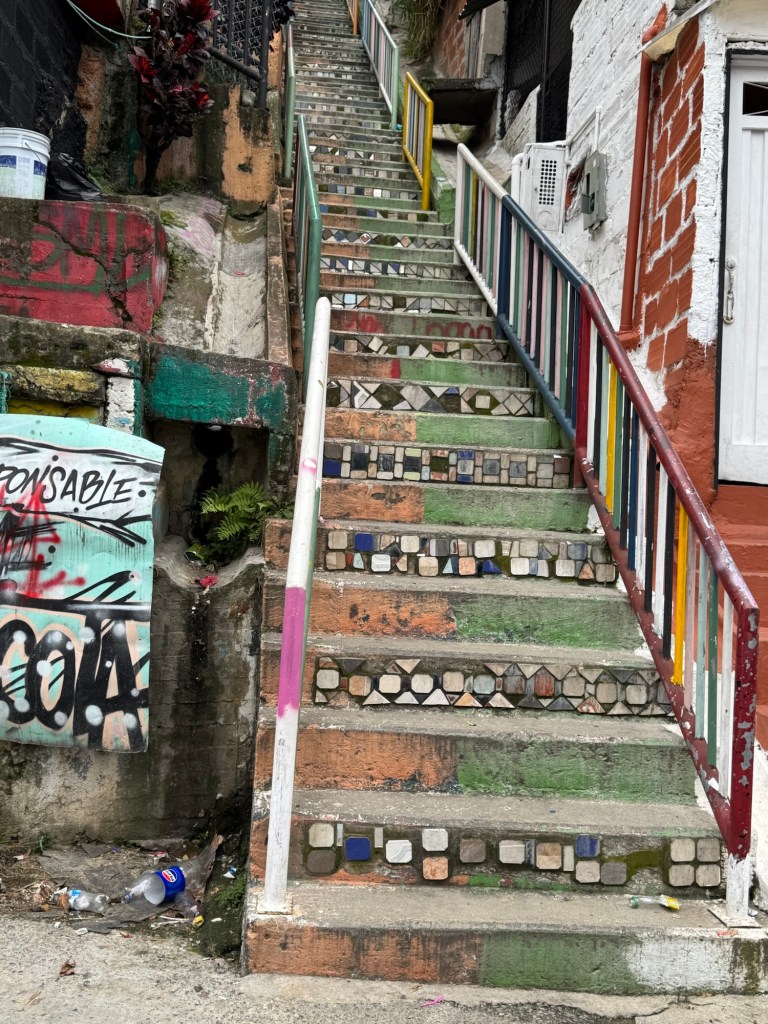
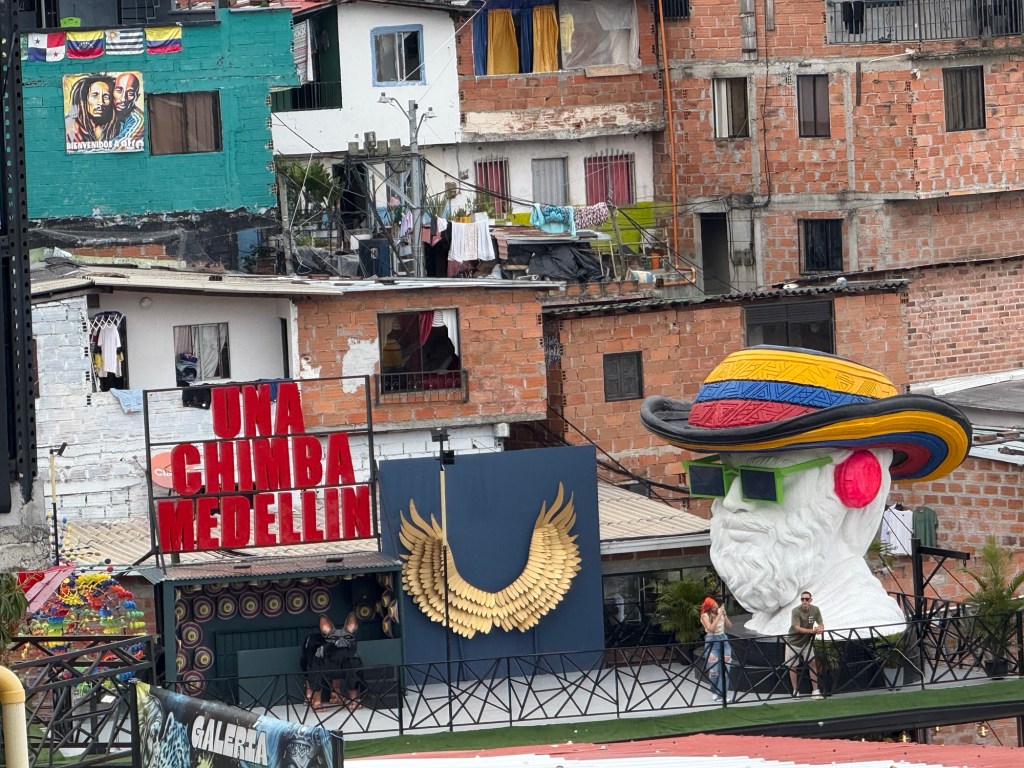
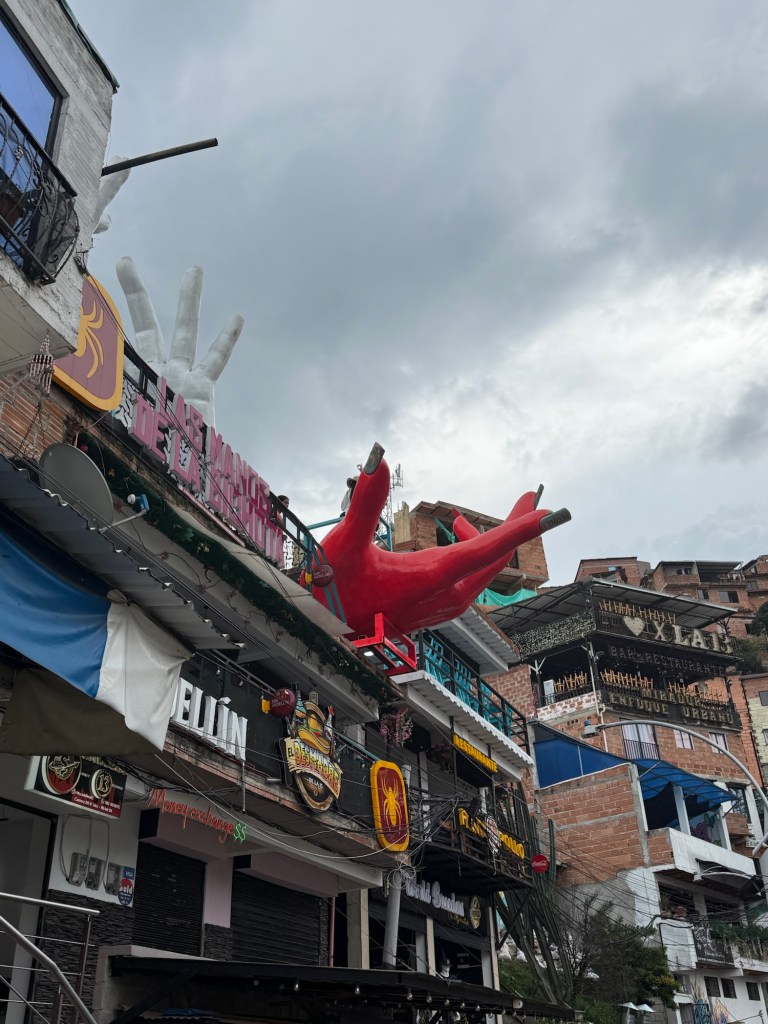
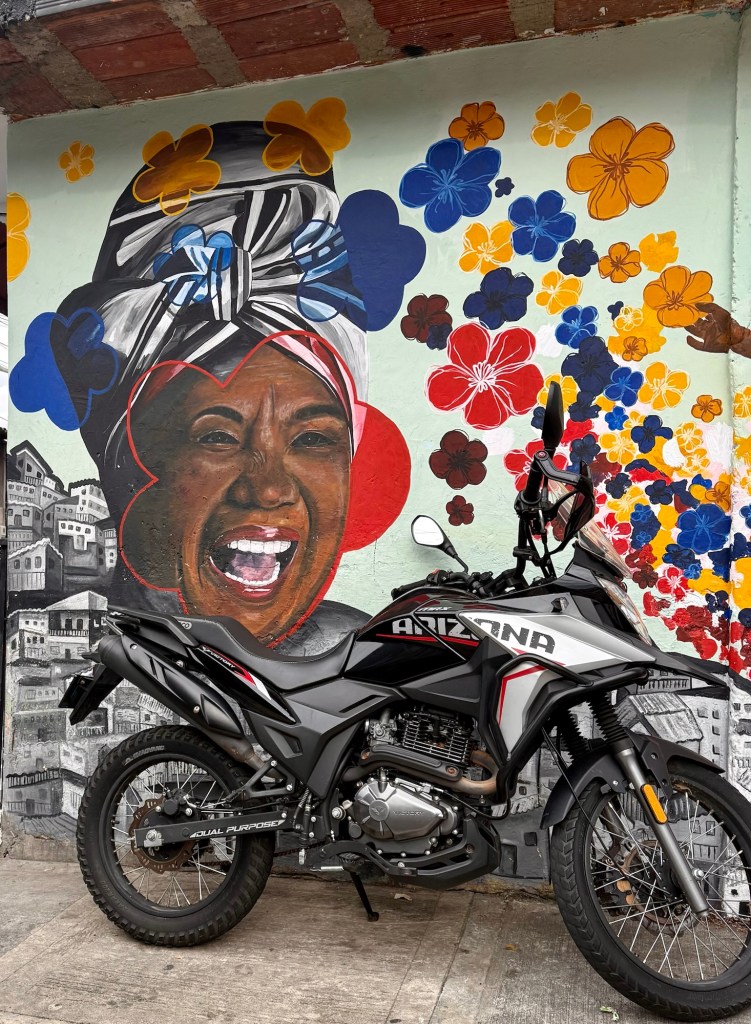
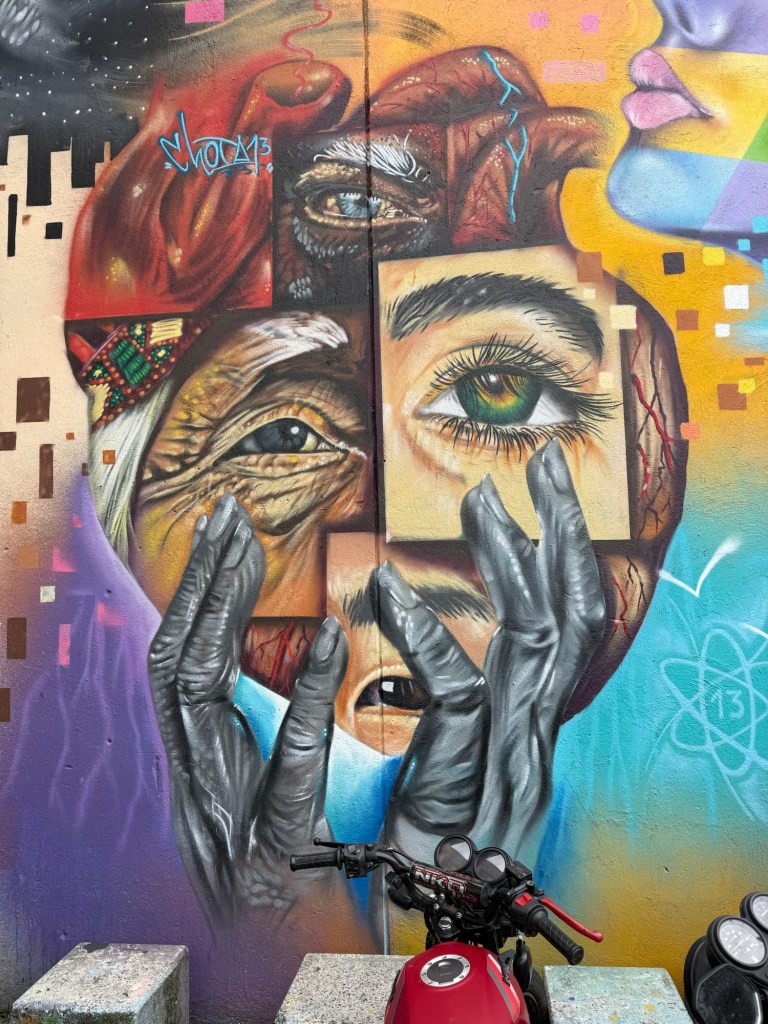
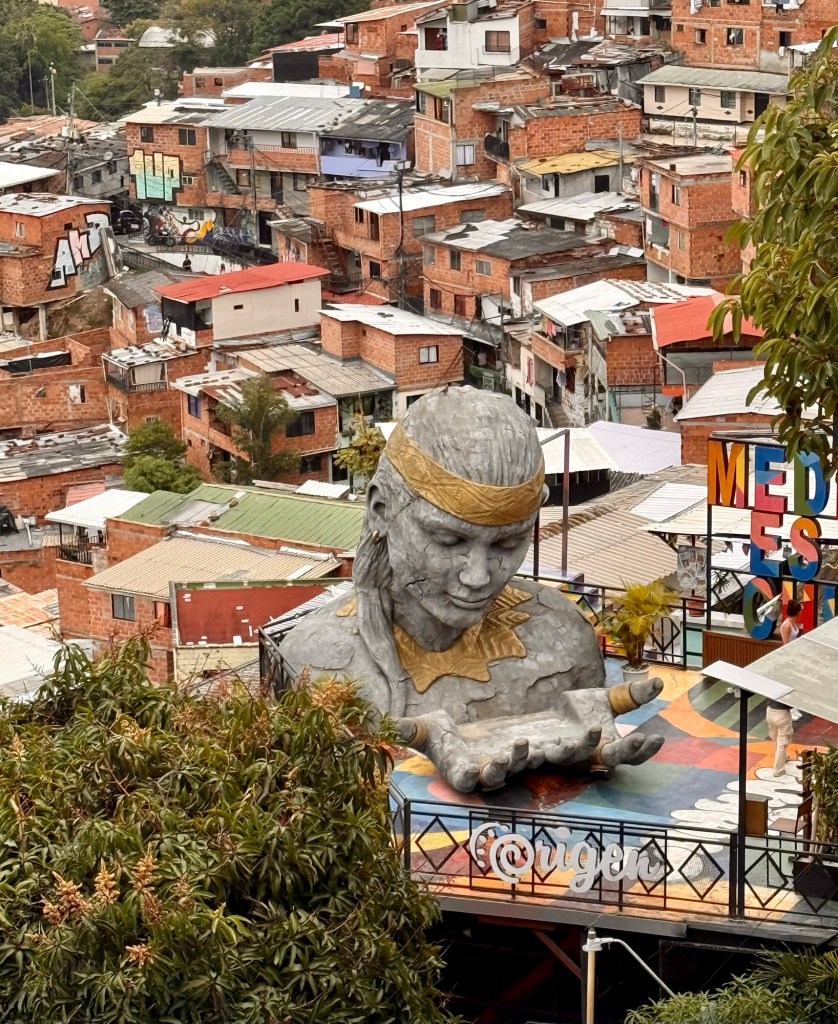
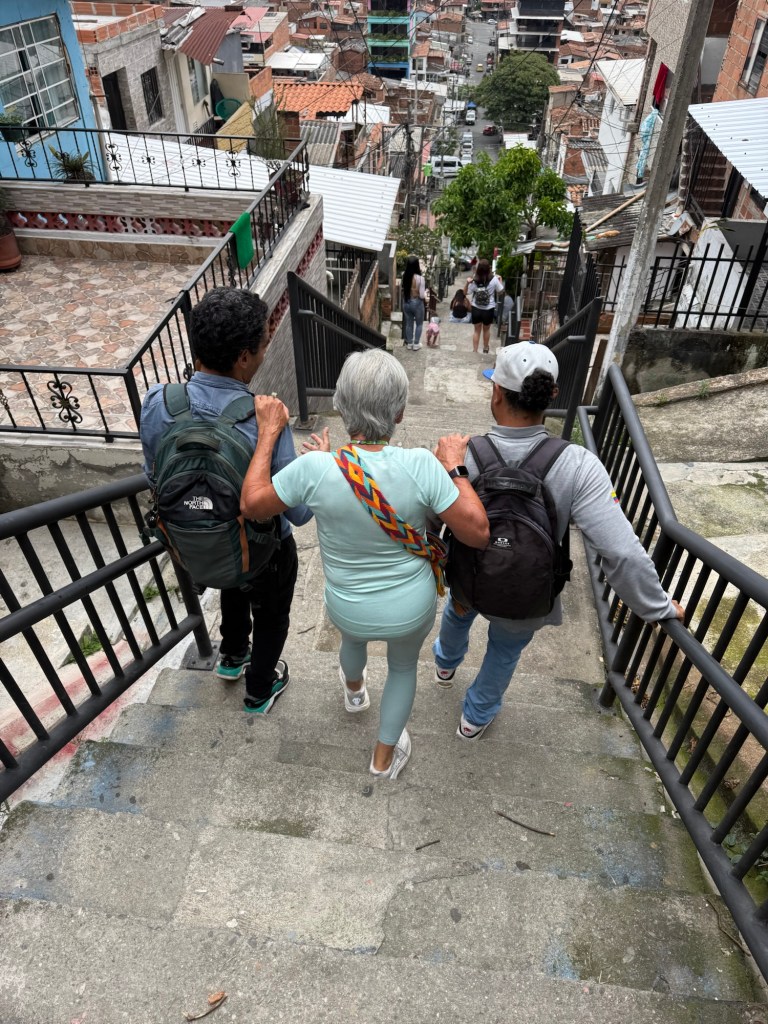
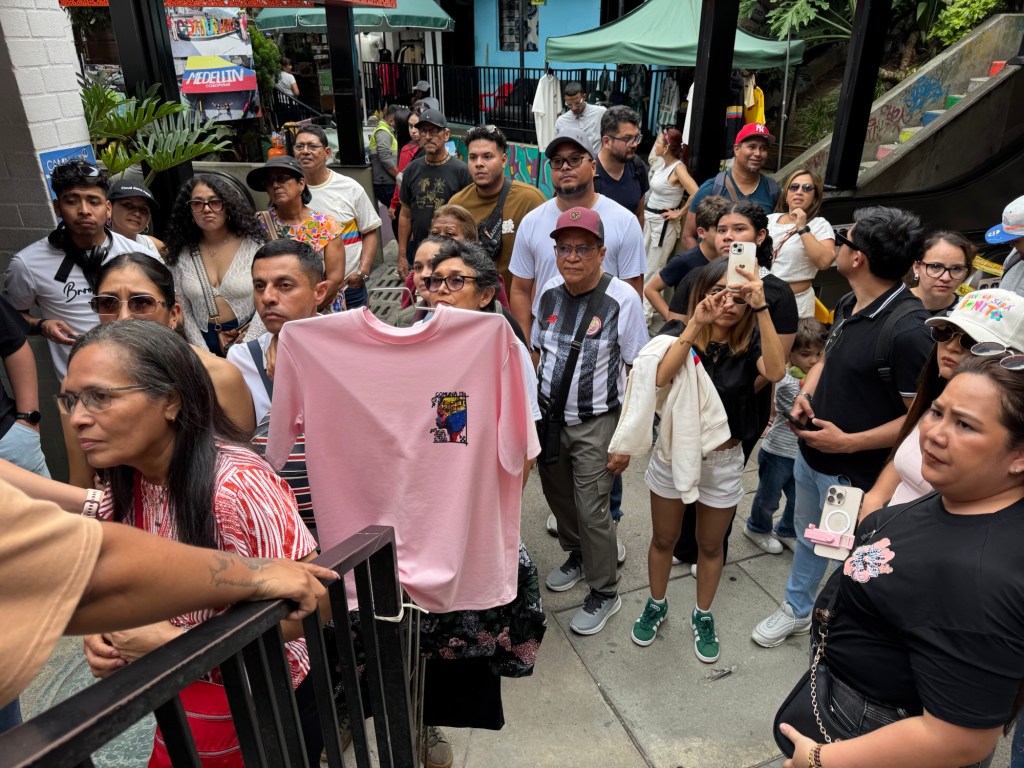
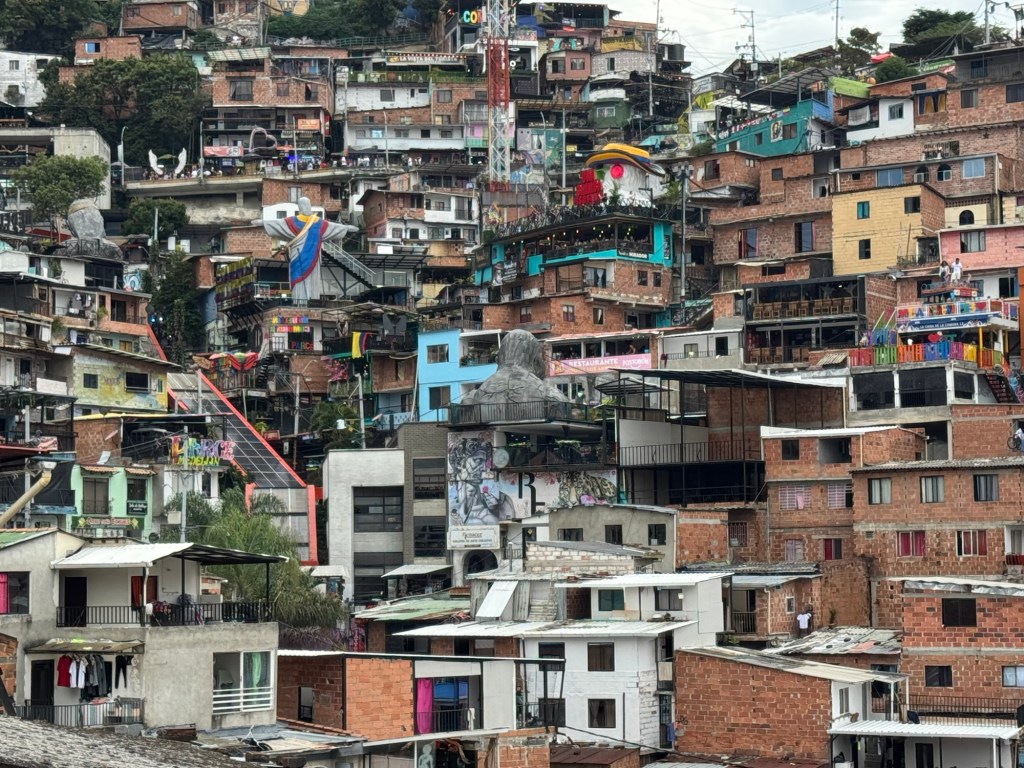

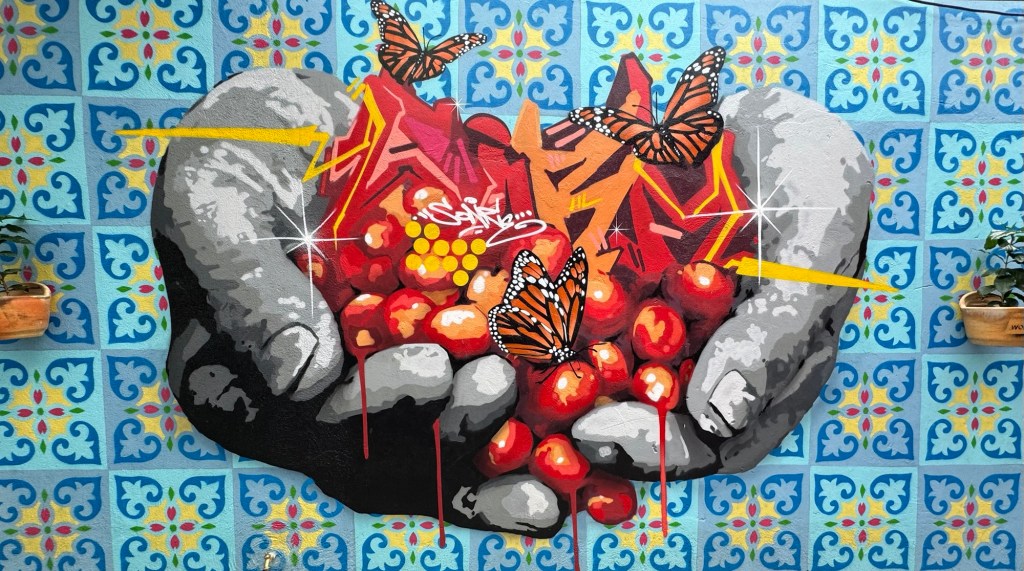
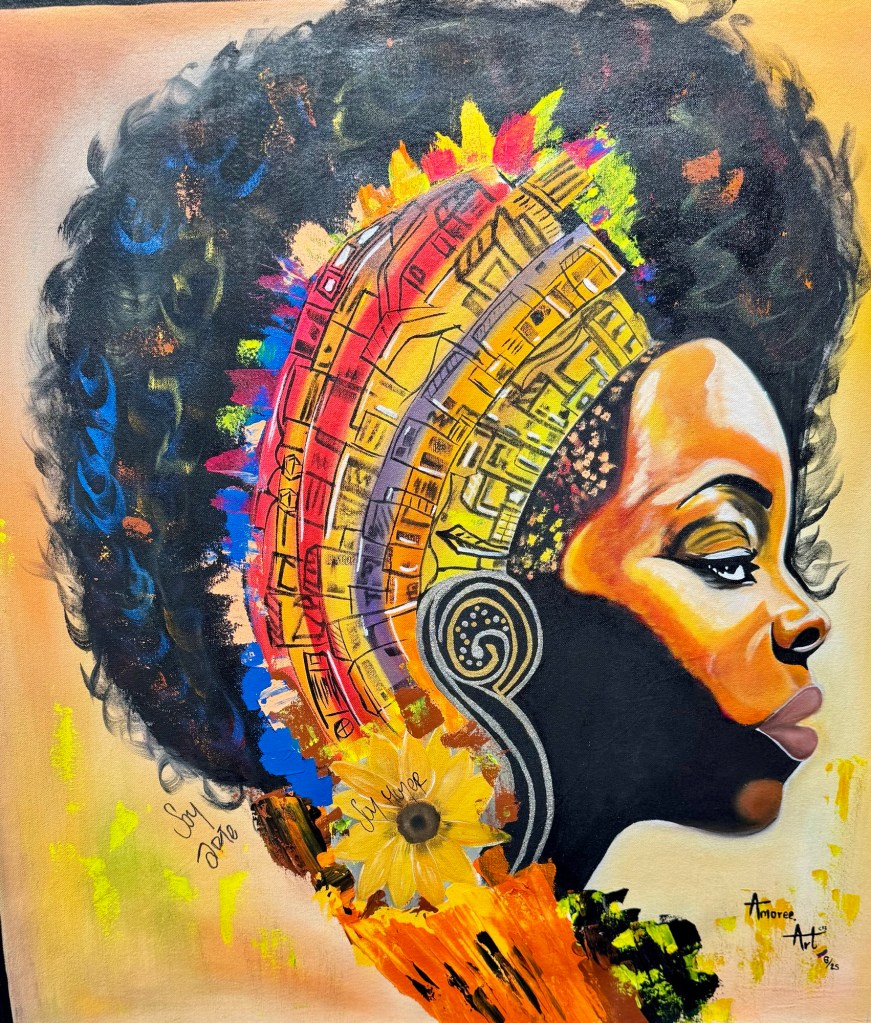
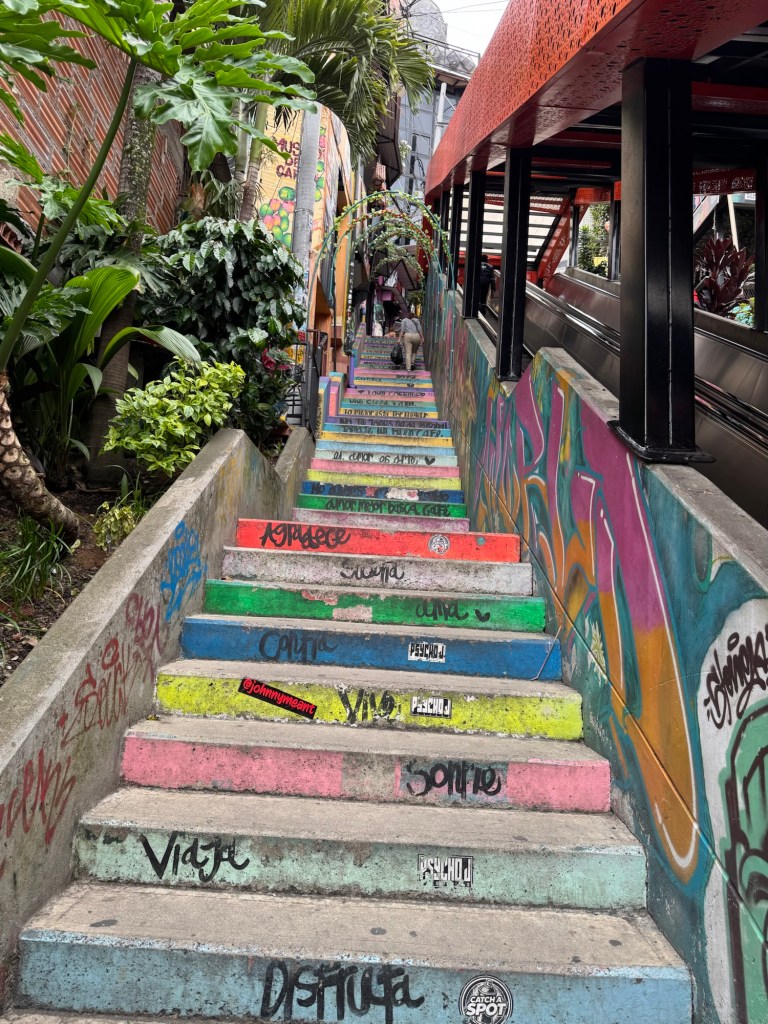
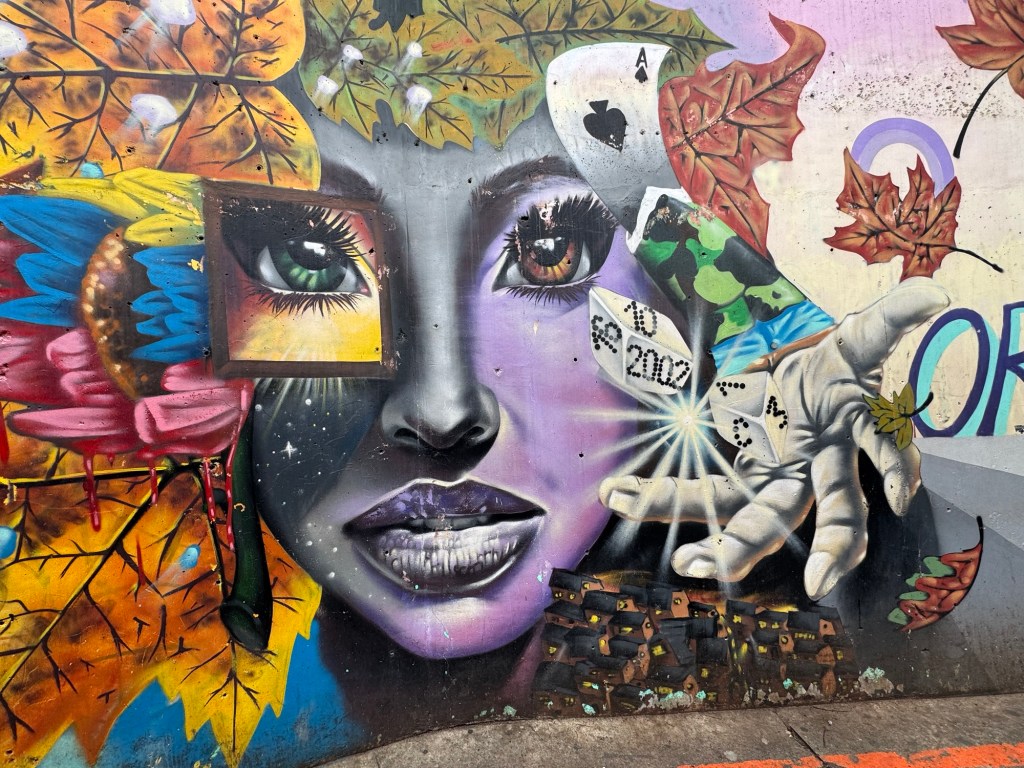
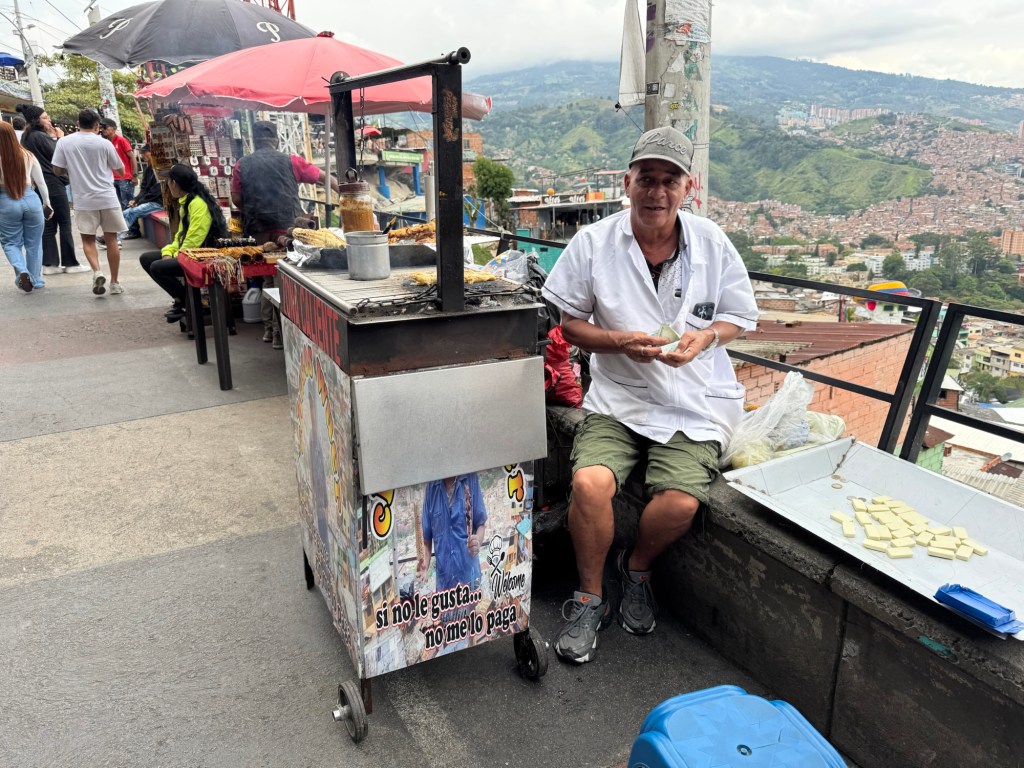
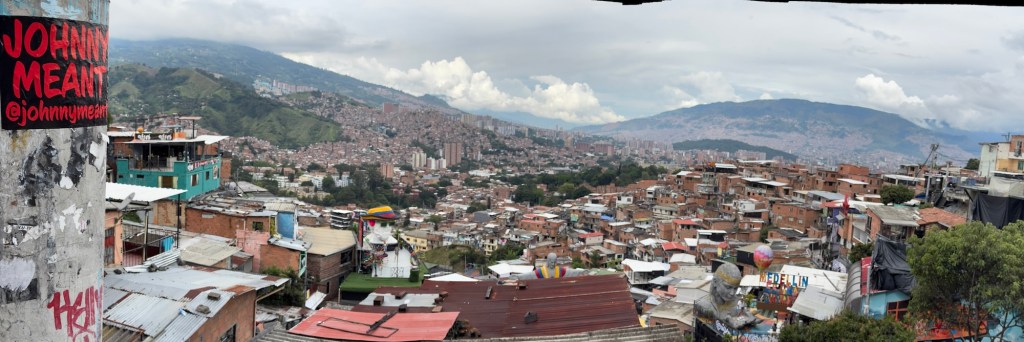
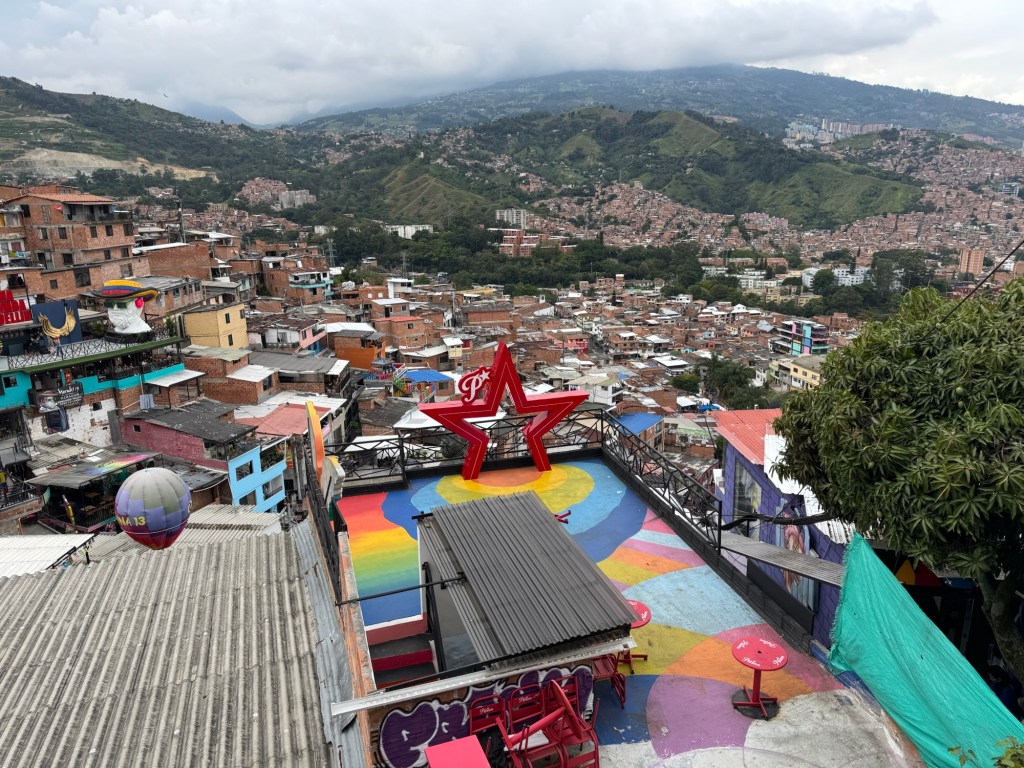

The culture of District 13 or Comuna, as it is called is; Number 1–the DJ; Number 2–Breakdancers; Number 3–Rappers; Number 4–graffiti and murals.
The cable car system has helped the communities in more ways than transportation. It provides overpasses from one area to another, stops have been converted to libraries where people can read and study and companies and the govt have stepped up to buy food for the very poor.
That evening, we ate dinner at a place called Ocio. We had an interesting time getting there as our Uber driver had a difficult time finding the place. We did get good local, if a bit heavy, meals. I had pork shank and Mark had short ribs. After the long day we were ready to quit when we got back to the hotel.
Wednesday, November 5, 2025
Today was our day to drive out of the city and see some of the countryside. We drove up to 7,300 feet and what is known as the second floor, Medellin being the first floor. The 2nd floor is similar to the first in that it is a long and narrow valley. Many people including our guide, live in the 2nd floor as there is currently more room to spread out.
Dan told us there are six levels of wealth throughout each neighborhood or area of the country. If you live in a level 6 area, you are considered very rich and taxed a lot to help the lowest levels. Level 5 neighborhoods are also quite wealthy. It’s not only a property tax but a sliding scale for utilities. Levels 3 and 4 areas are about in the middle and pay only a little more than what they use. Levels 1 and 2 pay no tax at all and are helped by the upper levels. Apparently this is the way taxes work in all of Colombia. I rather like it. There is 8.7% unemployment currently, the lowest in recent history.

Finally we arrived at our destination for the day, the Alma del Bosque, “Soul of the Forest”, or home of the Piedrahita Family. The place is in the central Andies at 7340 feet and accommodates a stable of French saddle horses, 30 acres of hydrangeas and a couple of acres of orchids. It is quite an interesting place and we got a full tour of the flowers, but not of the horses.
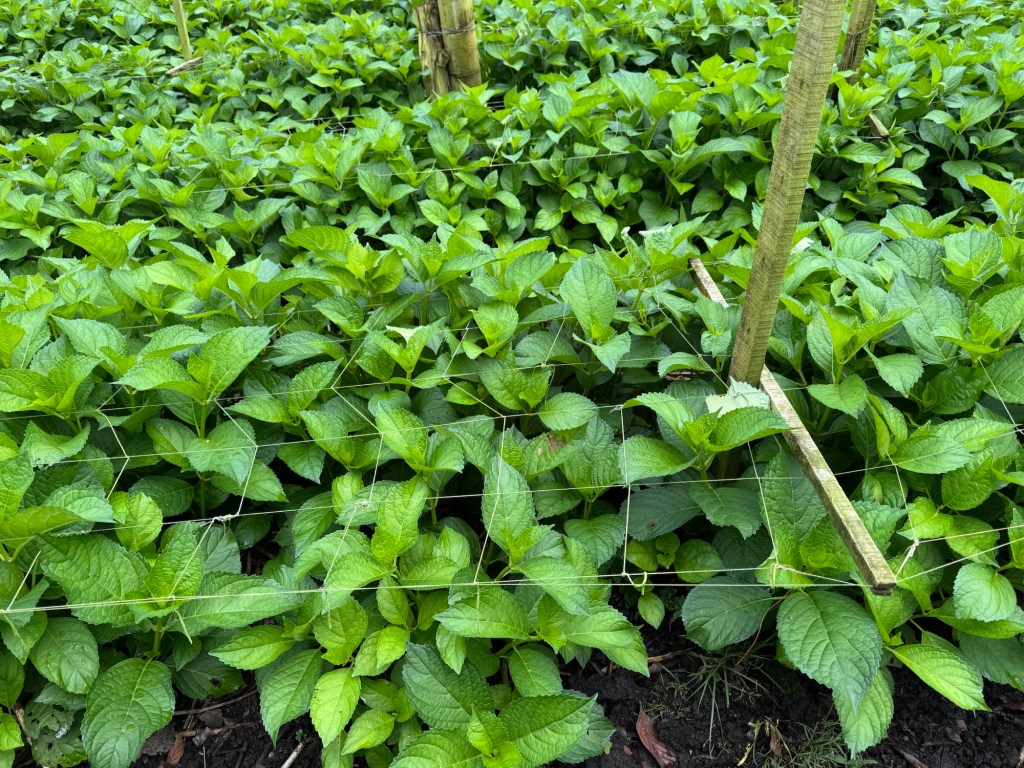
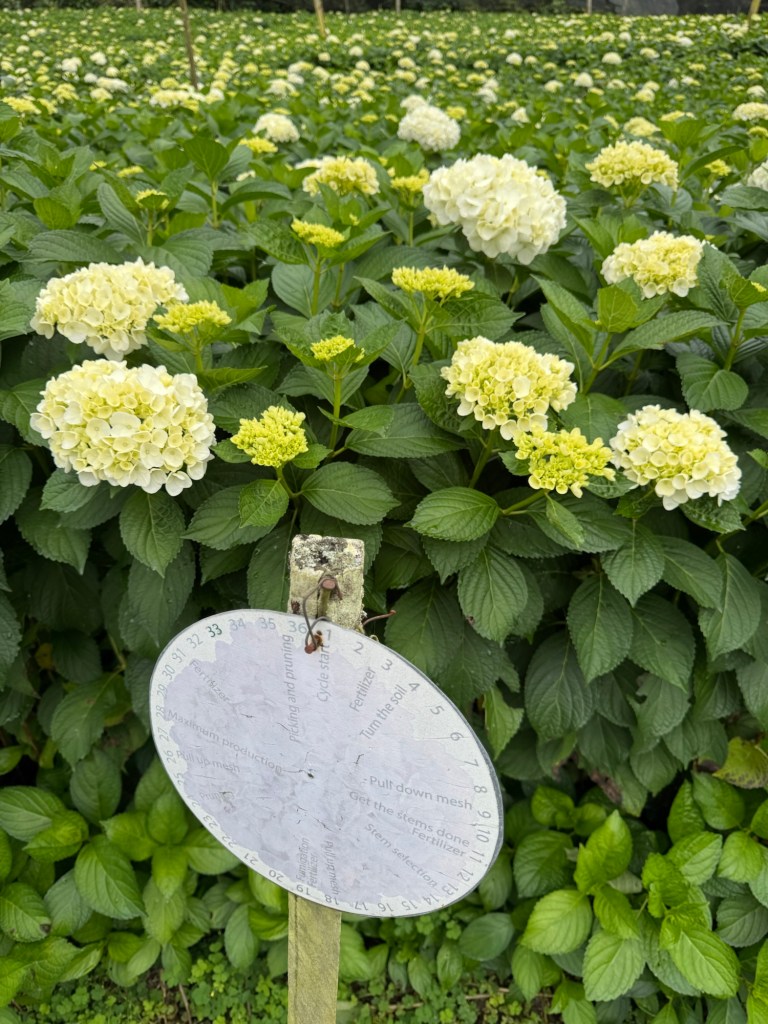
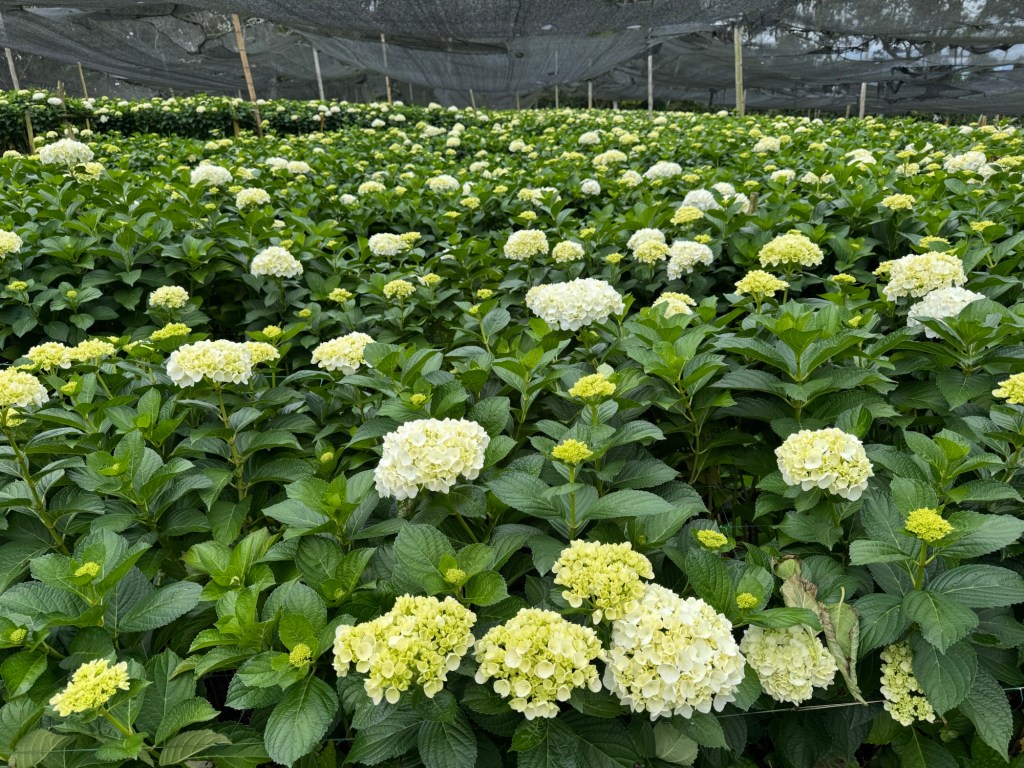
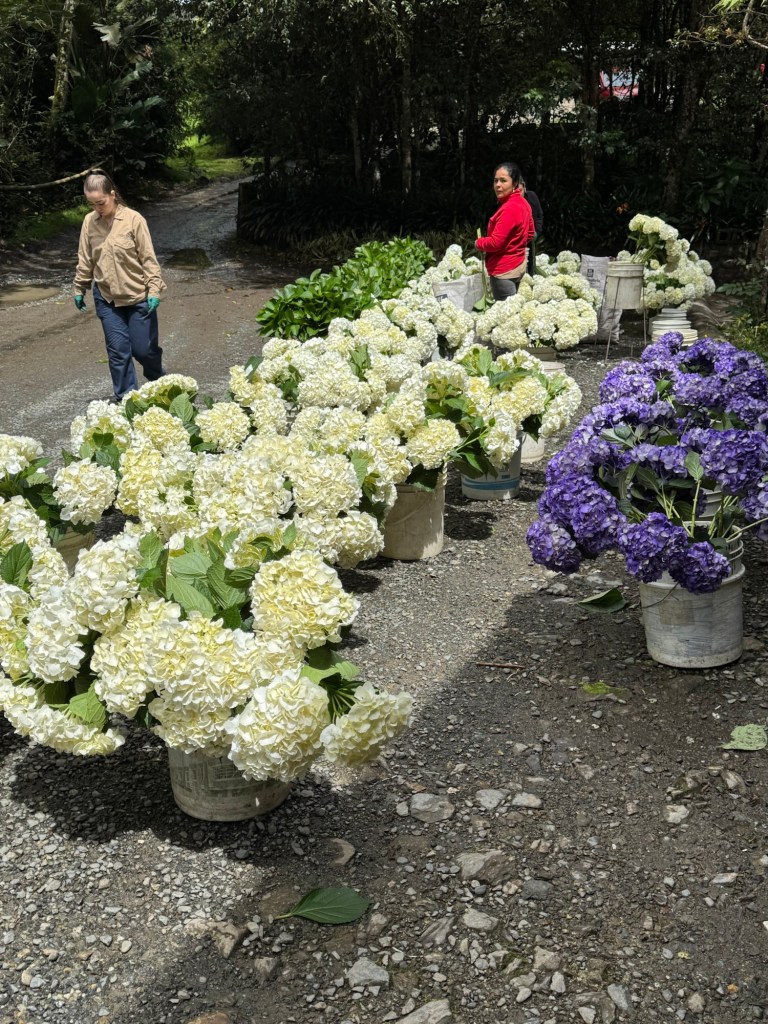
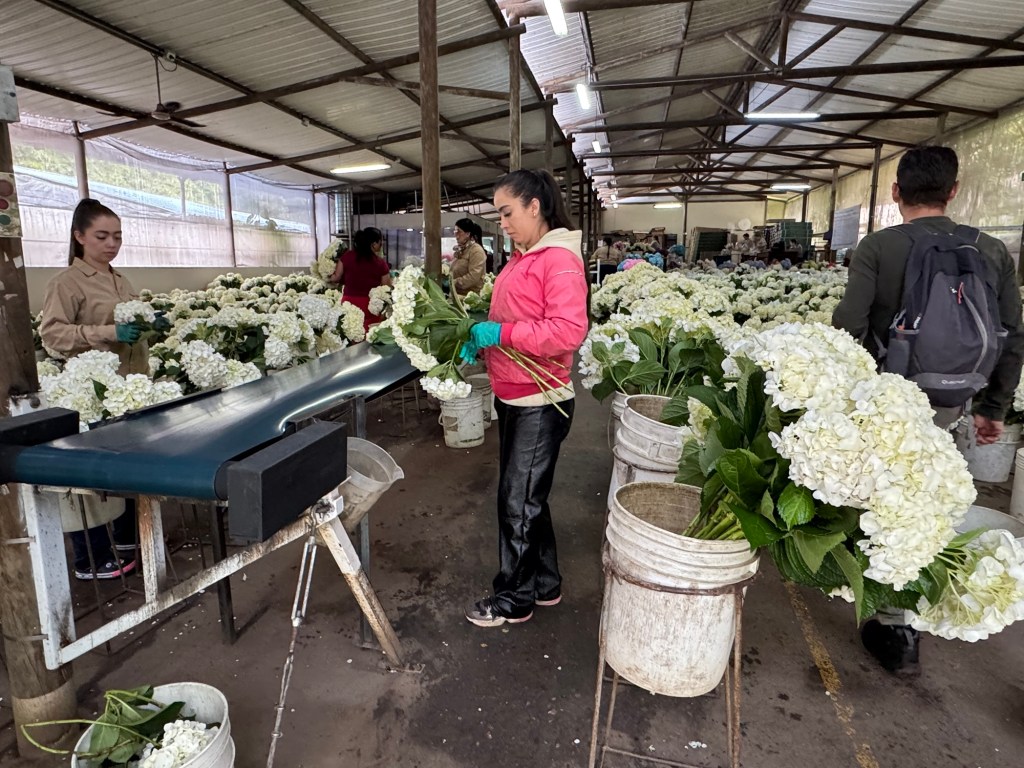
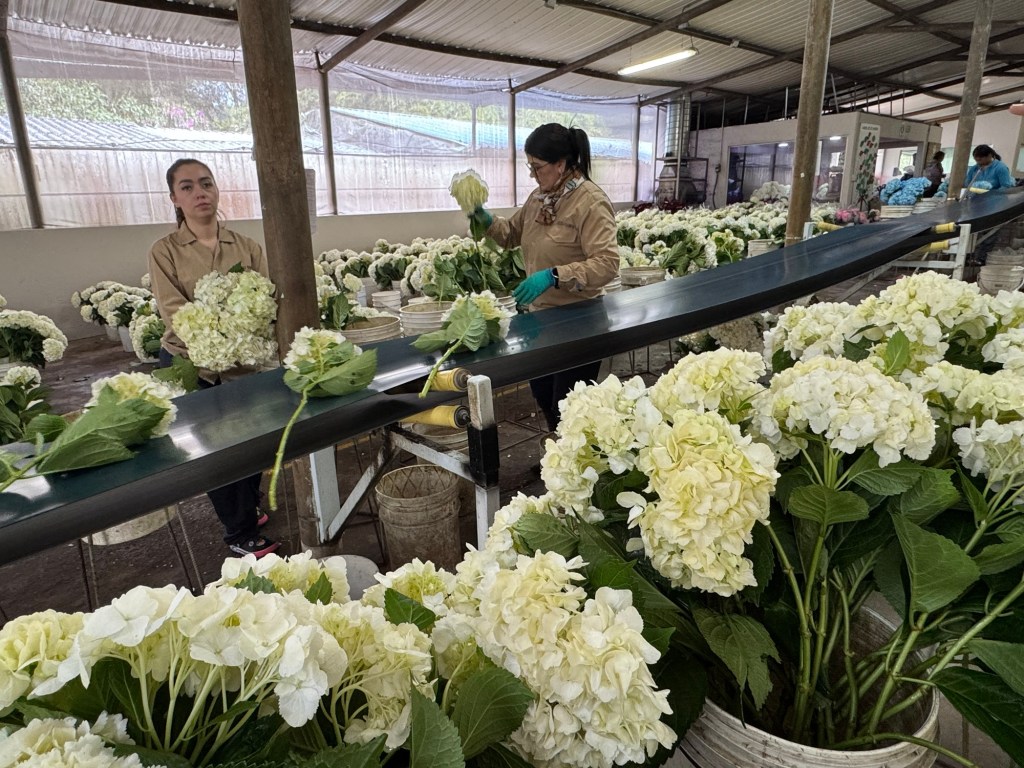
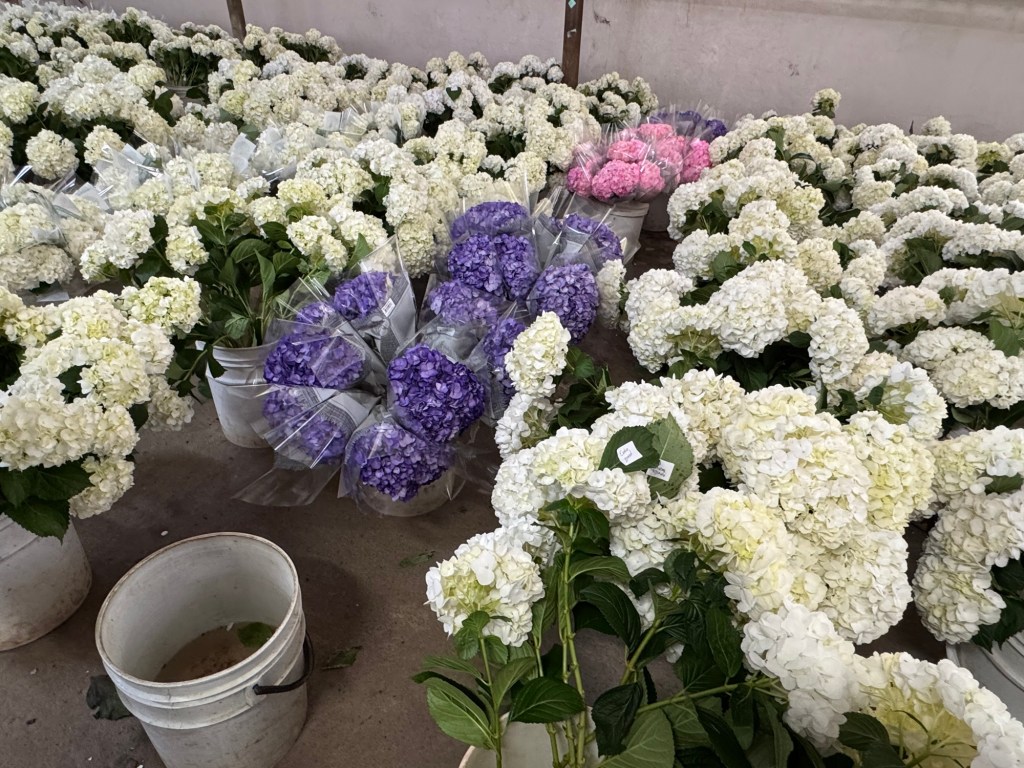
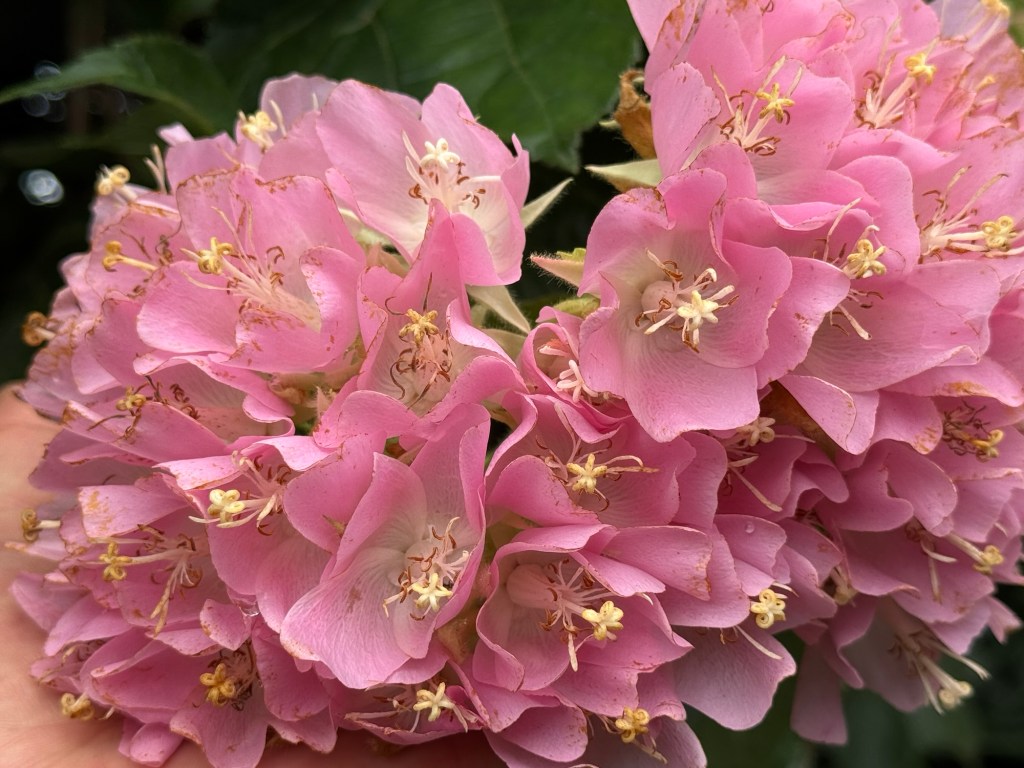
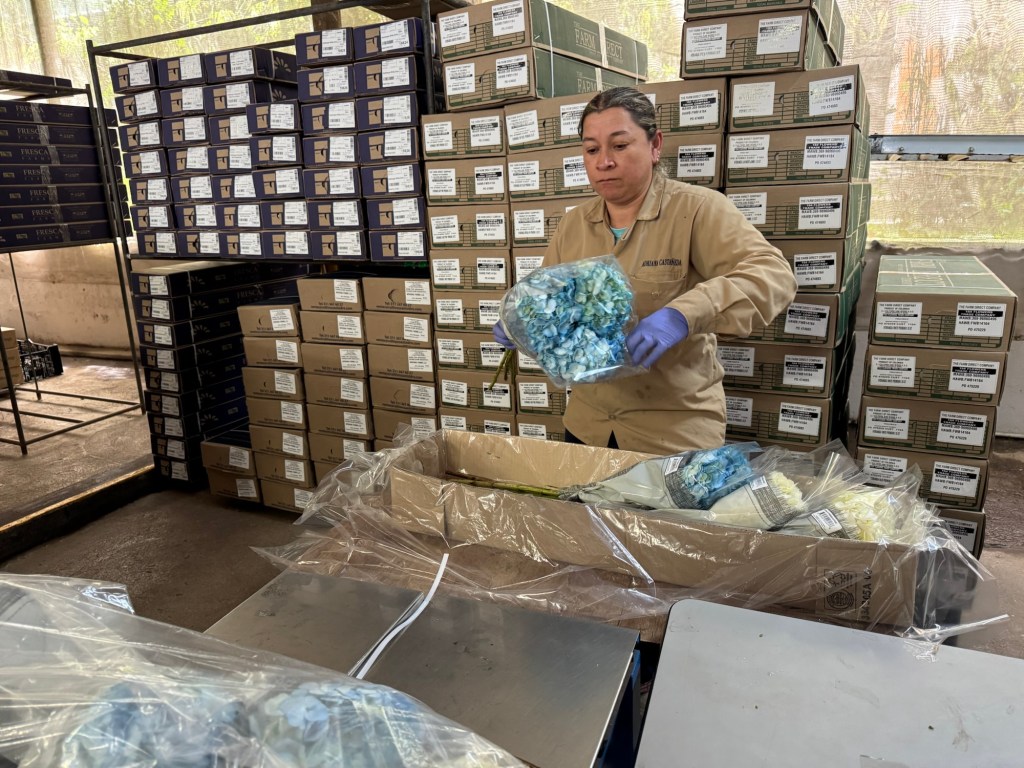
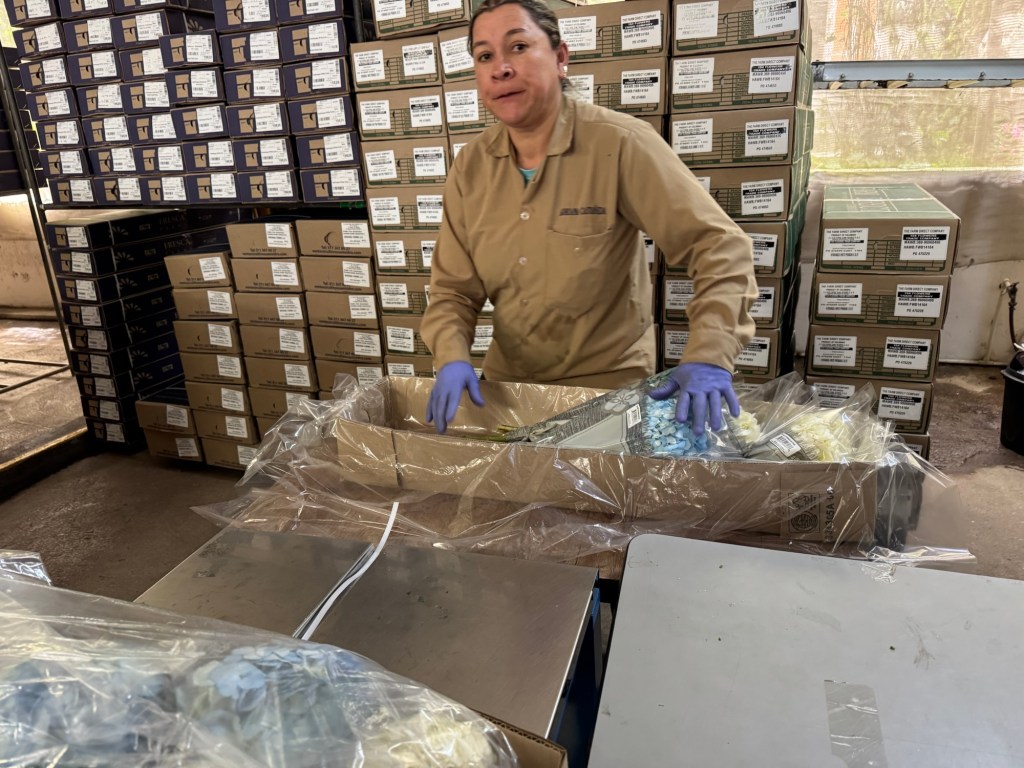
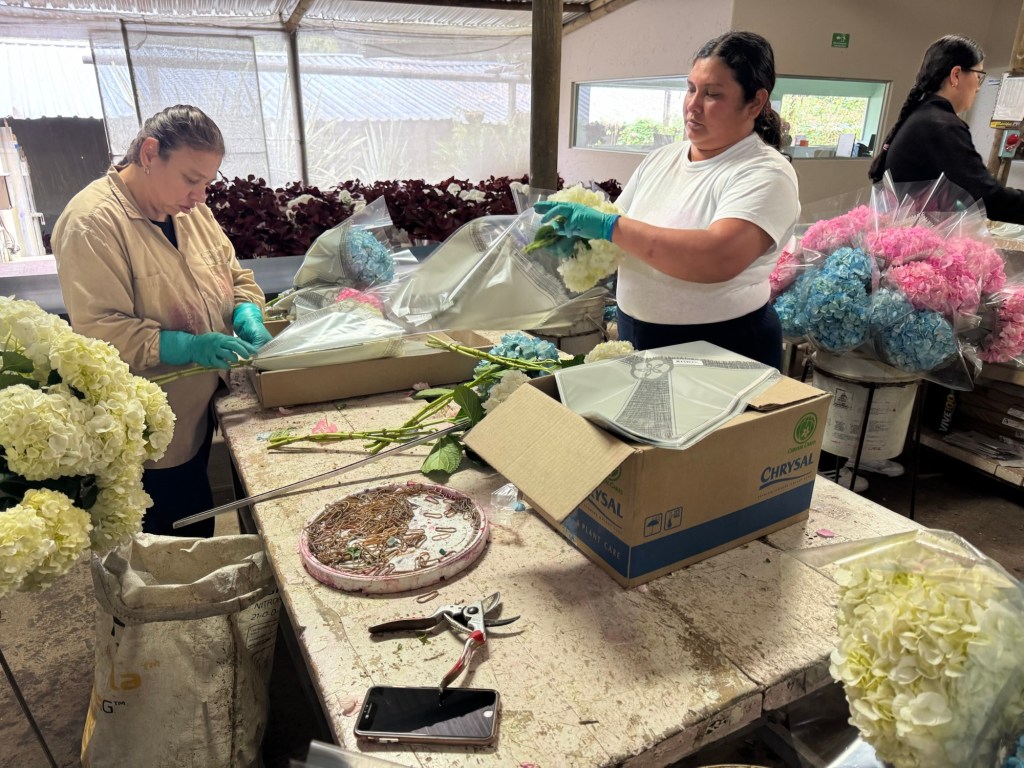
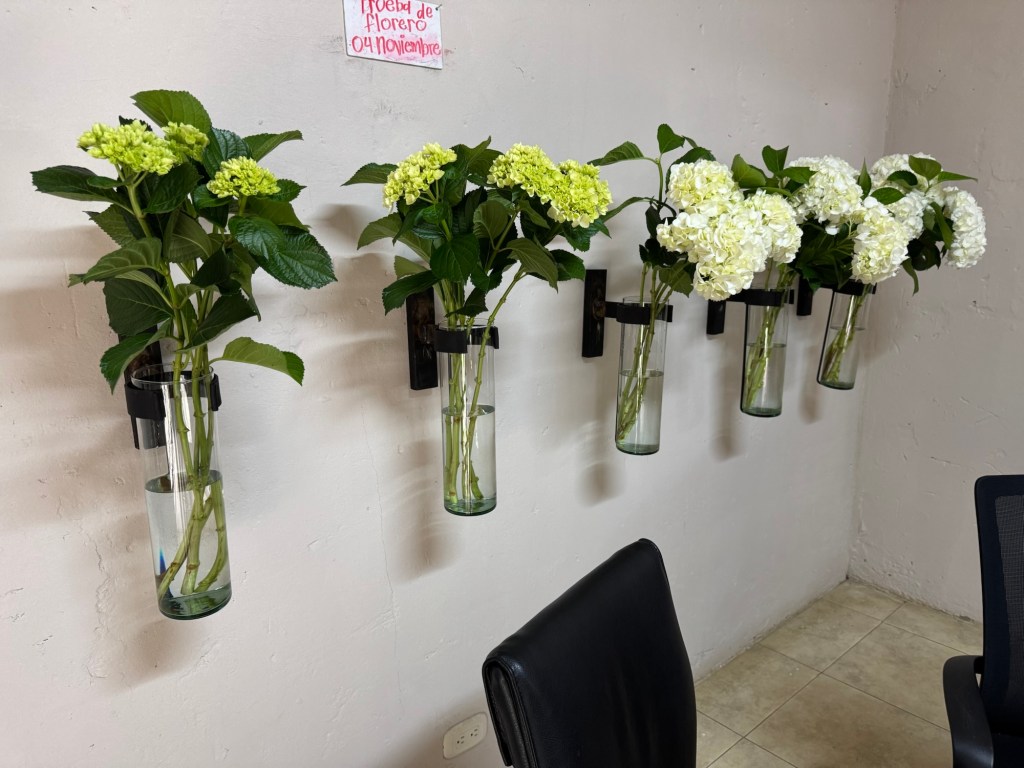
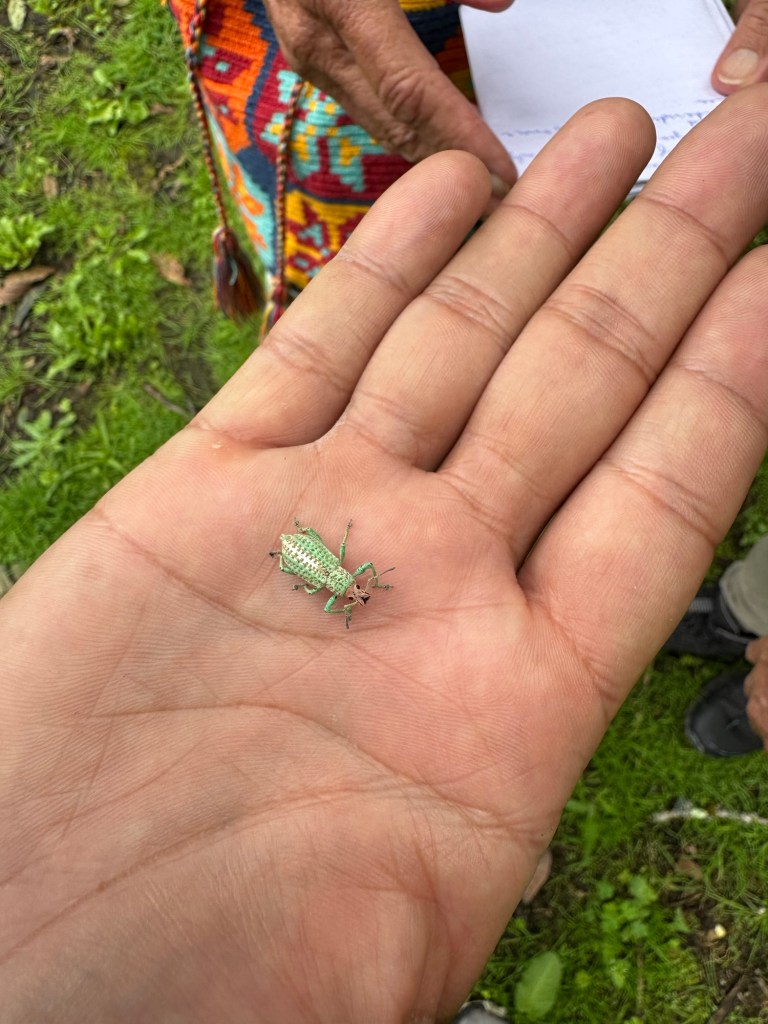
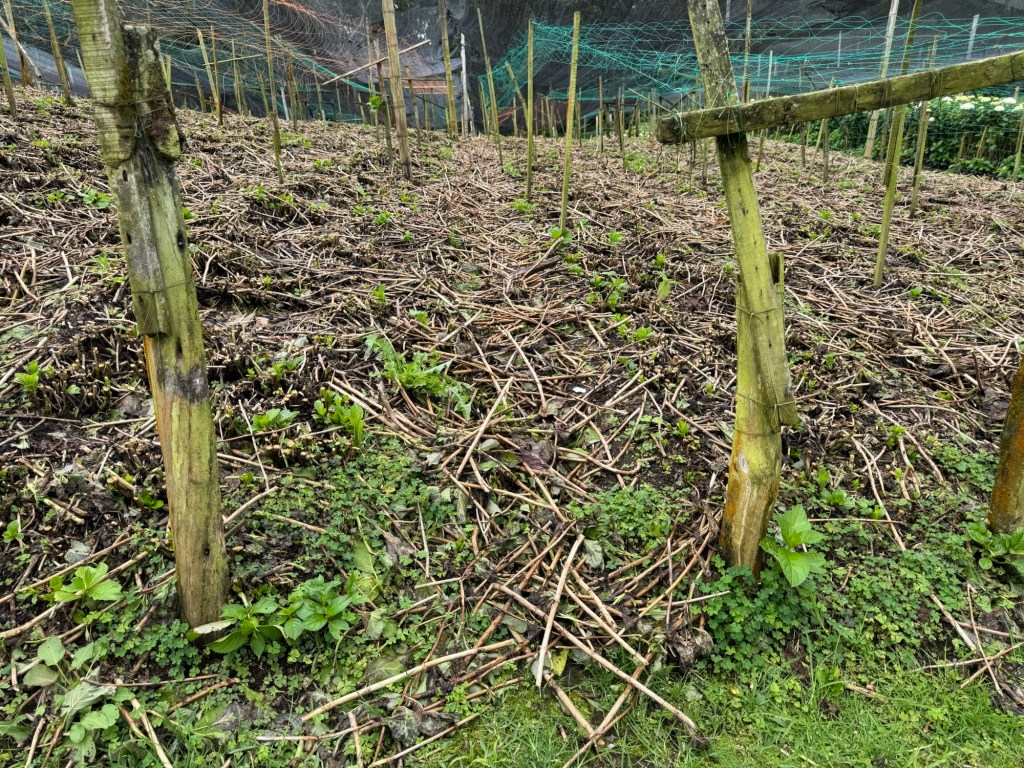
They grow only white hydrangeas, which they then color as needed for clients. We saw all the stages of the production from, growing in the fields to being sorted, colored, bound, boxed and shipped. Hydrangias need cool moist air and lots of rain. Fortunately it rains 11 0f the 12 months of the year. A crop takes 8 months to grow. There are 50 employees working full time in the hydrangeas.
Then we were treated to a very nice lunch of tilapia and veggies outdoors near the gardens.
Finally it was time to see the orchids. We had been seeing the orchid building from a distance and were anxious to get inside.
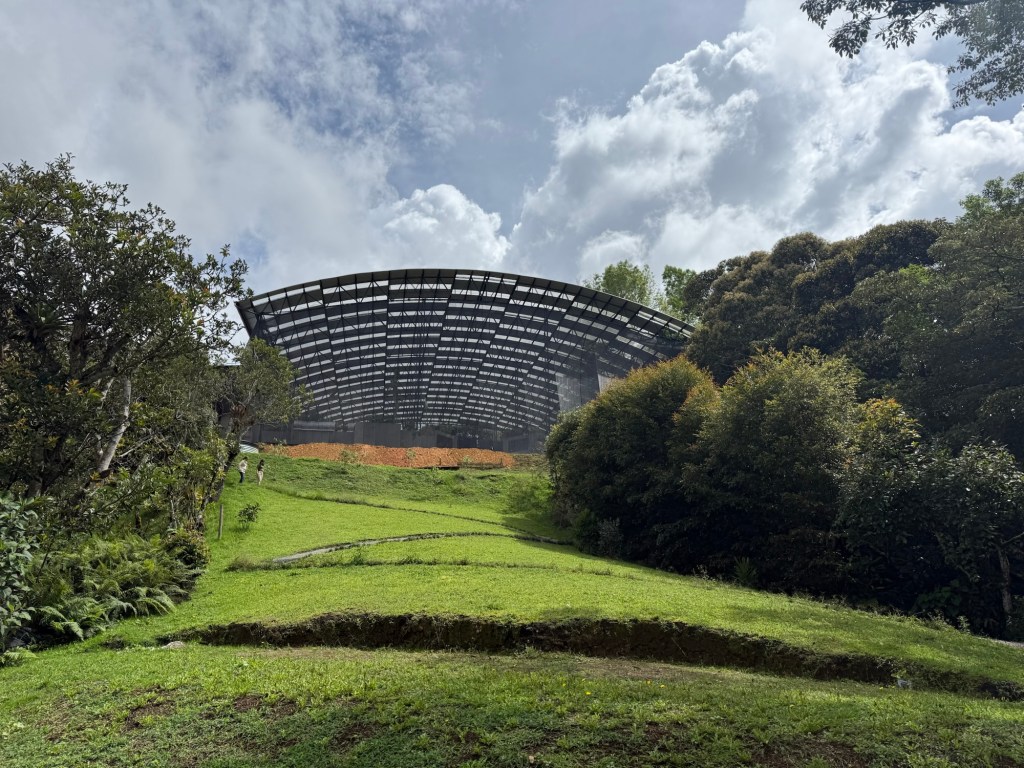
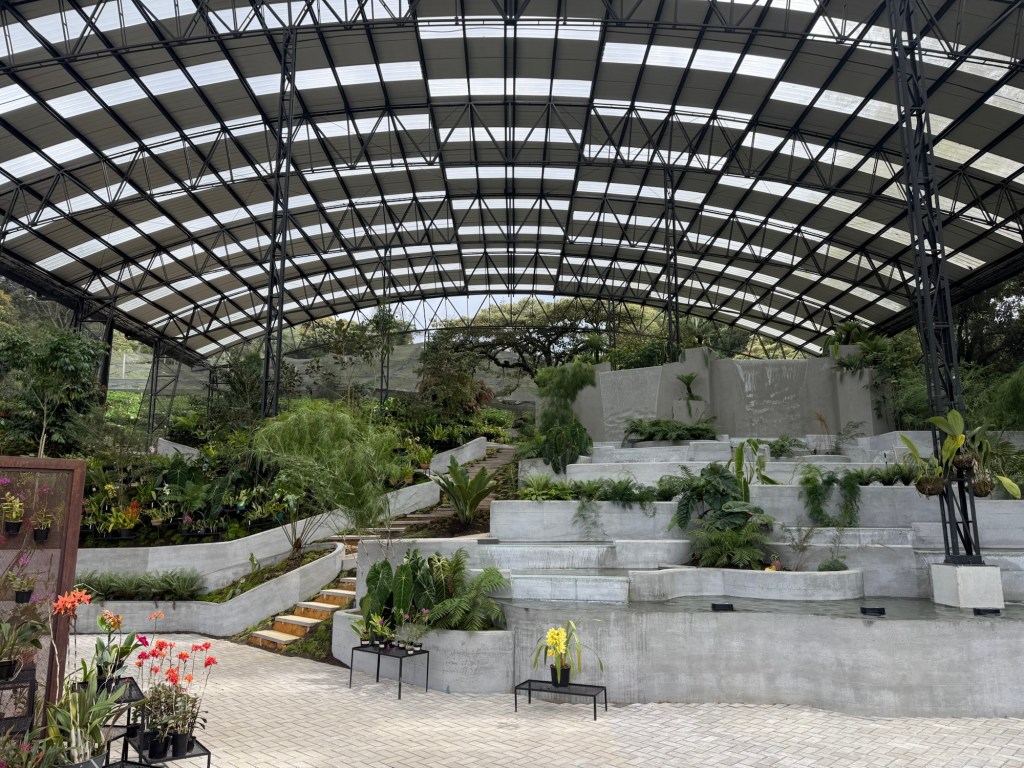
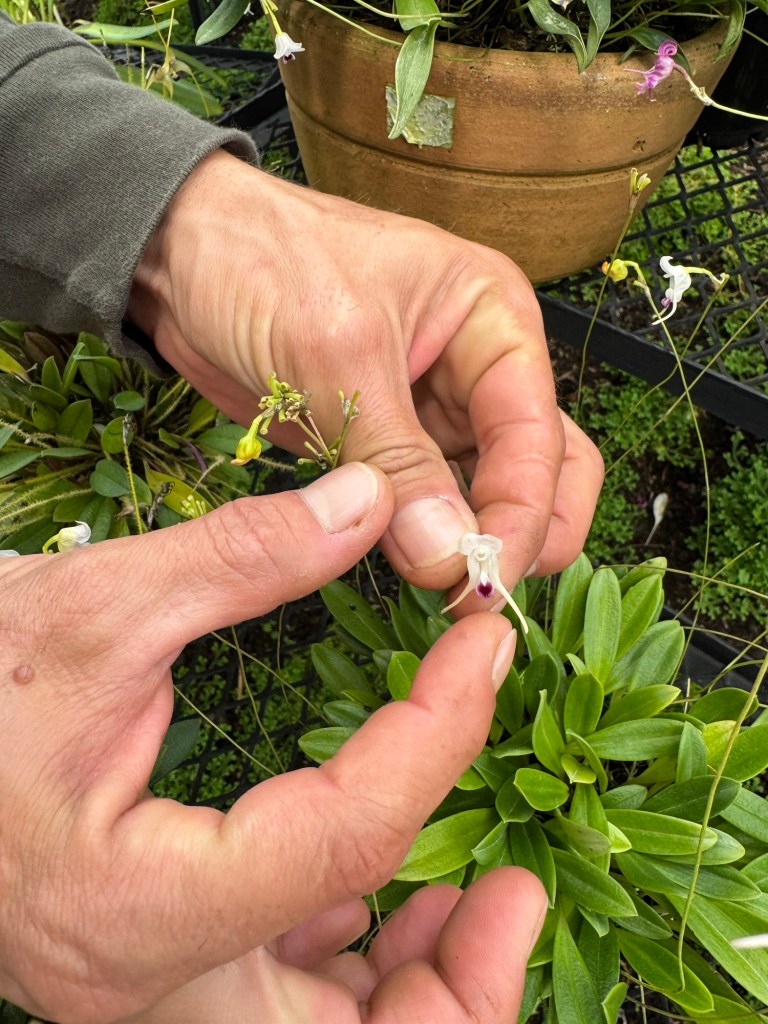
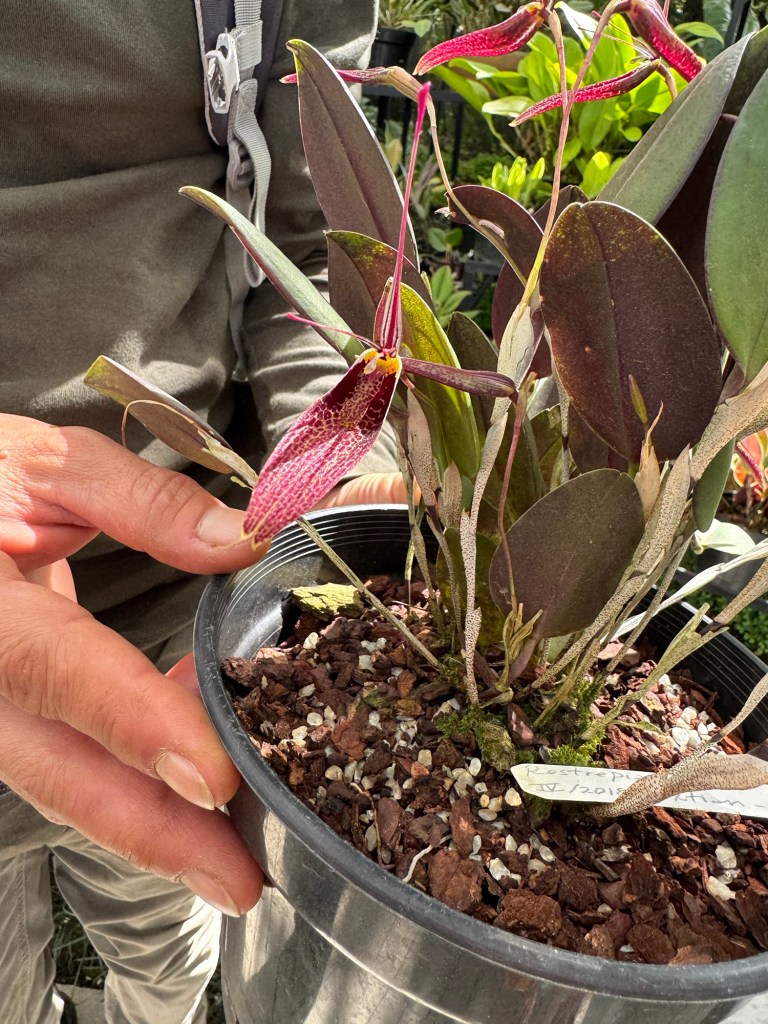
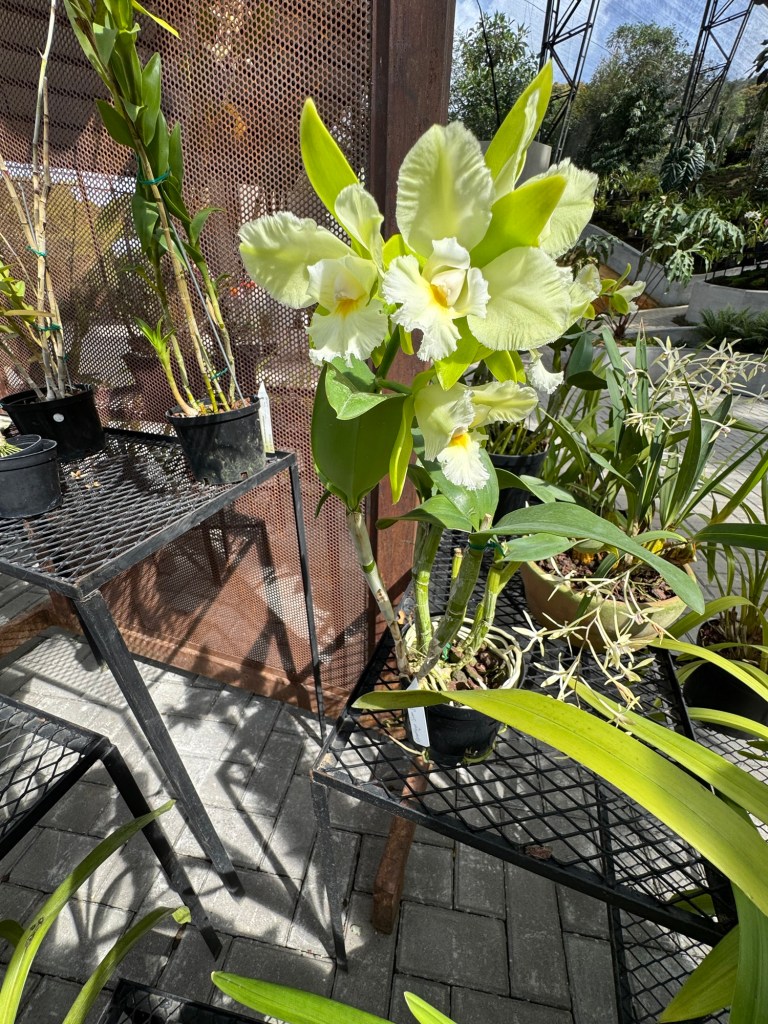
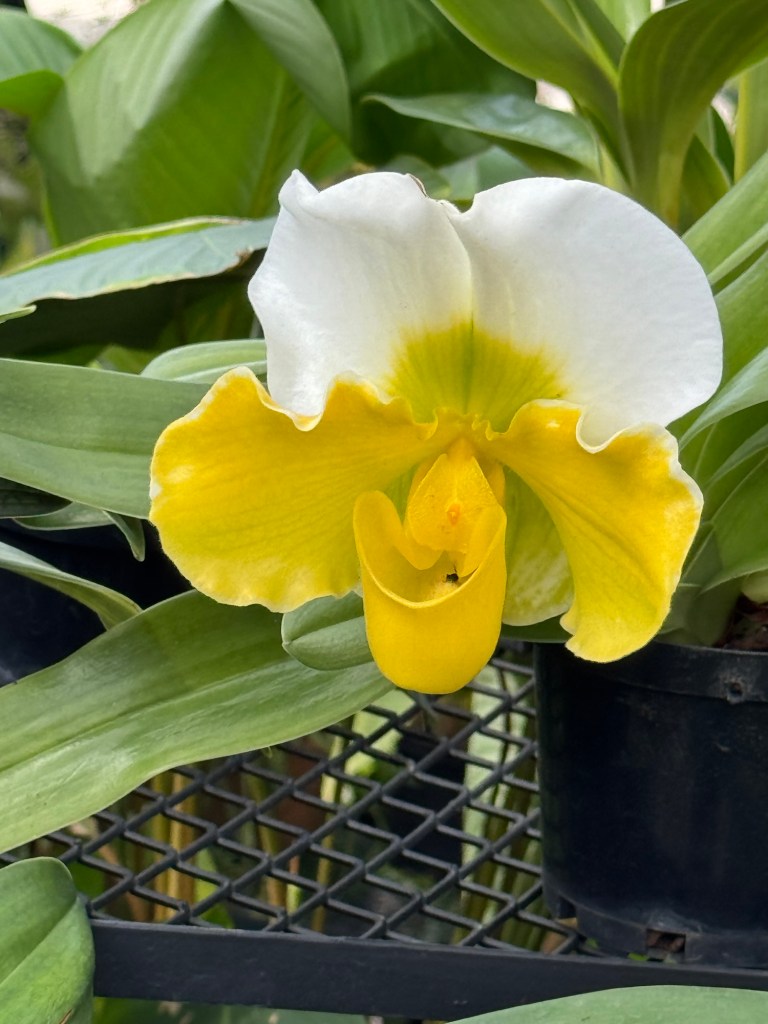
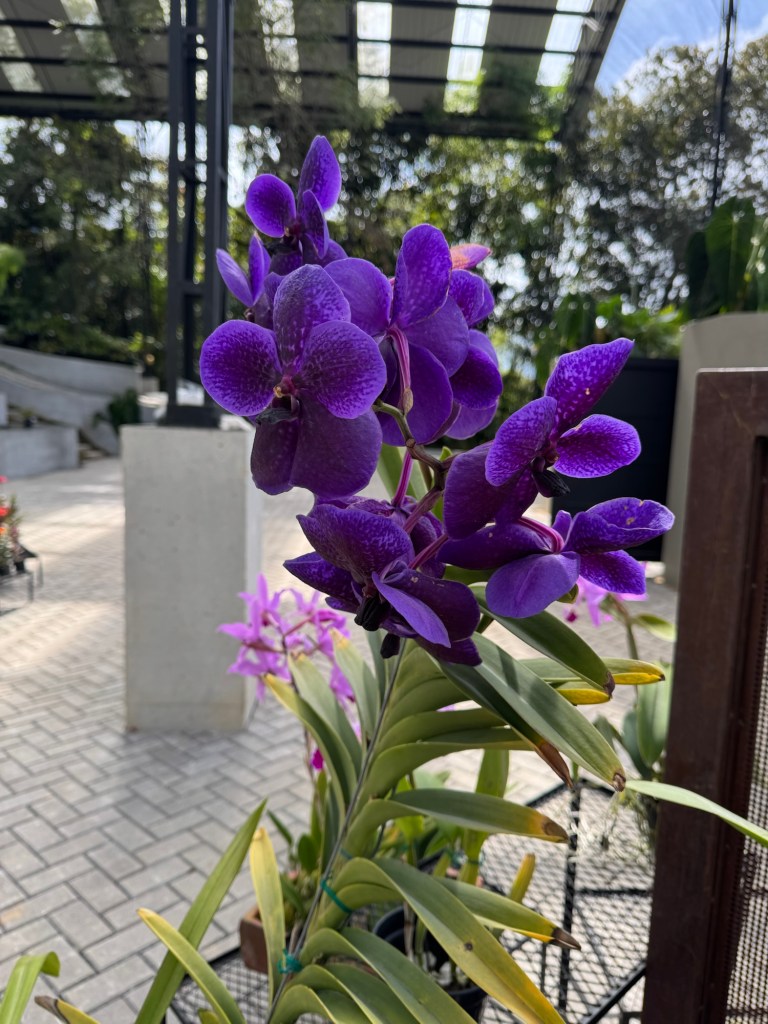
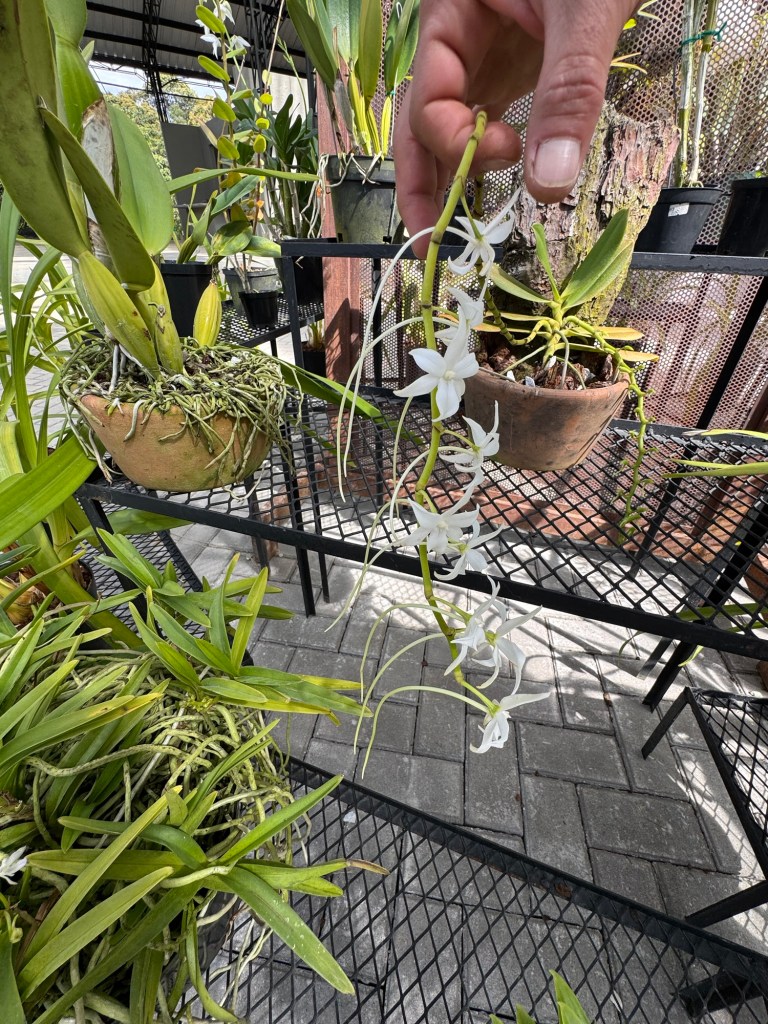
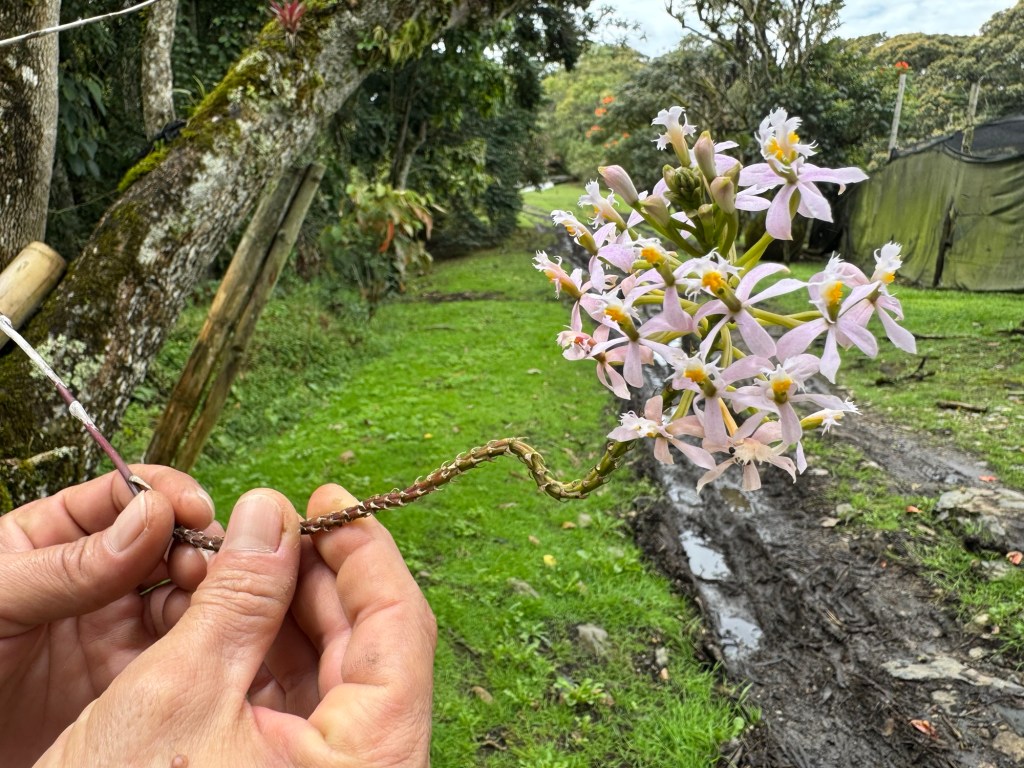
It is quite a facility and we saw a handful of people tending to each orchid individually. We learned there are 35,000 species of orchid. Columbia has 42% of the species and 12% are here in this facility. The 6000 square foot roof lets in 33% of the natural light. The air is 60-95% humid and 1/3rd of the building is cold, 1/3rd is cool and 1/3rd is warm to accommodate the wide variety of orchids housed. All orchids have 3 sepals, 2 petals, one lip and one stamin.
From the garden we drove toward Medellin stopping in a colonial village for a coffee and a walk about. Saw a statue of Simon Bolivar, who led Colombia, Venezuela, Ecuador, Peru Panama and Bolivia to independence from the Spanish empire in the early 1800’s.
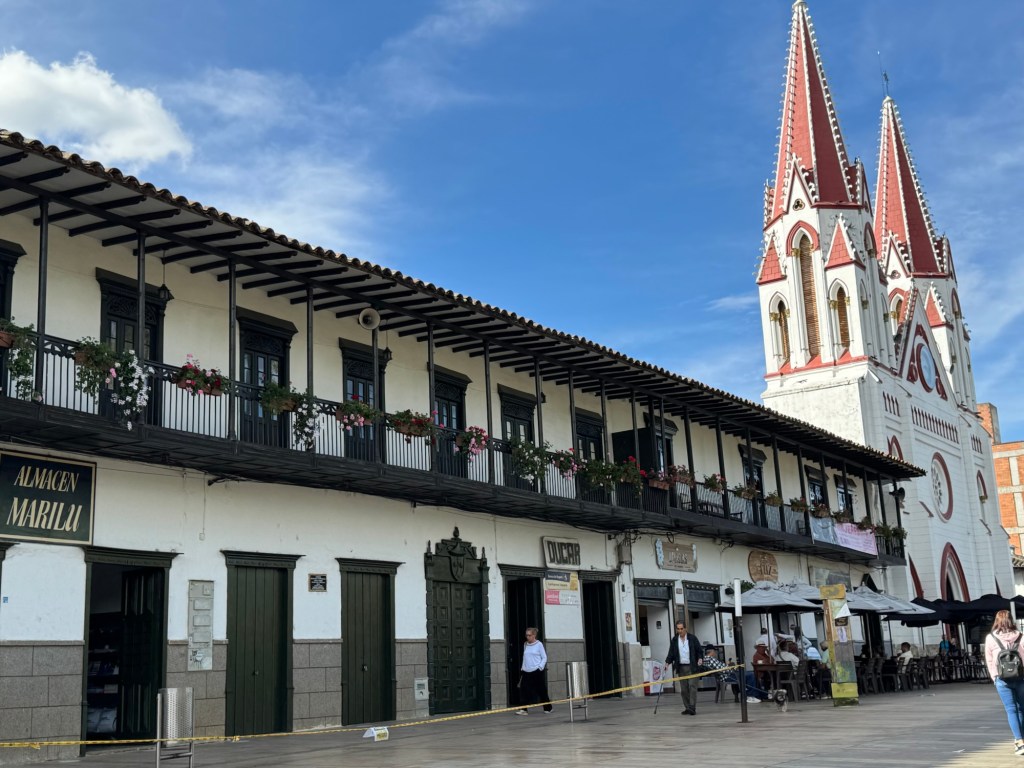

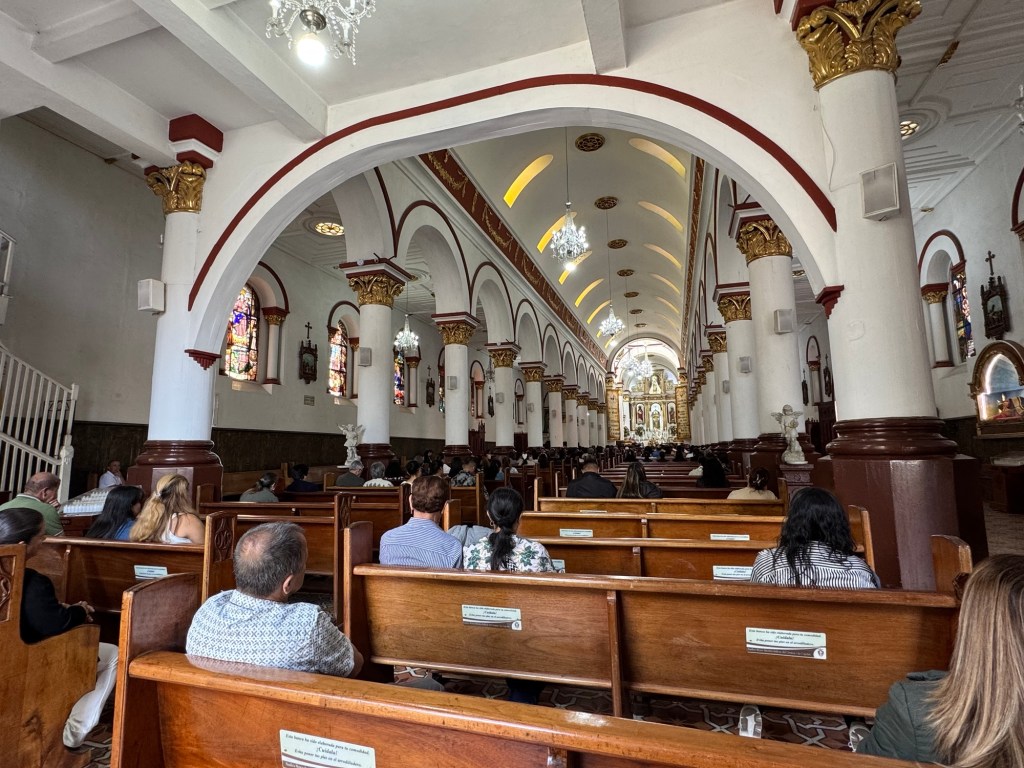
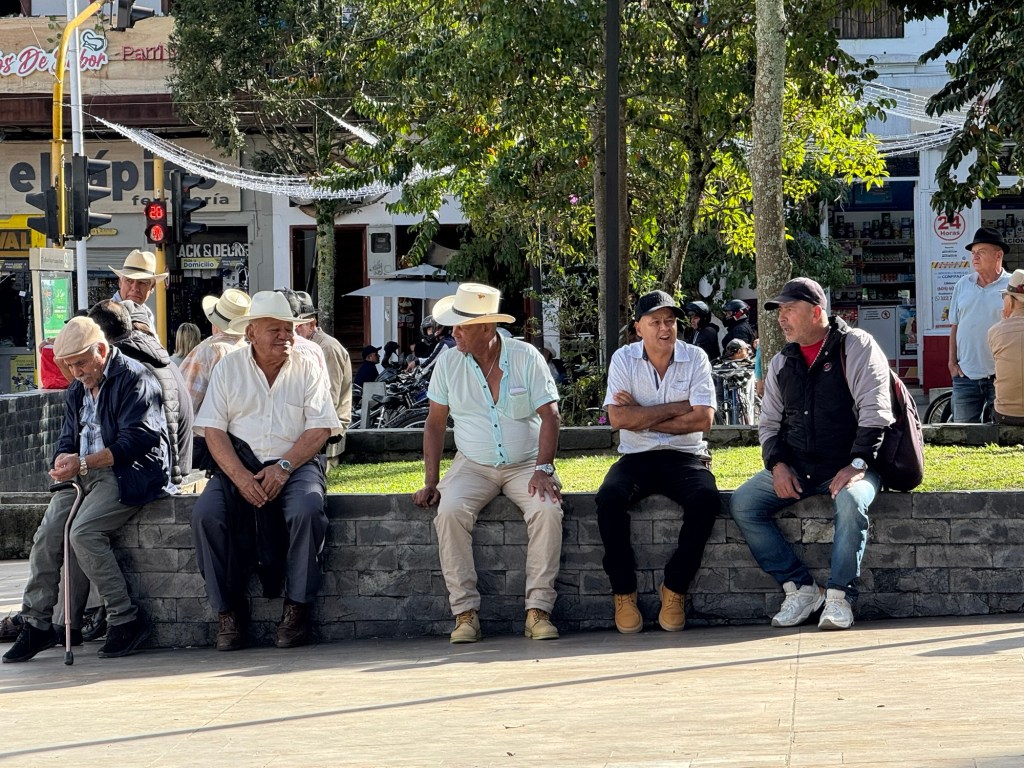
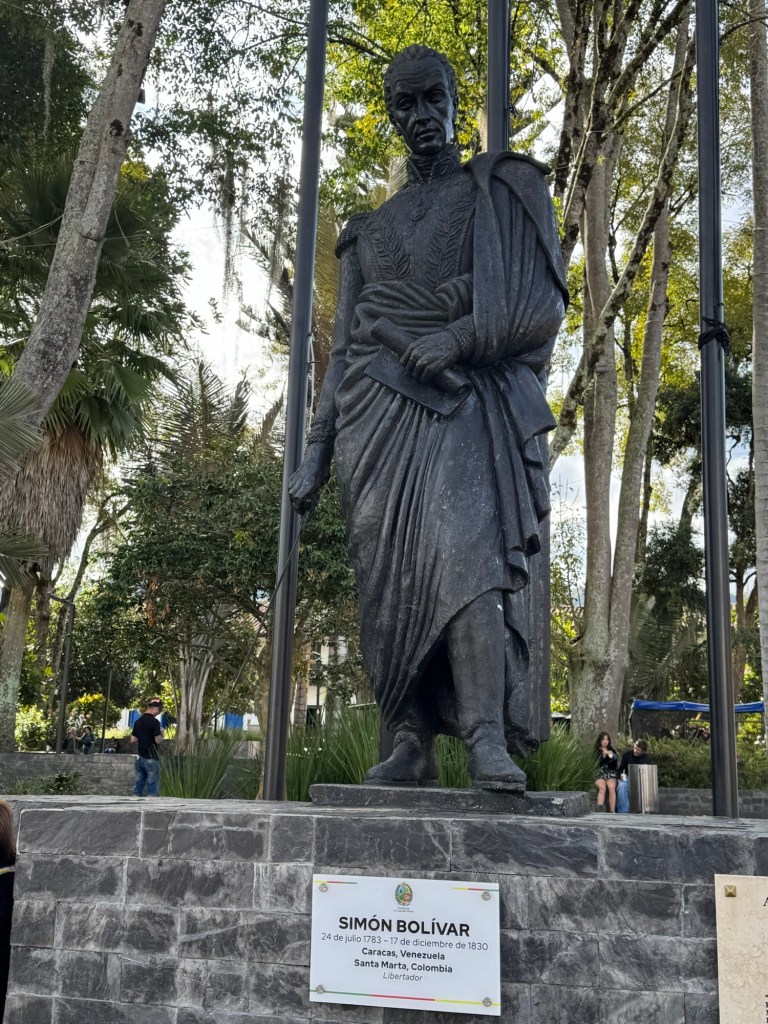
Visited the church. Then home and dinner at a place called Colosus. The view was very nice looking over the city, but the food was just ok. Home to bed.
 Adventures with Julia