
Thursday, November 6, 2025
This was a travel day. Picked up at 6:30 for a 9:50 flight from Medellin, pronounced Medegeen, to Pereira, that took 40 minutes. Pereira is a city in the coffee region of central Colombia with a population of 481,000 and an average elevation of 4480. The coffee region sits on the foothills of the Central Andes mountain range.

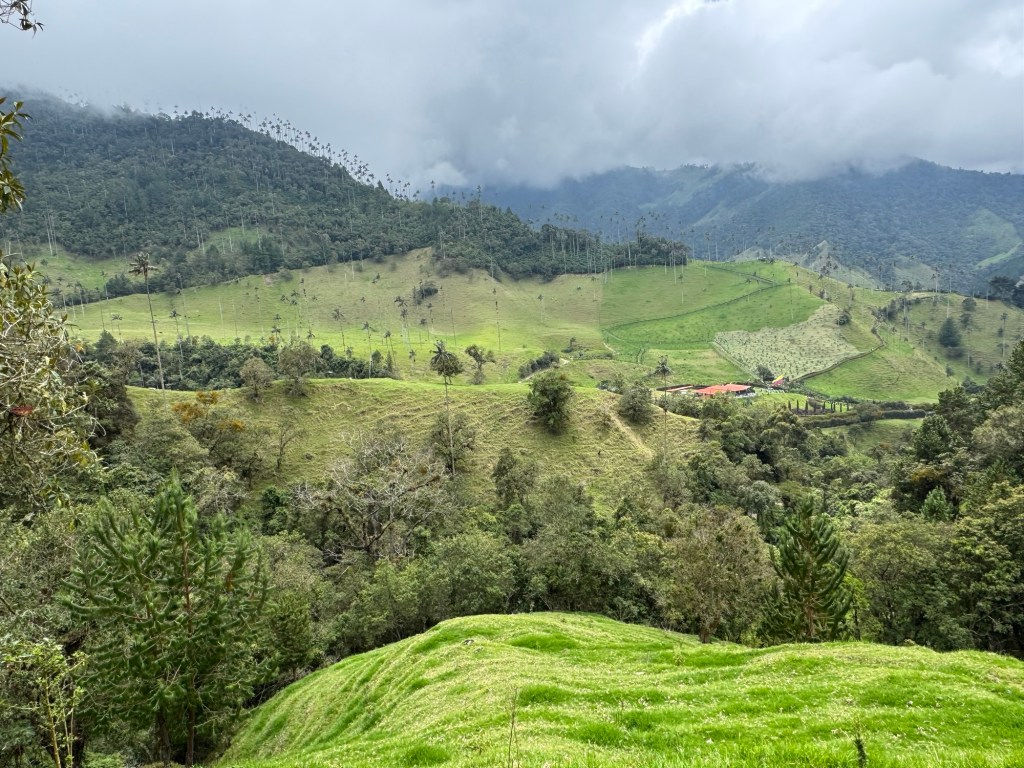

This area has its own distinctive culture centered around the land and agriculture. Since colonization in the 1840’s, the region has showcased brightly colored houses in its small towns, making a striking contrast between this region and the rest of the country. Its altitude, climate and fertile terrain are what make Colombian coffee some of the best in the world. The drive through the lush, green, rolling country side to our accommodations took 3 hours on mostly bumpy roads.
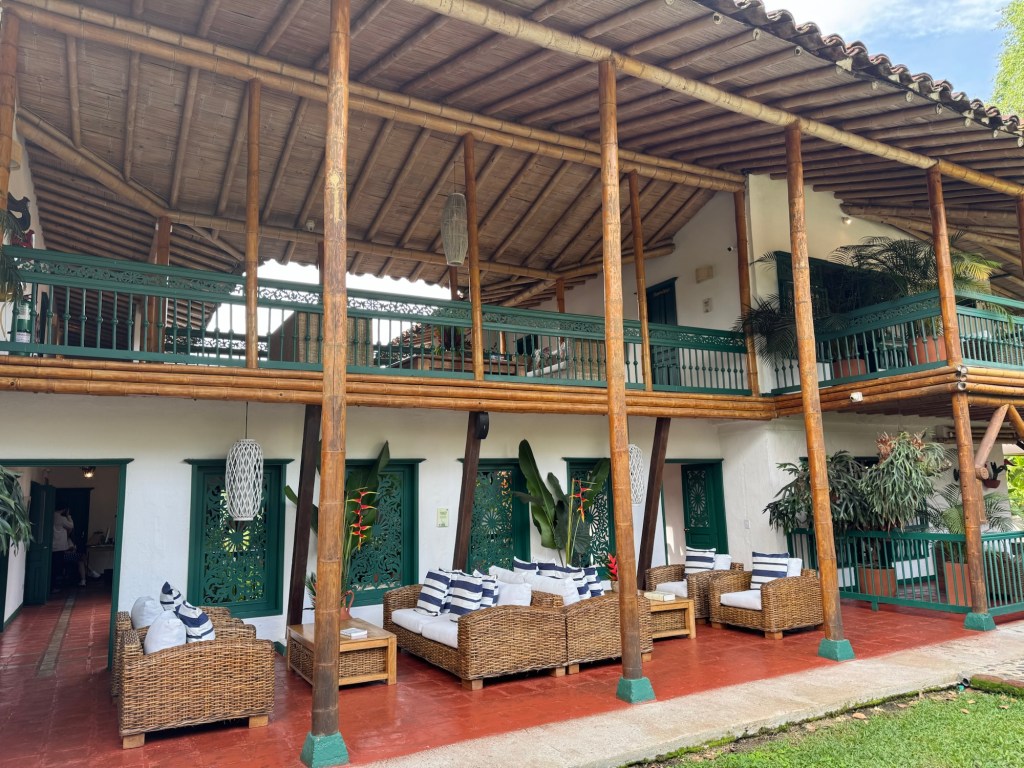
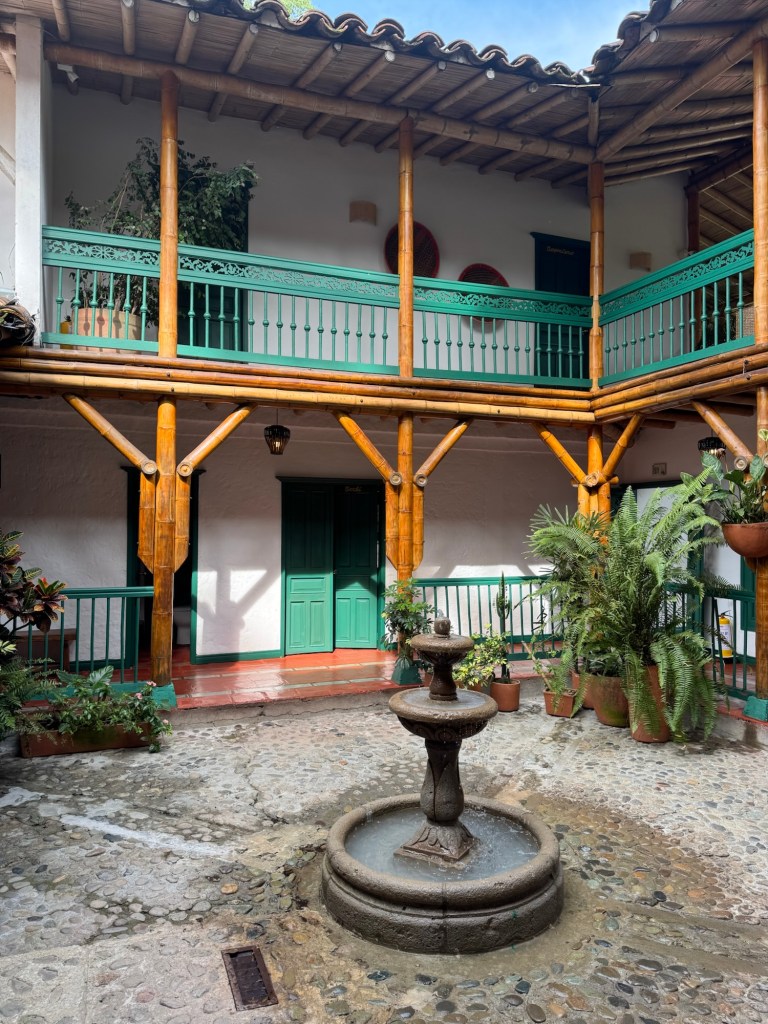

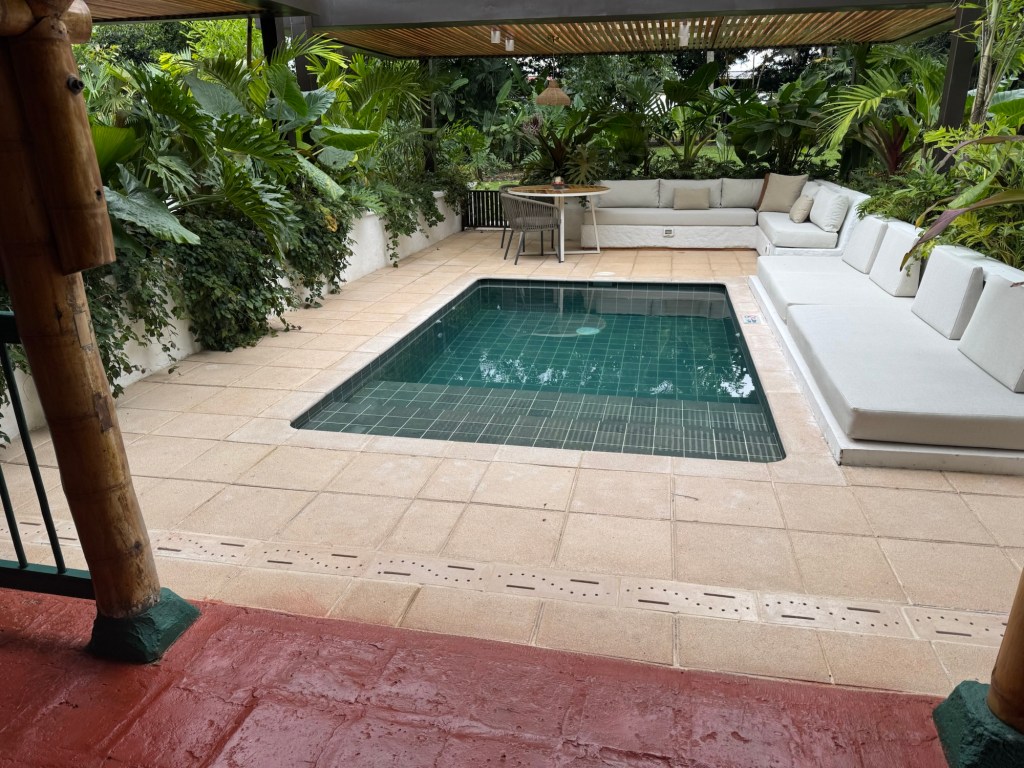
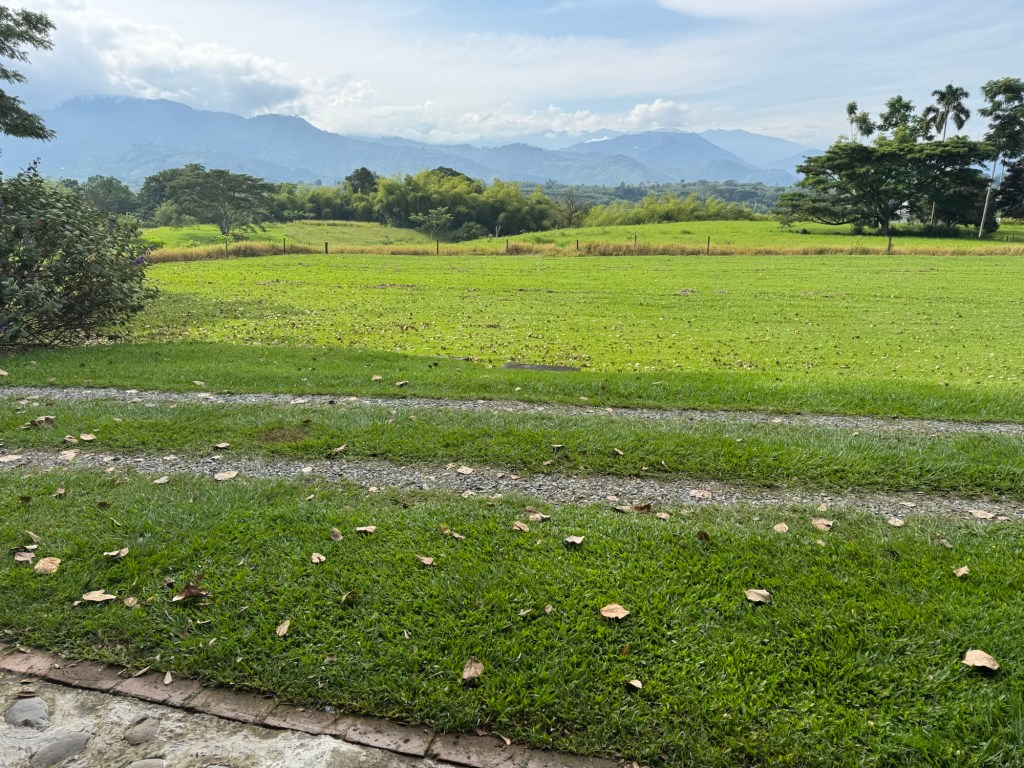
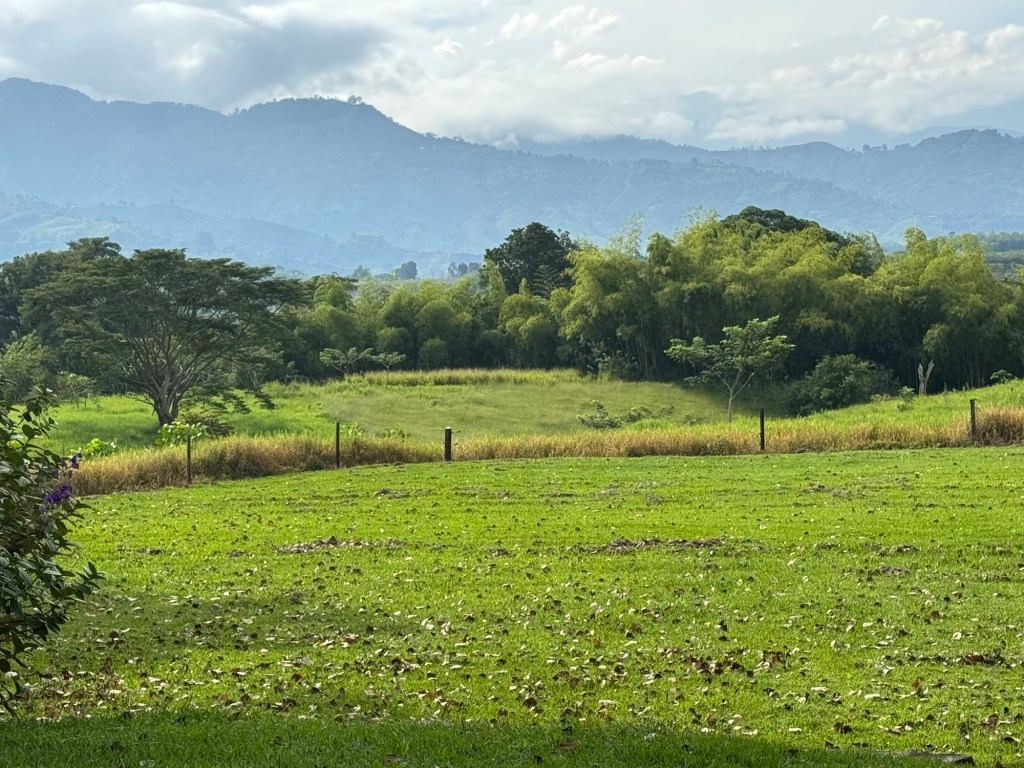
The Hacienda Bambusa was well worth the effort. It is set amongst extensive plantations of lime trees, plantain and cacao and looks out at the Central Andes. Our suite even has its own private pool, although it has not been warm enough to use.
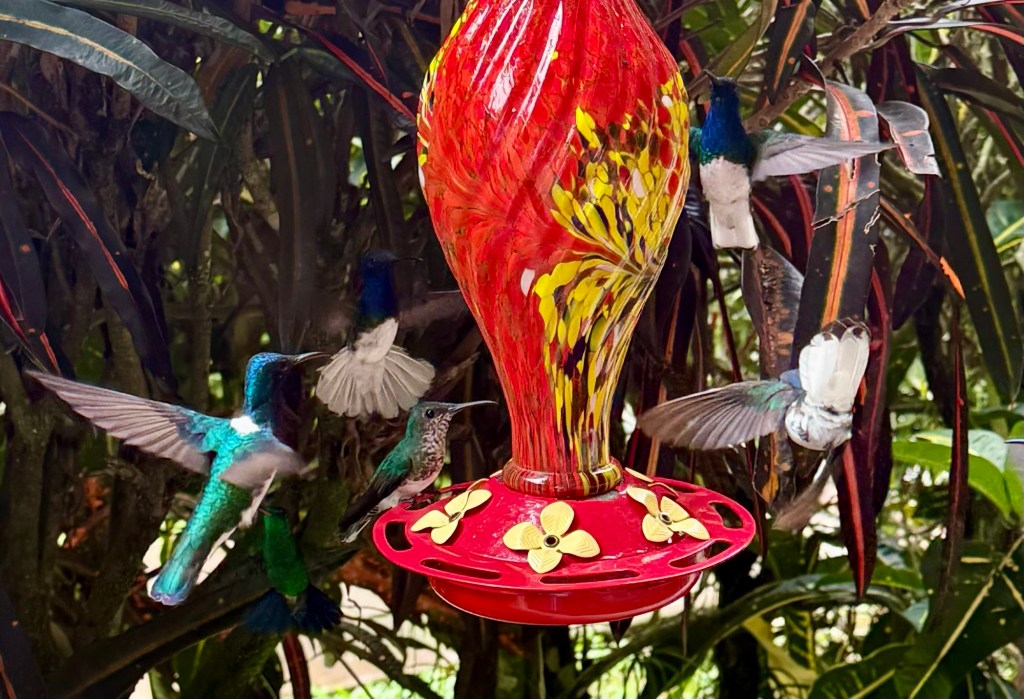
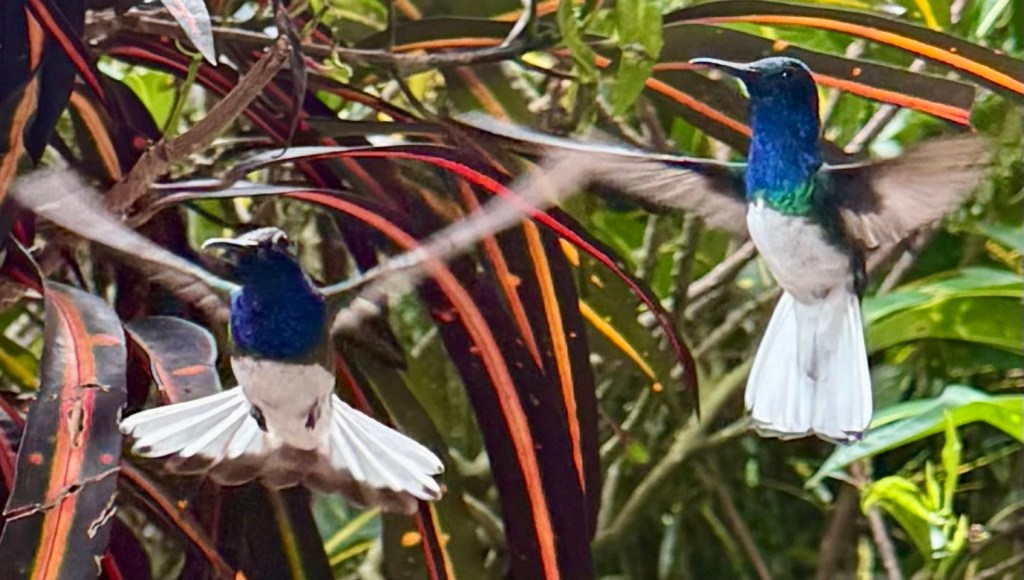
There were hummingbird feeders everywhere and it was fun to watch the several different kinds fly around. We arrived in time for lunch and then enjoyed a free afternoon in the gardens and by our pool. We learned that the property is owned by a family that has 444 acres of lime trees, rather than coffee. Had an early dinner and went to bed.
Friday, November 7, 2025
Daniel and our driver picked us up at 9am and off we went to a colonial town called Salento with a population of 4000.

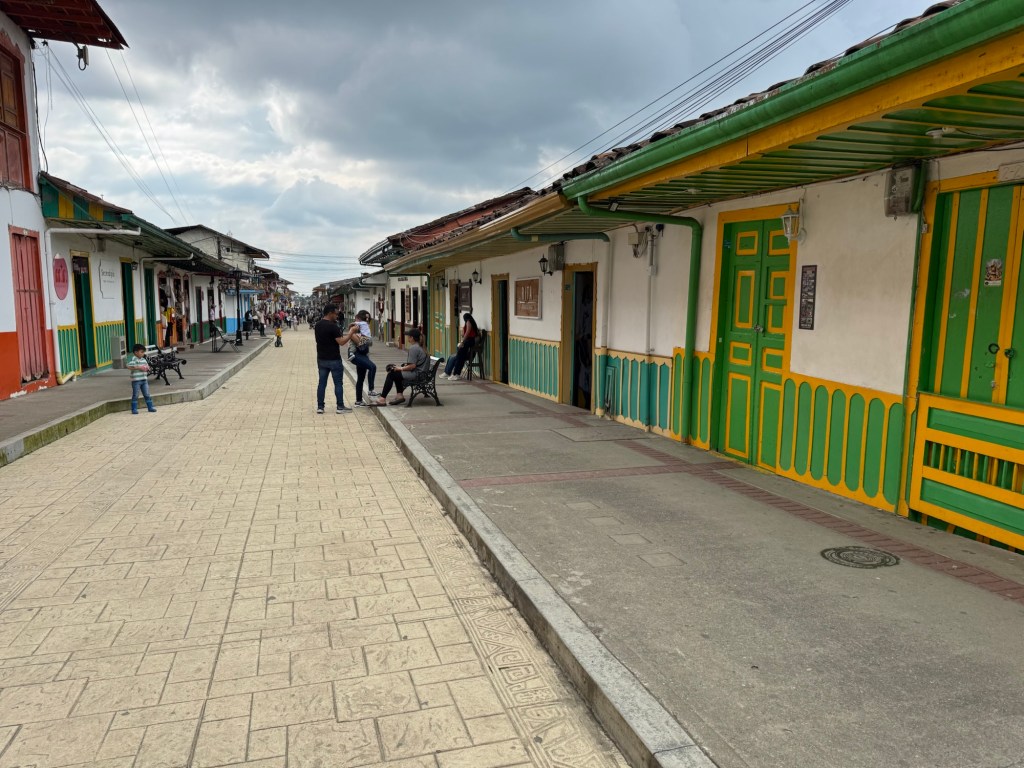
We walked the charming pedestrian streets and encountered yet another statue of Simon Bolivar (1783-1930) in the town square. Daniel told us Bolivar led the revolution against Spain and won. He became Colombia’s first president. His statue is in every town in Colombia.

We stopped for coffee in a local cafe. We had several choices and I requested a coffee called Pink Bourbon made with the chemex process.
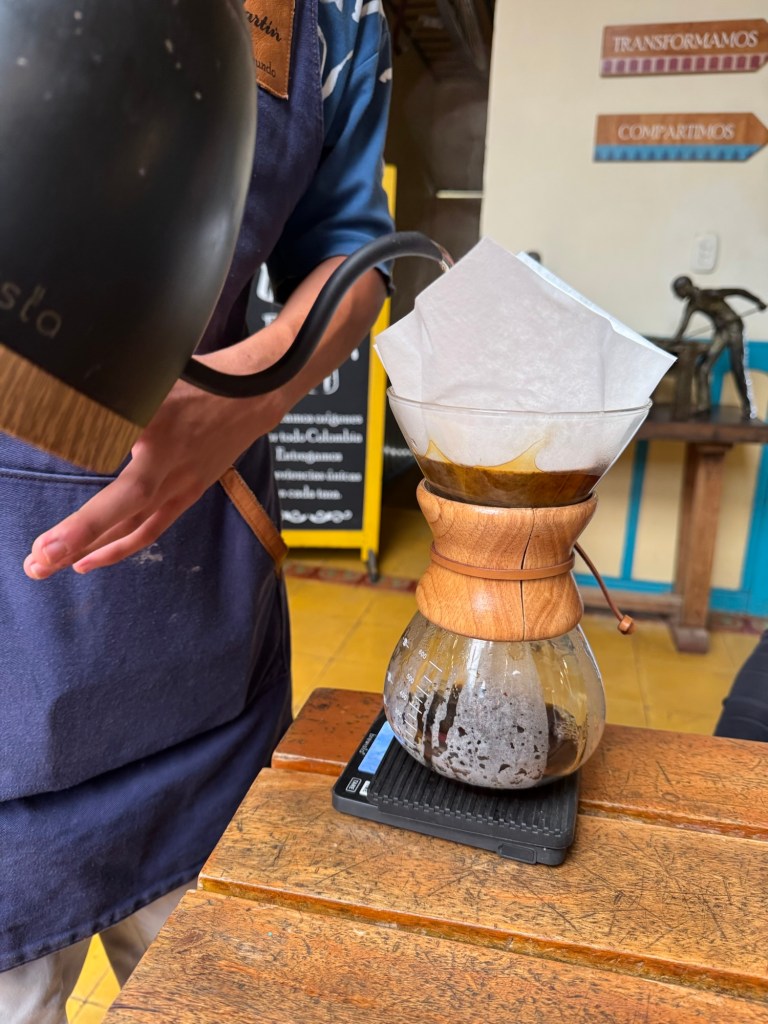
The coffee tasted pretty good, though I am not a good judge of coffee. Mark had a cappuccino and liked it.
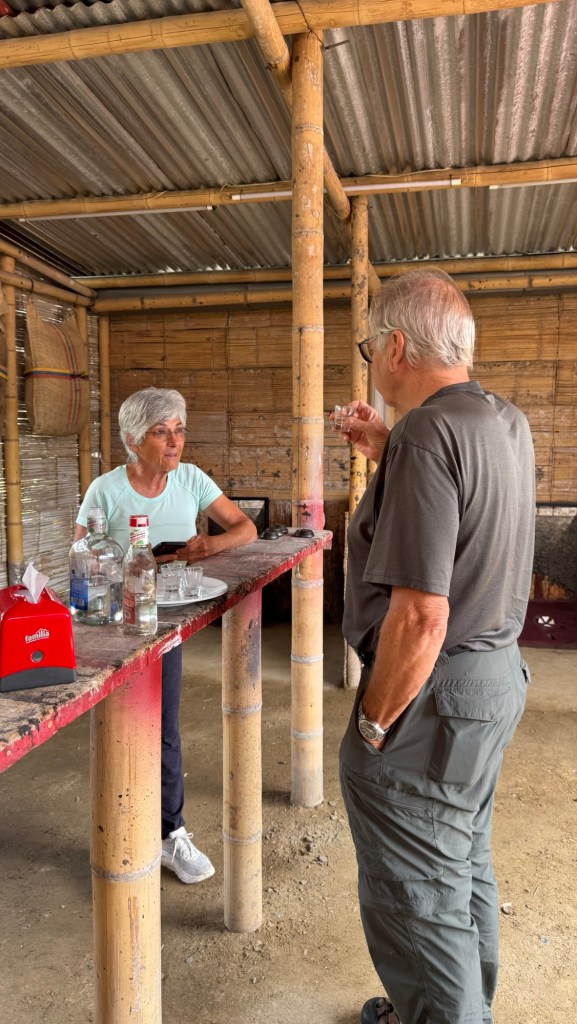
In another cafe we played a game called Tejo. The game is popular and we could see why, it’s similar to Cornhole, but with gunpowder. You throw a disc at a hard center target with four small envelopes filled with bits of gunpowder and a soft spongy clay backdrop. If you hit the target an explosion goes off and you get a point. With no effort, both Mark and I succeeded in creating mini explosions. The game was popular with indigenous people, without noise, 500 years ago.
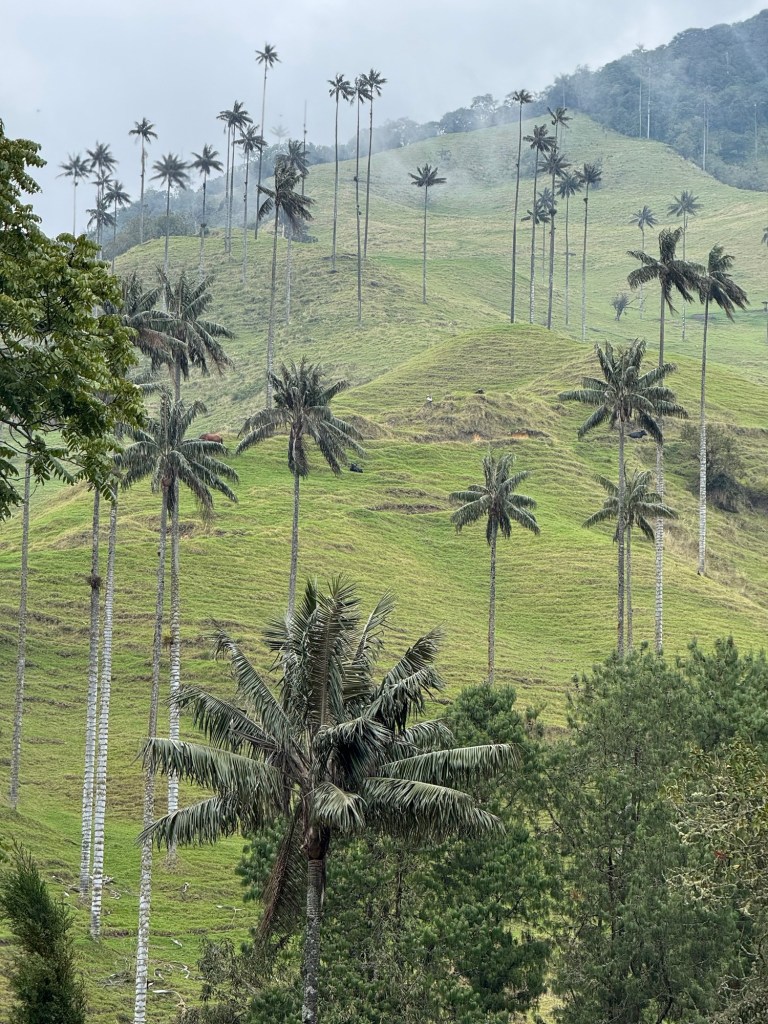
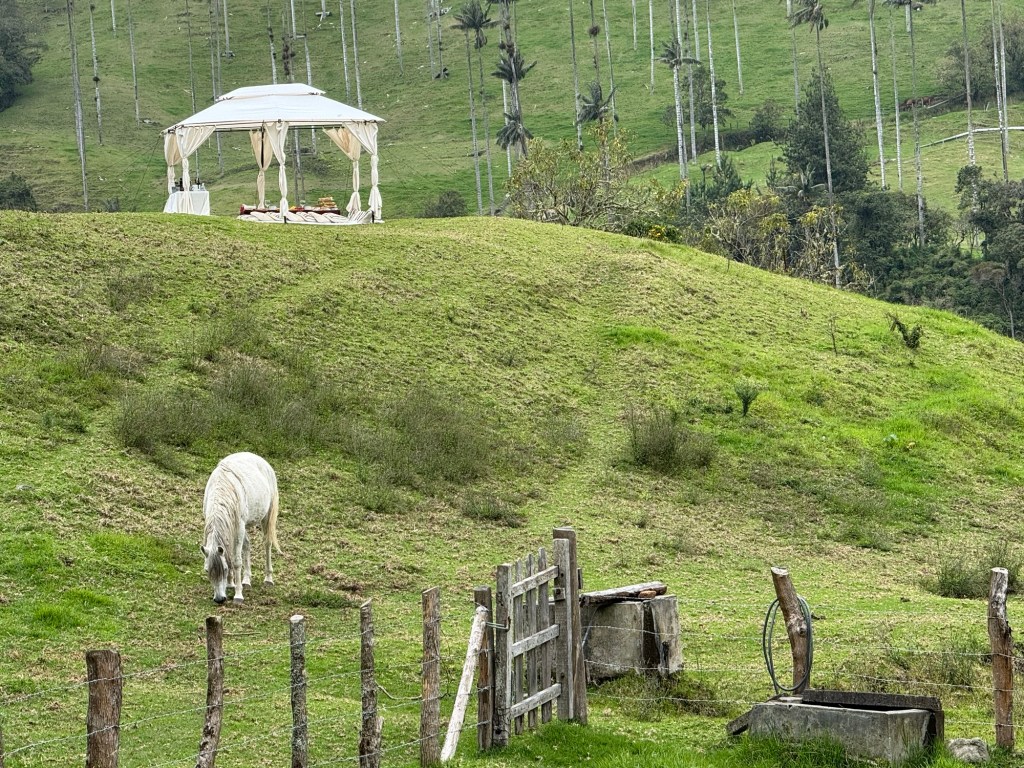
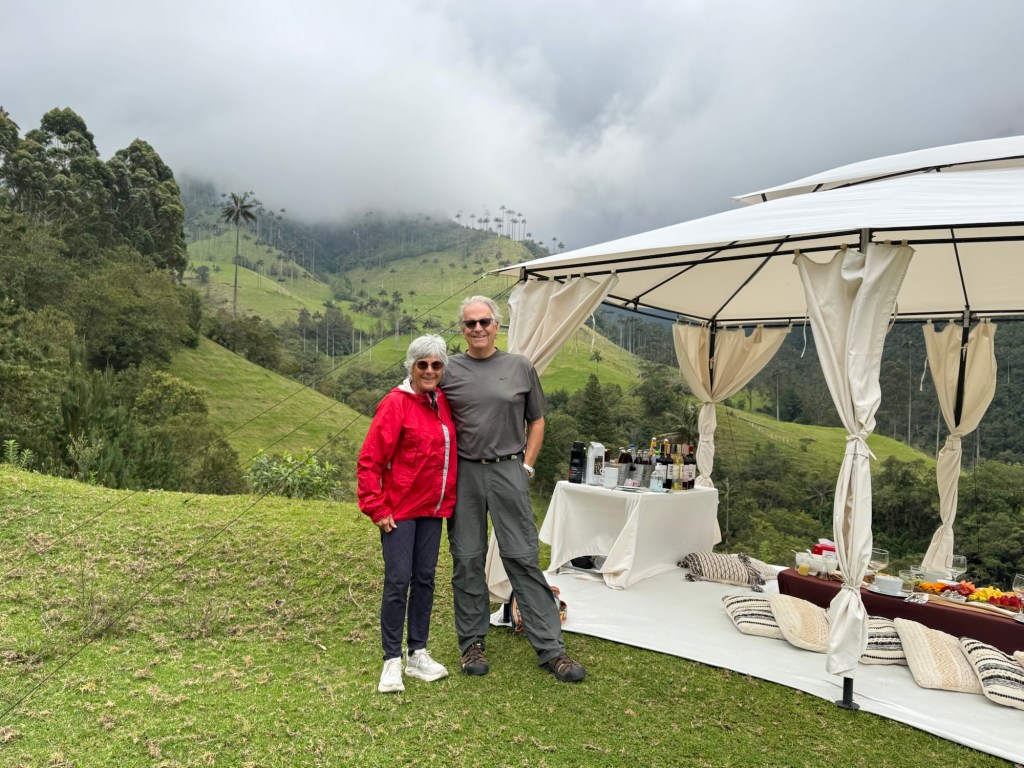
Then we drove on to our lunch sight on a hillside overlooking the mountains with the rare and tallest palm trees called Wax palms. They grow to 210 feet tall and only where we saw them.


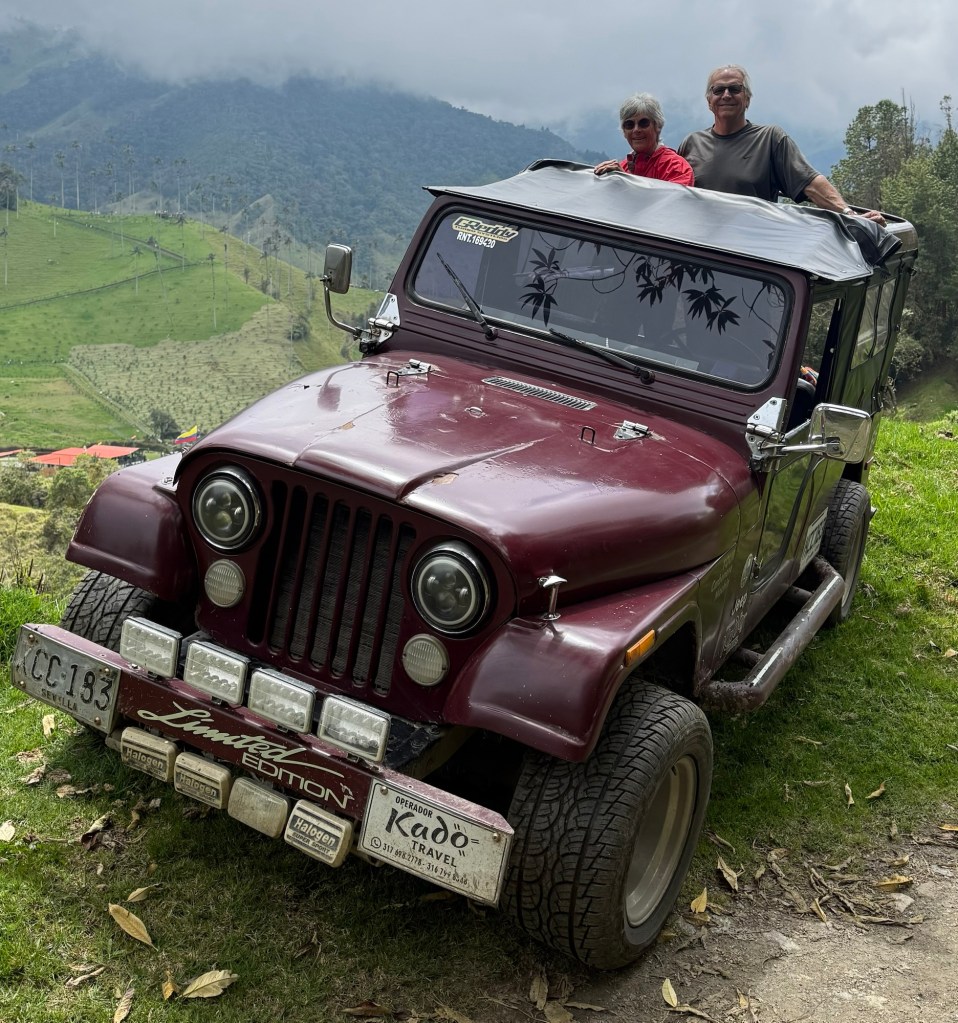
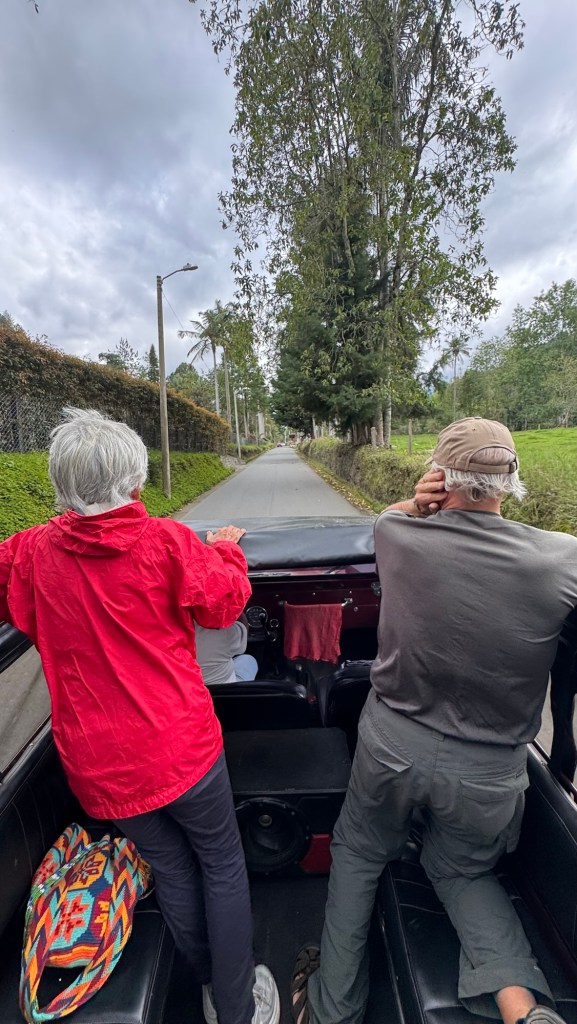
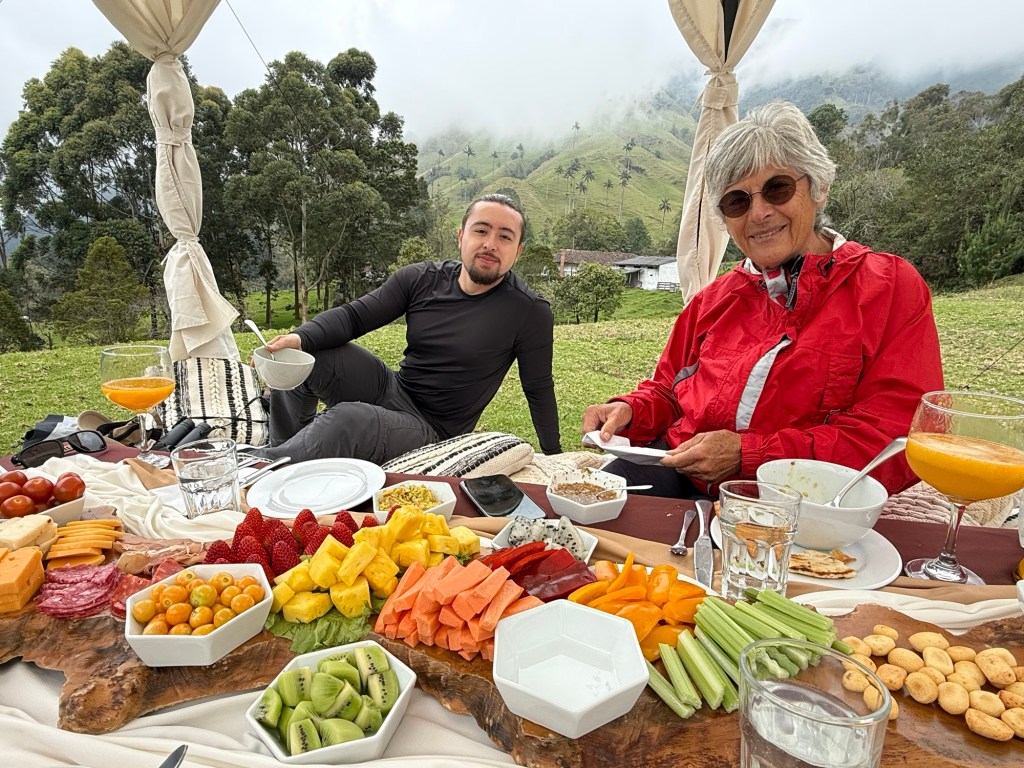
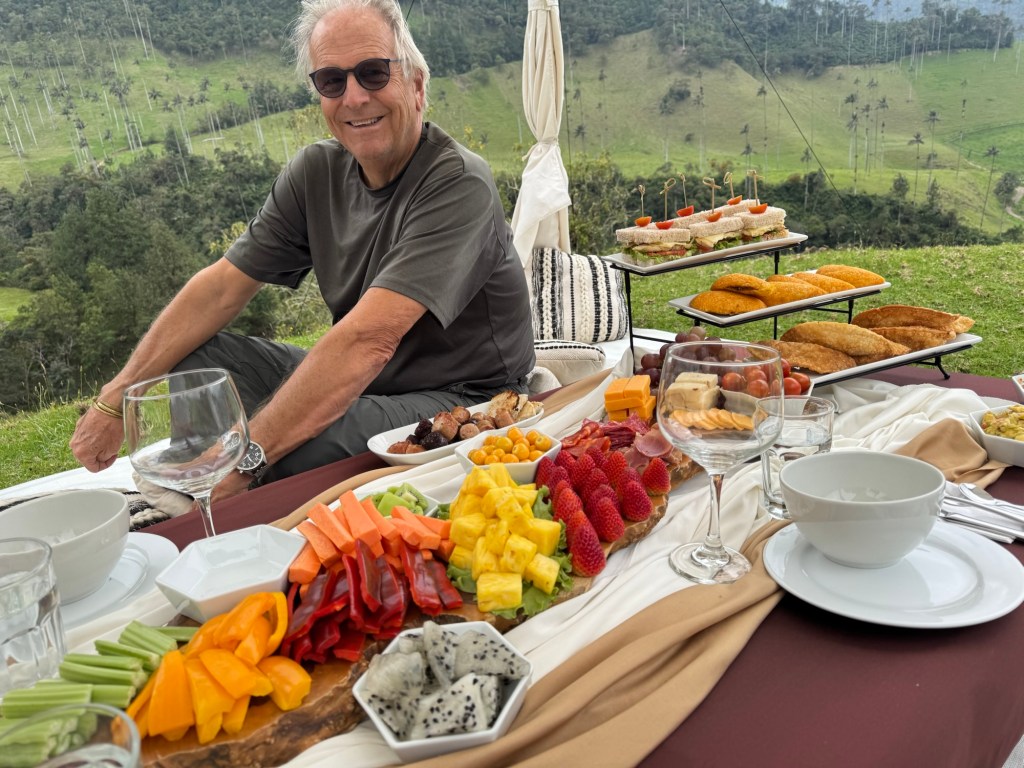
On the drive back to the hacienda, Daniel told us more about the civil wars from the 50’s forward. A civil war started in the 50’s between the conservatives and the liberals. FARC (Revolutionary Colombian Army Forces) began in the 60’s. In the beginning it was farmers vs. the conservative army and civilians. Fighting continued until 2015, 65 years, when both sides compromised and signed a peace process.
The Narco cartel wars began in the late 70’s and continued until the 90’s when the government stopped them. An activity called Fake Positive was instrumental for the government to increase the numbers of dead guerillas, to make it seem like the government was gaining on FARC, government troops would kill poor, sick and disabled people, dress them in FARC clothing and tell the government they were being successful in reducing the fighting so they could get time off. The ruse worked for a time until it became obvious that the killed people were being dressed in new clothes, with new shoes, sometimes on the wrong feet, and the populace began missing their family members. What a sad way to end the fighting.
Back at the hacienda, we changed for dinner and visited with a Canadian couple also staying at the hacienda.
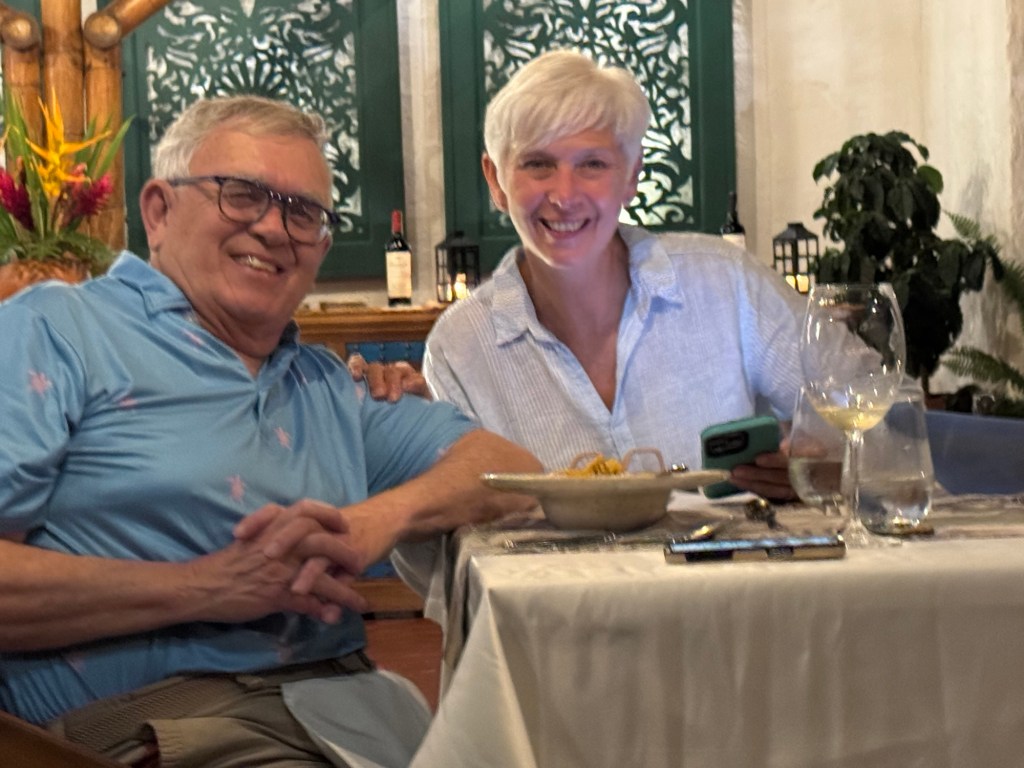
We had a lot in common with Pam and George and chatted quite awhile, before heading off to bed.
Saturday, November 8, 2025
Out again at 9am, having had a delightful breakfast of eggs Benedict. We headed for a coffee plantation called Casa Vieja that is owned by a family named Granada. The plantation was purchased by the family in 1981 and contains 40 acres of coffee as well as other fruits and vegetables for the family’s consumption.
Along the way we saw a variety of plants.
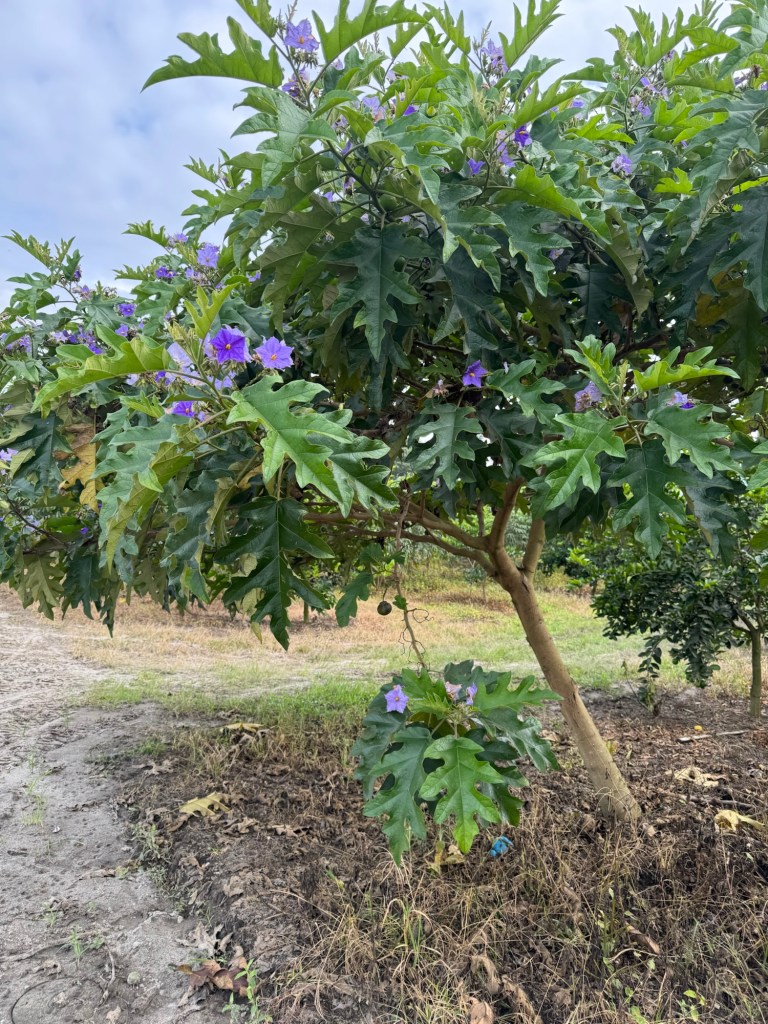
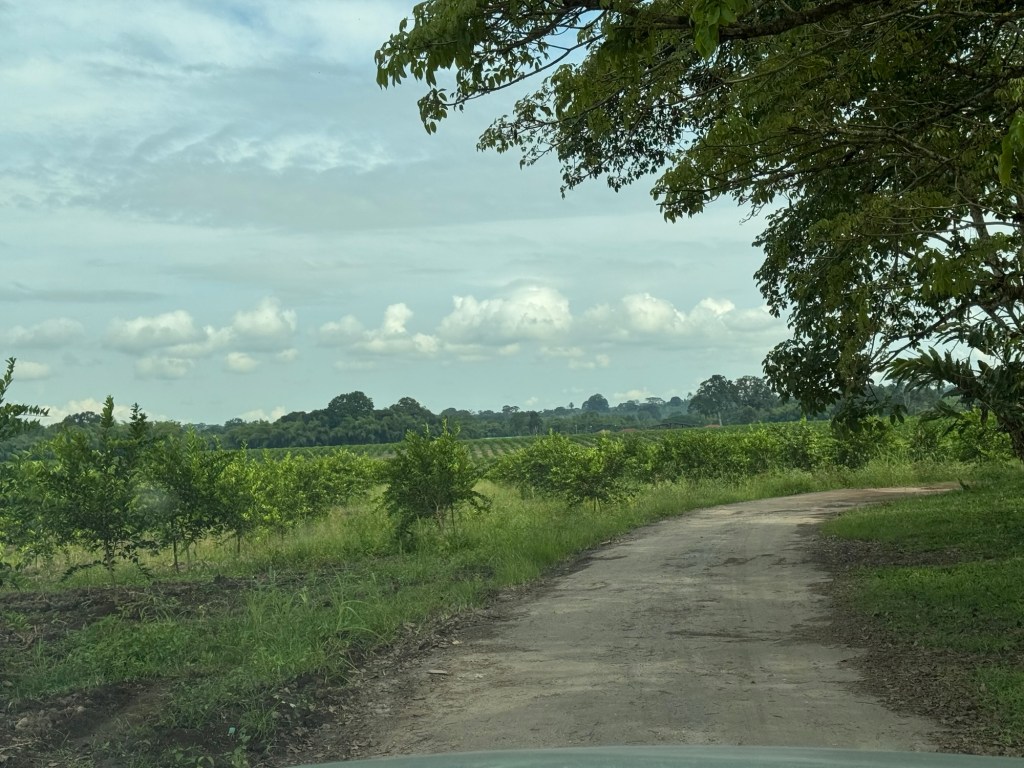
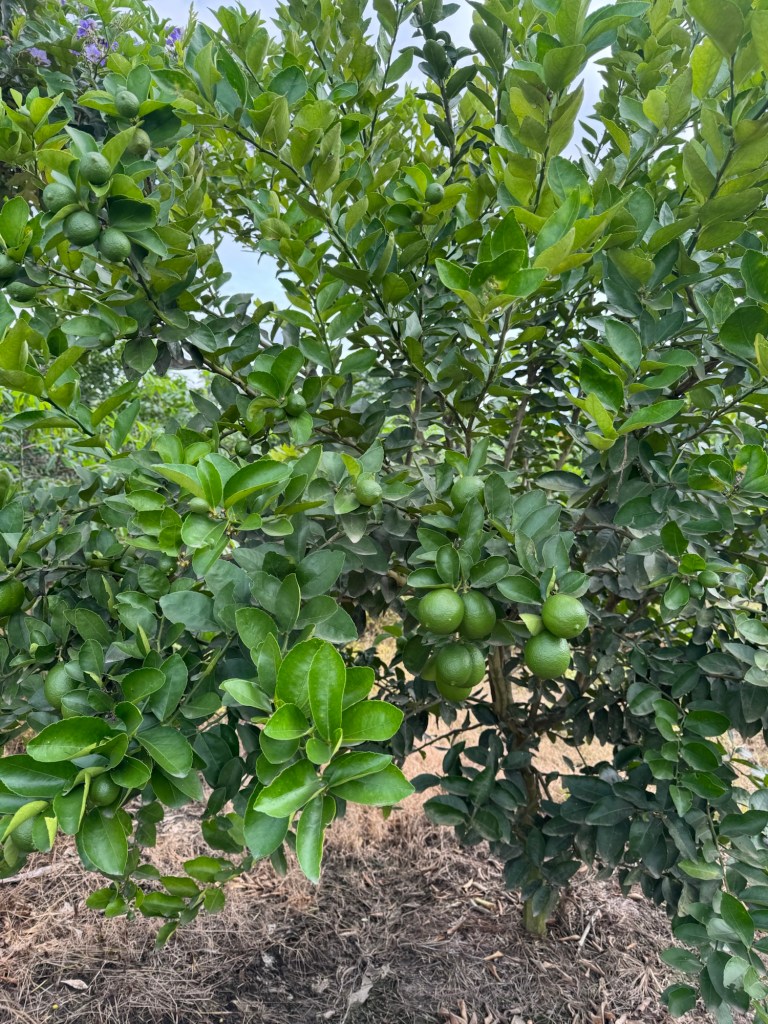
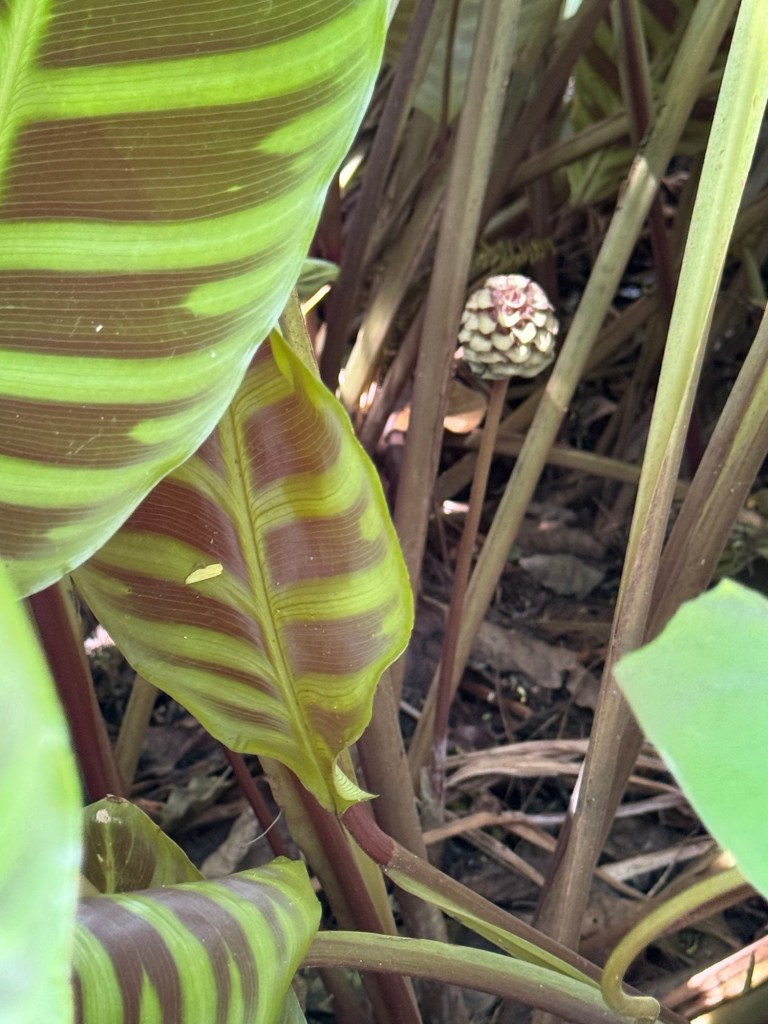
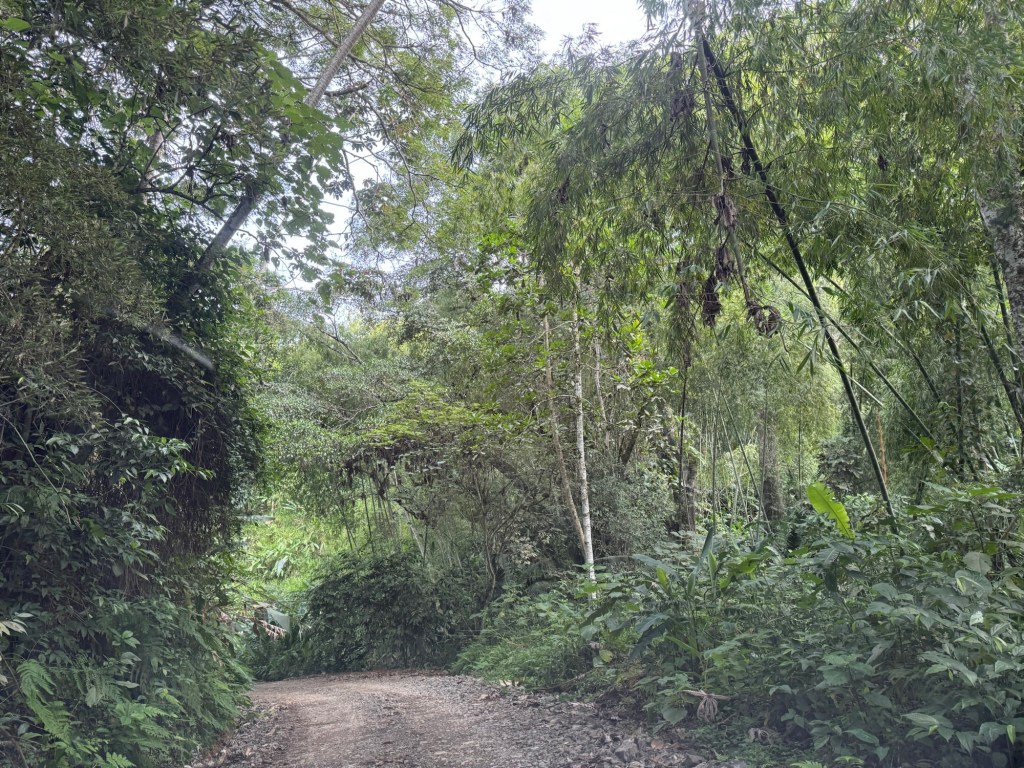
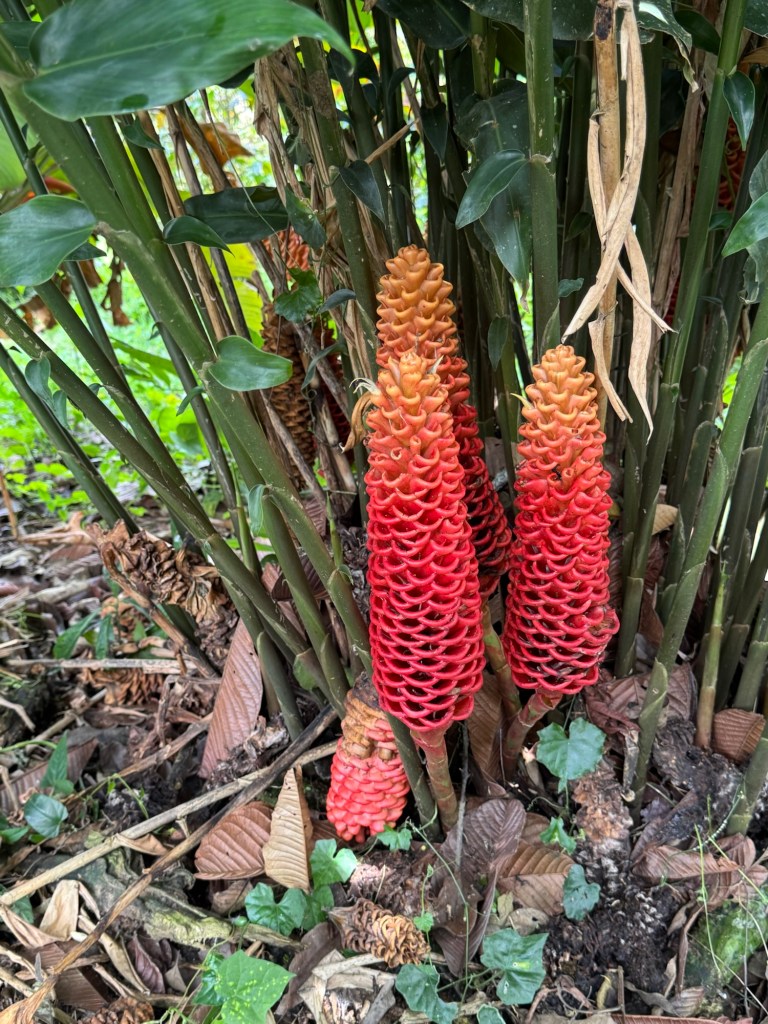

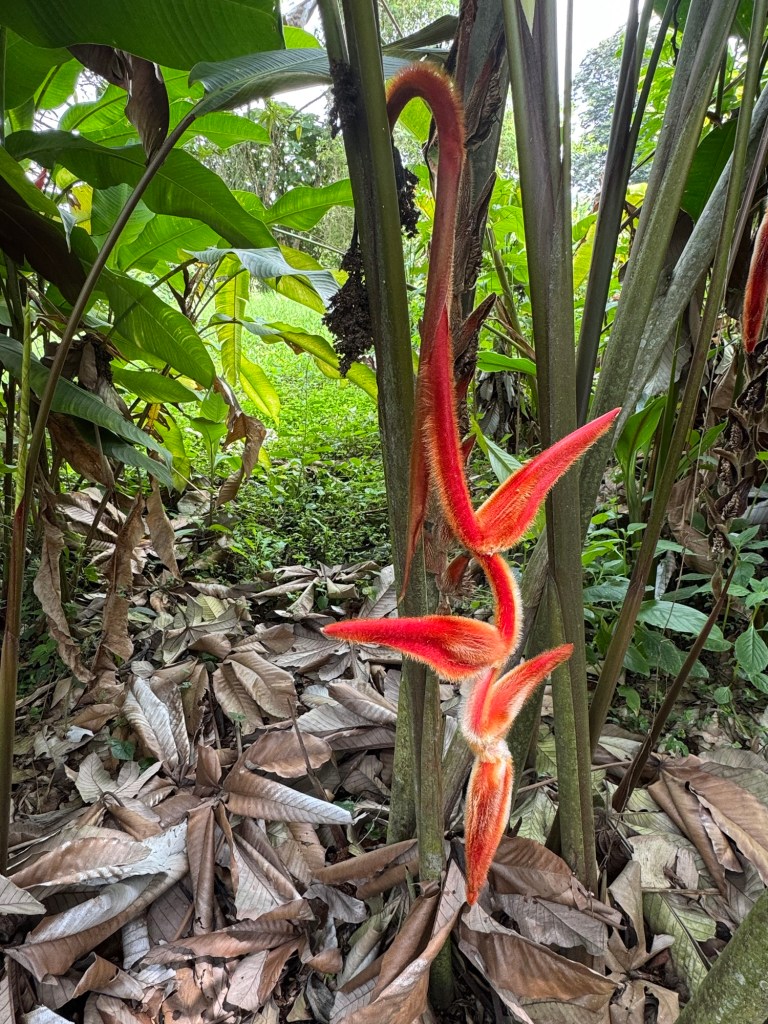
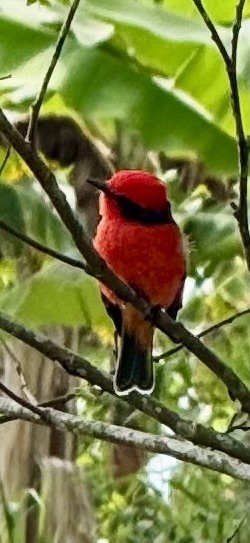
Soon we were at the coffee plantation and walking the property with the owner’s son, Santiago, who talked us through the growing, harvesting and processing steps to a cup of coffee.

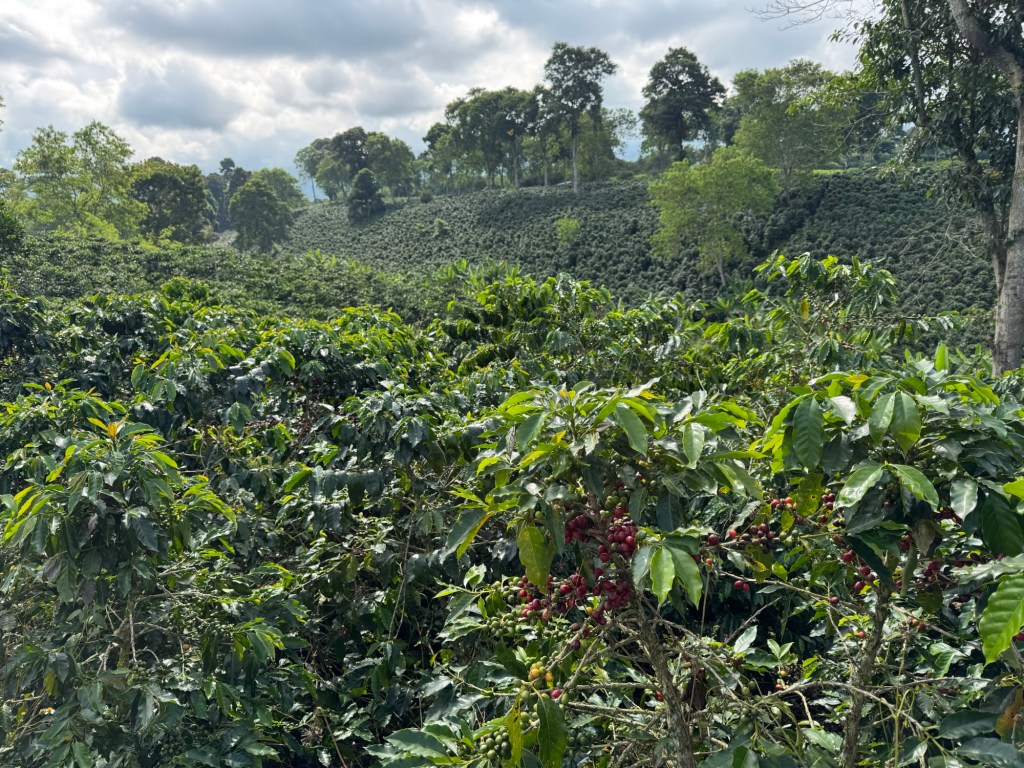
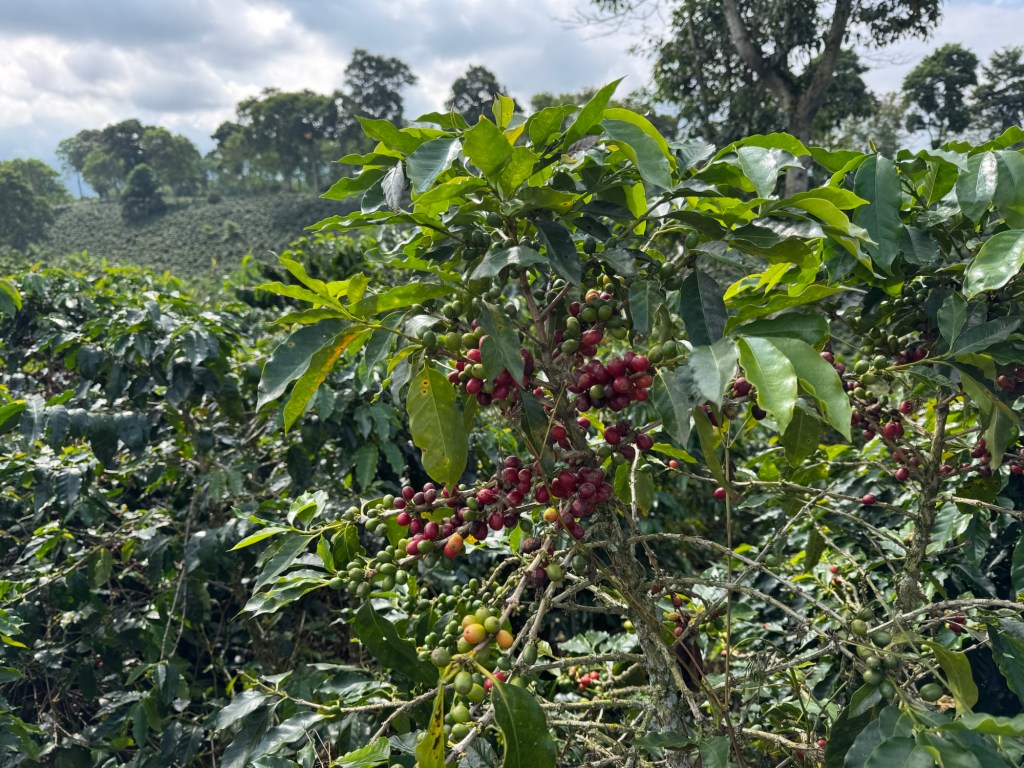
12 employees work full time all year. During harvest season August through October 30-40 picker are employed. There is also a second picking in March and April. From flower to bean takes 7 months. Trees produce well for about 20 years. When they get 5-6 feet tall, they are pruned to 18 inches. The first crop is at 2 years. Santiago said their production is 20-25,000 kilo per year.
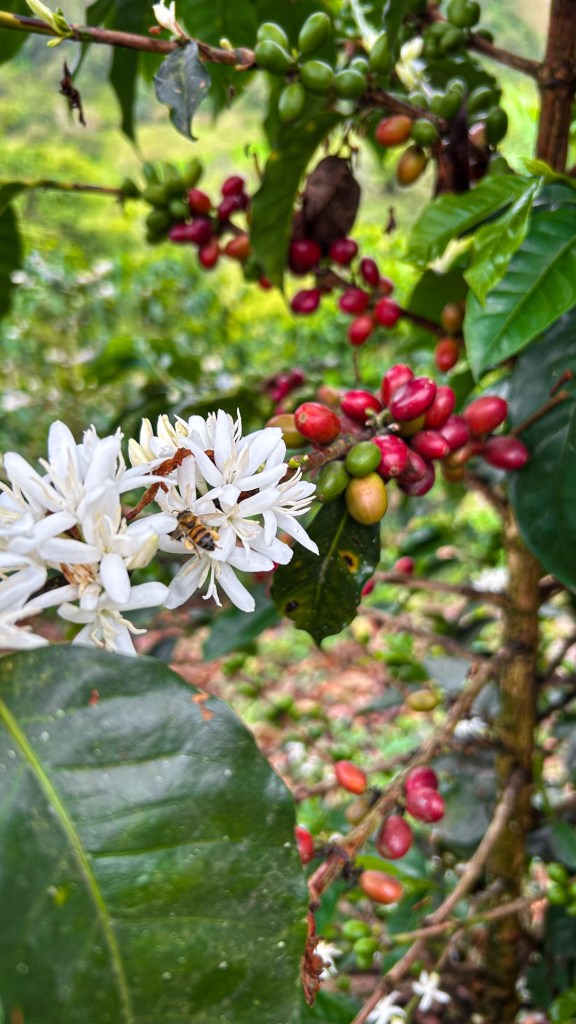
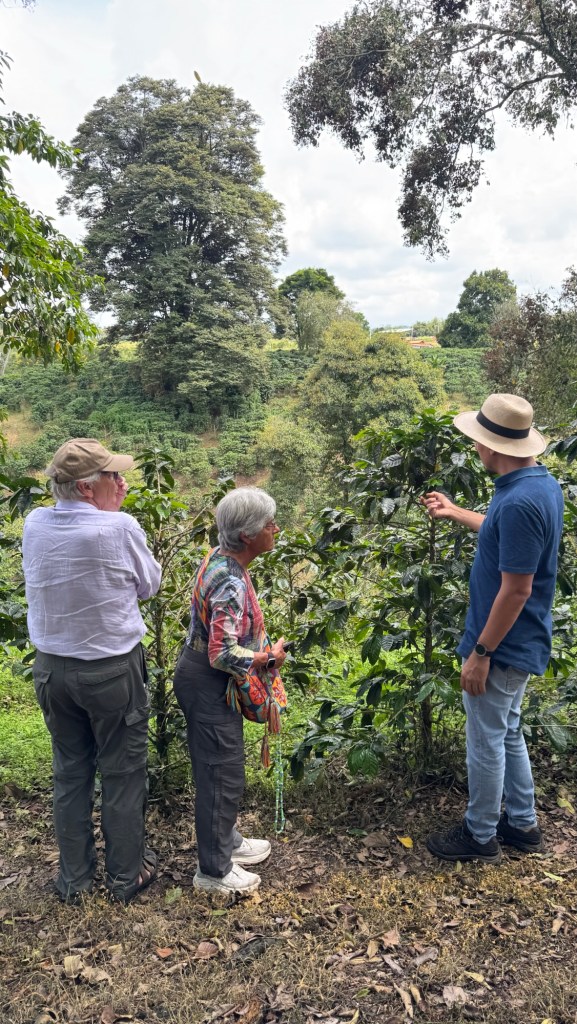
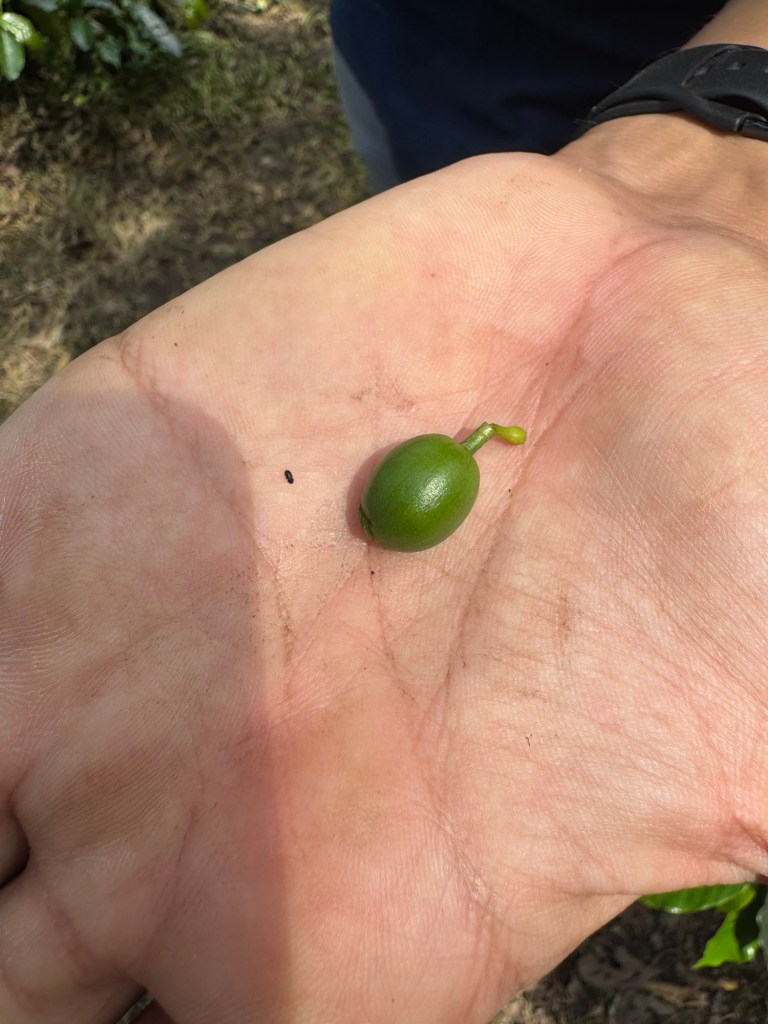

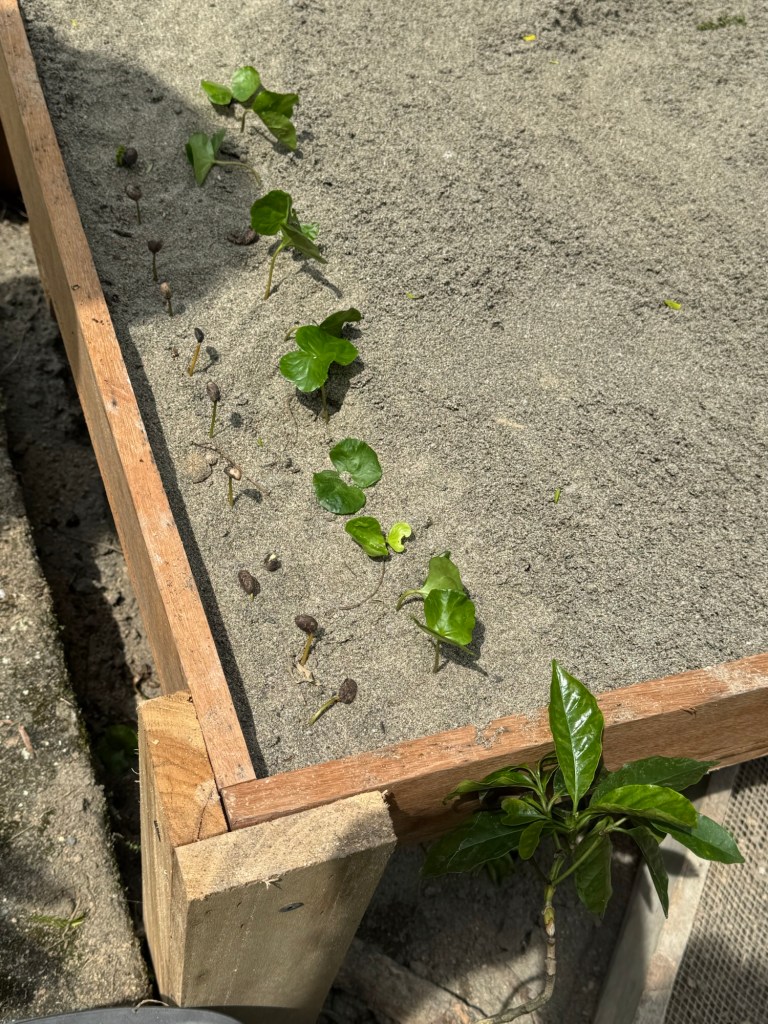


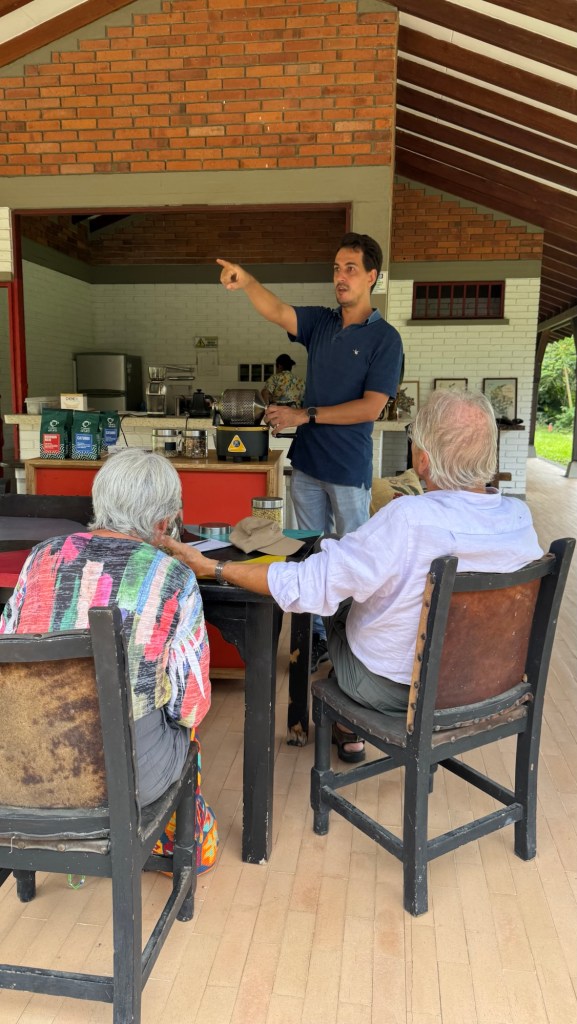
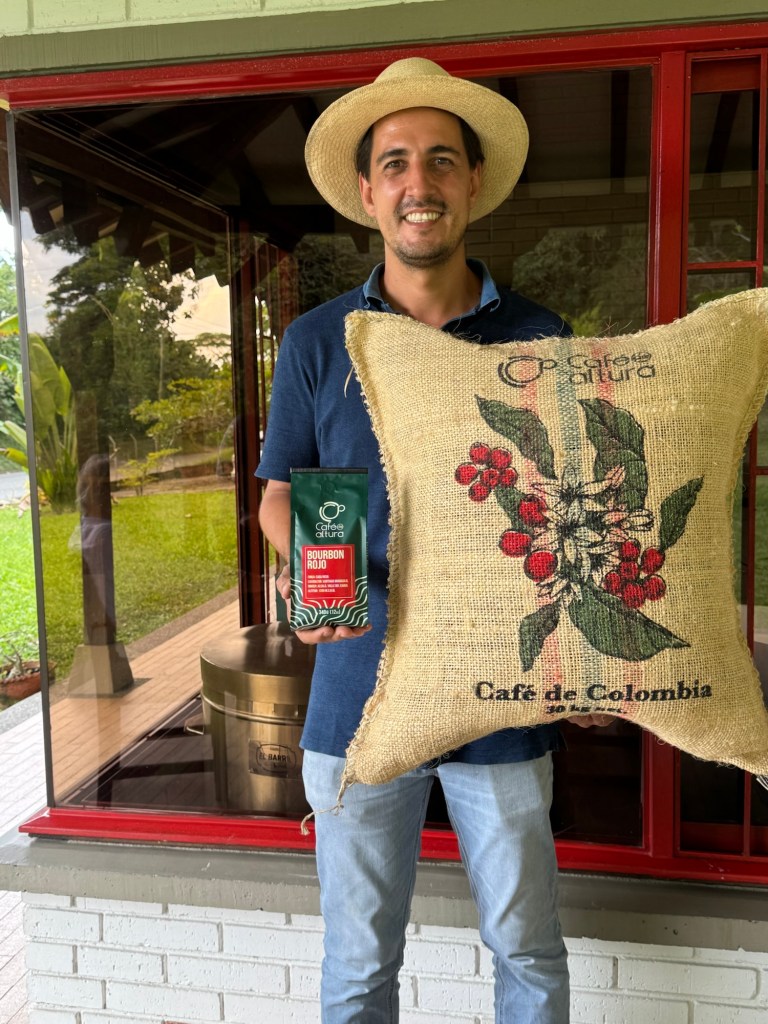
We looked at samples of roasted coffee, mixed good and second qualities, and parchment or top quality dried coffee. There are 2 commercial coffee types: Arabica, which is top grade and produced in Colombia and Brazil; and Robusto, which is 2nd grade and produced in Viet Nam, Brazil, Ethiopia and Indonesia. There are 300,000 growers in Colombia with 5 acres being the average size. 100 kilo of raw beans yields 12 kilo of roasted beans. The average amount of coffee consumed in the USA per person is 6 kilo. In Colombia it is only 1.5 kilo per person.
Colombia is the only South American country that has coastline on two oceans, Pacific and Caribbean, and it is number 1 in birds, butterflies and orchids.
Back at the Hacienda, we had a simple dinner of pasta and listened to two guitarists play and sing for us. They were quite good and we enjoyed their music until we went to bed. So far, we have enjoyed our time in Colombia very much. Next stop is Santa Marta on the Caribbean coast.
 Adventures with Julia