
Wednesday, November 12, 2025
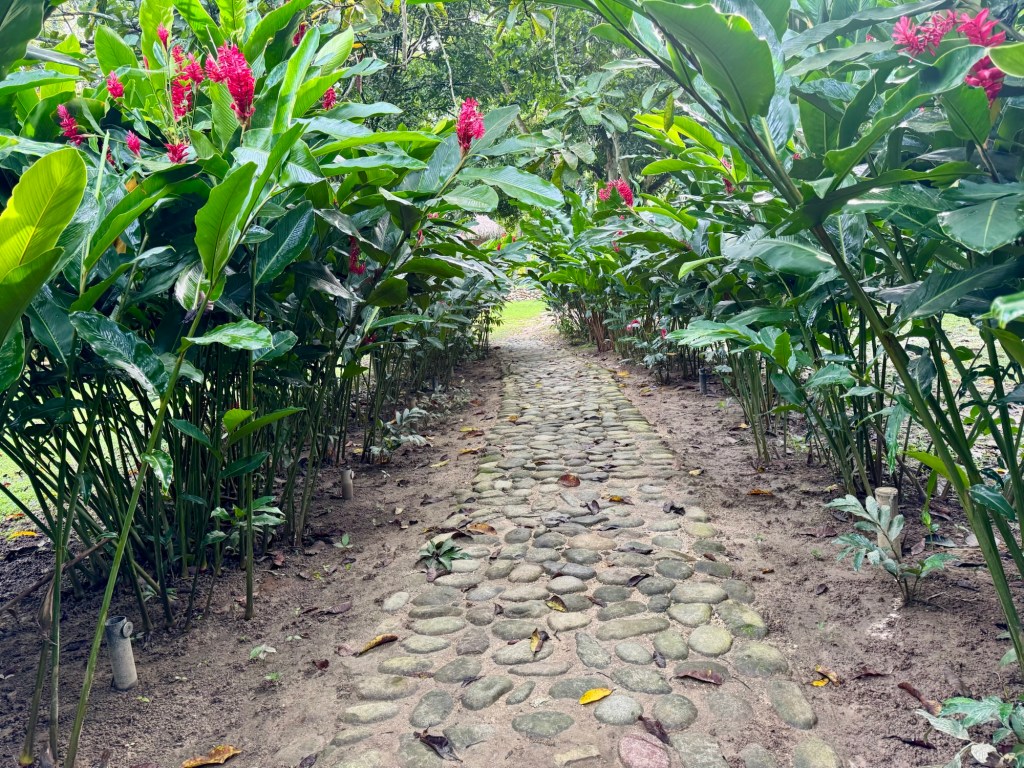
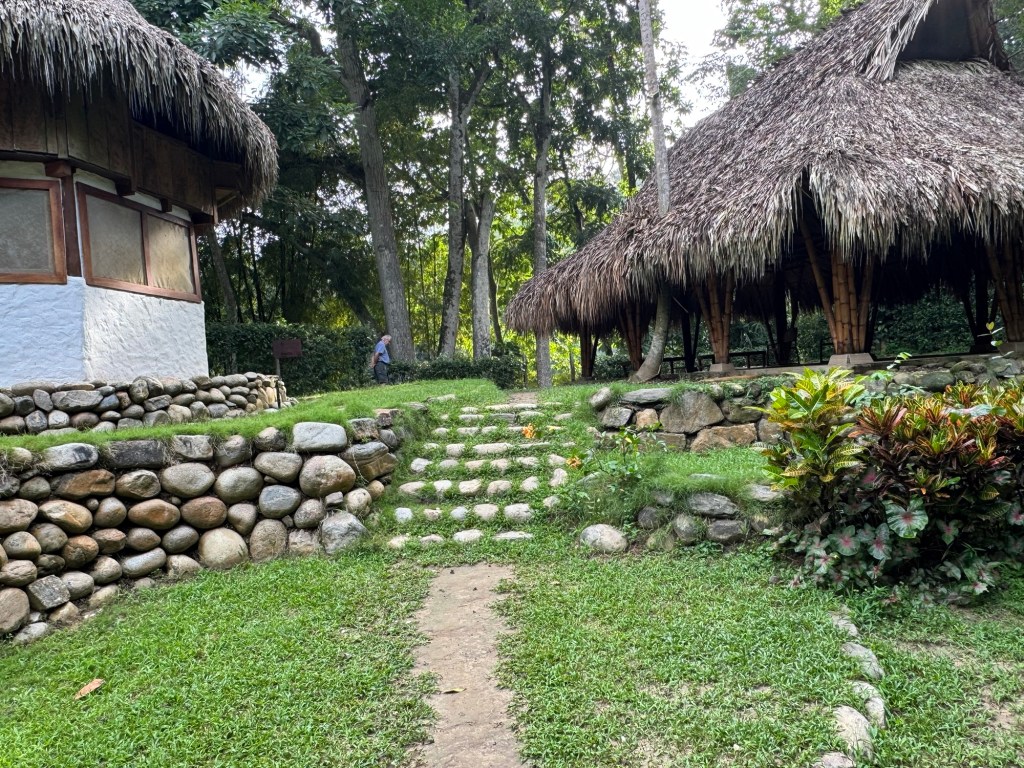
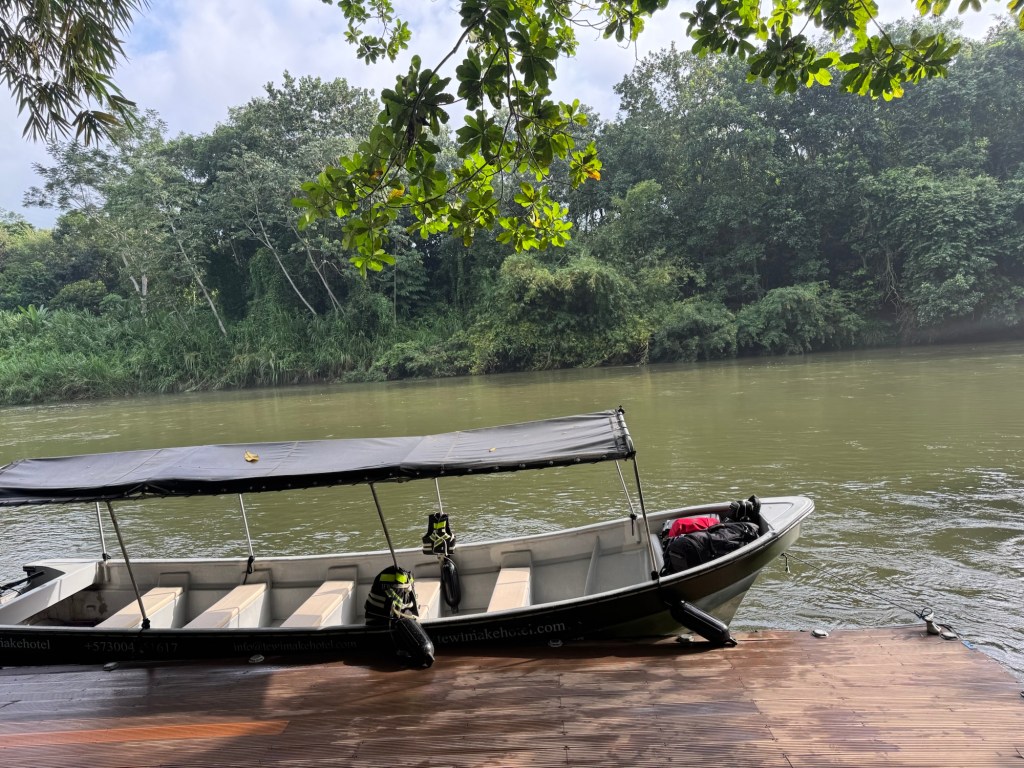
Forests and jungles are in our rear view mirror as we leave Tewimake and head for Cartagena, our last stop on this 7 week long adventure through South America. The drive took 5 and a half hours including a stop to buy a sandwich midway through. The first part of the drive was mostly tree lined. Then the landscape turned into scrub and wetland with the Caribbean Ocean in the distance.
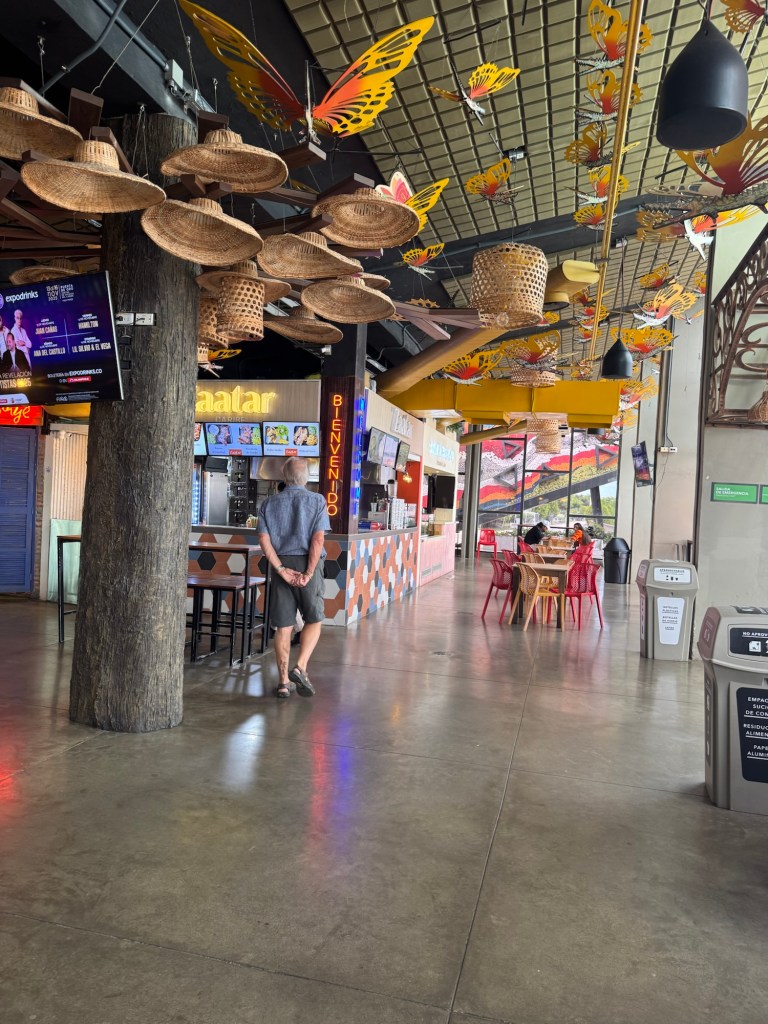
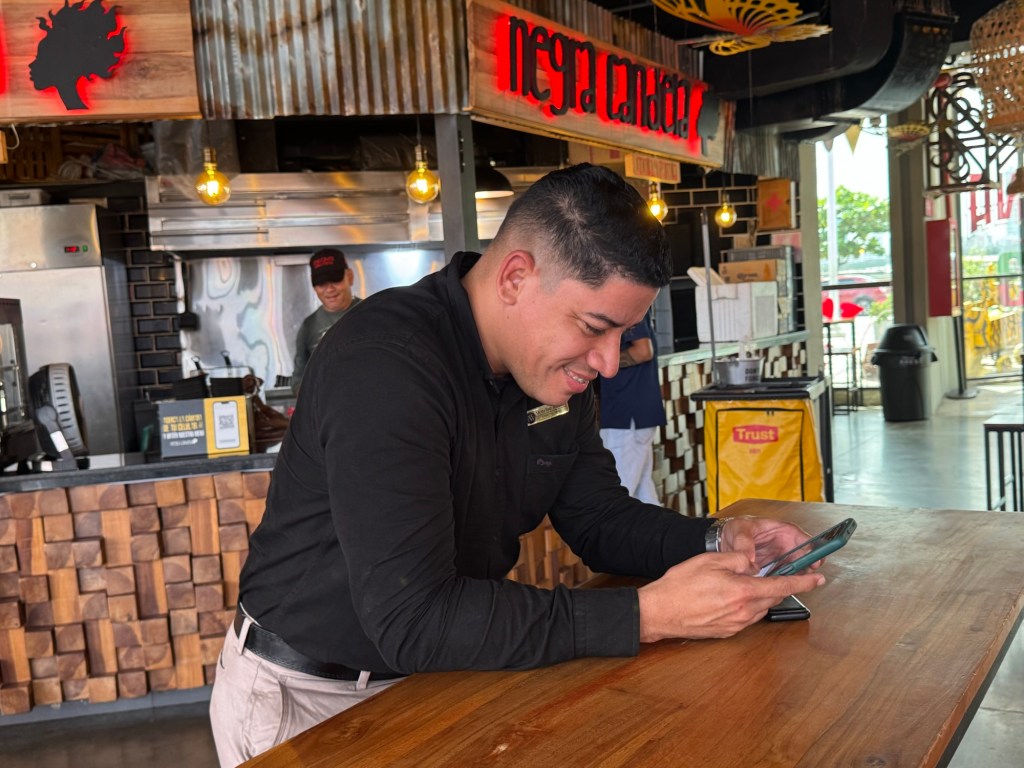
The road was two lanes for the first 2.5 hours with dilapidated and dirty villages and small towns along the way. When we reached the large industrial port city of Barranquilla, the highway became 4 lanes.

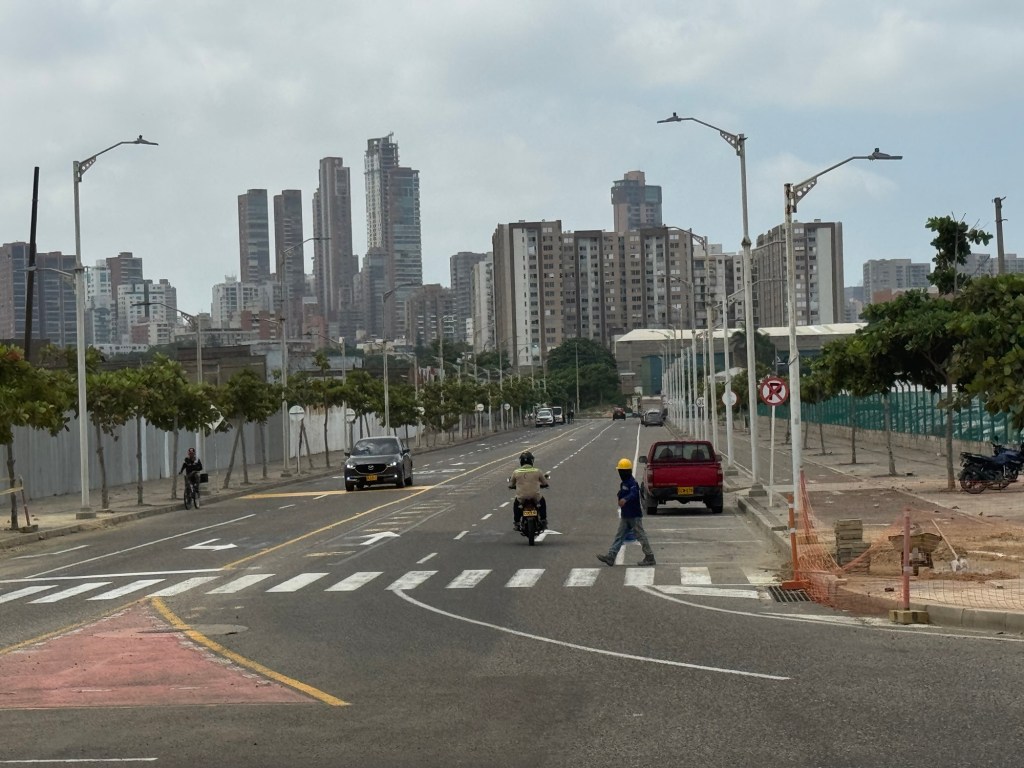
Our driver, Orlando, spoke broken English, but was able to tell us the city was larger than Cartagena, which is a tourist city, and has a busy port exporting cotton, coffee, petroleum and natural gas. It is Colombia’s largest port on the Caribbean Sea and the fourth largest city in Colombia.
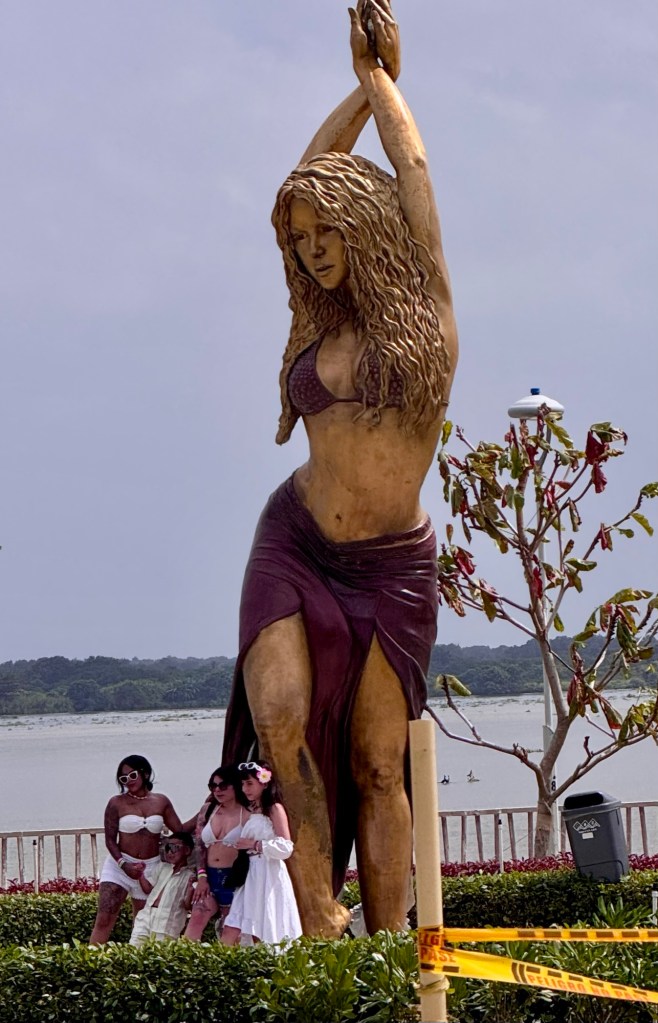
Entering Barranquilla we passed a large bronze statue of a Colombian singer named Shakira, who was born here. We stopped to get a better look. It turns out she has won at least one Grammy award, made significant contributions to the music scene, especially for her song “Hips Don’t lie”, and does charity work as well. In addition to Shakira, Sofia Vergara was also born here.
At 1:30 Orlando dropped us off at our hotel in Cartagena and headed back to Tewimake. We were happy to check into our 4 night stay in one place. We spent the afternoon chilling in our room. It is apparent the heat and humidity have sapped our energy for sightseeing. We did Uber to our dinner at Celele, a restaurant in the neighborhood called Getsemani. It is billed as being inspired by gastronomic adventures around the Colombian coast. The food certainly was adventurous.
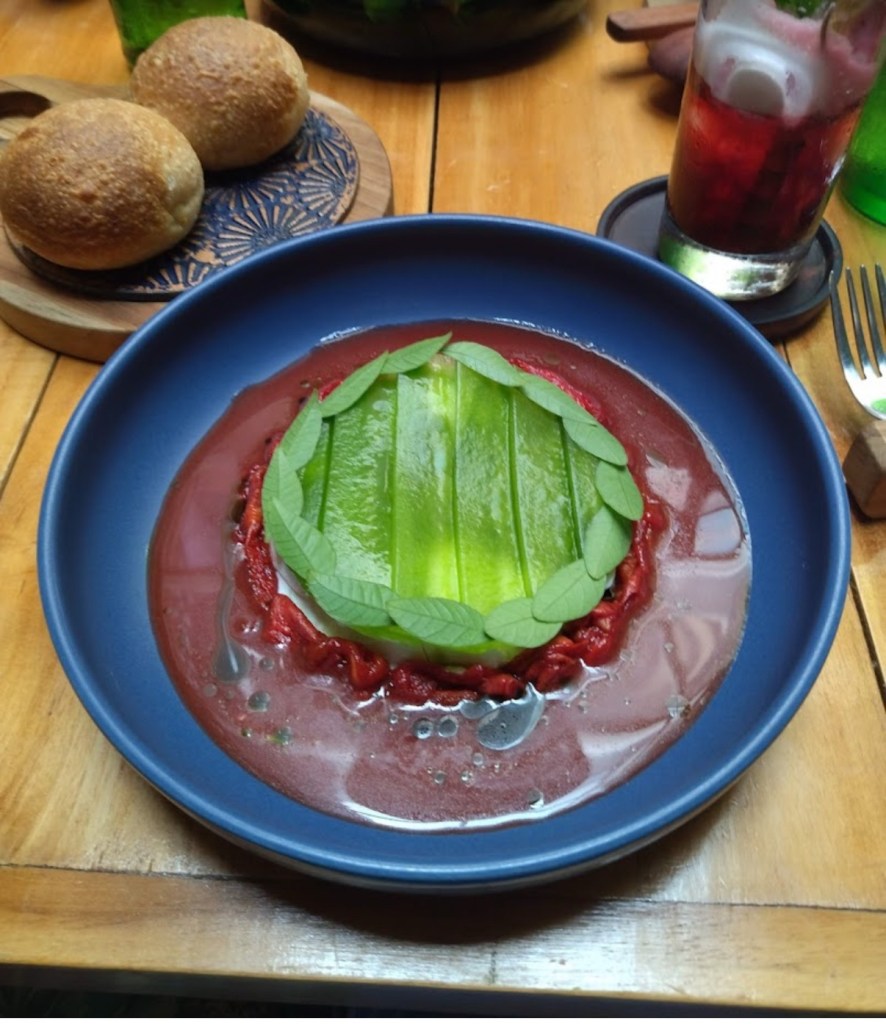
We ordered a starter covered in green leaves. It was tasty, but hard to identify. The main dish with lobster and snails was equally unusual. We could make out the lobster and snails mixed with rice, a nutty crunchy substance and a sauce. It also tasted good, but was hard to make a connection with our expectations for a lobster dish.
Thursday, November 13, 2025 Independence Day in Cartagena
The city has a current population of 1.2 million. It was occupied for centuries by indigenous tribes, but was founded in 1533 by the Spanish explorer Pedro de Heredia. In the same year, 500 African slaves were brought from West Africa and put to work in the area. The Spanish gave the Slave trade to the Portuguese, who eventually brought 4 million humans as slaves into Cartagena until the trade was stopped in 1851 per the Womb Law, which said that anyone born to a slave after that date was a free person. Meanwhile, Initial prosperity came from the discovery of gold in the tombs of the indigenous tribes. Sir Francis Drake successfully attacked the city in 1586 and stole 400,000 ducats. To protect against further pillaging, the Spanish built fortifications and continually improved them in the 17th and 18th centuries. In 1741 the British laid siege to Cartagena, but the Spanish forces defended the city. The Cartagenians eventually won independence from Spain on November 11, 1811. The children of Spanish people had fewer rights than those who came from Spain. Eventually there were enough descendants who wanted to be free of Spain that they successfully revolted against the crown.
Our City tour began with our Cartagena guide, Javier, who started off introducing us to door knockers. There were several interesting one so I include some here:
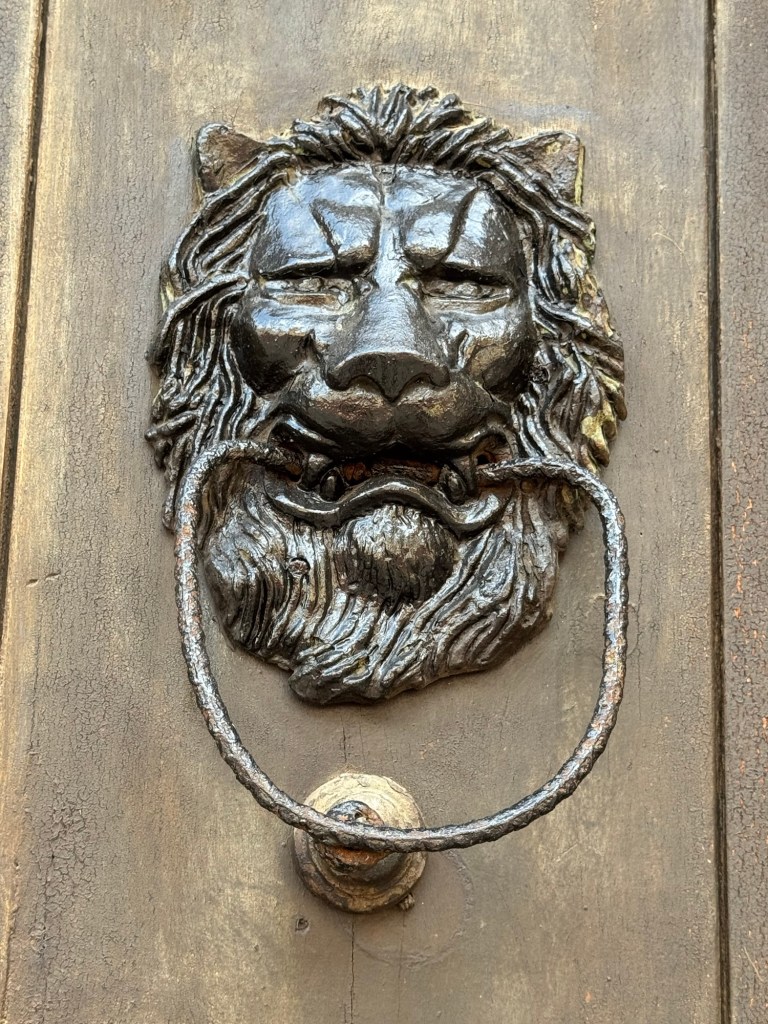
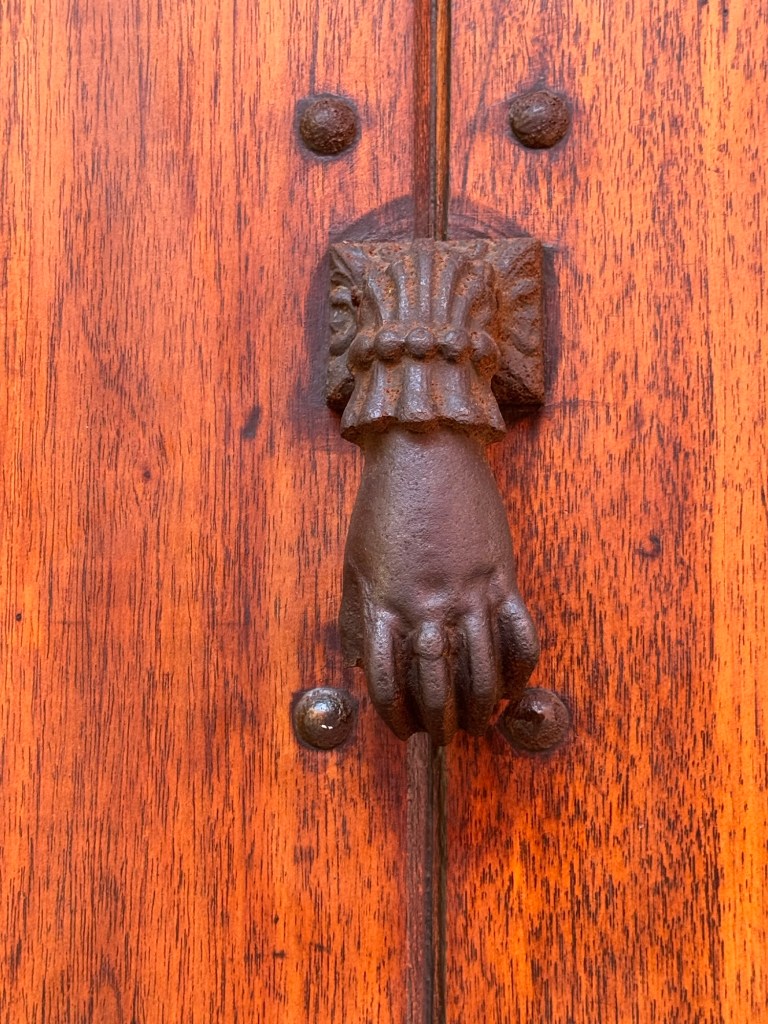
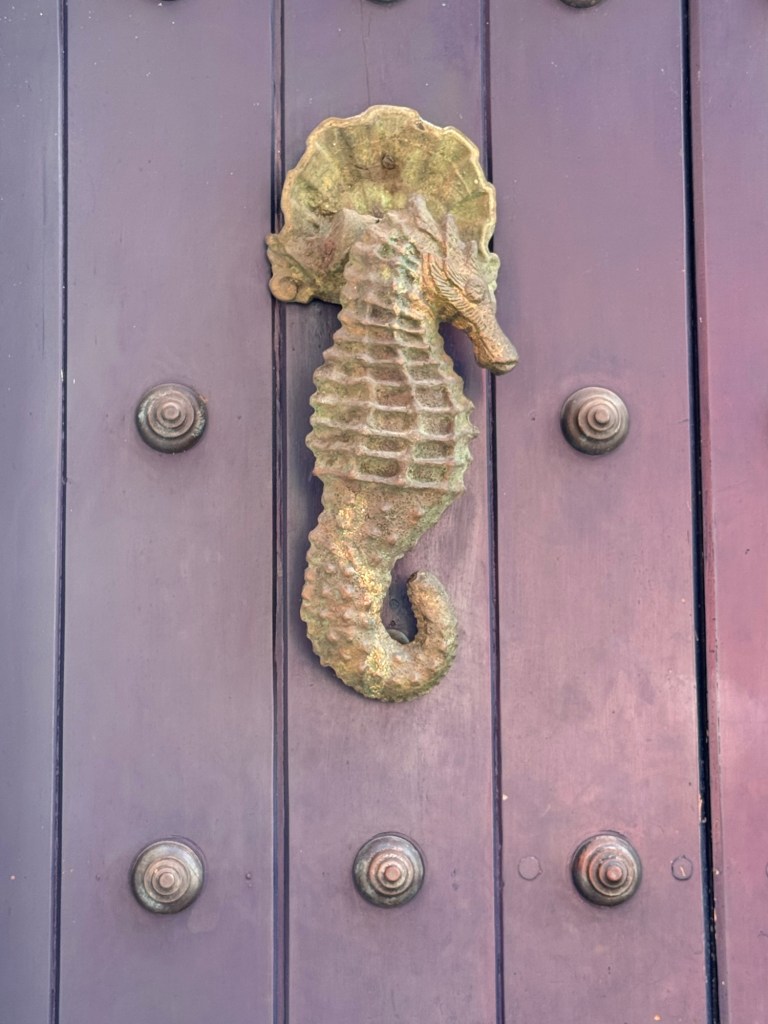
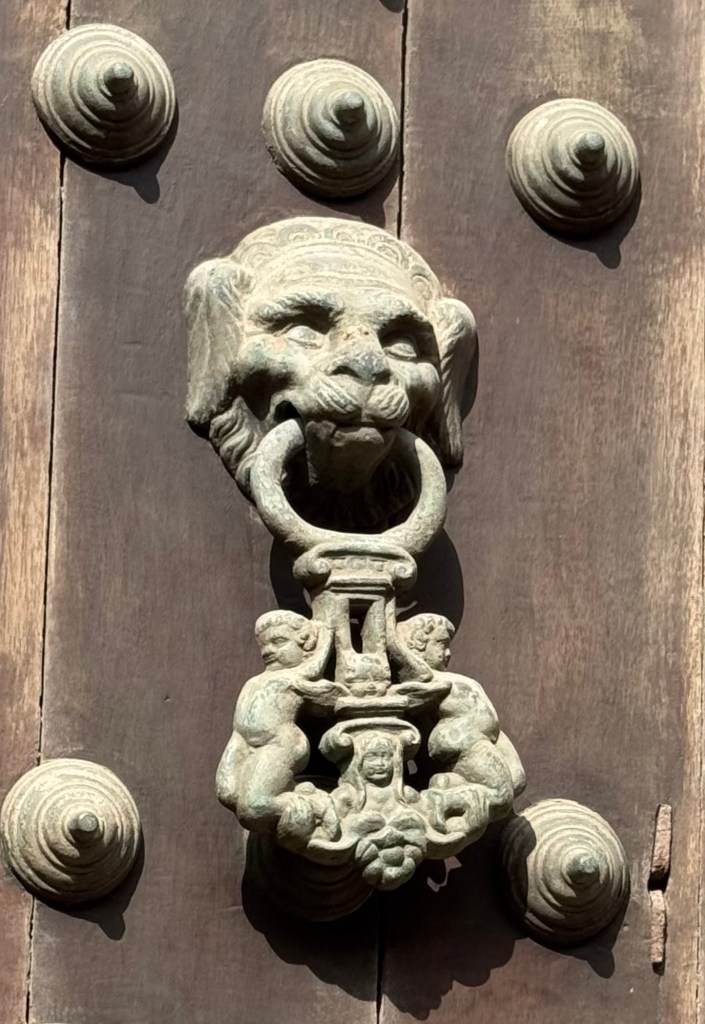
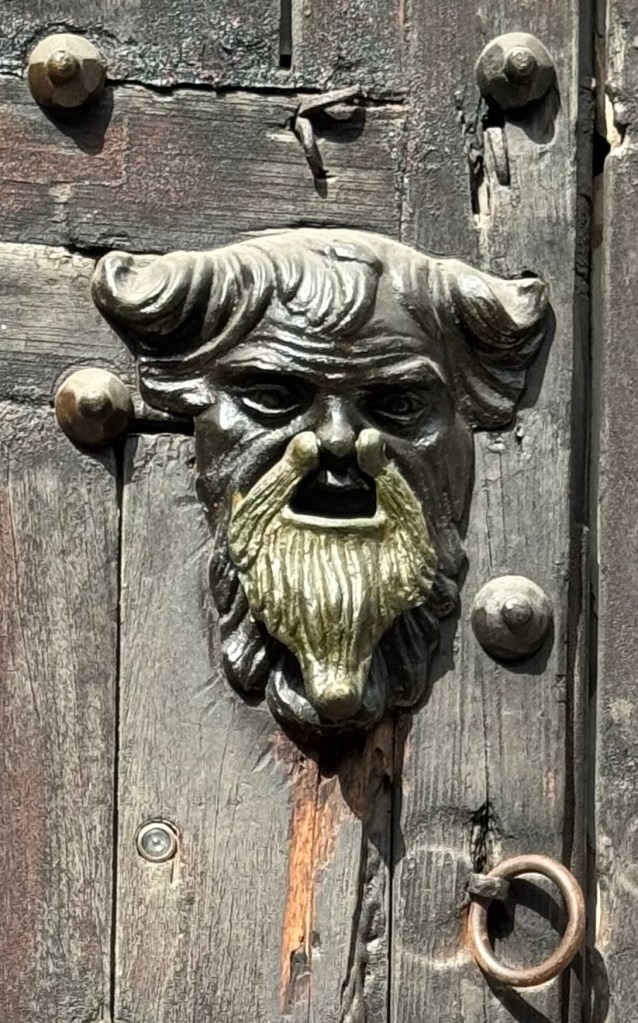
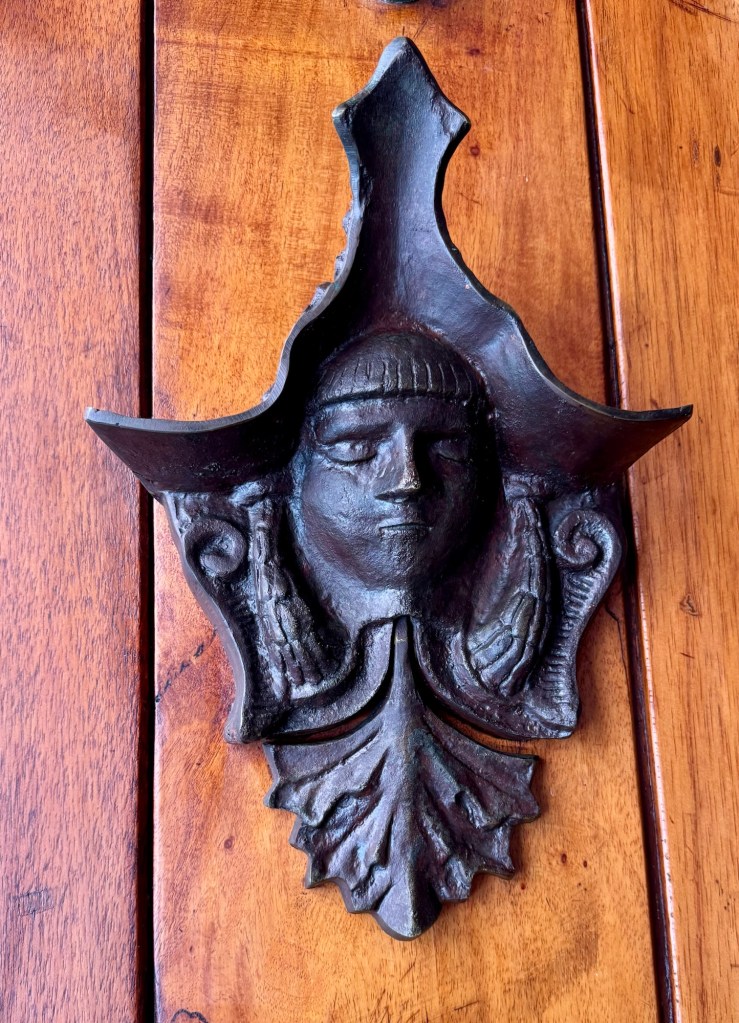
As we walked along the narrow streets dodging people, small cars and horse drawn carriages, Javier pointed out several buildings and monuments.
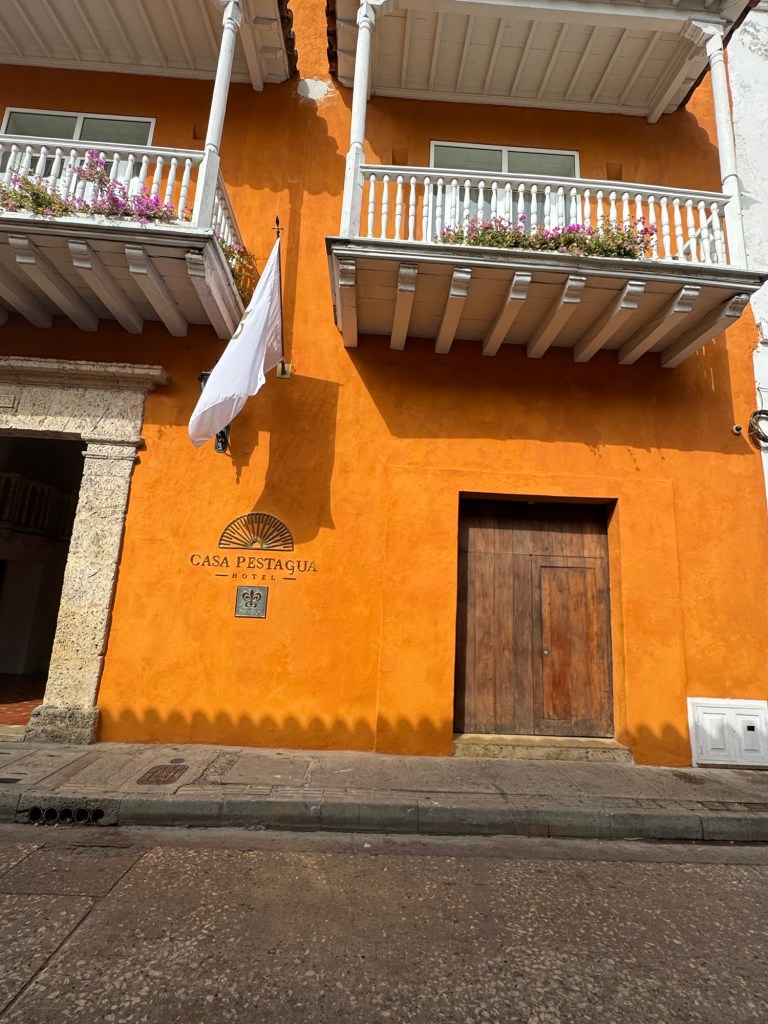
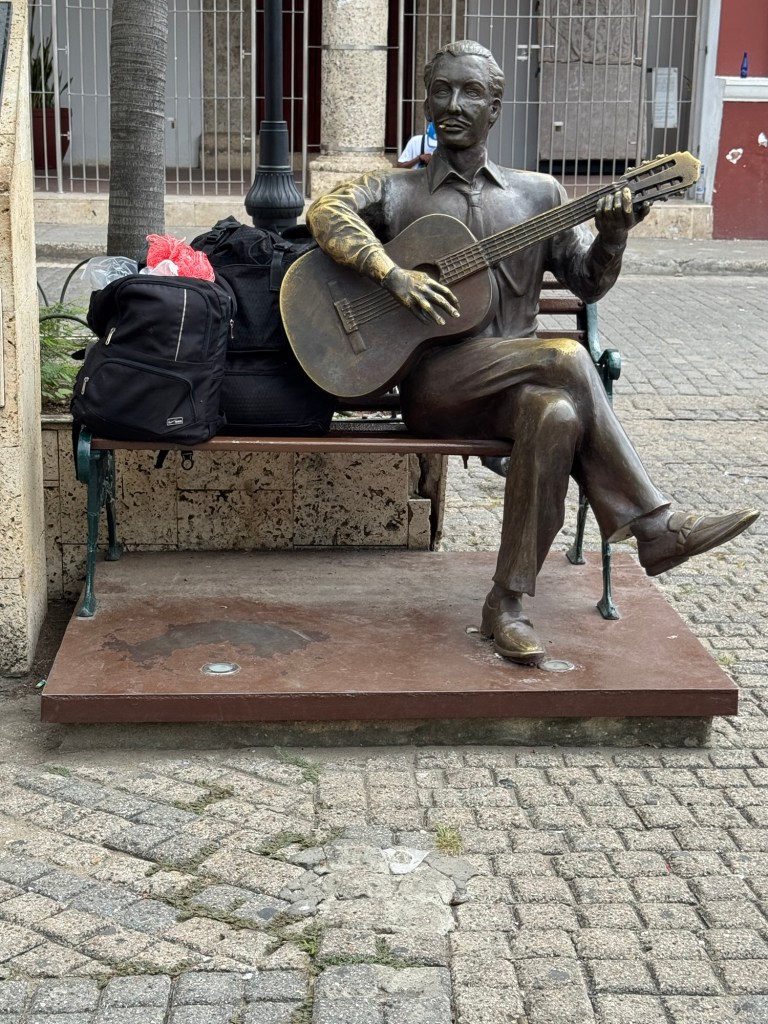
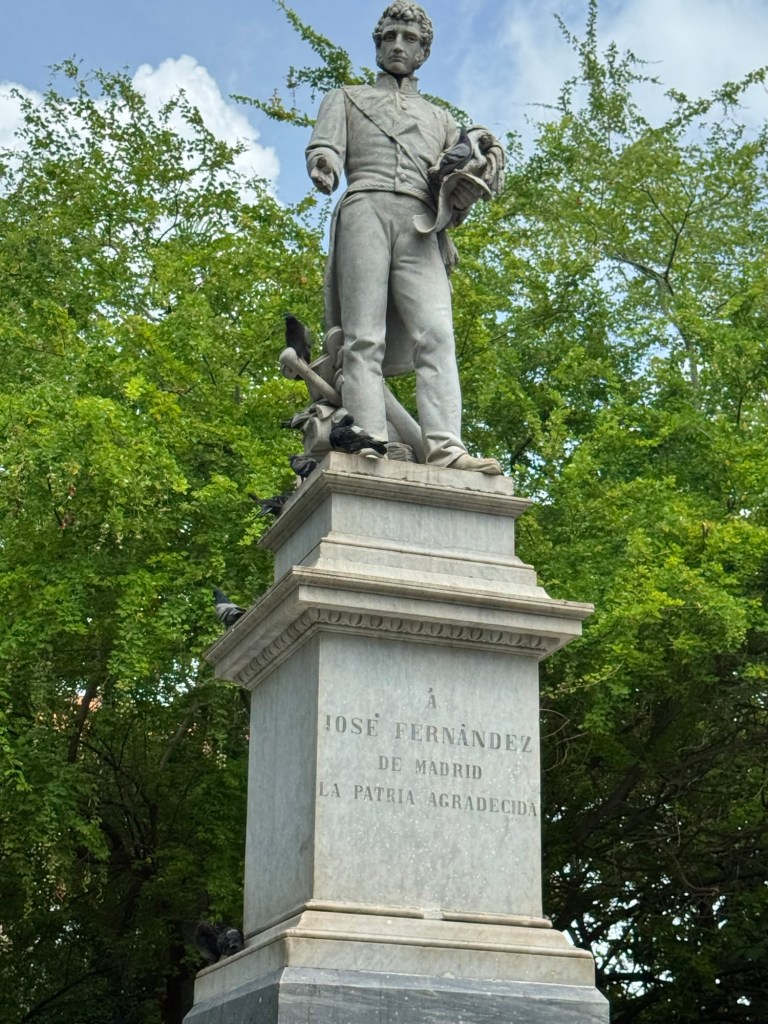
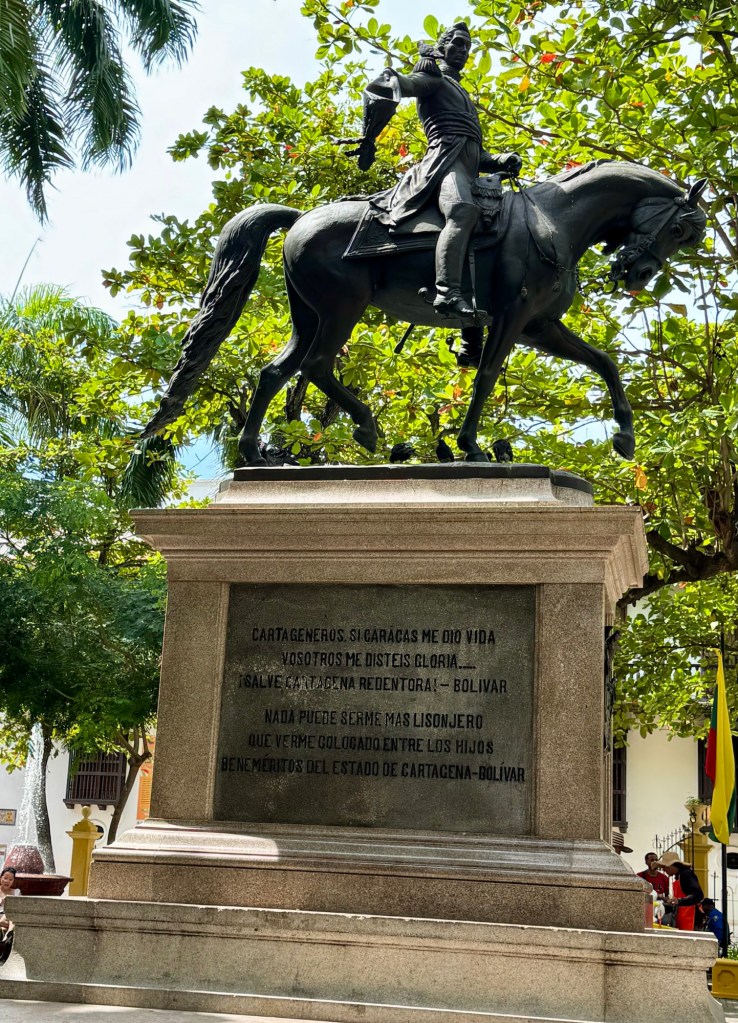
Statue
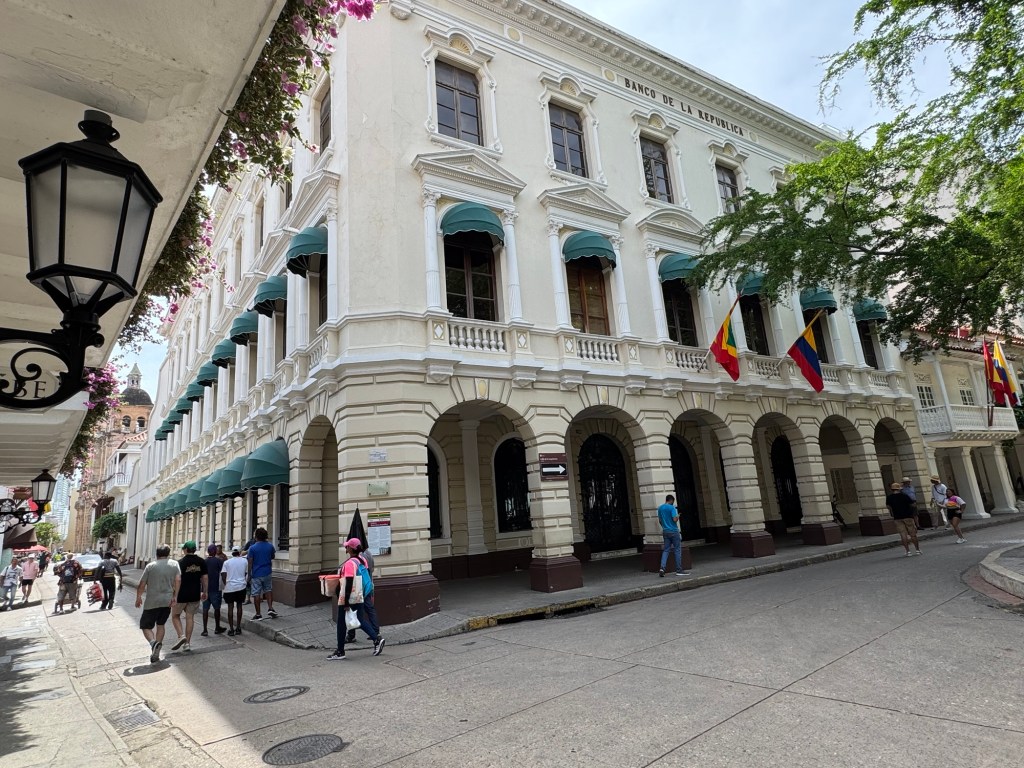
He mentioned that Cartagena has been visited by two popes in recent years;
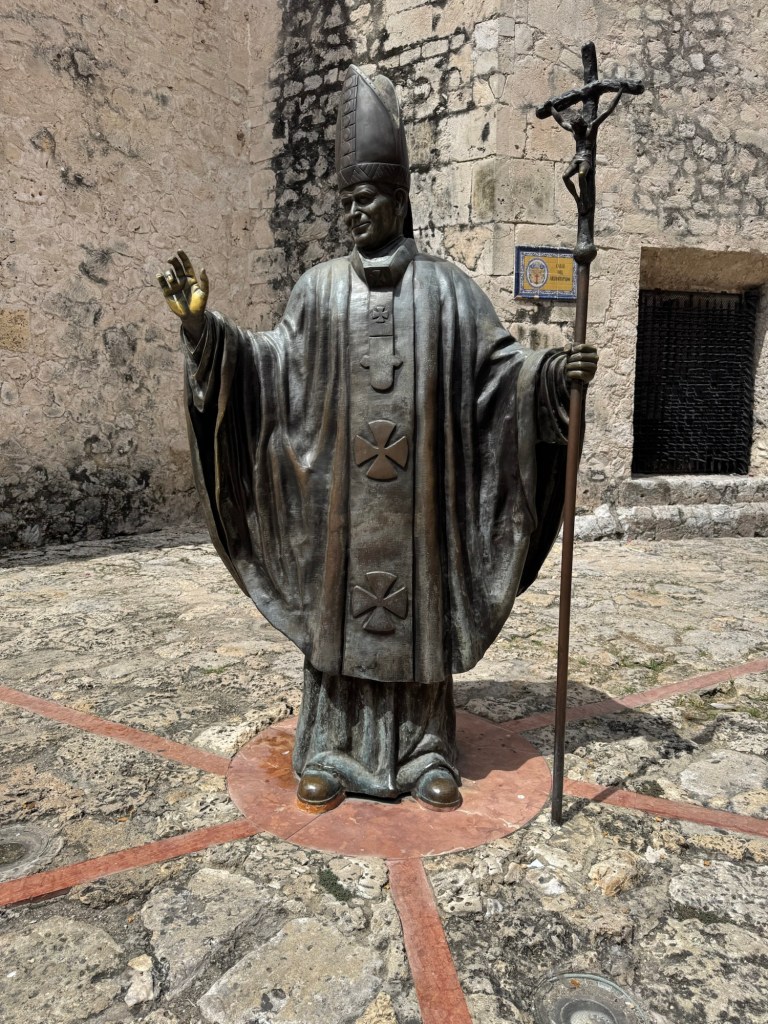
John Paul II was here in 1986, and Francis was here in 2017 to promote reconciliation and support the country’s peace process between the Government and leftist guerrilla groups. Pens were made from recycled bullets that read, “Bullets wrote our past, Education our future“.
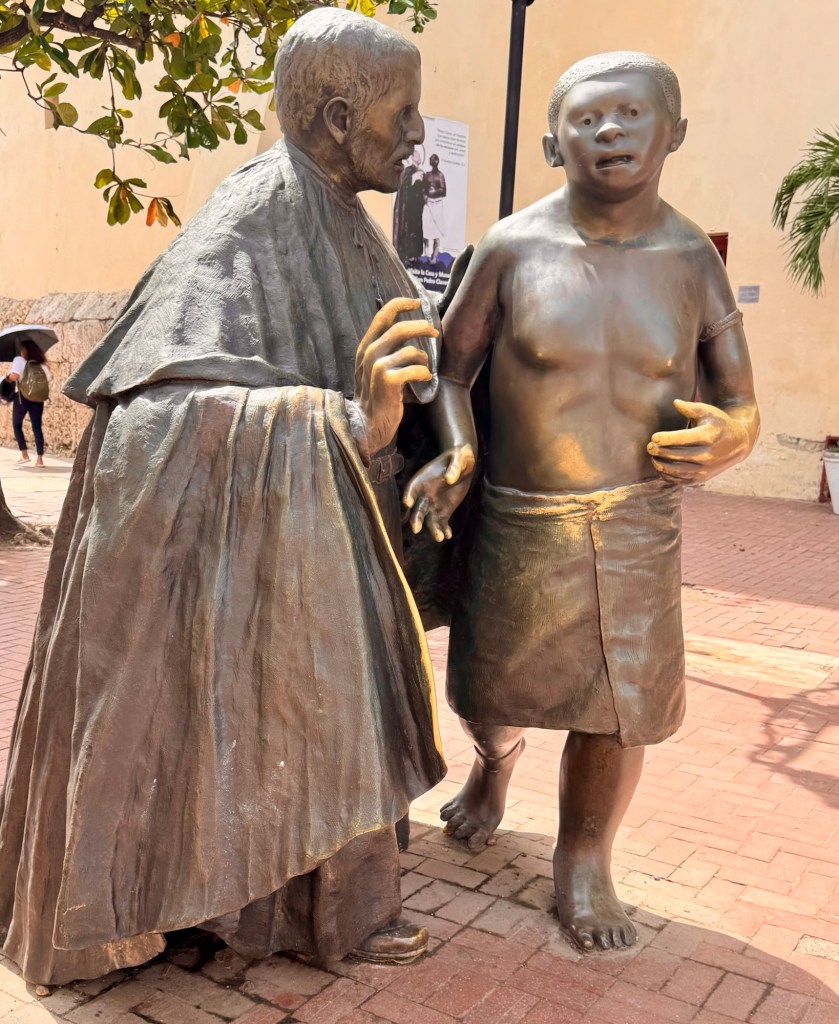
Javier also pointed out the sculpture of a priest, Saint Peter Claver, and Sacabuche, a slave who spoke several languages and translated for the priest in St Peter’s Square.
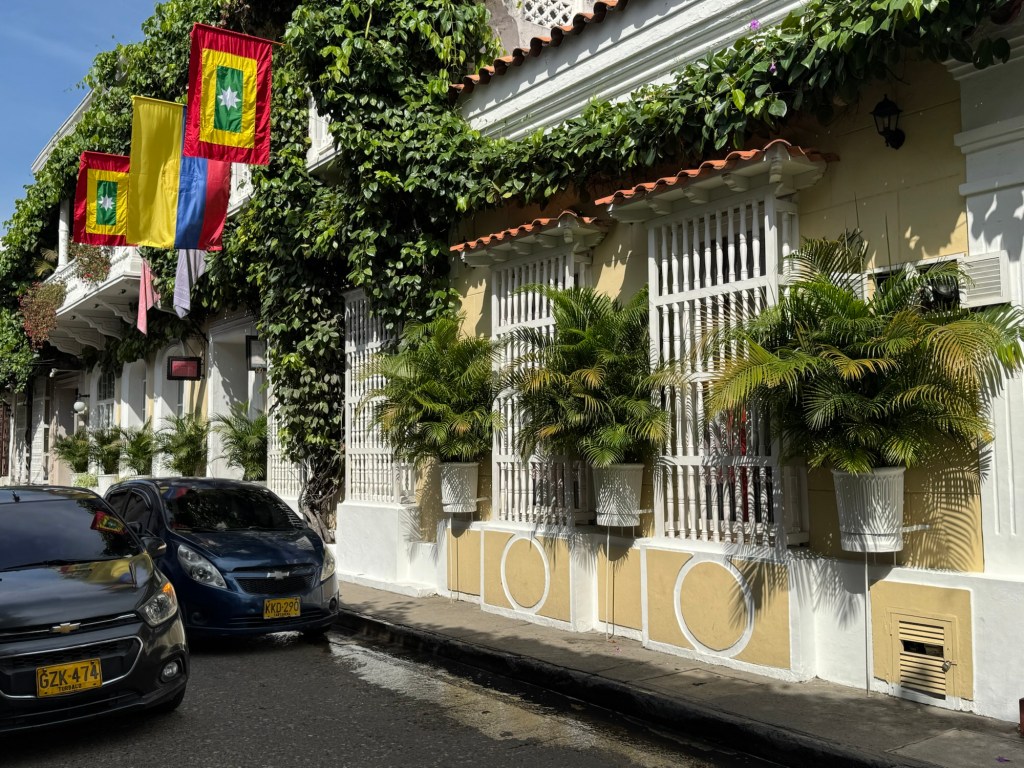
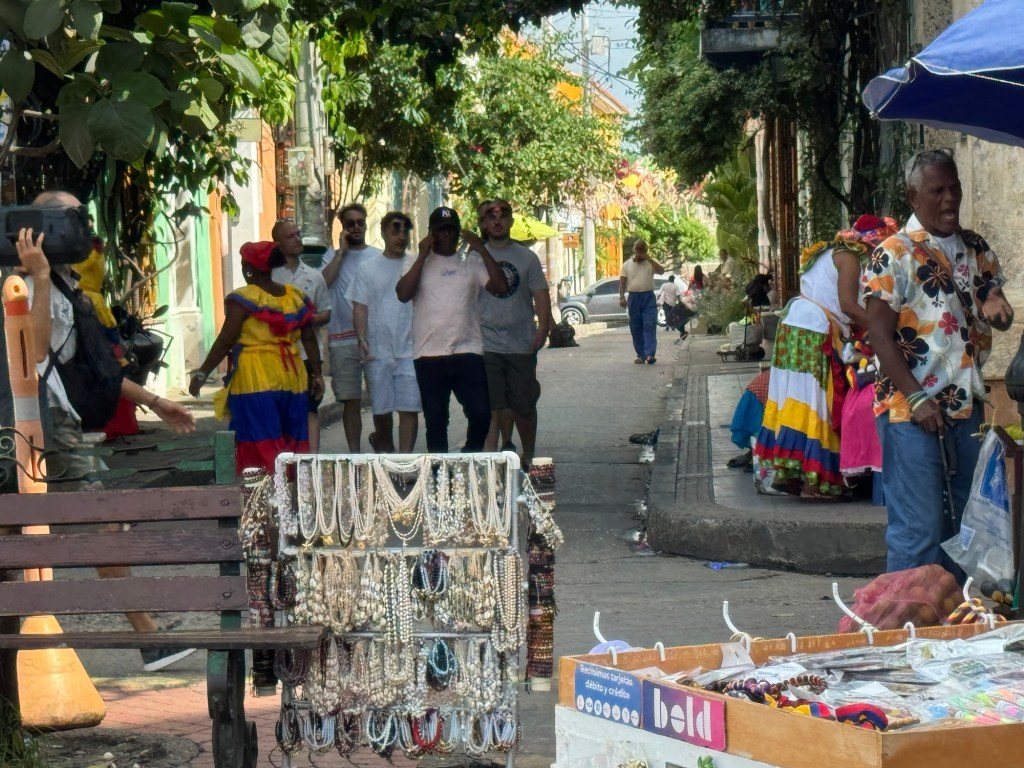
There were lots of street scenes and here are several. As it is the annual Independence Day festival, there are many more people around than usual. It is exciting and a bit nerve wracking too. These images are from the upscale neighborhood called El Centro.

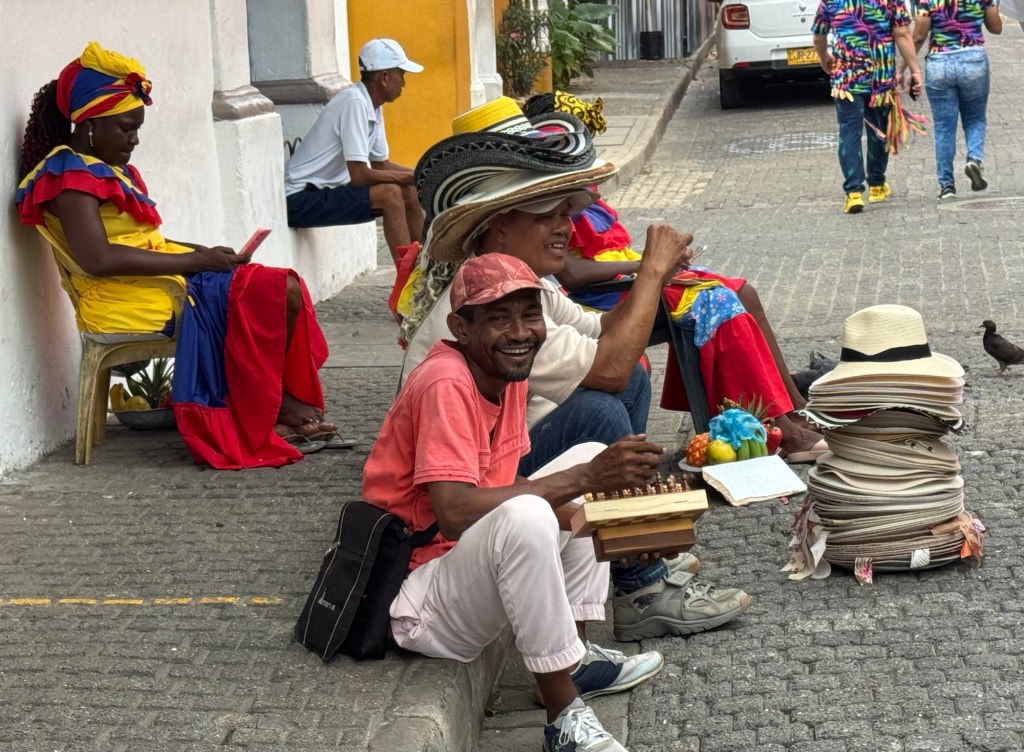
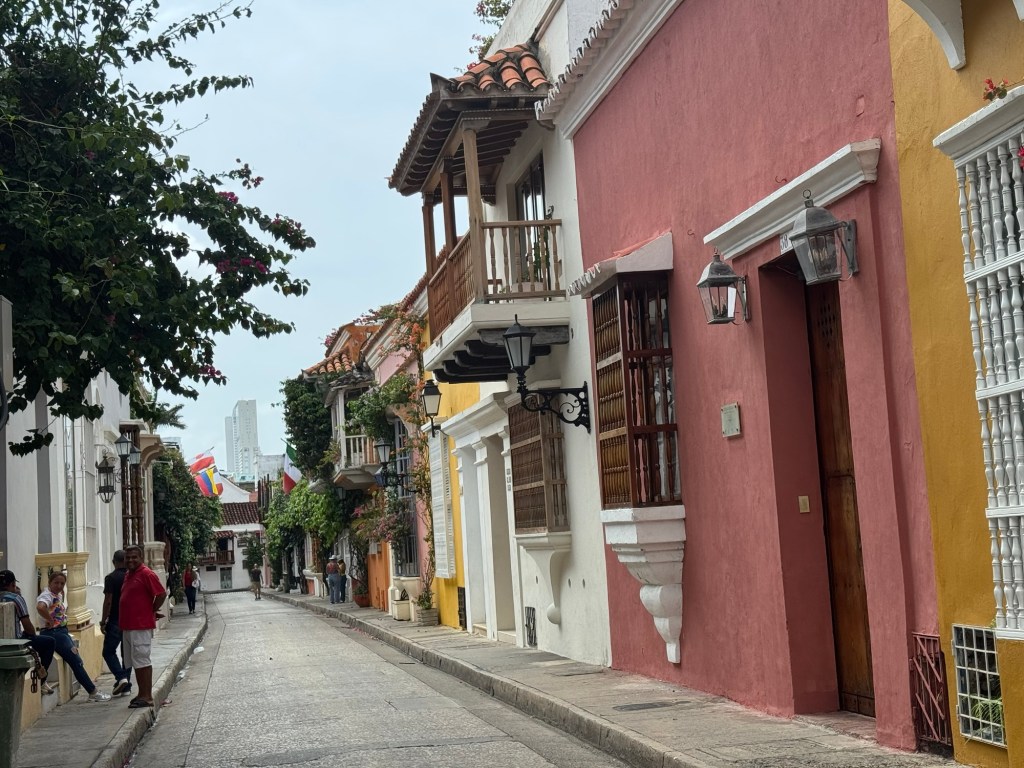
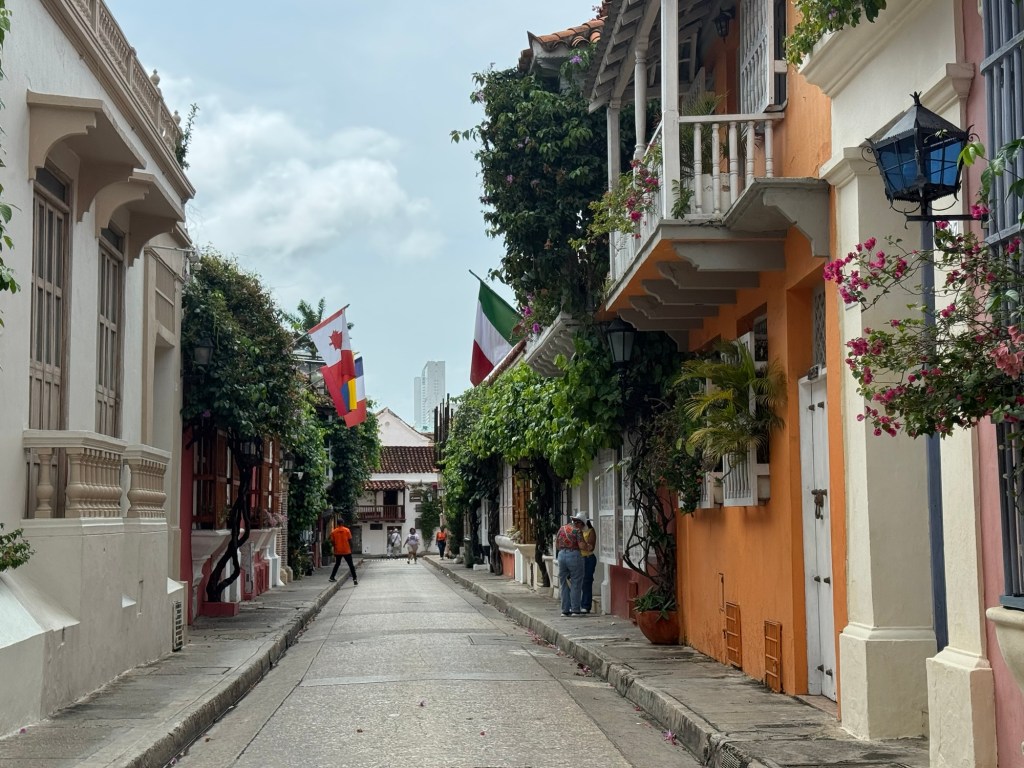
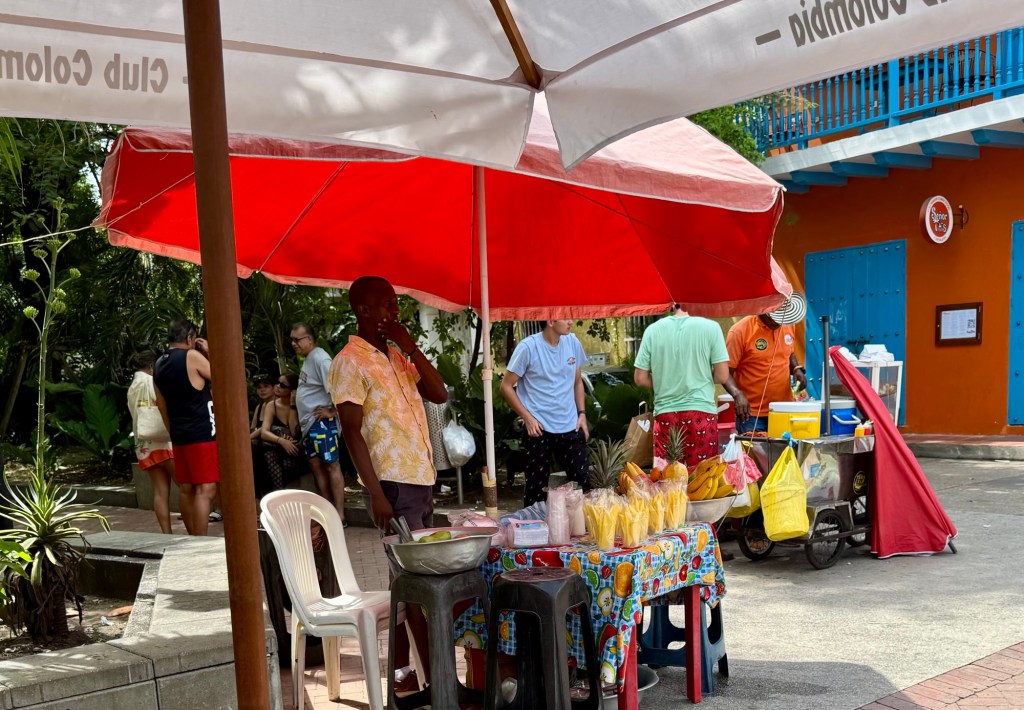
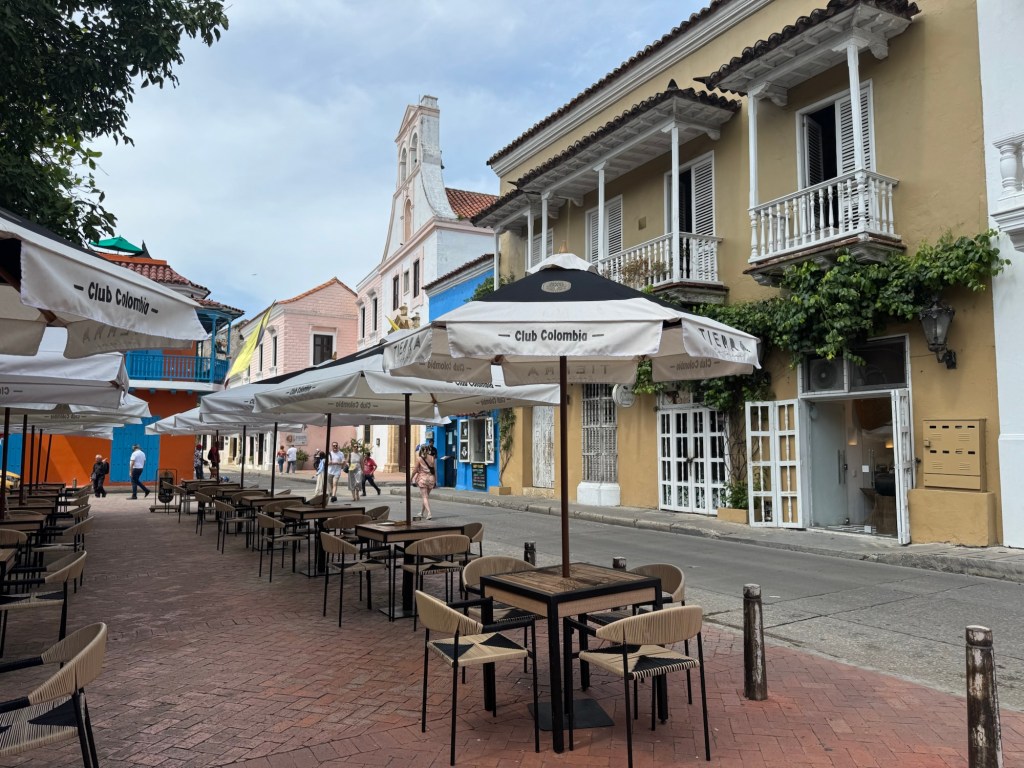
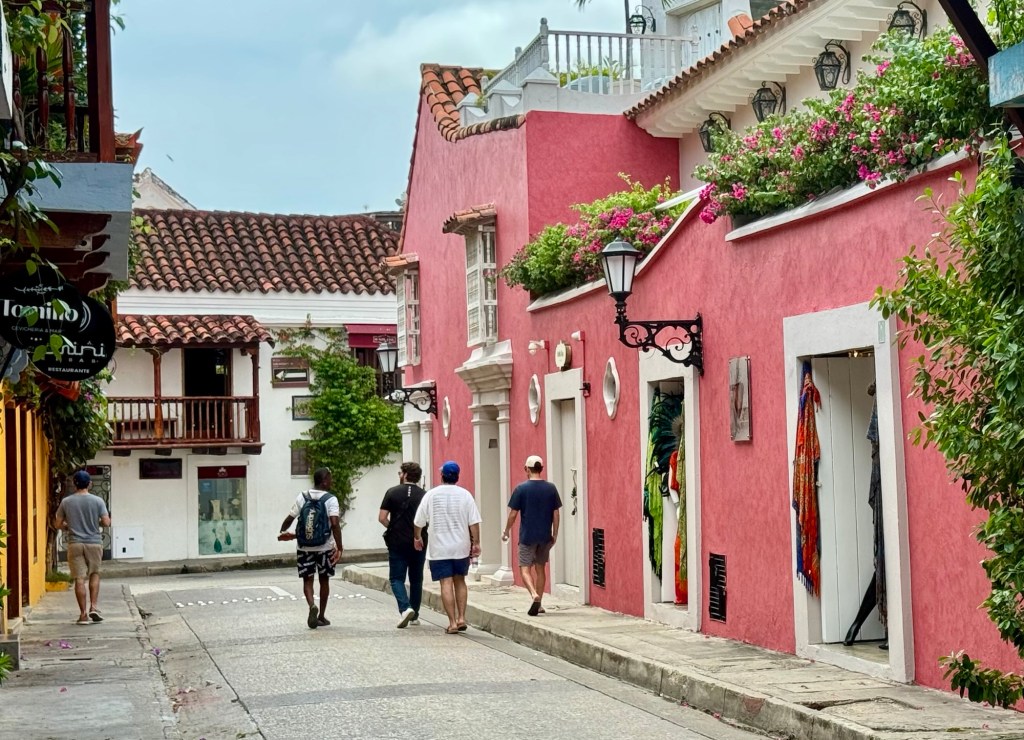
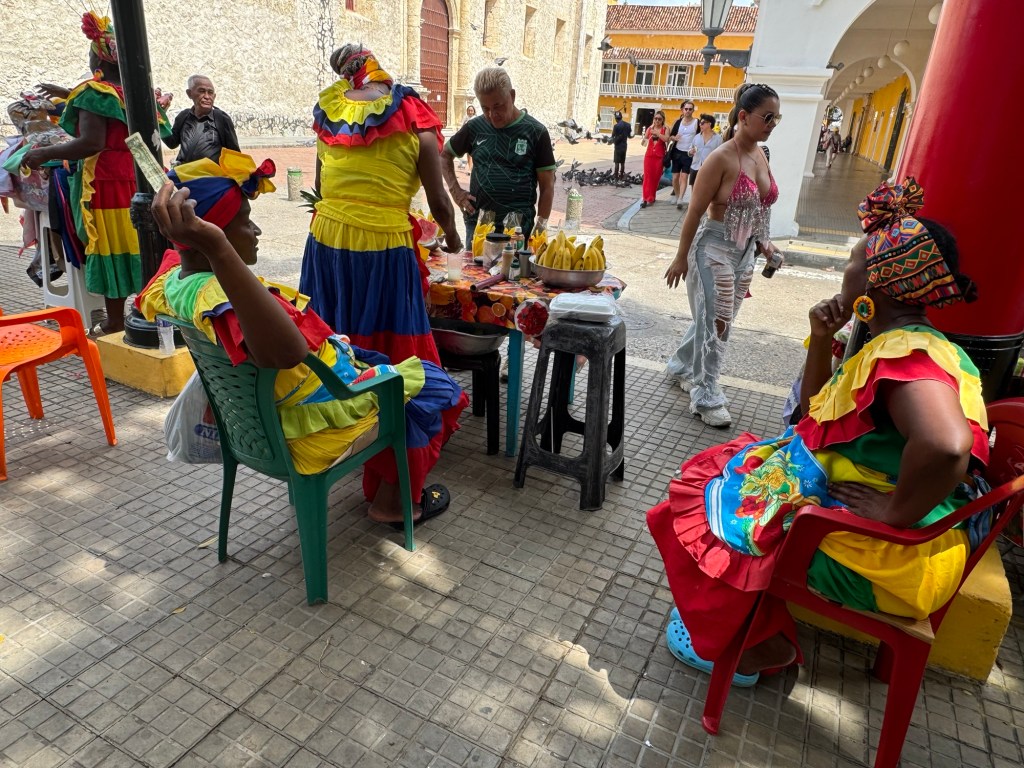
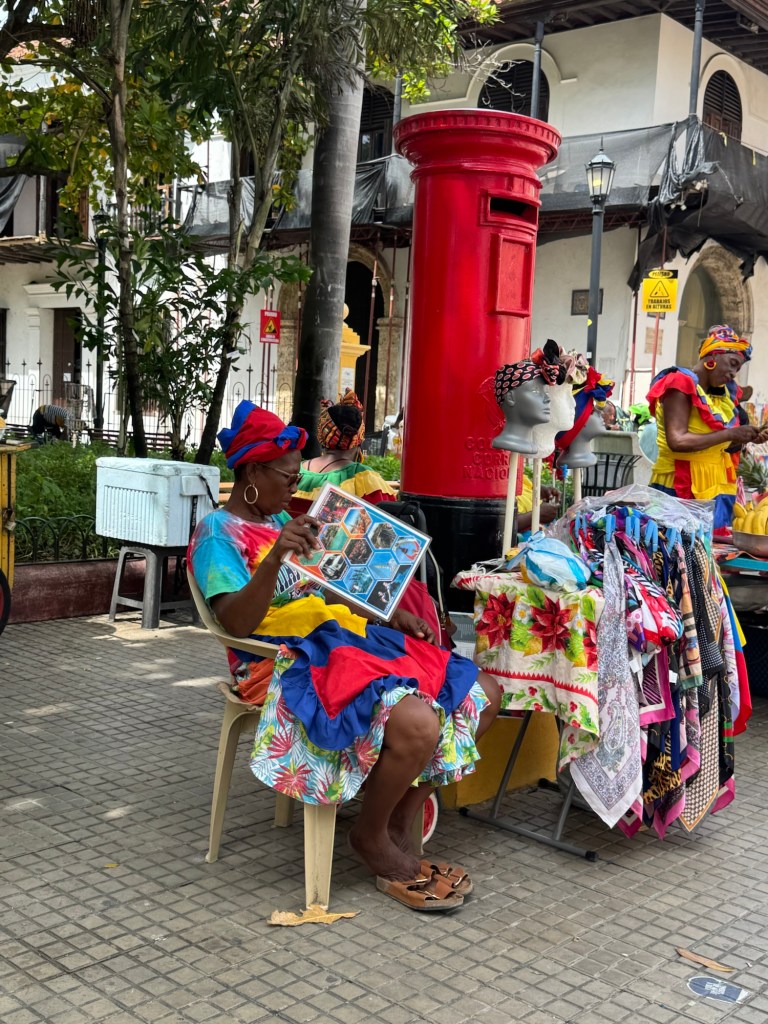
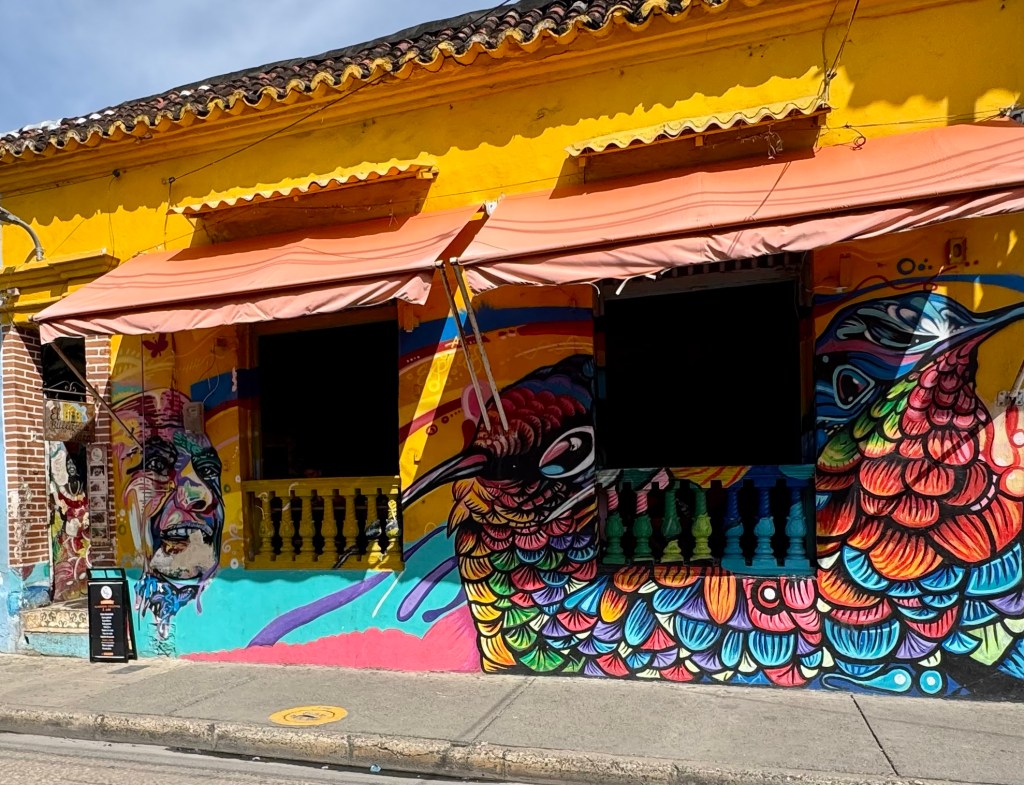
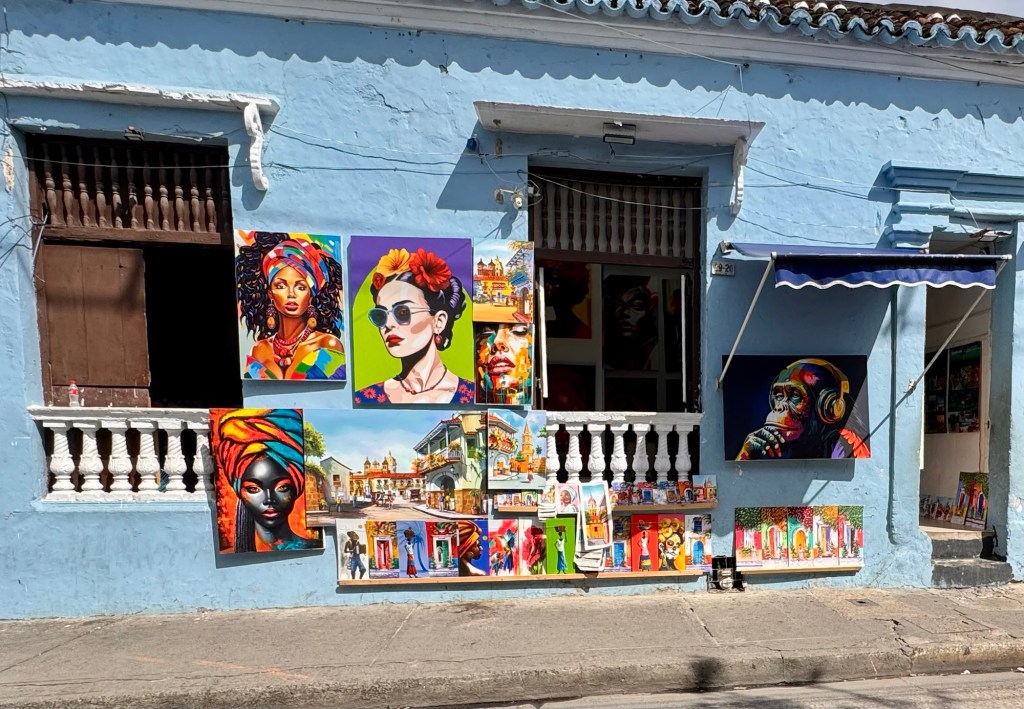
After a light lunch of ceviche and salad we went back out into the heat of the day to see the middle class neighborhood of Getsemani. Between the heat and the humidity we were pretty miserable, but managed a few streets before heading for our cool hotel room.
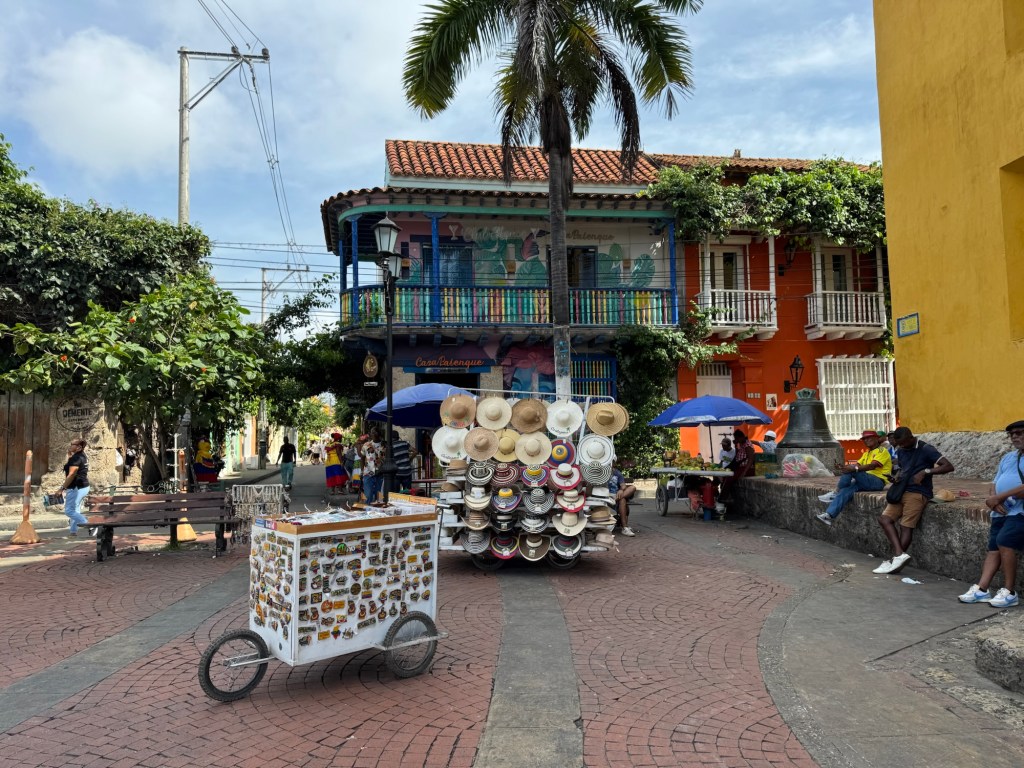
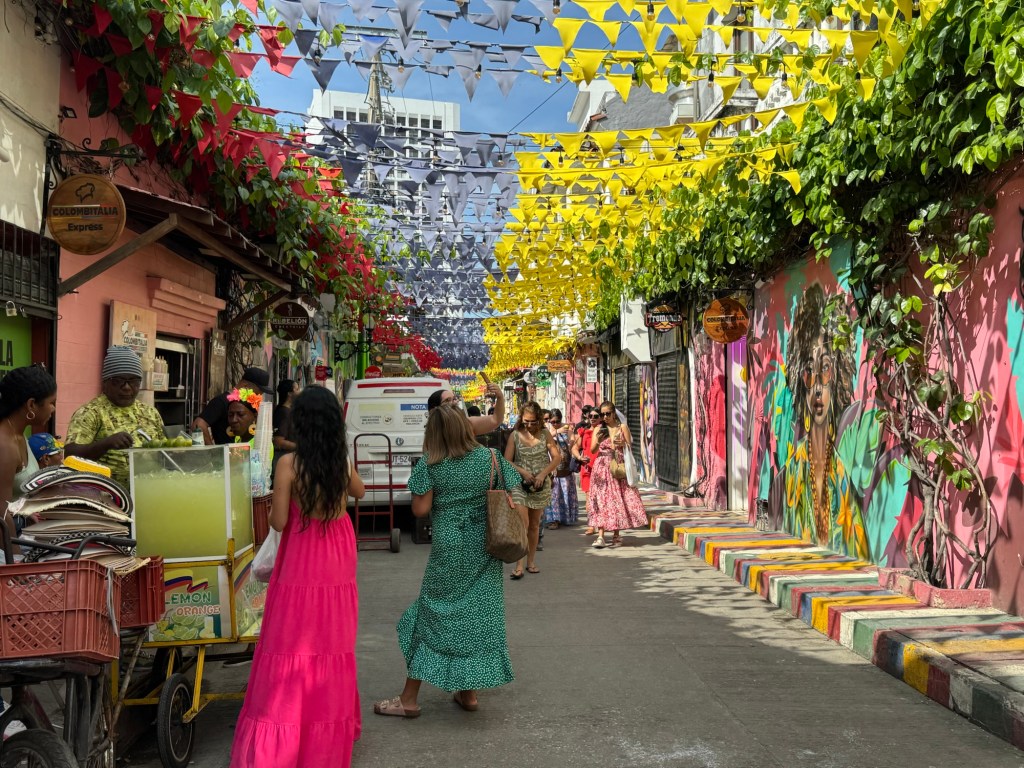
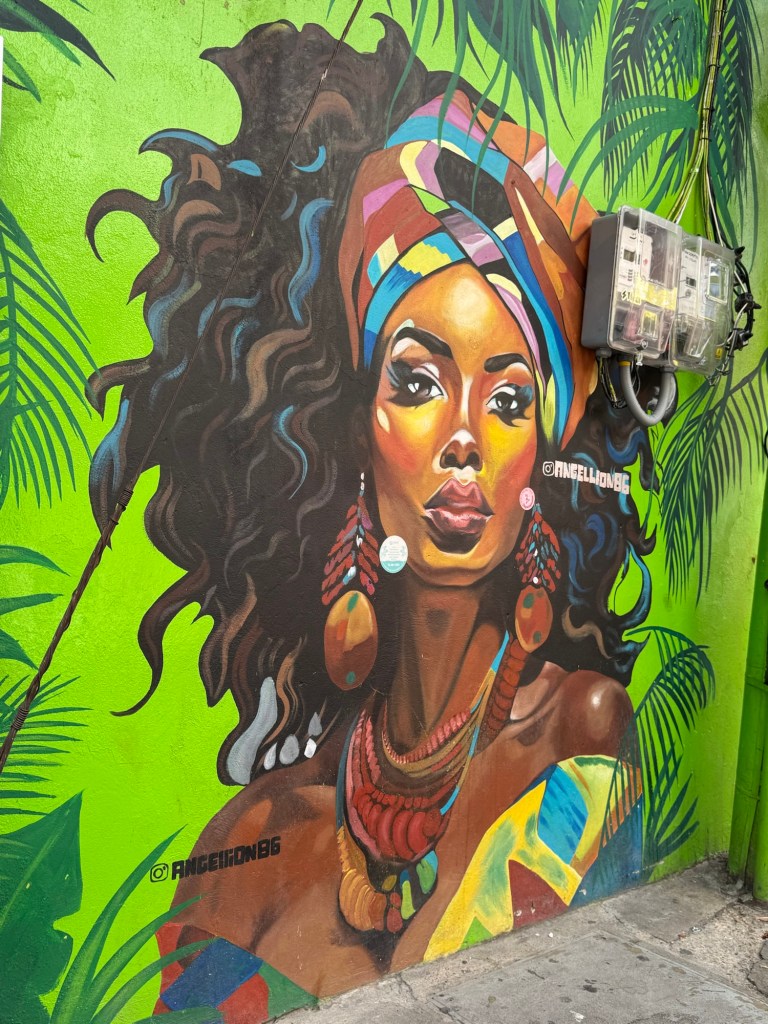
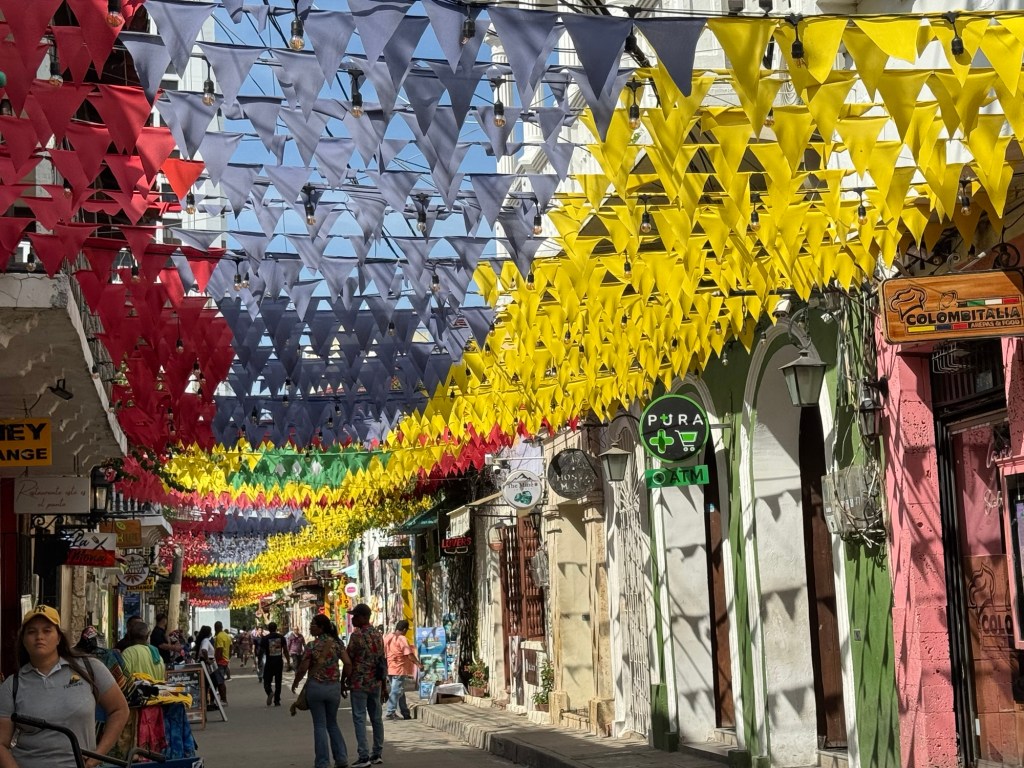
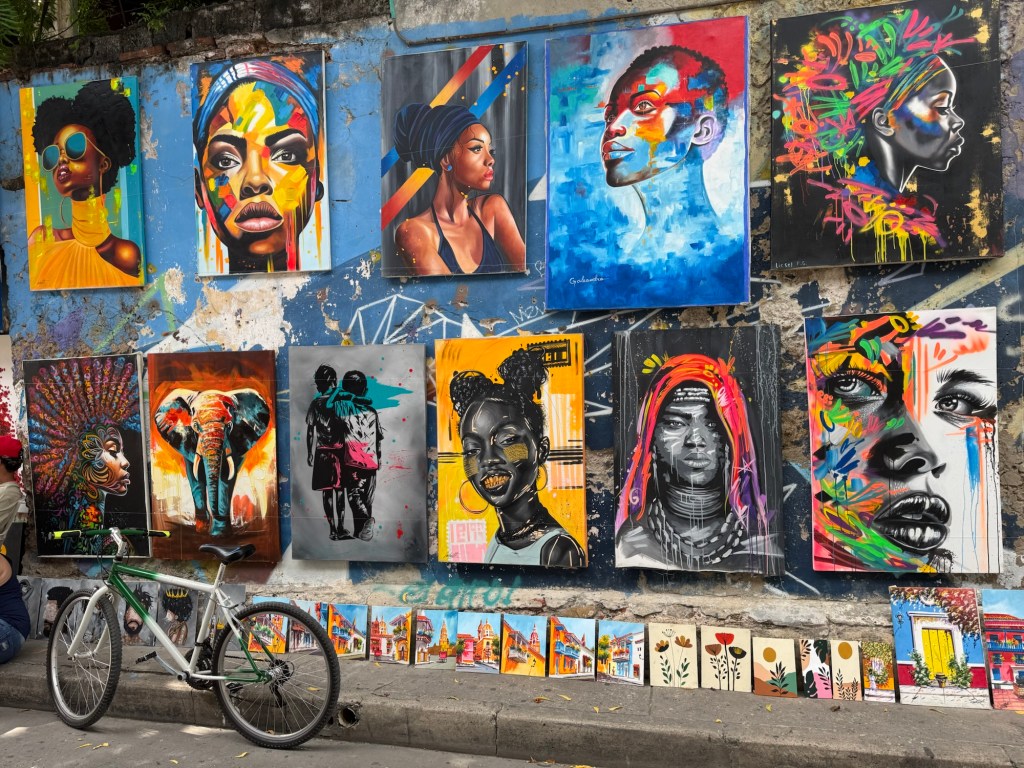
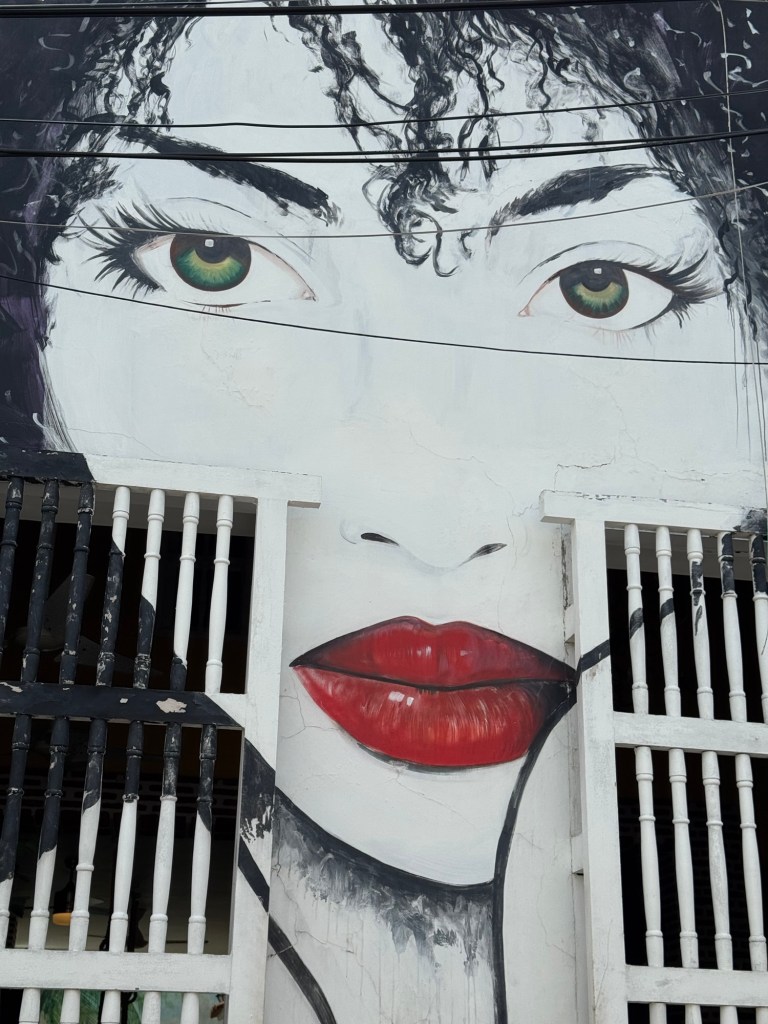
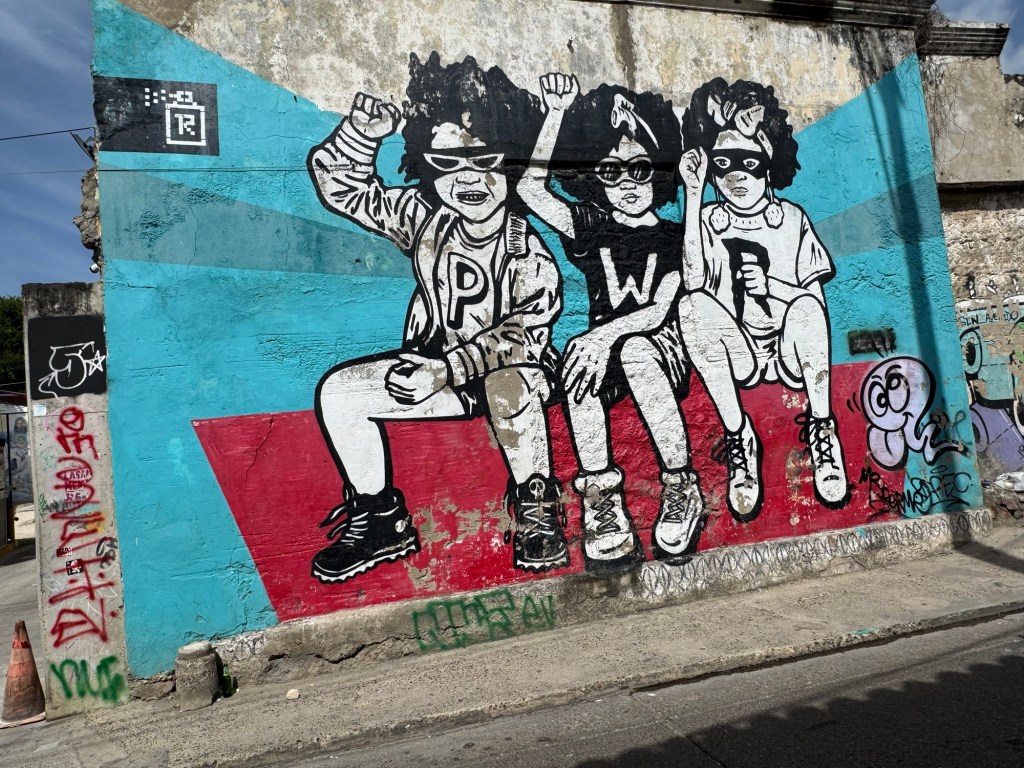
Back in our hotel, we headed for the pool. Sadly the water was very warm and not the least bit refreshing. So we spent the afternoon in our cool room and walked just a few blocks to dinner at Mar Y Zielo, for contemporary Cartagena food. I had sea bass and Mark had a shrimp and pork belly dish.


After dinner we walked a bit in the slightly cooler air and then headed home.
Friday, November 14, 2025
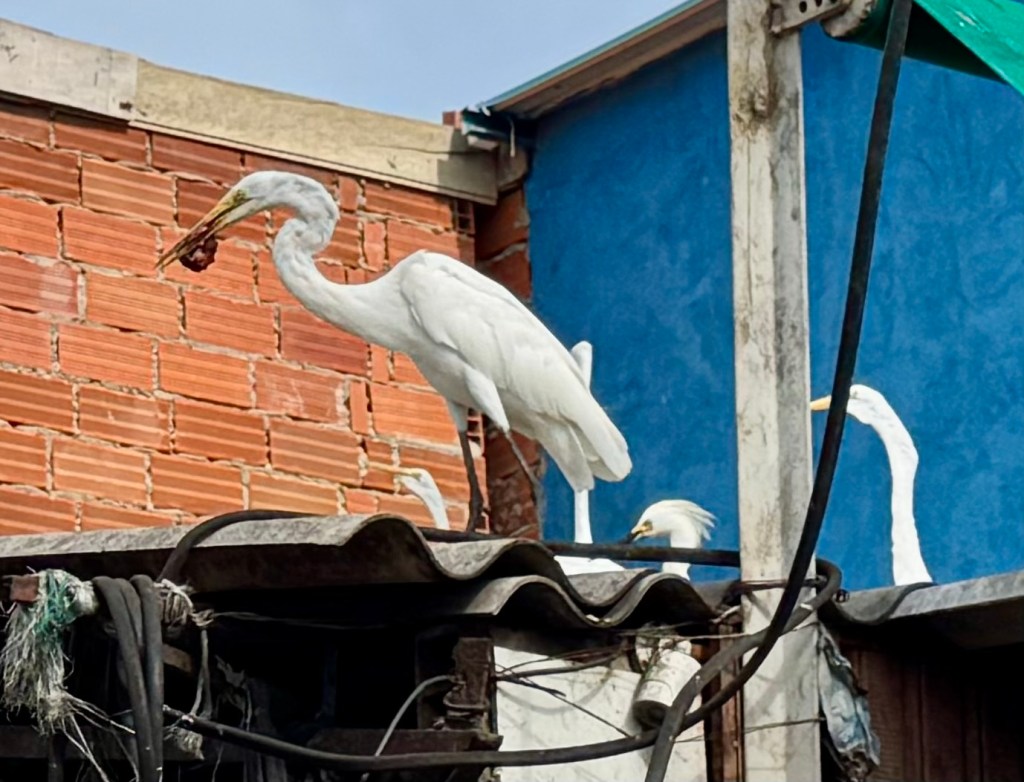
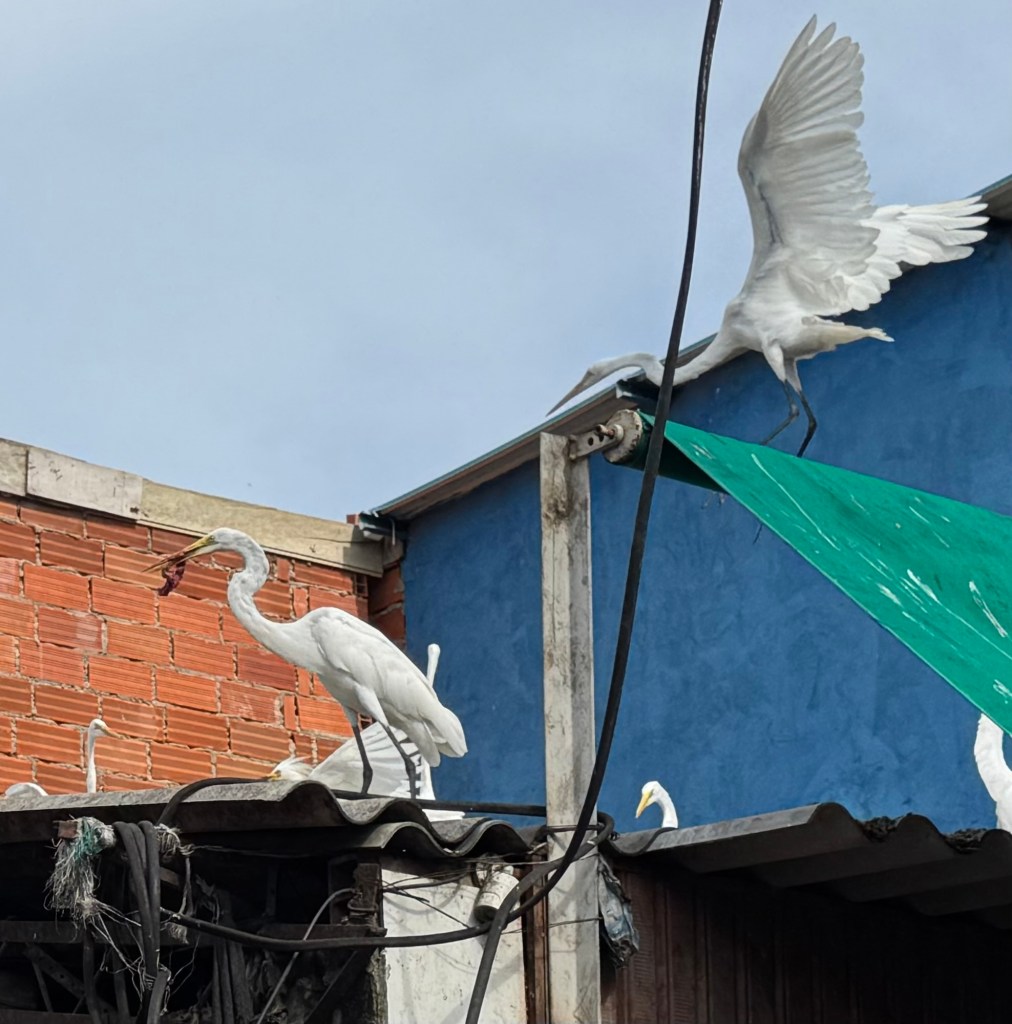
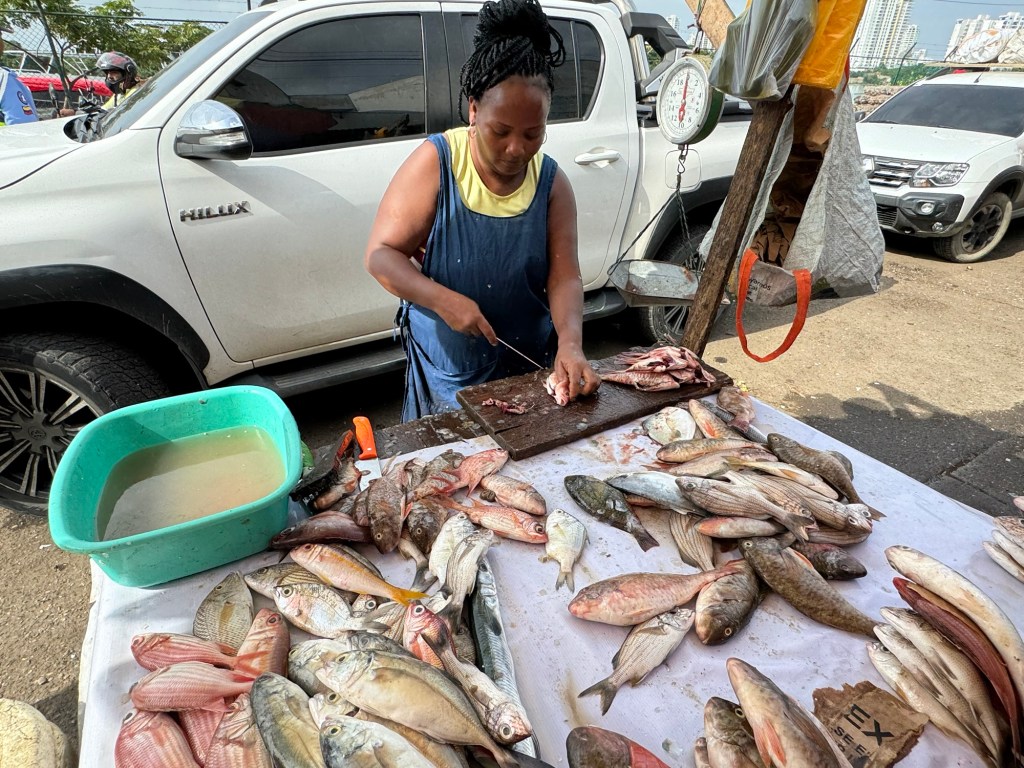
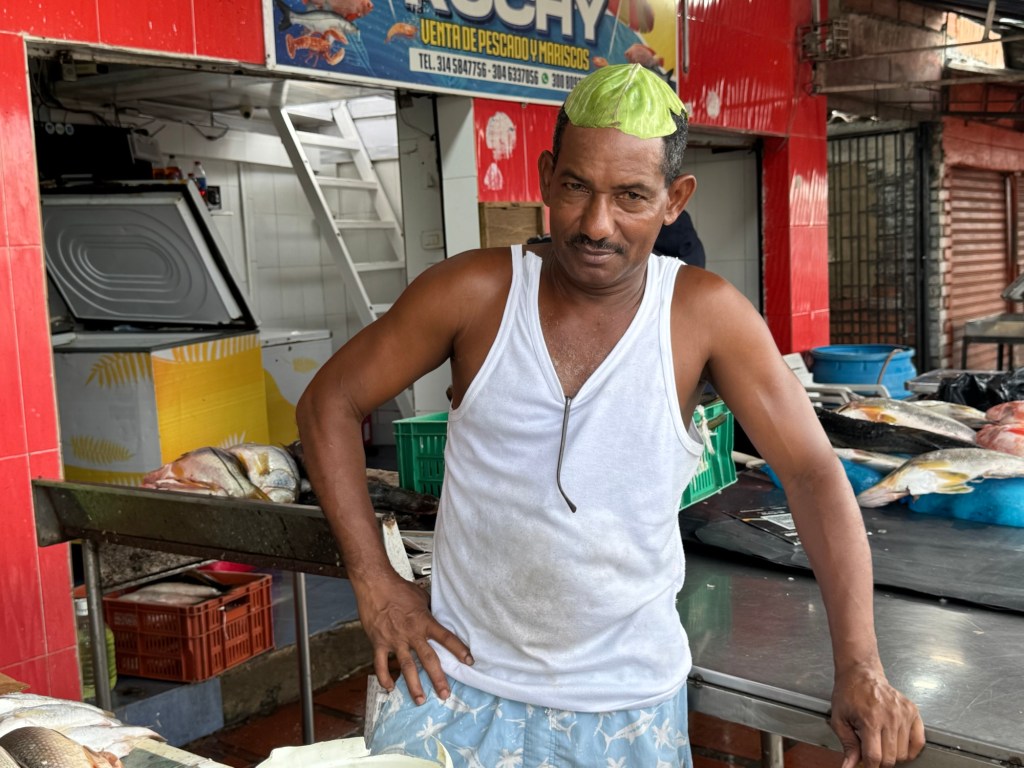
Javier met us at 8am for a tour of the main market. Compared to the market we visited in Bogota, the place was filthy, but interesting with many fragrant foods to look at and smell. We spent most of our time in the fish market, followed by the prepared foods and dining area, the meat market and finally vegetables. Most interesting were the people. We took many photos of it all, including the egrets and other birds scavenging for fish scraps. We started out hot and got hotter. By the time we left the market at 10am, we were so wet we were slippery.
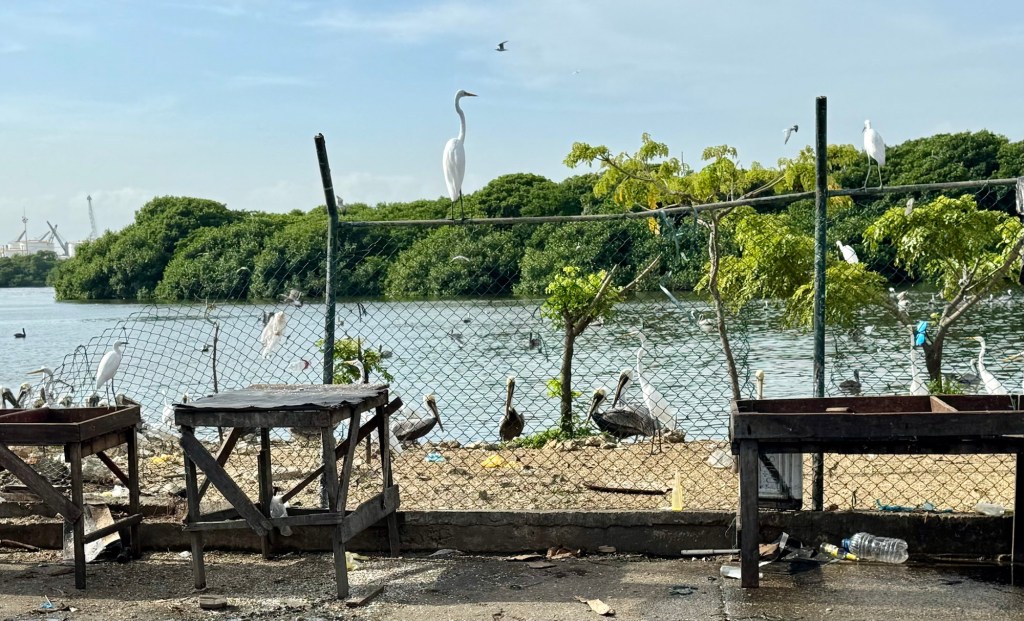
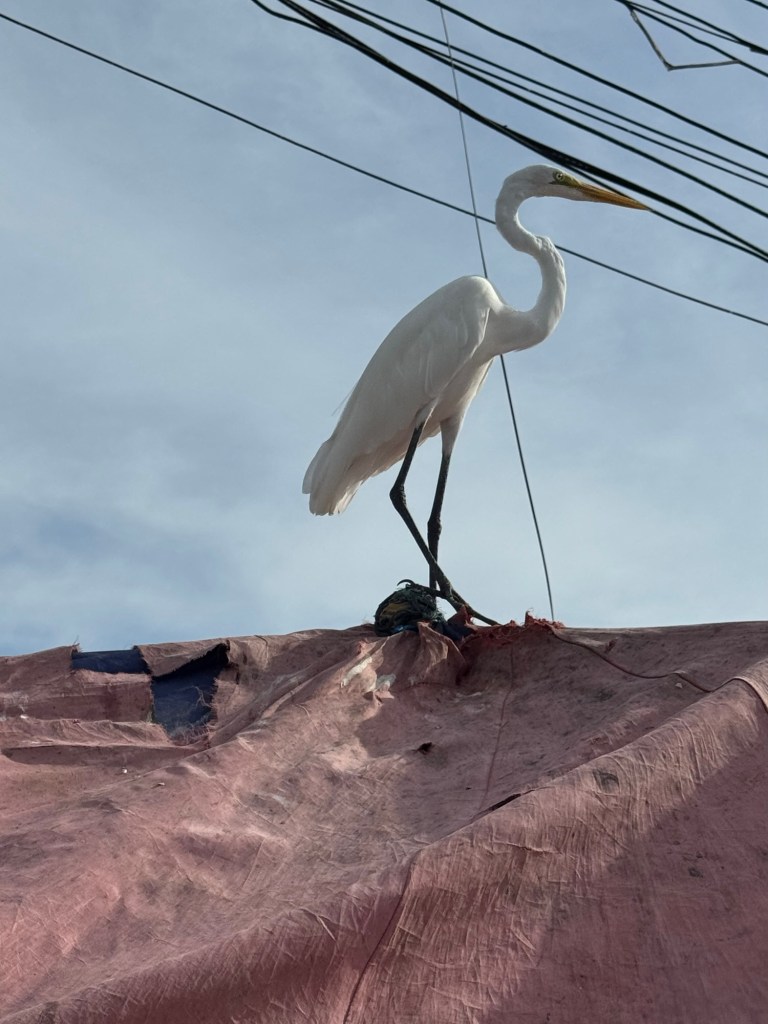
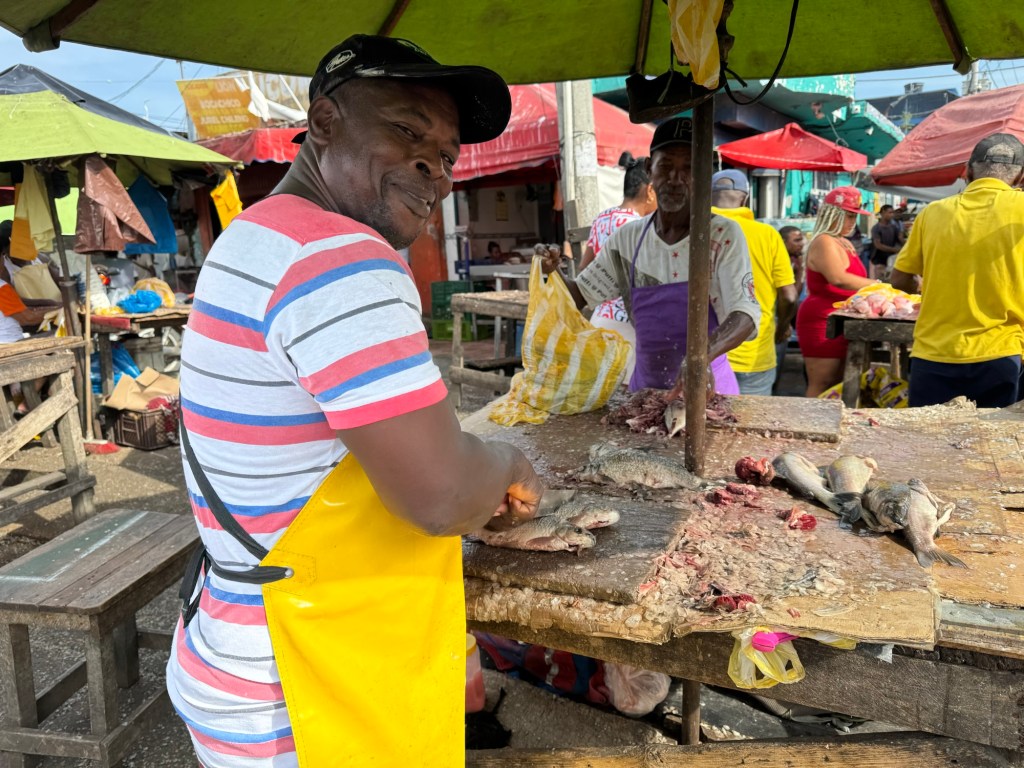
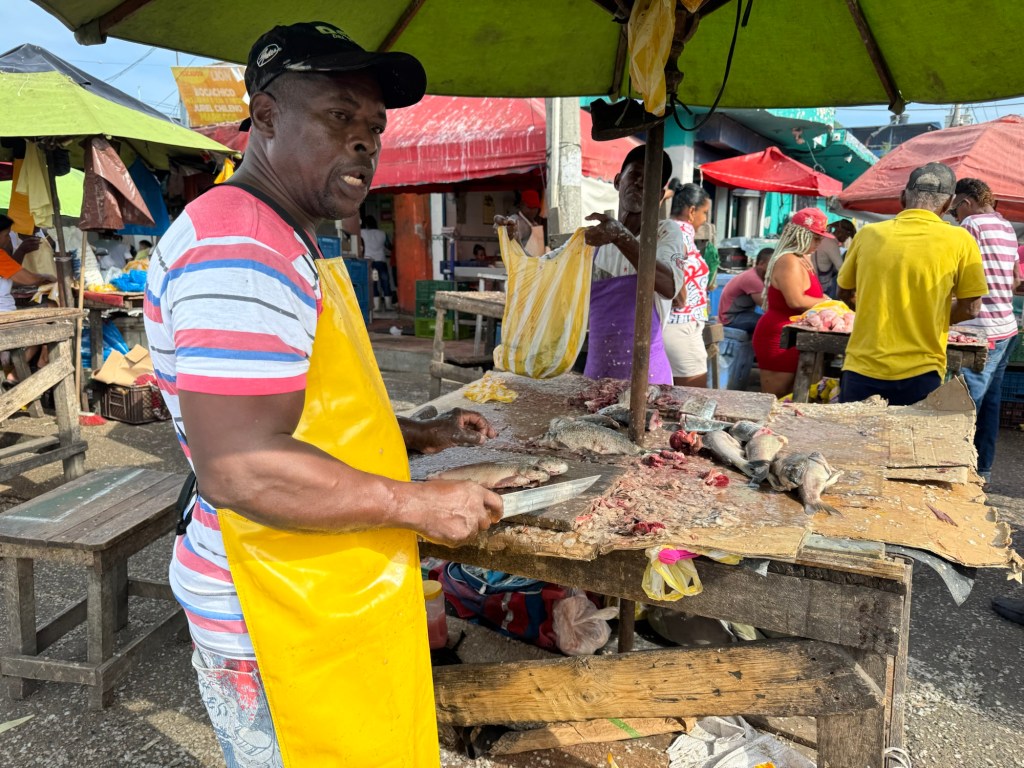
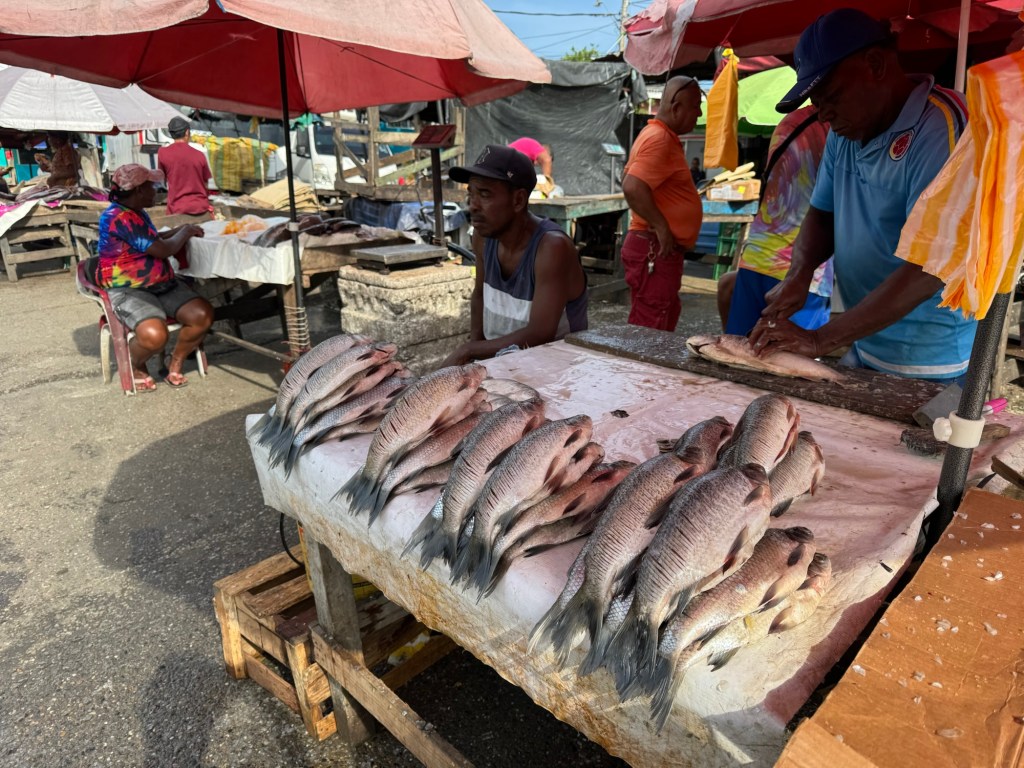


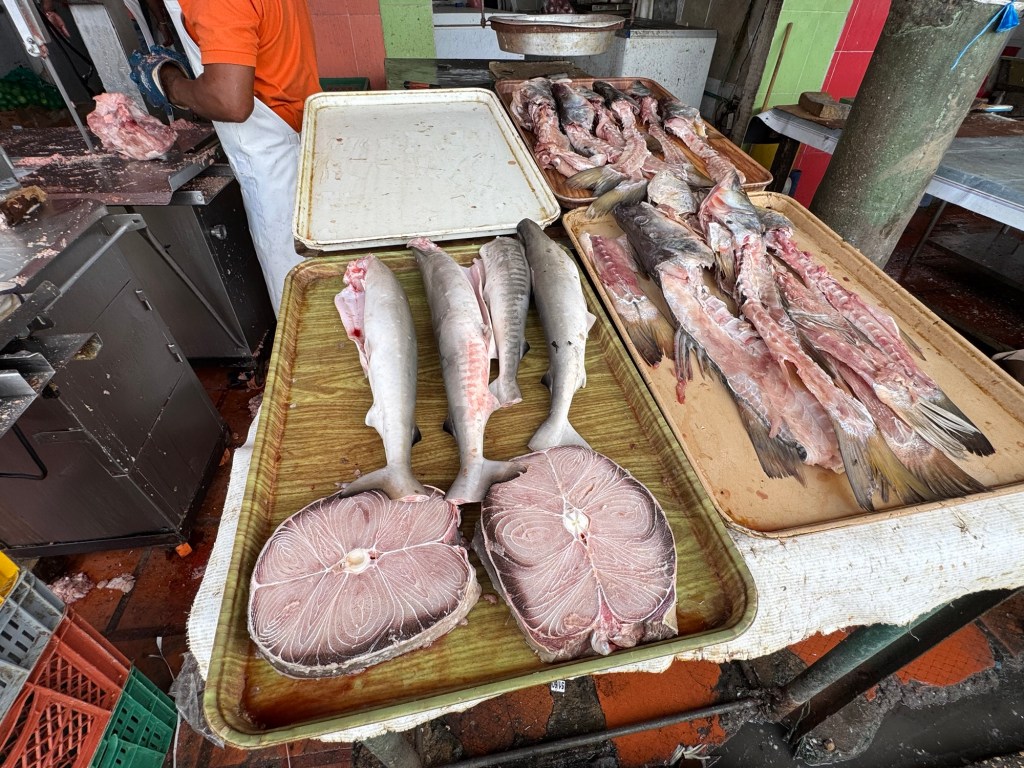
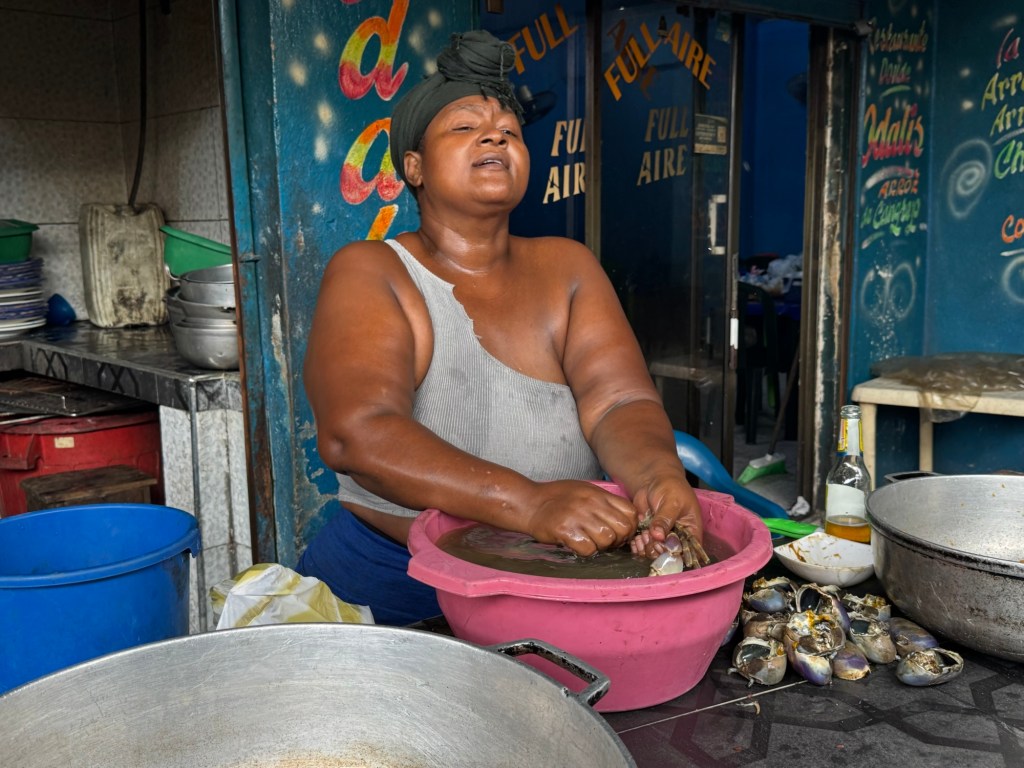
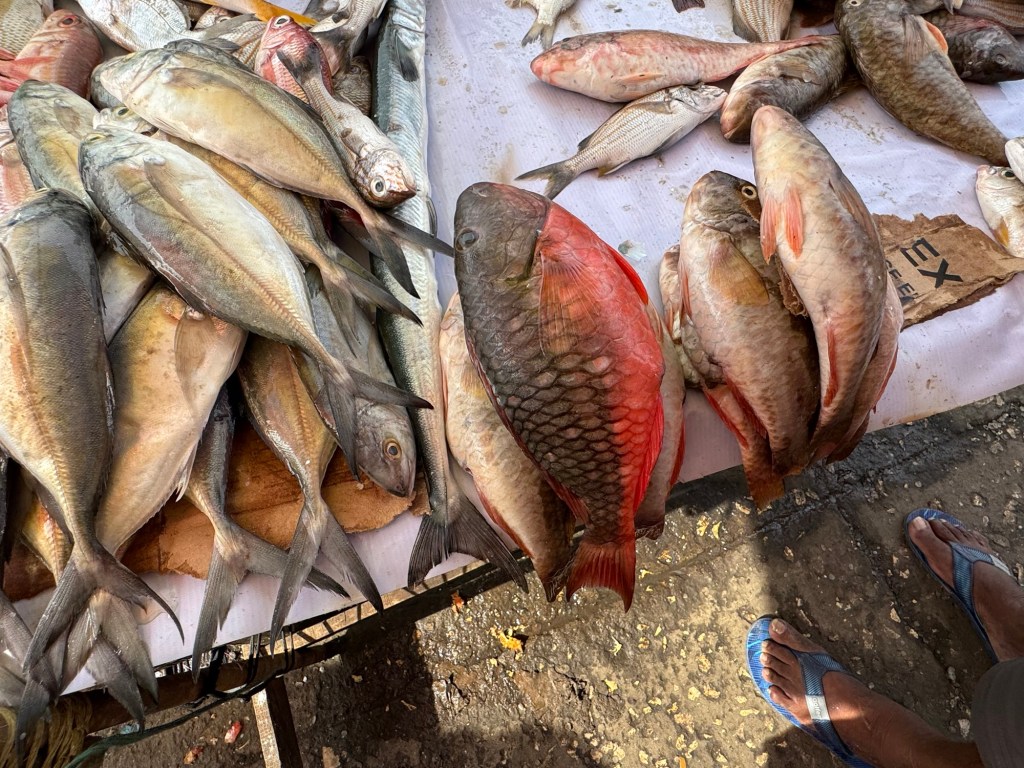
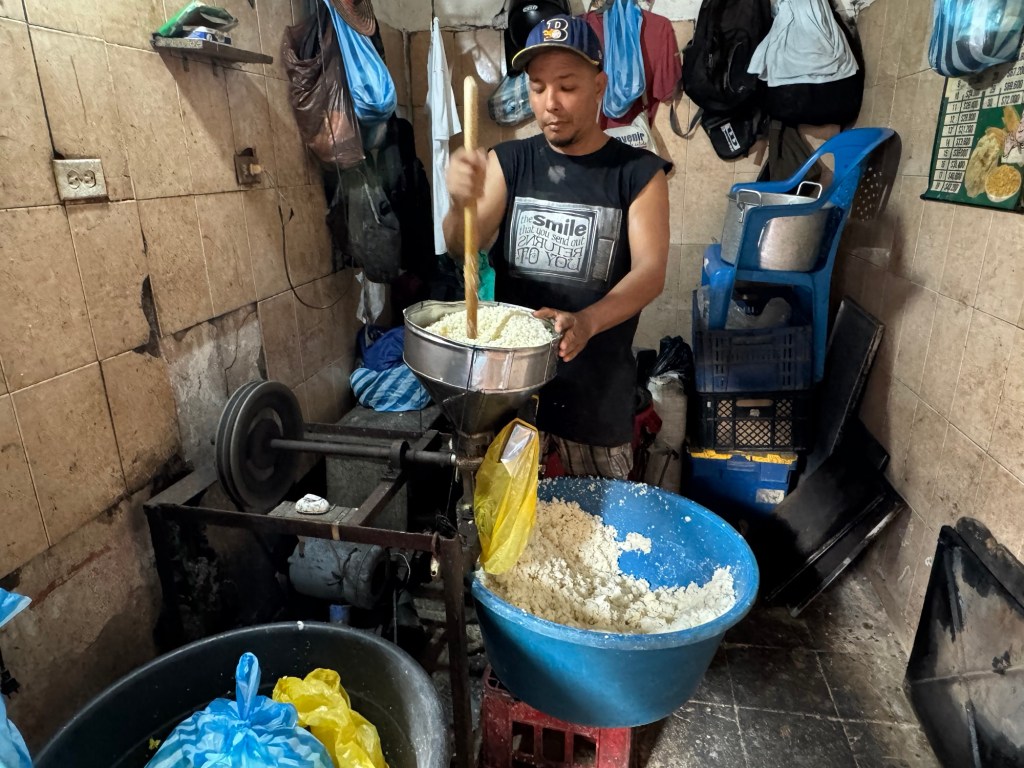
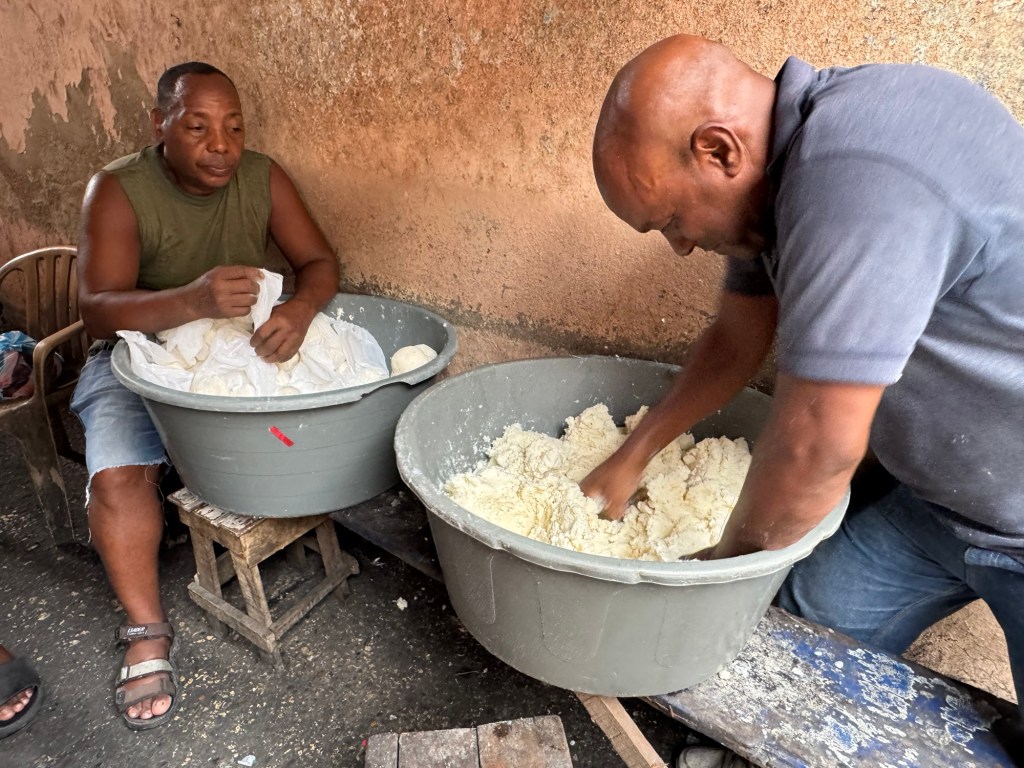

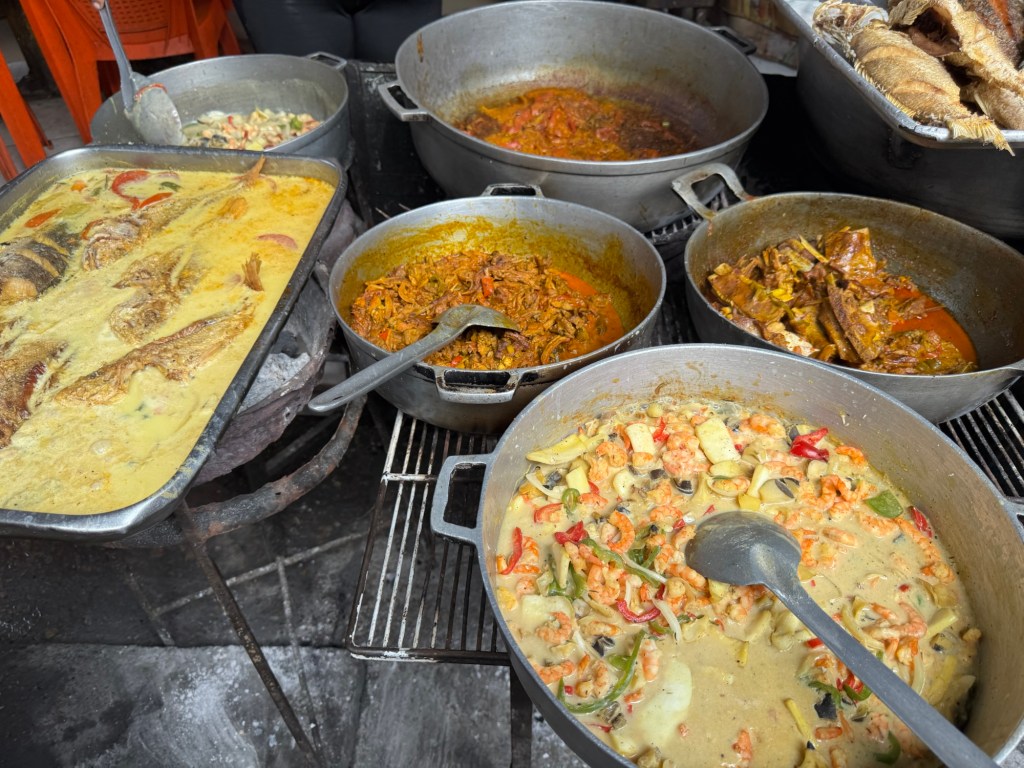
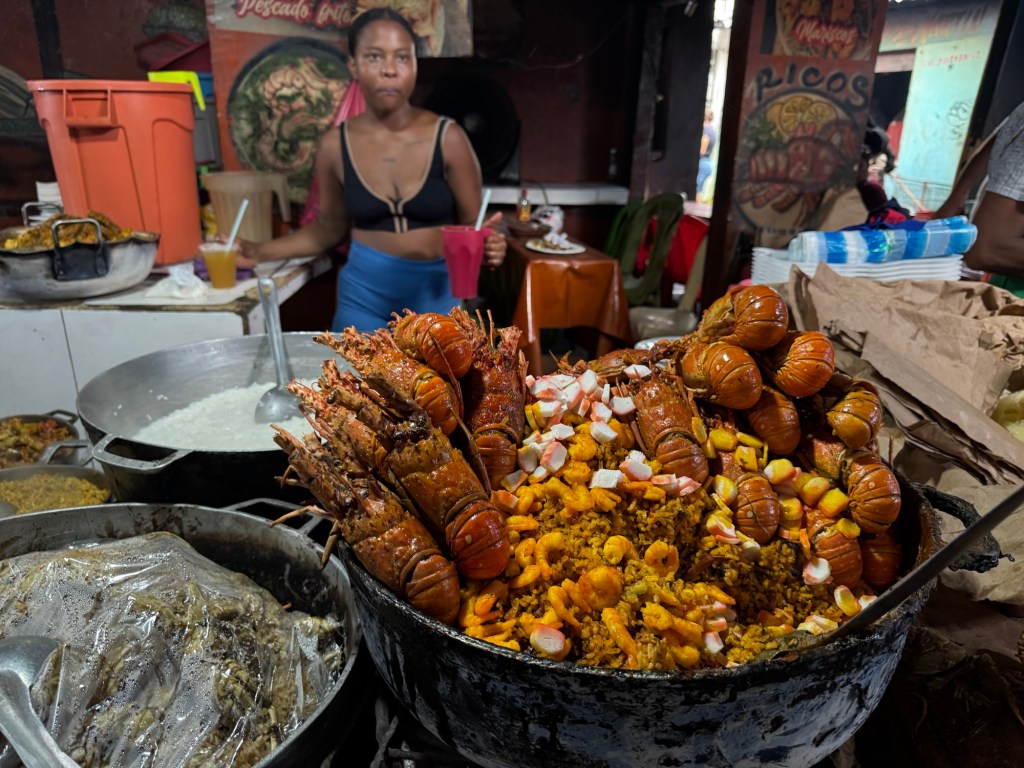
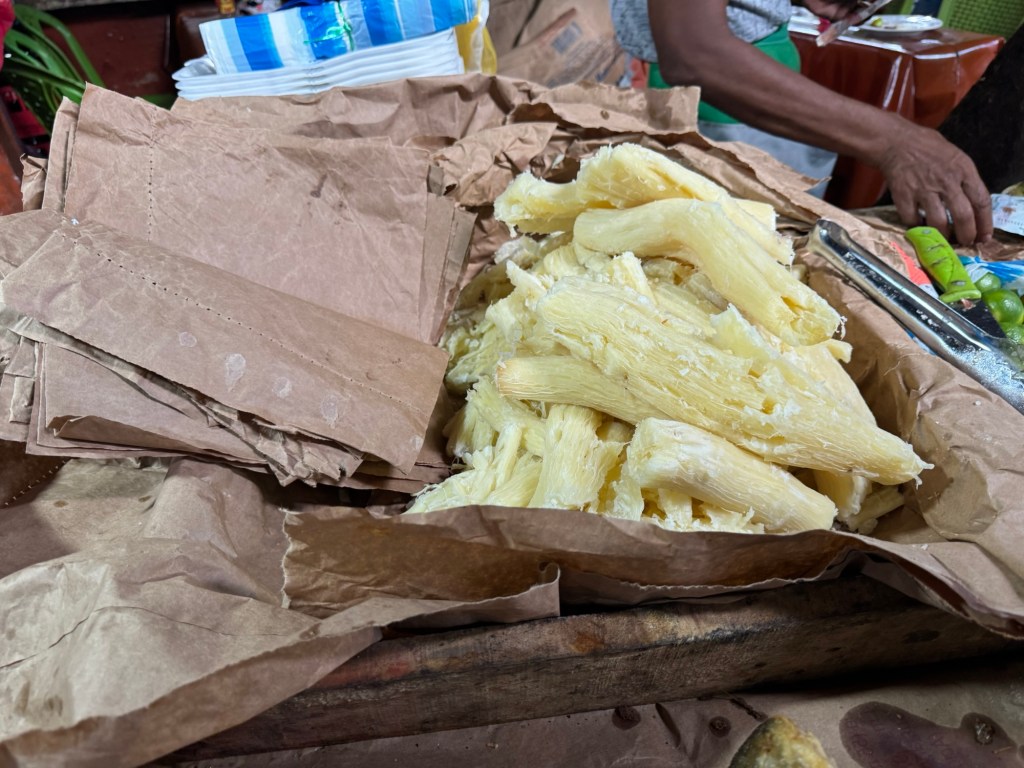

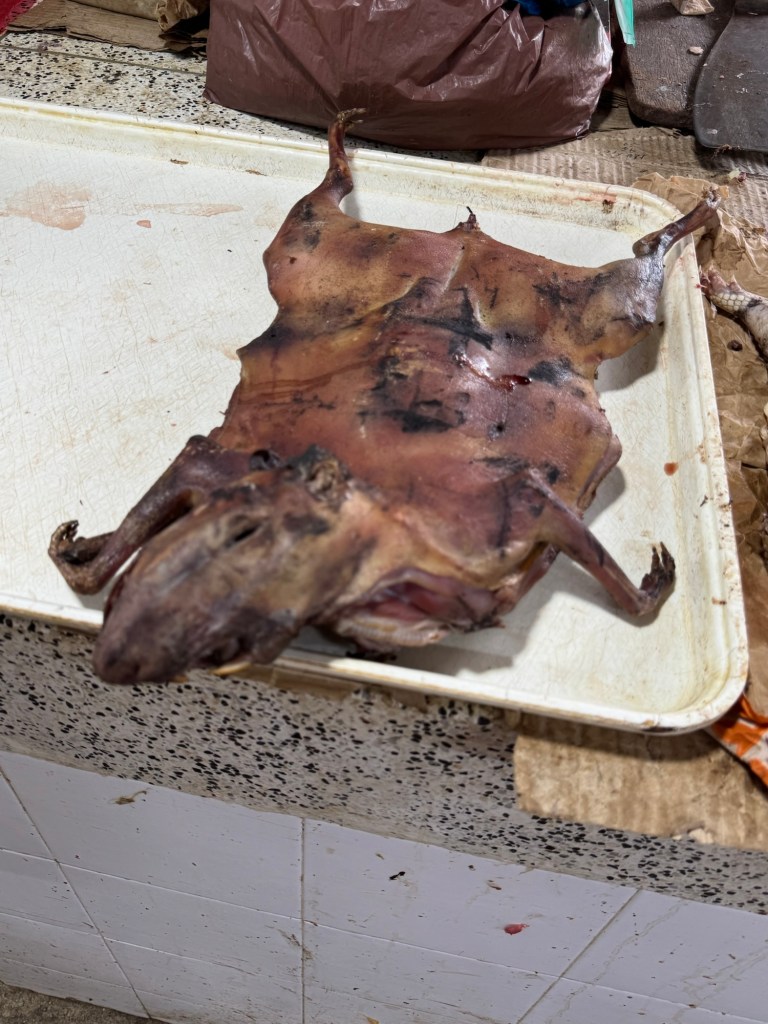
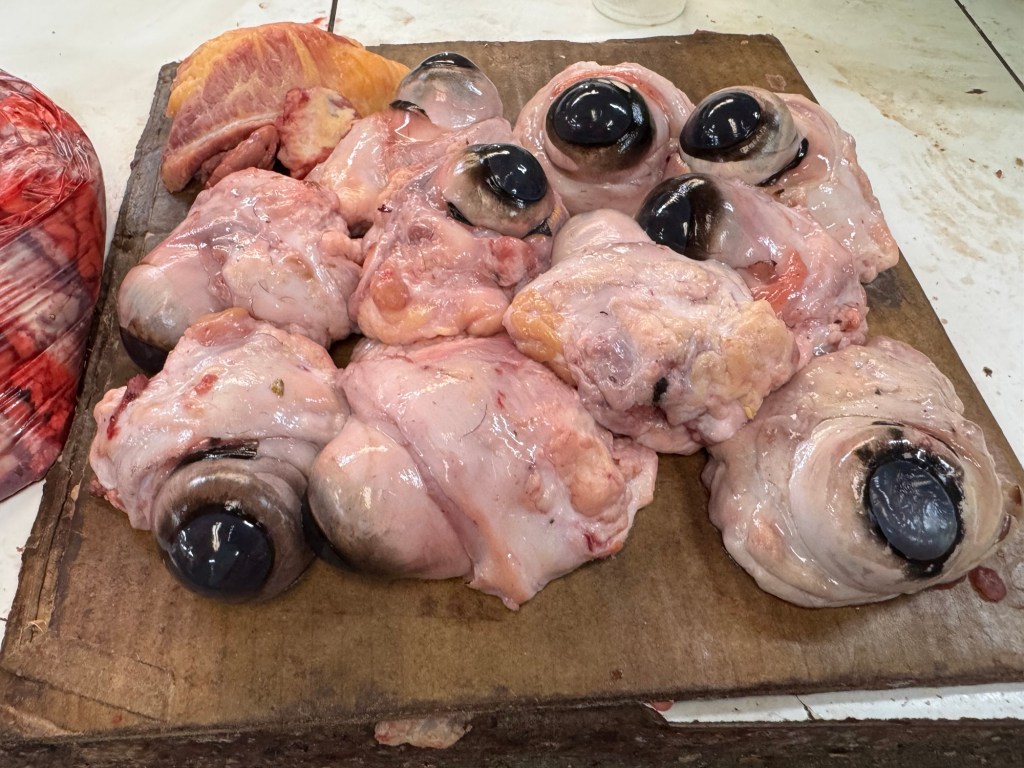


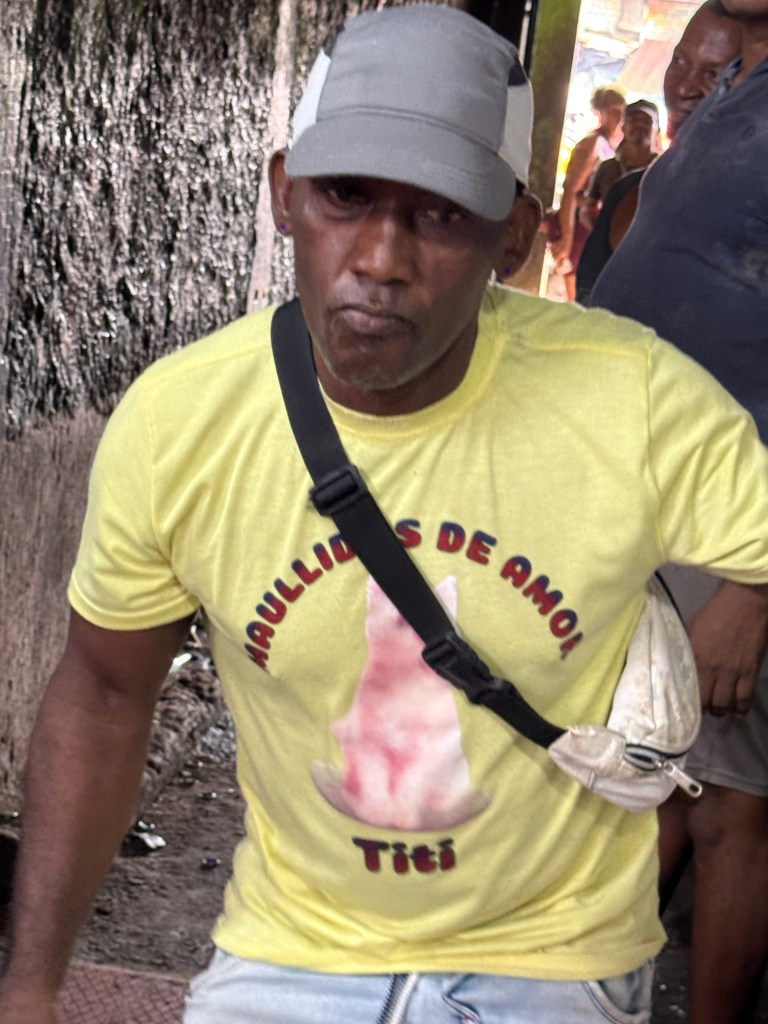
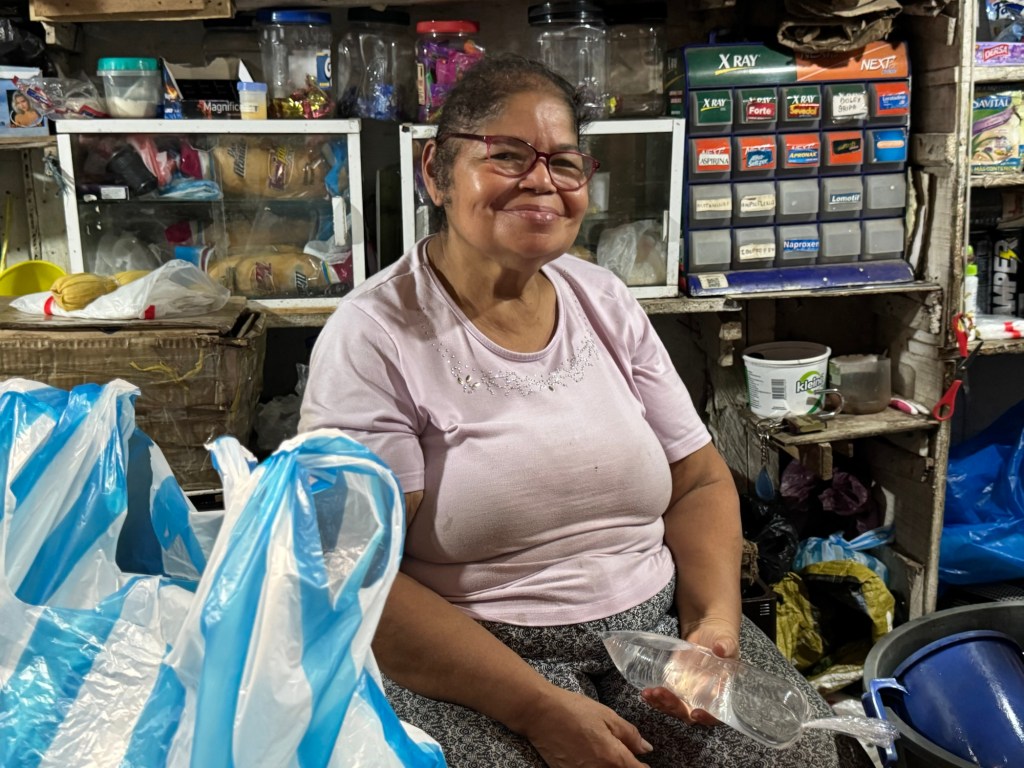
Finally we checked out the vegetables. Vendors were friendlier here and the smells more pleasant.
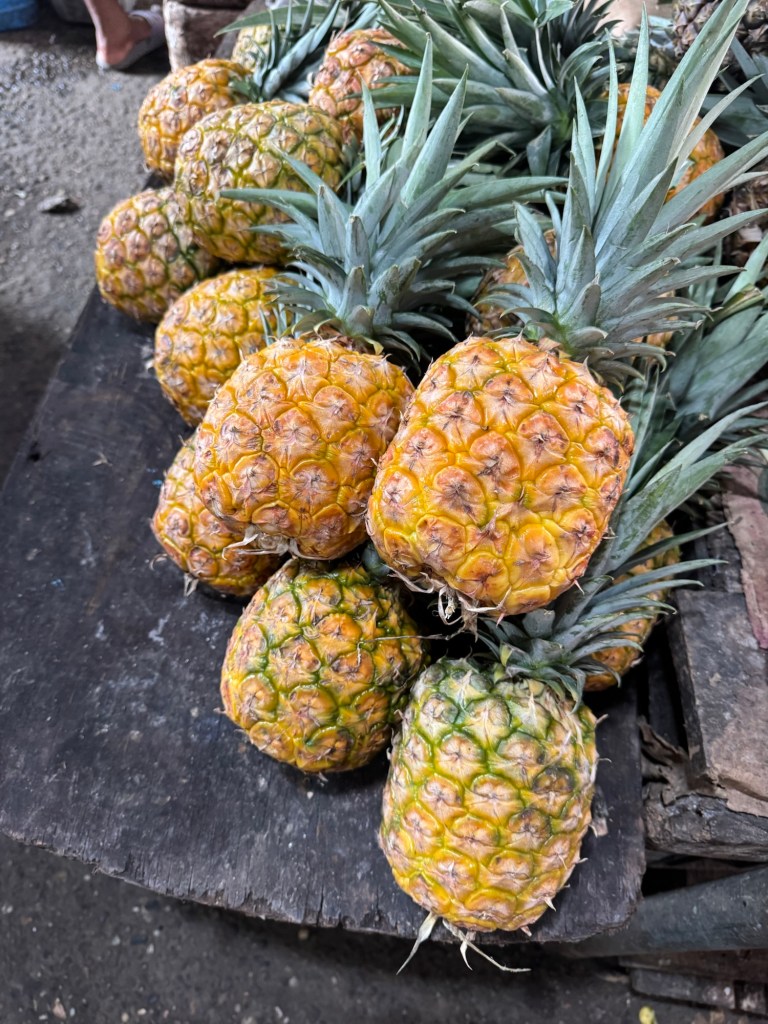

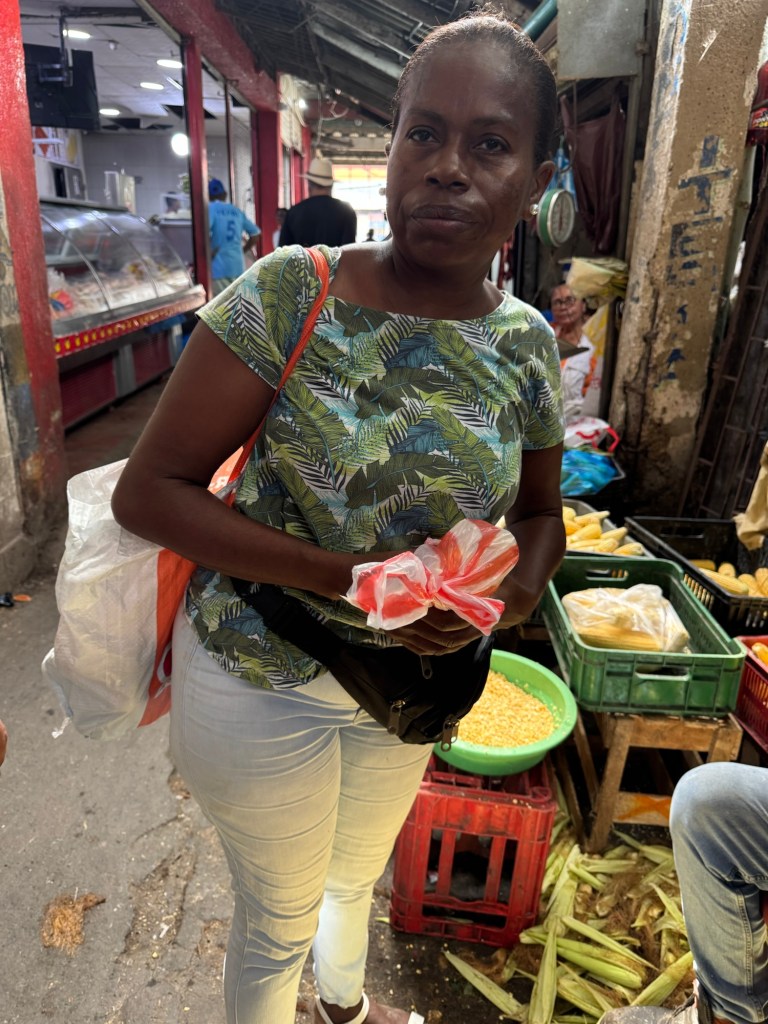
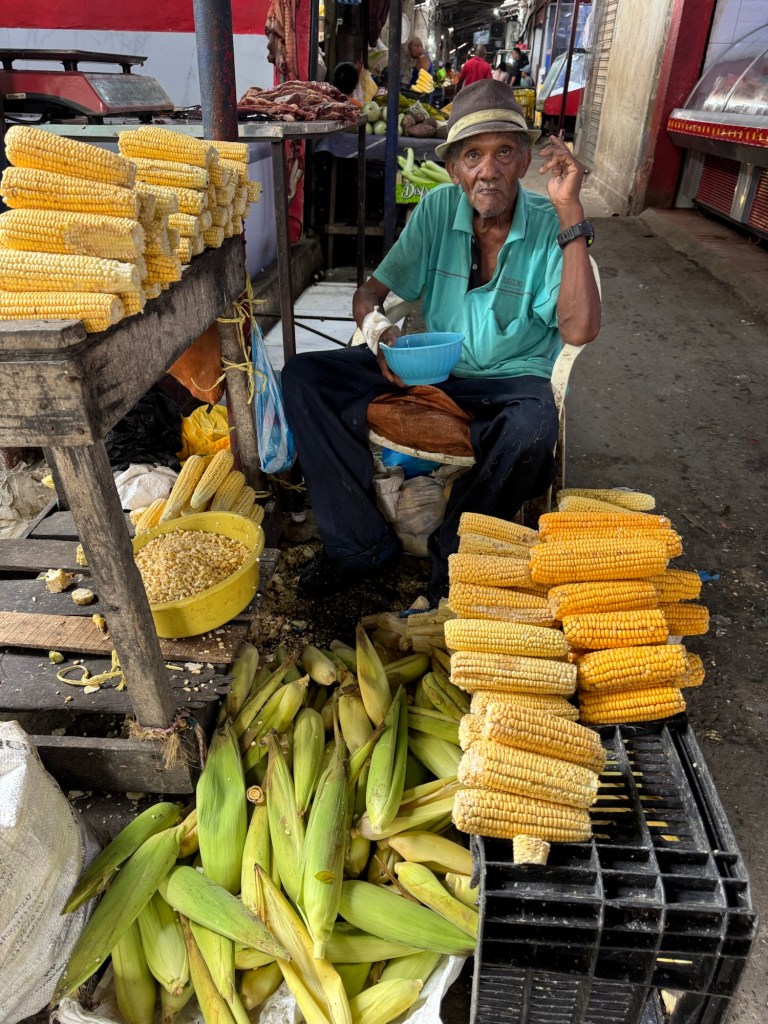
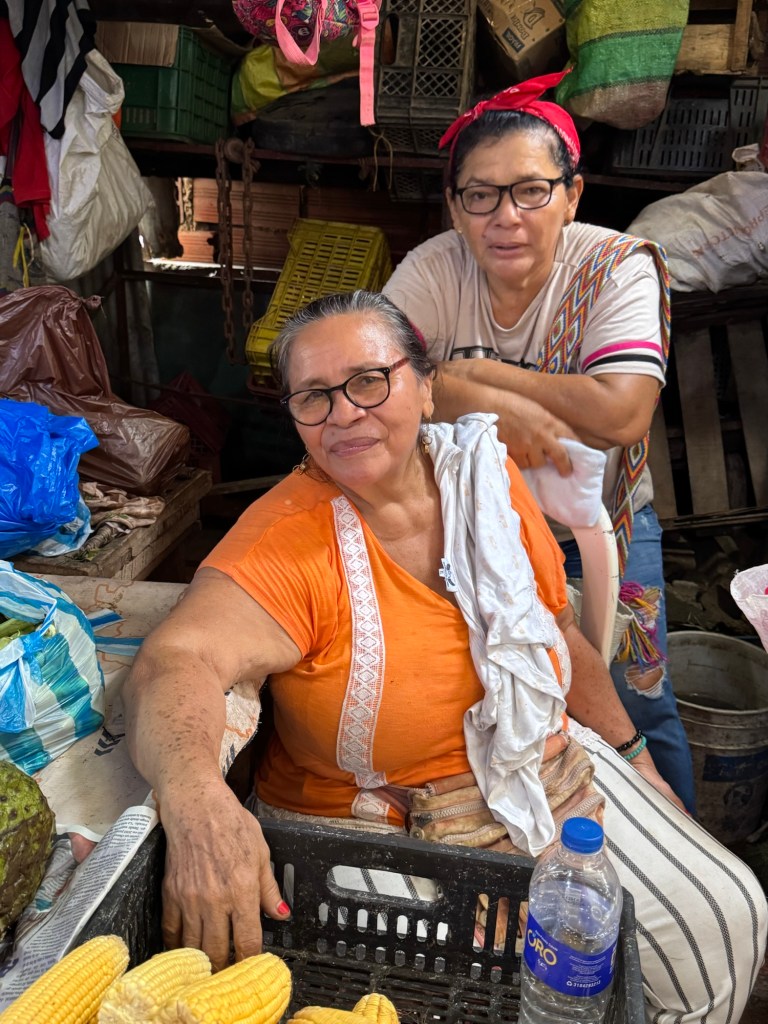

By then it was time to go to our cooking class and learn how to prepare a Colombian meal. We arrived at the chef’s kitchen and found the place slightly cooler than the market, but not Air conditioned. It took quite awhile to stop being slippery, but the chef, Alvaro, was welcoming and soon we were engaged in preparing the meal.
We are to make three courses; a starter called Boronia, or egg plant and plantain; a main of white tuna marinated in an leaf, grilled and served with a creole sauce; and dessert of caramelized red plantain with Lulo sorbet, a tropical fruit.
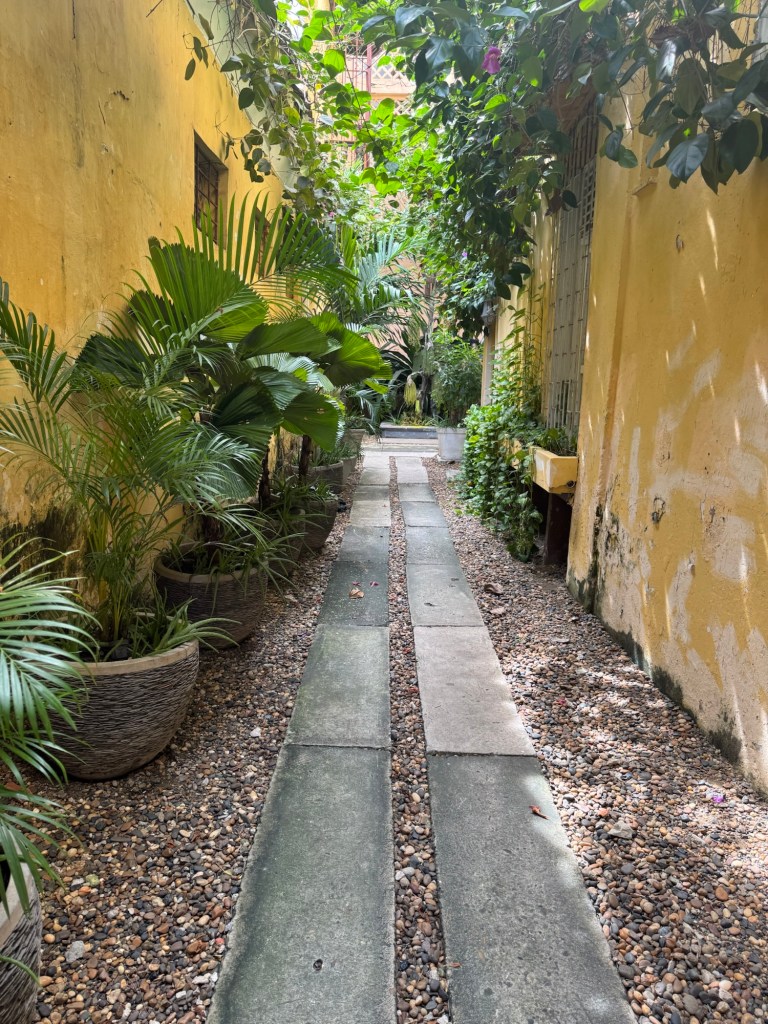
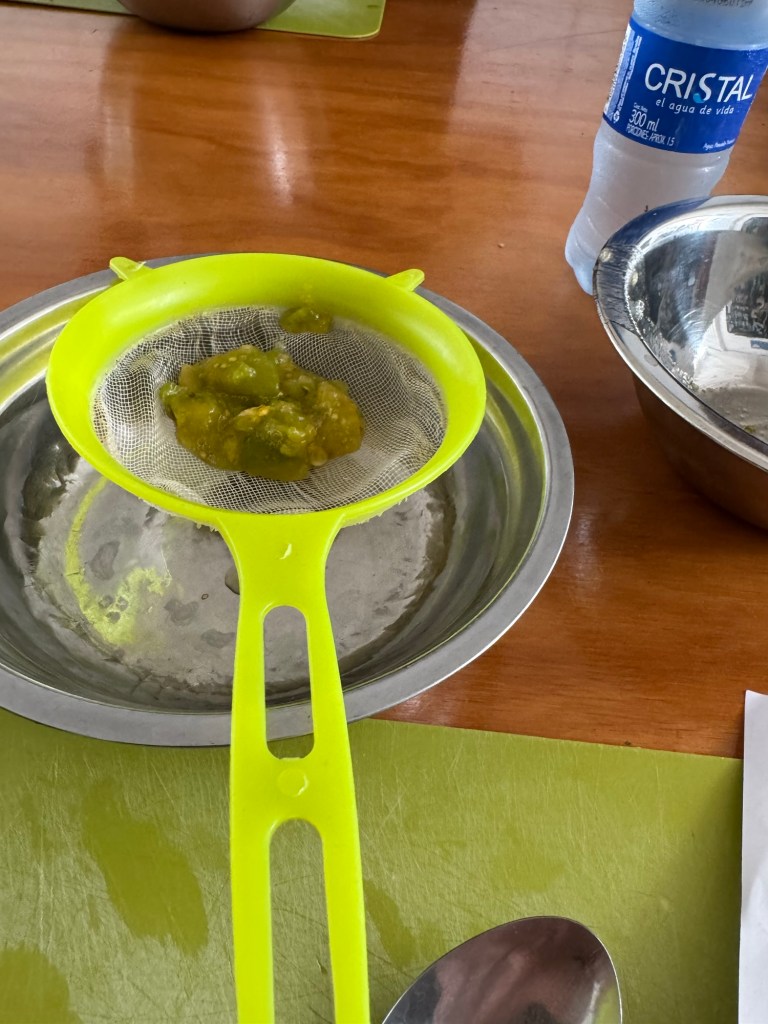

We started with the dessert, straining the Lulo fruit to separate the juice from the seeds. Then we whipped the juice and added sugar. Set the mixture in the freezer to get it to firm up. Meanwhile we caramelized plantain slices and set them aside.
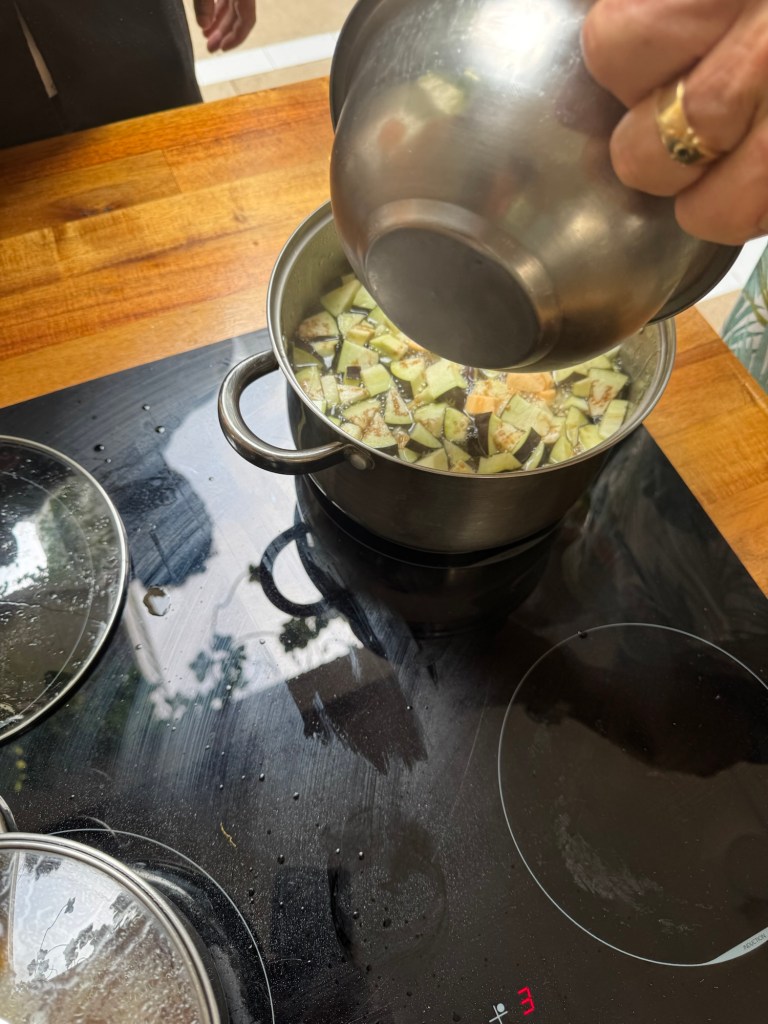
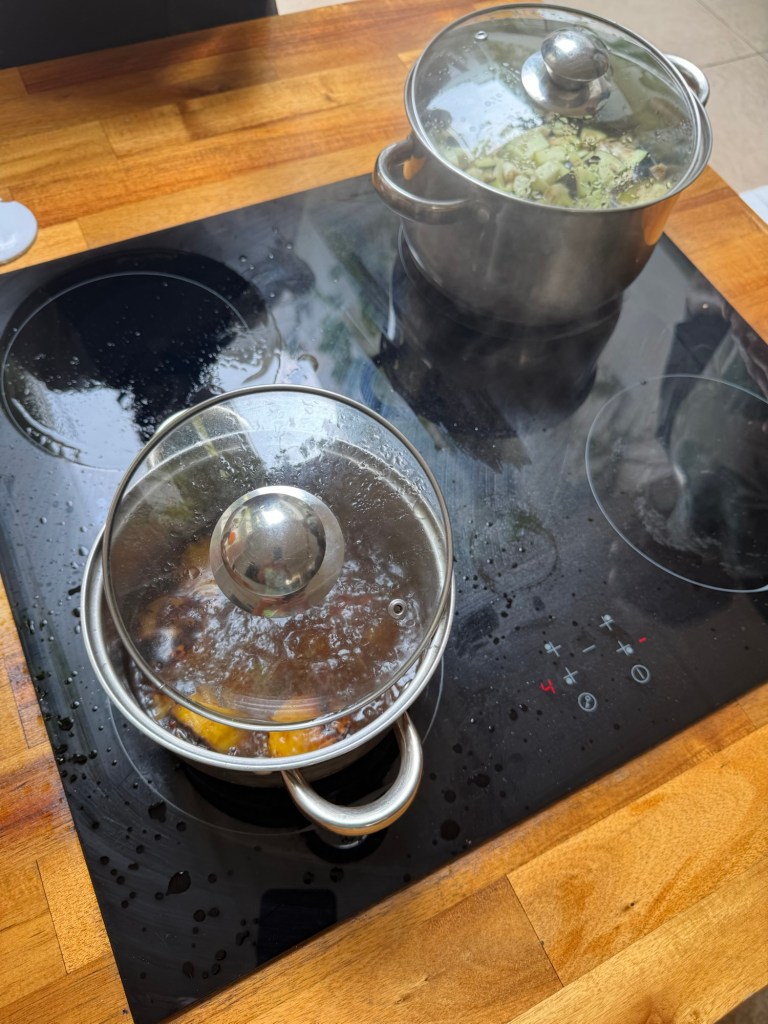

Then we worked on the starter. We chopped the plantains and egg plant and boiled them until tender. Chopped onions, scallions, garlic and tomatoes, salt and pepper and cooked the mixture to make a sauce, which we blended and mashed with the plantain and eggplant. Once thoroughly mashed, we stuffed the mixture into individual forms until packed. Then removed the form, placed fried plantain chips we had made separately on the plate and served ourselves. To make the plantain chips, we cut hunks of plantain into half inch rounds, deep fried the rounds until crisp. Then dried them and smashed them into flat pieces, which we refried for a few seconds and salted.
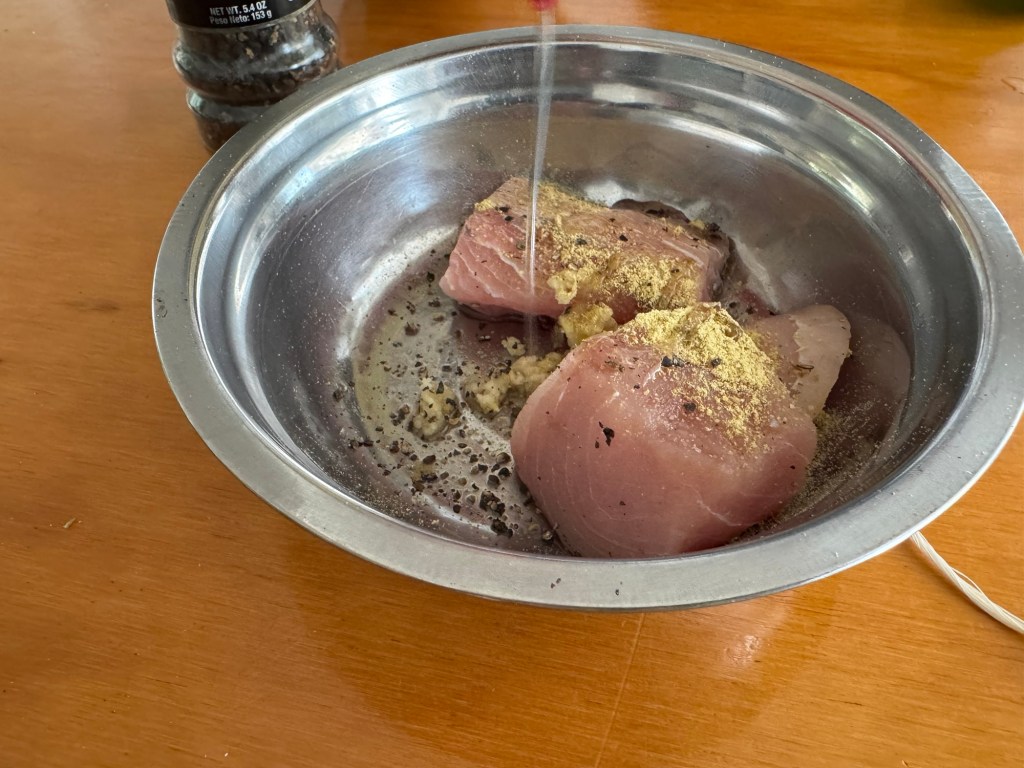
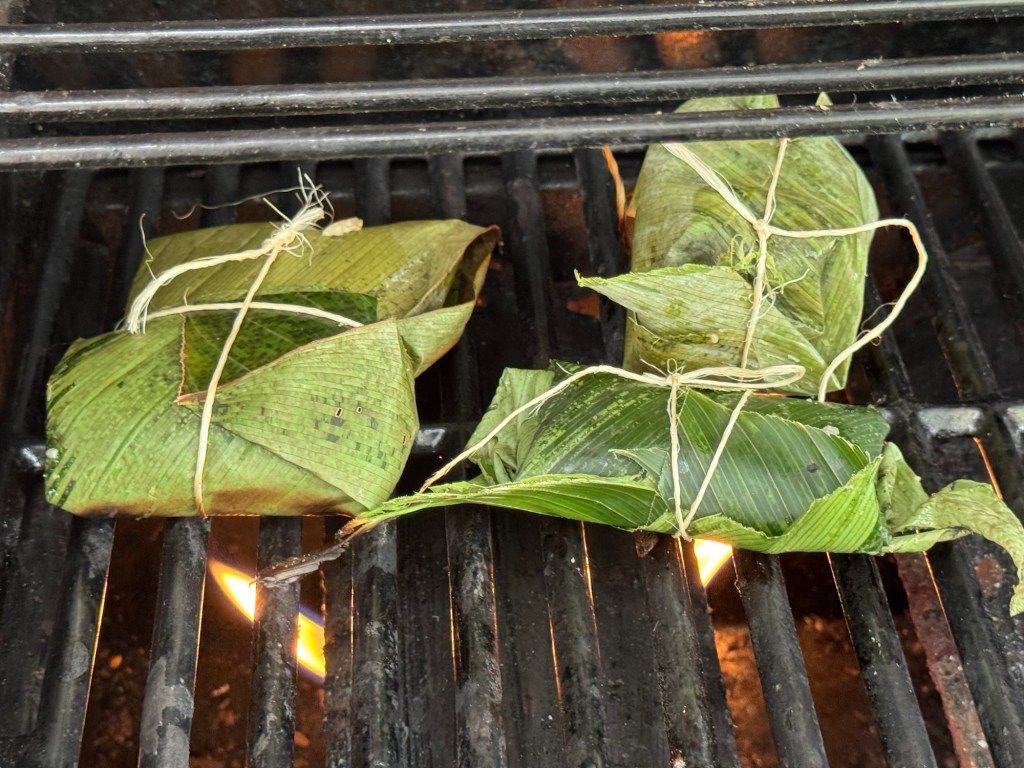
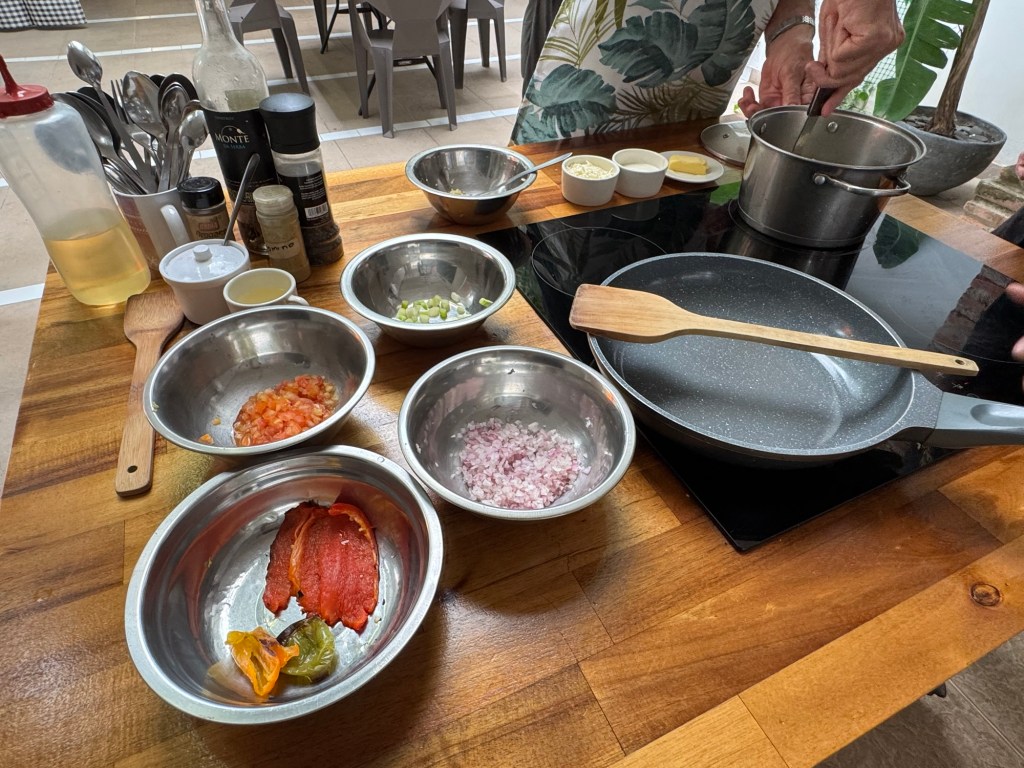
For the main course we marinated the fish in a mix of sunflower oil, onion, cumin, garlic and salt and pepper, wrapped each piece of fish in banana leaves and set the packets aside. Then we made a sauce for the fish, cooking sunflower oil, onions, garlic, scallions, tomatoes, sugar, salt and pepper.
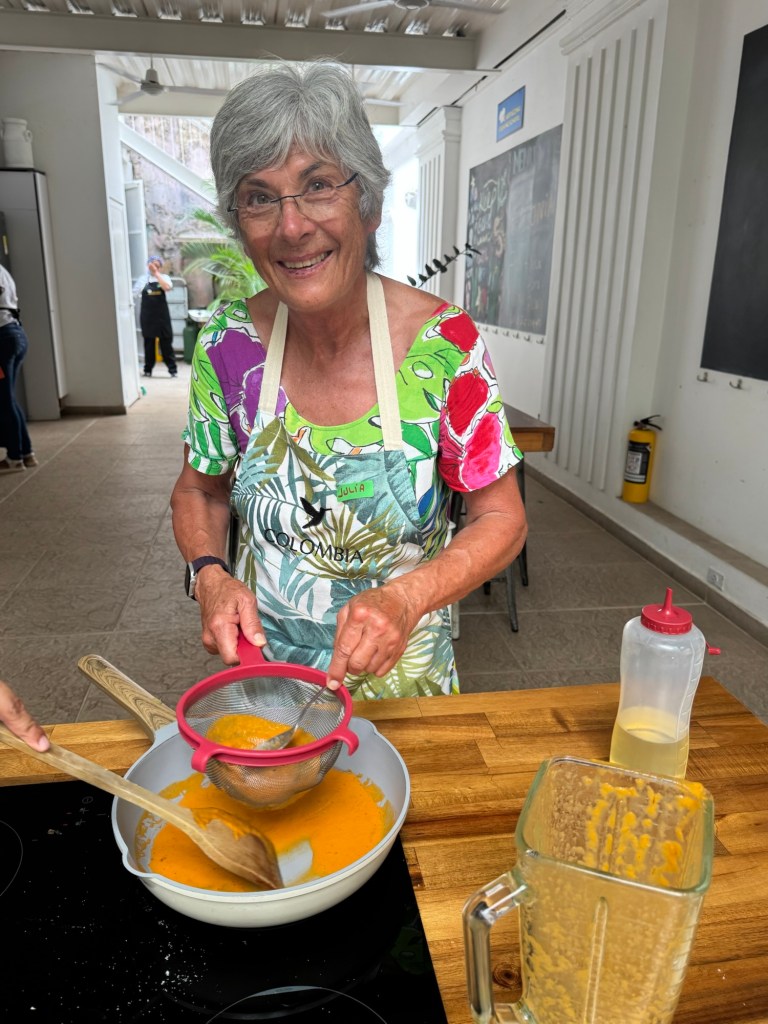
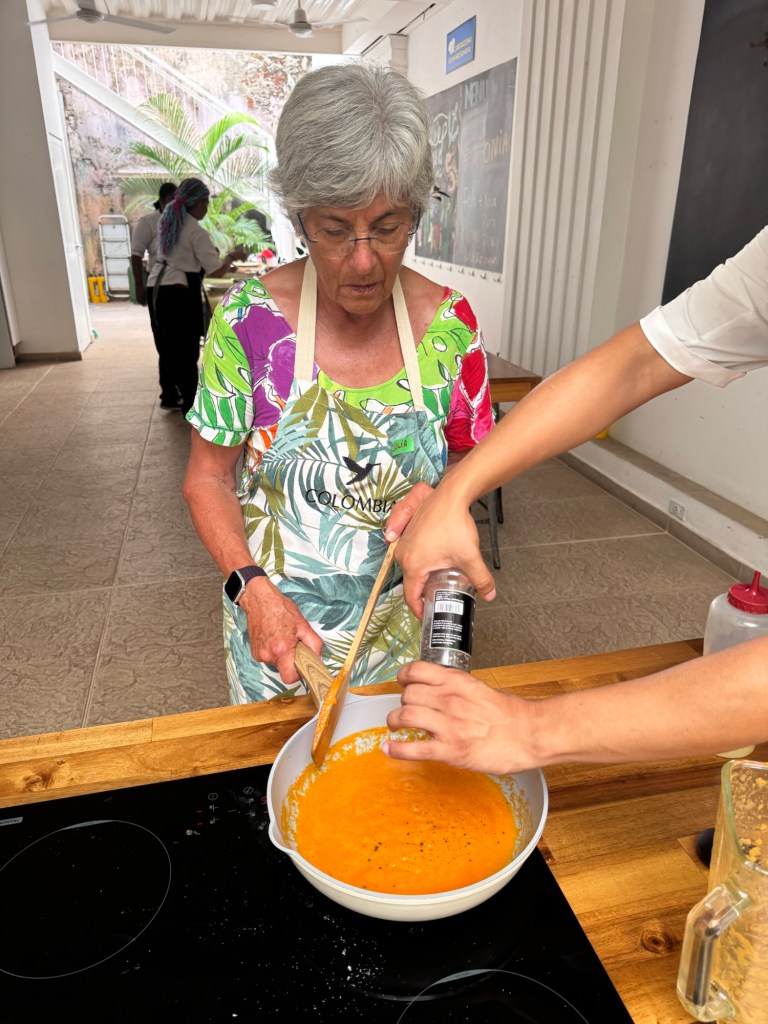
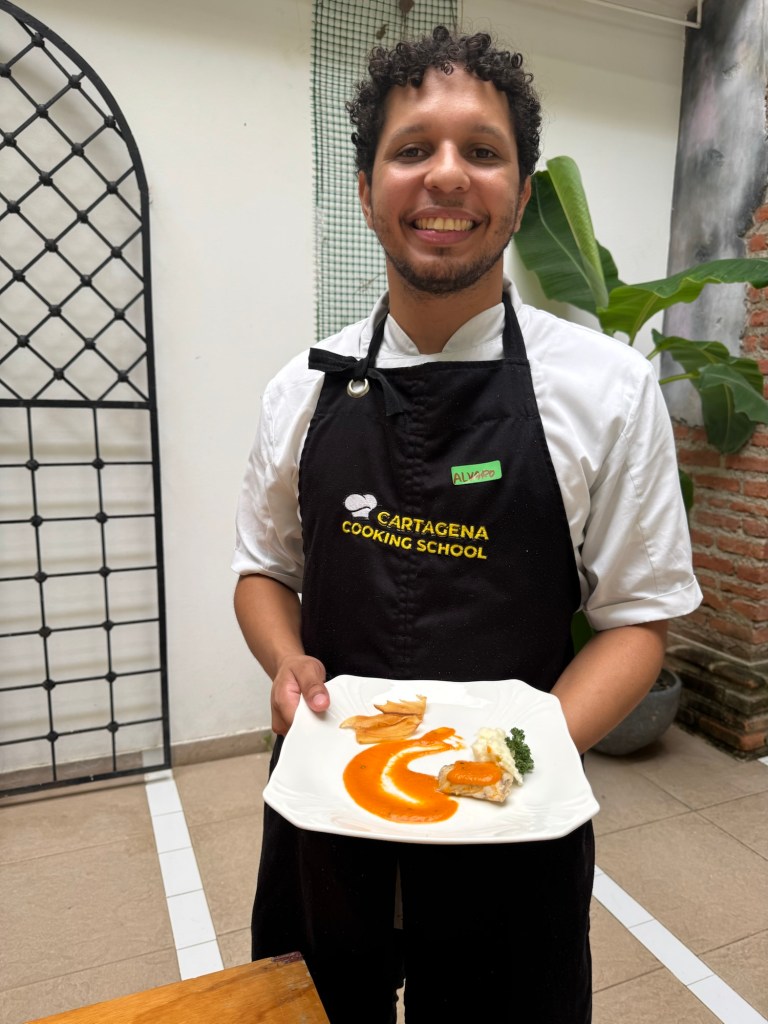
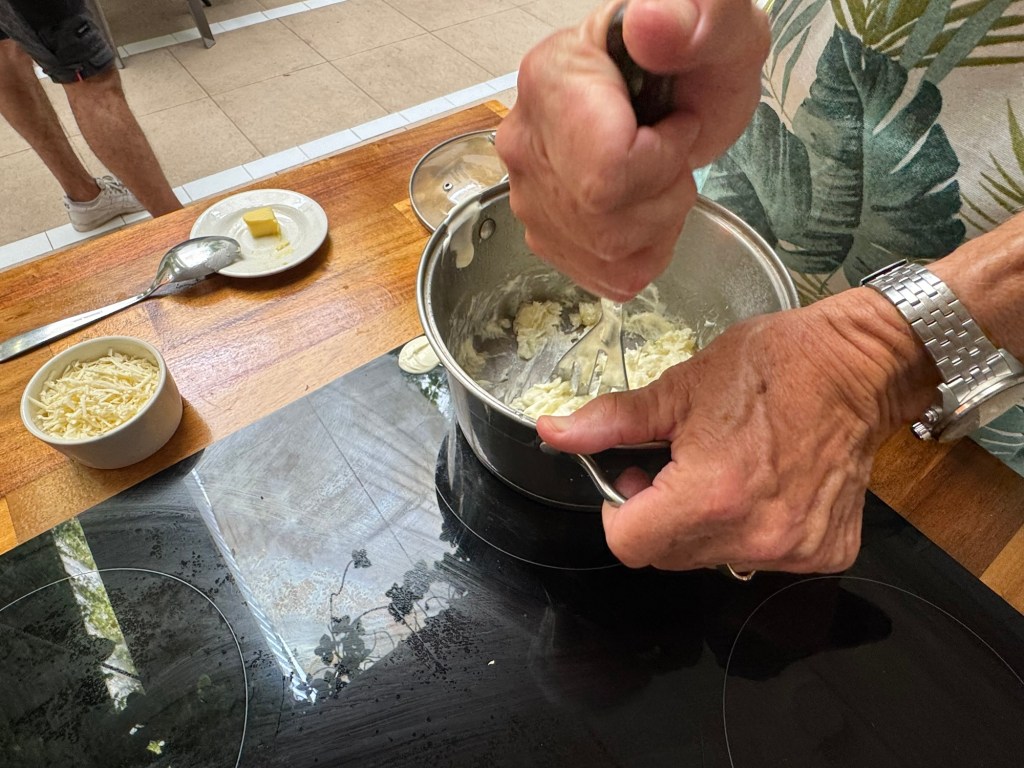
When the sauce was cooked, we ran it through a strainer and then reduced the sauce until it was thick. Meanwhile, we mashed a precooked piece of yucca plant until it was like a mashed potato. The fish was cooked on the grill. We removed the leaves from the fish, plated it and served the fish with the sauce and the mashed yucca. Simple and very tasty.

For the dessert, we made a sauce of cinnamon, clove, molasses, rum and water, boiled it for 20 minutes on medium, then on high for 5 minutes and poured over the plantains. The Lulo dish we had made earlier was cold and almost like ice cream that the chef put on the side in little fruit cups. It was a lovely meal.
As soon as we thanked Alvaro for the fine experience we walked back to the hotel and spent the rest of the afternoon staying cool. We did not even try to go to the warm pool.
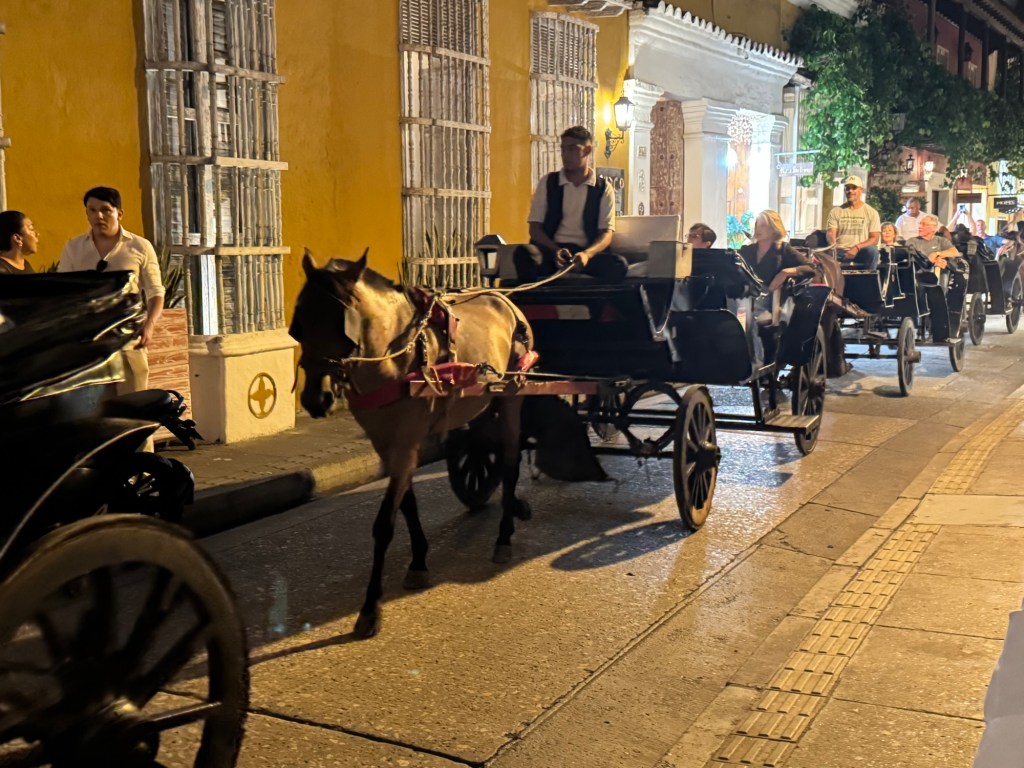

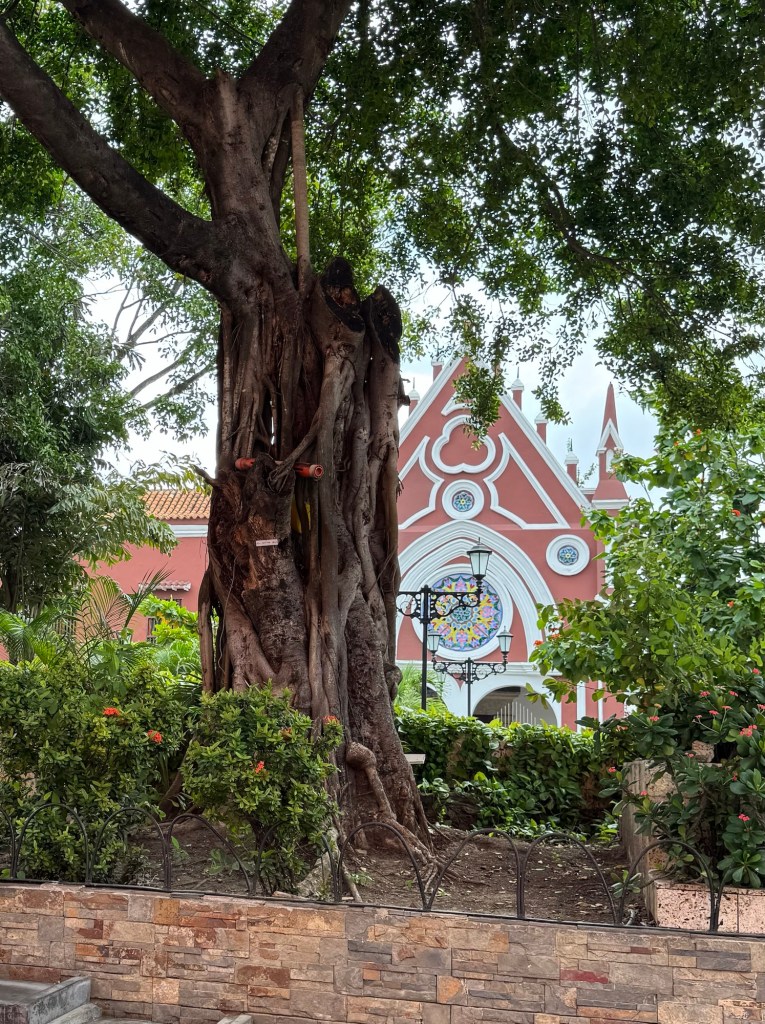
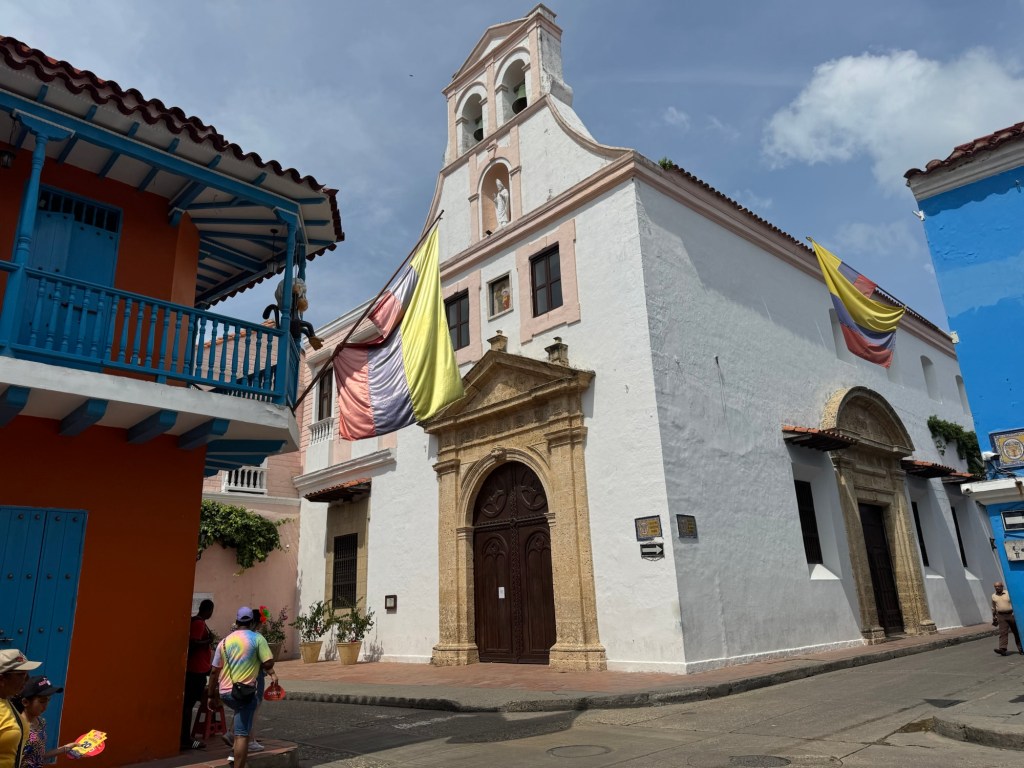
At 6:15 we mustered for dinner at Juan Del Mar restaurant next door to San Diego Church, pictured above. Rather than having a lot of food, we settled for 5 appetizers we shared and called it good. We have one more day in Colombia before we head for home.
 Adventures with Julia