
Friday, March 20, 2026
A man named Moses picked us up at the Windhoek airport and drove us 35 minutes through the city to a lodge called The Olive Exclusive. Claire Jones, our guide extraordinaire, was waiting to welcome us to our Namibia and Angola adventure with her. The accommodations are quite fine with 2 queen beds, lots of room and a large garden with a private pool.
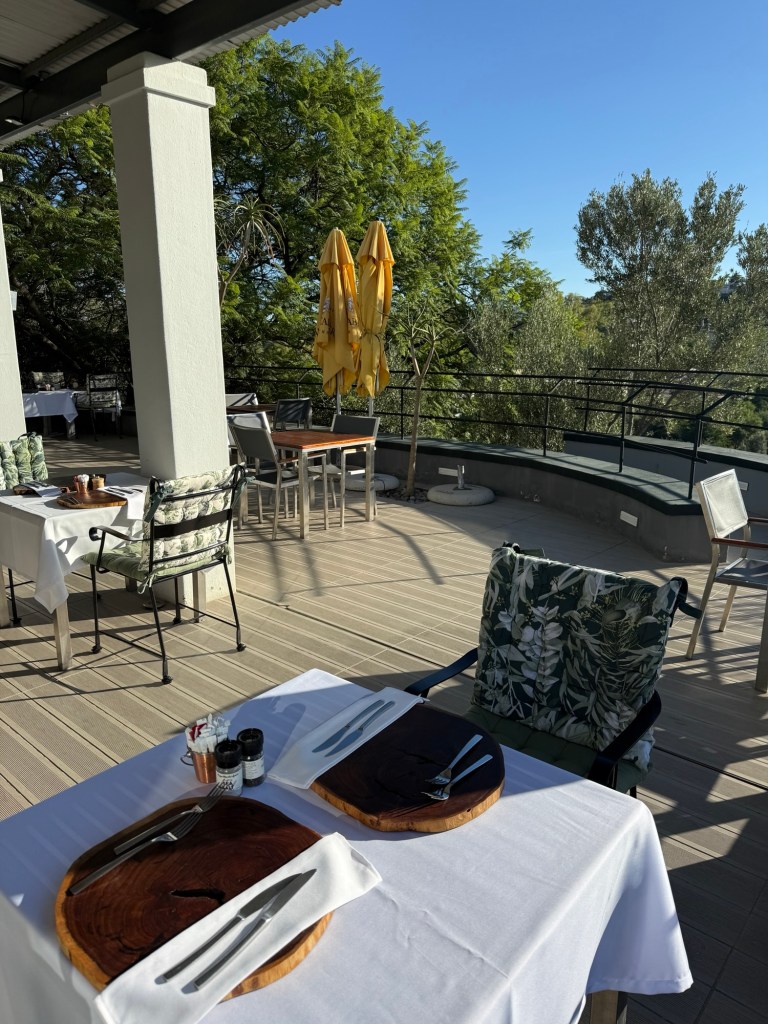
Too bad we will not be around long enough to enjoy the setting. We were soon in bed. Breakfast with Claire at 8am, then back in the car with Moses taking us to the local airstrip, for a flight northwest to Damaraland, to a place called Twyfelfontein, where we will see famous rock art and, of coarse, animals.
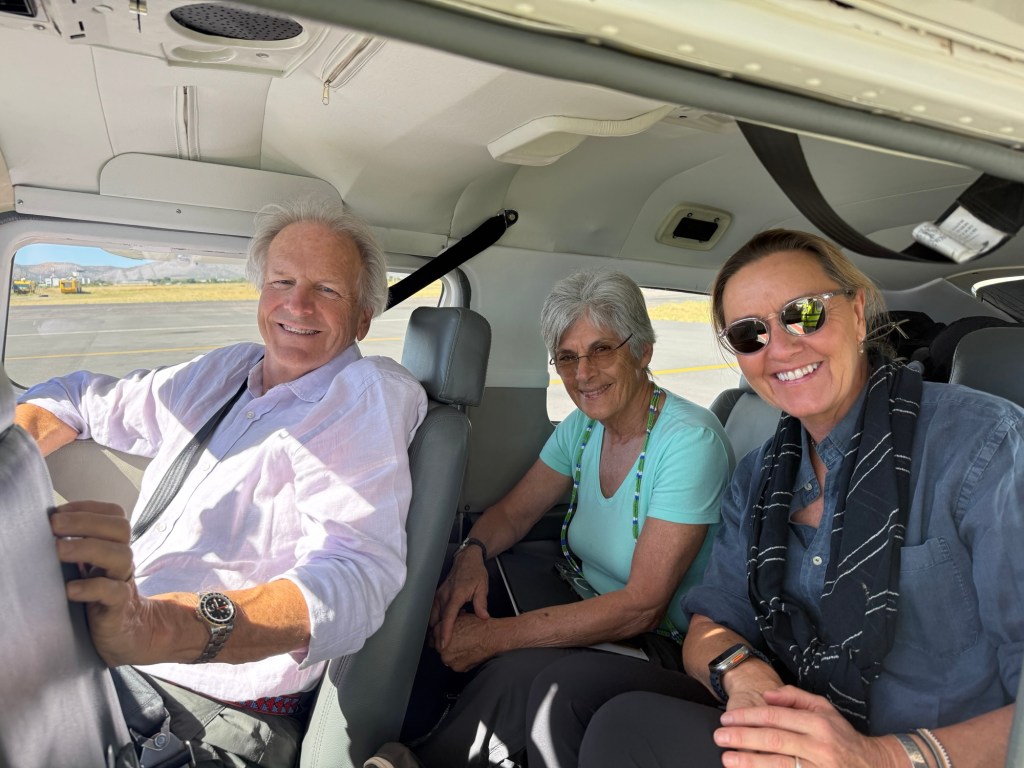
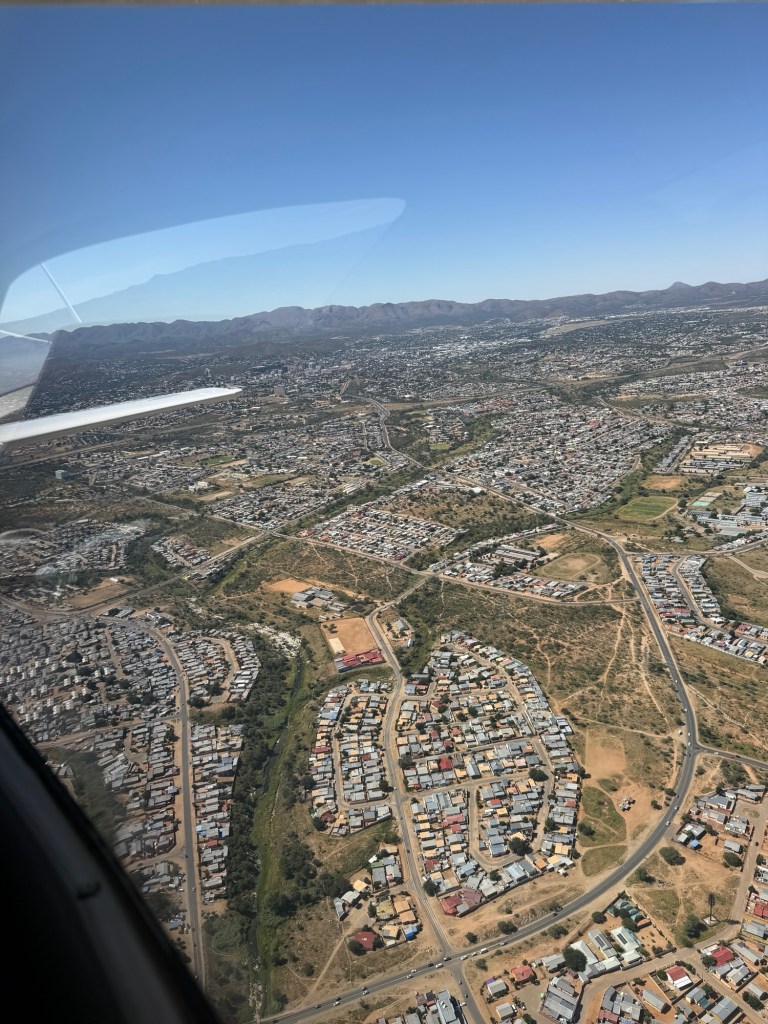
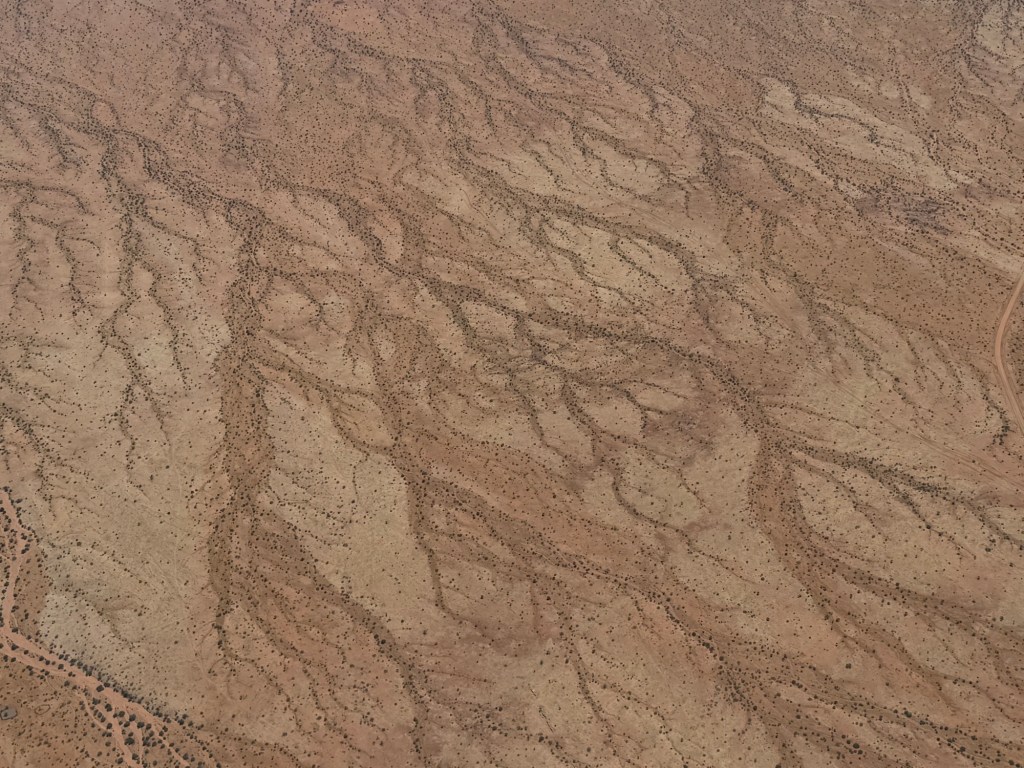
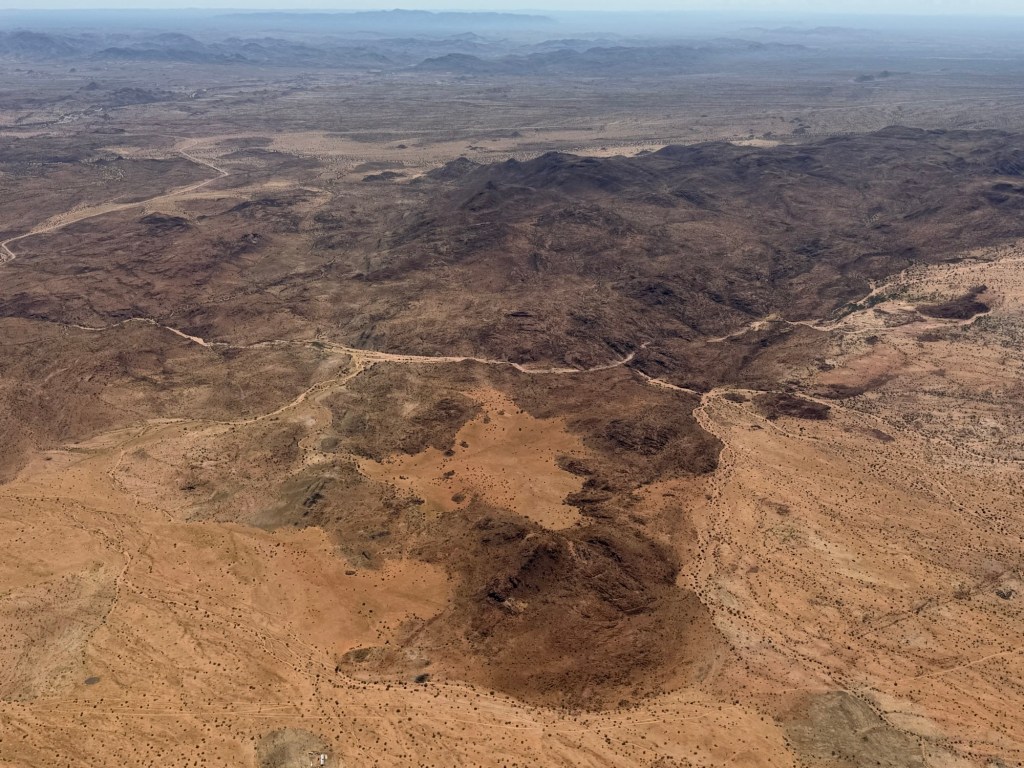
Although Namibia is not a small country physically, it has the smallest population of any country in Africa. There are only 3 million inhabitants. The capital, Windhoek, has about half a million people and is a very modern city with paved roads, many high rise buildings and lots of successful looking shops.
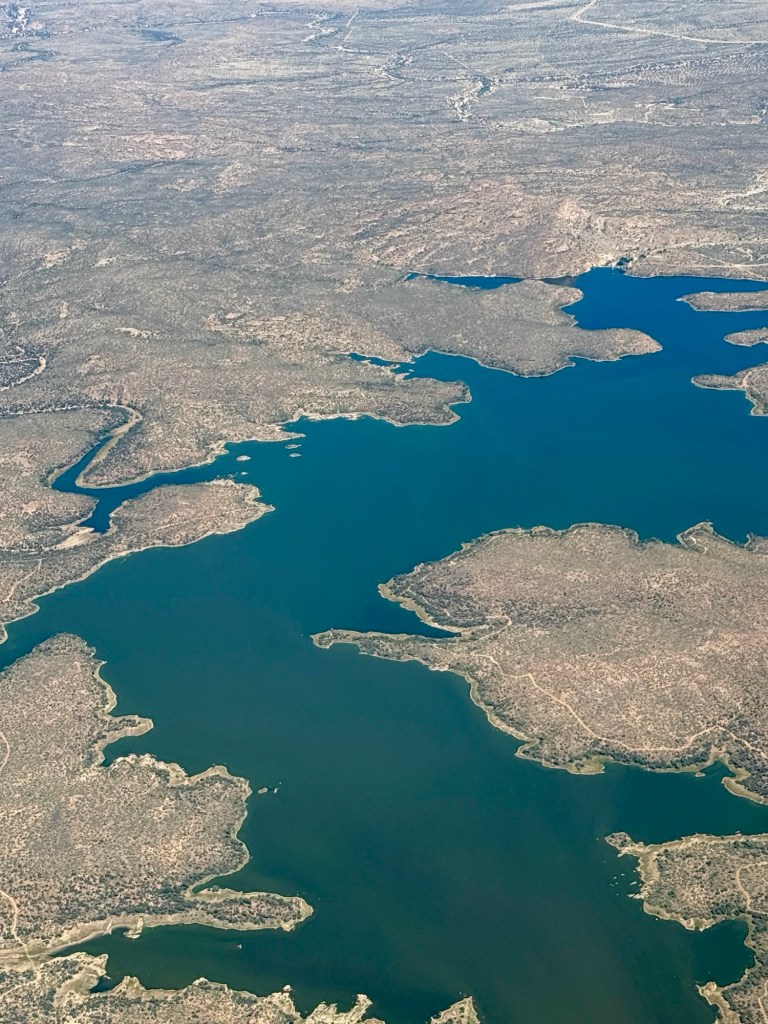
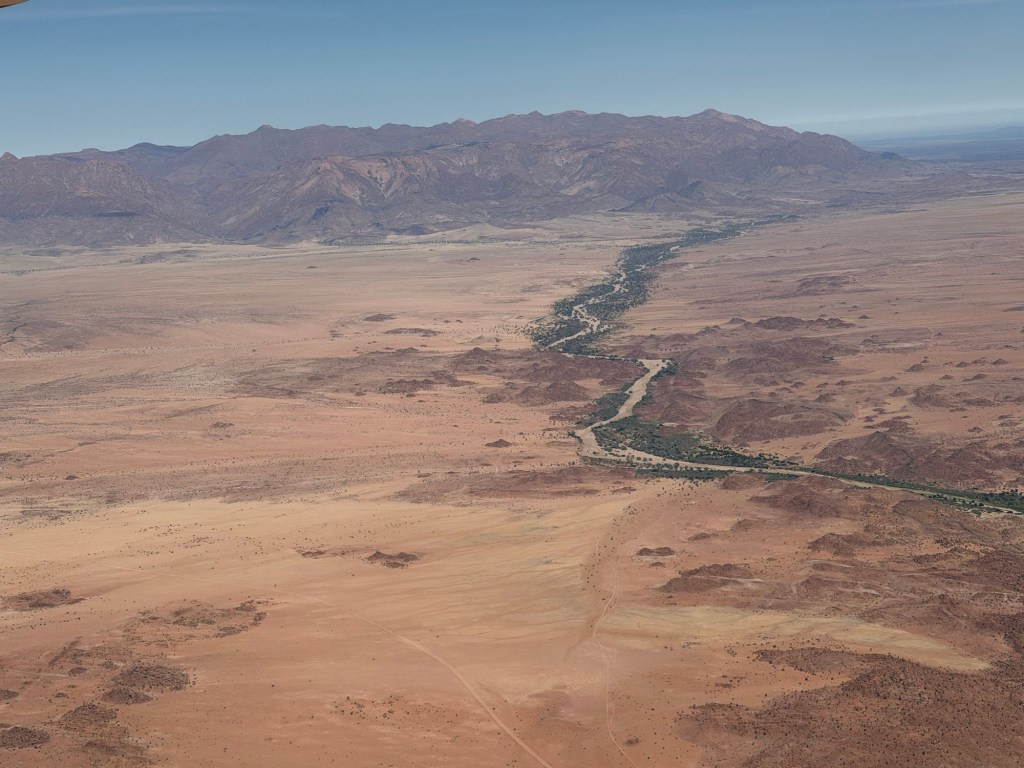
Flying over the country on the way to Damaraland, north and west of Windhoek, we saw thousands of acres of vacant, gentle rolling landscape in shades of green, pink and tan with trees and shrubs growing along the drainage beds. Low hills interrupted the scene.
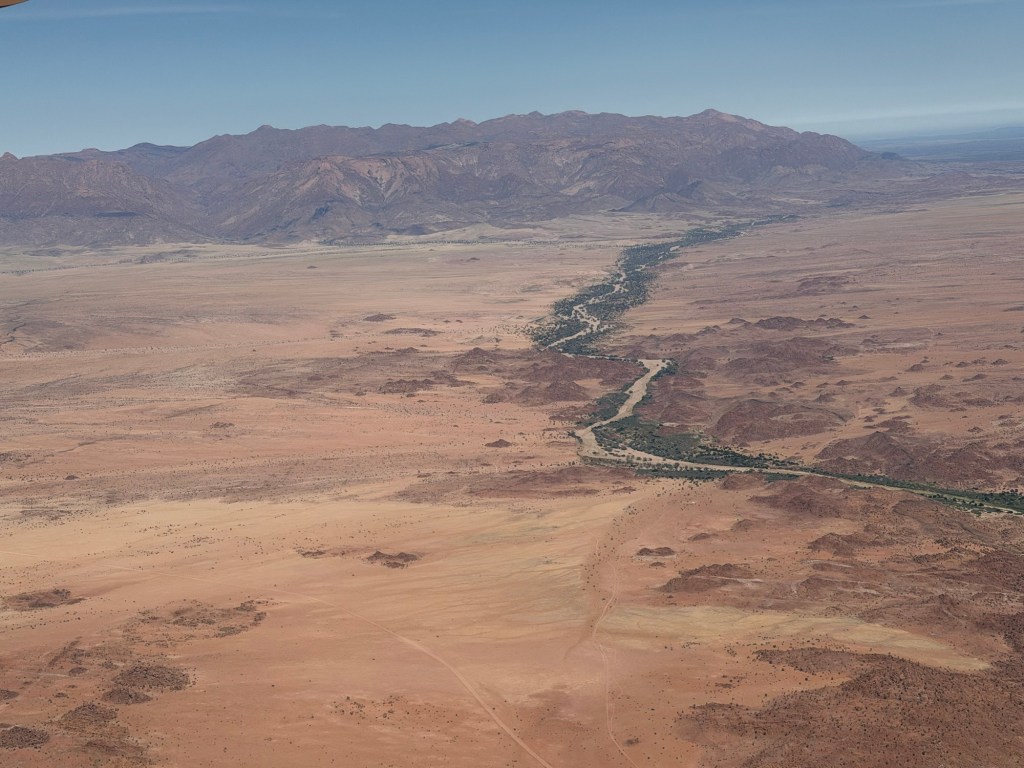
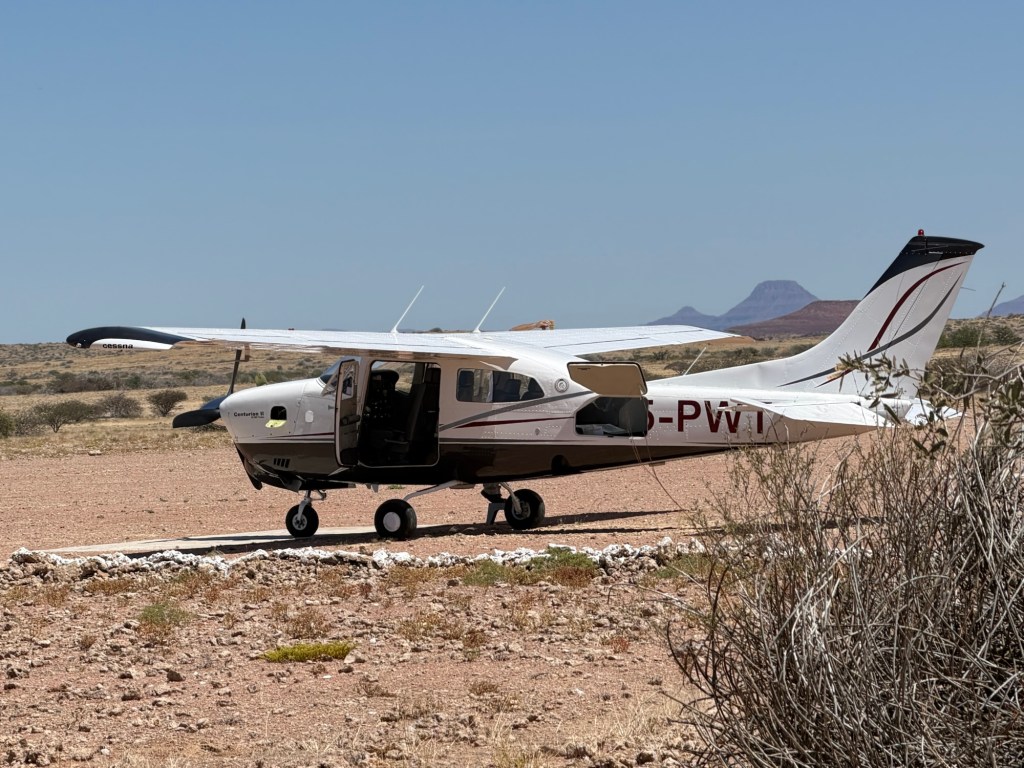
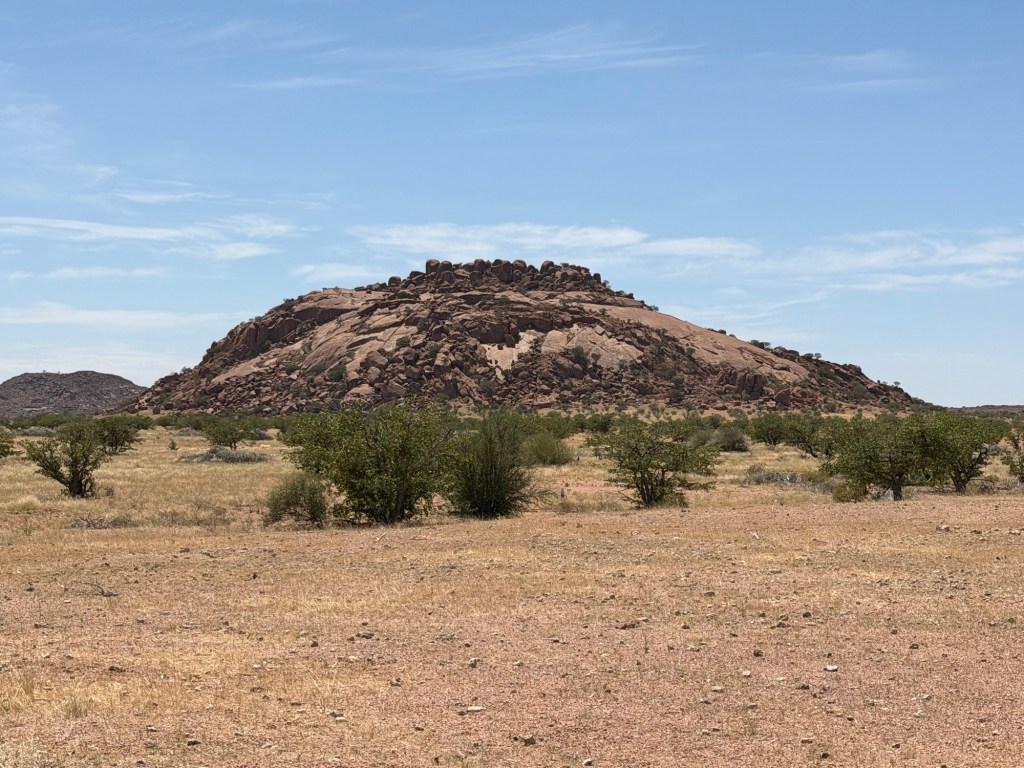
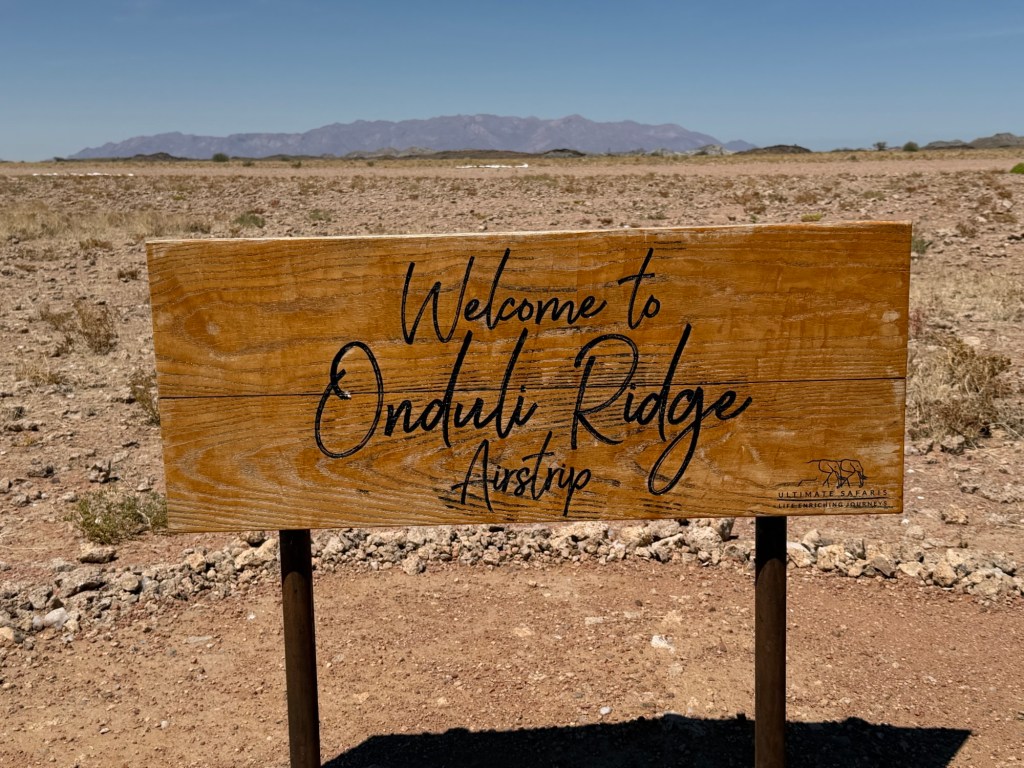
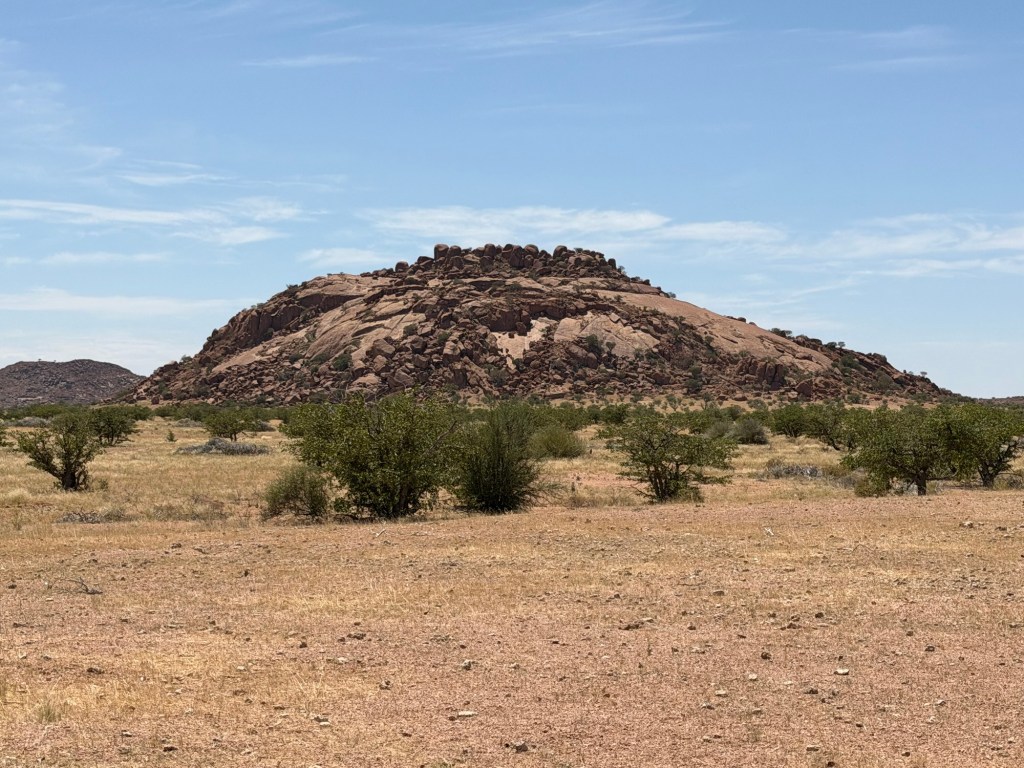
The only mountain we passed was a small range called Brandberg. At the airstrip we were met by our driver/guide, Francois, who drove us 20 minutes to Onduli Ridge, a lodge in the middle of nowhere. A great place to be. The word Onduli means giraffe in the local language, but we did not see any giraffe. We did see some interesting plants along the way.
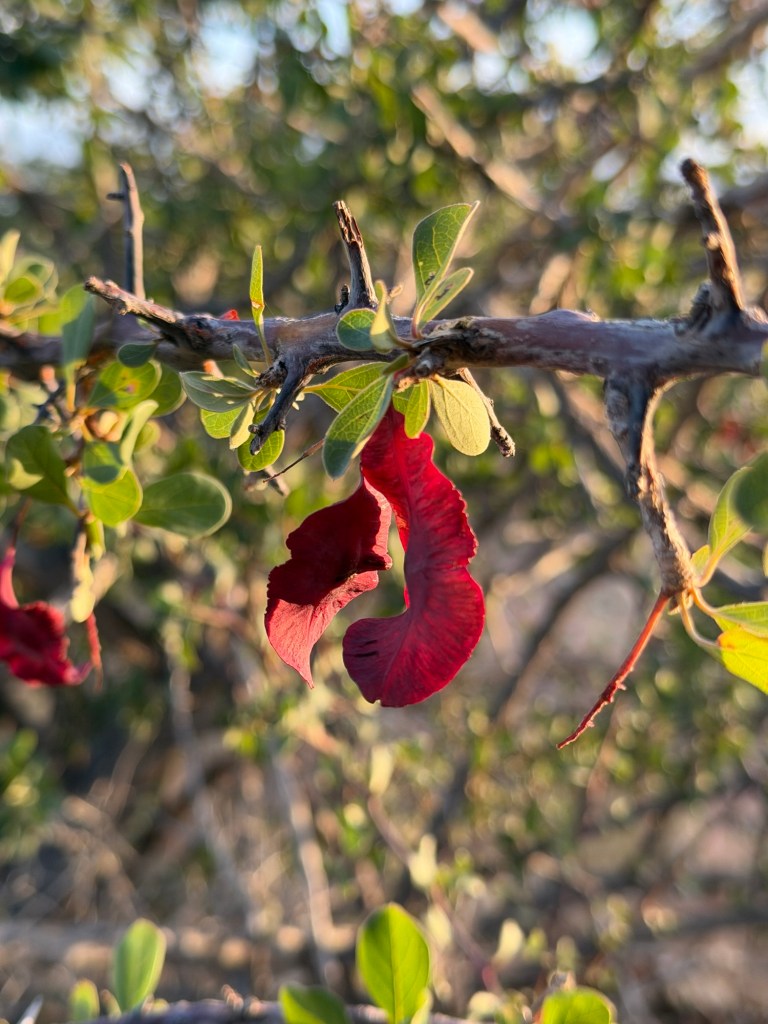
One was a spiky shrub with pretty purple pods called termanalia.
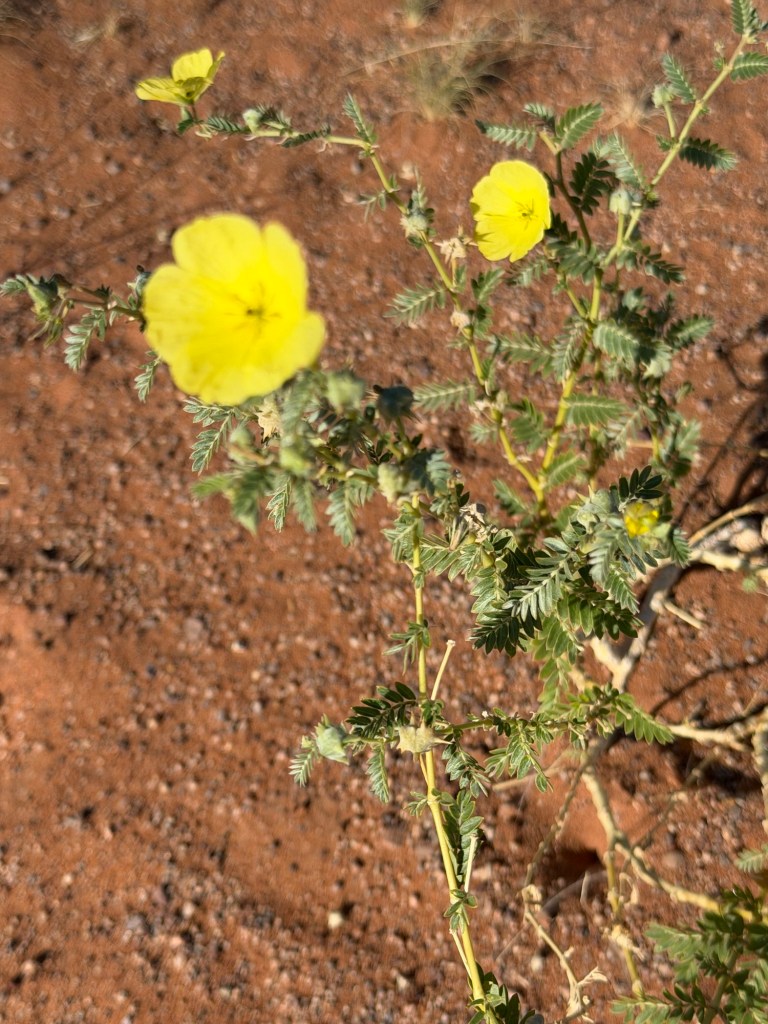
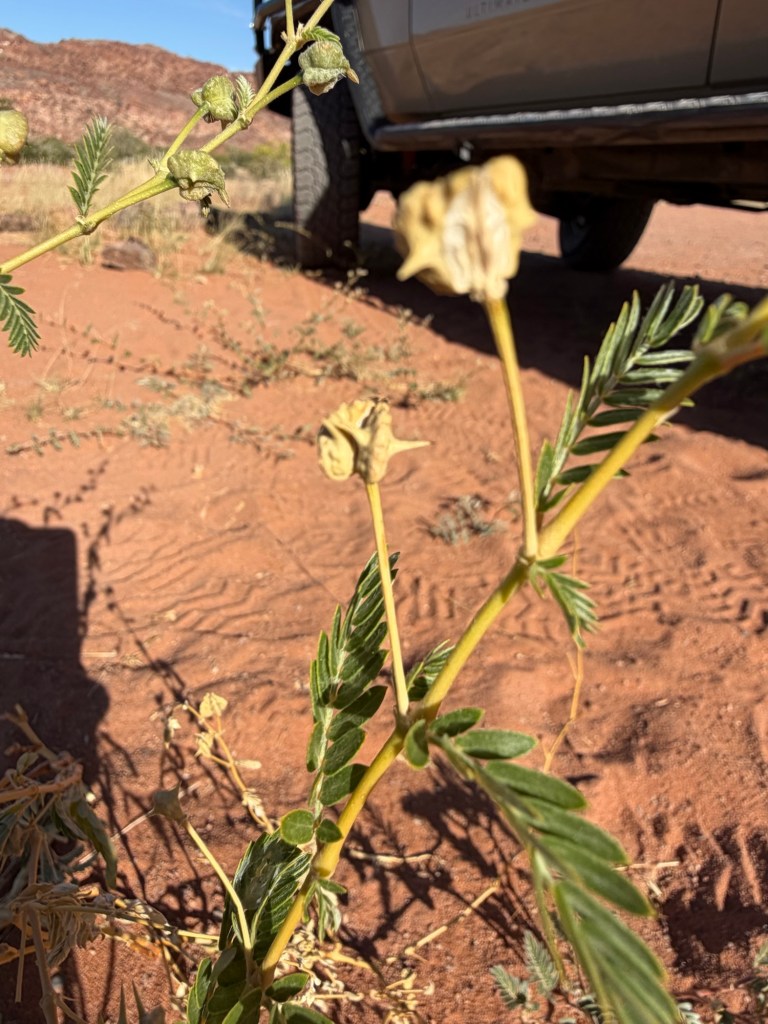
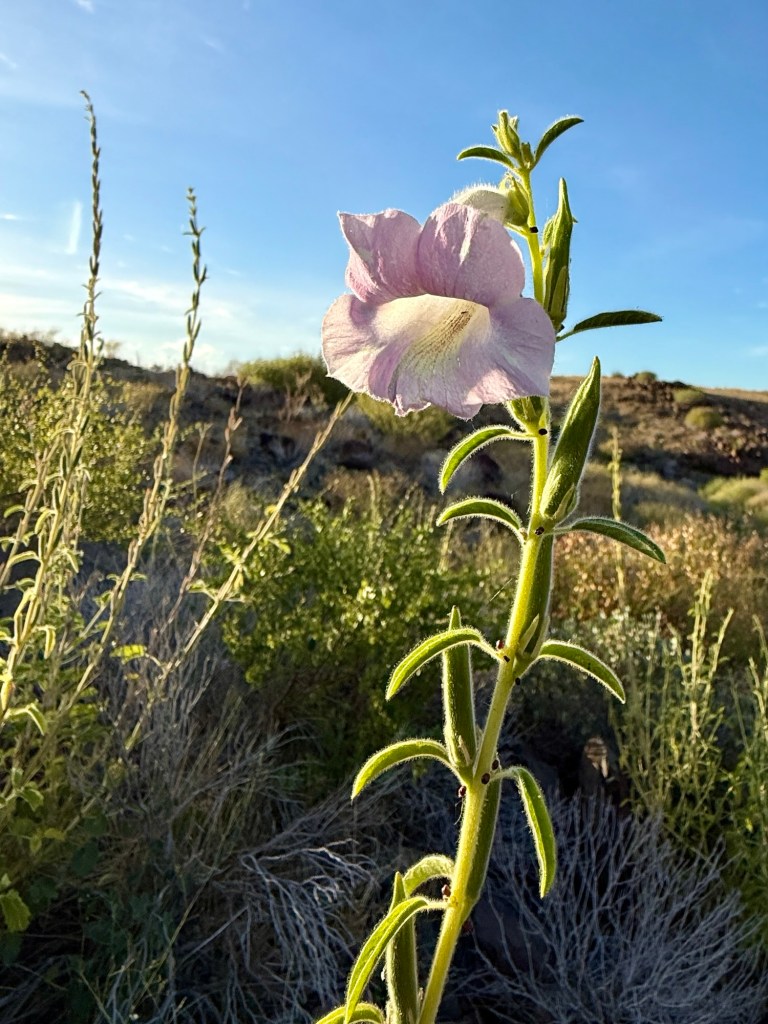
Another was a yellow flower called mouse whiskers and Devil’s Thorn, and another was a pink, snapdragon-like plant called Wild Sesame.
Francois told us about a small plant called Ostrich Salad that even tasted good.
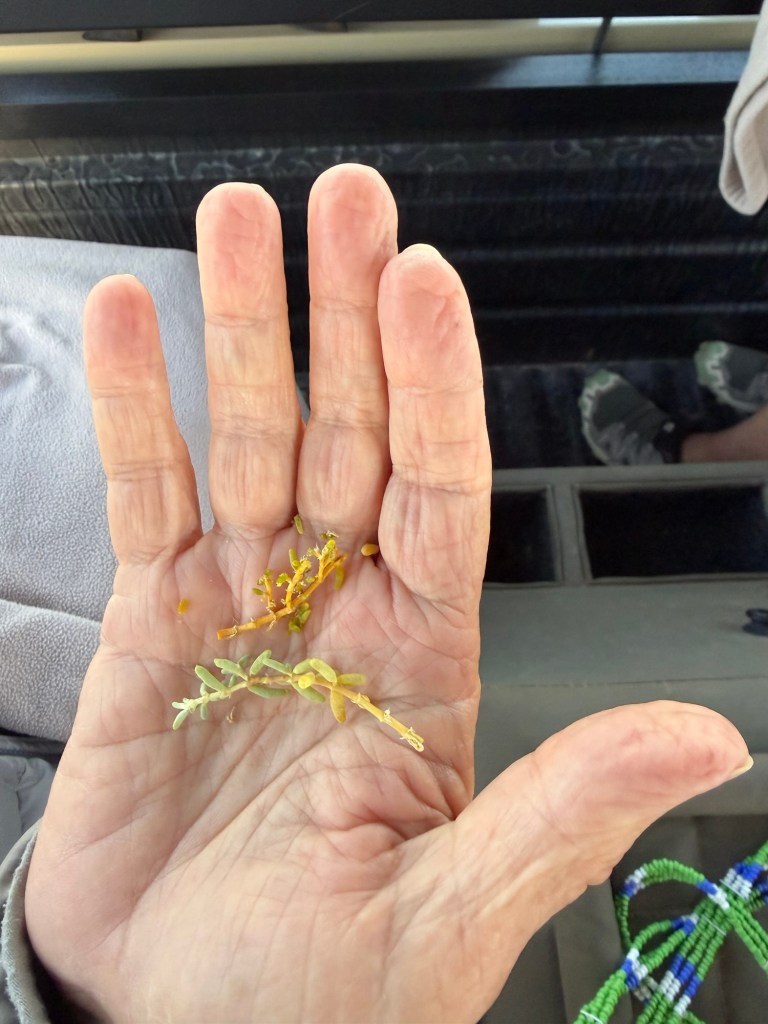
And a plant called commiphera. It looked to me like a manzanita, but he told us it was one of 30 different species that rarely die. When dry, they loose their leaves and look dead, but are not. At the moment they are still green. Can’t find a photo.
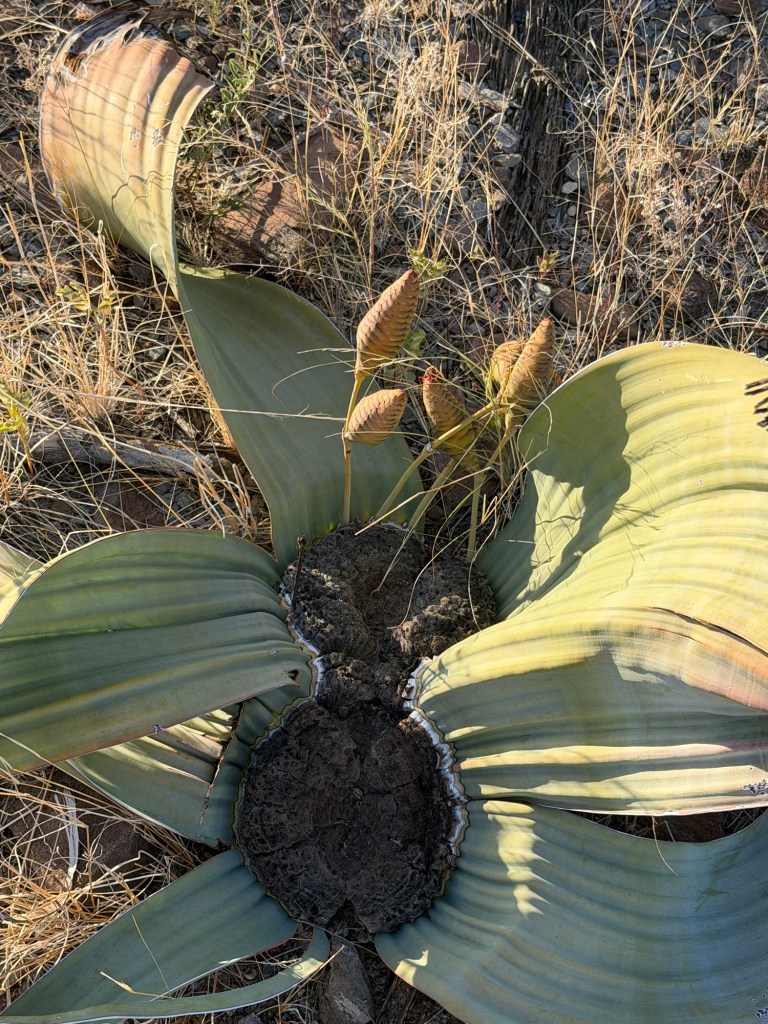
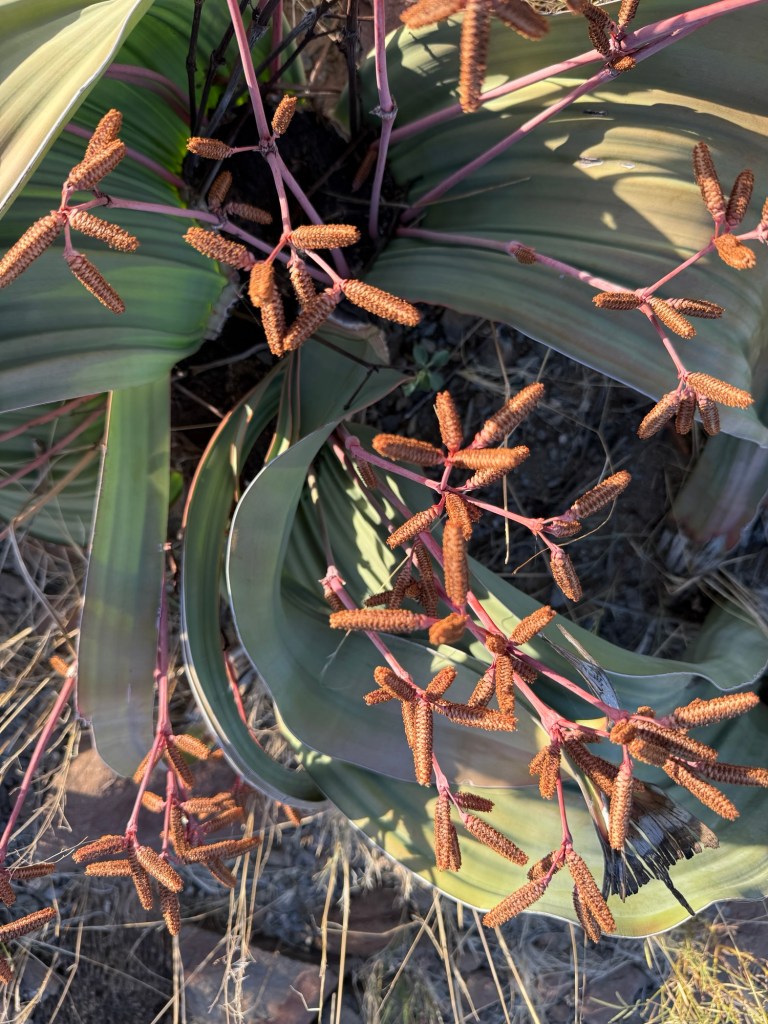
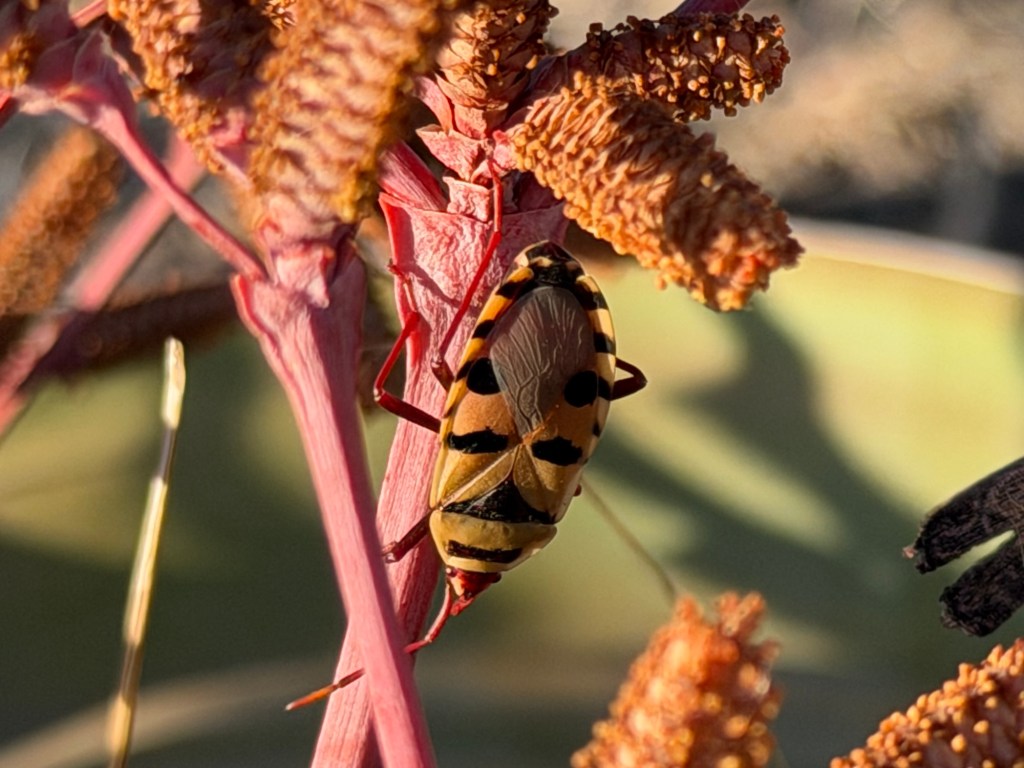
The most interesting plant he showed us was a Welwitchia Mirabilis. There are separate male and female plants that grow near each other and are pollinated by a bug that travels from one to the other. It is a prehistoric, old world plant. We saw a few of them as we drove.
We arrived at the lodge in time to quickly check into our room and get to lunch. The place is delightful in spite of the extreme heat and the desert setting.
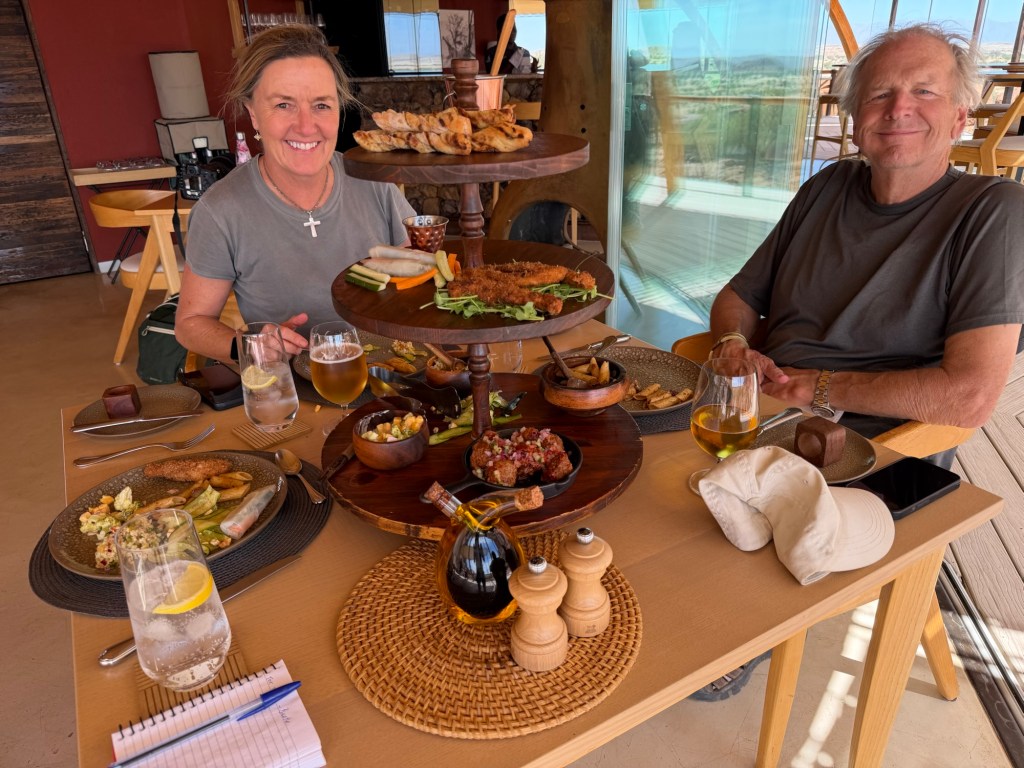
Lunch was served like a ladies tea service, a tower on three round plates of different sizes with a wide variety of foods presented. We could take or leave what we wanted and had more than enough to eat.
After lunch we had an hour to relax before our first game drive, which proved to be very unusual. At 3pm Francois drove us a hour through the desert to a spot on the road where we joined a pair of veterinarians and 20 travelers, including ourselves, waiting to participate in the process of tagging and collaring a young male cheetah.
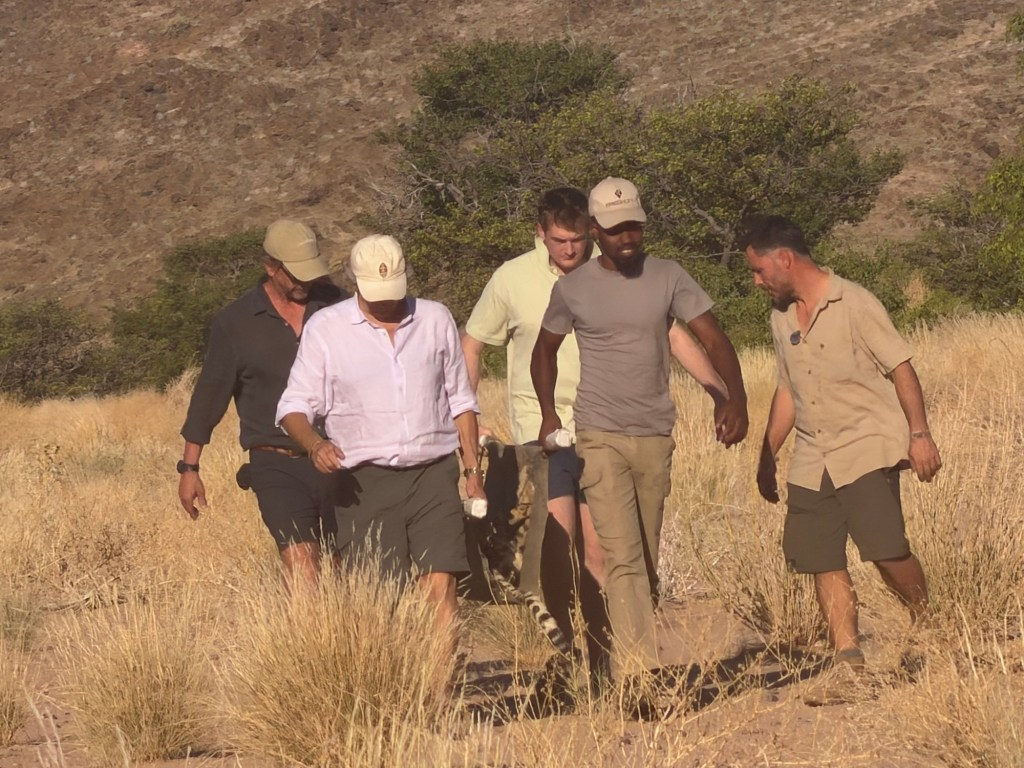
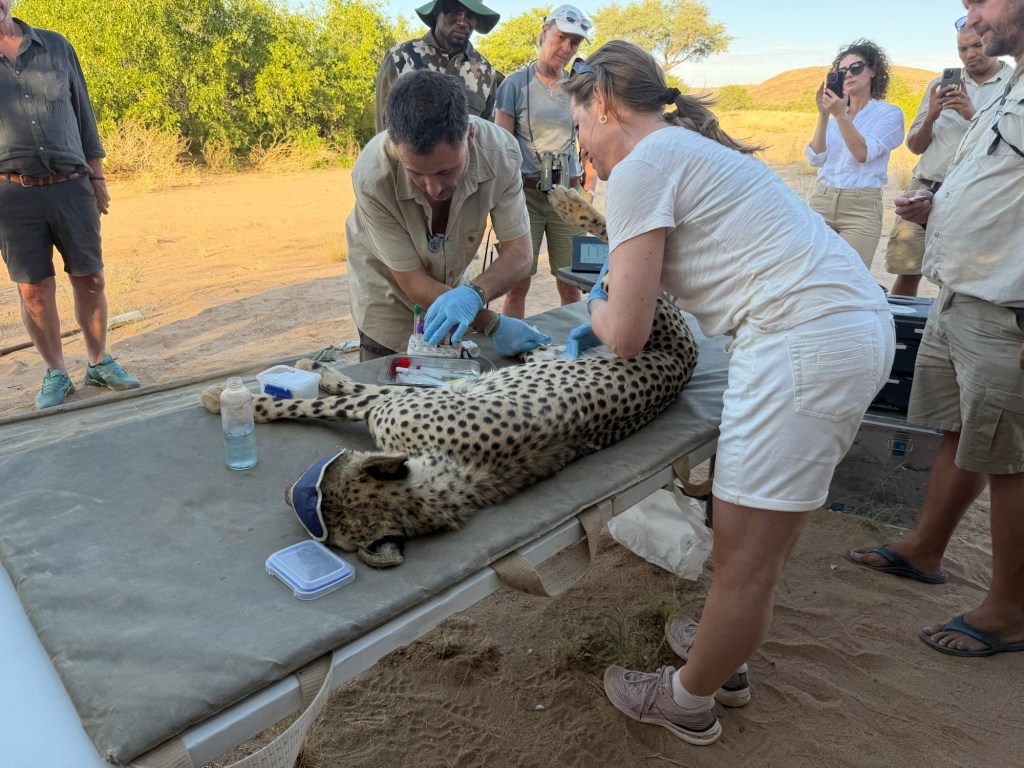
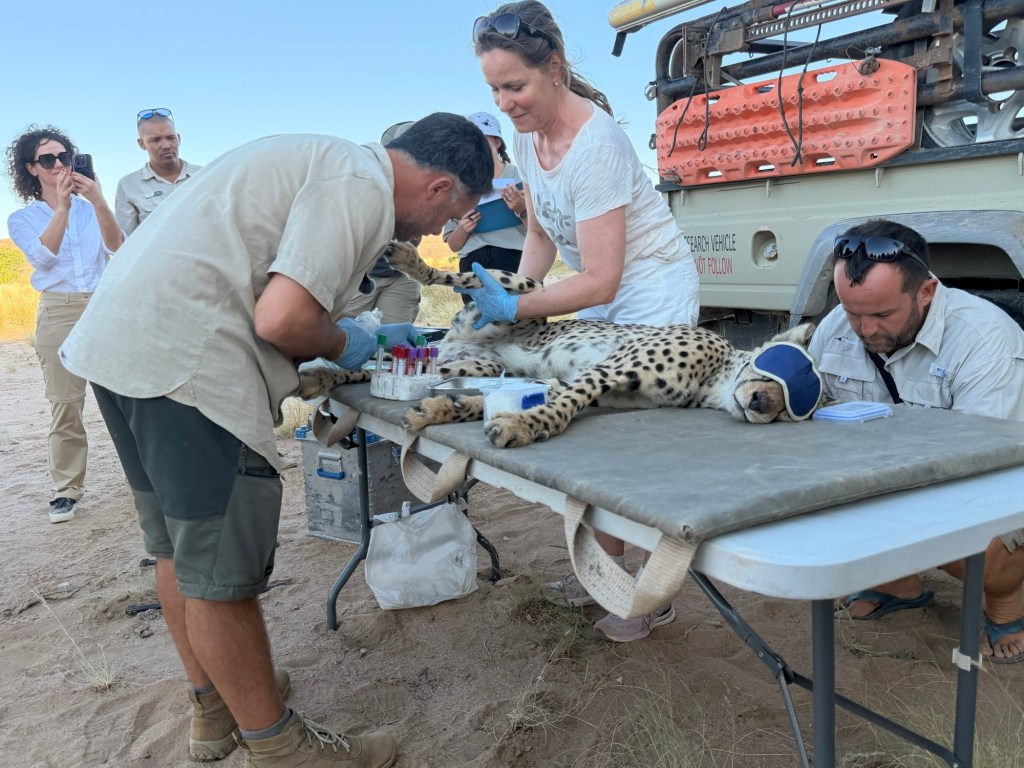
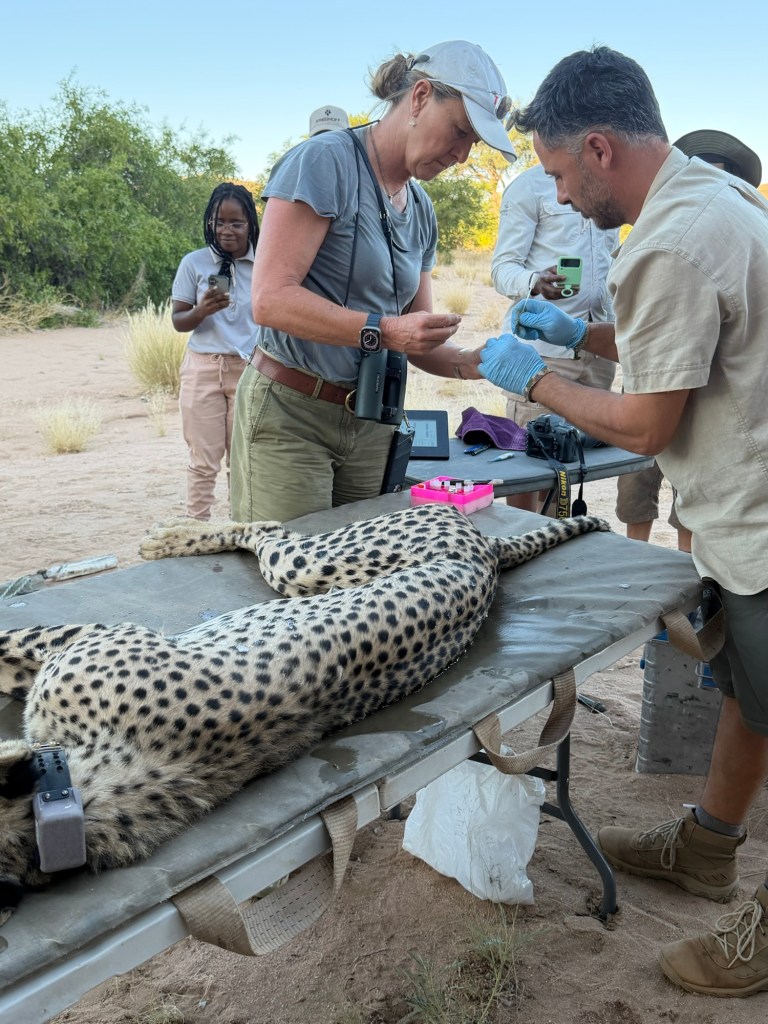
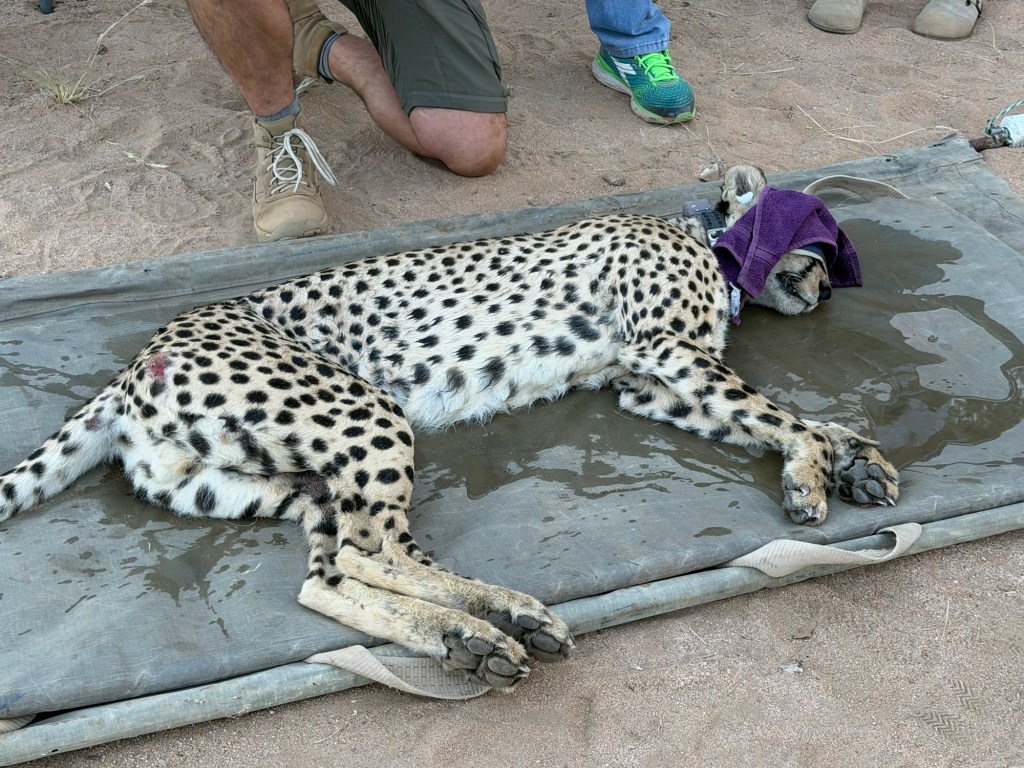
We were just in time to receive a talk about what would be happening and what we could and should do while the cat was anesthetized. Mainly we were to be very quiet and still. The vet picked individuals in the group to do various tasks. Mark was picked to help carry the anesthetized cat to the table where it would receive medical attention.
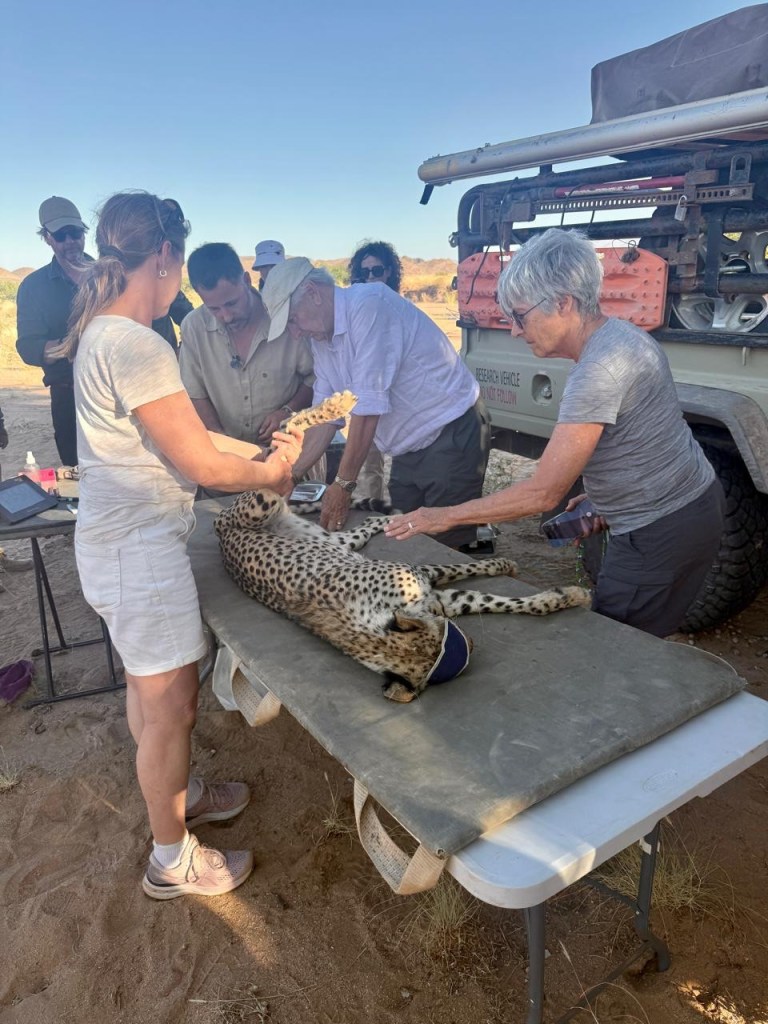
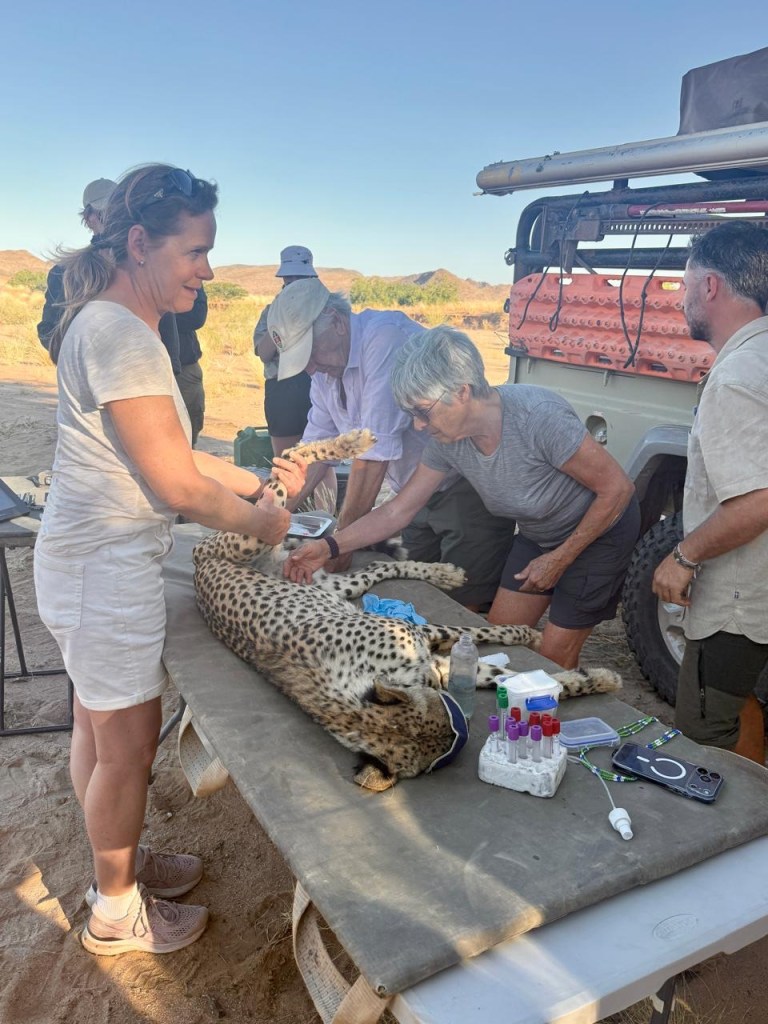
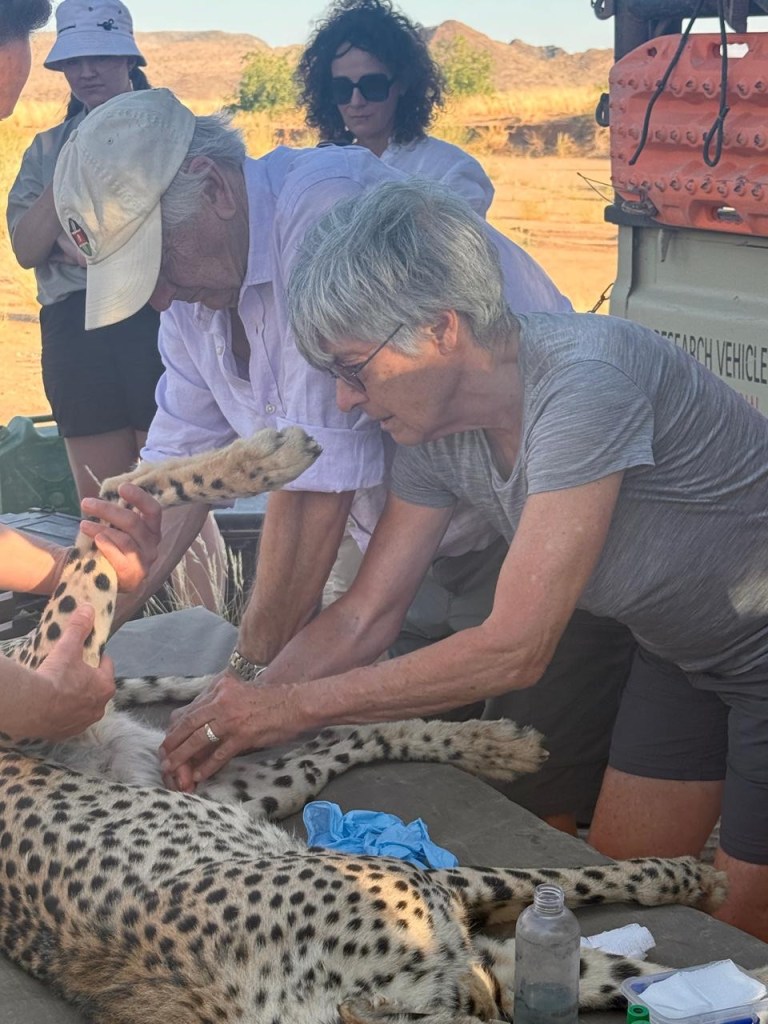
I was picked to apply pressure to the cheetah’s leg muscles while the vet drew blood. Mark was also chosen for an addition task, taking the cheetah’s temperature, using a rectal thermometer. Something Mark had no previous experience doing but he caught on quickly. Other people did various tasks until the animal was carried back to the cage it had been caught in and left to recover and walk out of the cage by itself. It was an extraordinary experience that just happened to be taking place on a day we could participate. Later we learned that the cheetah recovered very slowly and bolted out of the cage at 7:30 that evening.
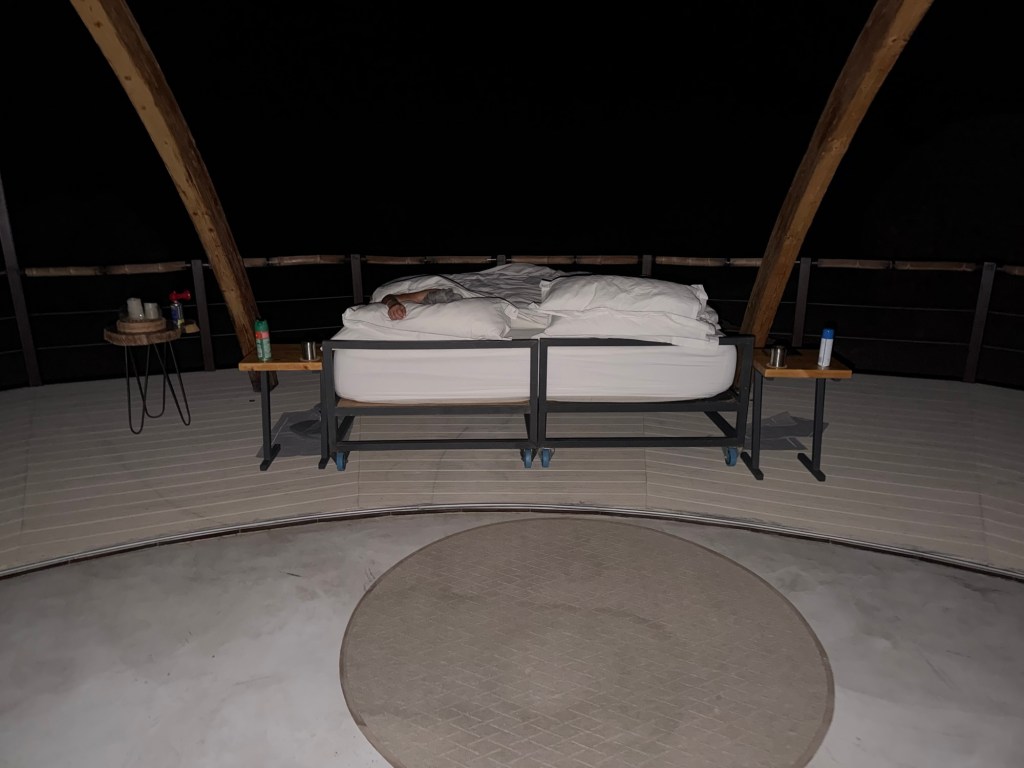
We drove back to camp feeling pleased with the experience and happy to have a late dinner. While away, the staff rolled our bed outside, about 15 feet from its indoor position, so we could sleep under the stars. As there is only a thin crescent moon, the stars were very bright and we laid awake awhile enjoying the view from our comfy bed.
Saturday,March 21, 2026
On the road at 7am, Francois drove us to see elephants. But first we stopped at a cluster of large stones that displayed centuries old carvings of different animals.

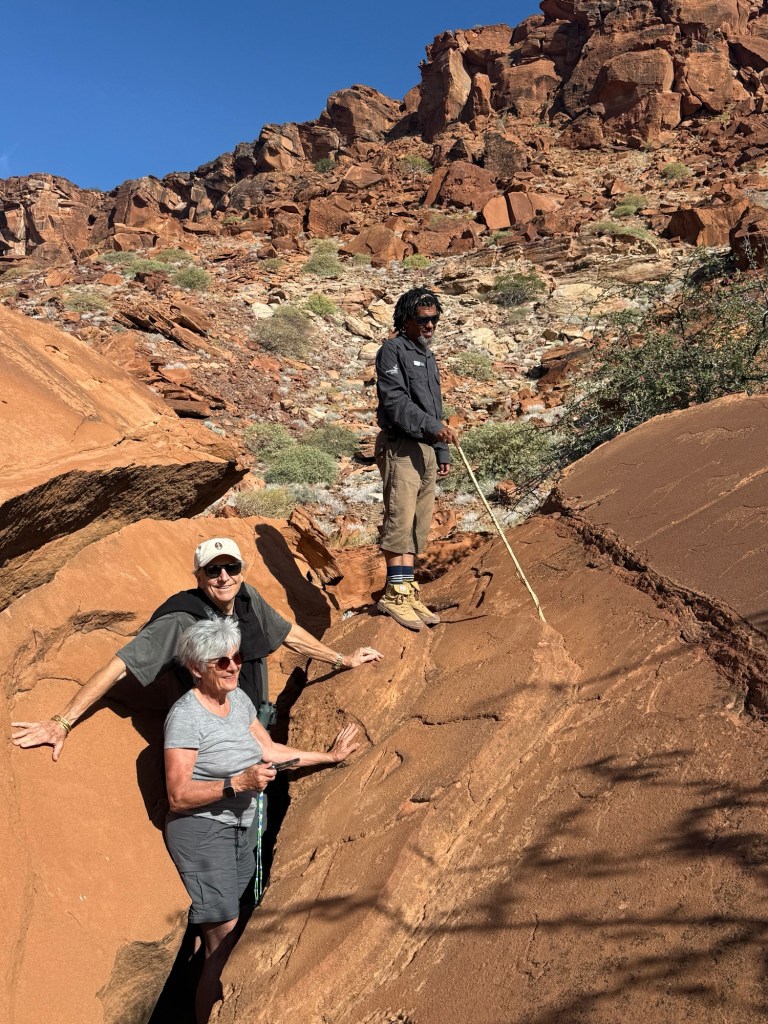
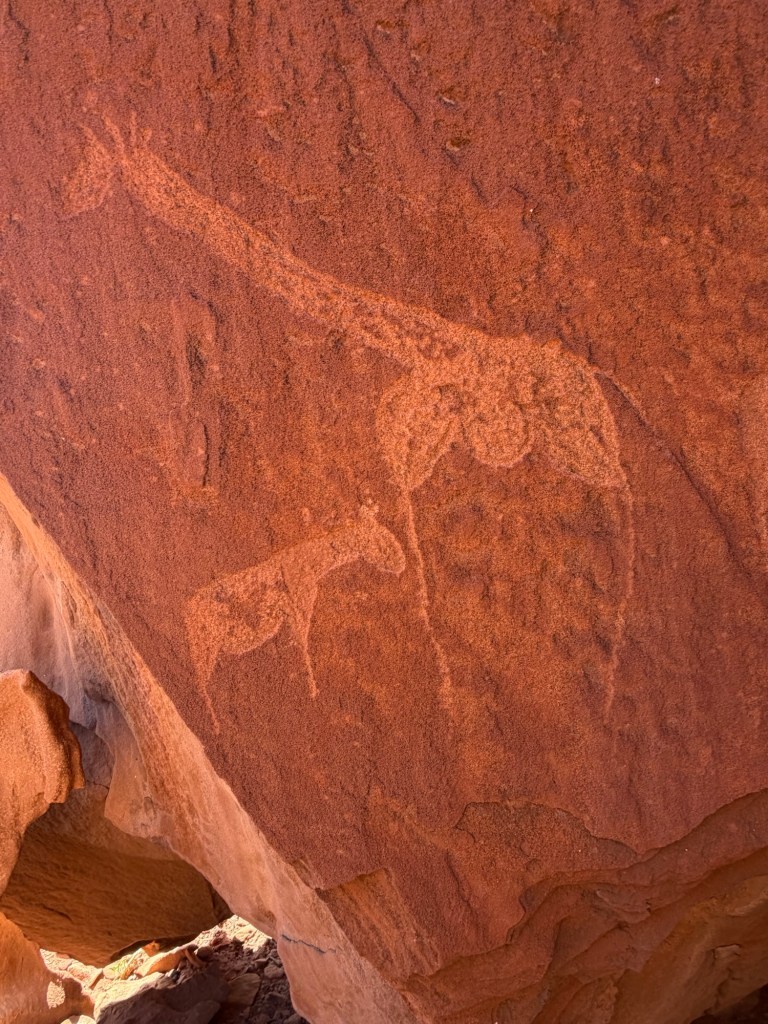
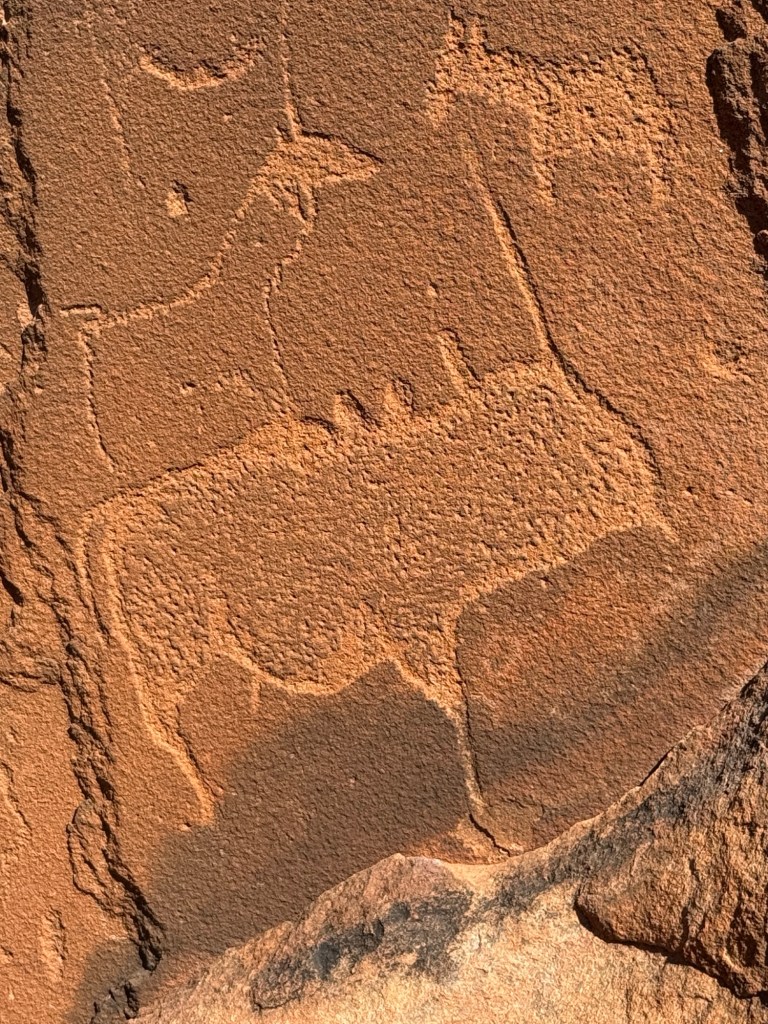
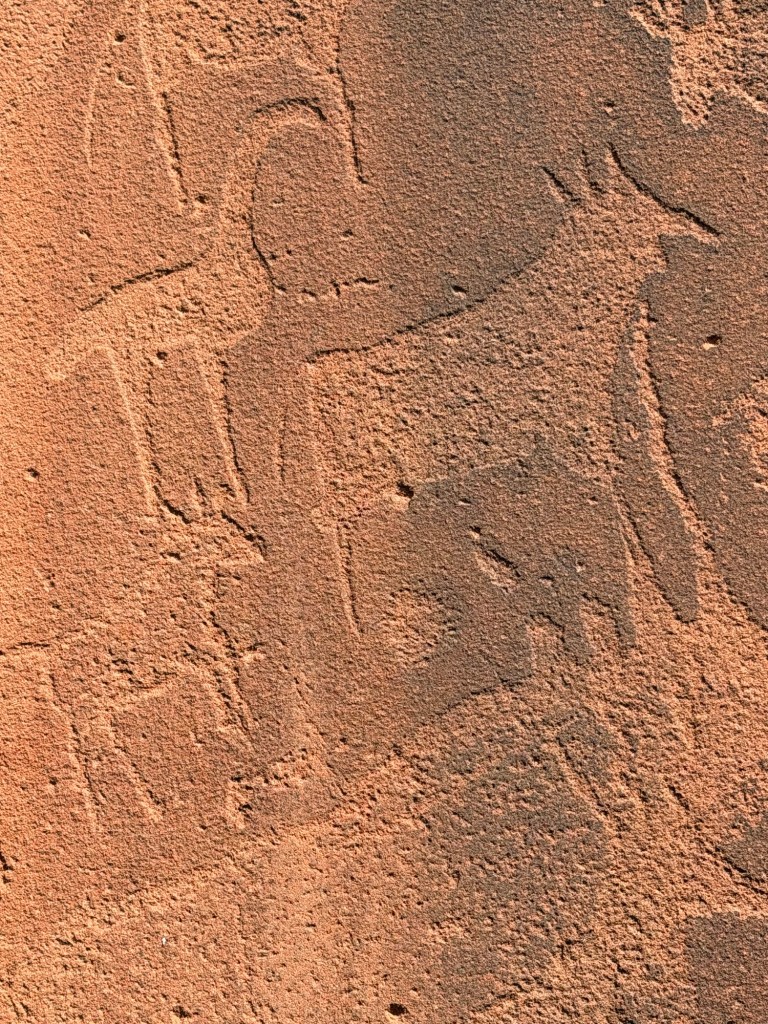
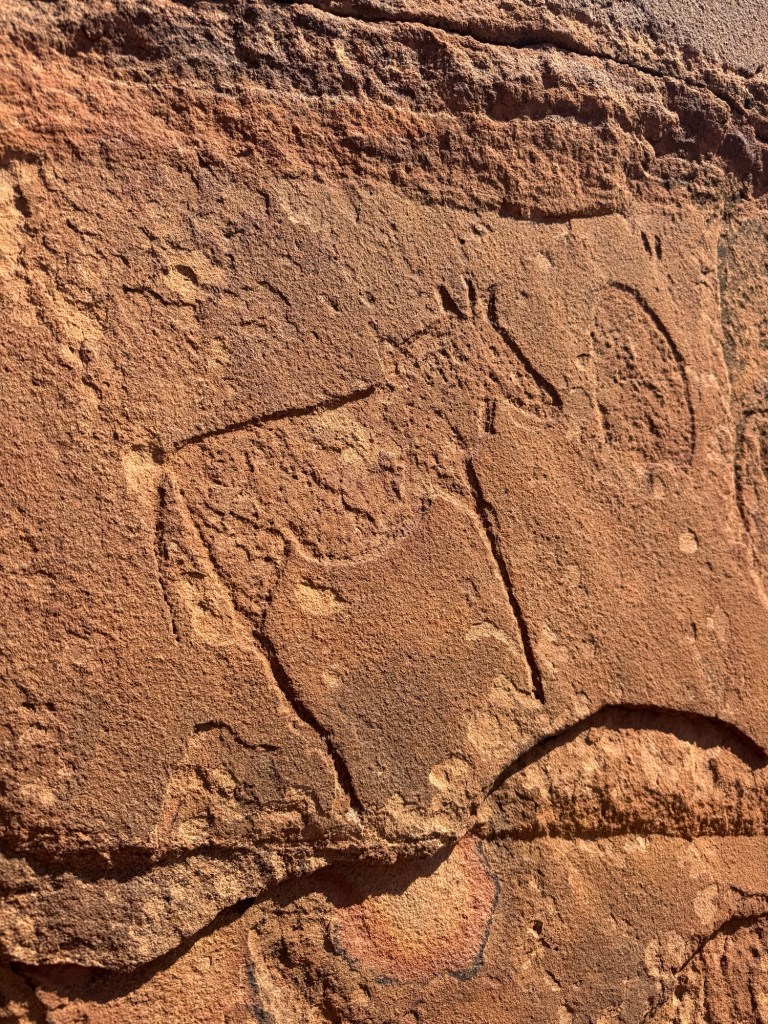
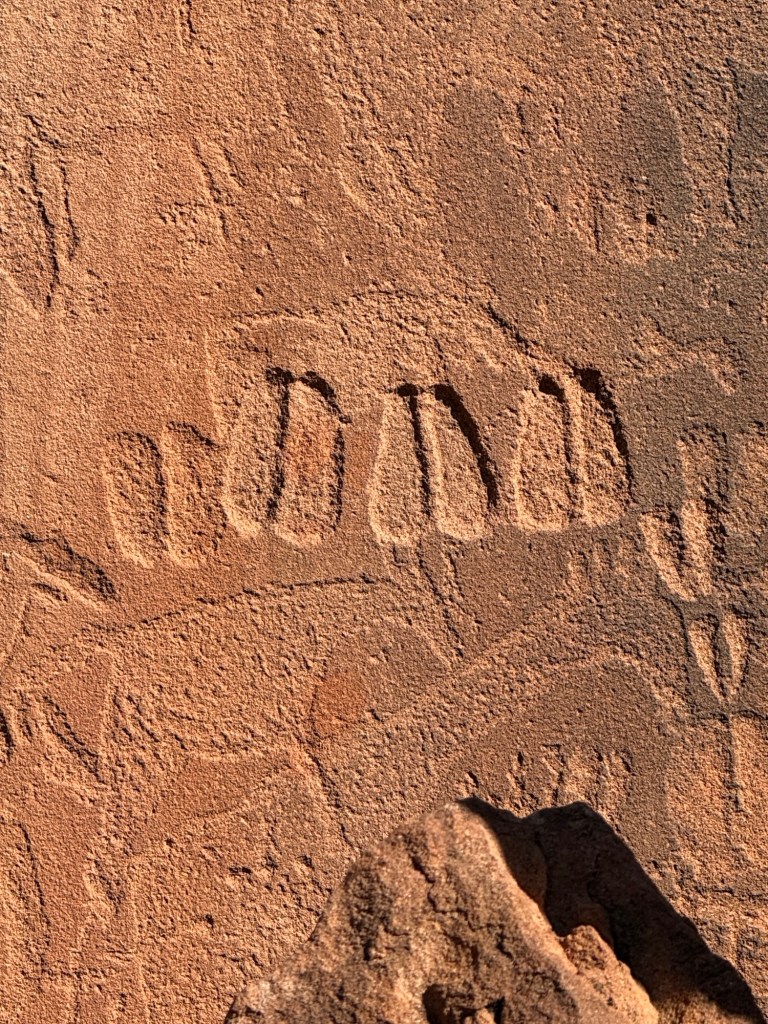
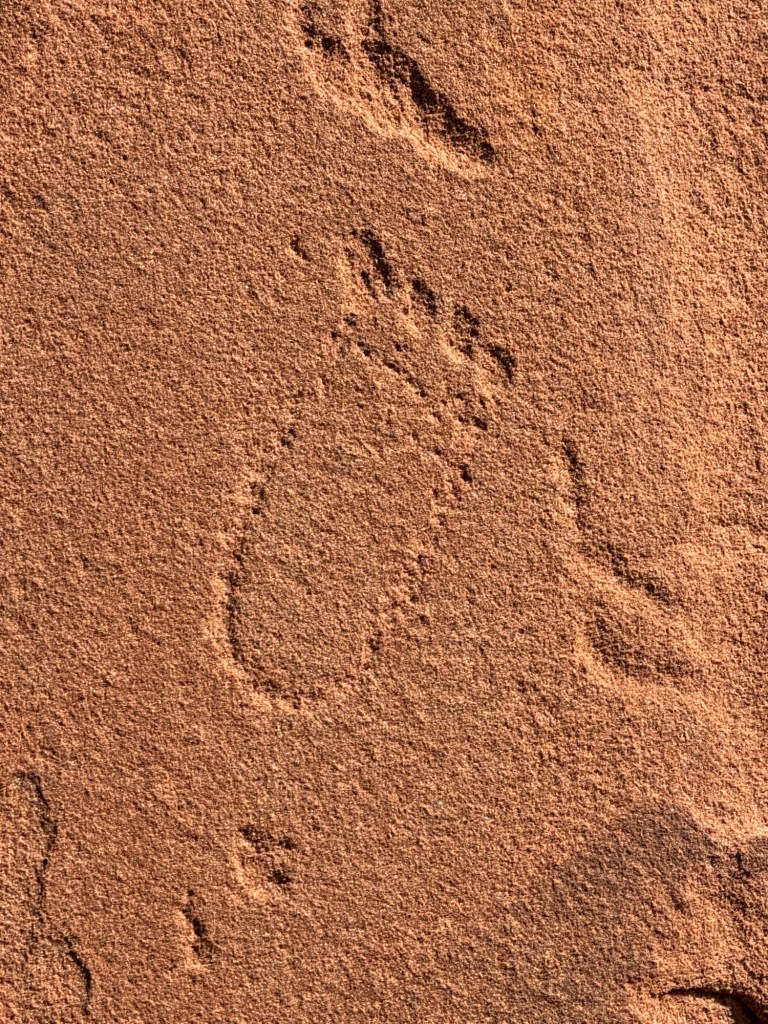
The carvings had been done between 2000 and 6000 years ago and accurately displayed zebra, rhino, kudu, giraffe, oryx, antelope and human foot signatures. No people in any form. It is believed that the purpose of the art was to communicate with other tribes or across other generations.
It was at least 2 hours to reach the first Eli because we stopped many time to enjoy the art and scenery and identify birds and plants. The road is very rough and bumpy, but we ignored the discomfort. Francois called the road an African massage.
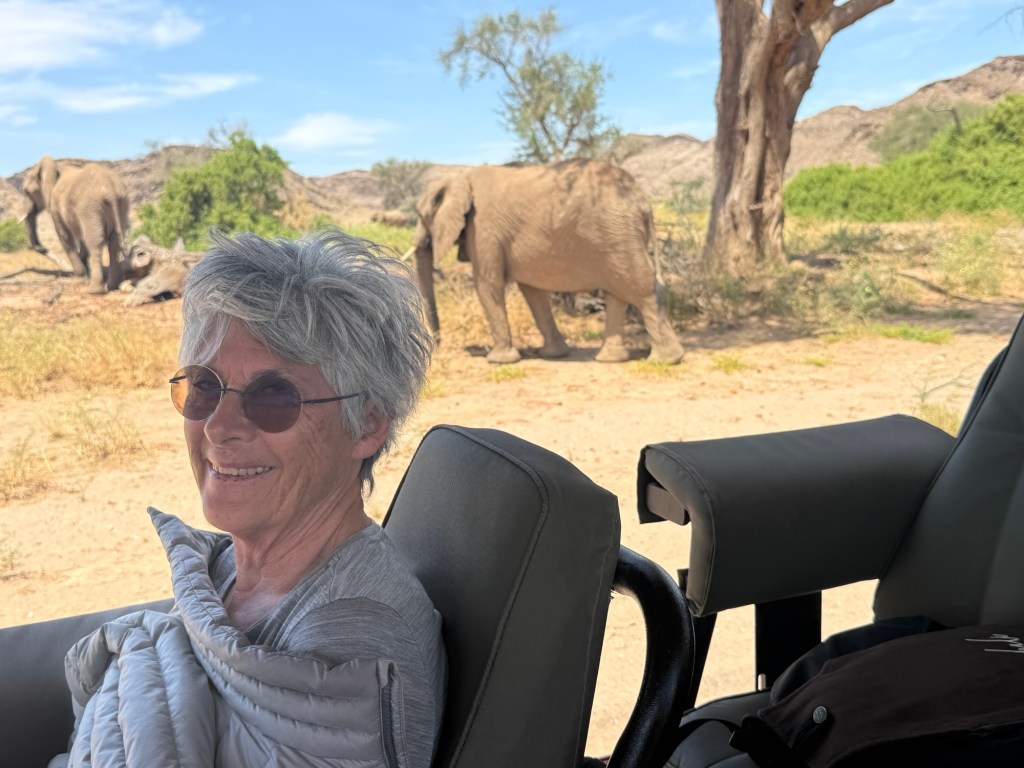
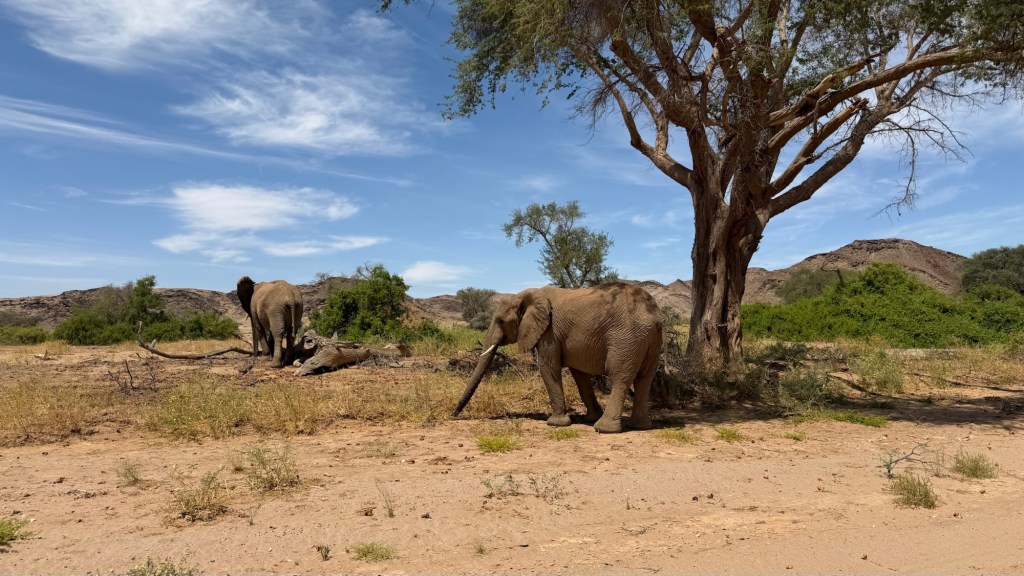
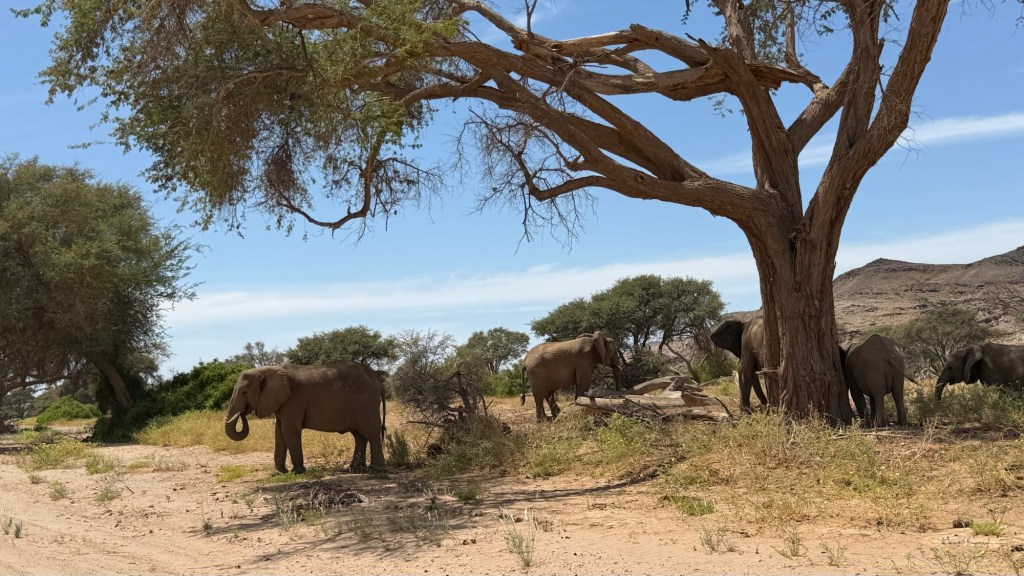
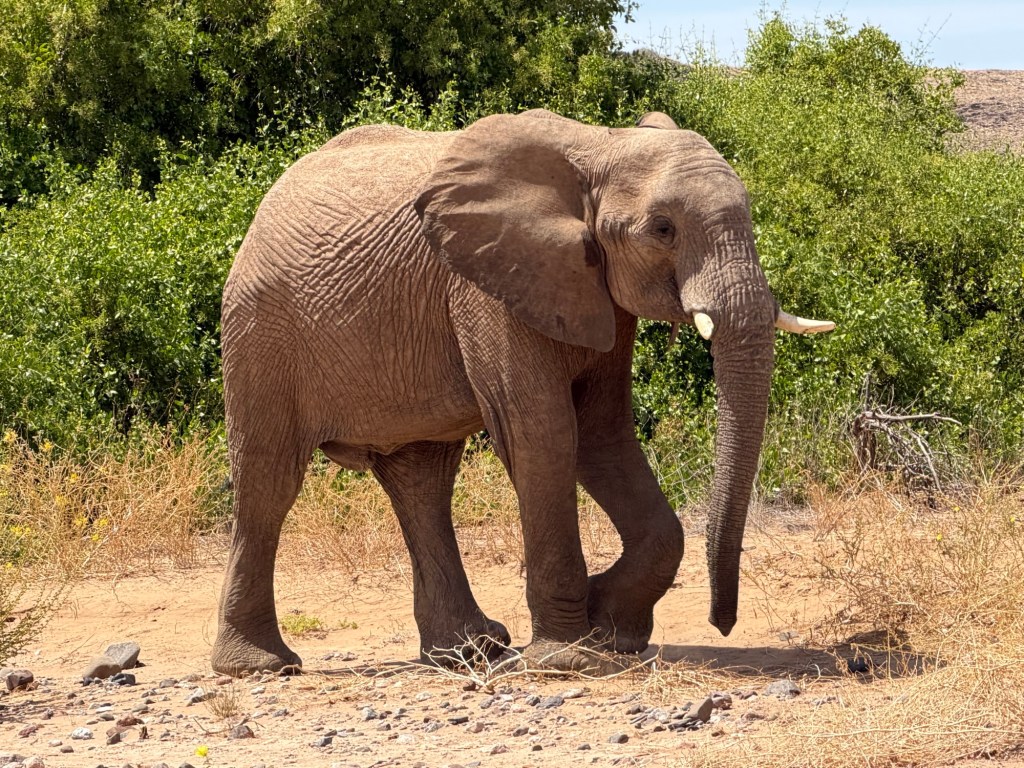
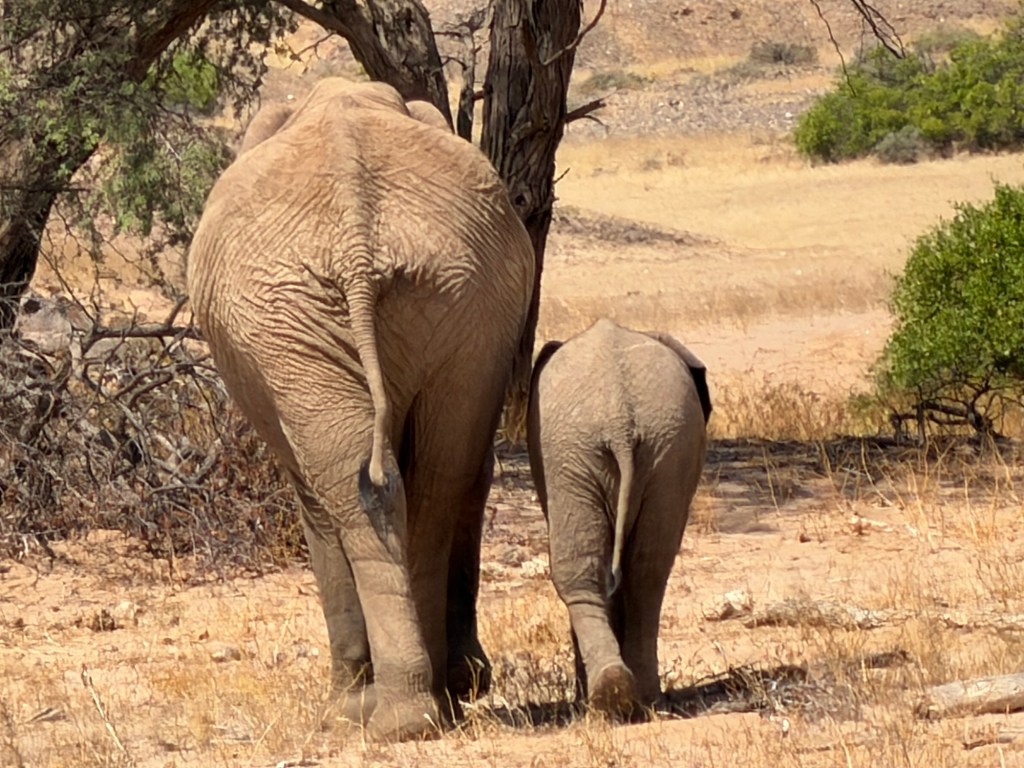
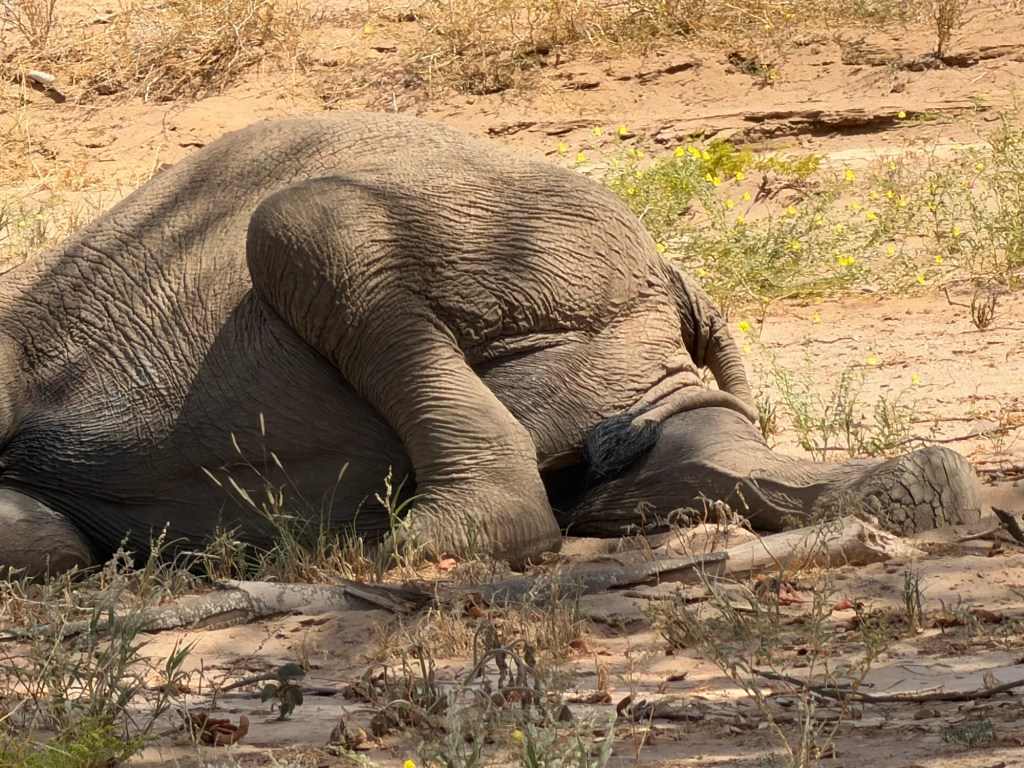
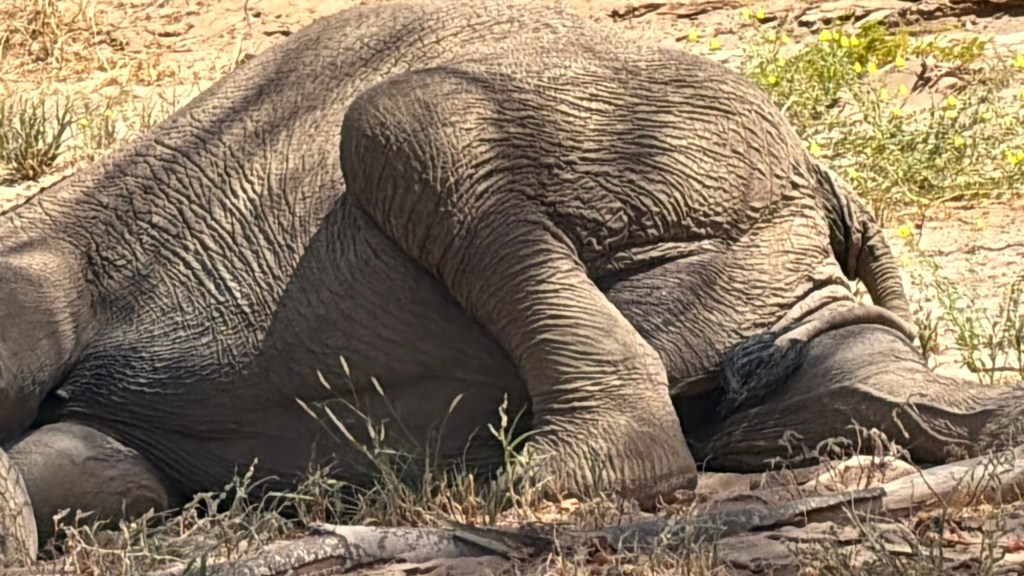
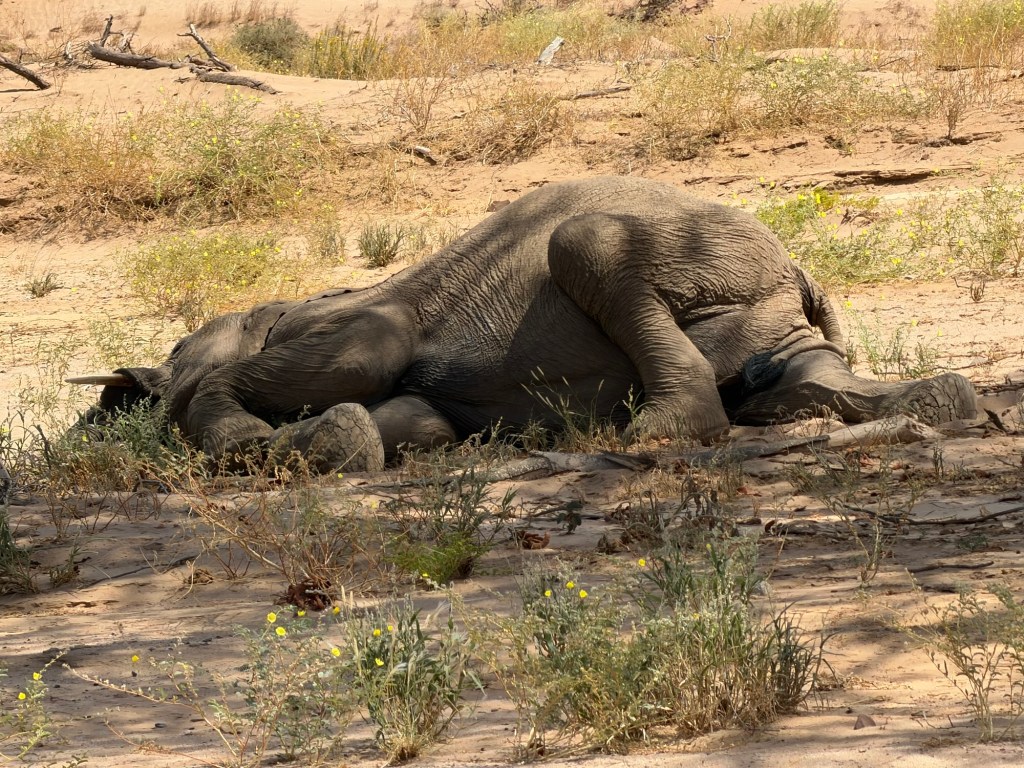
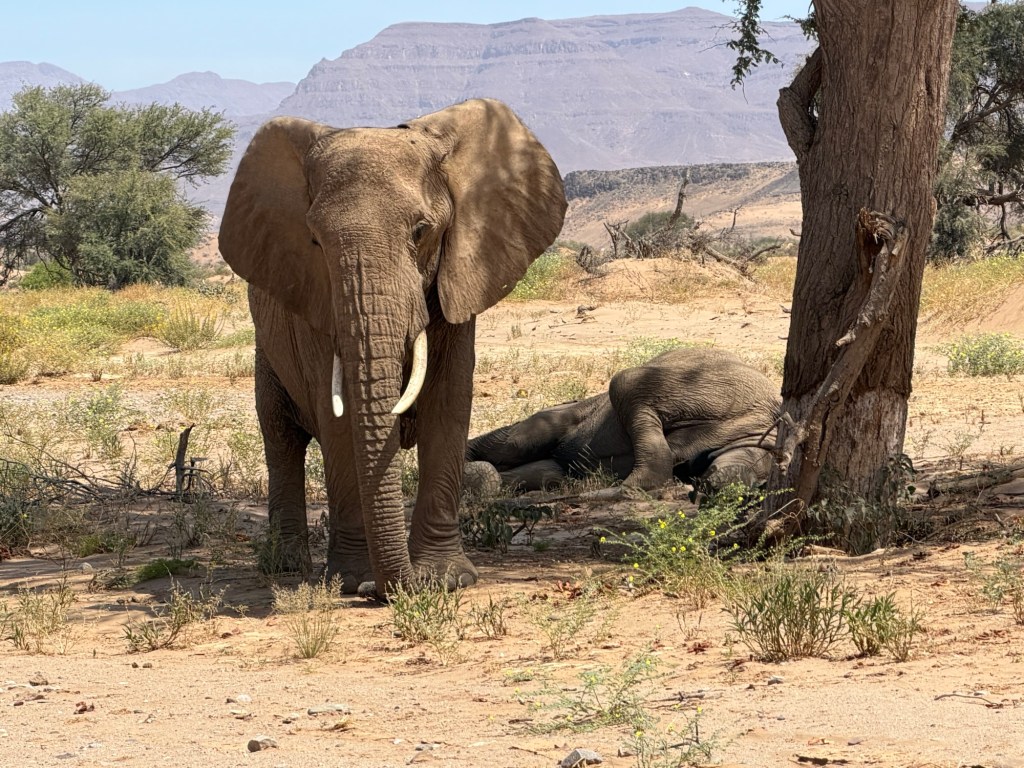
It was lovely to finally see an elephant up close after only seeing two distant elephants in the Huab river earlier on this trip. It was drinking from a pipe intended to provide water to the neighboring village.
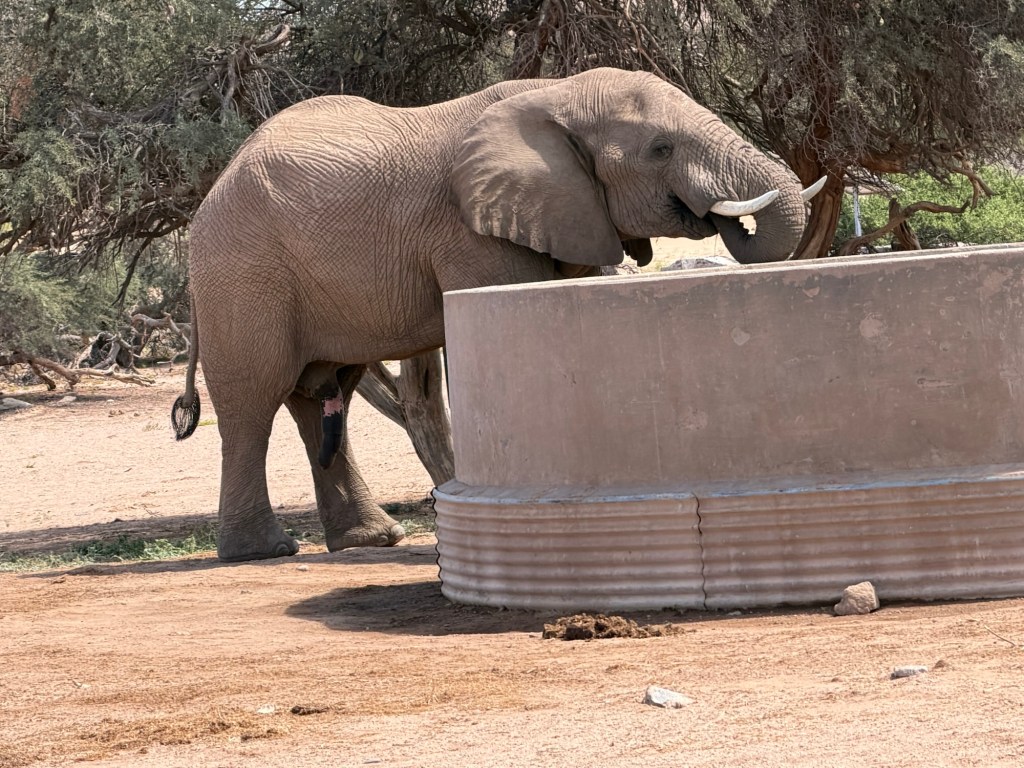
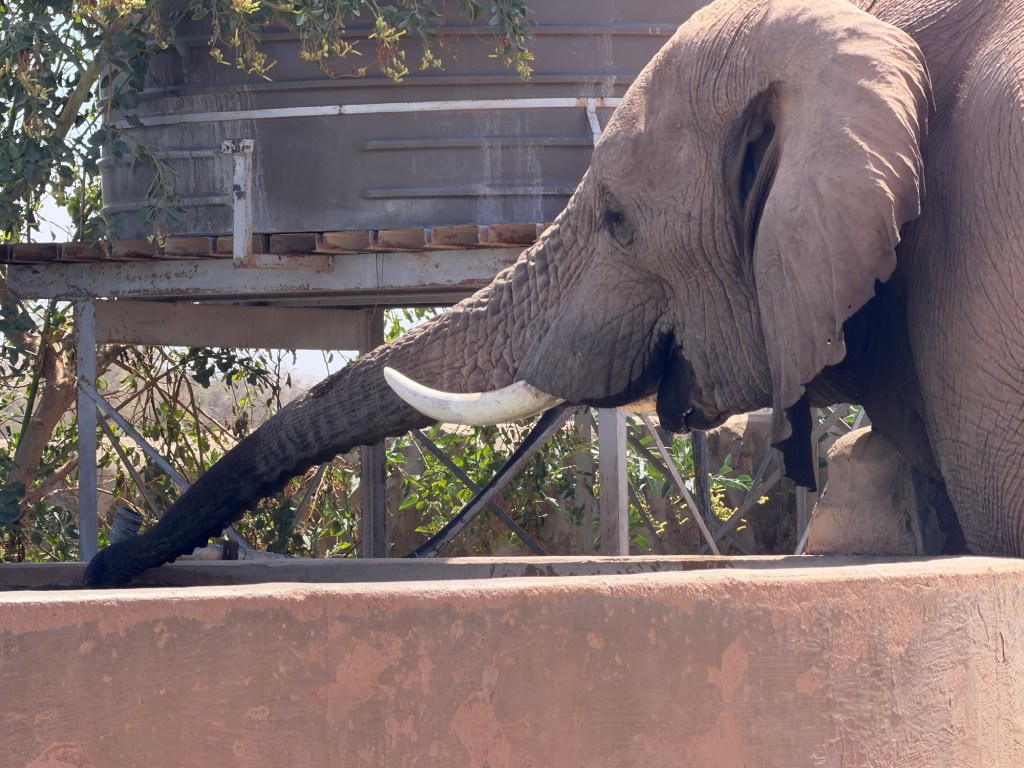
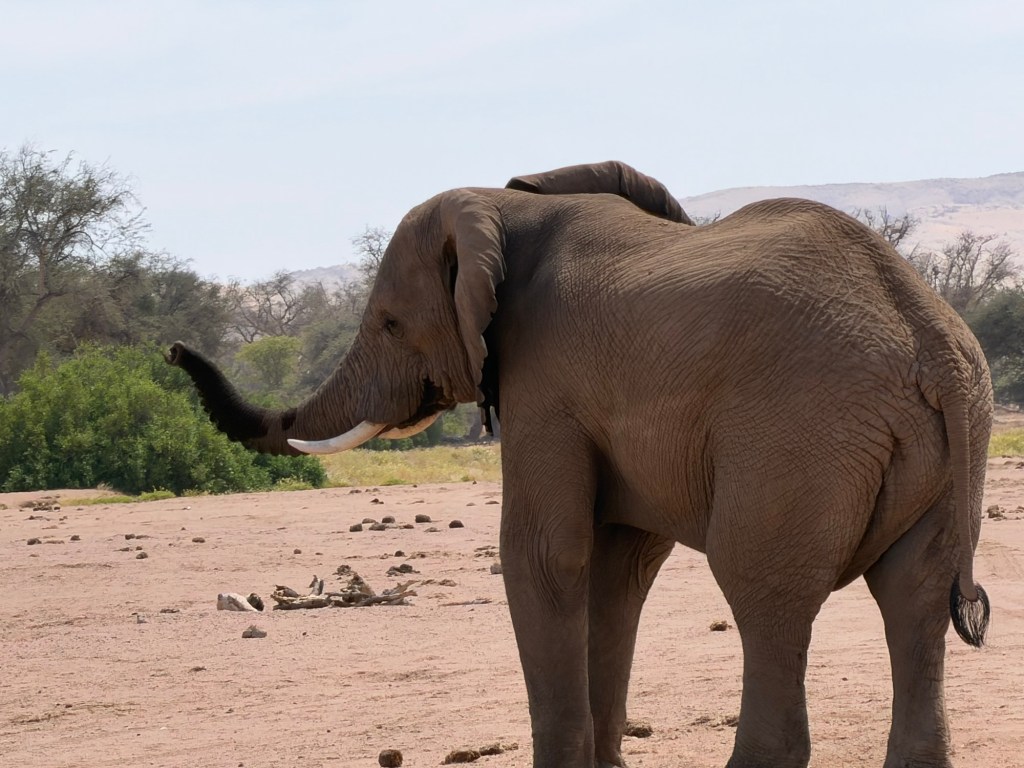
Driving further on we encountered a half dozen animals and several minutes later we saw another dozen interacting with each other. I counted 20 for sure and there may have been a couple more. The group included 2 babies and several young animals as well as several adults.
After watching them a half hour or so, we headed back o the lodge. This return drive took 2 full hours. After a late lunch, we did find time to have a dip in the pool to cool off. We cleaned up for dinner but stopped for sundowners first, where we had a wonderful conversation with a lodge staff member, Jake’s, a member of the Nama tribe, who we learned will be getting married in November.
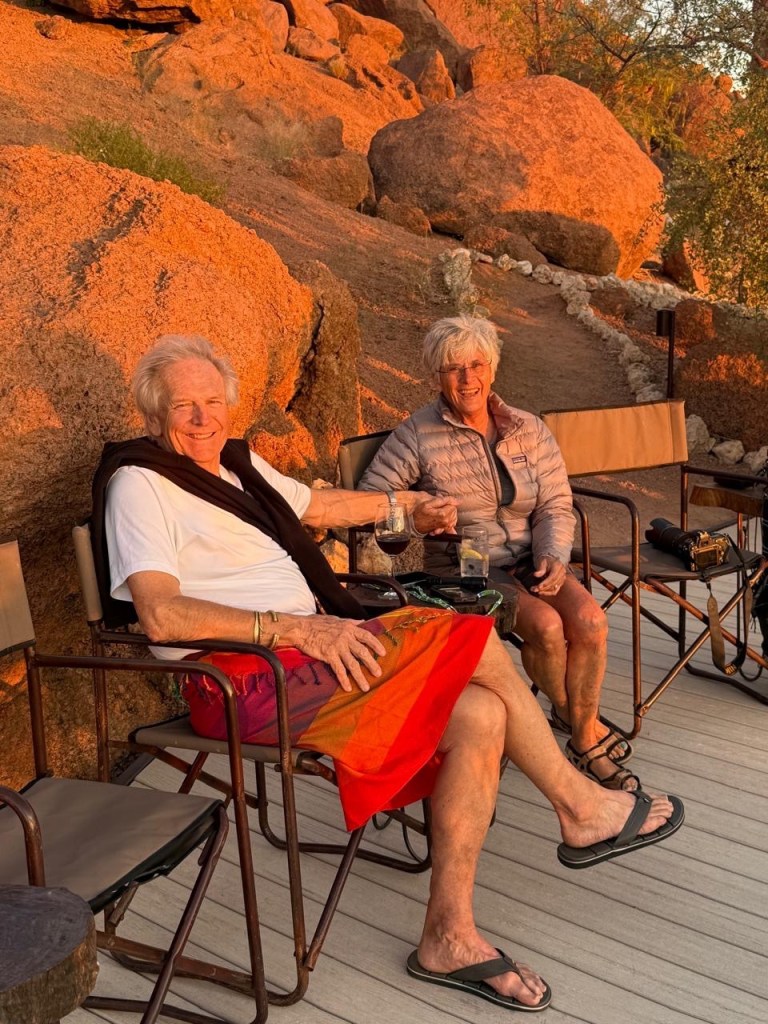
We properly quizzed him for details of his bride and also learned he spoke a language with 4 clicks, which he willingly shared with us in the form of a story about his family. He told us the clicks give meaning to what is being said. Then it was time for another late dinner, after which we headed for bed. The sky was partially overcast so there were fewer stars, but we enjoyed sleeping outdoors anyway. No chance of rain.
Sunday, March 22, 2026
Another 7am departure. This time we are hoping to find rhino. We have been told there are only black rhino in the national conservancy. Francois has been in touch with the rhino trackers and knows where to find them. It is another long drive in a different direction.
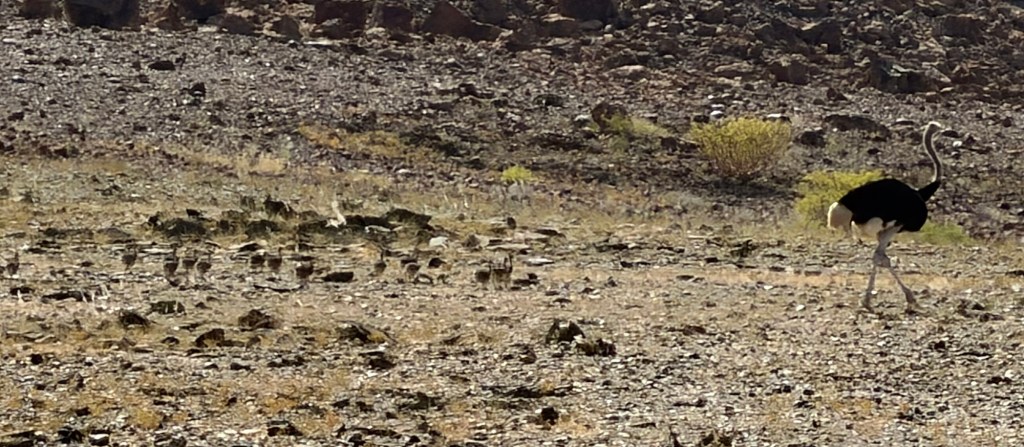
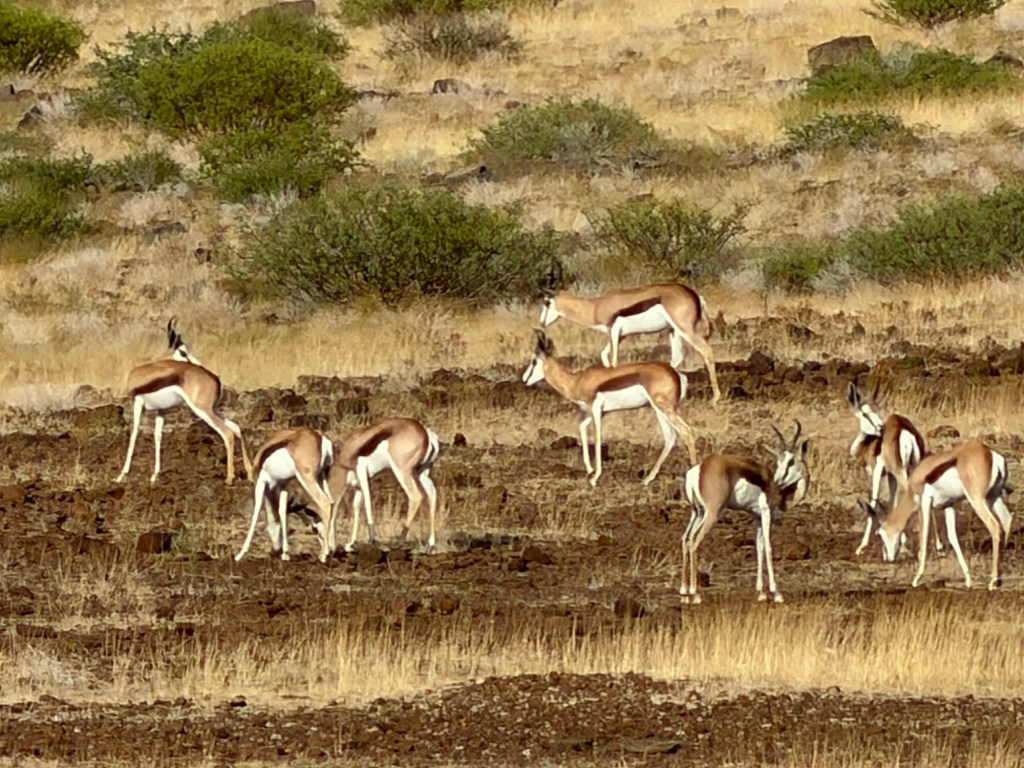
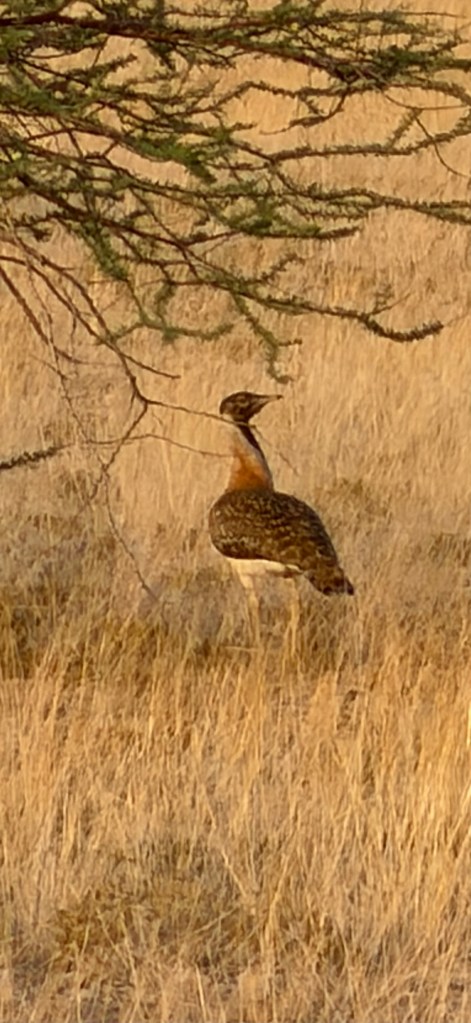
Along the way we spotted a few dozen Springbok, a troop of ostriches, a Ludwig’s bustard, several other birds and numerous plants. The most memorable was the Welwitchia Mirabilis with each plant being one sex or the other as earlier described. The most interesting tree is the Mopane. A hardwood tree with leaves that have a butterfly-like shape.
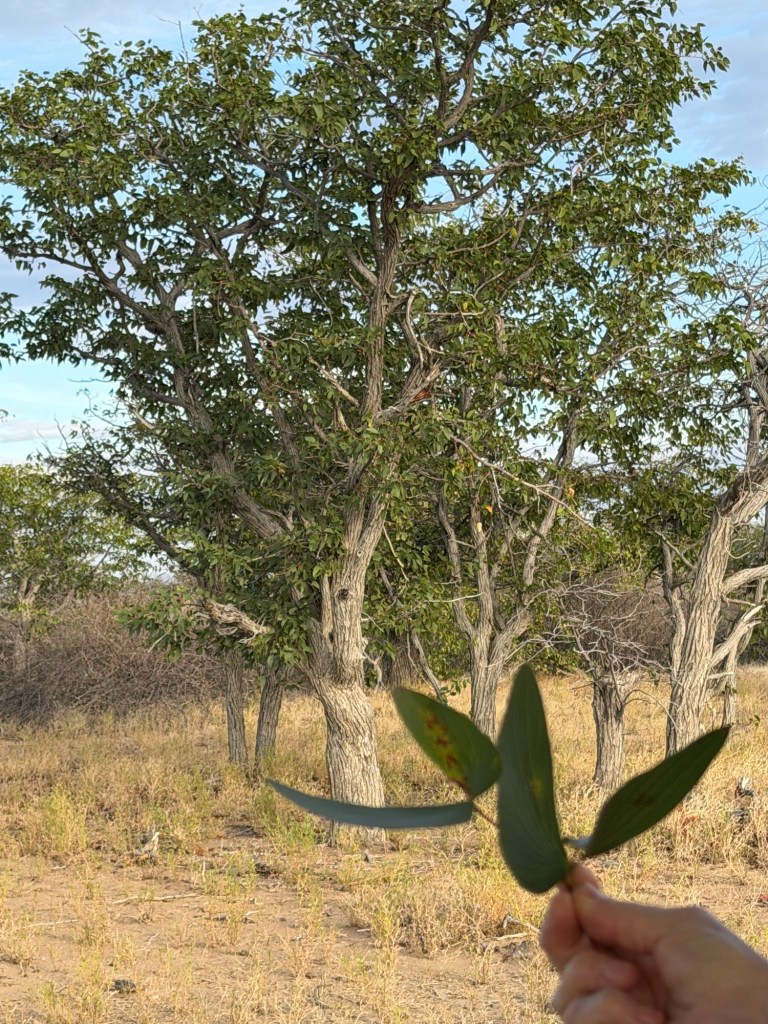
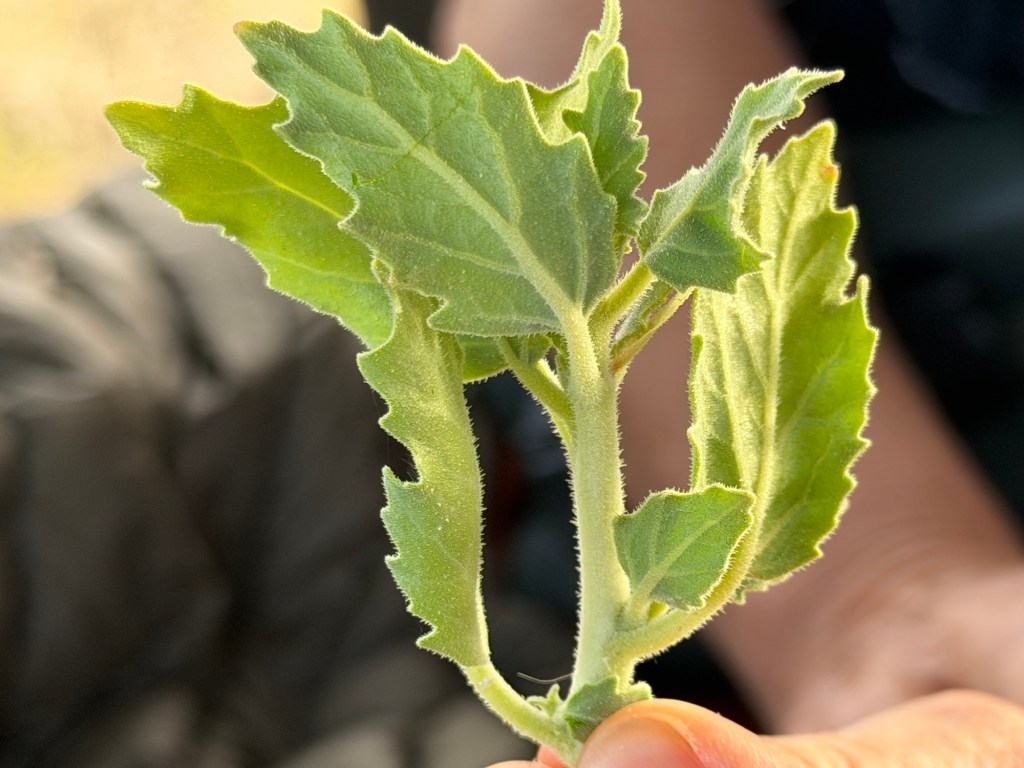
This tree is popular with elephants, and a grove of them indicates there is an aquifer underneath. Francois pointed out a Sandpaper bush with very sticky leaves.
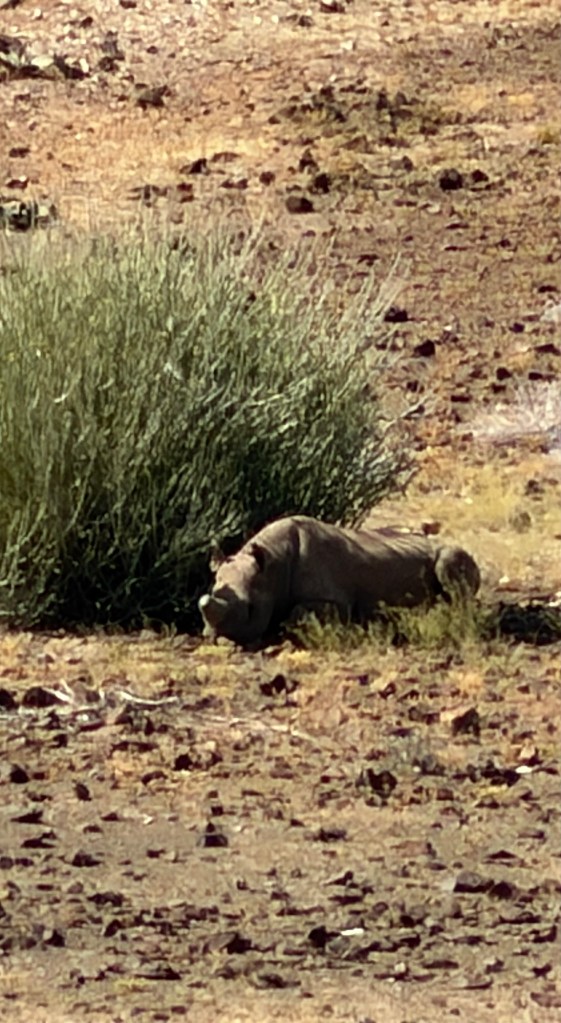
Finally we met up with the rhino trackers and walked a short distance from where we could see a black rhino sleeping in the shade of a bush. Not very exciting, but the best the trackers could do. Ten minutes of a sleeping 2.8 ton animal was adequate for us.
Returning to the lodge we were met with another delicious, tea service lunch served by Esther, a Damara tribe member, who described in her click language what it was that we were eating.
It was charming to hear her tongue, despite not knowing what she was saying. It was melodious and fascinating to listen to the use of the clicks that give meaning to what she was telling us.
Tuesday, 24th of March, 2026
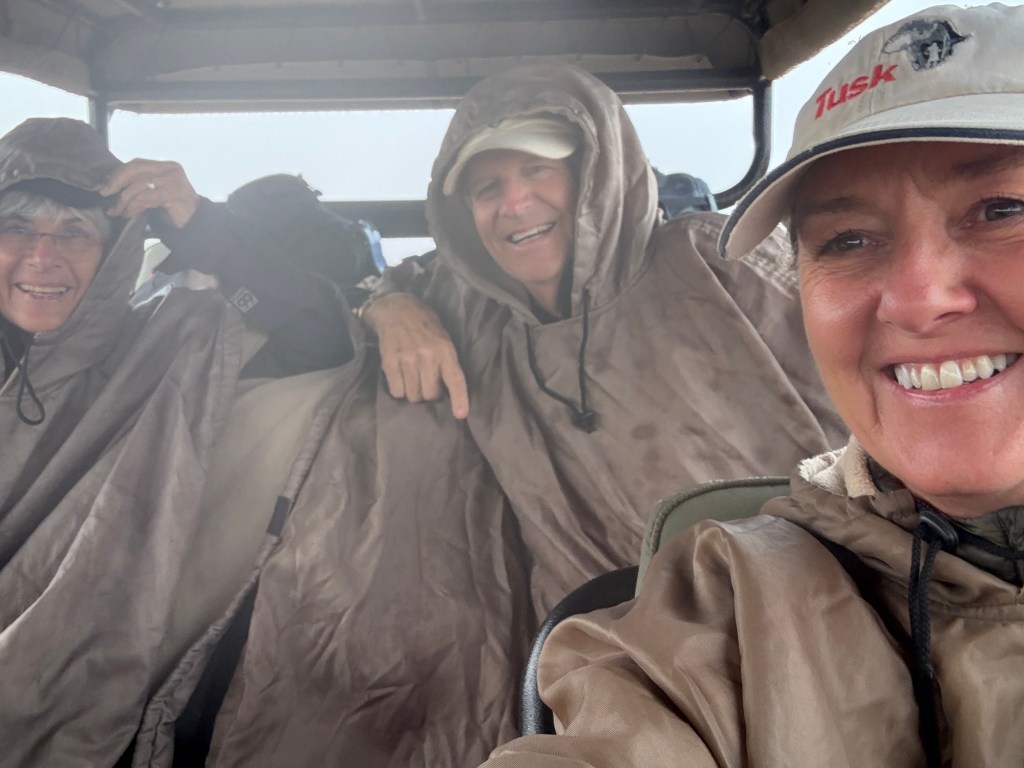
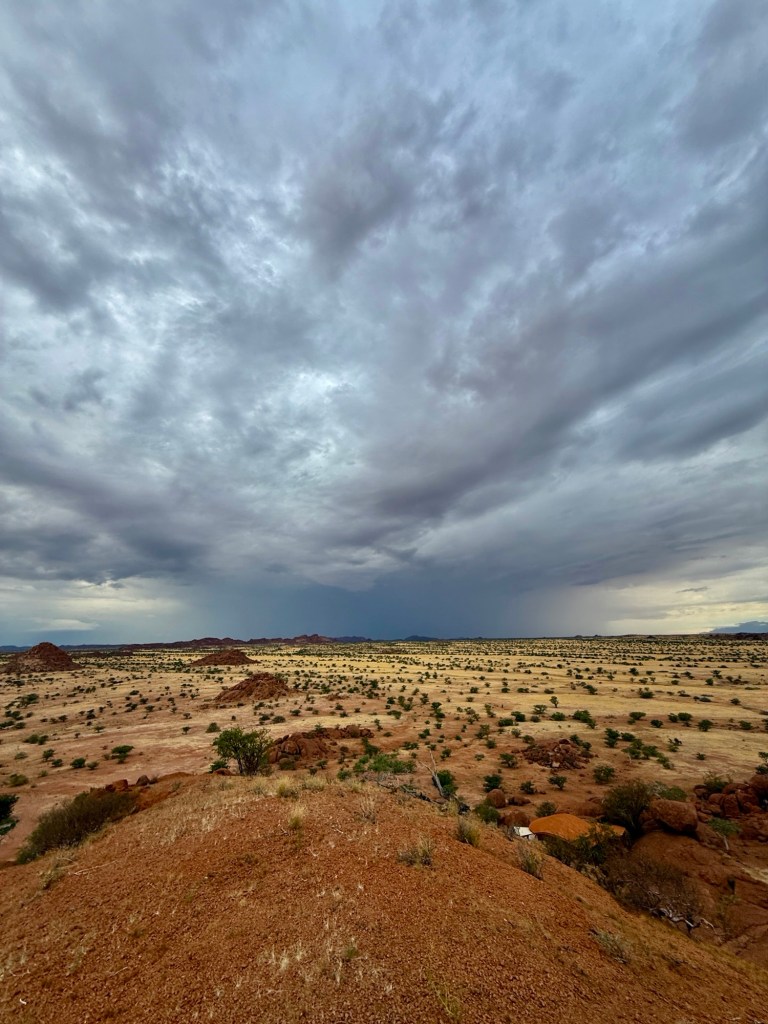
Rain, Lots of rain. Drive to airport. Plane cannot get off the ground. Stop flight. Wait for rain to let up. It doesn’t. Pilot flys away in light plane. We drive an hour to another airstrip where the pilot has been waiting for us. This time there is less rain, a firm surface and longer runway. We were off easily. Relief.
We head for the Skeleton Coast over miles and miles of sand.


 Adventures with Julia