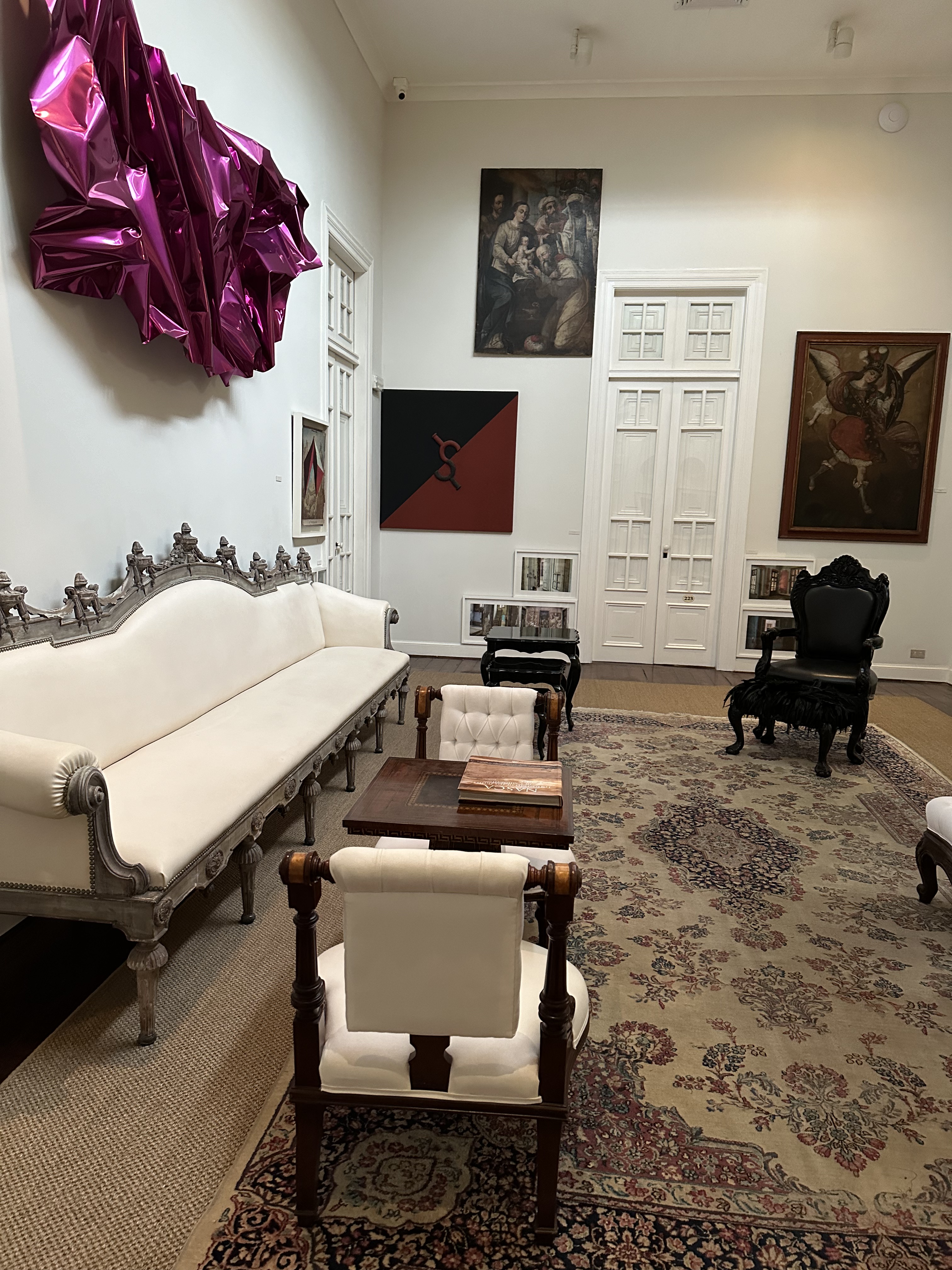
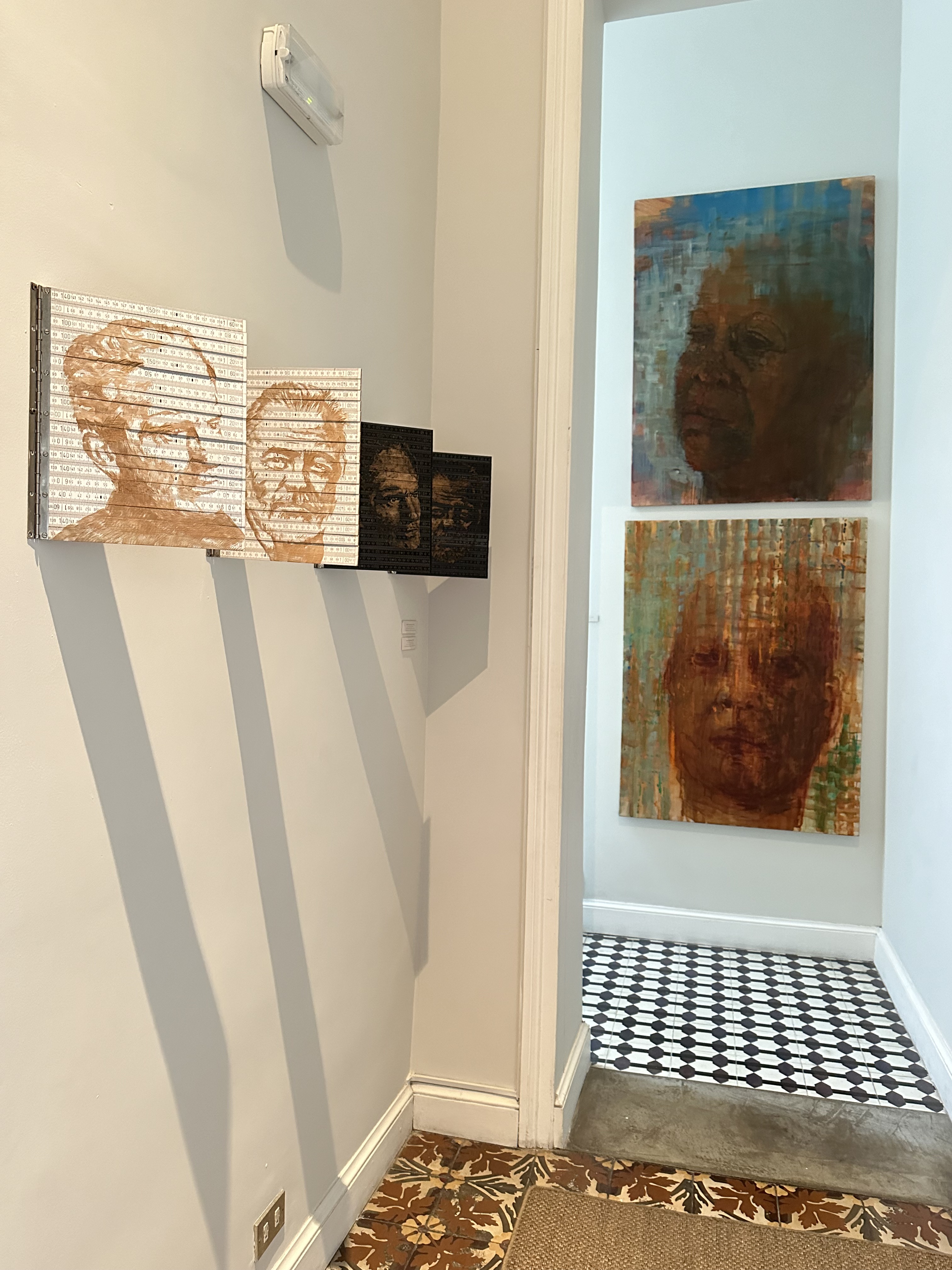
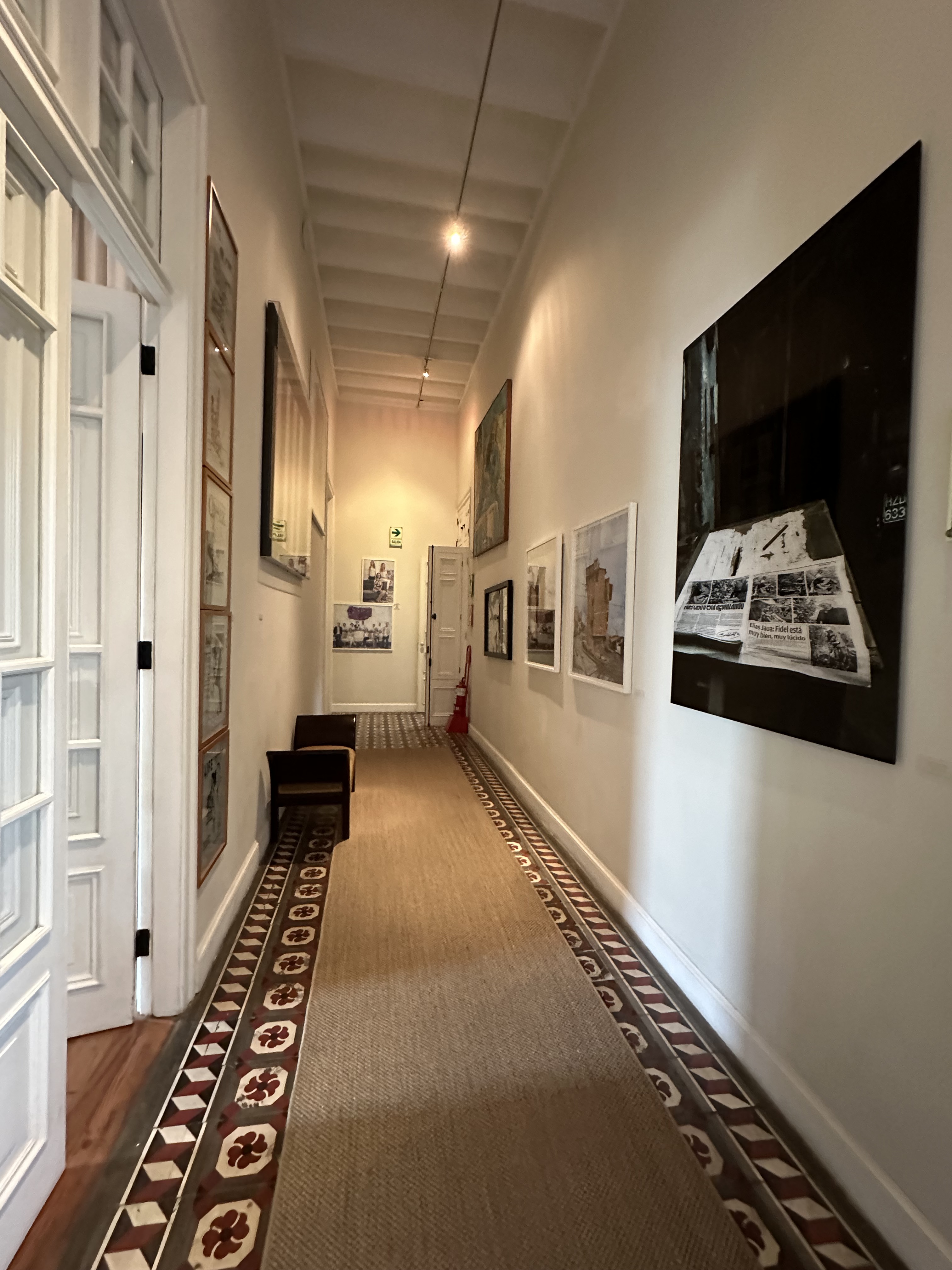
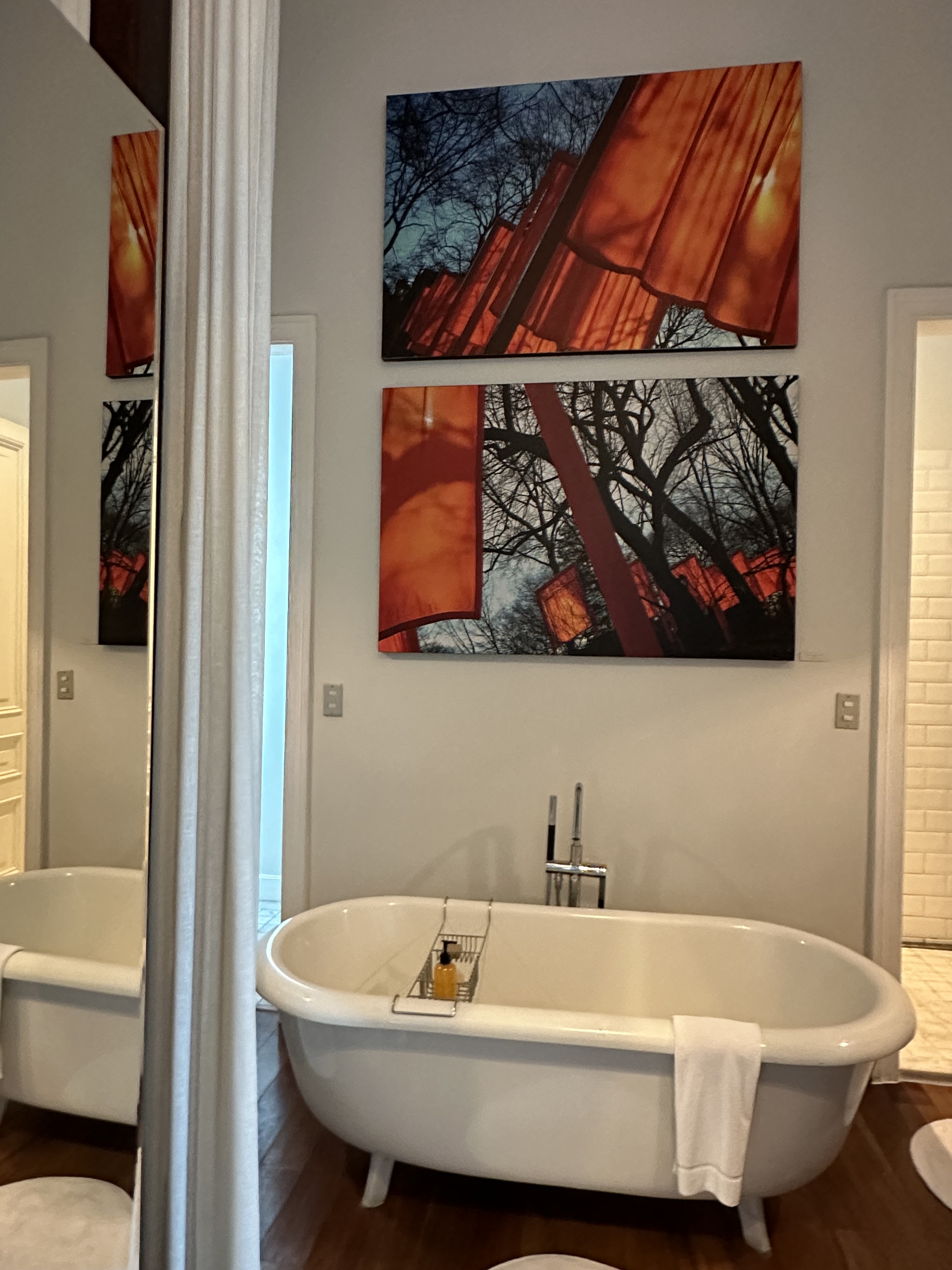
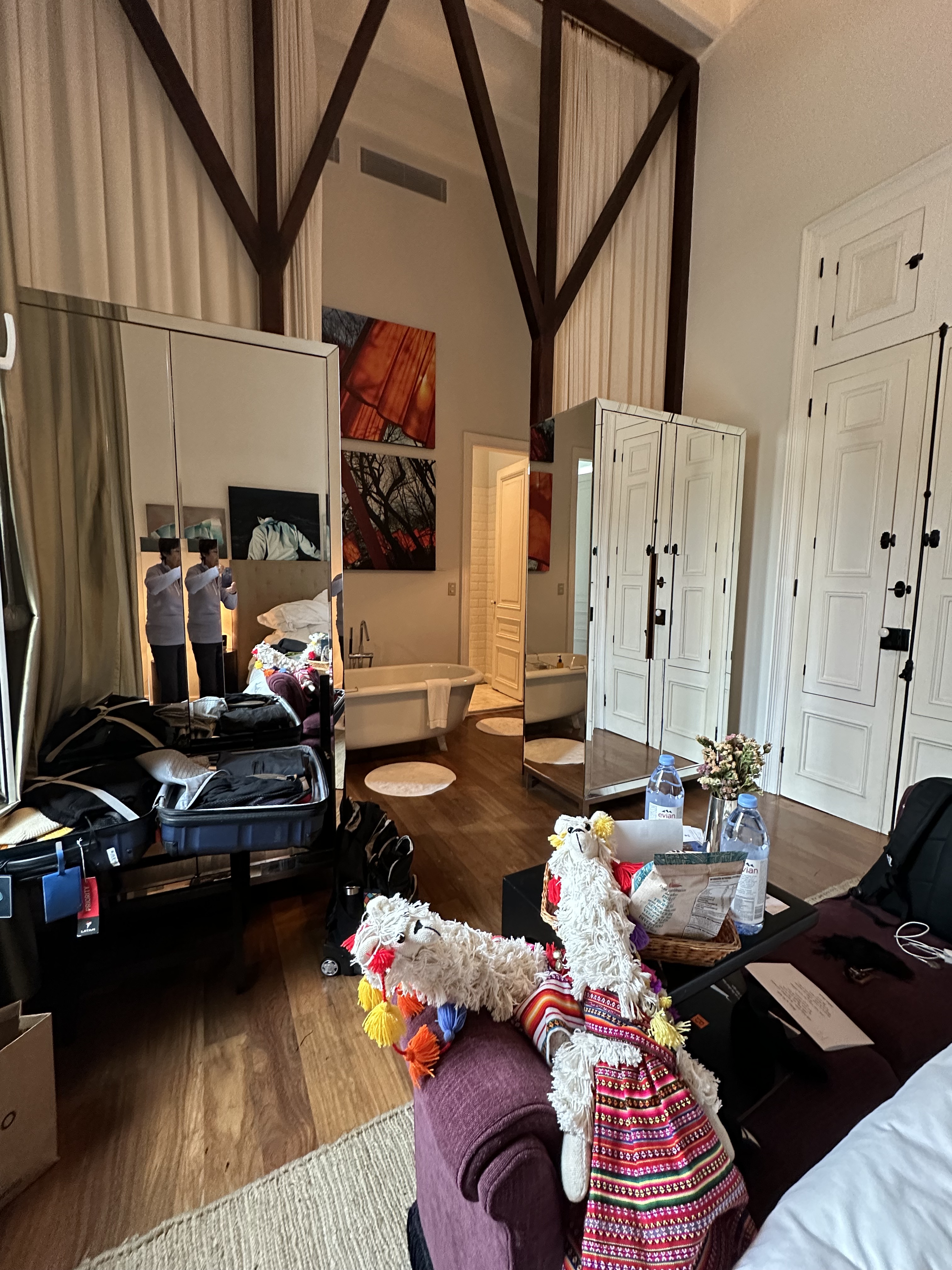
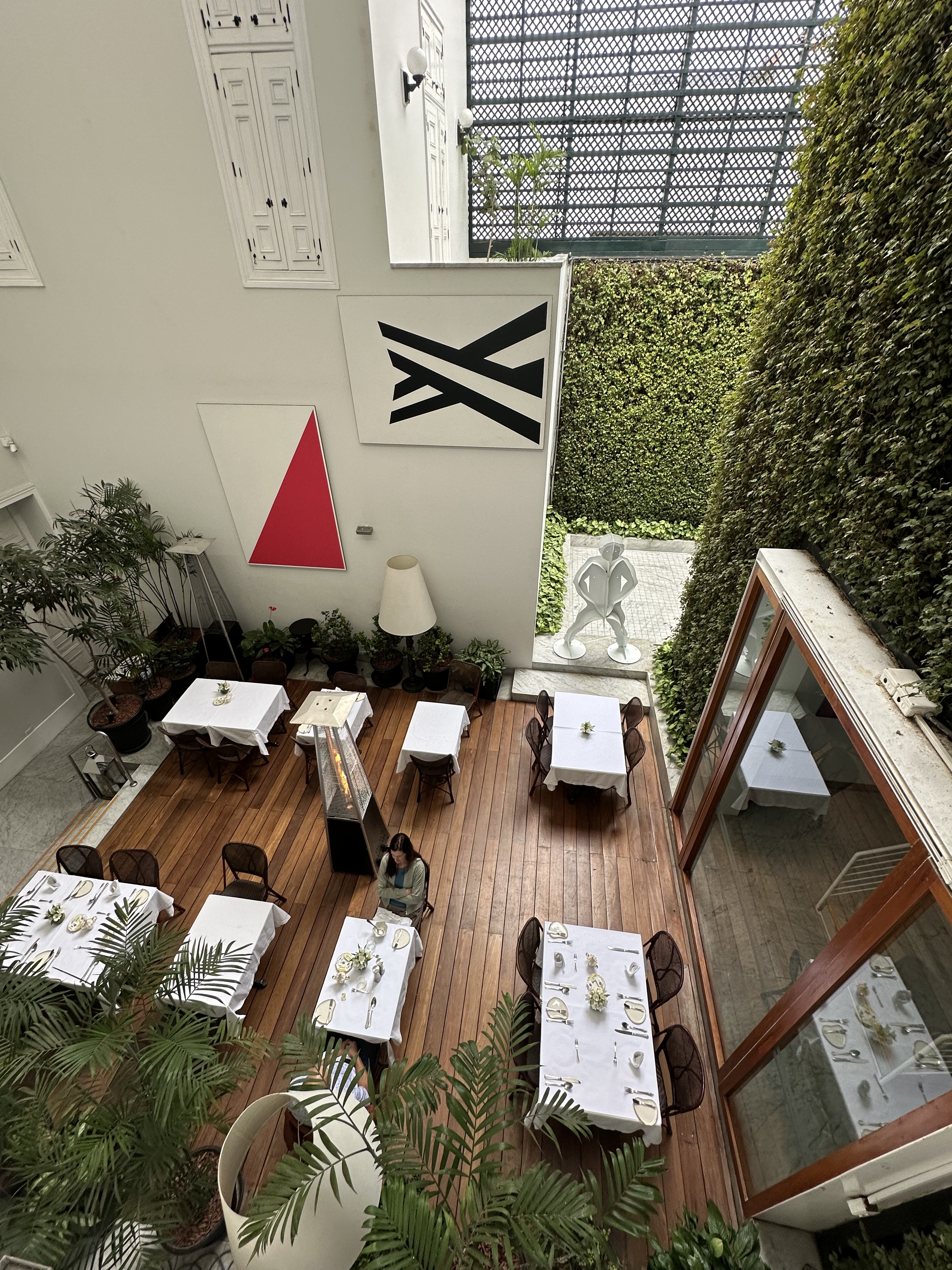
Had a leisurely morning at the Hotel B. Wandered around looking at the art, which I found curious, if uninspiring. The lower left image is our room. It was tall, but small. The lower right image is the breakfast room, as seen from the second floor level.
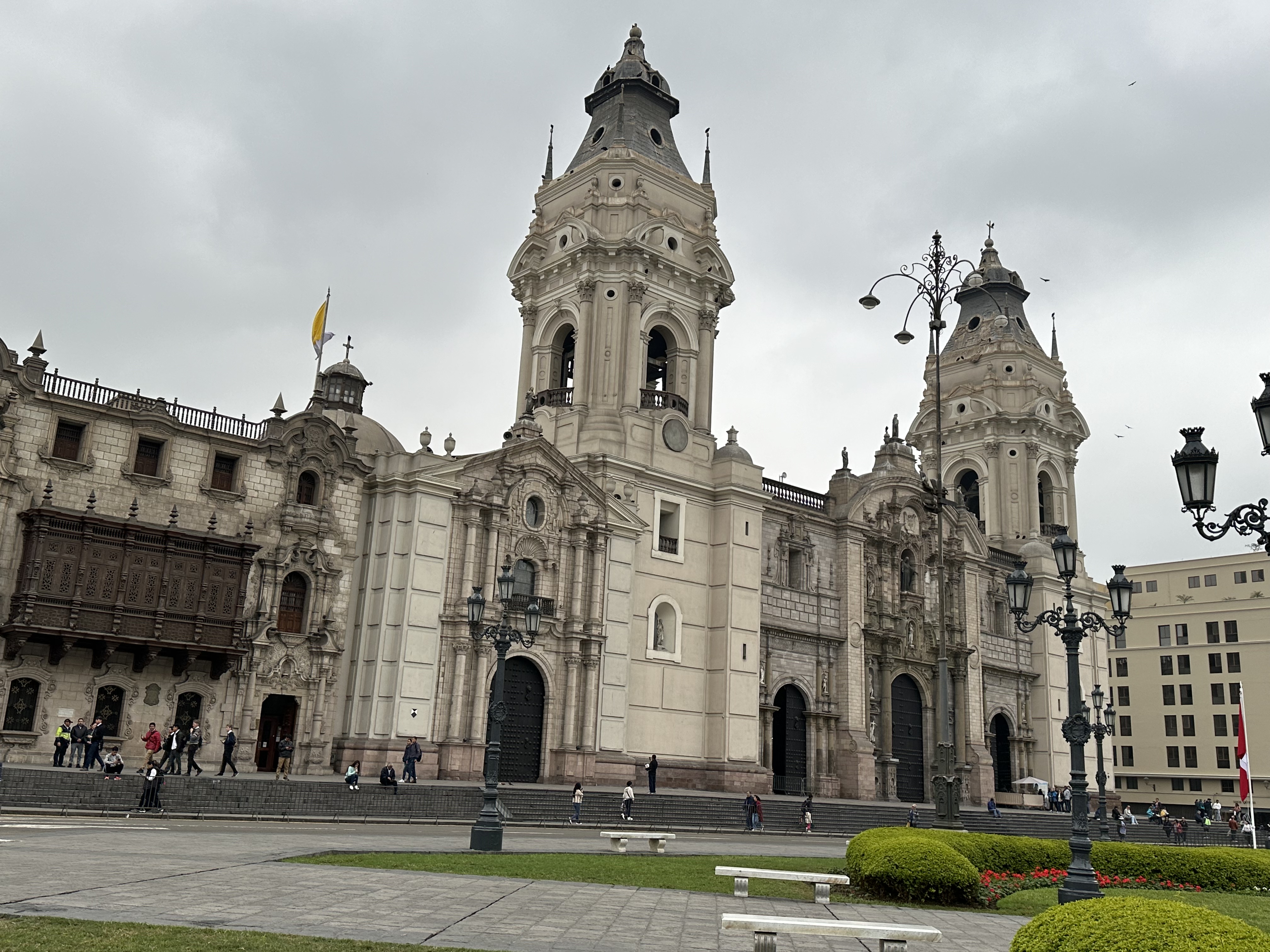
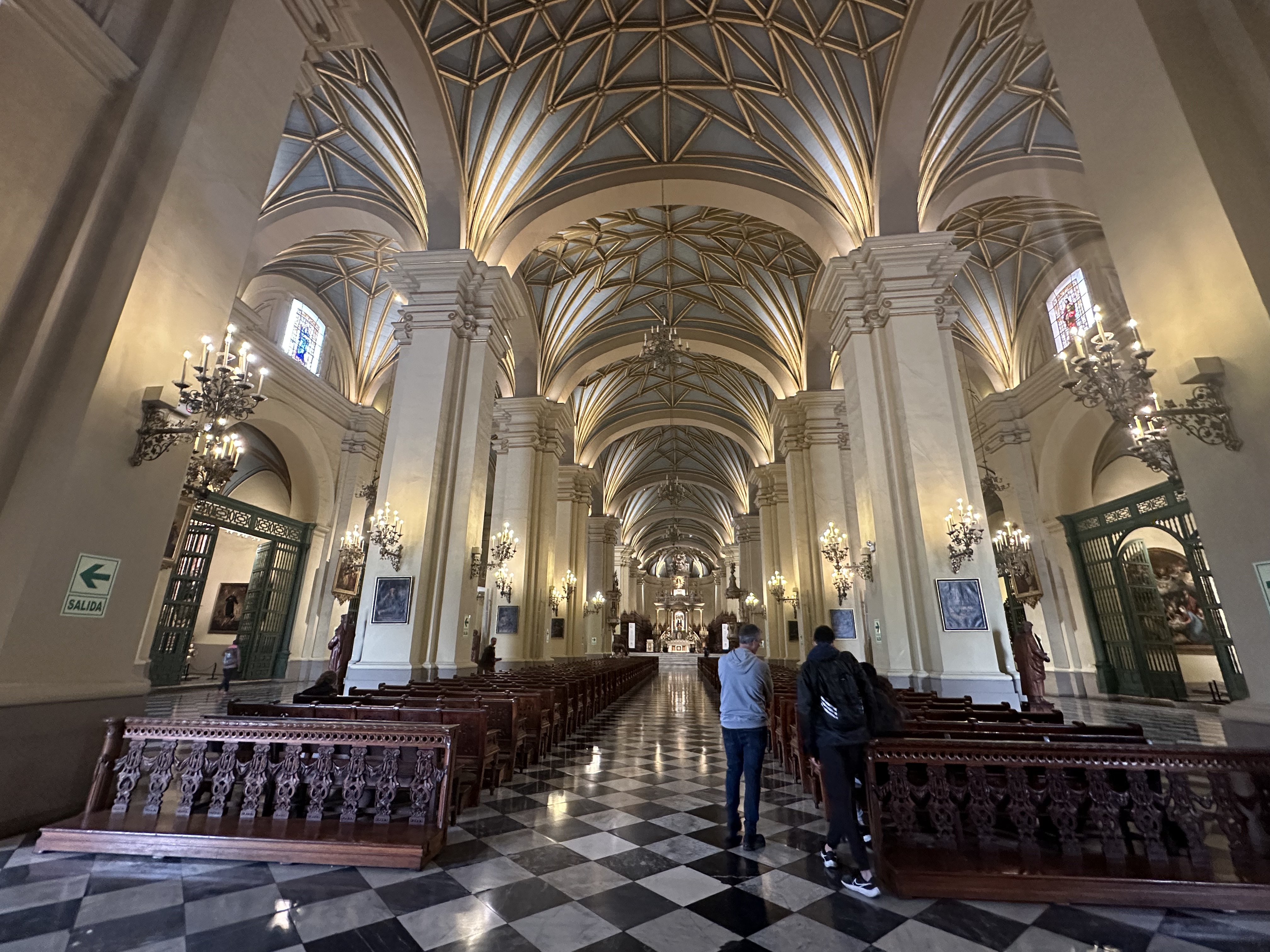
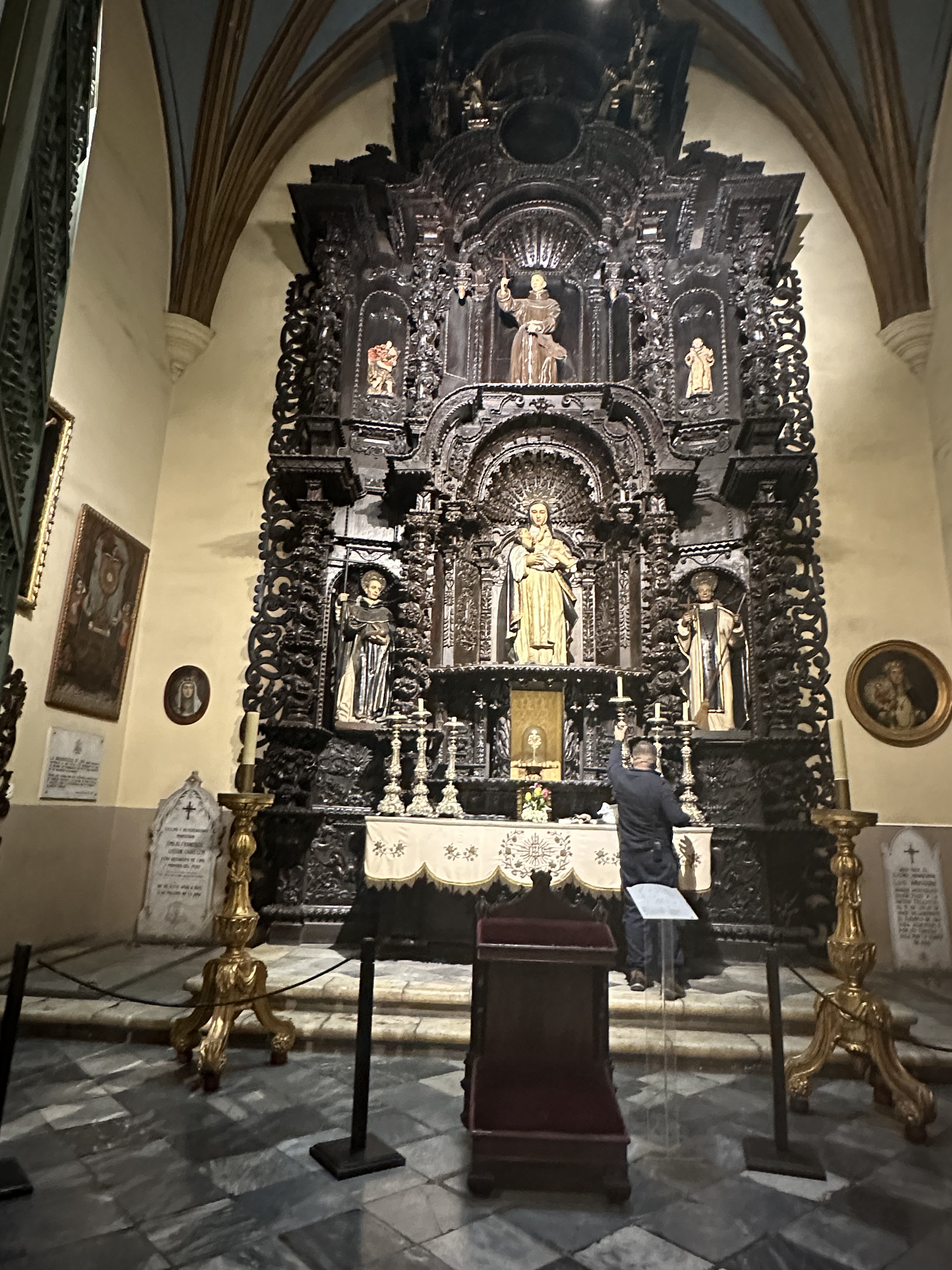
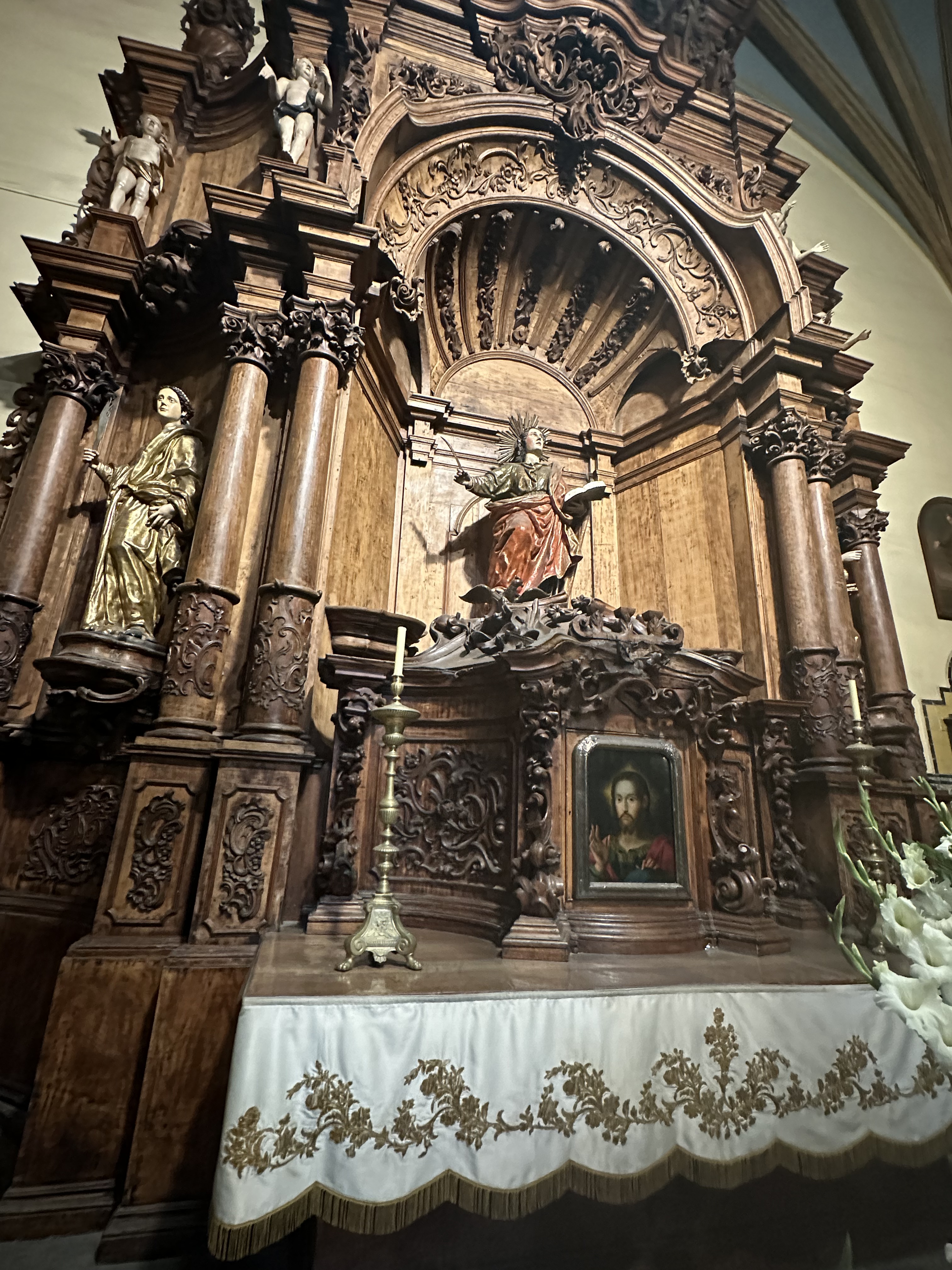
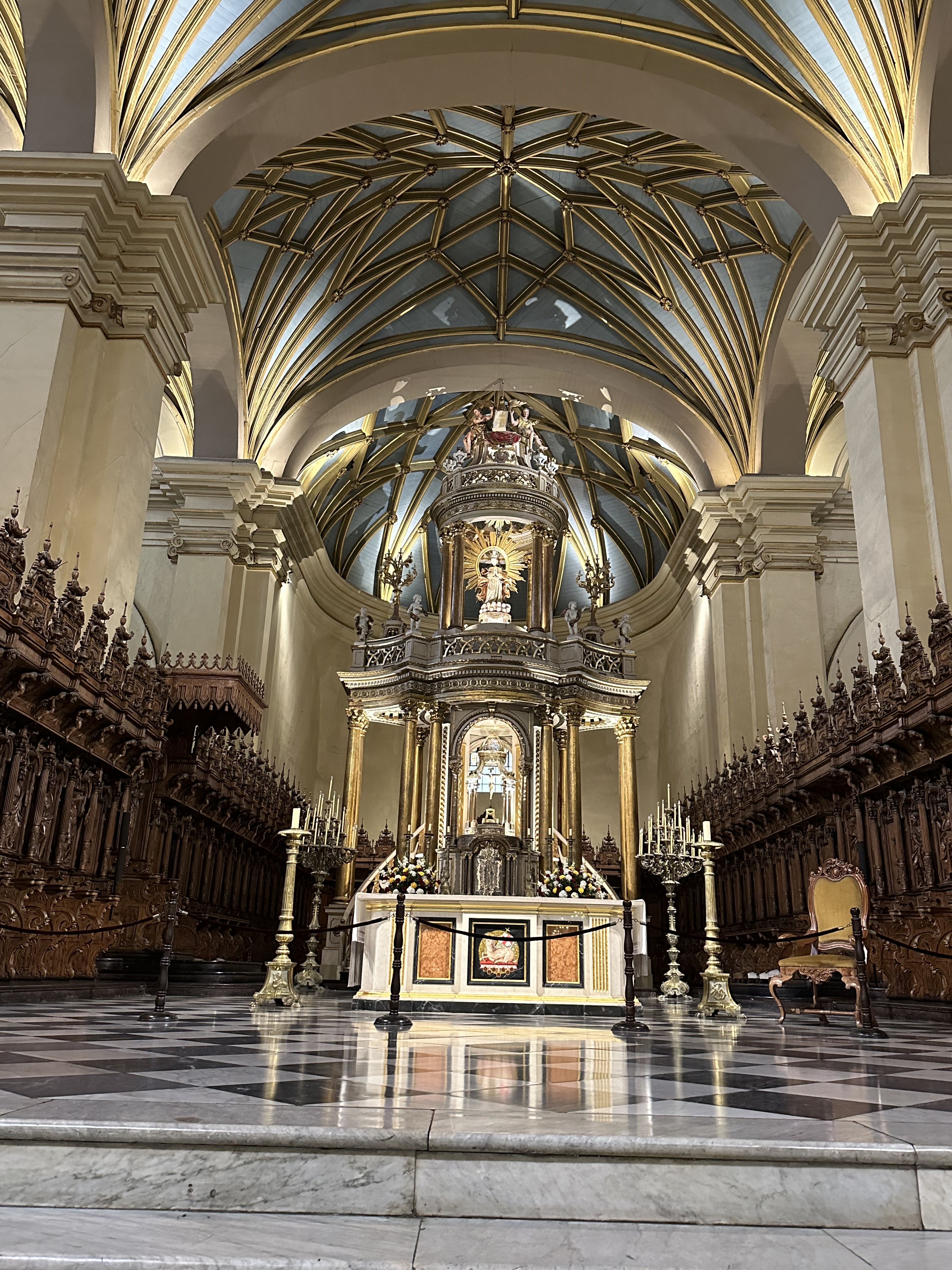
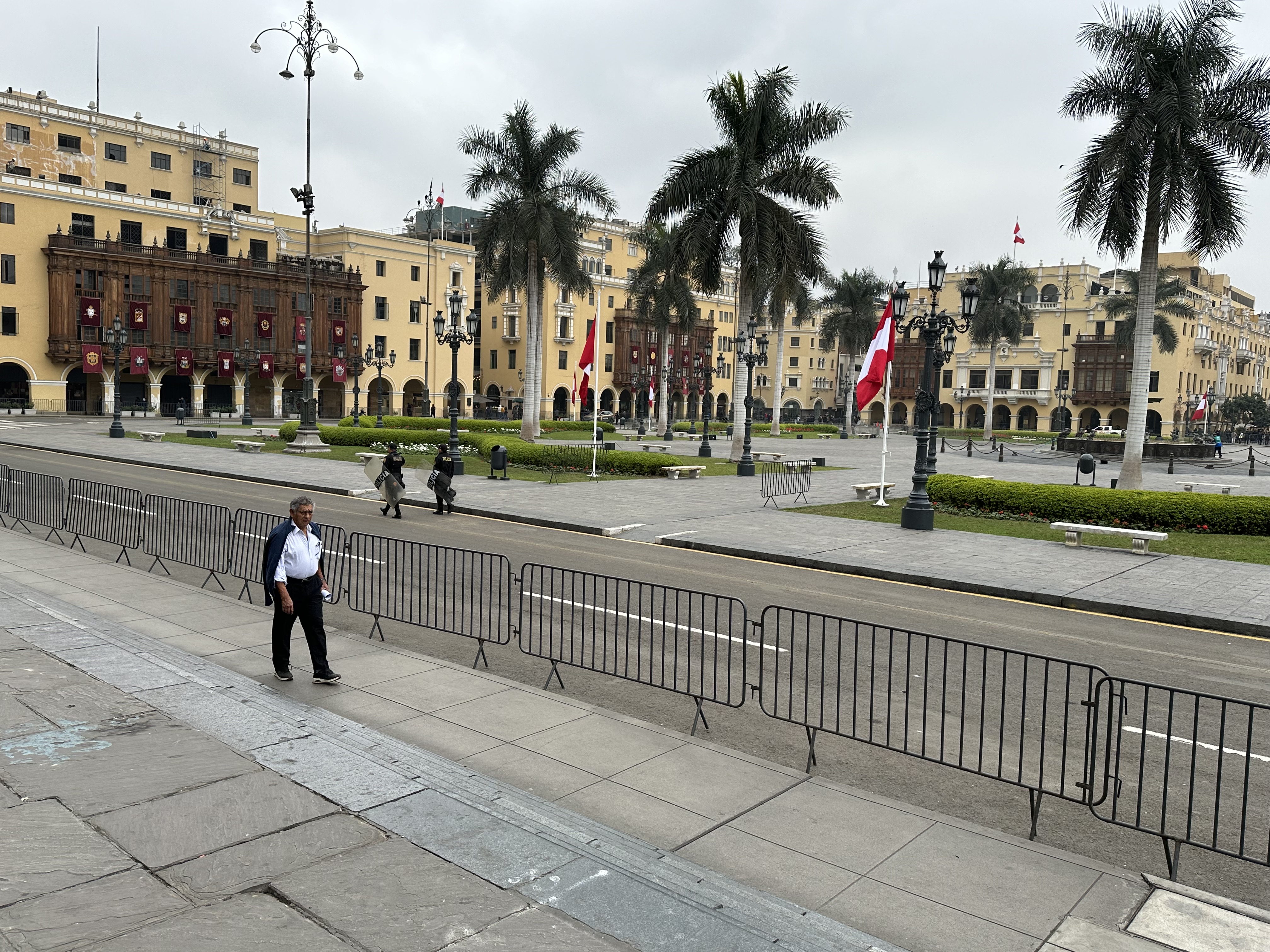
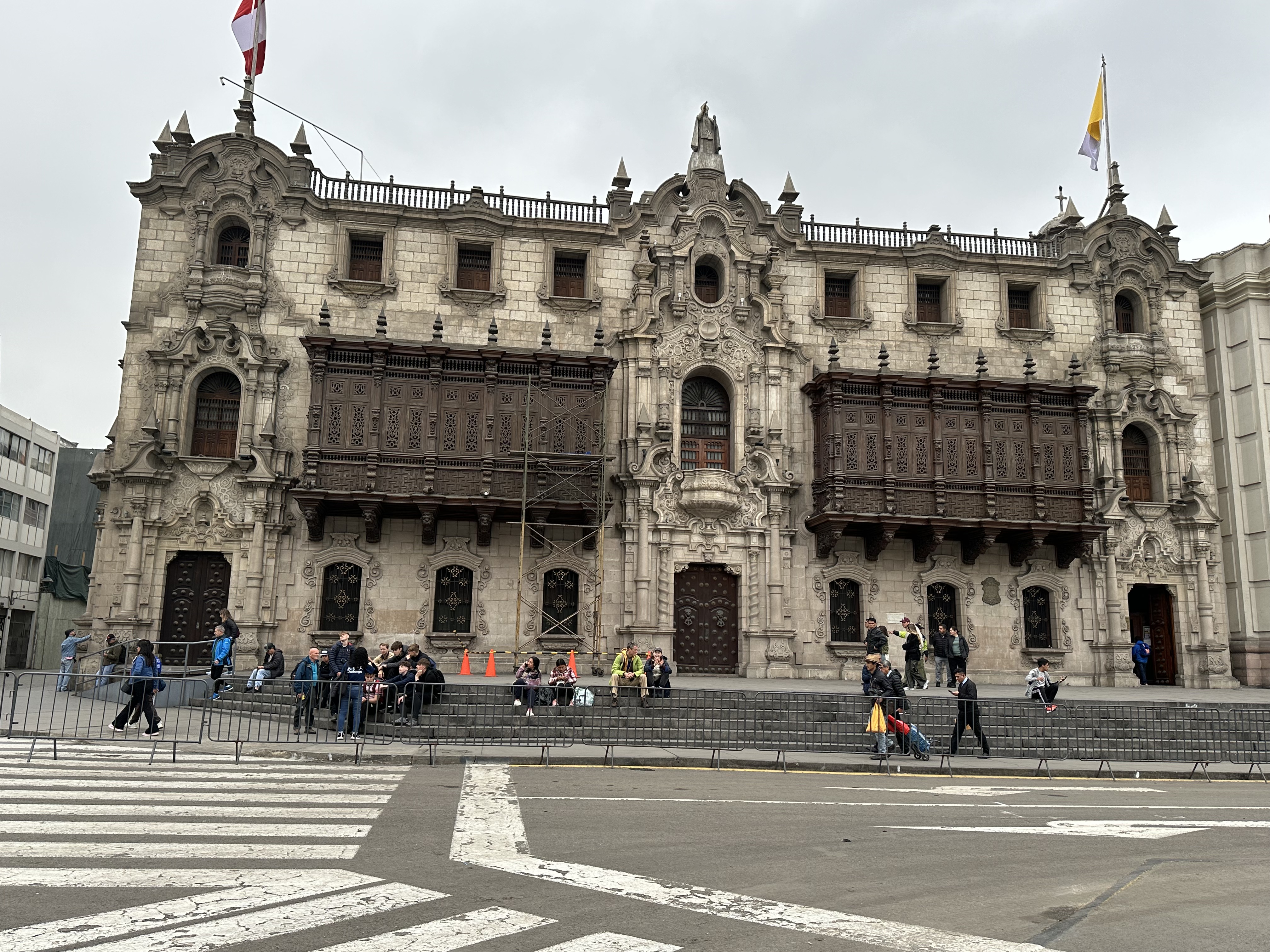
Sophia picked us up at 10am and off we went, with Carlos driving, to stop at the Post Office in Miraflores to buy stamps and then to see the old city center. It took more than an hour to get in the vicinity due to intense congestion on the many narrow 2 lane roads. However, the journey was worth the trouble as the buildings were wonderful 16th century wooden construction. Even the Cathedral of Lima was entirely made of cedar. Sophia told us the reason the towers are so short, for a cathedral, is because of frequent earthquakes. The ceiling was very pretty and many of the side alters were made of beautiful hand carved wood–some cedar and some mahogany.
Cathedral of LimaThe lovely painted knaveA carved mahogany side altarAnother wooden side altar The main altar with a large number of choir stallsThis altar was made of tiles
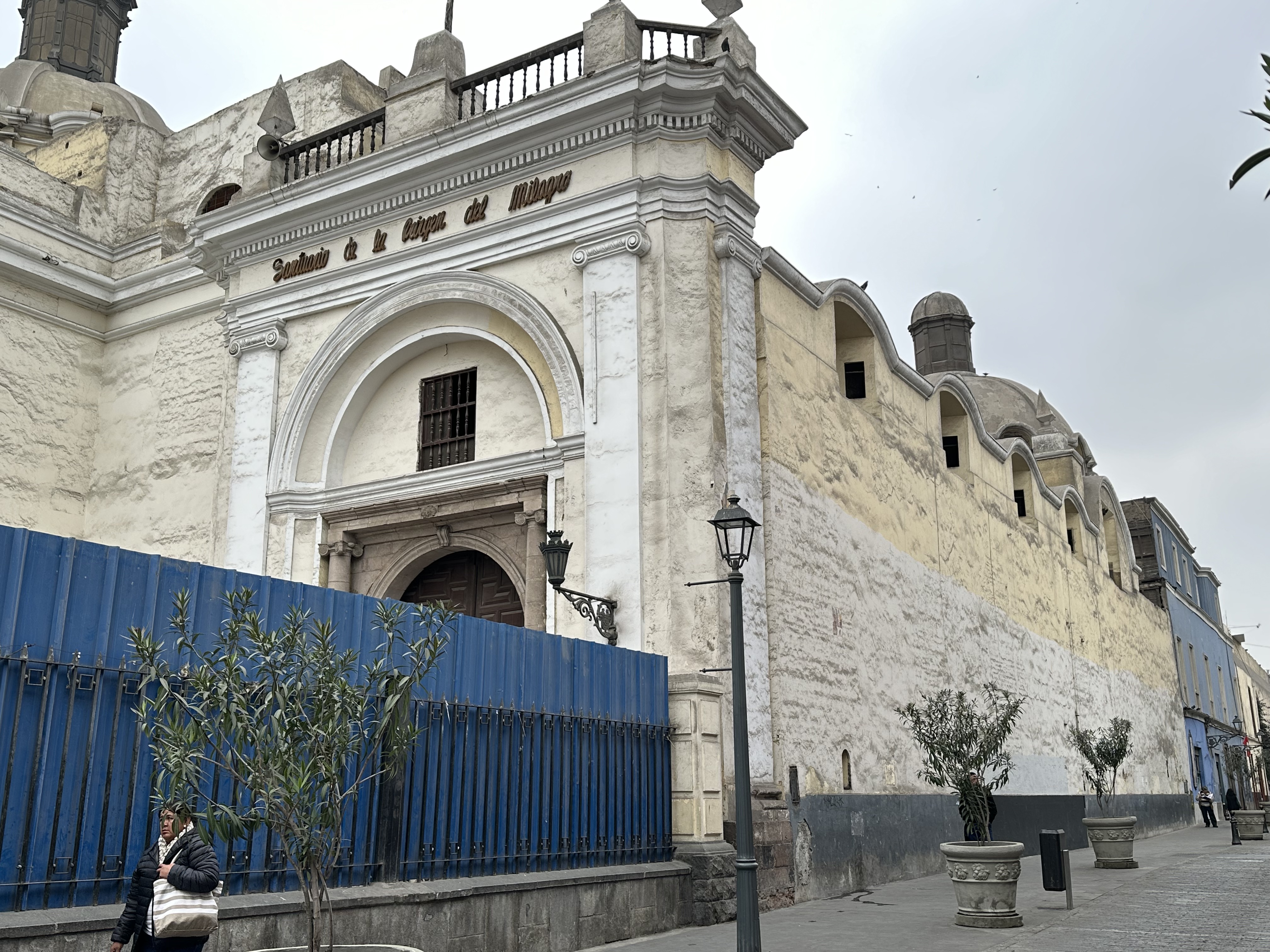
As we walked around the square and several old pedestrian streets. Sophia pointed out the oldest structure in Lima, a rather plain building built in the 1500’s. The wood structure was covered with stucco.
The oldest building in Lima. Built in the 1500’s
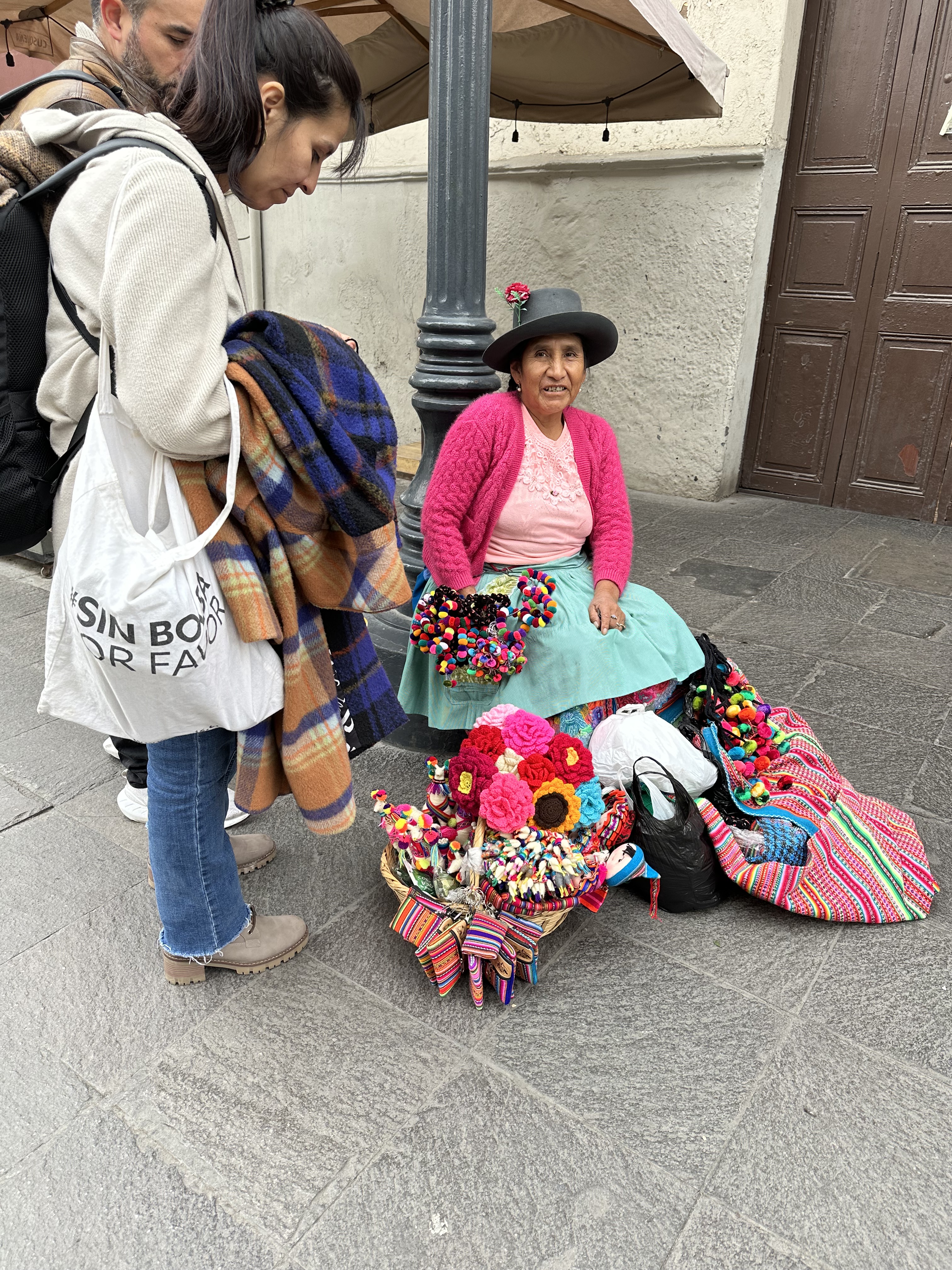
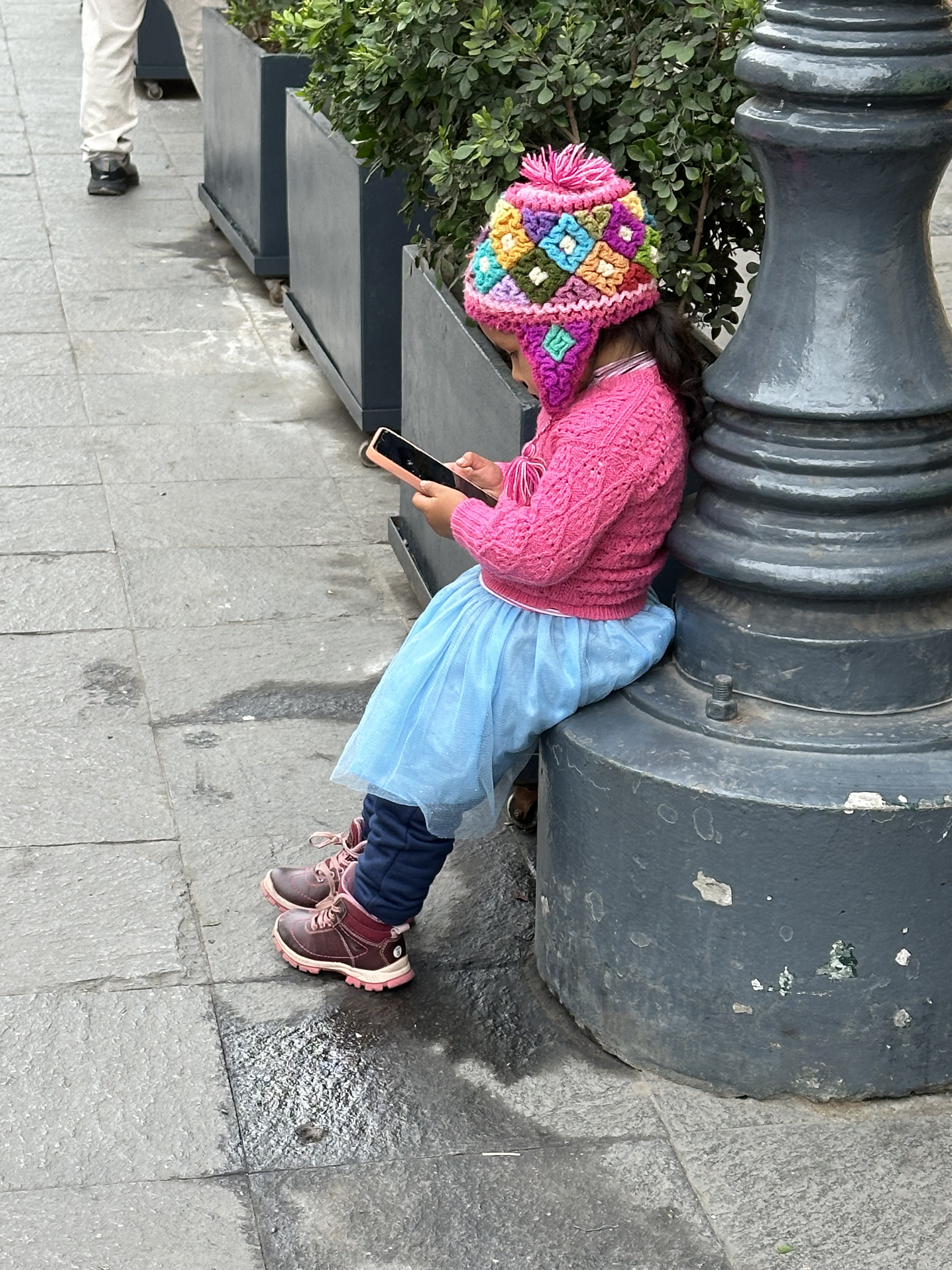
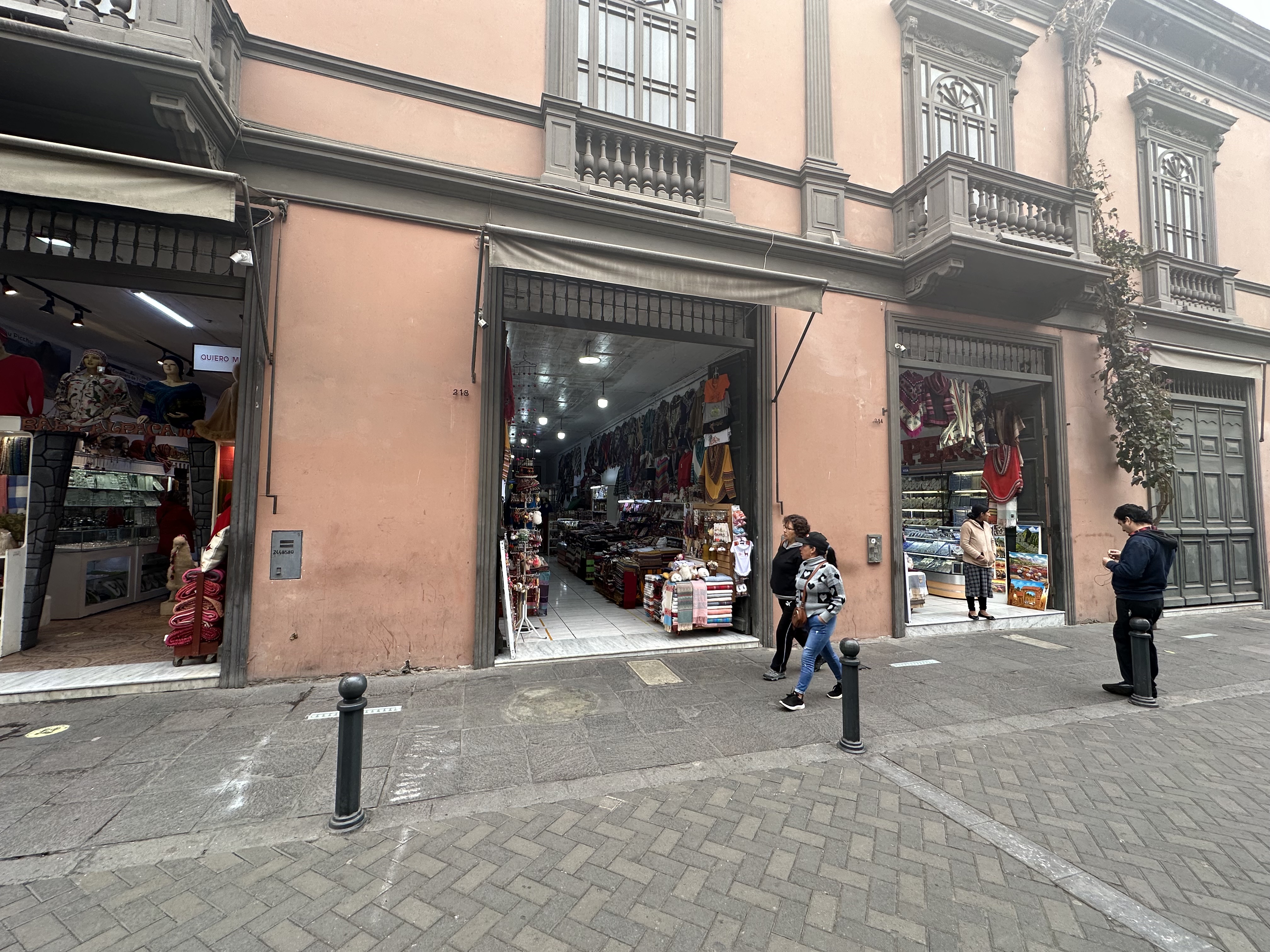
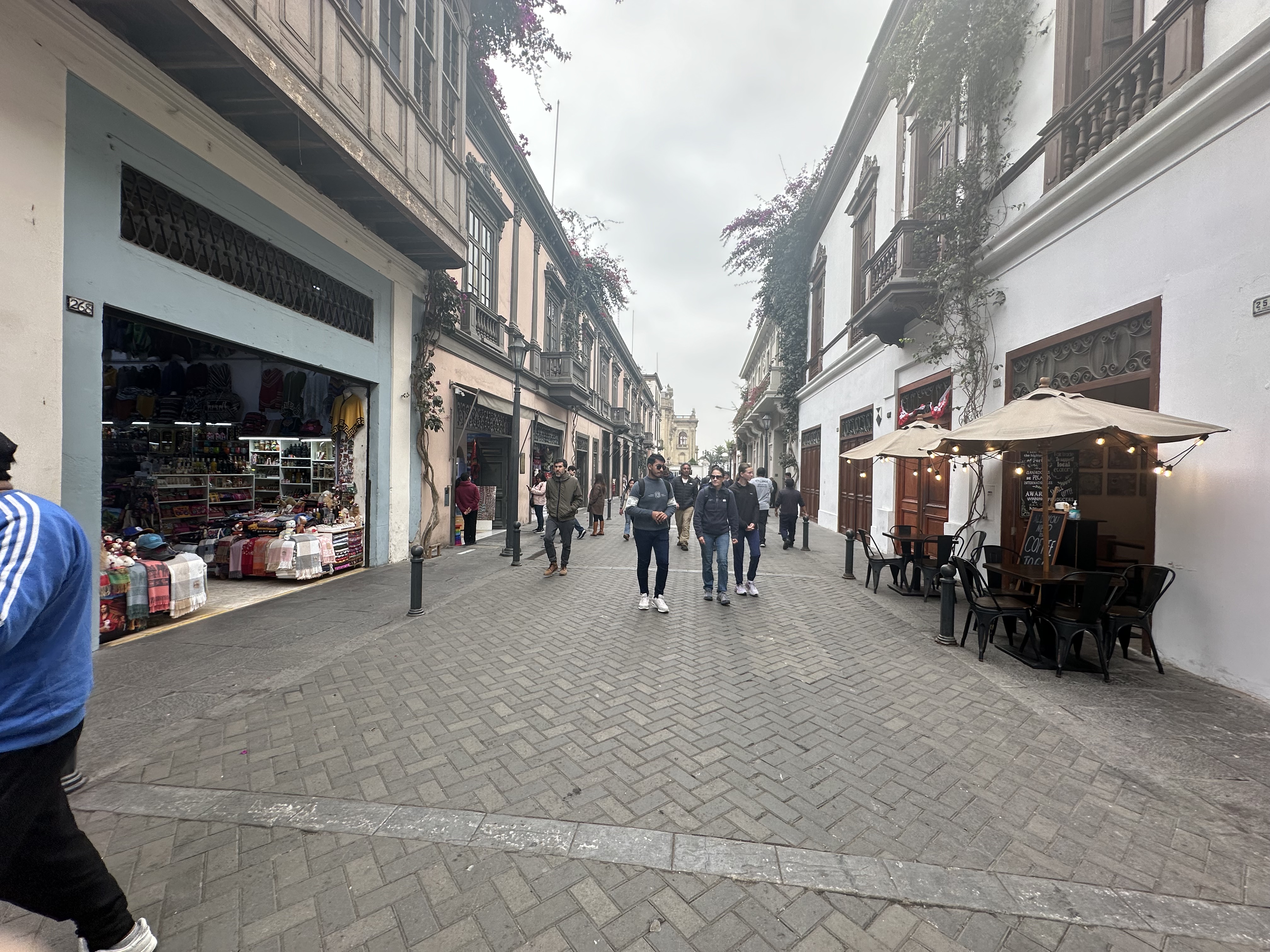
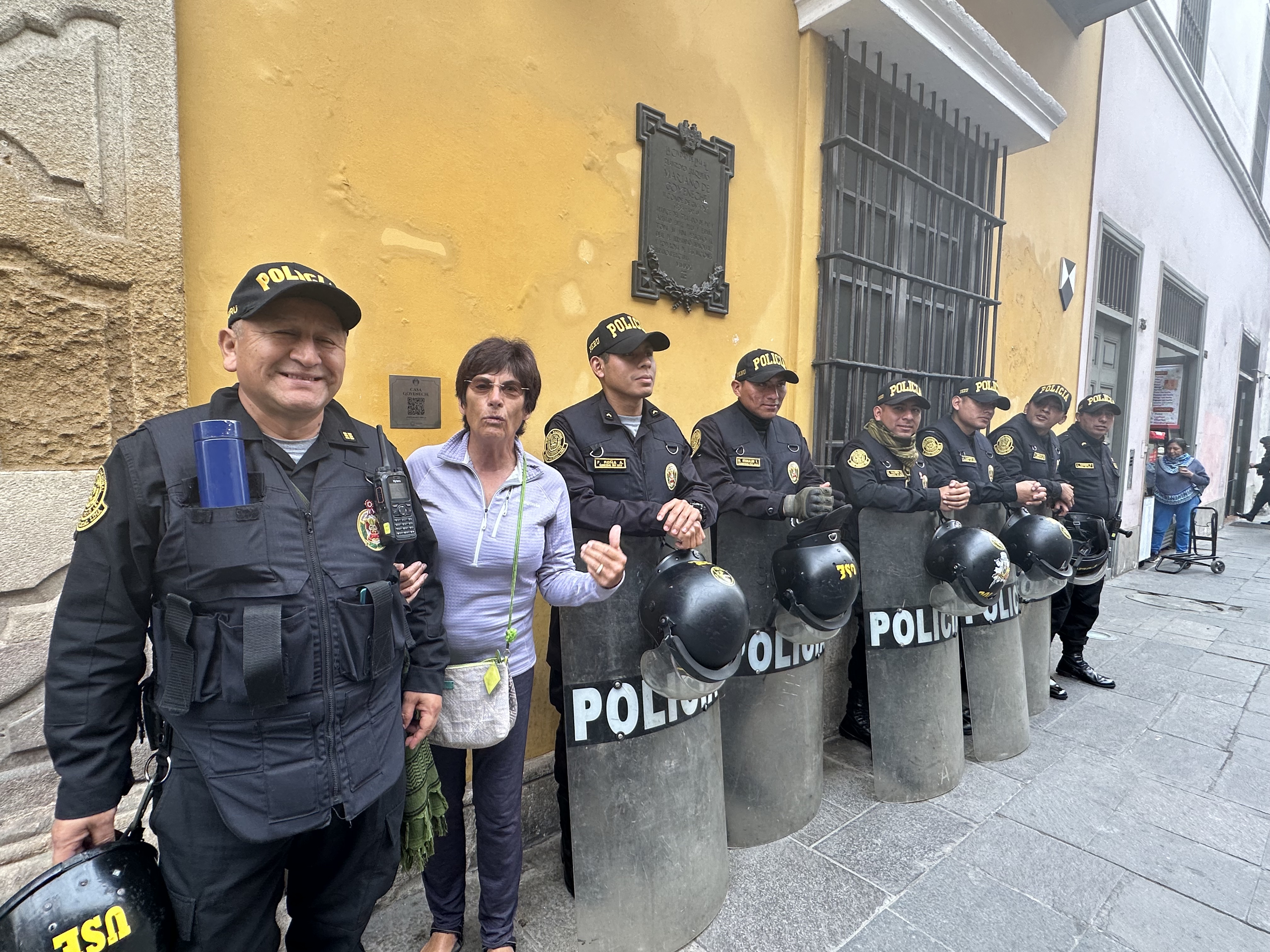
The square in front of the cathedral and other old government buildings.An old building with fancy grill workThis lady reminded me of the way women dressed in Bolivia in the 60’sAnother old city building.The Bolivian lady’s daughter A shop in the old cityA pedestrian street near the cathedral. Military police waiting for the president to arrive for a speech. They invited me to join them for a photo.
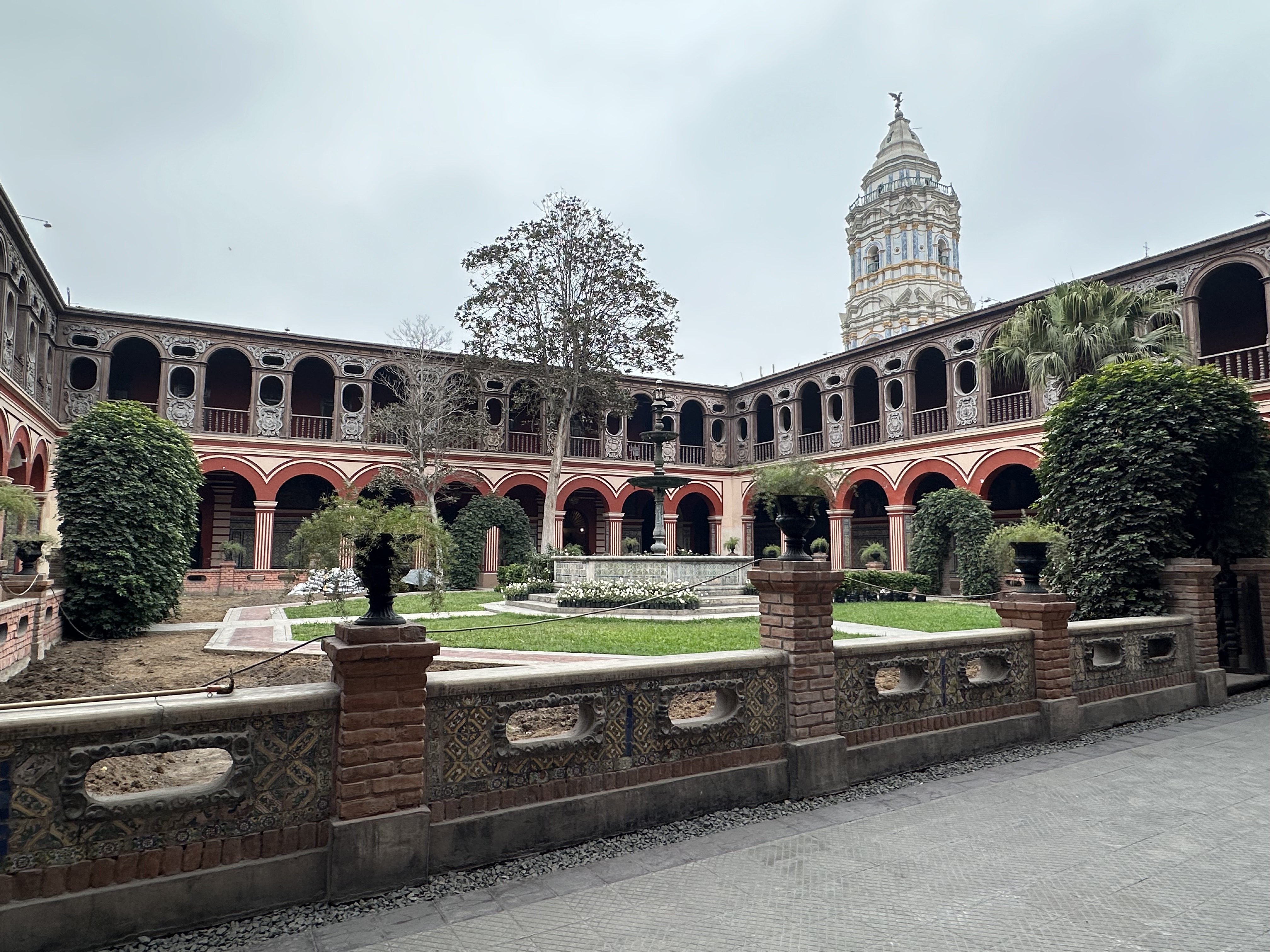
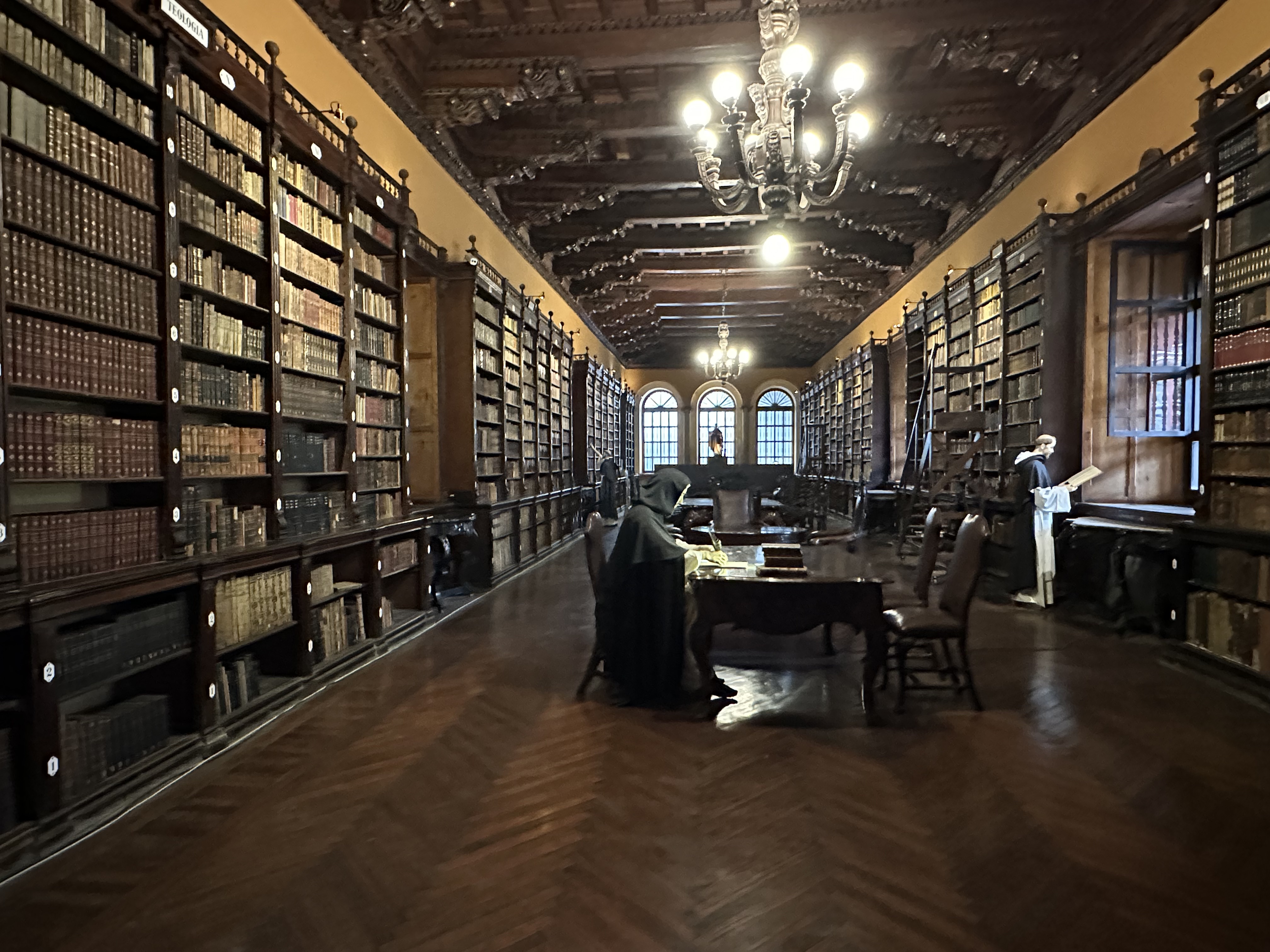
Sophia took us to see a Dominican Mission near the cathedral. The mission library houses over 20,000 books. Somehow the books seem to survive the climate.
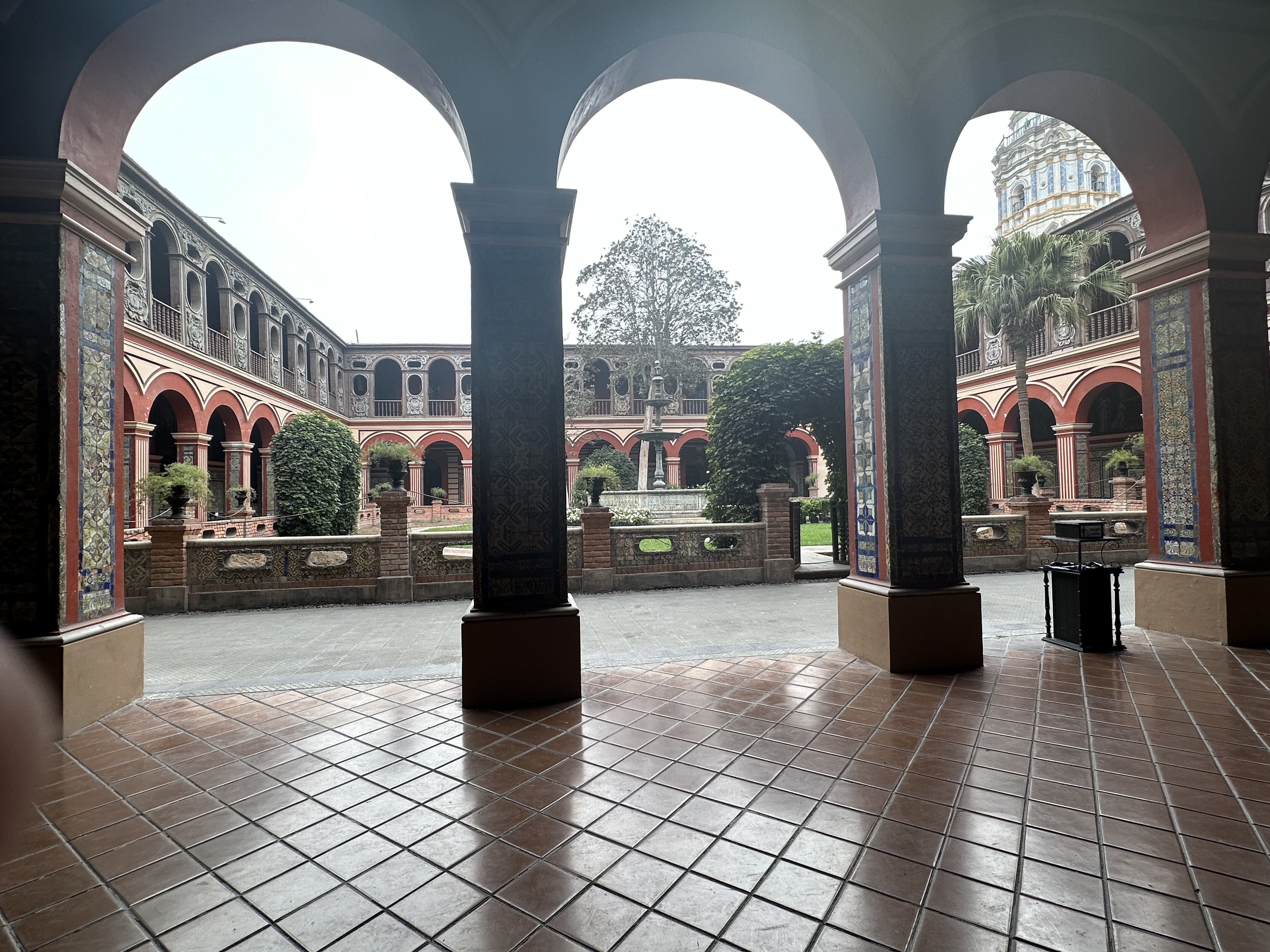
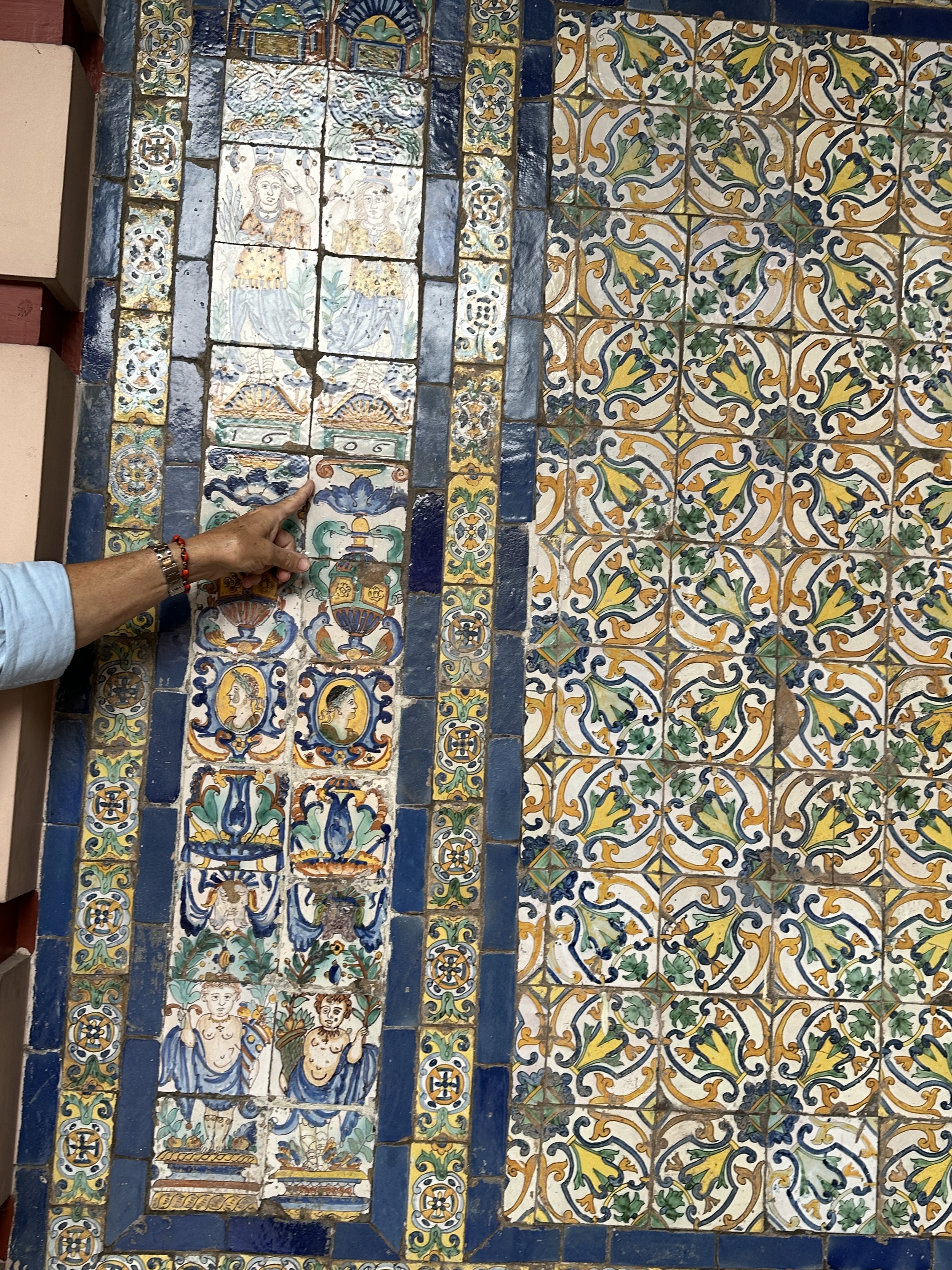
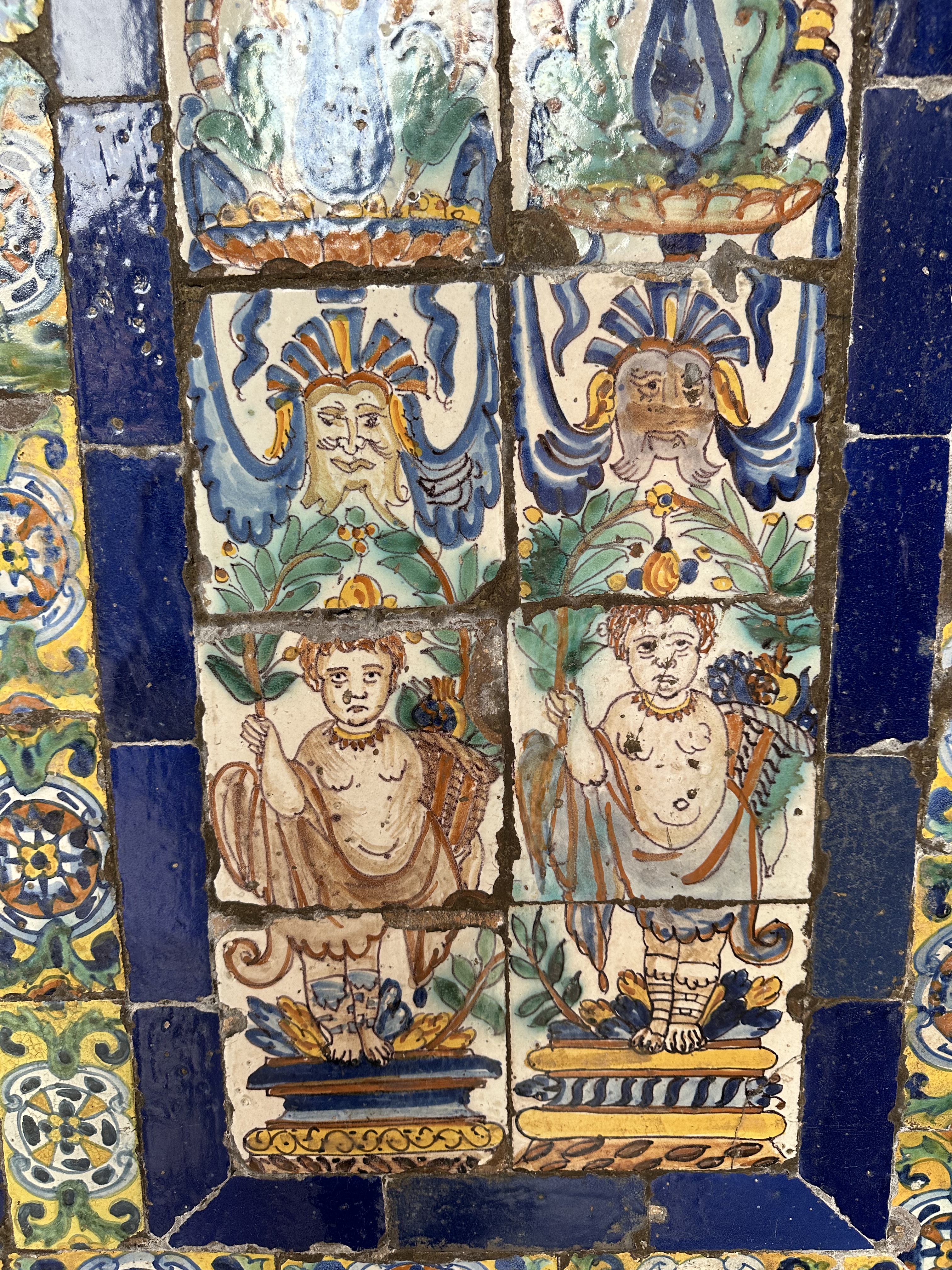
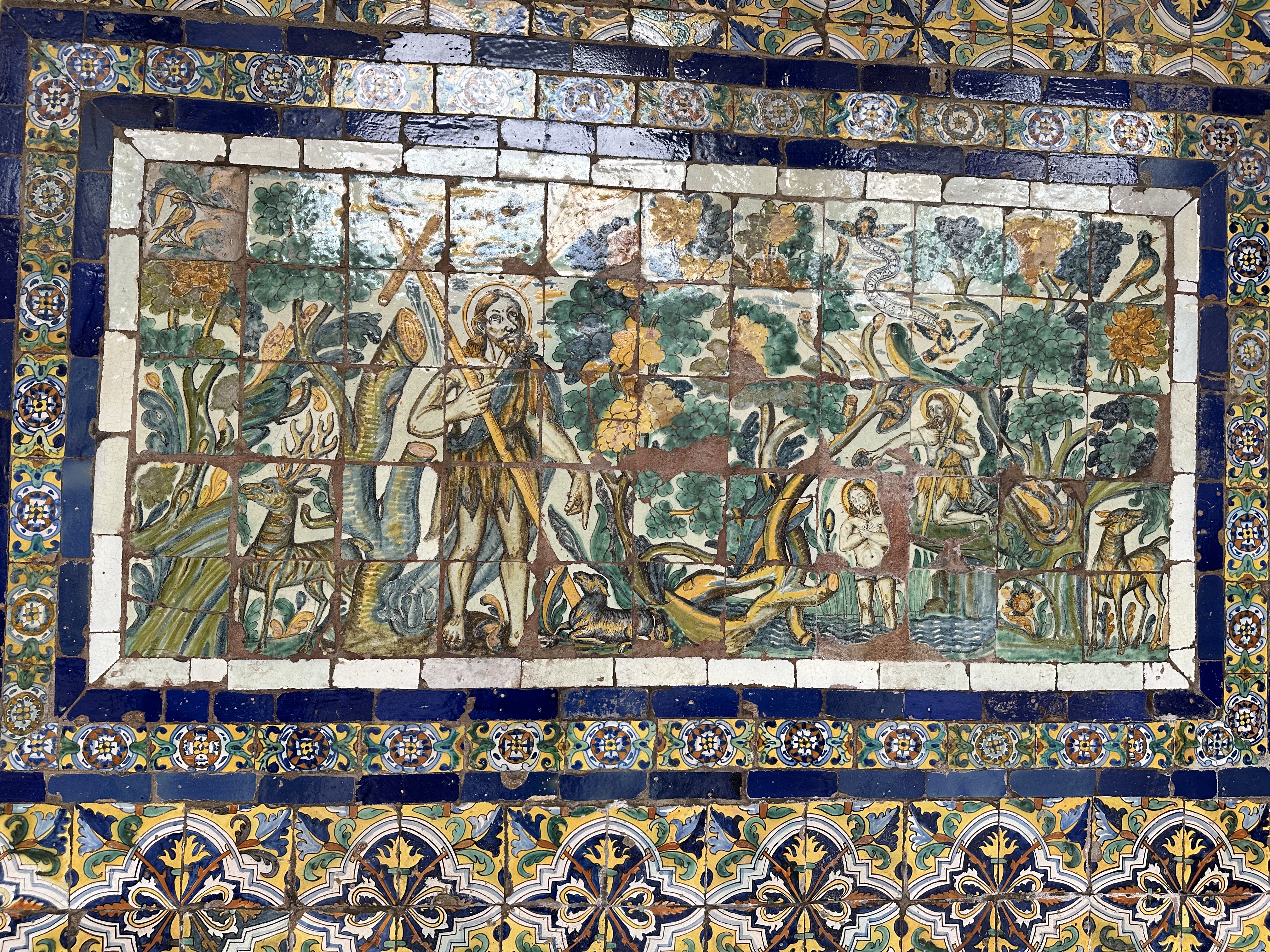
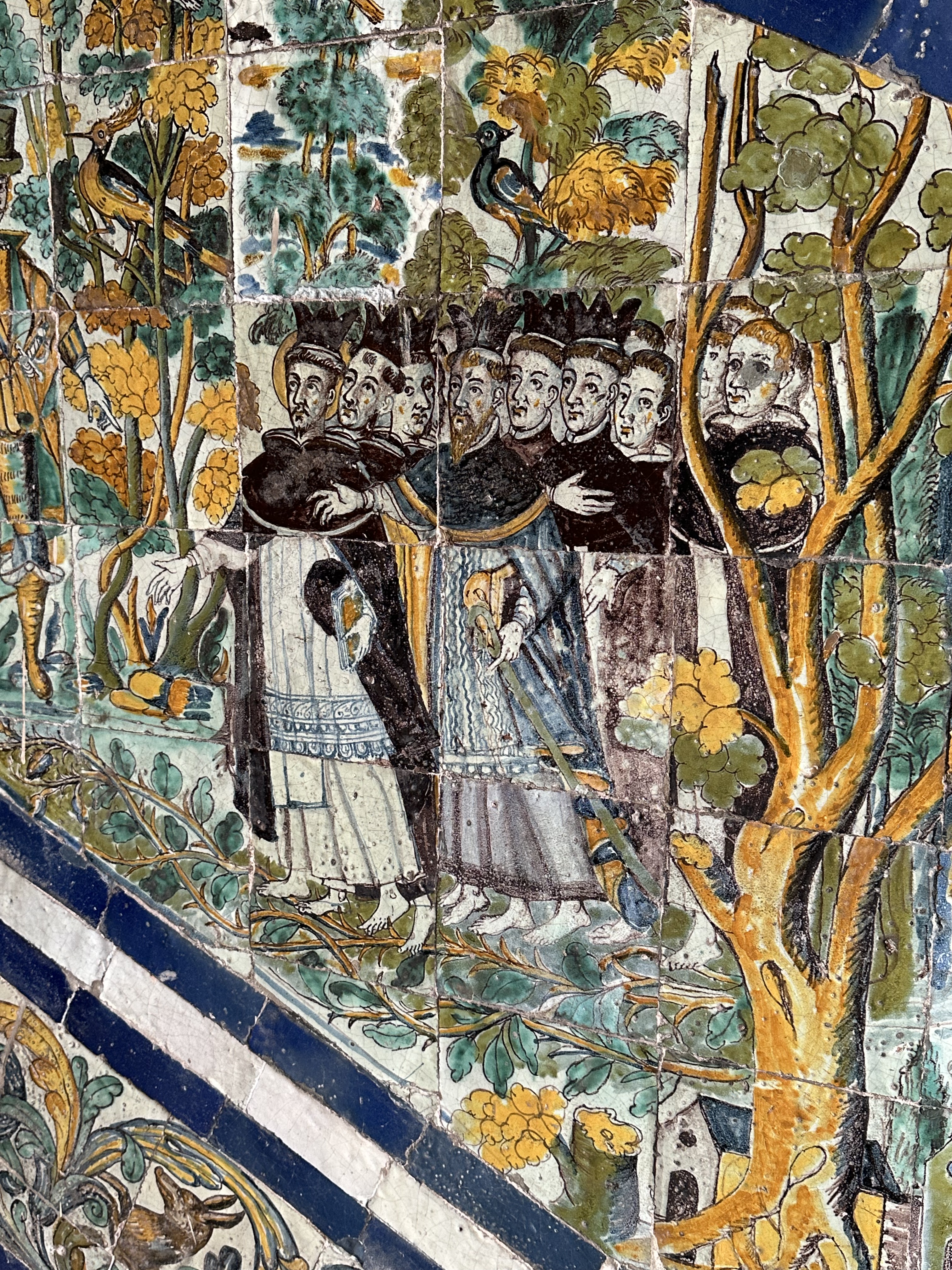
The mission was covered in beautiful tiles from the 1600’s. Here is a small sample.
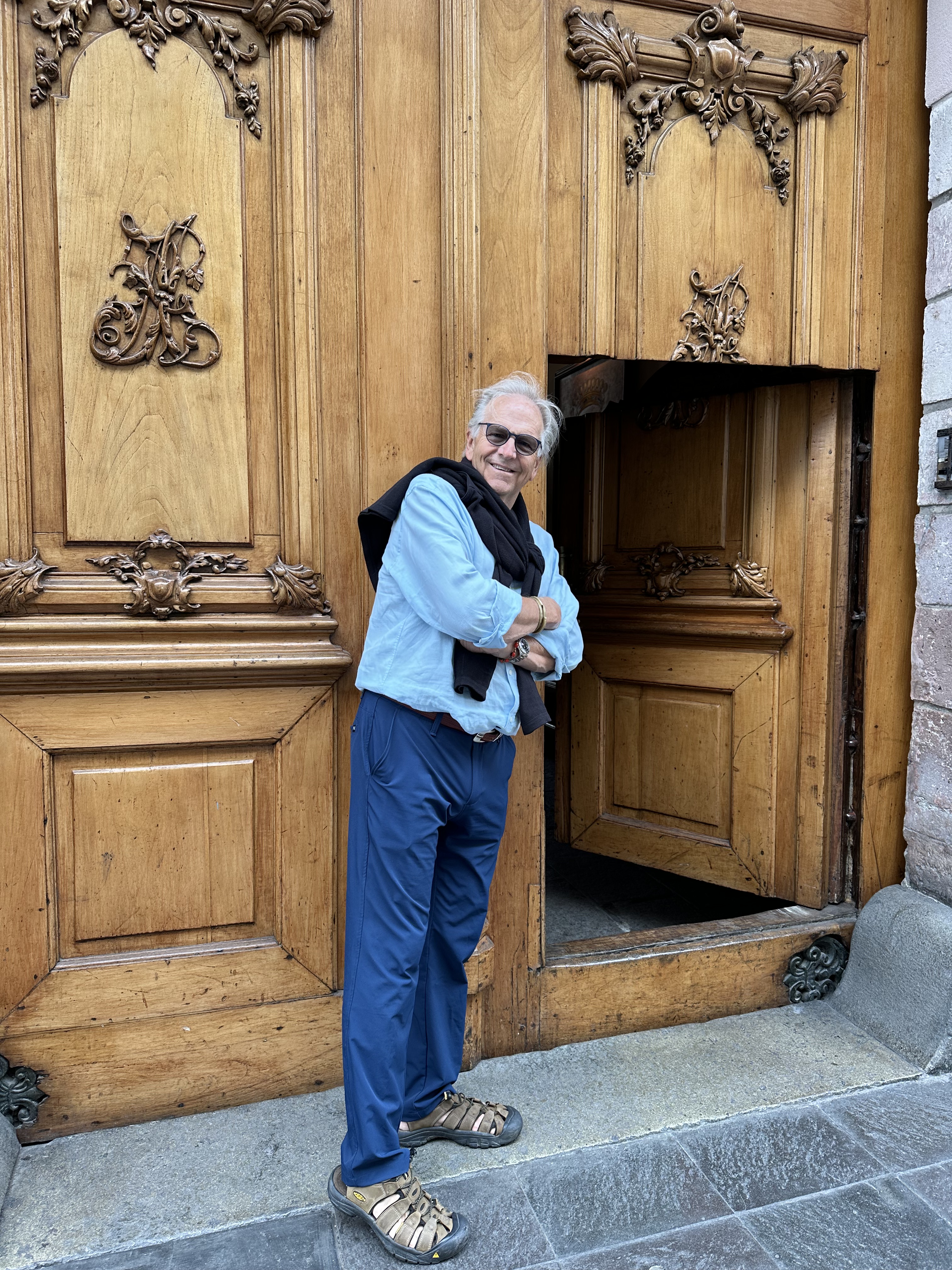
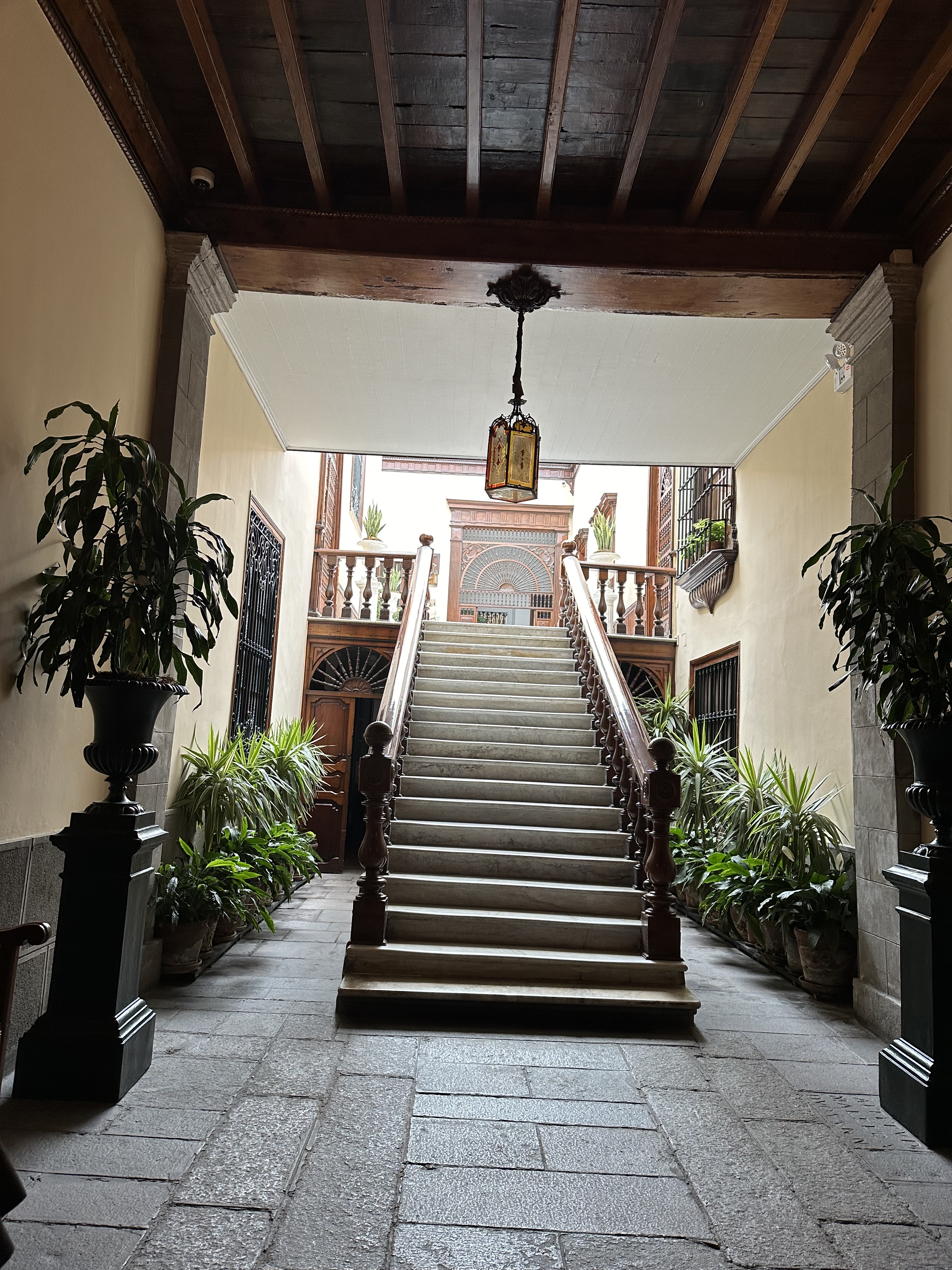
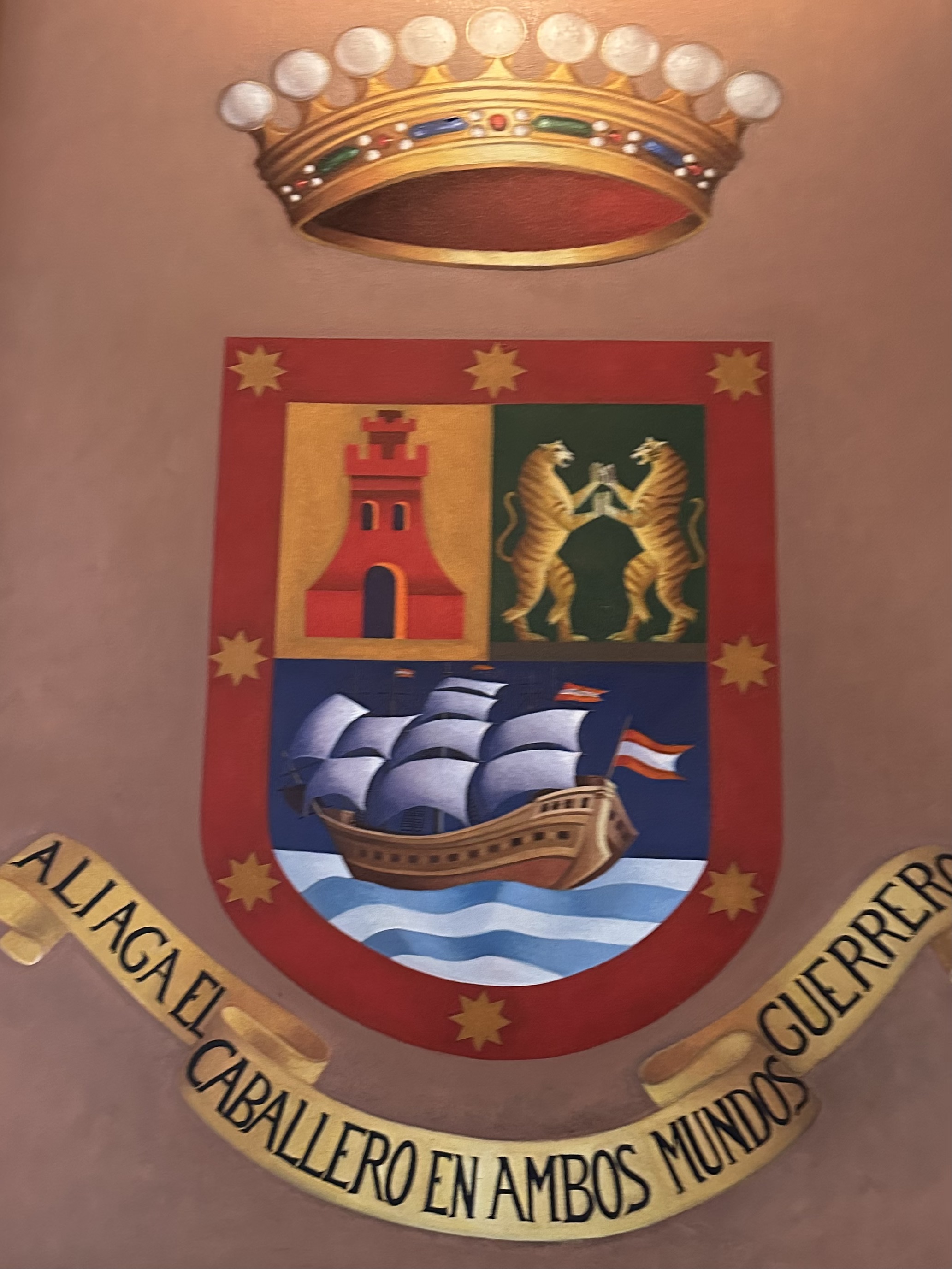
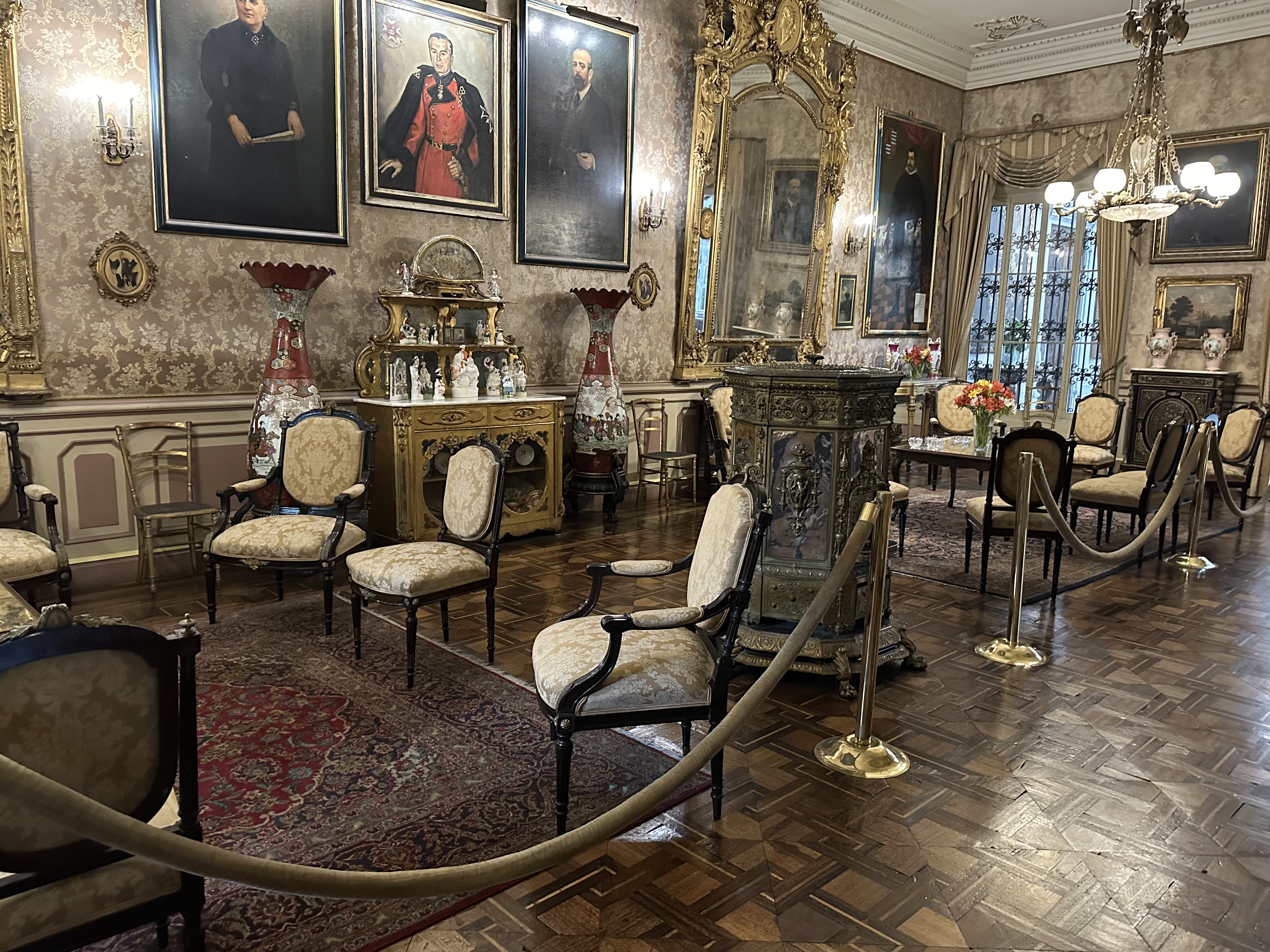
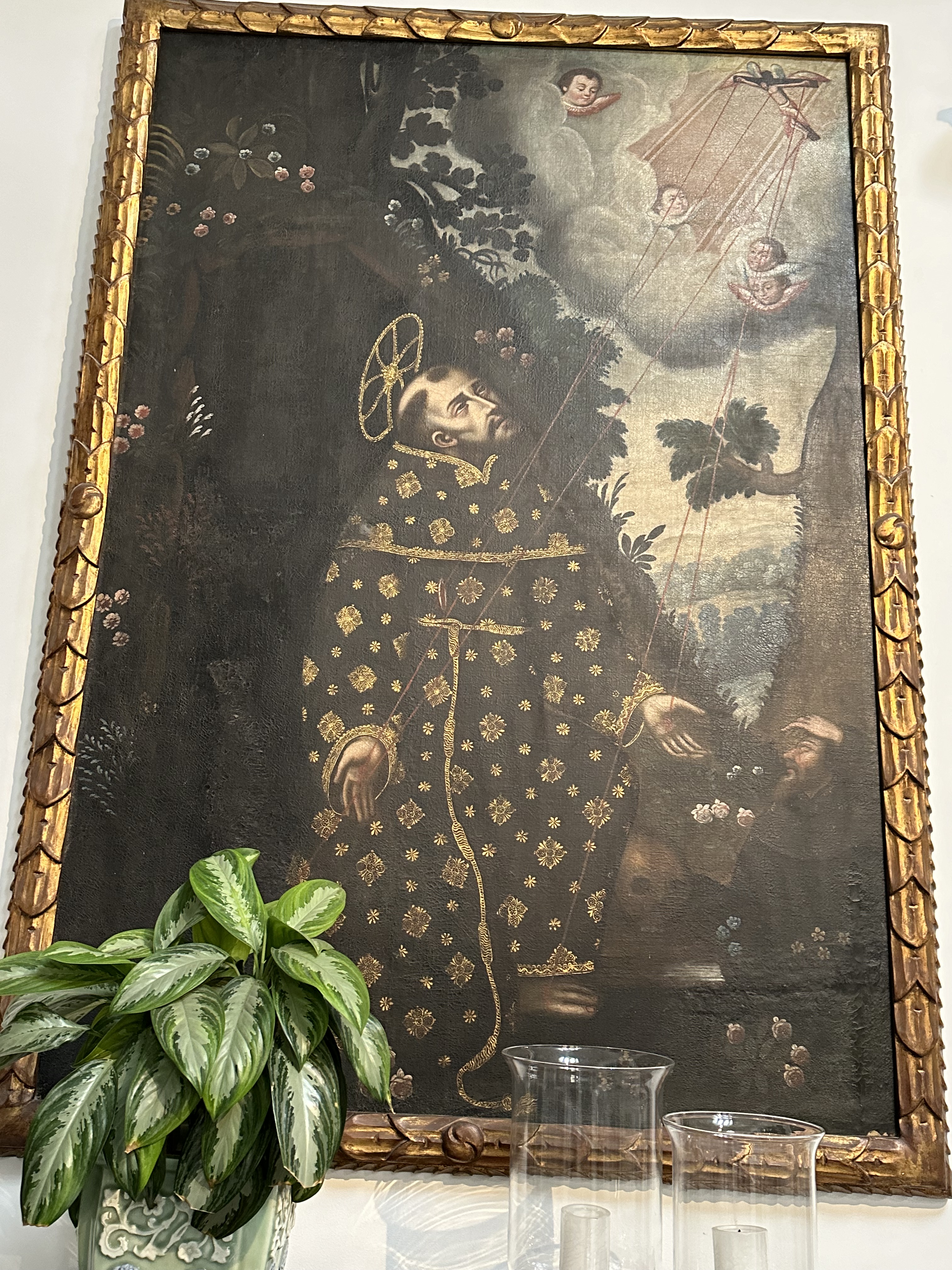
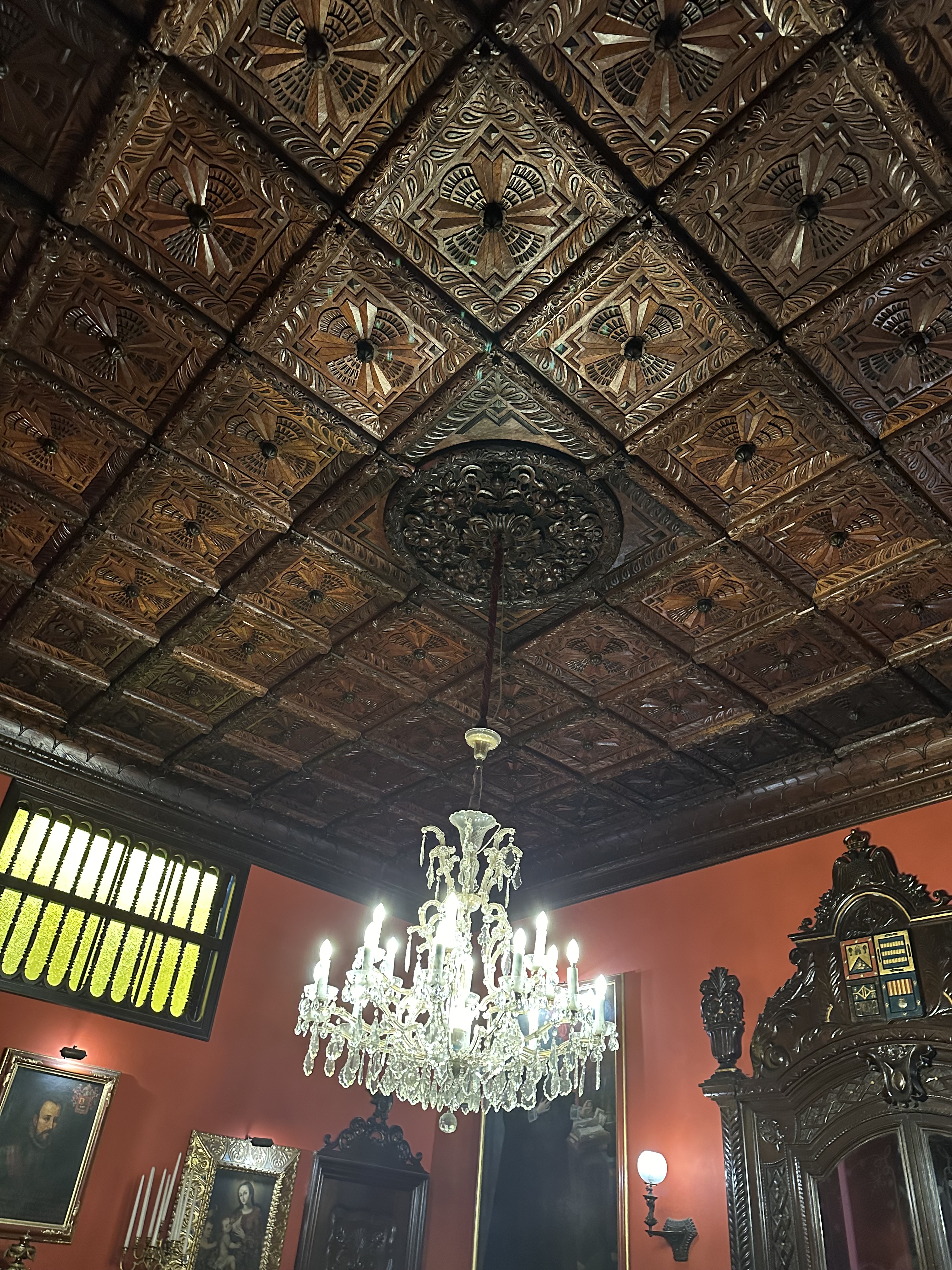
From the mission we entered a private home belonging to the Aliaga family for 18 generations. The original owner was a personal friend of Pizarro, who gave him the land in the 1500’s. The property occupies a full block near the Cathedral. Currently about half of the house is open to the public by private invitation.
Quiet entrance to the Aliaga home.Stairs from the street to house properFamily coat of armsParlor for formal entertainingSt Francis getting the stigmataDining room ceilingMaster bedroom
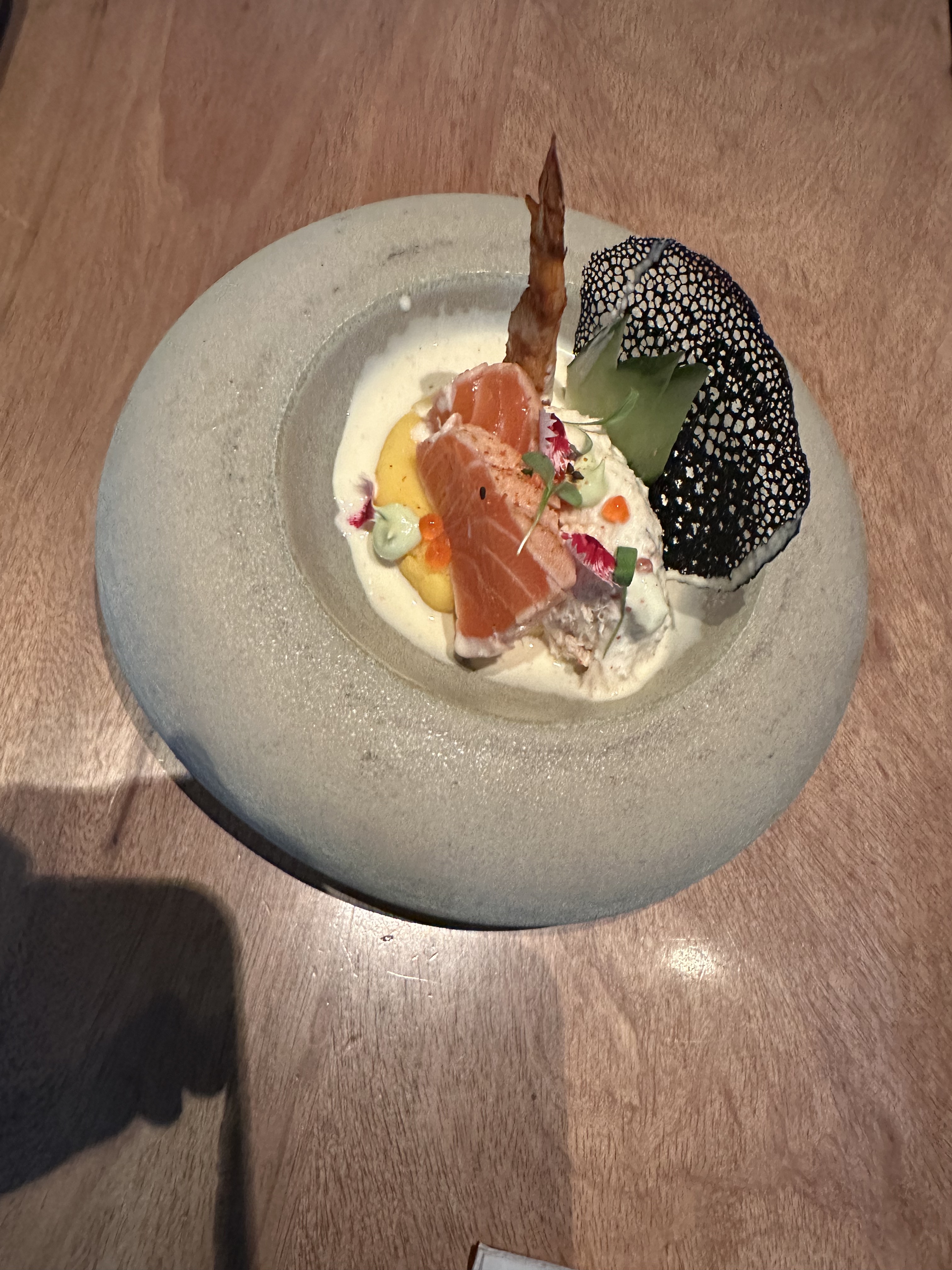
By the time we had finished the 4 hour tour we were hungry and went to a Japanese restaurant called Osaka in Miraflores. It was a most unusual combination of sushi dishes our waiter arranged for us. A couple of nigiri were even charred with a hand held torch. Unfortunately, I was too busy enjoying the presentations that I remembered only to take this one photo.
A dish with raw tuna, shrimp, pickles, salmon eggs, seaweed, and special sauce
Back at the Hotel B, we relaxed until it was time to check out of the room at 8pm, get a bite to eat in the hotel dining room and head to the airport. This trip is done. More another time.
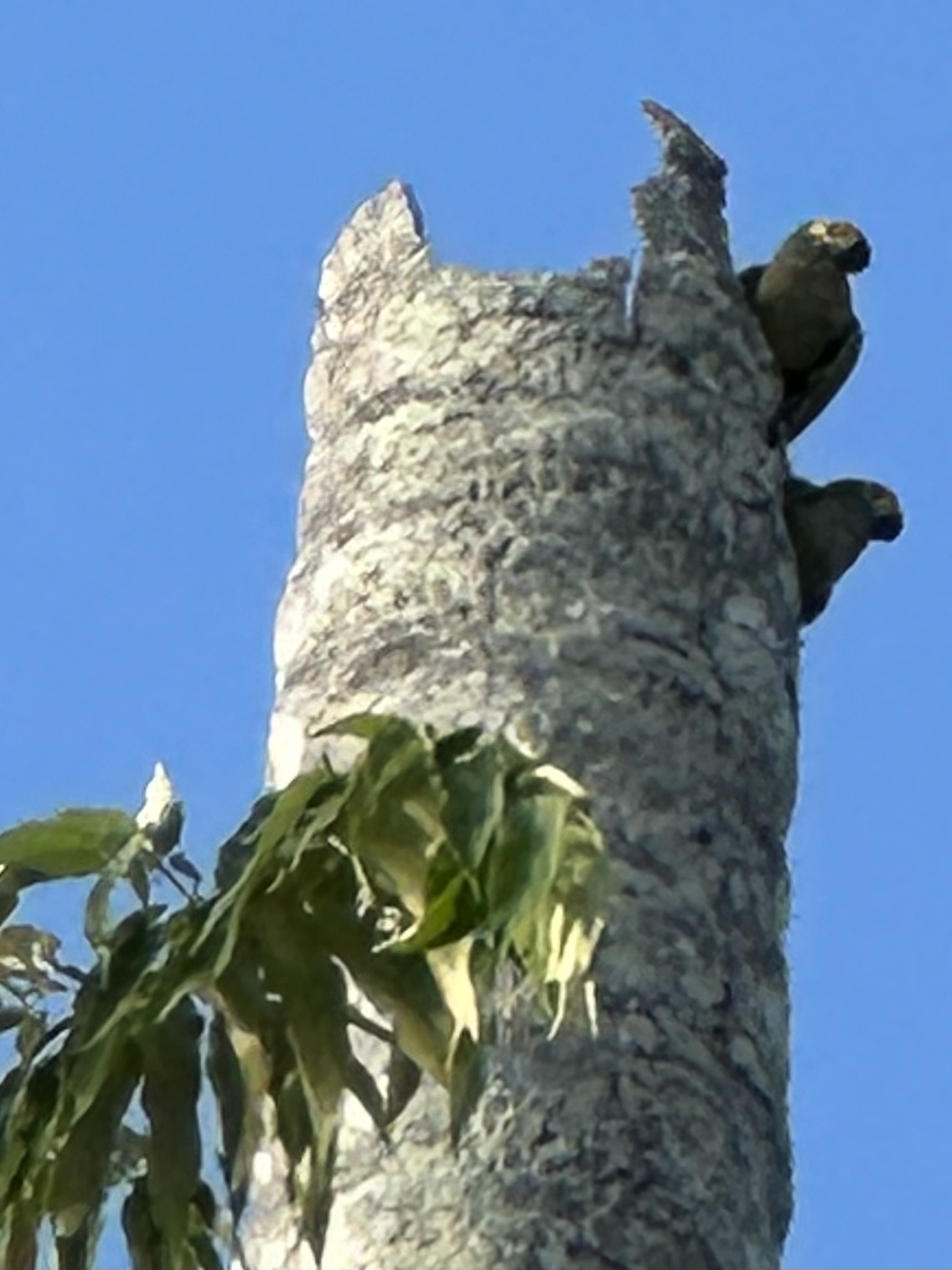
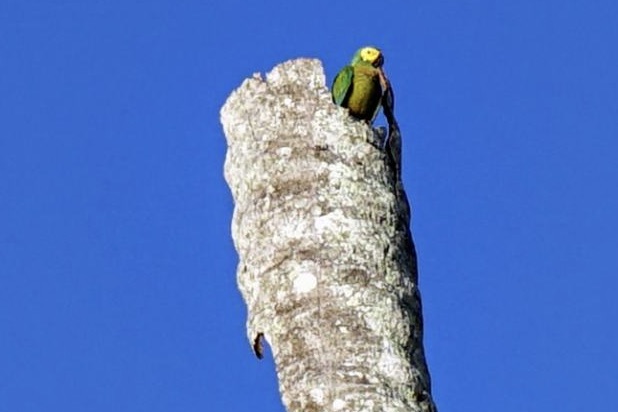
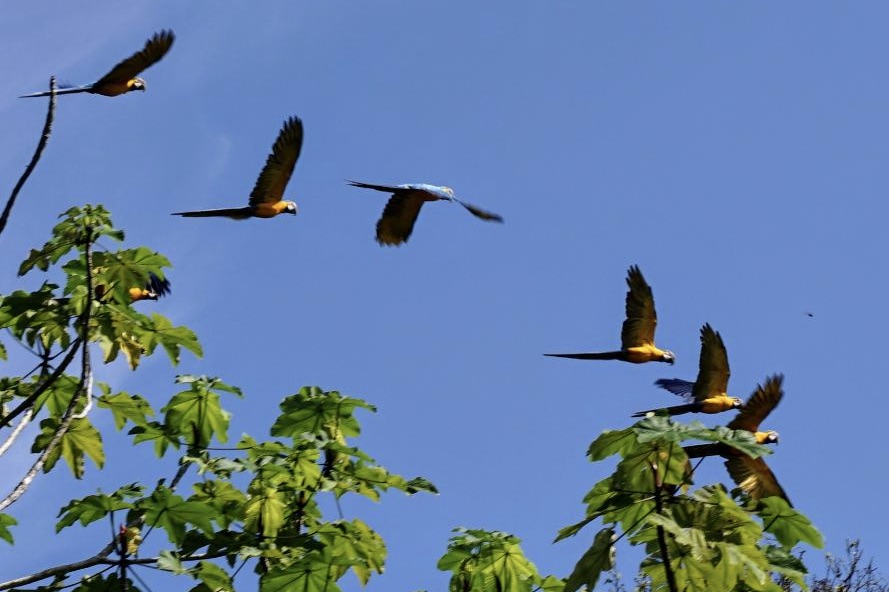
Late yesterday , a few of us went for a tender ride to try to find Macaw birds up the Maranon River, which we reached early in the day. There is no debris or lettuce in this river and it is very black and pretty. We are now at the most southern point of our trip. We found several Macaw high up in the hollows of dead palm trees. I did not get a photo of them flying but I managed to get a few looking out from the tree stumps.
Thursday, July 11, 2024
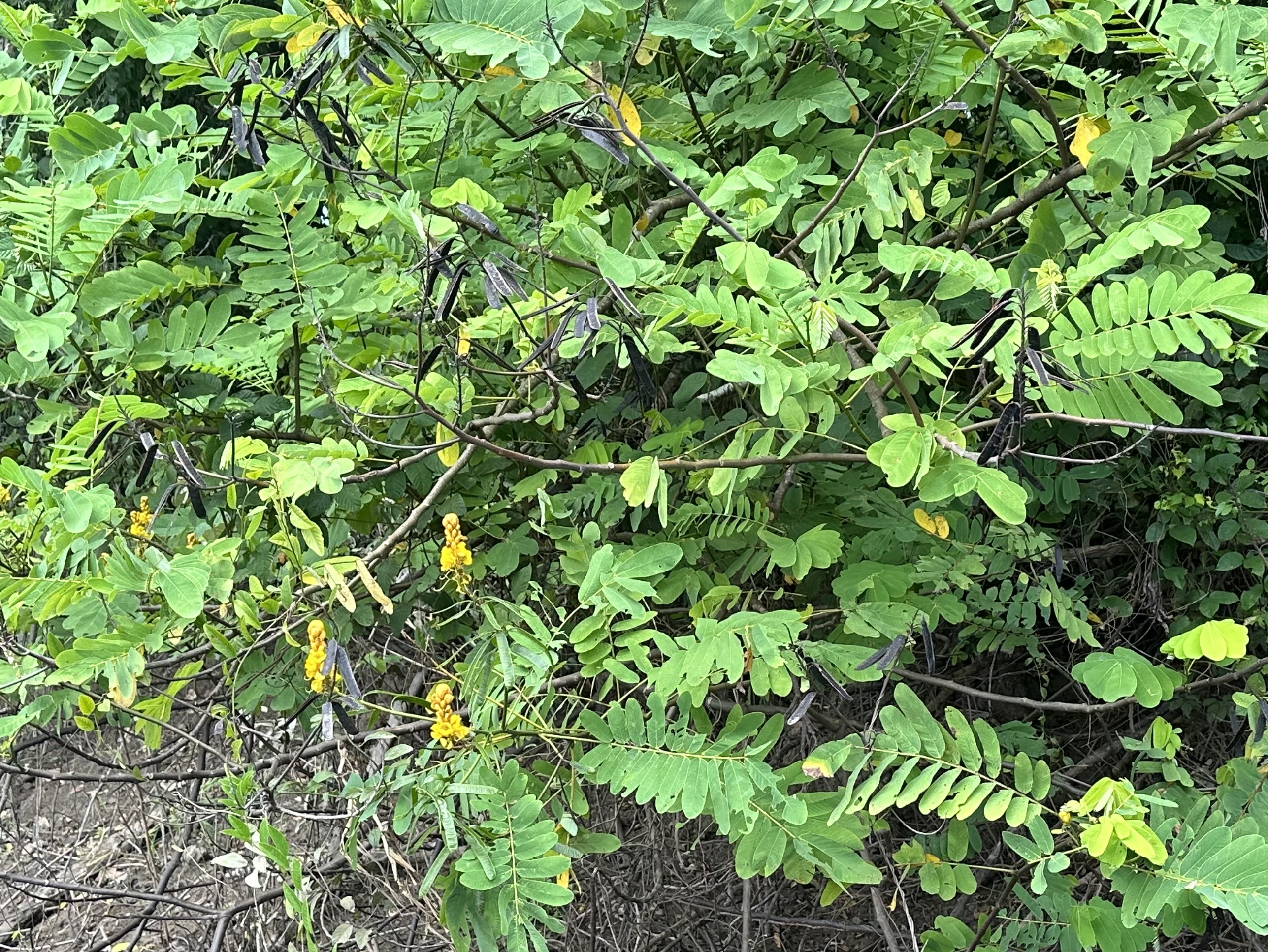
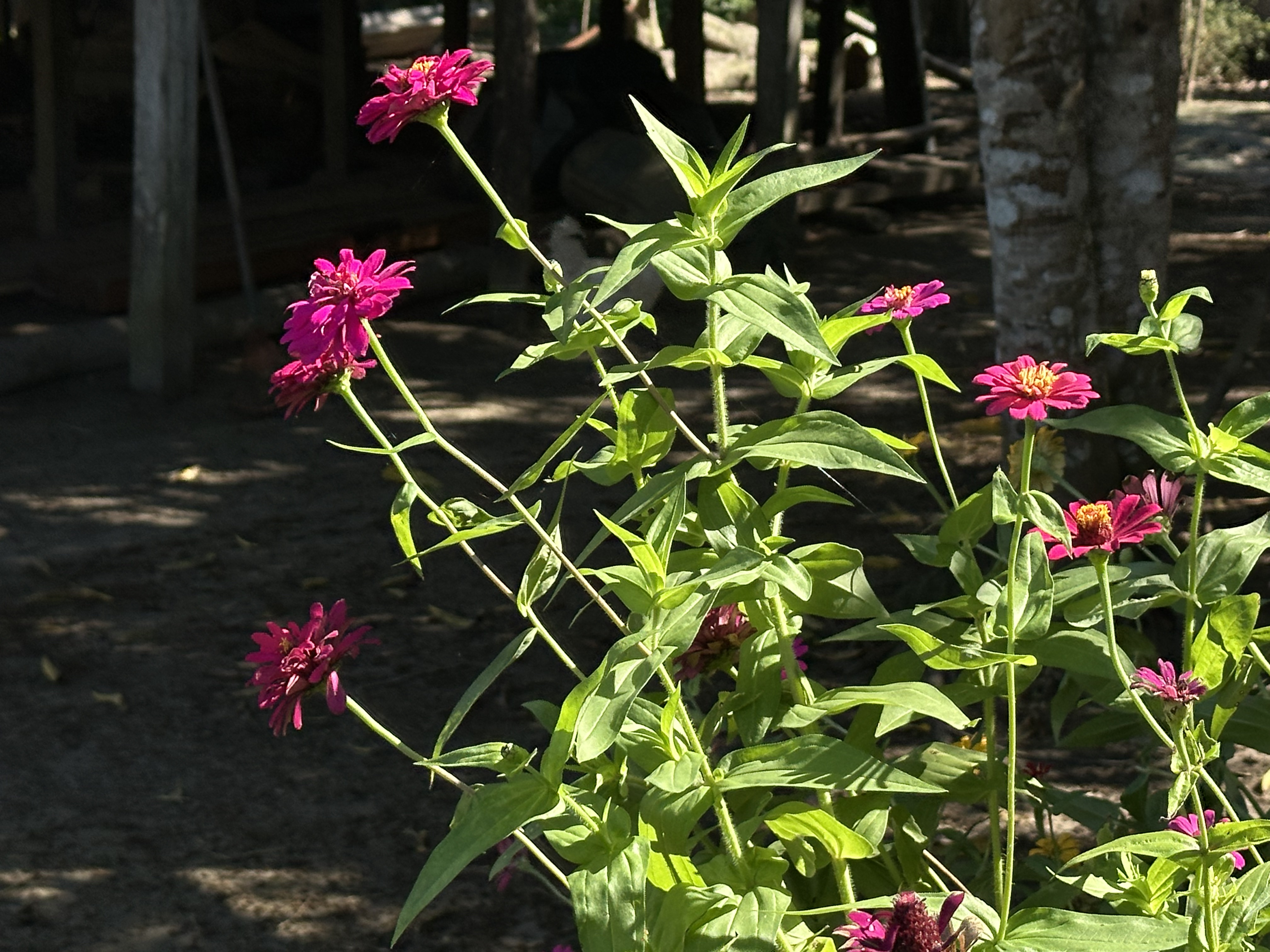
This morning at 9am a group of us set out for a whole day of activities. First we registered into the national reserve at the ranger station. I caught a photo of a flowering acacia. This plant is supposed to help people with kidney problems. We started with biking and kayaking. Mark went biking while I happily went kayaking.
Acacia bush. Good for kidney problems
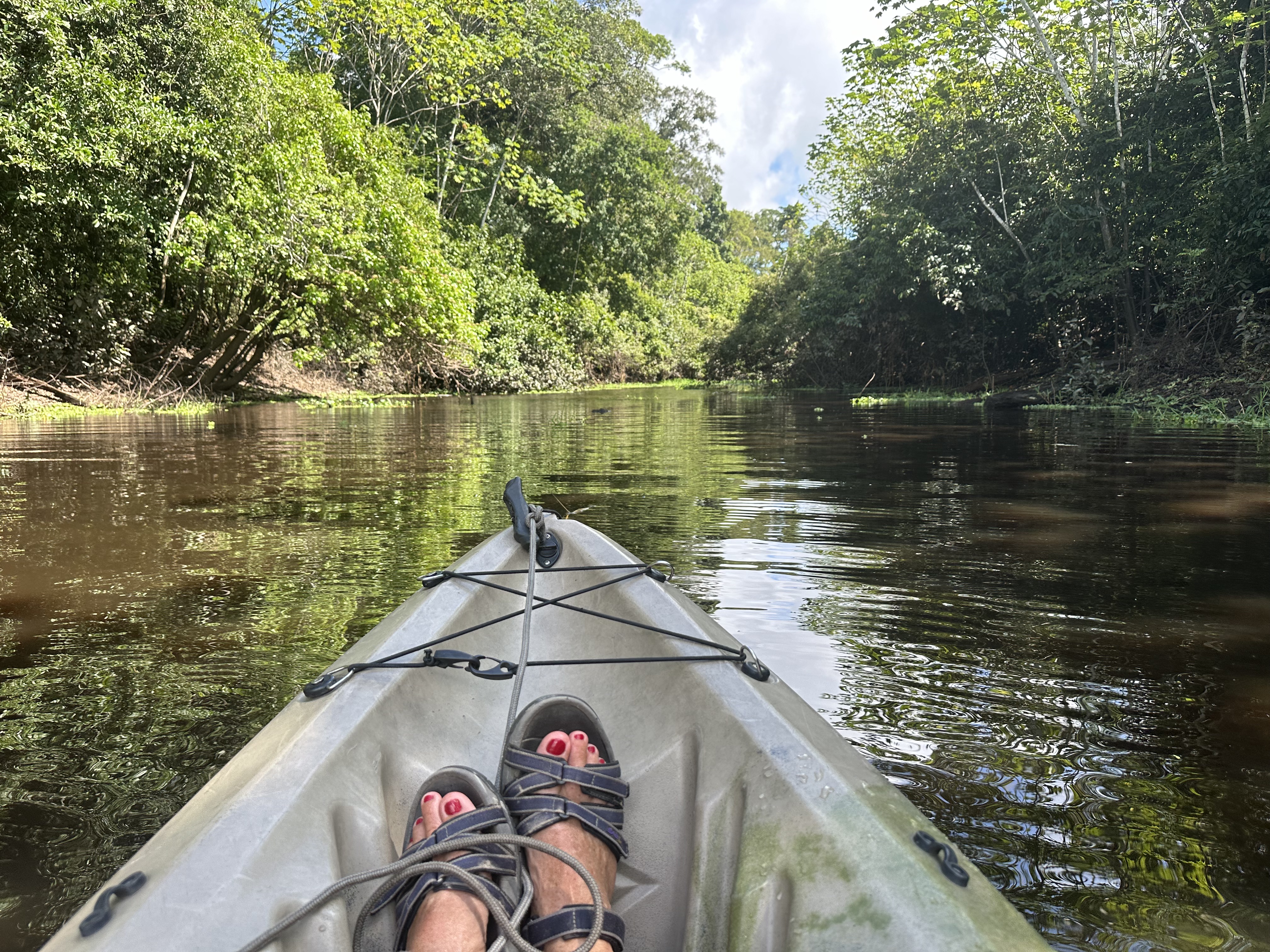
My partner was our female medical doctor who, unfortunately, spoke no English. I learned quickly that she also did not have any kayaking experience. Most of the time I asked her to stop and enjoy the ride while I did the kayaking. However, she was a good medic. I had woken up with a bad head cold and she gave me some pills for it at breakfast. By the time we went kayaking , I was already feeling better.
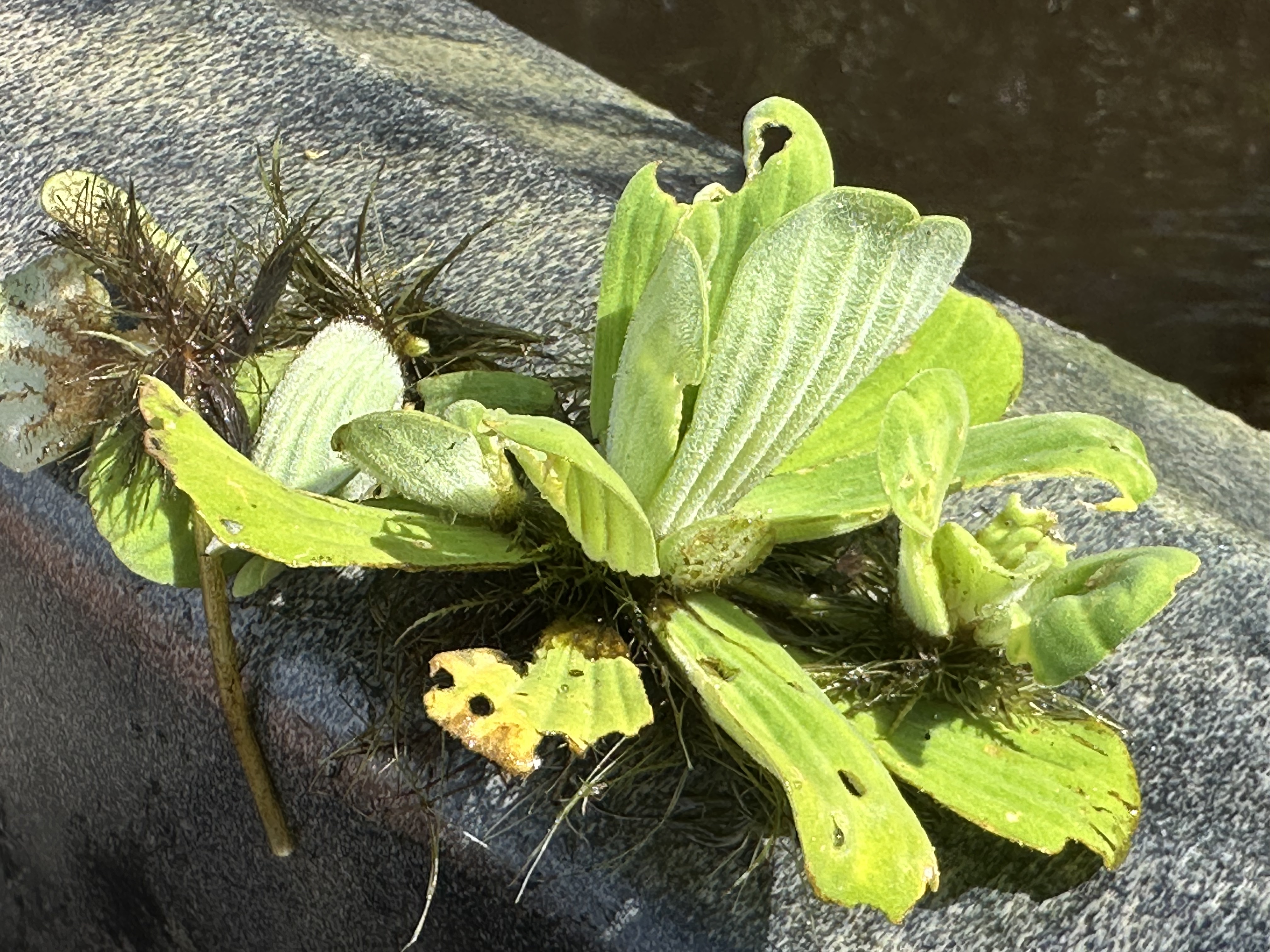
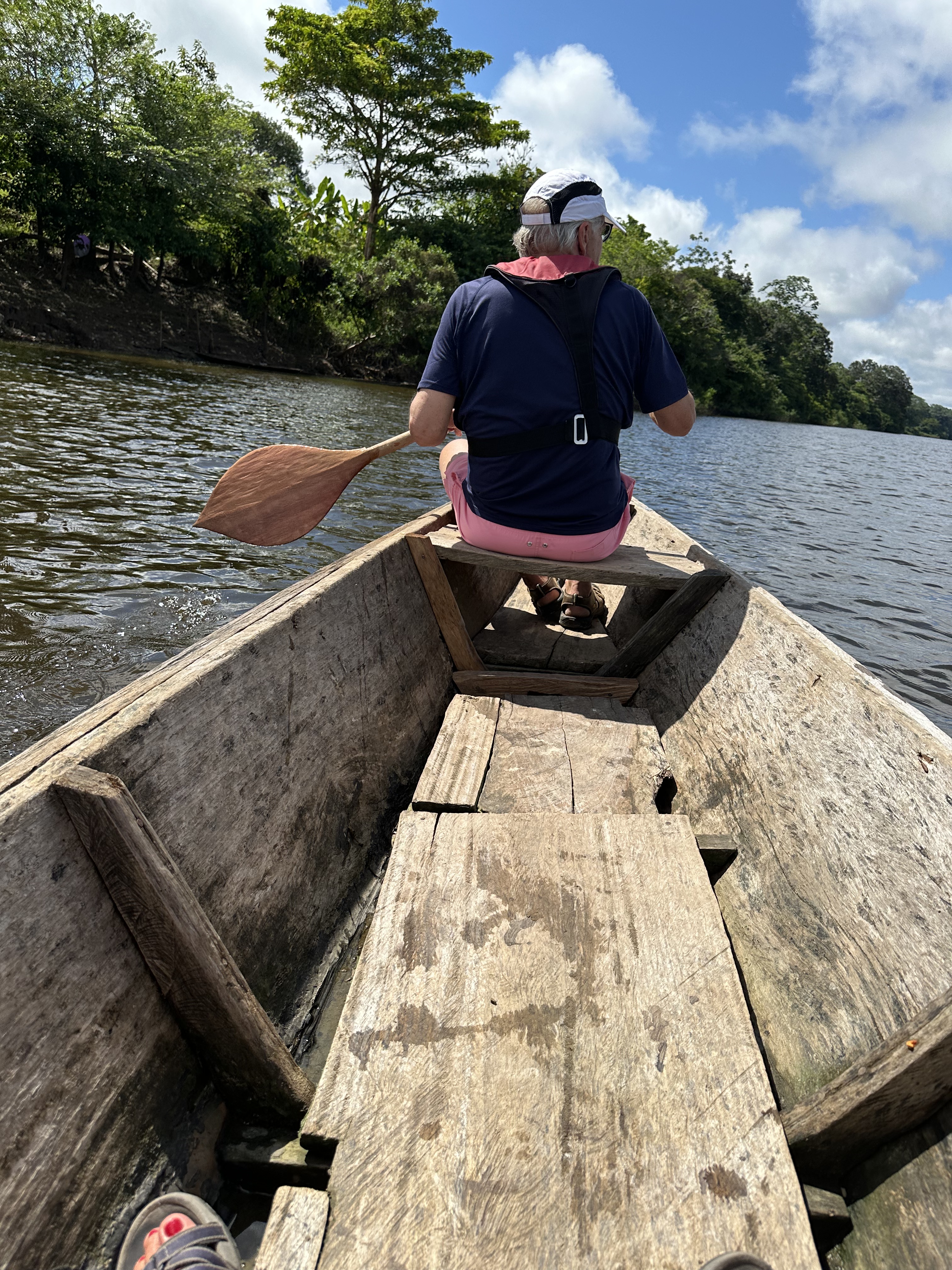
The channel getting clogedThe medic, Liliana, who kayaked with me.Entering a nerrow channelwater lettuce
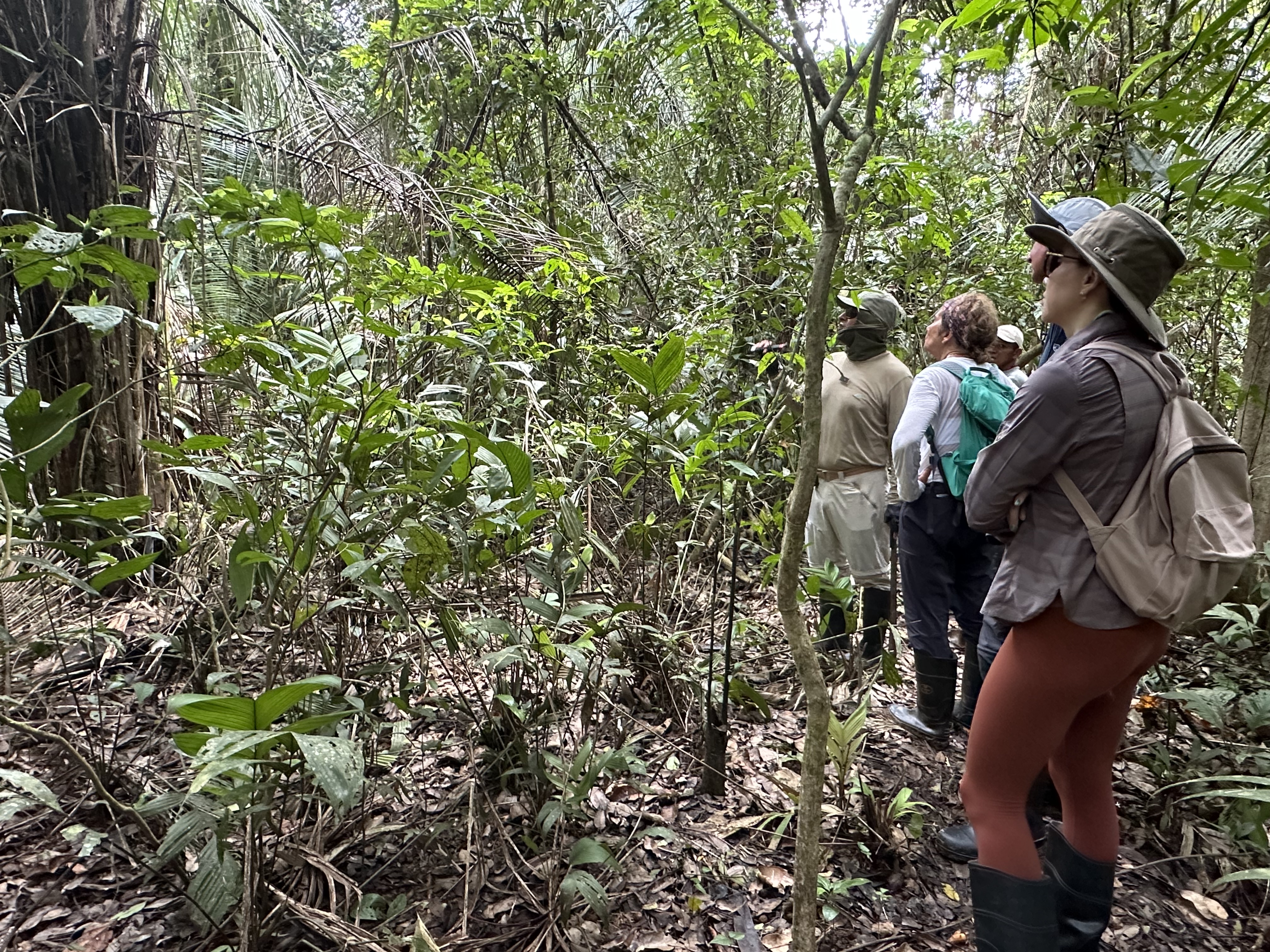
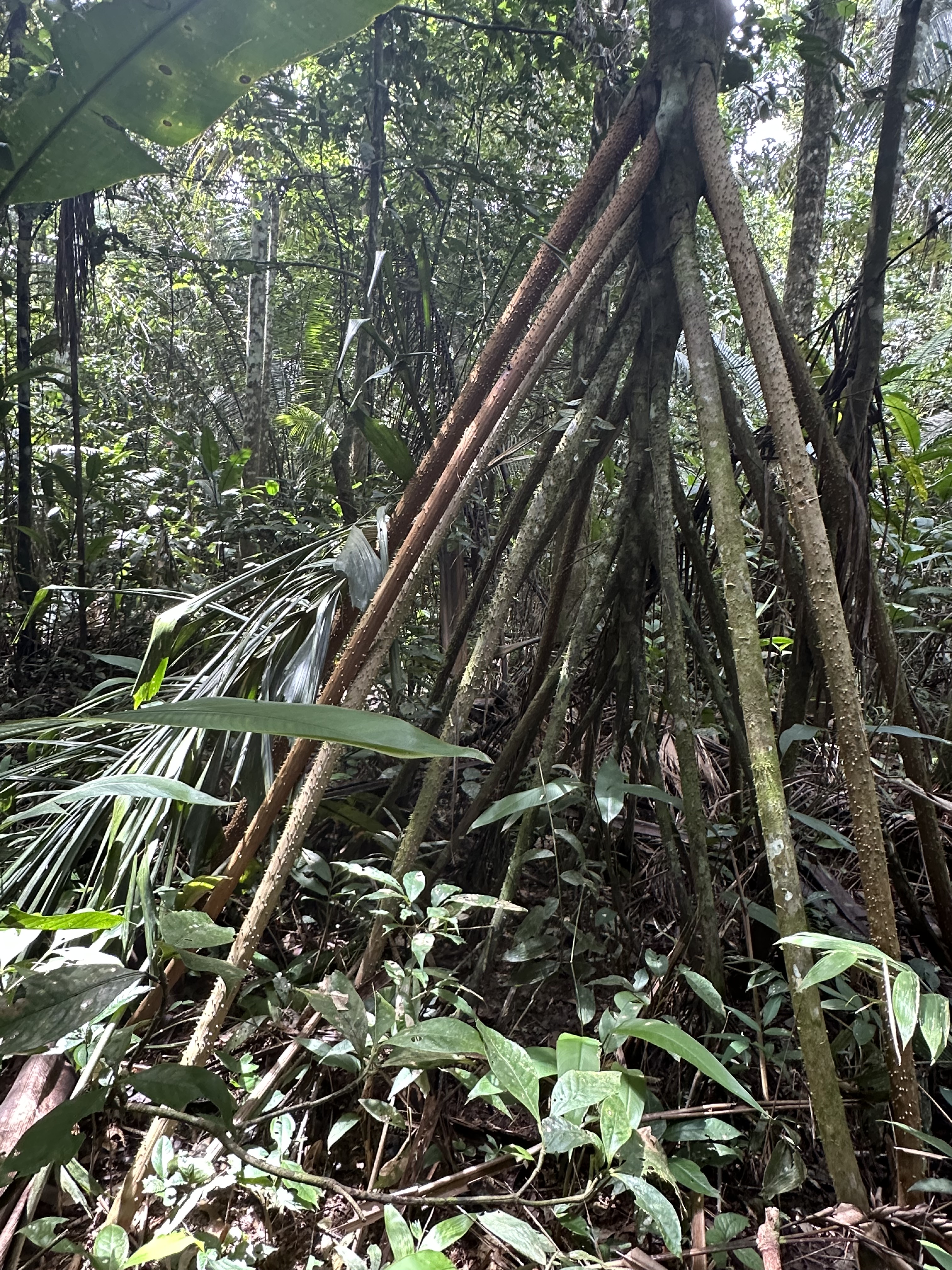
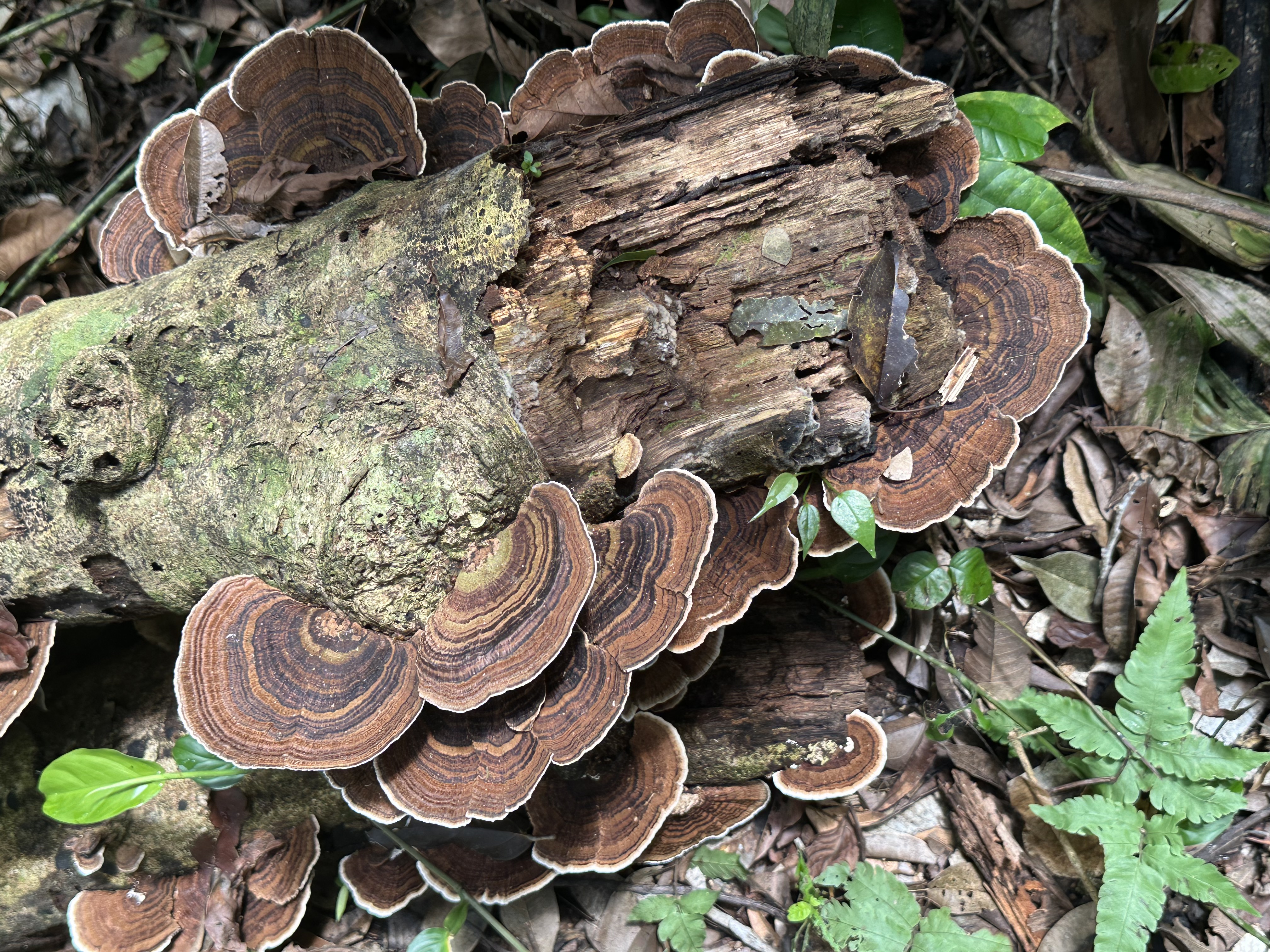
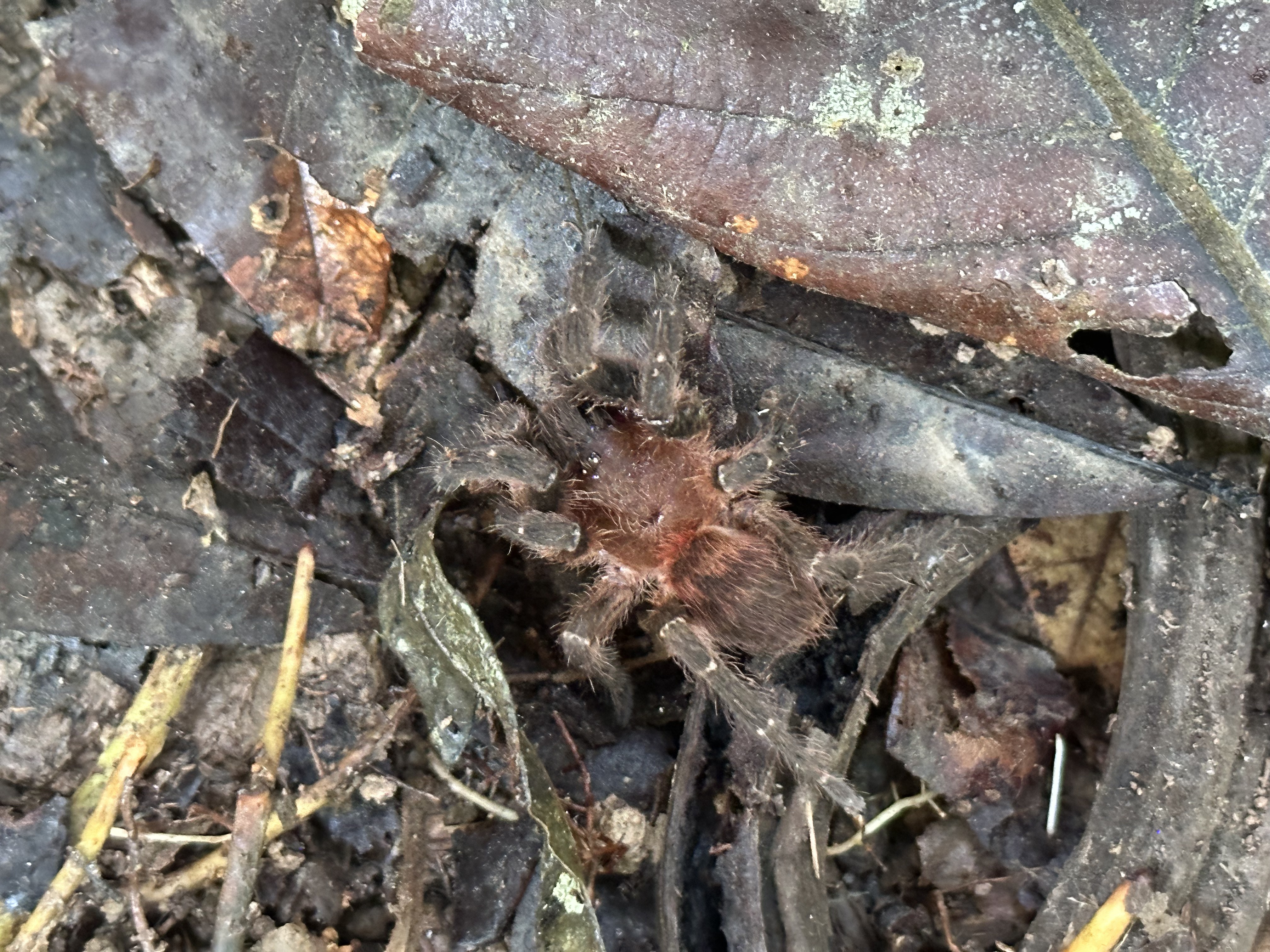
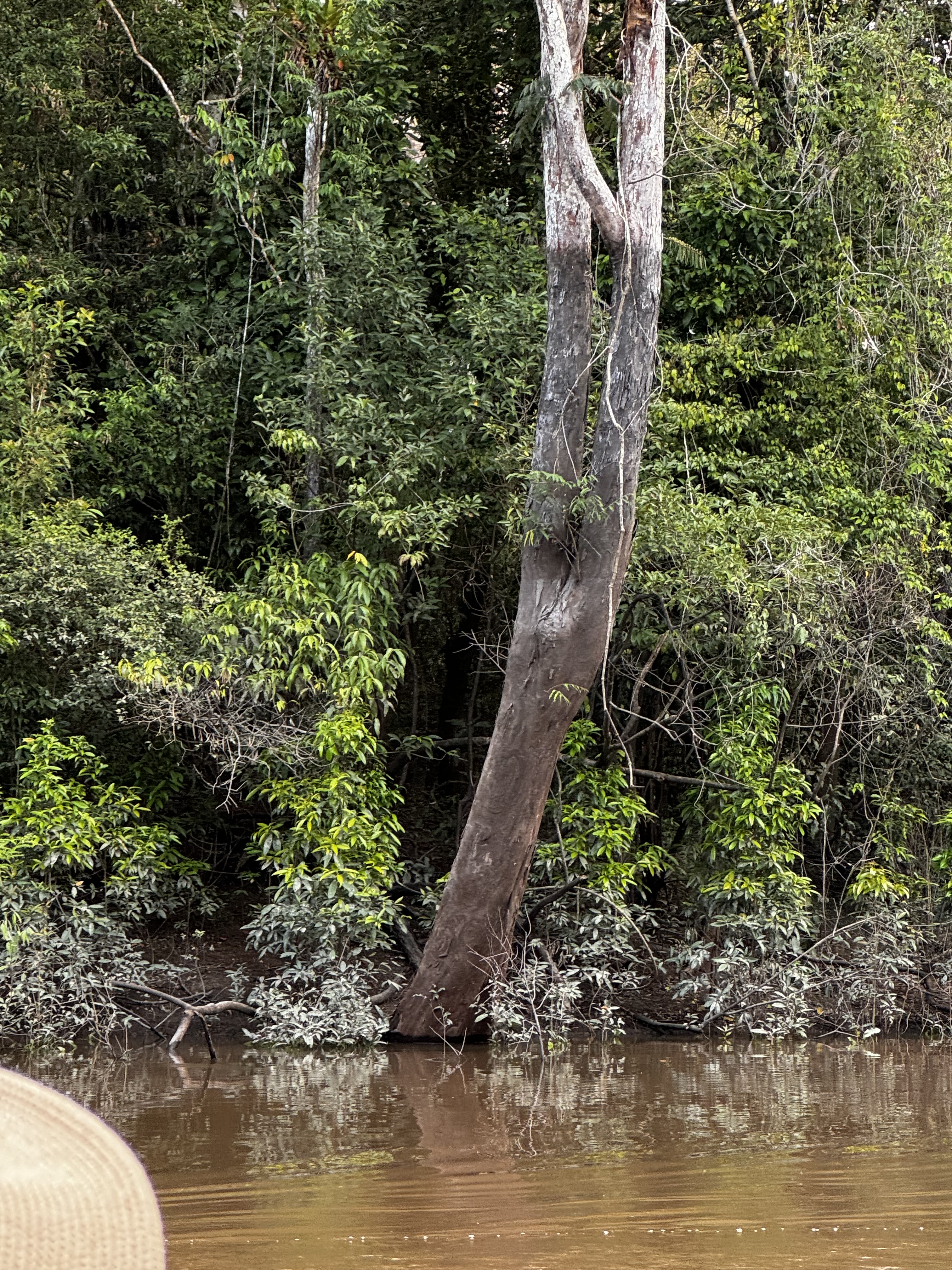
That worked pretty well and we meandered around a couple of little tributaries off the main black water river, an offshoot of the brown Amazon. After we had done enough kayaking, about 45 minutes, everyone returned to the tender and up the river we went to get to the designated jungle walk. We all changed into rubber boots and headed out into the jungle. It was full of unusual creatures.
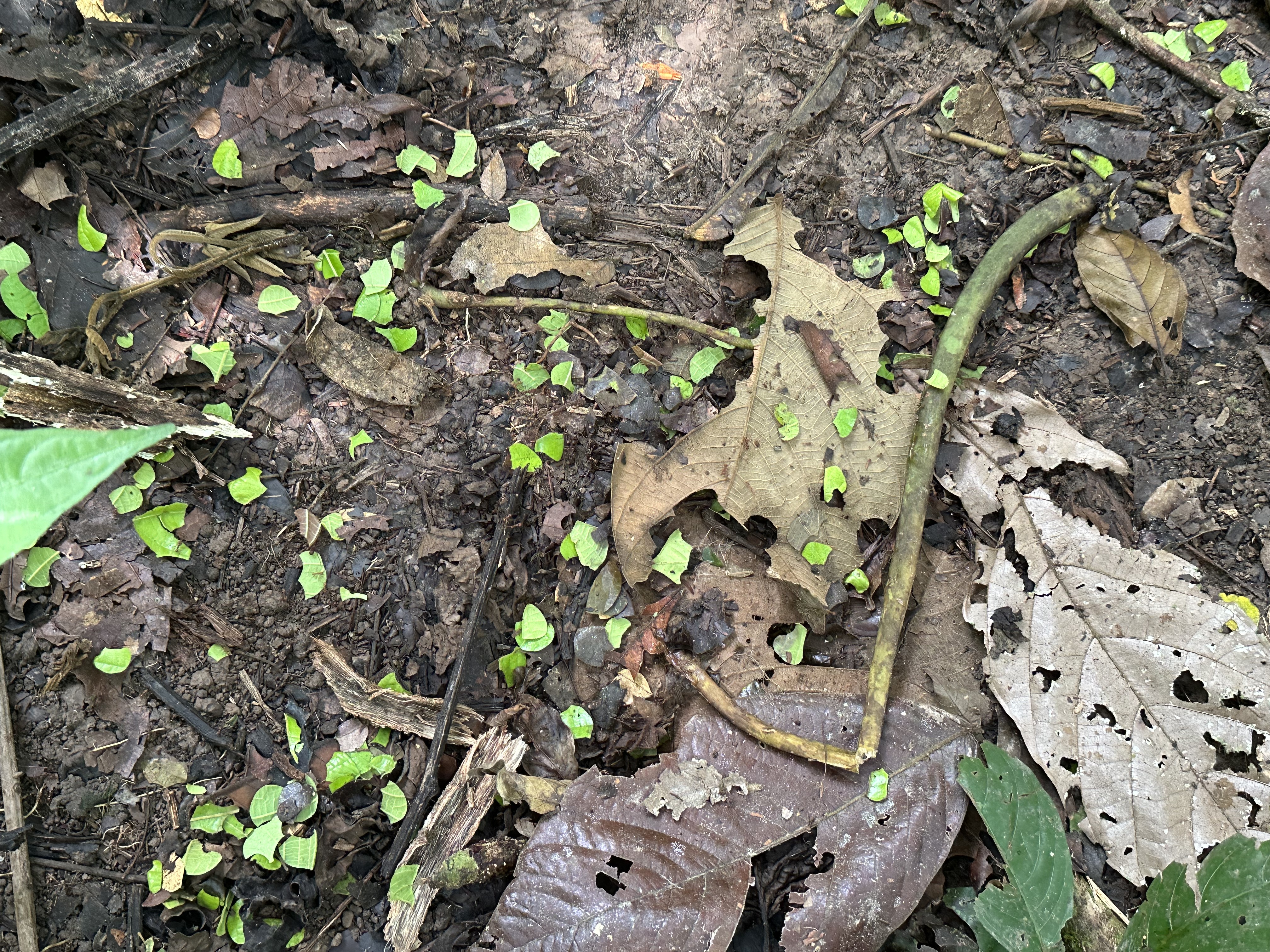
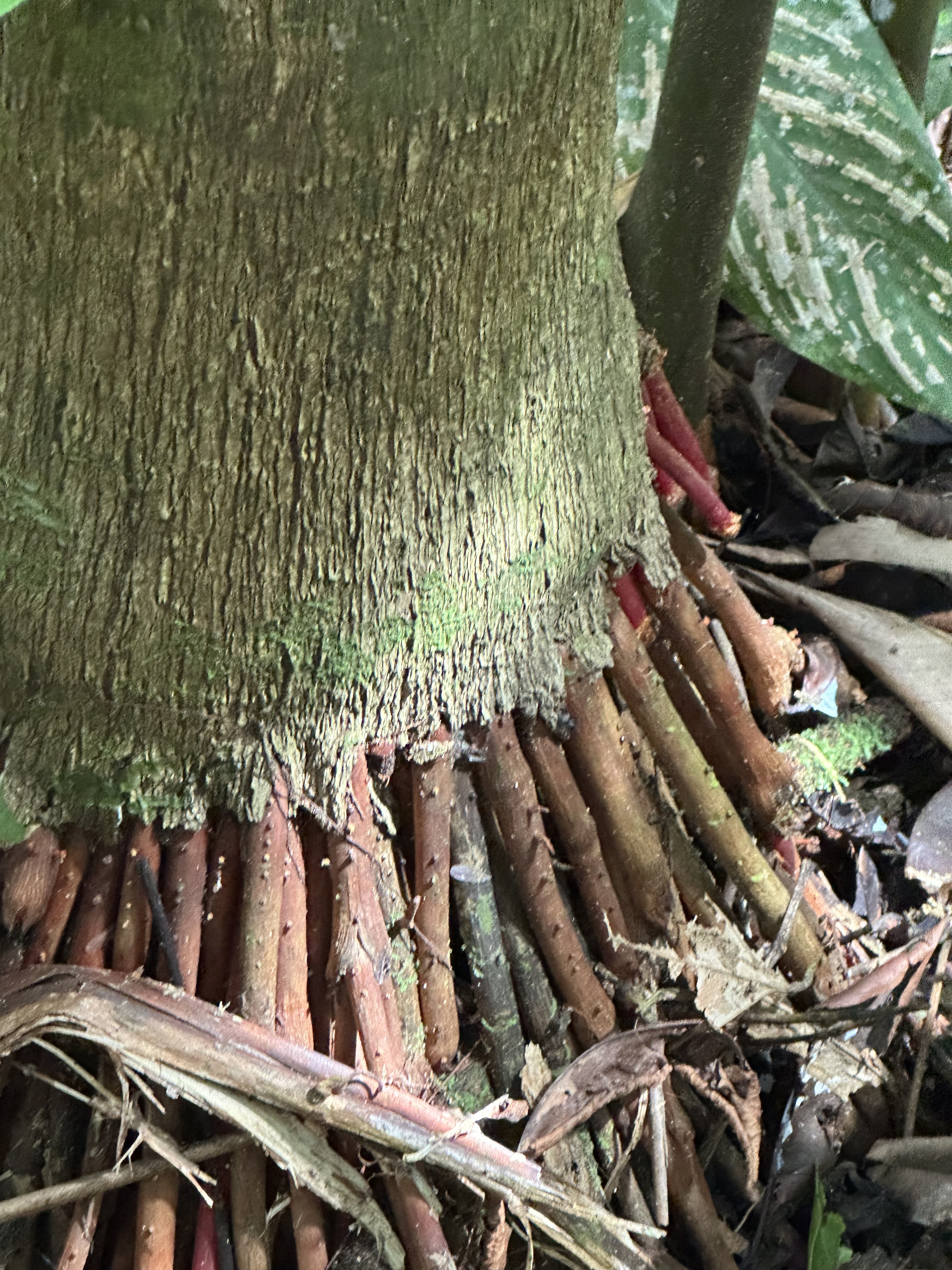
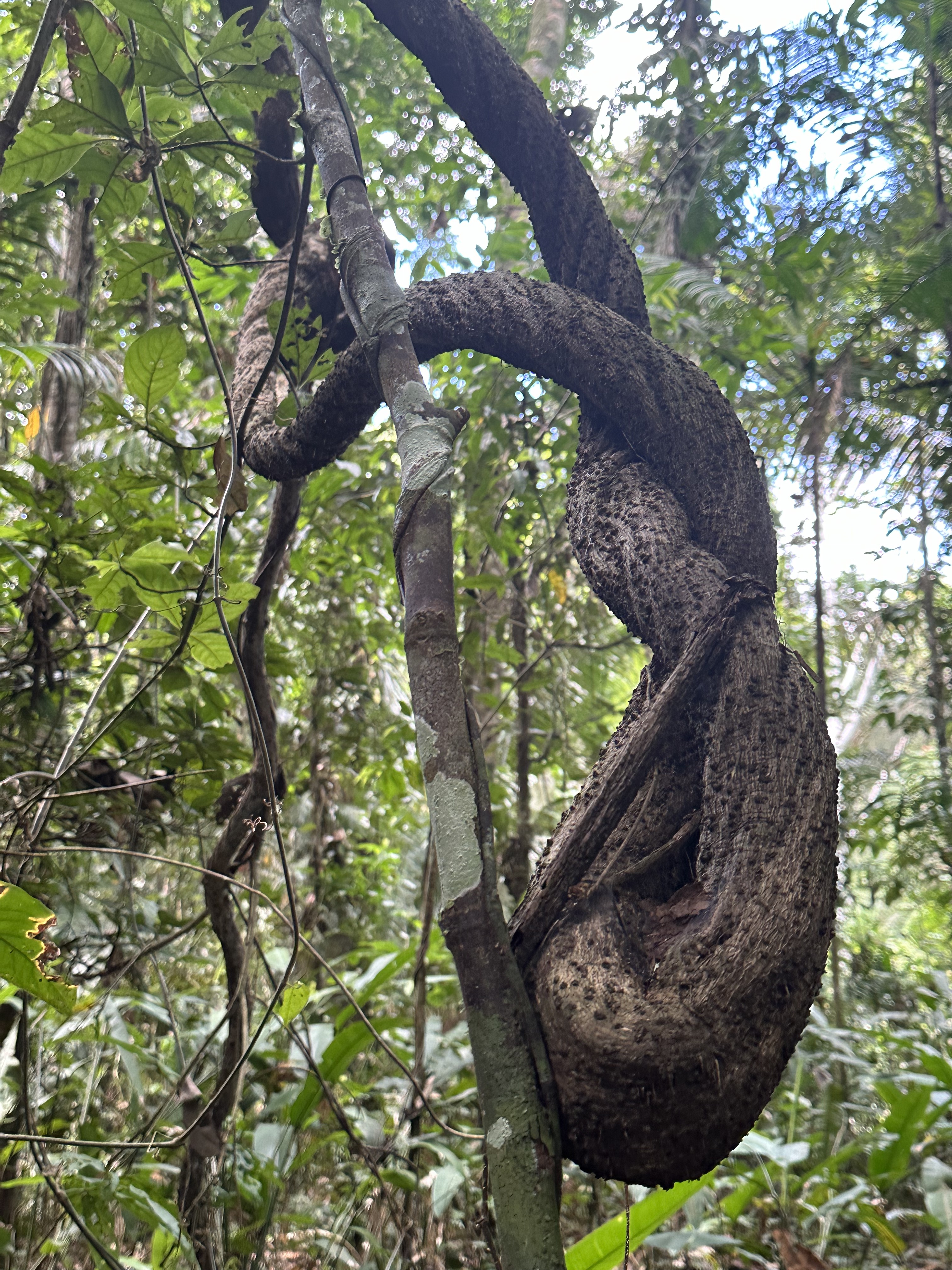
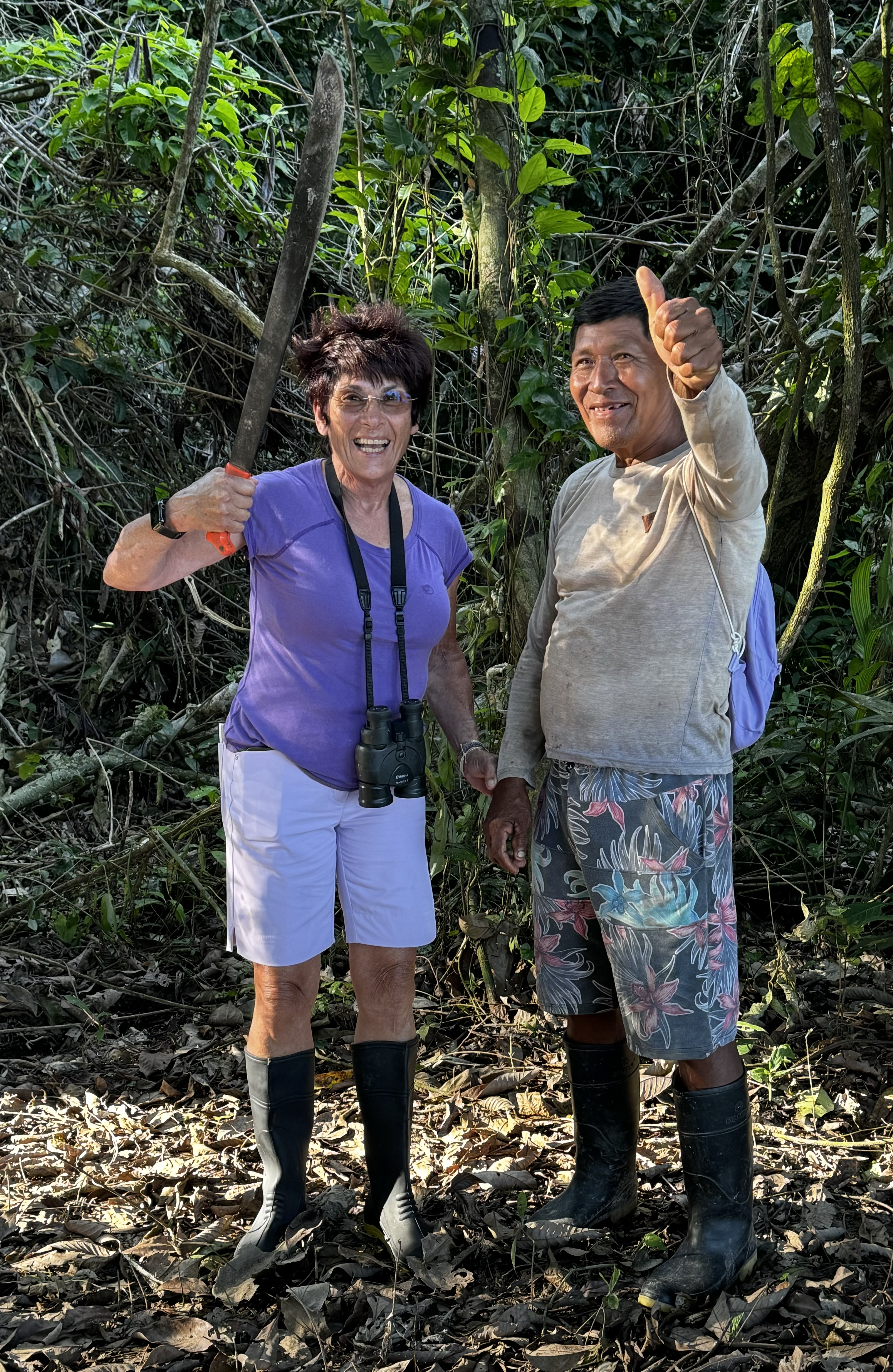
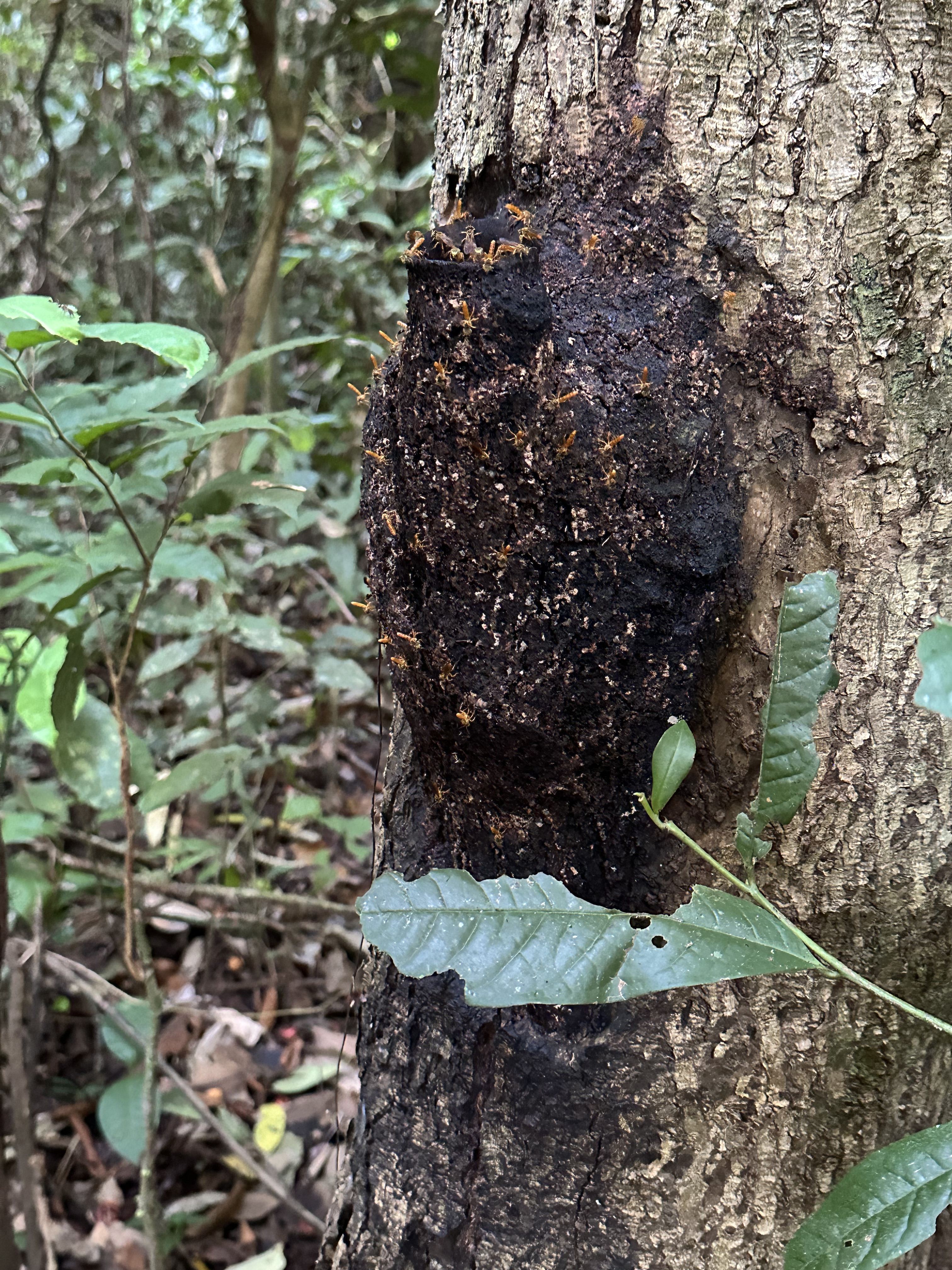
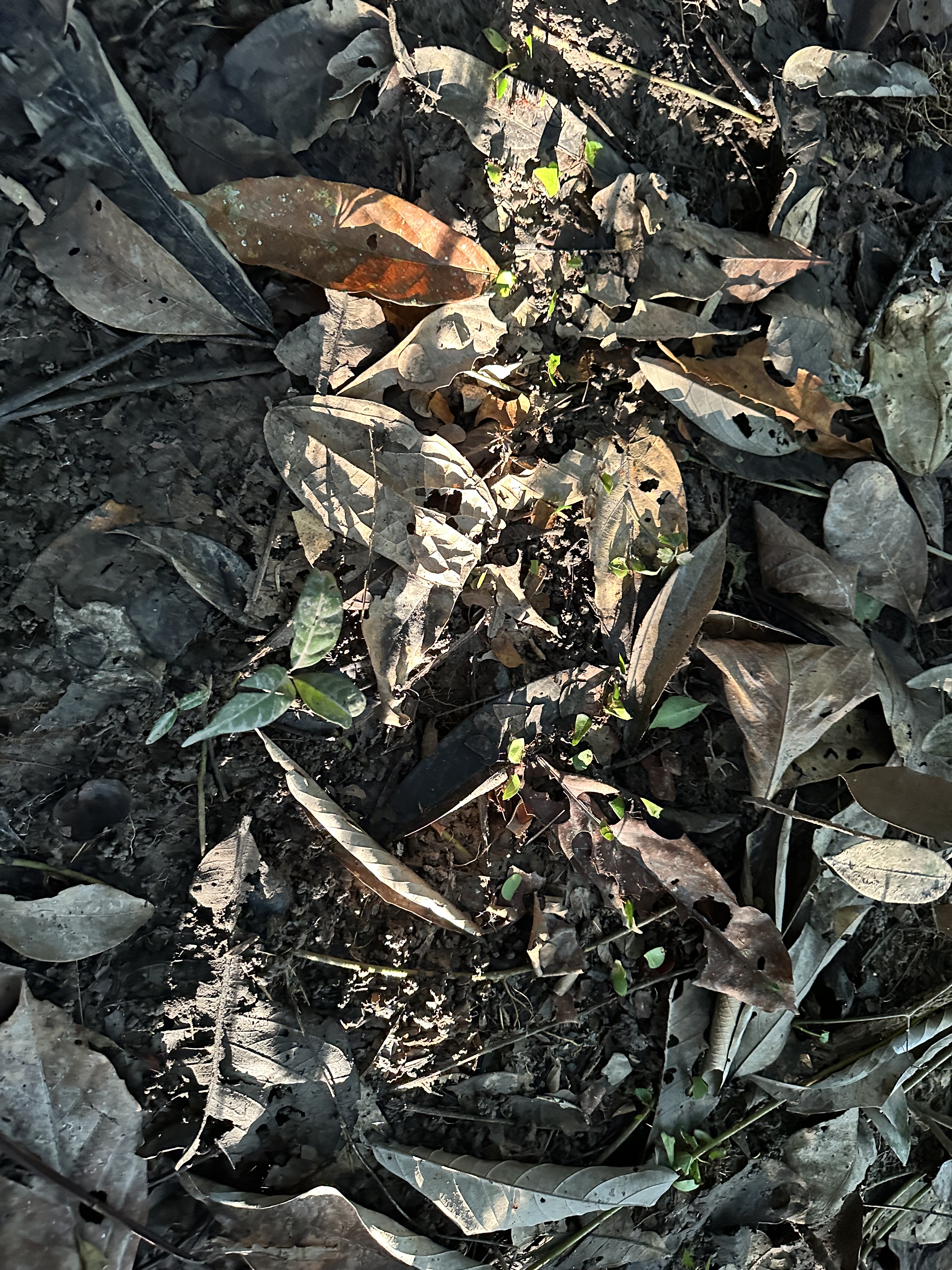
Leaf cutter ants in action The Jungle WalkWaiKng Palm TreeMagic Mushroom for smokingA Terantulla on the path.Rosewood TreeCatahua Tree. It has very poisonous nectarAyahuasca vine used for body healing Yellow Crowned Rat behind the green leaf
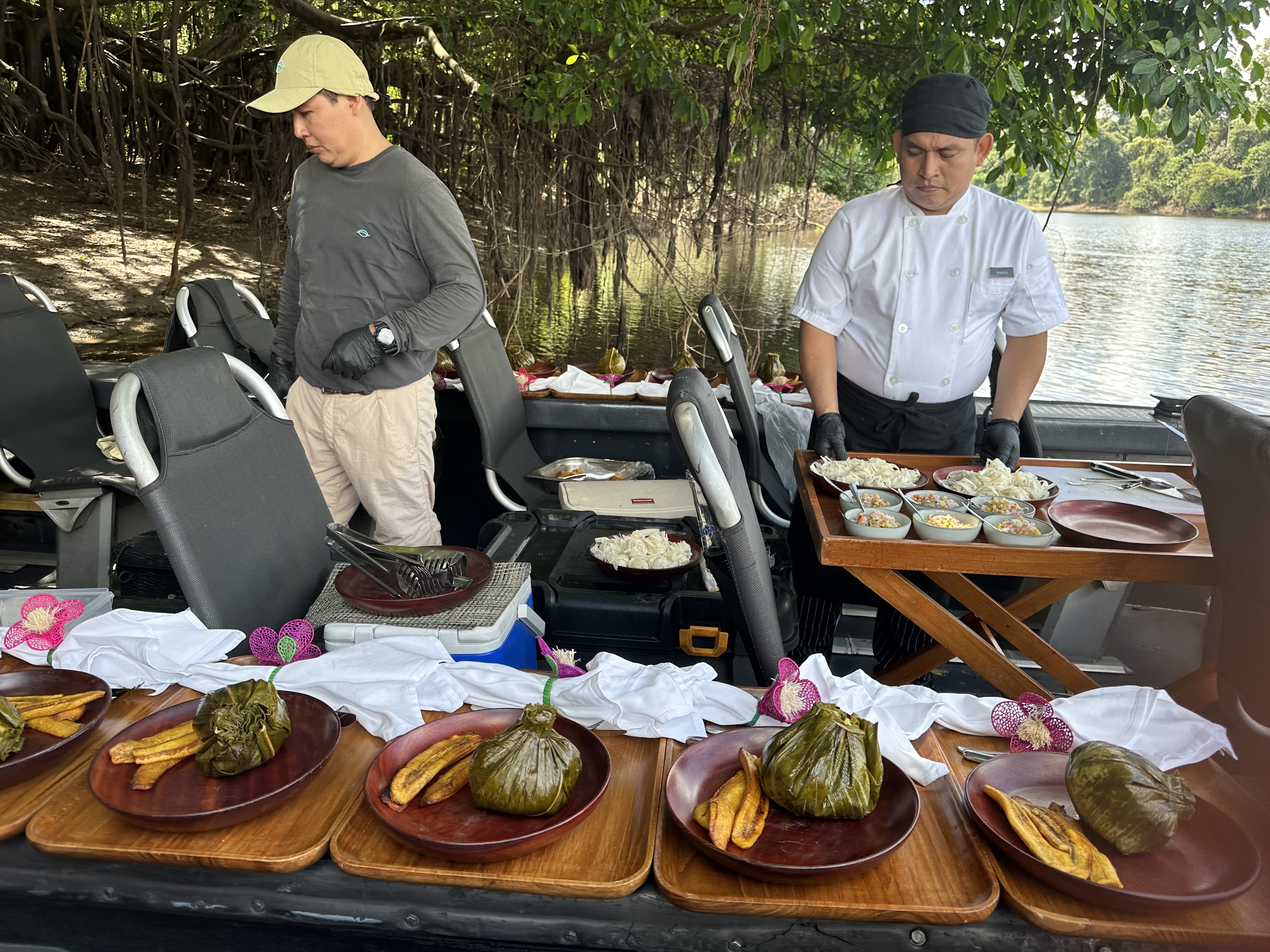
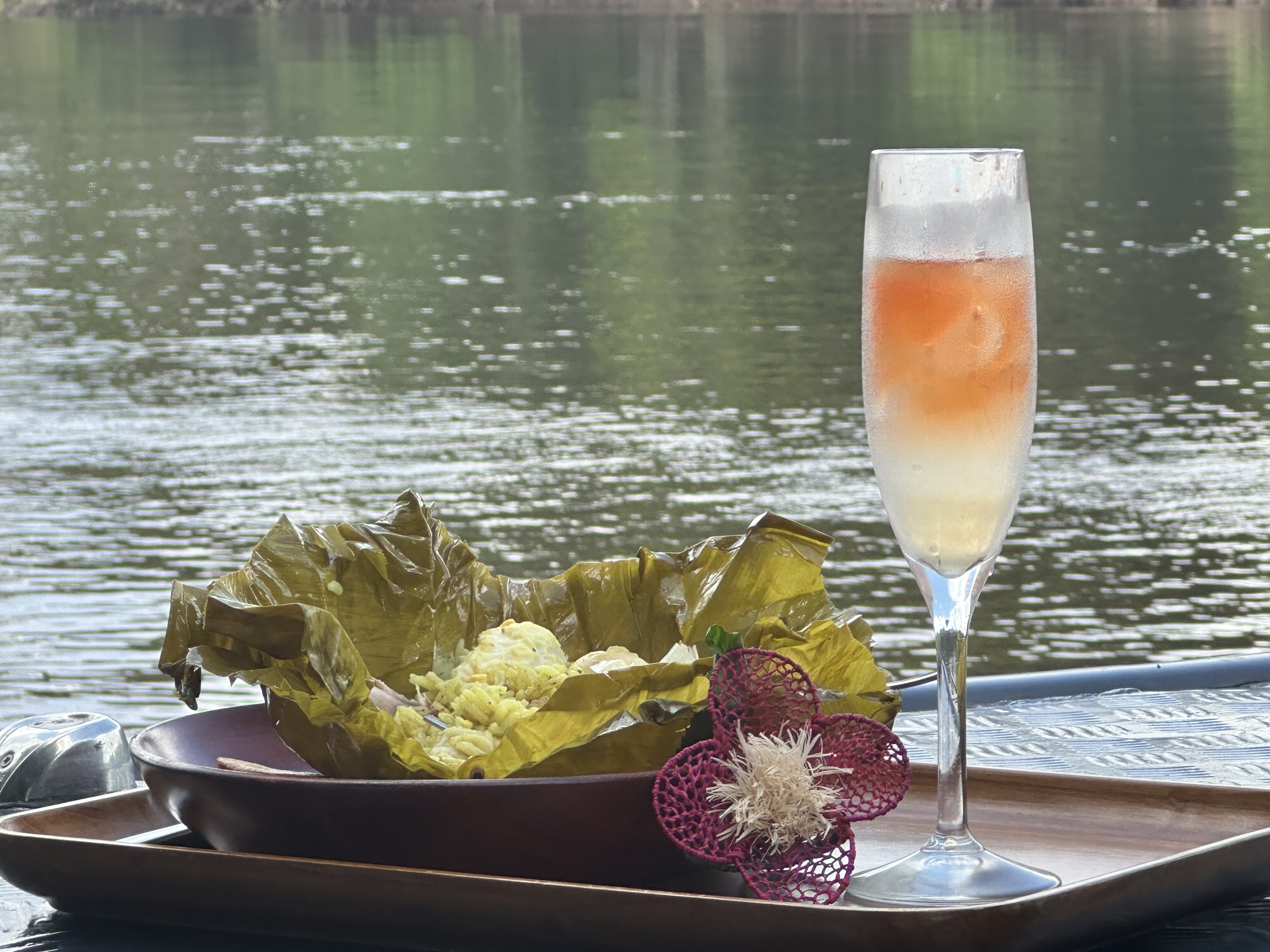
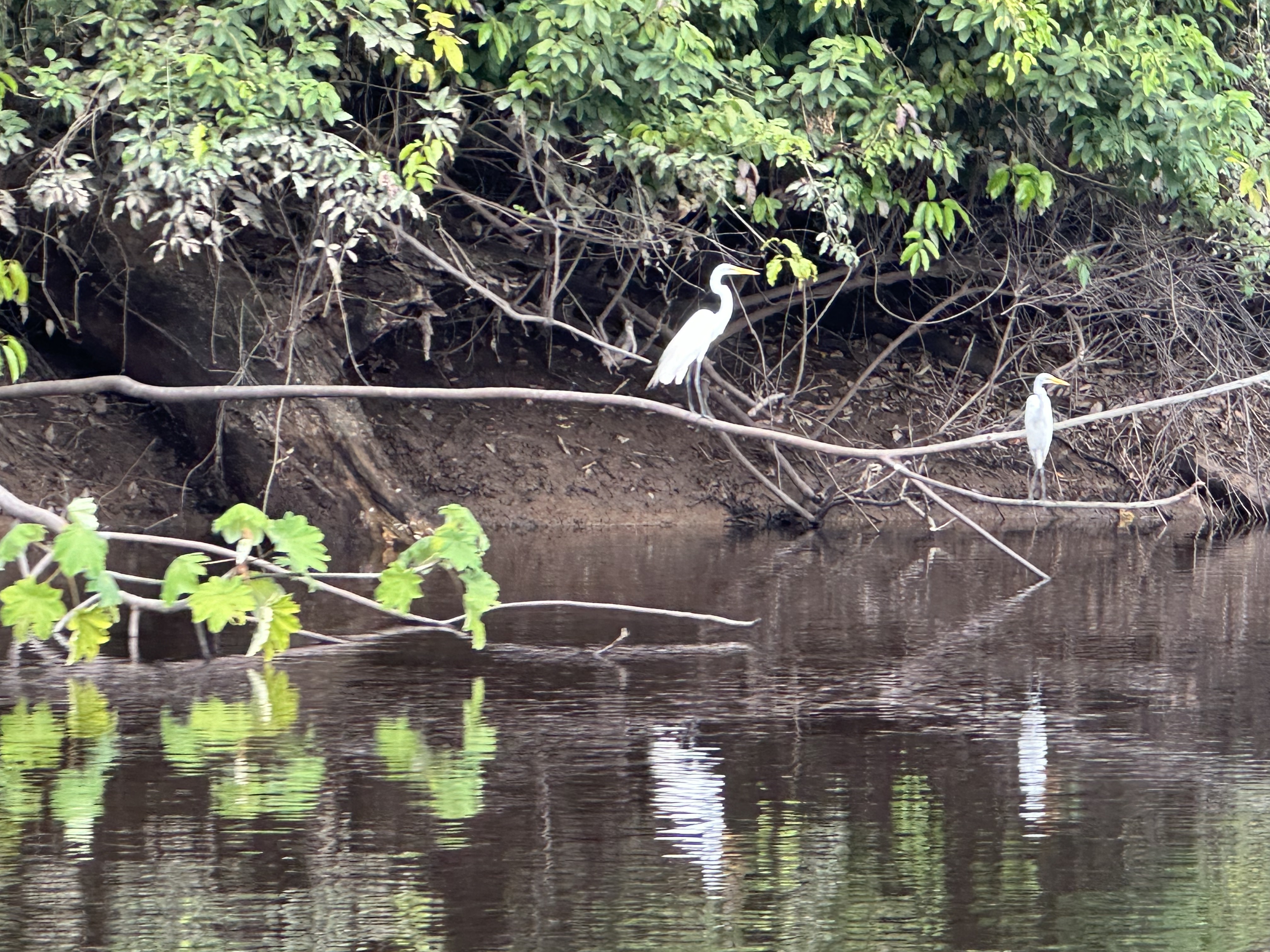
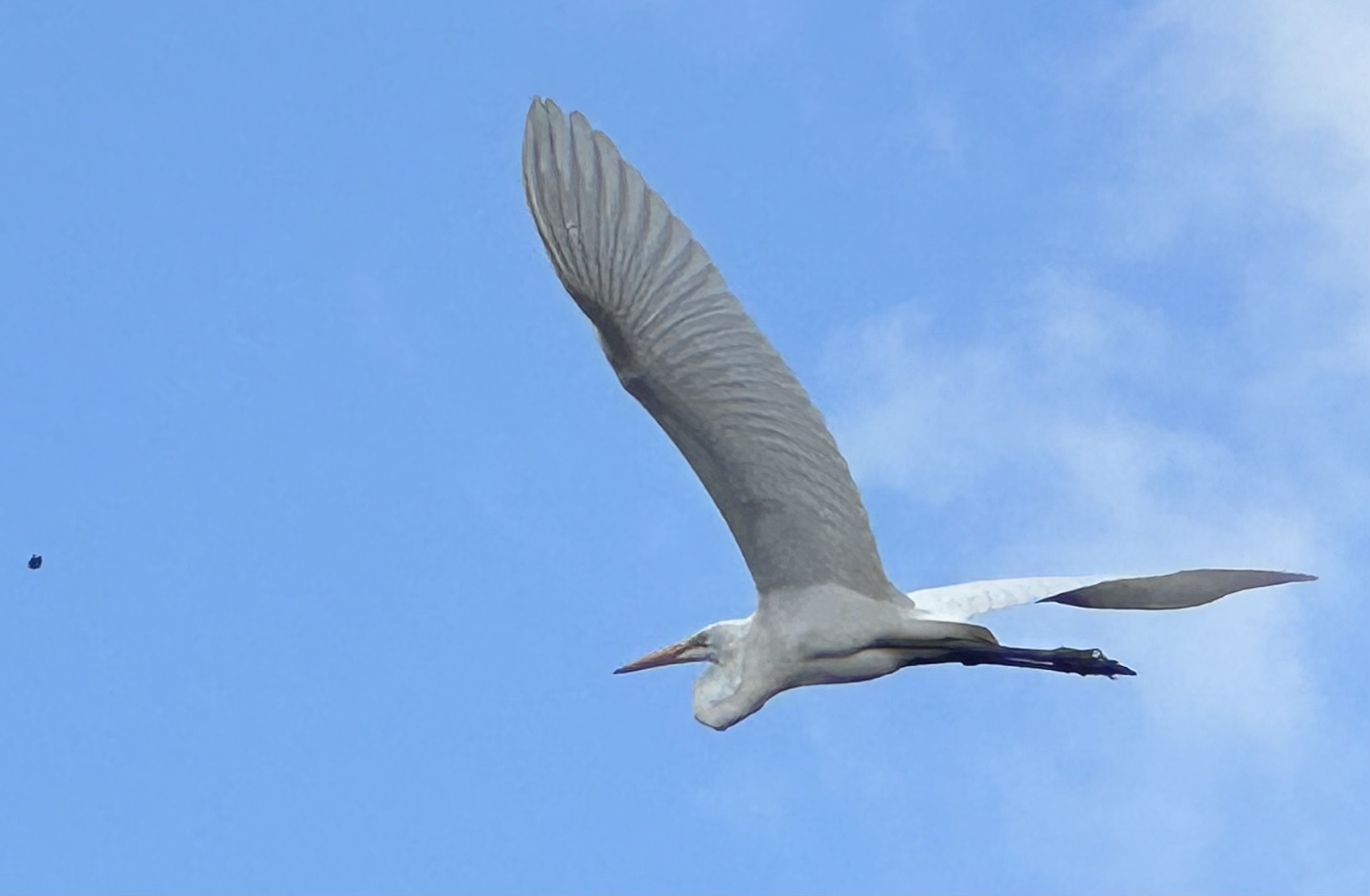
After the one hour walk we got back into the tenders and rafted up with the food tender, bar tender included, for a picnic lunch. This time it was rice, chicken and a hard boiled egg wrapped in a banana leaf, hearts of palm salad, chocolate salami and and Oreo like cookie. We are being fed oh so well. Near by were branches full of egrets. I even caught one in flight.
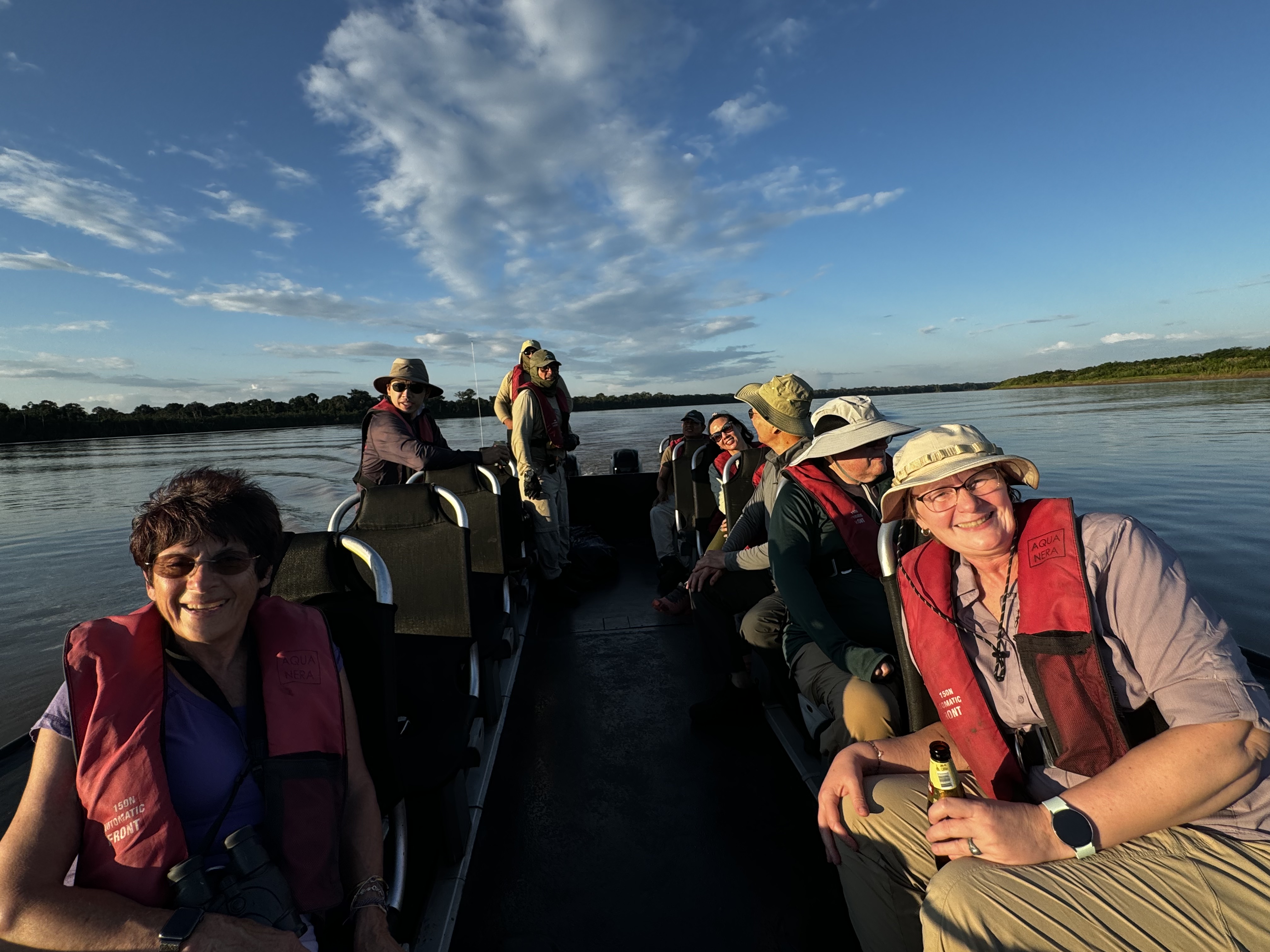
Shortly after lunch, we motored out into the middle of the river and dropped into the water for a leisurely drift while wearing life vests. Mark took his off and floated on it instead of in it. We were definitely drifting downstream, but decided to let the crew follow us rather than fight the current. The water temperature was perfect. I wish Lake Tahoe was like this. Eventually we were ready to go back to our ship and called for the tender.
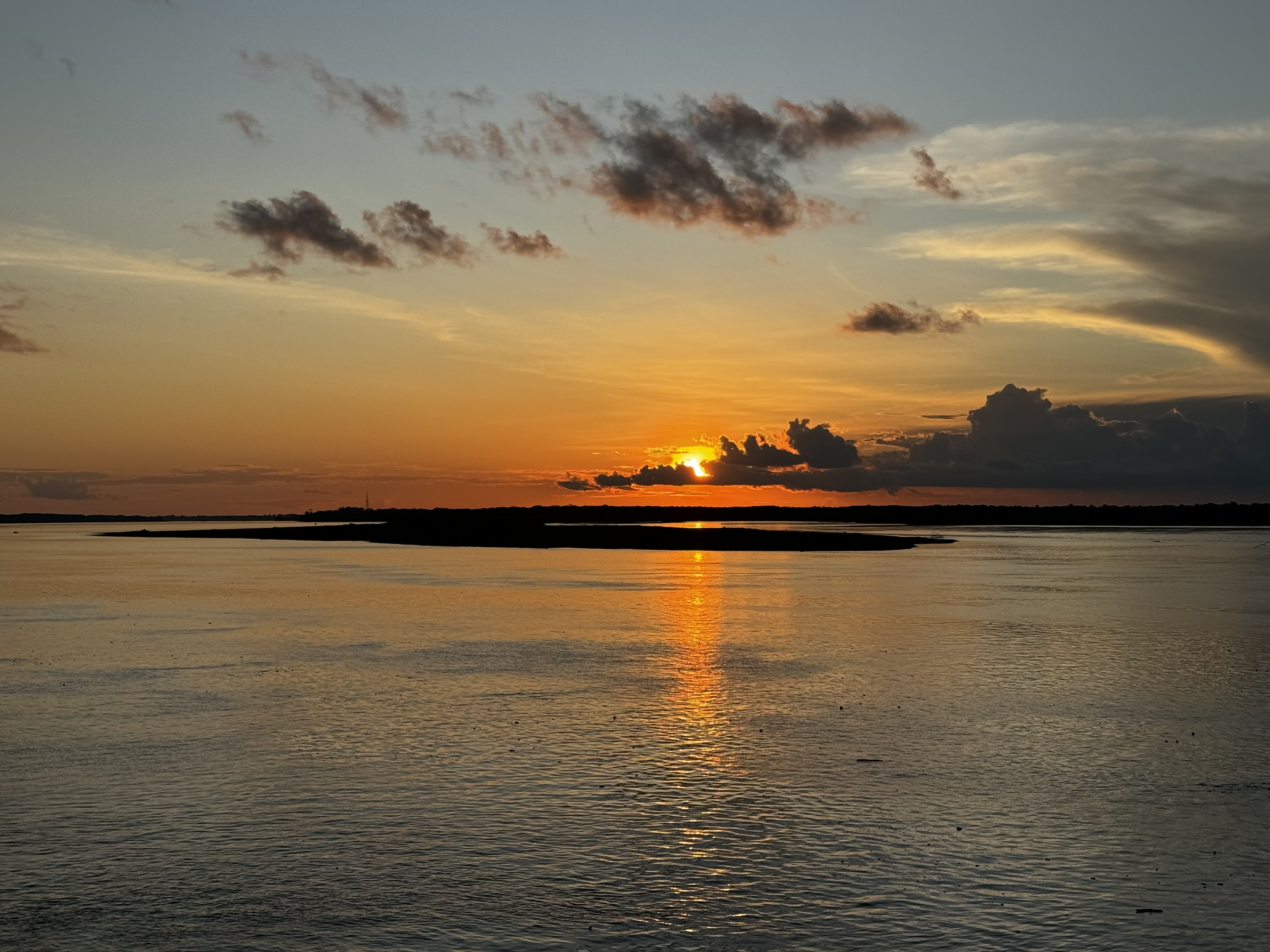
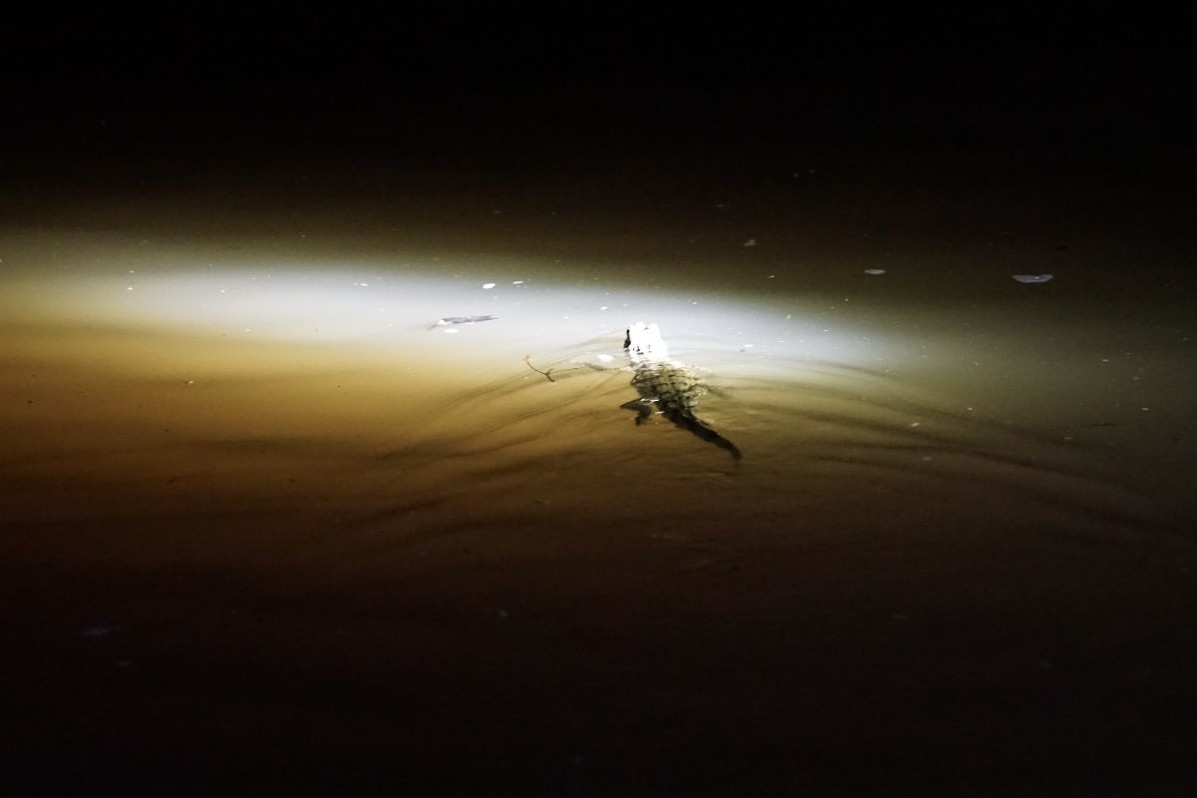
A black Headed HeronA flock of McawsA sea otter popped his head up Sunset from the shipA caiman at night. A member of the alligator family.
We picked up a few more photos on the way and I must give credit for the animal images to Wallace, a fellow traveler. It was about a 20 minute run back to the ship, followed by showers and moisturizers. Most people in our group had received many mosquito bites and too much sun. We had faired fairly well in both cases. Once cleaned up we spent the rest of the afternoon on the pool deck enjoying the breeze as the ship motored north toward Iquitos.
As sunset, the crew band began to play and everyone onboard showed up to share drinks, appetizers and music. Mark took a lovely photo of the sunset. Then we had dinner and went to bed.
The weather has been nearly perfect the whole week. Only one hour of rain on one afternoon. Otherwise sunny, but not overly hot or humid.
Friday, July 1, 2024
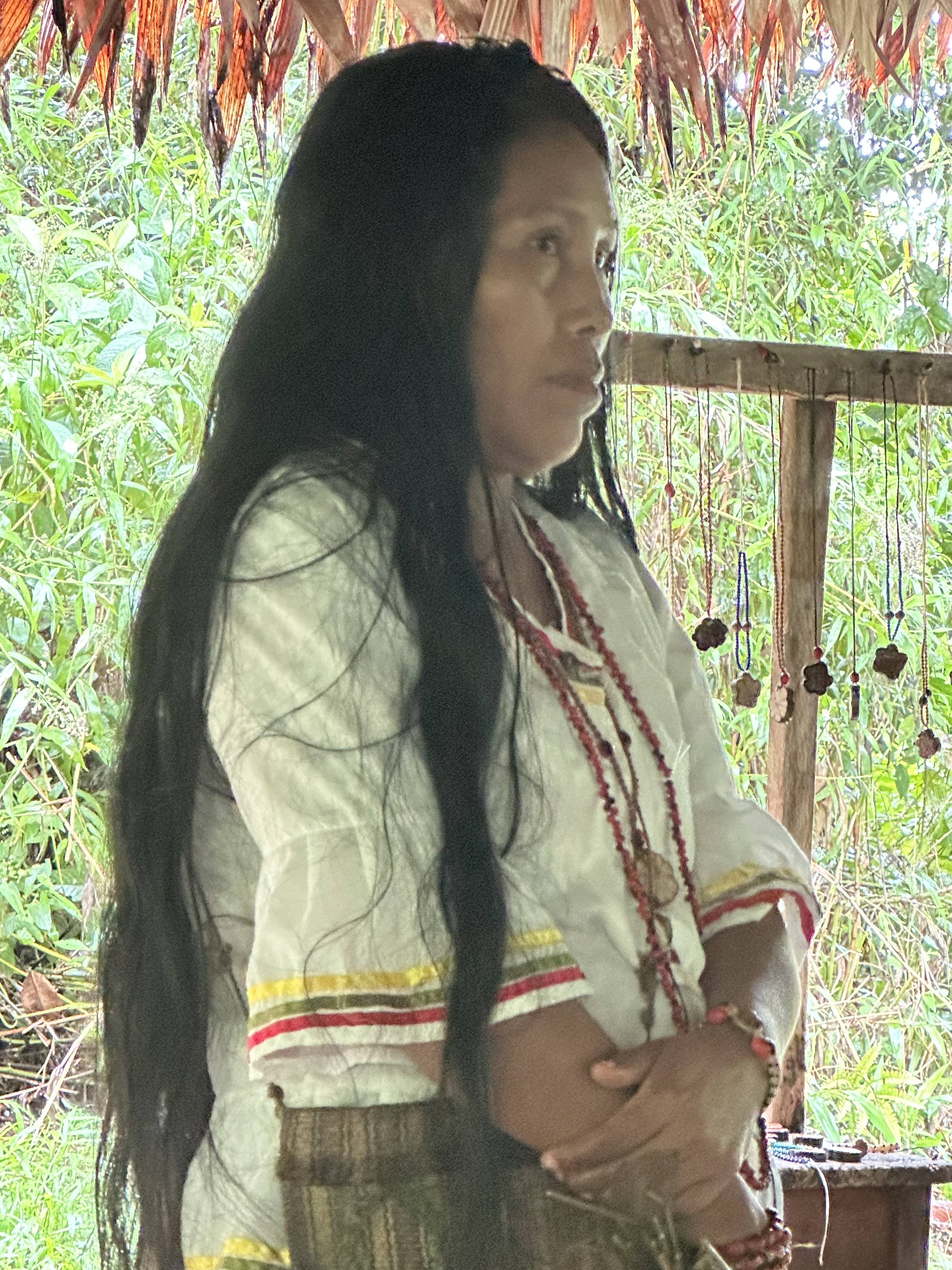
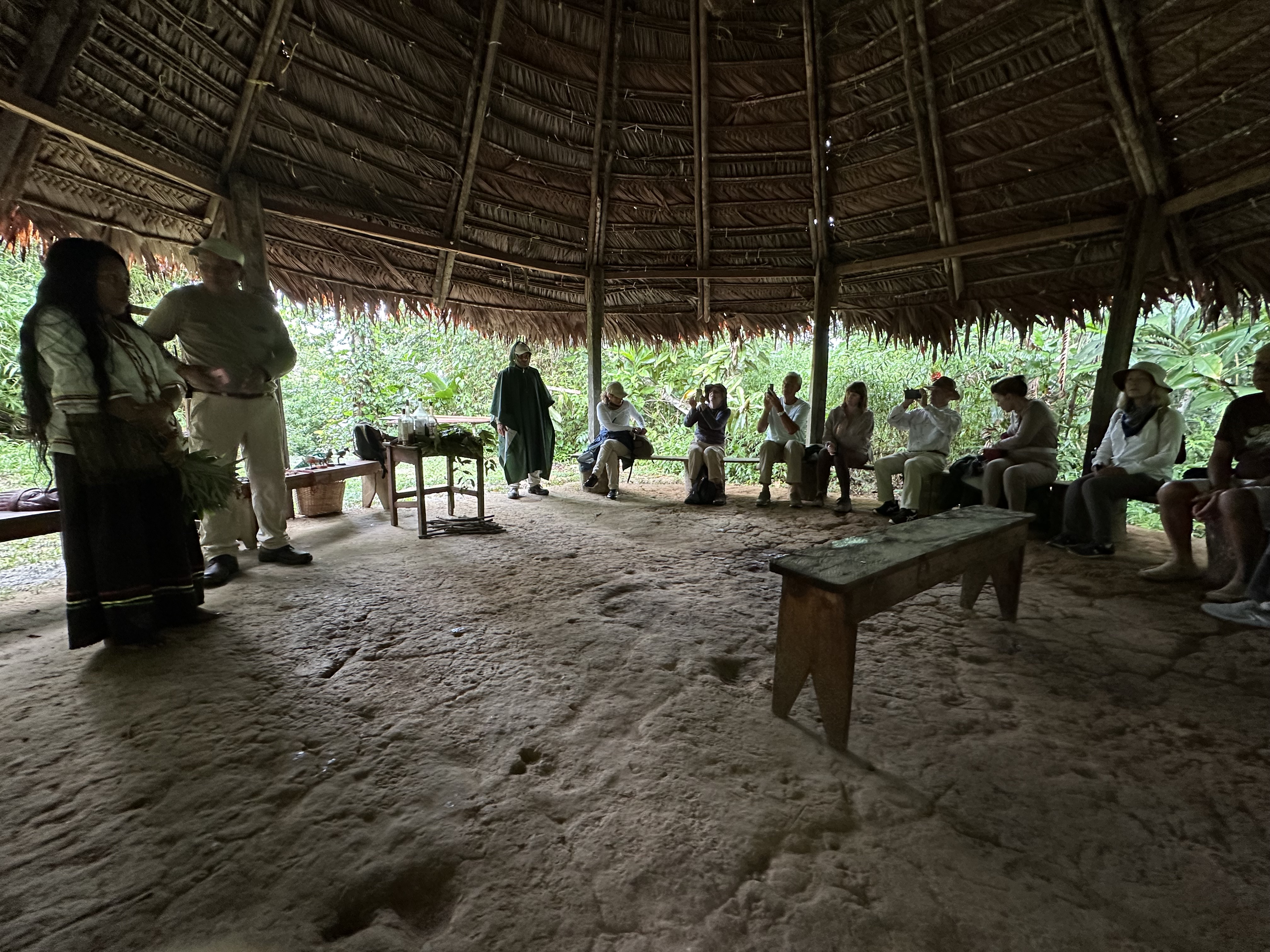
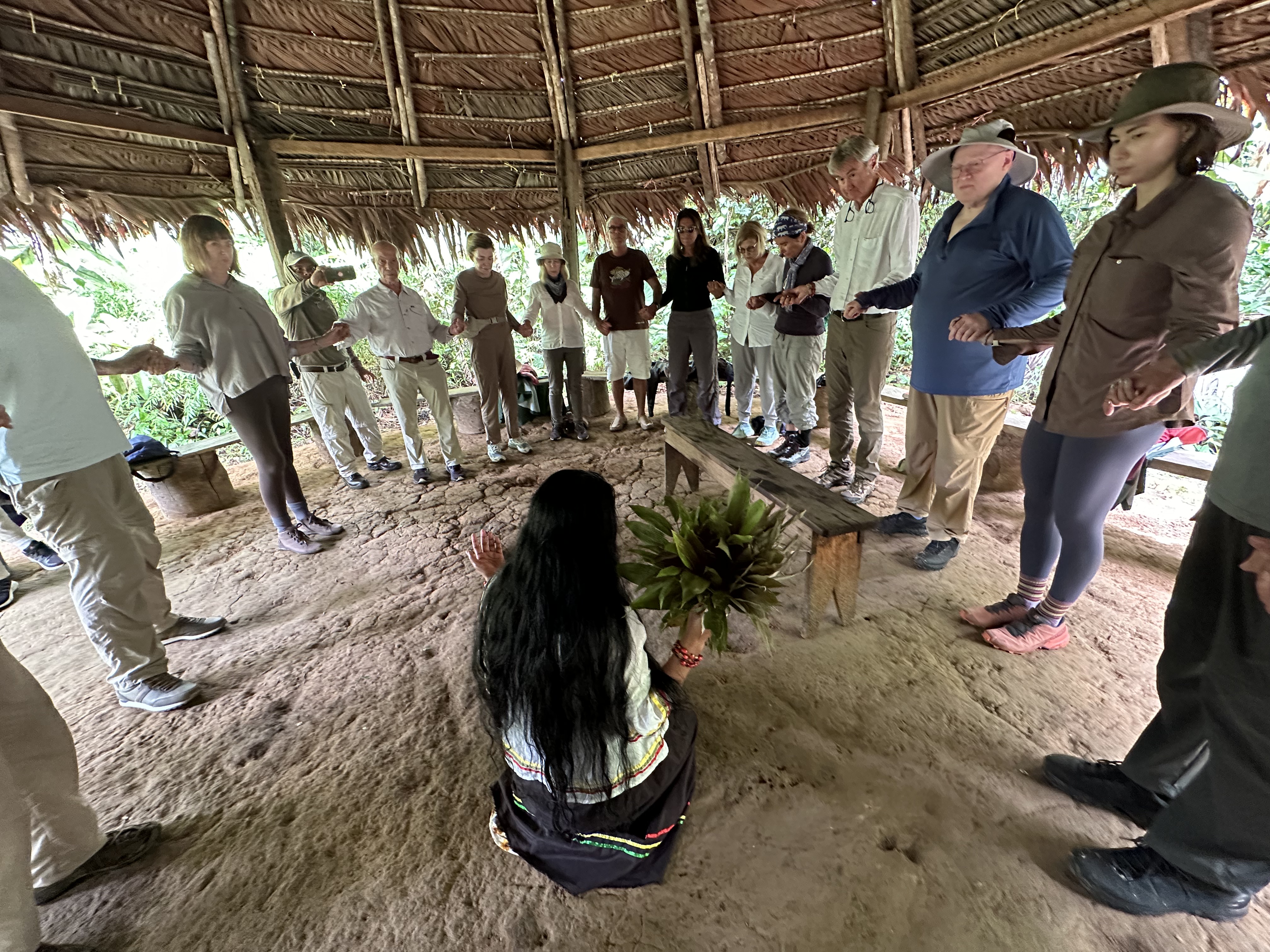
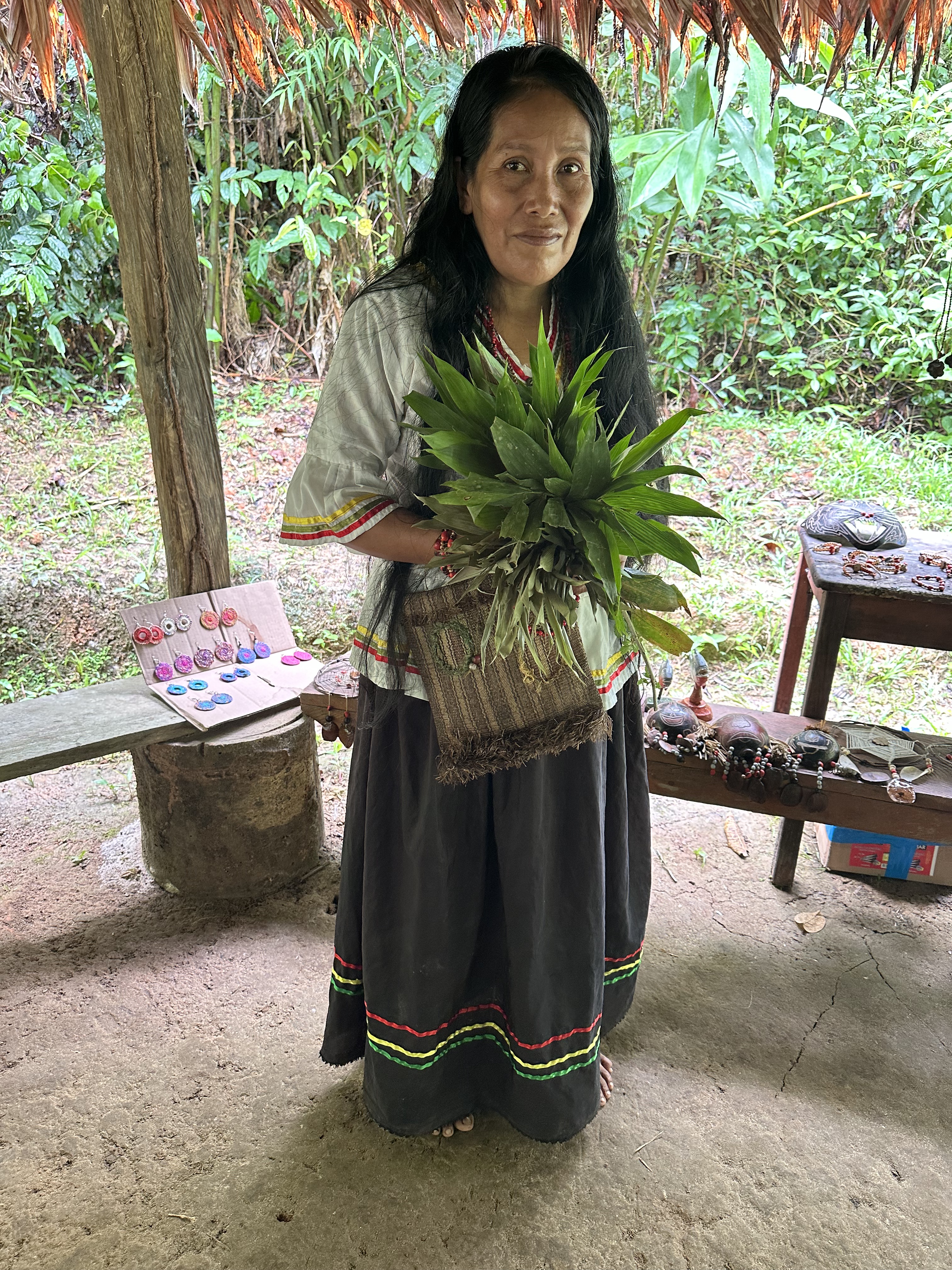
We wake up still on the clear, black Moranon River. Kept breakfast simple with fruit and yogurt. Then out at 9am for a Tender ride to visit a Shamana (female shaman), named Karuka. She is a 31 year old local healer who was chosen at age 14 by her grandfather, a medicine man, who had a vision that she would become a shaman. She agreed and spent 8 years under a strict set of rules to follow as well as a strict diet. Once she finished her training, she became a shaman and started training others in the art.
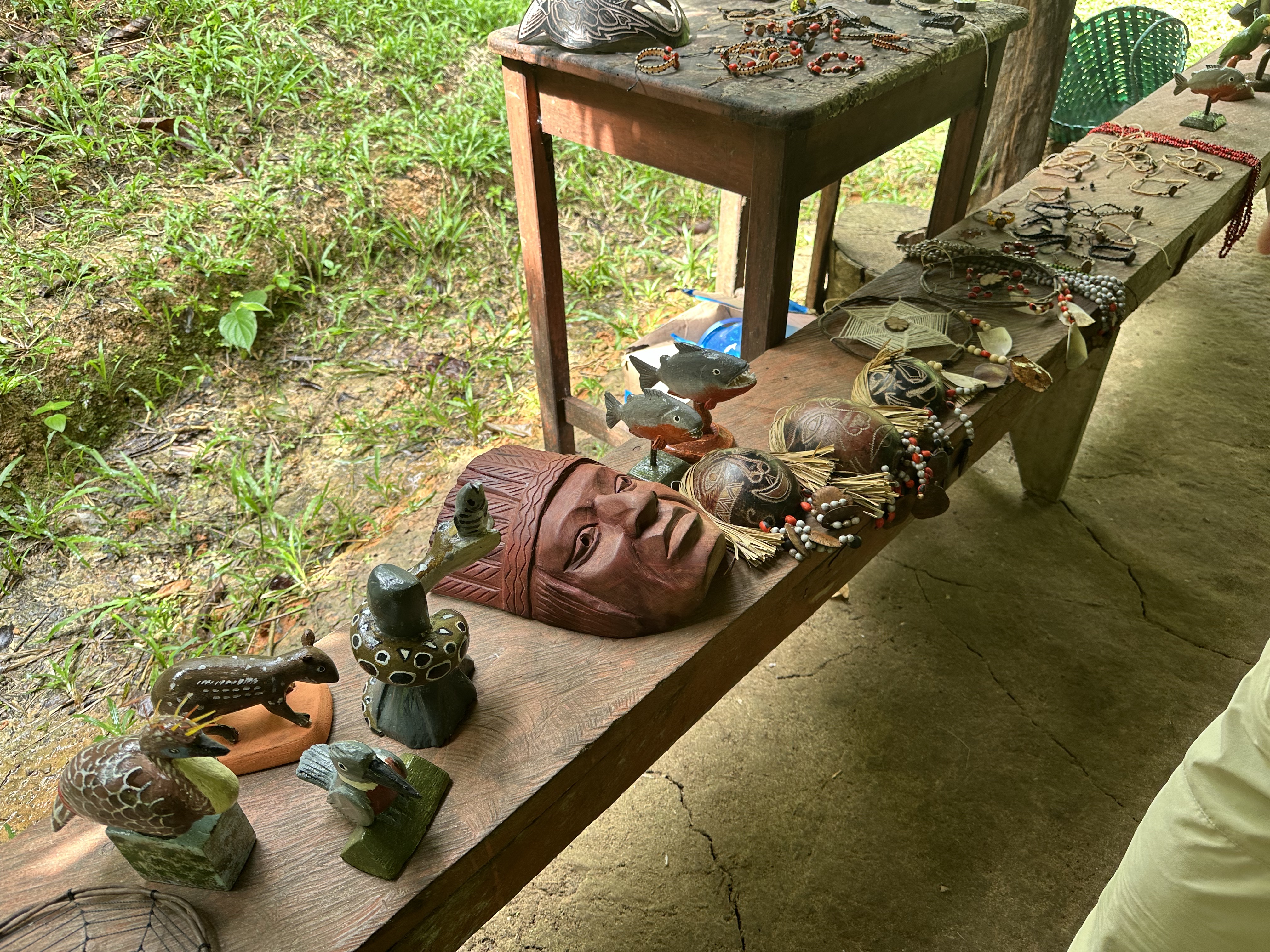
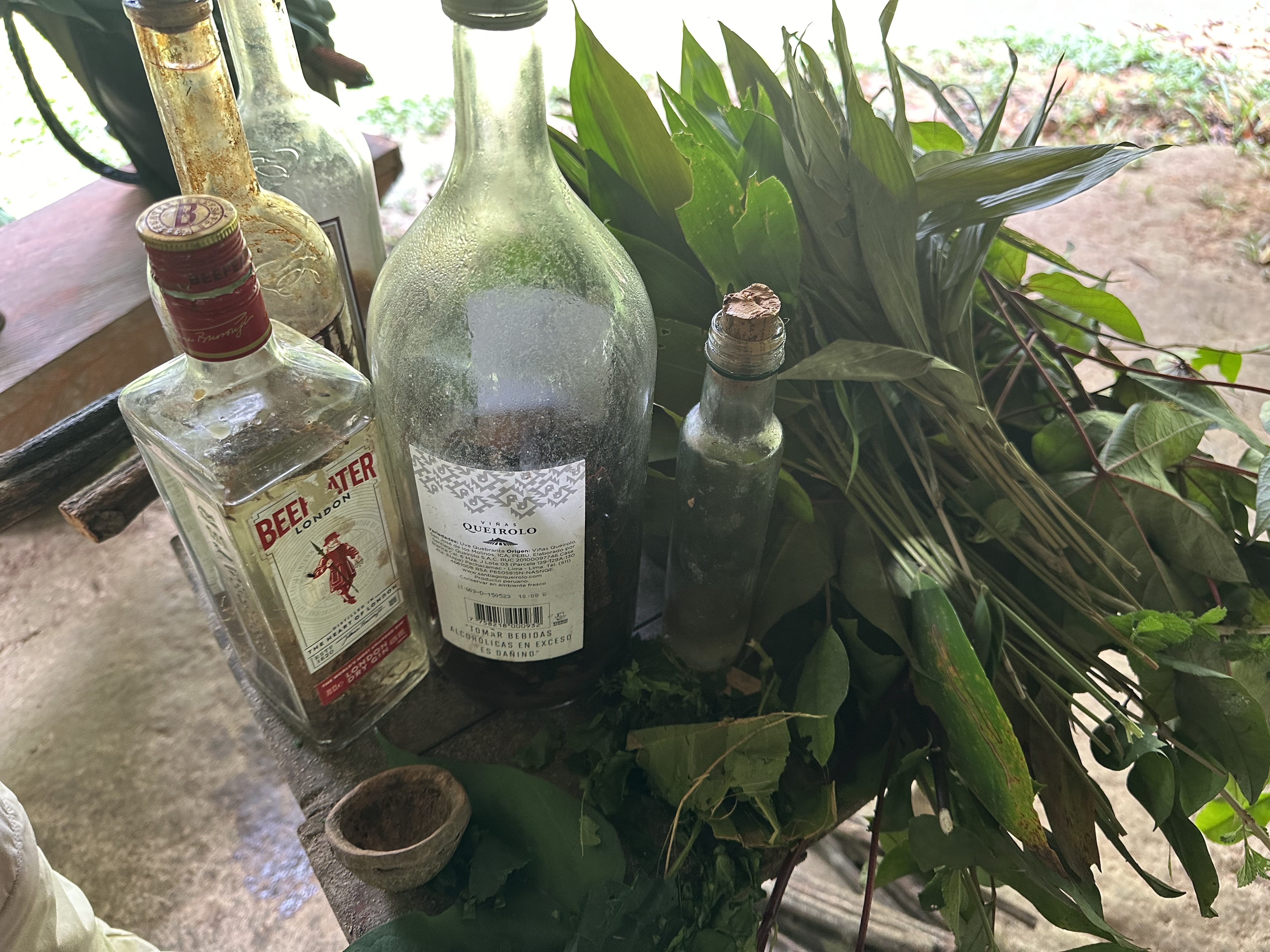
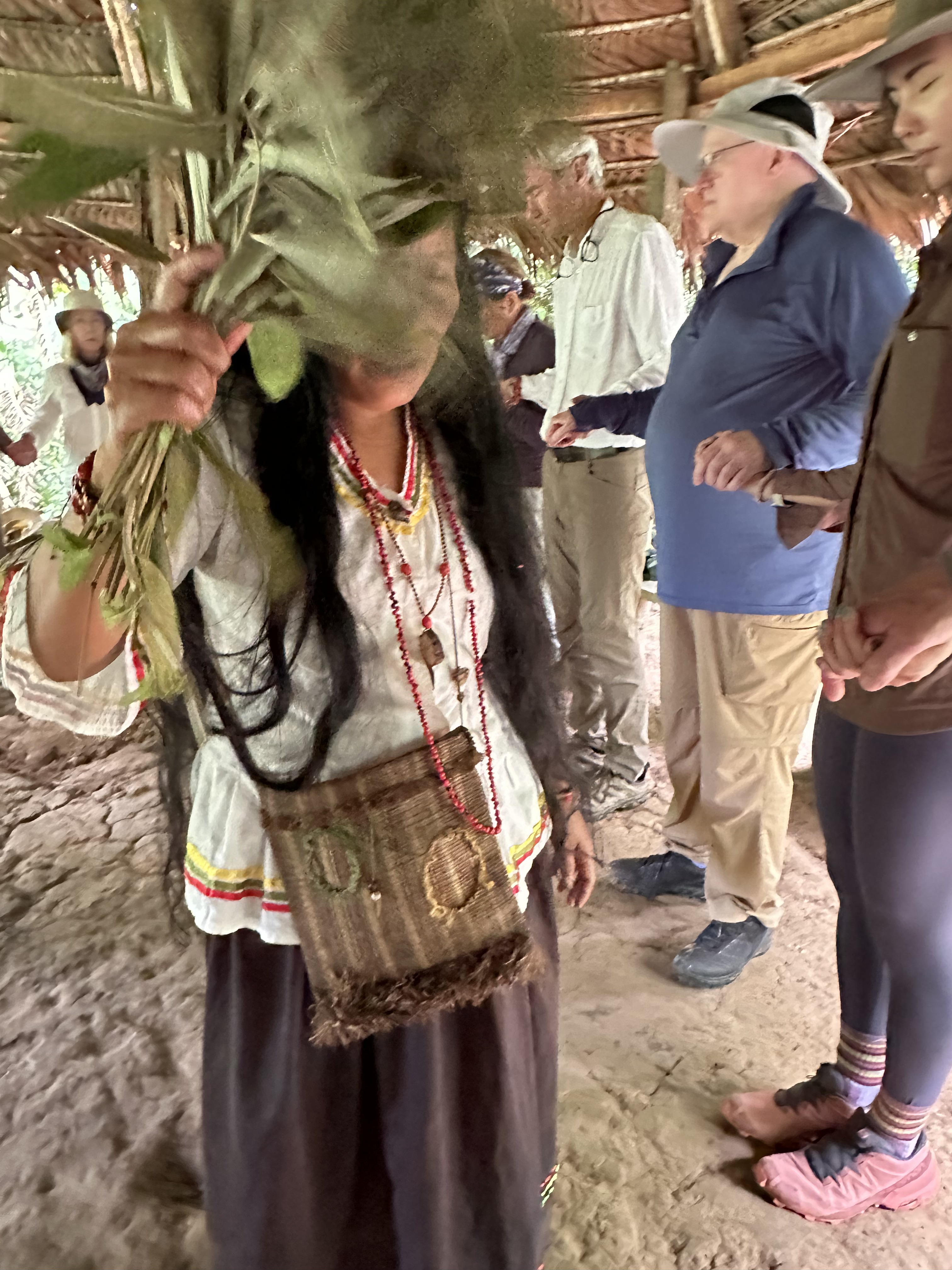
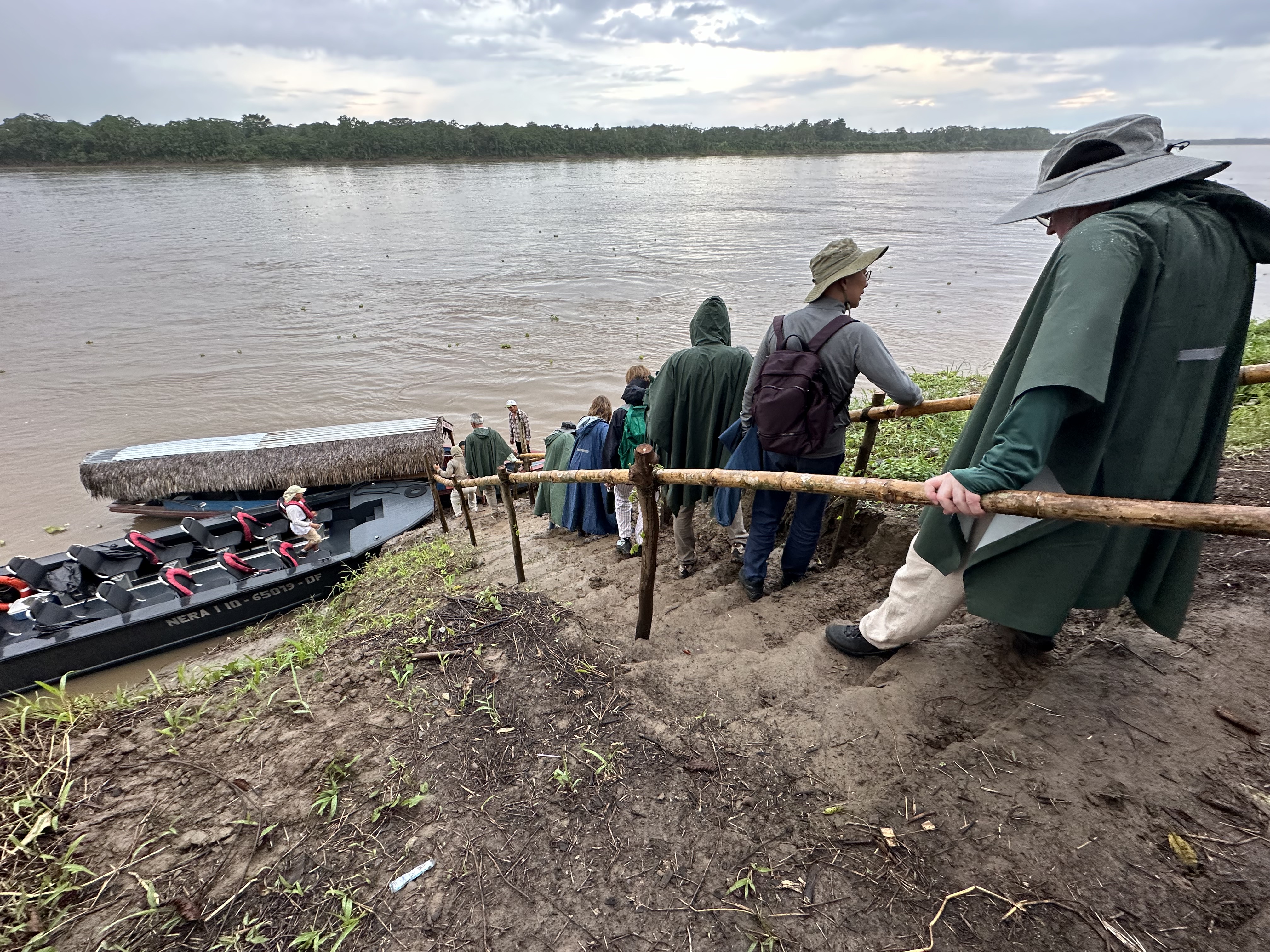
She now has a normal life with a husband and three children. She talked to us about some of her special medicines including Ayahuasca (a wood vine, the juice from which causes significant dreaming); Wild Garlic (crunch a bunch of leaves and inhale the smell as deeply as possible, to prevent or cure Covid, and good for sinus problems); Dragons Blood (the reddish sap is mixed until it becomes a white paste and is used as an anti inflammatory against mosquito bites among other things.); Copaiba ( the sap of which is used for arthritis). After rubbing the Copaiba sap into the joints of several of us, Karuka gave us a blessing and sent us on our way. We bought a bracelet with Ayahuasca wood in it and a Jaguar mask. Then we walked a slippery, muddy path back to the tenders and motored 45 minutes back to the ship. We lucked out with an overcast sky, but no rain.
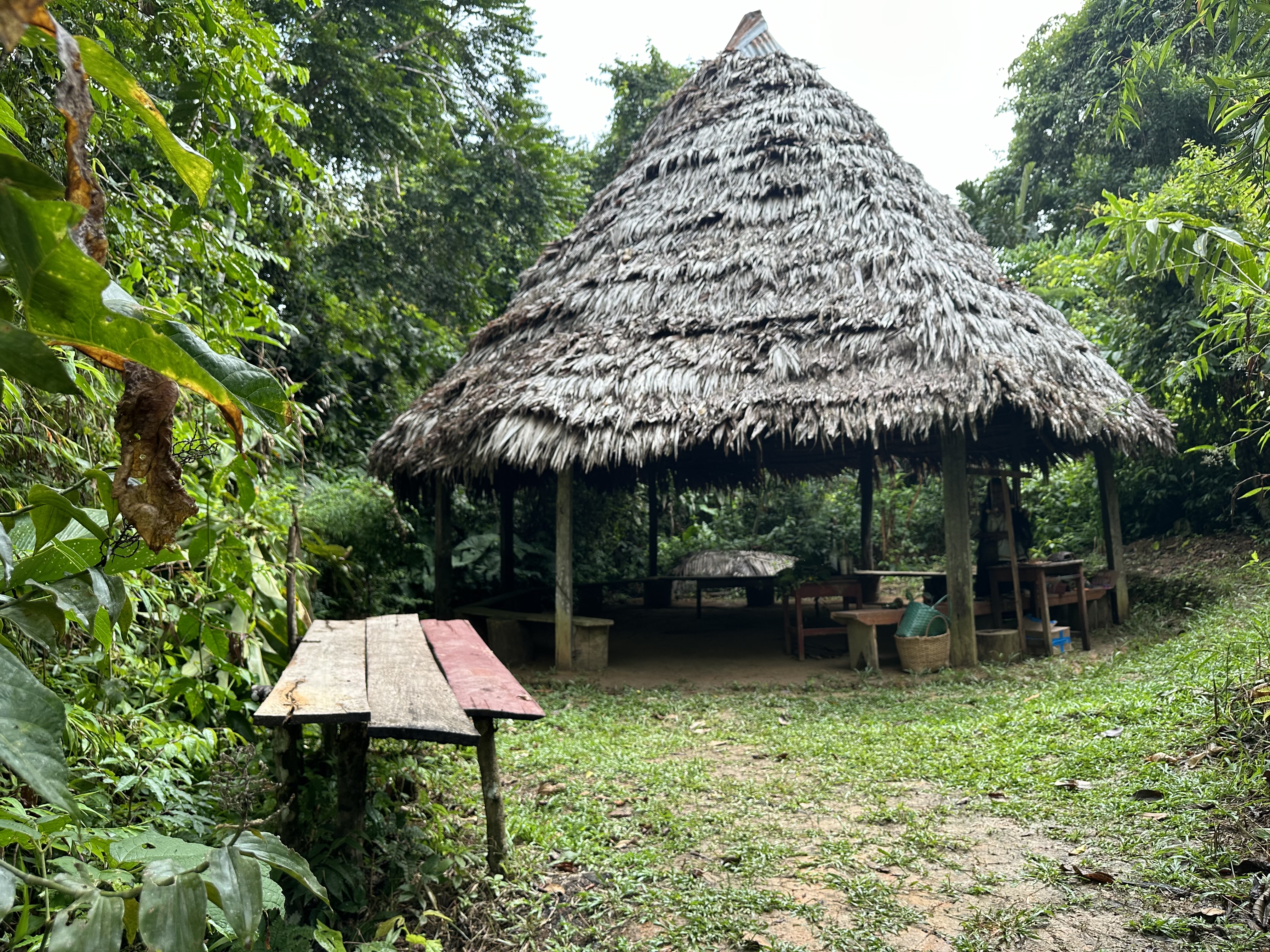
The banda where we met with Karuka Karina waits to talk to us.Various crafts for sale Various saps, barks, leaves and salves used in healing people.Juan translates Karuka’s wordsKarina gives us all a blessingKaruka giving us a blessingKaruka
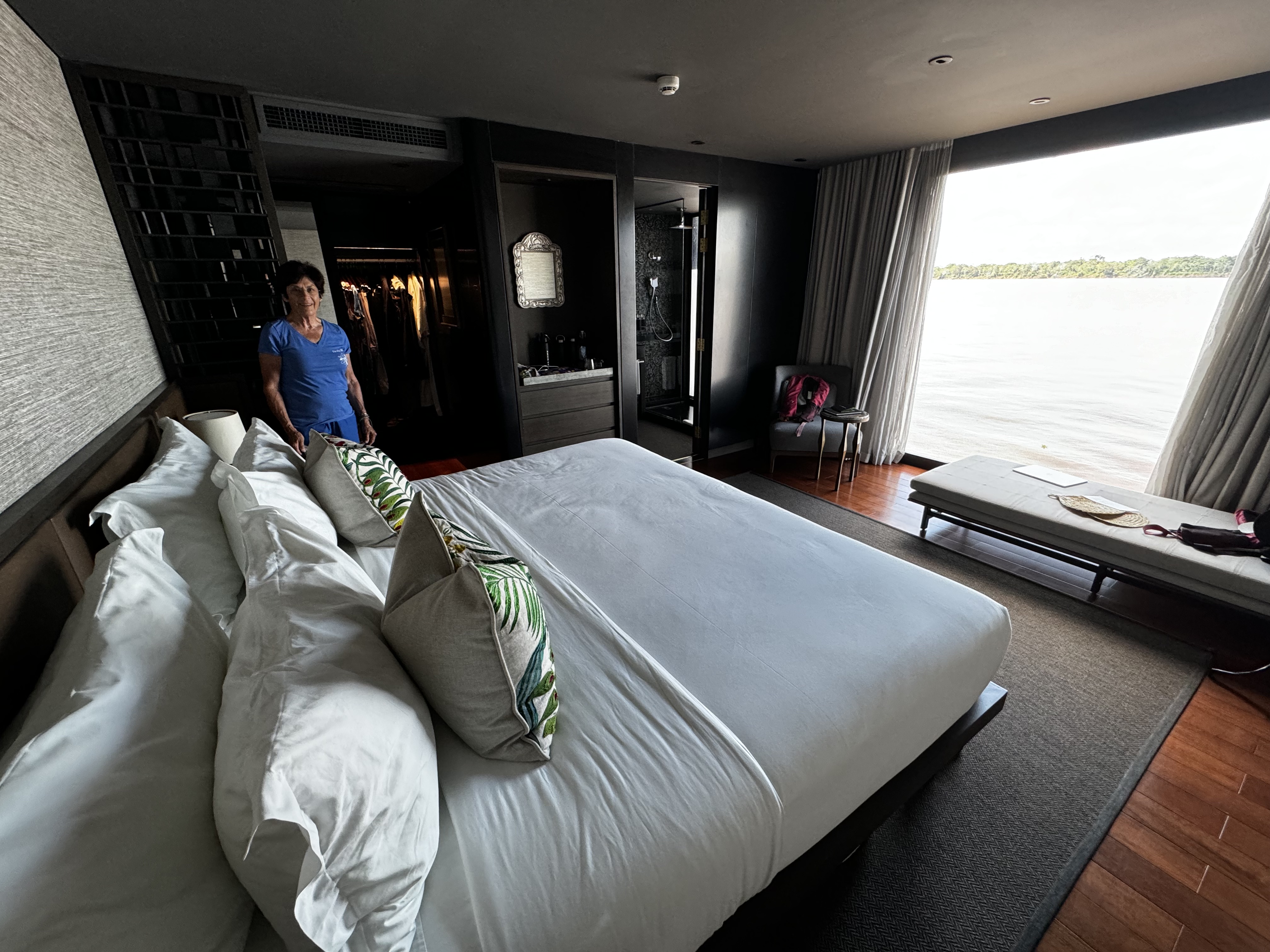
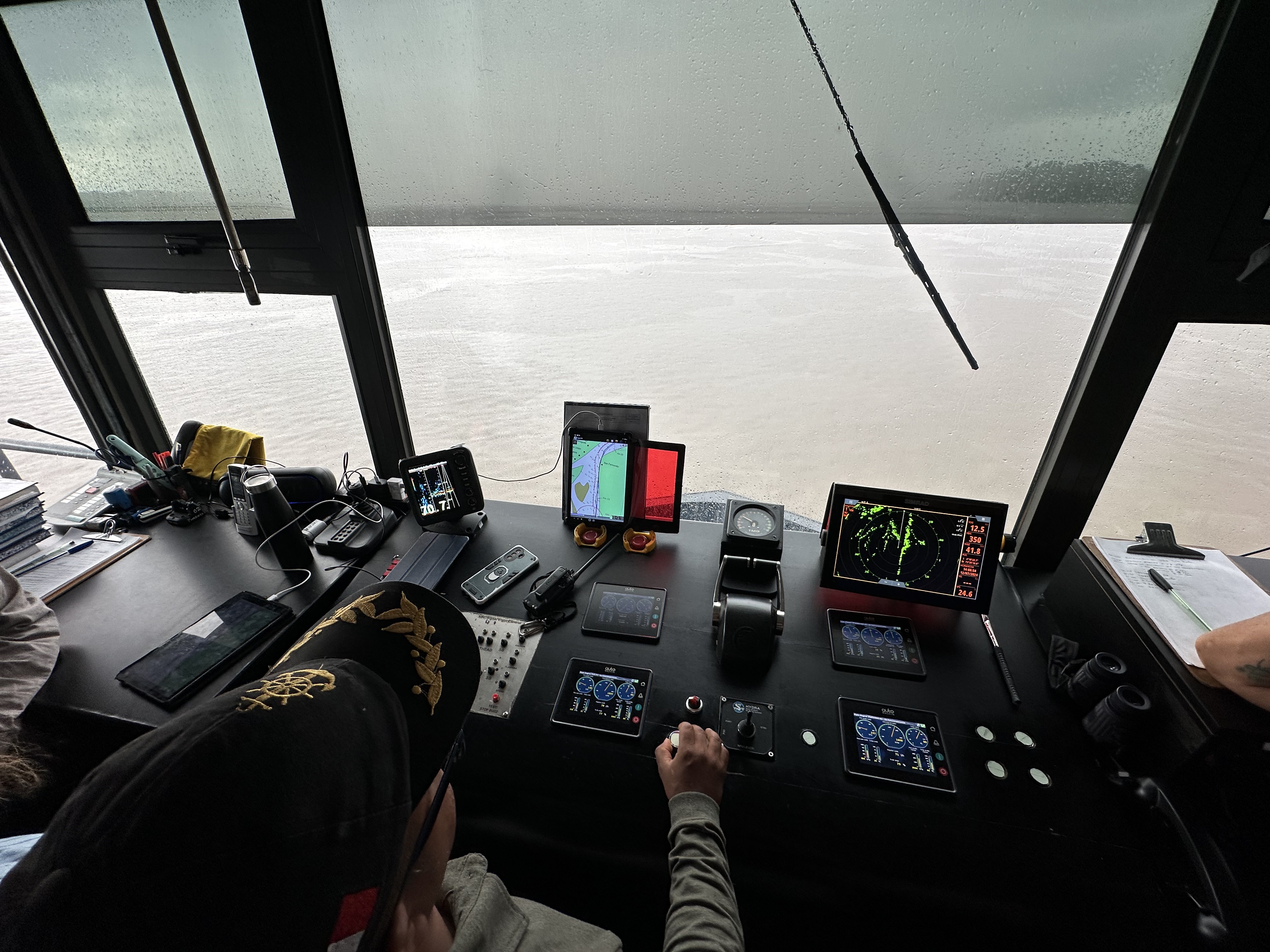
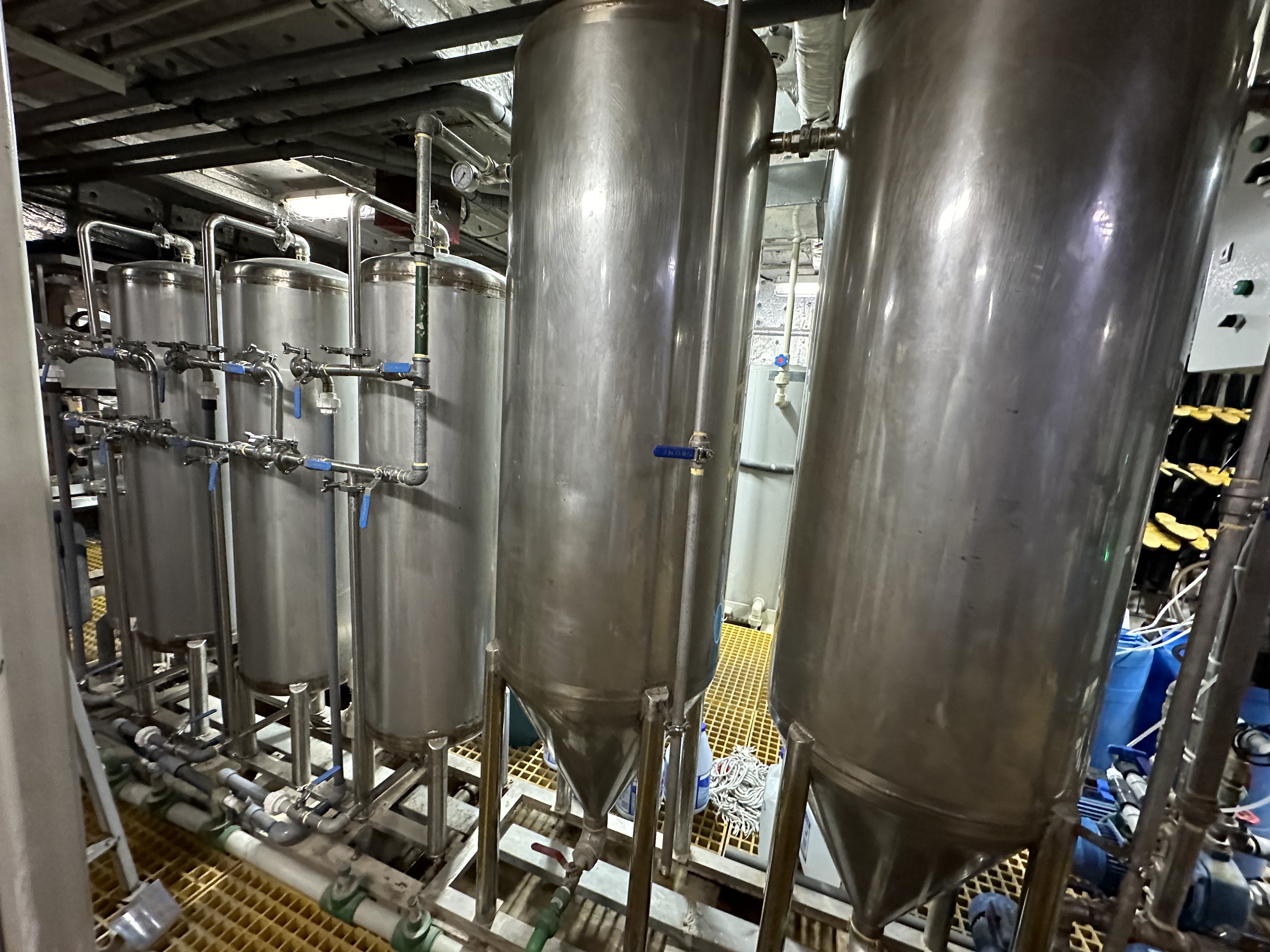
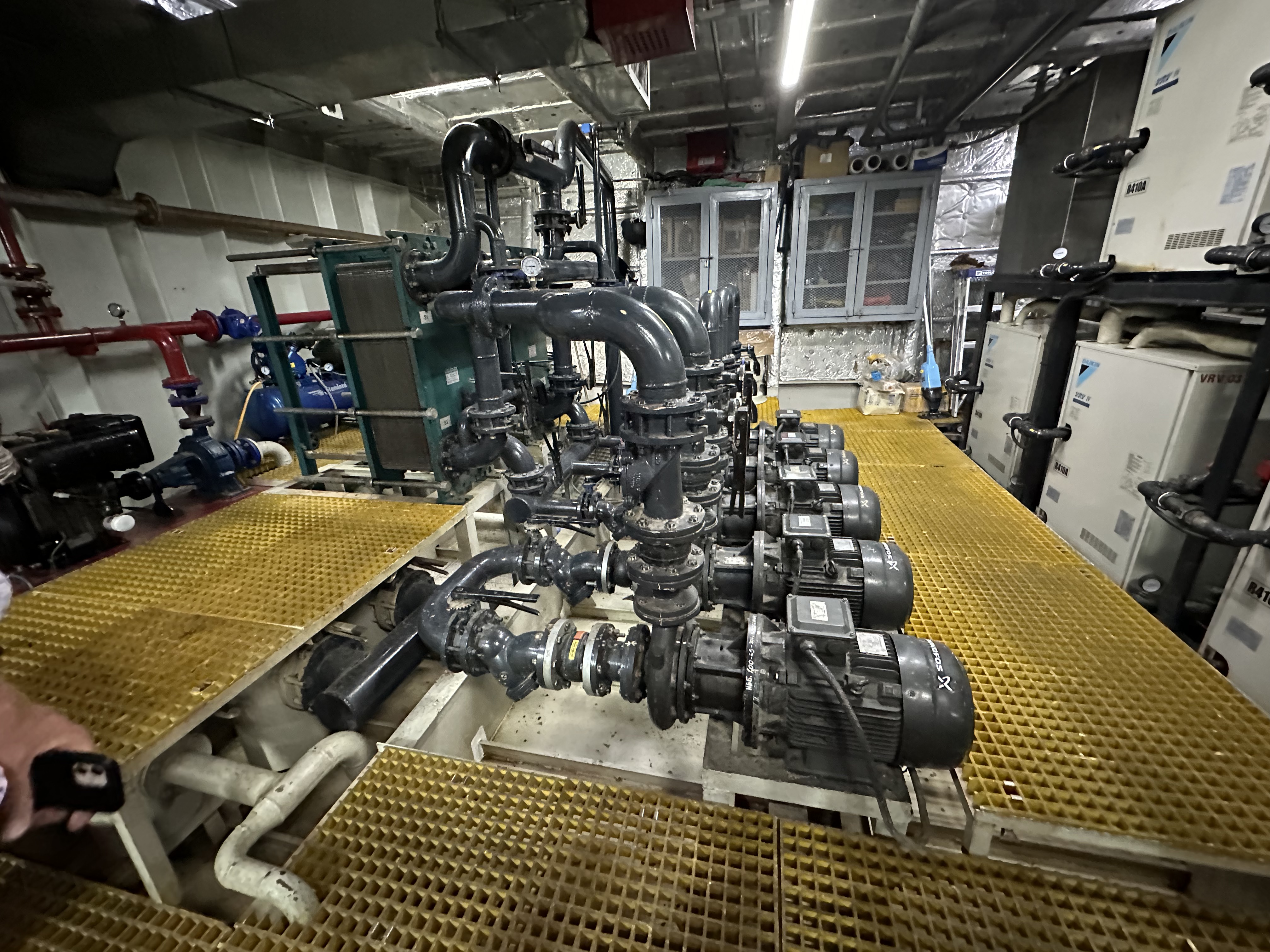
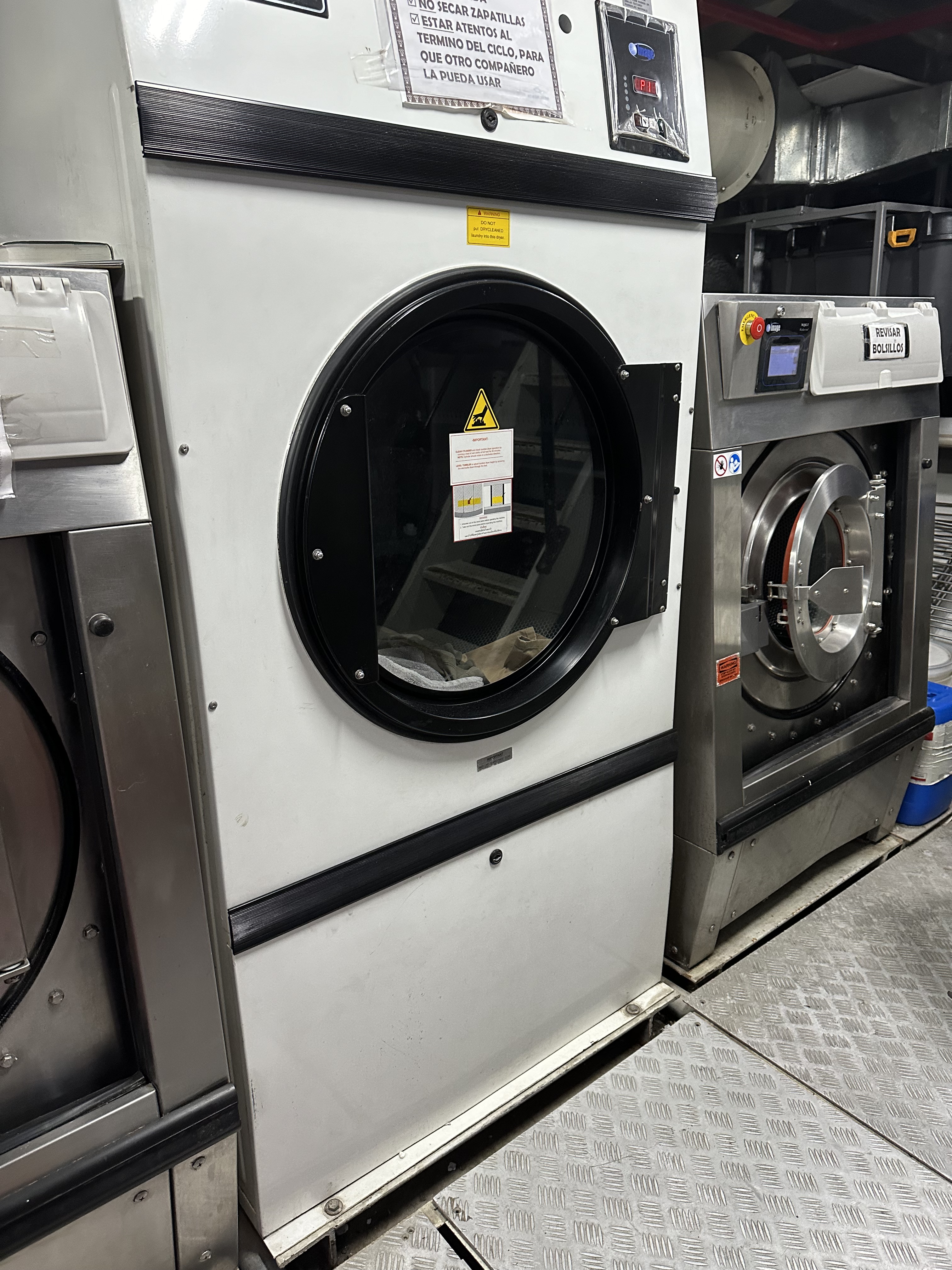
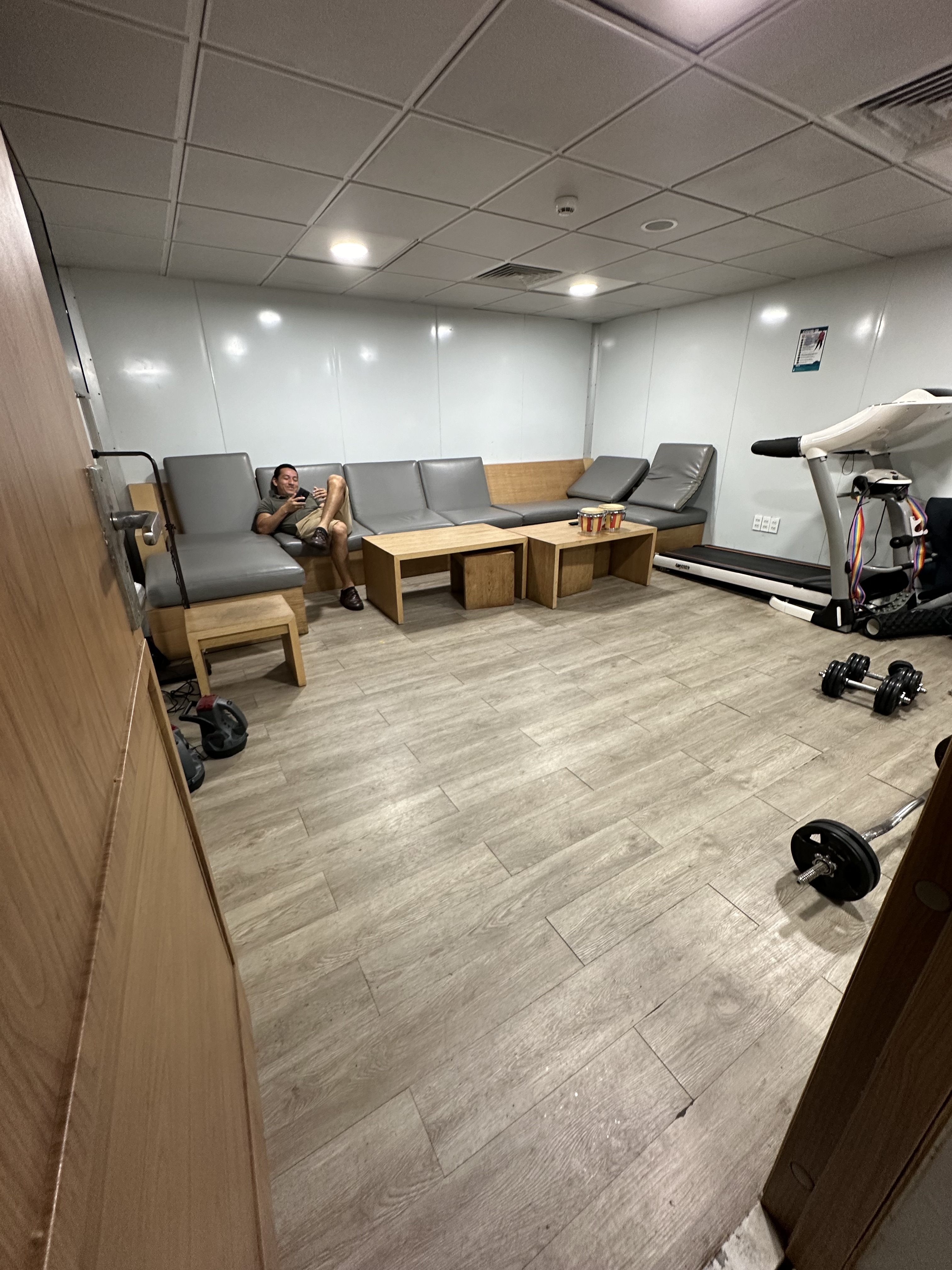
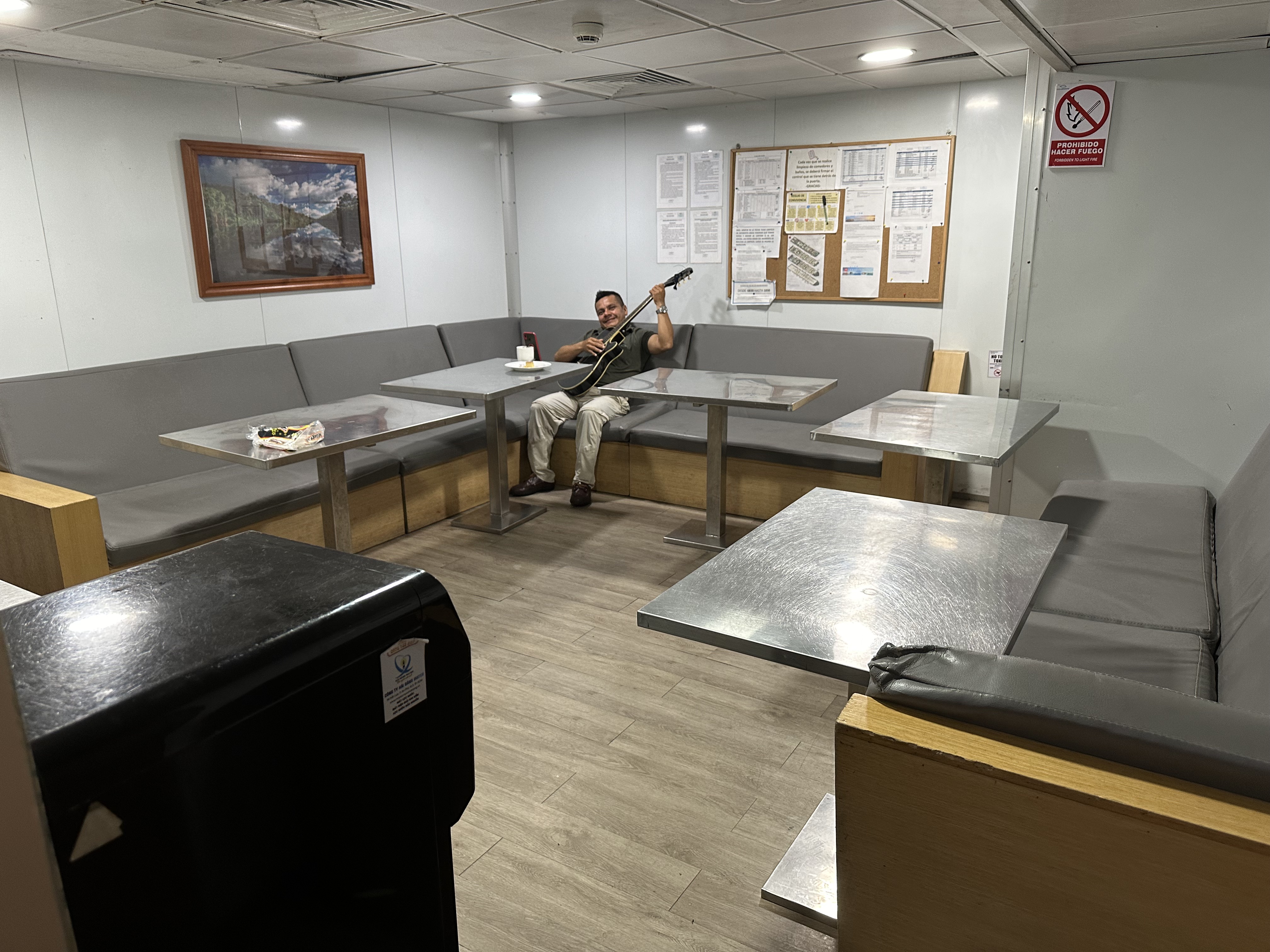
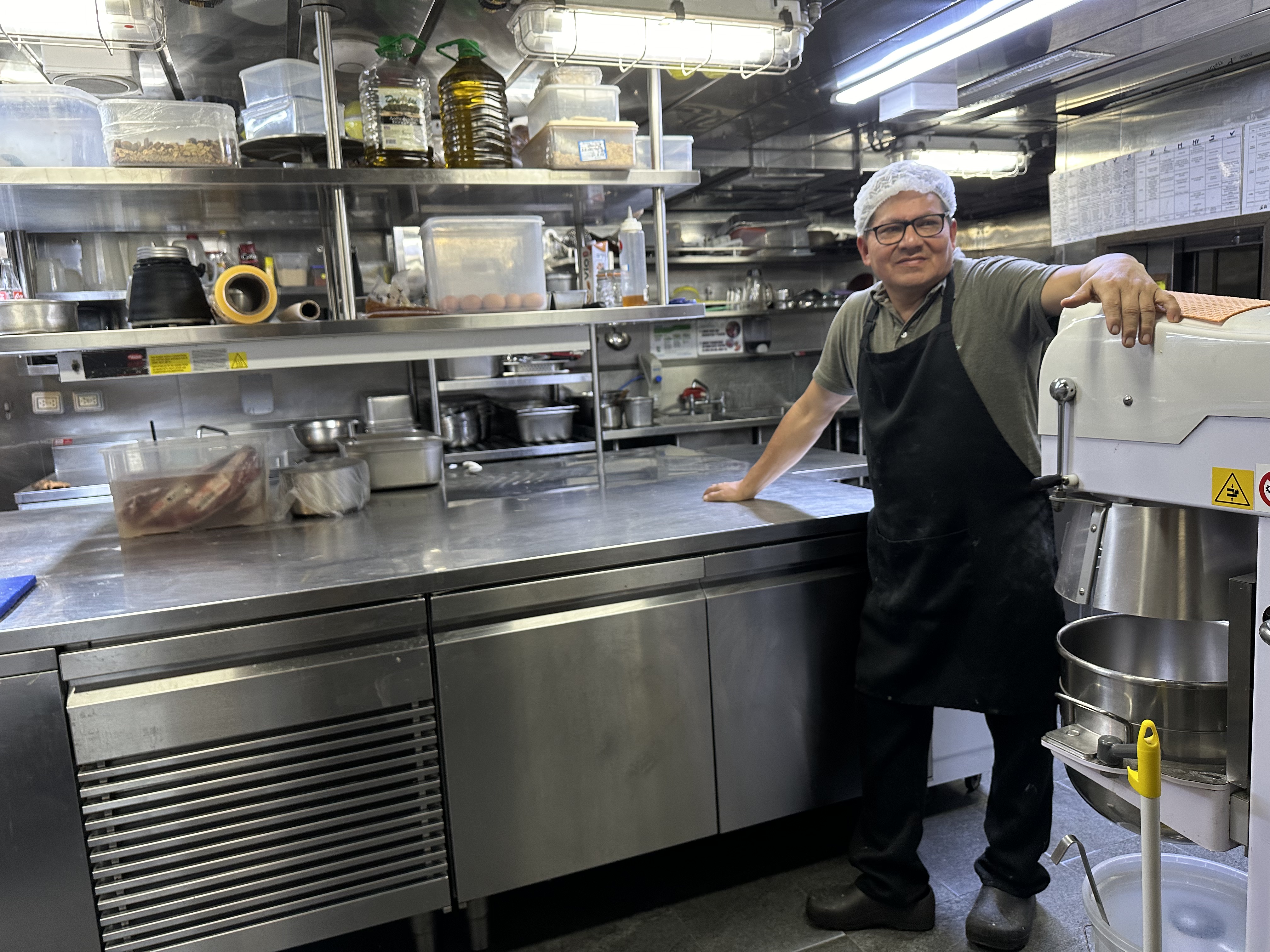
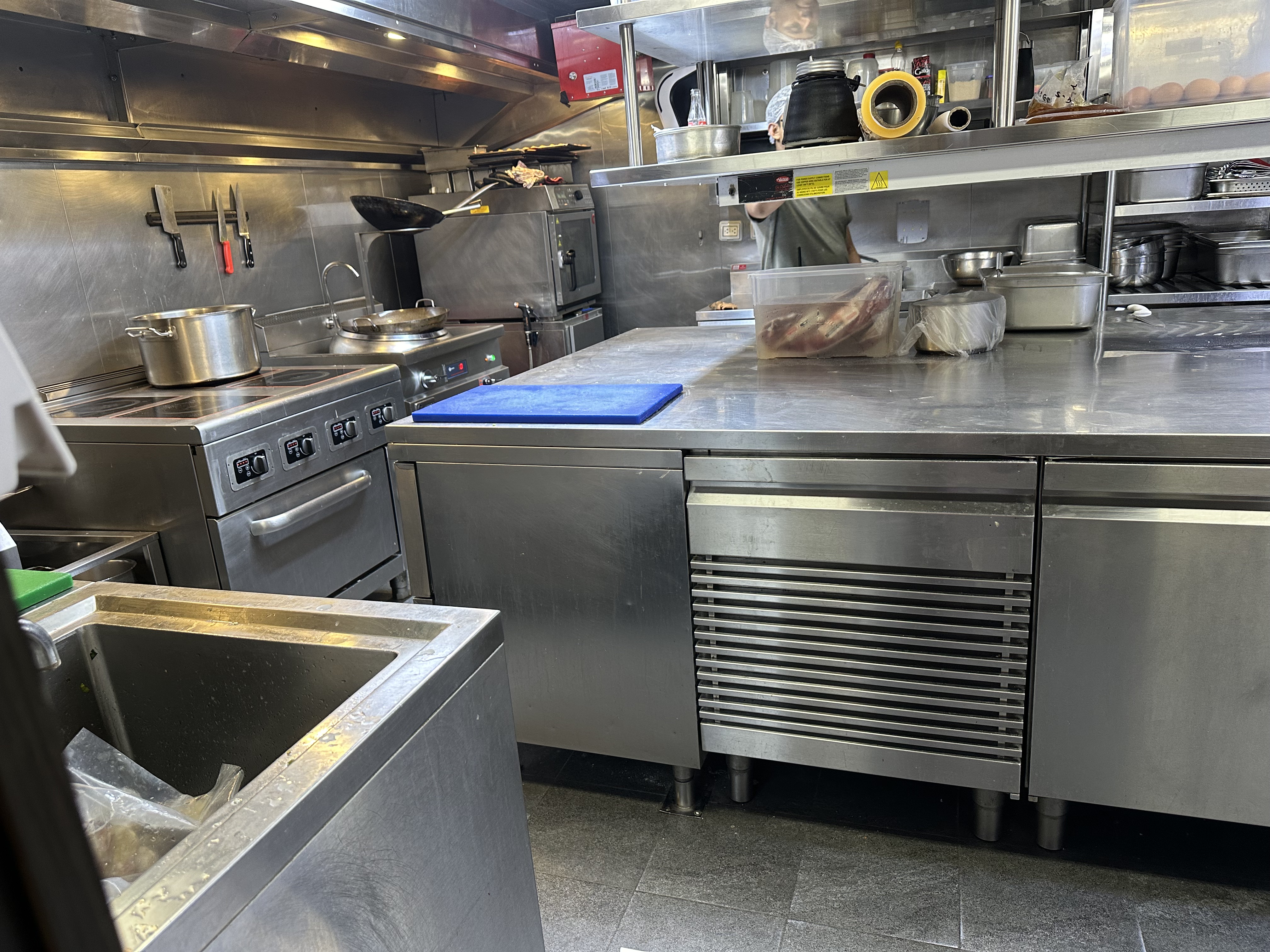
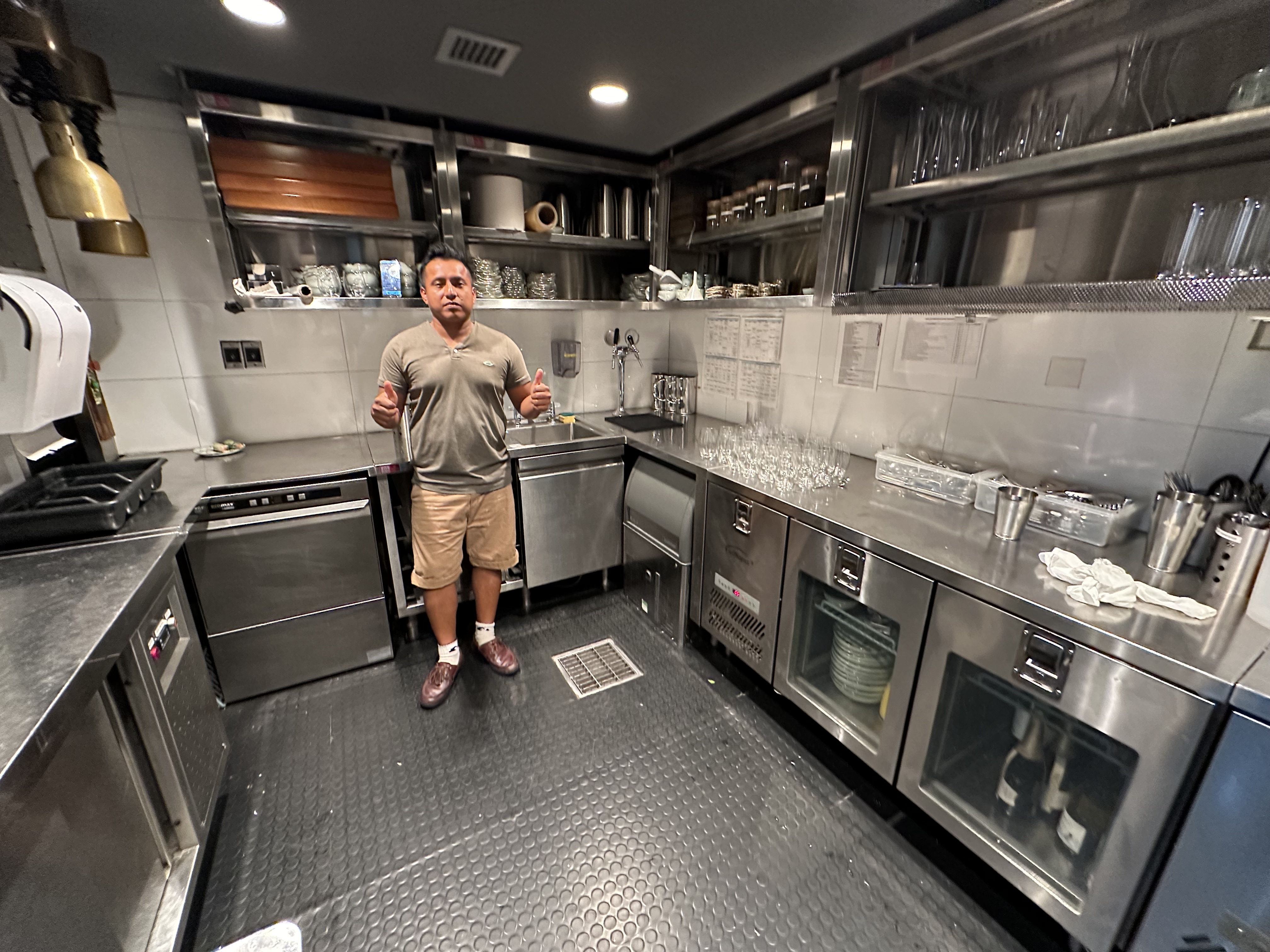
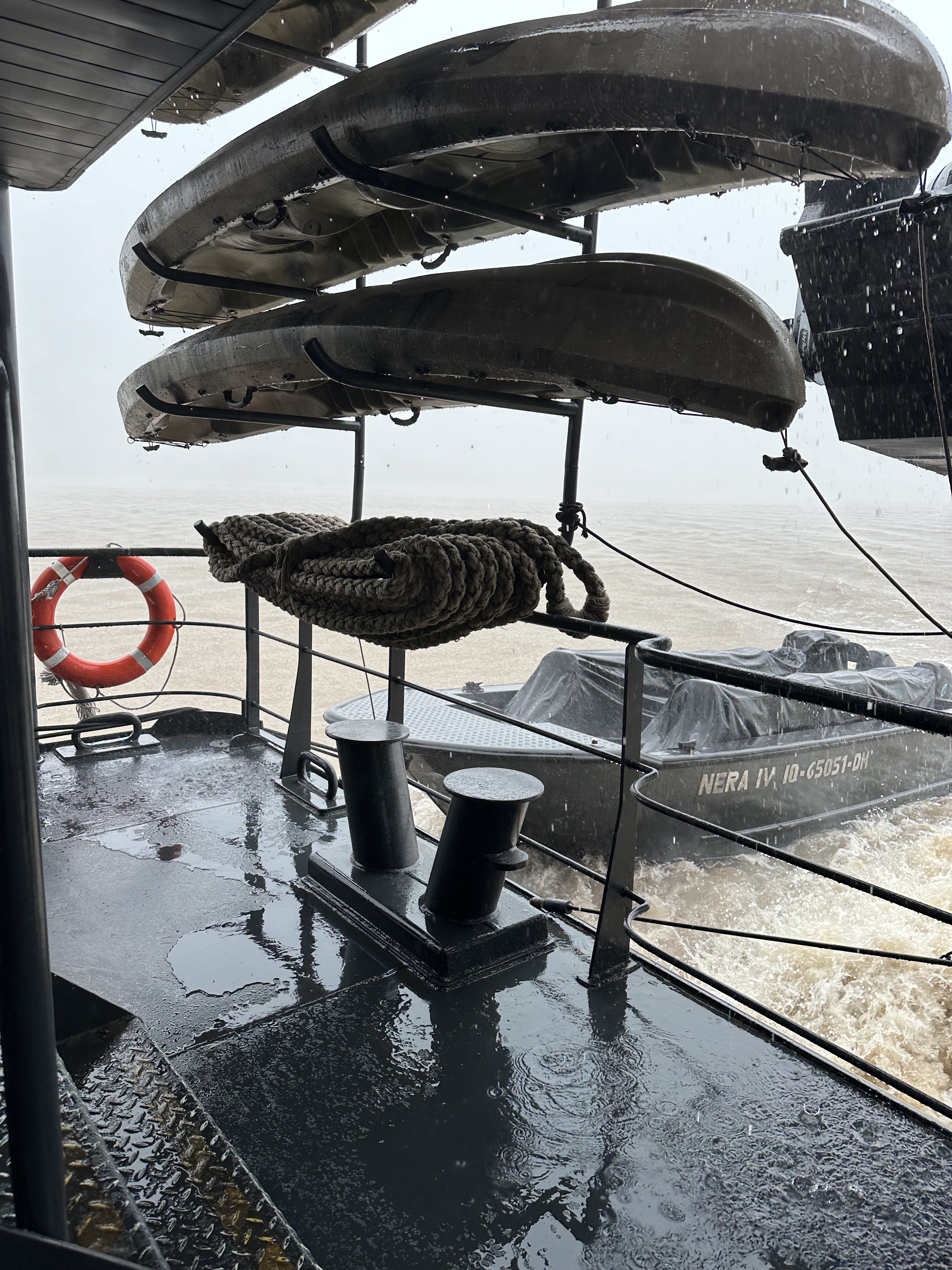
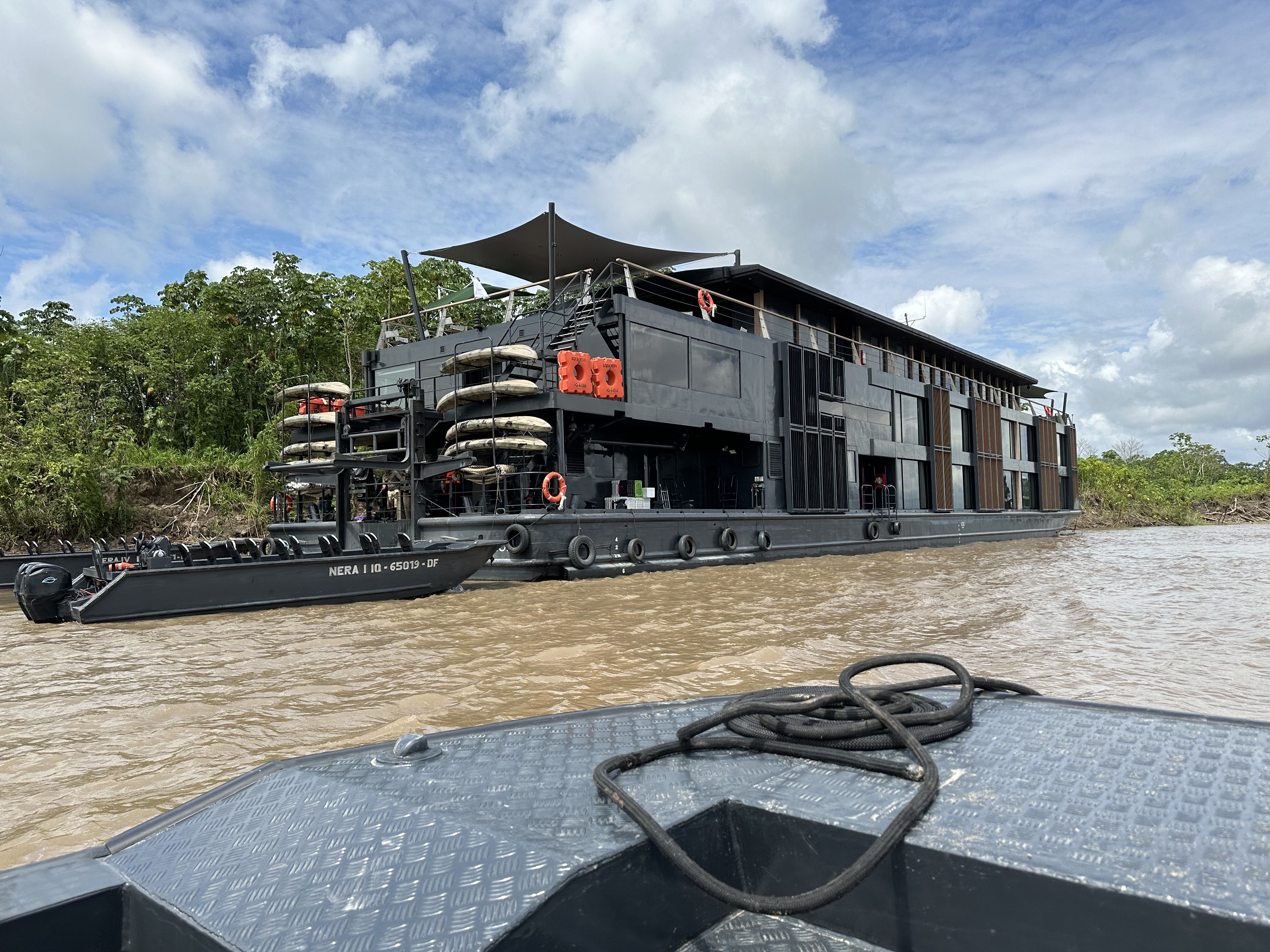
Lunch was an Asian affaire complete with egg drop soup, fresh spring rolls, pork belly in sauce, daikon and cream caramel. The meals have all been good. By being served family style, we can eat as much or little as we wish. Then at 2pm, a few of us were treated to a behind the scenes tour of the ship: including the bridge, the crew quarters, the crew gym and music room; the laundry facilities, storage for extra skiffs, bicycles, kayaks; water supply and filtration system; AC units and more. That tour lasted about 20 minutes and then I was back in our room composing another post. Our room is like all other 19 rooms on the ship with extra wide beds and plenty of storage for a week.
Our room has an oversized king bed and ample room for our one week stay. The bridge with high end equipmentWater filtration systemRiver water pumpsLaundry RoomCrew relaxation spaceCrew dining roomWorking kitchen for the whole shipMore of the working kitchenButler’s pantry next to the Dining Room Dragging one of the 4 skiffs behind the ship and aft Kayak storage on a rare rainy hour.
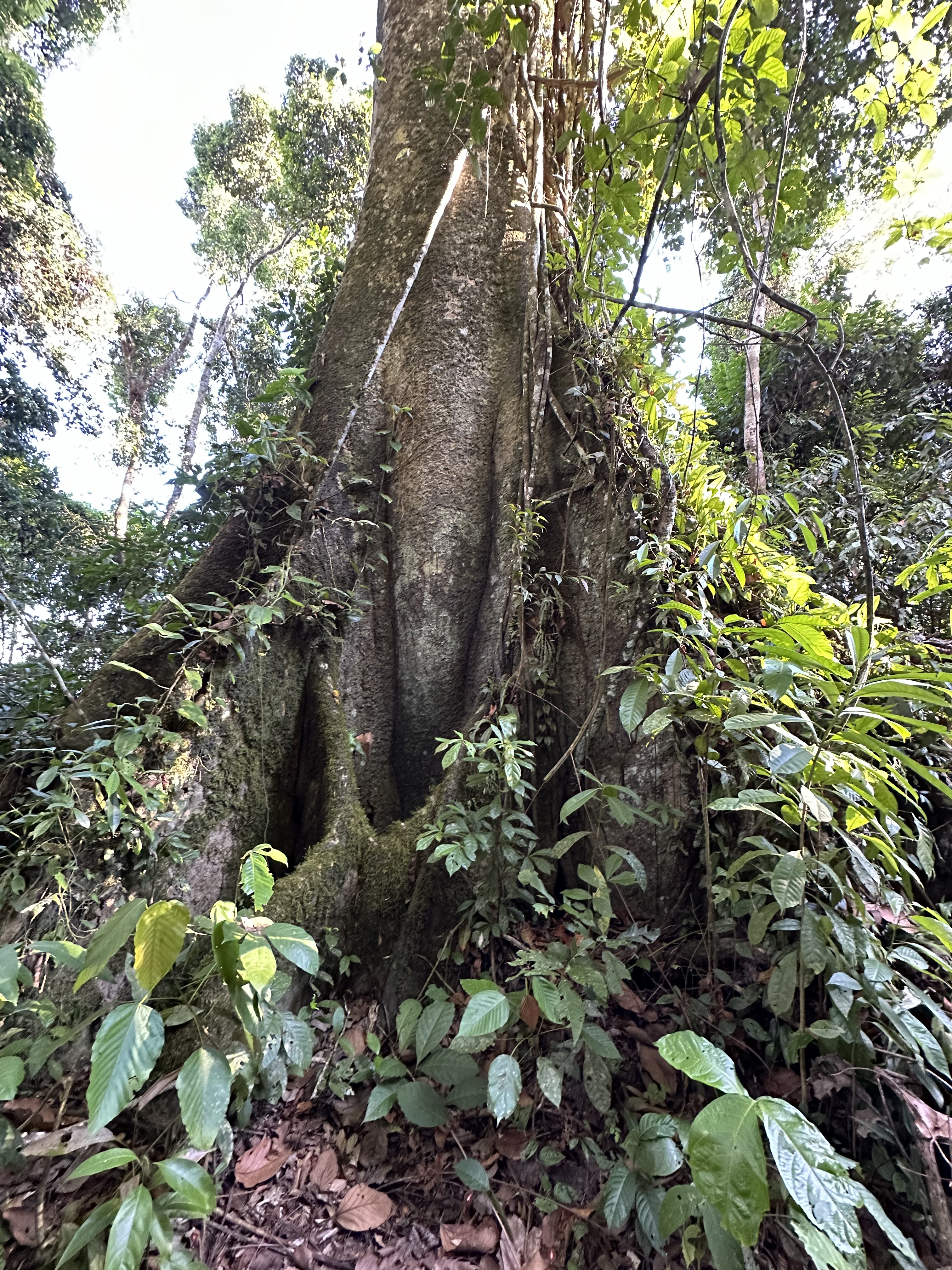
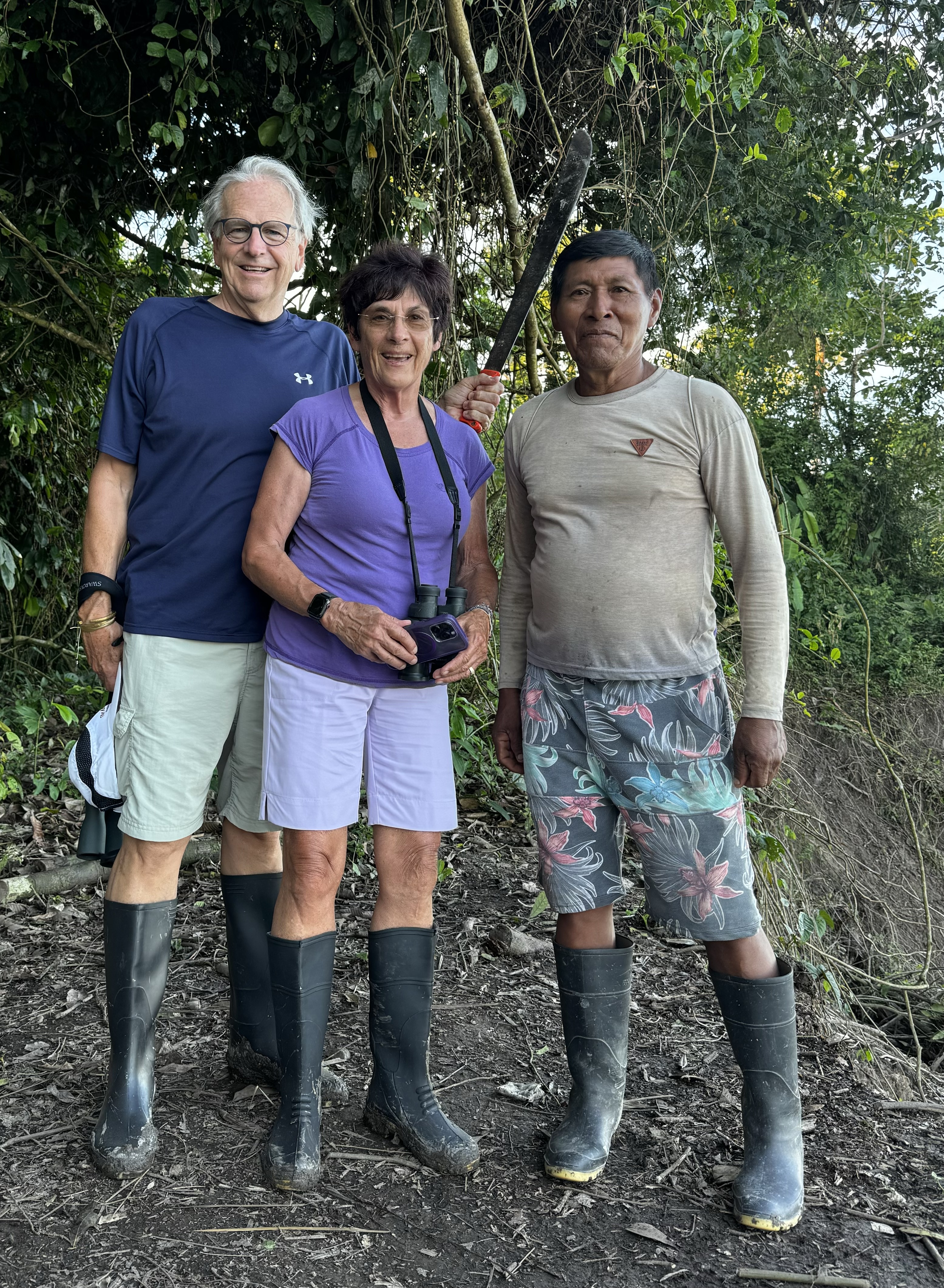
Yesterday afternoon at about 4pm, the whole group went for a jungle walk near where the boat was parked. We were required to wear knee high rubber boots, which were provided. Long sleeved shirts and long pants were strongly suggested as well as mosquito repellent. Mark and I did not comply with the clothing, although we did use the rubber boots. We lucked out. There were no bugs and the forest was not hot.
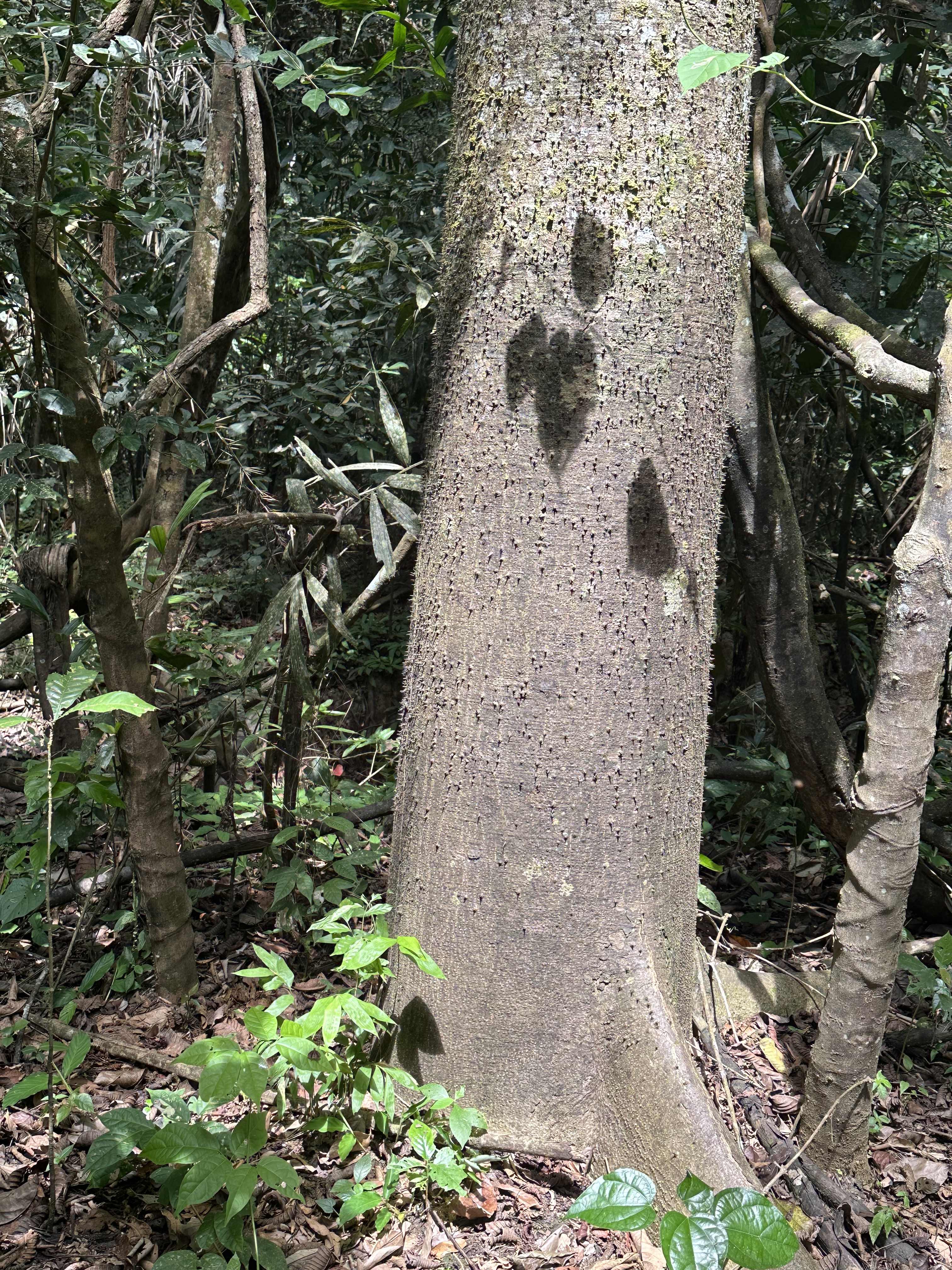
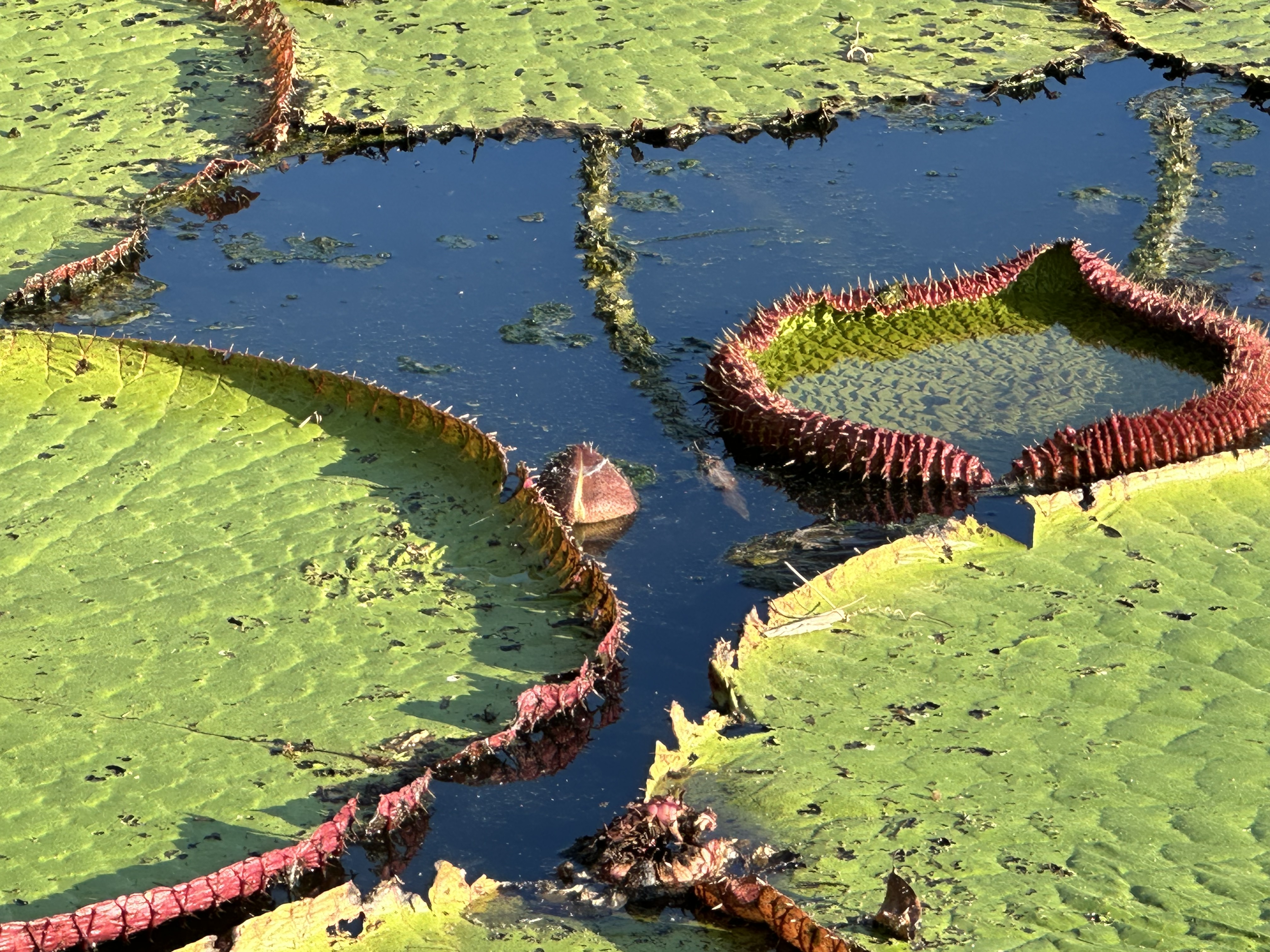
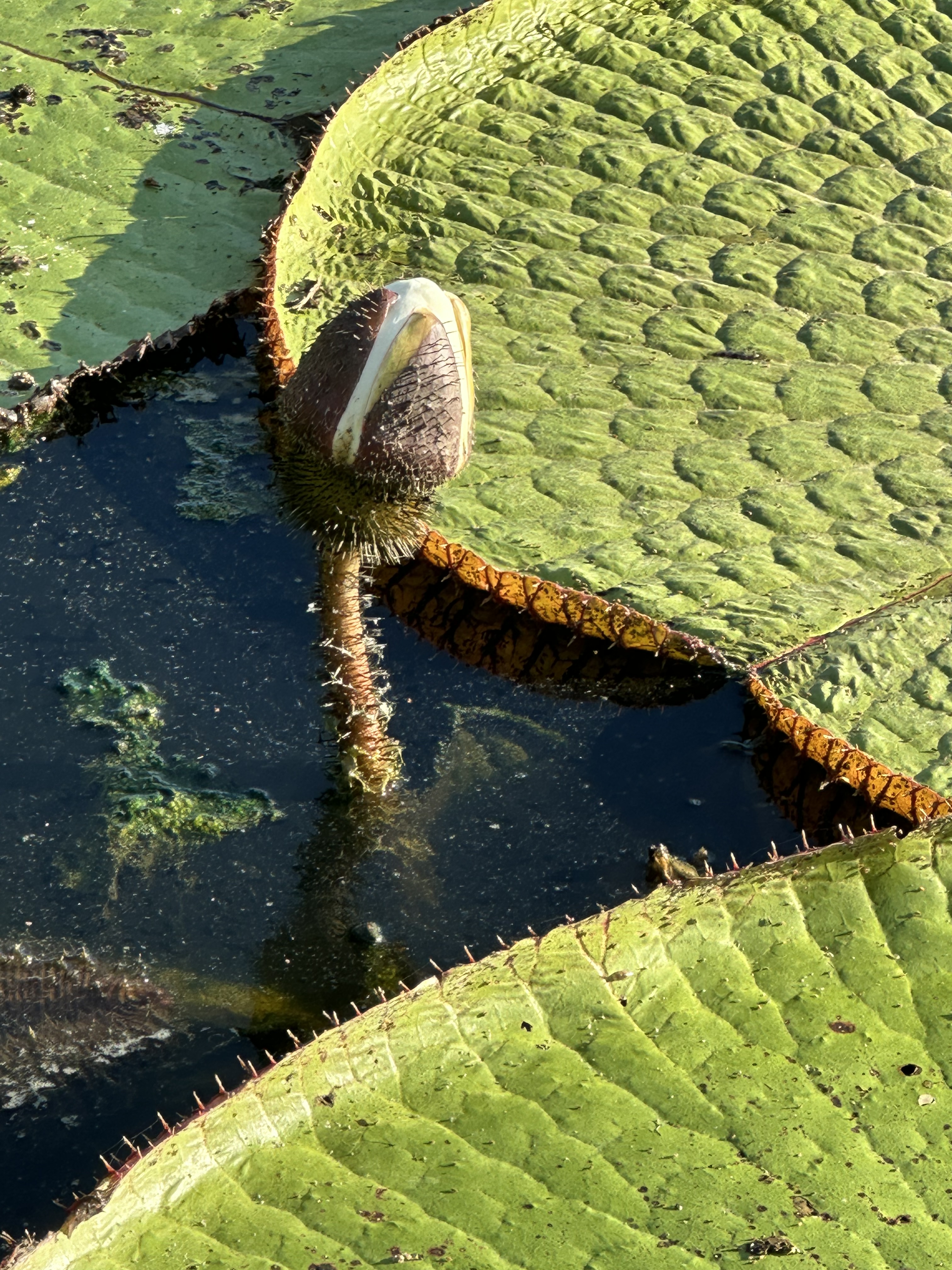
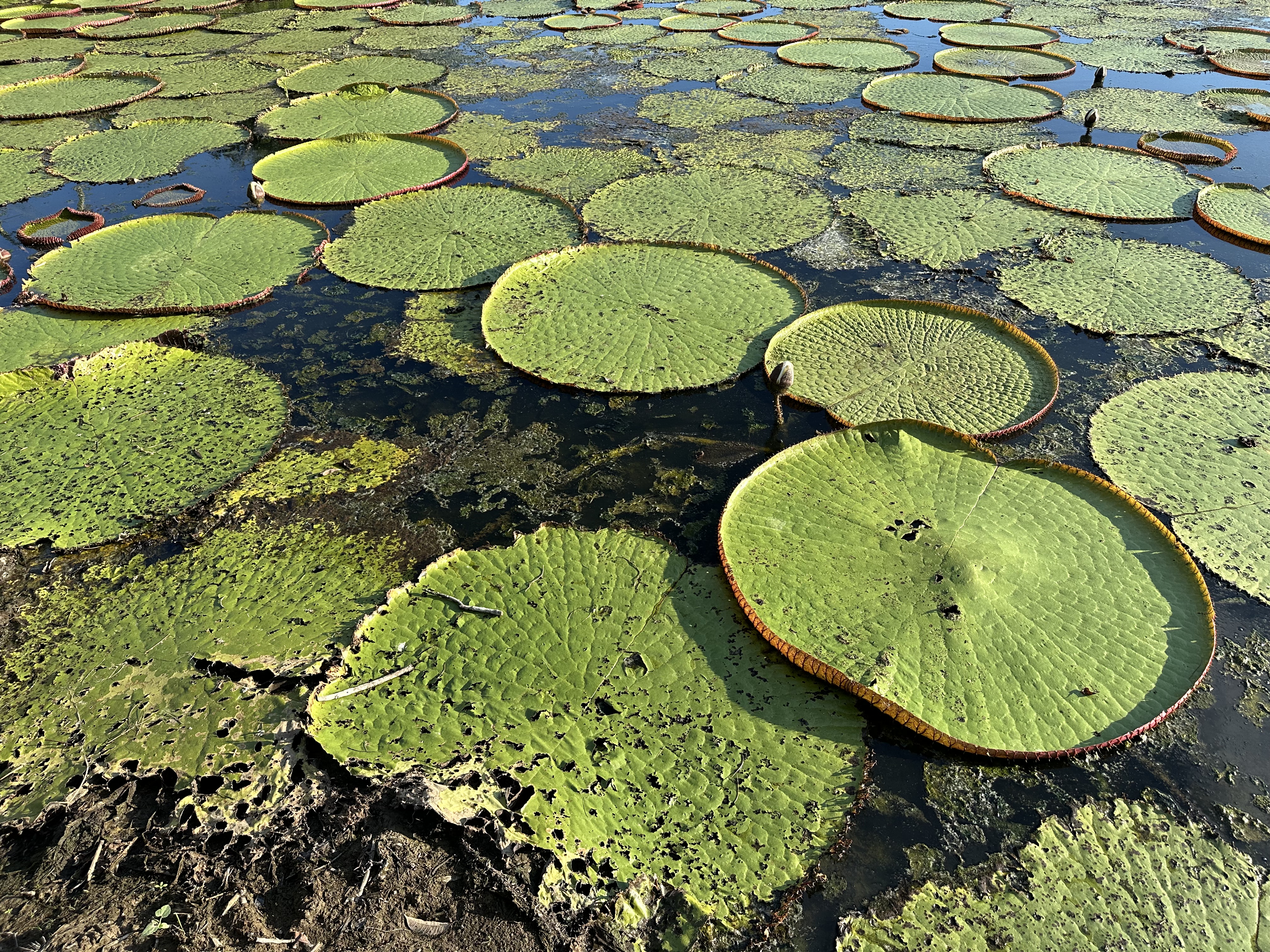
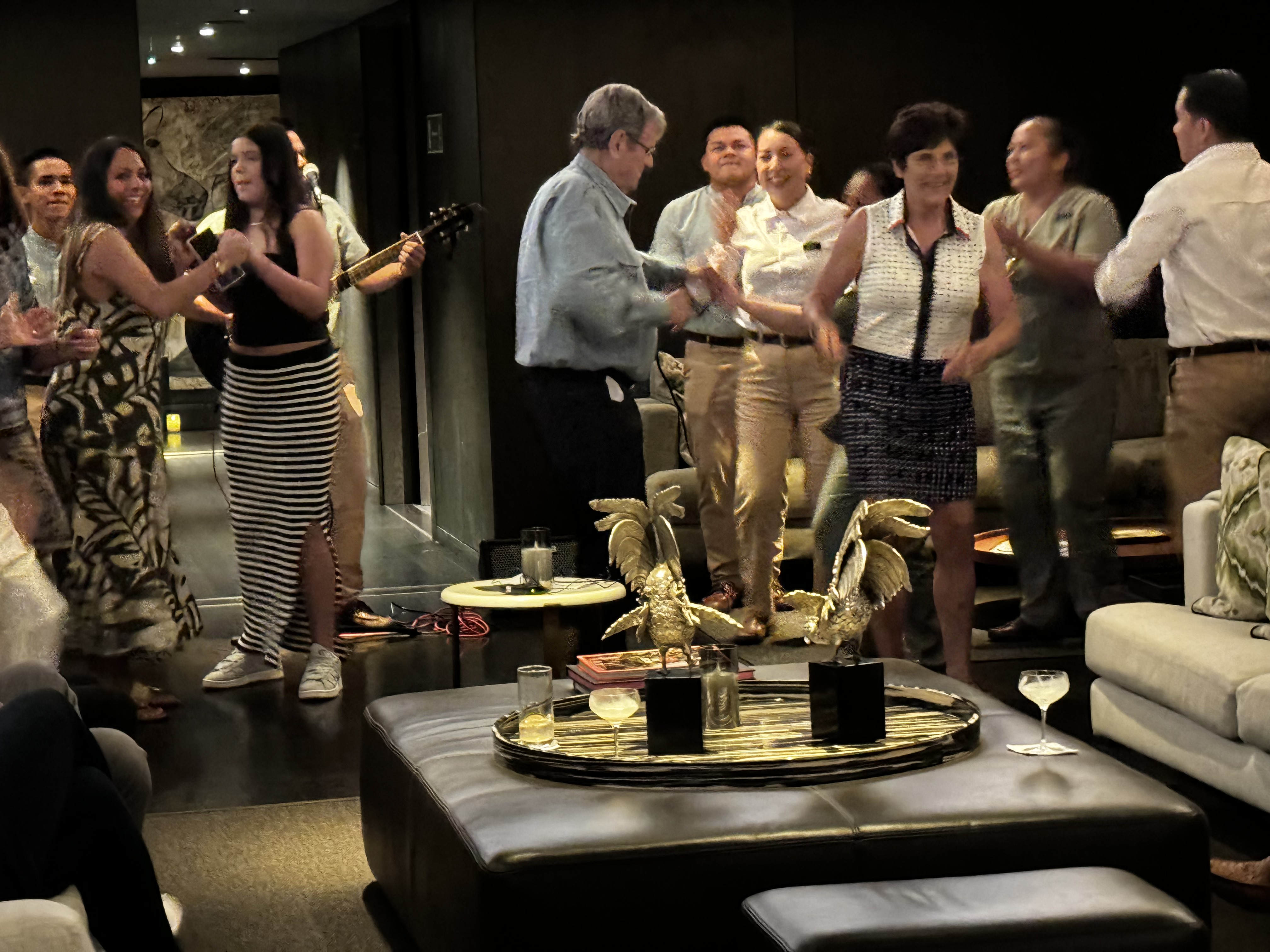
My favorite sighting was a field of lilly pads, even though none were in bloom at the moment. As we slid through the muddy undergrowth, we stepped carefully to avoid walking on army ants carrying leaf pieces. We also avoided many huge 1.2 inch long bullet ants racing up and down certain trees, and packing a powerful sting, if bitten. Mark learned it was the worst sting in the world according to the Schmidt Pain Index. We also saw a nasty bee’s nest, two tarantulas on the ground and a millepede. We walked by a couple of huge Kapoc trees and saw flowering vines everywhere. The whole walk was only 45 minutes and was mildly interesting. Back on the tender, after removing and bagging our rubber boots, we motored into the middle of the river and joined up with the cocktail tender for sundowners. Everyone was treated to an Amazon Mule cocktail. Then back to the boat. Once cleaned up and in the bar lounge, we were introduced to the entire staff and entertained by a handful of them playing instruments and clapping. As time passed everyone loosened up and we got friendly with some our fellow ship mates. I even danced.
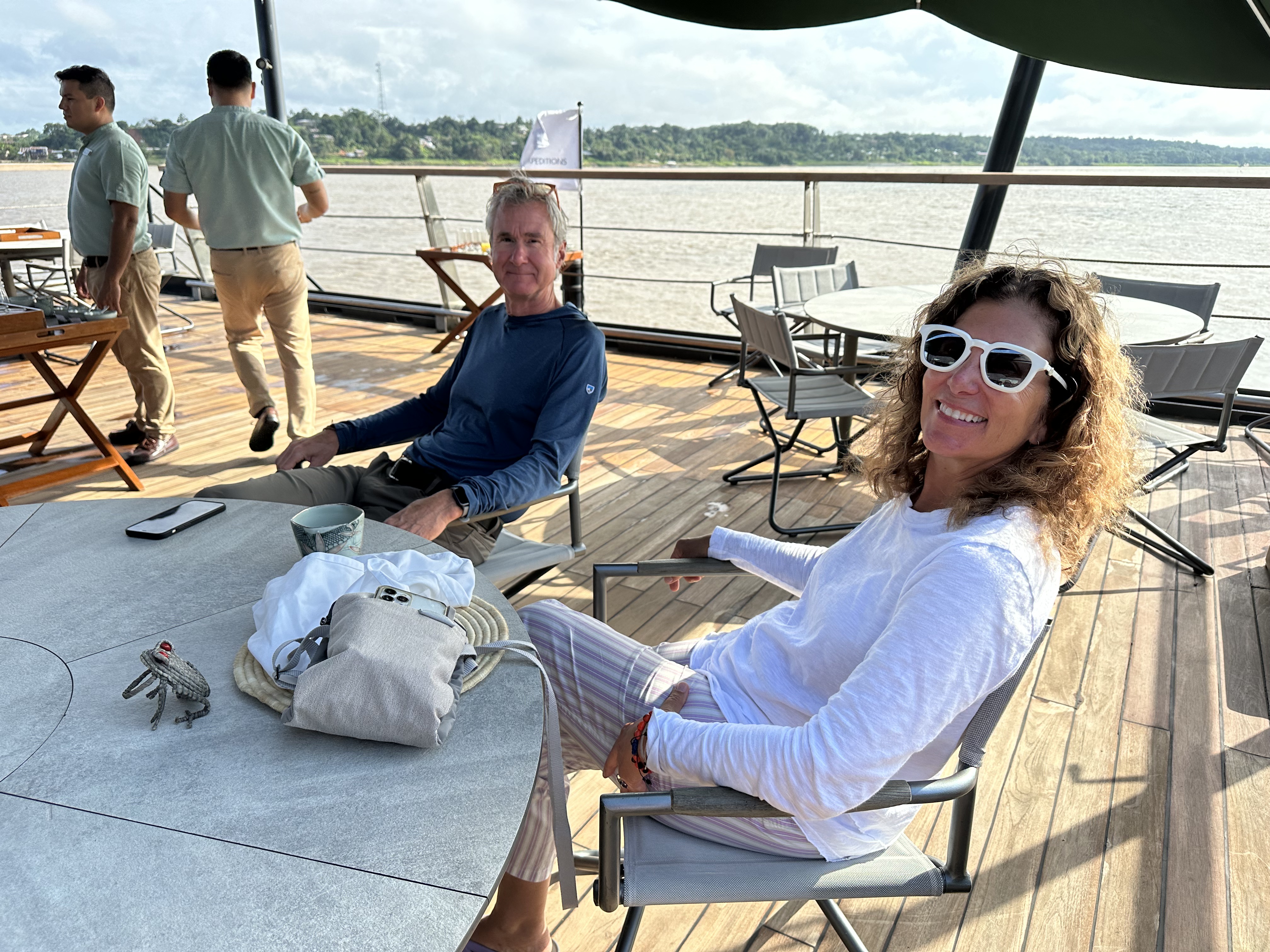
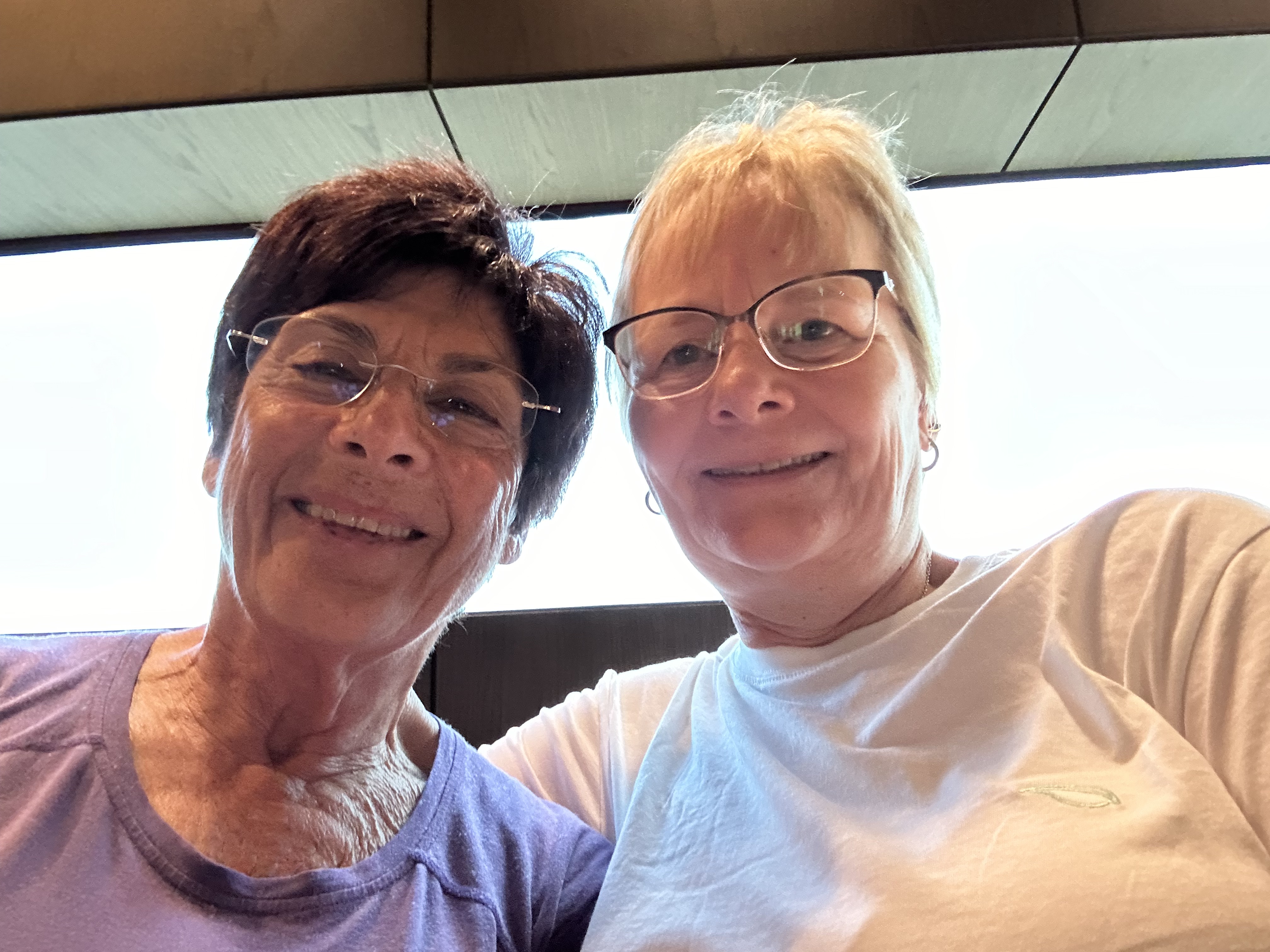
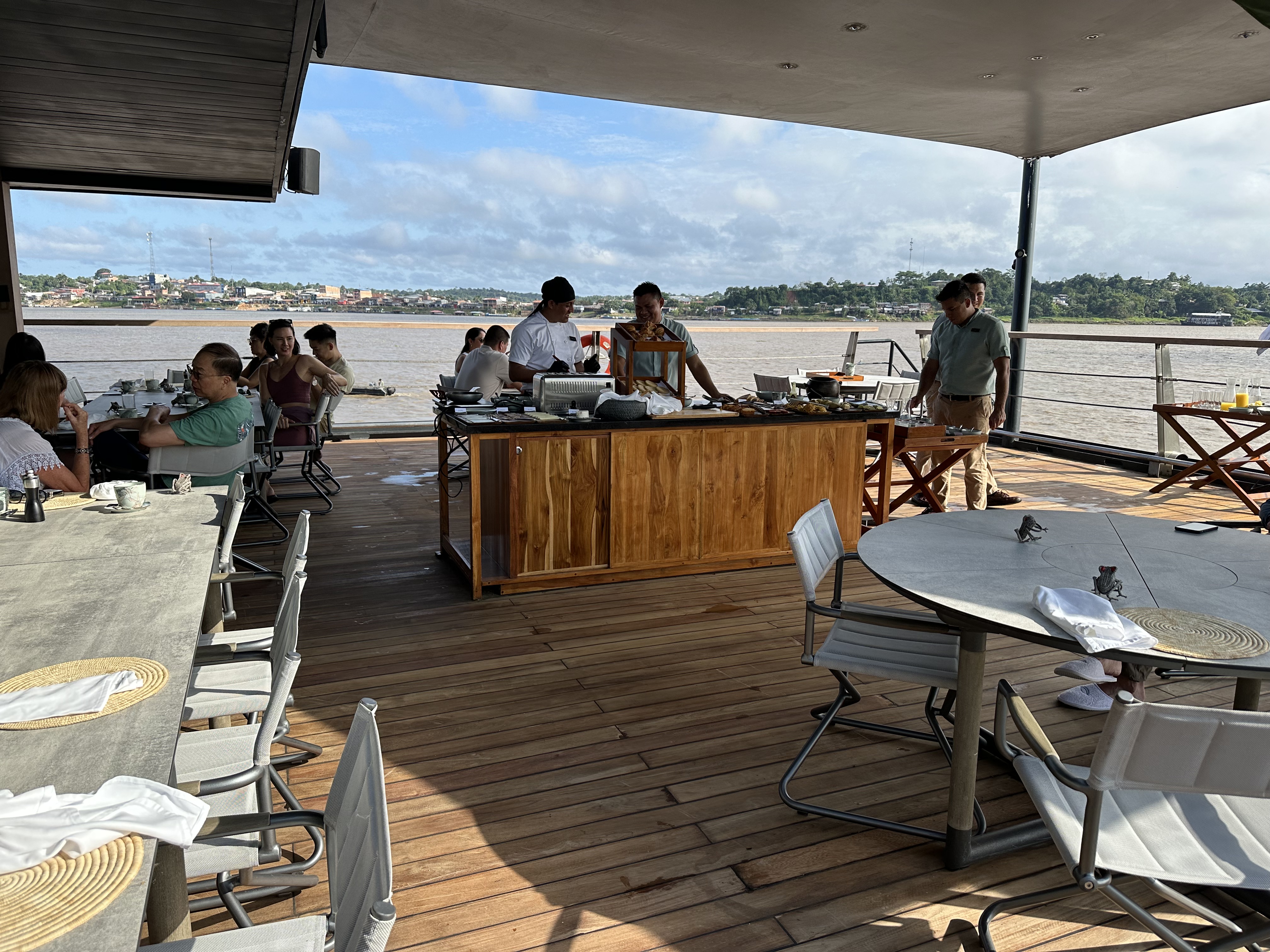
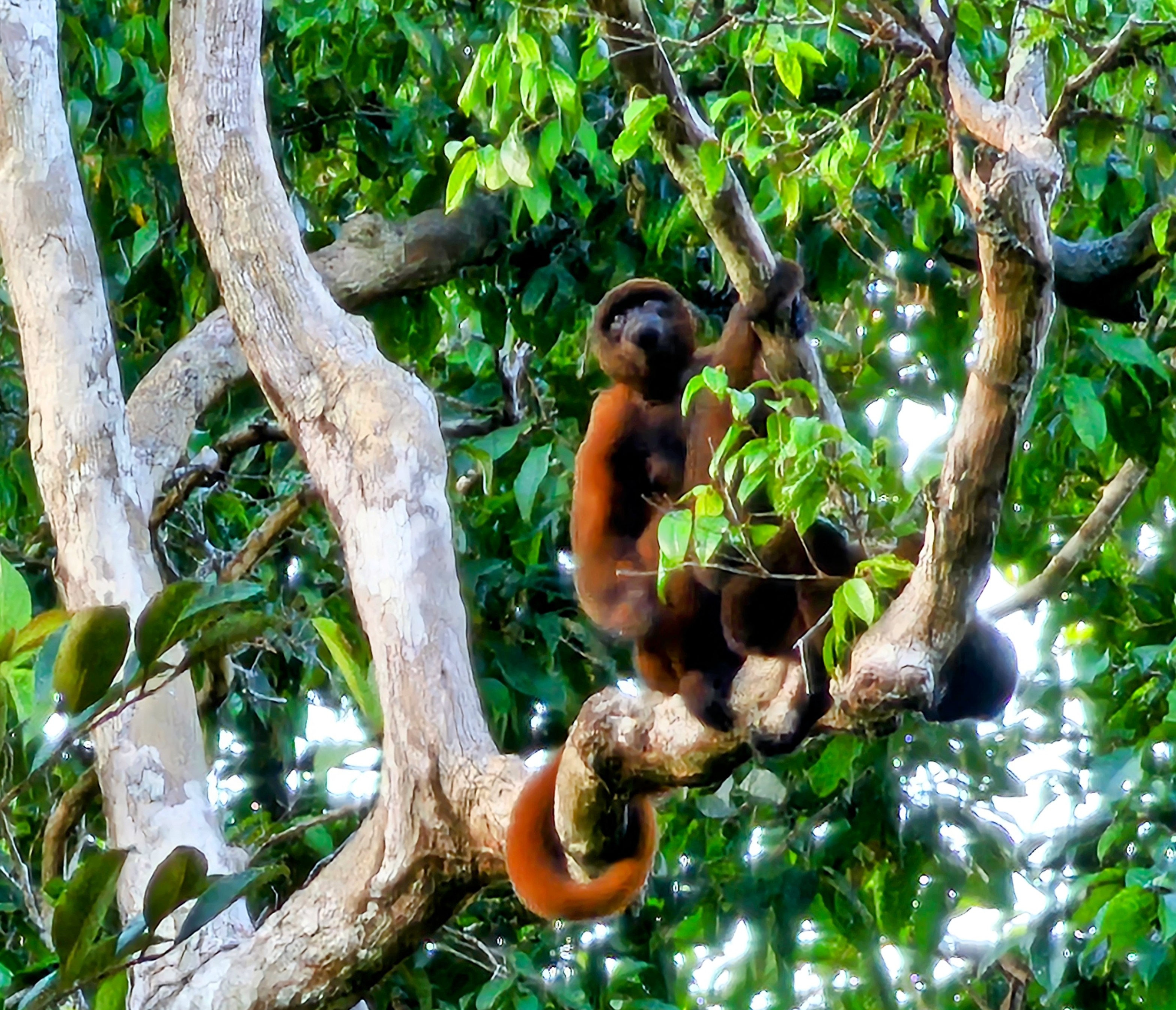
New friends, Bill and Nancya good photographer , Terry, and meDancing in the loungeThe outdoor dining. area and barThe water level during the High water season.Terry’s photo of the wooly monkeys
Eventually many of us were up and dancing to the lively sounds. At 8pm the music stopped and we all trouped into the dining room for dinner. It turns out that the boat was only half full and there are more staff than there are travelers. We sat with a couple named Bill and Nancy and passed a pleasant evening getting to know them. After the unremarkable meal, we happily went to our room and bed.
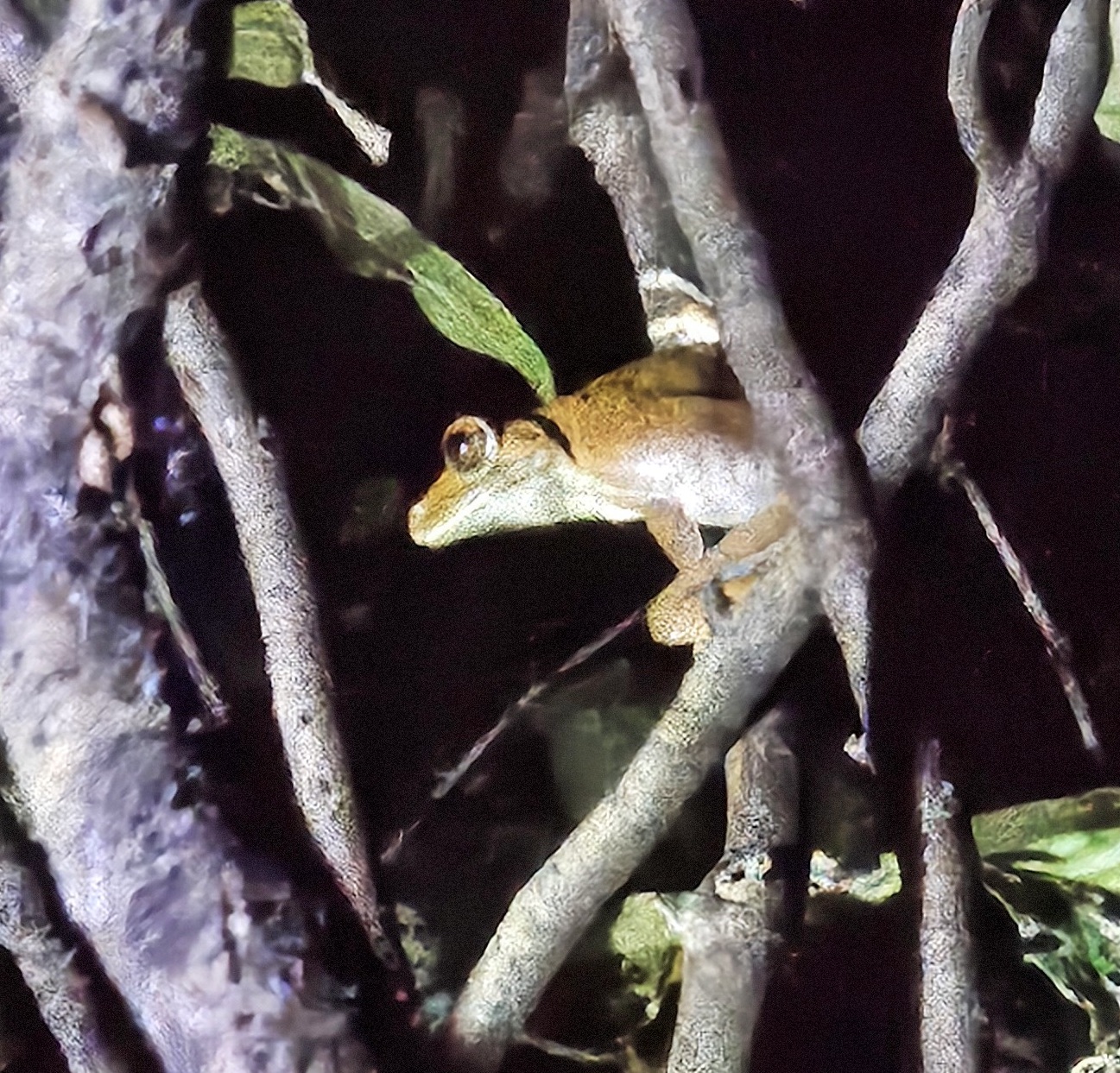
A very hard to see, brown tree frog, that Terry caught nd shared with me.
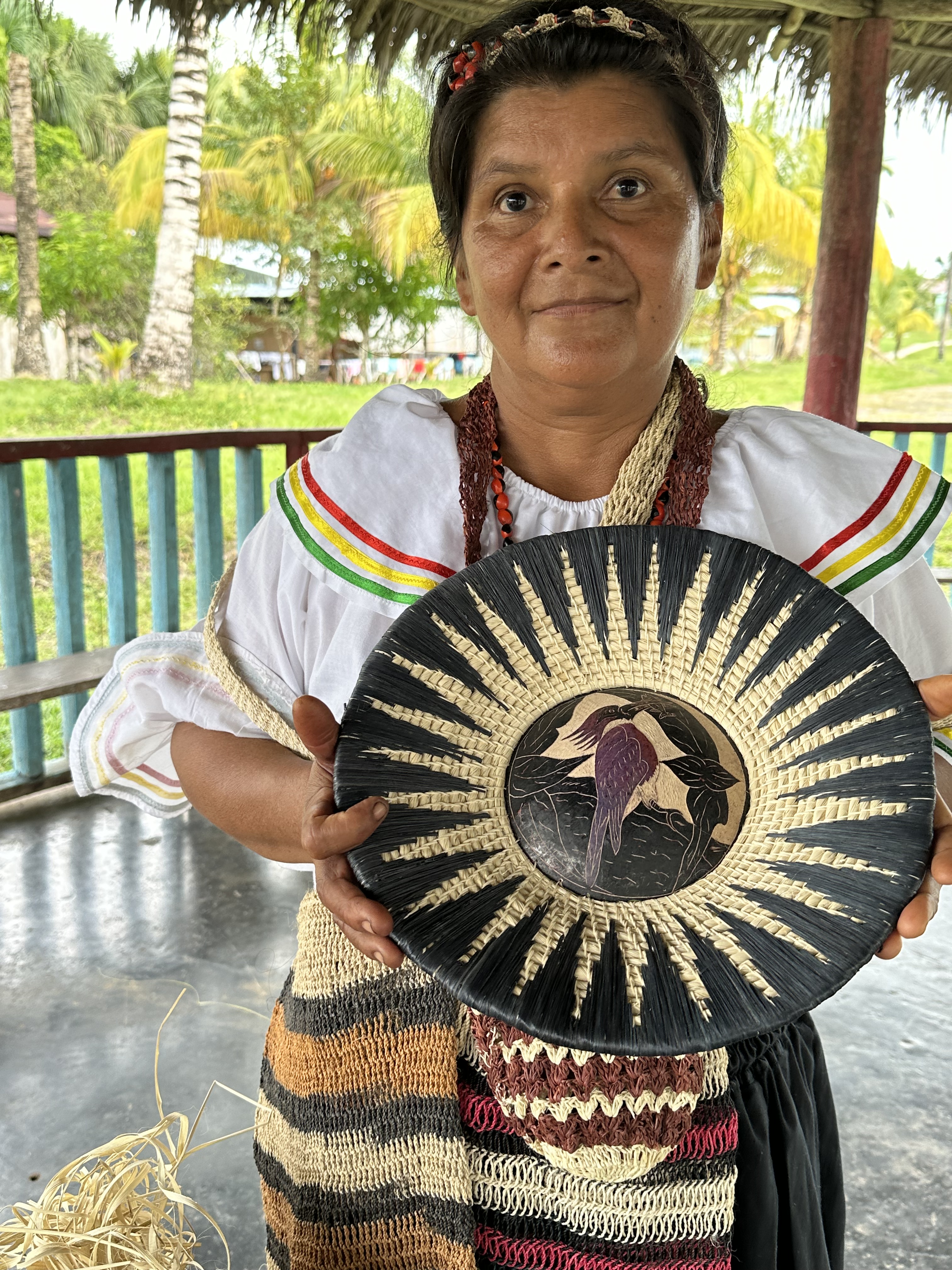
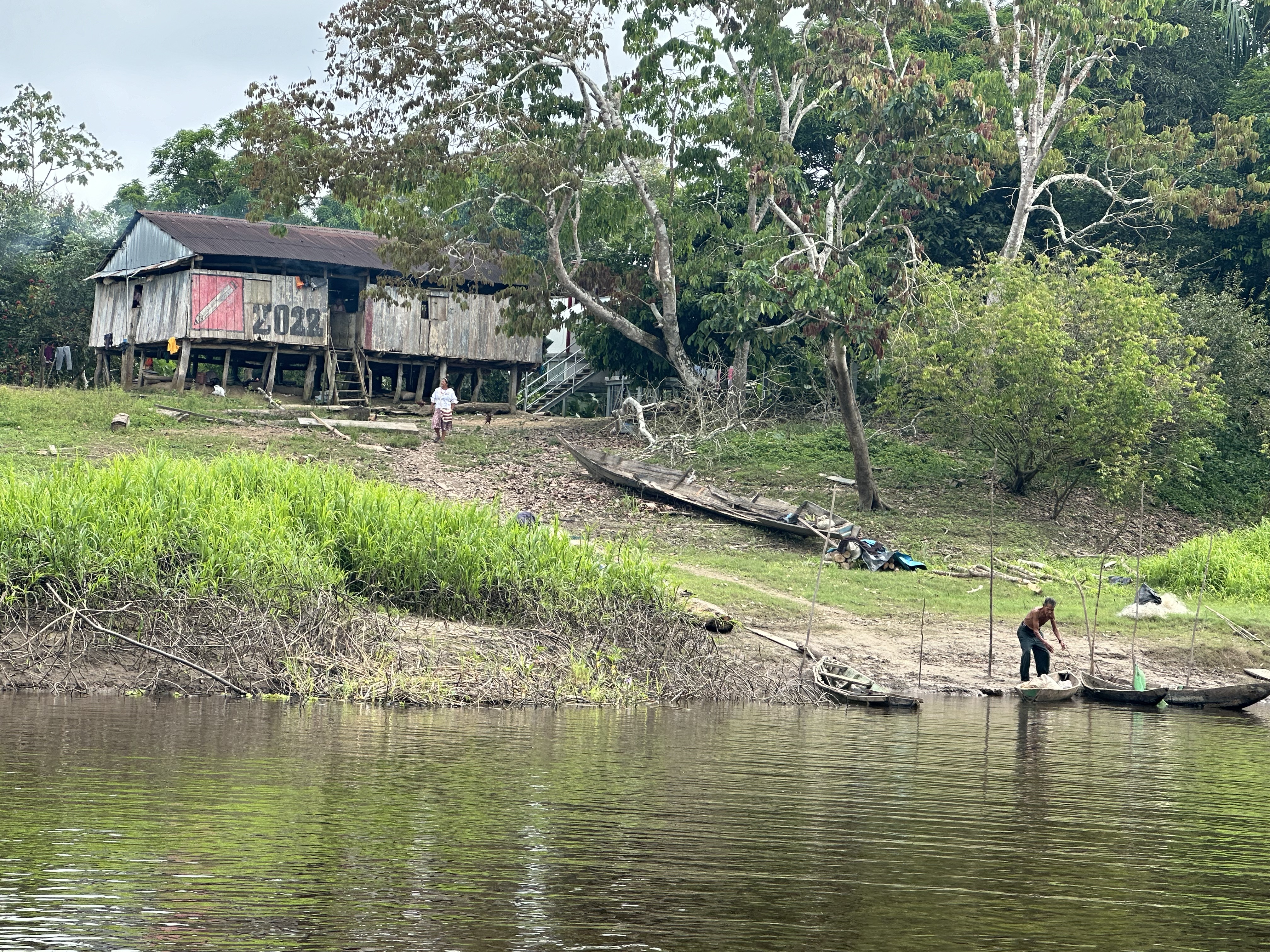
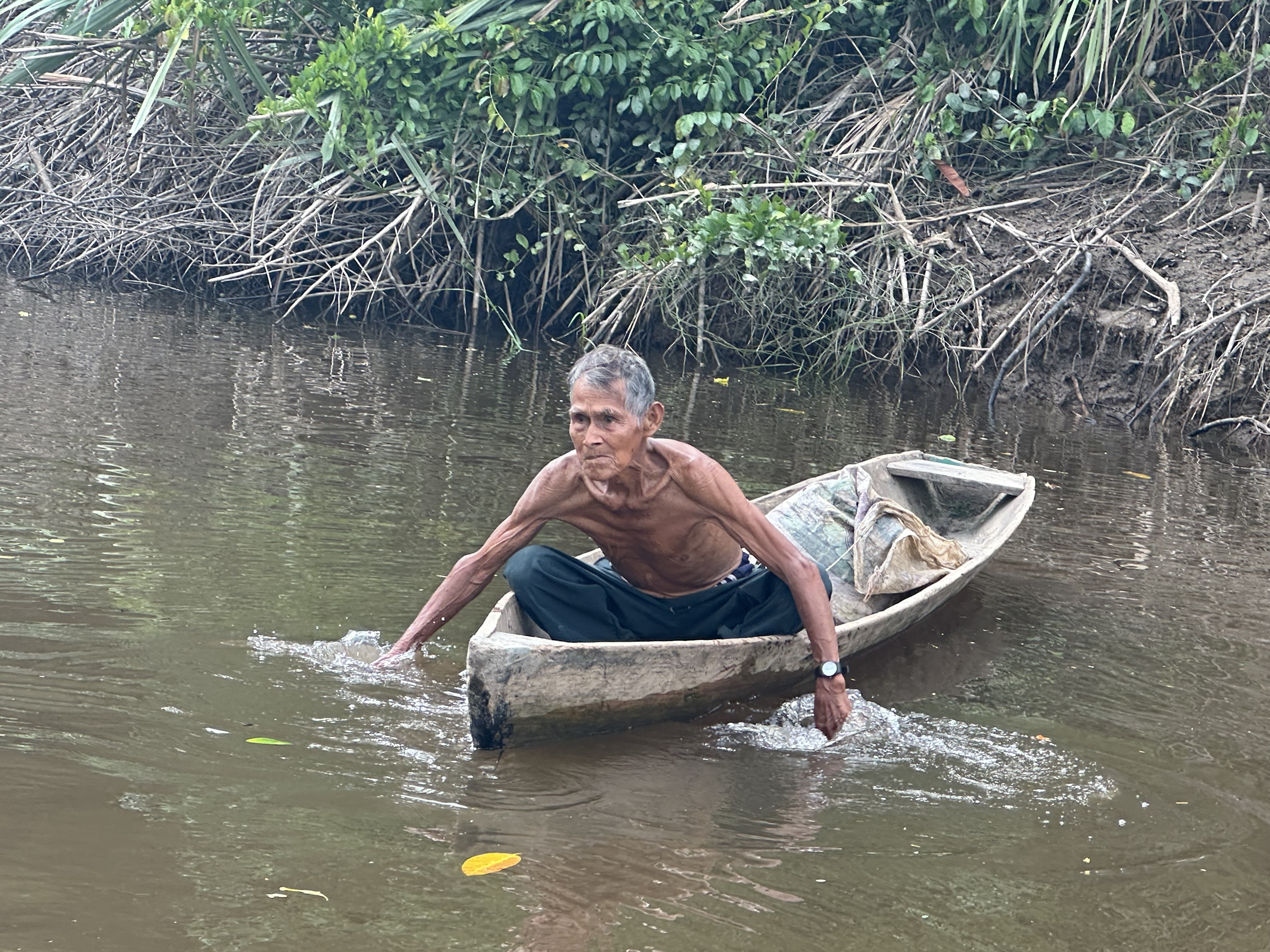
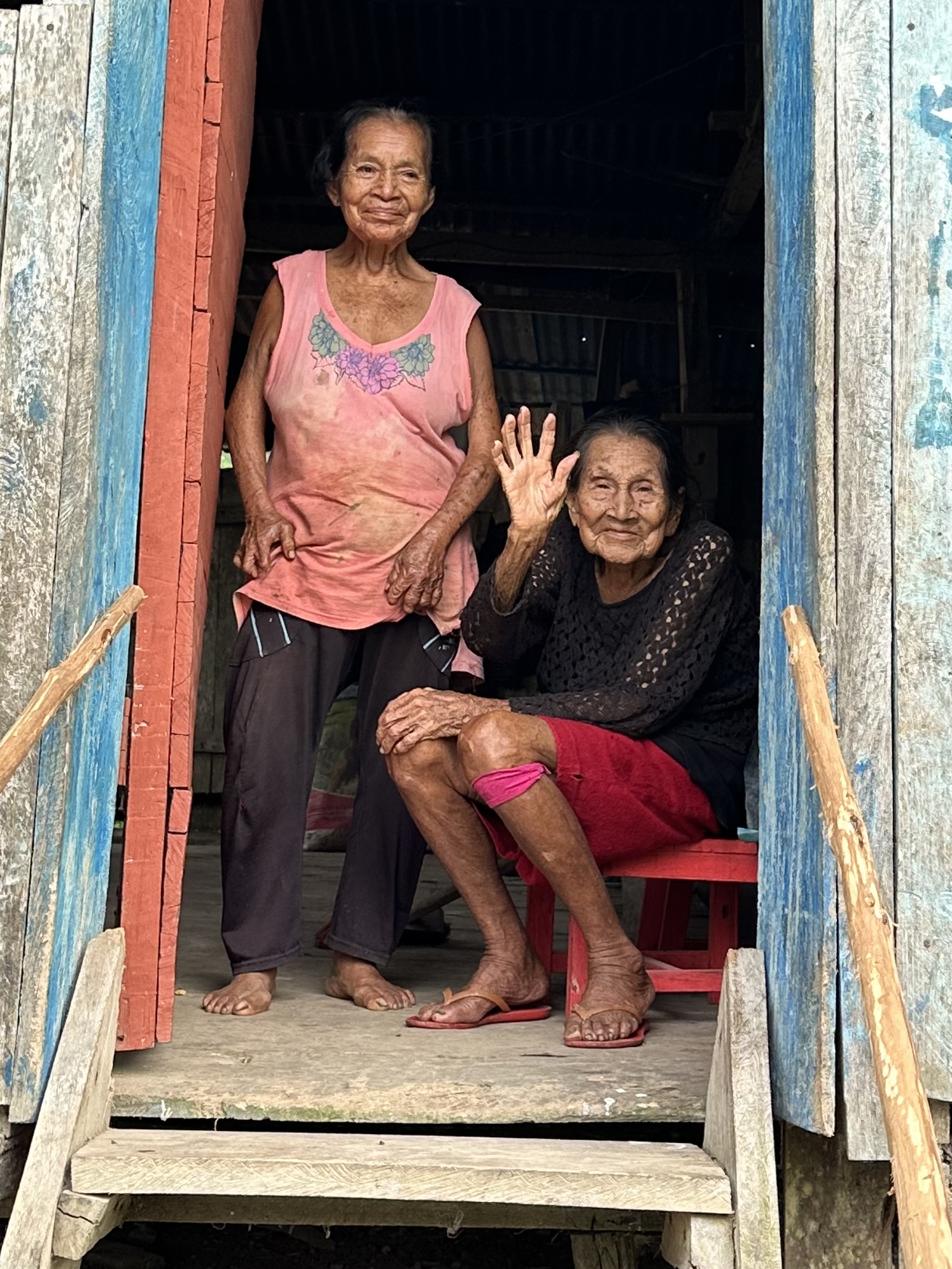
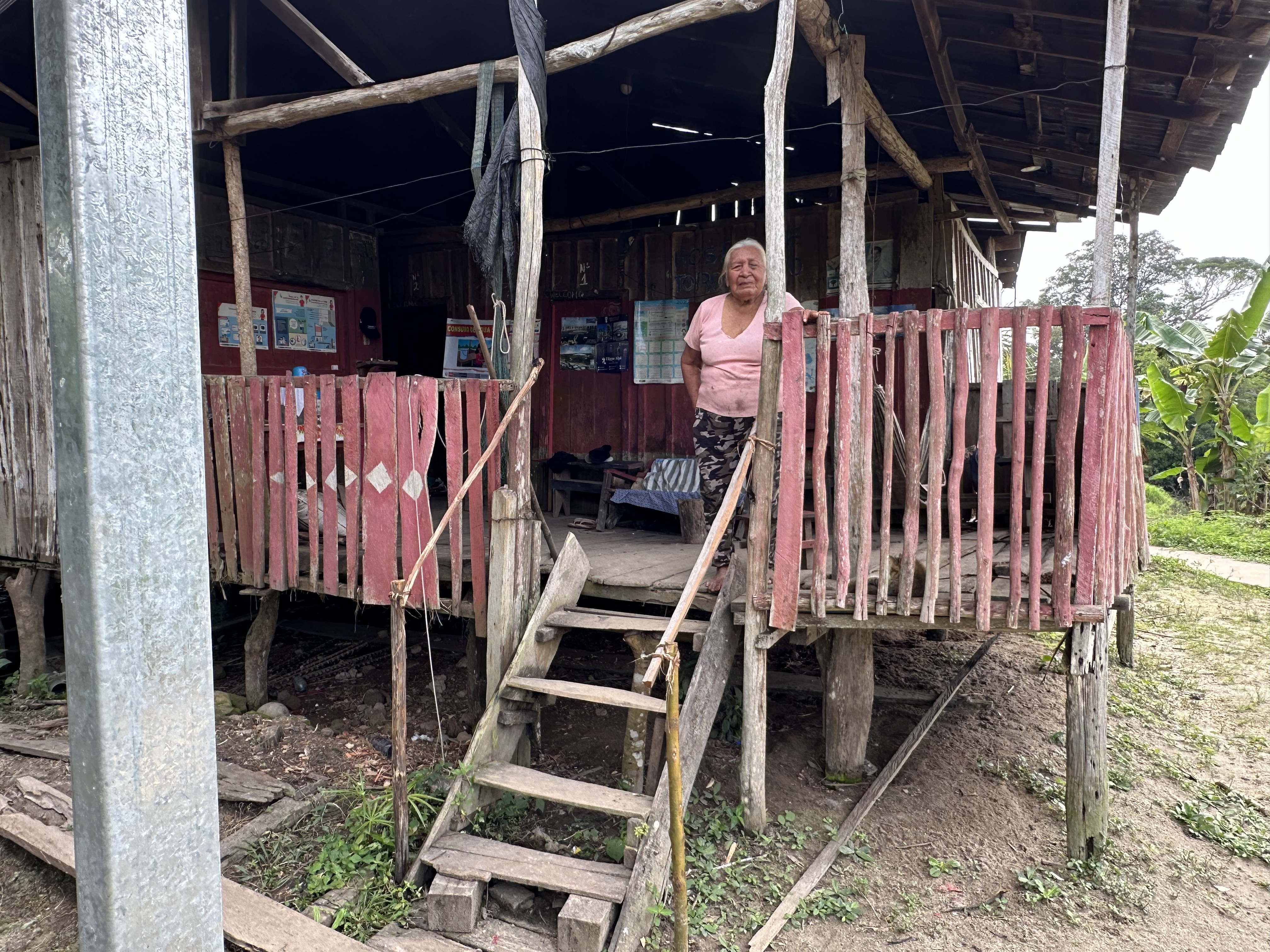
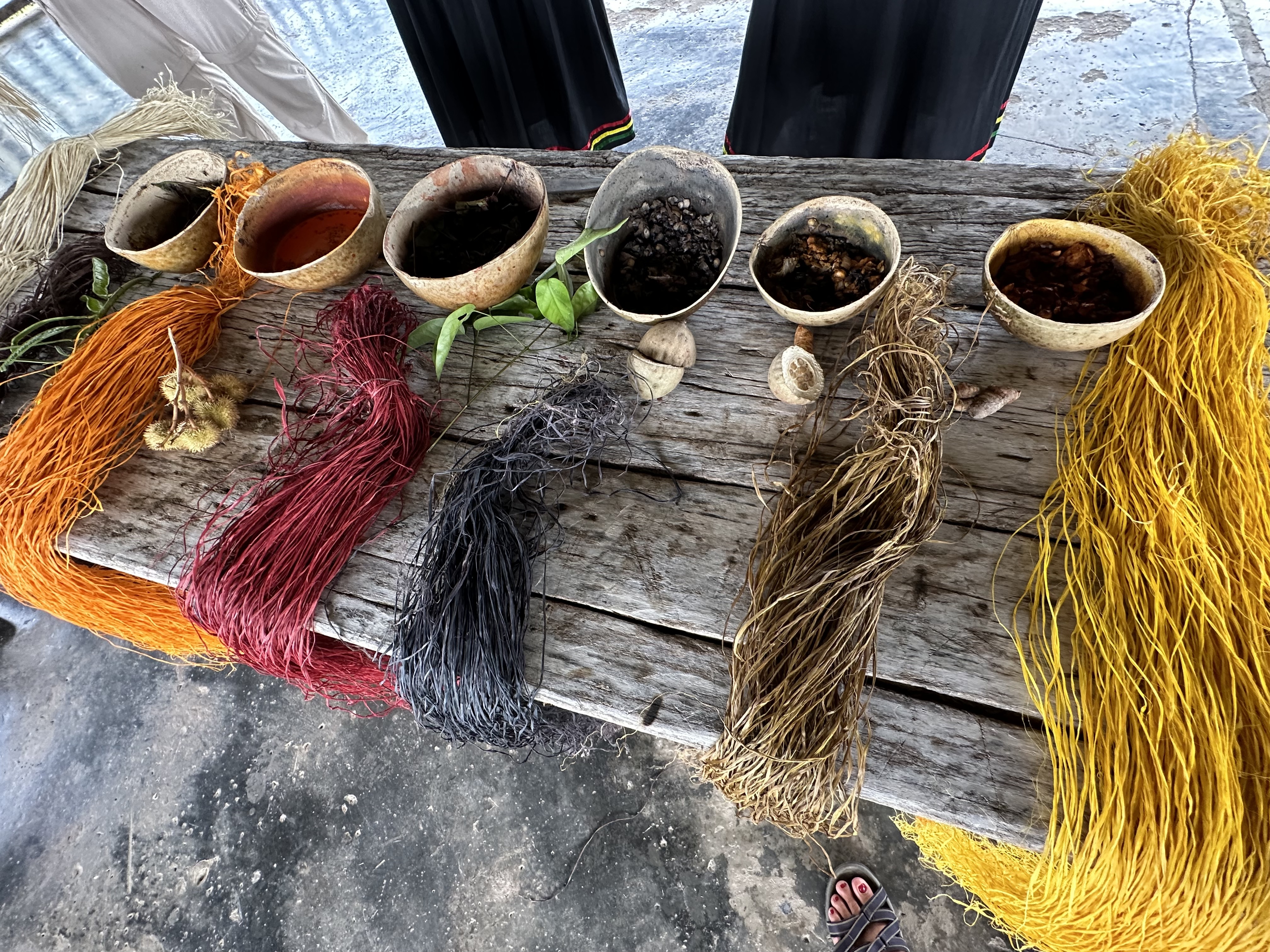
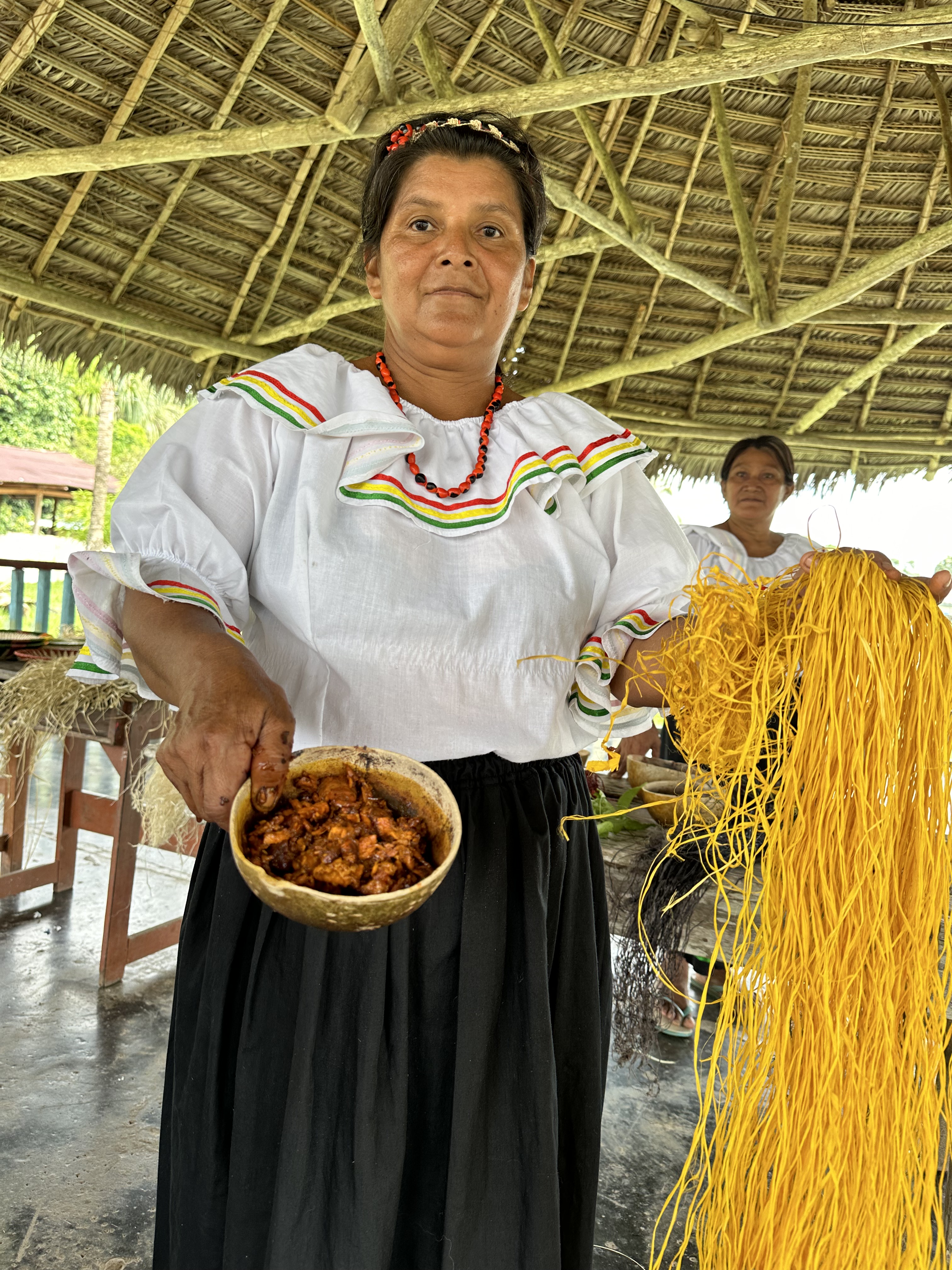
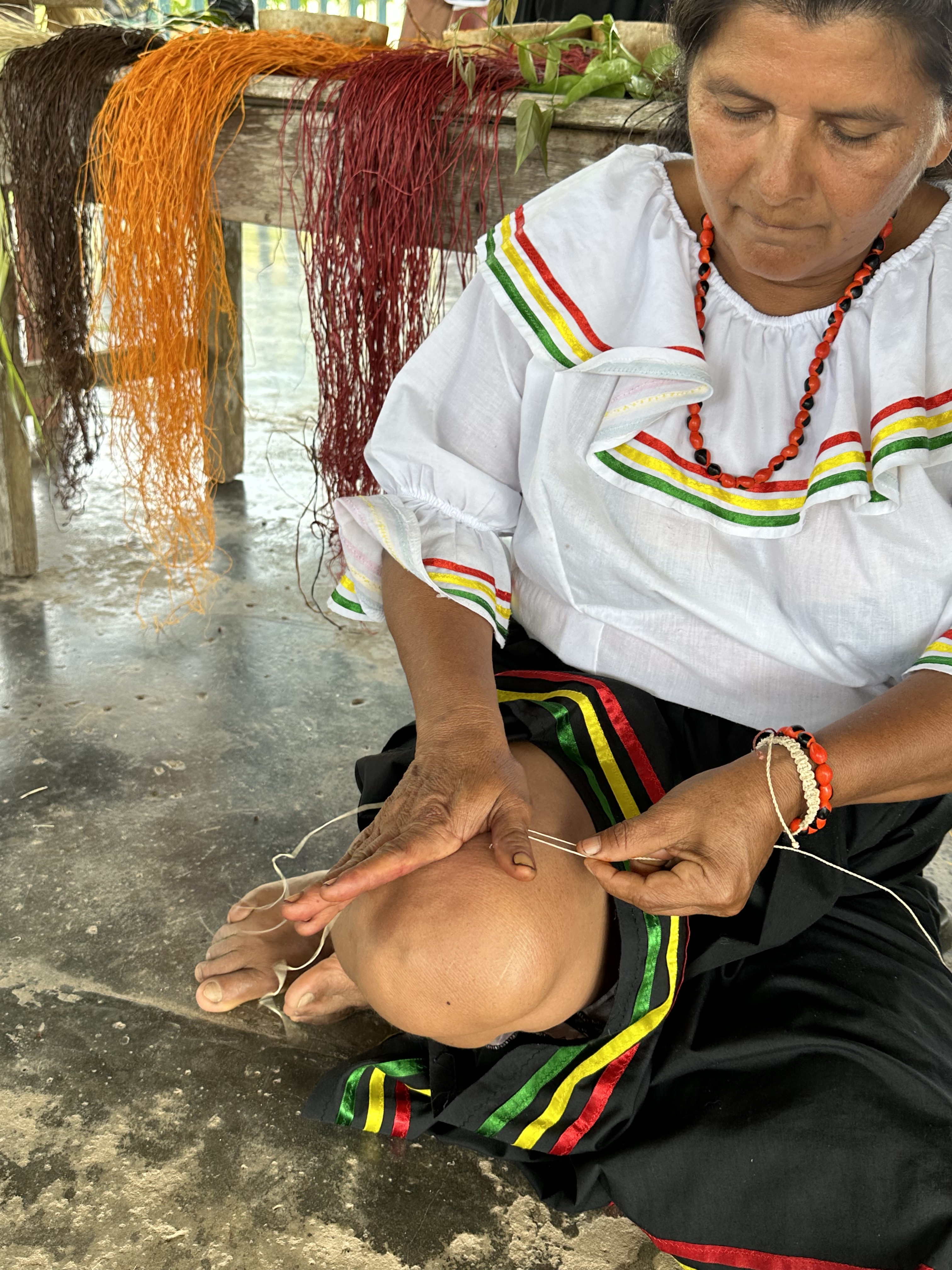
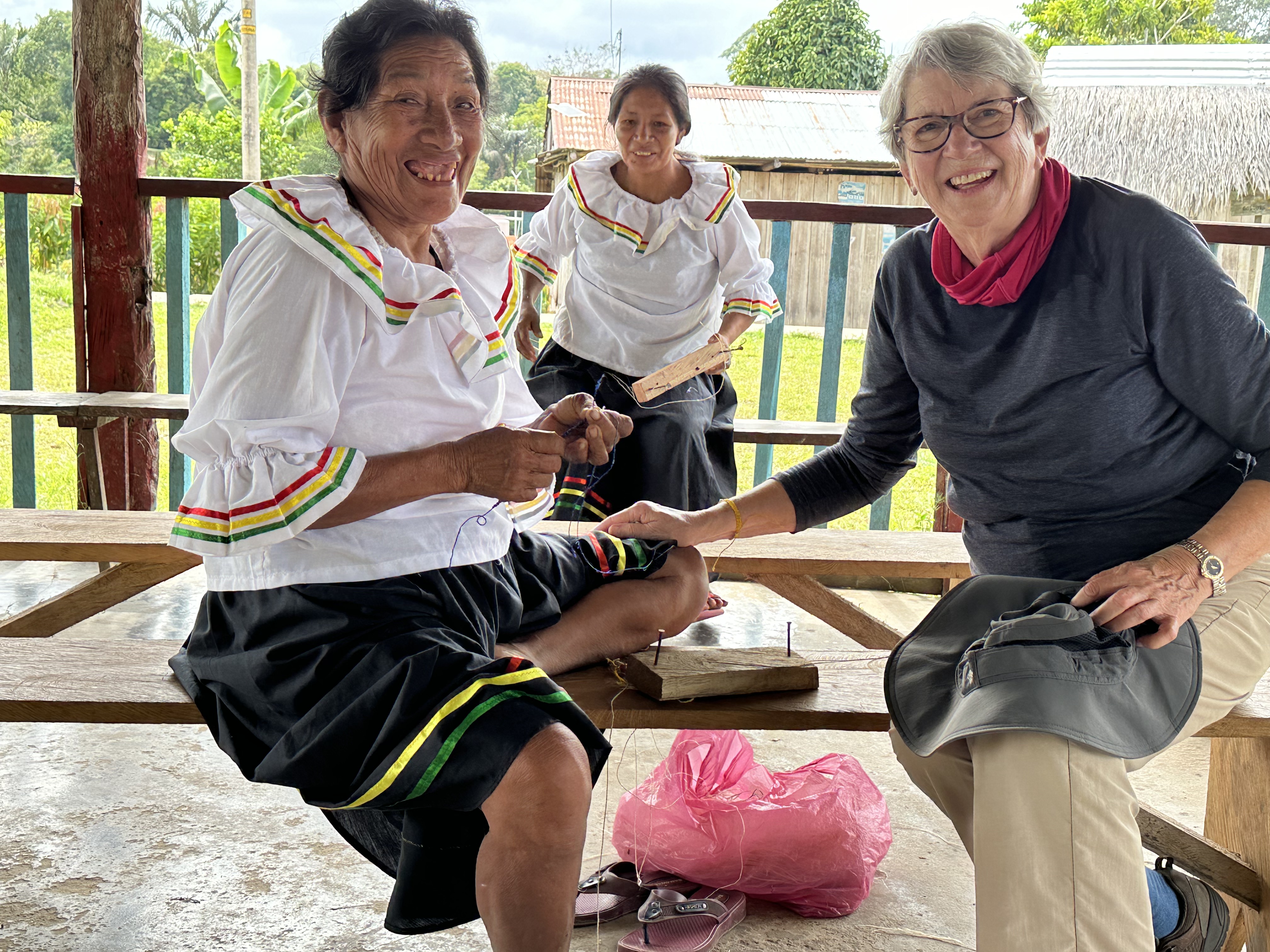
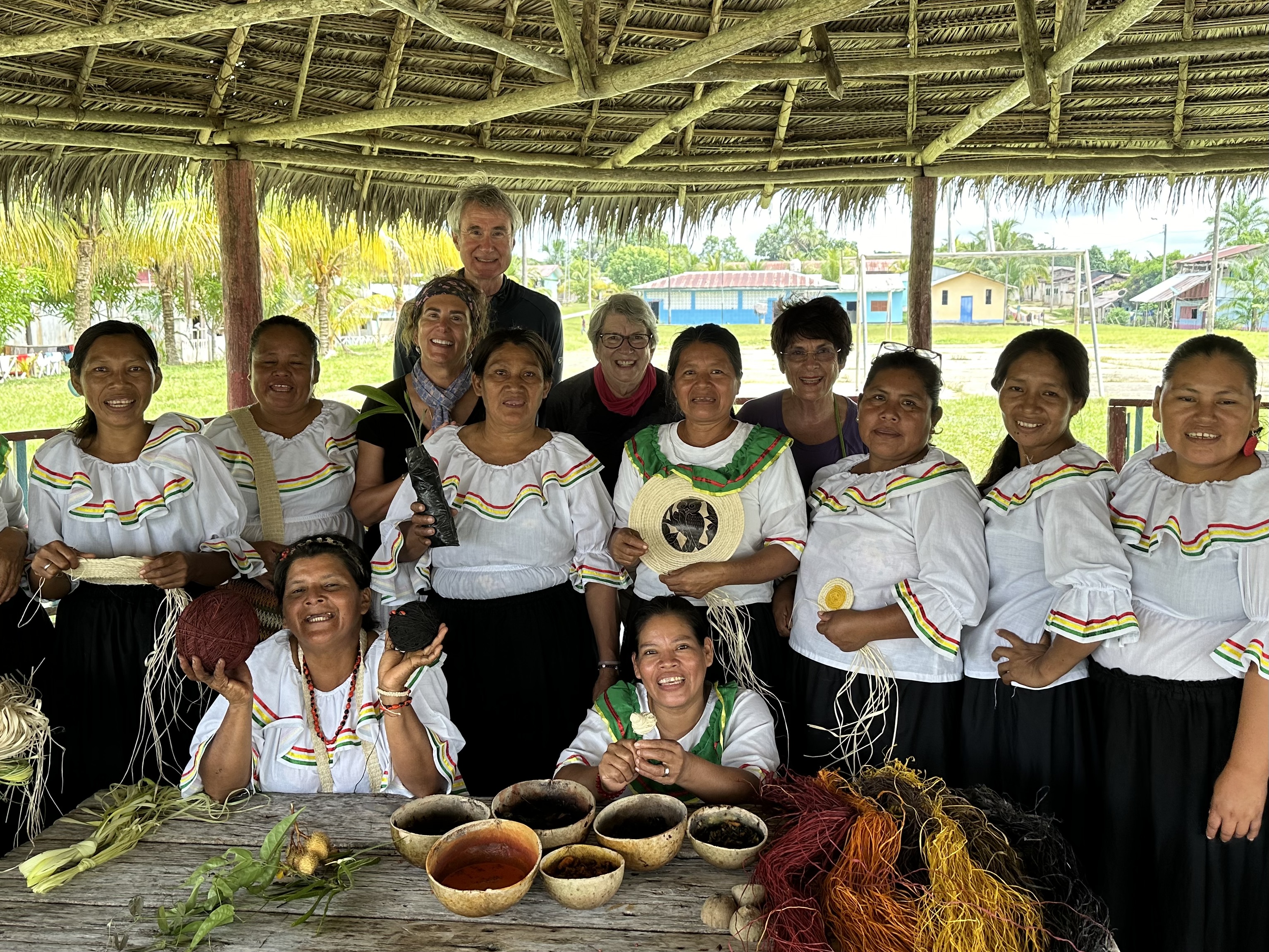
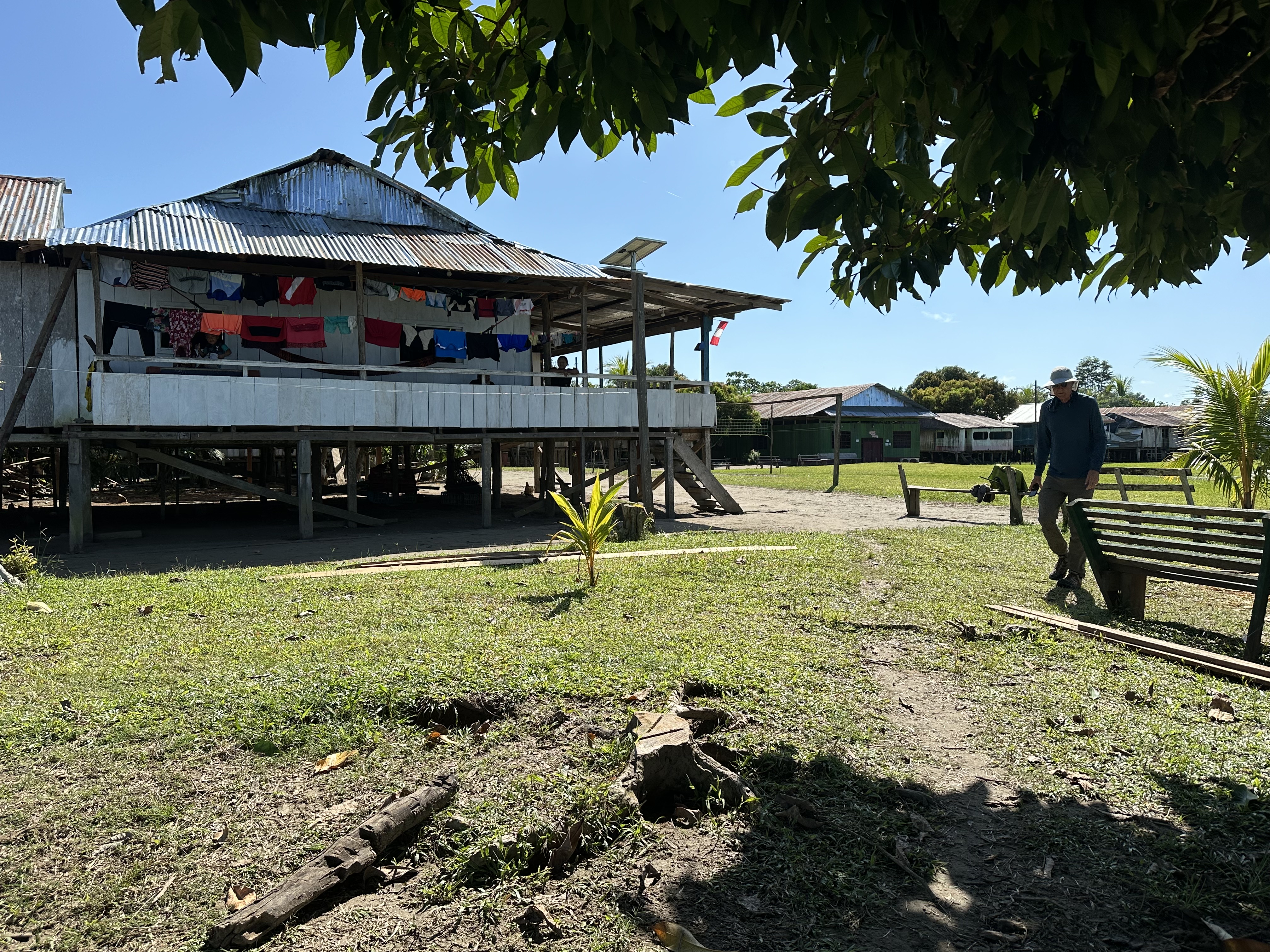
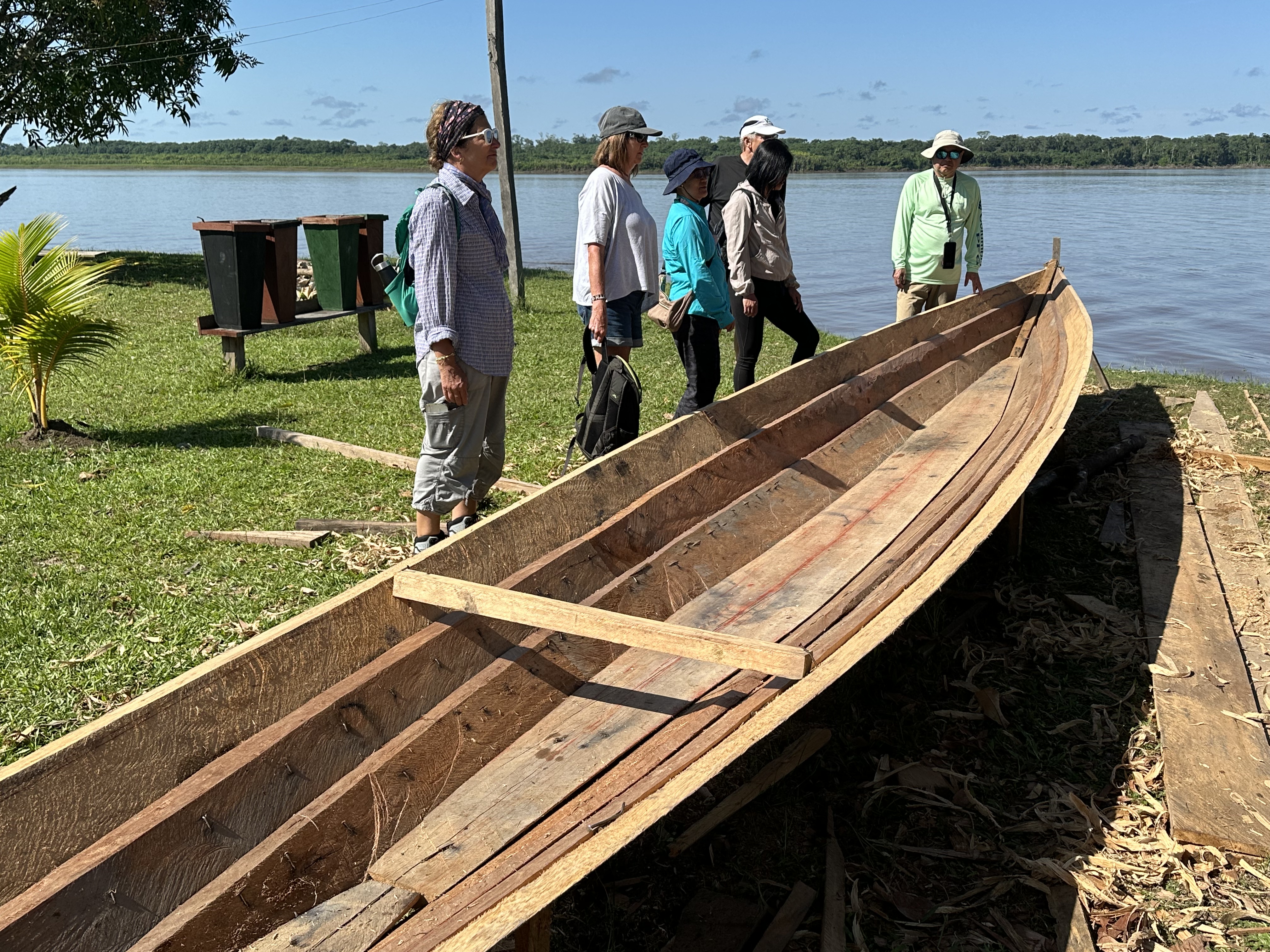
This morning we had breakfast at 8am on the aft deck and said good bye to the short term folks who were departing for Nauta on the other side of the river and a 90 minute drive from there to Iquitos. At 9:15 we broke up into groups. I went with a group headed for a village where handcrafts are being made and demonstrated, Mark went with a group on a boat trip along the river banks to spot birds. My group learned about converting palm fibers into colorful artifacts like bracelets, baskets and ornaments. The village is called Amazona and the people speak two languages: their native Kukama and Spanish. There are 300 residents whose primary occupation is fishing. Since 2016, the ladies do craft work in addition to fishing to make money . They use palm fronds to make their products. They wash the fibers, dry them and then twist them by rolling two or three together on their leg to make them strong . Color is added by boiling the fibers in different dyes for different lengths of time. Then the various products are made.
The village was the tidiest and nicest I have ever seen and the ladies were friendly and artistic. I had not intended to buy anything, but ended up buying a woven plate and bracelet anyway.
I learned there are 70 families in this village. The community house where they demonstrated their craft is called a Malloca, like a banda in Uganda . The river gets to about 180 feet deep and is expected to drop another 20 feet during the dry season.
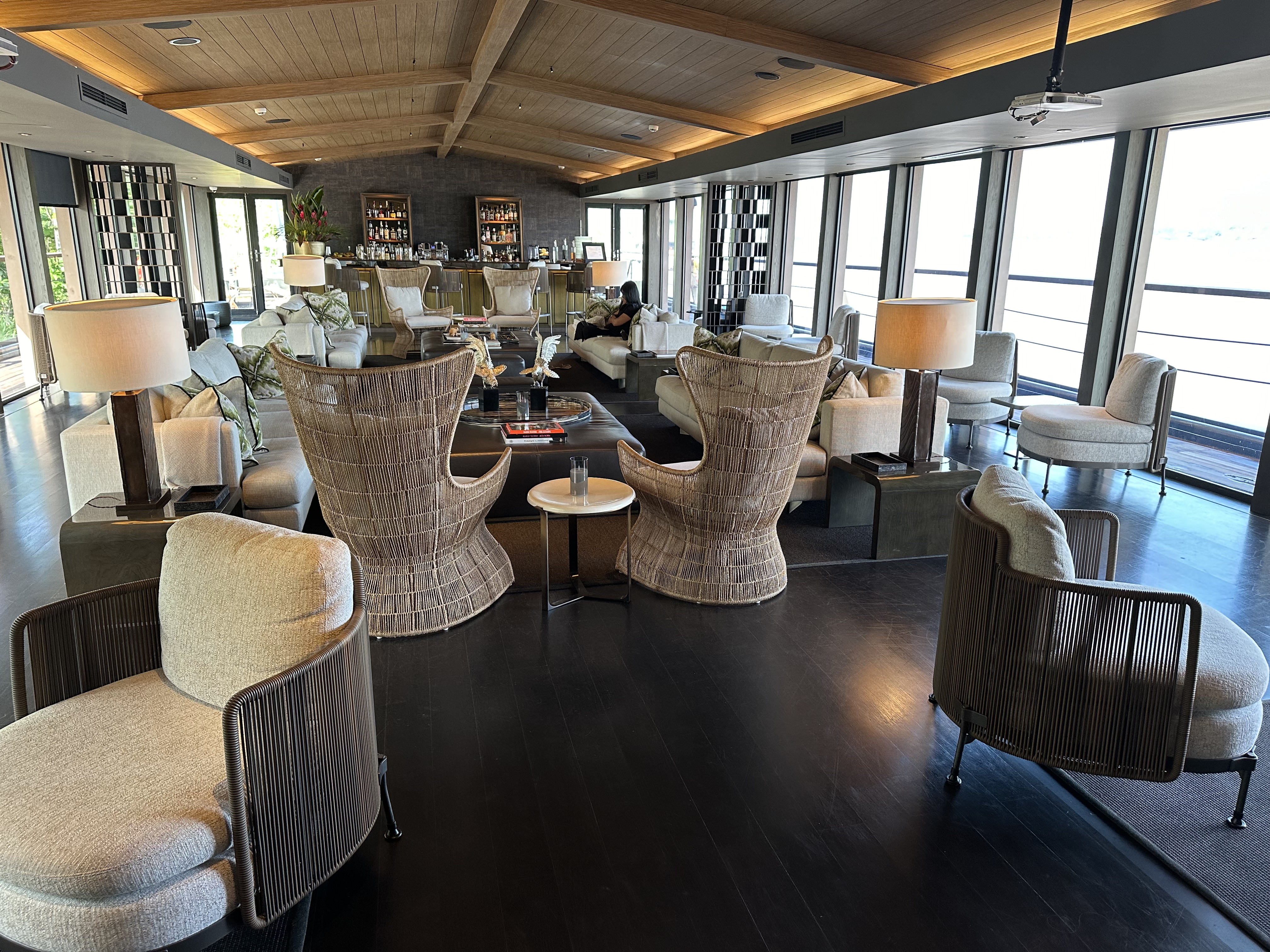
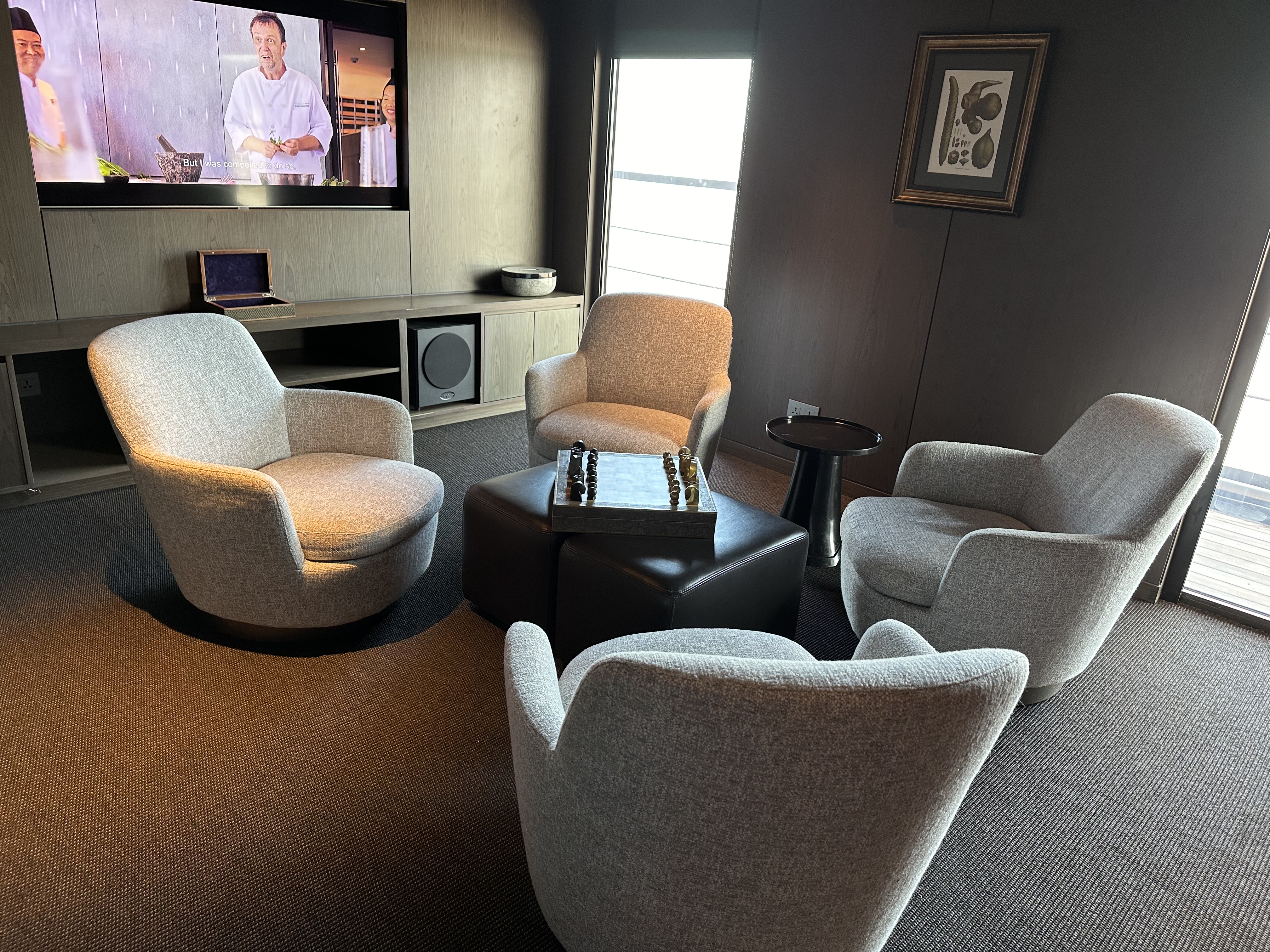
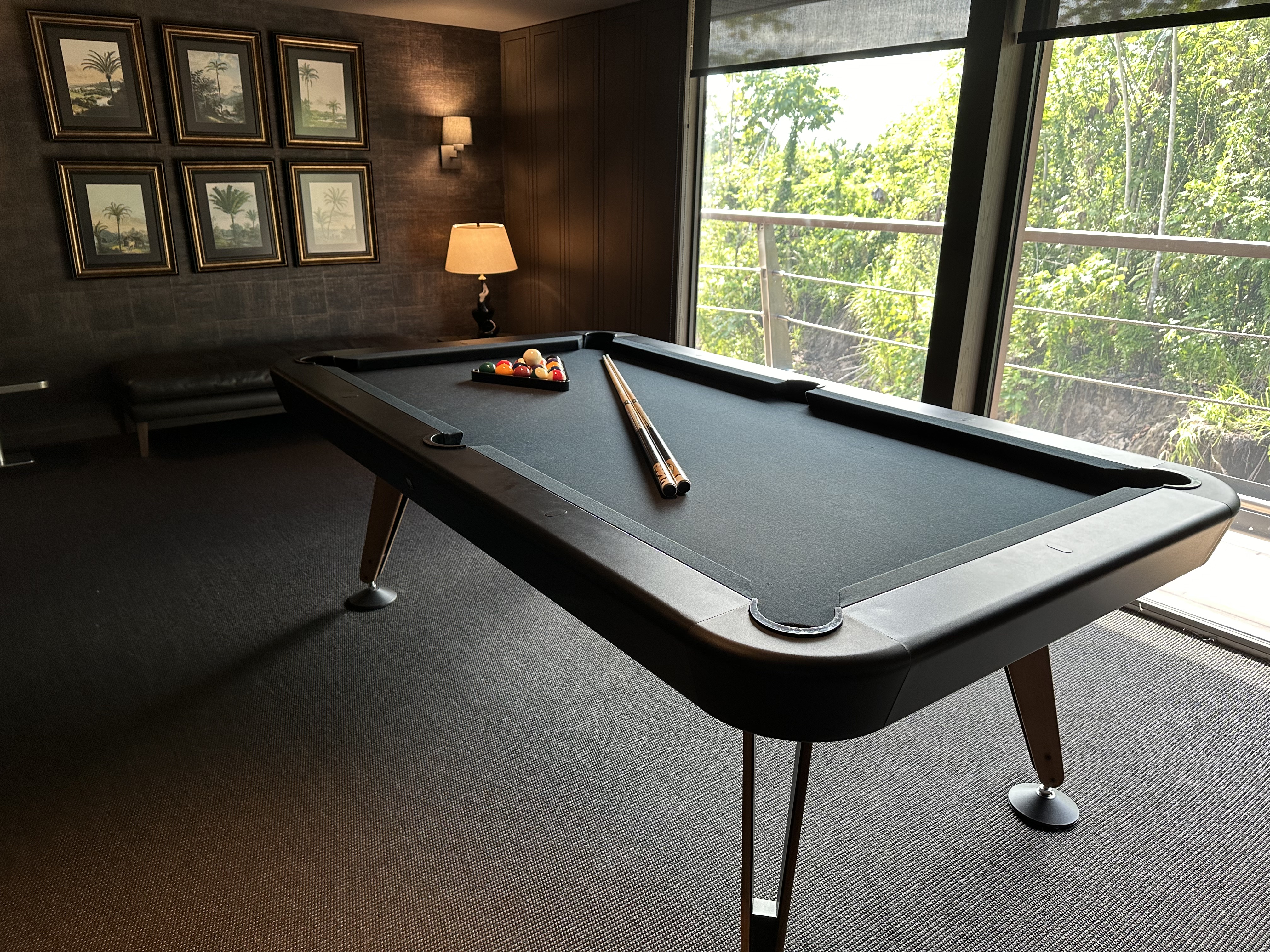
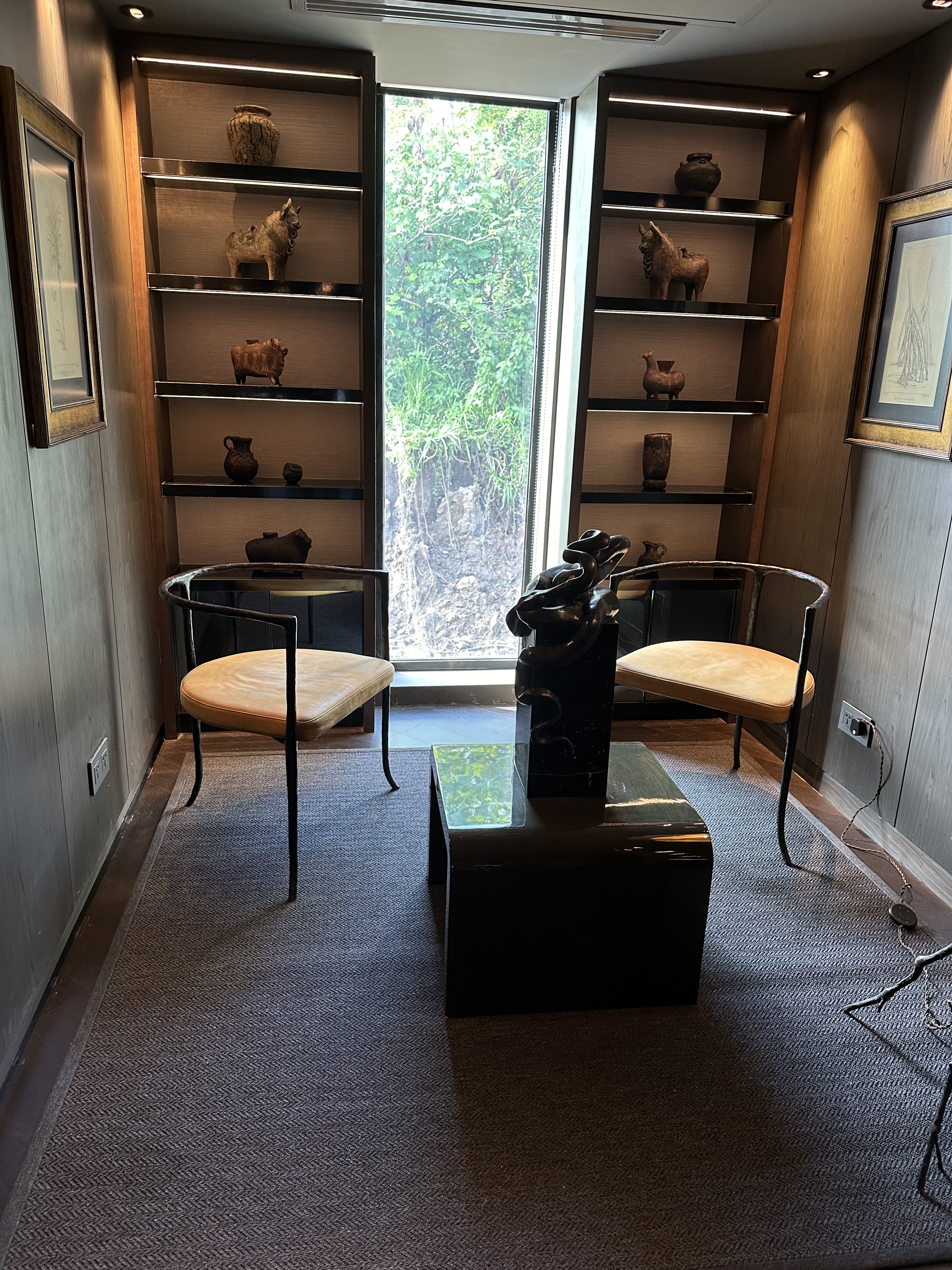
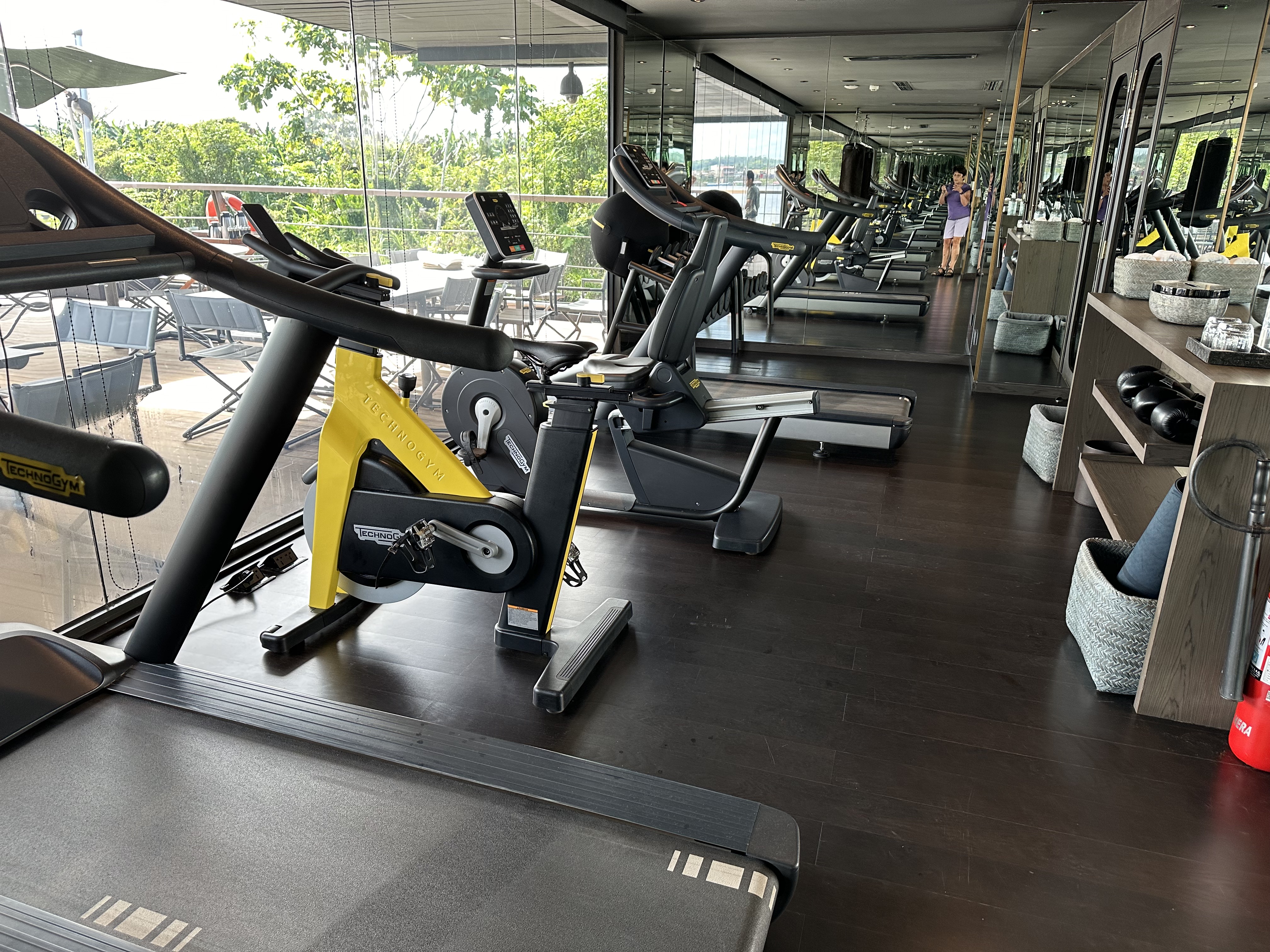
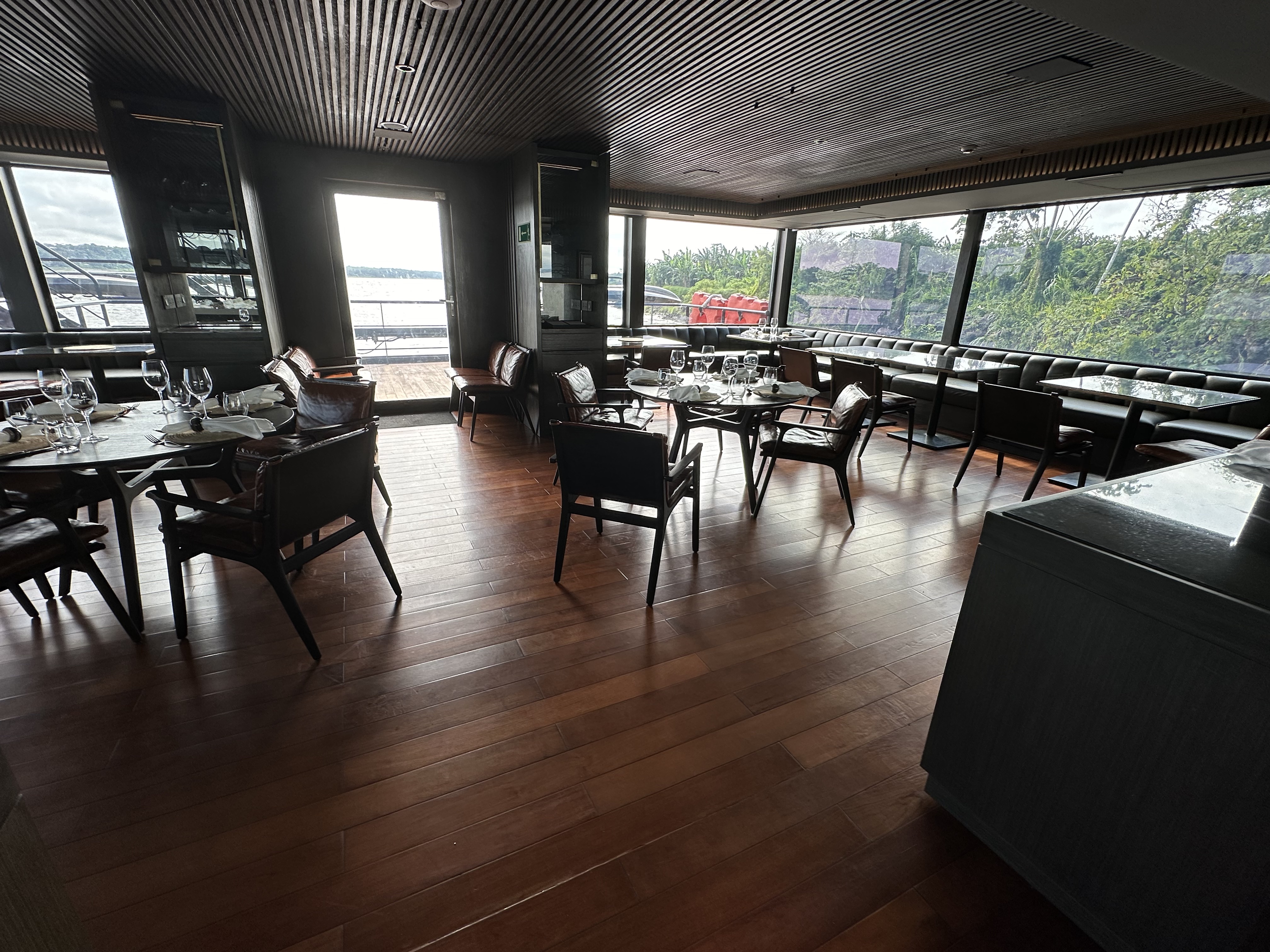
Meanwhile Mark’s group saw a few birds and other creatures. I borrowed three images taken by another guest named Terry. I had seen the animals but not managed to get decent photos. We were all back for lunch at noon. We had planned to eat only salad, but the chicken course was so juicy and tasty that we ate the whole meal. After lunch I took photos of the various rooms on the ship. It. is a pleasant boat for 40 guests. Even has a small pool. There were only 27 people during the week we were on board.
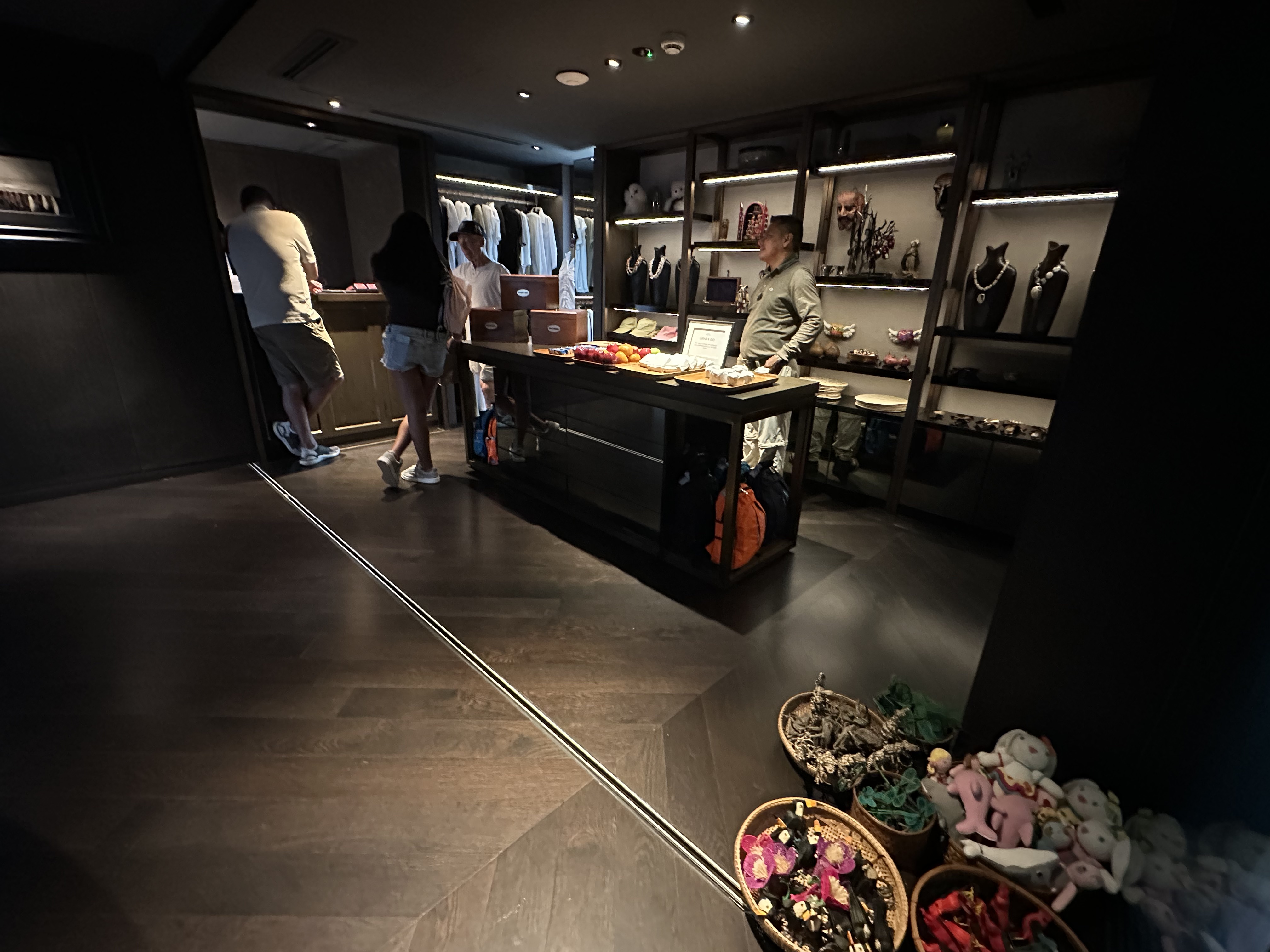
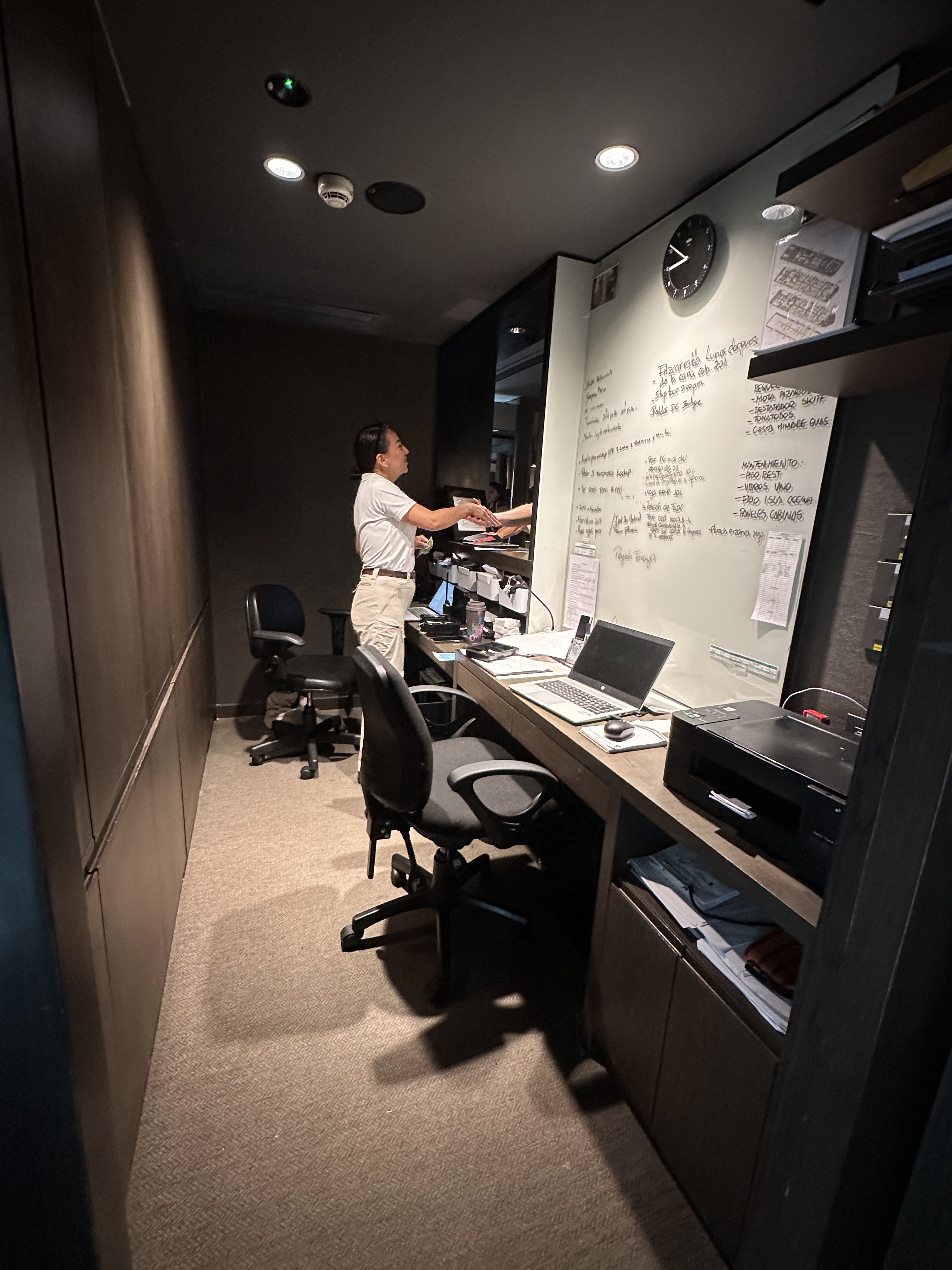
Lounge and BarT V Room Pool Room Quiet Room Exercise RoomOutdoor deck and poolDining RoomGift ShopAdmin Office
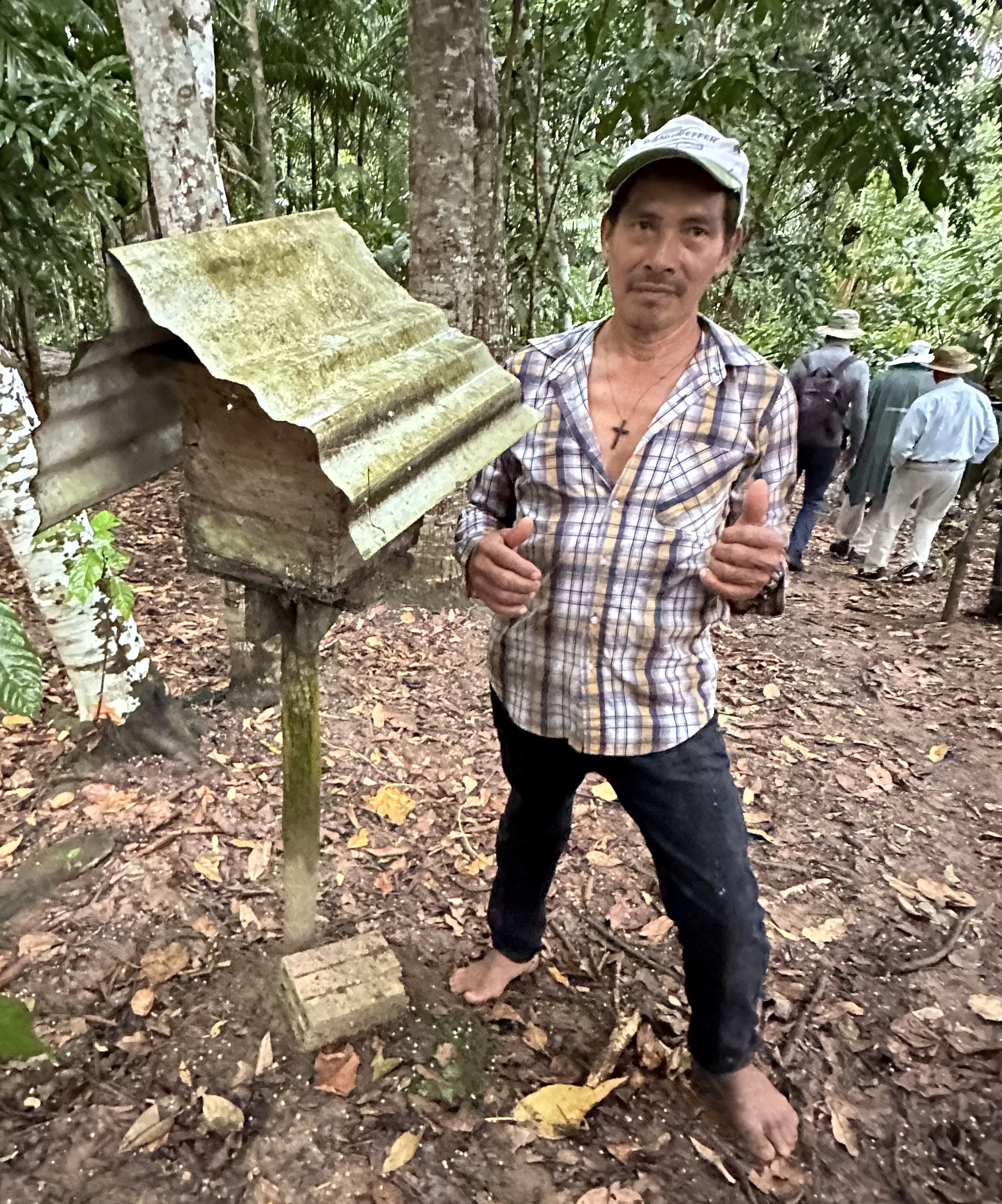
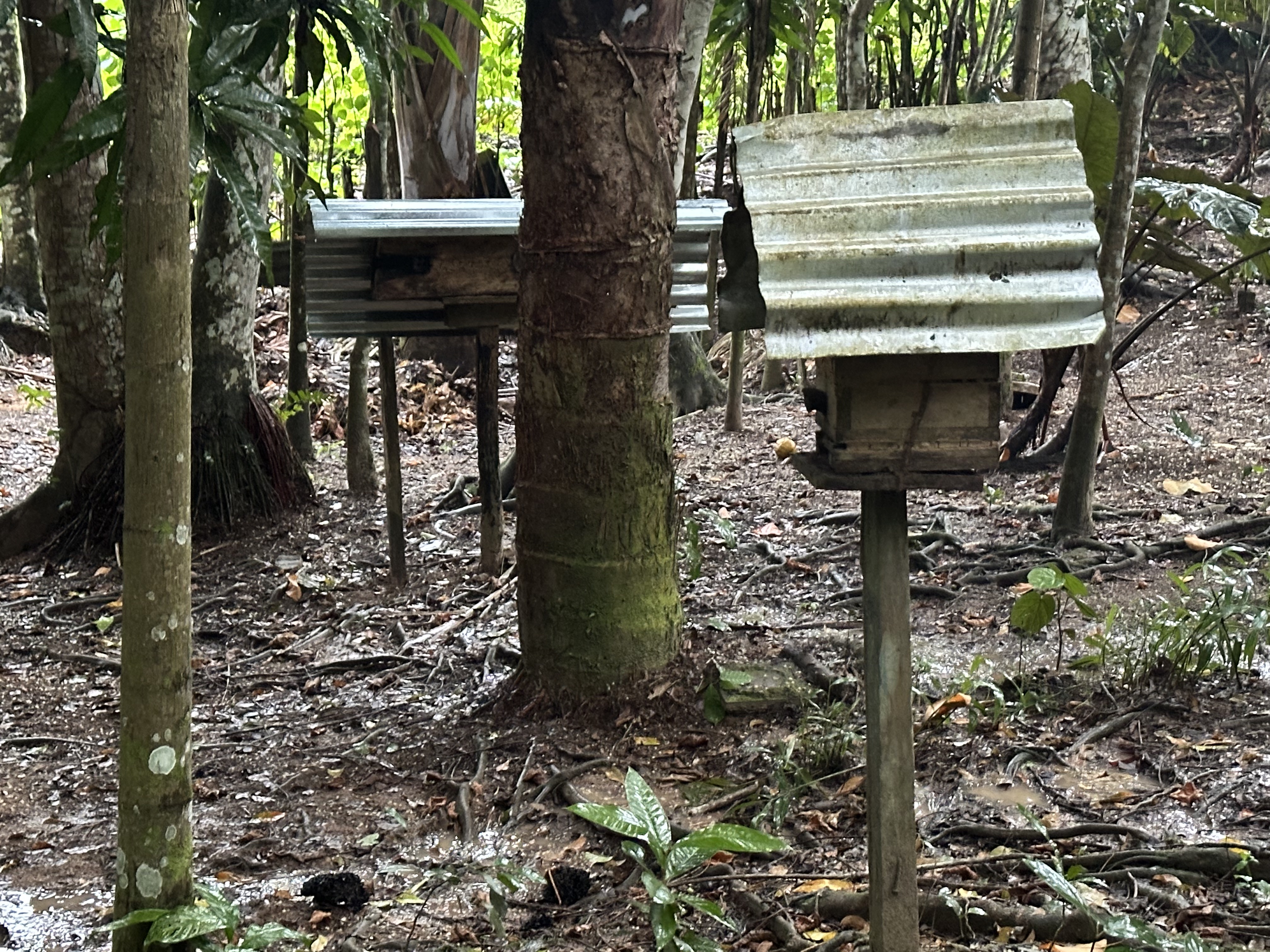
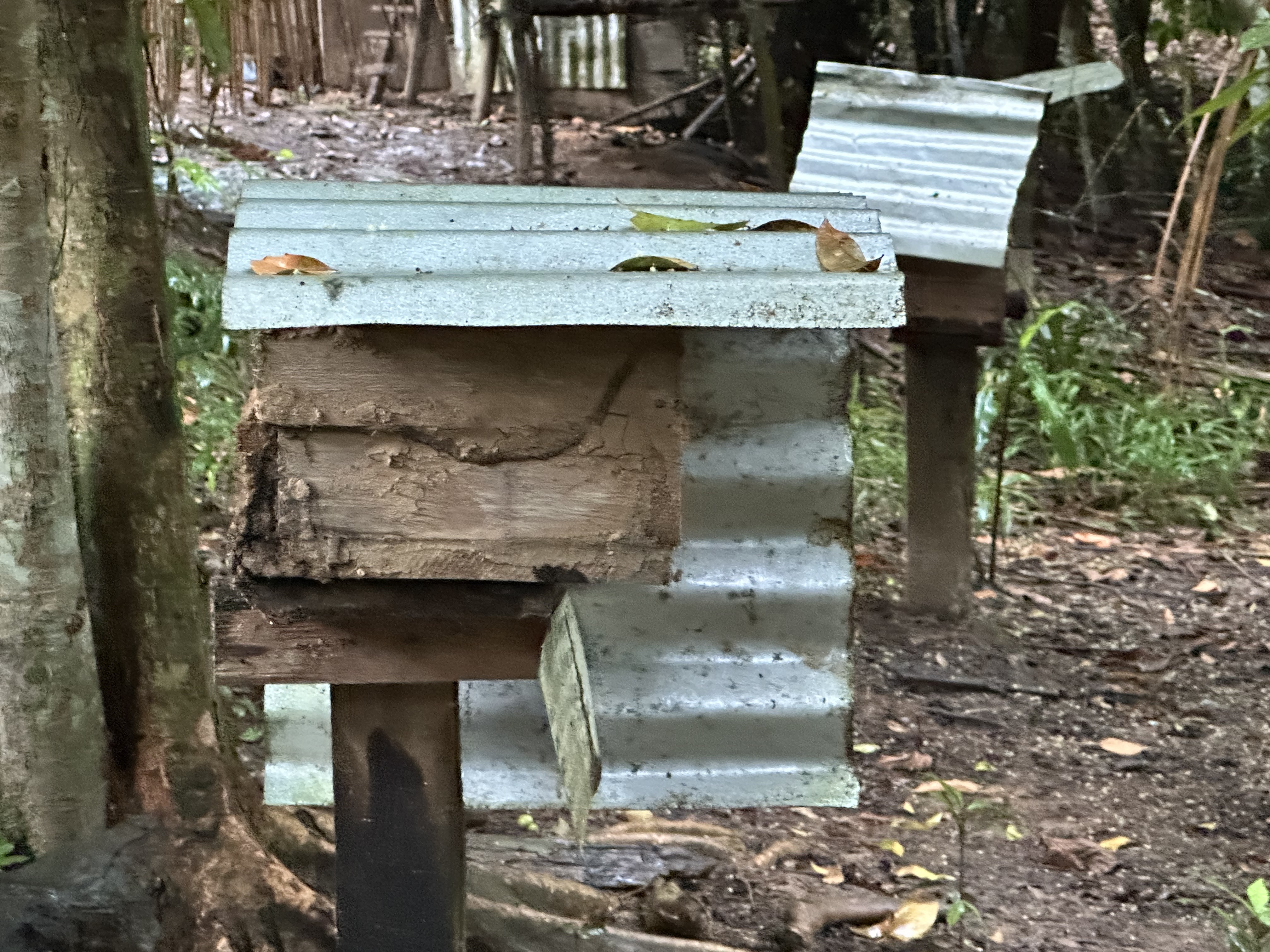
In the late afternoon two tenders full of us motored to the home of a bee keeper, with all of us thinking we would get to see bees in action. However, just as we arrived inside the beekeeper’s work room, we received our first rainfall. It lasted about half an hour but was enough for him to refuse to show us any bees. Instead we received a translated lecture on his method of keeping bees, and stingless ones at that. The beekeeper’s family started raising bees 7 years ago. After learning himself, he is now teaching children how to care for and raise bees. He uses a variety of bees that are stingless. None of us had heard of such bees and were surprised to learn they existed. He currently manages 68 boxes of hives, and harvests the honey every 3 months, getting 1-2 liters per hive. W paid 20 Sols for a small jelly jar size of honey. That amounted to about $5. The honey was surprisingly runny and tart, as though it was mixed with lemon. The rain let up about the time we were ready to depart, but it was too late for seeing bees.
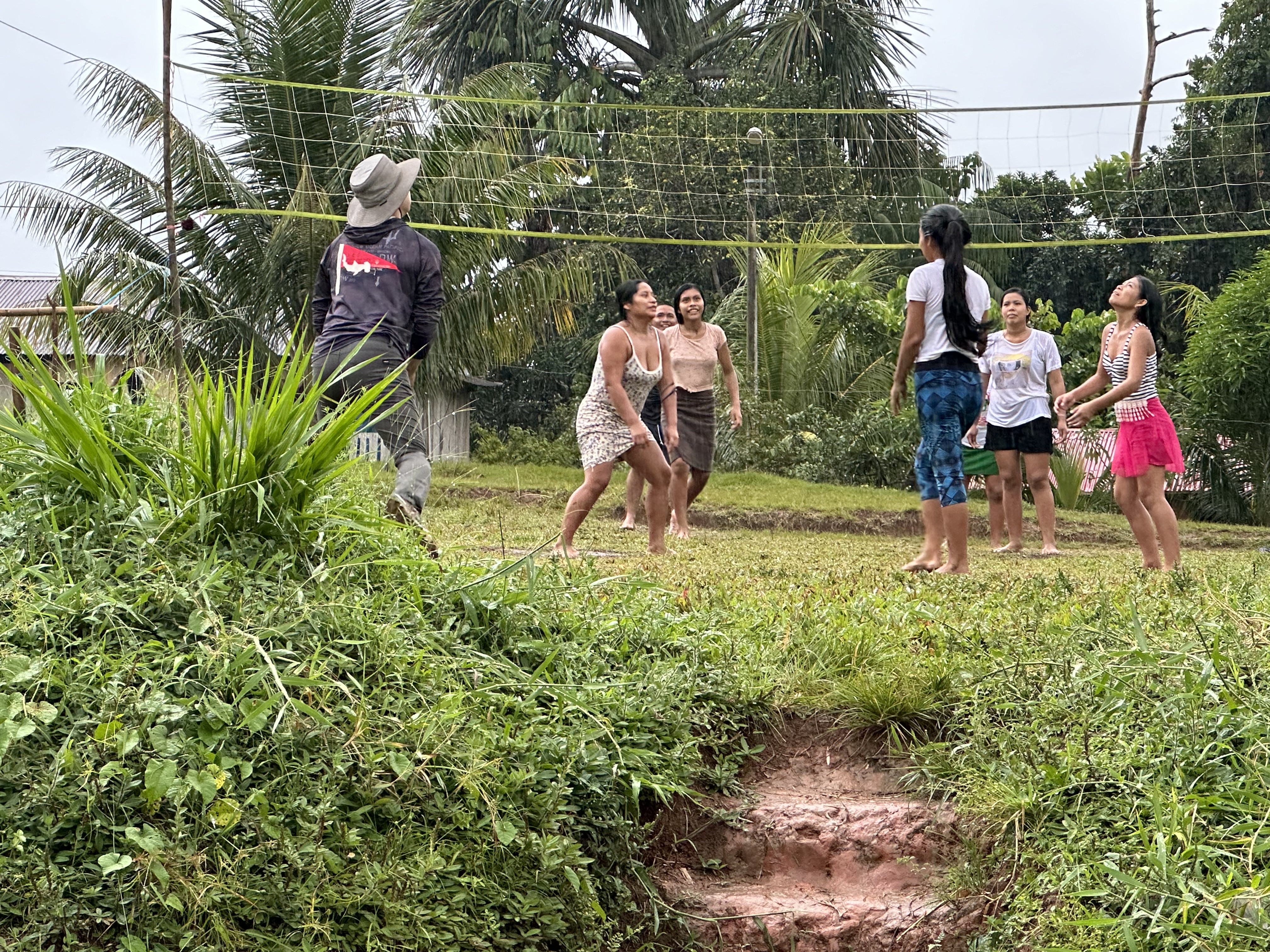
When we arrived I noticed a group of children playing ball in the local field and they seemed totally undeterred by the rain. They were fun to watch.
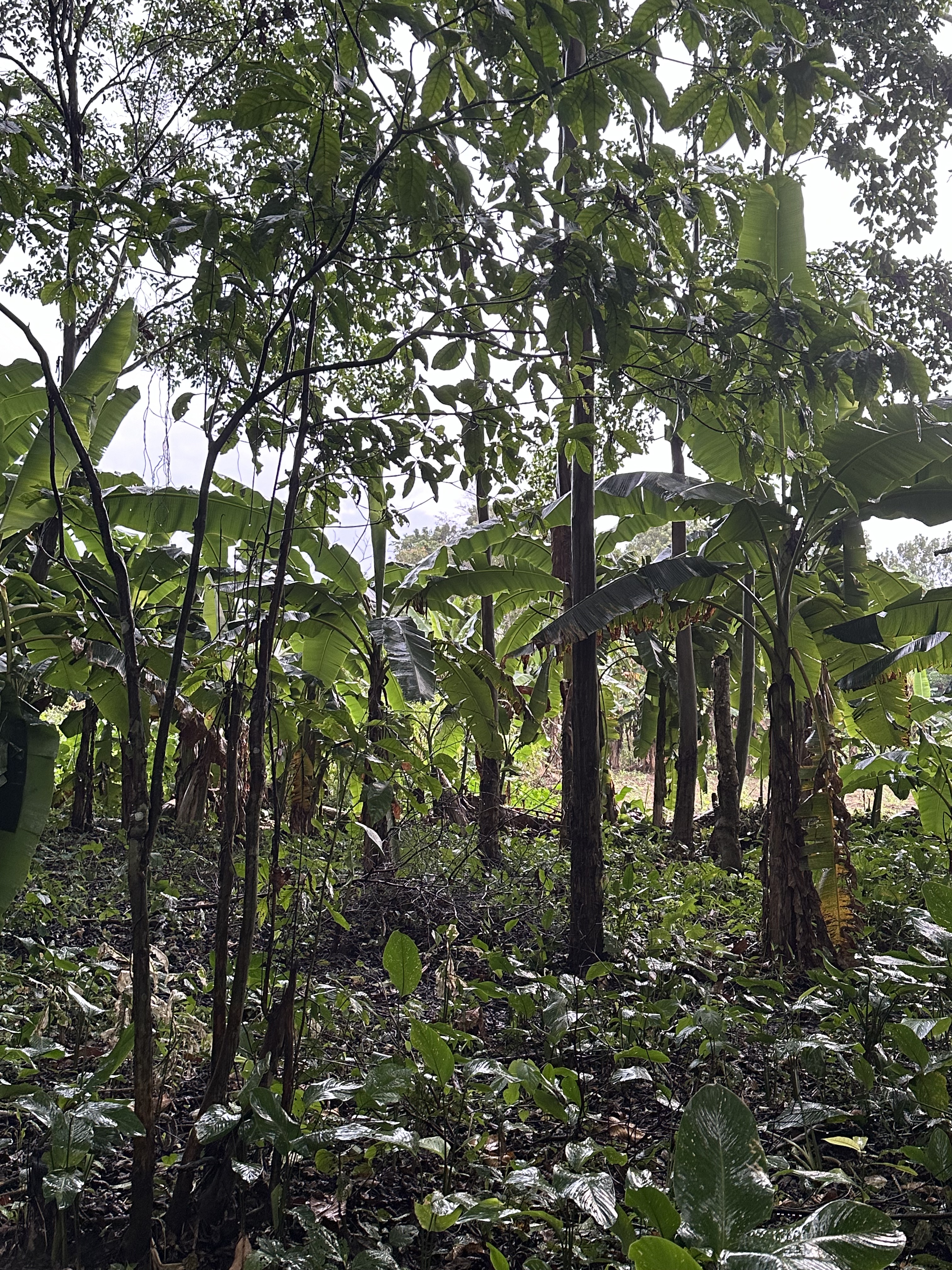
Playing volley ball in the rainThe beekeeper and one of his hives.Some of the hivesMore hivesA lush palm forest Slippery, muddy path back to the tenders.
Back at the ship, we cleaned up, went to the bar for a cocktail and then had dinner with Nancy and Bill. We were happy to turn in early.
Wednesday, July 10, 2024
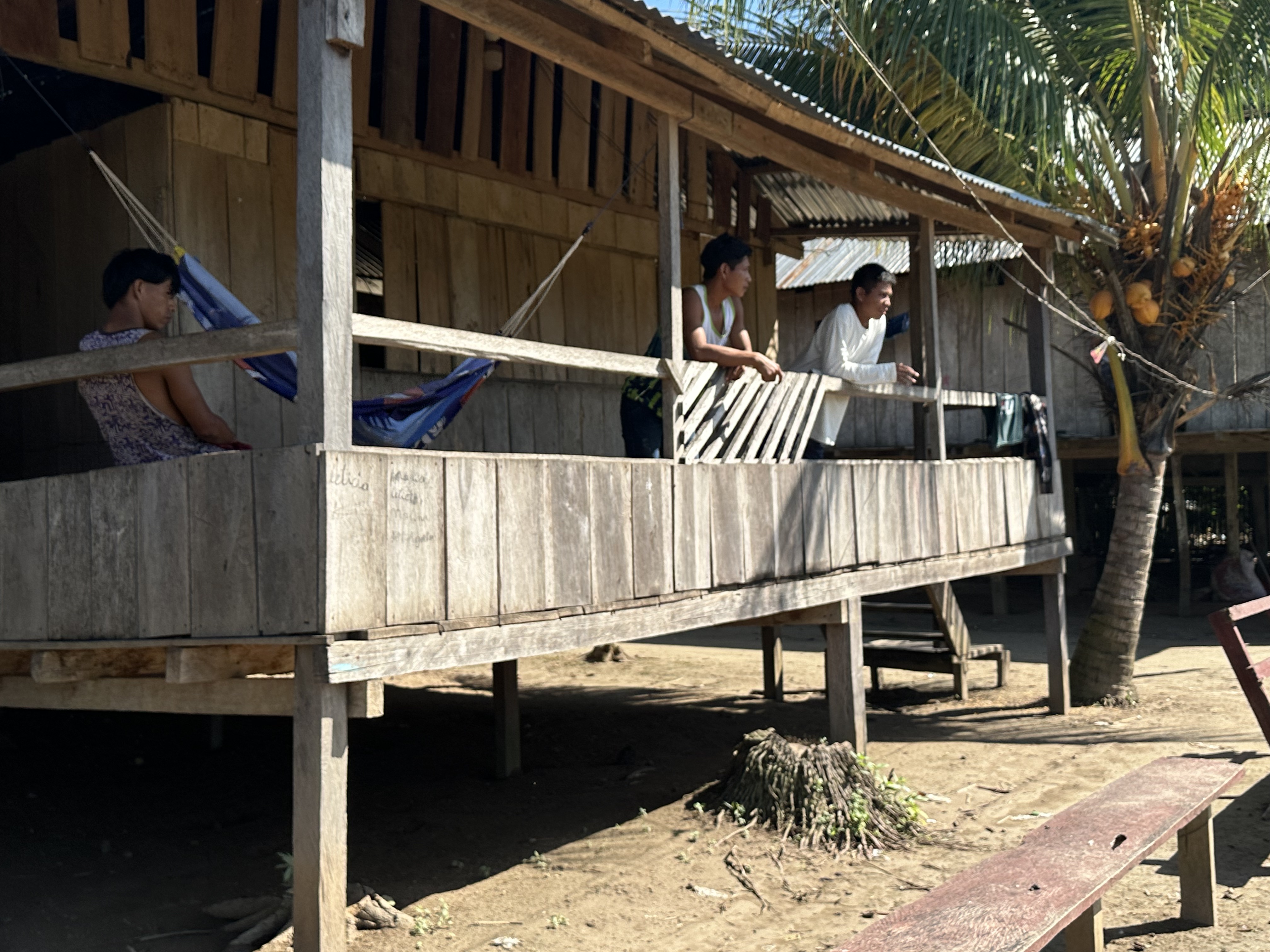
This morning we departed the ship at 9:30am for another village. This one is called Solterito and the residents were not expecting us. However, the village chief showed up to welcome us and show us around. He said there were 45 families in the village of about 200 people.
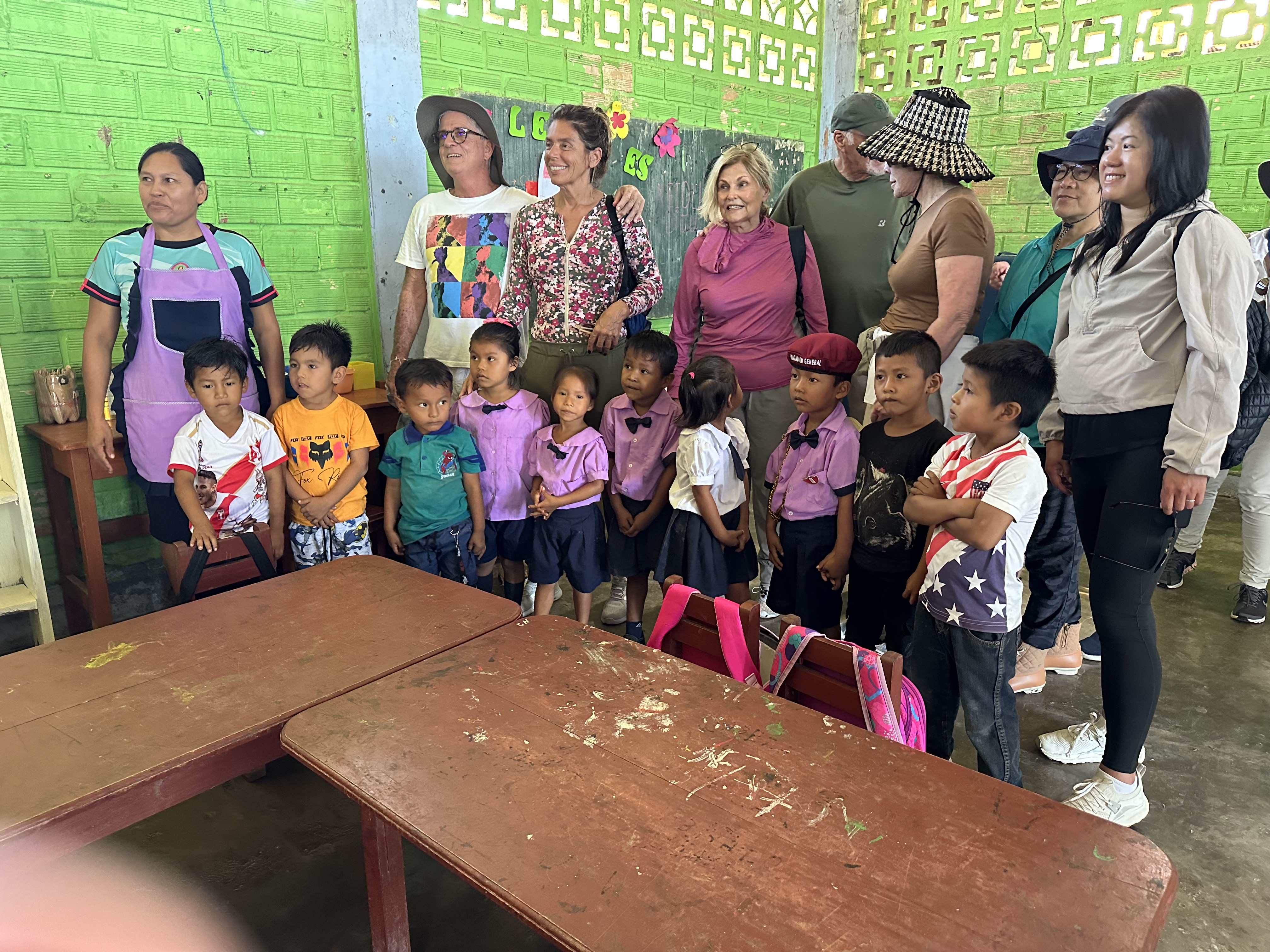
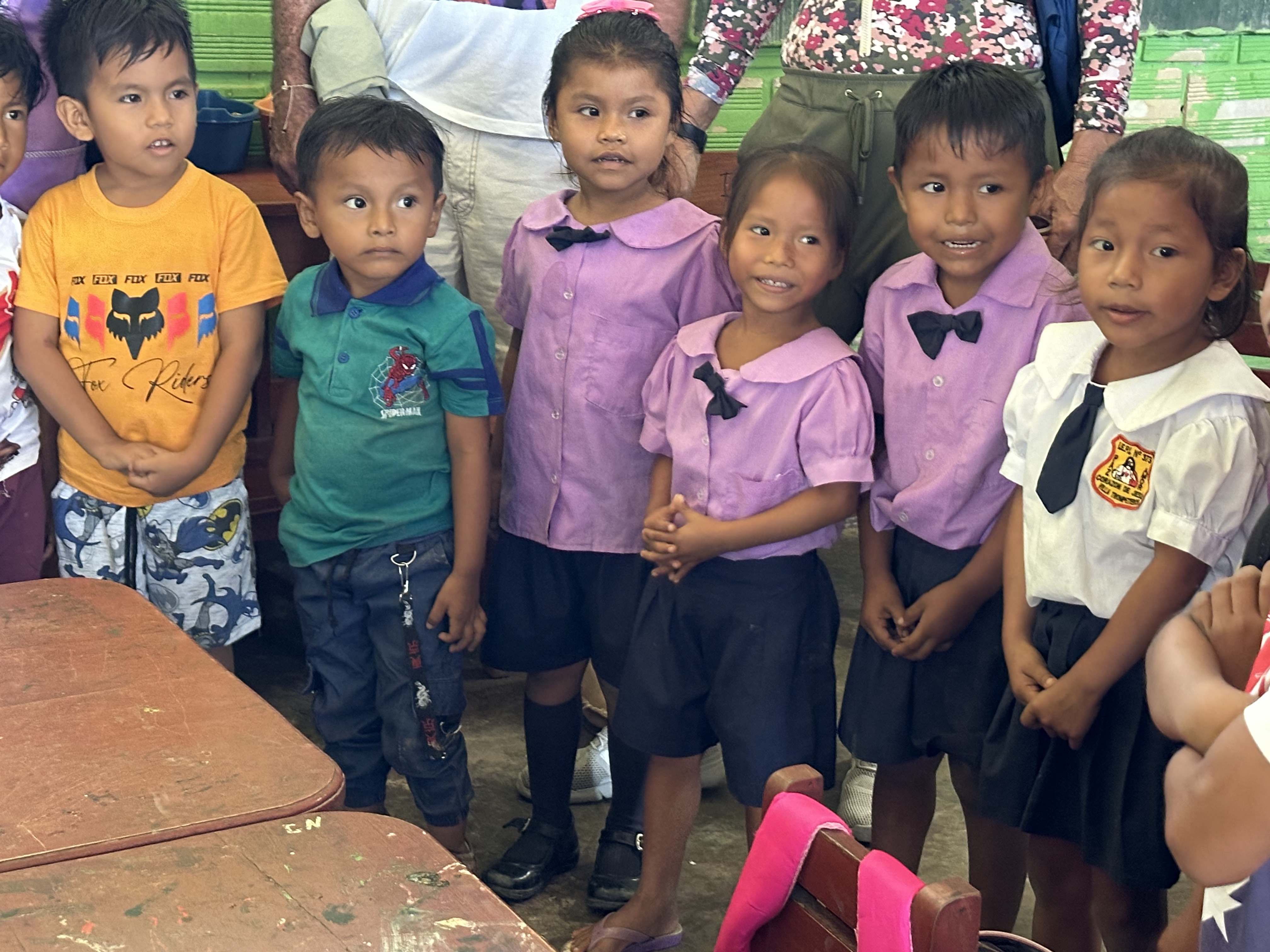
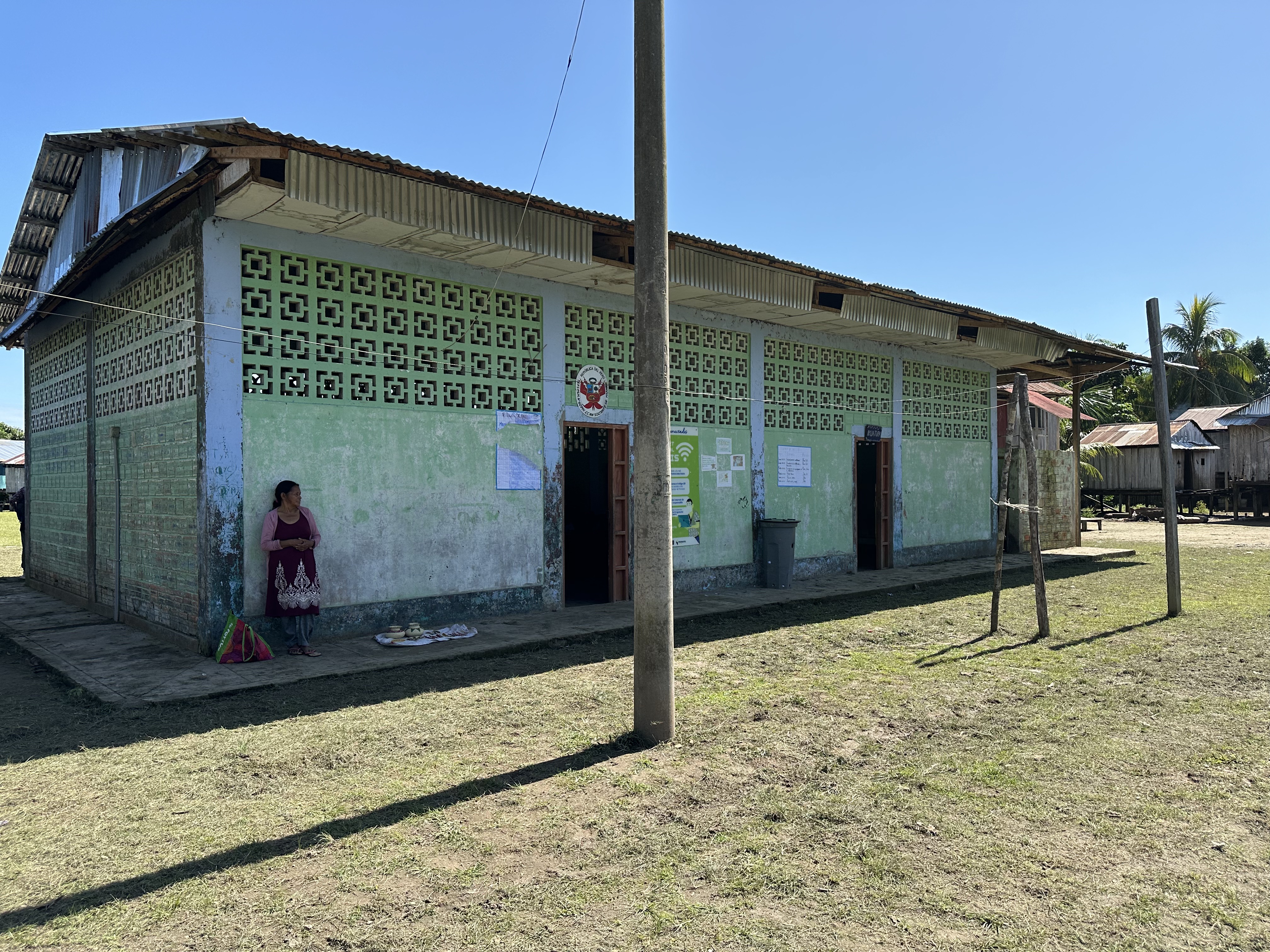
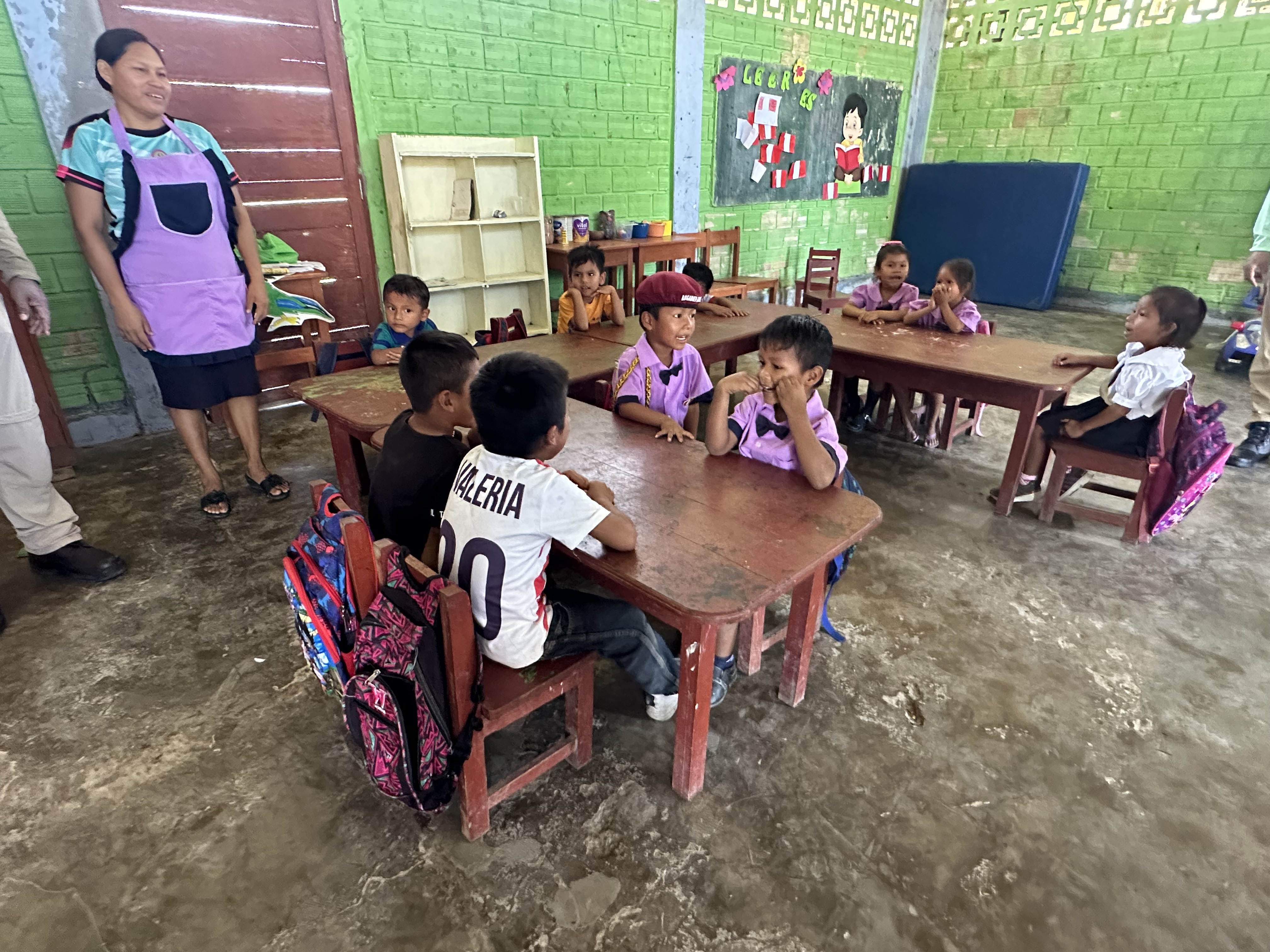
They all speak the local Kukama language and Spanish. The place looked very similar to the village we had seen the day before, with one exception. There was a building that housed a kindergarten classroom with about 14 students. Our guide engaged the kids in a game and a song and everyone was full of smiles. One lady in our group had brought pens and booklets for the kids and she presented the materials to the teacher.
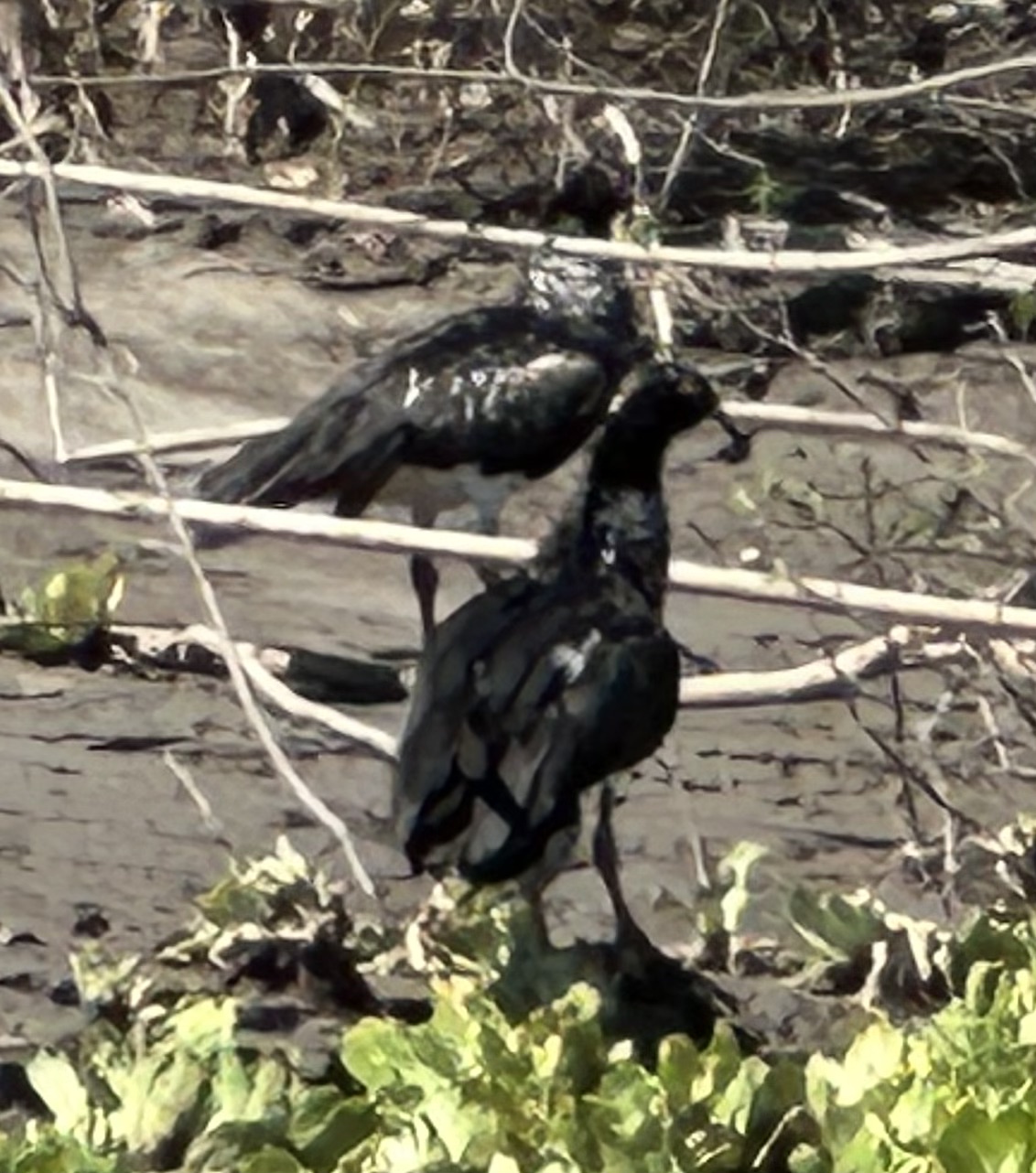
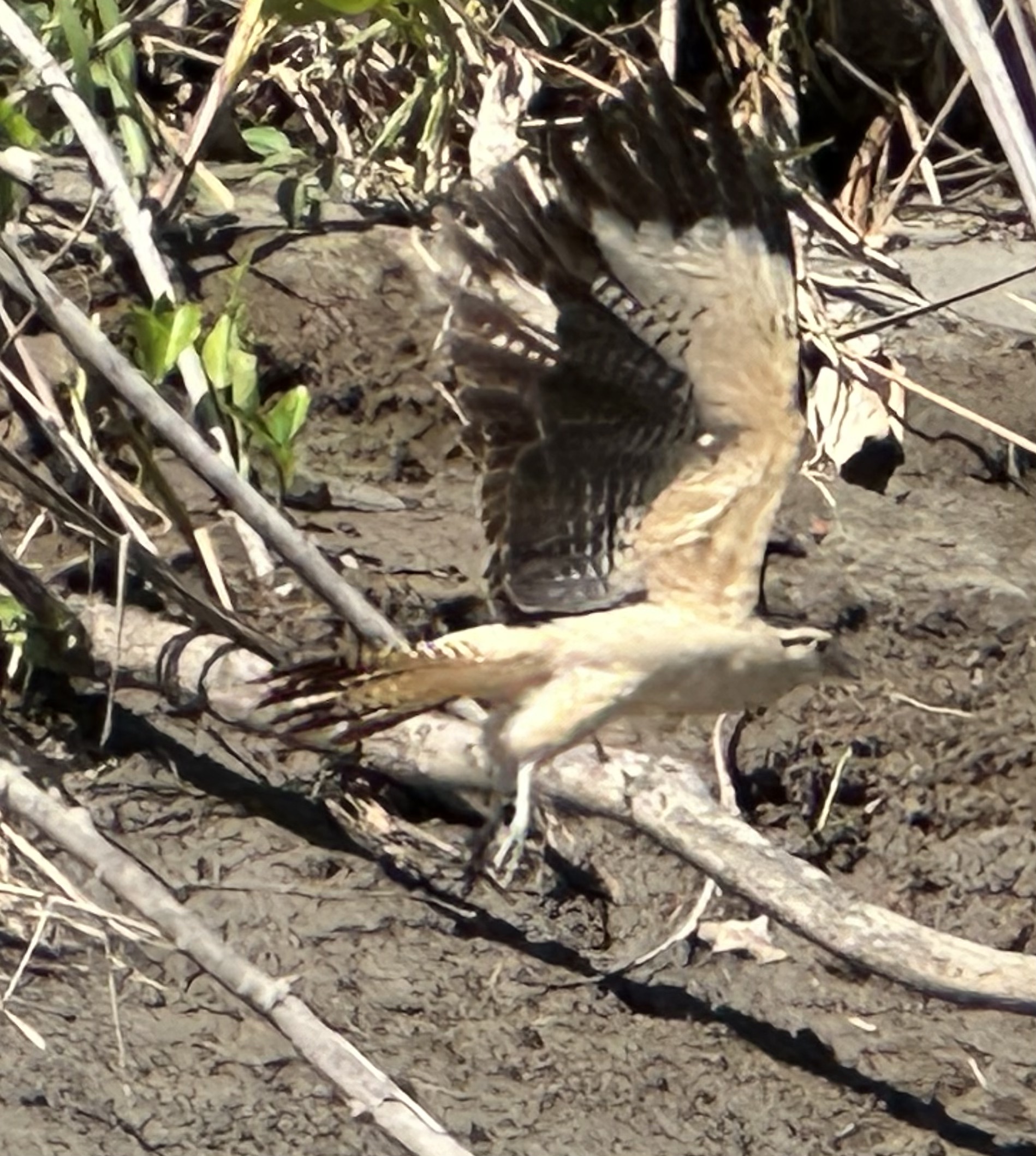
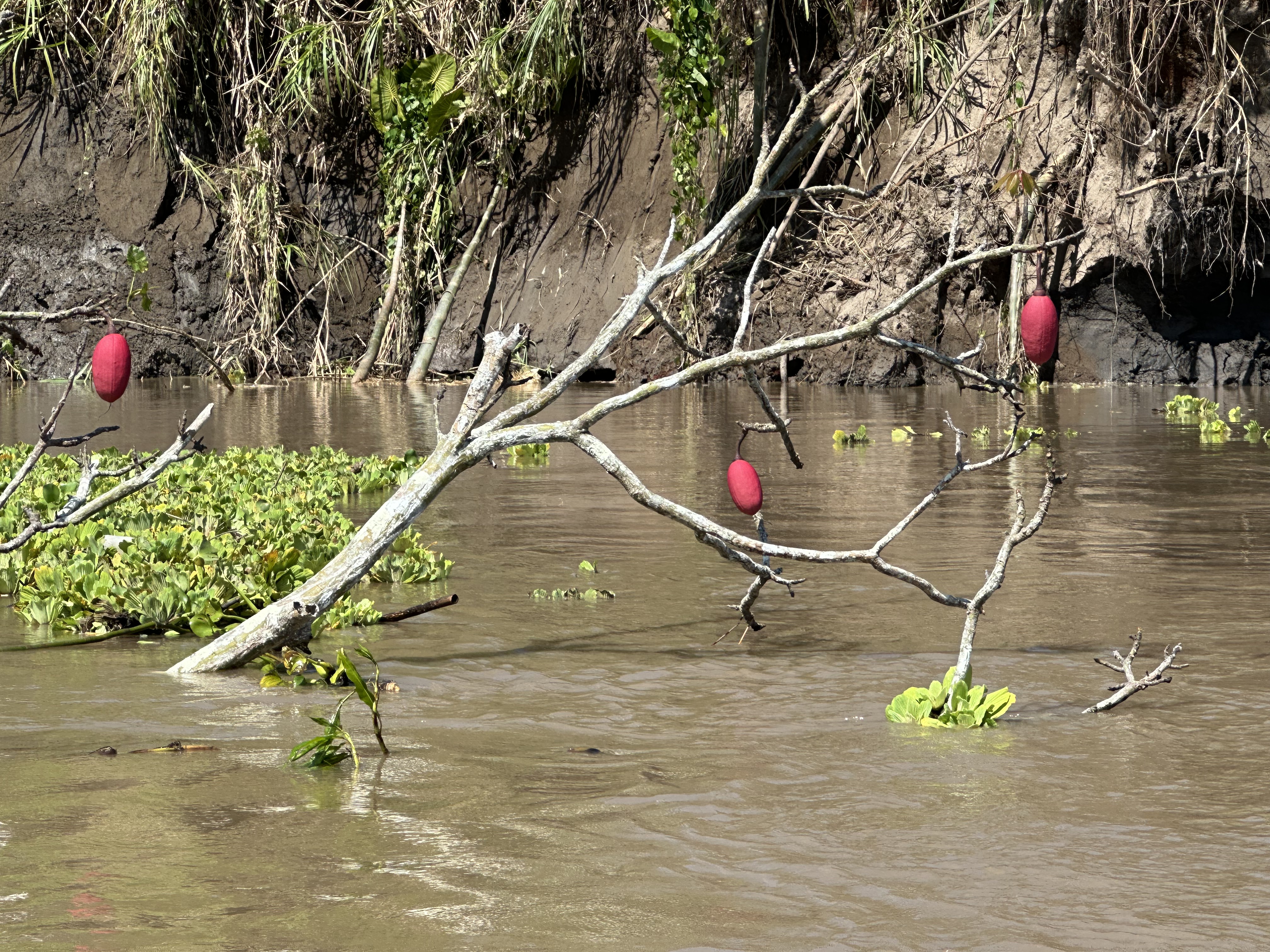
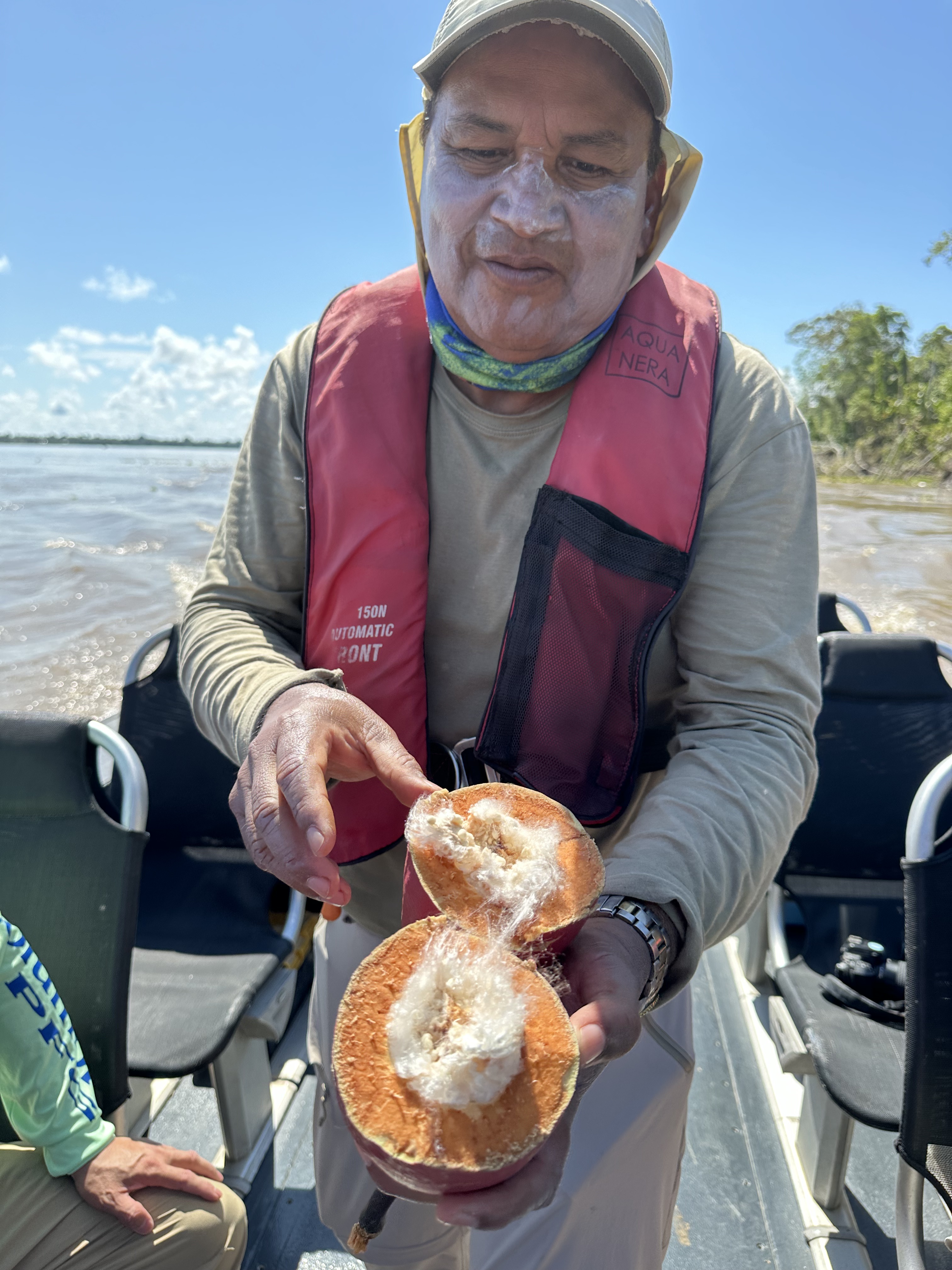
There were no other grades being taught. After awhile we headed back to the tenders and motored across the channel to look for wildlife. Our guide, Juan, spotted a pair of Horned Screamers that are nicknamed Donkey Birds because, according to him, “they walk like a duck, fly like a vulture, sound like a donkey and taste like a chicken”. I got a poor shot of them, but then captured a nice image of a Yellow-headed Cara Cara bird taking off. Near this scene was a downed Kapok tree with some fruit still attached to a limb. Juan ripped one off the limb, cut it open and showed it with is. It had a cotton like substance in the middle as well as some seeds that parakeets eat and a very hard, thick reddish core. The cotton is used on the darts of a blow gun.
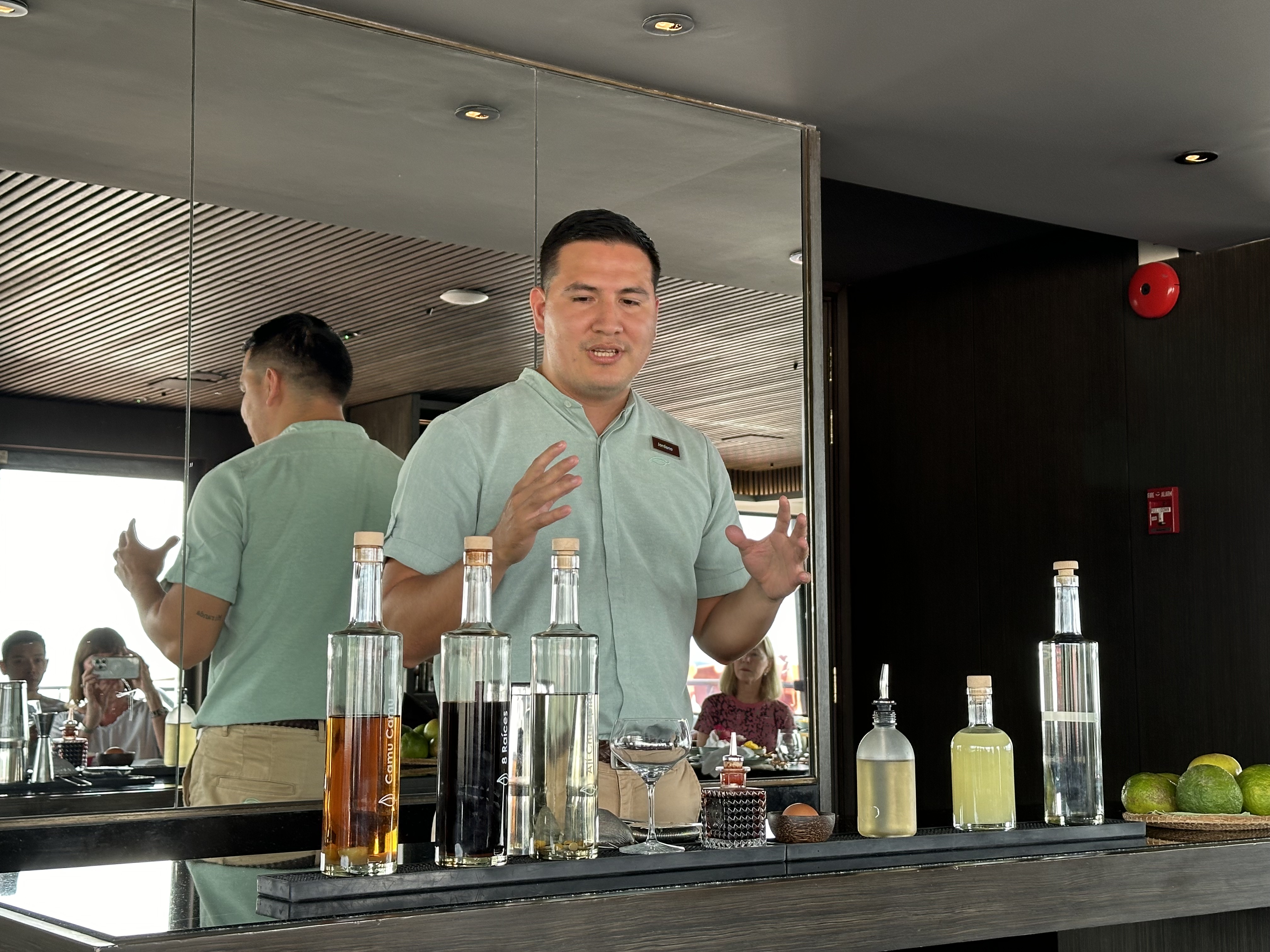
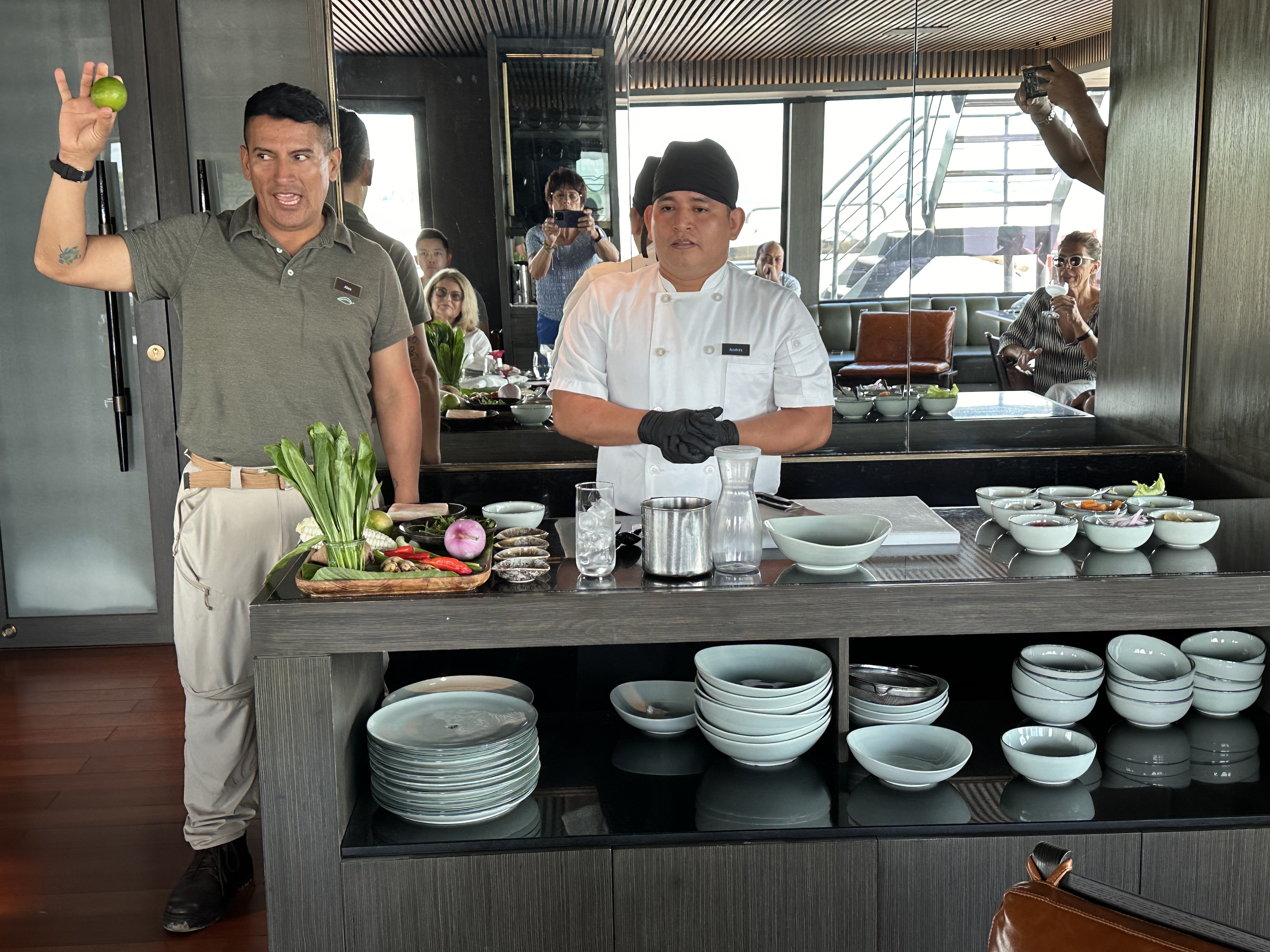
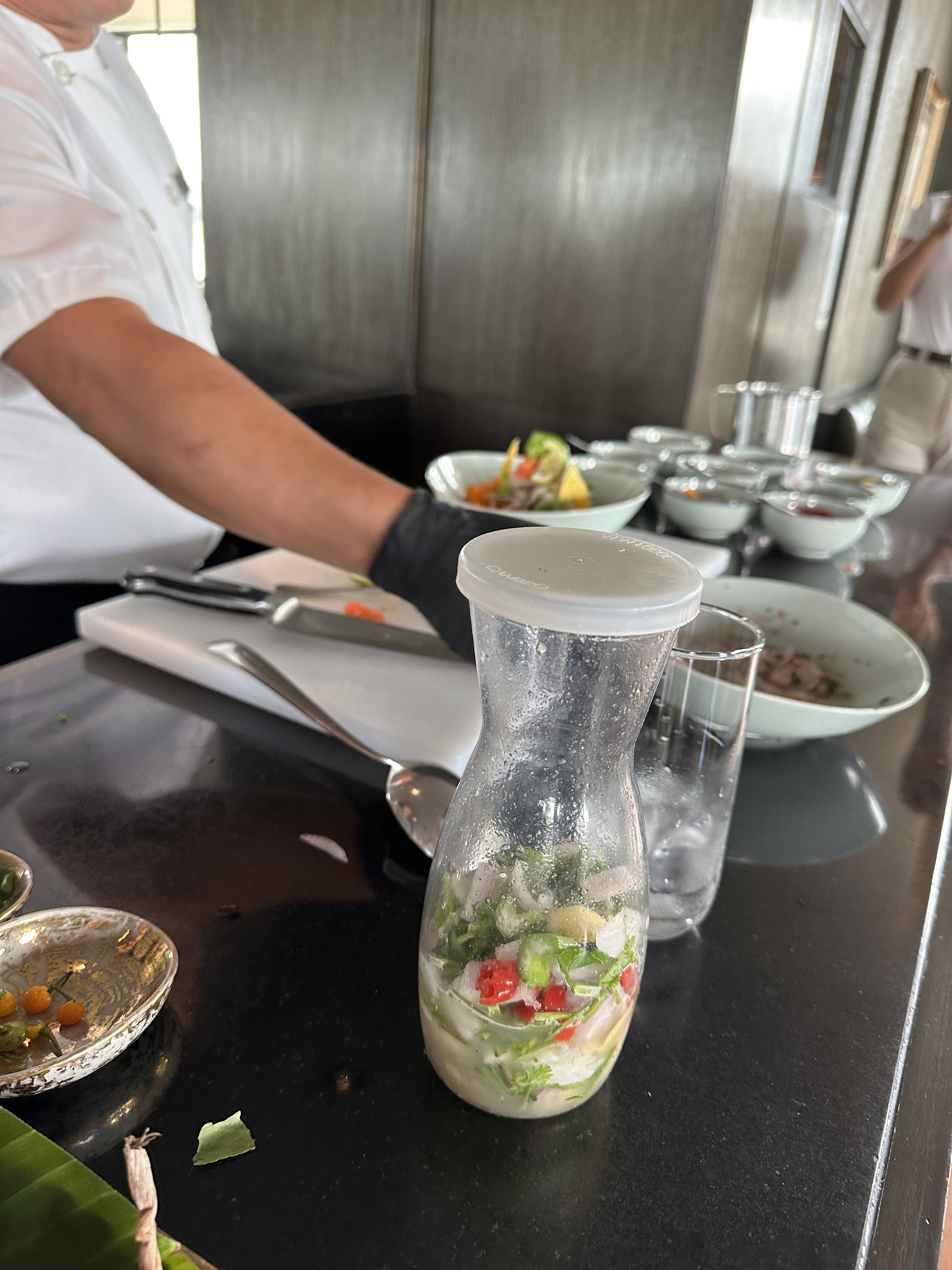
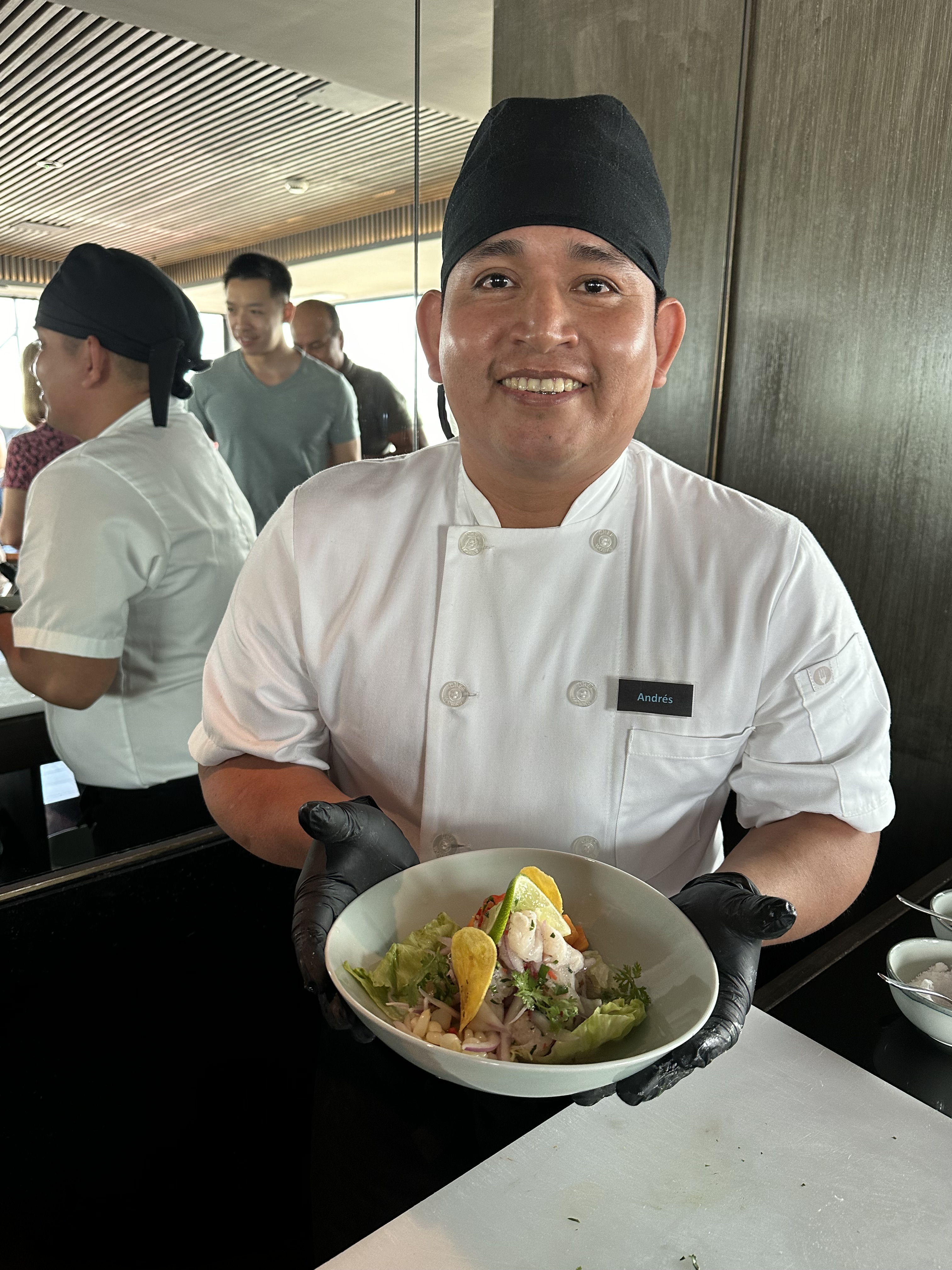
Back at the ship we were treated to a Pisco Sour demonstration by the bar tender as well as a ceviche creation by the chef. Then lunch was served. One ceviche was more than enough lunch for me.
THE BARTENDER EXPLAINING HOW TO MAKE A PISCO SOURCHEF ANDRE MAKING A PANICHE FISH CEVICHETIGERS MILK MARINATINGANDRE’S PANACHE CEVICHE
Panache is the world’s largest edible white fish. It was reasonably tasty.
After lunch we relaxed until 3:30. A few of us went out in the skiff again, to look for Macaw birds. I saw a few sitting in holes in dead palm trees, but nothing I could photograph well. I did learn that the plants floating on the water are water lettuce and that they are liked by the large bird called a Horned Screamer.
Juan cracked open a Kapok seed for us to see its insides. The fluffy white stuff was like cotton and there were seeds inside that some birds eat.
Horned Screamer birdsYellow-Headed Cara Cara BirdSeeds from a dead Kapok treeJuan shows us the inside of a Kapok seed
Back at the boat we joined a group for cocktails and 8 of us sat together for dinner. It was a pleasant evening with good food and lots of laughter.
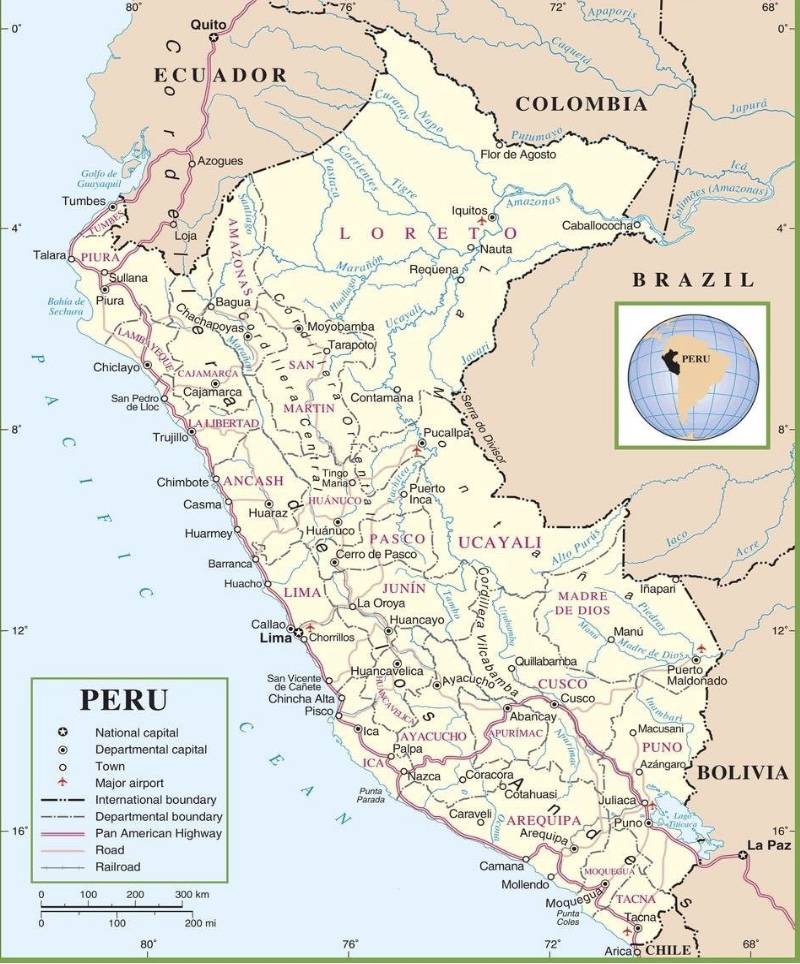
It is the 4th of July and Mark and I are on our way to spend a few days in Lima and then fly to Iquitos in North East Peru for a boat trip on the Amazon River. We will not be seeing other parts of Peru as I spent 3 months in Peru in the late 60’s visiting Cusco and Machu Picchu by train one time and then another time by horseback over the 16,000-foot Salcantay Pass with a group of Marin photographers on a 5-day adventure that was full of unexpected challenges; including crossing the pass during a snow storm, running to board a moving train at midnight, being rousted at day break for camping in a village market and more. Quite a story that is good for another time over cocktails.
Meanwhile, a bit of info about the country. The Amazon rainforest is divided about 60/40 between Brazil and Peru. The Peruvian portion covers 60% of that country, is referred to as the Peruvian Jungle and is divided into two ecoregions: the lowland jungle, which has an elevation between 80 and 1000 meters, an average temperature of 82 degrees F, over 75% humidity and 100 inches of rainfall; and the highland jungle which stands between 1000 and 3,800 meters, has an average temp of 75 degrees F and between 59 and 118 inches of rainfall each year depending on the terrain. The Peruvian Jungle is one of the most biologically diverse areas on Earth. It has the largest number of bird species in the world and the third-largest number of mammals. It also has a very large number of species of butterflies and orchids.
With such hot, humid weather, it is no wonder that only 5% of the population lives in the jungle. The largest group of jungle dwellers are the indigenous people called the Ashaninka. They survived the European epidemics in the 1700’s and repulsed Spanish military and the Franciscan missionaries attempts to Christianize them. In the 19th century they resisted the slave raids during the rubber gathering boom. A significant and interesting people, the Ashaninka do not believe in a creator, but in a hero called Avireri, who transformed humans into animals, plants, mountains and rivers.
The largest problems in the jungle today are illegal smuggling of rubber, timber, gold and oil. In spite of governmental efforts to slow the illegal removal of these products, such activities continue at a great pace.
For us the adventure will begin in Lima. From Sacramento we flew to Atlanta, changed planes, and flew on to Lima, a 12-hour trip all together. The strains of last night’s music at the North Star House were still ringing in my ears. MIMs July 3rdperformance has become a deep abiding tradition for us, affecting our activities every year. This year is no exception. To fit in the music on the 3rd, we were forced to get up at o’dark thirty on the 4th for a 7am flight. Well worth the effort.
Lima, the capital of Peru, was founded by Francisco Pizarro on January 18, 1535. Prior to the Spanish conquest, the Peruvian coast was home to the Norte Chico civilization, the oldest civilization in the Americas and one of the six cradles of civilization in the world. When Pizarro arrived, Peru was the home of the highland Inca Empire, the largest and most advanced state in pre-Columbian America. In the years between 1524 and 1526, smallpox, introduced from the Conquistadors in Panama and transmitted through the Inca population, caused the death of many people including the Inca ruler, most of his family, and his heir. This caused the fall of the Inca political structure and contributed to the civil war between two brothers fighting to be the next ruler. Pizarro arrived at the perfect time to carry out a coup. On November 16, 1532, while the Inca victor and his army were celebrating, the Spanish lured them into a trap and killed thousands of barely armed Inca soldiers. By March 23,1534, Pizarro and the Spanish re-founded the Inca city of Cuzco as a Spanish colonial settlement. Pizarro’s most significant milestone was the foundation of Lima in January,1535. From there the political and administrative institutions were organized. In 1541 Pizarro was assassinated by the conquistador, Diego del Almagro. The Spanish conquest of the Americas is a long and bloody tale.
We arrived at our hotel, the Miraflores Park Hotel, in the heart of Lima in the Barranco neighborhood after an hour drive from the airport and waiting a very long time for our bags to on the appear on the carousel. We had a strong fear we had lost the bags. What a relief to see them at last. Our Lima guide, Sophia Herrera, met us outside baggage claim and accompanied us to the hotel. We visited in the hotel lobby awhile. When she left, we checked out the room and went to the hotel bar for a night cap at 11pm local time (nine pm California time). The bar tenders were charming and fun and we visited with them until midnight and. finally. went to bed.
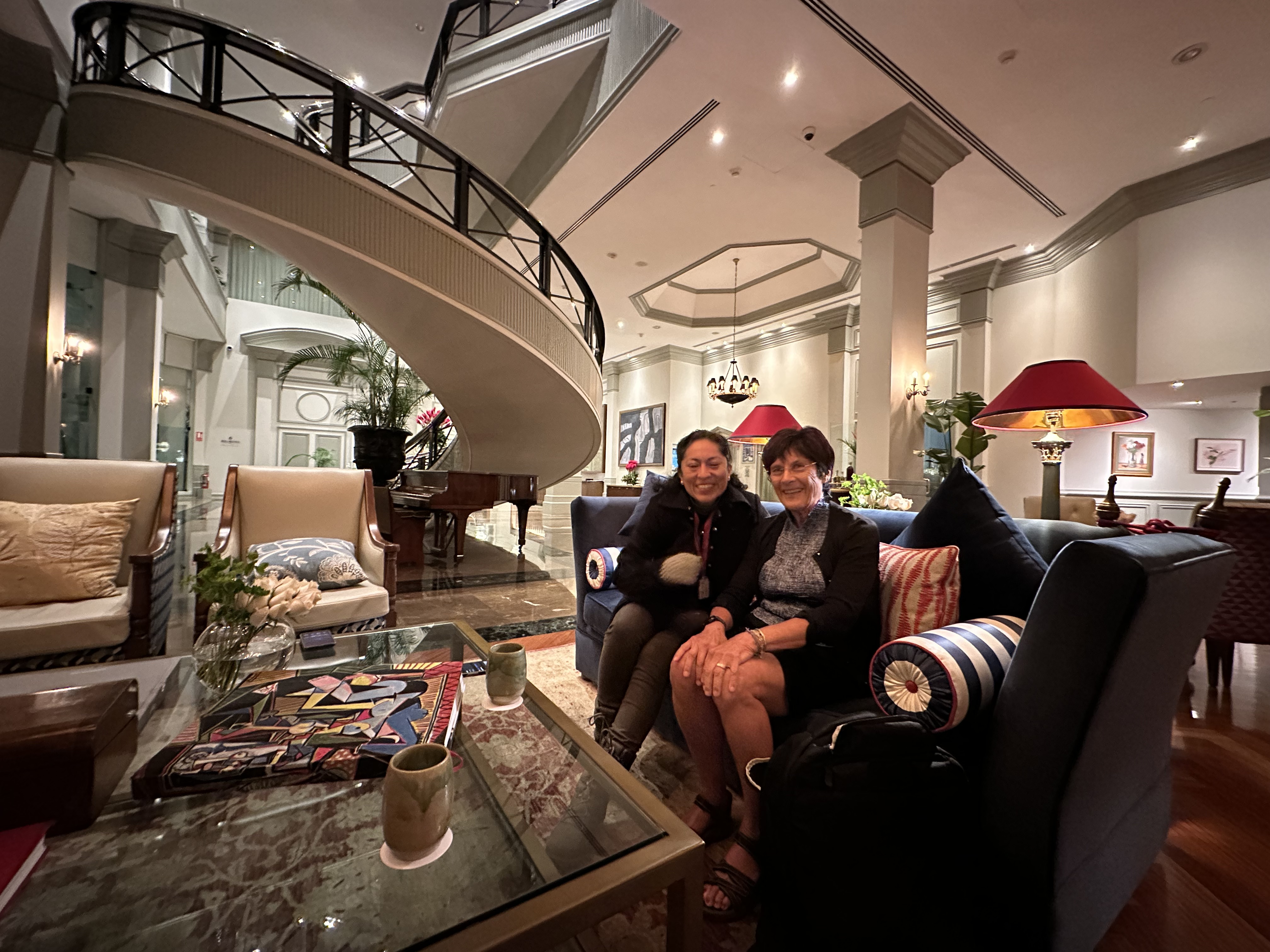
Sophia and me in the Mirafores Park lobby.
July 5, 2024
Already this morning we have learned that Lima is the second largest city built on a desert after Cairo. Pre colonial civilizations began to build water canals 2,000 years ago. that are still being used today. The population of Lima is 12 million. After a light breakfast we walked along the nearby promenade overlooking the ocean. It is winter here and the temperature is quite chilly. I am not prepared for cool weather. I sure hope it warms up soon. We walked through an outdoor shopping arcade and I bought a sweater that should help keep me warmer. Along the walk we stopped at a small church called Our Lady of Fatima.
My travel experience began at 19 when I was an exchange student to Germany. After college I wanted to travel, but had no money so the natural choice was to become a stewardess. I was hired by World Airways and traveled all over the world on the non-scheduled carrier. It was exciting and wonderful and made me want to keep traveling even after I quit the airborne waitress business. At one point I realized that I liked flying as much as I liked traveling and earned my pilot's license at the age of 30. Since then I fly and travel as much and as often as possible. I used to write about my early travels in long hand but they were not legible. Now, with the aid of this computer, I am able to share my experiences. I hope you enjoy them.












 Adventures with Julia