This story accidentally missed the last post and I don’t want you to miss learning about the tapada limena. So here is one final post about Lima.
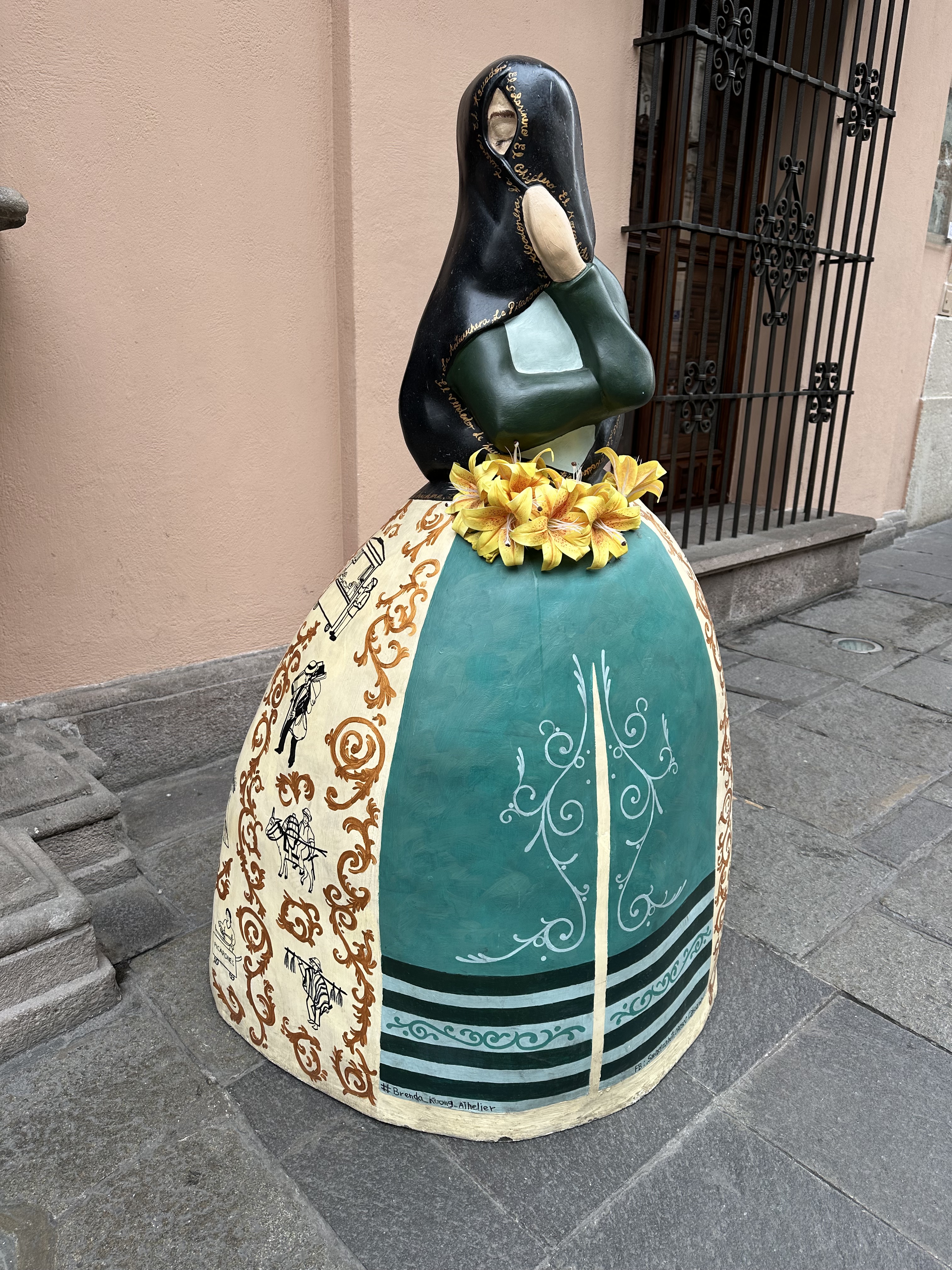
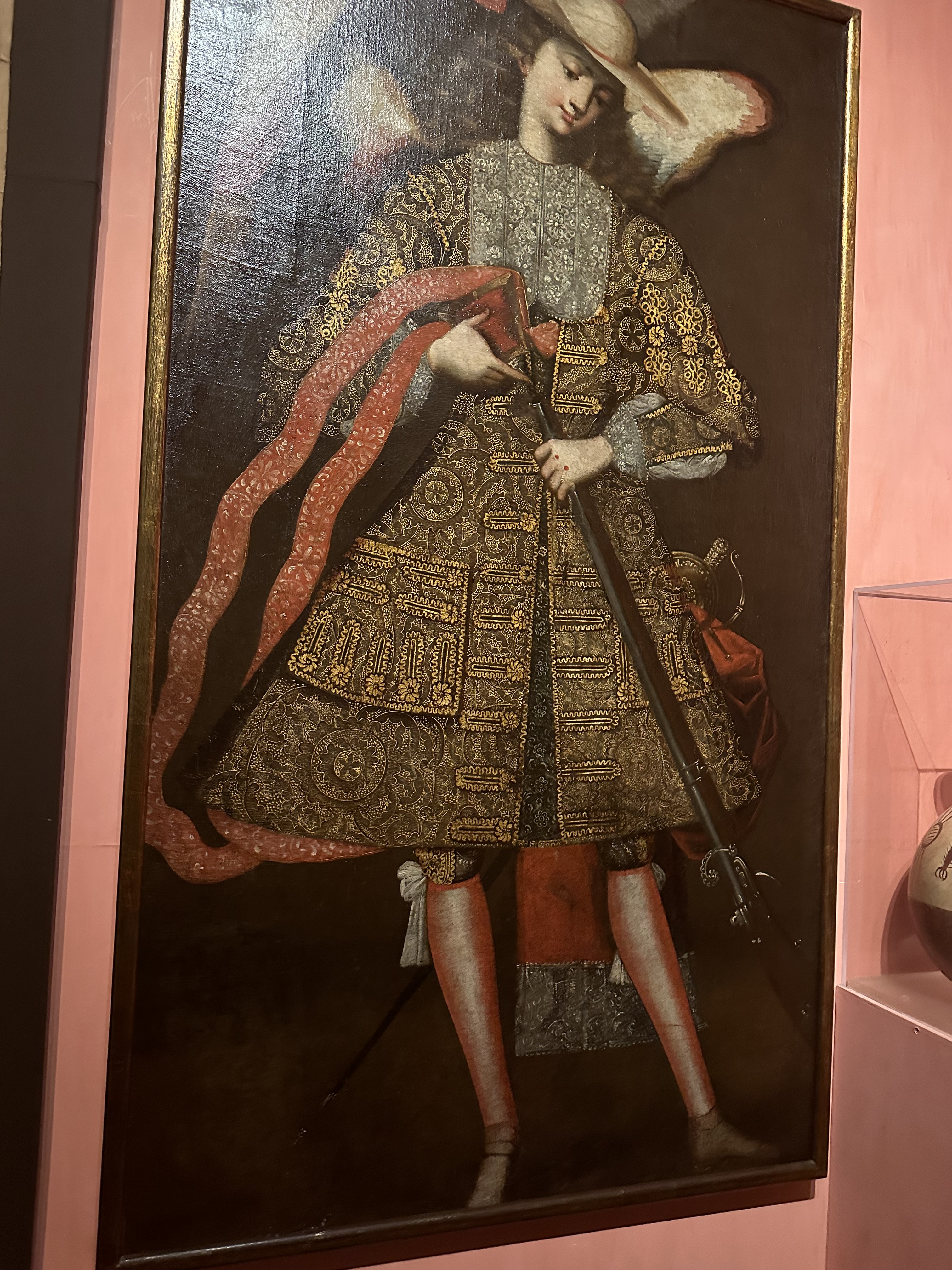
Tapada Limena was the denomination used at the time of the Viceroyalty of Peru and the first years of the Republic to designate the women in Lima, aka Liman women, who covered their heads and faces with comfortable silk fabrics, revealing just one eye. Its use began around 1560 with particular clothing and cloaks worn by the tapade limena and spread for 3 centuries until well into the 19th century when it was relegated by French fashions. In 1583 the Archbishop of Lima pronounced a rejection of the custom of wearing the clothing by women in the capital and ordered a fine. The fear of this custom, already widespread among Liman women, generated much misunderstanding and confusion and made the authorities suspect transvestism was taking place in the Viceroyalty. Official testimonials and ordinances could not dissuade the Limen women.
The characteristic attire of the tapada “connoted insinuation, coquetry, prohibition and seduction games”, although it was still a dress. The gown outlined the hips, and the cloak covered the head and face, except a single eye. It was a symbol of the freedom for Liman women. The symbol was used to distinguish themselves from women of other classes and races. Behind the cloak could live a toothless grandmother as well as a one-eyed woman covered in smallpox. The possibilities were many and boys and old men could take advantage of the situation too.
The skirt was large, long and silk, colored blue, green, brown or black and of a wide range of quality. A belt was used to secure the skirt and false hips were sometimes added to enhance one’s endowments. Underneath the skirt, the feet were shod with embroidered satin shoes, adding to the fame of the colonial Lima women. The cloak was also made of silk, tied at the waist and up the back to cover the head and face. Its simplicity allowed the wearer to retain anonymity.
The tapadas Limenas were an icon in ancient Lima, an original presence that did not exist in any other city in Hispanic America. T he insinuating game, the symbol of secrecy of an incipient female freedom, caught the attention of passing visitors who wrote books, plays, songs and dances about them. After 3 hundred years, the custom finally fell out of favor with–of course–the Liman.
The lady above was standing near the Cathedral of Lima.
We are home now and back in reentry mode. Laundry and mail underway. Blessing to all of you and a happy summer. Julia and Mark
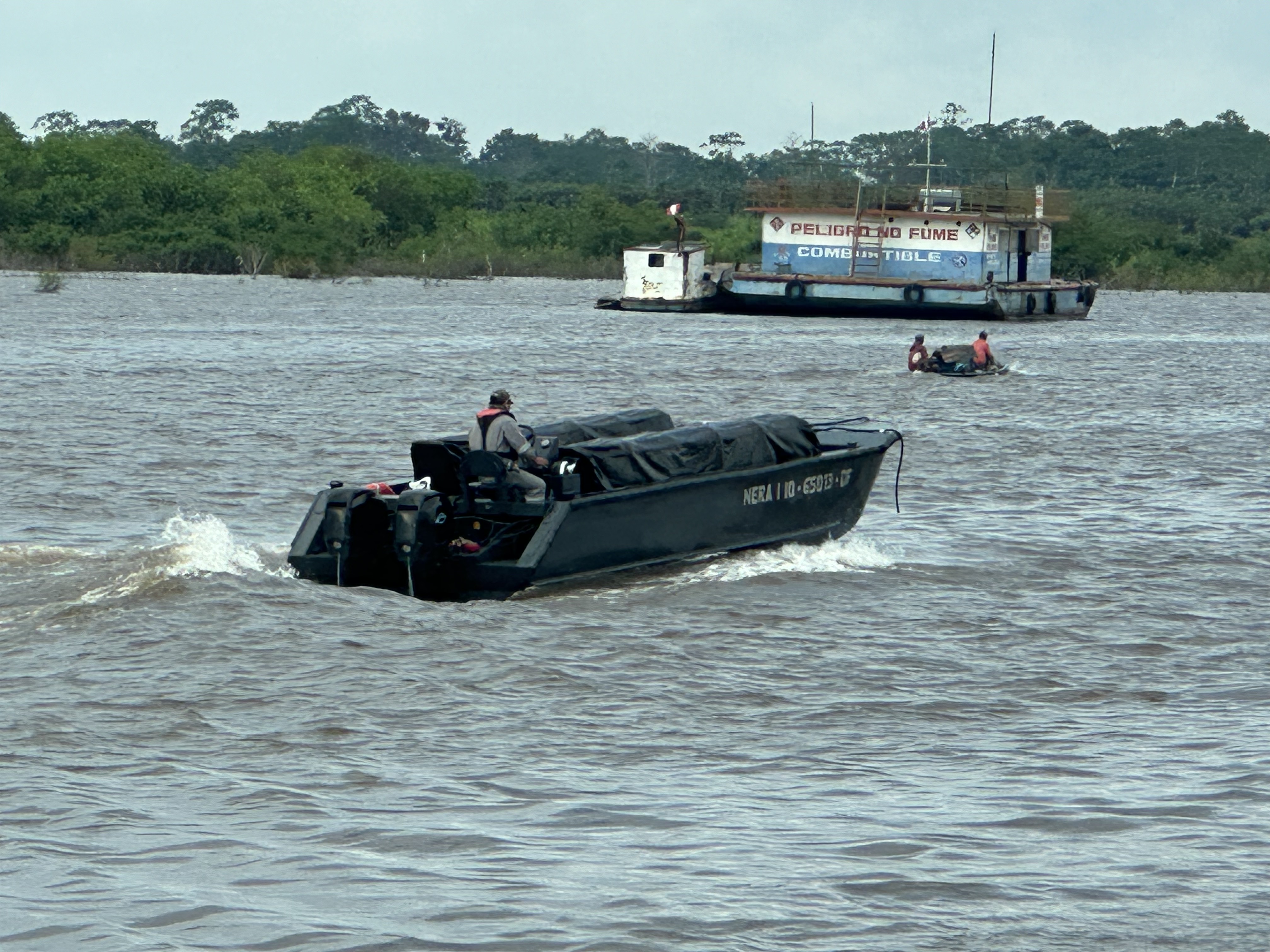
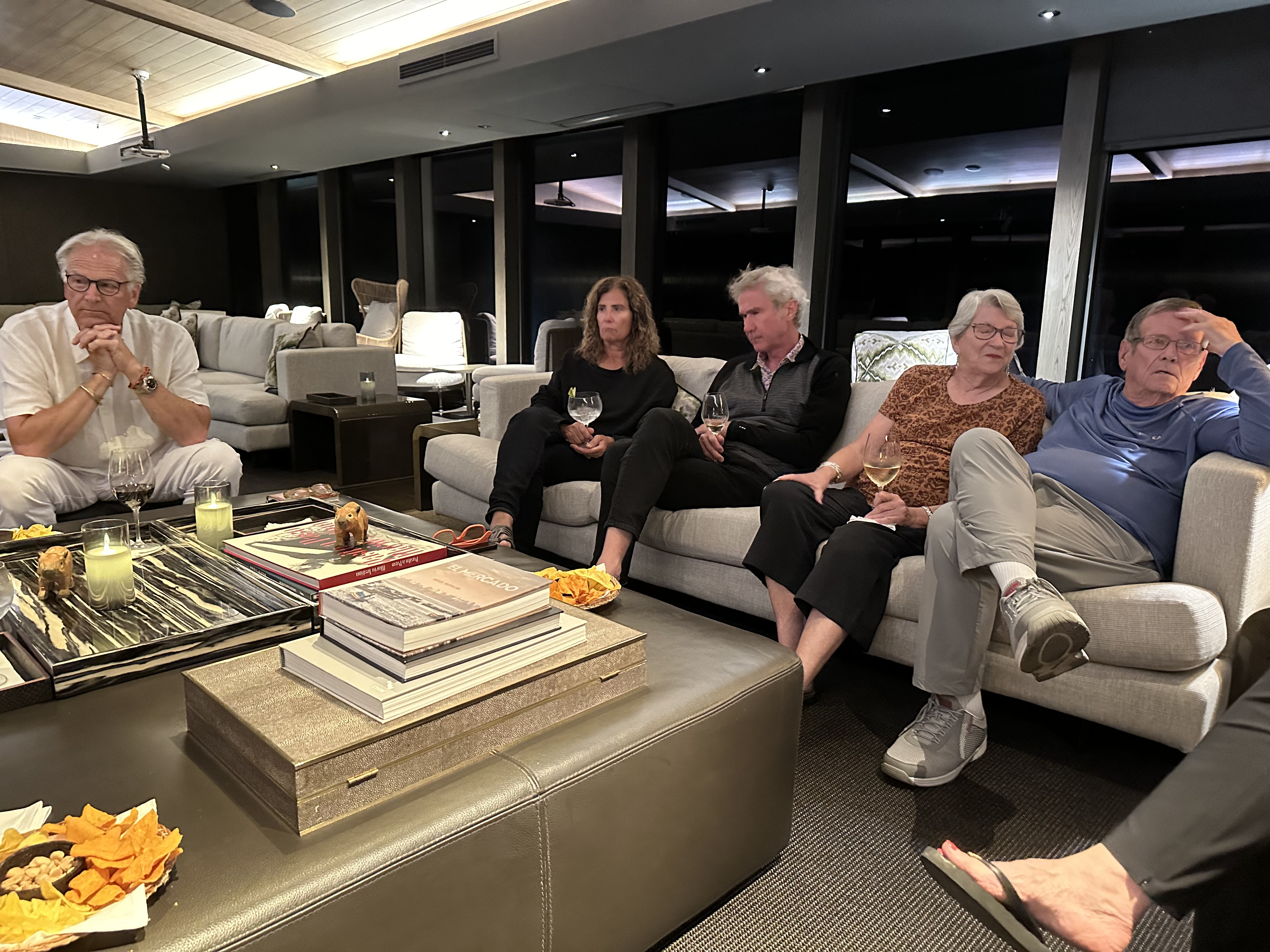
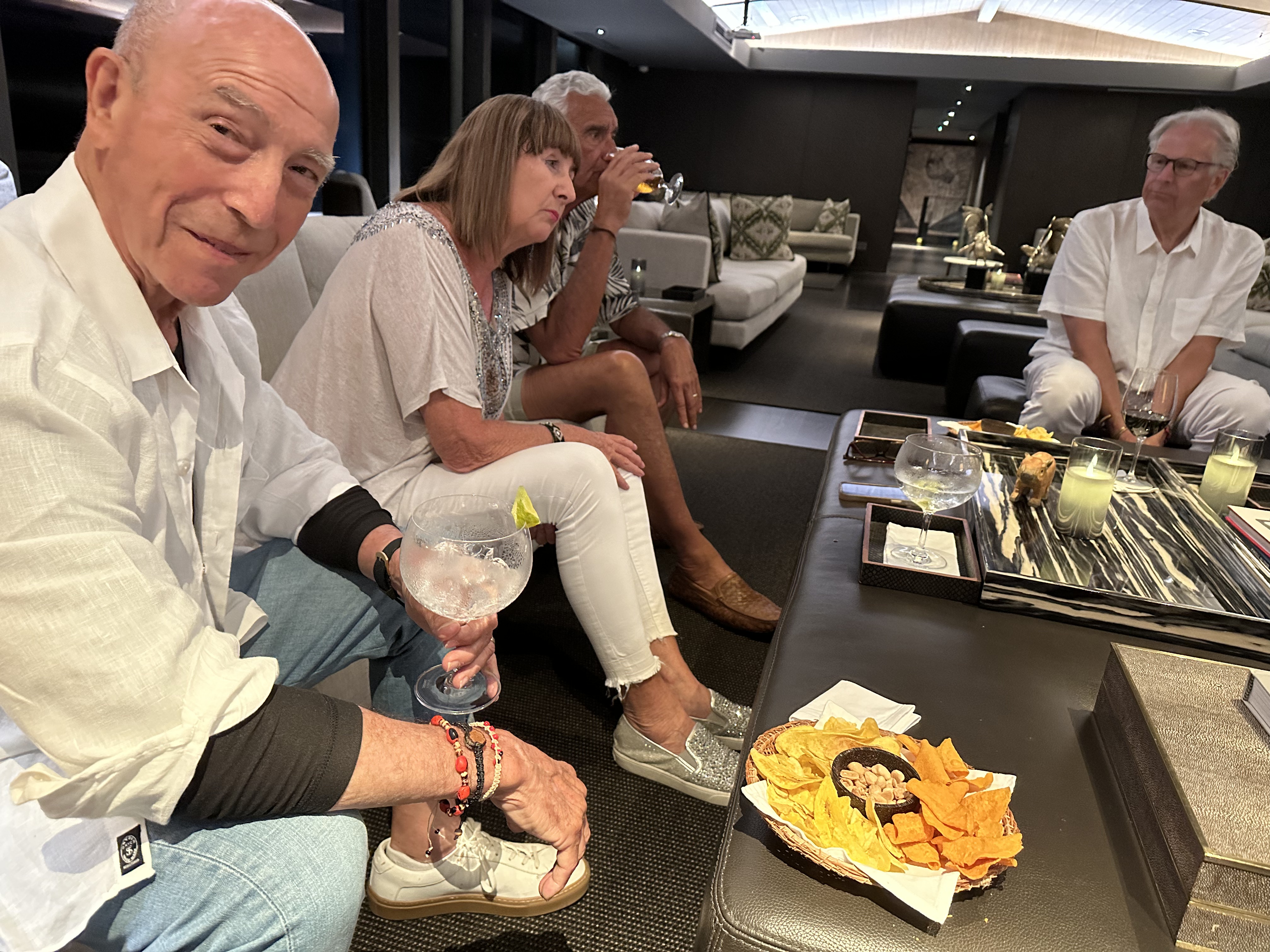
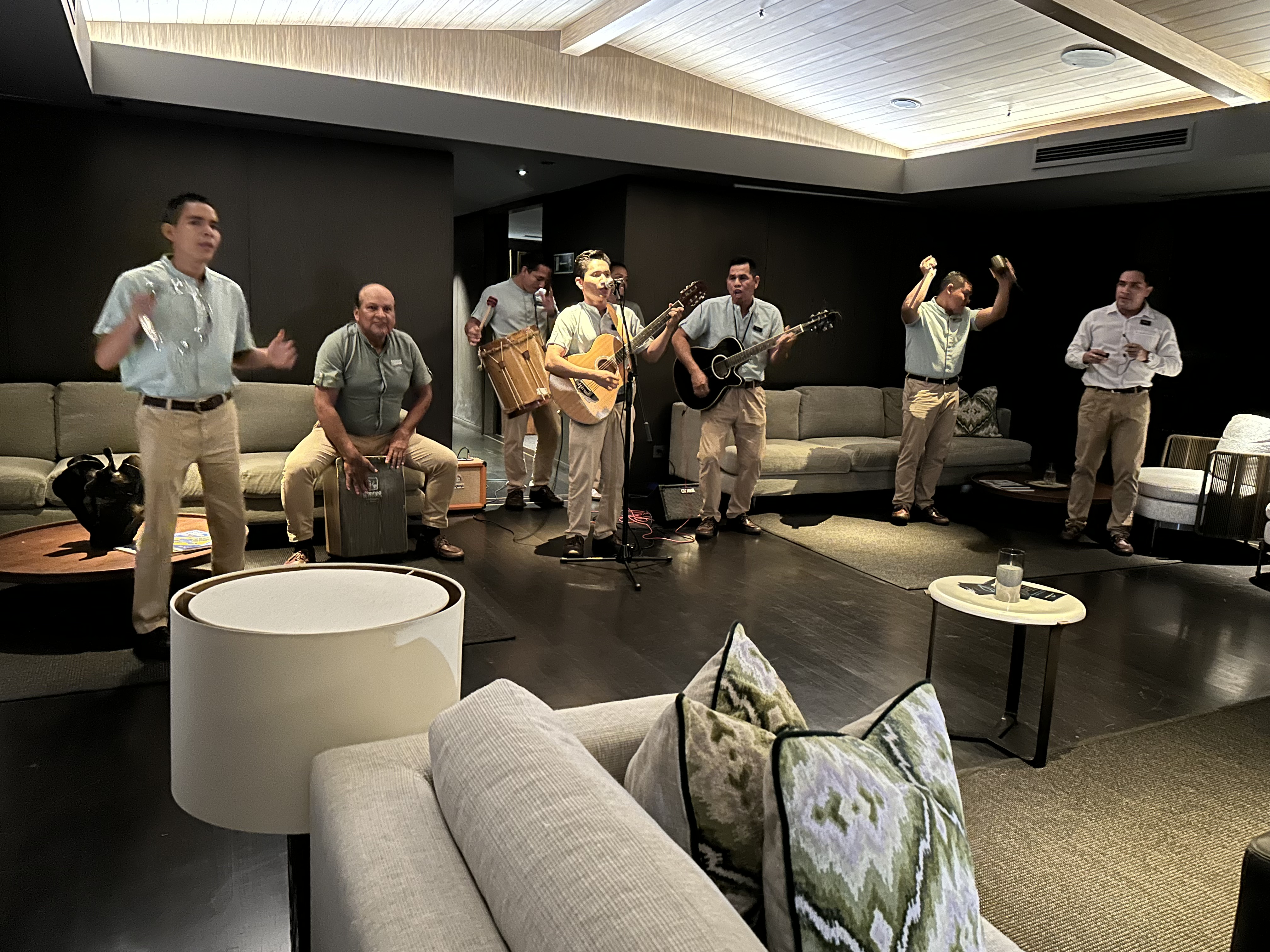
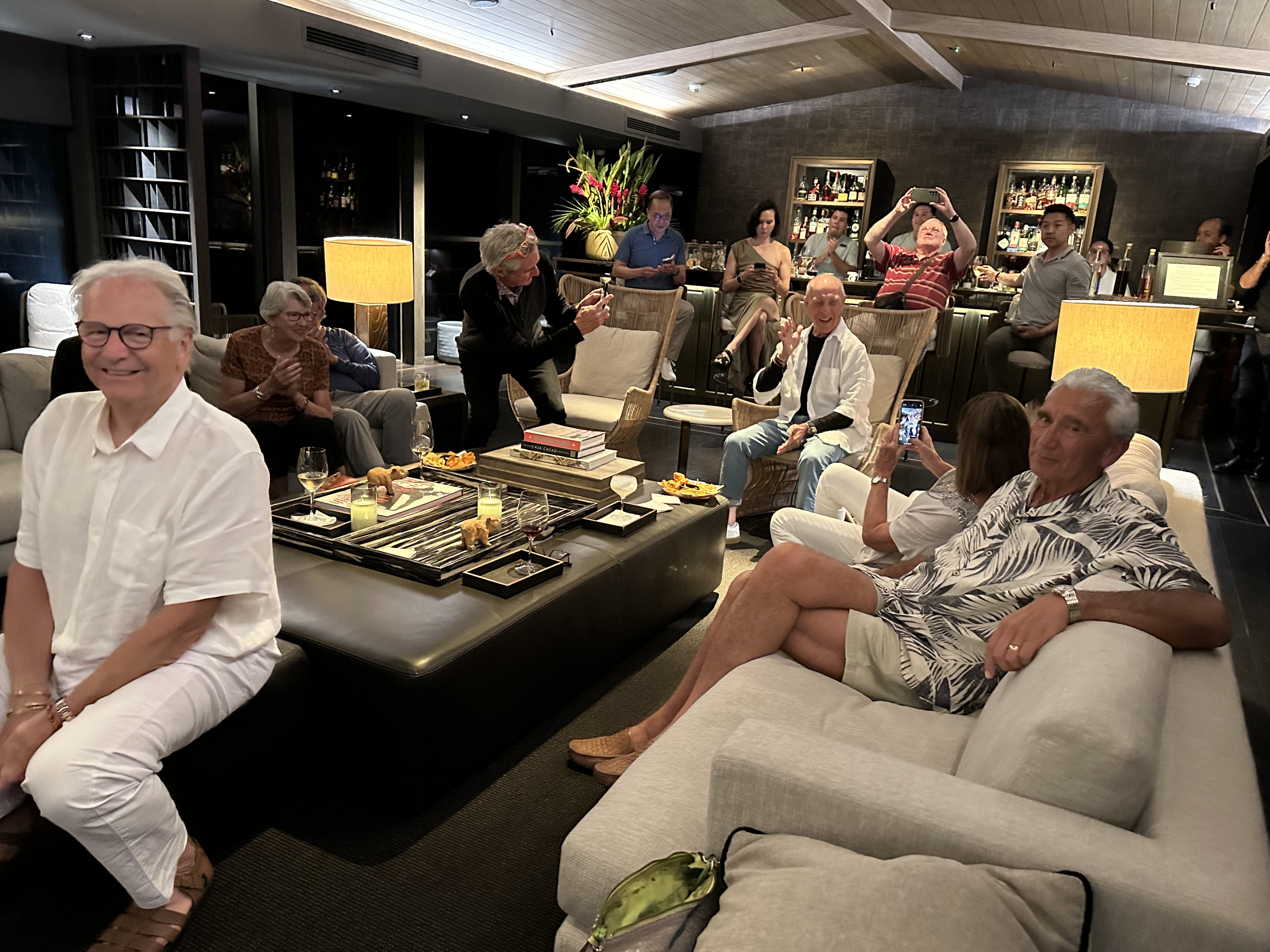
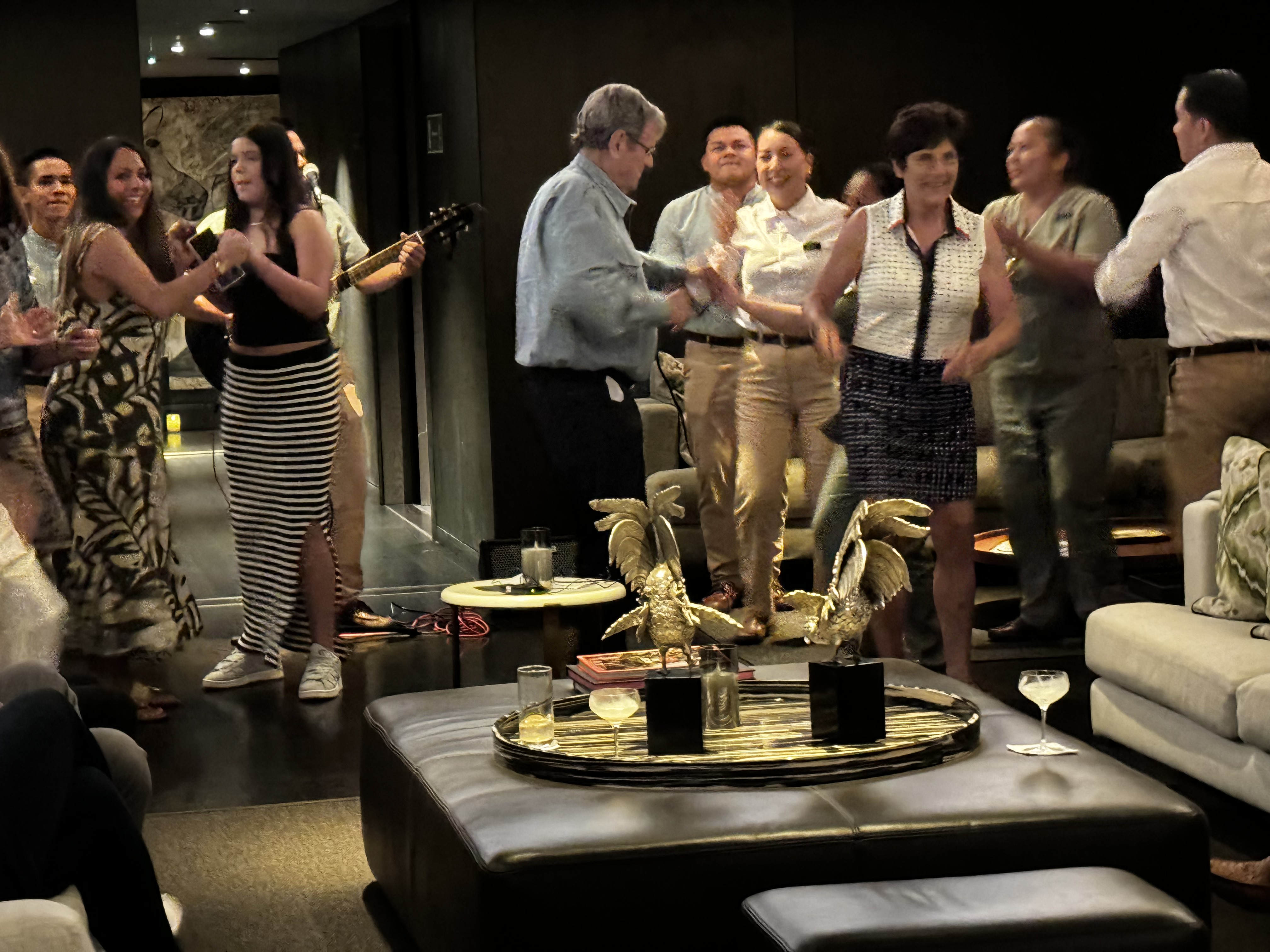
After a small group of us toured the ship, everyone on board gathered in the lounge. We passengers were already drinking to our last night on the ship; even I treated myself to Pisco Sour, when the entire staff marched in clapping as they came, and soon we joined in the clapping. Below is one of our tender’s or skiffs departing with our luggage. Across the channel is one of many stationary gas stations. Photos of fellow guests enjoying cocktails include: Mark, Nancy and Bill and Judy and Vince. Below that is Merv and a couple from New Zealand. Then the band playing and the bar tenders making drinks in the lounge.
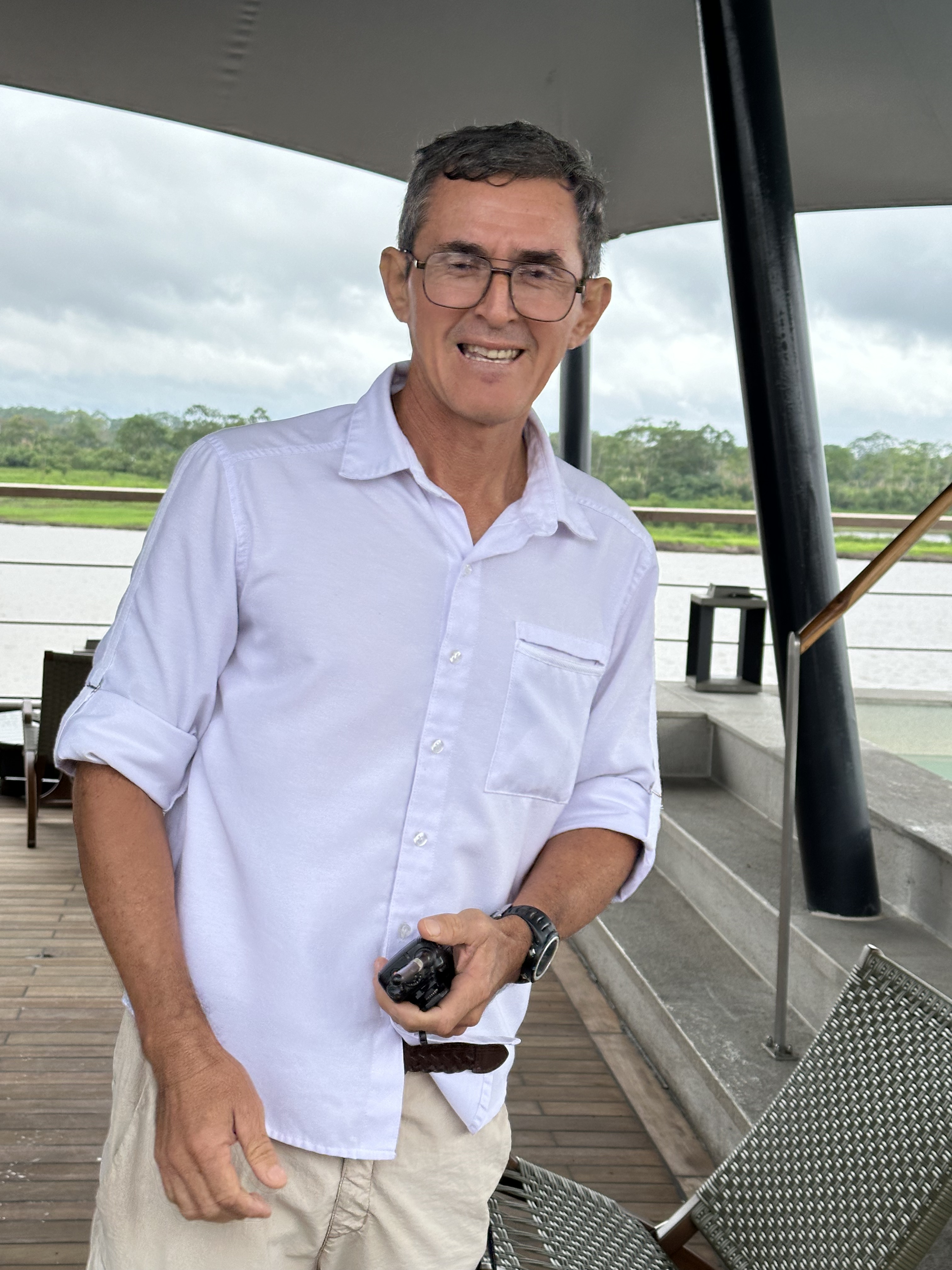
Harry, the cruise director, started by introducing Captain Antonio, above in casual attire, followed by Antonio’s assistants, the ship’s doctor, Lilliana, the 4 skiff staff, and the 5 cabin cleaning crew.
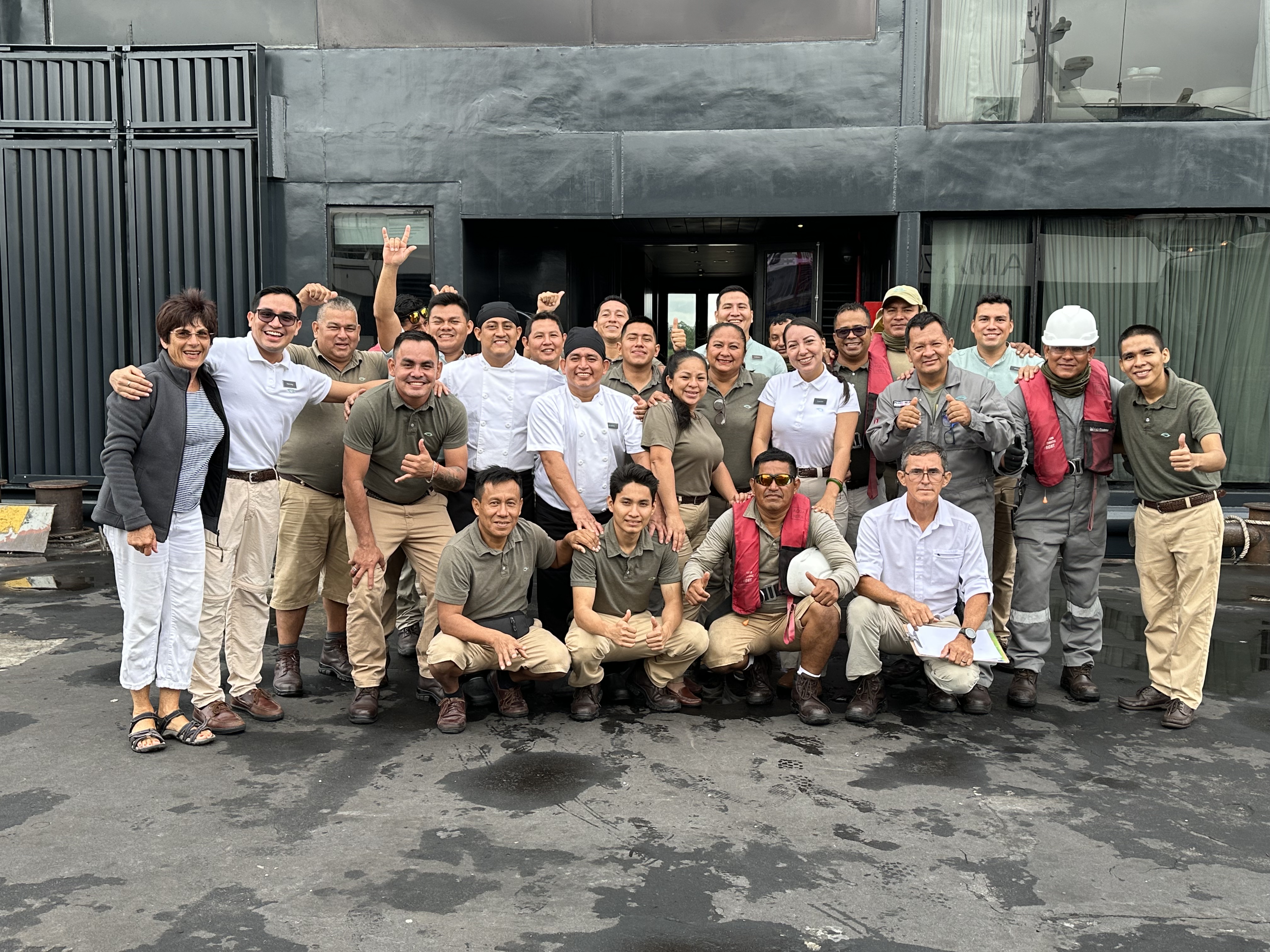
Then came the 4 dining room wait staff, the 4 cooks, the 3 technical staff, the 2 massage ladies, and the assistant cruise director, Iliana. Then the 2 bartenders, Jesus and Jordano, who received loud applause. Lastly, our three guides were introduced: Aldo, Alex and Juan. They also received very loud applause. Juan took the mike and introduced Harry and the band. Soon the 6 piece band was in full sound and we all continued to clap until many of us were up and dancing with the crew. After a week of close companionship, we were all very comfortable together. The above photo includes almost the whole crew. They invited me to join in the photo, which was a nice touch.
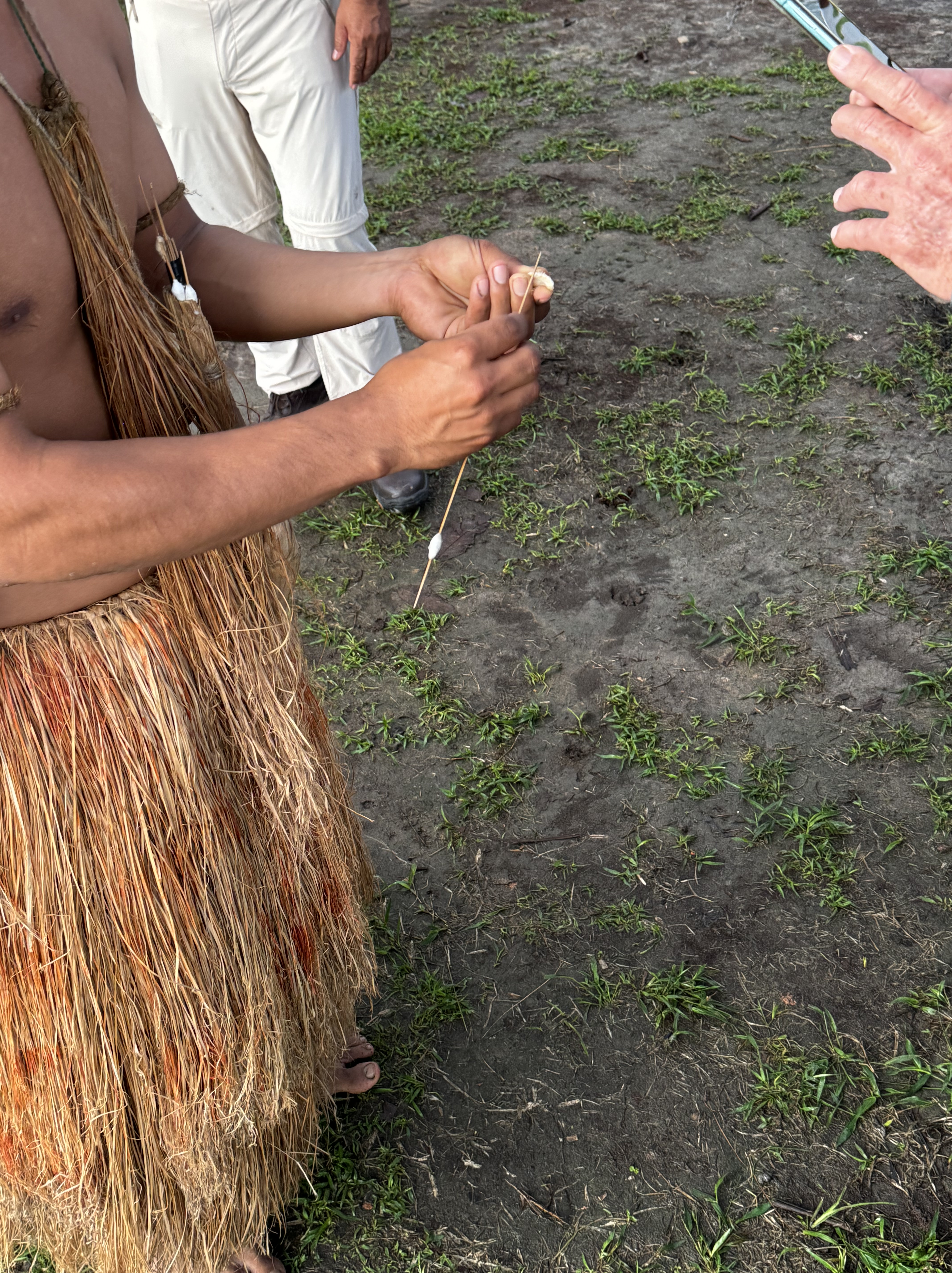
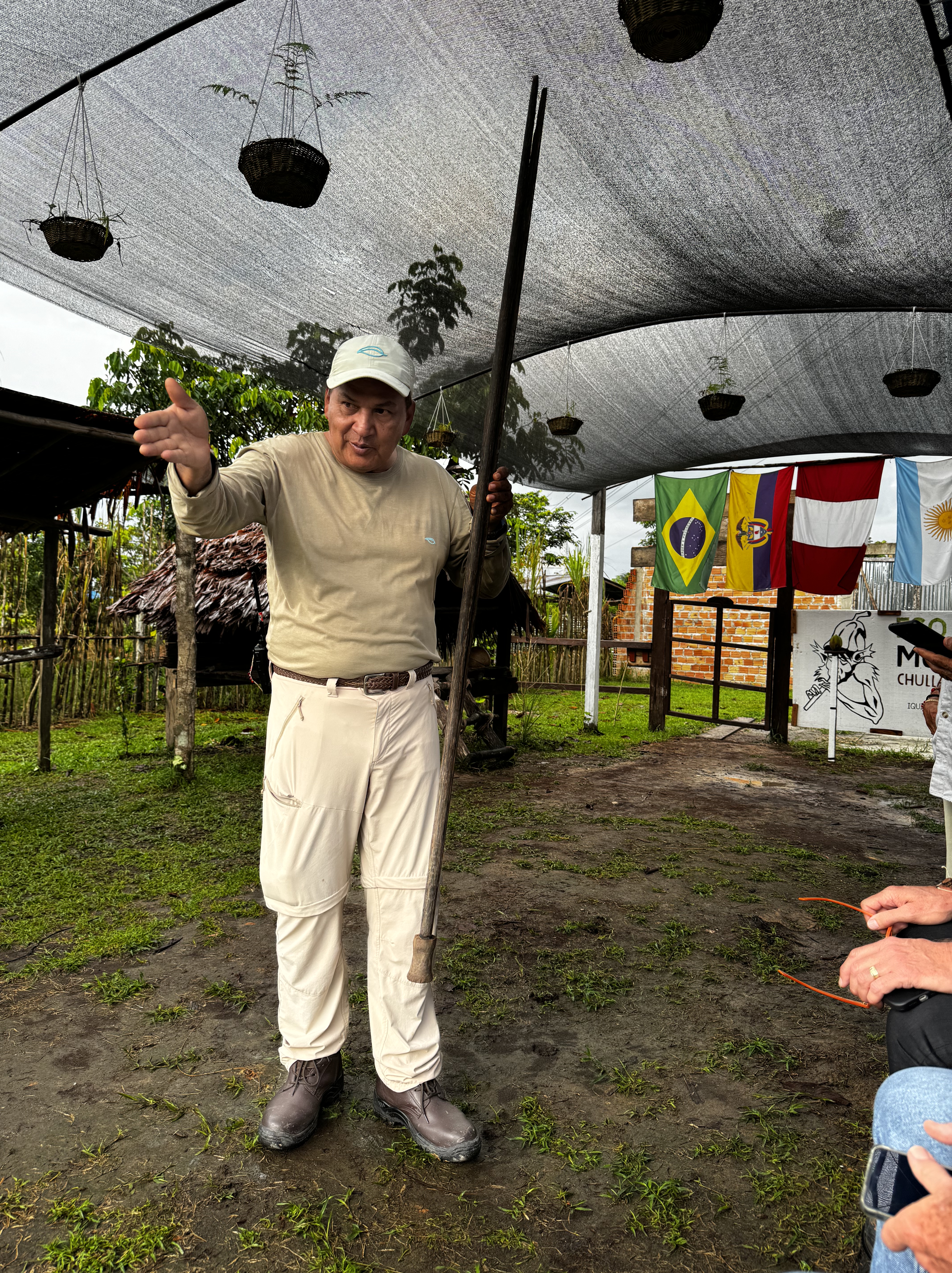
Earlier that morning, Mark was up and out at 6am to join a small group who wanted to learn about shooting monkeys with dart guns. I stayed in bed. The 4 intrepid souls who went included Merv, Bill and Mark. Merv’s attempt fizzled in less than 10 feet, so Mark, not wanting to look inept, did not try. The experts barely hit the target, 30 feet away, after three attempts. They did demonstrate how to make a dart gun, while wearing native clothing. The gun is made of two halves of wood that was hollow when glued together. Then sand was poured into the hollow and a rod was slid back and forth to polish the barrel of the “gun”. Juan, our favorite guide, was doing the English translation of the process. The jaw bone of a piranha was used as a file to sharpen the point of the dart.
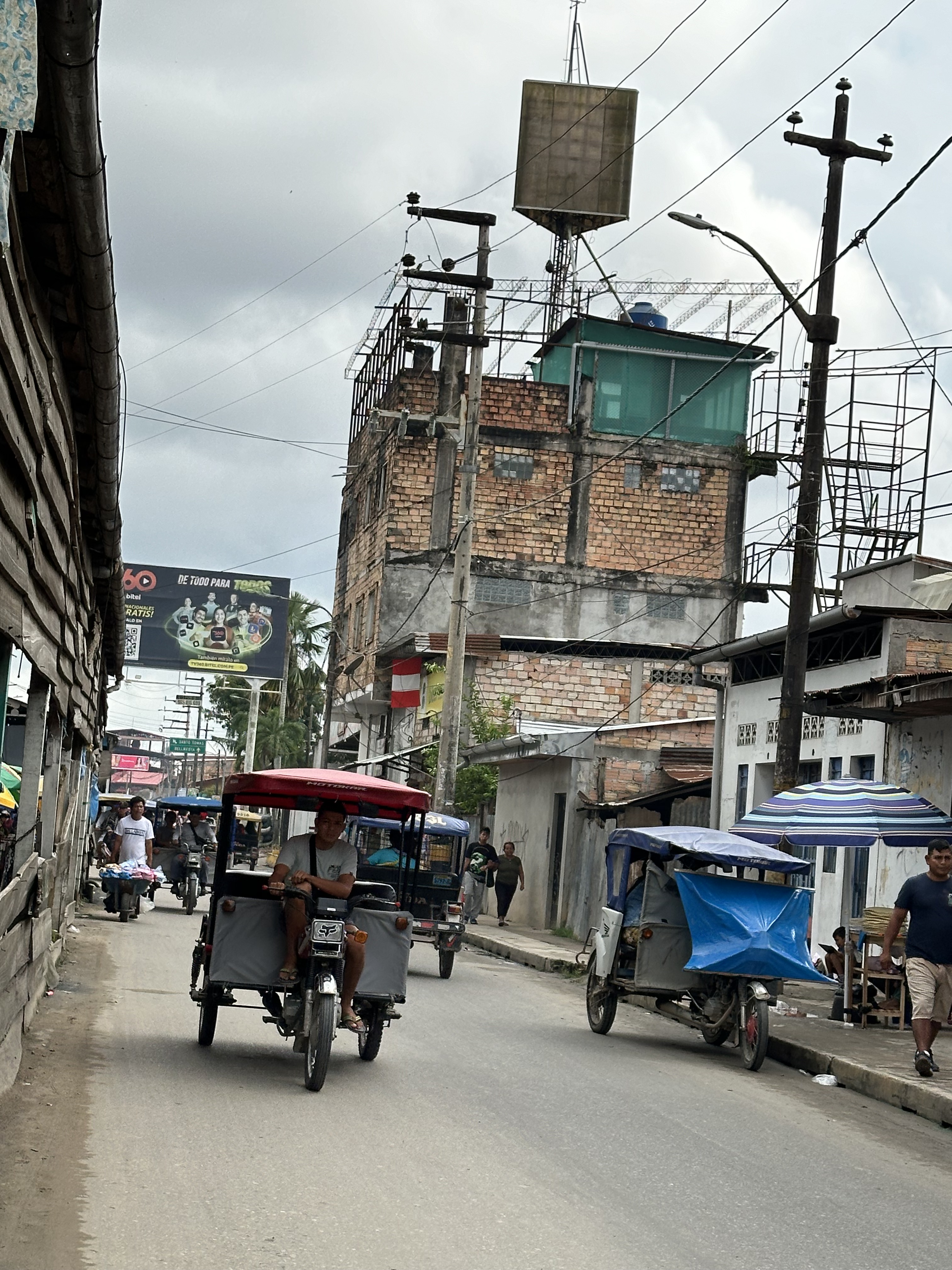
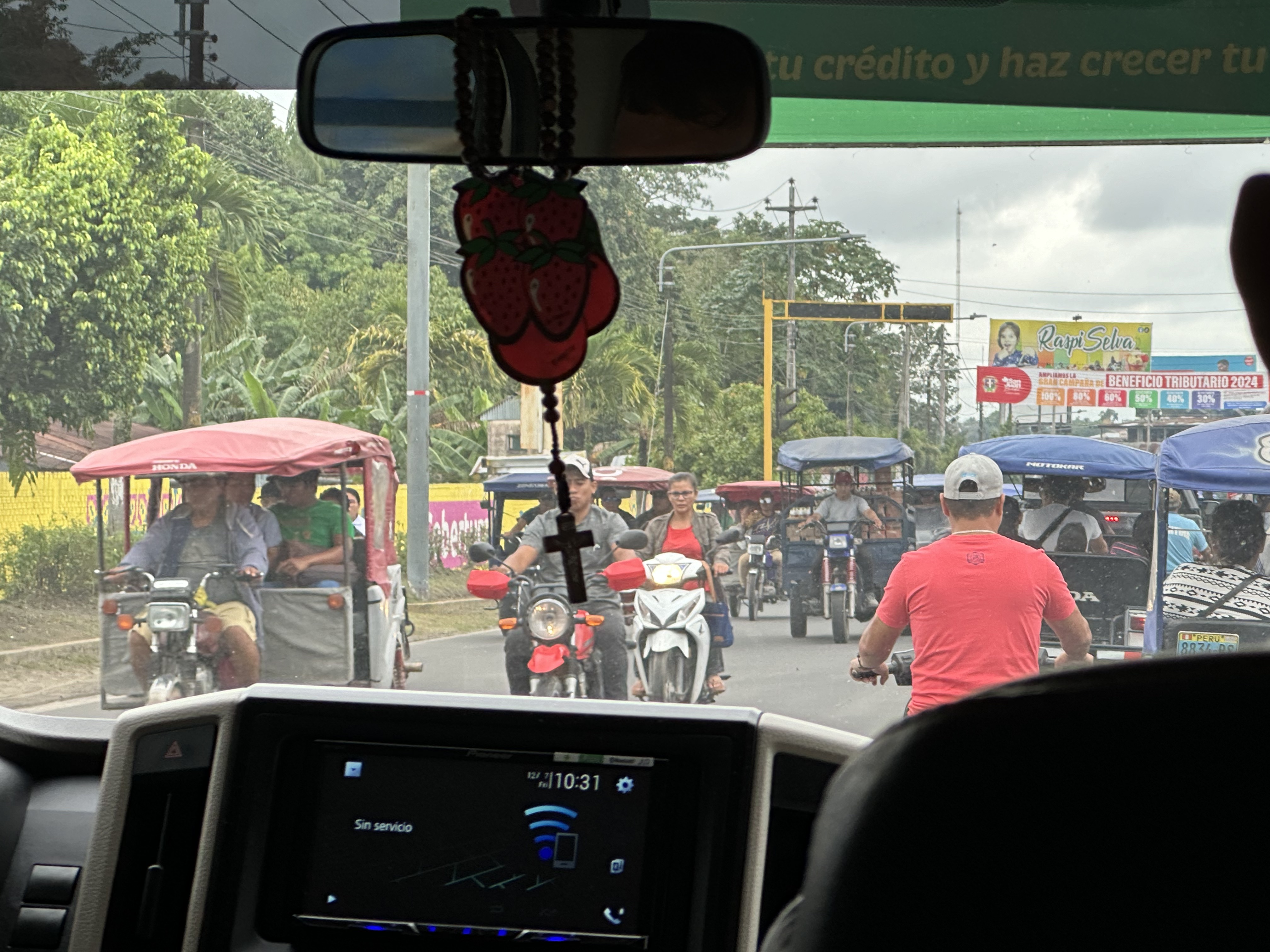
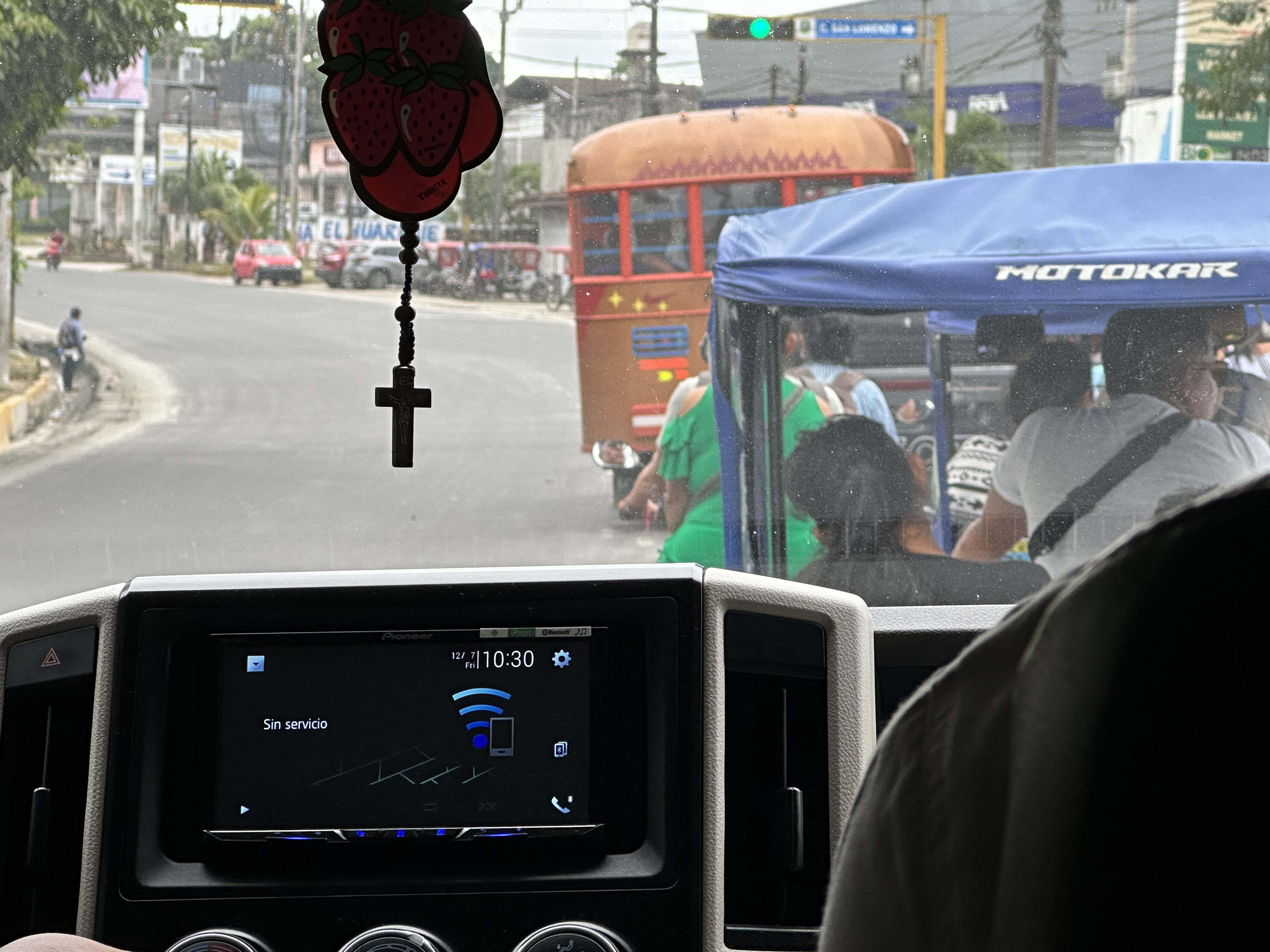
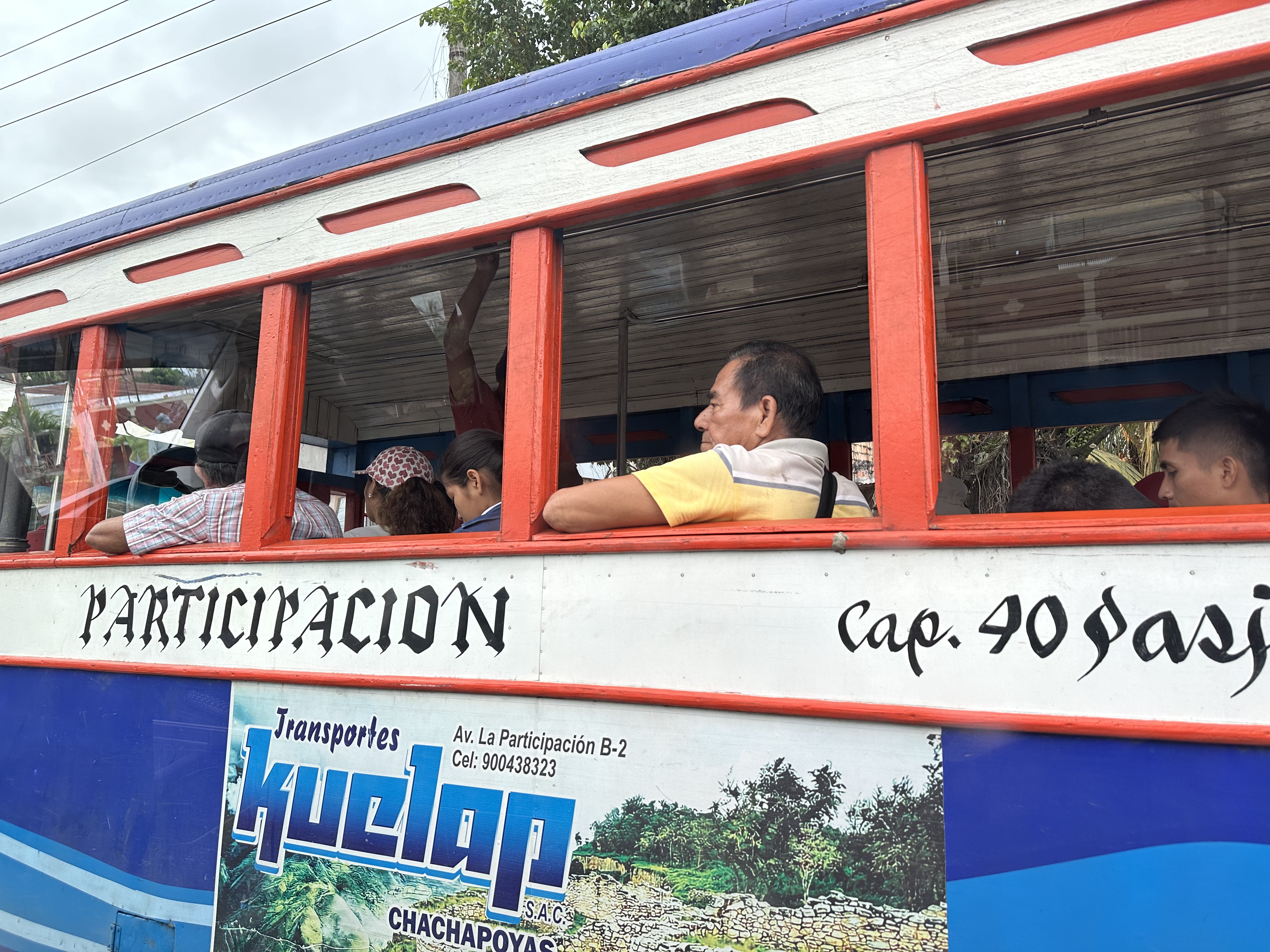
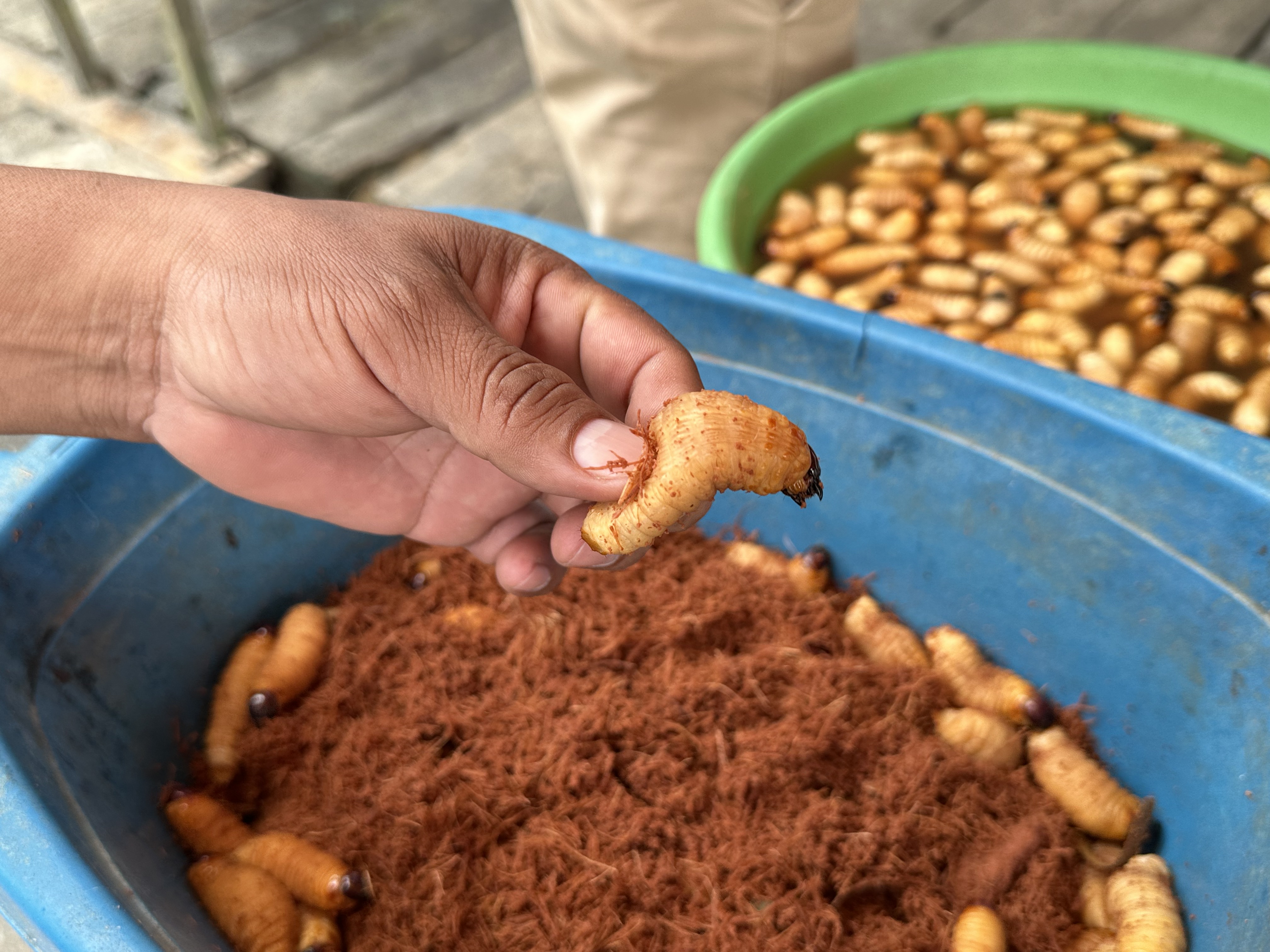
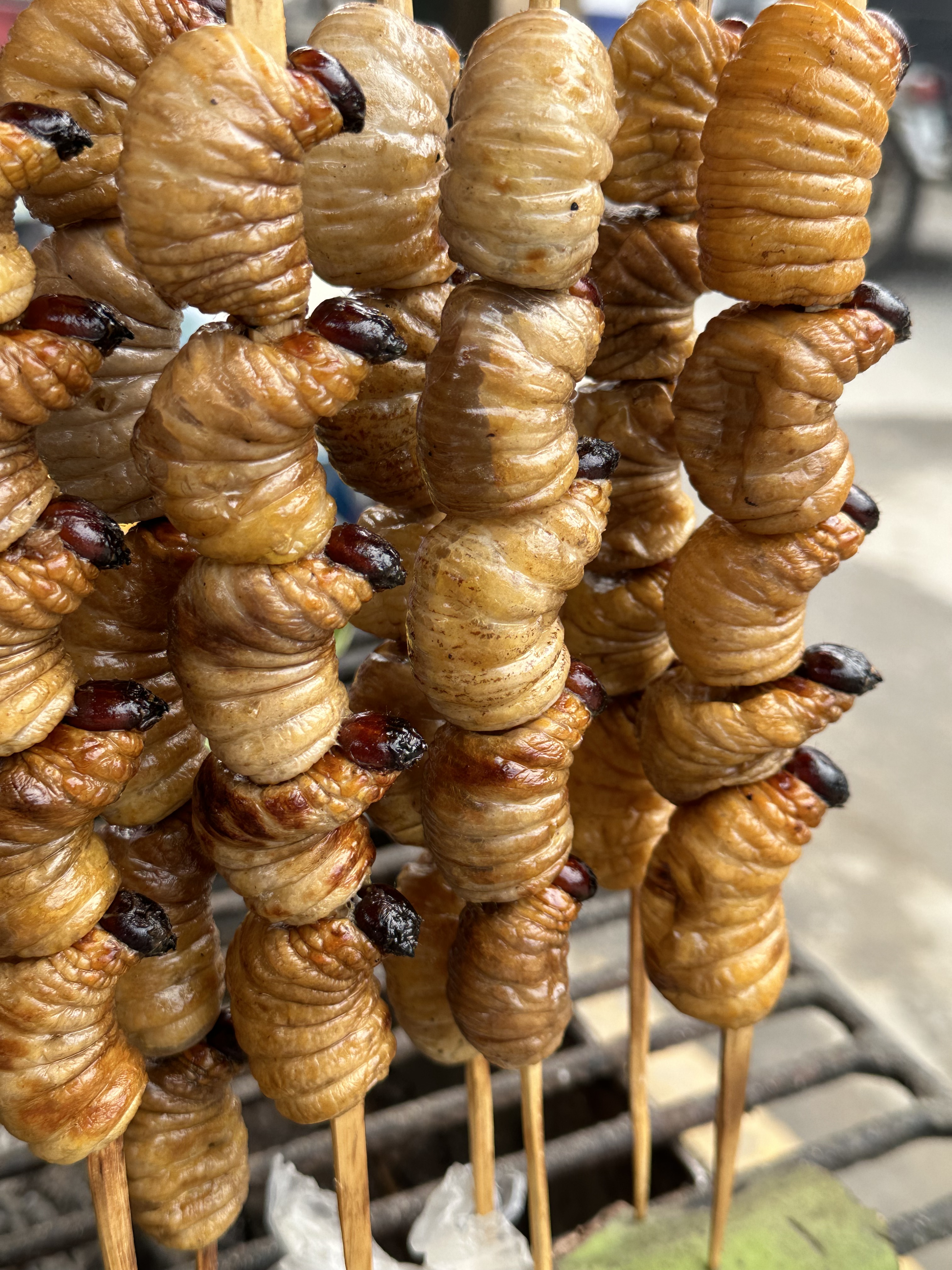
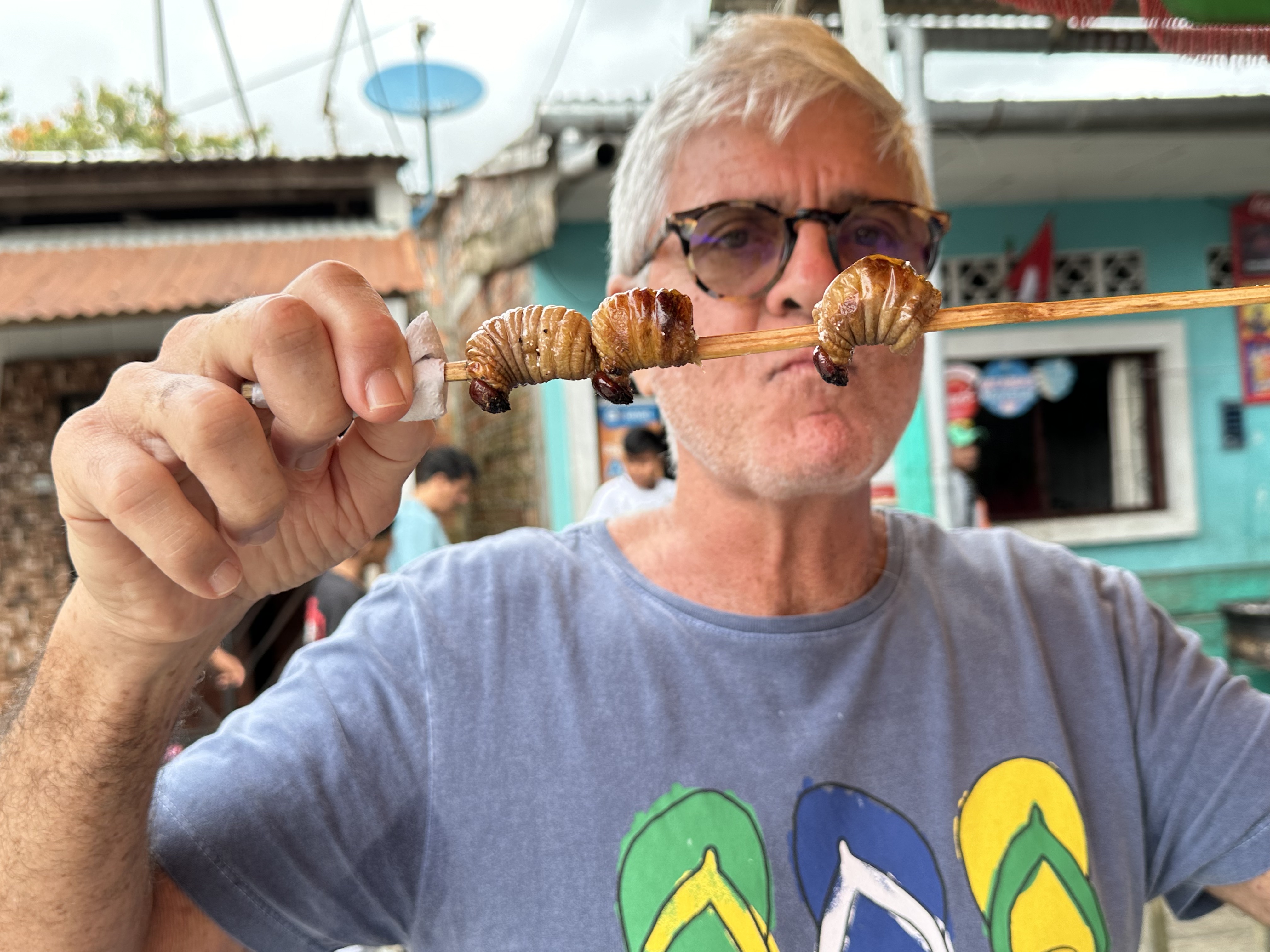
The dart gun group was back in time for breakfast. Our luggage had been picked up by 7am and we were all ready to disembark by 8:30am. We said many good byes to crew and group members. Then into buses we went to tour the city. We saw hundreds of tuktuks, several wooden buses made with wood shells, and many food vendors along the road. We stopped at one food vendor to see live worms being cooked and eaten by locals.
Street sceneToktoks fill the roadwayThe shell of the orange bus is made of woodAnother bus made with woodLive wormsworms grilled and ready to eatA Brazilian guest in our group eats a whole stick of worms.
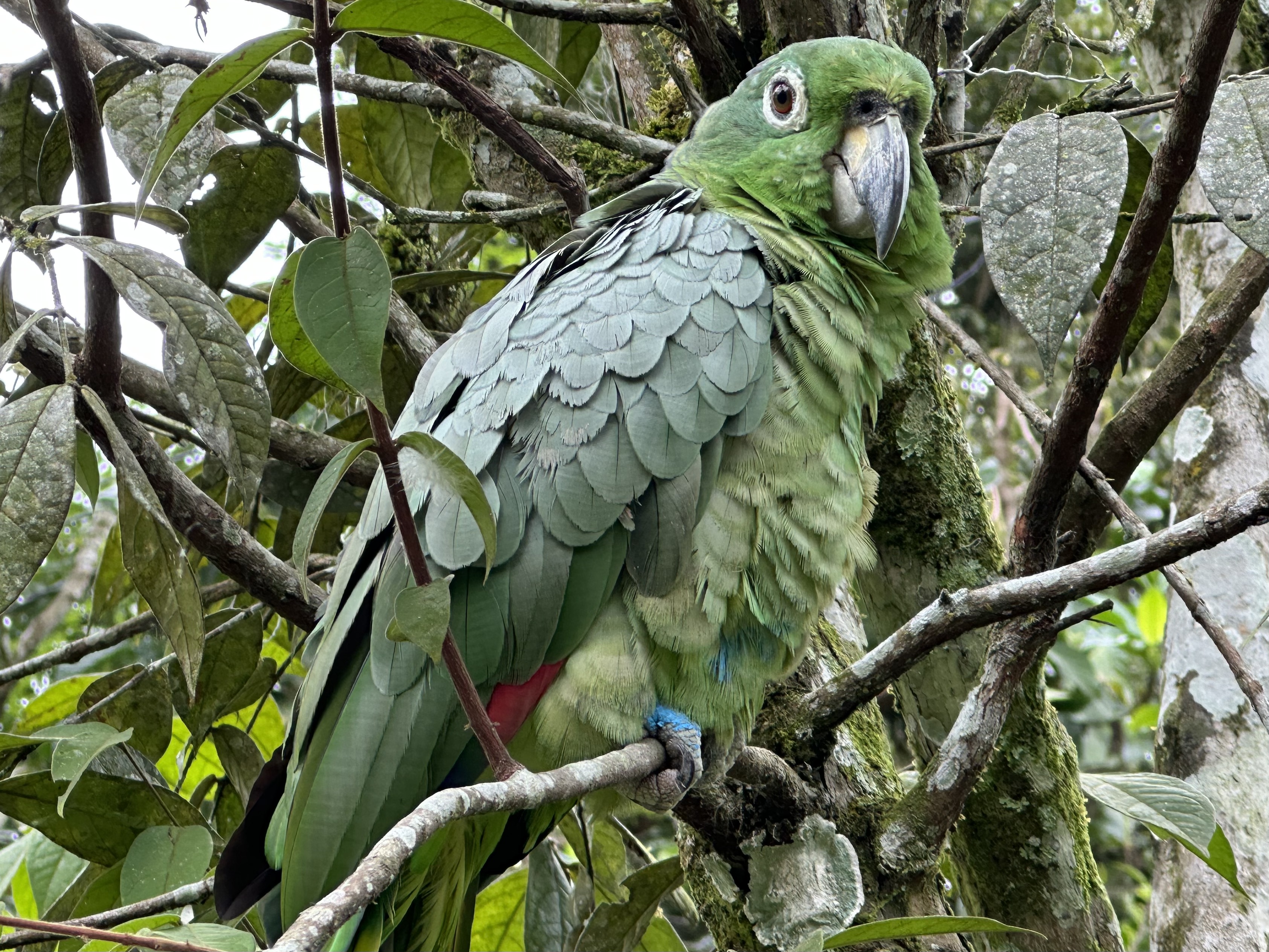
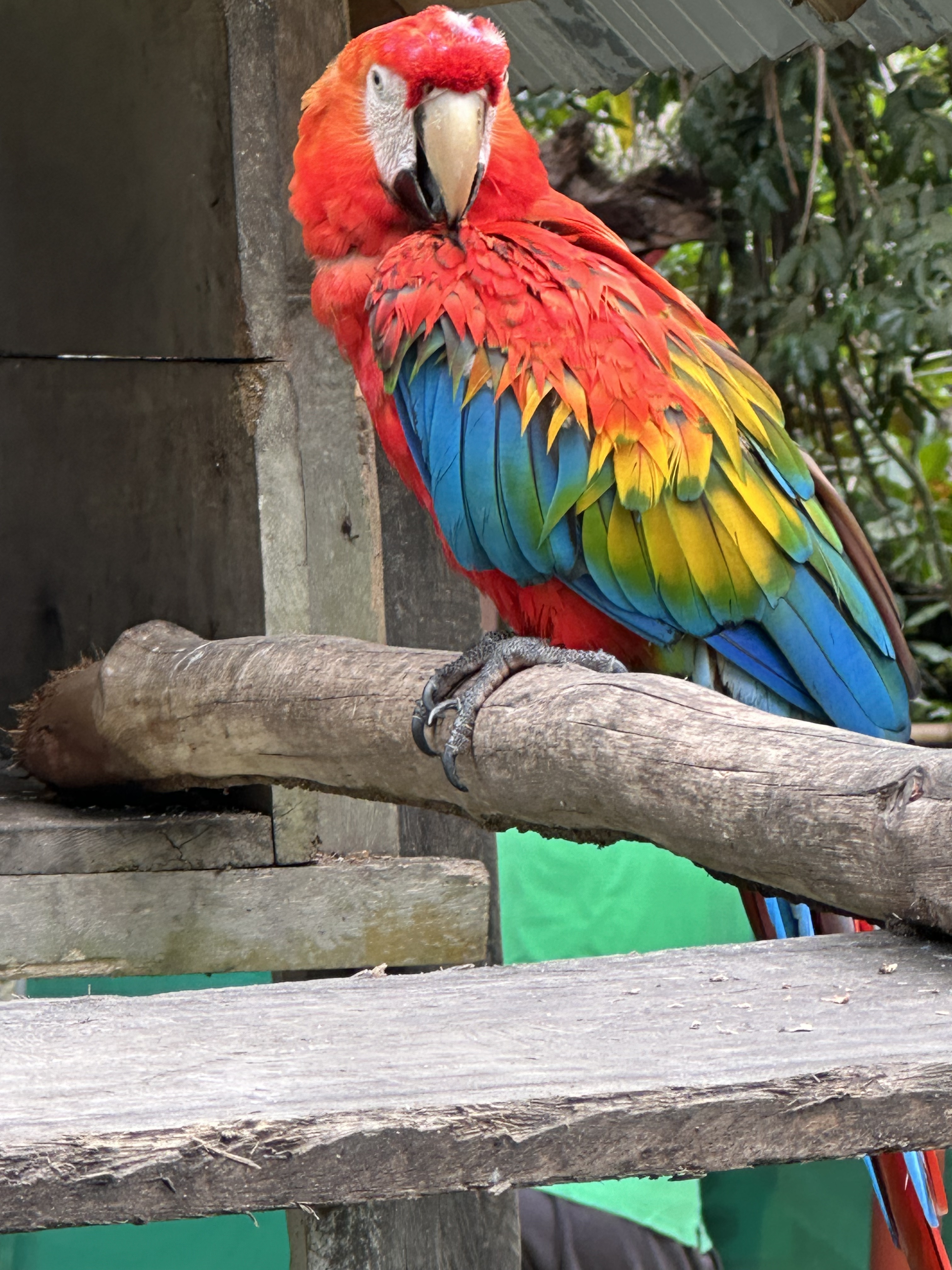
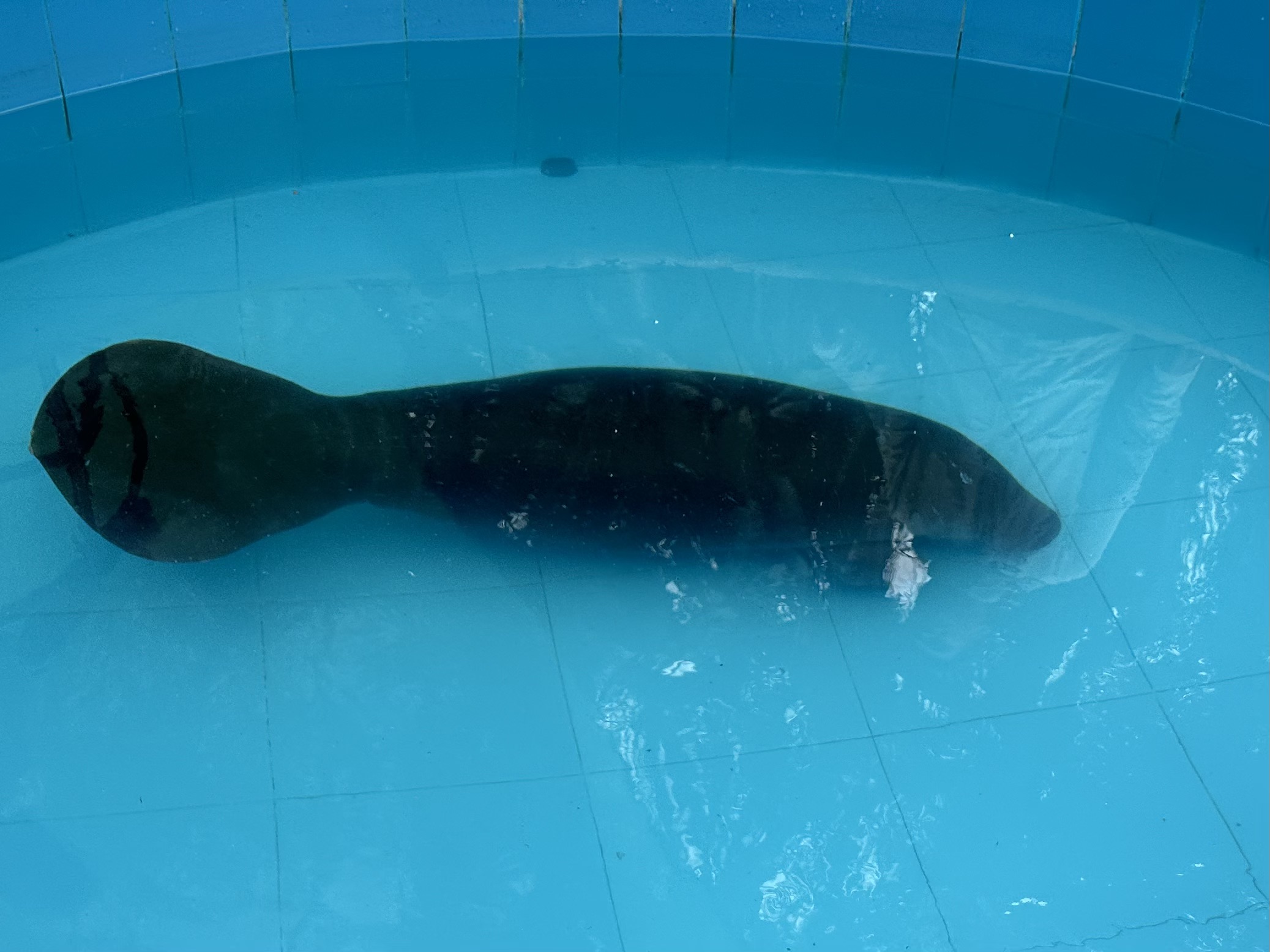
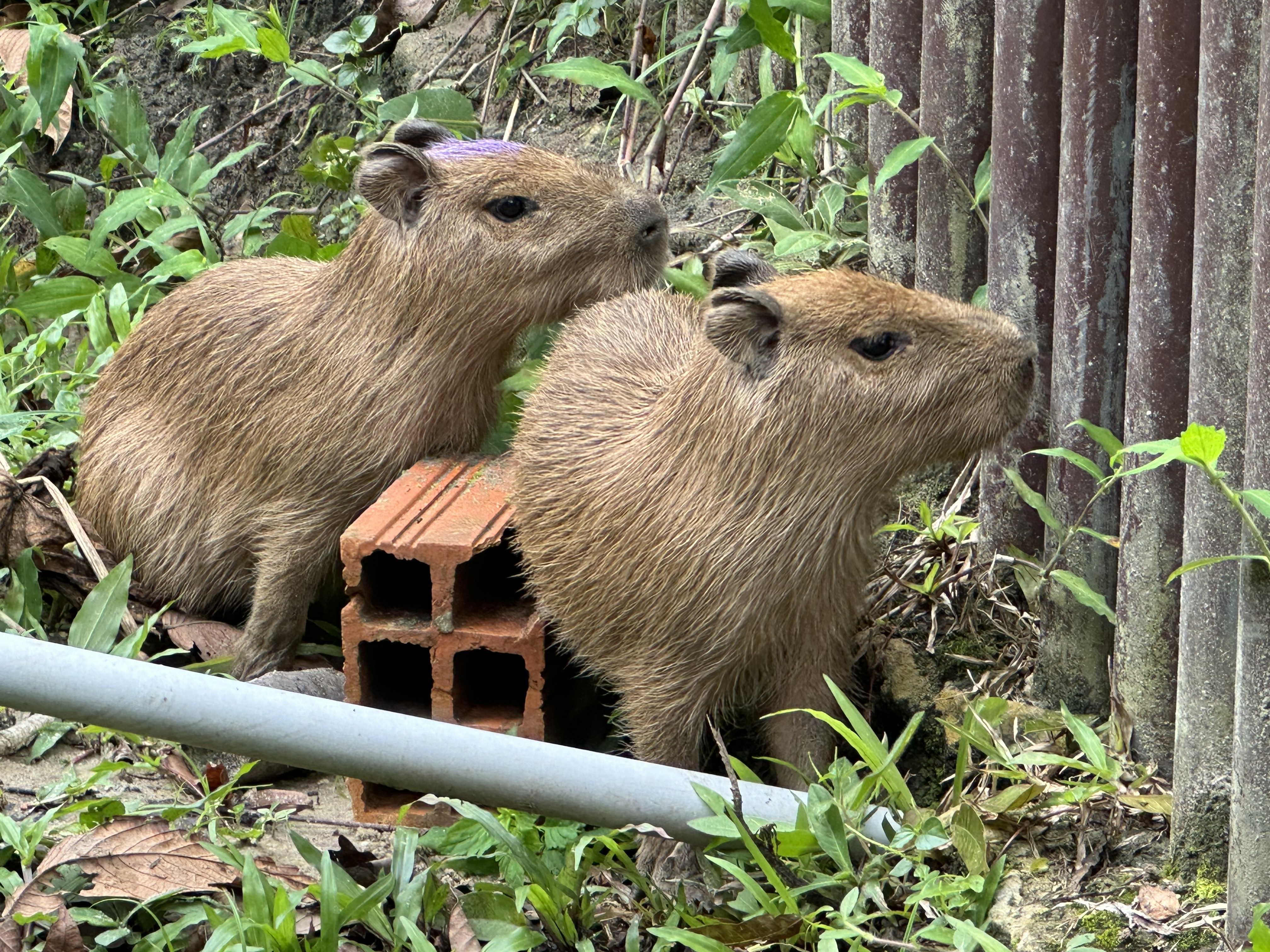
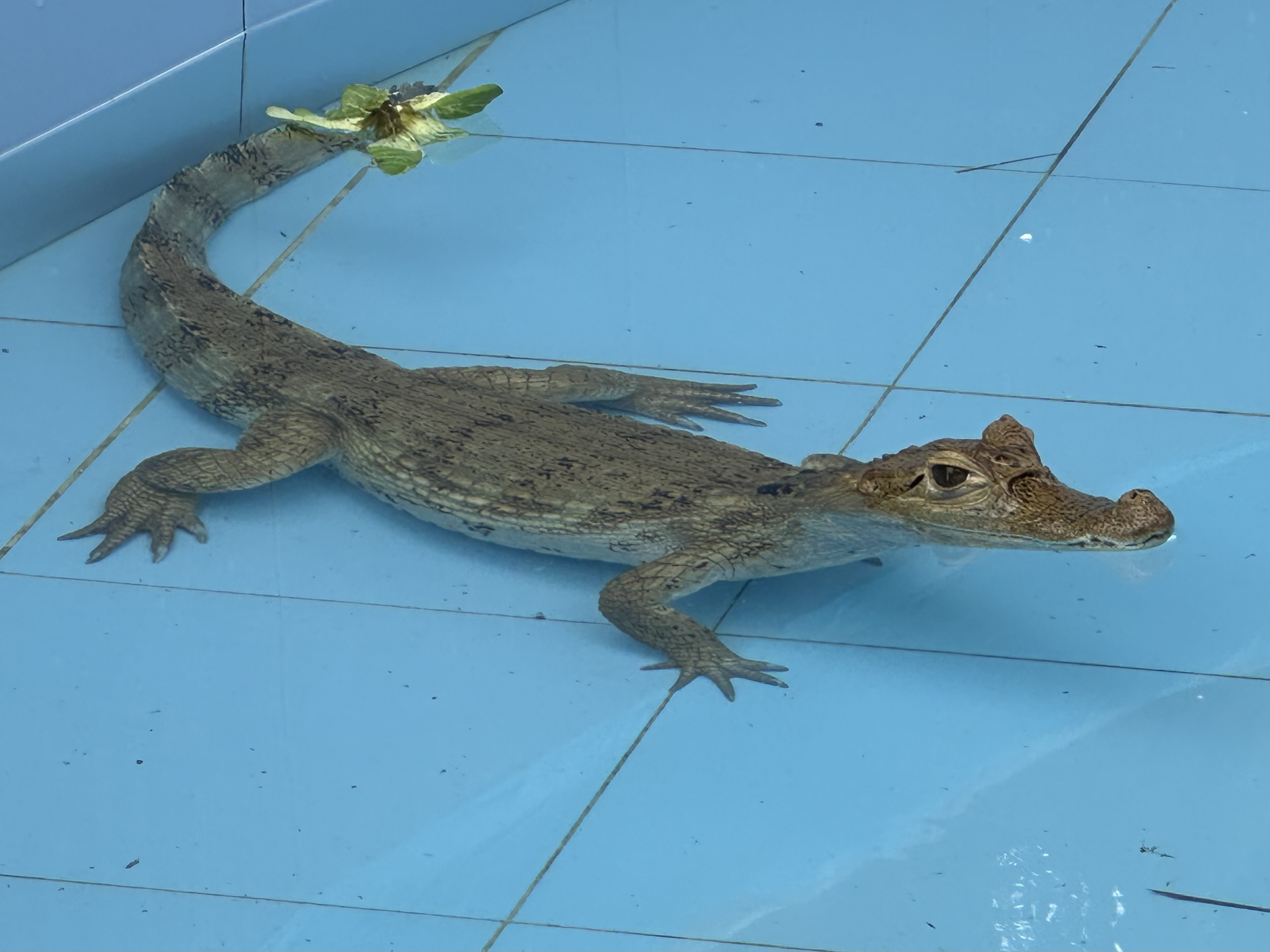
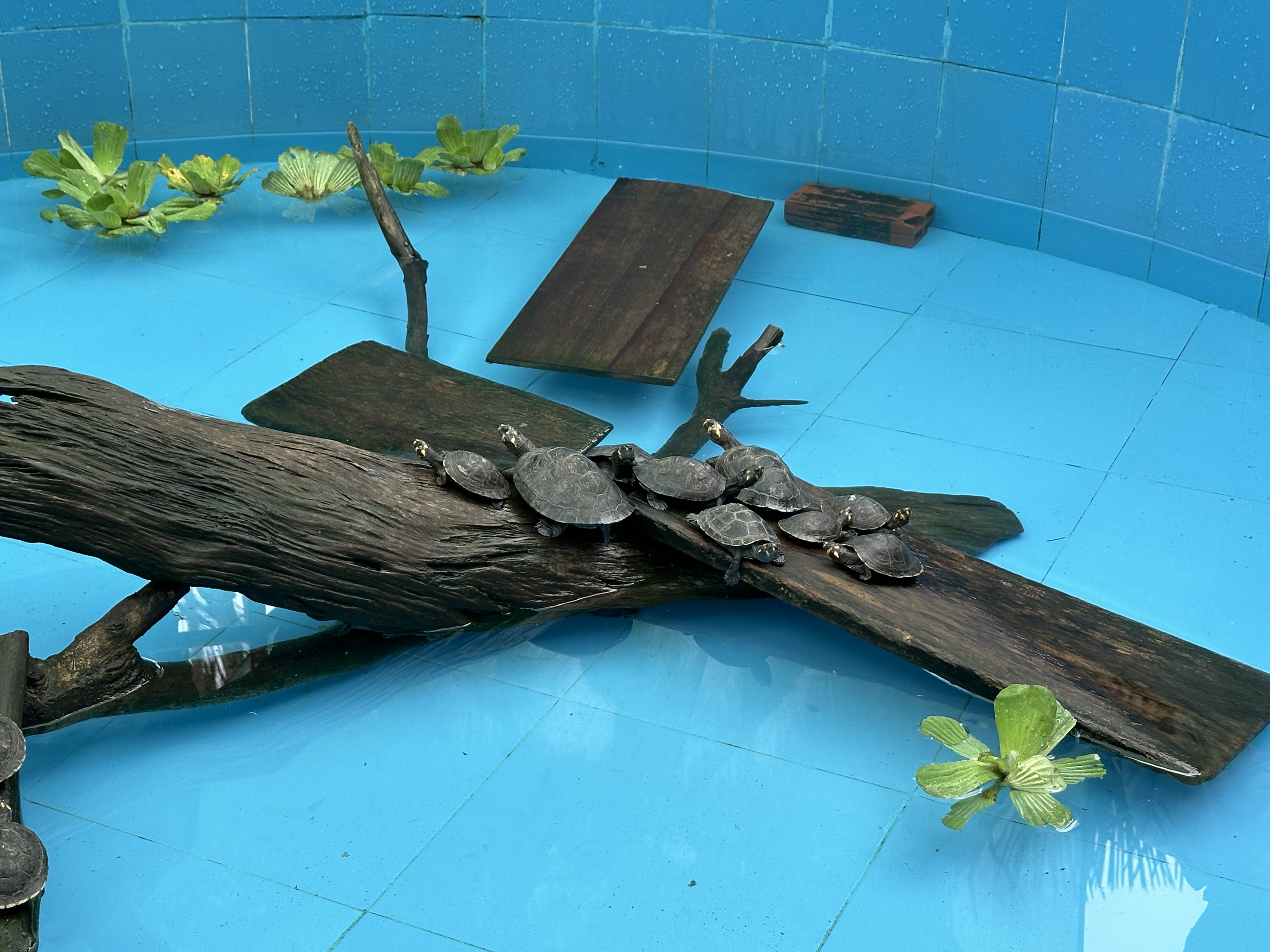
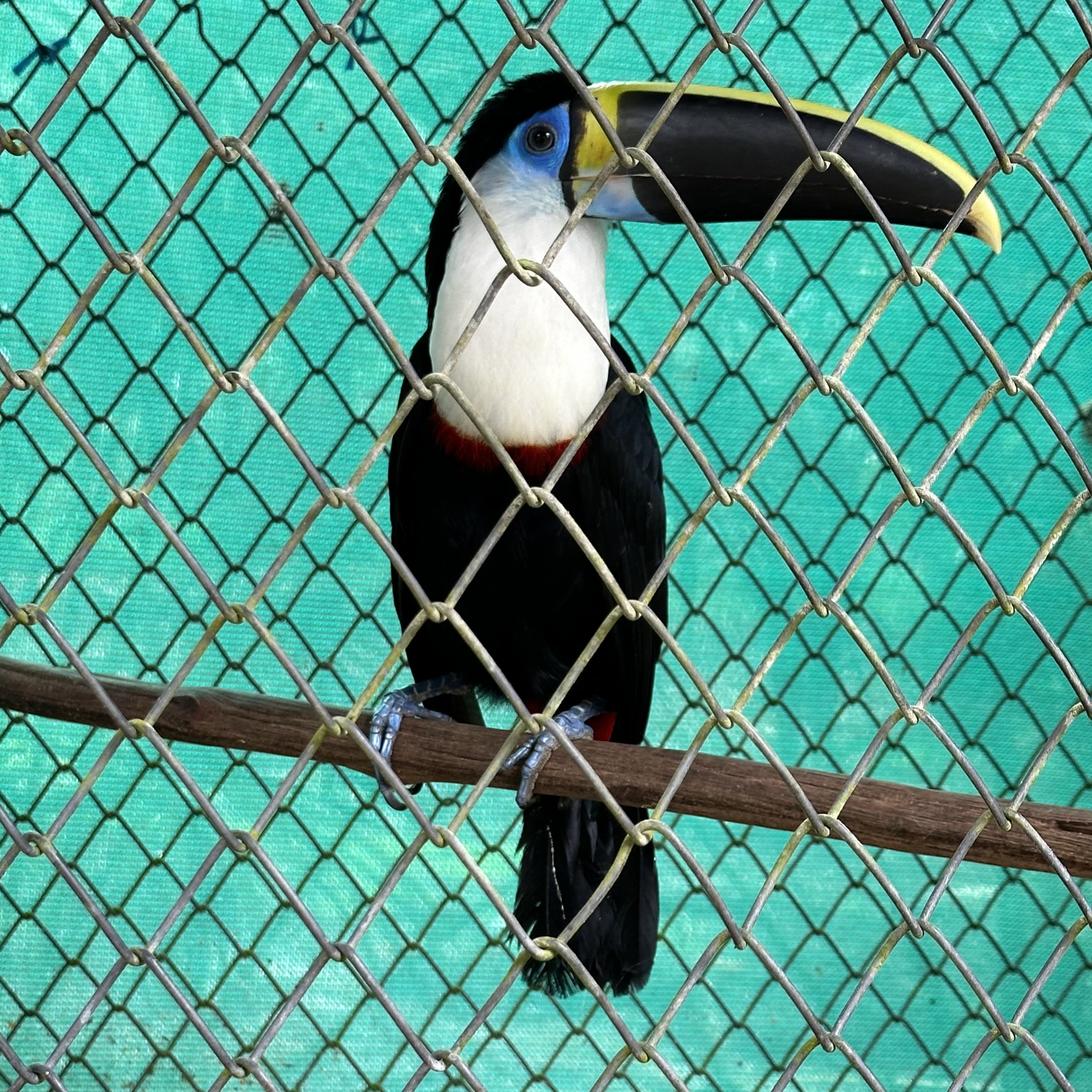
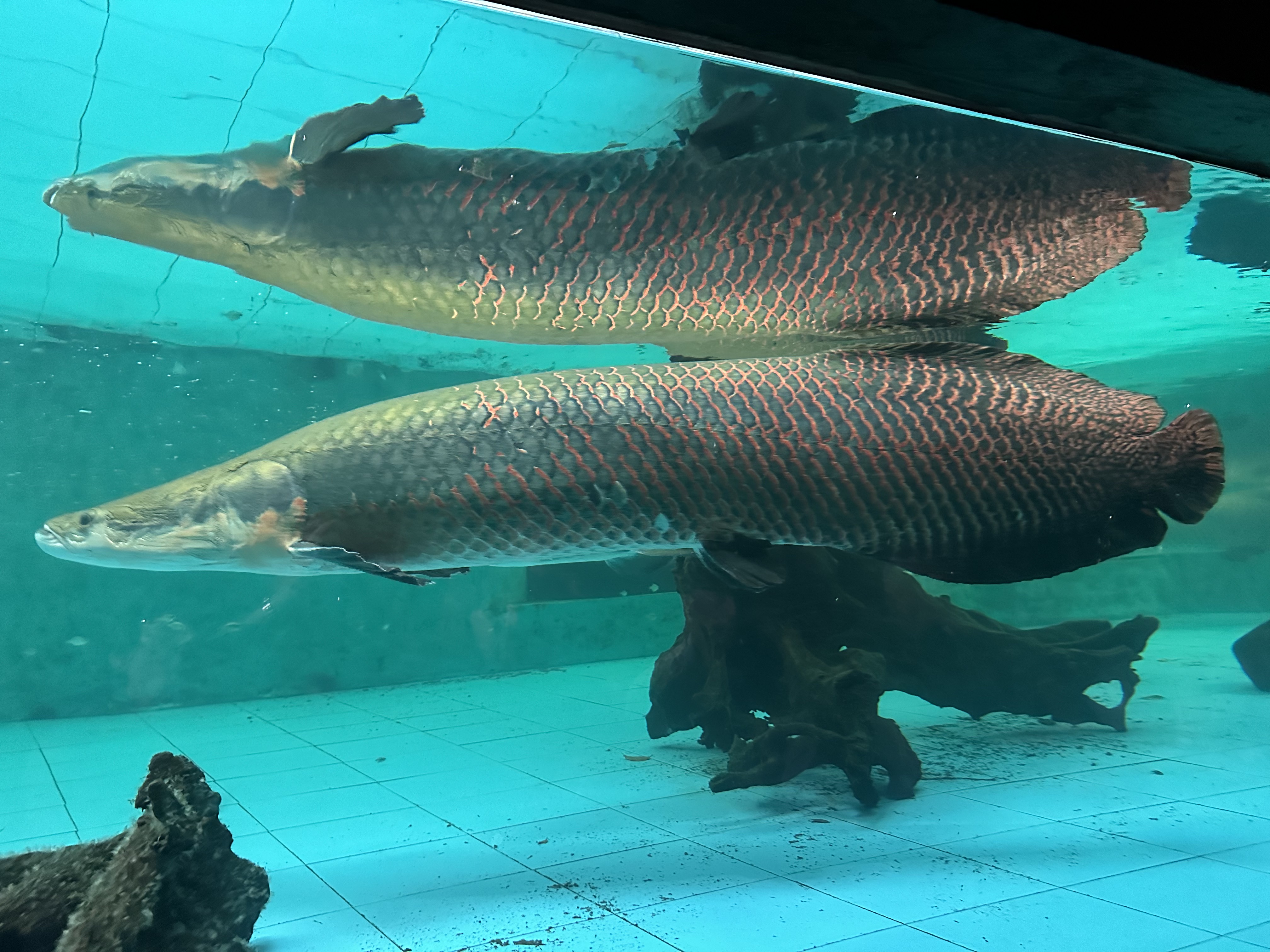
From the worm vendor stop we drove to the Manatee Reserve for a tour of the animal healing facility. To fly back to Lima, the whole group needed to be at the Iquitos airport at 2pm for a 3:30 flight. So, having disembarked at 9am and with time to kill, the ship crew created this activity. The Reserve, which is meant for children mostly, was pretty interesting for us too. We got to see several creatures up close that we had seen only from a distance. They included: Toucans; Macaws; Caimans; capybara, the world’s largest rodent that can get to 170 lbs; turtles, which are being brought back from near extinction; tamarind monkeys; endangered manatees; and the Amazon’s largest fish, the endangered Paiche, which is a slow swimmer, grows to over 9 feet long, has strong bones that can crush its prey with its jaw, and lives 25-30 years. An oxygen breather, the paiche must surface periodically to get air.
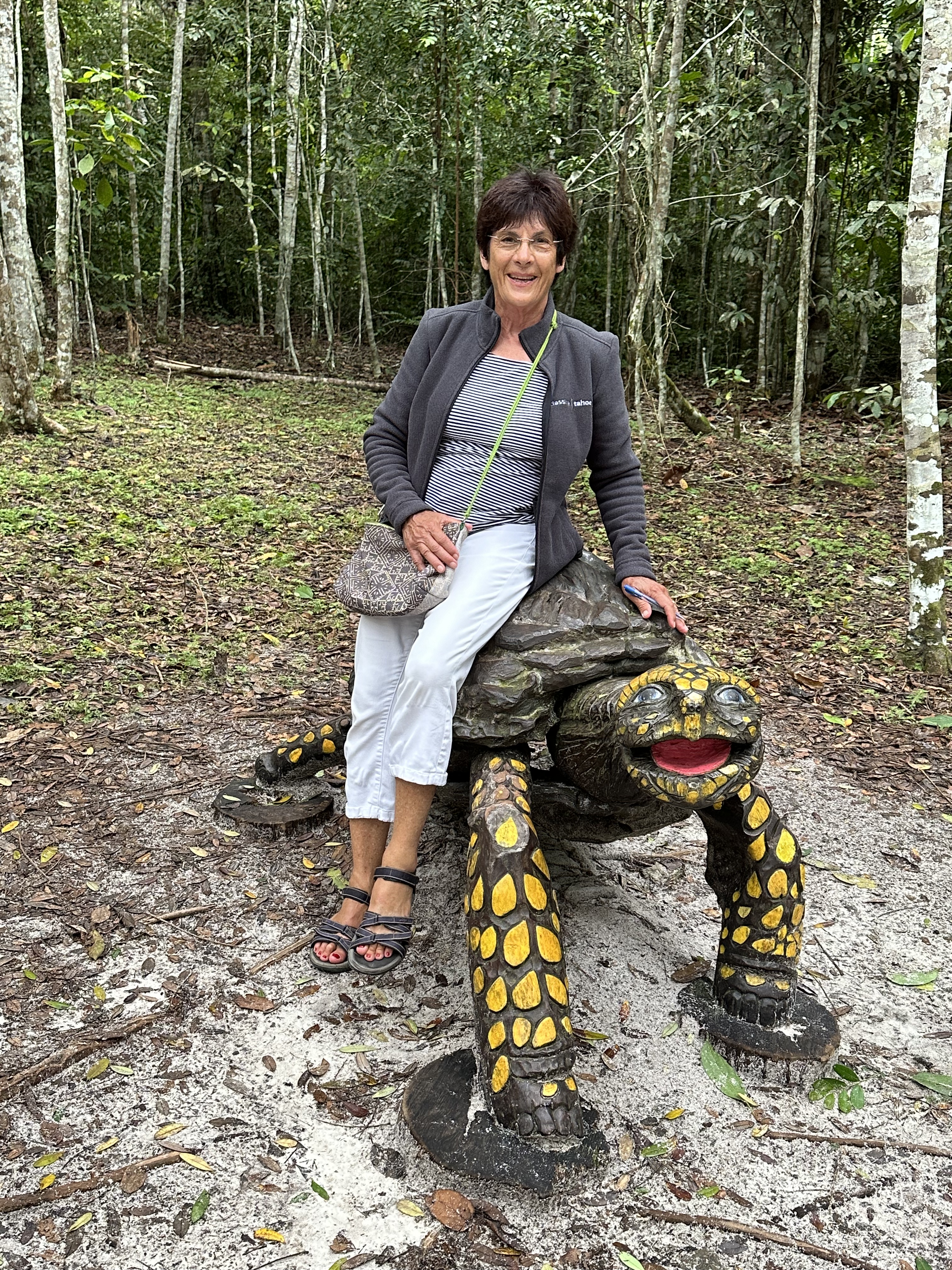
Faringoosa Parrot Red and Yellow McawJuvenile ManateeTwo Capybera, World’s largest rodentSmall Caiman alligator Turtles. Have been sold and eaten nearly to extinction and are now being recovered through conservation efforts. ToucanMe on a turtle on sand that is 2 meters thick and left behind ancient river bed. Endangered Paiche fishPaiche fish. Grows to 2.5 meters long, lives 25-30 years, is excellent eating and scales are used for jewelry and decoration.
From the Reserve, we went to the airport, waited some more and finally flew to Lima. Our guide, Sophia, was waiting for us and off we went on the hour long drive through the busy city to the Hotel B in the popular Barranca neighborhood. We had half an hour to change for our dinner reservation at the nearby highly recommended and very popular restaurant called Siete. Mark had a pasta with pepper and I had the Catch of the day, which included a vey tender and tasty, farm raised Paiche. Both dishes were excellent. Then we went back to the Hotel B and went directly to bed. We both missed our room and bed on the Aqua Nera. The B is interesting and unique, but not comfortable/cozy.
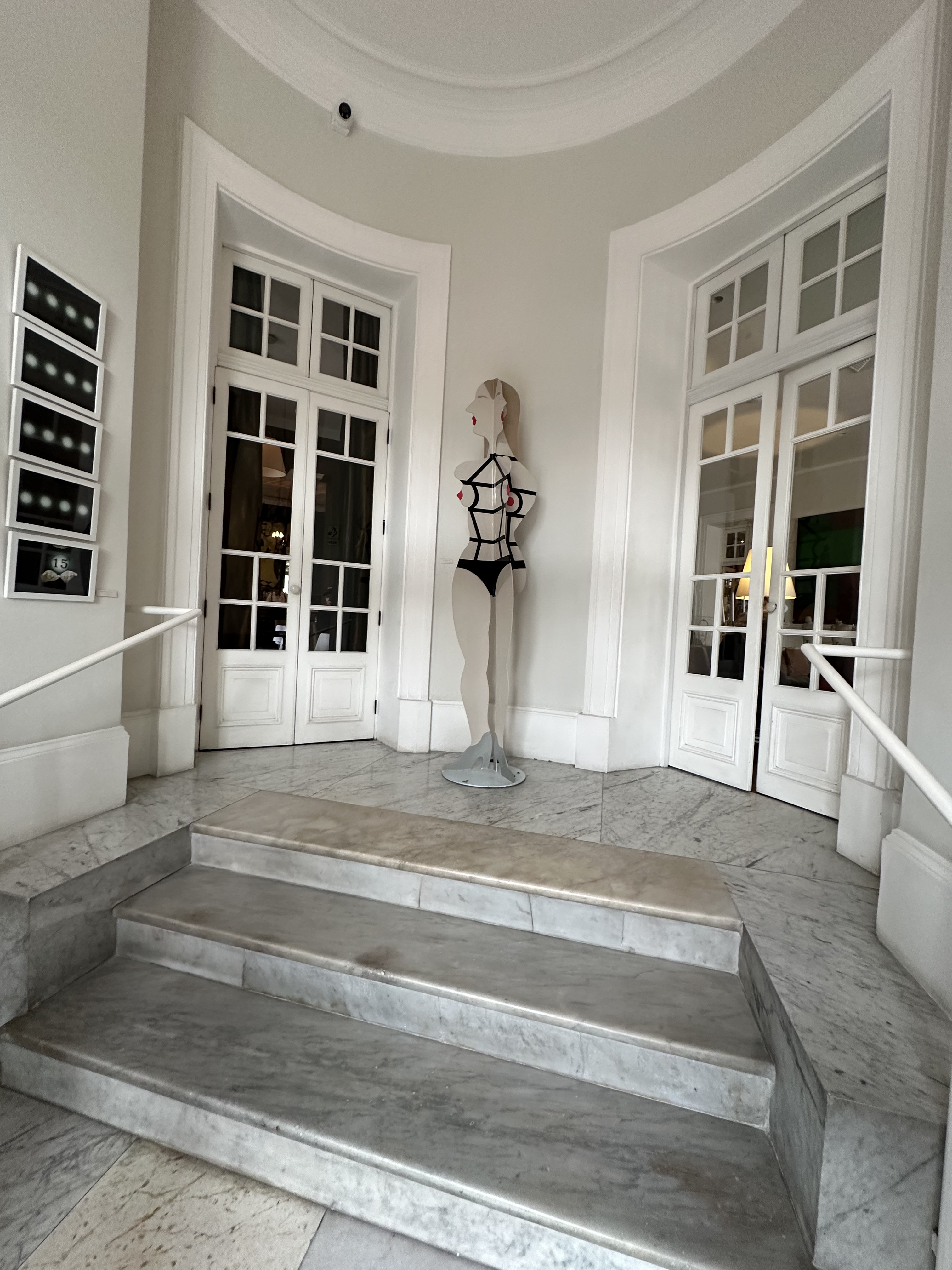
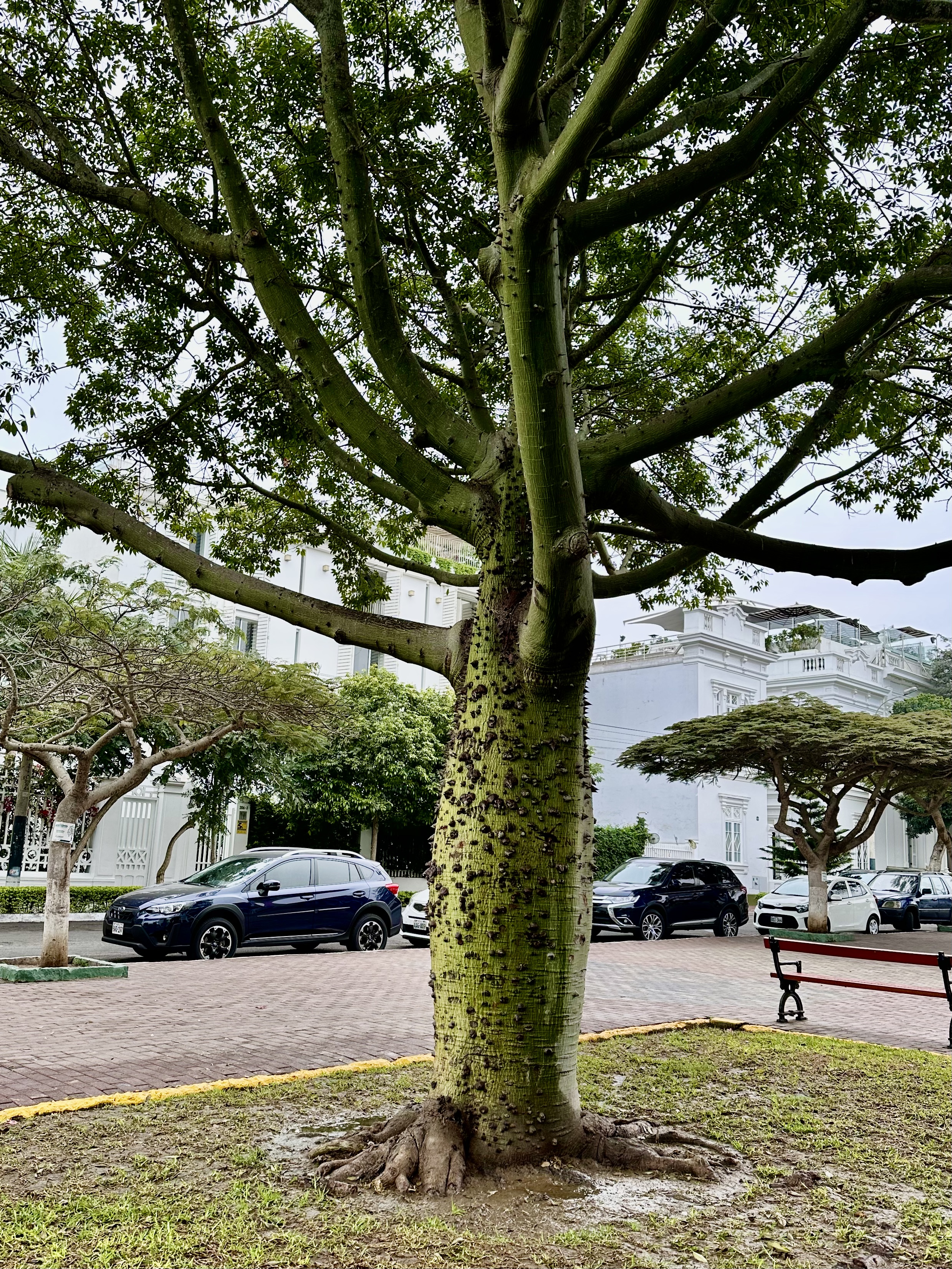
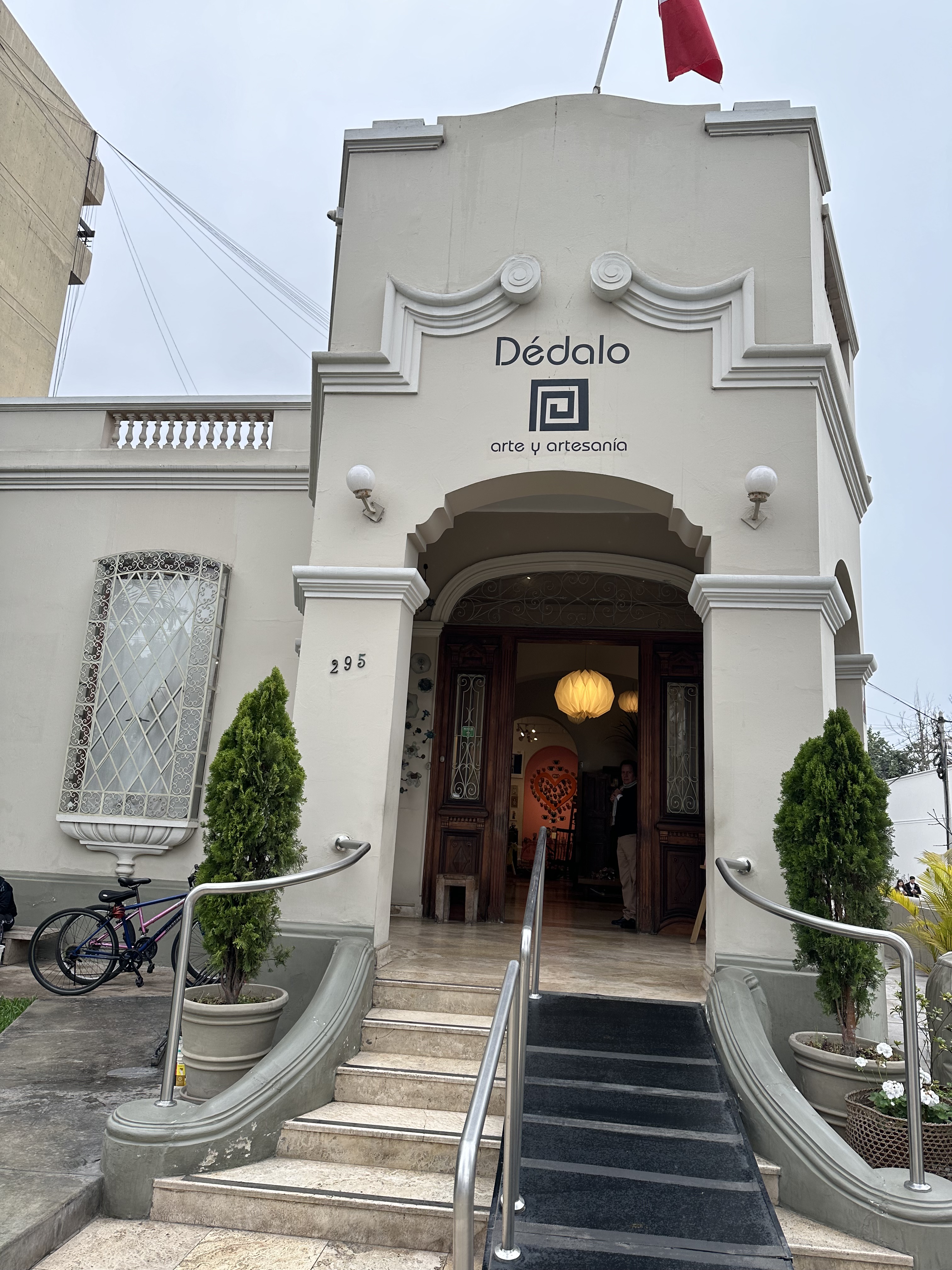
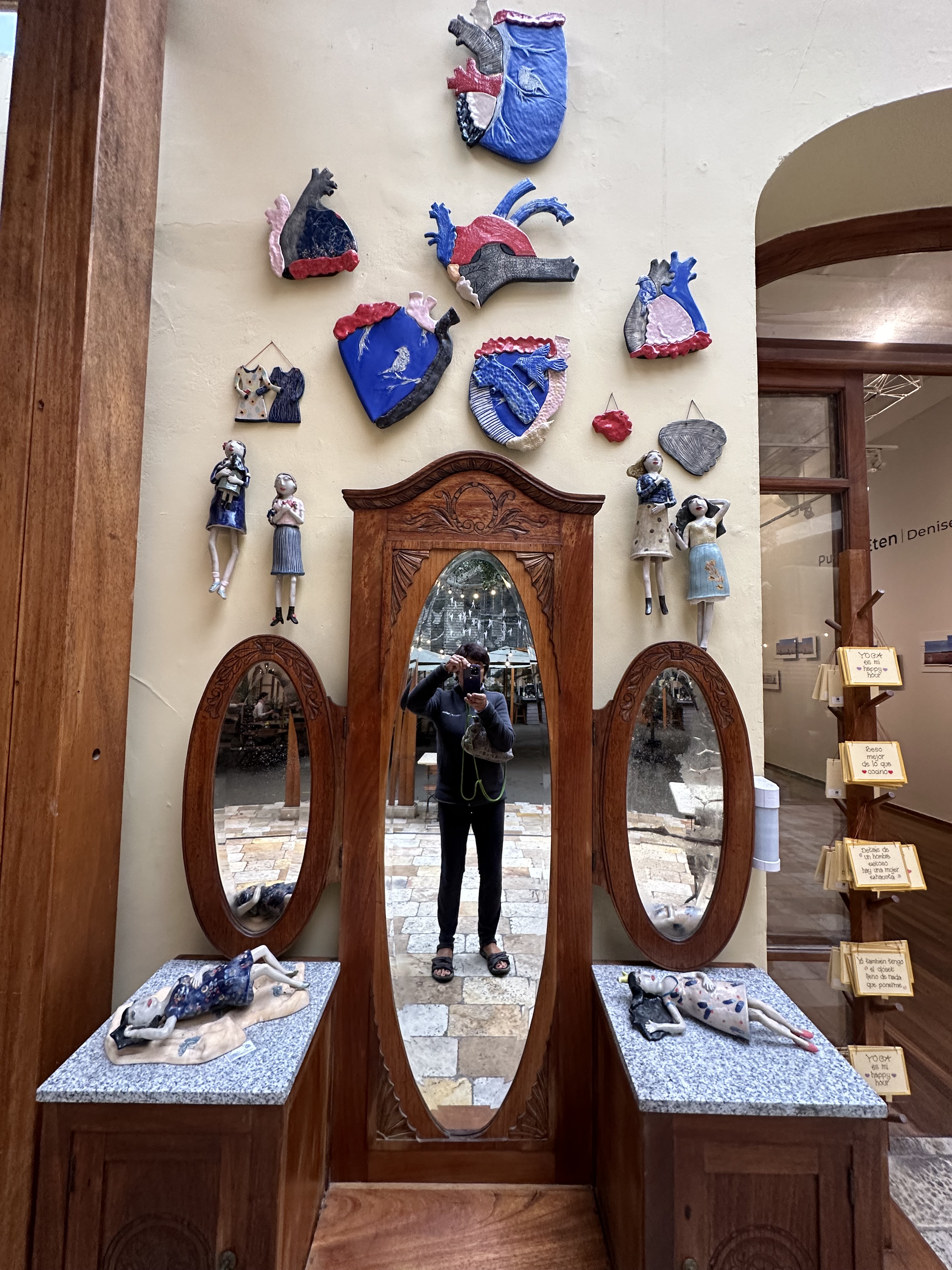
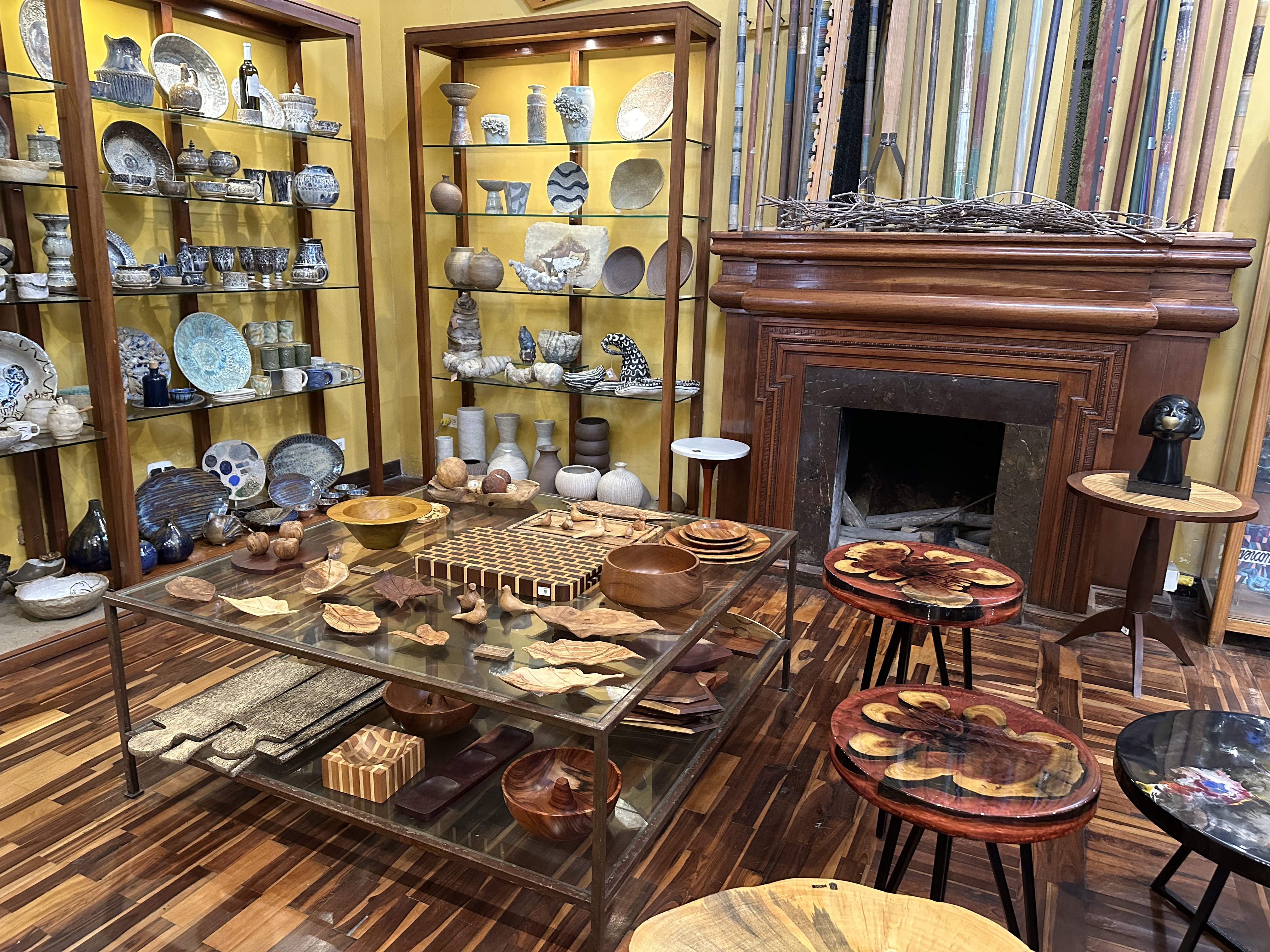
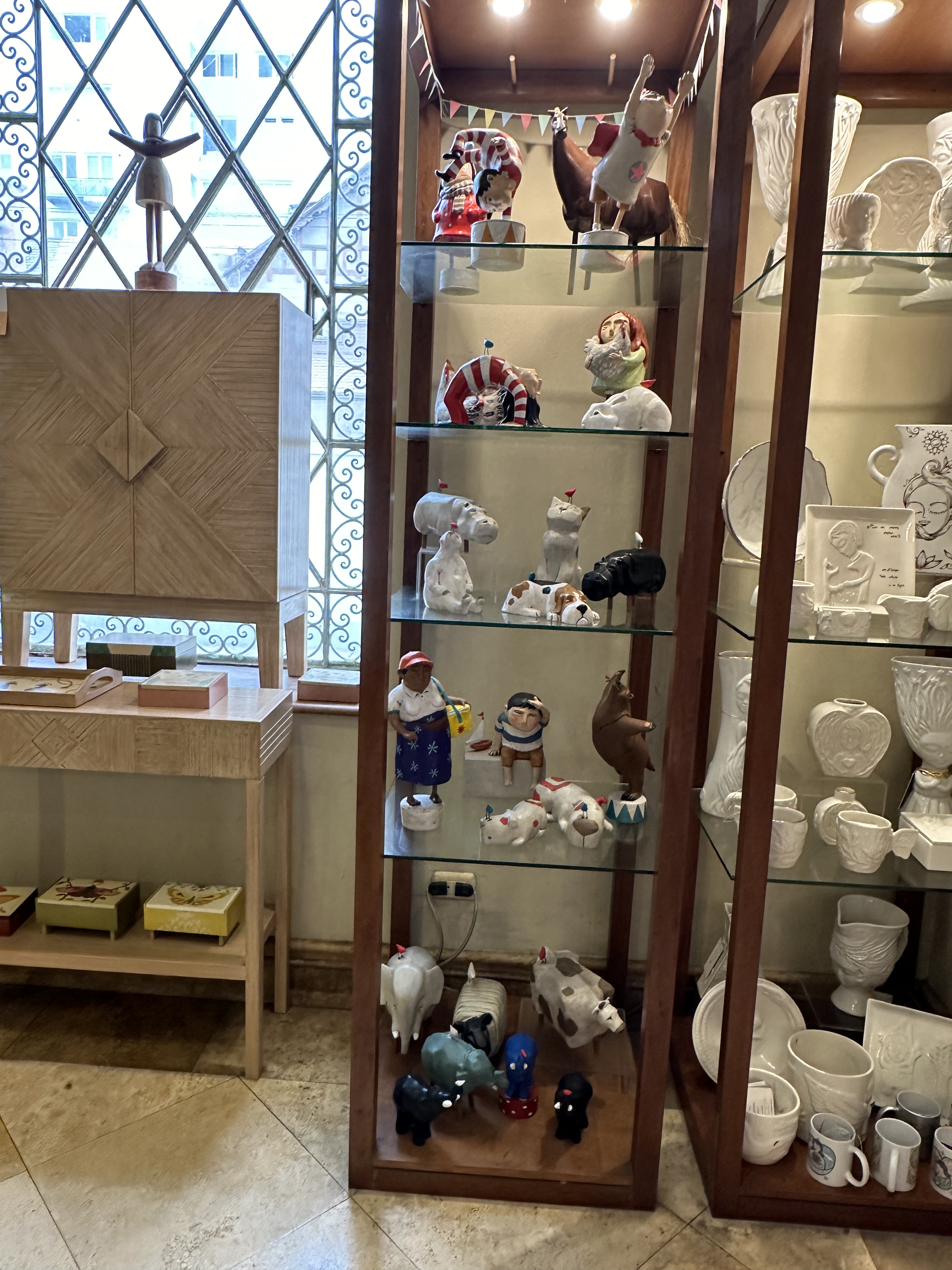
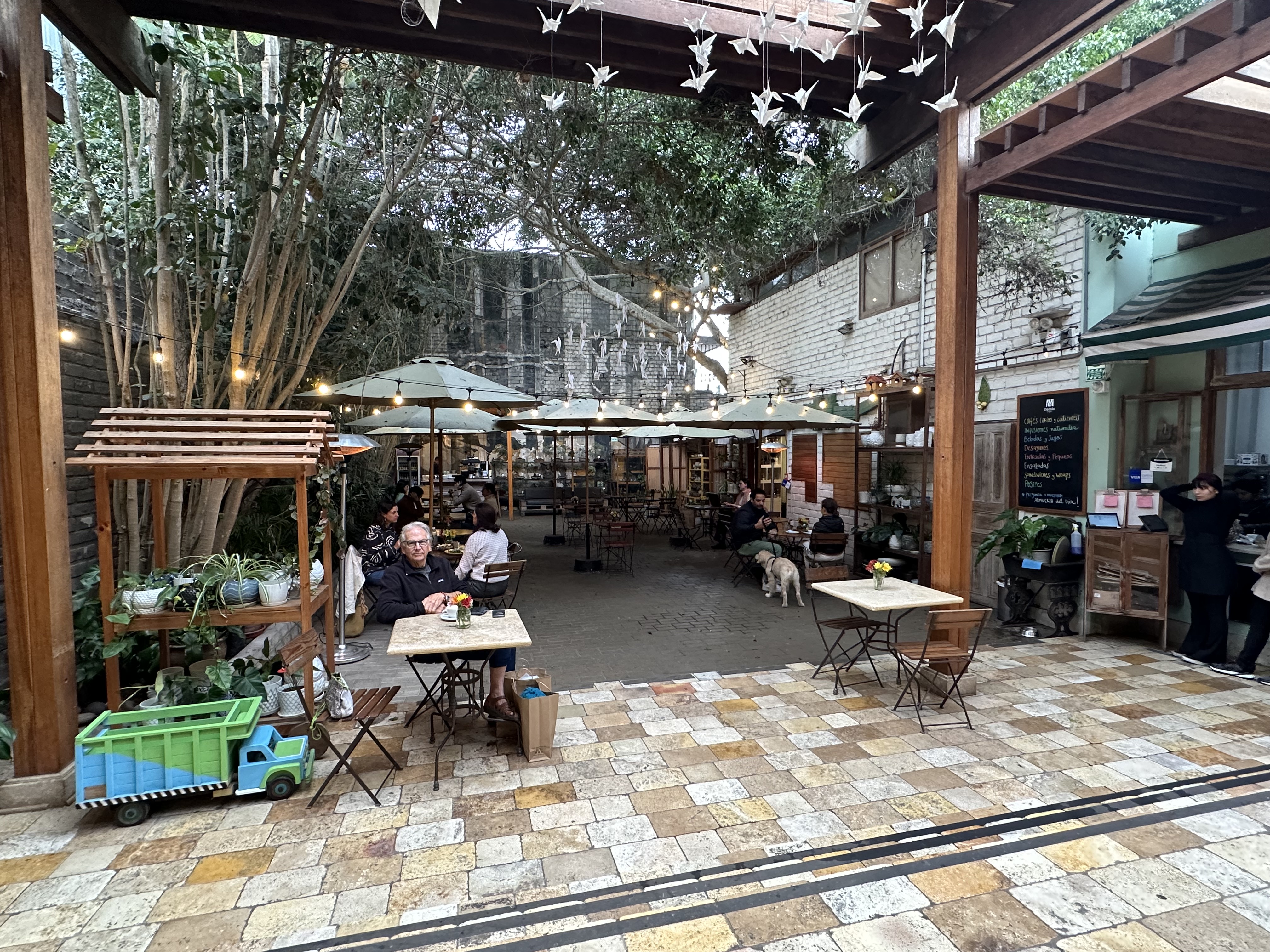
Front of Hotel BSculpture of female in entry to Hotel BFloss Silk Tree near our hotelStore for different artists productsEntry to Dedalo storeA hallway in DedaloA room in Dedalo full of goods for saleA cabinet full of artistic animals with red birds attached.The coffee shop attached to Dedalo
Sunday, July 14, 2024
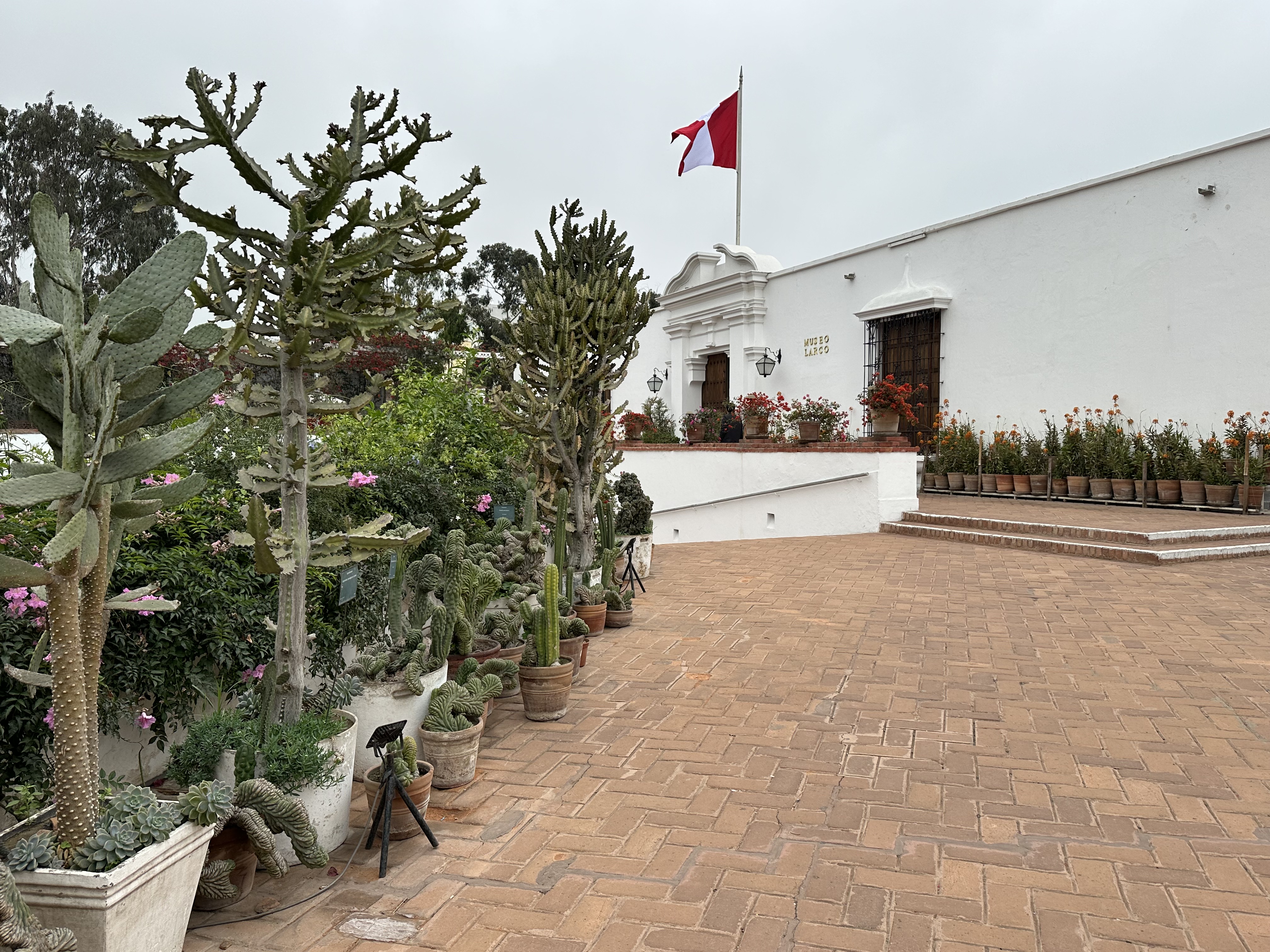
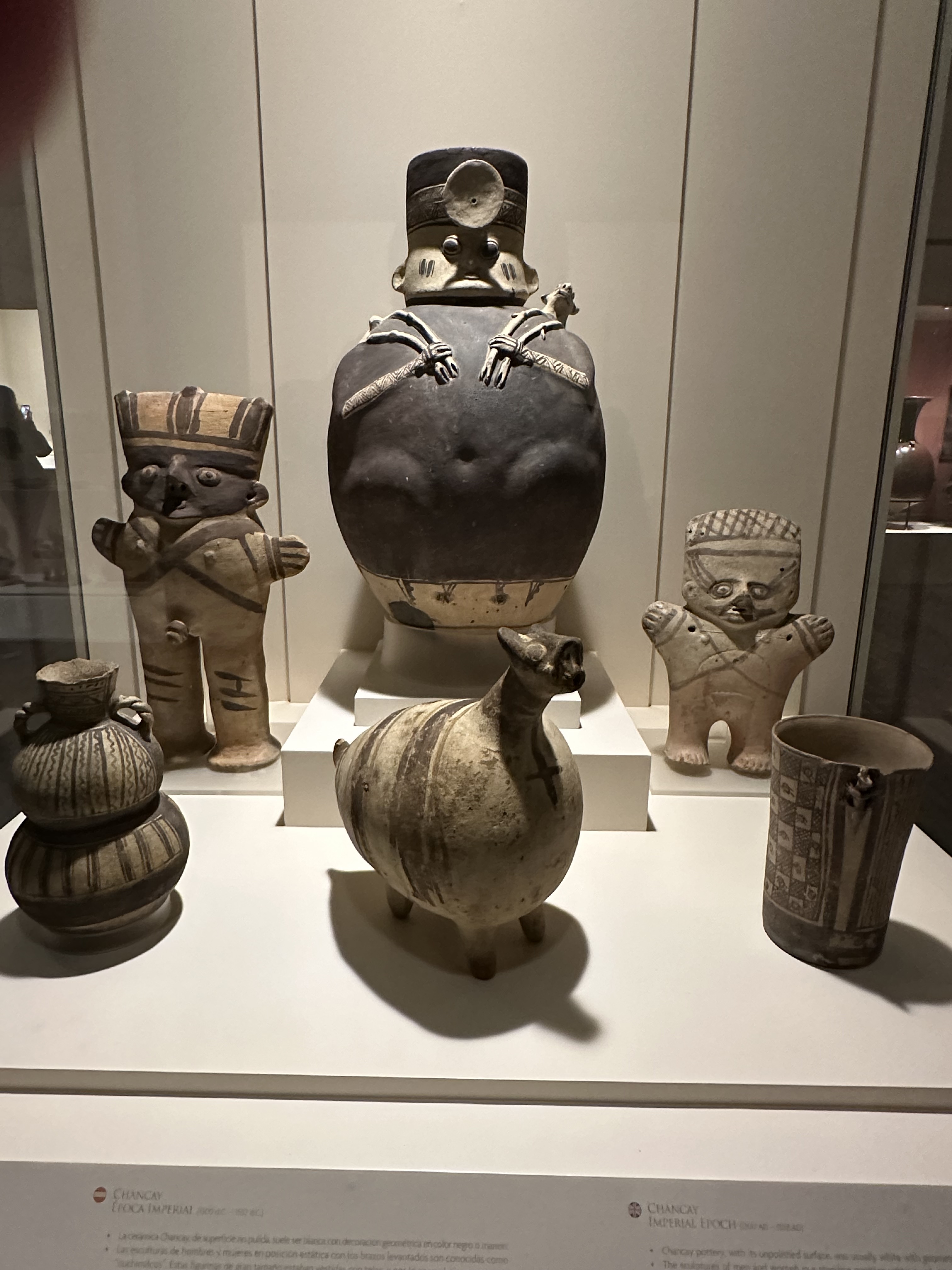
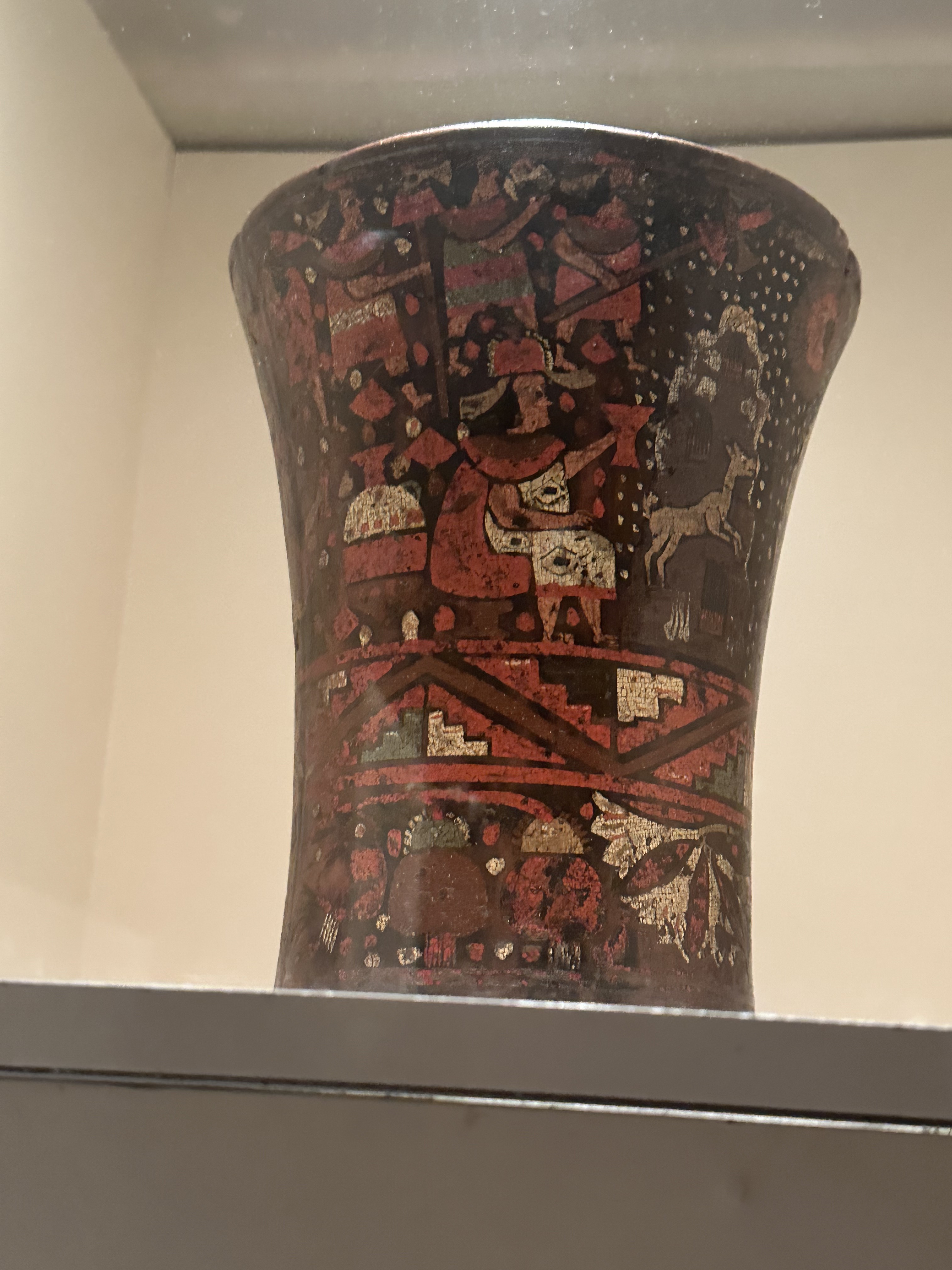
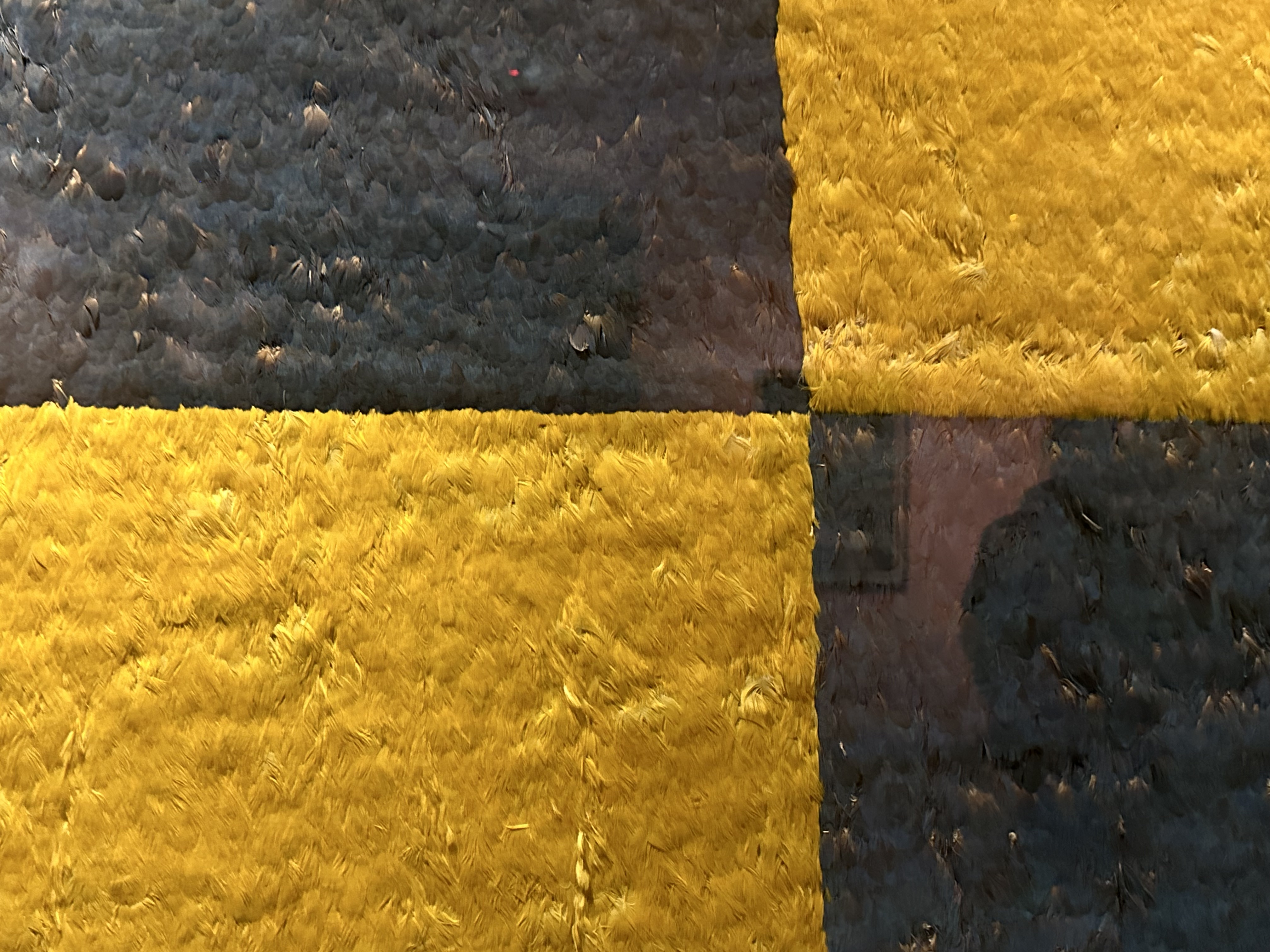
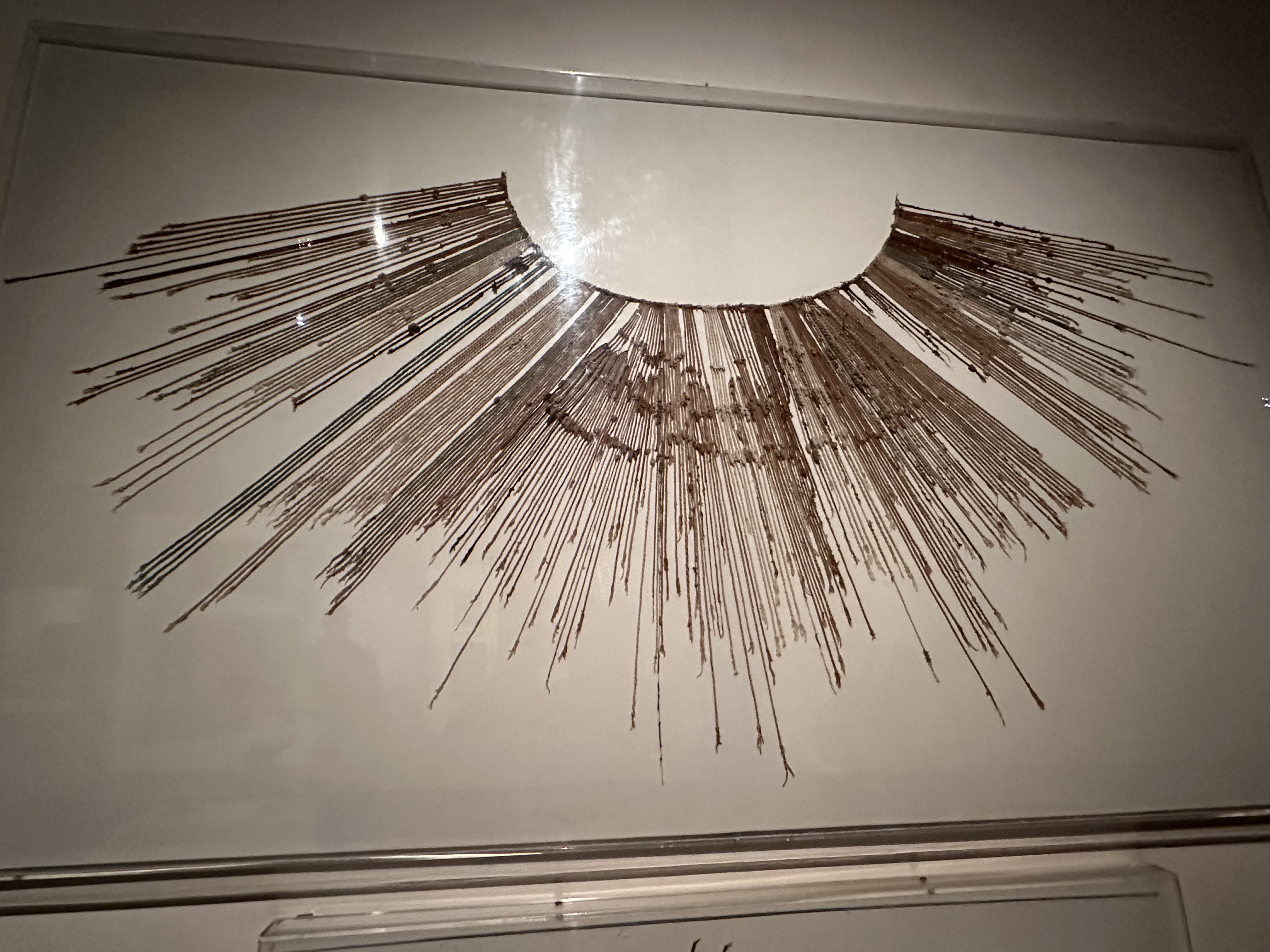
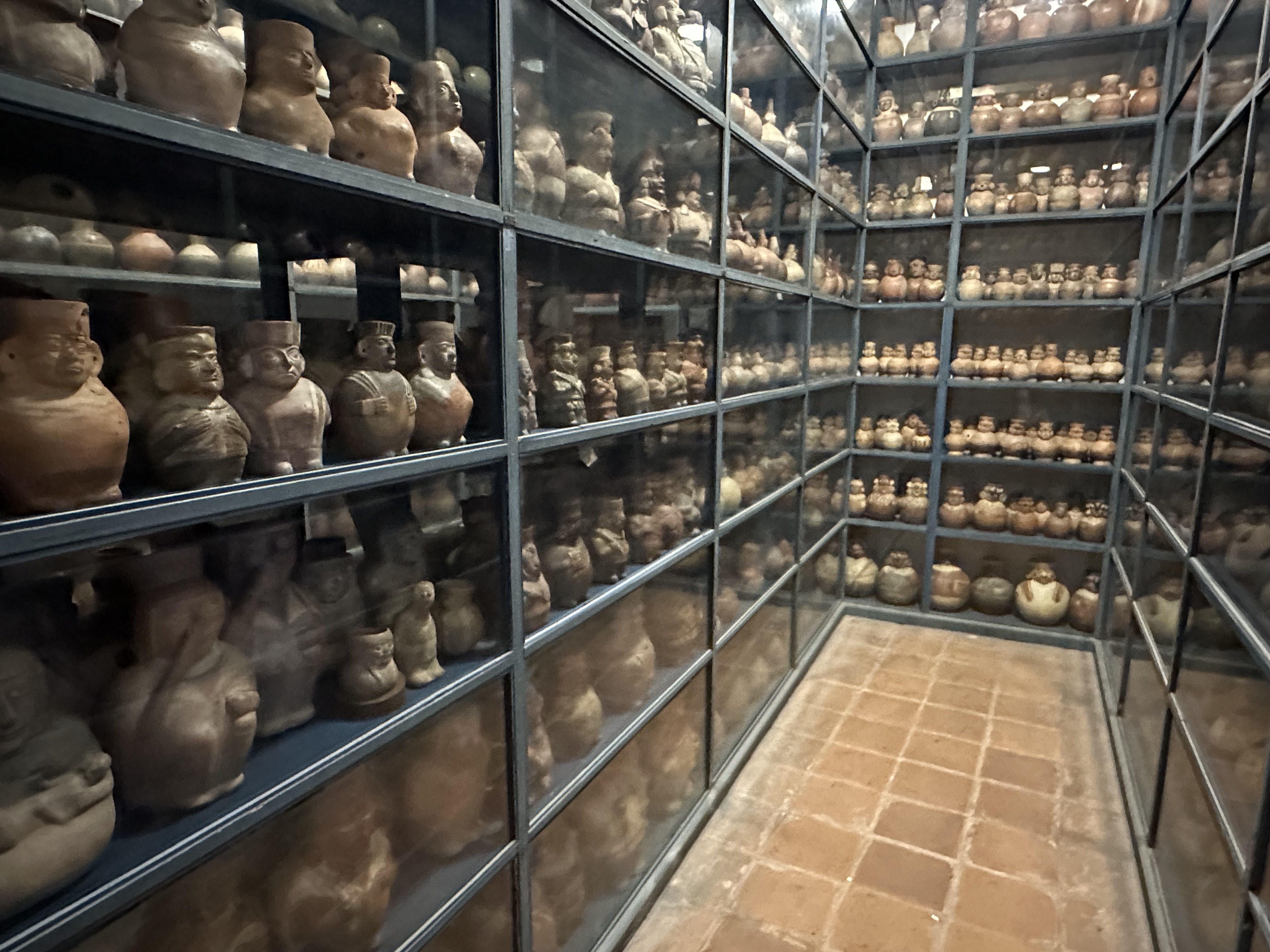
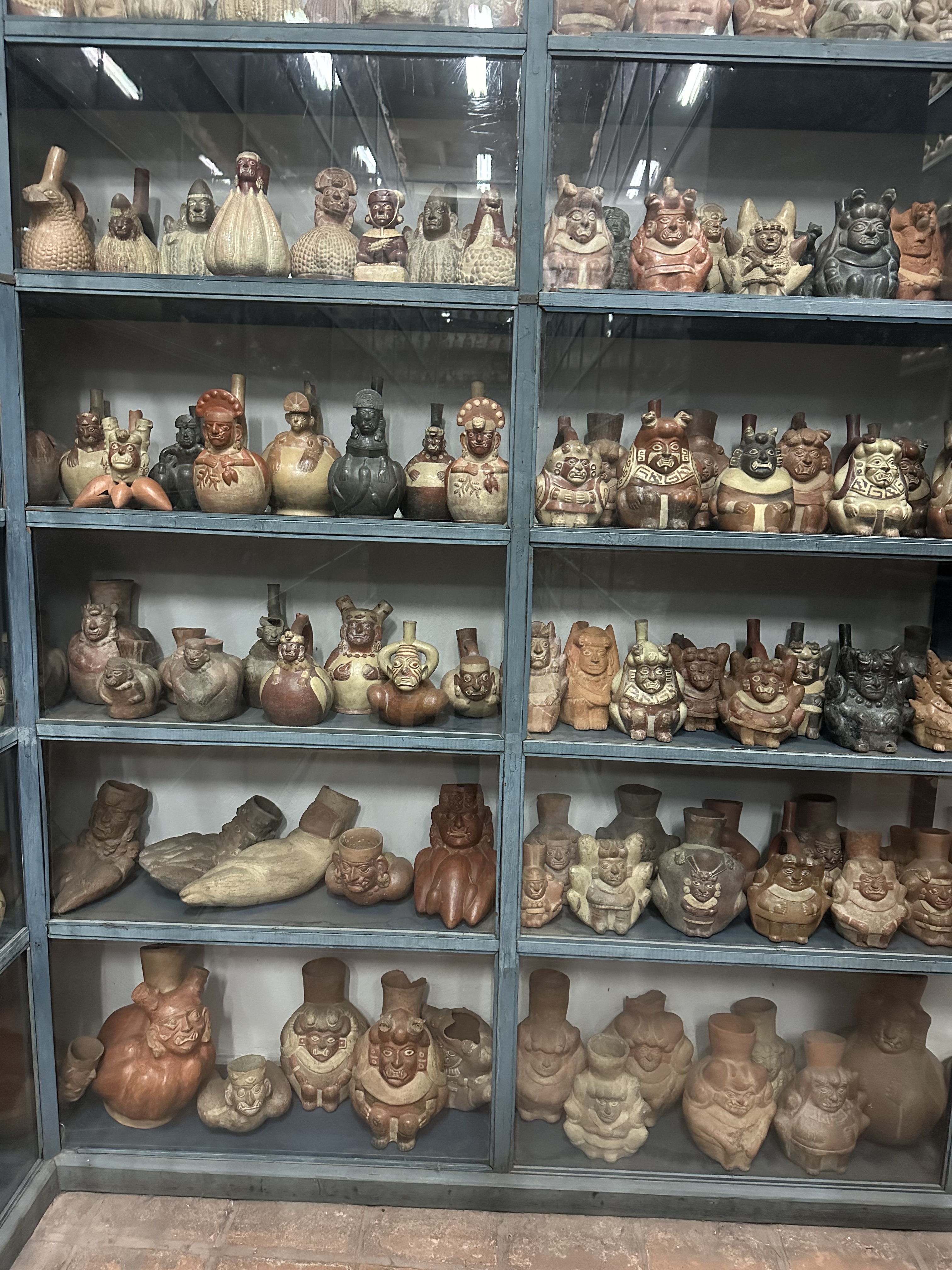
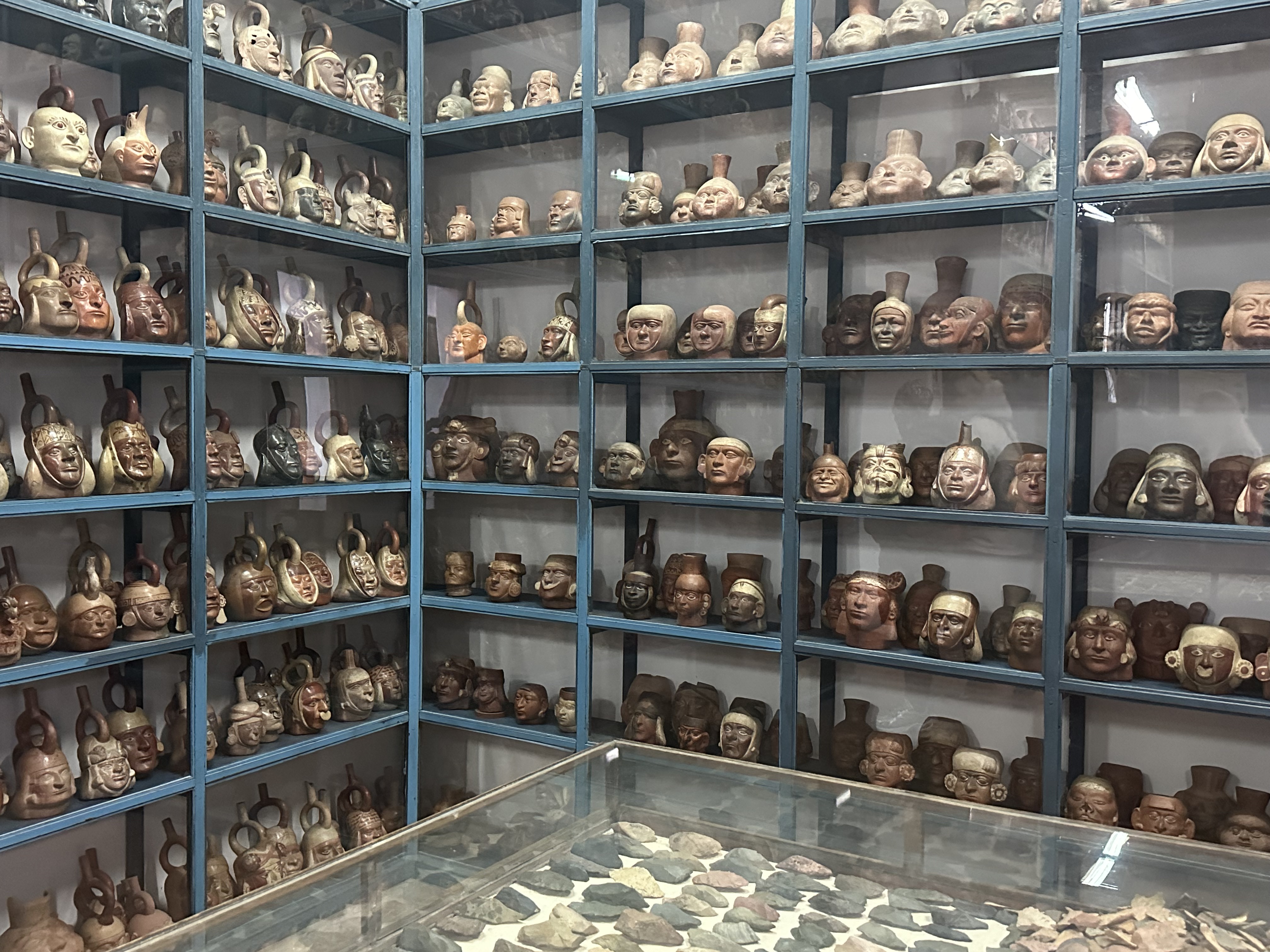
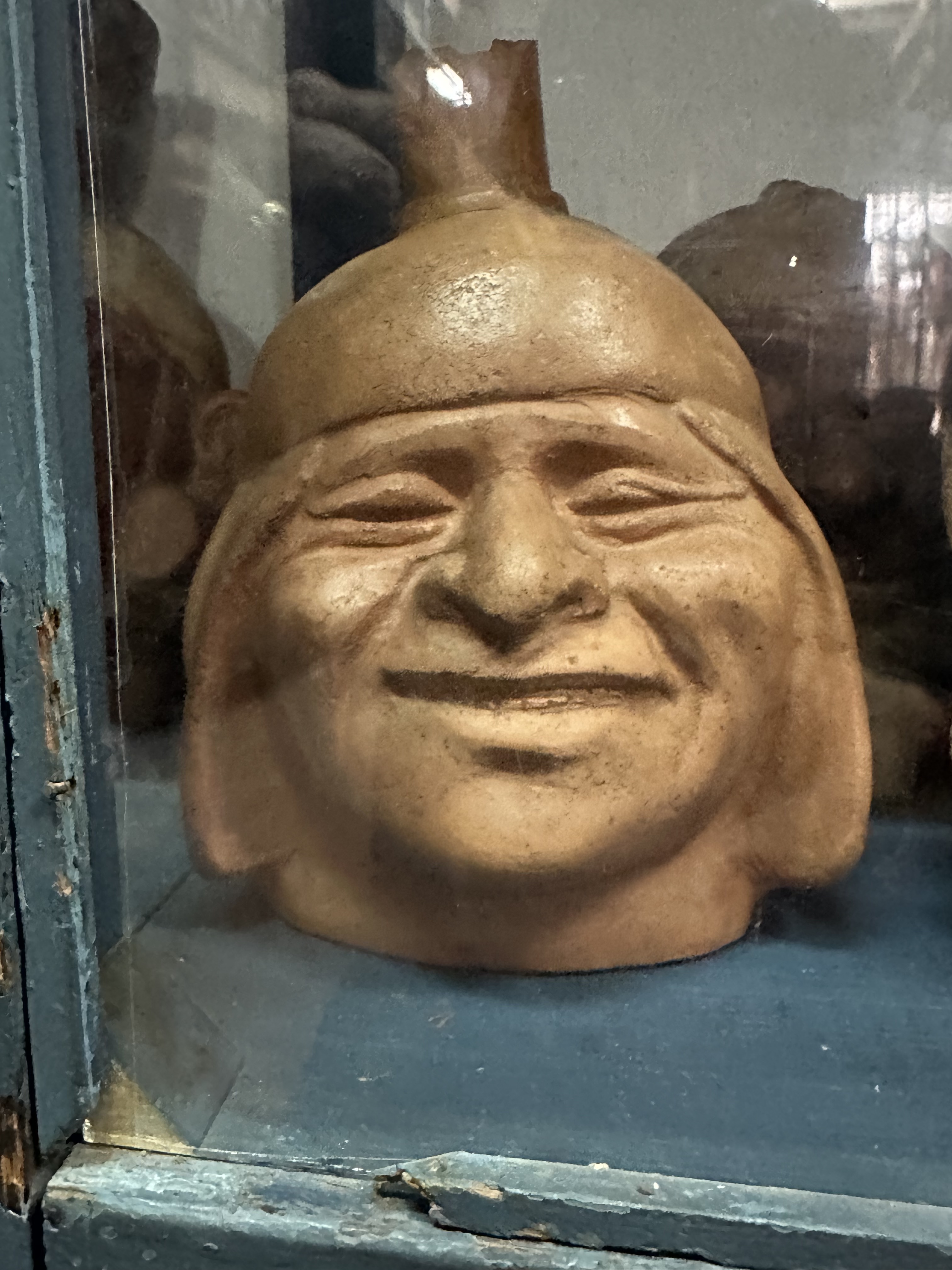
The next morning after breakfast, we went exploring the neighborhood. We soon stumbled by the funny looking tree we learned is a Silk Floss tree, part of the kapok family. Further on we arrived at the store called Dedalo. It is quite an amazing place and we were happy to spend a good amount of time looking around and even buying a few things. After depositing our purchases in our room, we waited for Sophia and Carlos to take us to the Larco Museum, where we spent several hours. Here are some of the artifacts we admired in the halls. Sophia fed us a lot of history which I was, sadly, not able to retain.
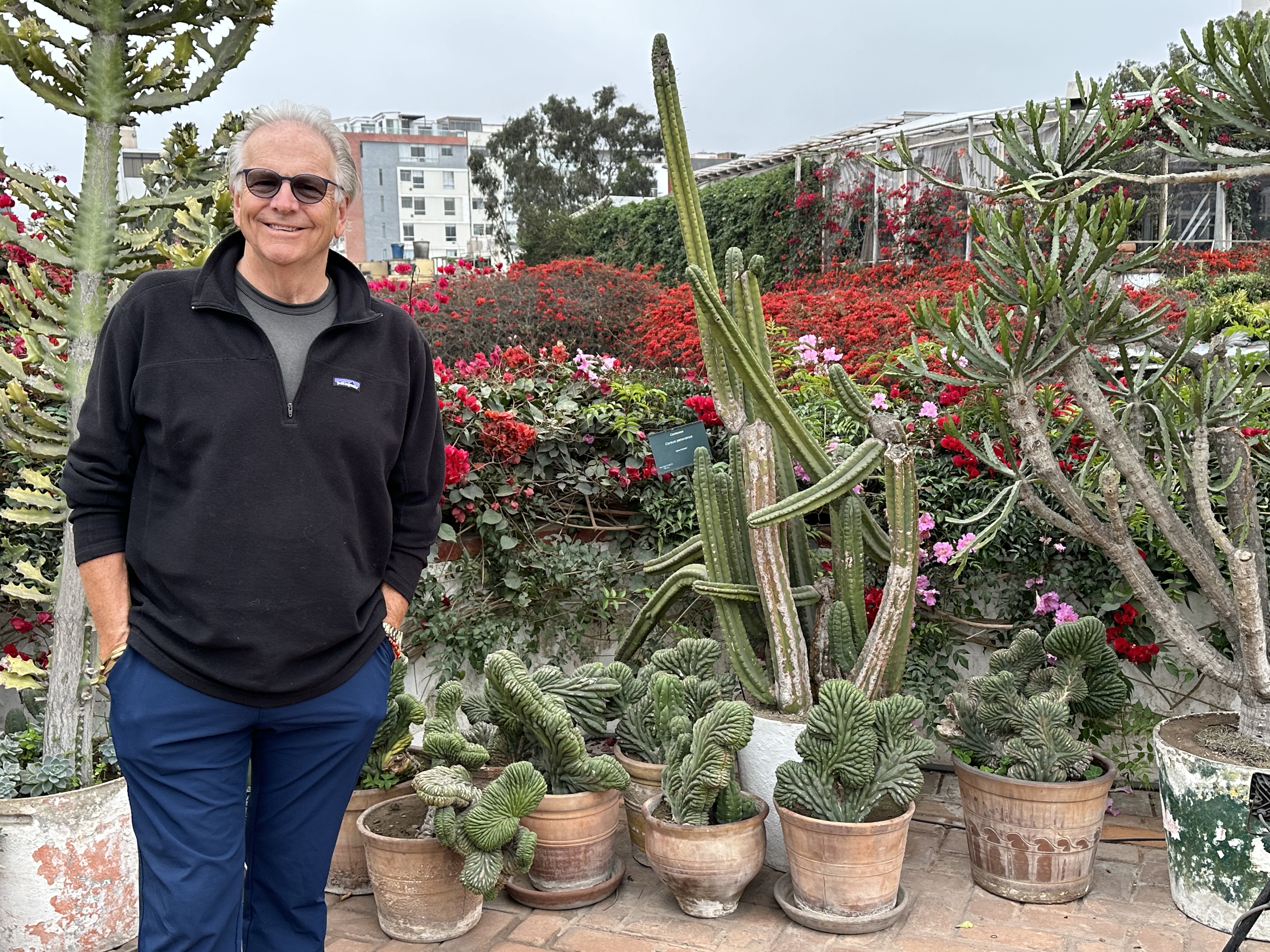
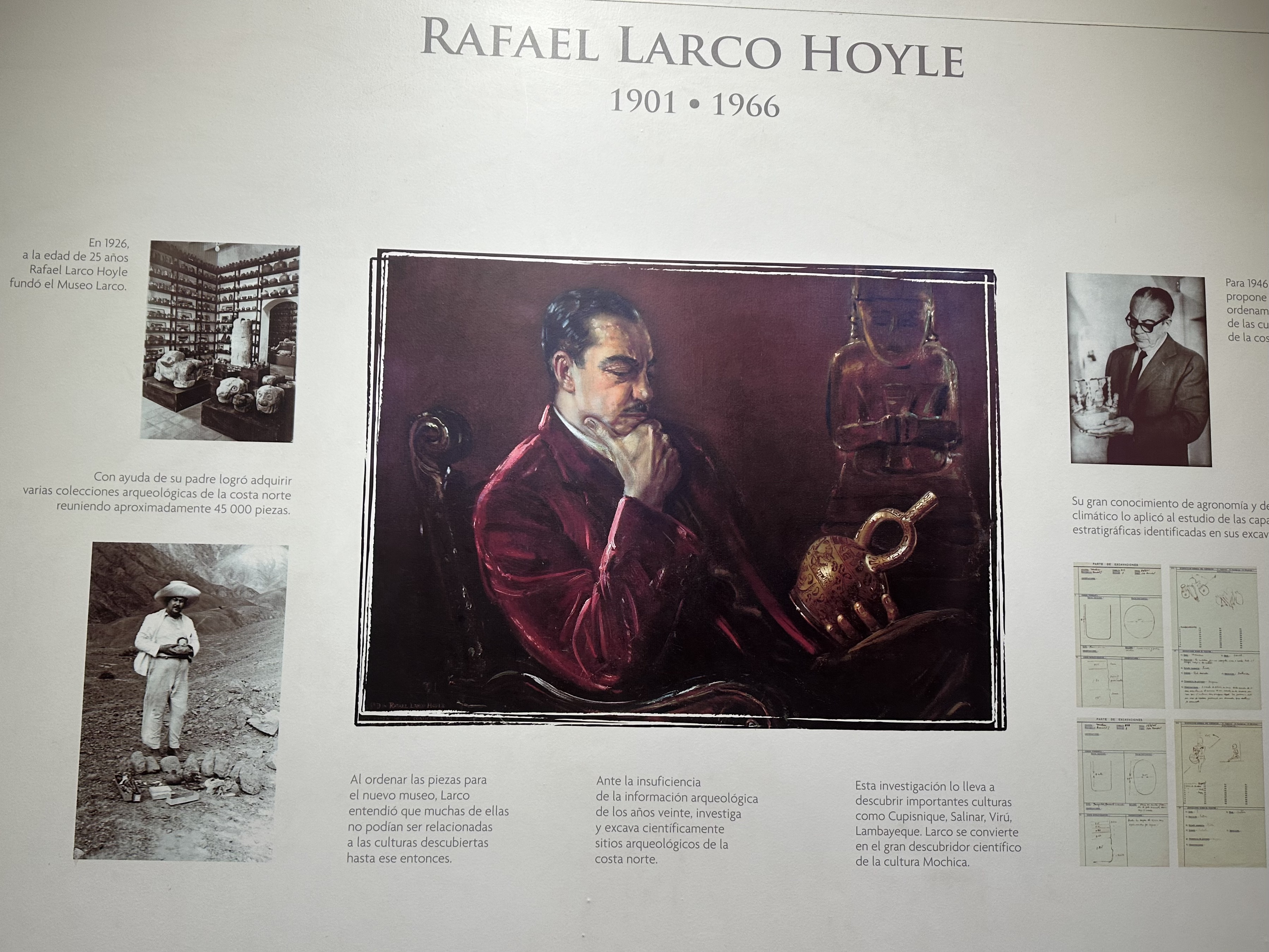
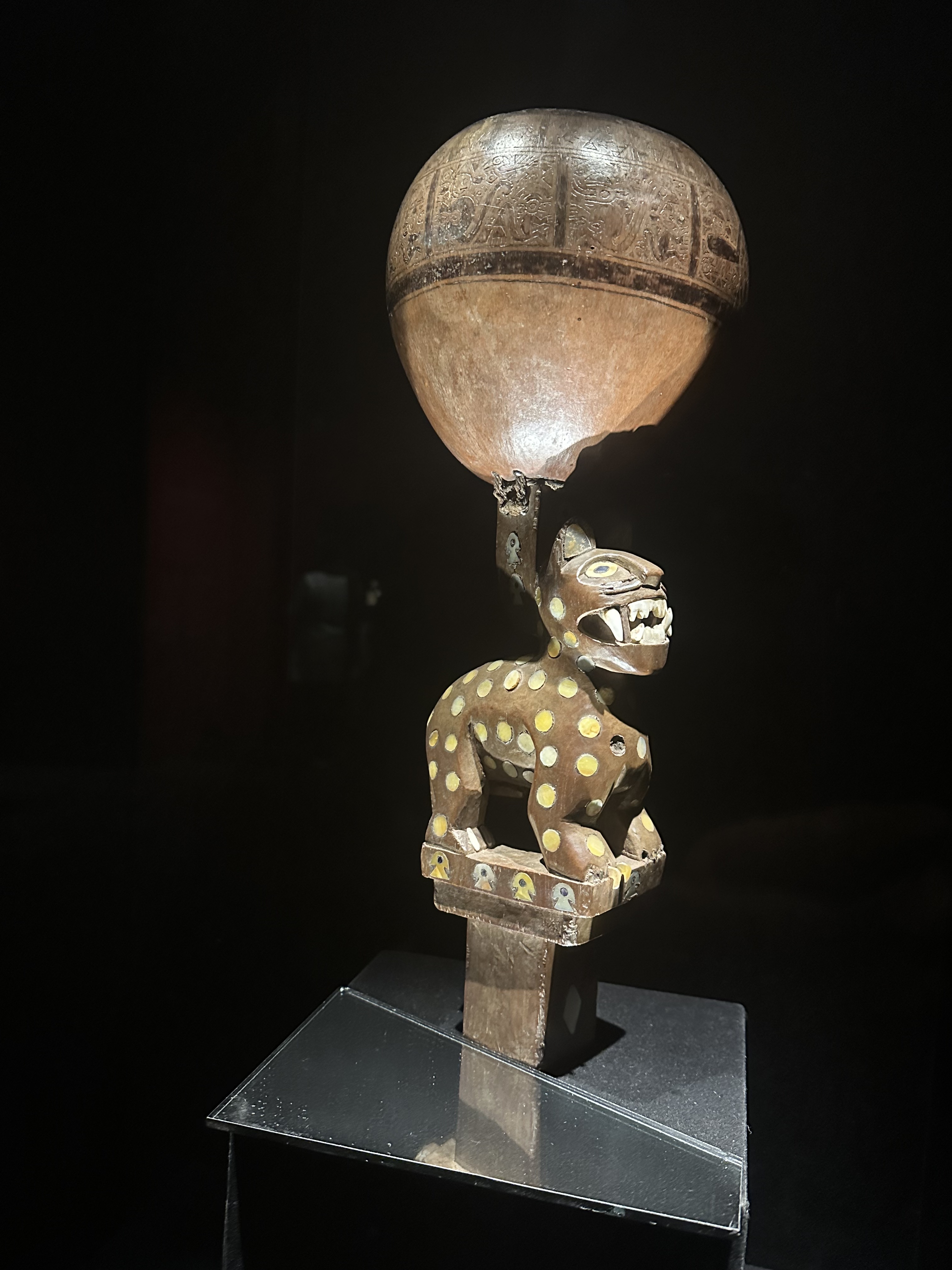
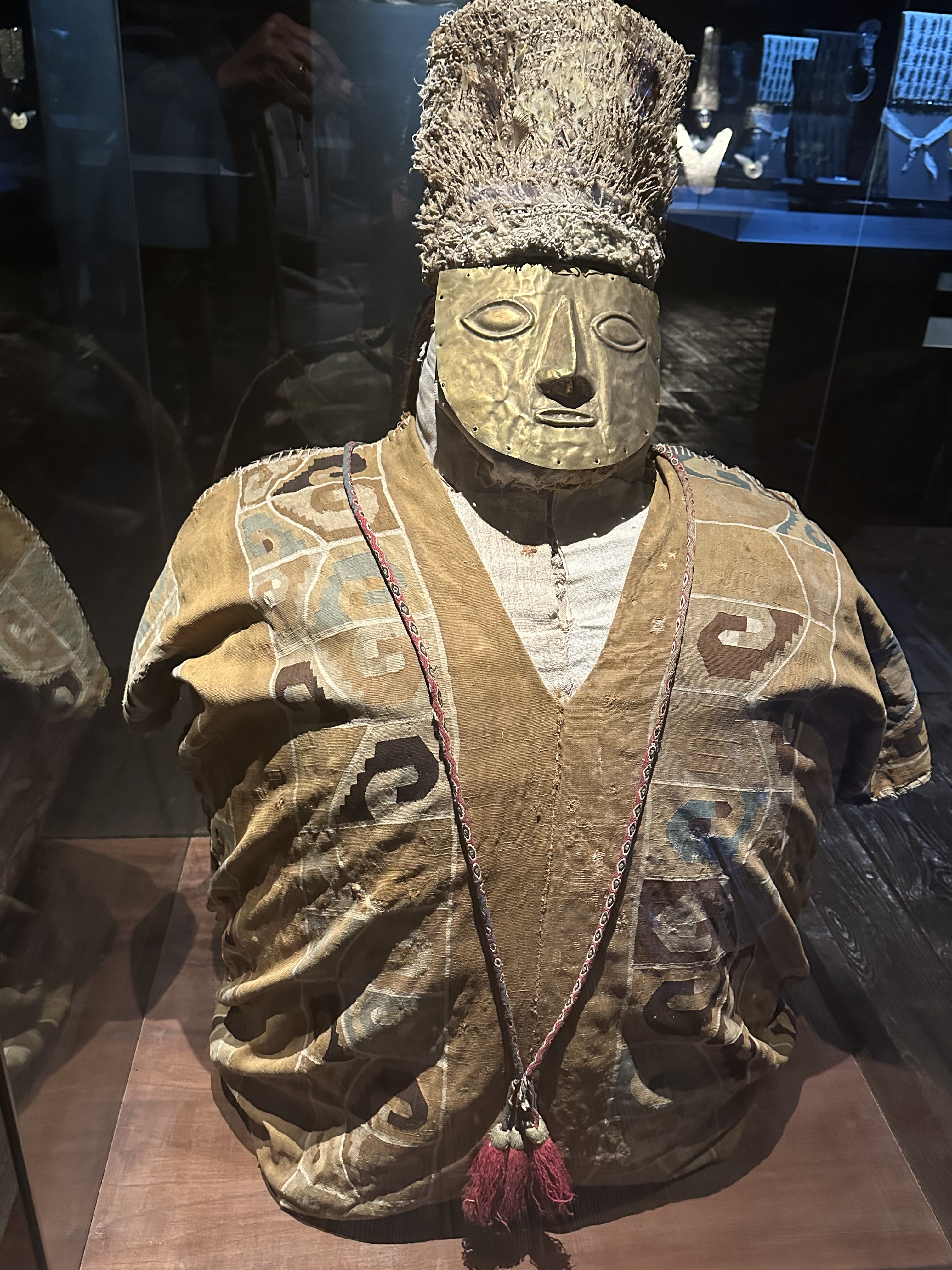
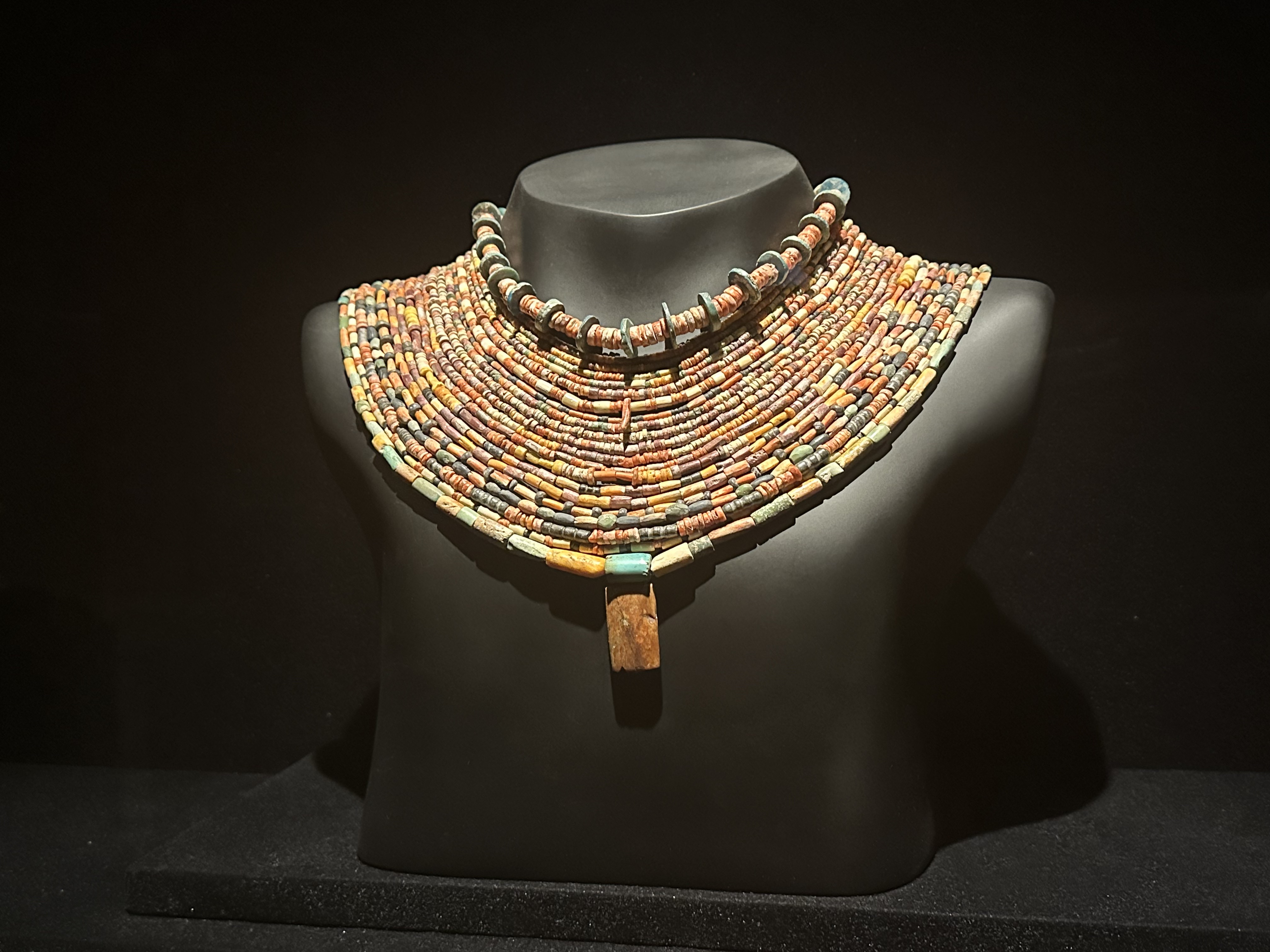
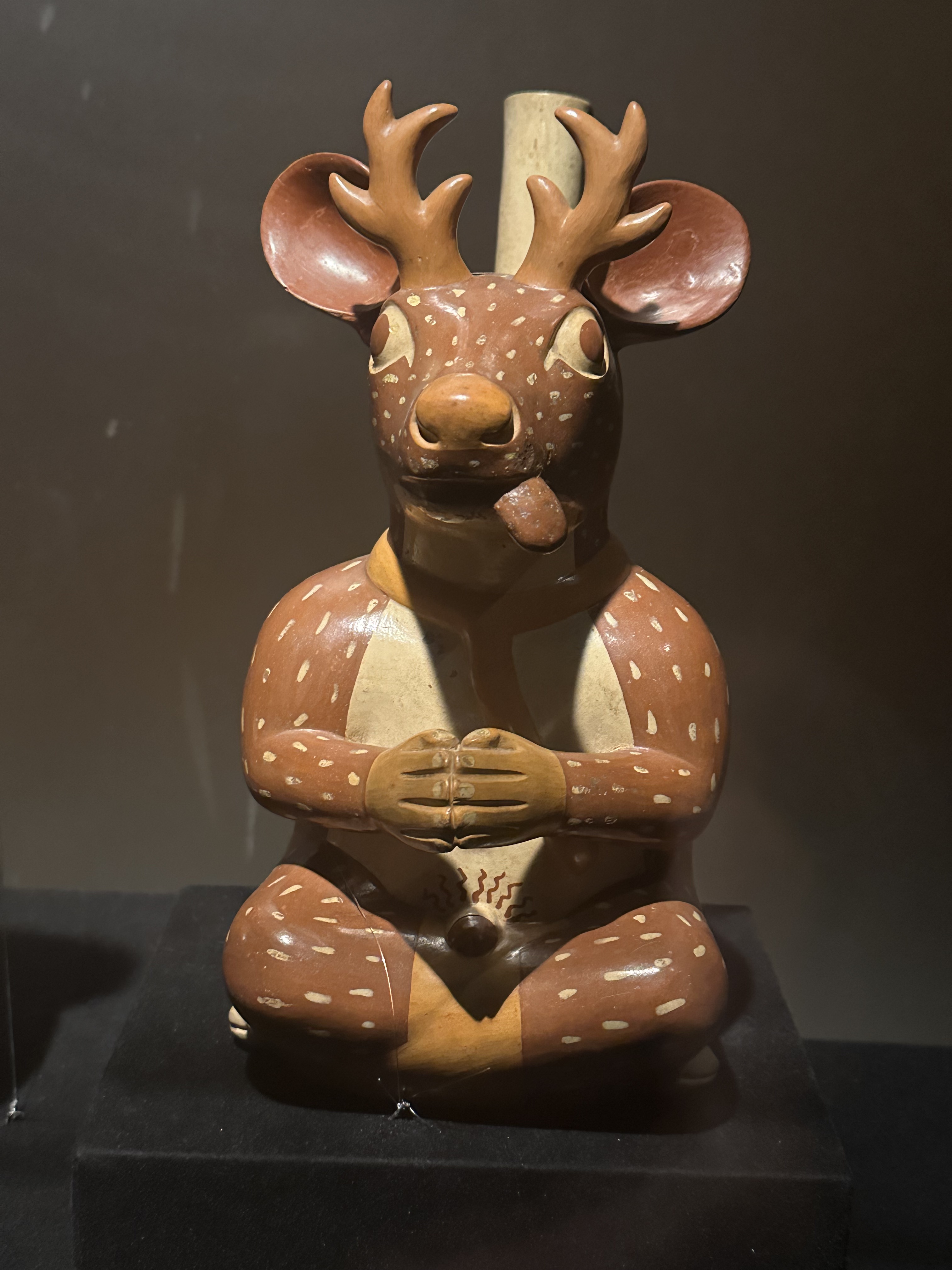
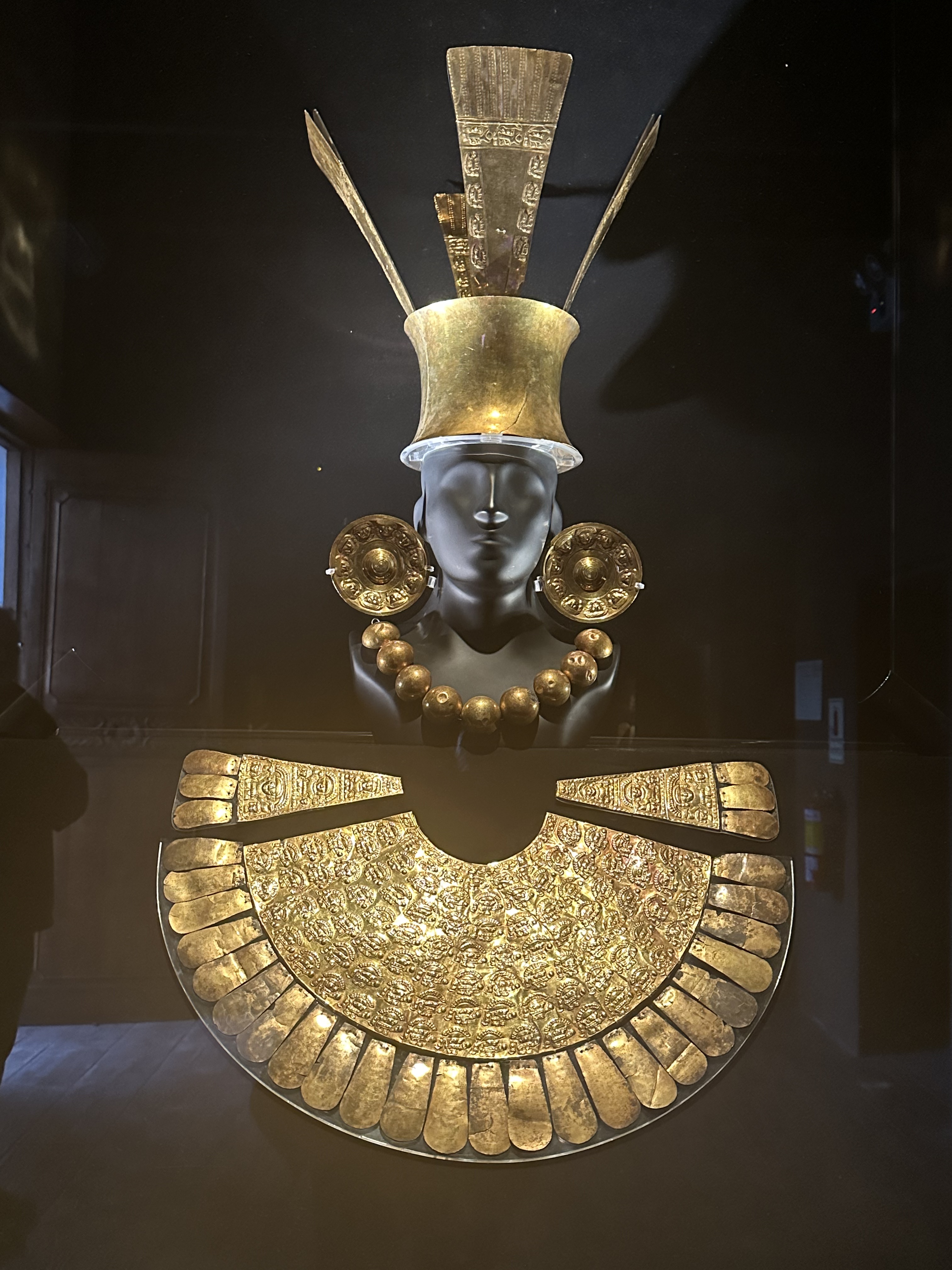
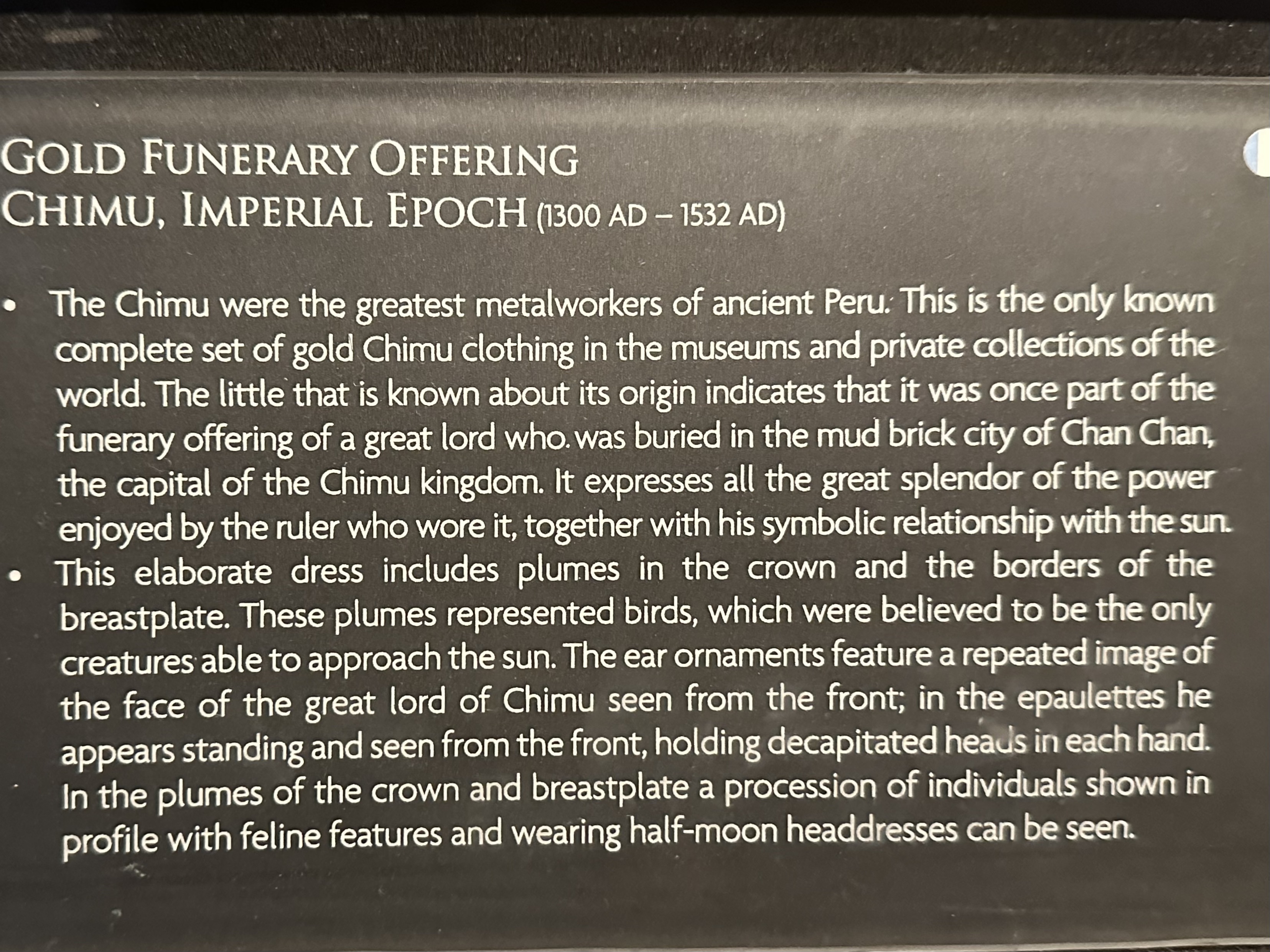
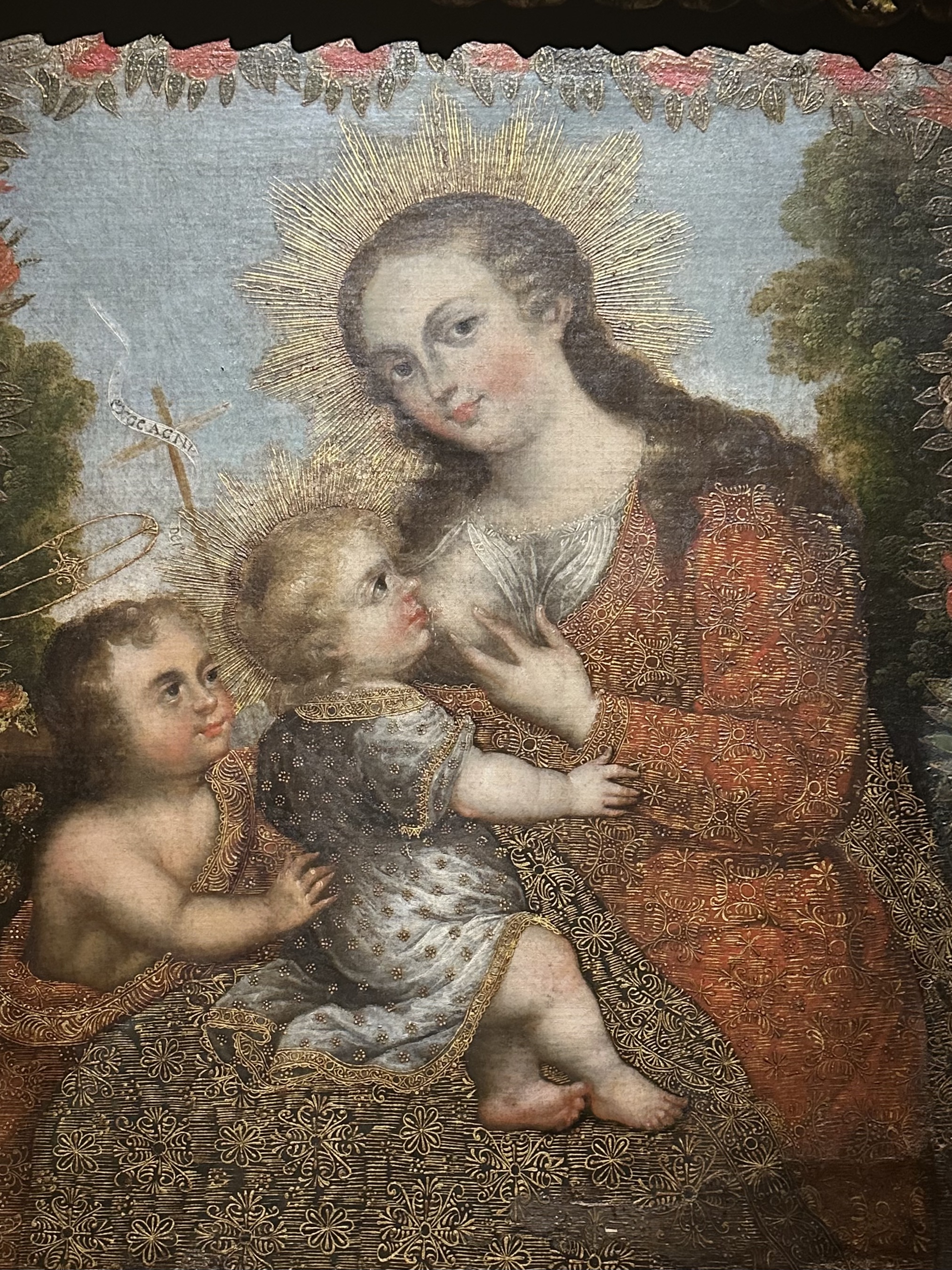
Entrance o Larco Museum in LimaMark admired the cactus collection of the deceased owner’s wifeThe deceased owner who collected most of the art in the museumAn unusual vase made out of glass rather than clayA blanket made with yellow and blue Mccaw feathers. Quipus were the main system employed by the Incas to record information. The knotted cords were used to record countable information. The colors, knots and the distances between the knots enabled those who used the quipus to identify the type of object or the characteristics of the population.During the colonial period, Andean artists became engaged in reinterpreting the culture of Spain. They assimilated European techniques, adapting them to indigenous resources and practices. Artistic European themes were blended with ancestral themes. Under a Christian guise, the myths and rites of the Andes were perpetuated. Expressions of syncretism in Peruvian culture, are found in popular festivities and religious celebrations.CEREMONIAL CUP (800 AD – 1300 AD) Cup made from a pyrography decorated gourd which forms the container and a carved wood feline which forms the handle. The feline is inlaid with seashells and lapis lazuli and one of the feet has natural claws. It is an ancient art practiced to this day.MUMMY In ancient Peru, the preparation of the body was an important stage in the process leading to the deceased’s journey into the afterlife and their transformation into an ancestor or supernatural being. This is a funerary bundle of a 4-5 years old infant who lived and died during the 8th century ADClay beads form this funerary necklace. Symbol of the Moche nobility ceremonial deer hunt (1-800AD)
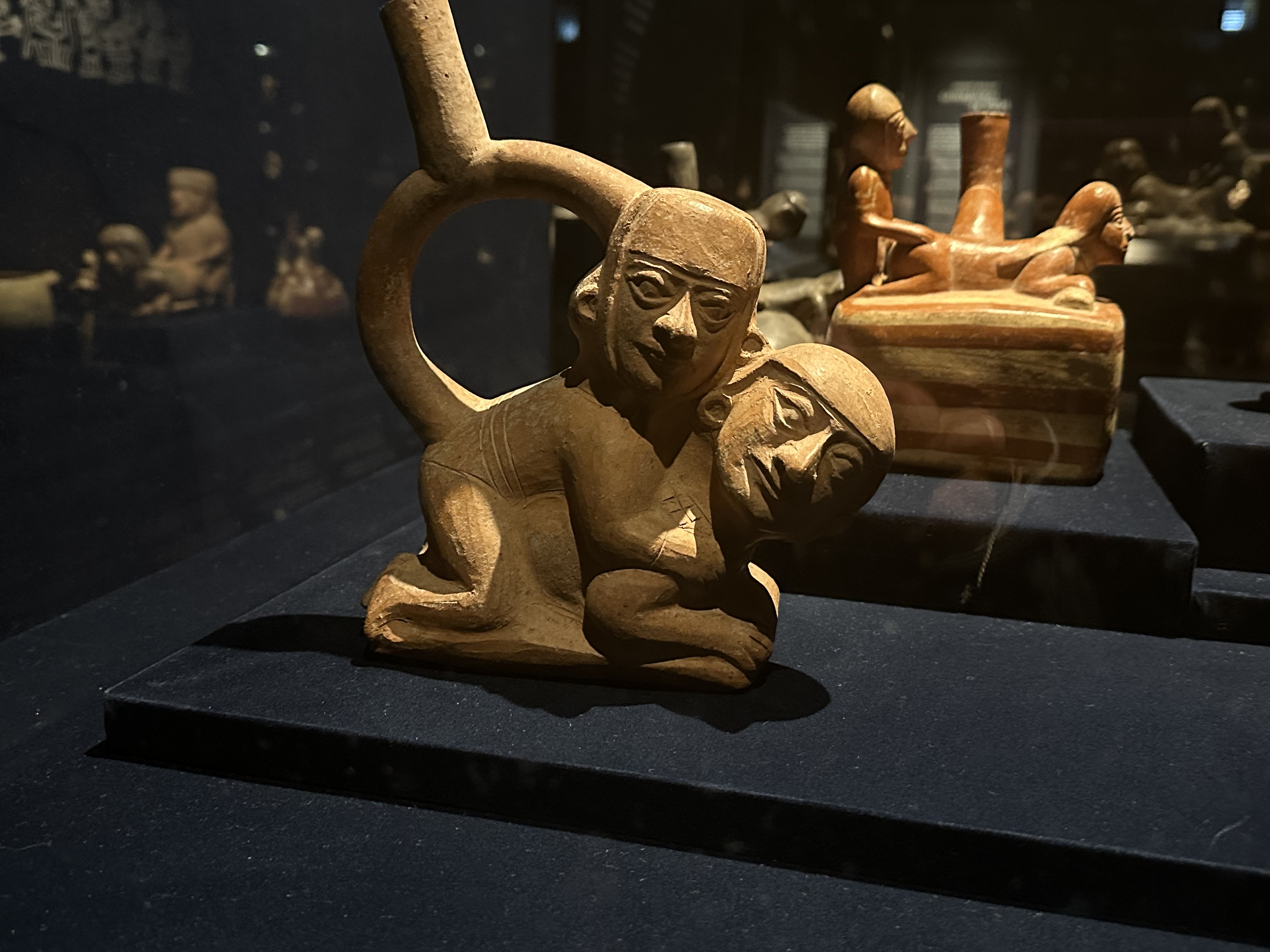
Other items I was impressed by included rooms full of clay statues (over 45,000) down through the ages and found in the sides of many graves, which explains why they are still intact. Also there are a few sexual themes I included here.
Enough for museums. It is the only one we will see in Lima on this trip. Thankfully, says Mark. When we left the museum we stayed in the building to have lunch. Mark had tenderloin salad and I had noodles in sweet pumpkin ricotta cheese on delicate butter sage sauce. Yes it was as good as it sounds. I wanted more.
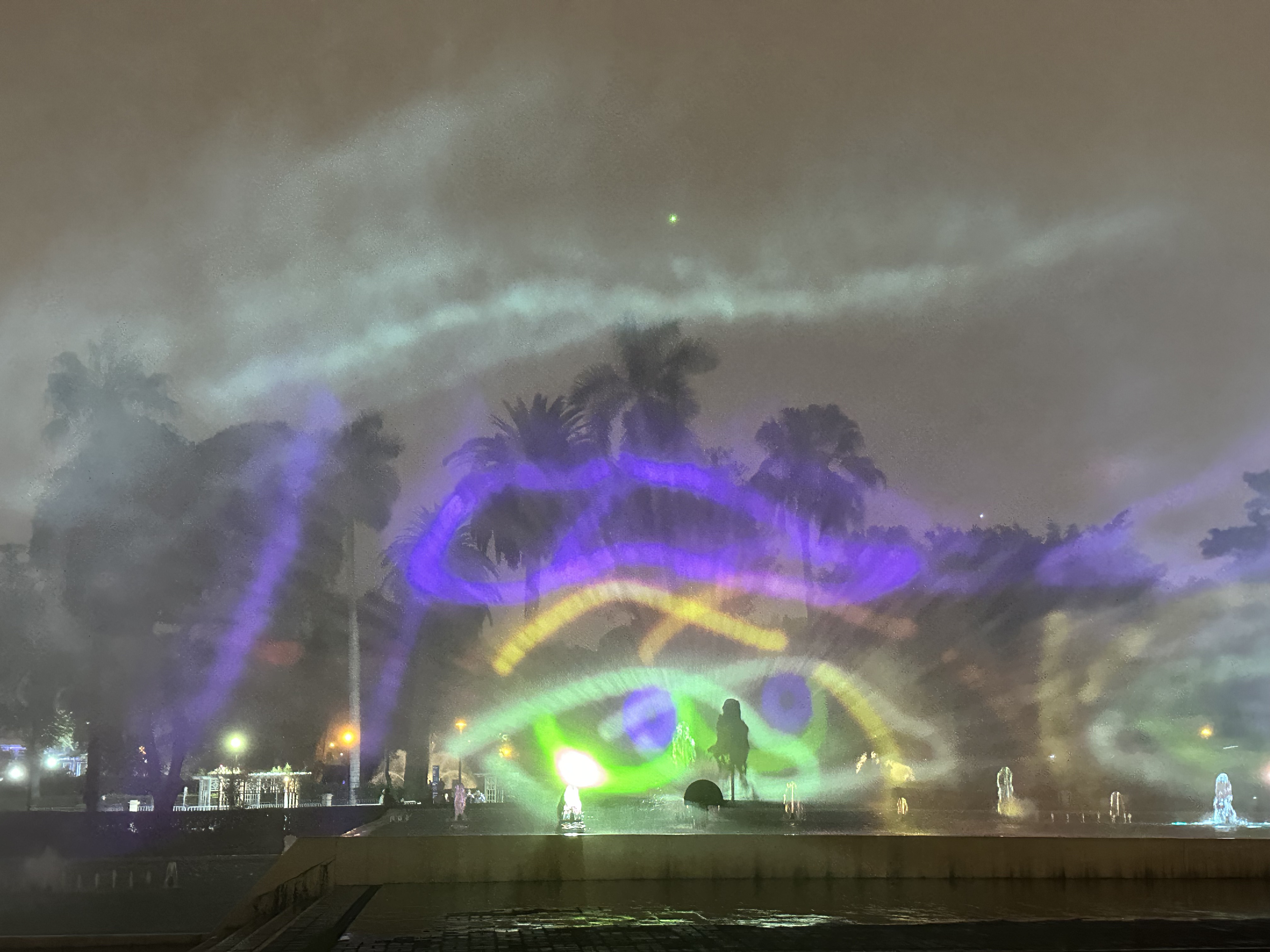
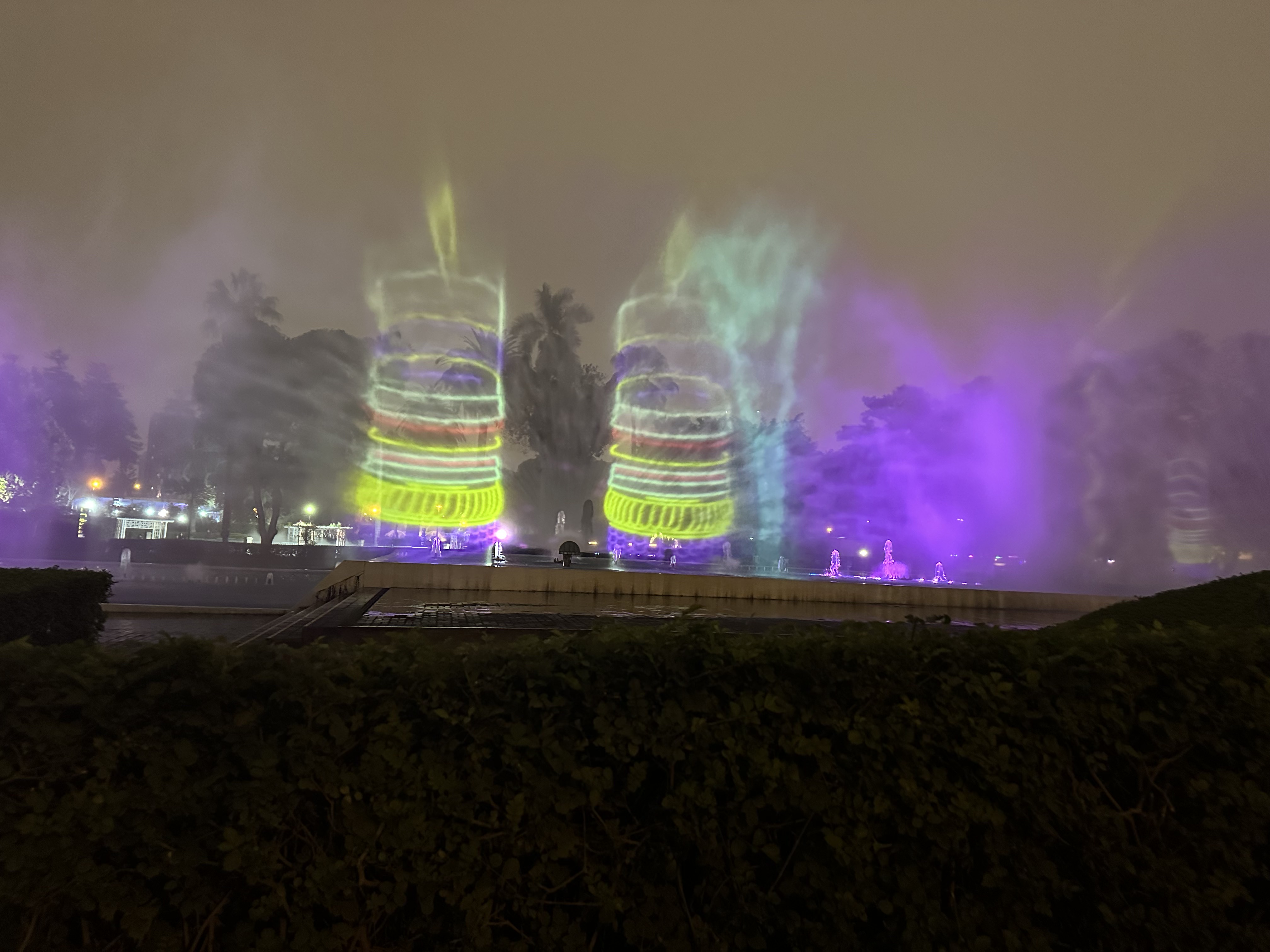
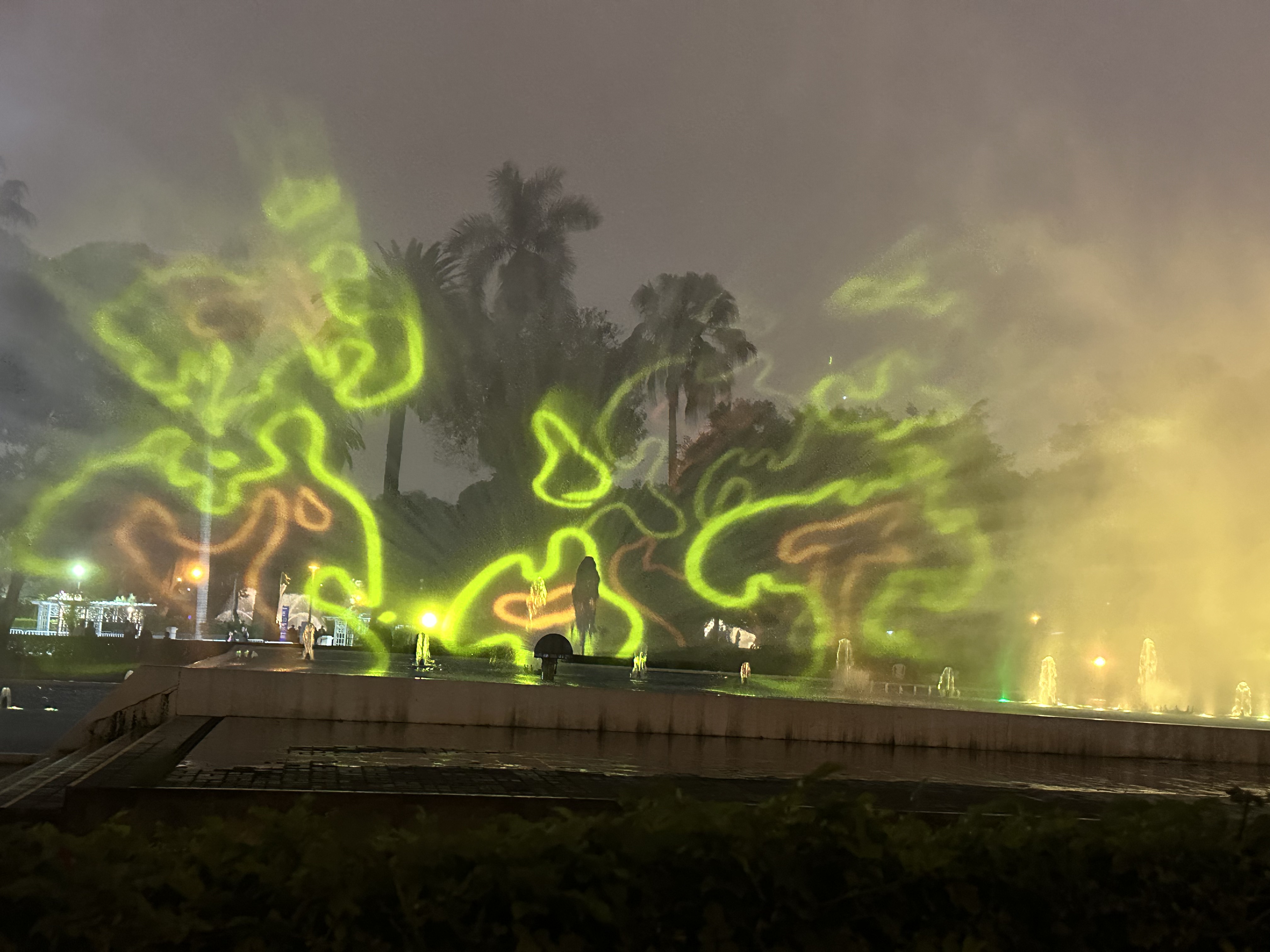
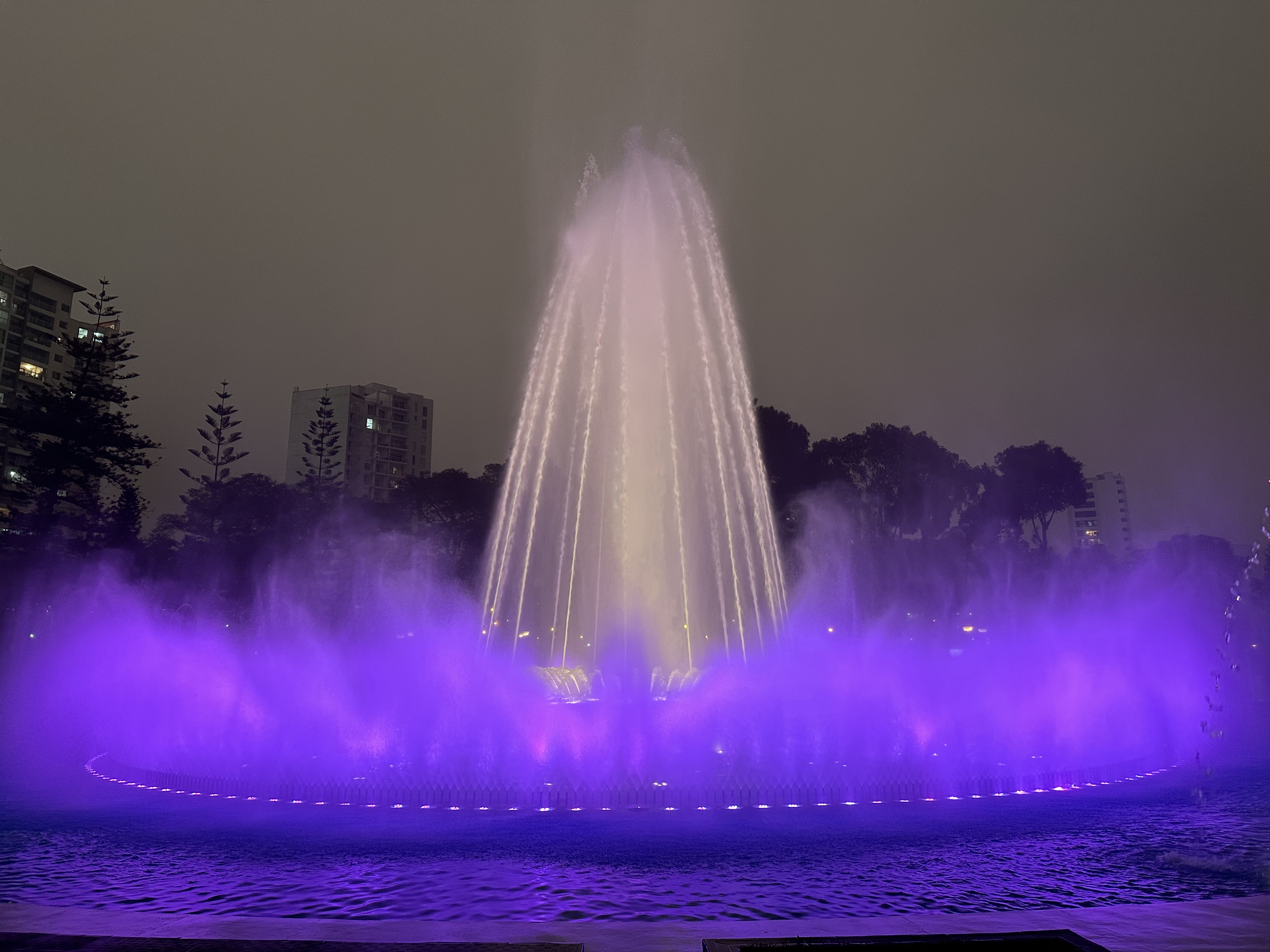
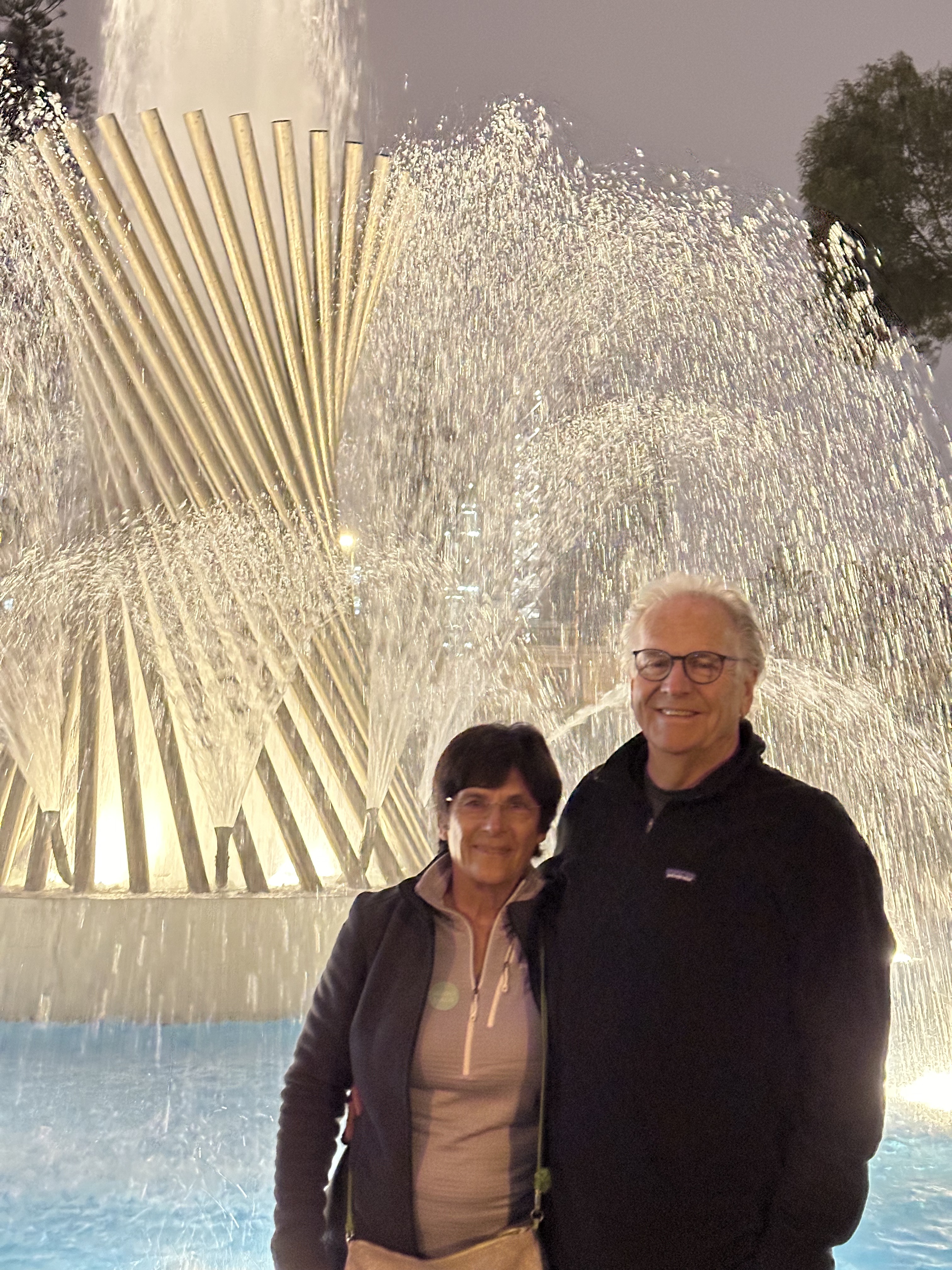
Then we went to a water park to see the Magical Water Circuit. It was pleasant, but I was disappointed as it was really for families with children on a Sunday outing and I was thinking more of a Bellagio-like event. We stayed to the end of the”show” but both Mark and Sylvia were ready to go almost the minute we arrived.
Dinner was at our hotel. Mark experimented with Guinea Pig and liked the dish he got, which had only a small amount of pig in it. I thought I ordered duck, but soon realized that it tasted more like fish than duck and turned out to be paiche, a fish I have had a few times know. Fortunately, it has been excellent every time. Then upstairs to bed for our last full night in Peru.
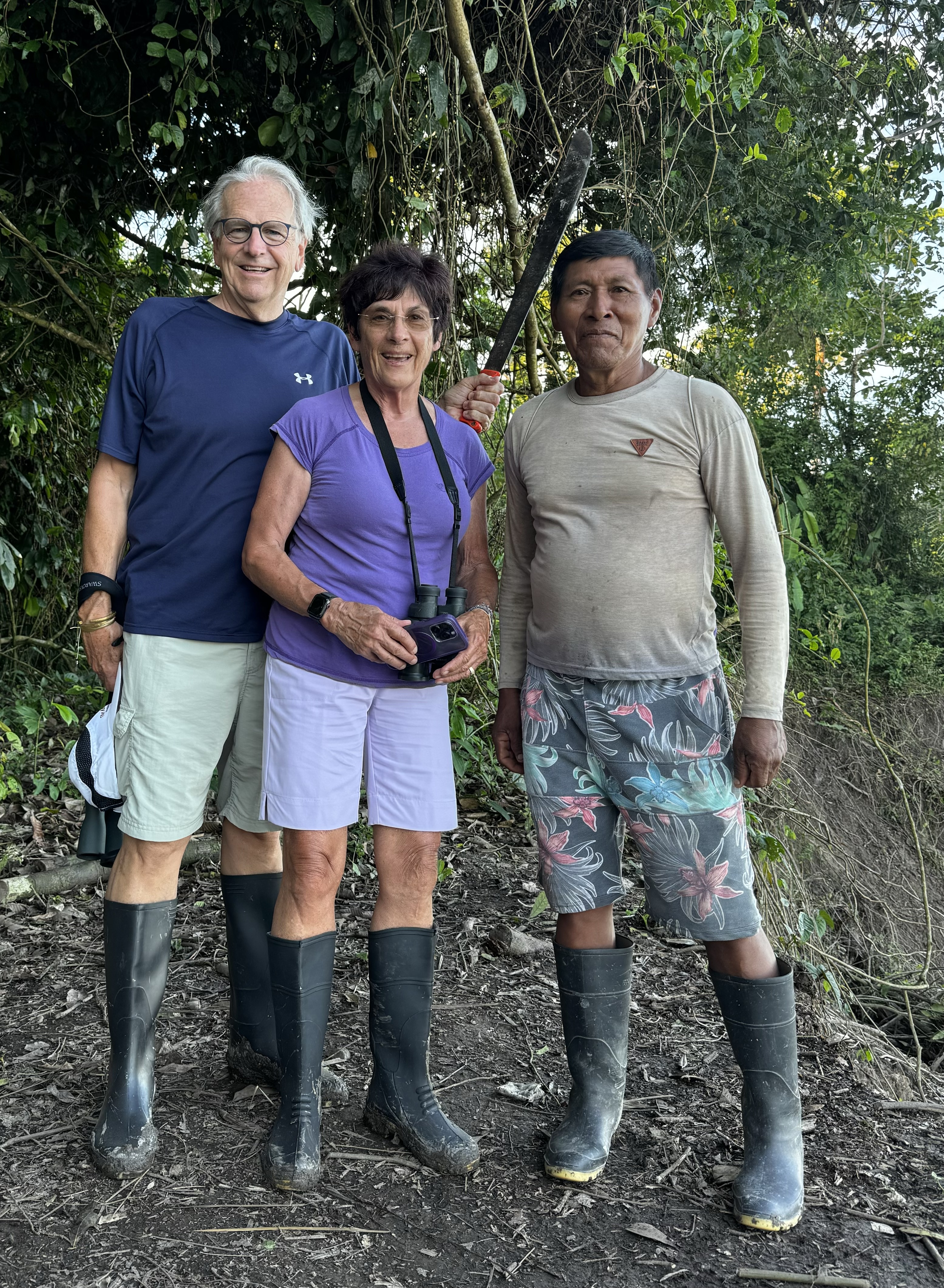
Yesterday afternoon at about 4pm, the whole group went for a jungle walk near where the boat was parked. We were required to wear knee high rubber boots, which were provided. Long sleeved shirts and long pants were strongly suggested as well as mosquito repellent. Mark and I did not comply with the clothing, although we did use the rubber boots. We lucked out. There were no bugs and the forest was not hot.
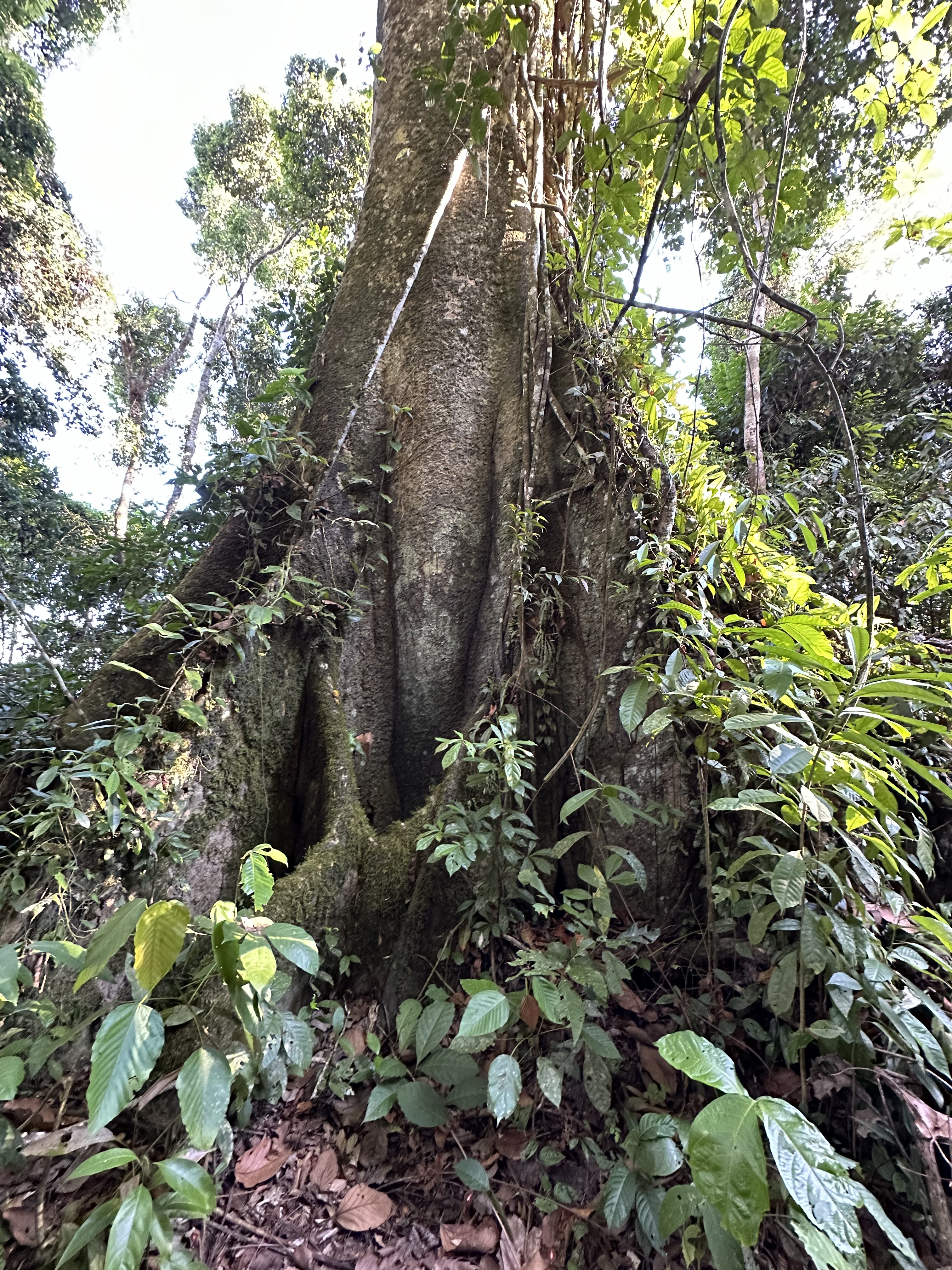
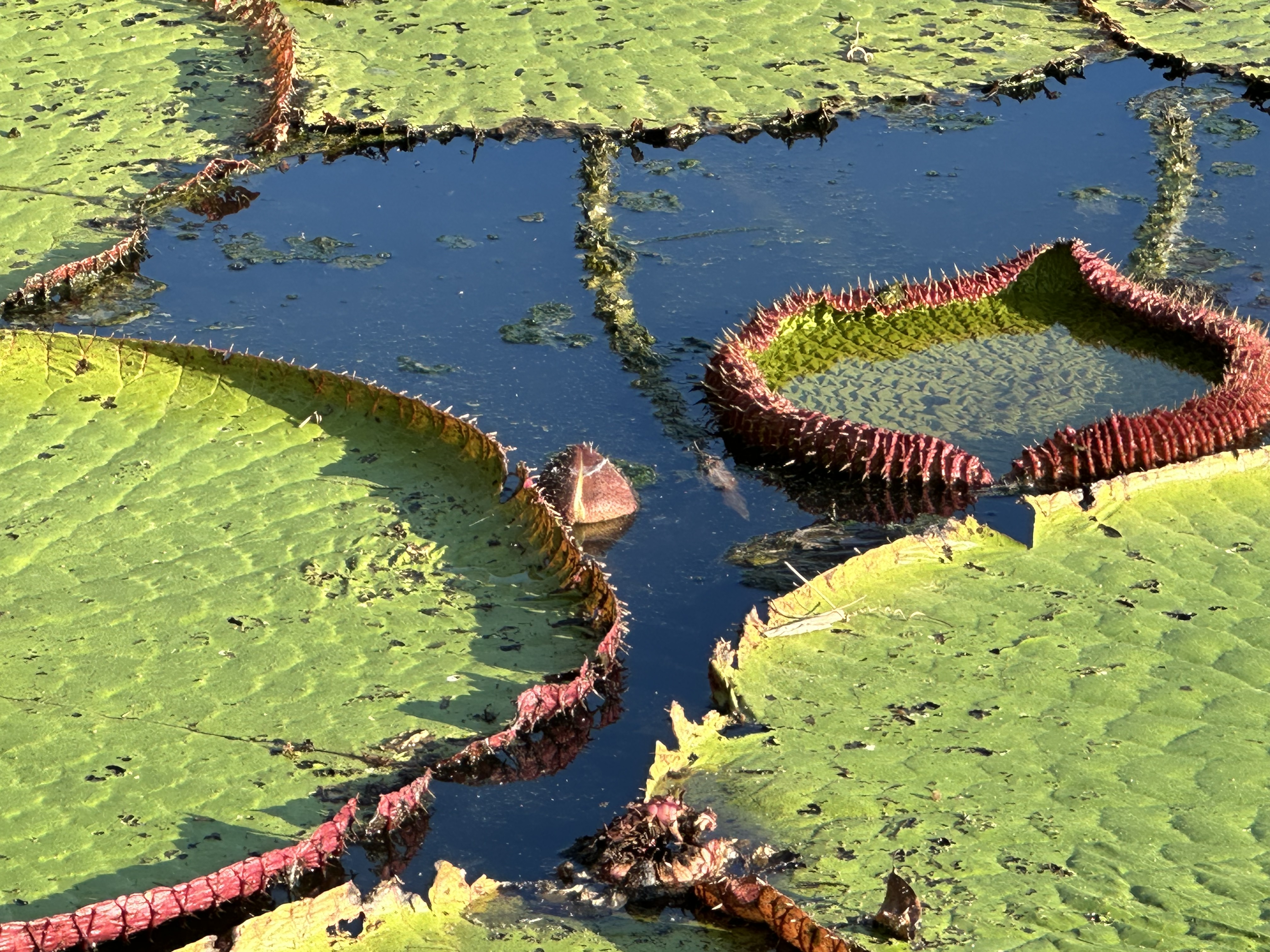
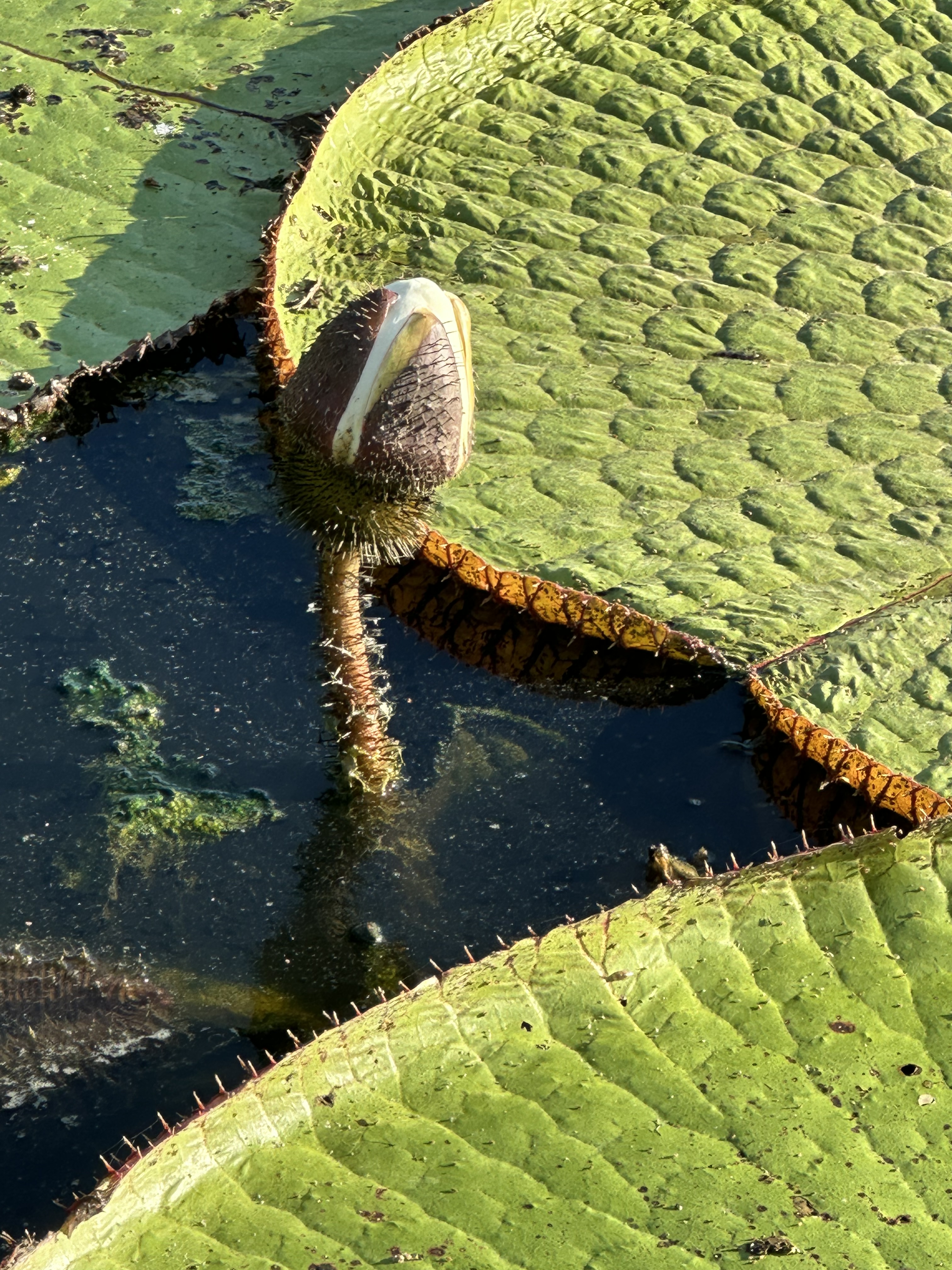
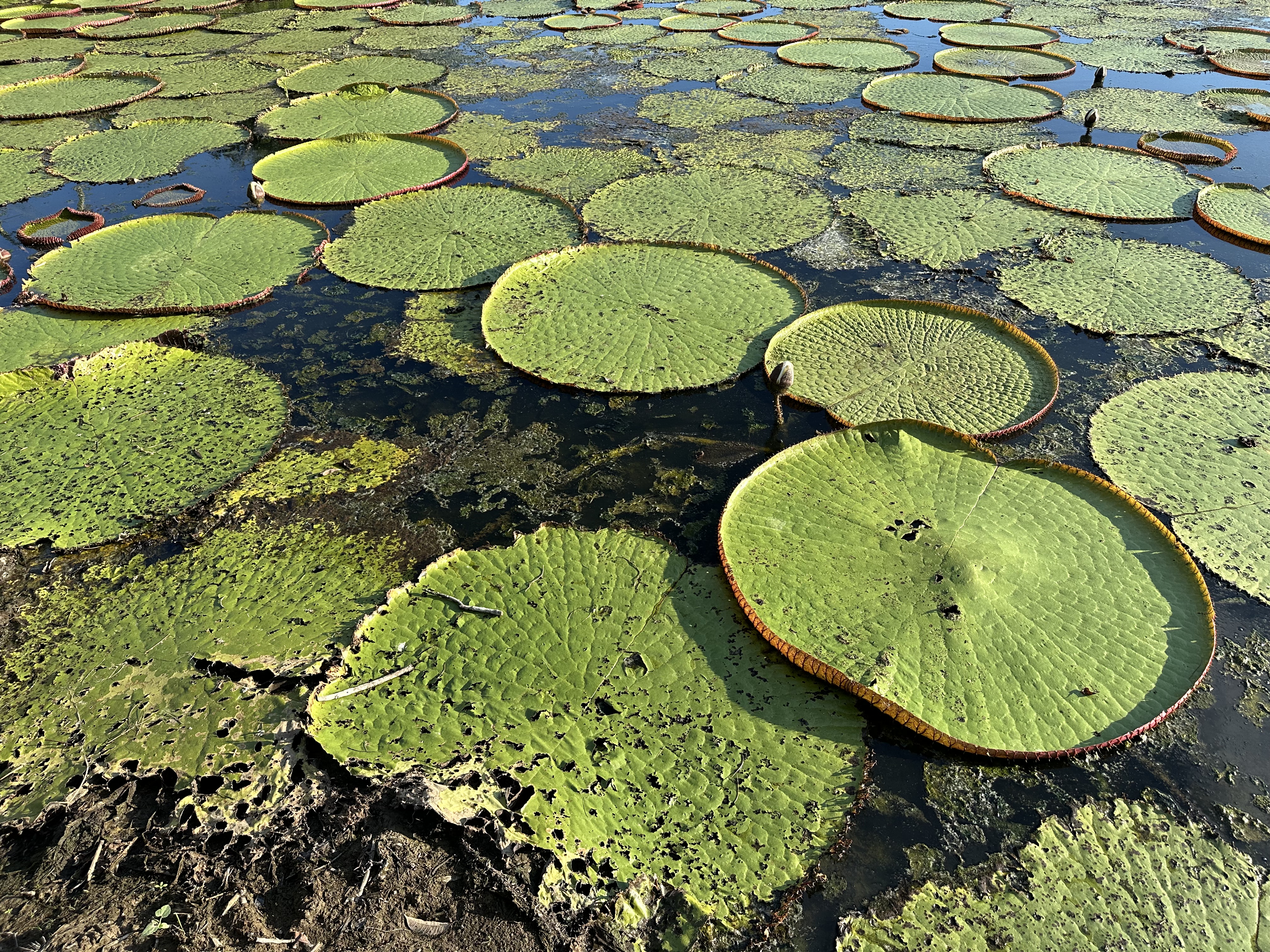
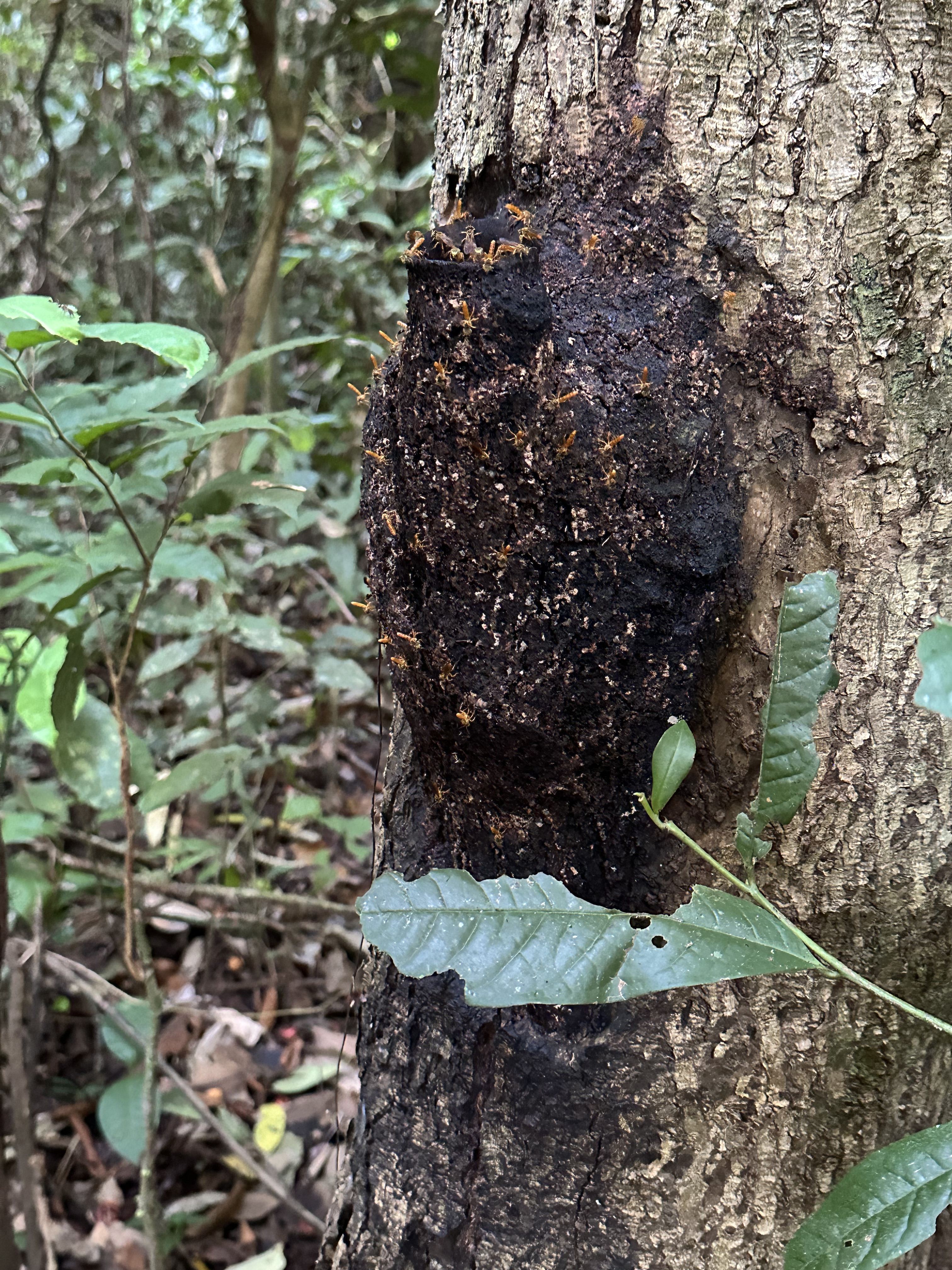
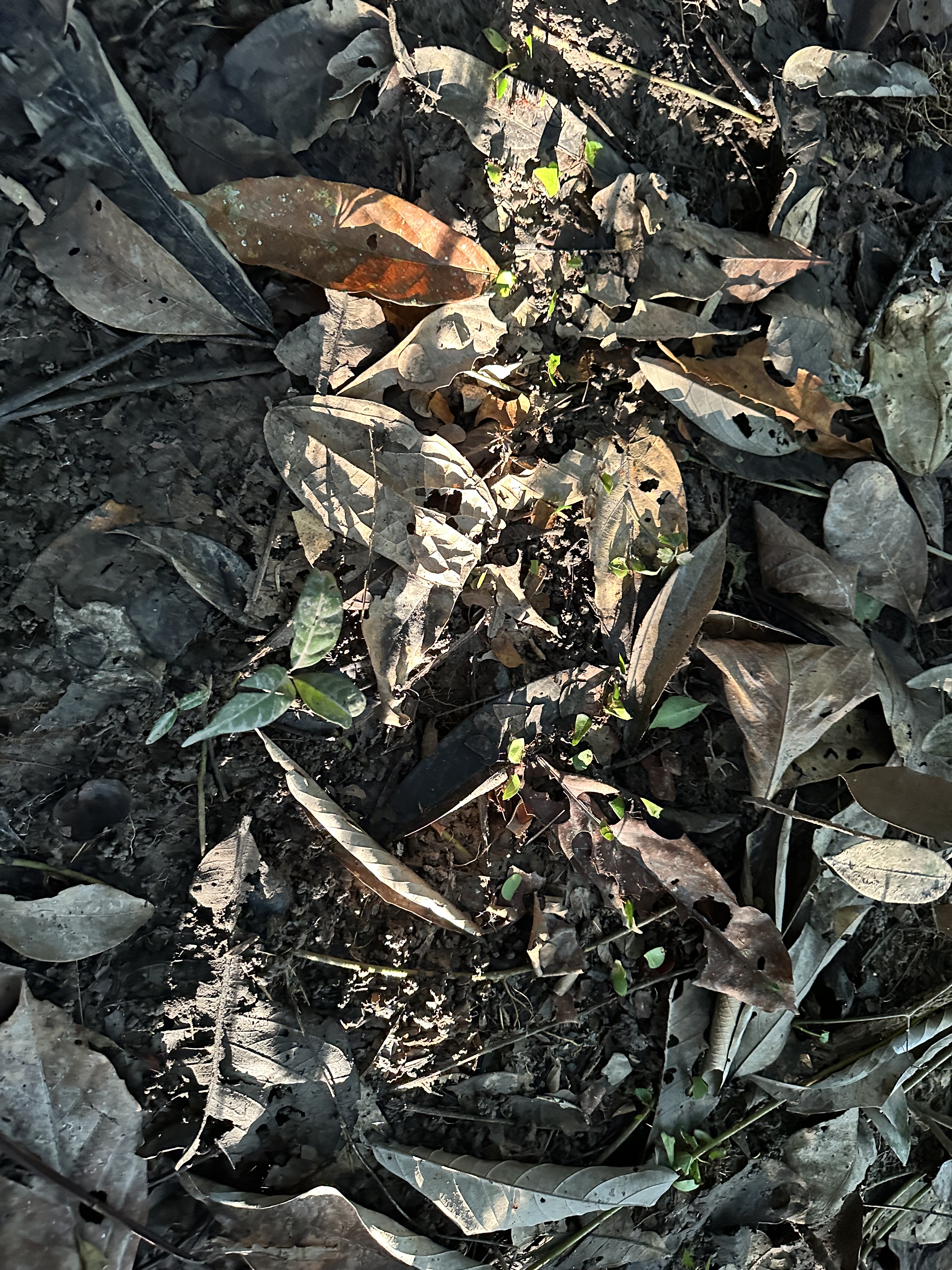
My favorite sighting was a field of lilly pads, even though none were in bloom at the moment. As we slid through the muddy undergrowth, we stepped carefully to avoid walking on army ants carrying leaf pieces. We also avoided many huge 1.2 inch long bullet ants racing up and down certain trees, and packing a powerful sting, if bitten. Mark learned it was the worst sting in the world according to the Schmidt Pain Index. We also saw a nasty bee’s nest, two tarantulas on the ground and a millepede. We walked by a couple of huge Kapoc trees and saw flowering vines everywhere. The whole walk was only 45 minutes and was mildly interesting. Back on the tender, after removing and bagging our rubber boots, we motored into the middle of the river and joined up with the cocktail tender for sundowners. Everyone was treated to an Amazon Mule cocktail. Then back to the boat. Once cleaned up and in the bar lounge, we were introduced to the entire staff and entertained by a handful of them playing instruments and clapping. As time passed everyone loosened up and we got friendly with some our fellow ship mates. I even danced.
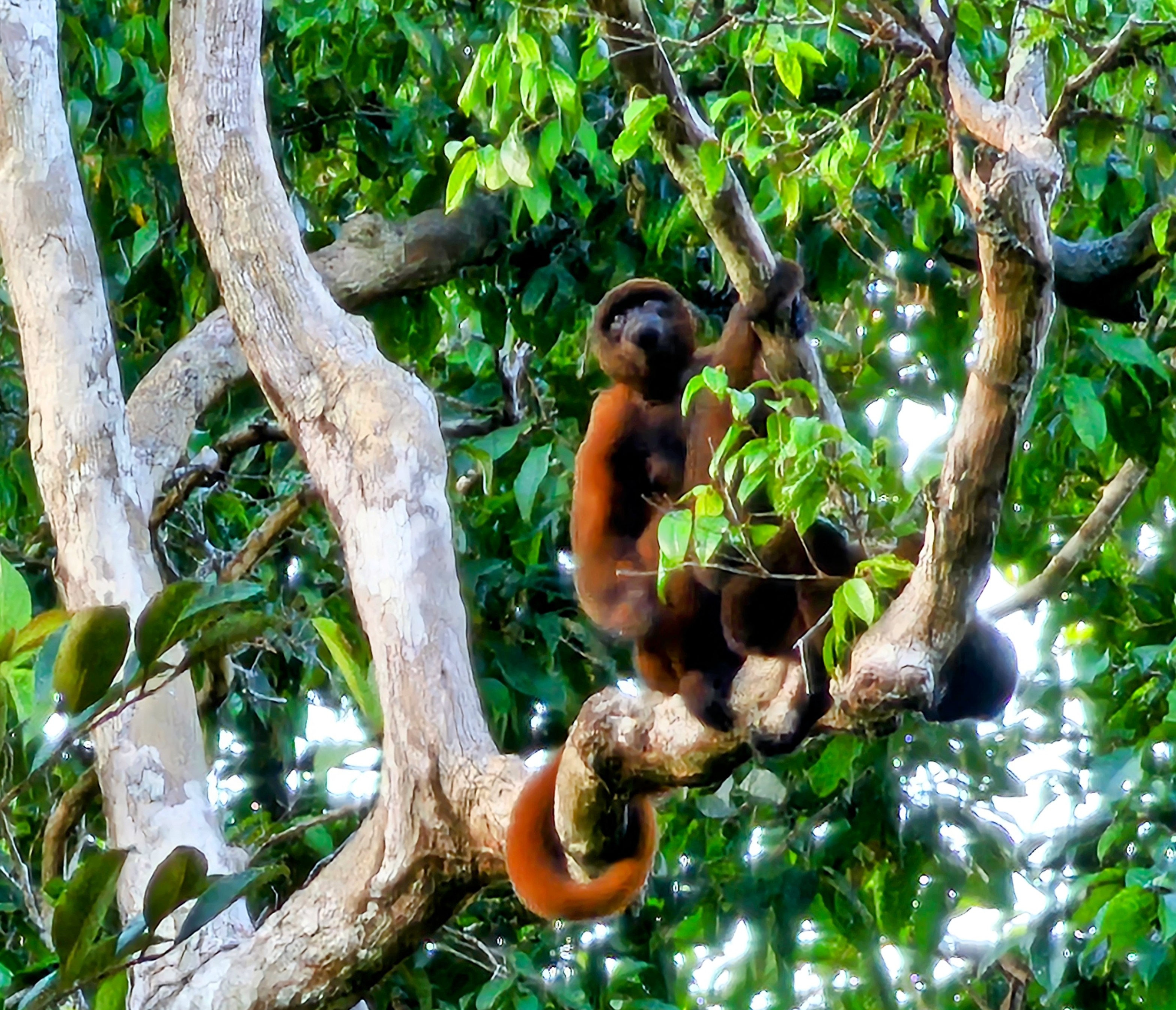
New friends, Bill and Nancya good photographer , Terry, and meDancing in the loungeThe outdoor dining. area and barThe water level during the High water season.Terry’s photo of the wooly monkeys
Eventually many of us were up and dancing to the lively sounds. At 8pm the music stopped and we all trouped into the dining room for dinner. It turns out that the boat was only half full and there are more staff than there are travelers. We sat with a couple named Bill and Nancy and passed a pleasant evening getting to know them. After the unremarkable meal, we happily went to our room and bed.
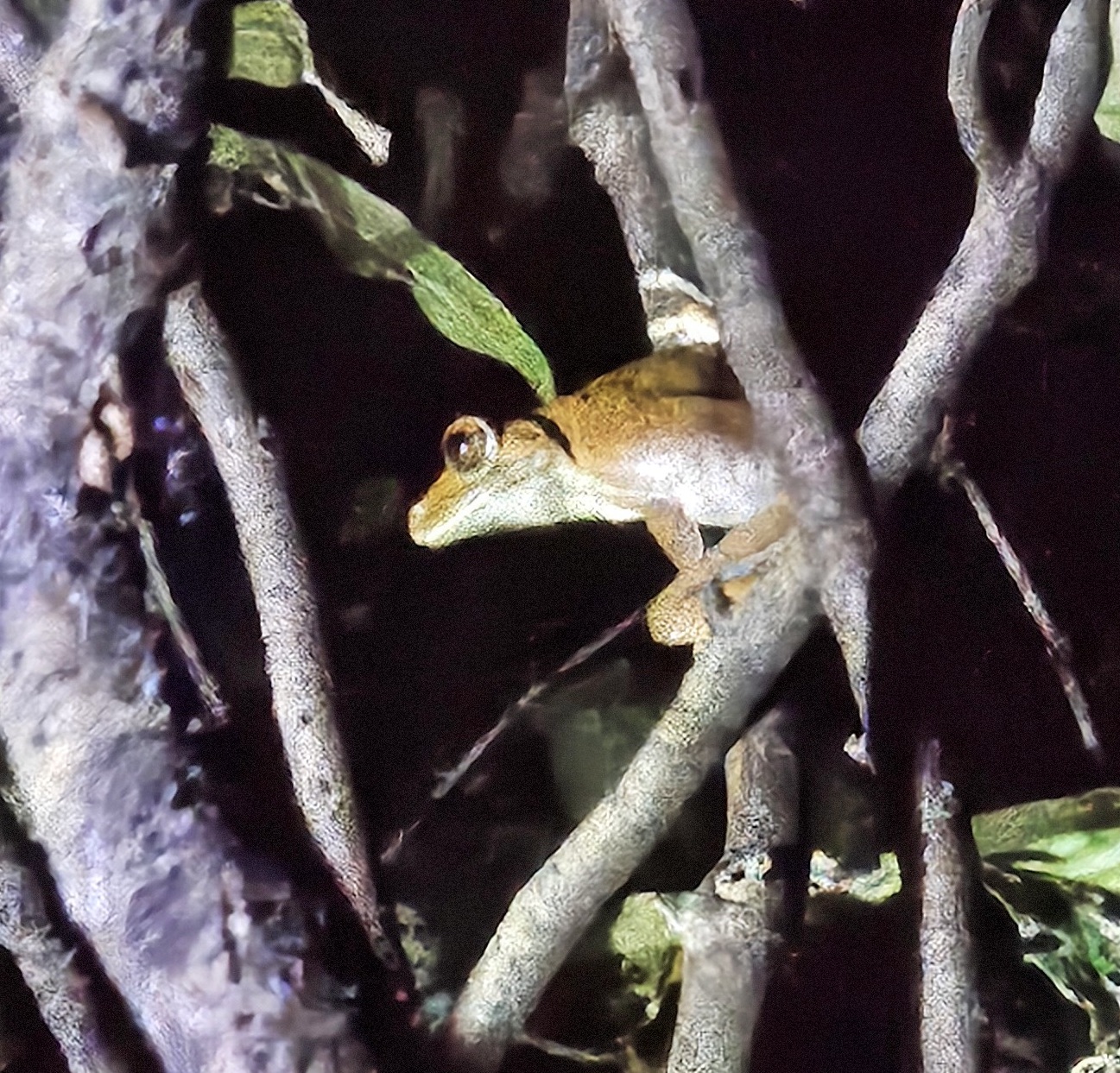
A very hard to see, brown tree frog, that Terry caught nd shared with me.
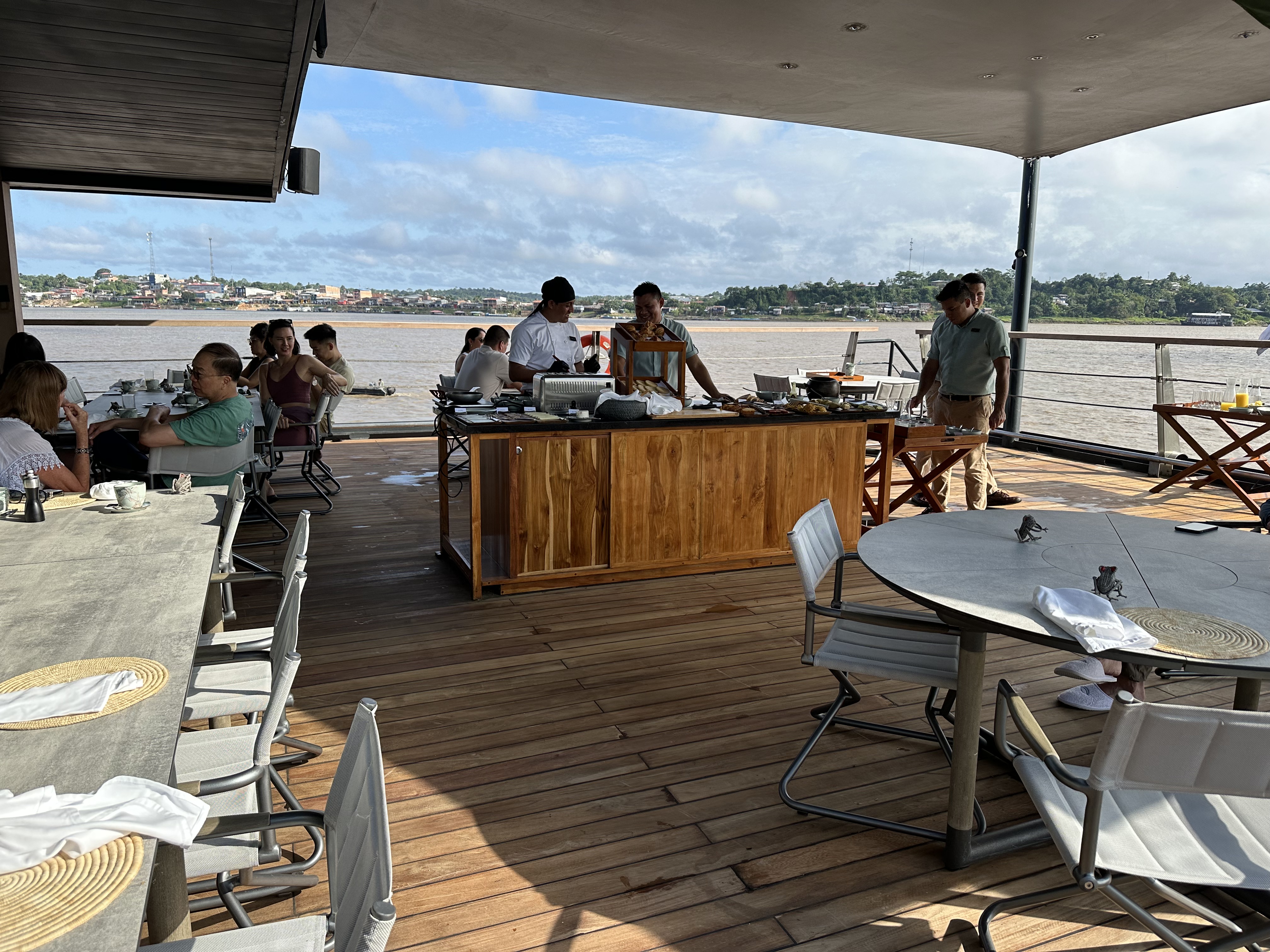
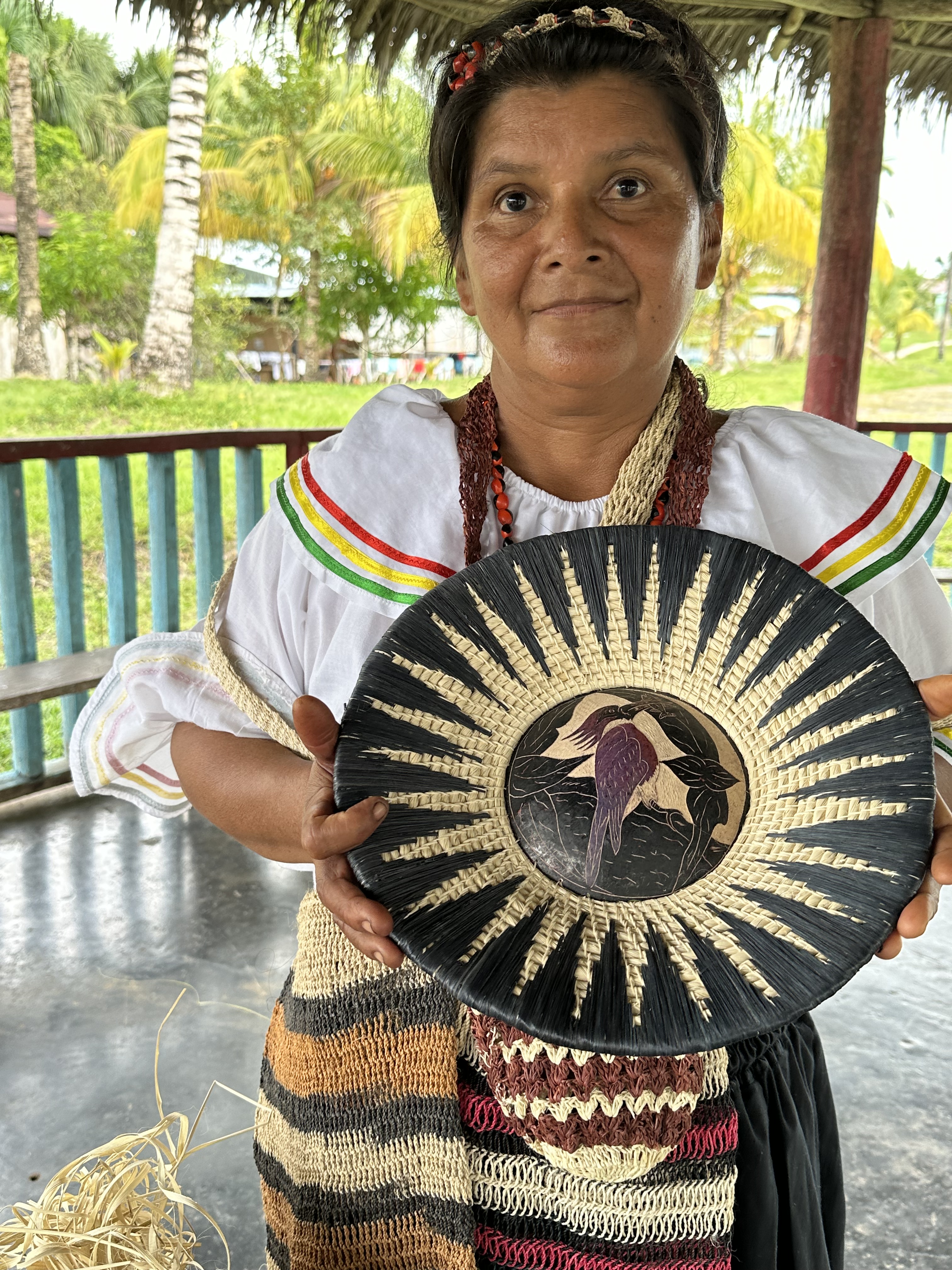
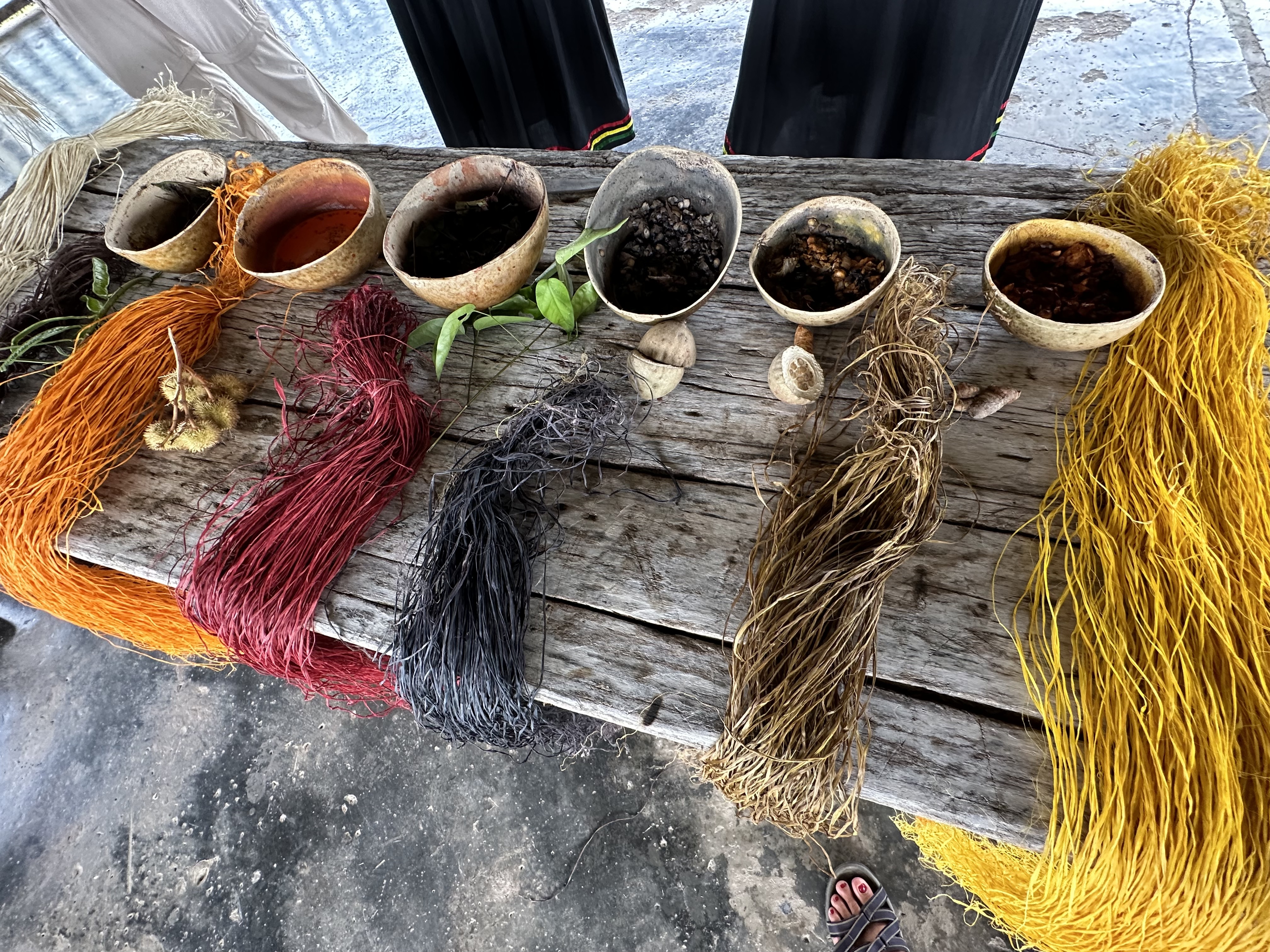
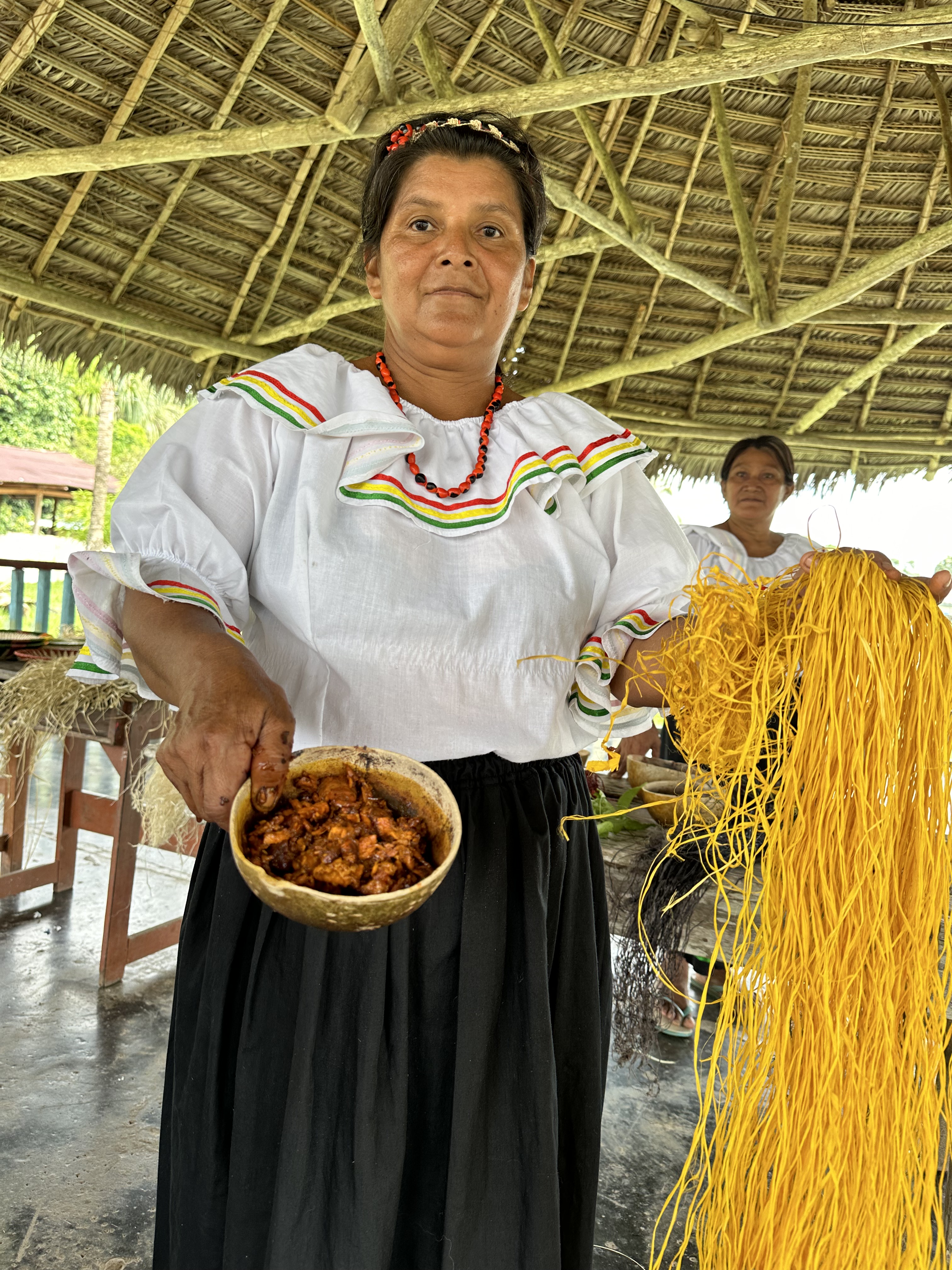
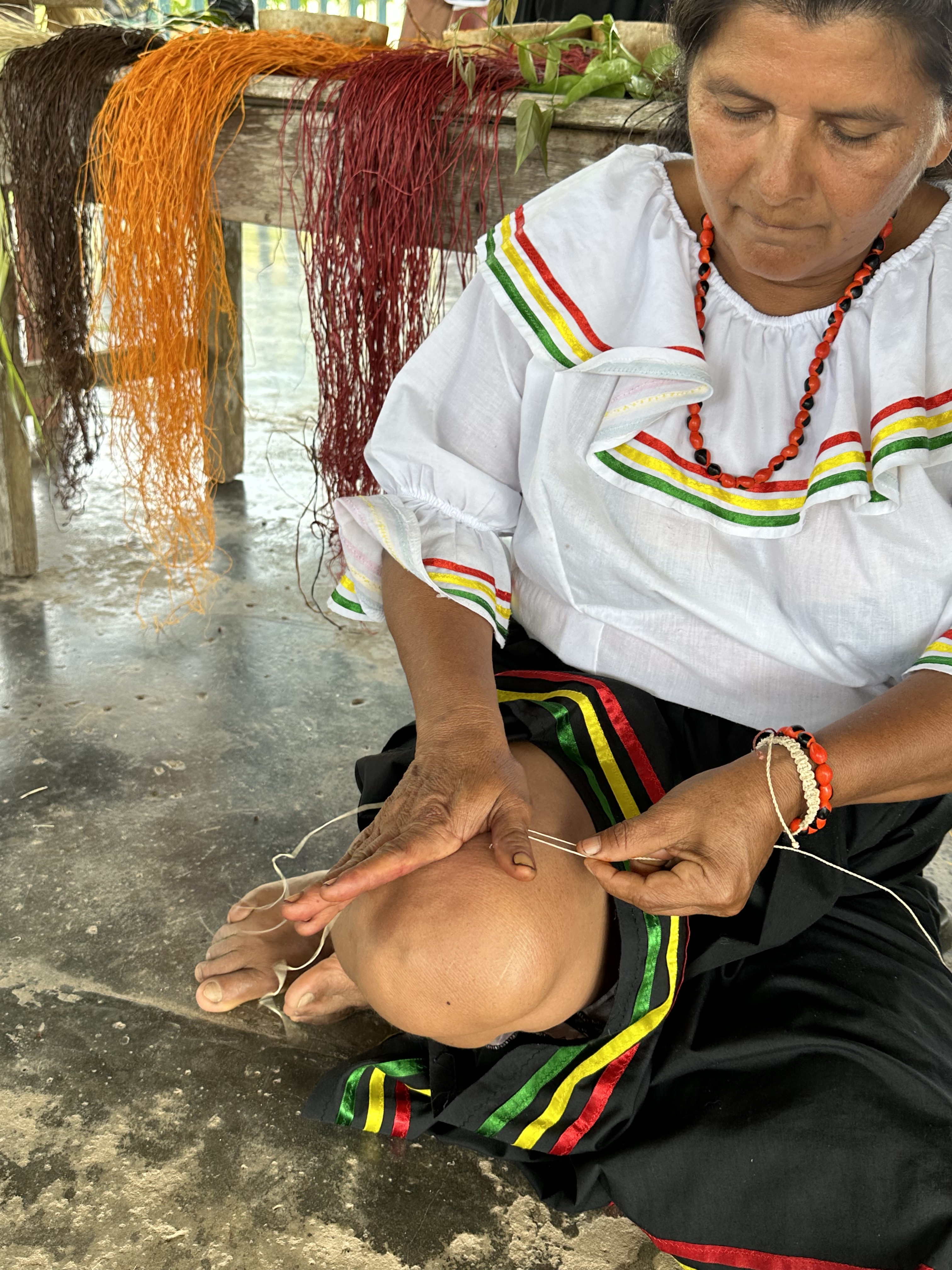
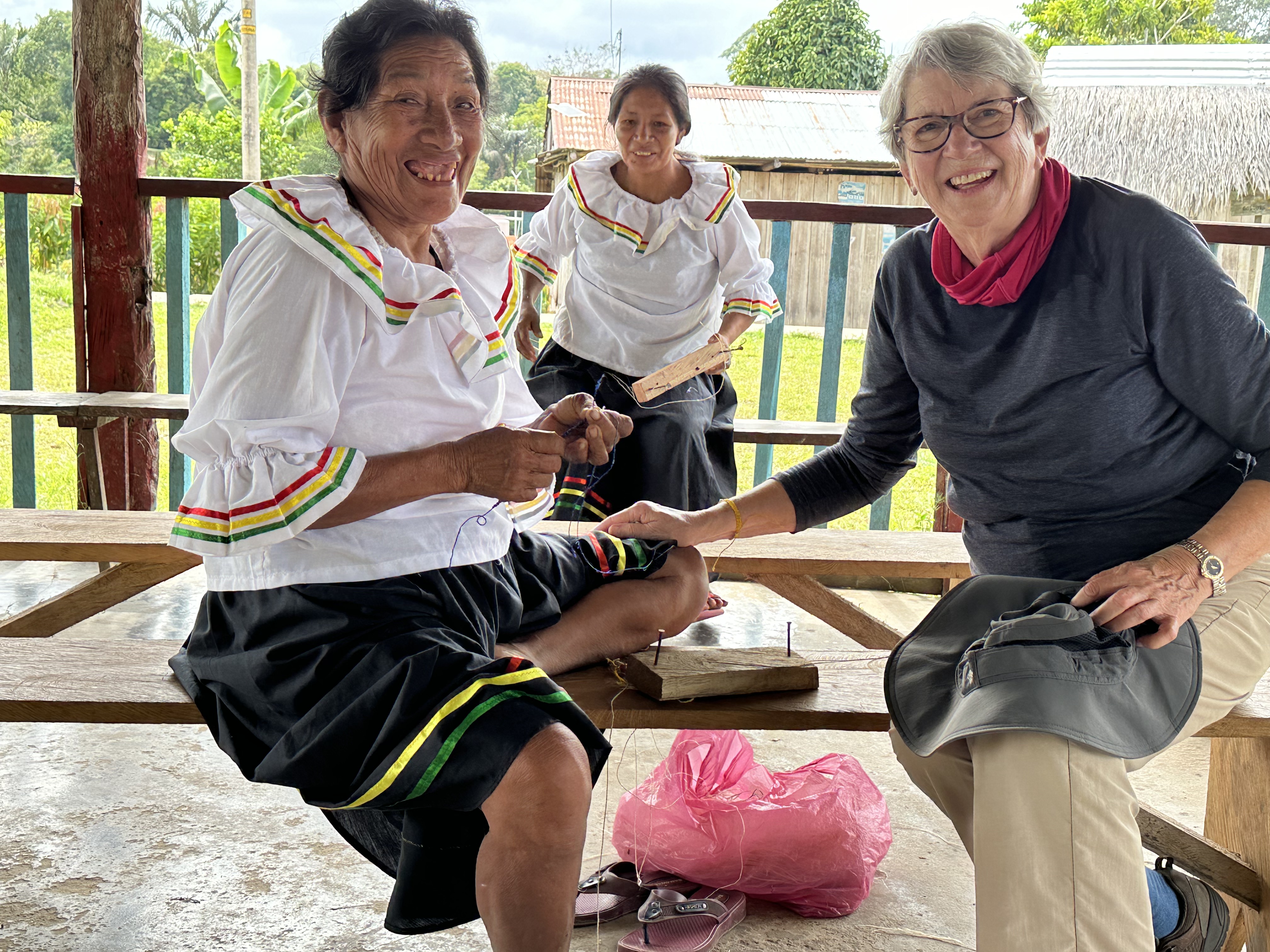
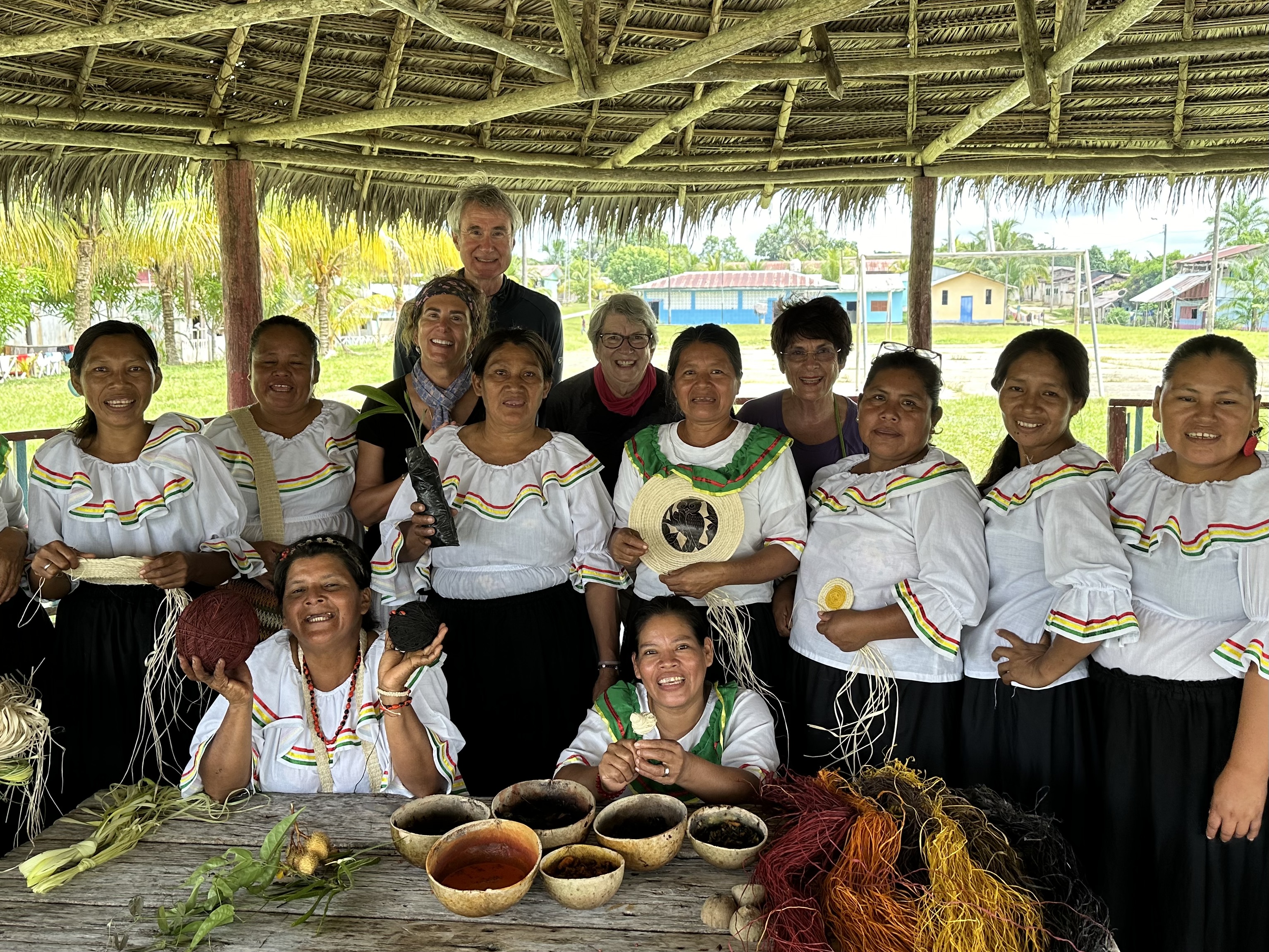
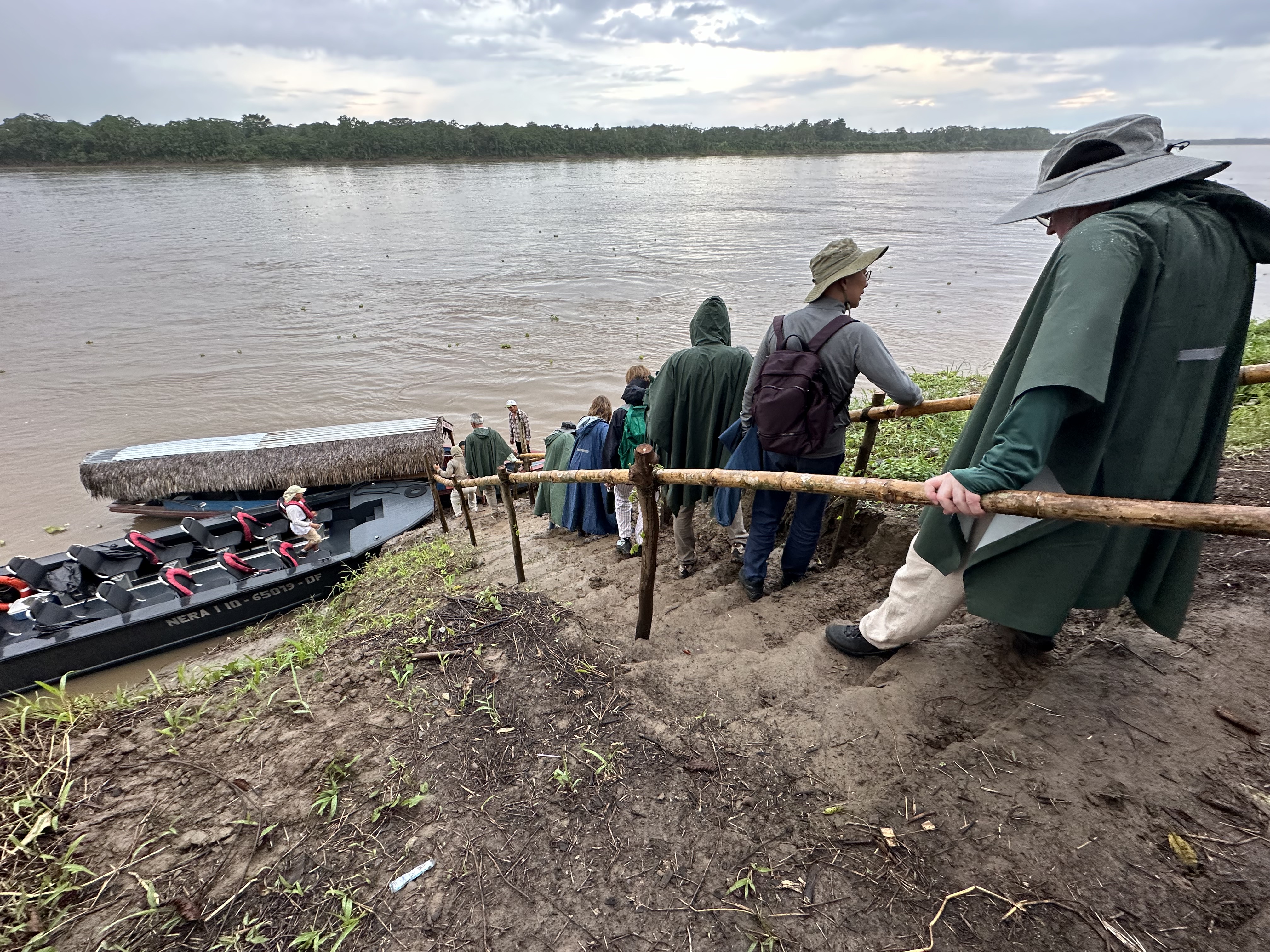
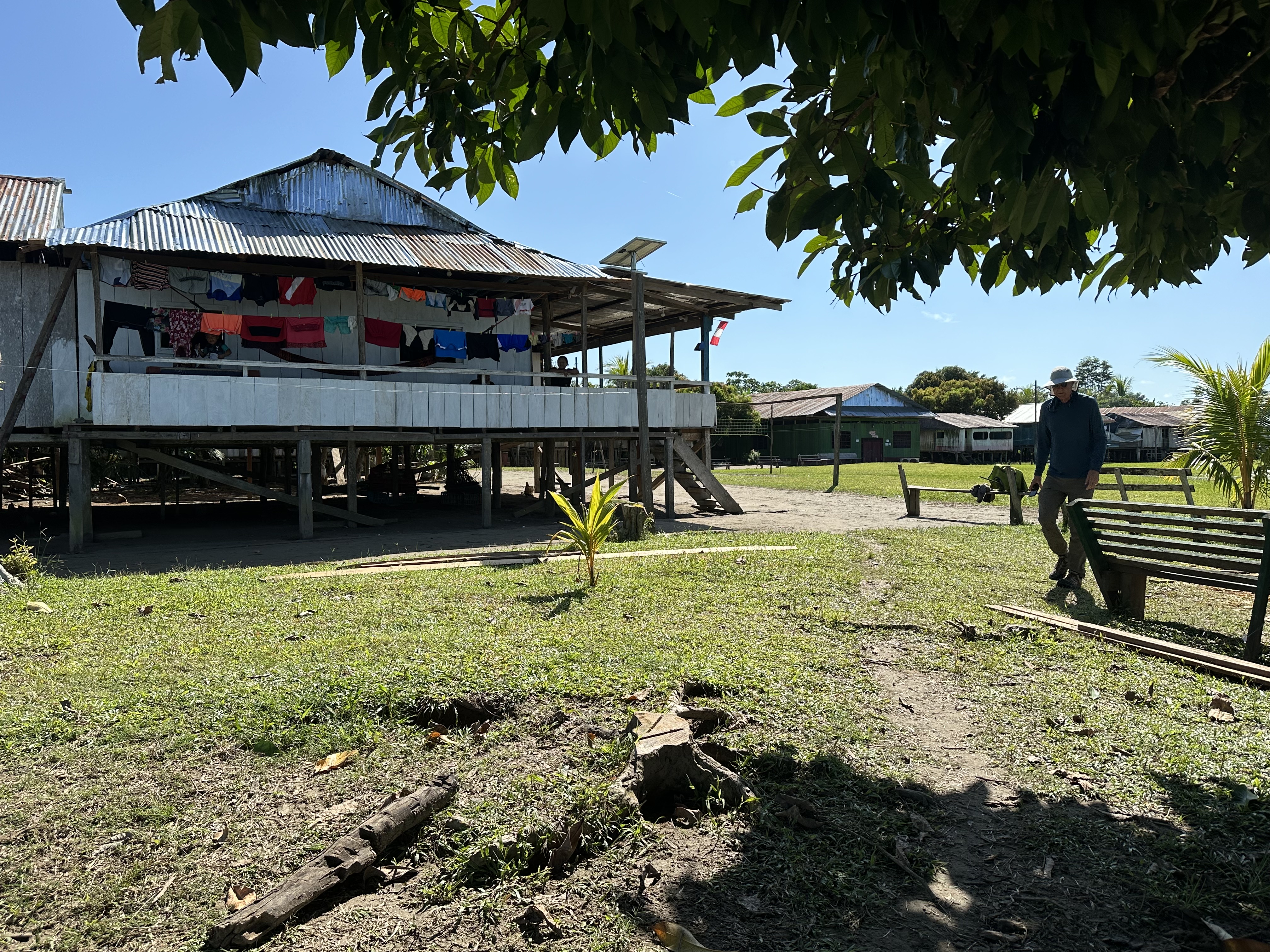
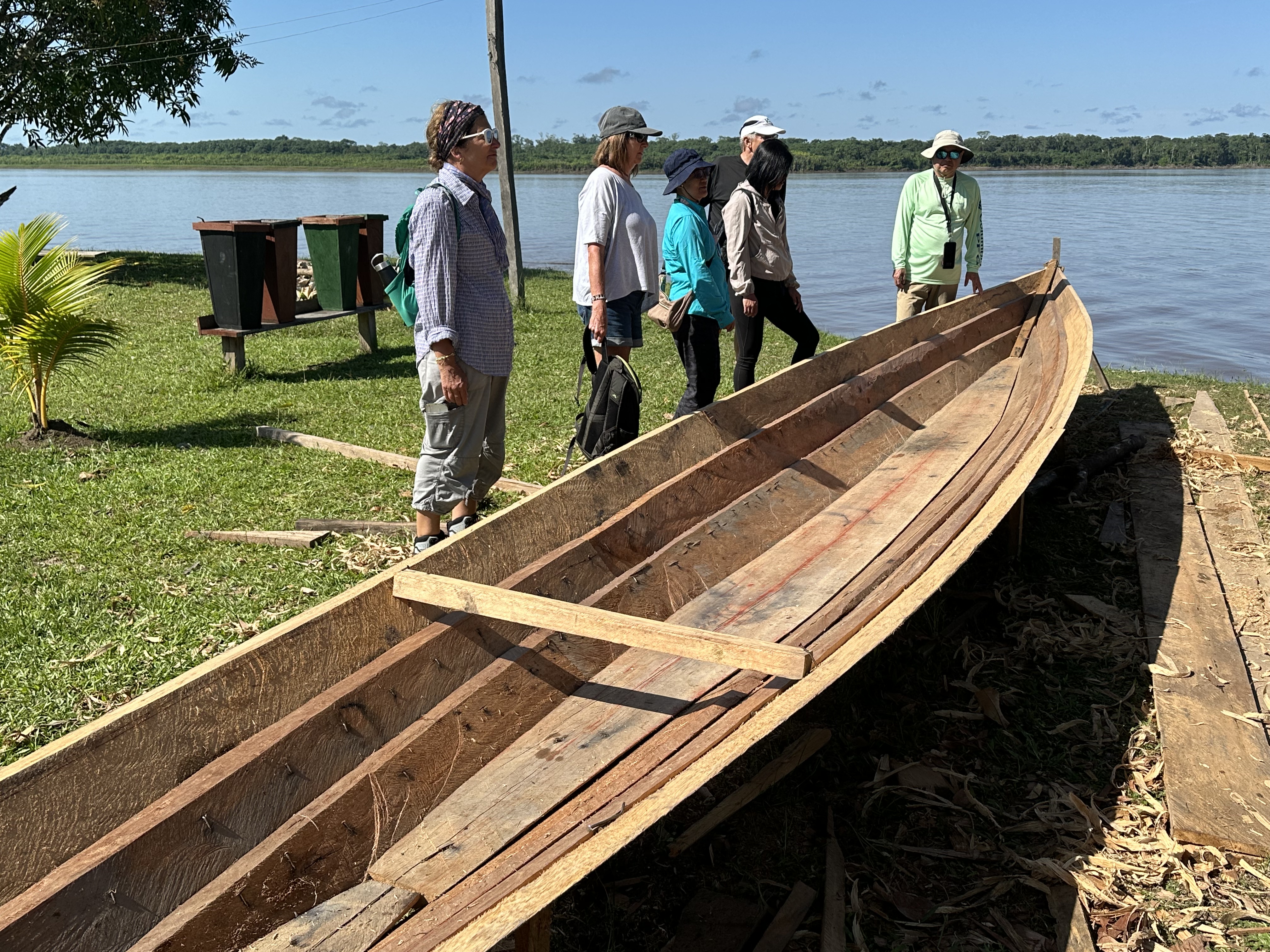
This morning we had breakfast at 8am on the aft deck and said good bye to the short term folks who were departing for Nauta on the other side of the river and a 90 minute drive from there to Iquitos. At 9:15 we broke up into groups. I went with a group headed for a village where handcrafts are being made and demonstrated, Mark went with a group on a boat trip along the river banks to spot birds. My group learned about converting palm fibers into colorful artifacts like bracelets, baskets and ornaments. The village is called Amazona and the people speak two languages: their native Kukama and Spanish. There are 300 residents whose primary occupation is fishing. Since 2016, the ladies do craft work in addition to fishing to make money . They use palm fronds to make their products. They wash the fibers, dry them and then twist them by rolling two or three together on their leg to make them strong . Color is added by boiling the fibers in different dyes for different lengths of time. Then the various products are made.
The village was the tidiest and nicest I have ever seen and the ladies were friendly and artistic. I had not intended to buy anything, but ended up buying a woven plate and bracelet anyway.
I learned there are 70 families in this village. The community house where they demonstrated their craft is called a Malloca, like a banda in Uganda . The river gets to about 180 feet deep and is expected to drop another 20 feet during the dry season.
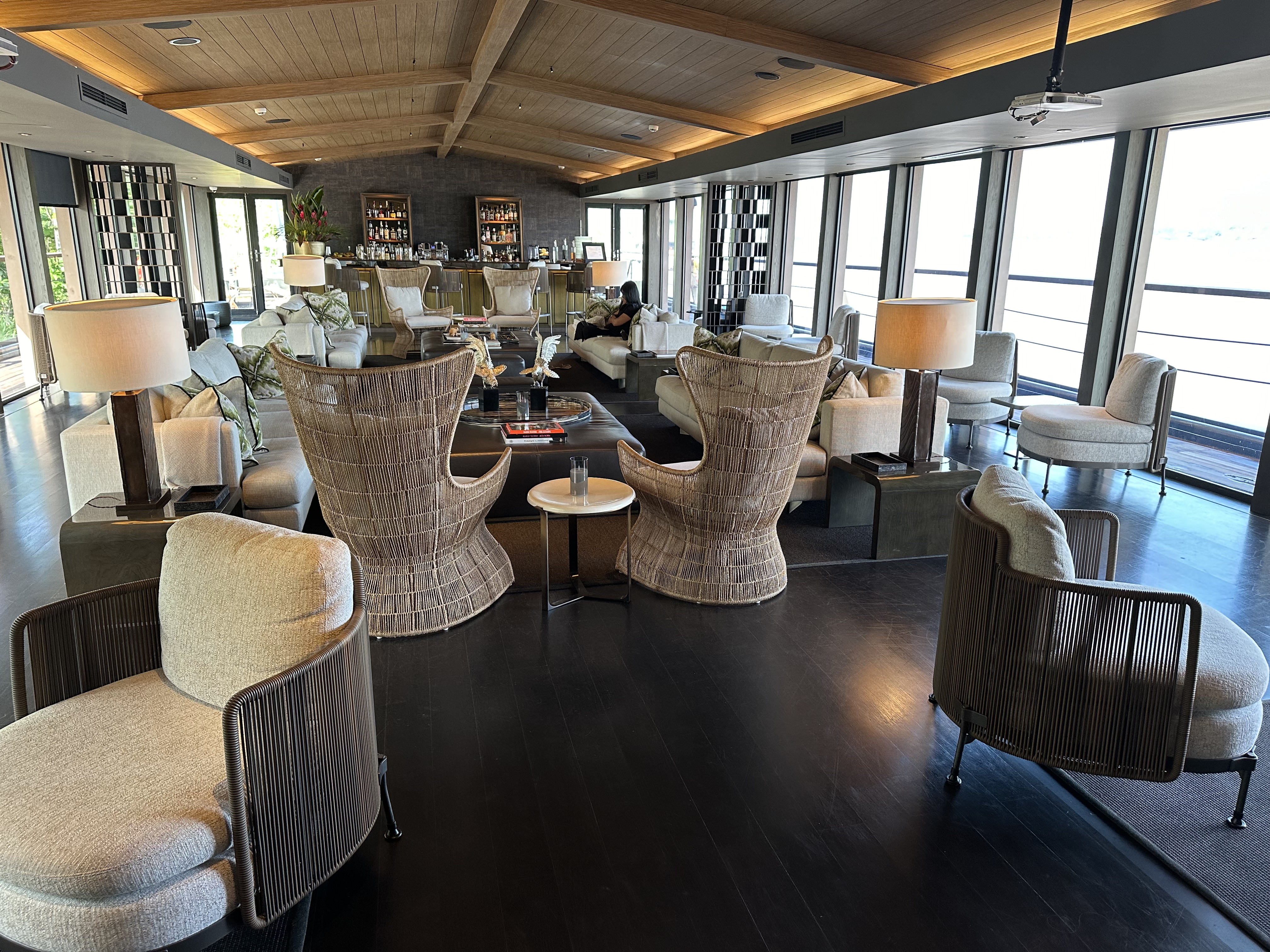
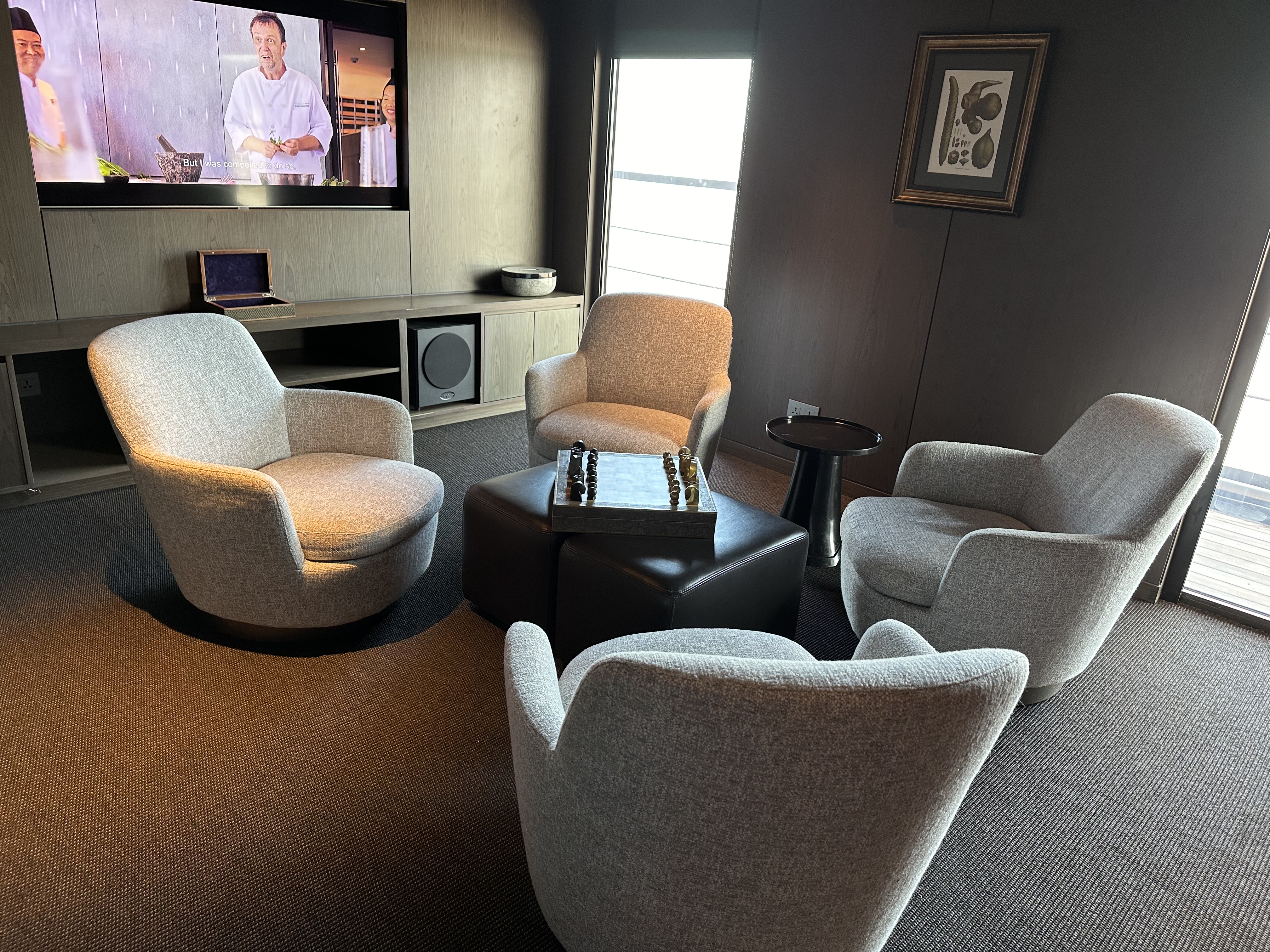
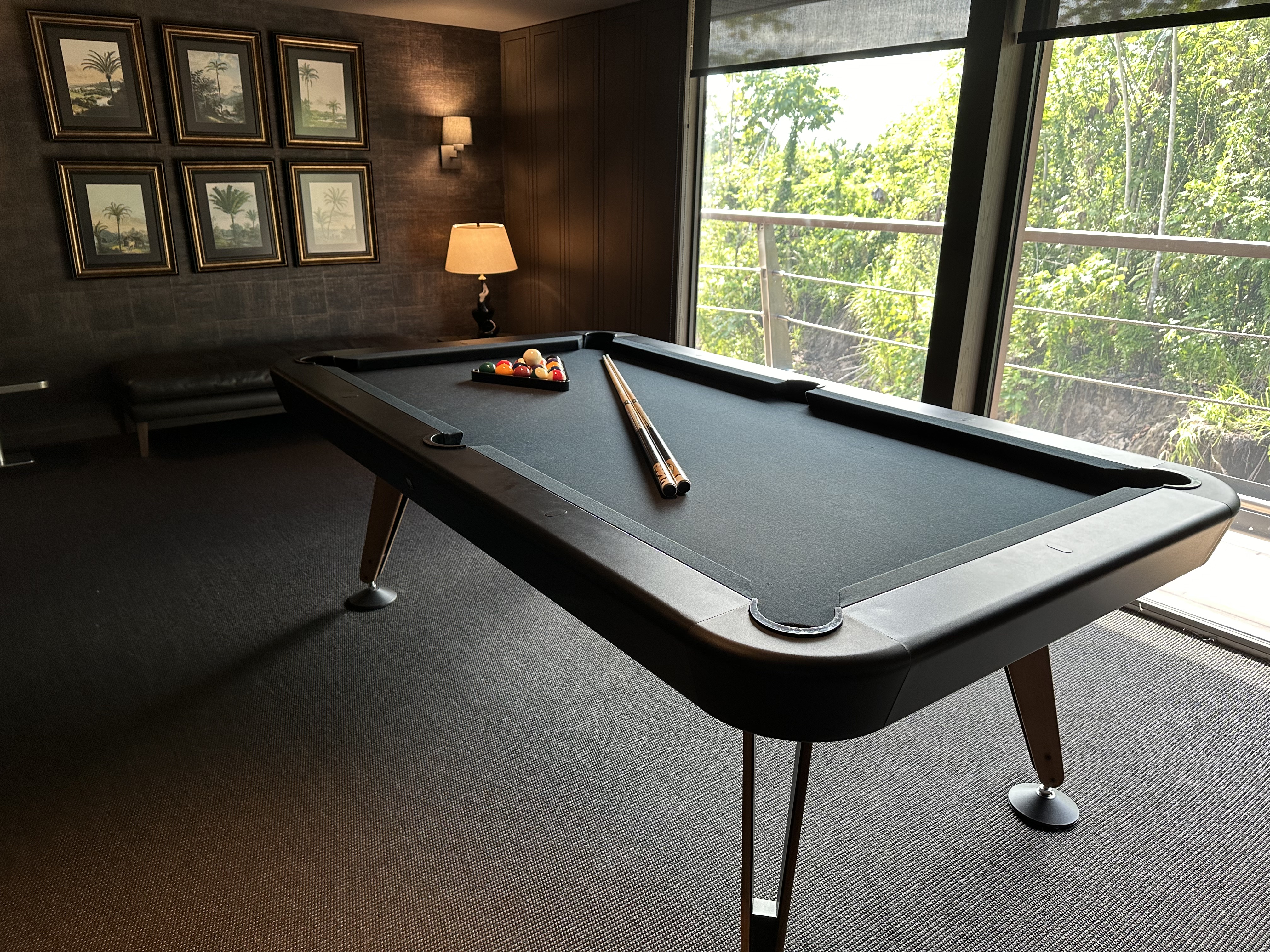
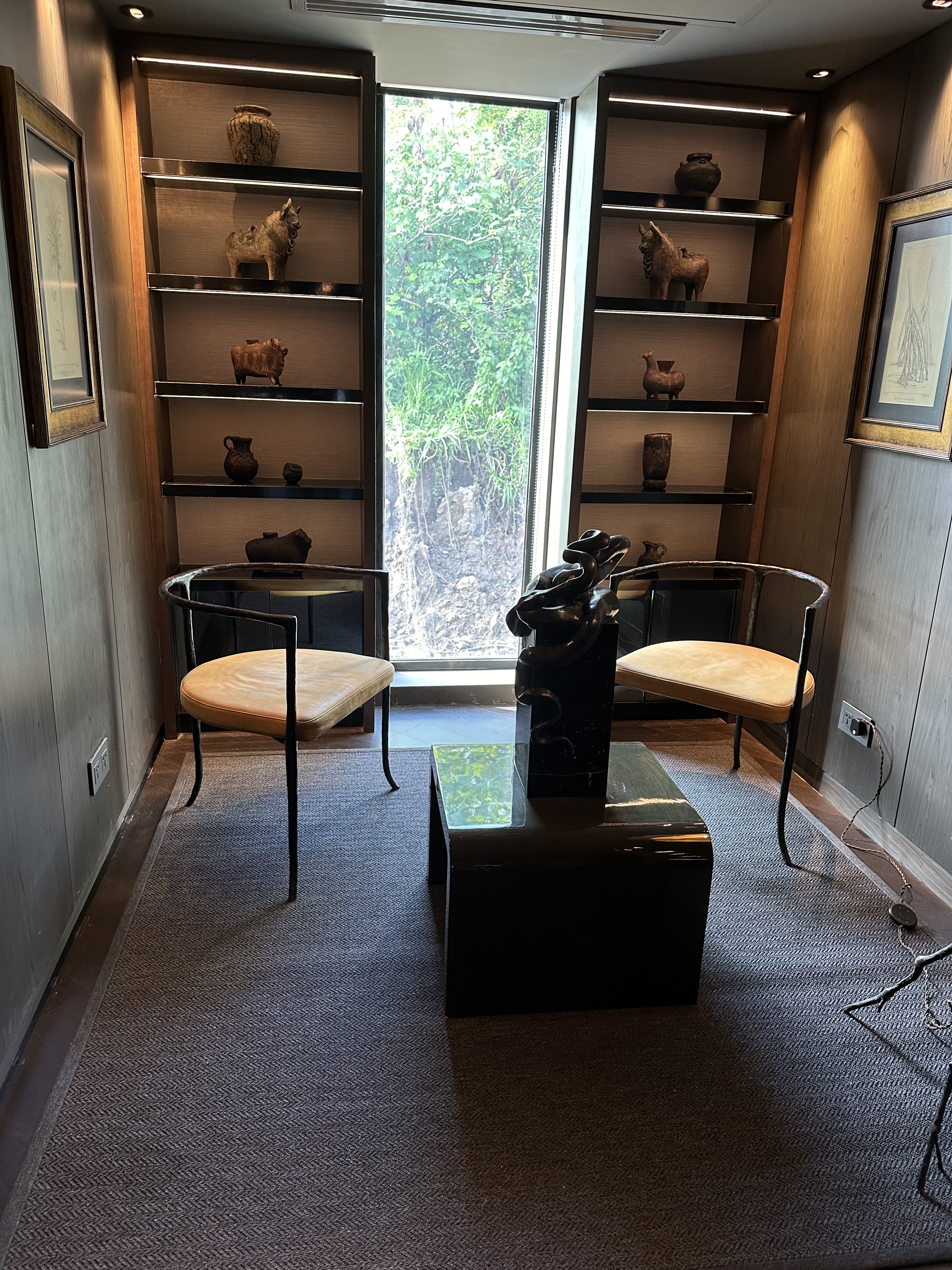
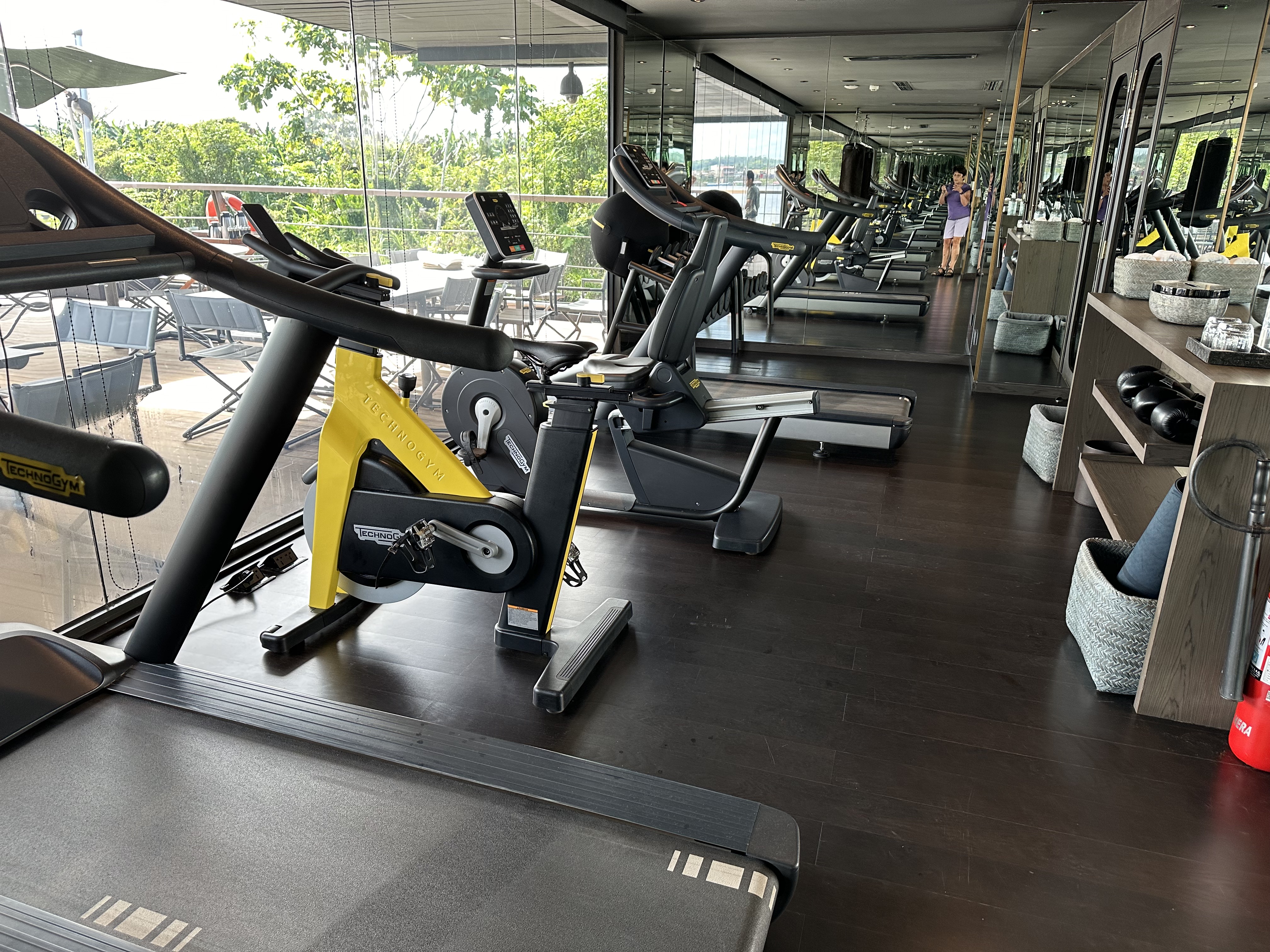
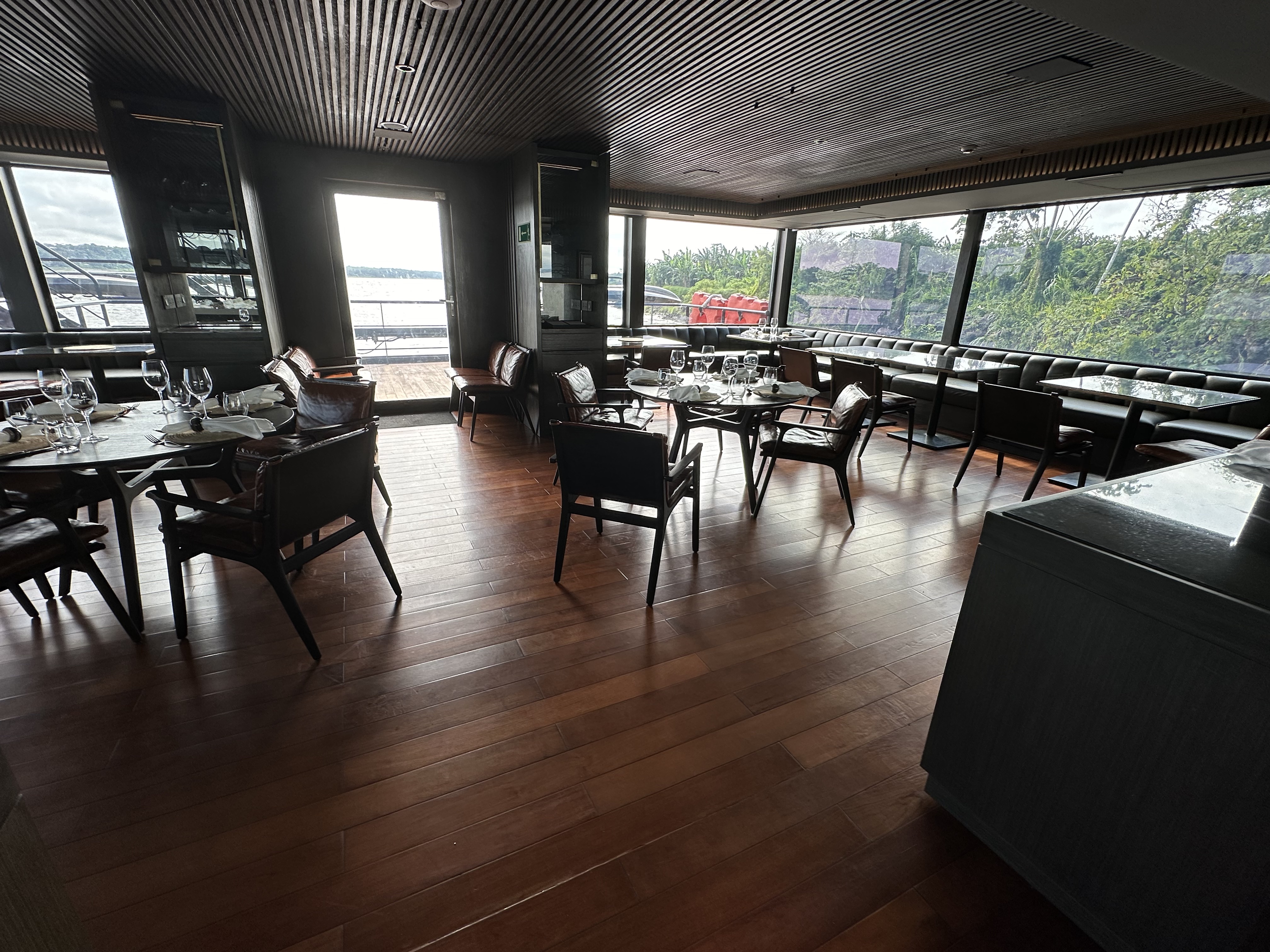
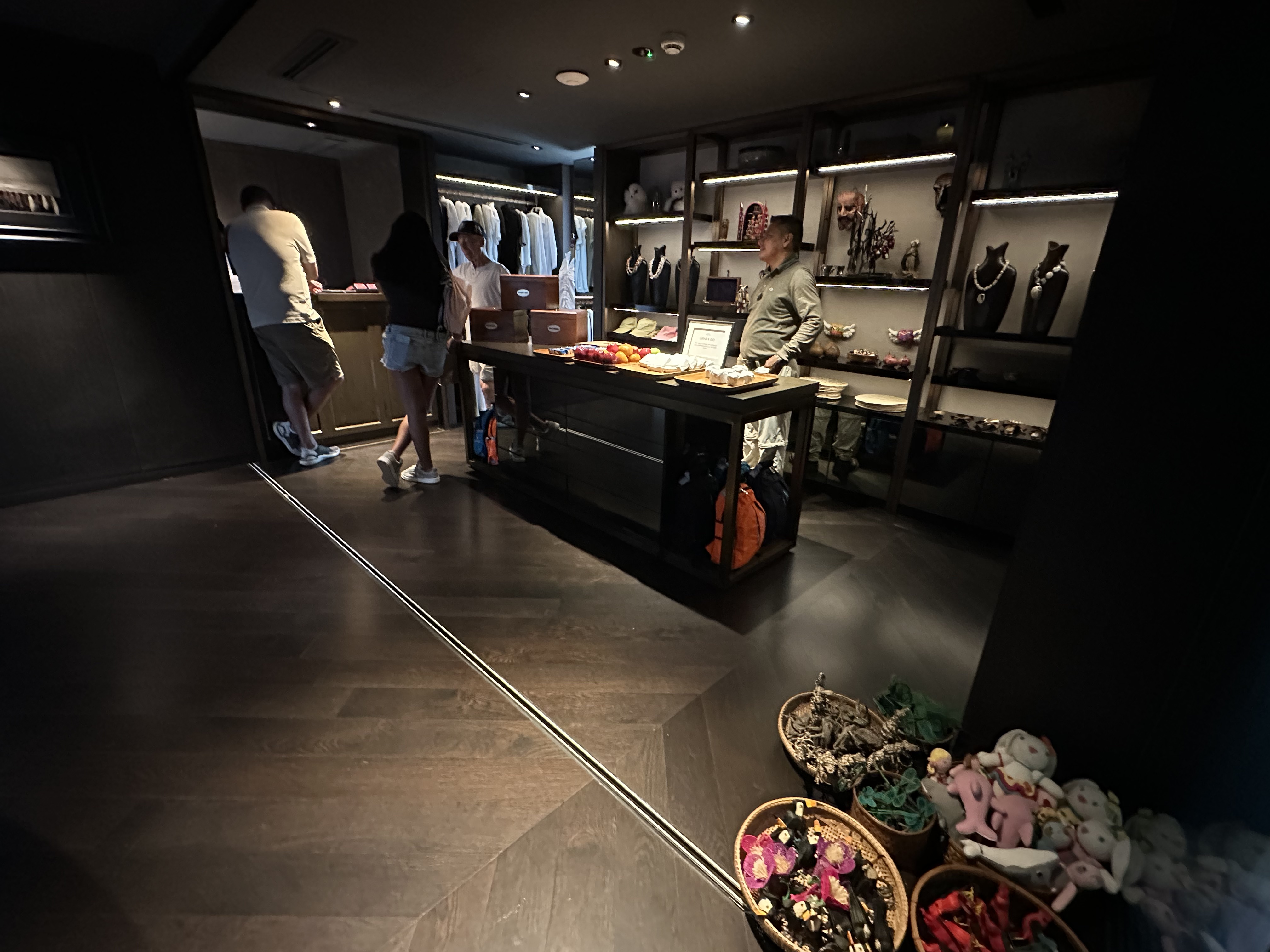
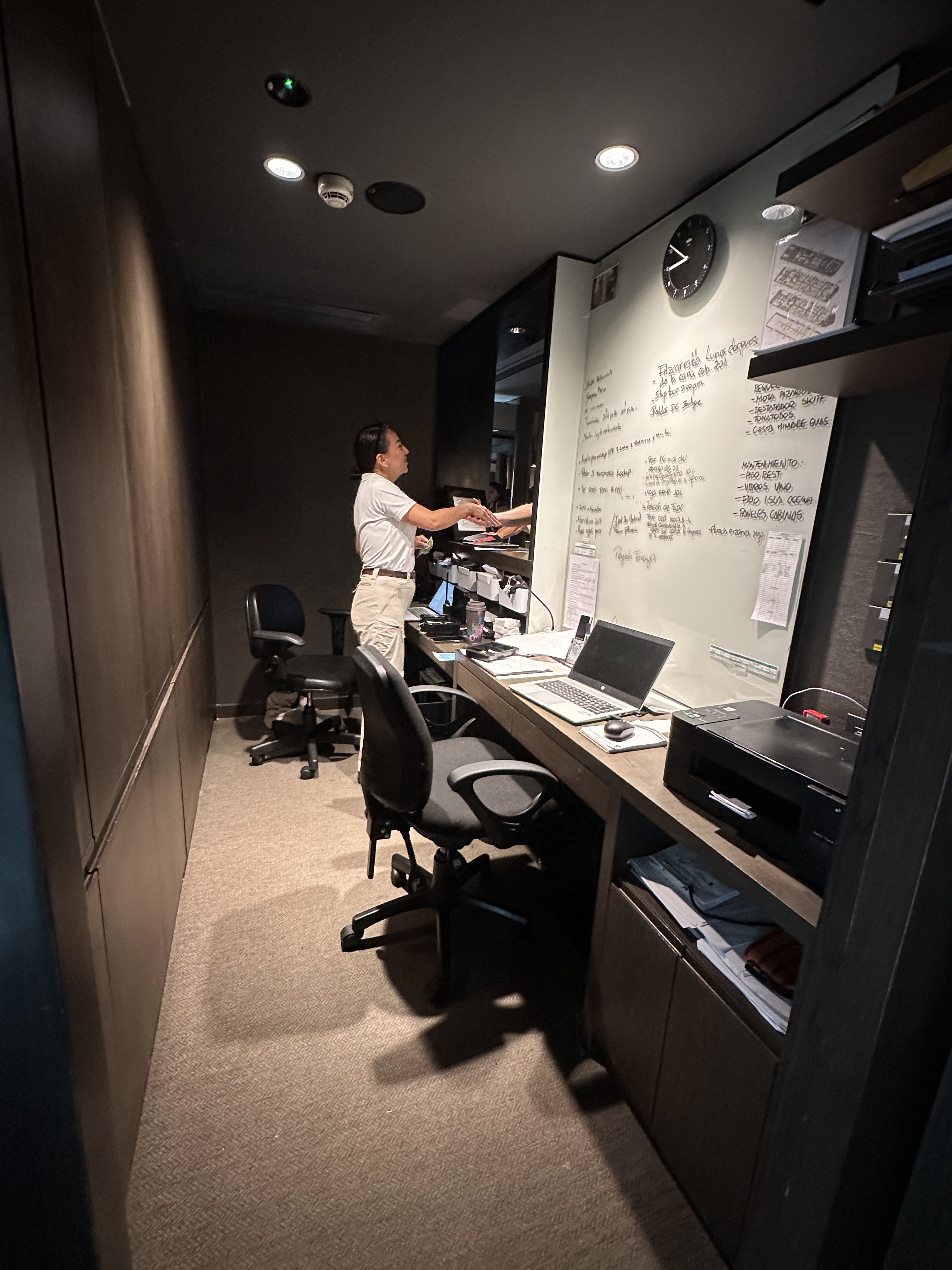
Meanwhile Mark’s group saw a few birds and other creatures. I borrowed three images taken by another guest named Terry. I had seen the animals but not managed to get decent photos. We were all back for lunch at noon. We had planned to eat only salad, but the chicken course was so juicy and tasty that we ate the whole meal. After lunch I took photos of the various rooms on the ship. It. is a pleasant boat for 40 guests. Even has a small pool. There were only 27 people during the week we were on board.
Lounge and BarT V Room Pool Room Quiet Room Exercise RoomOutdoor deck and poolDining RoomGift ShopAdmin Office
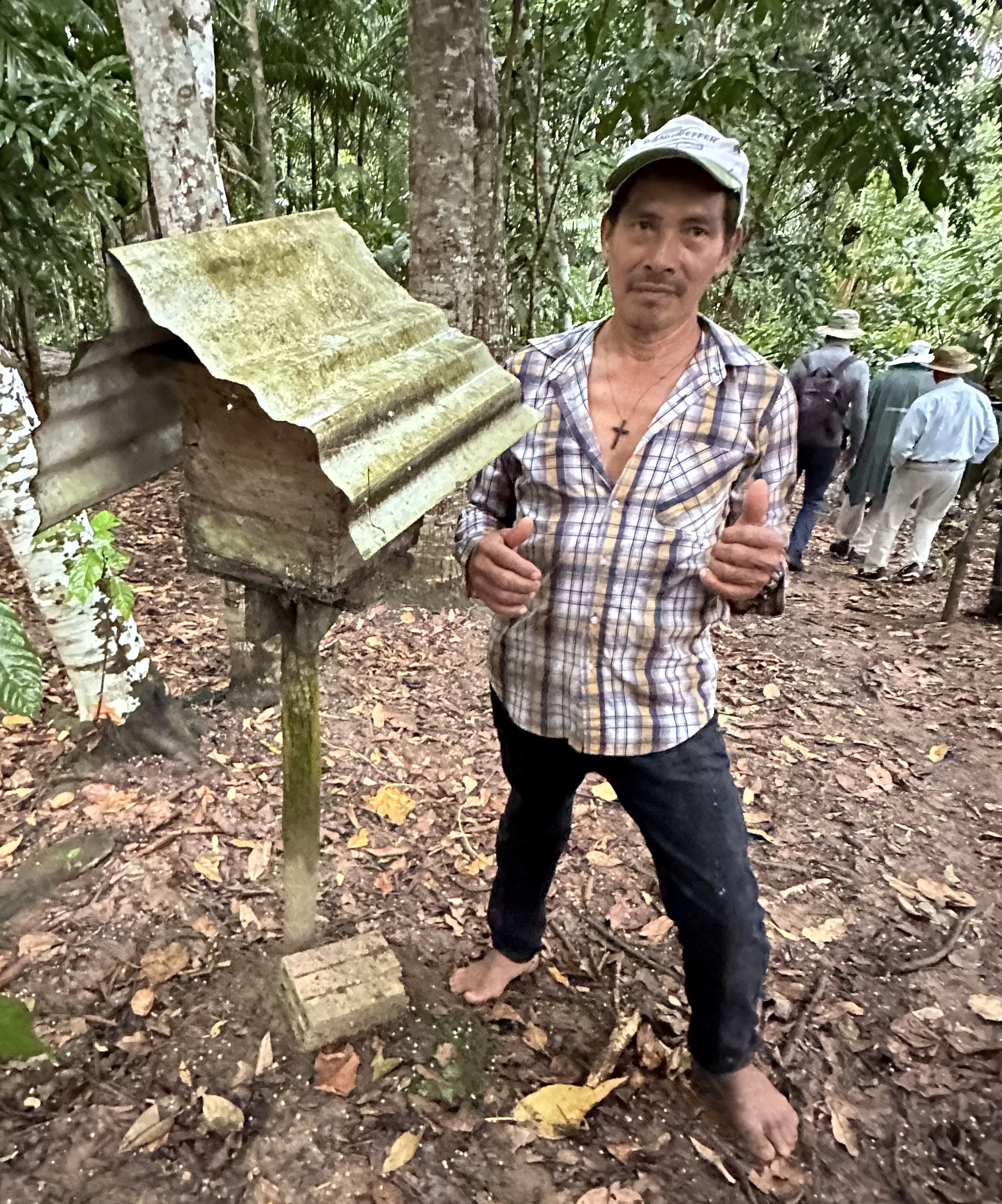
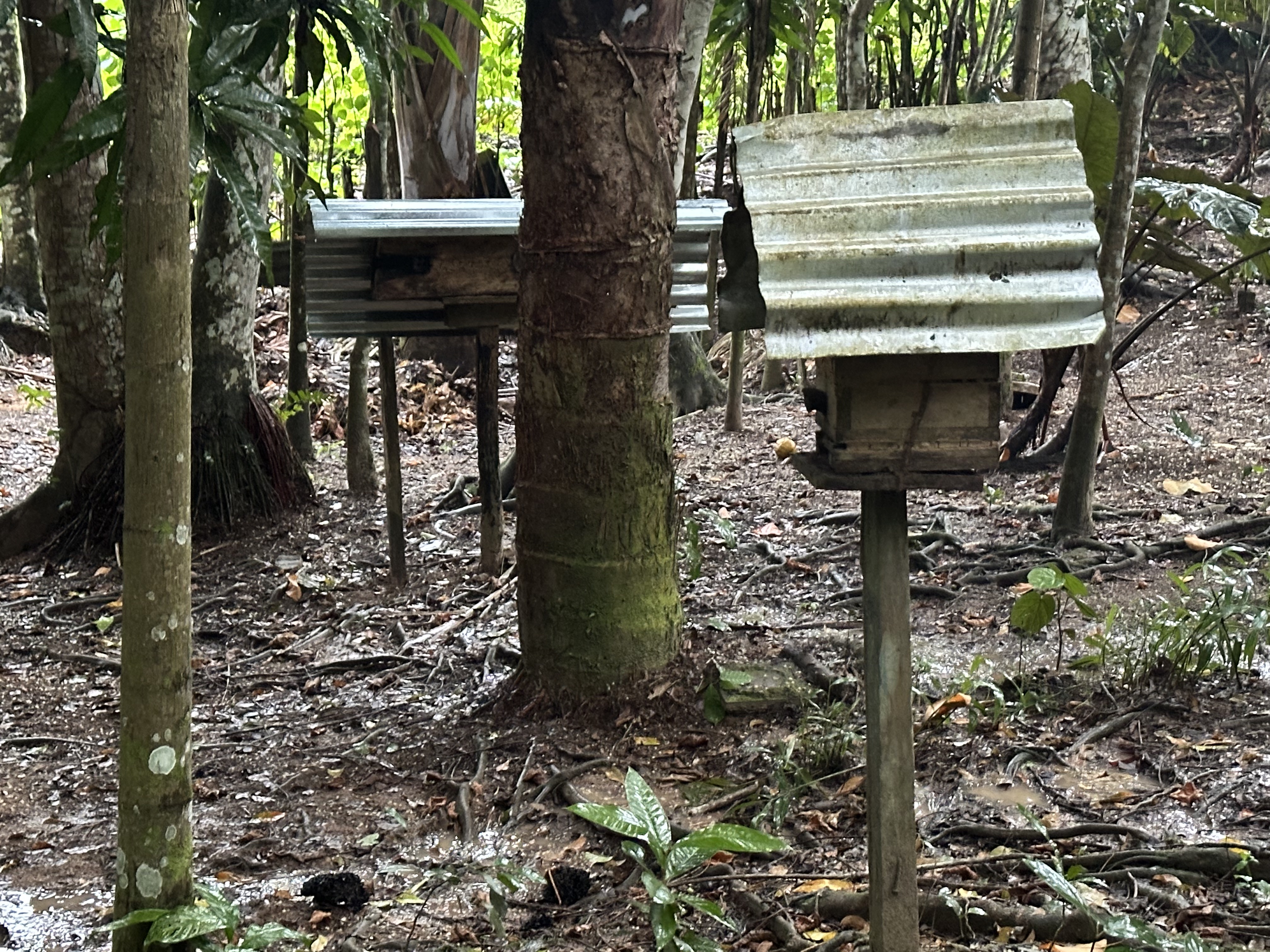
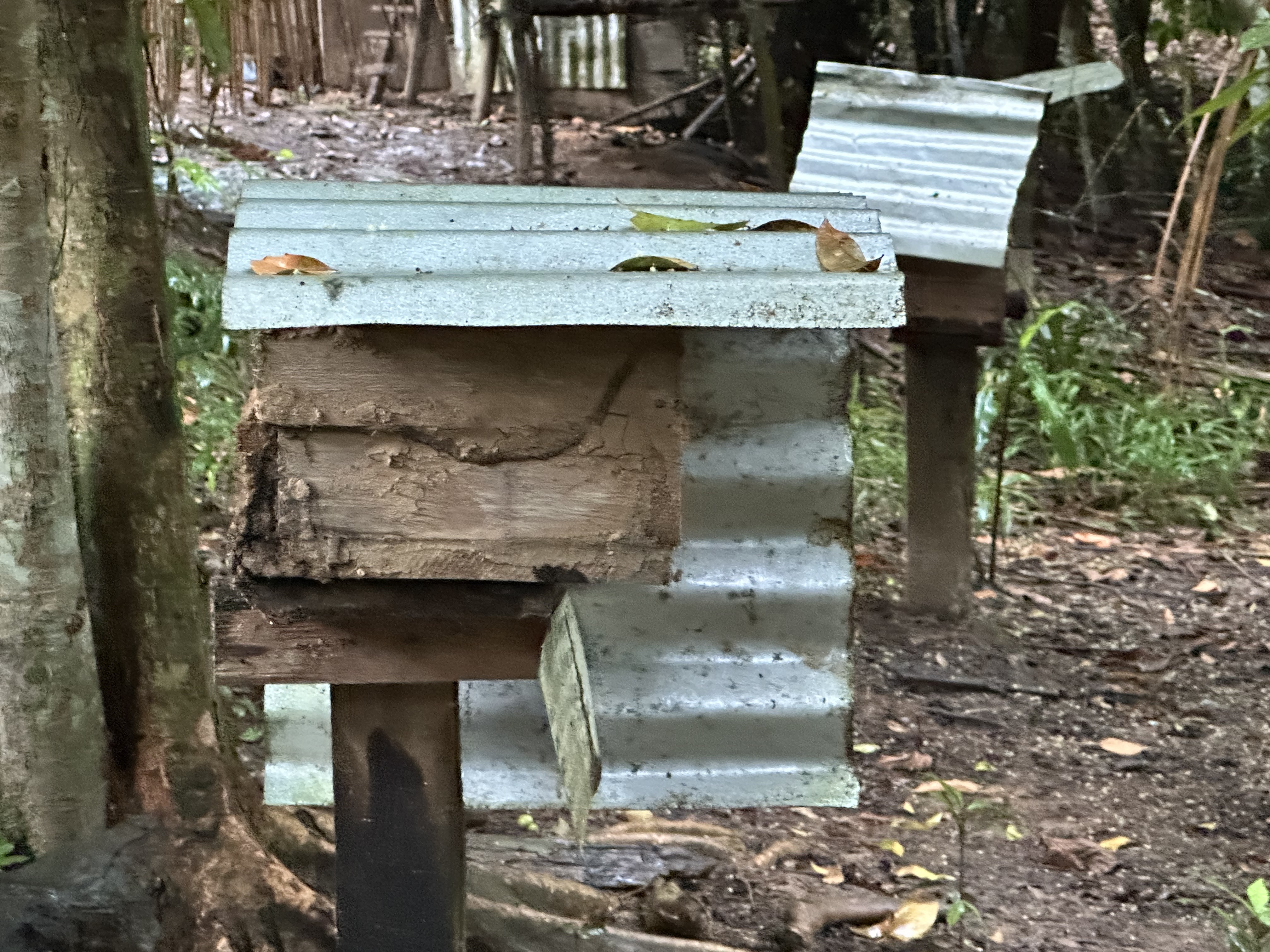
In the late afternoon two tenders full of us motored to the home of a bee keeper, with all of us thinking we would get to see bees in action. However, just as we arrived inside the beekeeper’s work room, we received our first rainfall. It lasted about half an hour but was enough for him to refuse to show us any bees. Instead we received a translated lecture on his method of keeping bees, and stingless ones at that. The beekeeper’s family started raising bees 7 years ago. After learning himself, he is now teaching children how to care for and raise bees. He uses a variety of bees that are stingless. None of us had heard of such bees and were surprised to learn they existed. He currently manages 68 boxes of hives, and harvests the honey every 3 months, getting 1-2 liters per hive. W paid 20 Sols for a small jelly jar size of honey. That amounted to about $5. The honey was surprisingly runny and tart, as though it was mixed with lemon. The rain let up about the time we were ready to depart, but it was too late for seeing bees.
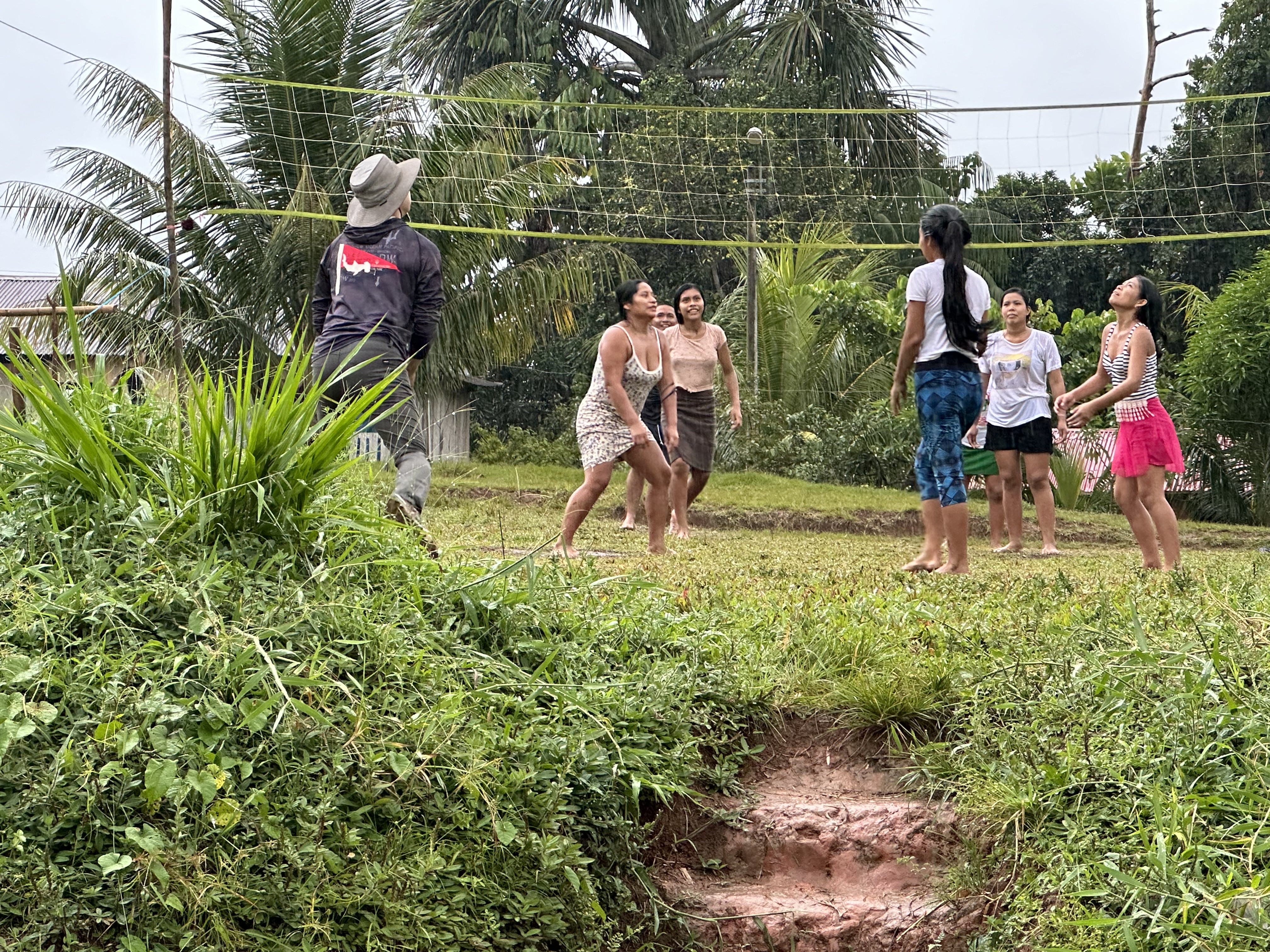
When we arrived I noticed a group of children playing ball in the local field and they seemed totally undeterred by the rain. They were fun to watch.
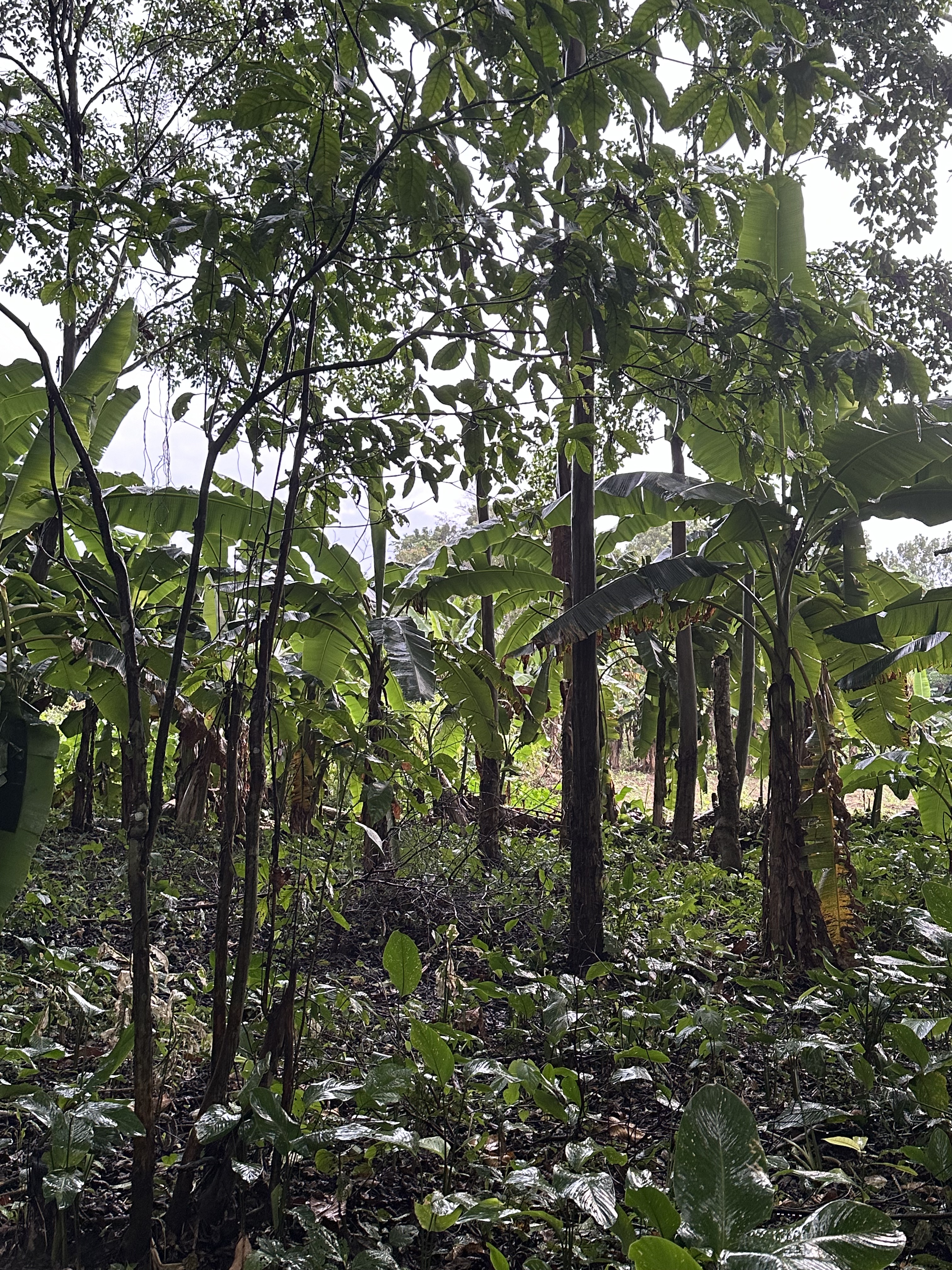
Playing volley ball in the rainThe beekeeper and one of his hives.Some of the hivesMore hivesA lush palm forest Slippery, muddy path back to the tenders.
Back at the ship, we cleaned up, went to the bar for a cocktail and then had dinner with Nancy and Bill. We were happy to turn in early.
Wednesday, July 10, 2024
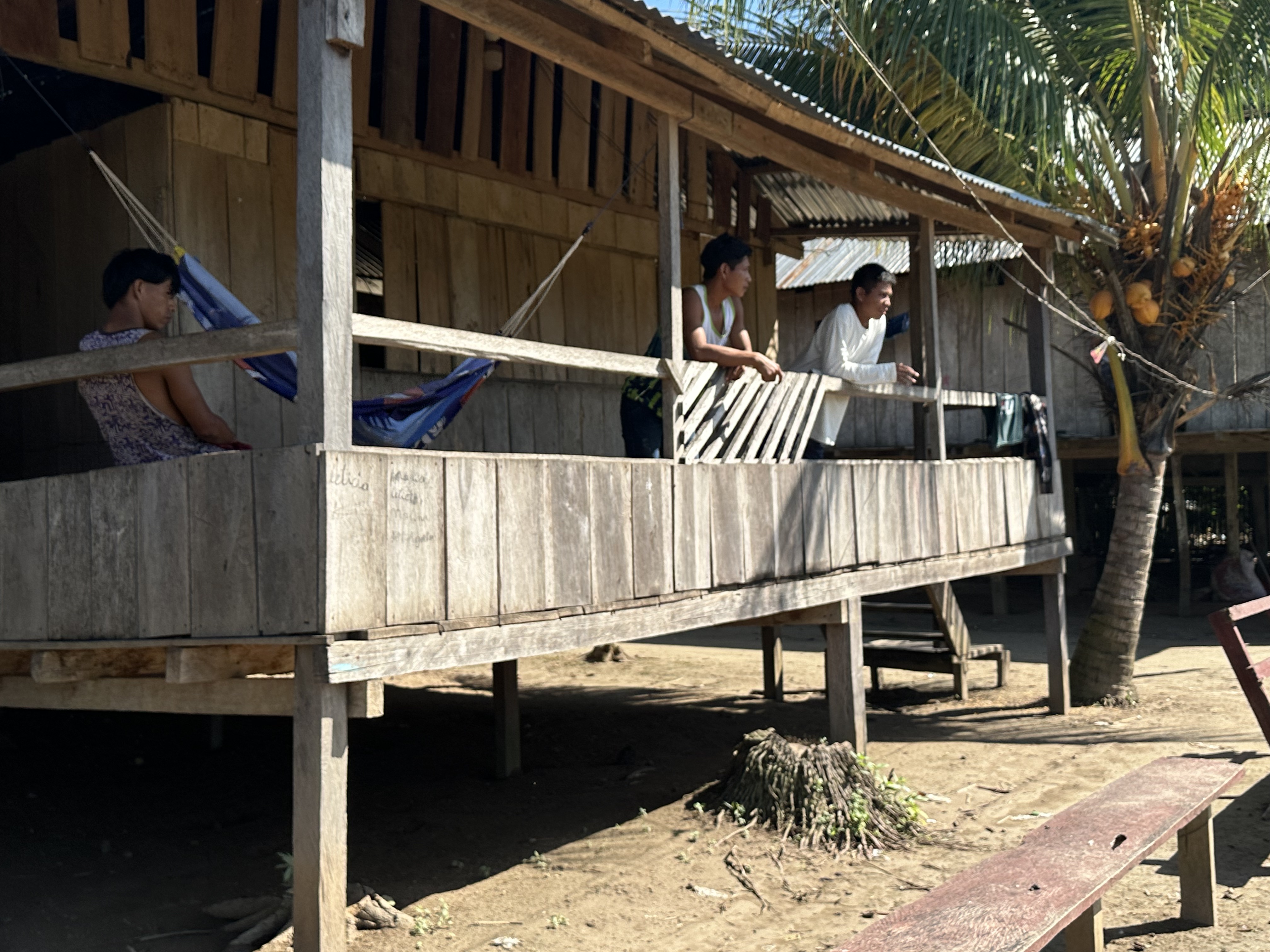
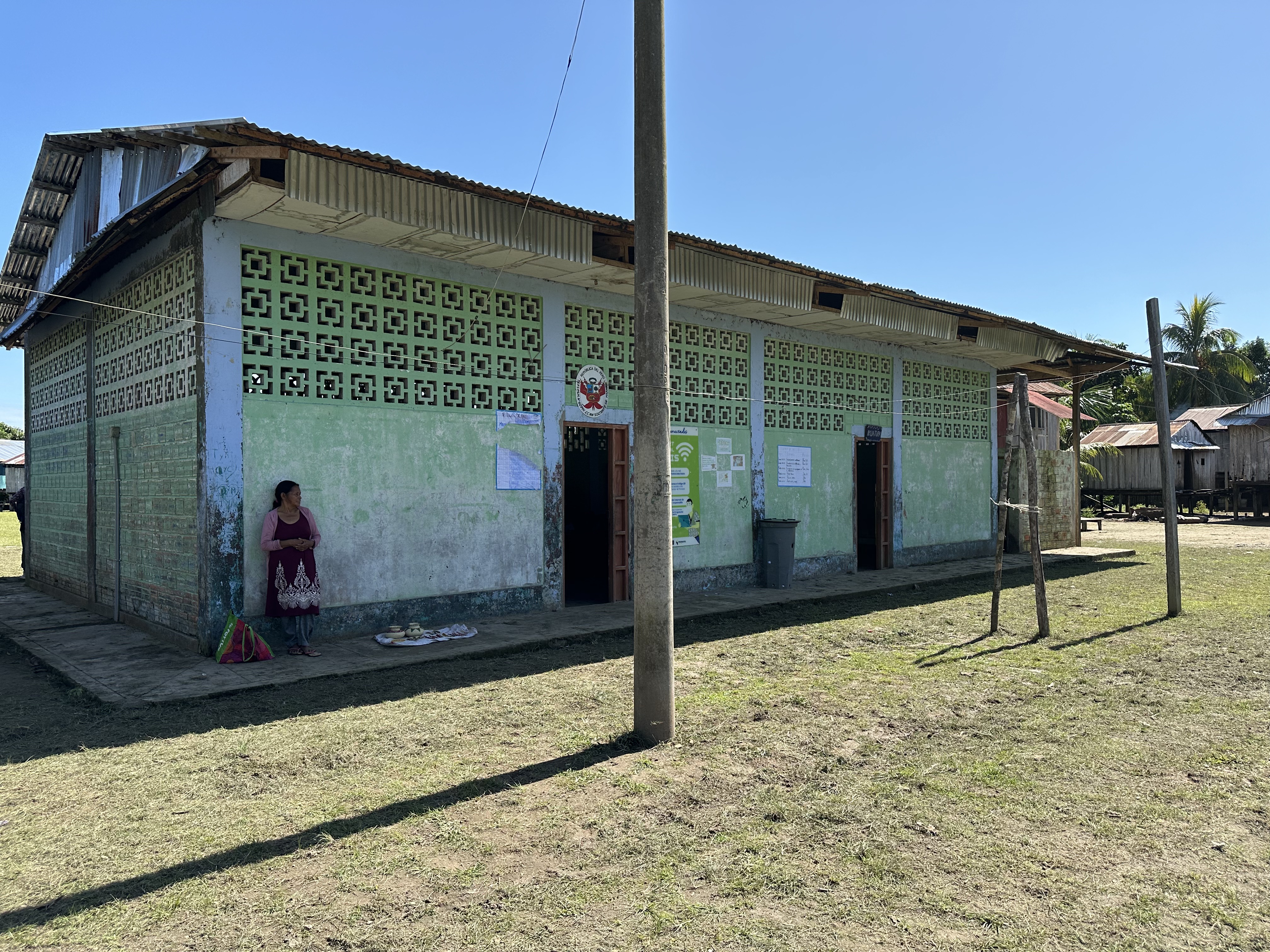
This morning we departed the ship at 9:30am for another village. This one is called Solterito and the residents were not expecting us. However, the village chief showed up to welcome us and show us around. He said there were 45 families in the village of about 200 people.
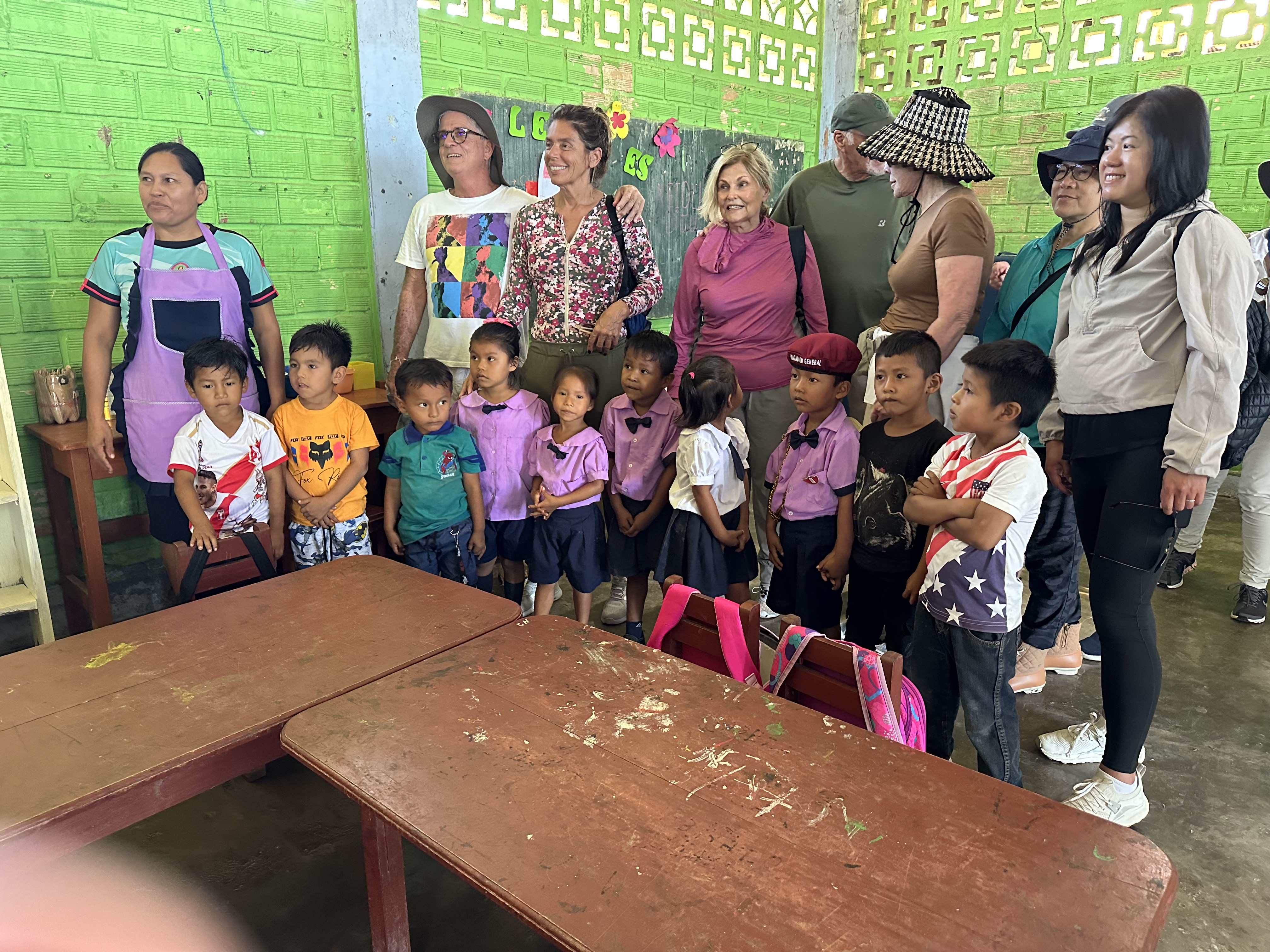
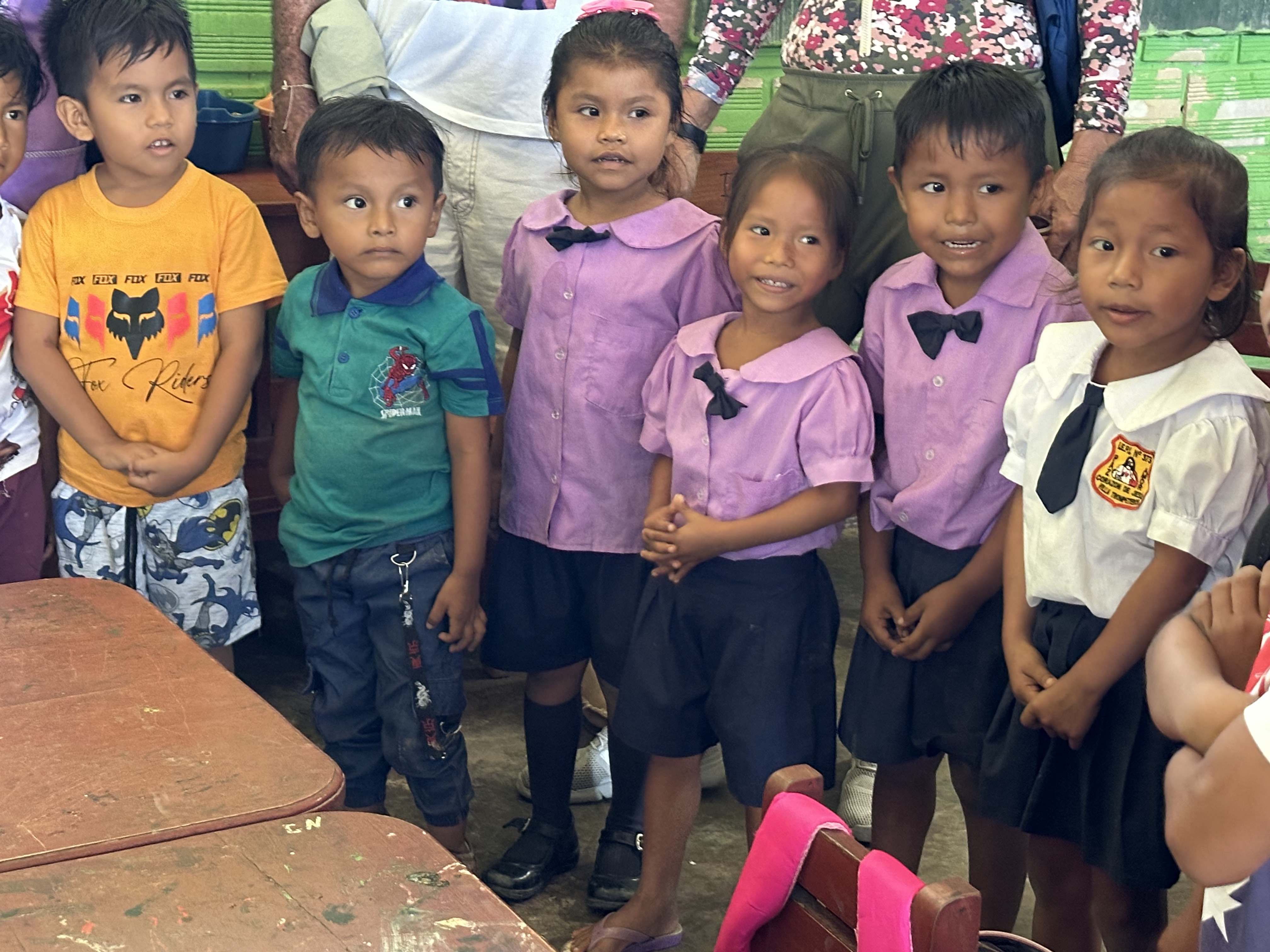
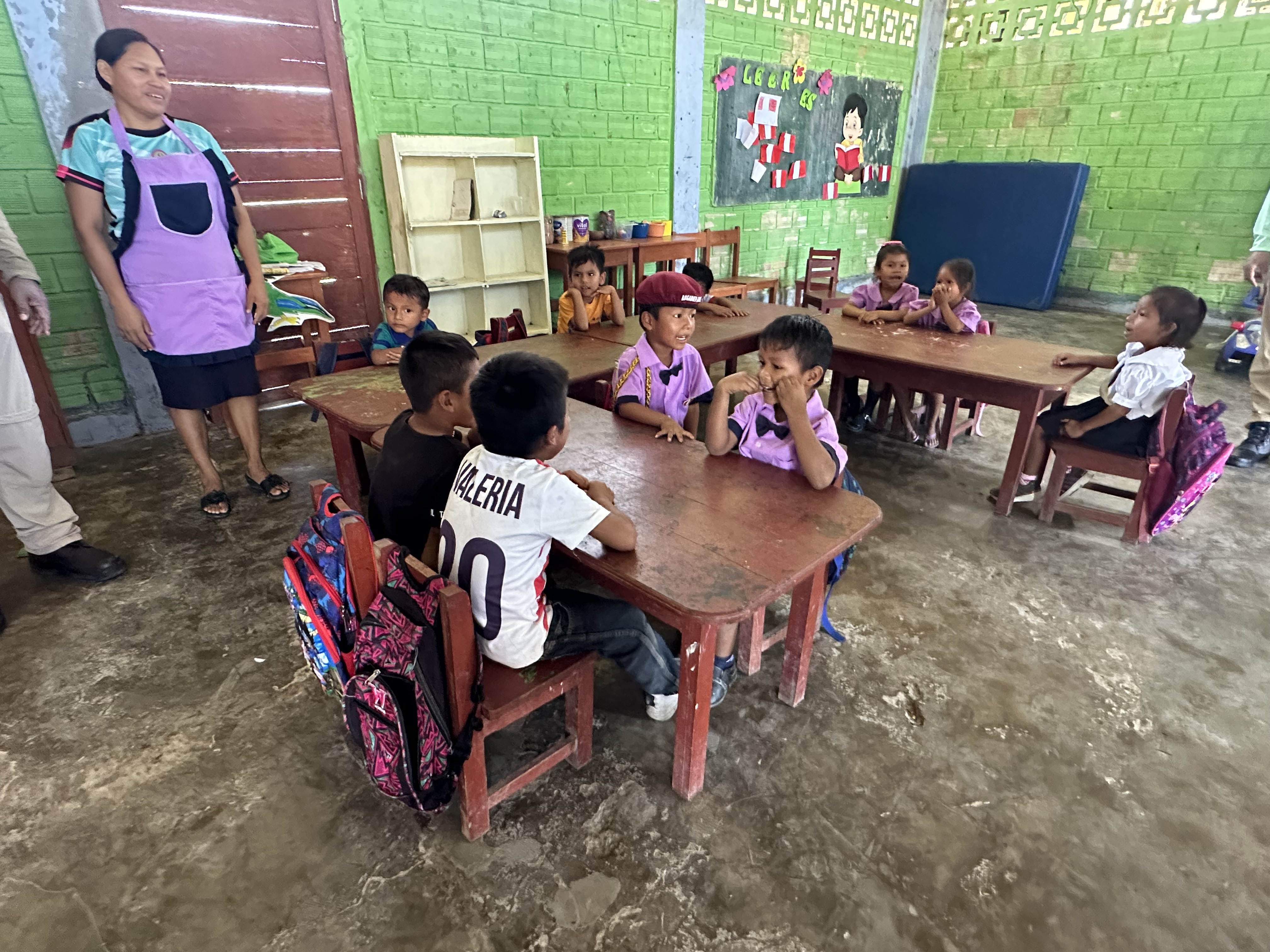
They all speak the local Kukama language and Spanish. The place looked very similar to the village we had seen the day before, with one exception. There was a building that housed a kindergarten classroom with about 14 students. Our guide engaged the kids in a game and a song and everyone was full of smiles. One lady in our group had brought pens and booklets for the kids and she presented the materials to the teacher.
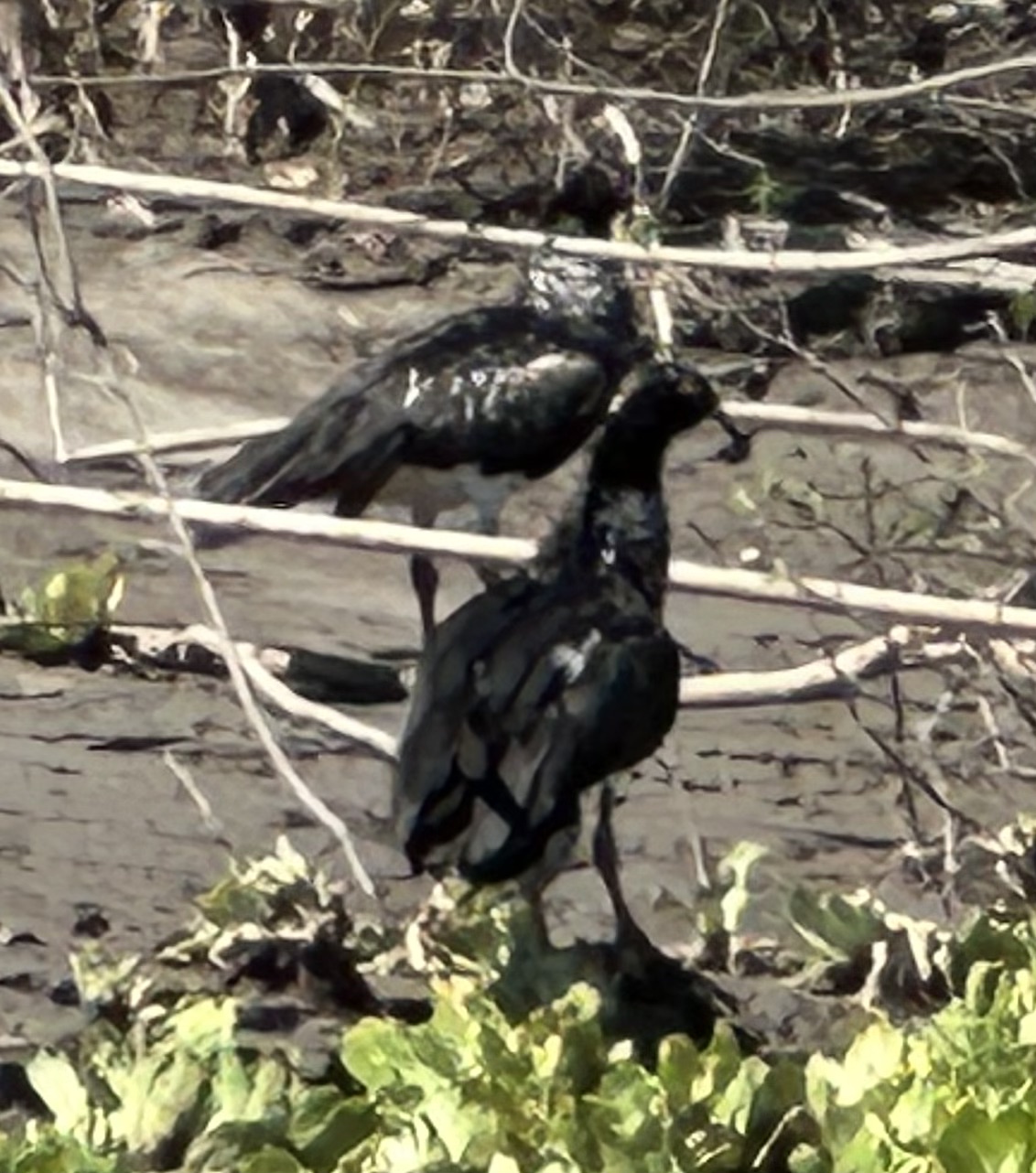
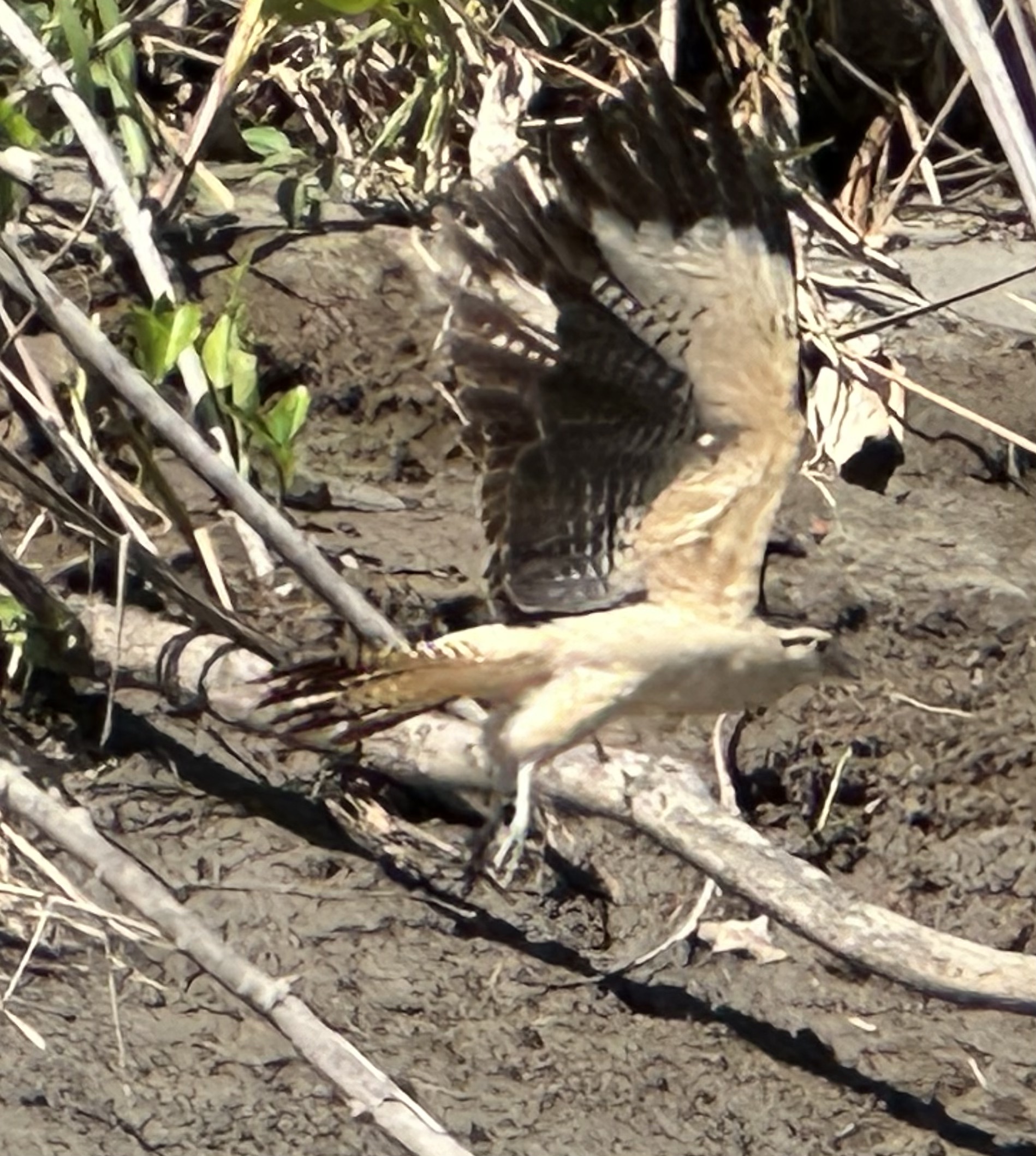
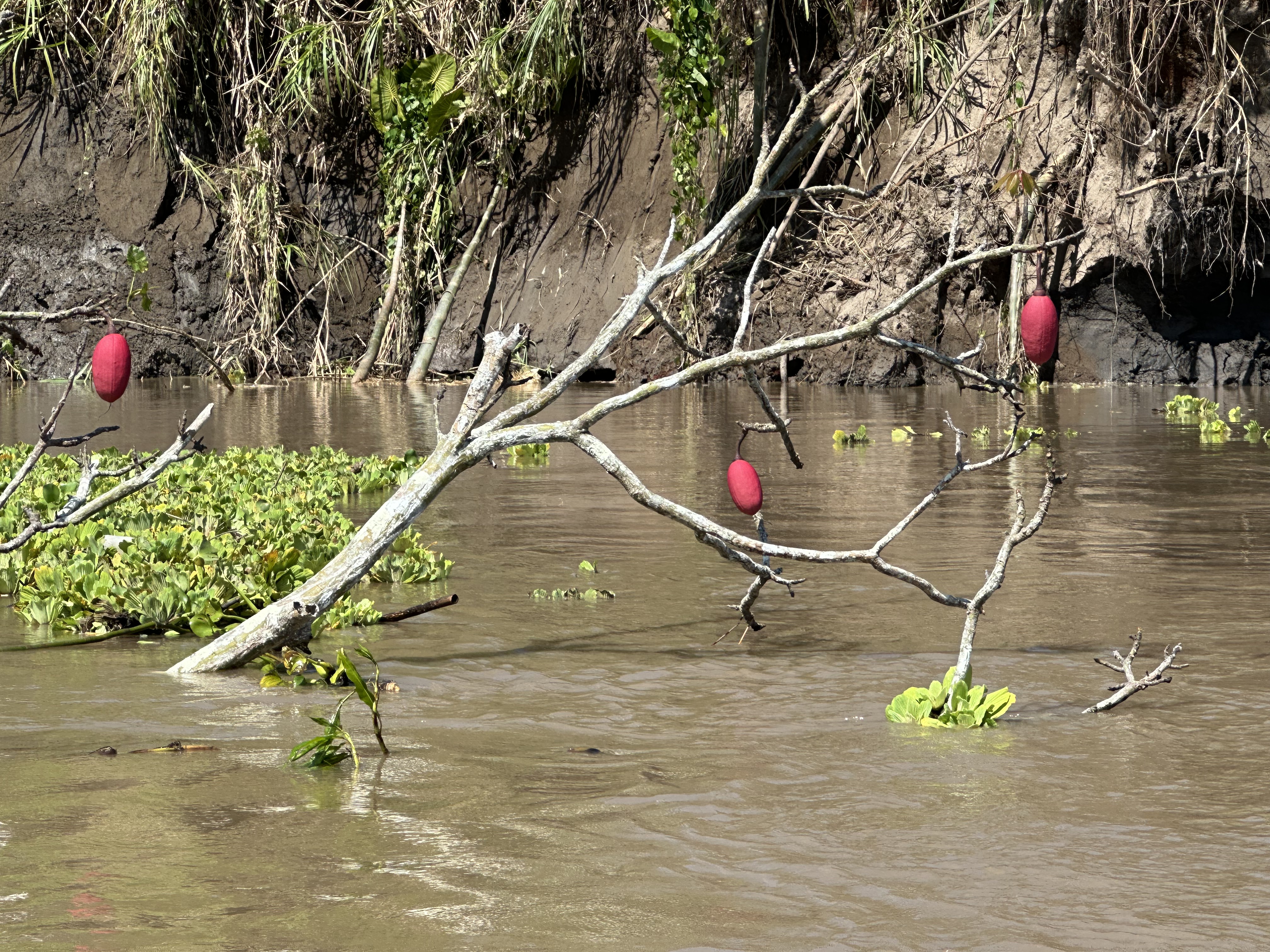
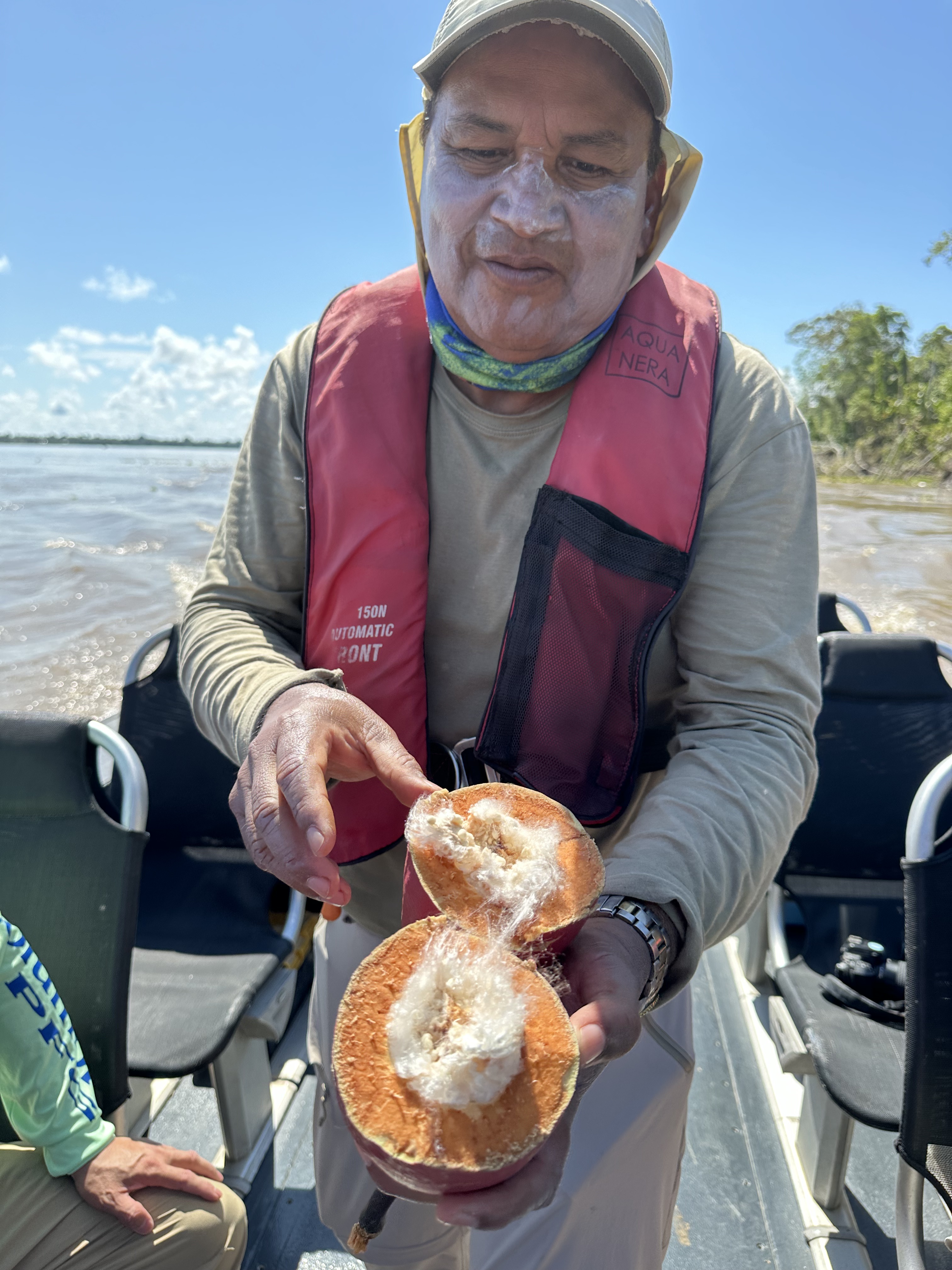
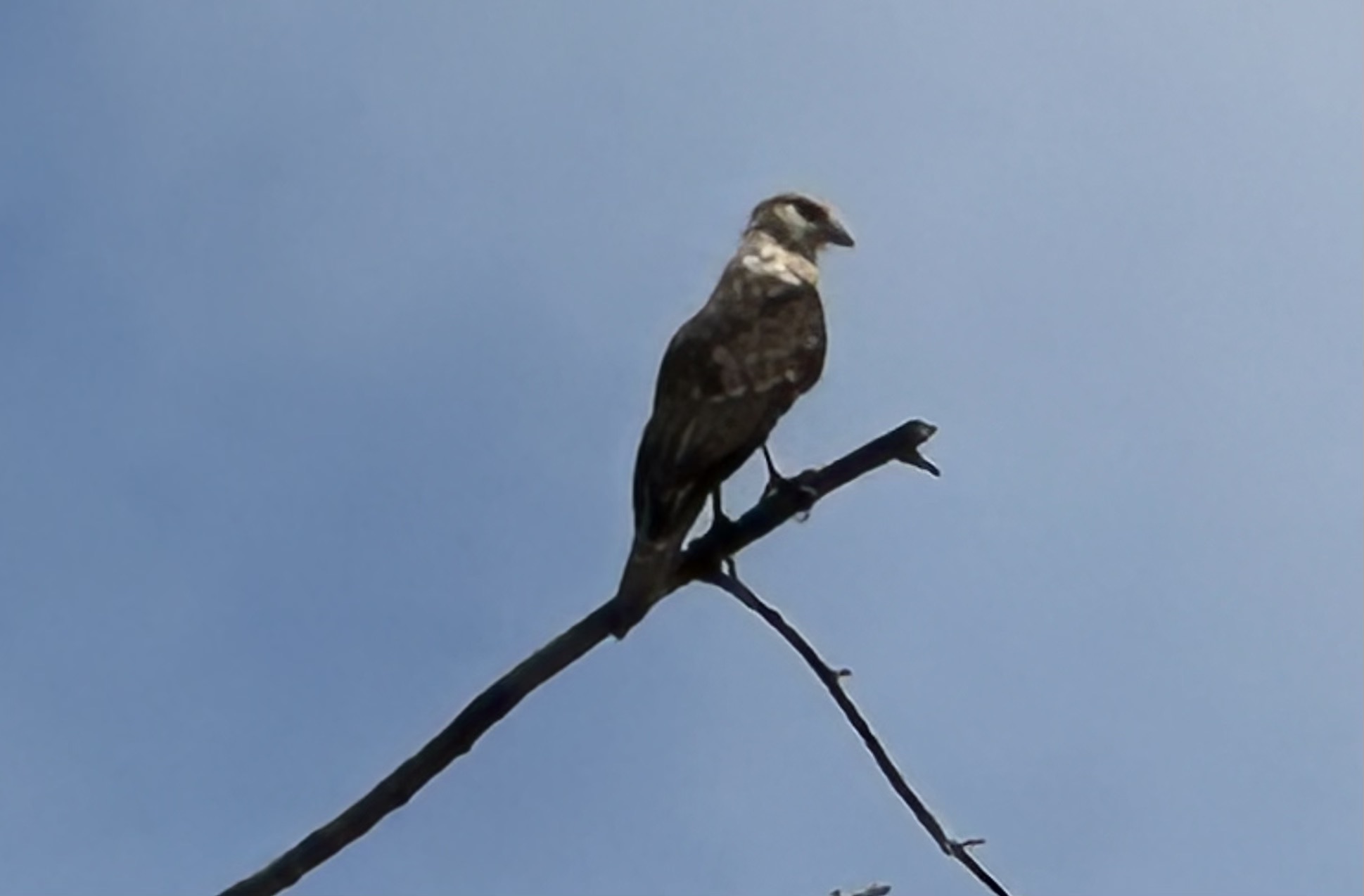
There were no other grades being taught. After awhile we headed back to the tenders and motored across the channel to look for wildlife. Our guide, Juan, spotted a pair of Horned Screamers that are nicknamed Donkey Birds because, according to him, “they walk like a duck, fly like a vulture, sound like a donkey and taste like a chicken”. I got a poor shot of them, but then captured a nice image of a Yellow-headed Cara Cara bird taking off. Near this scene was a downed Kapok tree with some fruit still attached to a limb. Juan ripped one off the limb, cut it open and showed it with is. It had a cotton like substance in the middle as well as some seeds that parakeets eat and a very hard, thick reddish core. The cotton is used on the darts of a blow gun.
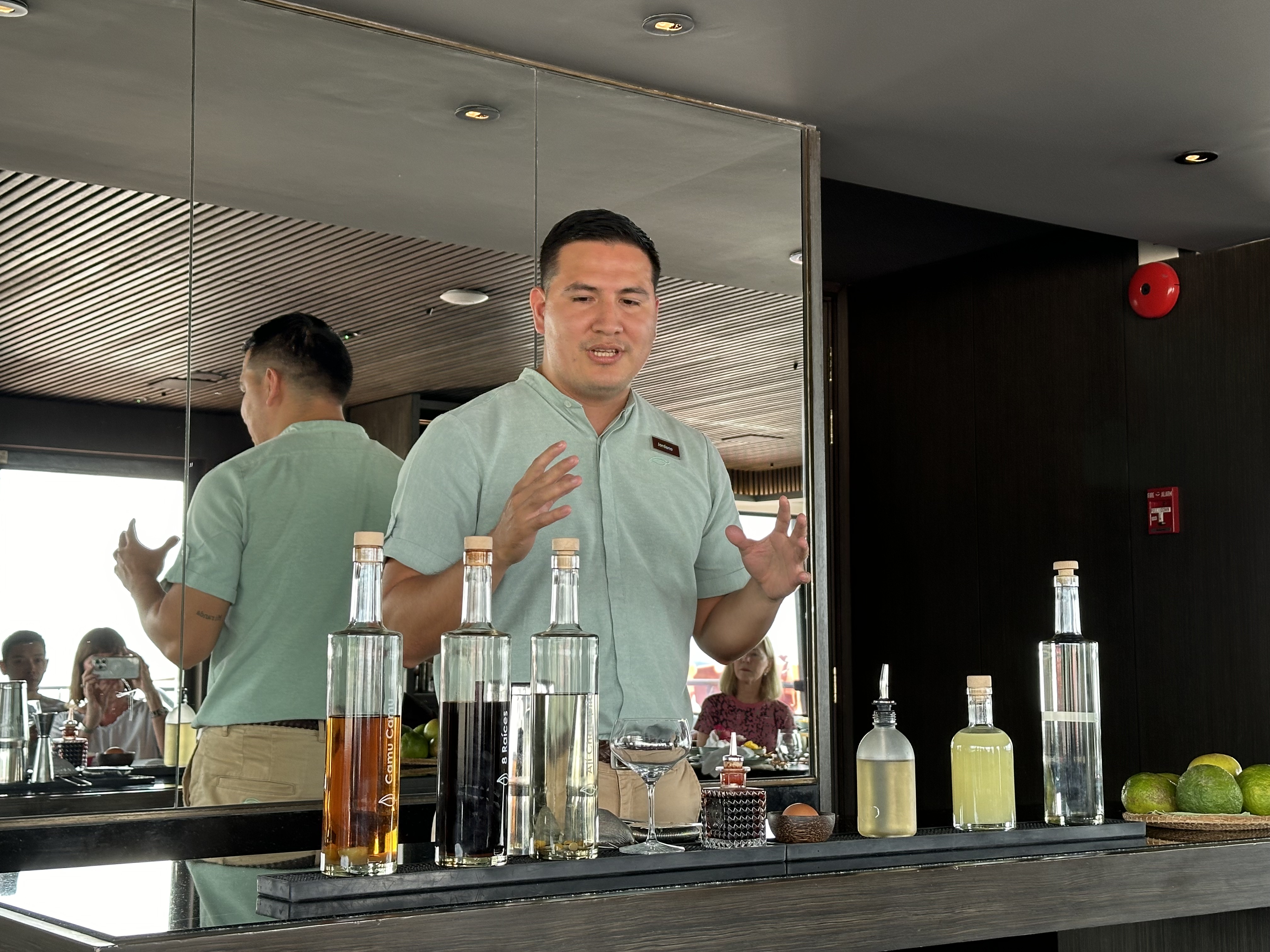
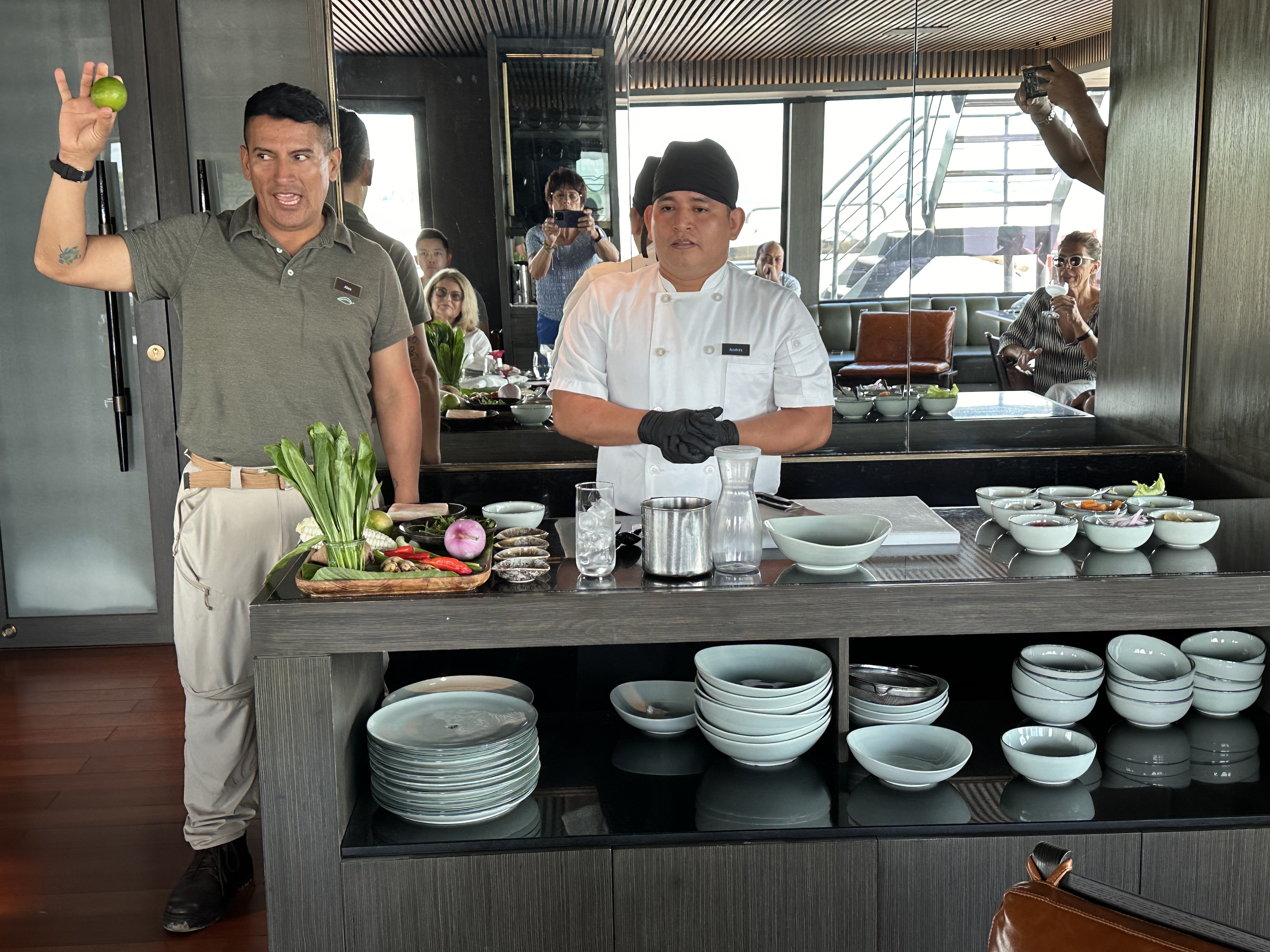
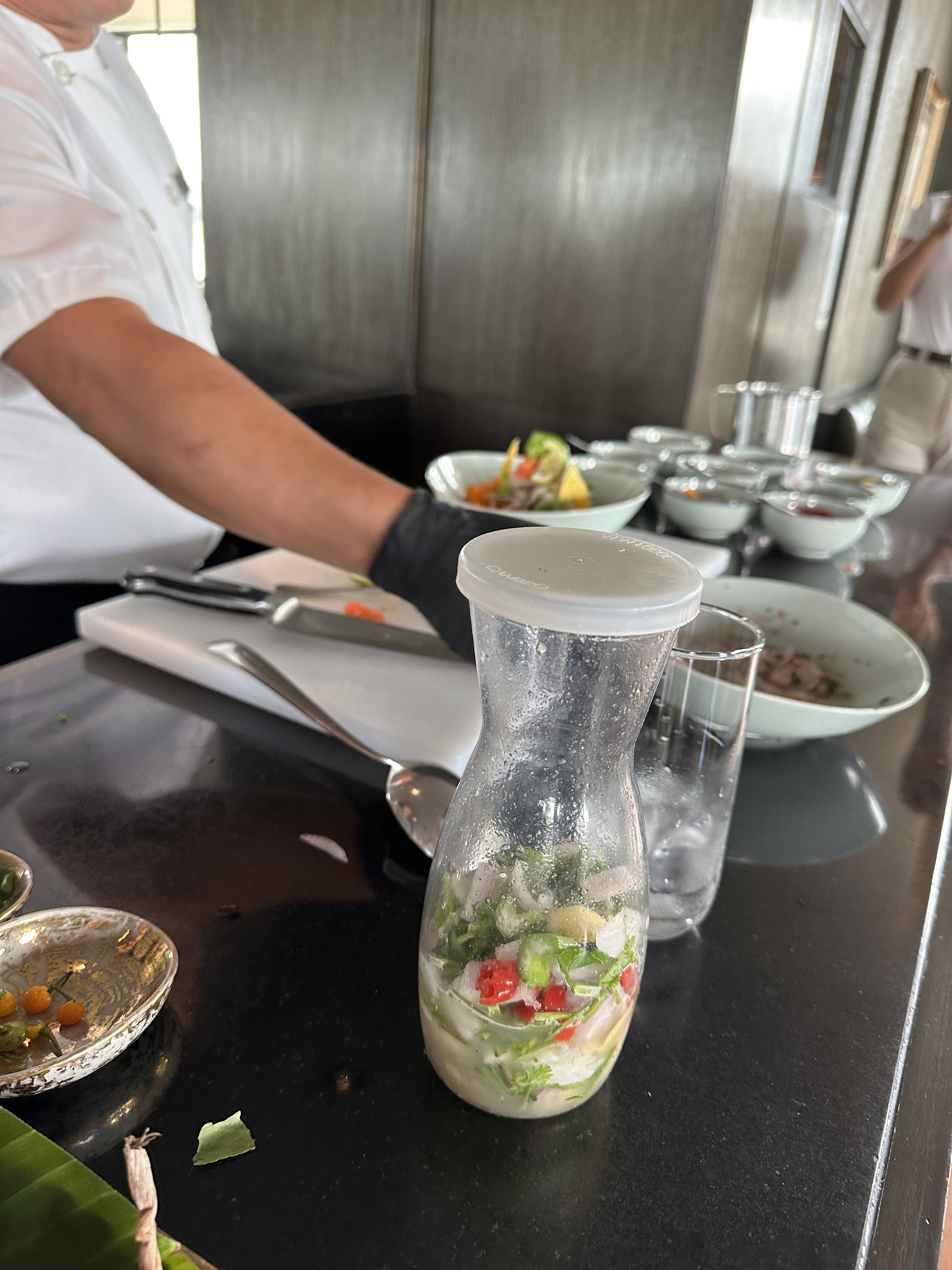
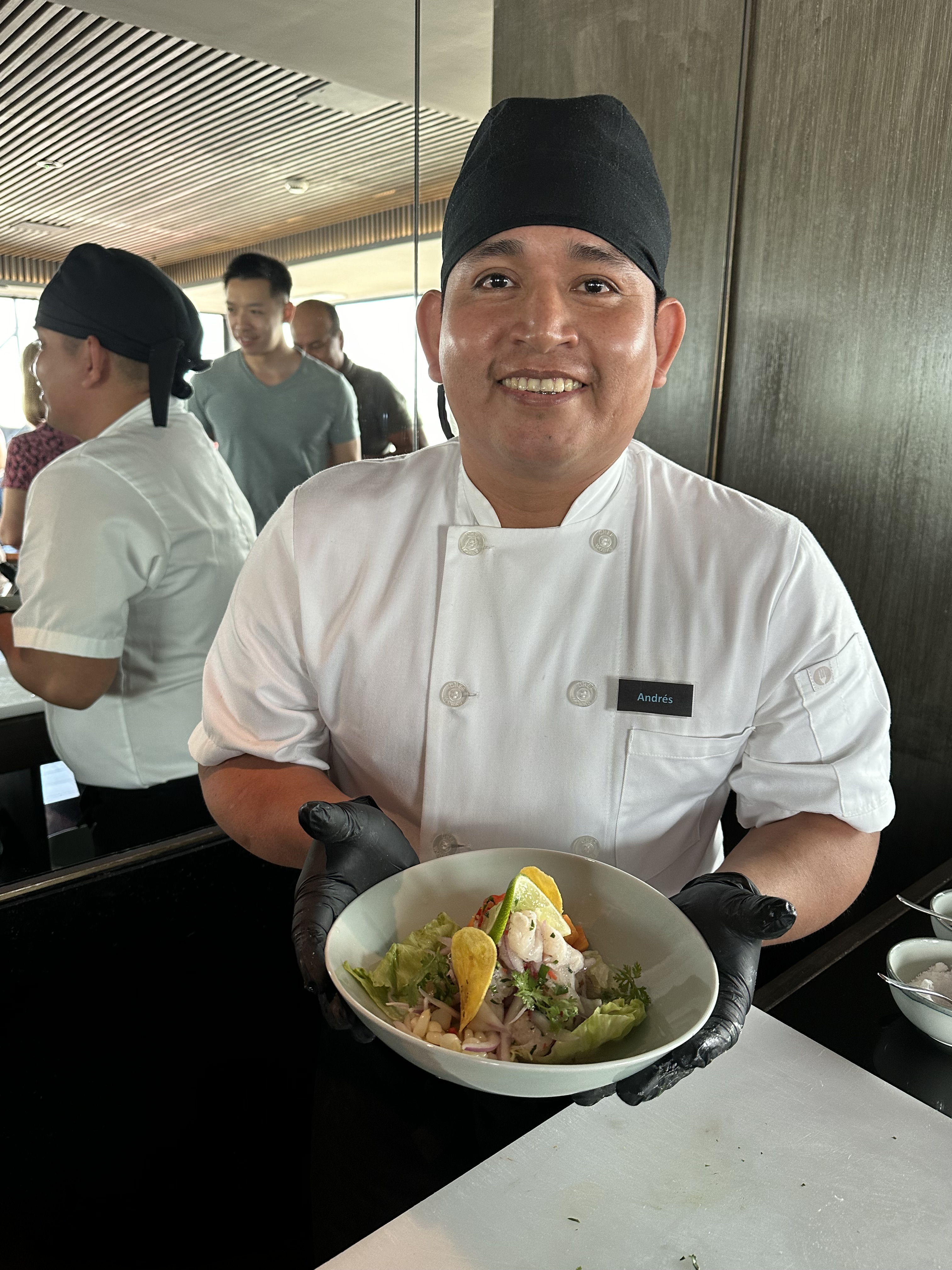
Back at the ship we were treated to a Pisco Sour demonstration by the bar tender as well as a ceviche creation by the chef. Then lunch was served. One ceviche was more than enough lunch for me.
THE BARTENDER EXPLAINING HOW TO MAKE A PISCO SOURCHEF ANDRE MAKING A PANICHE FISH CEVICHETIGERS MILK MARINATINGANDRE’S PANACHE CEVICHE
Panache is the world’s largest edible white fish. It was reasonably tasty.
After lunch we relaxed until 3:30. A few of us went out in the skiff again, to look for Macaw birds. I saw a few sitting in holes in dead palm trees, but nothing I could photograph well. I did learn that the plants floating on the water are water lettuce and that they are liked by the large bird called a Horned Screamer.
Juan cracked open a Kapok seed for us to see its insides. The fluffy white stuff was like cotton and there were seeds inside that some birds eat.
Horned Screamer birdsYellow-Headed Cara Cara BirdSeeds from a dead Kapok treeJuan shows us the inside of a Kapok seed
Back at the boat we joined a group for cocktails and 8 of us sat together for dinner. It was a pleasant evening with good food and lots of laughter.
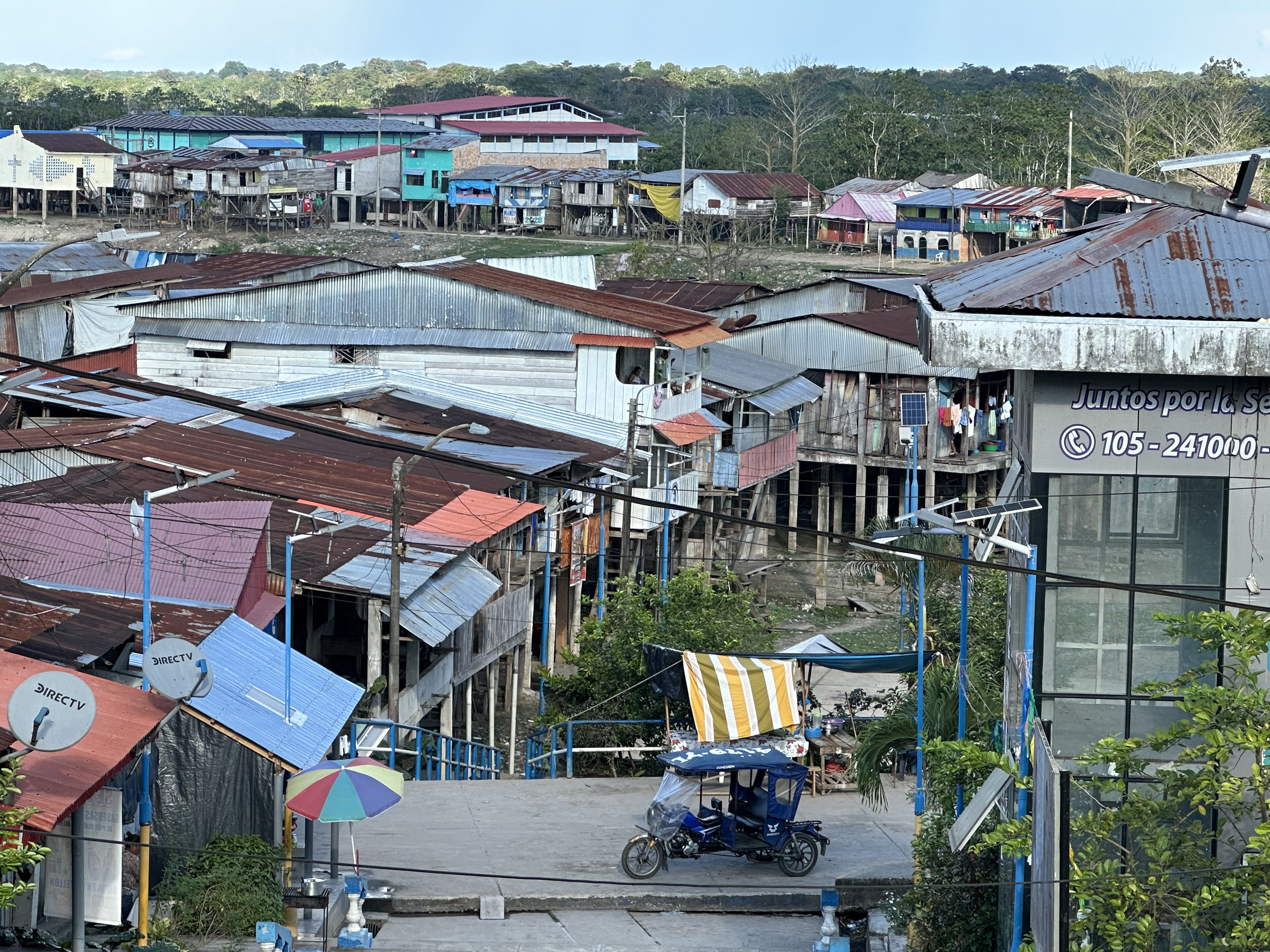
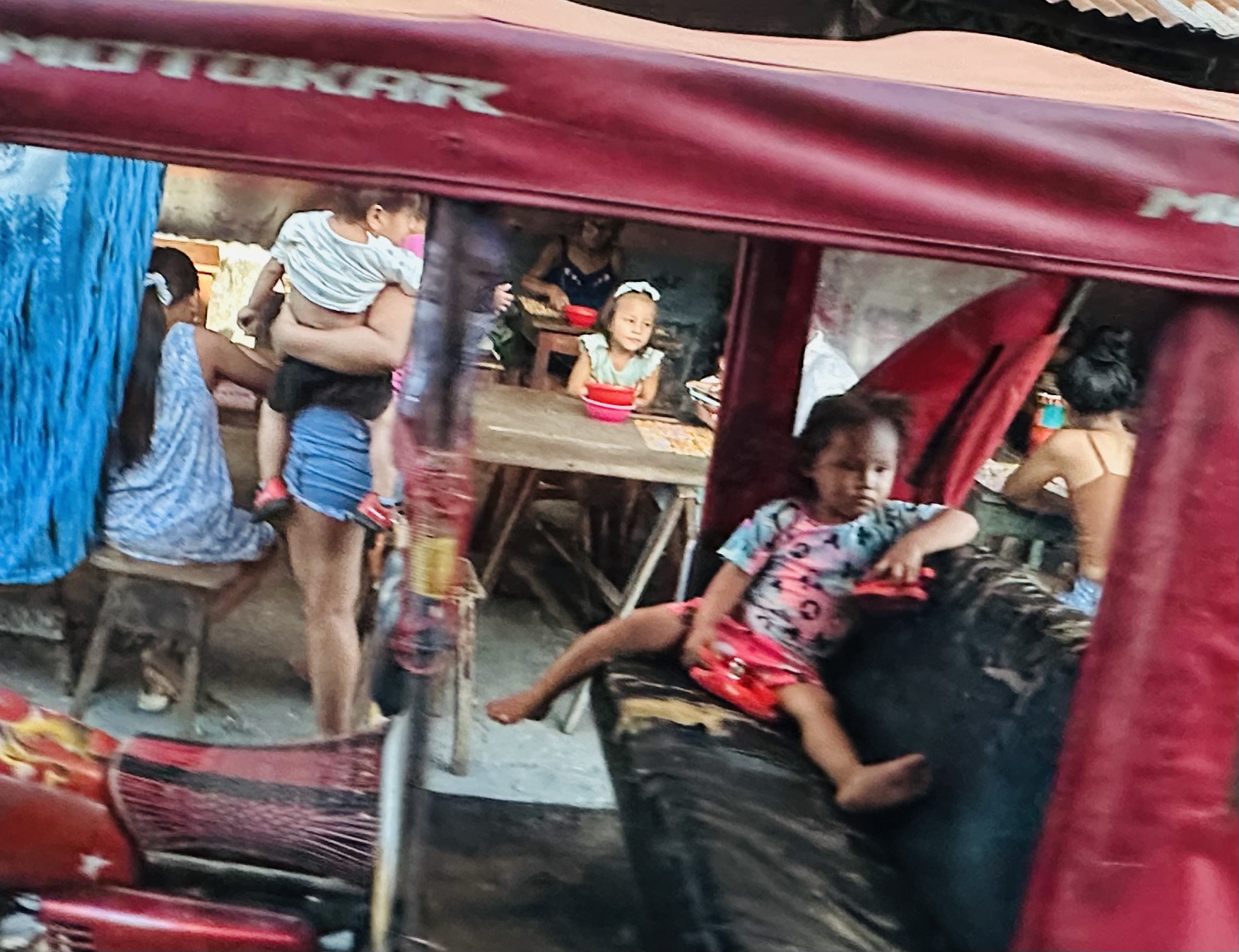
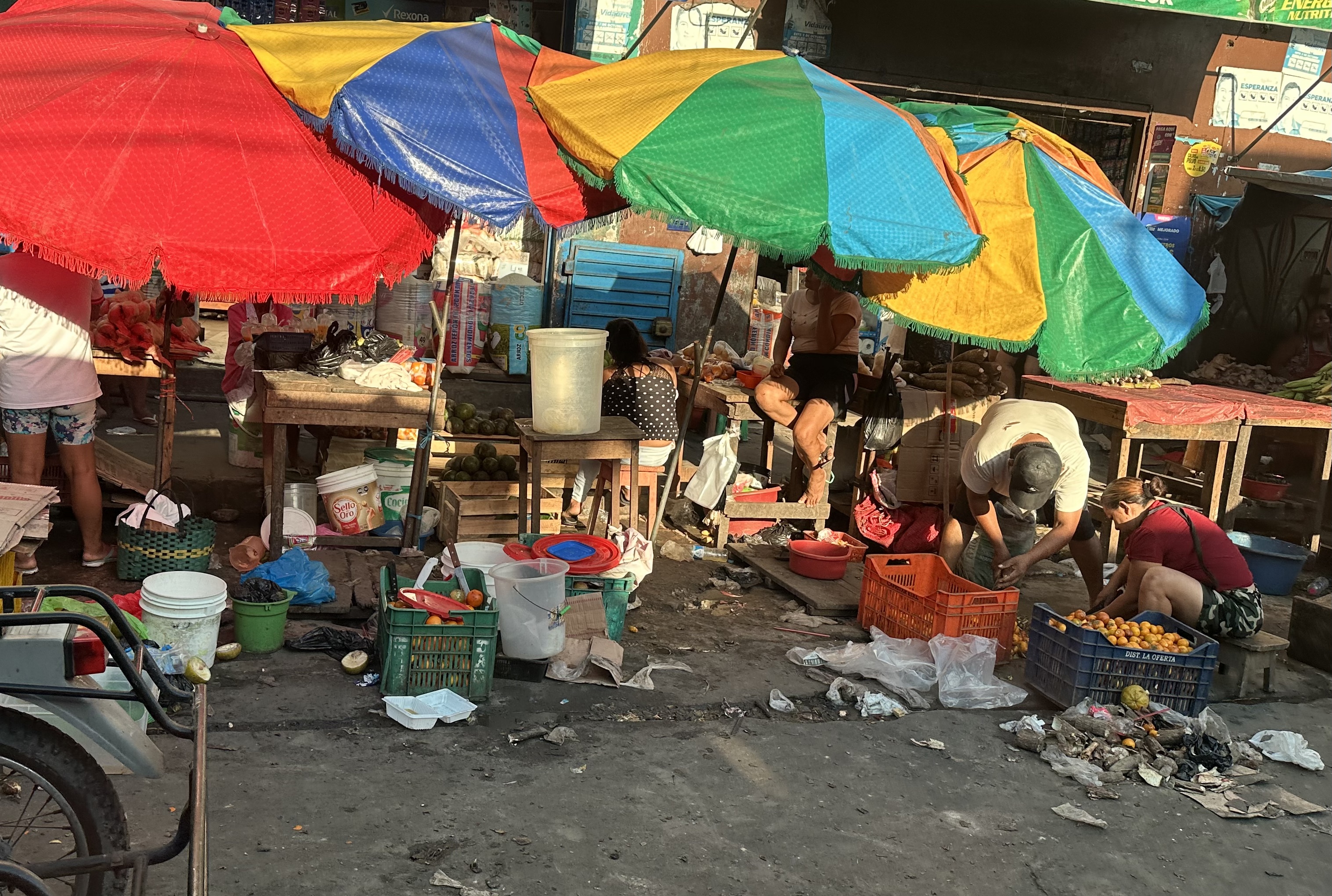
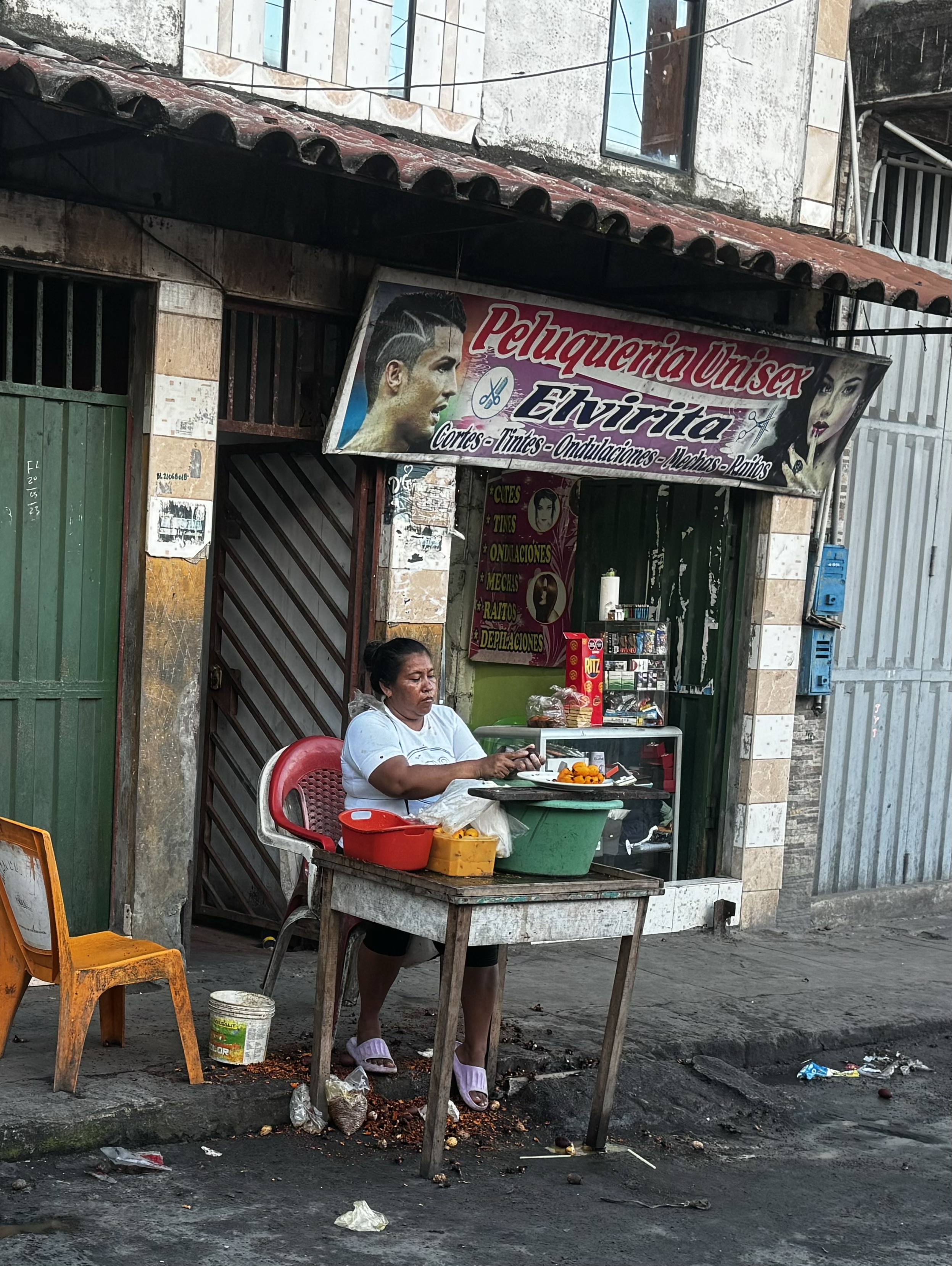
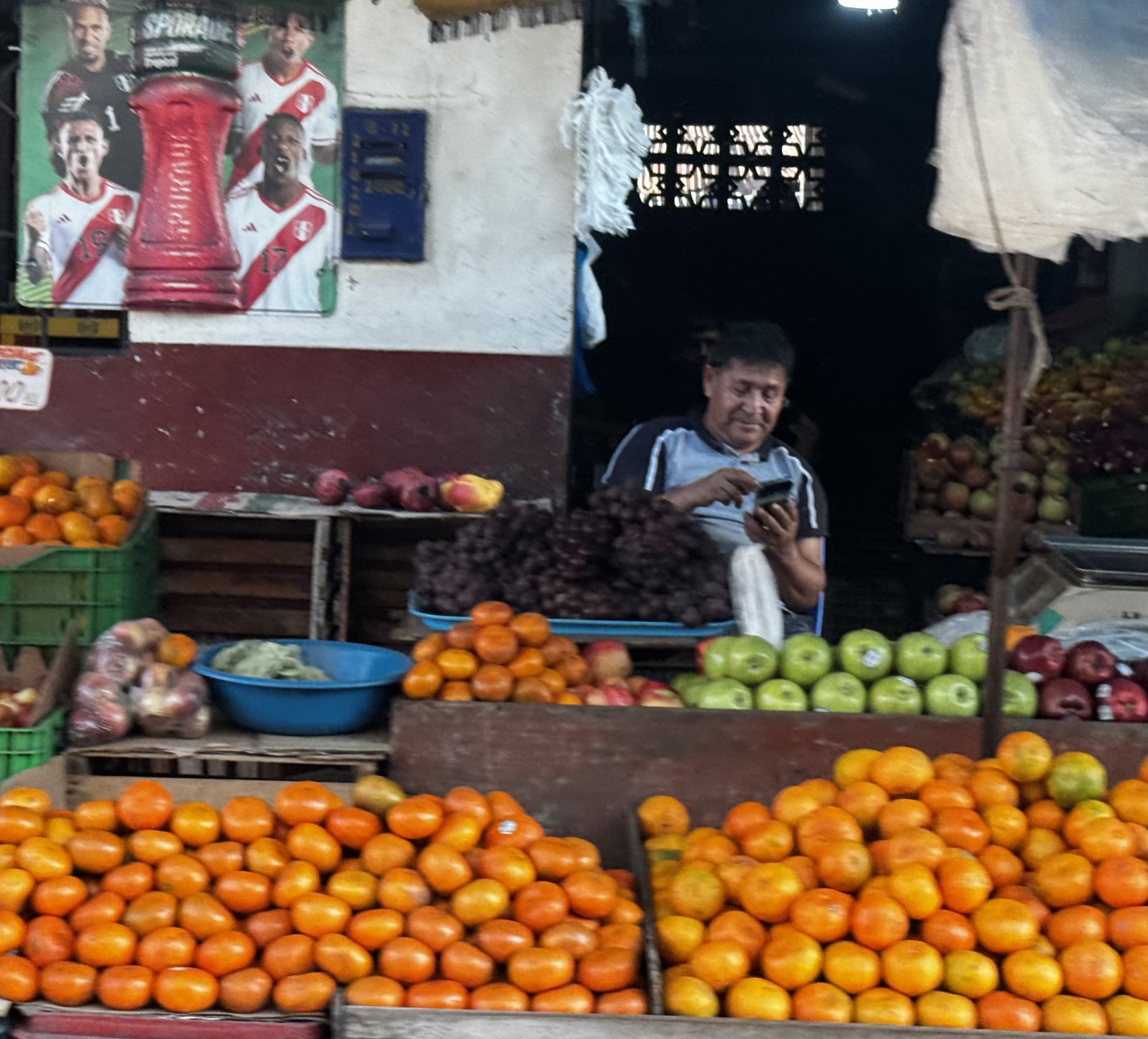
Had a relaxed morning, yesterday, while waiting for our 10:30 am ride to the airport followed by more waiting for our 1;30pm flight to Iquitos. The flight was almost 2 hours followed by a slow bus ride touring through Iquitos while waiting for our 5:30pm boarding time on the Aqua Nera. It was interesting to see the city of half a million people, who are mostly marooned. We took many photos of the pre-colonial buildings, the stilt houses, the hundreds of tuktuks, the huge fruit and vegetable markets, the multitude of people milling about, and more. We learned that people shop every day for their food needs and then cook it the same day, even though they have refrigeration. As much as anything else, it appears to be a social experience.
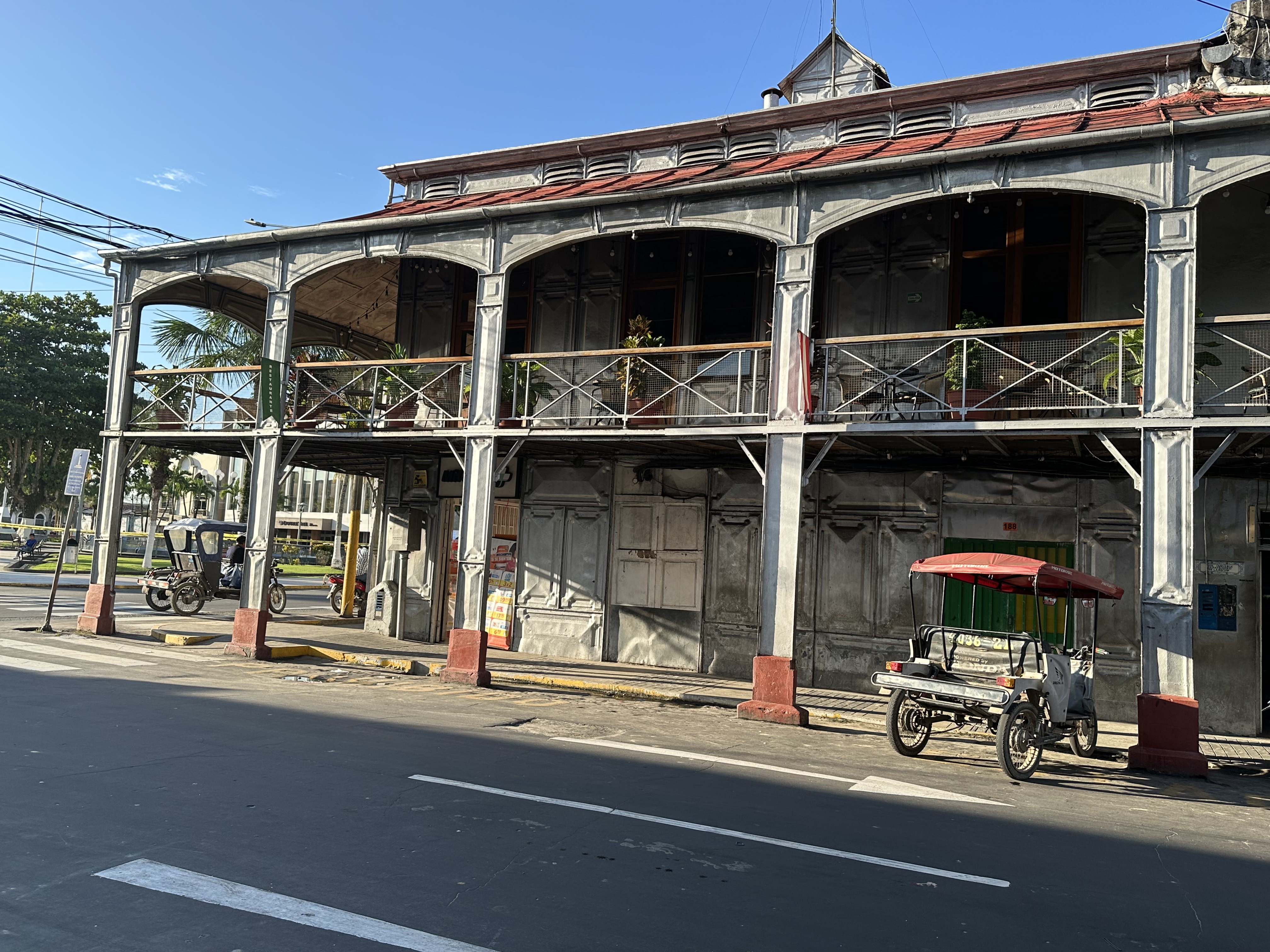
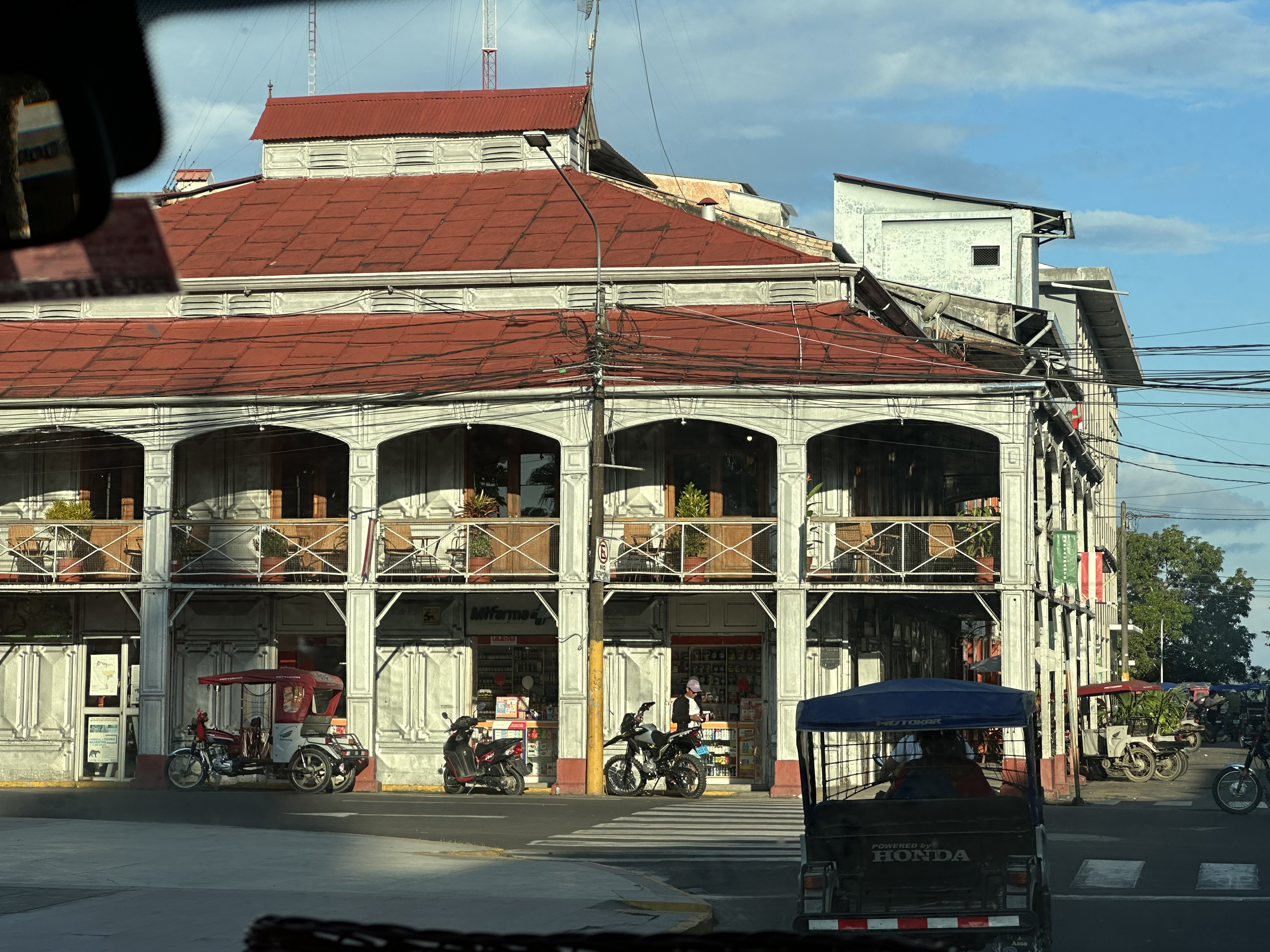
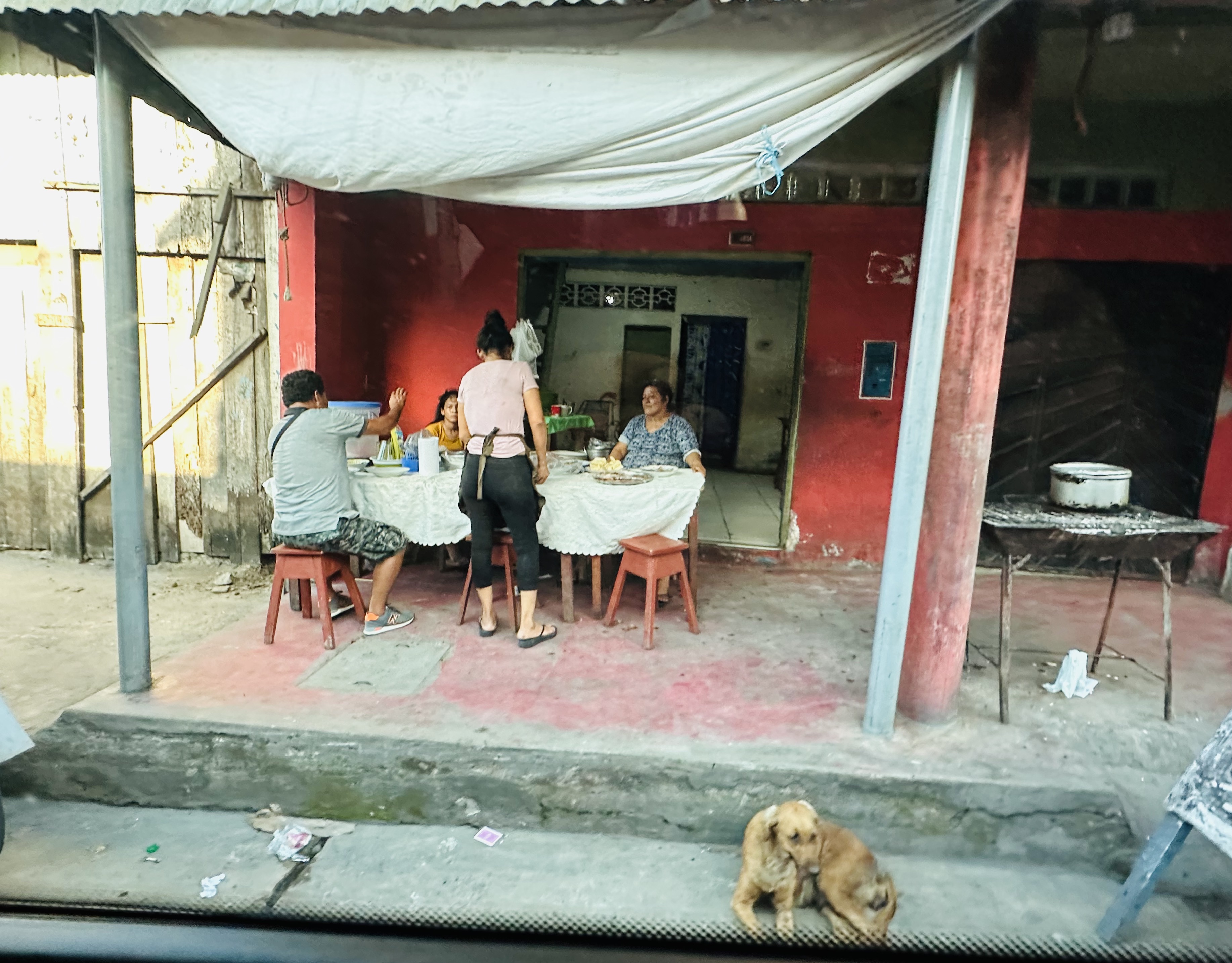
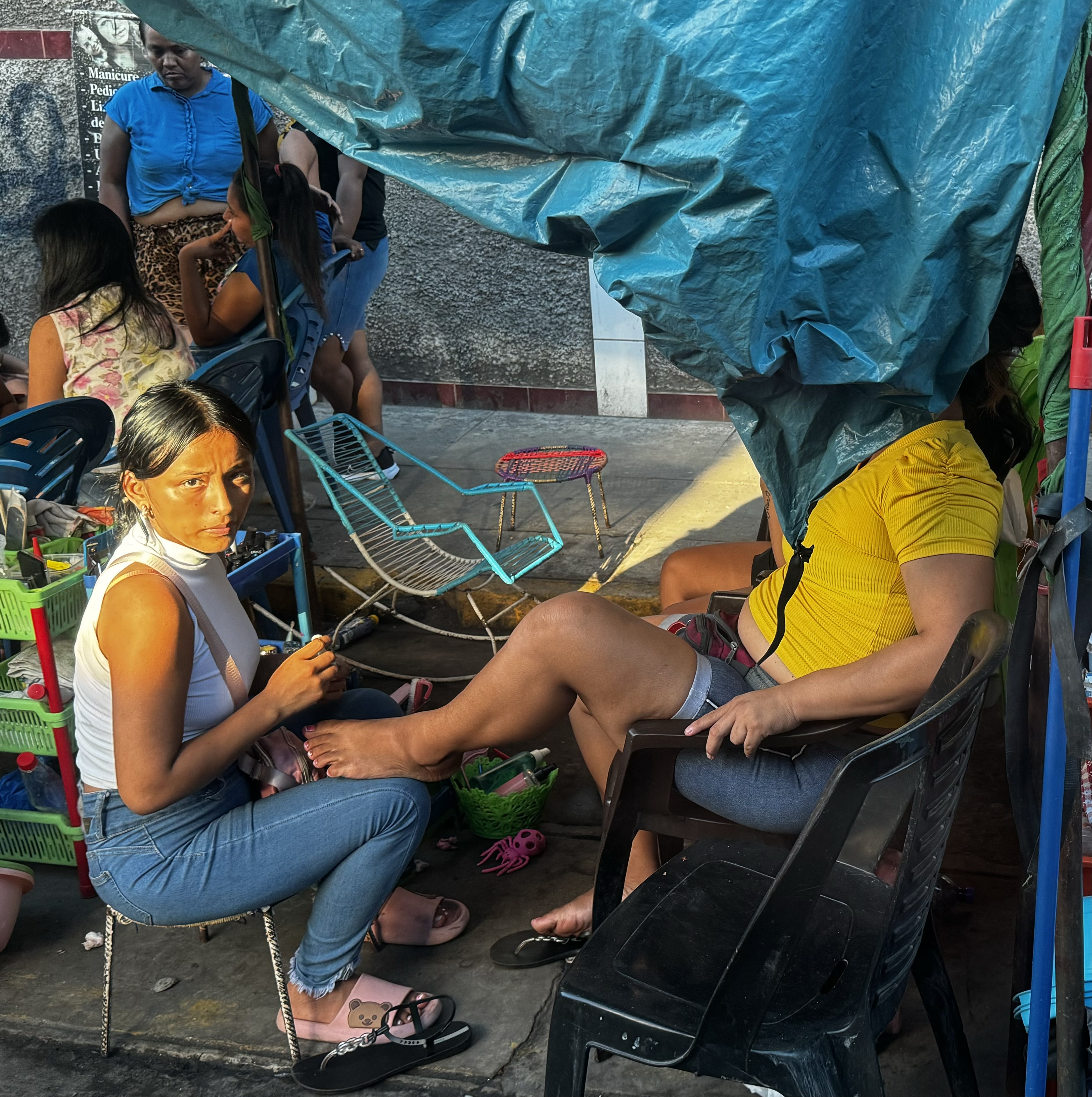
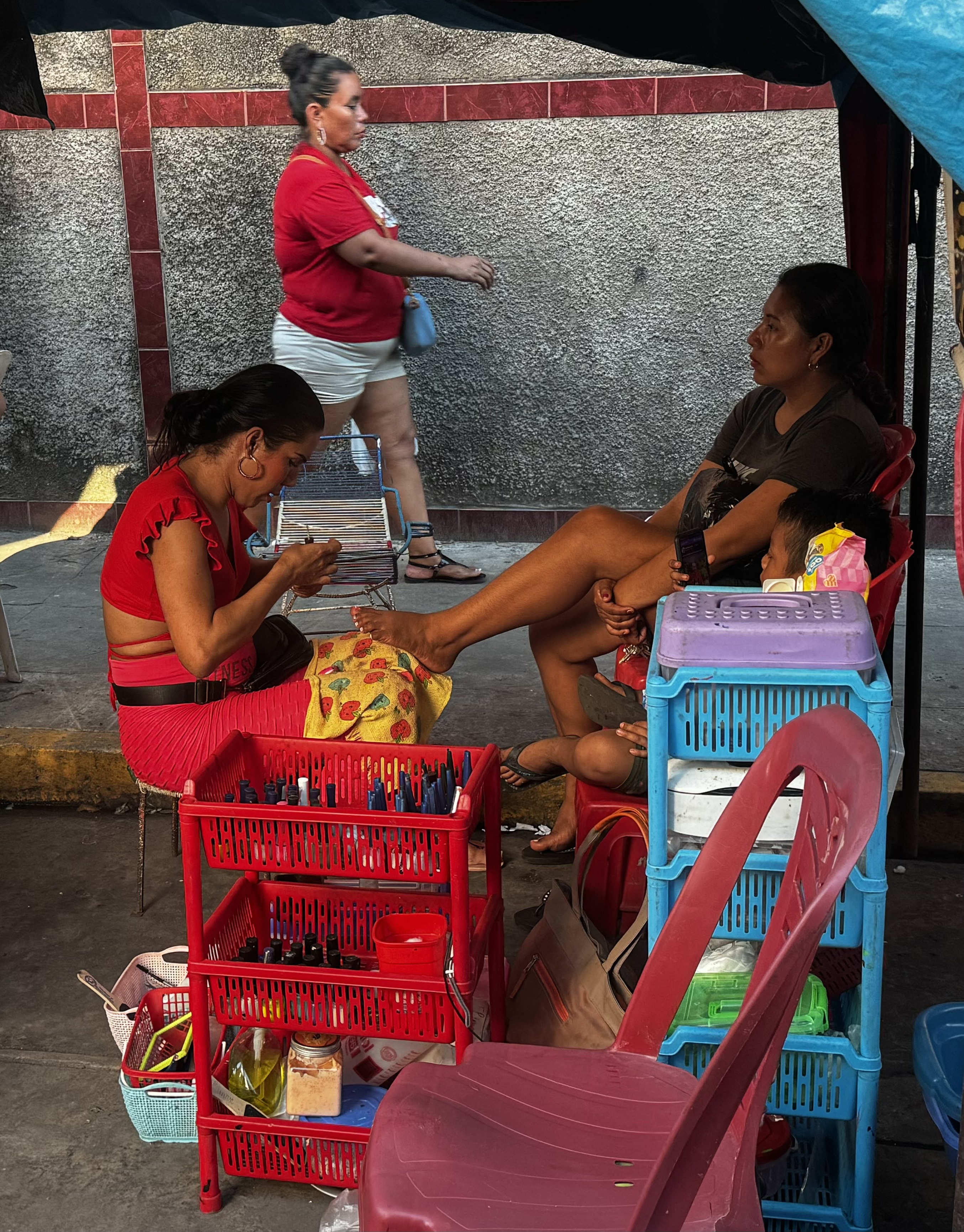
Life happens on the streets in Iquitos. Stores are open from 6am to 7pm daily. Art, beauty, eating, visiting, playing and marketing all take place on the streets. There were three industries during the 1800’s; rubber, timber and petroleum. The rubber barrens really struck it rich and built fancy houses in the city. We were told the wives of these men sent their dirty laundry to Europe to be cleaned rather than put it in the brown river. It took 4 months for the clean laundry to be returned. One baron had a French, Eiffel designed house dismantled, shipped and rebuilt in Iquitos. It is the house in the above collection with the red roofed tuktuk in the right of the photo. The house below that is reputed to be the first hotel built in Latin America. Chinese people arrived during the 1800’s to work in the rubber industry. Many stayed and are currently in the restaurant business throughout the city.
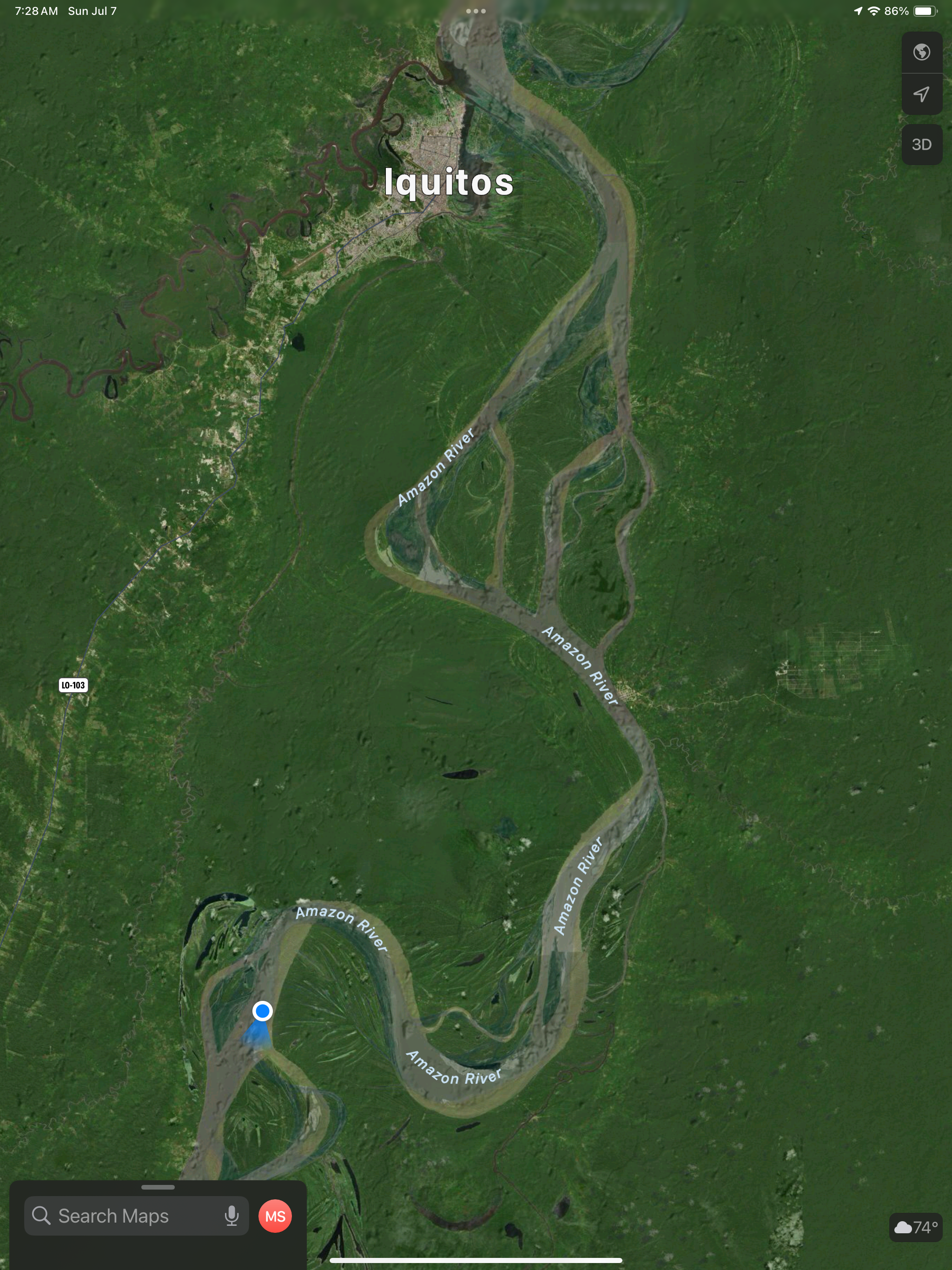
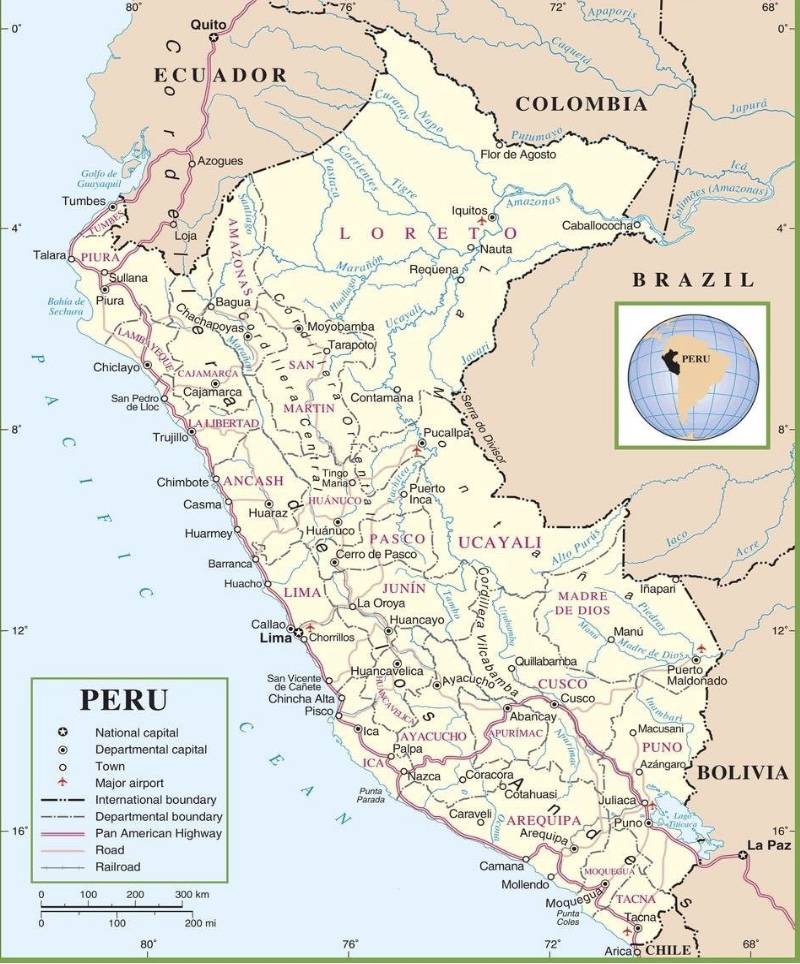
Iquitos cannot be accessed by road as there are none. One can either fly in from Lima or drive for three days to the town of Pucallpa and then boat down the Amazon River for 5 days to Iquitos. As you might expect, it is very expensive to live In Iquitos. The name means “people surrounded by water”. The main rivers are the Amazon and the Italia, which cuts through the city. The Amazon was redirected away from the city to reduce flooding. The longest road in Iquitos is 8 kilometers. The district of Belen is home to 38 thousand families living in houses on stilts to be above the flooding.The government considers these illegal residences. Below is a map of Iquitos and the Amazon. You can make out the Italia River curving around the west of the city. As you can see, there are no roads outside the city.
July 7, 2024
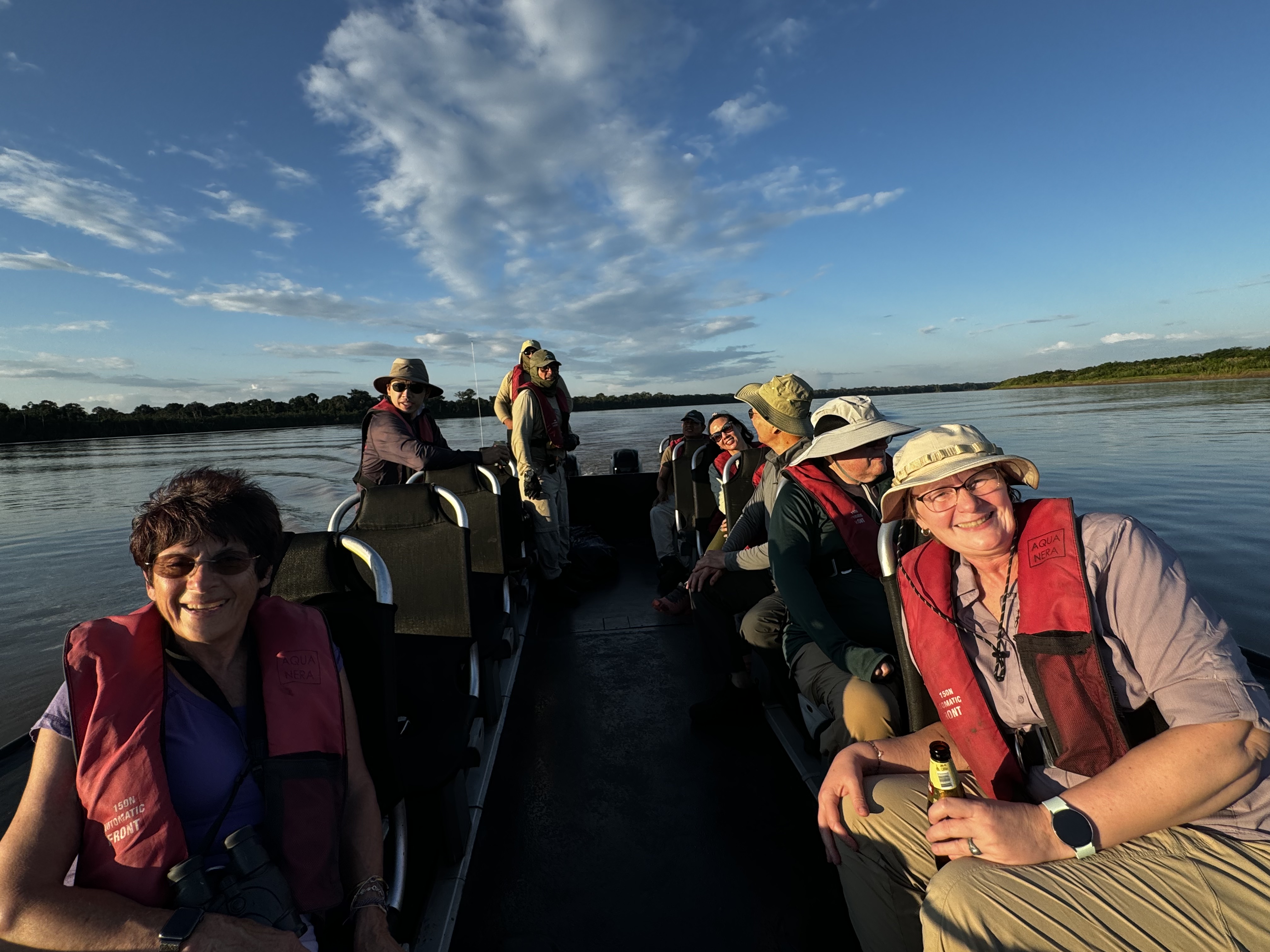
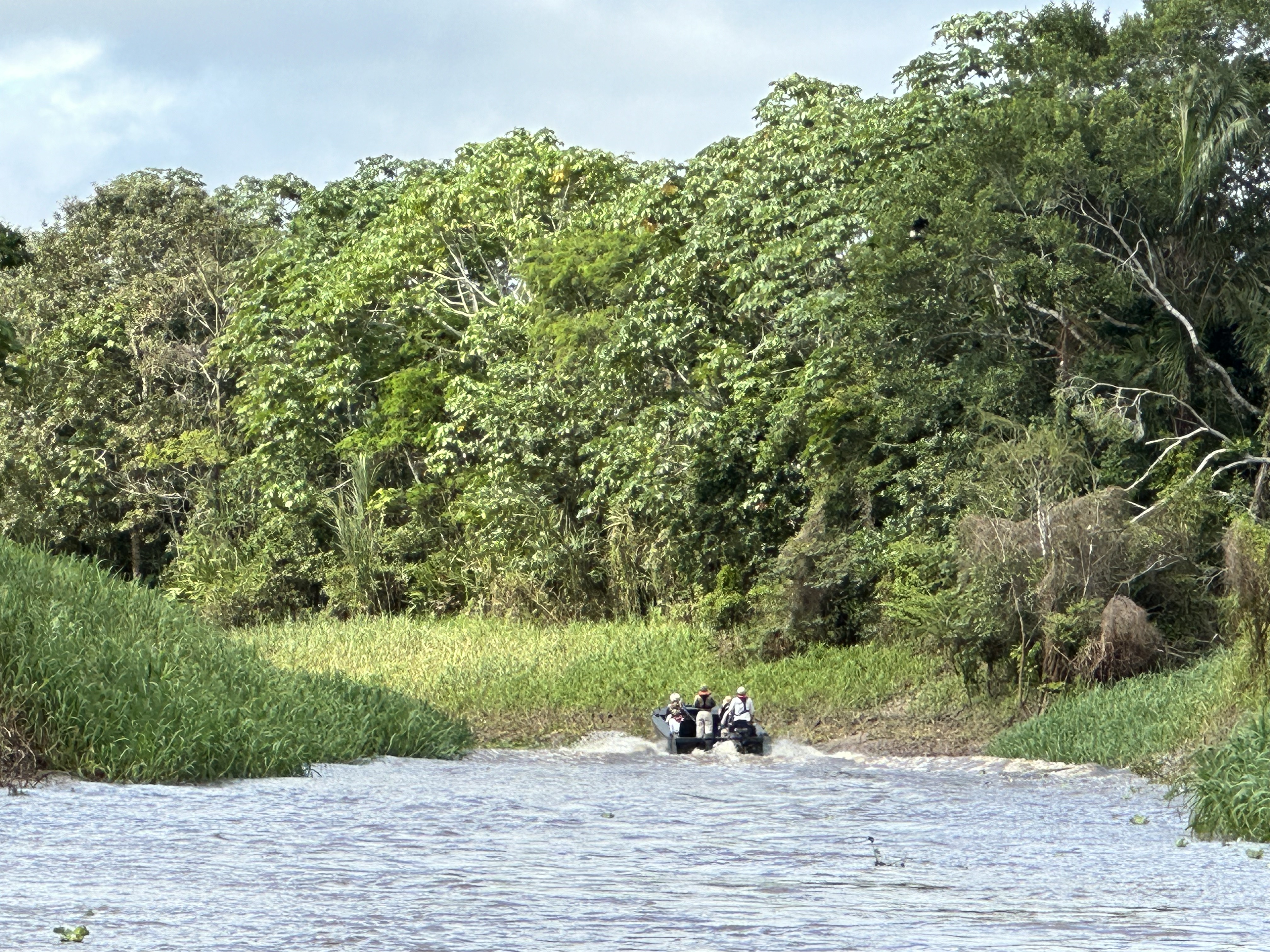
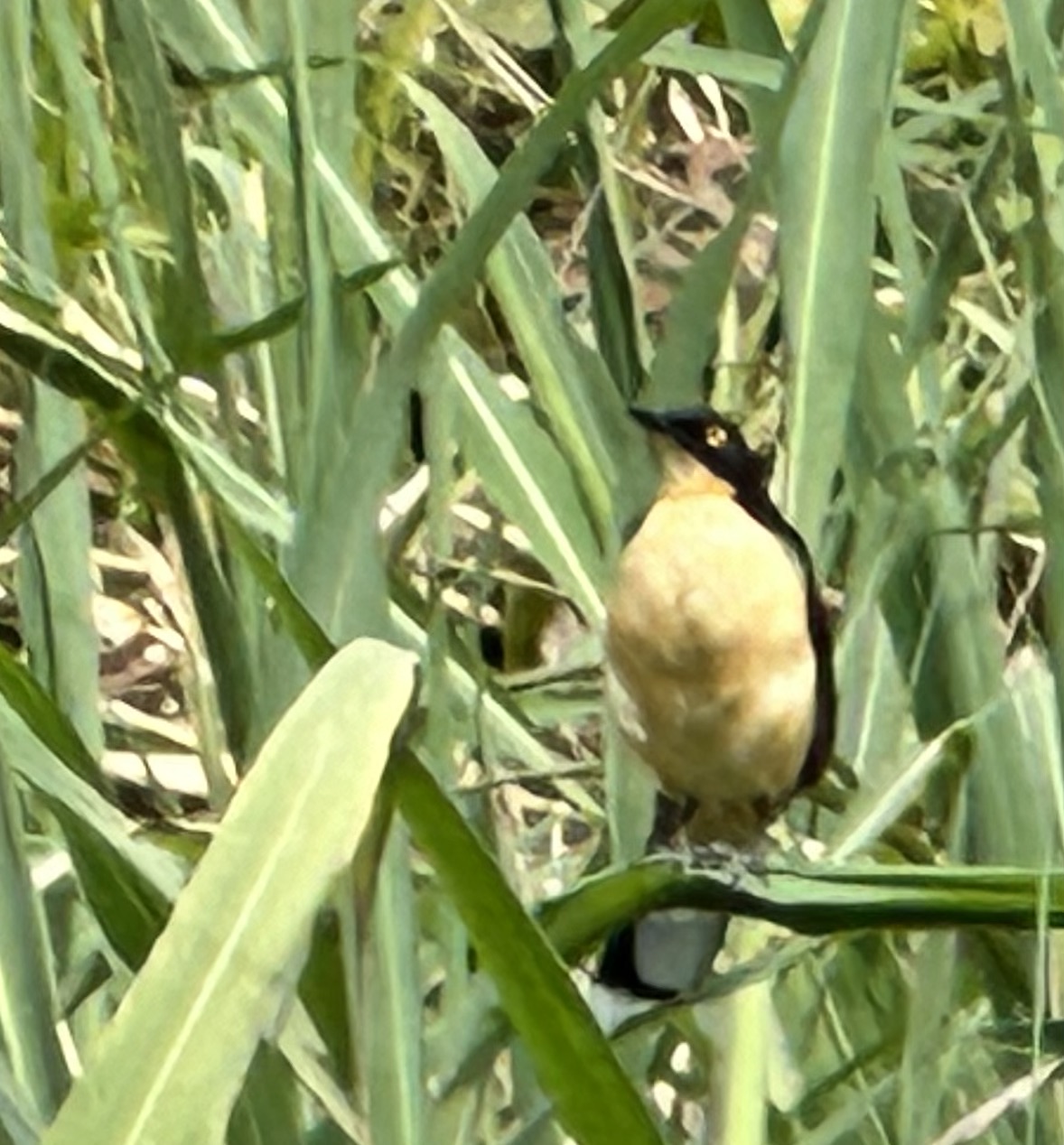
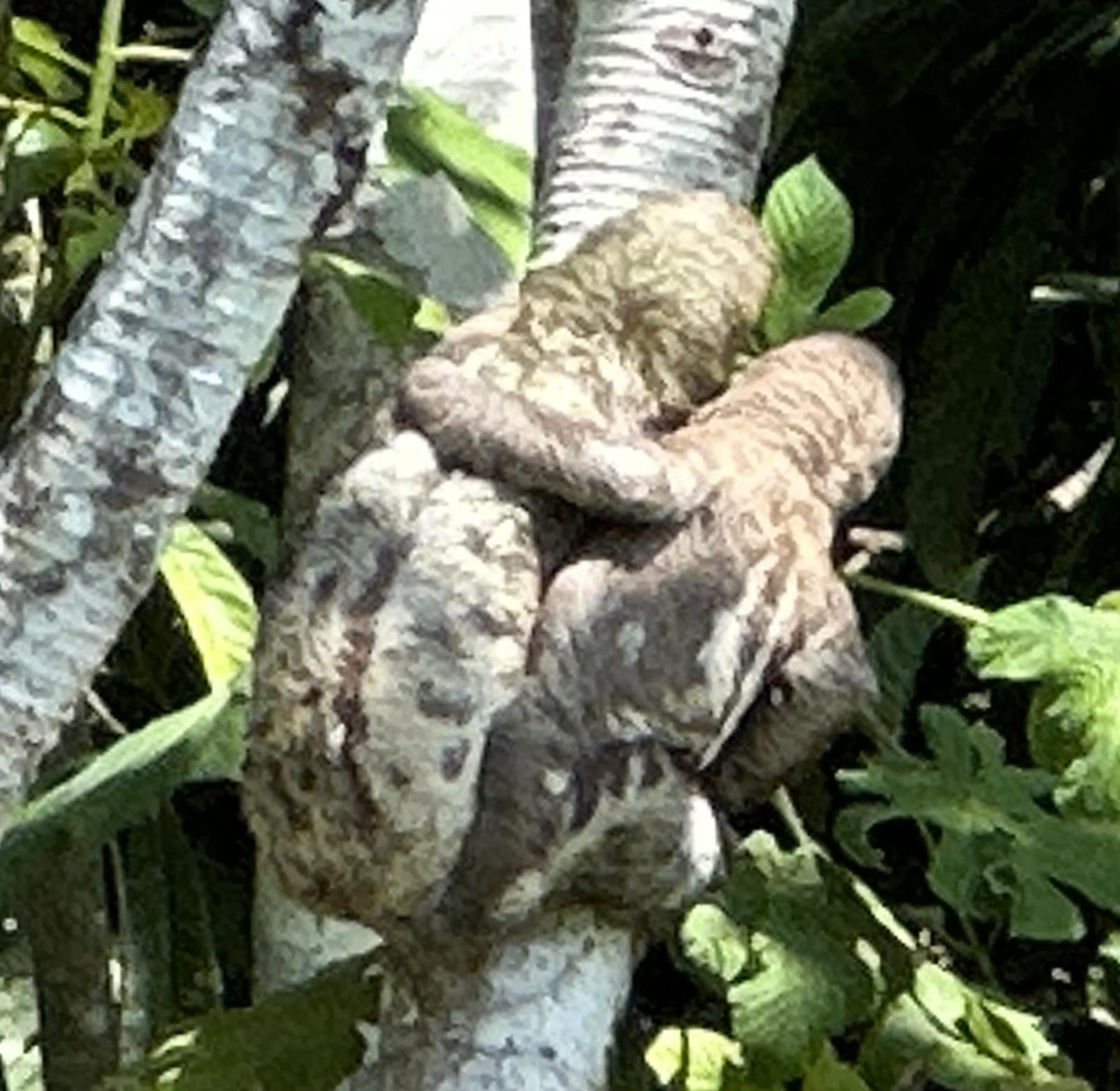
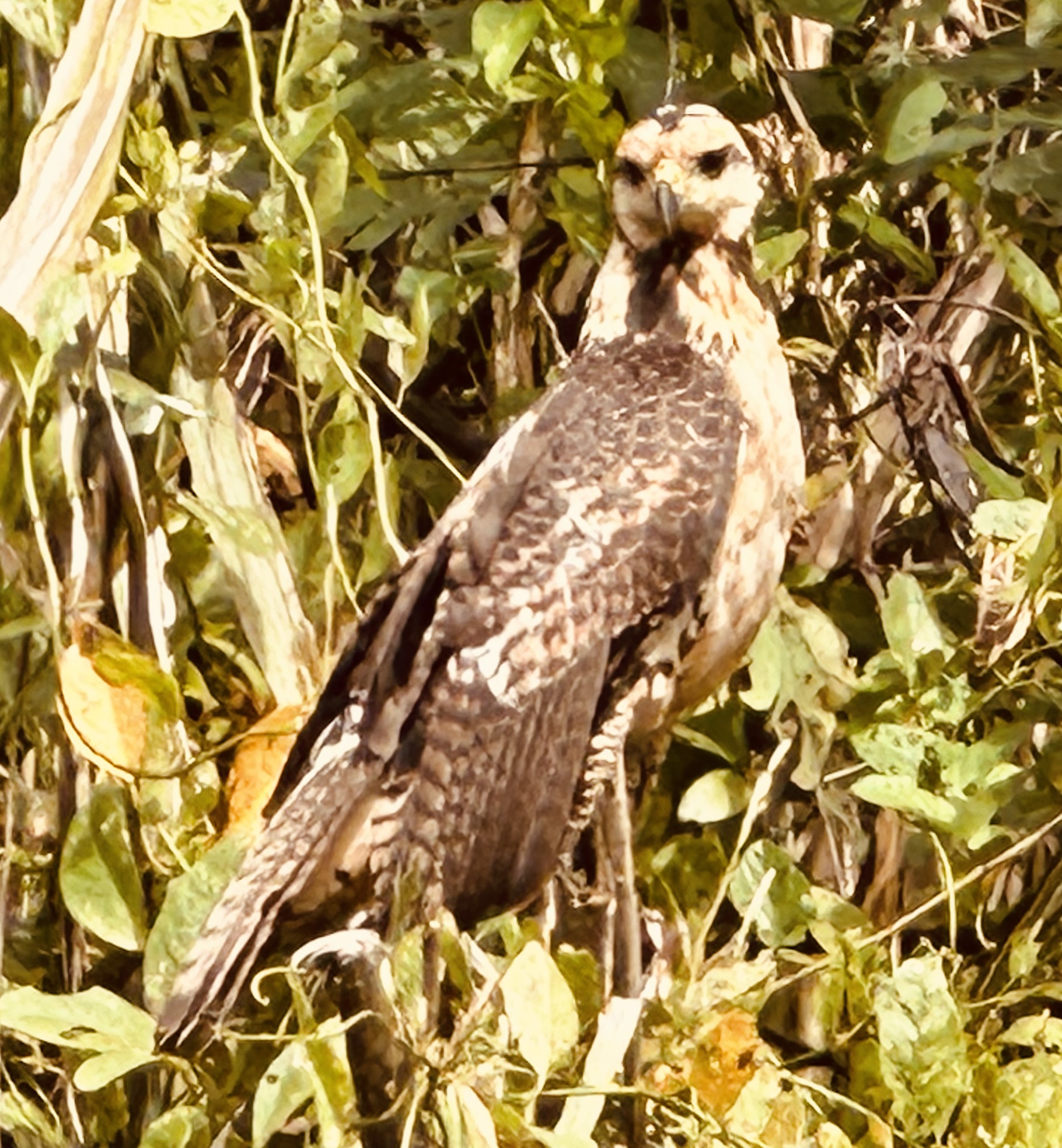
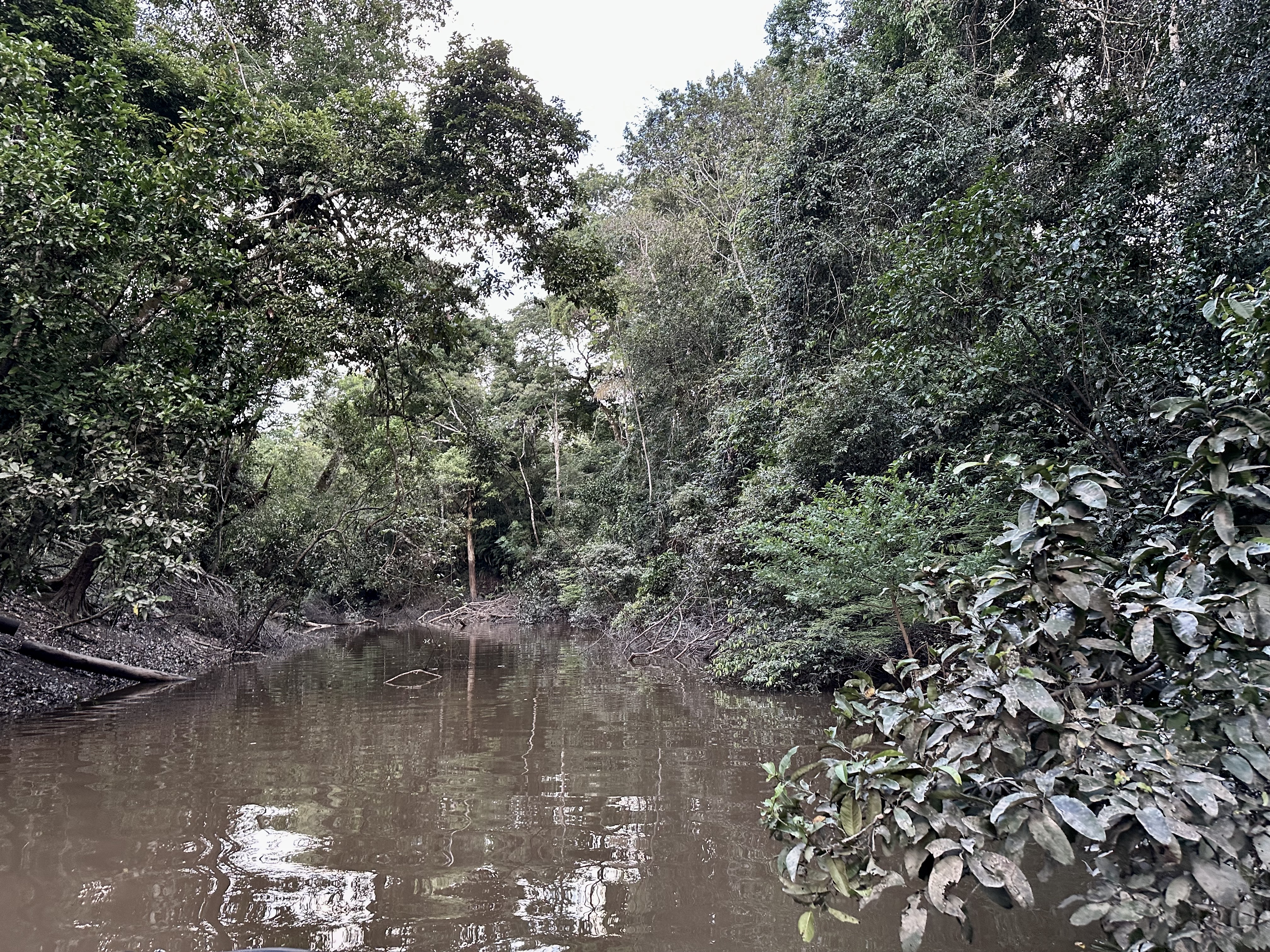
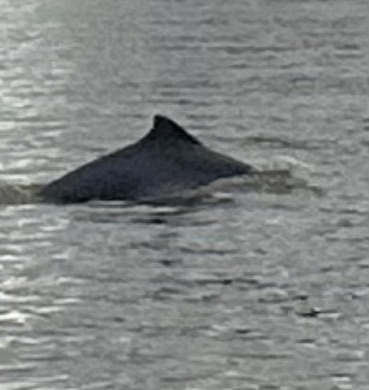
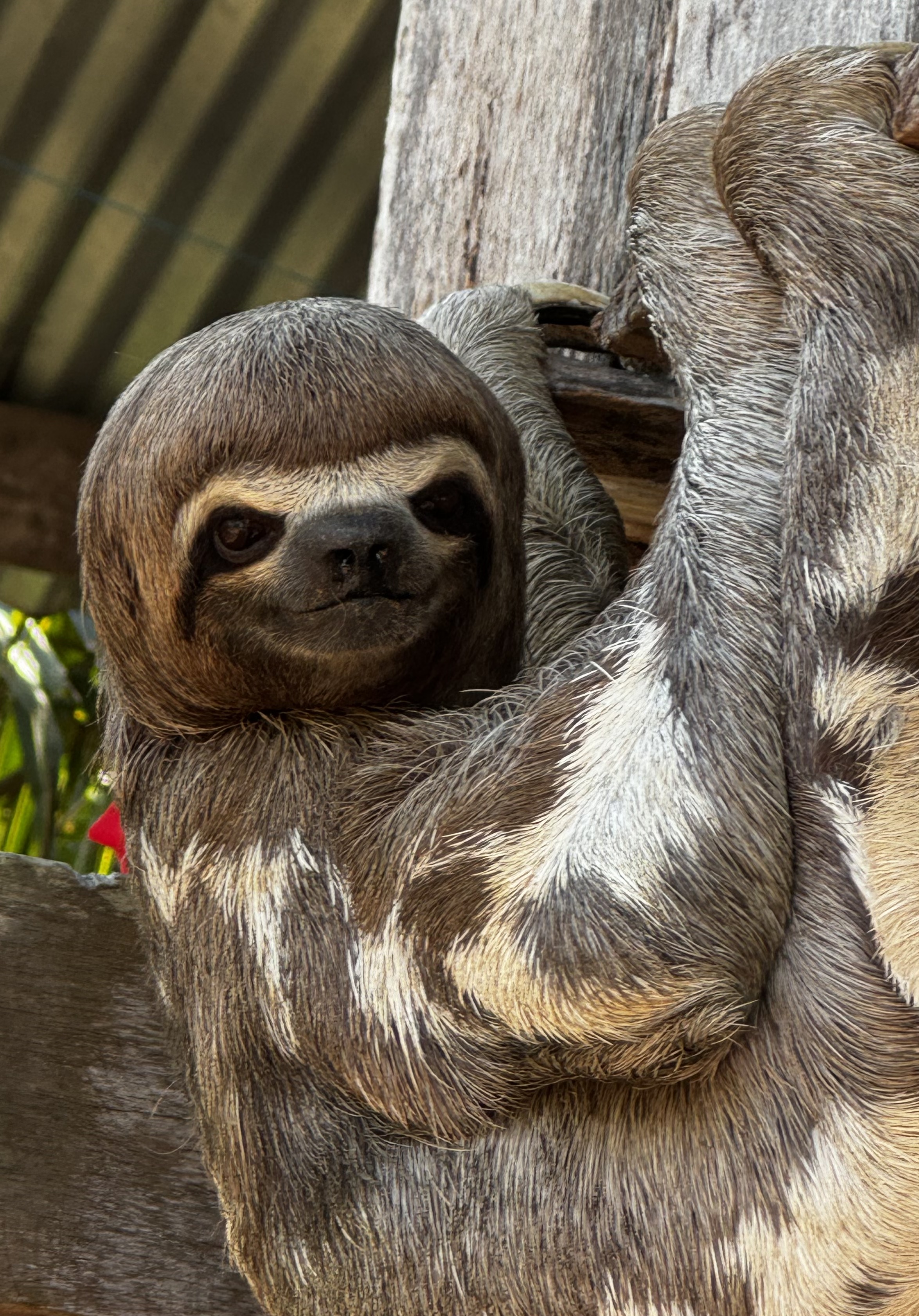
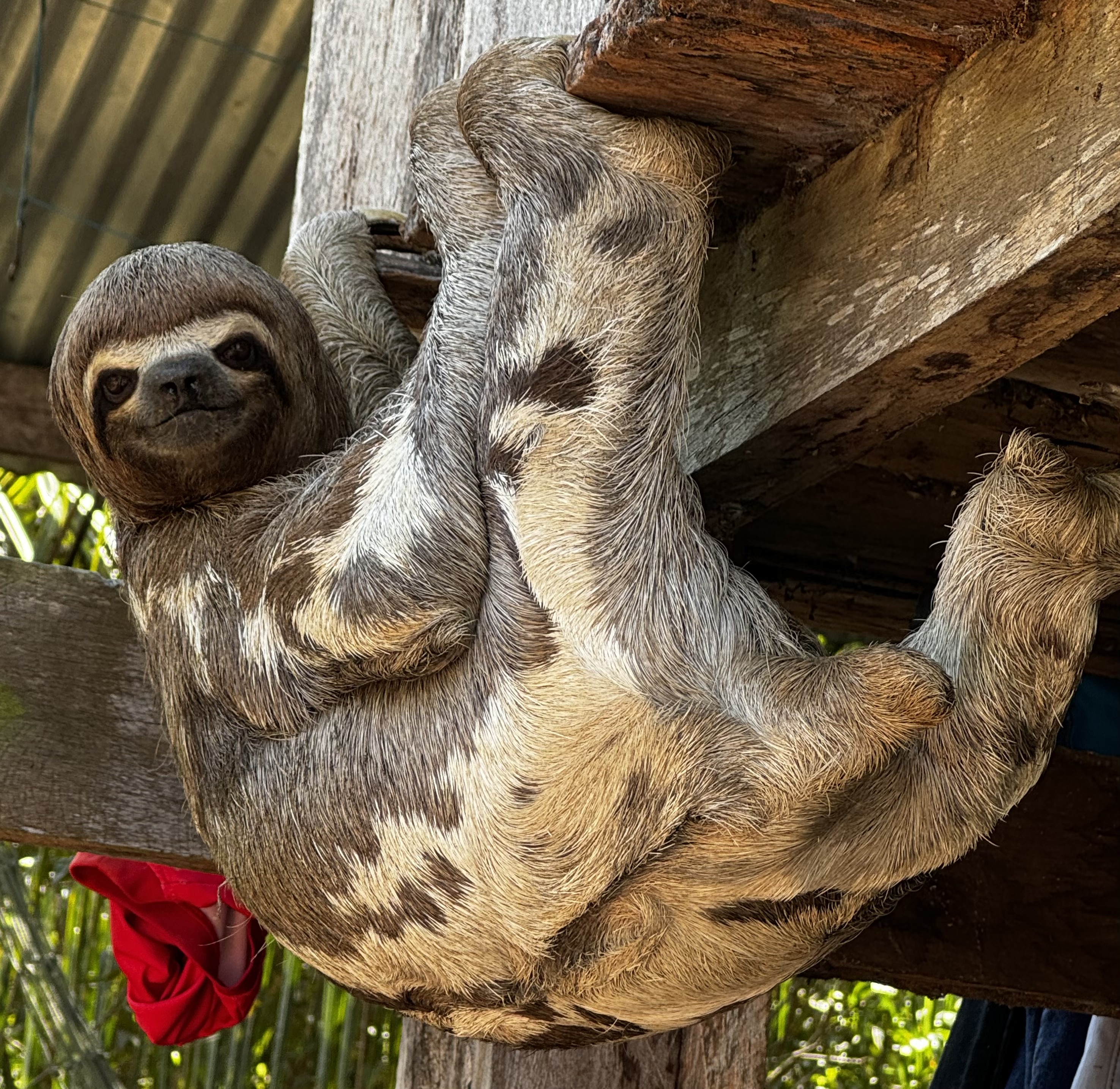
After the buffet breakfast, we joined a group of about 8 guests on a flat bottomed motorboat for a ride up a tributary called Yana Yacu, the Black Water River, but it’s really only brown. The weather was very pleasant. Not too hot or humid. After motoring awhile we began to pick up some wildlife. First we spotted a pink fresh water dolphin, with a hump on its back and no dorsal fin. The we saw a black collared hawk followed shortly by a Great black hawk. These sightings were soon overshadowed by a mother sloth with a baby slowly decending a large tree trunk. We watched them quite awhile and I finally managed to get a photo. We saw a huge Coral tree with pretty orange/yellow flowers that provide nectar for bees and small birds. We spotted a black-capped Dona Cobious and a yellow headed Cara Cara. Then we saw another sloth with child, several Blue and Yellow McCaws and, finally, a brown Capuchin Monkey. Our guide, Juan, was thrilled with our sightings and felt we had had an excellent sighting adventure. So, we were happy too, even though I got very few photos and no really good ones.
Horned Screamer or Donkey BirdBlack Capped Dona CobiousMotering along the Yana Yacu TributaryA mother and child slothYellow Headed Cara CaraAnother mother and baby slothGreat Black Hawk -JuvenileCoral Tree
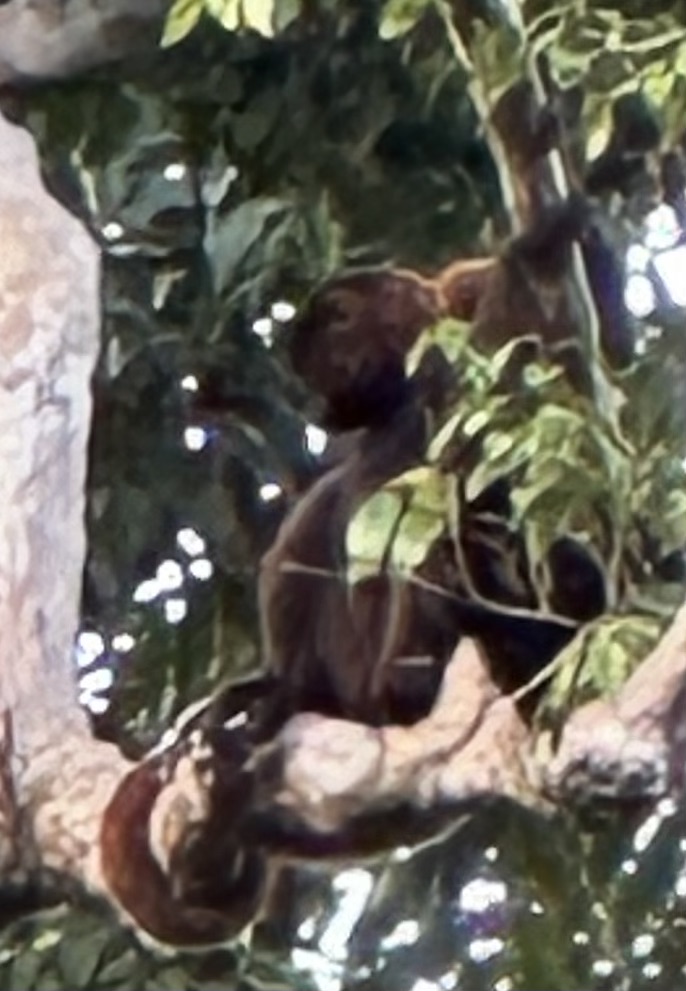
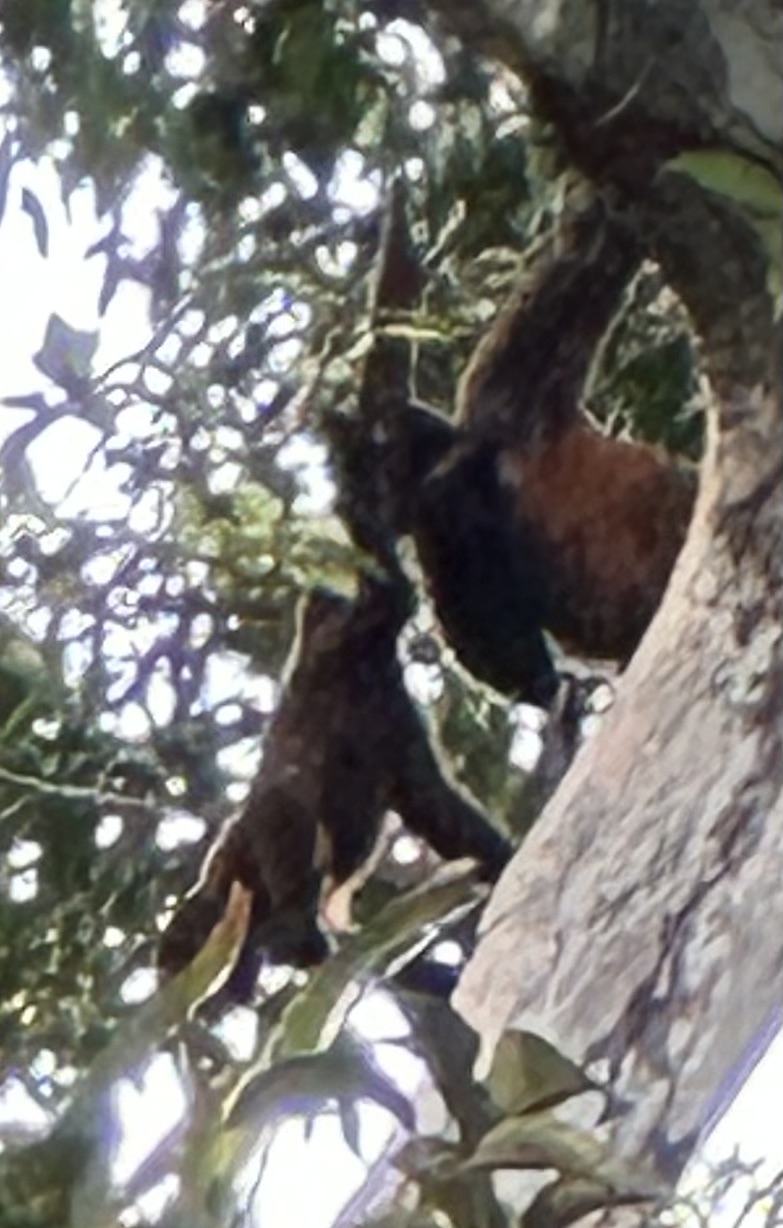
The afternoon excursion was similar to the morning one in that we had the same guide, Juan, and much the same group of passengers. We set off down another black tributary called the Yarapa River. Juan filled us with more information about the area. First he reminded us there are only 2 seasons in Peru and on the Amazon: high water, which is December through May and; low water, which is June through November. There can be between 25 and 45 feet variation between the seasons, with rain occurring about 250 days a year. Juan thinks it is unusual for us to be in Peru 4 days already and not to have experienced any rain. I am very happy that is the case. He proceeded to tell us more facts. During the high water season, fish congregate under whatever trees the monkeys are feeding in, as they drop seeds and uneaten fruit that the fish then consume. People then follow the monkeys and catch the fish feeding the water under the trees. The monkey fish is even able to jump 2-3 feet in the air to get the fruit. As this. is the dry season, we did not see any monkey fish. The water level is 15 feet below where it was just a couple of month ago. Our morning tour ended back at our skiff in time for lunch. Then, after a hearty meal of catfish, rice, green salad and fried plantains, we had some down time. During the afternoon tour with Juan, he helped us spot several more birds and animals, but we had a hard time getting clear photos. This is the best I could do.
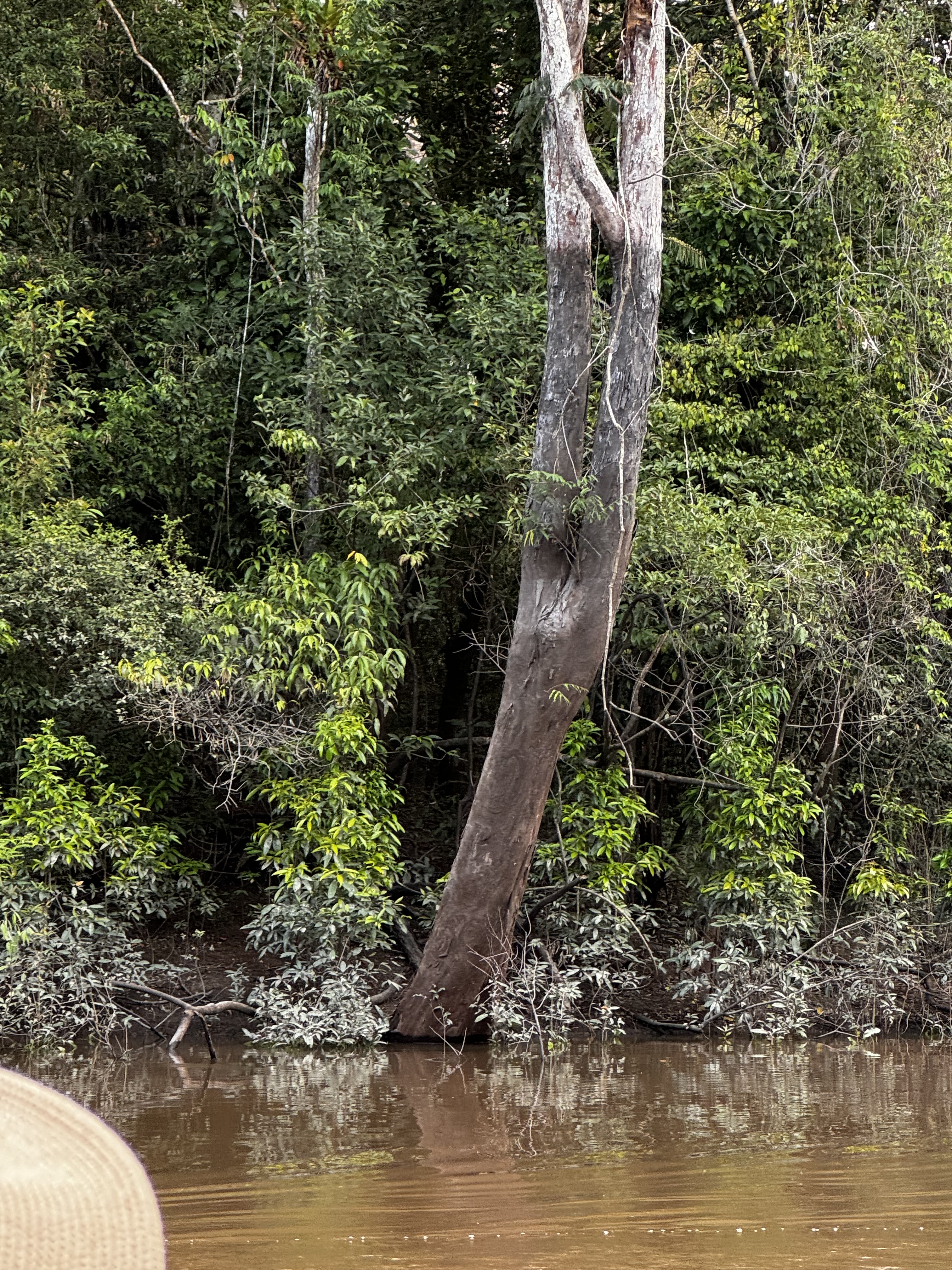
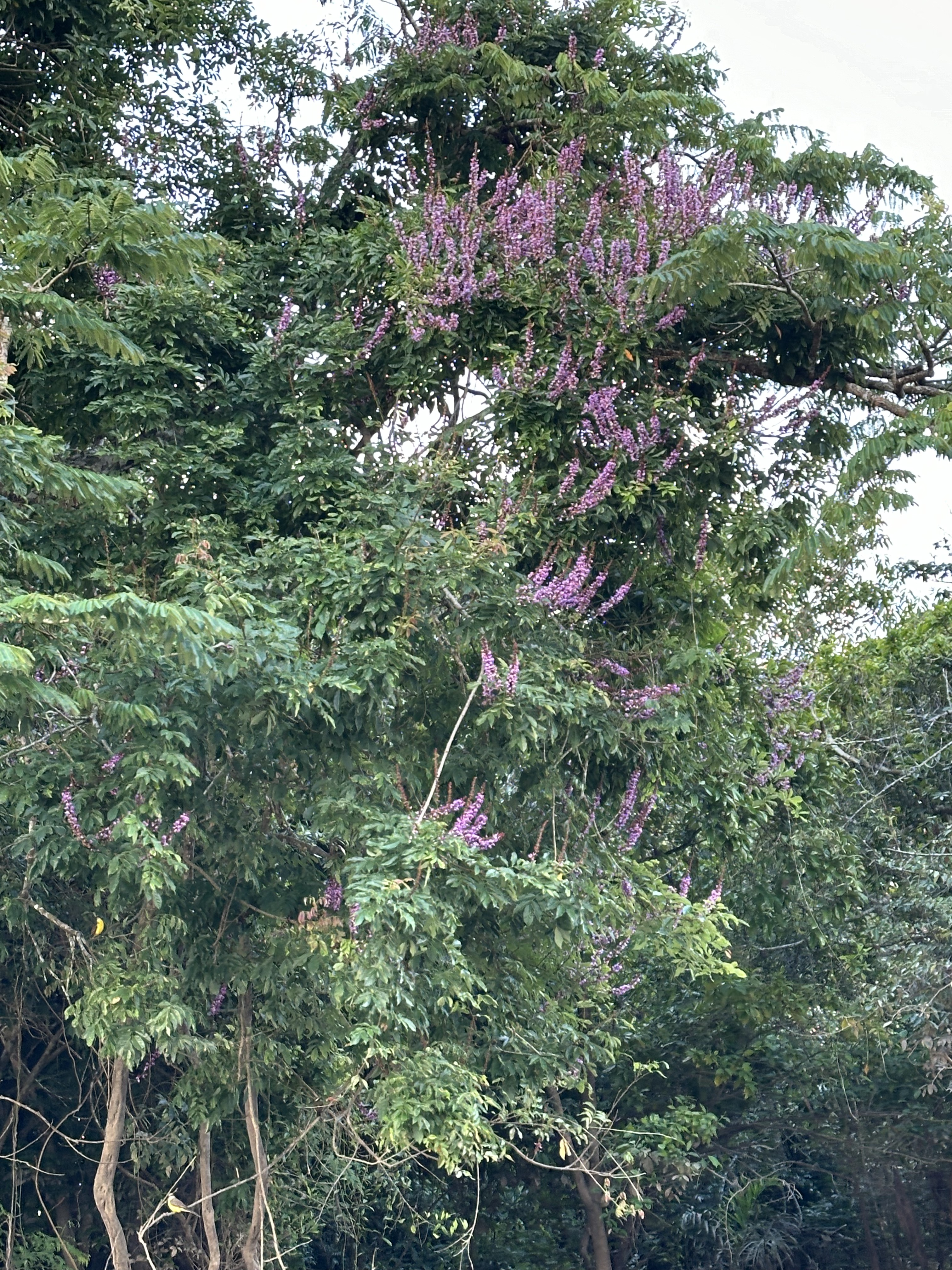
Typical rainforest scene in the dry seasonWooly monkey and babyWooly monkey and b babyBlack Collared HawkPretty purple flowering vine.
We even saw a night jar, which Mark and I were surprised to see at the Amazon River. We also saw a brown frog in a tree, but it was too dark for me to capture a photo of it. The day ended with us enjoying the many stars in the dark night sky as we motored back to the ship. Not only had it not rained, there had been no mosquitos, no humidity and no high temperatures. The end of a lovely day. After a pleasant evening visiting with new acquaintances over dinner, we went to our overly air-conditioned room, brushed our teeth and dove into bed.
Monday, July 8, 2024
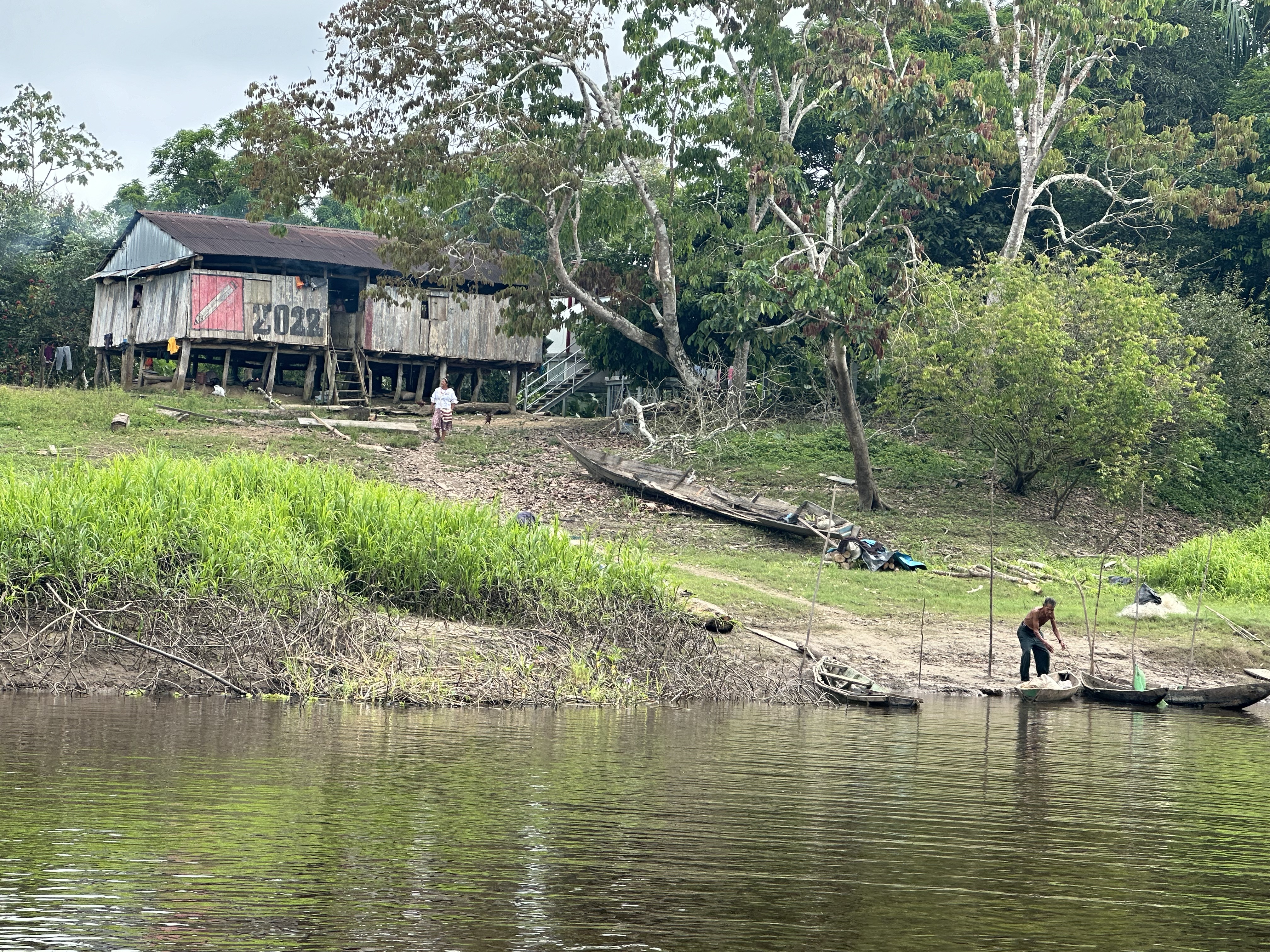
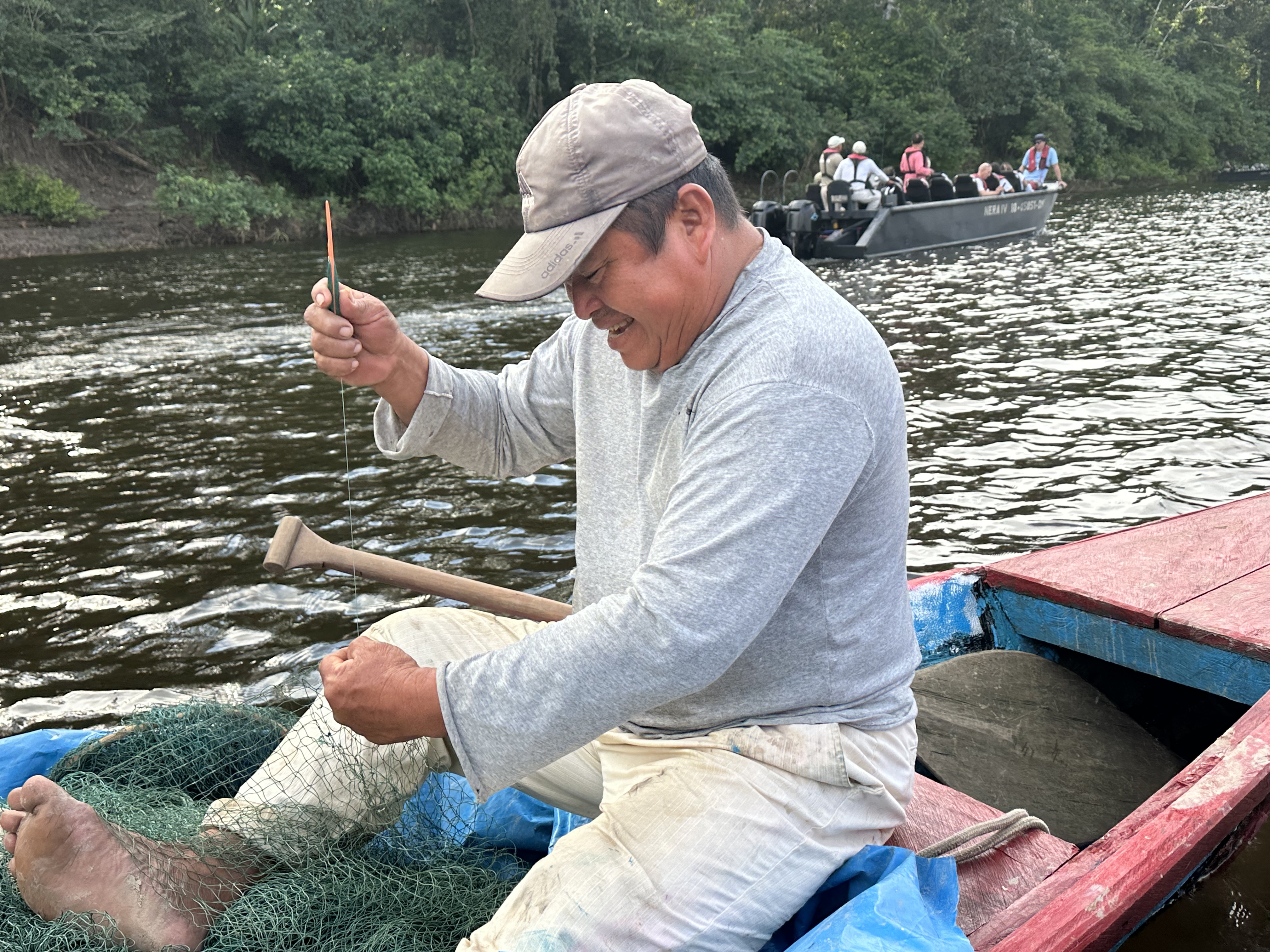
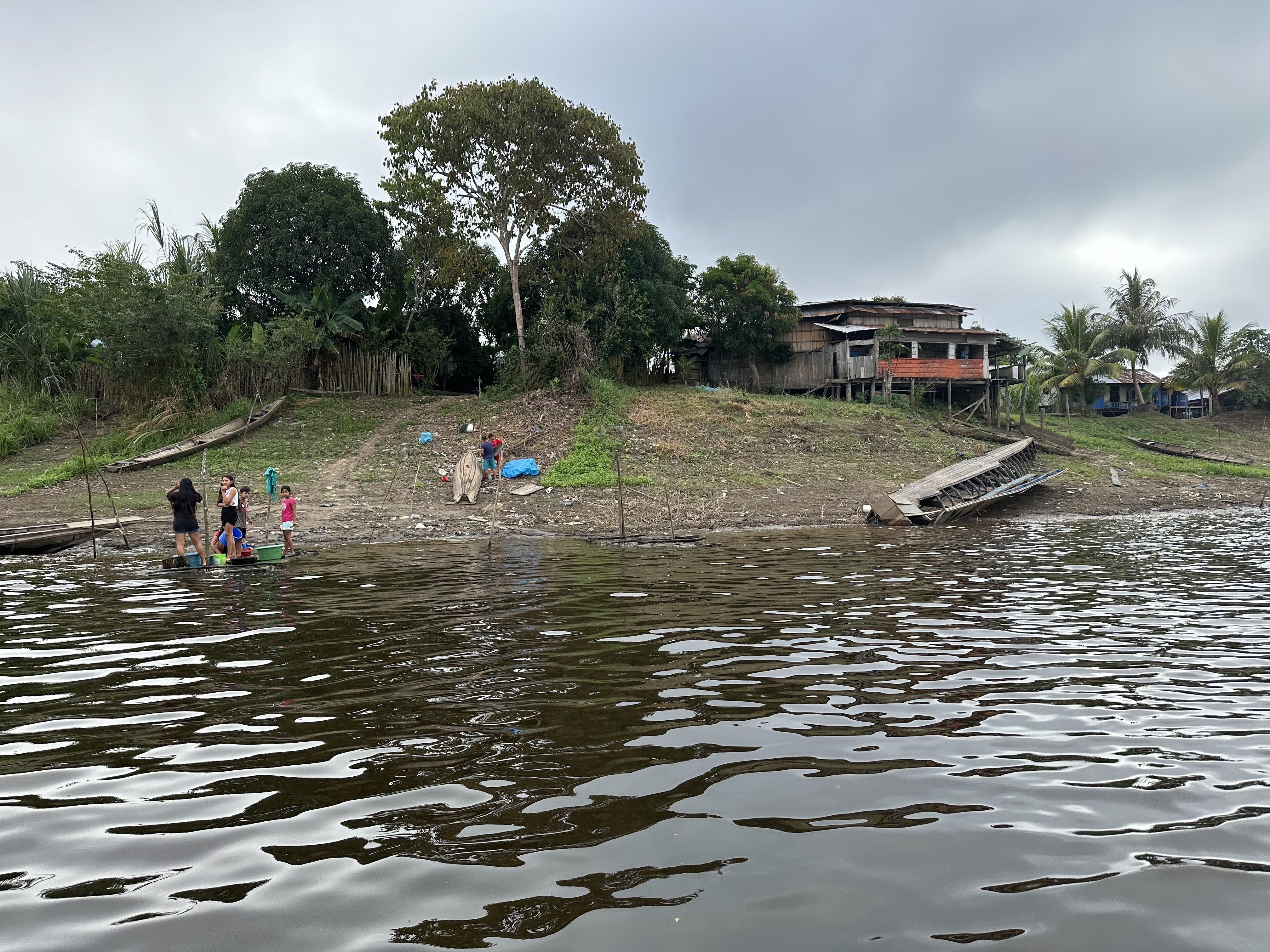
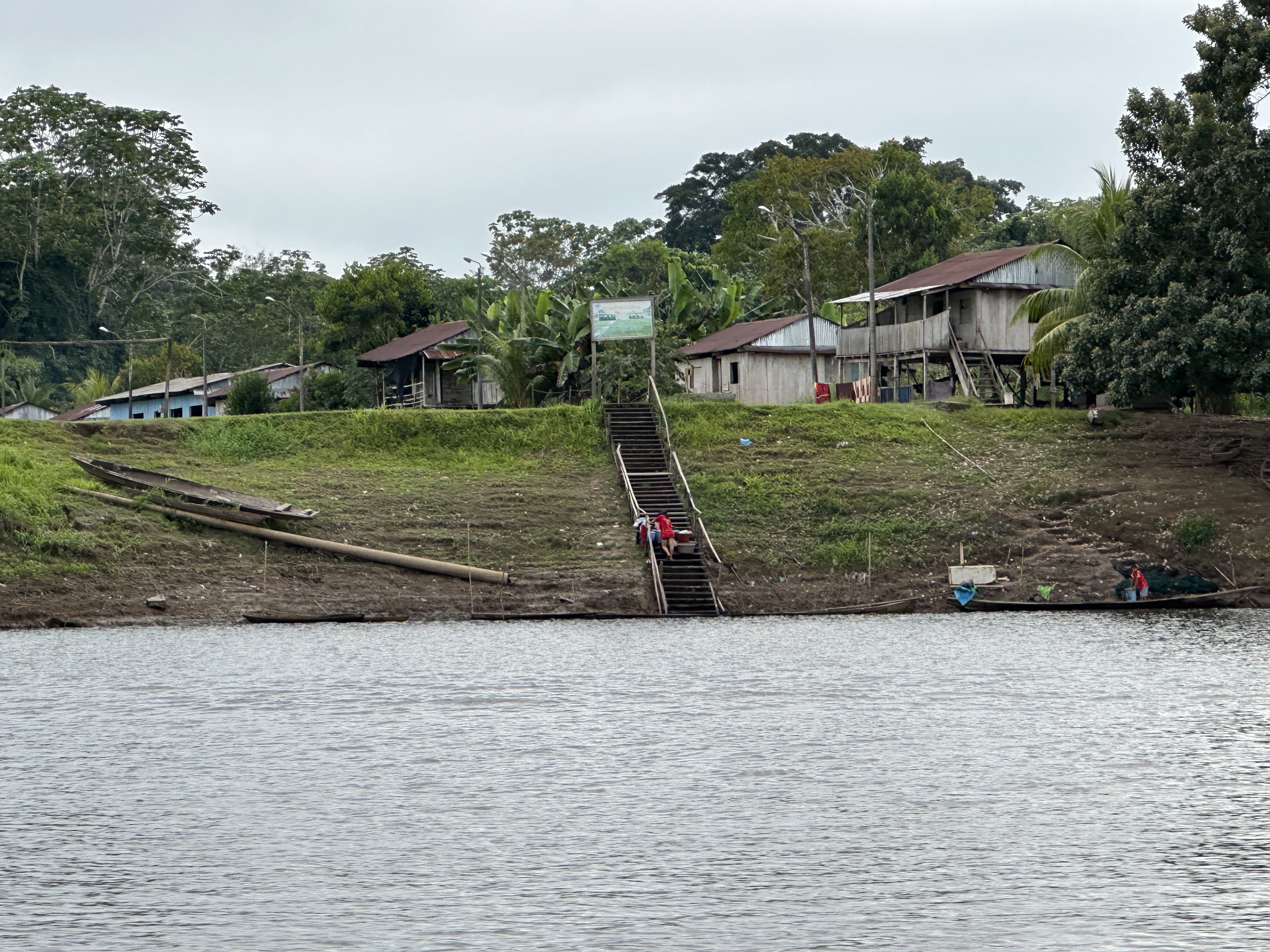
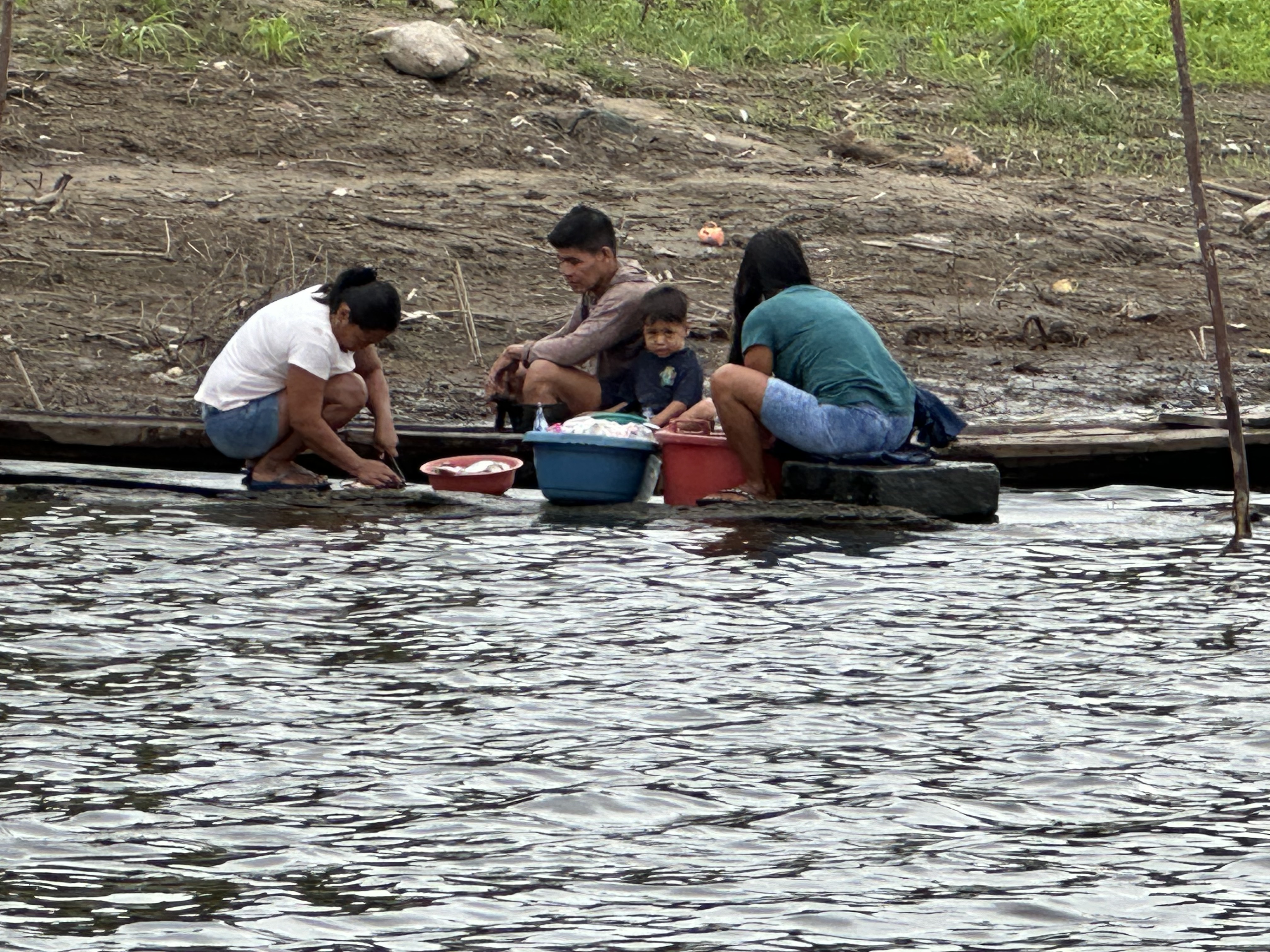
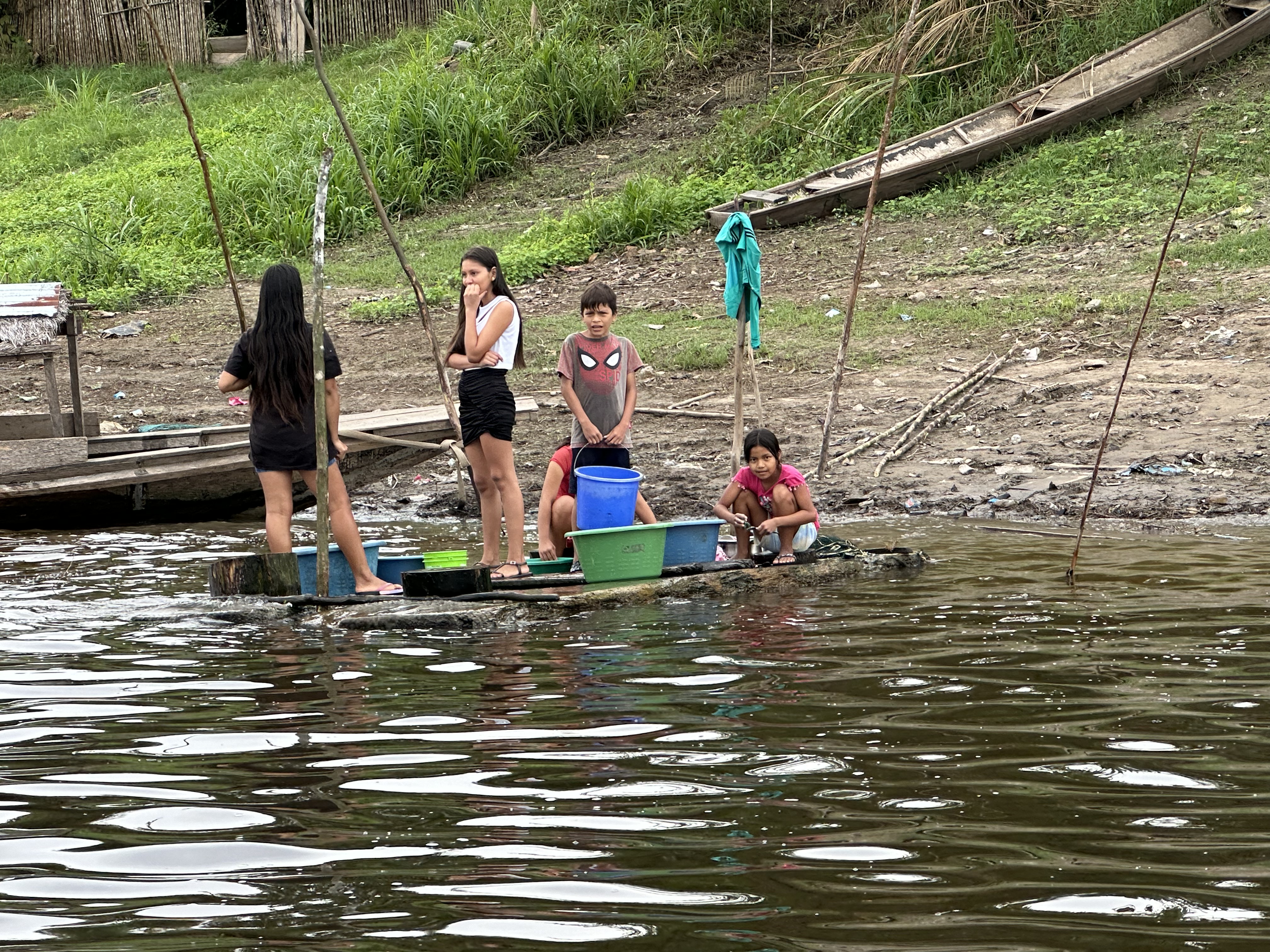
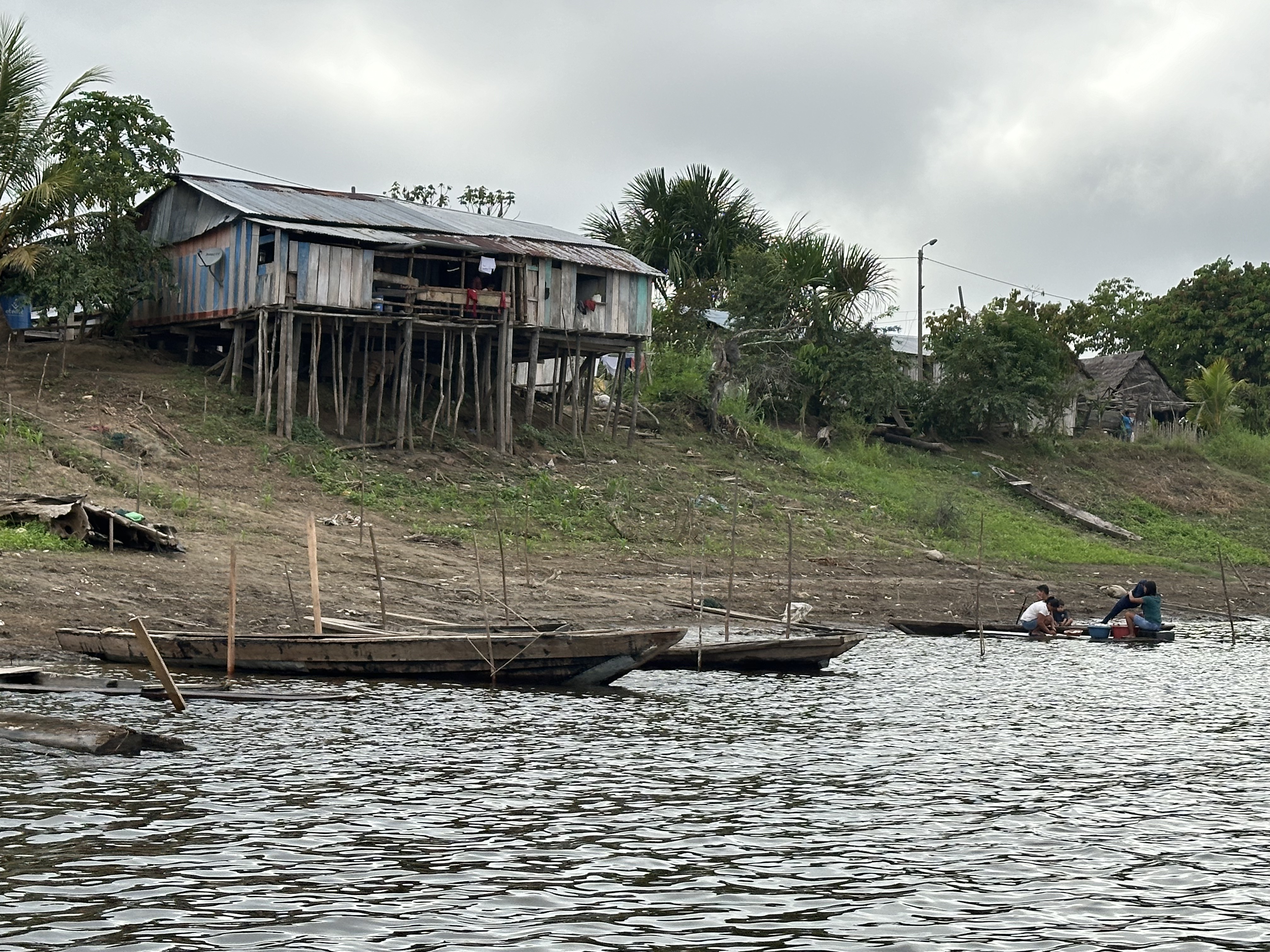
Up, dressed with swim suits on and clothes over and into a skiff at 7:30. We motored into a black water tributary while watching locals doing laundry and fishermen tending nets. At the entrance to the tributary we saw several grey dolphins popping up for air. This was about as much of one as we ever saw. After watching the dolphins awhile, and turning into the tributary, we came upon a village where people were busy tending nets and doing laundry. The houses were on stilts above the high water line.
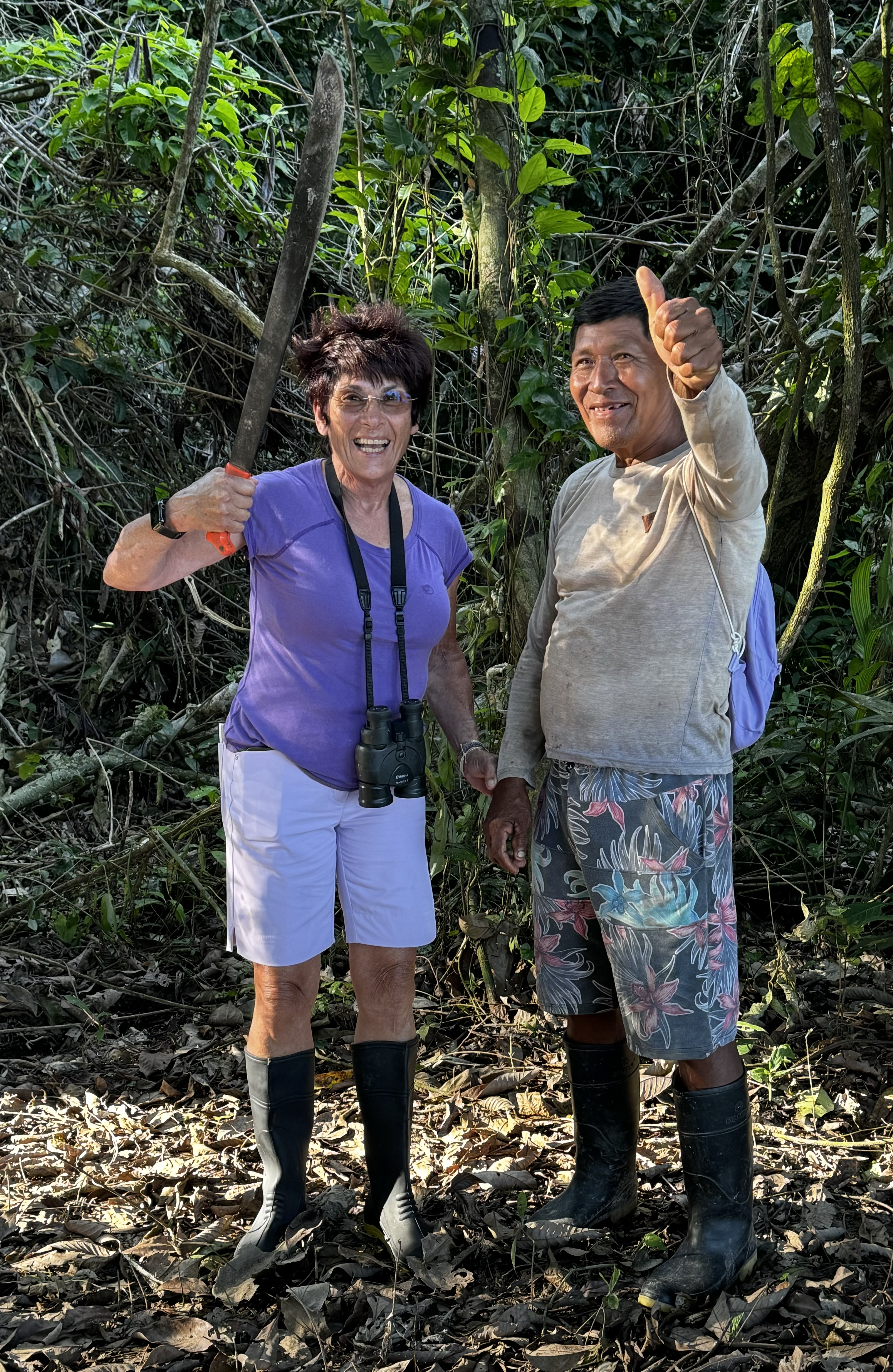
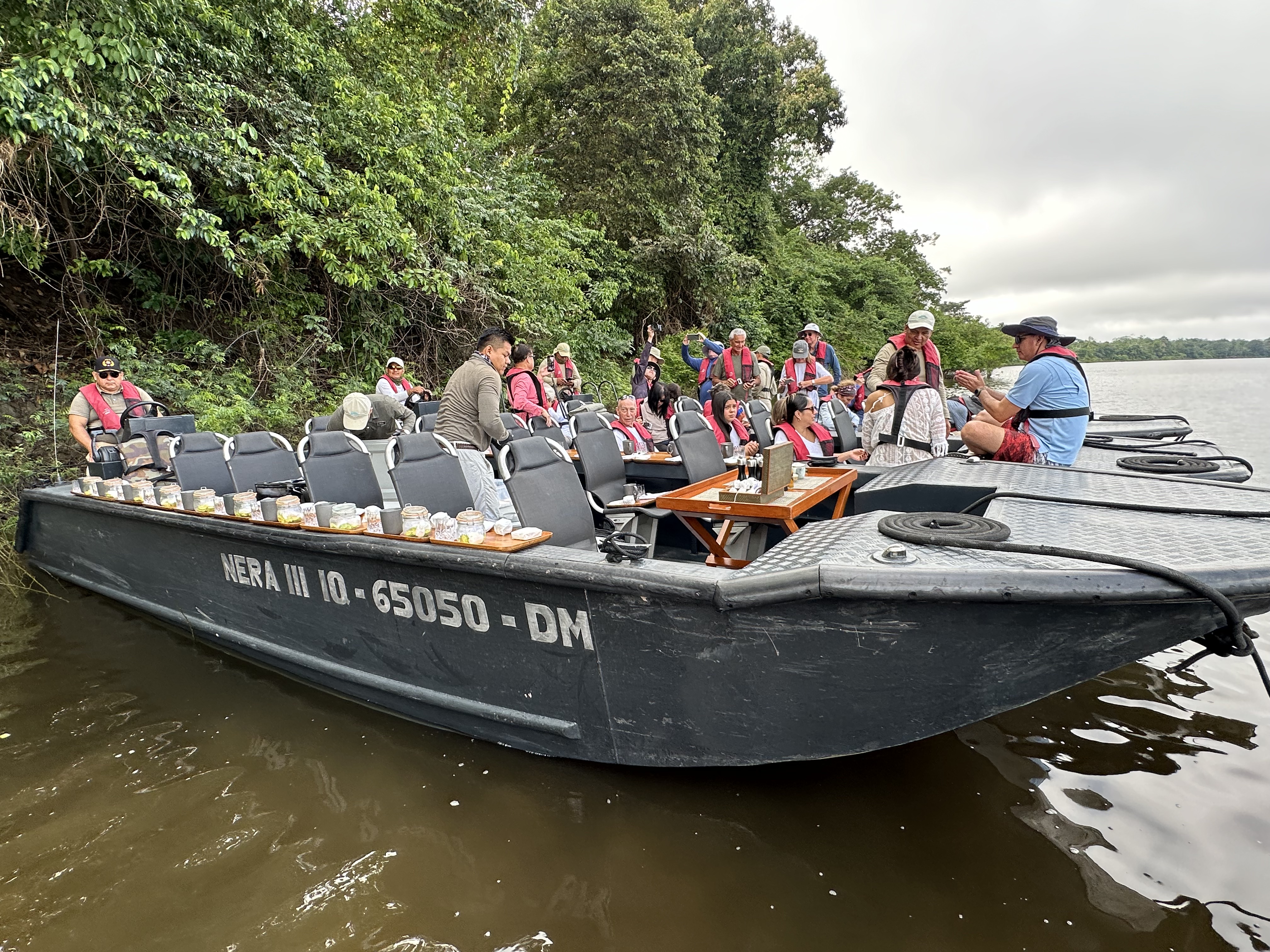
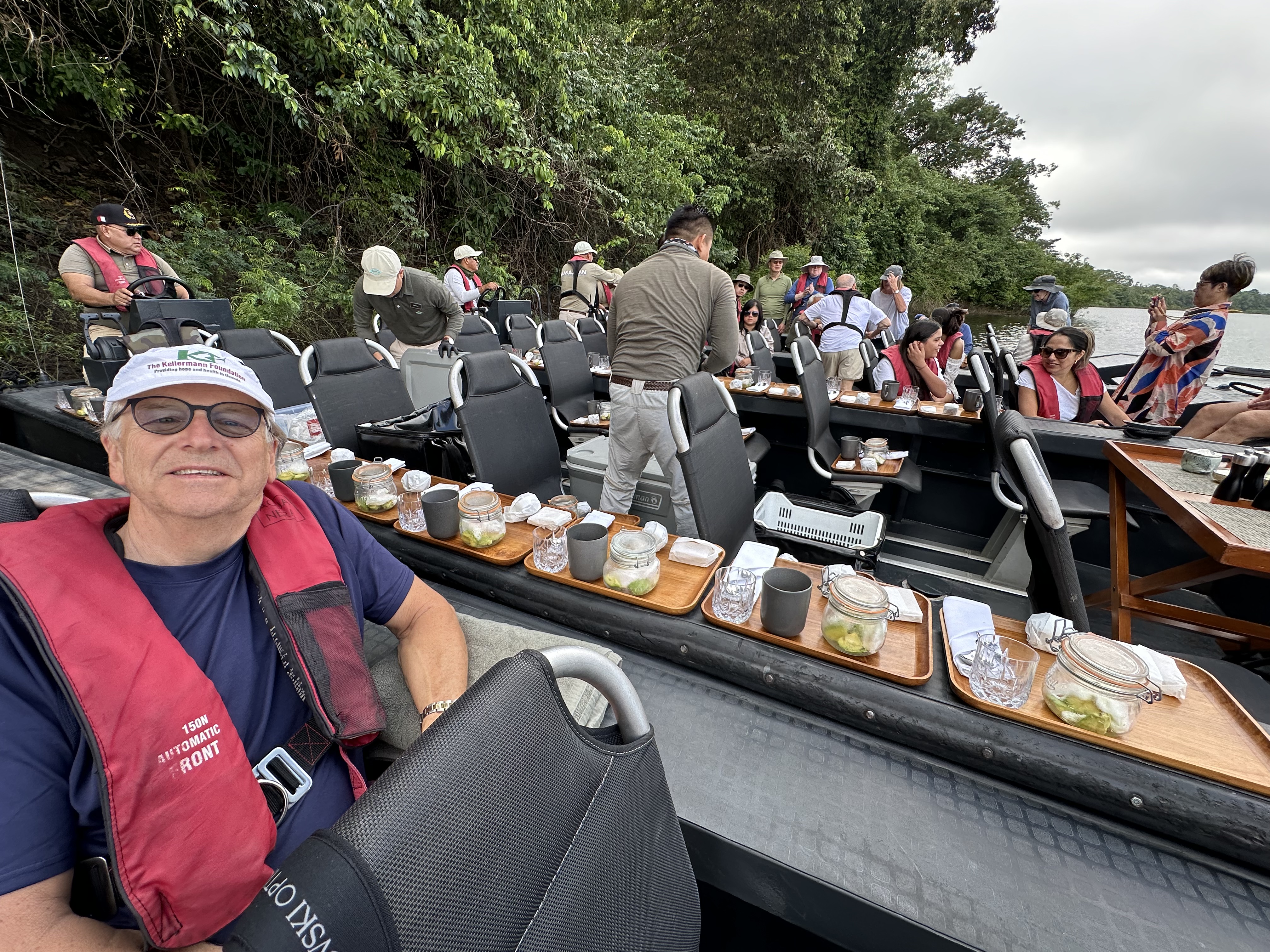
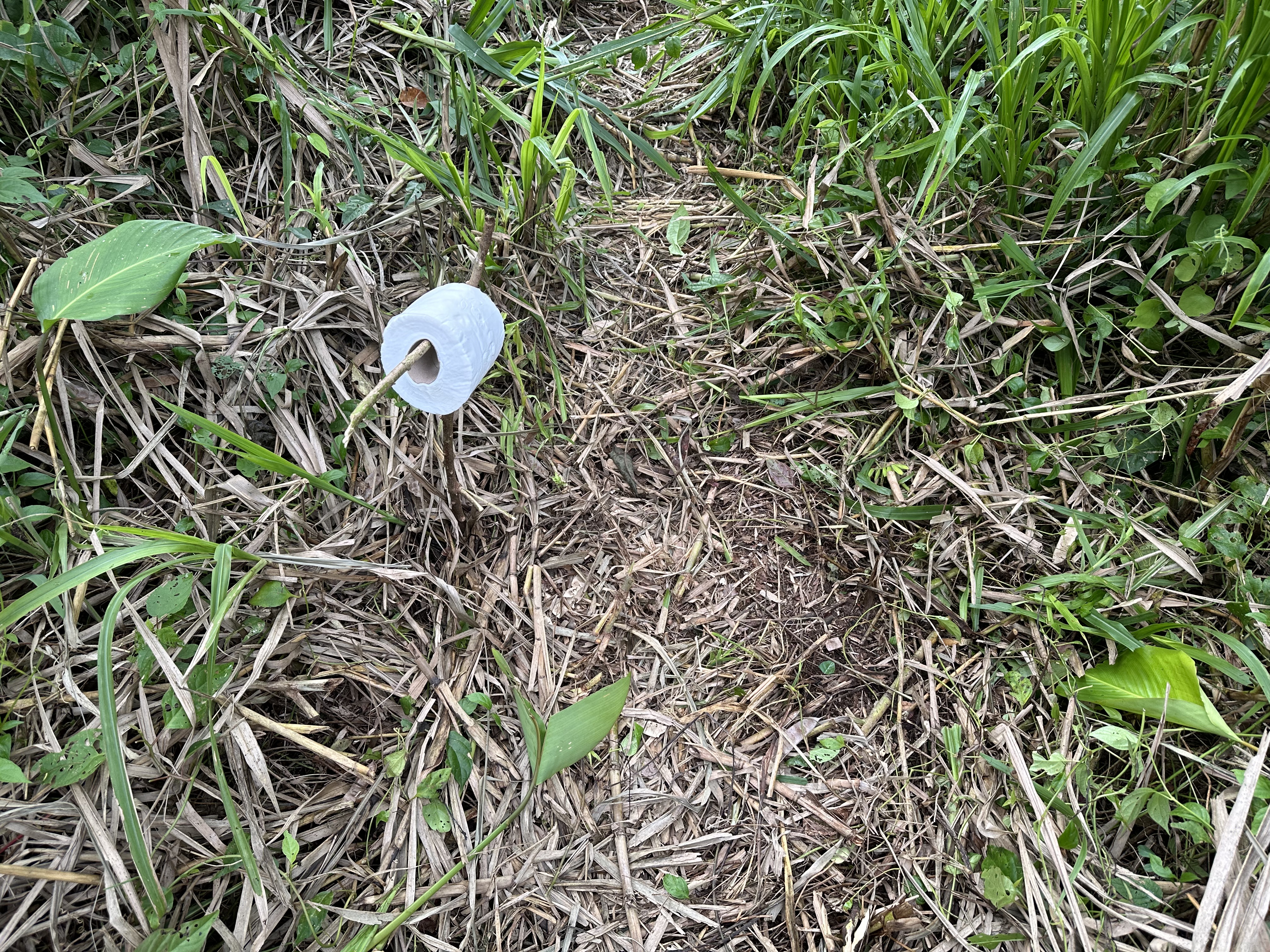
Shortly, we arrived at a predetermined site and stopped for breakfast, which the ship crew had set up on a separate tender. We did not get off the boats as I thought we would. After eating a surprisingly delicious poached egg with avocado and fresh fruit meal, some of us needed a pitstop, so a crew member cleared a path and a flat place for us using a machete. I, for one, was much obliged even though the hike up the side of the river was slippery and steep.
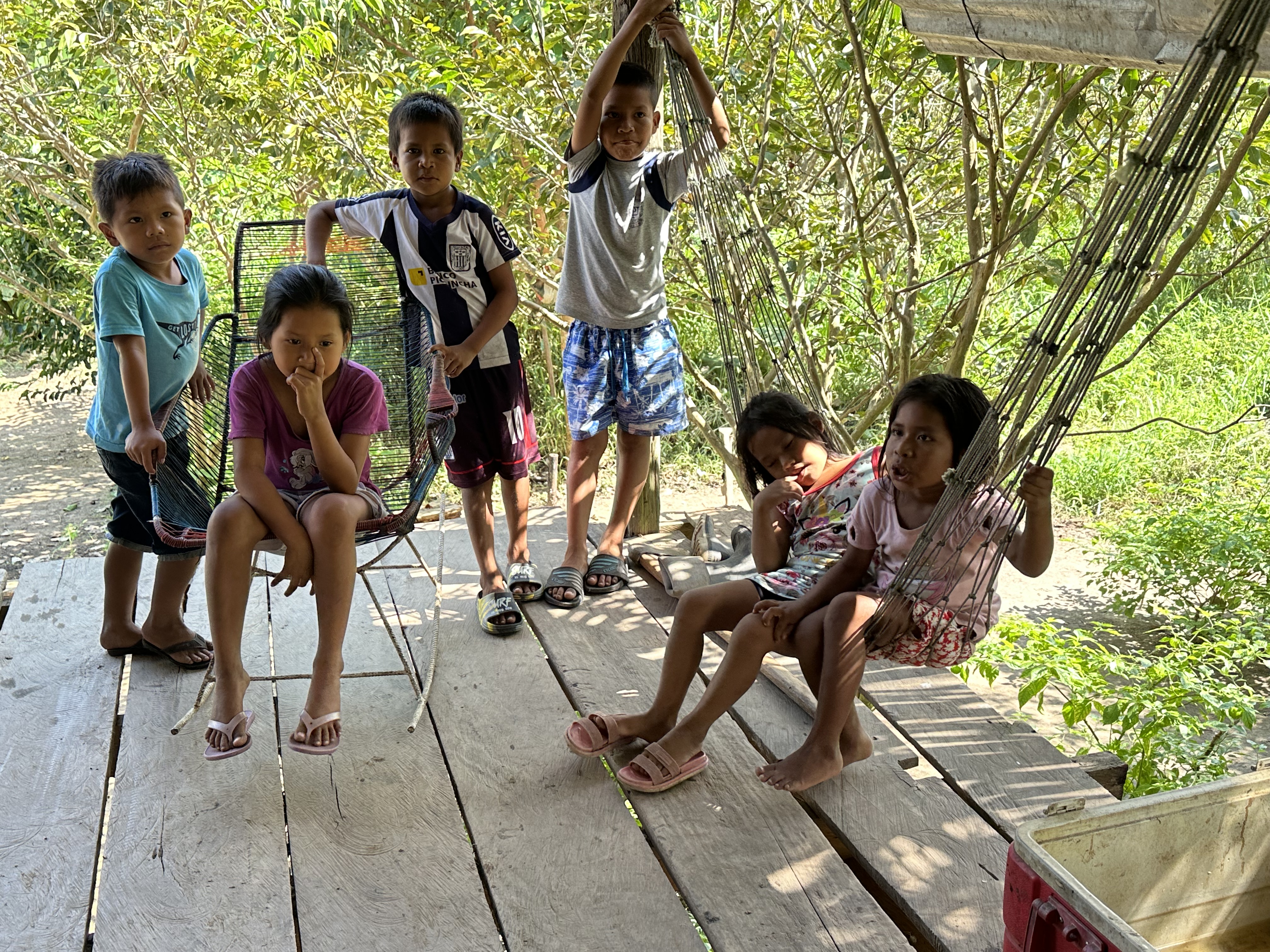
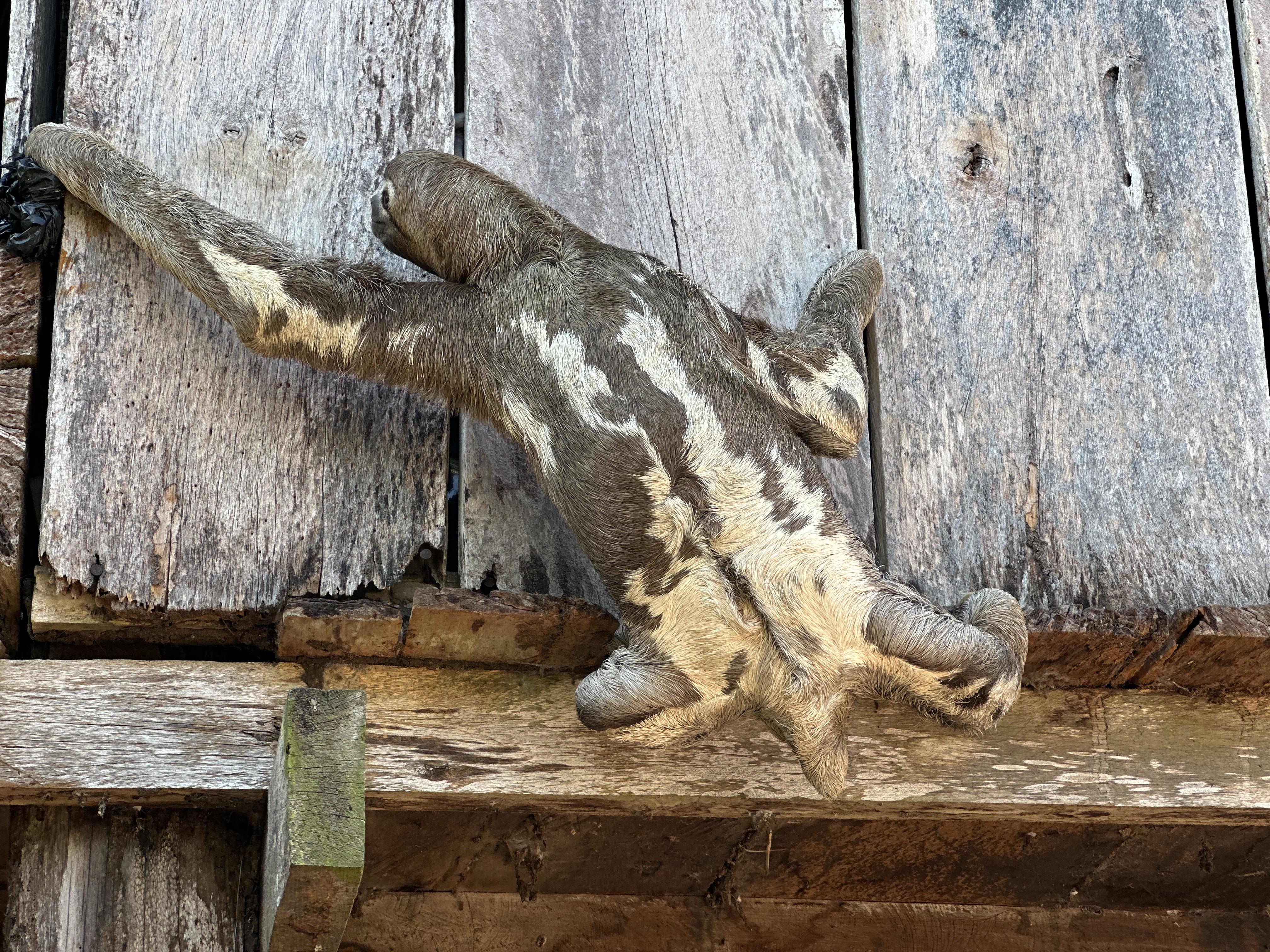
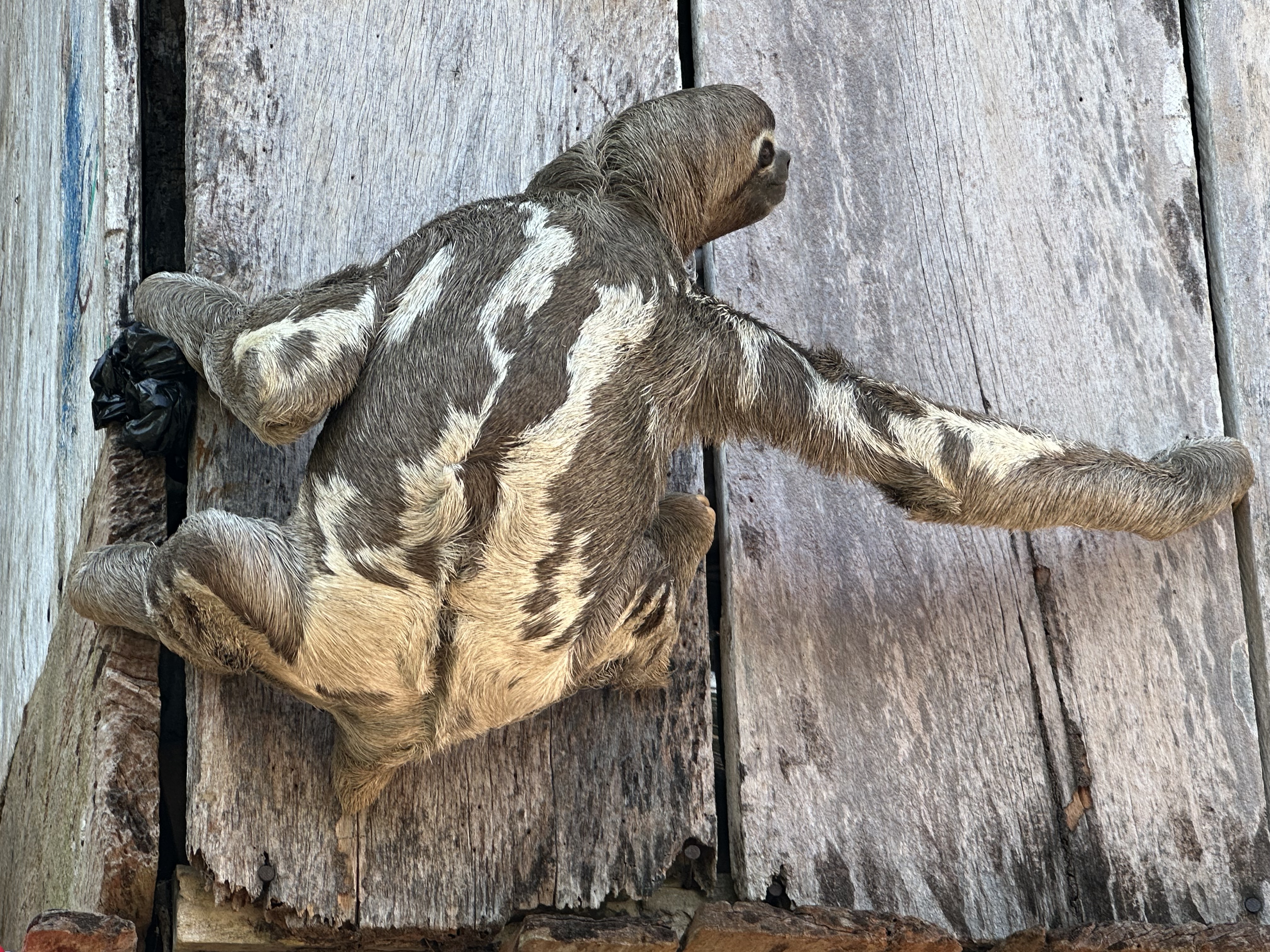
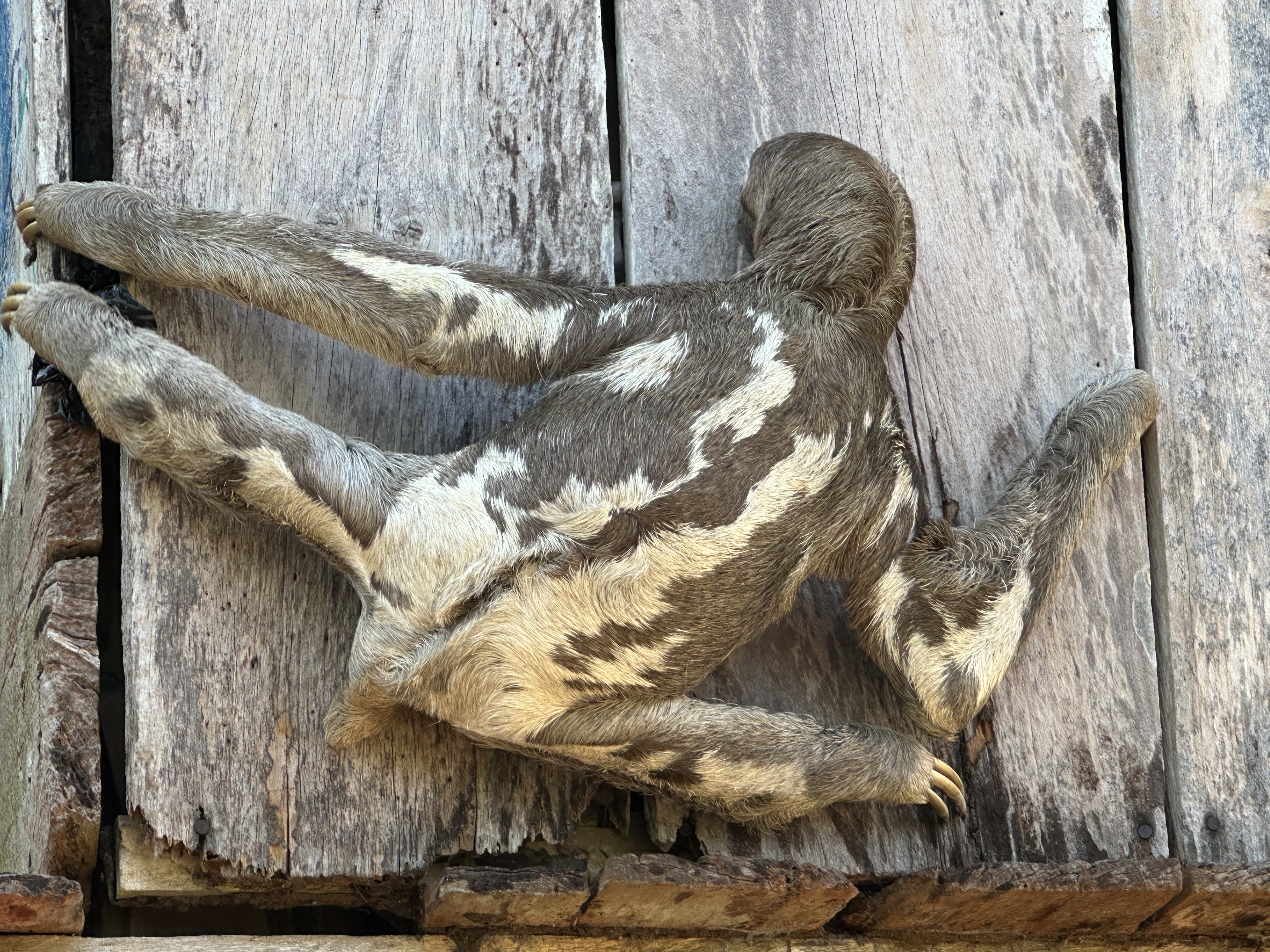
Then we motored to a village where we had been invited to visit a home. We were very surprised to see a sloth hanging out on the family home as though it was a pet. Final, we had a nice sighting.
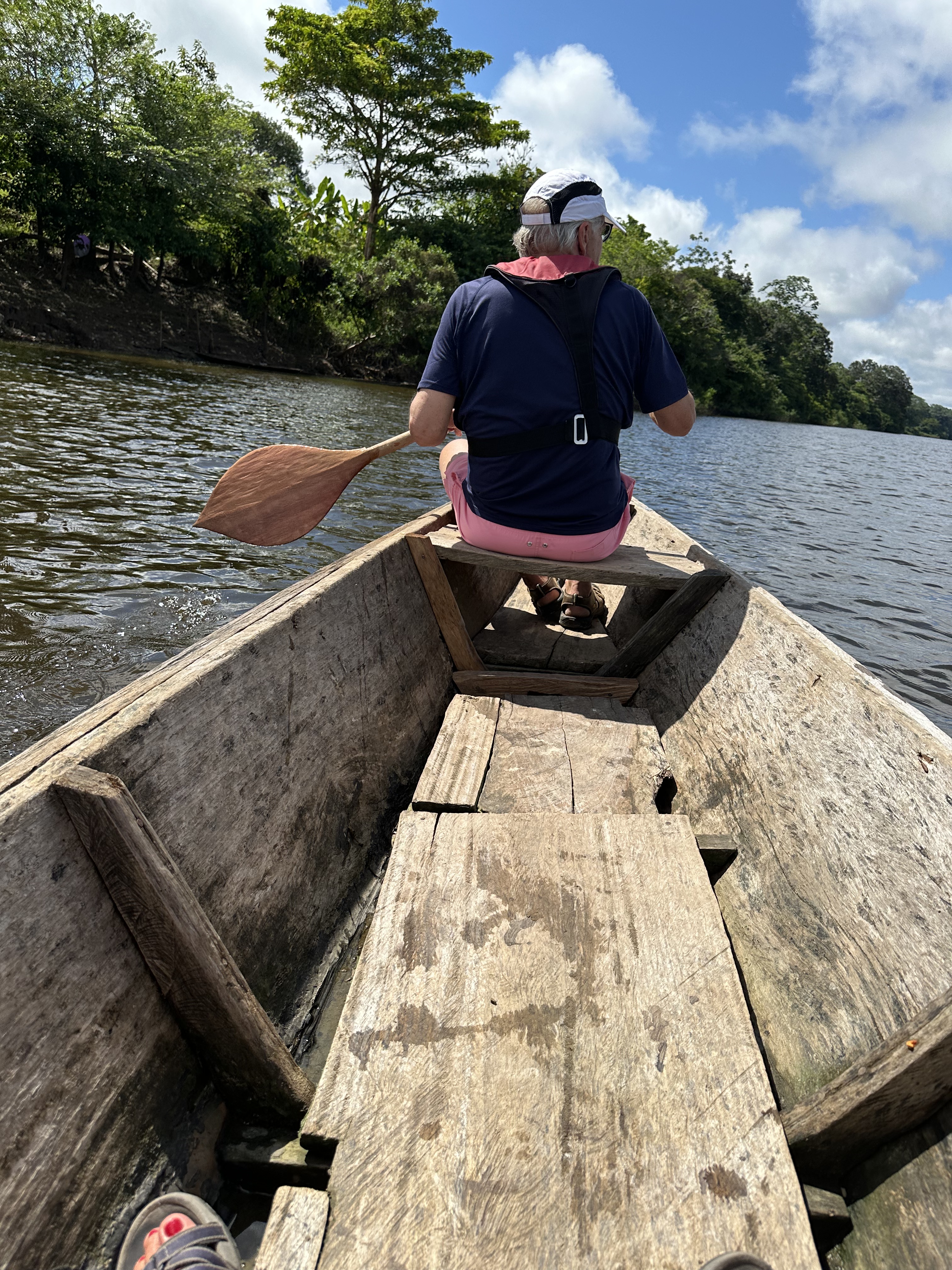
Our next activity was paddling in a dugout canoe. Mark and I managed with a local lady at the stern. The paddles were very heavy and we had had enough after a short time in the heavy canoe. Mark’s new shoulder was happy when we quit.
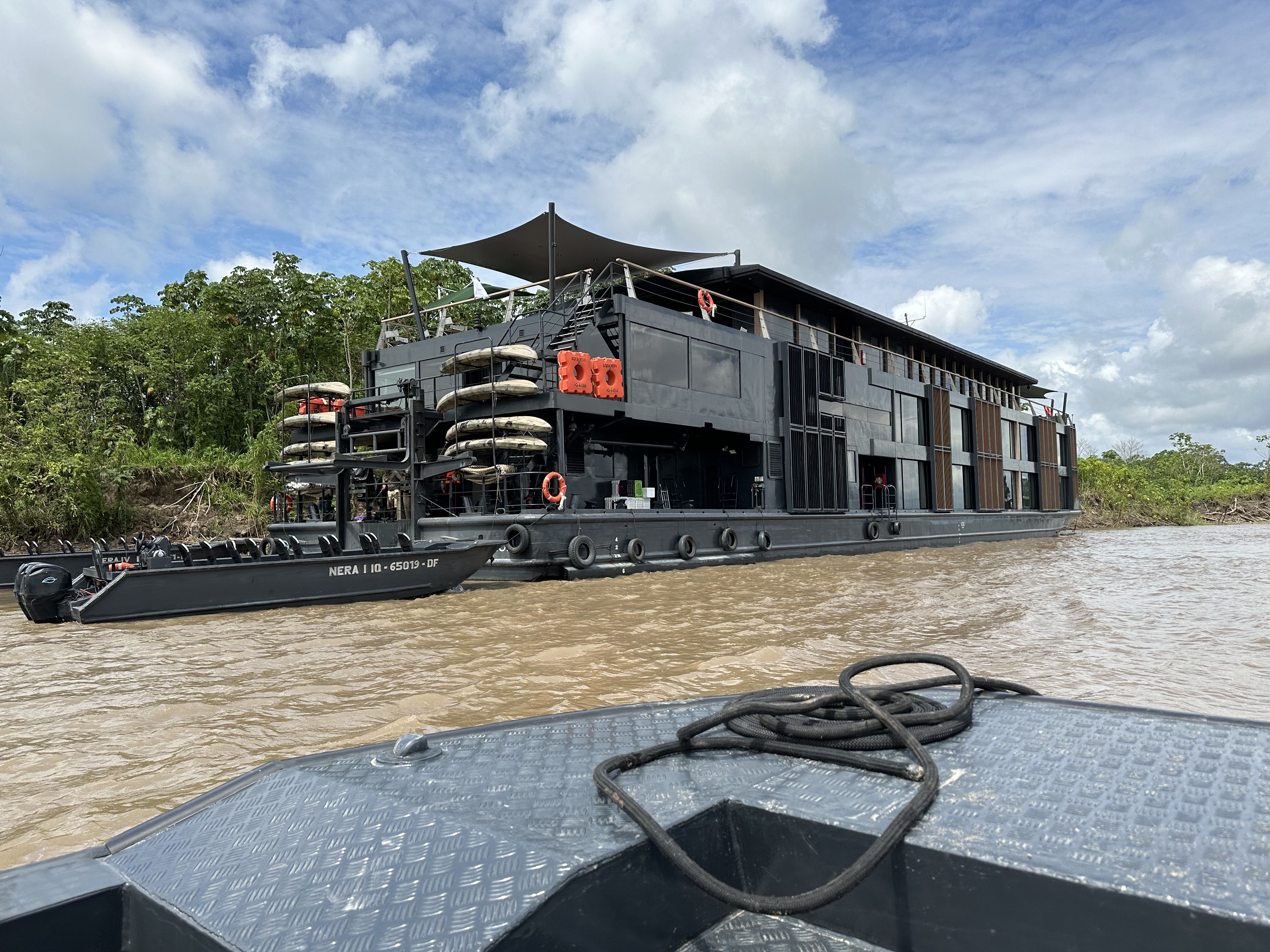
Back in the tender, we motored out into the middle of the black water lake for a swim. We learned that the muddy, brown Amazon has a Ph of 11, while the clean, black tributaries have a Ph of 3. The weather had warmed up considerably since morning and we were delighted to get into the water. It was very refreshing even if we were in it only 15 minutes or so. Then we motored back to the Aqua Nera, which was in the muddy-brown Amazon waiting for us. Shortly thereafter, a pizza and pasta lunch was served. We are both feeling overfed and stuffed. But how do you skip a meal? There is no going into the kitchen later to get a snack.
Overlooking the ocean from the promenade near our hotel in theBarranca District.
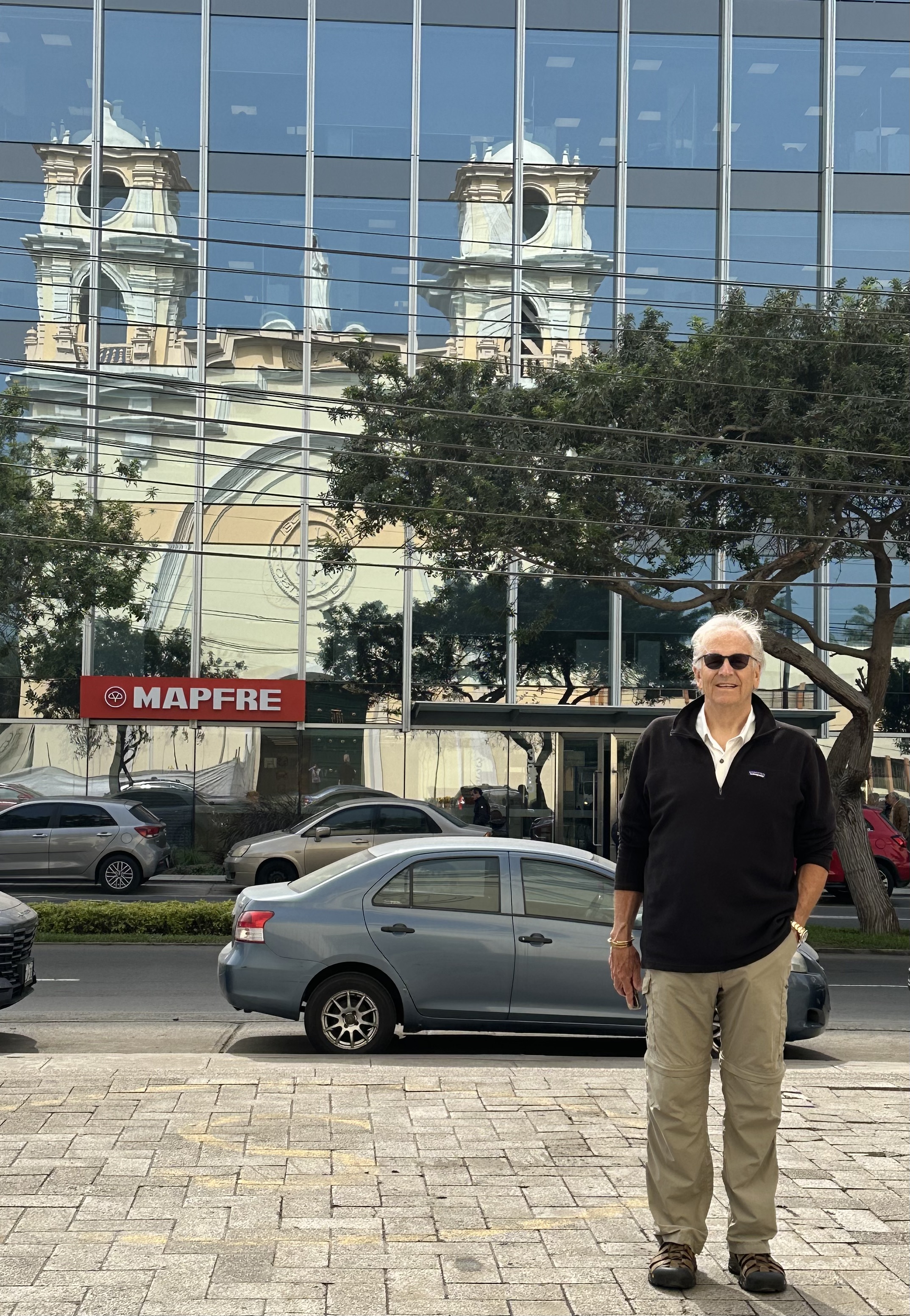
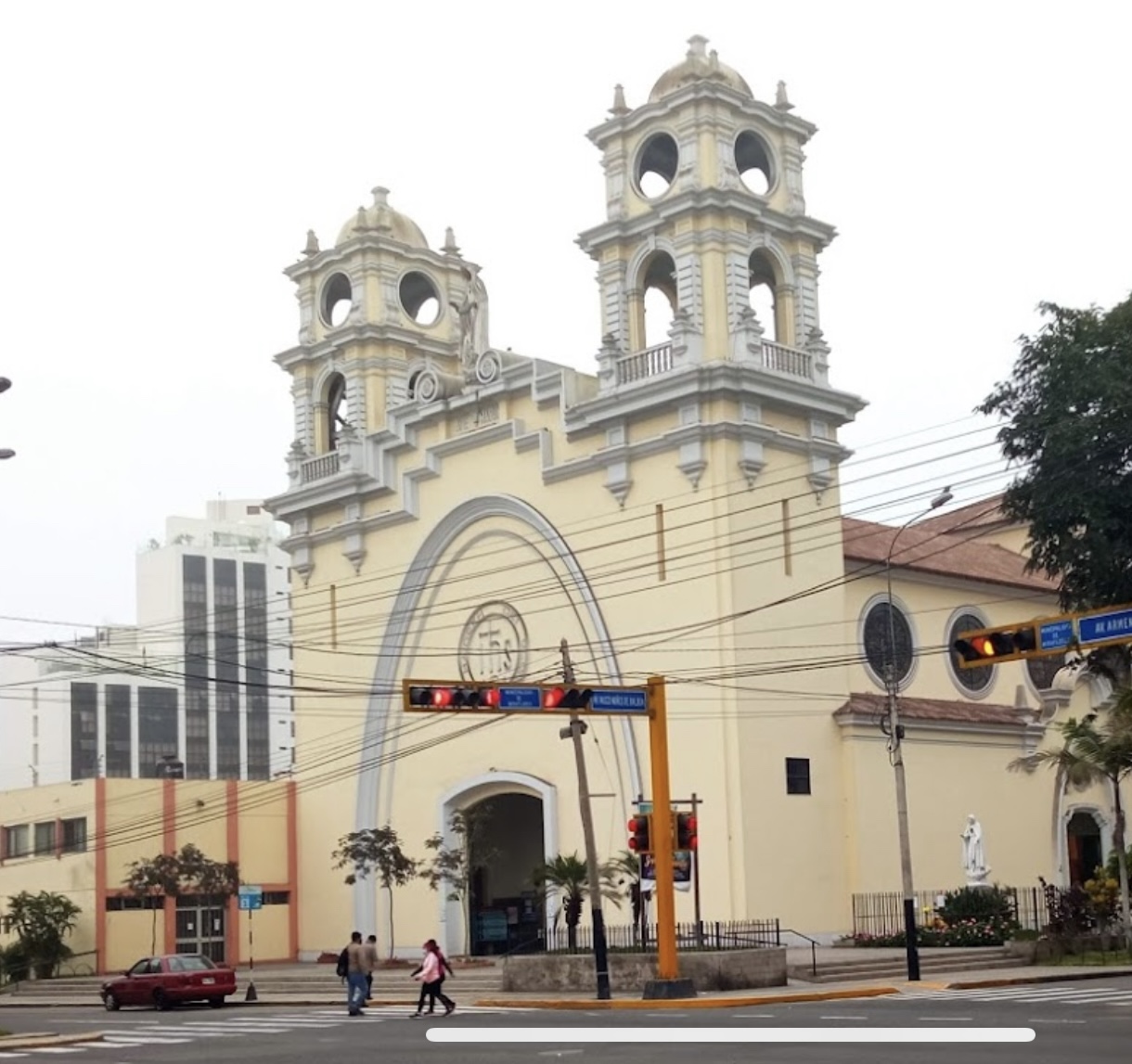
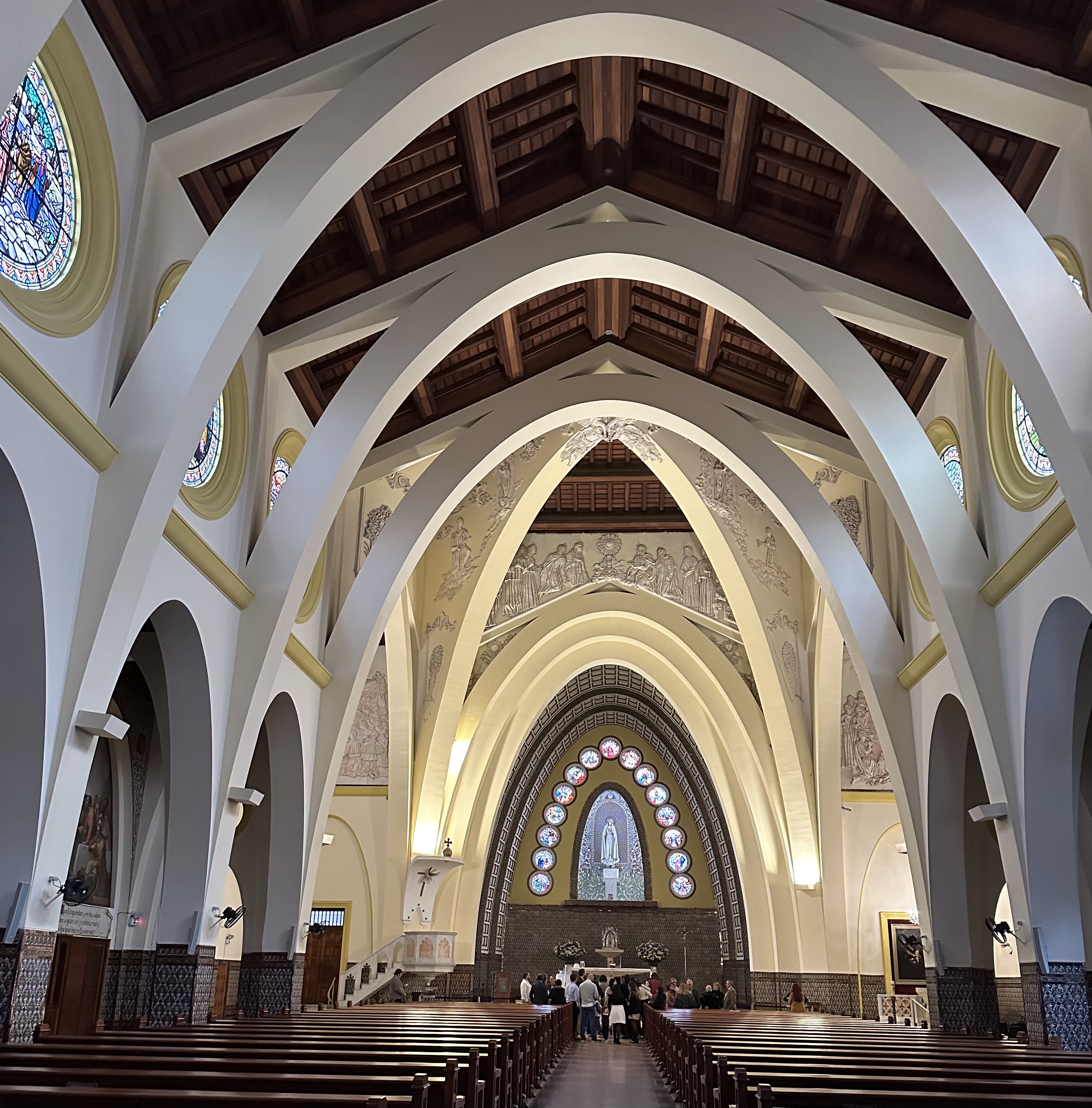
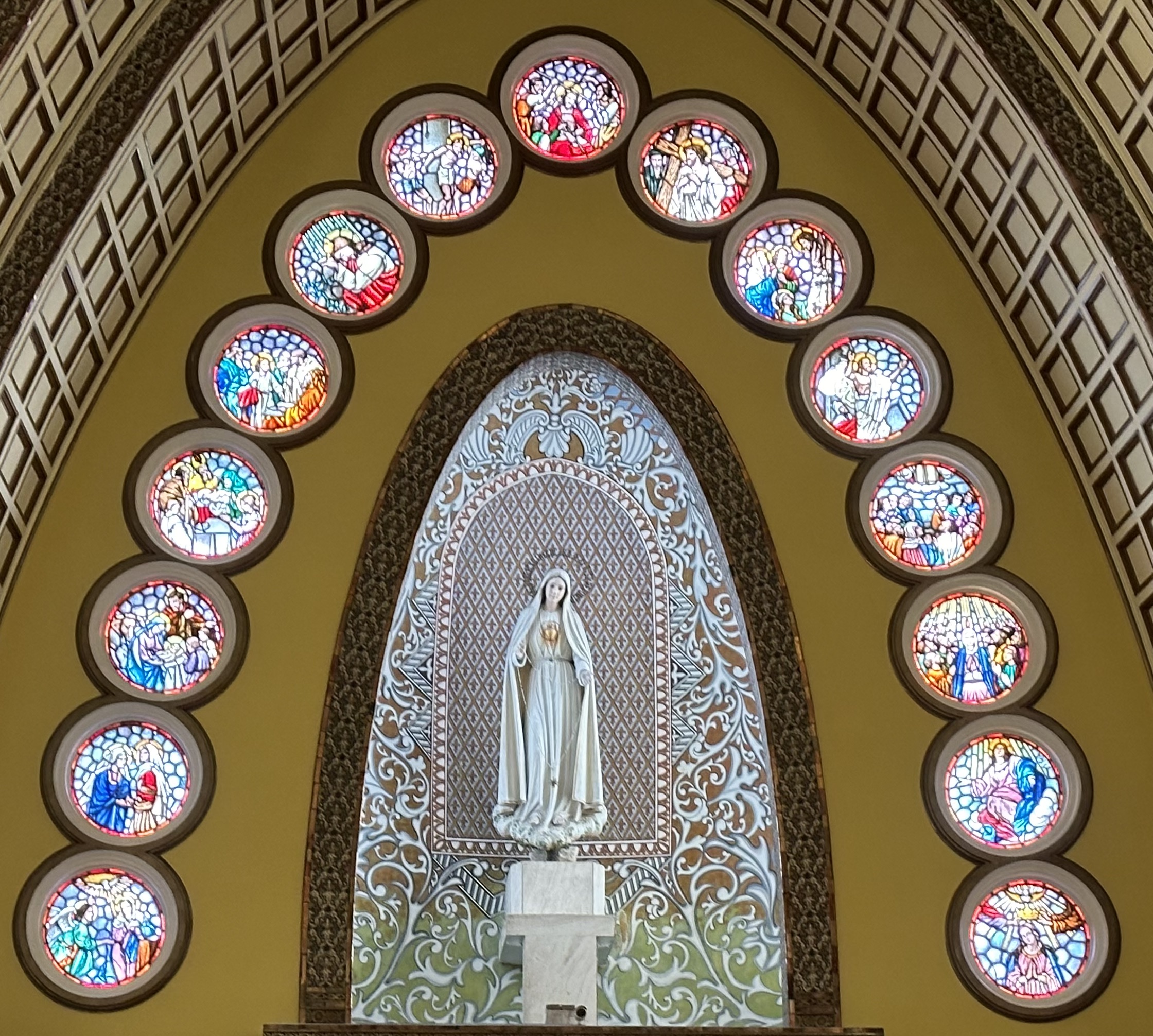
Already this morning we have learned that Lima is the second largest city built on a desert after Cairo. Pre colonial civilizations began to build water canals 2,000 years ago. that are still being used today. The population of Lima is 12 million. After a light breakfast we walked along the nearby promenade overlooking the ocean. It is winter here and the temperature is quite chilly. I am not prepared for cool weather. I sure hope it warms up soon. We walked through an outdoor shopping arcade and I bought a sweater that should help keep me warmer. Along the walk we visited and admired a small church called Our Lady of Fatima.
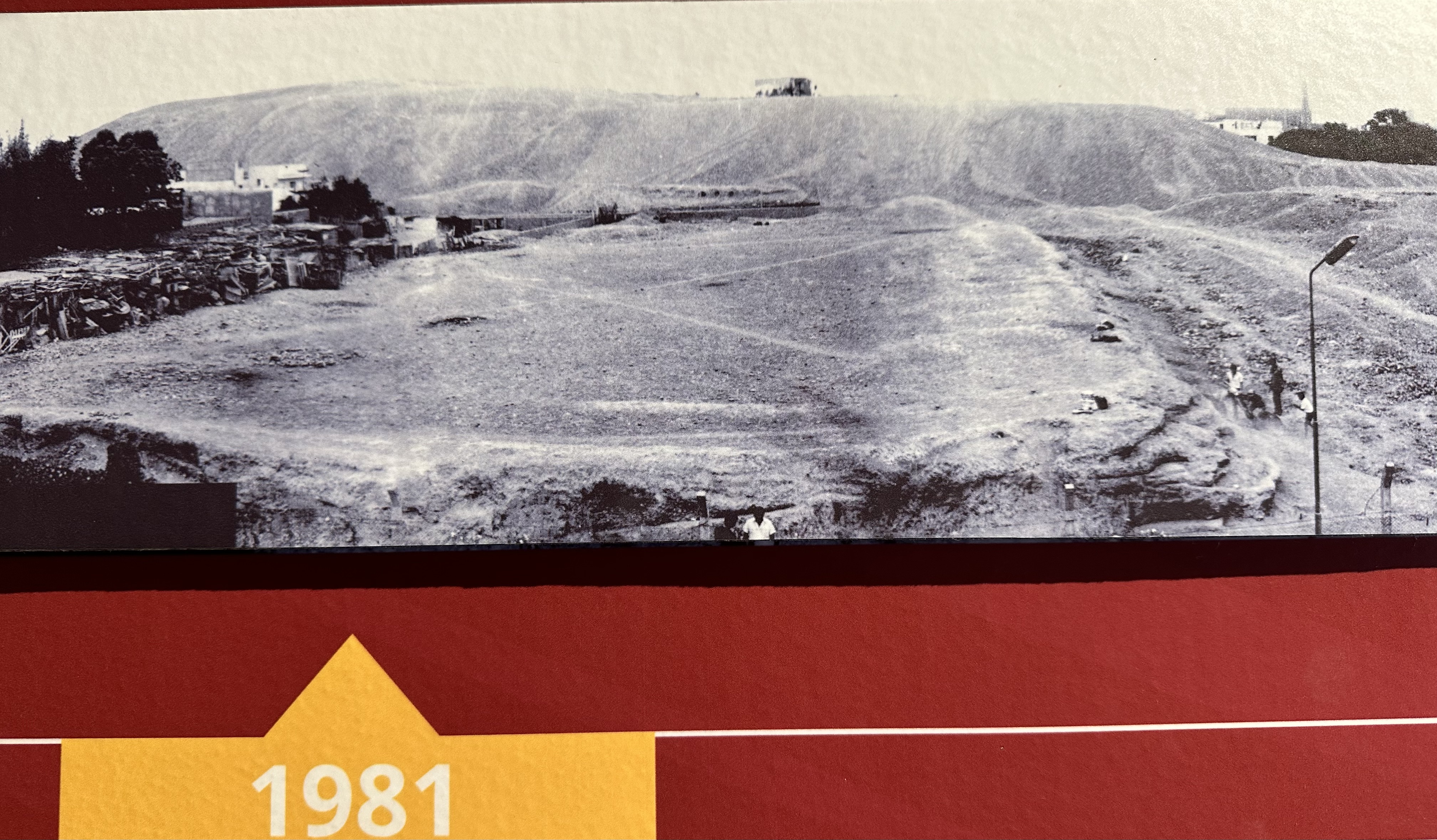
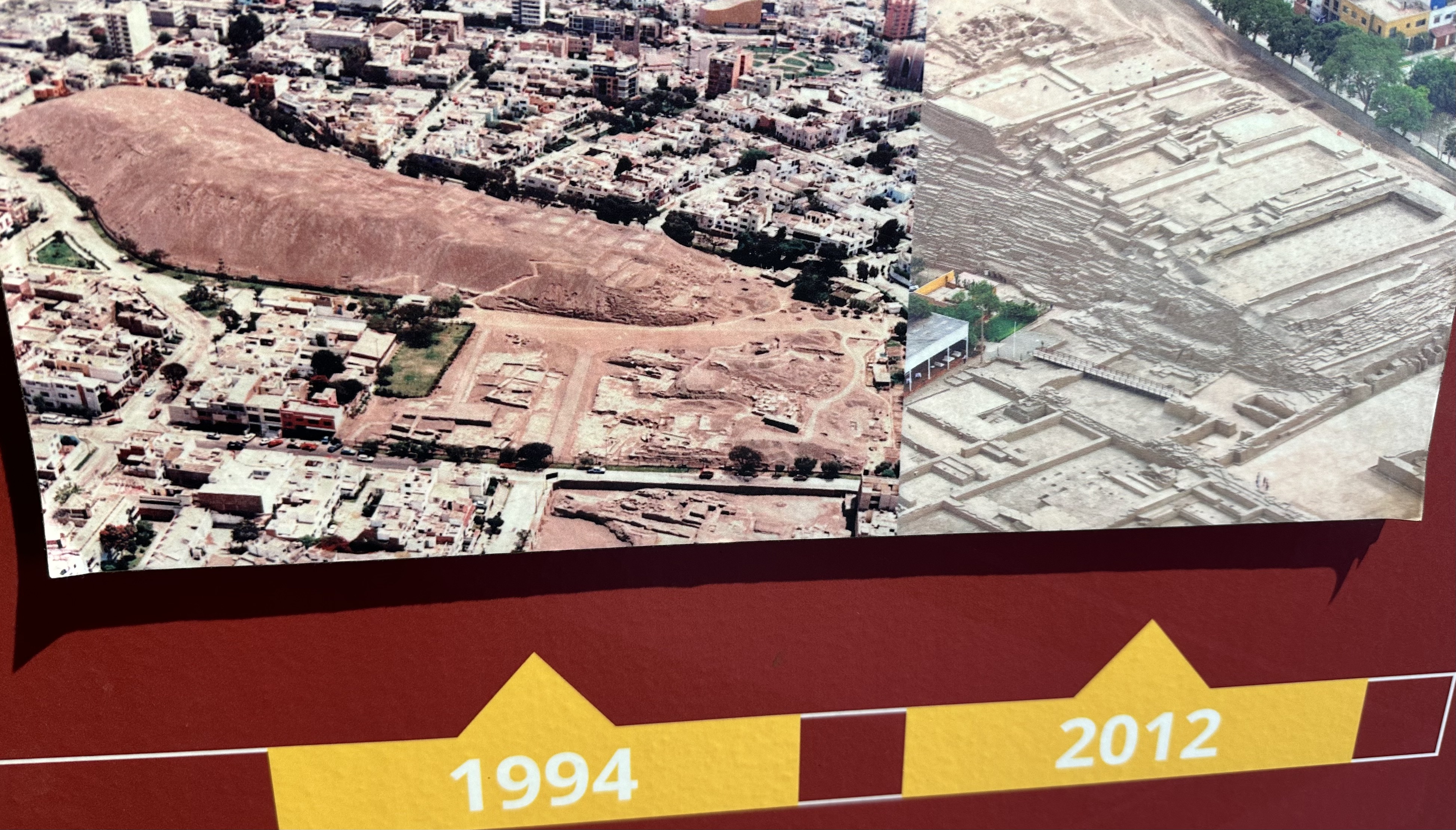
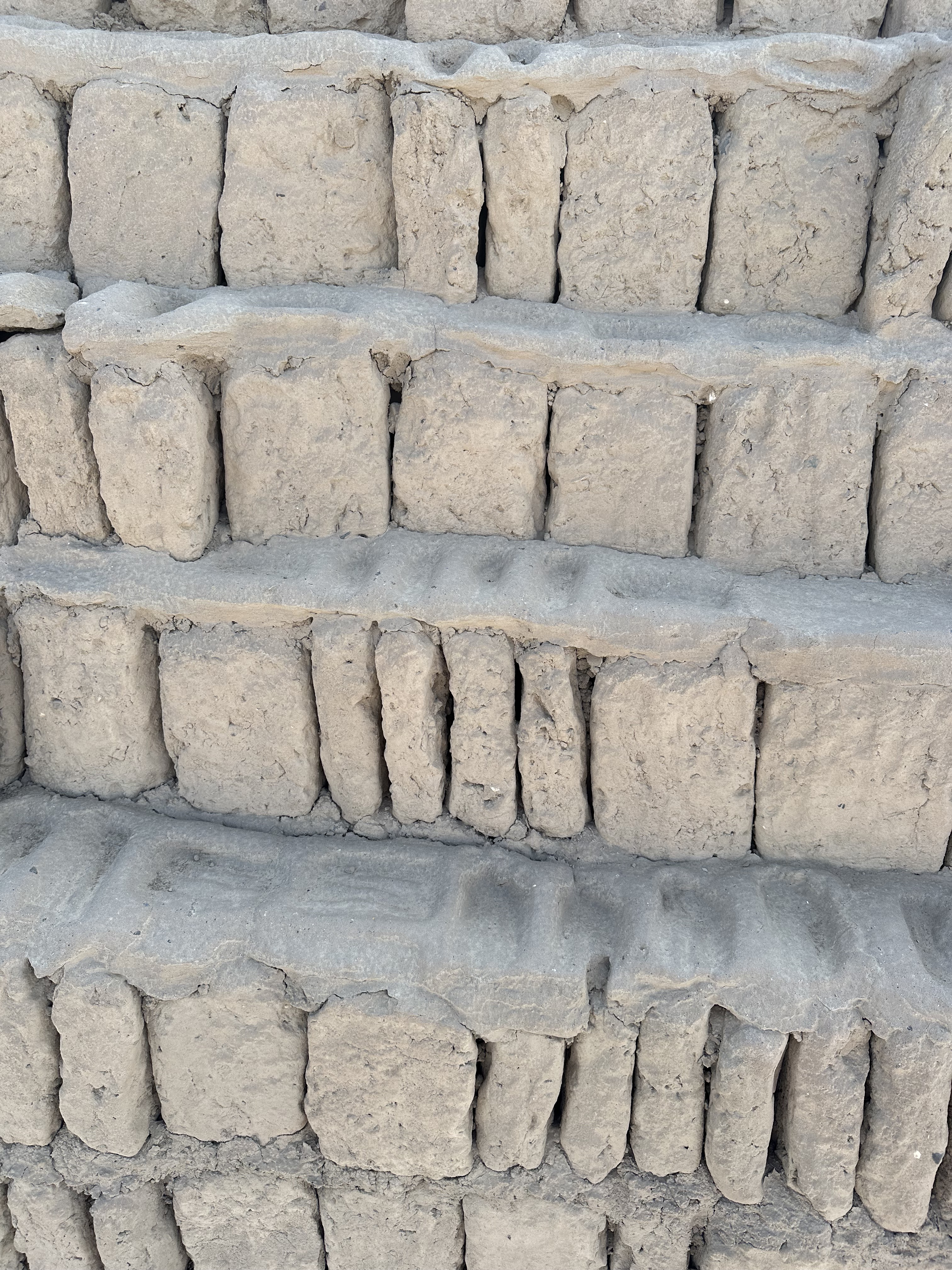
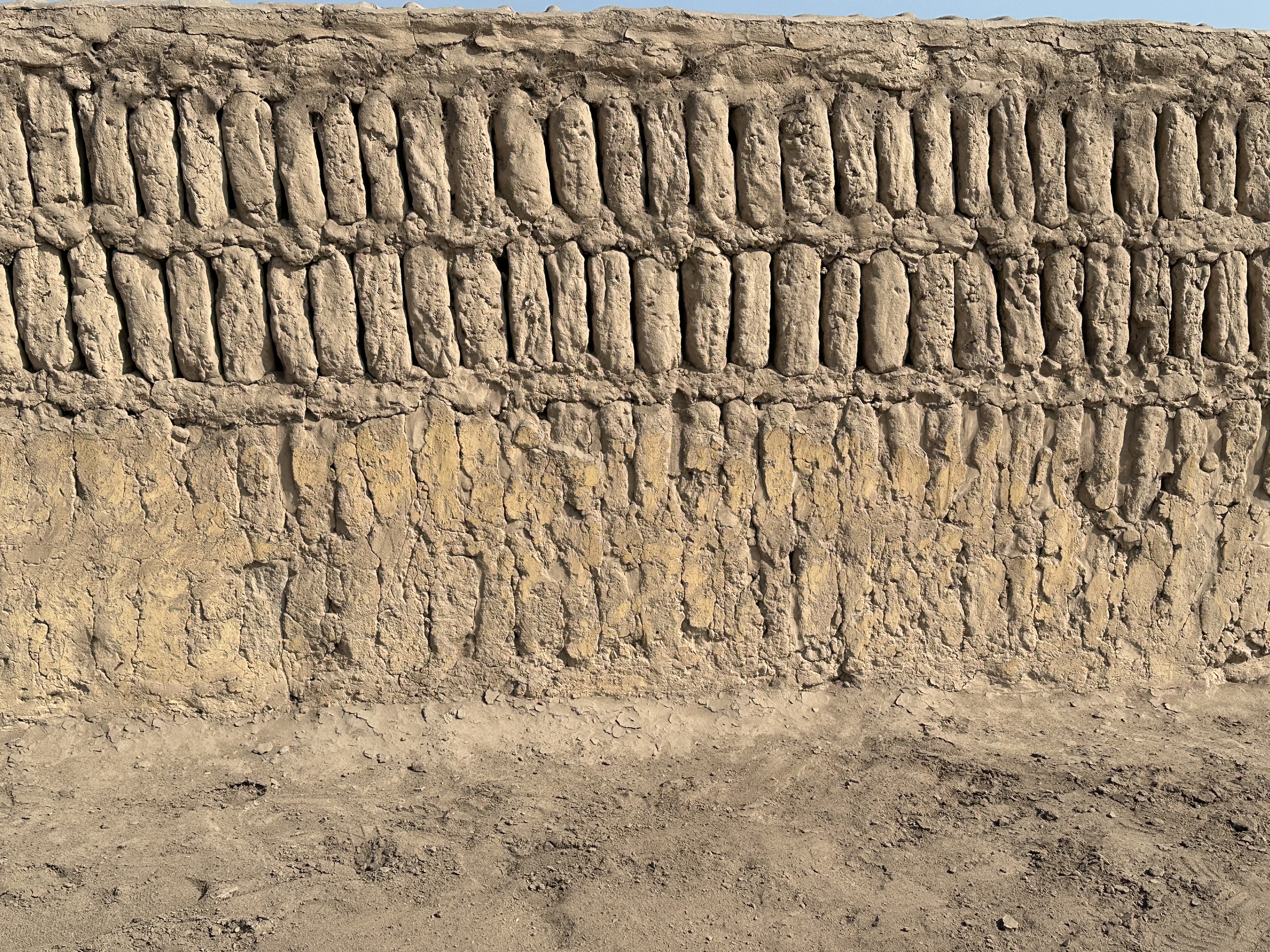
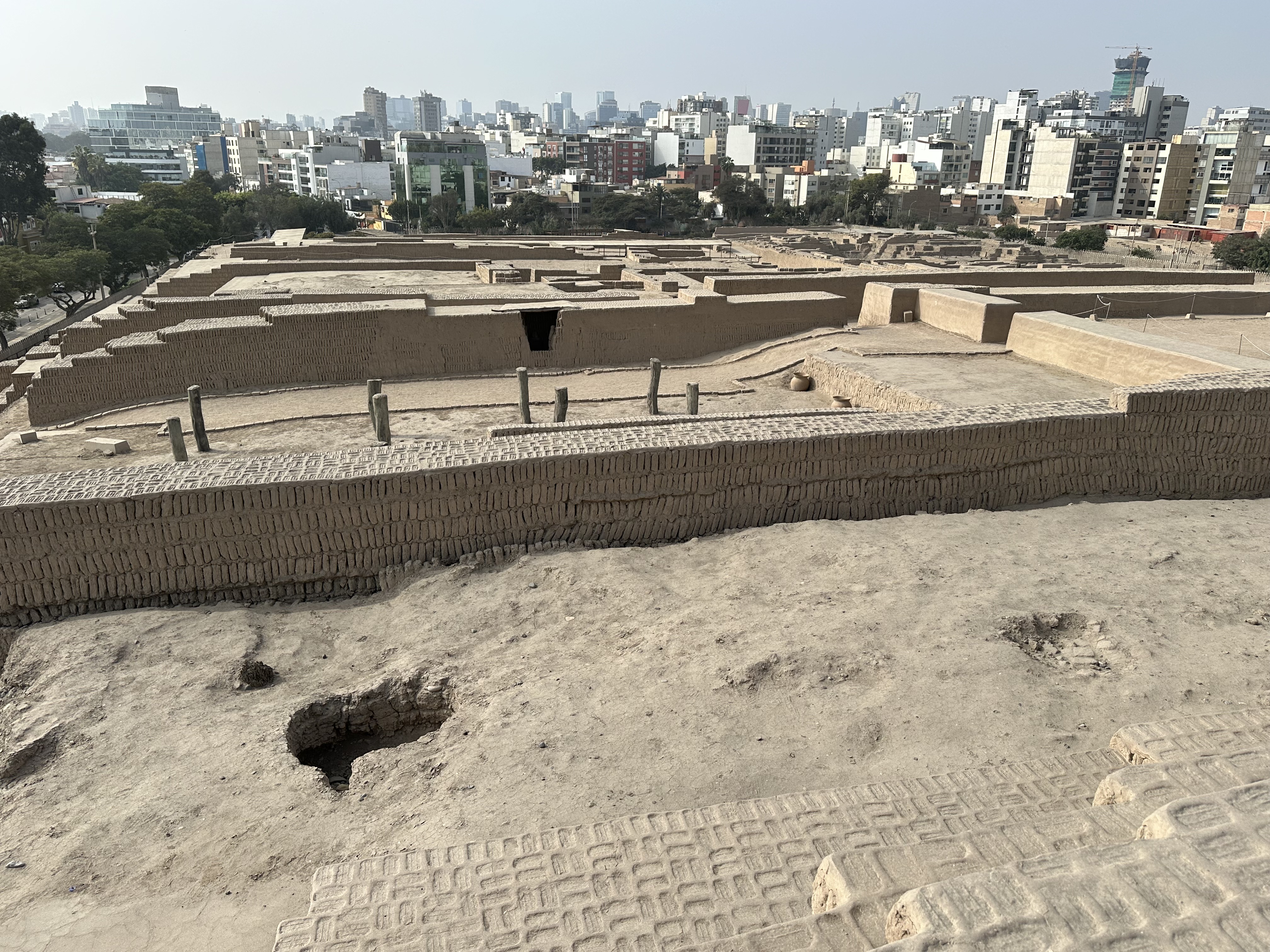
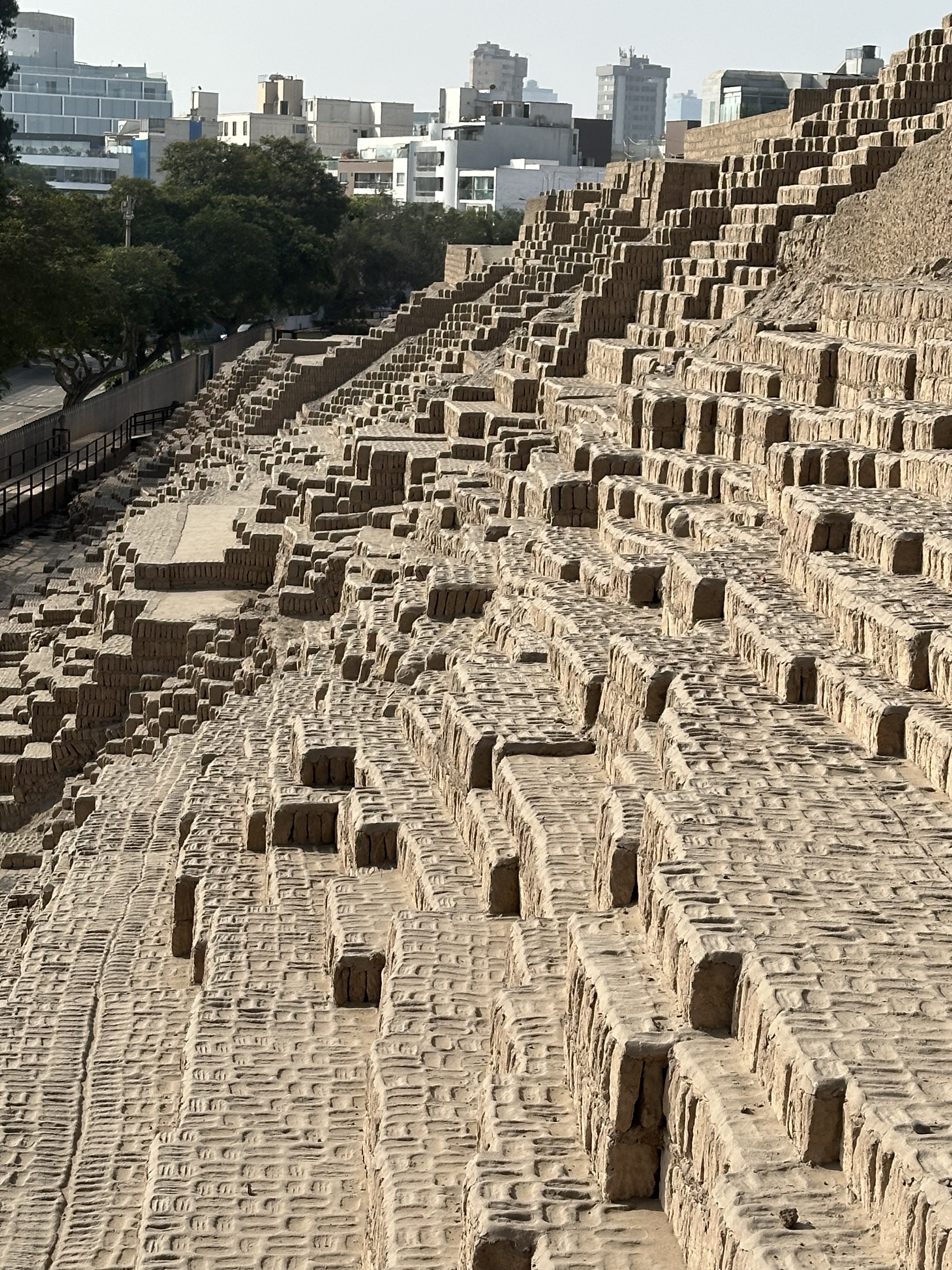
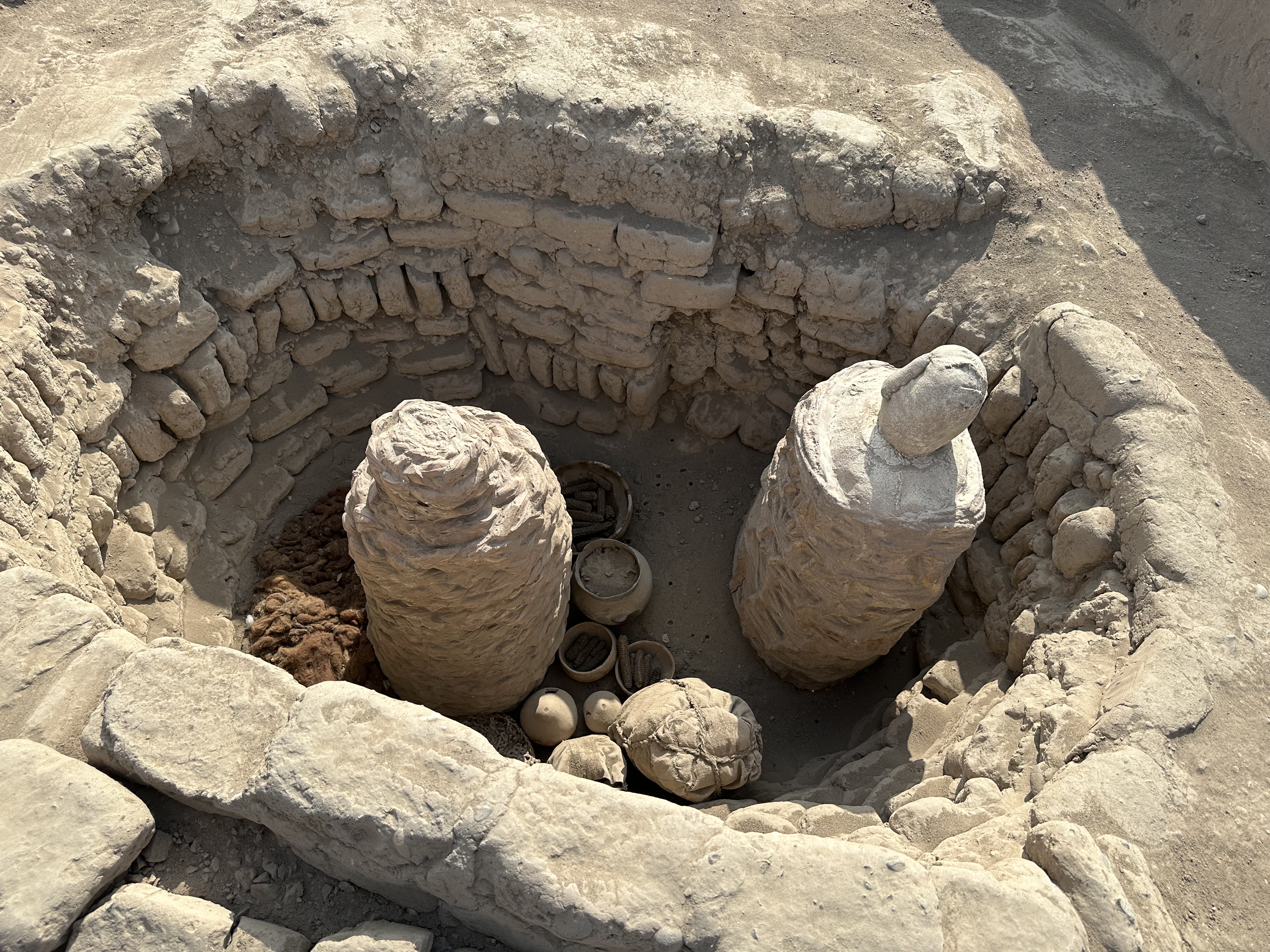
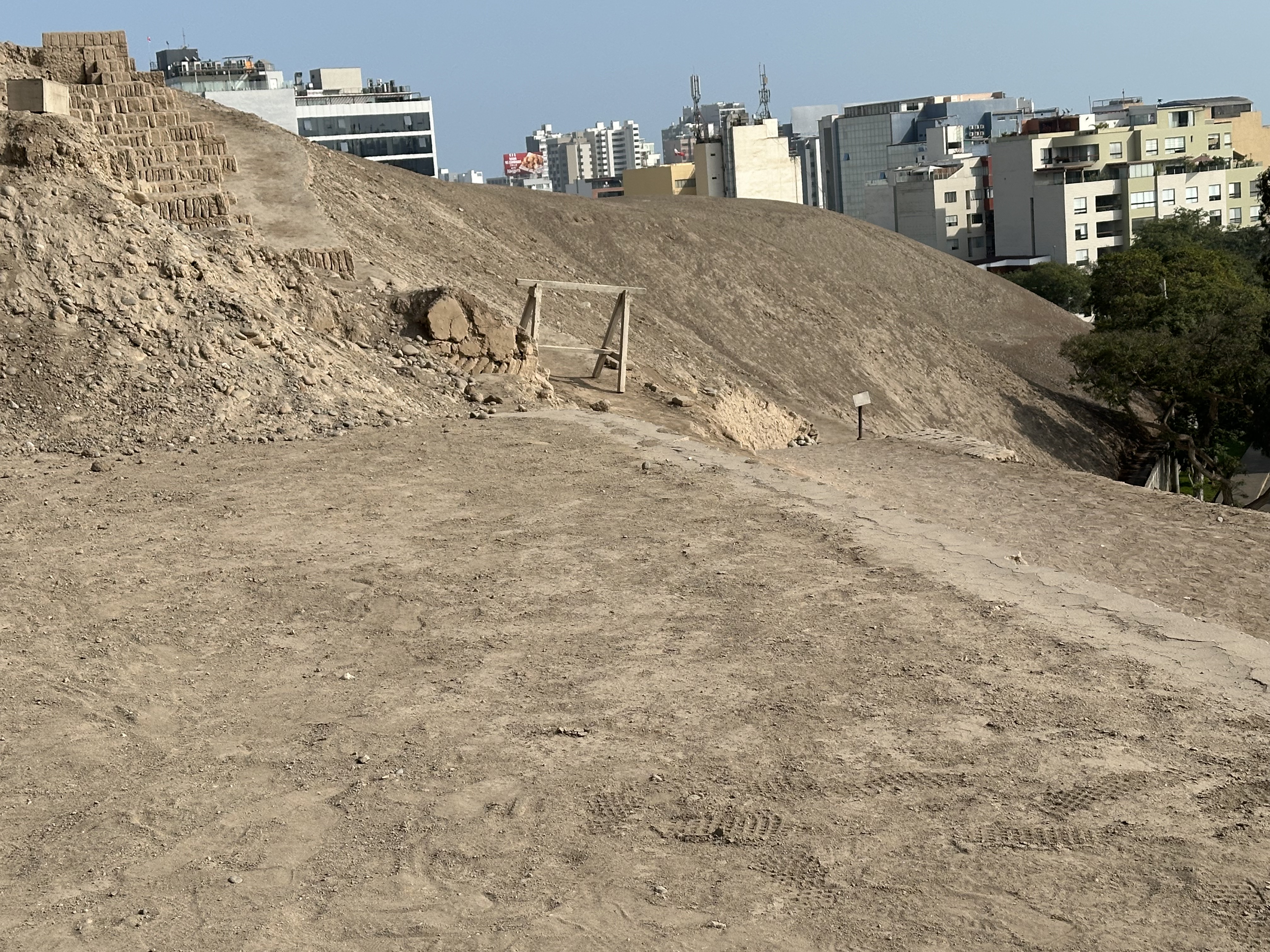
Had a delicious lunch of ceviche and salad in a restaurant called Huaca Pucllana. (The ceviche was so delicious I noted the ingredients: octopus, shrimp, yellow potatoes, seaweed and hominy in a spicy lime juice sauce.) It was next to an archeological site of the same name and, after lunch, we toured the site with our guide, Sophia. The place, considered sacred, looked like dirt hills as late as 1981. By 1994, it had been designated and confined. By 2012 it had been excavated to look like what we see today. Sophi explained how the bricks were made hollow to be earthquake resistant and had stood for centuries after construction between 450 – 650 AD during the height of what we now know as Lima culture (200- 750 AD). The use of the site remains unclear. In later centuries the top of the construction was used by different cultures as a burial place. Water channel systems for irrigation made it possible to increase agricultural production in the area. Fishing was pursued both inshore and out to sea. The most sought after catch being sharks.
The mud brick hillside with actual remains, including a plastering effect and yellow paint, as well as reconstructed areas. People were buried in a fetal portion sitting up. The smooth ground has yet to be uncovered.
After the cool morning, the day warmed up and became sunny with a slight breeze. I was comfortable in a light sweater. There was no measurable humidity. A perfect weather day.
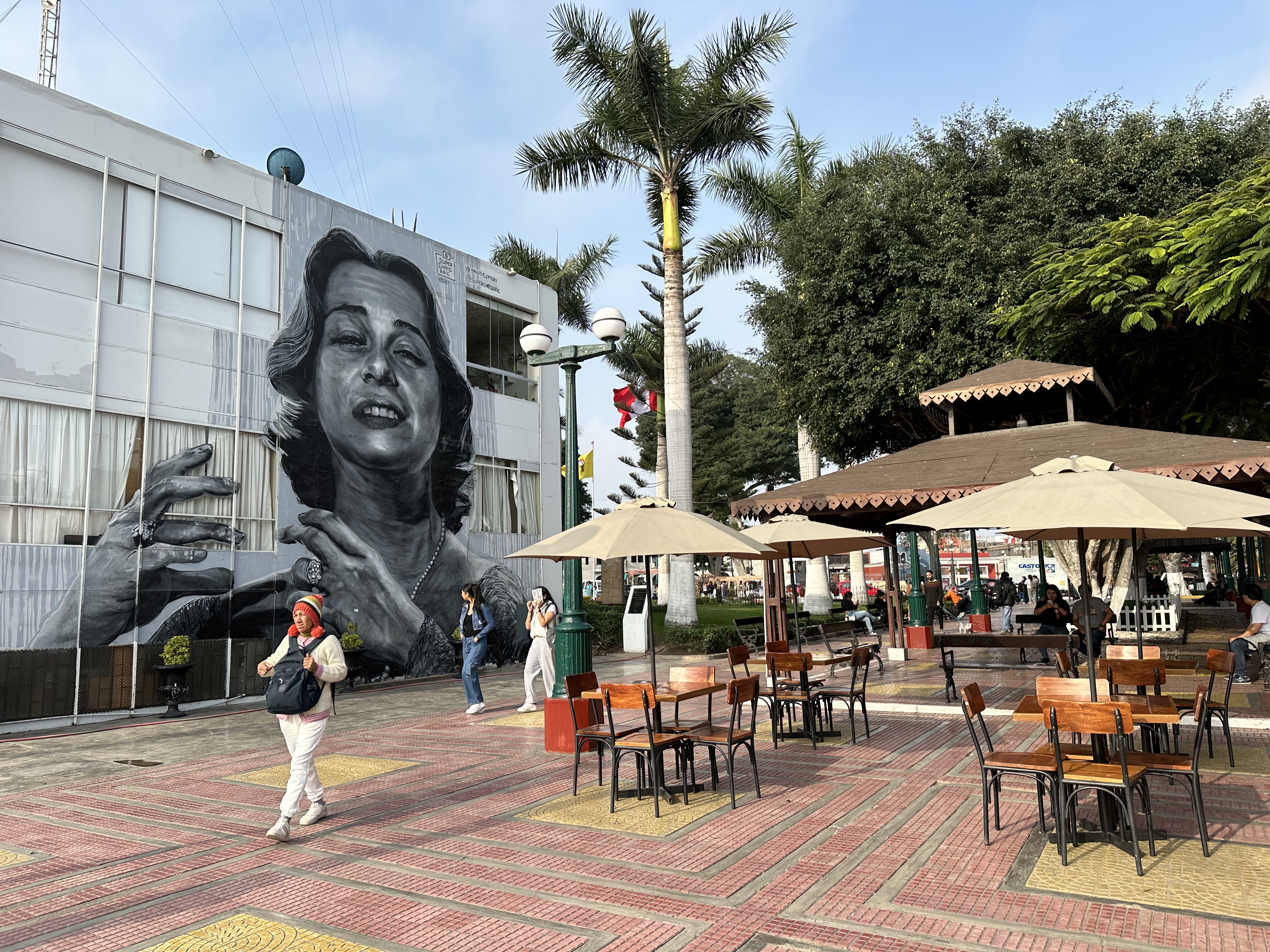
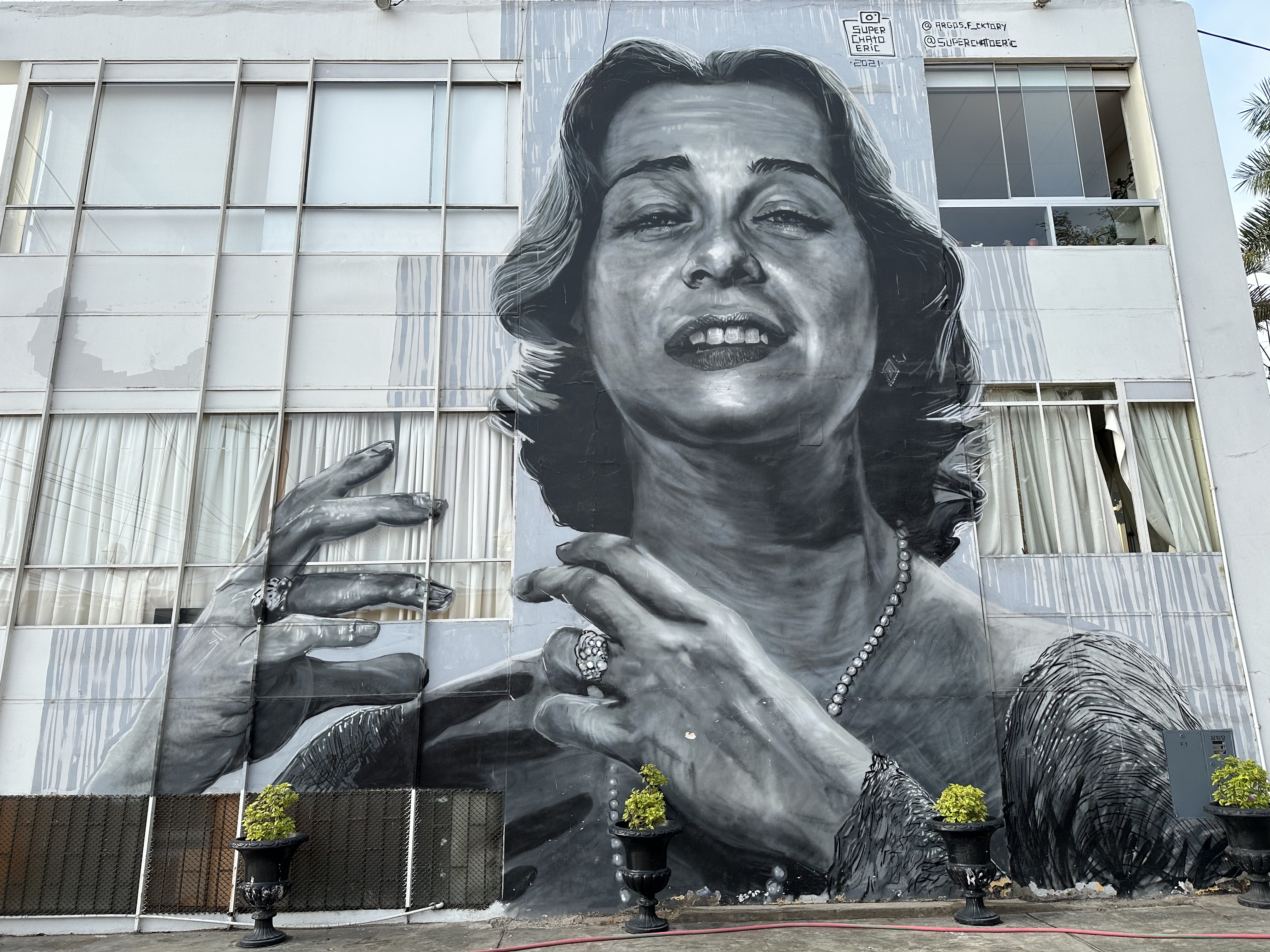
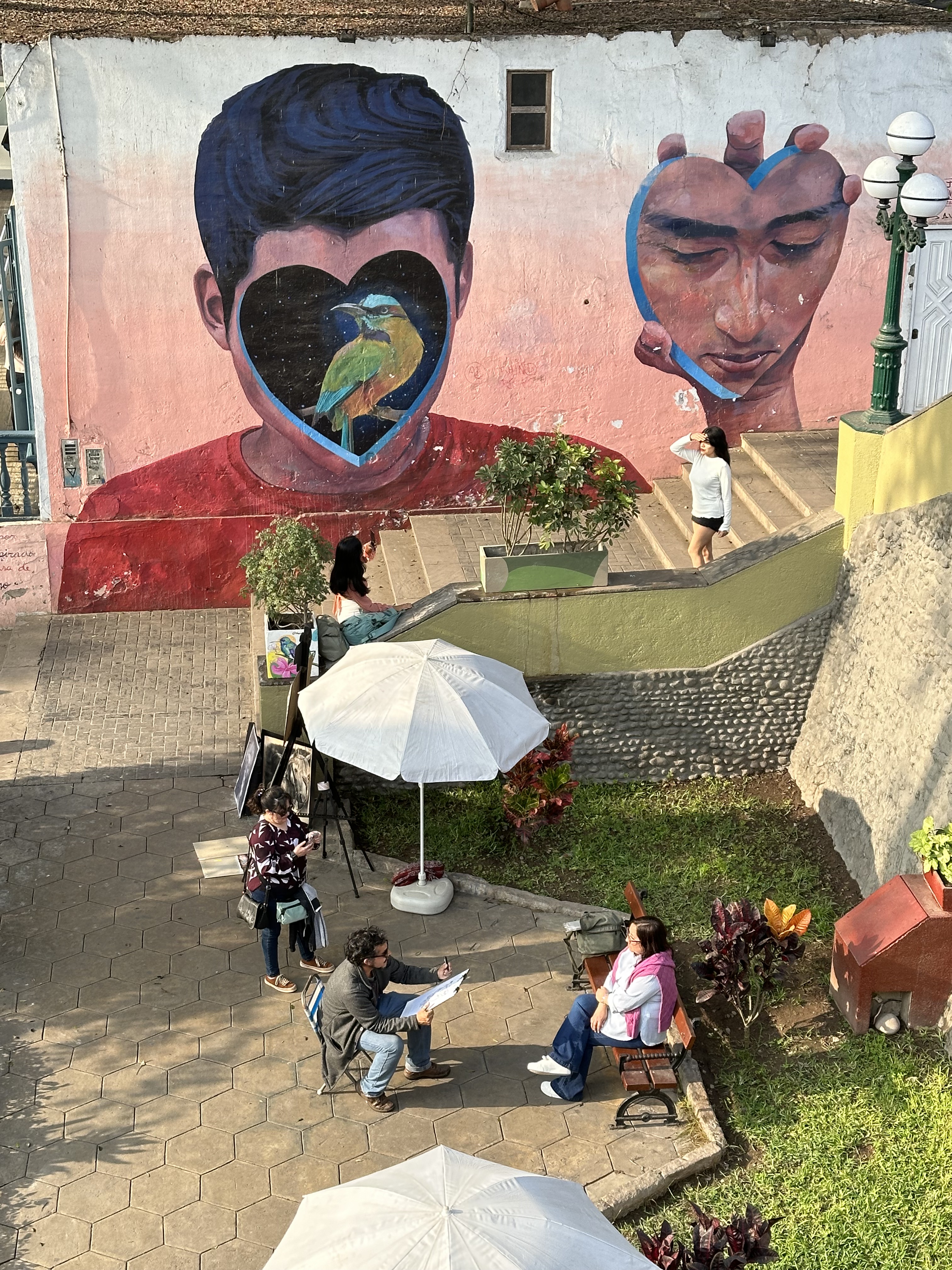
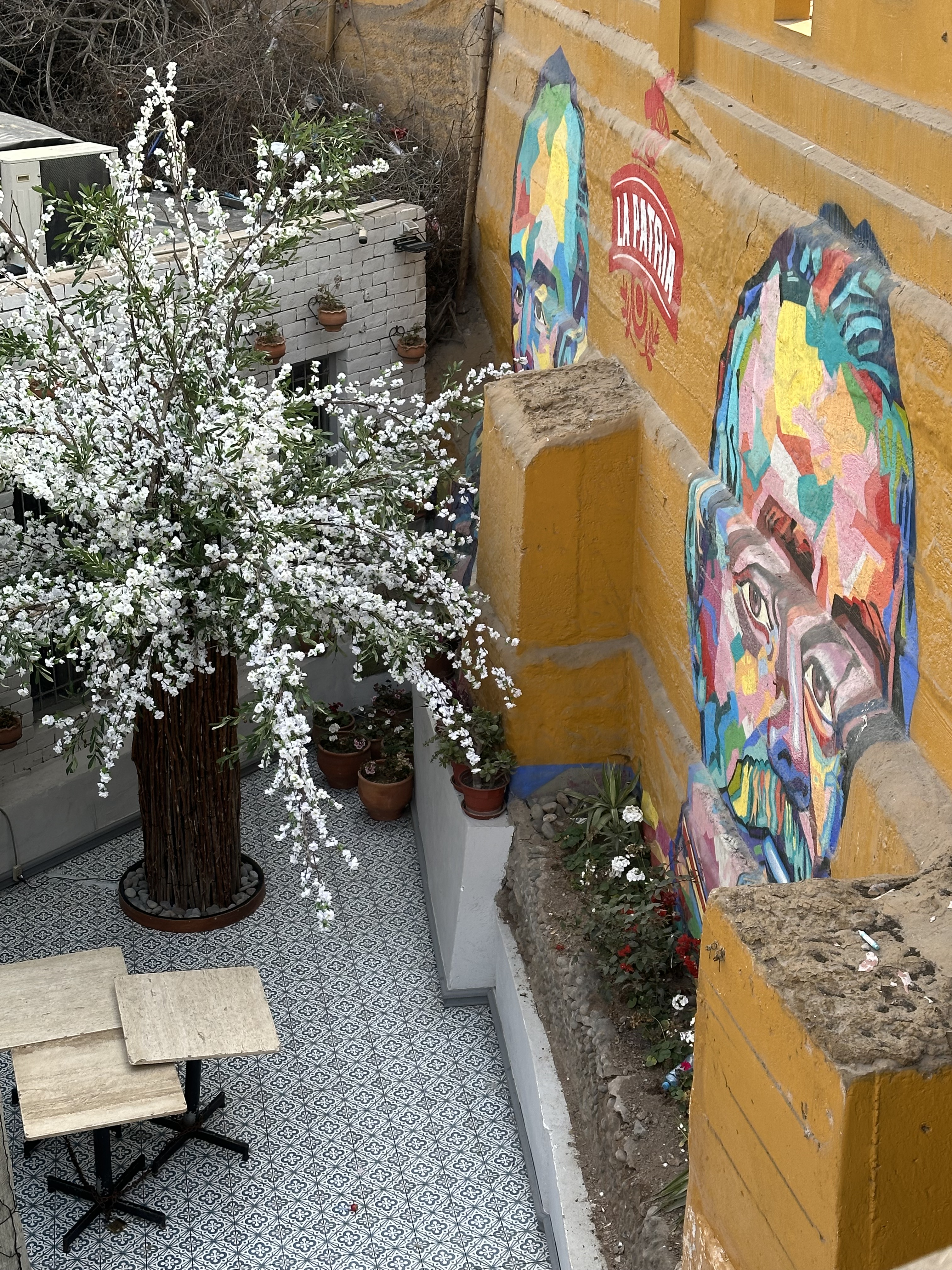
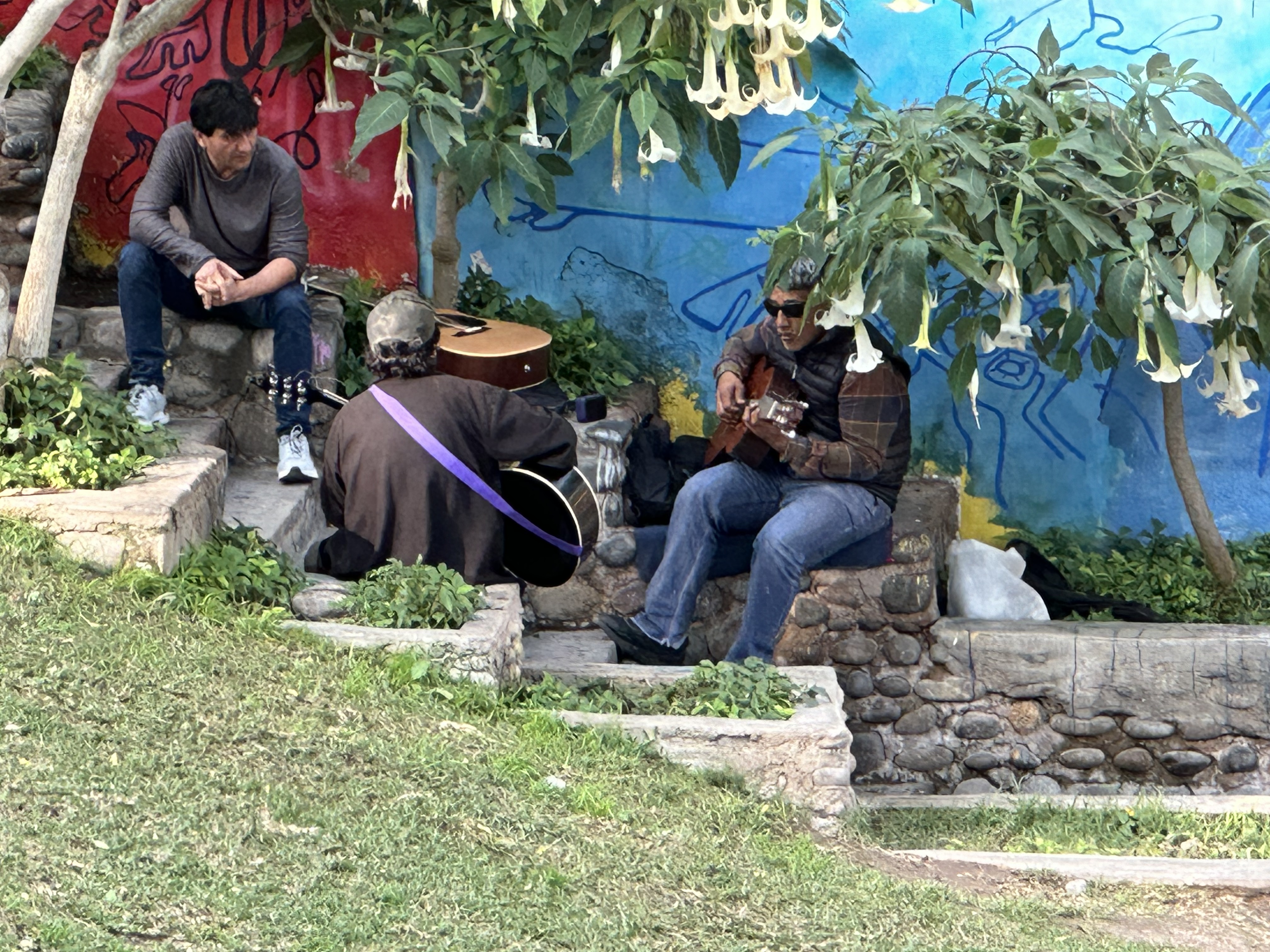
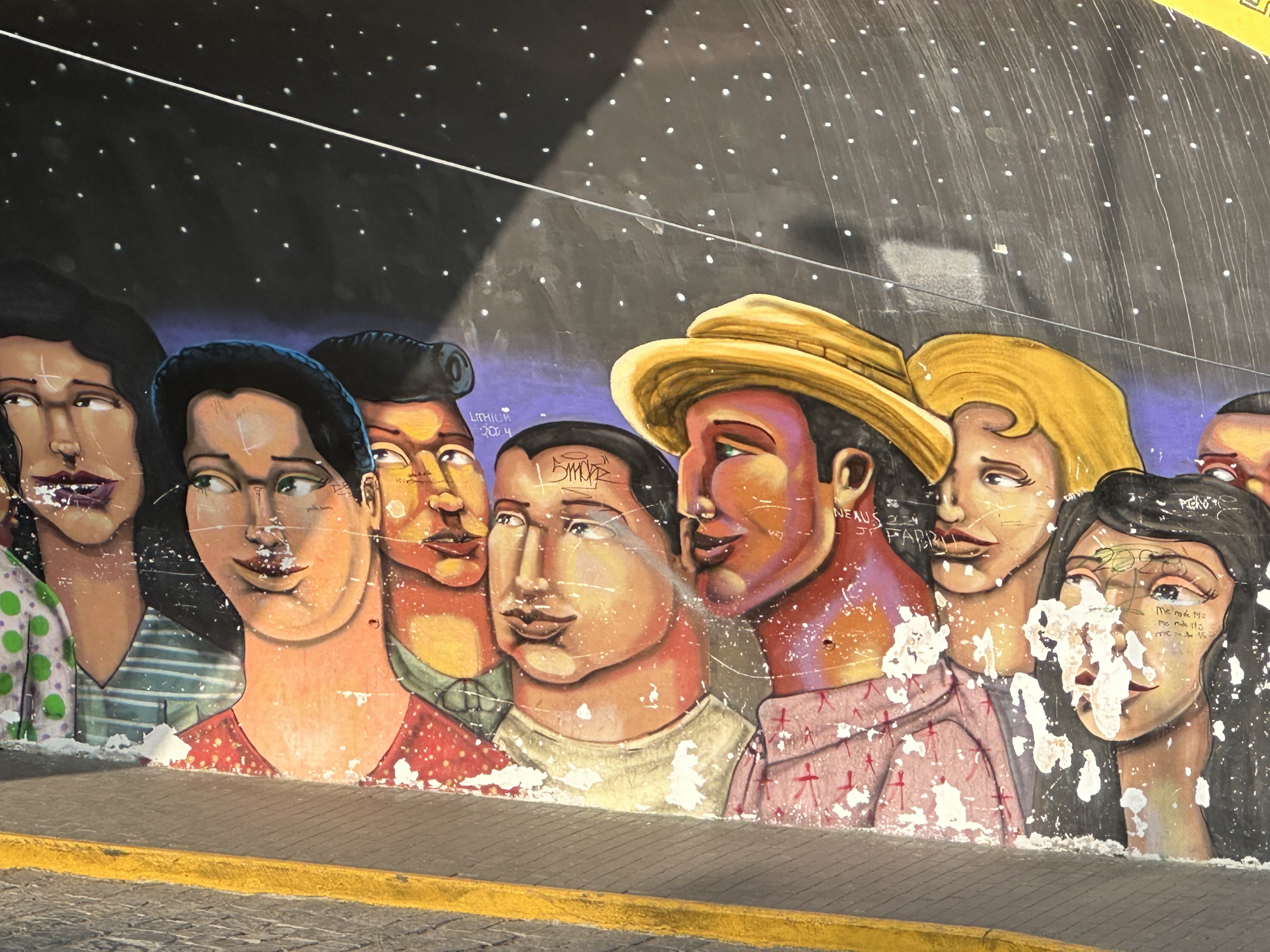
From the archeological site, our driver, who had waited for us, took us to the District called Barranca. It is one of 43 in Lima, fairly small and very bohemian, with all classes of people living in a very charming space. Art is everywhere. Murals, music, textiles and art in and out of galleries. The mural is of a woman named Chabuca Granda. She was a locally famous singer and composer. Two of her well known songs are Jose Antonio and Flour de la Camilla. Sophia suggested we and you, look her up and listen to her songs. If you do, let us know what you think about them.
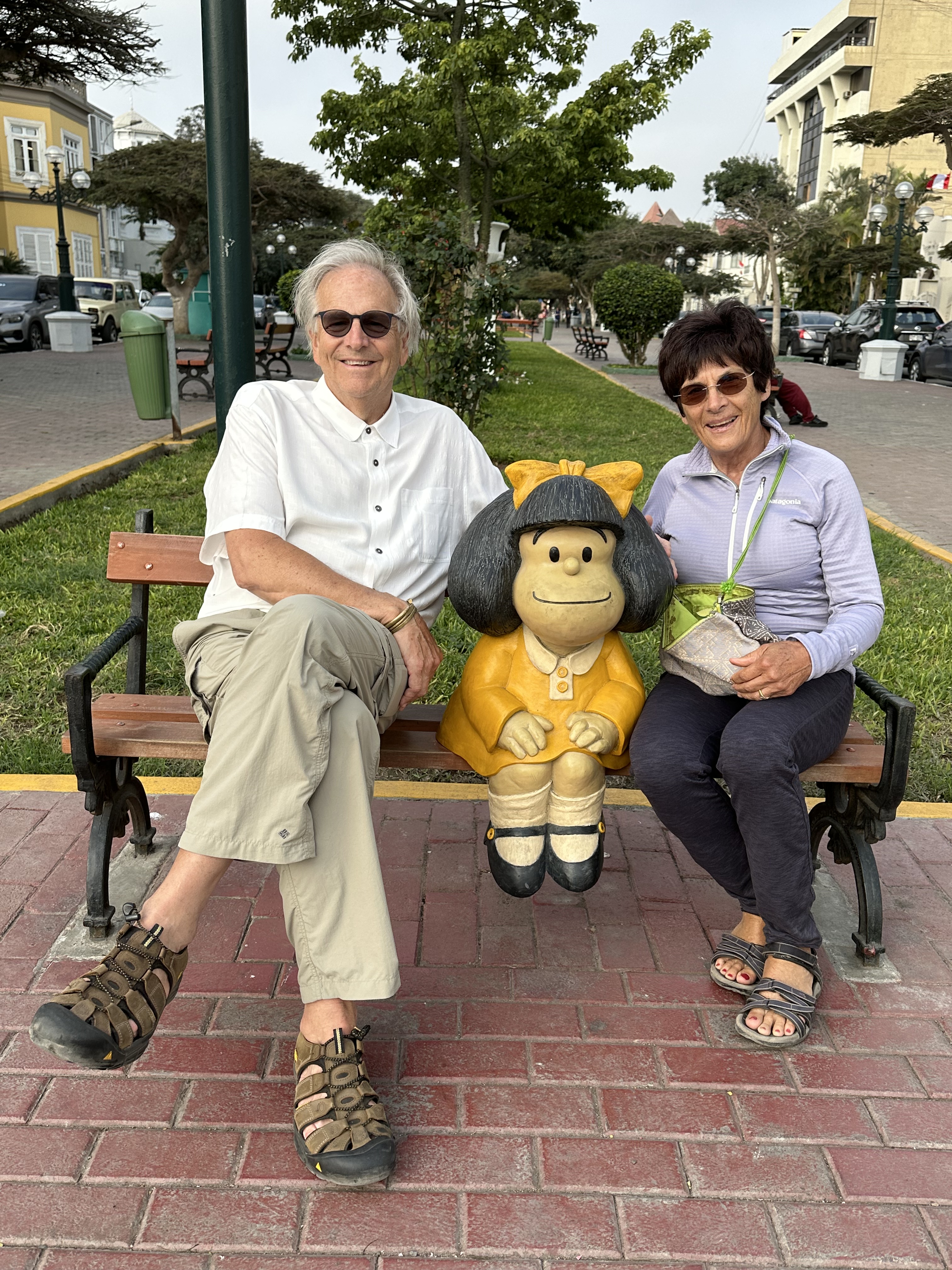
The cartoon character in the yellow dress is Mafalda. She was created by an Argentinian artist named Quino. She is famous throughout Latin America as a talkative child who sends funny but pointed double messages.
After walking around Barranca for an hour or so, we went back to the hotel. I blogged, while Mark learned about making Pico Sours from the bartenders in the ground floor lounge. At 6;30 our driver, Carlos, drove us to a restaurant on the beach, called Cala. The beaches in the area are all pebble rather than sand and they make for a lovely noisy sound. We had a delicious rockfish dinner listening to the waves crashing very nearby. Later, back at the hotel, we stopped in the bar to have another visit with the friendly bartenders. Mark had another spicy passion fruit Pisco Sour and I had a hot tea and a test of his drink. We were off to bed by 9pm. It had been a very nice day in Lima.
It is the 4th of July and Mark and I are on our way to spend a few days in Lima and then fly to Iquitos in North East Peru for a boat trip on the Amazon River. We will not be seeing other parts of Peru as I spent 3 months in Peru in the late 60’s visiting Cusco and Machu Picchu by train one time and then another time by horseback over the 16,000-foot Salcantay Pass with a group of Marin photographers on a 5-day adventure that was full of unexpected challenges; including crossing the pass during a snow storm, running to board a moving train at midnight, being rousted at day break for camping in a village market and more. Quite a story that is good for another time over cocktails.
Meanwhile, a bit of info about the country. The Amazon rainforest is divided about 60/40 between Brazil and Peru. The Peruvian portion covers 60% of that country, is referred to as the Peruvian Jungle and is divided into two ecoregions: the lowland jungle, which has an elevation between 80 and 1000 meters, an average temperature of 82 degrees F, over 75% humidity and 100 inches of rainfall; and the highland jungle which stands between 1000 and 3,800 meters, has an average temp of 75 degrees F and between 59 and 118 inches of rainfall each year depending on the terrain. The Peruvian Jungle is one of the most biologically diverse areas on Earth. It has the largest number of bird species in the world and the third-largest number of mammals. It also has a very large number of species of butterflies and orchids.
With such hot, humid weather, it is no wonder that only 5% of the population lives in the jungle. The largest group of jungle dwellers are the indigenous people called the Ashaninka. They survived the European epidemics in the 1700’s and repulsed Spanish military and the Franciscan missionaries attempts to Christianize them. In the 19th century they resisted the slave raids during the rubber gathering boom. A significant and interesting people, the Ashaninka do not believe in a creator, but in a hero called Avireri, who transformed humans into animals, plants, mountains and rivers.
The largest problems in the jungle today are illegal smuggling of rubber, timber, gold and oil. In spite of governmental efforts to slow the illegal removal of these products, such activities continue at a great pace.
For us the adventure will begin in Lima. From Sacramento we flew to Atlanta, changed planes, and flew on to Lima, a 12-hour trip all together. The strains of last night’s music at the North Star House were still ringing in my ears. MIMs July 3rdperformance has become a deep abiding tradition for us, affecting our activities every year. This year is no exception. To fit in the music on the 3rd, we were forced to get up at o’dark thirty on the 4th for a 7am flight. Well worth the effort.
Lima, the capital of Peru, was founded by Francisco Pizarro on January 18, 1535. Prior to the Spanish conquest, the Peruvian coast was home to the Norte Chico civilization, the oldest civilization in the Americas and one of the six cradles of civilization in the world. When Pizarro arrived, Peru was the home of the highland Inca Empire, the largest and most advanced state in pre-Columbian America. In the years between 1524 and 1526, smallpox, introduced from the Conquistadors in Panama and transmitted through the Inca population, caused the death of many people including the Inca ruler, most of his family, and his heir. This caused the fall of the Inca political structure and contributed to the civil war between two brothers fighting to be the next ruler. Pizarro arrived at the perfect time to carry out a coup. On November 16, 1532, while the Inca victor and his army were celebrating, the Spanish lured them into a trap and killed thousands of barely armed Inca soldiers. By March 23,1534, Pizarro and the Spanish re-founded the Inca city of Cuzco as a Spanish colonial settlement. Pizarro’s most significant milestone was the foundation of Lima in January,1535. From there the political and administrative institutions were organized. In 1541 Pizarro was assassinated by the conquistador, Diego del Almagro. The Spanish conquest of the Americas is a long and bloody tale.
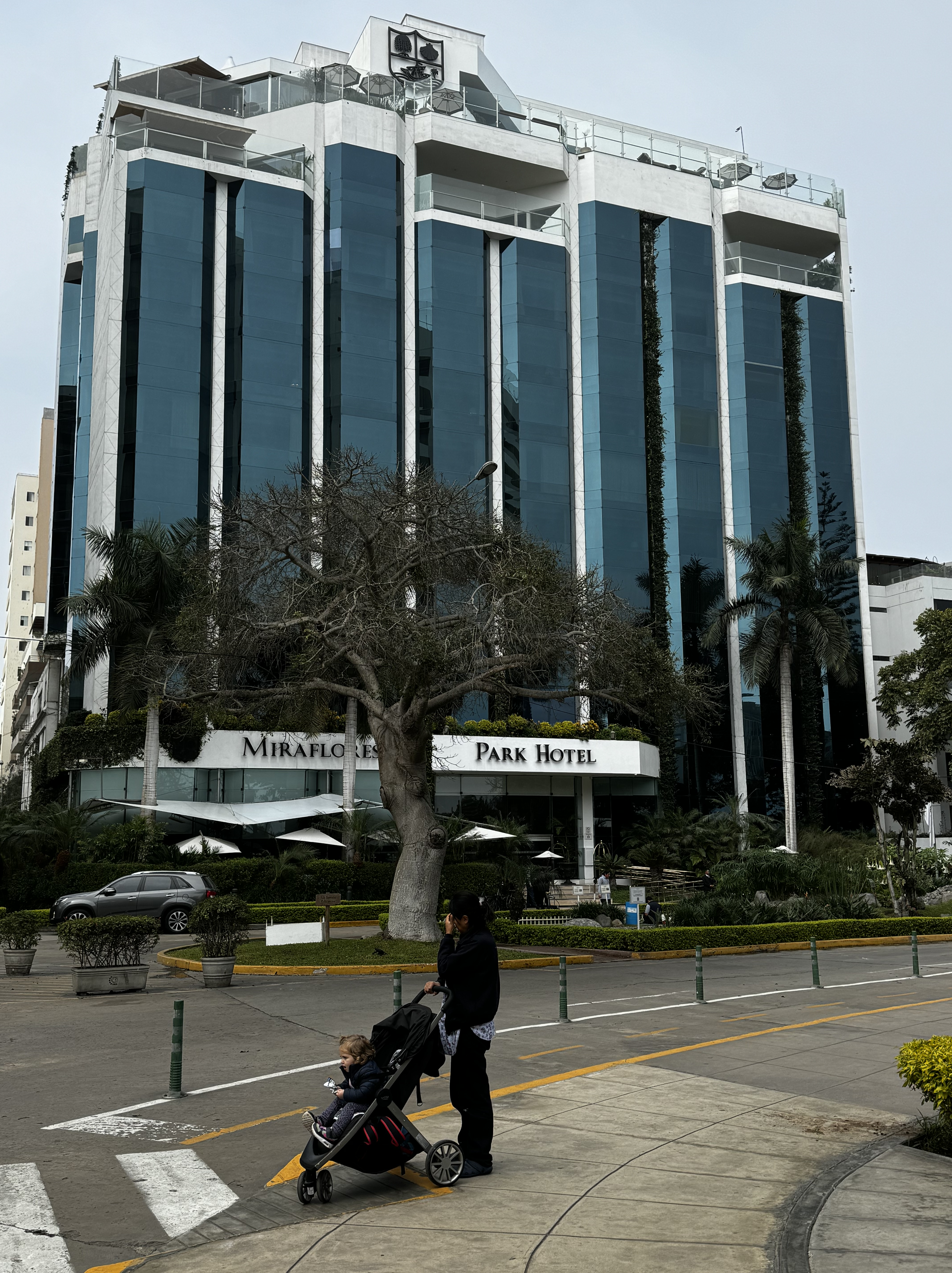
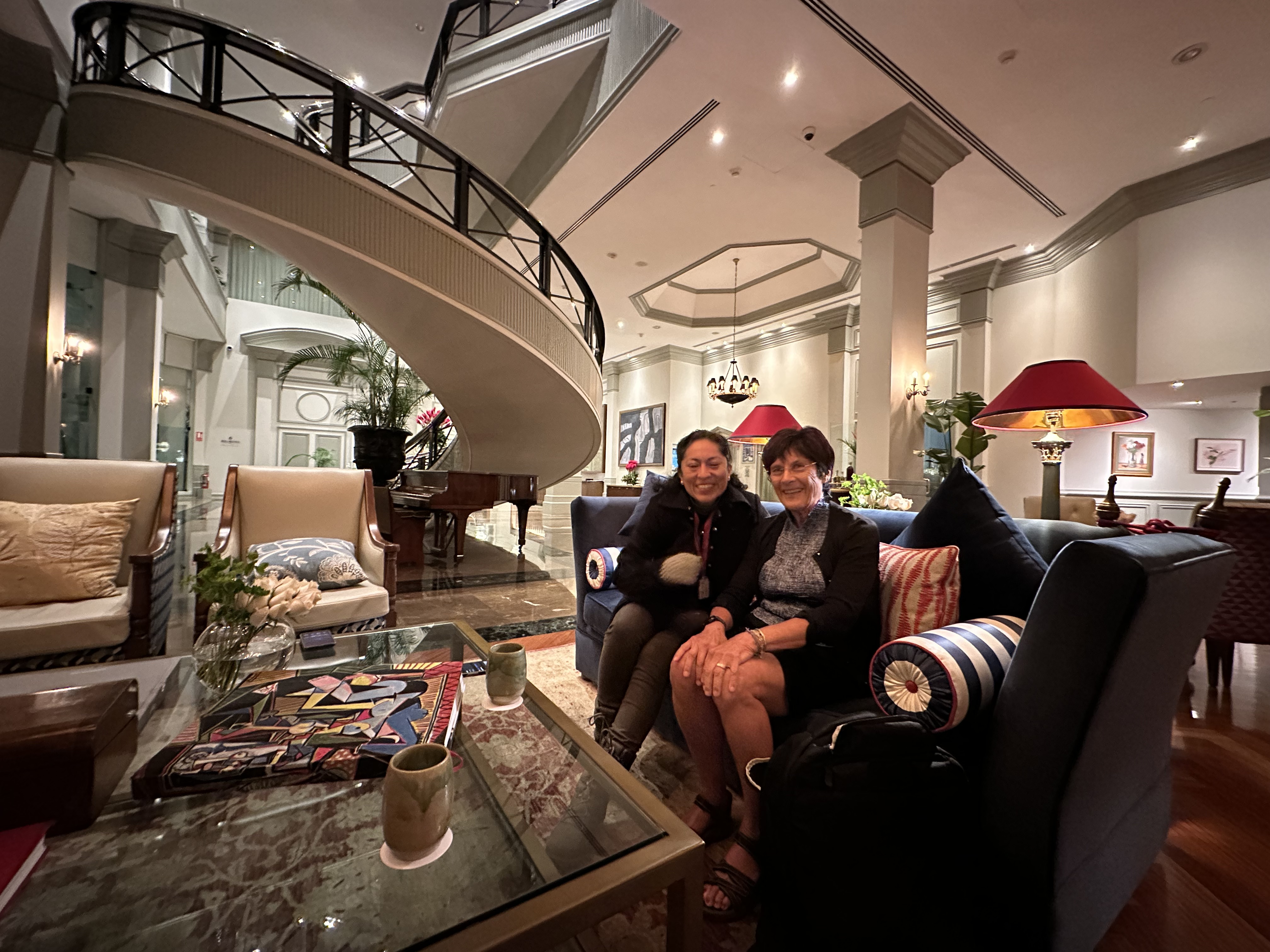
We arrived at our hotel, the Miraflores Park Hotel, in the heart of Lima in the Barranco neighborhood after an hour drive from the airport and waiting a very long time for our bags to on the appear on the carousel. We had a strong fear we had lost the bags. What a relief to see them at last. Our Lima guide, Sophia Herrera, met us outside baggage claim and accompanied us to the hotel. We visited in the hotel lobby awhile. When she left, we checked out the room and went to the hotel bar for a night cap at 11pm local time (nine pm California time). The bar tenders were charming and fun and we visited with them until midnight and. finally. went to bed.
Sophia and me in the Mirafores Park lobby.
July 5, 2024
Already this morning we have learned that Lima is the second largest city built on a desert after Cairo. Pre colonial civilizations began to build water canals 2,000 years ago. that are still being used today. The population of Lima is 12 million. After a light breakfast we walked along the nearby promenade overlooking the ocean. It is winter here and the temperature is quite chilly. I am not prepared for cool weather. I sure hope it warms up soon. We walked through an outdoor shopping arcade and I bought a sweater that should help keep me warmer. Along the walk we stopped at a small church called Our Lady of Fatima.
My travel experience began at 19 when I was an exchange student to Germany. After college I wanted to travel, but had no money so the natural choice was to become a stewardess. I was hired by World Airways and traveled all over the world on the non-scheduled carrier. It was exciting and wonderful and made me want to keep traveling even after I quit the airborne waitress business. At one point I realized that I liked flying as much as I liked traveling and earned my pilot's license at the age of 30. Since then I fly and travel as much and as often as possible. I used to write about my early travels in long hand but they were not legible. Now, with the aid of this computer, I am able to share my experiences. I hope you enjoy them.
























 Adventures with Julia