Twenty years ago Julia and I set out on an adventure to explore and meet the tribes of southern Ethiopia. We had been in northern Ethiopia in 2004 to visit the stone hewn churches of the orthodox Christian’s.
We set out from Addis Ababa with a driver-guide, Atnafu, and cook, Mustafa, in a Toyota SUV packed with camping gear on our journey to Lake Turkana on the border with Kenya. There are not many “camp grounds” in Ethiopia but Atnafu had a plan. We would drive until we found a suitable site and set up camp. We were quite a site and you can imagine we always grew a crowd of onlookers. To say it was hot and dirty would be an understatement but we always found a way to get a shower at the end of the day. We saw a few animals along the way: giraffes, Cape buffalo and the largest crocodiles we have ever seen to this day. We met people from tribes we were searching for including: Hamer and Mursi tribe members.
All in all that part of trip was quite an adventure and the plan was for us to rendezvous with our Kenyan guide at lake Turkana and continue our journey up the Omo river to the stronghold of where these tribes live.
Eventually our Kenyan guide, Halowyn, arrived in two boats for our journey up the river, one boat full of gear, a second for us explorers. After an unimaginable lunch of fresh greens in a salad and wonderful charcuterie, we headed for the mouth of the river. As we reached the area of a sandbar we had to cross to enter the river, it was sadly evident there was not enough water to float our boats. We were in the water up to our knees but were unsuccessful in getting the boats to move over the sand. With crocs in the water our pushing efforts did not last long. Our plans to explore the Omo River delta were dashed. We did go on to have an enjoyable time with Halowyn, exploring other places and tribes around the lake.
So now we sit on the shore of the Omo just above the delta where we were stuck 20 years ago.
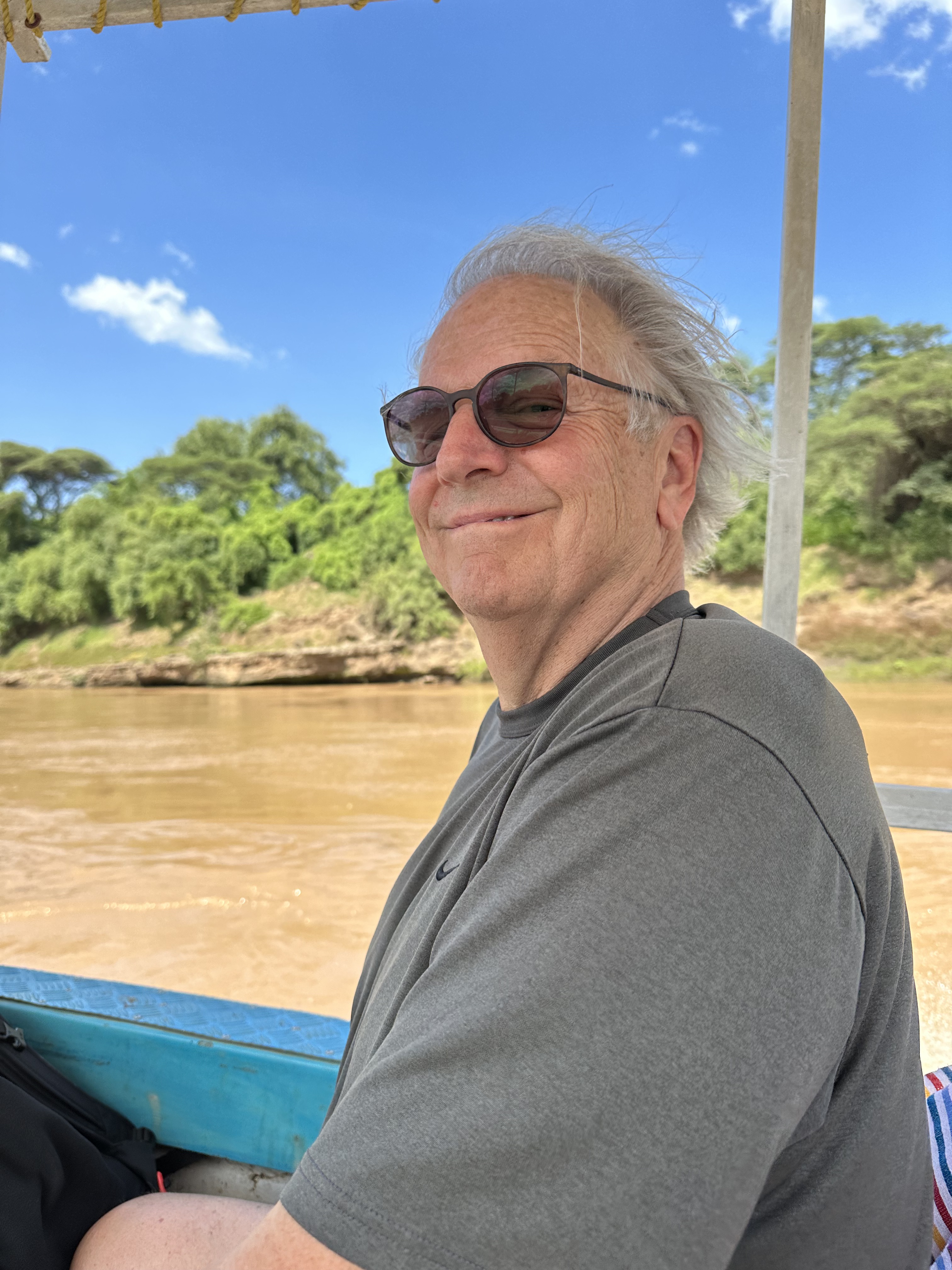
This year we started about midway down the river and spend time in a camp near the Mursi tribe. On we traveled down the hersey brown river in the very same boat as 20 years ago to a second camp to visit the Hamer and Kara tribes and we finish our travels with the Dasenach tribe in the river delta just above where we had been stuck.
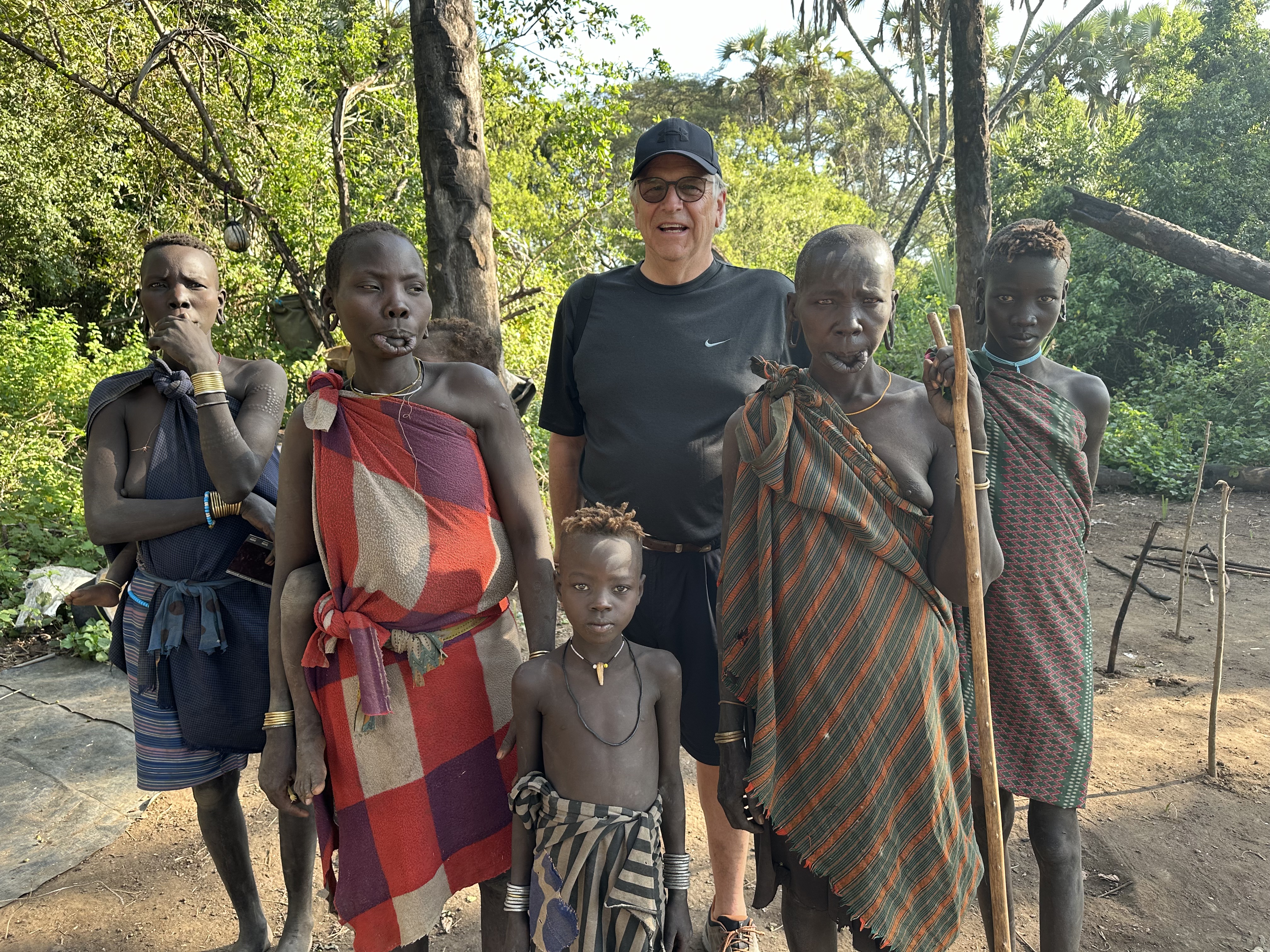
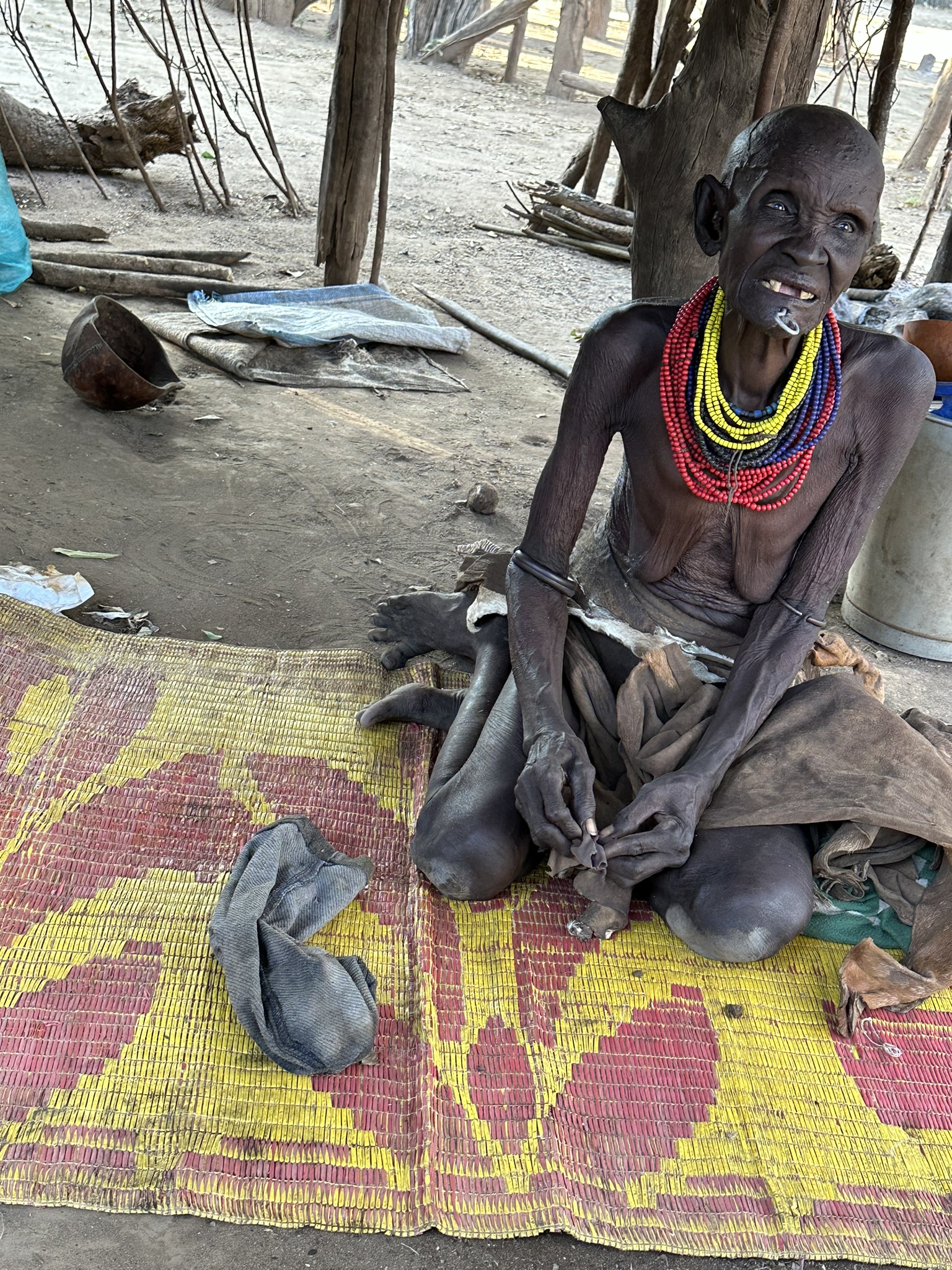
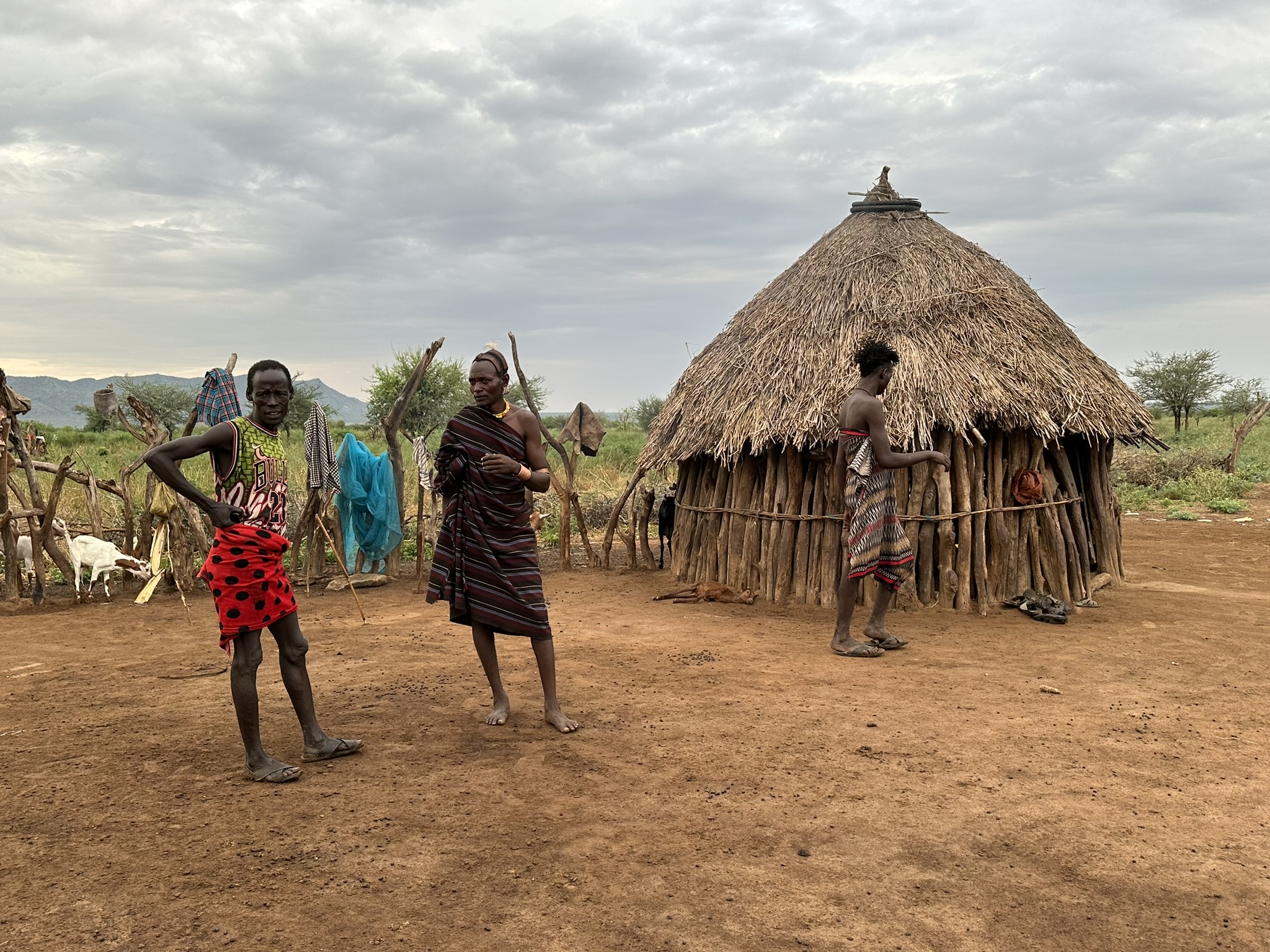
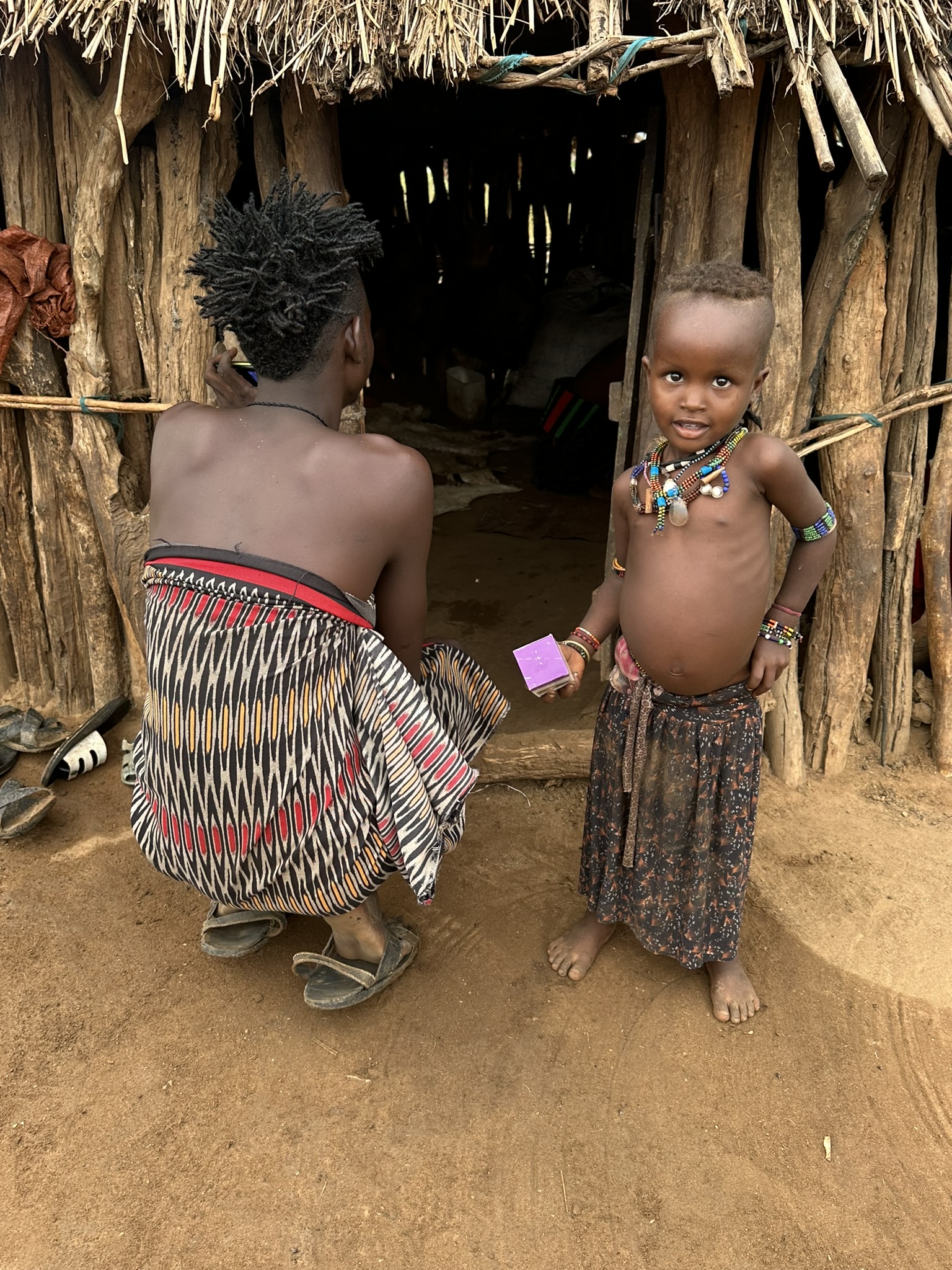
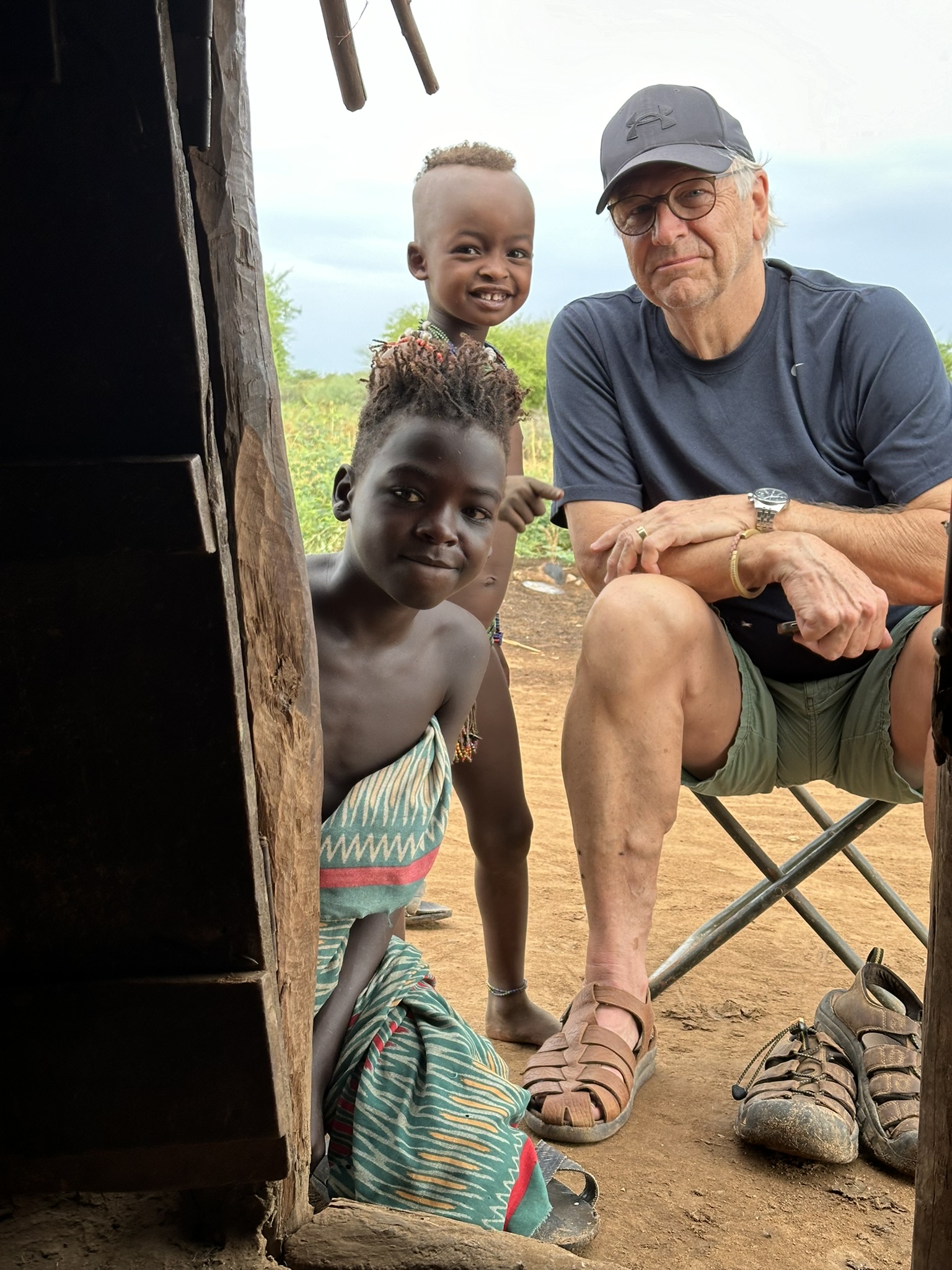
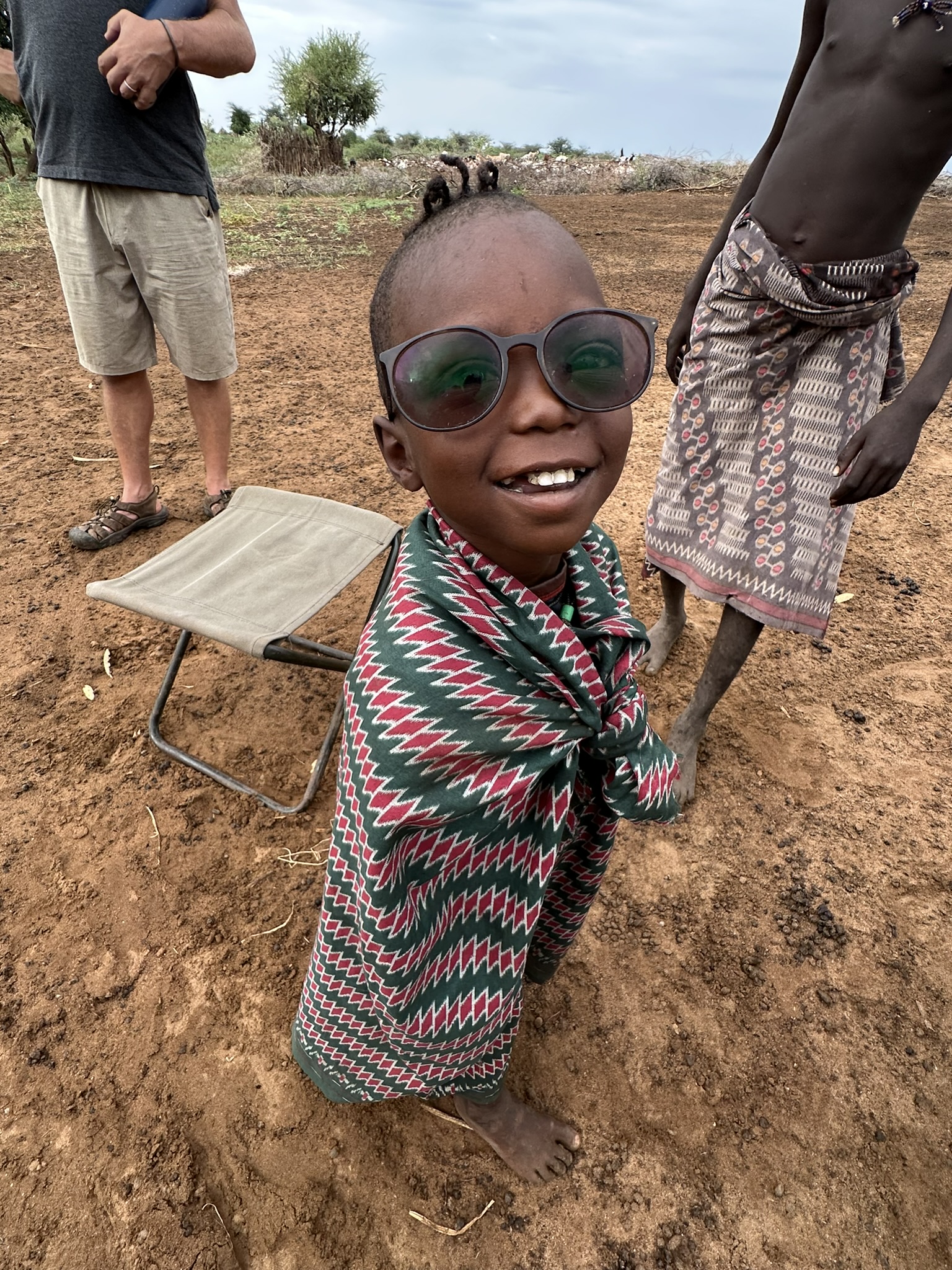
After 20 years there seems to be little progress in the lives of these tribes. There is a random cell phone in a few guys hands and a solar panel near the odd hut. They are guardedly friendly and curious towards us as we stroll through the village. Last night we were in a remote village that may see no more than a handful of outsiders a year. The reception was slightly guarded at first but gradually the people warmed to us.
So after 20 years we close the chapter on our Omo adventure having come full circle. I don’t imagine we will ever be back in this area but we leave having met wonderful people just trying to survive with their families. Lovely people although our worlds could not be further apart.
We started this trip at the Bwindi Community Hospital for the ground breaking of a new clinic, an effort to improve the sight and dental condition of those in Bwindi, Uganda. Next we went to Queen Elizabeth park to see some animals and left with the hope of putting a tracking collar on a lion to better understand the lions habits and travels. Next stop was the DRC and saw the conservation efforts of African Parks as they fight to defend the animals and nature from marauding poachers. We have been exceeding priviledged with opportunities in travel.
I guess Julia and I are lucky to have found each other with both of us enjoying to travel to what seems to be the end of the world. The heat and dirt and bugs don’t seem to be a deterrent, although challenging at times. We don’t know what’s next but remember this thought I have picked up somewhere.
“Travel is the only purchase you make that makes you richer”
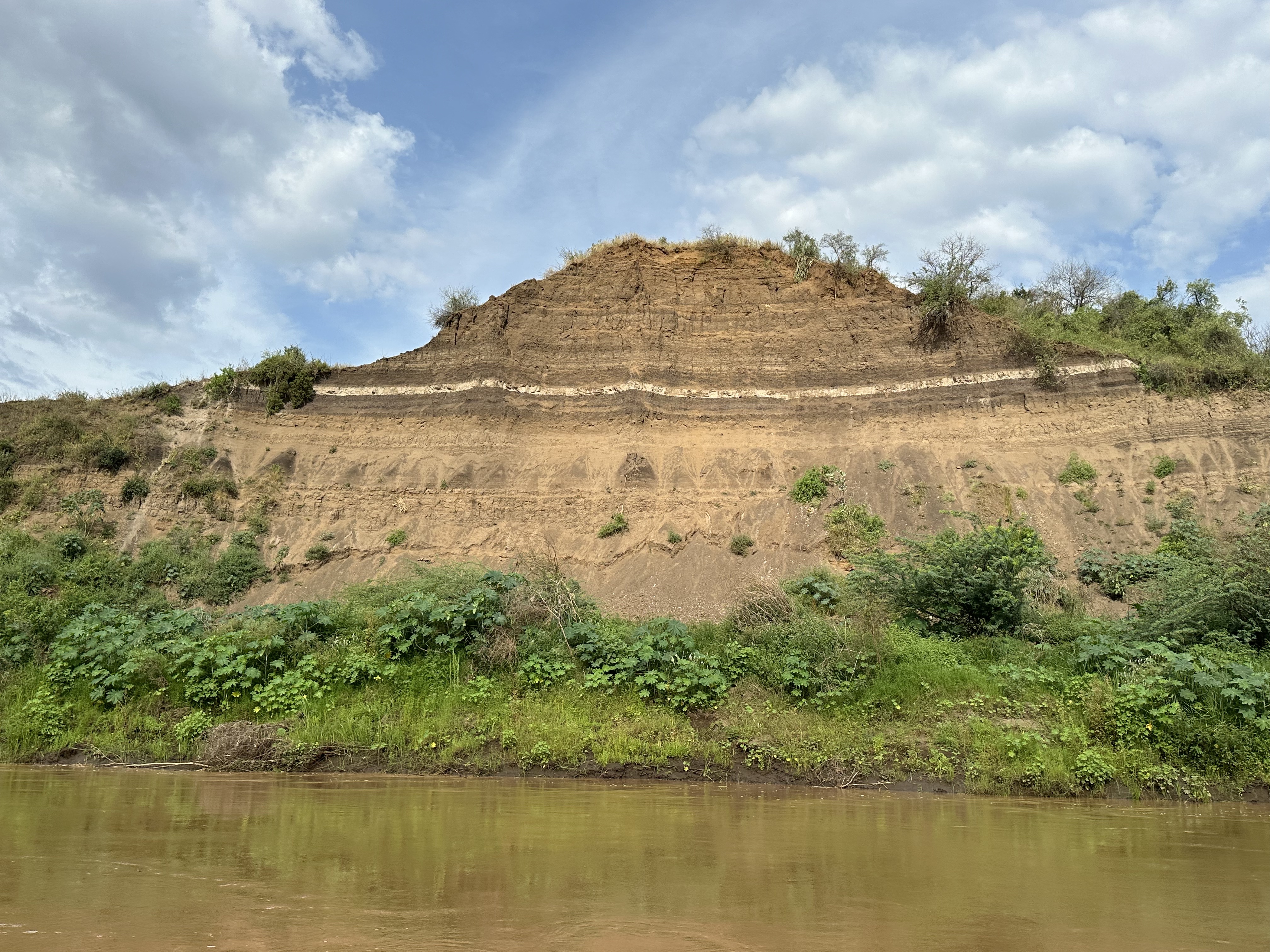
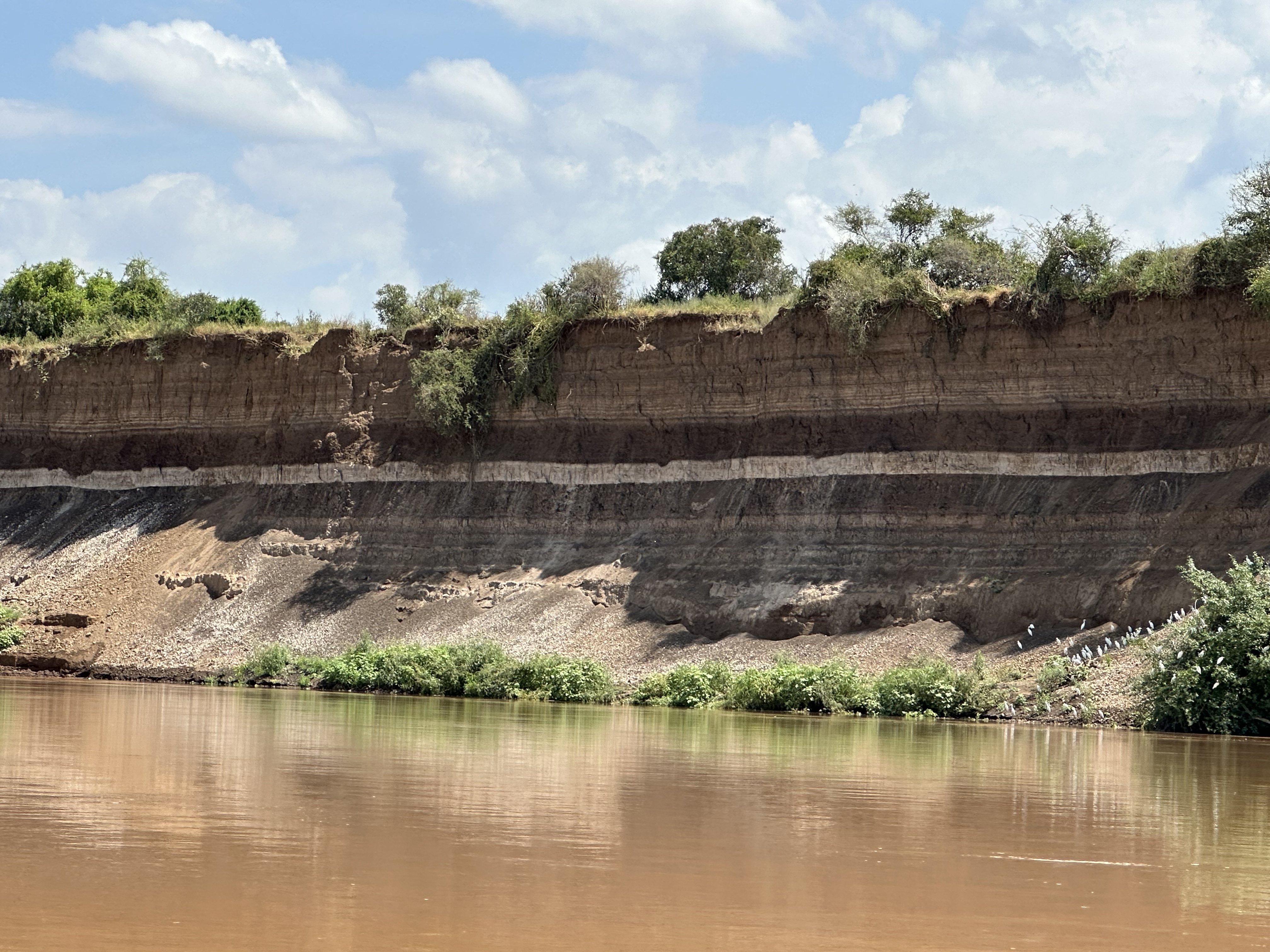
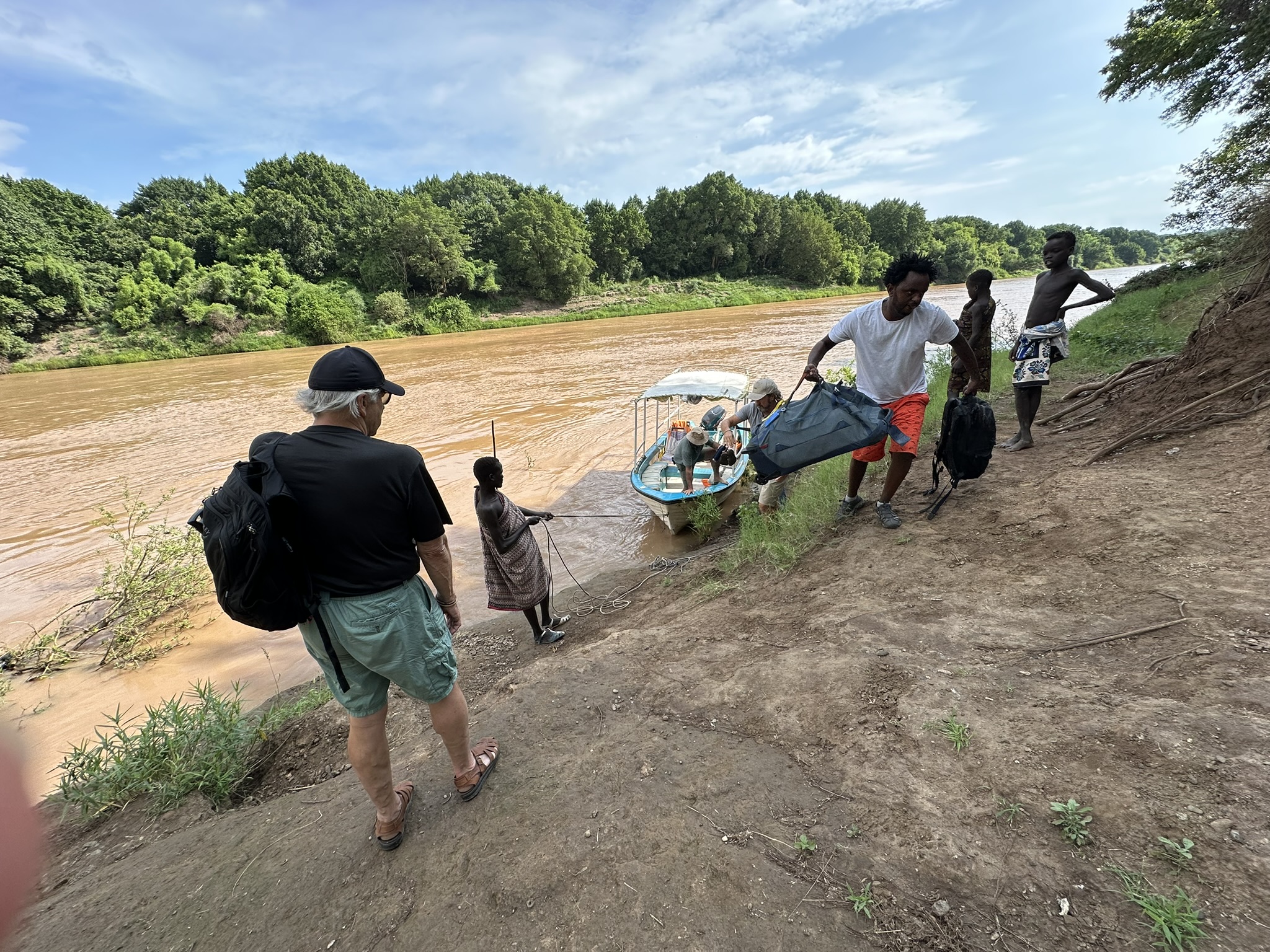
Breakfast and goodbyes to the Chen Camp staff at 8:30. Gave a special hug to Bardoley. Then we motored down river for an hour to the takeout where our cars were parked. So, we were off the boat and into cars for the next leg. Another bumpy dirt road followed by the paved highway for 1.5 hours to another 40-minute river trip, all to avoid an 8-hour serpentine river ride. Our boat was larger, and the next leg was pleasant. We saw a Sykes’ monkey in a tree and many bee eaters starting to build nests in the hillsides above the river. I was fascinated by the different striation in the cliffsides and wondered how old the hills were. Will thought they were at least 300 thousand years old.
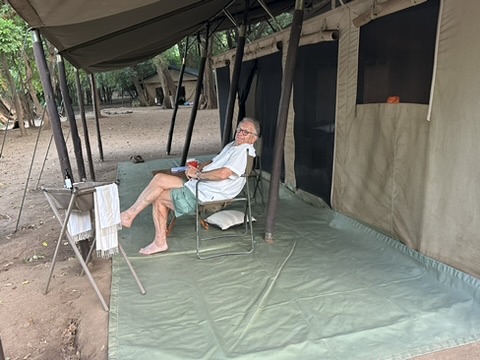
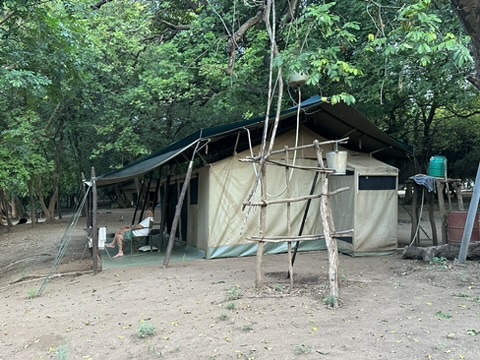
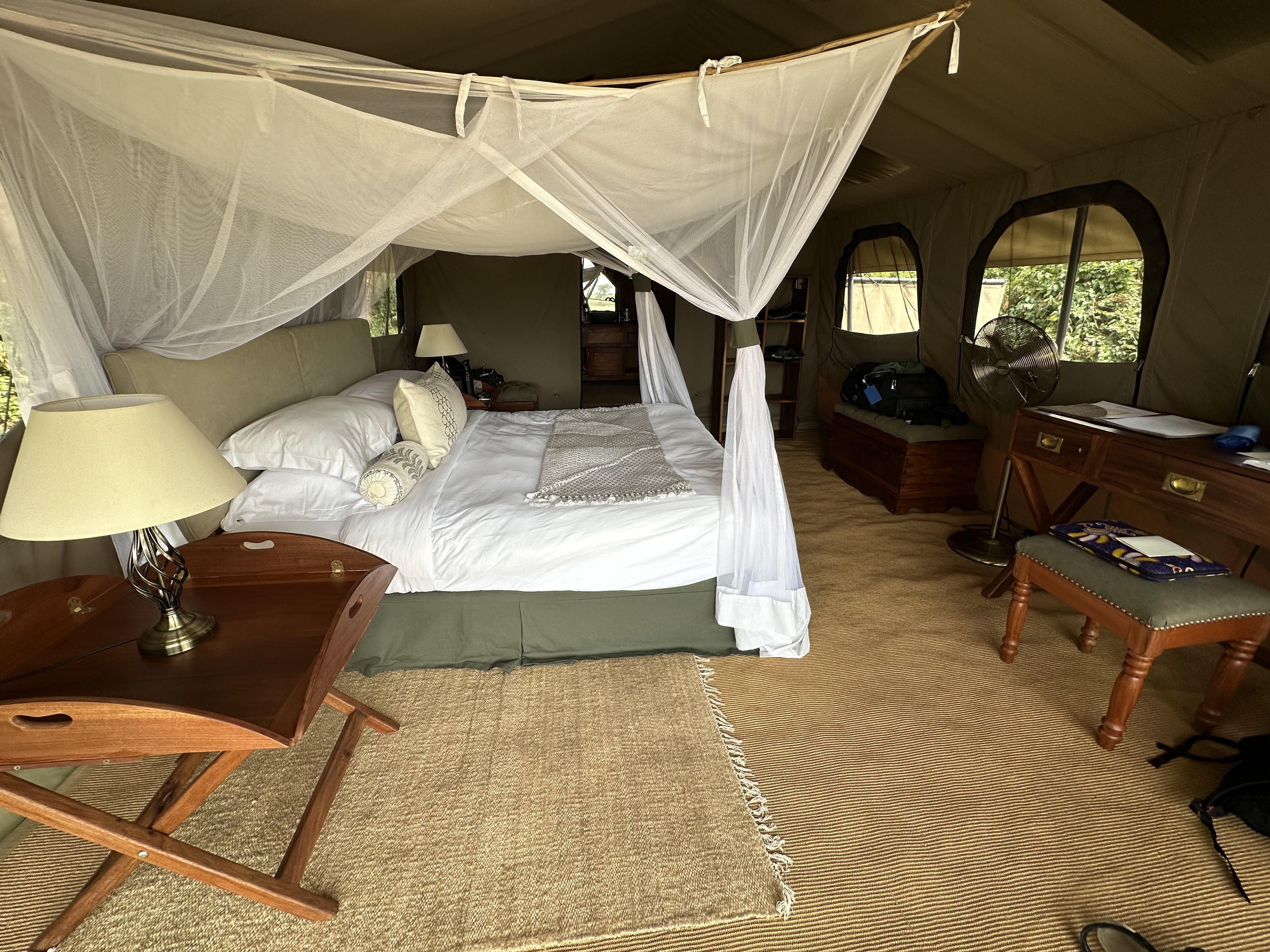
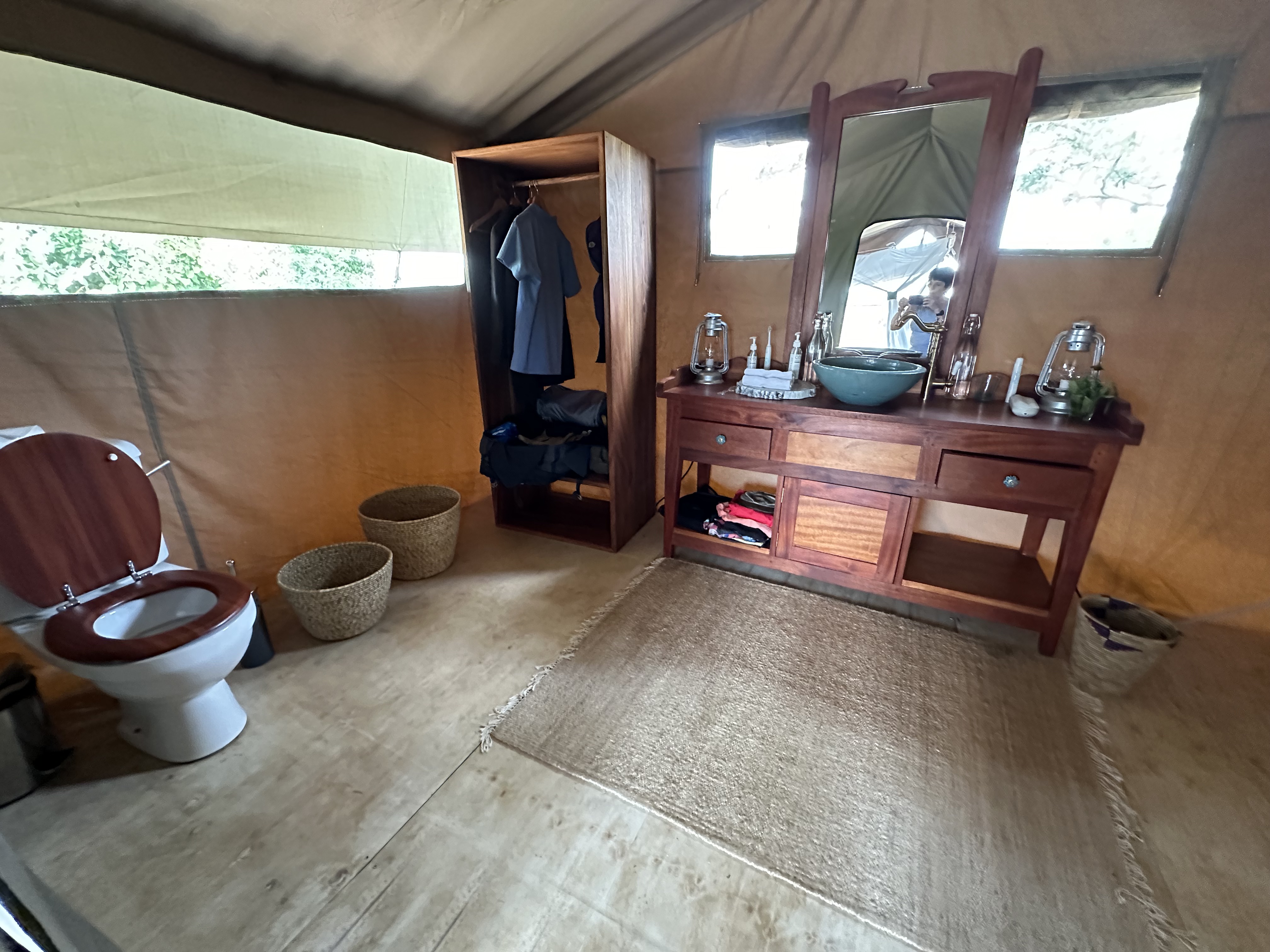
ash layer was quite deep and must have represented a long volcanic period. At last, we arrived at our second camp, Lale, where the Kara people live. The camp is on a bluff above the river and offers some shade and cooling. As expected, we are the only guests in camp. Our tent is on the edge of the bluff. We were greeted by vervet monkeys and found the tent slightly larger and nicer than the Chen Camp. We settled in quickly. Behind the camp is Korcho, the local Kara village where most of the camp employees live.
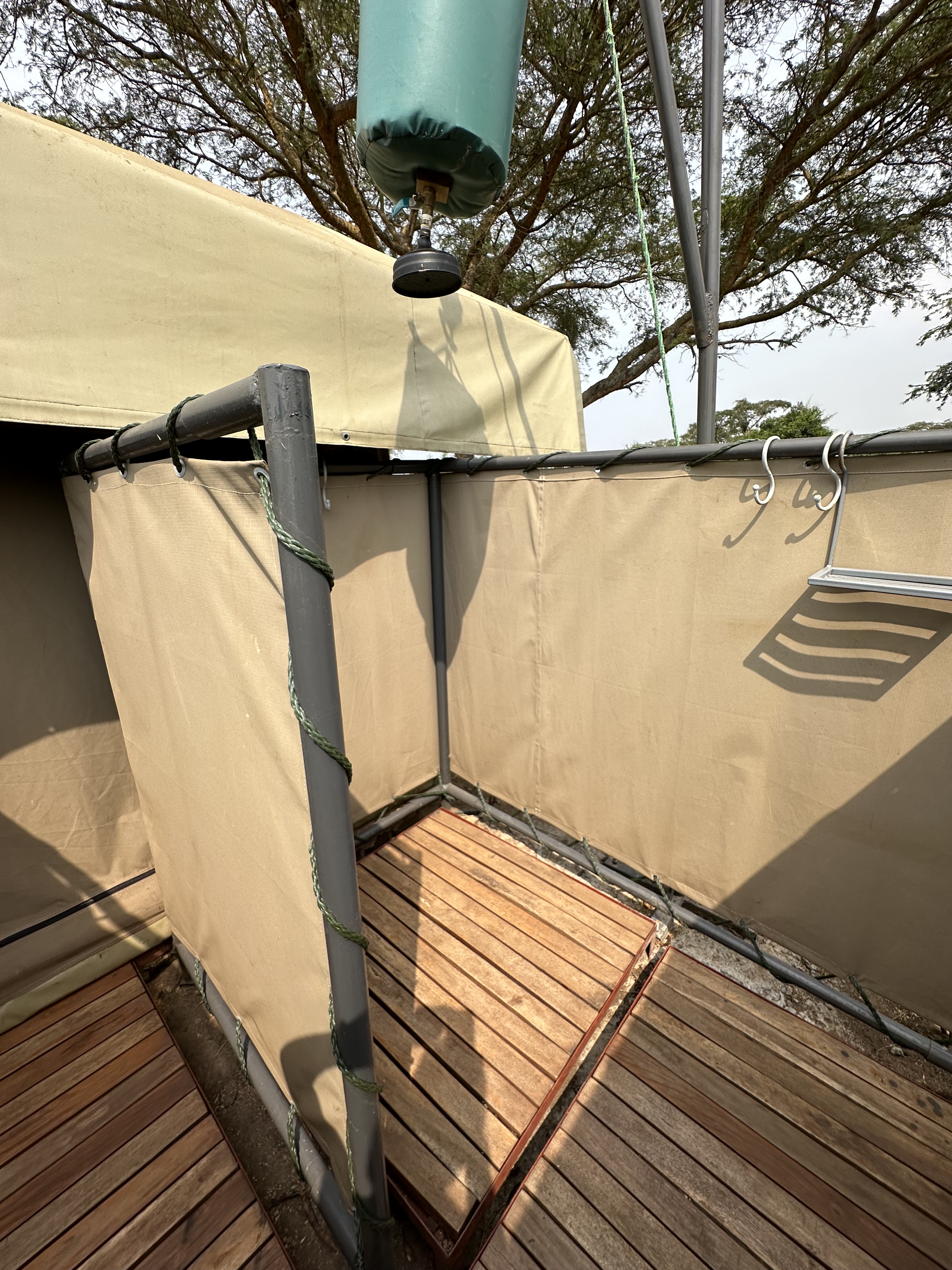
About 5:15 we began what was supposed to be a 1 hour walk that lasted 2 hours and found us trekking across logs and stumps in near darkness to get back to camp. I clung to Mark’s hand to keep from falling. The first half of the walk was fine. We saw a few special birds including a cardinal woodpecker. a red-billed hornbill, and a Pell’s Fish Owl, which was sitting grandly on a large limb in a nearby tree. It is so large that it is unlikely to be confused with any other bird. Still, I needed help spotting it, but managed to get a reasonable shot with my iPhone. Eventually we stumbled back into camp with the staff wondering what had happened to us. We were very hot and sweaty and wanting a full shower bucket of water each. The water was cool and refreshing, even though we were still a bit sweaty afterward. We had a pleasant dinner and by 9:30 were laying on our beds with no covers. The air was still quite warm.
February 1, 2024
Wow. It’s February already. Our one whole day in Lale’s Camp. We left camp at 6:15 to visit the Hamer people in their village called Dus, about 20 minutes away. They were delightful people; friendly and welcoming.
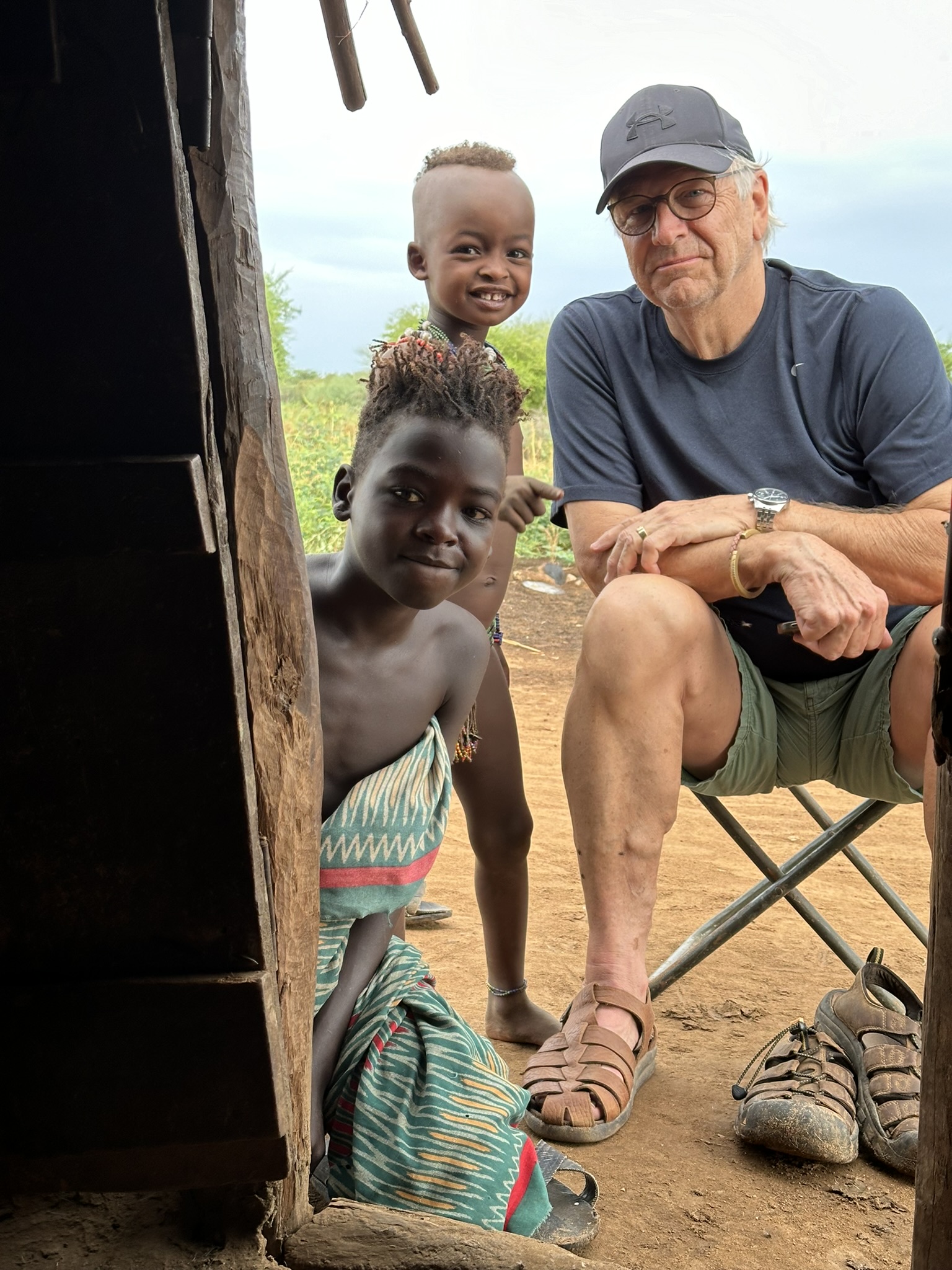
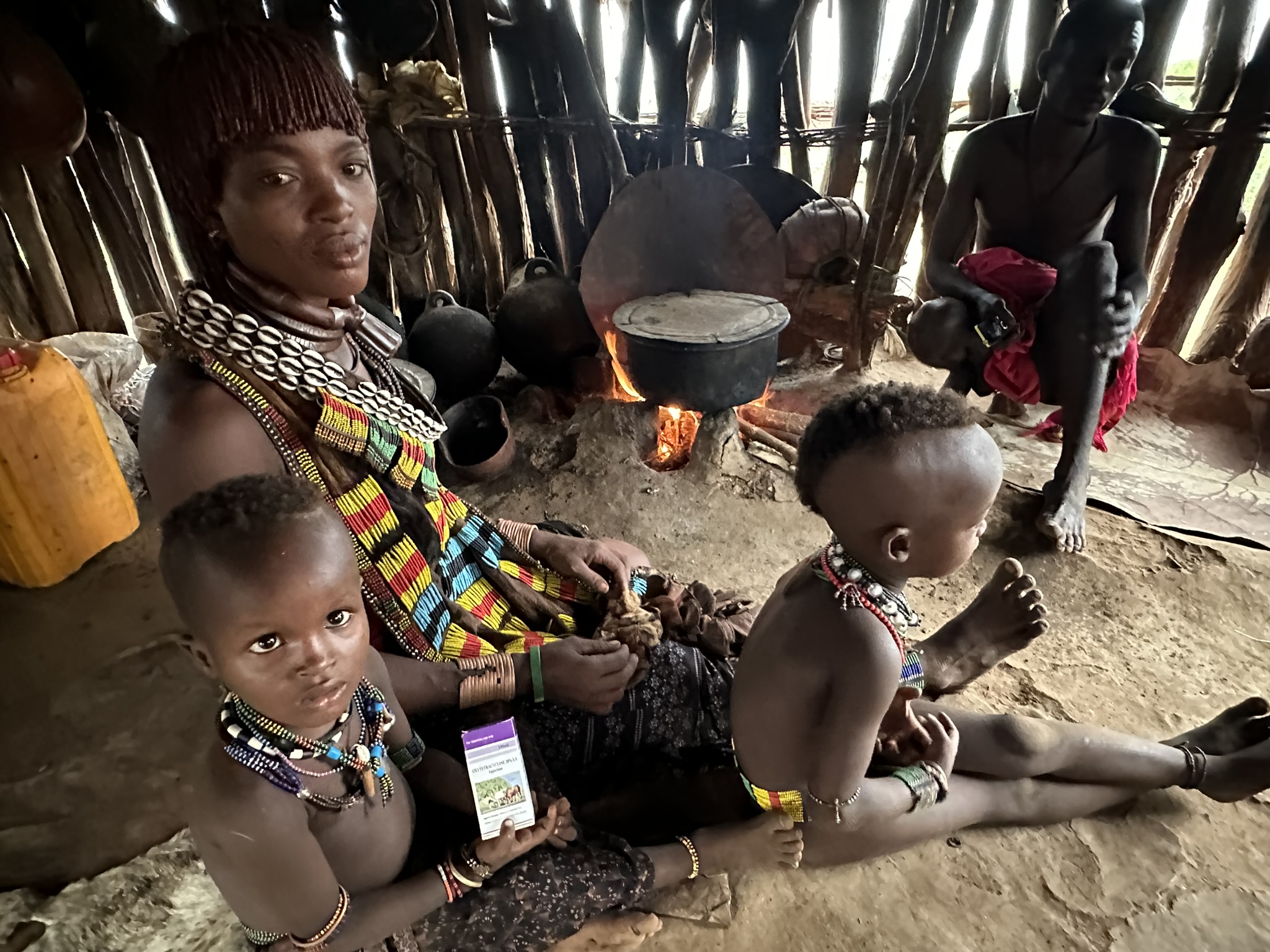
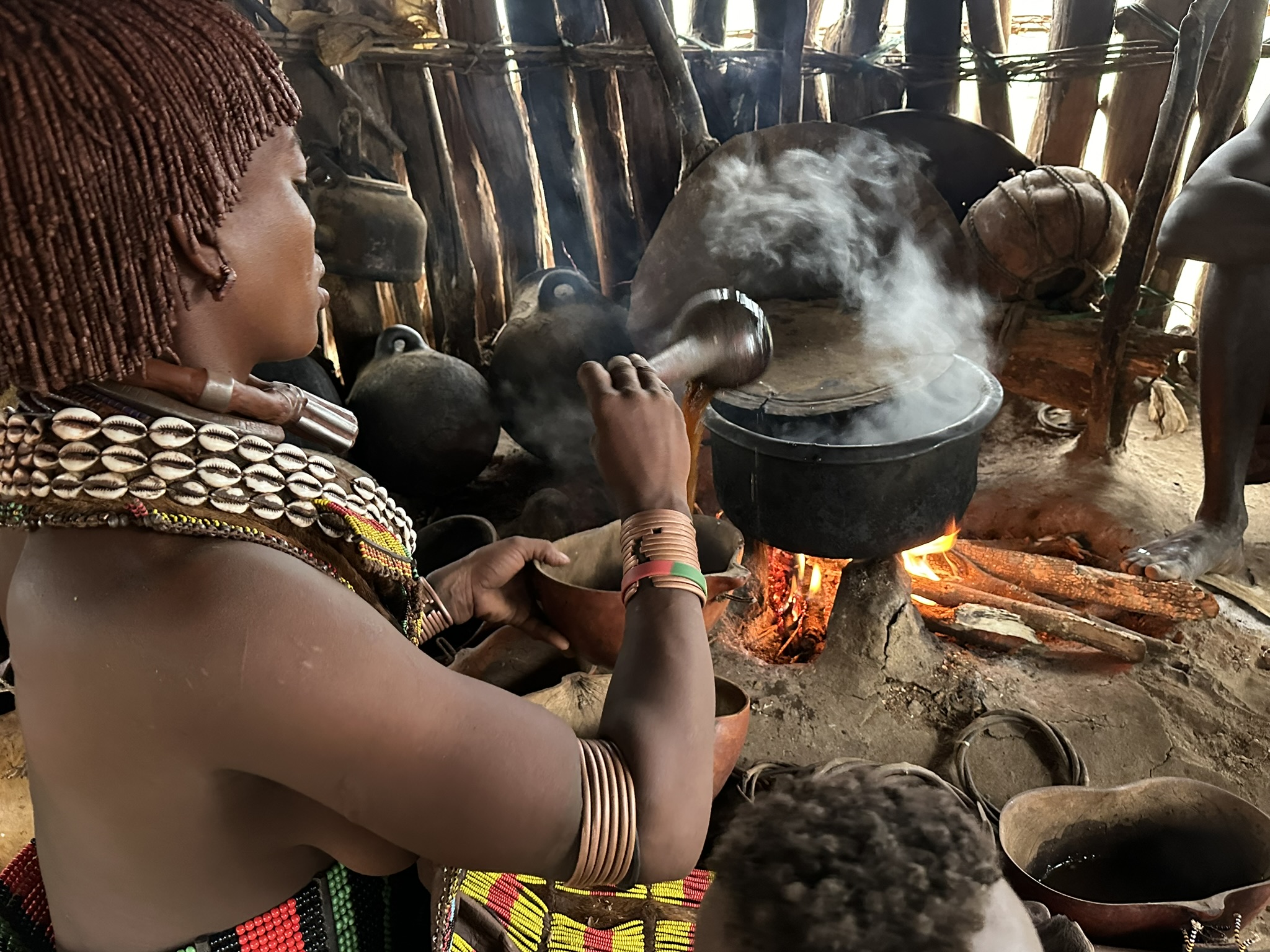
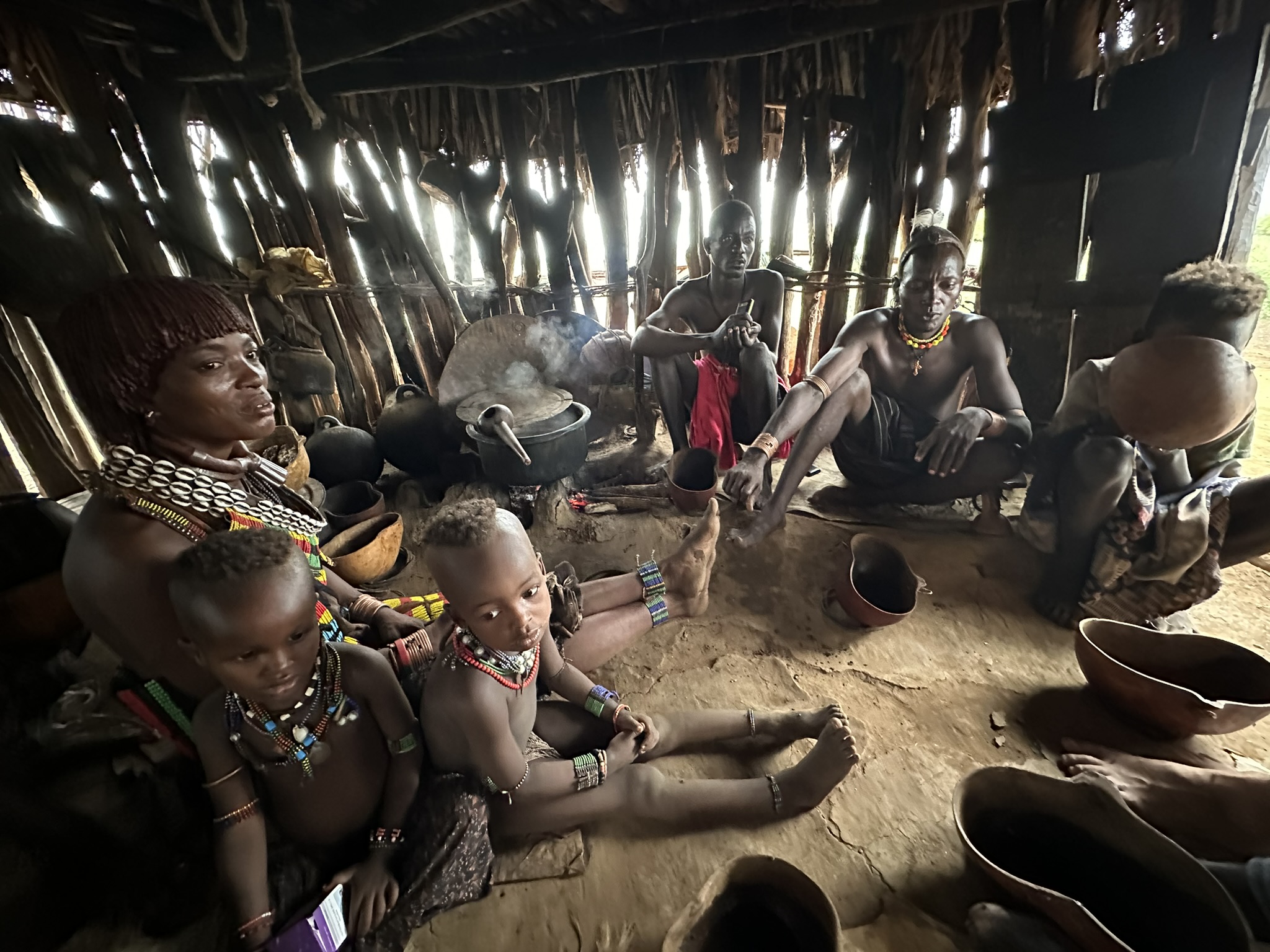
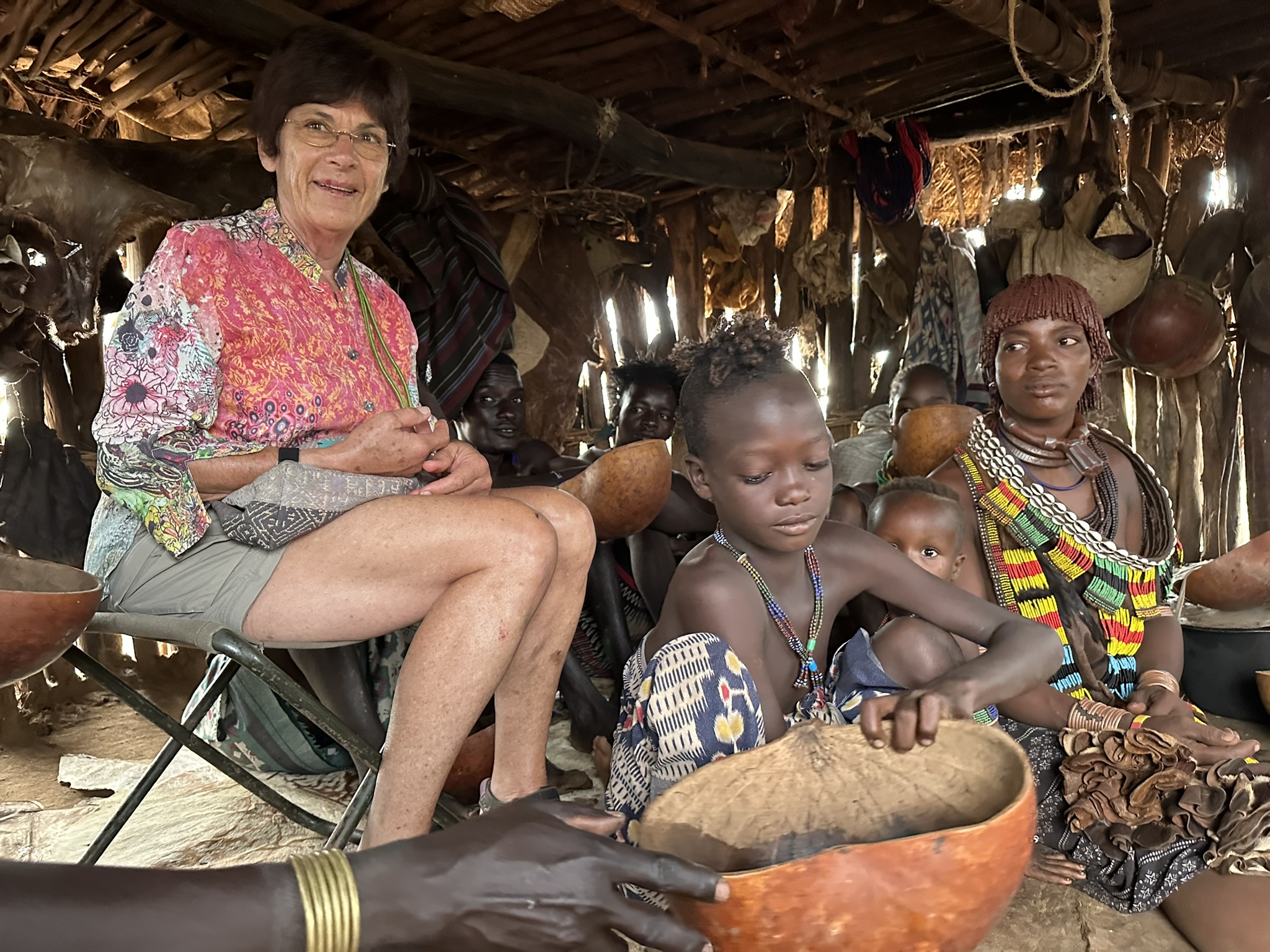
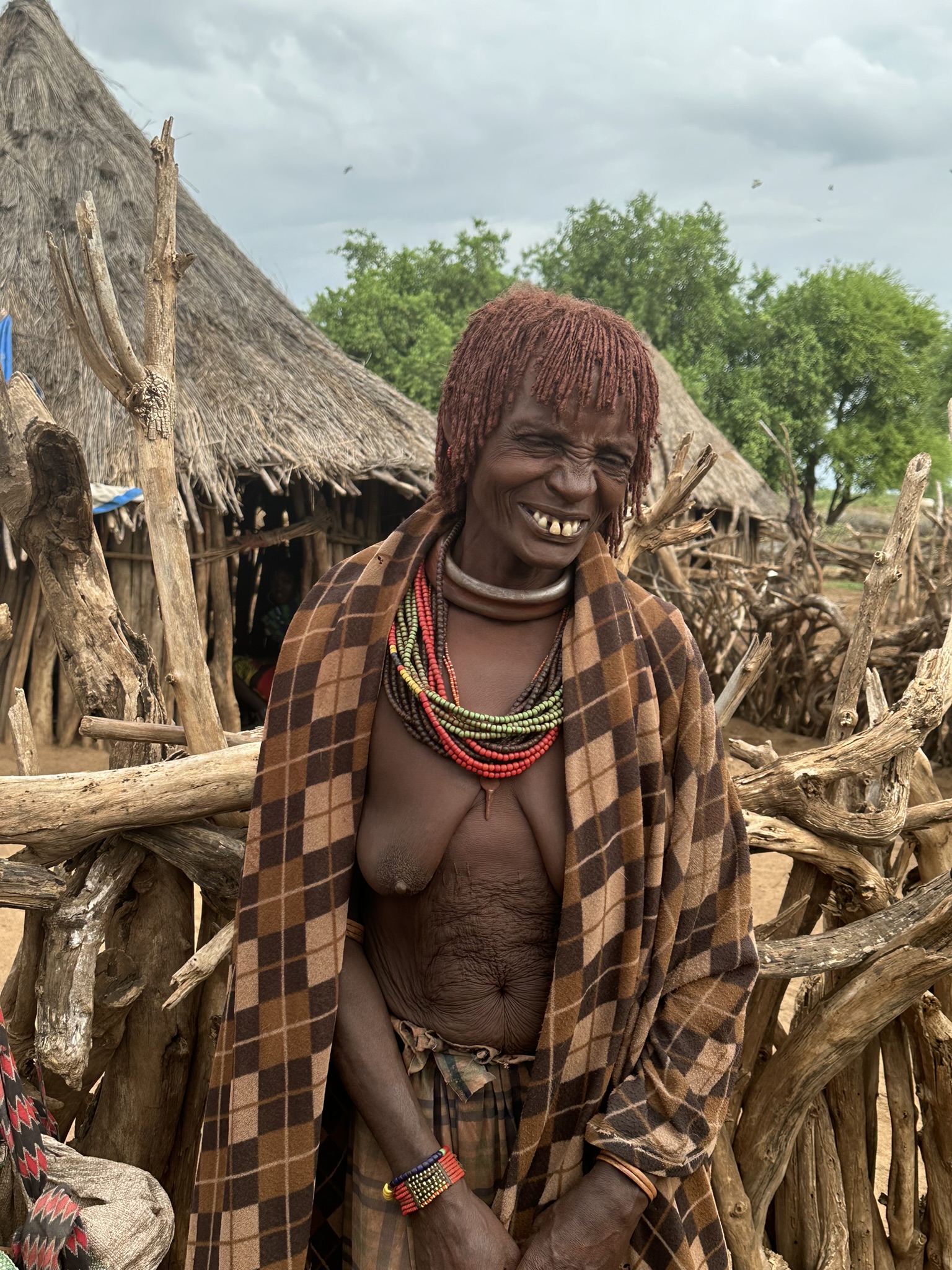
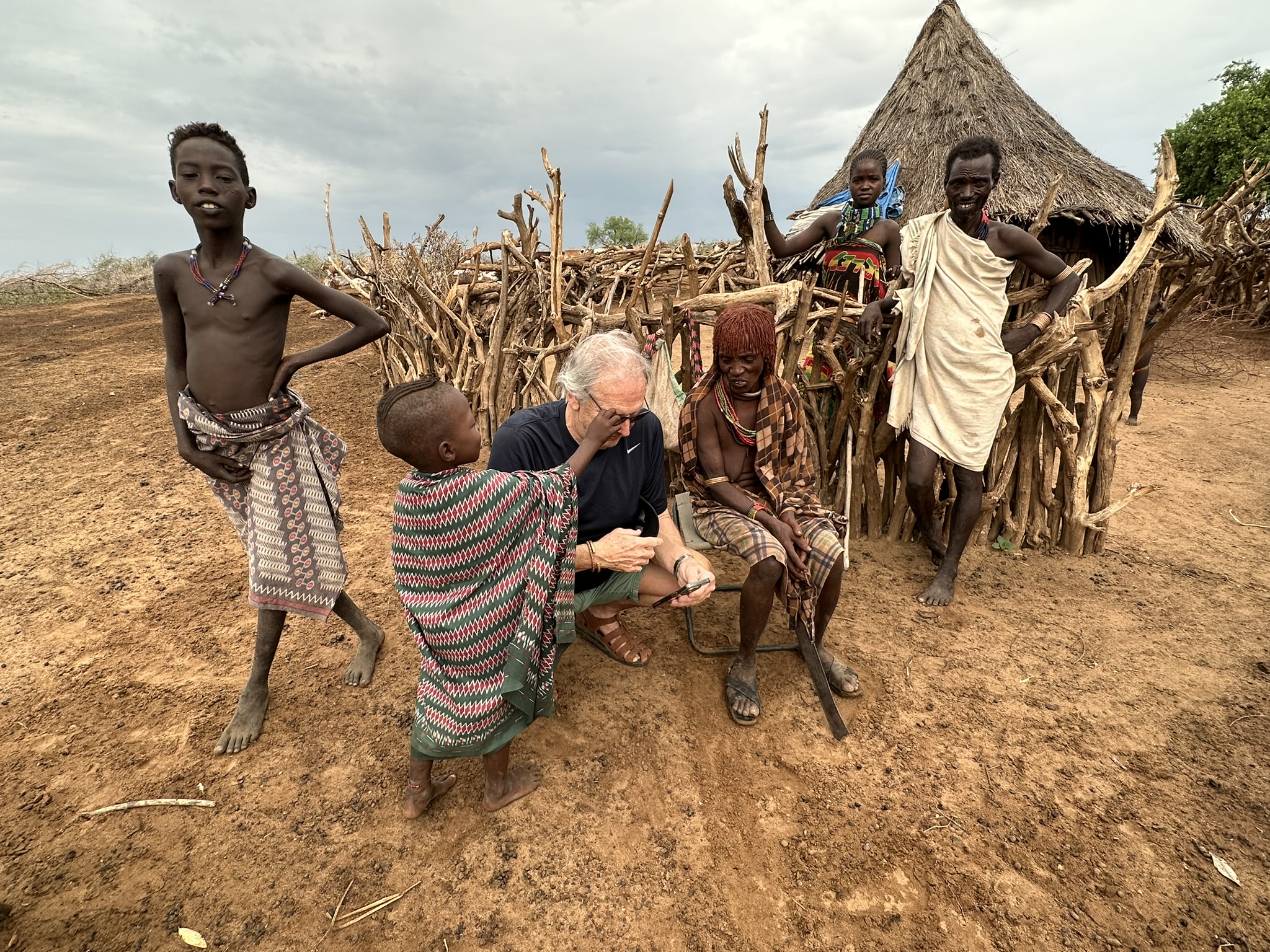
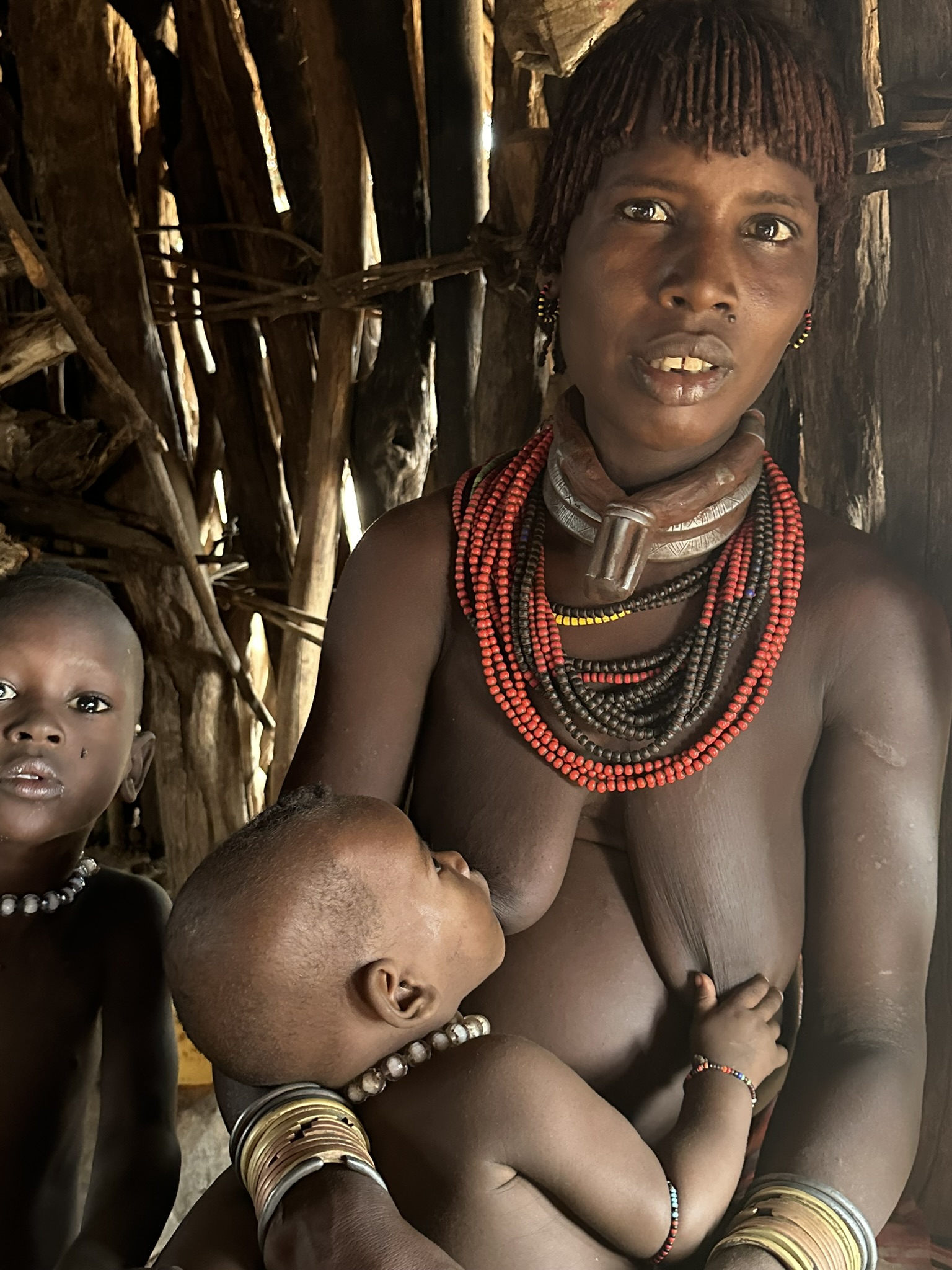
At the first compound we visited we were invited into their round wood-pole house with a thatched roof. There was the husband, Banko, his number 1 wife, Lapa, several children, and other family members who continued to crowd into the space to catch the action. We were just in time for their morning coffee service and were served coffee made using boiled coffee bean husks and served in a calabash shell. Lapa had many calabash shells to go around, and everyone was served except the small children. Banko then gave a blessing by taking a sip of coffee and blowing it out in a fine spray. Mark and I took a couple of sips of the brew just to be polite. I noticed the coffee boiling and figured it was probably safe although the calabash shells were dusty and Lapa used her hands to wipe the dust off. There were a lot of back-and-forth questions about them and us. We talked about cows, sheep, and goats and how his family would take care of the animals when he is gone. Banko wanted to know about our “resources” and who would take care of them because we had no children. He asked if he could tend our resources himself. We told him we had made other provisions and that our resources would go to help other people. He accepted our answer and stepped outside to tend to his hoofed resources. We were pleased with the interaction and happily chatted with other Hamer people in the village.
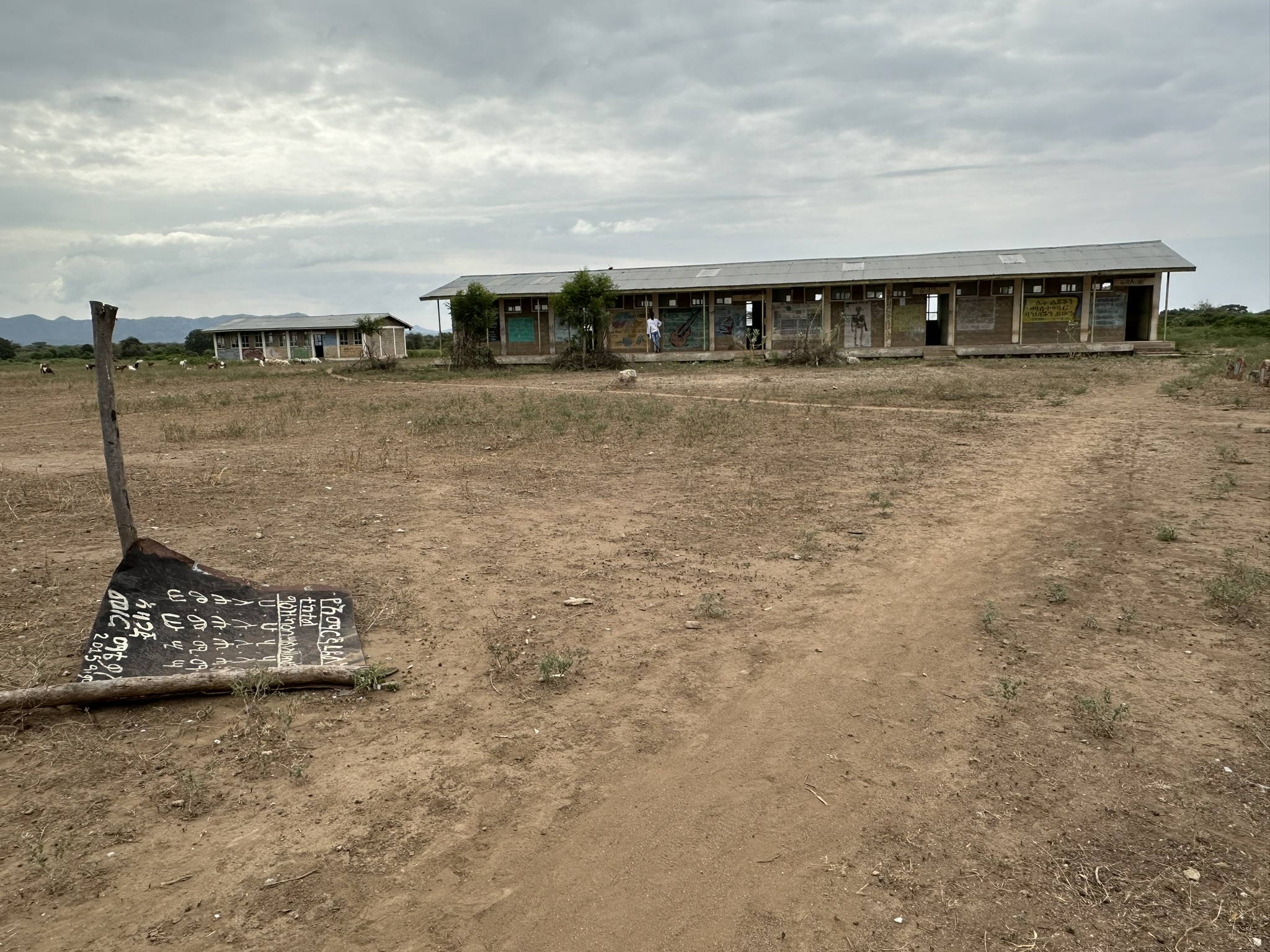
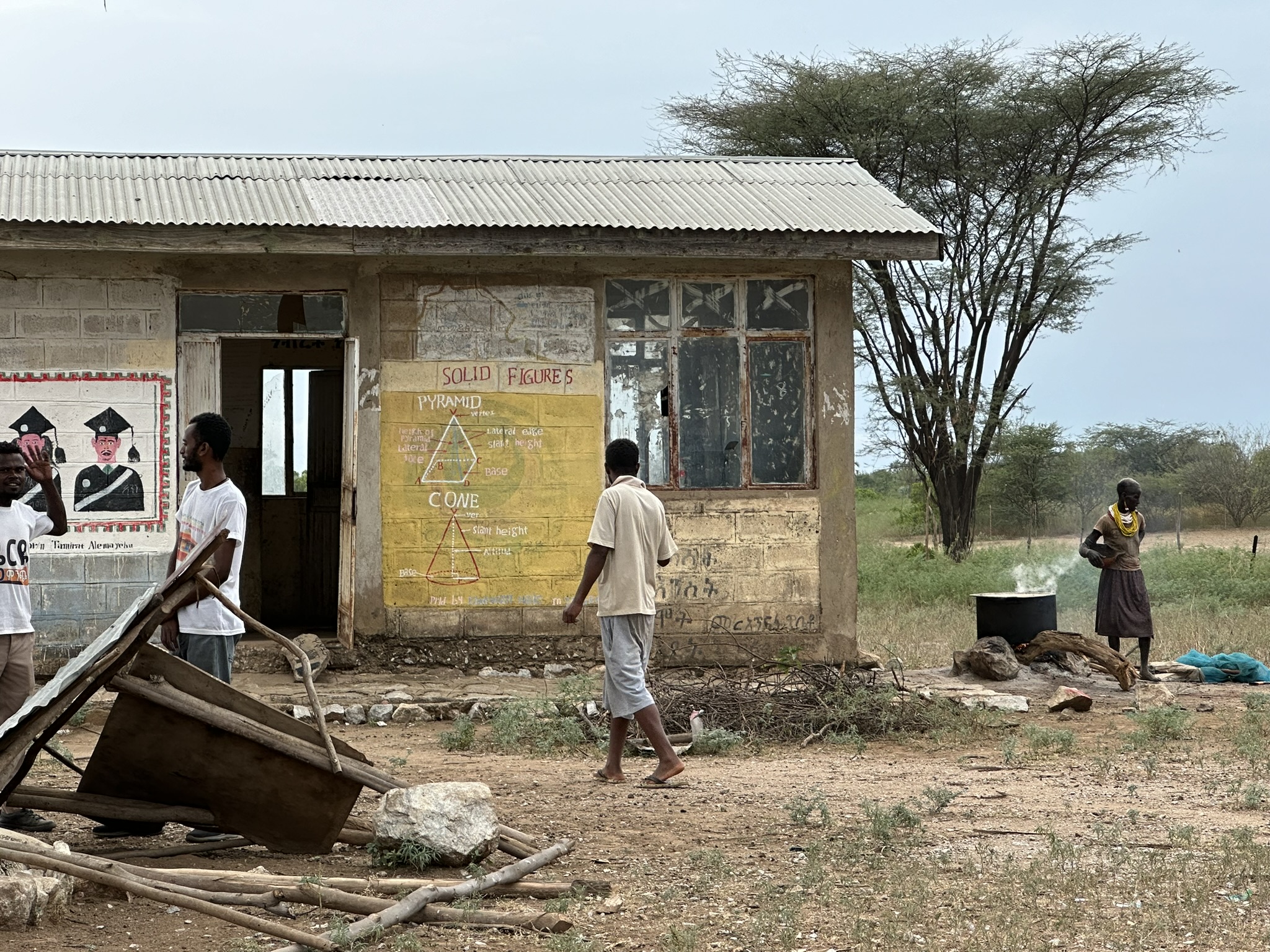
Near the village was a grammar school so we stopped to visit it. There were very few students, especially in the upper grades, and the school was very dilapidated, but functional. We wanted to help them with supplies so planned to buy things in Turmi the next day.
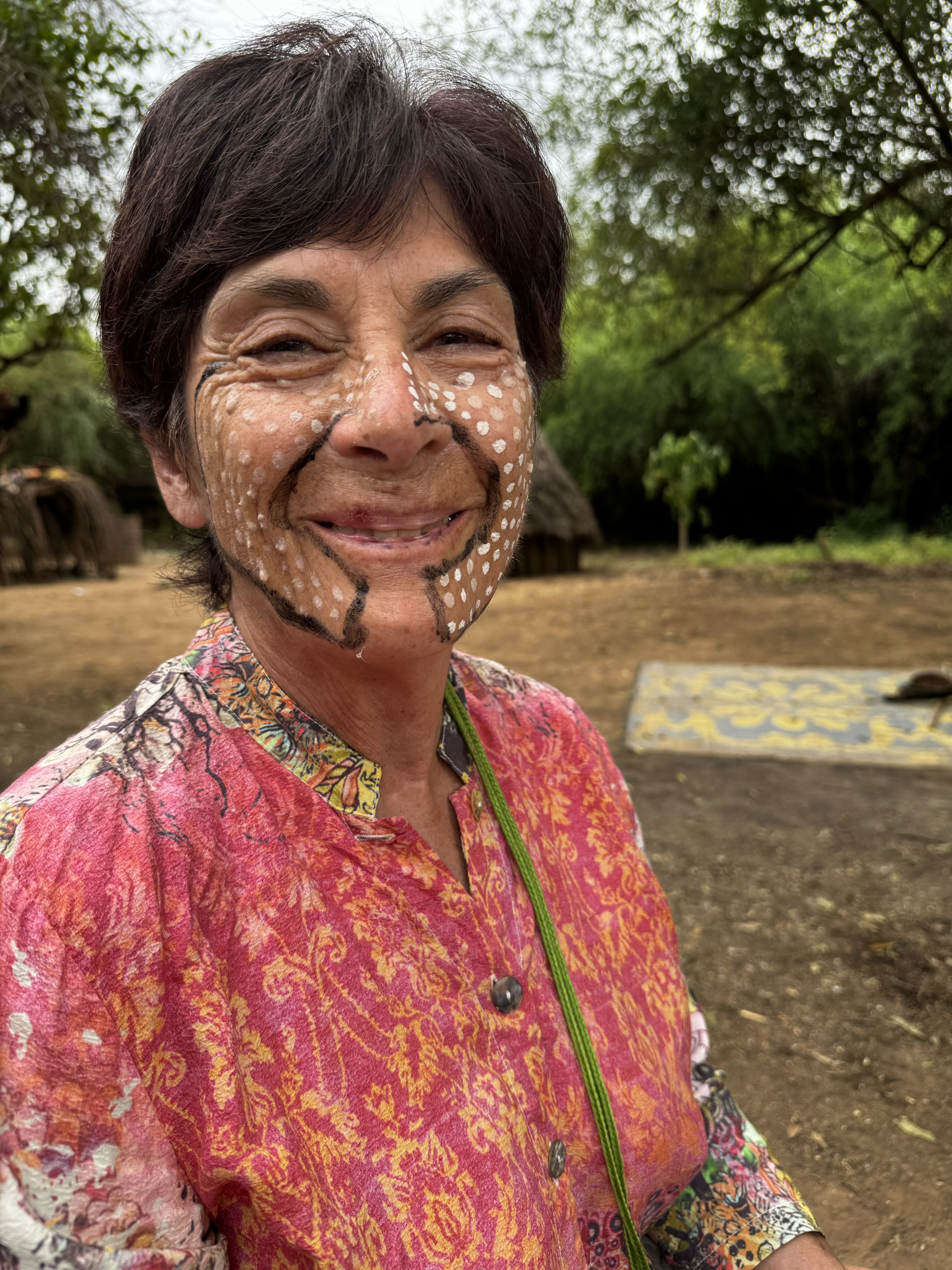
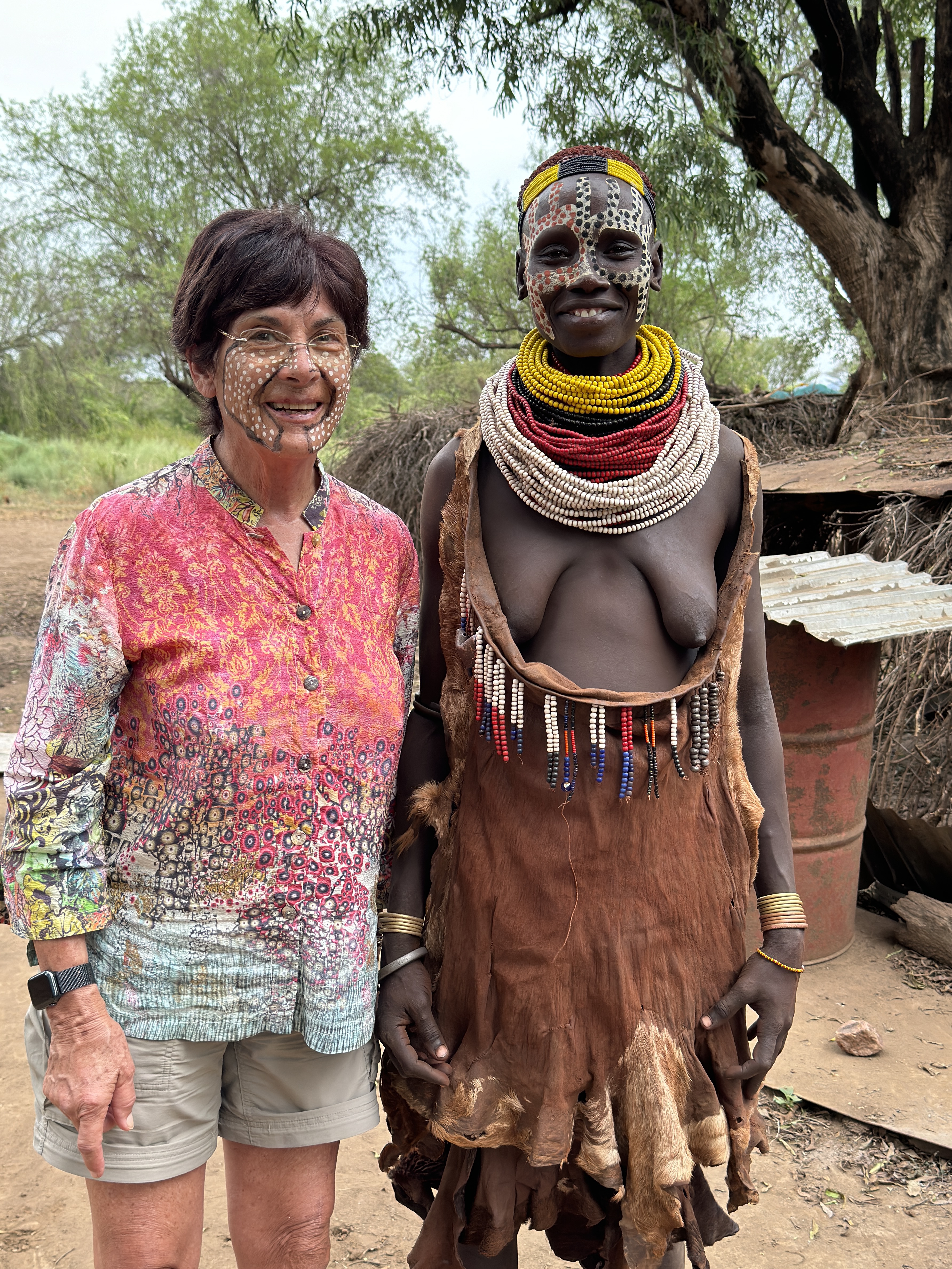
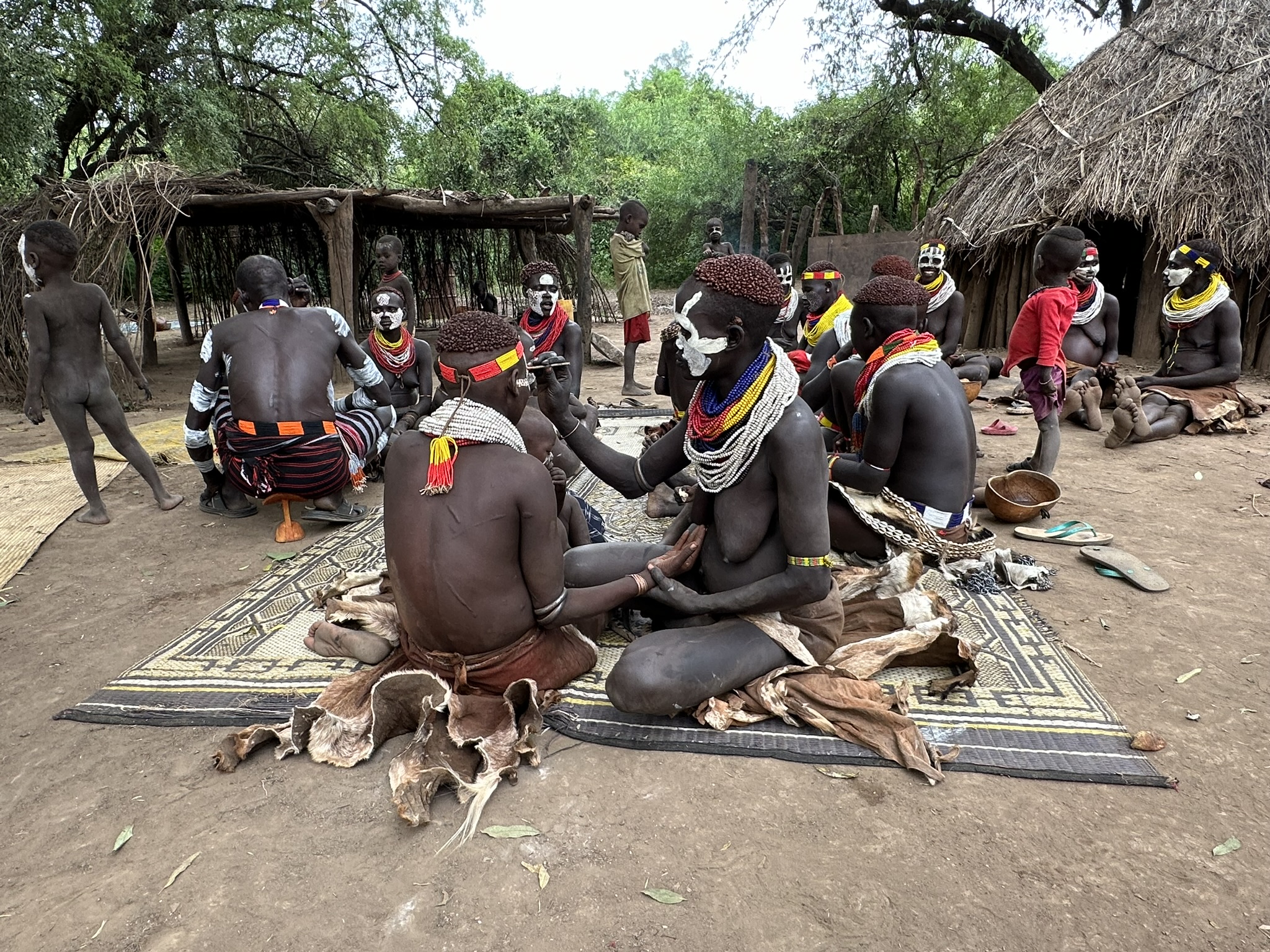
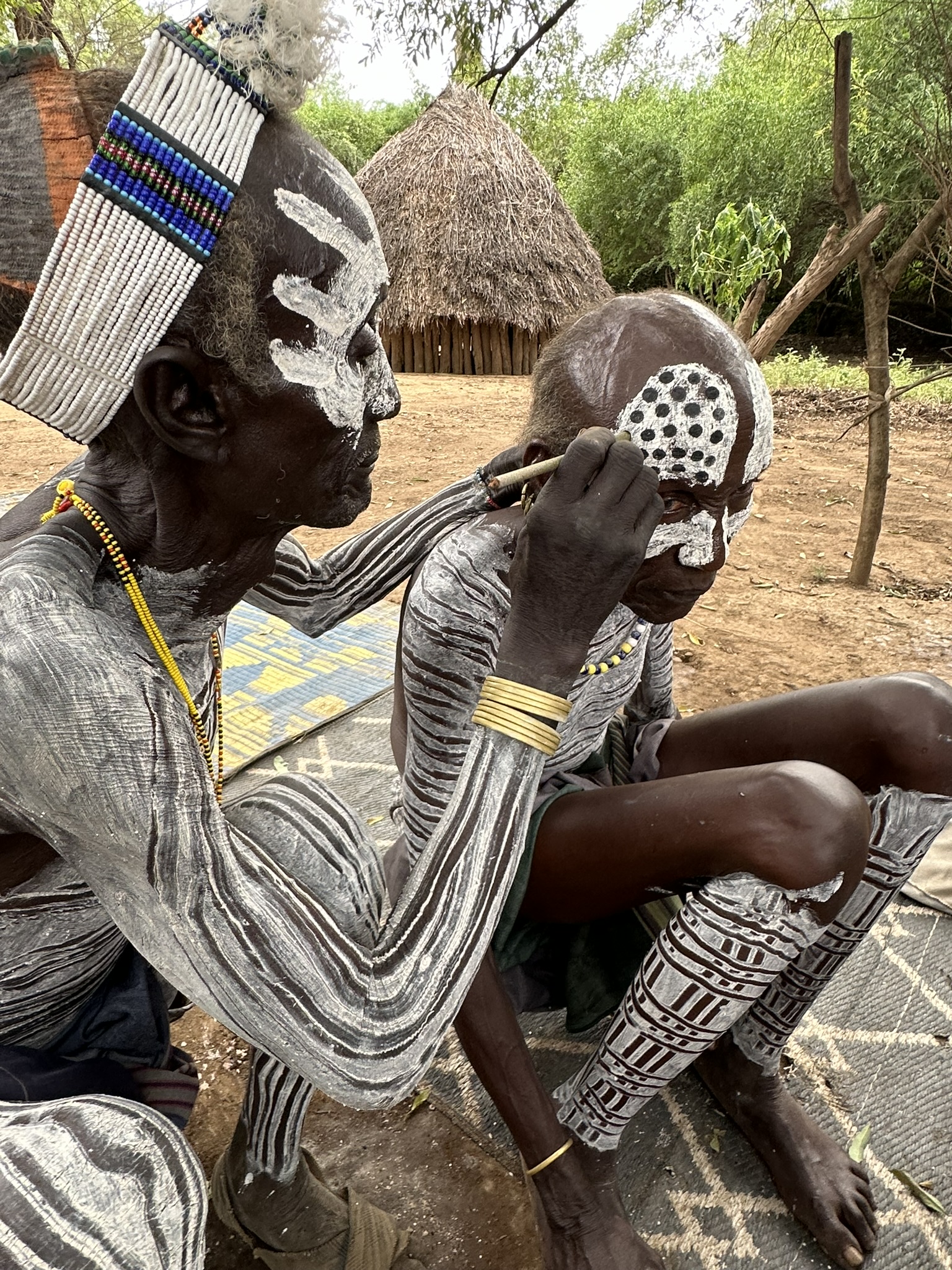
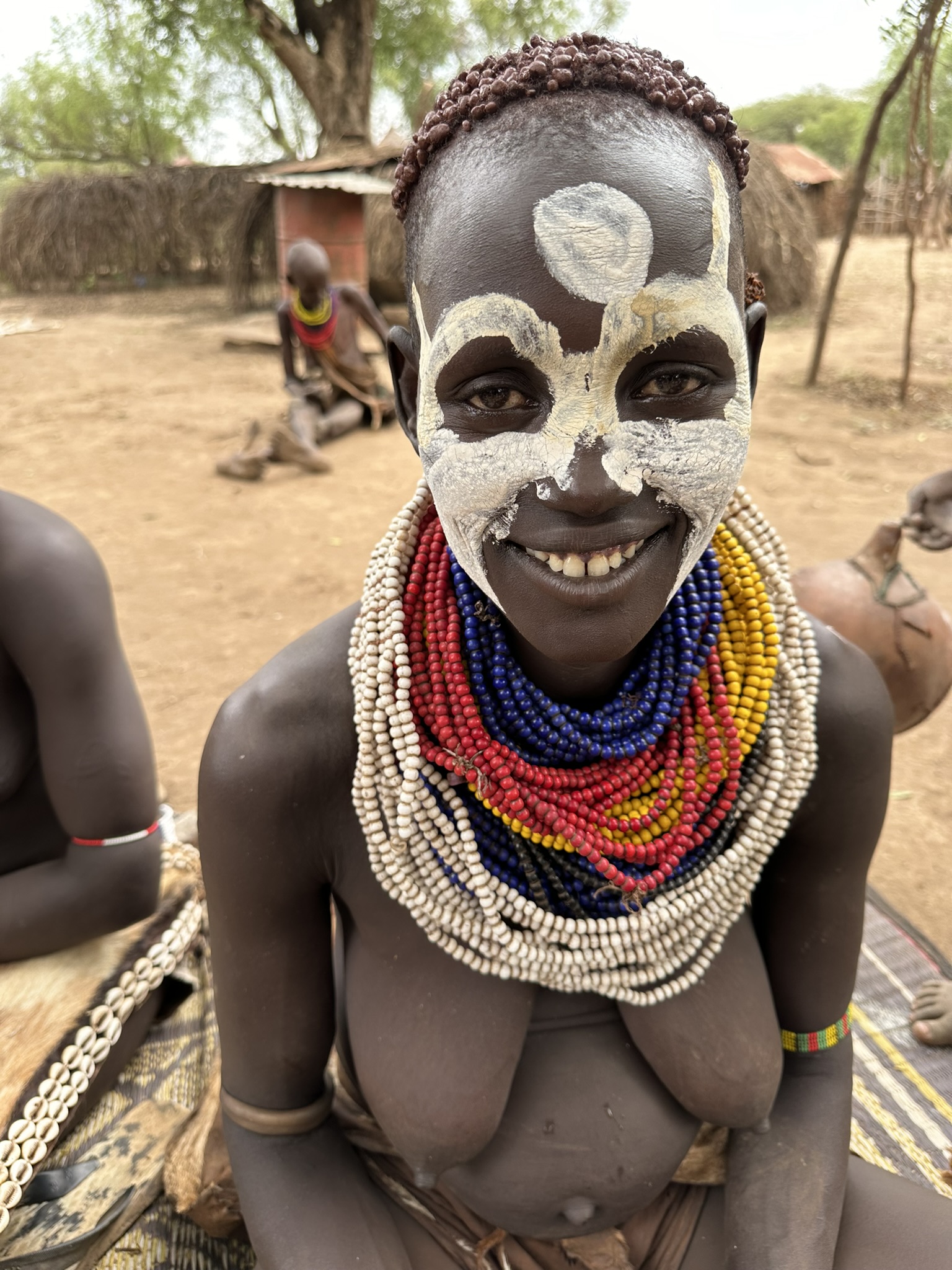
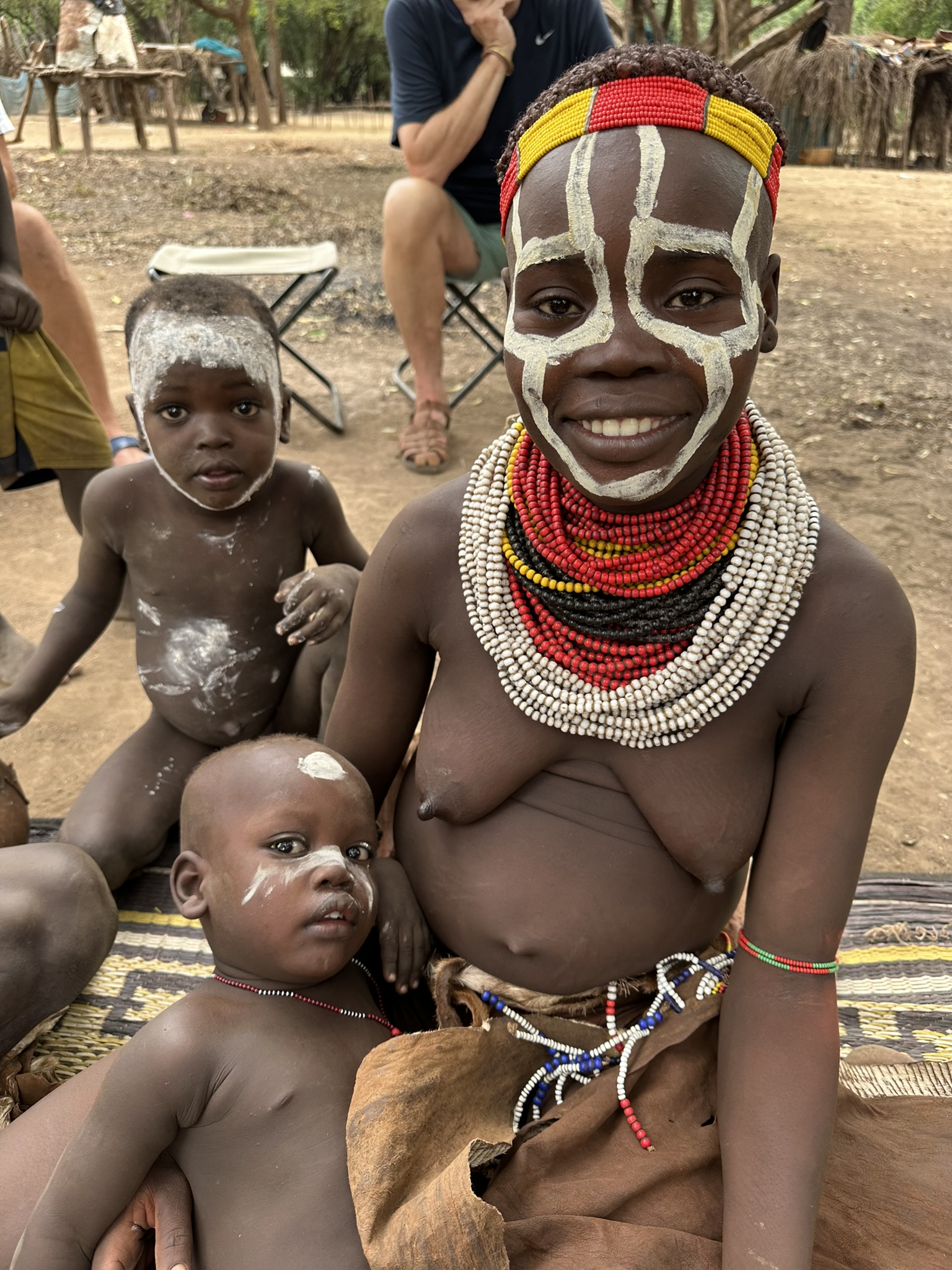
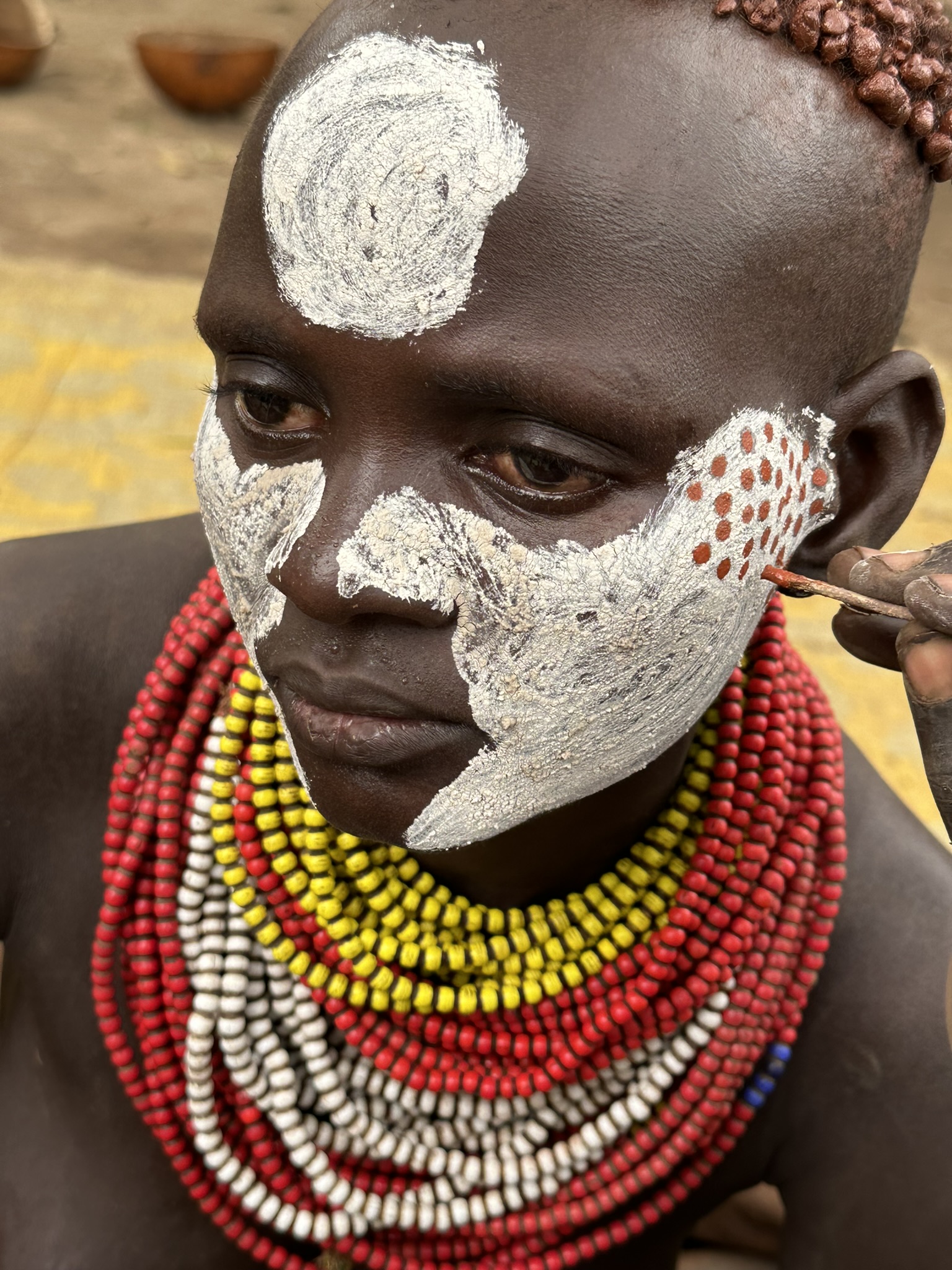
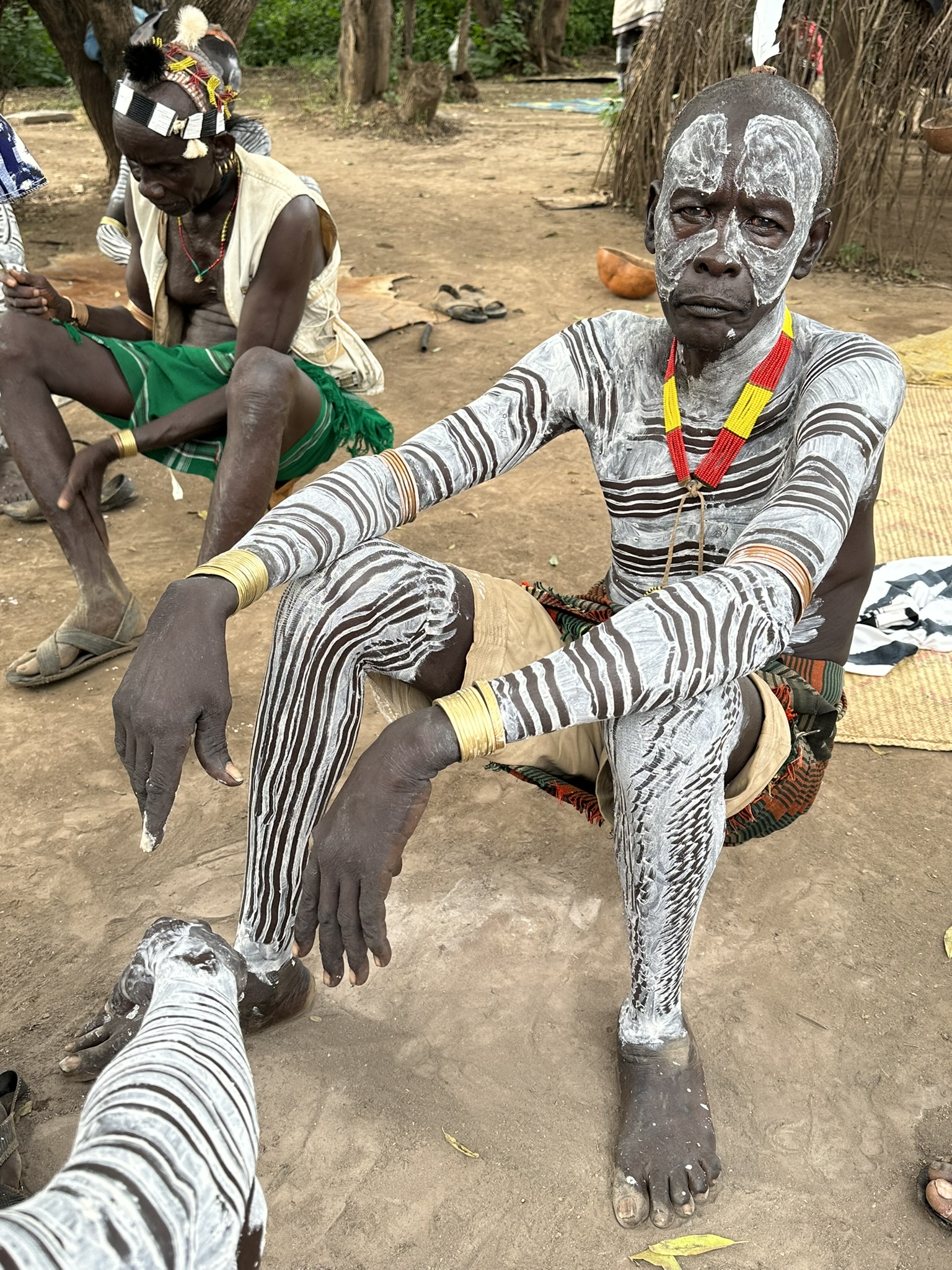
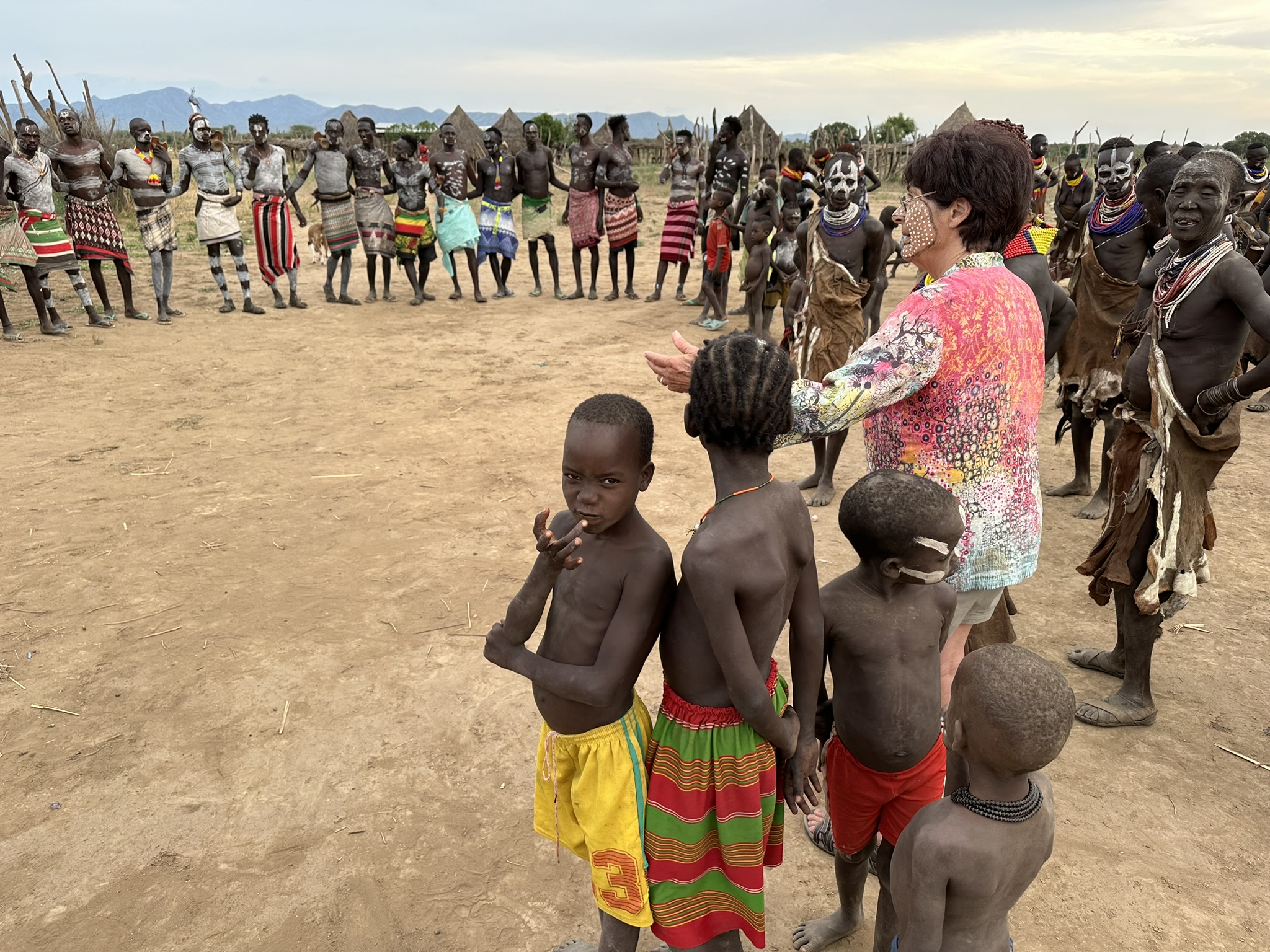
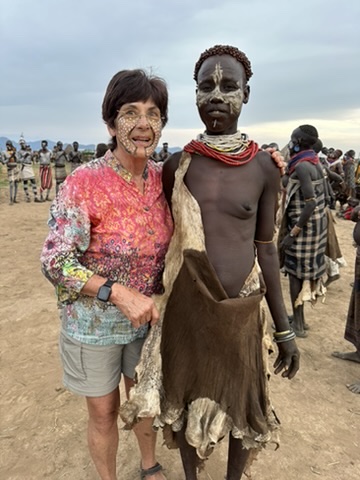
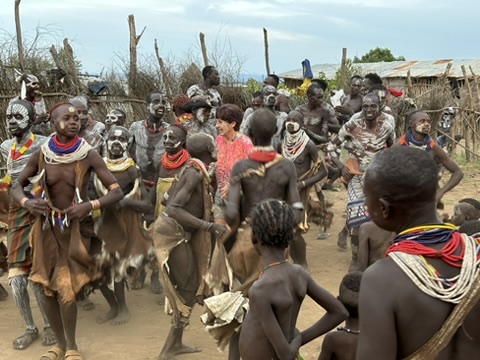
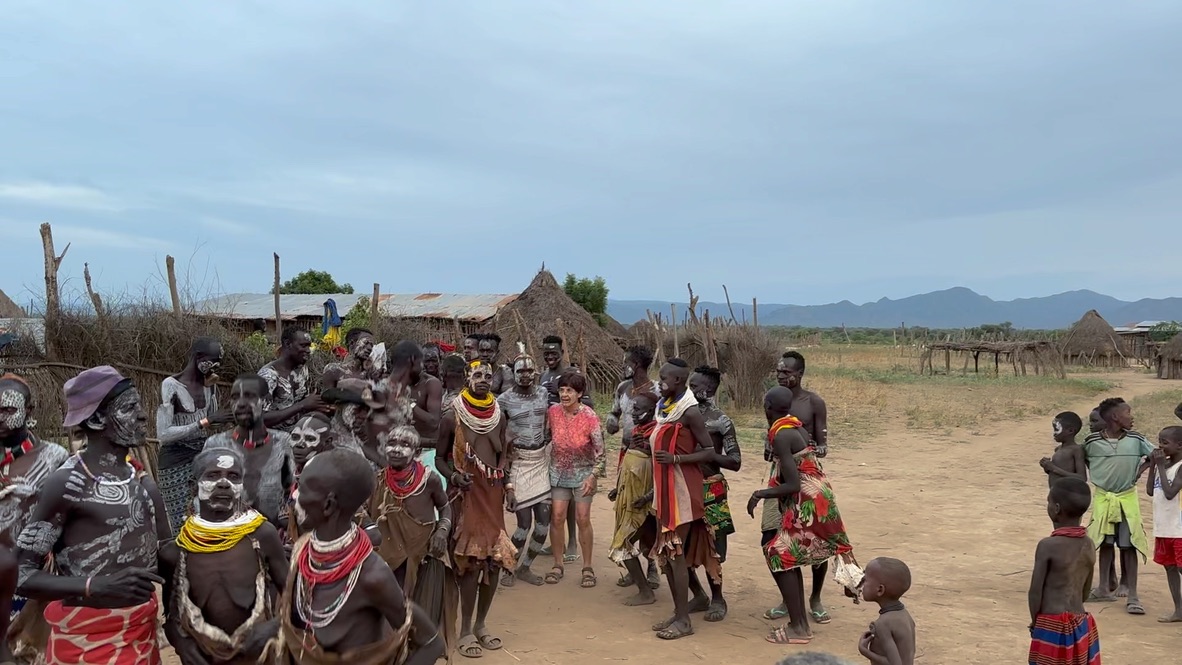
We relaxed by the river in the heat of the day and then walked over to the kitchen area where the staff and other Hamer people were putting on clay and mud makeup. They were almost ready when I decided to join them and one of the ladies painted my face.
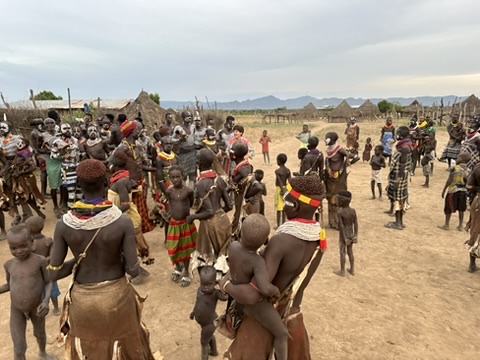
I looked a bit silly with my western hair style and glasses, but who cares. Everyone laughed. And off we all went to the Dus village where the ceremonial dance was to take place. The ladies dragged me into the dance where I was matched up with a different young man for each dance. I am not good at jumping up and down, but I did my best and did several dances before one young man got a little frisky with me. Fortunately, that was the beginning of rest time. We left the scene to go home for showers and dinner. It had been a delightful experience.
February 2, 2024
Departed Lale’s Camp by car at 9am to head for our next camp. Meanwhile the boat had left very early and took 8 hours to get to the camp ahead of us. The drive was much shorter at 2.5 hours. While on the road, I had a long chat with Adja, the manager of both Lale and the delta camps. I asked him about the culture of different tribes regarding death and religion.
The Mursi people do not believe in God and bury their dead at night of the same day as death occurs. They mourn the death of a man for 4 days and the death of a woman for 3 days. After the deceased is buried, the villagers move to a new location.
For the Hamer people, when a Hamer man dies, all the relatives are notified, and the body is carried to the foot of the local mountain where it is buried, and the grave piled with rocks. Mourning lasts for 1-3 months depending on the age and importance of the deceased and the length of time to get to the grave site. Half of the deceased’s animals go to the men who carry his body to the grave site. They eat what they need along the way and keep the rest. The Hamer do believe in Gods and a life after death.
The Kara people bury their dead the night of the death and mourn for 4 days for men and 3 days for women. Adja is Kara and Christian and believes in God and life after death. His left ear is clipped to indicate he is married, a Kara tradition.
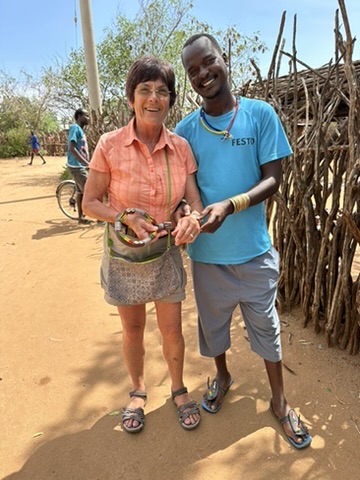
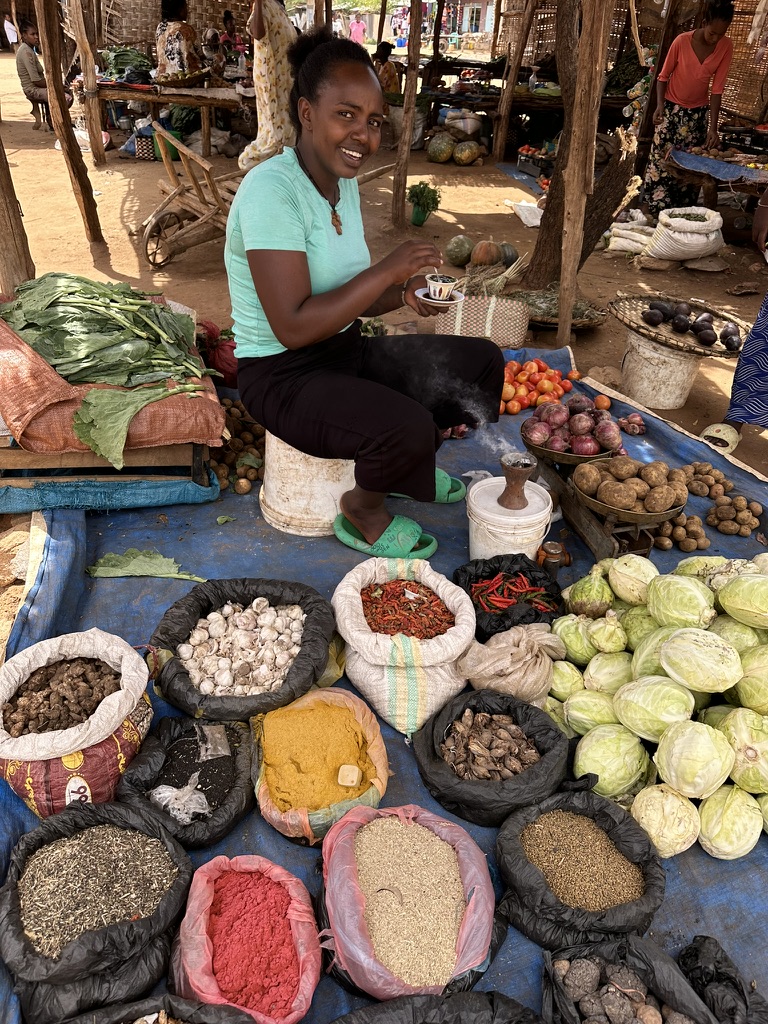
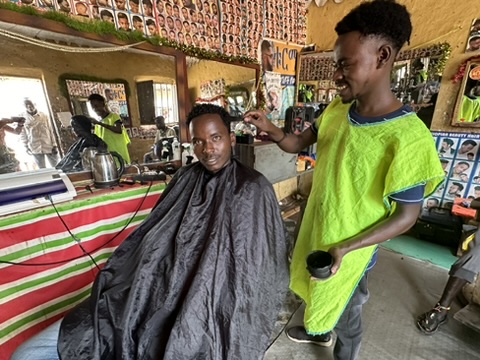
We stopped in the small town of Turmi to buy school supplies. Bought reams of notepads and plenty of pens for the whole school. Wish our purchase could make a difference. Then we walked around and found a street vendor selling the Hamer first wife style necklace and bought one for our collection. A guy selling bracelets approached us and we bought one each to wear. We also saw a vegetable vendor and a bag of coffee husks the locals use to brew a cheap coffee and a barber giving a man a black dye application. Will posed with a well made wood fence. The many we have seen are both attractive and functional. Then we drove on to the town of Omorate for lunch.
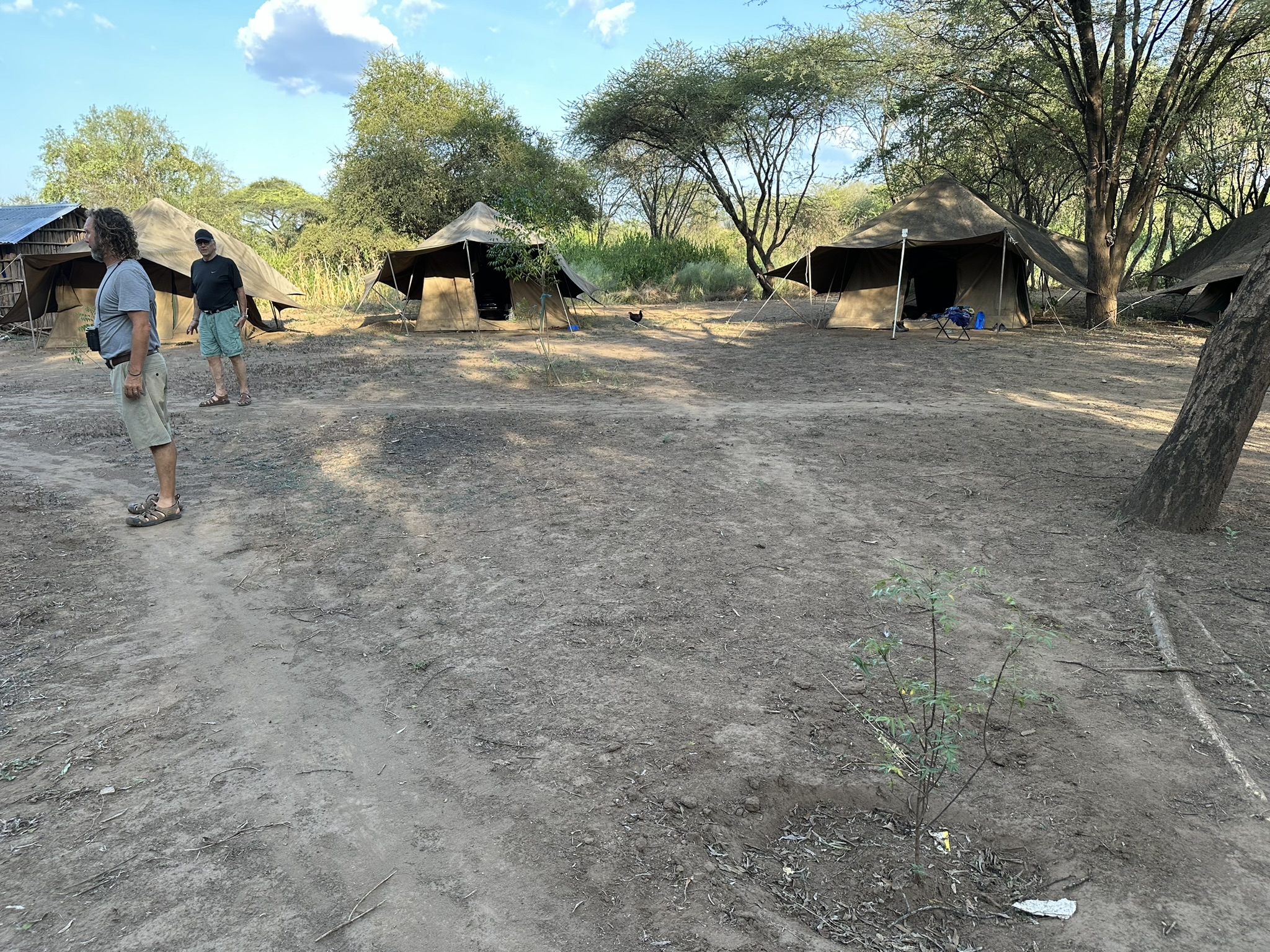
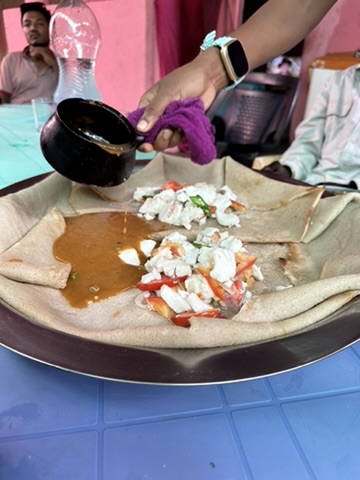
The driver knew a restaurant that served engera, so we stopped and had engera for the first time since our last visit to Ethiopia 20 years ago. The place was less than appealing, but the food was fine. It was made with Nile Perch and tasted good. However, a few efforts using my hand was enough and I asked for a spoon. Mark managed the whole meal with his right hand. 20 years ago, I managed with my hand too. This time I did not care. It went down with a cold beer. After lunch we drove 20 minutes to our Omo delta camp near the village of Calama, which is occupied by the Dasanach people.
The Dasanach live in oval huts covered with corrugated tin roofing material. It keeps out the rain, but not the hea,t and it is very hot. There are about 25,000 of them and they live in the delta area of Ethiopia and in northern Kenya. They are Agra-pastoralists. According to Adja, they do not get along with their close neighbor, the Turkana.
They do practice dimi, the circumcision ceremony for females. Every day the fathers and mothers of the girls about to be circumcised, do a daily ceremonial dance through their village for several months, up to 3 years before the actual event. The actual circumcision is done by the mother and another elder woman.
About 5pm we boated across the river to an area where there are no roads and walked into a Dasanach village where we managed to get several photos in spite of the sensation they had seen whitenot people before. It was as if we their first visitors. It was the first time Will’s Delta camp had been set in this location and there is no easy river crossing. The village had been destroyed by flooding and moved to this barren, dirt moonscape of a location. Then back across the river for dinner and bed.
February 3, 2024
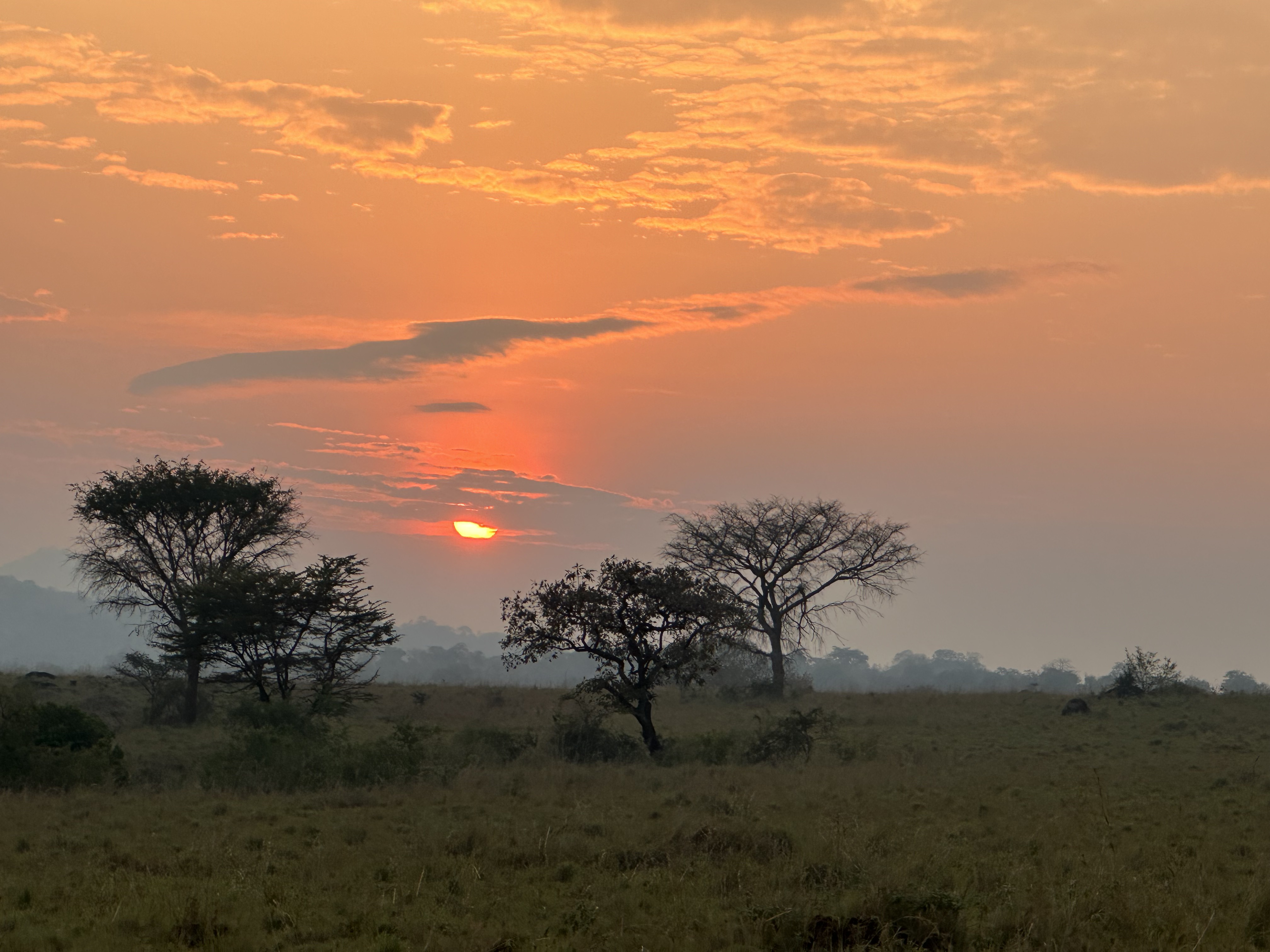
Early this morning we drove to a Dimi ceremony at a village called Kalem. It was a large place with many huts in a broad loose circle for about 2000 people. There were about 15-20 fathers and an equal number of mothers dressed up for the dance. Men were wearing leopard skins and ostrich feathers in their hair and women wore colobus monkey skins. The men also carried 12-foot-long sticks vertically for the dance. There were totem poles at several of the huts and they were each covered with leopard and colobus monkey skins and topped with ostrich feathers. The dancers moved around the camp dancing in front of the various marked huts. The dancing continued until about 9am and the dancers dispersed. We went back to our camp for breakfast. We chilled during the heat of the day and got onto the boat at 3pm to make a long ride down river to almost the mouth of Lake Turkana. We saw several birds including fish eagles, pied kingfishers, a goliath heron, a grey -headed kingfisher, a black-winged kite and a rare, black-crested eagle. There was much green delta marshland with few trees. Then we slowly motored back upriver to camp, arriving just at sunset for a lovely photo to finish our adventures. We enjoyed a leisurely dinner and talked about the highlights of the whole adventure.
Will believes the birth of mankind took place near our location, as the first homosapien was found near Kibish, a village near our camp. There is a vast genetic variance in people, with 52 unique linguistic groups in the area. We have come close to the ends of the earth or maybe the beginnings of it. Will thinks we are the first visitors in the area in years and there are few others who will venture this far.
Will wondered if we were anxious to go home. I would happily carry on if I could have a good shower. I am not ready to go home. Our cold showers felt good even if we hardly cooled off. It rained during the night and the air cooled down some.
February 4, 2024
Our last hours in the delta. After breakfast, we packed up and drove to Omorate to clear customs and visit the Christian Orthodox church as it was Sunday and we had heard people singing across the river since early morning. It reminded us of the orthodox churches we had visited in northern Ethiopia years before. The church was octagon shaped with a cross on a high central point as typical of an orthodox church. However, the decorations were fewer and simpler and there was almost no interior. Will bought a scarf for me to wear. Everyone sat outdoors on rocks or the ground. By the time we arrived the singing was over, and a preacher was carrying on in a fire and brimstone fashion. Not long after arrival we were introduced to the head of the church and asked for support for their church. We told them we supported our own church and that was enough. That was our call to leave. Mark still slipped him some bills and off we went to the airstrip. I happily kept the scarf.
We drove the short distance to the Omorate airstrip and waited about 15 minutes for the plane to arrive. Our 2.5-hour flight to Addis was overcast, and bumpy, but, once on the ground we enjoyed the lower temperature that the elevation gain provided. Back at the Hyatt Regency we took long hot showers and felt clean for the first time since leaving the Hyatt a week earlier. I had a salad for lunch and worked on the post until our final dinner with Will. He checked my post for correctness and then we enjoyed our last time together.
February 5, 2024
We spent our last morning in Addis working on the blog. I keep having trouble getting the details worked out and Mark help ed me. Sometimes with success and other times not. This last post may not go out before we get home as I must add all the photos to accompany the text.
I did learn a few things about the city. The population of Addis is 5 million and the country is 120 million. It is the second most populated country in Africa behind Nigeria and ahead of Egypt. When we were here in 2004, the only road that was paved was the main road through the city, which was much smaller. Today all the downtown streets are paved, and traffic is very congested. Then we stayed at the Sheraton and the street in front of it was dirt. From our room we could see the shanty town across the street. What a difference 20 years has made.
Here are Mark’s comments.
Twenty years ago Julia and I set out on an adventure to explore and meet the tribes of southern Ethiopia. We had been in northern Ethiopia in 2004 to visit the stone hewn churches of the orthodox Christian’s.
We set out from Addis Ababa with a driver-guide, Atnafu, and cook, Mustafa, in a Toyota SUV packed with camping gear on our journey to Lake Turkana on the border with Kenya. There are not many “camp grounds” in Ethiopia but Atnafu had a plan. We would drive until we found a suitable site and set up camp. We were quite a site and you can imagine we always grew a crowd of onlookers. To say it was hot and dirty would be an understatement, but we always found a way to get a shower at the end of the day. We saw a few animals along the way: giraffes, Cape buffalo and the largest crocodiles we have ever seen to this day. We met people from tribes we were searching for including: Hamer and Mursi tribe members.
All in all that part of trip was quite an adventure and the plan was for us to rendezvous with our Kenyan guide at lake Turkana and continue our journey up the Omo River to the stronghold of where these tribes live.
Eventually our Kenyan guide, Halowyn, arrived in two boats for our journey up the river, one boat full of gear, a second for us explorers. After an unimaginable lunch of fresh greens in a salad and wonderful charcuterie, we headed for the mouth of the river. As we reached the area of a sandbar we had to cross to enter the river, it was sadly evident there was not enough water to float our boats. We were in the water up to our knees but were unsuccessful in getting the boats to move over the sand. With crocs in the water our pushing efforts did not last long. Our plans to explore the Omo River delta were dashed. We did go on to have an enjoyable time with Halowyn, exploring other places and tribes around the lake.
So now we sit on the shore of the Omo just above the delta where we were stuck 20 years ago.
This year we started about midway down the river and spend time in a camp near the Mursi tribe. On we traveled down the hersey brown river in the very same boat as 20 years ago to a second camp to visit the Hamer and Kara tribes and we finish our travels with the Dasenach tribe in the river delta just above where we had been stuck.
After 20 years there seems to be little progress in the lives of these tribes. There is a random cell phone in a few guys hands and a solar panel near the odd hut. They are guardedly friendly and curious towards us as we stroll through the village. Last night we were in a remote village that may see no more than a handful of outsiders a year. The reception was slightly guarded at first but gradually the people warmed to us.
So after 20 years we close the chapter on our Omo adventure having come full circle. I don’t imagine we will ever be back in this area but we leave having met wonderful people just trying to survive with their families. Lovely people although our worlds could not be further apart.
We started this trip at the Bwindi Community Hospital for the ground breaking of a new clinic, an effort to improve the sight and dental condition of those in Bwindi, Uganda. Next we went to Queen Elizabeth park to see some animals and left with the hope of putting a tracking collar on a lion to better understand the lions habits and travels. Next stop was the DRC and saw the conservation efforts of African Parks as they fight to defend the animals and nature from marauding poachers. We have been exceeding priviledged with opportunities in travel.
I guess Julia and I are lucky to have found each other with both of us enjoying to travel to what seems to be the end of the world. The heat and dirt and bugs don’t seem to be a deterrent, although challenging at times. We don’t know what’s next but remember this thought I have picked up somewhere.
“Travel is the only purchase you make that makes you richer”
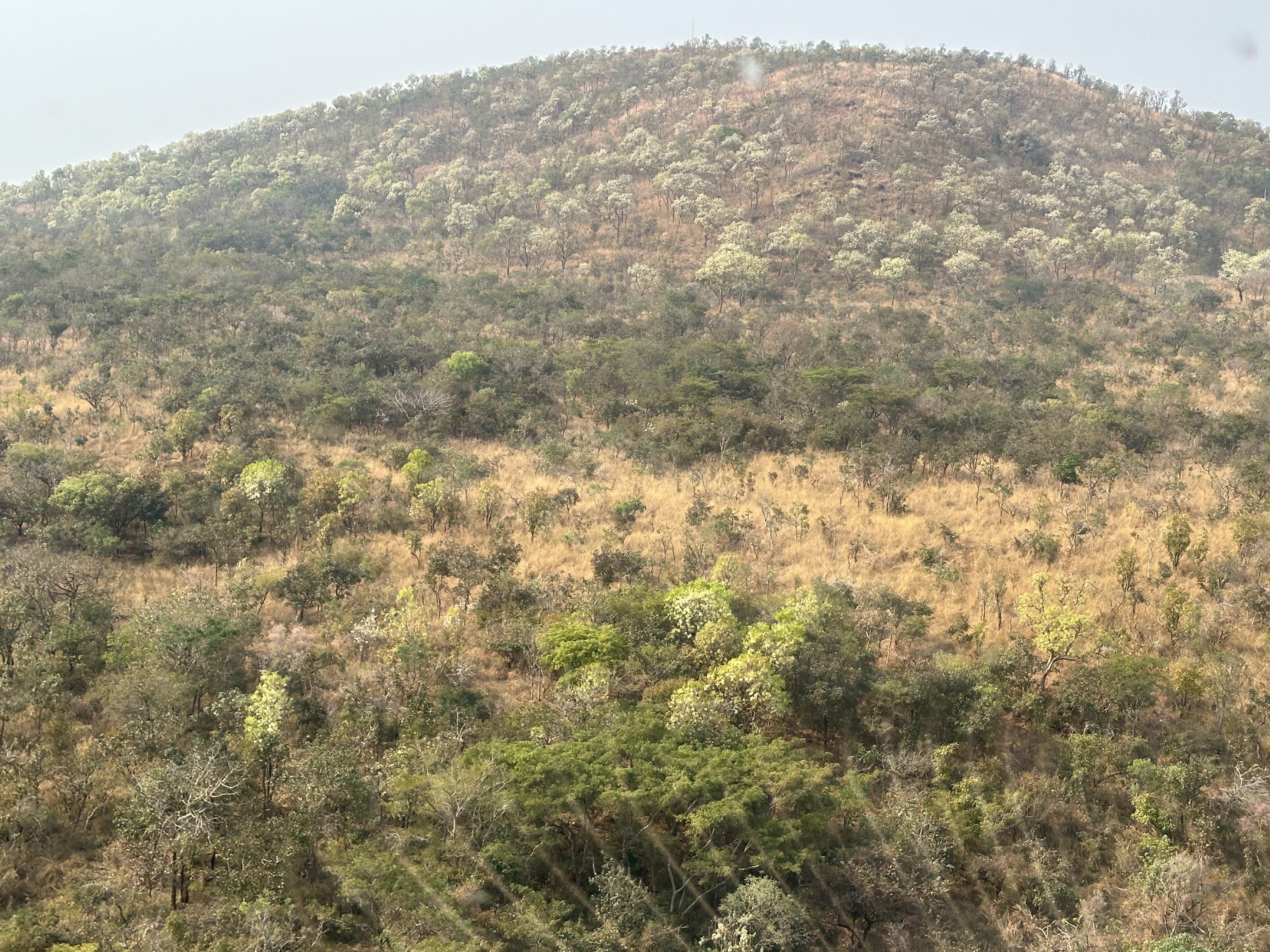
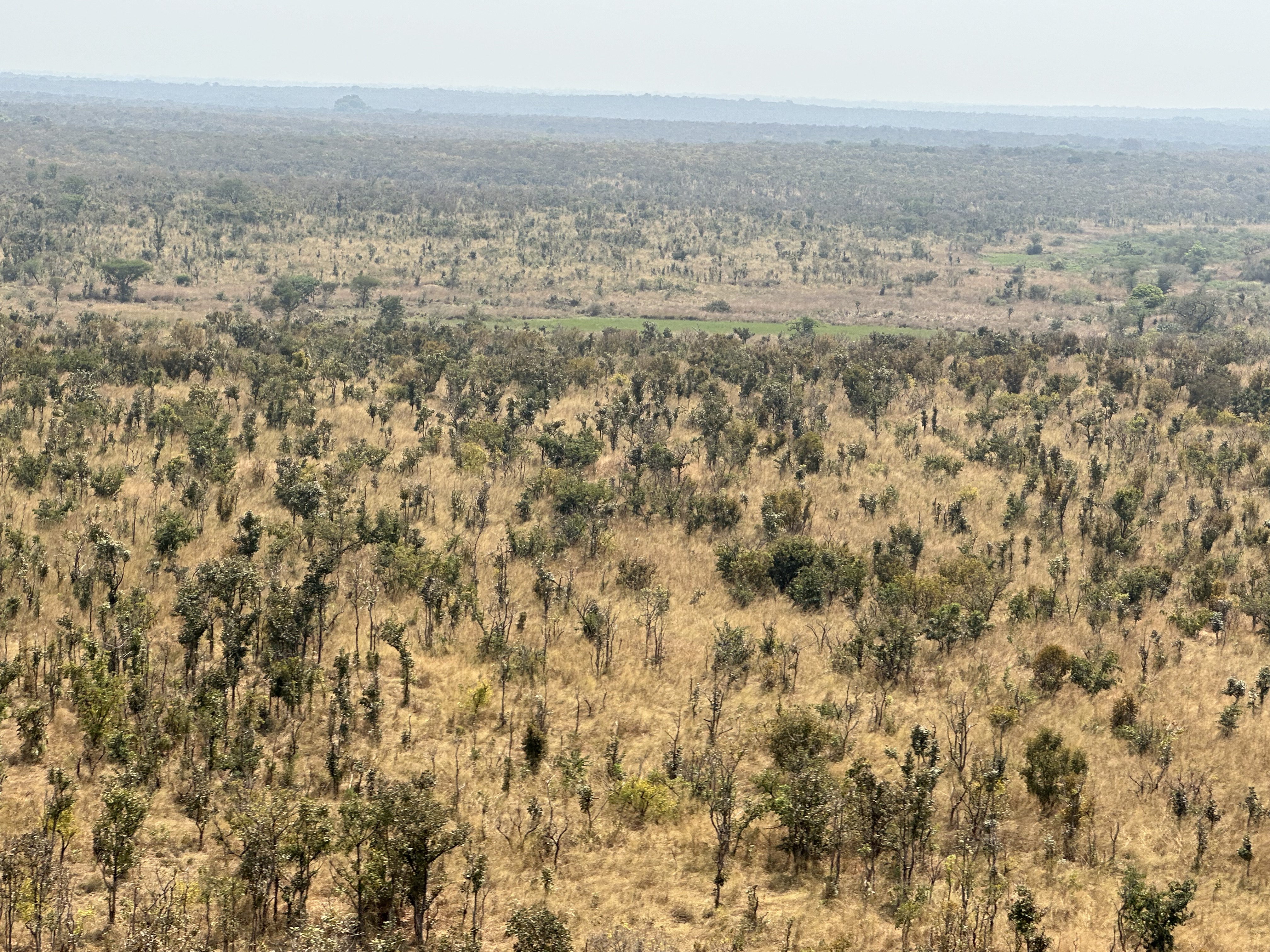
Garamba National Park was created in 1938 and is the third oldest park in the world. It is in the NE part of the DRC in the transition zone between the dense tropical forests of the Congo Basin and the Guinea-Sudano savannas. The village near the airstrip is called Nagero. The park’s immense savannahs, grasslands, and woodlands, interspersed with gallery rain forests and riparian forests along the riverbanks and the swampy depressions are home to forest elephant, the rare Kordofan giraffe, hippopotamus, and white rhinoceros, which had become extinct but, recently, 15 have been introduced to the park from South Africa. We hope to see them. The population of elephants combines forest elephants, bush elephants and hybrid animals that demonstrate characteristics of all three species. The park contains many square miles resulting in a well-protected area for the many large animals as well as the large population of African buffalo. There is also lion, the spotted hyena and numerous species of antelope.
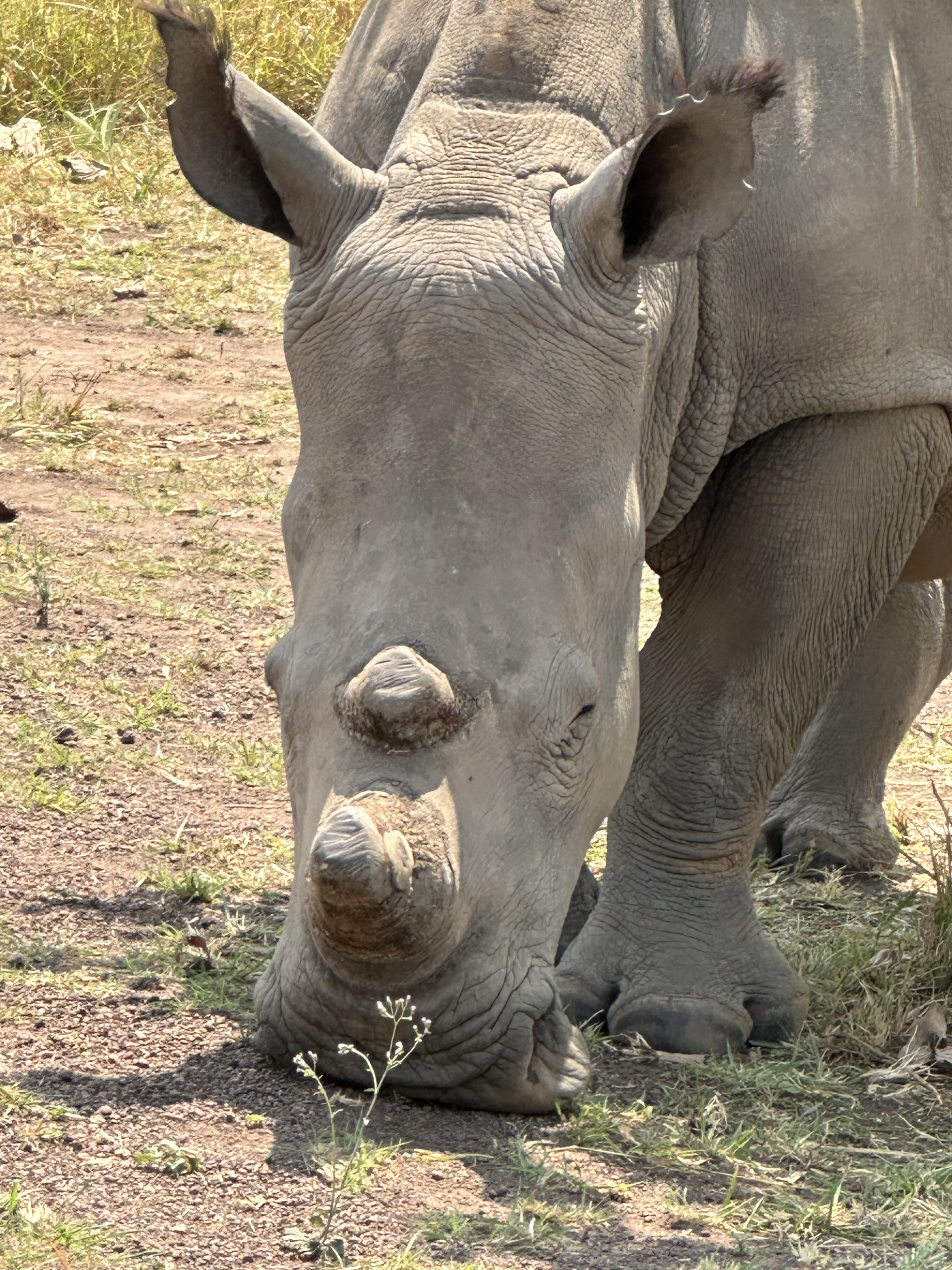
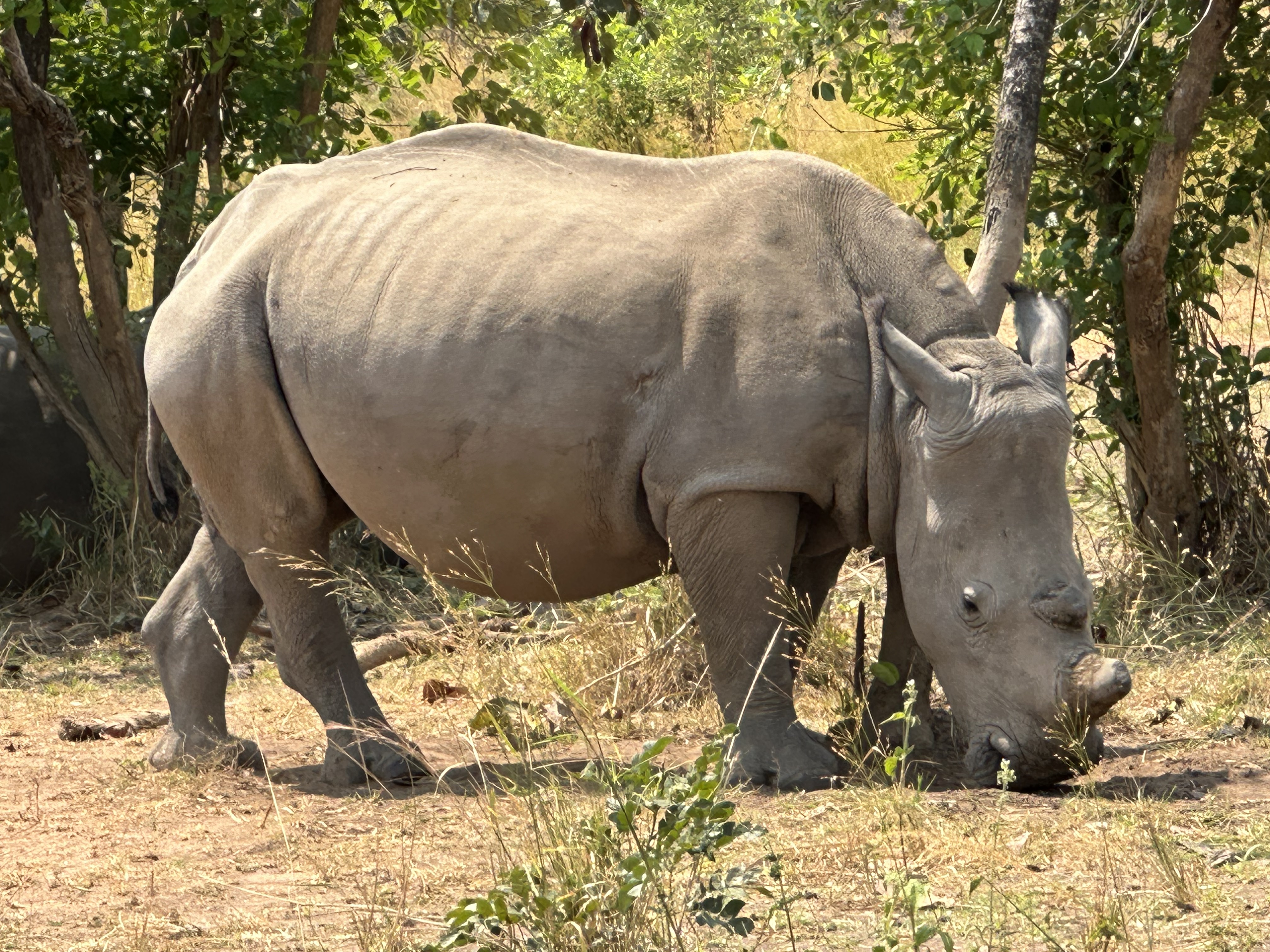
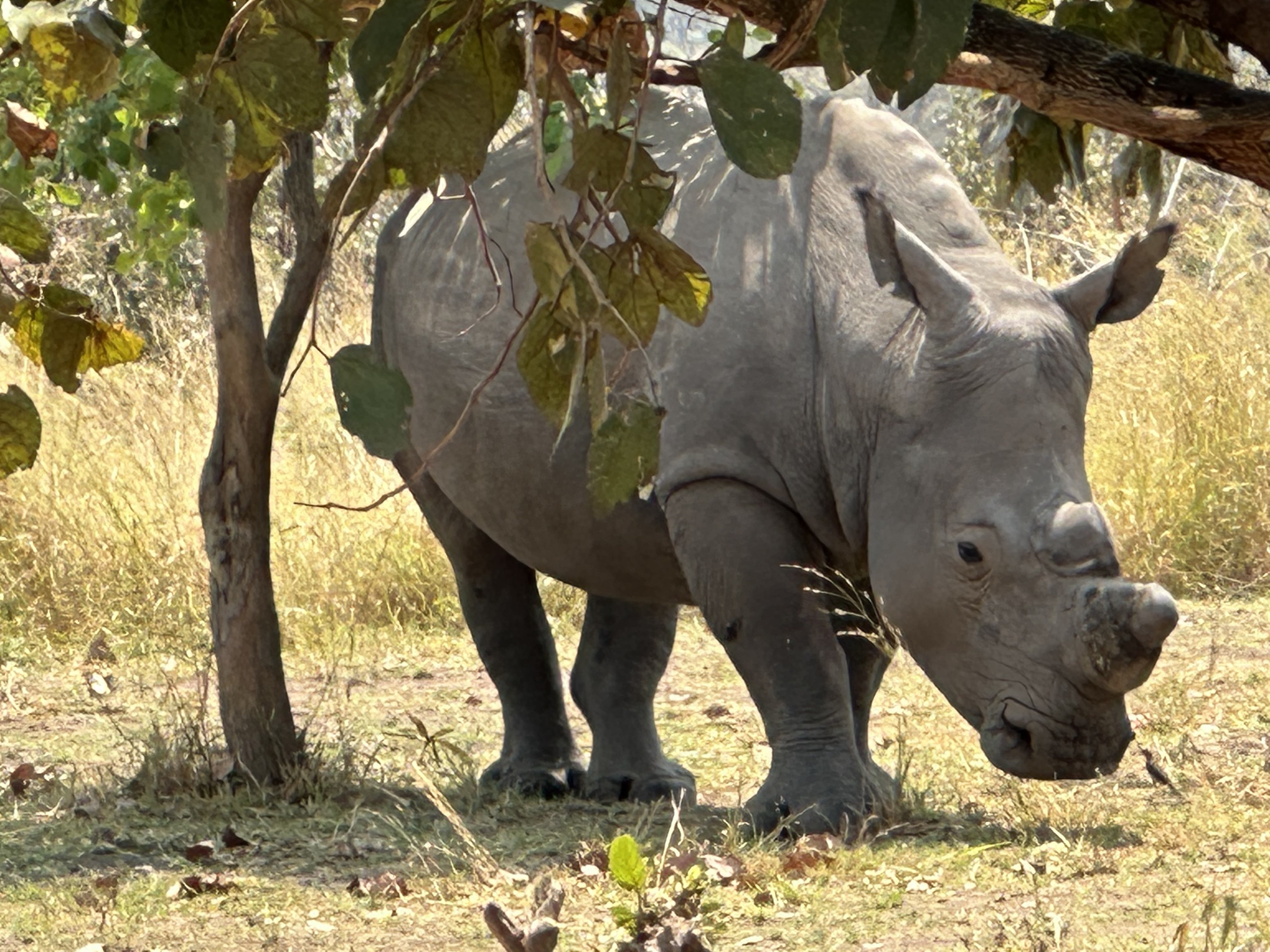
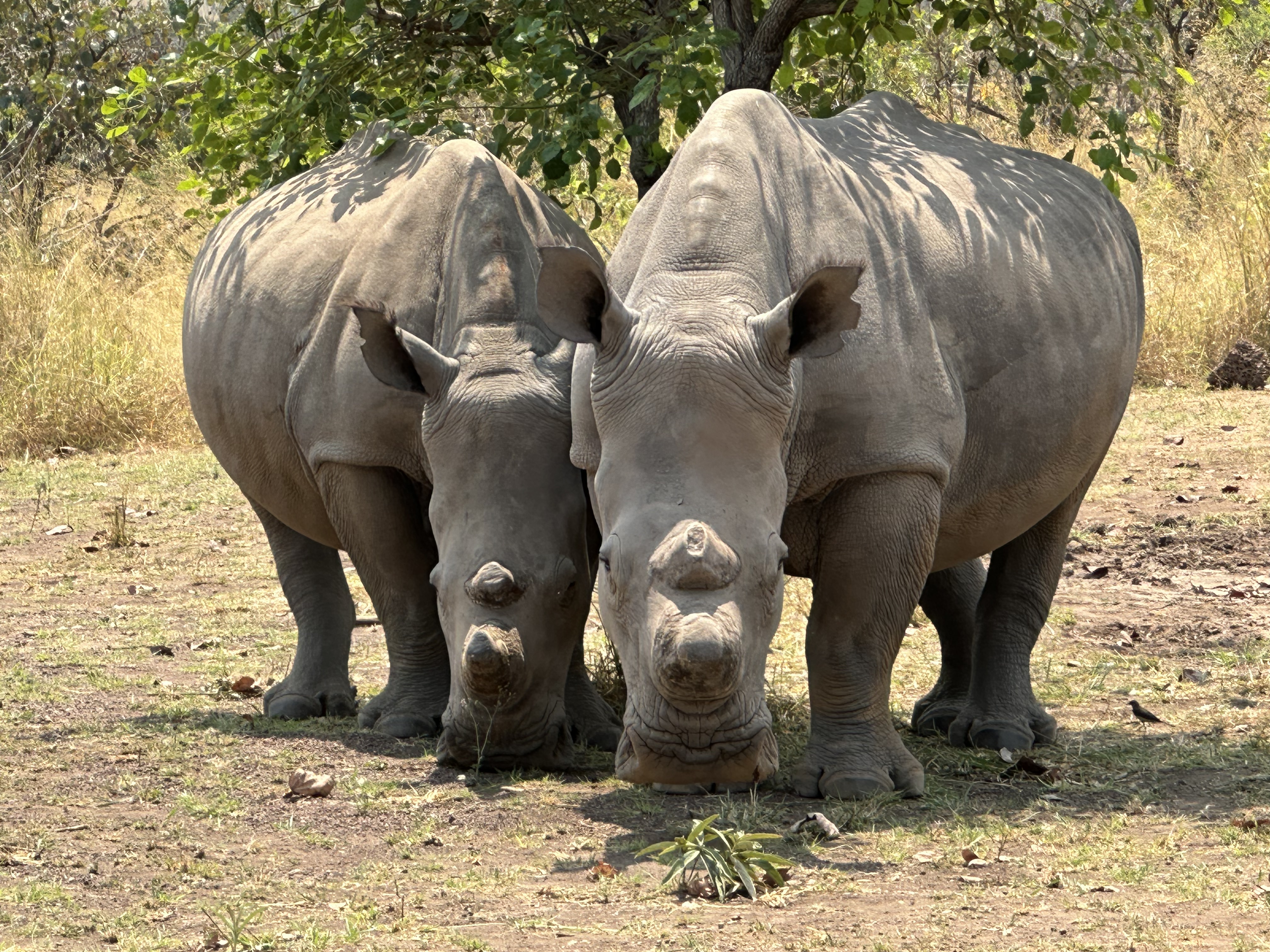
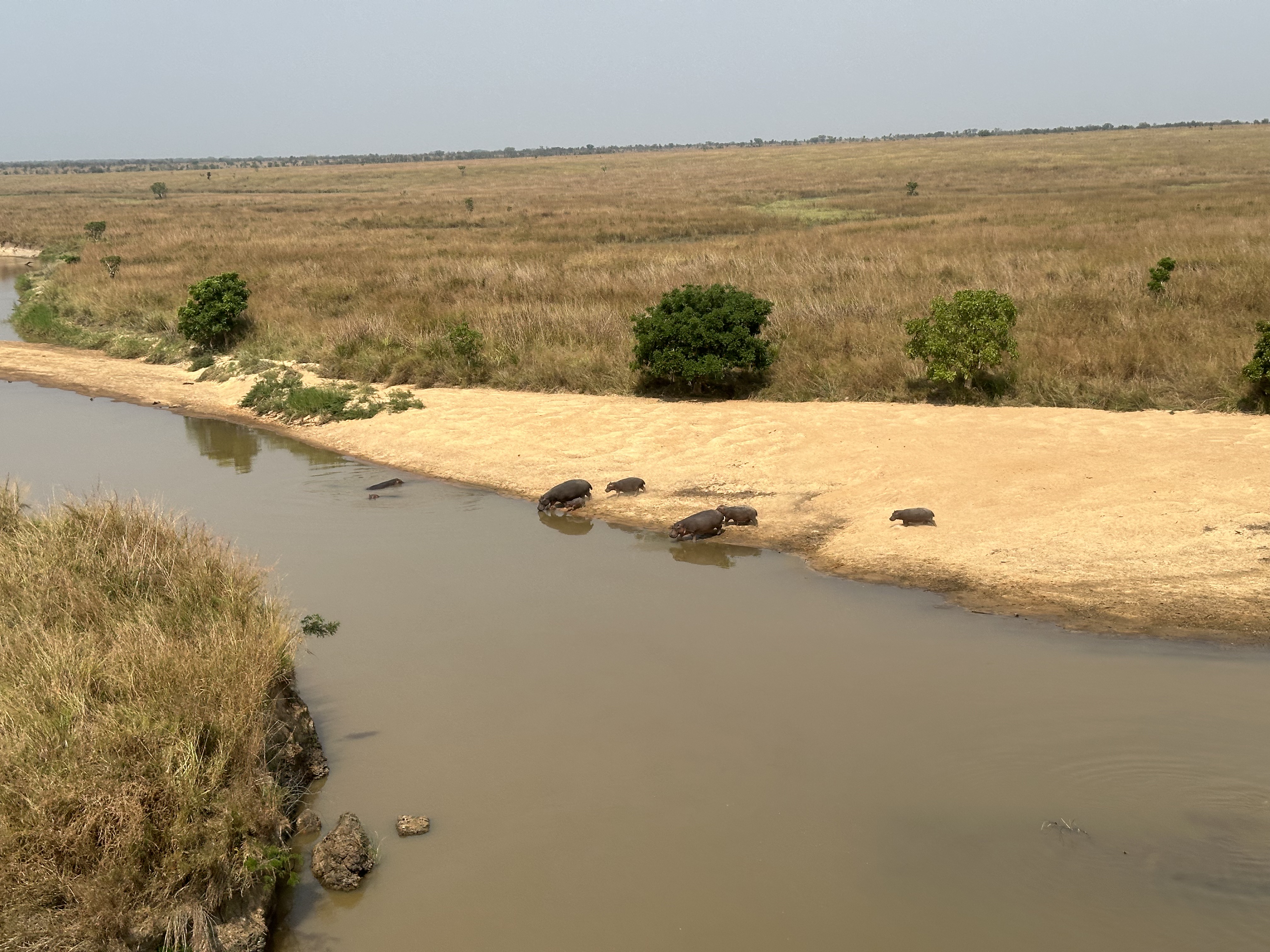
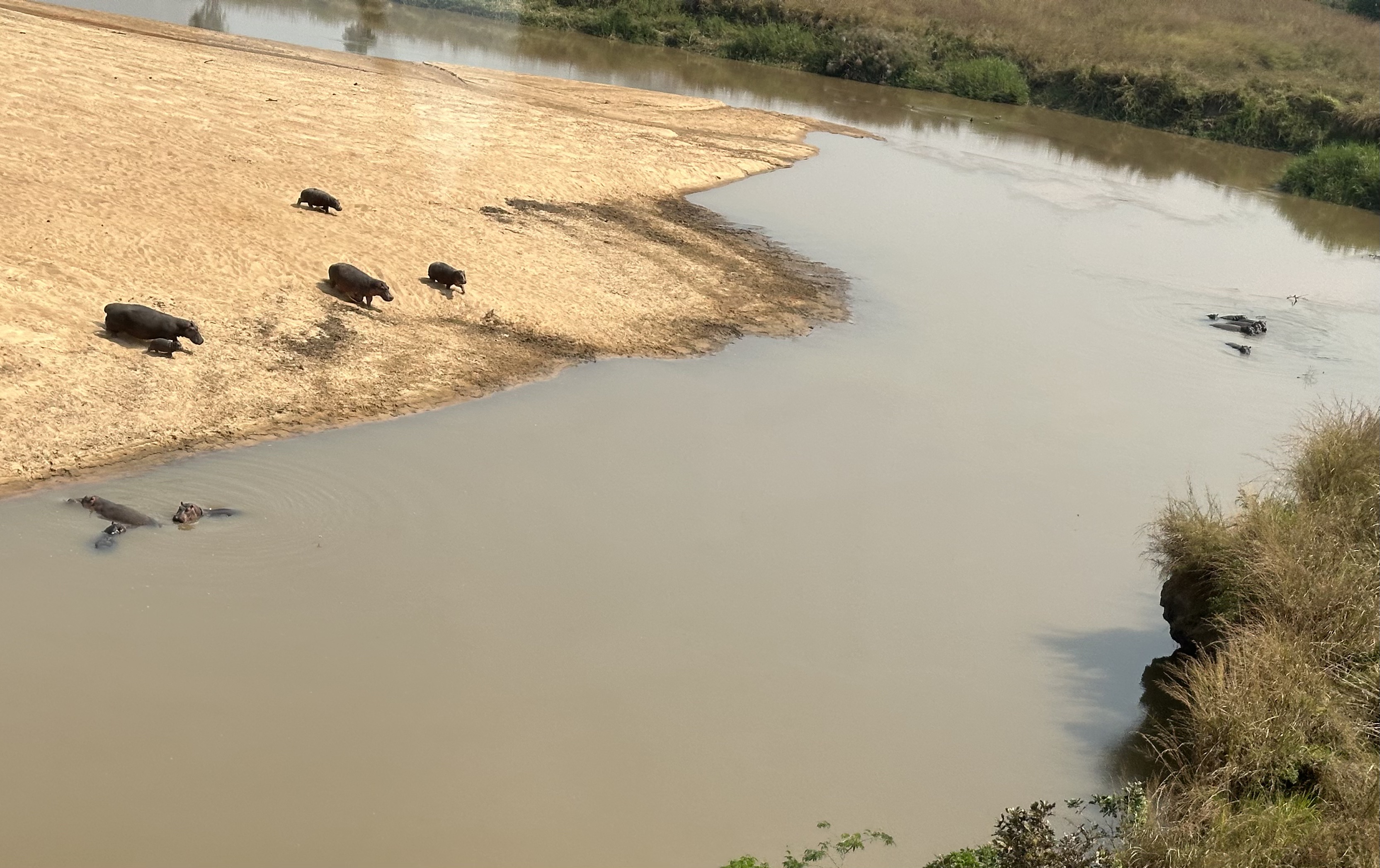
The above information on the Congo came from a Wikipedia site. Mark and I have been in the Congo for 4 days now and can tell you there are some inaccuracies. Due to severe poaching during the last 50 years the animal population is much reduced. Until today we were driving through the park on the few roads that exist. We saw sizeable groups of Uganda cob, hartebeest, bushbuck and huge numbers of hippos and vultures. We saw only one giraffe, a rare Kordofan, a crocodile, some wart hogs, 3 buffalo, a few oribi and miles and miles of thick, very tall dry grass. Mark thought the grass looked like dried out sugar cane. We heard lion, but never say any. We did see the 15 white rhino that have been recently introduced to the park and are being kept in a 100-hectare sanctuary. They appear to be doing well. In a few weeks, 64 more white rhino will be delivered by 747. A much larger sanctuary is being created for their arrival in June.
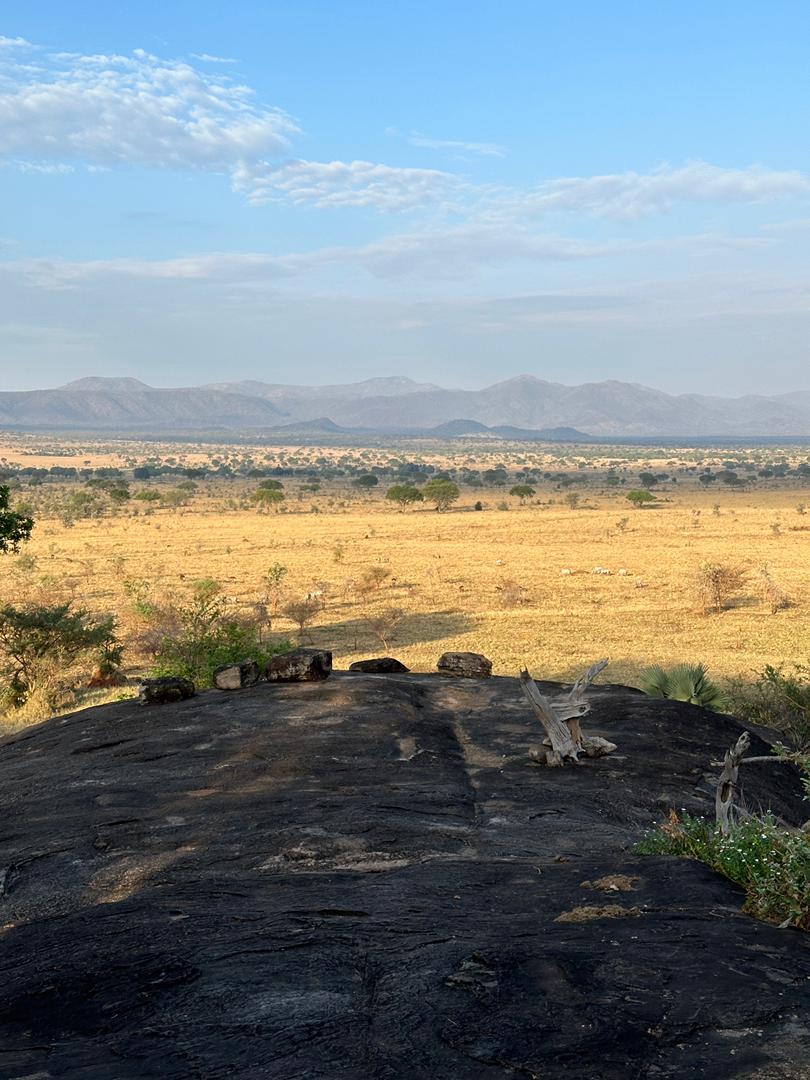
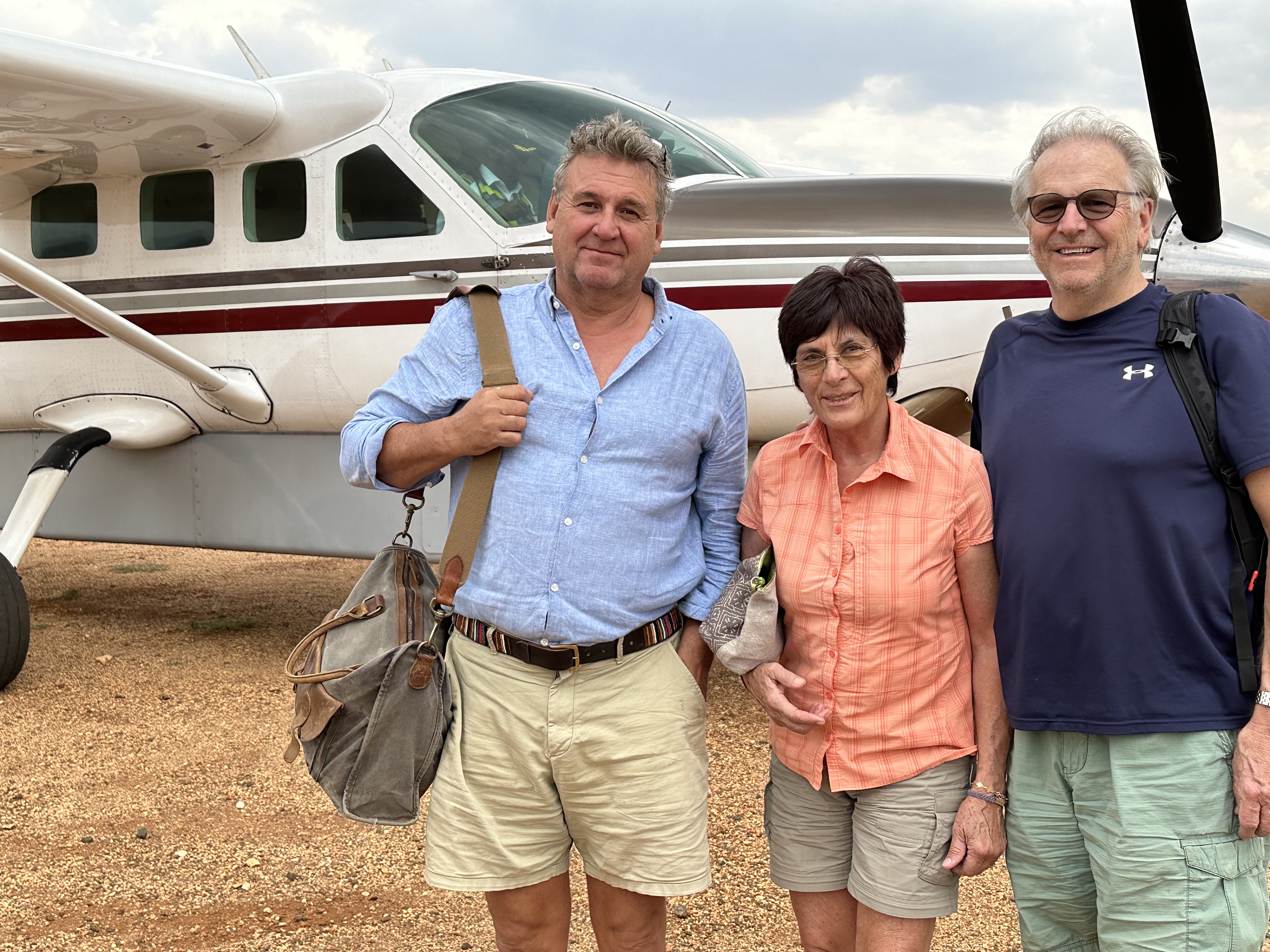
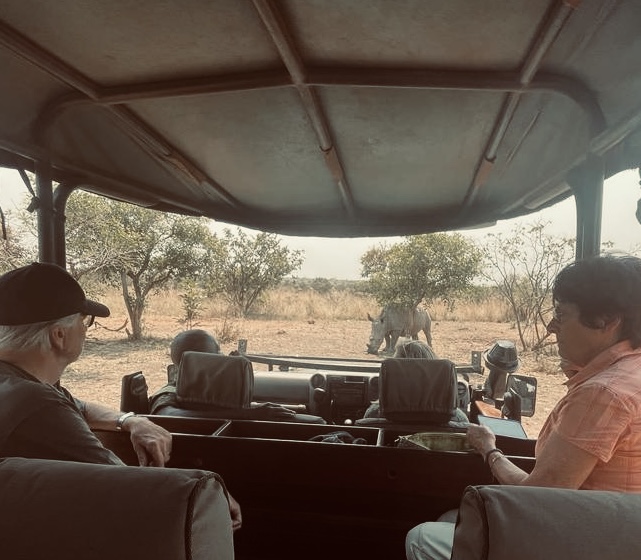
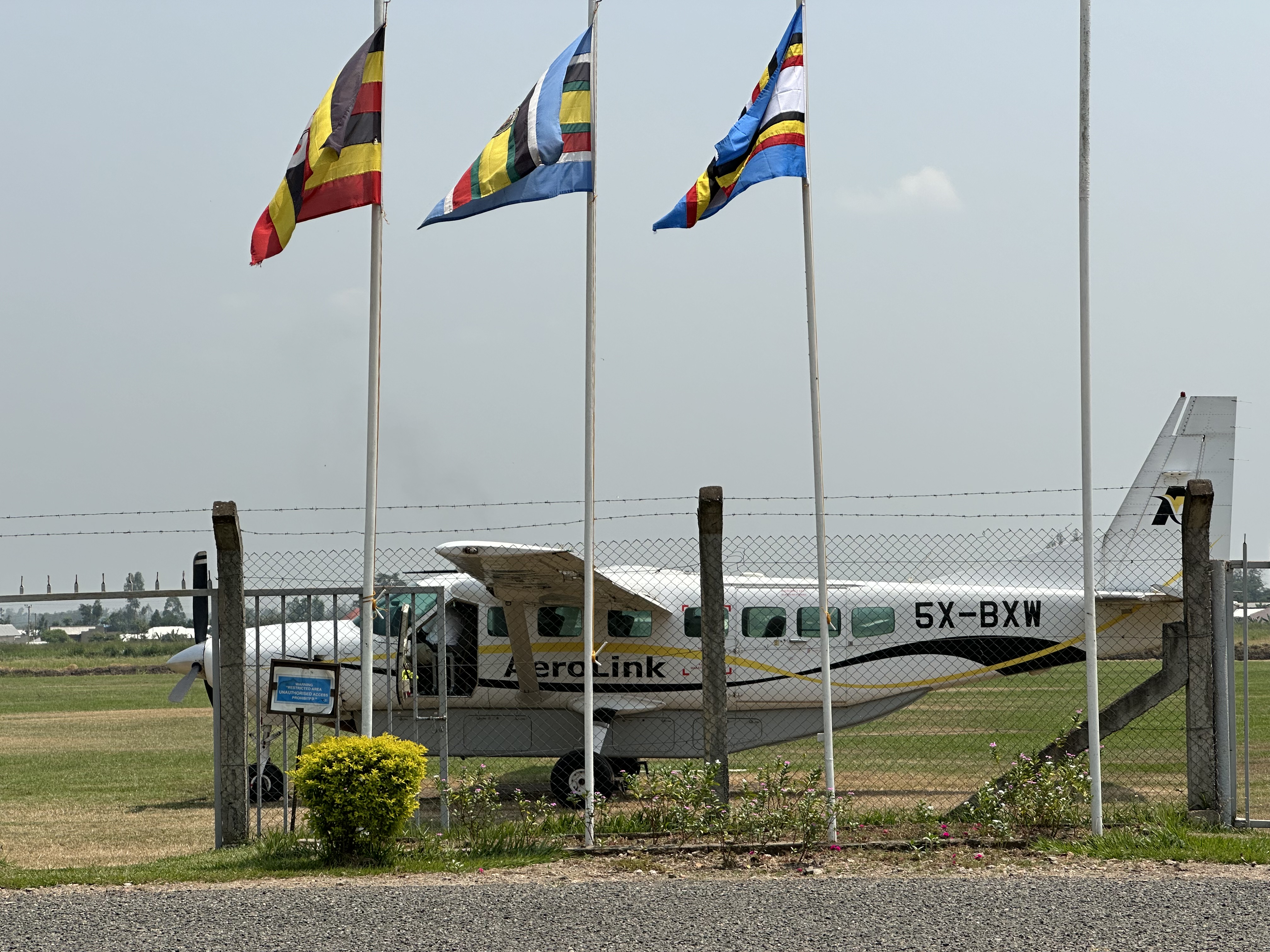
Our arrival in a Cessna caravan, the landscape looking over a boulder and our first view of a white rhino from the Toyota Land Cruiser, our transport for the 6 days we were there.
January 23, 2024
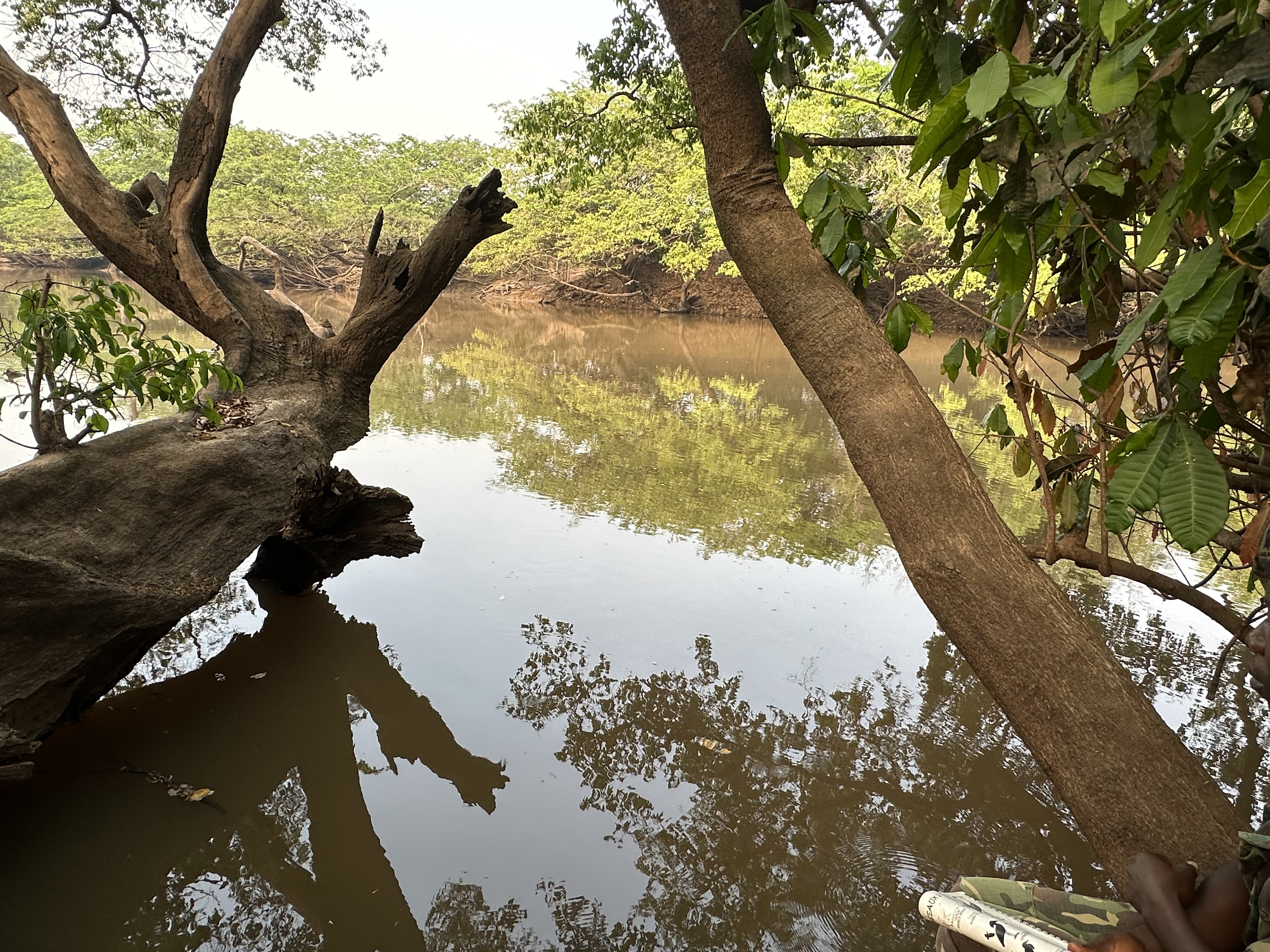
Up early to go bird watching with Martin, a. handsome young researcher, who is specializing in the study of white Rhino. We walked along the edge of the Dungu River where our lodge was located. He named many little birds and Mark was able to pick up on most of them. Unfortunately for me, most of them looked like LBJ’s (Little brown Jobs).
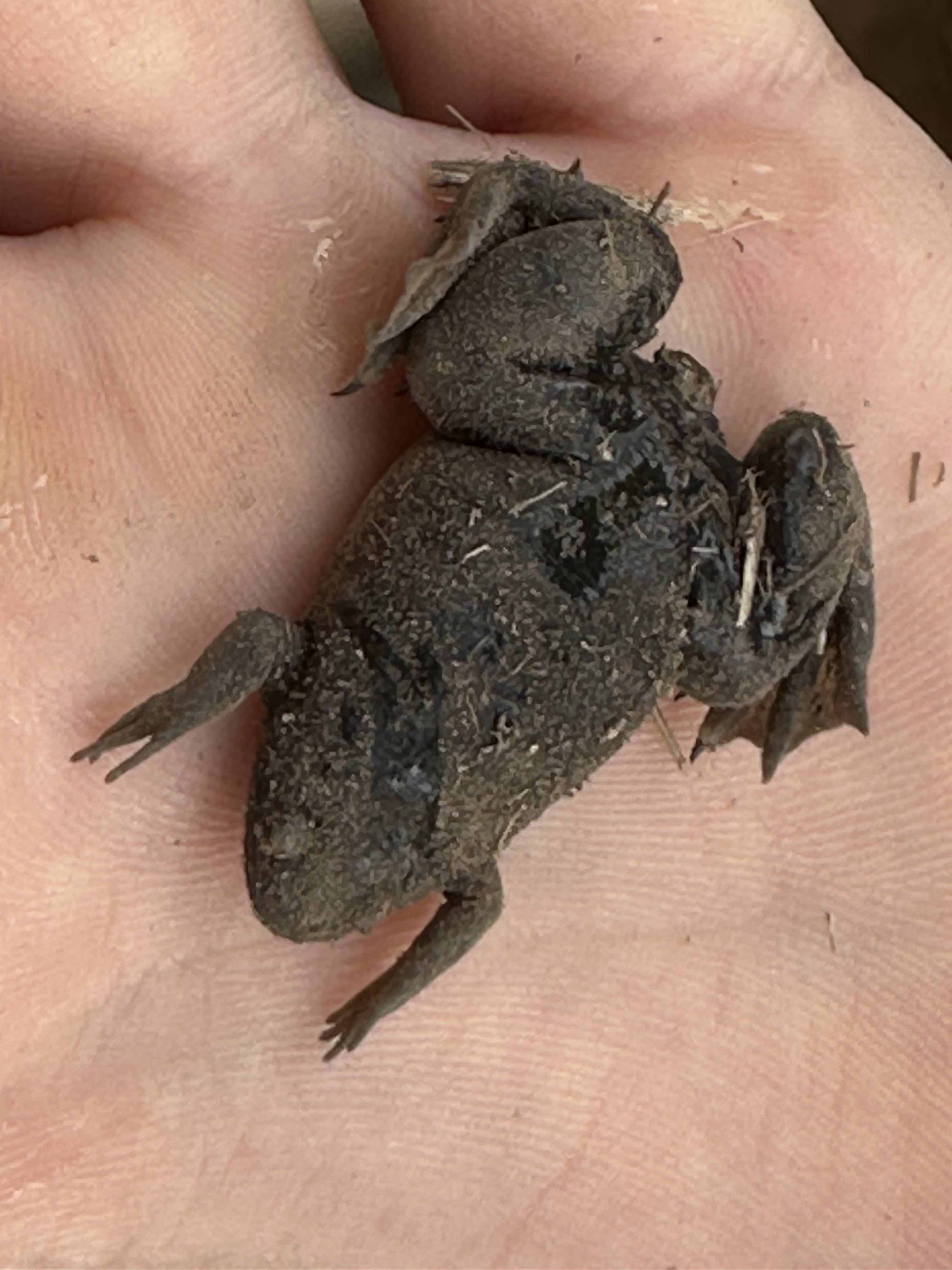
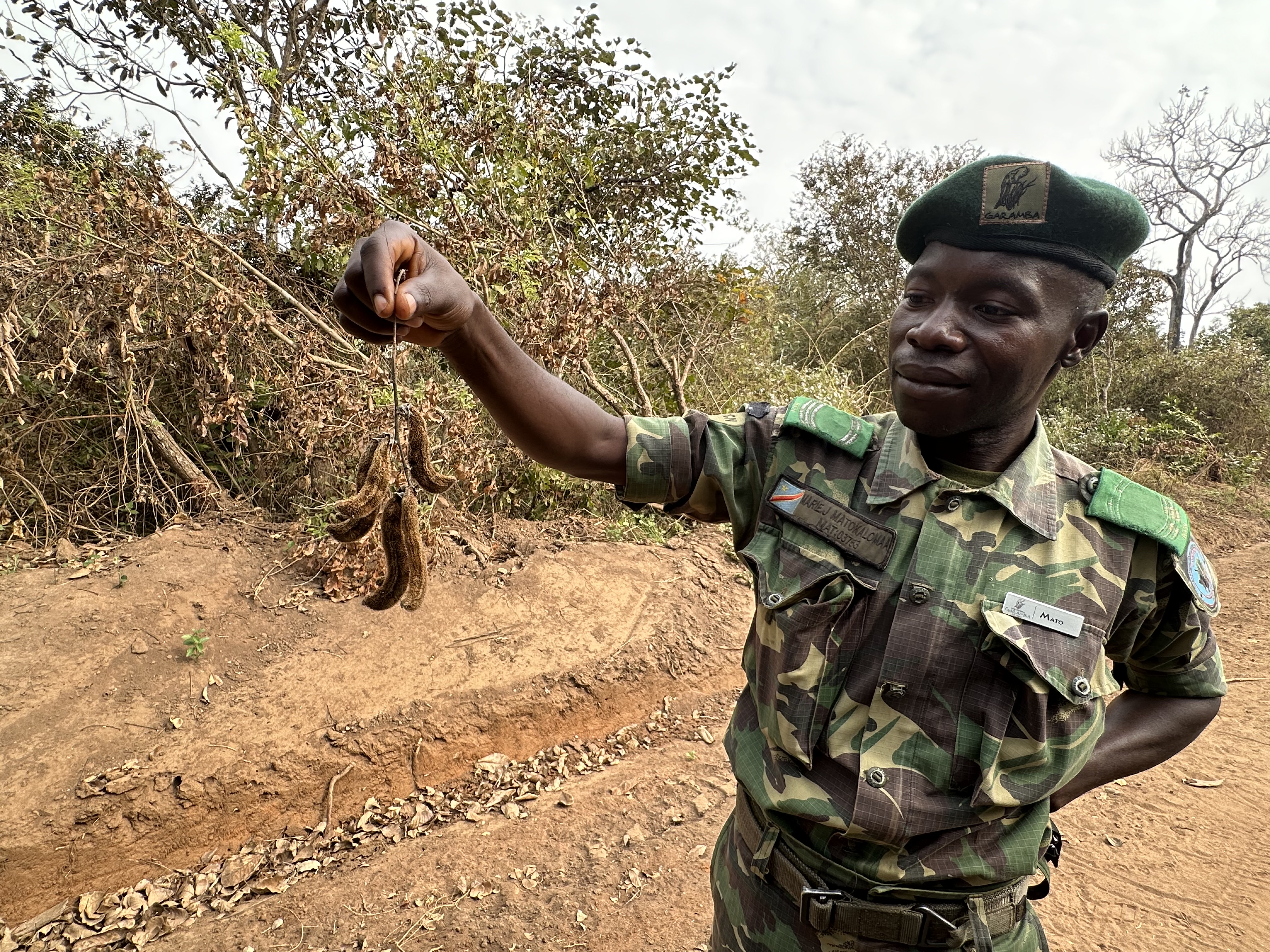
Martin found this African Clawed frog under a leaf and showed it to us. It was soft and spongy. Mato, the Congolese English speaking military ranger who accompanied us everywhere we went, picked this plant for us to recognize and not touch. It is a bit like fiber glass and very hard to get off clothes and skin.
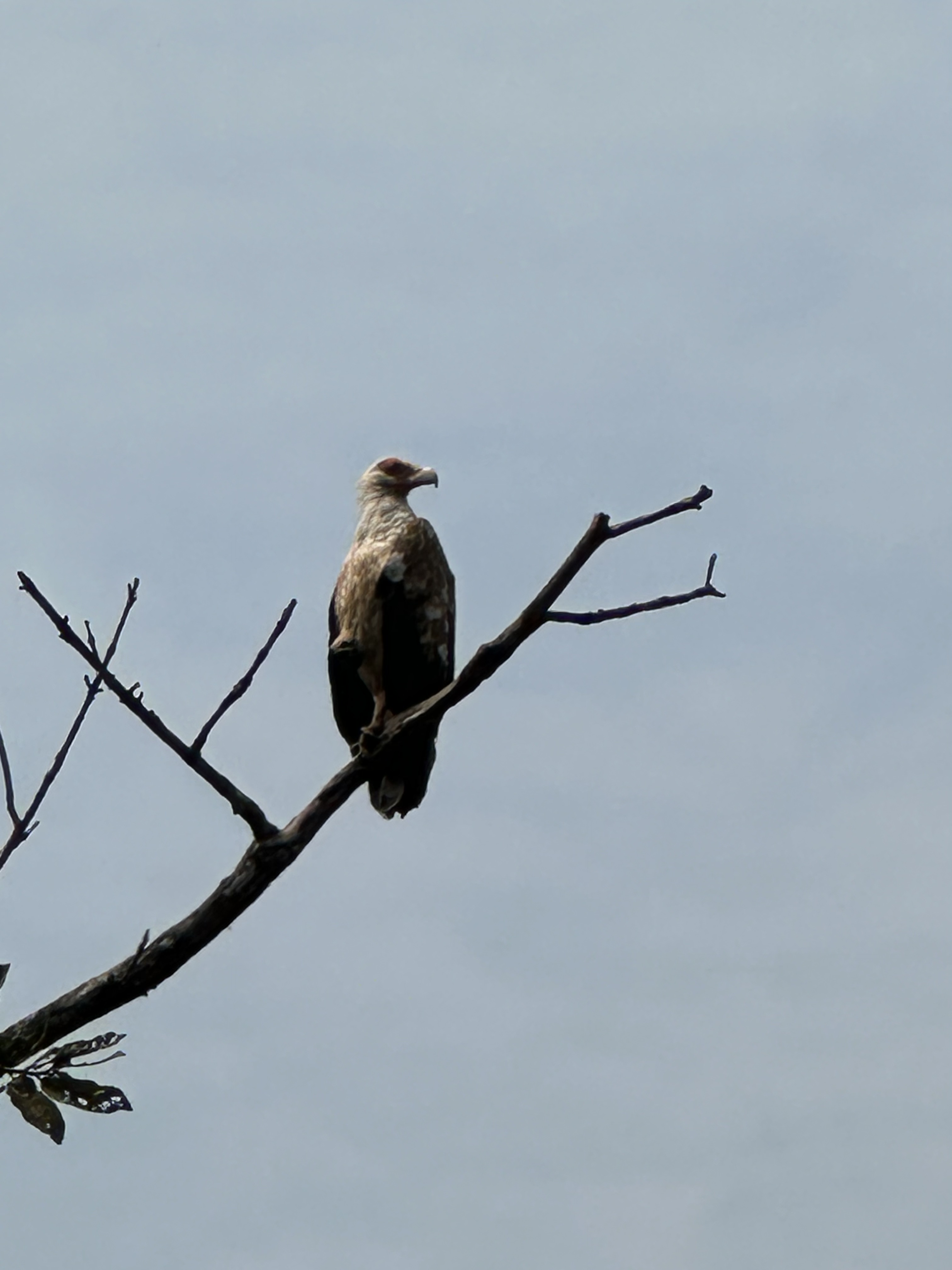
I was able to make out a few: the speckled mouse bird, Vieillot’s black weaver, the red throated bee eater, a palm nut vulture (did get a photo of this one above) and several very colorful Paradise Flycatchers. However, the most interesting event on the walk was the observation of a fish feeding on the skin of a hippo in the river. We could make out its tail, but not see the whole fish. There must be more fish with this unusual behavior, but we never saw the behavior again.
After a late breakfast with Martin, Ruth drove the three of us (Jonathan, Mark and me) 40 minutes up the road to visit the 15 white rhinos in their electrified sanctuary. Along the way Jonathan spotted white headed and white backed Vultures, a black bellied bustard, a martial eagle and a northern wheat ear. When we reached the Rhino, they had already finished eating and were looking for the shade of a few trees to nap. After spending a good bit of time with them, we visited the nearby park headquarters from where law enforcement is managed.
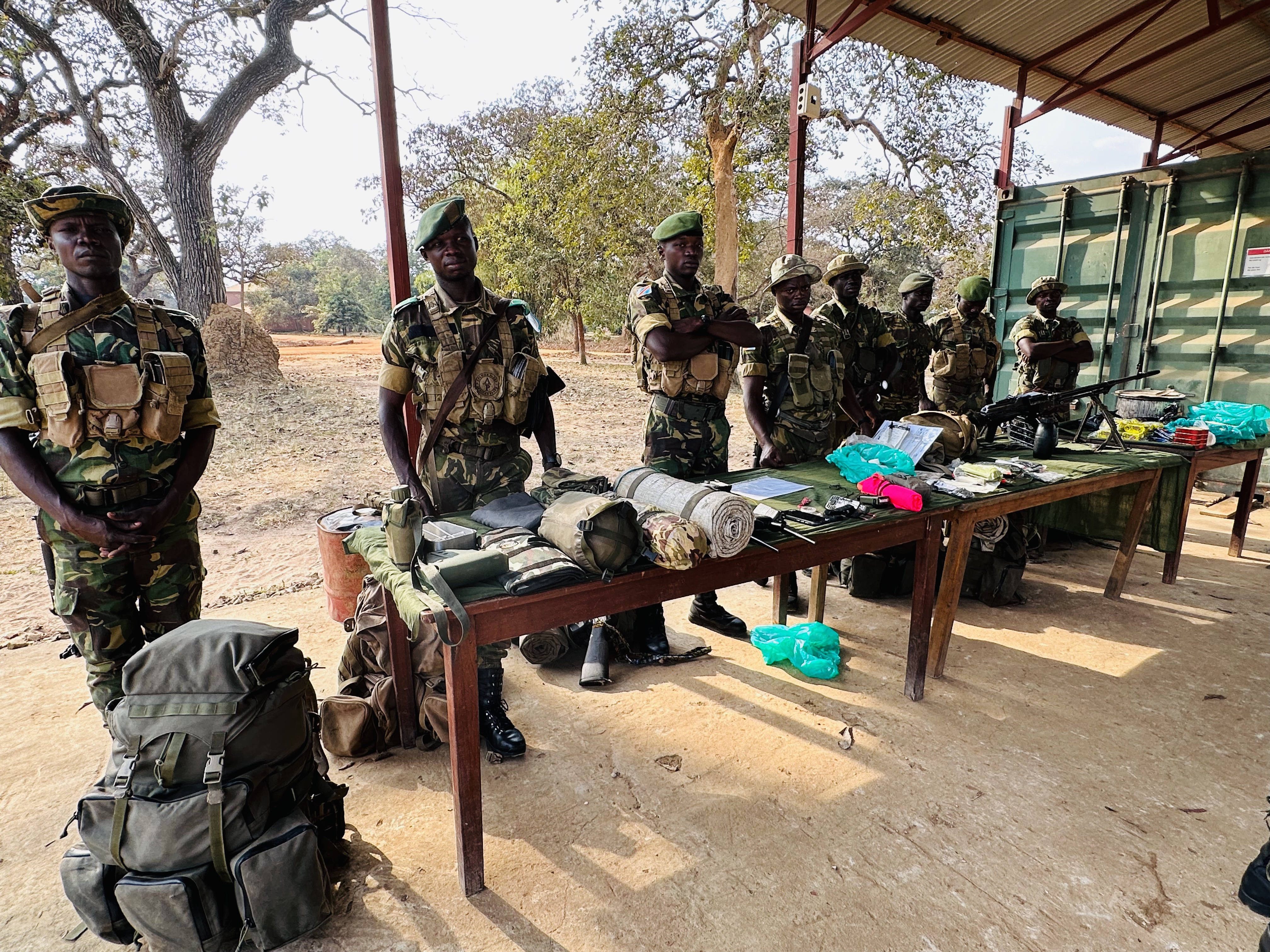
Law enforcement maintains 6 hilltop posts for observation and communication. 314 rangers protect 55,000 square kilometers of park land. They are divided into patrolling sections to protect the animals from being poached.
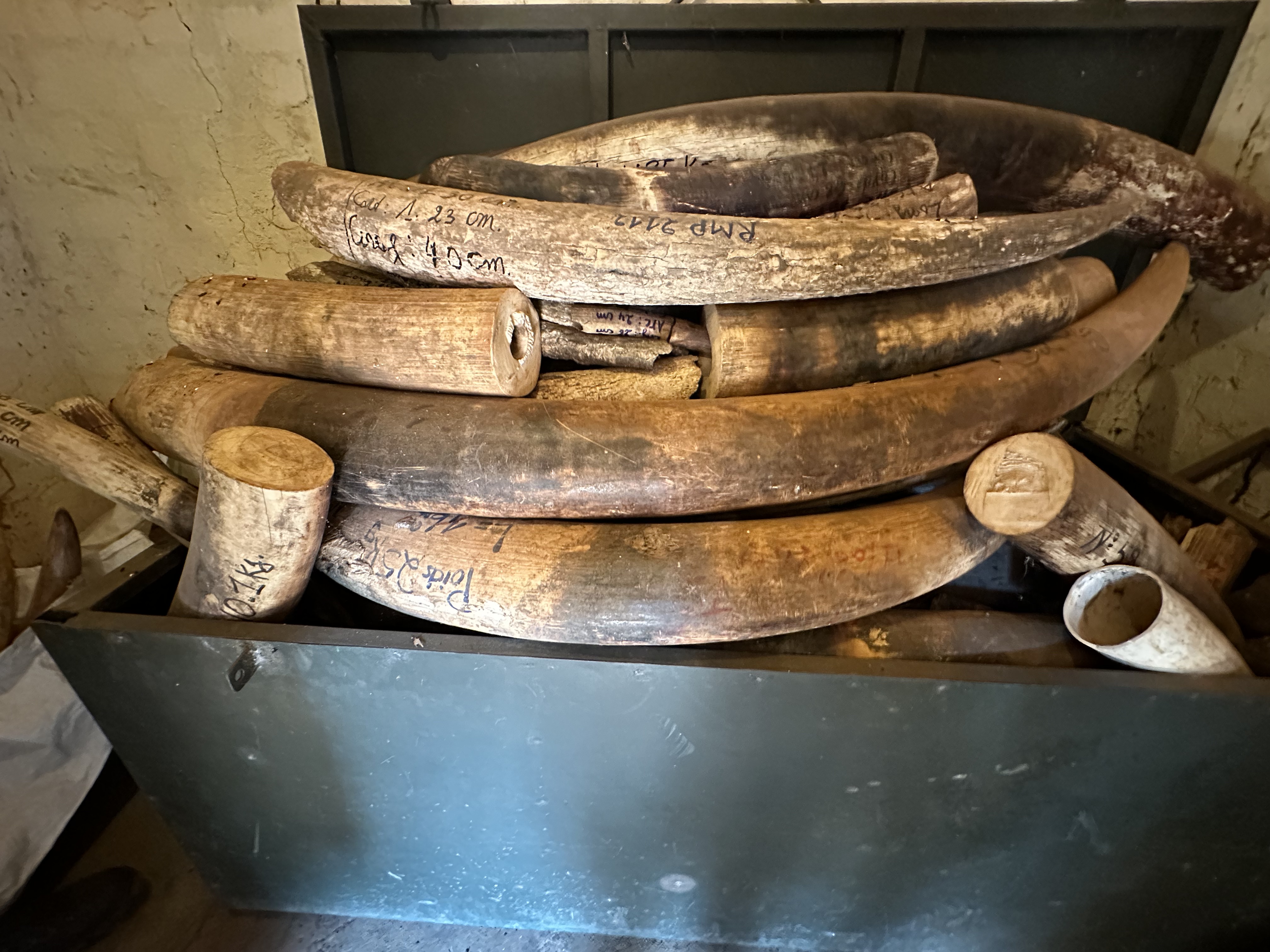
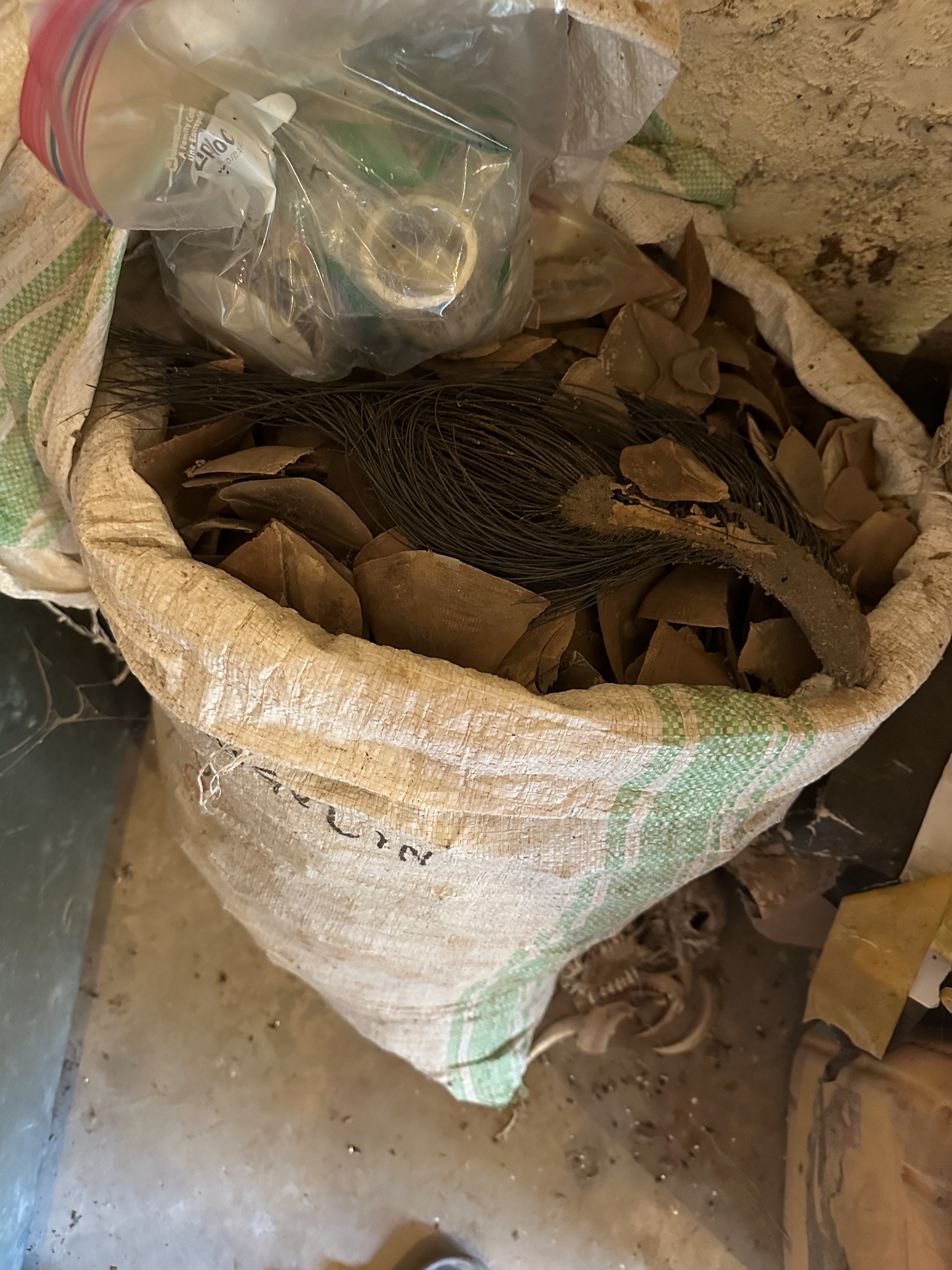
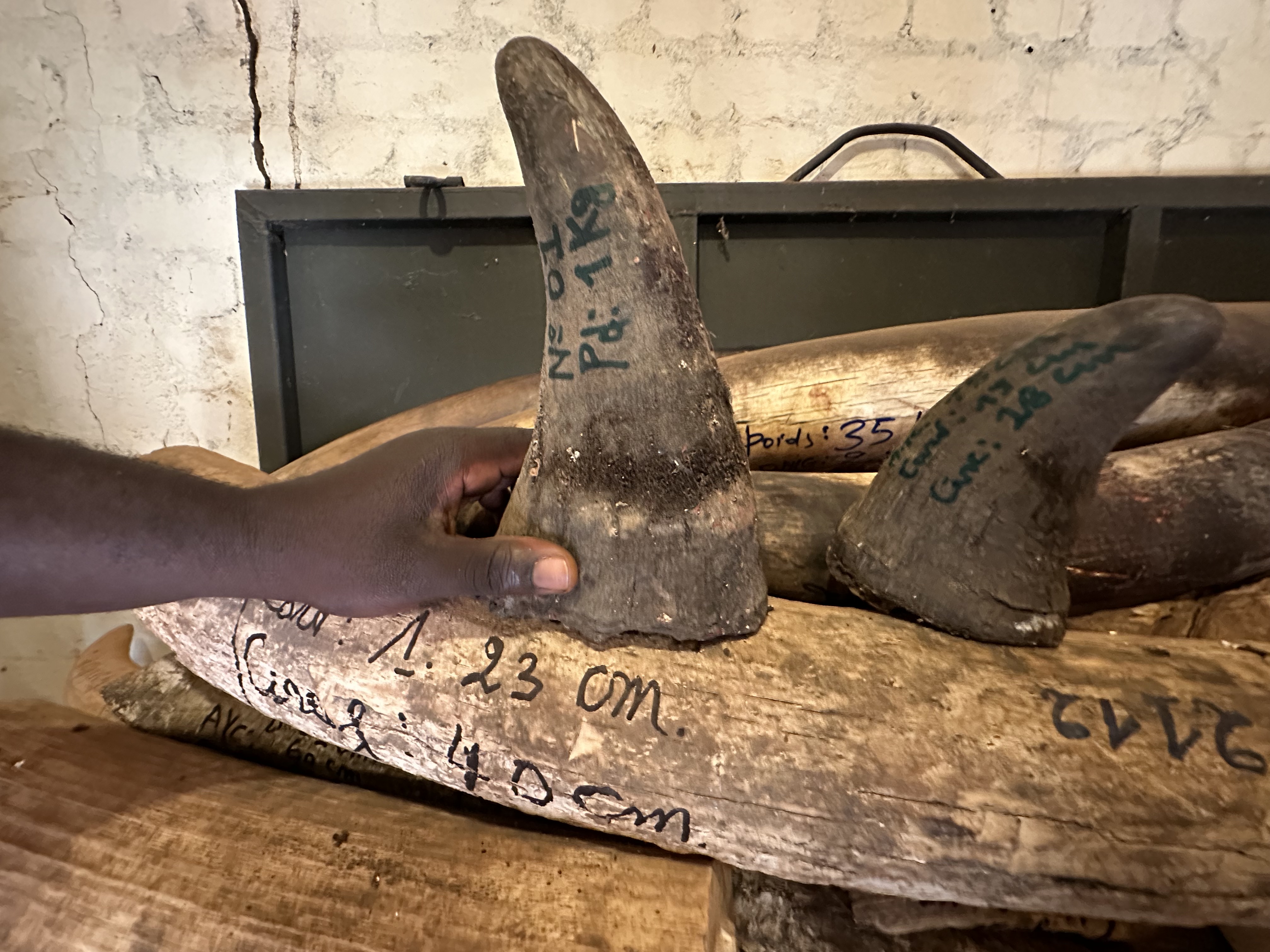
There are also 90 soldiers from the regular army and dog units that track poachers. Gold mining is a huge problem in 3 areas near the park and the soldiers try to control the miners from poaching. We also visited the small storage building where illegal ivory tusks, and pangolin scales are stored. The stash represented over 50 killed elephants. Very depressing to see so much devastation.
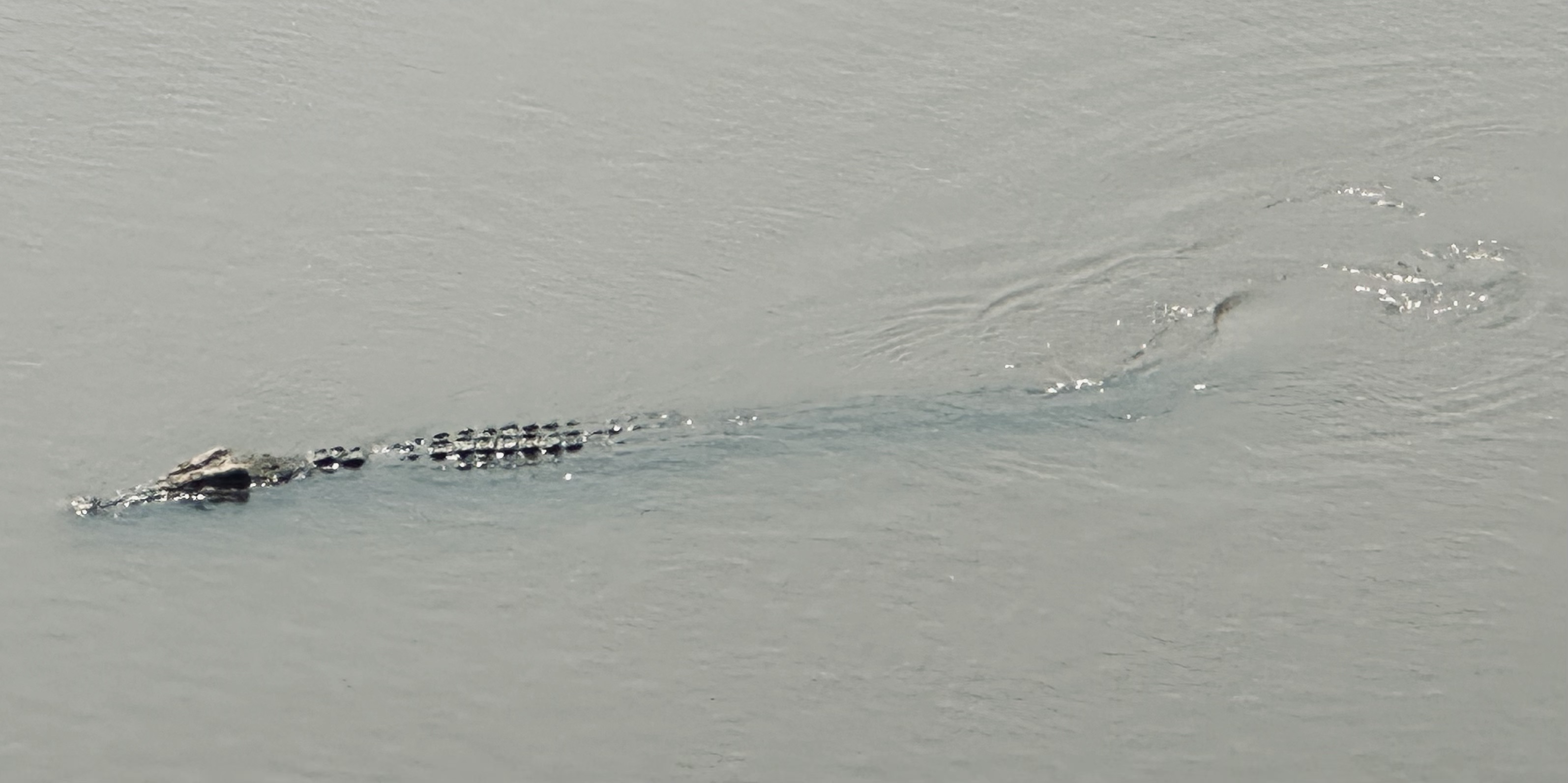
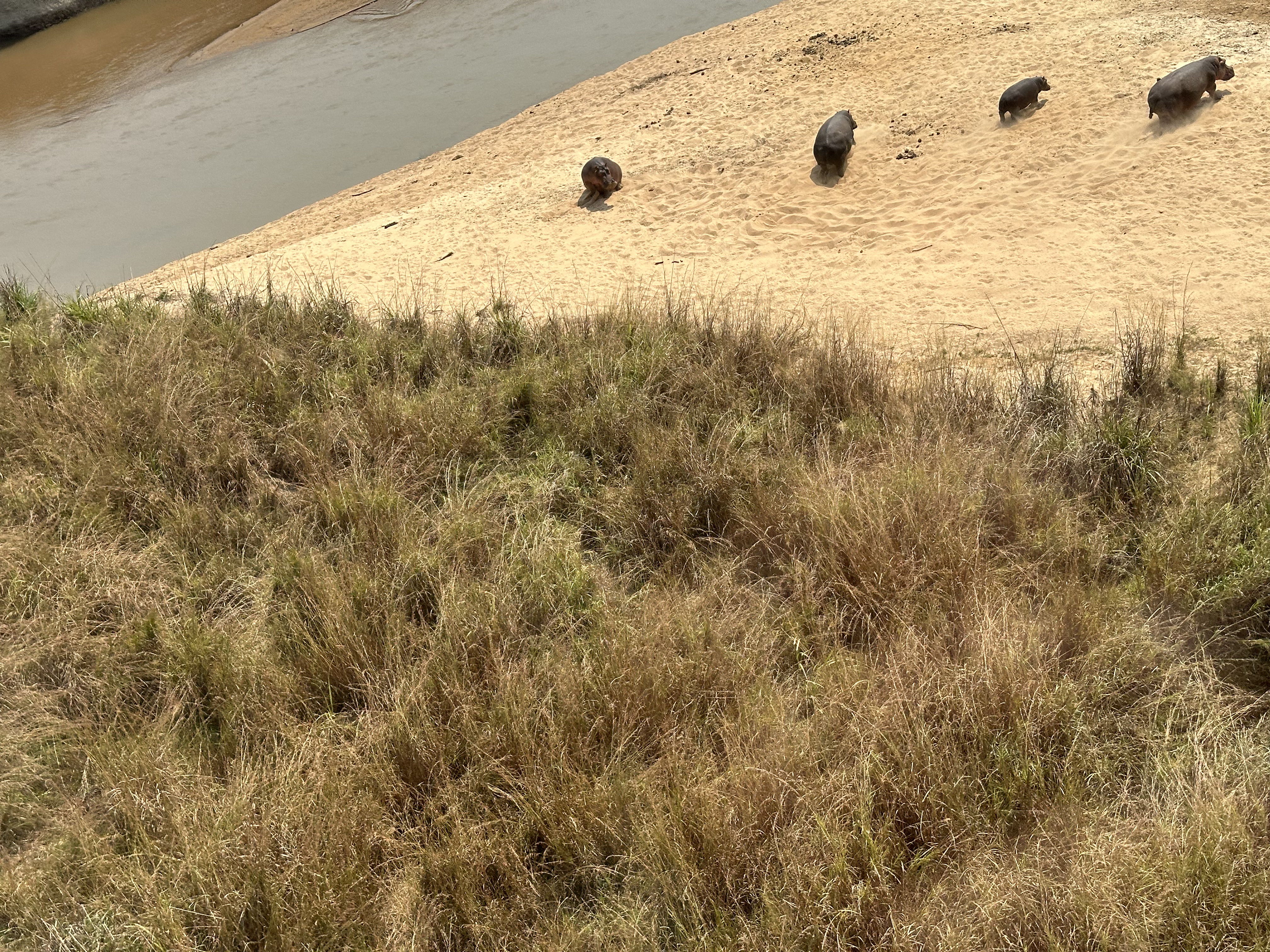
Despite the very tall, dry grass, we were able to spot a several different animals like kob, bush buck, wart hog and hartebeest in the distance from slightly raised points on the road. Along the river banks we could see many hippo and a few crocodile. This one is fully 17 feet long. Huge. There were many small wet lands full of papyrus. Jonathan also pointed out a grasshopper buzzard. Soon we were back at the lodge.
January 25, 2024,
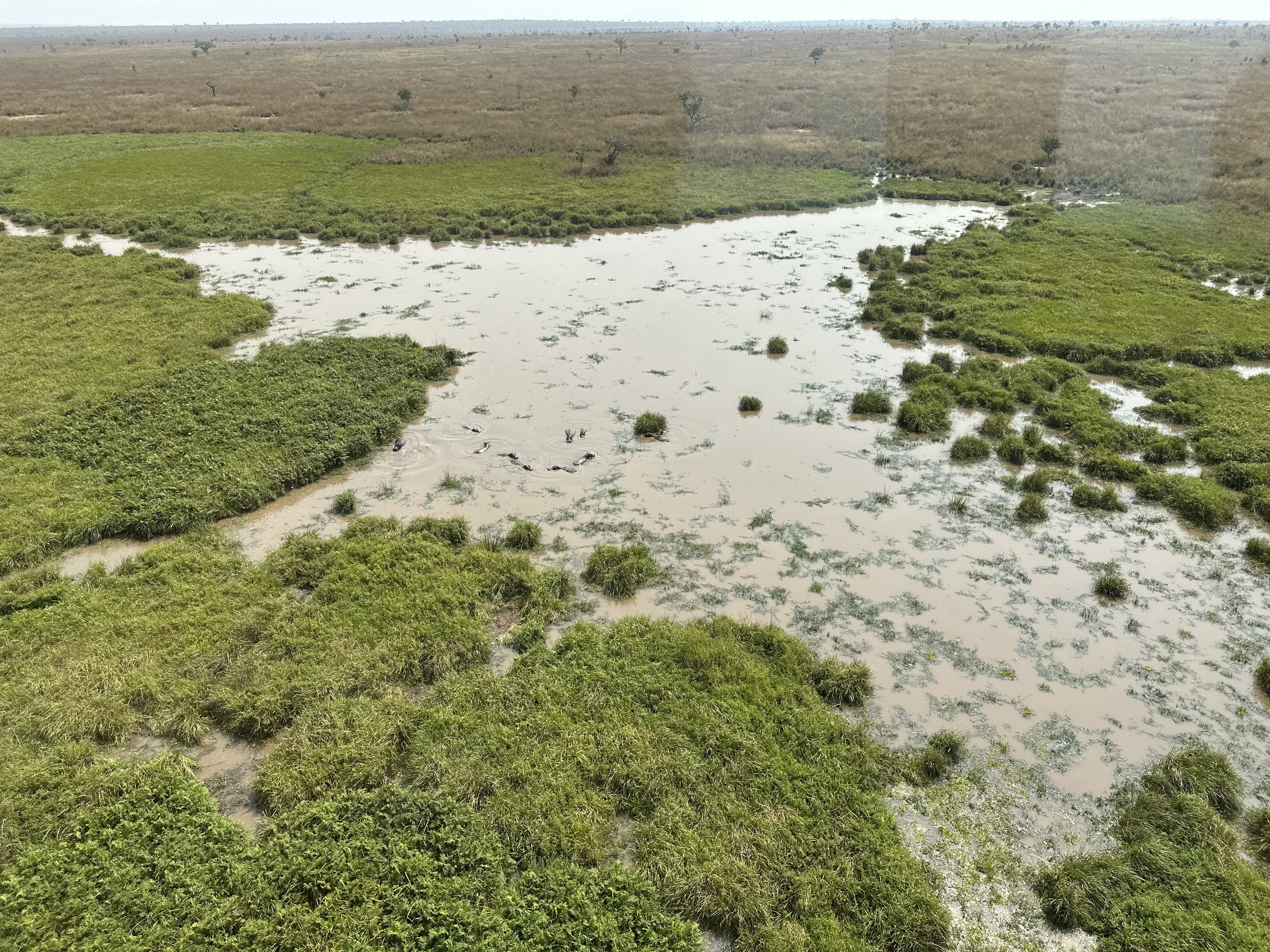
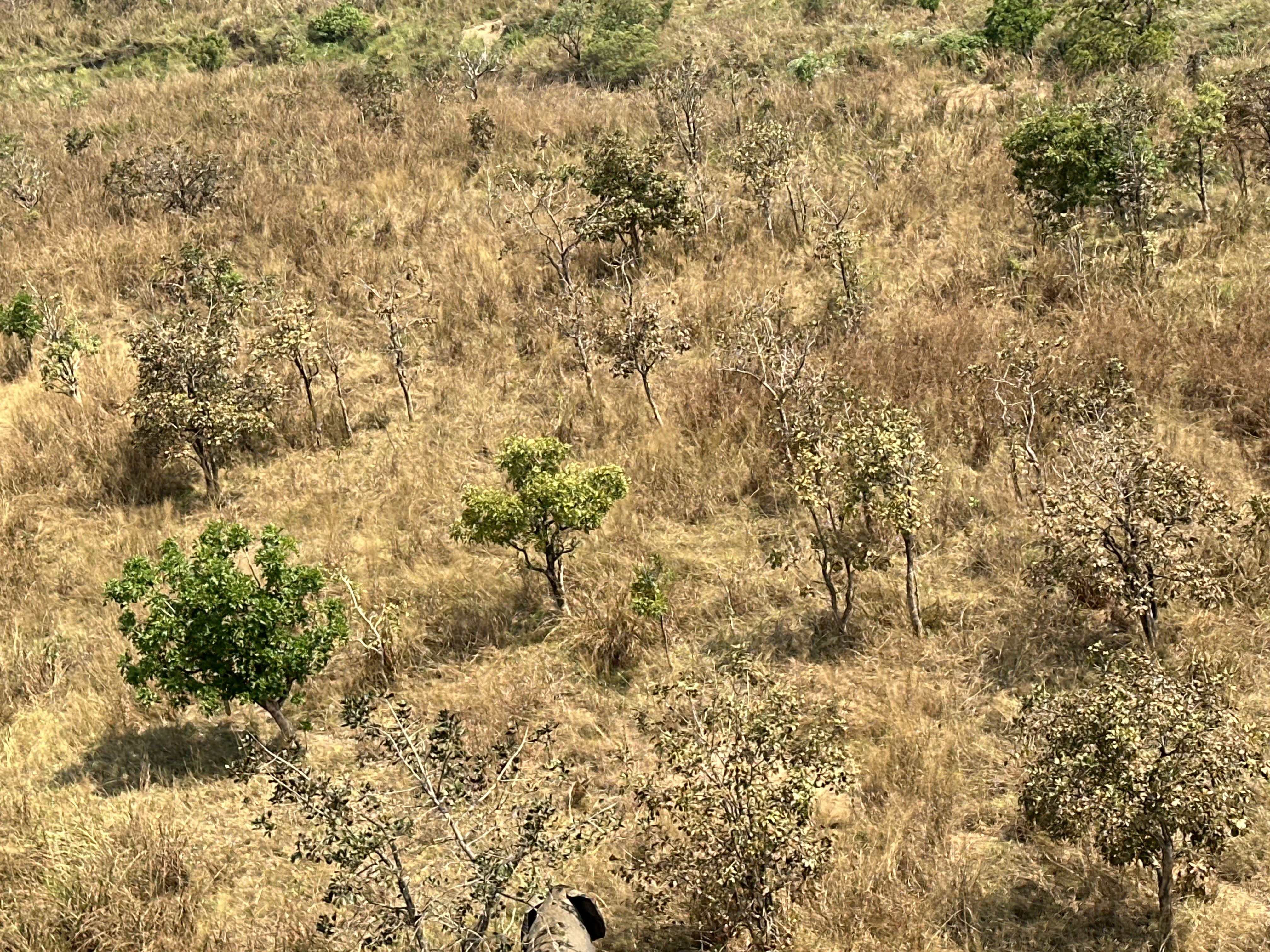
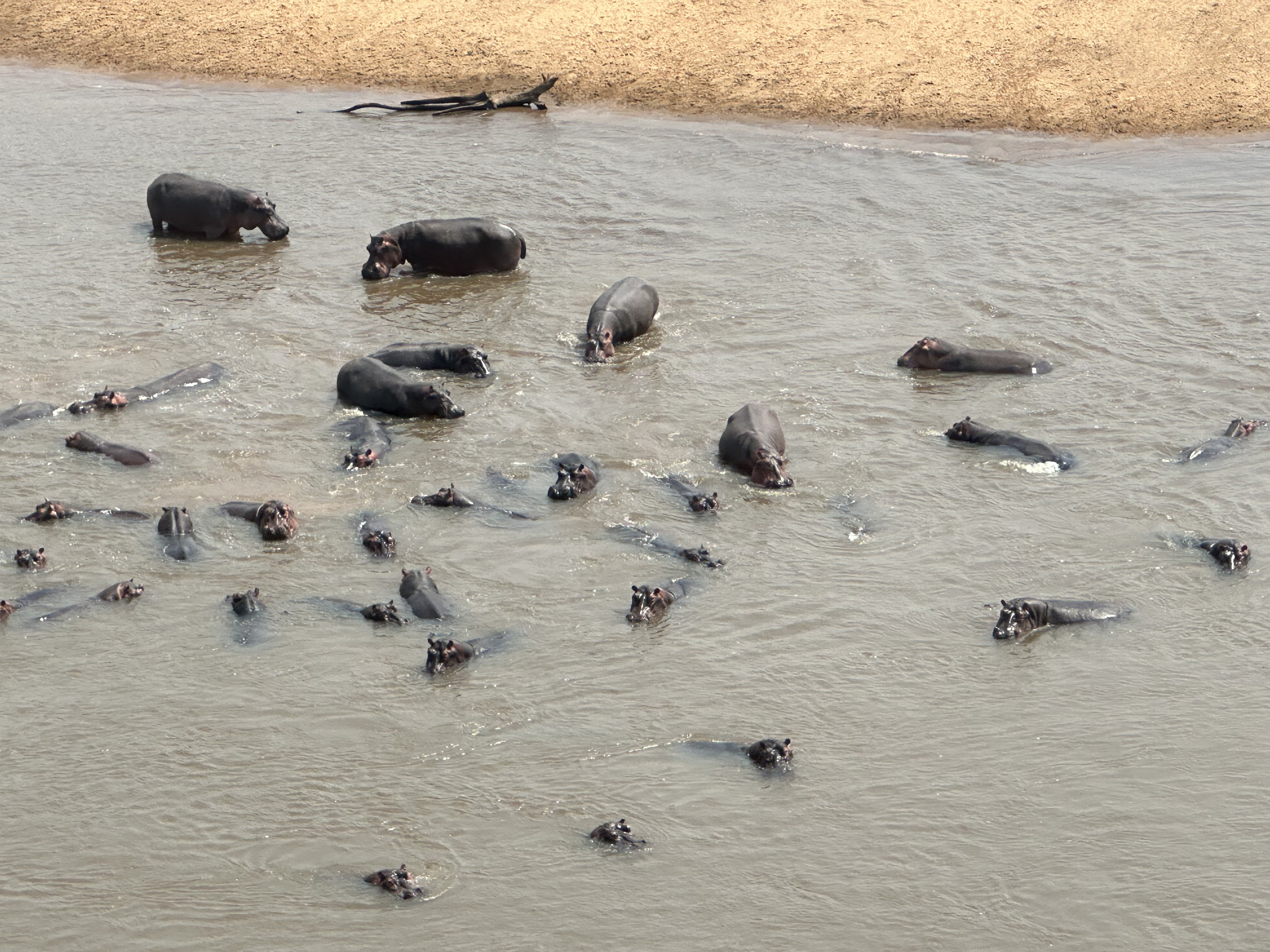
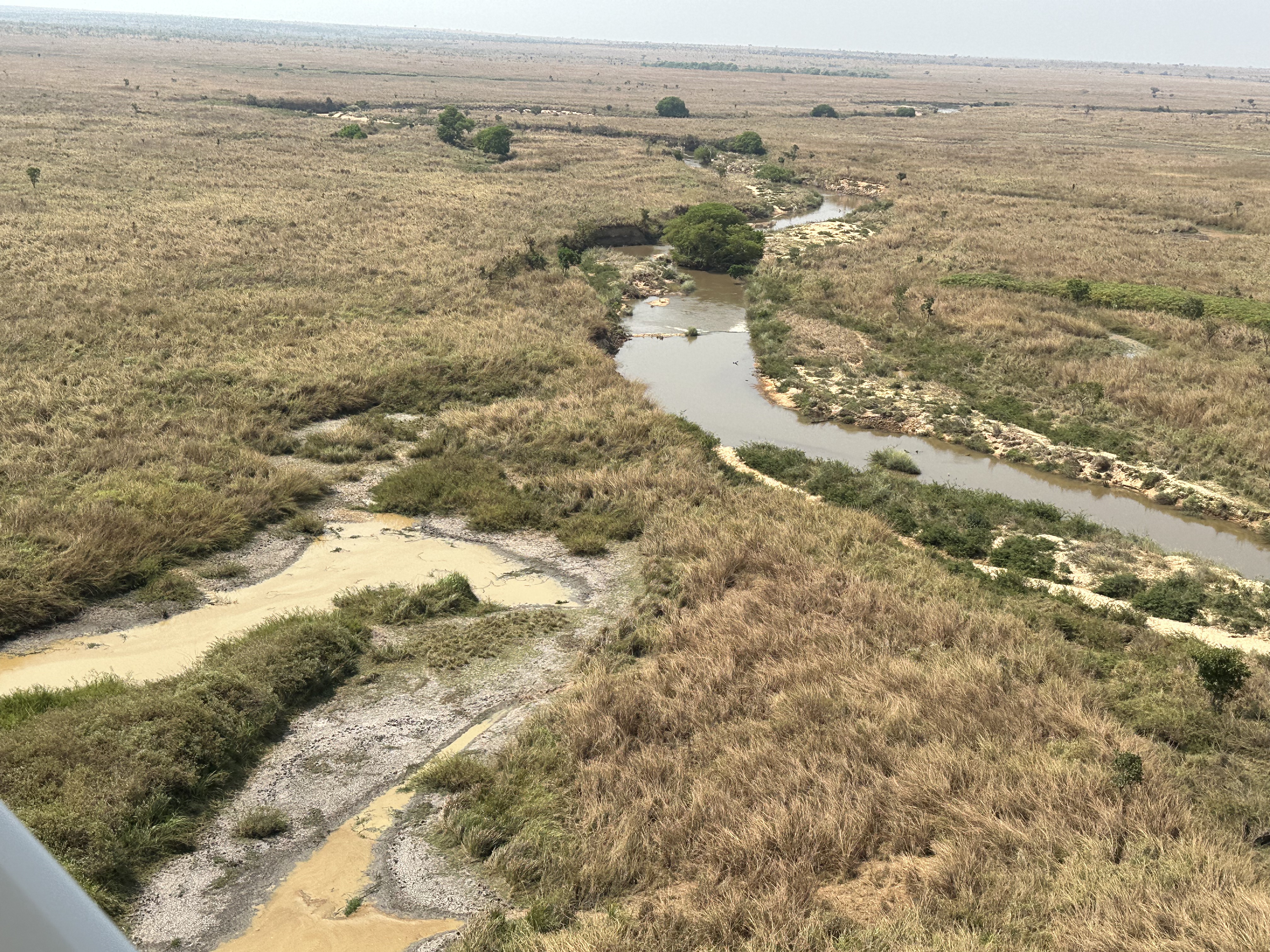
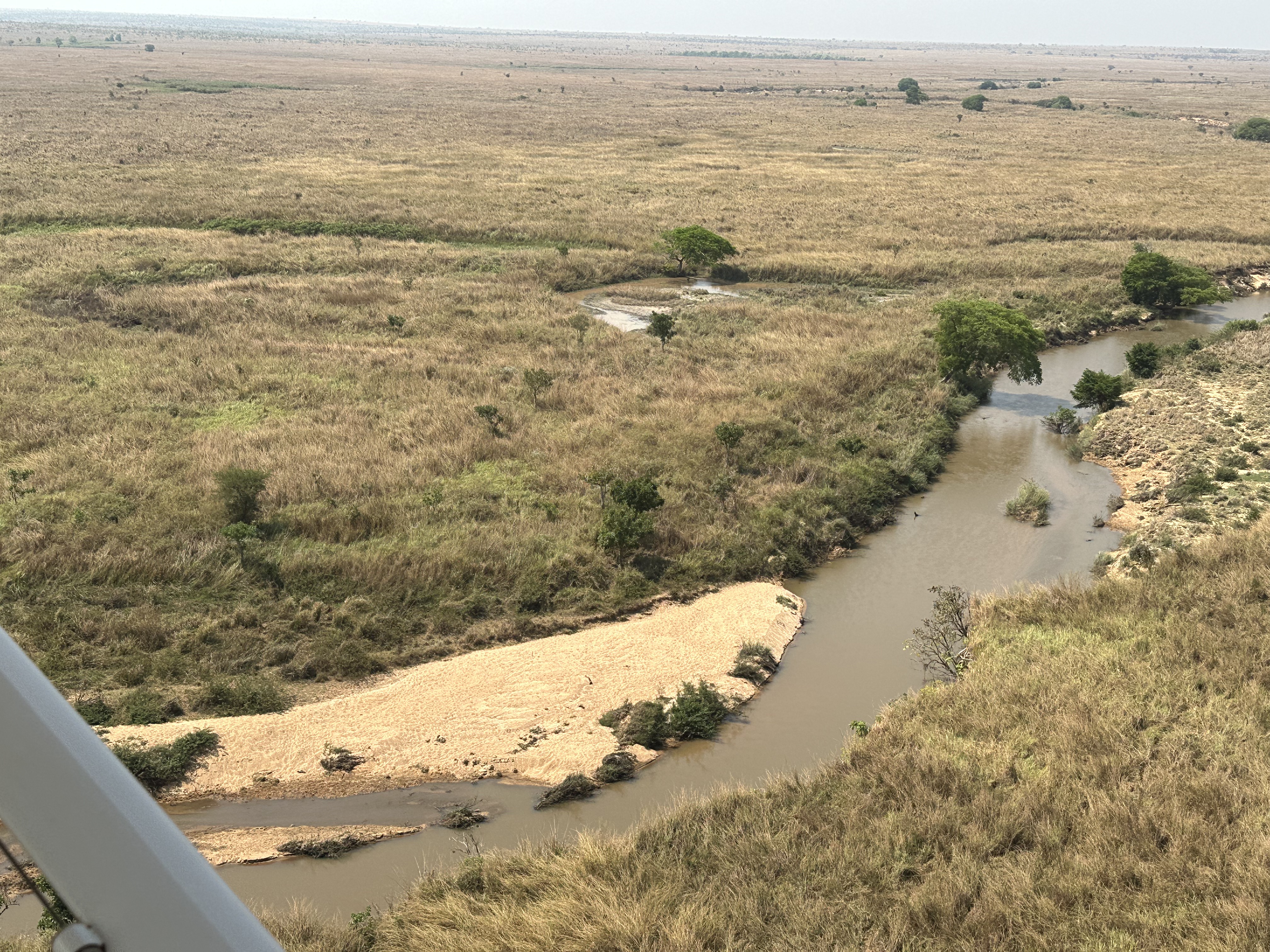
We went for a delightful 2-hour helicopter ride and saw extraordinary scenery, just as described above. We spotted good size herds of buffalo, between 50-70 forest elephant, (although we did not recognize any hybrid animals), several hundred Ugandan kob, a hundred or so of Lowell’s hartebeest, hundreds of hippos, several crocodiles, a few wart hogs, a handful of oribi and some waterbuck.
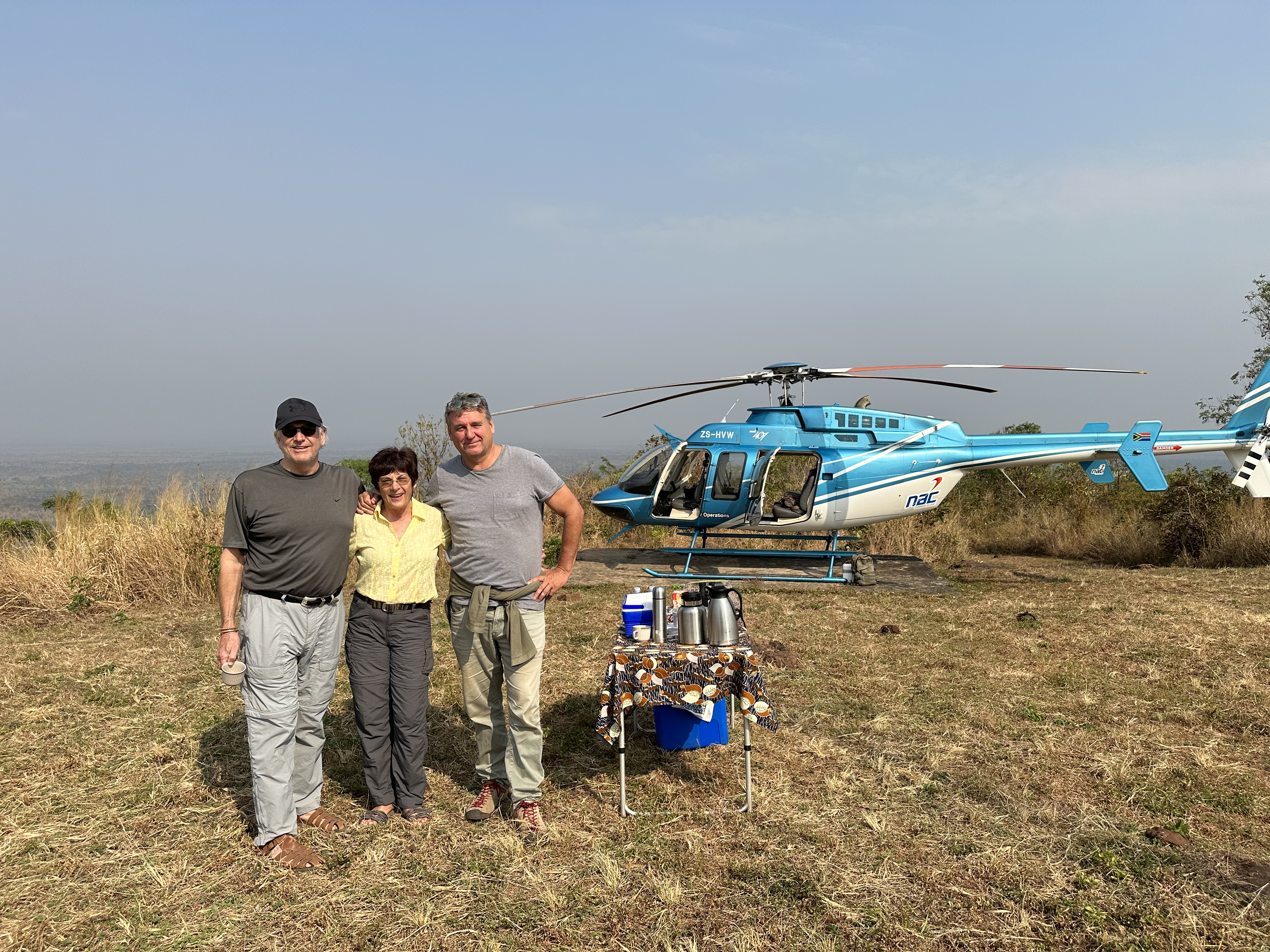
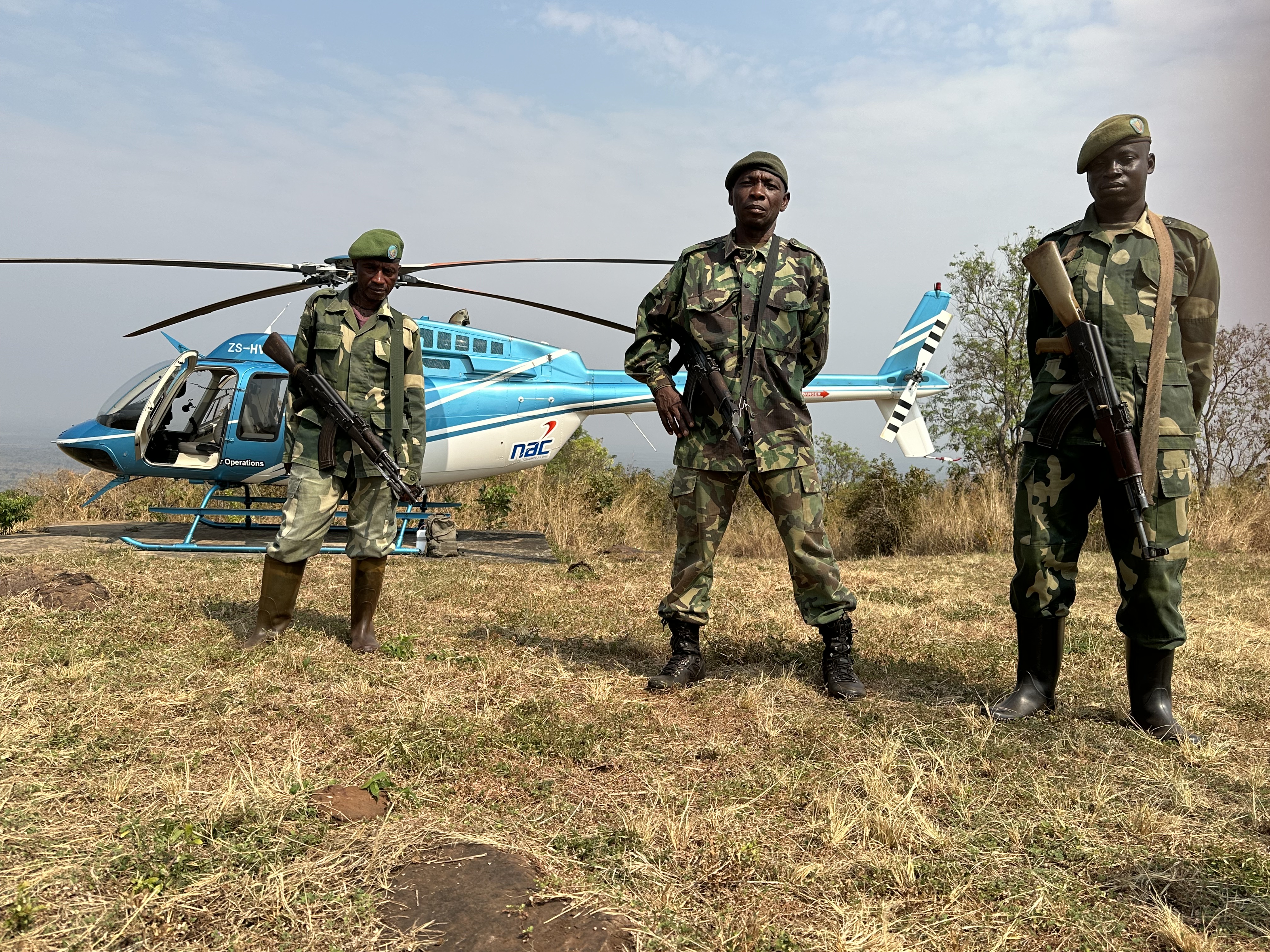
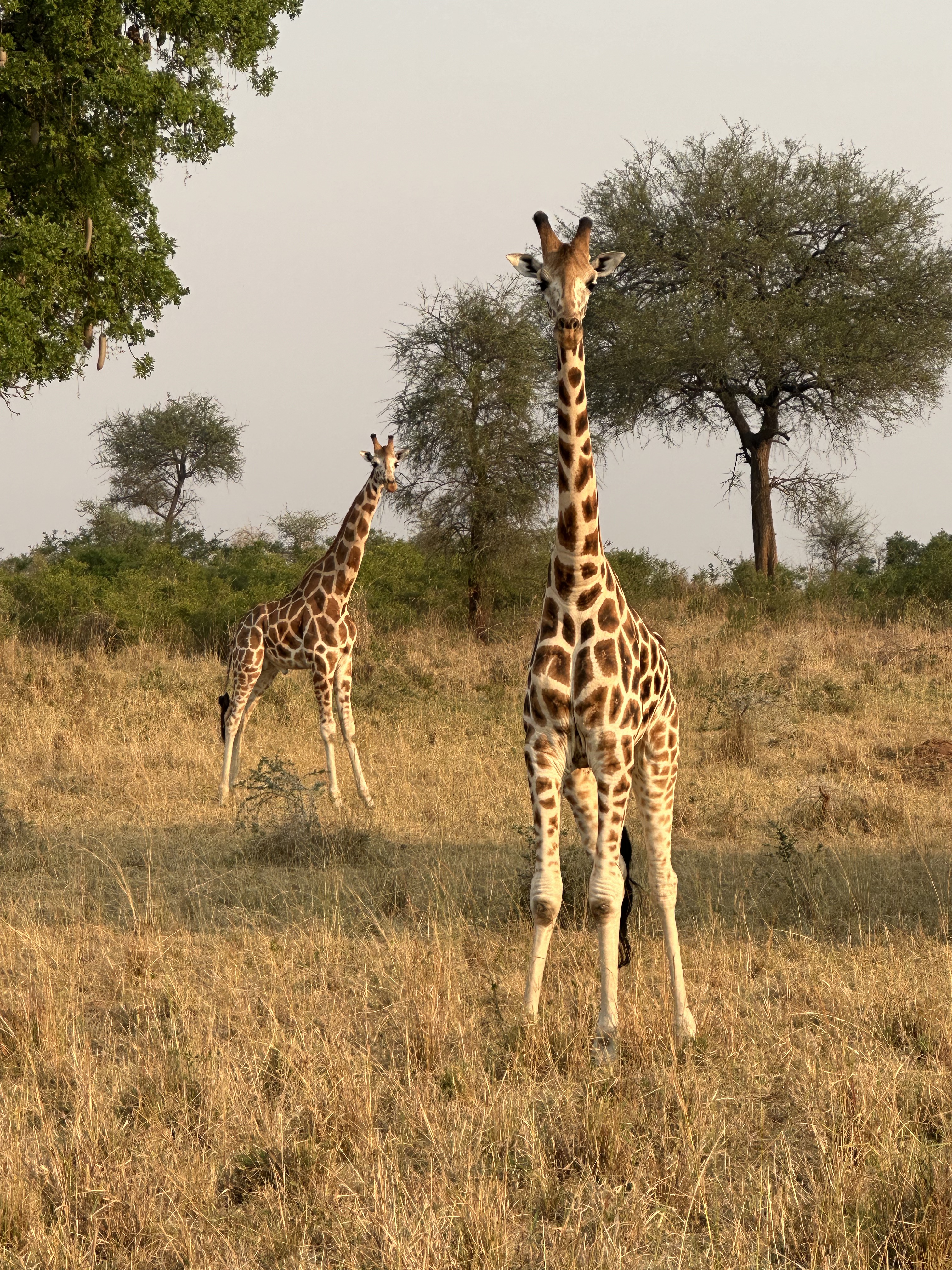
Our pilot, Oggie, was excellent and flew us low and slow as I had requested. We stopped at the top of the only hill in the park and had coffee and cookies while we enjoyed the view and chatted with the three guards manning the post. Back in the helicopter, we continued flying around the area and found a few more elephants and one Kordofan giraffe. We were happy that we found one and flew around it several times.I managed to get one decent photo of it. Oggie had us back at the lodge in time for lunch. The conversation was lively, even if the food left something to be desired. So far, the local cooks are preparing mediocre Congolese fair, that we do not find pleasing.
We took the afternoon off. Stayed cool in our room and read, wrote, and rested. At 6pm we gathered around the campfire for cocktails and talked more about the animals we were not seeing. With us were Martin, the handsome young researcher and expert on white Rhino; Oggie, our delightful helicopter pilot; Connor, a military trainer for the Garamba Park rangers; and Phillipe, the park manager. Jonathan was not feeling well and departed early. From the research there should be 1500 elephants, 82 giraffe and 8,000 buffalo, among all the other animals. We talked about how hard it is to spot them in the tall grass and ways to try and increase the population, about the lack of tourists and how to attract them, and the fear factor due to years of wars and animal poaching. It did not make for a pretty picture as far as I can tell.
January 26, 2024
Another bird watching morning. Sorry to bore you with so many birds, but I love to see them even if I can’t find them on my own. I especially enjoyed watching the small cardinal woodpecker poking away for bugs. There was the African black flycatcher, the plantain eater bird, the violet backed starling and the yellow billed kite. Martin found an African clawed frog under some leaves, and I got a photo. It was soft and squishy.
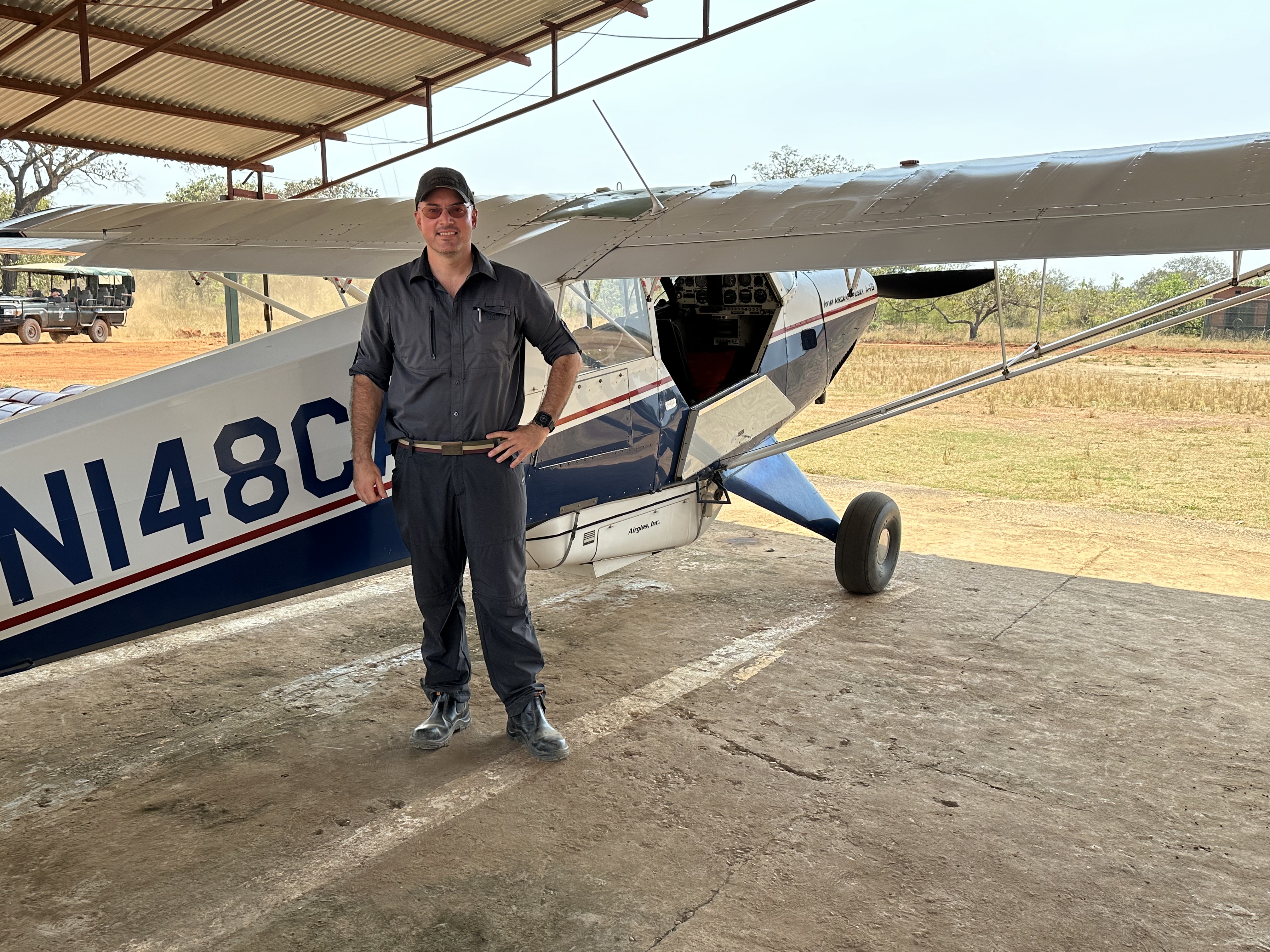
Then I got to ride in a Husky with another pilot, Trevor, who oversees the aviation department. We were in the air about 50 minutes and were hoping to find giraffe but had no luck. We did see 4 adult elephants and babies with them. Couldn’t tell what sort of elephant they were. From the air the tall grass does not look so overwhelming, and the scenery opens out into the savannah it really is. Back at the airstrip, I traded places with Mark. Unfortunately, he had no better luck than I had.
Mark and I tried to chill the rest of the very hot afternoon. This was the hottest day of our whole trip so far. It was 94 degrees.
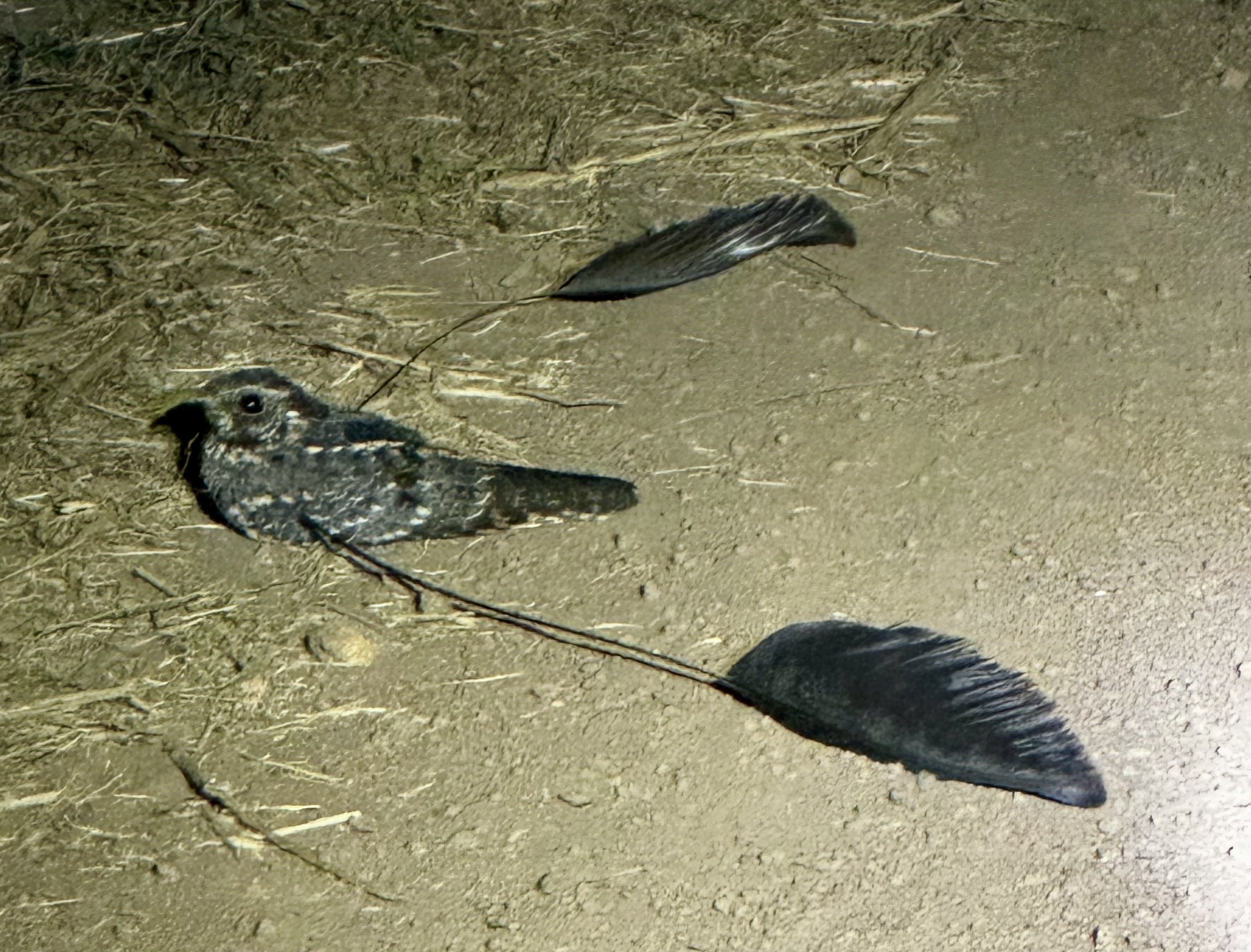
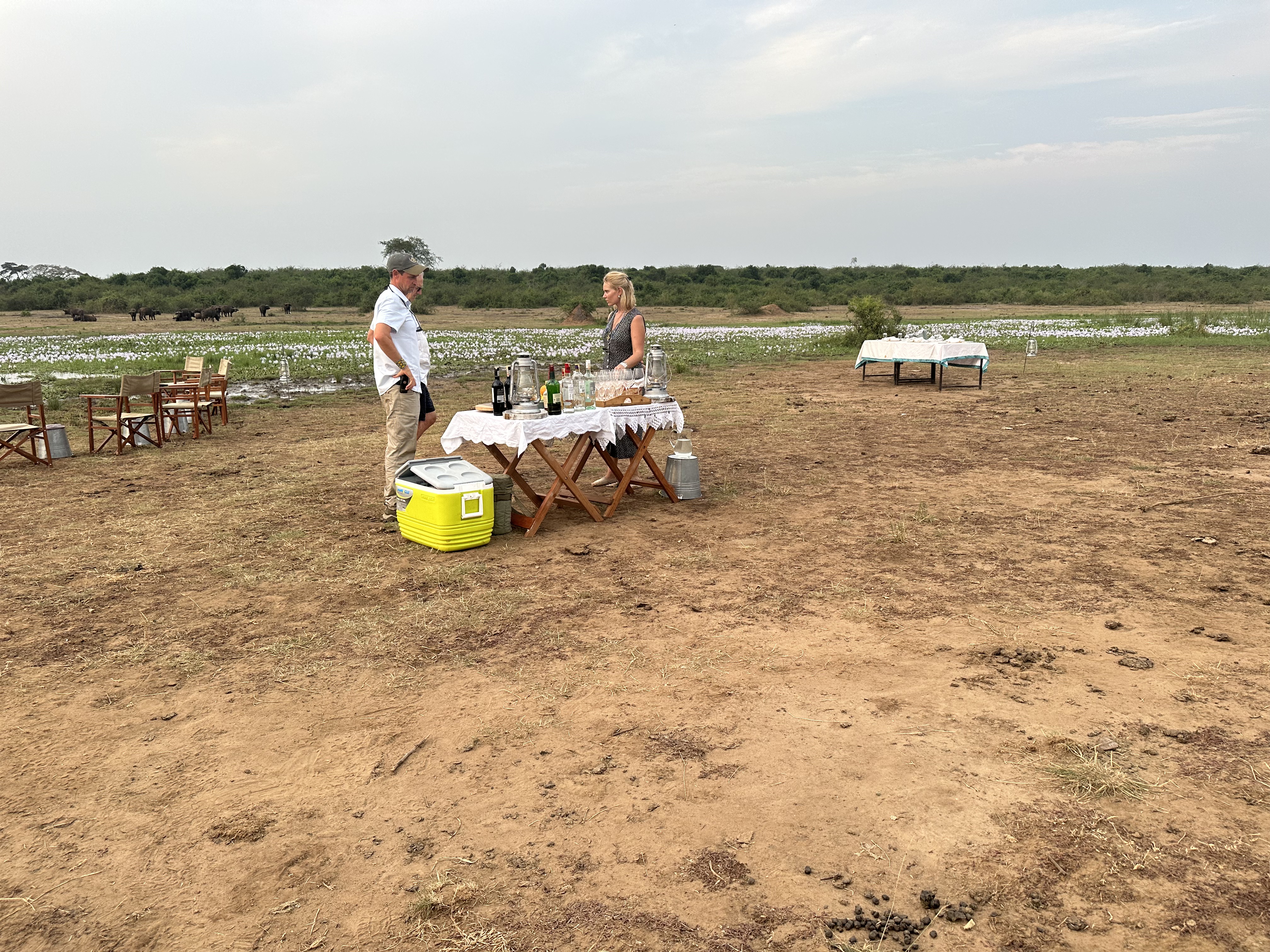
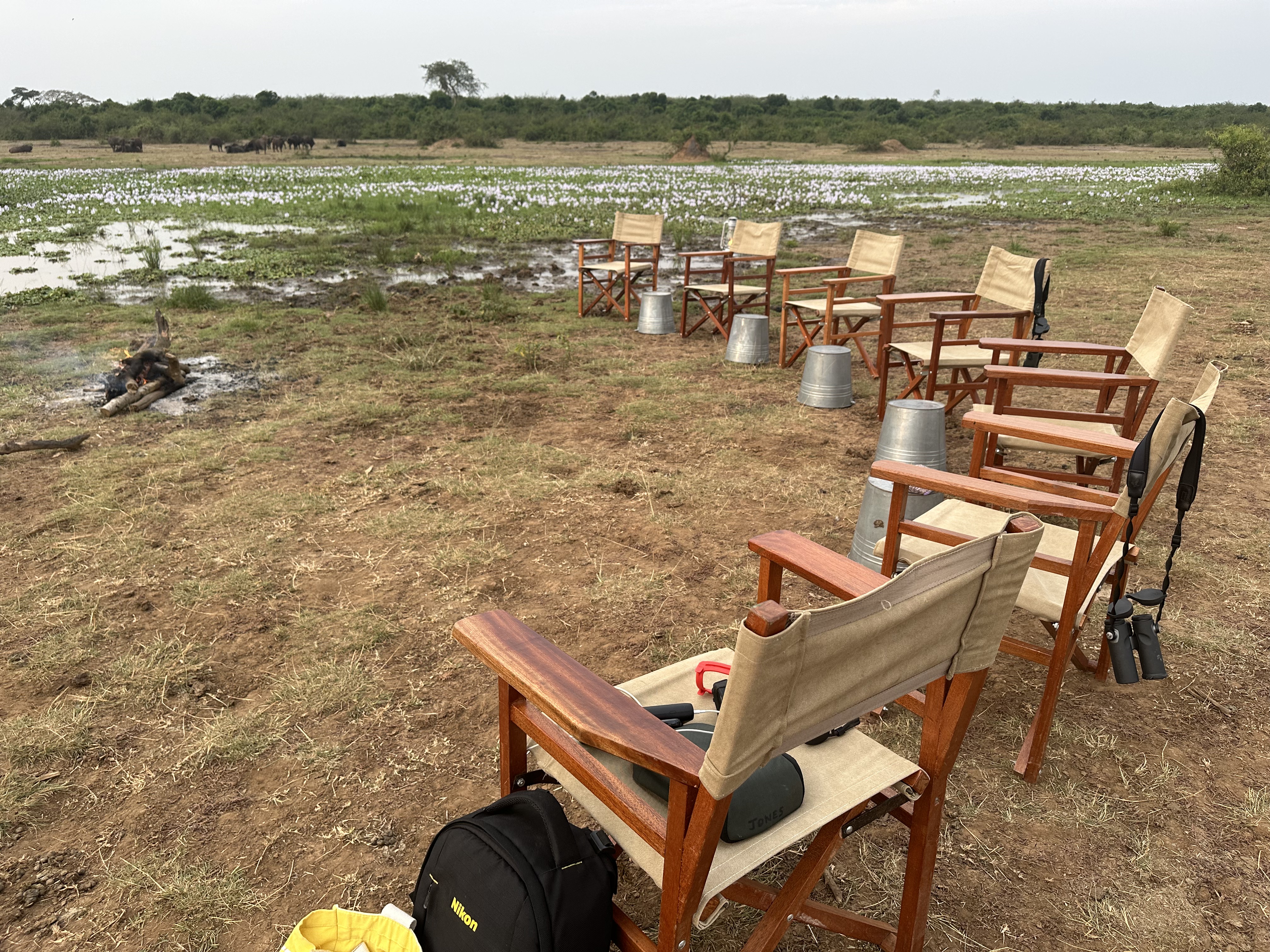
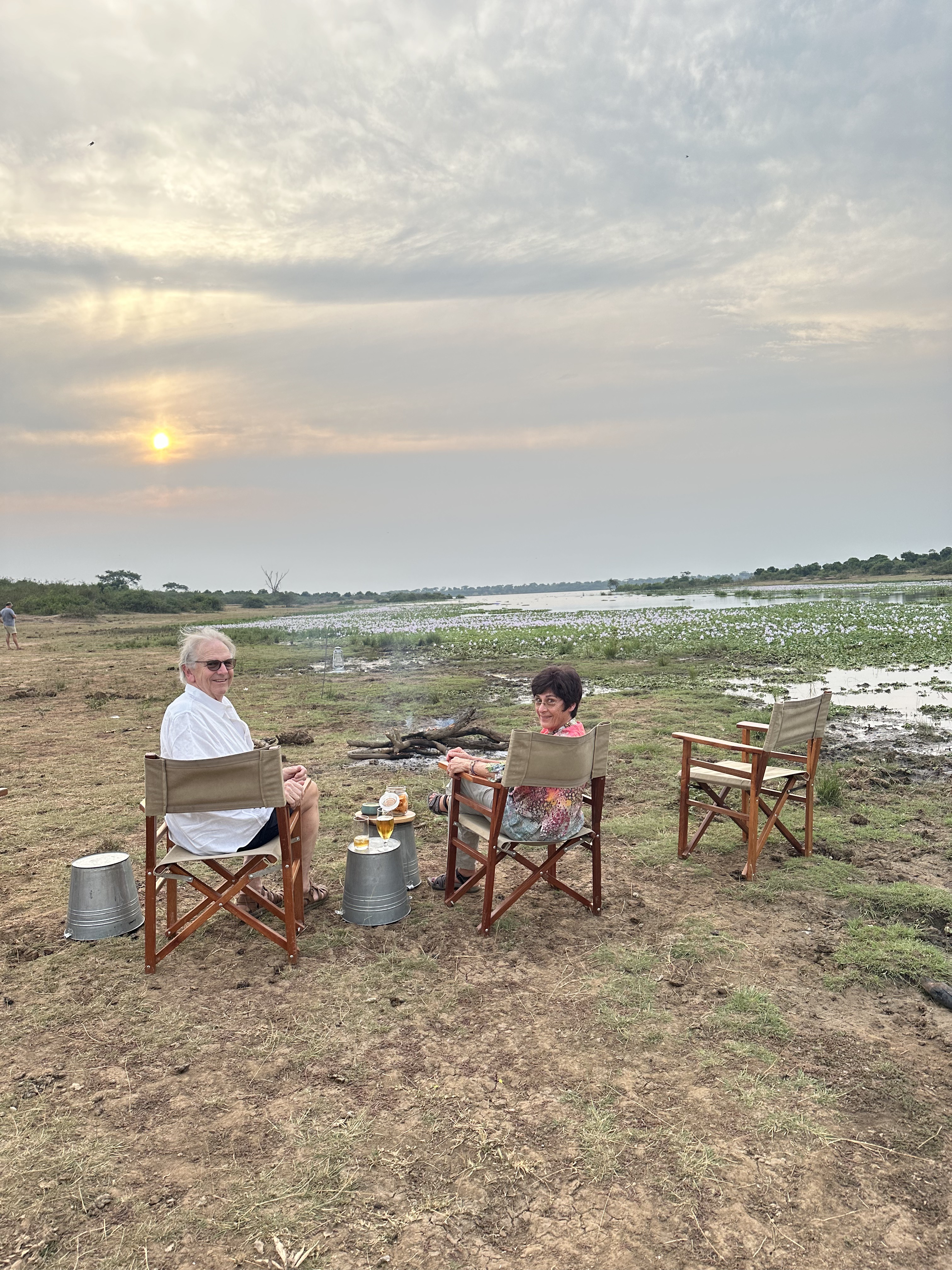
At 5:30 Ruth, John, director of conservation, and the three of us packed for a sundowner and drove up to the white Rhinos just in time to beat the sunset. Beer and snacks were our repast while we watched the rhino graze and a managed fire burn in the distance. It was a very pleasant evening. John told us the park was increasing the boma size from 100 hectares to 500 hectares for the arrival of the next 64 animals. He will be going to South Africa to take delivery and escort the Rhinos to Garamba. They will be caged individually and tranquilized for the flight. On the way back, Jonathan used a large spotlight and and a flash light to watch for movement of animals and birds, especially night jars, the bird we most wanted to see. As it so happened we saw several male and female night jars. The males are the ones that are attractive as they have extra pennant wings that look like they are flying separately. At last, a male sat down in the road and I was able to get a photo of his pennant wings.
A male night jar with pennant wings sitting on the ground next to the vehicle. Back at the lodge we gathered one last time with the group of staff who had provided us with so much service. The meal was a Congolese buffet. We sampled a few items, but did not really enjoy the meal. The next morning the caravan arrived at 10am to return us to Entebbe, where we spent a night in a hotel called No. 5. It was super for us as we had our first hot, pressurized shower in a week. We even had pizza and pasta for dinner. The next morning we flew from Entebbe to Addis, where we met Will Jones and began our next adventure on the Omo River in SW Ethiopia.
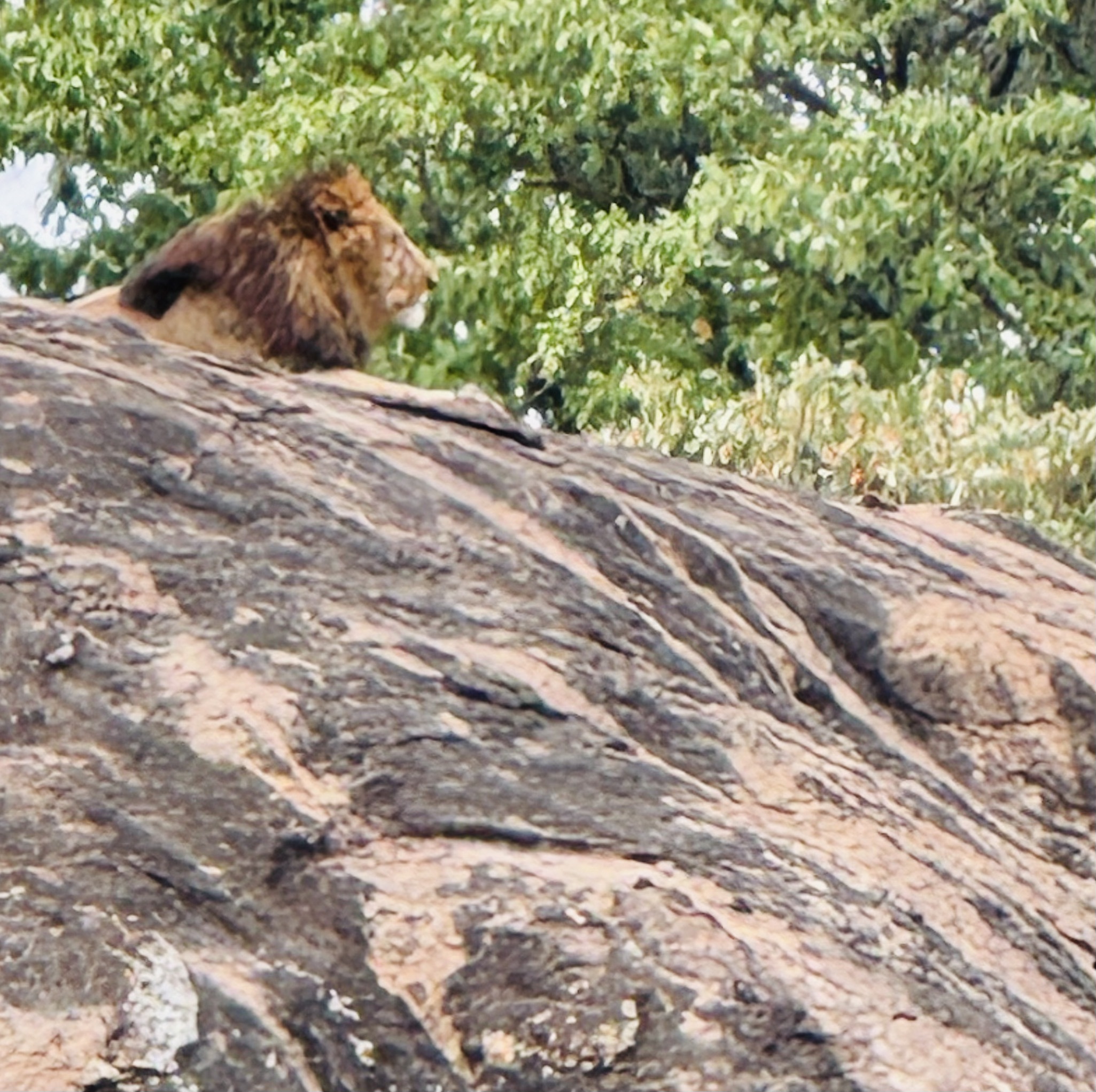
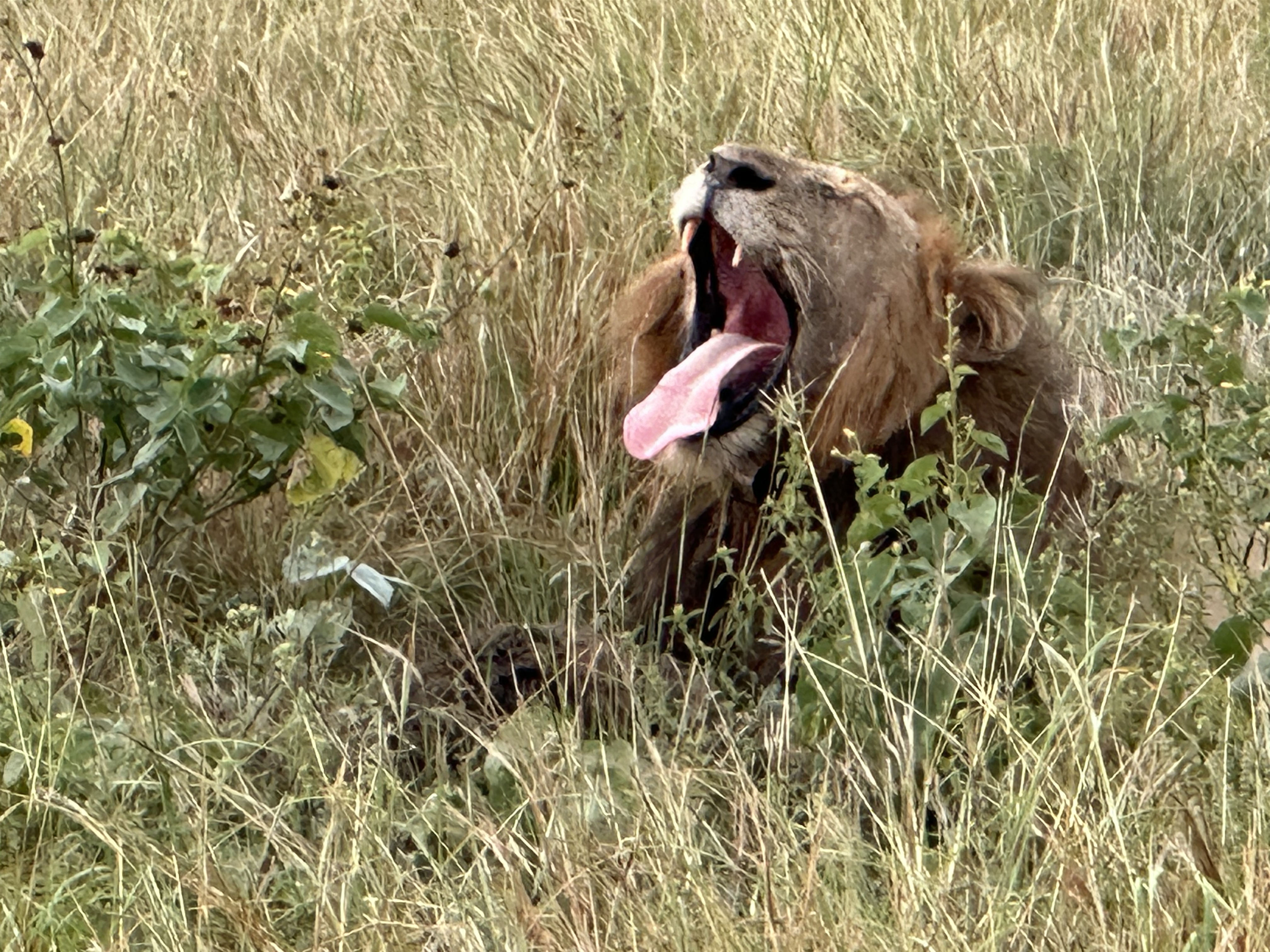
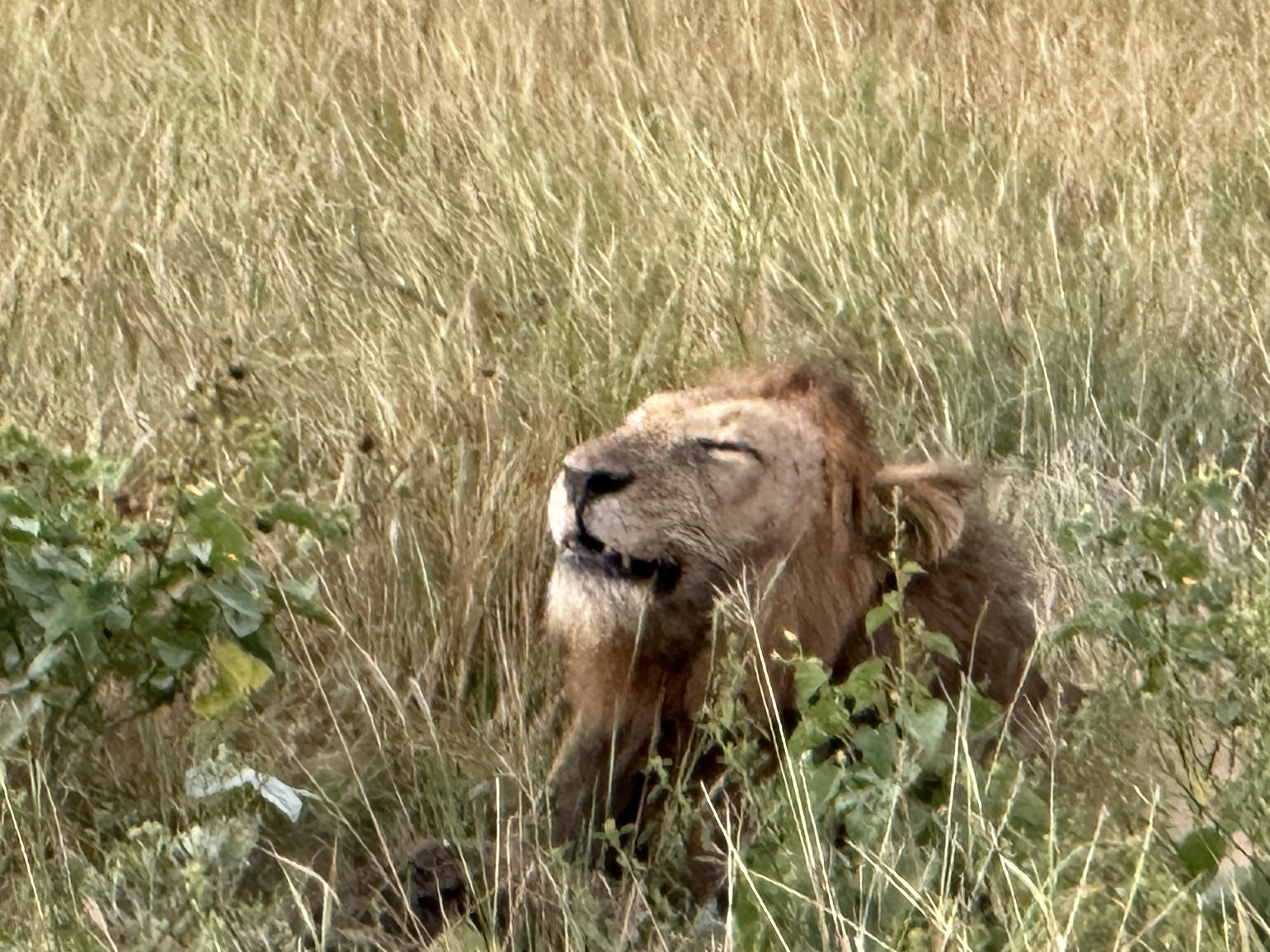
Right after I sent the last post, the staff told us a lion had been spotted. So we ran to the car and drove 20 minutes to the sighting. The lion was asleep on top of a huge rock outcrop. It lifted its head a couple of times, looked at us, and went back to sleep. Mark got a photo. It is the best we could do. Meanwhile, we learned that our flight was further delayed. It will be mid-afternoon before we depart Apoka. So, Johnathan has decided to make pasta and we are thinking about swimming, giving Bob another scratch and enjoying the view.
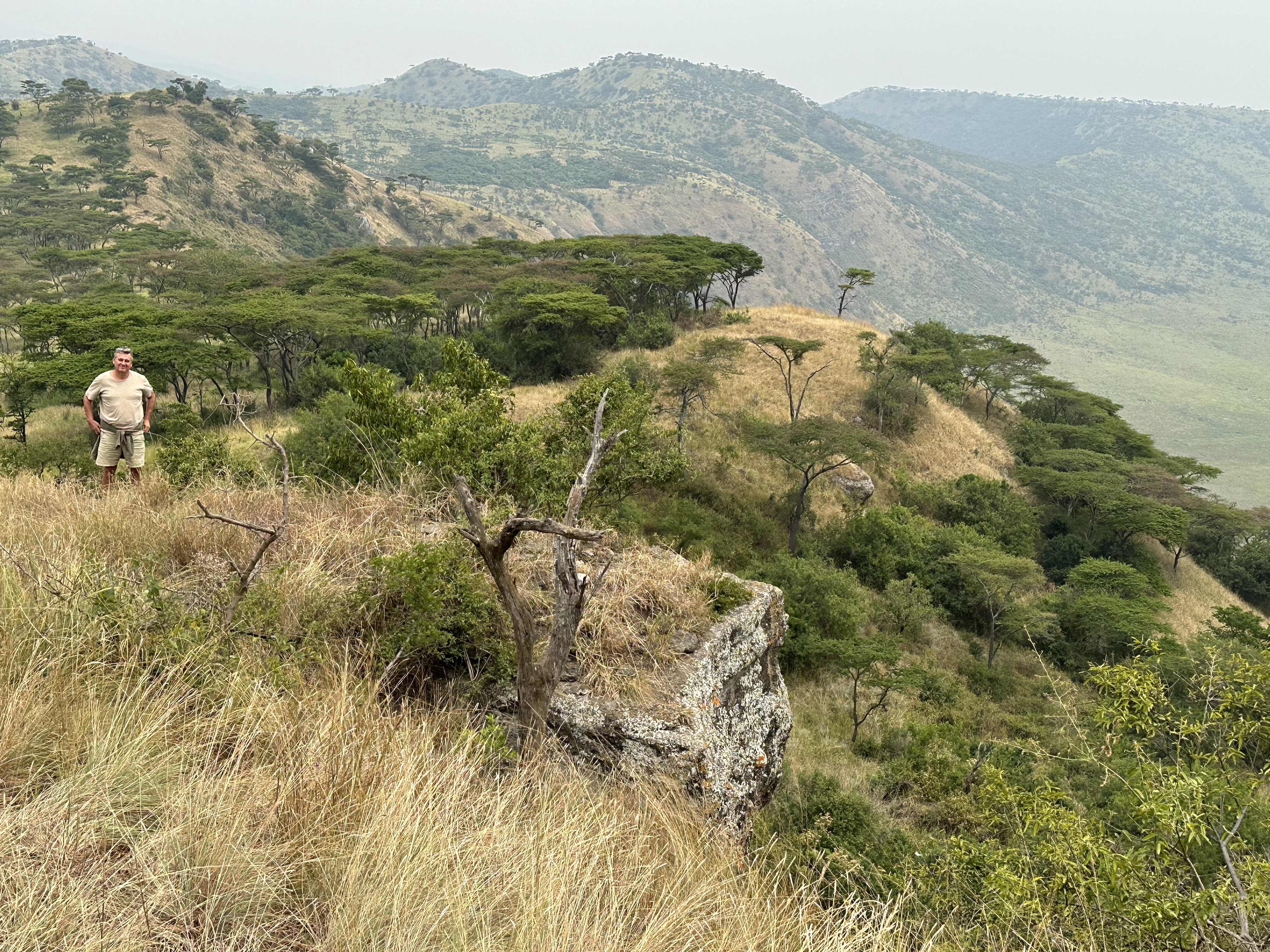
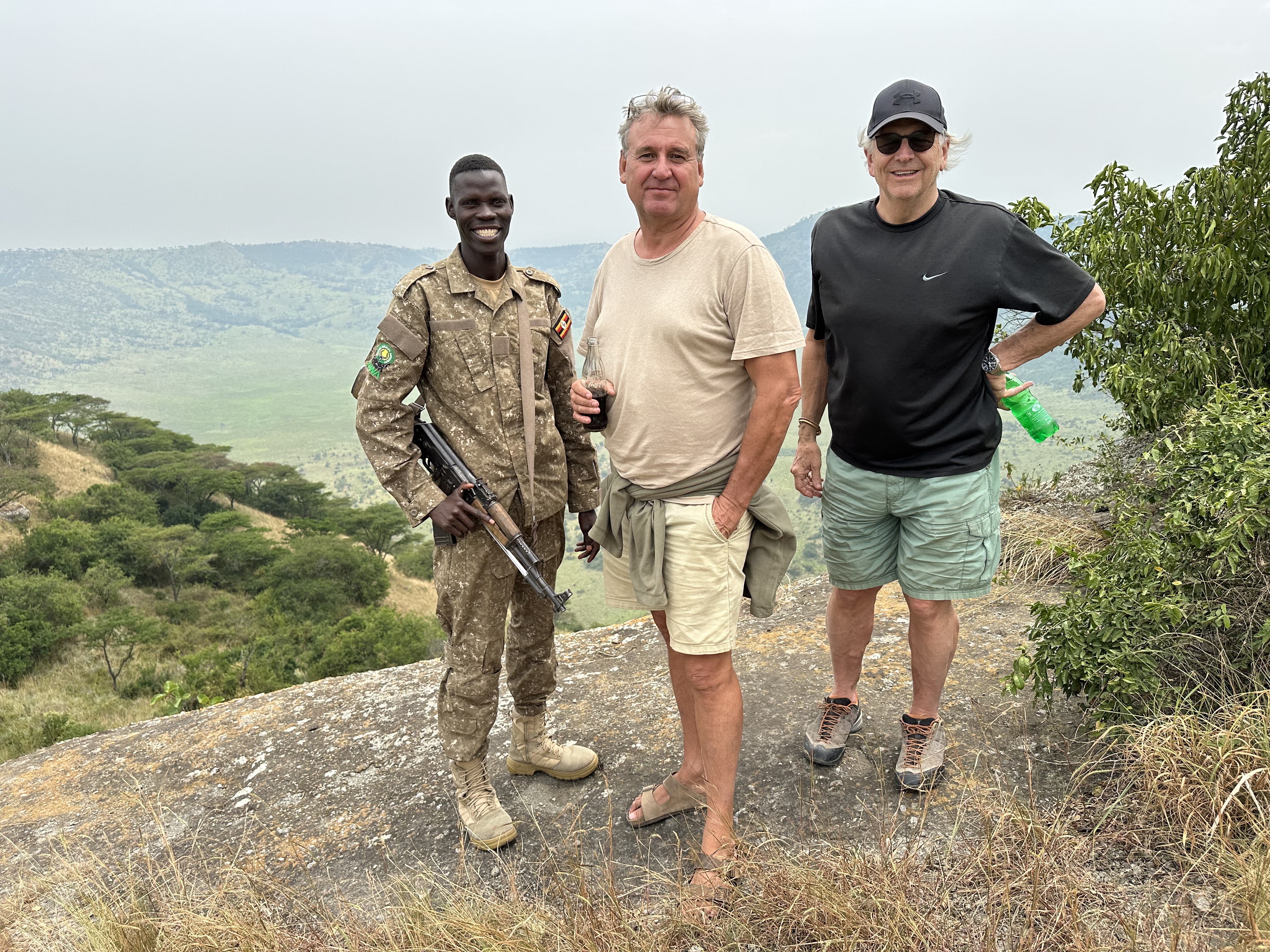
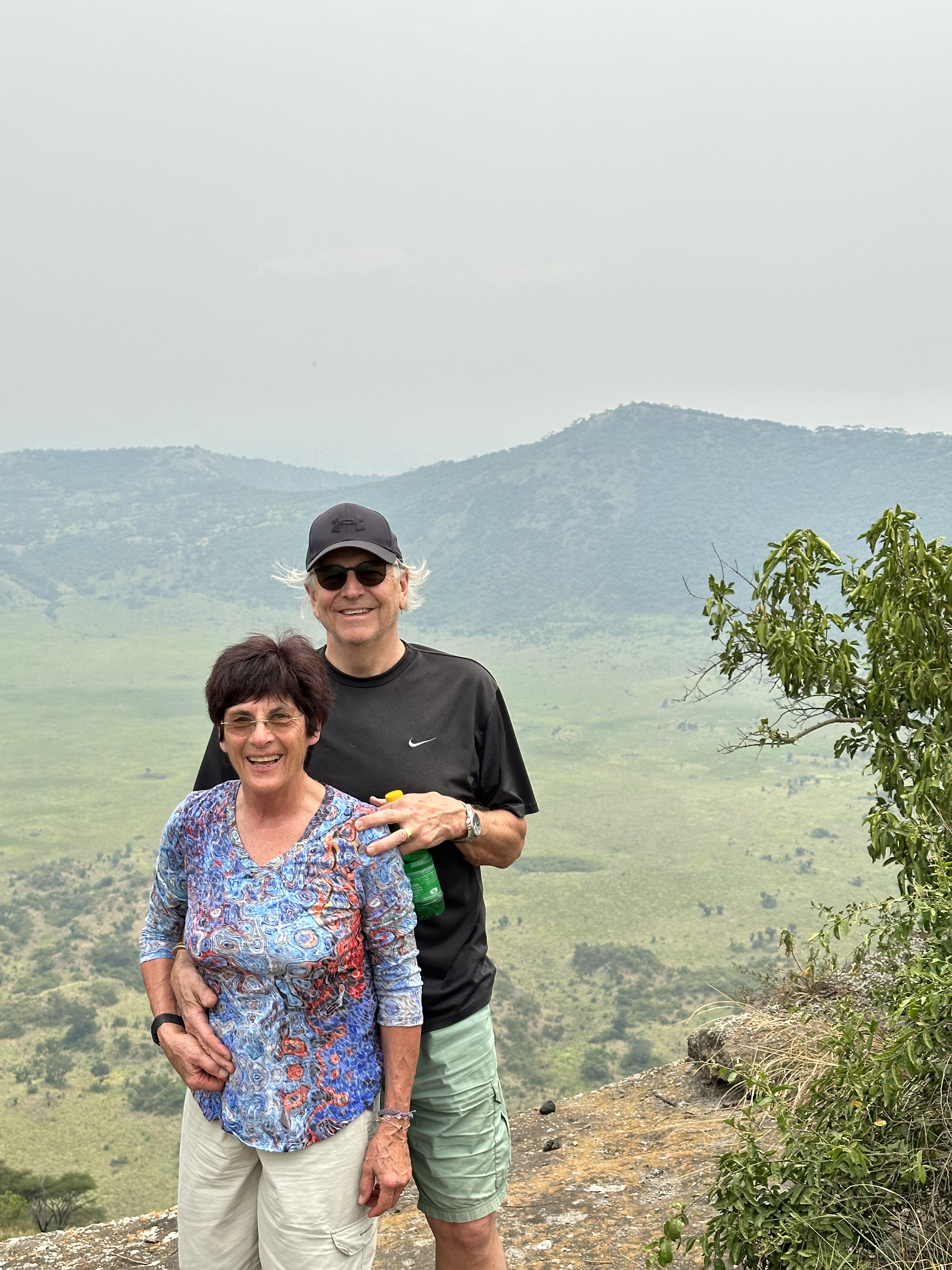
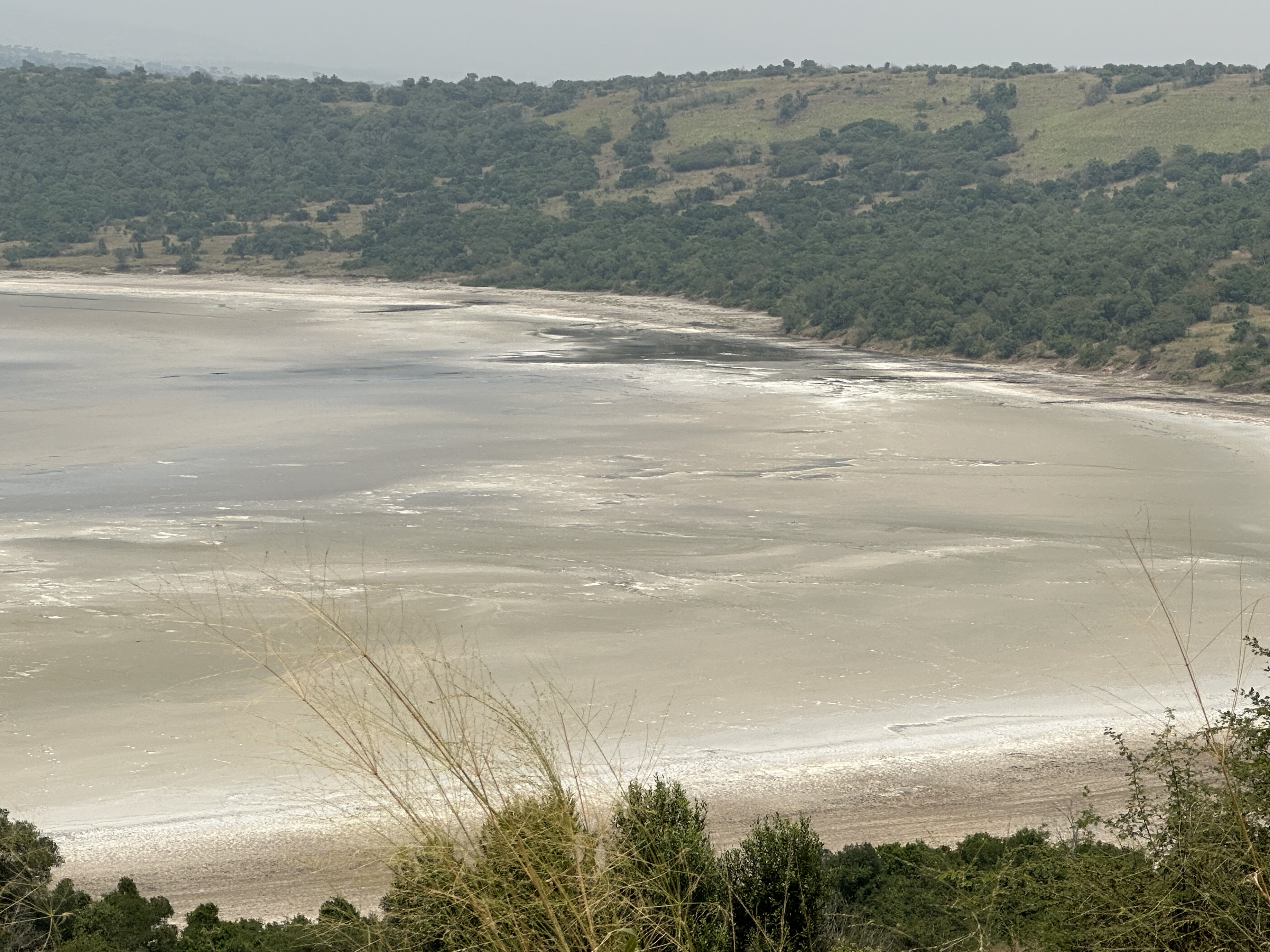
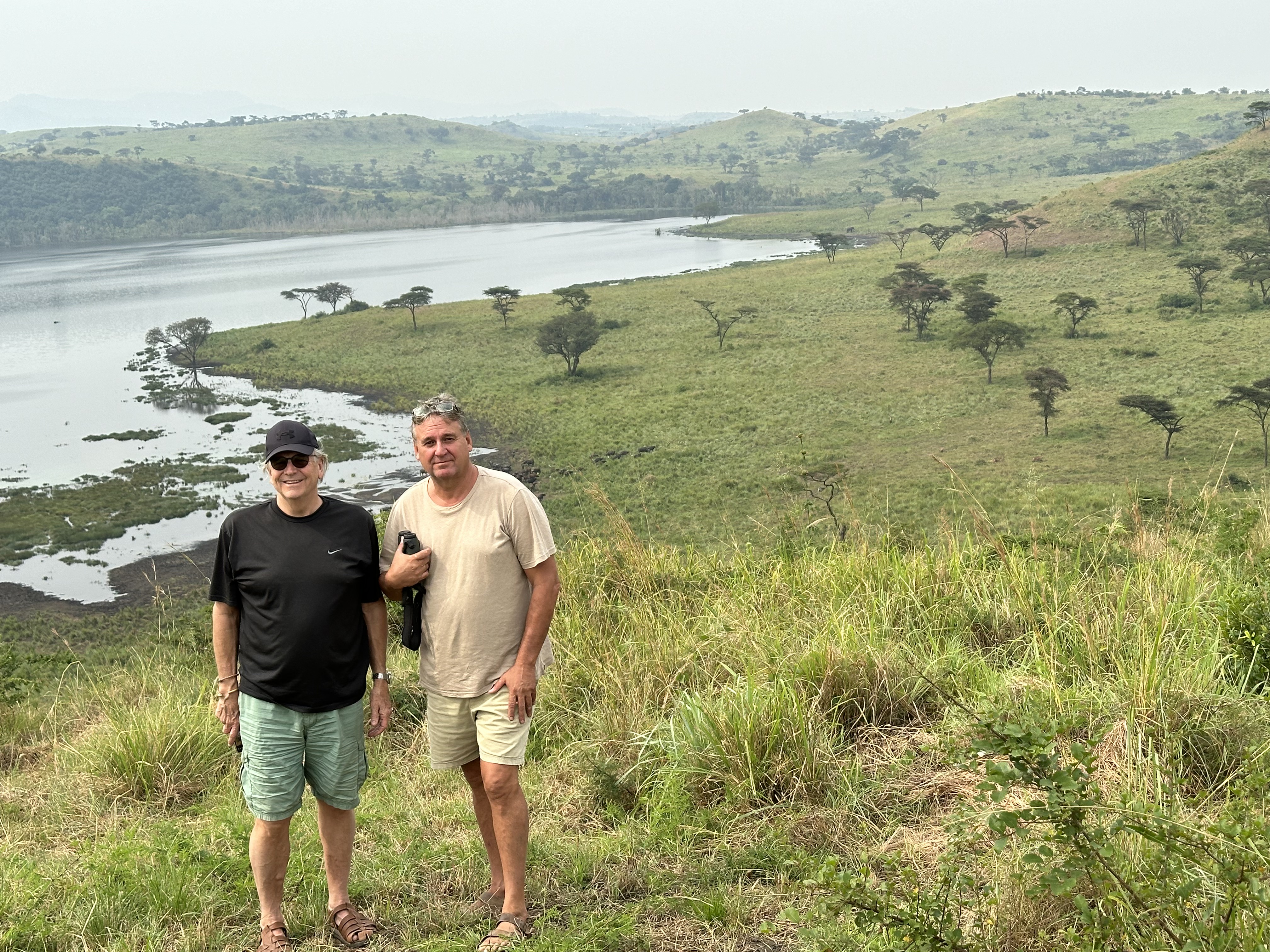
Here are a few more photos from our time in Honey Bear Camp. They include the salt and fresh water lakes in the foothills of the Rwenzori Mountains. We were required to take a guard with us. You can see the steep drop off called Baboon Rock.
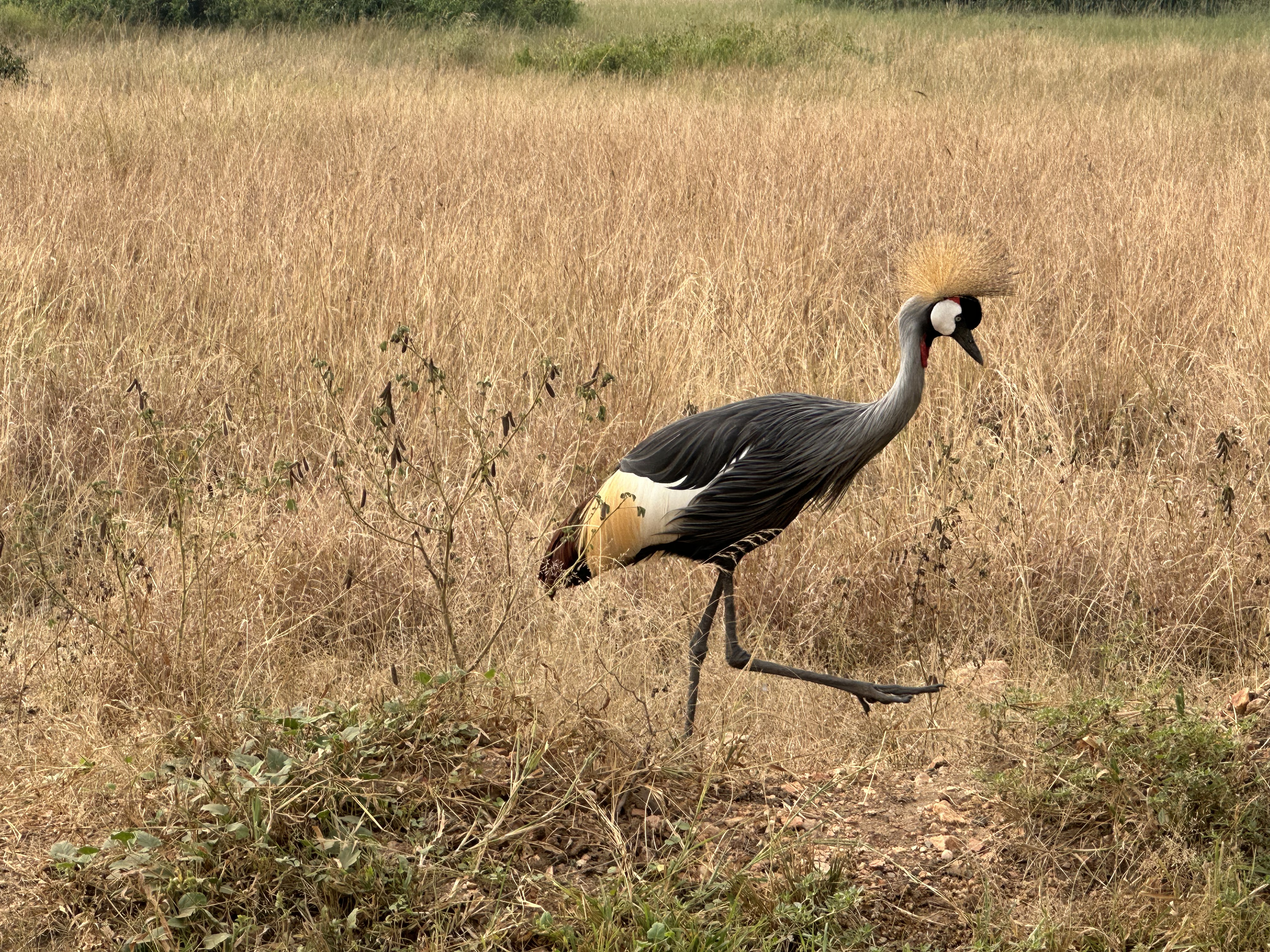
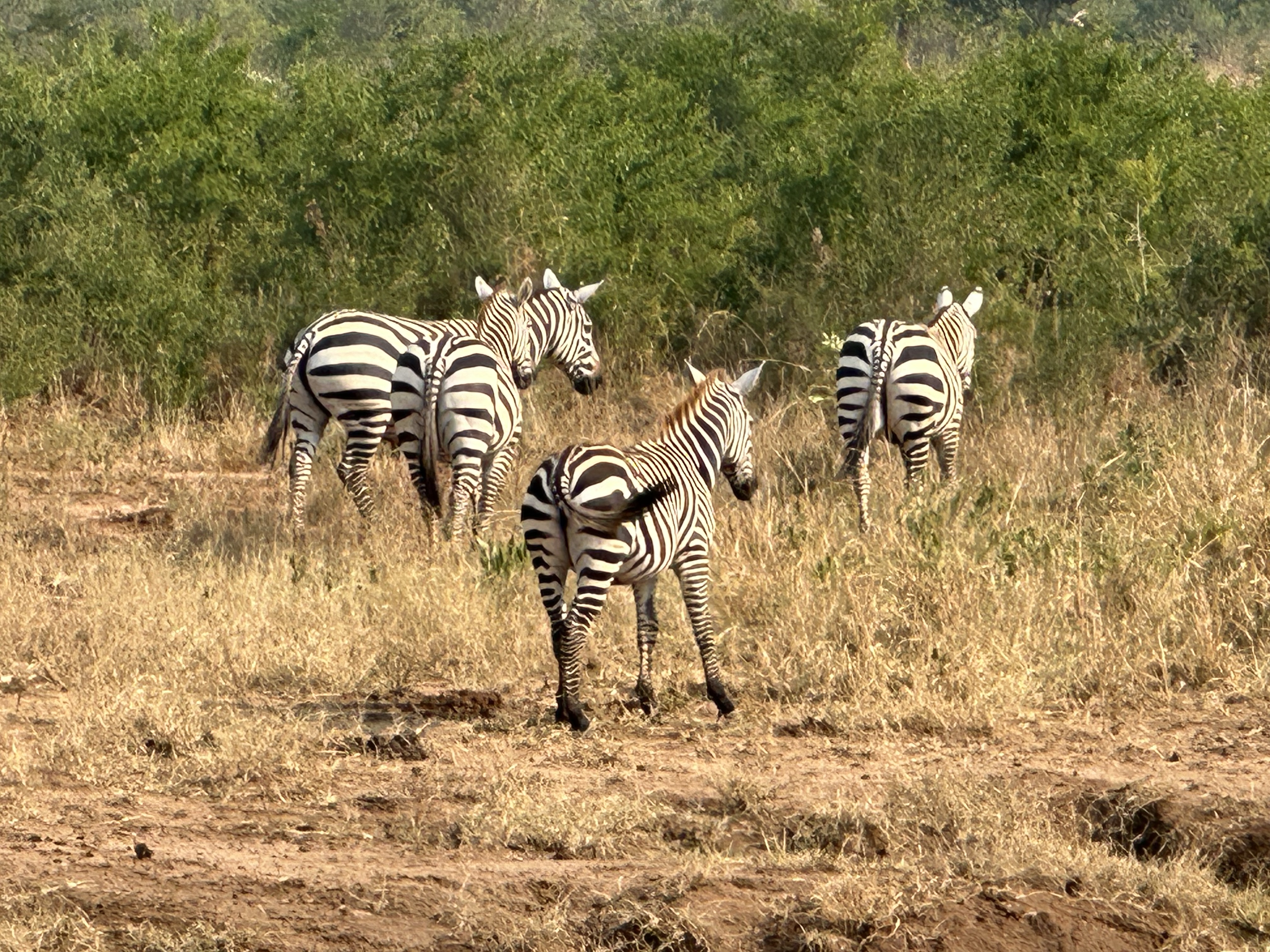
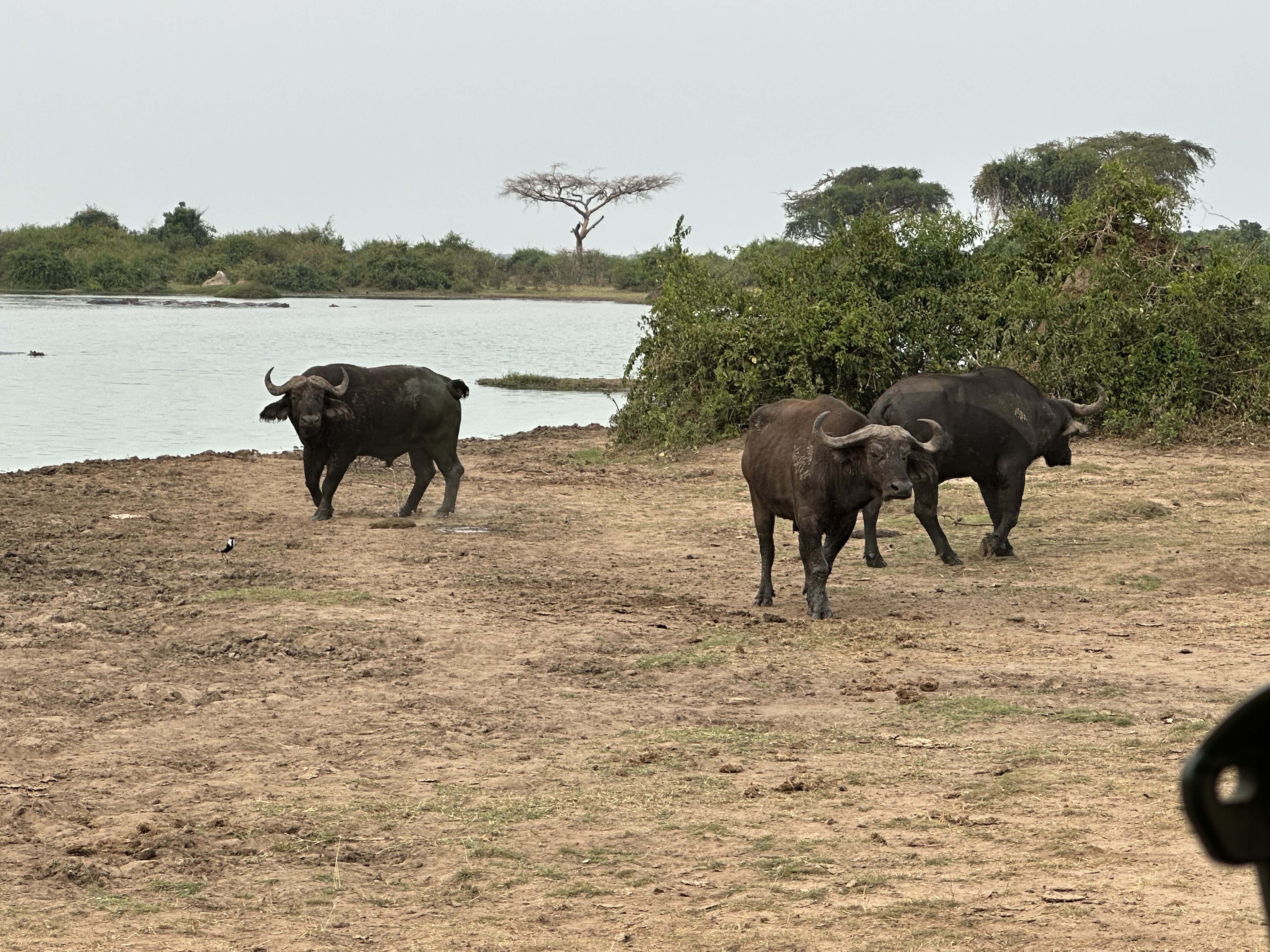
The elevation of Apoka Camp was 3800 feet, and the temperature was quite comfortable. At 4pm we went for a game drive in a Toyota Land Cruiser. The roads were very bumpy and dusty, but the landscape was outstanding. Wide open savannah interspersed with low shrubs and woodland, and hills in the misty background. Intermittently we saw many water buffalo, wart hogs and water buck. In fewer numbers we saw Jackson’s hartebeest, white-eared kob, Burchell’s zebra, several baboons, a crested crane (see photo below) and one eland. We identified a few birds, especially the pretty Rose ring Parakeet. We also had a sundowner.
Back at camp, we had dinner on the veranda overlooking a water hole. A few waterbucks and hartebeest were still sipping. Sitting with us were Jonathan, Emily and a couple who had just arrived in camp. It was a pleasant evening that ended when Mark and I excused ourselves to go to bed. It felt great to slip between the sheets.
January 20, 2024
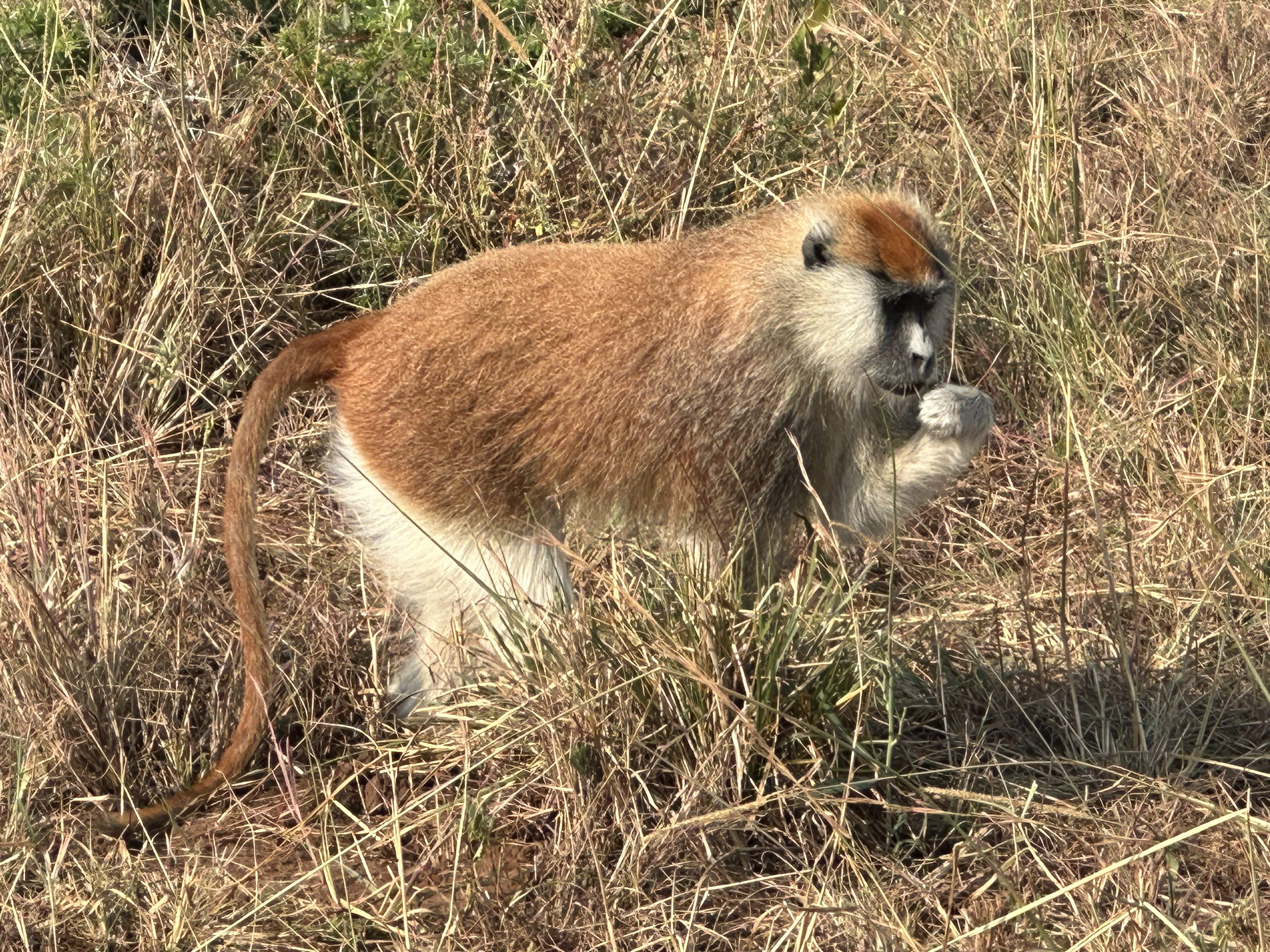
Up and out by 6am. We took a different road each drive. This time there was more trees and less open space. Our focus was on birds, and we saw many. I was able to identify: White browed coucal, Tawny Eagle, Sooty Chat, Northern Puffback, Martial eagle, Abyssinian Hornbill, and a pair of Secretary Birds. We also saw a Patas Monkey (See photo above). We must have seen more animals and birds, but I did not get them logged.
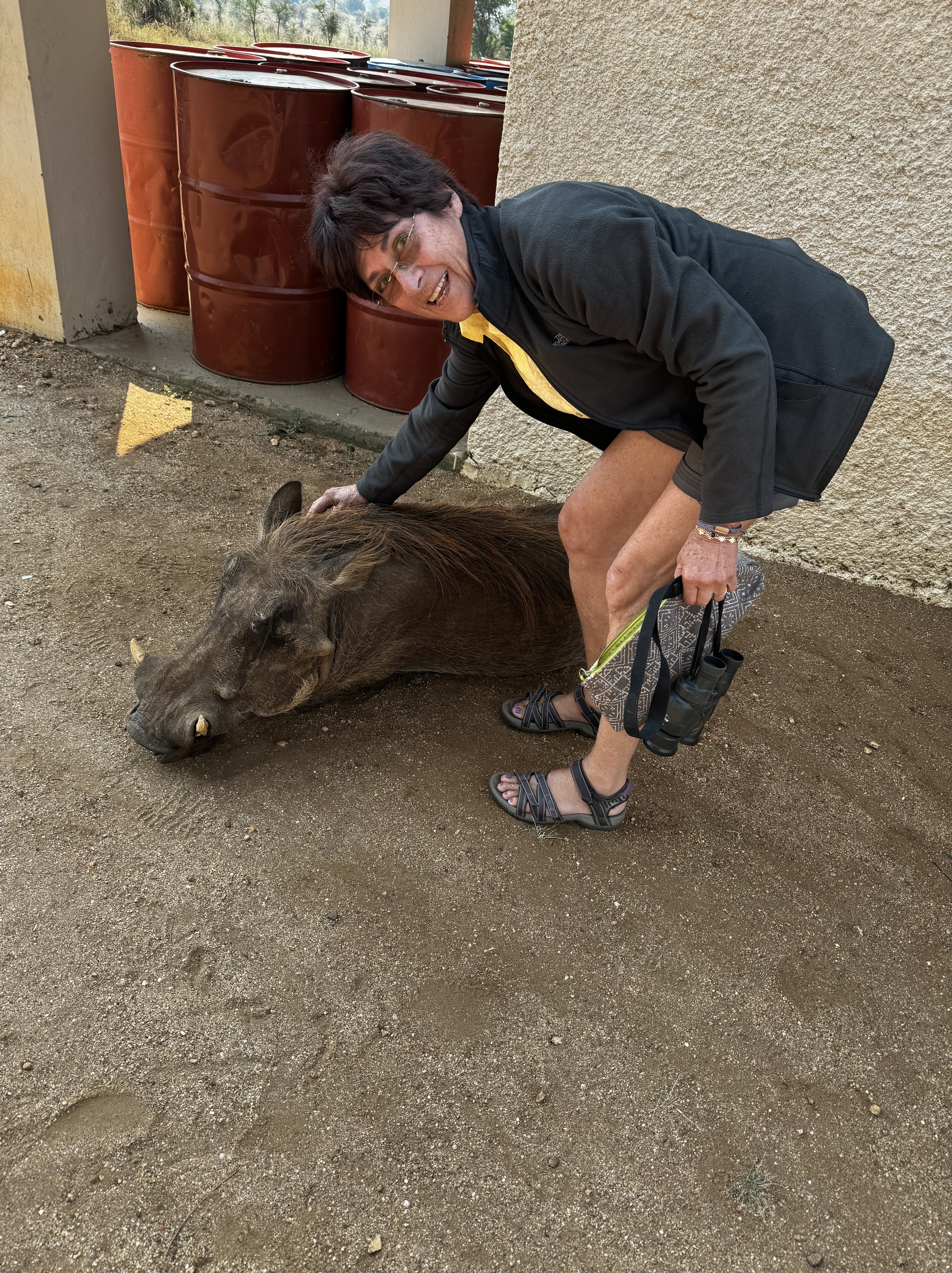
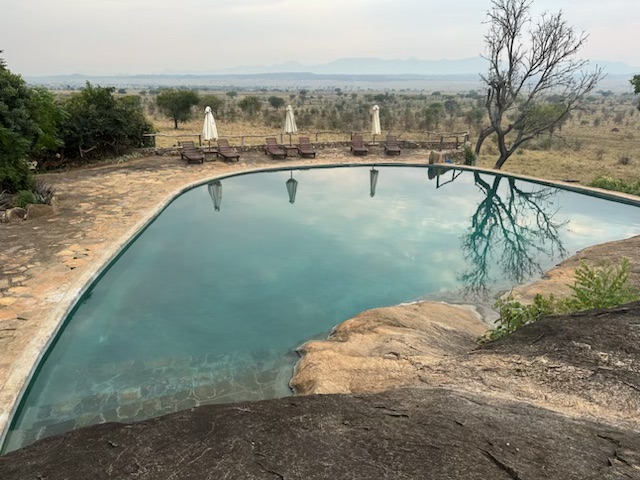
Back as camp, we had a light salad for lunch and took the afternoon to finish and publish a post, and swim in the rock pool. The water was delightful—not too cold or warm. Our bungalow is the farthest out. It was quite comfy. We also spent some time scratching the resident wart hog, Bob.
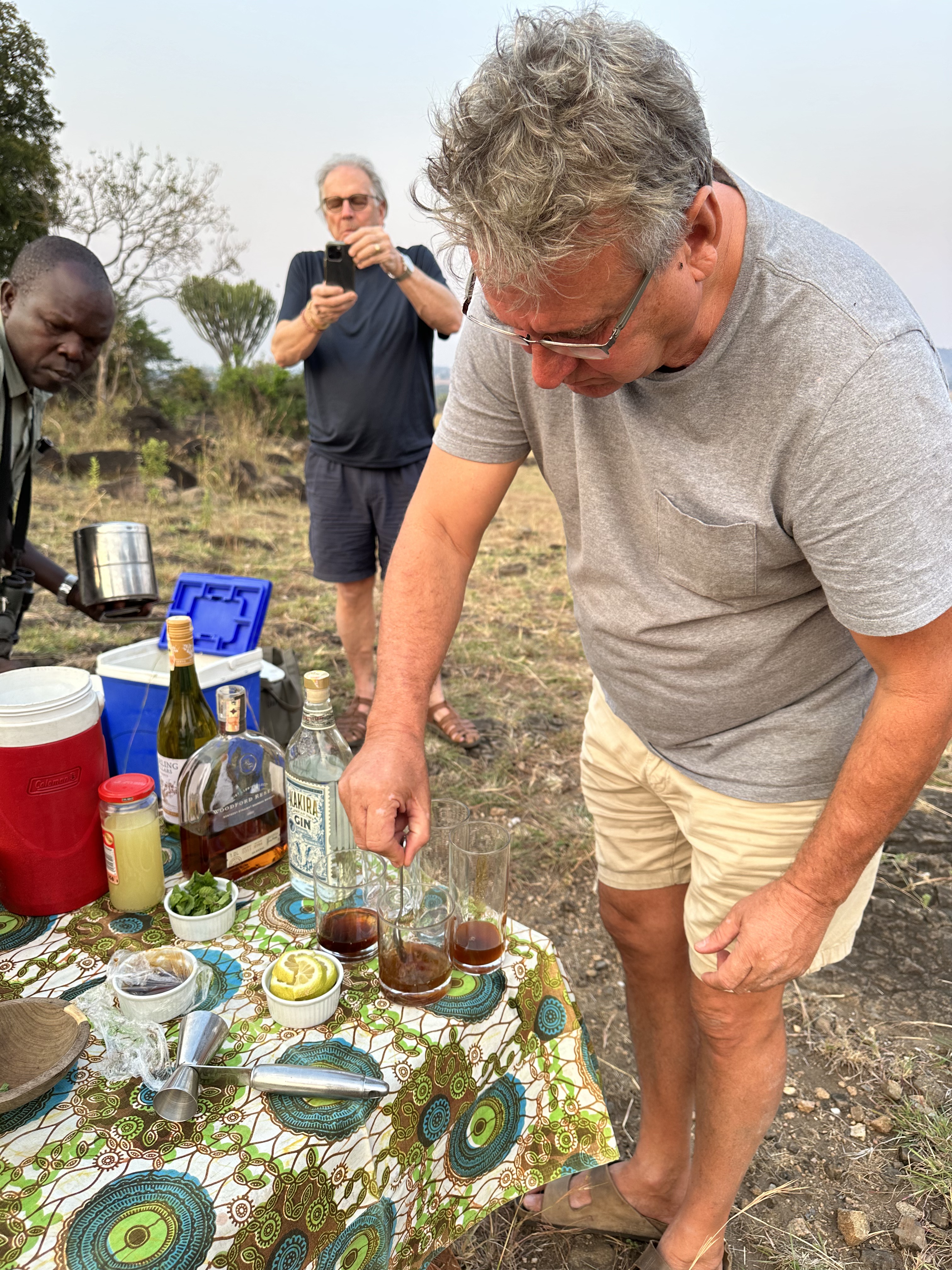
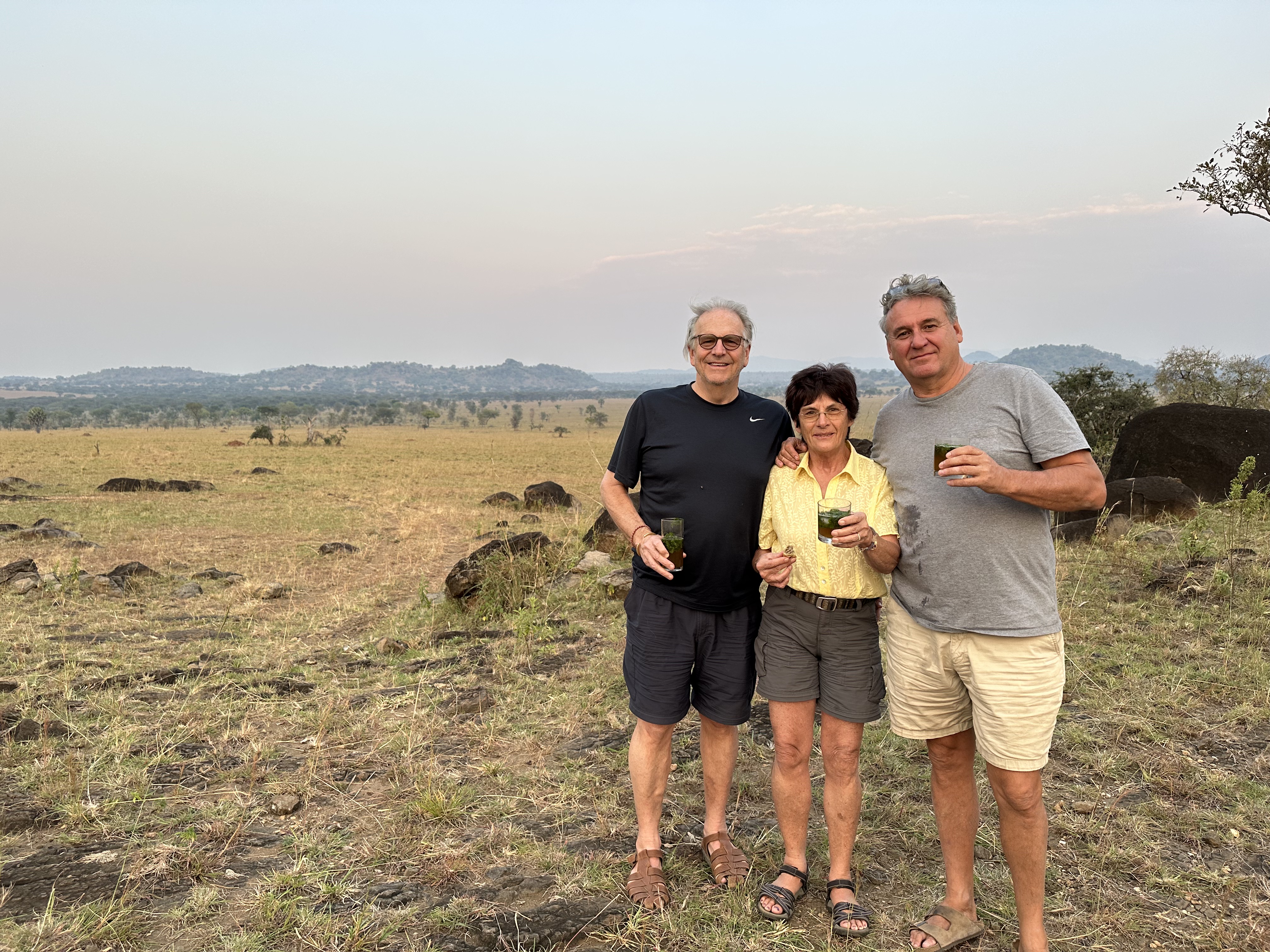
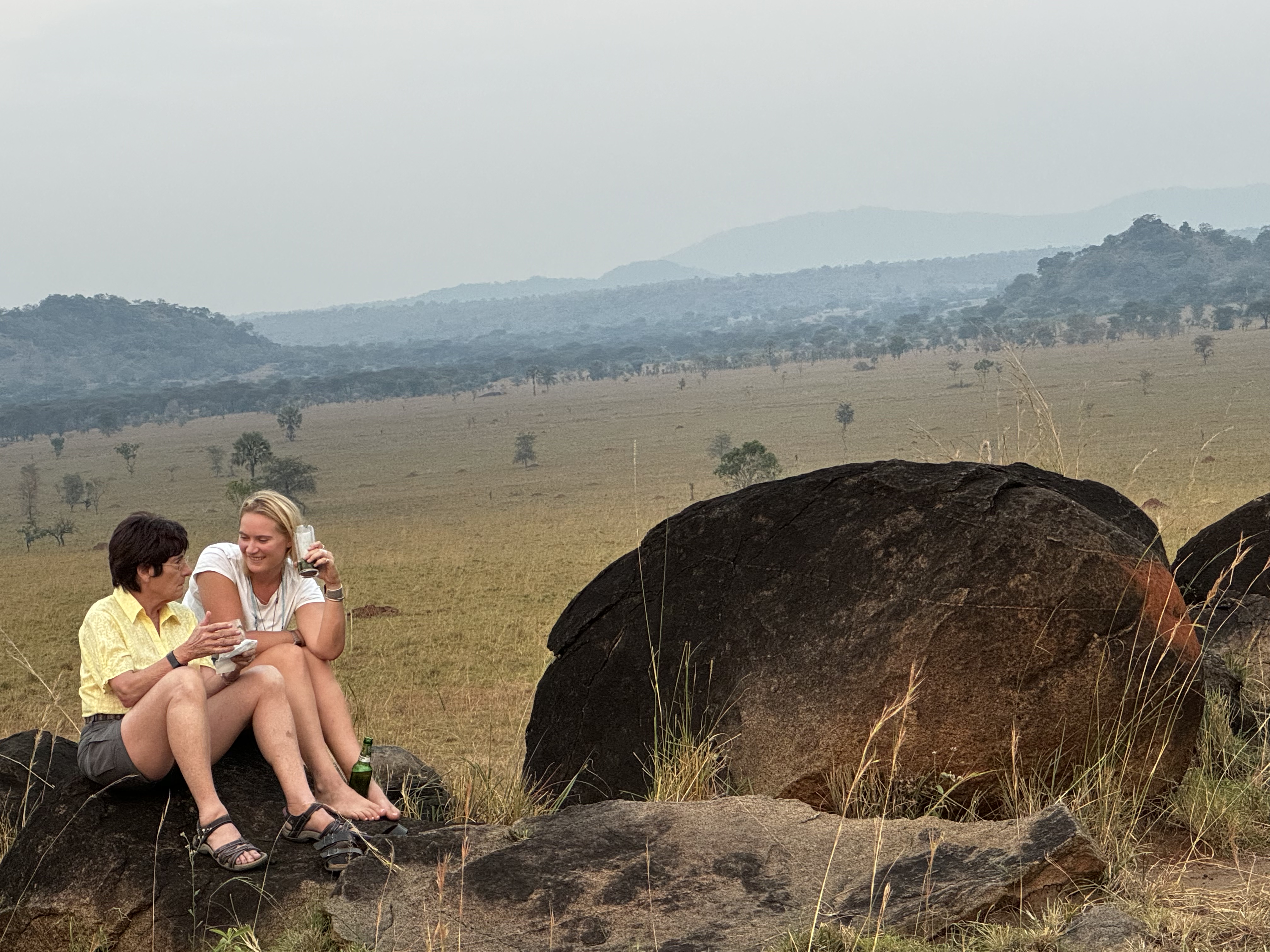
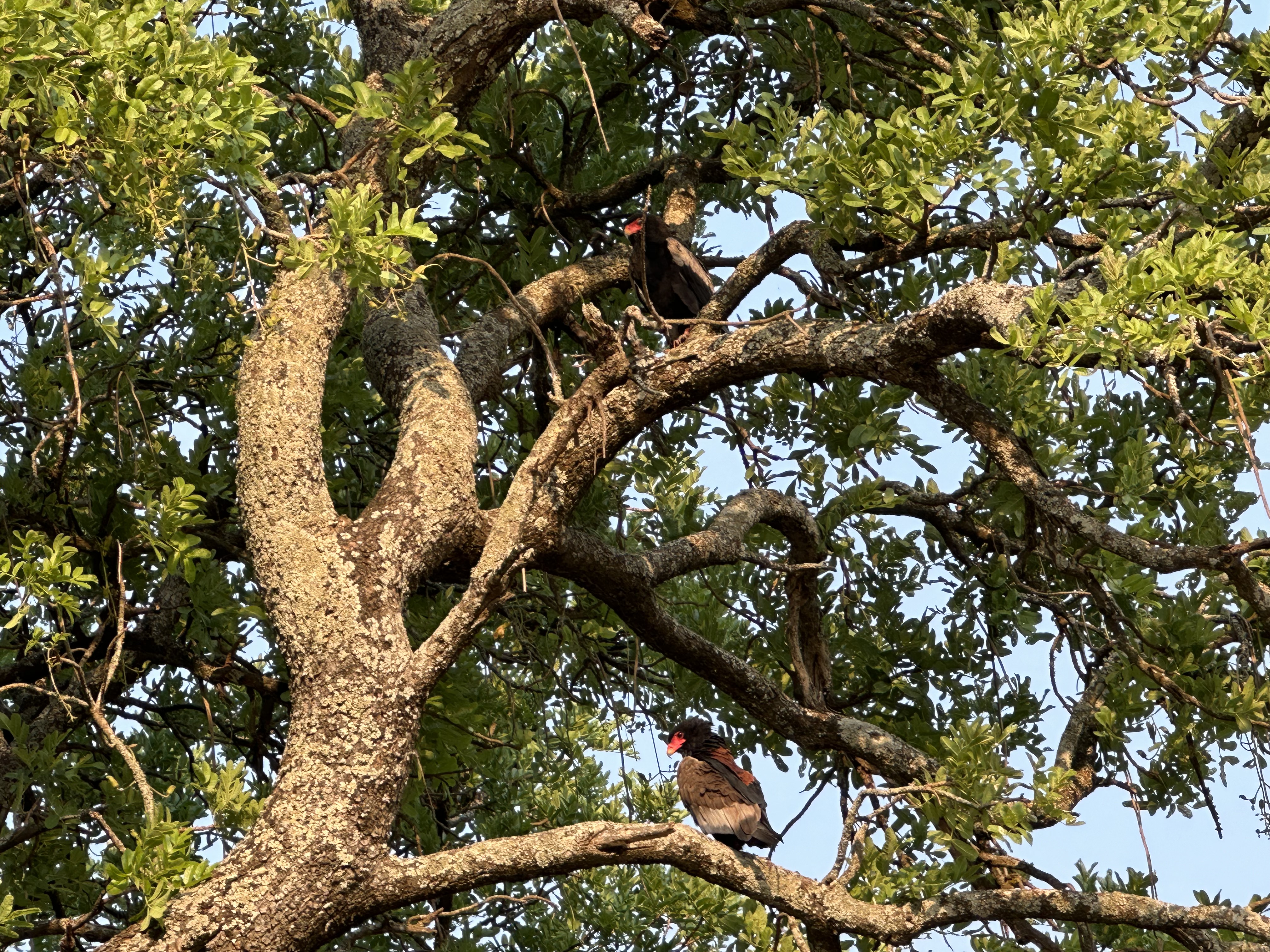
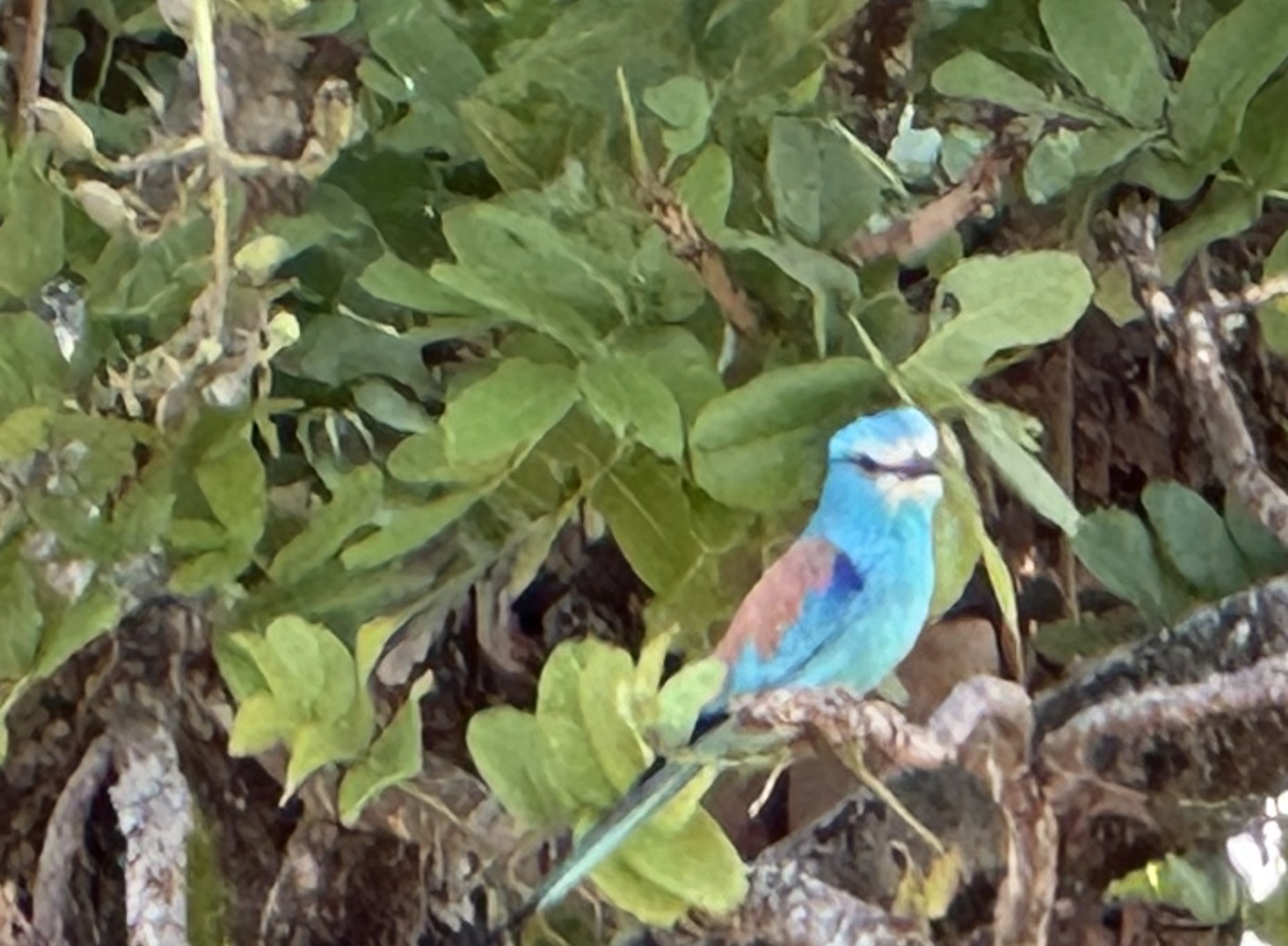
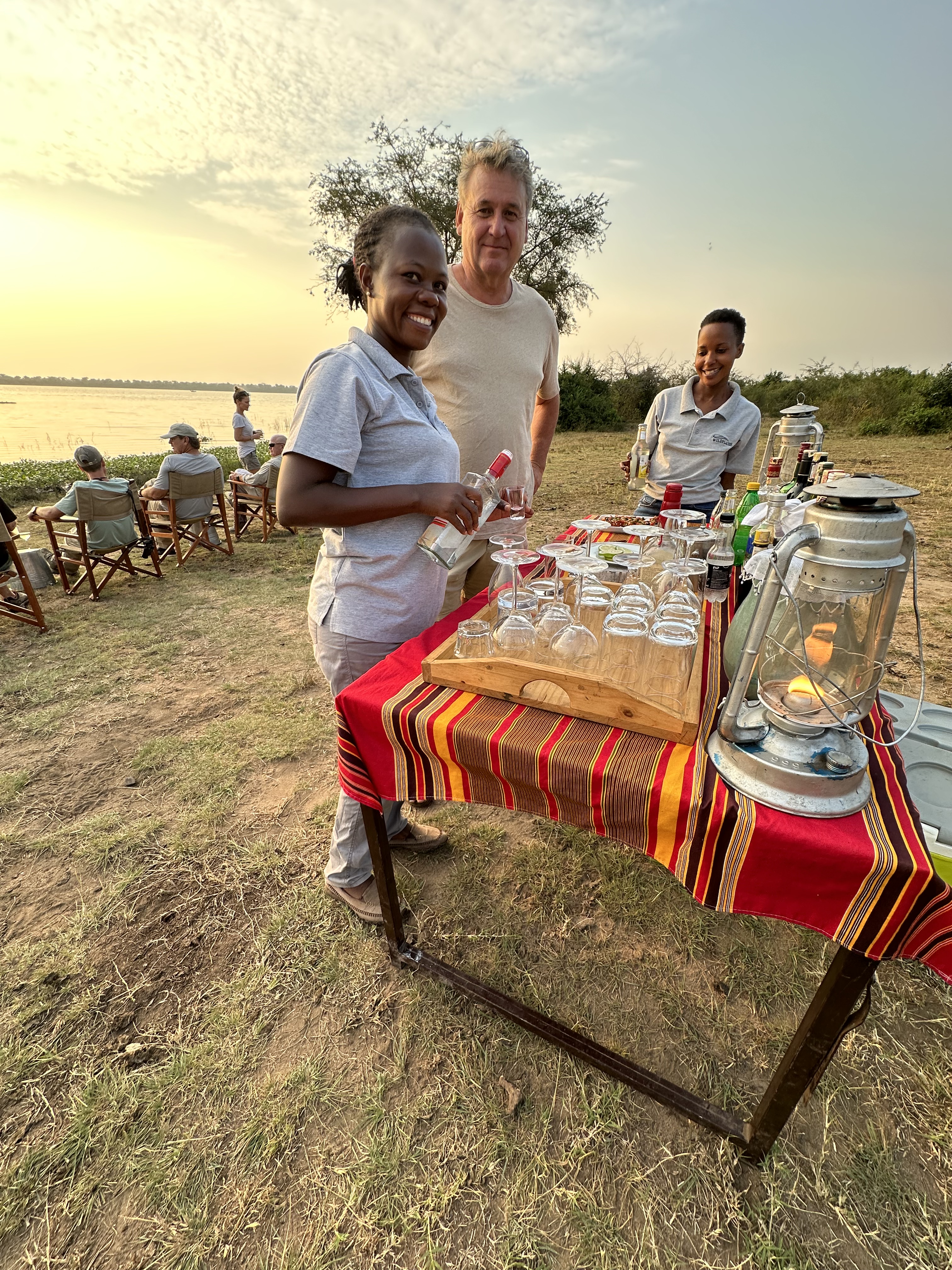
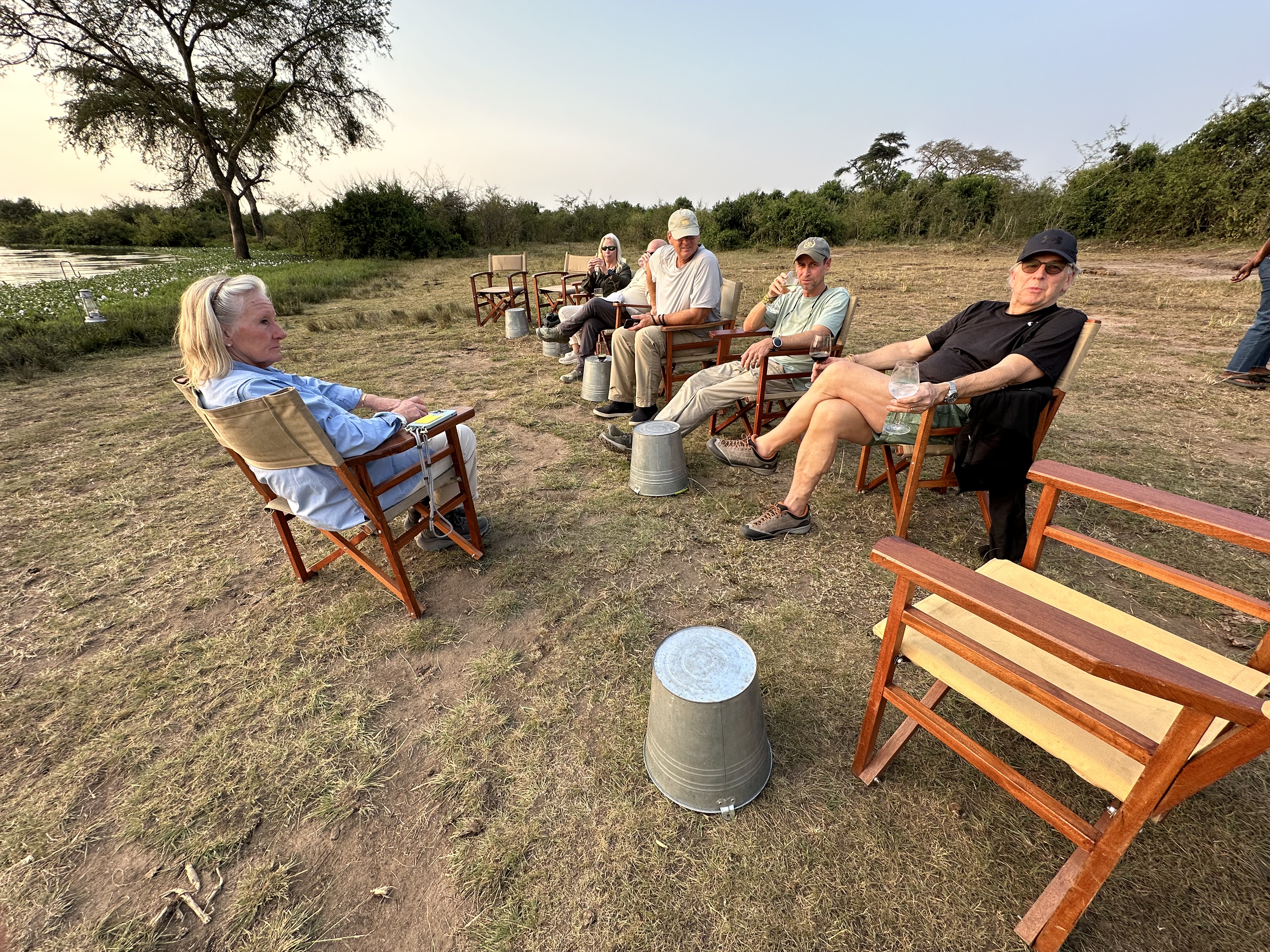
At 4pm we were back in the land cruiser hunting for predators, which we did not find. We did identify more birds, especially the Black Shouldered kite, the very colorful Abyssinian Roller (see photo below), a Yellow-Billed Kite and a Bateleur (see photo below). We were pleased to see several Rothchild giraffe along with a few elephants. On the crest of a hill, we stopped for sundowners. Jonathan and Emily outdid themselves making Mint Julips and Mojitos, which we thoroughly enjoyed. I don’t remember the drive back to camp, after the sundowners. Hmmm.
The staff served us a tasty salad and ravioli dinner beside the pool. Jonathan and Emily joined us. The four of us had a lot of fun and good laughs. I was so grateful for Emily’s help in getting my post published. I worry about future posts due to wi-fi and WordPress difficulties. Anyway, I will try to get one more post off before we leave Apoka for the Congo.
January 21, 2024
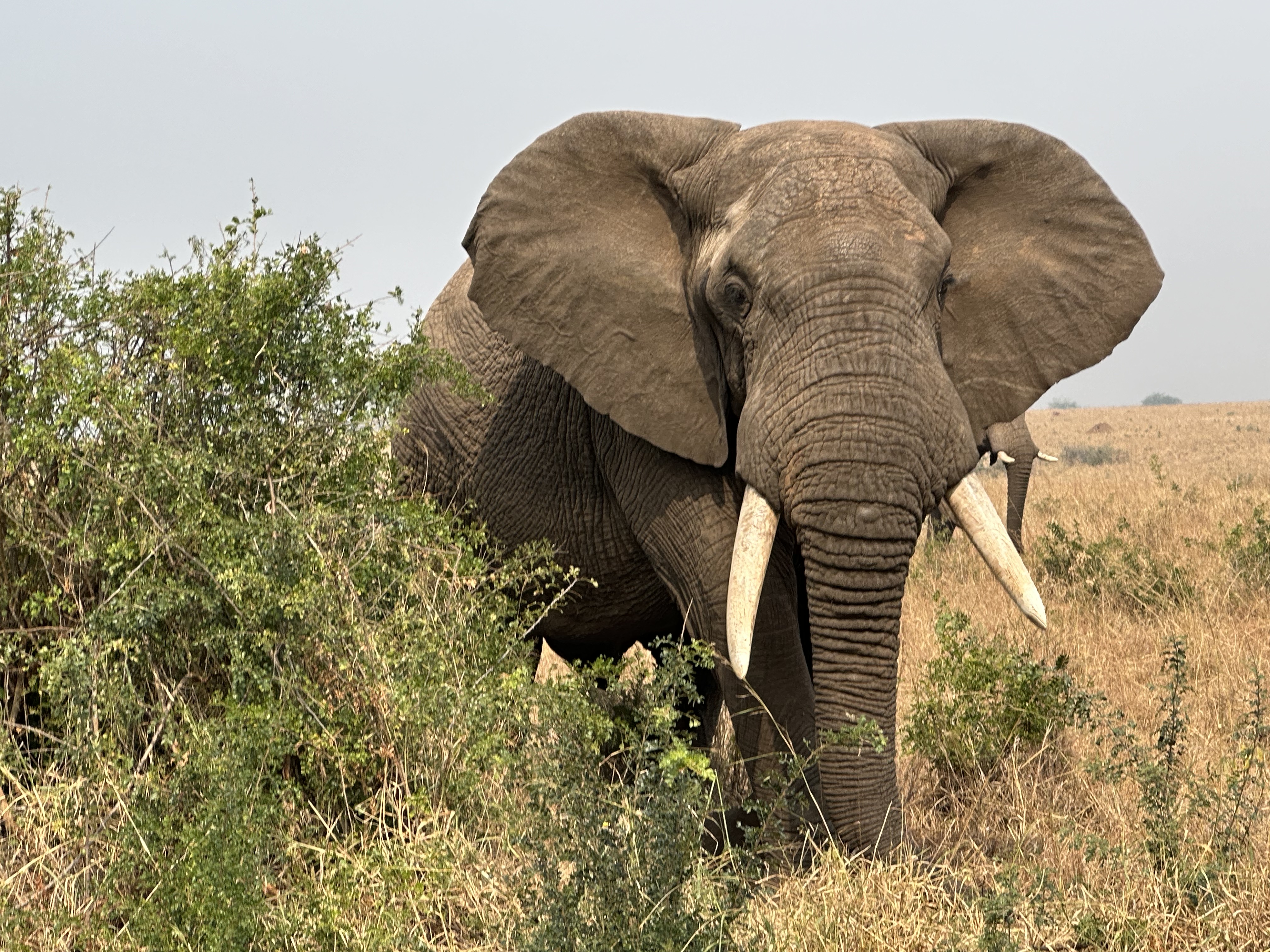
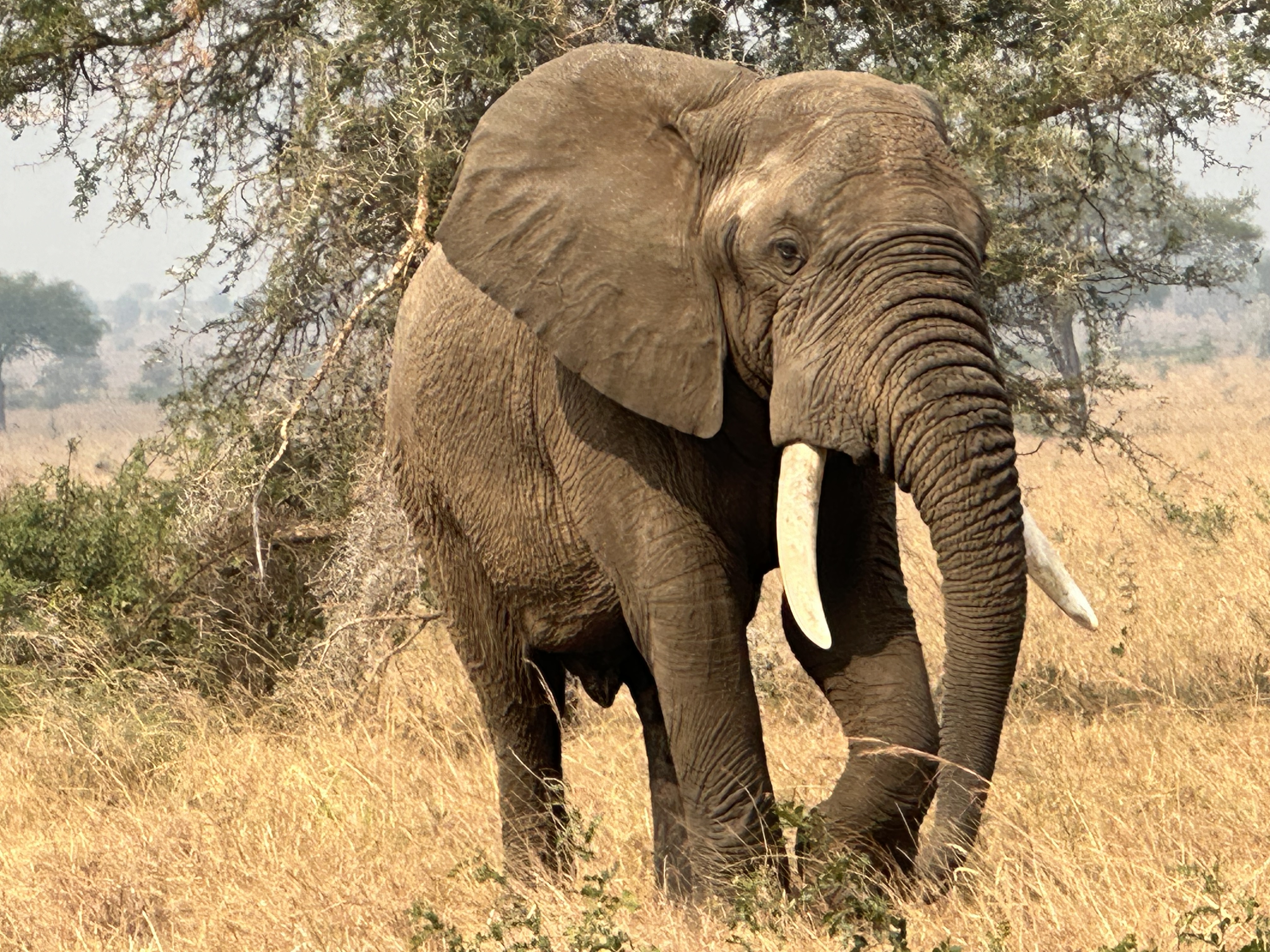
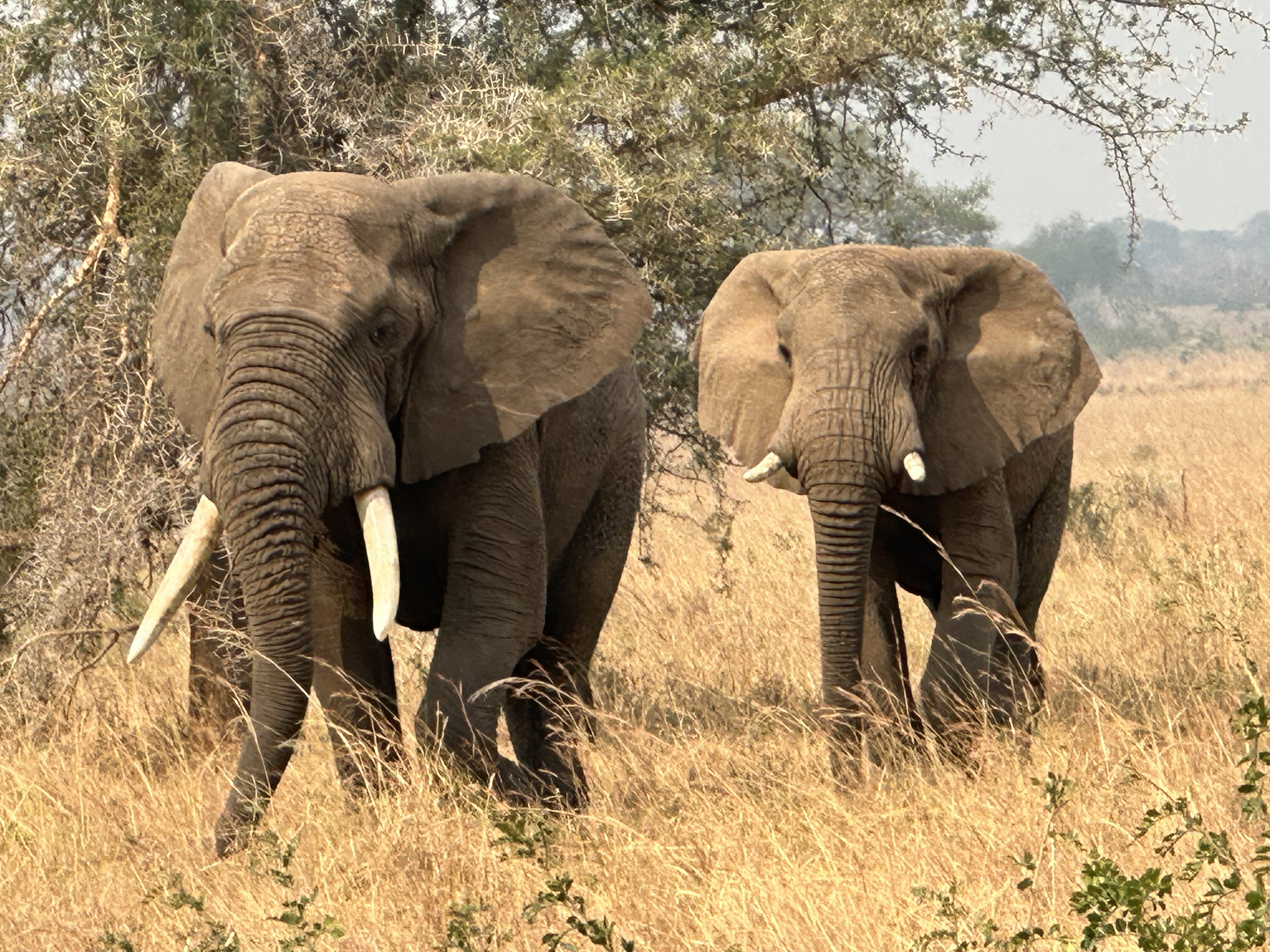
Another early start produced few animals but lots of beautiful scenery with mountains in the distance. After the coffee break, we began to see lots of animals, especially water buffalo and wart hogs in their hundreds, elephants in the dozens and giraffe in the teens. The terrain had turned to wetland, that was in the process of drying up. Many varieties of animals were in the area. At one point we encountered 2 large bull elephants, one of them in musth, that followed us and made our driver depart in a hurry.
January 22, 2024
Today Jonathan, Mark and I depart for the Congo. We are both excited and a little nervous. I think we may not have Wi-Fi or internet, so we do not expect to be able to blog while there. We may not have internet in Ethiopia either, so please do not wonder why there have been no posts. I will still be writing and taking photos, so there will be posts eventually. Meanwhile, thank you for your good thoughts and prayers.
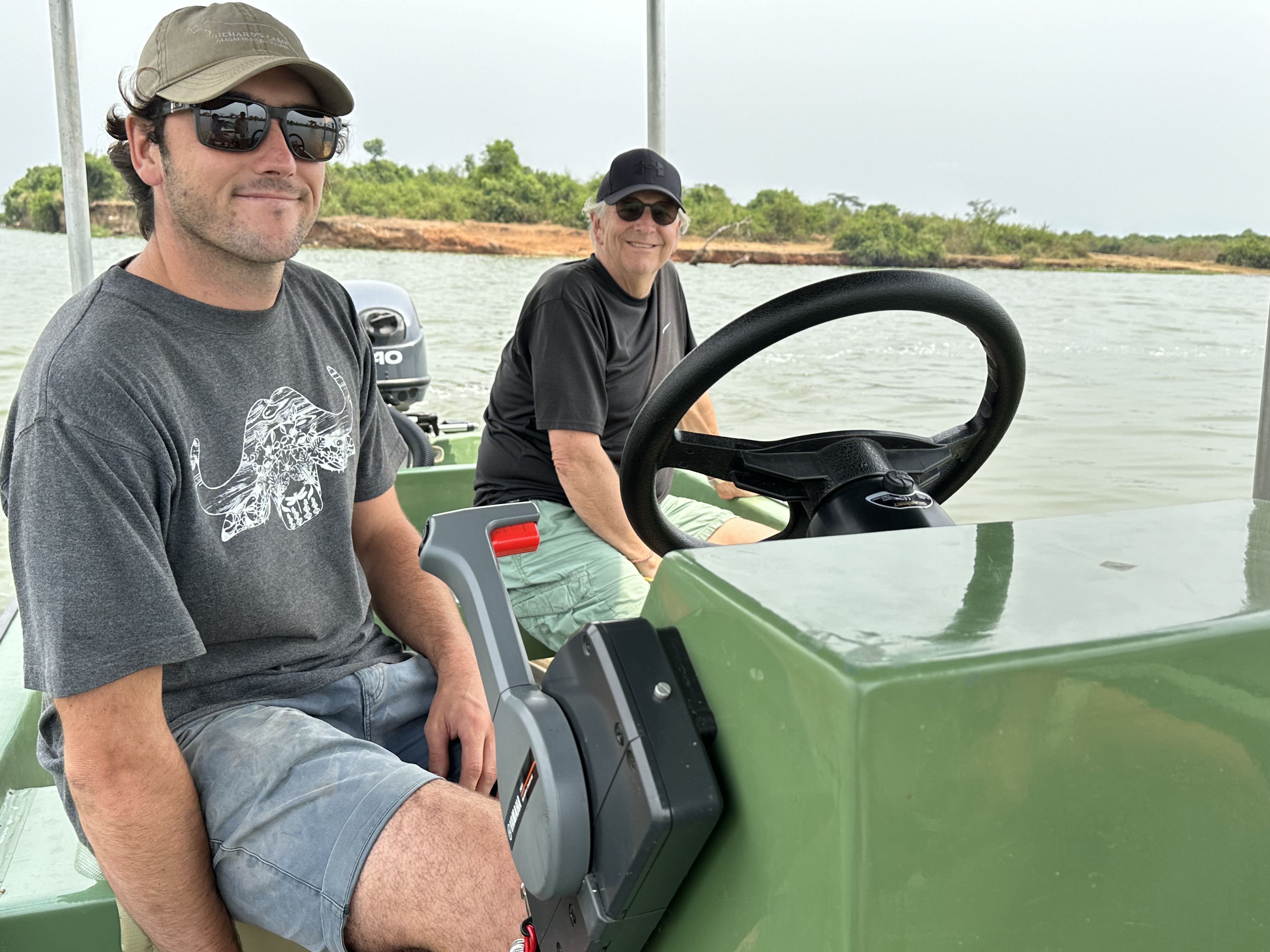
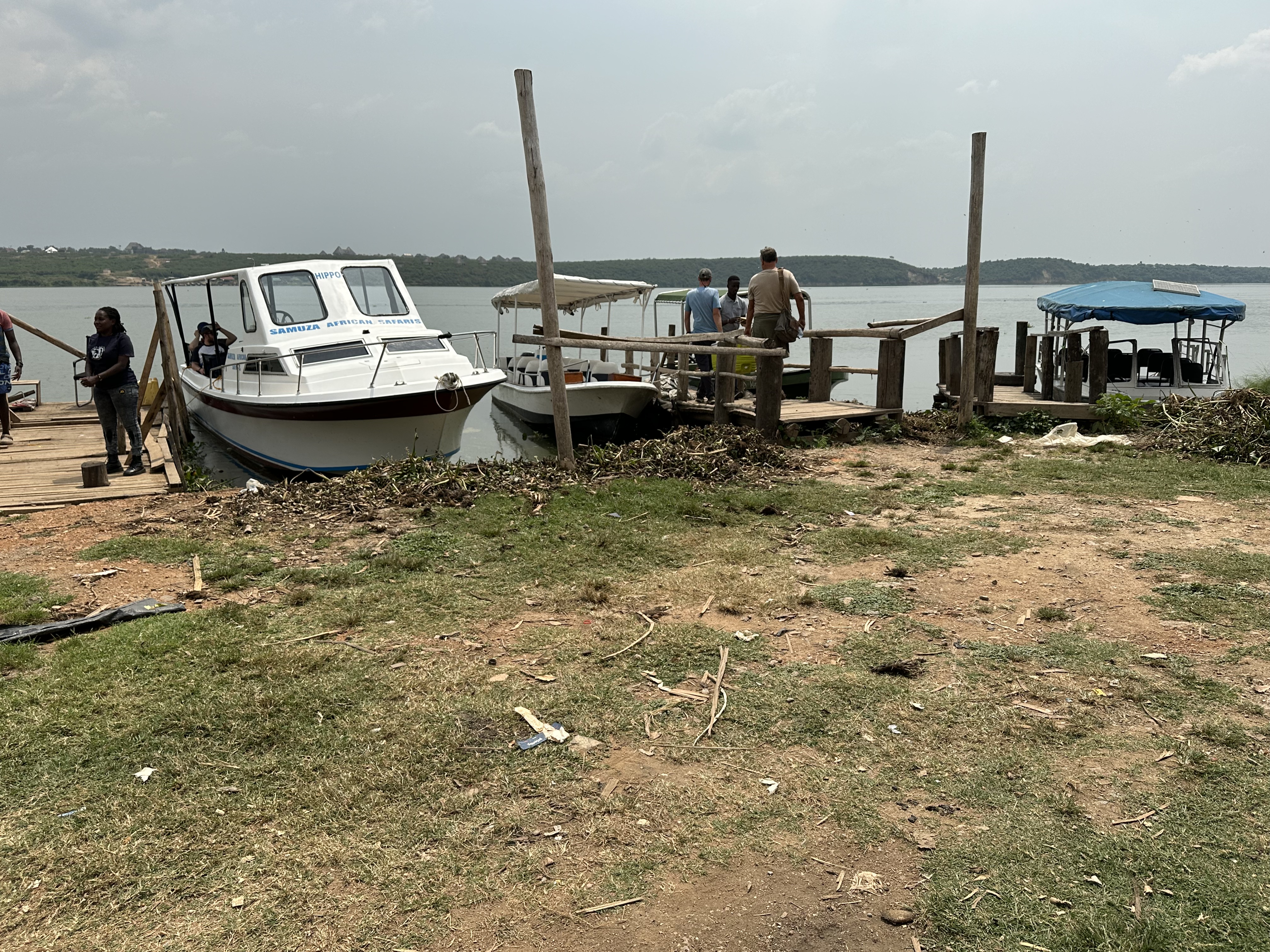
At 9am Kenneth arrived at the Guest House to take us on the first leg of our safari journey. He is a driver for The Uganda safari Company, which is handling our travels through Uganda and the Democratic Republic of the Congo (DRC). He had been our driver during our stay in Uganda in 2018 and it was nice to see him again. He drove us north through Kihihi and Queen Elizabeth National Park to a put in at Katunguru, where we transferred to a 17 foot motor boat.
In 20 minutes we arrived at Honey Bear Bush Camp. We were greeted by the camp crew, including Jonathan Wright, the owner of the camp and a friend. Our first meeting with Jonathan was 22 years ago when he guided us through a couple of parks in Uganda and took us to his home in Kampala to meet his wife and children. That is when the friendship really began. From there he guided us through Queen Elizabeth National Park us to Mweye Lodge, where we met up with Scott and Carol. Two years later when we returned to Uganda he took us to a new concession he was developing in far NE Uganda, called Kidepo. It was not yet open, but there was a skeleton crew who cooked for us and made up a room for us to sleep. We toured around the area with him and saw animals, a little village nearby called Lorokul, and the unfinished remains of a hotel Idi Amin had started. In 2014, we were in Uganda again. We landed in Entebbe and were transferred to Jonathans new home in the outskirts of Kampala. After an overnight visiting with him, we spent a night at a lodge called Wild Waters, where the source of the Nile departs from Lake Victoria on its way to Alexandria and the Mediterranian. Now we were seeing him again for the first time in 10 years. After a hearty greeting we were taken to our bush camp cottage, complete with an outdoor bathroom and an elevated bucket with holes in it for a shower.
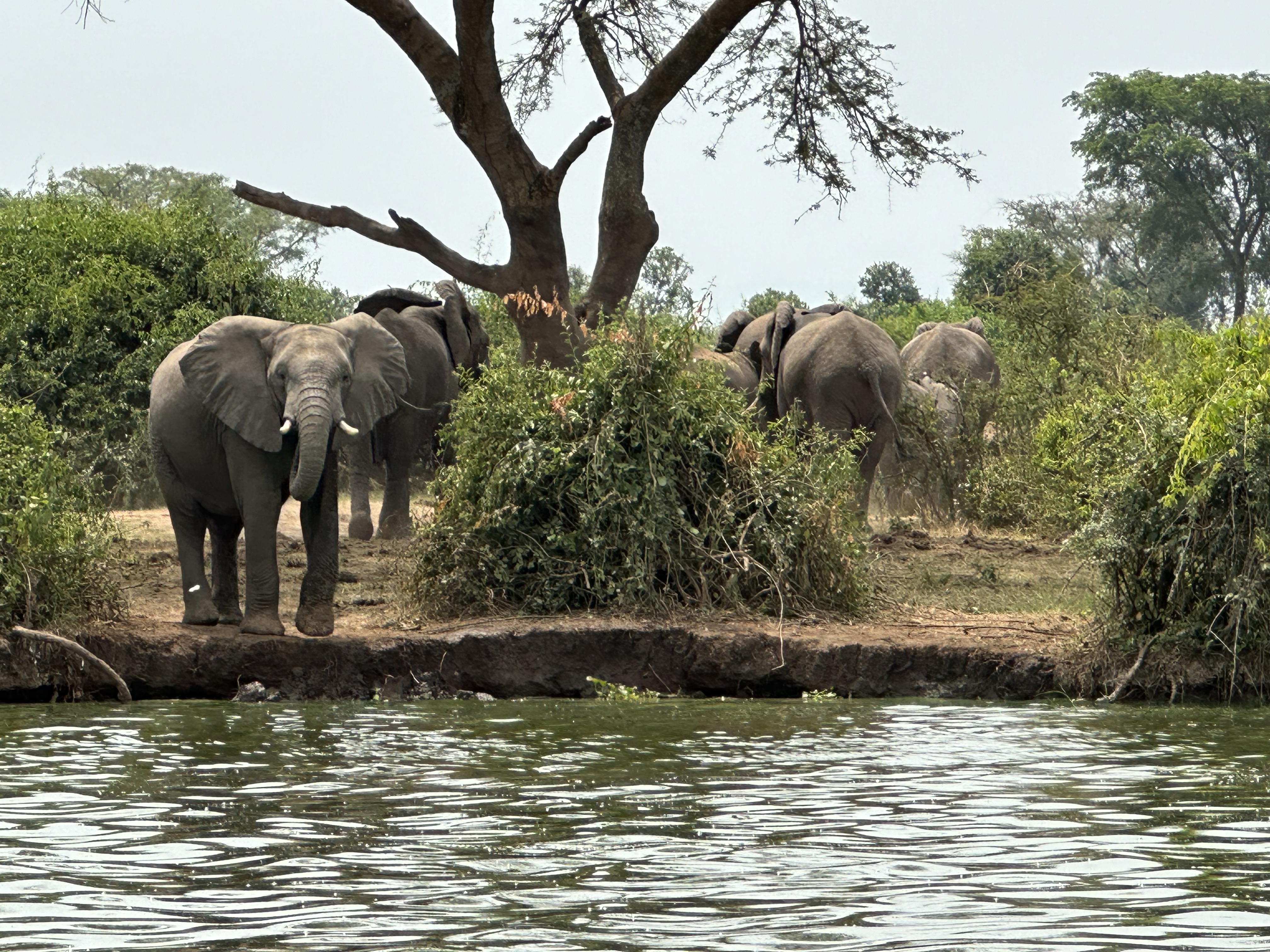
We were right at home. For three days we went on game drives and boat excursions to see animals and birds as well as thousands of hippos, some of whom came through camp each night to get to their grazing fields. Each day we had early morning coffee, followed by a game drive coffee break about 10am, lunch in camp about 2pm, sundowners at 5pm on drives or boating excursions and dinner in camp at about 8-8:30pm. It was too much food and too late to eat for me, but we braved it out rather than be impolite.
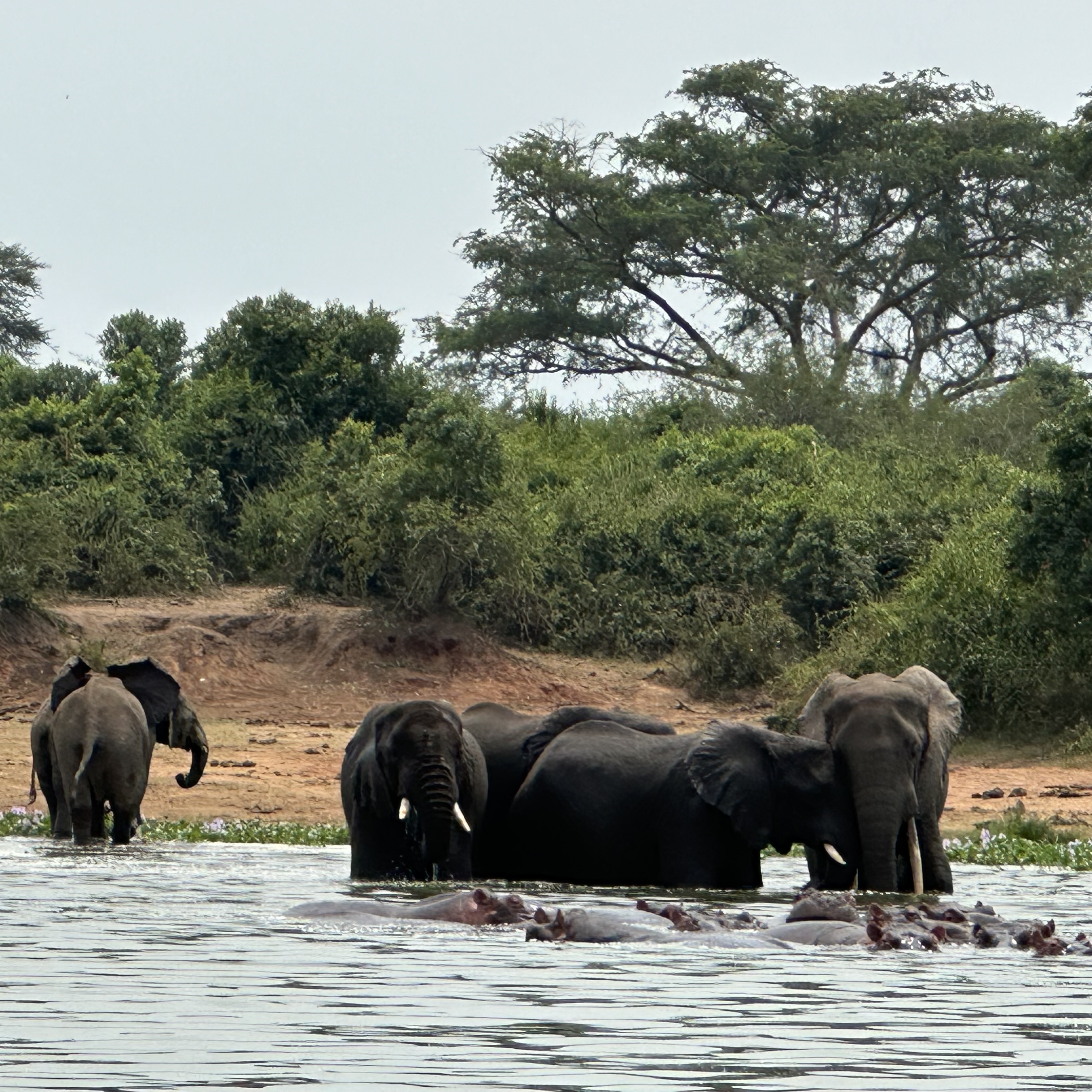
As the camp was on the Kazinga Channel with water everywhere, so that made for great elephant, hippo and bird watching, all of which I could look at and listen to for hours. One time we even encountered a 3 foot green snake swimming near the boat. It was very pretty. We had two incredible game drive experiences.
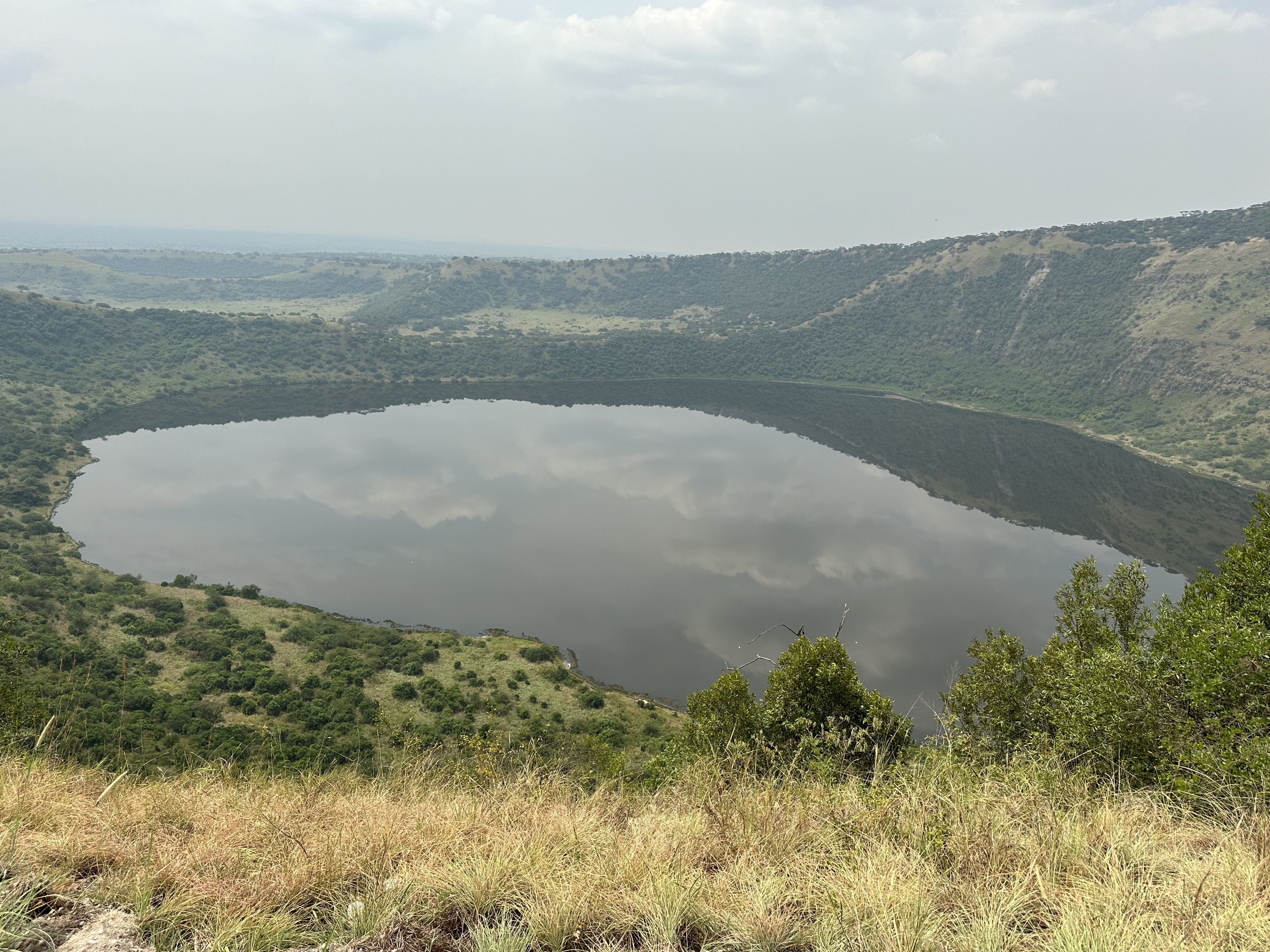
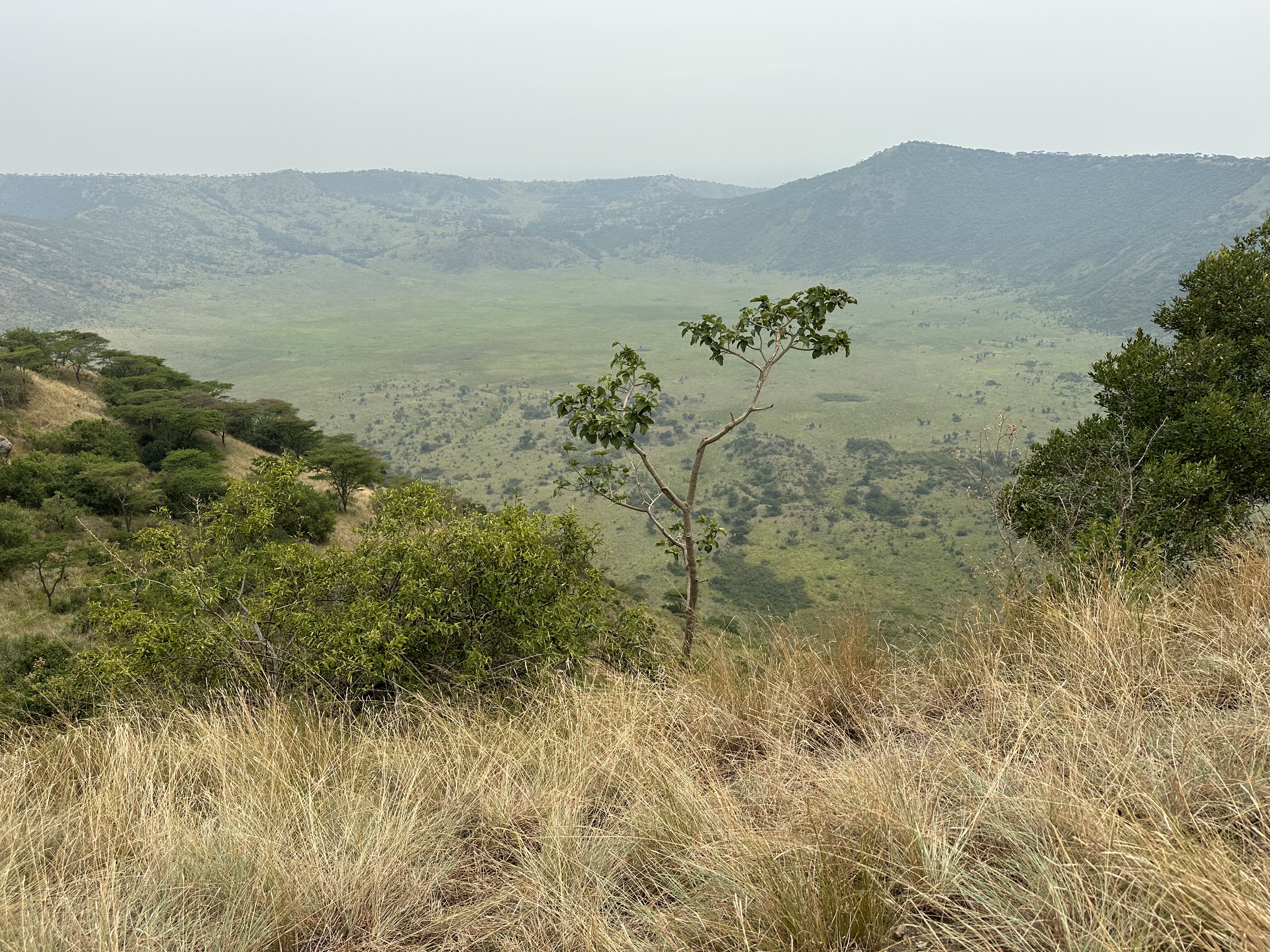
The first was a drive up into the foothills of the Rwenzori mountains to see several craters that were all linked together and had erupted only 7,000 years ago. We drove around the ridge of several of them and looked into densely wooded craters or crater lakes. Some of the lakes contained fresh water and had lovely reflections and others were extremely saline and used to collect salt. It was a very scenic drive.
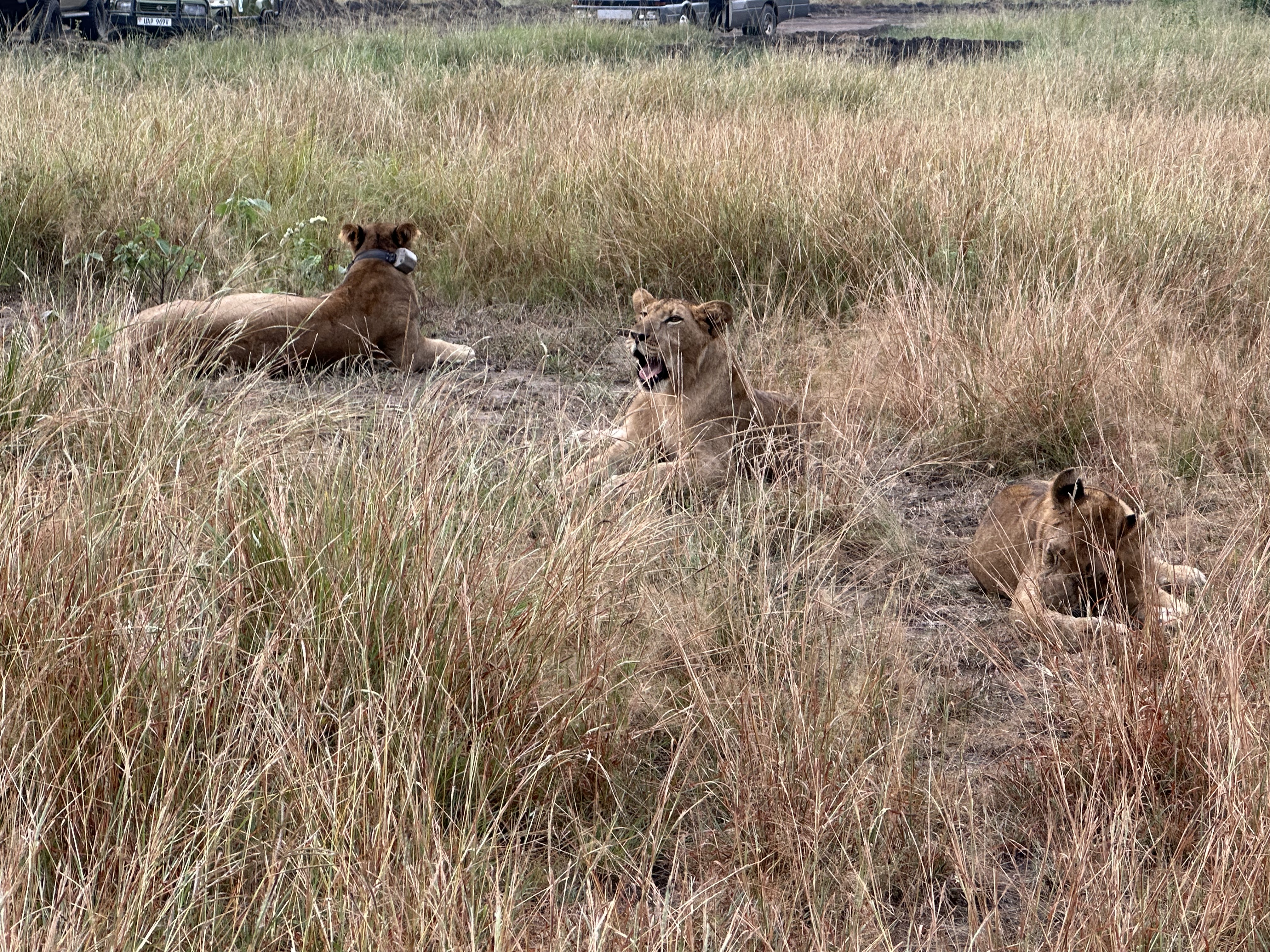
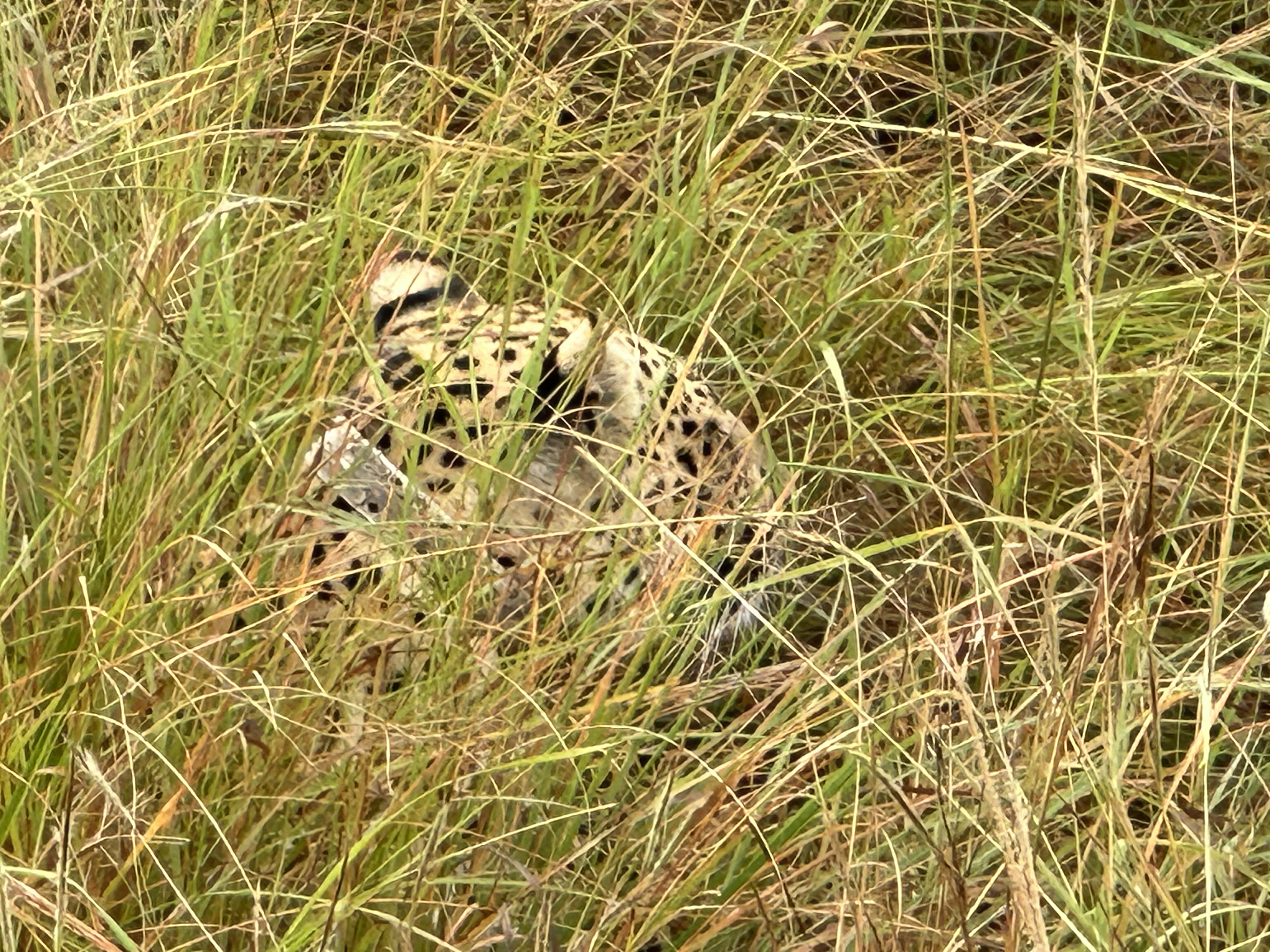
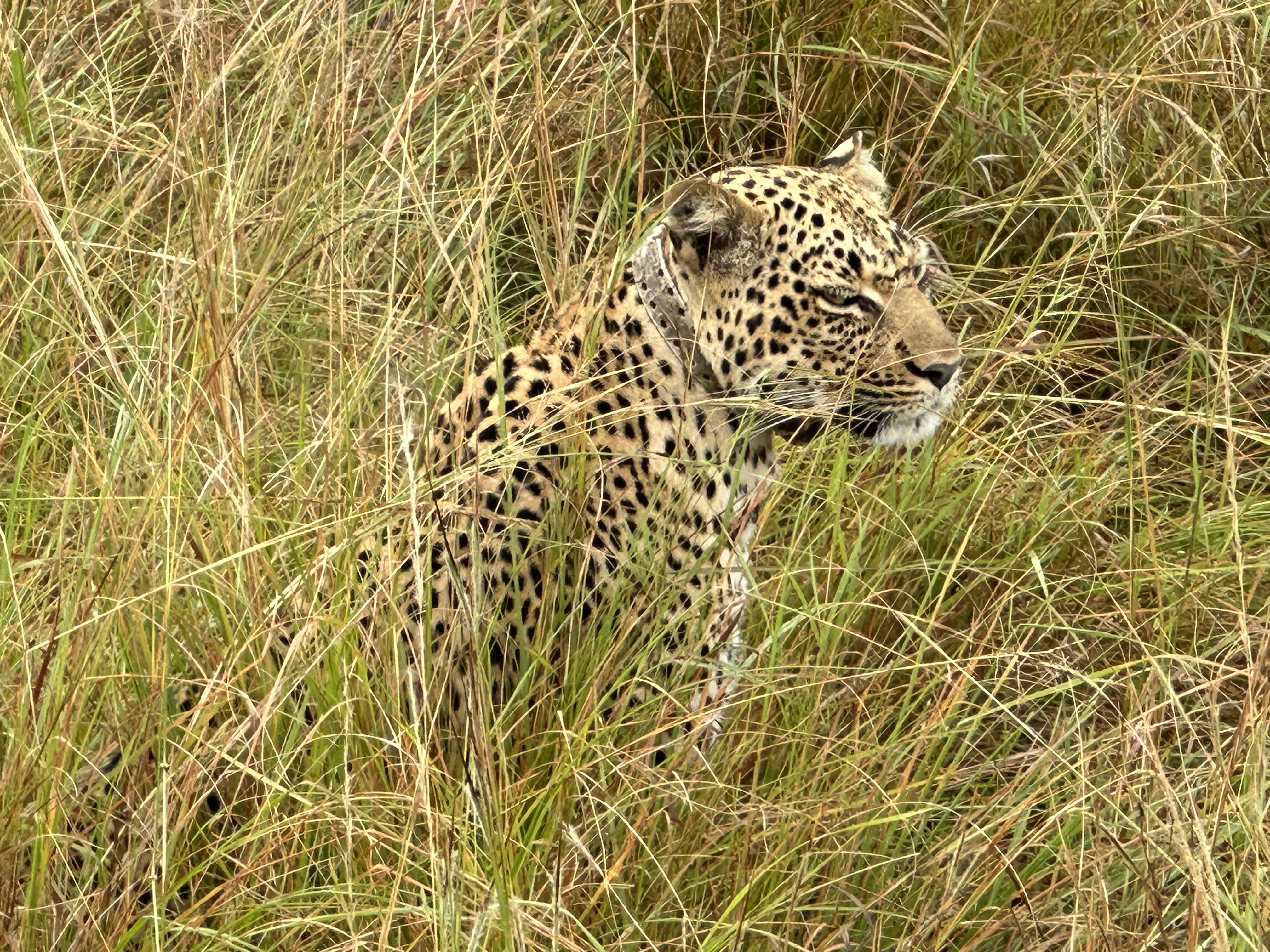
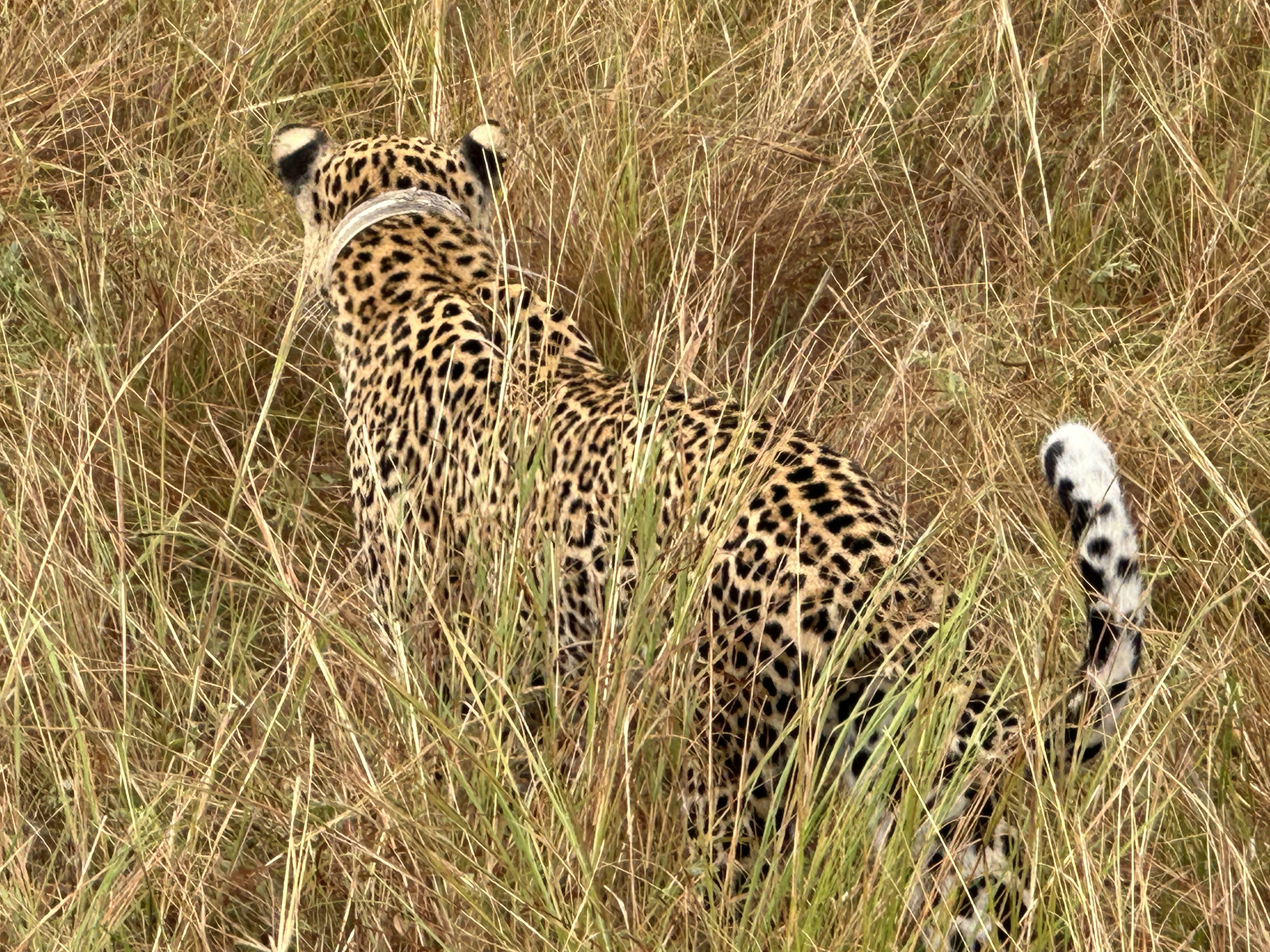
The other game drive was to look for lions and leopards with a research scientist who brought a tracking device. He shared his efforts with us. The scientists track lions until they are able to collar a few of each. Then they followed the collared animals to learn what they were doing. He told us he had 3 lions tagged with collars. Once we got in the area where he expected the lions to be, he got out his tracking device and homed in on the animals. He was always successful and we found the lions asleep in the grass with full bellies. I doubt that we would ever have seen them if not for the tracking device.
The grass was quite tall. The tracker did not tell us what he was looking for. He just kept using his machine and telling the driver when, how much, and where to turn. Finally he had the vehicle stop and told us the animal was 5 feet in front of us. None if us could see anything but grass. Finally the animal moved a tiny bit and we could just make out a leopard. It was very exciting to see it through the dense grass. That was a real treat.
Other activities included a walk through Jonathan’s new, River Station camp, an unfinished, upscale camp near Honey Bear Bush Camp. It will offer guests a choice of style, comfort and price. Jonathan is doing the same thing at Murchison Falls. He currently operates a bush camp in the Murchison Falls area and will now add an upscale option there as well. The last activity I especially enjoyed was a slow boat ride from camp looking for birds. Several I have observed include: Pied and Woodland Kingfishers, Striated Heron, Great White Egret, Grey-headed Kingfisher, Little Bee-Eater, European Bee-Eater and a Crested Crane.
January 19, 2024
Had a relaxed morning and departed Honey Bear Camp at 11am by boat for Katunguru, 20 minutes away. Then drove 25 minutes, stopping midway for a herd of buffalo to pass, to Kasese airport, where we waited until 1pm for a Caravan to arrive.
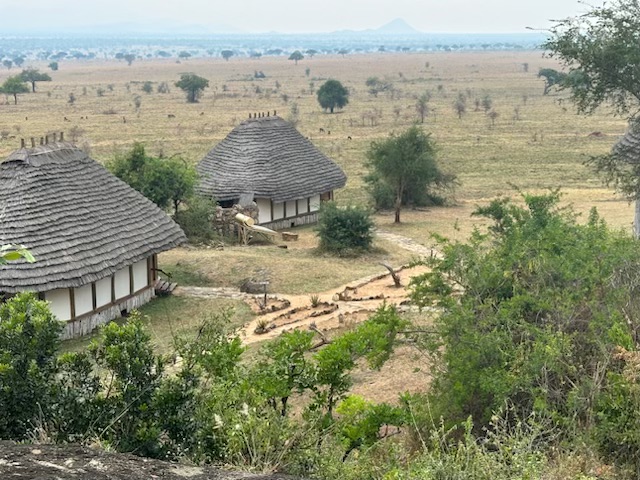
The flight to Kidepo was an uneventful 2.5 hours through continuous haze, diagonally from SW to NE Uganda. The drive to Jonathan’s Kidepo camp, Apoka, was about 25 minutes. Once there we settled into our very nice bungalow, complete with a normal, indoor shower and an outdoor bathtub. There was even a swimming pool.
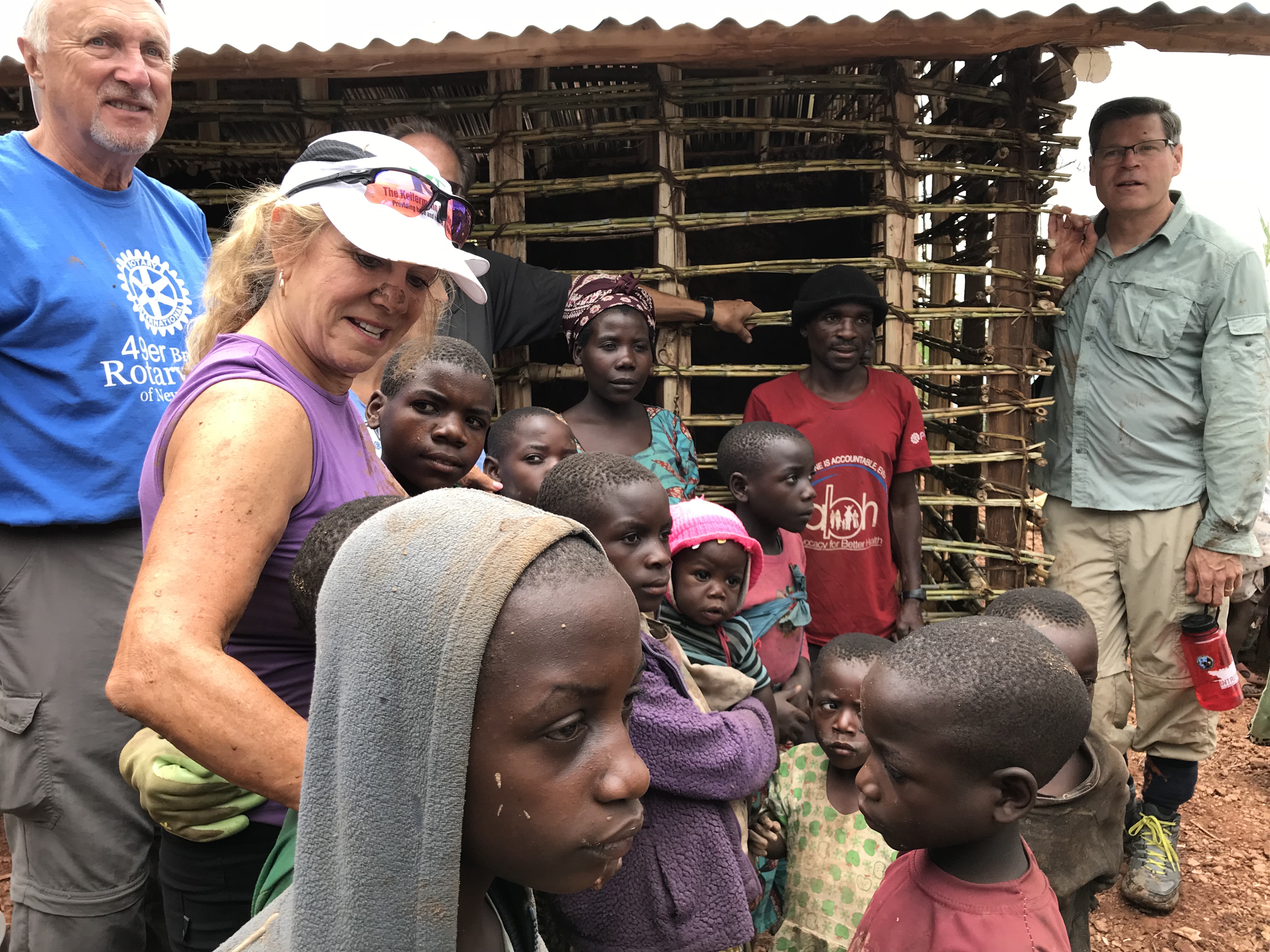
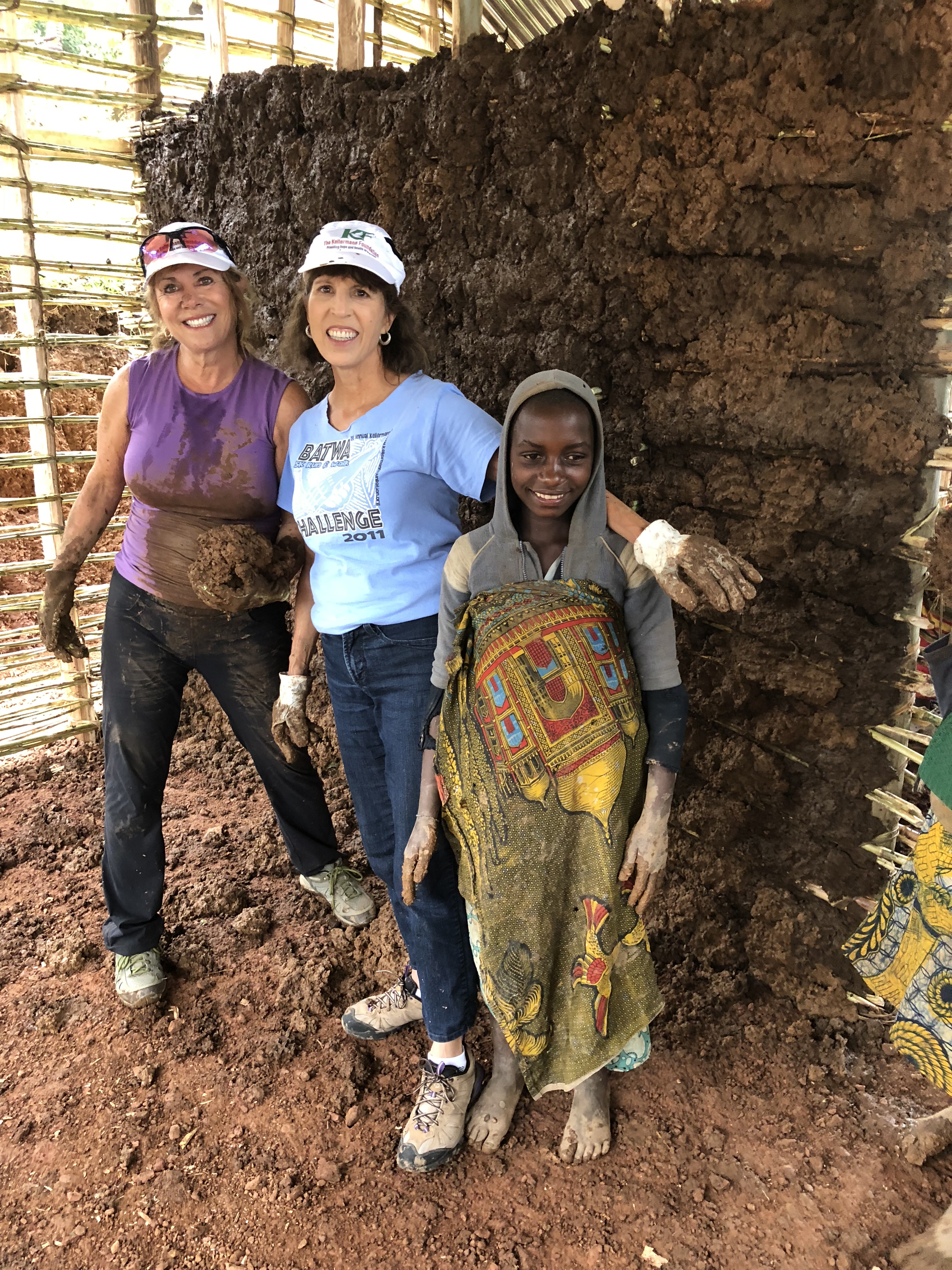
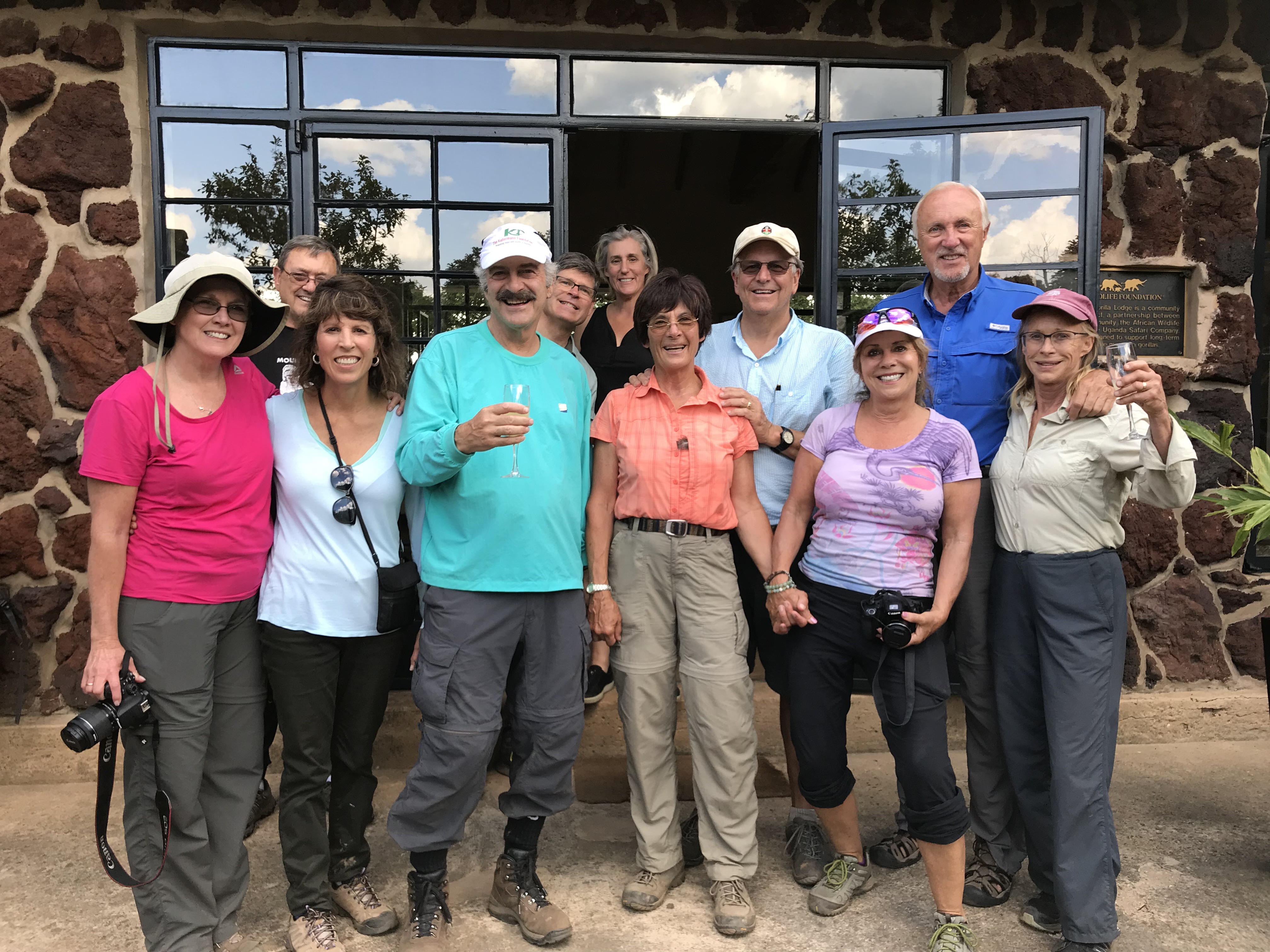
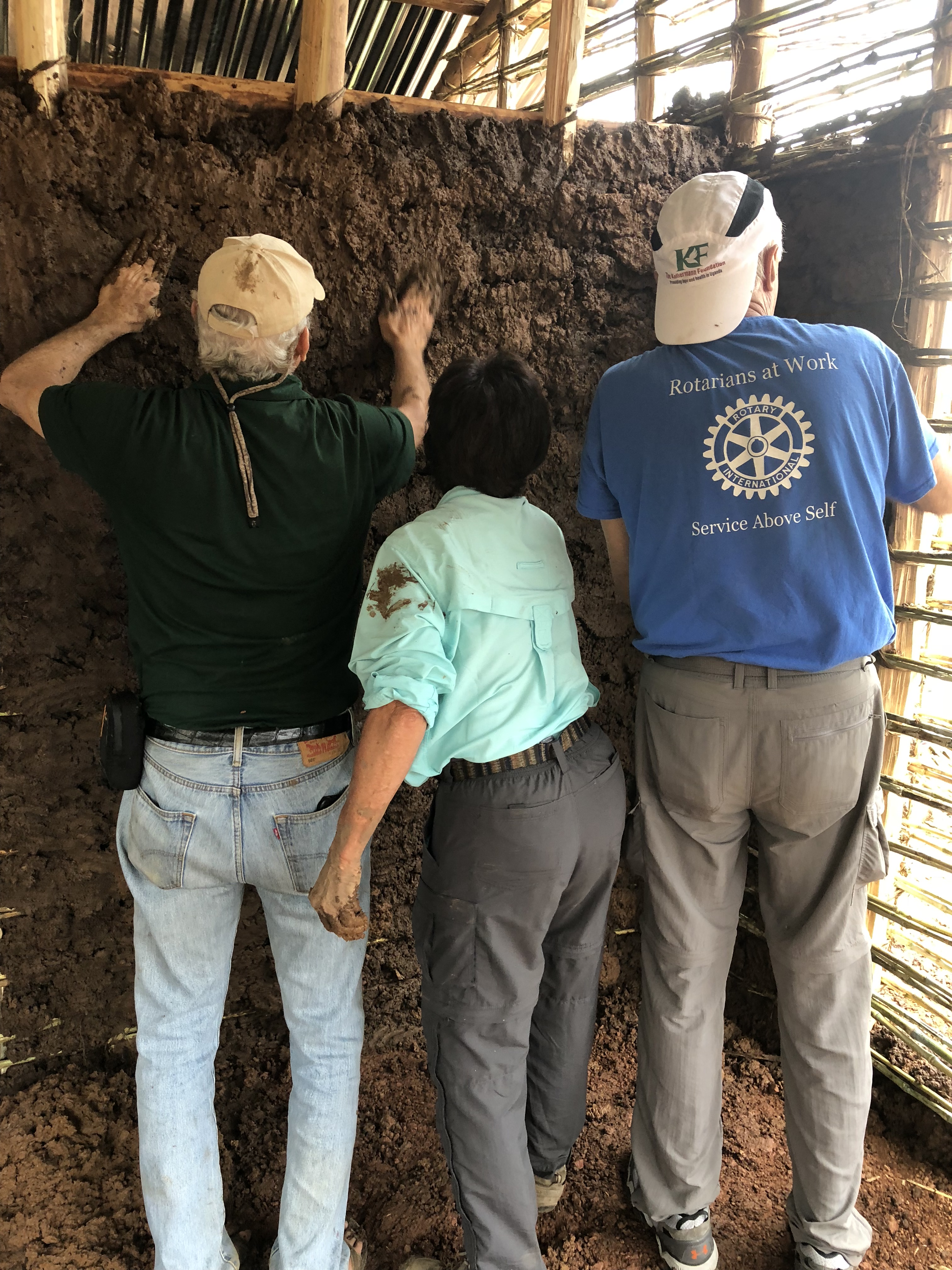
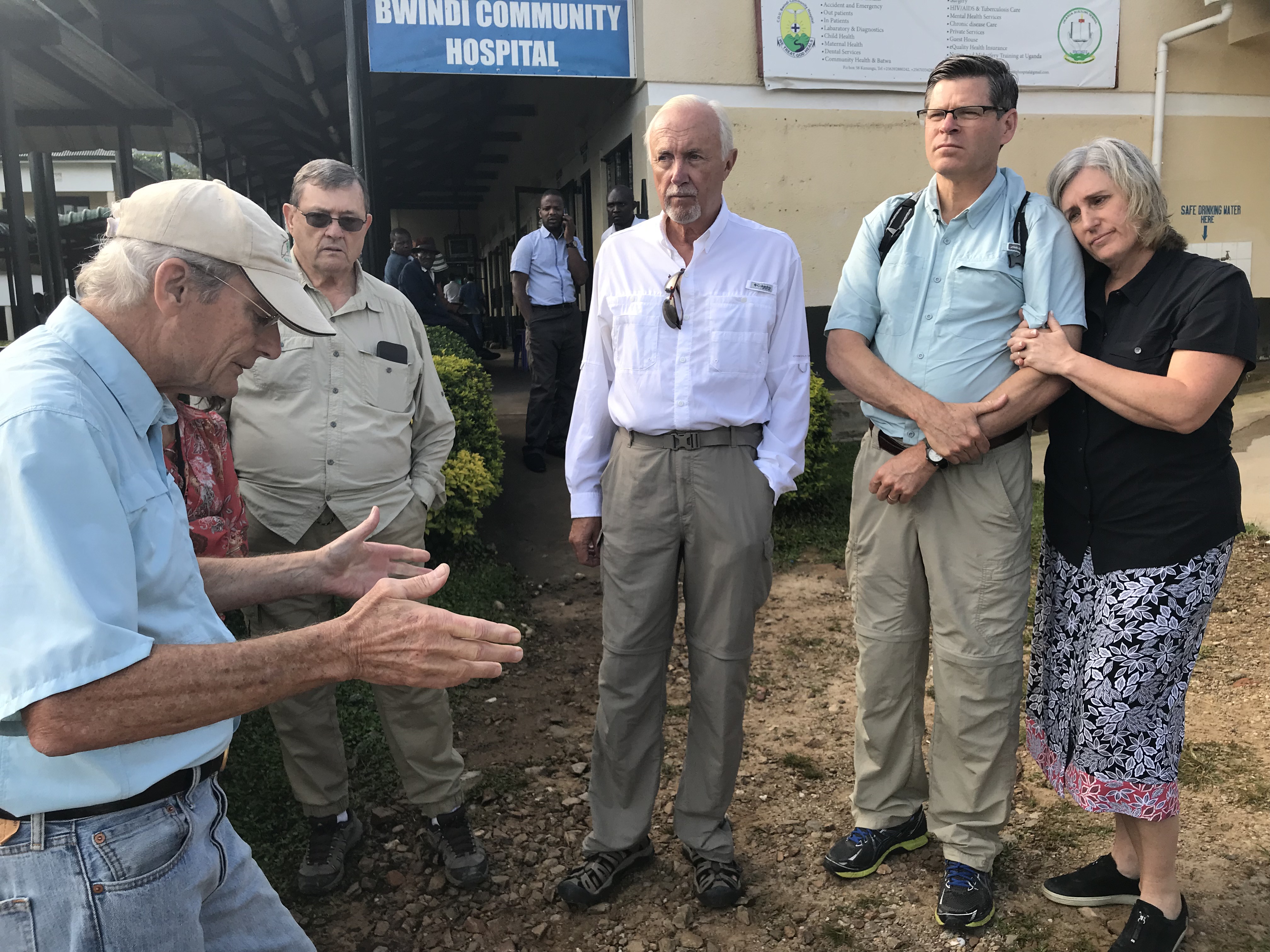
This adventure starts in SW Uganda where the Bwindi Community Hospital (BCH) will be celebrating the ground-breaking of the new Dental/Vision Clinic on January 15, 2024. Mark and I will be joining our local, Nevada County team for the ceremony and a few days of fun. The hospital, referred to as BCH, just celebrated its 20th anniversary since Dr. Scott and Carol Kellermann started helping the Batwa people with malaria and other common ailments. Then, a large ficus tree served as the hospital ward. Today the facility is a fully staffed 155 bed hospital serving an area of 120,000 people including the Batwa, who were driven out of their home in the Bwindi Impenetrable Forest in 1992 to protect the mountain gorilla. Our team for this event consists of Dr. Scott Kellerman, Dr. Jean Creasey, Dr. Sarah Warner, Mark and myself. There are no dental or vision facilities for hundreds of miles, so this will add major services for the population.
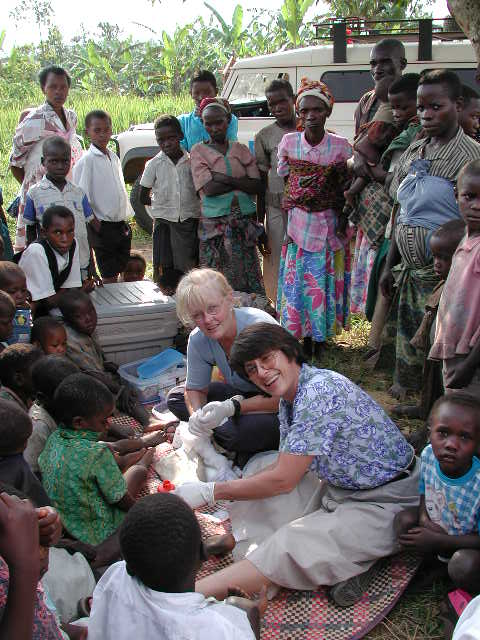
Some of you may know Scott and Carol and the work that they have done in Bwindi during the last 20 years. Please bear with me as I bring those of you who are not familiar up to speed. Scott was invited to do a study of the Batwa in the late 90’s and learned of the desperate straights the Batwa were in when they were driven from the forest, where they had lived as hunter-gatherers for millennia and had their own techniques for securing and preparing food, for creating cover from the elements, for using forest herbs for medical needs, and especially for enjoying life through singing and dancing in the forest. Scott and Carol really connected with the people through singing and dancing. They made the decision to move to Uganda, live among the Batwa and minister to the people, especially their health needs. They sold their practice in Nevada City, left their home and went to live in Uganda in 2001. Once there, they built a small house for themselves, bought a white Range Rover, painted a blue cross on it, filled it with medical supplies and headed out into the countryside. Wherever they stopped people would come out of the forest to get help. I know this because Mark and I went to visit them in 2002 and traveled around with them in the ambulance.
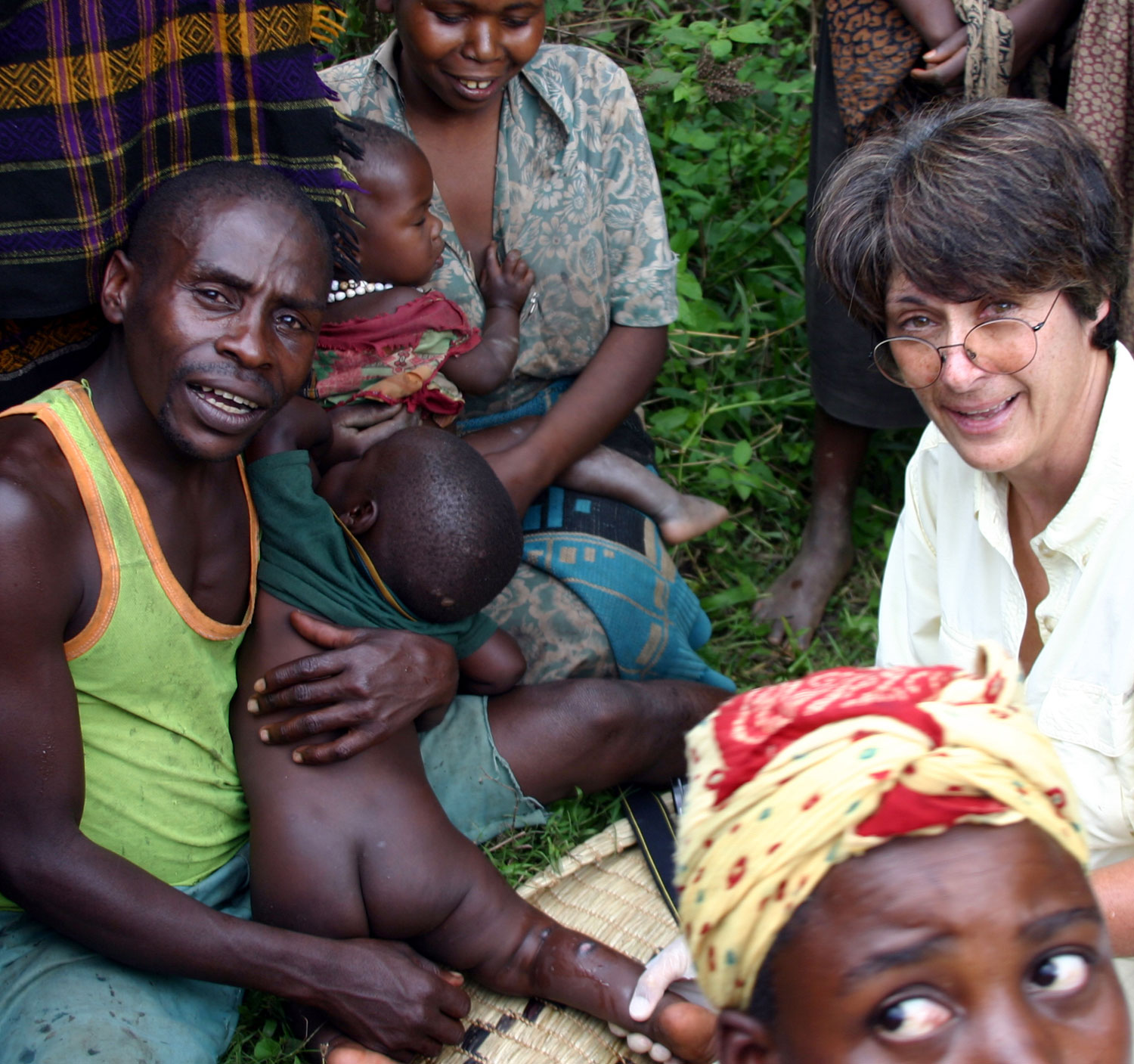
It was quite an eye opener to see a couple hundred people appear out of nowhere and wait patiently to be seen and helped. Carol’s job was to provide wound care for anyone with cuts or sores, while Scott tended to more complex problems like malaria, HIV and other diseases. He used a huge ficus tree as shade cover and hooks to hang the IV’s on. That tree has since become famous for being Scott’s first hospital ward.
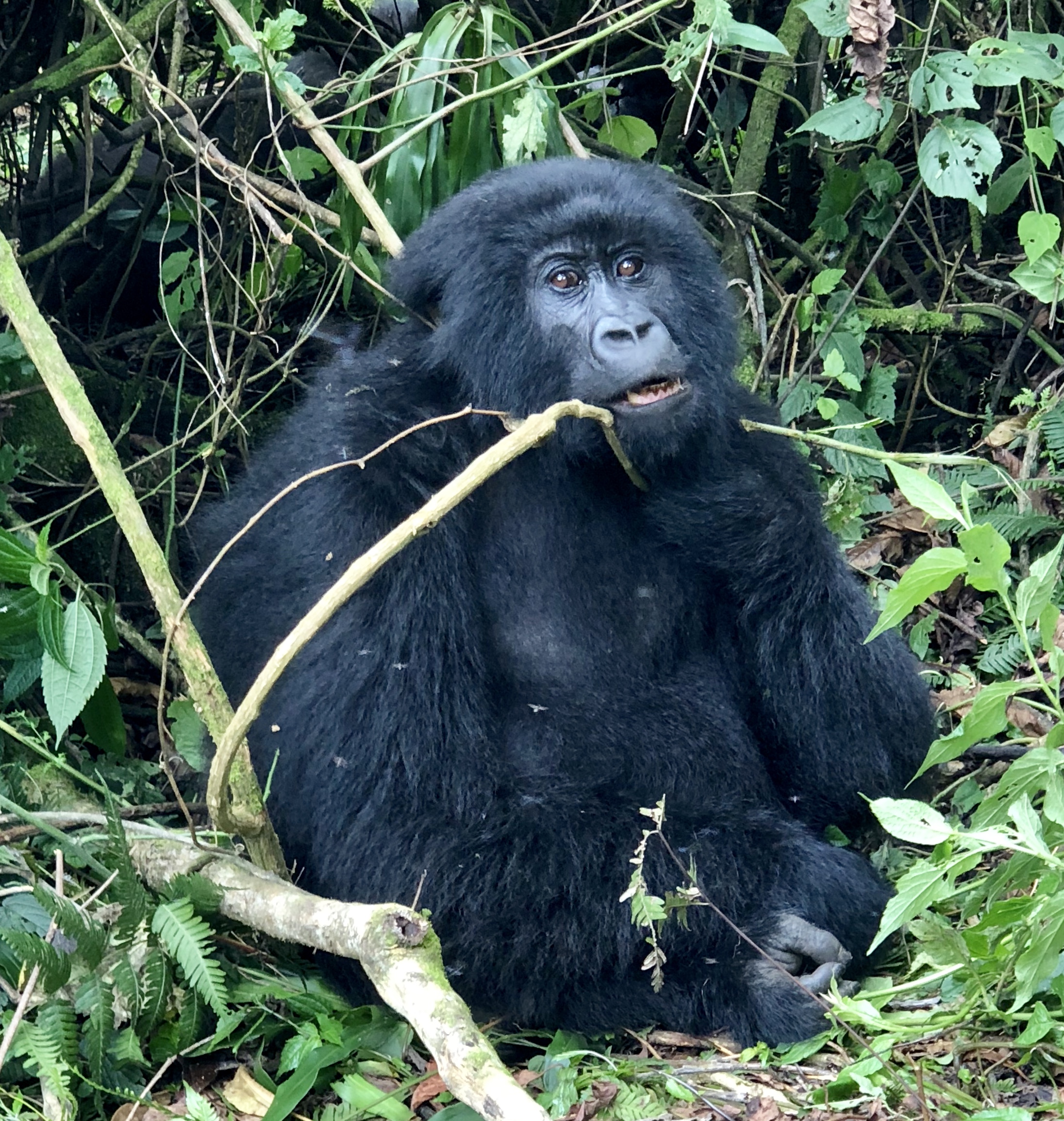
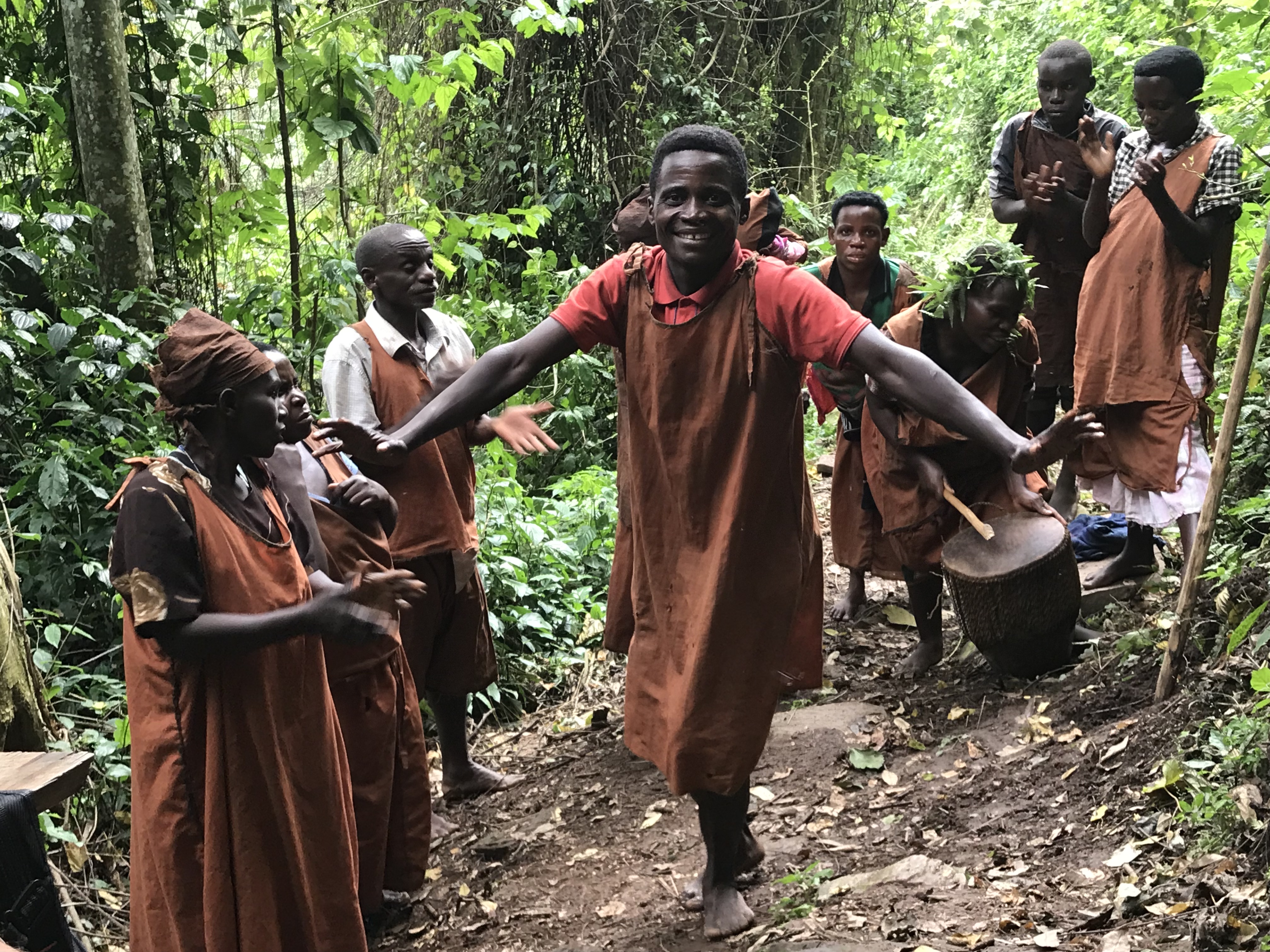
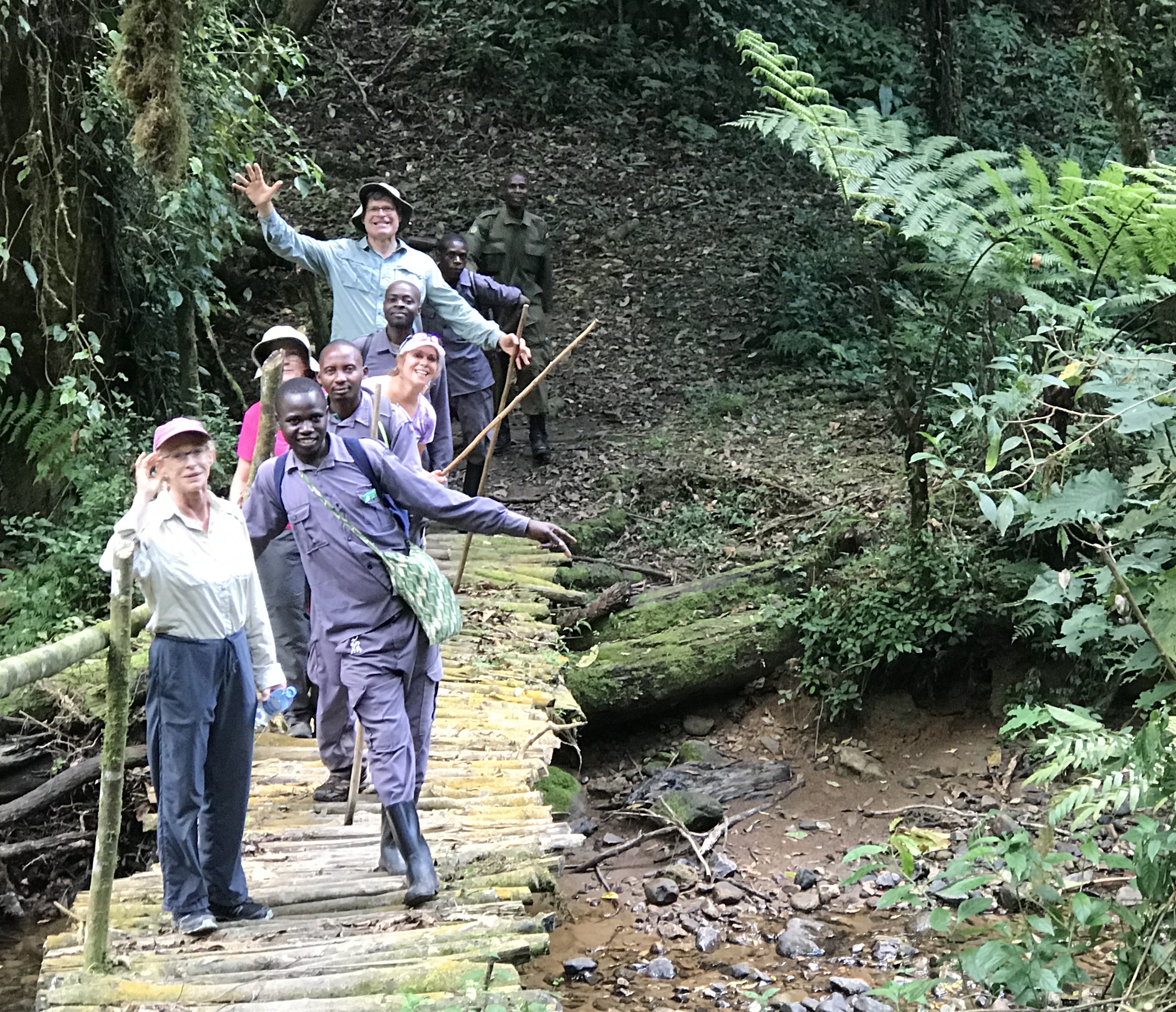
Below is a gorilla we saw along the trail. Below that is a group of Batwa dancing to drum beating and singing in the forest.
In 2004 we went back again to visit Scott and Carol and the scene was pretty much the same, except their local language skills had improved, and they were dispensing medicines more effectively, solving medical problems more readily, and dancing and praying a lot with the locals. They had also managed to get enough money donated to build a small clinic for anyone who needed help and could get there.
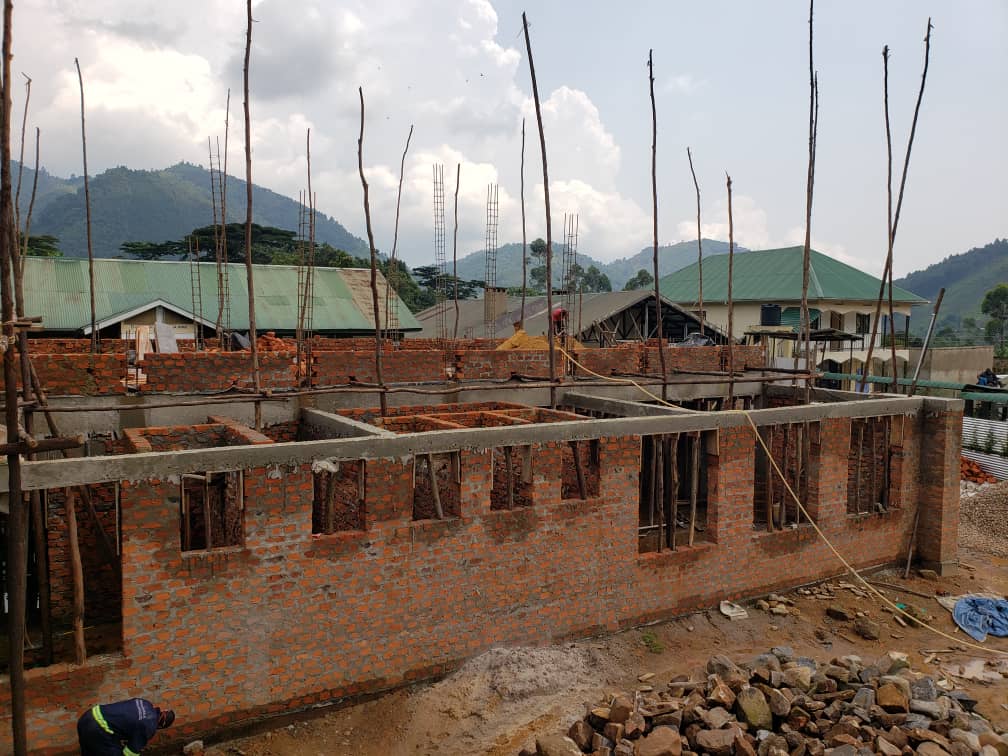
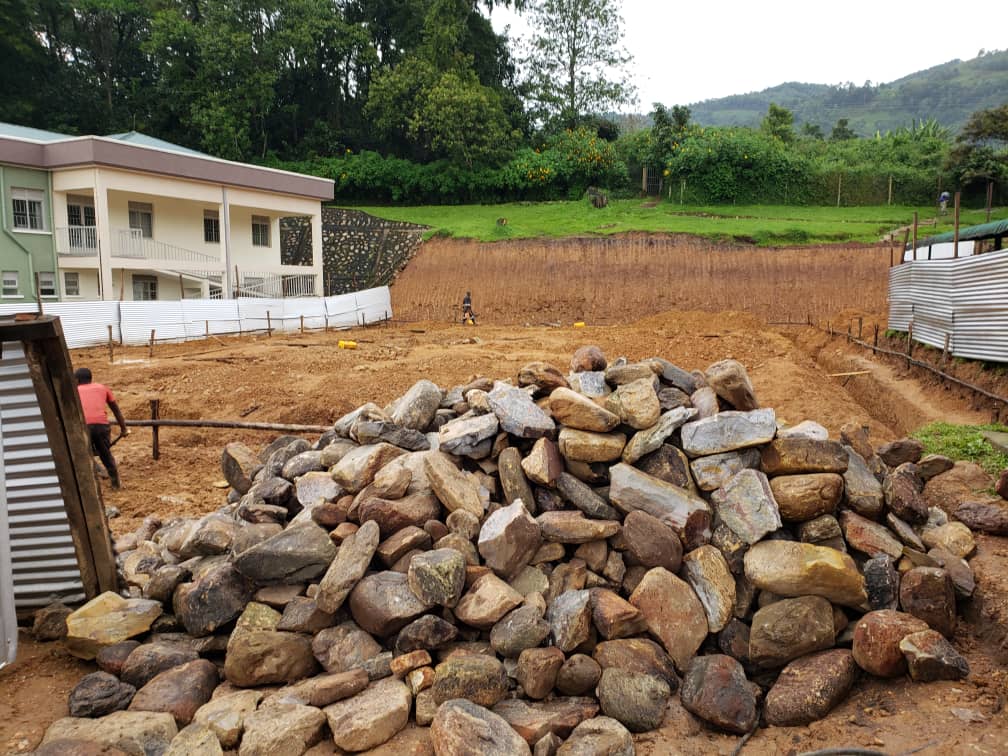
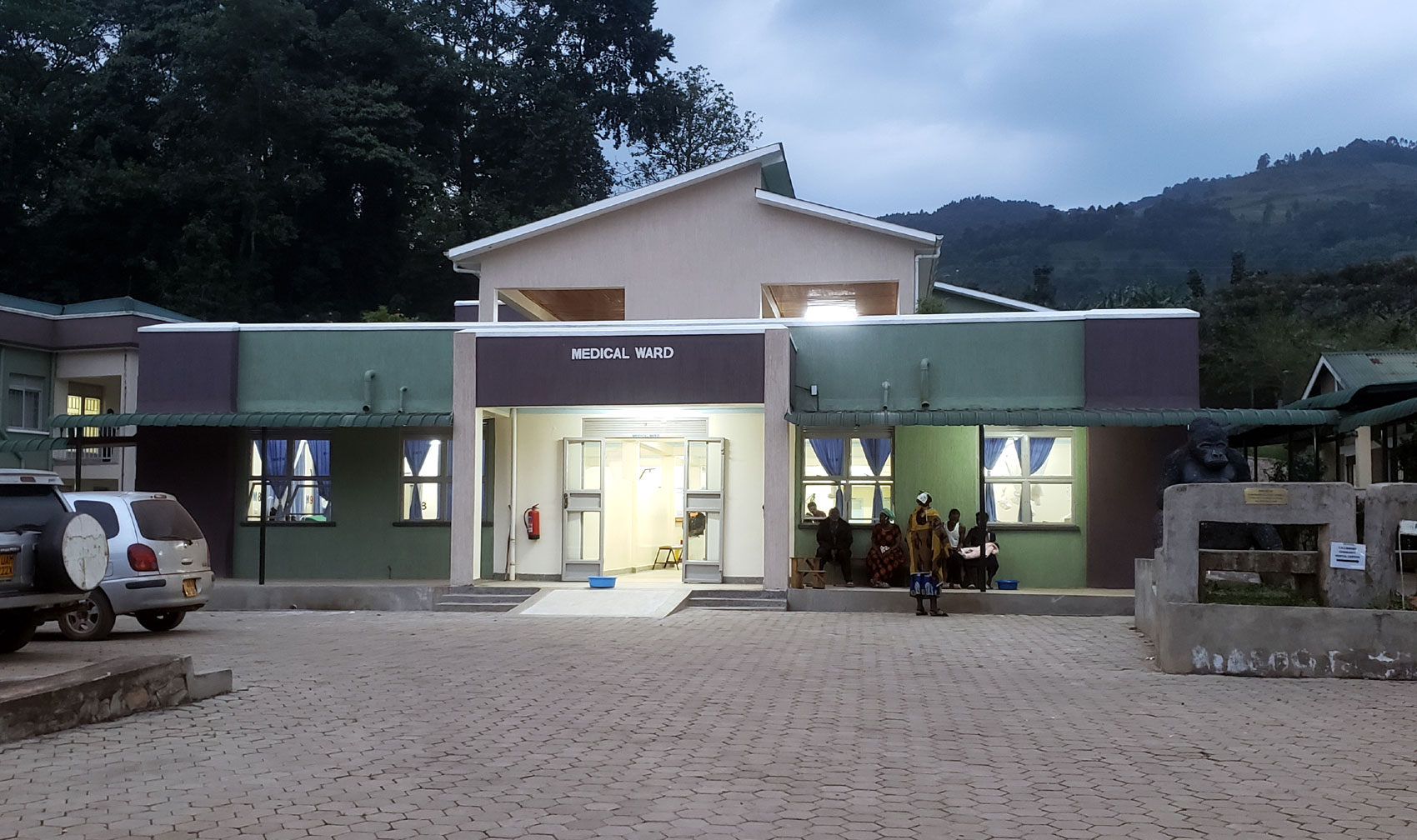
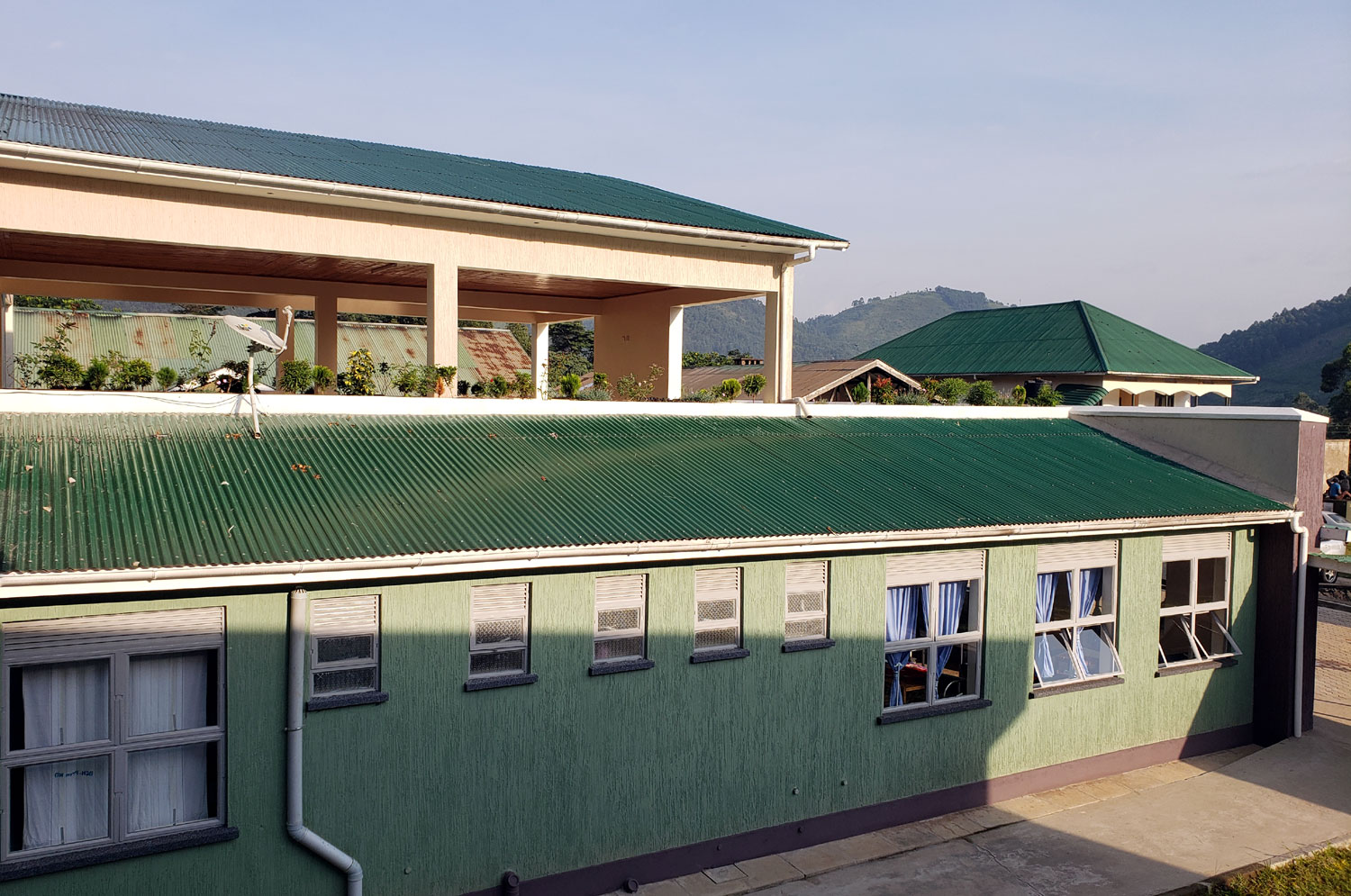
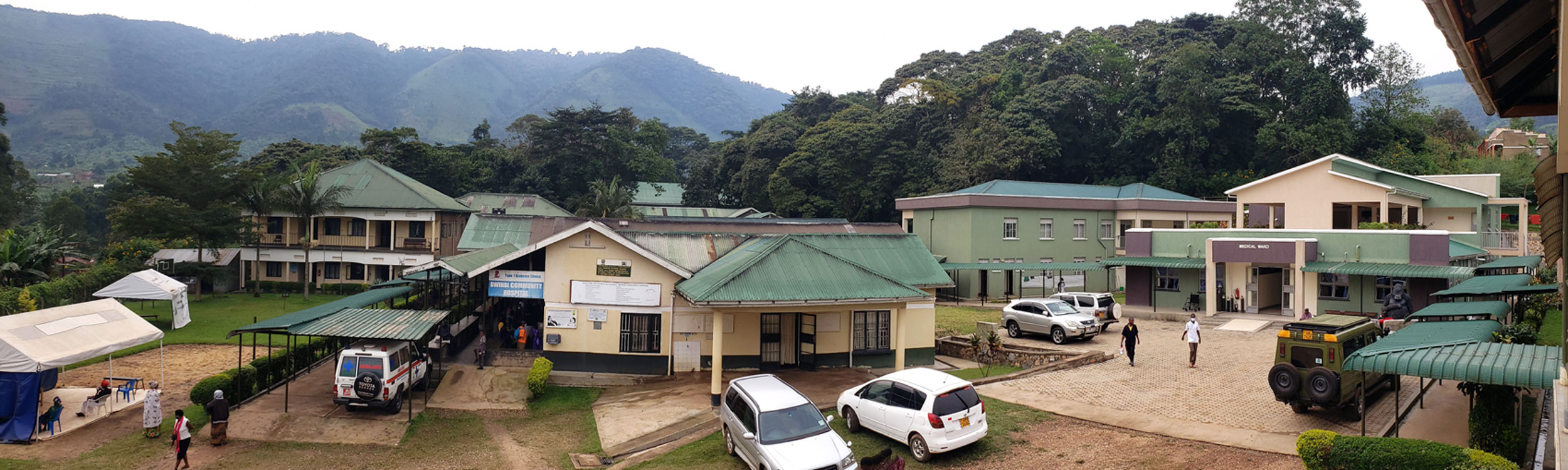
Years went by before Mark and I would get back to Uganda. We missed much activity. Scott had raised a lot of money through his rotary connections, and several structures had been built and many people from around the world came and continued to come to assist Scott and Carol. A hospital grew out of the ground as doctors, nurses and volunteers came to work and improve the services. A guest house was built as well as housing for staff and volunteers. A maternity ward was funded and built, as was a nursing school, an operating theater and wards for recovering patients. Even a chapel was built. We learned that a ward to provide improved accommodation for recovering surgery patients was needed, so Mark and I donated funds and arrived in Bwindi in 2016 in time to dedicate what was named the Primary Ward. There was only one floor however and it was hoped that a second floor would be added. The left photo is the unfinished first floor. The right photo shows the finished 2 story Premium Ward. In the center, is the leveled ground in preparation for the Intensive Care Unit.
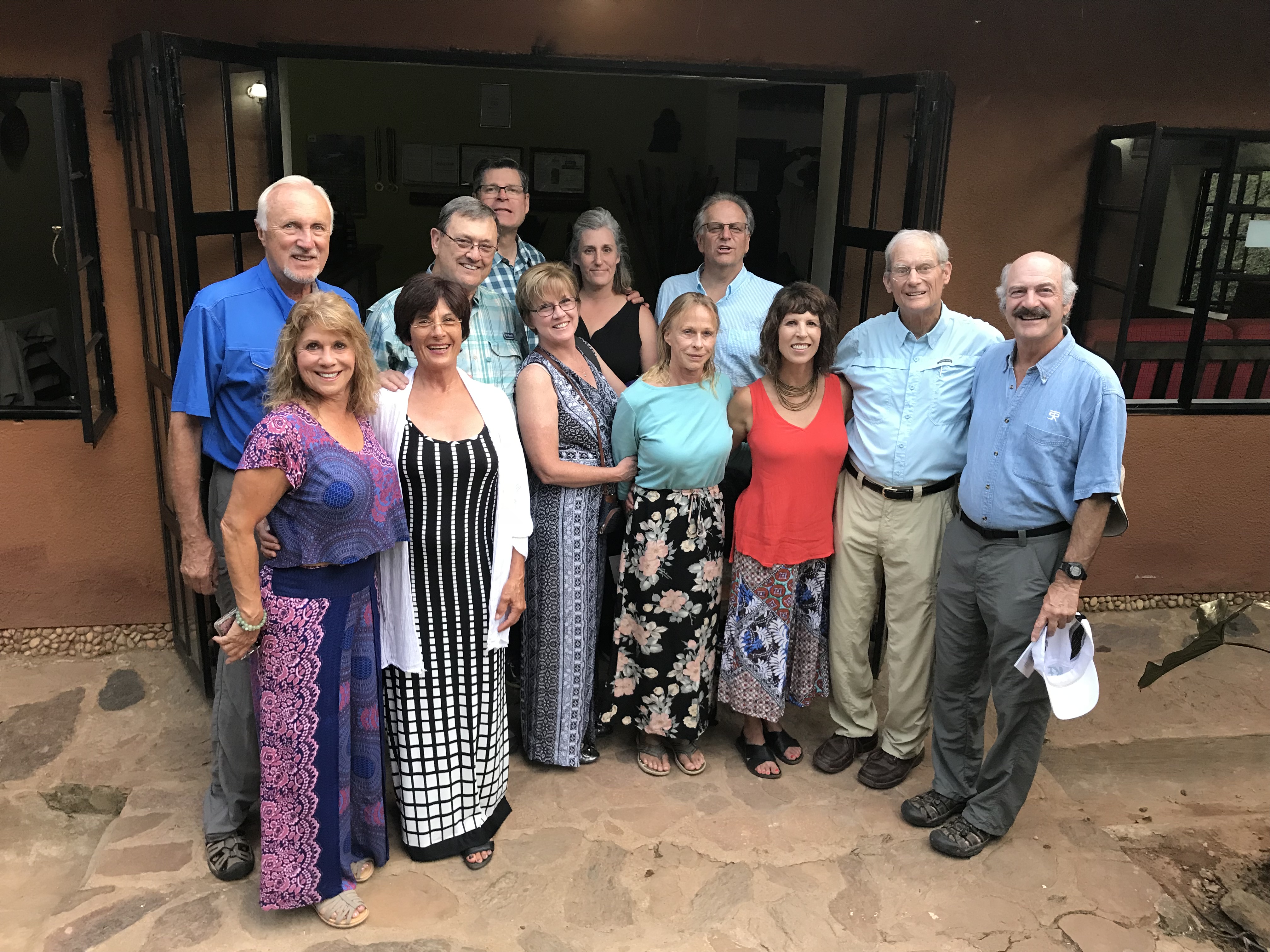
Two years later, in 2018, Mark and I were back at BCH with Scott, Jean Creasey, Mimi Simmons, Phil Rubble, Michael and Amy Shane, Al and Lynne Dover and Larry Faller and his daughter Marleen Becker.
We had been in Bwindi a few days and on the last day we were standing on a hillside overlooking the hospital and discussing Scott’s dreams. He wanted to see the Premium Ward finished and the ICU designed and built on the sight where we were standing. Scott is a very persuasive fellow. Mimi and Phil surprised us all by agreeing to pay for the second floor of the Primary Ward. Shortly thereafter, everyone in the group made a commitment for whatever they could toward building the ICU. As a group we finished funding the construction in 2021. The left photo is the front entrance to the ICU and the right photo shows the bulk of the building with the popular outdoor dining area upstairs.
Five years later, we are finally getting back to Bwindi to see the finished and fully utilized ICU and to do the ground-breaking for another facility, the Bwindi Dental/Vision Clinic. A dental clinic has been the dream of Jean Creasey’s for many years so it is wonderful that she will be with us for the ceremony. The vision clinic is the dream of Stacey Lippert, who heads up Hope Alliance, an organization that provides basic vision care at the BCH. She is from Park CIty, Utah, but unable to attend. Mark and I are thrilled to be able to bring this vision of theirs, and the whole Bwindi community, to fruition.
Here are a collection of photos from our 2018 trip.
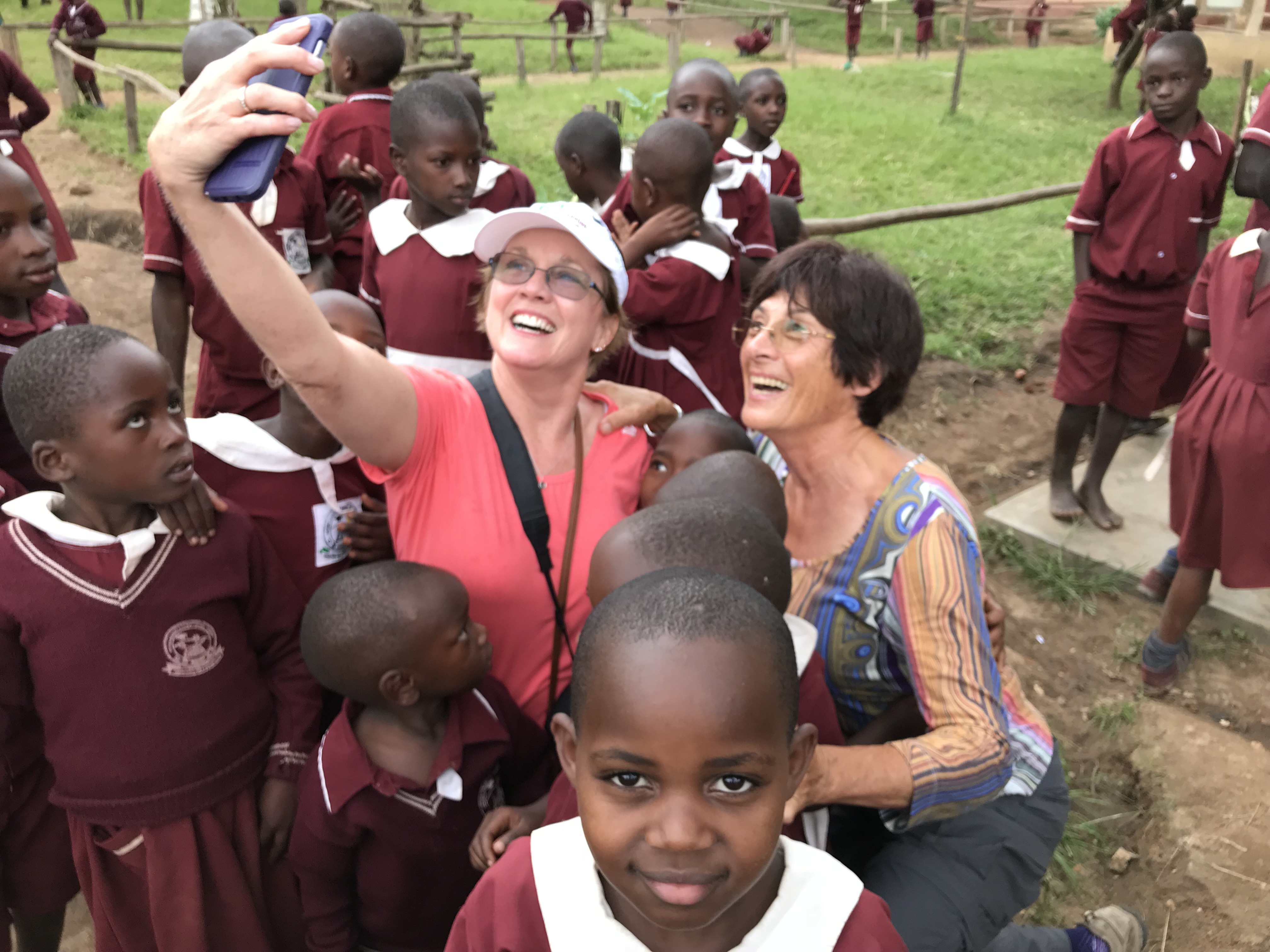
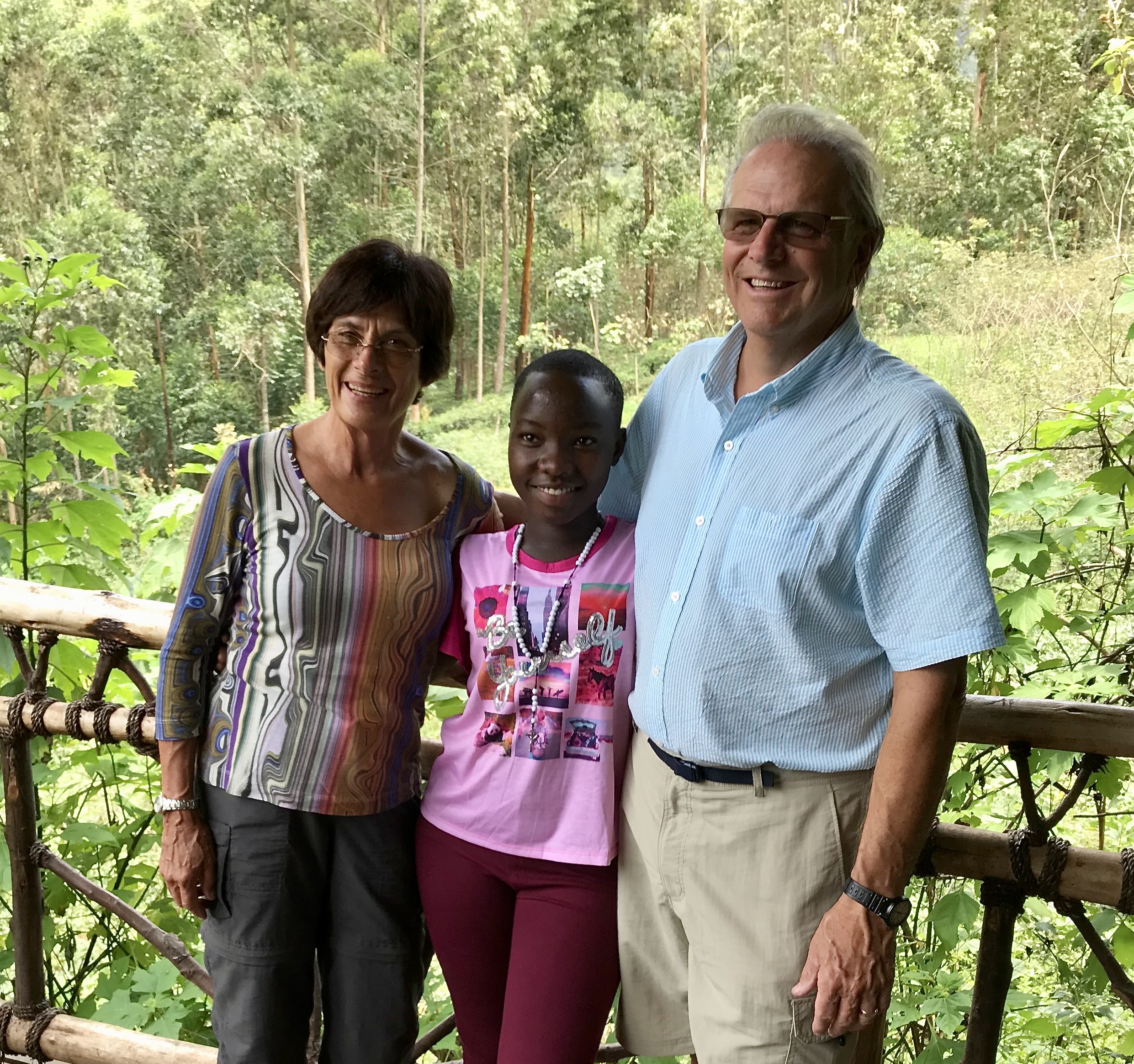
The girl in the photo with Mark and me is our godchild, Juliana. The girl just above with me is a Batwa Mark and I are sponsoring through school. Her name is Anivious. The large group is the staff in prayer at the beginning of the work day.
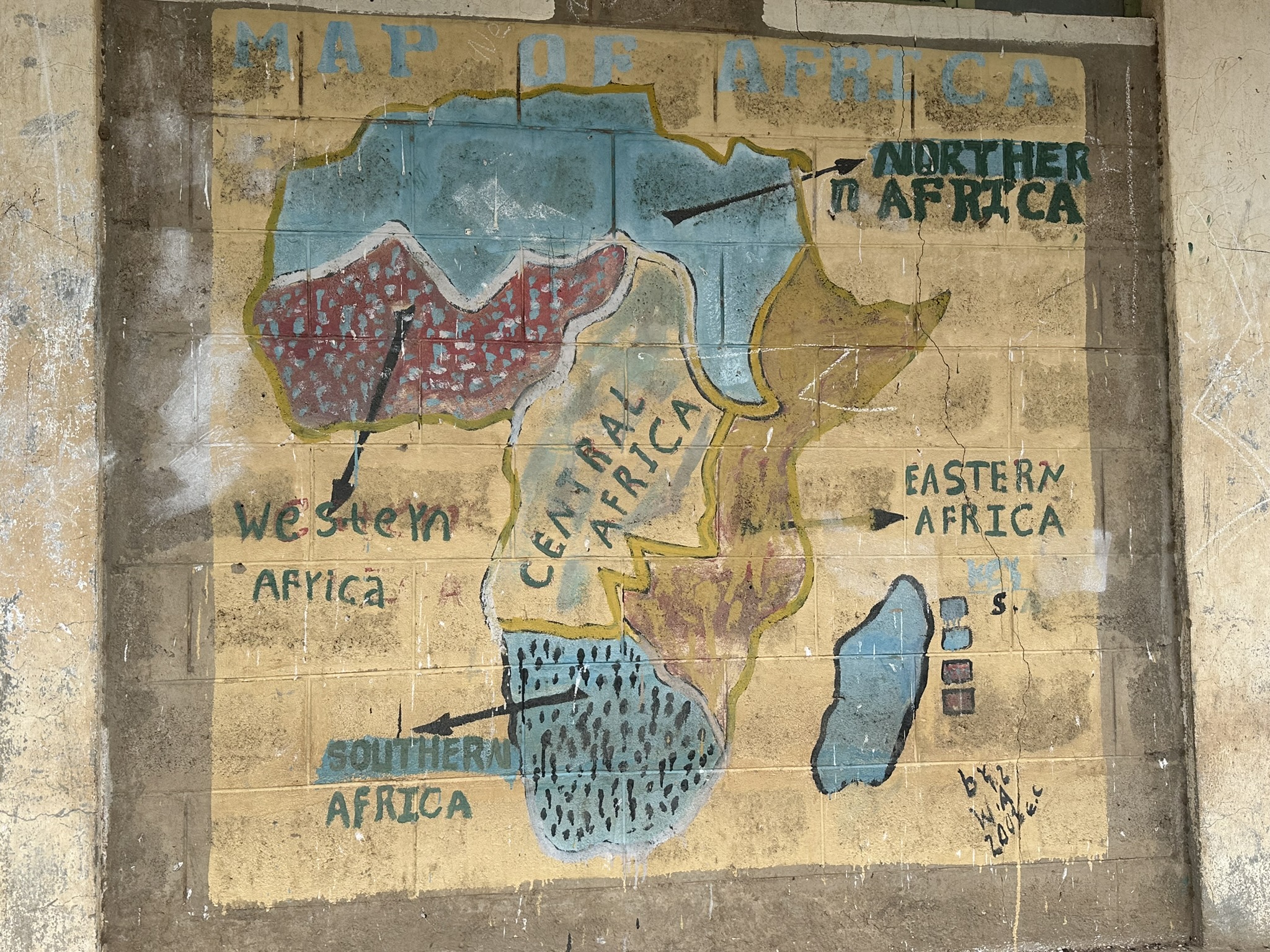
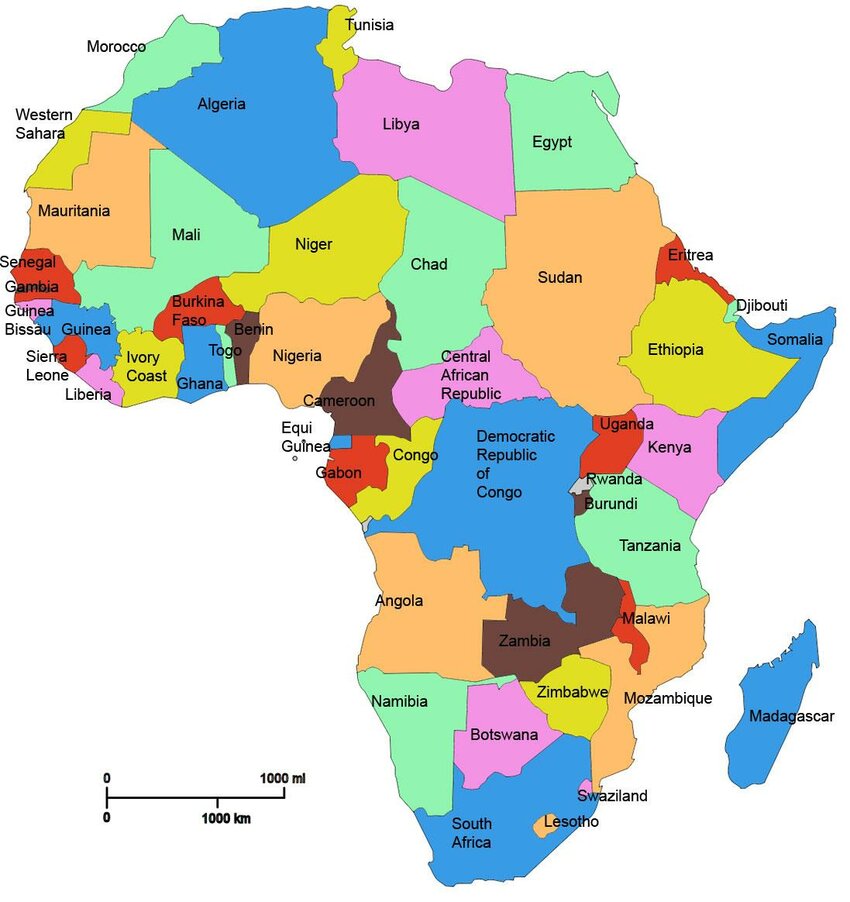
We leave home Tuesday, January 9, and we are very much looking forward to the adventure. Below is a map of Africa. The Bwindi Community Hospital is in a small town called Bahoma in the far south west corner of Uganda. It is just north of Rwanda and east of the DRC. The continental USA would fit comfortable in West Africa.
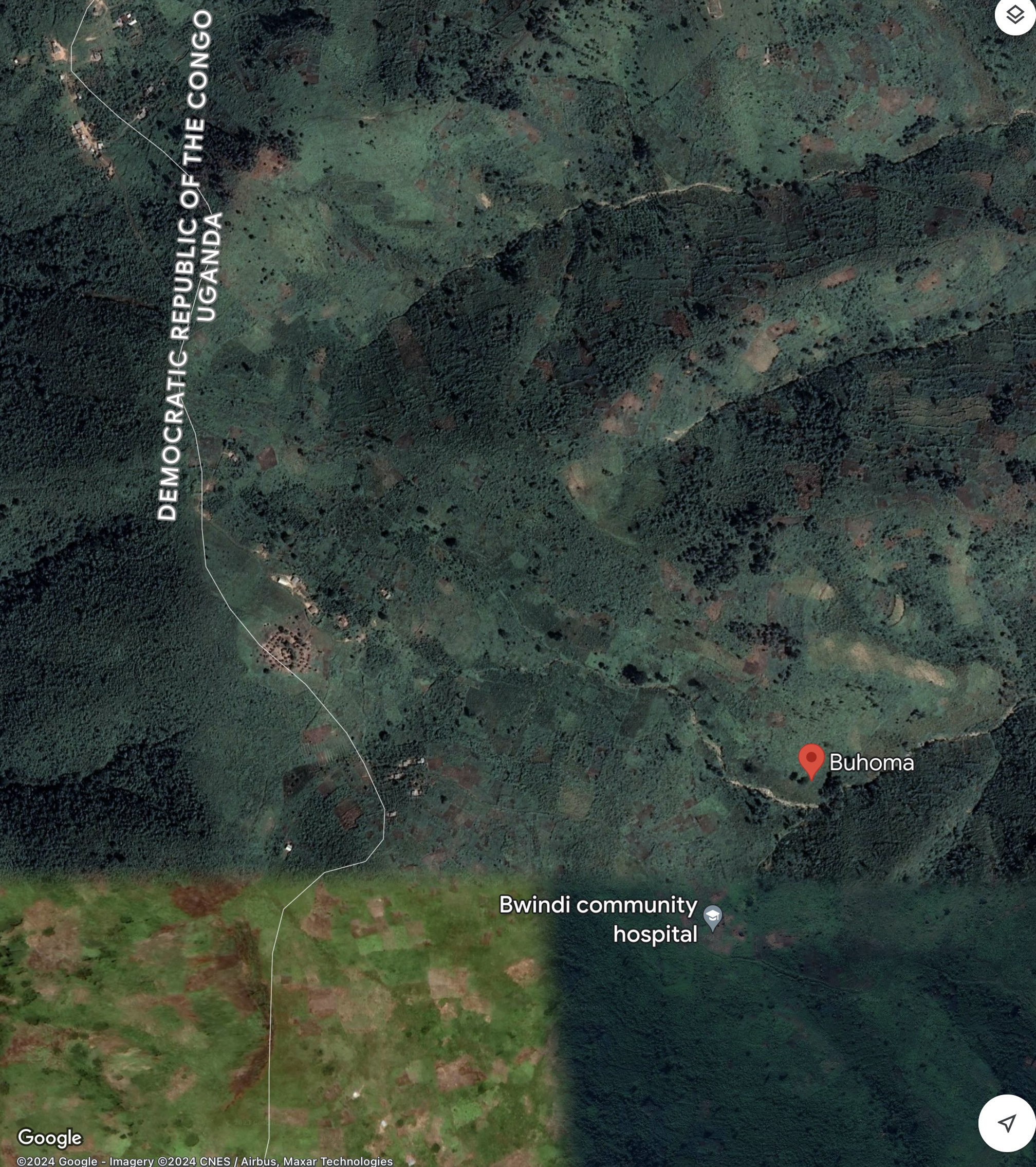
The image above is a closeup of the area where the dense forest is located and the gorillas dwell. Next to the forest is the village of Buhoma with the Bwindi Community Hospital nearby. The populated and cultivated area north and west of Buhoma is clear. The line indicates the border of Uganda with the Democratic Republic of the Congo.
My travel experience began at 19 when I was an exchange student to Germany. After college I wanted to travel, but had no money so the natural choice was to become a stewardess. I was hired by World Airways and traveled all over the world on the non-scheduled carrier. It was exciting and wonderful and made me want to keep traveling even after I quit the airborne waitress business. At one point I realized that I liked flying as much as I liked traveling and earned my pilot's license at the age of 30. Since then I fly and travel as much and as often as possible. I used to write about my early travels in long hand but they were not legible. Now, with the aid of this computer, I am able to share my experiences. I hope you enjoy them.



























 Adventures with Julia
