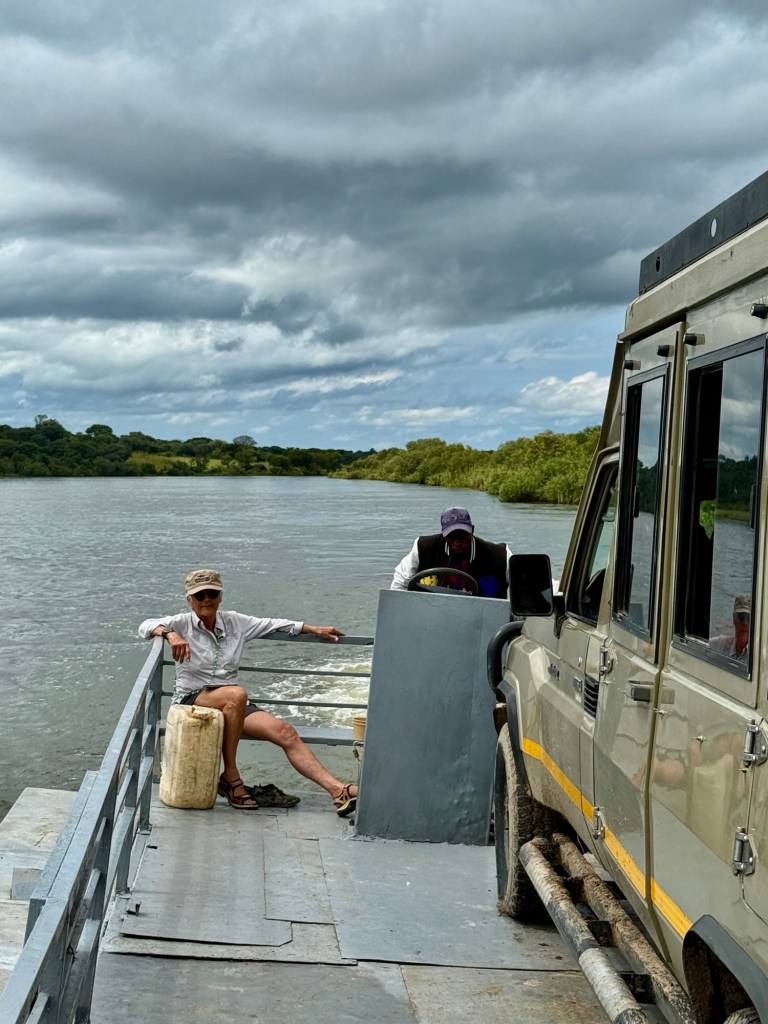
Category Archives: Adventures

A boat excursion ends the adventure

Saturday, November 15, 2025

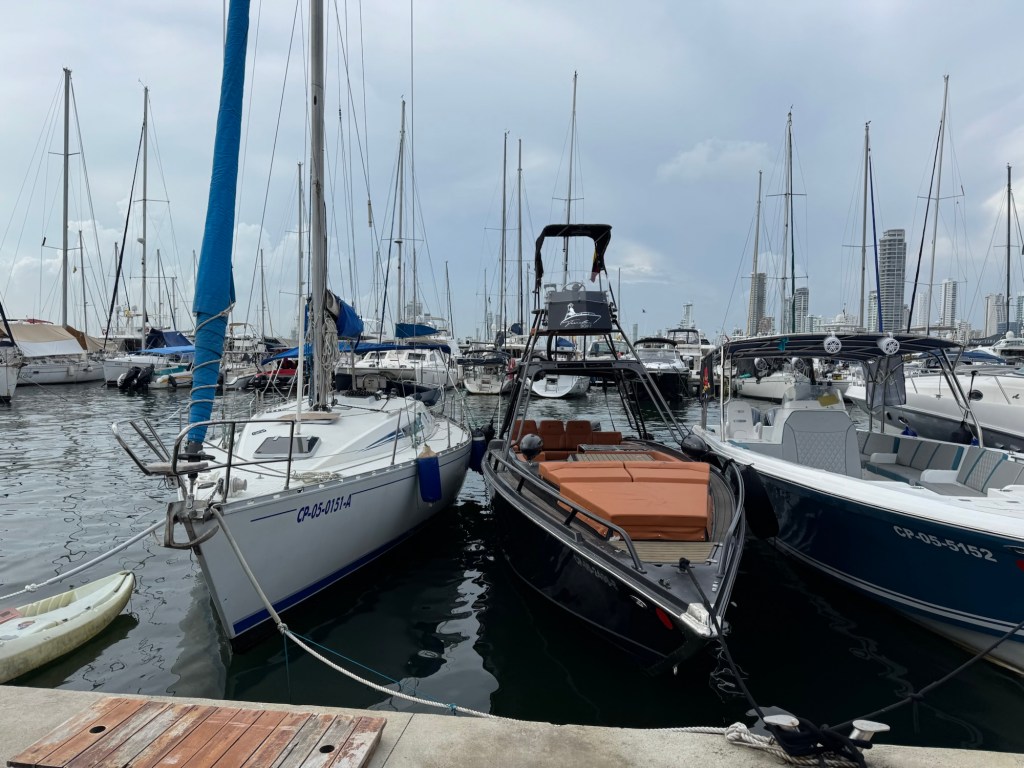
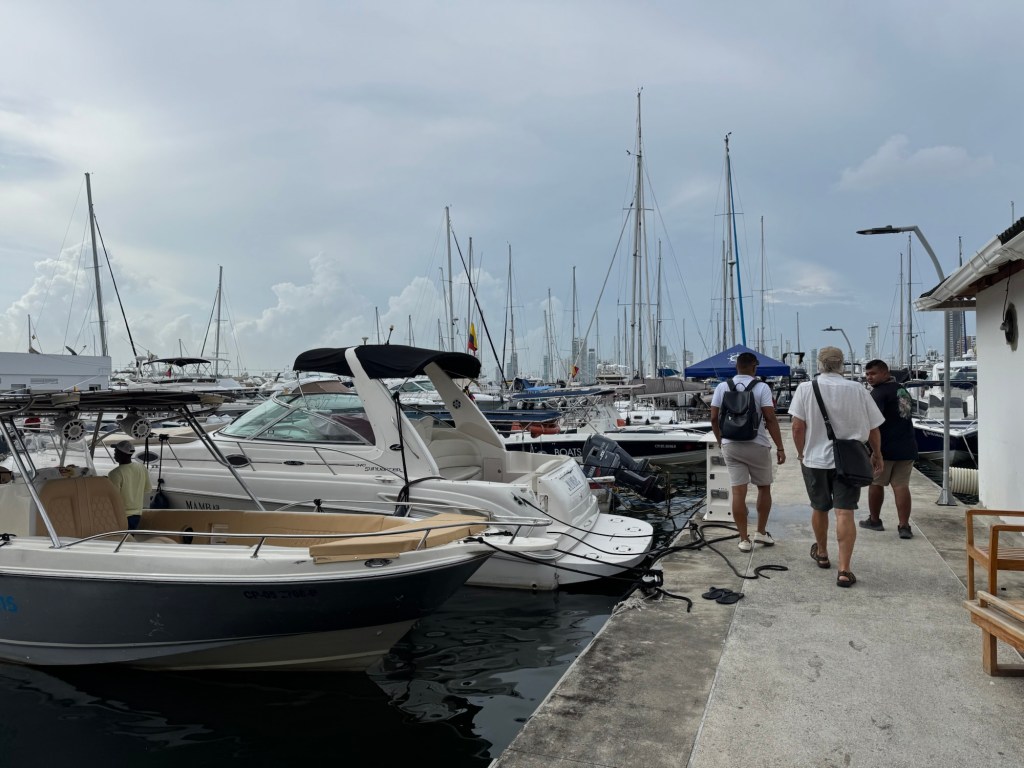
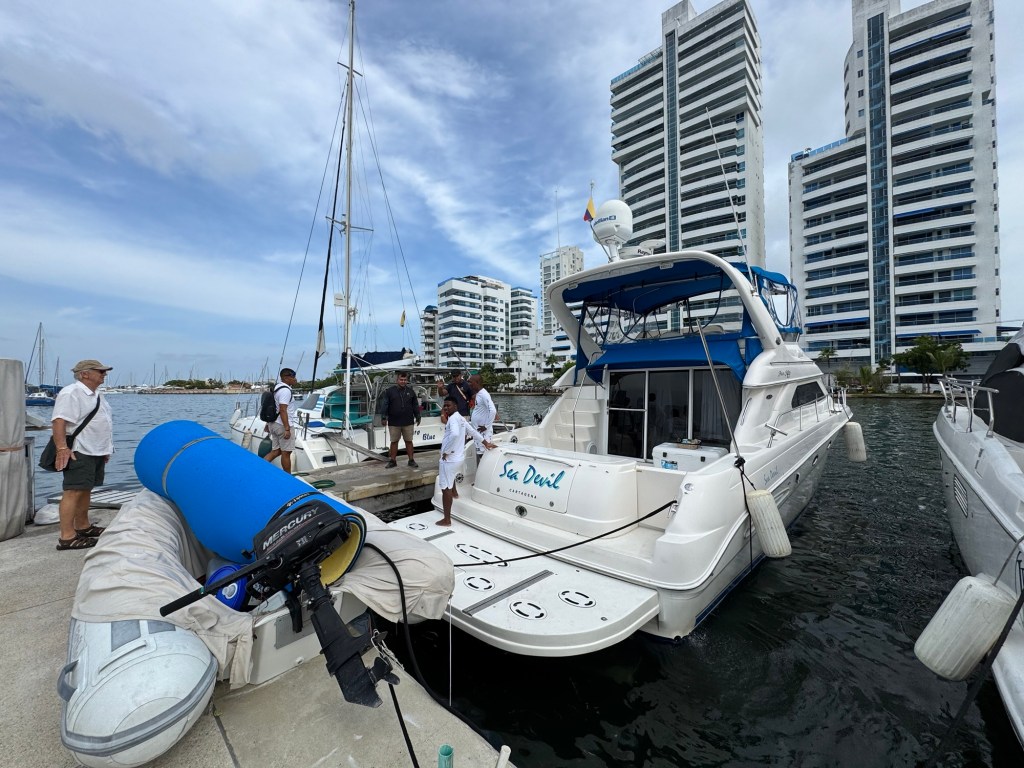
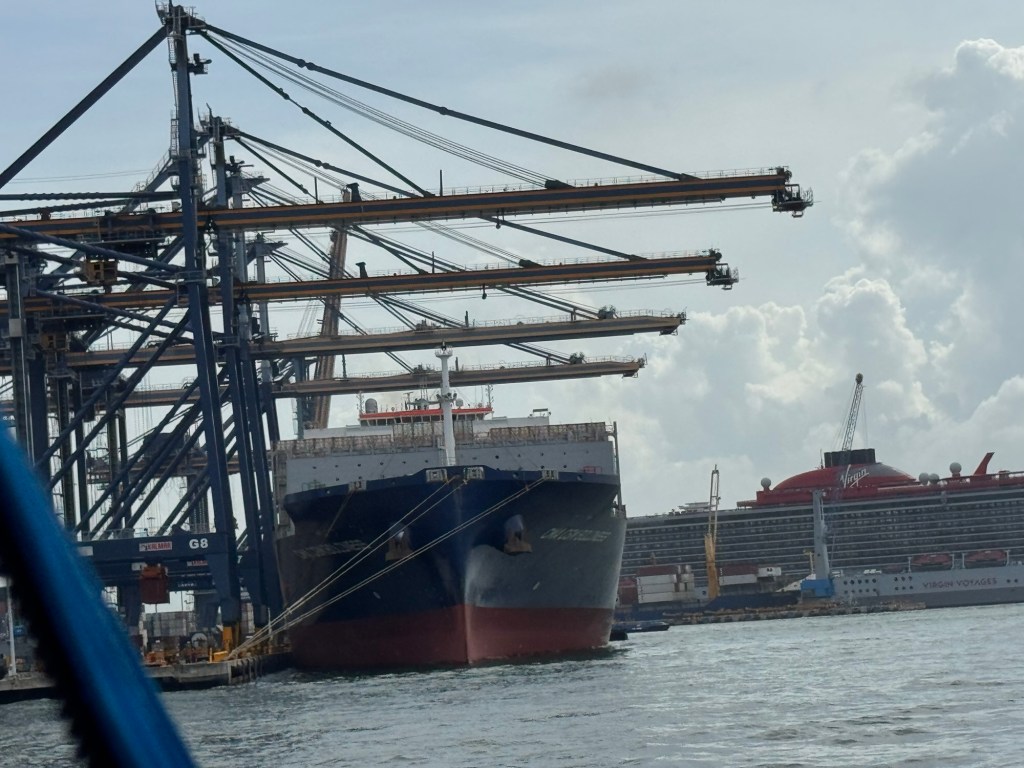
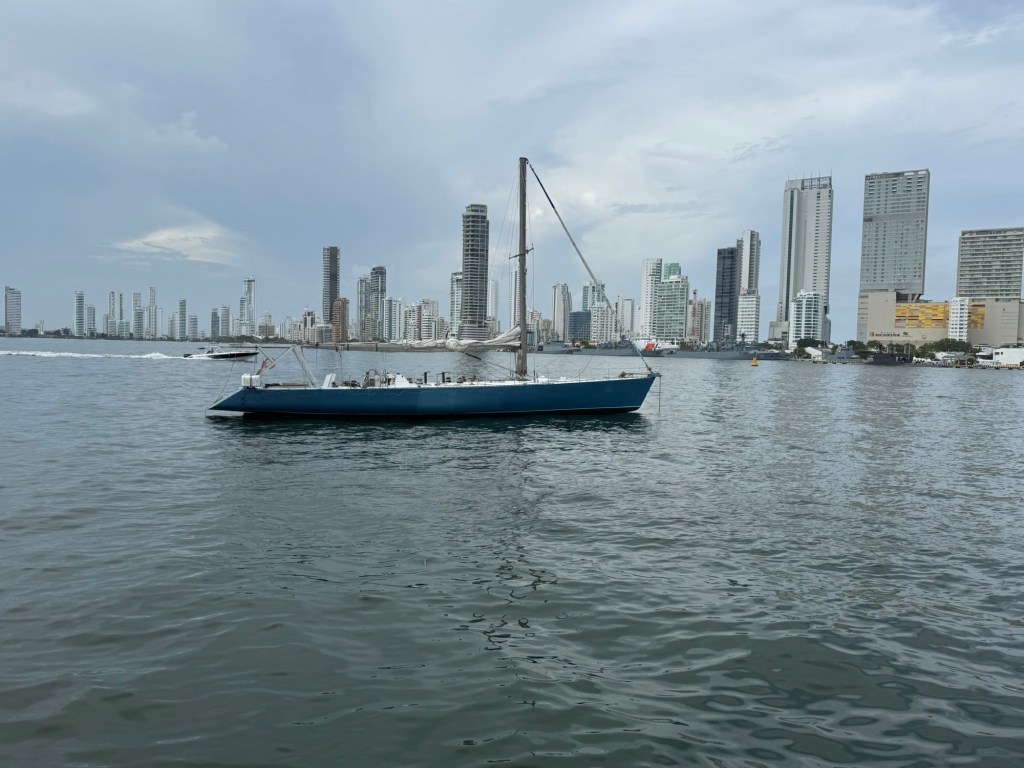
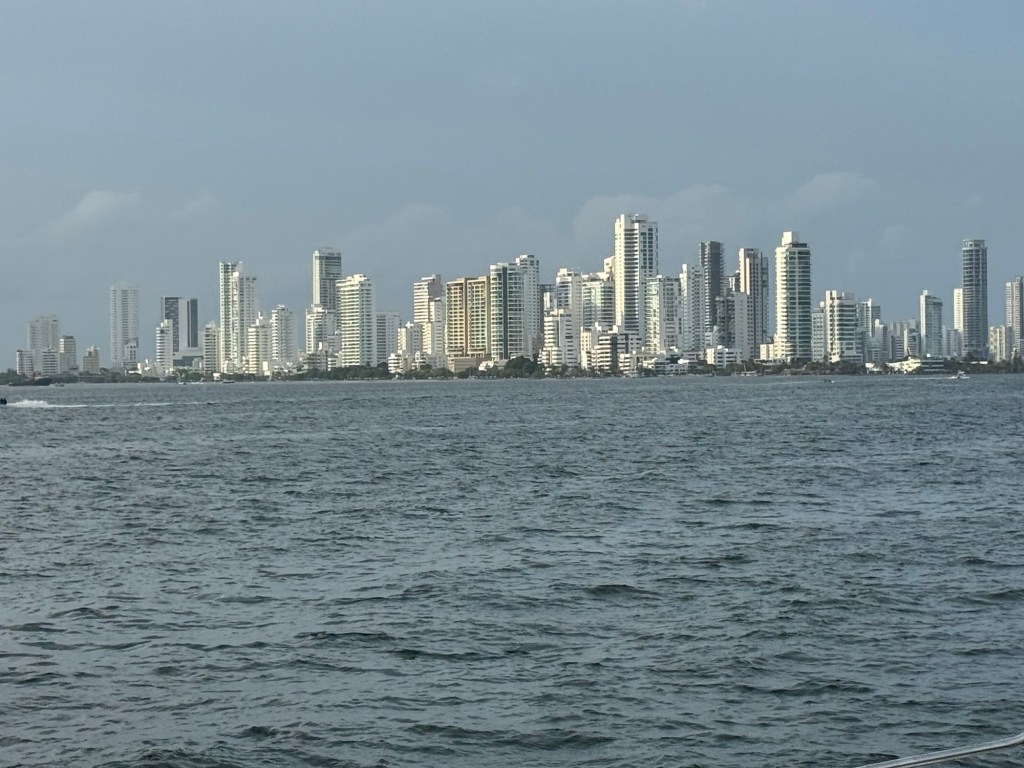
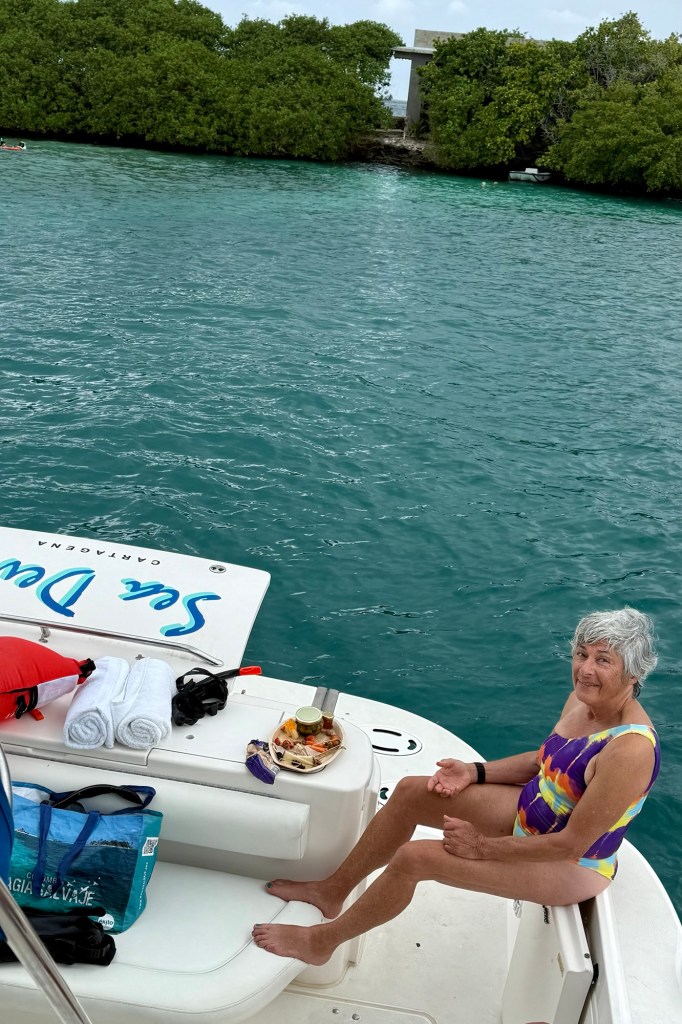
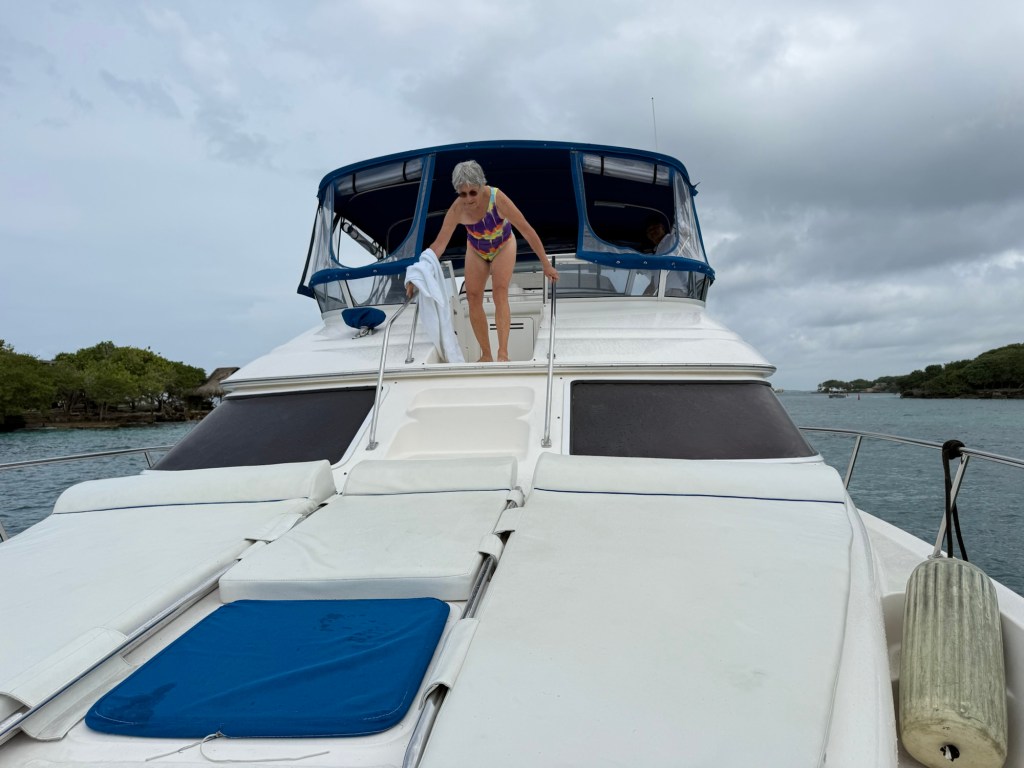
At 9am we met our host for the day, Gustavo. We drove through the city to the marina where we walked to our yacht, Sea Devil, and headed out into the bay.

The wind was at our back and the skipper managed 13 knots all the way to our destination, the Rosary Islands, where we went swimming and snorkeling. The water was pleasant, but the coral was in very poor shape and the fish were few. Anyway, we enjoyed being in the Caribbean Sea.

Then we motored to nearby Sakai Island for a swim in the fresh water pool near the beach side restaurant. That was super as the water was clear and refreshingly cool. Then we had a delicious lunch of ceviche and French fries.

When we got back on the yacht, there was engine troubles and we bobbed around while the crew sourced the problem and, thankfully, got the engine going again. The wind was in our face all the way back to Cartagena and we were completely covered in sticky salt. But the wind kept the air cool. We could barely wait for showers when we returned to the hotel at 5:15.

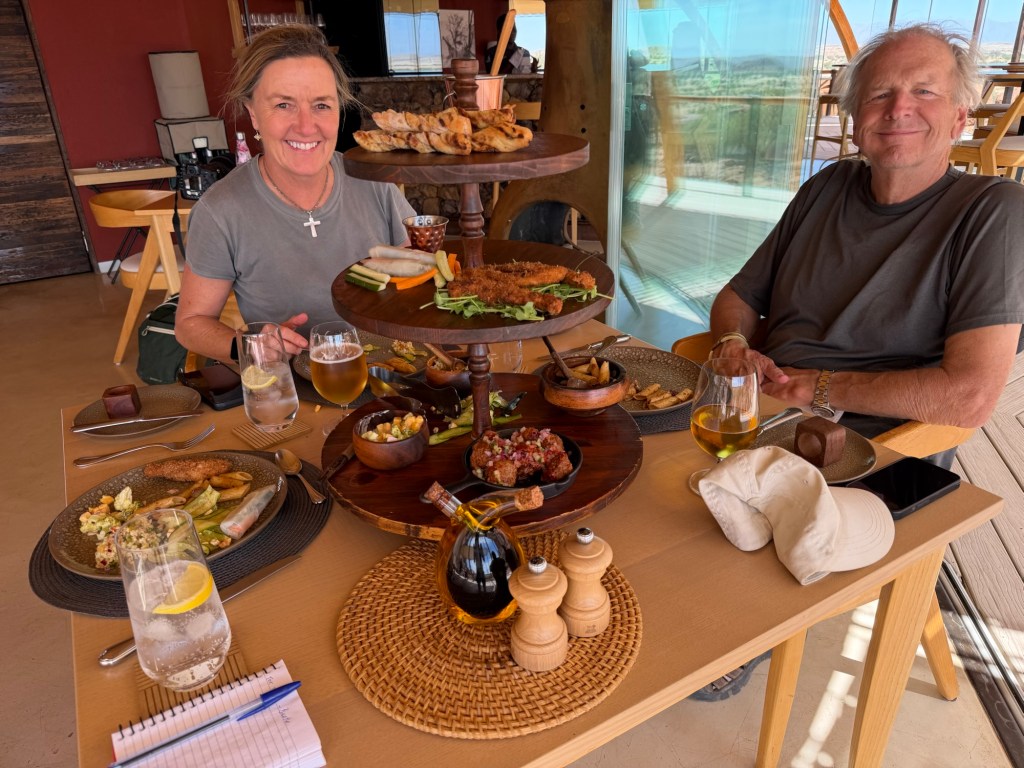
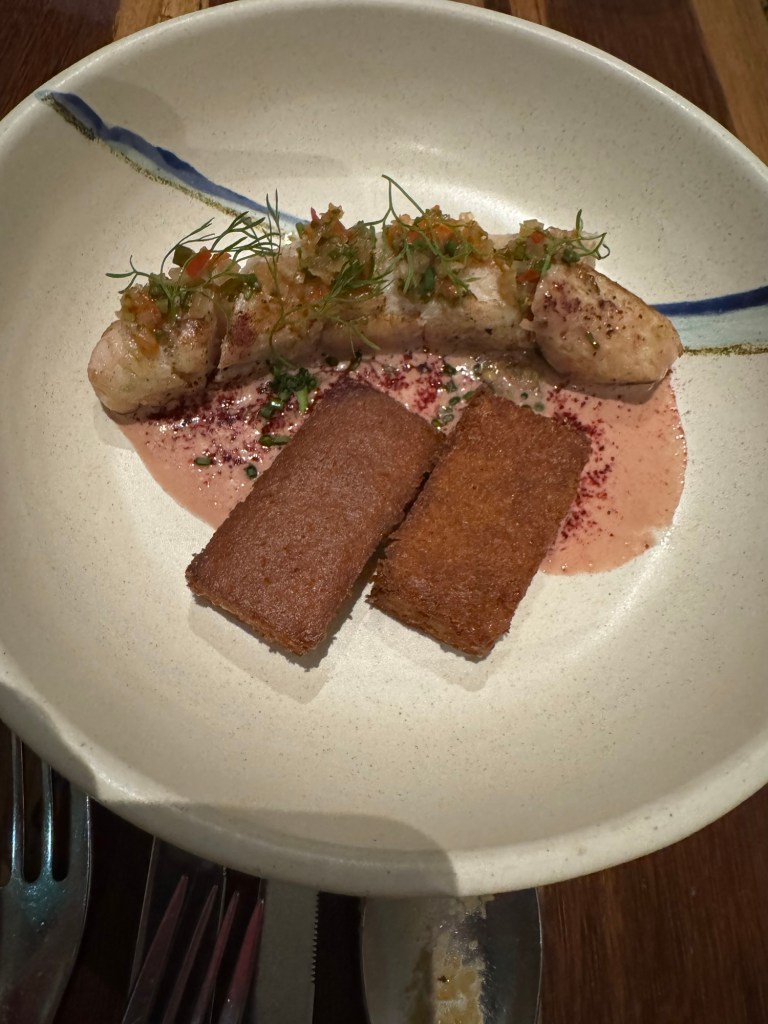
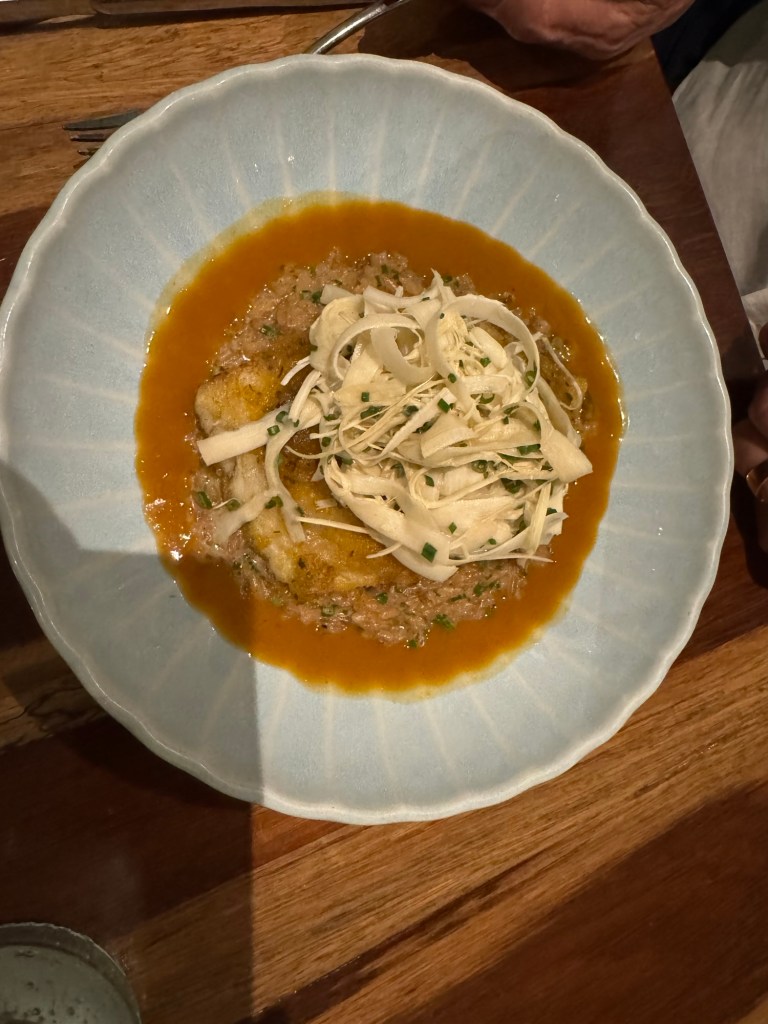
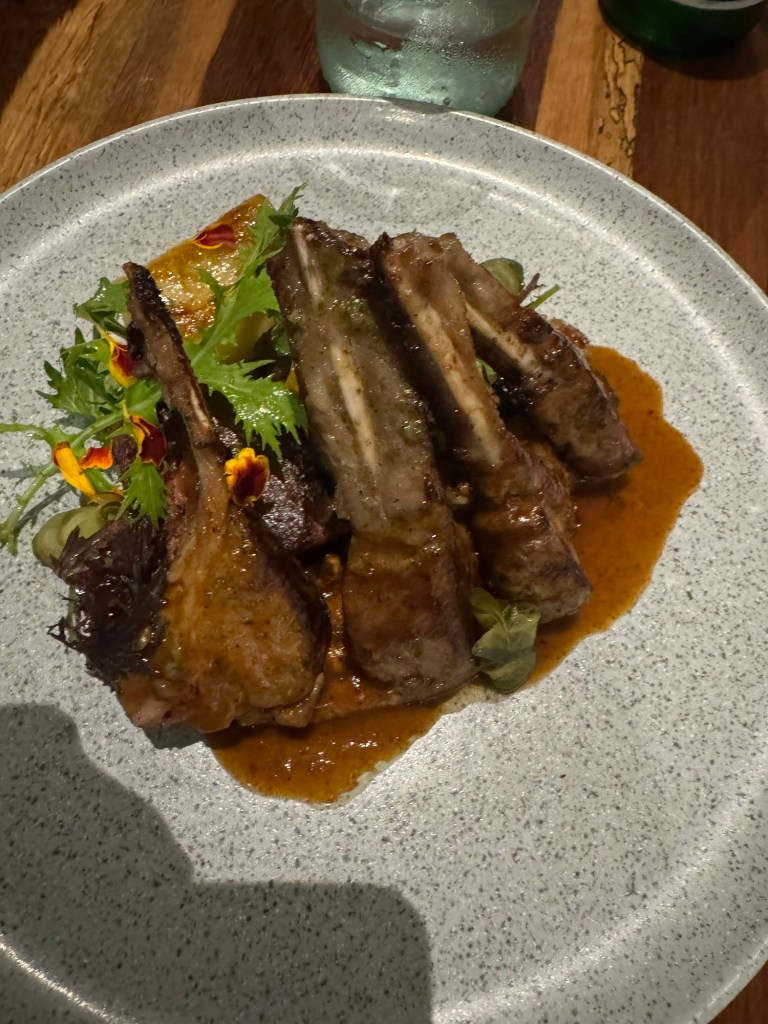
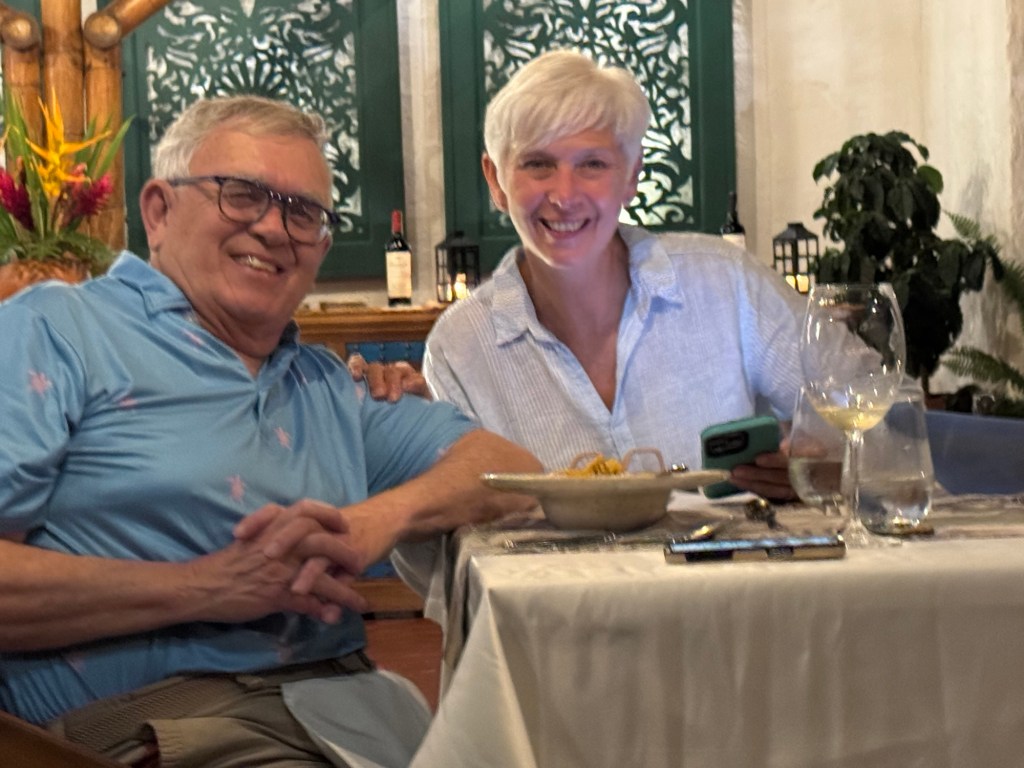
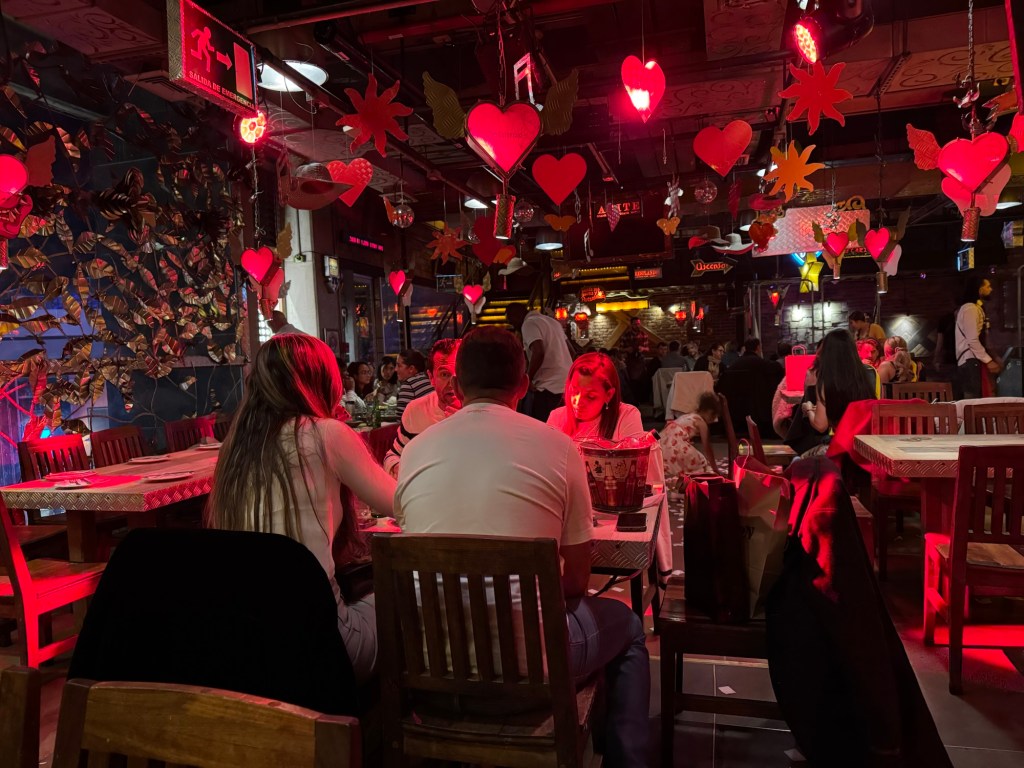
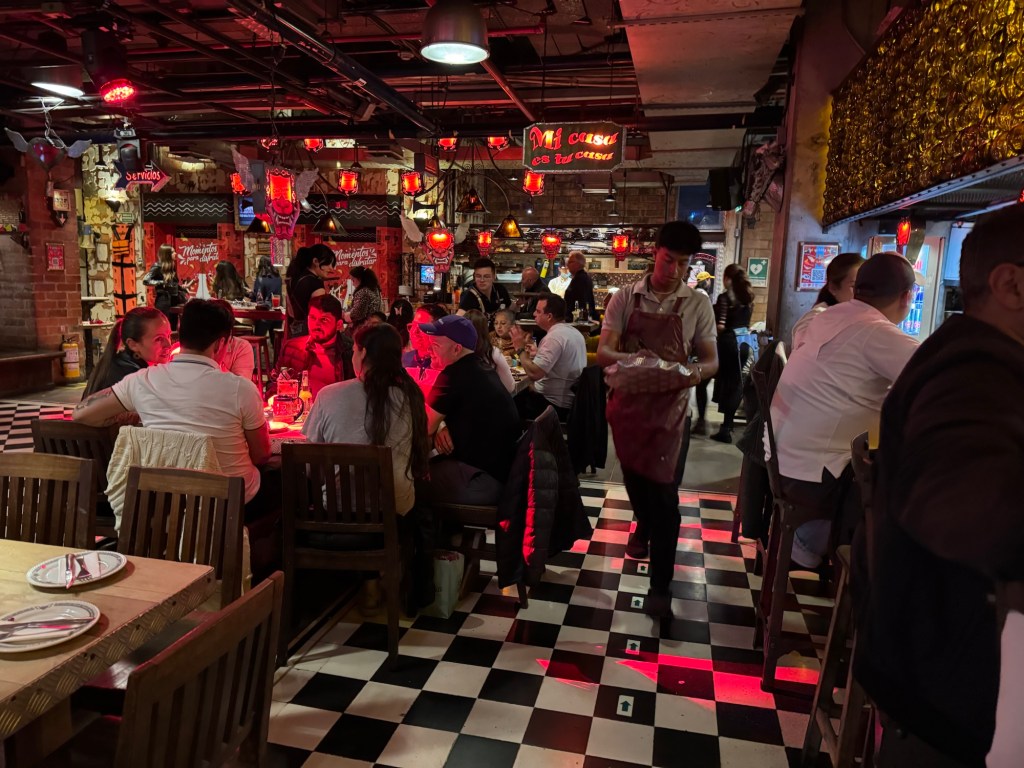
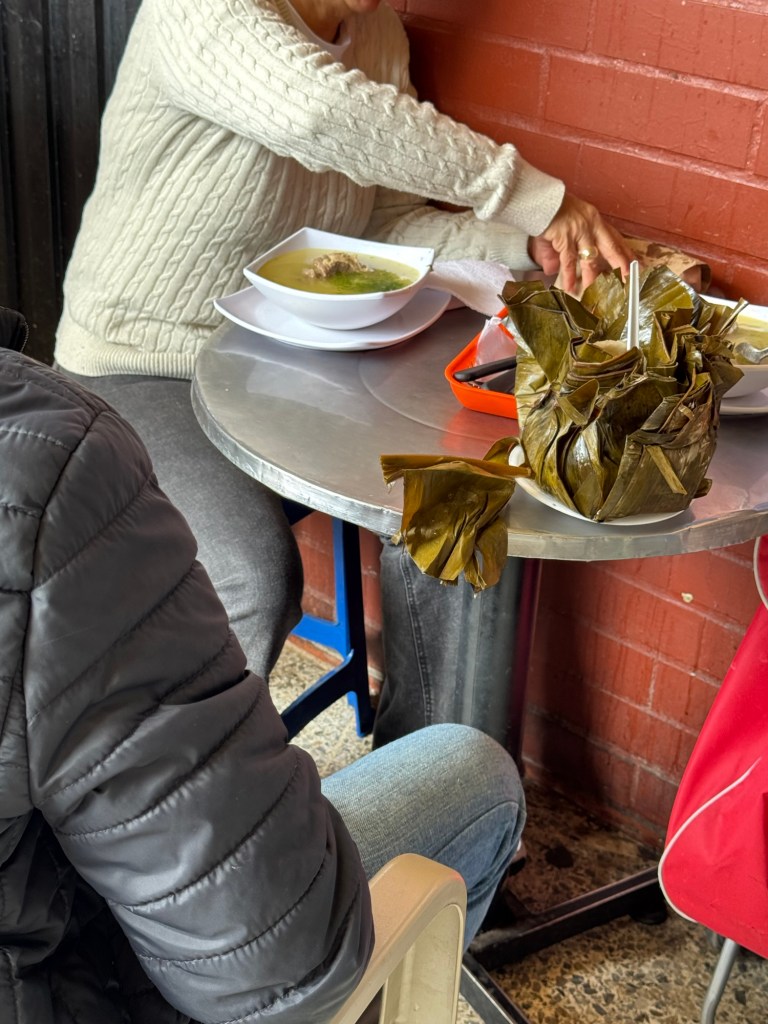
Cleaned up and in fresh clothes, we walked the half mile to our dinner restaurant, Carmen. We arrived right at 7pm and were, as usual, the first people to walk in the door. By the time we left, however, the place was full of diners. We remembered to take photos this time and for you foodies, here is what we ate.

For starters we had Chorizo Del Mar—shrimp and fish sausage, sweet corn and local Costeno cheese cake, Caribbean crème fraiche, and coastal palm berry foam.

Mark’s entry was; Pez Palma—artisanal Colombian fish, coconut rice, fresh Amazonian heart of palm with peach, palm sweet and Sauer sauce.

Julia had; Cordero—Andean lamb collar and ribs cooked on the embers, hummus, cucumber, Caribbean sesame seeds.

It was all quite tasty, except the lamb collar, which was not as interesting as I had hopped.

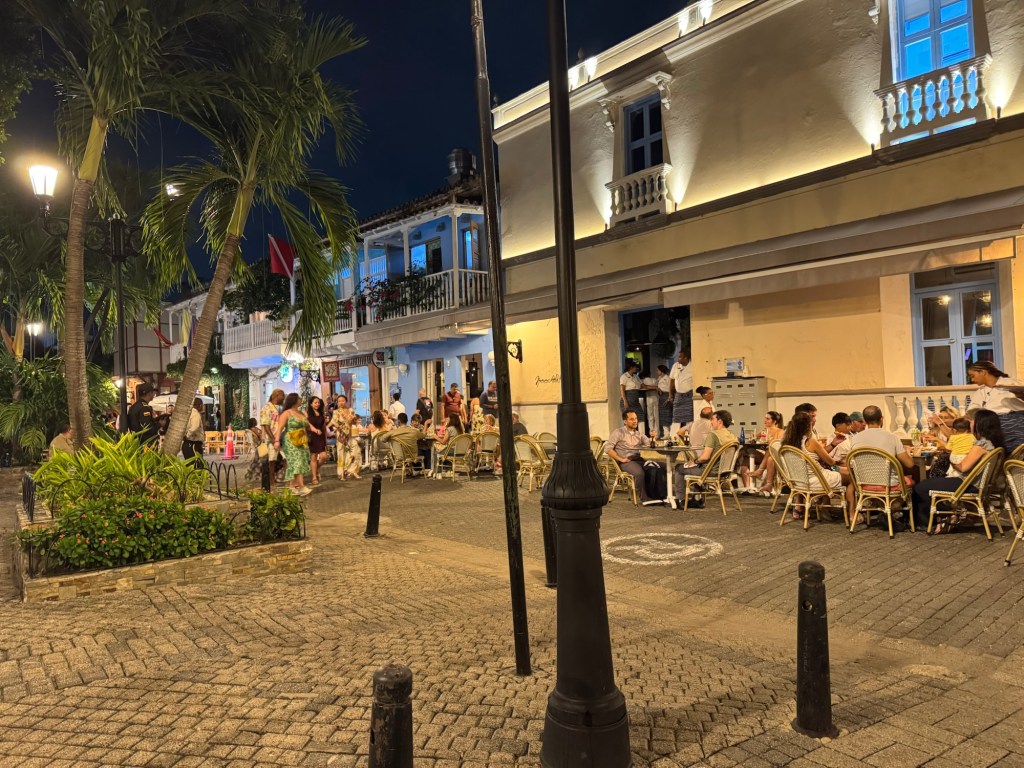
The streets were packed with revealers enjoying the last night of the Independence Festival. Caribbean music was in the air everywhere.

I would have loved to see some salsa dancing, but there was no place nearby and we were both tired. Our air conditioned room and bed were a bigger draw.

Sunday, November 16, 2025

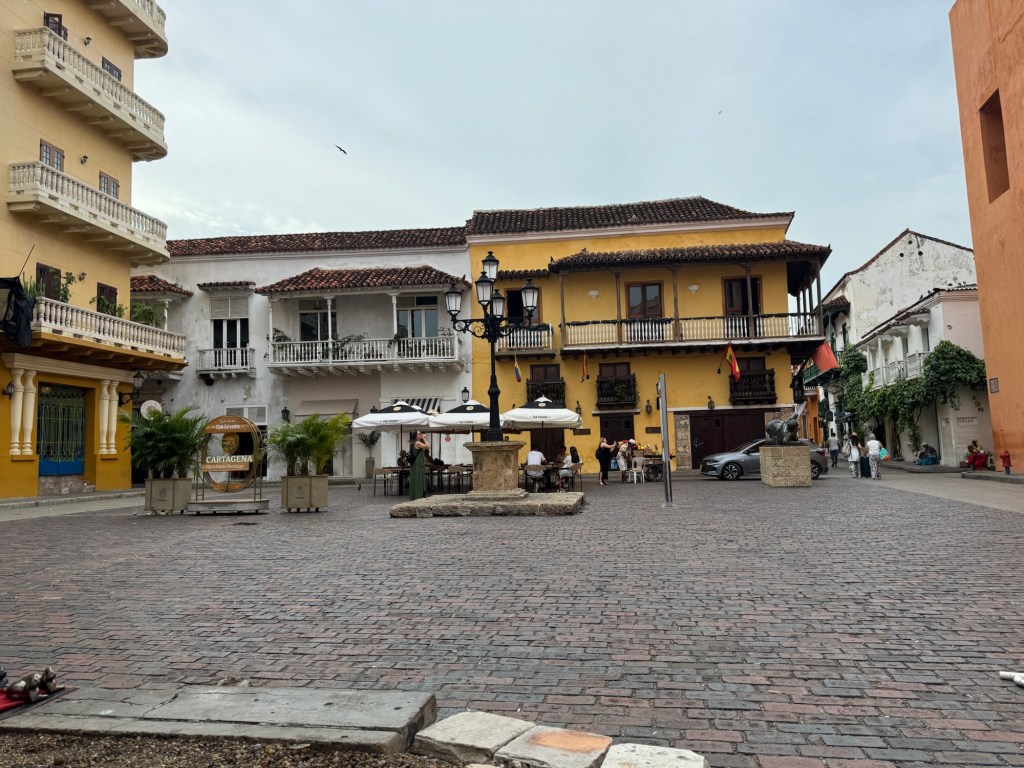
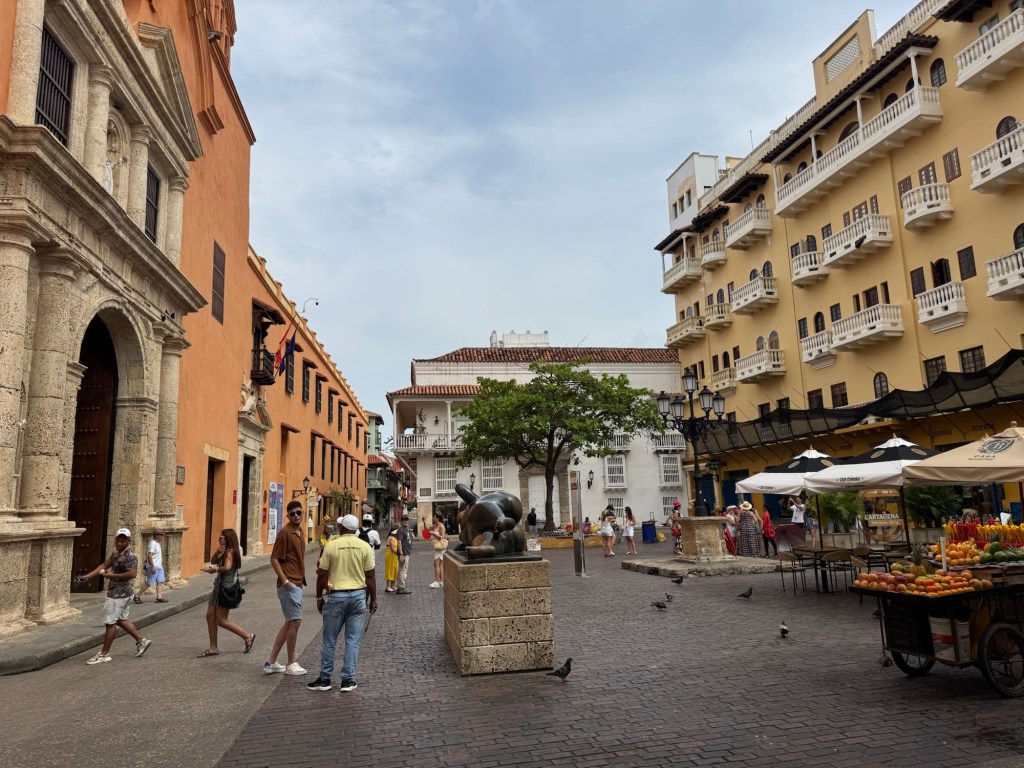
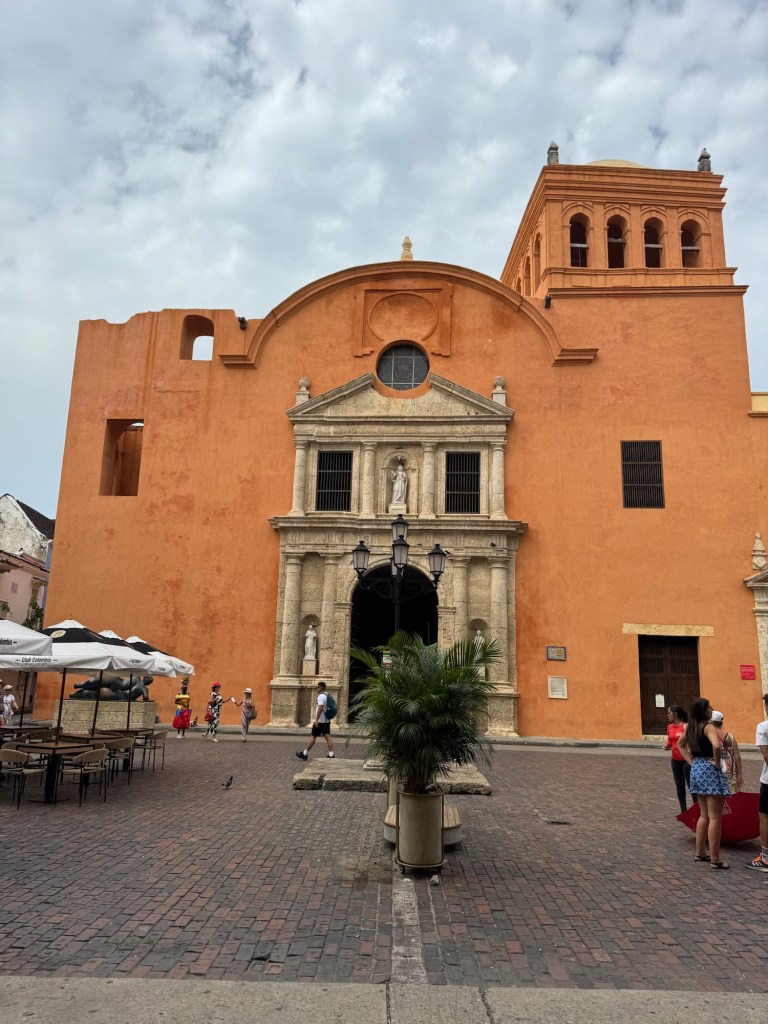
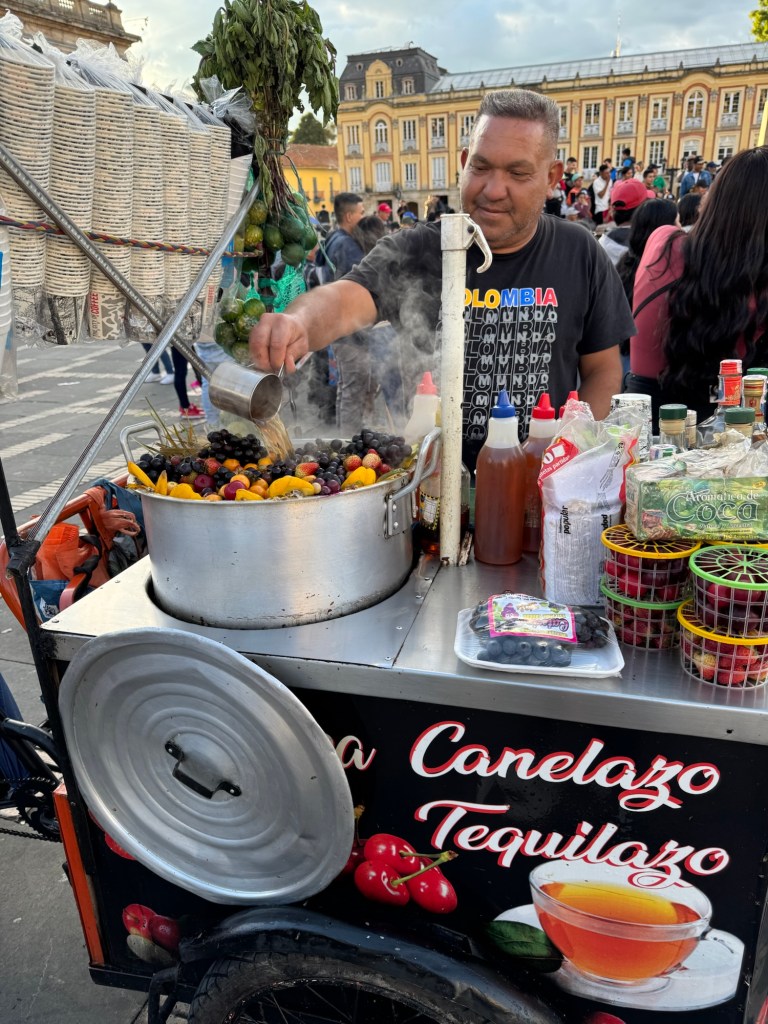
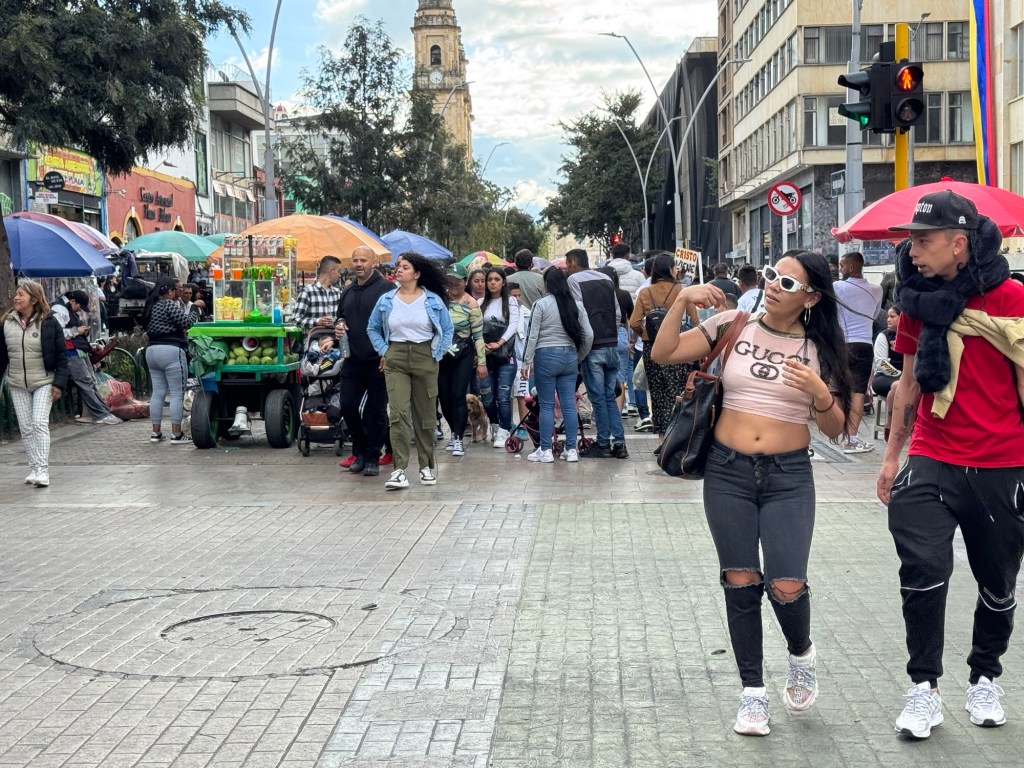
Departure day. We enjoyed a relaxed morning as pick up for the airport was not until noon. I took a walk into Santo Domingo Square, half a block from our hotel, found a place to sit and watched the scene. There were no tourists at first, but slowly more people came through the square.

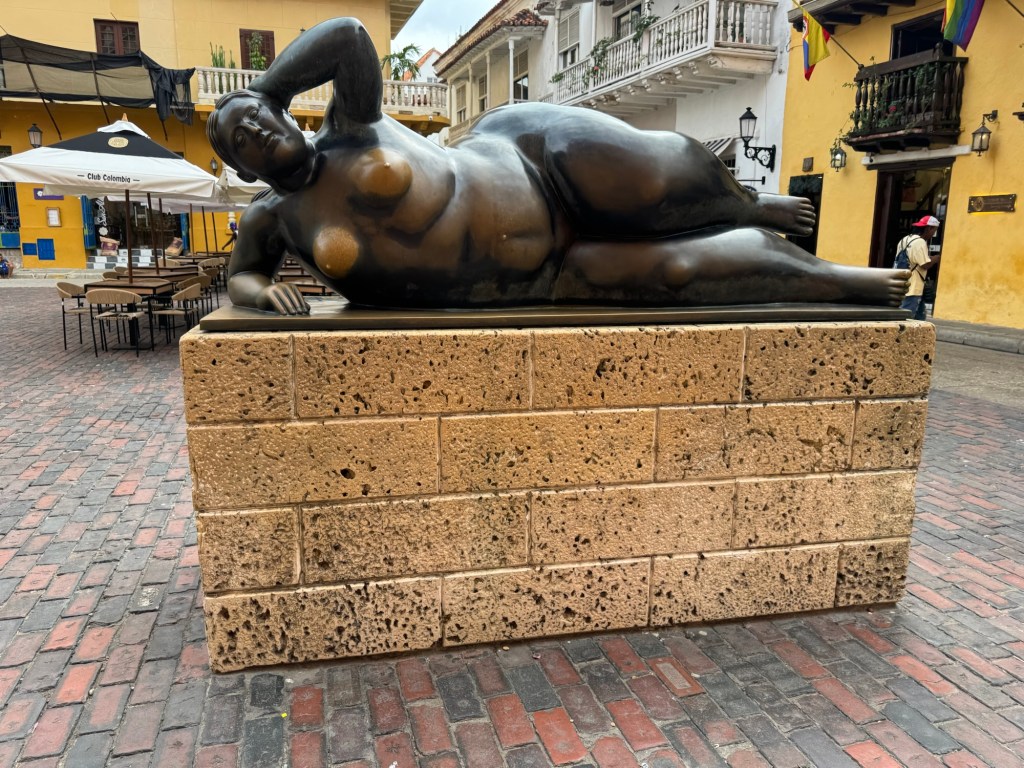
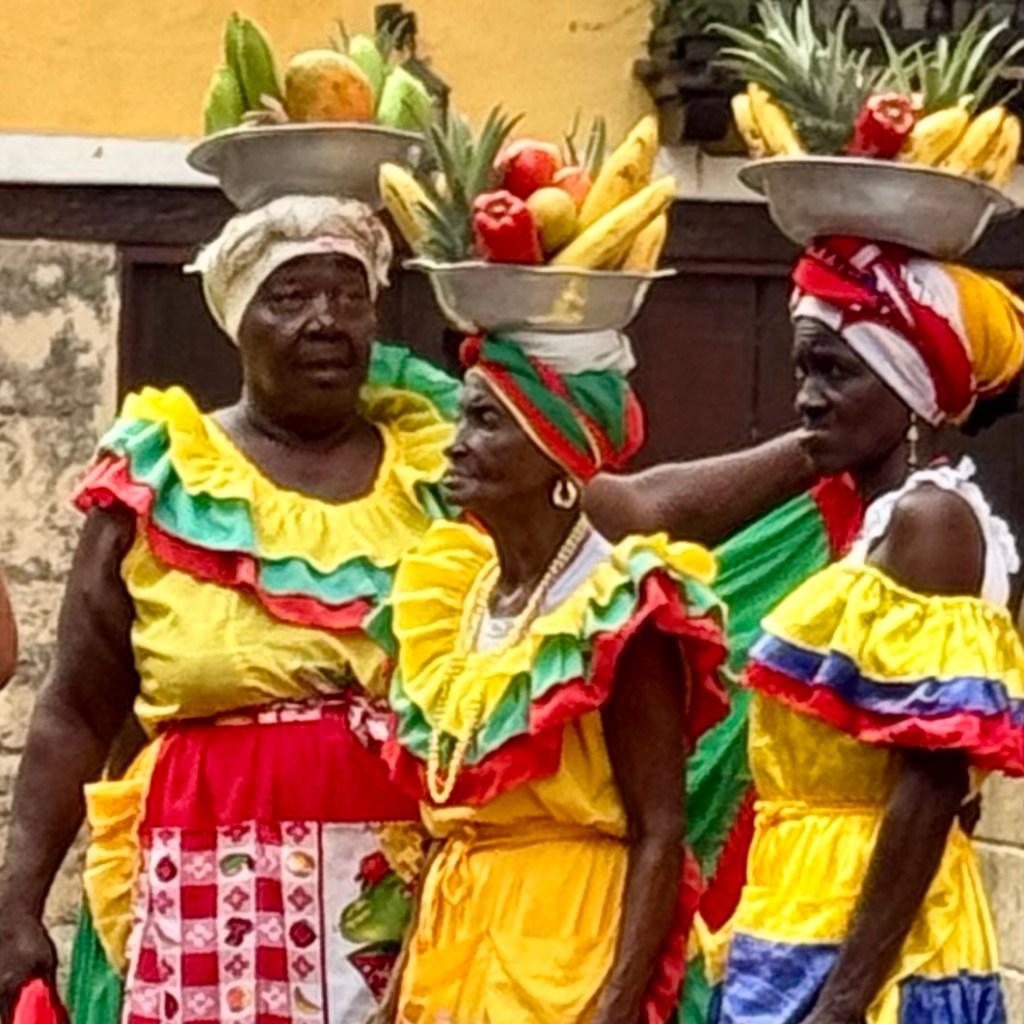
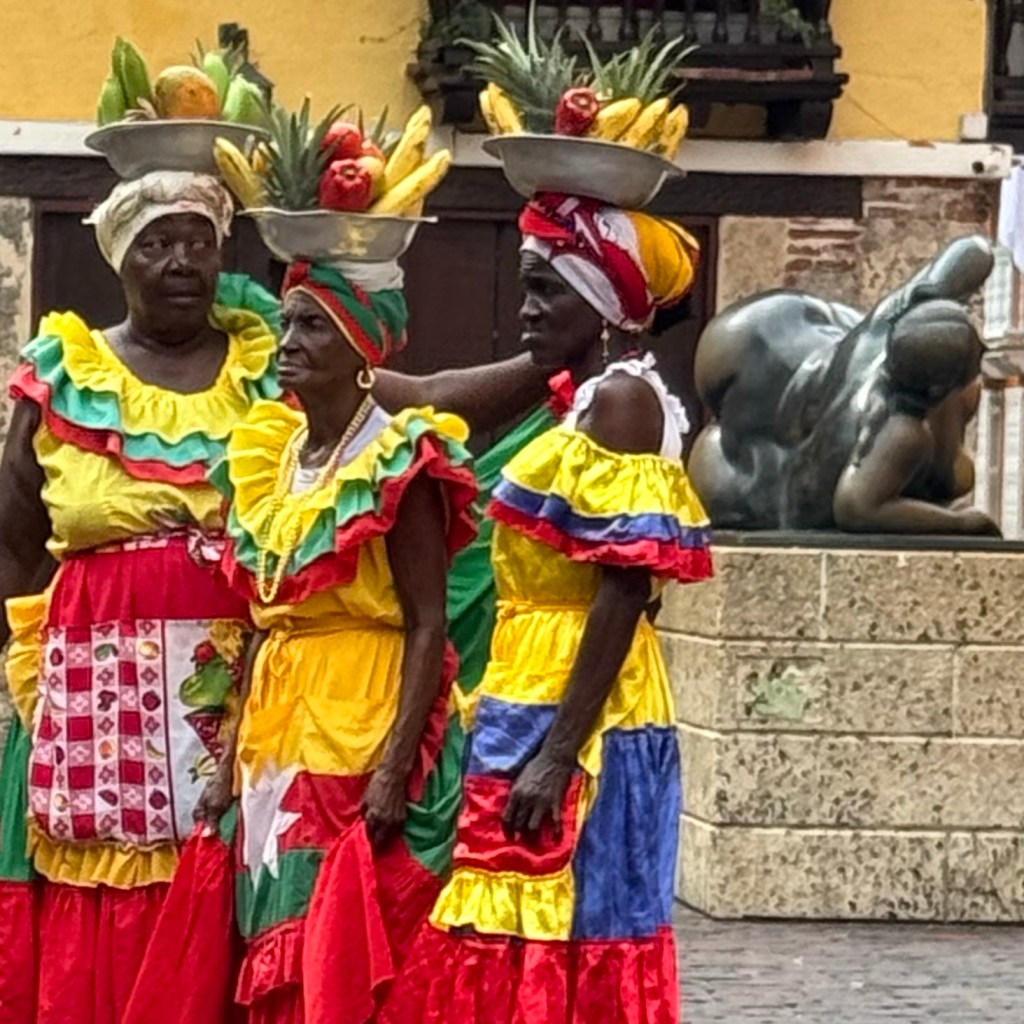
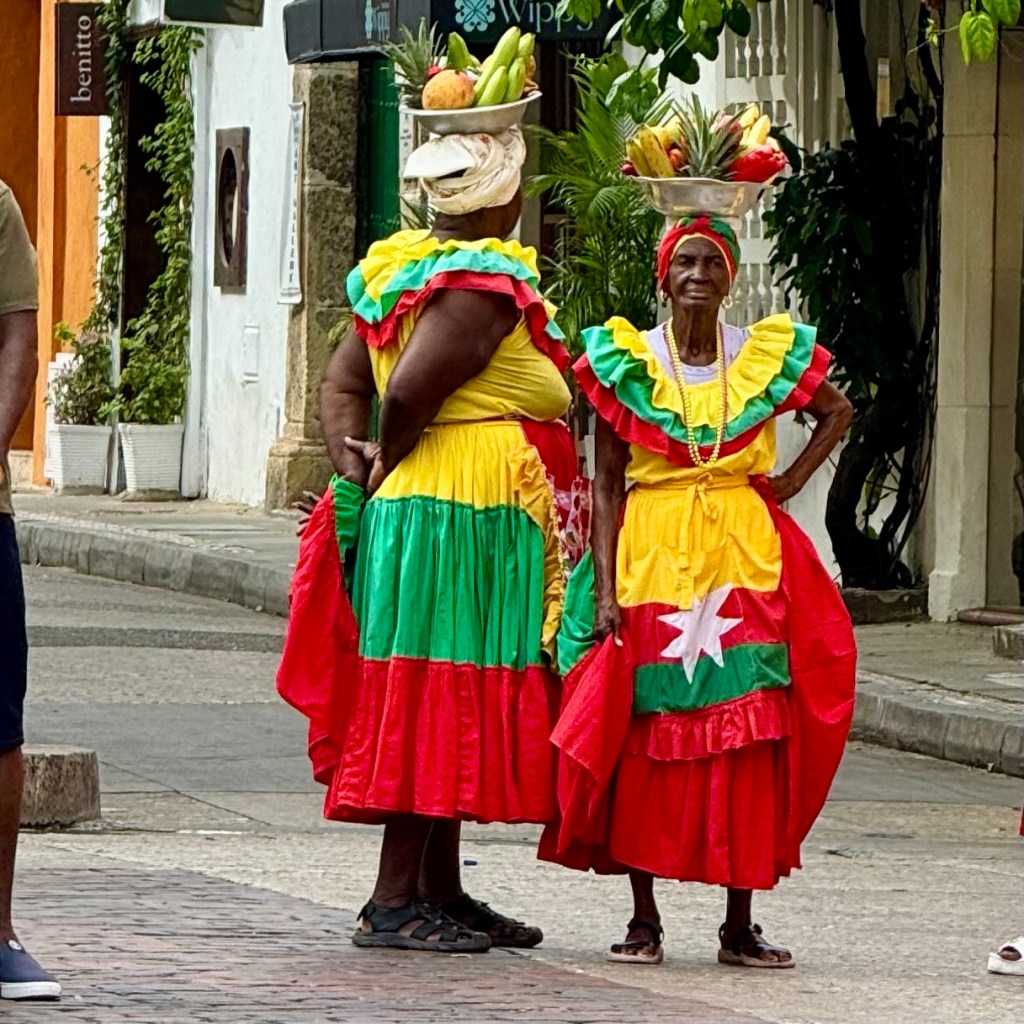
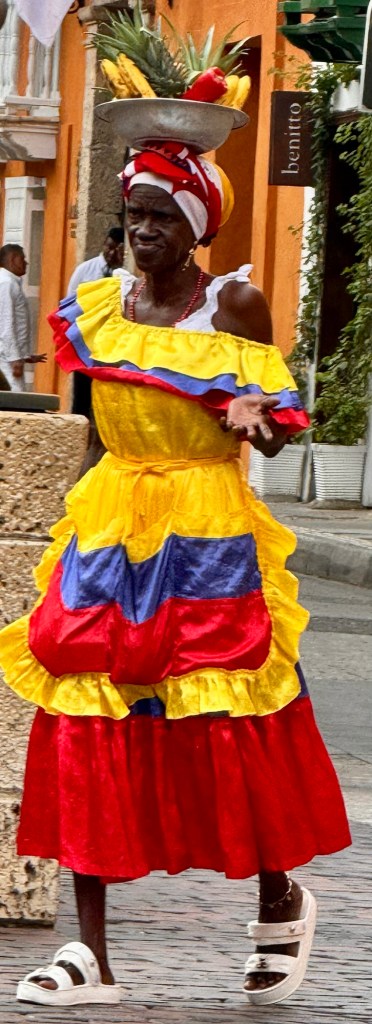
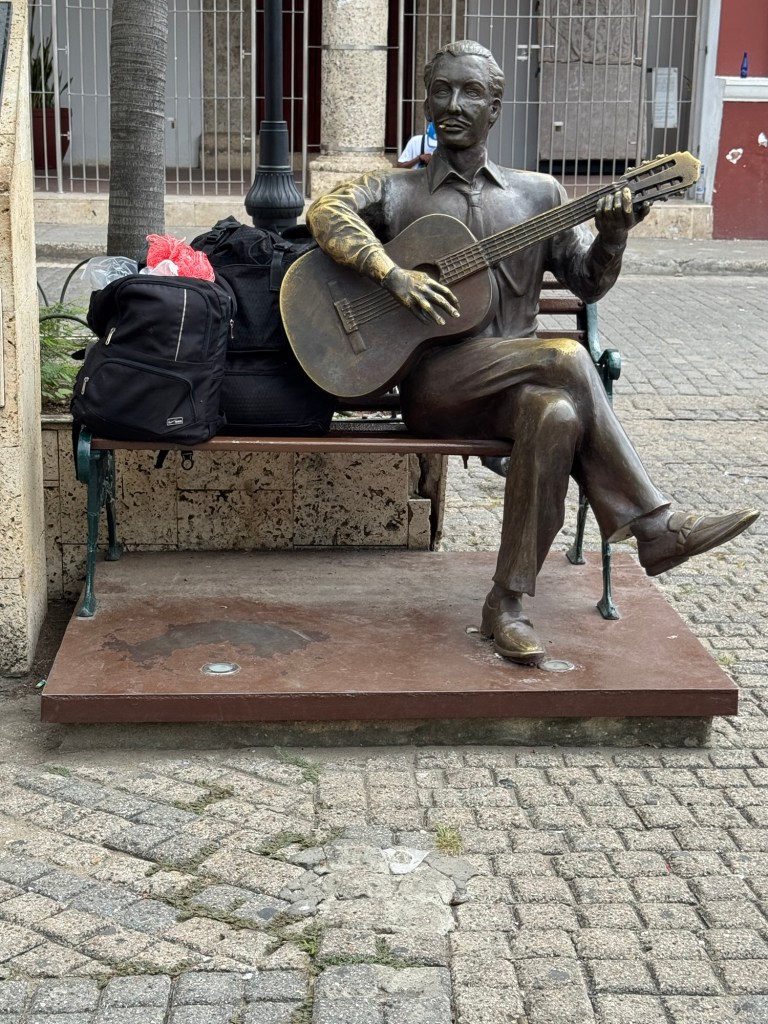
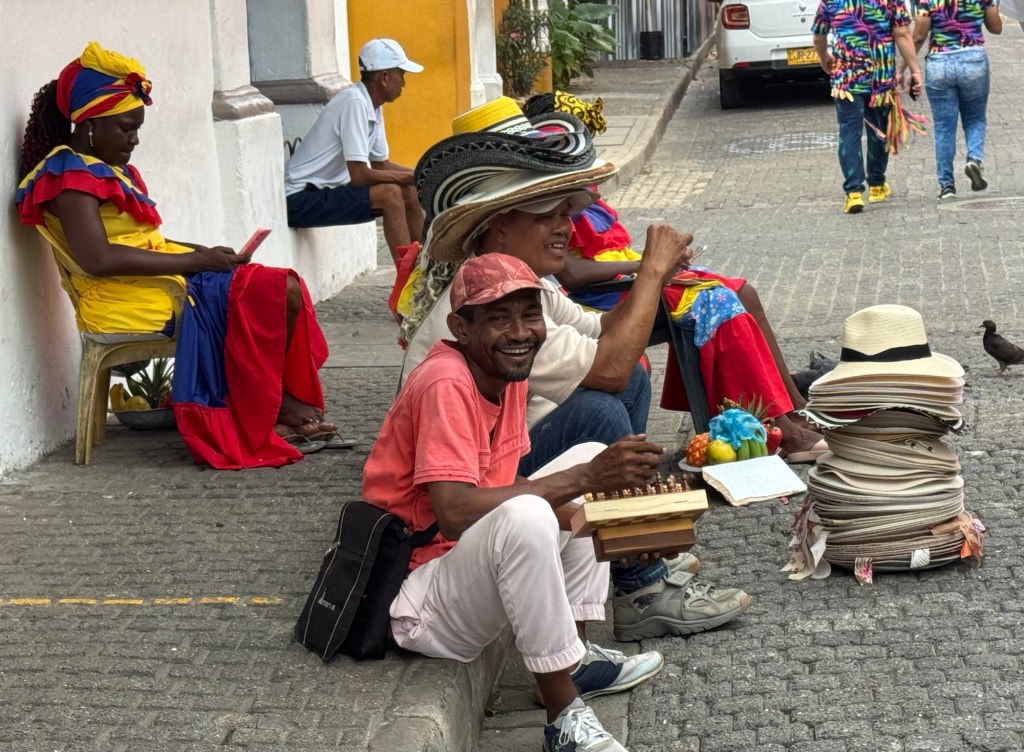
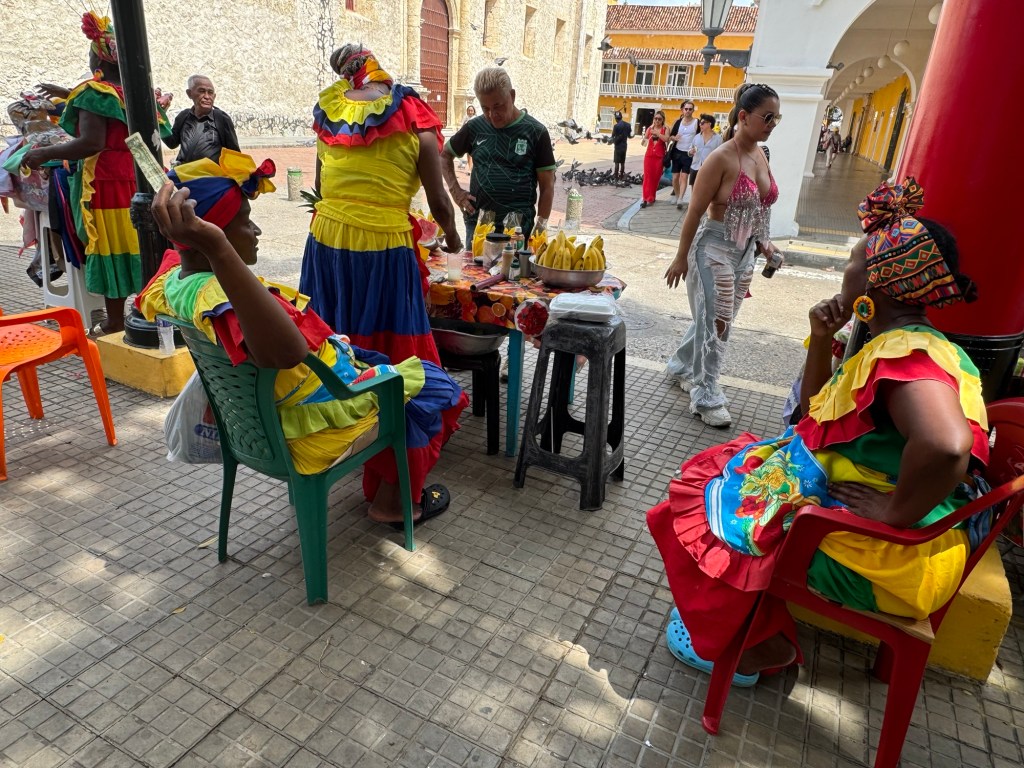
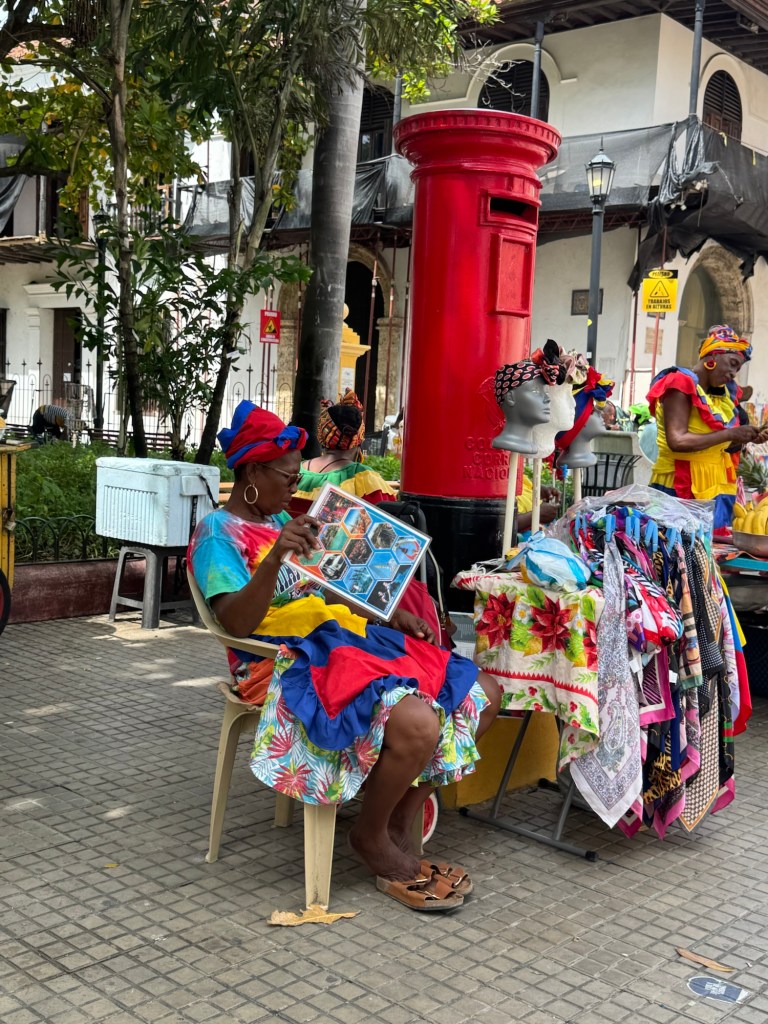
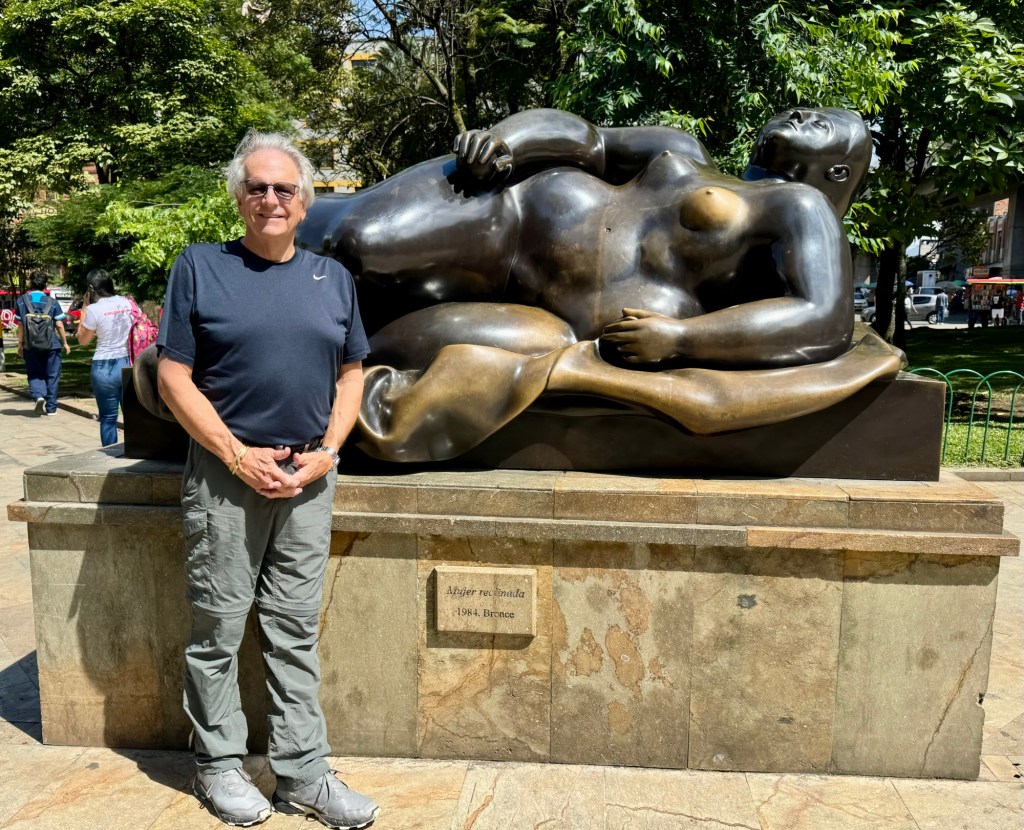
In the square is a sculpture of Botero’s Gorde Gertrudi’s, where people pause to take photos, especially with three local ladies, wearing Caribbean costumes with fruit filled hats and looking for photo donations.

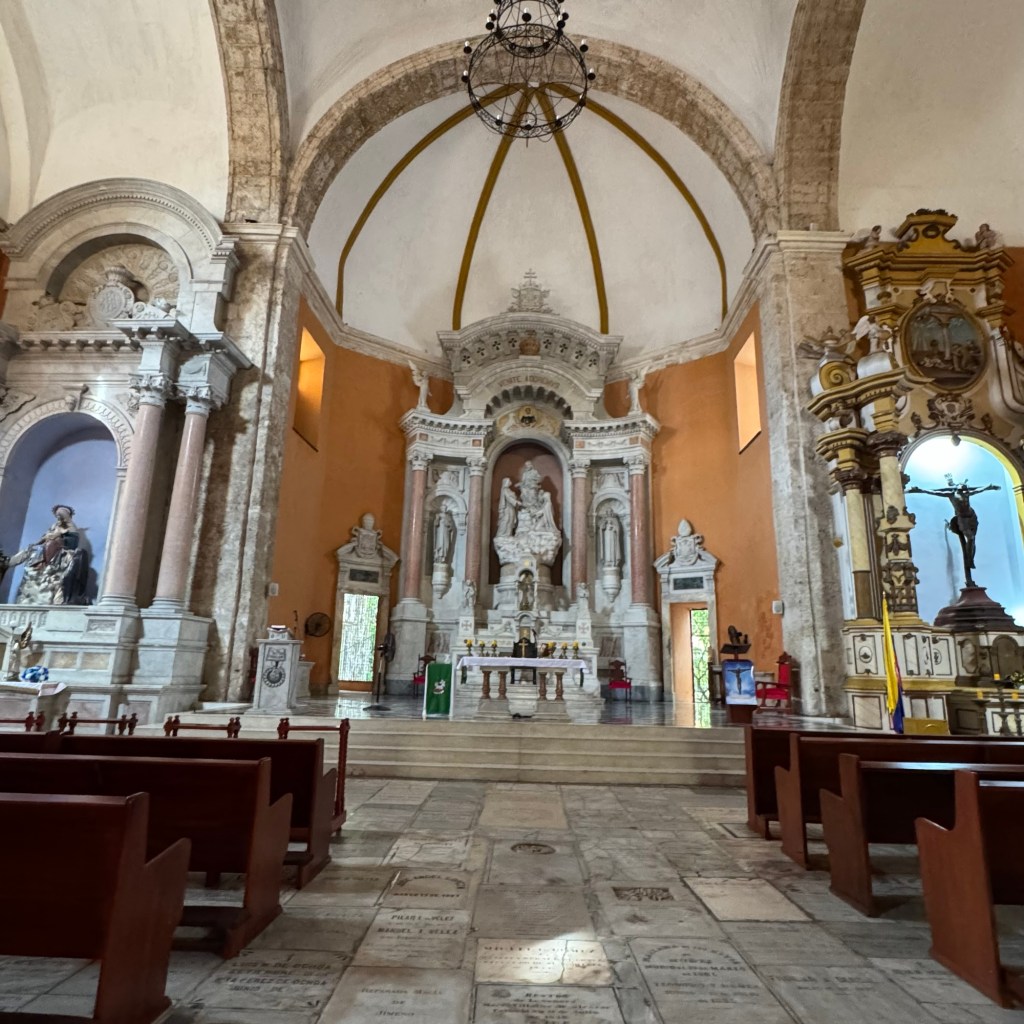
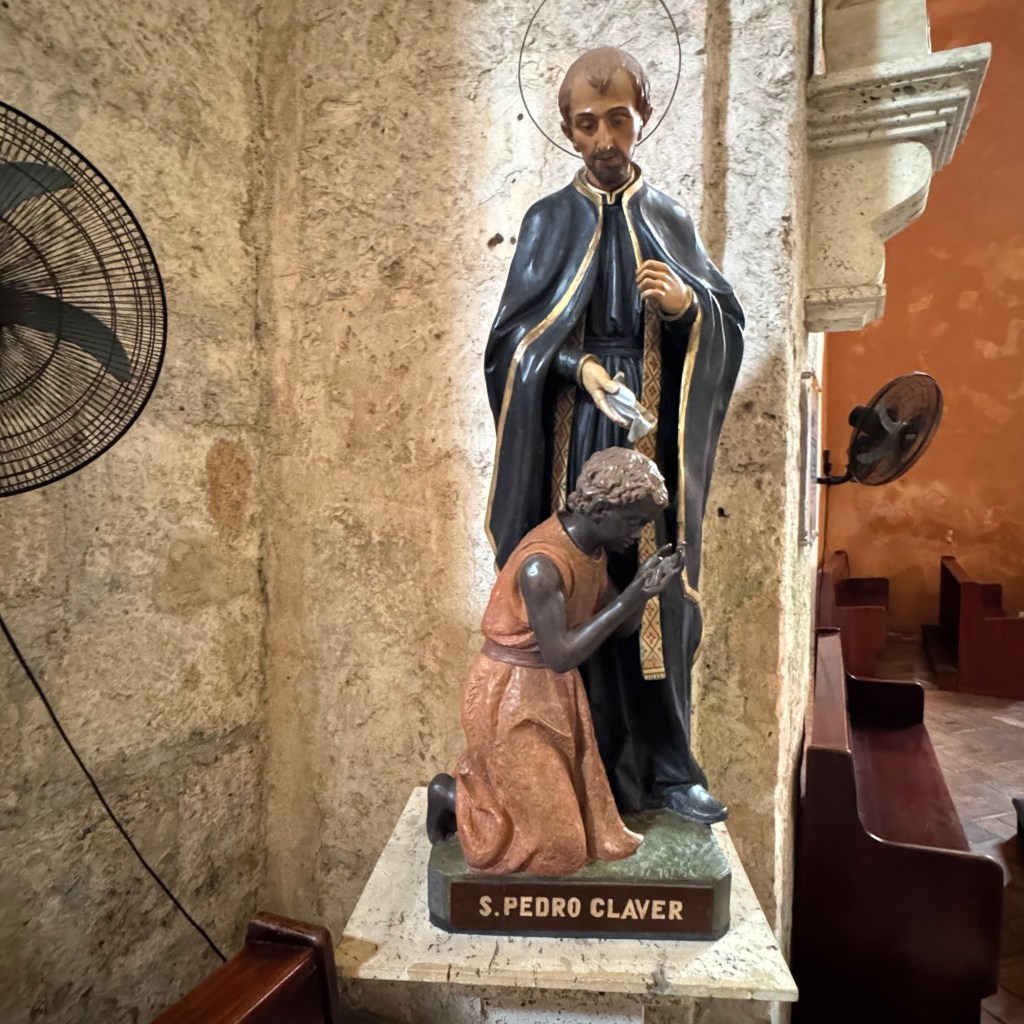
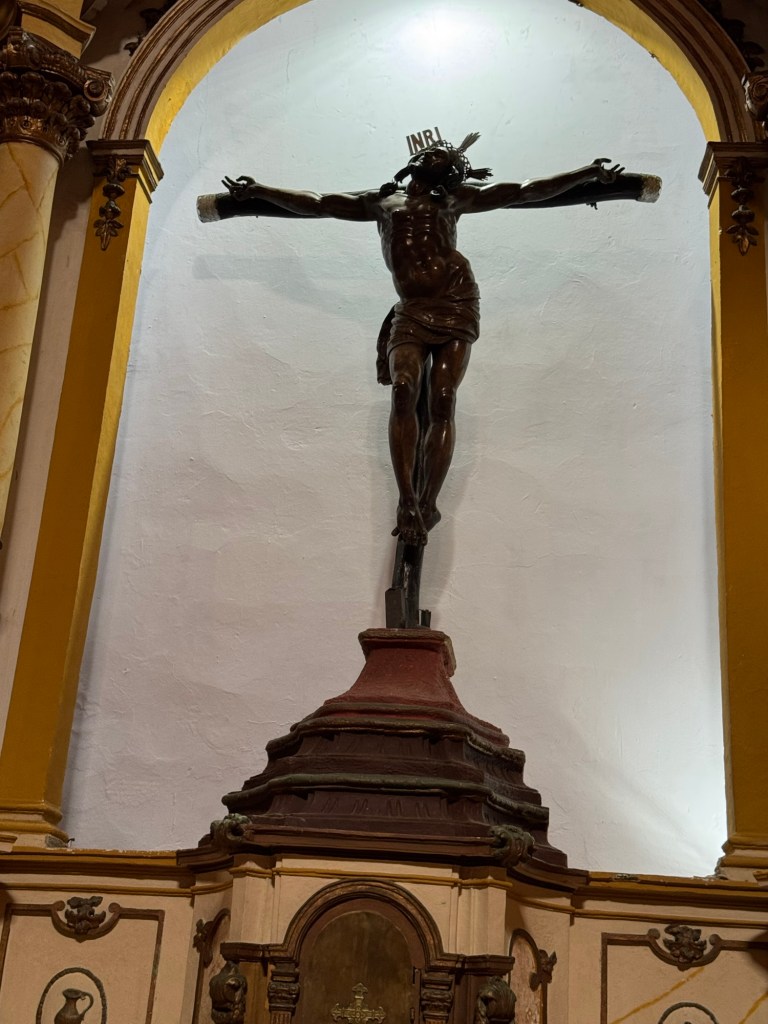
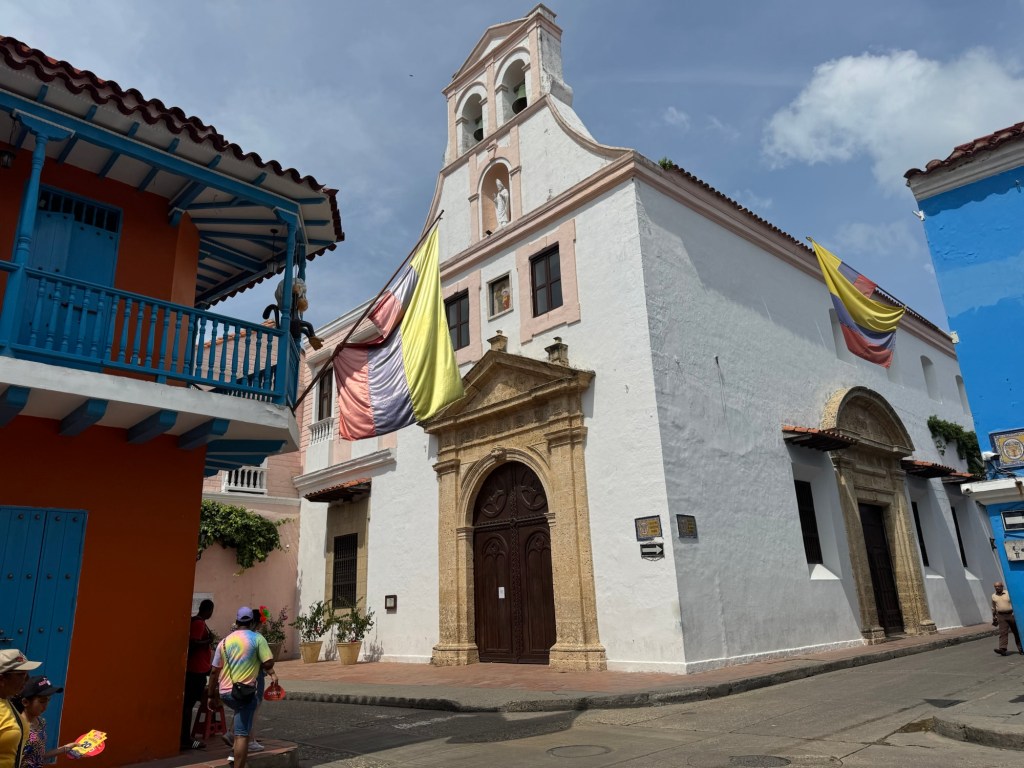
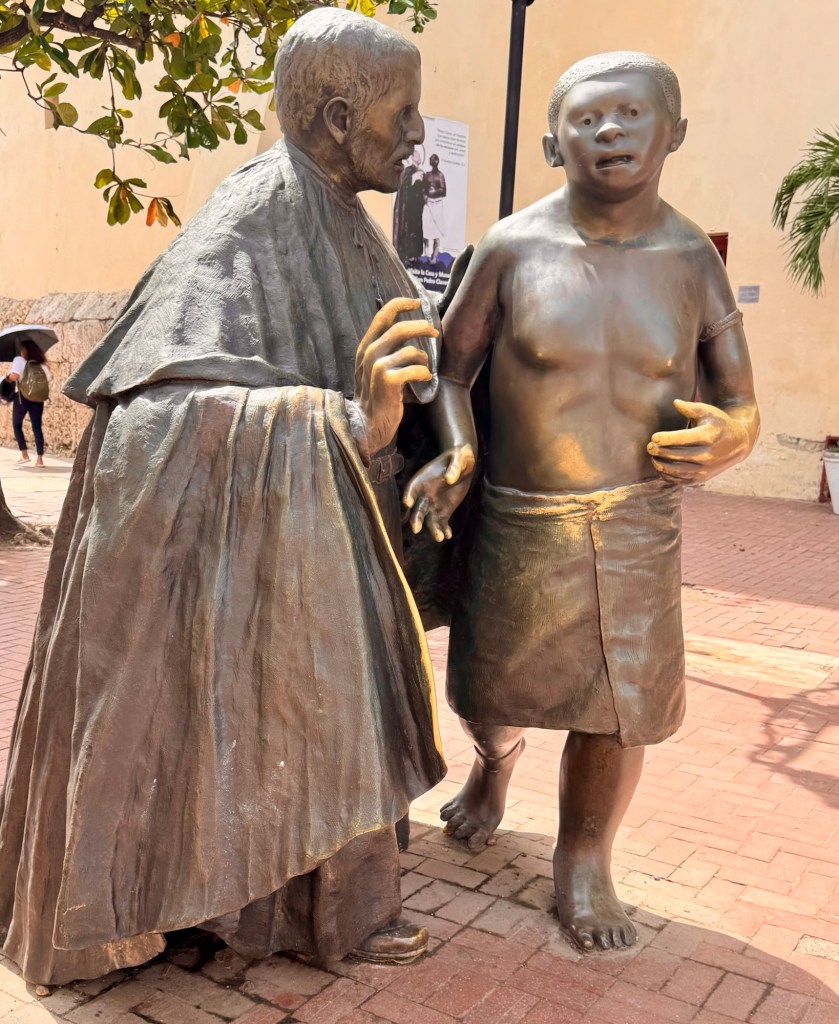
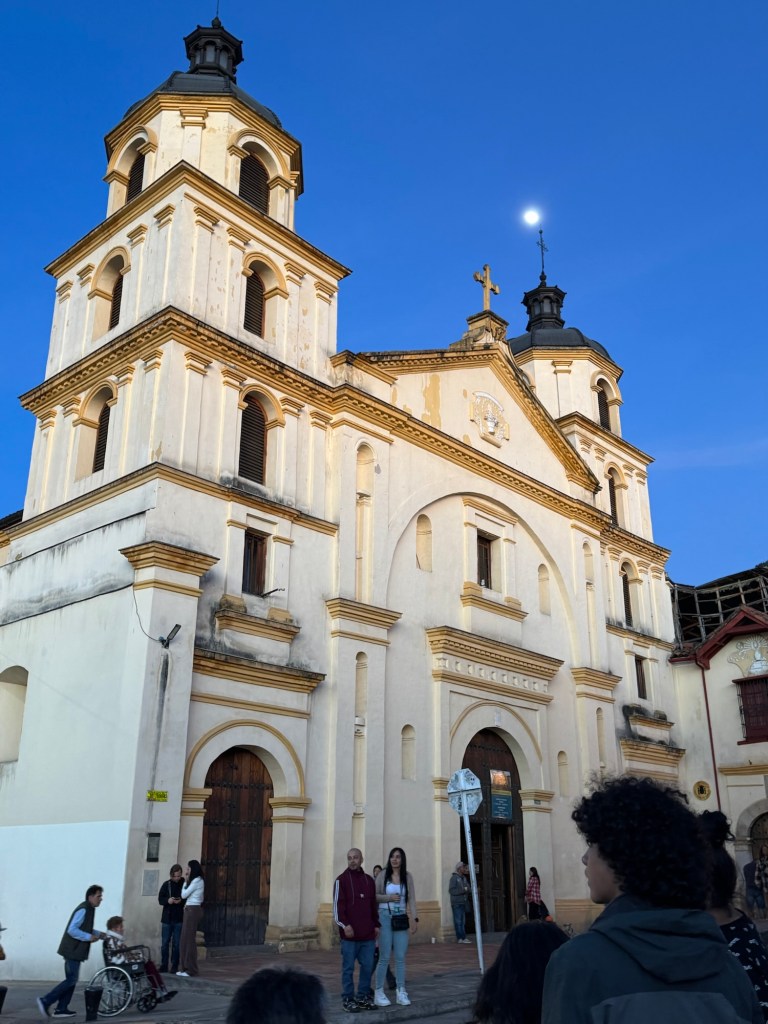
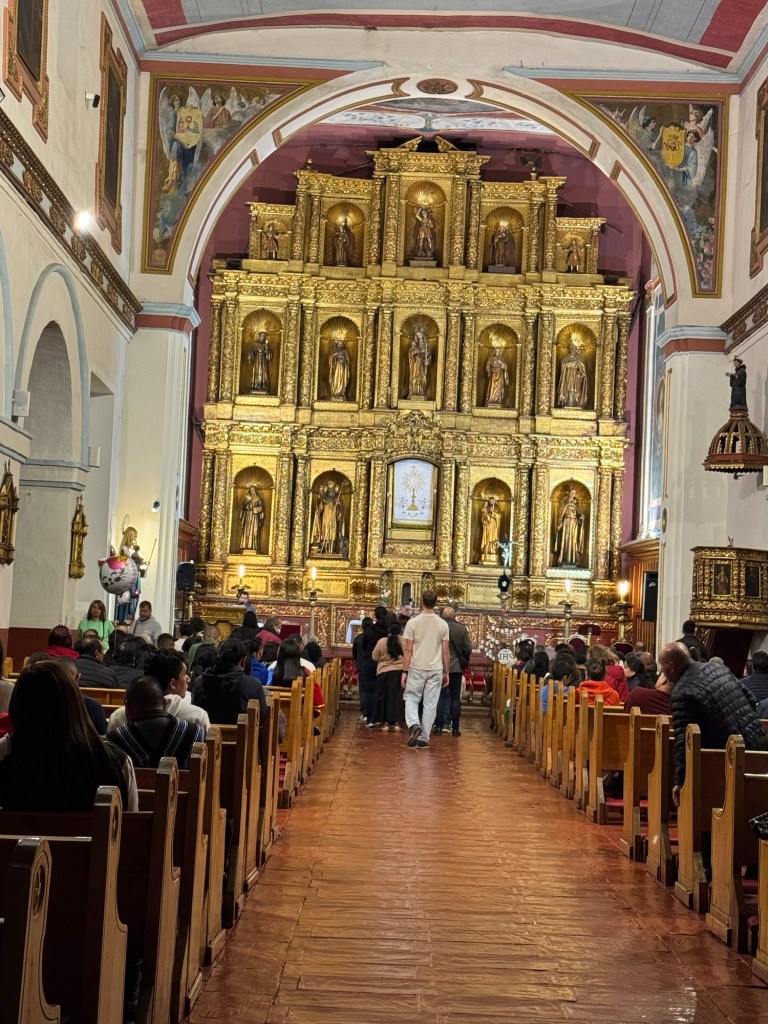
From looking at a photo of the church, I noticed that the church tower was crooked. A sign in the square confirmed it. Eventually, the Church of Saint Domingo’s doors were opened and I went in to find a very pretty church, with many burial stones covering the floor and an interesting statue of Saint Claver with the slave he converted as well as a striking statue of Jesus on the cross. Finally, it was time to head for the airport.

The concourse was full. People waiting for delayed flights plus on time flights. Even the lounge was full and taking no more people. We found single separate seats in the public waiting area and waited. It was 12:50 and our flight was scheduled for 2:20pm. Eventually some lounge space opened up and we moved.

Although it’s time to come home, I am ambivalent. It has been a wonderful experience and a happy time for the two of us as a couple. We agree that we will do more traveling, but with longer stays at each stop. We are already working on our next trip back to Uganda in March with time in southern Africa before or after Uganda.

Mark wants me to speak about my observations and feelings about our travels. Every trip, I observe that people are friendly, welcoming and generally happy being alive, wherever they have been planted. Even the poorest people smile and laugh and ask about us when language permits. The saddest part about traveling for me is the inability to communicate. Clearly there is a mutual desire to connect, but language differences inhibit both of us. I am grateful for the many English speaking guides we have had on this long adventure. We connected well with most of them, especially the ones with whom we spent several days. Without them and their knowledge and English skills, our adventures would have been much less rich and rewarding. Everywhere we go, we are asked which is our favorite country or place and we always give the same answer. Our favorite place is the one we are currently in. We have not found a country we did not like, although there are some, like Uganda, we will continue to visit. It is mostly about the people, and we have friends and now even family, our goddaughter Julianah, in Uganda.

And so this adventure ends. I hope you have enjoyed reading about our journey and adventures and will join us again wherever the next trip leads us.

Blessings to you all, weather you travel in body or only in spirit.

With Love,

Julia and Mark

Ending South America in Cartagena

Wednesday, November 12, 2025

Forests and jungles are in our rear view mirror as we leave Tewimake and head for Cartagena, our last stop on this 7 week long adventure through South America. The drive took 5 and a half hours including a stop to buy a sandwich midway through. The first part of the drive was mostly tree lined. Then the landscape turned into scrub and wetland with the Caribbean Ocean in the distance.

The road was two lanes for the first 2.5 hours with dilapidated and dirty villages and small towns along the way. When we reached the large industrial port city of Barranquilla, the highway became 4 lanes.

Our driver, Orlando, spoke broken English, but was able to tell us the city was larger than Cartagena, which is a tourist city, and has a busy port exporting cotton, coffee, petroleum and natural gas. It is Colombia’s largest port on the Caribbean Sea and the fourth largest city in Colombia.

Shakira

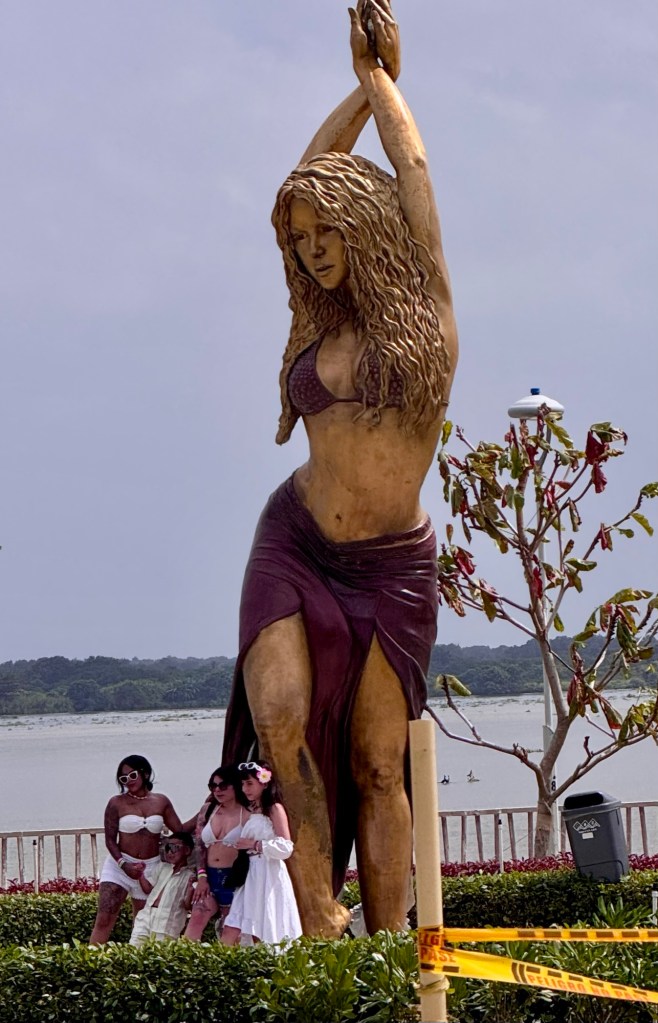
Entering Barranquilla we passed a large bronze statue of a Colombian singer named Shakira, who was born here. We stopped to get a better look. It turns out she has won at least one Grammy award, made significant contributions to the music scene, especially for her song “Hips Don’t lie”, and does charity work as well. In addition to Shakira, Sofia Vergara was also born here.

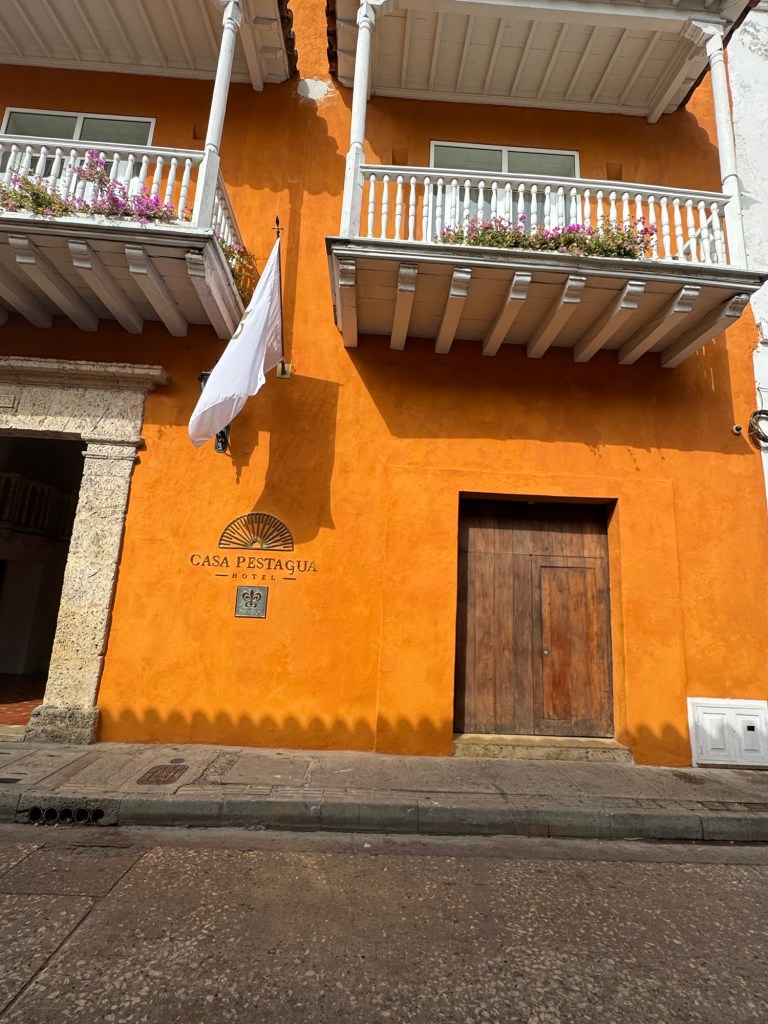
At 1:30 Orlando dropped us off at our hotel in Cartagena and headed back to Tewimake. We were happy to check into our 4 night stay in one place. We spent the afternoon chilling in our room. It is apparent the heat and humidity have sapped our energy for sightseeing. We did Uber to our dinner at Celele, a restaurant in the neighborhood called Getsemani. It is billed as being inspired by gastronomic adventures around the Colombian coast. The food certainly was adventurous.

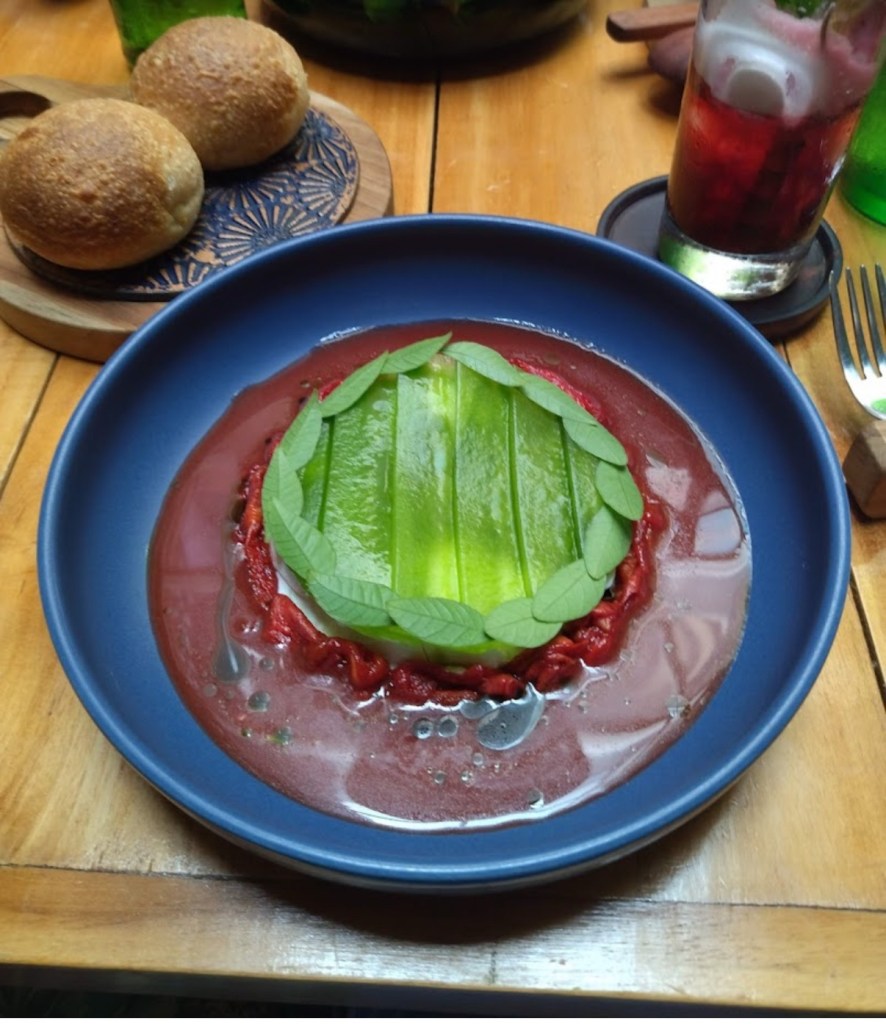
The starter course at Celele

We ordered a starter covered in green leaves. It was tasty, but hard to identify. The main dish with lobster and snails was equally unusual. We could make out the lobster and snails mixed with rice, a nutty crunchy substance and a sauce. It also tasted good, but was hard to make a connection with our expectations for a lobster dish.

Thursday, November 13, 2025 Independence Day in Cartagena

The city has a current population of 1.2 million. It was occupied for centuries by indigenous tribes, but was founded in 1533 by the Spanish explorer Pedro de Heredia. In the same year, 500 African slaves were brought from West Africa and put to work in the area. The Spanish gave the Slave trade to the Portuguese, who eventually brought 4 million humans as slaves into Cartagena until the trade was stopped in 1851 per the Womb Law, which said that anyone born to a slave after that date was a free person. Meanwhile, Initial prosperity came from the discovery of gold in the tombs of the indigenous tribes. Sir Francis Drake successfully attacked the city in 1586 and stole 400,000 ducats. To protect against further pillaging, the Spanish built fortifications and continually improved them in the 17th and 18th centuries. In 1741 the British laid siege to Cartagena, but the Spanish forces defended the city. The Cartagenians eventually won independence from Spain on November 11, 1811. The children of Spanish people had fewer rights than those who came from Spain. Eventually there were enough descendants who wanted to be free of Spain that they successfully revolted against the crown.

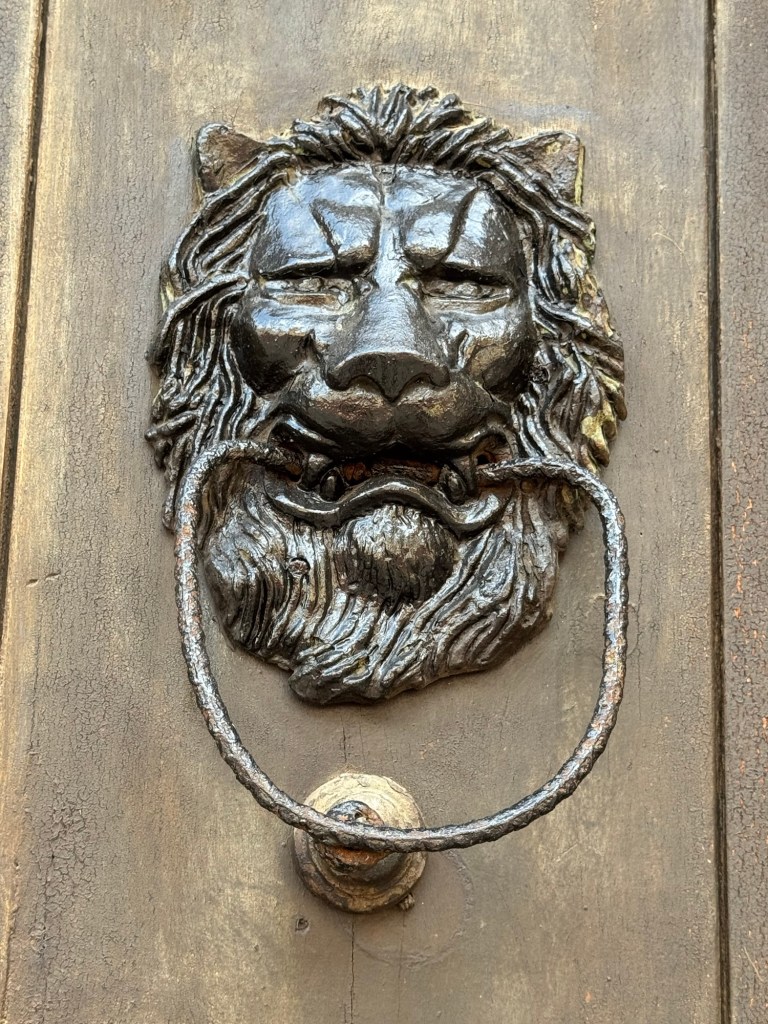
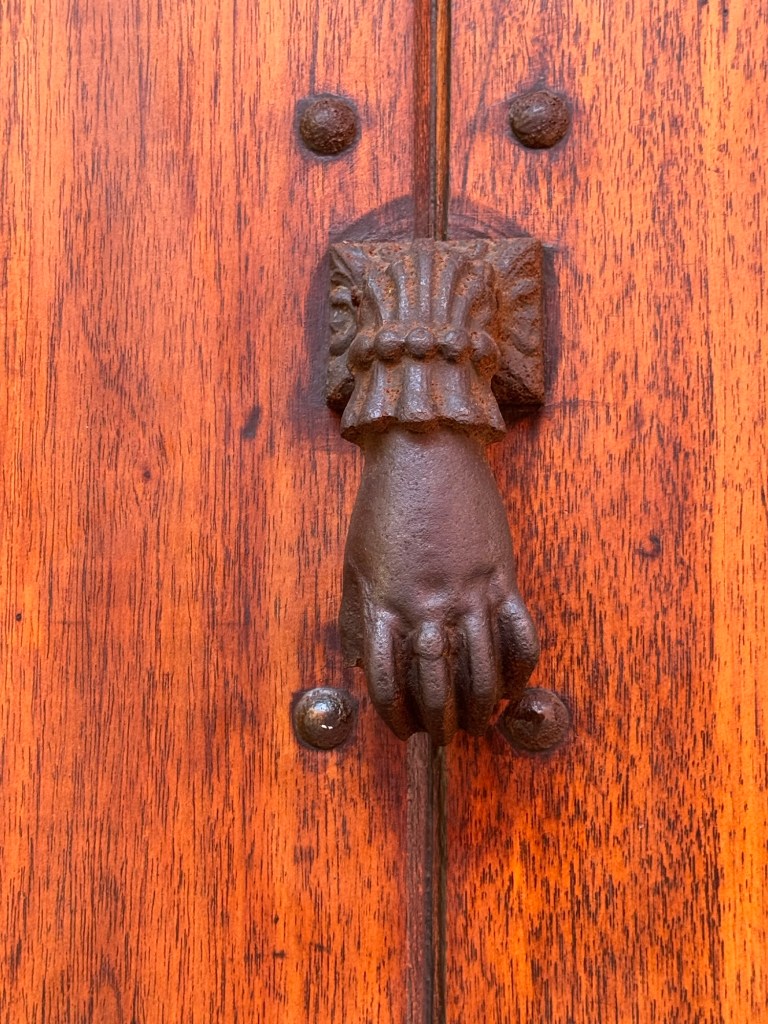
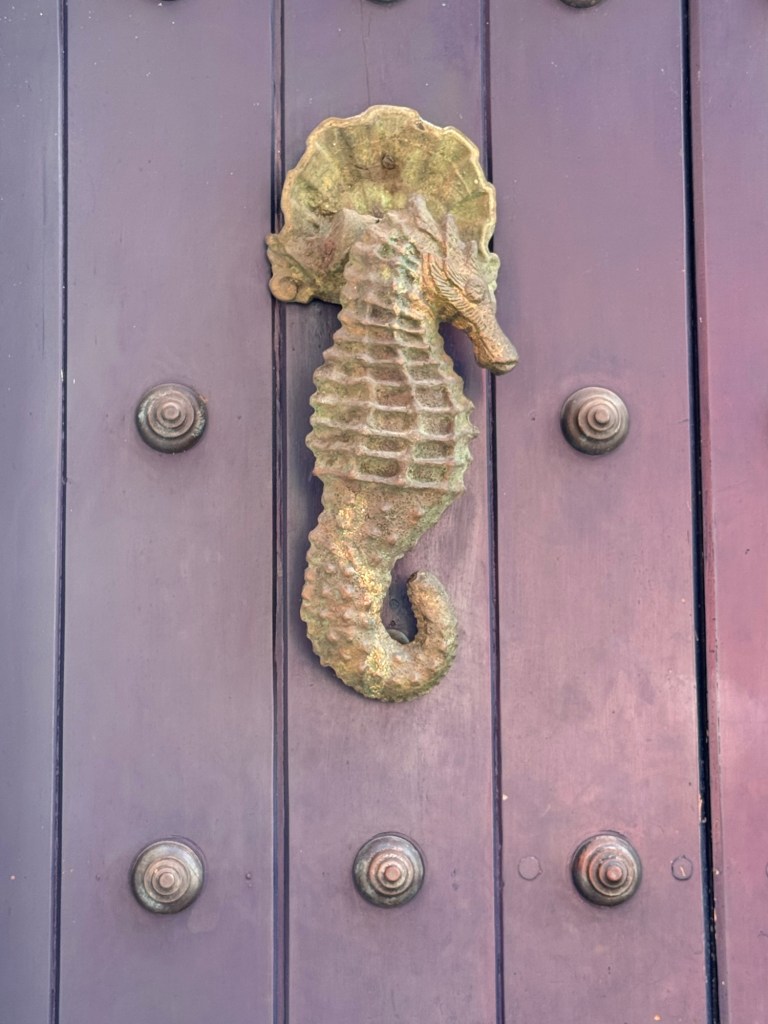
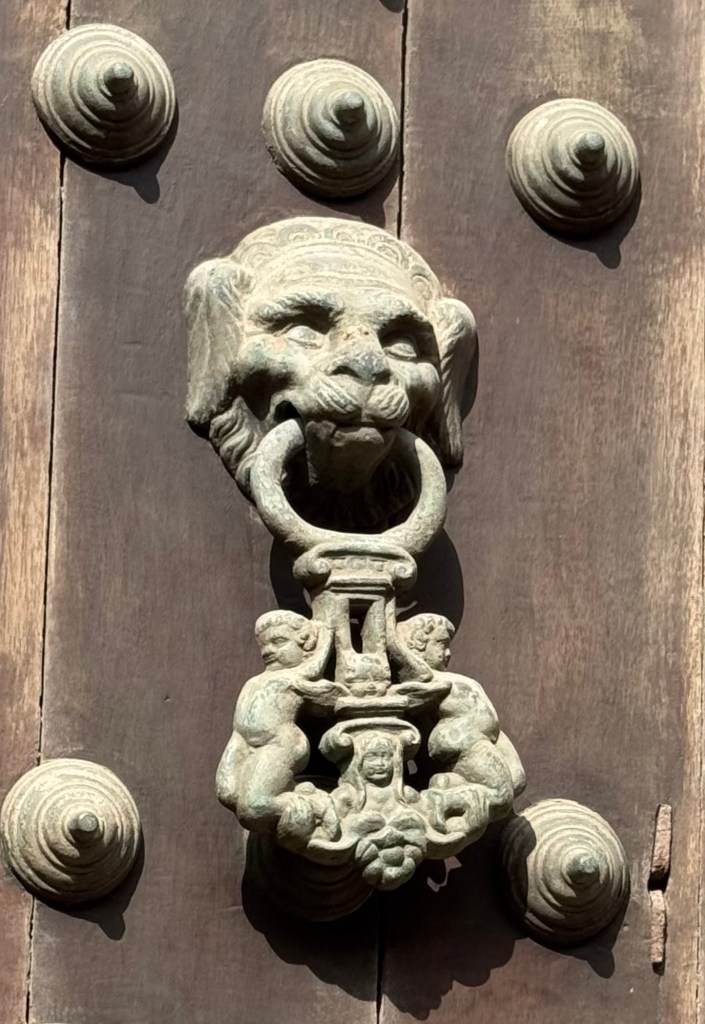
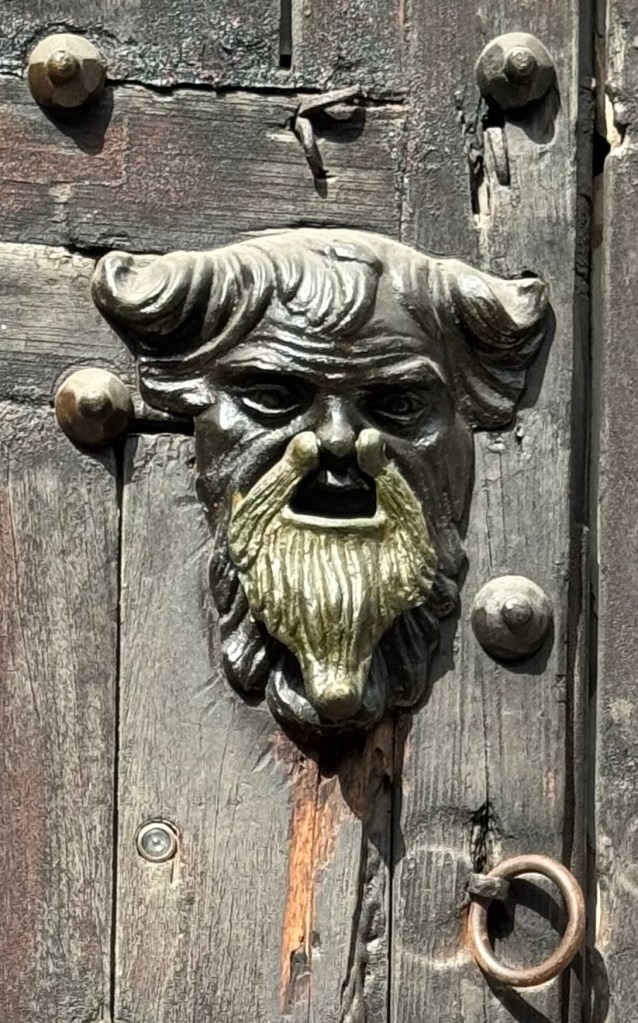
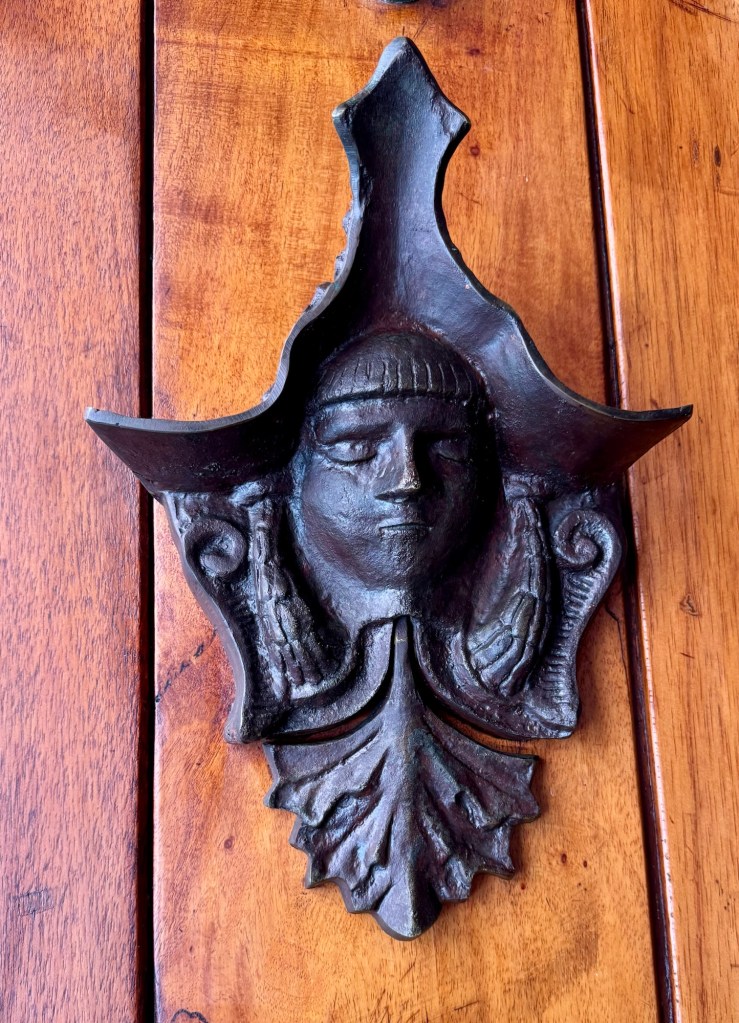
Our City tour began with our Cartagena guide, Javier, who started off introducing us to door knockers. There were several interesting one so I include some here:

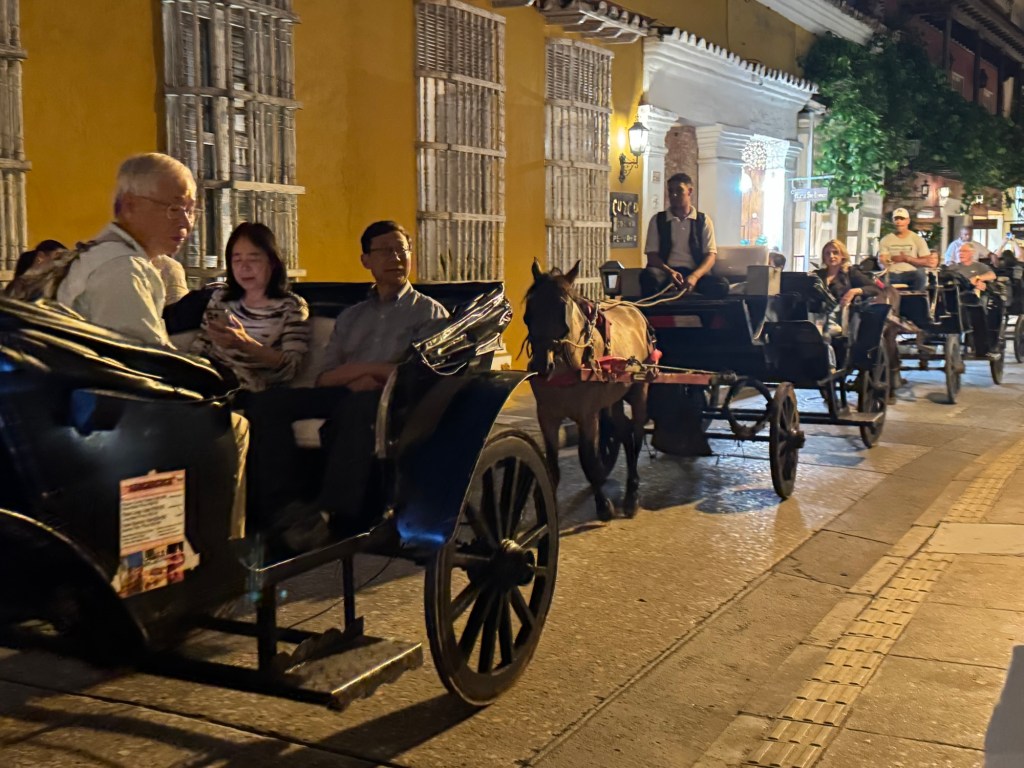
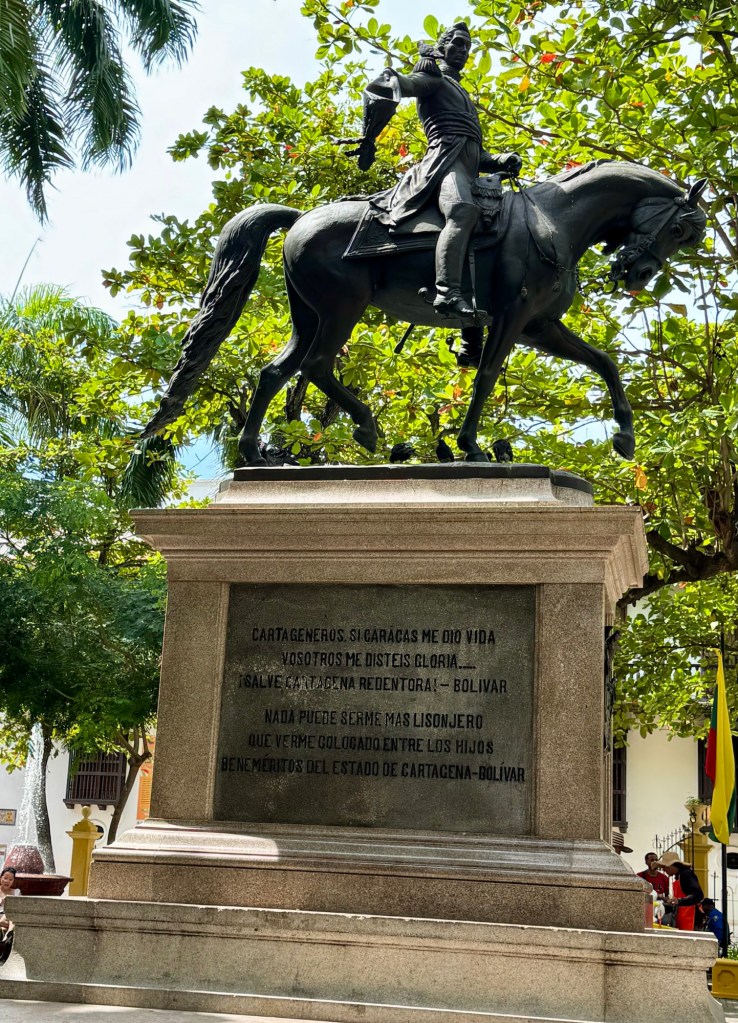
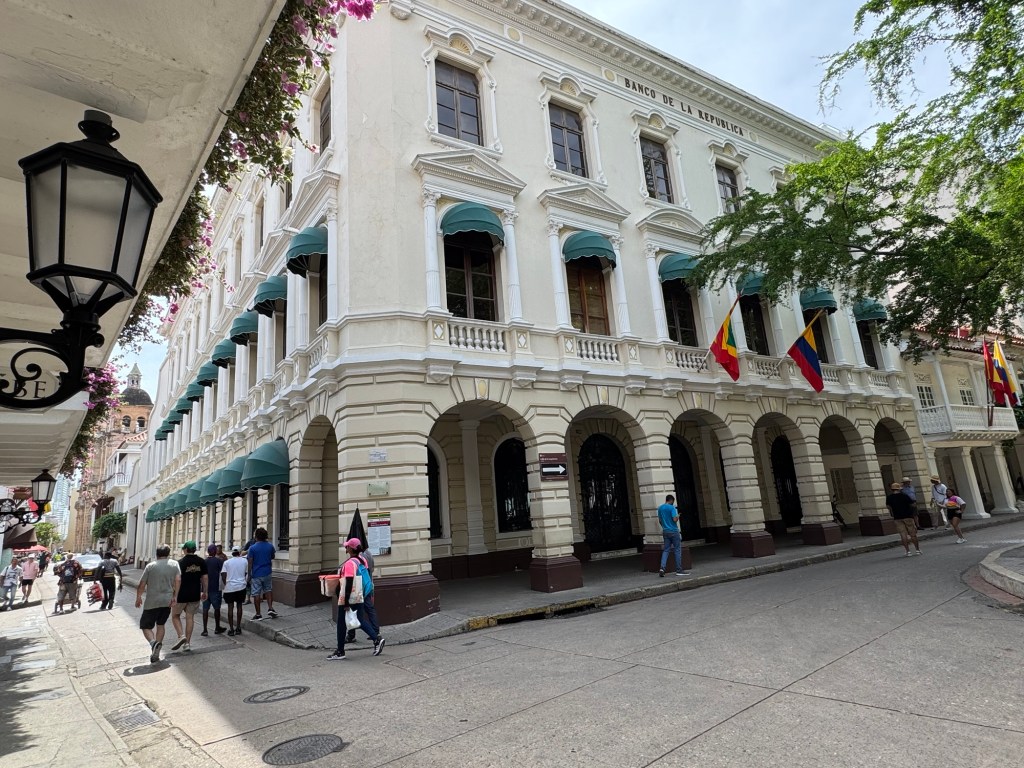
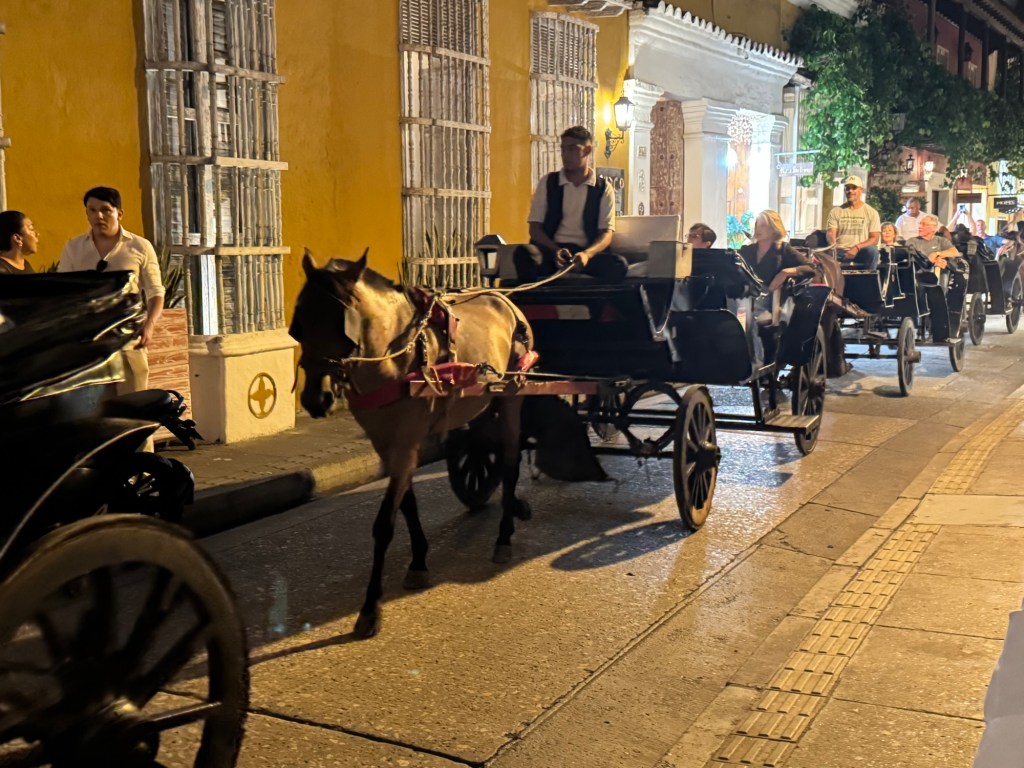
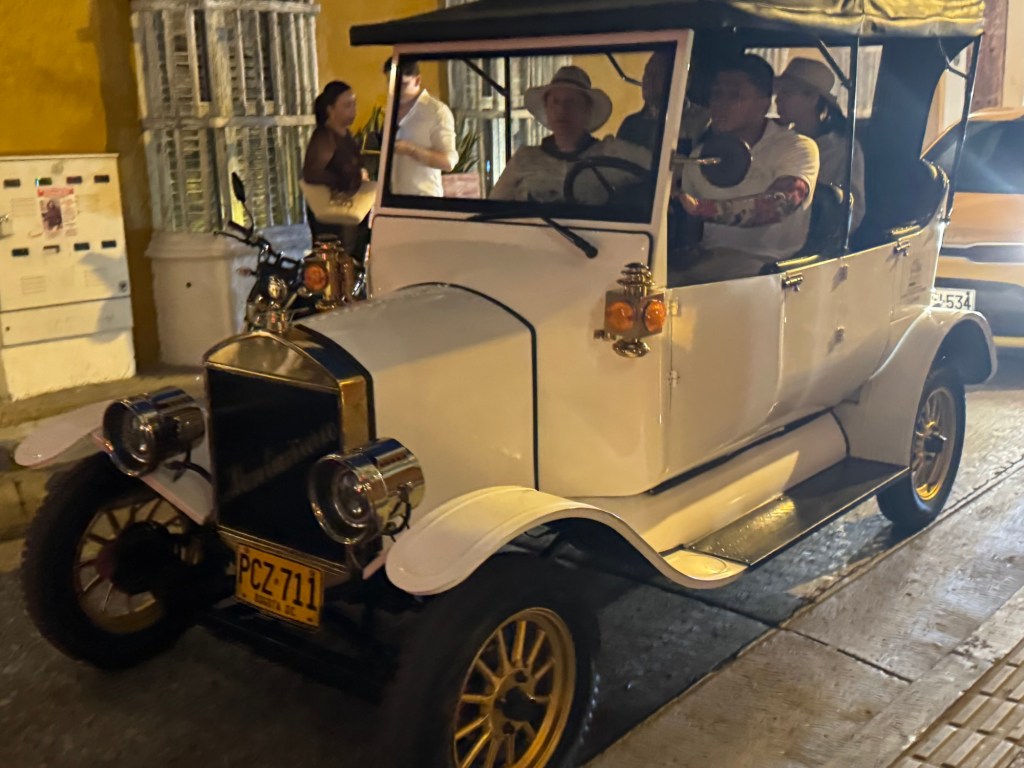
As we walked along the narrow streets dodging people, small cars and horse drawn carriages, Javier pointed out several buildings and monuments.

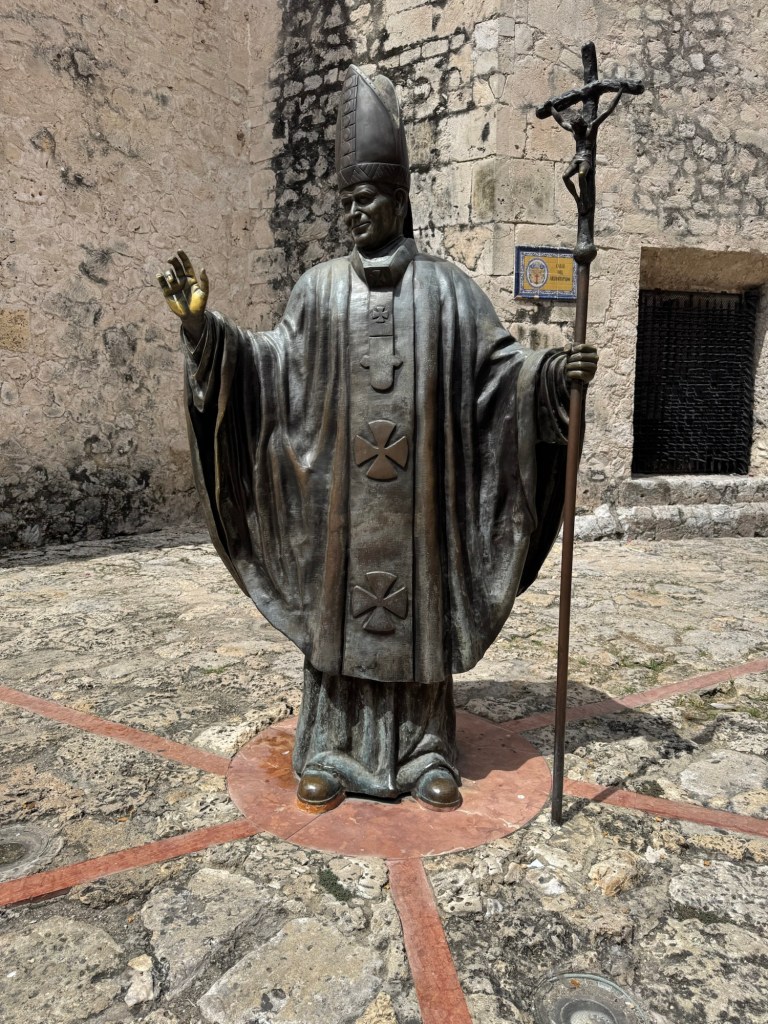
He mentioned that Cartagena has been visited by two popes in recent years;

Pope John Paul II

John Paul II was here in 1986, and Francis was here in 2017 to promote reconciliation and support the country’s peace process between the Government and leftist guerrilla groups. Pens were made from recycled bullets that read, “Bullets wrote our past, Education our future“.

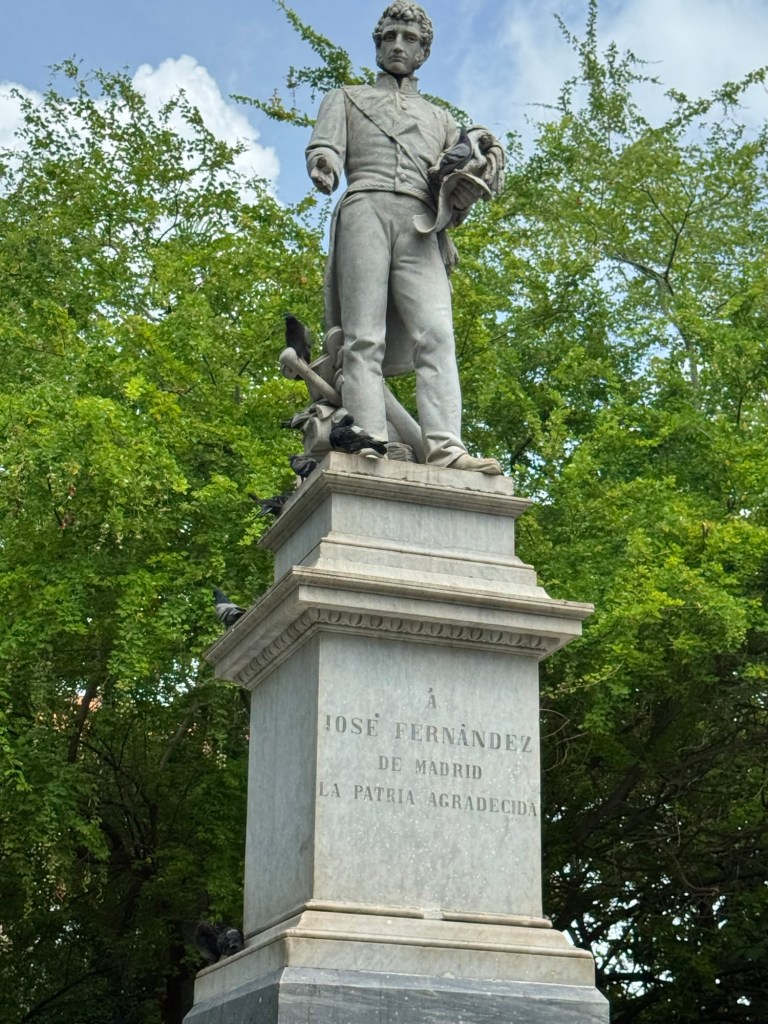
Javier also pointed out the sculpture of a priest, Saint Peter Claver, and Sacabuche, a slave who spoke several languages and translated for the priest in St Peter’s Square.

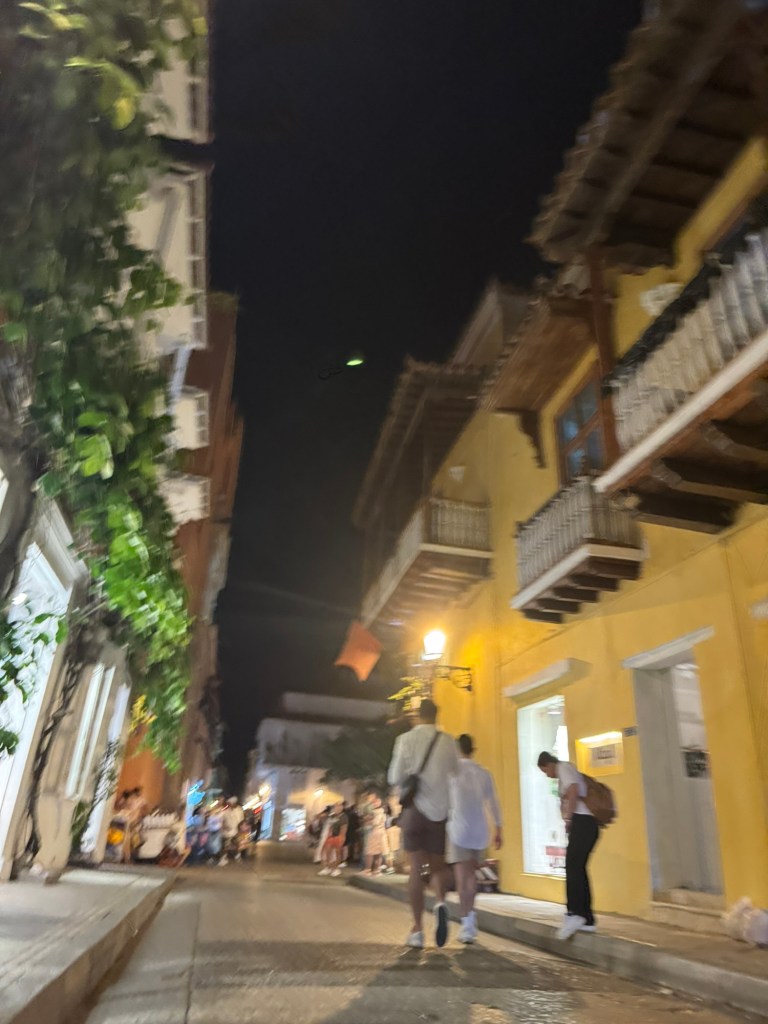
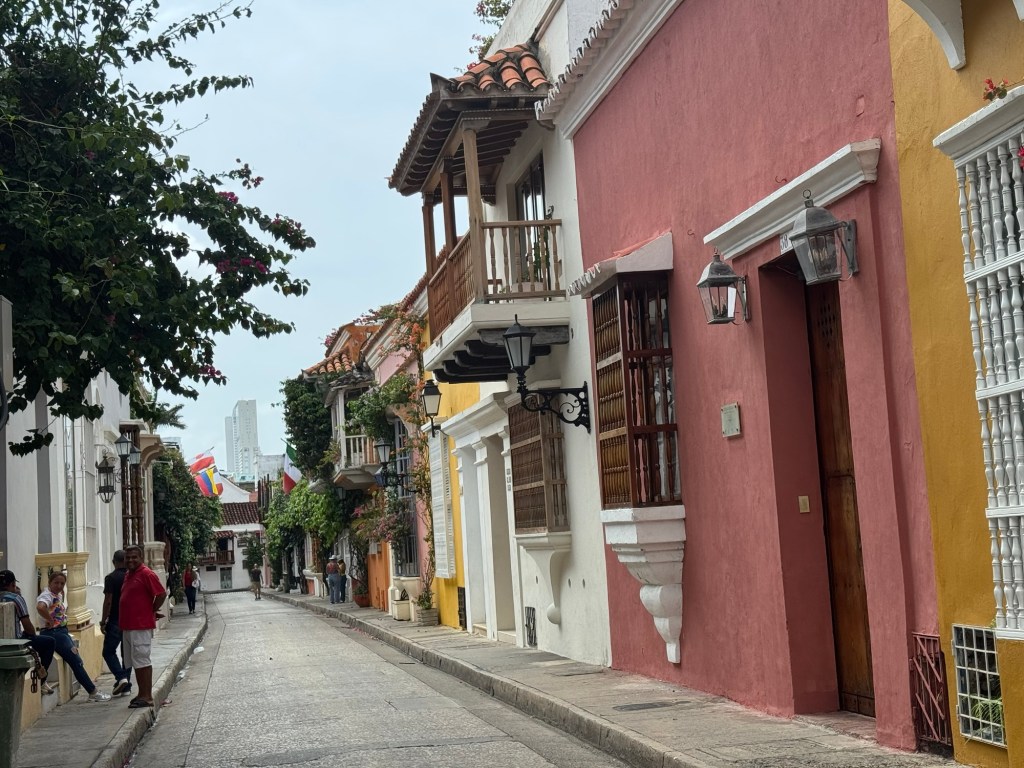
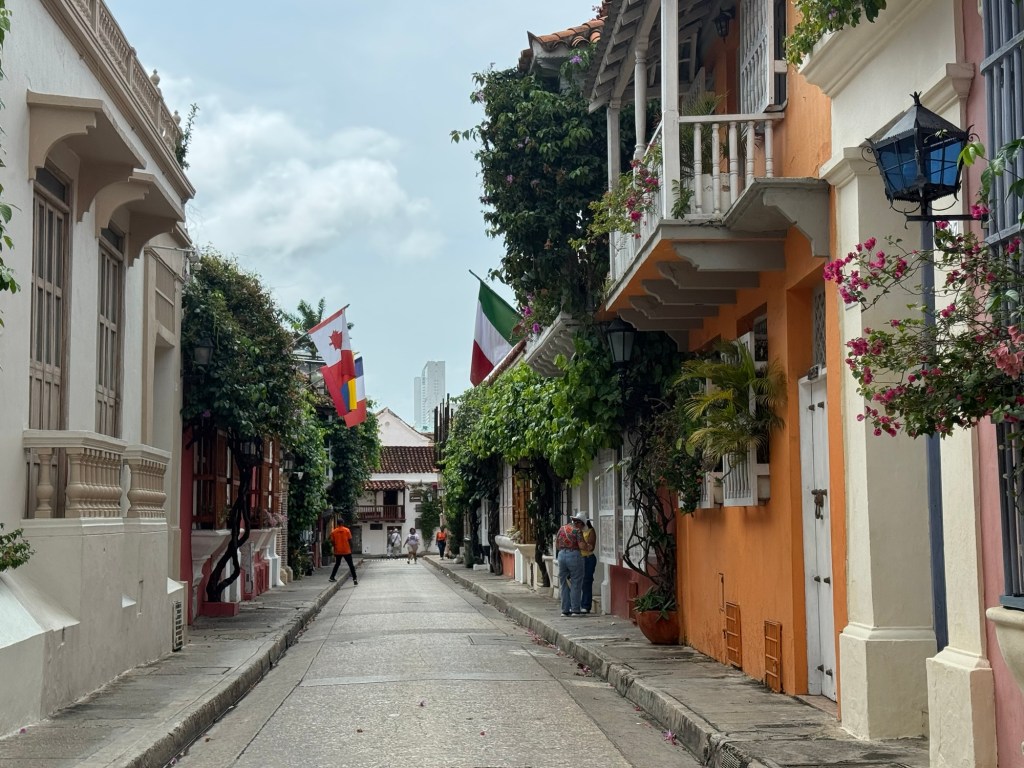
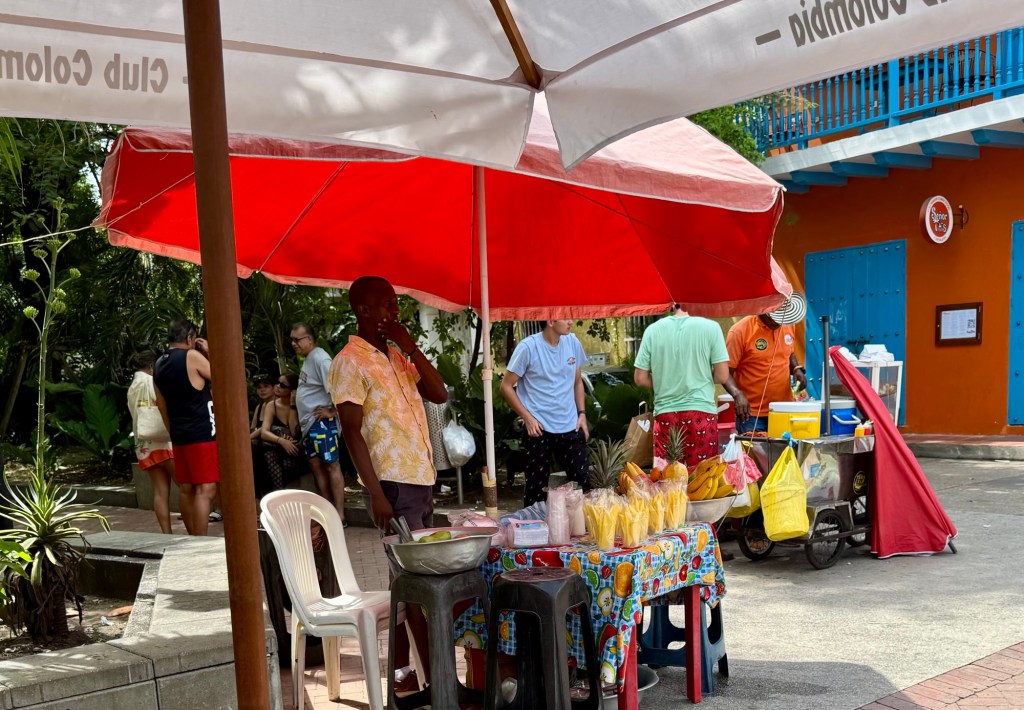
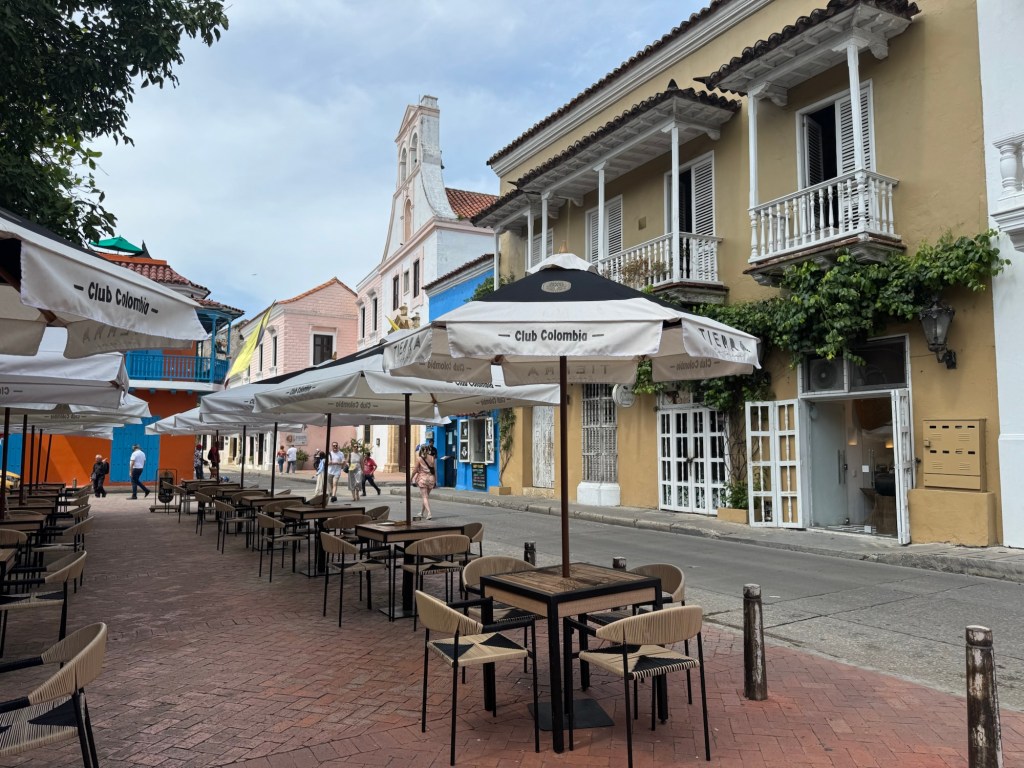
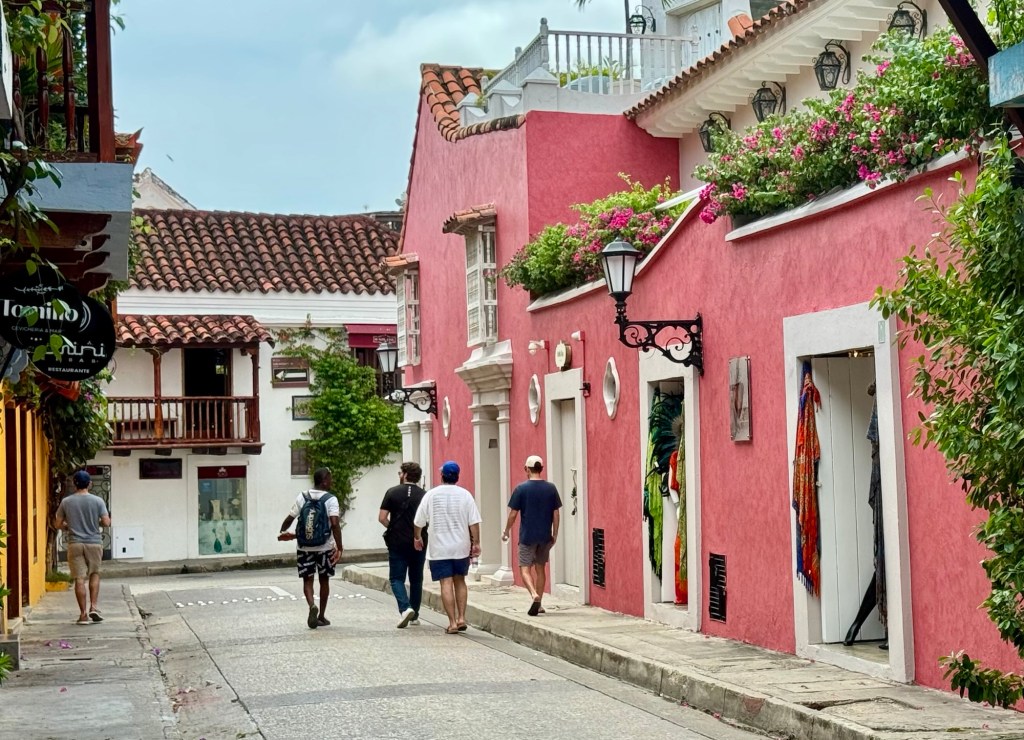
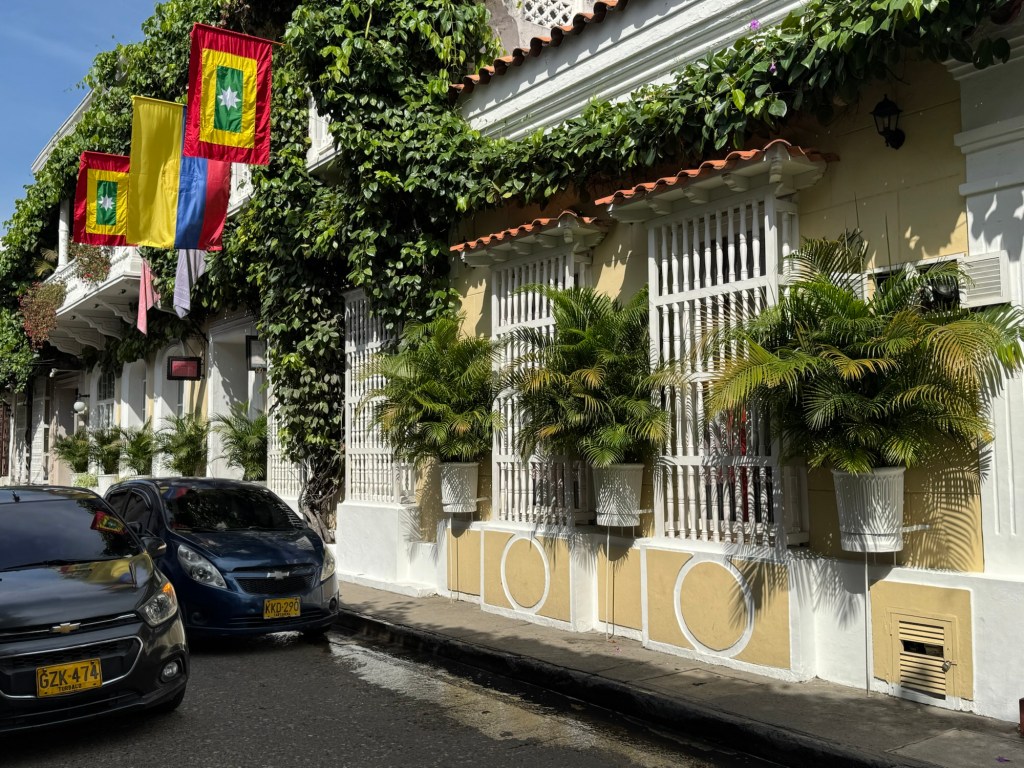
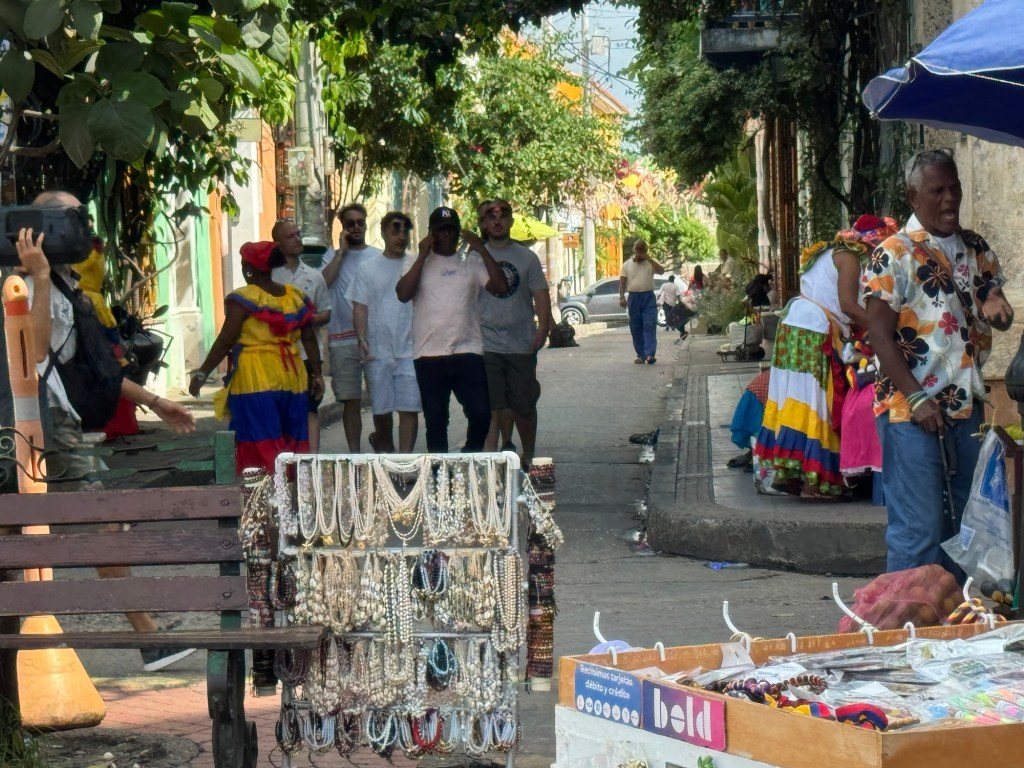
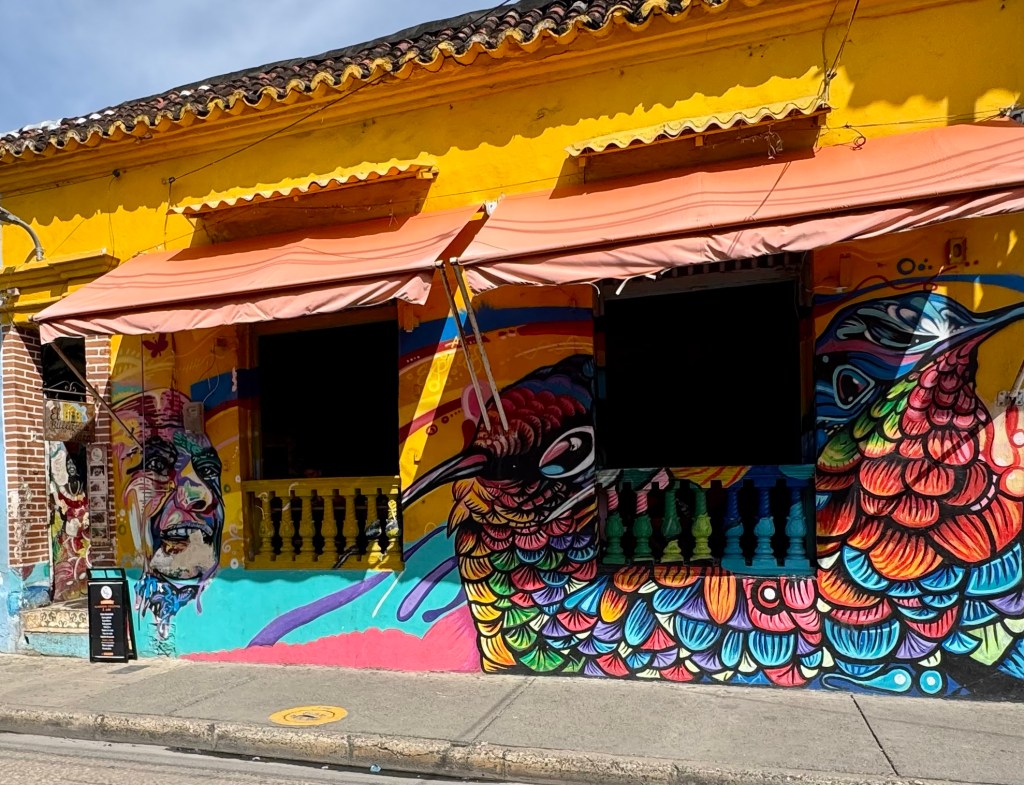
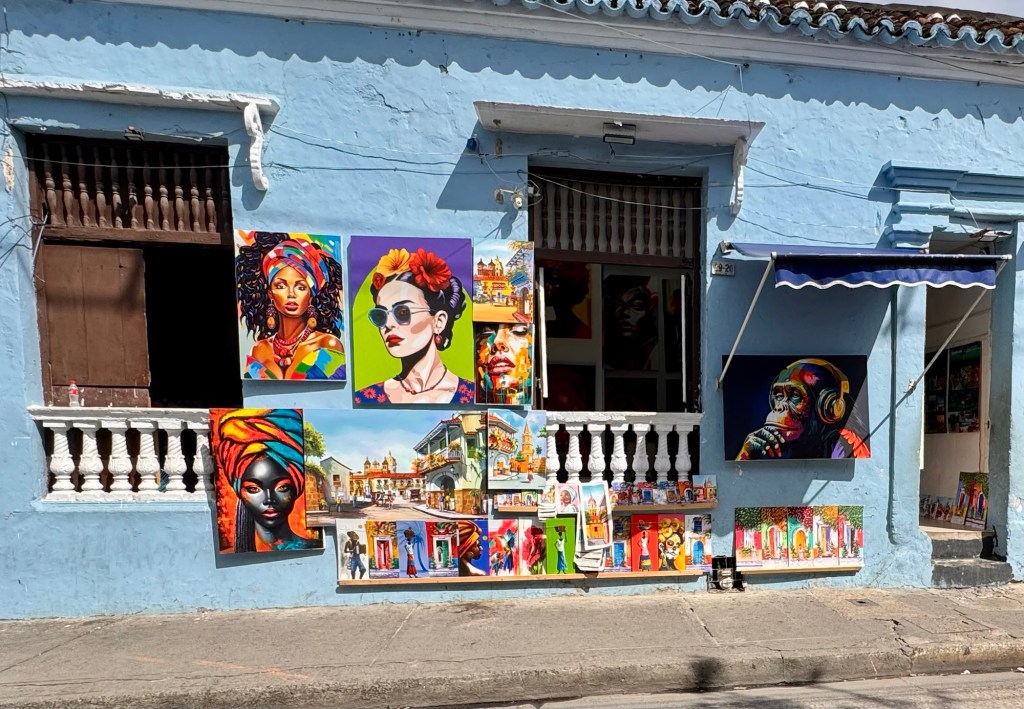
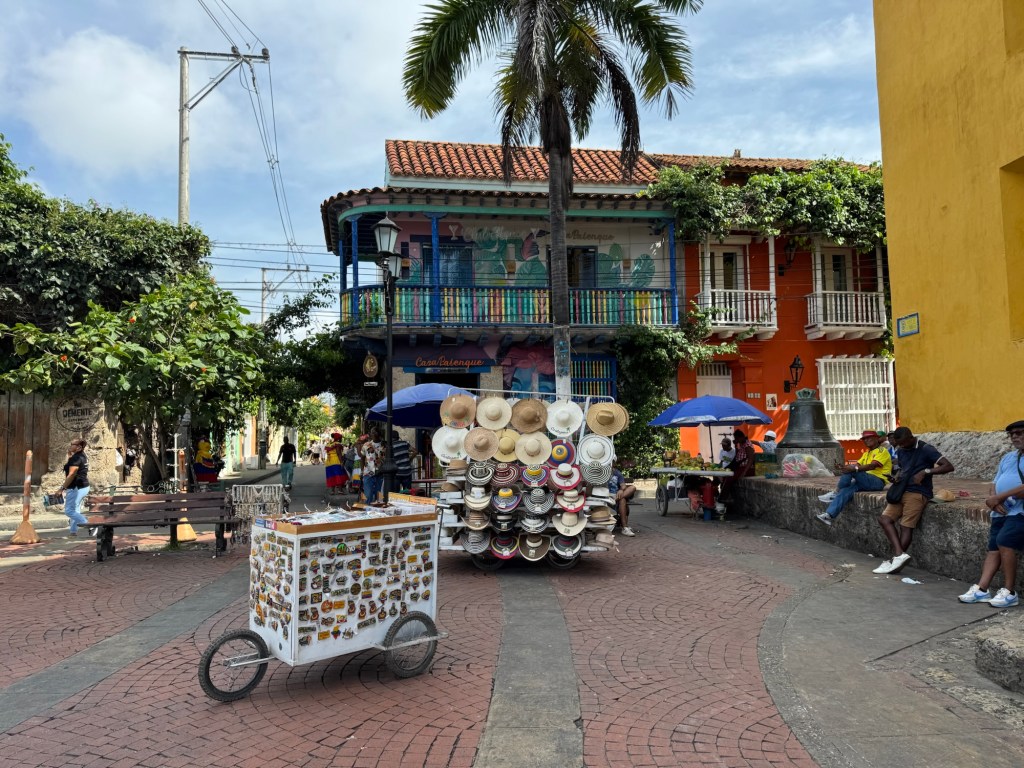
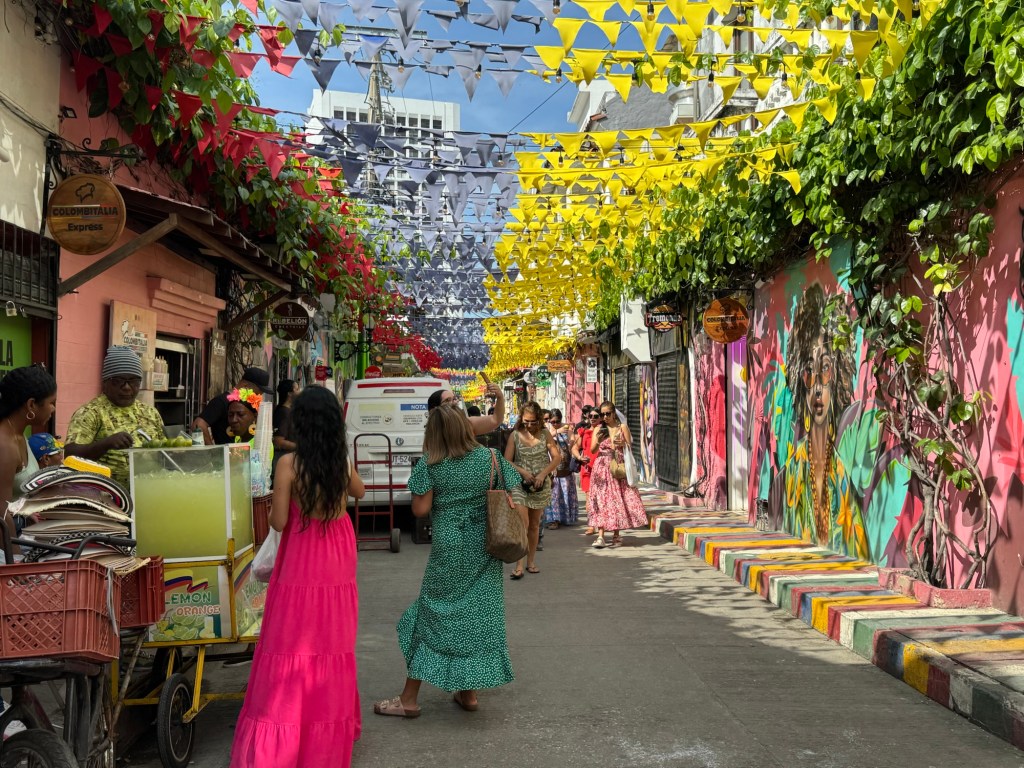
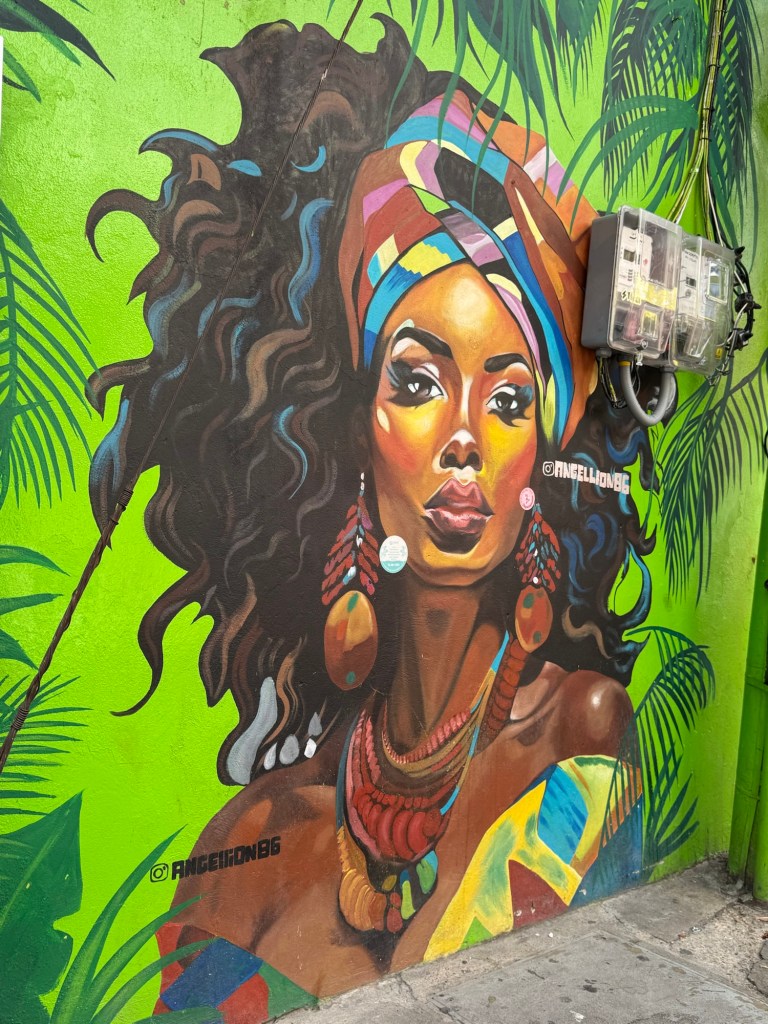
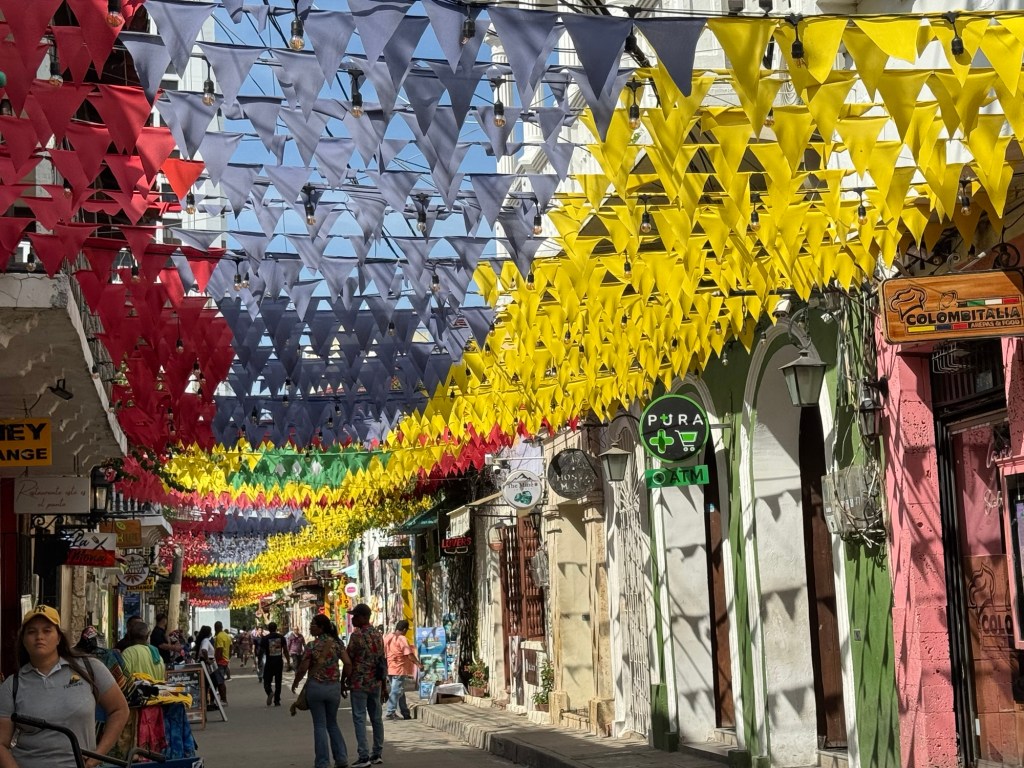
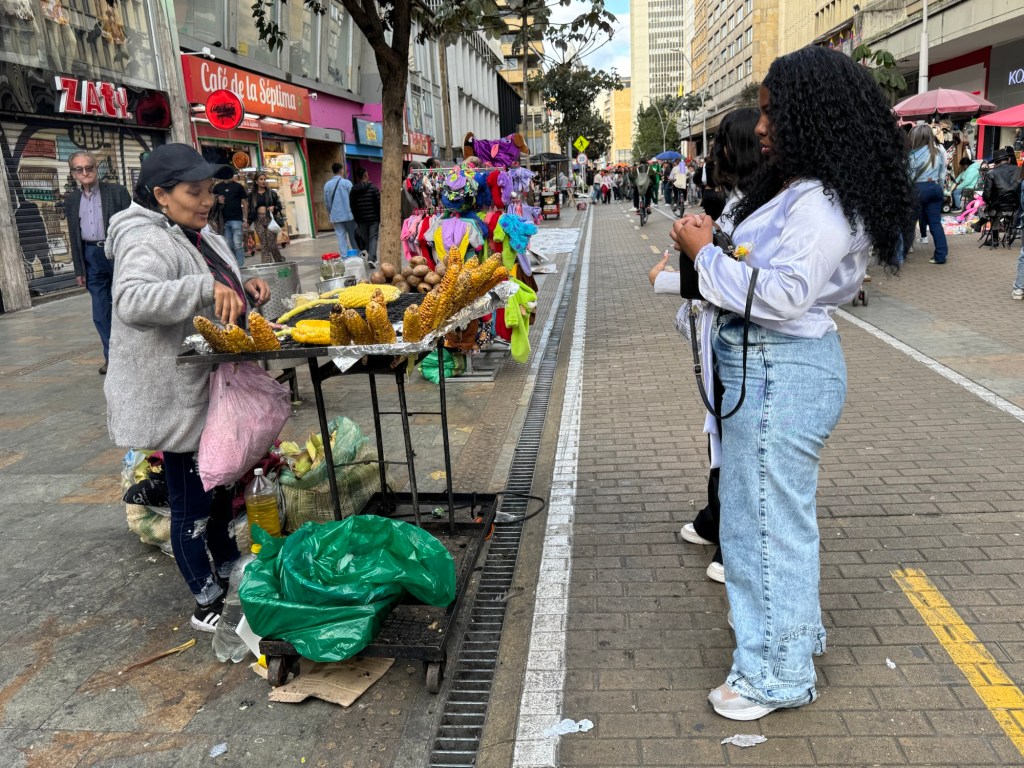
There were lots of street scenes and here are several. As it is the annual Independence Day festival, there are many more people around than usual. It is exciting and a bit nerve wracking too. These images are from the upscale neighborhood called El Centro.

After a light lunch of ceviche and salad we went back out into the heat of the day to see the middle class neighborhood of Getsemani. Between the heat and the humidity we were pretty miserable, but managed a few streets before heading for our cool hotel room.

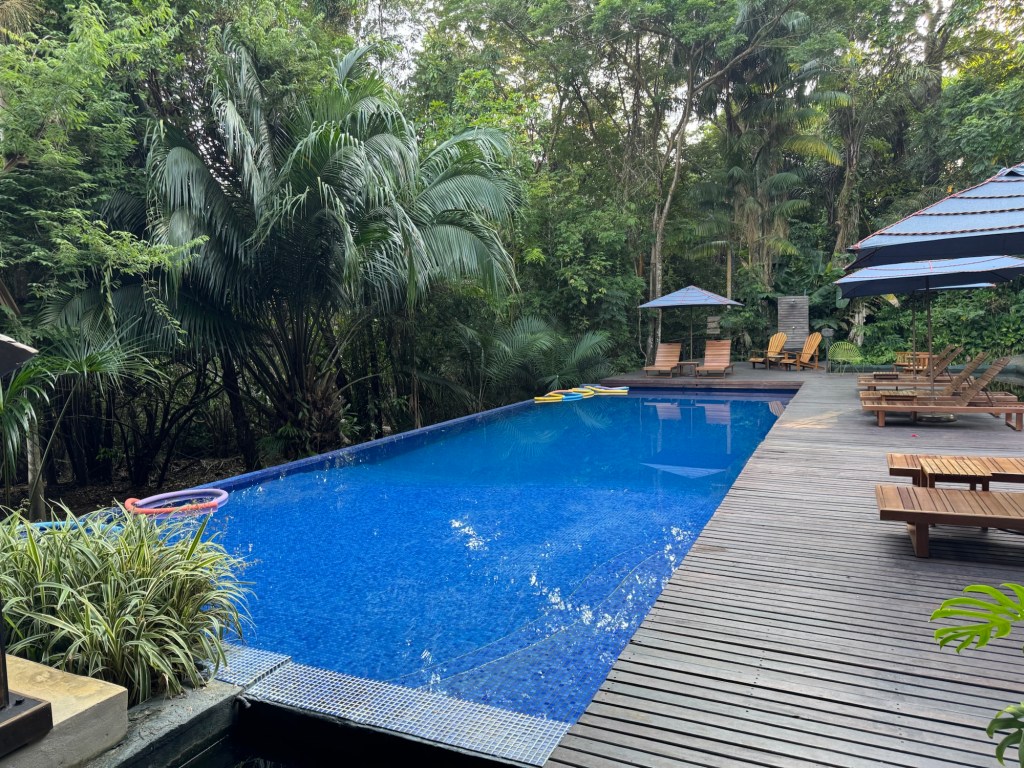
Back in our hotel, we headed for the pool. Sadly the water was very warm and not the least bit refreshing. So we spent the afternoon in our cool room and walked just a few blocks to dinner at Mar Y Zielo, for contemporary Cartagena food. I had sea bass and Mark had a shrimp and pork belly dish.

After dinner we walked a bit in the slightly cooler air and then headed home.

Friday, November 14, 2025

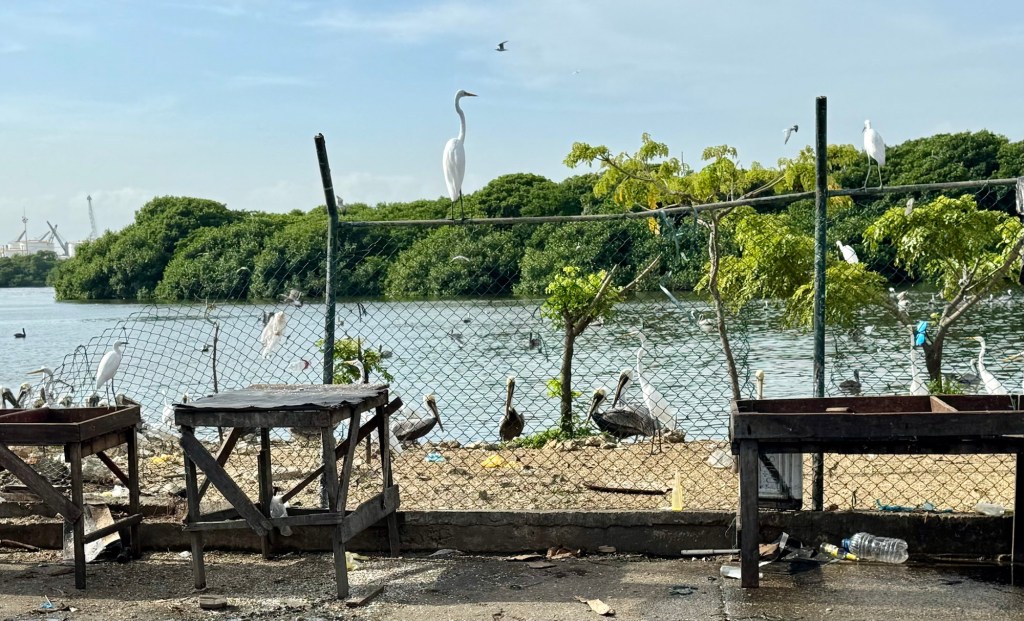
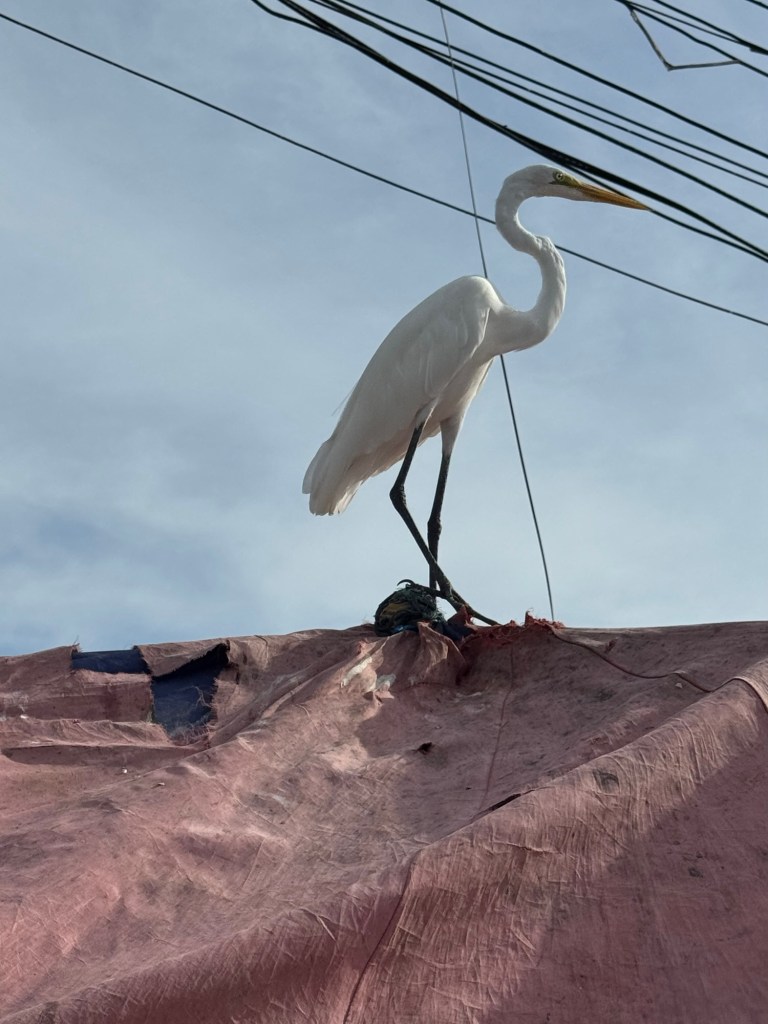
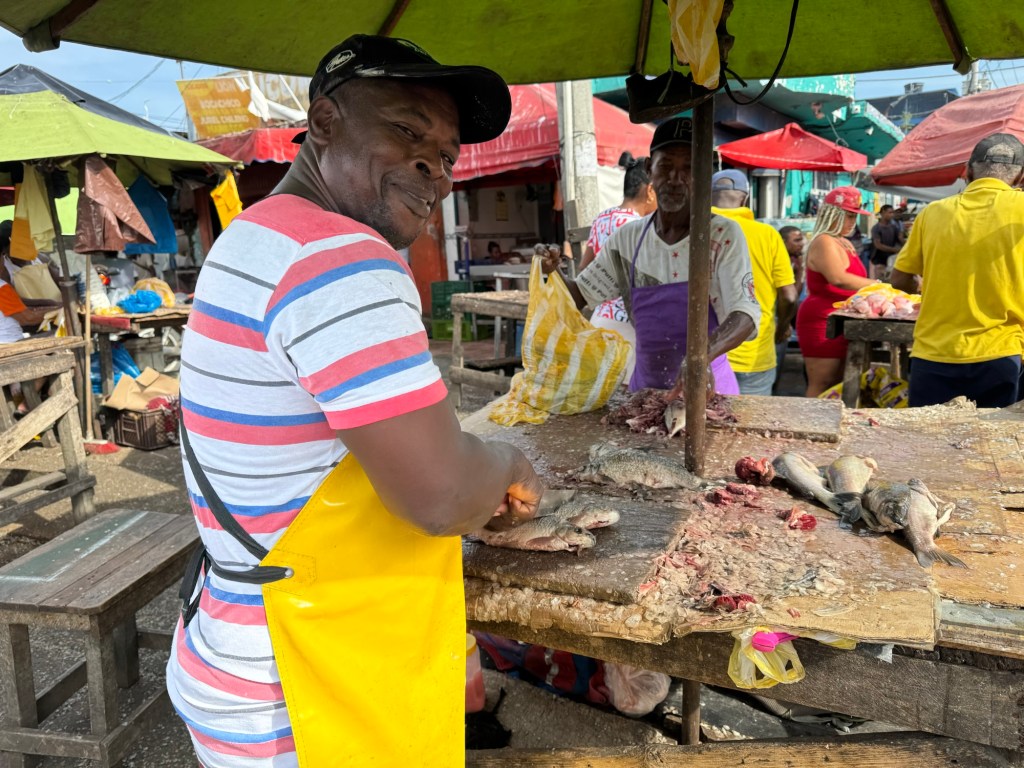
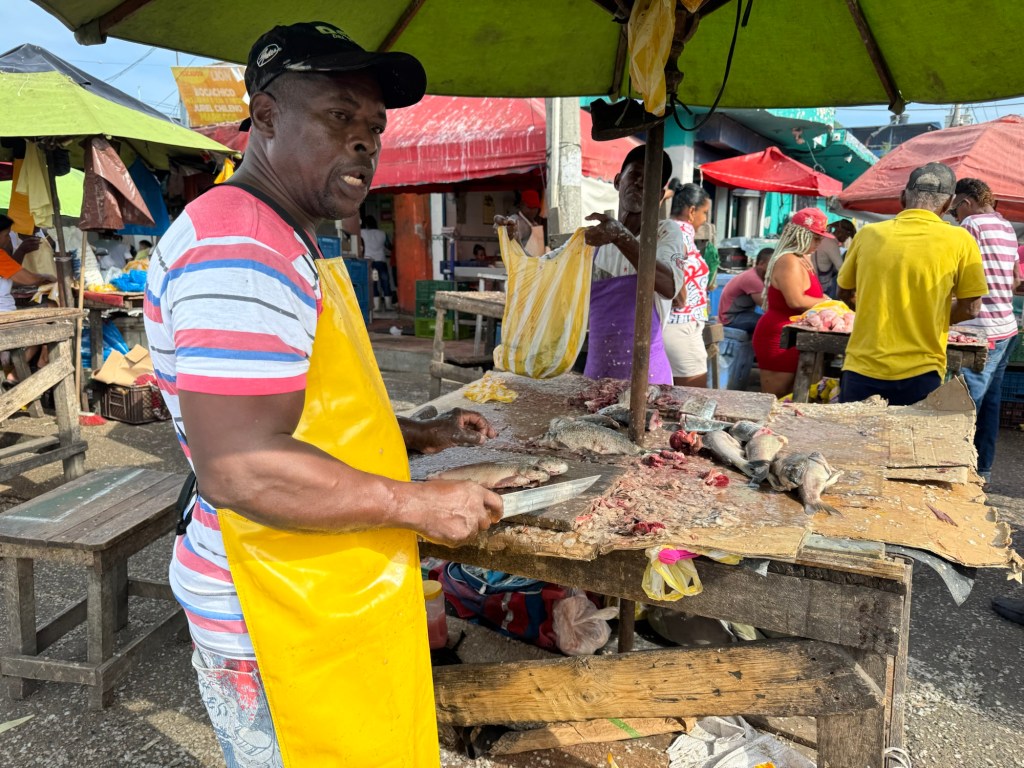
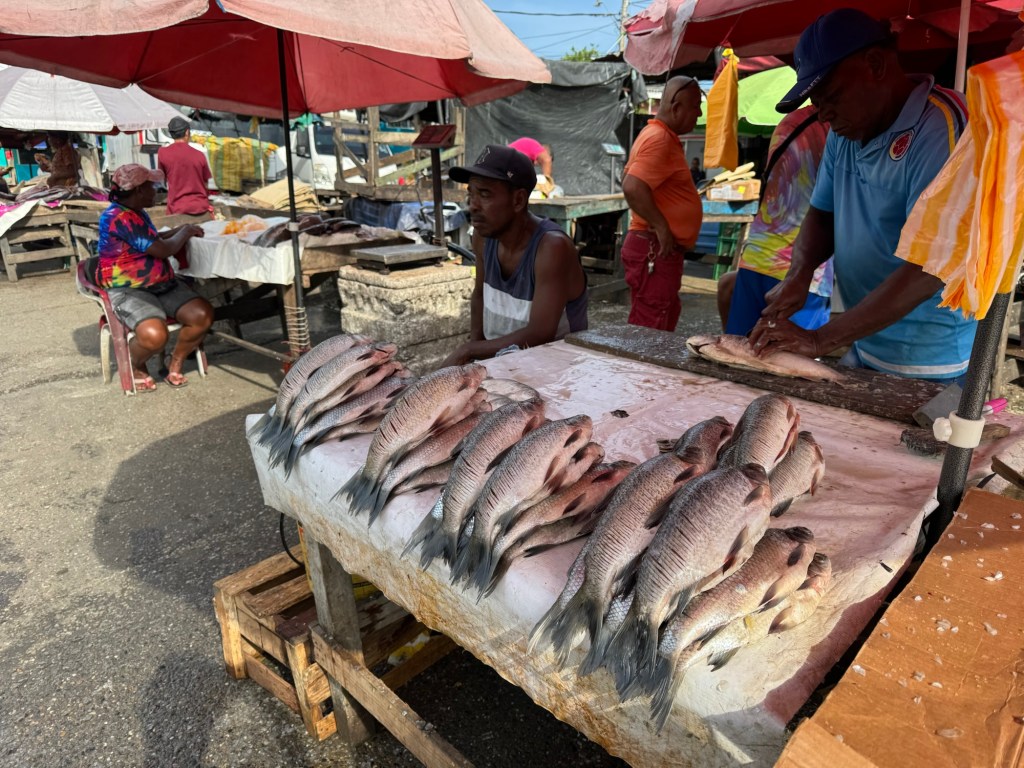
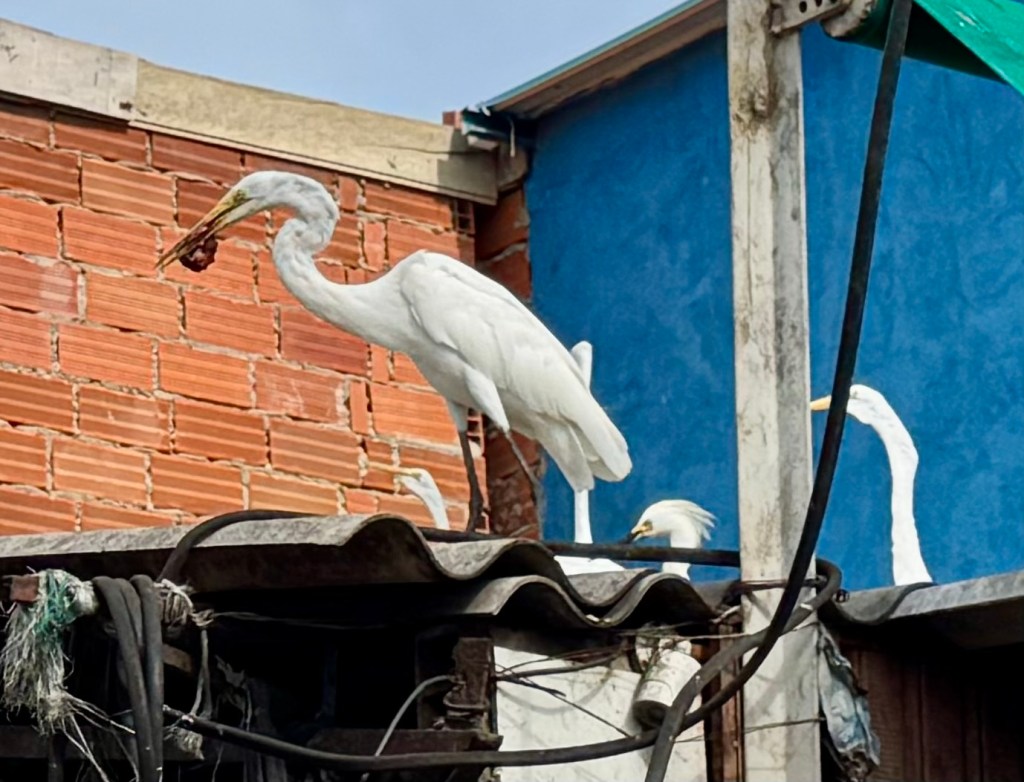
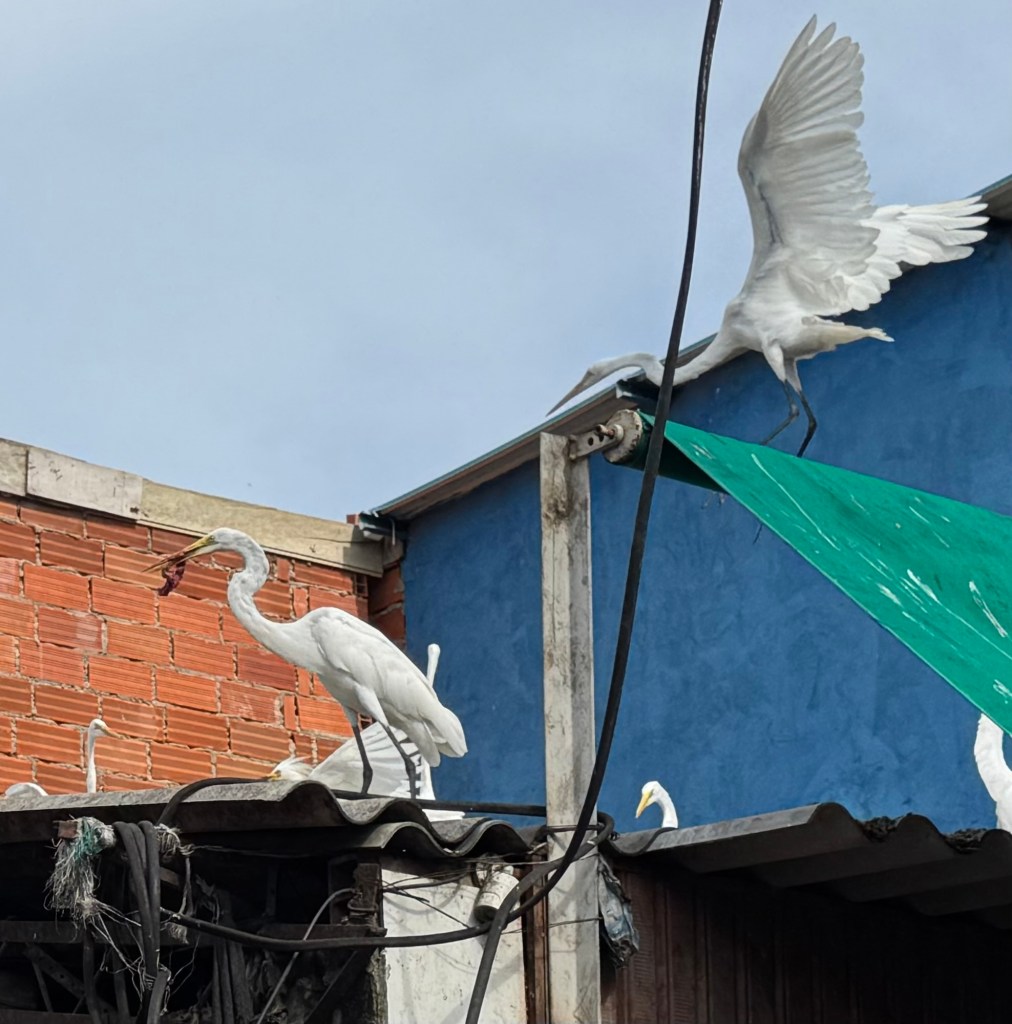
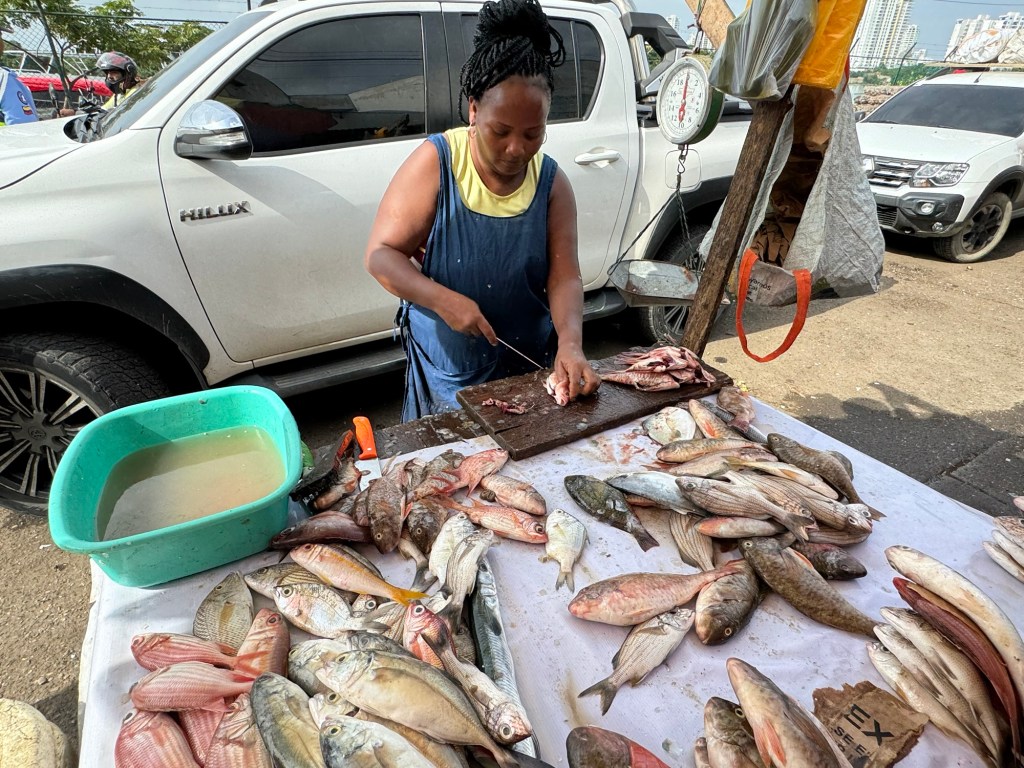
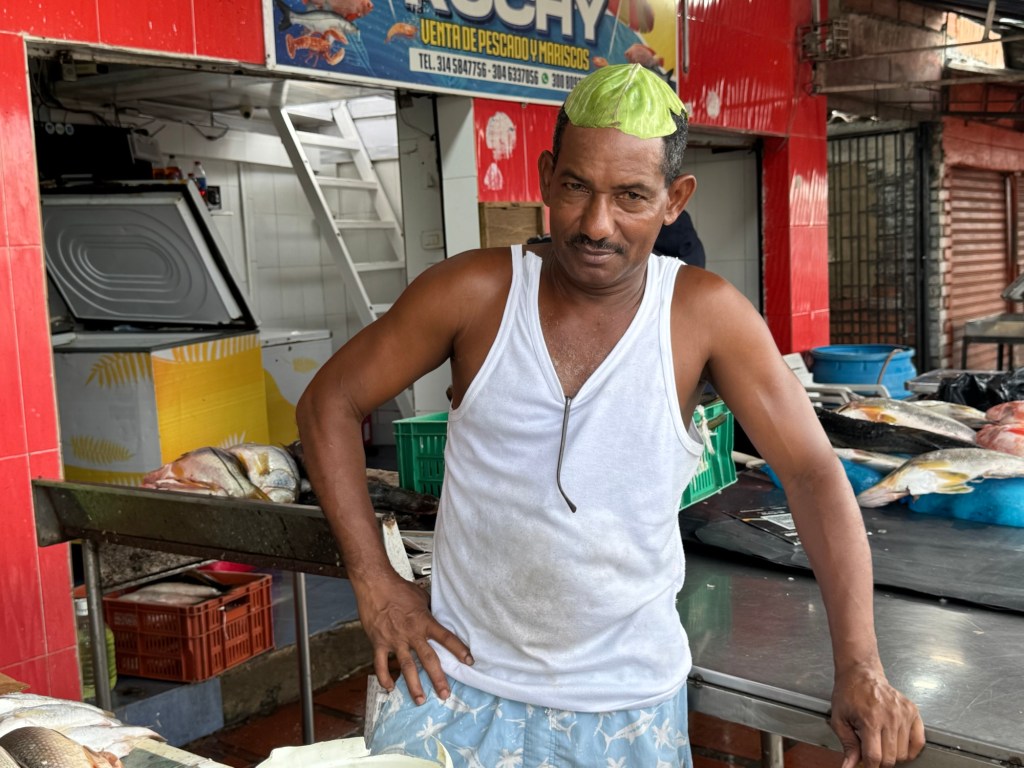
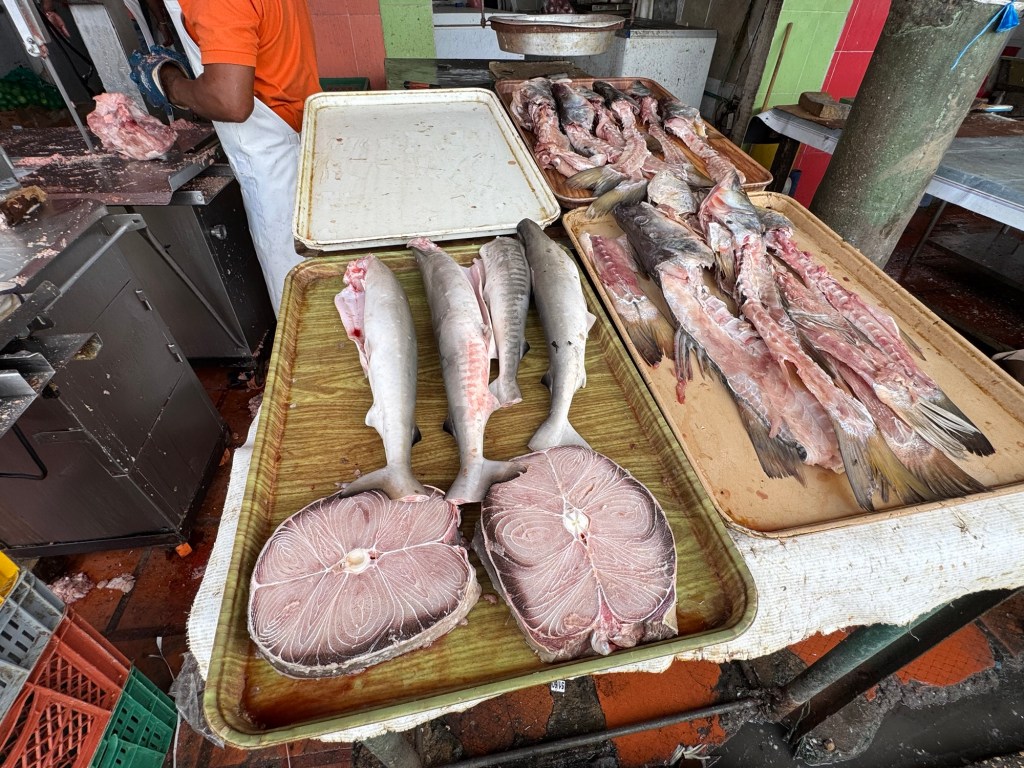
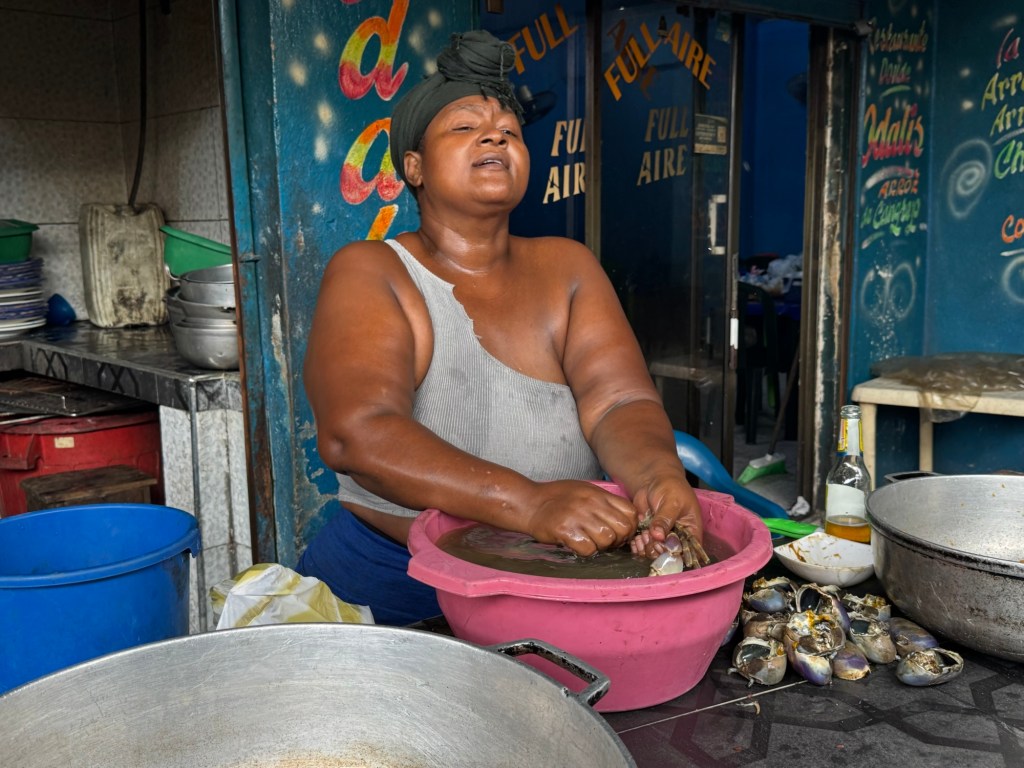
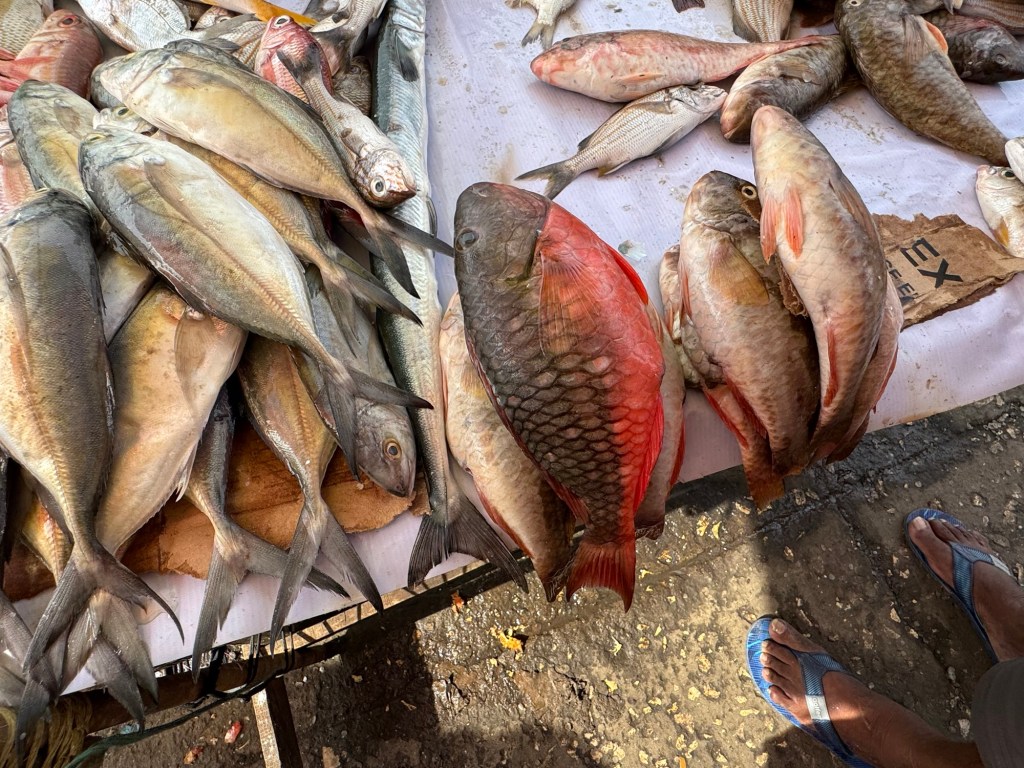
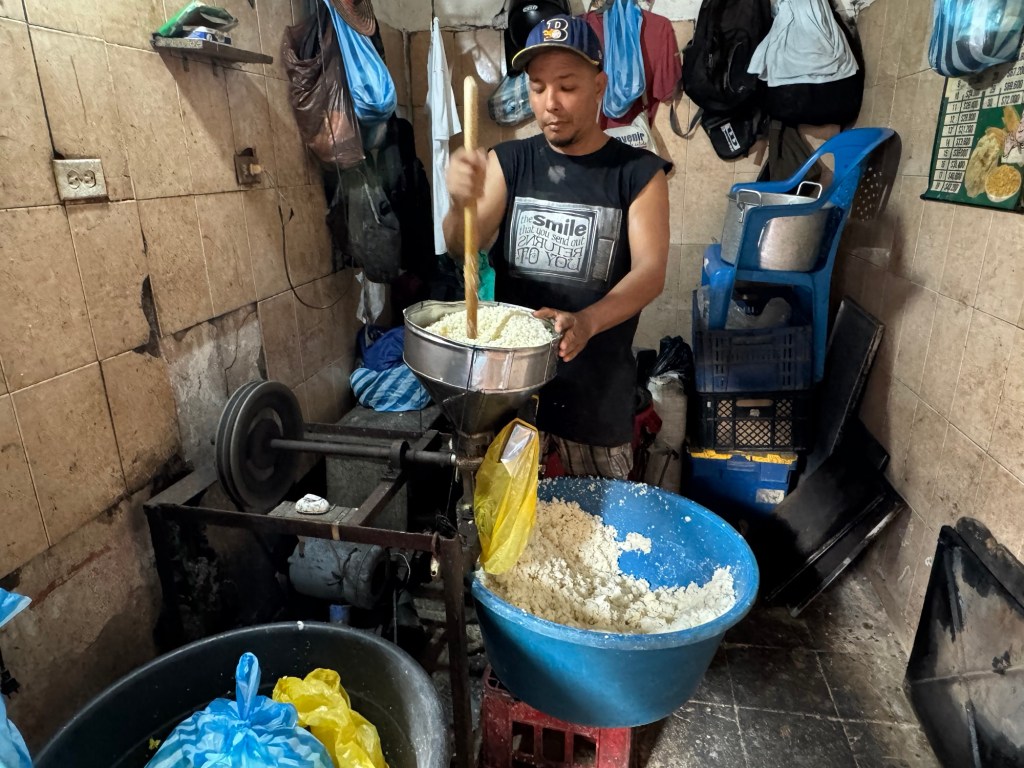
Javier met us at 8am for a tour of the main market. Compared to the market we visited in Bogota, the place was filthy, but interesting with many fragrant foods to look at and smell. We spent most of our time in the fish market, followed by the prepared foods and dining area, the meat market and finally vegetables. Most interesting were the people. We took many photos of it all, including the egrets and other birds scavenging for fish scraps. We started out hot and got hotter. By the time we left the market at 10am, we were so wet we were slippery.

Finally we checked out the vegetables. Vendors were friendlier here and the smells more pleasant.

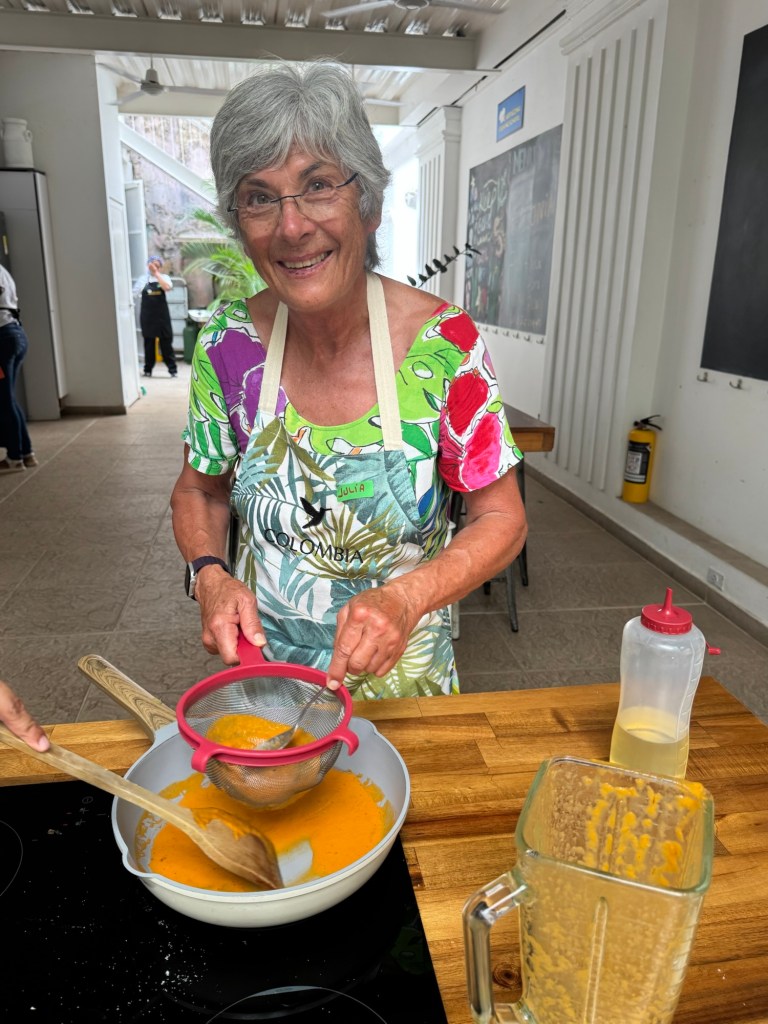
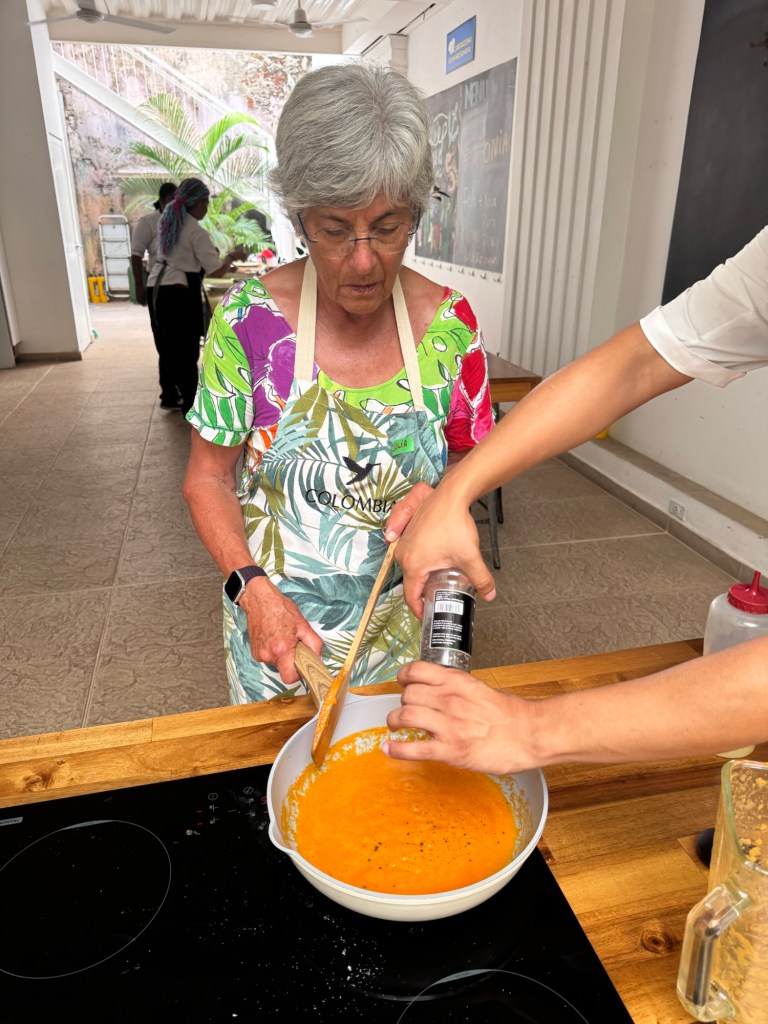
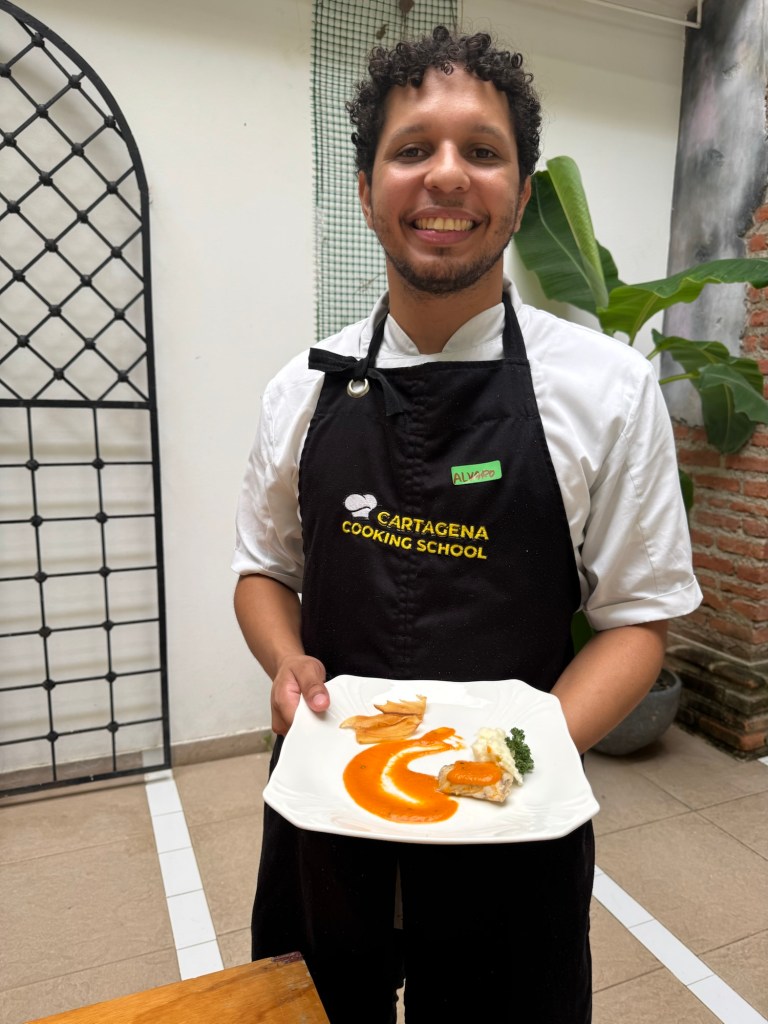
By then it was time to go to our cooking class and learn how to prepare a Colombian meal. We arrived at the chef’s kitchen and found the place slightly cooler than the market, but not Air conditioned. It took quite awhile to stop being slippery, but the chef, Alvaro, was welcoming and soon we were engaged in preparing the meal.

We are to make three courses; a starter called Boronia, or egg plant and plantain; a main of white tuna marinated in an leaf, grilled and served with a creole sauce; and dessert of caramelized red plantain with Lulo sorbet, a tropical fruit.

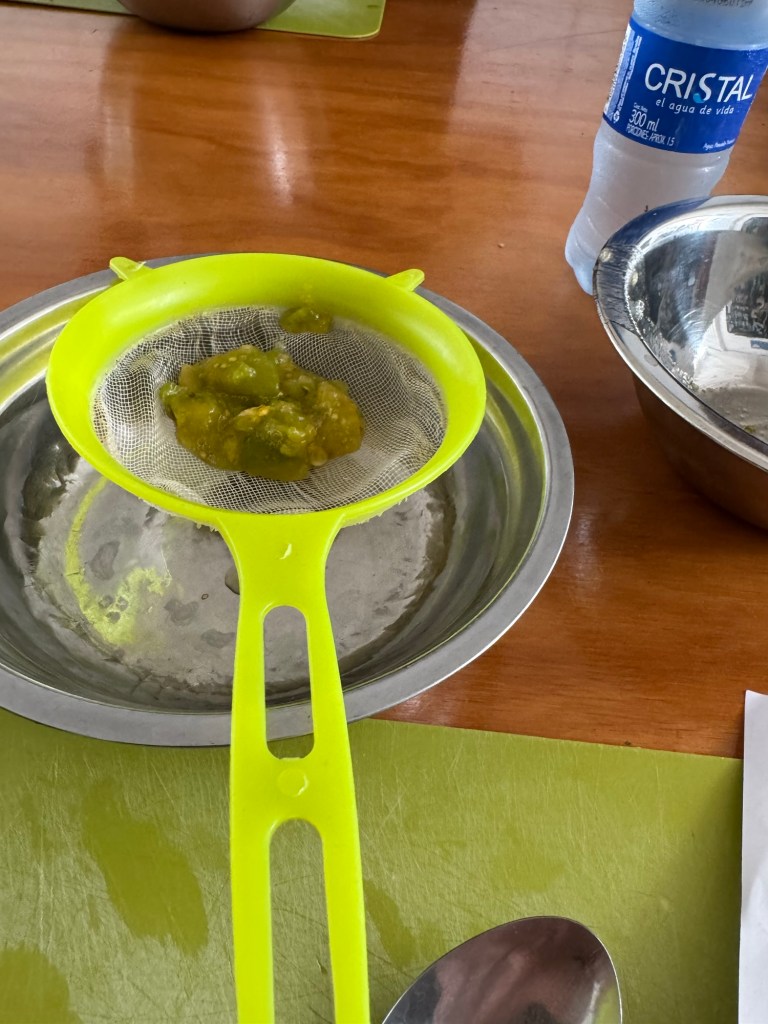
We started with the dessert, straining the Lulo fruit to separate the juice from the seeds. Then we whipped the juice and added sugar. Set the mixture in the freezer to get it to firm up. Meanwhile we caramelized plantain slices and set them aside.

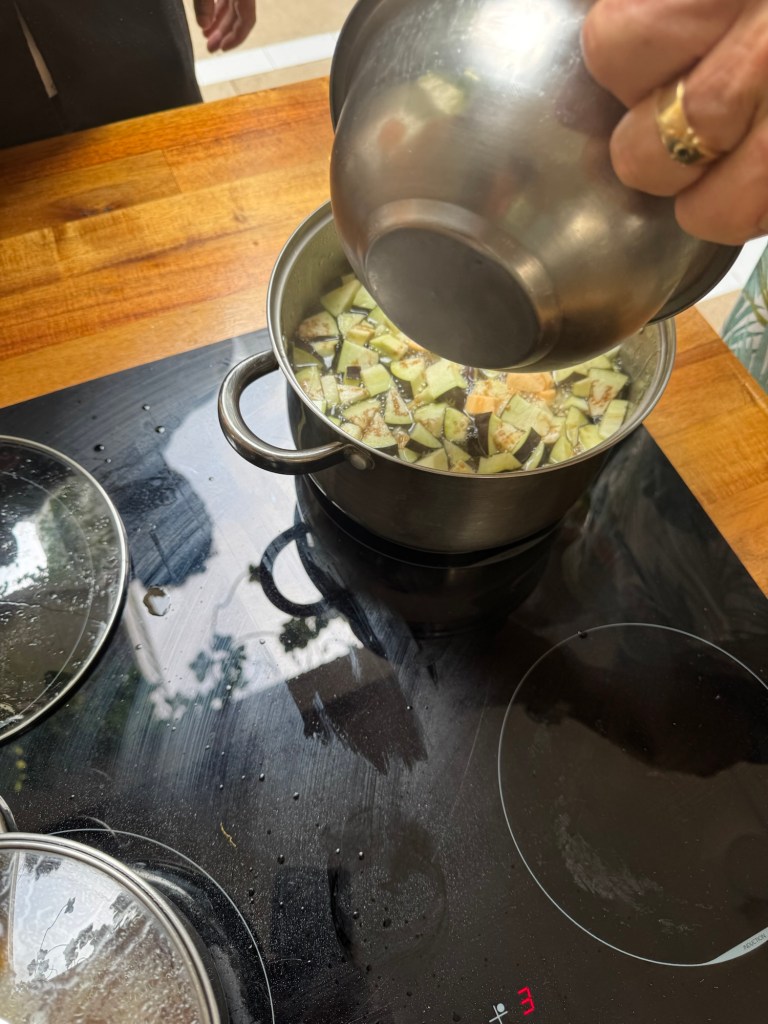
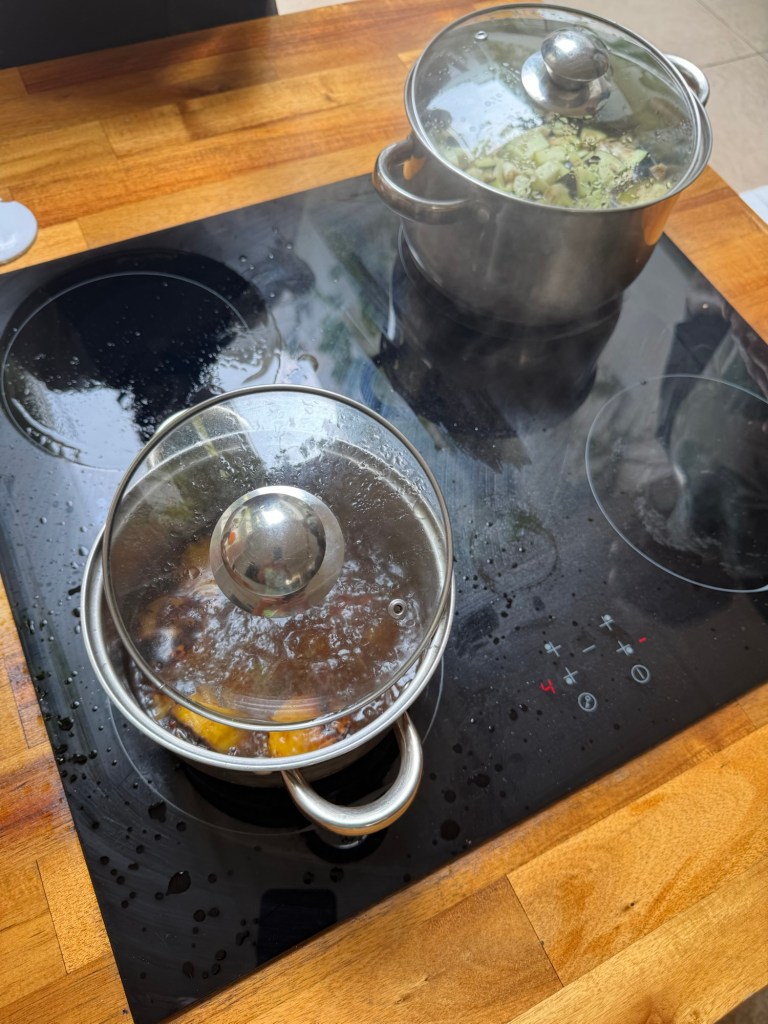
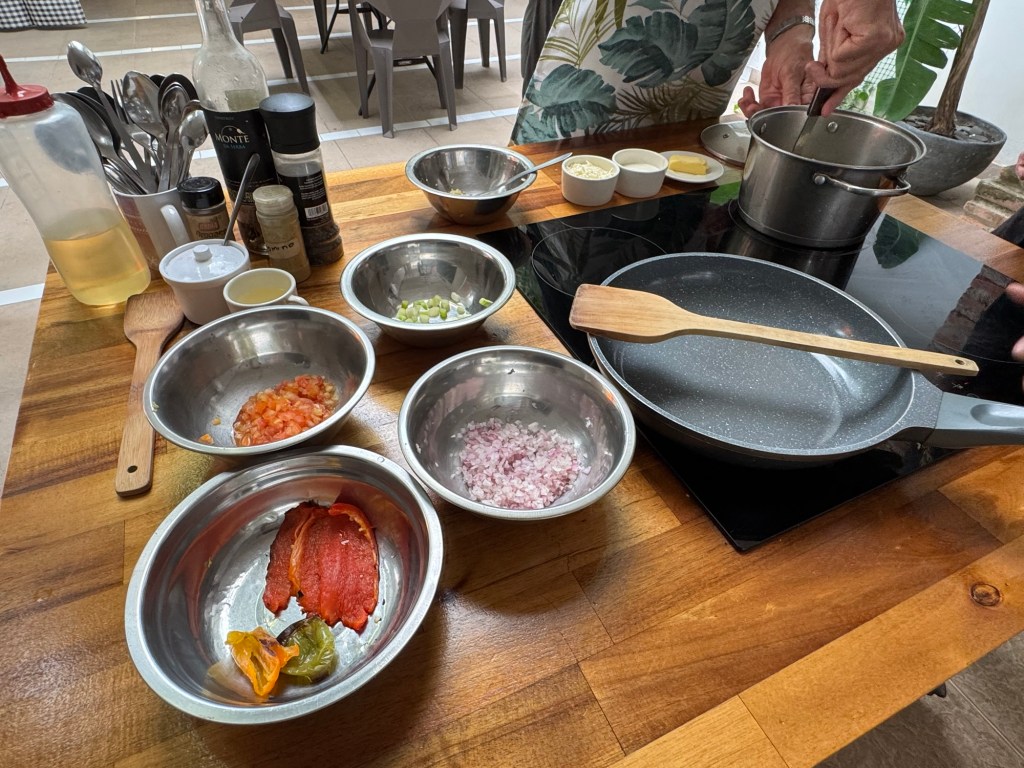
Then we worked on the starter. We chopped the plantains and egg plant and boiled them until tender. Chopped onions, scallions, garlic and tomatoes, salt and pepper and cooked the mixture to make a sauce, which we blended and mashed with the plantain and eggplant. Once thoroughly mashed, we stuffed the mixture into individual forms until packed. Then removed the form, placed fried plantain chips we had made separately on the plate and served ourselves. To make the plantain chips, we cut hunks of plantain into half inch rounds, deep fried the rounds until crisp. Then dried them and smashed them into flat pieces, which we refried for a few seconds and salted.

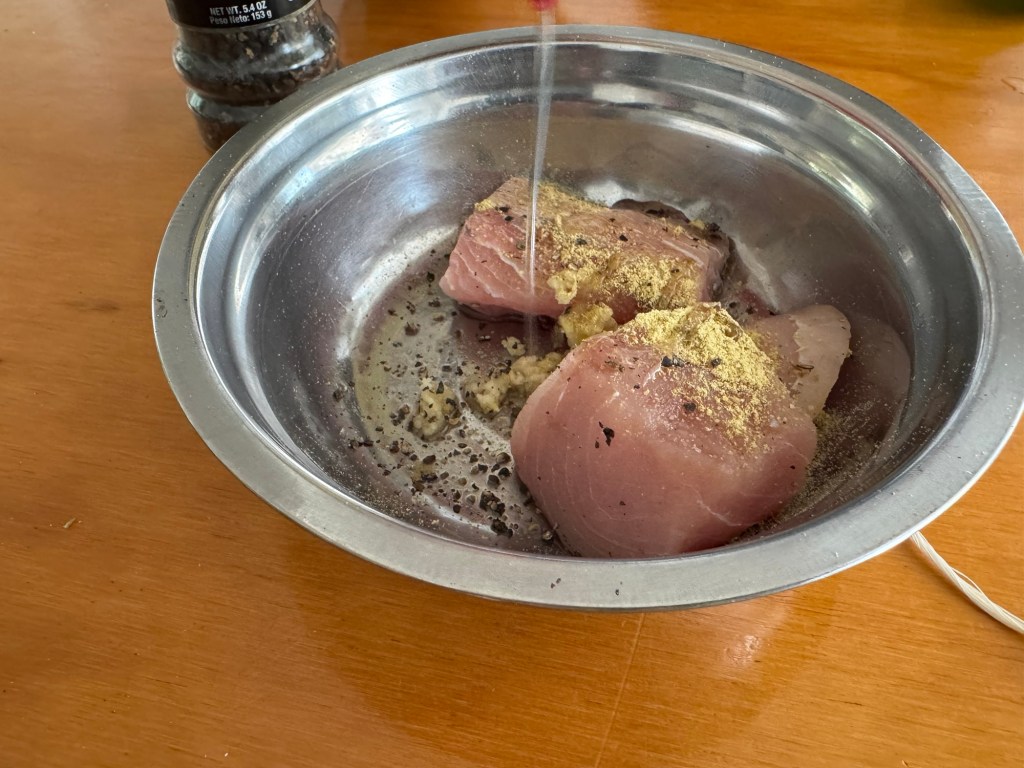
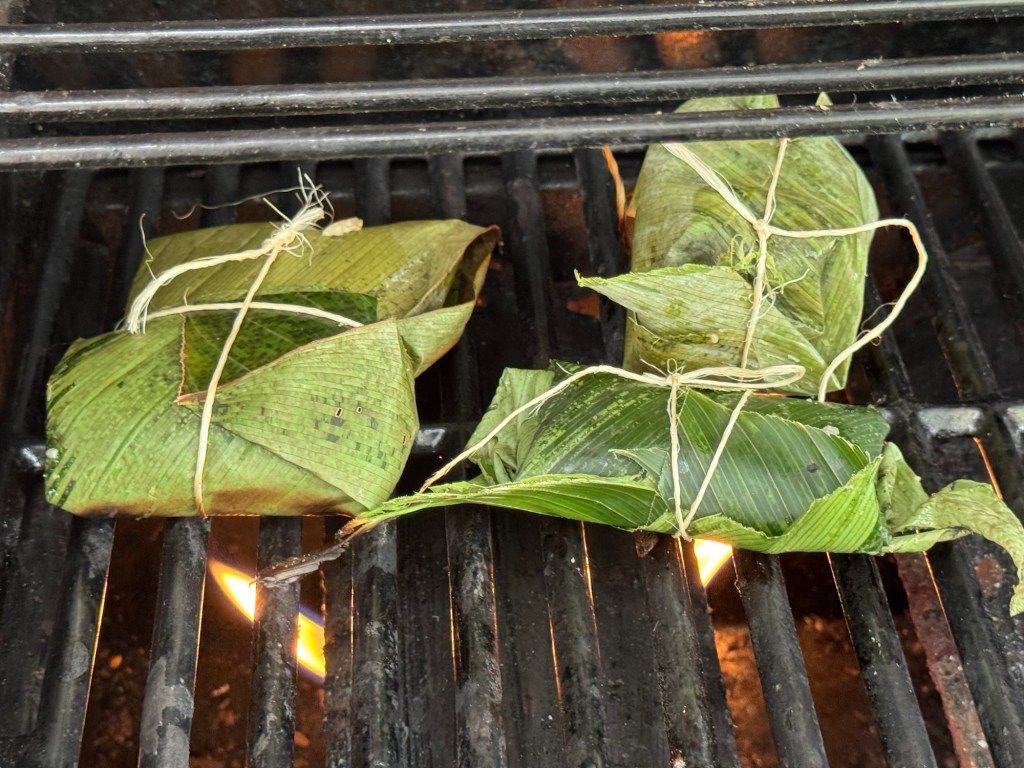
For the main course we marinated the fish in a mix of sunflower oil, onion, cumin, garlic and salt and pepper, wrapped each piece of fish in banana leaves and set the packets aside. Then we made a sauce for the fish, cooking sunflower oil, onions, garlic, scallions, tomatoes, sugar, salt and pepper.

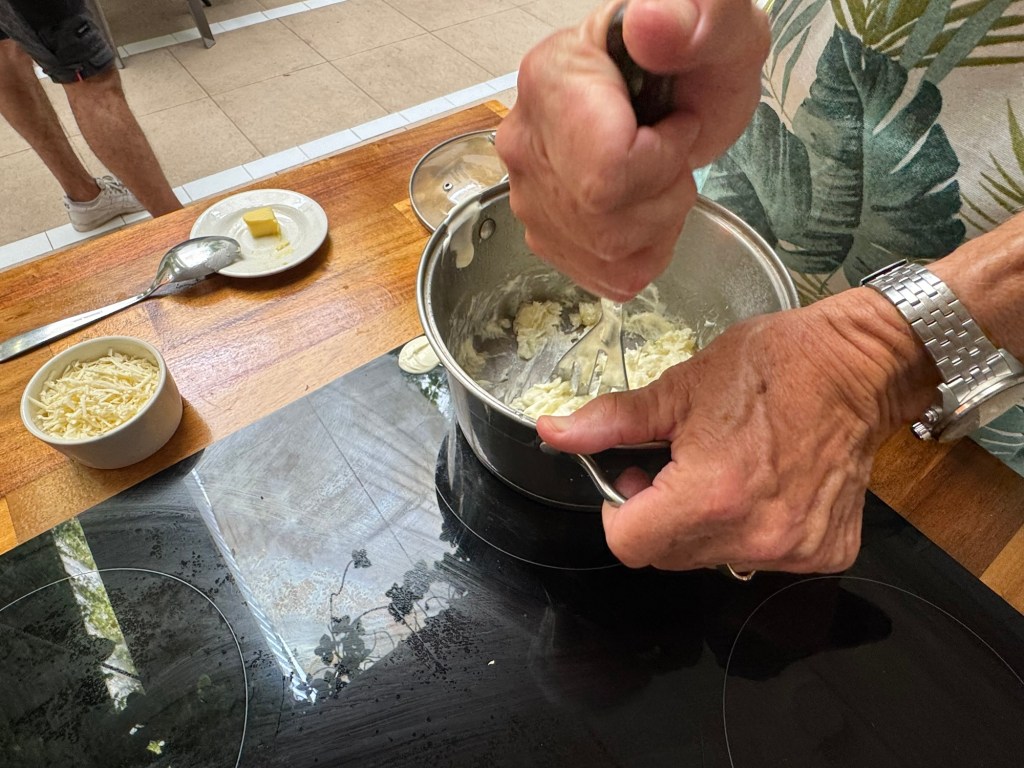
When the sauce was cooked, we ran it through a strainer and then reduced the sauce until it was thick. Meanwhile, we mashed a precooked piece of yucca plant until it was like a mashed potato. The fish was cooked on the grill. We removed the leaves from the fish, plated it and served the fish with the sauce and the mashed yucca. Simple and very tasty.

Dessert with Lulo fruit and caramelized plantain. Sorry I started eating before taking the photo.

For the dessert, we made a sauce of cinnamon, clove, molasses, rum and water, boiled it for 20 minutes on medium, then on high for 5 minutes and poured over the plantains. The Lulo dish we had made earlier was cold and almost like ice cream that the chef put on the side in little fruit cups. It was a lovely meal.

As soon as we thanked Alvaro for the fine experience we walked back to the hotel and spent the rest of the afternoon staying cool. We did not even try to go to the warm pool.

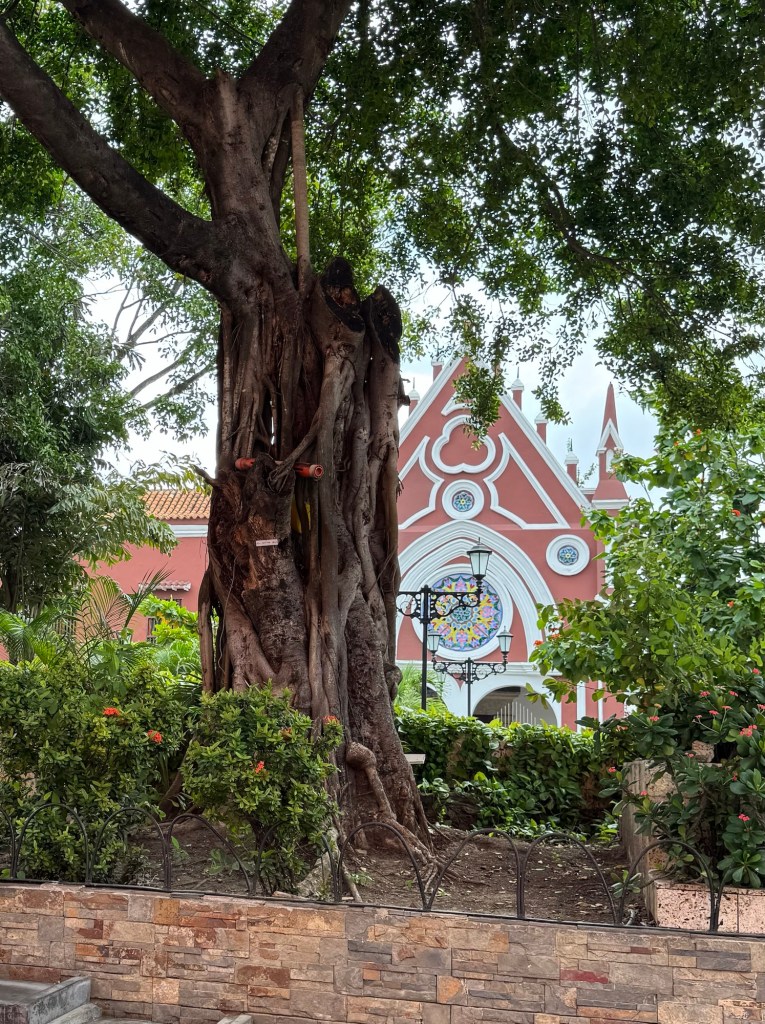
At 6:15 we mustered for dinner at Juan Del Mar restaurant next door to San Diego Church, pictured above. Rather than having a lot of food, we settled for 5 appetizers we shared and called it good. We have one more day in Colombia before we head for home.

Santa Marta and Cartagena

Saturday evening, November 8,2025

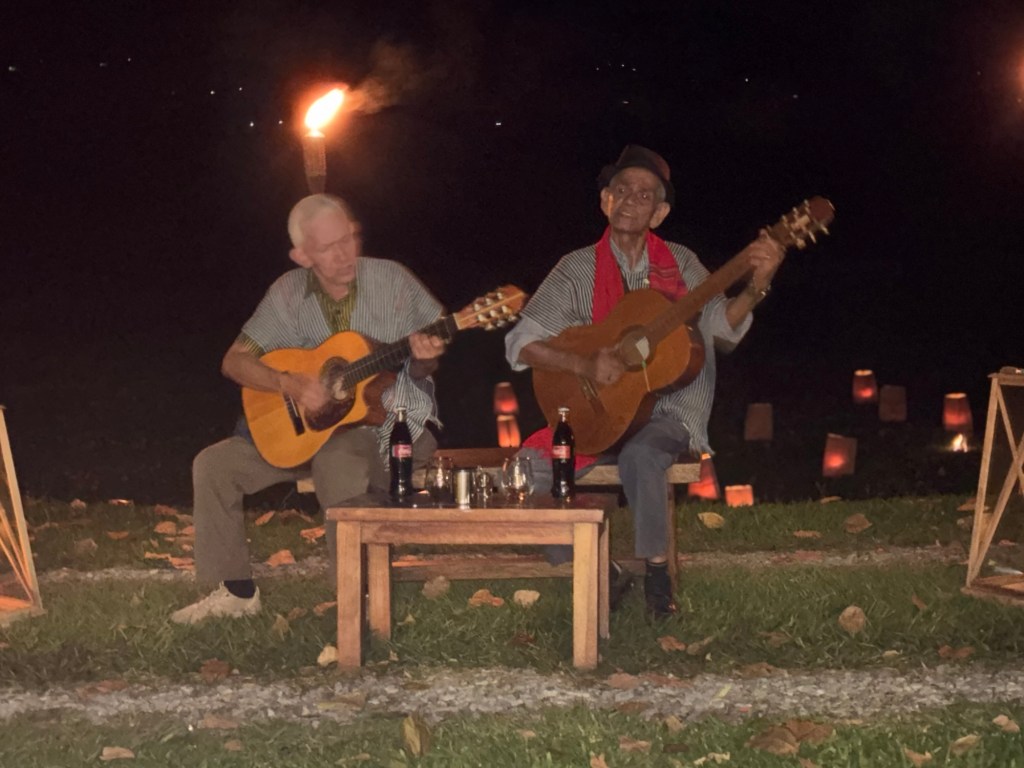
During our last meal at the hacienda, we listened to 2 excellent guitarists and I wanted to include them and their music.

Excellent musicians
Hang on through the glitch and the background chatter. The music is nice.

Sunday, November 9, 2025

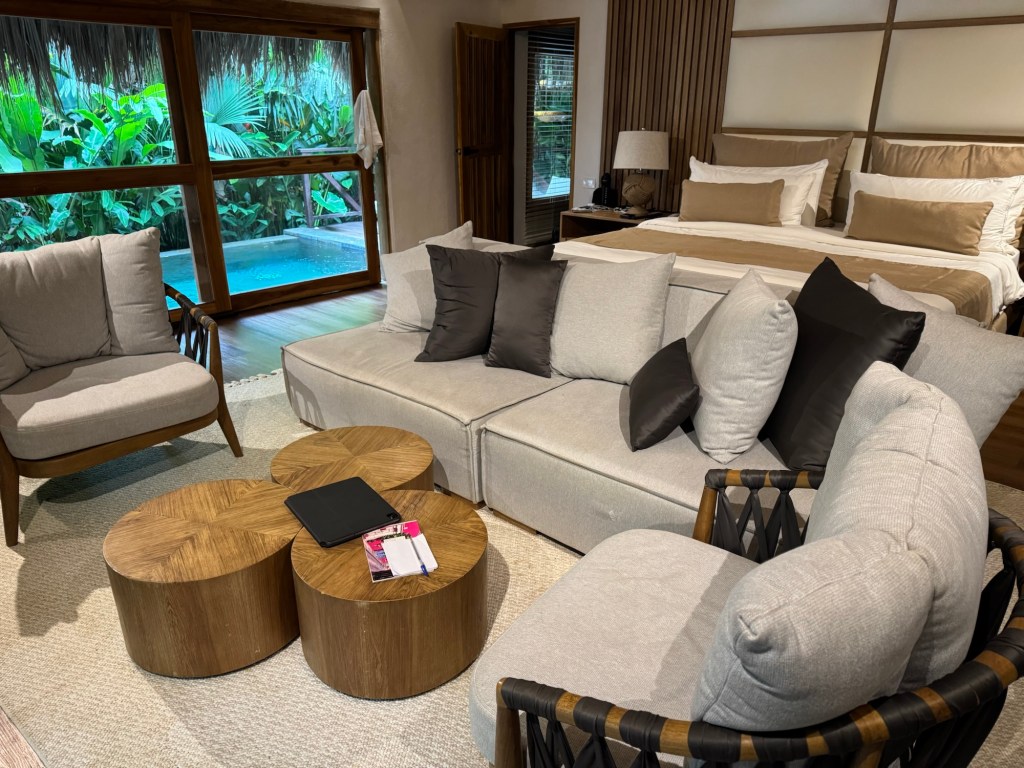
We have left the coffee region and transited through Bogota en route to Santa Marta on the Caribbean coast. The process took 10 hours. It was dark by the time we passed through Santa Marta and arrived at the village of Don Diego, where we were supposed to catch a short boat ride to the ecolodge Tewimake, but instead we road in a 4×4 UTV over a narrow dirt track for 10 minutes and arrived at Tewimake wondering what we had gotten ourselves into. Without going to our bungalow, we went directly to dinner in an outdoor dining area. I had a delicious beef stir fry dish that came 15 minutes ahead of Mark’s meal, which was accompanied by a bottle of wine, from which the server had been unable to completely remove the cork and tried to serve us with bits of cork in the glass. Apparently the manager heard about the situation and came running with another bottle of wine and took charge of properly opening and serving us. We laughed a bit about the situation, finished our meal and walked up a rocky hillside to check out our room. It was a nice space, and we were soon in bed.

Monday, November 10, 2025

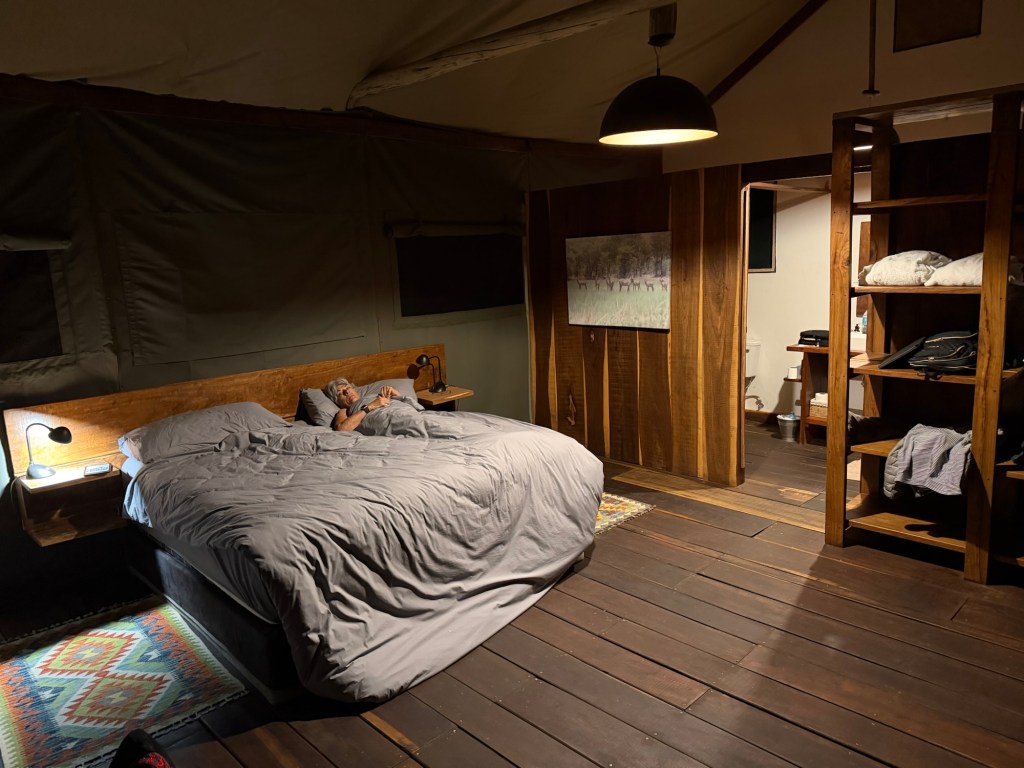
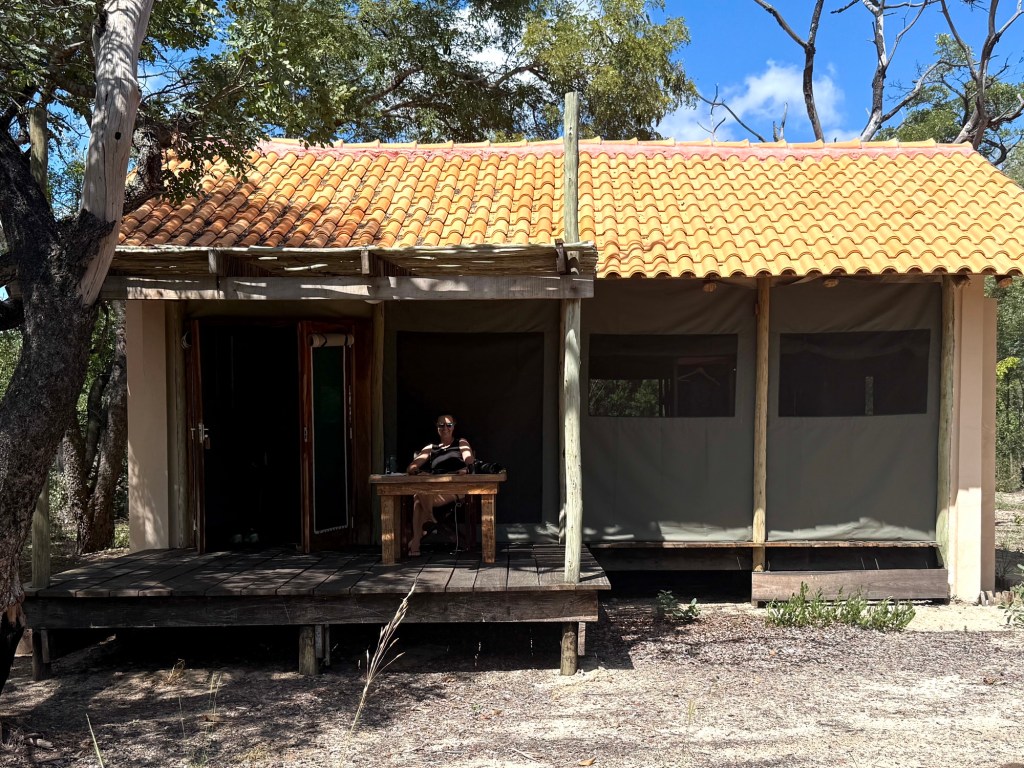
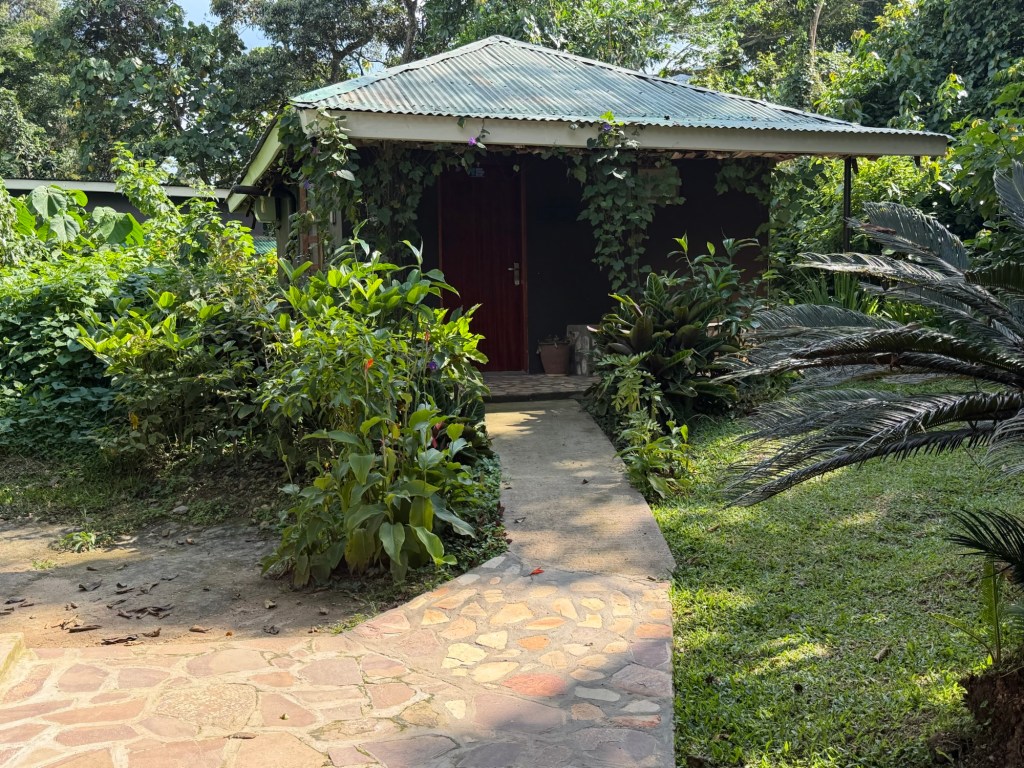
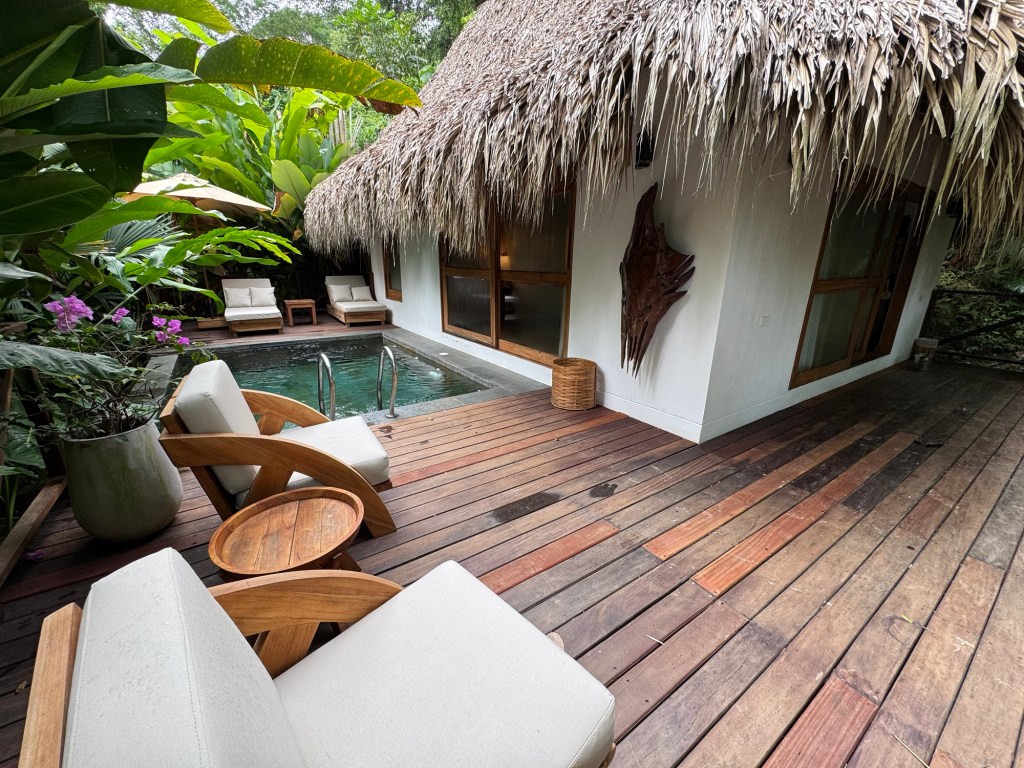
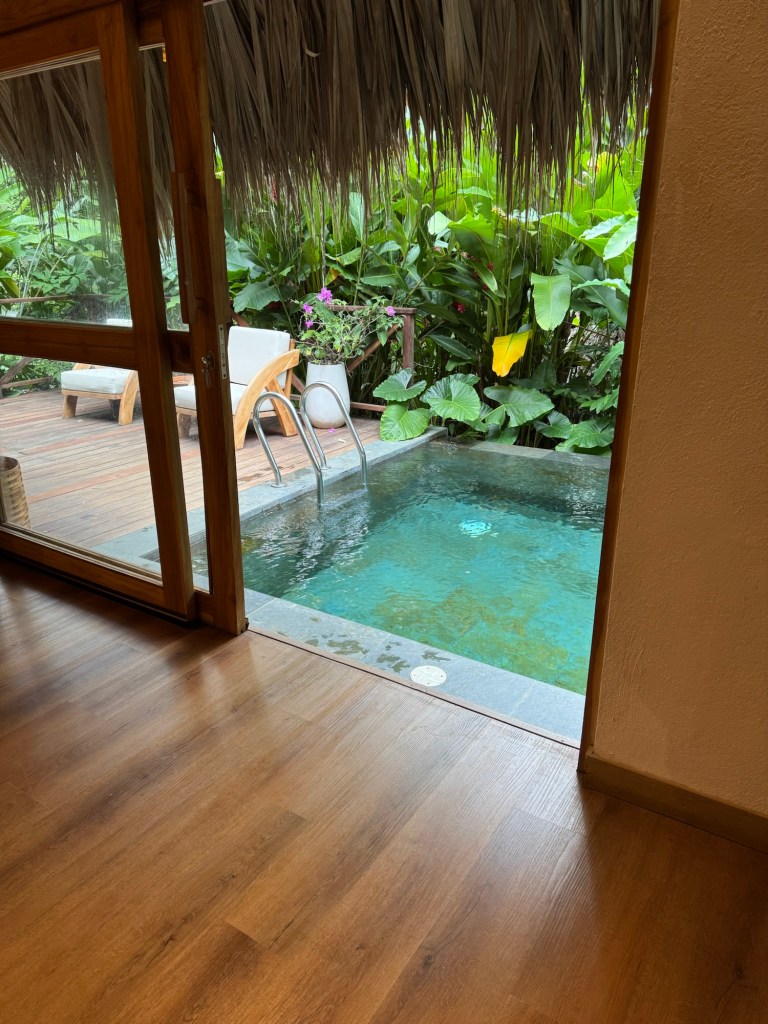
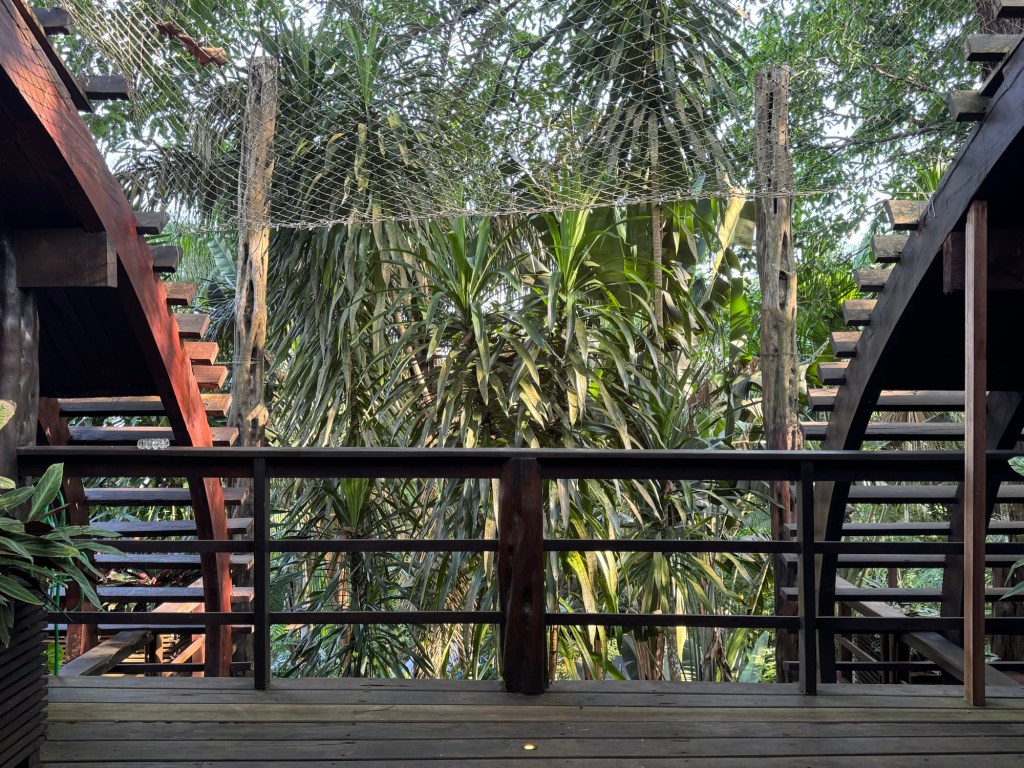
We woke up to find ourselves in an elevated room surrounded by a dense palm forest. Immediately out one side was a large dipping pool.

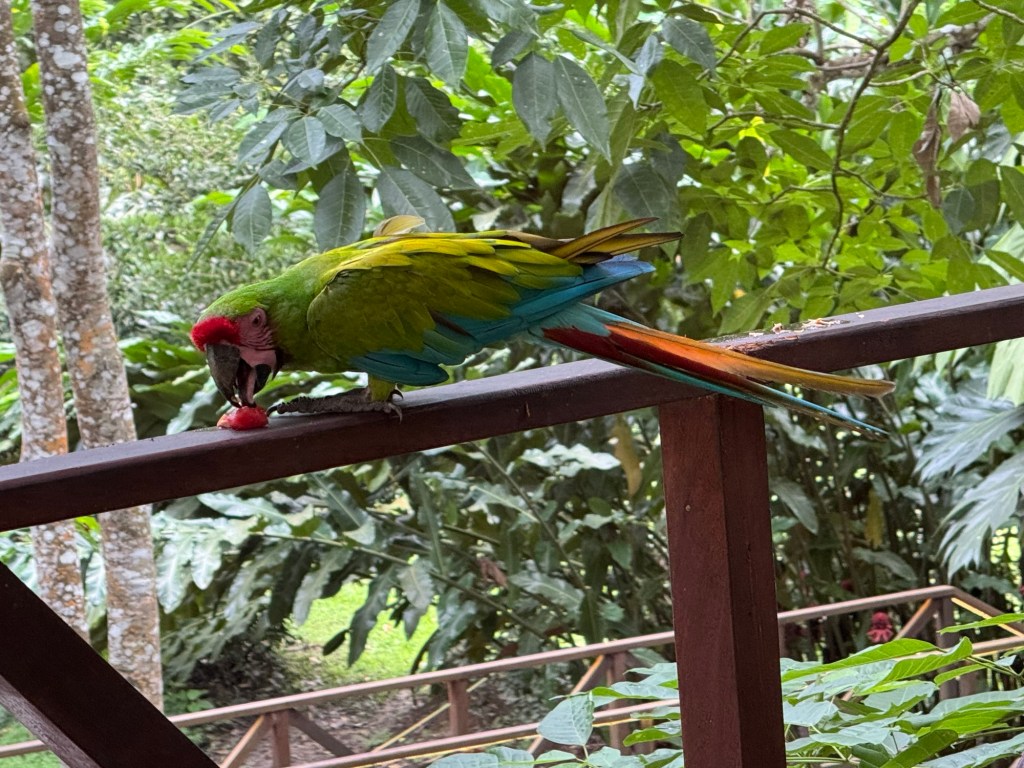
Out another side was an outdoor shower and an empty hot tub. We dressed and went to breakfast at the bottom of the rocky path. We could see the Don Diego River from the dining room along with very noisy Macaws scavenging from the empty tables.

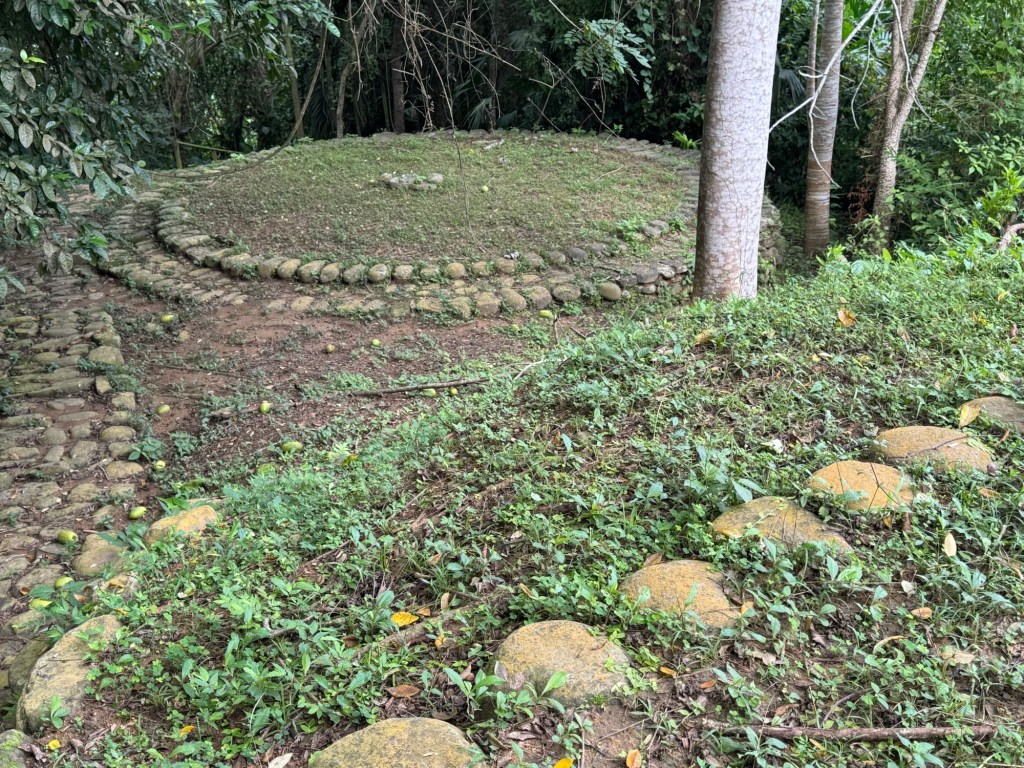
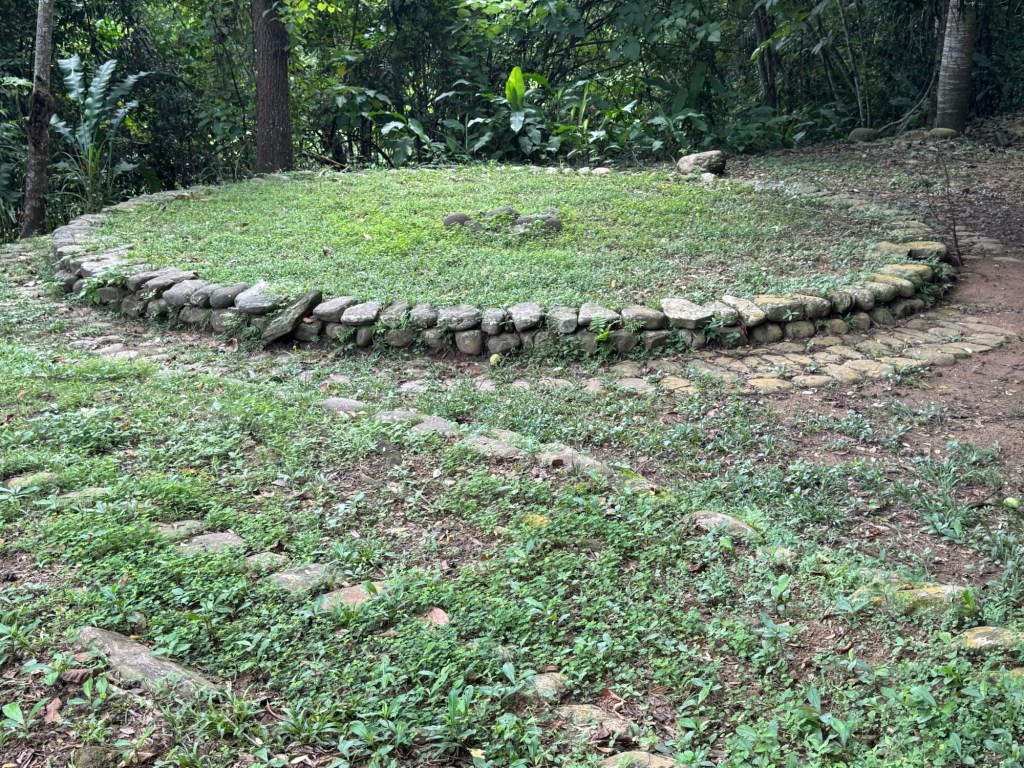
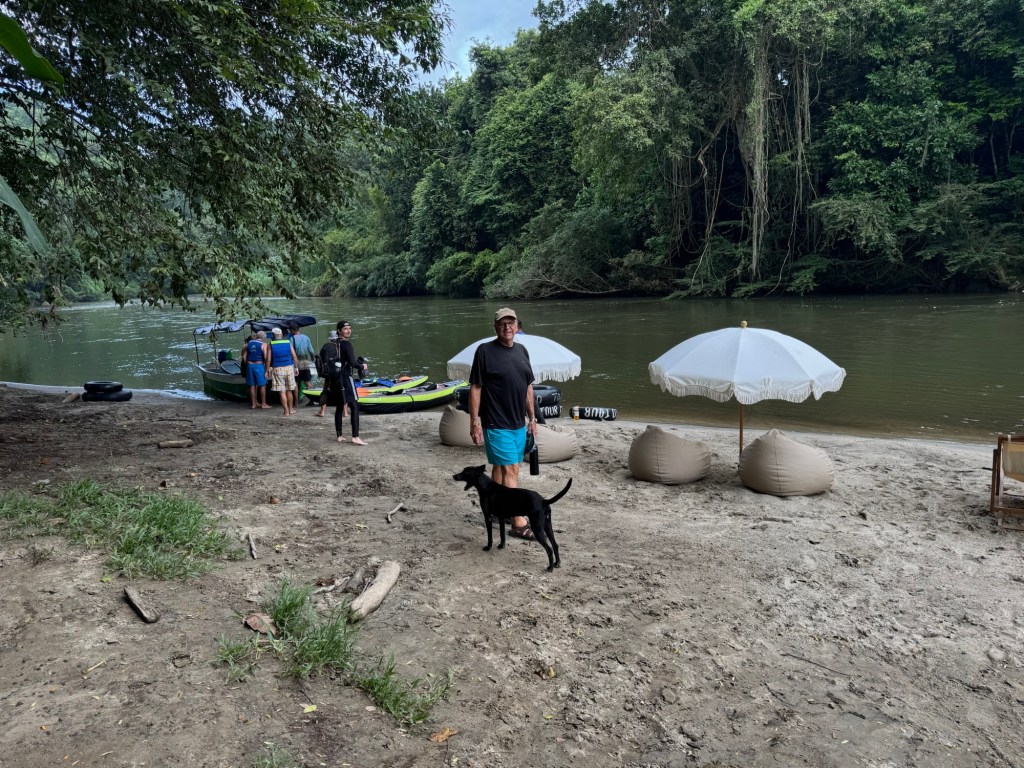
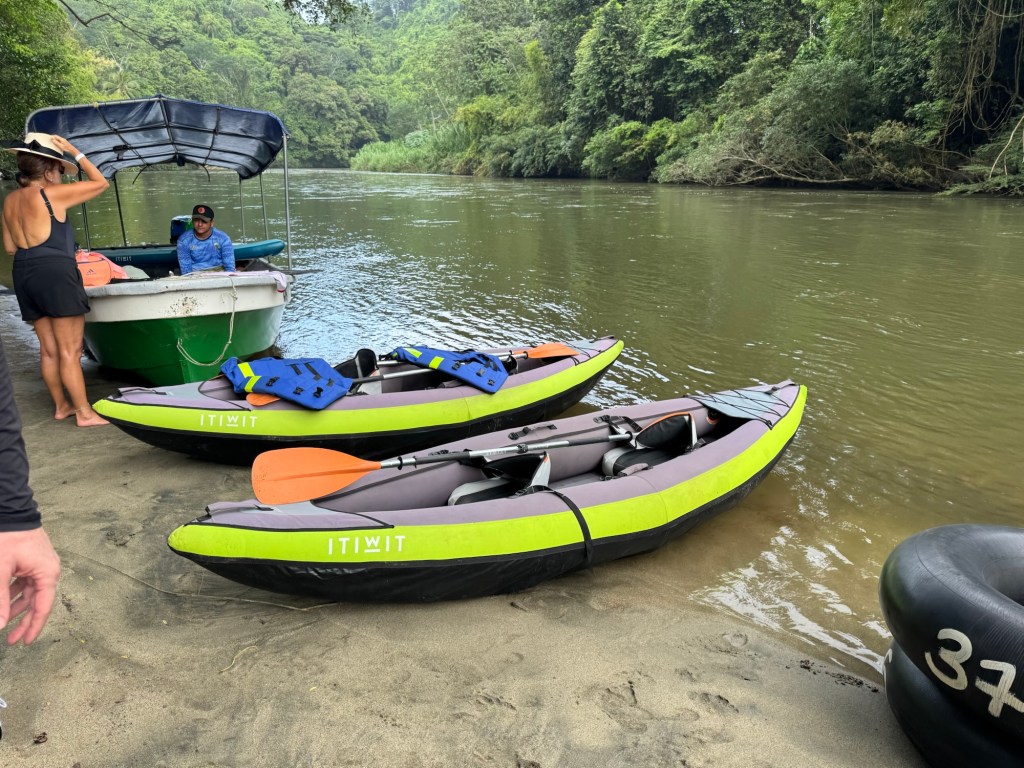
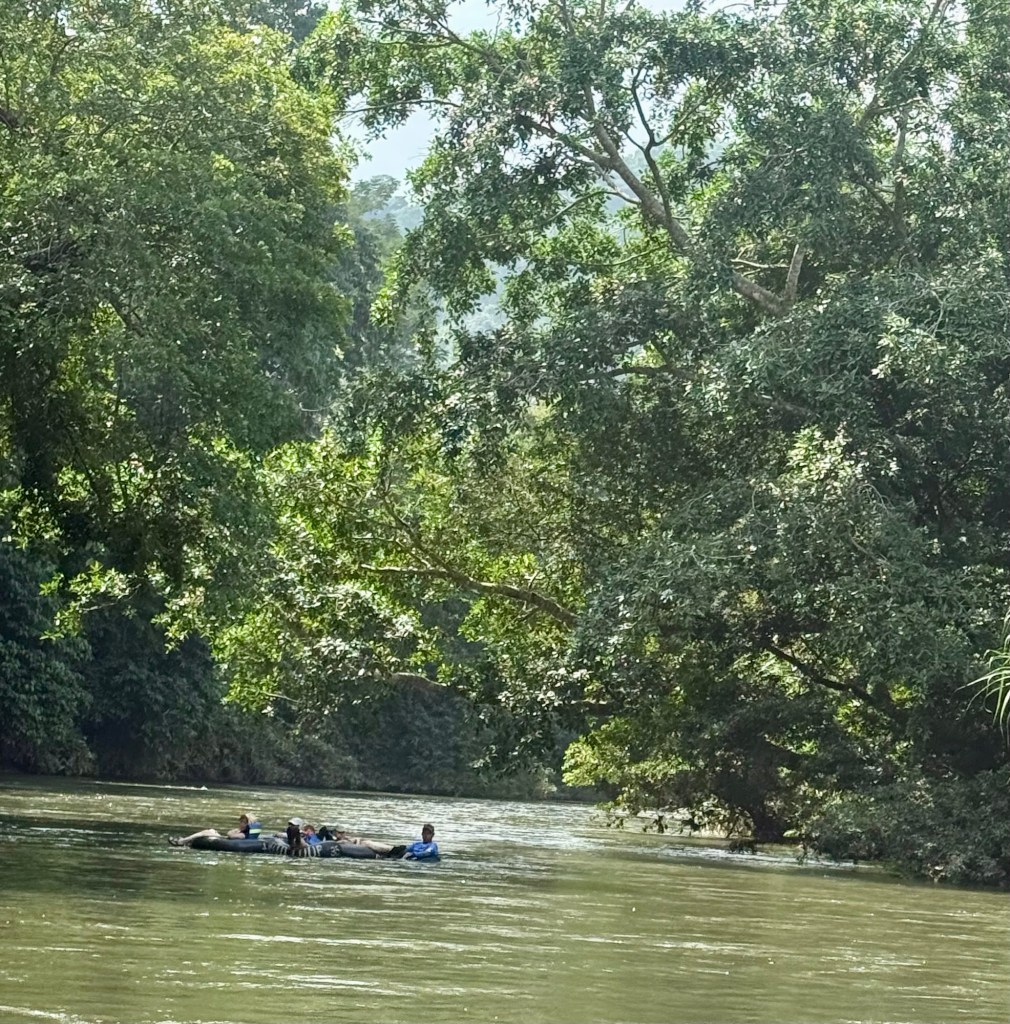
At 9am, our guide, Emilio, met us in the dining room and escorted us to the river, stopping at ancient indiginous sites along the way. We had signed up to take a kayak down stream, but very shortly after getting into the kayak, we were sorry we were not in inner tubes like other people we saw. Emilio was very accommodating and before long we switched from our kayak to inner tubes.

A group like ours tubing down the river under the jungle. Were not able to take photos while in the inner tubes.

Much more pleasant experience in delightfully cool water that combats the heat and humidity of the air.

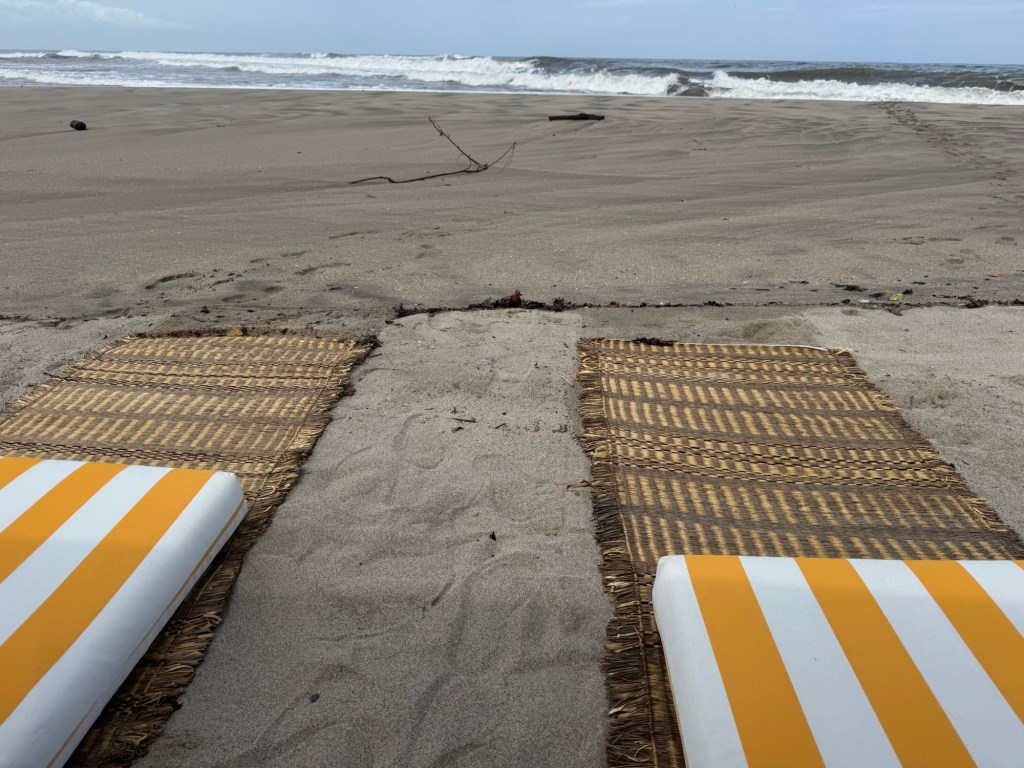
The tubing ended when we reached the Caribbean Ocean and got out on the beach.

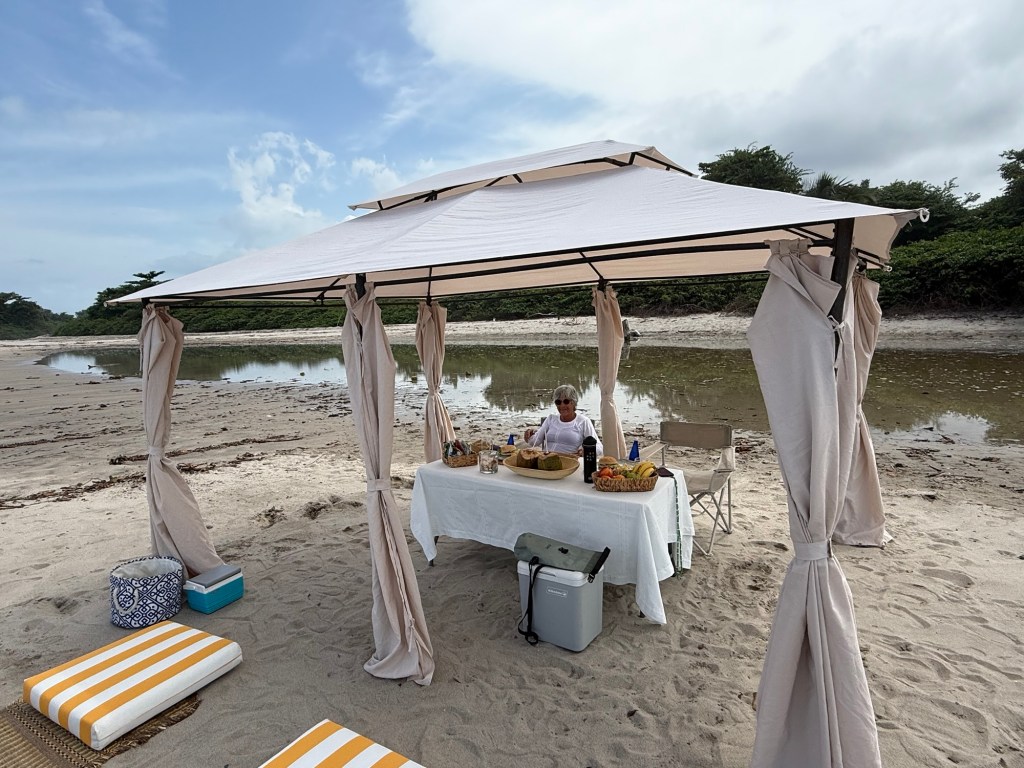
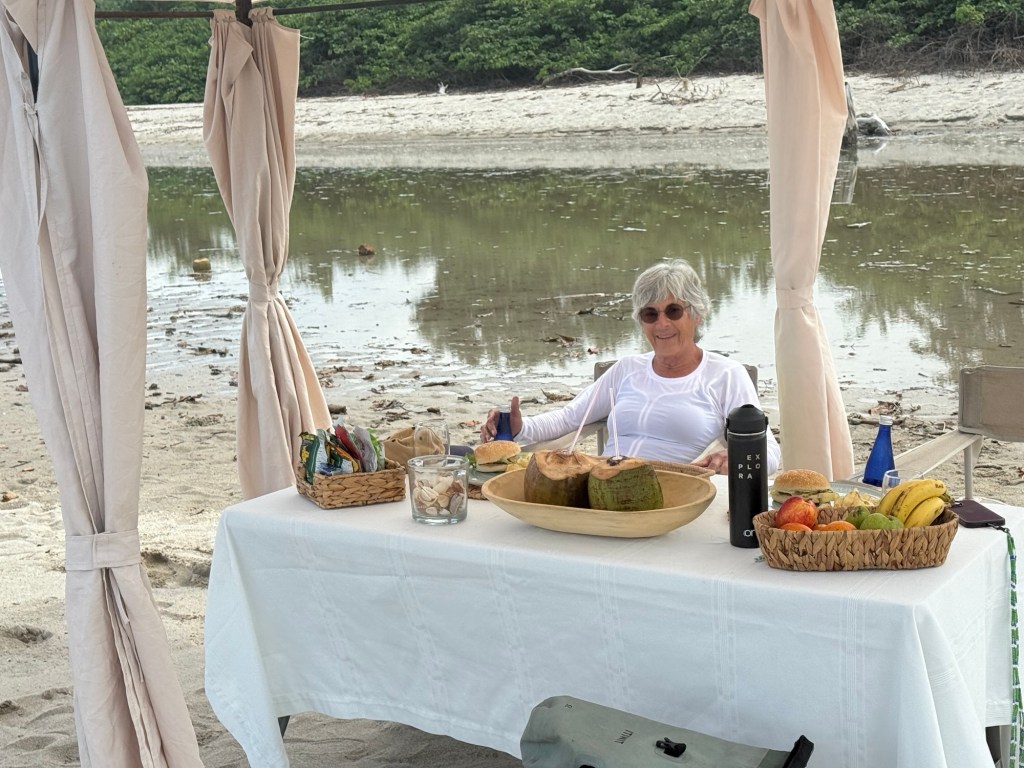
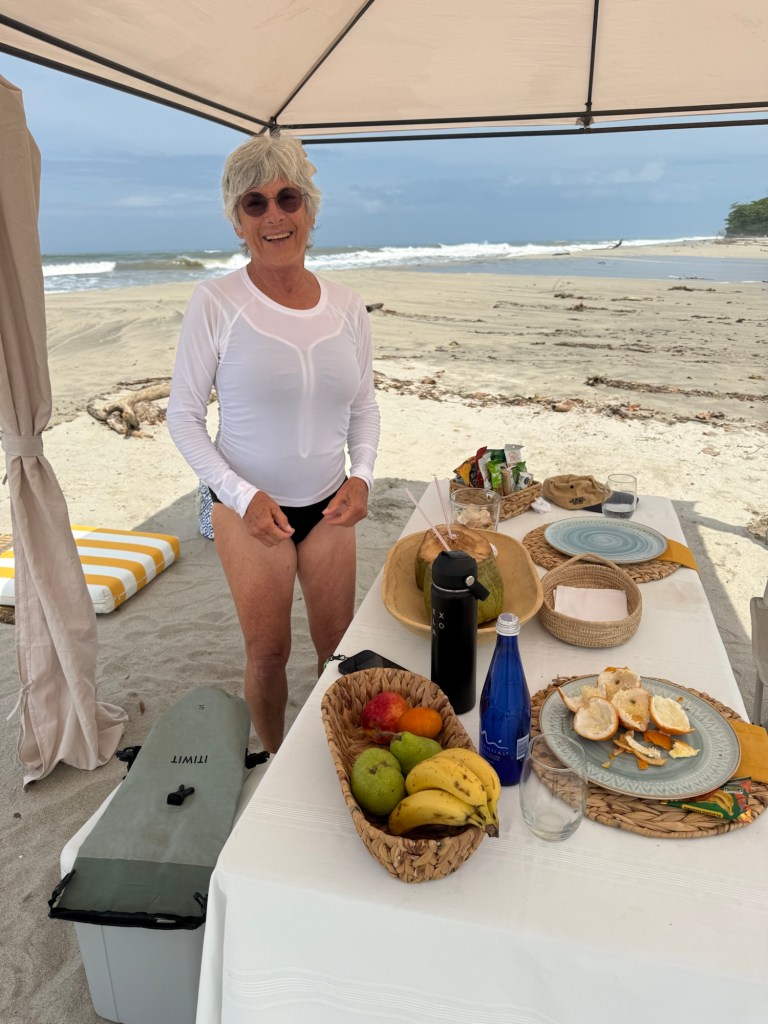
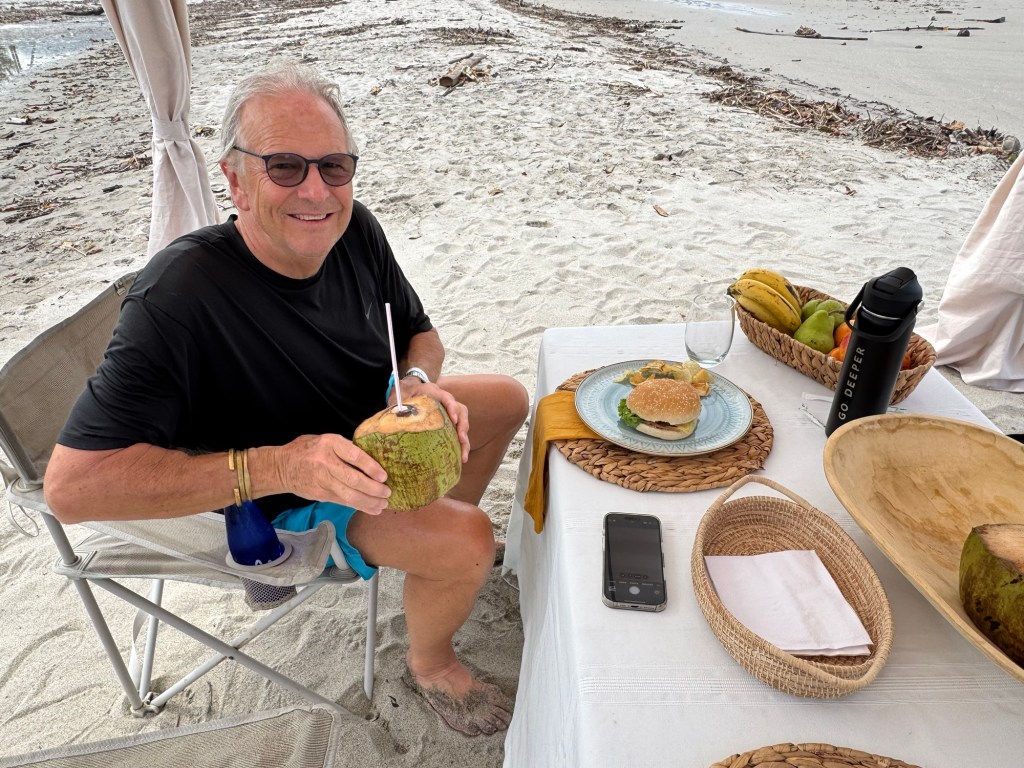
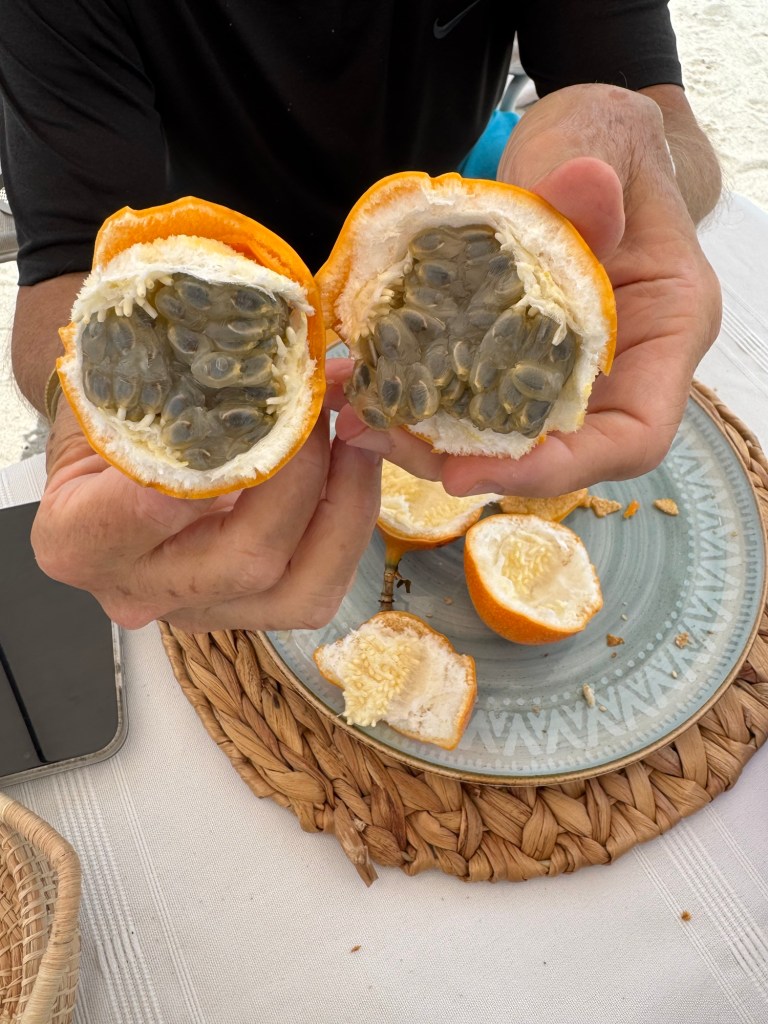
Emilio surprised us by escorting us to a shady gazebo with a prepared lunch waiting for us. This lunch was a charming surprise and just the right amount of food, including coconuts with straws to drink the contents. We were thoroughly enjoying ourselves when a woman on the beach walked over and interrupted us to ask if we were a king and queen and we should be thrilled to have such a wonderful experience. We assured her we were happy for the experience. She started telling us her story and somehow we managed to communicate that we would appreciate her departure. Her comments did remind us to be grateful for our many blessings.

With lunch behind us, Emilio signaled time to go so we got into a boat and motored back up river to Tewimake ecolodge and our bungalow, named Tima.

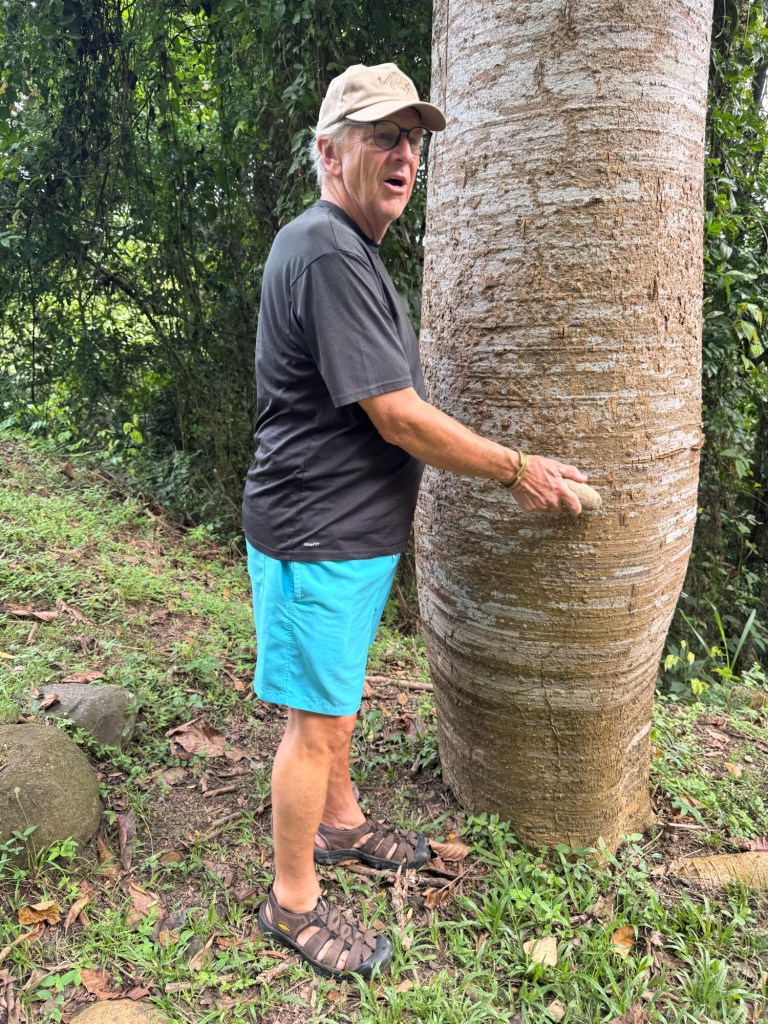
A hollow Macondo tree used for communication

We spent the afternoon chilling in our Air Conditioned space and looking into the forest. In the evening we were entertained by intense lightening and thunder and then rain that lasted until about 8pm. We beat the rain both coming and going to dinner. The same thing happened the night we arrived and we were told it is a daily occurrence.

November 11, 2025

The Tayrona Region we were in is approximately a 4.5 hour drive NE of Cartagena nestled between sandy Caribbean beaches and the foothills of Sierra Nevada de Santa Marta, with lush tropical jungles lining pristine beaches and 7 rivers that descend from the snow-capped mountains of the Sierra Nevada. The region’s name comes from the ancient Tayrona tribe who inhabited the region for more than a thousand years before colonialization in the 17th century and continue to live on through four indigenous tribes, including the Kogis, who have preserved the culture, language, traditions and beliefs over centuries.

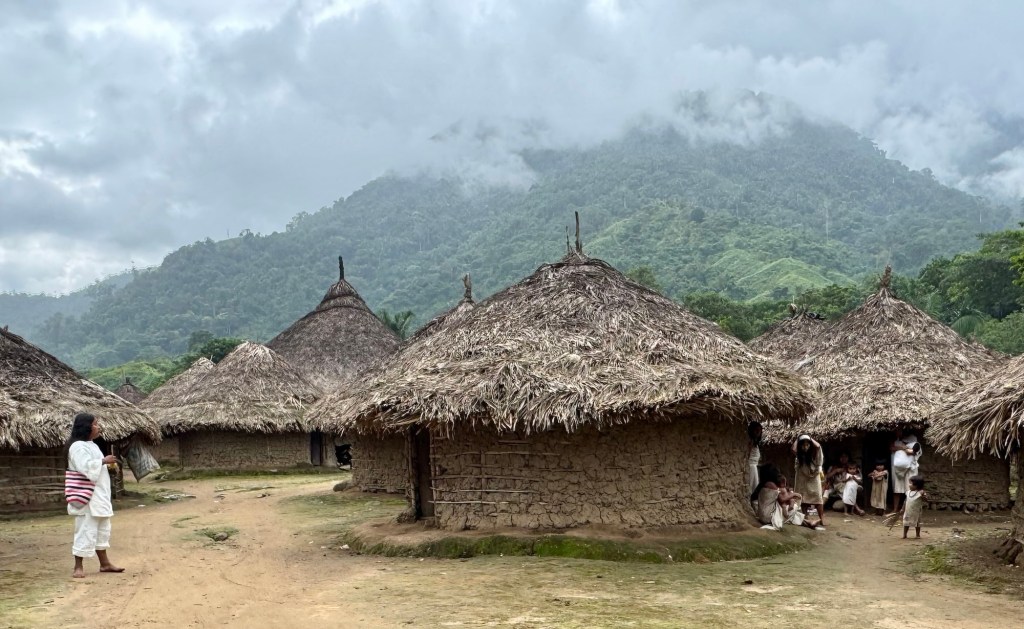
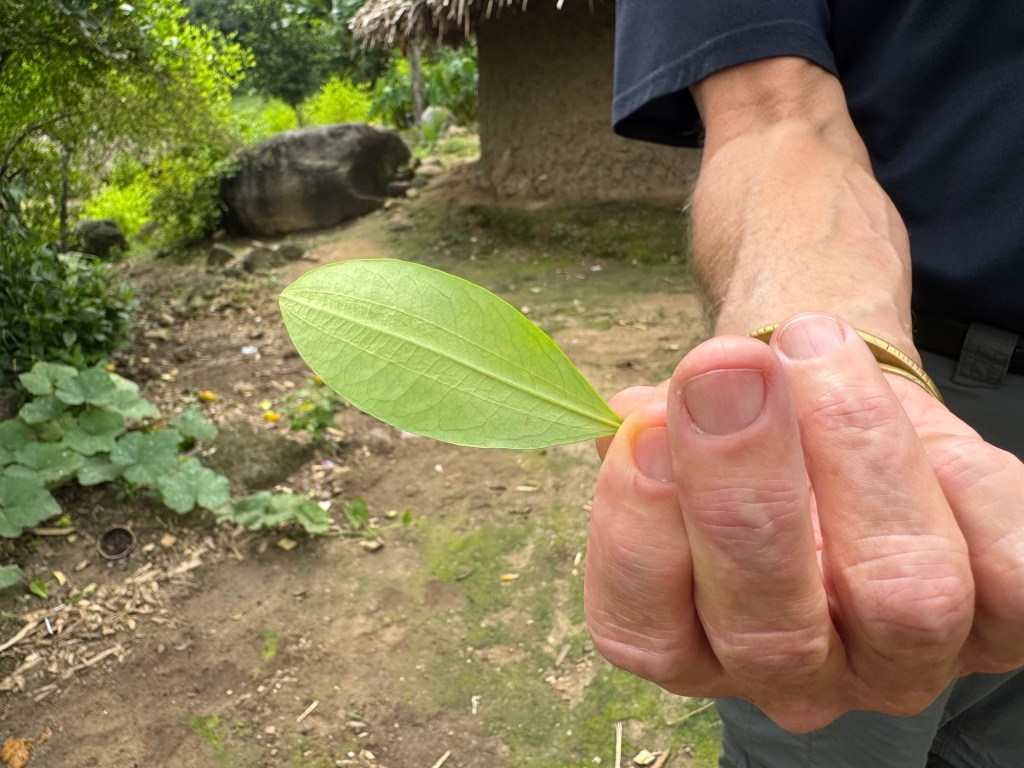
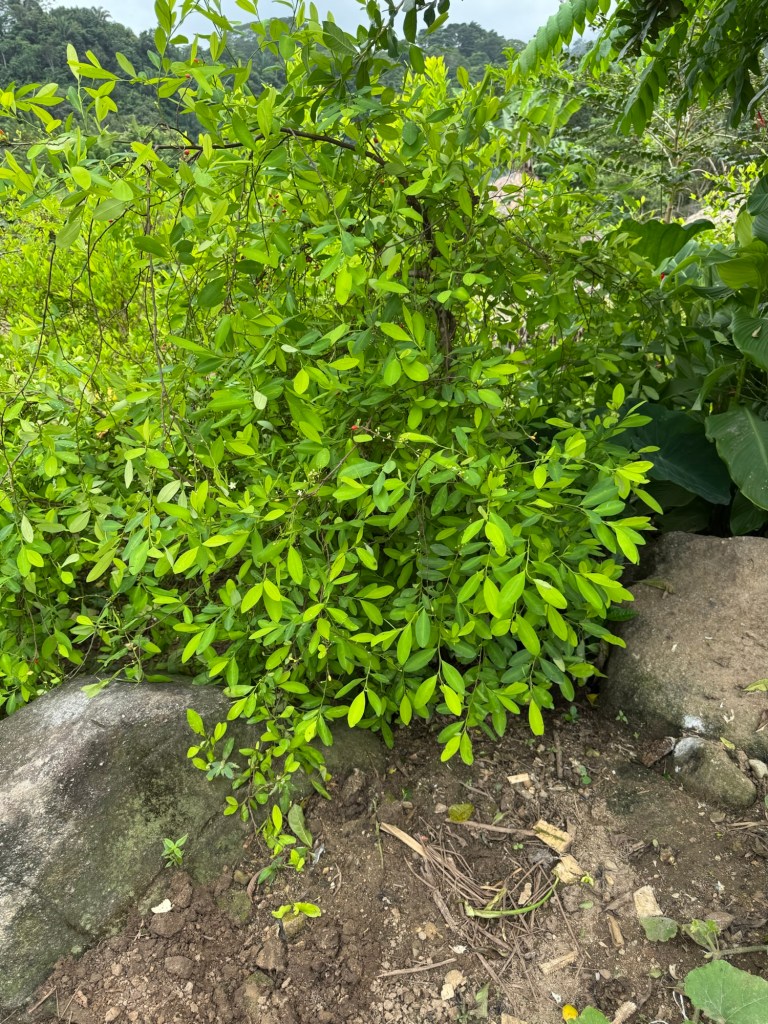
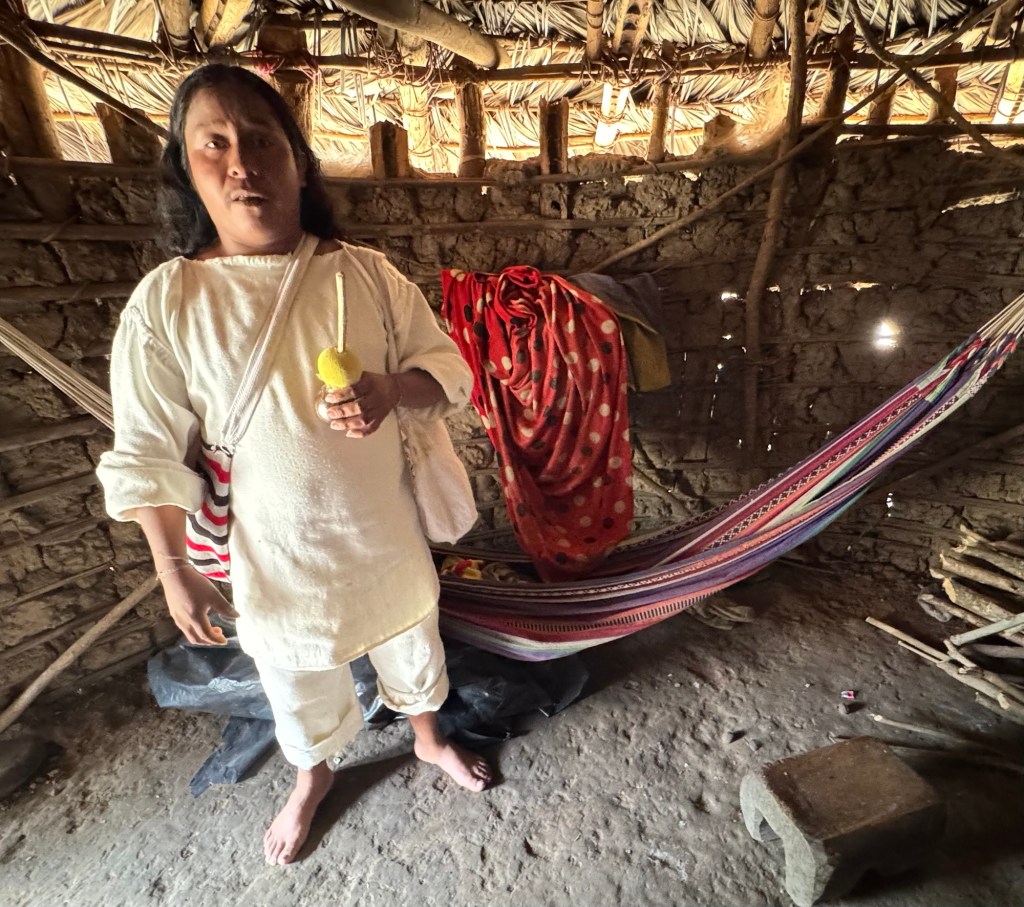
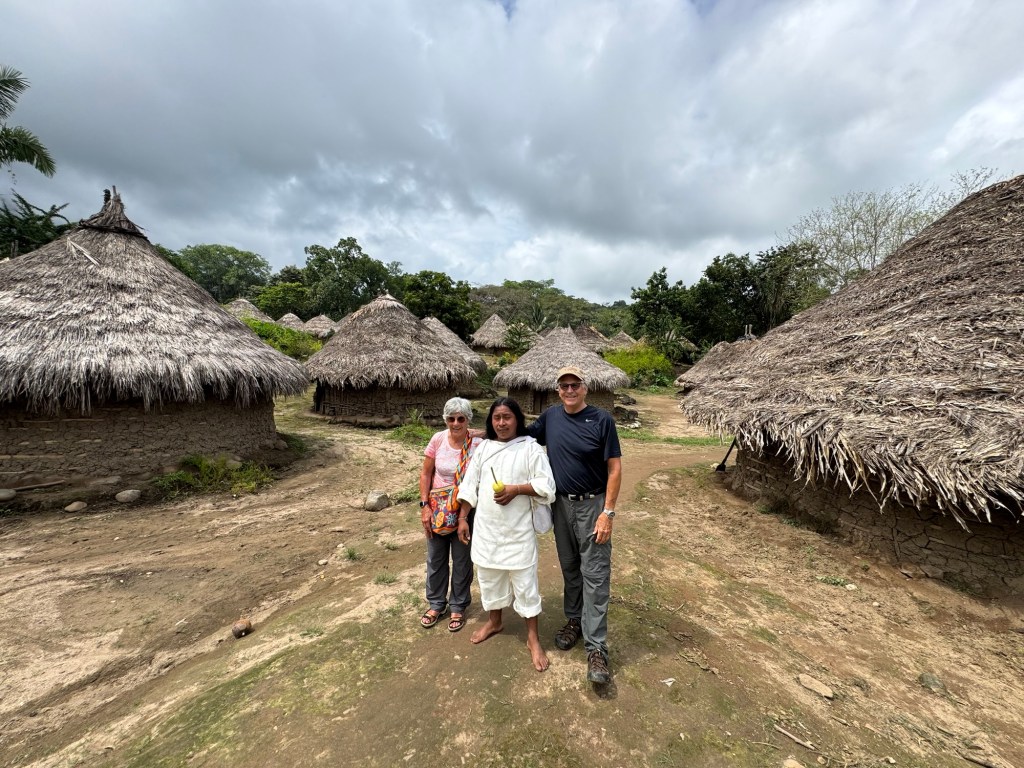
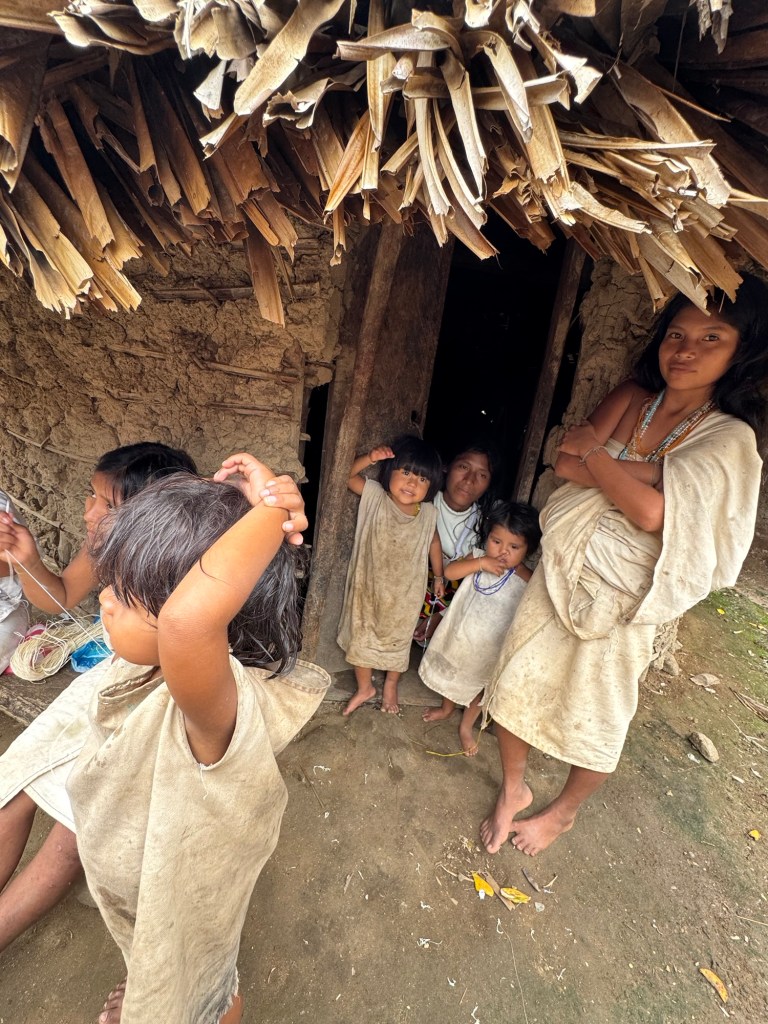
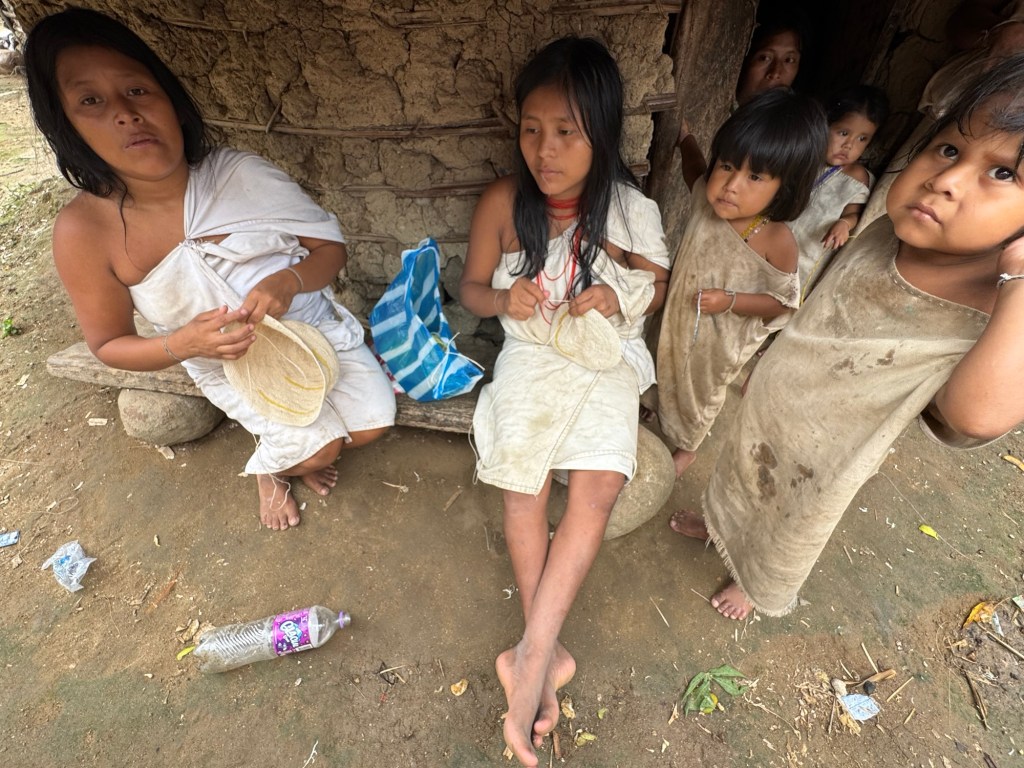
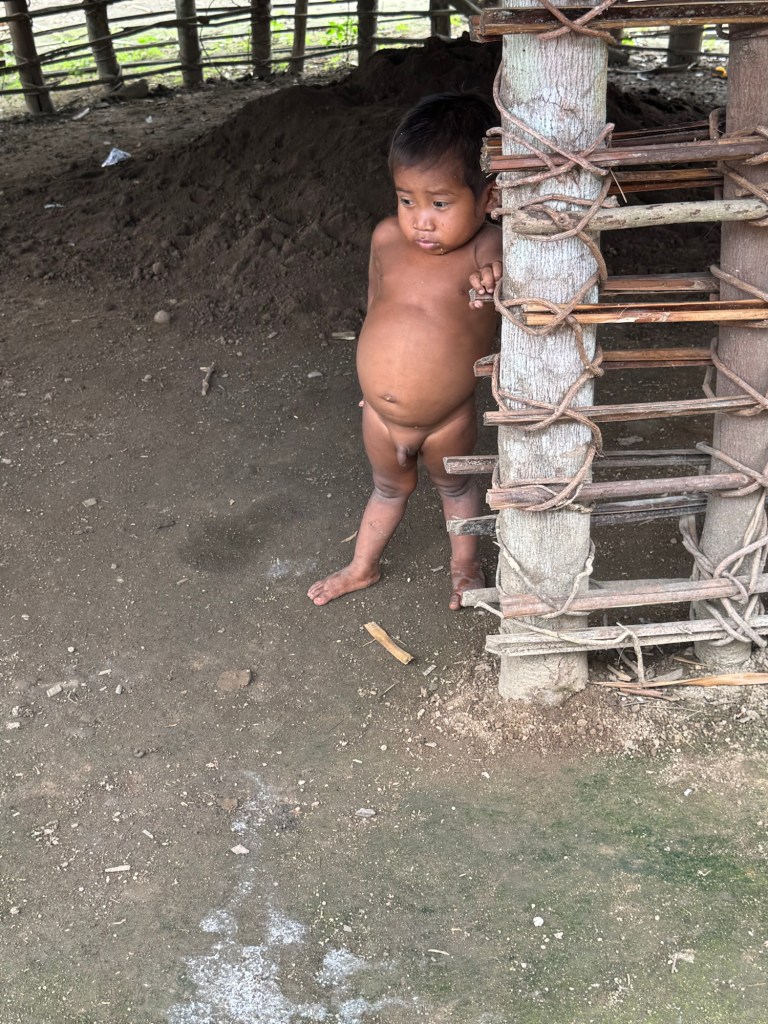
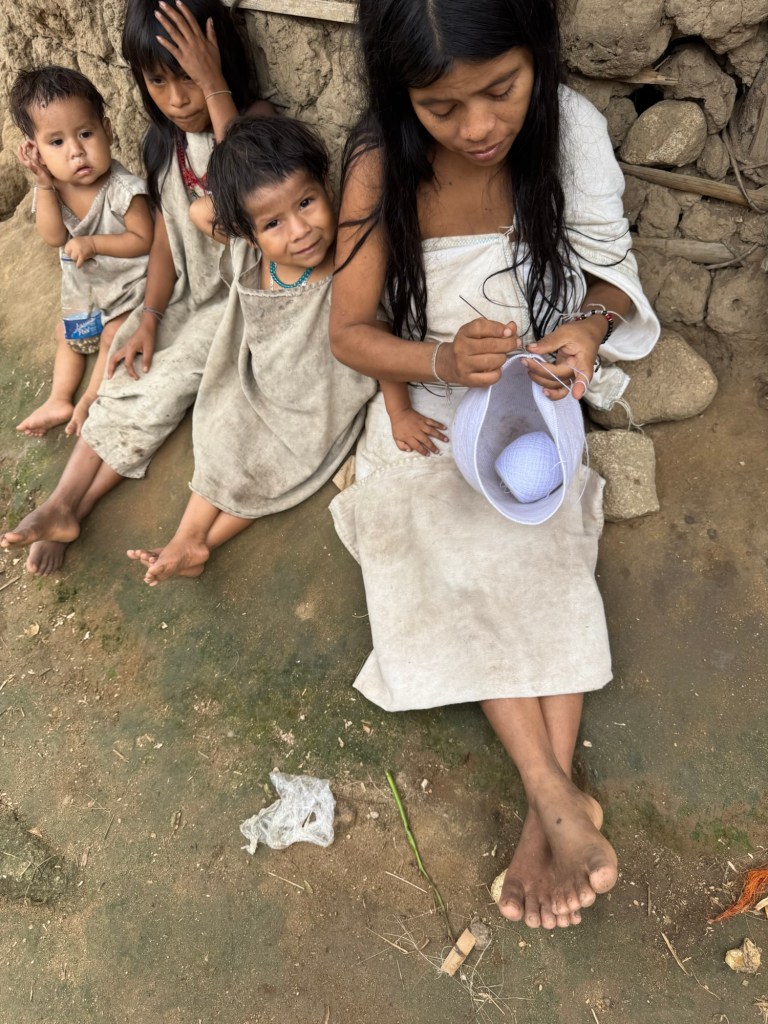
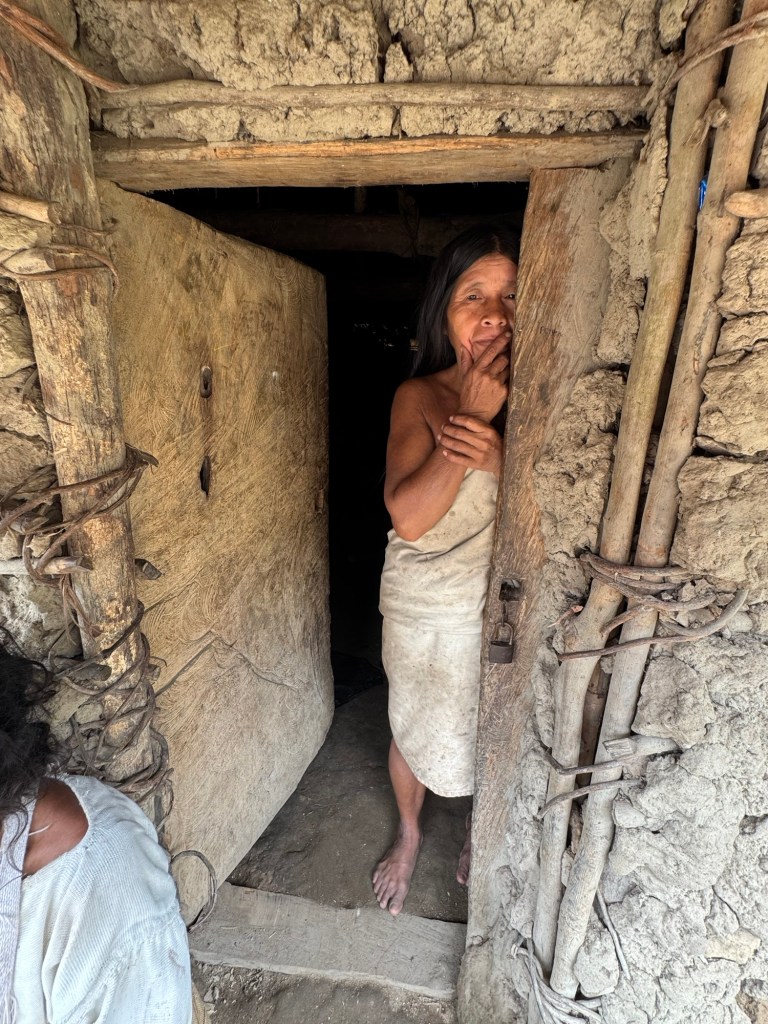
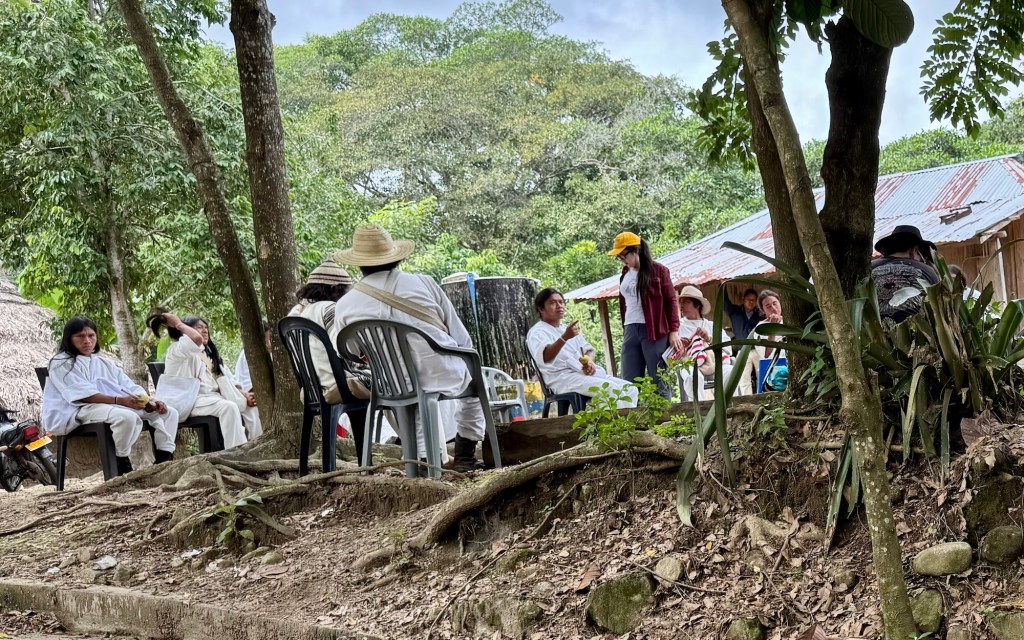
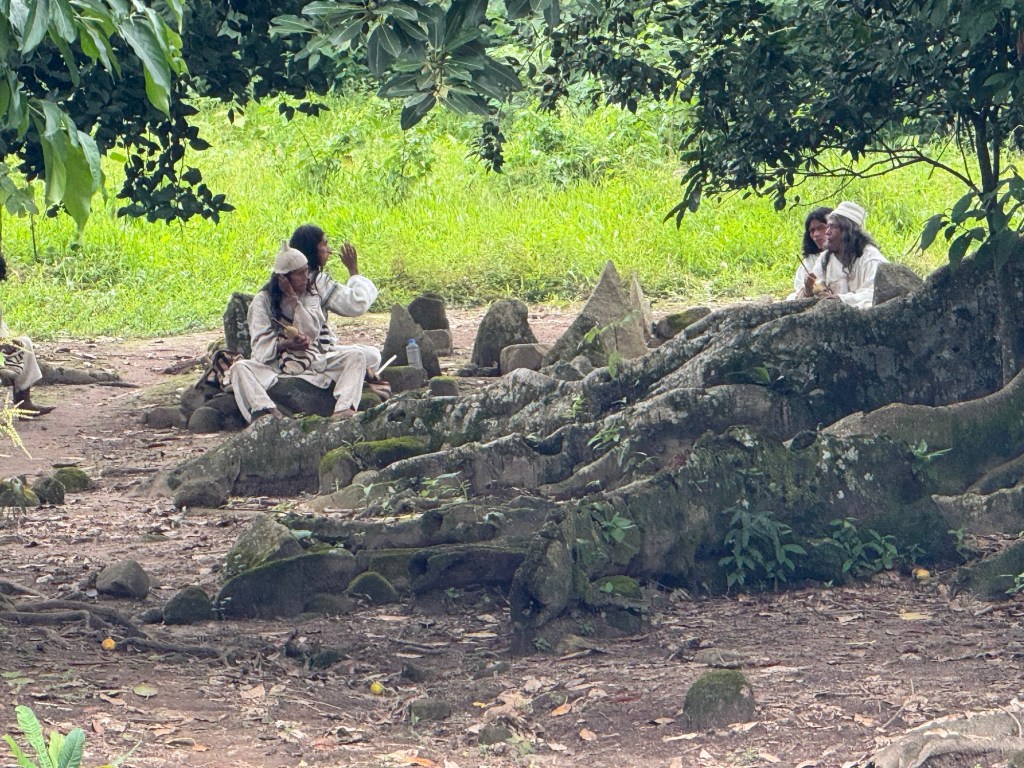
This was the day we were scheduled to visit the Kogi people in their local village, called Tumguieka. It is home to about 890 people who wear all white cotton clothing. The men wear two woven bags with straps, one for things and the second is filled with coca leaves that have been dried. As a form of greeting, the men don’t shake hands but drop a handful of coca leaves into the other gentleman’s bag. The women just wear a necklace. The men also carry a poporo, a cup-like gourd into which they put seashells that have been cooked until they turn to powder. They use a stick to stir the contents in the gourd. They chew coca leaves and mix the leaves with the crushed seashells in their mouth. Because he is chewing calcium, his people believe their teeth stay strong. I don’t know about that. I just know his mouth looked awful. Anyway, the women do not chew coca leaves. Supposedly, the reason the men rub the stick on the side of the gourd is to transmit their thoughts, a form of meditation they call “Mumbar”. The people consider themselves the “older brothers” as they have been around for many more generations than we have. We are the “younger brothers”.

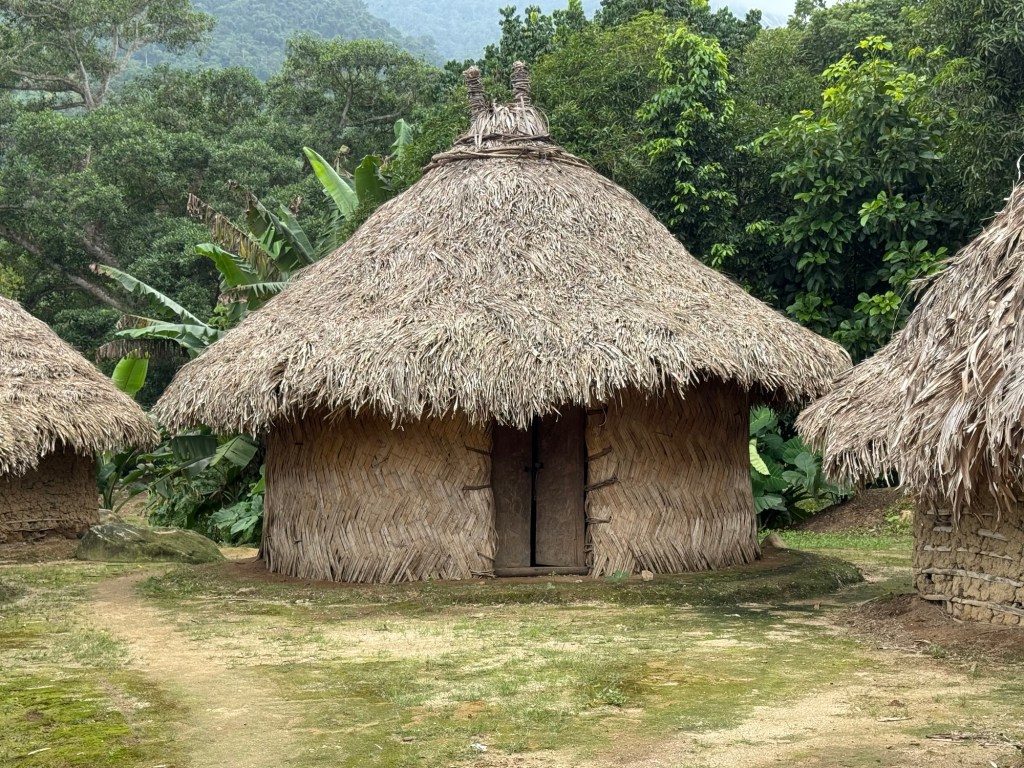
They live in mud houses similar to the Batwa people in Uganda. A few houses are built with woven palm leaves rather than mud.

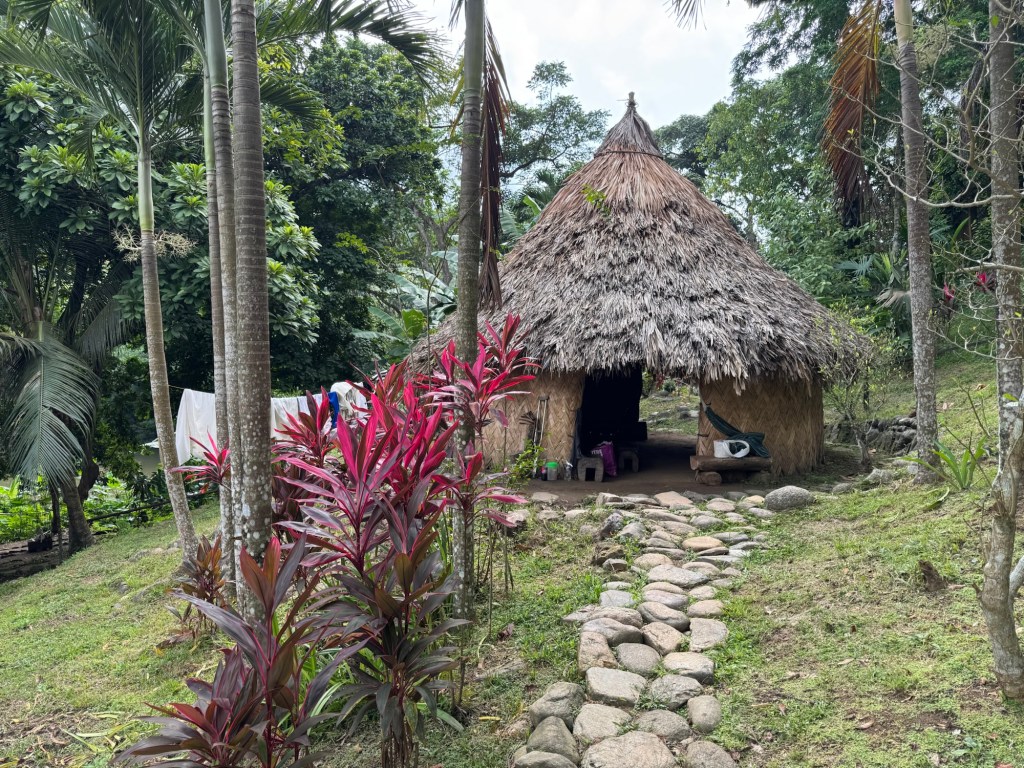
Meeting house made with palm fronds rather than mud.

These houses are used for special meetings of the men only. Most of the people are farmers. The few men in the village were either coca chewing thinkers or spiritual leaders having a meeting. Men marry at 15 or 16 to girls who are younger. They are monogamous relationships.

I managed a few photos of women and children. The guide told us there were older people who were 115 years old who live up in the mountains. We were surprised by that remark, until we learned they use a different Calendar. For them the moon is the cycle of time. There are 24 moon cycles for our 12 cycles.

It was an interesting meeting. Hard to imagine the different worlds we live in. Then we drove back to the river along the Caribbean coast and boated up river to our lodge. We had a quick lunch and were in our pool as soon as possible. After cooling off, we enjoyed a relaxing afternoon listening to the premature rain outside. I wondered how that experience would be if we were living in a mud house. I am grateful we are “younger brothers”.

Tomorrow morning we are up and away by 8am, as we are driving 4-5 hours to Cartegena, our last stop before returning home.

Coffee in Colombia

Thursday, November 6, 2025

This was a travel day. Picked up at 6:30 for a 9:50 flight from Medellin, pronounced Medegeen, to Pereira, that took 40 minutes. Pereira is a city in the coffee region of central Colombia with a population of 481,000 and an average elevation of 4480. The coffee region sits on the foothills of the Central Andes mountain range.

Large Cecropia leaf; tree grows between 1500 and 2600 meters only in Colombia, Peru, Ecuador and Venezuela. Used by indigenous people for asthma. It is hollow and provides a home for ants.

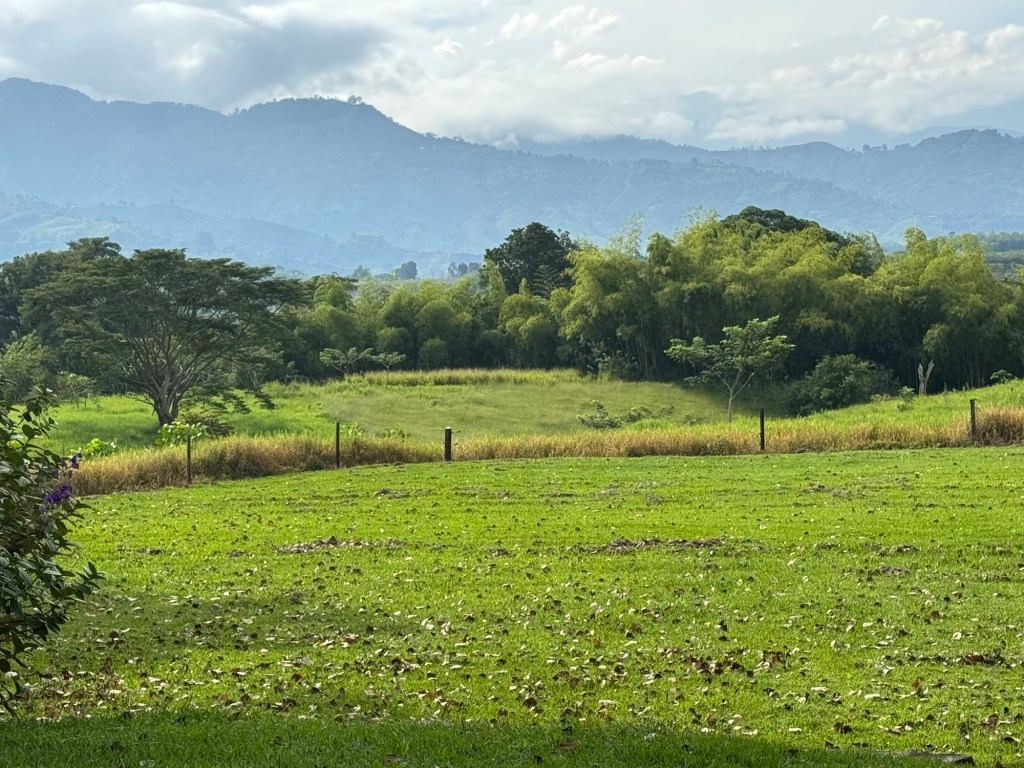
This area has its own distinctive culture centered around the land and agriculture. Since colonization in the 1840’s, the region has showcased brightly colored houses in its small towns, making a striking contrast between this region and the rest of the country. Its altitude, climate and fertile terrain are what make Colombian coffee some of the best in the world. The drive through the lush, green, rolling country side to our accommodations took 3 hours on mostly bumpy roads.

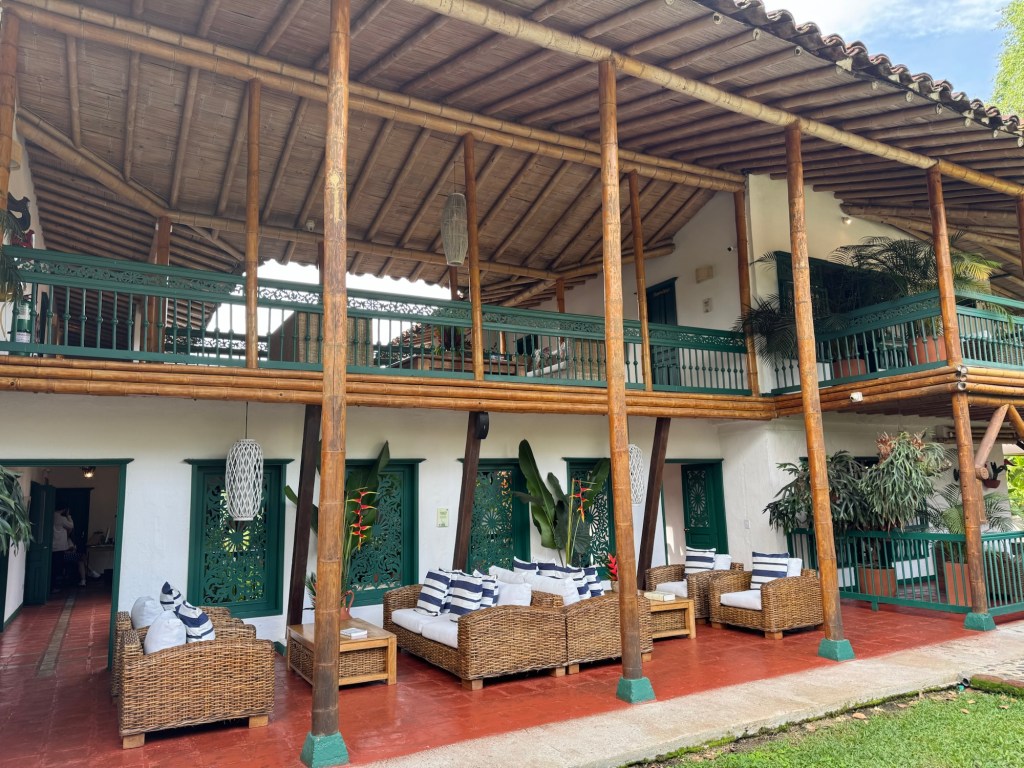
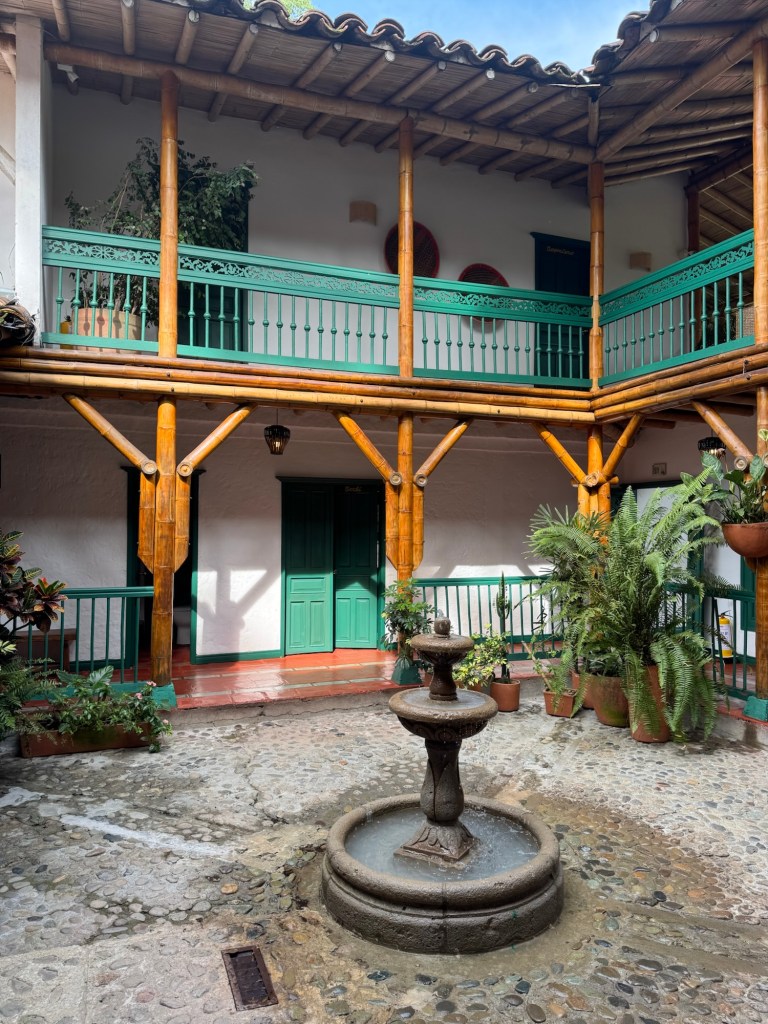
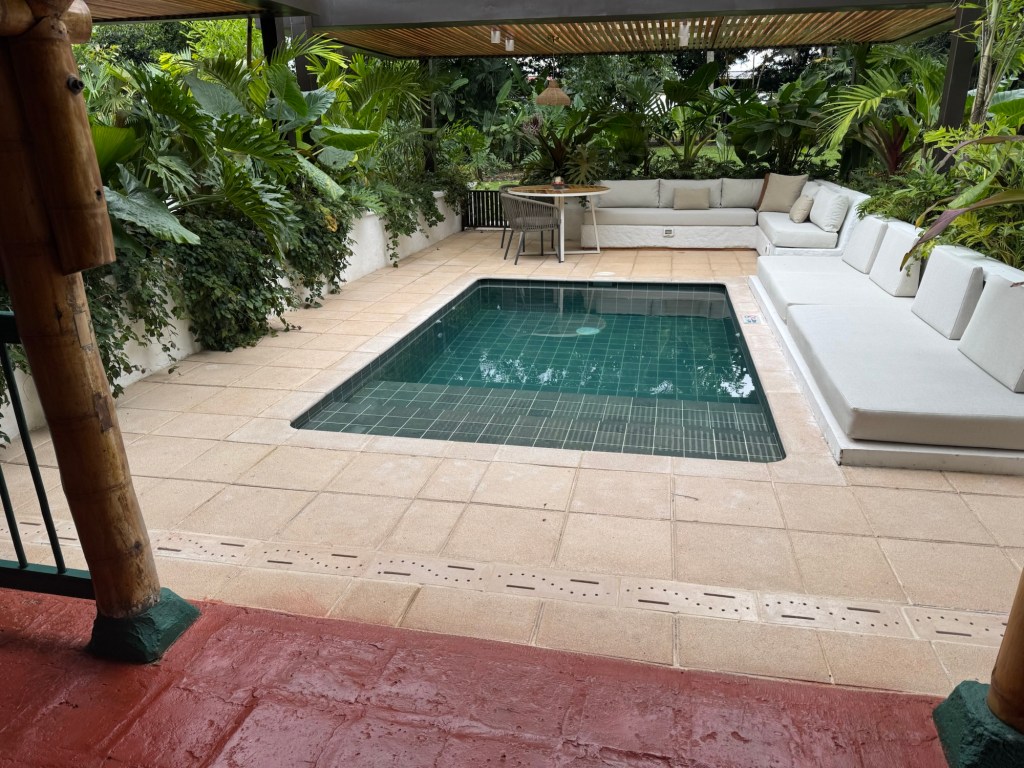
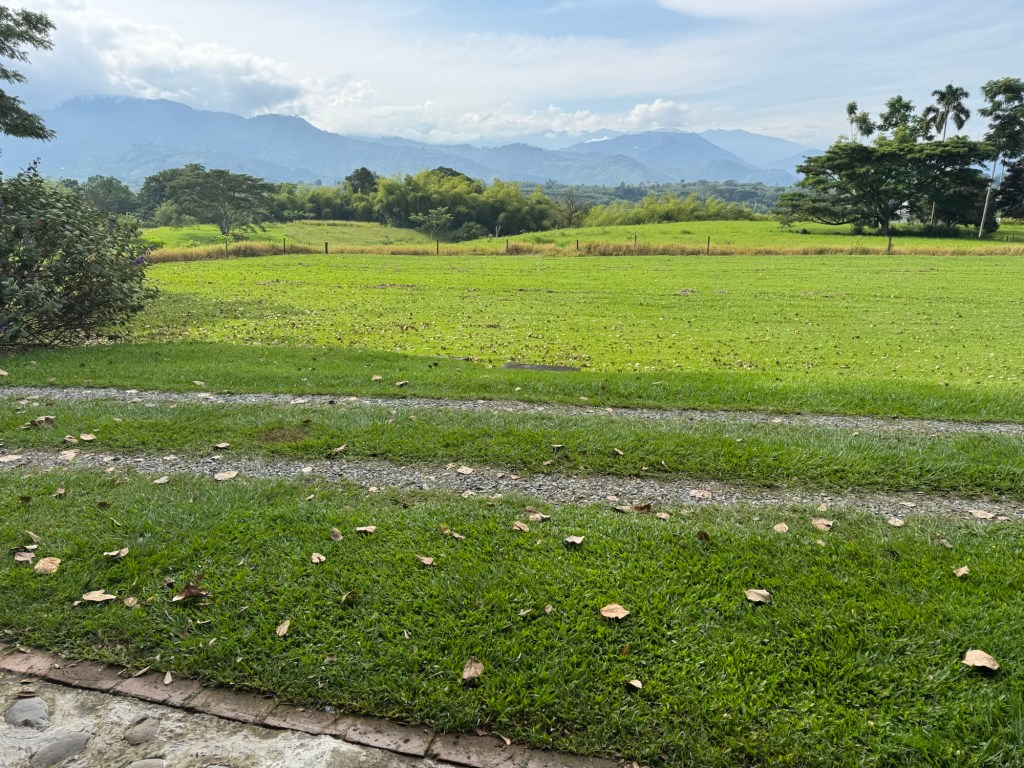
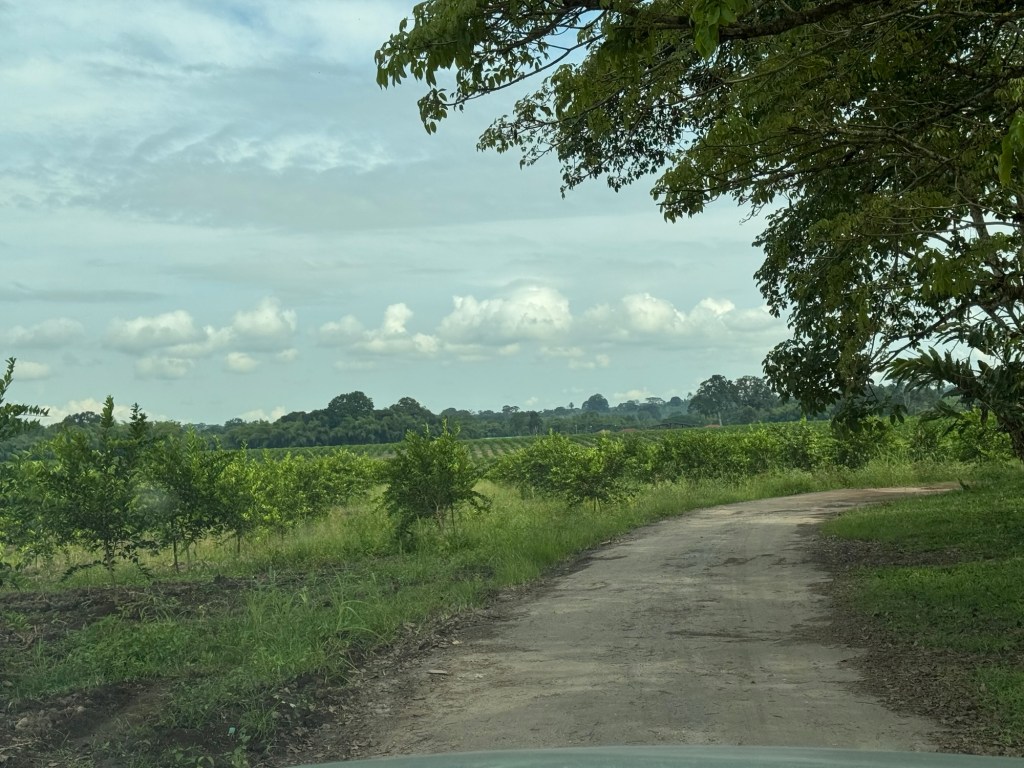
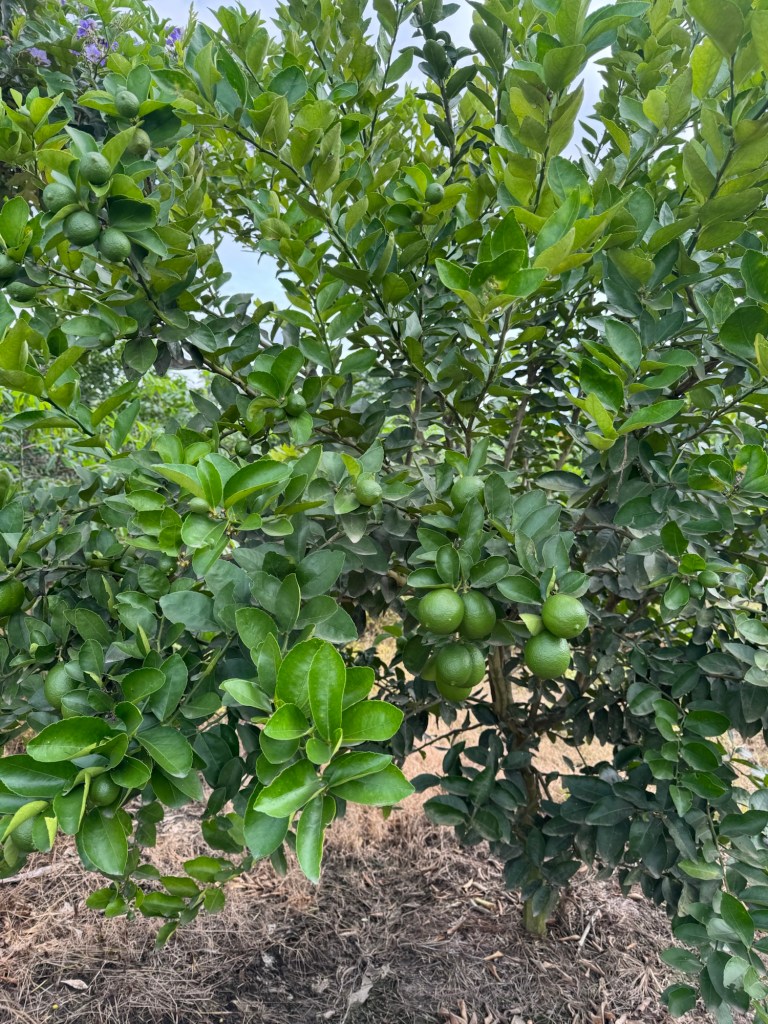
The Hacienda Bambusa was well worth the effort. It is set amongst extensive plantations of lime trees, plantain and cacao and looks out at the Central Andes. Our suite even has its own private pool, although it has not been warm enough to use.

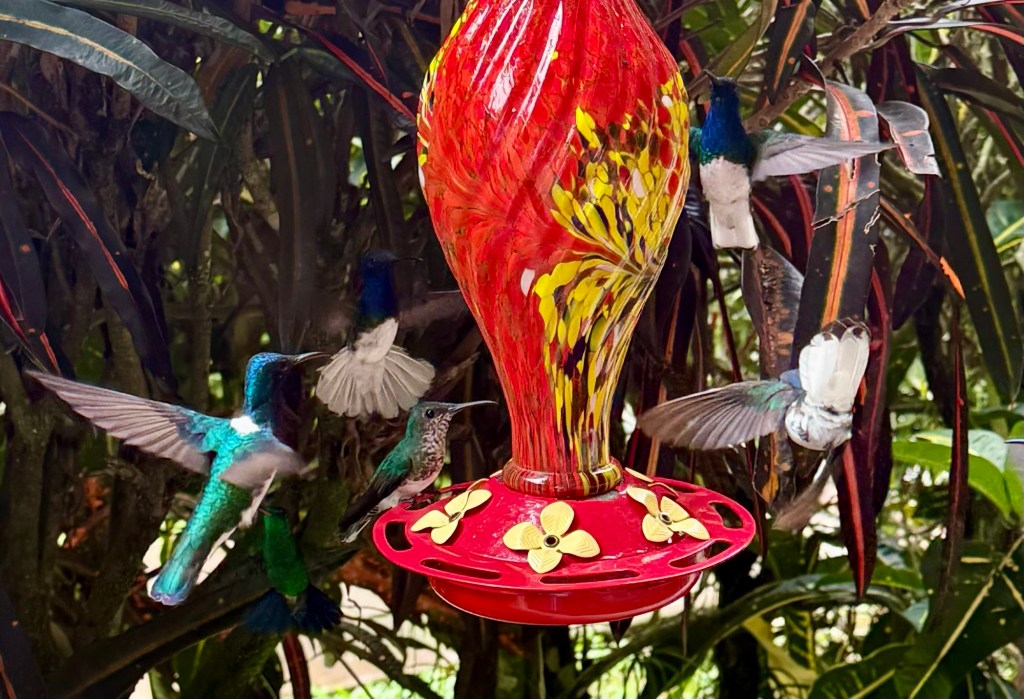
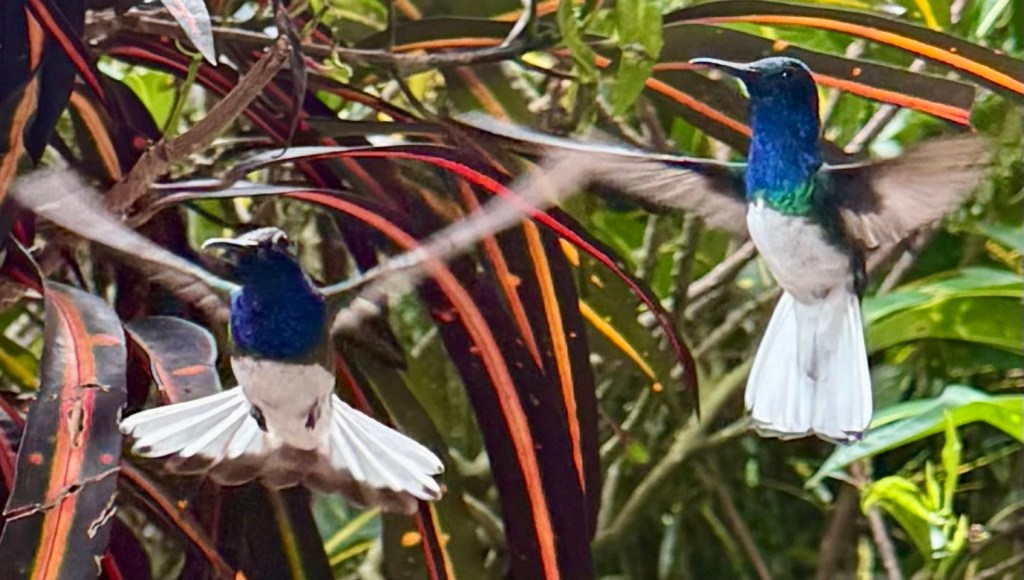
Hummingbirds in motion

There were hummingbird feeders everywhere and it was fun to watch the several different kinds fly around. We arrived in time for lunch and then enjoyed a free afternoon in the gardens and by our pool. We learned that the property is owned by a family that has 444 acres of lime trees, rather than coffee. Had an early dinner and went to bed.

Friday, November 7, 2025

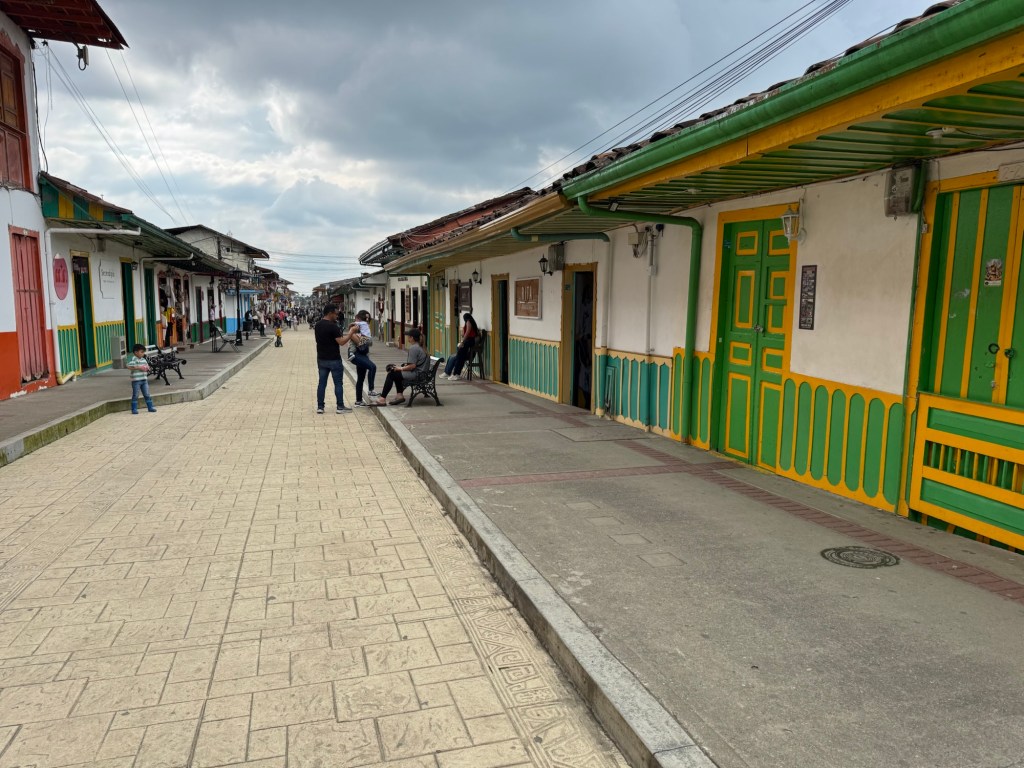
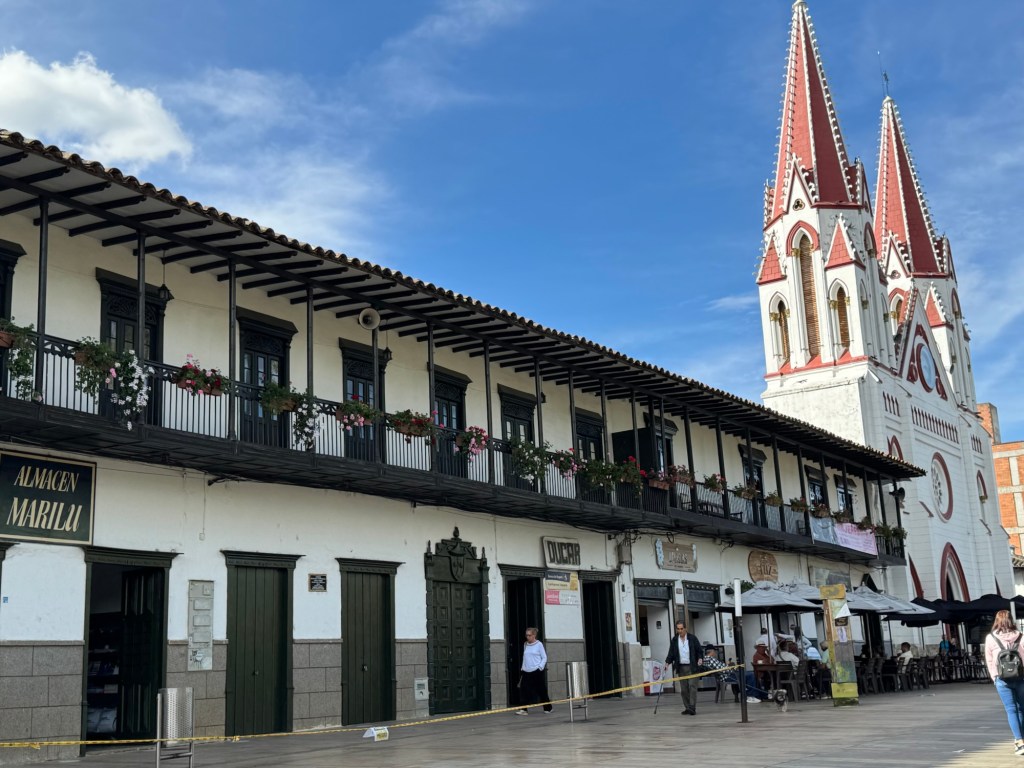
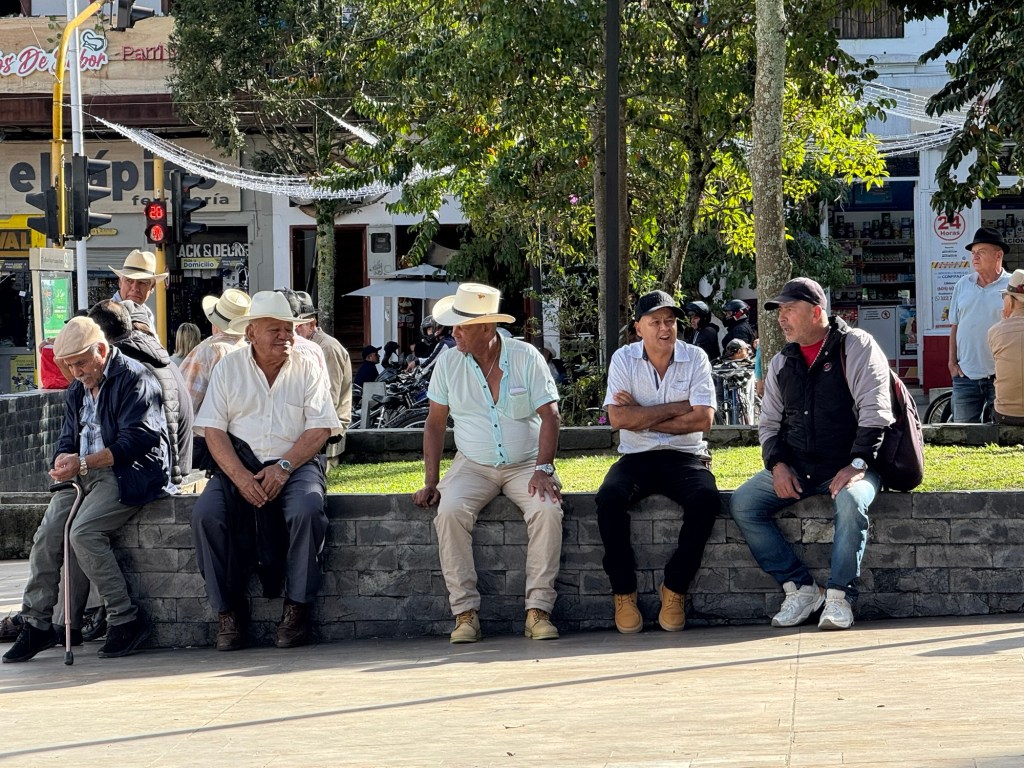
Daniel and our driver picked us up at 9am and off we went to a colonial town called Salento with a population of 4000.

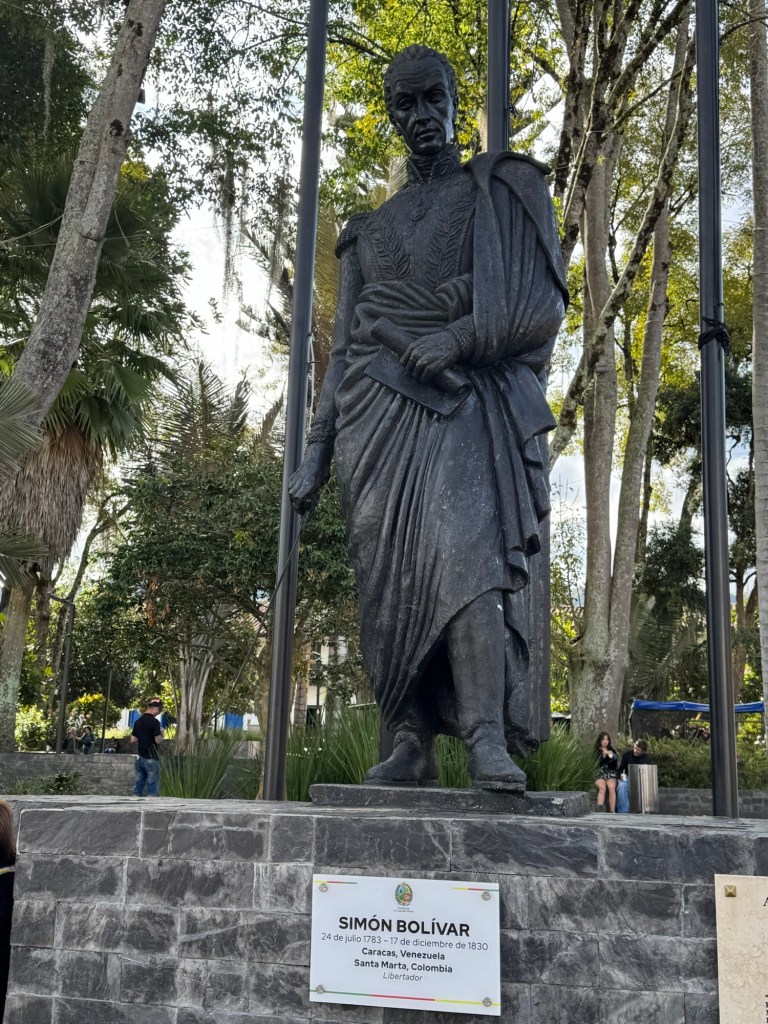
We walked the charming pedestrian streets and encountered yet another statue of Simon Bolivar (1783-1930) in the town square. Daniel told us Bolivar led the revolution against Spain and won. He became Colombia’s first president. His statue is in every town in Colombia.

Simon Bolivar

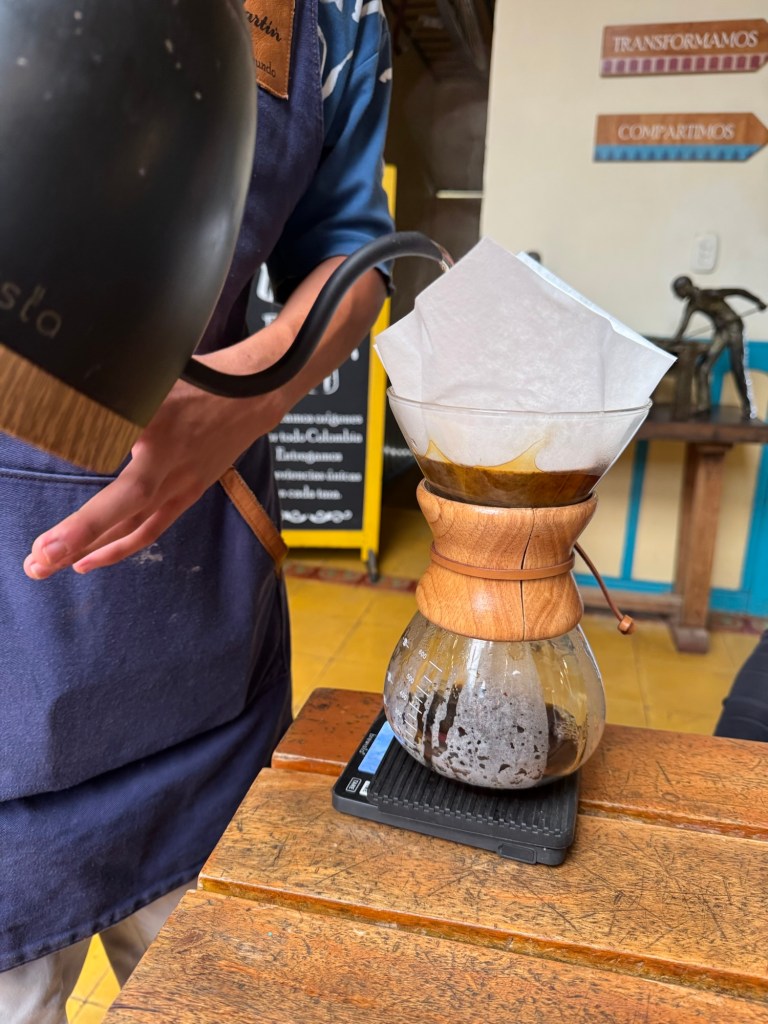
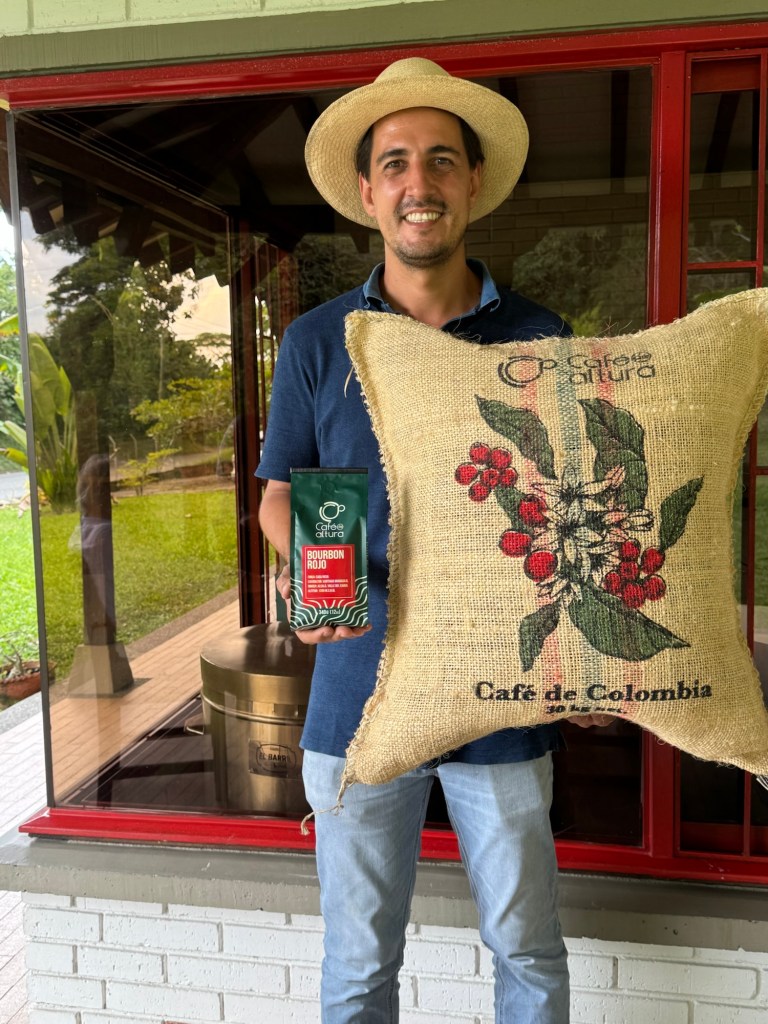
We stopped for coffee in a local cafe. We had several choices and I requested a coffee called Pink Bourbon made with the chemex process.

Coffee being made with a chemex

The coffee tasted pretty good, though I am not a good judge of coffee. Mark had a cappuccino and liked it.

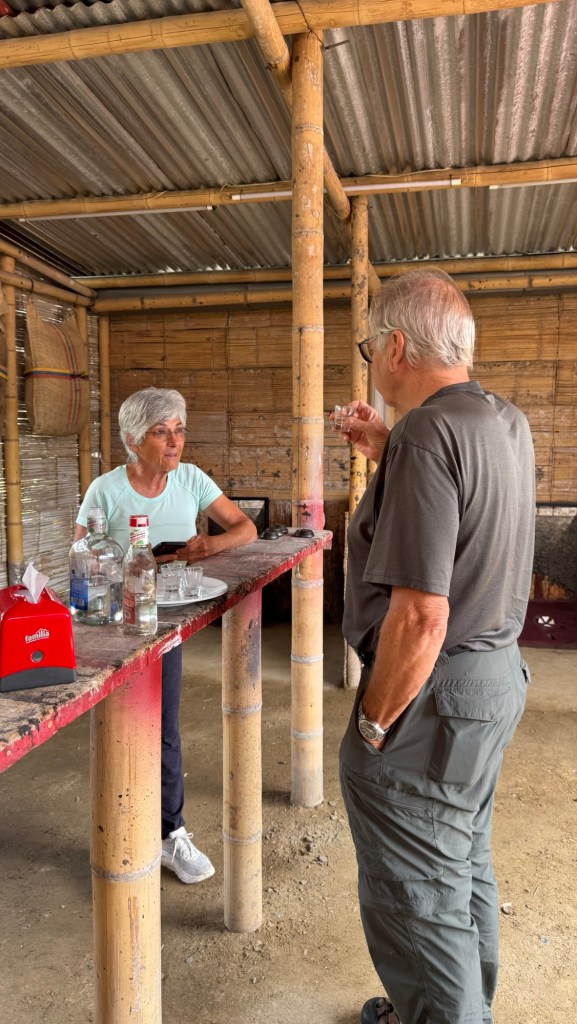
Drinking aguardiente to get ready to play Tejo

In another cafe we played a game called Tejo. The game is popular and we could see why, it’s similar to Cornhole, but with gunpowder. You throw a disc at a hard center target with four small envelopes filled with bits of gunpowder and a soft spongy clay backdrop. If you hit the target an explosion goes off and you get a point. With no effort, both Mark and I succeeded in creating mini explosions. The game was popular with indigenous people, without noise, 500 years ago.

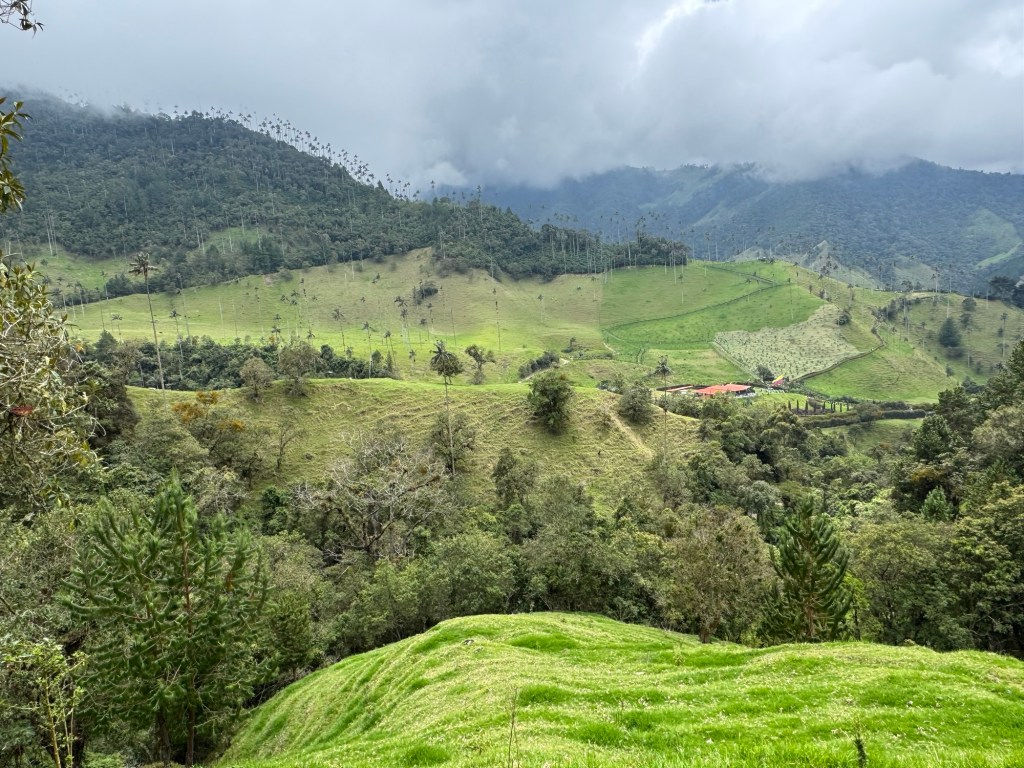
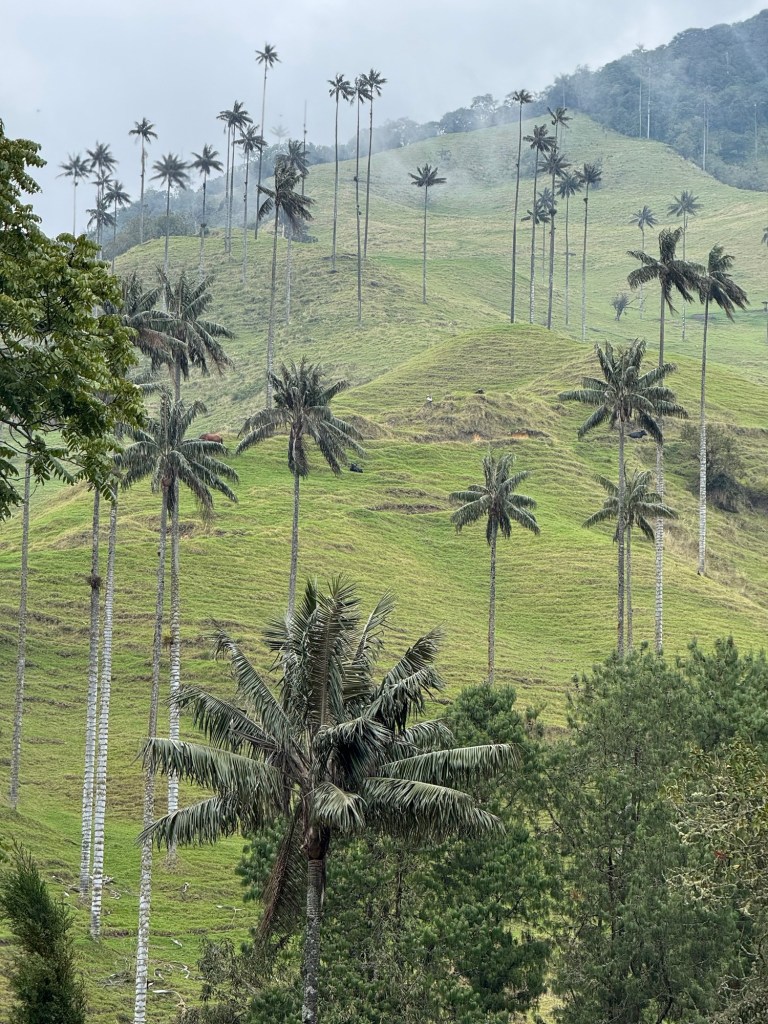
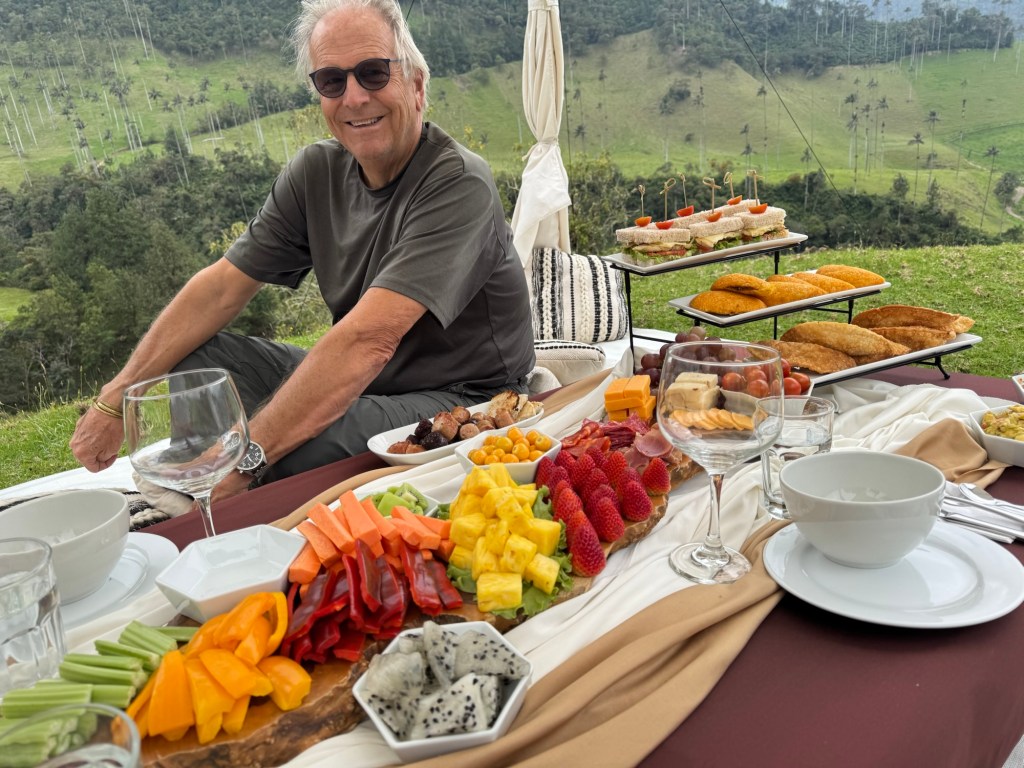
Then we drove on to our lunch sight on a hillside overlooking the mountains with the rare and tallest palm trees called Wax palms. They grow to 210 feet tall and only where we saw them.

Over whelmed with food

On the drive back to the hacienda, Daniel told us more about the civil wars from the 50’s forward. A civil war started in the 50’s between the conservatives and the liberals. FARC (Revolutionary Colombian Army Forces) began in the 60’s. In the beginning it was farmers vs. the conservative army and civilians. Fighting continued until 2015, 65 years, when both sides compromised and signed a peace process.

The Narco cartel wars began in the late 70’s and continued until the 90’s when the government stopped them. An activity called Fake Positive was instrumental for the government to increase the numbers of dead guerillas, to make it seem like the government was gaining on FARC, government troops would kill poor, sick and disabled people, dress them in FARC clothing and tell the government they were being successful in reducing the fighting so they could get time off. The ruse worked for a time until it became obvious that the killed people were being dressed in new clothes, with new shoes, sometimes on the wrong feet, and the populace began missing their family members. What a sad way to end the fighting.

Back at the hacienda, we changed for dinner and visited with a Canadian couple also staying at the hacienda.

Pam and George Sigurdson from Winnipeg

We had a lot in common with Pam and George and chatted quite awhile, before heading off to bed.

Saturday, November 8, 2025

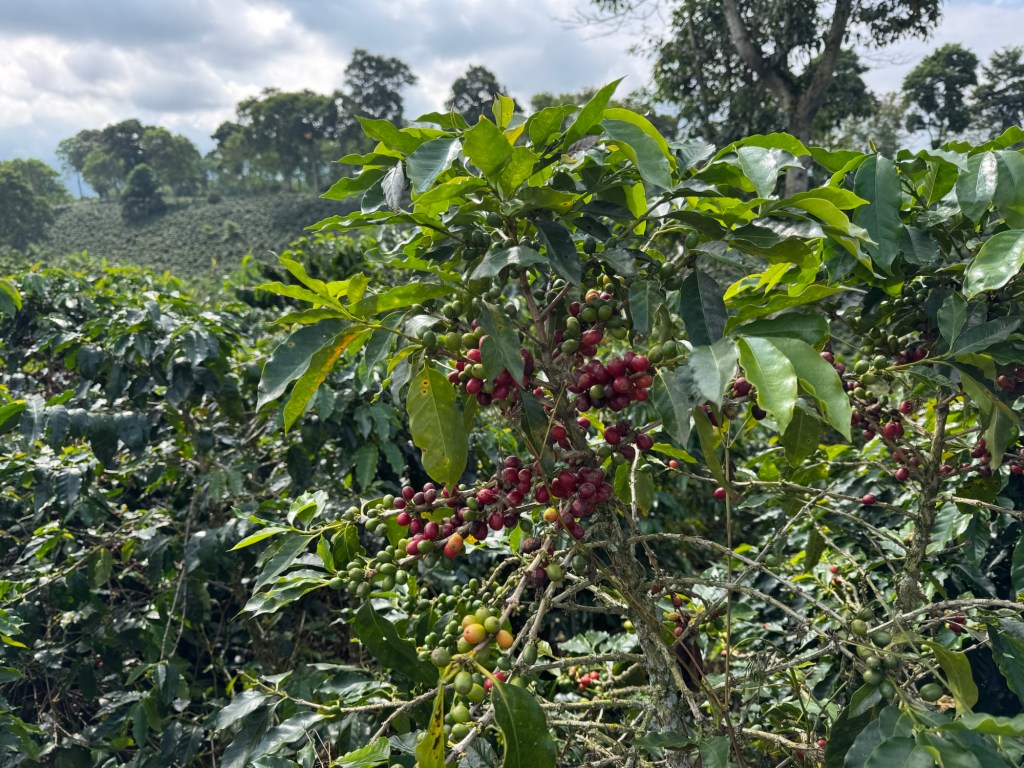
Out again at 9am, having had a delightful breakfast of eggs Benedict. We headed for a coffee plantation called Casa Vieja that is owned by a family named Granada. The plantation was purchased by the family in 1981 and contains 40 acres of coffee as well as other fruits and vegetables for the family’s consumption.

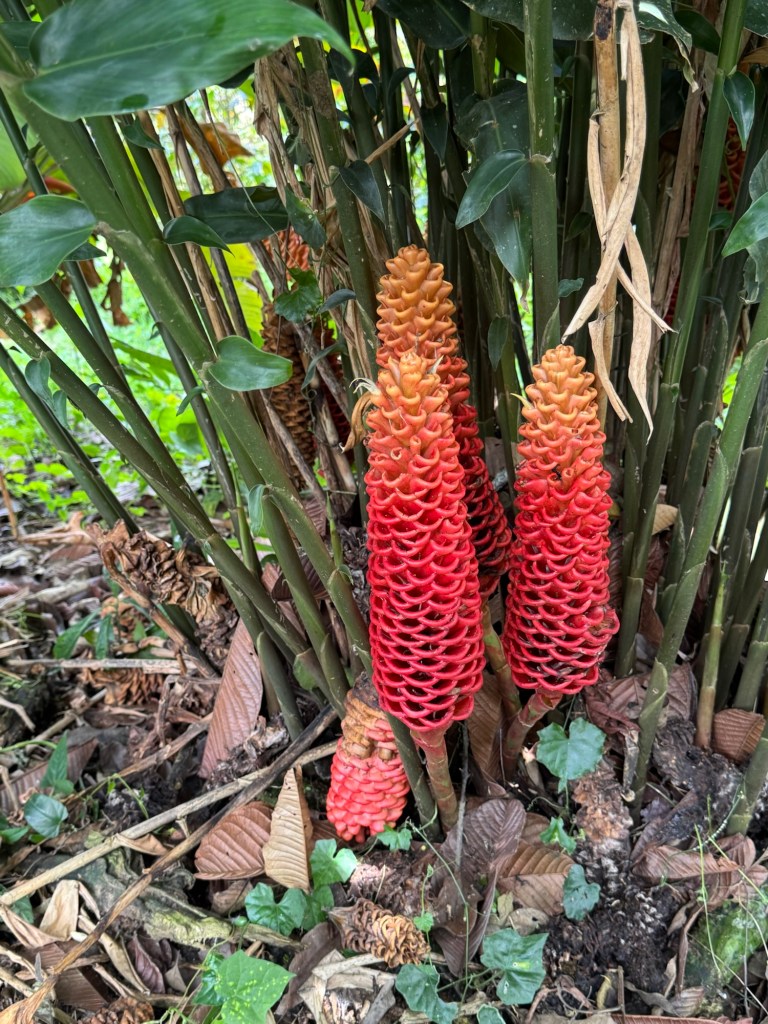
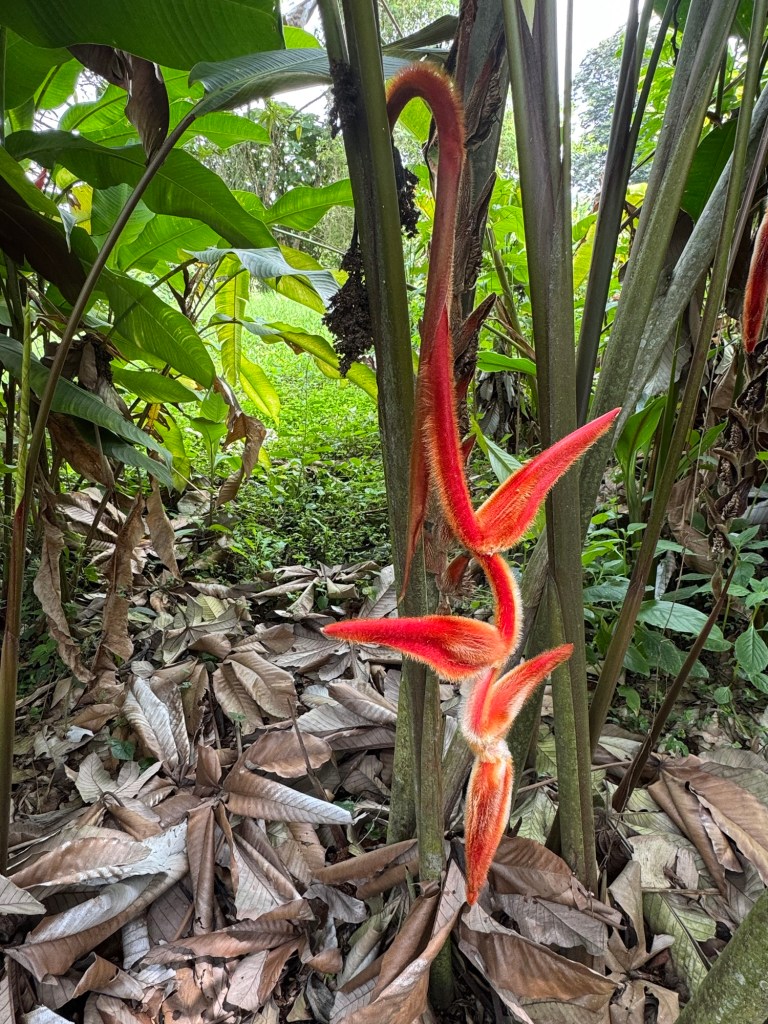
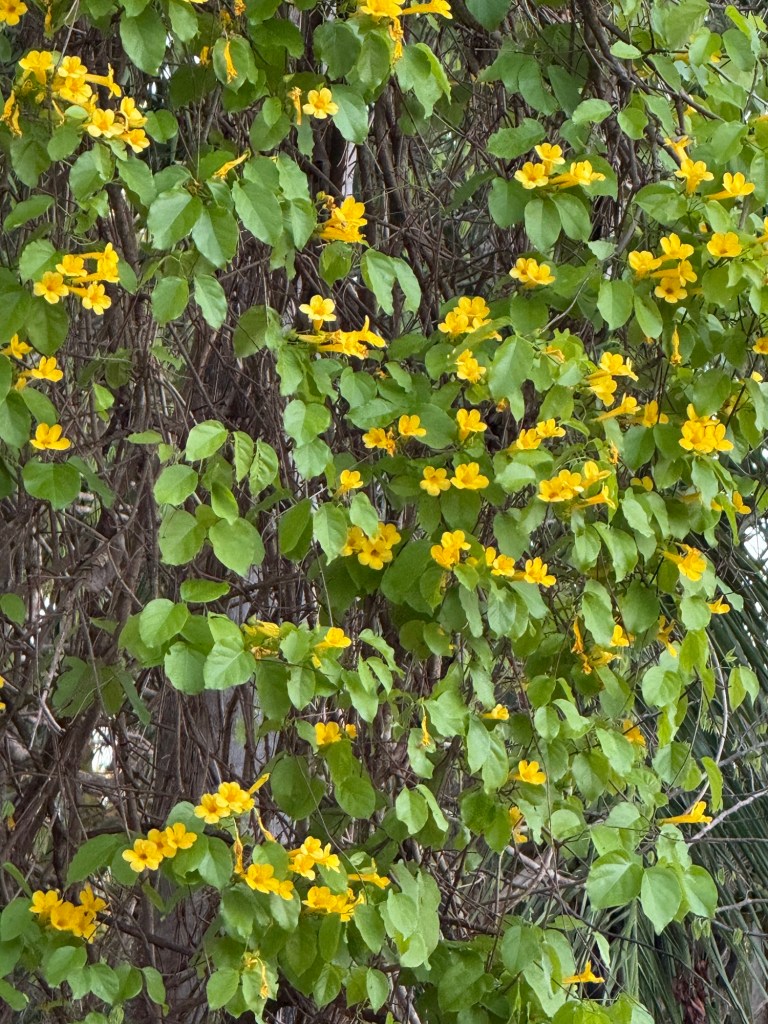
Along the way we saw a variety of plants.

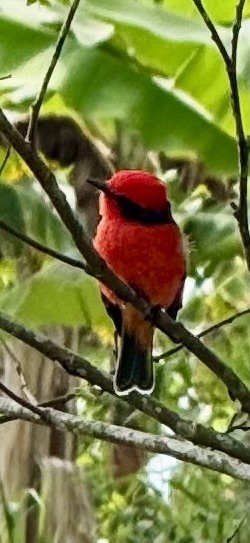
Vermillion flycatcher

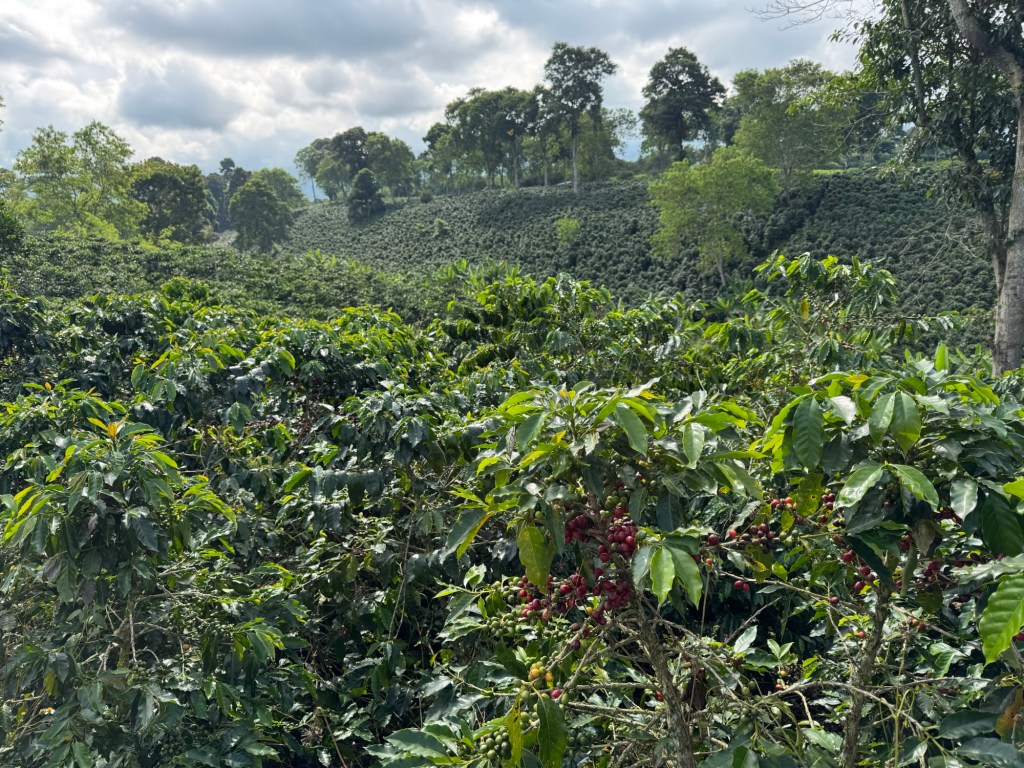
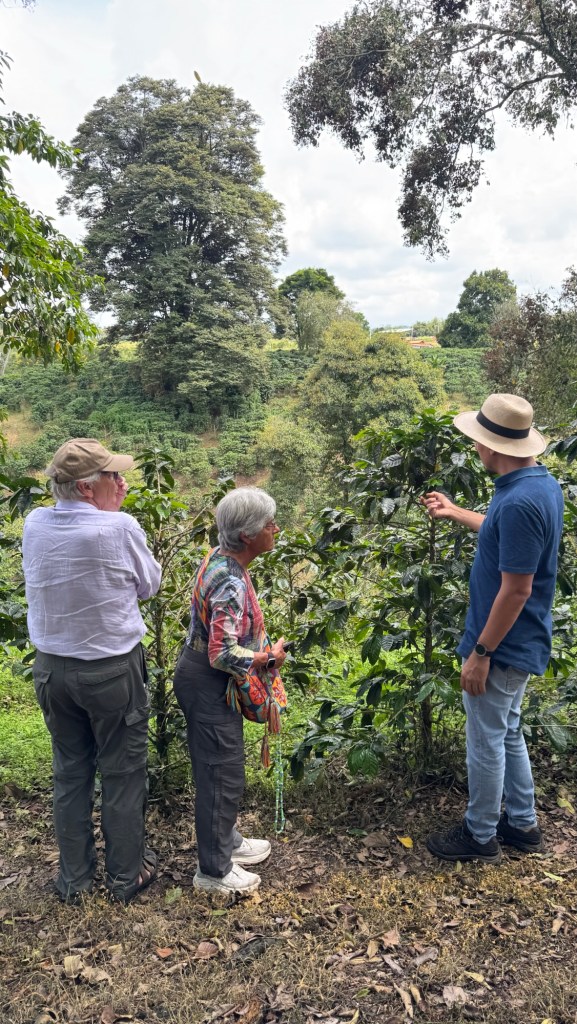
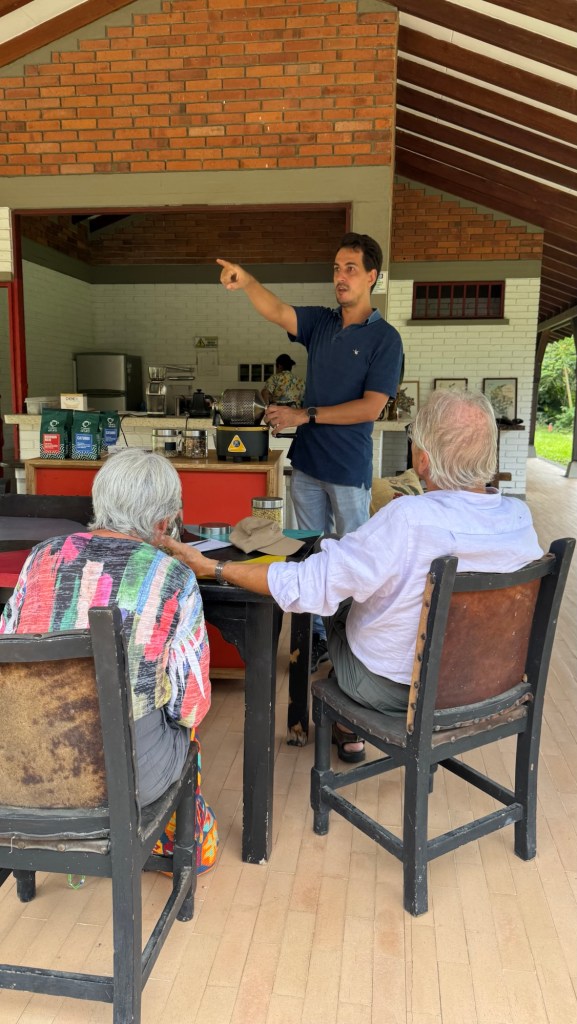
Soon we were at the coffee plantation and walking the property with the owner’s son, Santiago, who talked us through the growing, harvesting and processing steps to a cup of coffee.

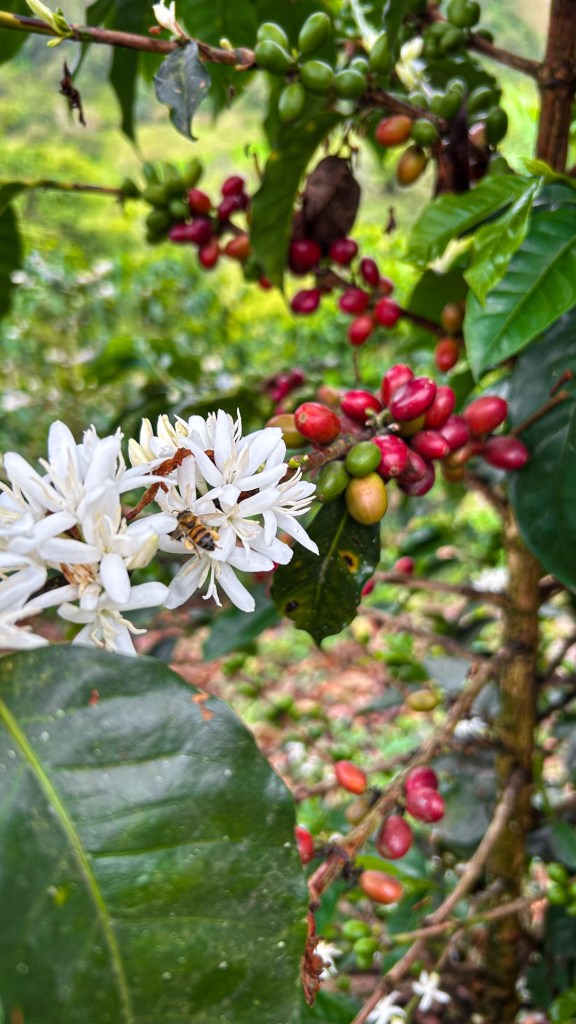
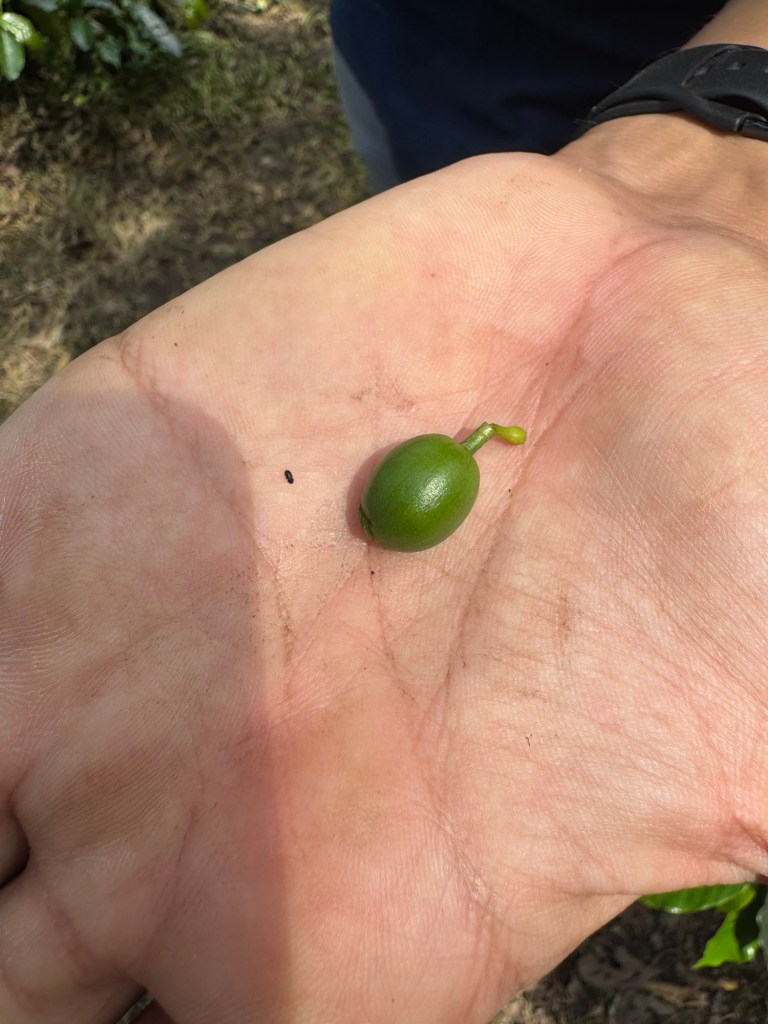
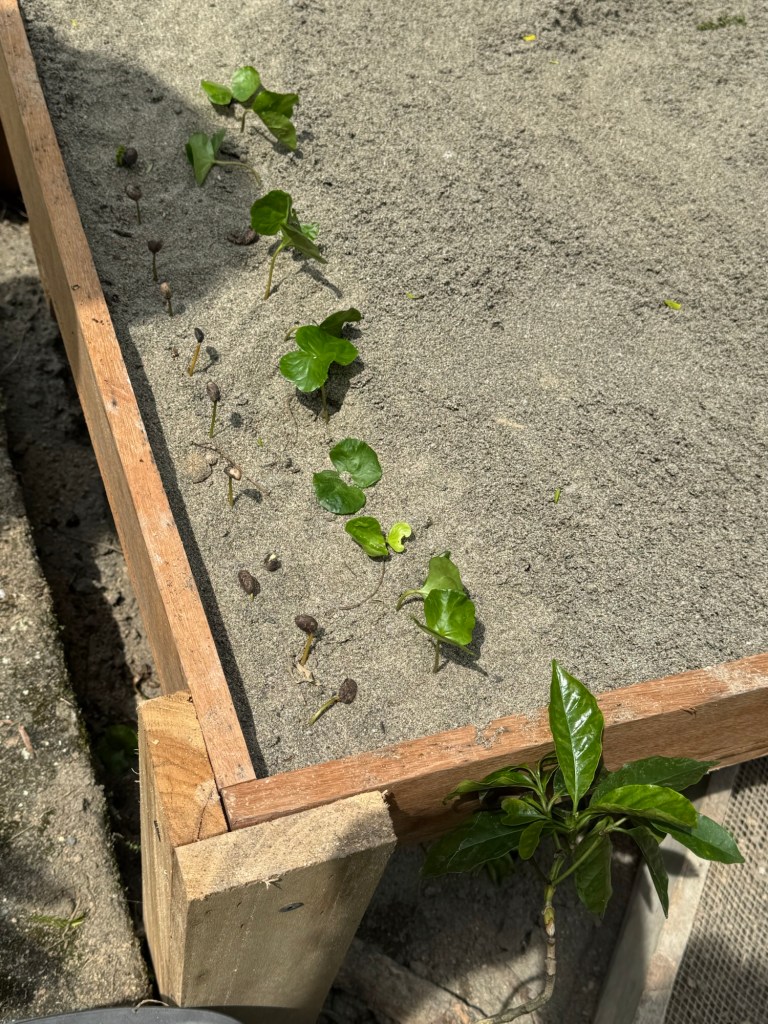
12 employees work full time all year. During harvest season August through October 30-40 picker are employed. There is also a second picking in March and April. From flower to bean takes 7 months. Trees produce well for about 20 years. When they get 5-6 feet tall, they are pruned to 18 inches. The first crop is at 2 years. Santiago said their production is 20-25,000 kilo per year.

From flower to ripe bean

We looked at samples of roasted coffee, mixed good and second qualities, and parchment or top quality dried coffee. There are 2 commercial coffee types: Arabica, which is top grade and produced in Colombia and Brazil; and Robusto, which is 2nd grade and produced in Viet Nam, Brazil, Ethiopia and Indonesia. There are 300,000 growers in Colombia with 5 acres being the average size. 100 kilo of raw beans yields 12 kilo of roasted beans. The average amount of coffee consumed in the USA per person is 6 kilo. In Colombia it is only 1.5 kilo per person.

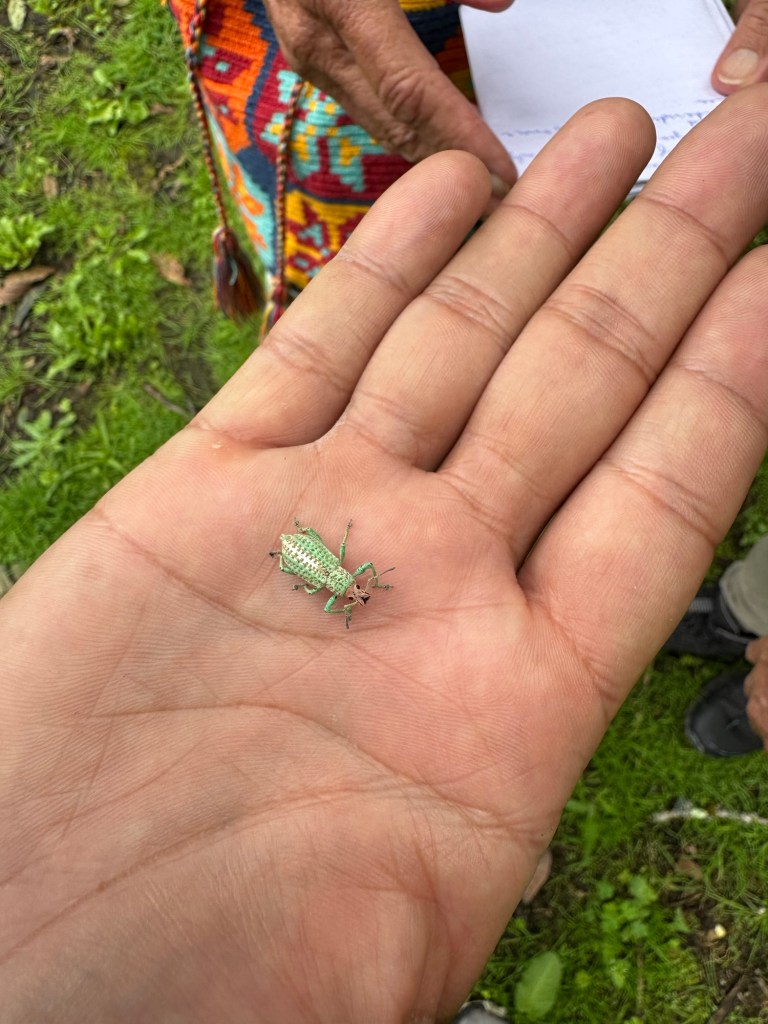
Colombia is the only South American country that has coastline on two oceans, Pacific and Caribbean, and it is number 1 in birds, butterflies and orchids.

Back at the Hacienda, we had a simple dinner of pasta and listened to two guitarists play and sing for us. They were quite good and we enjoyed their music until we went to bed. So far, we have enjoyed our time in Colombia very much. Next stop is Santa Marta on the Caribbean coast.

Medellin

Monday, November 3, 2025

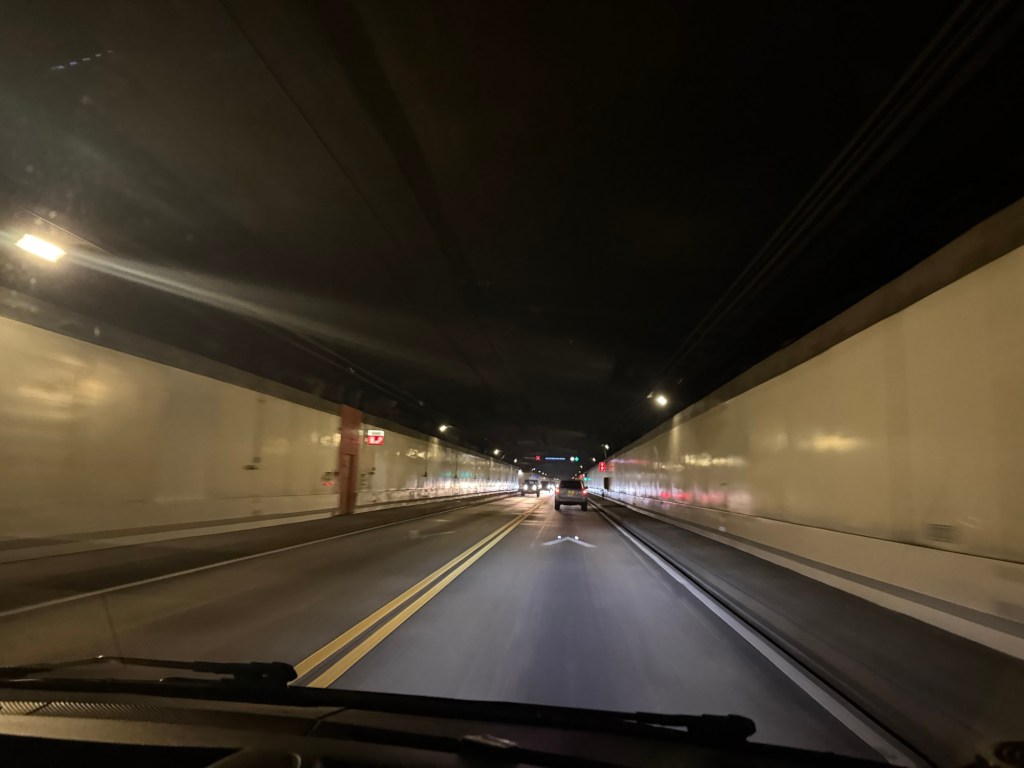
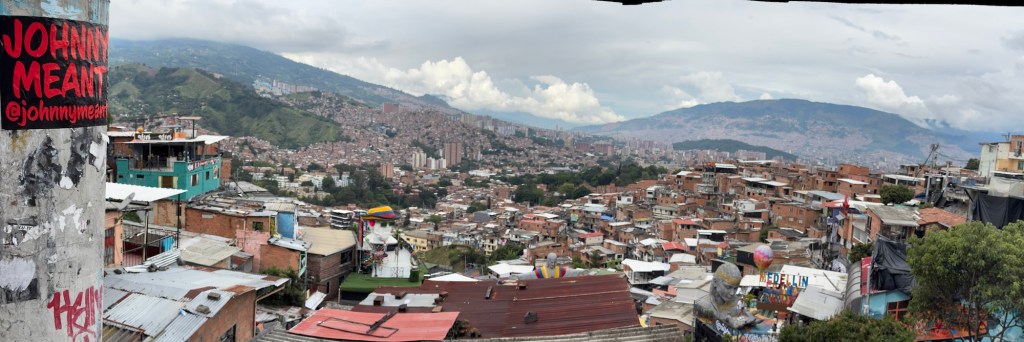
After a one hour flight from Bogota to Medellin, we arrived a little after three and met our new guide, Daniel. He wasted no time talking about Medellin, whose population is 4.5 million in a country of 51-52 million. Finally, at a very comfortable 7,500-4,200 feet in elevation, we were driving toward mountains and through tunnels, which separate the airport from the city. As we enter the first tunnel, he tells us it is 5.2 miles long and is the 2nd longest tunnel in South America. It delivers us to Medellin and, as we exit the tunnel, we are looking down on a city in a narrow valley surrounded by mountains. It is a lovely setting that immediately attracts our attention.

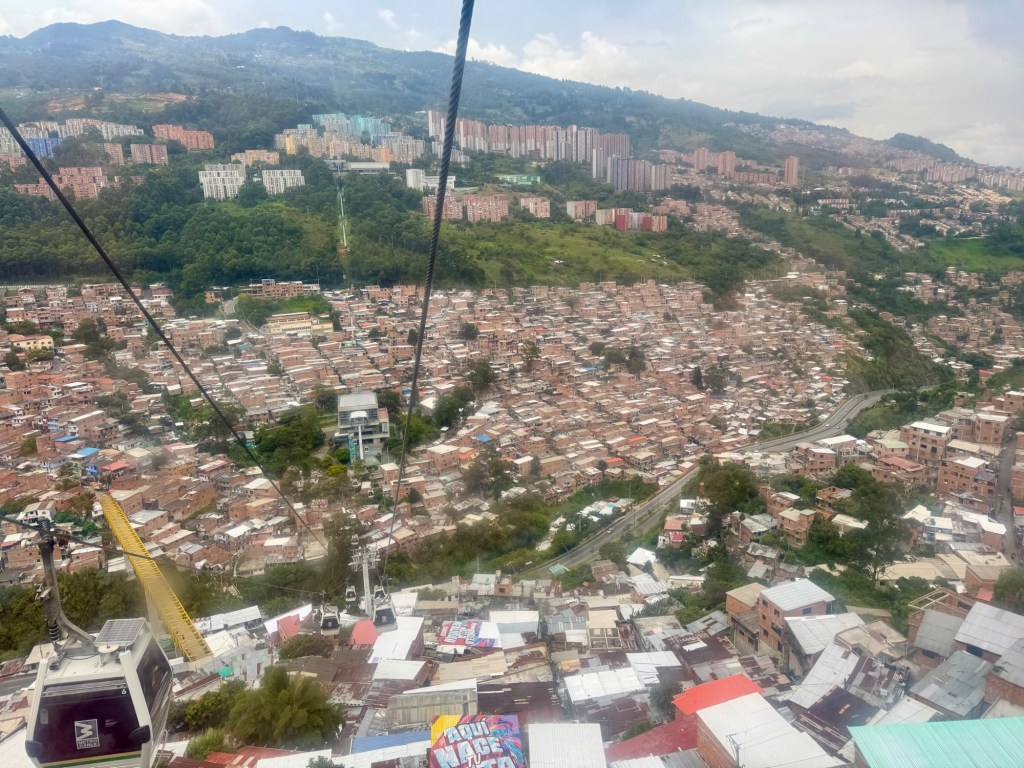
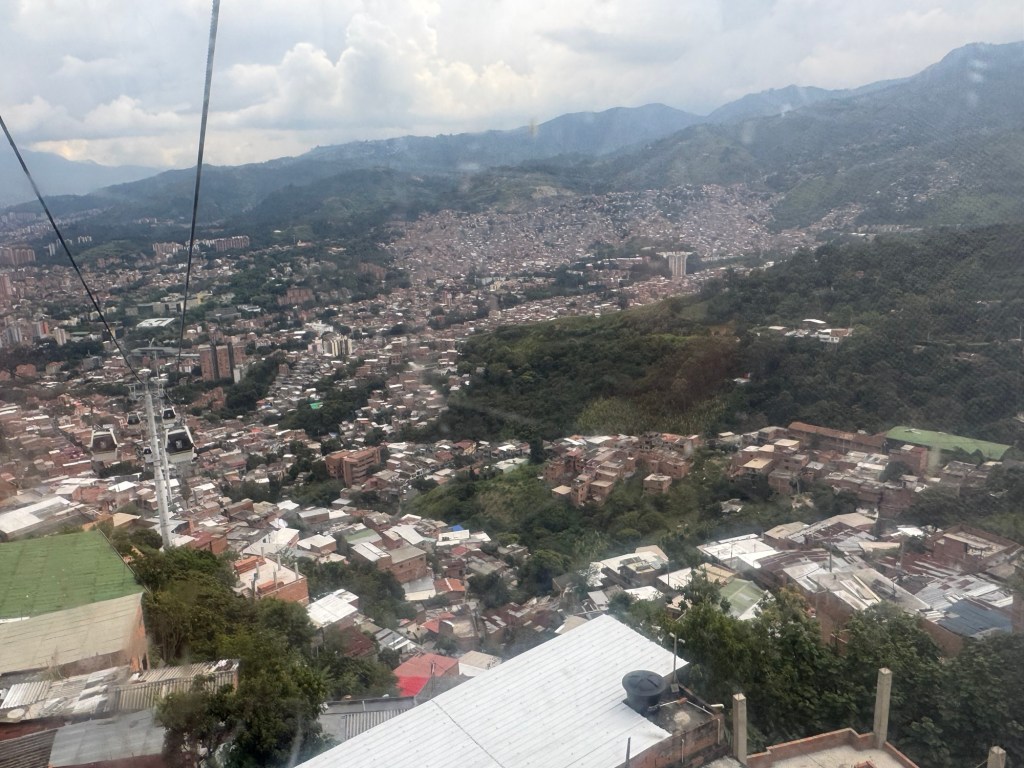
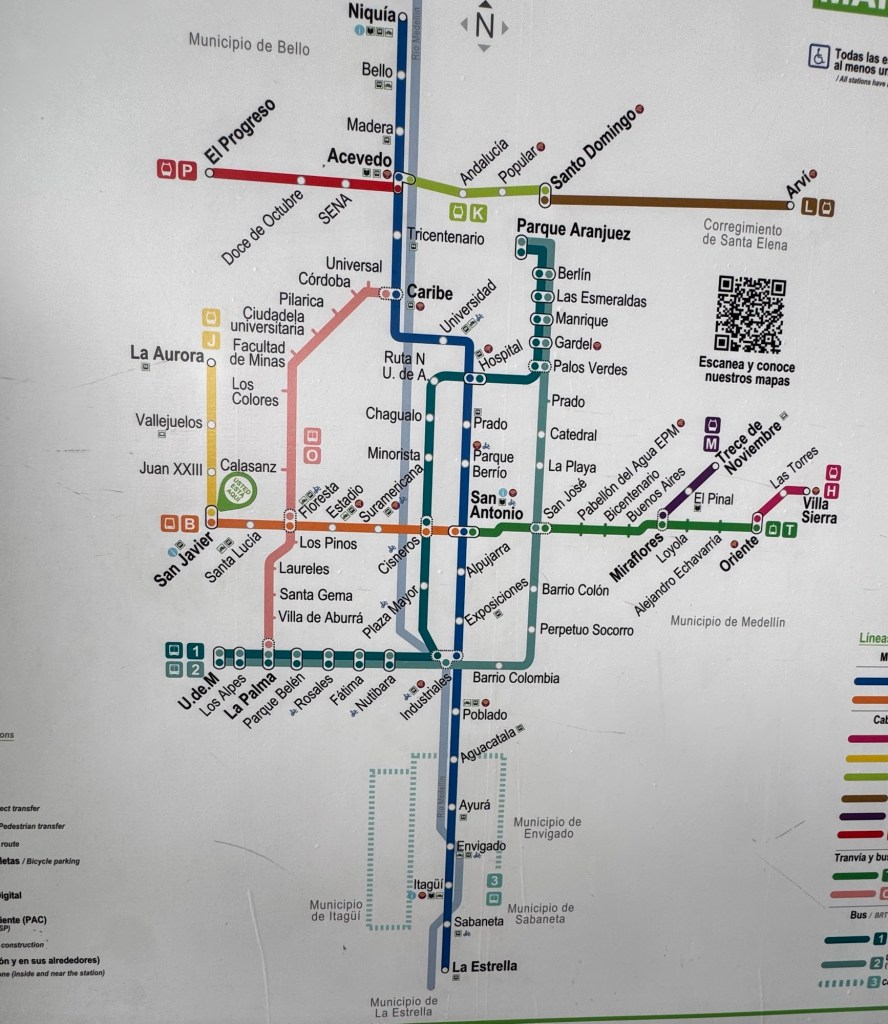
Daniel believes it is also the most successful city in Columbia because it has been very innovative in recovering from the violence of the late 80’s and early 90’s after Pablo Escobar. The city was founded in 1675 and has been growing slowly ever since. A major innovation is the transportation system developed in 1995. There are trains, busses and, especially, cable cars to move people around the city in addition to cars. There is no room for more roads and traffic is a nightmare for sure.

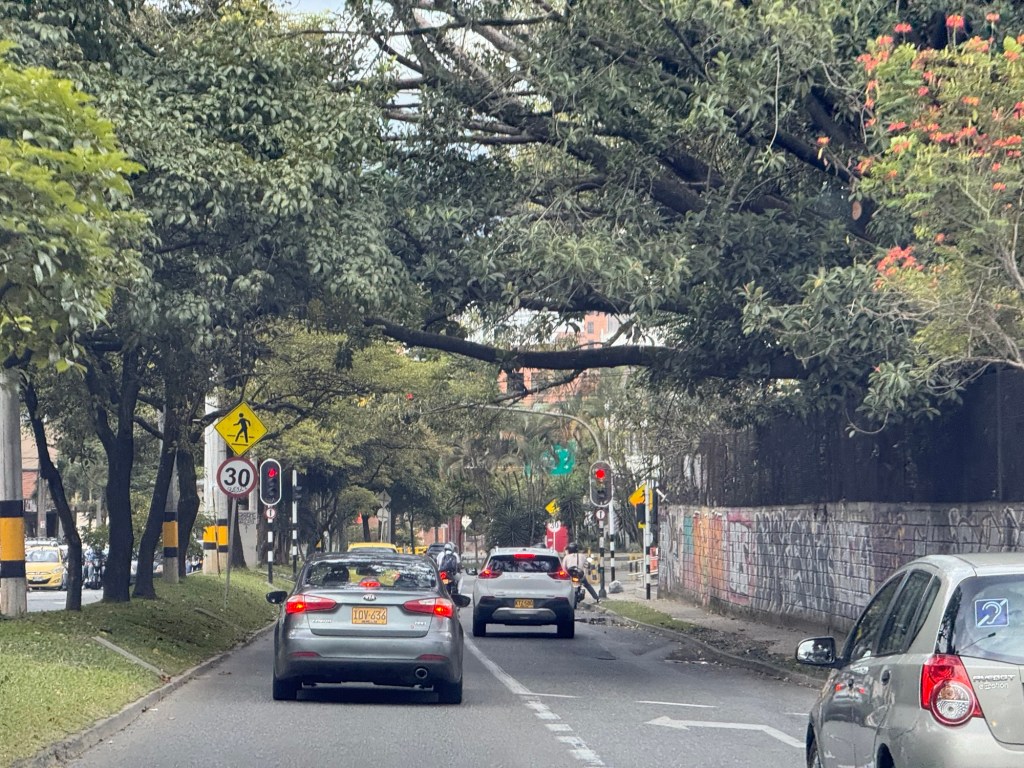
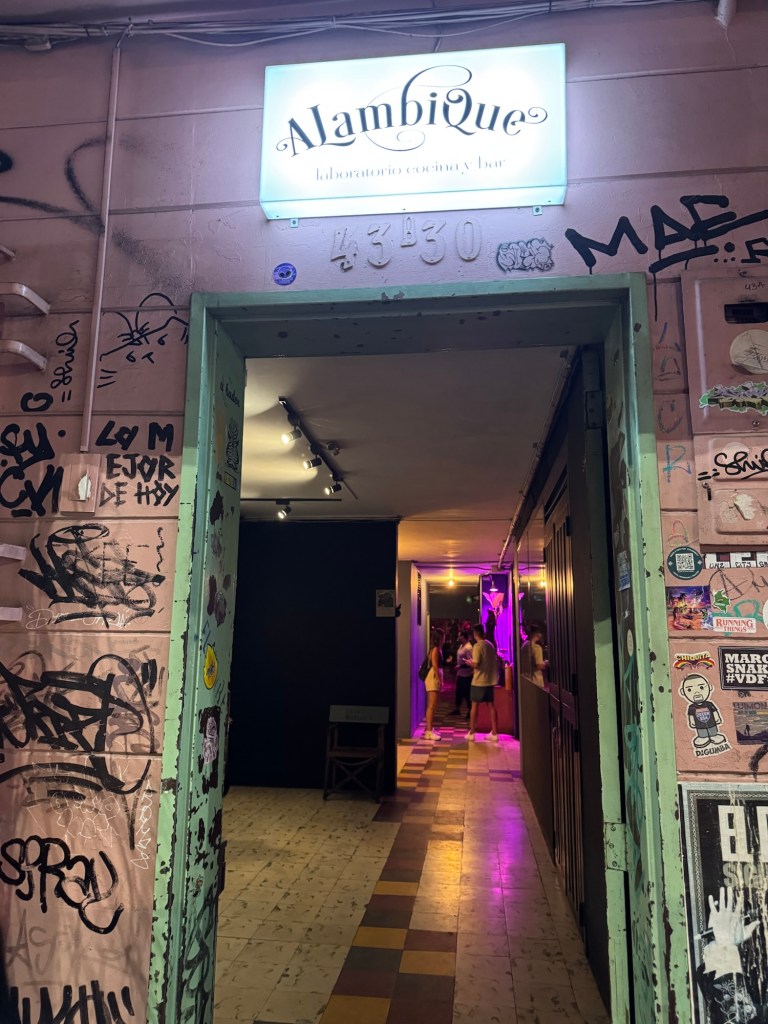
At our hotel, Elcielo, we chill the rest of the afternoon and take a 15 minute ride to dinner at a place called Alambique. The traffic was intense and driving was perilous. The restaurant was pretty funky in its decor, but the food was good. With no waste of time, we were back at the hotel and in bed.

Tuesday, November 4, 2025

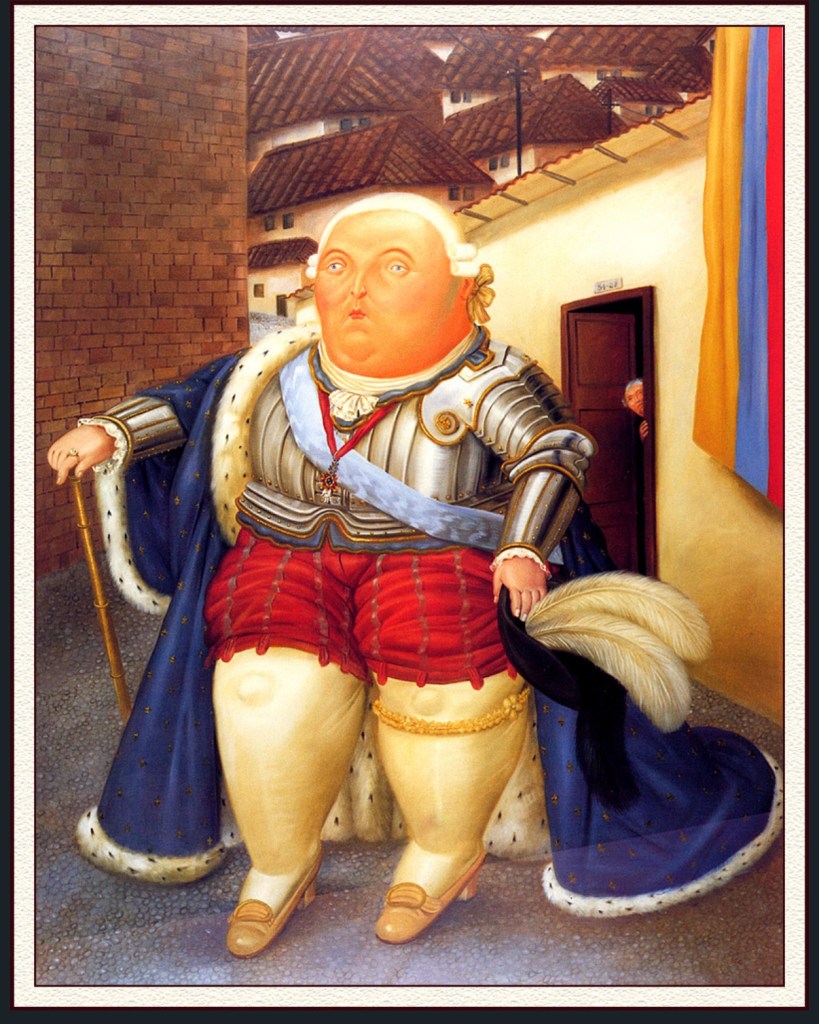
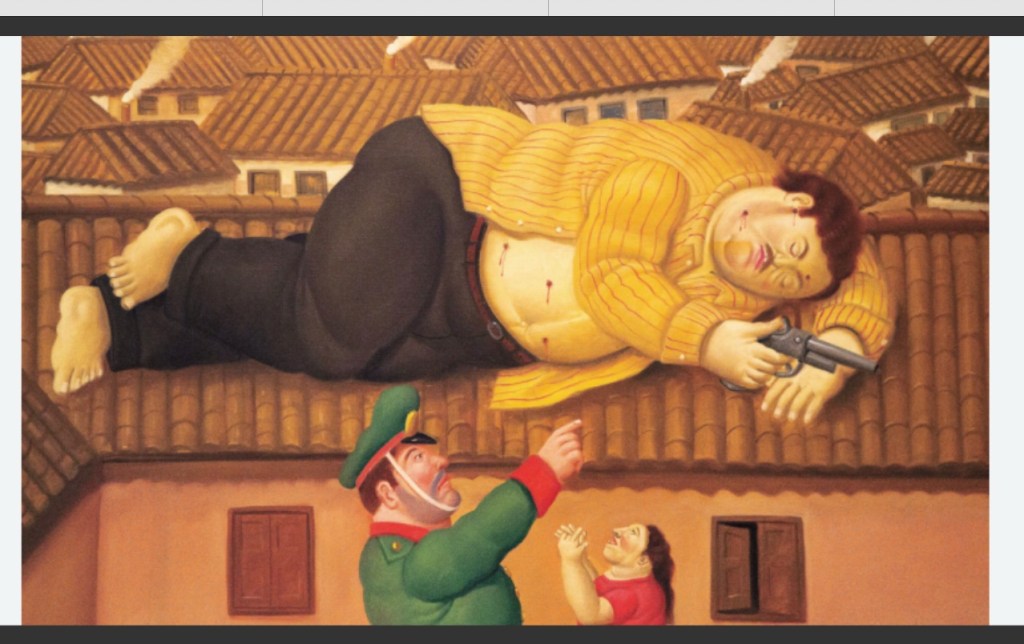
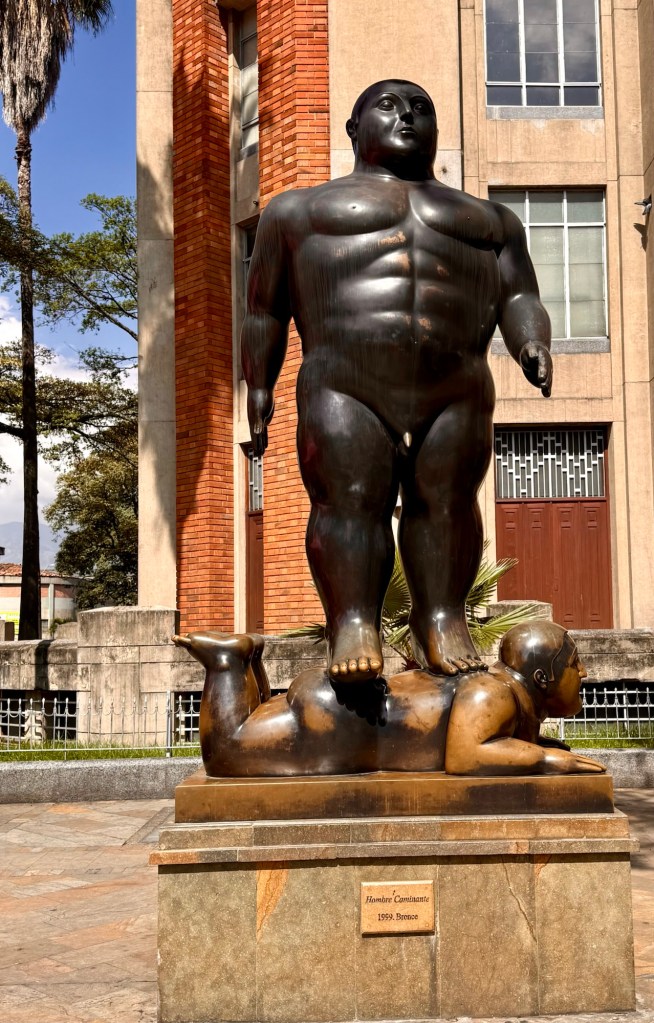
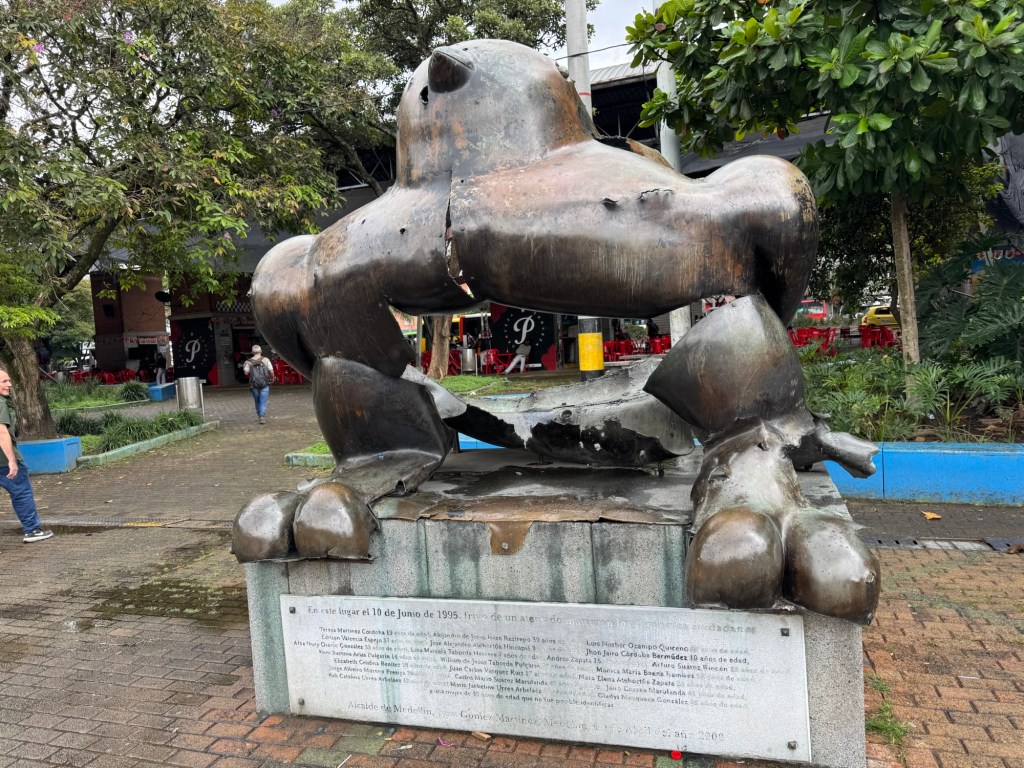
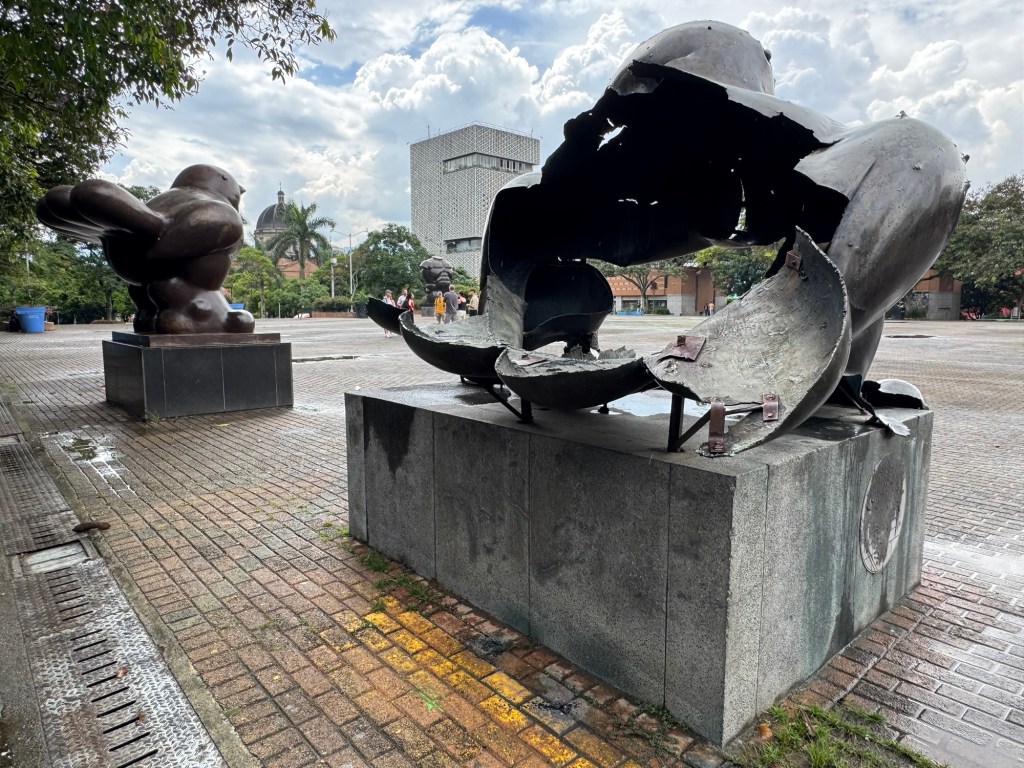
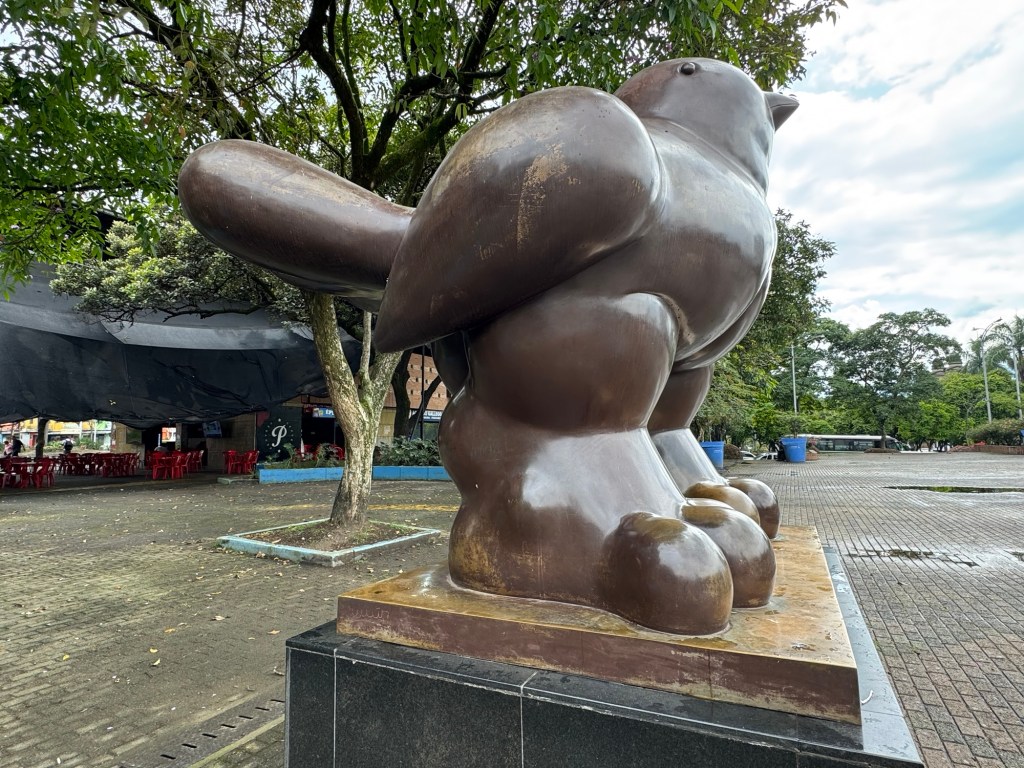
We meet Daniel at 9am for a tour of the Museum of Antioquia that houses the work of Fernando Botero (1932-2023), a famous painter and sculptor from Columbia, who organized the art in the museum himself. Unfortunately, photos of his work in the museum are not allowed. Mark managed to find copies of 2 paintings and we were able to photograph his sculptures in the town square, where there are 28 pieces. An expert museum guide, Jose, gave us a 2 hour private tour that was superb. If only I could remember more of his comments. Botero was interested in volume, size and monumentality, political criticism and humor, not in making fat people. In his work you find normal sized elements as well at outsized ones. Each one of his paintings tells a story with wit, irony, insight and critical acumen. He started with oil, then moved to water color and then into sculpture in the late 70’s. He lived in Italy in the late 70’s and studied renaissance art and the passion.

King Luis XVI

What was interesting for me was the face of Bertero’s mother poking out of the doorway. She had wanted to visit France one more time, but died before the trip. Botero has her forever looking in on the French king. The Colombian flag puts her in place. Luis’s eyes, mouth, nose, hand and feet are normal in size and the colors are brilliant.

Pablo Escobar shot several times on a rooftop. The only person sad about his death is his mother. The cop is glad Escobar is dead.

In the town square we photographed some of Botero’s sculptures.

Woman dressed
Man in Command

Botero created thousands of works of art in his 91 years. It is said that he painted or sculpted every day right to the end. He had 3 wives and 4 children.

The replacement bird

After we left the museum and headed for a cable car, Dan gave us a bit of information about Pablo Escobar, the cartels and cocaine. There was the Medellin Cartel, which Escobar headed, the Cali Cartel and the government. The latter two worked together to try to eliminate Escobar. In the 80’s and 90’s, Colombia was the world’s largest producer of cocaine. In the late 80’s, one lb of Cocaine was $100 in Colombia, $2000 wholesale in the US and $100,000 street value in the US. The US was the main market with Europe and Asia following. Escobar was making so much money that he even bought 4 hippos and kept them in his private zoo along with other animals. He helped poor people with one hand and killed other people with the other. In the end no one mourned his death, except his mother.

By this time, Dan had us riding 3 stops of the yellow line of the cable car system. It is amazing how much traffic is off the streets and riding the cable cars.

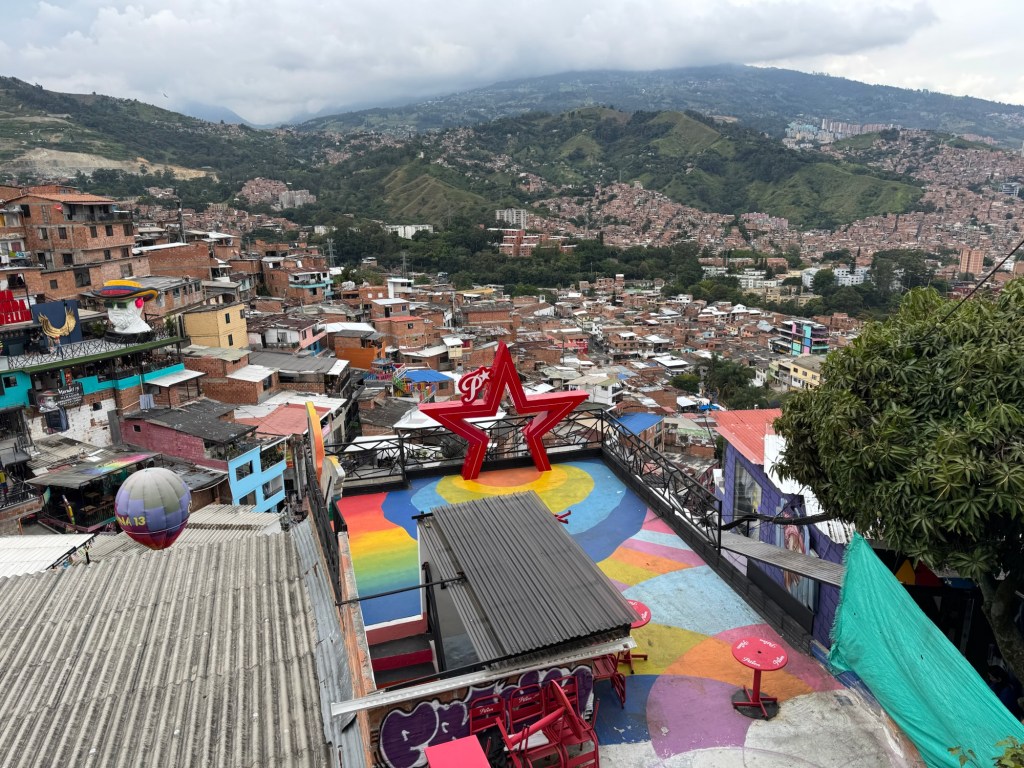
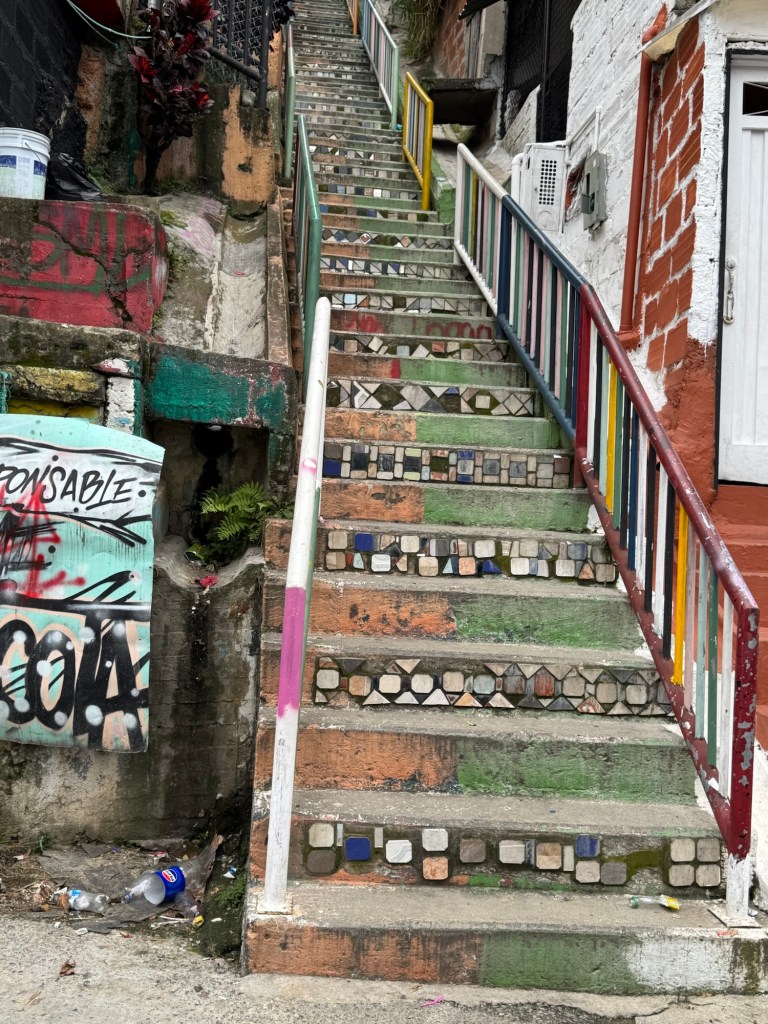
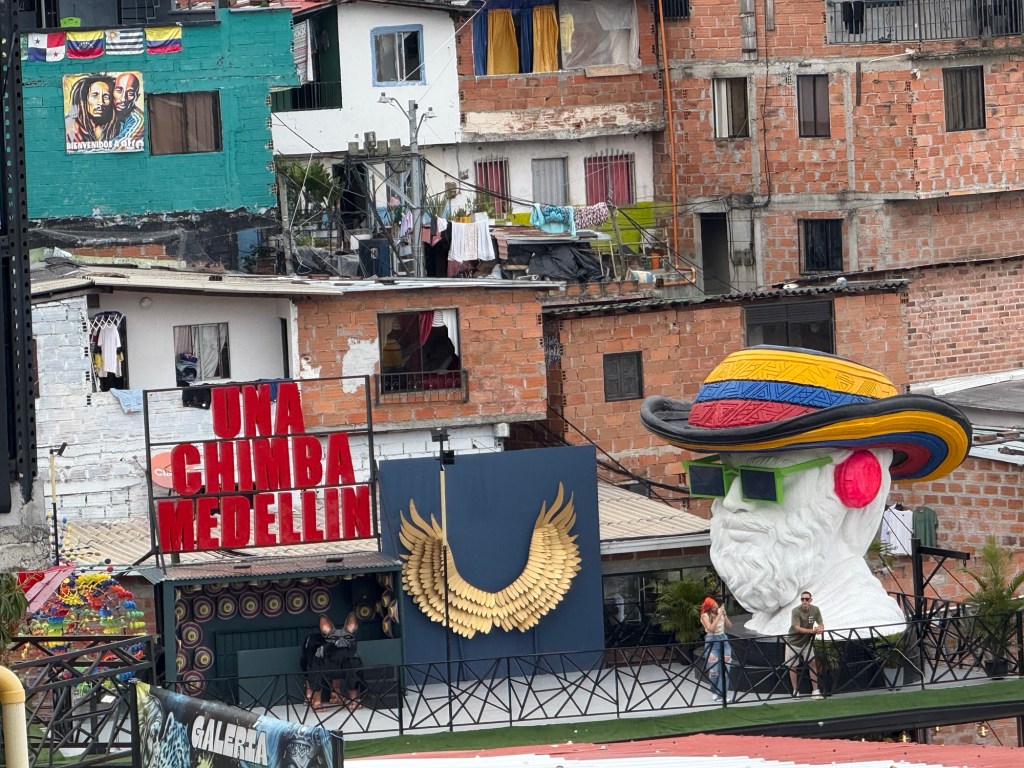
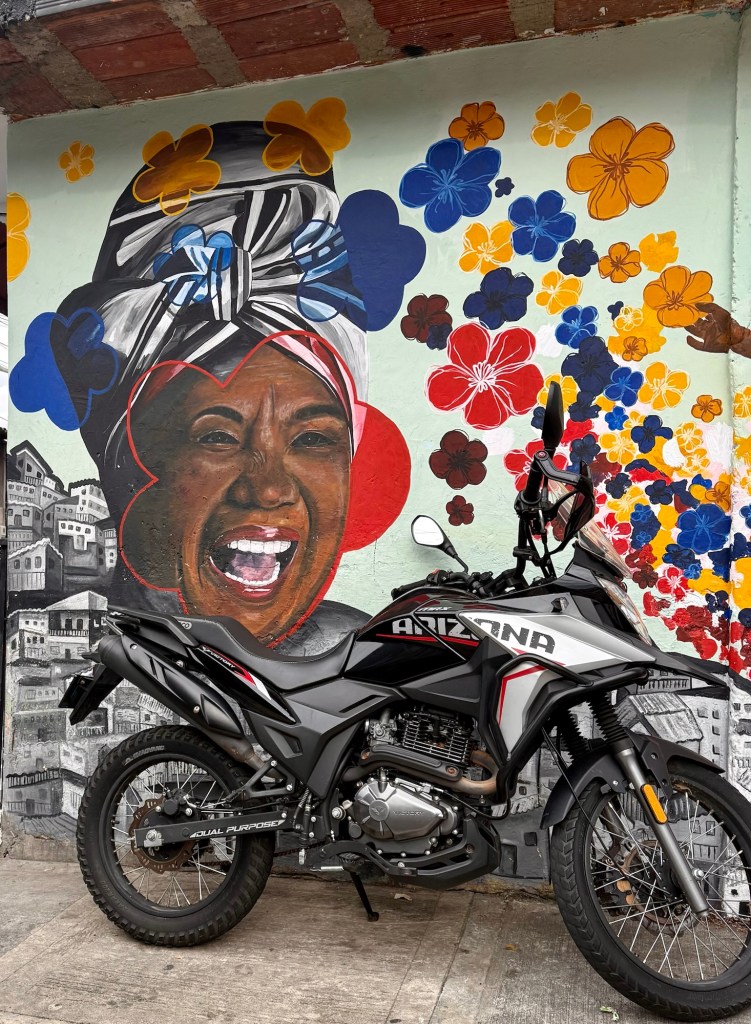
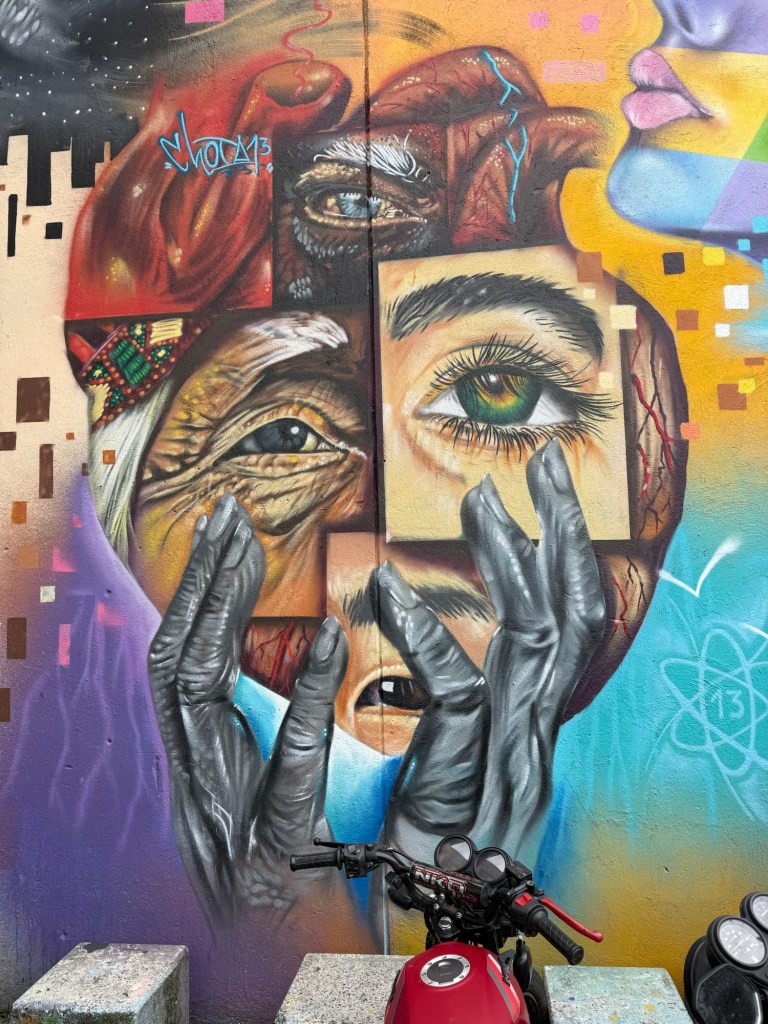
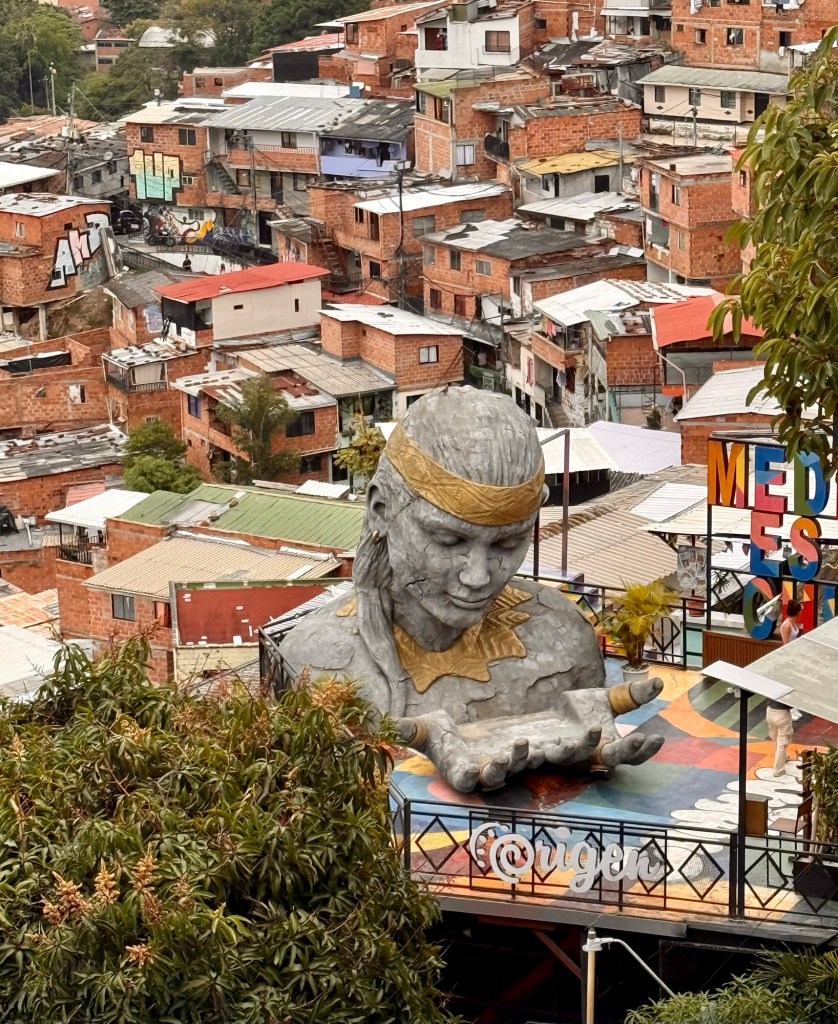
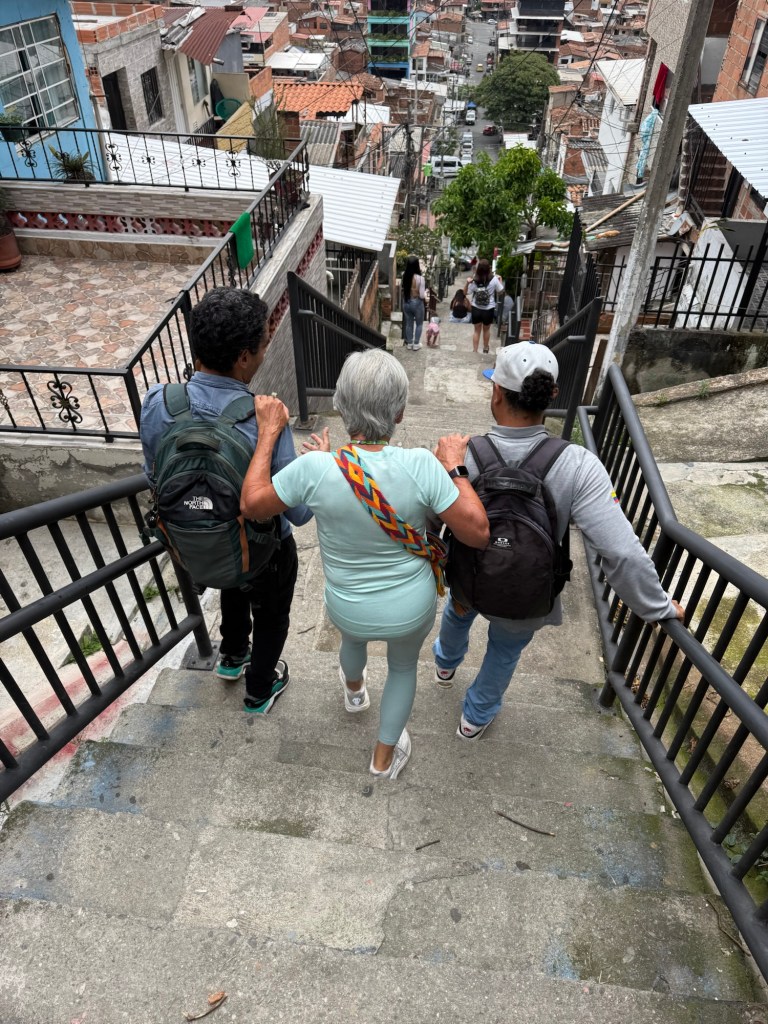
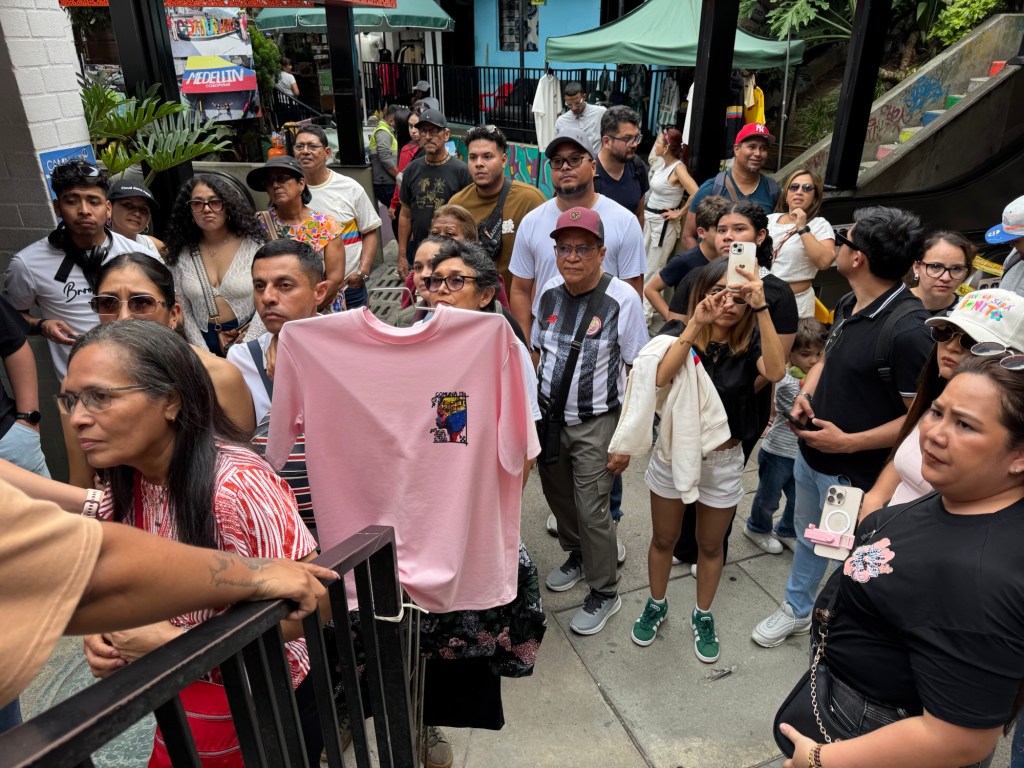
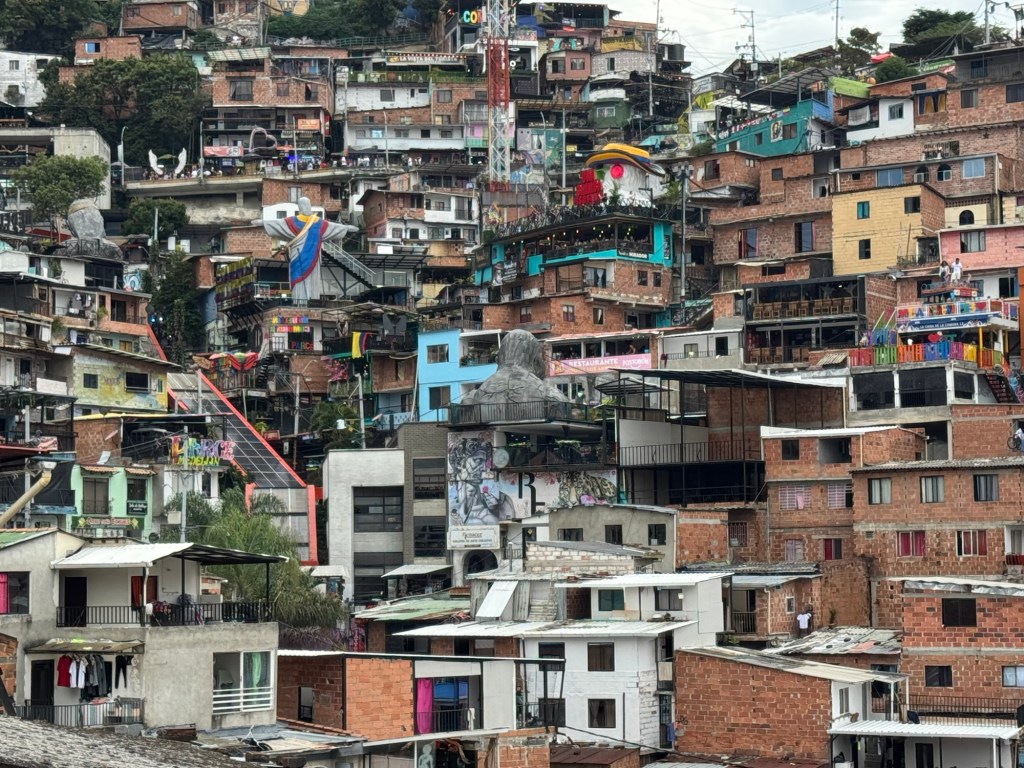
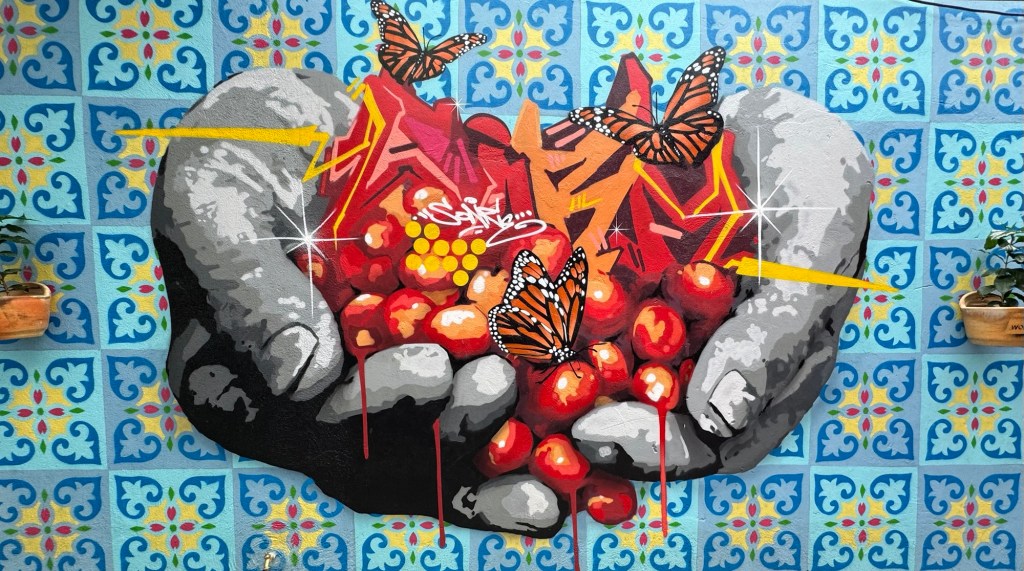
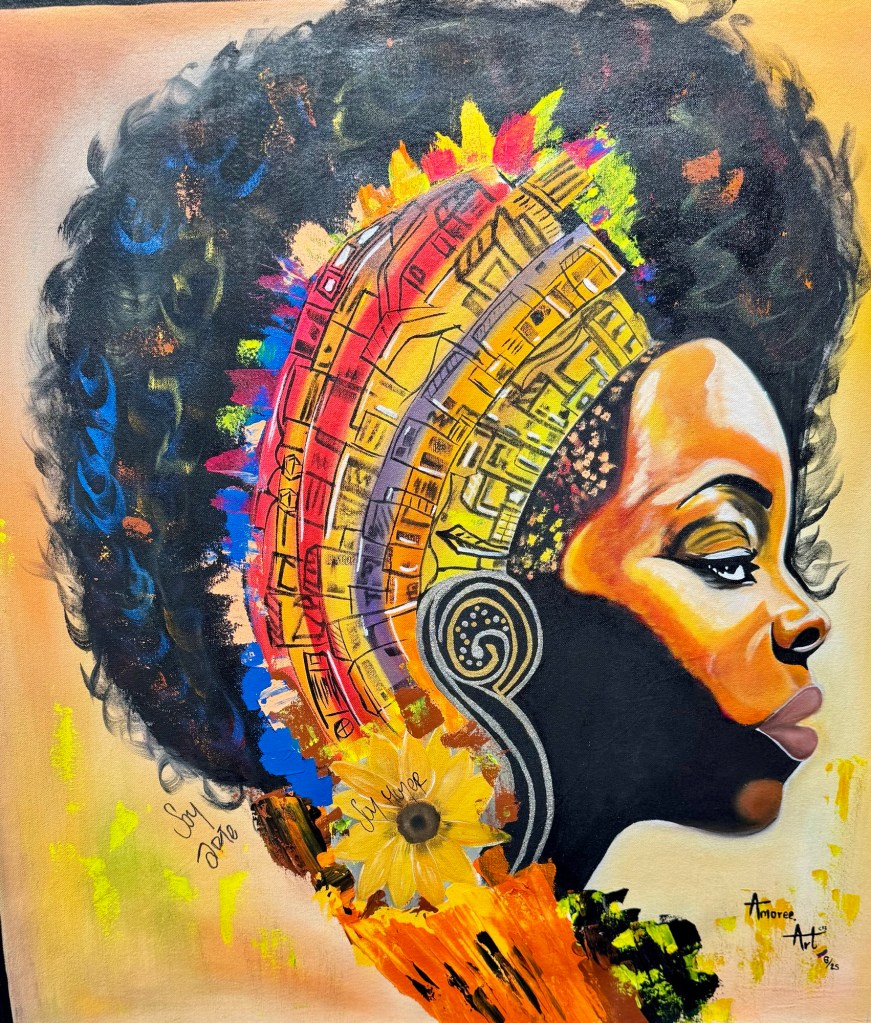
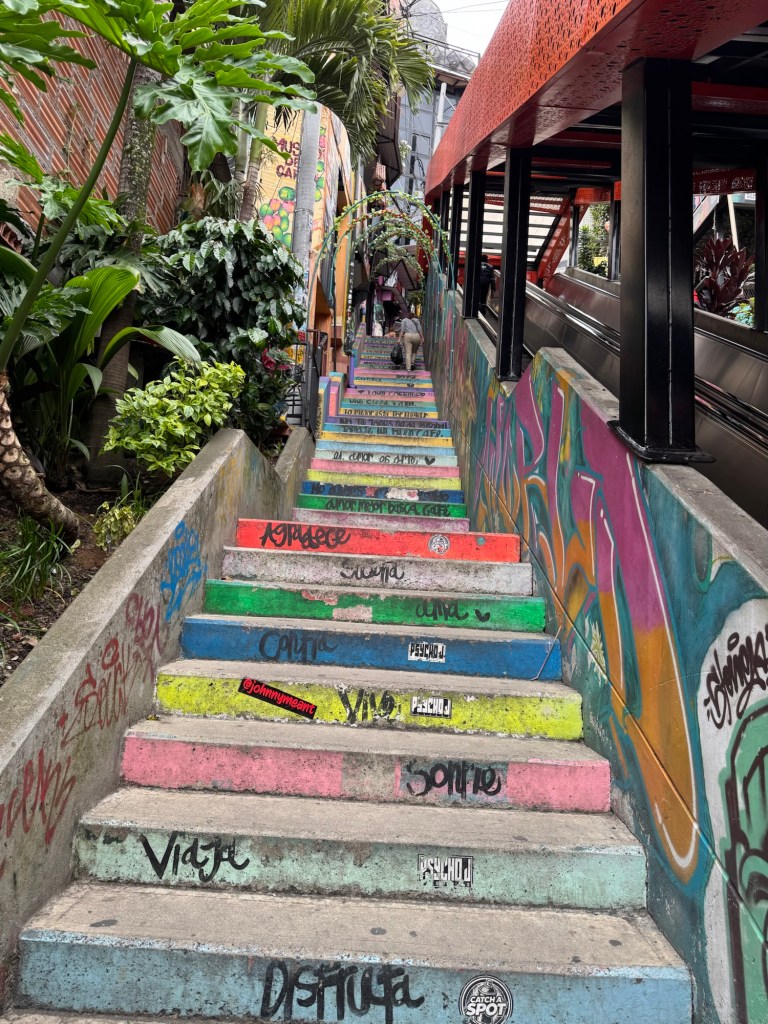
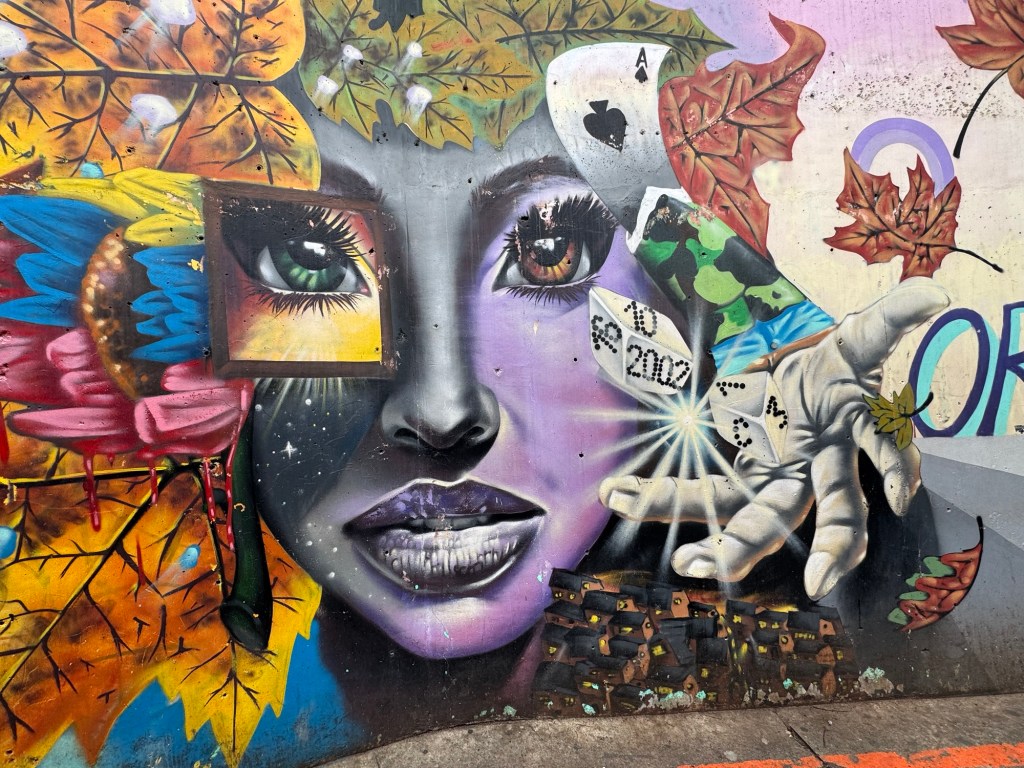
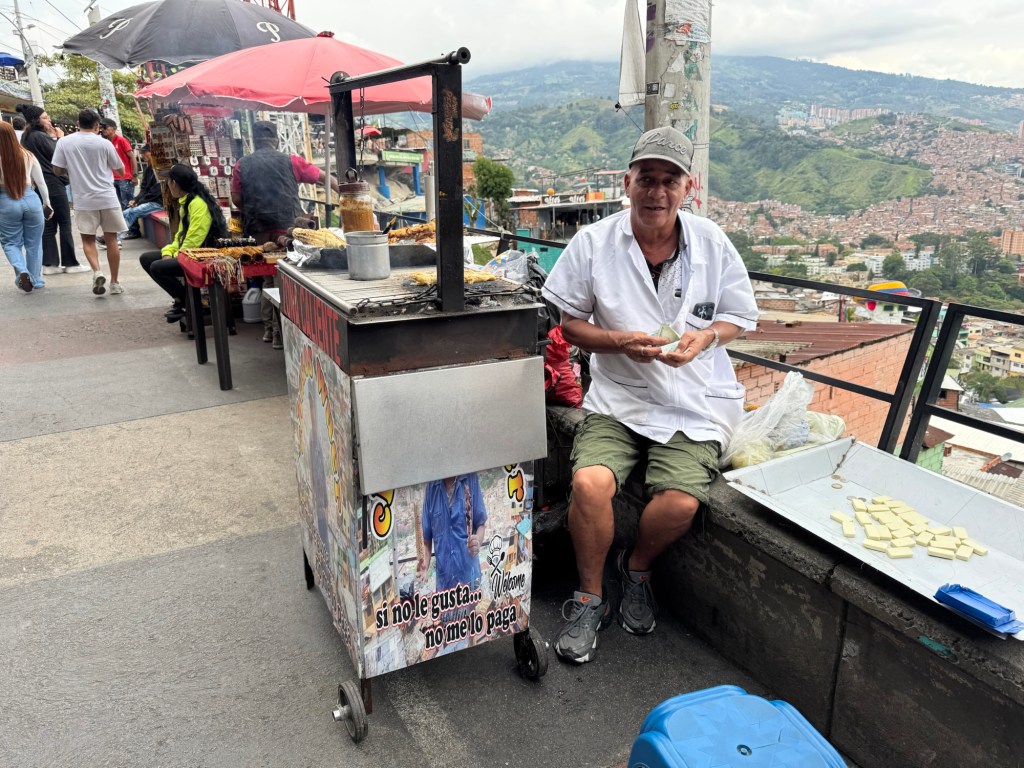
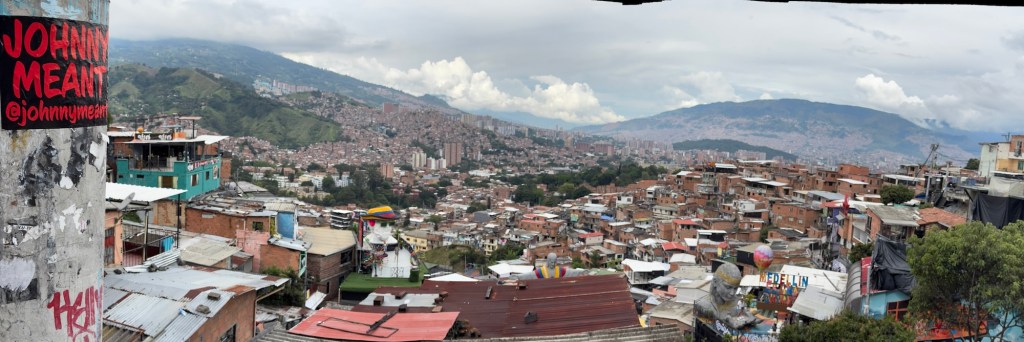
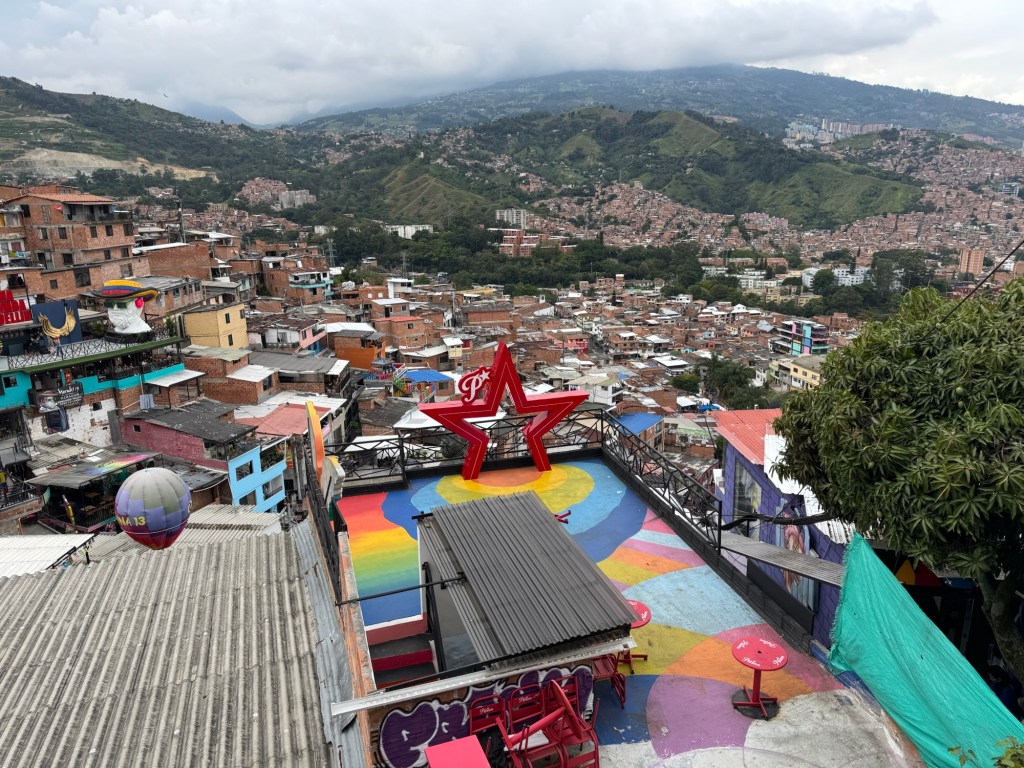
When we got off the car, we were met by another expert guide Dan had enlisted, Stephen, to show us through District 13, which had been an impoverished and drug infested neighborhood in the 80’s and 90’s and is now the in place to be with a focus on art and music. Stephen knew everyone in the hood and introduced us as we walked up and down connecting staircases. We stopped for tasty empinadas, visited art shops, bot a shirt for Mark, chatted with folk who spoke English and generally had a good time. Here are some pix from the walk and the impressive art.

The culture of District 13 or Comuna, as it is called is; Number 1–the DJ; Number 2–Breakdancers; Number 3–Rappers; Number 4–graffiti and murals.

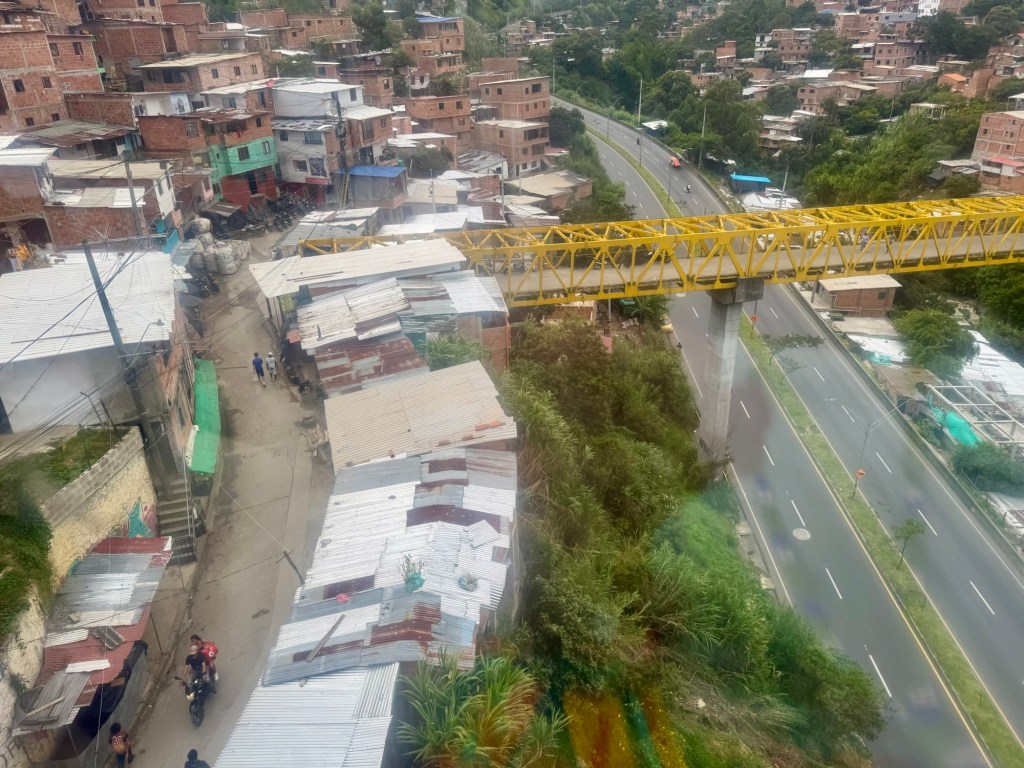
The cable car system has helped the communities in more ways than transportation. It provides overpasses from one area to another, stops have been converted to libraries where people can read and study and companies and the govt have stepped up to buy food for the very poor.

That evening, we ate dinner at a place called Ocio. We had an interesting time getting there as our Uber driver had a difficult time finding the place. We did get good local, if a bit heavy, meals. I had pork shank and Mark had short ribs. After the long day we were ready to quit when we got back to the hotel.

Wednesday, November 5, 2025

Today was our day to drive out of the city and see some of the countryside. We drove up to 7,300 feet and what is known as the second floor, Medellin being the first floor. The 2nd floor is similar to the first in that it is a long and narrow valley. Many people including our guide, live in the 2nd floor as there is currently more room to spread out.

Dan told us there are six levels of wealth throughout each neighborhood or area of the country. If you live in a level 6 area, you are considered very rich and taxed a lot to help the lowest levels. Level 5 neighborhoods are also quite wealthy. It’s not only a property tax but a sliding scale for utilities. Levels 3 and 4 areas are about in the middle and pay only a little more than what they use. Levels 1 and 2 pay no tax at all and are helped by the upper levels. Apparently this is the way taxes work in all of Colombia. I rather like it. There is 8.7% unemployment currently, the lowest in recent history.

Andean Mot Mot

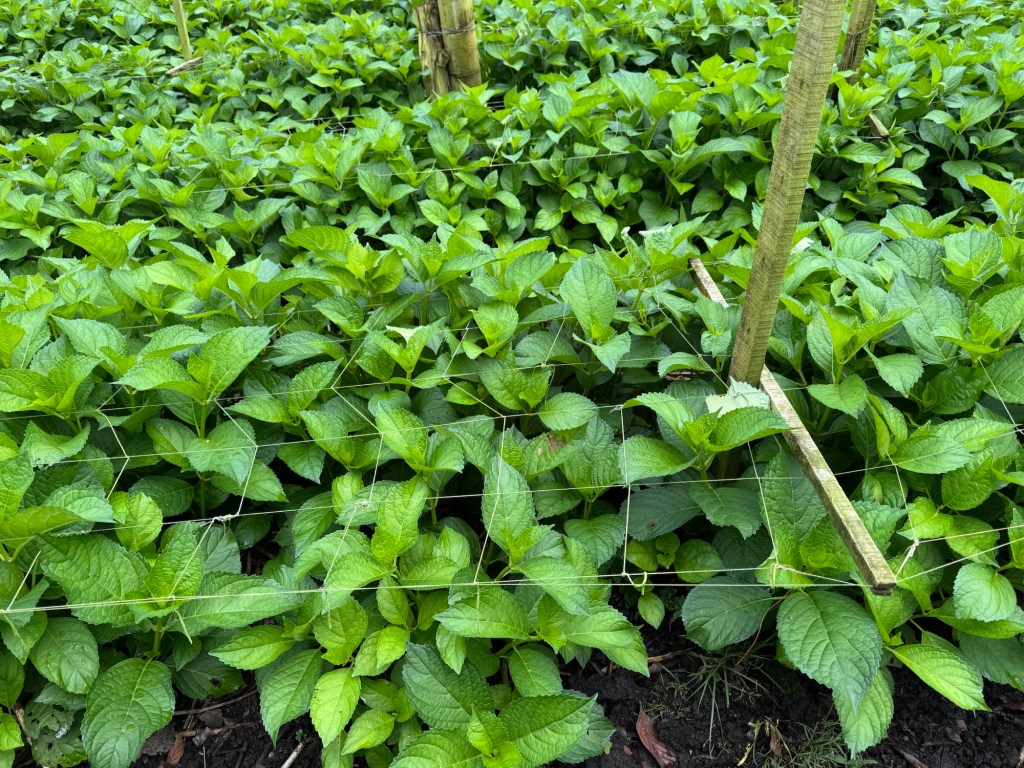
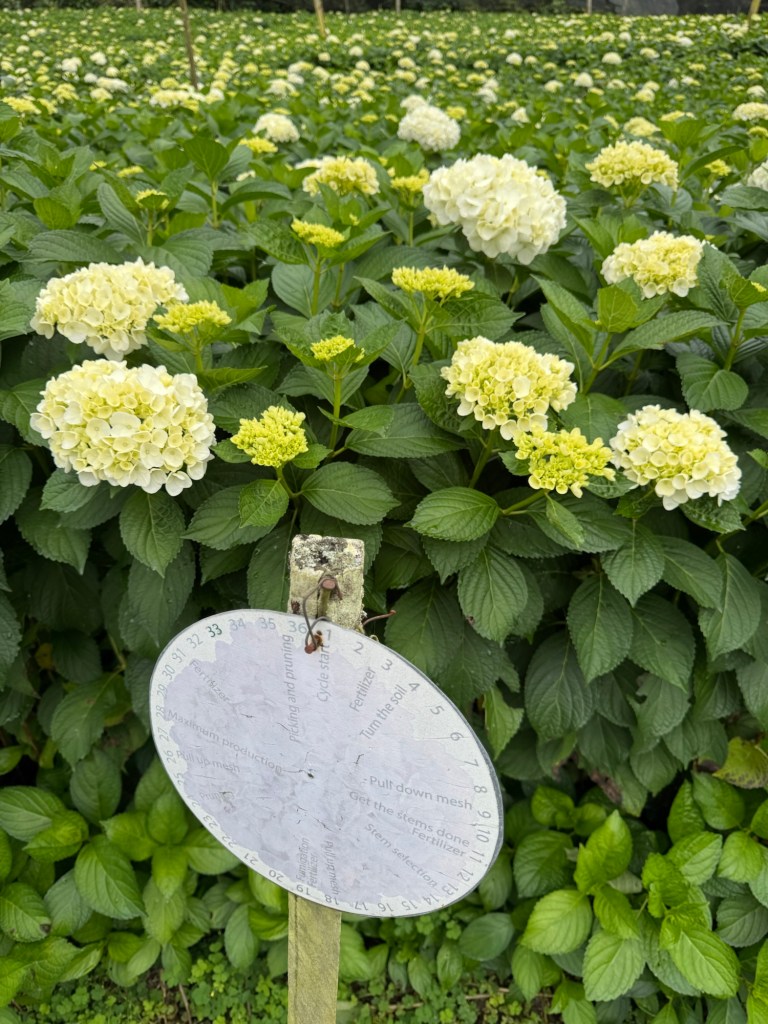
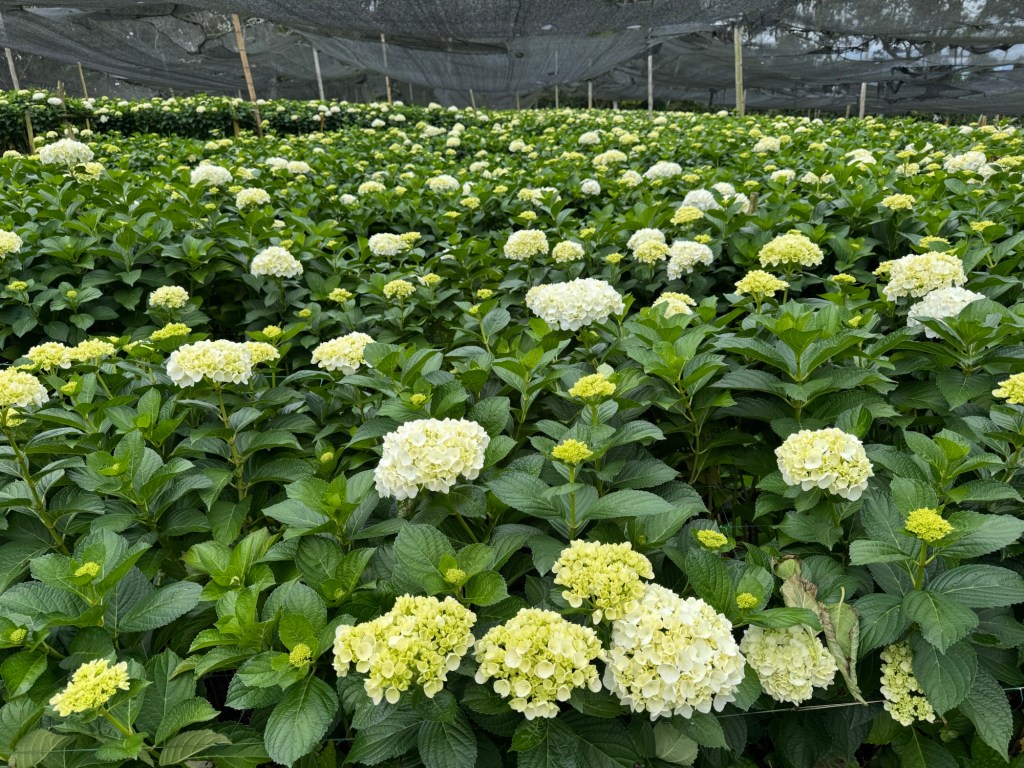
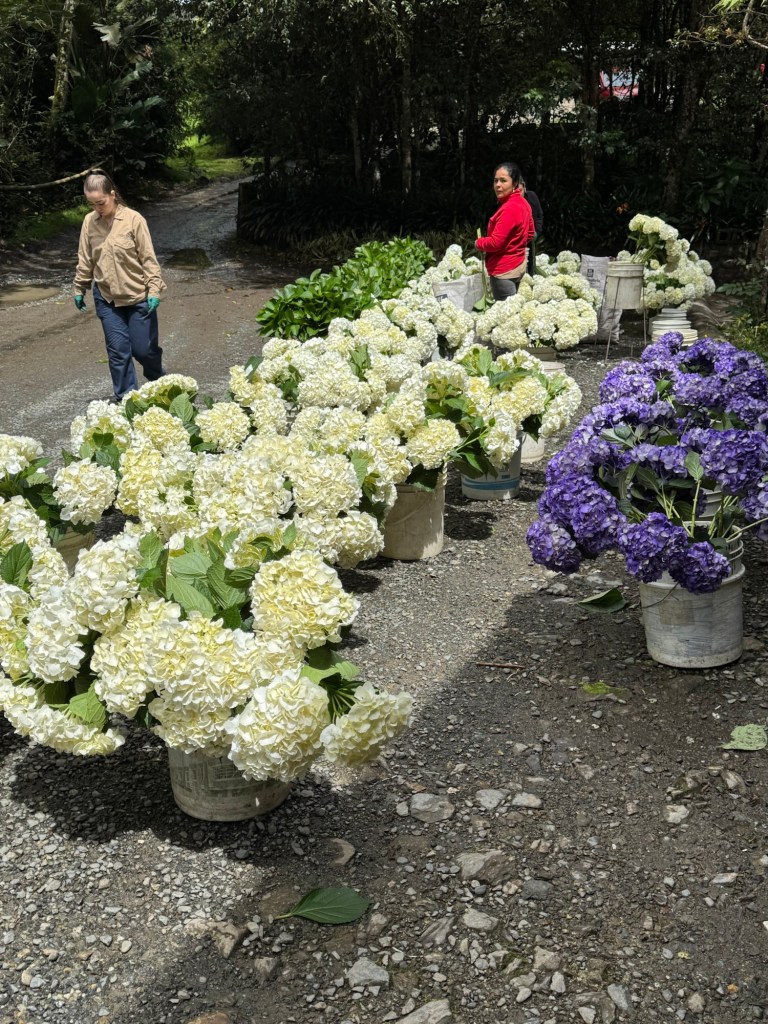
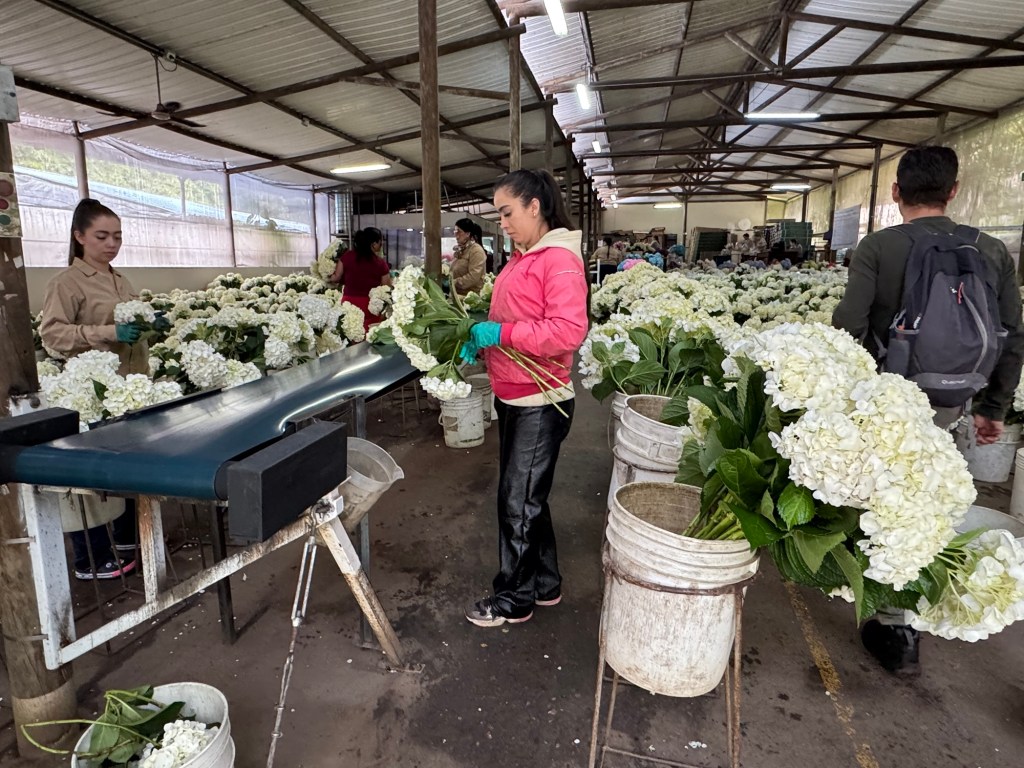
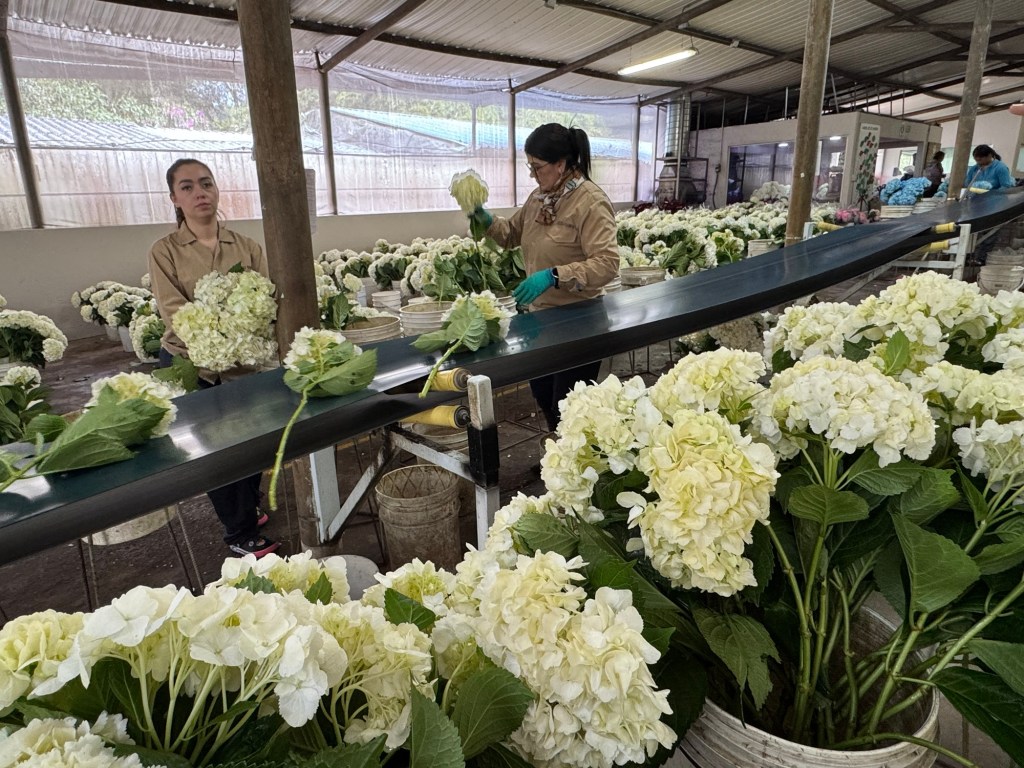
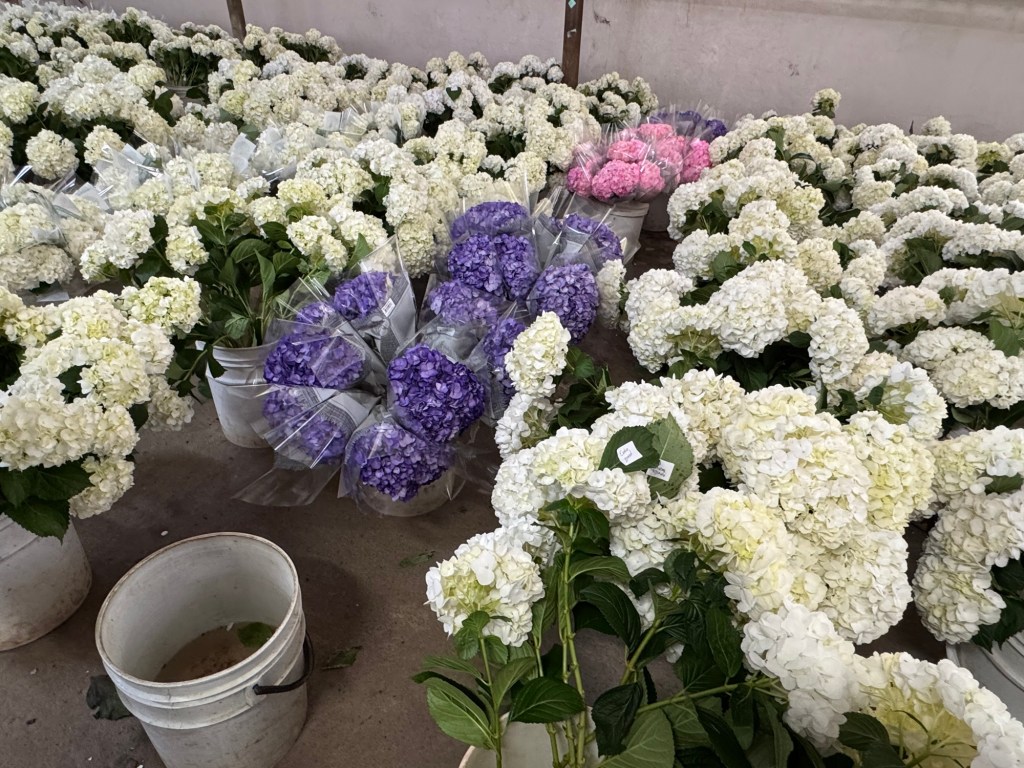
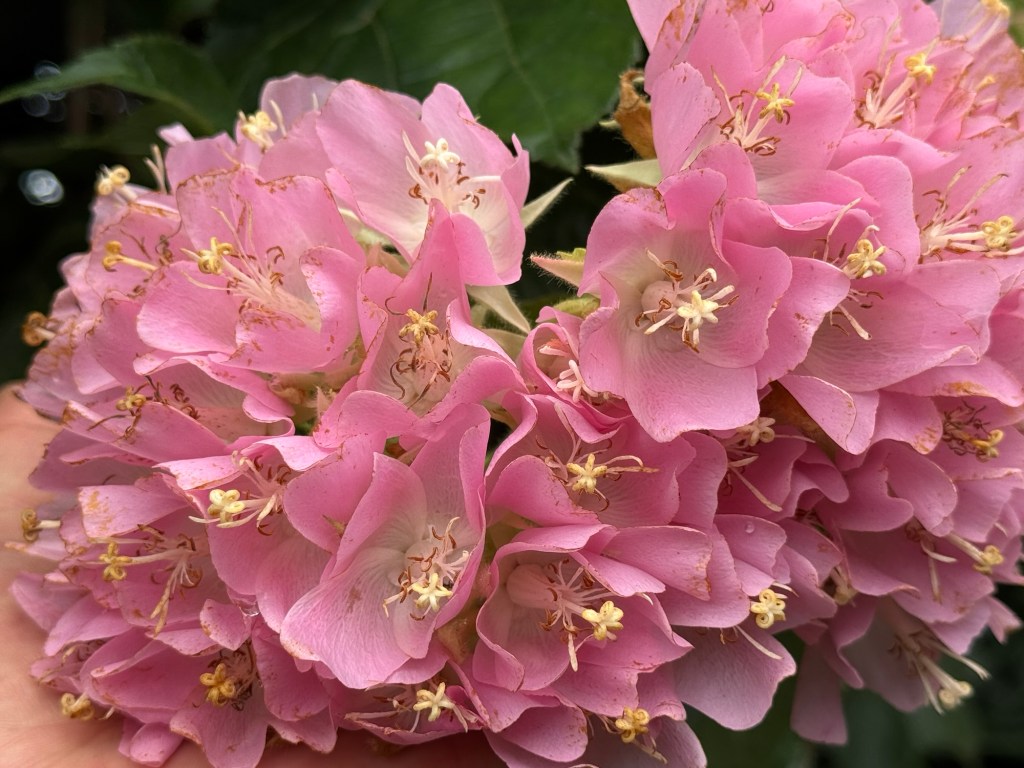
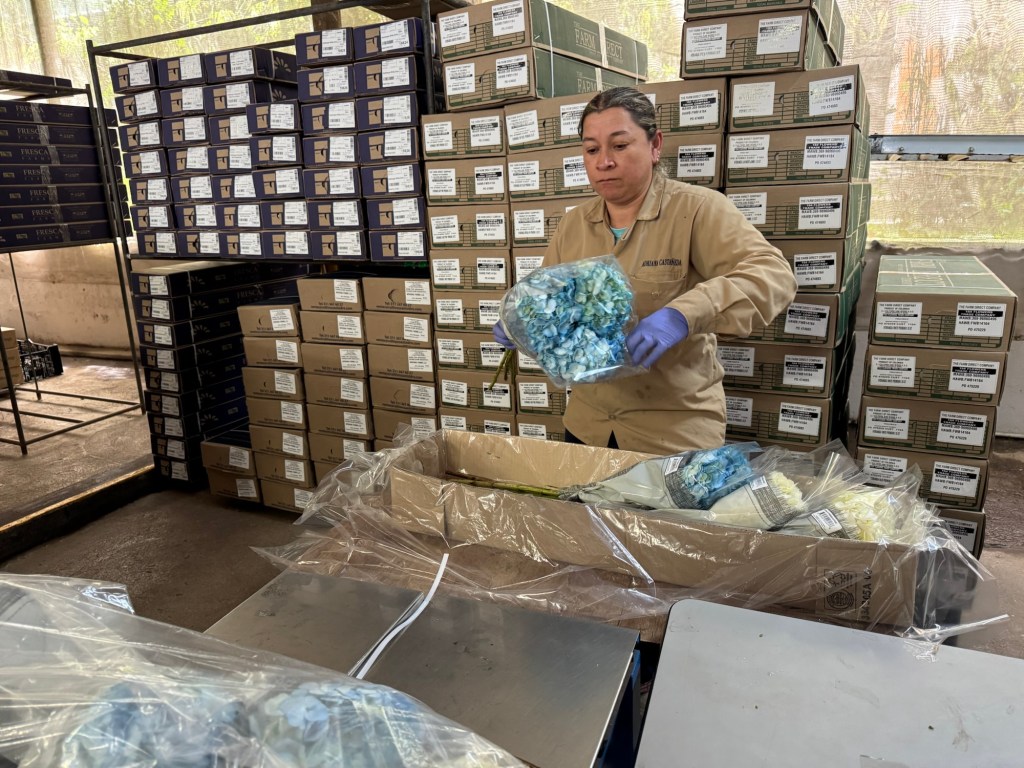
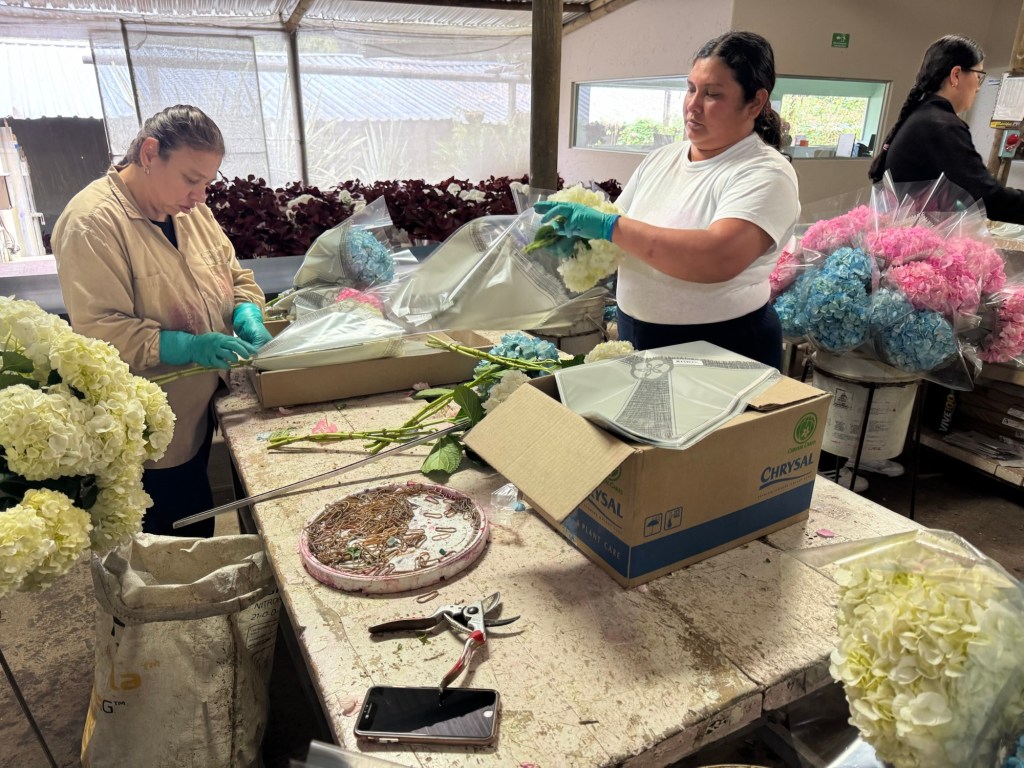
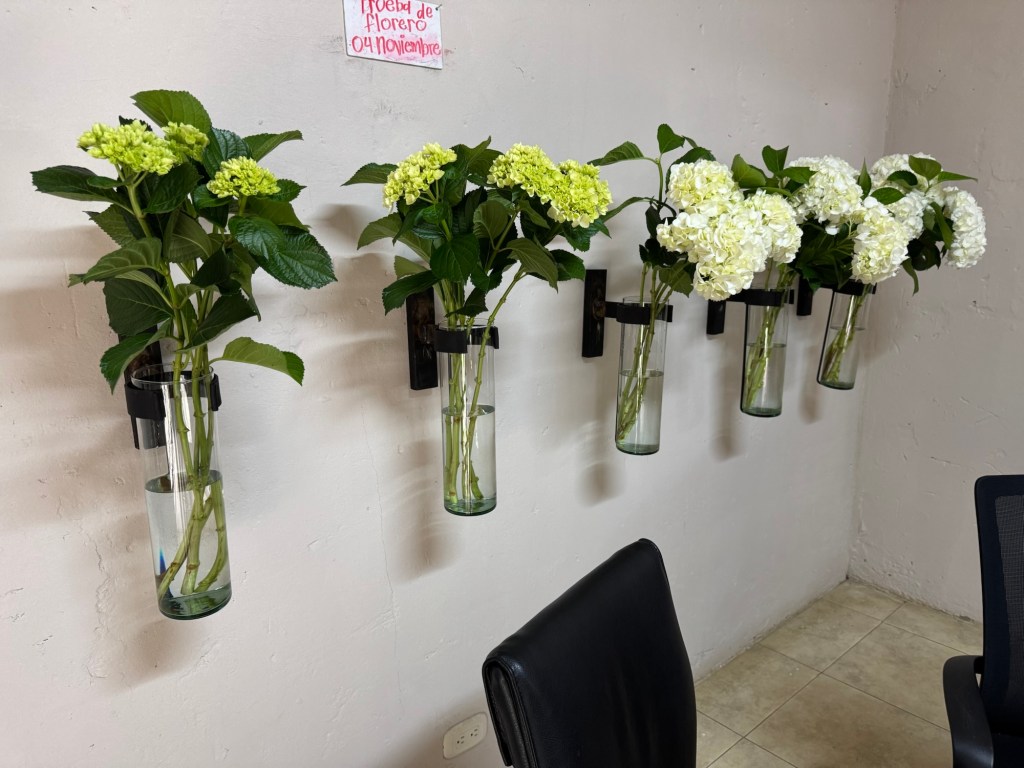
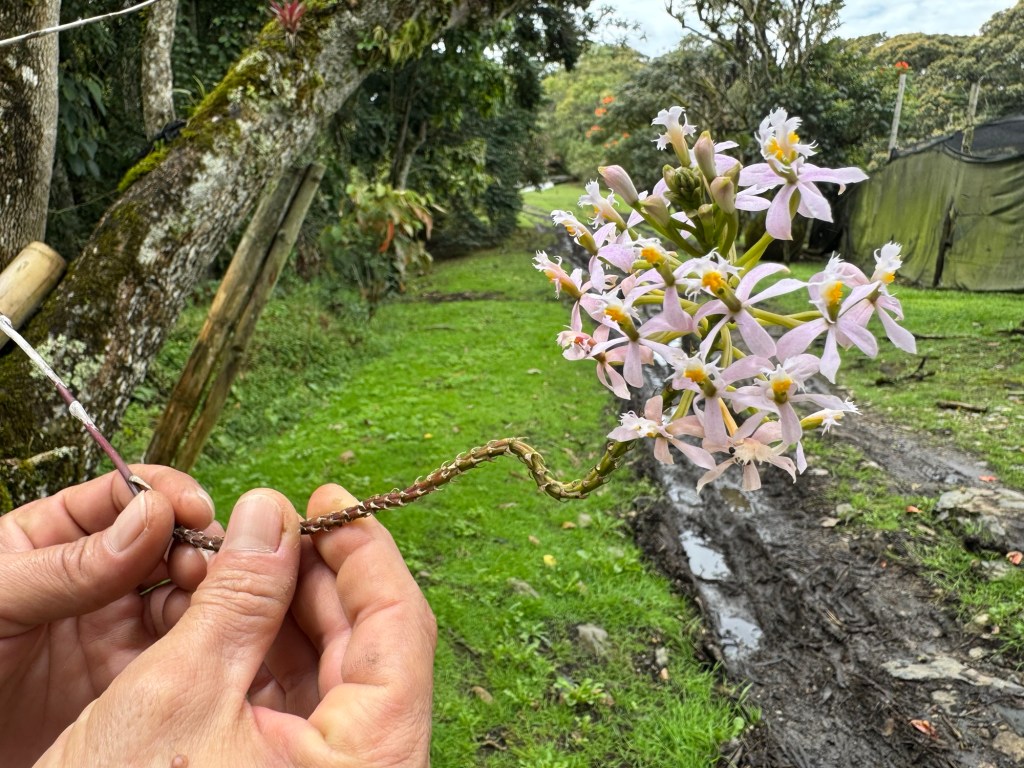
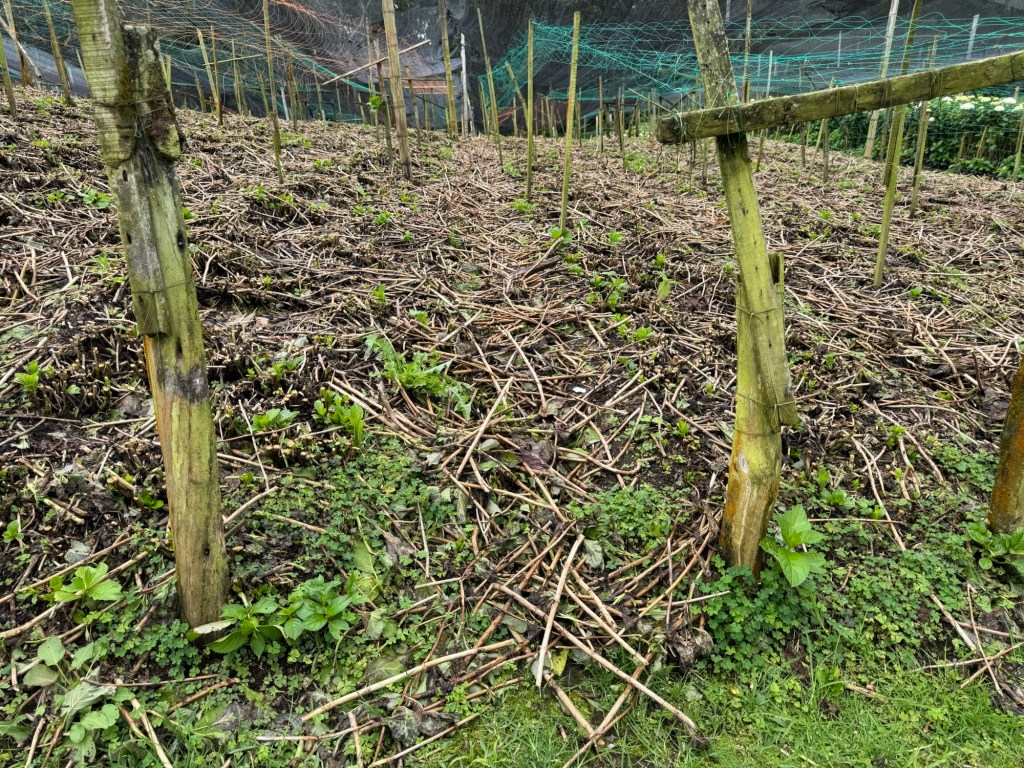
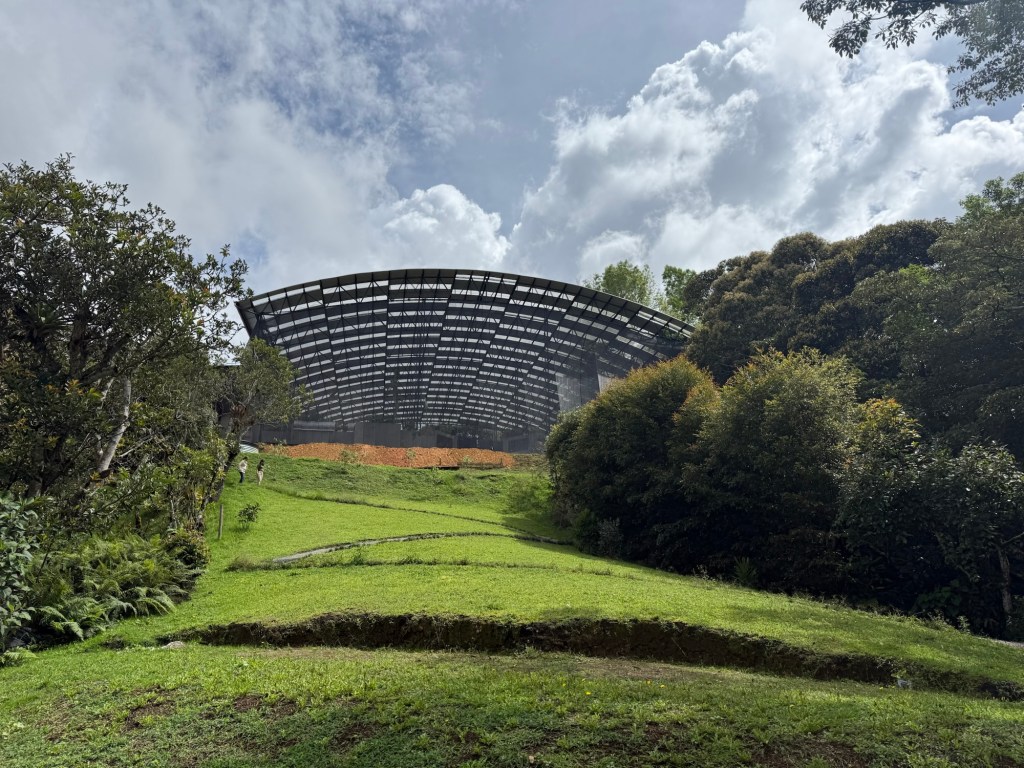
Finally we arrived at our destination for the day, the Alma del Bosque, “Soul of the Forest”, or home of the Piedrahita Family. The place is in the central Andies at 7340 feet and accommodates a stable of French saddle horses, 30 acres of hydrangeas and a couple of acres of orchids. It is quite an interesting place and we got a full tour of the flowers, but not of the horses.

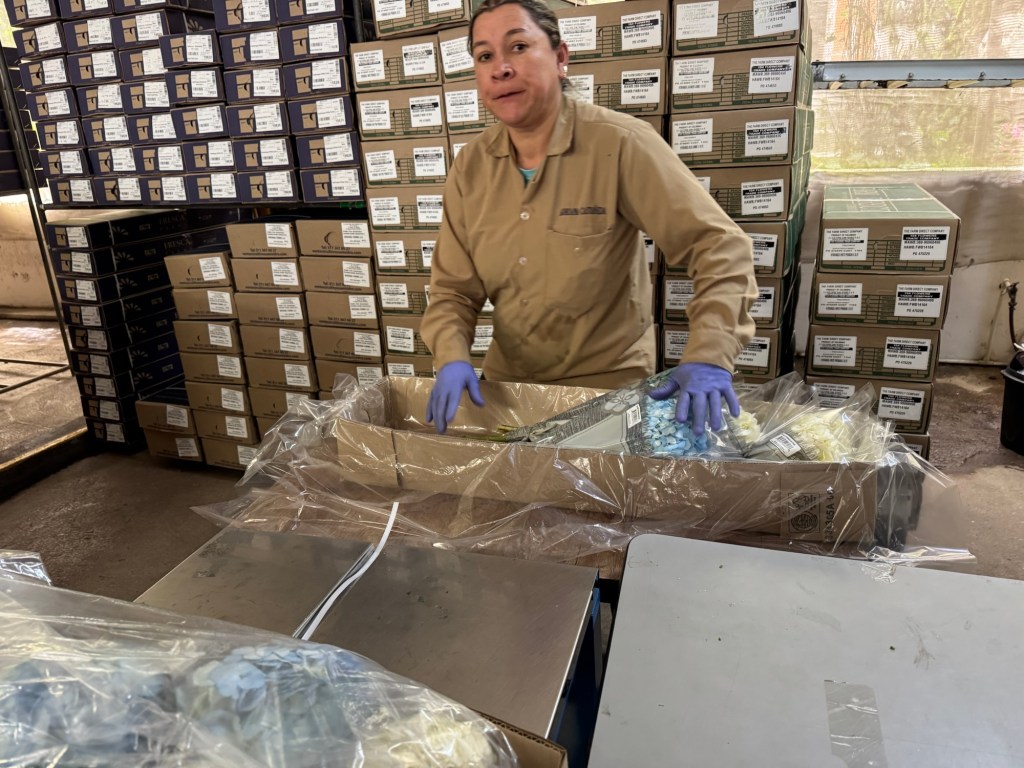
They grow only white hydrangeas, which they then color as needed for clients. We saw all the stages of the production from, growing in the fields to being sorted, colored, bound, boxed and shipped. Hydrangias need cool moist air and lots of rain. Fortunately it rains 11 0f the 12 months of the year. A crop takes 8 months to grow. There are 50 employees working full time in the hydrangeas.

Then we were treated to a very nice lunch of tilapia and veggies outdoors near the gardens.

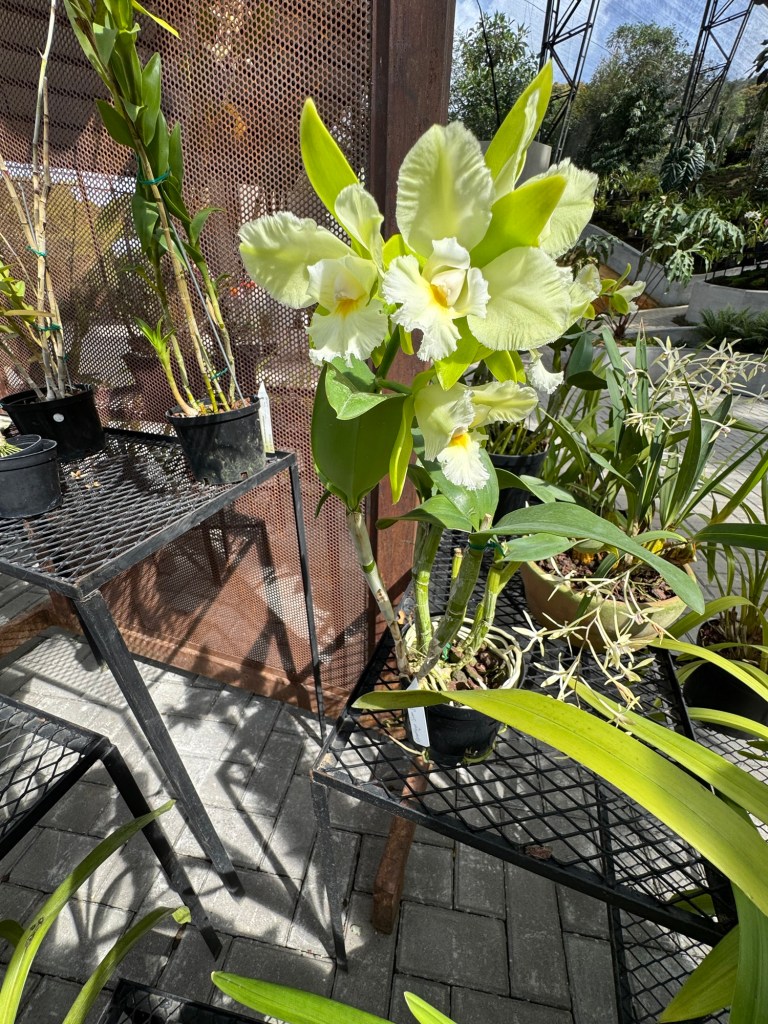
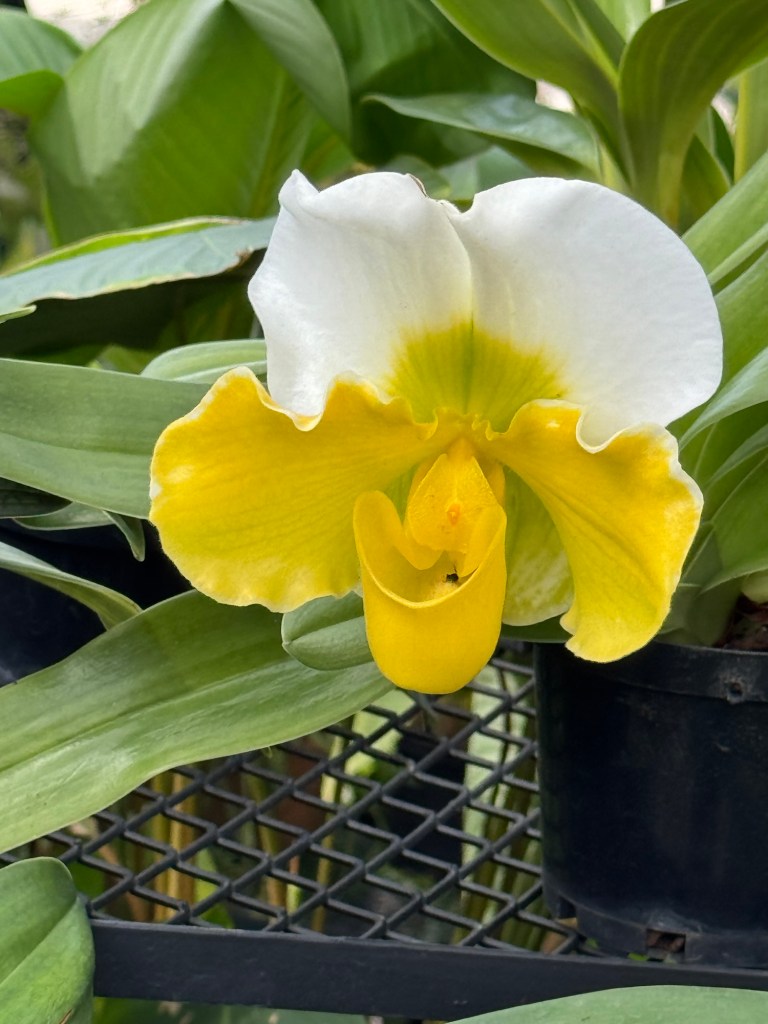
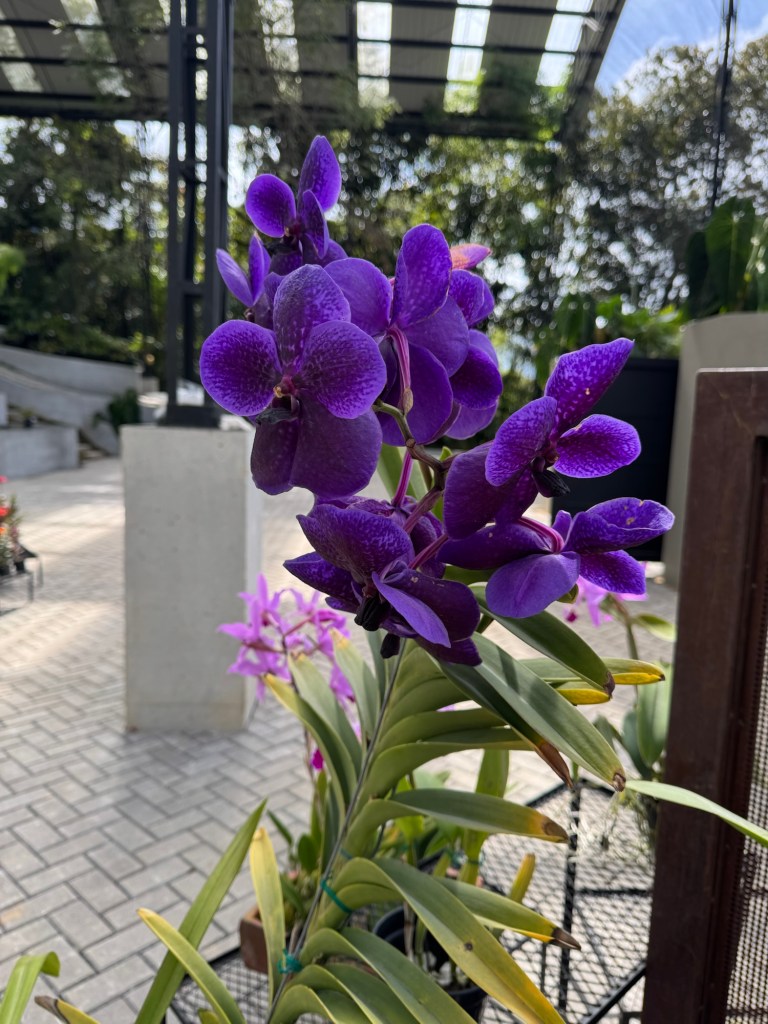
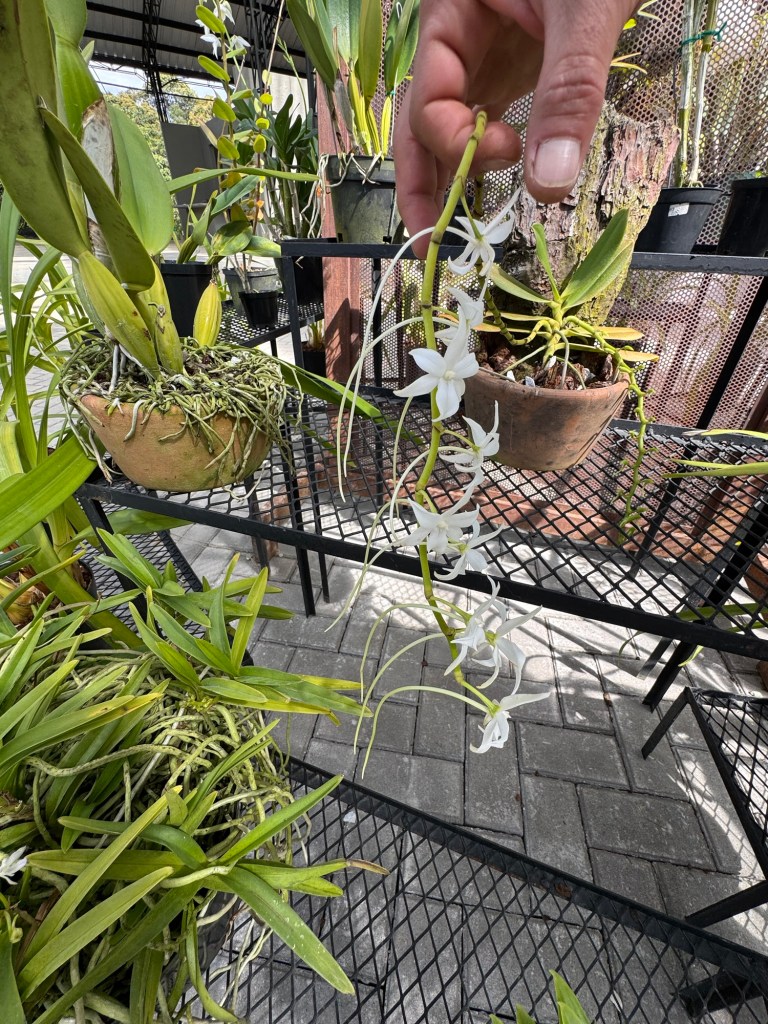
Finally it was time to see the orchids. We had been seeing the orchid building from a distance and were anxious to get inside.

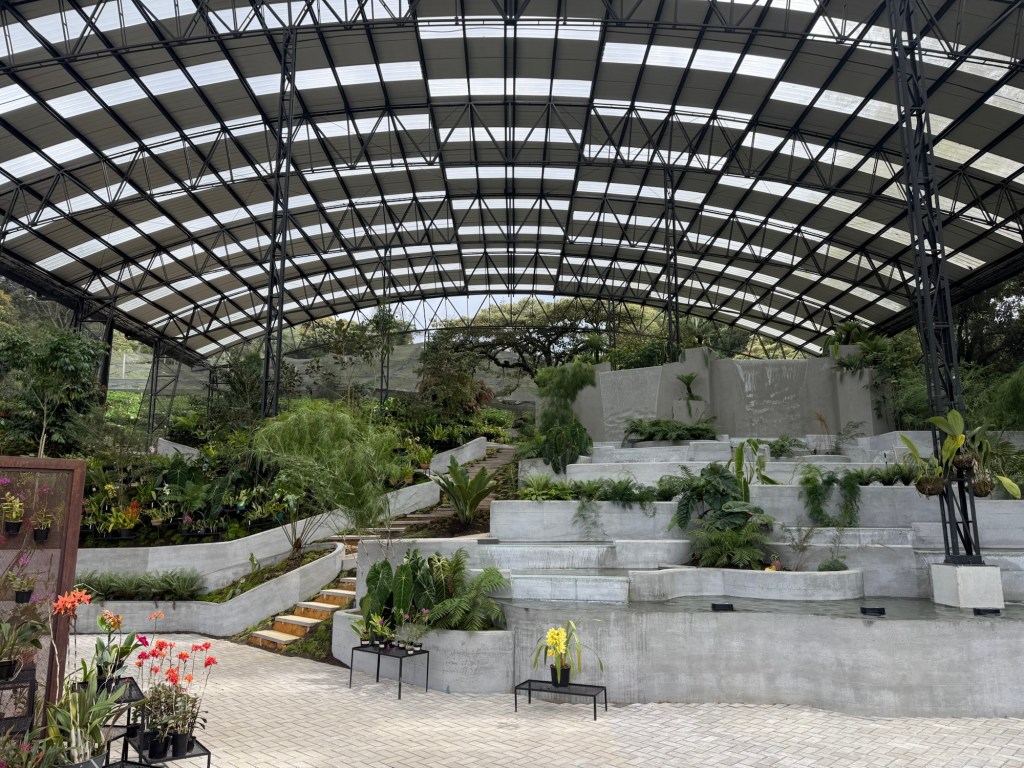
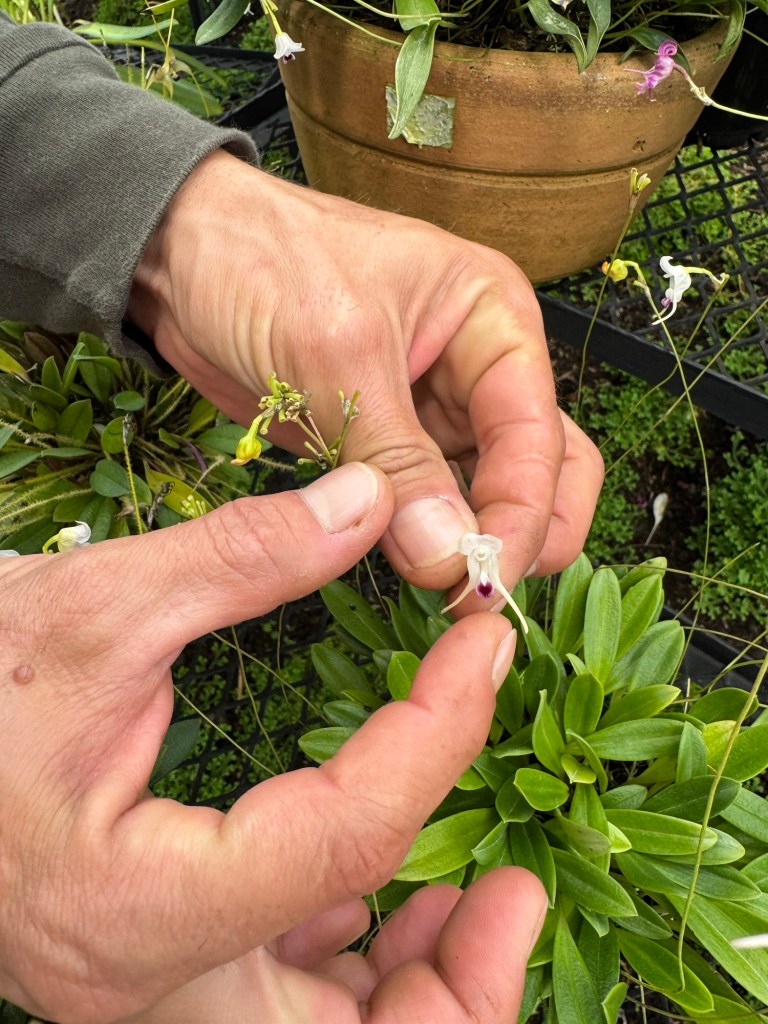
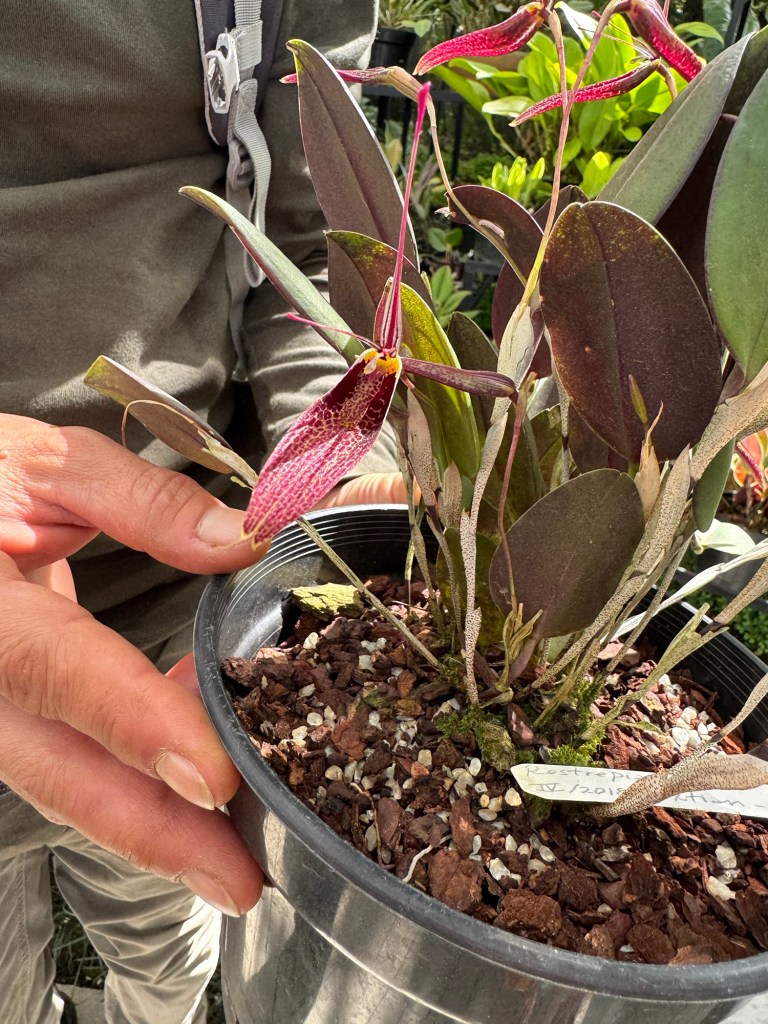
It is quite a facility and we saw a handful of people tending to each orchid individually. We learned there are 35,000 species of orchid. Columbia has 42% of the species and 12% are here in this facility. The 6000 square foot roof lets in 33% of the natural light. The air is 60-95% humid and 1/3rd of the building is cold, 1/3rd is cool and 1/3rd is warm to accommodate the wide variety of orchids housed. All orchids have 3 sepals, 2 petals, one lip and one stamin.

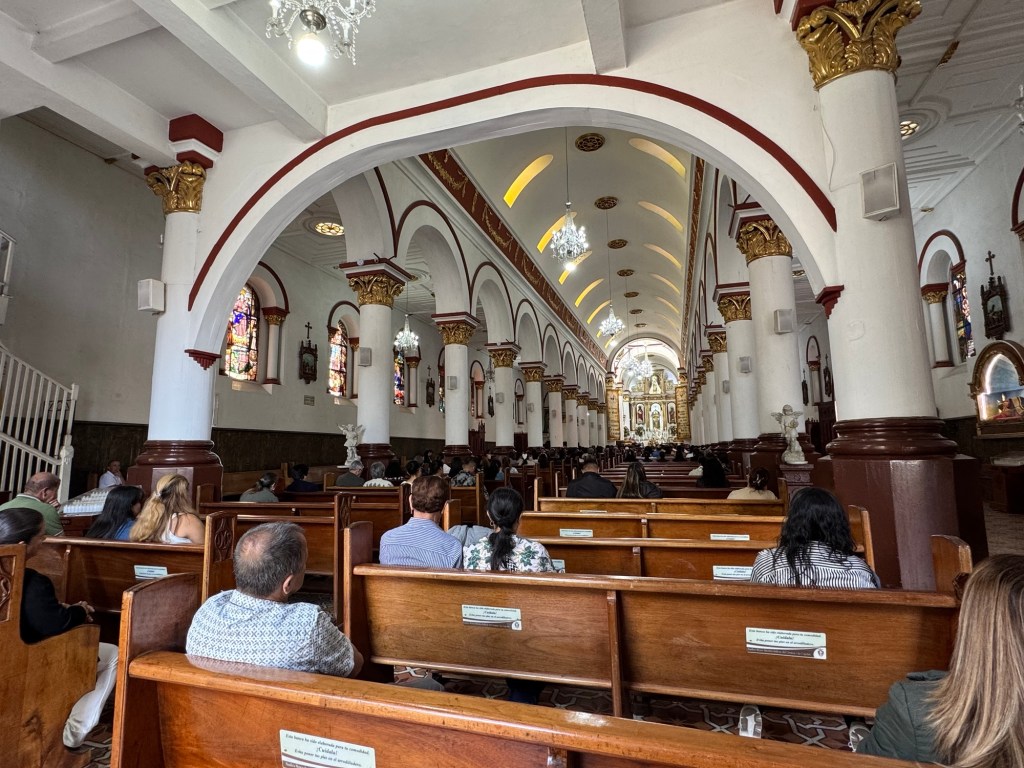
From the garden we drove toward Medellin stopping in a colonial village for a coffee and a walk about. Saw a statue of Simon Bolivar, who led Colombia, Venezuela, Ecuador, Peru Panama and Bolivia to independence from the Spanish empire in the early 1800’s.

Visited the church. Then home and dinner at a place called Colosus. The view was very nice looking over the city, but the food was just ok. Home to bed.

Last Up, Columbia

After our lunch on the salt flats, we headed back to the lodge, taking a few photos along the way.

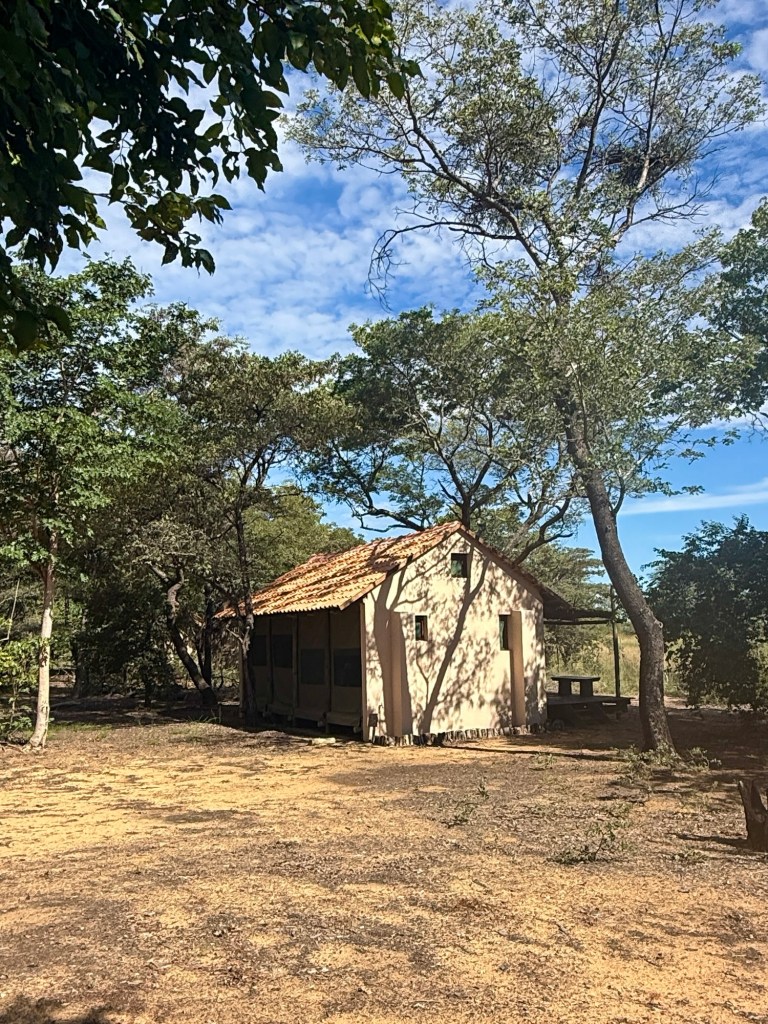
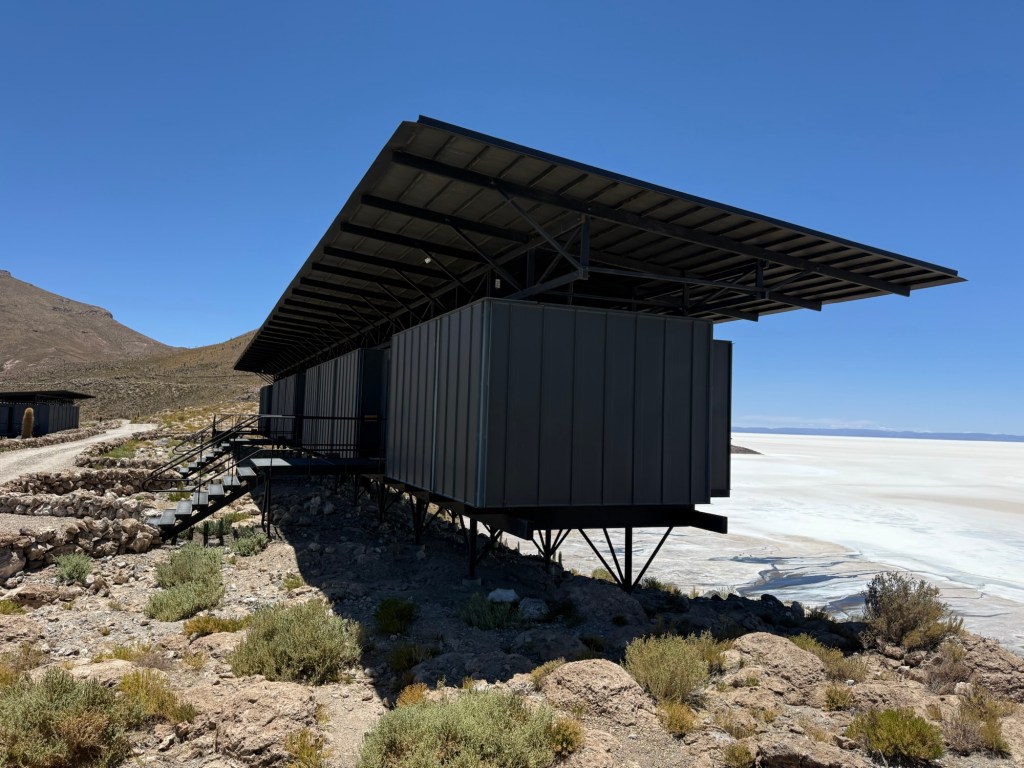
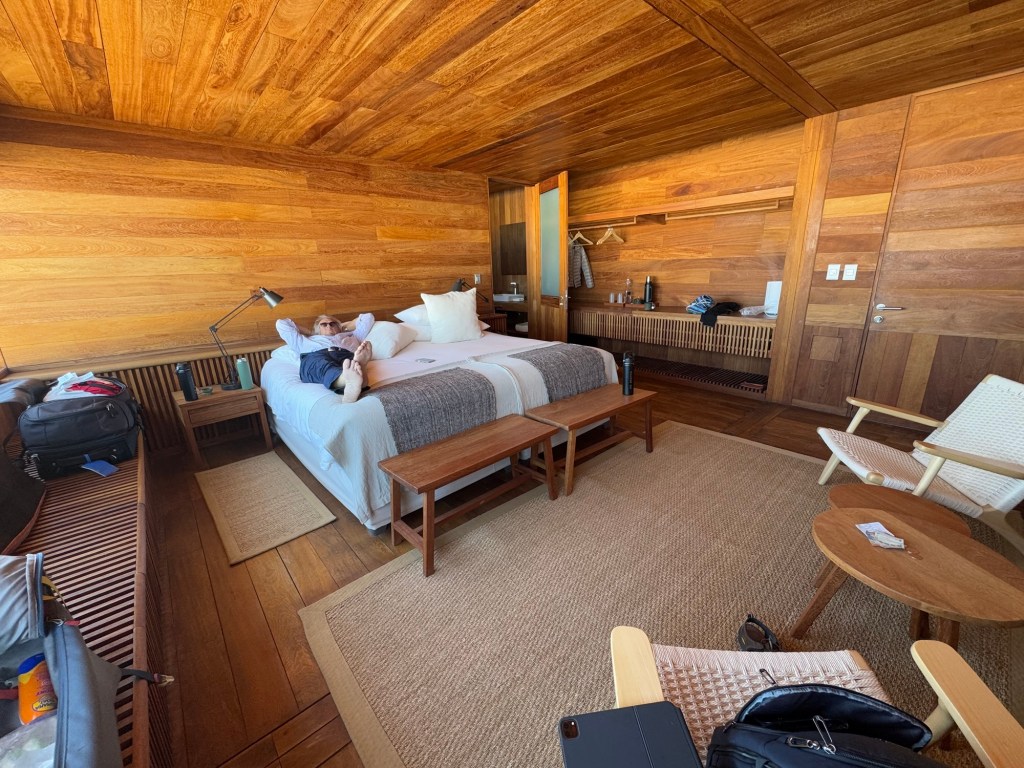
There are six cabins in the Explora Lodge. Wind blows very strong every evening and makes the building shake. Ours was the end unit on the right.

Friday, October 30, 2025

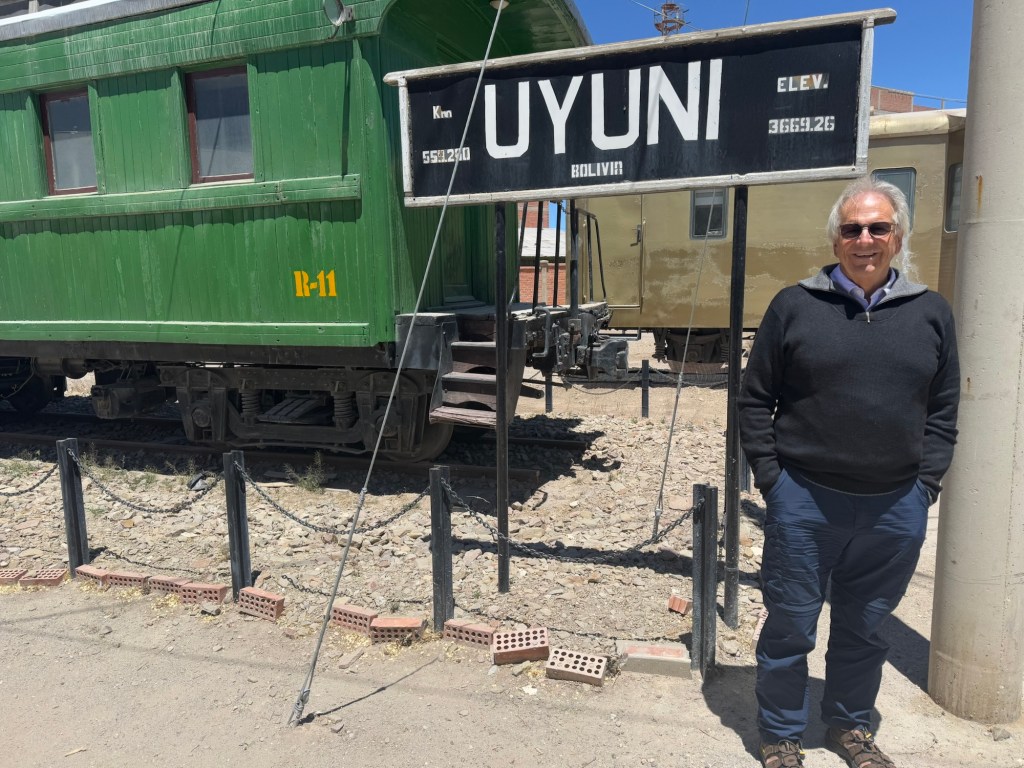
Departed Explora Lodge and the Salt Flats early morning and drove back to the airport at Uyuni to fly to LaPaz. The altitude change was difficult as the elevation was 13,350 and I felt the difference while still on the plane waiting to exit. In spite of the high elevation, 2.5 million people live in La Paz.

We met our next guide, Gabriela, at about 11am and immediately began a 3-hour drive from the airport to Copacabana. During the ride we saw hundreds of trucks parked along the road sides waiting to get diesel fuel. Apparently the country is low on fuel and everyone is suffering from a lack of supplies due to a lack of hard currency. A newly elected president will take over soon and people are hoping he will improve the financial situation.

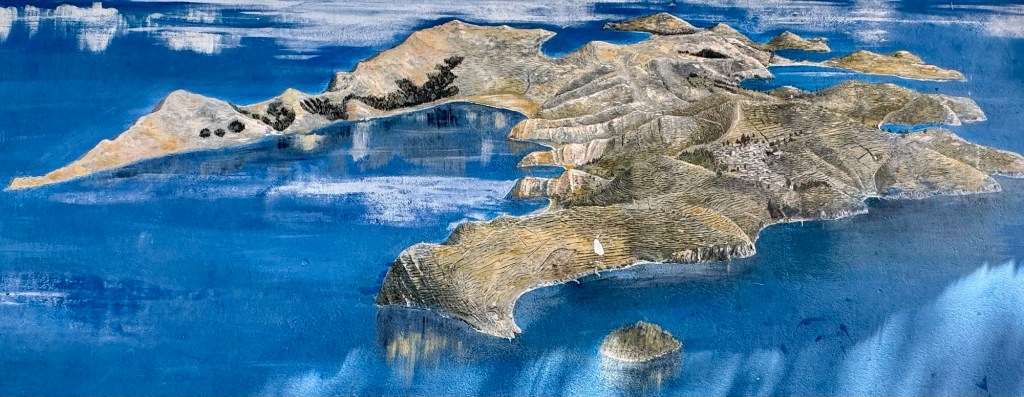
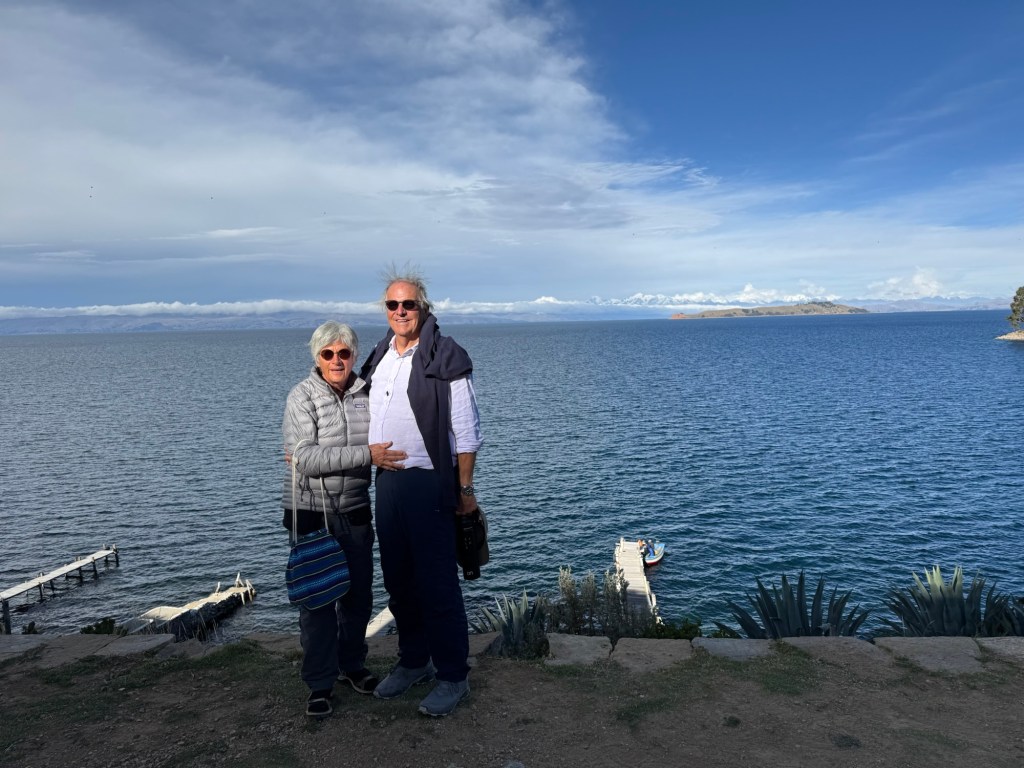
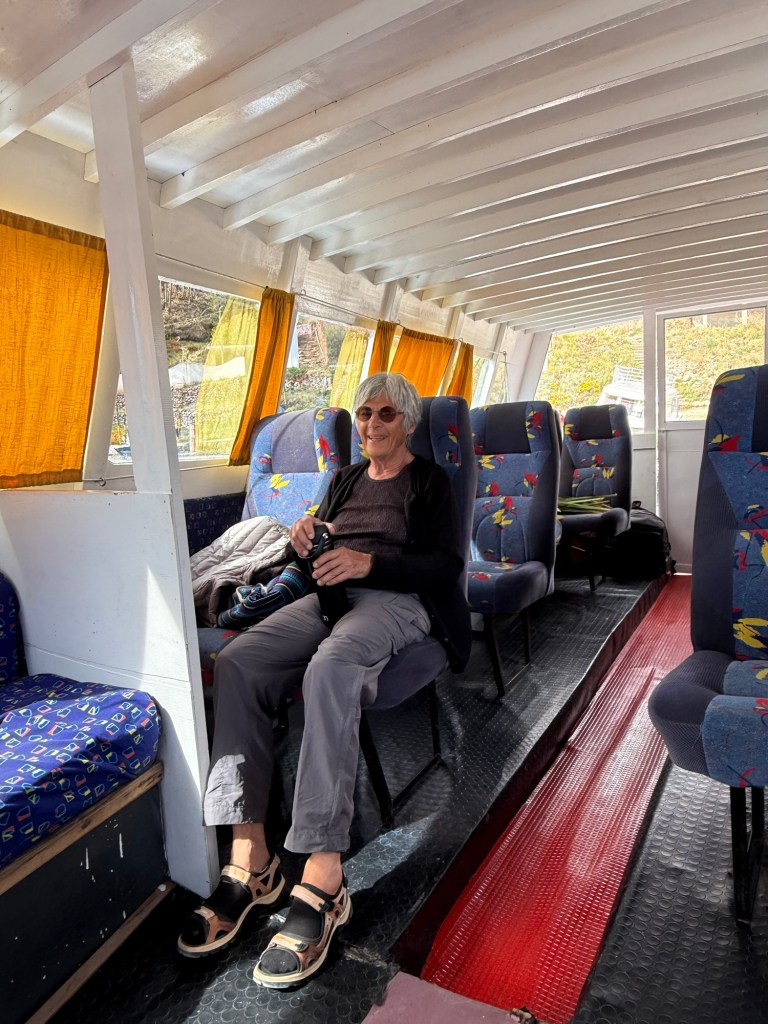
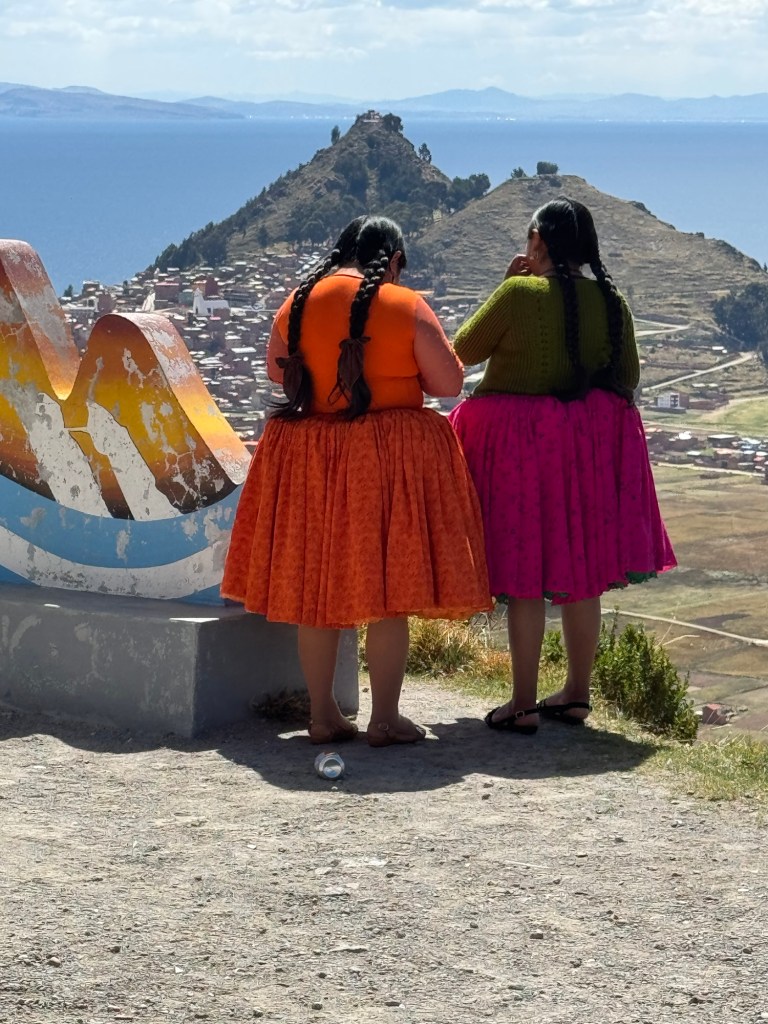
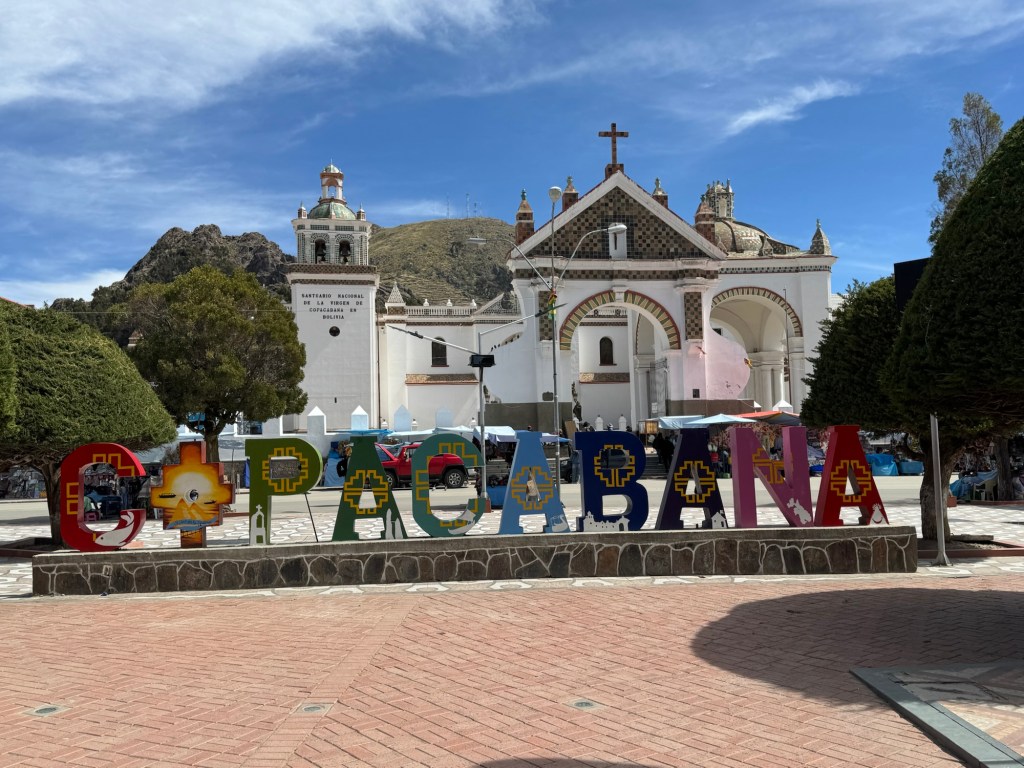
From Copaccabana we took a one hour boat ride on Lake Titicaca (12,510), the world’s highest navigable lake, to an island called Isla del Sol (Island of the Sun).

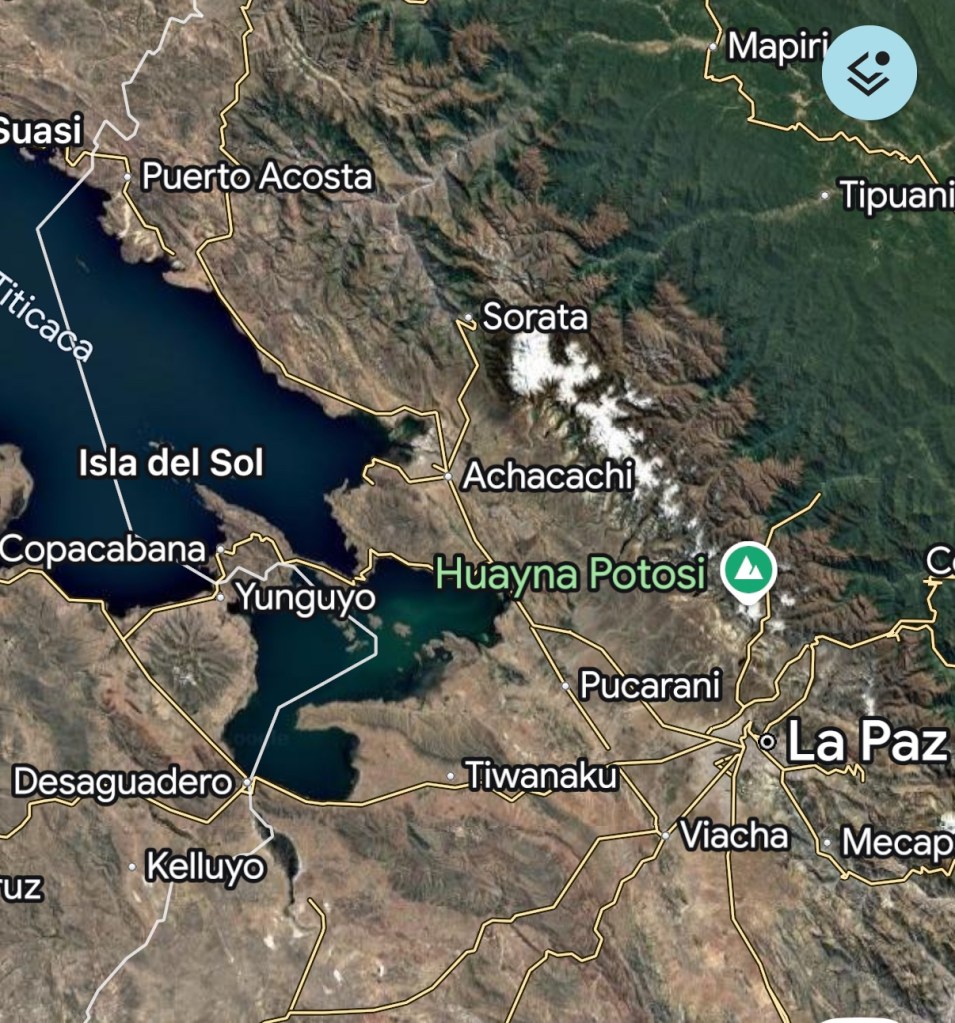
Our route was from La Paz through Huayna Potosí and Yunguyo to Copacabana, then boat to Isla del Sol

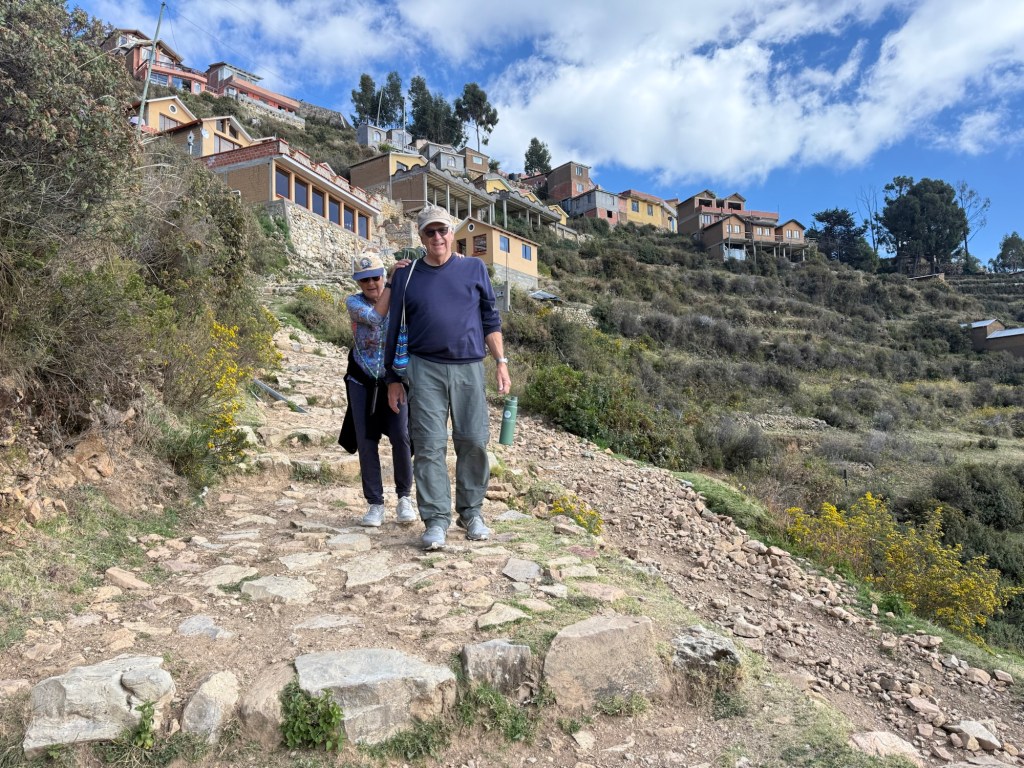
Our accommodations were an ecolodge at the far end of the island from our arrival point. It took us 2 hours to hike the very rocky two kilometer path uphill.

Isla del sol.

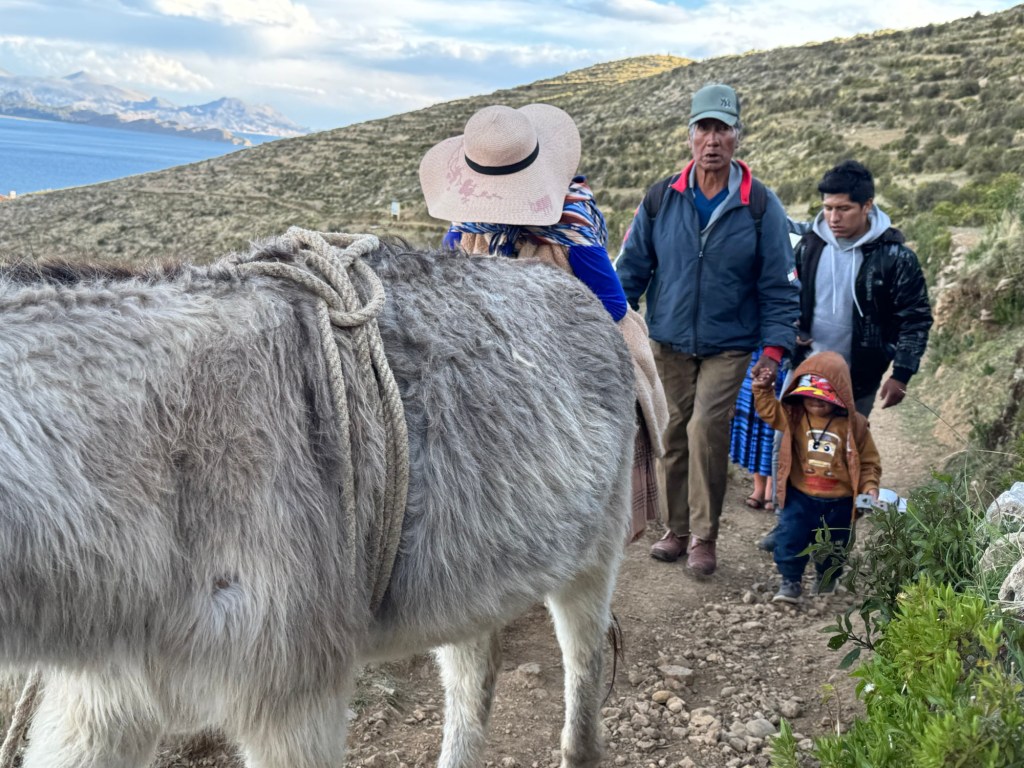
Thankfully, our bags were carried up and down by donkeys. We stopped many times along the path to catch our breath.

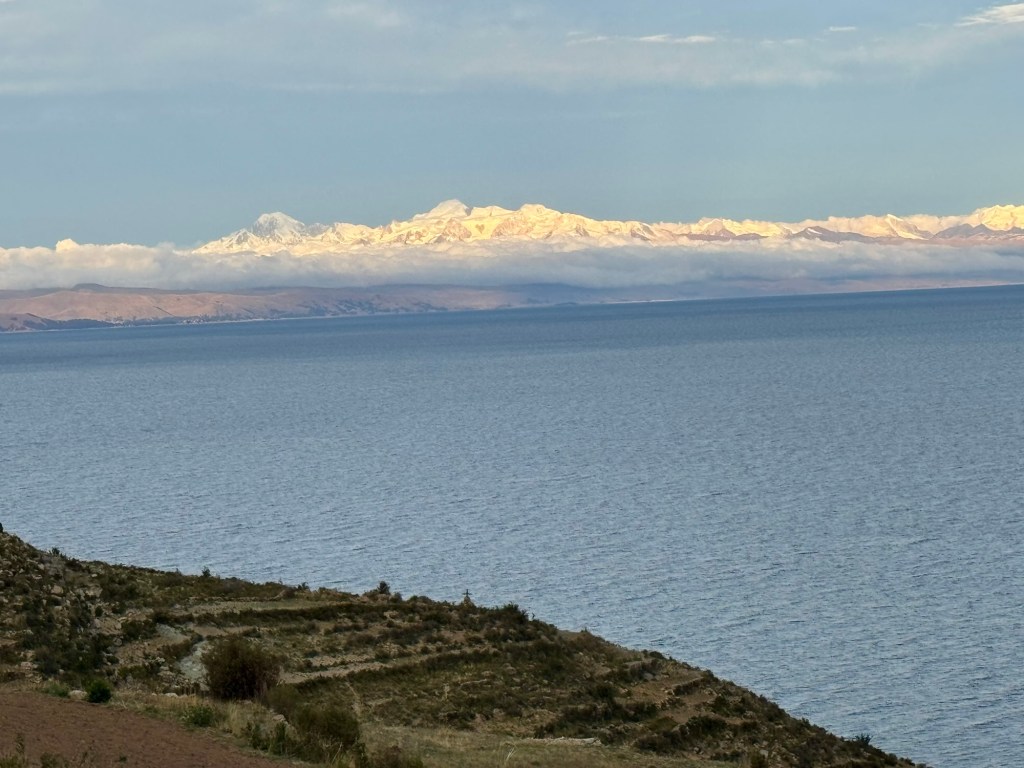
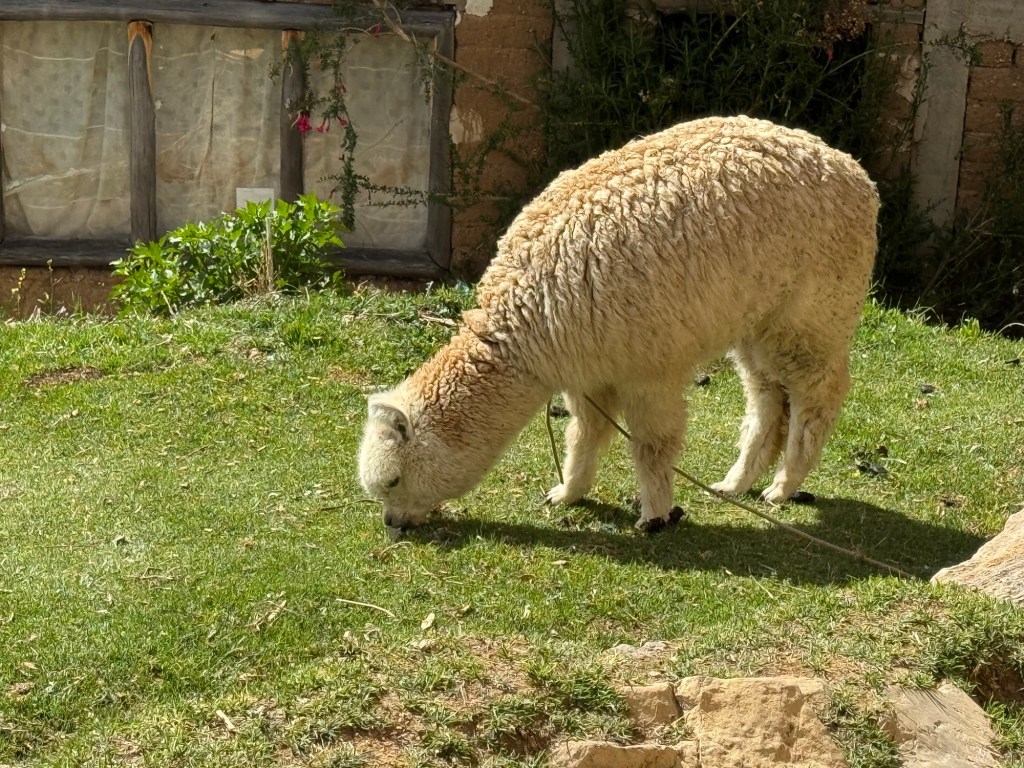
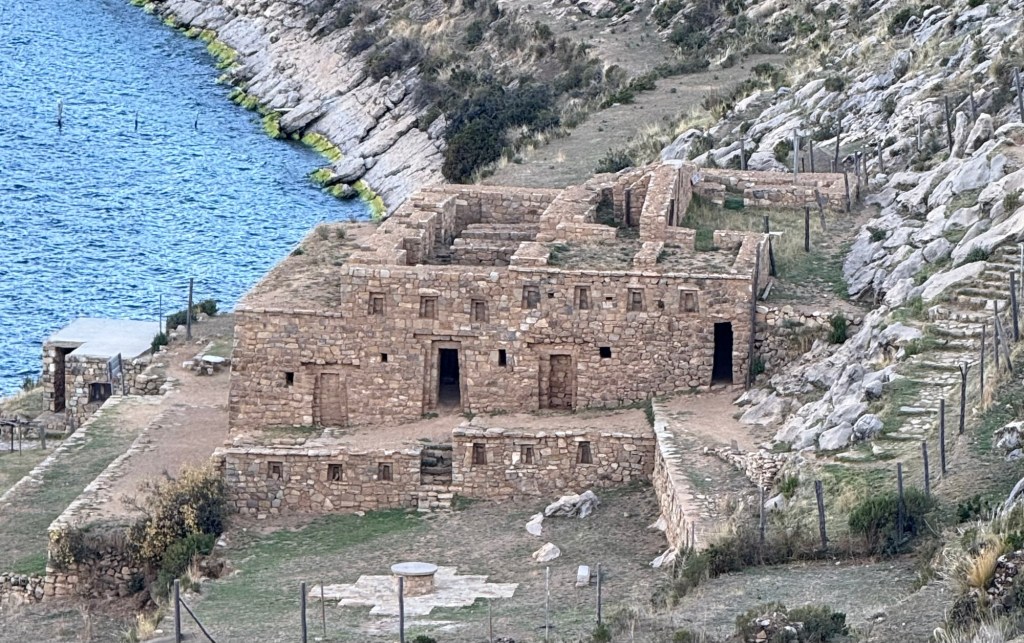
The scenery was breathtaking, but that was not why I was out of breath the whole walk. I felt very oxygen deprived and wondered if I would make it. Mark and Gabriela helped me nearly every step of the path. We did see a BC temple to ancient pre-Inca gods, beautiful snow-covered Andes mountains, the large and lovely Lake TIticaca, an alpaca grazing near the path, and many pretty flowers.

Once we got to the ecolodge (13,013), I was begging for oxygen. As my condition was not unusual, there was a bottle of oxygen available. That and a light dinner helped me get through the night. However, as Mark noted, the lodge was not much of a payoff.

Saturday, October 31, 2025 Halloween

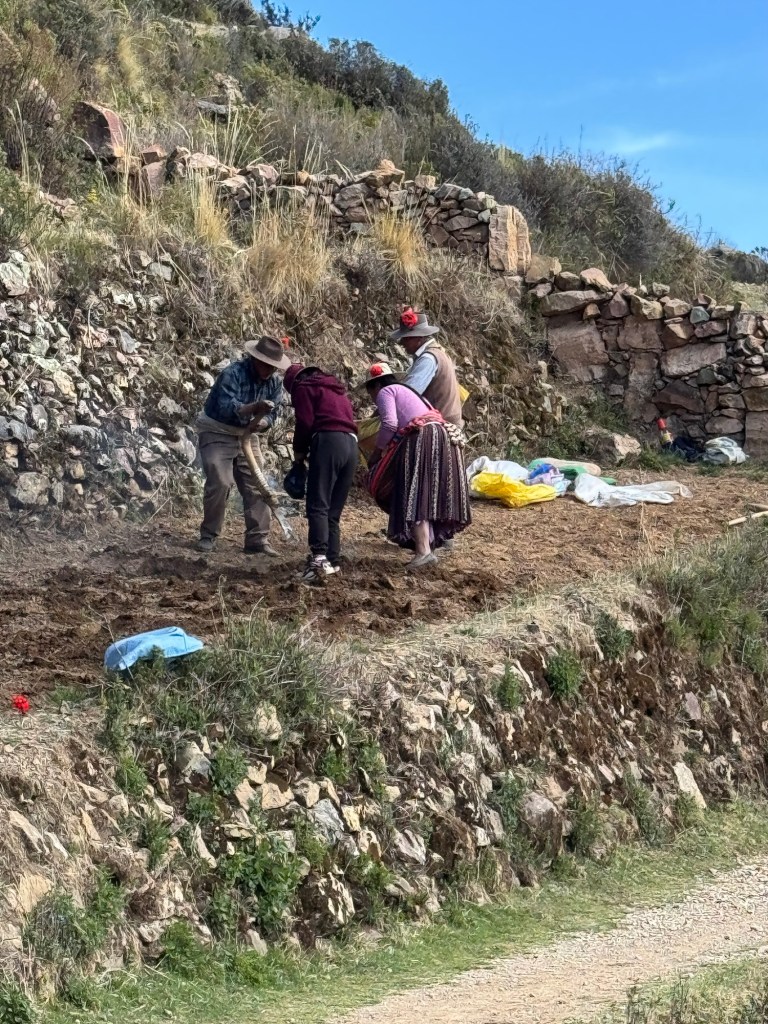
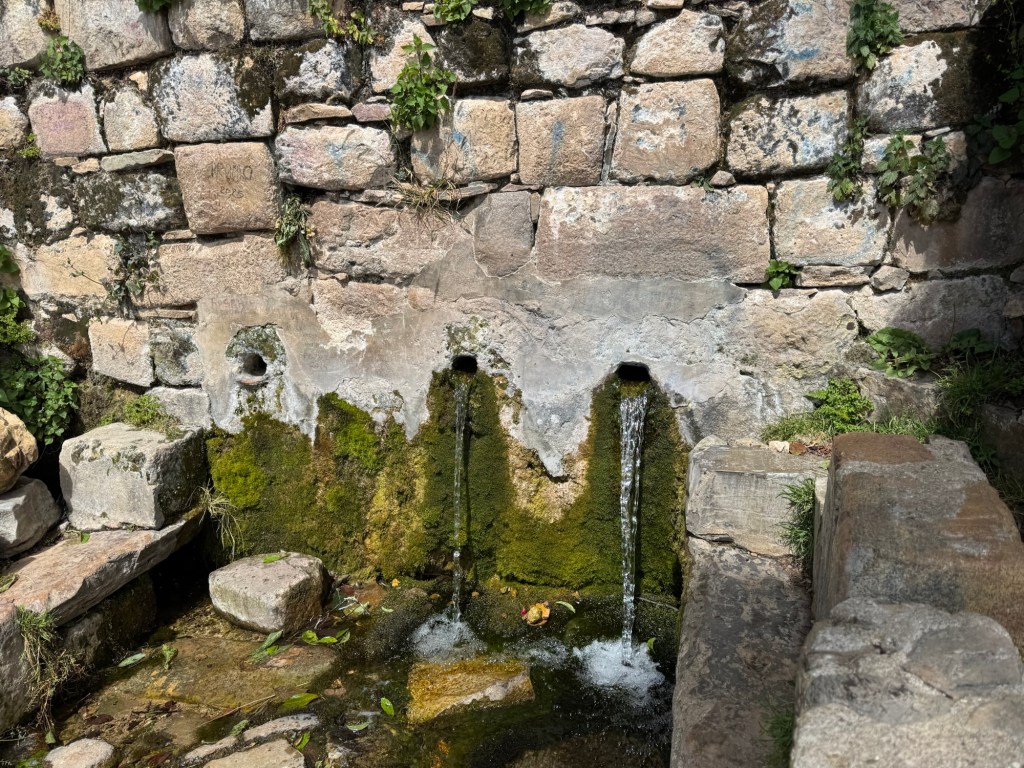
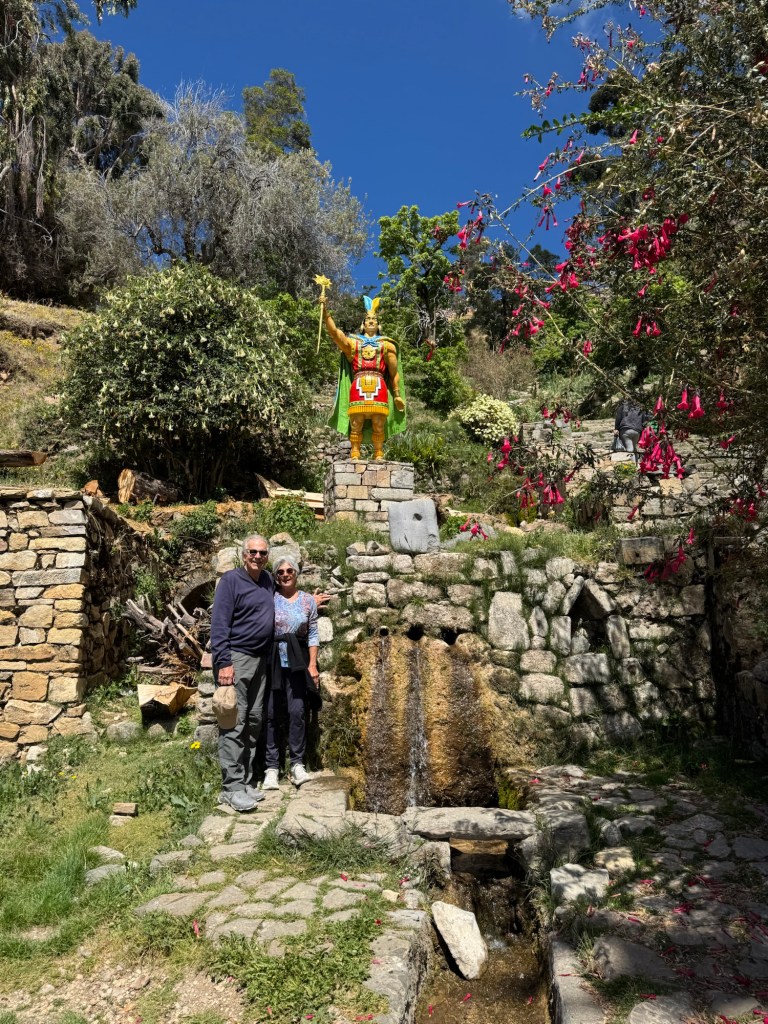
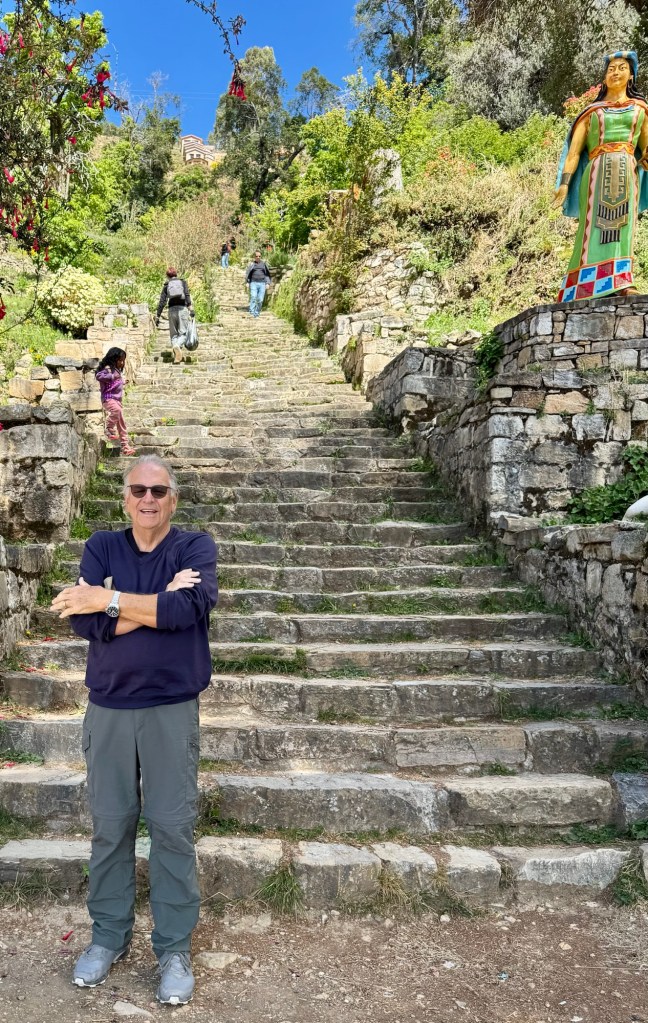
Next morning we started the return trek down the hill, stopping at the top of a sacred well on the Inca trail that has spiritual significance to the Aymara people, many of whose descendants still live on the island. At the bottom of the stairs are statues of the gods Marco Kayak and Mama Ojllo, who compare with the Adam and Eve of the Christian world.

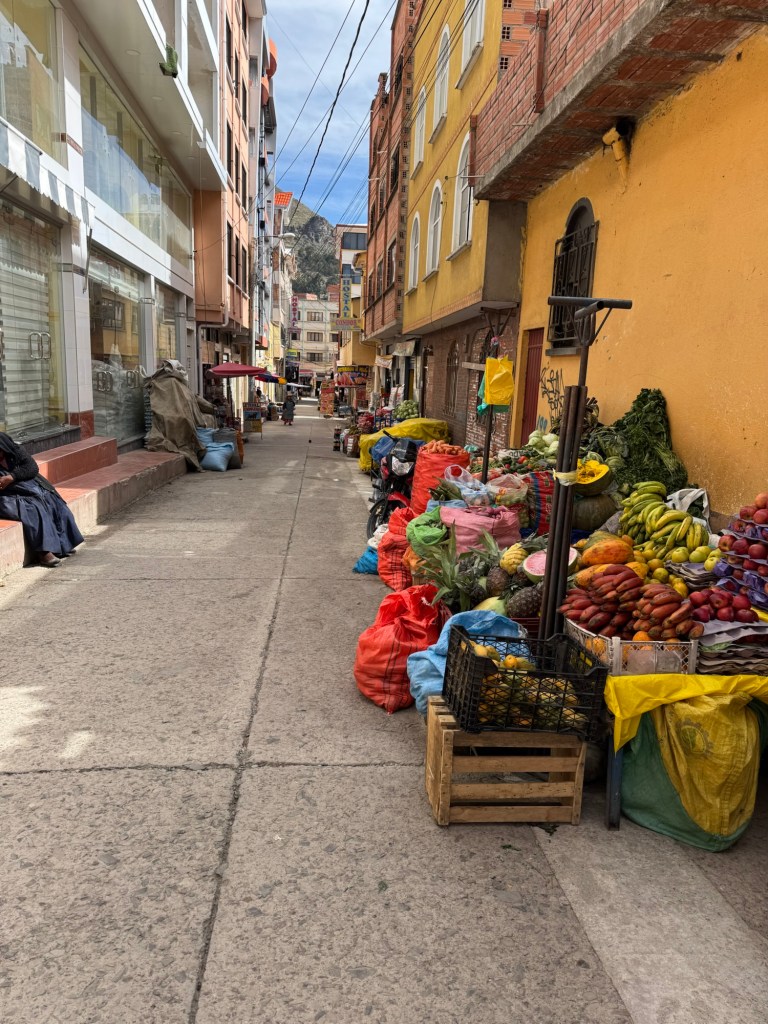
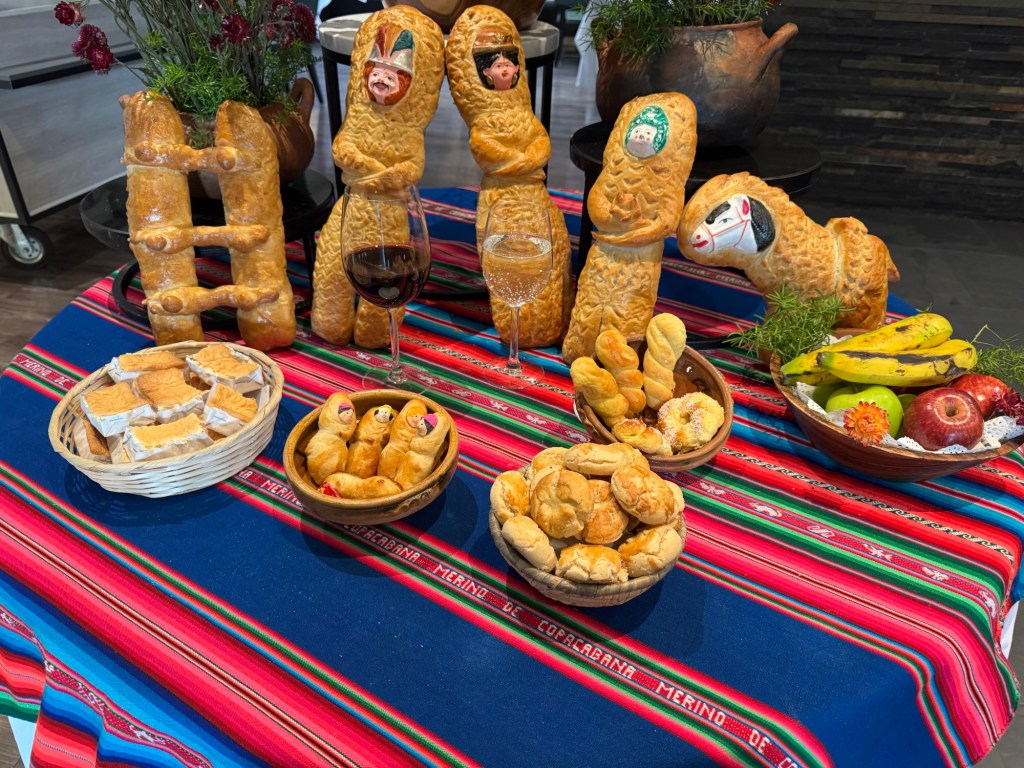
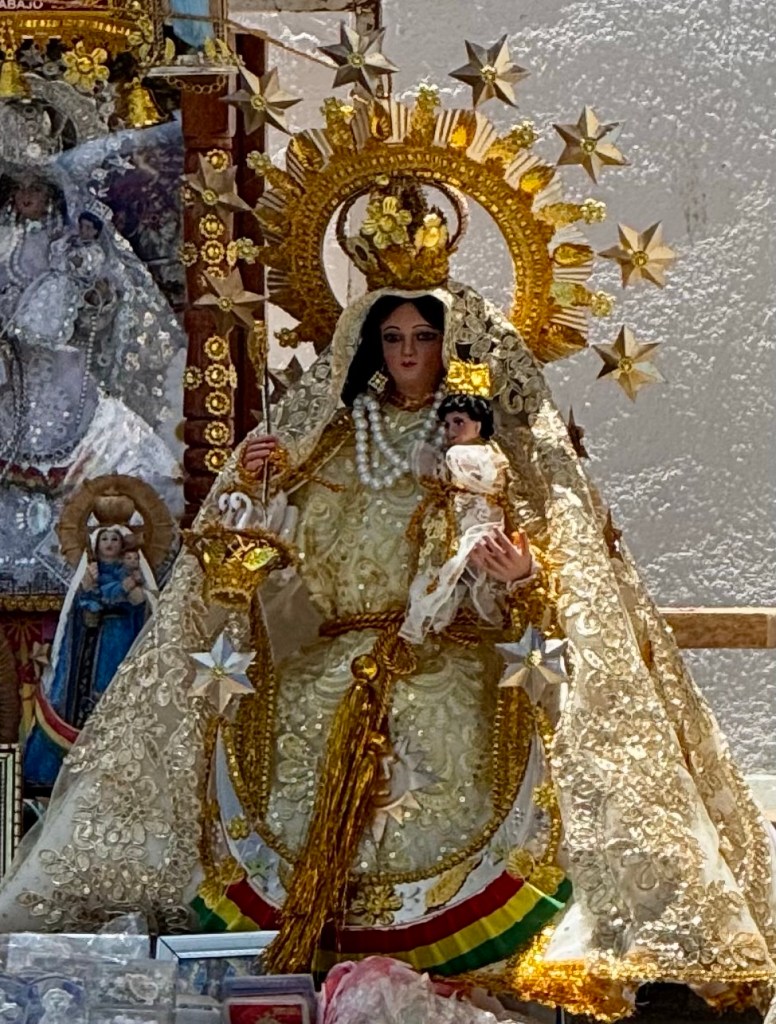
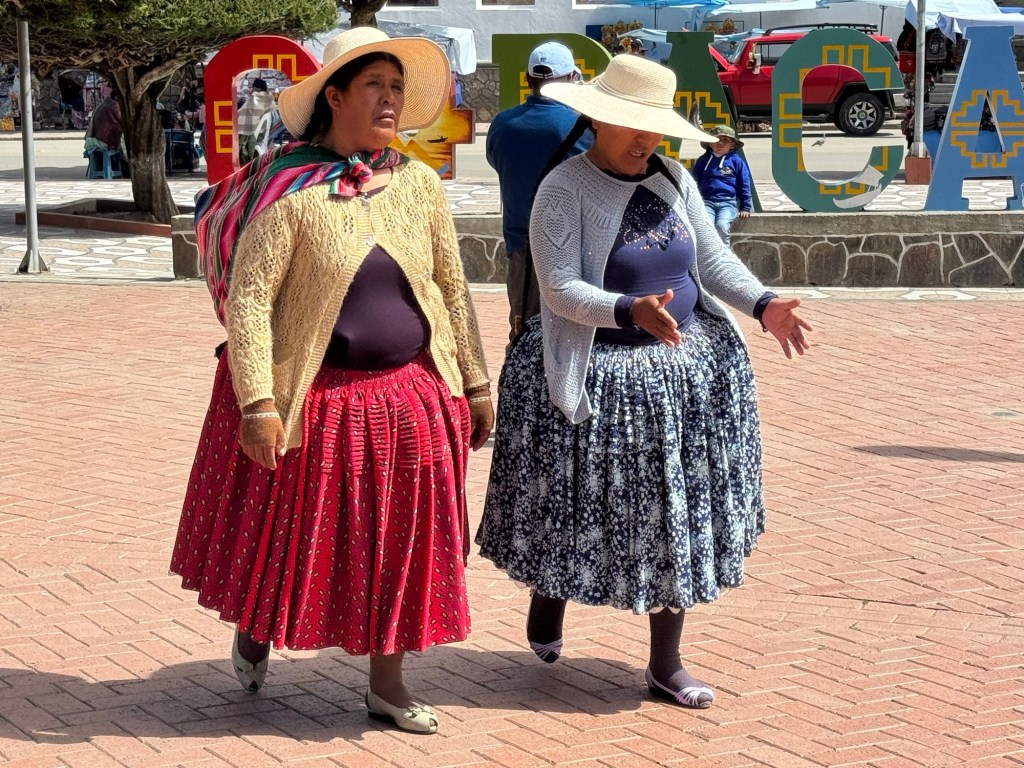
The boat was waiting for us and we returned our steps. In Copacabana we captured preparations in front of the Cathedral of the Virgin of Copacabana, aka the Bacha Mama, for the coming Day of the Dead, a major holiday for Bolivians.

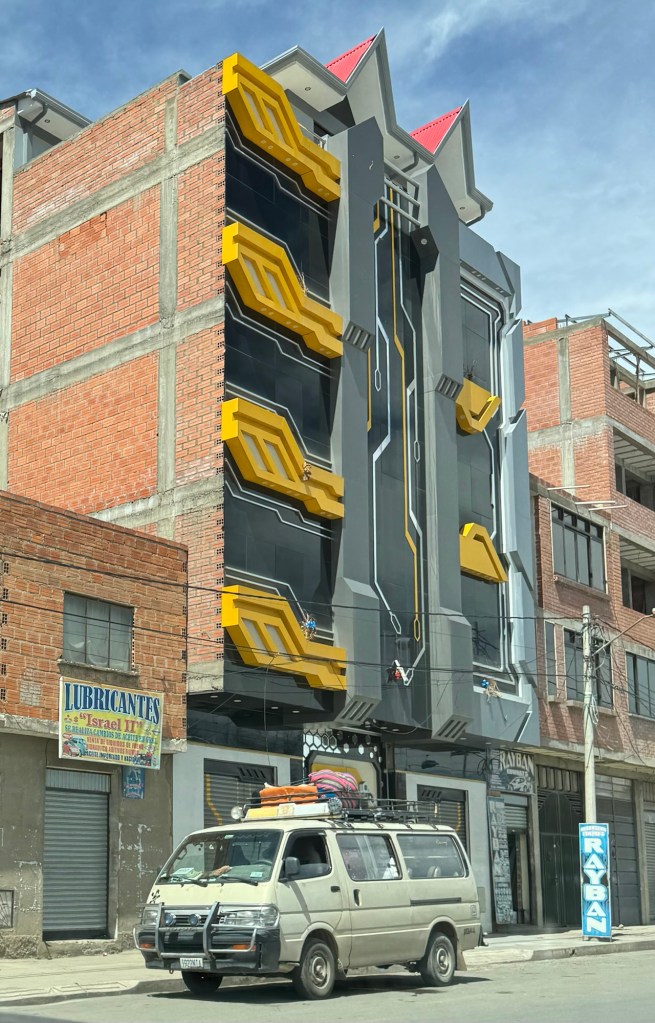
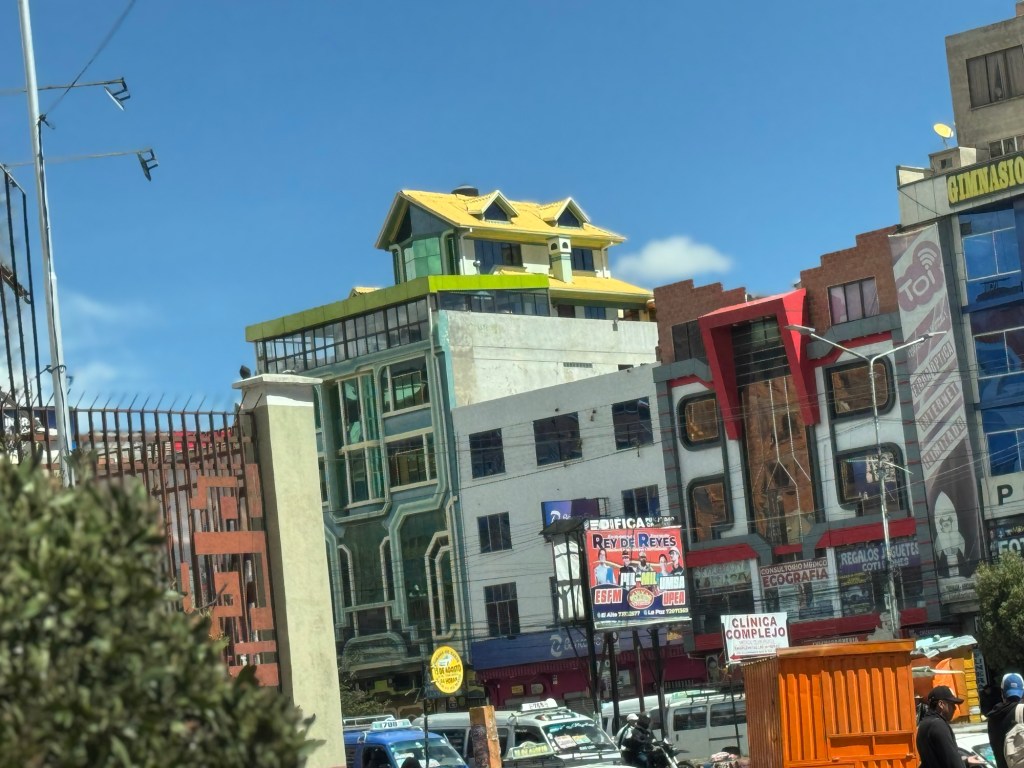
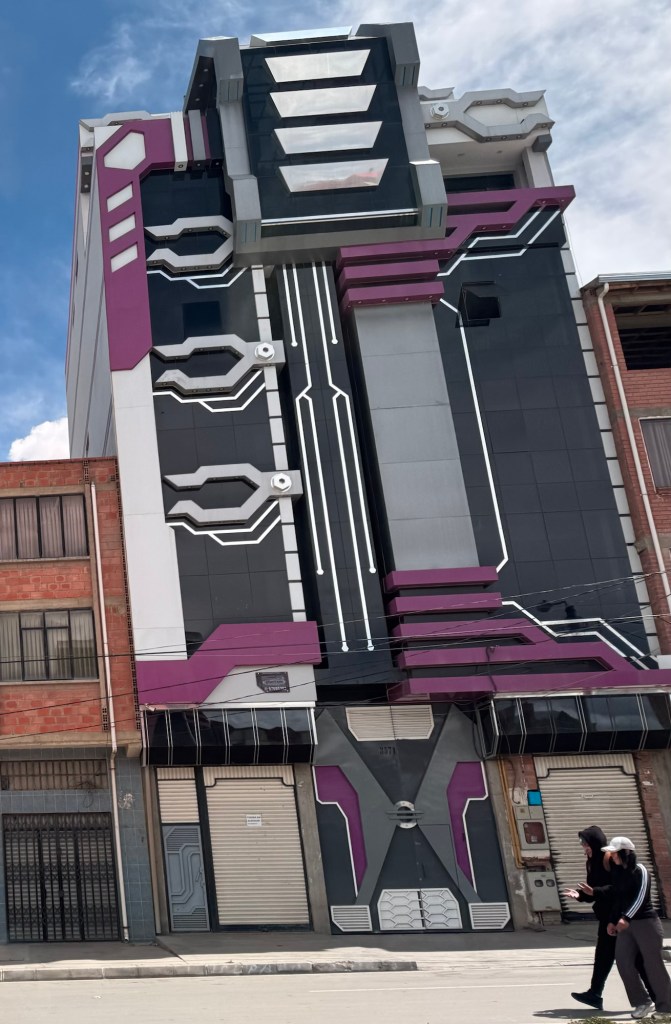
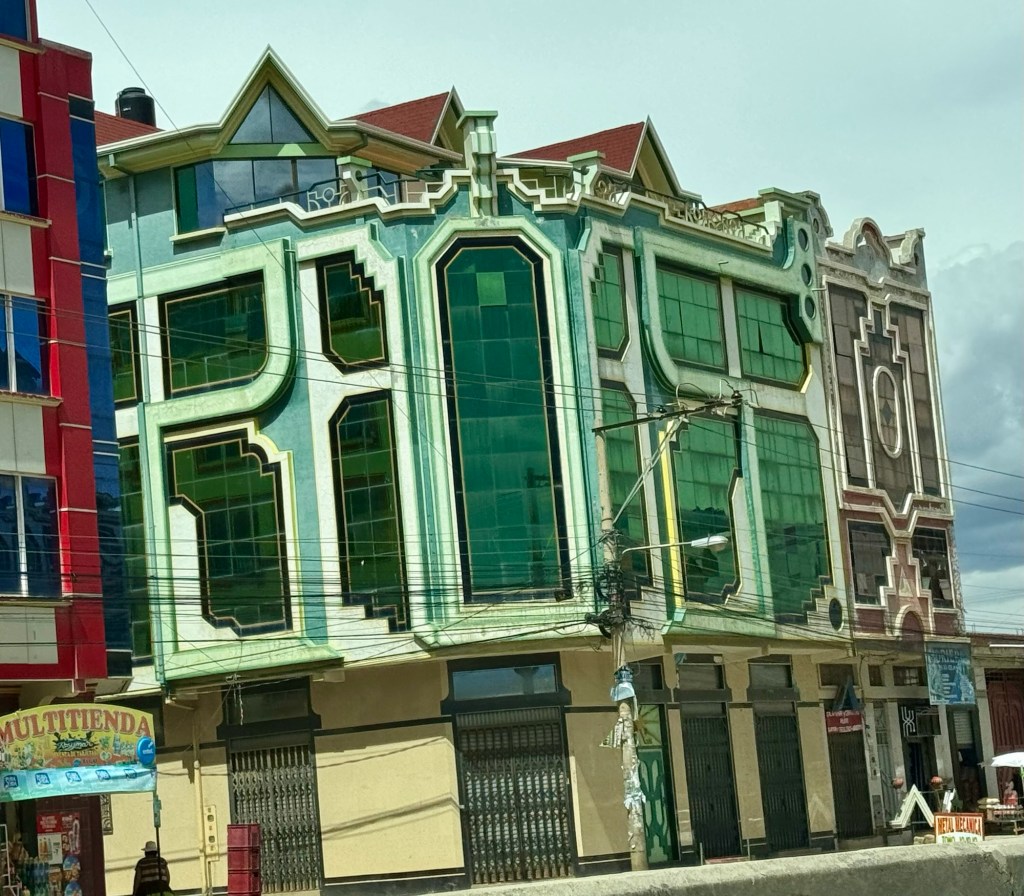
From Copacabana, we drove back to La Paz passing slowly by modern architectural motifs that made us laugh, they looked so peculiar. They generally consist of a storefront floor on the ground, two floors for ballroom dancing and parties and a residential floor above that. On top is another residence that looks very different and out of place, called a cholet, a derivation of chalet.

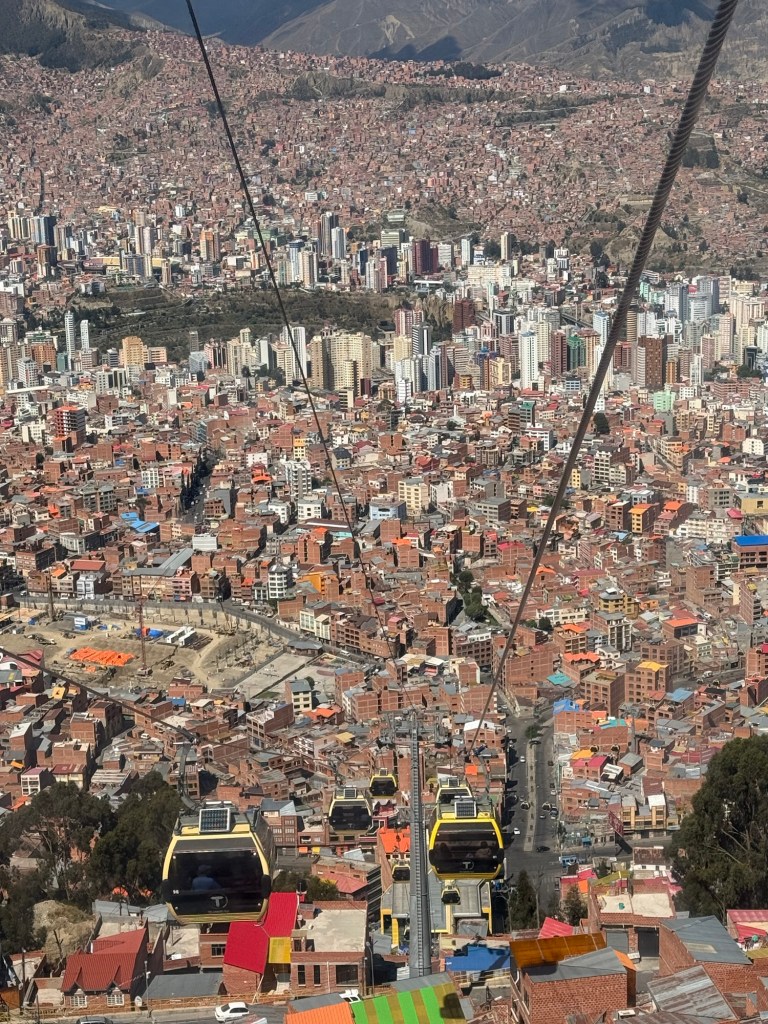
Hilly La Paz from a cable car

We pass through El Alto to get to La Paz. At Gabriela’s suggestion we road in a cable car for a couple of stops to get a feel of the city and understand how the cable car system is used as transportation for the locals. Our driver met us at the end of our cable car ride and delivered us to our hotel for the night, Atix. We arrived just in time for me to get a much needed pedicure at a nearby salon. As soon as that was done, Gabriela, Mark and I had dinner at a nearby food court. It was fast and easy and we were in bed by 7:15 as we had to sleep fast to be ready for a midnight pickup for a flight to Bogata, Columbia.

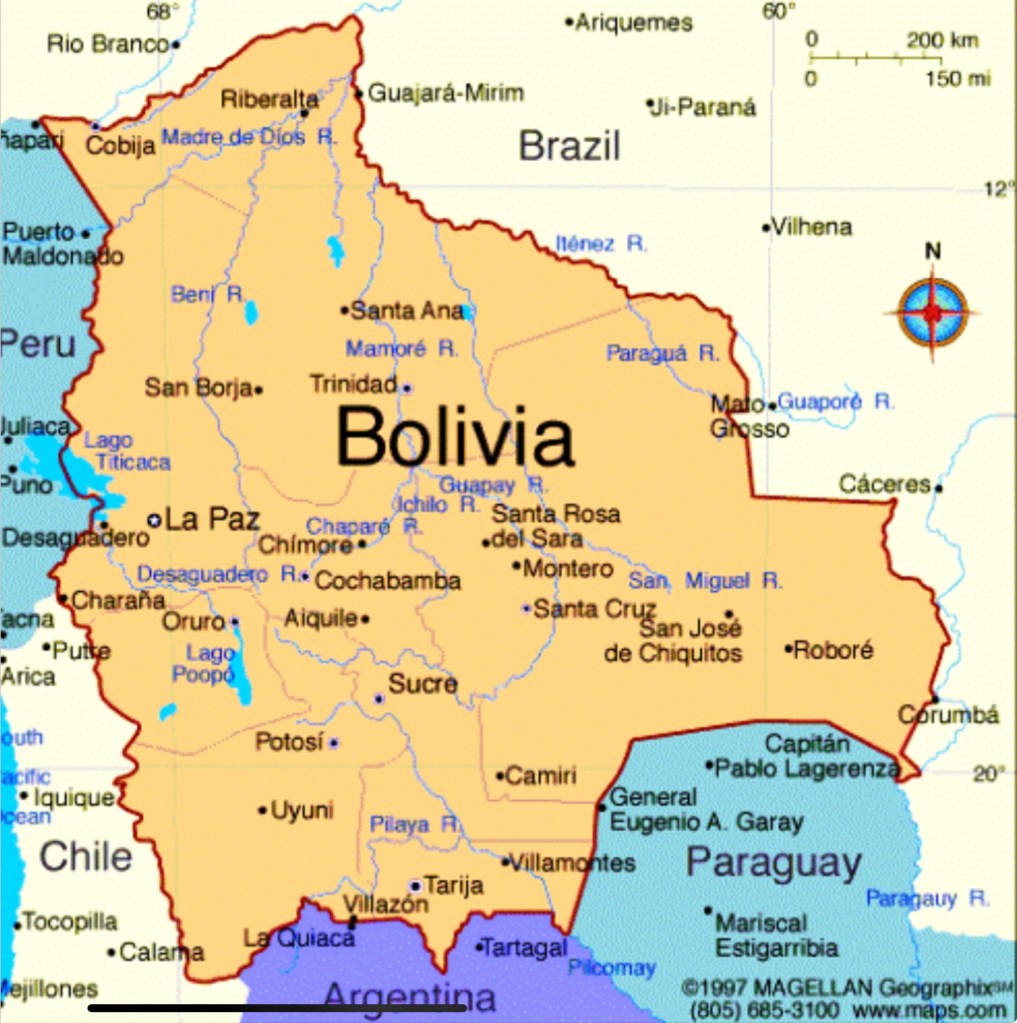
Over dinner Gabriela told us how Bolivia came to be landlocked. Part of northern Chile had belonged to Bolivia before the 1879-1884 war between Bolivia and Peru against Chile, who was supported by England. The fight was over the minerals and seagull guano that Chile wanted. Chile won the war and the minerals. Bolivia lost the coastline.

Sunday, November 2, 2025

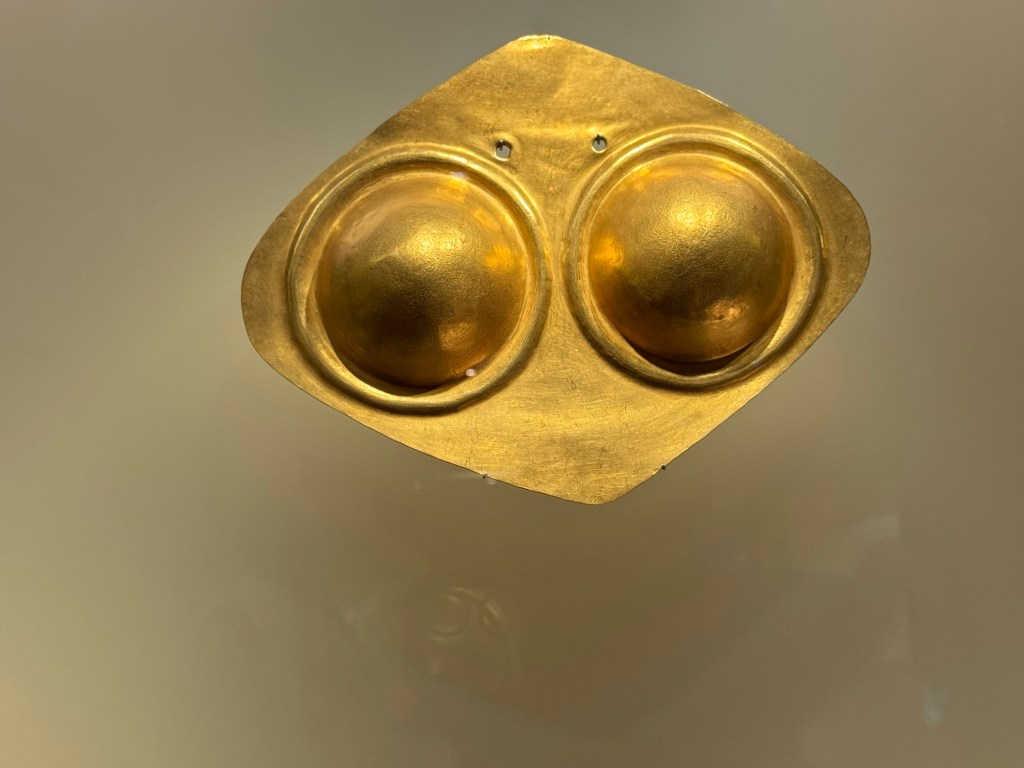
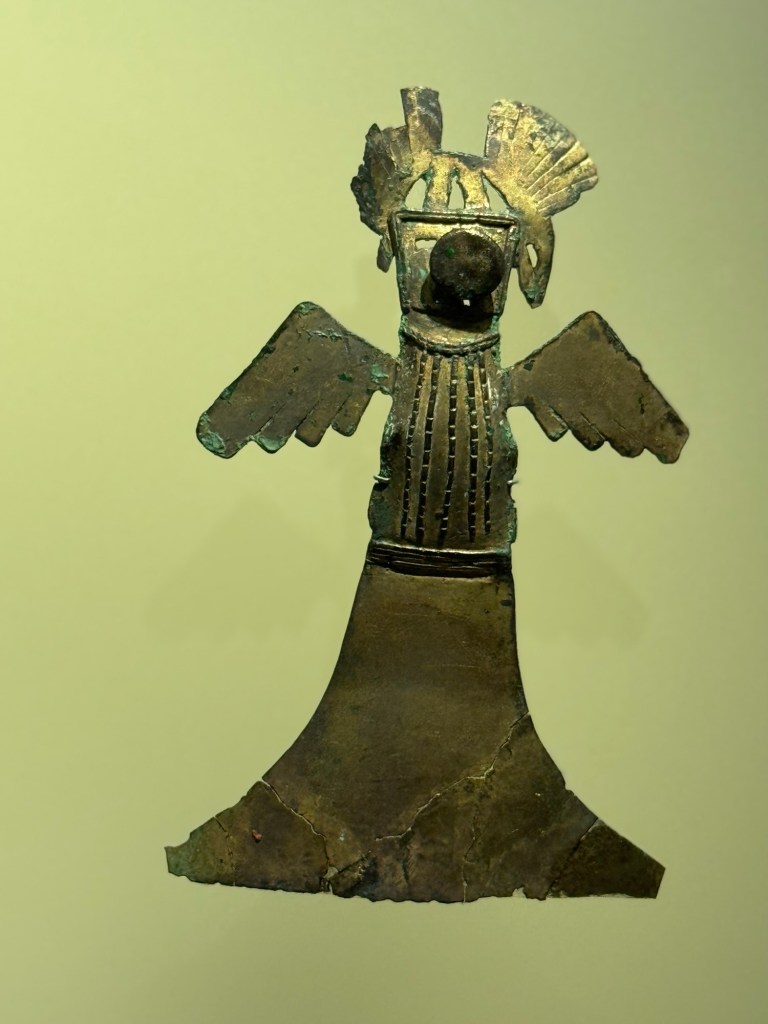
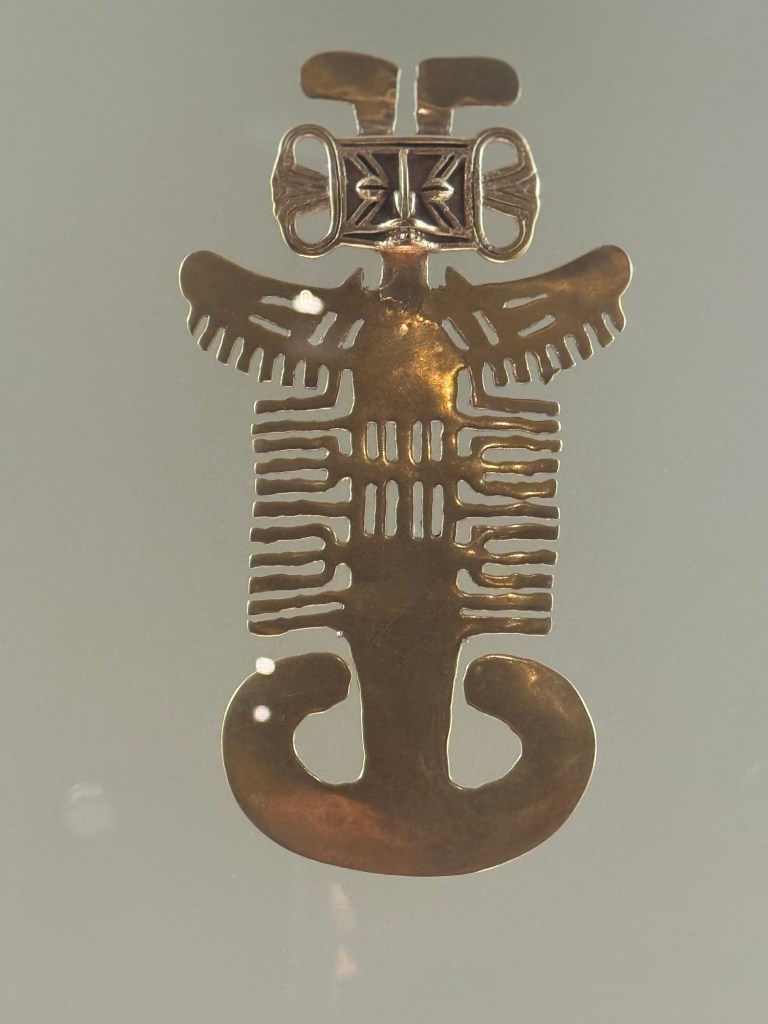
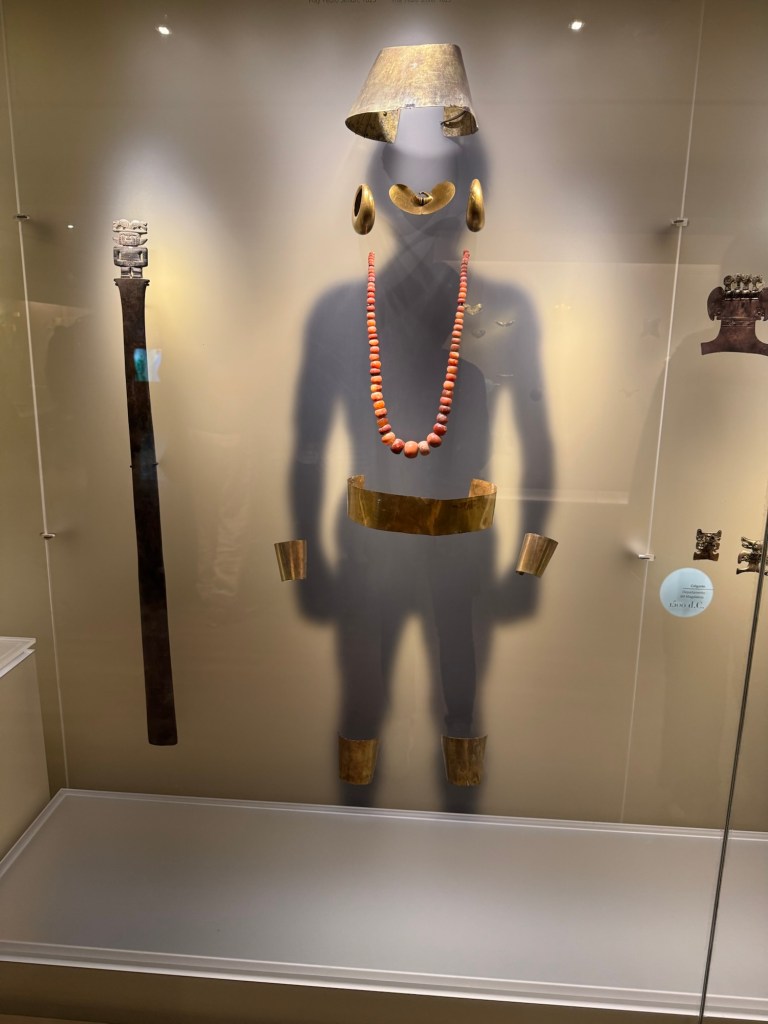
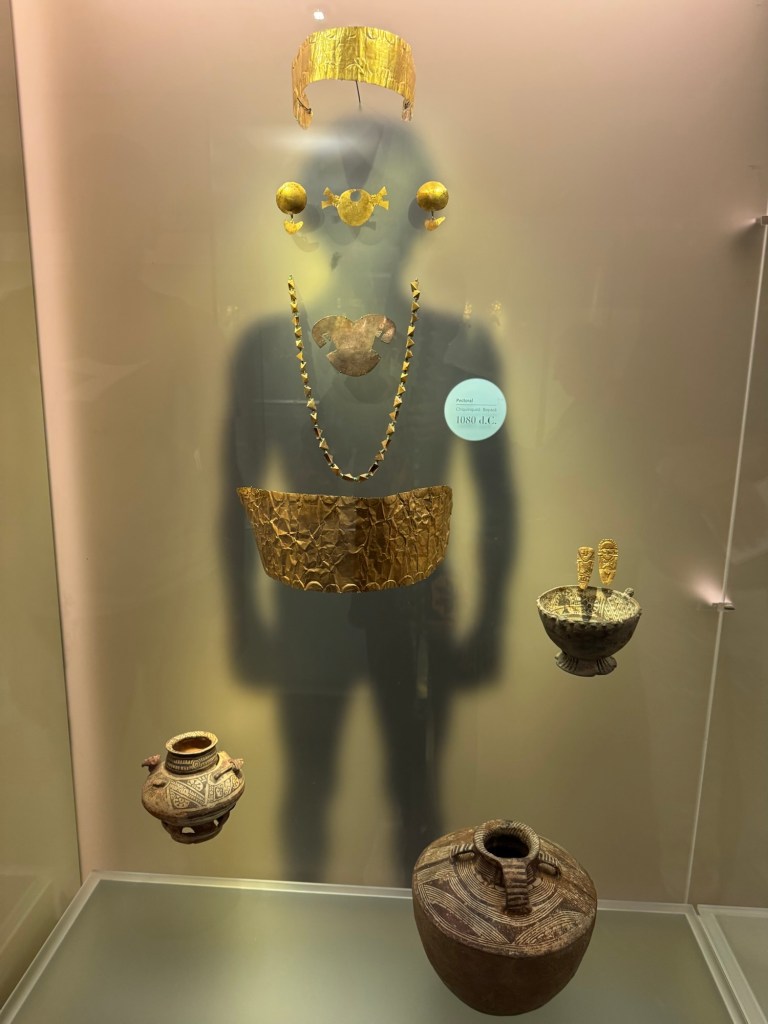
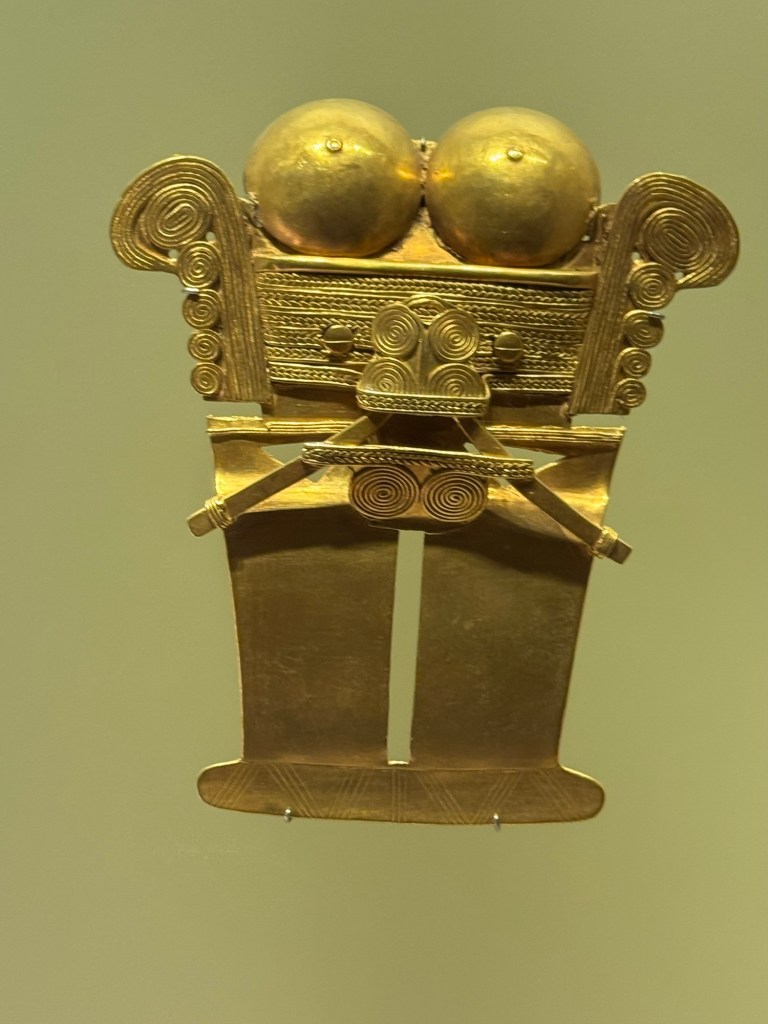
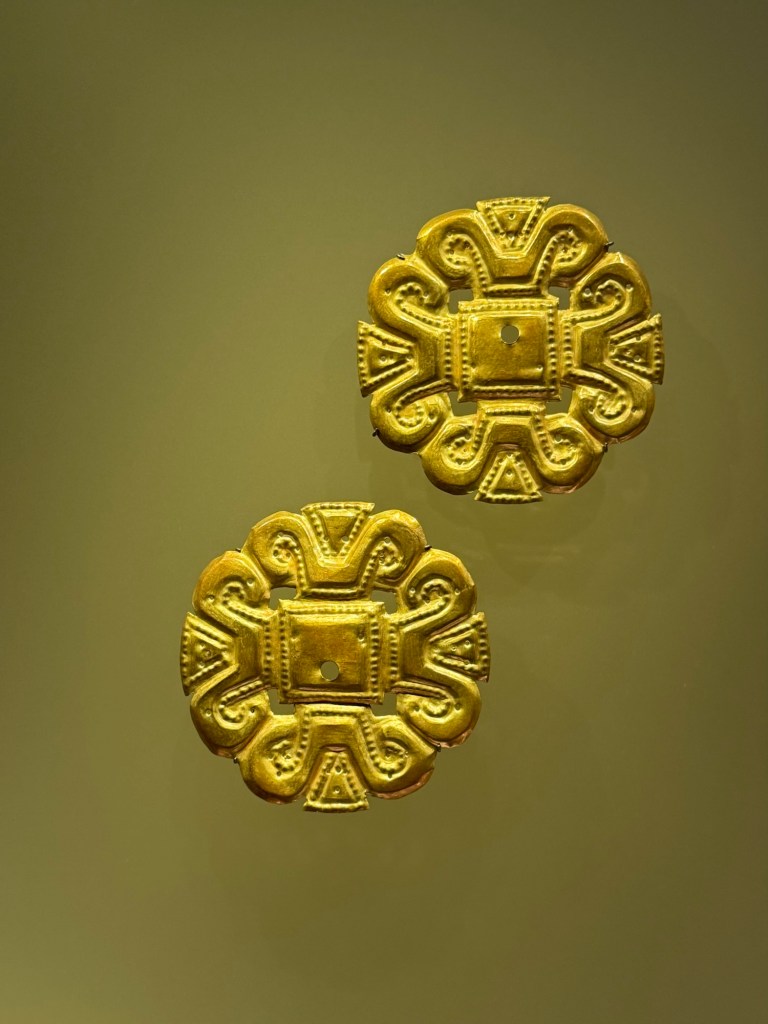
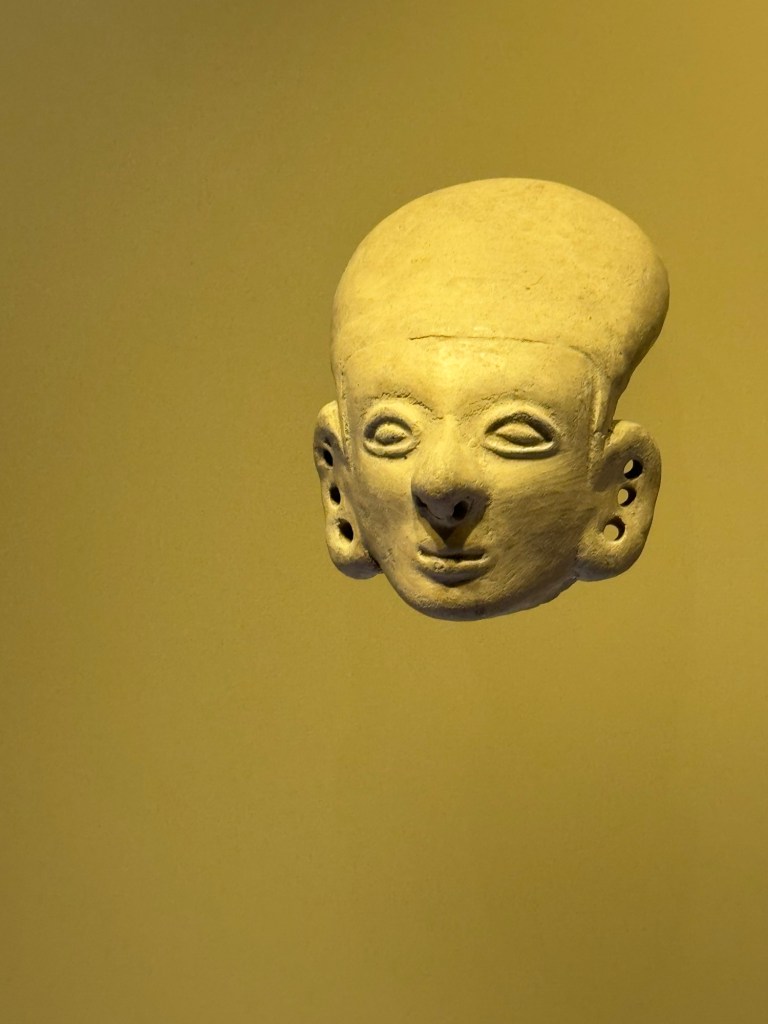
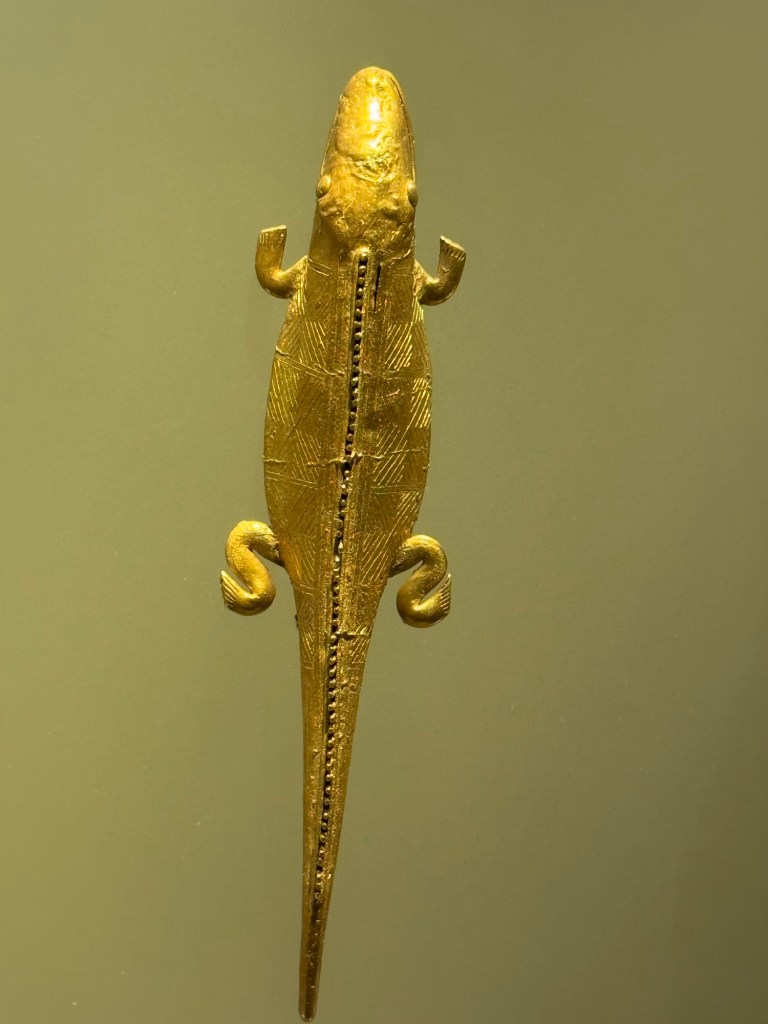
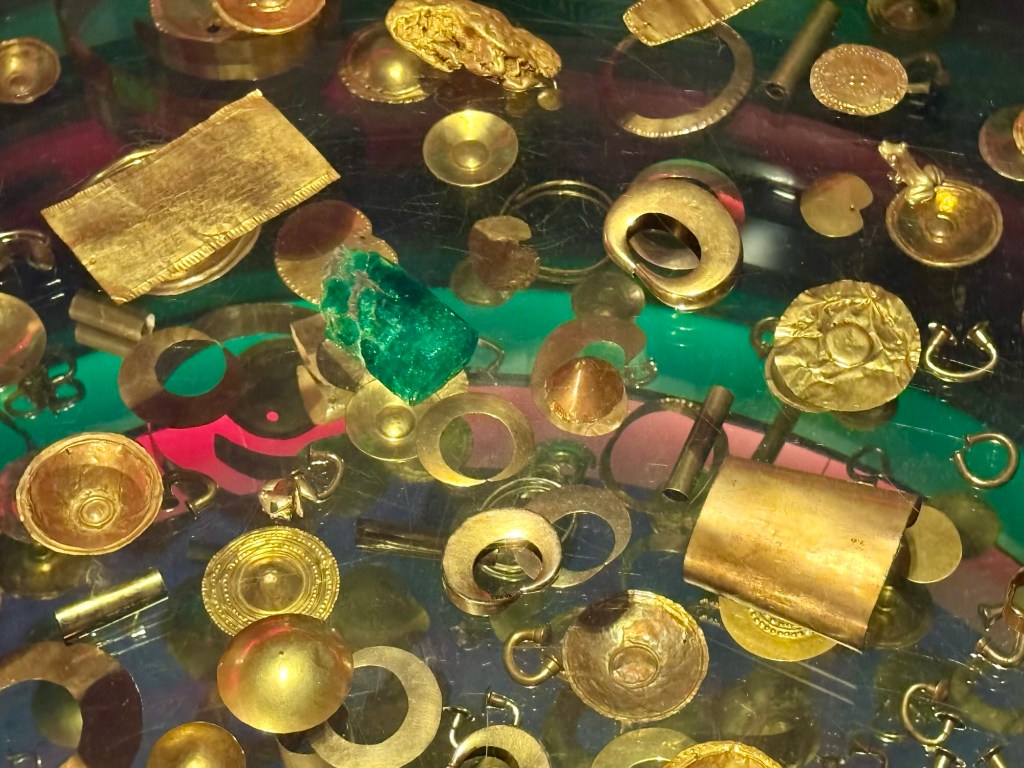
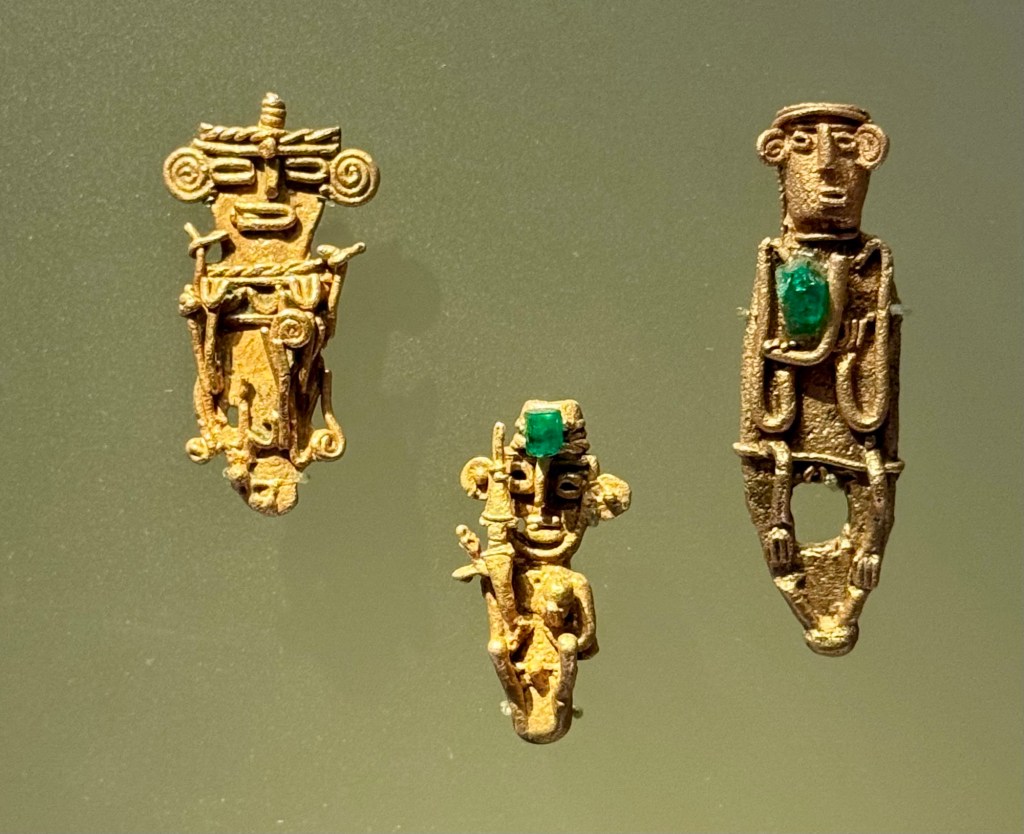
We managed to sleep through much of the flight to Bogota, and felt somewhat rested when we arrived at 6:15am and met our Bogota guide, Santiago. He escorted us to the Four Seasons Hotel at a reasonable 8500 ft elevation. The population of Columbia is 53 Million, while the population of Bogota is 8.5 million. The landscape consists of rolling hills with many trees. At 2pm Santiago retrieved us from the hotel and off we went to visit the Gold Museum. We chose it because it has the largest collection of Pre-Colombian gold. Here are some of the pieces we admired.

Human figures with emeralds

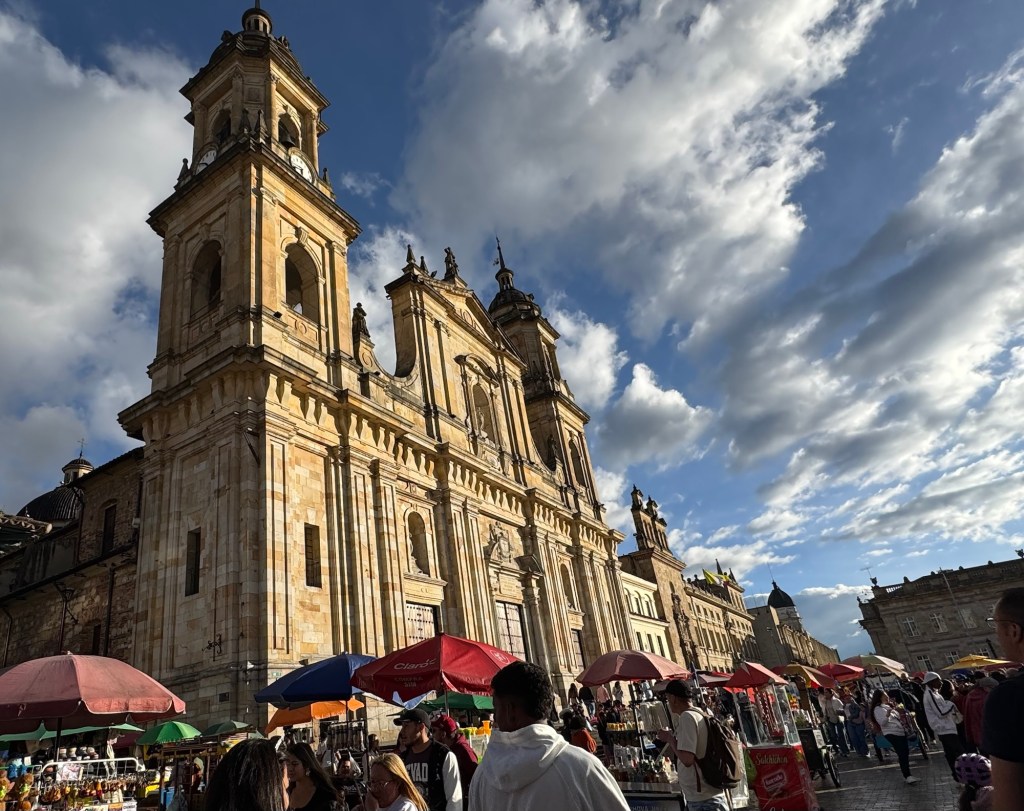
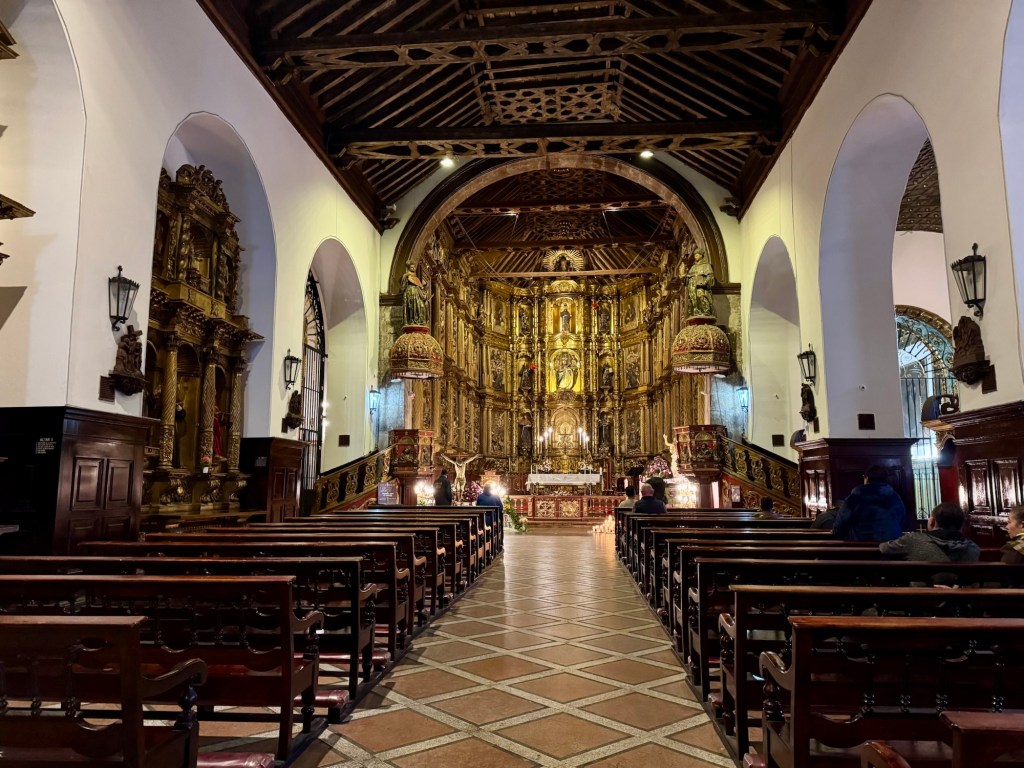
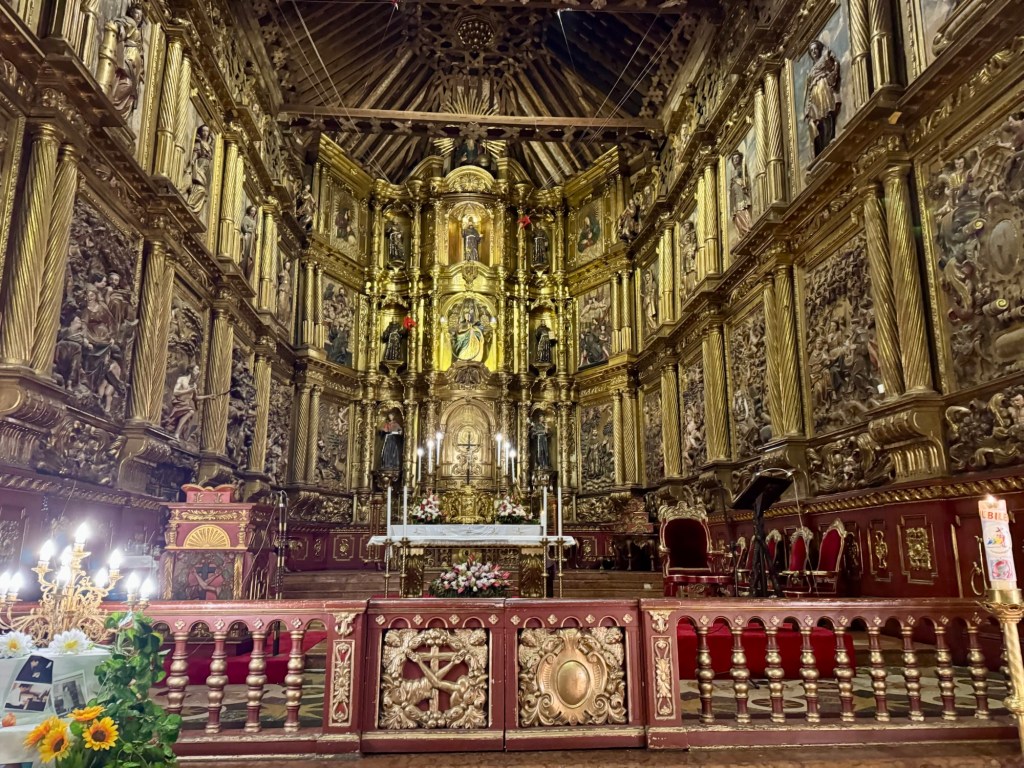
From the museum we walked through the old, colonial part of town. The area was filled with people enjoying the lovely day with friends and street activities entertaining everyone on this Day of the Dead holiday. But first we checked out the two churches full of gold leaf.

A Michael Jackson impersonator

At dinner time, Santiago directed us to a favorite place of his called Andres DC. He gave us a suggestions about what to order to get the flavor of Colombian food. So we did. The place was amazingly crazy. There were 5 floors of tables, decorations everywhere and costumed servers.

The place was nearly full when we went at 7pm and packed when we left at 8:30 with a long waiting line. We gave the waiter the list of items Santiago wanted us to order and soon our three starters and one main began to arrive. We had a good meal of perfectly cooked beef, pork belly, French fries and other nibble bites. While there three other tables of 10-15 people were each entertained by a small costumed band for some celebration or other. We were the only party of 2 we saw. Everyone else was in a medium to large group. Finally, we Ubered back to the hotel and happily dove into bed.

Monday, November 3, 2025

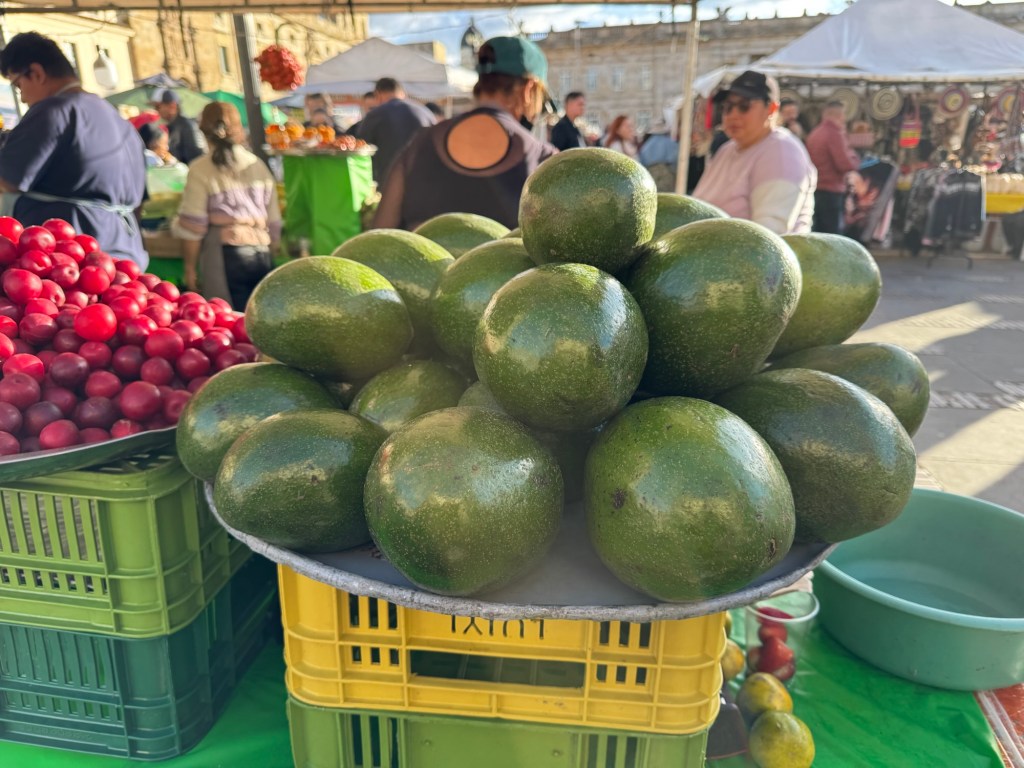
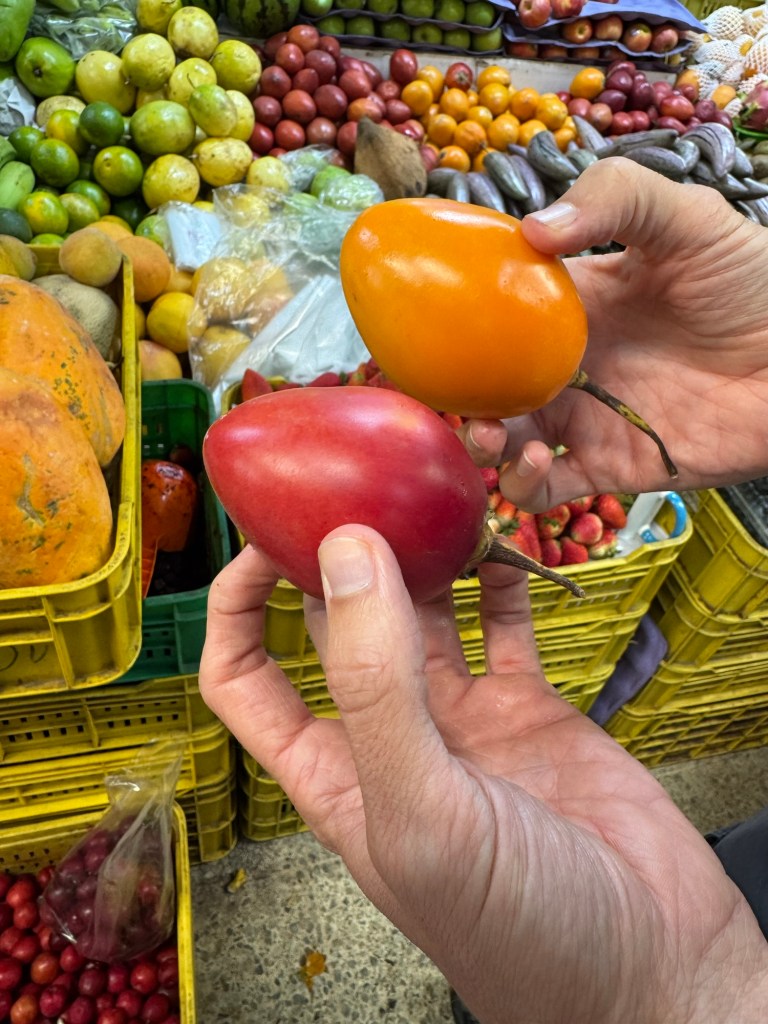
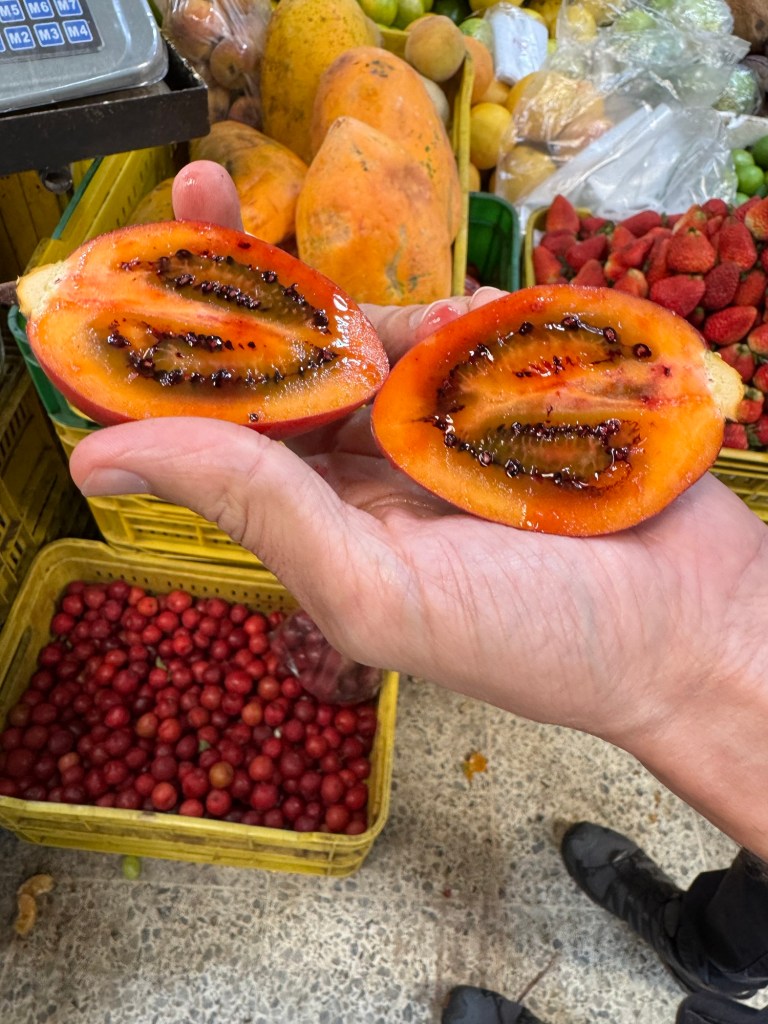
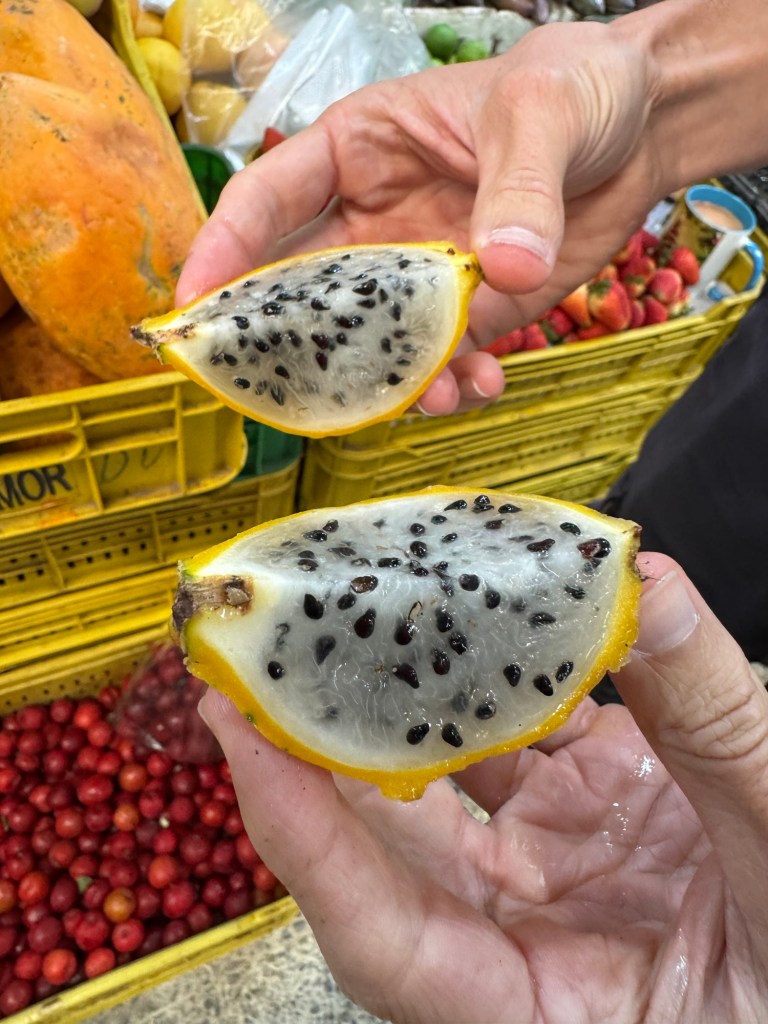
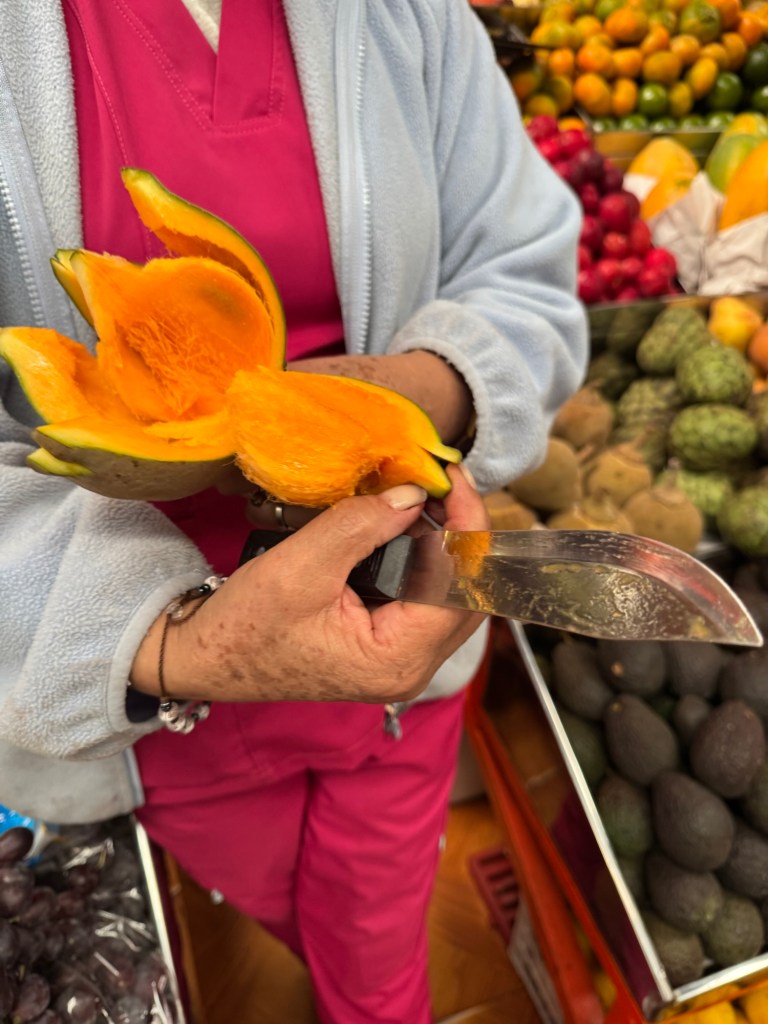
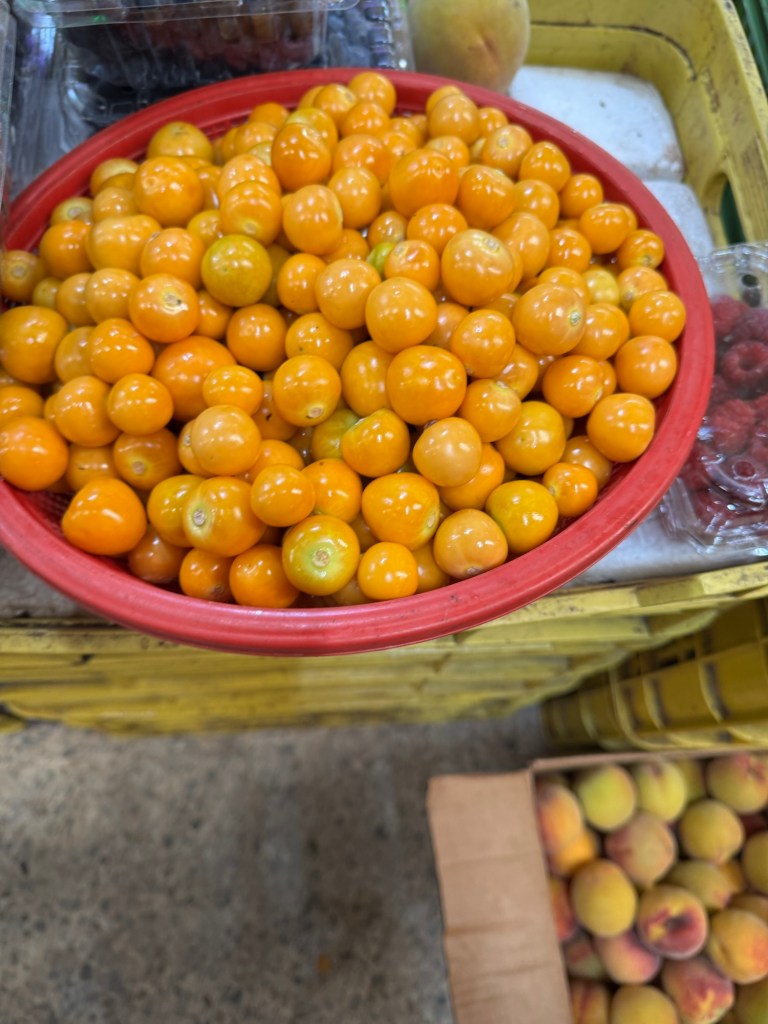
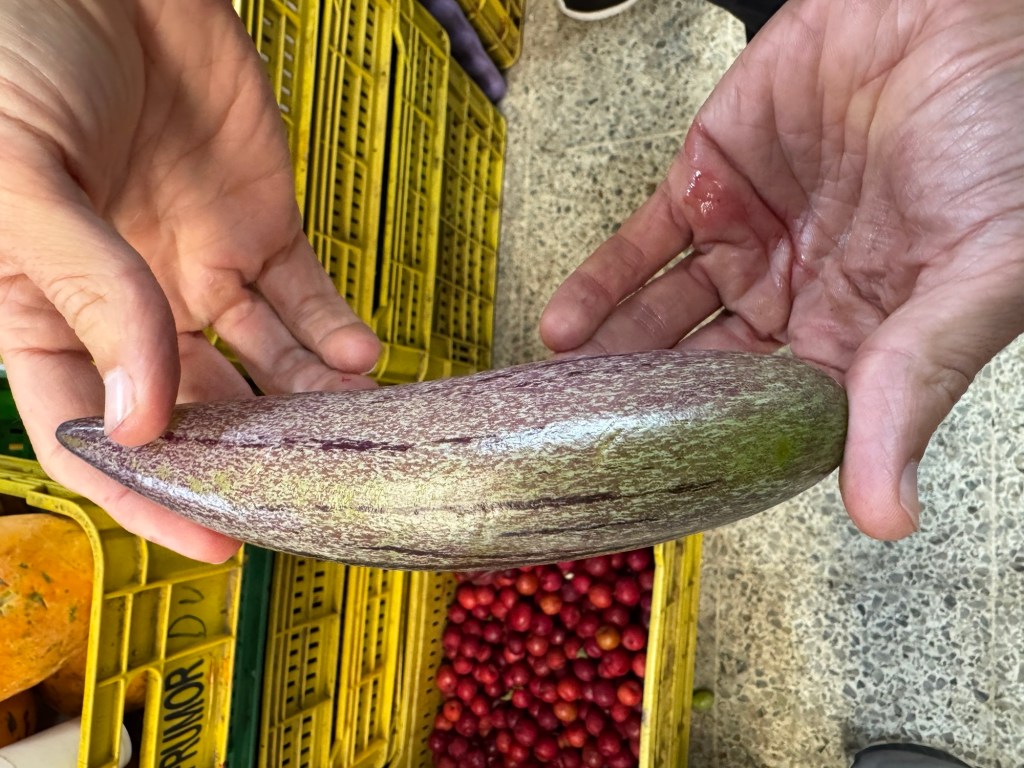
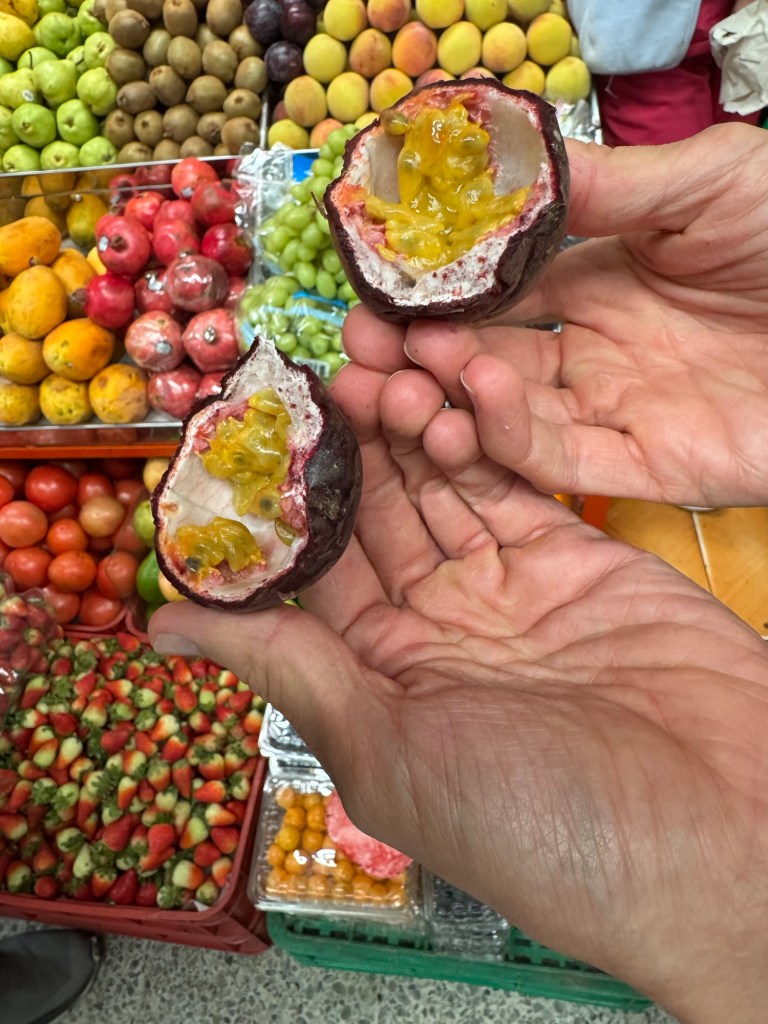
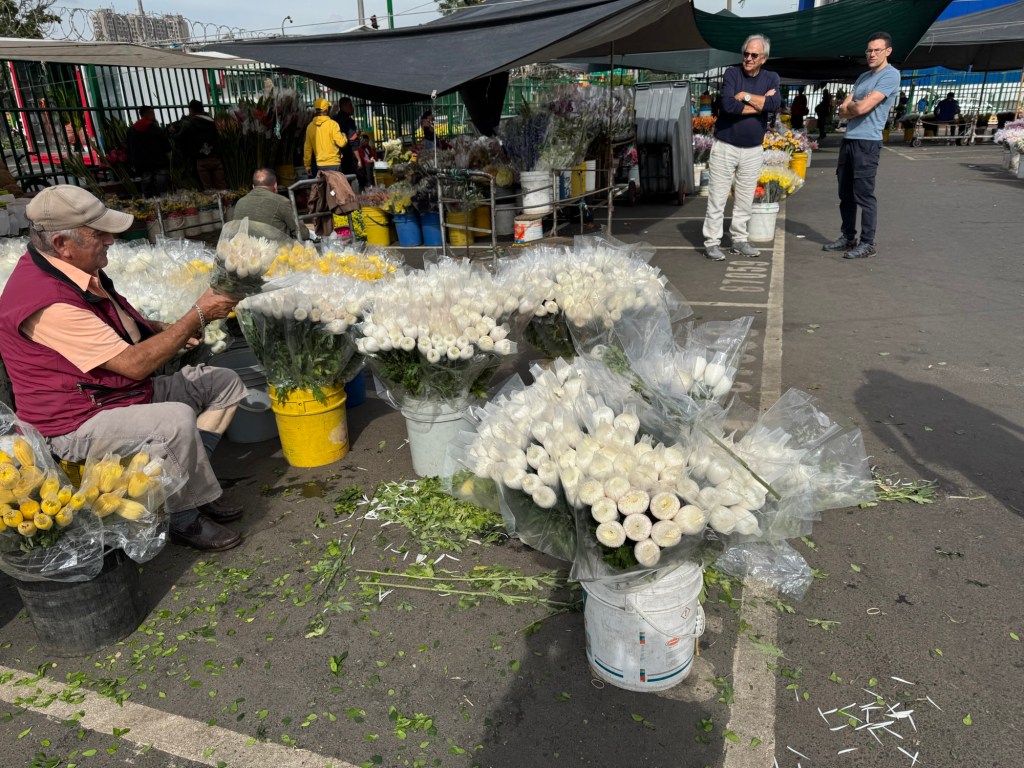
Santiago picked us up at 8am and off we went to the biggest market in Bogota to sample unusual fruits and taste other foods he considered safe to eat. The place was packed with shoppers. Here are the unusual fruits we tasted. Next to it was the flower market.

Santiago insisted we try some “breakfast” food as well.

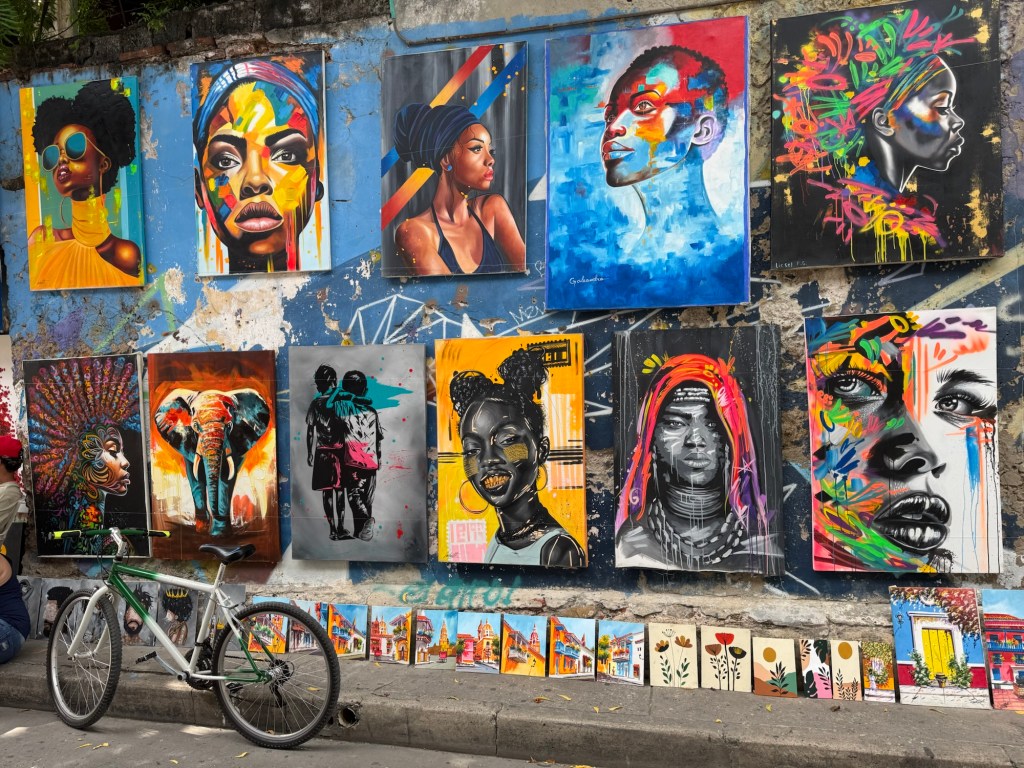
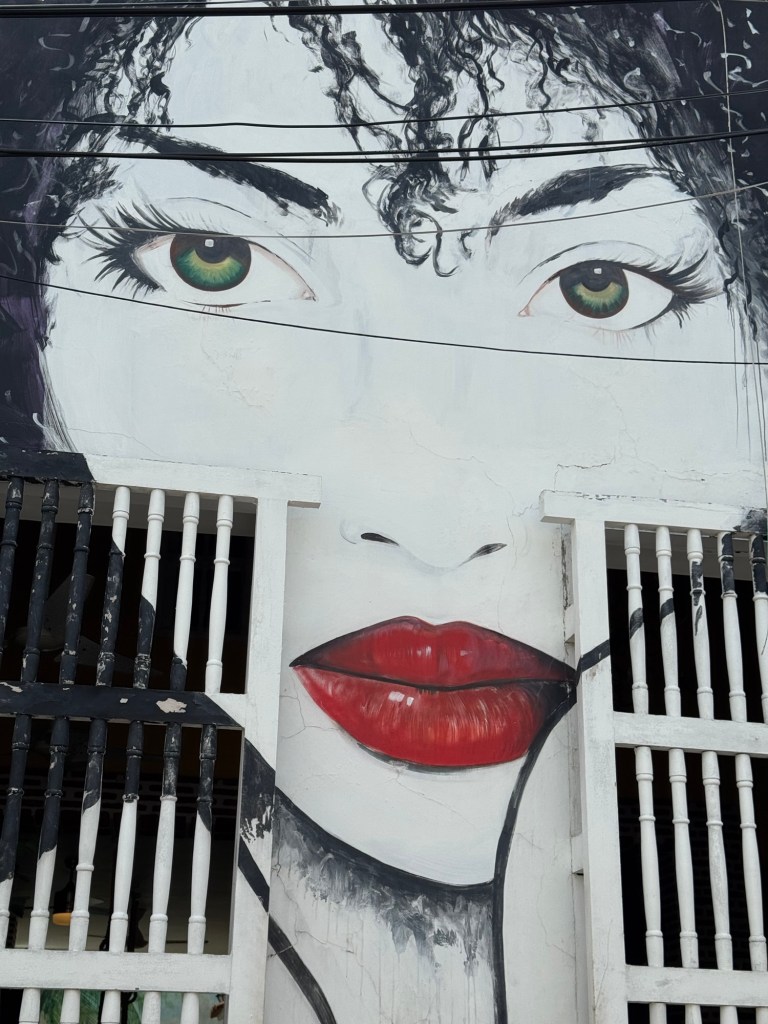
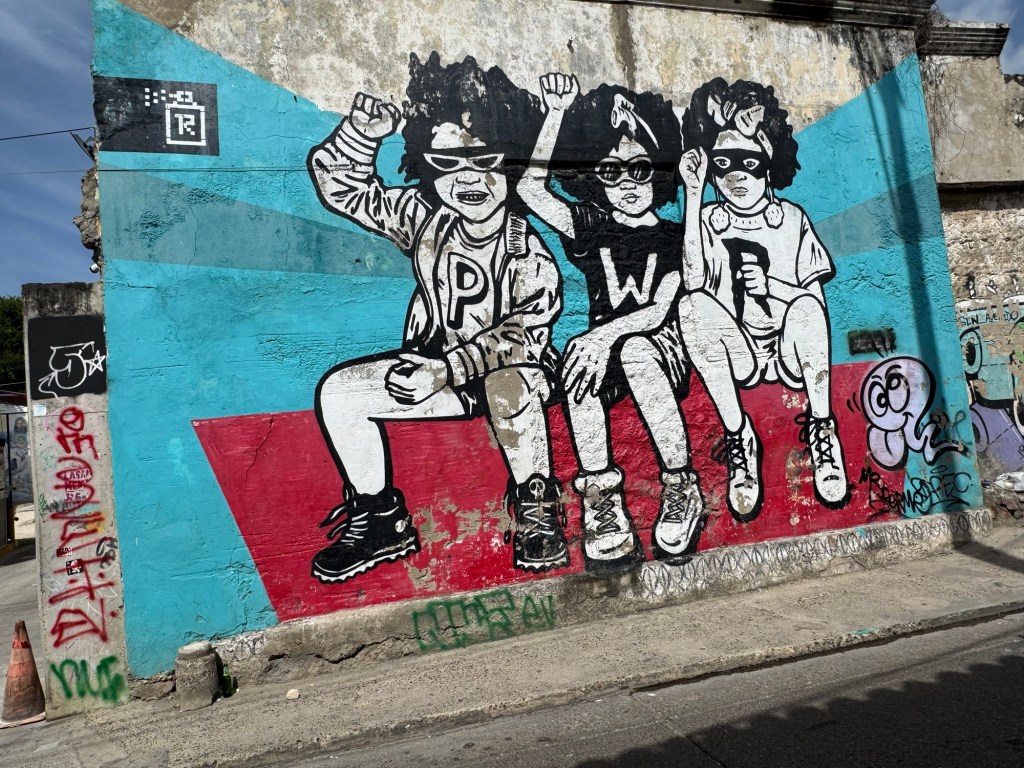
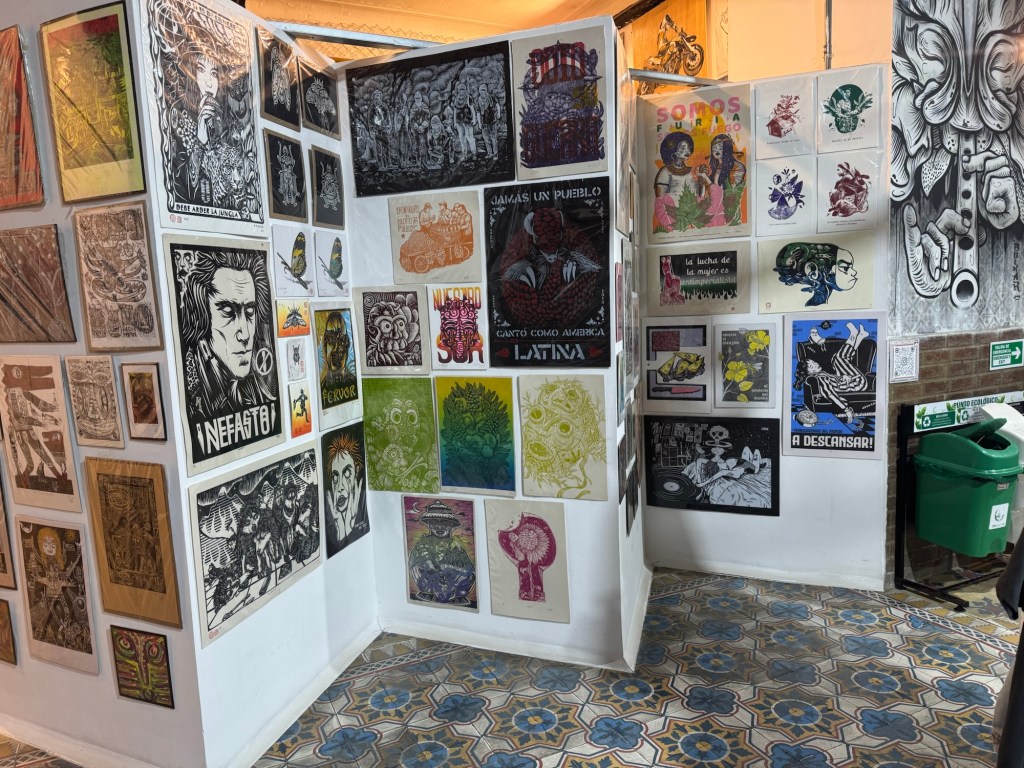
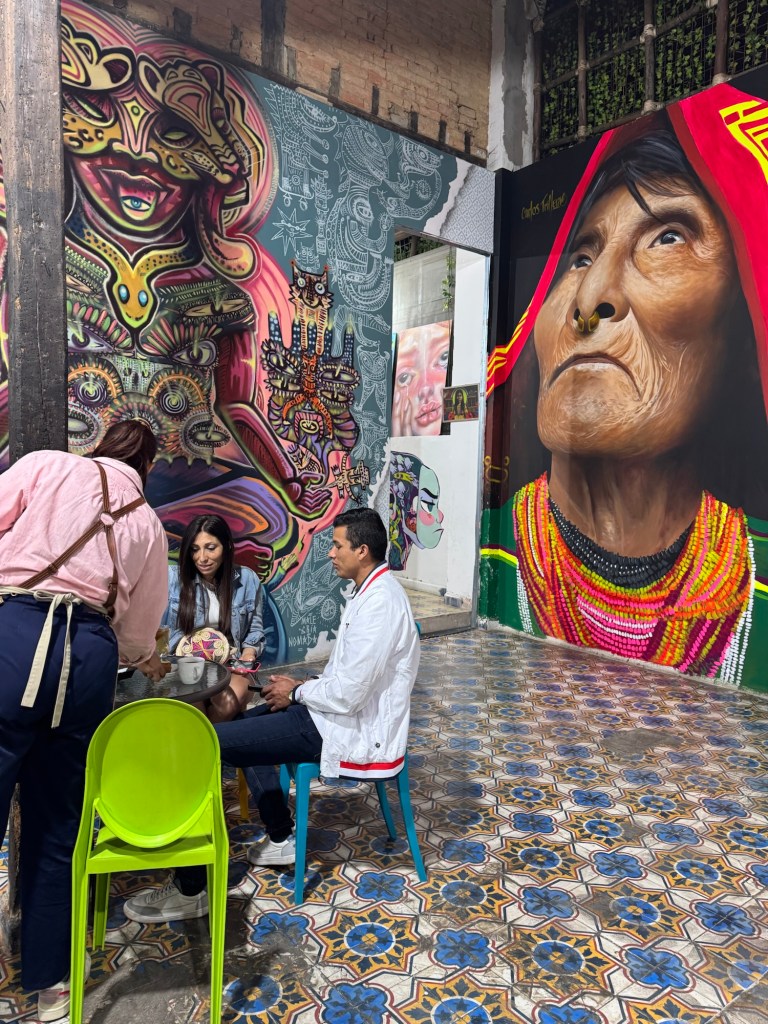
Apparently Bogota has the greatest amount of graffiti in the world. We certainly saw a lot just driving around the city. Santiago took us to a couple of shops that specialize in graffiti art, which is completely different from what he called tag art and I call graffiti. Graffiti is regulated in Bogota. You must apply to do graffiti on a specific wall. There are competitions to earn a right to a particular space. The better the artist, the more likely to get approved. A lot of illegal “tagging” still goes on, if the tagged can keep from getting caught.

In the late morning Santiago drove us to the airport for our afternoon flight to Medellin.

Salt is on the menu in Bolivia

Sunday, October 26, 2025

As we begin to depart Brazil, we are struck with a few thoughts. Most of the places we visited were most interesting and enjoyable. However, the northern areas near Manaus and in Cristalino have been too hot and humid for us, in spite of being in the dry season. We will try to avoid such places in the future. We are spoiled with our California weather. We also realize how much we miss the wildlife in Africa. We saw a few new animals and birds in the forests and jungles of Brazil, but they do not compare with the wildlife we have experienced in the African savannah. We are ready to move on.

The effort to get to São Paulo and onward took most of the day. We boated out of the jungle, motored through the soybean fields and flew from Alta Floresta through overcast skies to Sao Paulo where we arrived in the dark at 7:30pm.

Our driver told us it would take 1 and a half hours to get to our hotel so I learned a few things from him, while we suffered through very heavy Sunday evening traffic. São Paulo has 11 million people in the city, 22 million in the metropolitan area and 45 million in Sao Paulo state. It is the most populated state in the country of 220 million. The ride reminded me of driving to the Bay Area after a long winter ski weekend. He was a pleasant looking man who admitted he had been married and divorced 4 times as was determined to stay single from now on. He loves to drive and has been chauffeuring clients like us around São Paulo for 30 years. Finally, we arrived at the Pullman Hotel. Spent a night there and flew out the next morning for Santa Cruz, Bolivia through solid overcast skies.

Monday, October 27, 2025

We visit Santa Cruz, Uyuni, La Paz, Lake TIticaca

Our Santa Cruz guide, Marta, met us after we had spent an hour securing visas, an unpleasant and expensive ($160 each) process only for Americans visiting Bolivia. We had no problem getting visas for Brazil and won’t need them in Colombia.

As we drove through the countryside and the city of Santa Cruz to our hotel, she caught us up on the political and financial situation in the country. A new president was just elected. He is a center right politician named Rodrigo Paz, who is replacing a very corrupt socialist, Luis Arce, who had run the government for 5 years after Evo Morales presidency, both from a party called MAS which bankrupted the entire country. This period lasted 20 years. Bolivia is in a an economic crisis at the moment due to a lack of dollars and fuel, especially diesel. We saw hundreds of trucks lined up along the roadside waiting for diesel. Our driver, who uses gasoline, waited 4 hours yesterday to fill his car to drive us. The country produces natural gas, but its reserves are being depleted and will be gone in 2028. The country will have to buy fuel at that point. Sad to see this third world country not improve due to corruption. Annual inflation is currently at 23.32%. The local currency is called a Bolivian Boliviano, or a Bob.

Bolivia’s population is 12.4 -12.7 million. Santa Cruz is the largest city in the country with about 2.5 million. followed by El Alto and La Paz in third at roughly 812,000.

After arriving at Santa Cruz in the late morning, driving into town, checking into the hotel, and grabbing a bite of pasta for lunch, we went on an afternoon walk around the old city with Marta.

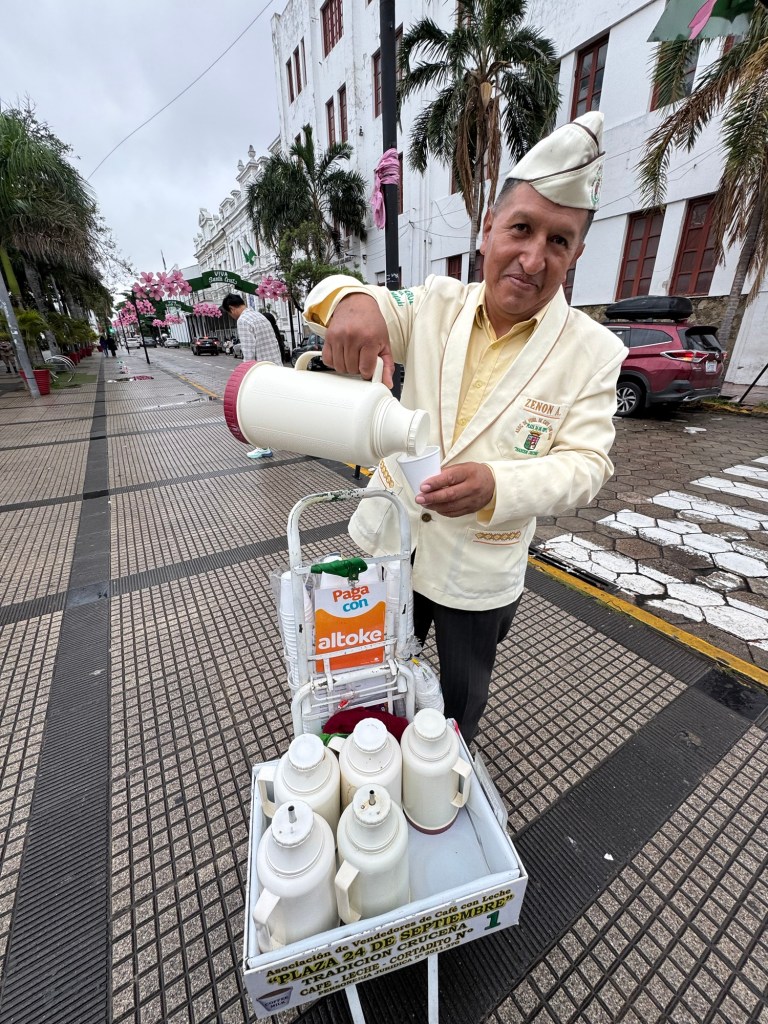
One of 12 official coffee vendors in the square. It was good and hot.

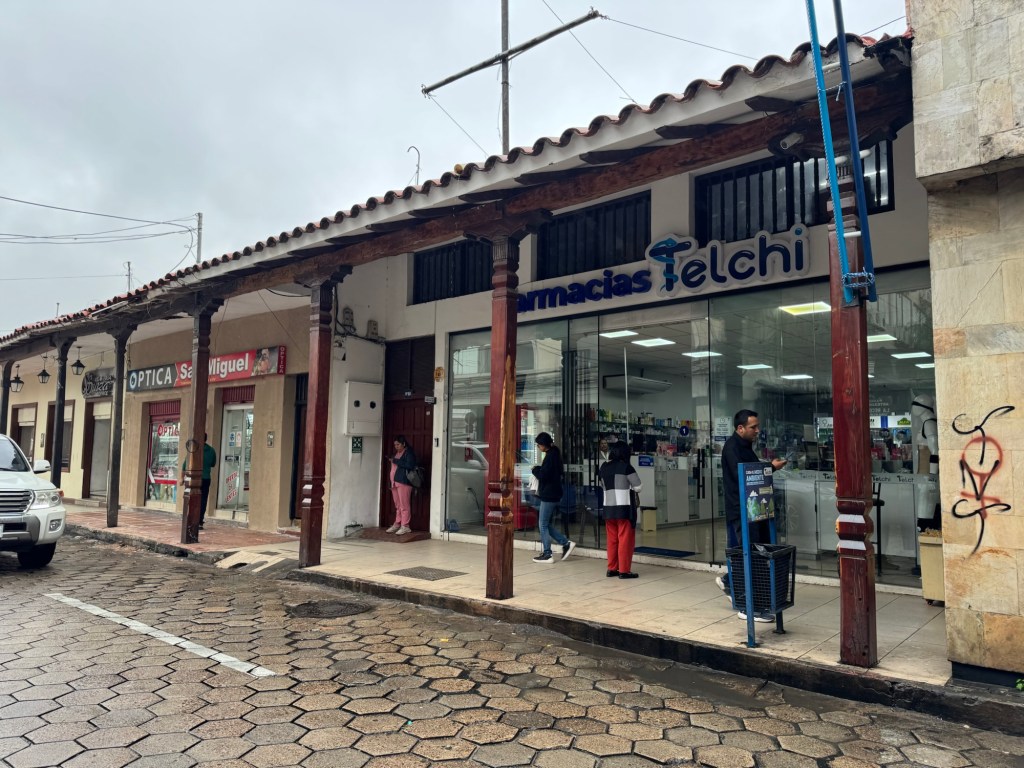
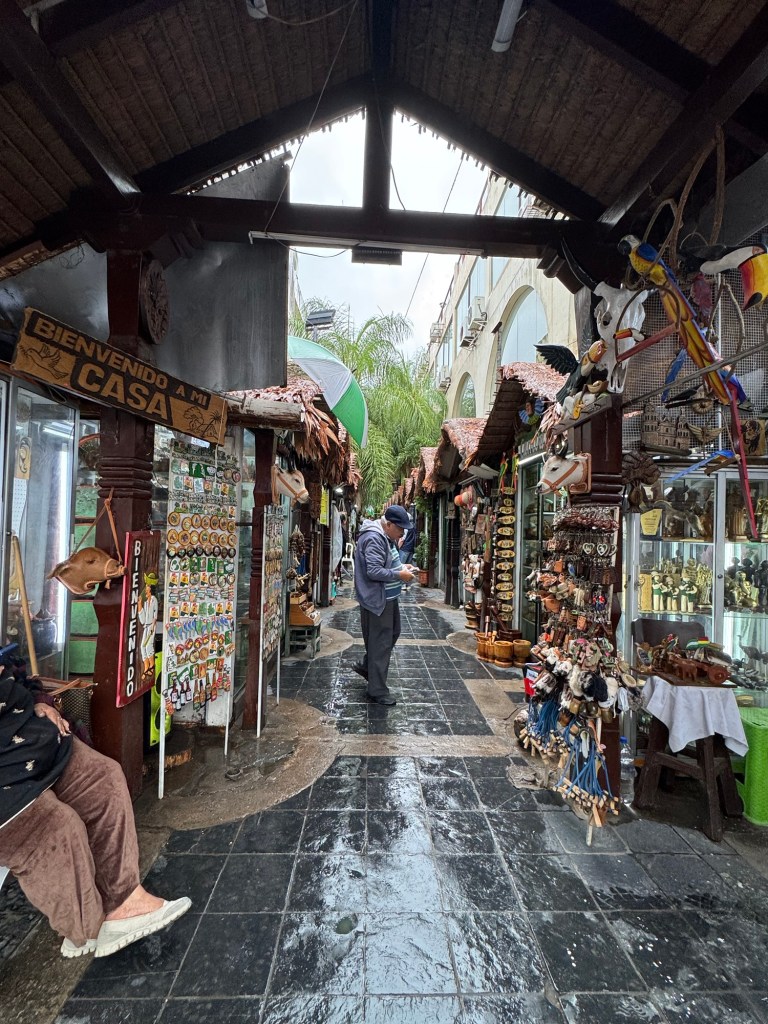
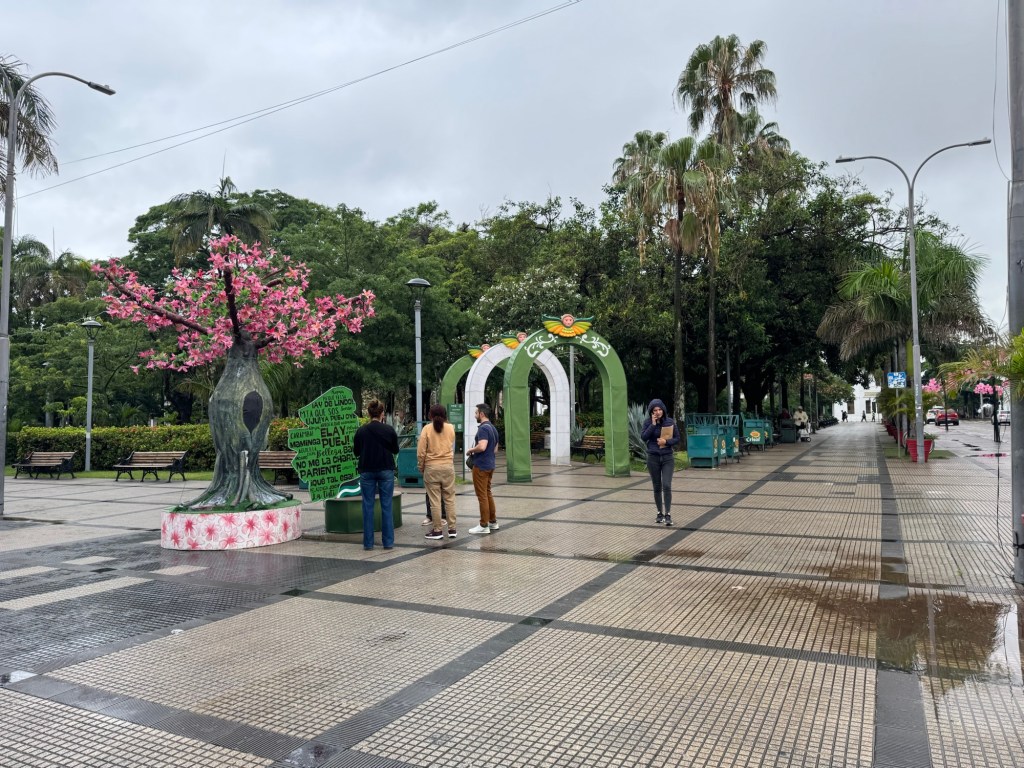
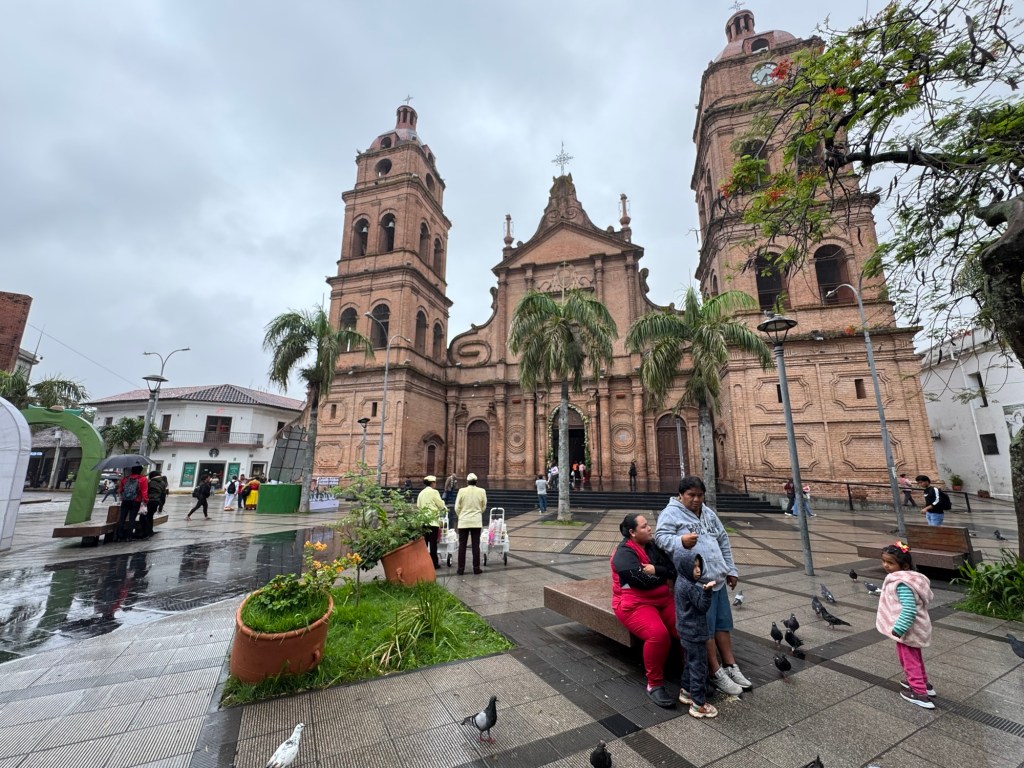
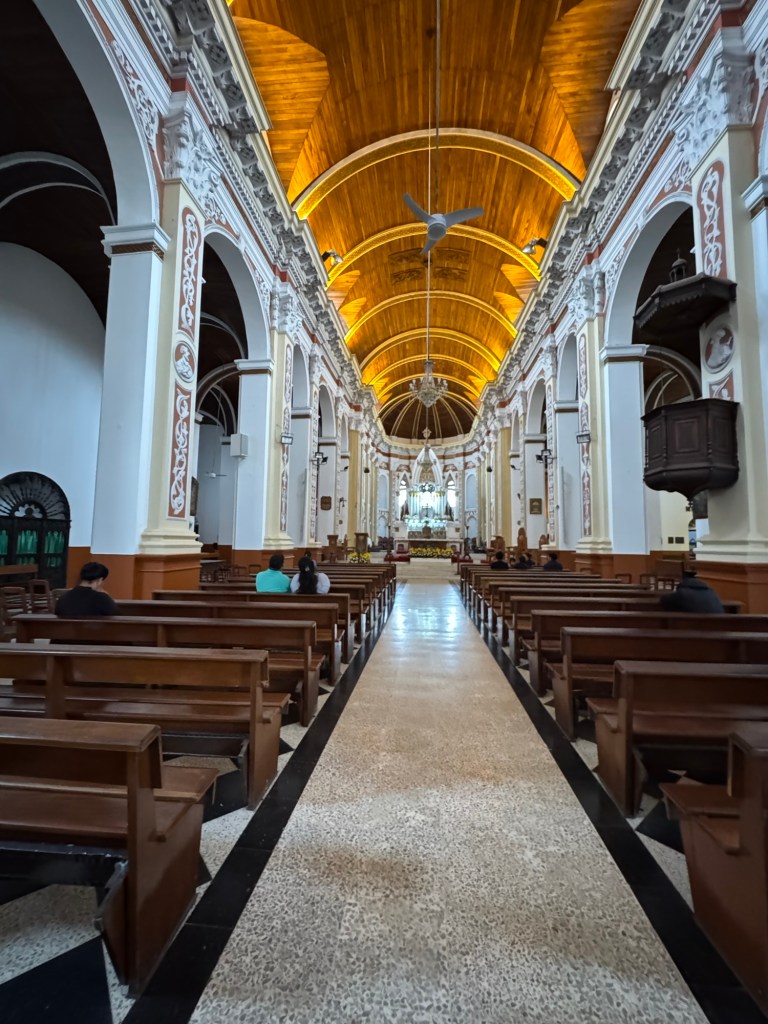
In spite of the gentle rain we encountered most of the day, we visited the old colonial streets with buildings made with wood columns and red tile roofs. La Recova Market, a narrow pedestrian street, retains its original arched corridors and keeps the colonial charm alive. The narrow street of vendors selling jewelry, leather goods, crafts and textiles was inviting, as was the town square and the Catholic cathedral. According to Marta, it and all churches in the city, are packed every Sunday.

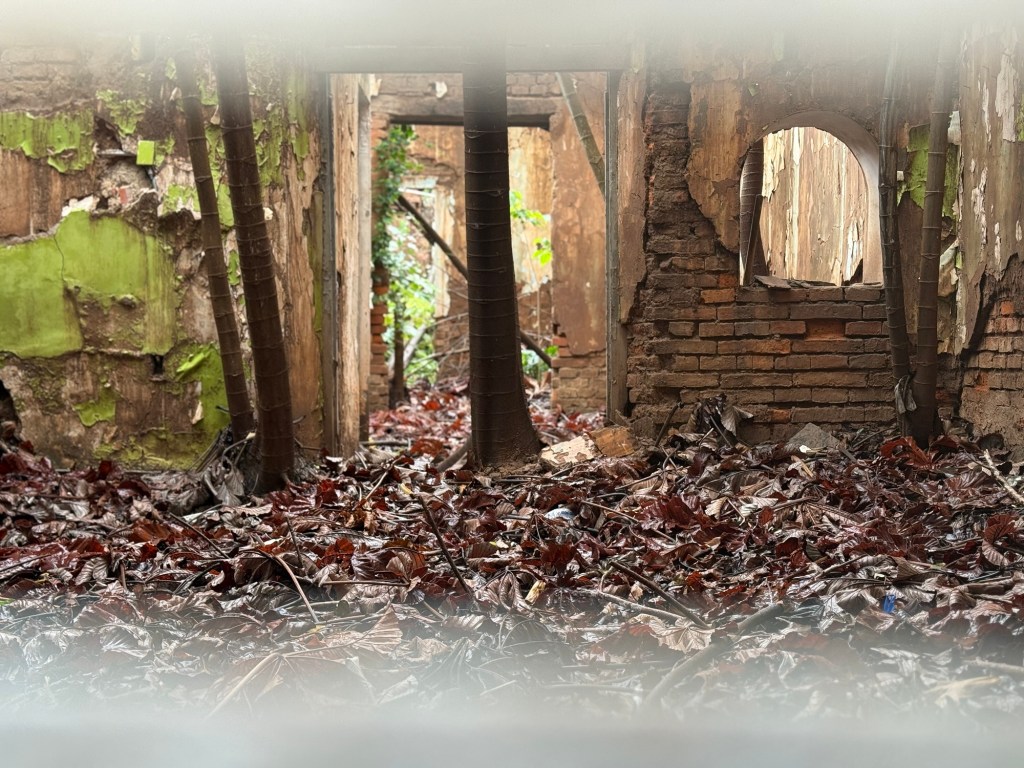
The inside of an abandoned building through a crack in the exterior wall

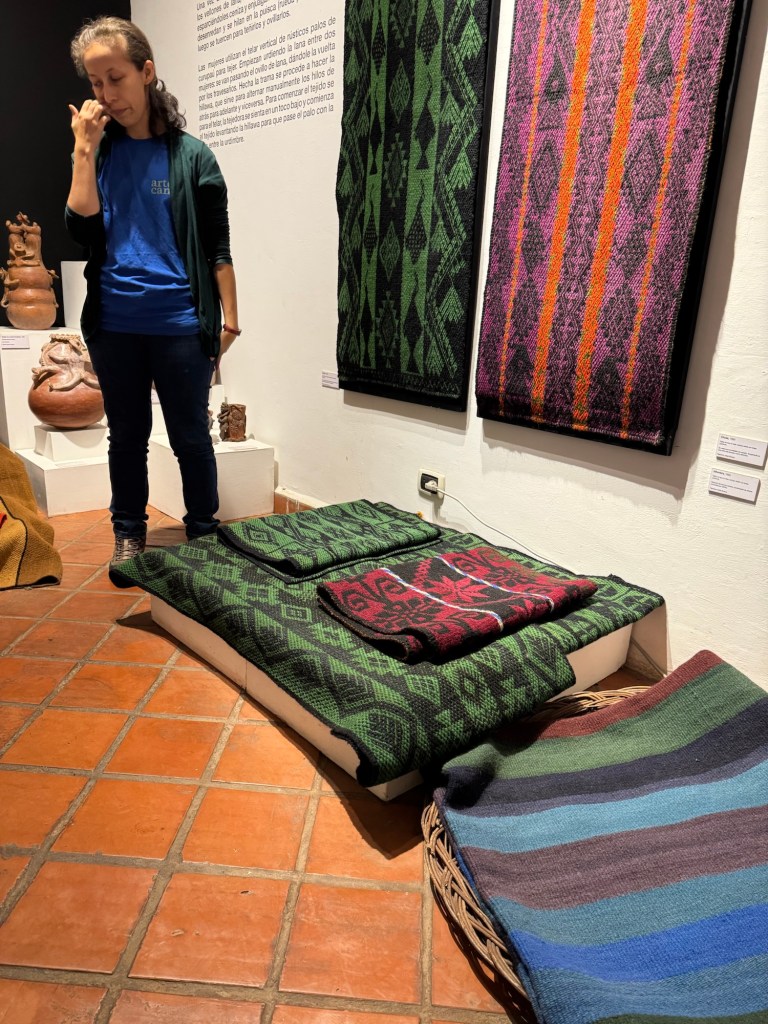
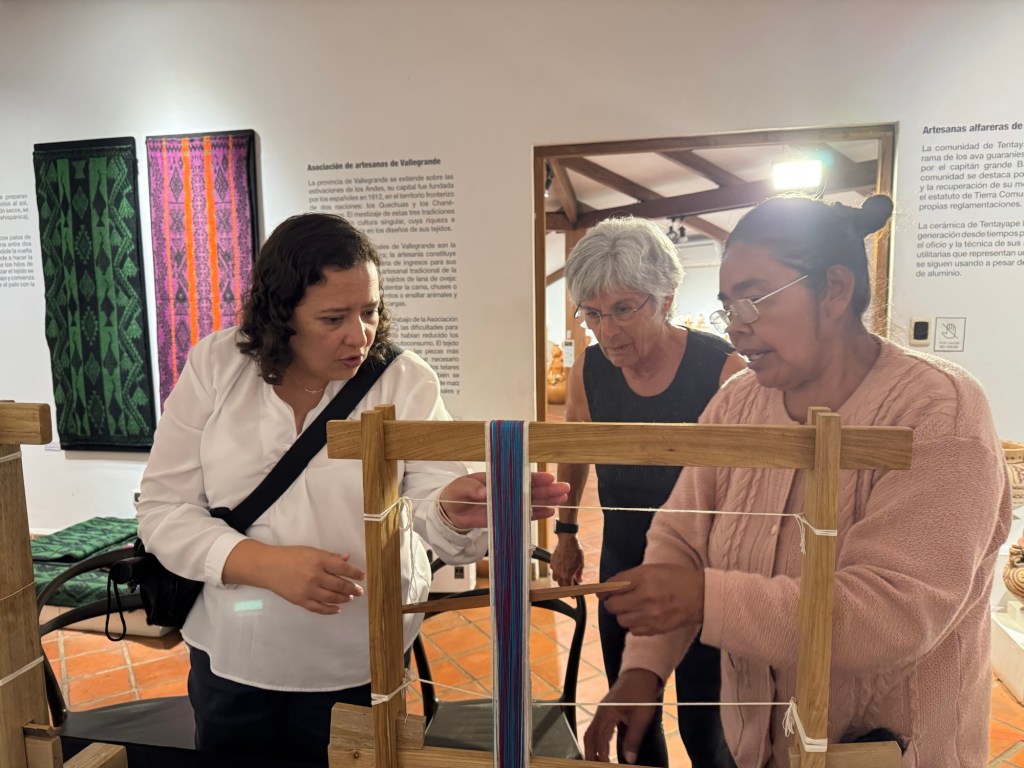
Soon we found ourselves at the Museo Artecampo, a space dedicated to preserving the art of Bolivia’s lowland indigenous communities. We were treated to a private tour of the weaving workshop that represents the best work of 7 different indigenous community’s and were introduced to the experience of weaving.

After the weaving tour and trying our hand at weaving with the help of an expert indigenous weaver, we cleaned up and went to dinner at an asian restaurant on the 28th floor of the Green Tower, a new office building near our “unique” Boutique hotel. The hotel was rather funky, with photos of old movie stars and concrete floors everywhere and a 2 story apartment we stayed in until our departure at 4:30am. Glad it was only one night.

Tuesday, October 28, 2025

We landed in La Paz at 7am for a 1 hour layover to our flight to Uyuni. Unfortunately, our flight was delayed 2 additional hours. La Paz is at 13,327 feet asl and we were affected as soon as the cabin was open and unpressurized. We hoped we were adjusting as we sat in the airport waiting for our next flight.

Uyuni (Uyu =meeting; ni =place) has a population of only 33,000 and seems to be in the middle of nowhere. The main occupations are silver, zinc and borax mining, quinoa farming and tourism. However, the elevation is also high and our hotel, on a hill above the salt flats is at 12,194 feet asl. We arrived mid day, had some lunch and spent the rest of the day trying not to be miserable. Mark skipped dinner and I ate very little. He slept through the night, while I did not.

Wednesday, October 29, 2025

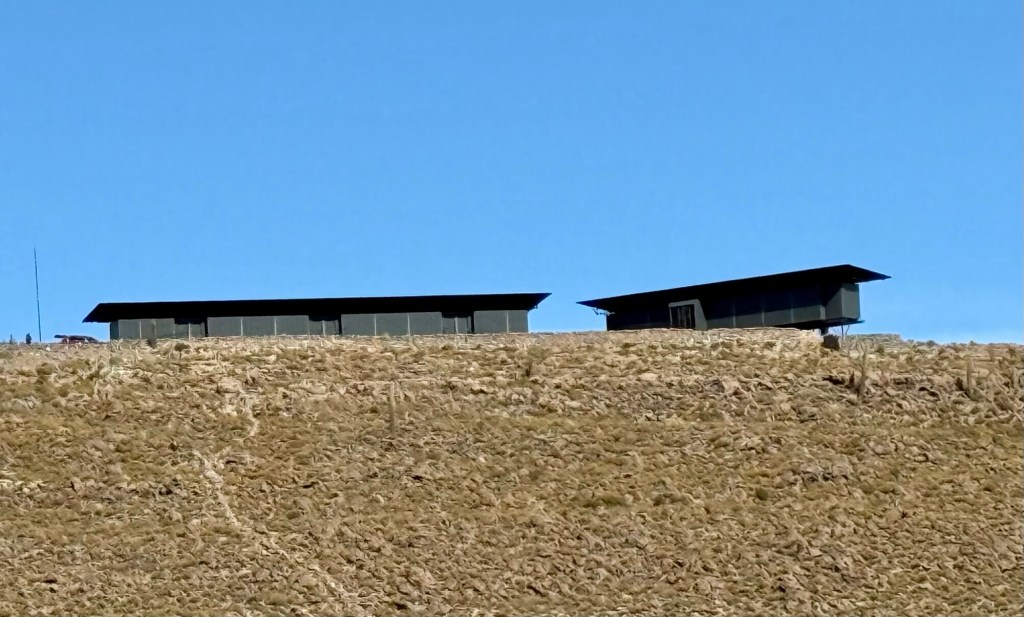
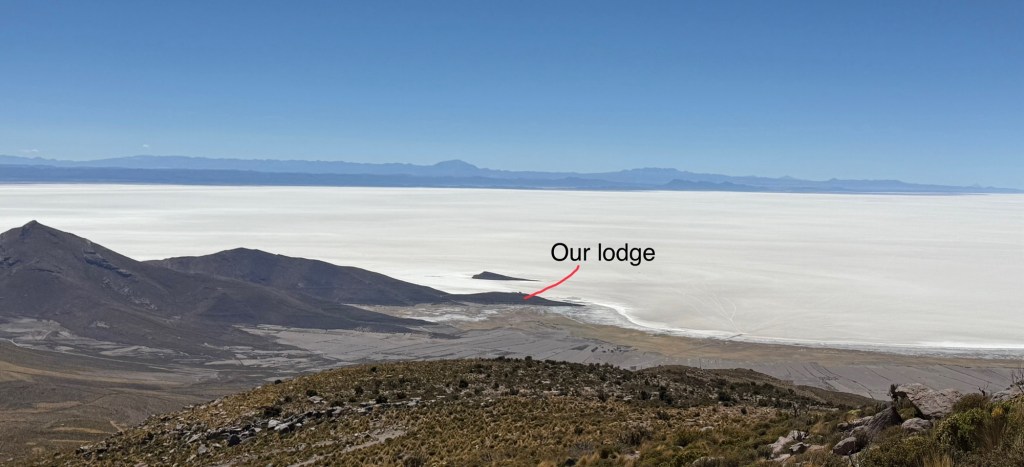
Explora Lodge is minuscule in the landscape.

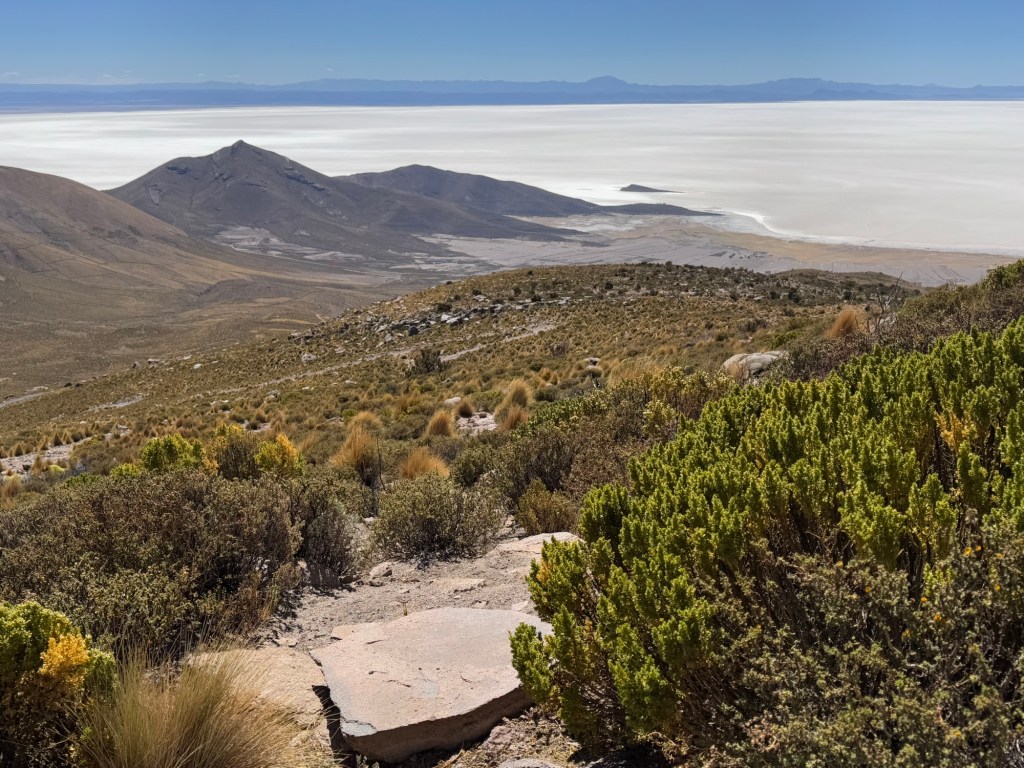
Explora Lodge next to the world’s largest and highest salt flats.

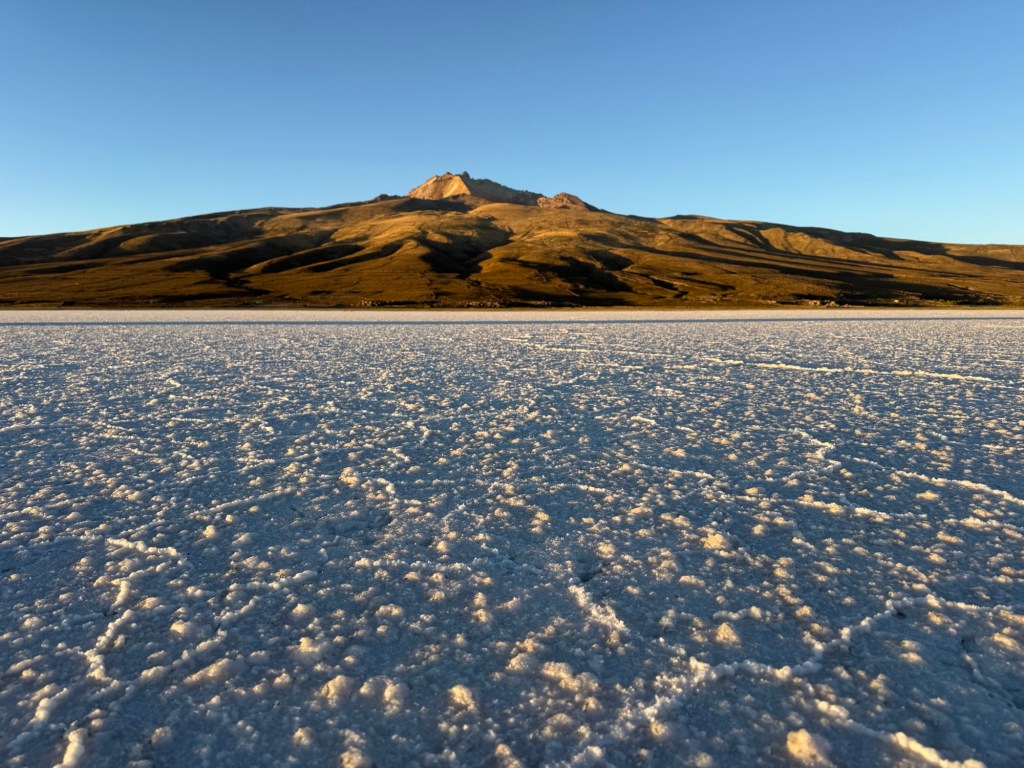
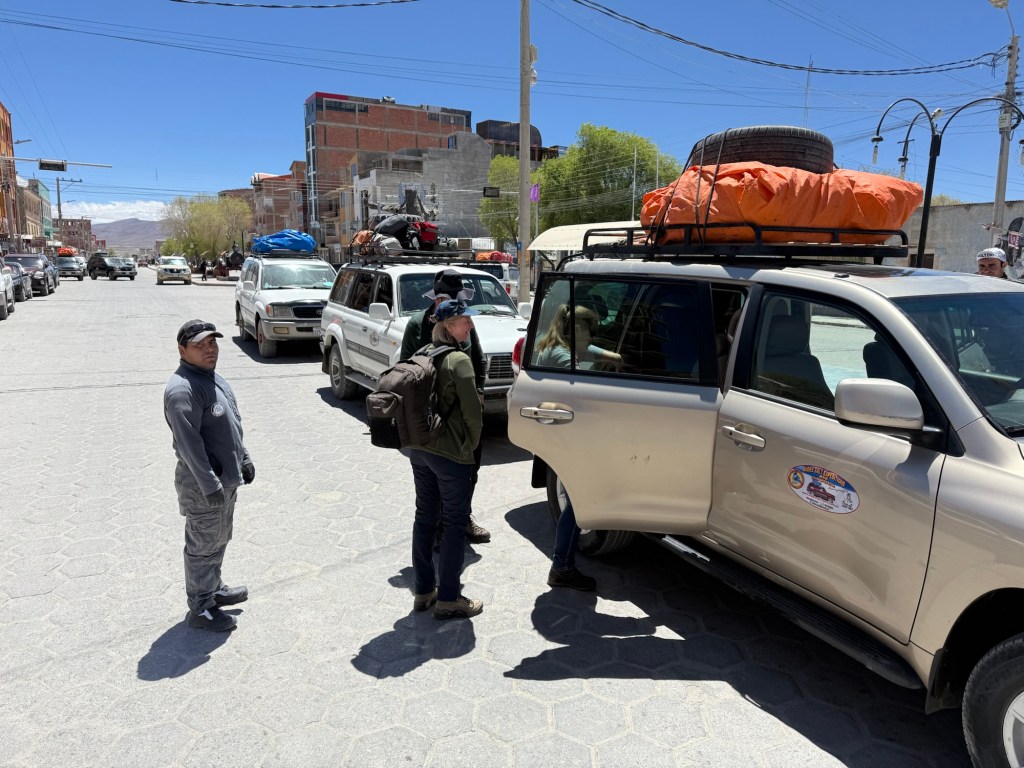
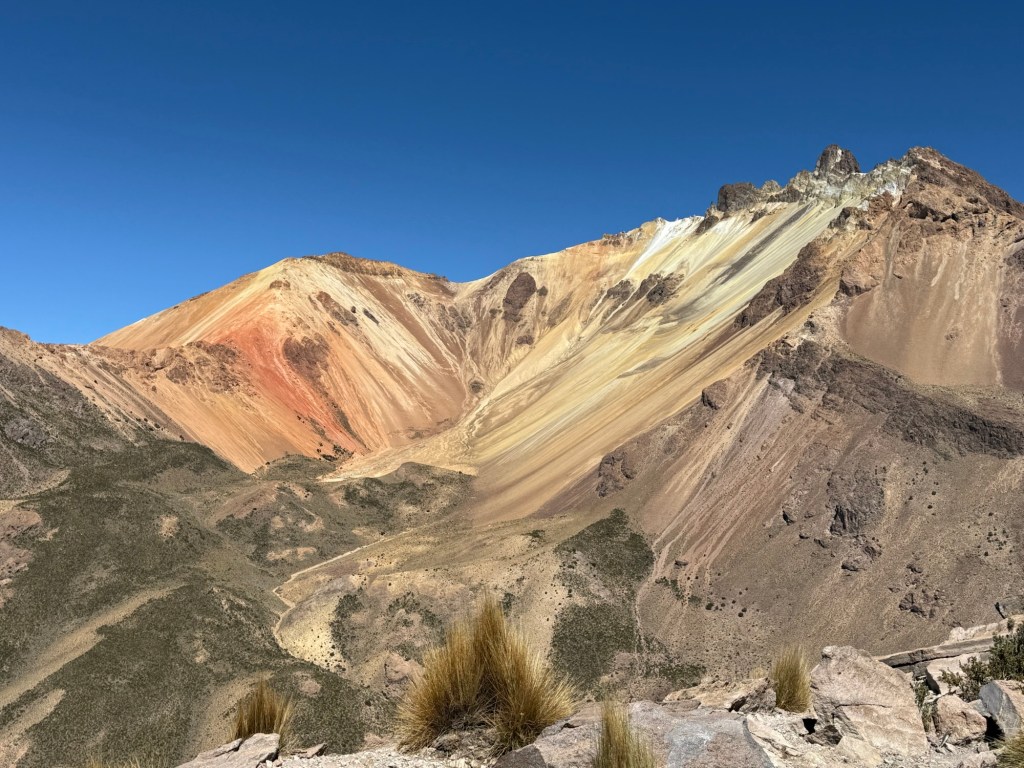
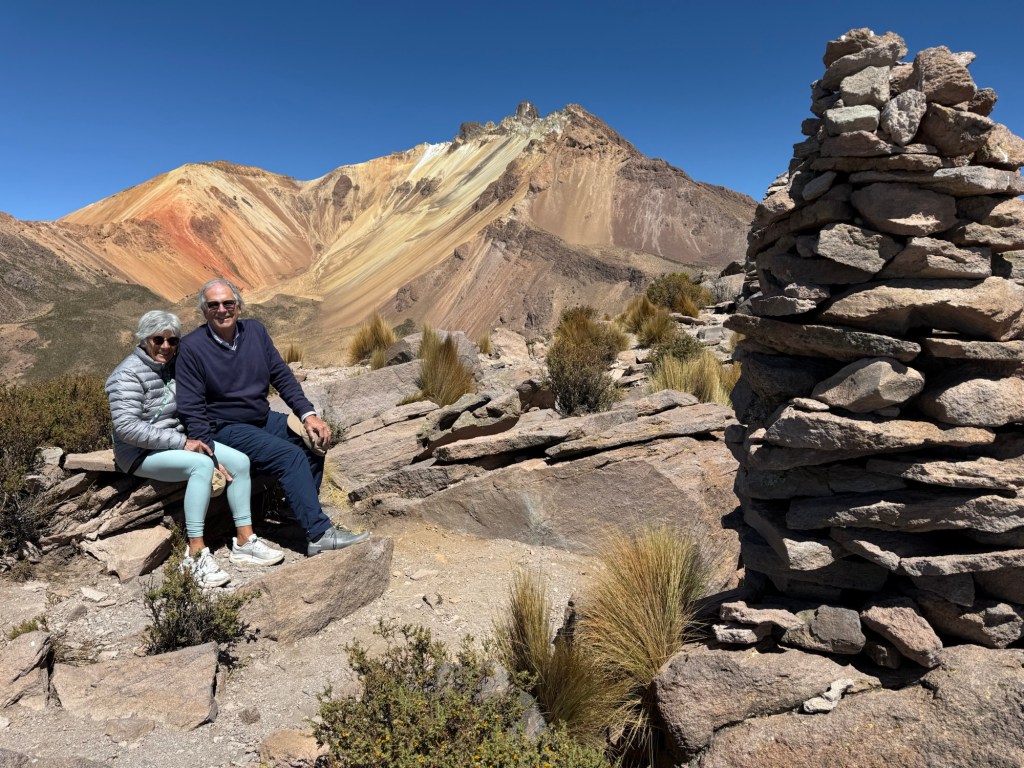
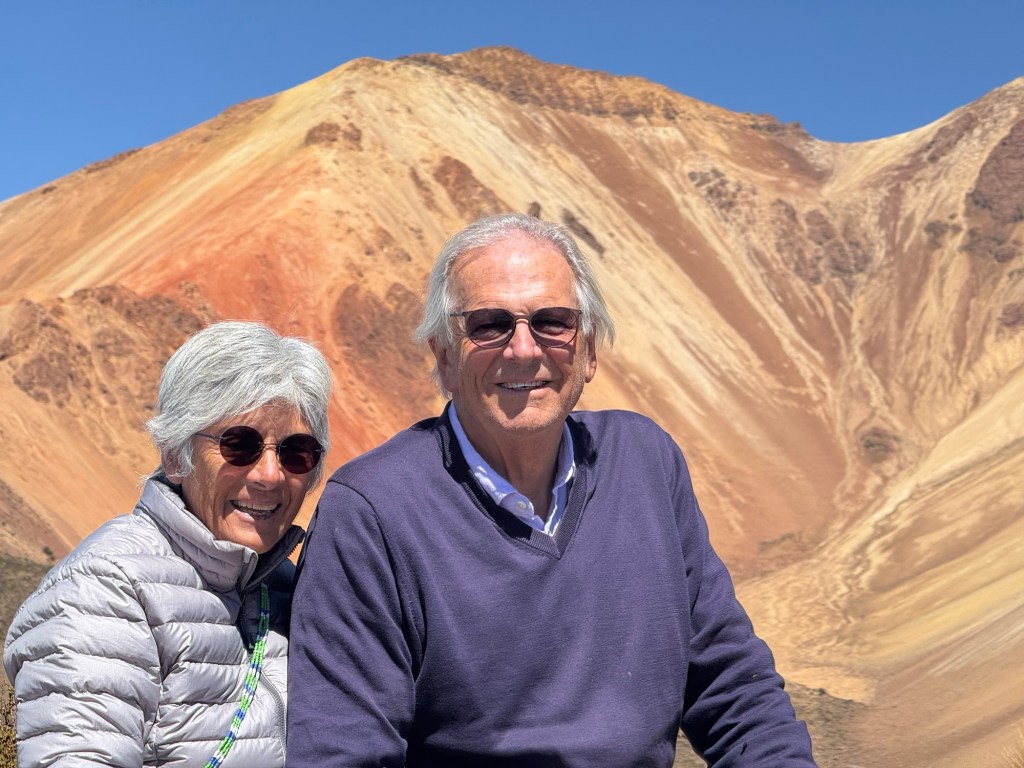
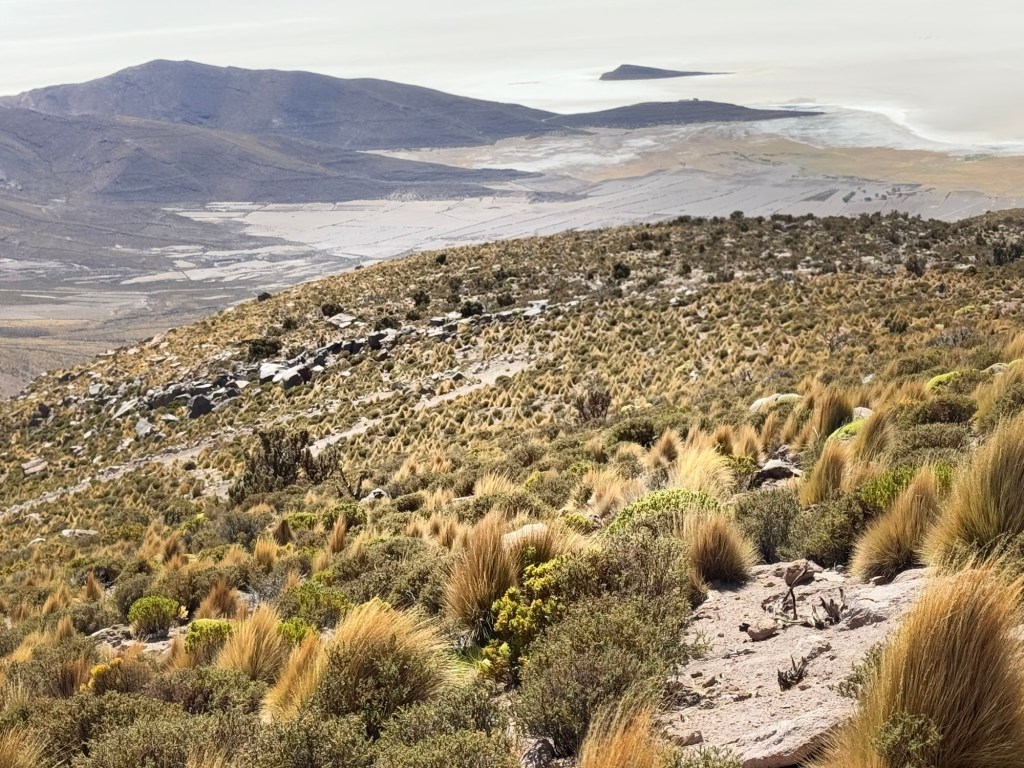
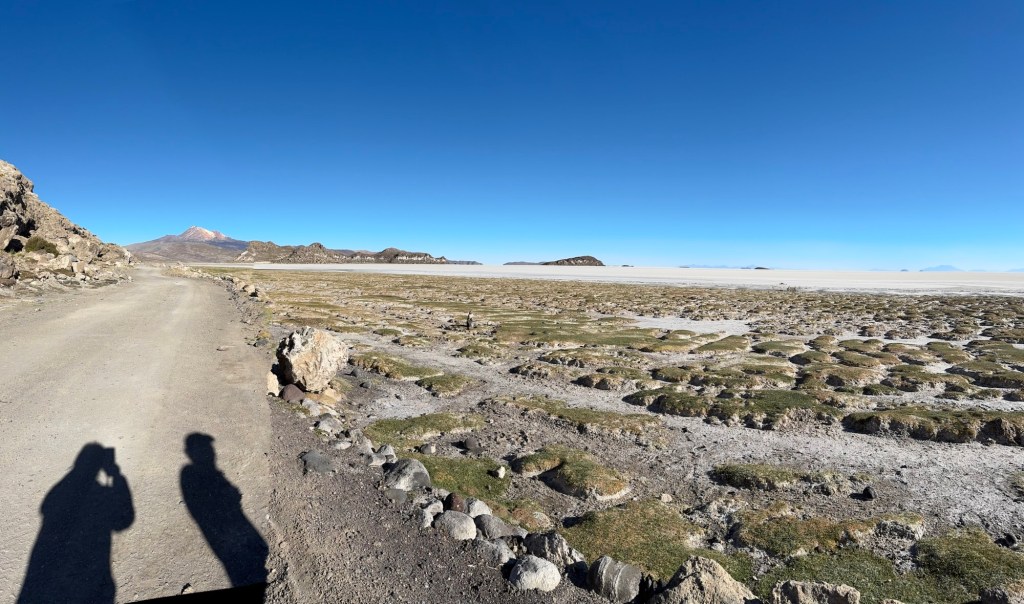
We were up and on the road by 9am, in spite of our low energy. Our driver spent an hour and a half traveling over rough roads to a short hike up to a view point of the Tunupa Volcano (17,457 ftasl). I made it with Mark’s help.

Lower reaches of Tunupa Volcano converted into quinoa farming plots 900BC

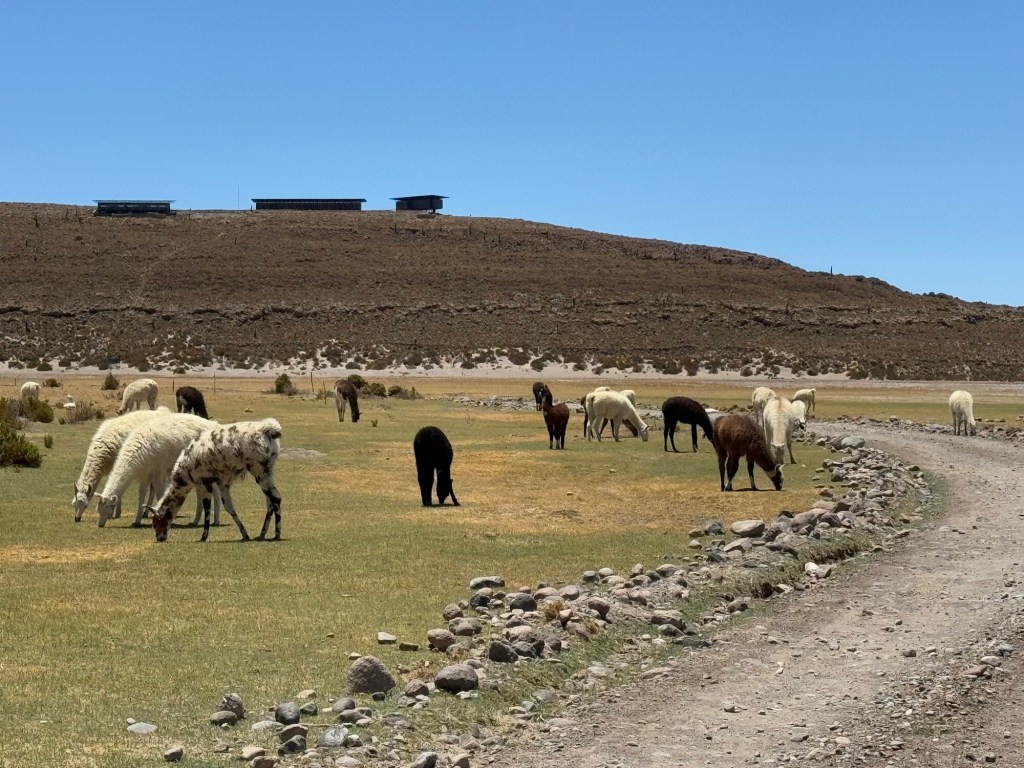
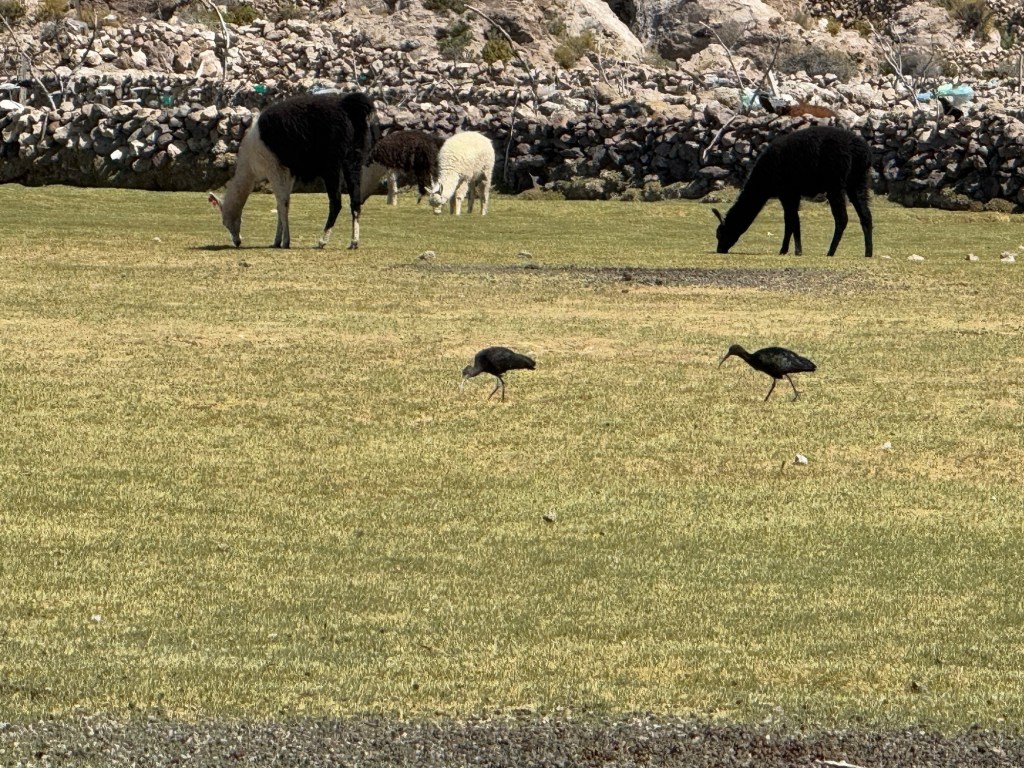
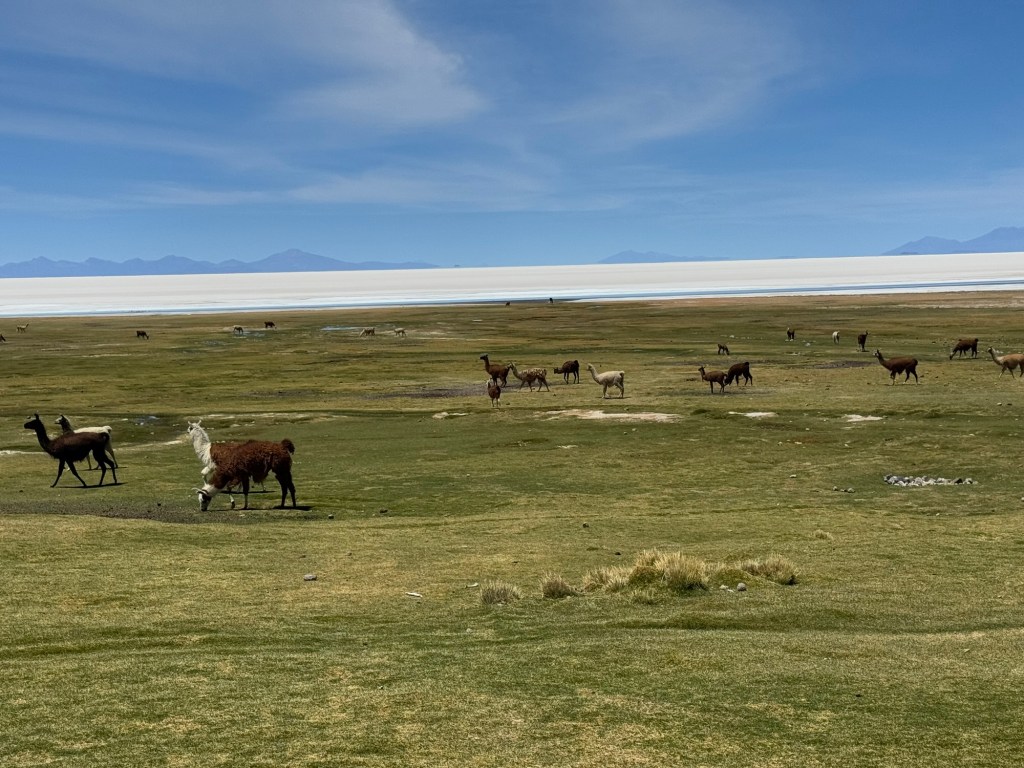
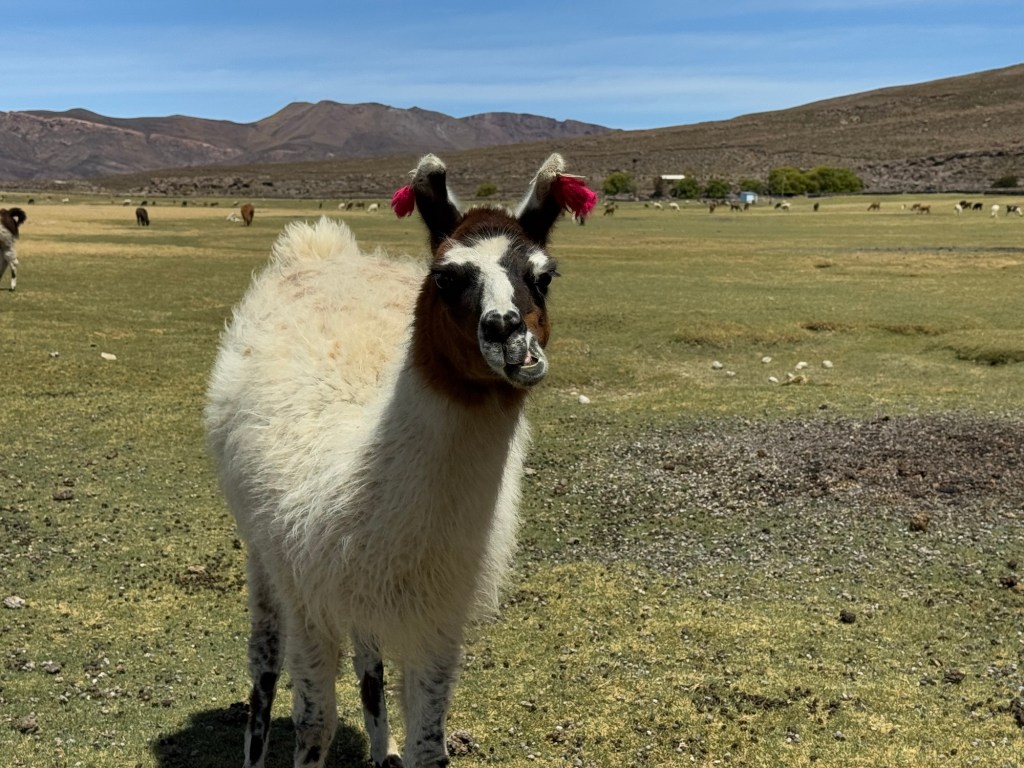
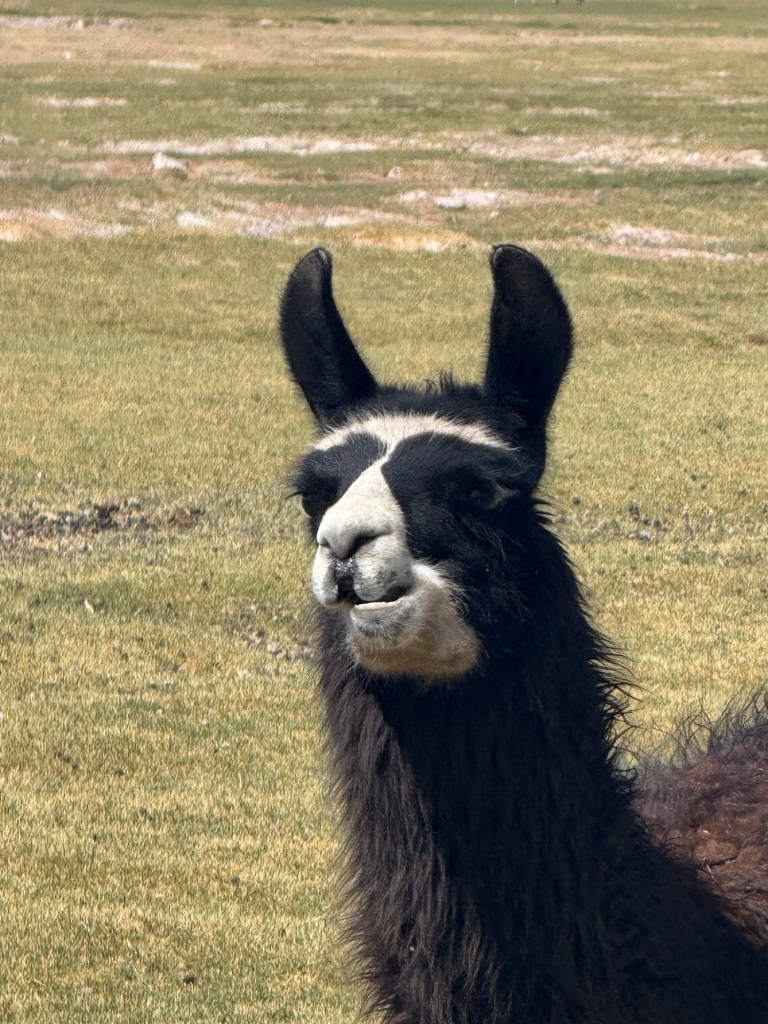
Feeling slightly better, we were out again at 9am for a drive though the salt flats to a village called Cqueya to walk with the Llamas. There were many and the field next to the salt flat looked like a lawn. We saw many llama sporting red ribbons tied to their ears as decoration. Along with them we found two different kinds of flamingos feeding in the flats near the llama as well as the succulent plants they eat

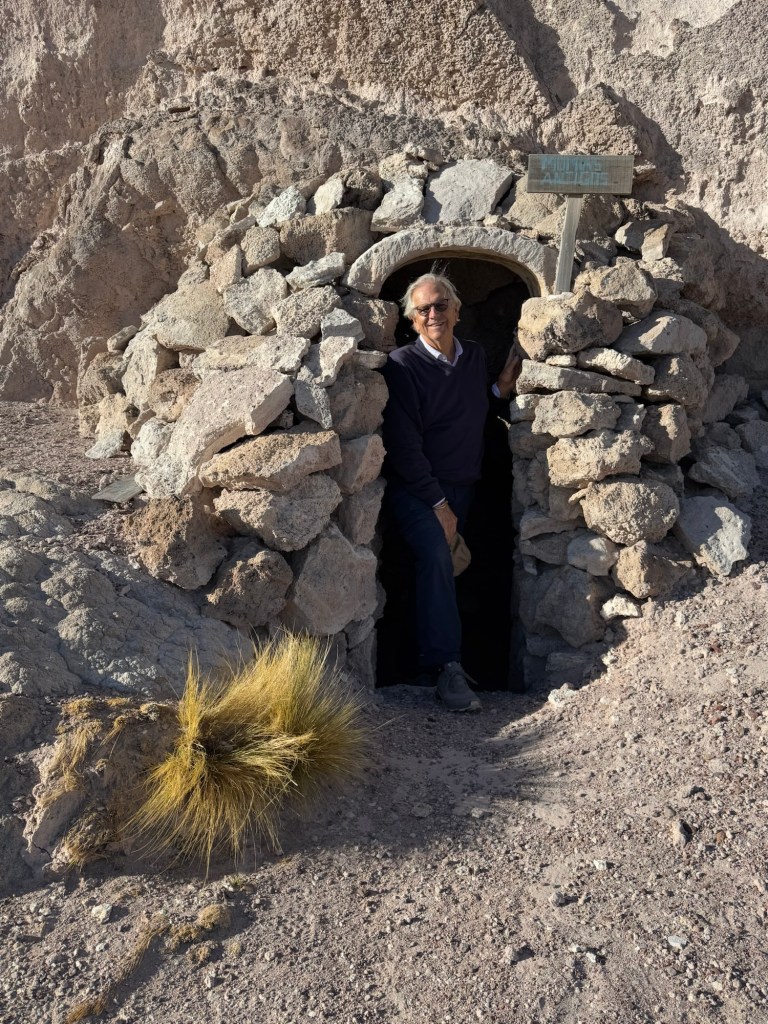
Driving up the rough roads to a from the lodge, we encountered many rock pile fences as well as outlined farming areas and small round sleeping shelters built, according to our guide, around 900 BC. The most common crop was quinoa.

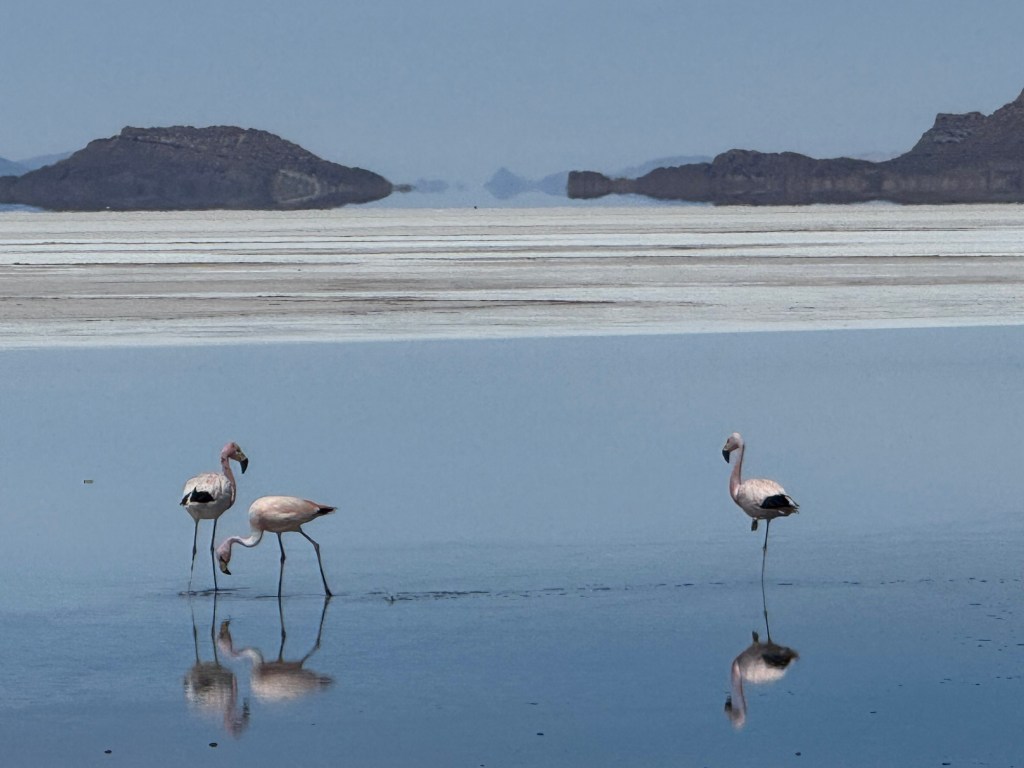
Then we found flamingoes feeding at the edge of the salt and learned from Elsa, our guide, that the ones with black tails were Andean Flamingos and the ones with no black tail were James Flamingos. They were both different from flamingos we have seen in Africa.

There were several people in the lodge, so we had dinner with 2 Brazilians, and 4 Frenchmen. Everyone spoke English, thankfully.

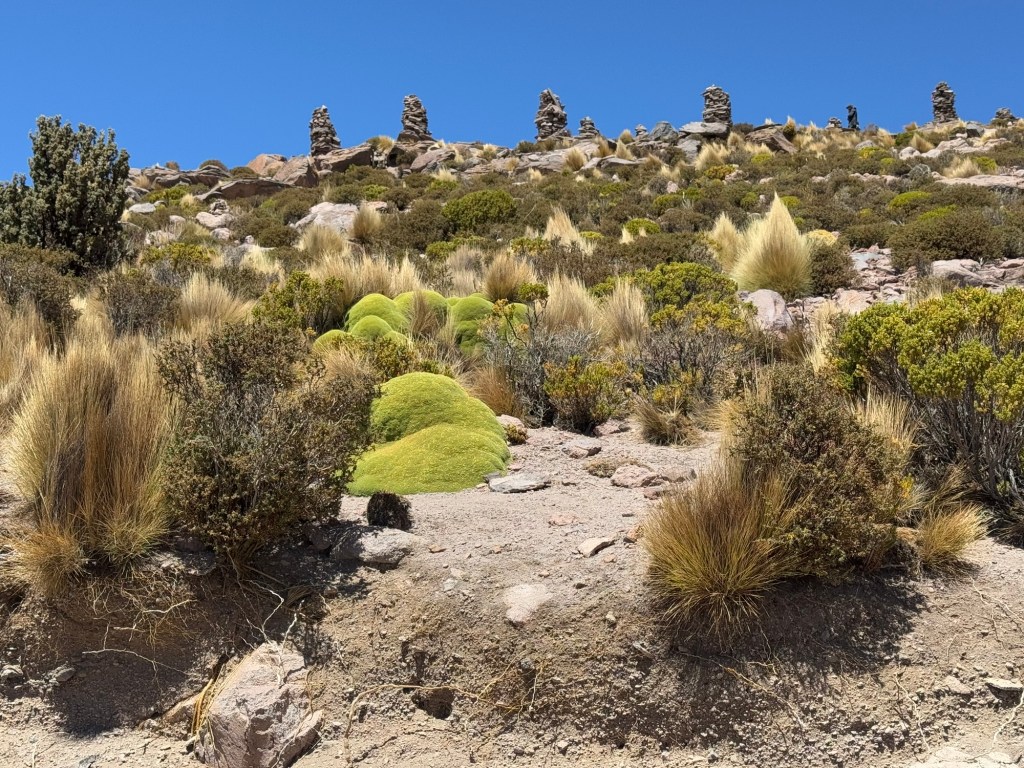
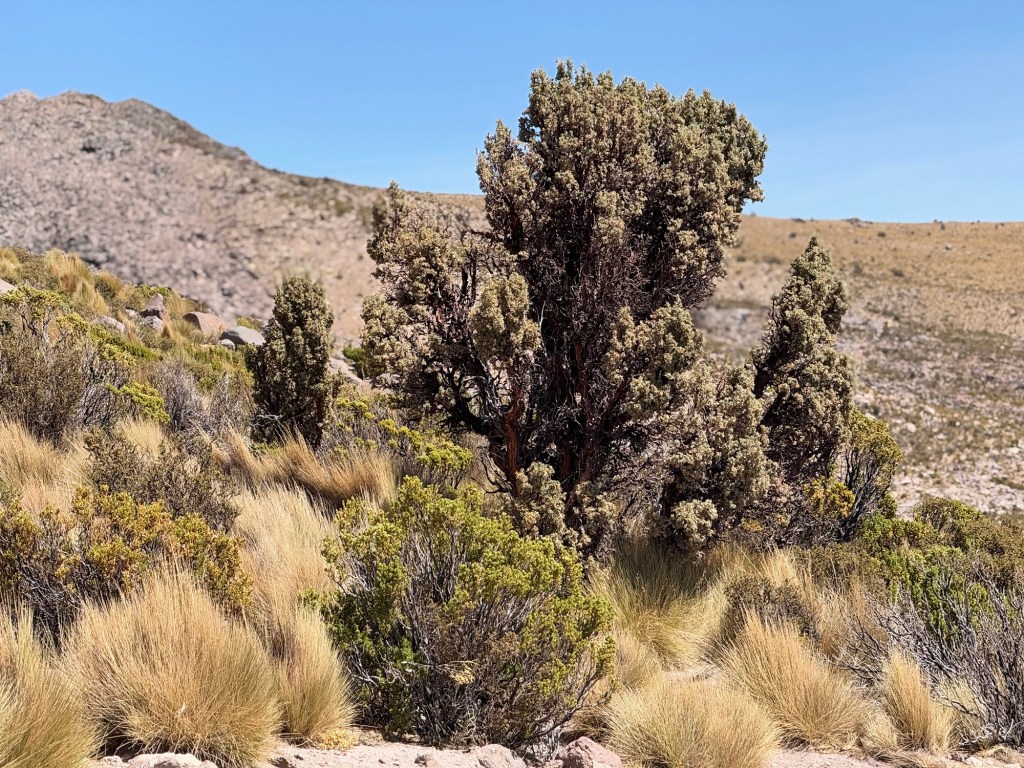
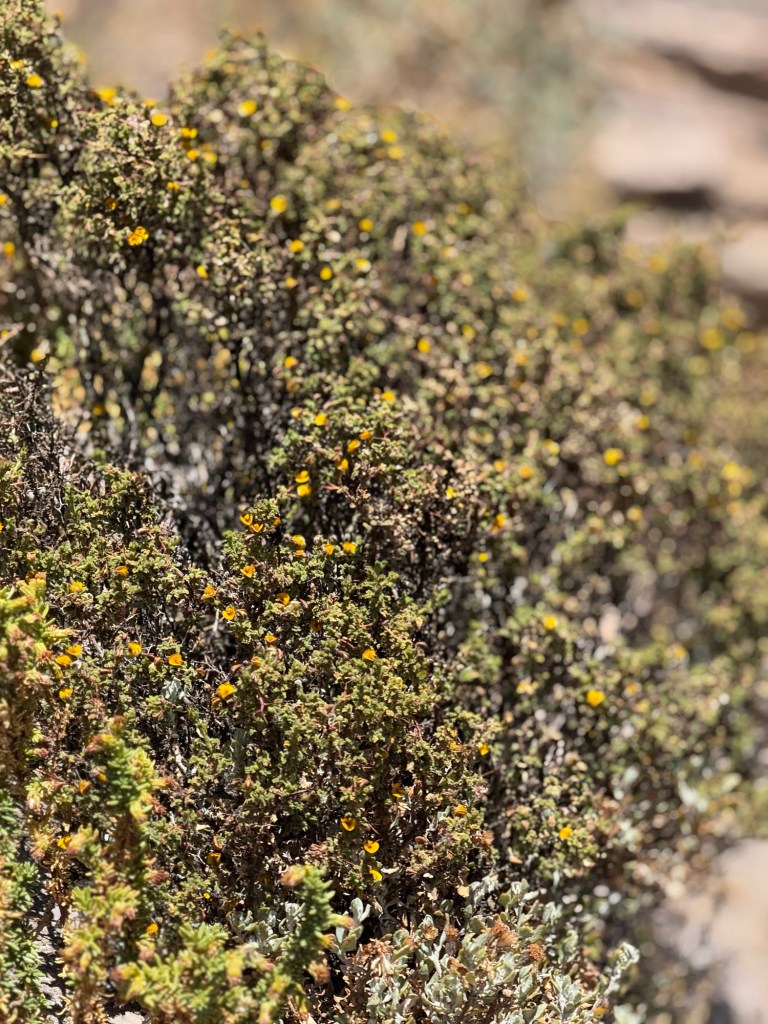
Our undefined hike took us through prickly Anawaya and Yareta to the cairns at the top.
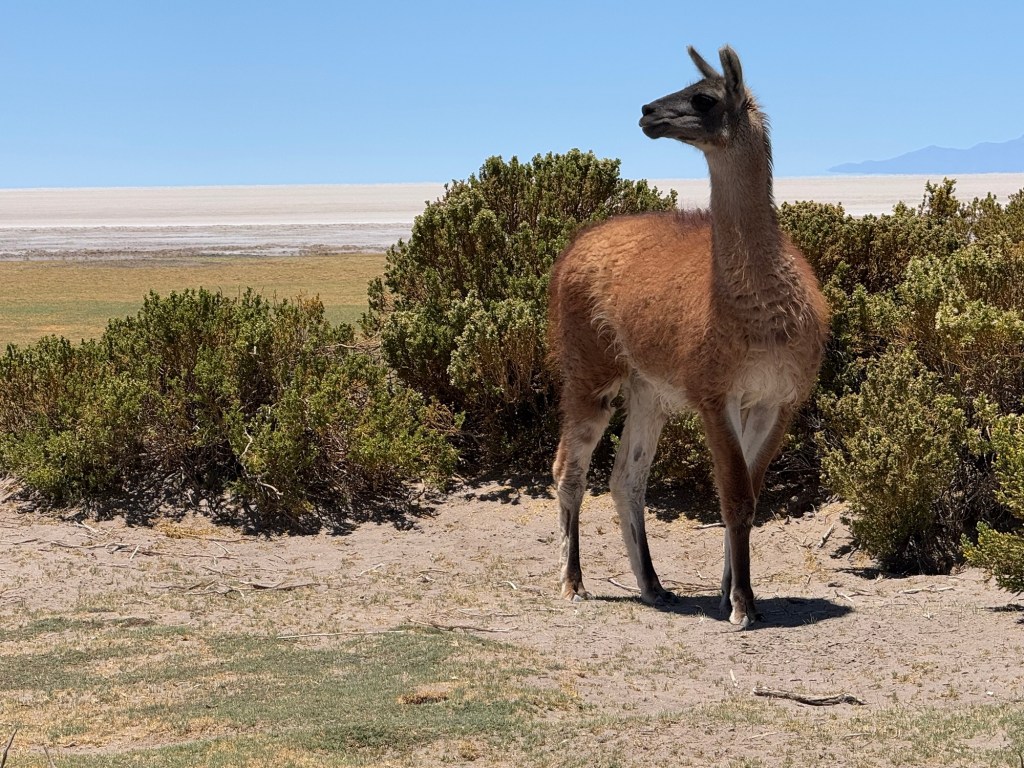
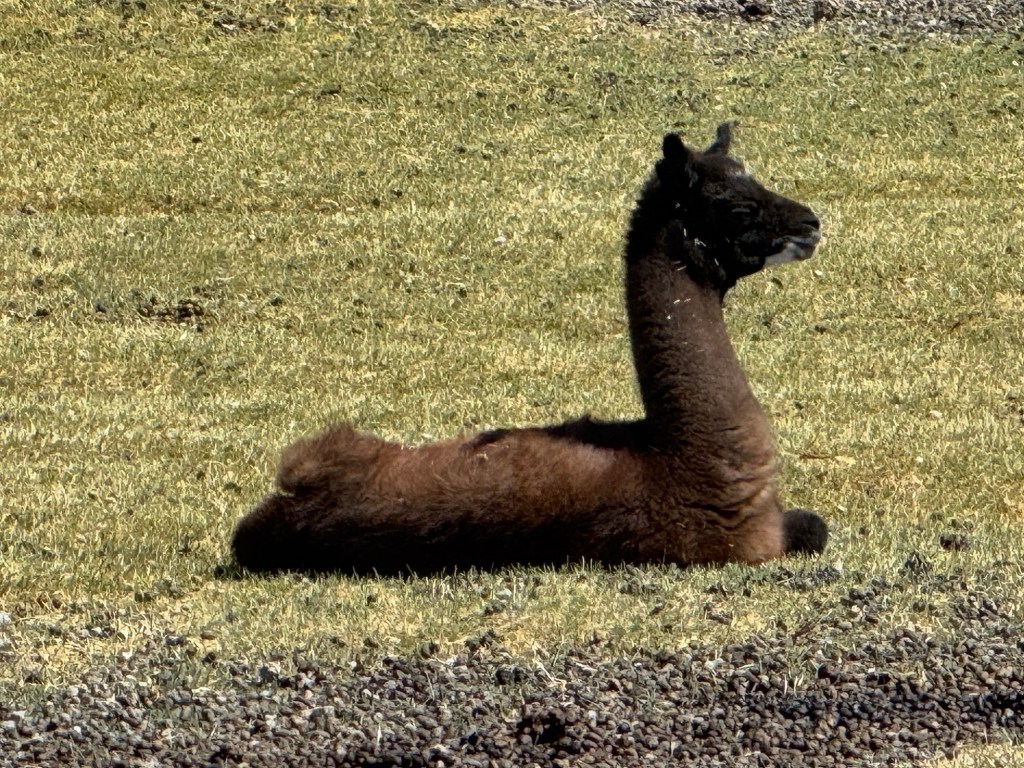
A majestic Llama

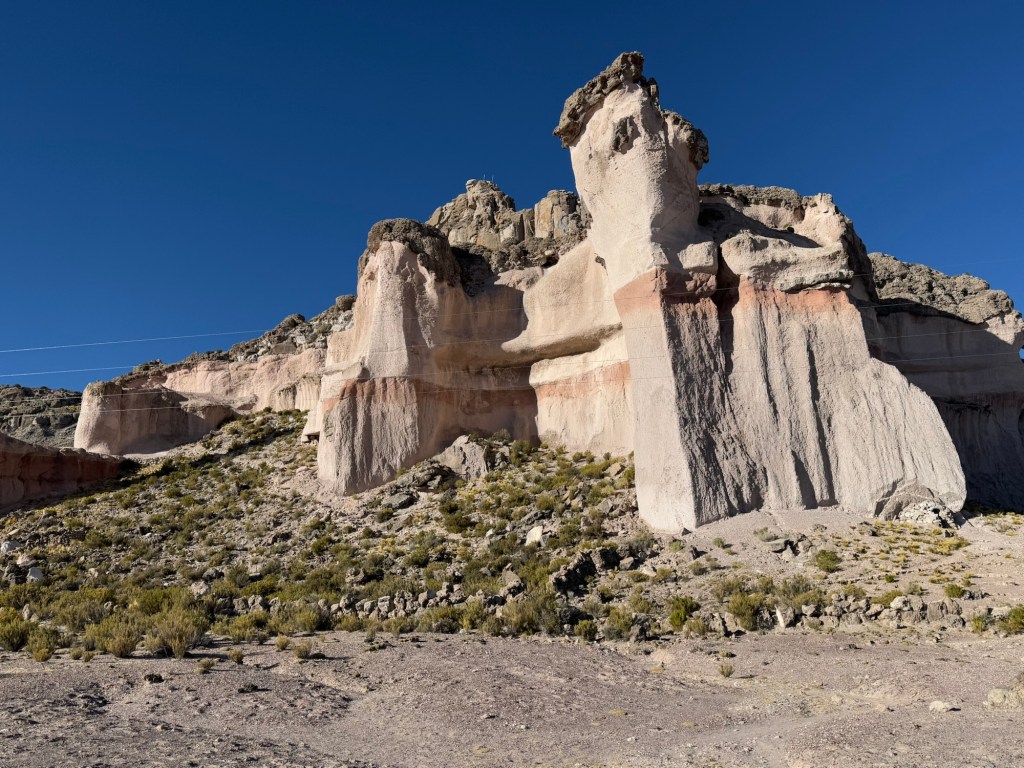
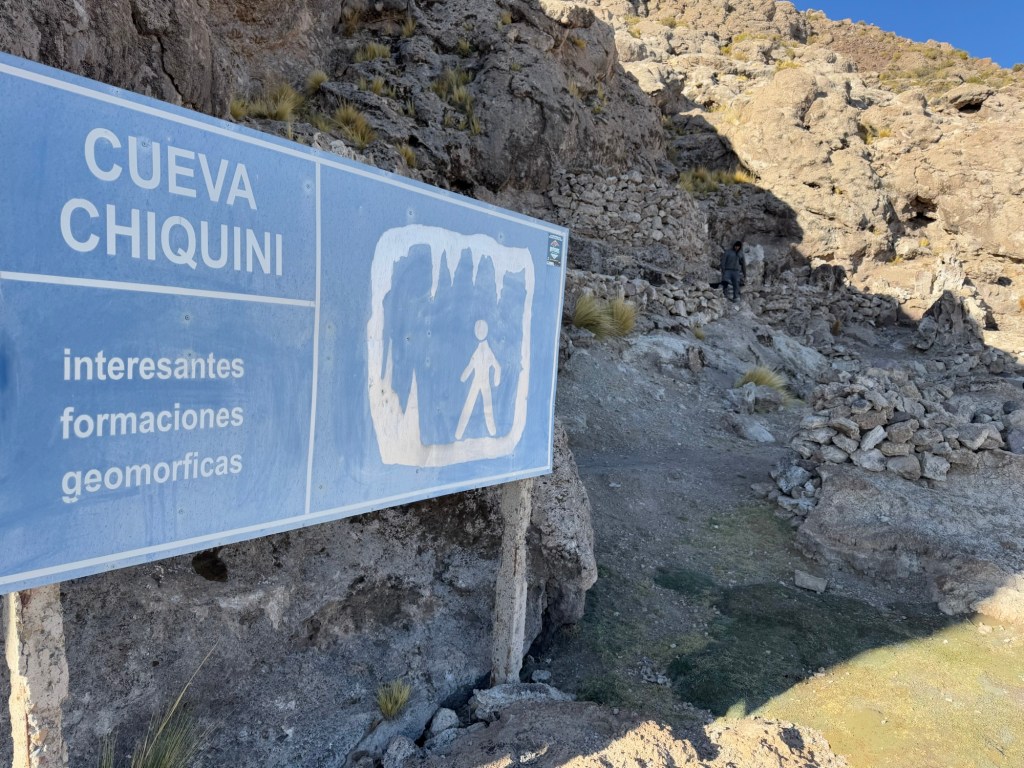
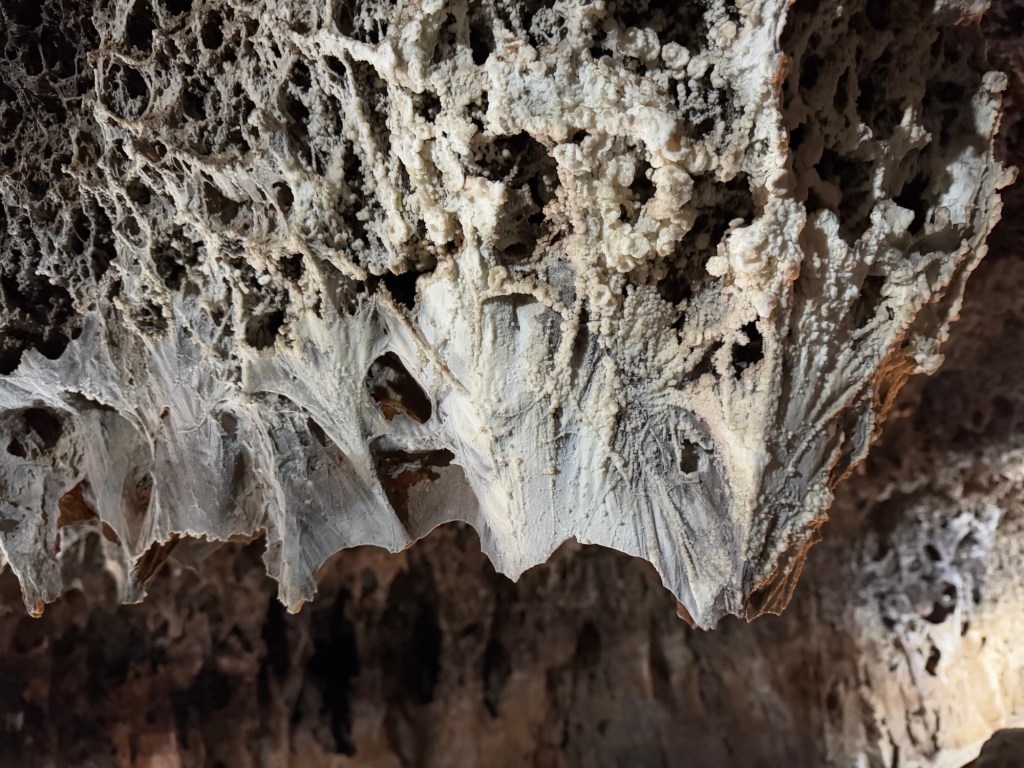
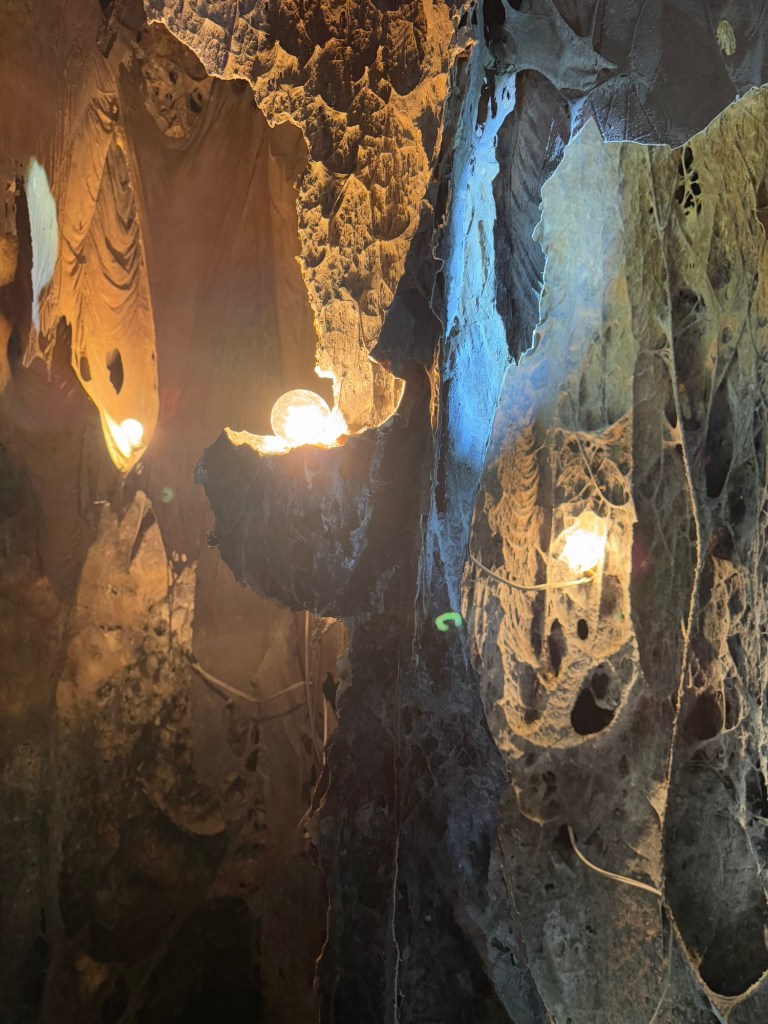
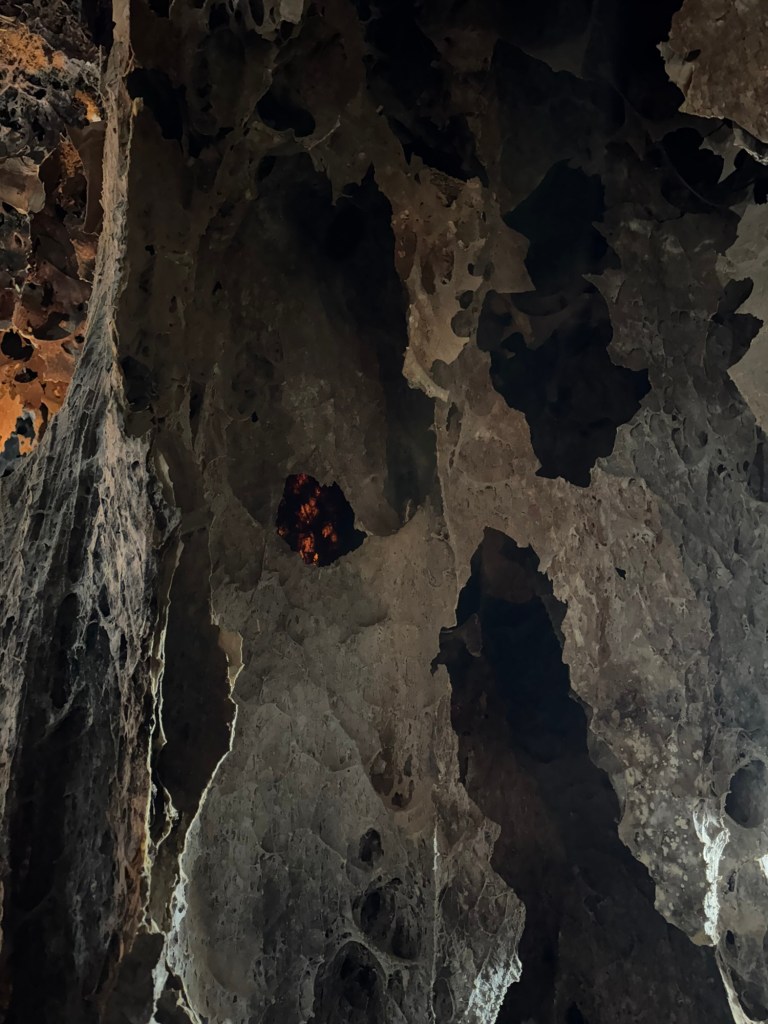
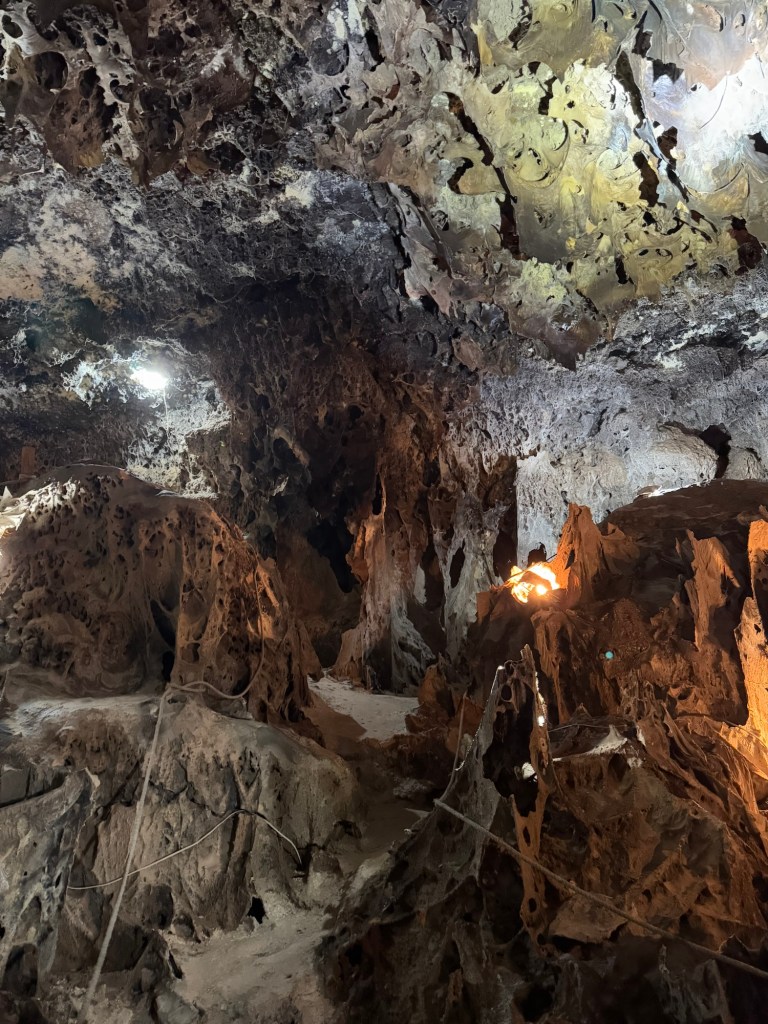
After lunch we had a bit of time to relax and then headed out for a cave an hour and a half across the salt flats and over an extension of the volcano. The Cueva Chiquini cave was interesting because the structures inside were mostly paper thin and very delicate.

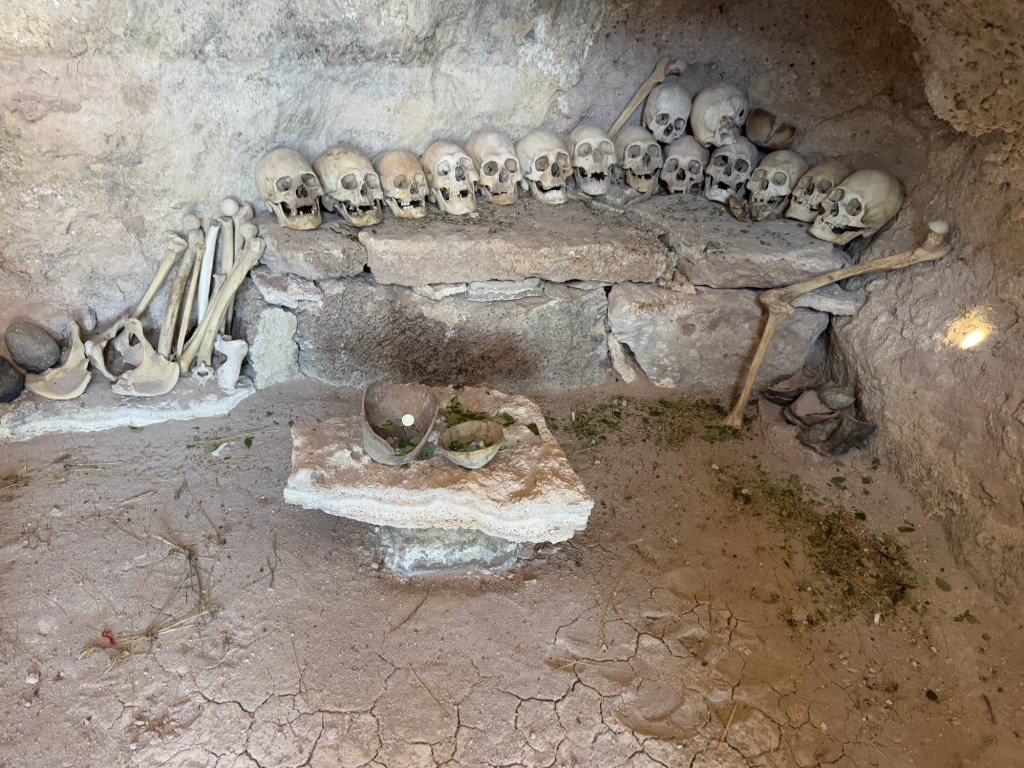
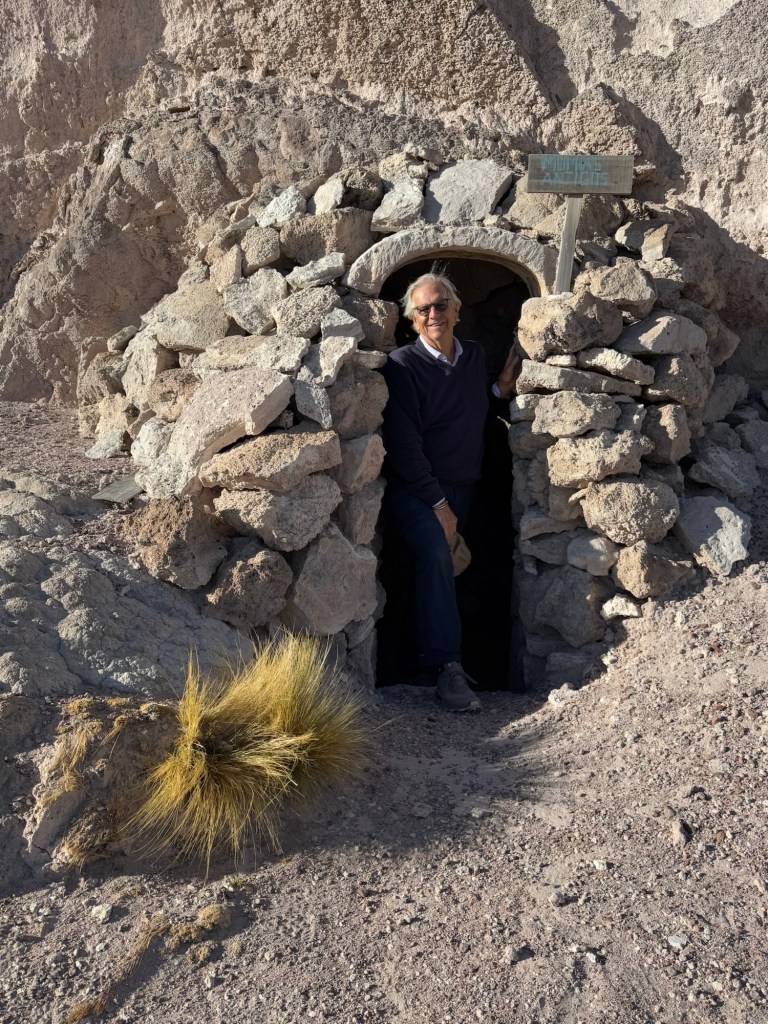
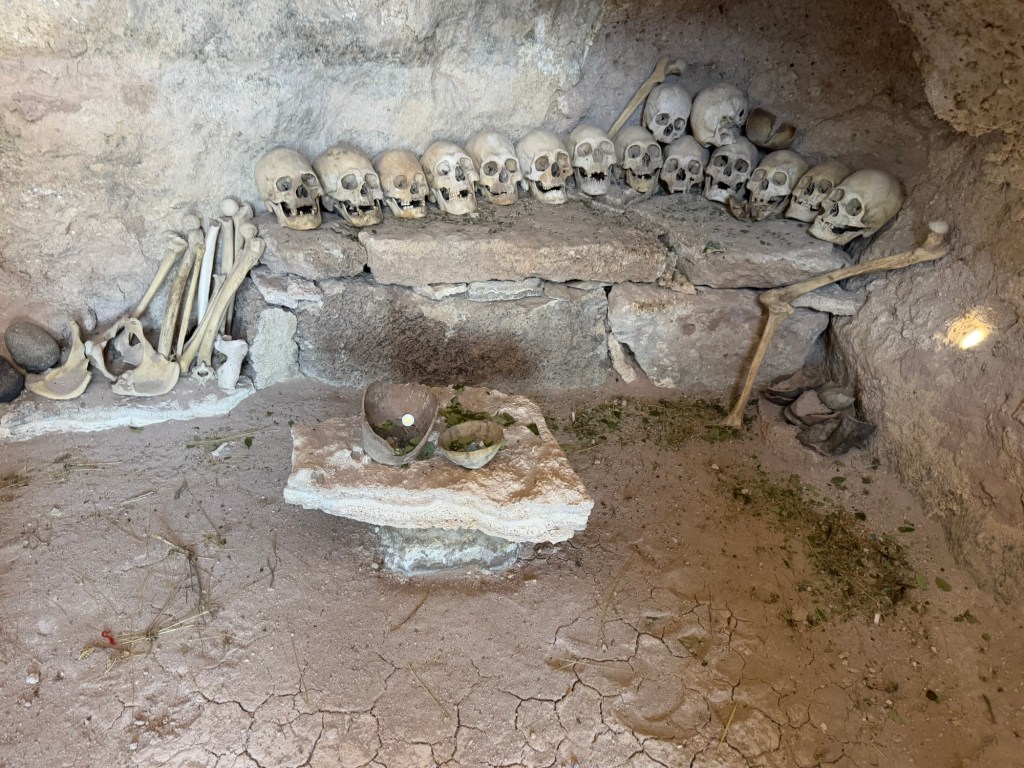
Nearby was a man-made shelter for storing the heads of 15 ancestors. They looked like they were smiling.

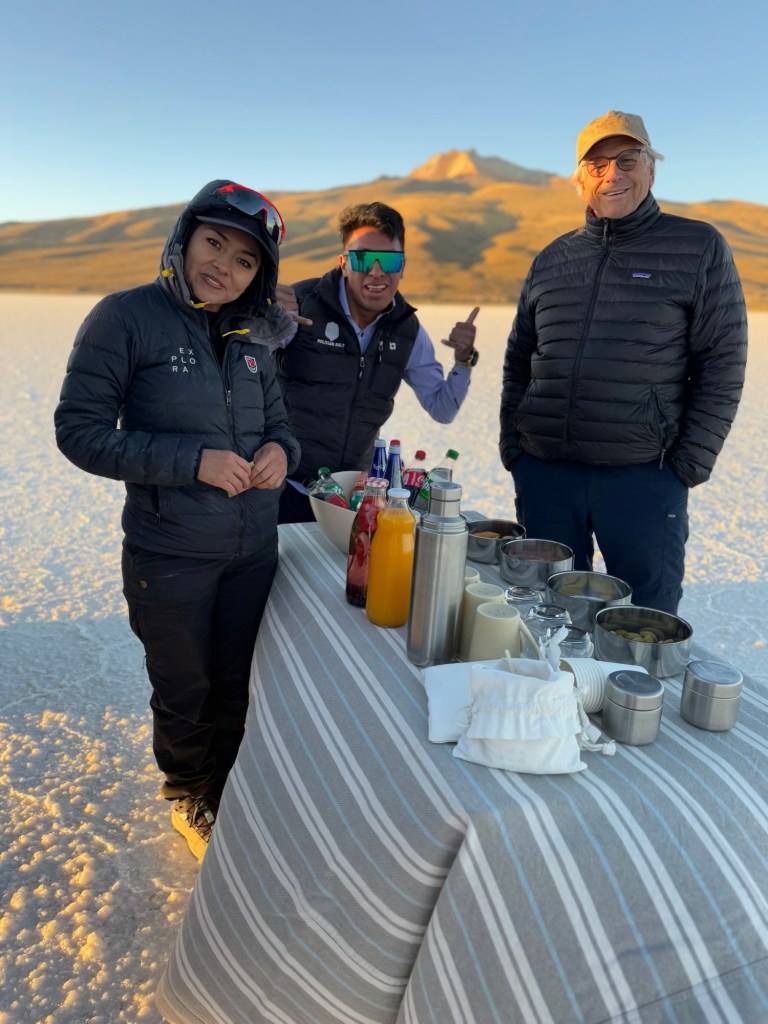
On the way back to the lodge we stopped on the salt for a sundowner in time to watch the sunset.

It was a super view, but very windy and cold. I drank my hot tea in the vehicle. Even Mark opted for hot tea.

Mark and Elsa went outdoors into the night to look at the stars. I was too tired, still suffering from the altitude, and went directly to bed.

Thursday, October 30, 2025

Feeling slightly better, we were out at 9am for a drive through the salt flats to a village called Cqueya to walk through the llama fields on Baccharis grass at the edge of the volcano and next to the salt.

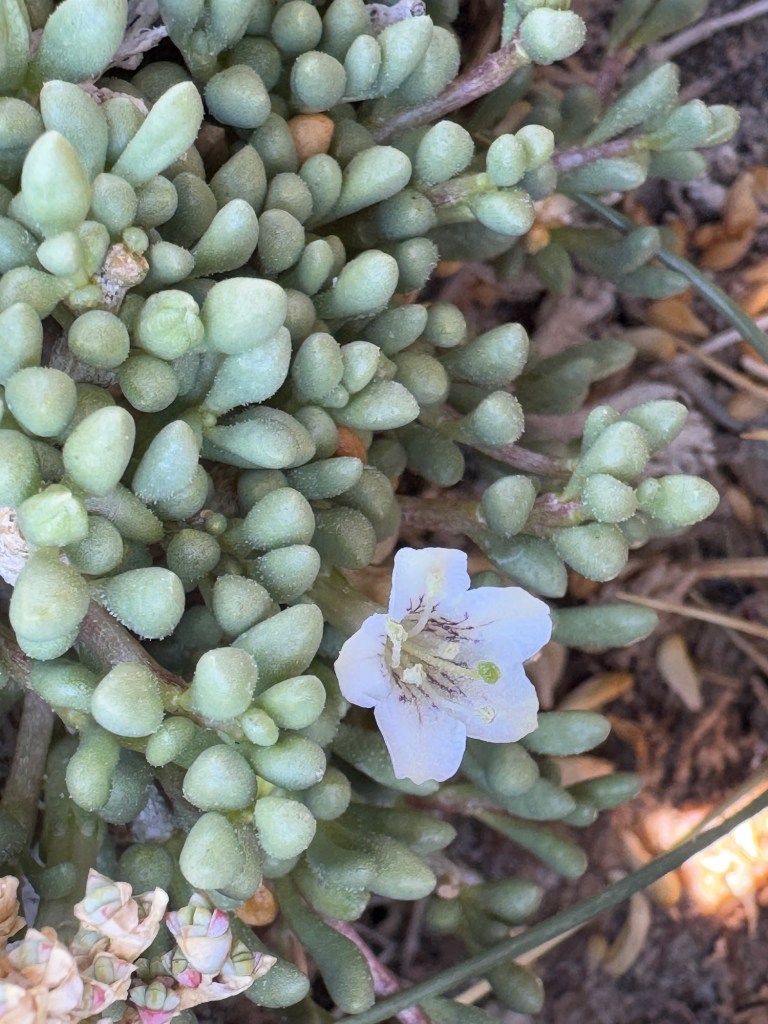
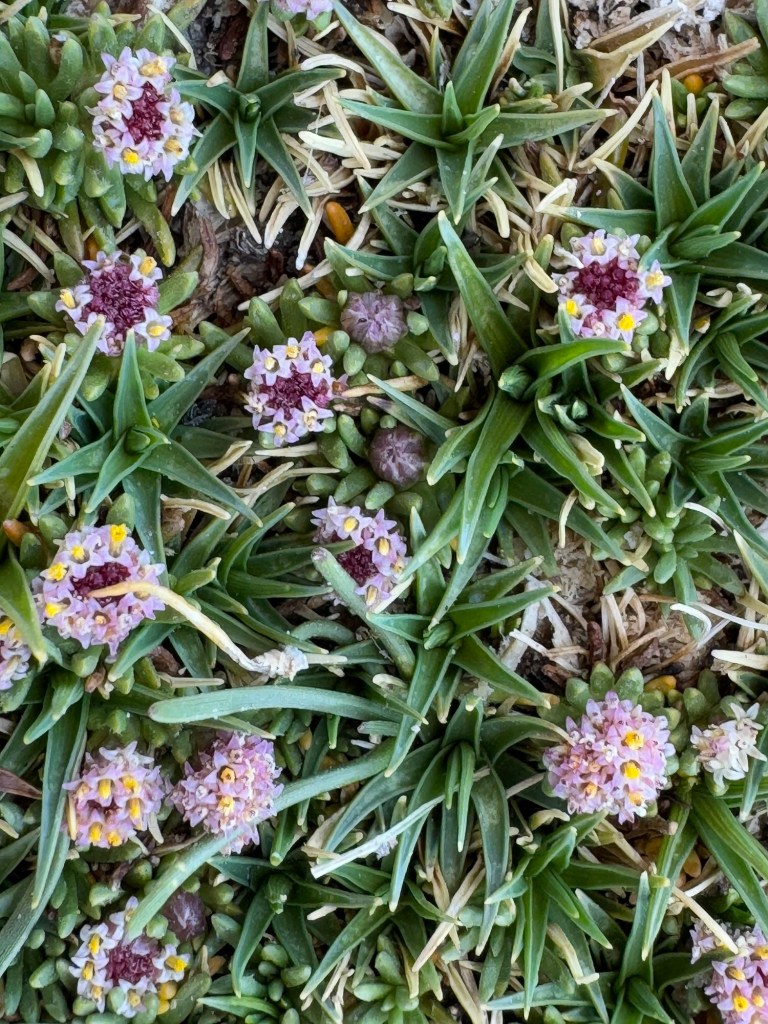
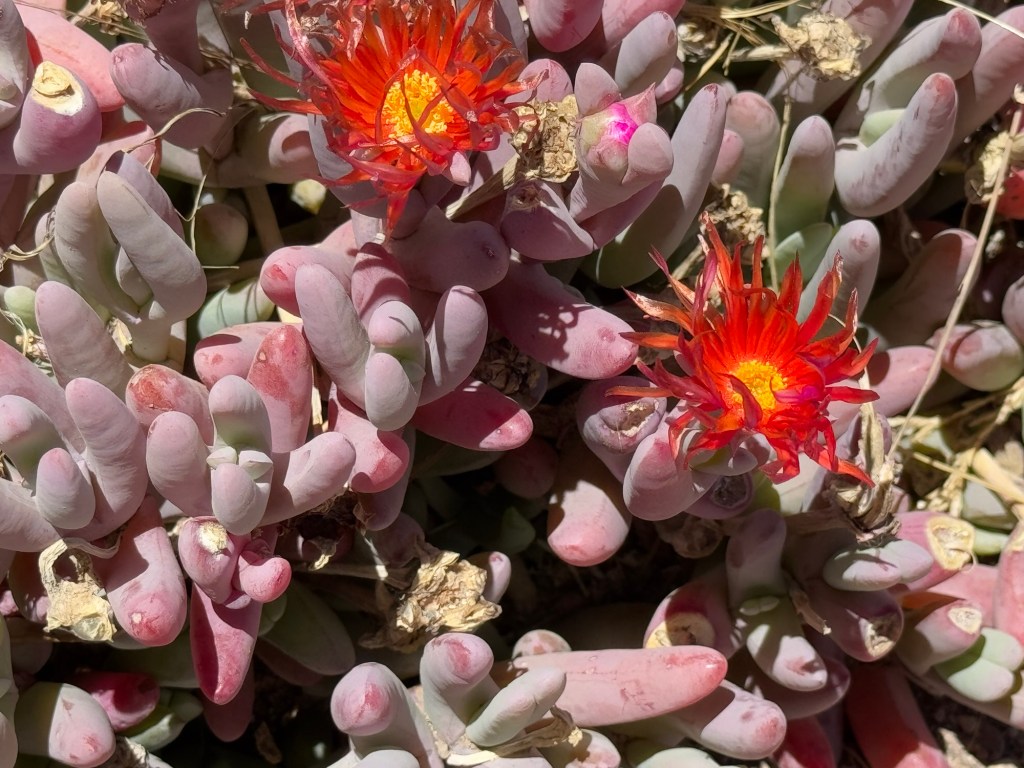
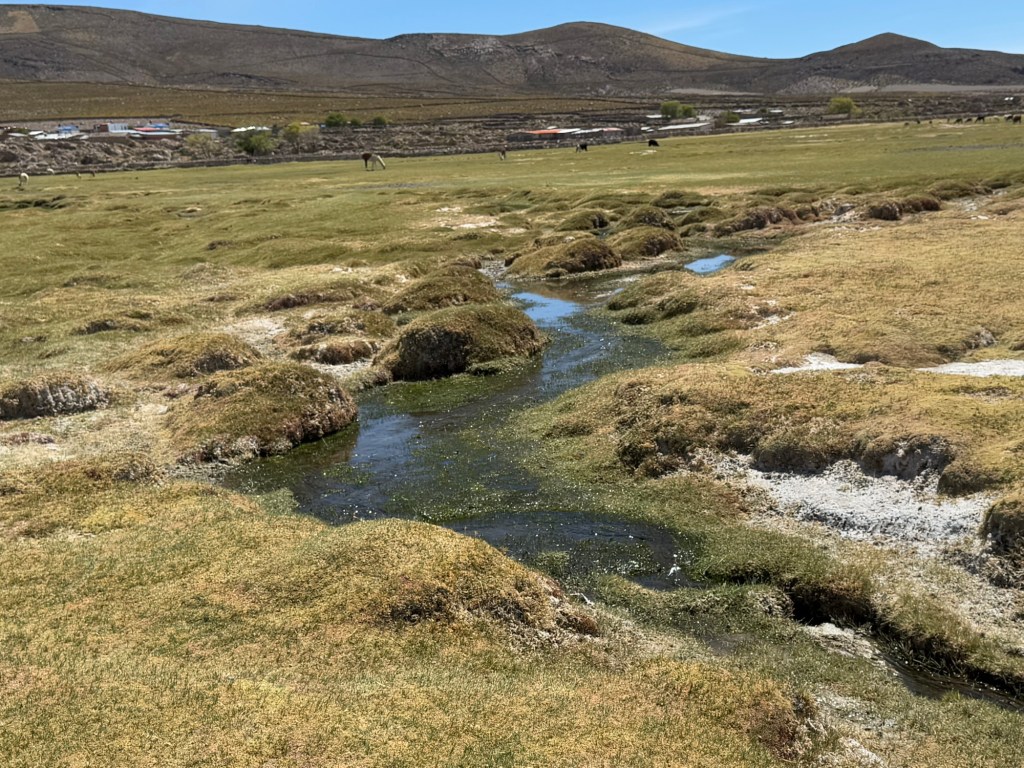
Along the way we saw succulent plants the llama like to eat. Most of the area looked like lawn. At one point we sat down to enjoy the warmth of the day. The place was very quiet. No people or cars. We could actually hear the small, nearby stream gurgle. Some of the plants we saw were green succulents called Sarcocornia.

Walking on the edge of the pan were some flamingos. There were two different kinds, some with black tails, Andean, and some without, James Flamingos. Quite a pretty sight with the salt flats behind them.

Andean Flamingos

Flying flamingos

Nearby was another village called Chantani that had a museum by the same name. We stopped to visit and saw artifacts from the Aymara culture, particularly a manakin dressed in narrative clothing.

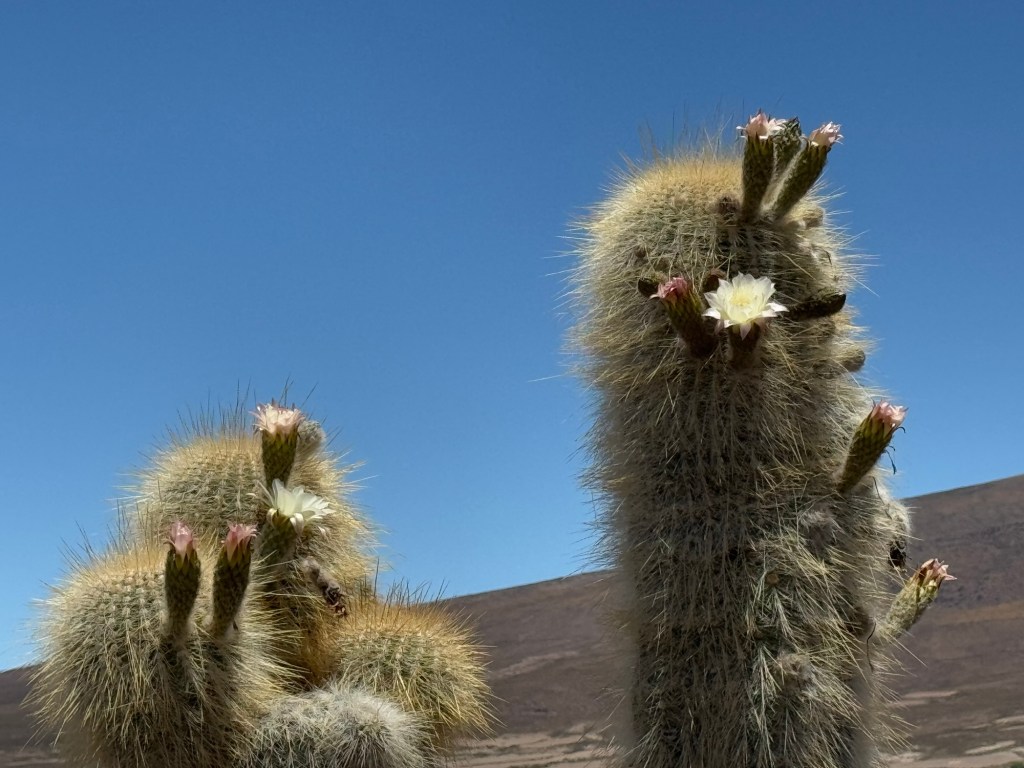
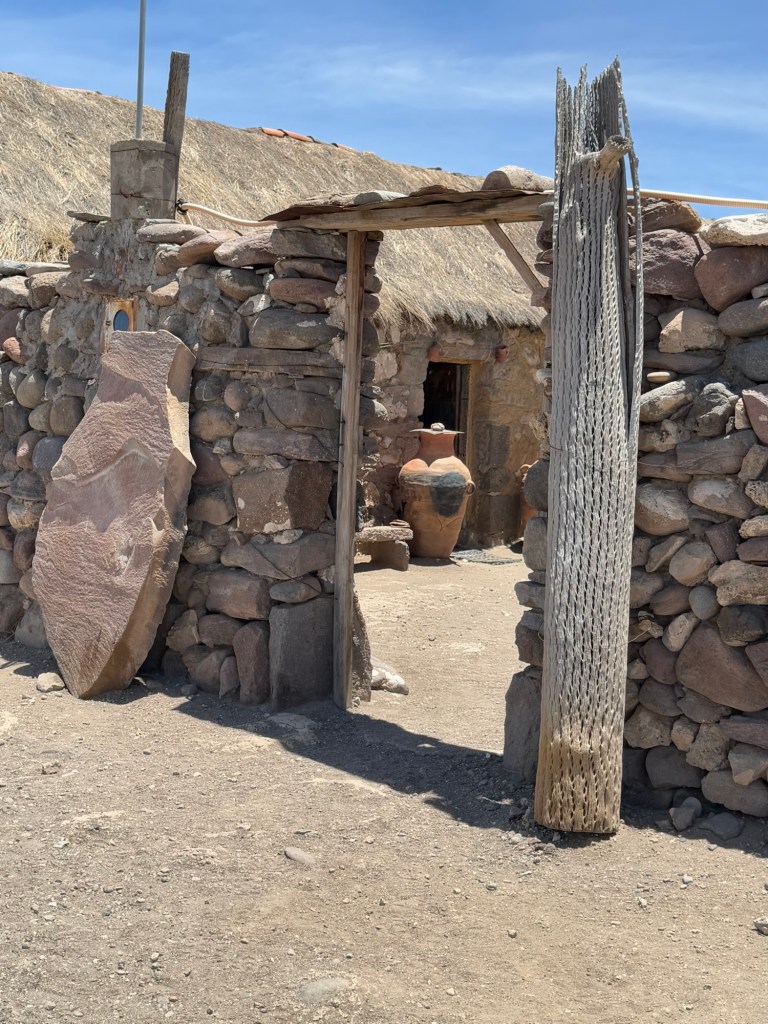
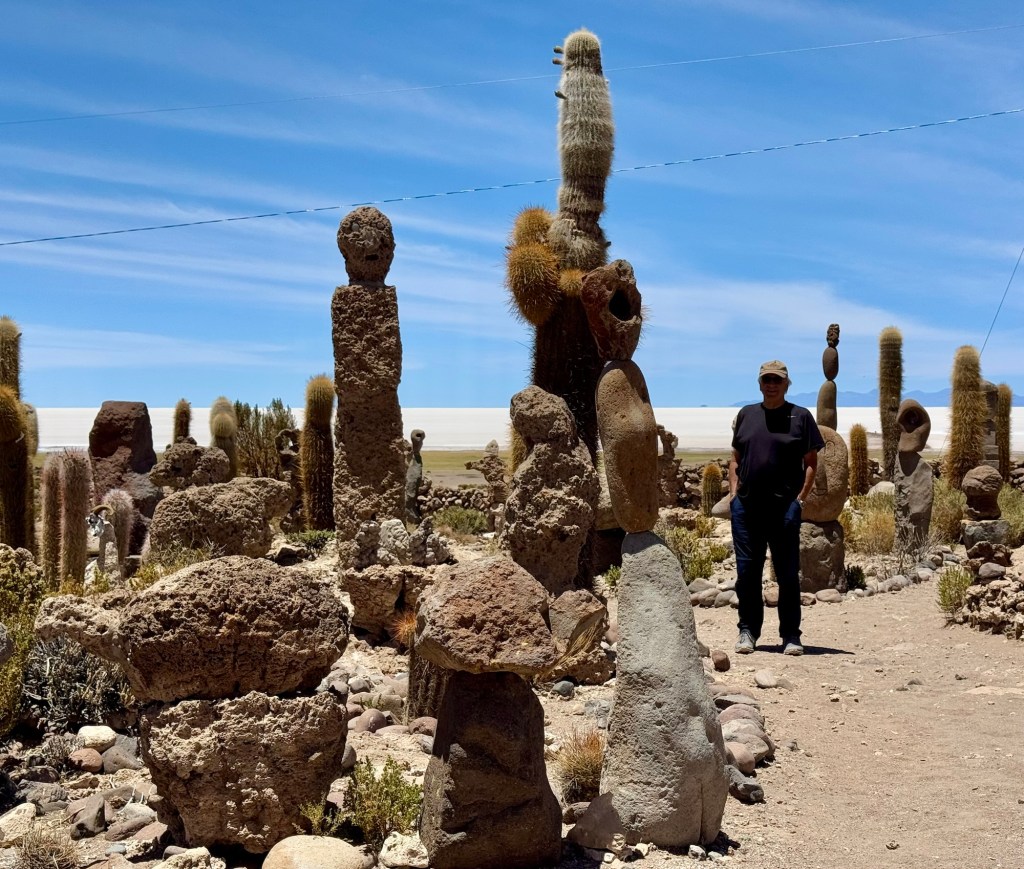
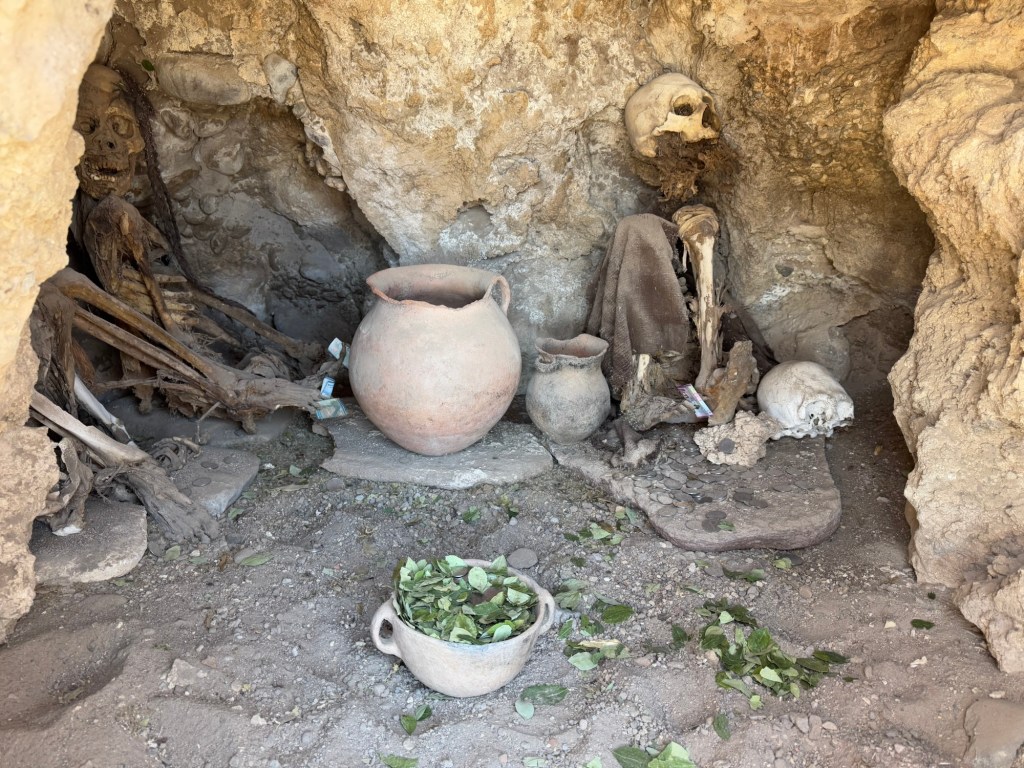
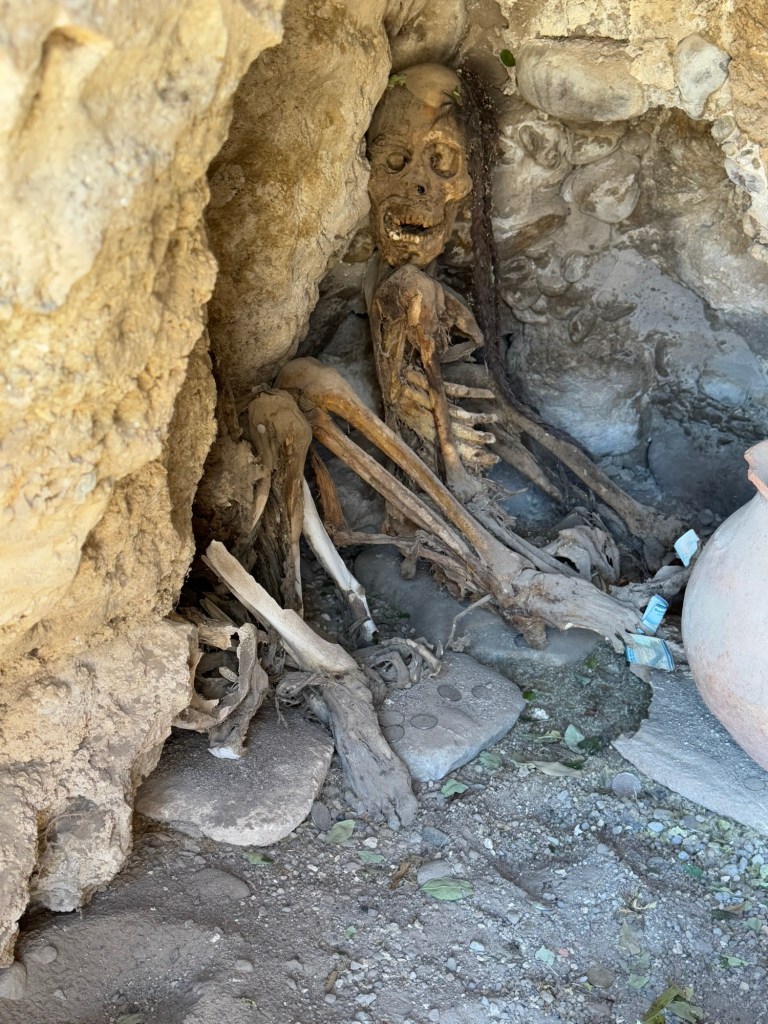
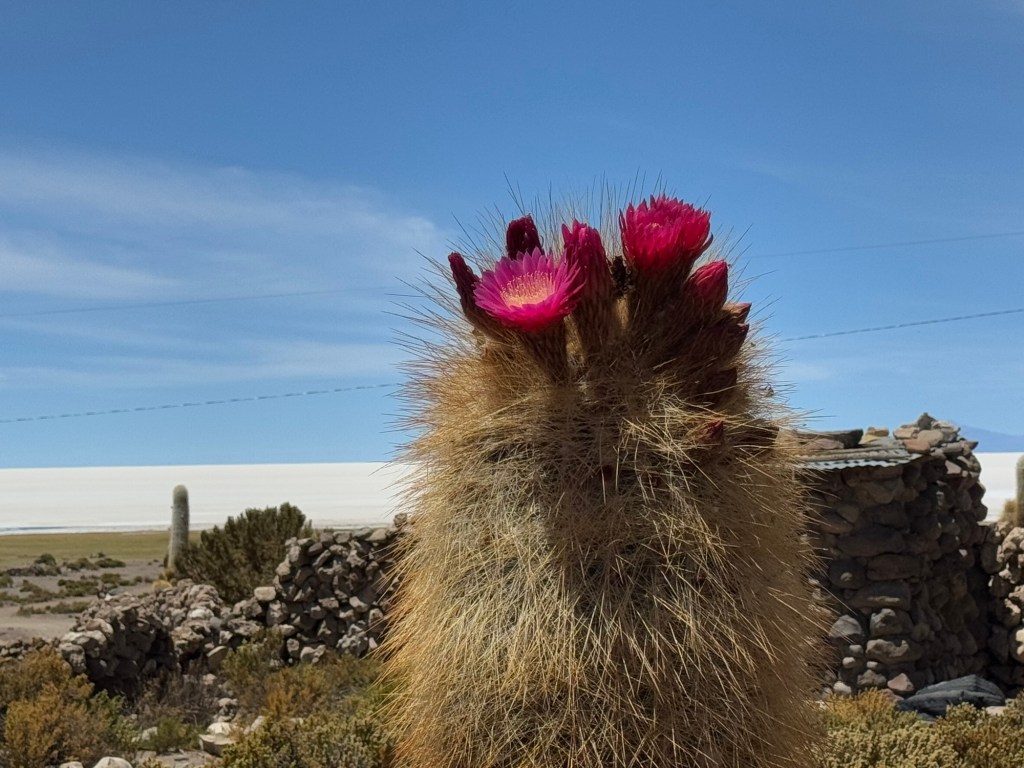
Outdoors was a stone and cactus garden. The cactus are just starting to bloom, both white and red varieties. Also in the garden was a small cave-like structure with 2 mummies inside. They were buried in the common local crouched position. Usually they were buried in large crockery vases. They were not big people when alive. Similar to the Batwa in Uganda.

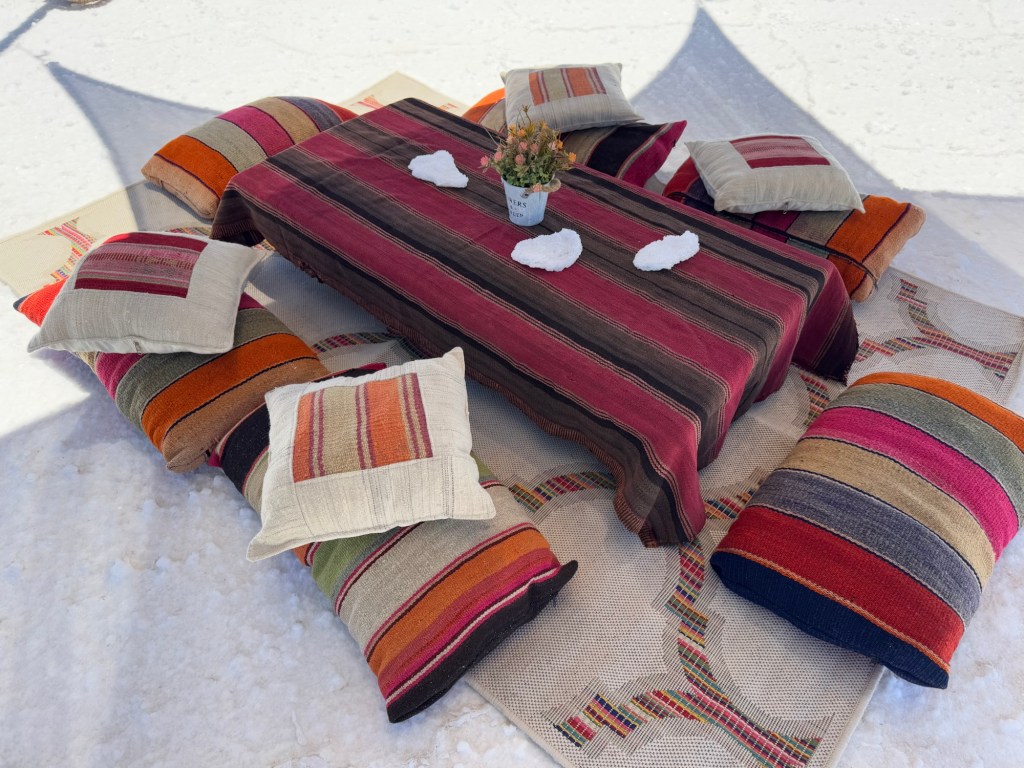
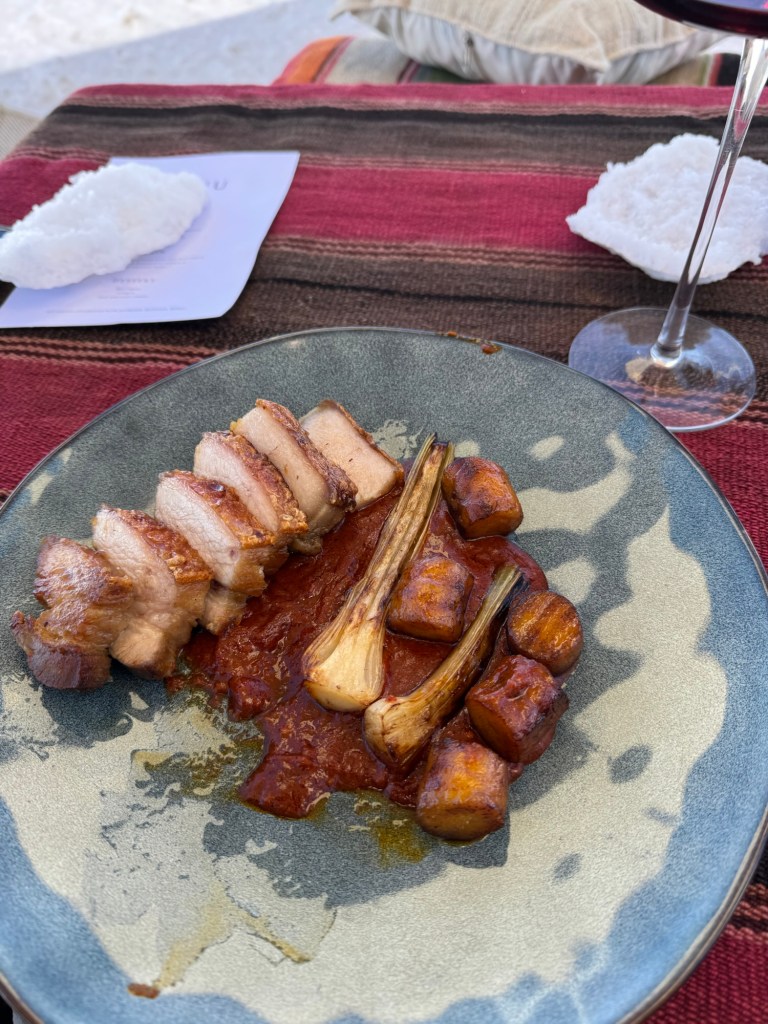
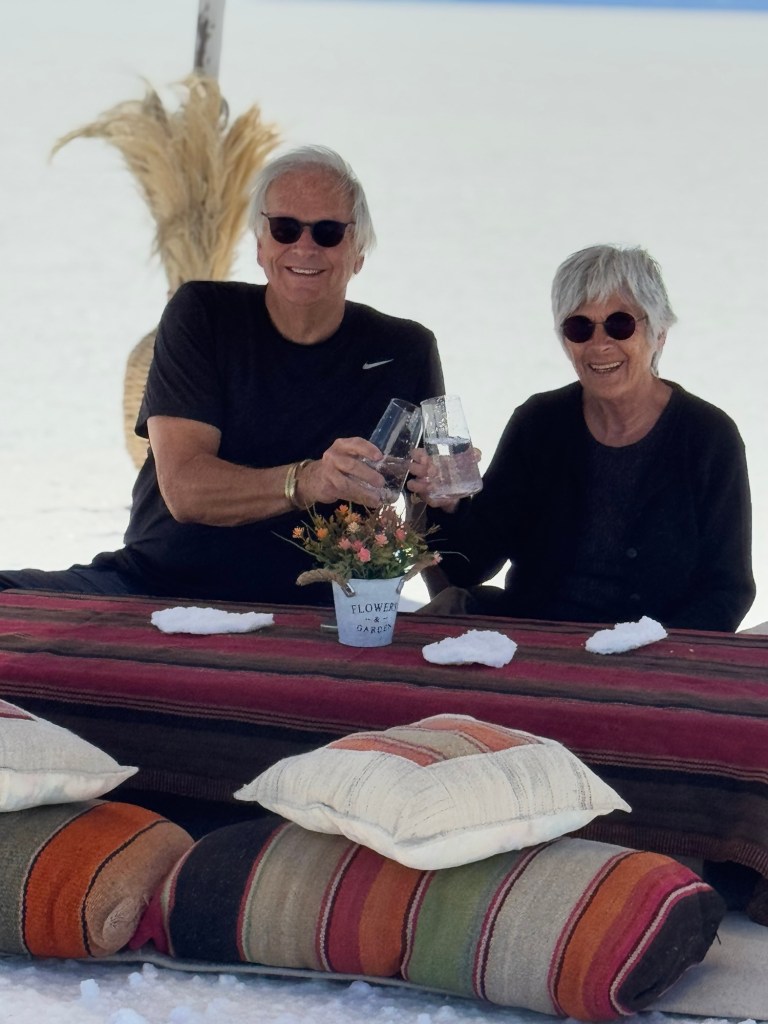
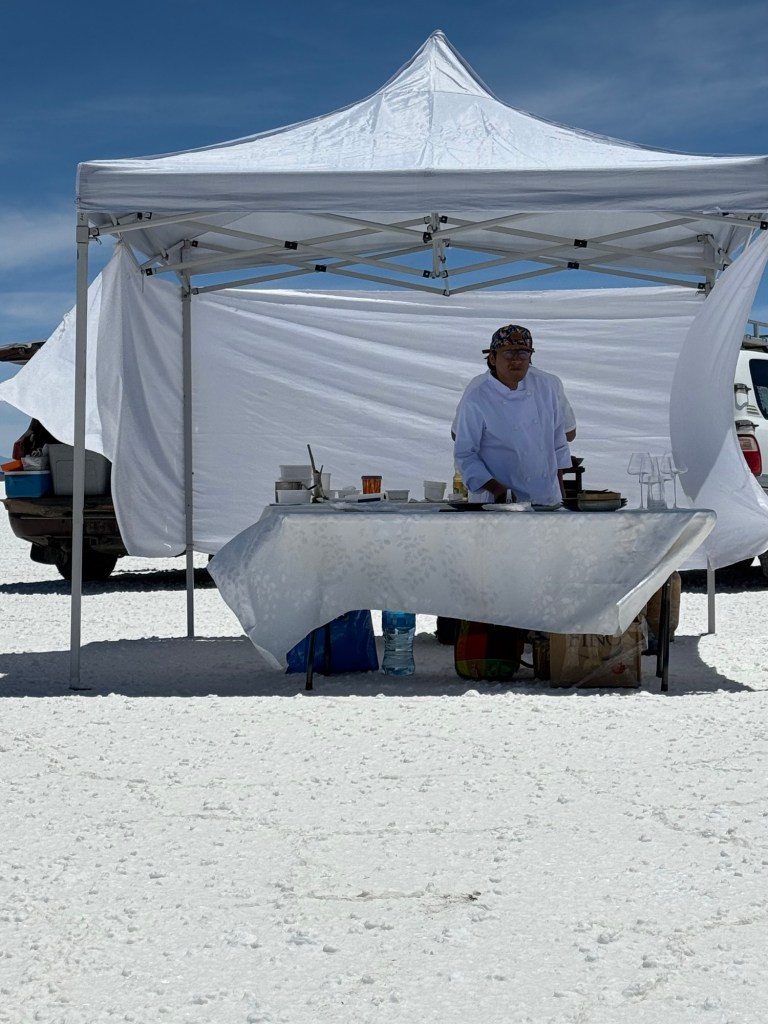
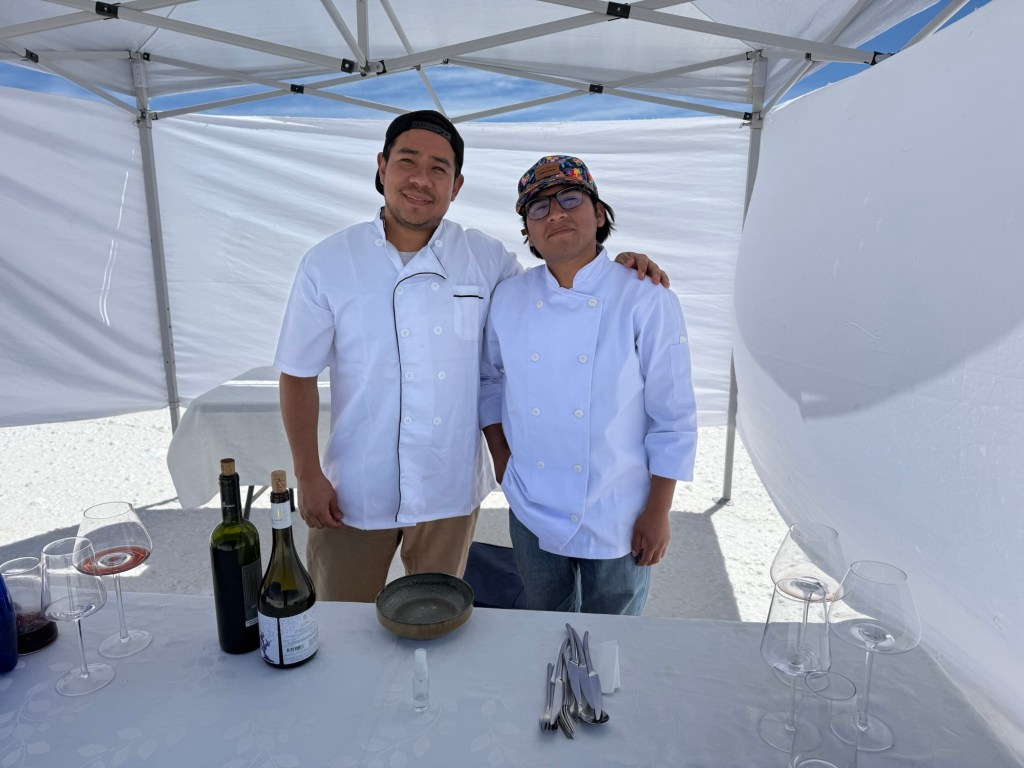
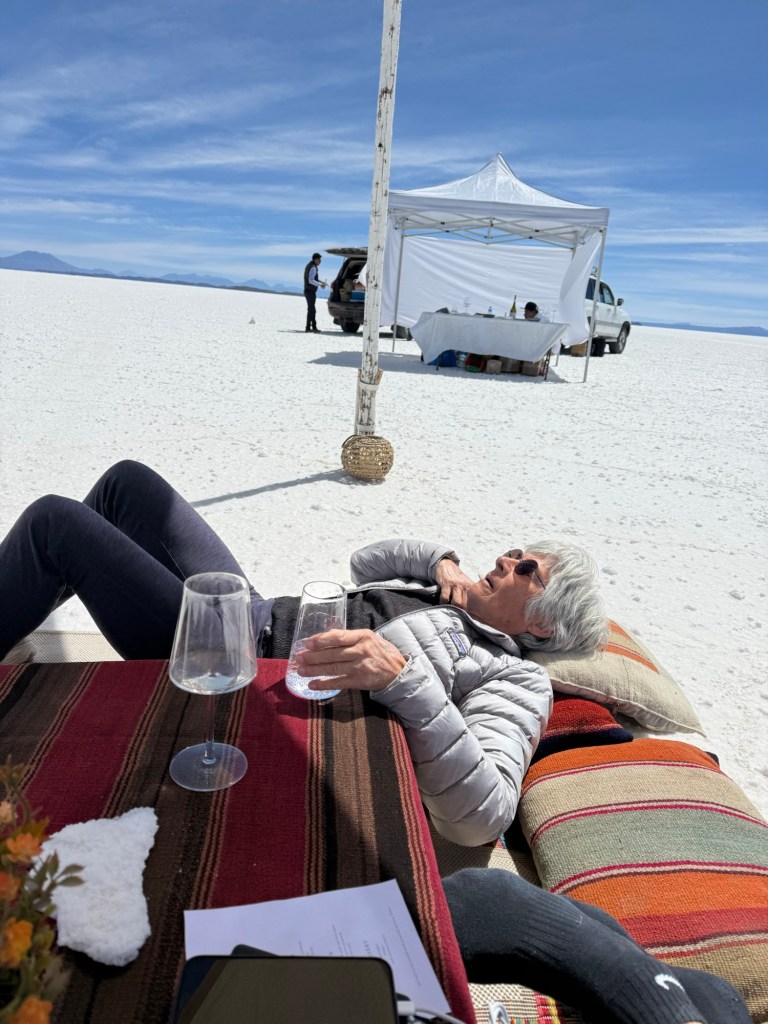
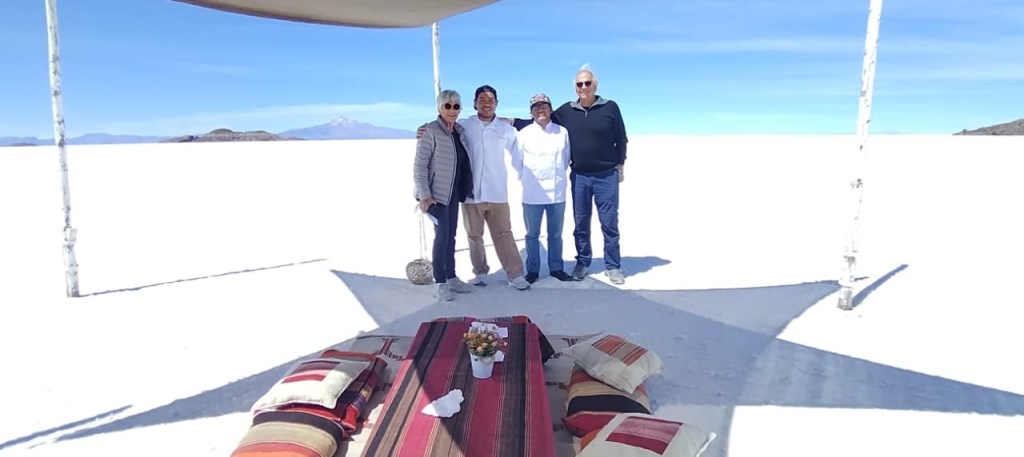
Then we continued on the salt flats to our special lunch sight in view of Fish Island. Our photos tell the story.

Lunch SA’s a grand affair. More later.

Cristalino Lodge in the Southern Amazon

Thursday, October 23, 2025

Our King Air flight lasted 3 hours and dropped us in Alta Floresta.

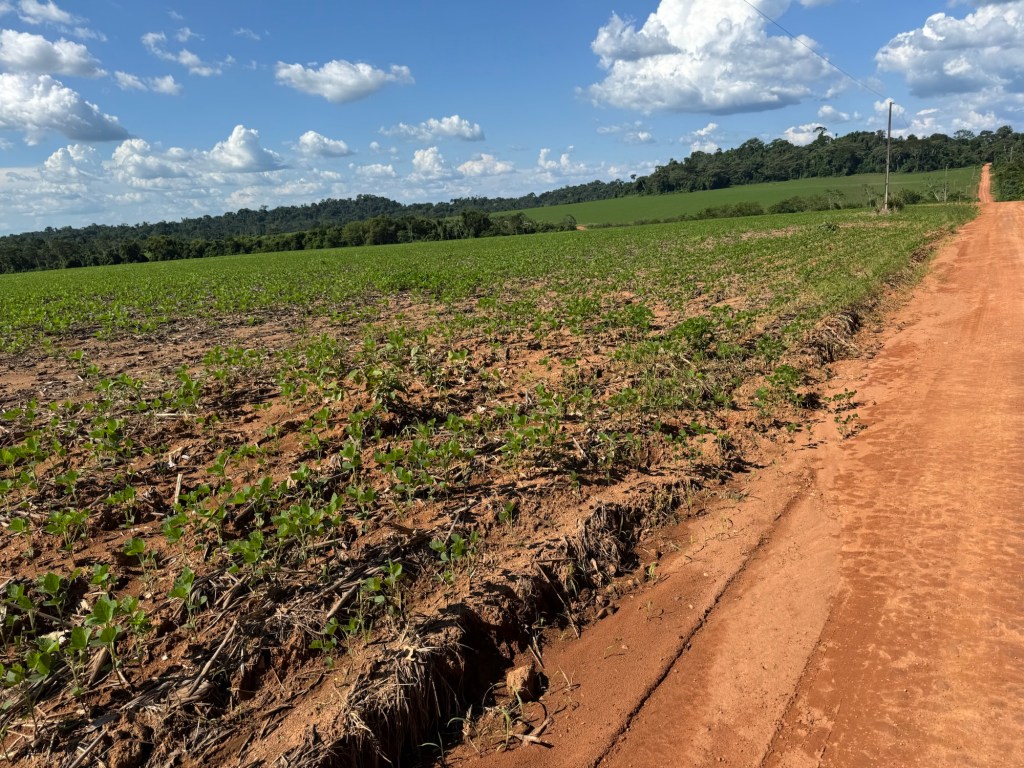
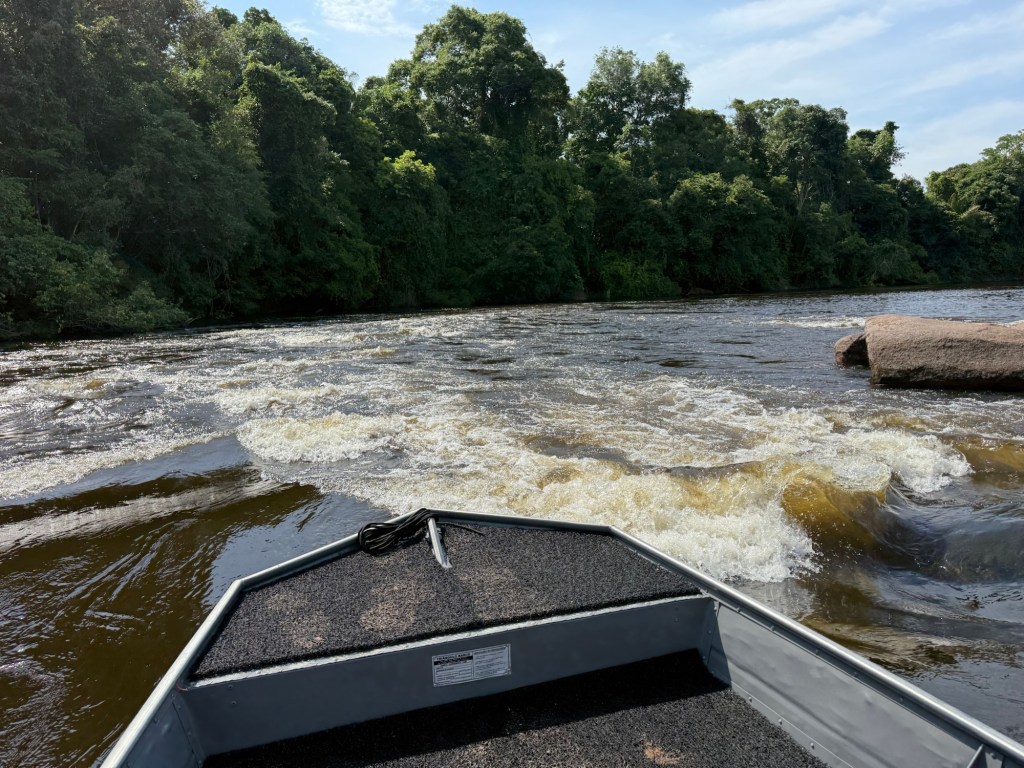
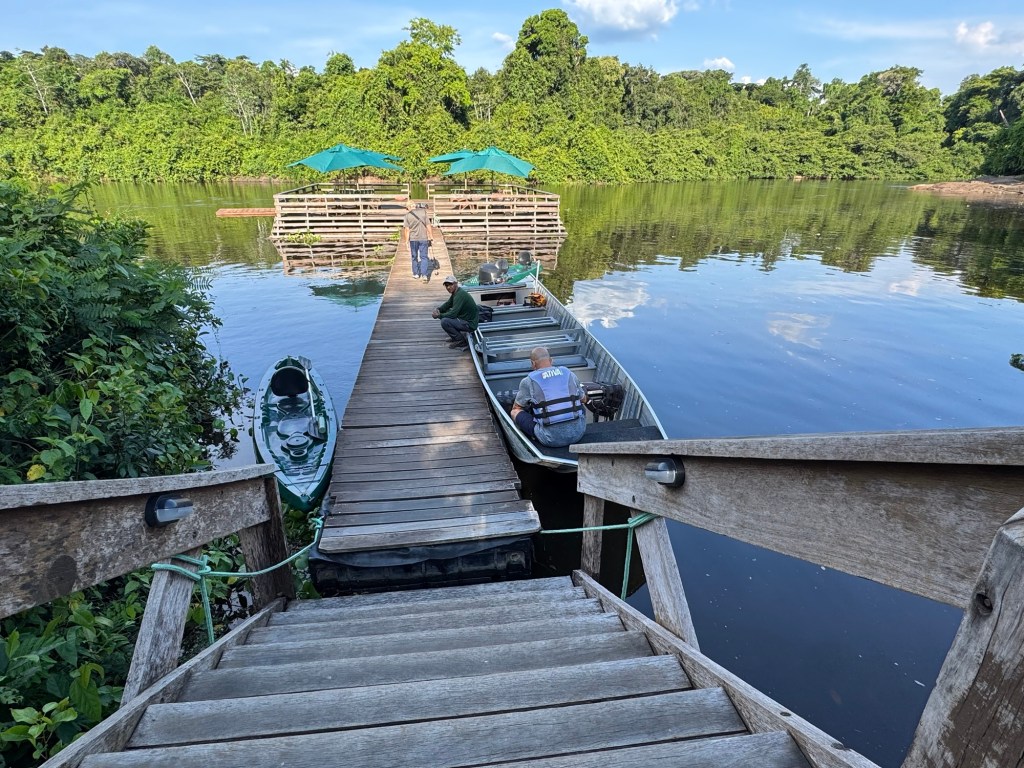
From there we were driven about 40 minutes through huge soybean fields, that had recently been planted, to a large river, Teles Pires, where a small boat picked us up and took us another 10 minutes upstream to the Cristalino River and up it 30 more minutes to the Cristalino Lodge. By 3pm we were in our new, and cool, accommodations at the lodge.

To find our location, go to the map on the first post of this trip and find “CACHIMBO” south and slightly east of Manaus, in about the middle of the map. Our lodge is very near there.

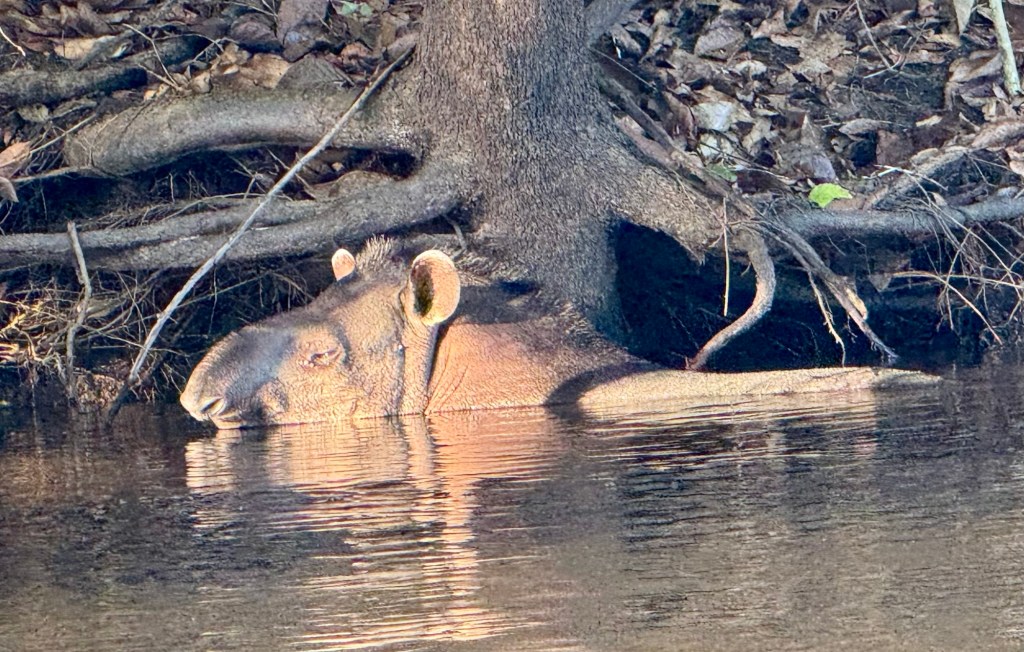
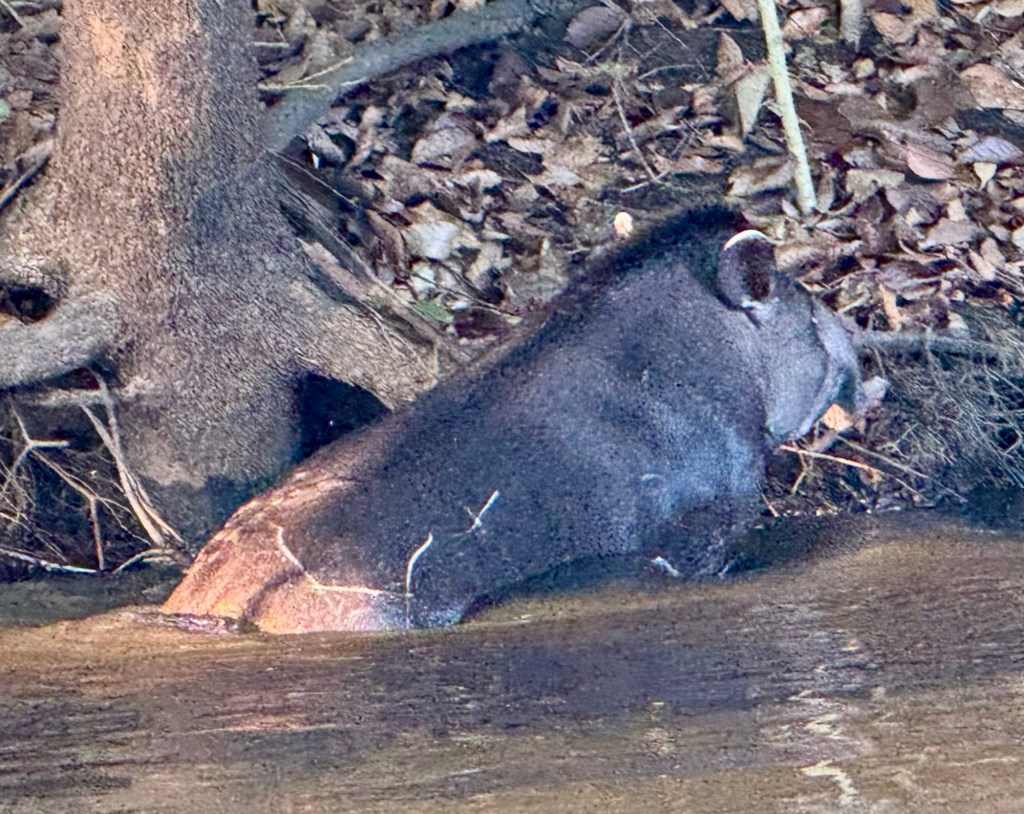
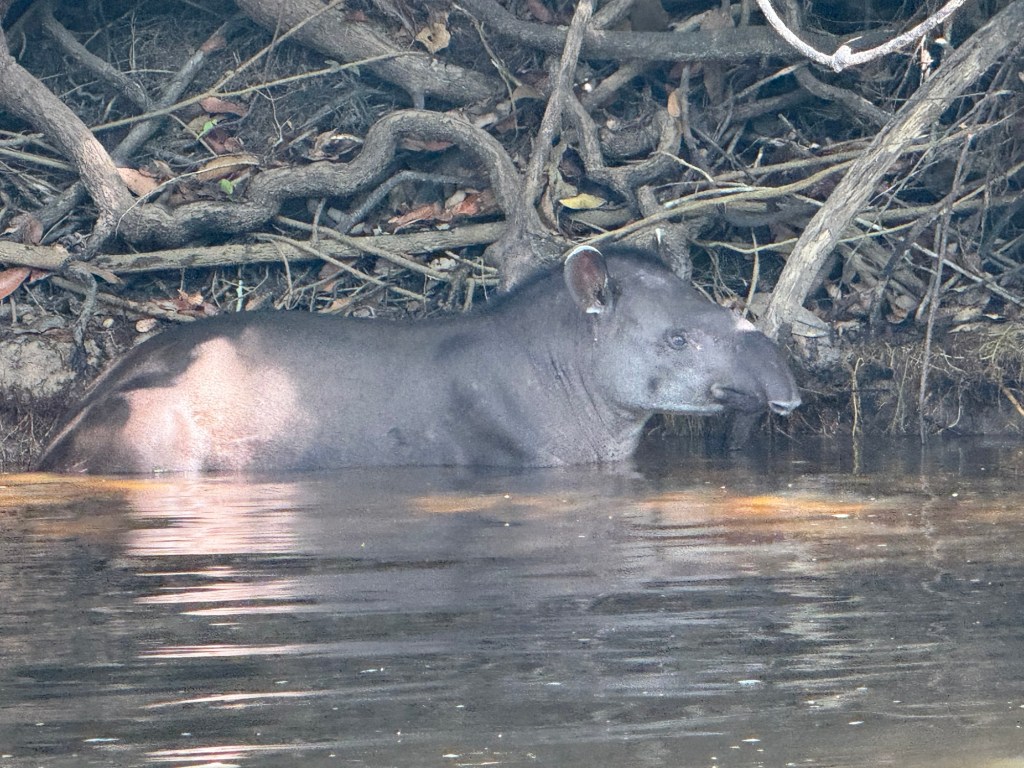
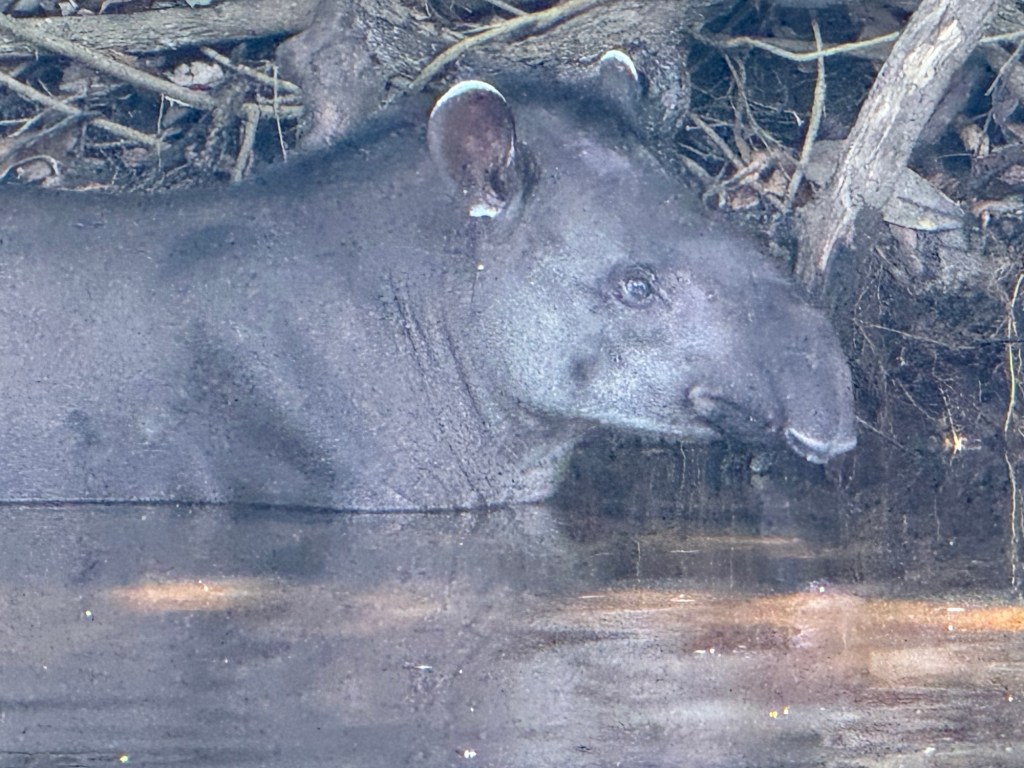
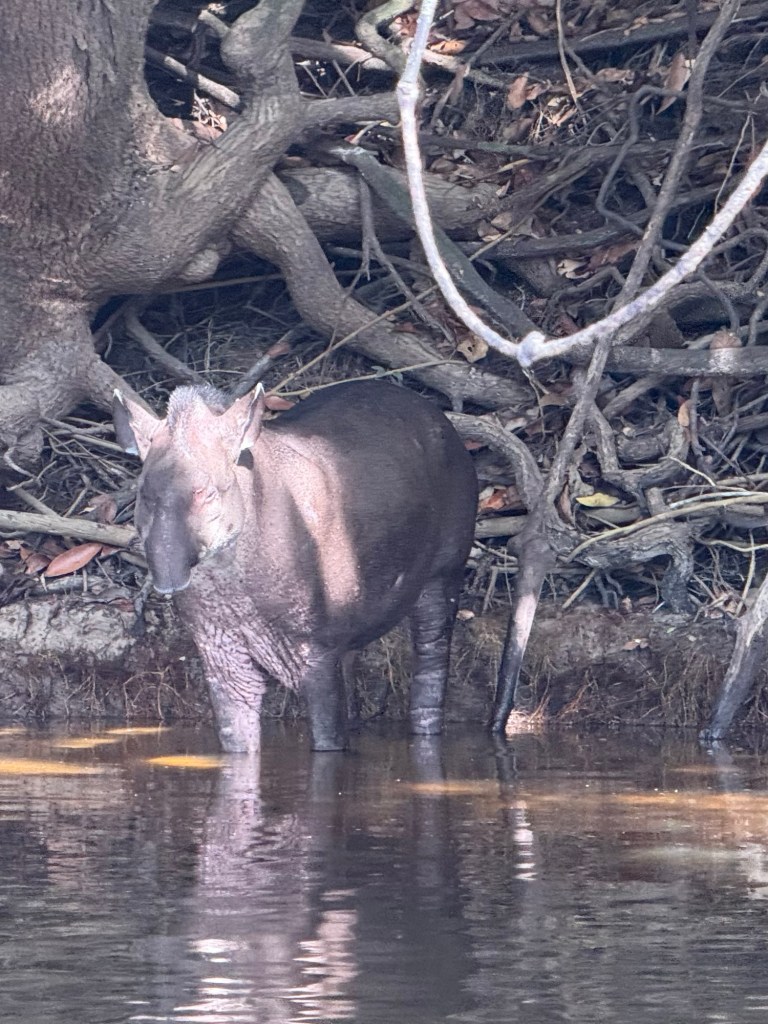
After a quick snack, our new guide, Priscilla, suggested a boat ride upstream into the jungle. We were very hot and a boat ride in the breeze felt good. Soon we were looking for birds and other animals. We had not managed to see a tapir, the last of Brazil’s big five, in the Pantanal and were pleased when Priscilla pointed one out to us along the river bank. The other four, by the way, were the jaguar, giant anteater, marsh deer and the capybara.

In addition to the tapir, we saw several birds we could not see close enough to photograph, but managed to capture a pair of Muscovy ducks

Muscovy ducks

and a pair of neotropical otters munching on a fish.

A pair of otters eating a fish

It was dark by the time we returned to the lodge. We were ready for cocktails and dinner after long cool showers. No more buffets at this lodge, thankfully. We happily enjoyed smoked trout risotto and went directly to our cool room and bed. Between the heat and bug bites, I was glad to be cool and bug free for awhile.

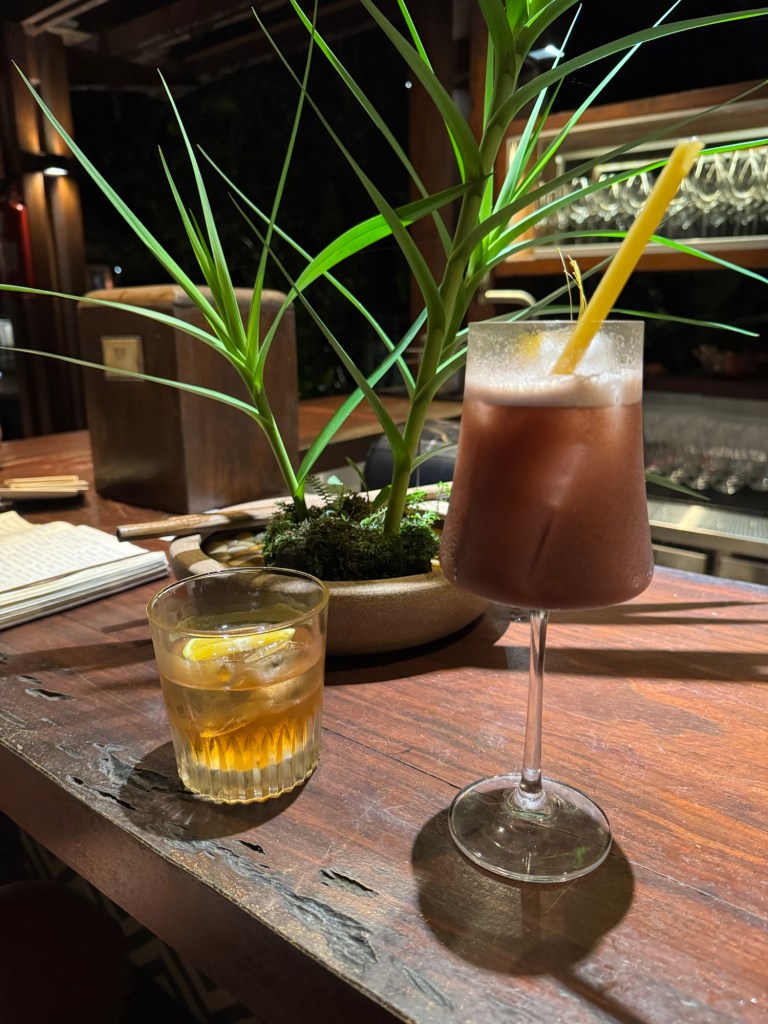
Our cocktails. My passion fruit drink was served with a pasta straw.

Friday. October 24, 2025

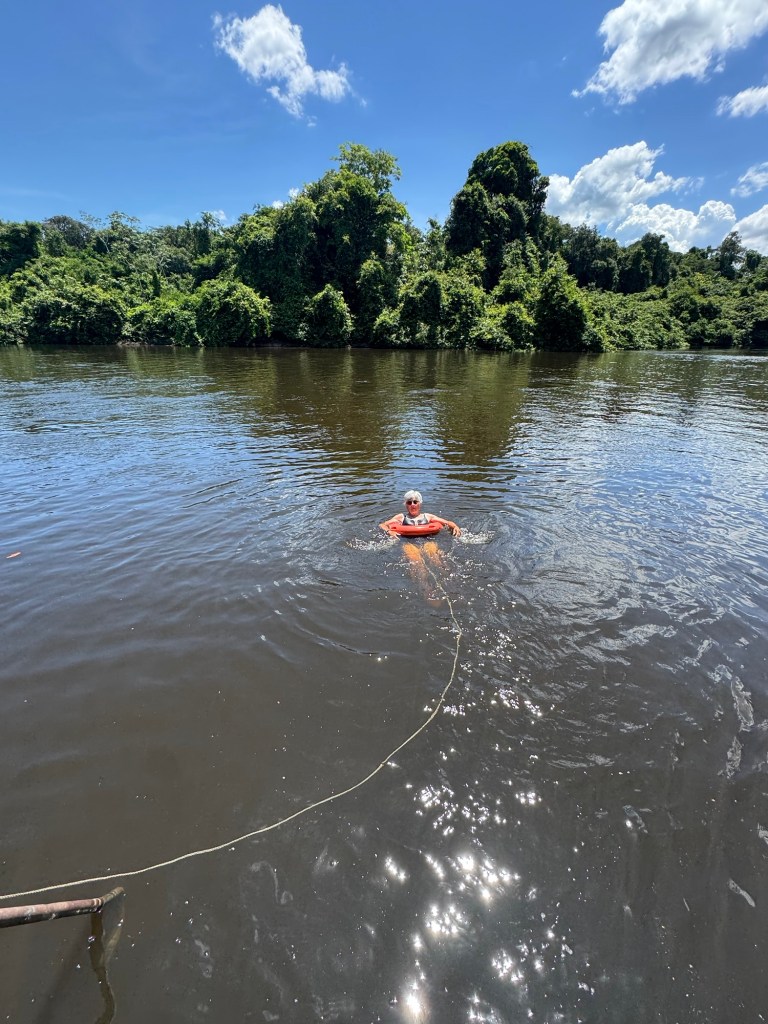
Here is what at we have learned about this lodge and why our travel agent recommended it. It is in the middle of the largest tropical forest in the world and, as one of the best eco-lodges, according to the National Geogrphic, it boasts harmonious architecture in wood, creating sustainable settings integrated with their surroundings. The 4,400 square mile property owned by a conservation minded family reserves this rich biome with a rare diversity of birds, mammals and plants. Our room certainly fits the description as does the dining and common areas. There is no pool, but the nearby river has a pleasant floating deck for sunbathing and swimming.

Floating in the Cristalino River

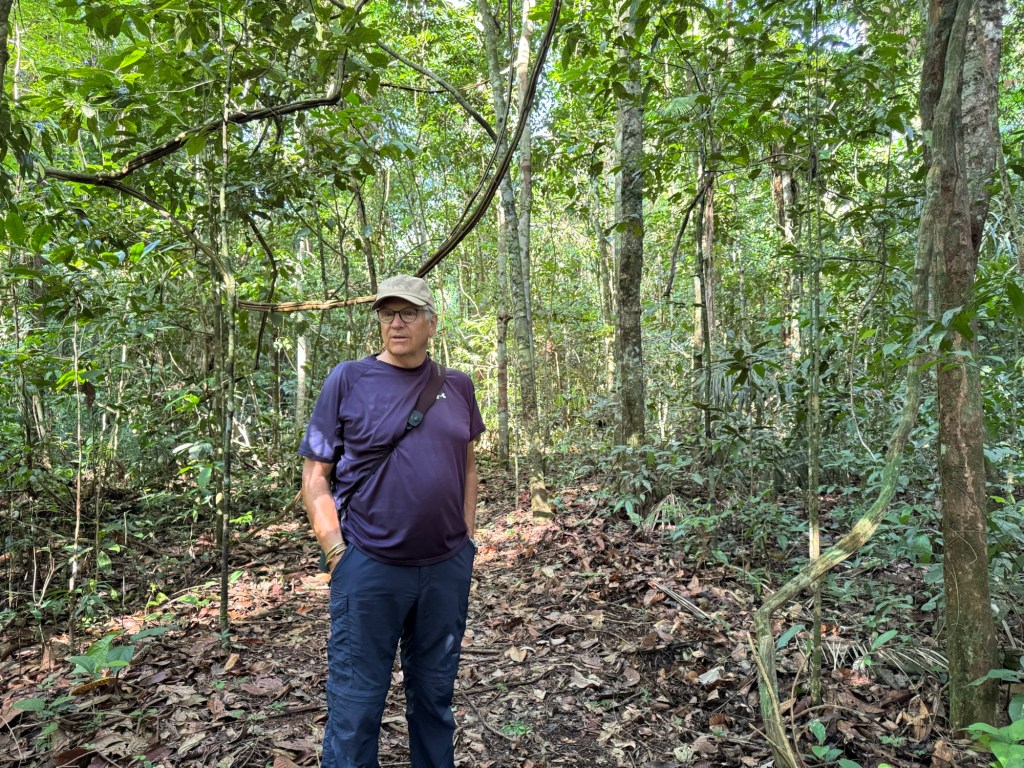
Our first activity was a 2 mile walk through the forest with Priscilla. We started at 7am and walked until 9:30, by which time we were both very hot and sweaty.

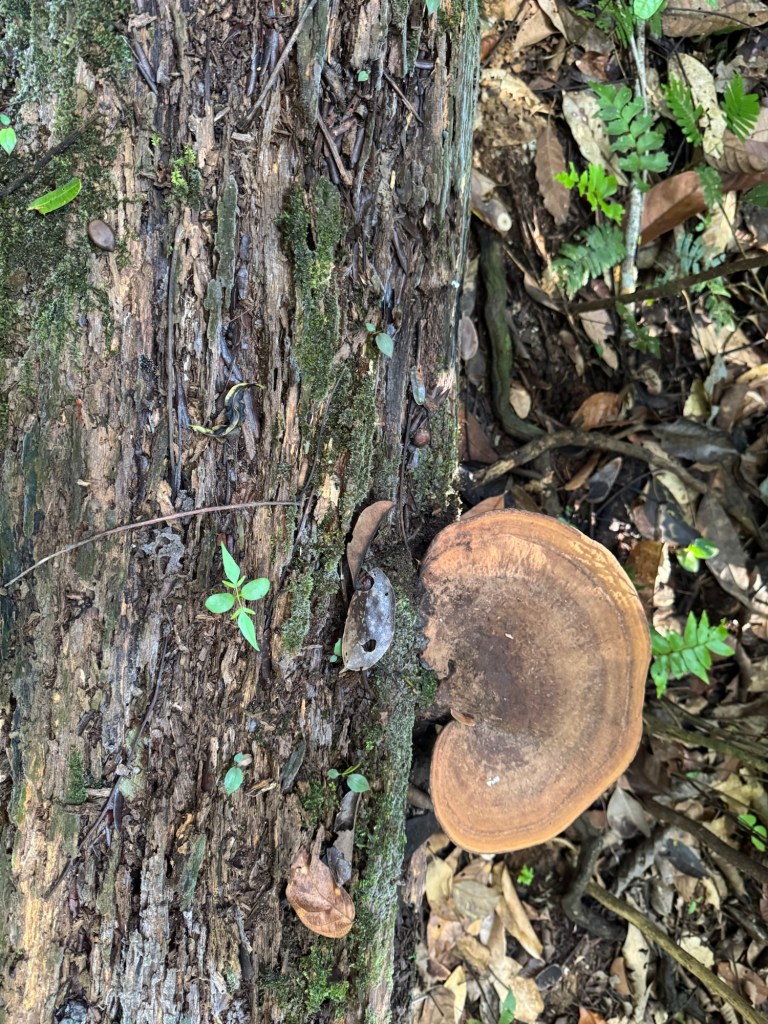
The dead tree fosters new growth.

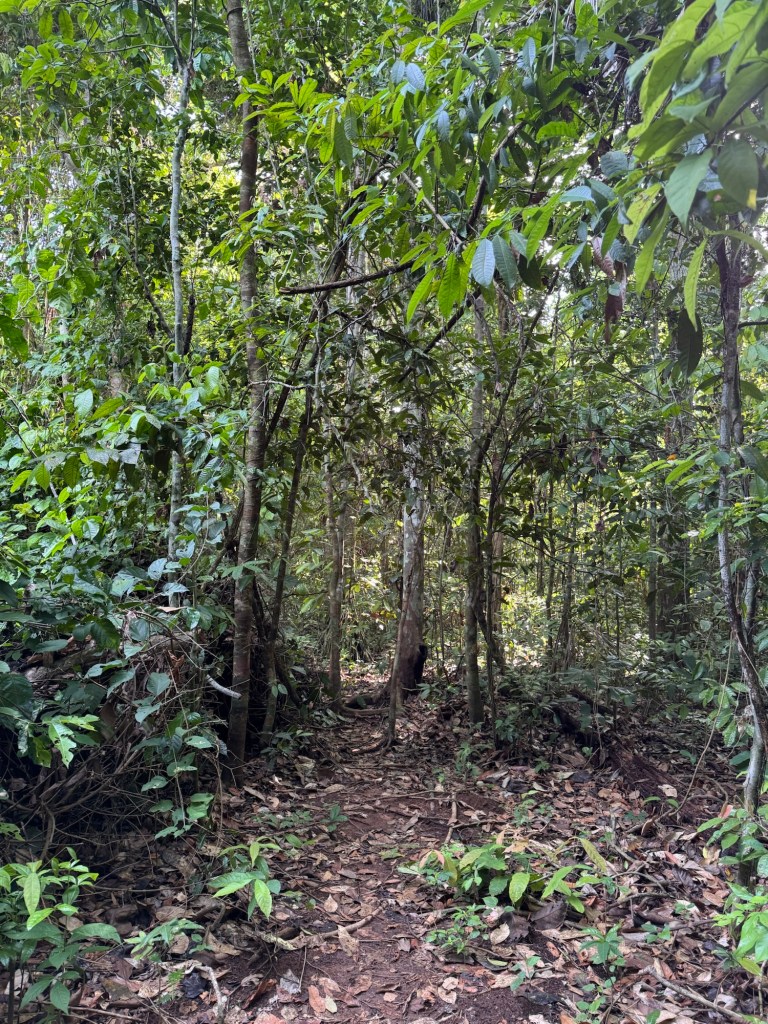
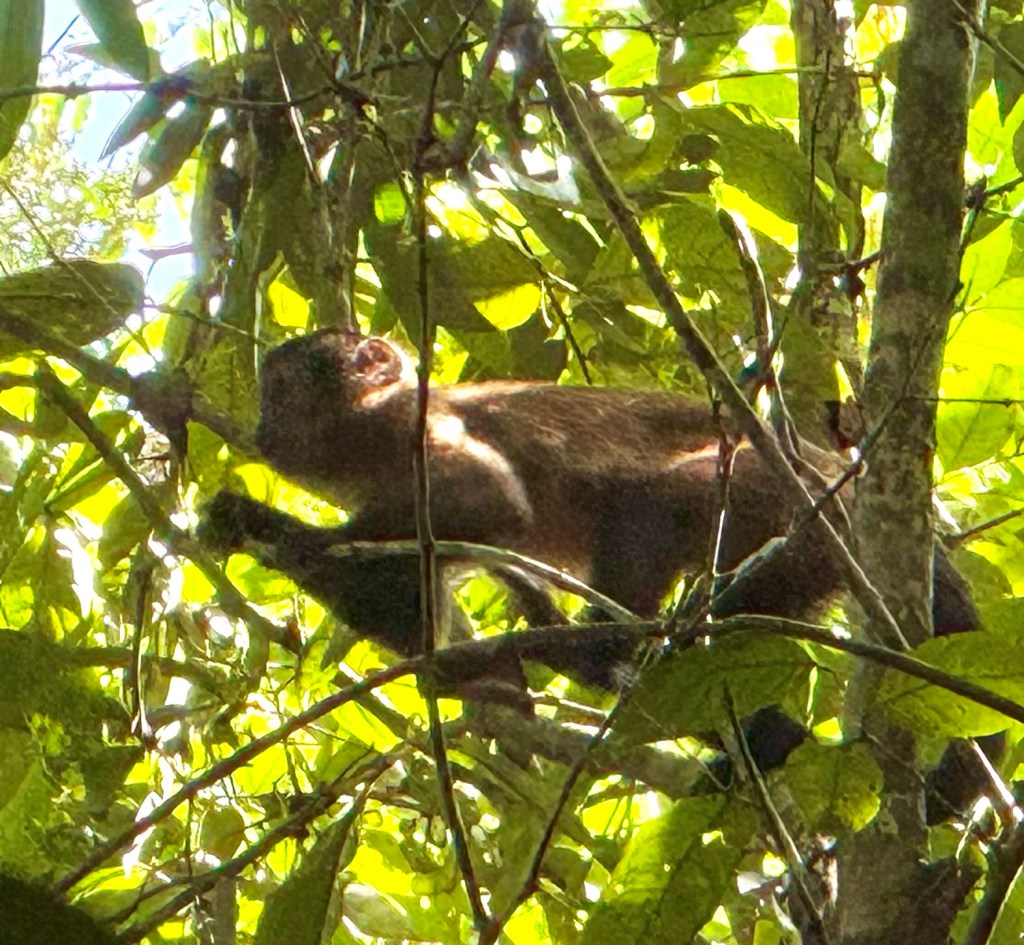
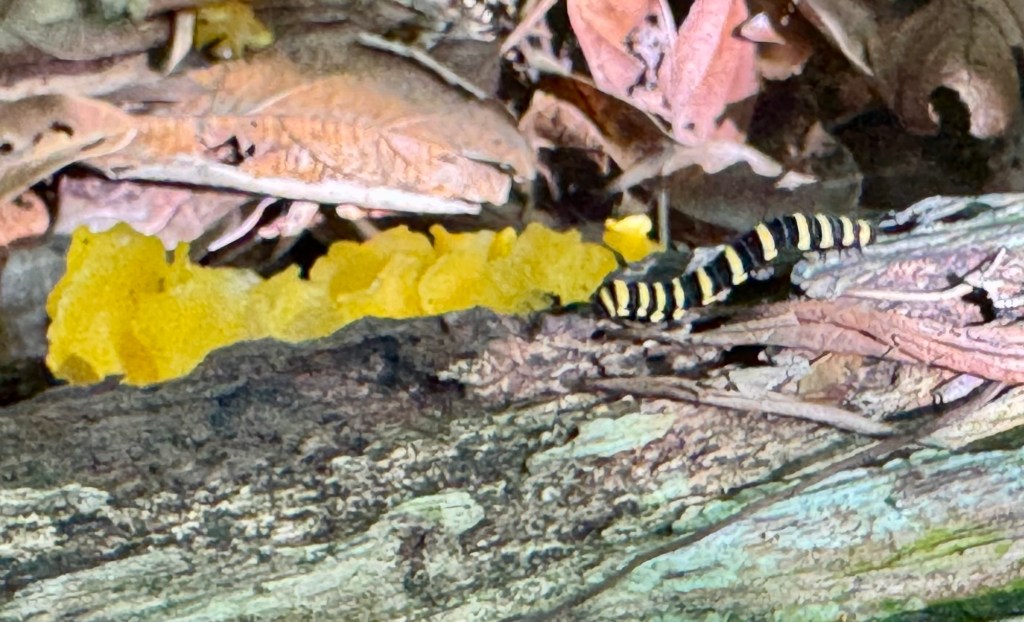
We saw a few brown, Guinean capuchin monkeys, a couple of mushrooms, a caterpillar and a moth and identified some plants. There is even a bamboo forest within the forest. Priscilla told us the birds and most animals live in the tops of the trees and not in the dense understory. This was enough forest hiking for us. Apparently we are in between wet and dry bird seasons during which there are few birds to see. Bummer for us. However, we were grateful to jump into the river and cool off.

In the late afternoon we went for another boat ride and found a few more birds to prove there were some. Unfortunately the focus is not what we would like.

At dinner time we stepped out of our cottage and found two capybara munching on the plants in our yard. Fun to see them.

At the lodge, we attended a presentation about the lodge property as well as the Brazilian amazon in general. Alta Floresta and environs were developed during the 60s and 70s when coffee was the product. In the 80s gold was discovered and the population soared to 100,000+. When the gold market collapsed, agriculture took over and continues today. Soybeans and corn are the main crops that are rotated each year as no irrigation is needed. Sadly, the forest continues to be cut down for agriculture.

Saturday, October 25, 2025

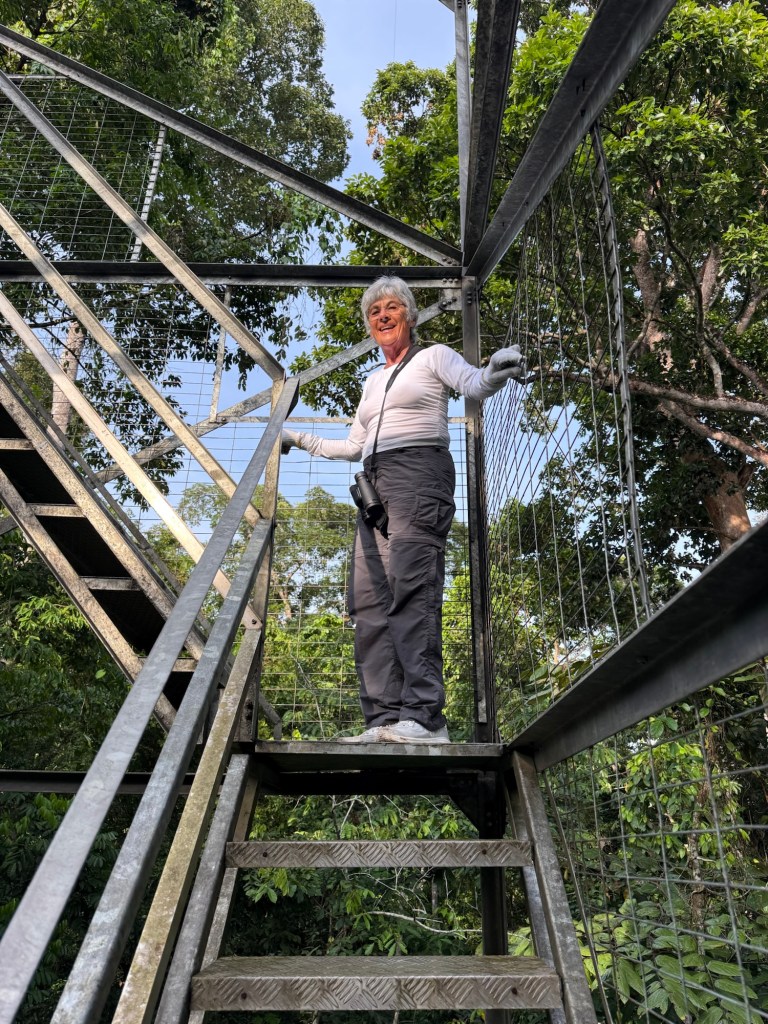
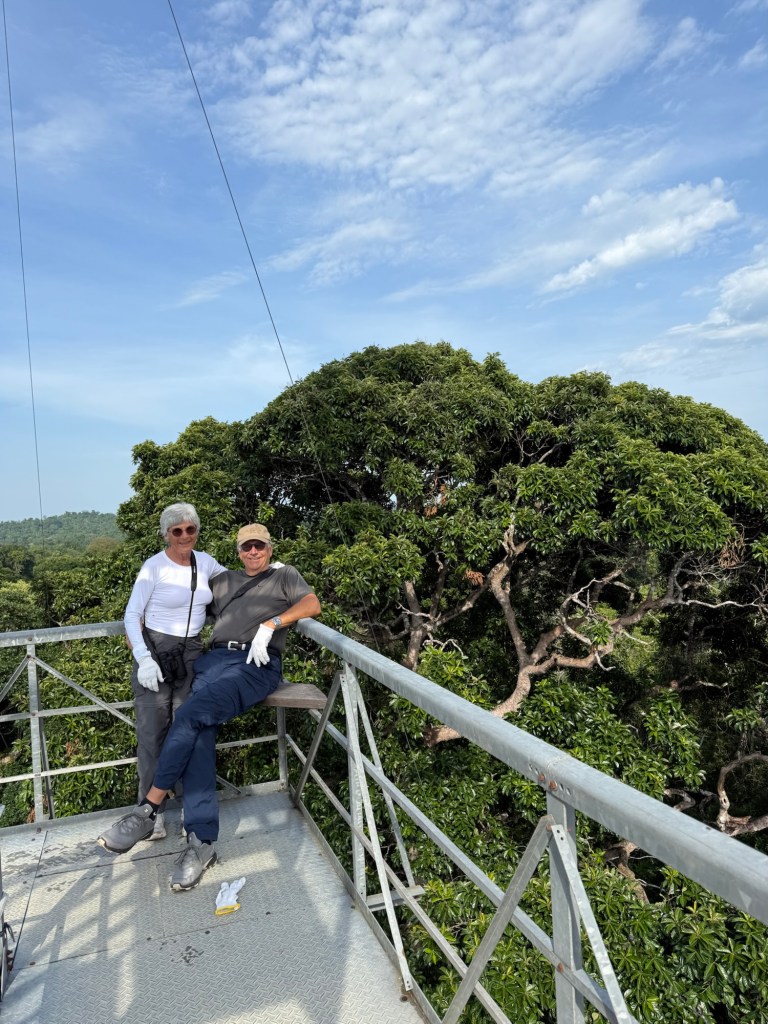
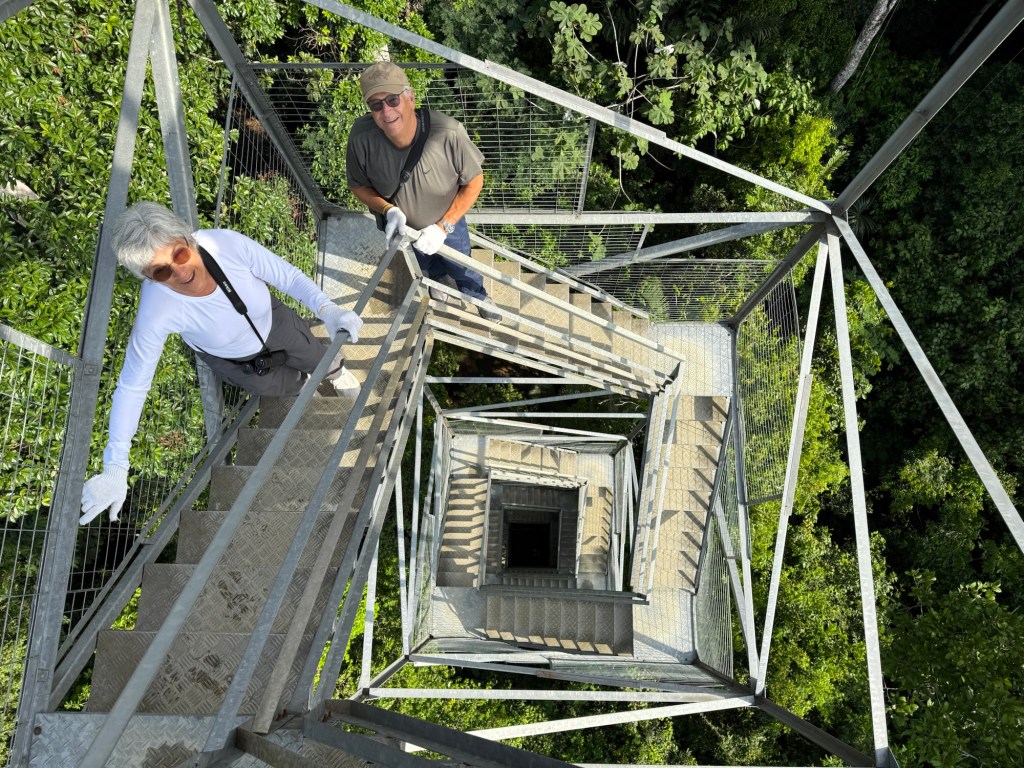
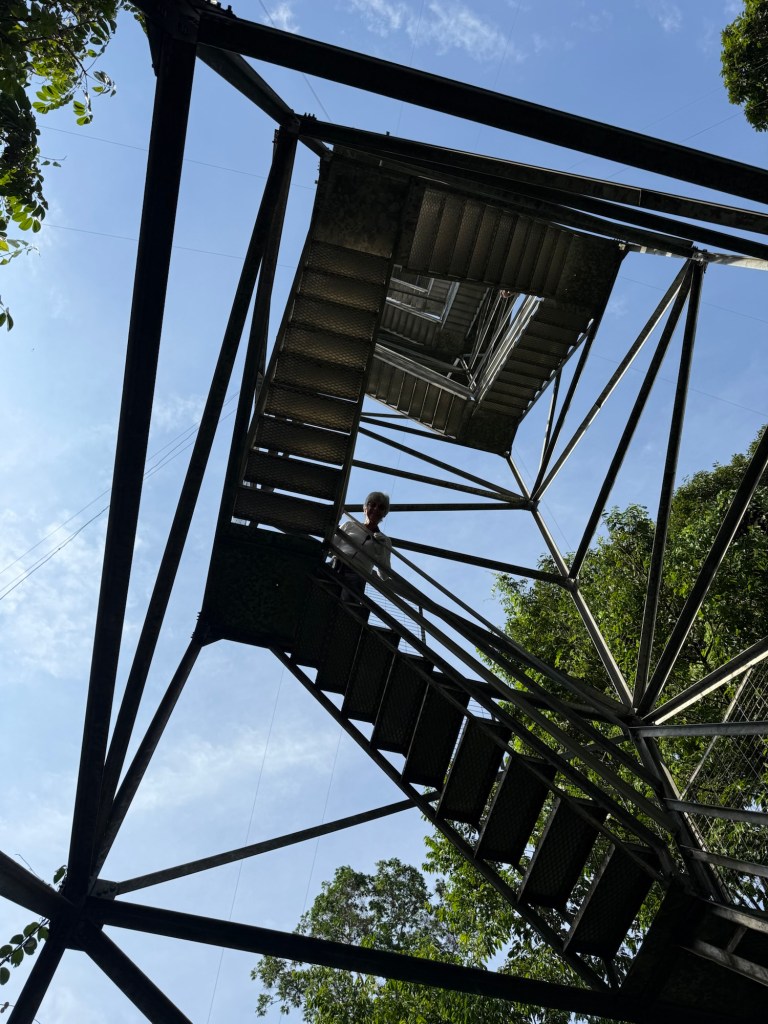
Up at 5am and on the boat at 6, crossing the river to a 20 minute walk to an observation tower. Although it was 168 feet tall, it was sufficiently enclosed with a banister on one side and cage wire on the other that I was not afraid. Our guide gave us gloves to wear and that helped protect our hands on the climb, which took about 15 minutes.

At the top, we were above the tallest trees and able to see the forest all around us. However, just as on the ground, there were few birds flying about. The best we saw was a pair of scarlet macaw passing by. No chance to take a photo. We sat at the top for about 45 minutes enjoying the view, before descending.

Back on the boat, we cooled off while motoring up river until we saw a tapir that Priscilla was hoping to find. Got some nice photos of it, then headed slowly back to the home dock.

Sunday,October 26, 2025

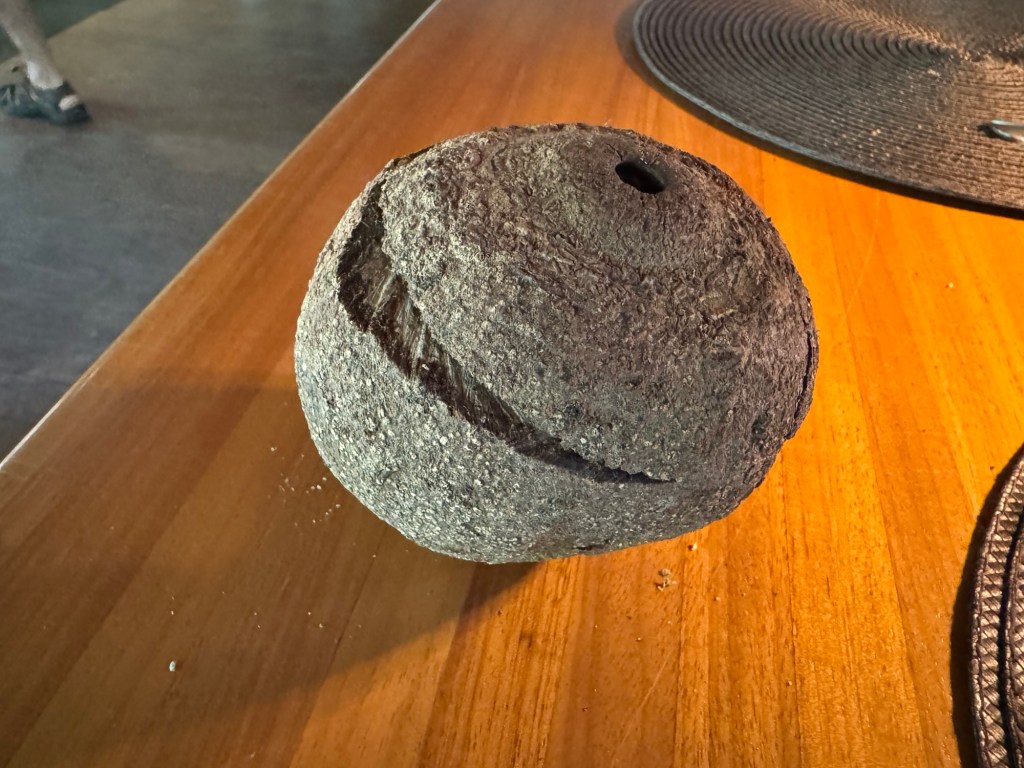
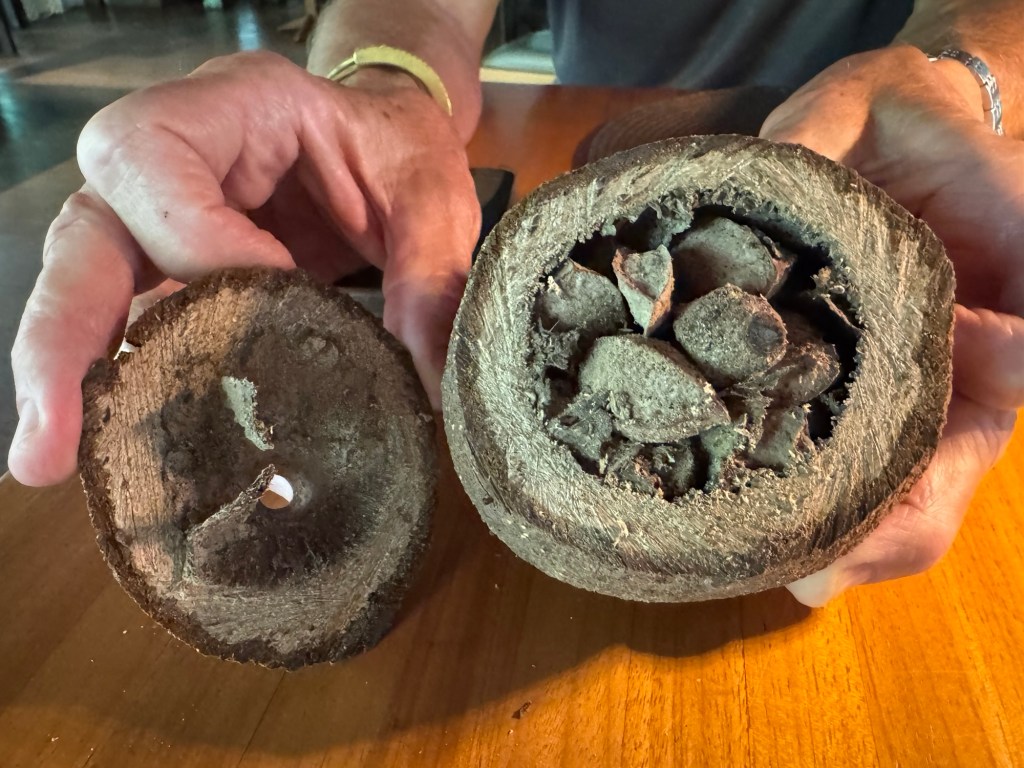
Yesterday we boated across the river spotting a large caiman and more bats and then hiked through the forest for half a mile to a huge Brazil Nut tree.

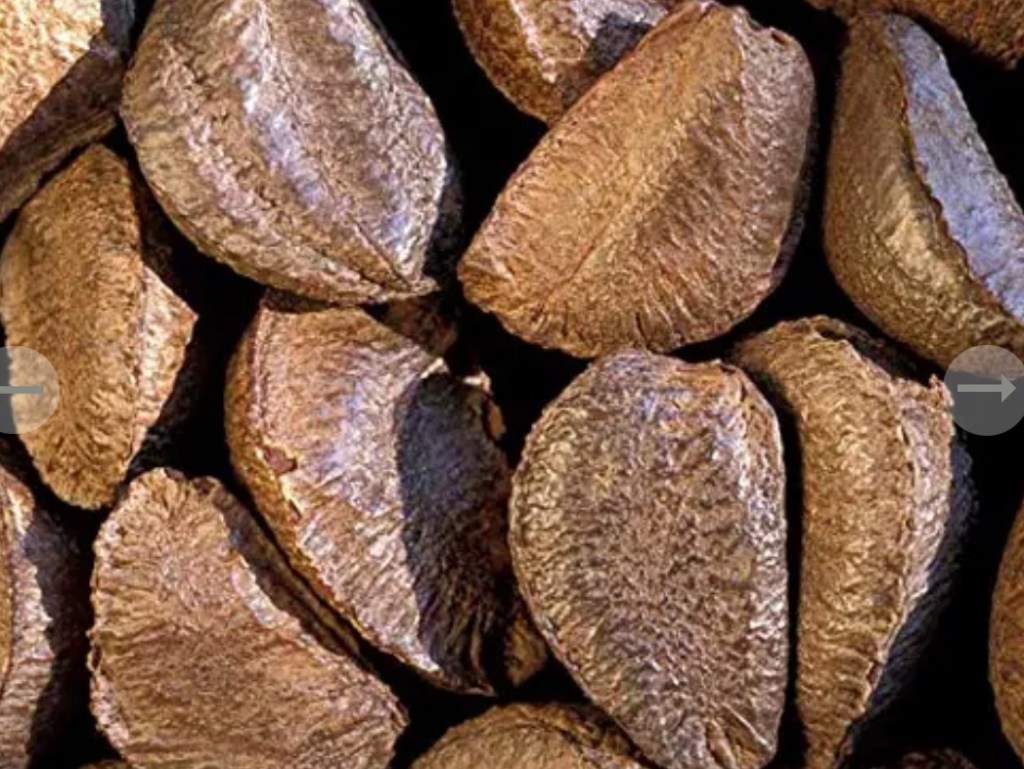
It was similar in size to our large redwood trees. Later we took photos of the huge nuts that fall from the tree and took photos of one and the nuts inside, which are also hard to open.

Sunday morning, Priscilla and I kayaked down river a few miles before being picked up by the boat for the return trip to the floating dock. Time to pack and move on. We depart at noon by boat, car, plane and car to São Paulo.

The Pantanal, Brazil’s wetland

Sunday, October 19, 2025

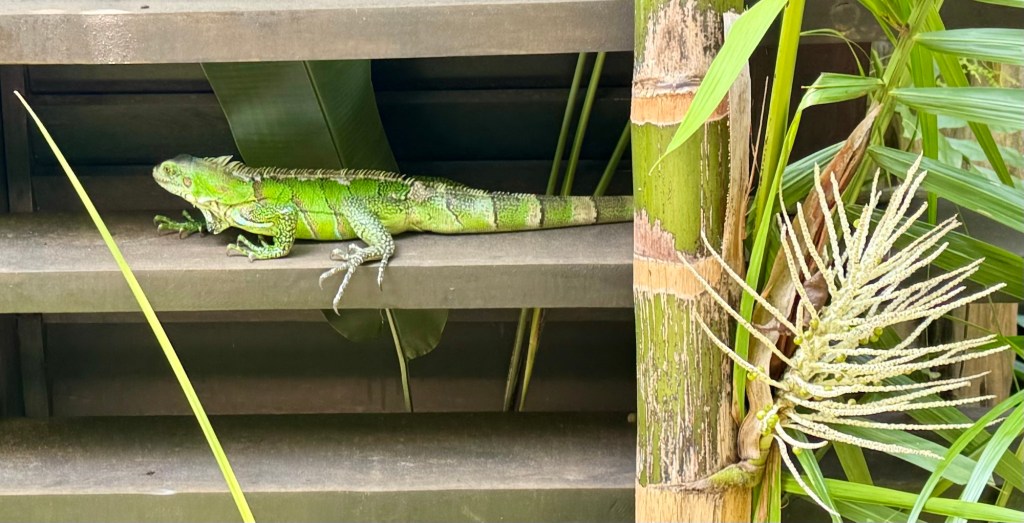
A colorful iguana outside our door bid us adieu and off we went to our next adventure`.

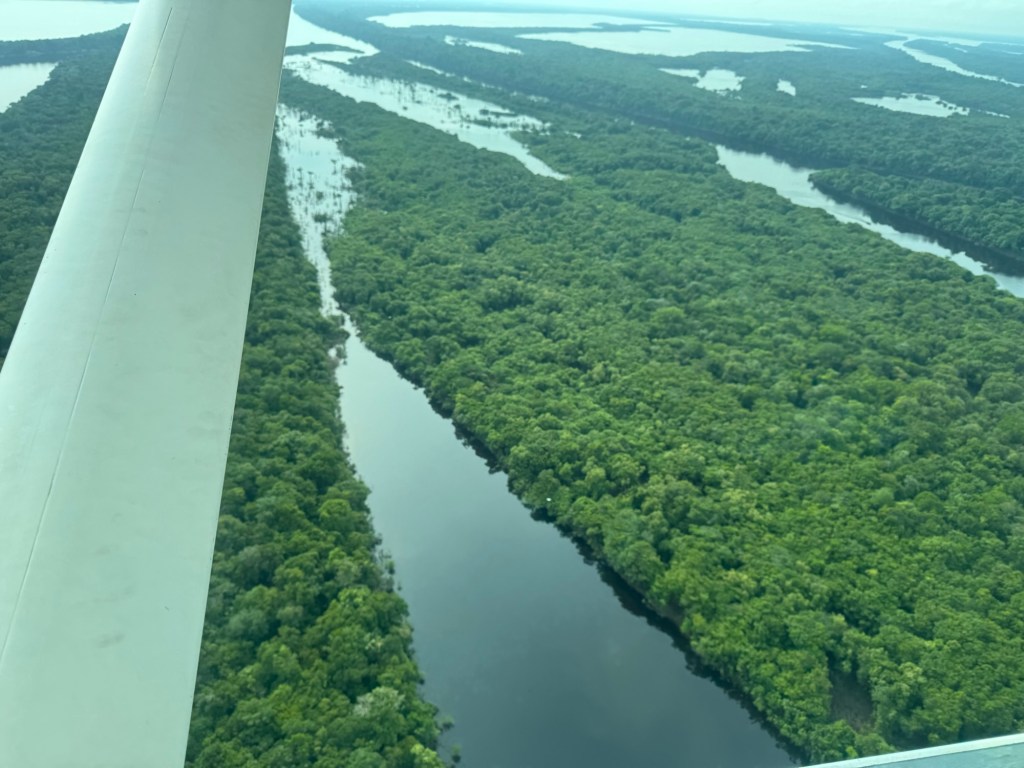
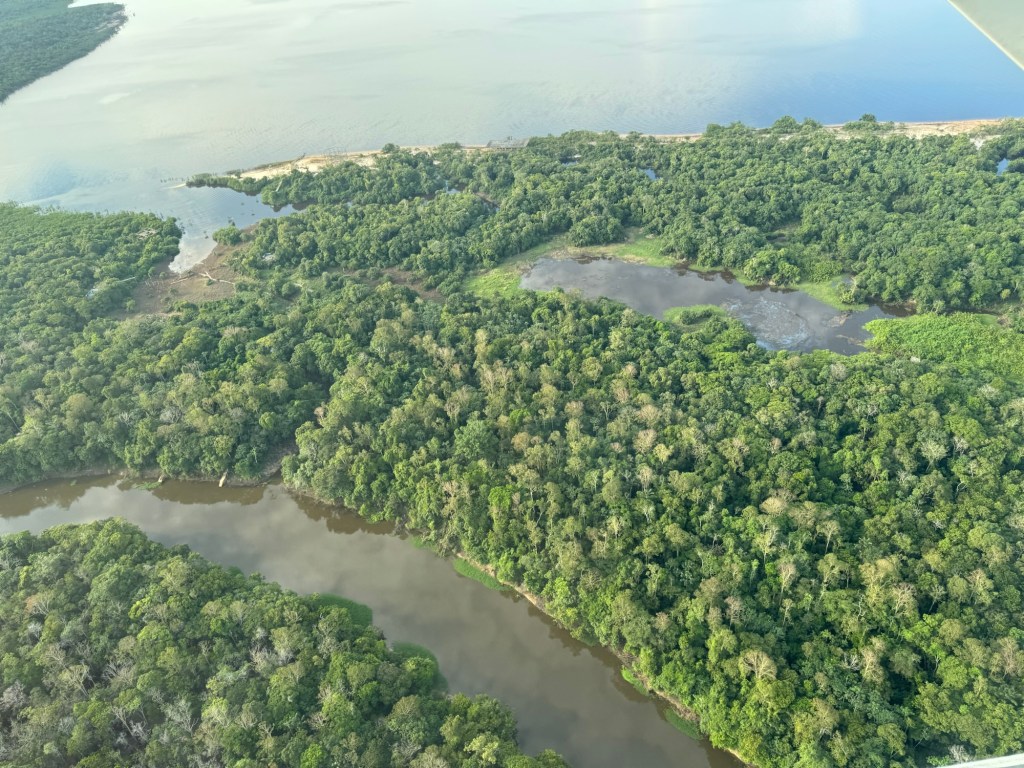
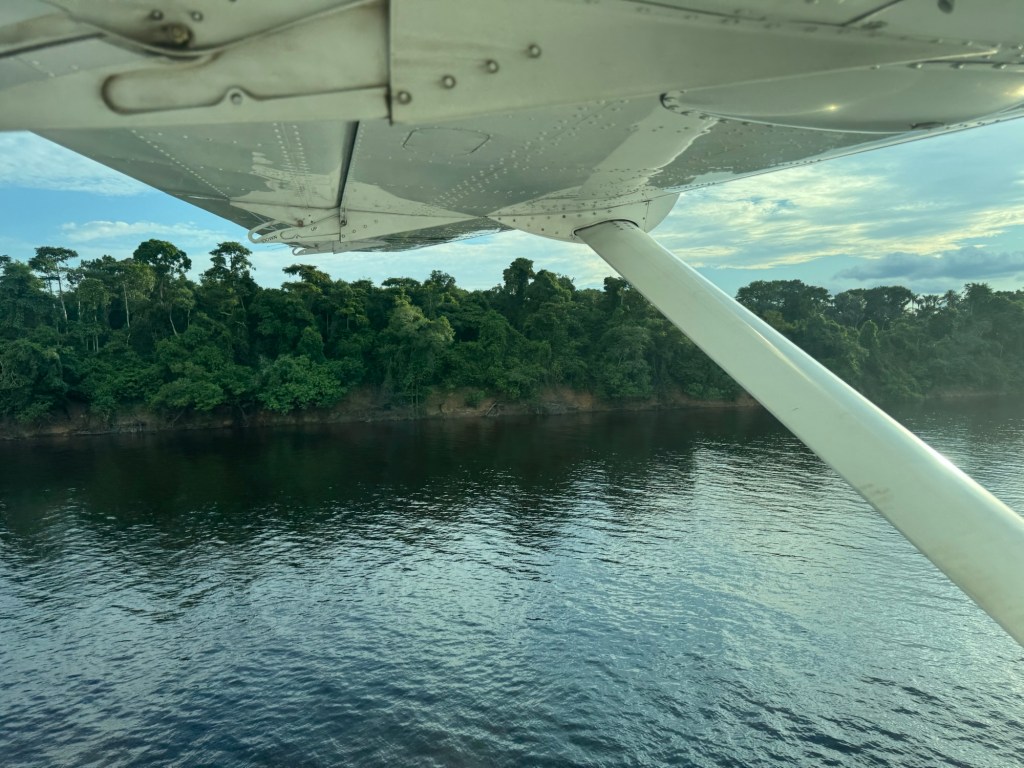
We lifted off Mirante do Gaviao Lodge beach in the seaplane at 7:50 with the same crew that brought us to the lodge. They gave us an equally delightful return to Manaus, flying low over the jungle

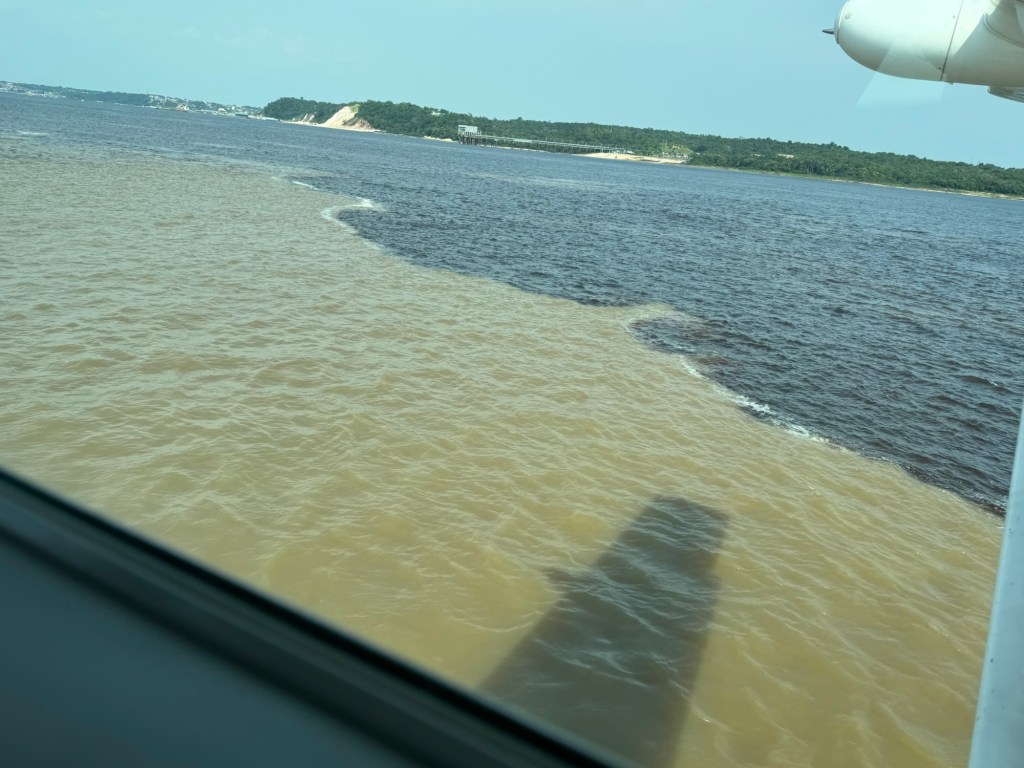
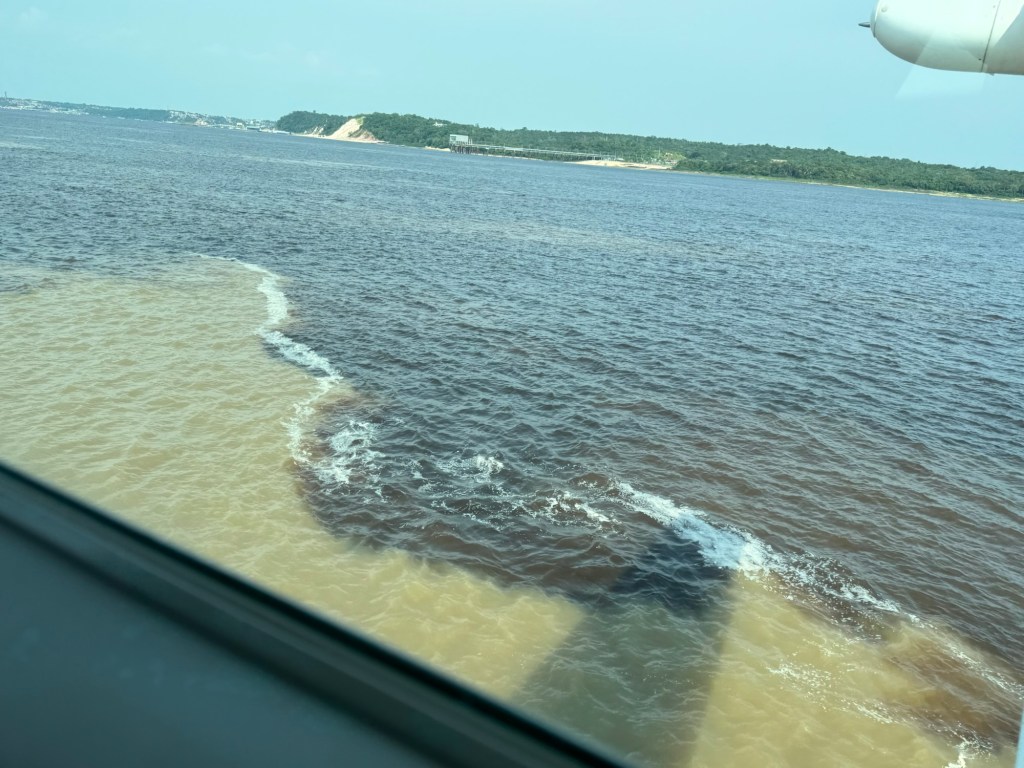
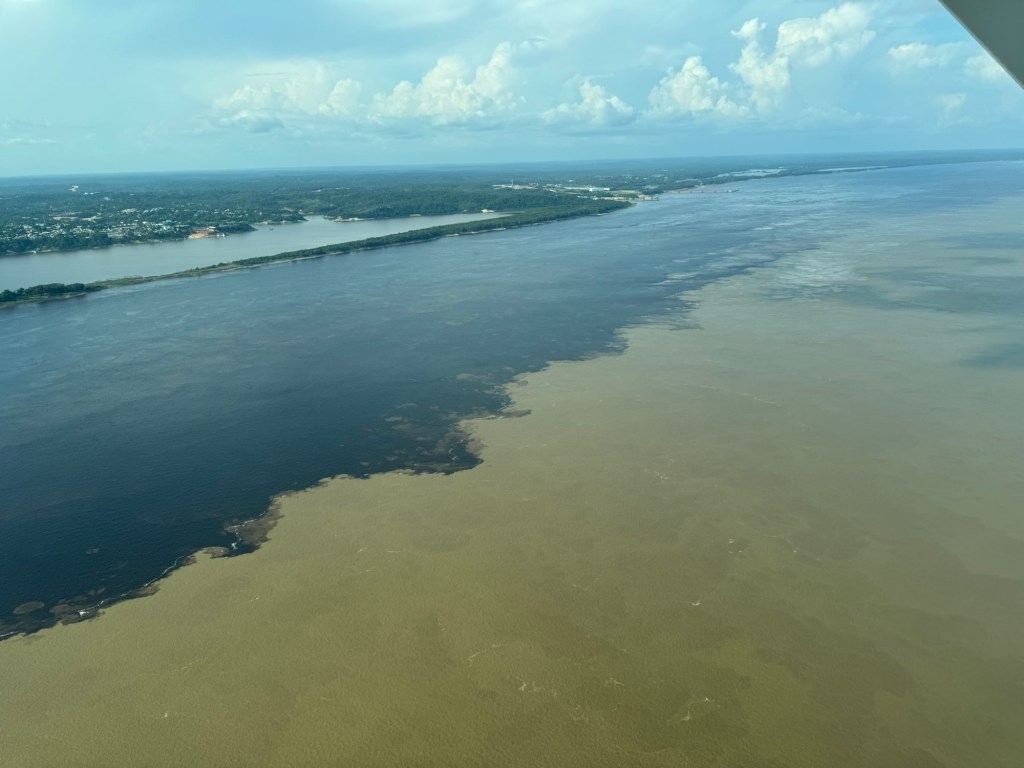
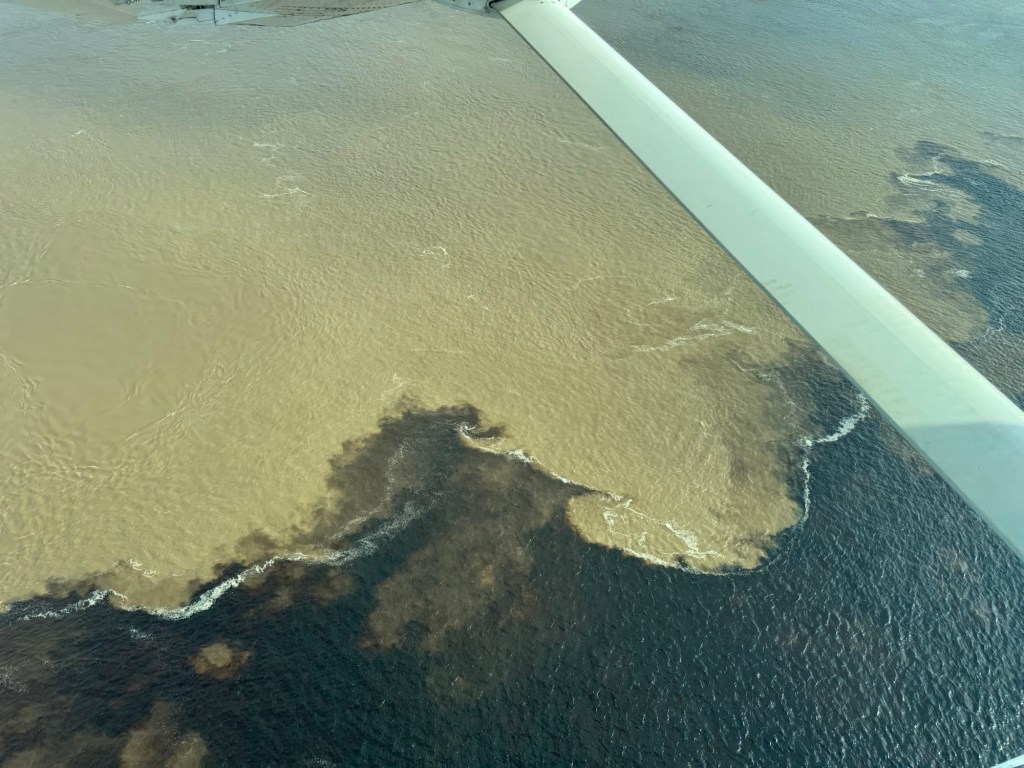
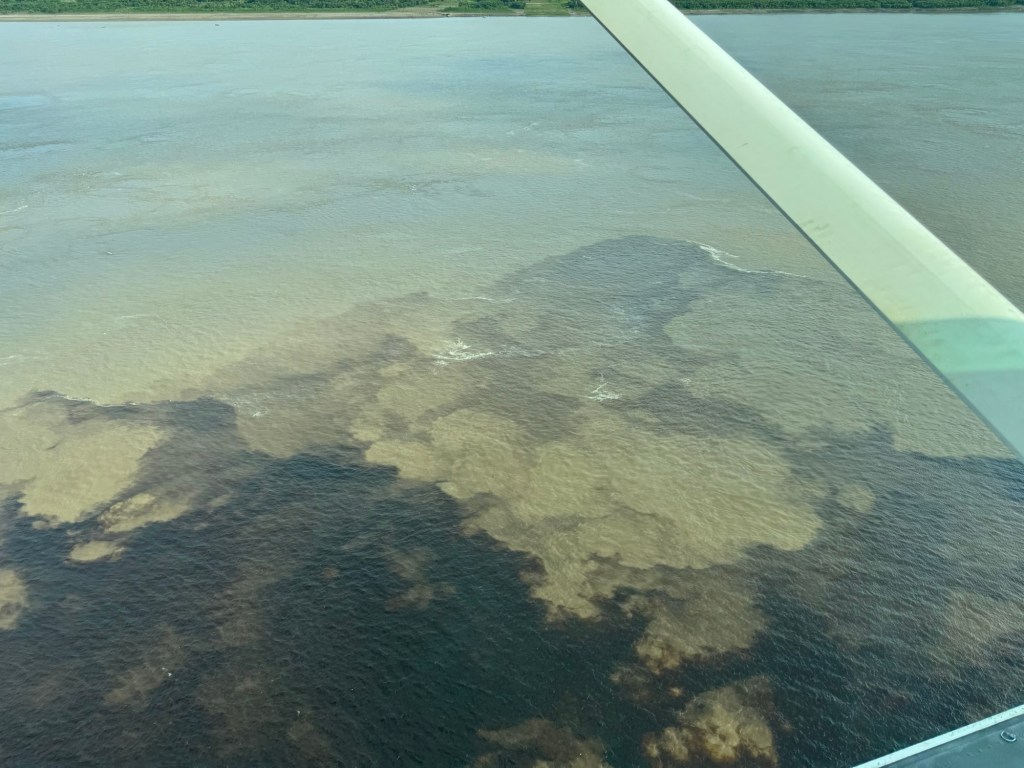
and very close to the river. Near Manaus we encountered the muddy Amazon again. Almost touching the water.

Although we have not been on the Amazon River at all this trip, we have been in the Brazilian state of Amazonia and people refer to the area as if being on the river.

The Pantanal, our next destination, is a natural region encompassing the world’s largest tropical wetland area, and the world’s largest flooded grassland. Located mostly in the Brazilian state of Mato Grosso do Sul, it extends into the state of Moto Grosso and portions of Bolivia and Paraguay. (Refer back to the map of Brazils states.) It sprawls over an area between 54,000 and 75,000 square miles with various sub regional ecosystems that each have distinct hydrological, geological and ecological characteristics. Roughly 80% of the Pantanal floodplains are submerged during the rainy seasons, nurturing a diverse collection of aquatic plants and helping to support a habitat for nearly one thousand species of animals and many aquatic birds. Fishing is an important industry in the local economy and is also a staple food. Although much larger, the Pantanal has a habitat similar to the Everglades in Florida.

We will be visiting Caiman, an oasis in the Pantanal founded in 1987 with the purpose of conserving its flora, fauna and culture in the Pantanal Matogrossense National Park. “Thick bush” is the meaning of ”Matogrosso”. Our accommodations are in the lodge called Caiman on a 131,000 acre ranch that sustains many white Brahma cattle as well as thousands of birds, animals, amphibians, fish and bugs all being conserved and made available for tourists to experience.

We spent over 6 hours in a King Air C90A getting from the Amazon region to the Pantanal. The weather was so stormy south of Manaus that we bounced all over the sky and were forced us to divert around several storms cells. After a refueling stop in a place called Alta Floresta and another 3 hours in the air we landed on the Caiman airstrip in front of the Caiman lodge. Fortunately, the weather was cooler, barely humid and most pleasant. We felt comfortable again.

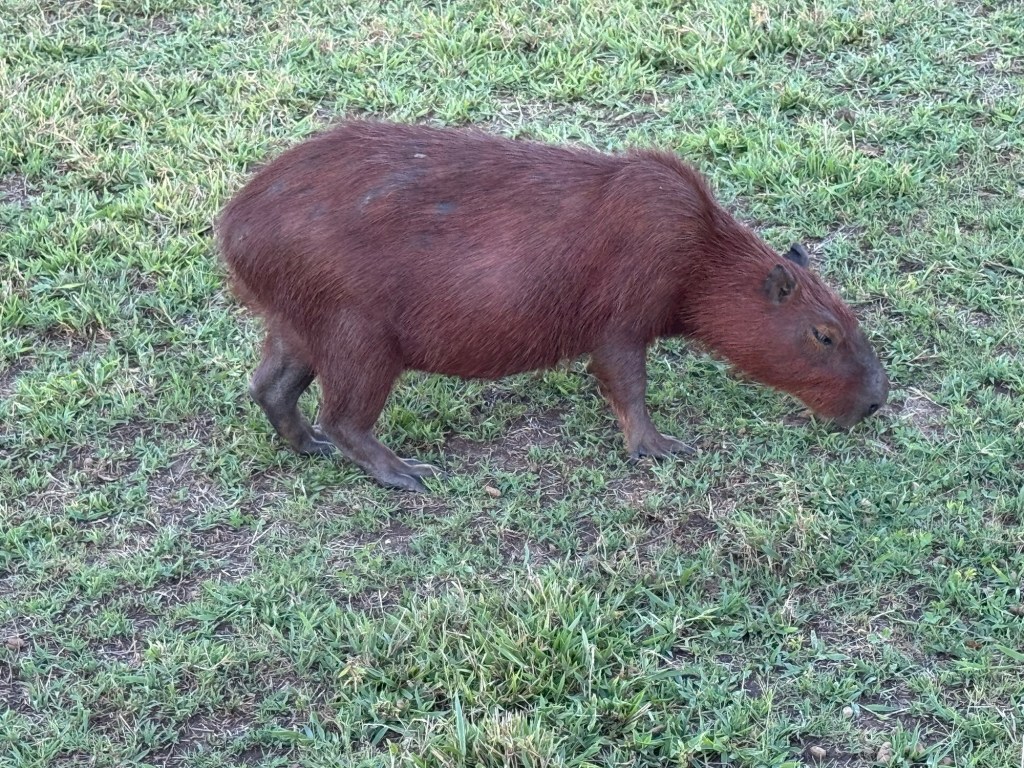
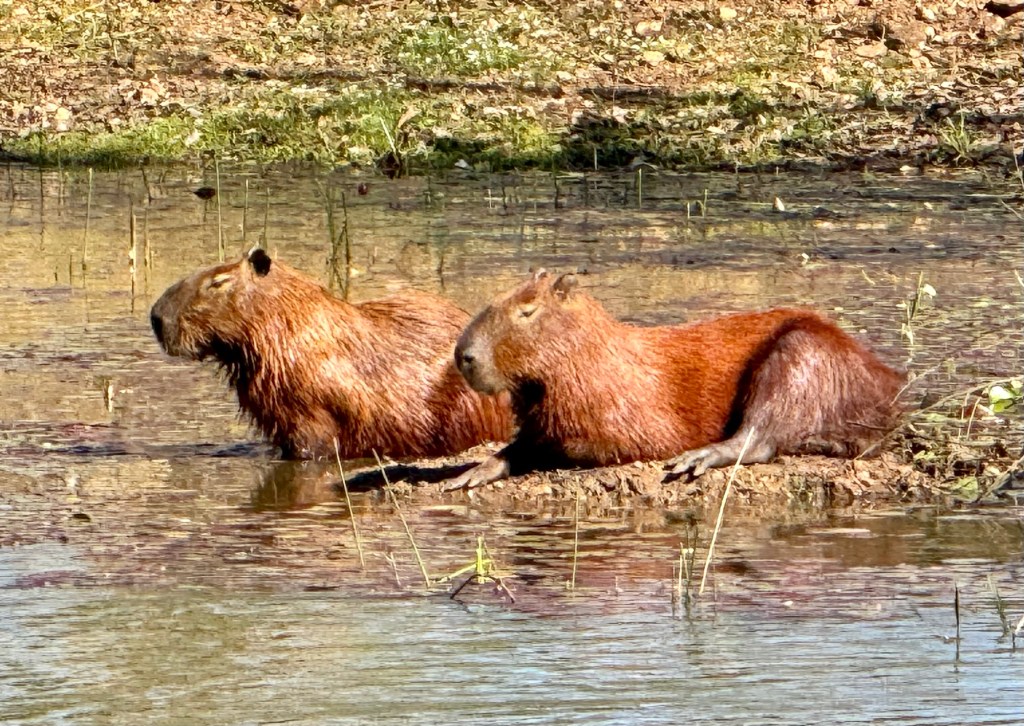
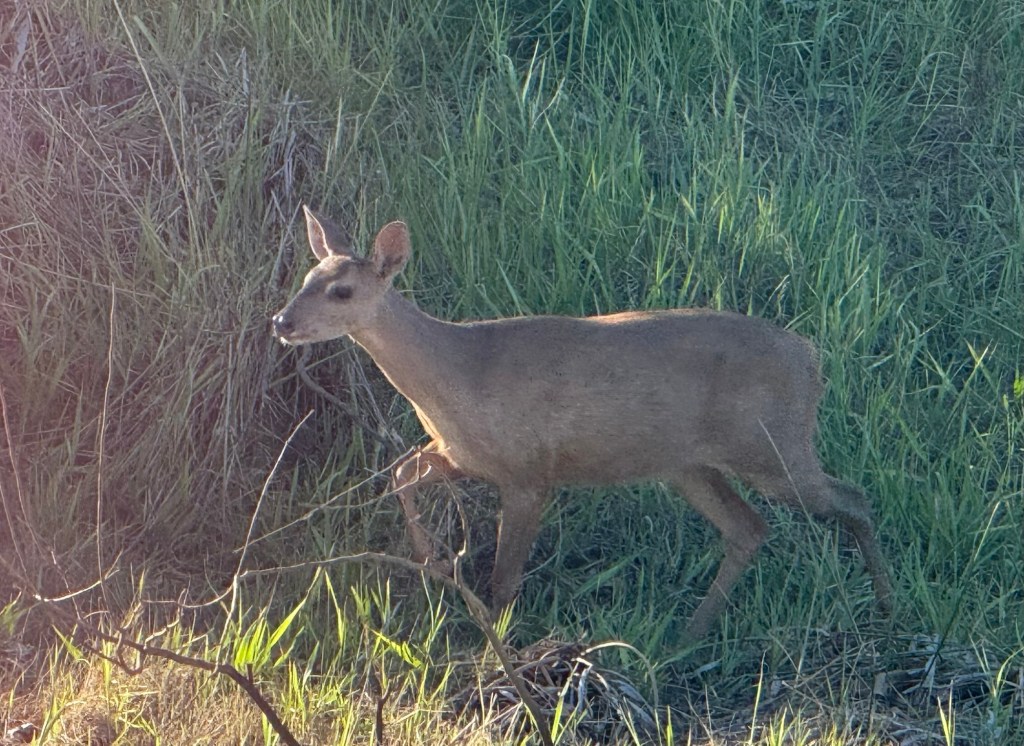
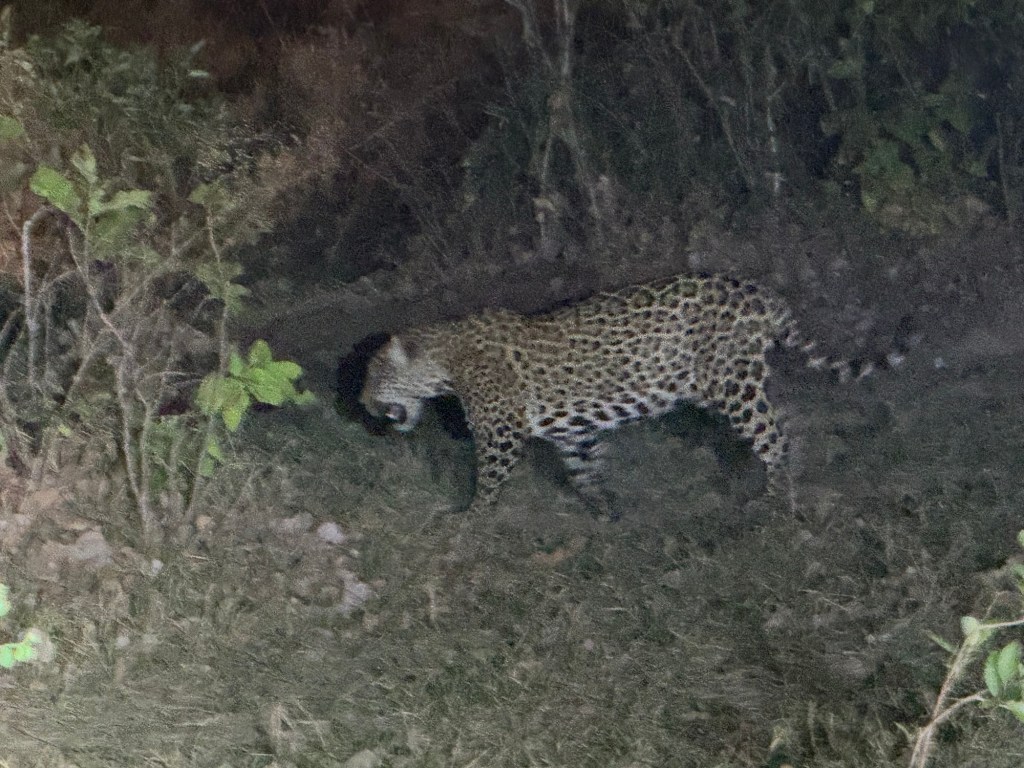
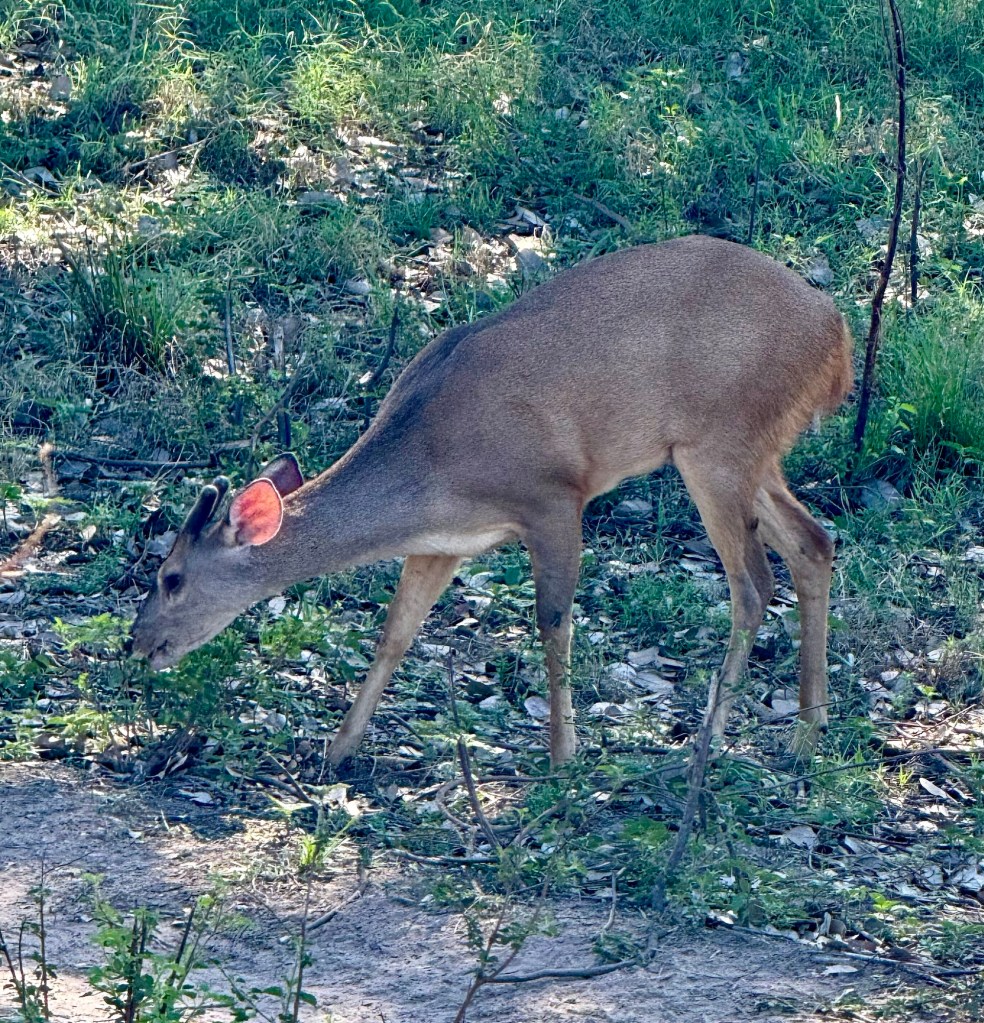
Waiting to greet us were a young lady named Laura and her driver named Coche. They were ready to take us on a game drive, so after checking into our room, we were in a safari vehicle on a game drive. We saw several animals and birds in short order and were cooler and happier than we had been anywhere in the Amazon. Our first sighting were several of the world’s largest rodent, the Capybara, then a crab-eating fox, a pair of turquoise-fronted Amazonia birds, which are actually green parrots, several pampas deer, like our deer only smaller. Laura told us we would have a different guide for the next three days as we will be on a special program for jaguar conservation. These are the animals I succeeded in photographing.

The drive with her lasted until dark and dinner at 7:30pm. The meal was buffet and included several pizzas, an attraction for us after weeks of Brazilian food…good but not like home.

Monday, October 20, 2025

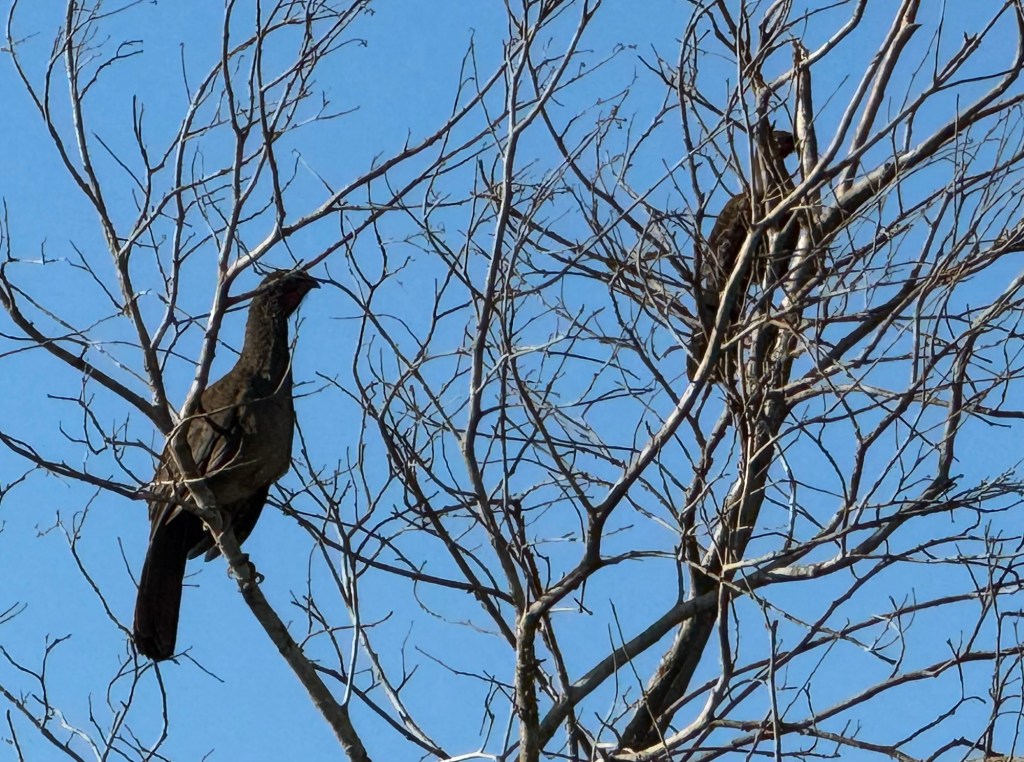
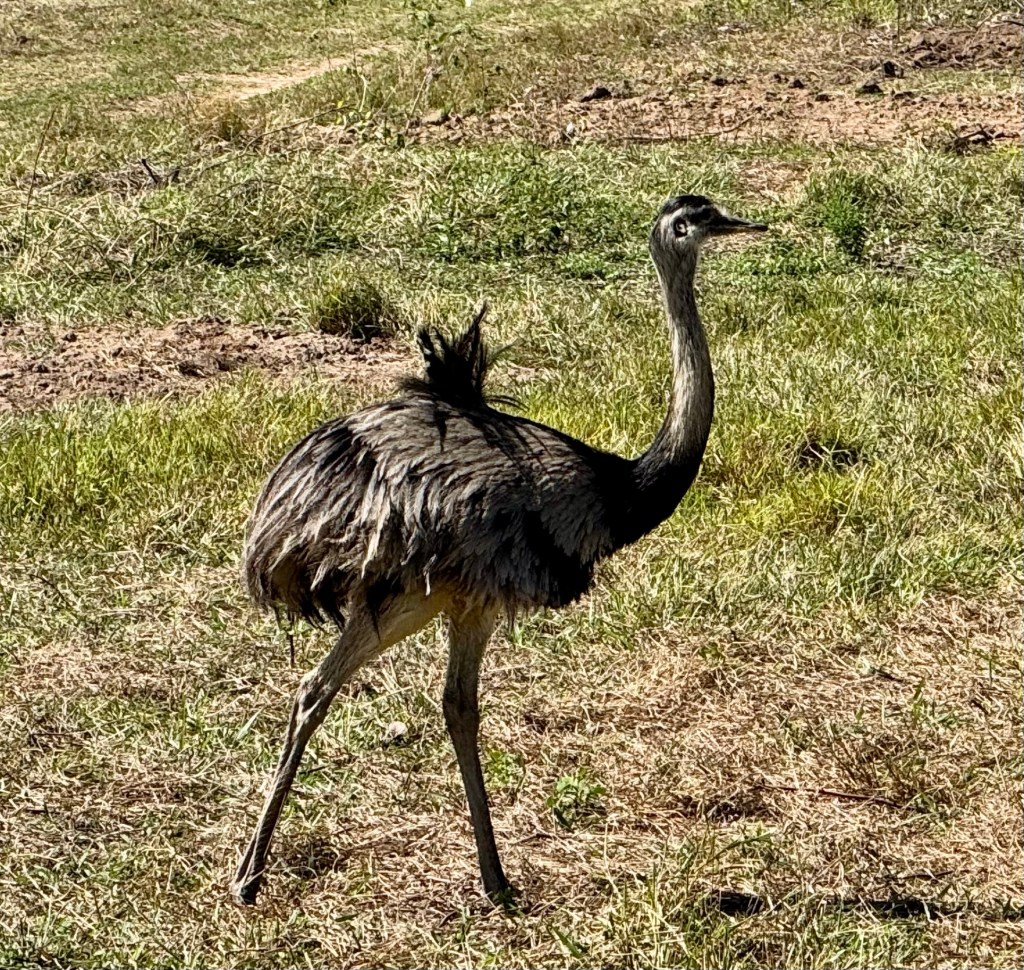
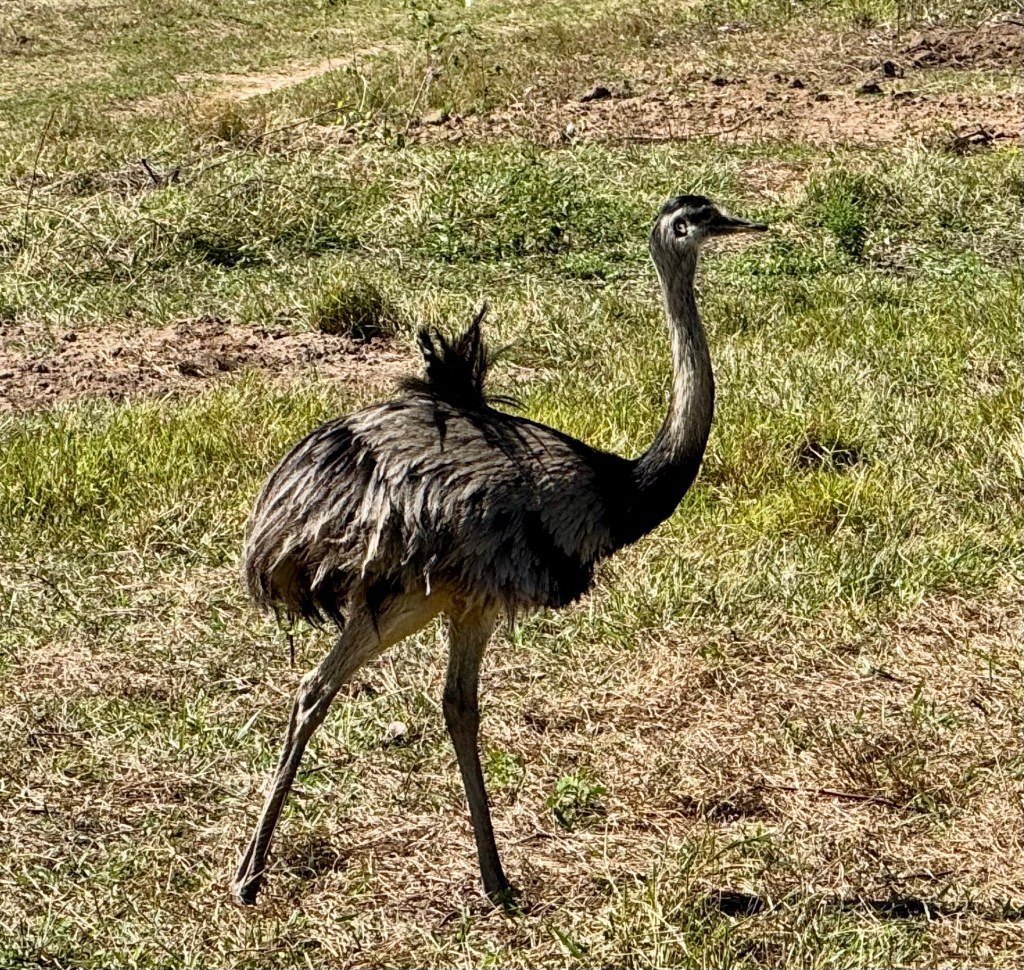
Up at 5am and on safari by 5:30, we met our Jaguar conservation guide, named Rafael, and our new driver, Chipa. Rafael immediately began telling us about the early morning birds: a Burrowing Owl, a buff-necked Ibis, many big and noisy birds called Chaco Chachalaca and the largest birds of all, a pair of rhea, ostrich-like birds.

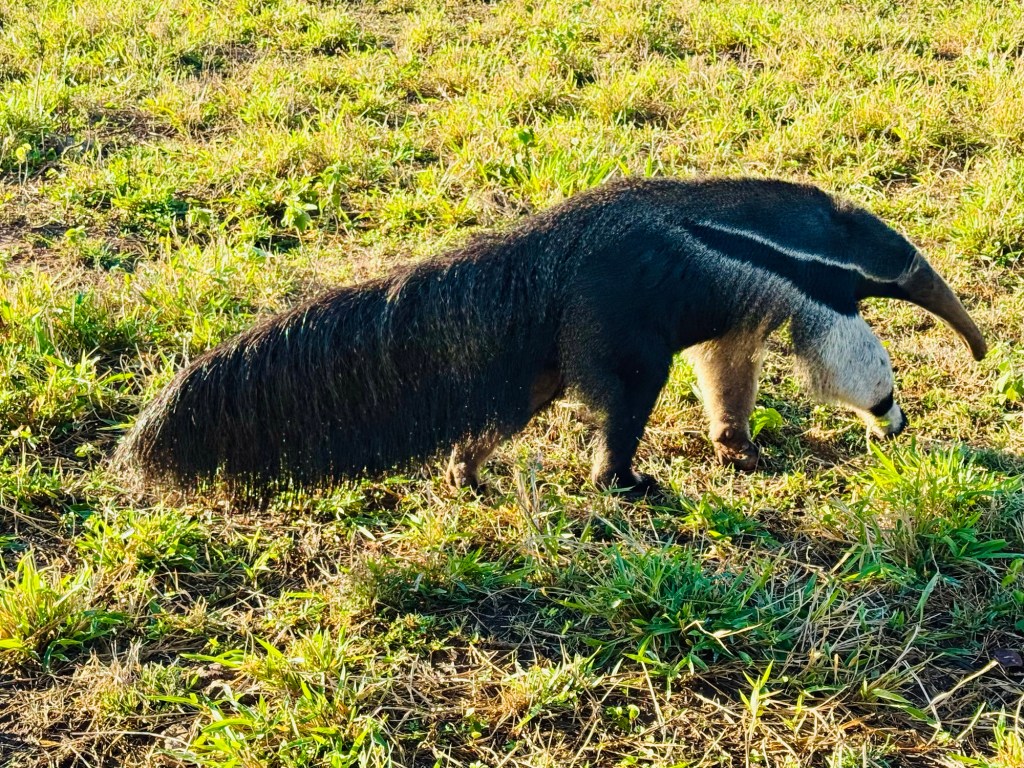
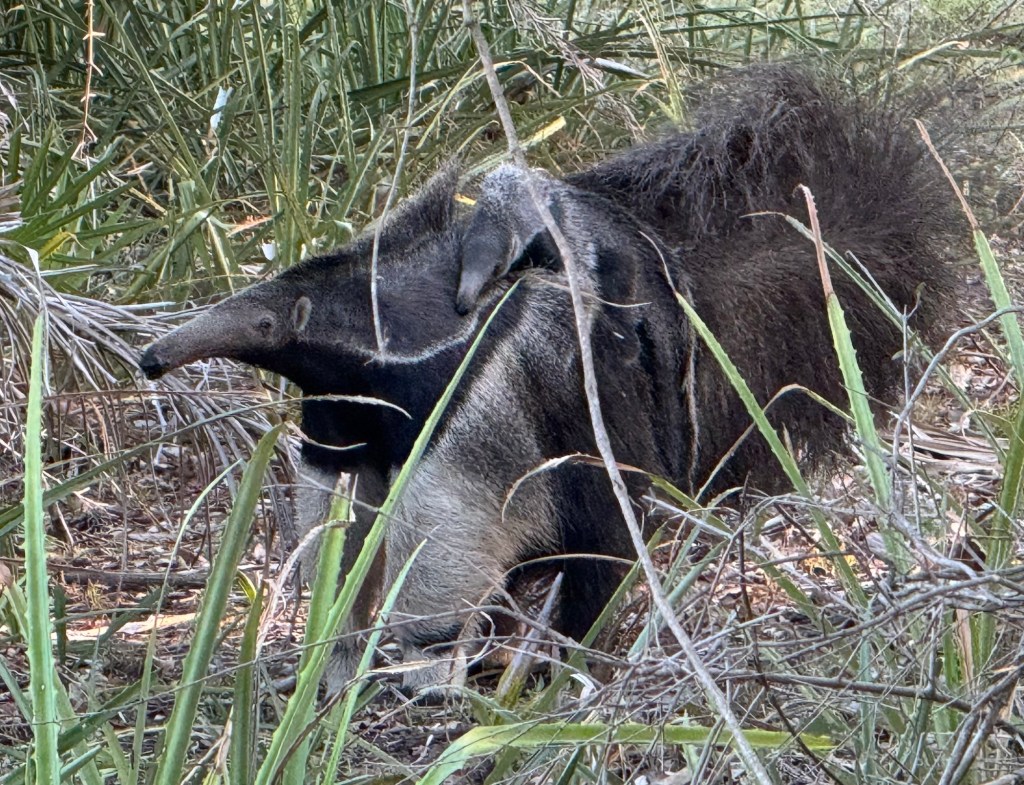
Giant Anteater on the prowl

Then we saw a large anteater slowly eating its way through a termite hill. Anteaters apparently have bad hearing and vision, but a good sense of smell.

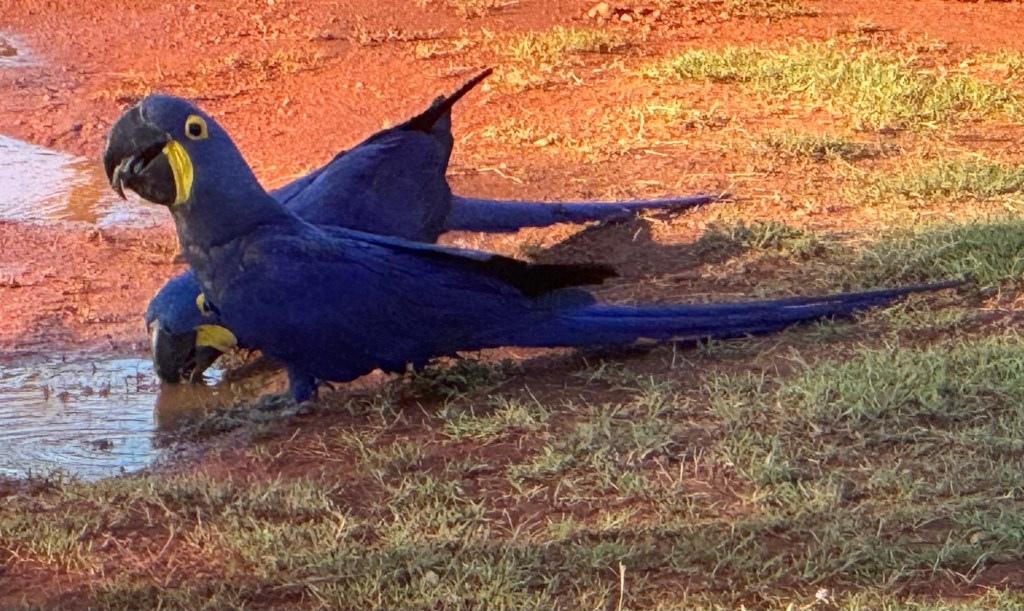
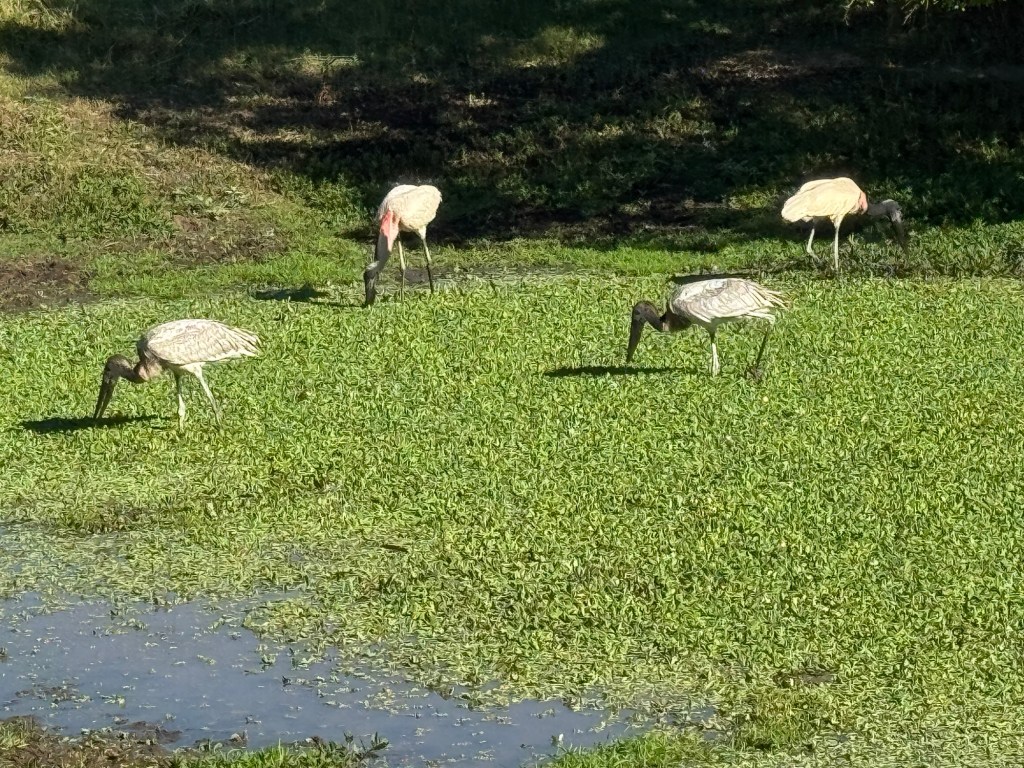
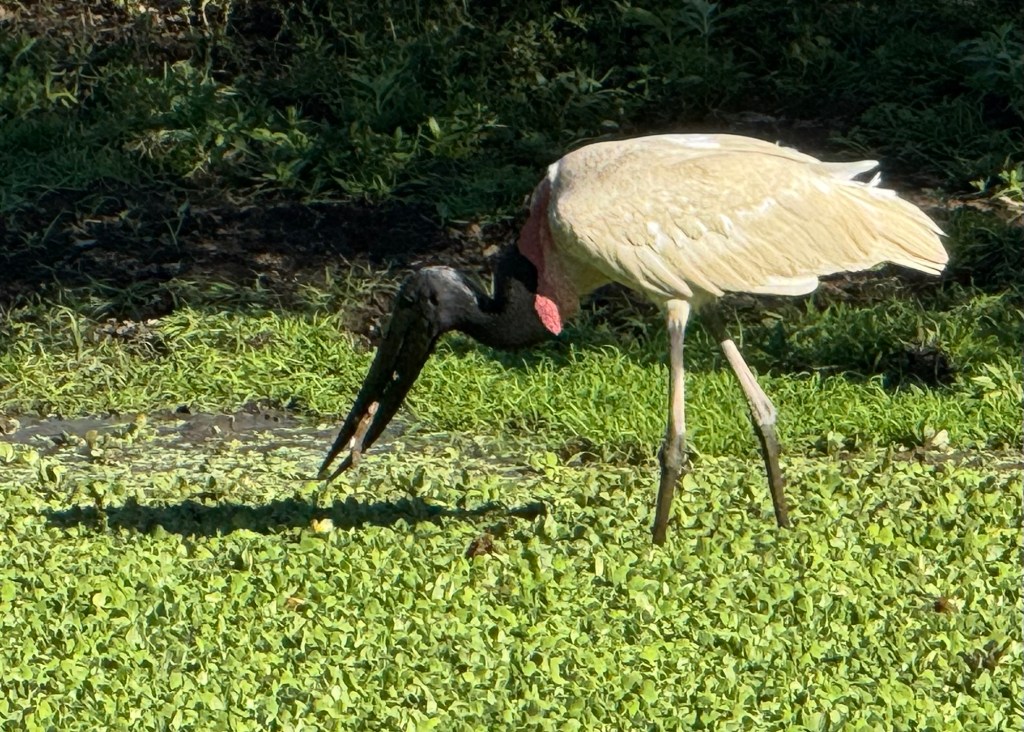
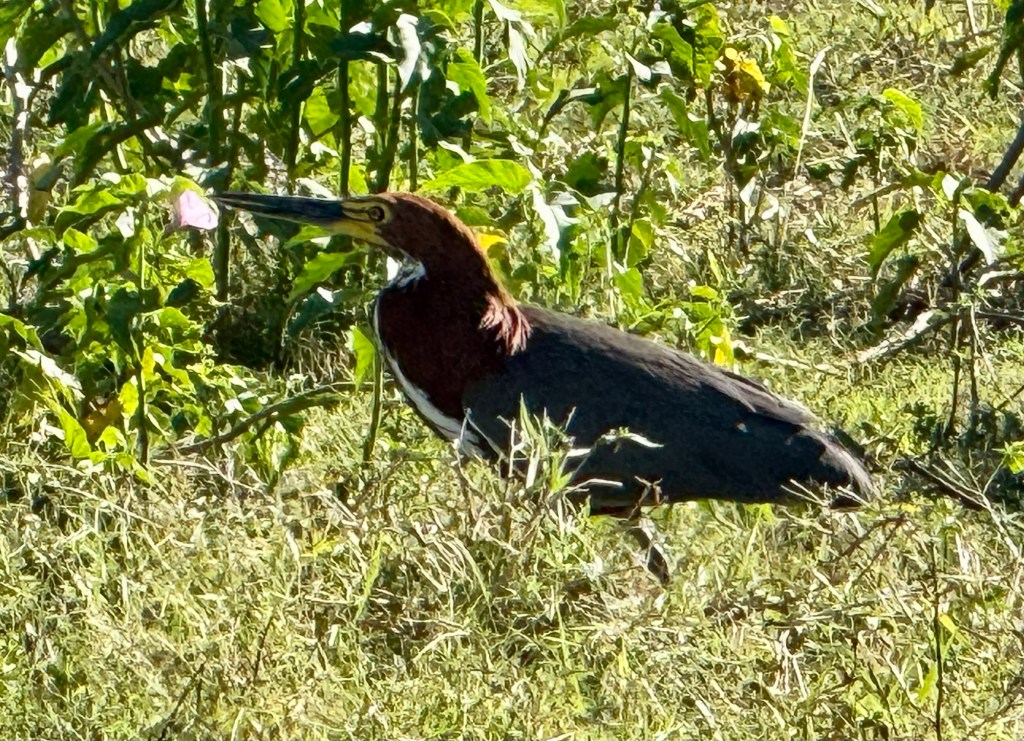
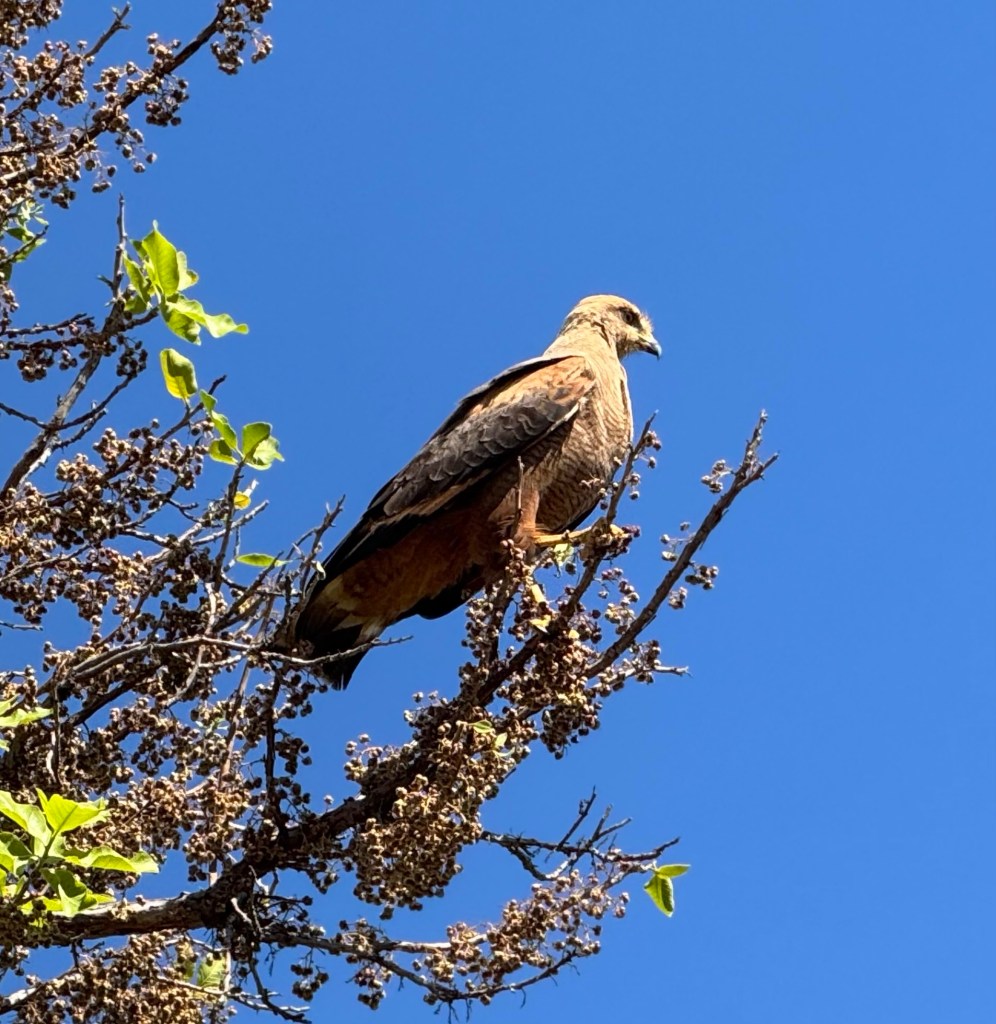
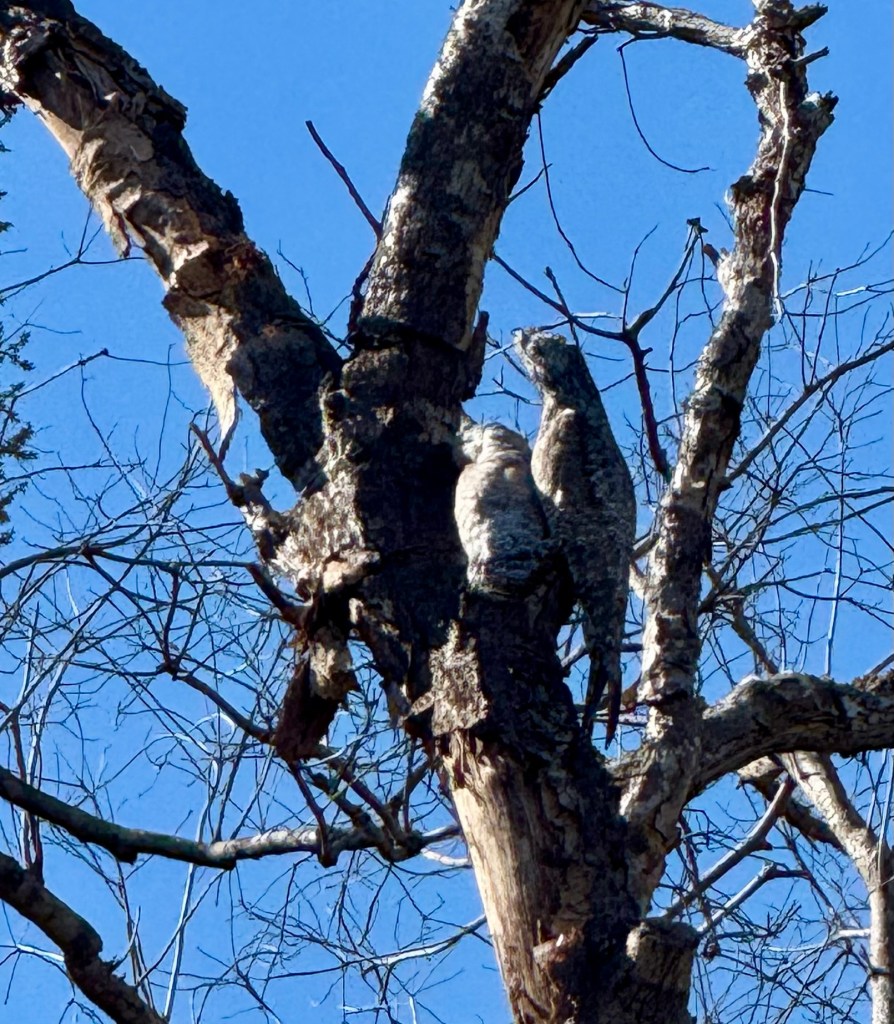
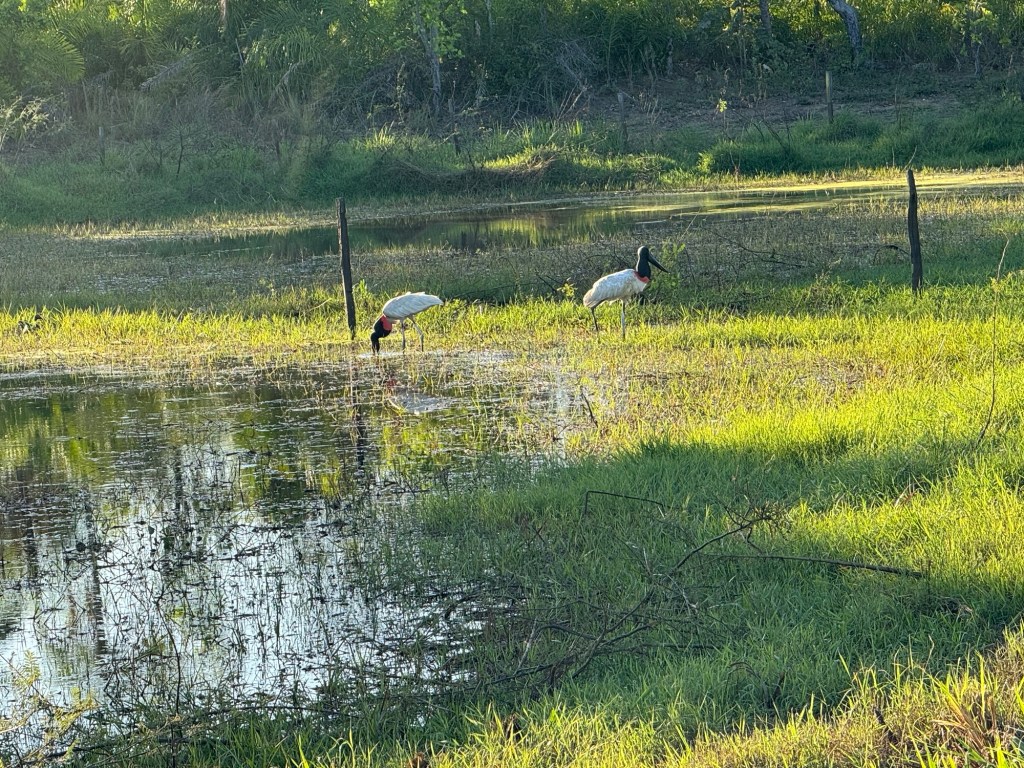
We stopped at a flower-covered watering hole and saw parakeets, green ibis, bare-faced ibis, large jabiru storks, a tiger heron, a falcon and a hyacinth macaw. Back in the plains and open grass land we spotted a Great Potoo and its chick in the crook of a tree. Very well camouflaged.

Potoo mother and chick
Cat’s claw vine. The vine has spikes like a tiny claw. A pretty plant with a nice smell, but nasty spikes.

Tuesday, October 21, 2025

Here are some of the Pantanal creatures we say during our second day’s safari.

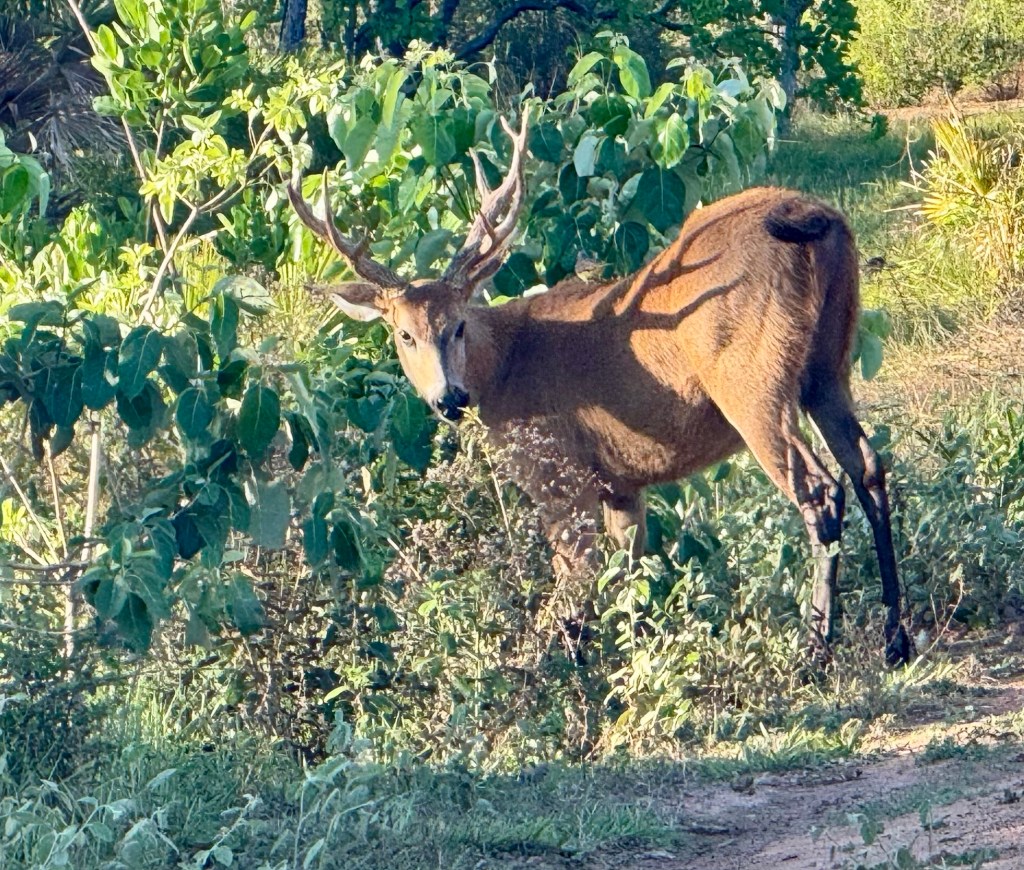
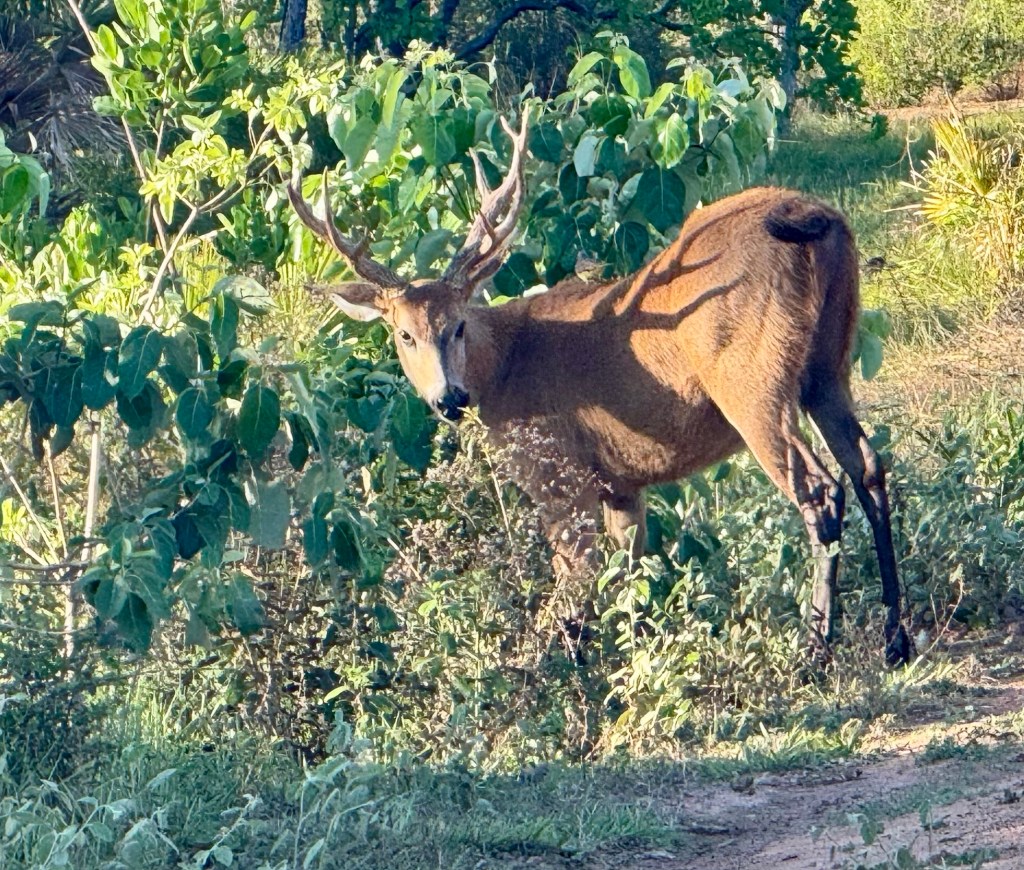
During the late afternoon game drive we saw a Marsh deer, the largest in the Pantanal, a grey rocket, similar to a small deer, and a yellow-billed cardinal. We did a lot of driving around to see animals and birds we could not photograph well.

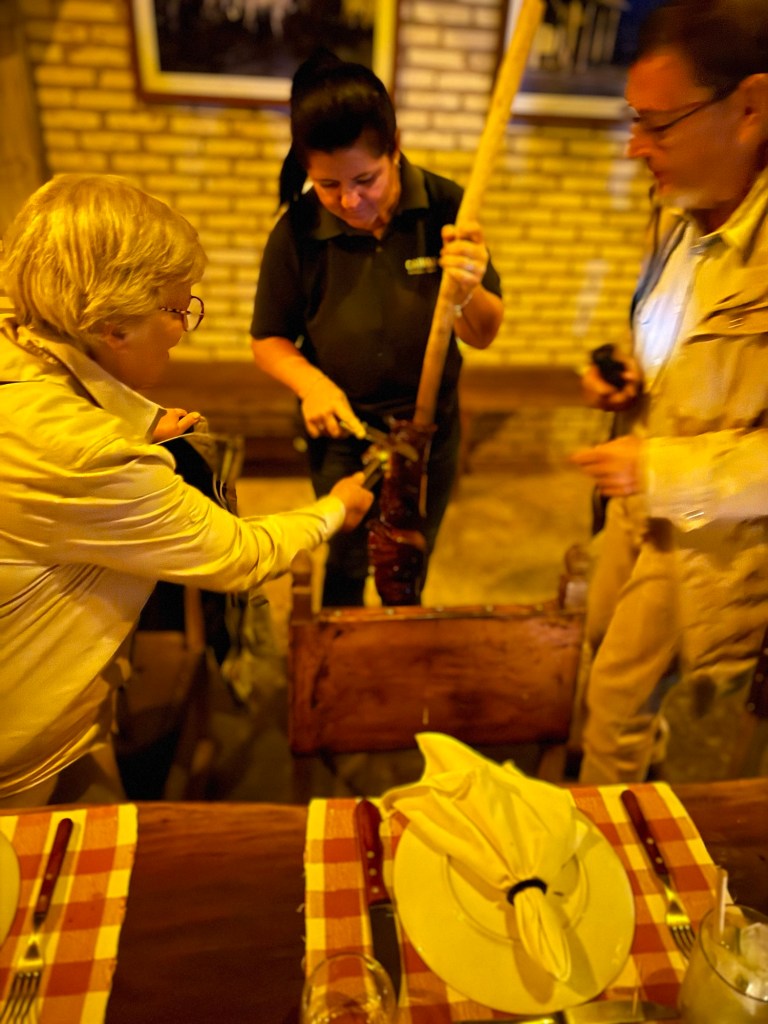
Dinner was an interesting outdoor bar-b-que with the beef rolled on 2 inch thick, 5 foot long sticks and rotisseried. I was able to get some rare pieces and found it tasty. This lodge, unlike other places we have been, is completely full.

Wednesday, October 22, 2025

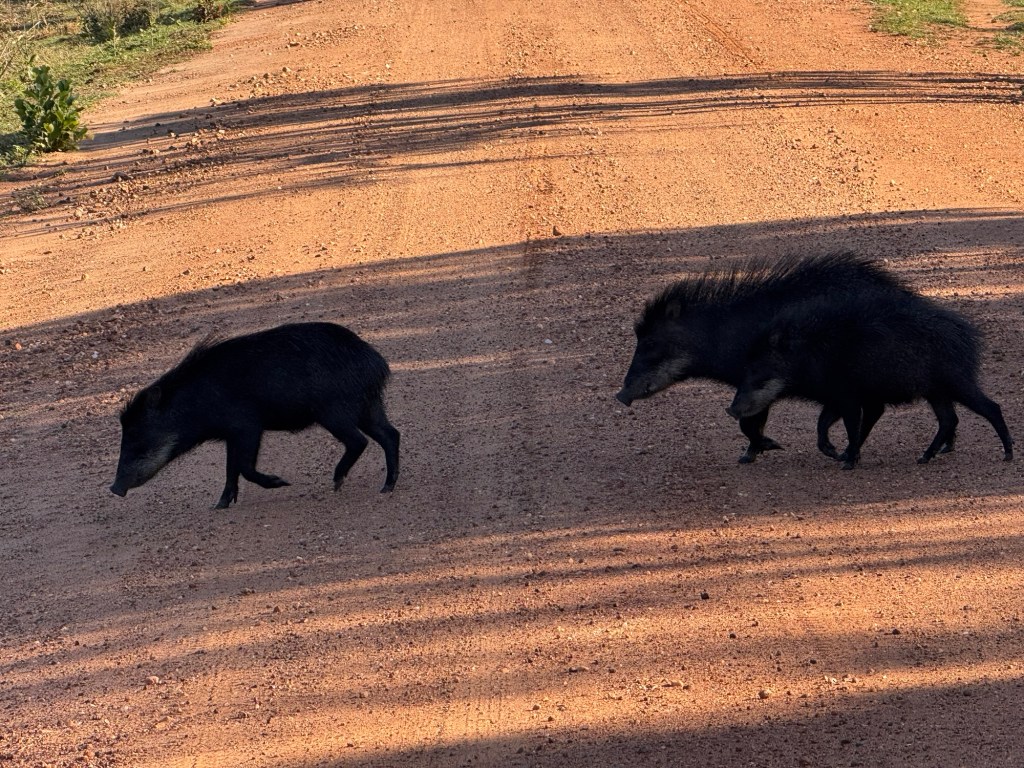
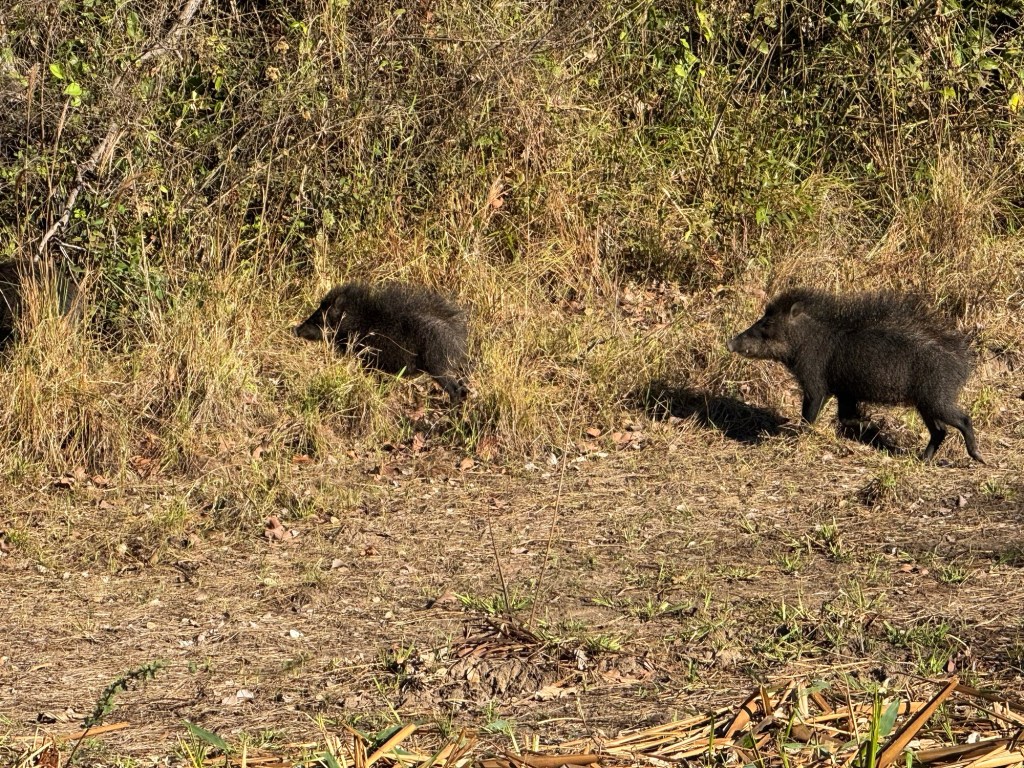
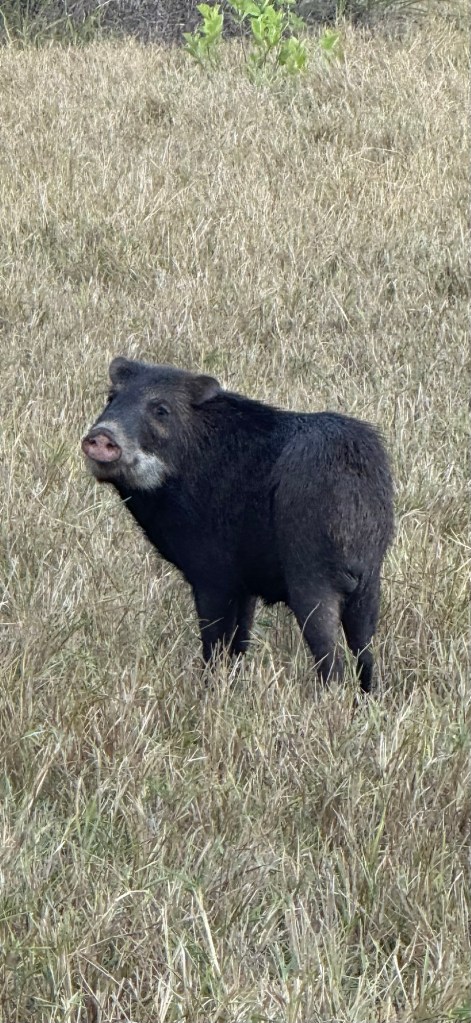
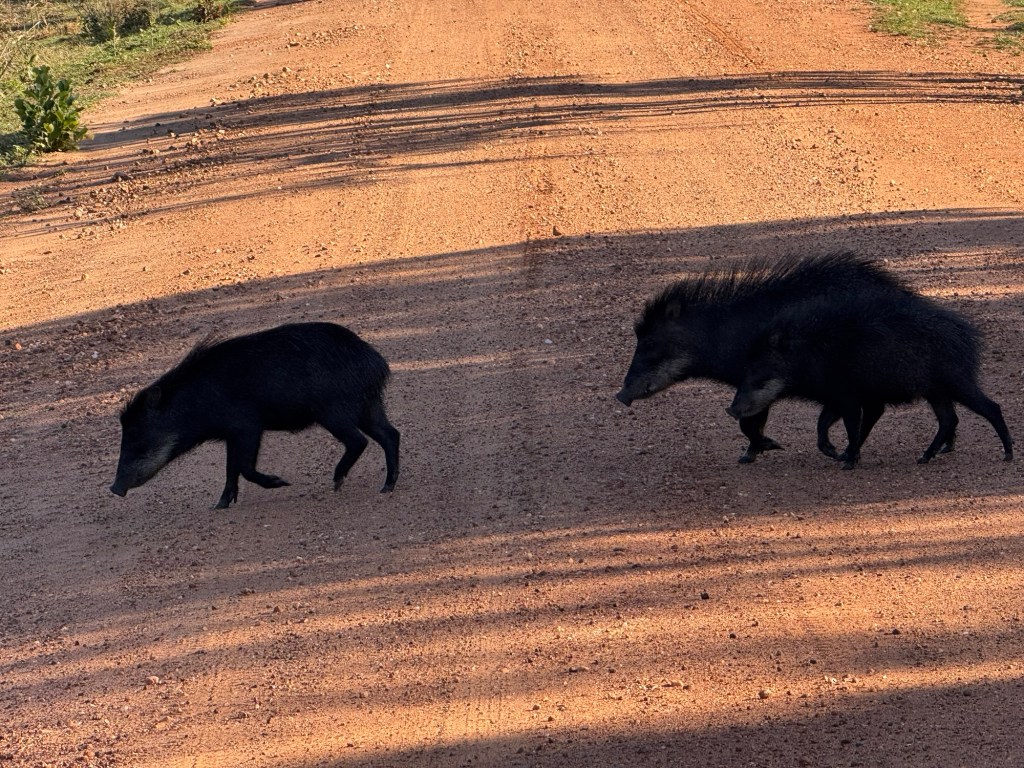
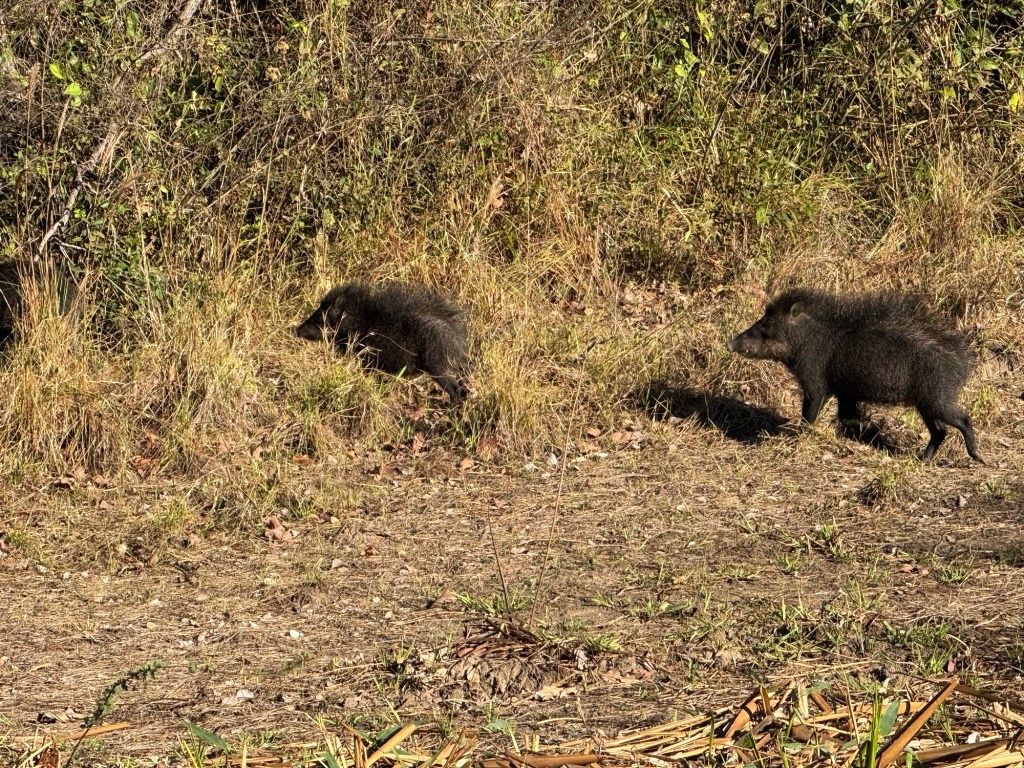
Another early start and an animal we saw frequently was a white lipped peccary. This animal travels in large groups and is always on the move. Mark managed to get this one to stand still for a photo.

At 9am it was time for breakfast and the air was getting hot. After breakfast, we headed for a shady spot on the edge of the pool. At 4pm we reconnected with Rafael for our evening game drive.

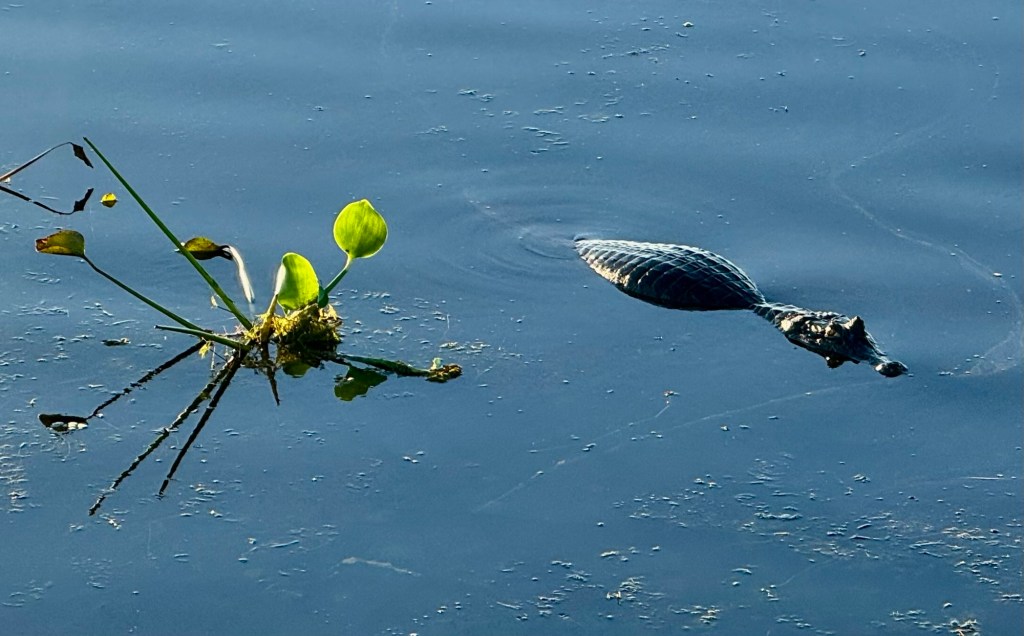
A large caiman soaks up the heat

The heat of the day was fading and the drive was pleasant. Not long after leaving the lodge, we heard there was a jaguar sighting and off we went in search of it.

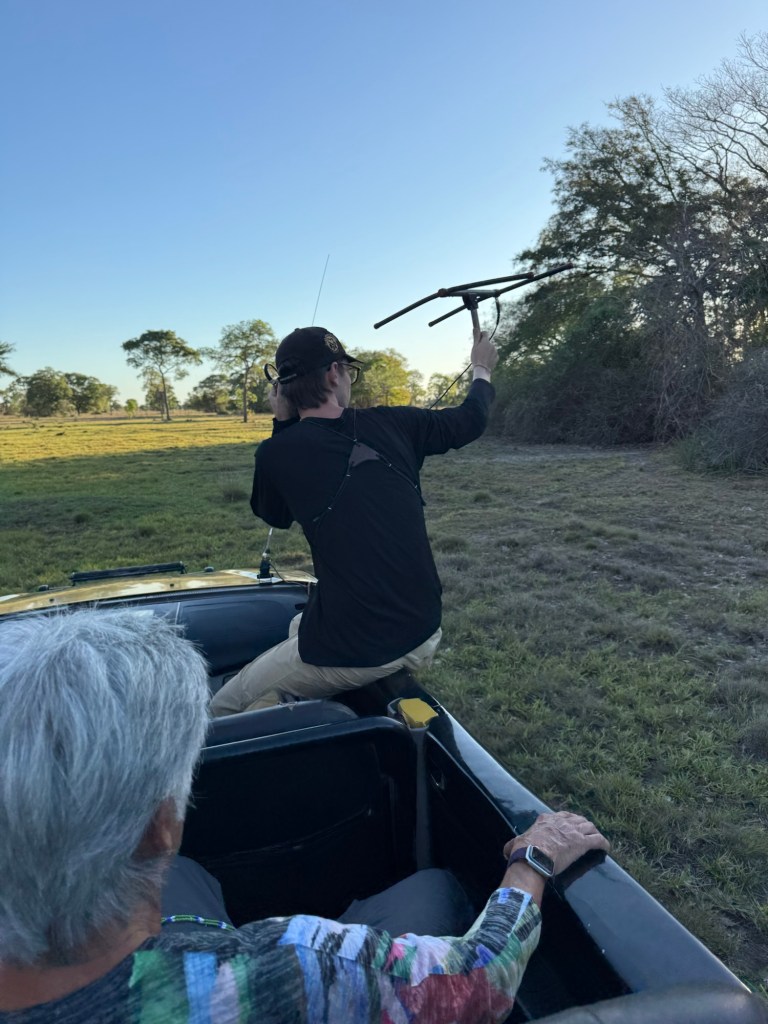
Rafael holds the radio tracker to home in on the jaguar’s collar.

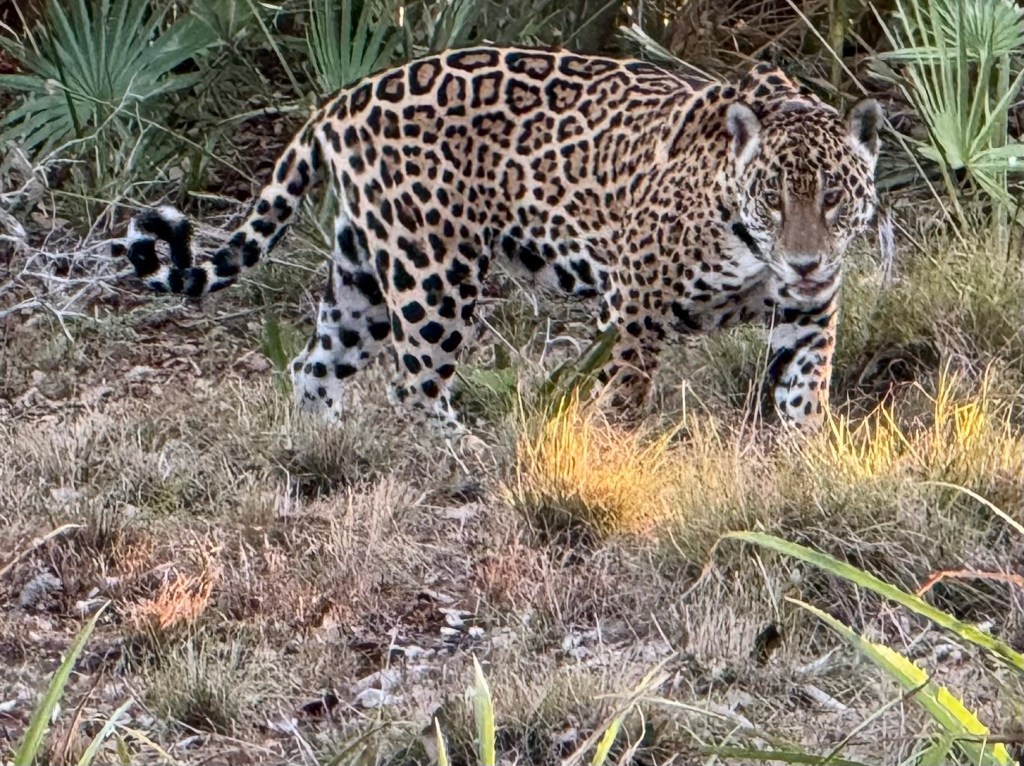
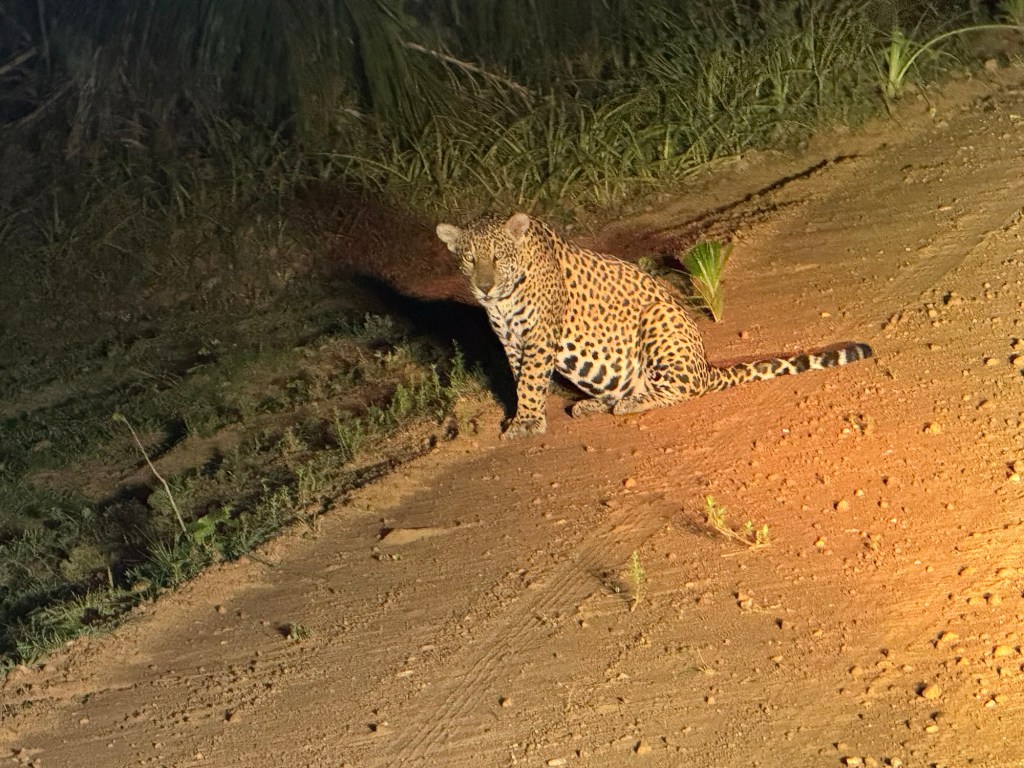
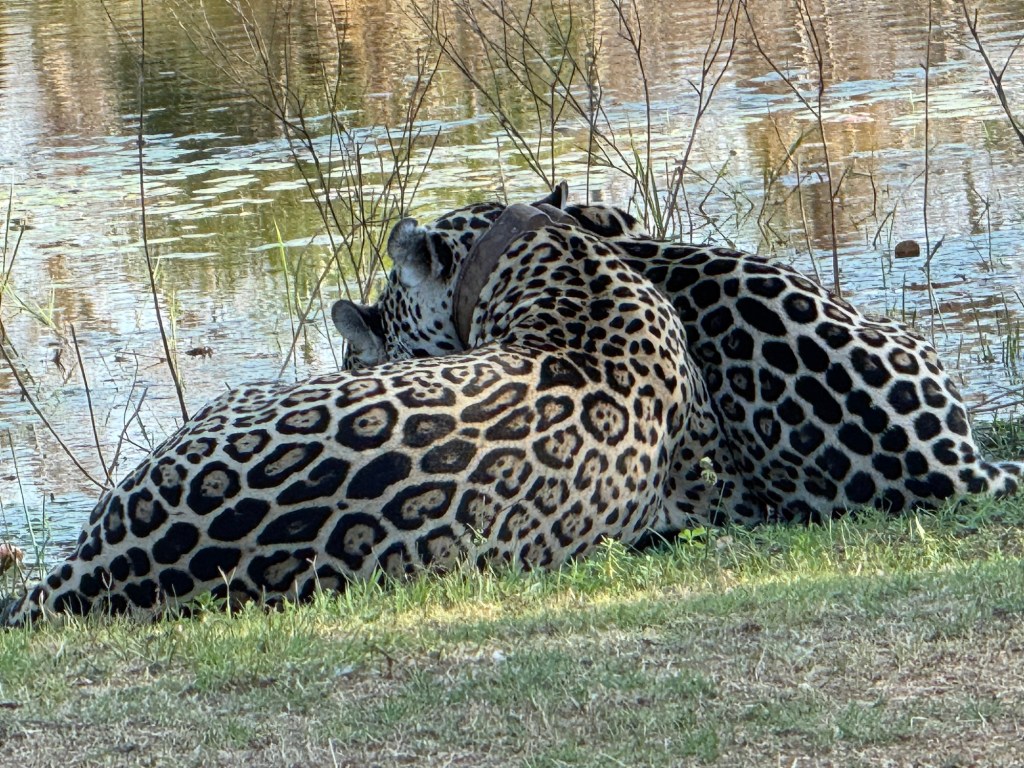
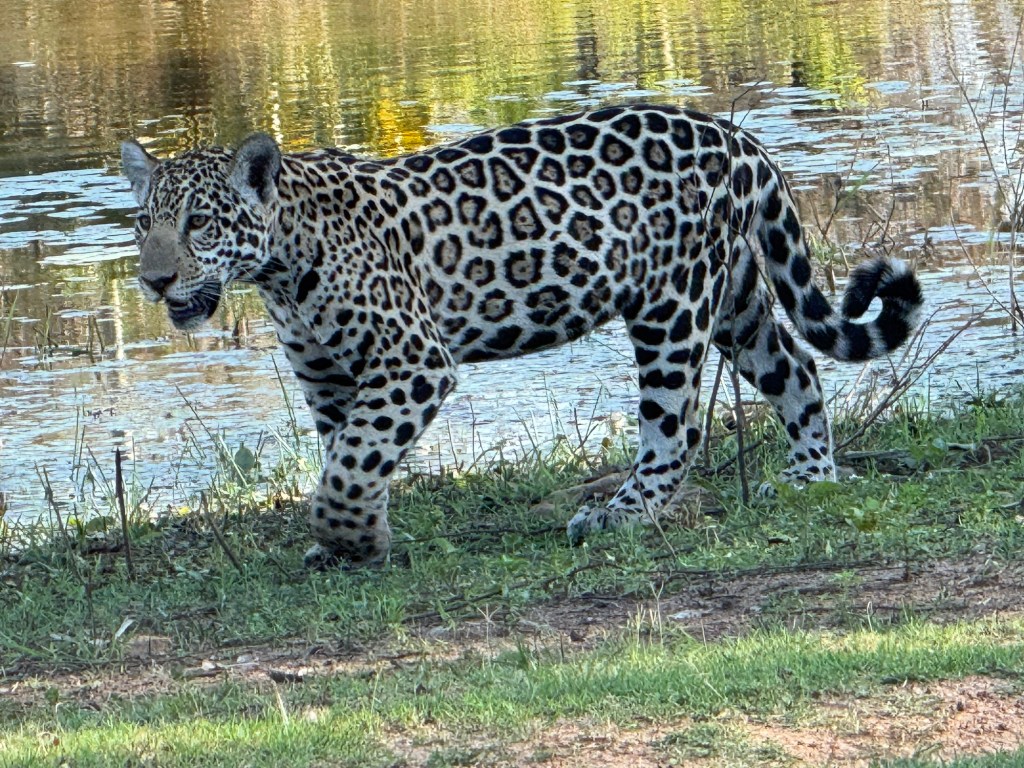
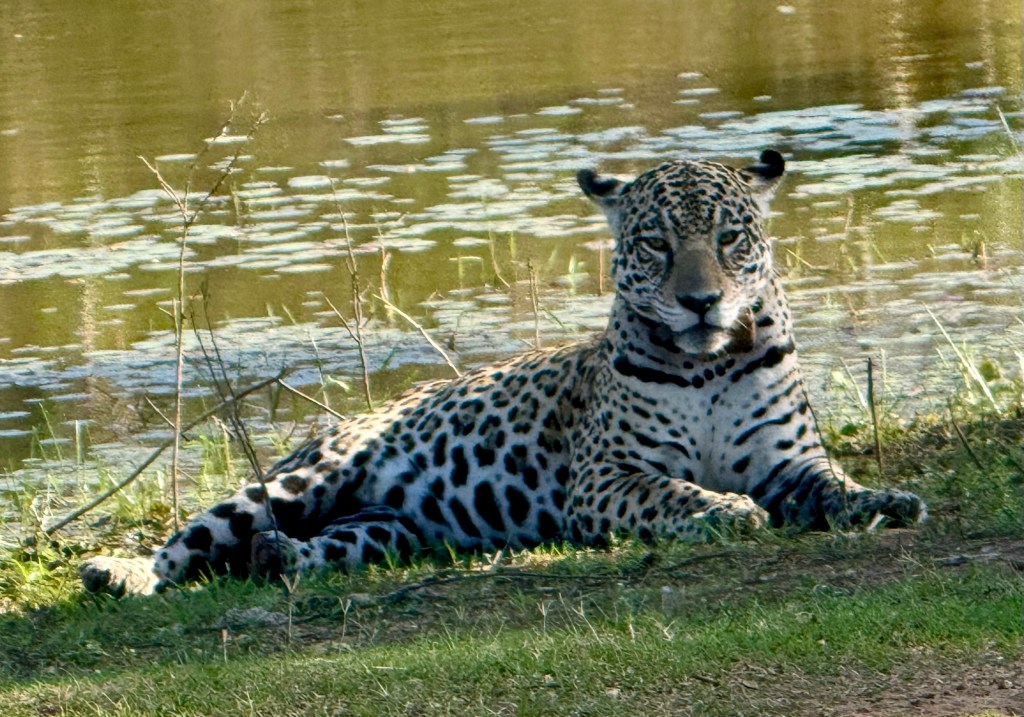
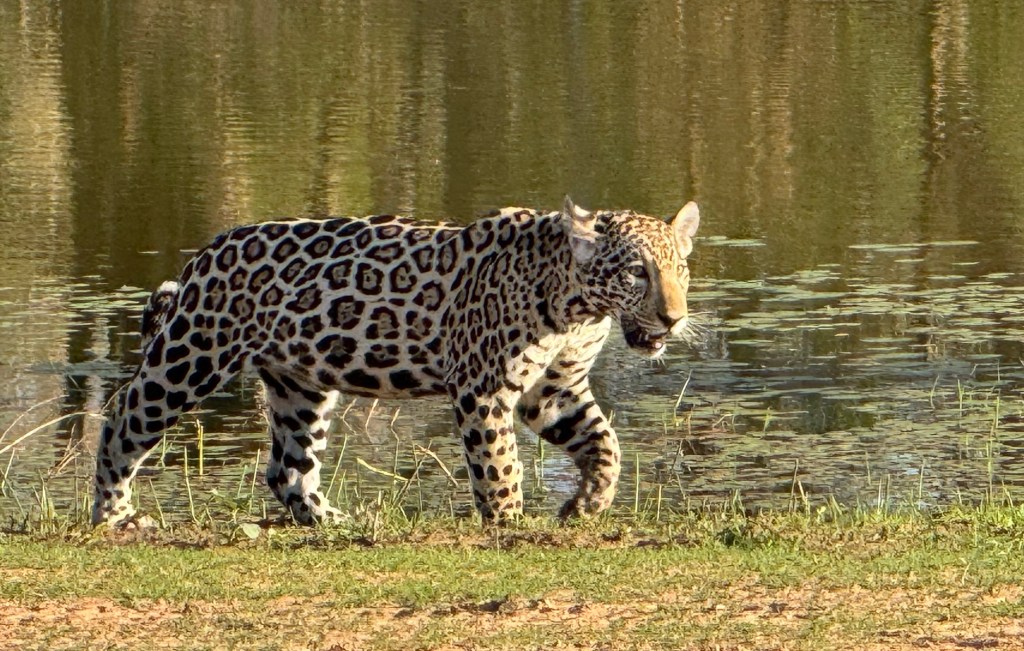
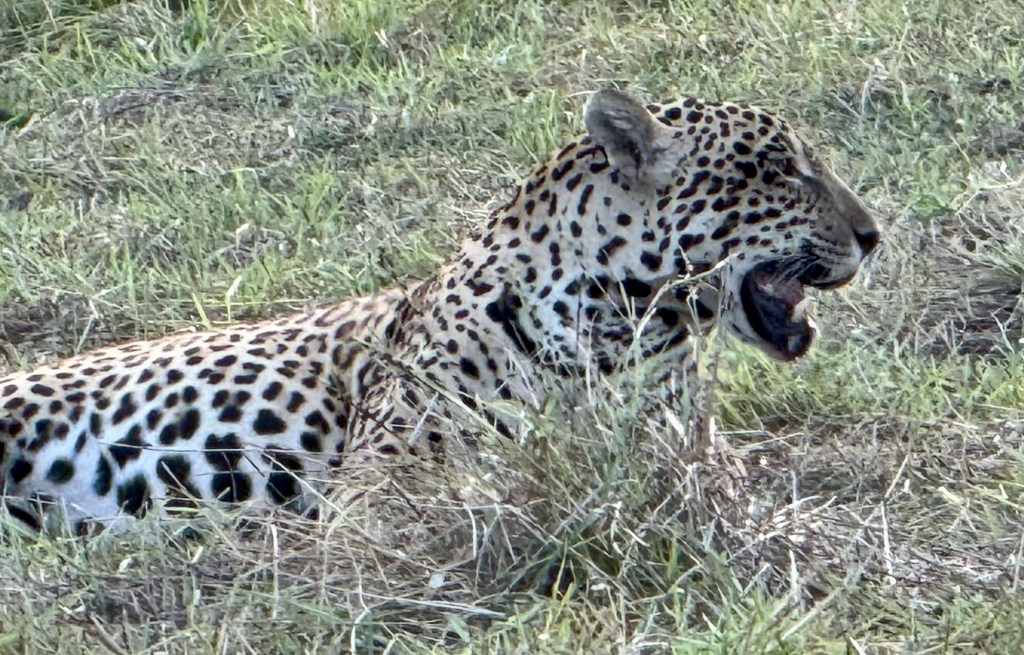
Finally, our driver and Rafael tracked the collared animal and we soon realized there were three jaguars; a mother, named Aroeira and 2 one and a half year old male cubs, Jatoba and Jacaranda.

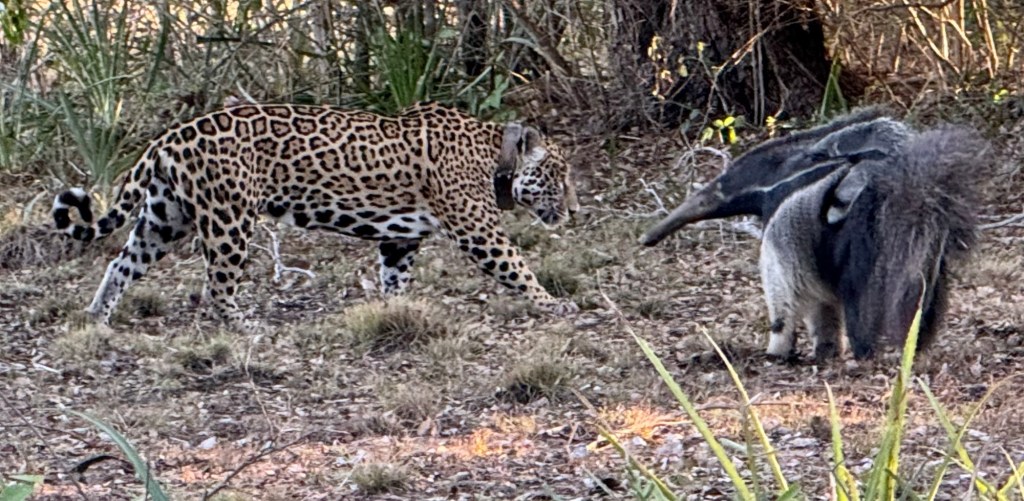
But more than that, there was a Giant Anteater with a baby on her back that was challenging the jaguars. It was fascinating to watch the animals chasing one another and then backing off. No one was going to win this exchange. Unfortunately, the challenge took place in the woods and we struggled to see what was happening.

Tuesday, October 21,2025

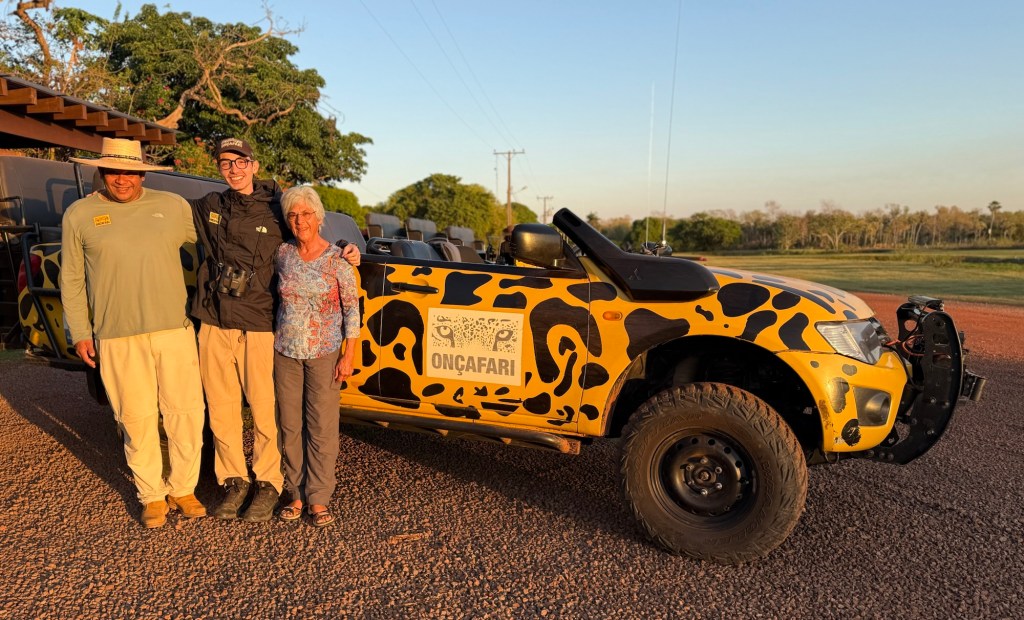
Chipa, Rafael, me and the OnCafari truck

A quick cup of coffee and we were back on the road for our second safari day with Rafael and Chipa. Having met our goal of seeing jaguar, we were interested in seeing what else the Pantanal had to offer.

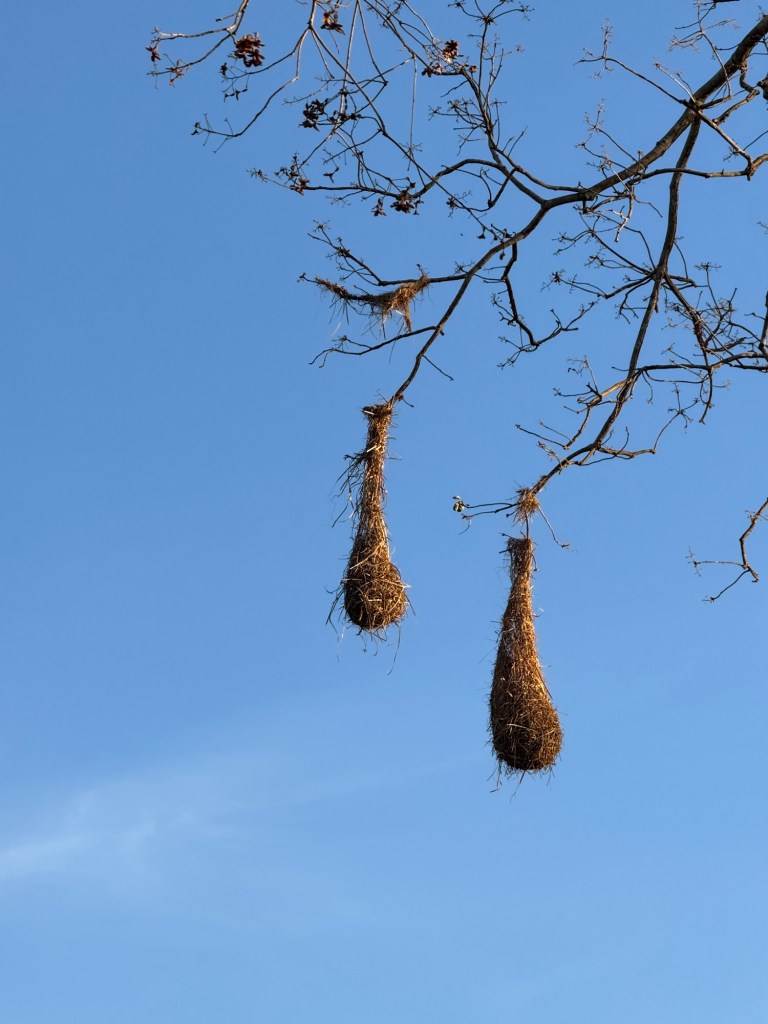
Our first sighting was a bird called Crested Oropendola and its unusual nest. The bird flew away before I could get to my camera, but I did get the nest.

The bird is quite large for such a nest, but squeezes into a hole near the top and settles into the bottom, causing the entrance hole to close. Then we saw another Crested Caracara, and a herd of white-lipped peccary on the run.

There were many other birds and animals we were unable to capture with our iPhone cameras. Am sorry we did not have better camera equipment. In the middle of the day we chilled in our cool room. The day was exceptionally hot and humid. Too much even for the poolside.

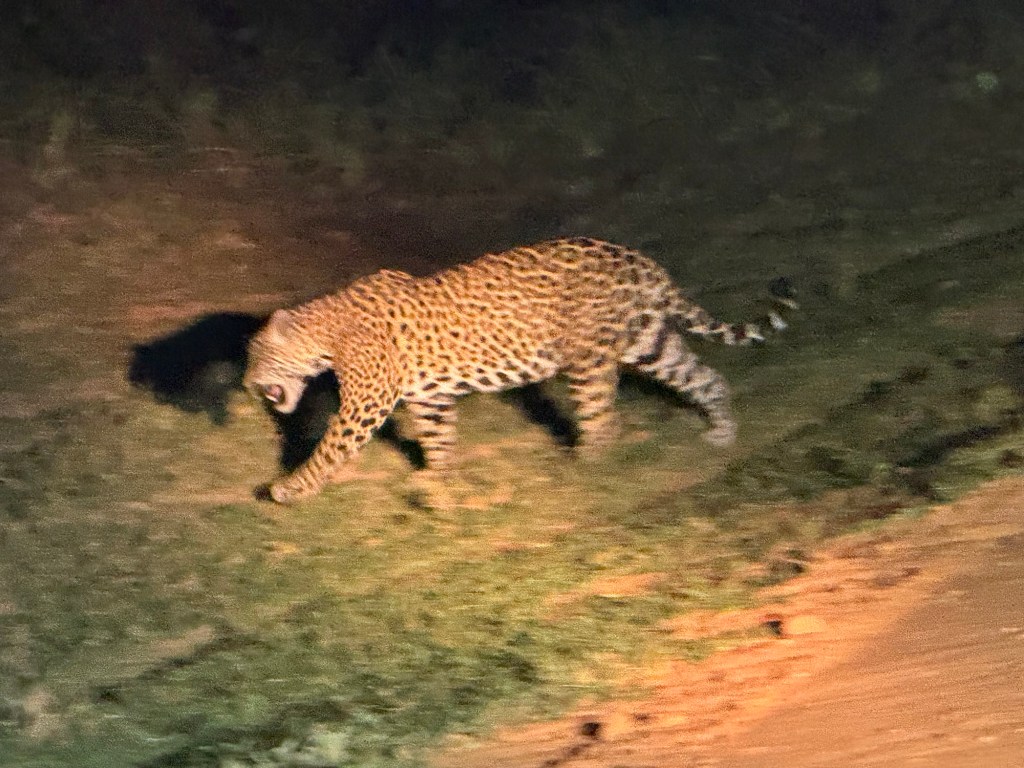
On the evening game drive, Rafael told us another Jaguar had been spotted, so we headed through the countryside to find it. It was nearly dark when we came upon a collared female named Surian and her 2 year old male cub, named Dakari. I was only able to get snaps of Dakari.

Dinner was an outdoor bar-b-que with beef rotisseried on 2 inch round, 5 feet long sticks. When asked for thin rare slices, the server was able to shave off a few pieces. The meat tasted good.

We sat next to a couple from Geneva, who spoke enough English we were able to converse. Although they have children and grandchildren, they refuse to let kids keep them from traveling, an attitude we could appreciate.

Wednesday, October 22, 2025

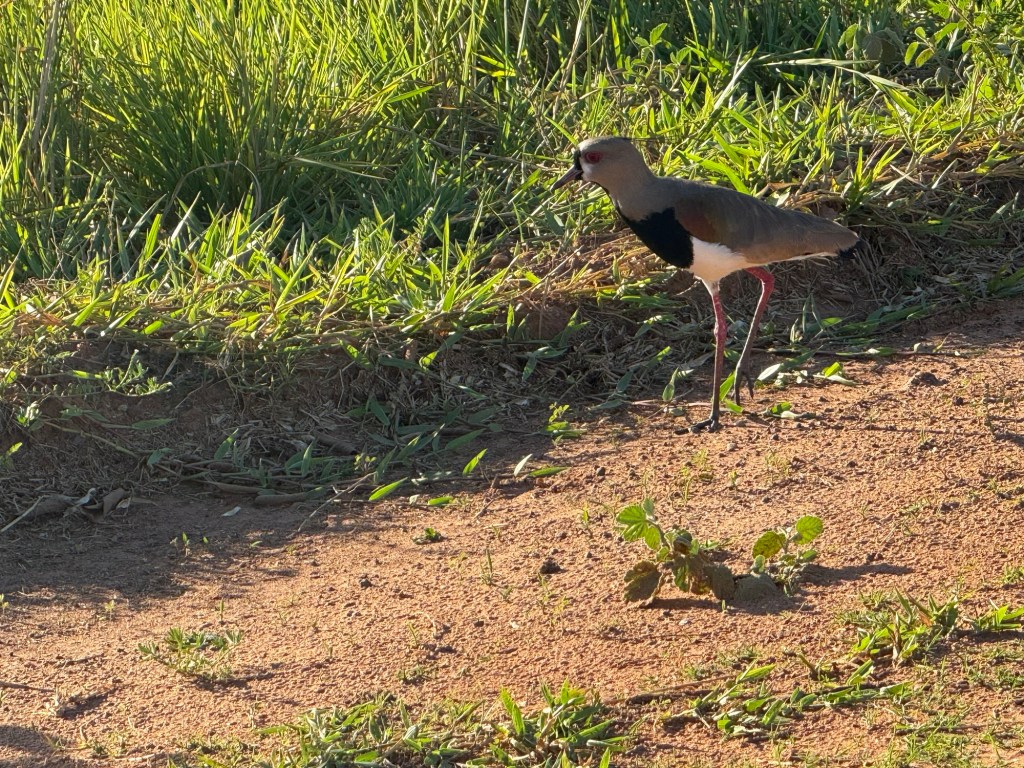
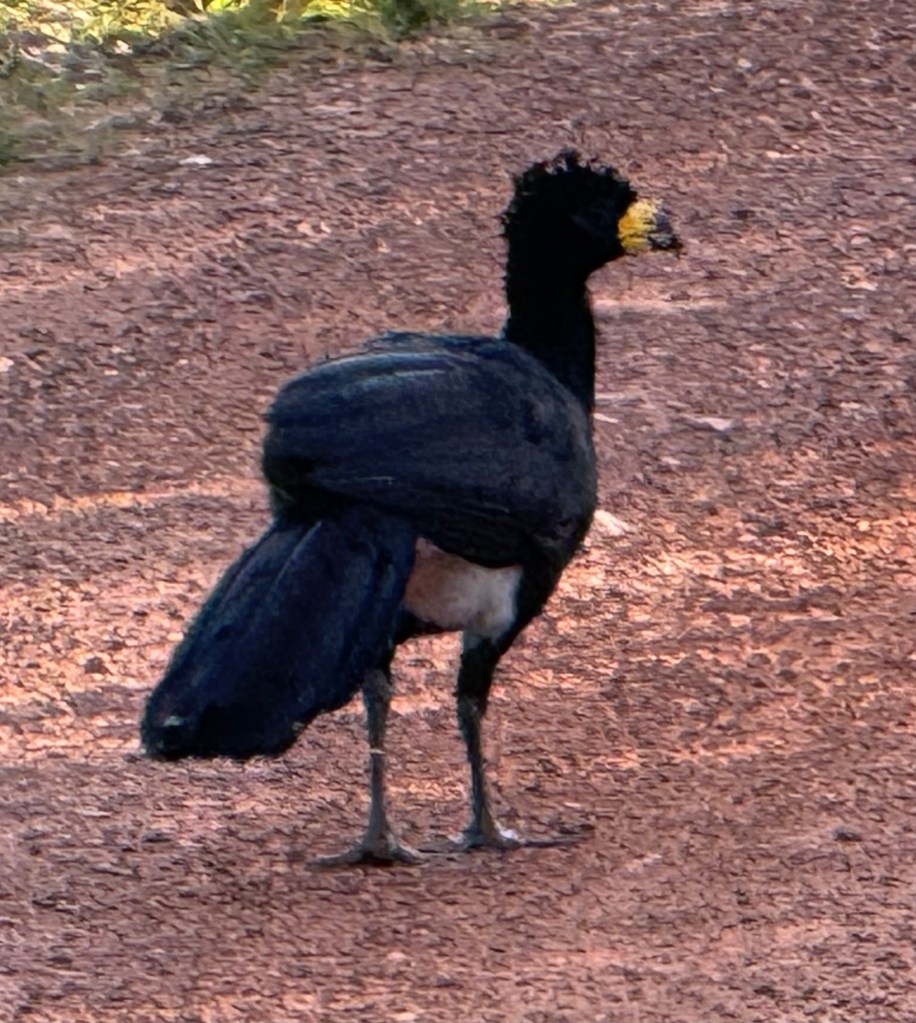
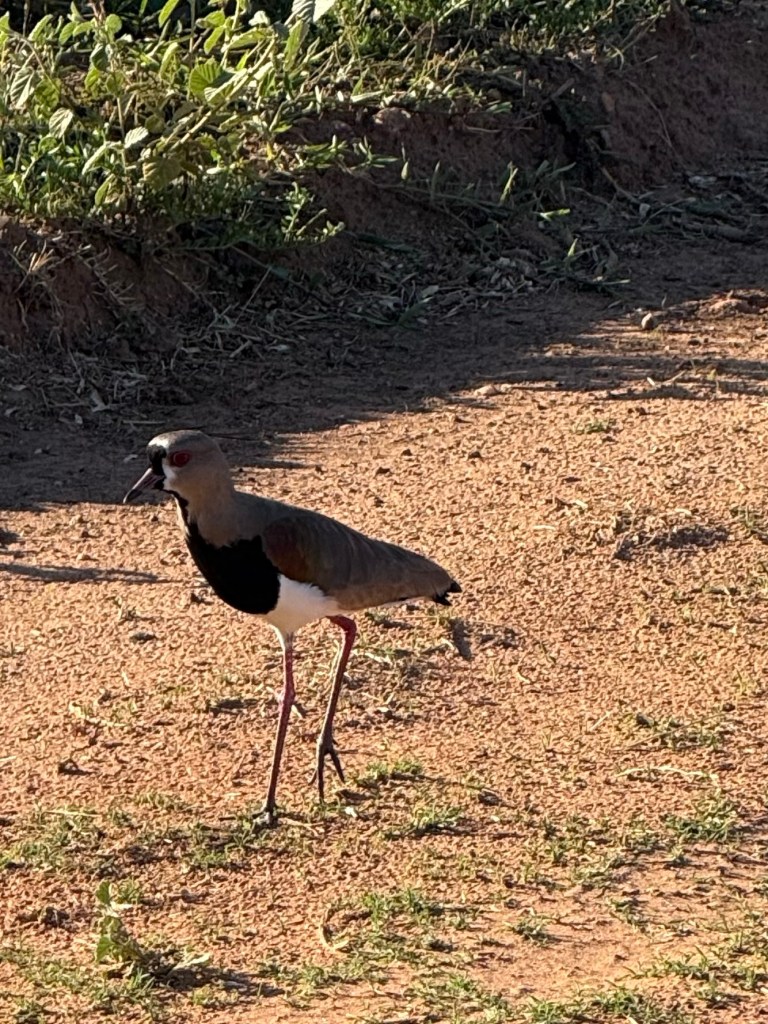
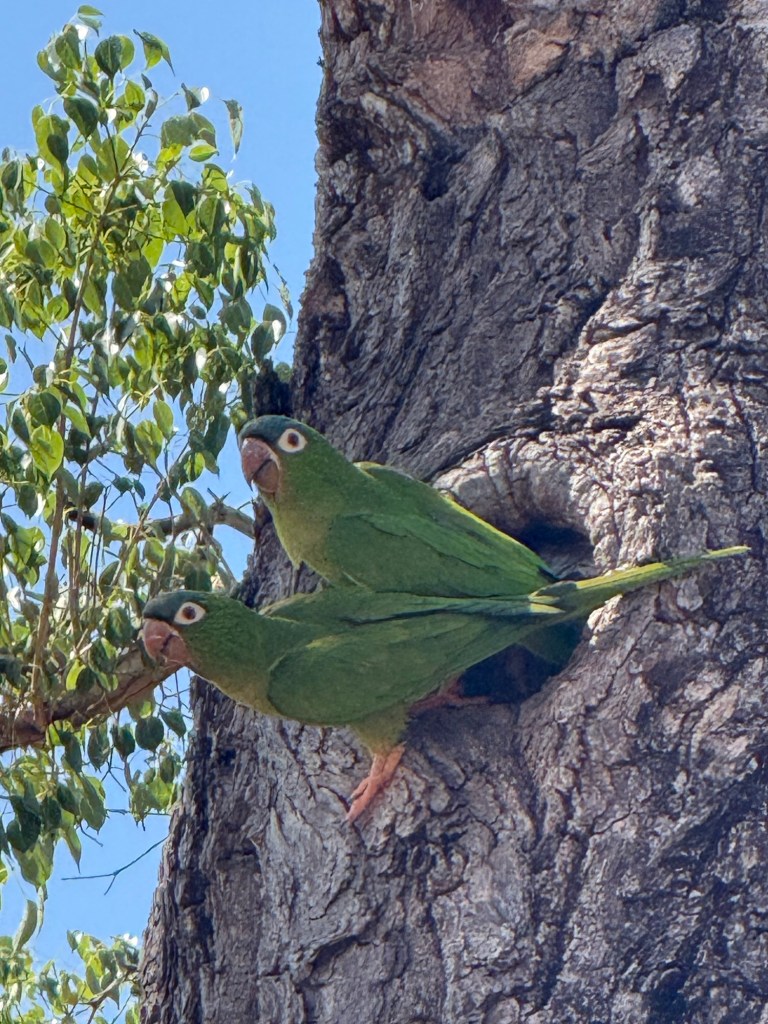
Our third 5:30am safari start. We started off seeing a group of Copybera, munching on the grassy lawn, a bare-faced Curassow, a Pied lapwing, a cute antelope like animal called a Grey Bracket. Mark nicely captured a pair of Blue-crowned Parakeets nesting in a tree hole.

Then Rafael told us a BBC crew was working on a Jaguar project, so we headed to the site and took up a station out of the BBC crew’s way.

We sat watching a new pair of Jaguar, Arancy, a collared female, and her 7 month old son, Mocoha, for a long time. Tried to get good photos, but, not having a good, long, lense, we are hampered.

7 month old Mocoha

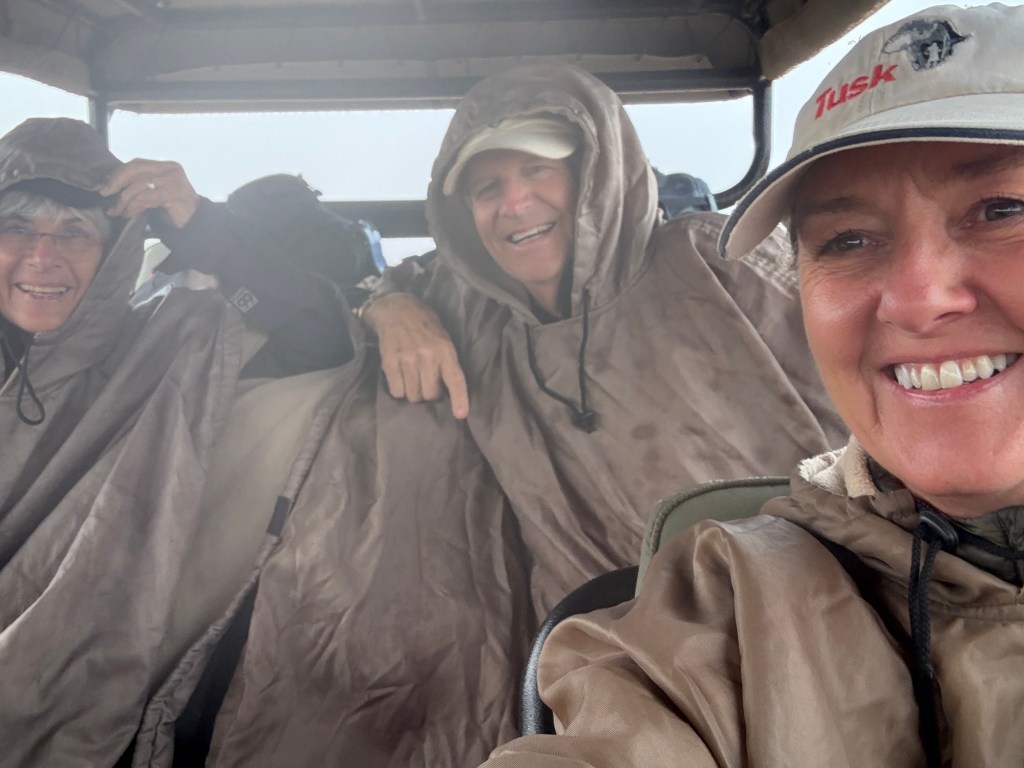
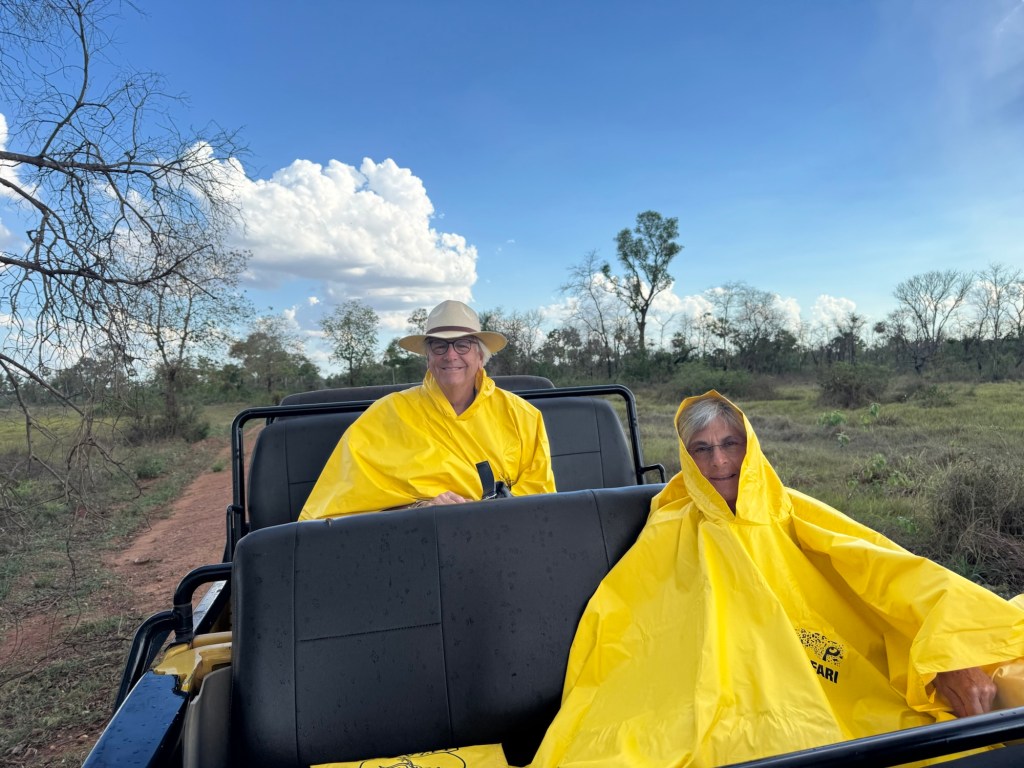
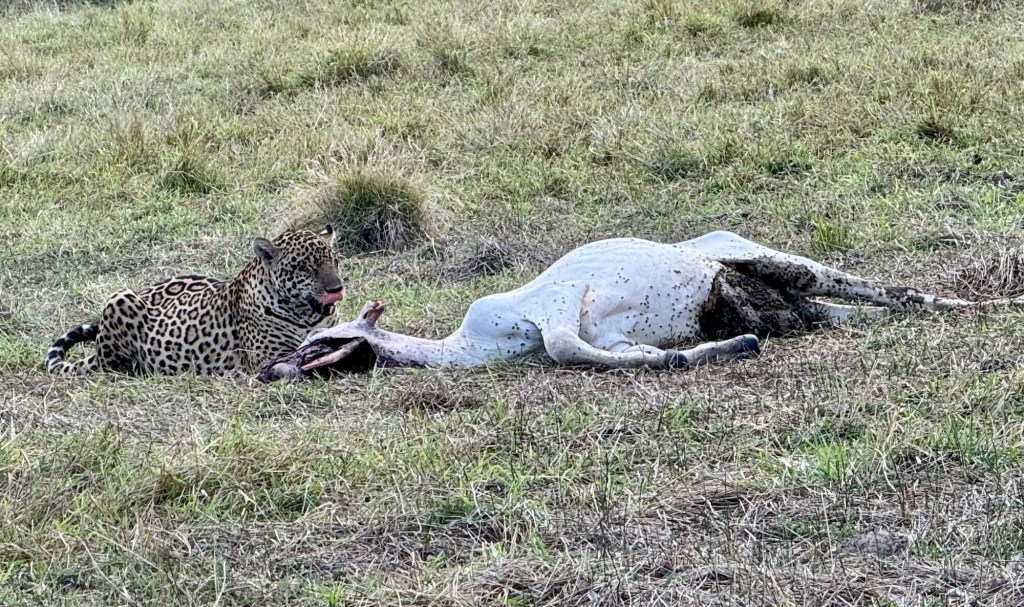
Late afternoon drive started with rain. Thankfully it was brief. The ponchos were very heavy. We drove for 40 minutes to the sight of a dead cow to see what was happening to it. These photos tell the tale.

A mother, her two cubs and a nephew hang out while waiting to finish eating the cow.

Thursday, October 23, 2025

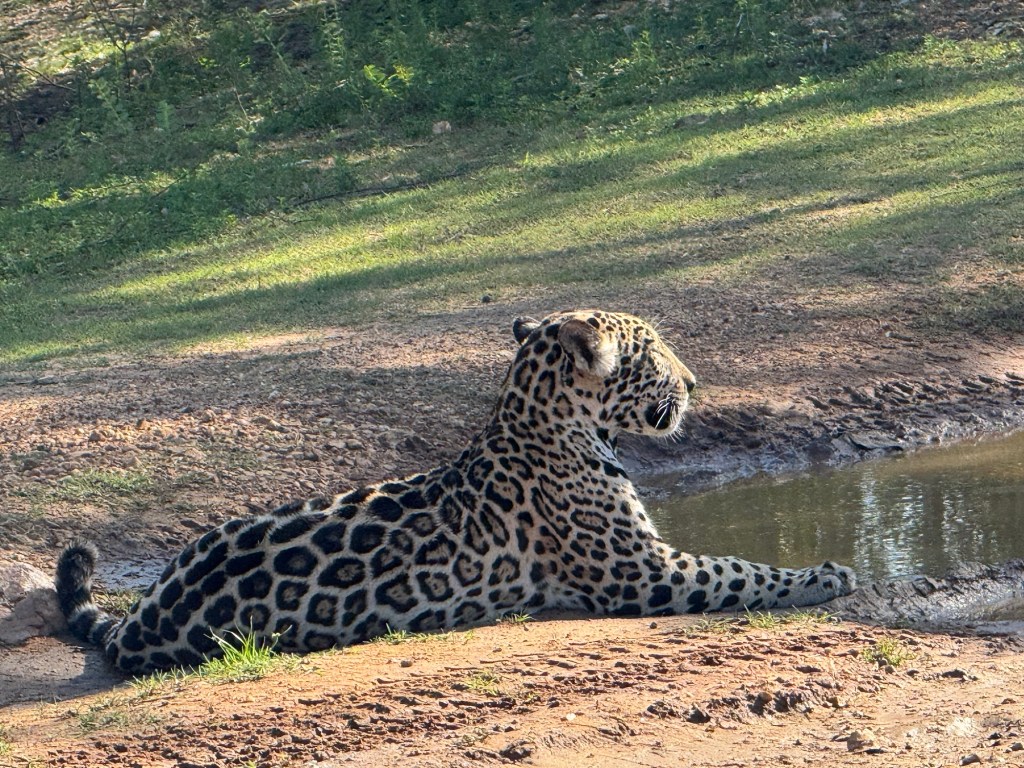
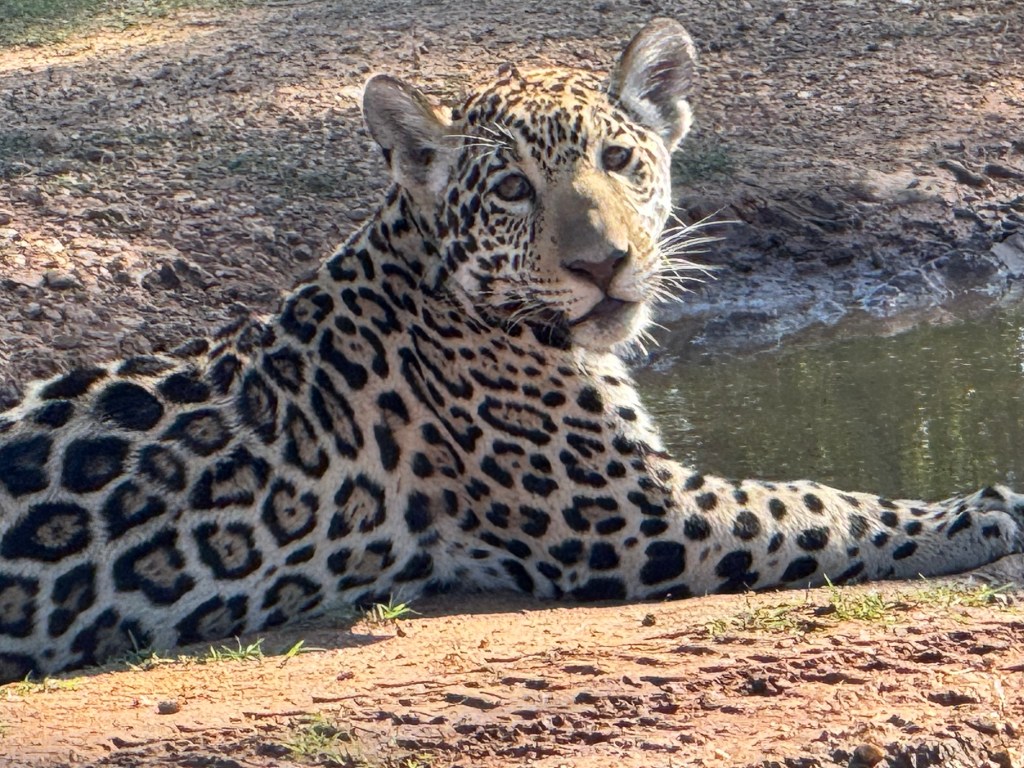
And so we end our very interesting adventure in the Pantanal. We have seen 8 different jaguars and many other creatures we have not seen elsewhere.

And so we fly onward from the Caiman Lodge airstrip to Alta FLoresta, then we have a 1.5 Hour drive and a 30 minute boat ride to our next destination.

Unfortunately, I have had several glitches with this post and some events are out of order. The content is all here, if dislocated. Please forgive the errors.

The Rio Negro meets the Amazon

Wednesday, October 15, 2025

This morning we departed our friendly boat experience on the Tupaiu, saying good bye to Captain Sebastian and his delightful crew.

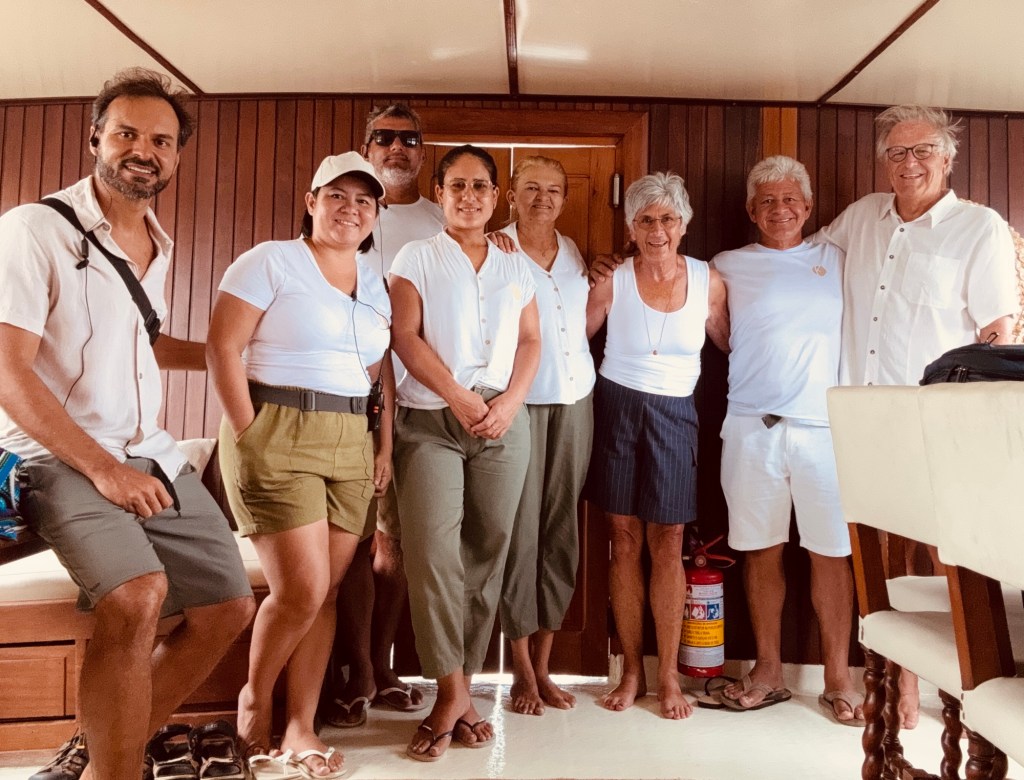
Carlos, Milena, Gilvandro, Marcia, Saccoro, me, Sebastian and Mark

At the Santarem airport, we said good bye to Carlos, who had been an excellent guide and helper.

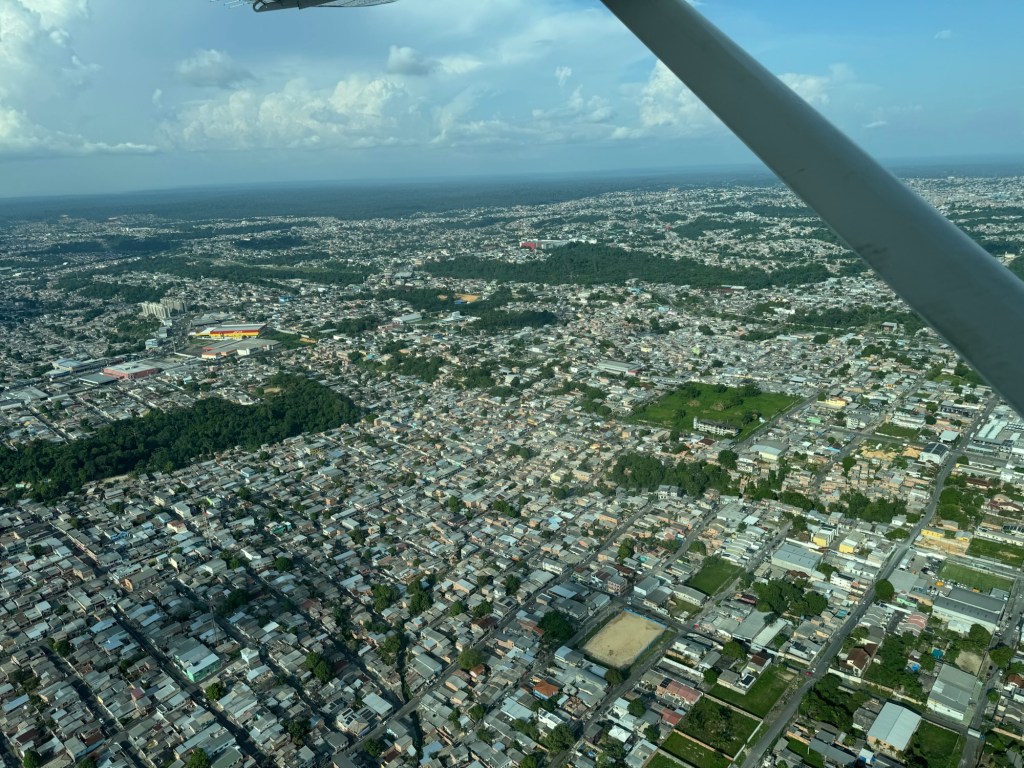
Who knew Manaus was so large. It has 2.3 Million people

Then we flew 2 hours to Manaus and transferred to a float plane for the trip from there to our lodge, Mirante do Gaviao on the Amazon River.

Me and the floatplane pilot

The float pilot knew we were pilots and that we wanted to fly as low as possible. He honored our request and we flew so low, we actually skimmed the surface of the river for a couple of minutes and did several low passes along some beaches. The 40 minute trip lasted an hour.

Finally we landed next to the beach in front of the lodge. What a way to travel. The time was 5pm, and we had been traveling since 10am and gained an hour on the clock.

The lodge had pre booked us for several excursions and our first one started at 6:30. An 8-meter open boat speeded down the river for 40 minutes in the dark until we came to an area the guides intended to search for night creatures. They used spotlights on the trees and found 2 small sloths high in the trees.

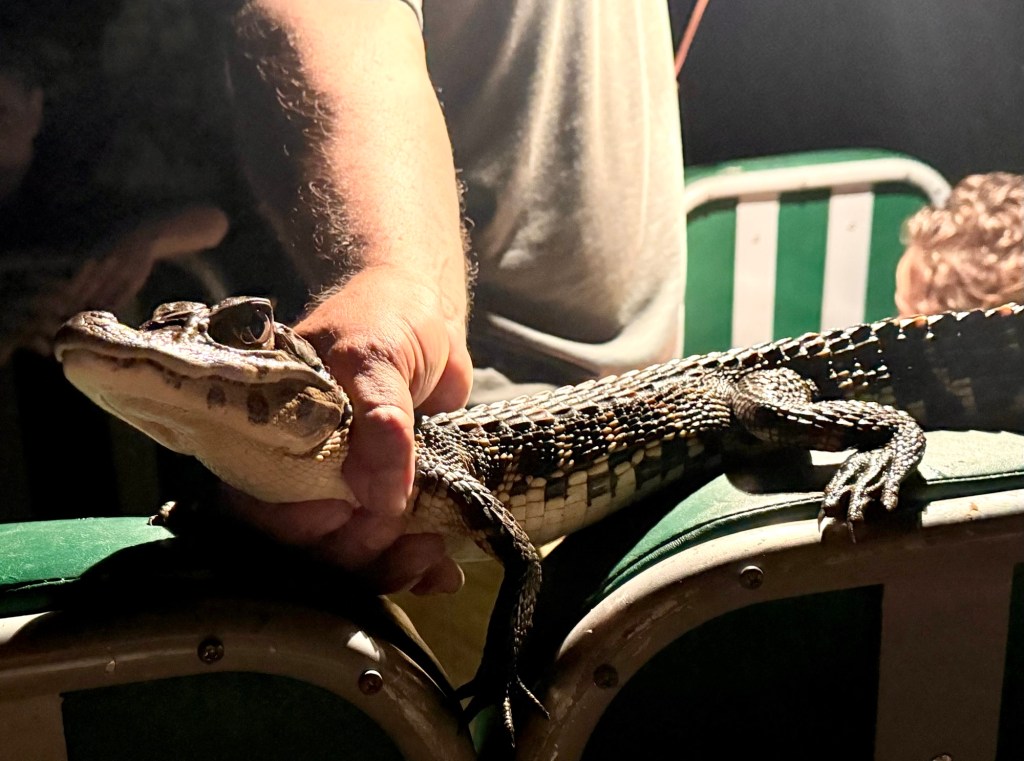
With some effort our guide captured two different types of Caiman. The first was a Black Caiman about three feet long and small. Our guide held it tightly and we were all able to touch it. He let it go and looked for another. Finally, he caught a five foot Speckled Caiman that put up a big fight. He taped its mouth shut to be able to handle it.

After that we speed-motored back to the lodge in time for dinner at 9:15.

Thursday, October 16, 2025

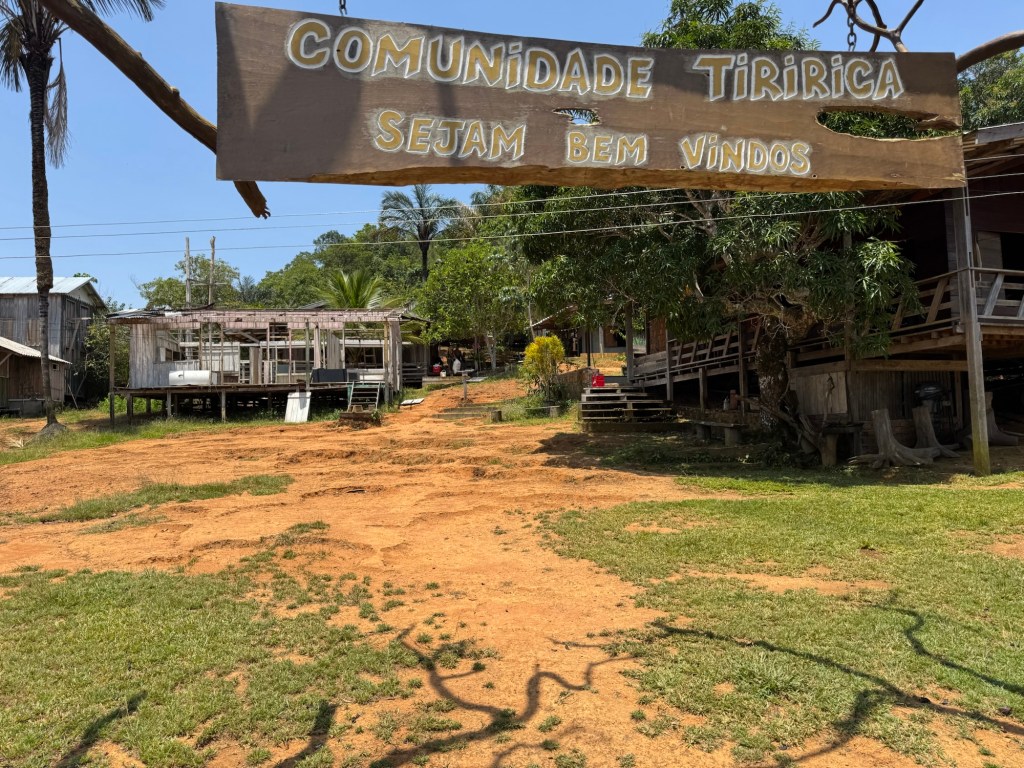
Down on the beach by 8:30, we were ready for our next excursion, but had to wait for the family riding with us to arrive. Their two boys were very high energy at 5 and 7 year olds who talked non-stop. I remembered…again… why we have no children. We speeded down river another 40 minutes again to a small creek where several indigenous men waited in canoes to take our entire group of about 15 for canoe rides around Tiririca Creek.

It was a nice ride, but we saw only one egret the whole time. A bust, I thought. Back in our speedboats, we motored to a sand-less beach in the middle of the river. Our guides thought there would be a sand bar but the river is not low enough yet. We all went swimming in the shallow, somewhat refreshing water that was a light root-beer color.

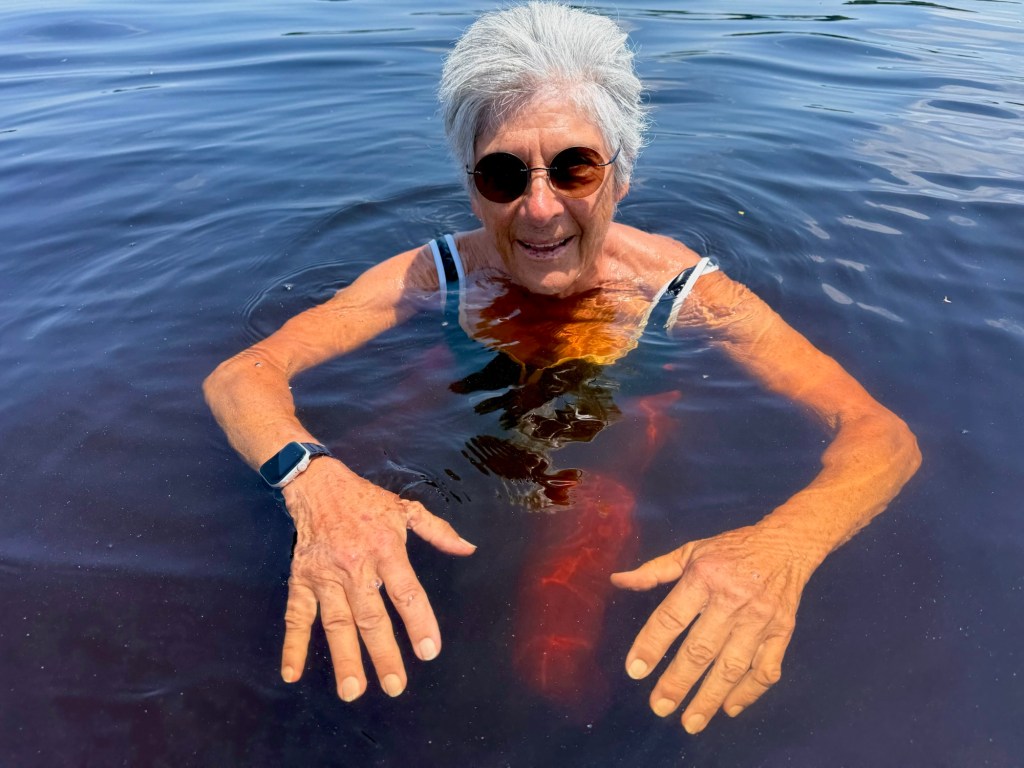
The water makes my skin look yellow, and deeper, my leg looks red. Definitely not for drinking.

The guide told us the beach will appear in another couple weeks as the river continues to recede. We got back to the lodge just in time for Mark’s massage.

He thoroughly enjoyed his massage, even as he looked slick and greasy. We enjoyed delicious lunches of pasta and seviche. Then we cancelled the afternoon activity and relaxed the rest of the day.

Friday, October 17, 2025

Mark woke up with heat rash on his arms. After breakfast, an English speaking lodge staff person drove us to the hospital in the nearby town, Nova Airao. The ER looked full, but the process went quickly and soon a doctor checked Mark’s arms and gave him a prescription. At a local pharmacy, he purchased the prescribed salve and soon we were back at the lodge in time for me to join the day’s activity. Mark stayed cool in the lodge pool.

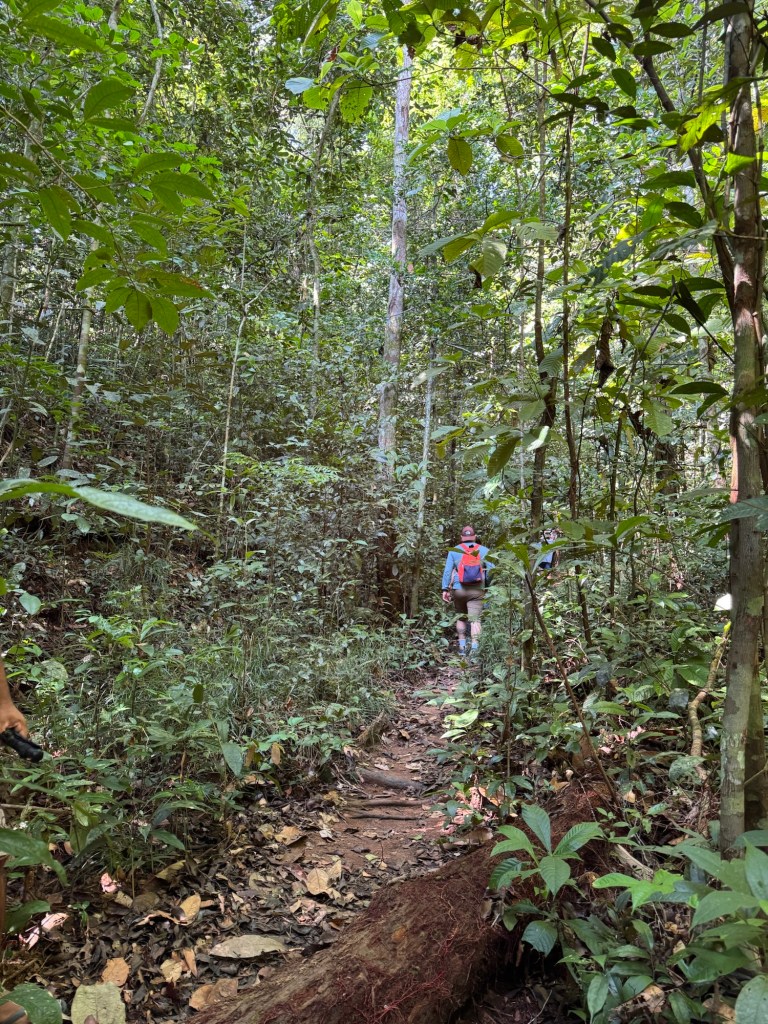
The activity included a 40 minute speedboat ride, an hour and a half hike through the steaming jungle. Our guide thought it was hotter than usual. I don’t think I have ever sweat so much.

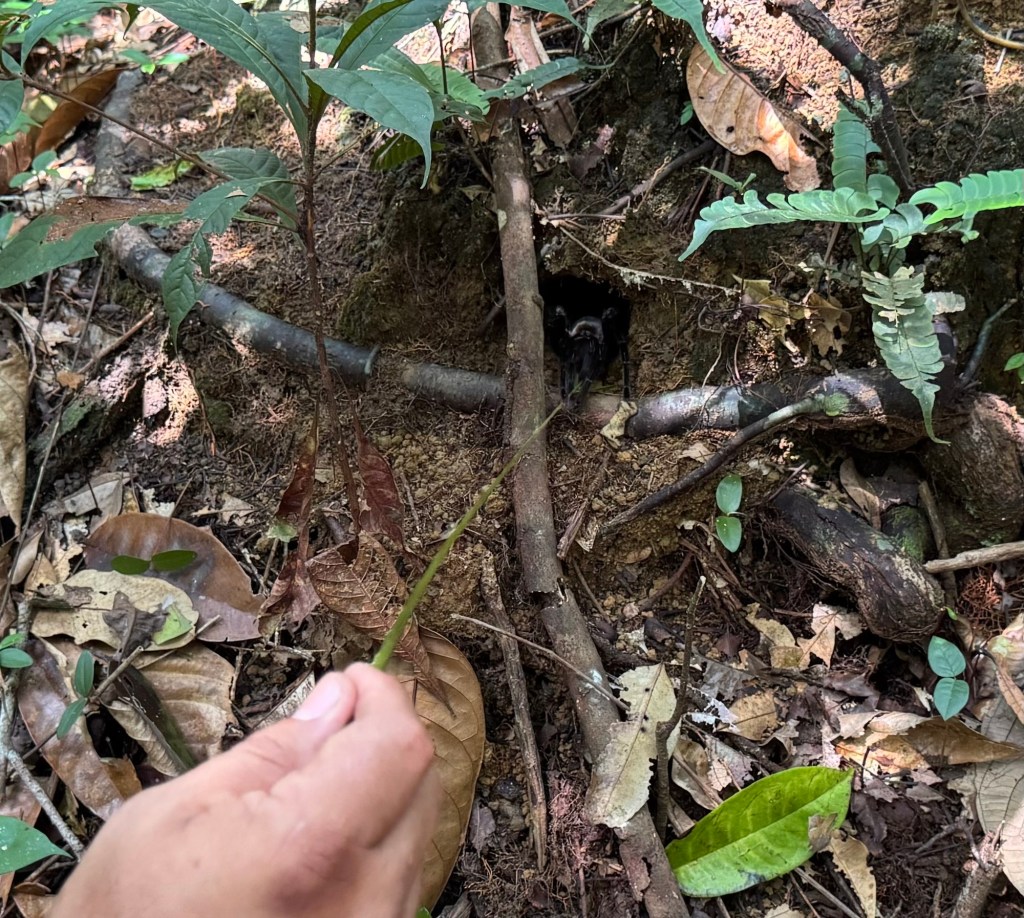
Coaxing a tarantula out of its nest

The only animal we saw was a tarantula our guide coaxed out of its hole. Otherwise, we saw a colorful, but poisonous mushroom.

Colorful, but poisonous mushroom
A water vine. Clear,clean water flows from the vine when cut.
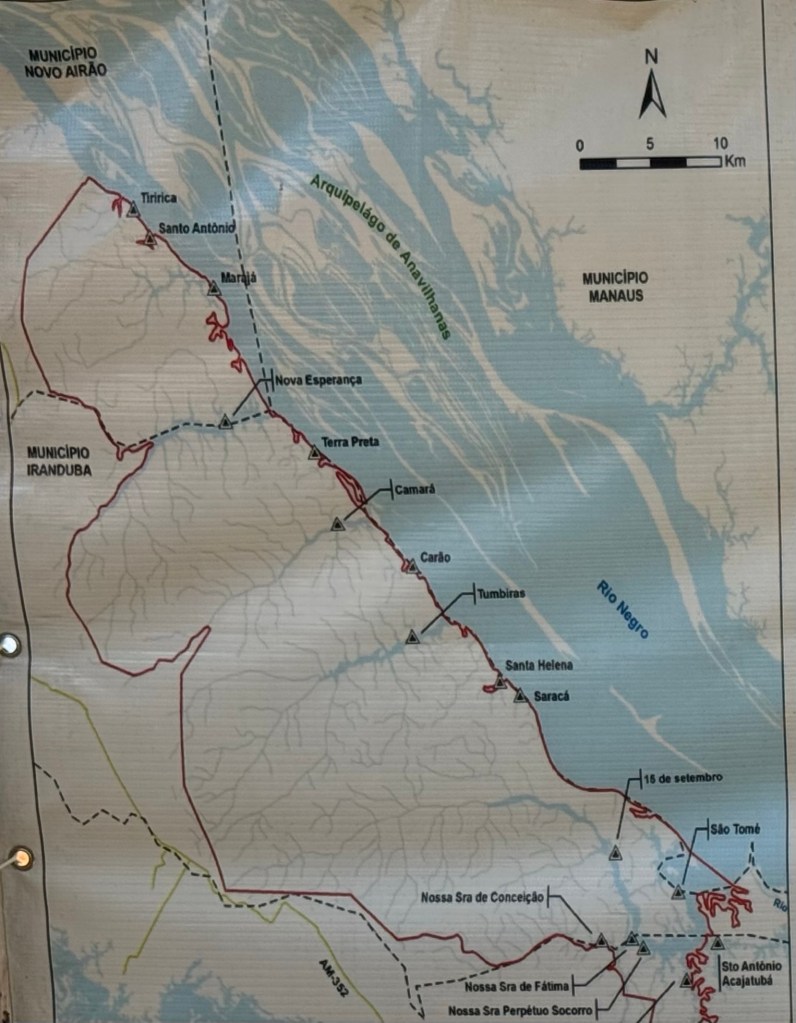
Map of Anavilhanas National Park. Our lodge is in Novo Airao in the upper left corner. Tiririca is 30 minutes by speedboat downstream. Manaus is miles away on right side of map.

After the hike we motored a short distance to a community called Tririca with 19 families and 43 people. They prepared a traditional Amazonian fish bar-b-que for our group of tourists, including Tambaqui, the fish we liked so much during the boat bar-b-que party night. It is called butter fish in English, with good reason.

Back at the lodge after lunch, I found Mark by the pool and jumped in to cool off. I was so hot, it took quite awhile to cool down.

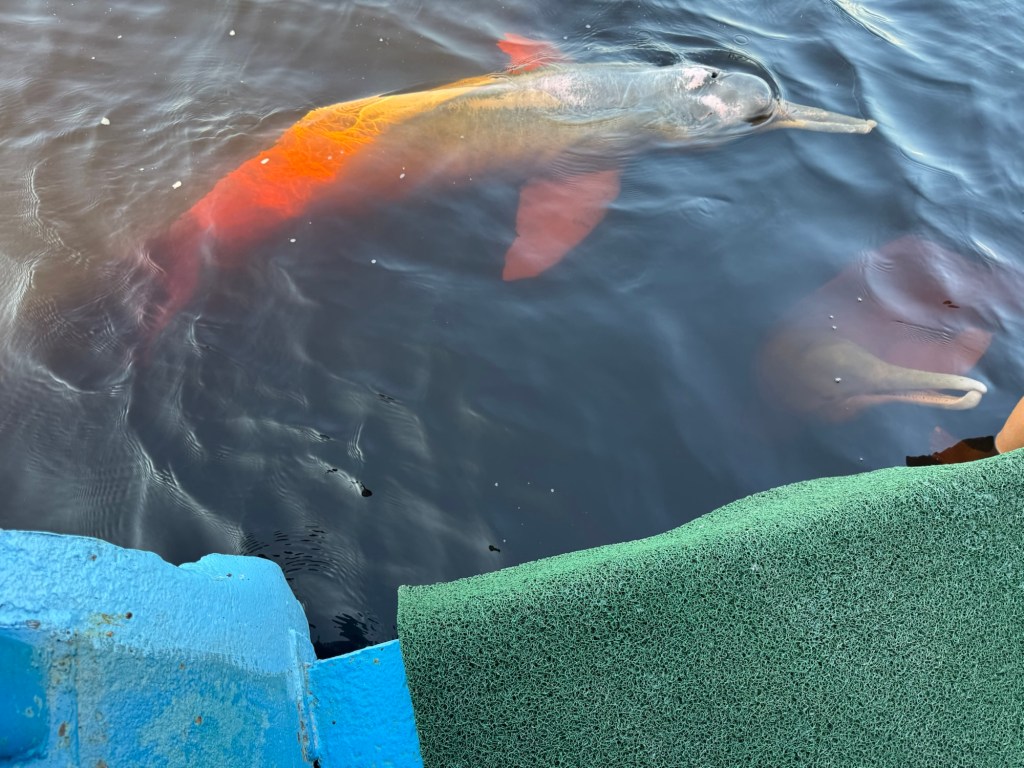
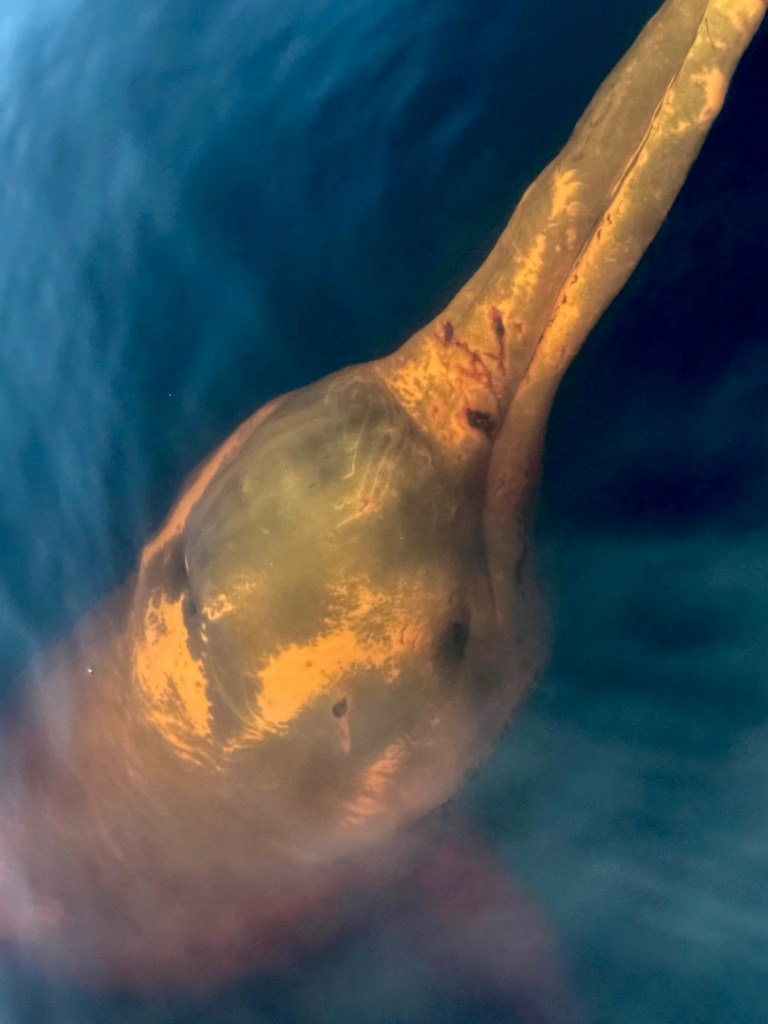
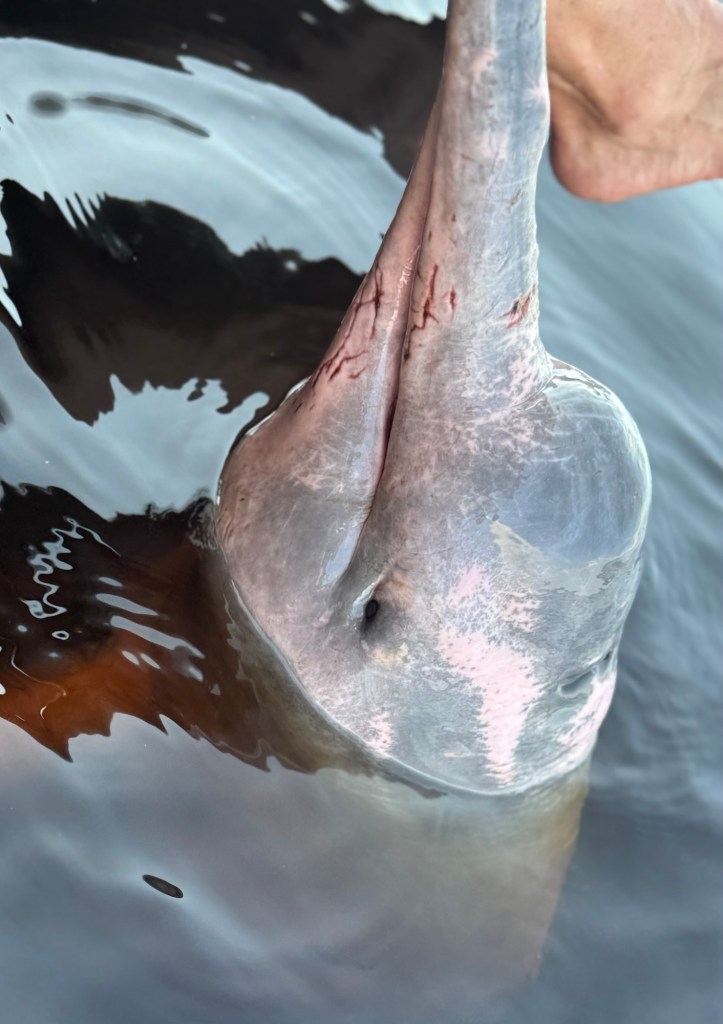
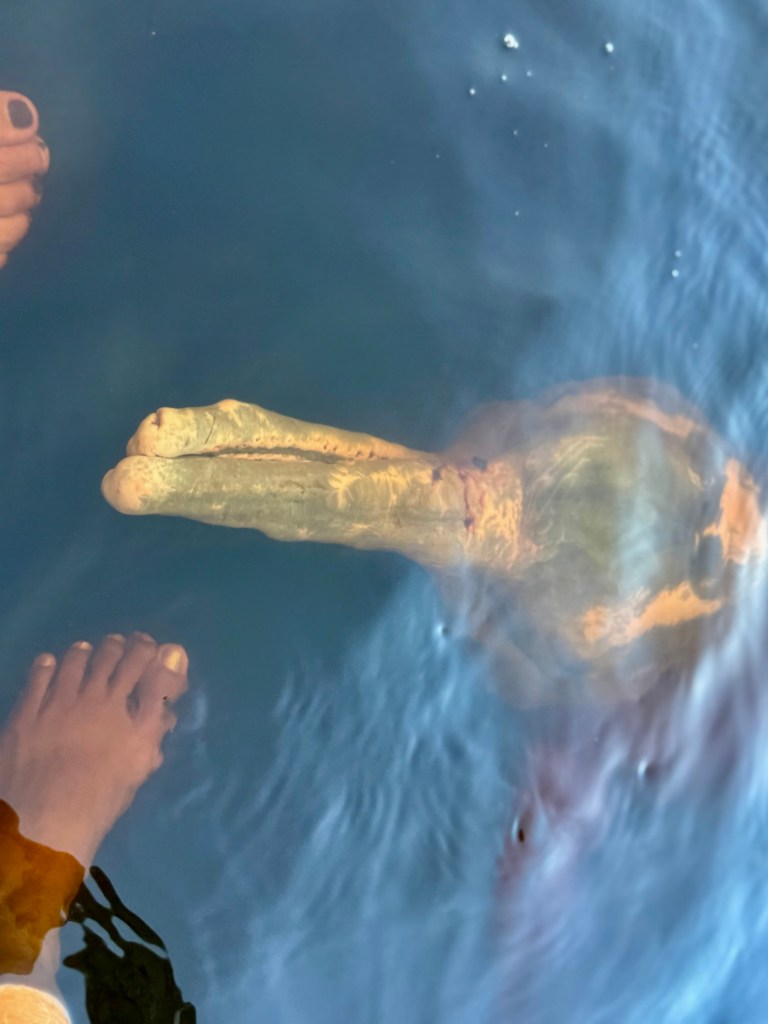
Mark joined me for the 3pm afternoon activity to see pink dolphins. We sat in an enclosure with a few dolphins swimming freely to us for bits of fish. Two of the dolphins had deformed beaks and no teeth. Normal dolphins have 120 teeth. They become pinkish from eating shrimp, similar to flamingos. They can grow to three meters. We were with the dolphins for about 20 minutes.

Back at the lodge, we chilled in the pool. Had dinner at 7pm. Hamburger and fries for Mark and pasta with shrimp for me. Pretty much like home. Into bed early.

Saturday, October 18, 2025

Went bird watching by speedboats at 6am. Saw few birds, though Mark knew most of what we did see: white-necked heron, egrets, red-headed cardinals, wood-creepers, blue heron, osprey, whistling ducks, and a few unnamed flying creatures. We also spotted a speckled caiman. But got no photos. I was lucky to see a few heron and osprey.

Back at the lodge, we took the rest of the day off. We are now three weeks into this 7 week adventure and a break was in order.

We have been overwhelmed by the heat and humidity of the last few days as we are near the equator and further north than we have been. Tomorrow we fly a bit south to get to the wetlands known as the Pantenal. We are hoping the weather is a bit cooler and less humid there.

Continuing into the Amazon

Monday, October 13, 2025

Sunrise and breakfast at 6am.

The captain motors slowly down river and into the Jari channel, an arm of the Amazon River, to a private home where the owner, a woman named Rosangela, gives us a tour of her forest preserve, which she called the Trail of the Sloth. She pointed out three sloths high in the trees but they were unphotographable. So we have included a photo of a Peruvian sloth you may remember from a post last year.

A Peruvian sloth

We also saw a couple of Potoo, nocturnal owl-like birds, though not related, that were asleep high in the trees. We were able to photo its backside. It feeds on insects and makes a very loud sound.

A potoo

Of considerable interest were Sapucaia, Monkey pod trees, that are huge. The trees give great shade and produce huge fruits that are woody, pot-like and suitable for a monkey to use. Each fruit contains many edible nuts. The tree is a tropical hardwood used for making furniture, curing stomach aches and treating blood pressure problems.

Other things we saw include

Back on the boat I learned about the Brazilian flag. The words on the flag say “order and progress” in Brazilian. Green is for forests, yellow is for mineral wealth, blue is for the sky. The 26 stars below the text are for the 26 states and are displayed as they were on 11/15/1889 in Rio the day of the founding of the republic. The single star above the words is for the state of Pará, the last state added and the largest territory north of the equator. Interesting flag.

We spent more time on the beach and in the warm water trying to stay cool. Had a nice salad lunch and more beach time until 4:30 when we went ashore to visit the Coroca community. In this village there are 23 families with 70 people.

A middle aged man met us and told us we were about to visit a turtle conservancy, a stingless bee farm making honey and a small, palm frond industry making colored grasses that are then woven into crafts for sale. They also made tie dye shirts as a gift for us.

We walked to a small holding tank where 500 turtles are kept separate for several months while they grow. Each turtle produces 90 eggs a year, resulting in 3000 baby turtles per year. 80% are let go into the river and 20% are moved into a large pond where 5000 turtles are kept to reproduce. There are all sizes, with turtles up to 28 years of age. We watched the turtle keeper feed the turtles a bucket full of pellets.

From there another man led us to an area where stingless bees are kept in several boxes. He opened one box and extracted a syringe full of liquid honey for me to sample. It was delicious. Then he sealed up the box and told us the honey is harvested each year from September to November at the rate of half a liter per box per month. The bees extract sap from trees as there is very little flowering fruit growing in the forest.

The community makes crafts from a special palm tree called a Tucuma. The palm fronds are dyed different colors—primarily red, blue and yellow—to be woven into different objects for sale. Another man made tie dyed shirts in the vats of boiling dye for us. Mine will be red and Mark’s will be yellow. Meanwhile, we bought some soap and a small jar of honey. Hope we get it home without breaking it.

During our walks through the forest we learned about many different trees. The more important ones include:

Açaí, a tree which produces many tiny purple fruits that, when the pulp is boiled off the seeds, tastes like dirt, according to Mark. It tastes somewhat better with lots of tapioca popcorn and sugar. However, it is much better as ice cream, which we had after dinner.

Another tree is the Jungle Cacau.

Later in the day we visited another Community called Atodi. They are an industrious community as they run a hammock hostel, maintain a school for their children, cultivate medicinal plants and sell medicinal products, and operate a library project called, Vagalume, which means “firefly”. The community has 48 families and 143 people.

We met the management team of the community, toured the hammock hostel, visited the school and listened as the students reading to us from the book, “The Giving Tree” by Shel Silverstein.

One member of the team, Neucimar, stayed with me as we toured the community. At one point she put red dye from a plant called Urucun on my face and I wore it the rest of the day. She posed for me against a wall of indigenous art. At the end of the tour we all ended up near the beach at a table full of special cassava snacks and crafts. We tasted the snacks and gave the crafts a pass. The team prepared a flower shower ceremony that took us by surprise. We marched to the edge of the river and water with the smell of flowers was poured over our heads. It did smell like flowers, though there were no flowers in the water. Apparently flowers are allowed to soak in the water for hours and the removed. Fortunately, we were very hot and the water was cooling. It was time to say good bye and Neucimar and I gave each other a big hug.

Back at the boat, we had lunch and an hour to relax before visiting another community. This time it was to learn how cassava is processed.

In the community called São Marcos, which has 13 families with 50 people and is set up to manufacture cassava flour, as well as tapioca and tucupi sauce for community use. There are 2 species of cassava, one of which is poisonous, which is the one these people use to produce flour. The non-poisonous cassava is eaten without being processed.

The first step in making cassava flour is to peal the roots, wash and then grind them.

Next add water and squeeze out the liquid by hand into a pot that will eventually become, tapioca and tucupi sauce. Meanwhile, peel a batch of cassava root that has been soaking for 3 days and is about 1/3rd the size of the first batch.

Hand mix the two batches together and squeeze the mash into a tipiti, a long woven tube made of jacatana palm leaves.

Once all the cassava is in the tube, hang it from a post, slip a long pole through the loop in the bottom of the tipiti, secure the pole to a notch in bottom of the post and apply weight to the pole. Water will pour out of the tipiti for some time as more weight is applied.

When no more water comes out, remove the cassava from the tipiti, put it through a shaker to loosen the fruit, then cook it stirring constantly until it is completely dry. Finally, aerate the flour to remove the dust. At that point you have edible cassava flour and the poison is gone. The process took two hours and we were ready to get back to the boat, and the beach.

Entering the oasis

This was the last and special evening for us and the boat crew. It started at 7:30 when we walked off the boat in the dark and onto the beach, which had been transformed into an oasis.
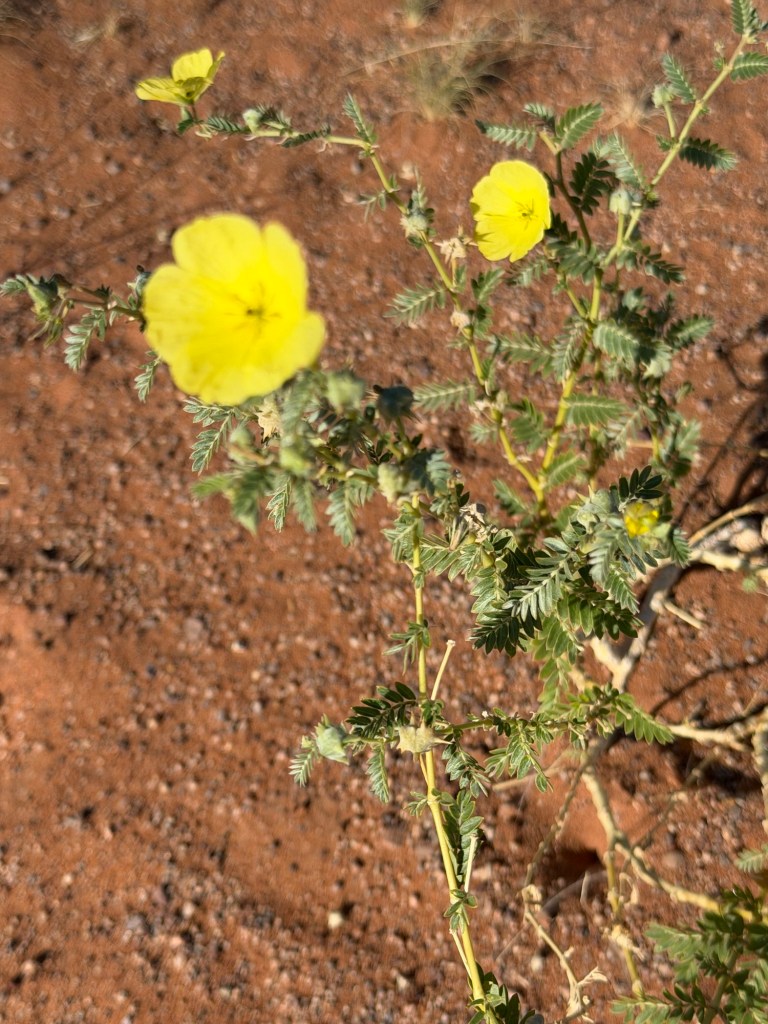
Our sofa made with sand

Luminaries lit our path to a sofa excavated out of sand and covered with fabric and pillows. When we sat on it we were tickled to experience a sofa on the beach. Milena served us cocktails and we enjoyed the scene with palm fronds placed in the sand as trees, luminaries everywhere and our table prepared behind the sofa.
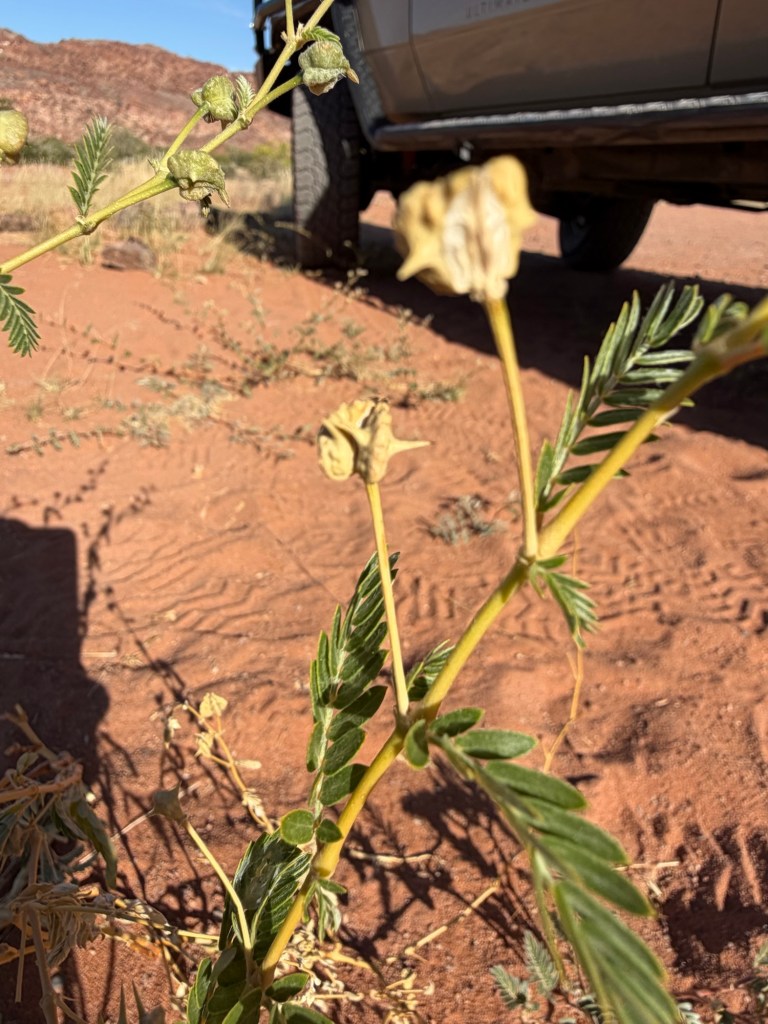
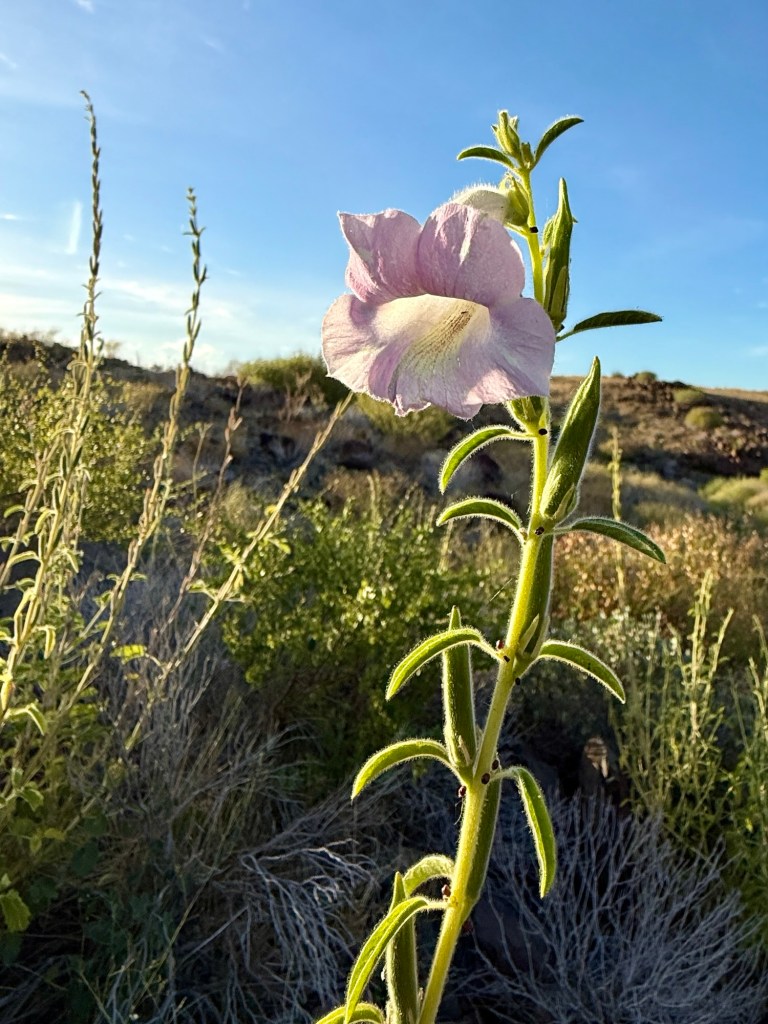
Soon we had dinner with a very delicious fish called Tambaqui that had been barbecued perfectly and was served with a variety of side dishes. Such an event is called a Piracaia, or “fish bar-b-que on the beach”. After dinner, Carlos started music playing and the dancing began.
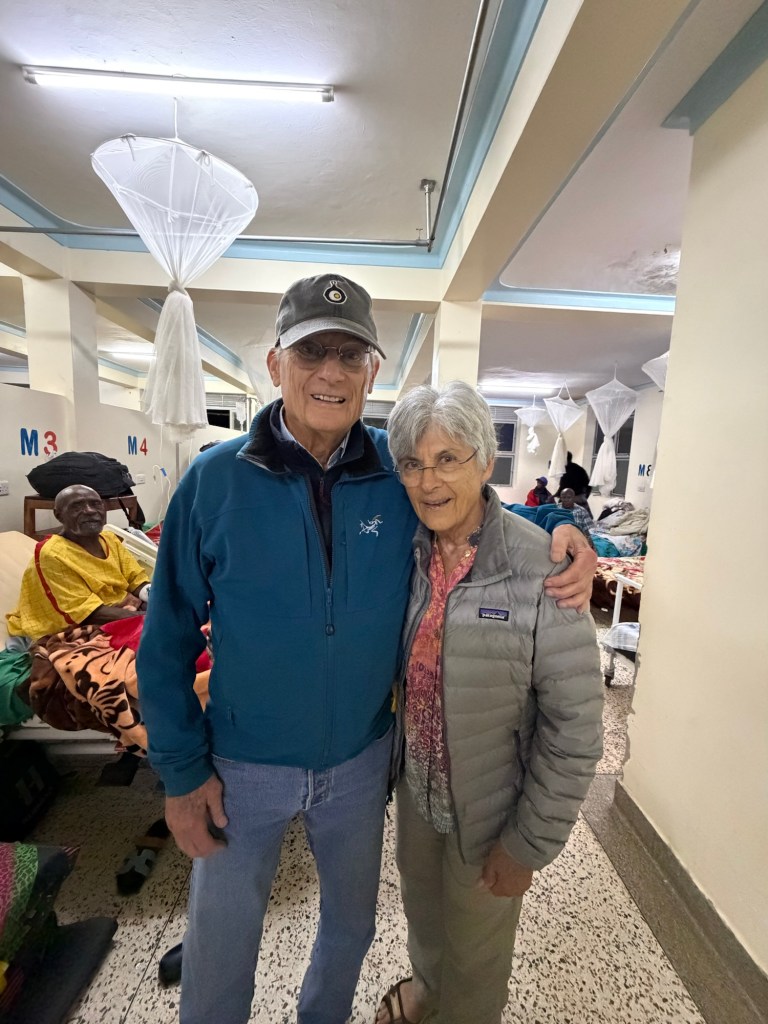
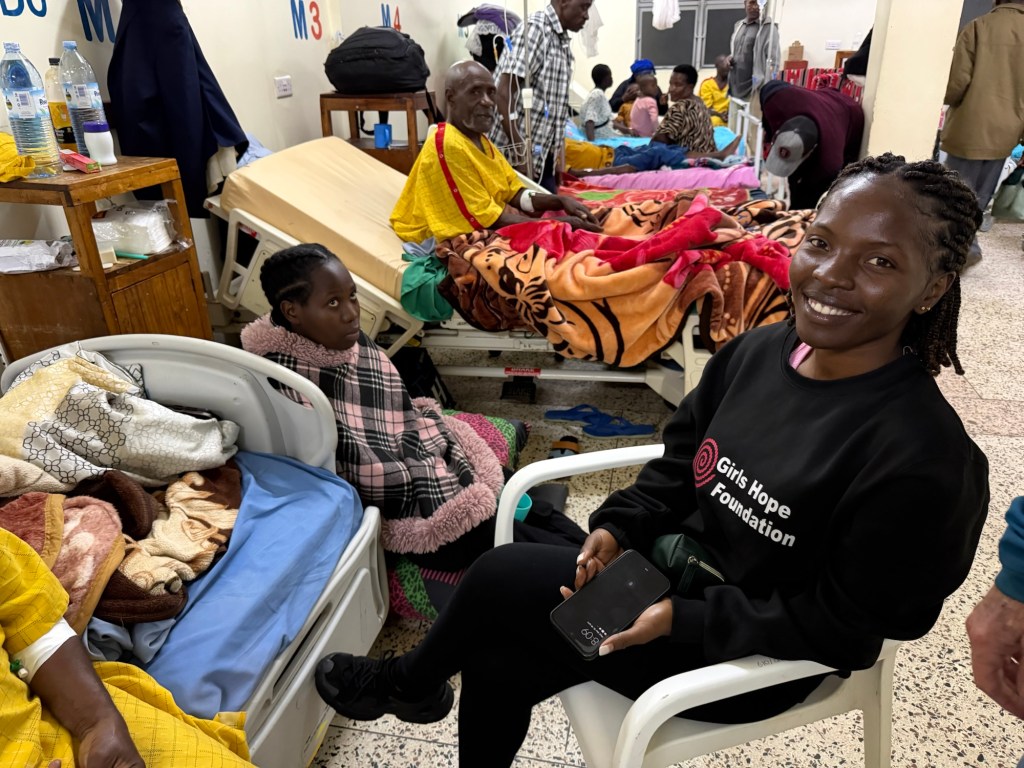
Finally, the evening ended and we were off to bed.

Tomorrow will we have breakfast, enjoy the final leg of the boat ride, disembark and head for the Santarem airport.

To the Amazon

Friday, October 10, 2025

Depart Lancois at 9am after a very interesting and action packed few days in the white Lancois sand dunes.

Drove an hour and a half to the nearest airport, in a town called Barreirinhas. Mark looked for an ATM. Found two. The second one had money Mark could access. We flew from there in a Cherokee 6, just like our old plane, with a pilot named Jeff. He flew us to Sao Luis, a 50 minute flight including a long low pass over the vast sand dunes saving us 2 1/2 hours of driving.

At Sao Luis we transferred to a Cessna Citation and were up and away after an hour on the ground. The captain was a man named Dercio.

The 2-hour flight went well until half way through the leg, when we lost the left engine. Oh well, sure hope one is enough. Dercio very calmly informed us he was making a detour to the nearest airport, Belem. Within 15 minutes we were in Belem and taxied to a hangar where a crew was waiting for the plane to arrive. We learned the failure was caused by a loss of oil pressure.

Another flight crew was called in to fly us onward in a King Air. We finally landed at our destination, Santarem, at 5:45pm. It was a long day of sitting but not nearly as long if we had used our scheduled commercial flight.

One this map you can see Sao Luis in the east, our stopover in Belem and Santarem, our current destination. Later we will fly to Manaus.

Carlos, our next host, met us at the Santarem airport and accompanied us to our hotel for a night, Casa da Orla, on the beach in a small town called Alter do Chao, where we are to pick up our 4-day boat ride on the 11th. Here the river Tapajos meets the Amazon. Carlos left us to ourselves for the evening and we wandered the streets of the town until we settled on a place for dinner. The food, angel hair pasta with crispy garlic and green olives on pizza was not very good, but it was filling. The air is very warm and humid and we are grateful for the good AC unit in the room. Out of the heat, we went to bed early.

Saturday, October 11, 2025

Up by 7am, we enjoyed a view of the little “Island of Love” across the river from our windows. It is a popular place to spend the day sitting in the water. Six months of the year the water is low as we see it here. The other six months the water level is right to the edge of the road. Best to be here now, even if it is hot.

About 10am we went out into the heat to walk the streets and search for a 2-piece bathing suit for me. We did buy a suit and saw a hat with the town’s name on it, but never again. Way too hot and sticky to try on clothes.

The small town we overnighted in before getting on a boat for 4 days.

Back in the room we stayed put until Carlos came to fetch us to go to our boat. Sure hope it has good AC.

Our 4-cabin boat, the Tupaiu. We sleep in one cabin and use another for a dressing room. Every room is quite small.

Once on board, we learned the boat does have reasonable AC in the bedroom cabins. Carlos introduced us to the boat crew, the captains gave us the safety talk and off we went. Shortly thereafter, we were served a nice lunch of fish, rice, beans, cassava and salad greens. This seems to be the usual fare at meal time. We, at least, loved the greens.

This map shows the location of Santarem and the small town of Alter do Chao. We will be traveling mostly on the Tapajos River, which runs into the Amazon right in front of Santarem.

We motored 2.5 hours upstream on the Tapajos River to a lovely beach and dropped anchor. The crew set up shade cloth and chairs for us and soon we were in the very warm, but peasant fresh water.

We stayed in the water until late afternoon when we went for a canoe ride through the local mangrove-like waterway hoping to see birds, snakes, crocodiles and any other living thing.

The indigenous man who paddled us through the swamp, was excellent at paddling without making a sound. Soon we were all quiet too and looking intently for anything that moved. We saw many birds but only recognized, woodpeckers, a couple of eagles and a few kingfishers. As the sky became dark we stopped hearing birds and started hearing frogs. Many of the sounds were new to us, including the frog calls. The canoe man dropped us off at our tender and back we went to the boat for dinner.

At about 8pm, our two cooks presented us with steaks, a delicious eggplant cassarole and the usual rice, crispy cassava and green salad. Dessert was ice cream. Then we organized our clothing and went to bed. In spite of the small bed, we slept reasonable well. The boat stayed parked on the sand island.

Sunday, October 12, 2025

A relaxed morning with coffee and fruit for breakfast.

About 10am, we took the tender further upstream to a small community of 153 people in 45 families, who produce latex products from a few rubber trees in the area for tourists.

At one time there were thousands of rubber trees cultivated as a large business with the latex going mostly to China. Before that, just a few kilometers up the beach is a small town founded by the Ford Motor Company back in the 1930’s, called Belterra. Meanwhile, the trees developed a blight, so shoots from the trees were planted in China, where the latex is now commercially produced. The local business we visited, Jamaraqua, is a cottage industry with limited products going to tourists who visit the area. A local artisan gave us a demonstration of the process for making artifacts for tourists.

Finished latex sheets ready to be cut into various products.

We bought a few necklaces and went for a walk through the forest and out to another beach.

On the way, Carlos named a few trees and saw a small green Parrot snake. We watched it for awhile, but it did not move much, so we walked on and spotted a Strangler Fig and a Gumbo Limbo tree that has stripes on its bark.

We also noticed a few Ipe trees across the river due to their yellow flowers. At the beach, the water was much cooler and more refreshing. After awhile, the tender picked us up and took us back to the boat for lunch.

We were served what we had asked for—a big, mixed green salad.

Then we were back to our shaded beach setting for the afternoon. AT 5:30 The captain pulled the anchors and we motored downriver back to Alter do Chao for the night. We were served a nicely prepared filet mignon and chatted with Carlos for quite awhile before turning in.

Lencois, where is that?

Tuesday, October 7, 2025

Departed Salvador in mid afternoon and arrived in San Luis about 5:30. Hit the road in a 4-wheel drive truck for what we learned would be a 4 hour ride to Casa Oia, a hacienda near a town called Santo Amaro. Our driver spoke no English and our guide, Pedro, also known as Salim Rosa, made up for it as he talked non-stop. We did learn a bunch of information about his personal life as well as some details of interest to us.

Half way into the very dark drive on a fairly rough road, we pulled into a crowded truck stop and had a beer and a piece of pizza for $1.87. Cheapest food ever. Back on the road, Pedro kept talking, but refused to tell us about where we were going. So, at 8:45pm we arrived at a grass-covered, open-walled building and were met by the manager, who told us dinner was ready. So, without seeing the room, we had a tasty seafood risotto dish on an open veranda. To get to our air conditioned room in a separate building we trudged through sand. The outside air was very pleasant with a slight breeze. Mark suggested it felt sensuous. How nice. The room, however, felt cold. We were soon in bed with the lights off.

The history we learned from Pedro was that the French landed on a beach in San Luis Island in 1612 and started to build a settlement and a fort to honor King Louis XIII. In 1615 the Portuguese challenged the French, and, with fewer men but superior firepower, they beat the French in the battle called Guaxenduba that lasted only an afternoon. The area we are staying is east of San Luis and is called Lencois Maranhenses National Park, which is what our program says we have come to see. The park is 600 square miles in size and borders three towns including Santo Amaro, where we are staying. Maranhao state is part of the NE region of Brazil. It is mostly agricultural with soybeans and rice being the major products, 100% of which goes to China. There are 26 states and 1 federal district in Brazil.

Map of states in Brazil

In the top of the North East state of Maranhao, you will see the island of Sao Luis where the French lost the region to the Portuguese. Our adventure takes place just a bit east of Sao Luis near the town of Santo Amaro at a grass covered Hacienda called Casa Oia. We arrived at 8:45pm, met the manager and were escorted directly to dinner. I was not hungry, but could not resist the delicious seafood risotto. Then we walked through a sand pathway to our room and went directly to bed.

Carnauba palm tree with an interesting spiral shape. Endemic to Brazil.

Wednesday, October 8, 2025

We were up early and out by 7am to see where we were. It looked like scrub brush to us and not interesting. After walking around a bit and enjoying a nice breakfast, we were told to wear our bathing suits as well as a cover up.

At 9am, we climbed into safari seats in the back of a pickup truck. Pedro joined us along with a driver and local guide. Off we went through the scrub land and grass plains, which eventually morphed into polar-white sand dunes, heading for a shallow, rain water lake. It took 40 minutes driving over the dunes to reach the pretty, warm water lake. By then the surprise was wearing off and we understood why our travel agent had sent us here. The scenery was otherworldly, never mind the intense wind that pelted our bodies with sand.

We waded in a good distance to get wet up to our waste, while the guys set up a shade cloth, chairs, towels and a table with snacks. They disappeared in the truck while we enjoyed the beach almost alone. An hour of sun and wind-swept sand pelting us was enough. The crew returned and we went back to the Casa Oia to cool down and get out of the wind. Lunch of local garden fresh greens and hake was served outdoors in the shade about 1pm.

In the late afternoon we rode ATV’s through the dunes and got some really nice images. Hard to decide what to keep.

Dinner was served at a table for 2 in the vegetable garden. The appetizer was a mini pumpkin stuffed with mushrooms, cheese and soft pumpkin and the entree was king prawns covered with tapioca popcorn, sautéed vegetables and black rice with mango. Delicious. Then—our usual routine—back to the room, get ready for bed and soon, fast asleep.

Thursday, October 9, 2025—our 32nd anniversary

Mark remembered our anniversary, while I thanked him for remembering. Oh well. Maybe I will remember one day.

After our experiences of the day before, we were ready for the day’s activities—A long drive to a different lake and a hour to swim and relax by the shore under a shade cover provided by our drive crew. We hoped for privacy on this lake, but, just like the day before, groups of other people appeared and took up space around the lake. I was feeling possessive, but realized that the lake was more than big enough for everyone there. We took lots of photos along the way and are struggling to keep only the best ones.

Back at camp for lunch at 2 under a cluster of cashew nut trees decorated with colored streamers, we were served a good beef stew along with rice, cassava, okra greens, fried egg and tapioca-coated plantain, my favorite part.

At 5pm we drove a short distance to a river and climbed into a 30-foot open boat for a ride to a sundowner on a sand dune. It was a 10 minute walk from where we got out of the boat to the sand dune where we watched the sun go down.

Unfortunately no alcohol is allowed in the park so Mark had put some booze in his water container and we had a real sundowner. We also got some nice photos. Back on the boat, the water was so shallow that we kept getting stuck in the sand. The boatman had to get into the water and push us several times. I felt sorry for him, but he seemed not to mind.

The day was not over. The manager told us dinner was to be a luau and to get ready for a 20 minute drive. Left camp at 7:40 and drove through the sand dunes in the dark. I felt very uncomfortable being in the dunes after dark, but the driver knew exactly where he was going and finally we saw lights in the sand. There was no luau, but a small table set for regular dinners. There was one other couple and ourselves. The meal consisted of crackers with baba ghanoush as a starter and mashed pumpkin with dried beef for the entree. We learned that this “luau” is served most evenings to different couples. While we ate, the waining moon rose over a tall sand dune. A nice, unexpected touch. there was just enough wind to keep us from relaxing and after an hour we were ready to leave. Fortunately, the other couple was ready to go also.

Dinner on the dunes

Friday, October 10, 2025

Travel day. Up 6, out at 9.

Heart of palm

This photo should have been sent during our Rio segment, but I think it is important enough to send it now. It is a photo of baked heart of palm as it is presented in restaurants in southern Brazil. You cut it, pull a piece out of the stalk with your fork and eat. Quite delicious and very different than what we get from a jar in California.

Next stop, Salvador

Sunday, October 5, 2025

Departed Rio at 8:30 and arrived at Salvador at 10:30. Were met by Icaro, our local guide. He reminded us that Salvador, which means Savior, has the largest proportion of black population in Brazil. The city’s population is 2.4 million, 80% of which is black. Of the 13-15 million slaves brought to Brazil, most of them came through Salvador.

Our hotel, the Fasano, eclectic and art deco

Salvador is the third largest city in Brazil behind São Paulo and Rio, but it was the first capital from 1549 to 1763. It was important as the main city on the Brazilian coast that defended against pirates as it is on the banks of the second largest bay in the world, the largest bay being Hudson Bay. It is named the Bay of All Saints because it was discovered on November 1, All Saints Day on the Catholic calendar. Rio was the capital from 1763-1960, when Brasilia was built and became the capital.

As we walked around the old down town we saw a statue to a man named Thome de Souza, who was the first governor of the colony of Brazil beginning in 1549. The styles of architecture we saw included colonial, eclectic and art deco, baroque and Spanish baroque. Some of the buildings still sport Lios marble door frames. Salvador is the only city in Brazil that had stone walls. Some parts still exist.

The weather was warm and slightly humid, but not too hot for walking. Eventually we stopped for lunch at a place called Cuco Restaurant. The place was full of people, but what we ordered, shrimp and ceveche, was just ok.

We visited a couple of churches for their architectural style. One church was famous for its blue tiles that came from Portugal in the 1700s to decorate the interior of the sacristy of the baroque St Francis Church. The church was quite rich during those years. There was a huge jacaranda wood dining table set for 32 people in the sacristy and beautiful blue Portuguese tiles depicting stories of historical events that ornamented the walls of the sacristy.

We saw the exterior of several churches we could not enter. There are 377 Catholic churches in Salvador. Many churches are private and operate on an ad hoc basis when paid for service. Others only open for Mass and to visit. We paid to enter St Francis Church, third order, which works like a private institution.

After leaving St Francis, we sat enjoying the view and the cool breeze at the top of Pelourinho Square, AKA the whipping post square during slave years. The square was on a slope. While there, 5 ladies from the Dida Banda Femanina arrived playing drums. They had been hired by our Brazilian tour operator, Tami, to give us a personal experience of drumming. After several minutes they turned and proceeded back up the street with us and others following. At the entrance to their drumming school-office-practice place, they stopped playing and we followed them into the building and their practice room.

Soon they were drumming again with Mark and I joining in on our designated drums. It was a lot of fun and loud enough that you could not hear our mistakes. Once we all stopped playing, they introduced themselves and told us a bit about how they each got into drumming. They ranged in age from 17 to 55. Some had families that supported them and others had fathers who did not. There are about 40 ladies who drum during the year and 90 who participate in carnival time.

We left the school at 5:45 and drove to our hotel. Up on the roof top we had a drink, then went to dinner in the hotel dining room. I was in bed asleep at 8pm. Very nice day, but too much booze at dinner for me.

Monday, October 6, 2025

Lots to see and learn today. The style of buildings is important in Salvador as each building is prominent even if it is derelict, as many are. We learned to differentiate between, colonial—2 stories with simple lines and visible roofs and light colors; baroque—more fancy with roof not visible, 3 stories or more and use of different stones; eclectic—a mix of several styles influenced by French and Italian design; art deco—transition style in the 40’s between eclectic and modern; rococo—blue color on roofs, very ornamental; Spanish baroque—more ornamented than Portuguese baroque.

While looking at various styles of buildings we drove to the city’s large African market and did a long walkabout identifying different foods. The indigenous African religions are represented by different products for sale including woven baskets, special foods and religious, metal sculptures we saw. The name of the local religion is Candomble. It became popular in Brazil in the 1800’s, especially in the state of Bahia, where Salvador is located. Here are some baskets and statues.

We also identified several foods: acerola, looks like a cherry, but is sweet and sour and exceeding high in Vitamin C; cashew fruit, looks like a cashew nut; sweet potato, cassava and Inhame, an African root; massive, a vegetable; Tamarine, a sweet and sour spice; Tobaco, used for religious offerings and for fertilizer; genipapo, similar to a fig, dark and sweet and used to make liquor. And other things I did not catch.

Our guide, Icaro, and I sitting in chairs used by indigenous people as offerings to their gods.

From the market we went directly to the home and kitchen of Chef Murilo. He is a delightful character along with his mother, an artist of some note, who is preparing for a show she is calling “Black is Beautiful”.

After some light conversation we began the class. The first course will be Casquinha de Siri, or little shell crab. The main course will be another Moqueca, like the one we had with Mica, only with Hake fish rather than shrimp.

Chef Murilo teaching us how to make Moqueca and Casquinha

Our task was to chop the onions, tomatoes, peppers, cilantro while the Chef poured olive oil and palm oil into two heating pans. The large pan was made of clay crockery. When the pans were hot, Mark put part of the ingredients in the small pot for the first course and the rest of the chopped vegetables into the large one. We chatted about the Chefs history while waiting for the food to cook. Eventually, the chef put the fresh crab into the small pot and I stirred it while Mark watched the large pot. The chef put hake fish into the large pot and served up the crab dish along with cassava.

The crab dish tasted better than I expected. When we finished the crab, the hake was cooked and we each served ourselves. I already knew the Moqueca would taste good and was happy to learn how it was made. Hopefully, Mark will make it when we get home.

The chef and his mother gave us a tour of their 4 story house. Every corner was full of her art, including the furniture itself. They made for an interesting pair and I almost hated to leave.

From there we drove back to the whipping post square to see the inside of the Our Lady of Black People Church.

Our Lady of Black People Church

At the entrance is the Virgin Mama Muxima. The church was built between 1709 and 1890 outside the city walls. It was designed, built and painted by black people. The ceiling was painted by Joseph Pinto Lima Dos Reis in 1890. It was finished at the time slavery was abolished. We toured the church, sacristy and upstairs rooms.

The statues include saints I never heard of; St Benedict’s, St Efigenia, St Anthony from Categero, St Domingos de Gusmao. I did recognize Our Lady of Conception, St Joseph and the Pieta.

There was also a photo of a beautiful lady named Anastacia (born around 1740), who was a slave with piercing blue eyes. She rebelled against her slave owner and slavery and was forced to wear a metal mask and collar that kept her from speaking. She died of tetanus from wearing the collar and has been considered for sainthood by the Catholic Church.

Some of the last arriving slaves went back to Benin after they were freed. They had come to Brazil as Muslims, returned to Benin and built a mosque according to the style they learned about while in Salvador. They were recognized as “Agudas”, returnees after the abolishment of slavery.

Mosque built in Benin by slaves who returned free.

In the evening we went to a Folklorico Show about the Indigenous religion and dances. We saw costumes of the different gods, dances they did as well as a samba dance.

The dances were interesting, but long. The gods represented include: Red for god of storms; Yellow for attraction and sensuality; Straw for skin disease and healing; Black for war and iron; Green for god of forests, hunting and hunters.

The small theater was full. Icaro told us they perform three times a week and have done so for years. As folklore shows go, it was better than most.

After the show, Icaro joined us for some pizza and beer on the plaza. Then off to the room and bed.

Tuesday, October 7, 2025

Relaxed morning with airport pickup at noon. Time to get some blog work done.

Back to Rio, searching for Hope and Crosby

Thursday’s October 2, 2025

We departed Paraty at 8am with new driver named Sassa, who had lived in the states for several years and spoke good English. As we drove along the coast headed for Rio we learned about him and other details he shared about Brazil. There are 27 states in Brazil. 17 million people live in the state of Rio and 5.5 million live in the city. 15% of the Rio population is very poor and live in more than 700 favelas, each of which consists of jerry-built shacks packed together on the outskirts of Brazilian cities. They have some electricity and water, but most often, no sewer. Pretty miserable conditions, compounded by drug gangs that steal, fight and hurt people. Sassa warned us to stay away from the favelas. Sounded good to us. He told us the minimum wage in Brazil is $300 per month and 27% of the population of the country live below the poverty line. Not even close enough to live on. Rio alone received 1 million slaves, while the entire US received only 800 thousand. Interesting statistic.

Soon we arrived at the home and gardens of Burle Marx, a famous landscape architect. On arrival we met our Rio guide, Mica, who joined us on our tour of the gardens. The garden guide was a man named Mateo. We learned much from him as we walked through the garden, park and buildings.

Burle Marx in his garden

Turns out Burle Marx was a versatile fellow of many talents including painting, tile design and piano playing, as well as landscape design. He purchased 98 acres of land near Rio in 1949 and converted it into a lovely park and garden over many years. He was able to move onto the property in 1963 and lived there until his death in 1994 at the age of 84, without finishing his labor of love. He did give the property to the government, which has maintains the grounds and opened them to the public. His landscape talent and ideas spread around the country and he is famous throughout Brazil and internationally.

Brazil has 11% of the world’s 350,000 plant species, the most of any country.

The plants and names are listed here as best I can remember them.

Fig tree, 60 years old
Bear Fur Grass, the dark grass about 2 feet tall. There is also the trunk of an Iron Wood tree
Mateo, our expert garden guide
Agave, once the plant finishes blooming, it dies. It is in full bloom here
Crown of Thrones in full bloom
Armadillo orchid grows from the ground out
Silk floss pod from tree. Feels like silk
Cycad, an ancient pine tree, that looks like a palm
Brazilian Red Cloak
Lobster Claw, a large heliconia
Silk Floss tree with Spanish Moss hanging down, Sapucaia seeds above the moss(a cousin of the Brazil nut), a cactus bromeliad called Frog Mouth to the right of the moss, a huge unknown bromeliad above the seeds and silk floss pods at the top of the tree.
Bengal Clock, a climbing vine with a purple flower.
Terrestrial Sobralia, a pink orchid
Spent flowers from a jade vine.

In addition to the gardens we toured the buildings Marx used including his home and work spaces. We saw his ceramic collection, his piano and his own paintings.

Finally, we arrived at our hotel, the Fasano Rio de Janeiro. The room is not large, but it has a wonderful view overlooking Ipanema Beach and is interestingly laid out to take advantage of the tight space. In the triangular hallway is a stuffed chair in the shape of a woman. Mark took advantage of the opportunity.

After the garden tour, we had lunch a favorite place of Mica’s. The super dish we had was called Moquech, or Shrimp Stew. Excellent.

Our guide Mica and the piping hot shrimp stew.

After lunch we drove to Sugarloaf mountain and rode 2 cable cars to the top for views of the city and The Redeemer. Mica paid $70 each for us to have VIP benefits. It was near dusk when we arrived and the platform was full of young people partying. We quickly checked out all the view locations using our VIP tickets to cut through the lines, and left. It was too crowded for our taste.

At first station on way to top of Sugarloaf, named by the Spanish for its shape.
The chair in the dark, windowless, triangular hallway. The walls are all paneled and the room doors are flush and hard to distinguish.
Our room at the Fasano

Friday , October 3, 2025

We met Mica at 8am for a very long day of sightseeing. First we drove through the city to the foot of hill where the Christ the Redeemer is located. On the way Mica talked about the Portuguese coming to Brazil. The Portuguese king when the country was colonized was John VI. He was followed by Peter I who declared independence from Portugal. His son Peter II was the longest reigning king and was good for Brazil as he promoted science and the arts. It was a cultural time. However, on 11/15/1889, Peter II was overthrown and exiled to Paris by a Coup d’ etat. Frequent coup d. etats occurred over the next several years. Then Balsonaro was elected President. Today, Lula is president. Regardless of popularity, he and Balsonaro appear to be the only two electable politicians at the moment, even though Balsonaro has been banned from running.

At the bottom of the Redeemer hill is the platform for the cable car. We paid $40 each and managed to get good seats in the car with Mica’s direction. No VIP tickets were available. The cable car passed through the world’s largest replanted urban forest. 100 thousand trees were planted by 11 slaves over 13 years under the direction of Peter II between 1861 and 1874.

The back of the redeemer with its head blocking the sun. Taken from the middle platform about 9am.

Mica is a musician who sings and plays drums, writes and records music. So it was no surprise that he believes black culture permeates the country and that “Samba music is the father of pleasure and the son of pain“ He made samba sounds all day long. Fortunately, samba is very pleasant to listen to.

At the top Redeemer platform we threaded our way through the crowds to get vantage points. At 6’4” tall Mica was very good at that. And he knew all the best places to take photos.

We learned that the body of the statue was completed in 1931 by a collaboration of people; the head and hands were made in France by a French artist and shipped to Rio; the workers signed their names on the back of the Redeemer’s heart that they you can see in the photos.

The statue is 98 feet tall, the pedestal is 24 feet and the span from hand to hand is 92 feet. The statue weighs 2500 lbs. It is hollow except for a staircase. A lightening strike nicked the tip of the long finger on the left hand. It is barely noticeable. It was last cleaned in 2010. 2.5 million people visit the statue each year, 6.8 thousand each day. The Catholic Church, which owns the property, is doing very well.

On the way down, we captured a photo of a nearby favela and a pretty yellow plant called a shrimp flower.

From the Redeemer, Sassa drove us by several lookout points looking over interesting neighborhoods, favelas, small neighborhood clothing stores and art galleries. We stopped in one gallery where we could not help ourselves and purchased a painting by a local artist. I also bought some clothes, for which I have almost no room. Eventually we stopped for lunch at Territorio Aprazivel, meaning Pleasant territory, and had a wonderful fresh heart of palm. Again, I forgot to photograph it. We had never seen an actual heart of palm in its casing and cooked to eat right out of the shell. Very unique. Hope I get another chance to photograph one.

At 3:30pm we arrived at the Carnival Experience Warehouse for a tour of the facility. Boy were we in for surprises and treats. Met by a professional lady dancer, we were told all about the history of carnival going back to 1932 and shown parts of the current construction for the next carnival. After giving us the information, she had us dress in last year’s costumes, participate in a dance with other professionals, learn to play some samba drum music and have hats made for each of us. Mica enjoyed watching us make fools of ourselves and took way too many photos. It was all good fun as well as informative. We watched snap shots of last year’s parade.

There are 5 different major groups, with 12 clubs in each group. Each club creates a theme, designs and builds 5 floats as part of their theme, hires 3000 costumed participants in addition to primary performers and people on each float. The parade lasts 1 hour and 20 minutes with participants traveling along a straight stretch of roadway with bleachers on both sides. The top winners on the first day, repeat the parade a second day with winners being announced at the end of the second day. The cost for each production is about $4.5 million.

I picked up a couple more flowers on the way back to the hotel. We grabbed a bite in the hotel bar on the top floor and went to bed. It had been a very pleasant, yet long, day.

Saturday, October 4, 2025

Our one day without guides or an itinerary. Slept in and hung out in the room watching the Ipanema Beach scene. Went for a walk in the afternoon and had an early and delicious dinner at Zaza Bistro, a few blocks down the street. It was another good recommendation by Mica. Walked back o the room and packed to depart early in the am for Salvador.

We never found Hope and Crosby. Guess they moved on.

More on Paraty

Tuesday, September 30, 2025

I learned that the English name of the monkey that wanted to join us for breakfast is a marmasat. Sangui is its Brazilian name.

Here are some lovely flowers growing in our hotel garden.

After breakfast we met up with Rodrigo and walked the dangerous cobbled streets again to the pier, where we met a catamaran that took us to the Sem Pressa, “no rush”, which waited for us at a different pier. The restauranteur, Gisela Schmidt, who provided our lunch, was waiting to tell us about our impending meal and details about the boat ride.

Then she left us in the hands of the captain and 2 staff and we were off. Every appetizer looked delectable and they had our attention before the captain pulled away from shore. We had tasted everything by the time the anchor was dropped in a calm and secluded part of the huge bay, an hour and a half later.

The day was perfect again, and we did get hot enough to go for a swim. The water is slightly warmer than Lake Tahoe, so I was able to get in without a strain. We were in the nearly fresh water for about 20 minutes. The bay is a mix of fresh water from two inbound rivers and salty from the ocean. We were close to the rivers where we swam.

Back in the boat, we were served lunch. There were several mini courses, each one an experience. The first was a perfectly cooked giant prawn served in a spicy coated glass with a lite aioli sauce. The second course was a miniature crab cake served on a tartar sauce. Not my favorite. The third course was a sea bass tartar.

Then came the main course; a perfectly prepared octopus arm accompanied by black rice, a cherry tomato compote, crispy rice-like cassava, a mussel and a grilled lime. The flavors went together beautifully.

After all that, we still had dessert. The staff put out a spread of 4 items and we each took some of each, of course: baked cheese cake; a dense coconut and rice pudding; pistachio flan; and dark chocolate brownies with white chocolate chips. I liked the pistachio flan and Mark liked the brownies.

About an hour after lunch, the captain turned on the engines and headed back to town. It was 5:40 before we reached our room. What a lovely day we had experienced.

Our boat, the Sem Pressa
Paraty from the boat at dusk. The name is pronounced Para chee by Brazilians.

Wednesday, October 1, 2025

Rodrigo and our driver for the day, Ivan, met us at 9am and off we went in a Range Rover Defender into the nearby mountains to learn more about Brazilian slaves. When brought to Paraty between 1590 and 1888, they were fattened up and put to work in many places harvesting sugar cane, coffee and gold.
They learned Portuguese and built a stone road up and down the coast to transport gold and other produce. We were shown parts of the road, which was made from huge boulders. Foot bridges were also installed along the way. One bridge, over the Pereque River next to the Bocaina National Park, led us to a black community restaurant called Quelombo. Once across the bridge, we were invited into a private meeting room to visit with 2 leaders and holders of community history, Ana Claudia and Alvaro. We learned that three ladies had banned together in 1888 to establish their dominance over the land that had been abandoned by their slave owner because the sugar industry had collapsed and the slaves had been freed. The land the ladies claimed was close to the river and close to the forest so there was no overgrazed land. They took possession of 290 hectares (716 acres) and the community families grew sugar cane, coffee, cassava, manioc, bananas, mangos and other fruits and vegetable until 1970, when some rich people hired expensive lawyers and tried to take the land away. The community fought for the land and finally received assistance from helpful lawyers who succeeded in securing the property for the community in perpetuity by Government decree. Community members can come and go, but they cannot buy or sell the land. On March 21, 1999, ownership was granted to 760 people, 130 families. Ana and Alvaro were very helpful in explaining the details to us and we had a pleasant time with them. The last thing we learned was that Ana’s great grandfather was related to one of the three original ladies who took possession of the land. His name was Gabrielle Joao.

Afterwords, we went down stairs where our feijoada lunch was ready for us. It tasted delicious, even better than the feijoada we had eaten in the Azores with Dad’s family. The ingredients include black beans, pigs feet and ears, ham hock, sausage, garlic and spices. Cassava, rice and collard greens are served on the side.

After lunch, we stopped at a Cachaca distillery, Brazilian rum, for a look and a taste. More than enough for me and Mark did not like it either. Next stop was in town where we bought a Brazilian flag. Back at our posada, I headed for the pool to be in the sun. Not long after I arrived, the sun was replaced by clouds. But it did not rain and I got caught up on the blog.

Iguacu to Paraty

Monday, September 29, 2025

Guarani, the world’s second largest aquifer, covering 1.2 million square kilometers under Brazil, Paraguay, Uruguay and Argentina. The largest aquifer at 1.7million square kilometers is in Australia.

I had no idea about the aquifer until we arrived in Iguacu. Hope you enjoy this image of it.

The Falls are spectacular in every way—size, volume, sound, area. No wonder my parents were impressed. We got to stand where I believe they stood for a photo.

We were so engrossed in our dinner last evening that I forgot to take any photos. The chef, Fabio Dall Antonia Taveira, met us upon arrival at his home, gave us a tour of his garden, and escorted us into his dining room overlooking his kitchen. All the while he was chatting away about the garden and asking questions about us. He was very charming from the moment we met him. We sat at the only table preset for us and sipped on our first drink, while he told us his personal history.

Born in São Paulo, he first studied music and still plays the sax, but eventually he transitioned into cooking, studied to become a chef and worked in many places before finally settling on catering private meals for tourists. His focus is on the history and preparation of Brazilian cuisine. While we tasted each creation he presented, he shared the history behind the food and the ingredients in each dish. He even shared how to make cassava palatable. Fortunately, he did not serve us much of that indigenous food, which was part of the first course. Other courses included a fish stew, a roasted Tucupi duck and a Portuguese dish called Feijoada, a bean dish which reminded me of the same dish served to us by Dad’s family when we visited the Azores with my parents in 1997. The dessert was a condensed milk flan that even Mark liked. After two and a half hours we finally finished our history lesson and dinner, complete with a musical performance by Fabio. Our driver was waiting and we departed.

If you want to read more about Fabio and his cuisine, here is a link to try; http://www.brazilianfoodtales.com

Chef Fabio
We say good bye to Anna as we leave the hotel

Today we flew back to São Paulo. From there we took a flight on a King Air 200 to Paraty, which is on the coast slightly south of São Paulo on the map.

The King Air 200

Arrived in Paraty approximately 2pm and were picked up by our next guide, Rodrigo. Our hotel was only 5 minutes away in this small colonial town of approximately 20,000. Our hotel is called Literaria Pousada. After checking in, Rodrigo joined us as we ate a light lunch. He told us about our activities for the next few days and then we went for a leisurely walk about the nearly deserted town. Apparently it exists exclusively for the tourist trade and we are here on the edge of the season. We have had perfect weather since we arrived in South America and it is wonderful this day too. Sunny, warm, a light freeze and no bugs.

The only problem for me is the uneven cobblestone steps that constitute the surface of every street and walkway. Thankfully Rodrigo held my arm the whole time. After a couple of hours we were ready to get off our feet and headed back to our room. Felt good to stop moving.

At 6:30 we walked to our recommended restaurant, Banana Da Terra. I had a delicious sea bass cooked in a banana sauce, while Mark had sea bass baked and served with risotto. We were both very satisfied. Walking back to the hotel, we found the streets finally busy and the stores and eateries all open. The town came to life. We stumbled our way back to the hotel and settled in for the evening.

Paraty is a Portuguese colonial town that developed next to a perfectly protected bay from which the Portuguese shipped the gold they found in Brazil back to Europe. It is also a port where slaves were brought from Africa. Brazil received the largest number of African people as slaves—4 million.

Tuesday, September 30, 2025

This Brazilian monkey, a Sanqui, tried to join us for breakfast.

We are off again. This time to South America—starting with Brazil, September 2025.

We have had a pleasant summer sharing time, food and overnights with friends at Lake Tahoe as well as plenty of relaxing down time. When we were not at the Lake, we were attending medical appointments in and around Grass Valley. It was late in the summer before we managed to organize our appointments so we were traveling back and forth less often.

Map of Brazil

Now we are organizing our time, packing and anticipating details that might come up in our absence. We will be gone 7 weeks, including 4 in Brazil, 10 days in Bolivia and 10 days in Columbia. We both hope we have not overdone the time. The last time we were gone this long was our honeymoon 31 years ago. If all goes well we will be home November 16, in time for Thanksgiving with Mark’s family in So Cal.

Our trip starts on September 26 with flights from SFO to Dallas (3.5 hours), then Dallas to São Paulo (10+ hours) on American Airlines, followed a couple hours later by a 2-hour flight from São Paulo to Iguacu Falls on Latam Airline. All together it will take about 24 hours to get from home to the southern end of Brazil. From there we will gradually work our way north. The time in Brazil is 4 hours later than in California.

Iguacu Falls is at the point on the map where Brazil meets Argentina and Paraguay. It is the largest falls in the world and we are excited to see it.

September 27,2025

Finally, we have left San Francisco, flown 3.5 hours to Dallas, 9+ hours to São Paulo, transited through the airport there and flown 2 hours to Iguacu Falls. The three flights have been smooth and uneventful, although all of them have departed late. We arrive at Iguassu Falls in late morning, after having a few hours sleep between a Dallas and São Paulo.

Our guide, Anna, was waiting for us and suggested we do a walking tour of a section of the falls before taking a nap. Although the bed called us, we checked into the Hotel das Cataratas, the only Brazilian hotel in the park, and headed out for a walk in the forested park with views of the falls nearly every step of the way. At one view point we got soaked by the spray from a section of the falls. As the day was very warm, we did not mind getting wet.

The next day we were out at 7am to walk to the main part of the falls including one called Devils Throat. We walked along an elevated steel mesh walkway for a couple of miles seeing smaller falls along the way as well as some birds and animals. The falls are stunning and even overwhelming. The source of all this water, 2 million cu/ft per sec today, is an underground aquifer that is 43 thousand cubic kilometers under parts of Brazil, Argentina, Paraguay and Uruguay.

After driving to Argentina and passing through customs we went to Argentina Iguazu Falls Park and walked to Devils Falls and back to the start. Then we took a bus, a jeep and a funicular through the forest to the boat launch and chose a dry boat ride rather than a wet one, which all the young people were doing. It was an exciting ride over huge waves to the foot of the falls. The driver managed to keep us dry, while we could see other boats getting very wet.

The bedrock of the falls is a vast basalt plateau formed by volcanic eruptions 135 million years ago. Over millions of years the river carried water from the Serra do mar mountains eroding softer sandstone layers, creating undercuts in the harder basalt and forming the dramatic cliffs and channels of the falls. Over the milenia, the falls have retreated 28 kilometers upstream.

Iguacu Falls were the second National Park established in the world, right behind Yellowstone National Park in 1934. In 1984, the Falls were declared a UNESCO World Heritage Site for their outstanding natural beauty and biodiversity. They are also recognized as one of the 7 Wonders of Nature.

The falls are most often compared with Victoria and Niagara Falls. Victoria is 5,604 feet wide and Iguacu is 8,900 feet wide, while Niagara is only 3,947 feet wide. Victoria is 354 feet high, Iguacu is 210-269 feet high and Niagara is 167 feet high. The flow is where Niagara moves ahead. Victoria falls 38,400 cu ft/s, Iguacu falls 61,700 cu ft/s and Niagara falls 85,000 cu ft/s. A couple of differentiating facts are that half the water approaching Niagara is diverted for hydroelectric power. Iguacu has 2 drops which give it a combined height of 479 feet.

I remember that my parents went to Iguacu Falls in the 60’s and came home with great photos of the falls and raved about their experience, Thus the source of my desire to see them too.After 2 days at the falls, we will fly back to São Paulo tomorrow on 9/29 and connect with a helicopter for a ride to the colonial town of Paraty. The flight is about 45 minutes and takes us over the coast, a particularly beautiful section of Brazil, we are told. Paraty is the bay from where the Portuguese colonizers sent the gold found in Brazil back to Europe. The history is well preserved and the city is now an UNESCO site.