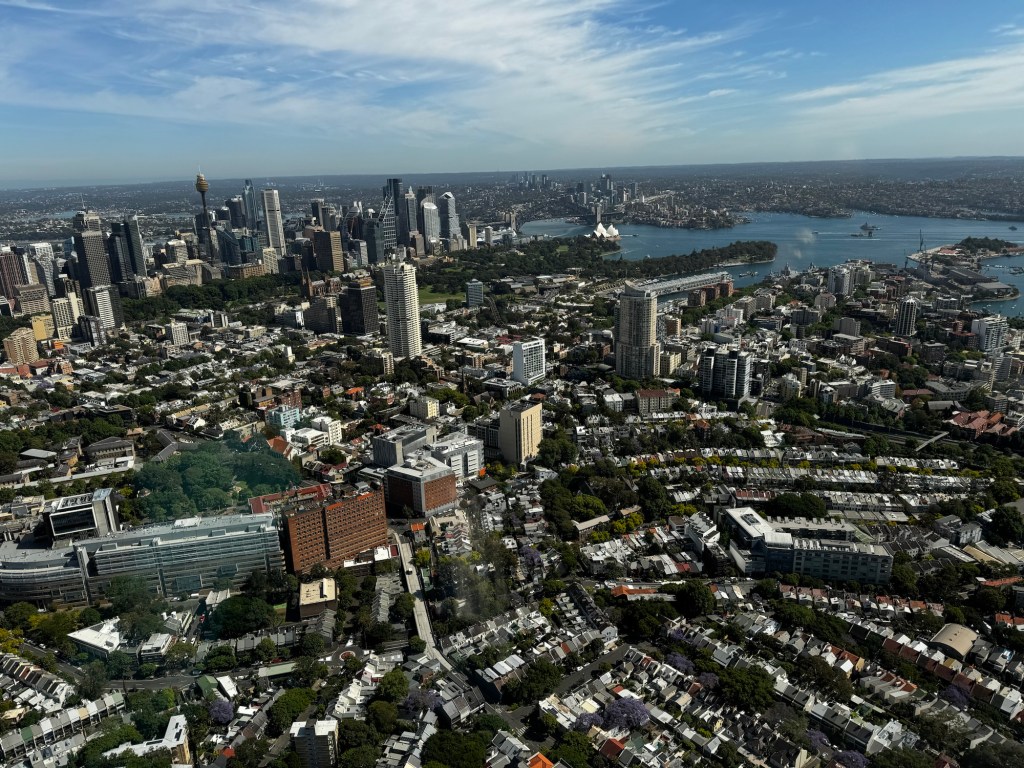
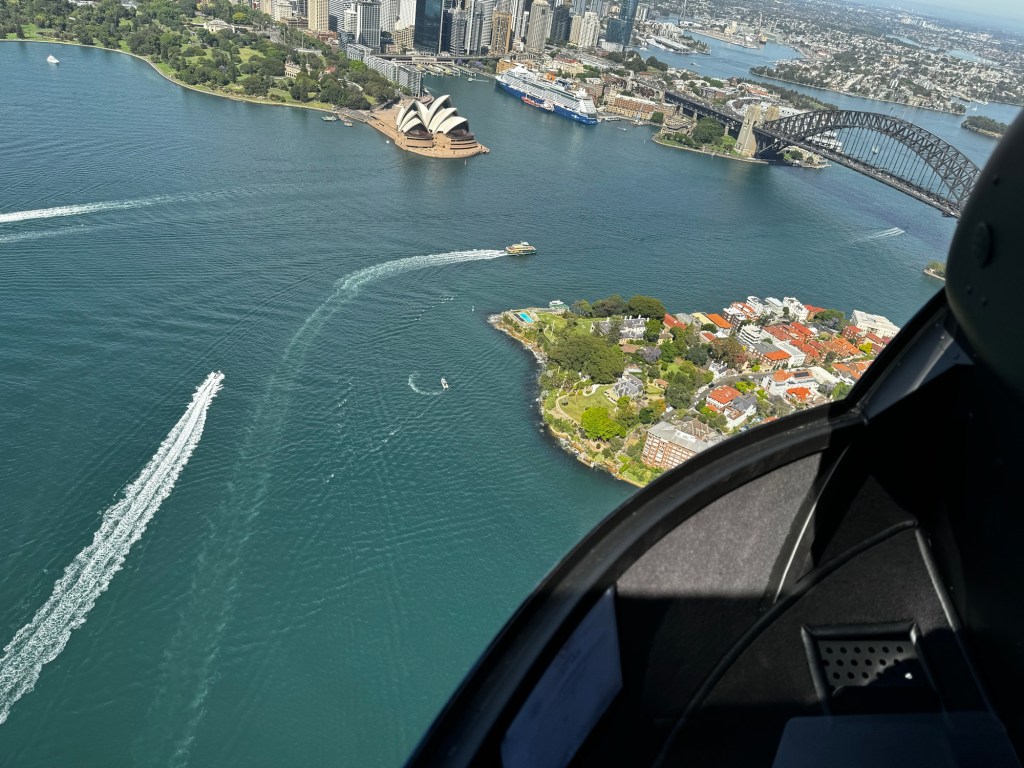
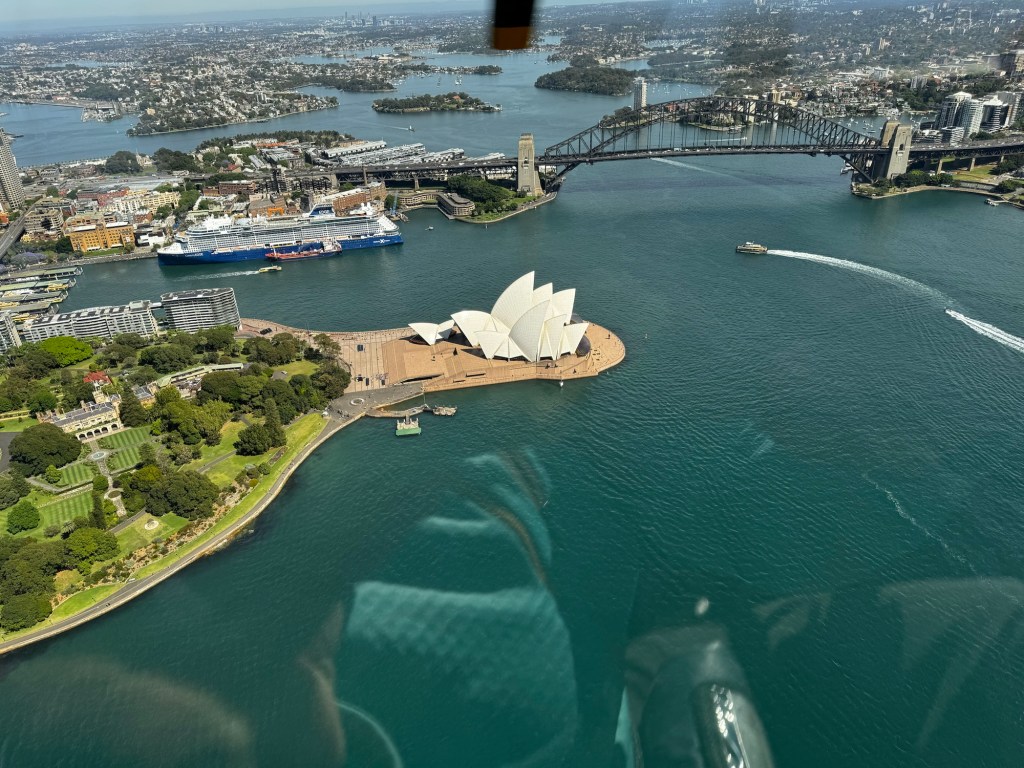
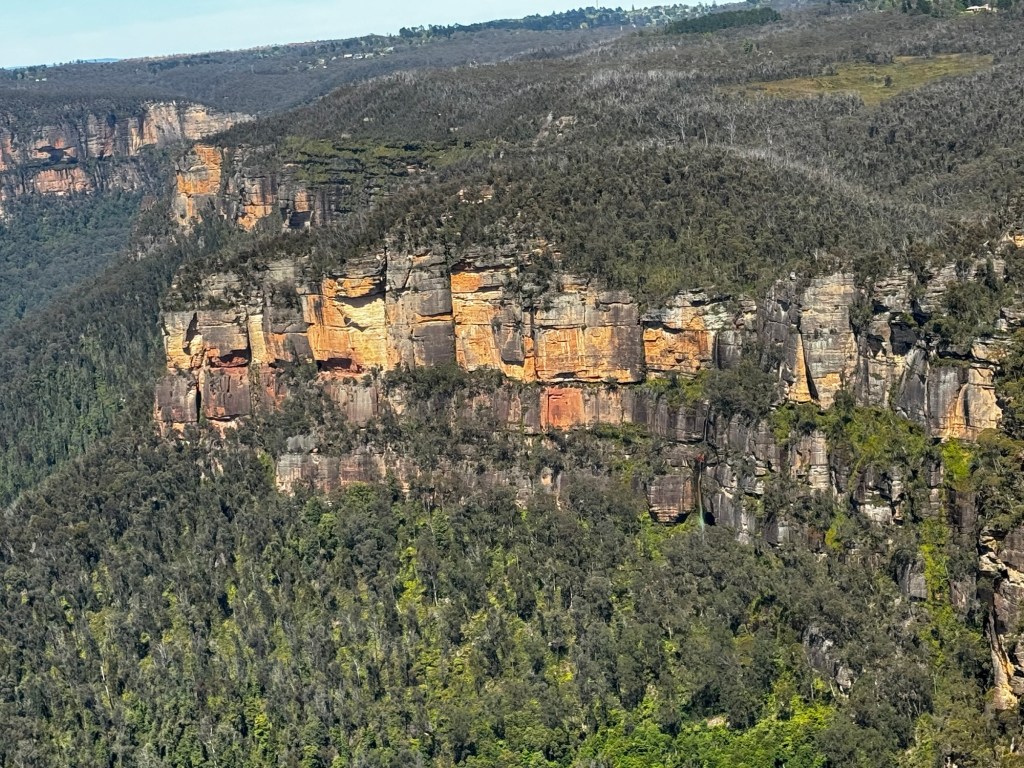
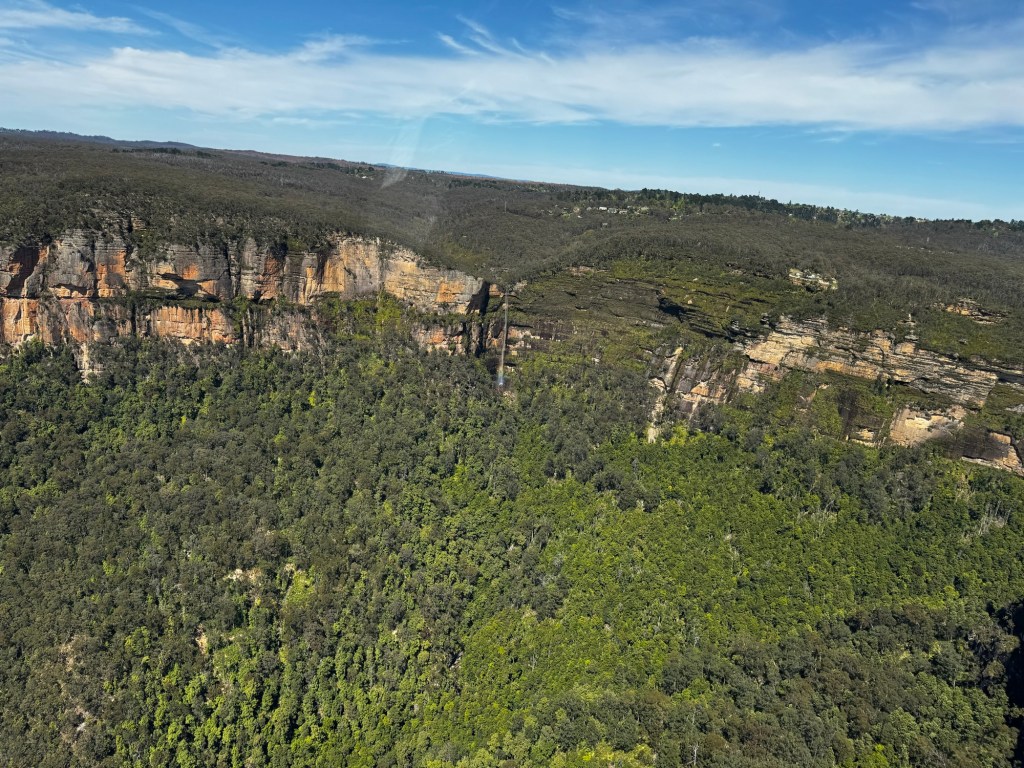
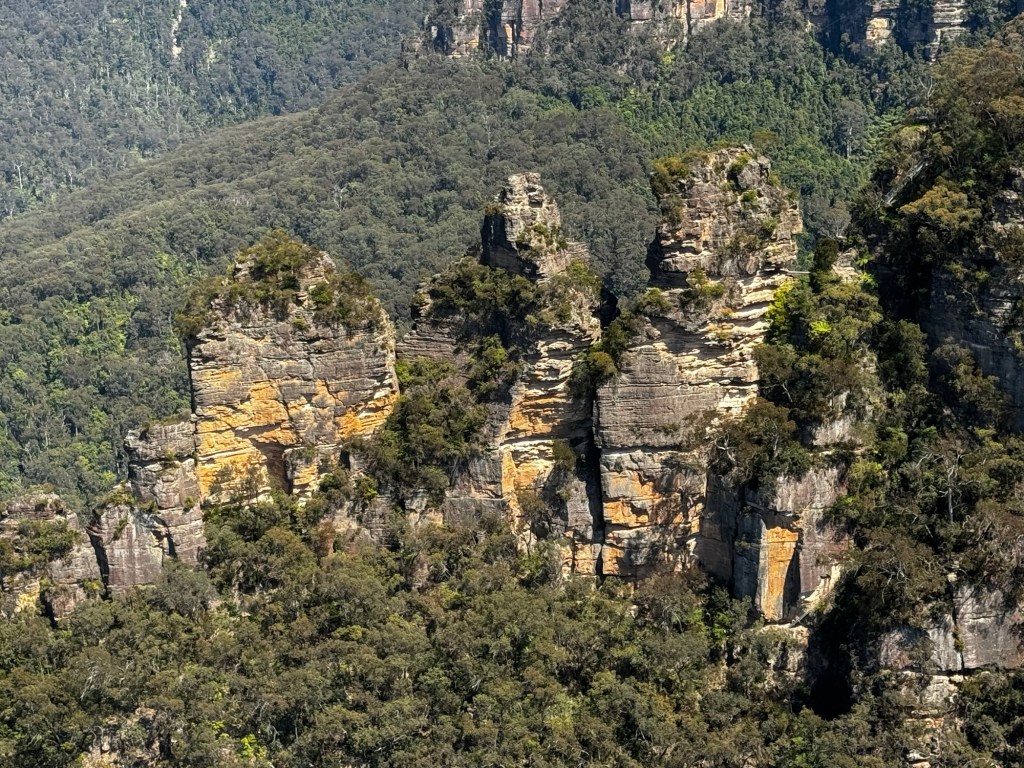
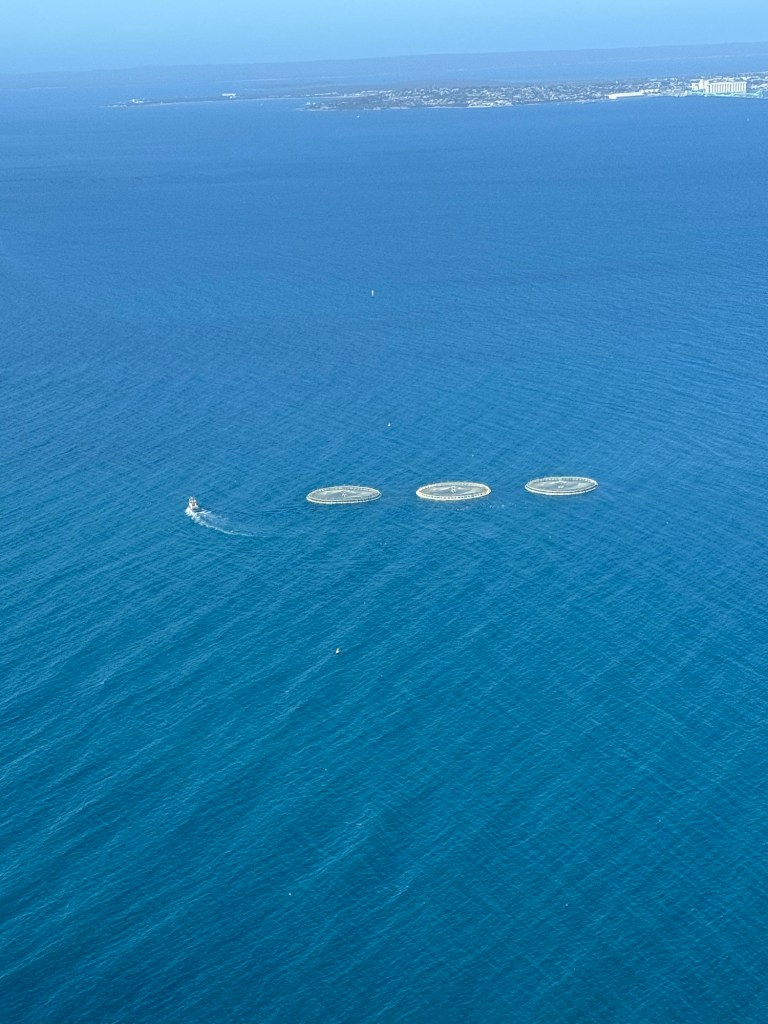
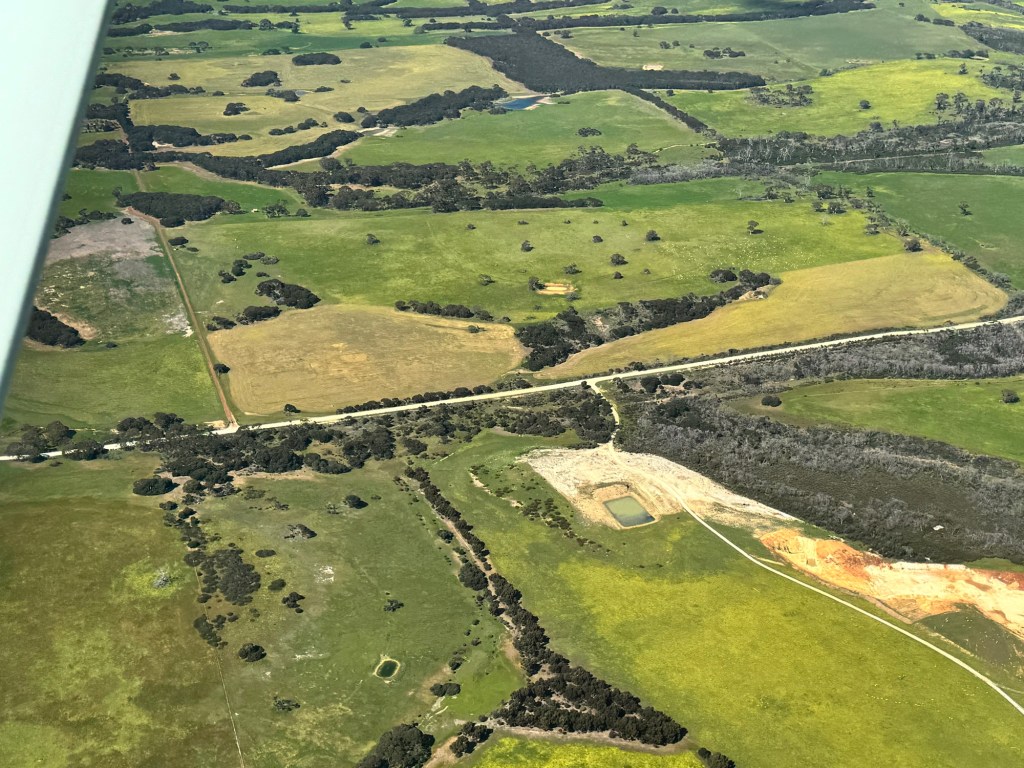
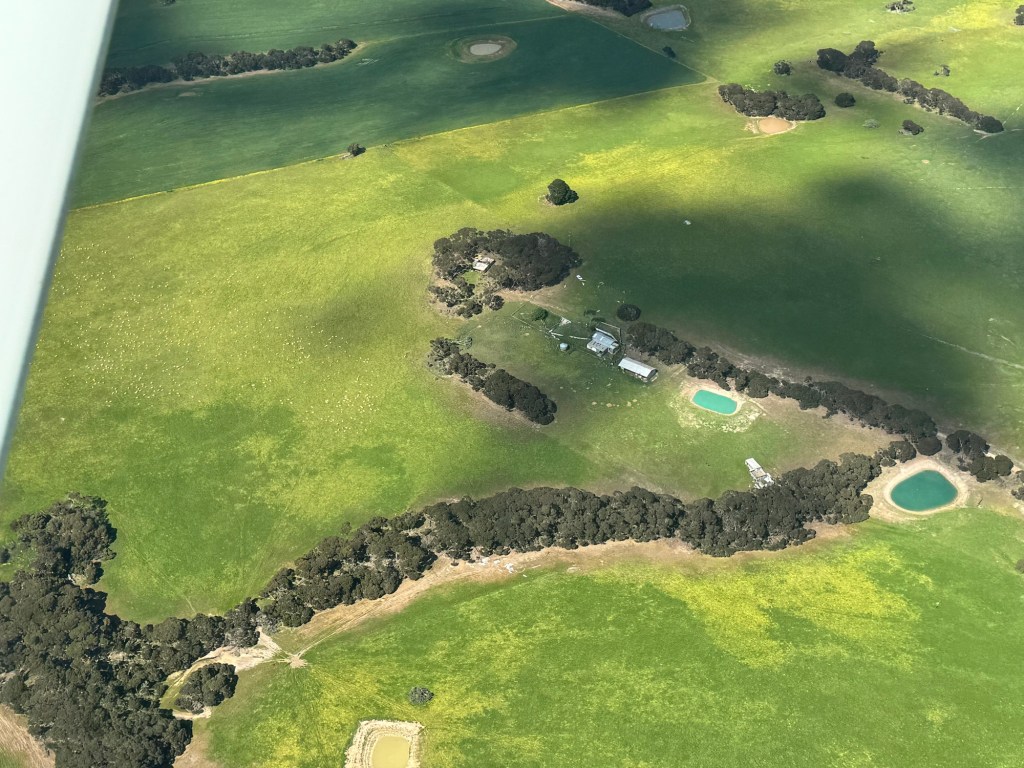
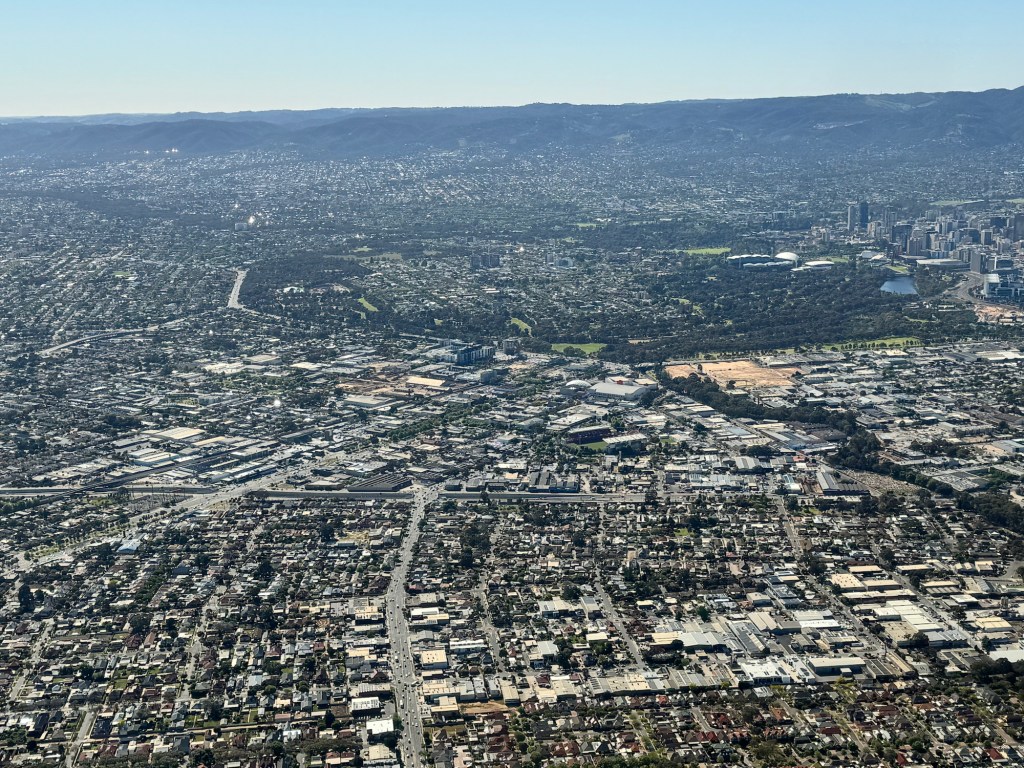
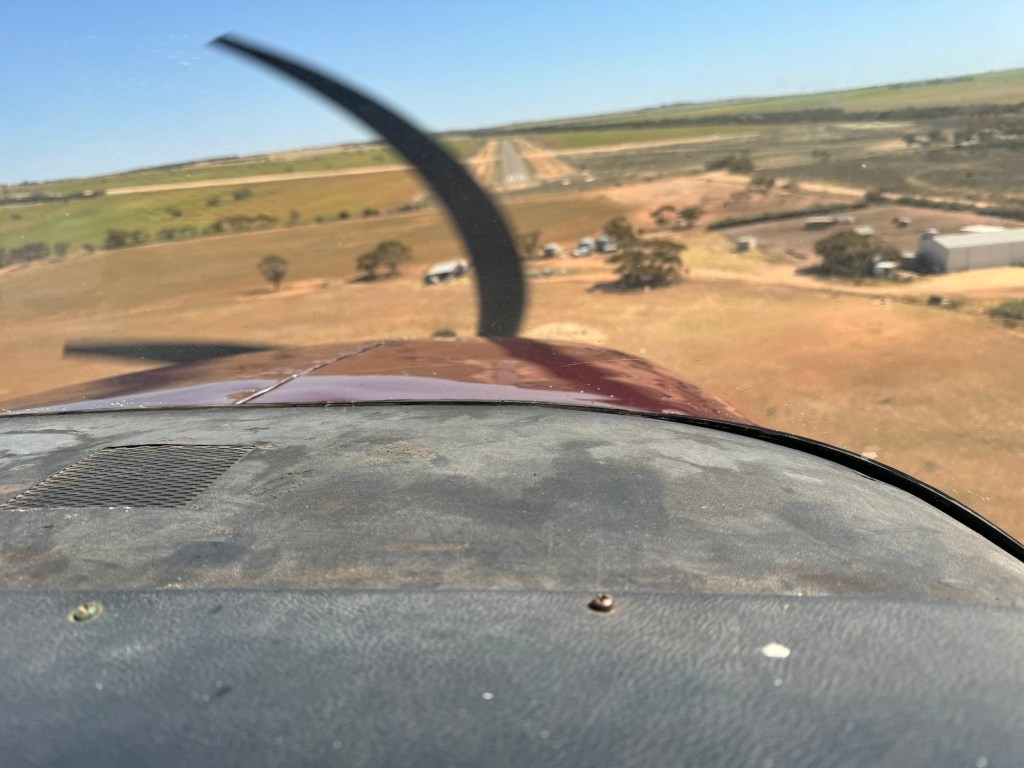
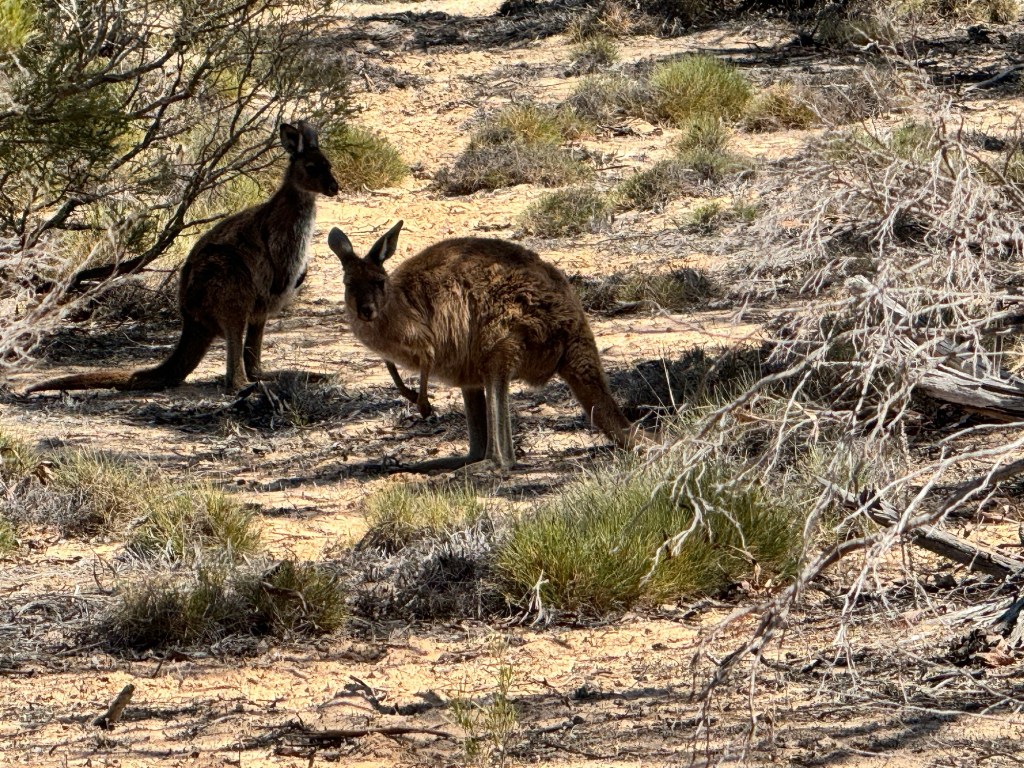
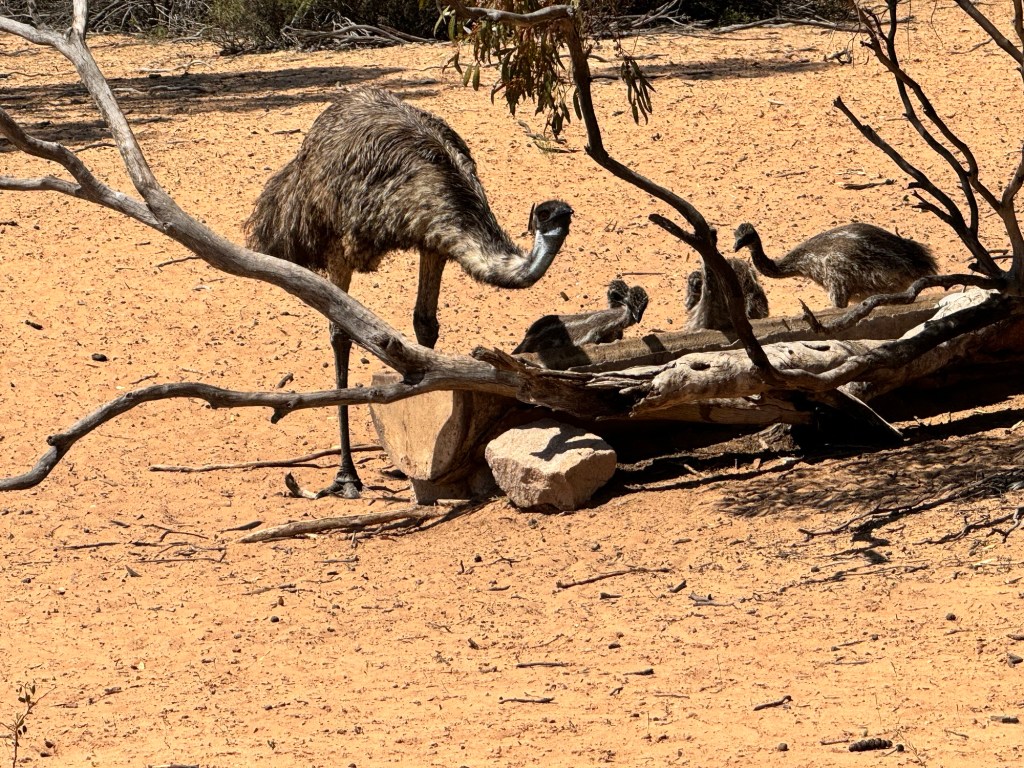
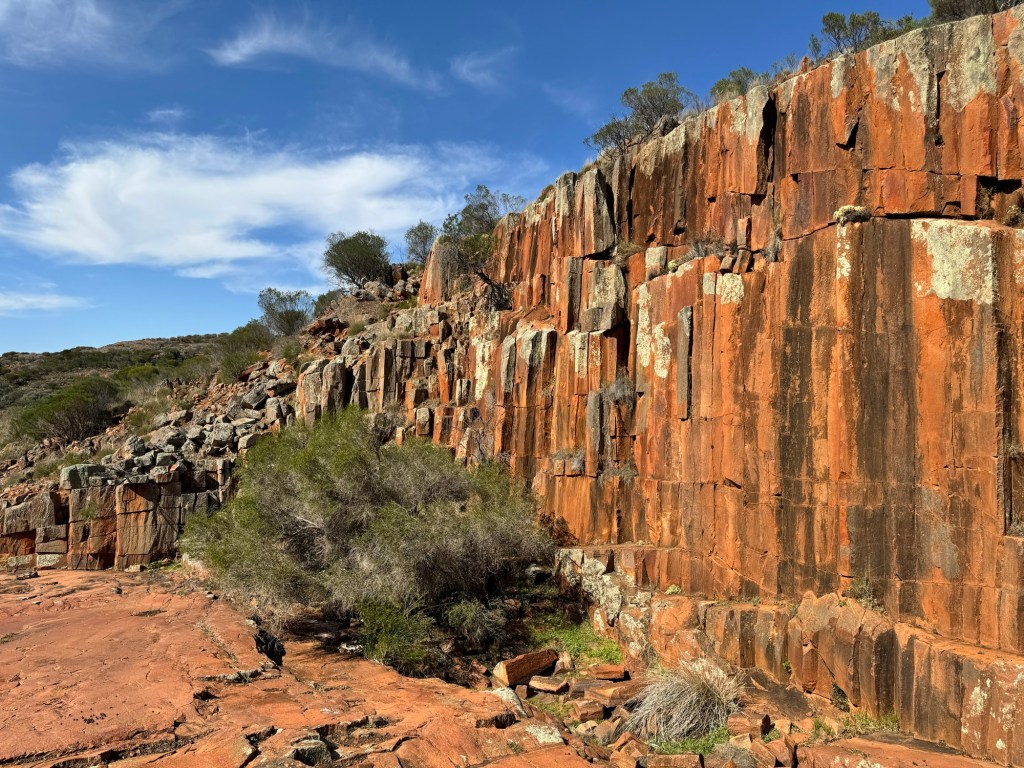
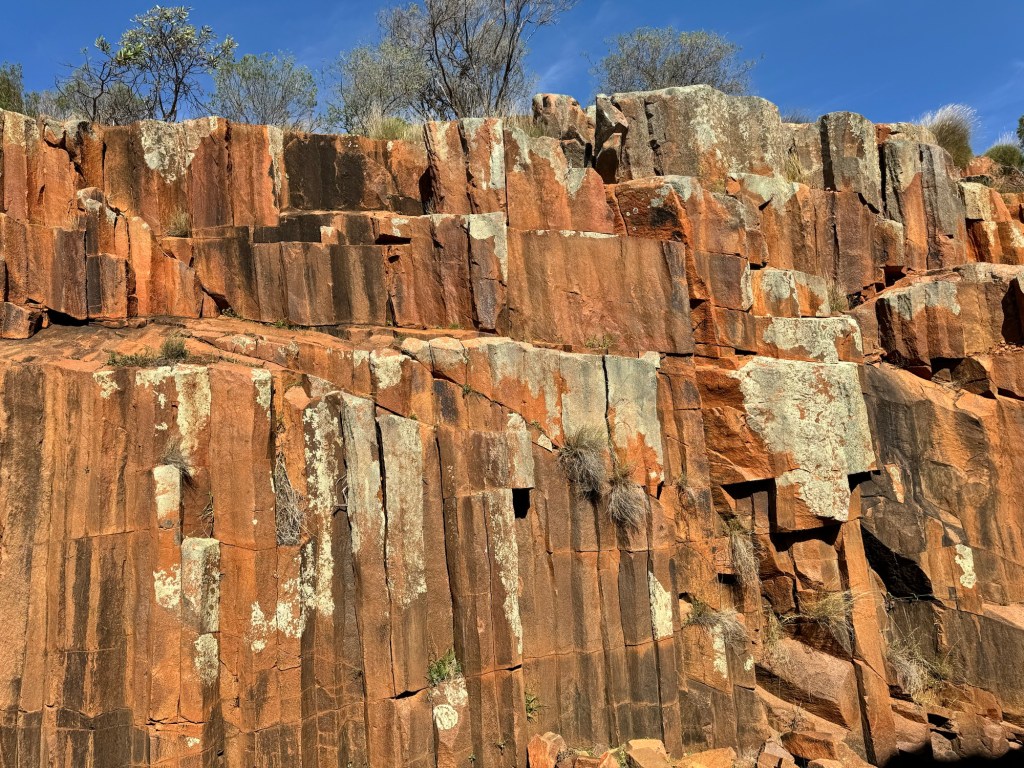
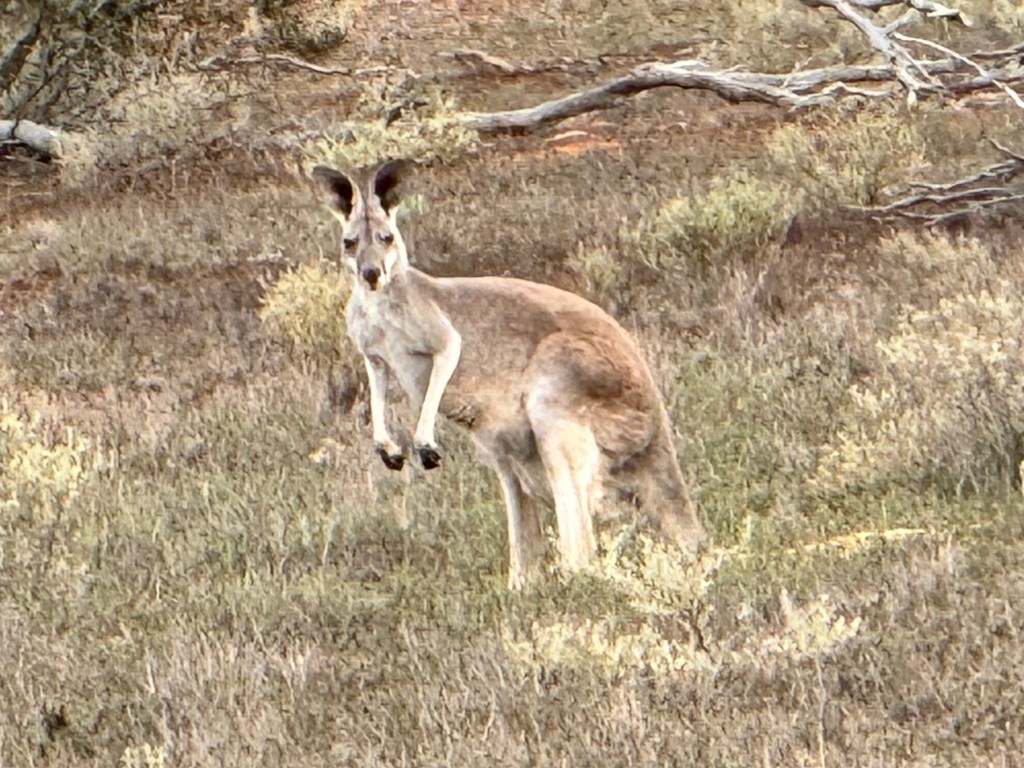
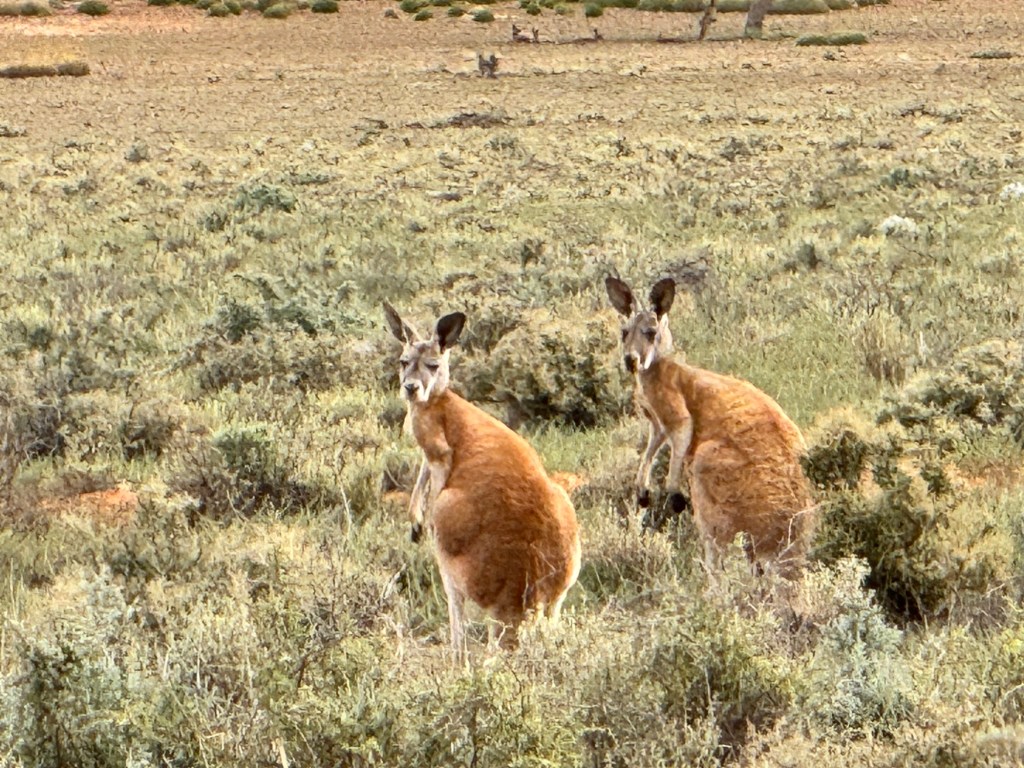
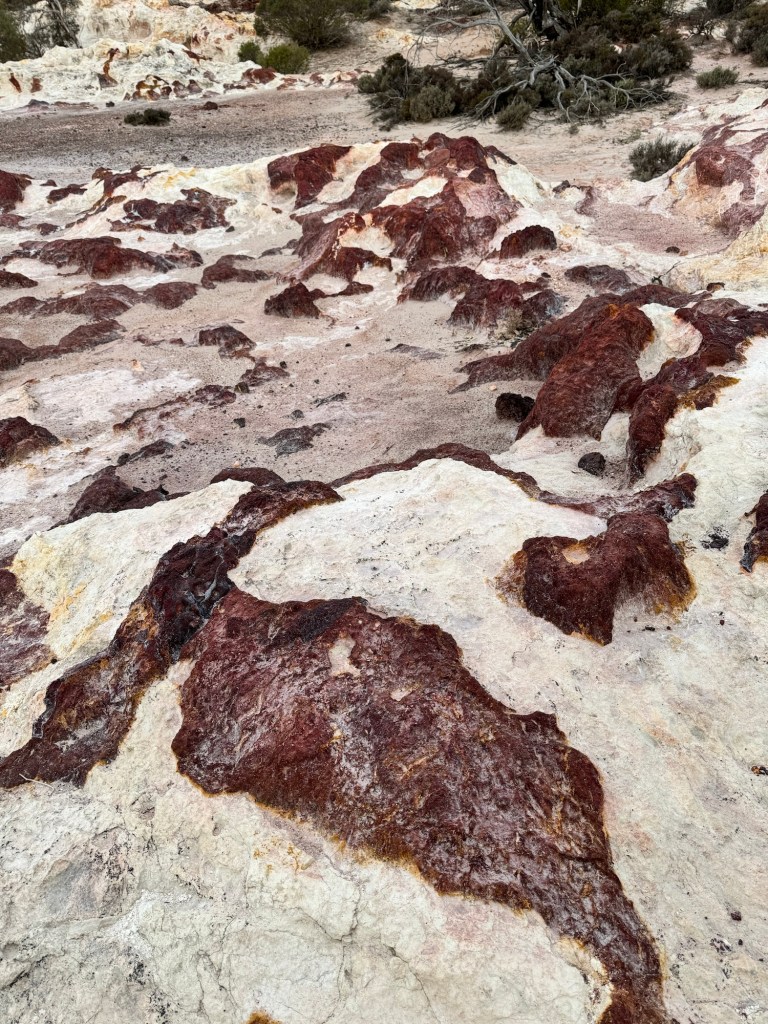
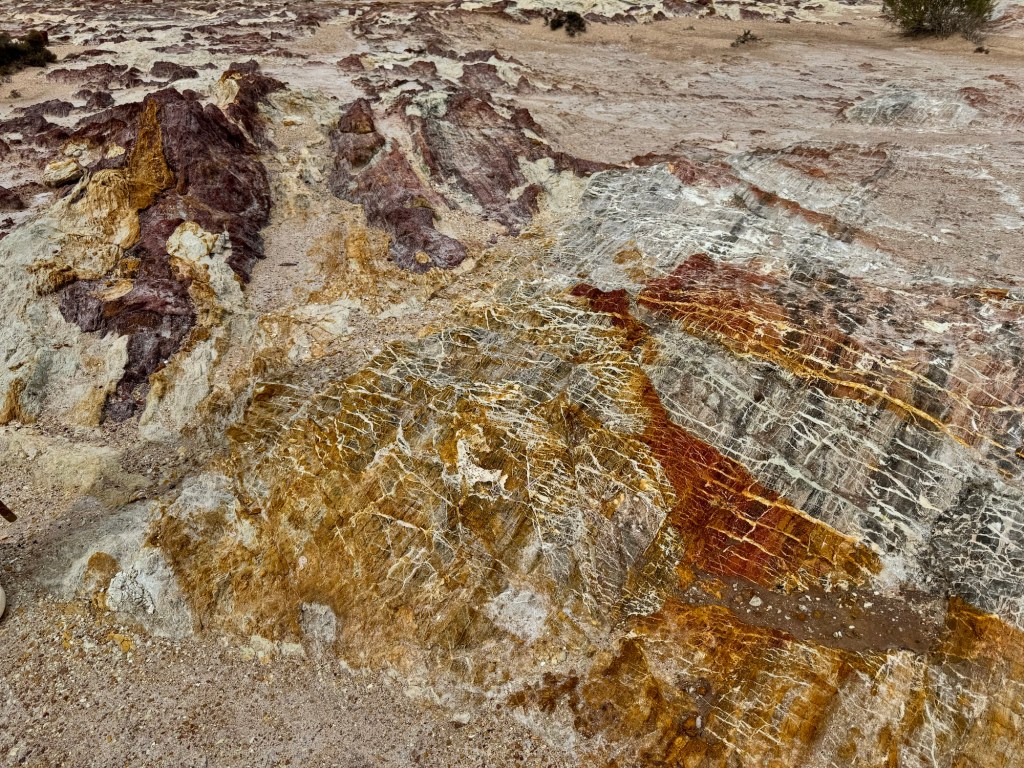
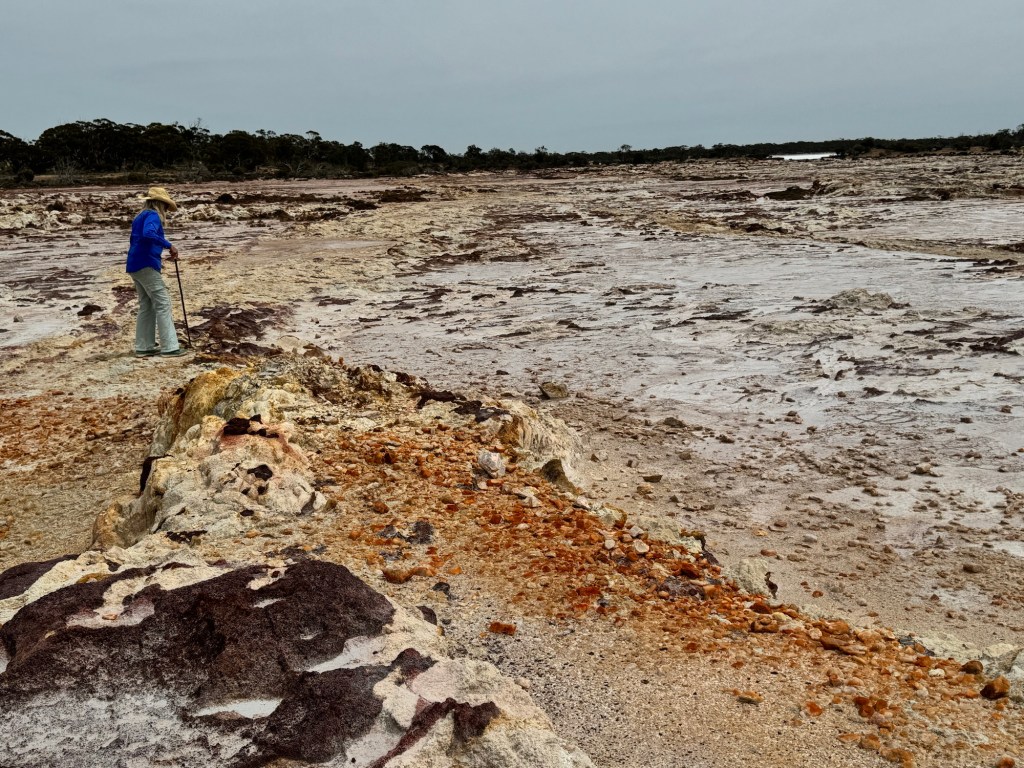
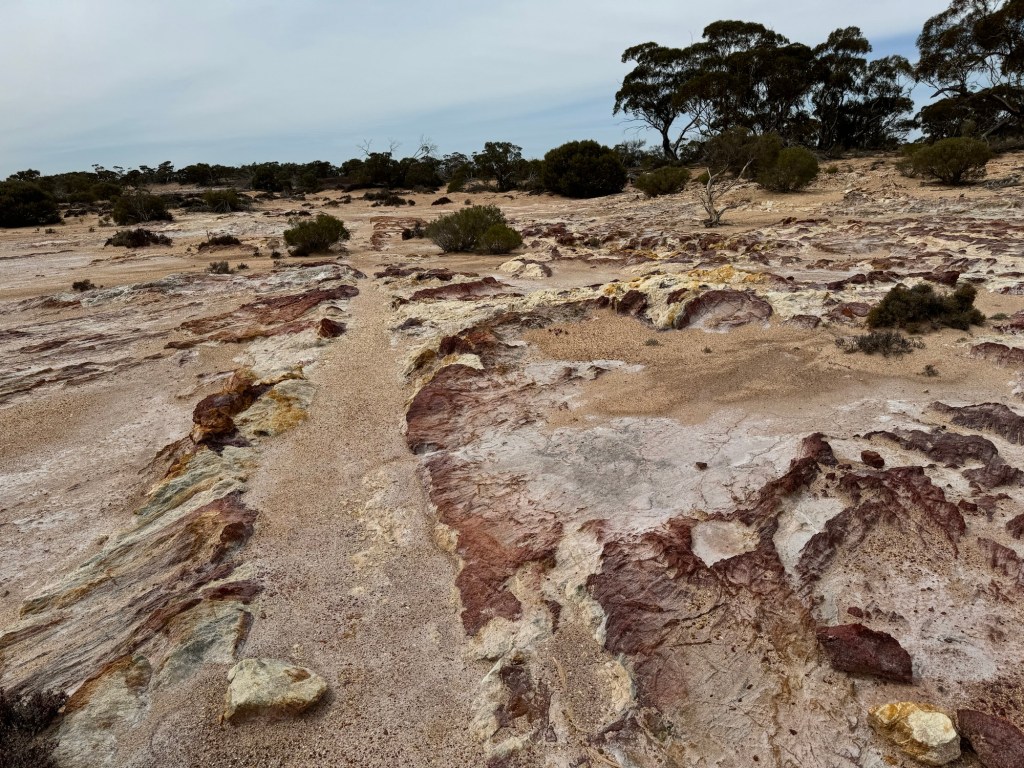
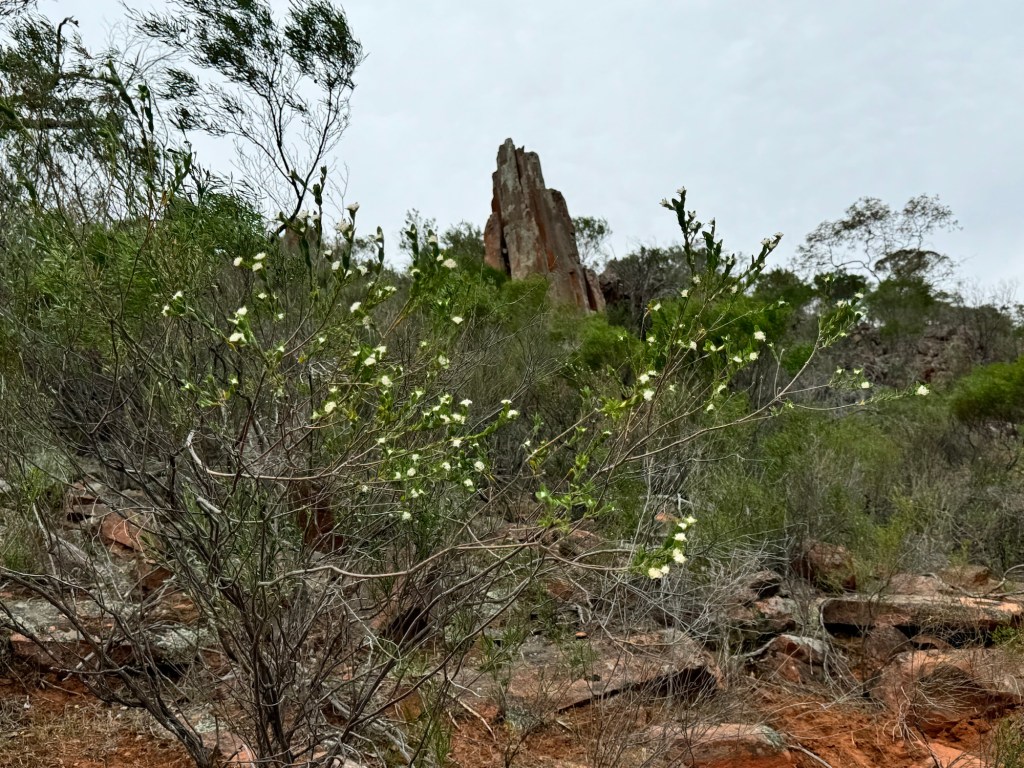
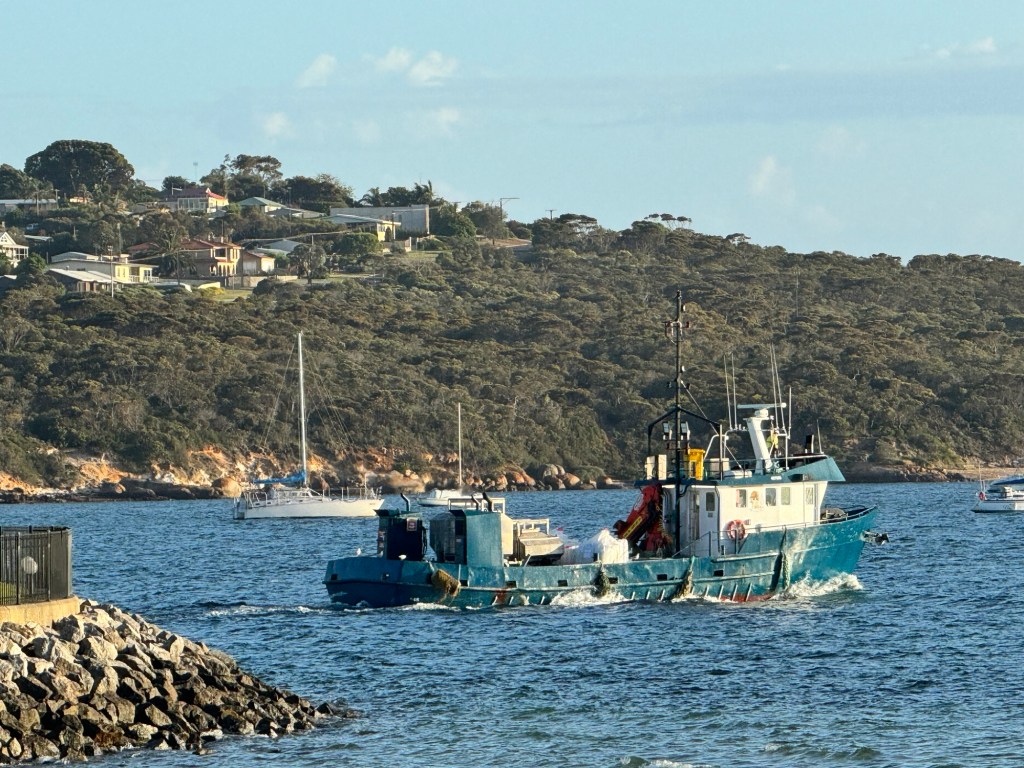
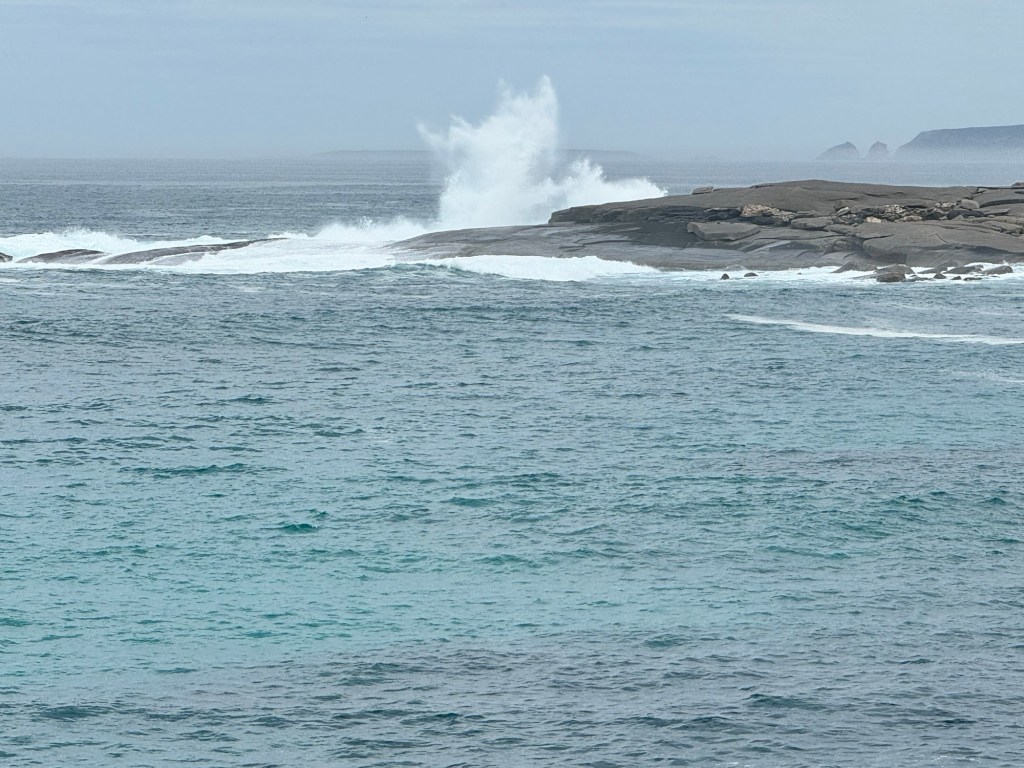
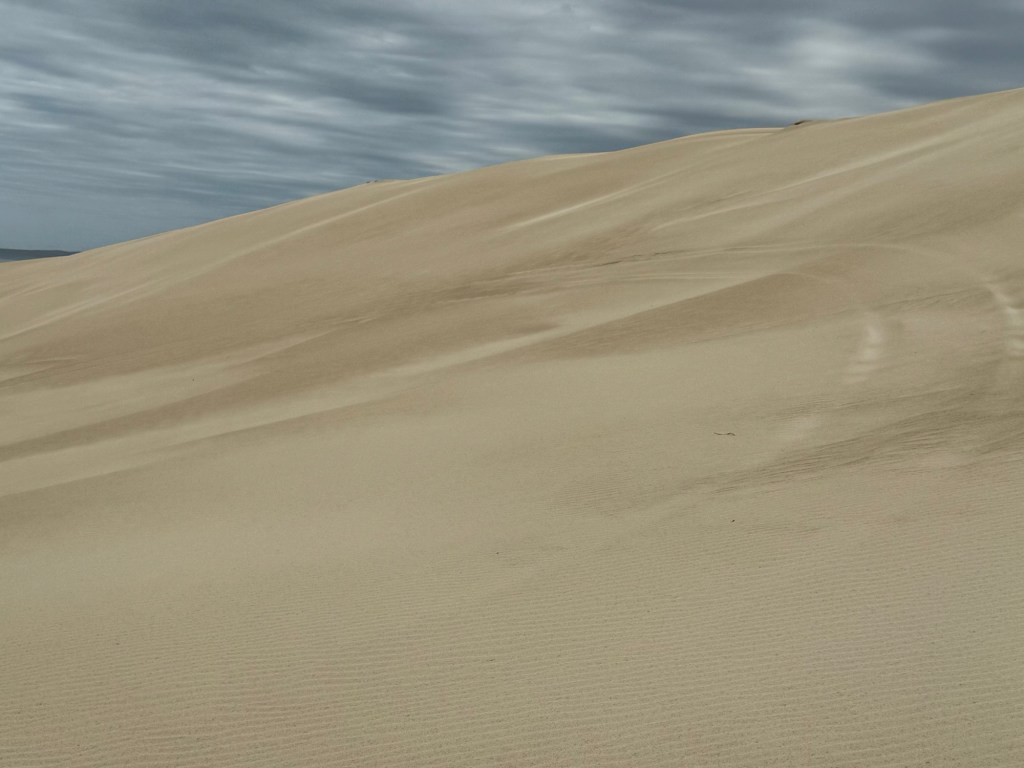
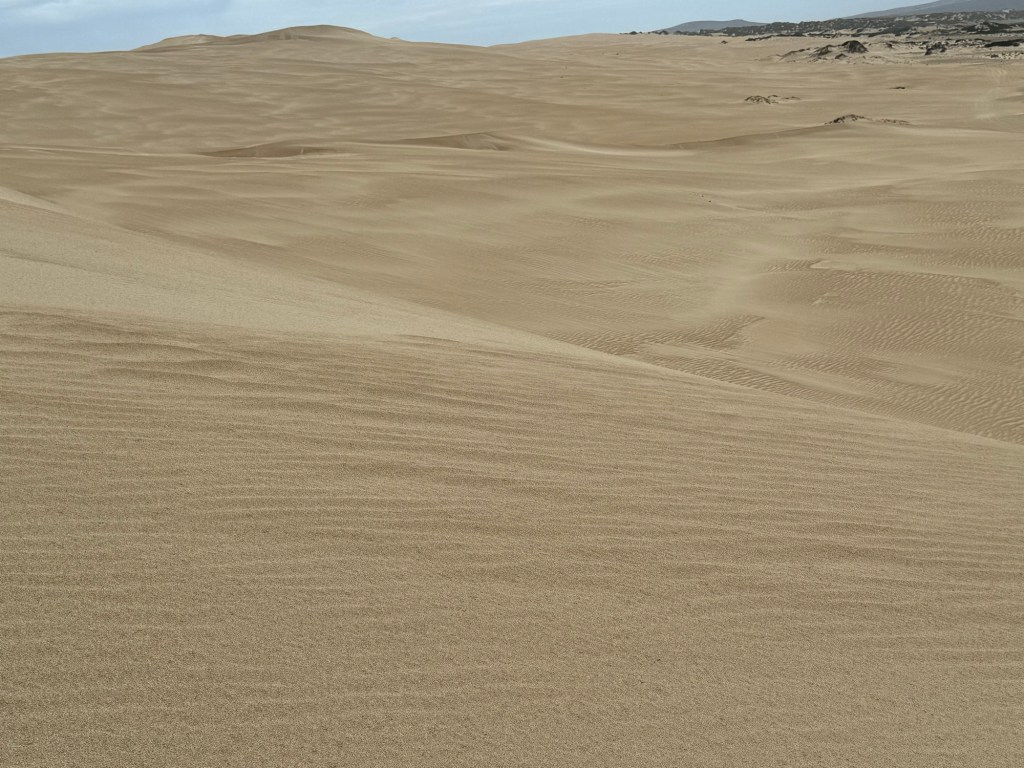
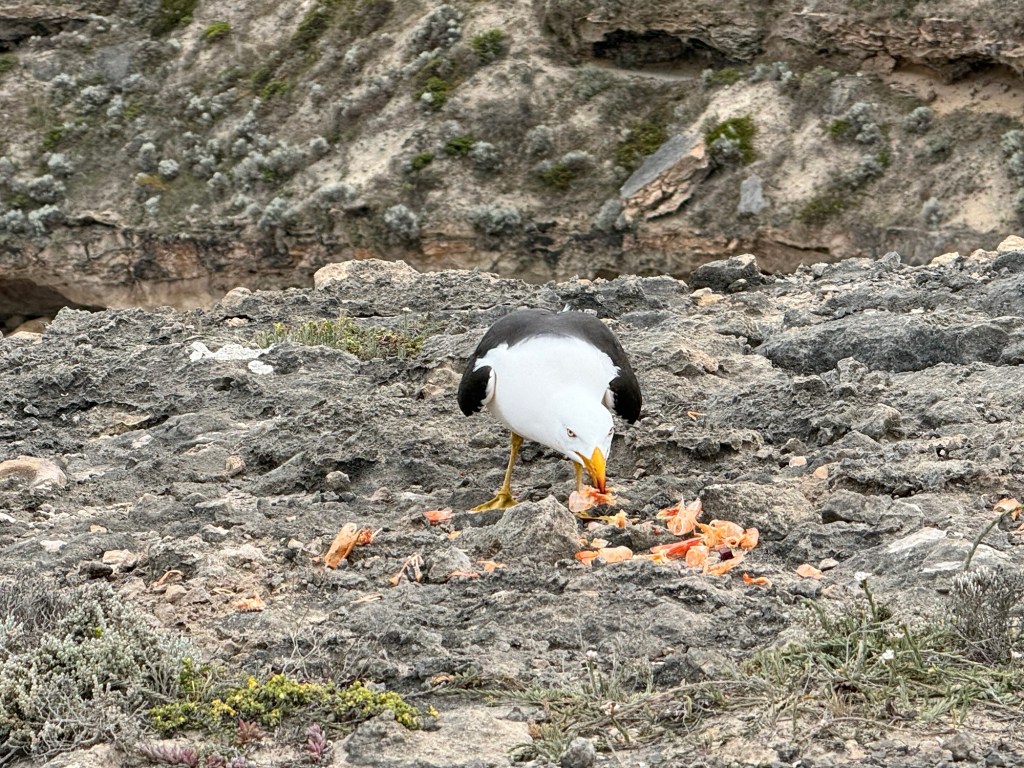
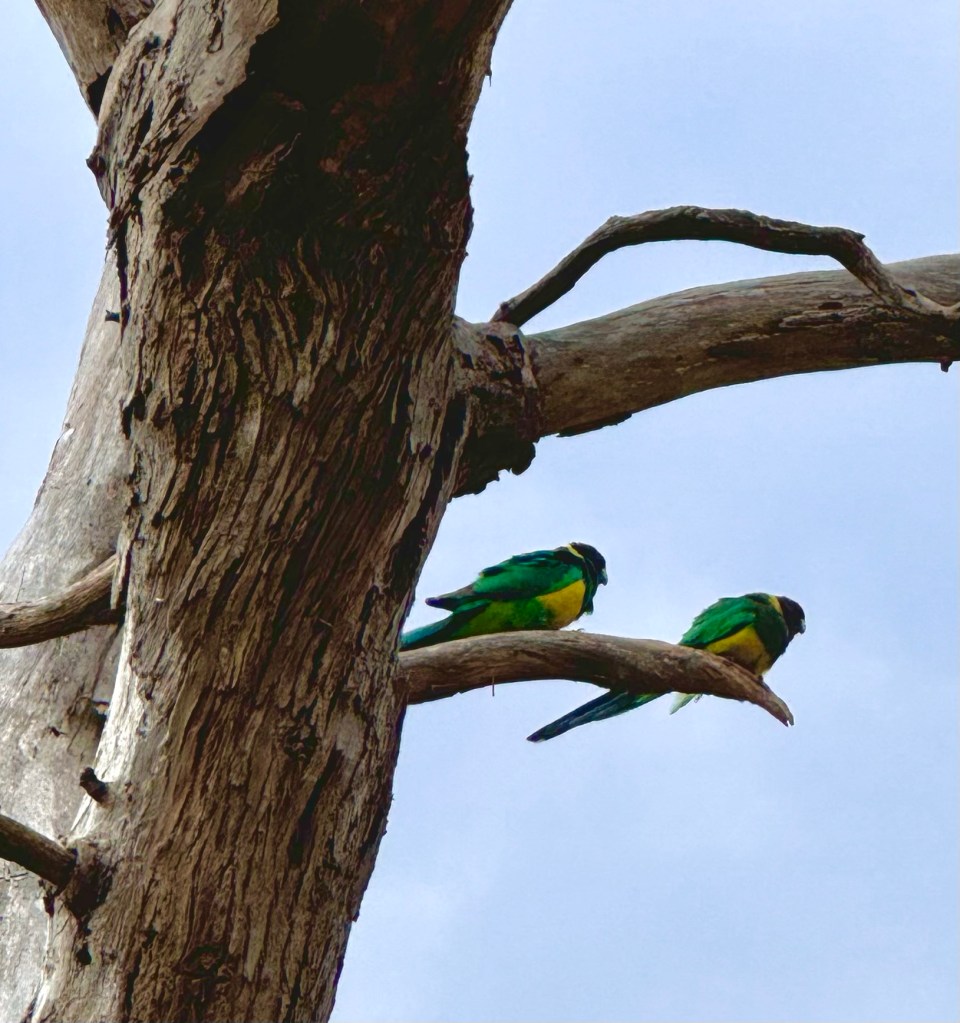
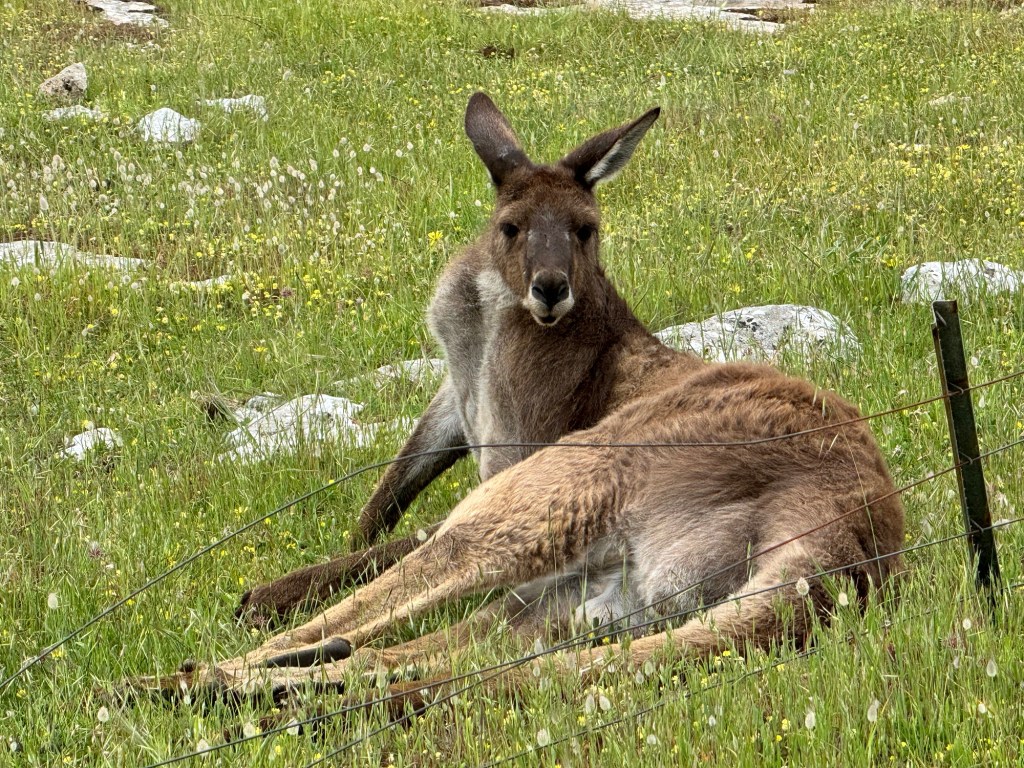
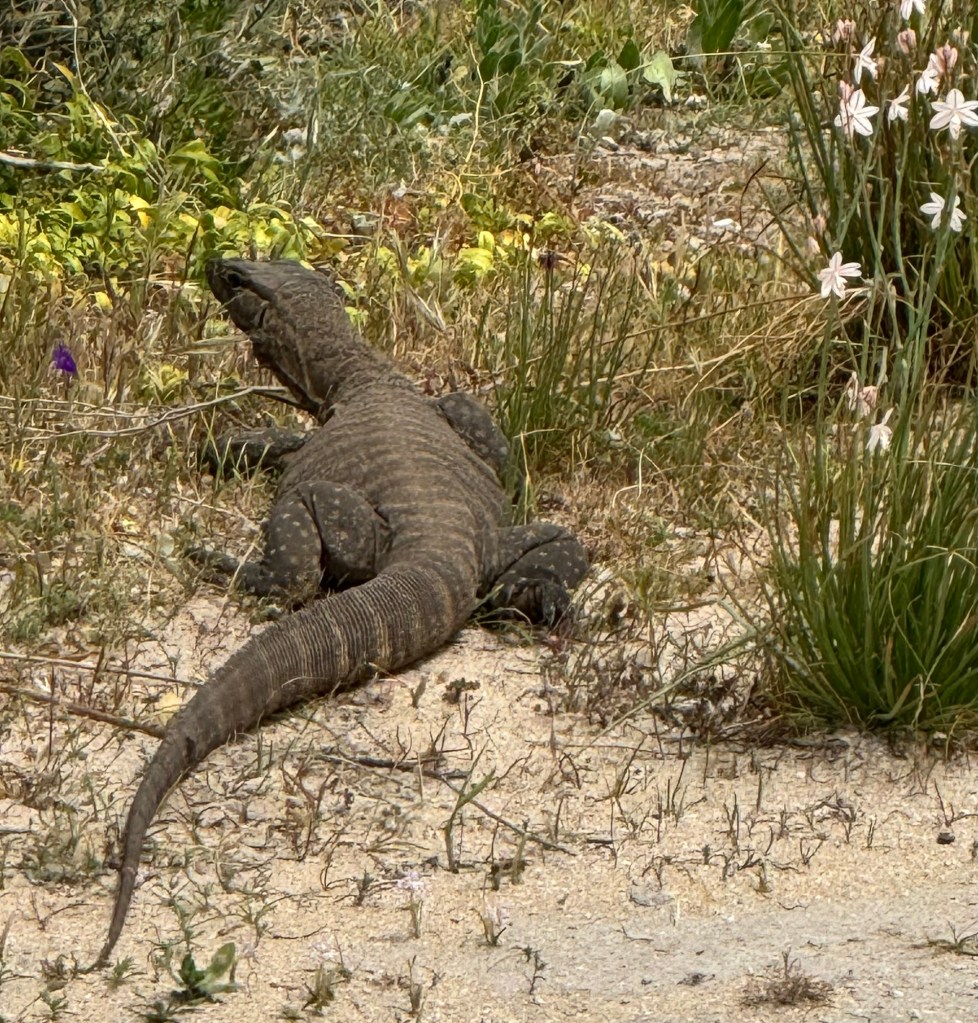
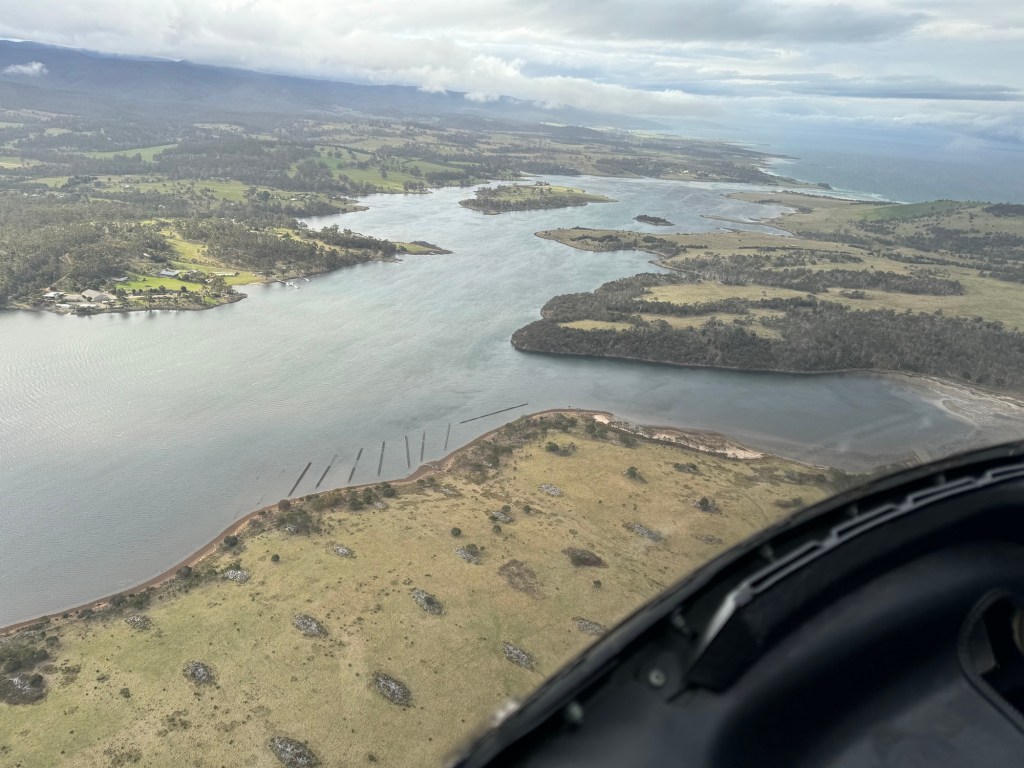
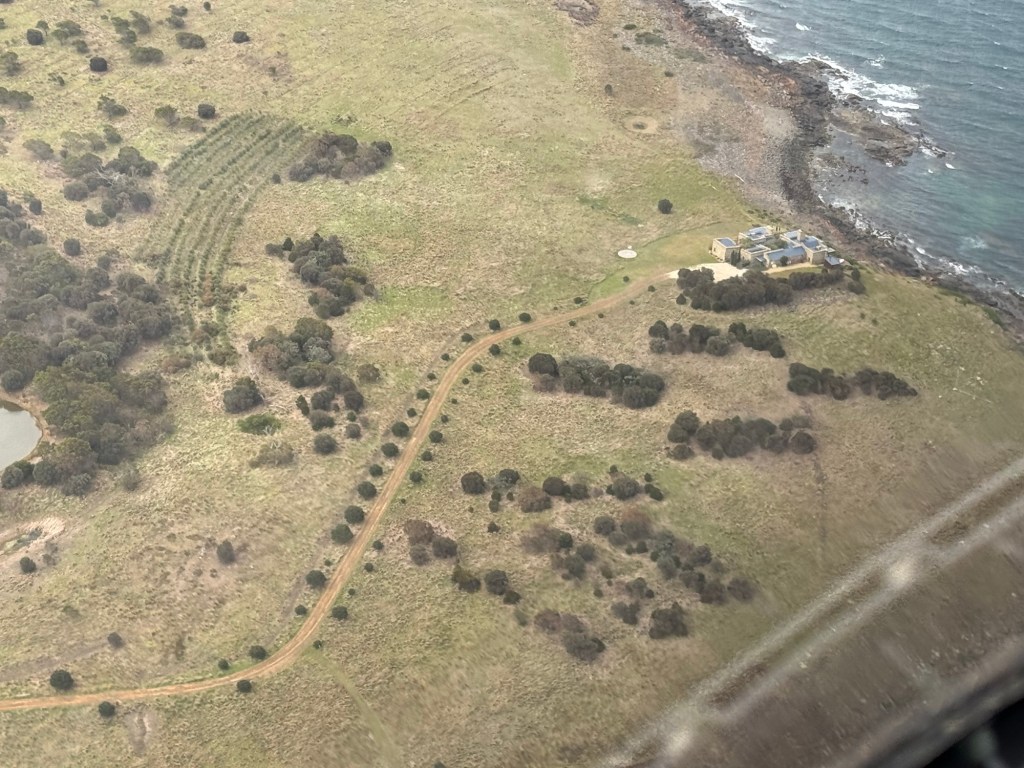
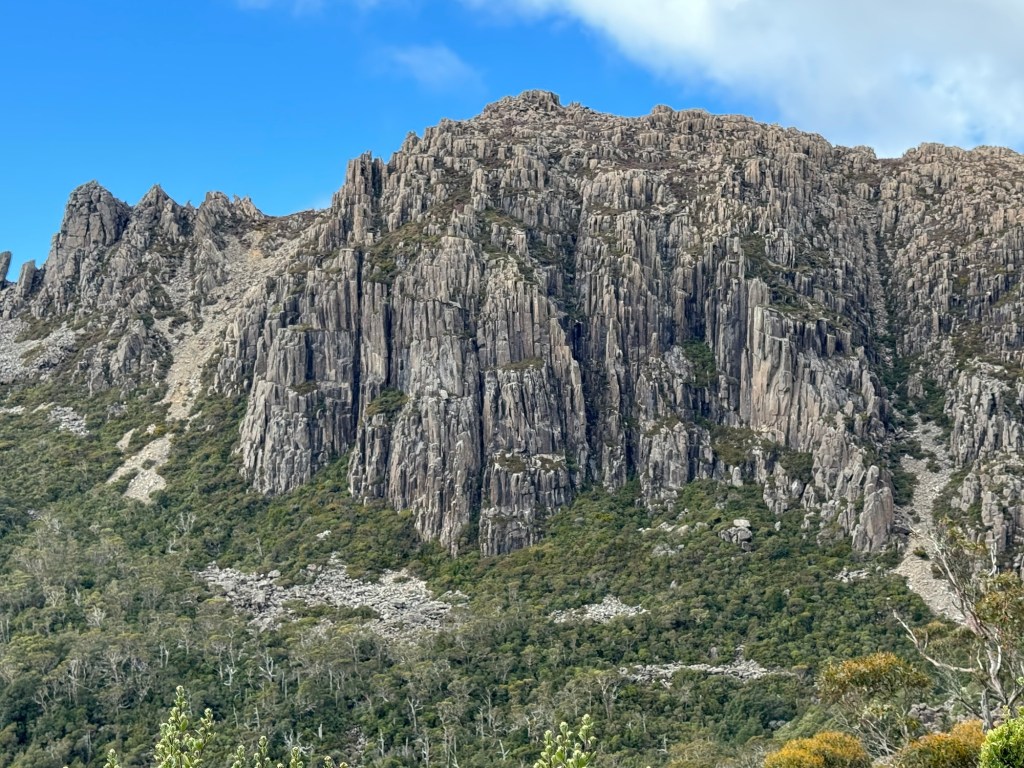
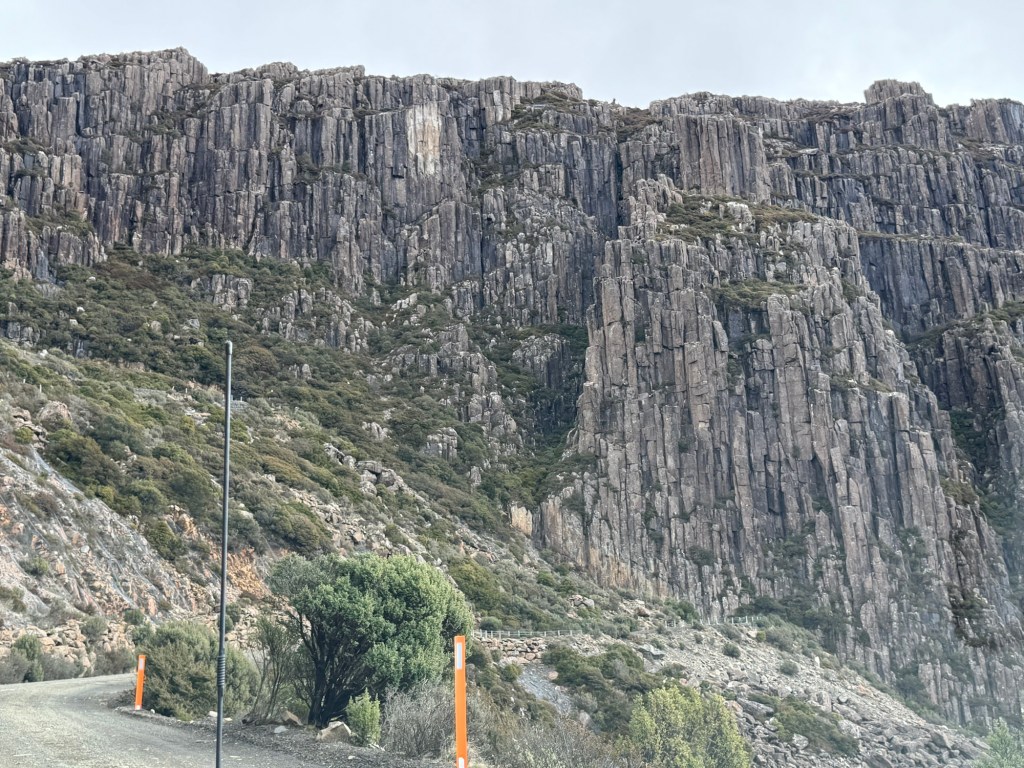
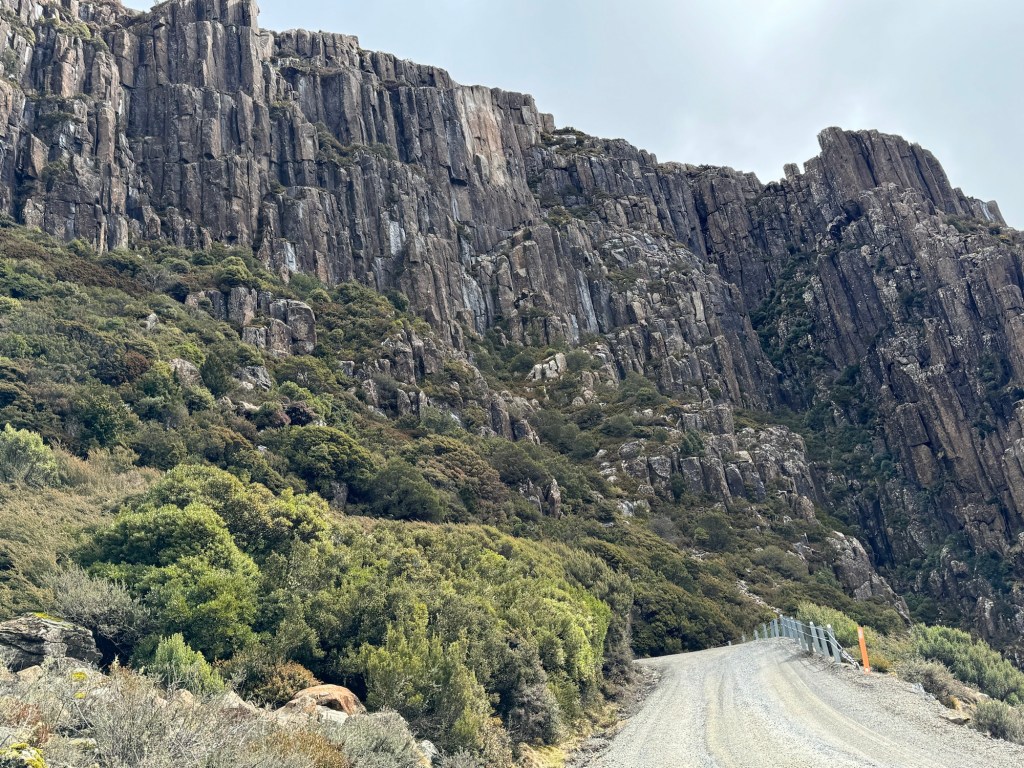
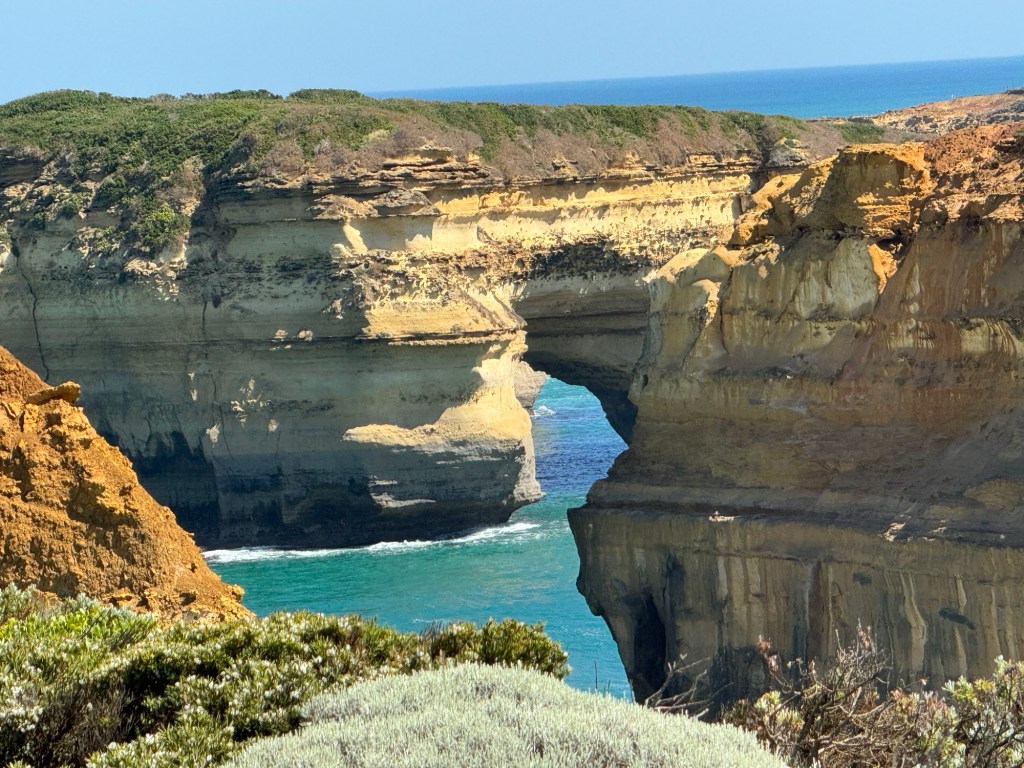
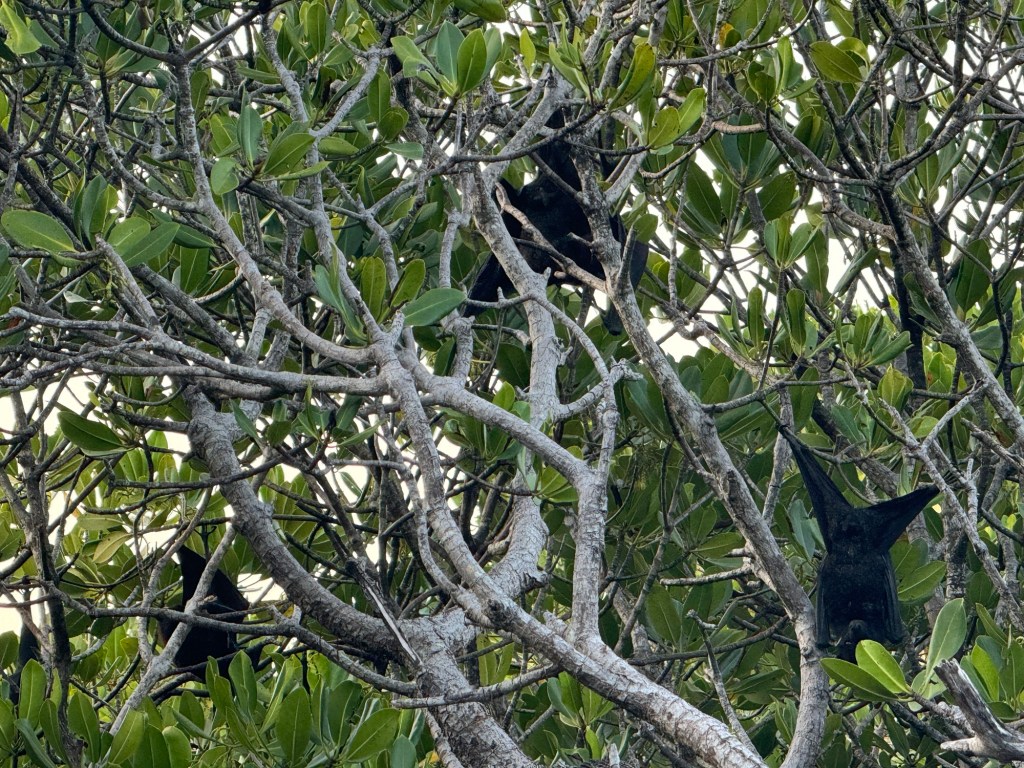
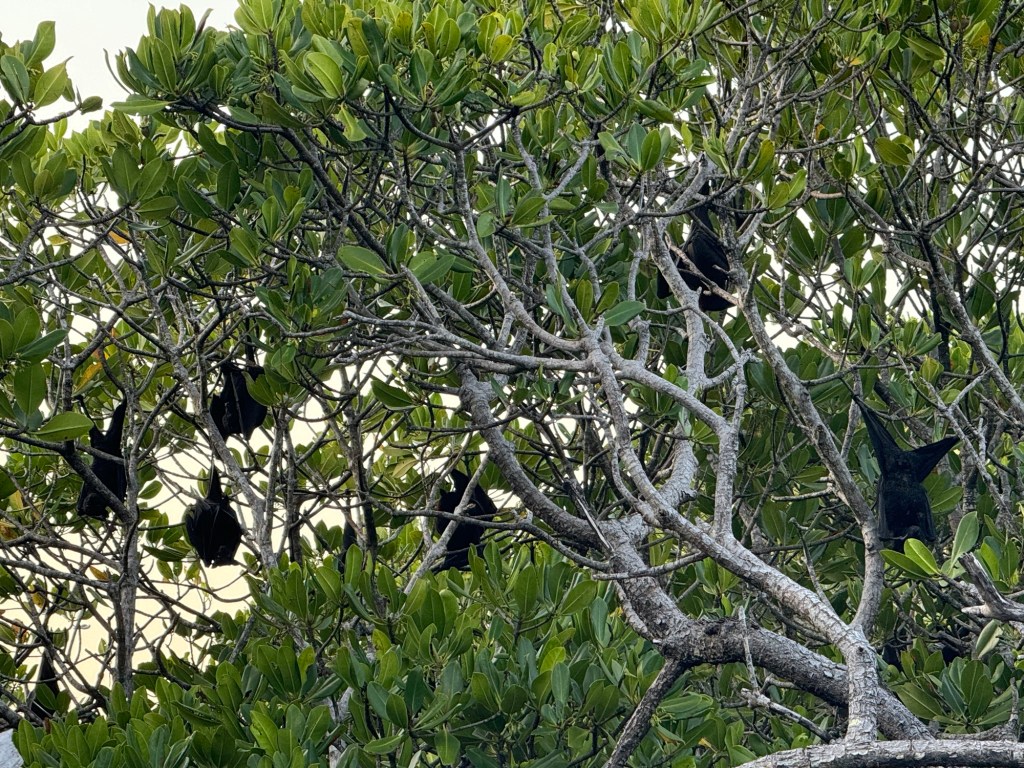
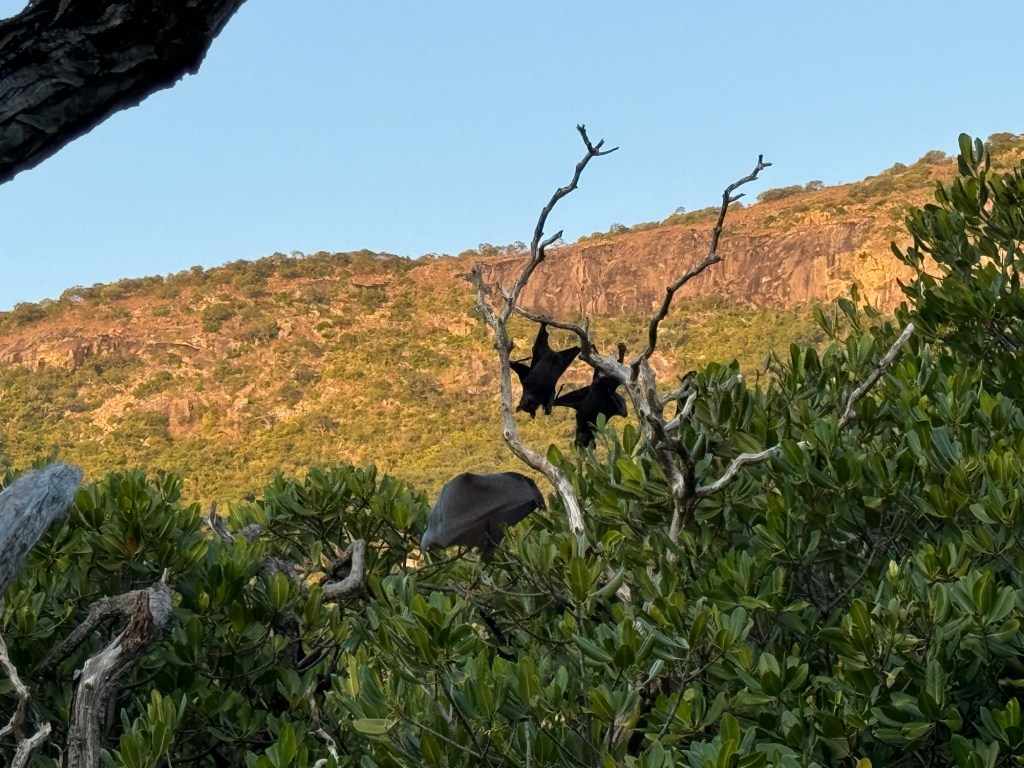
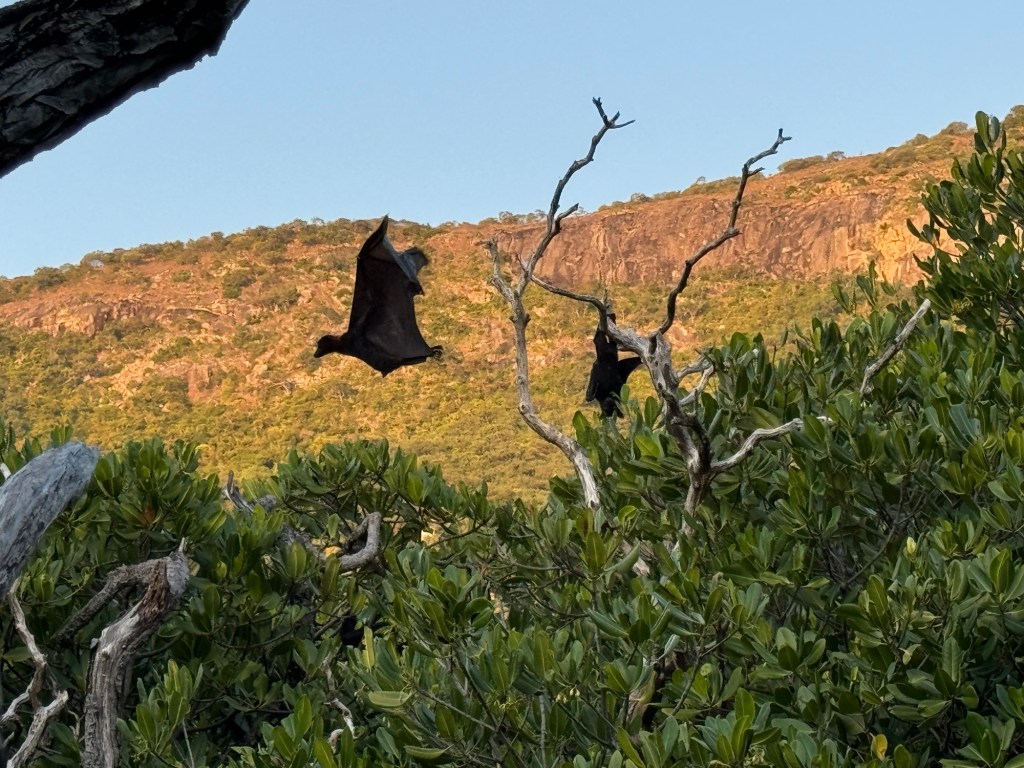
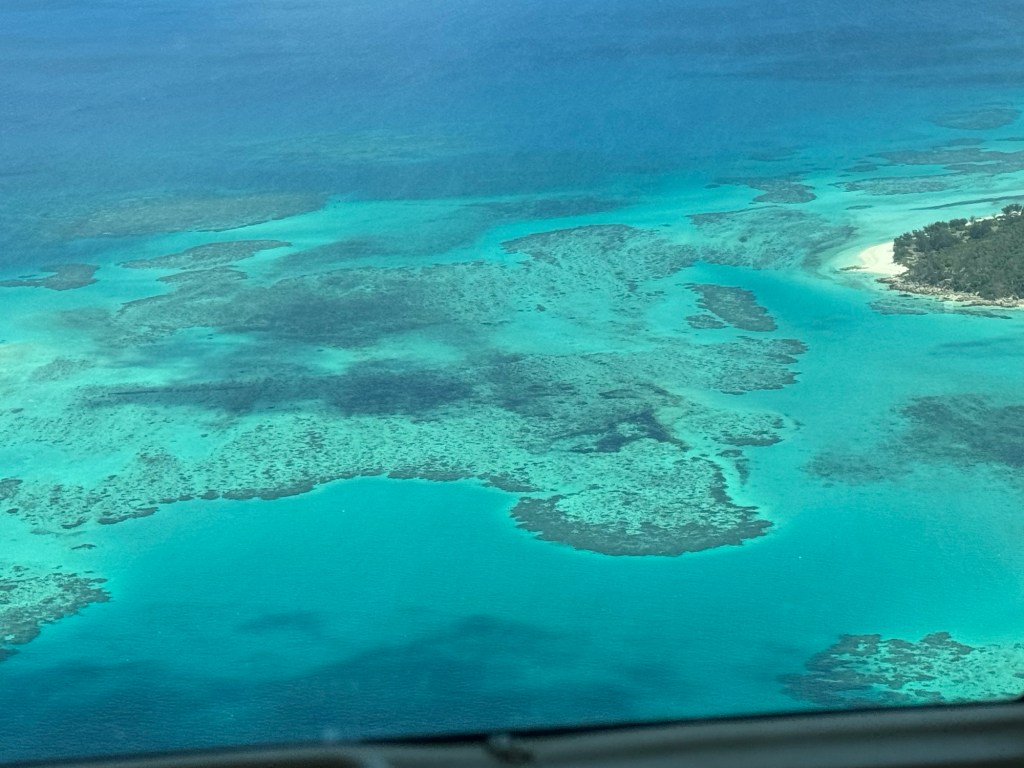
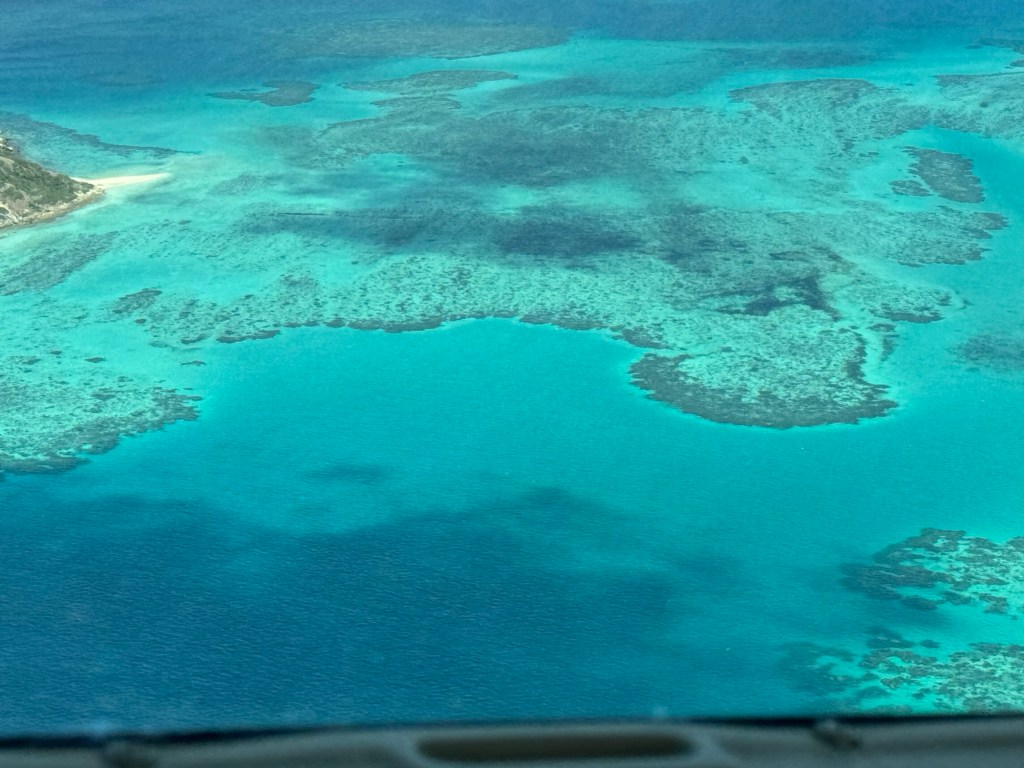
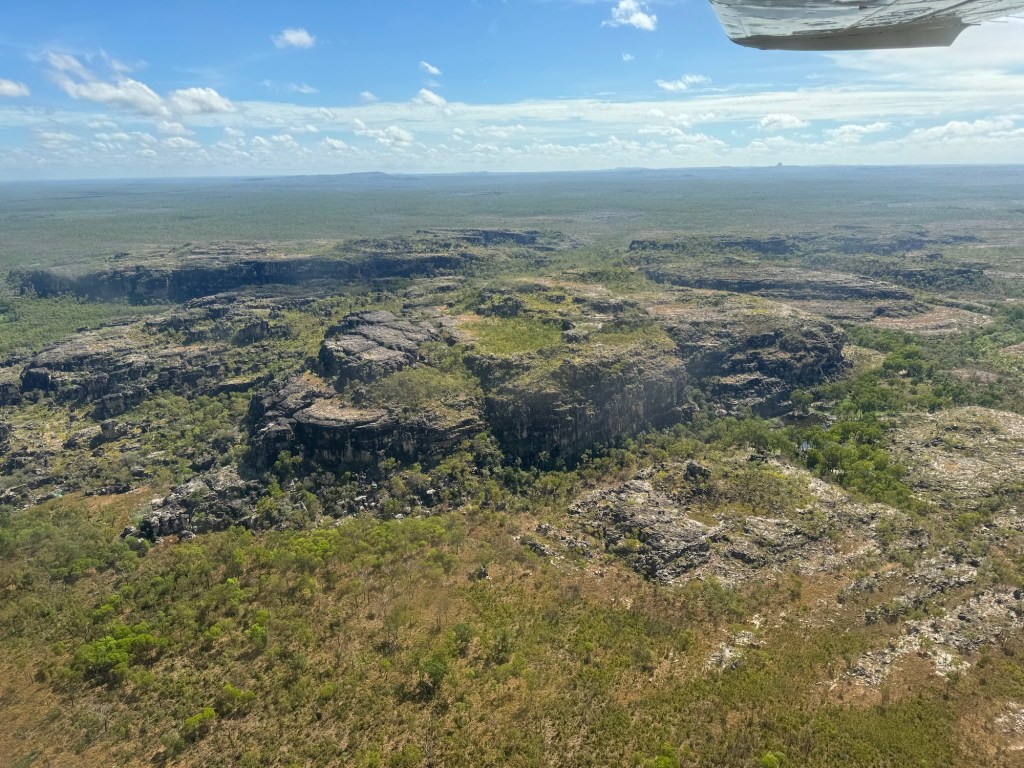
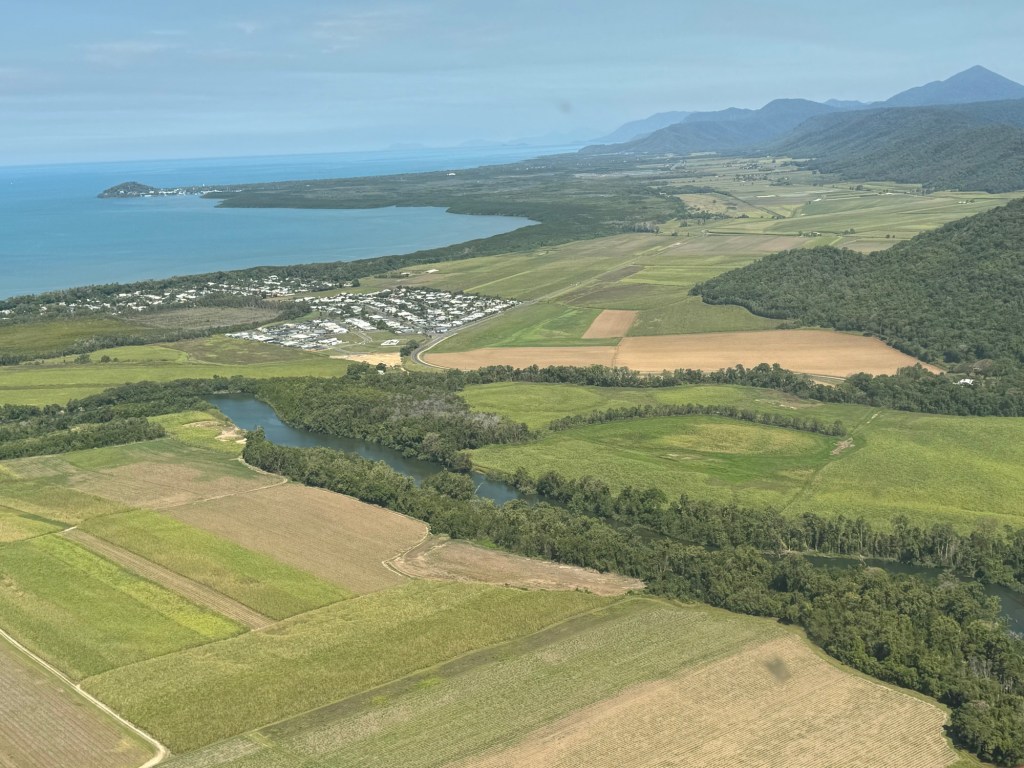
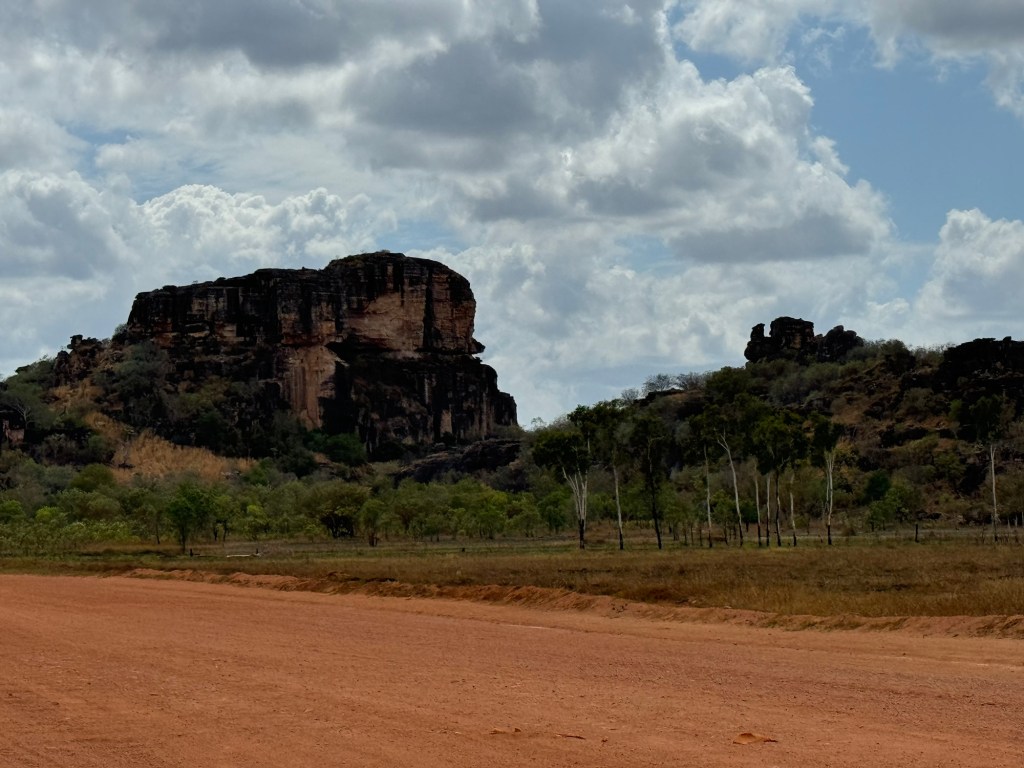
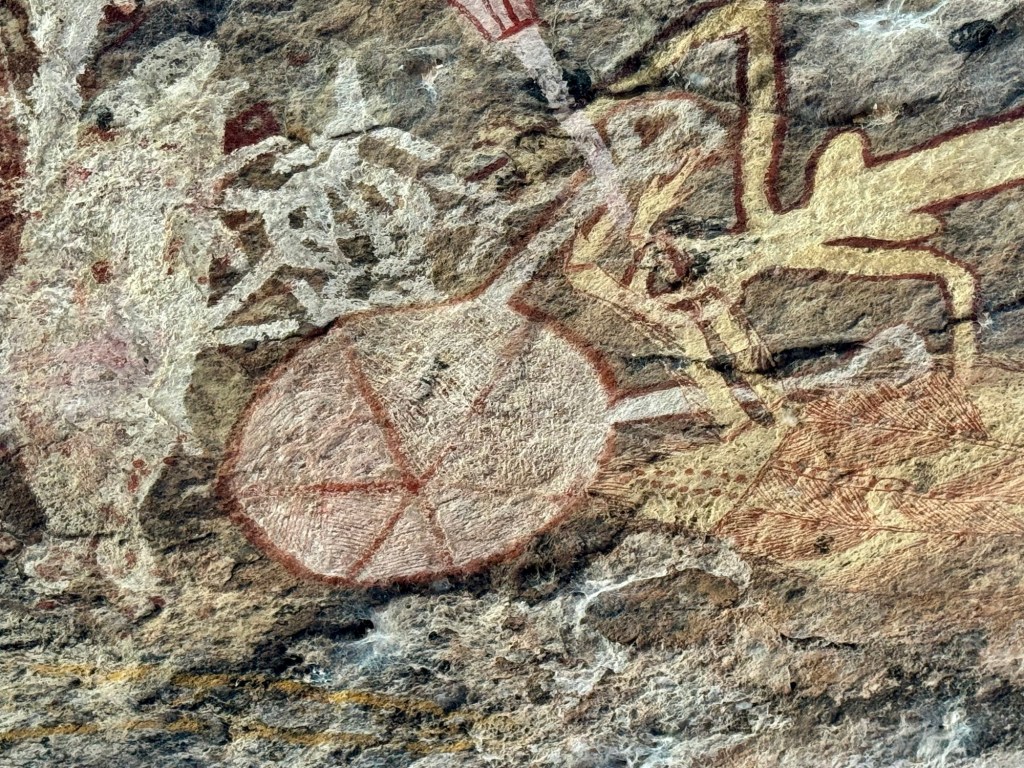
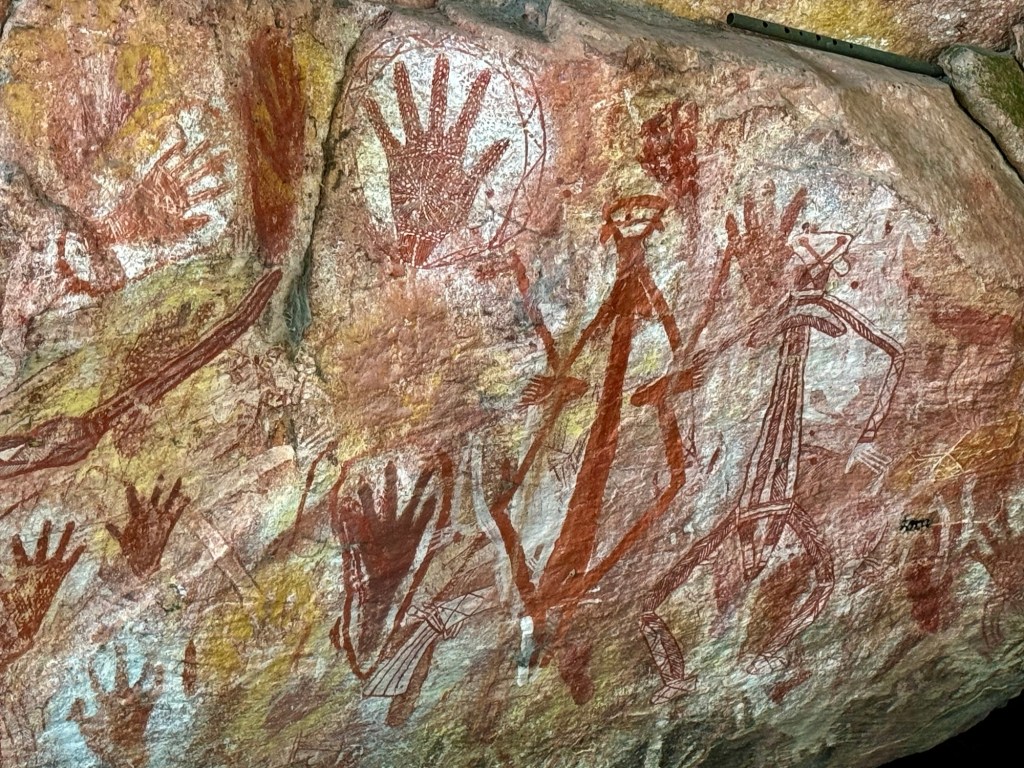
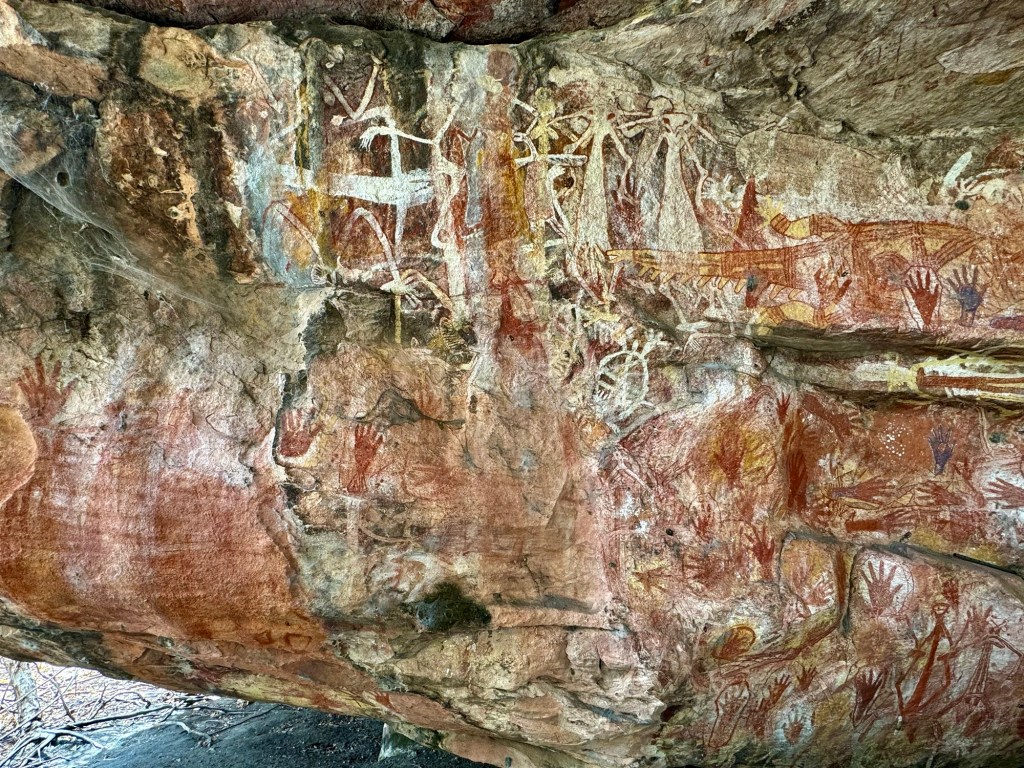
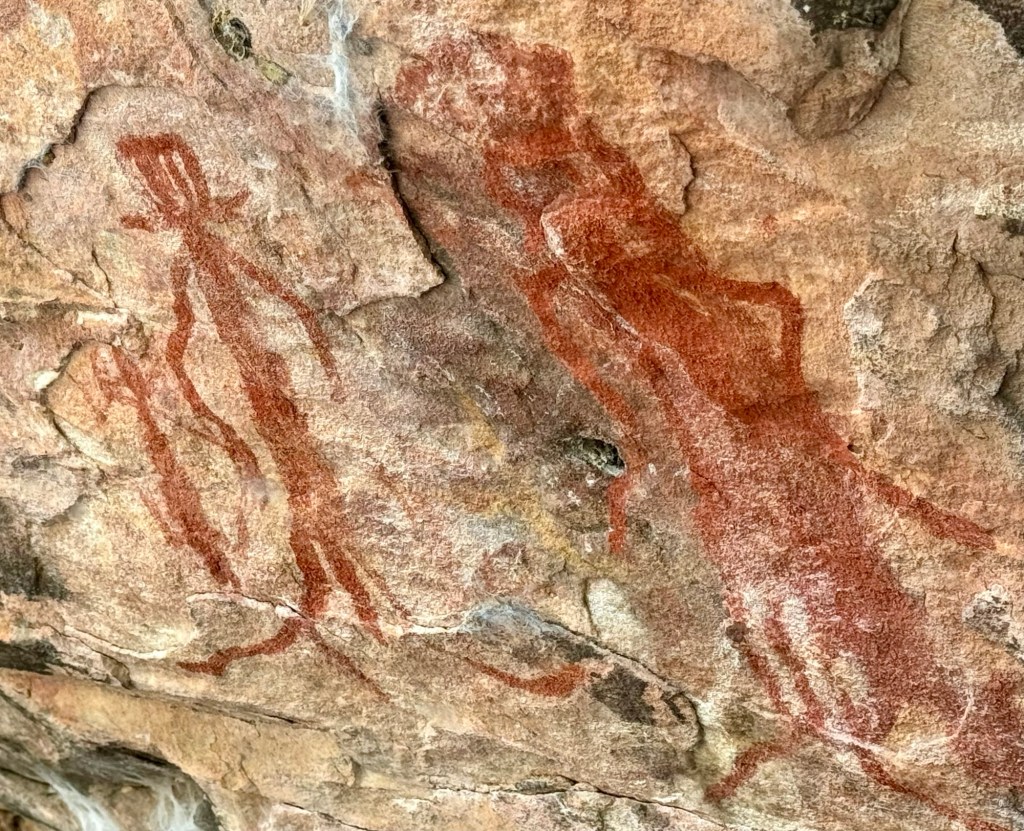
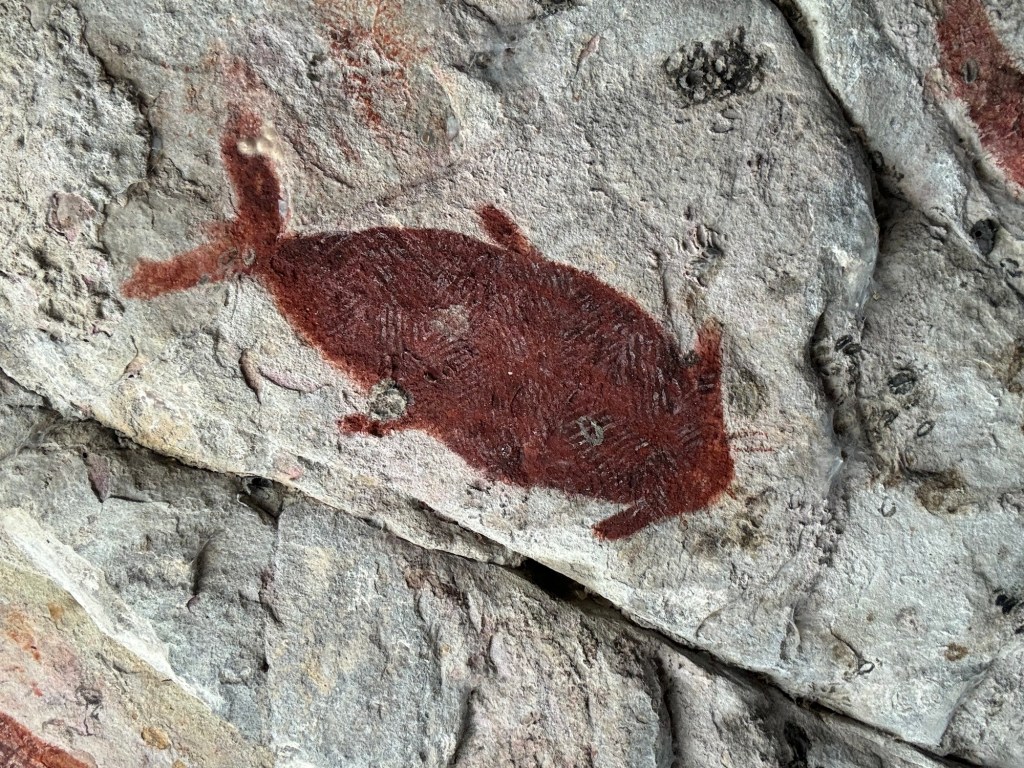
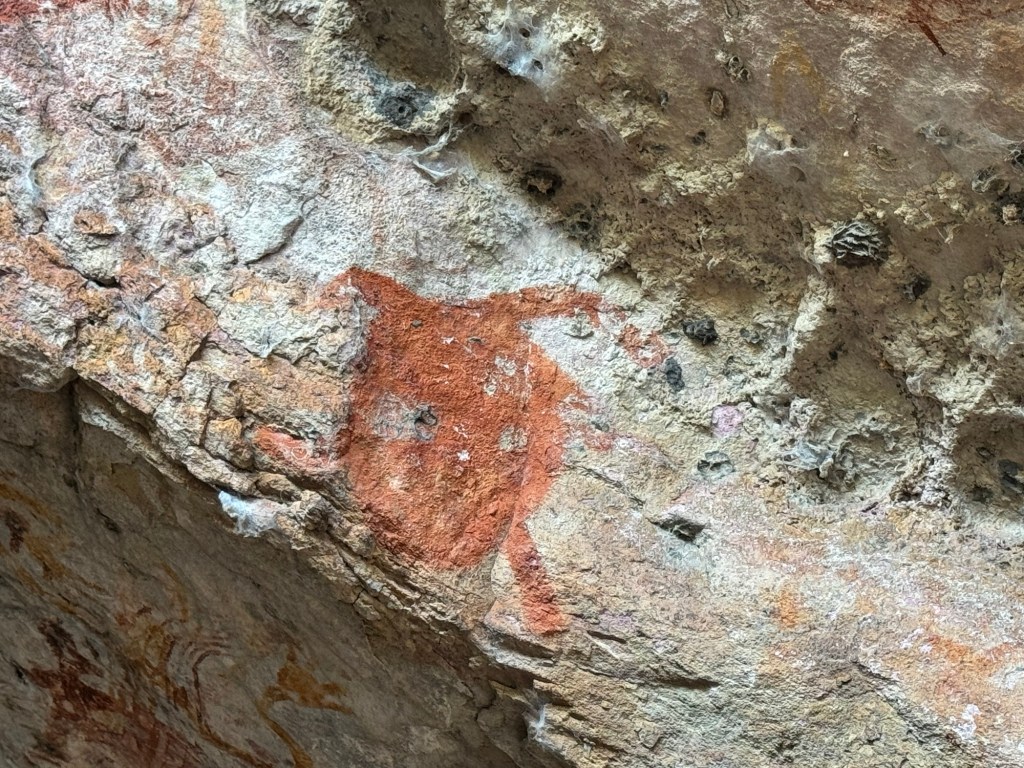
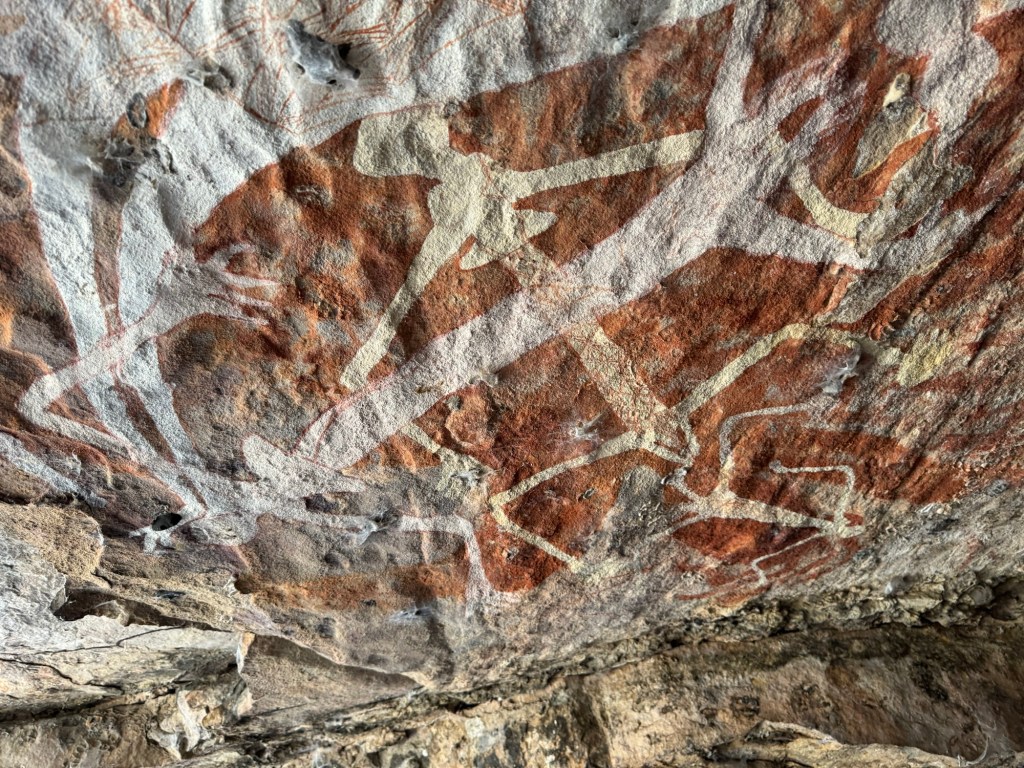
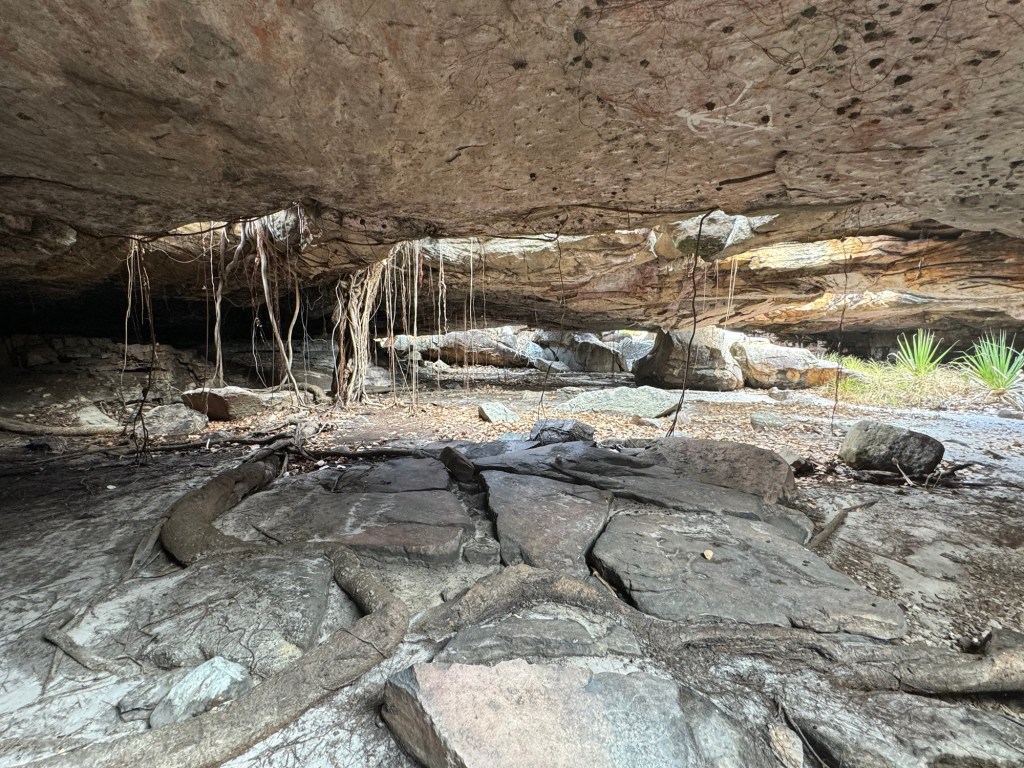
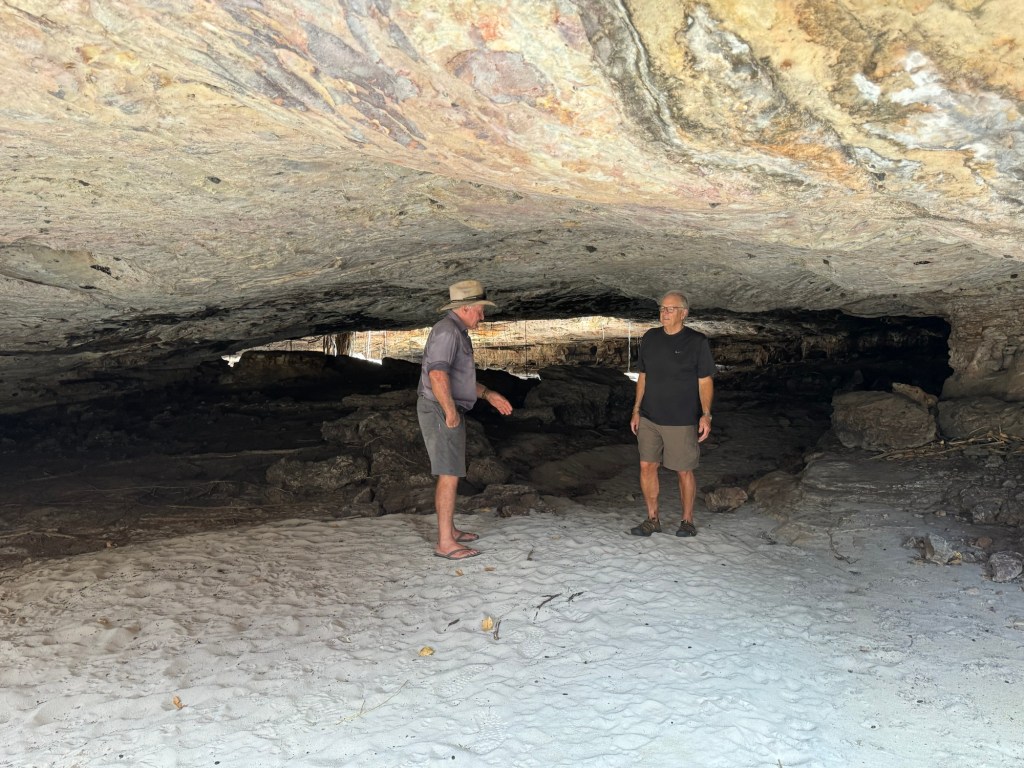
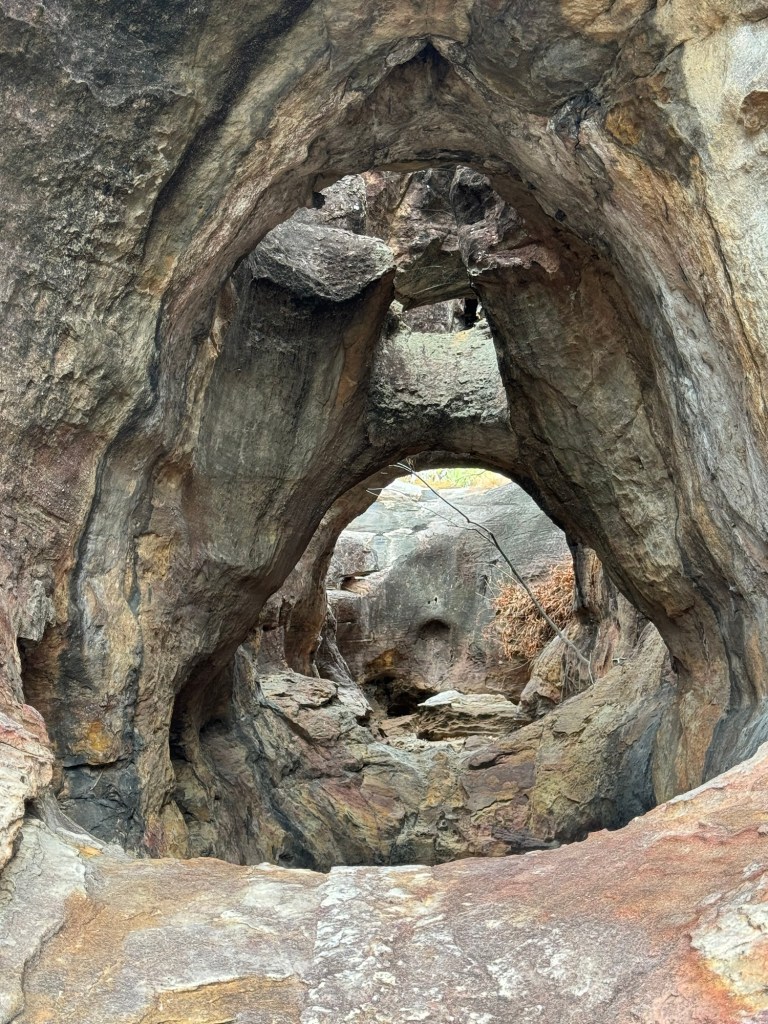
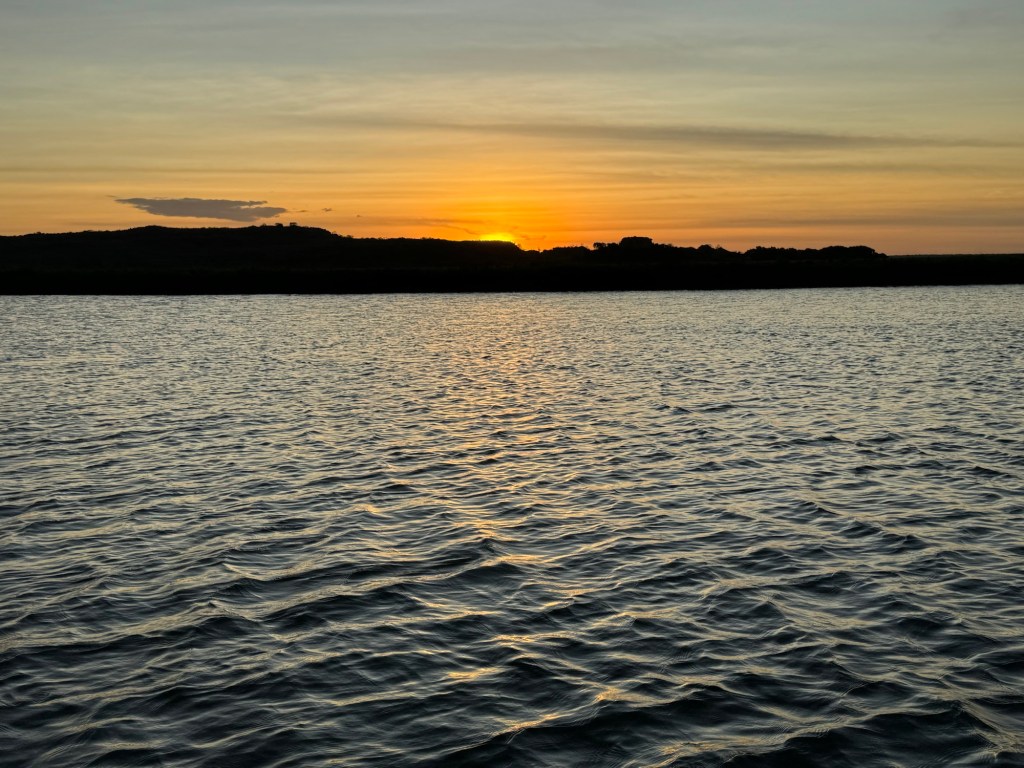
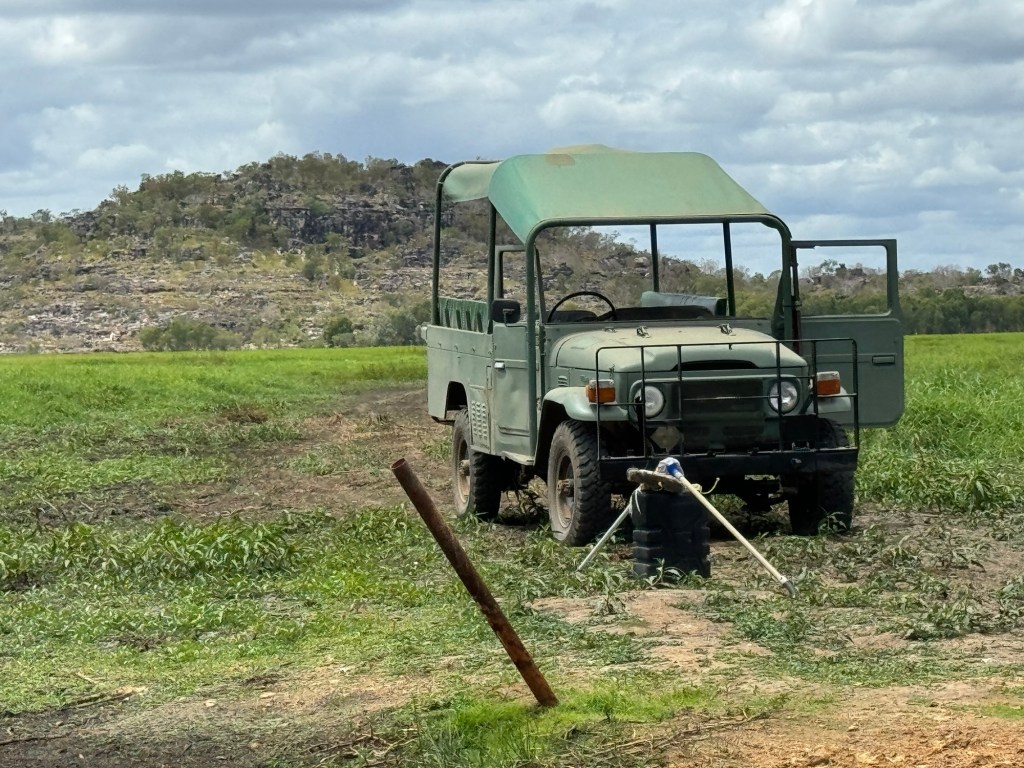
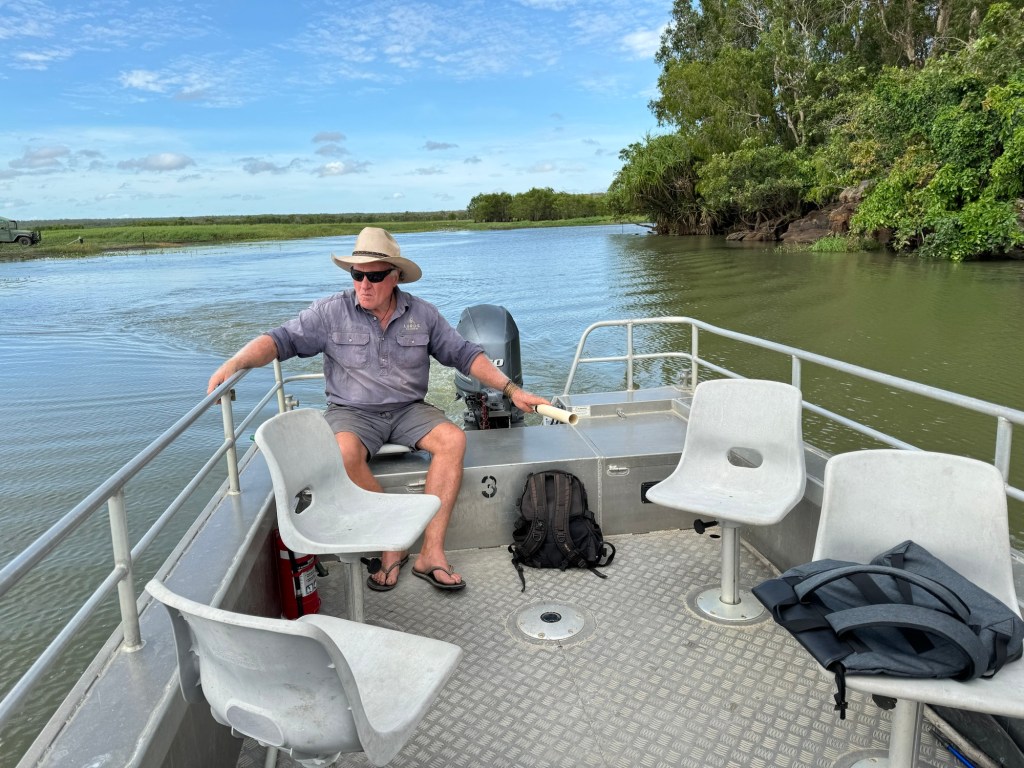
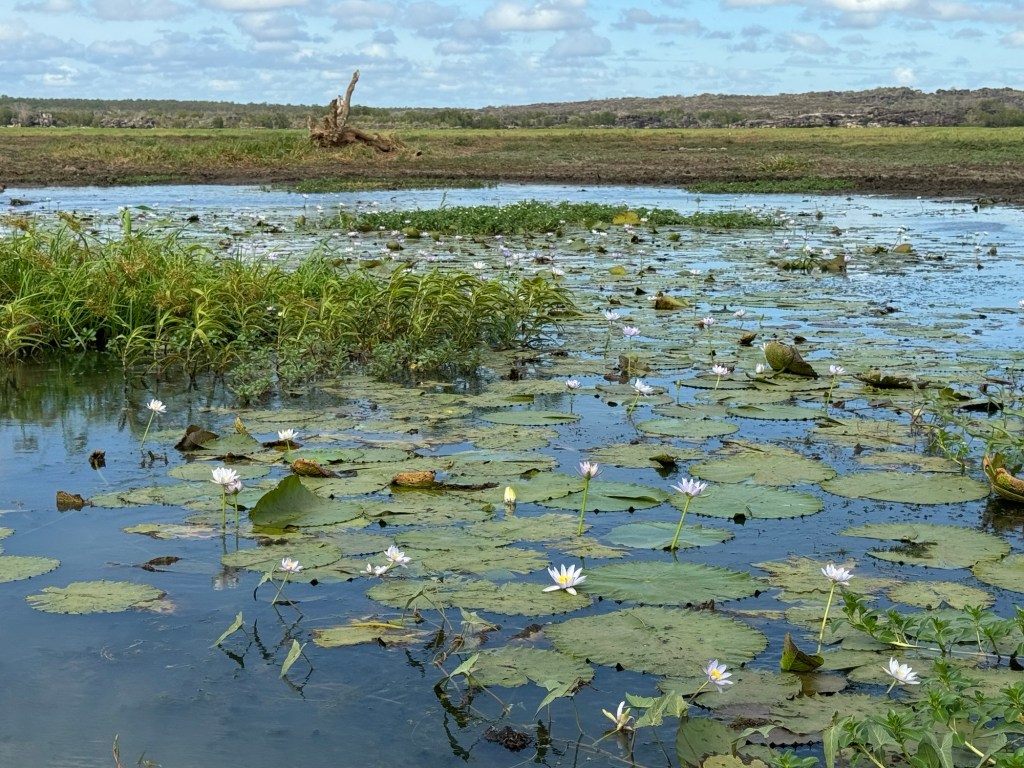
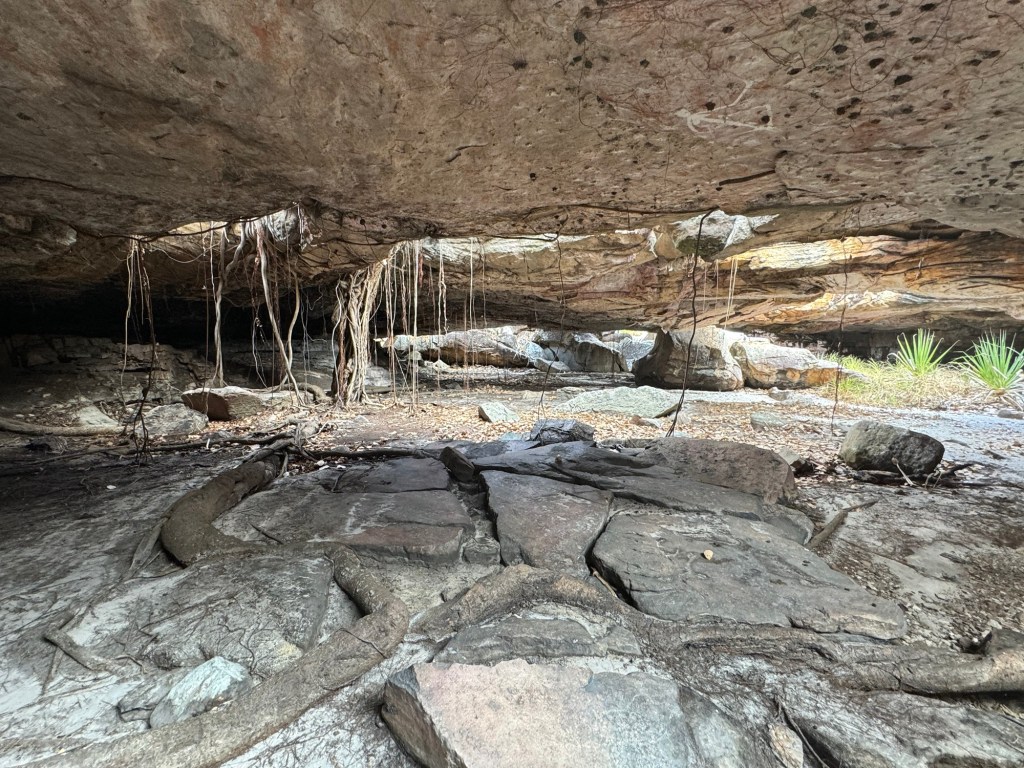
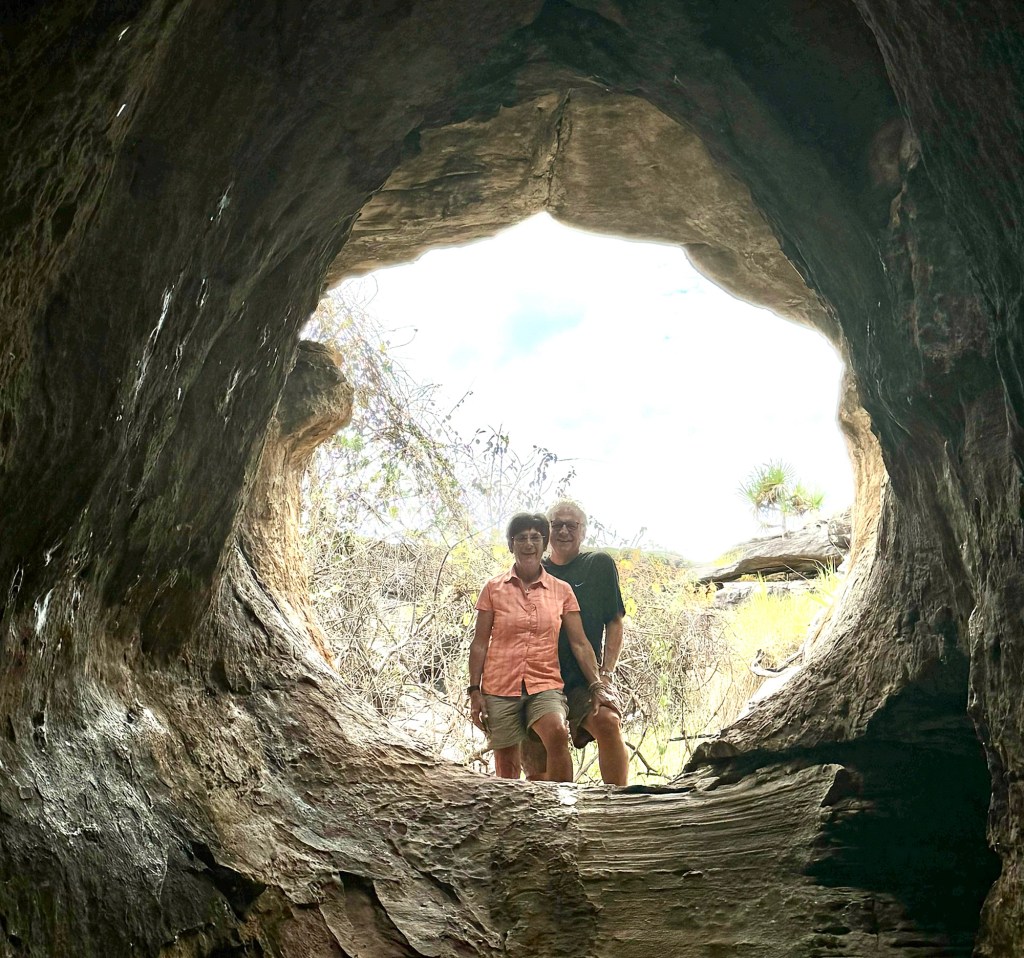
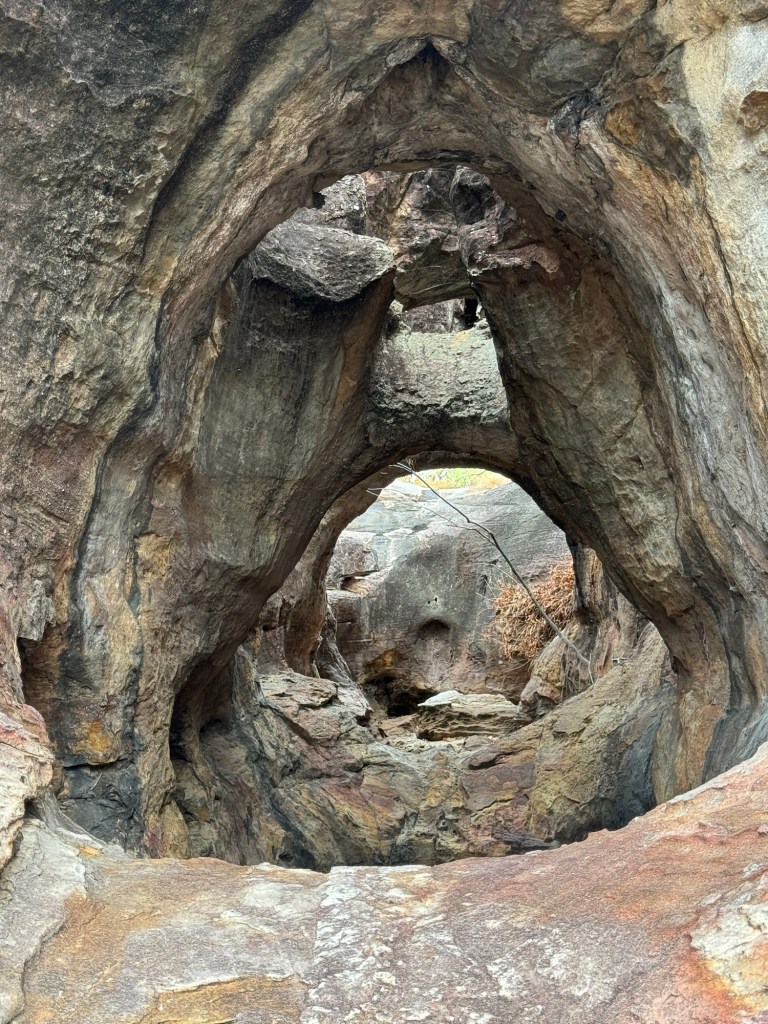
After saying good bye to Sab, we went to the airstrip near Davidson’s camp and flew back to Darwin in an old Cessna 210,
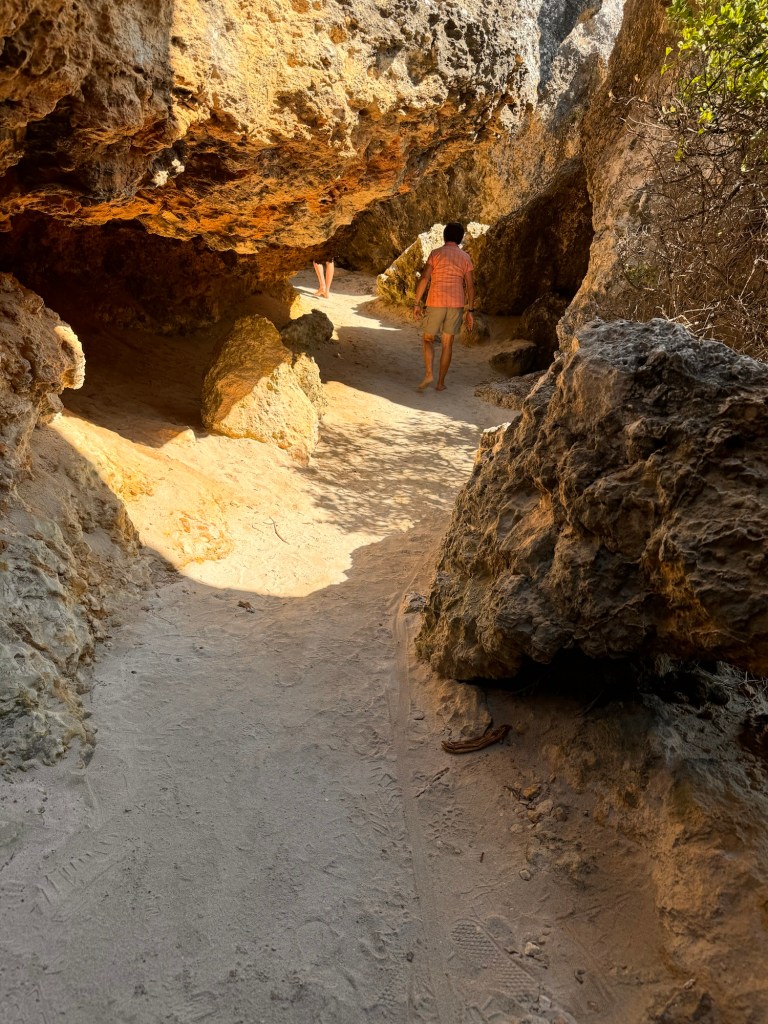
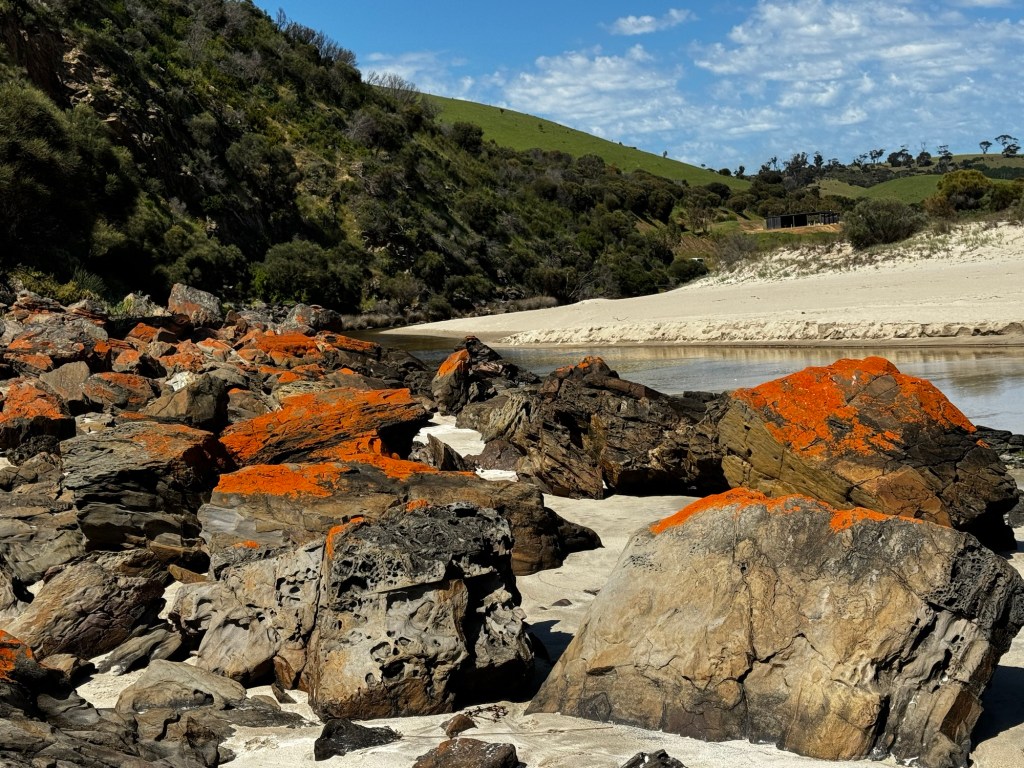
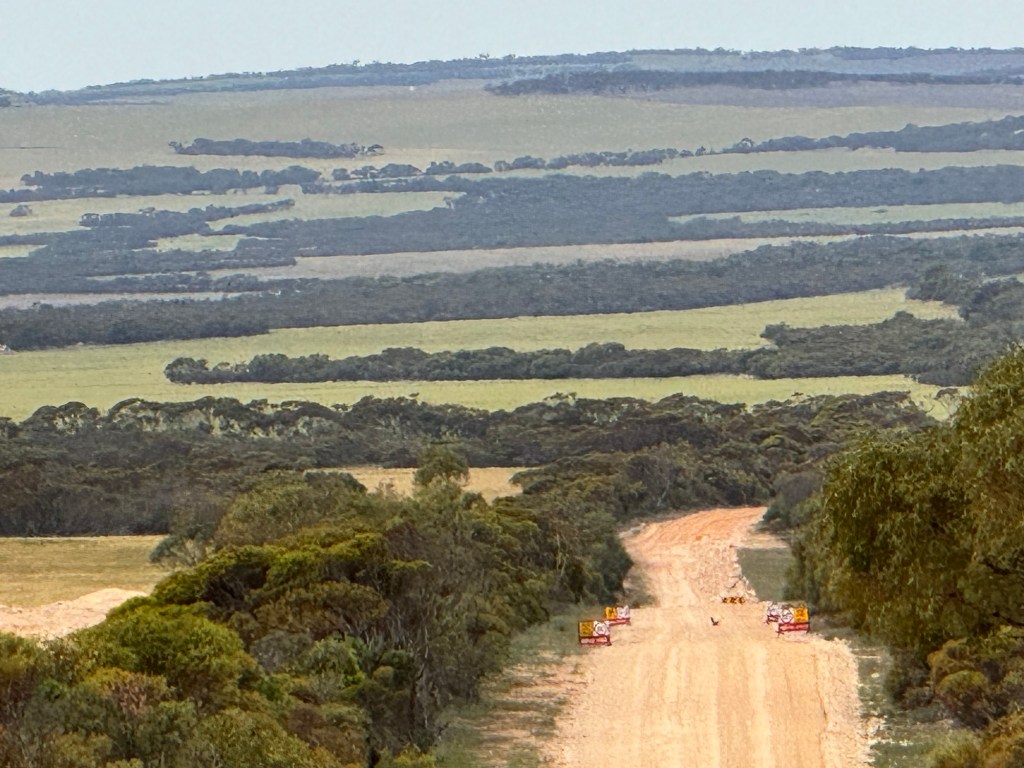
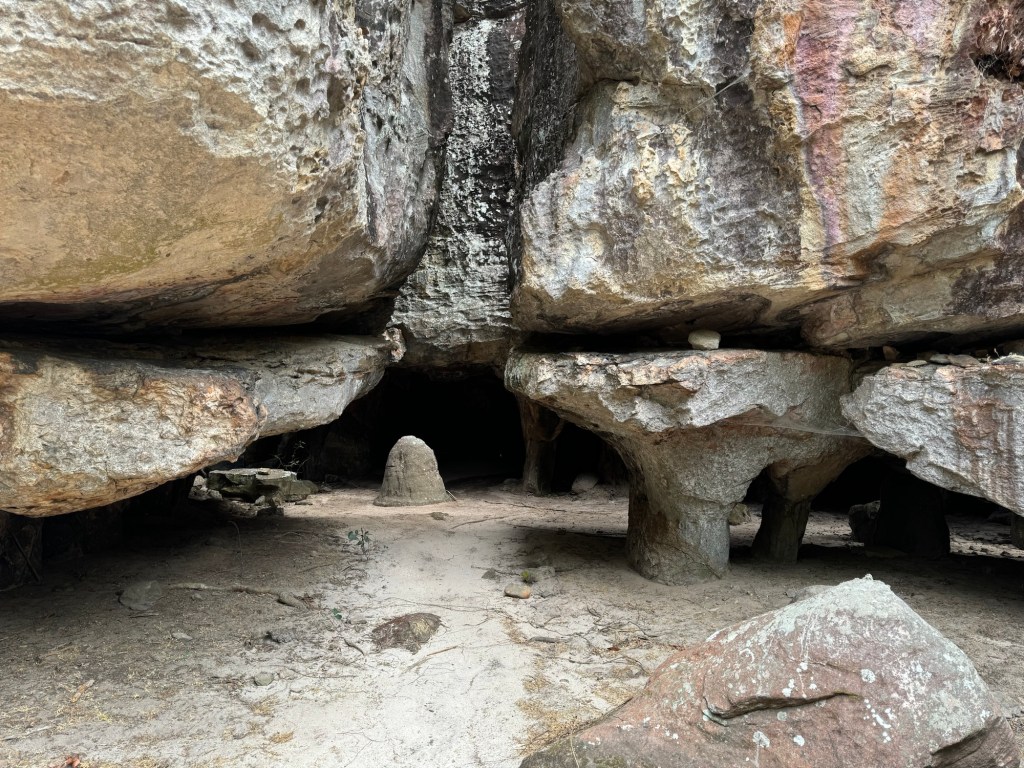
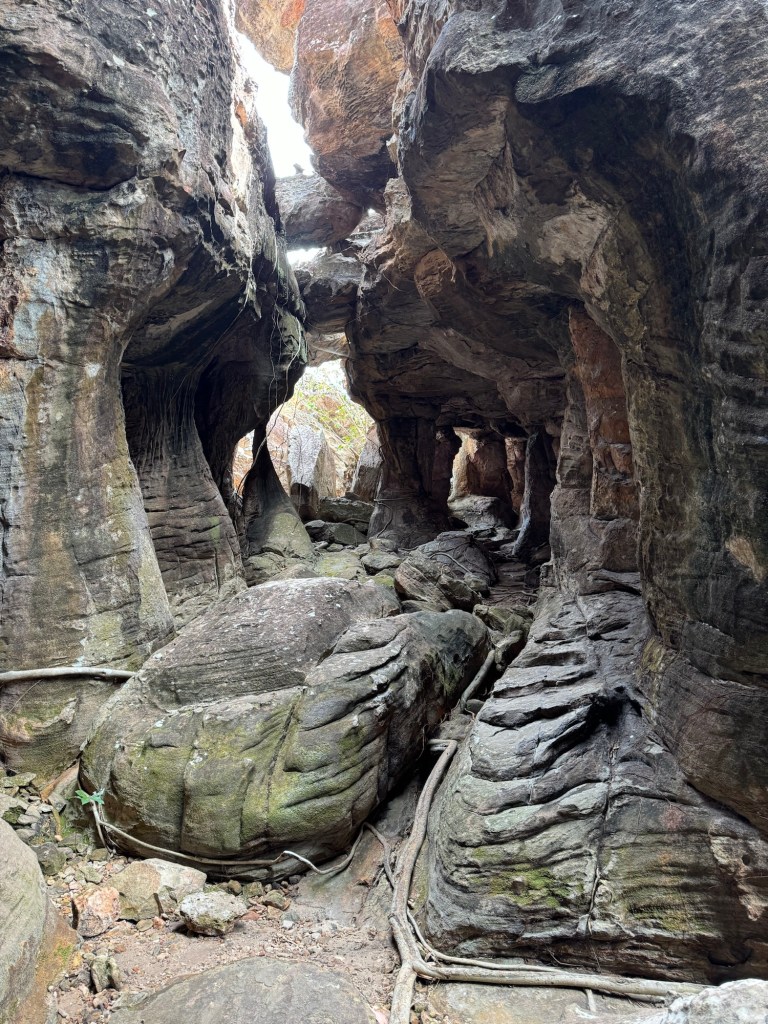
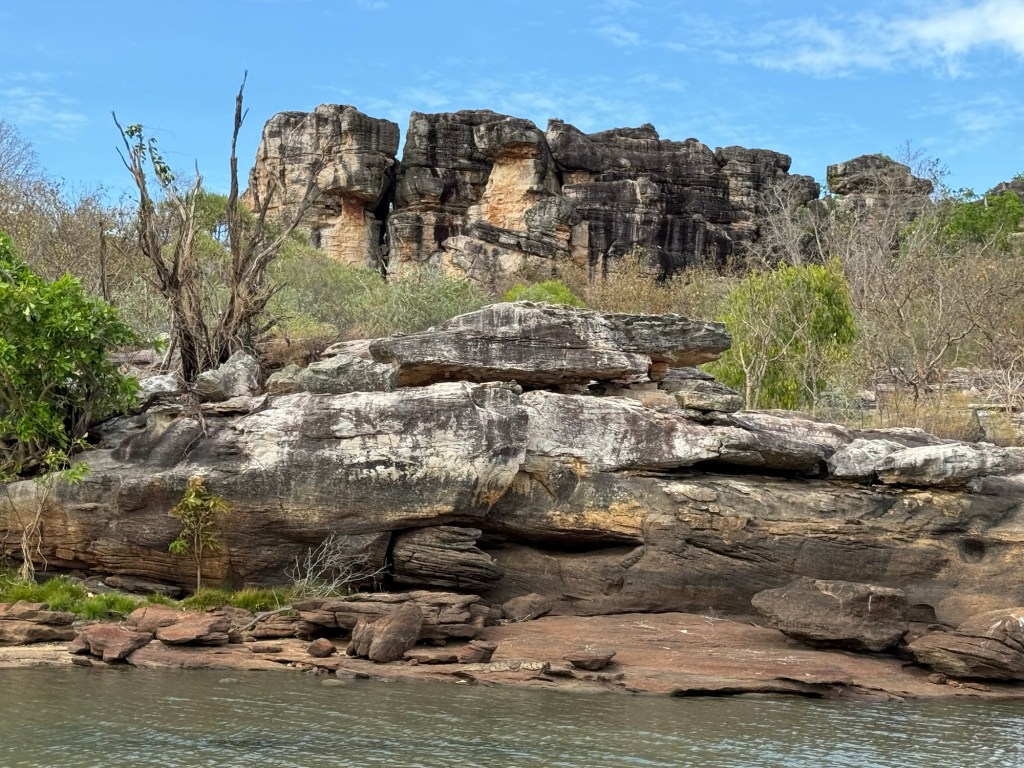
Bush Country from the airSandstone cliffs in bush country
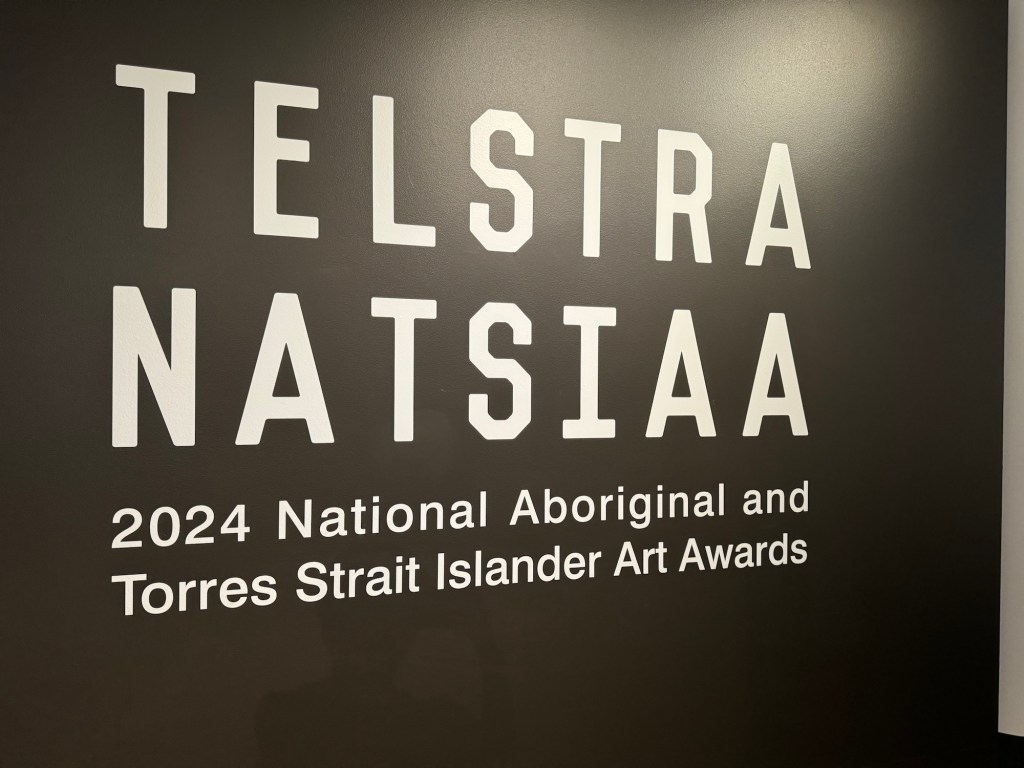
where we were immediately picked up and driven to the Darwin Museum and Art Gallery of Northern Territory for a private one hour tour of the current aboriginal Exhibition.
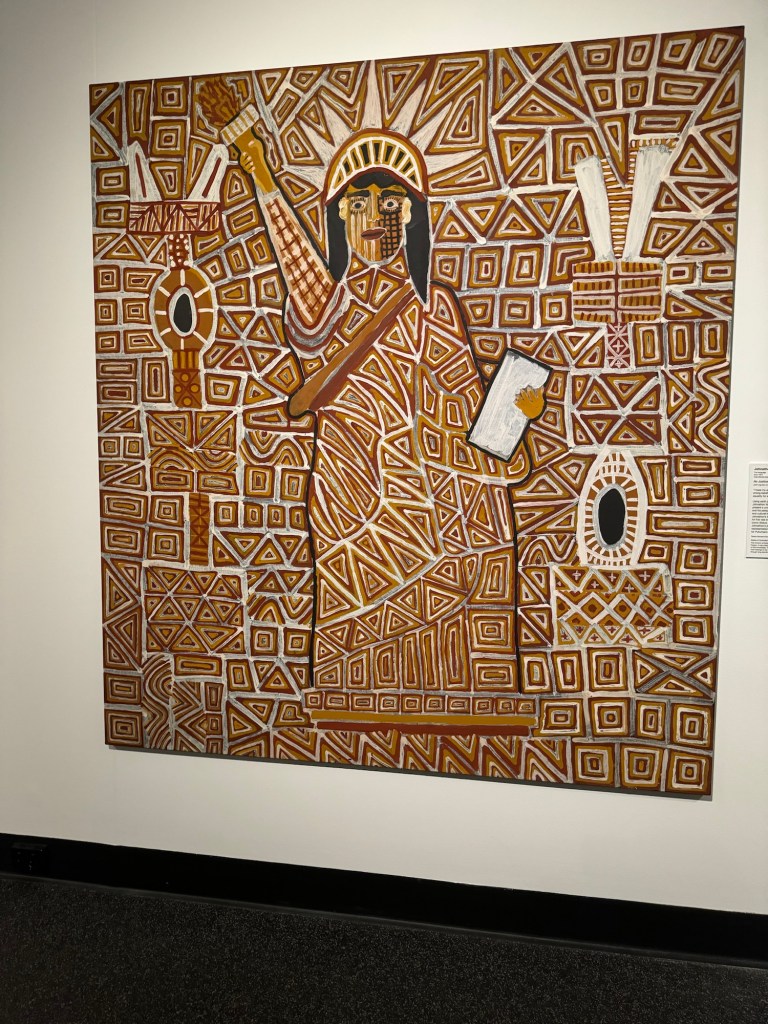
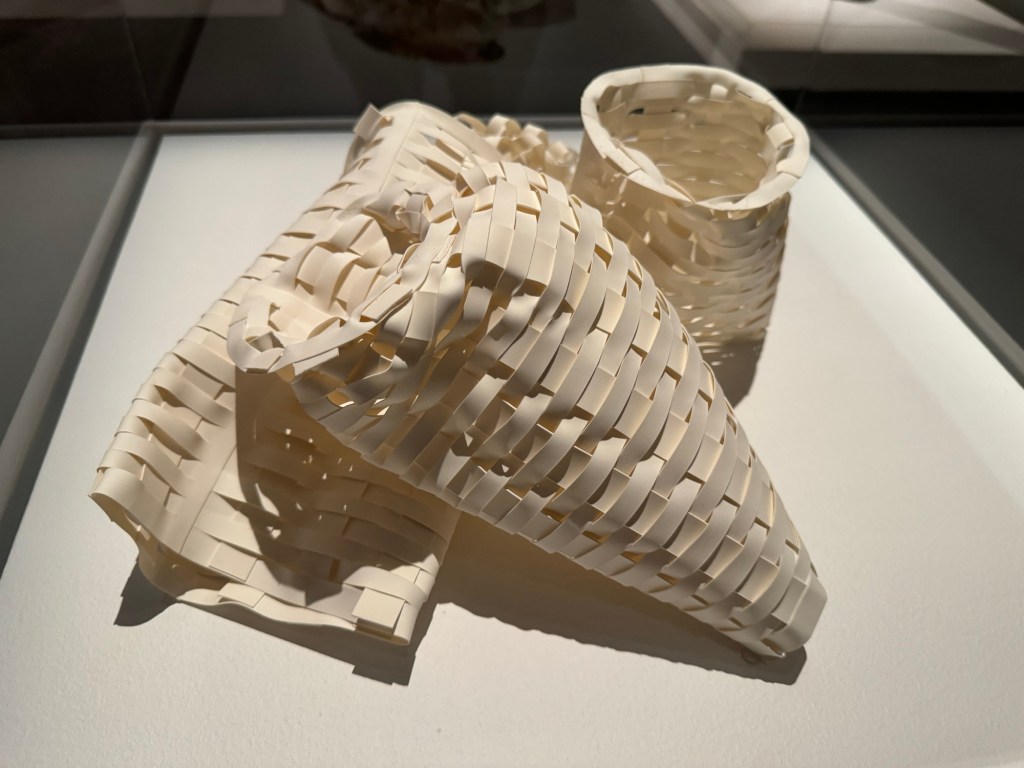
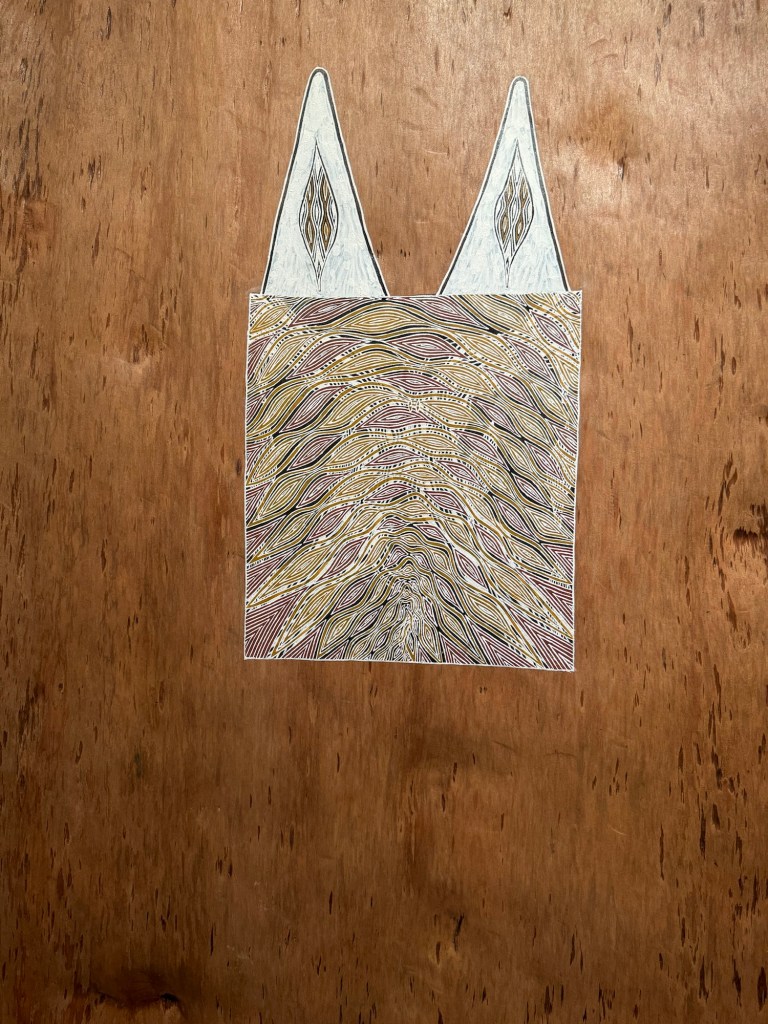
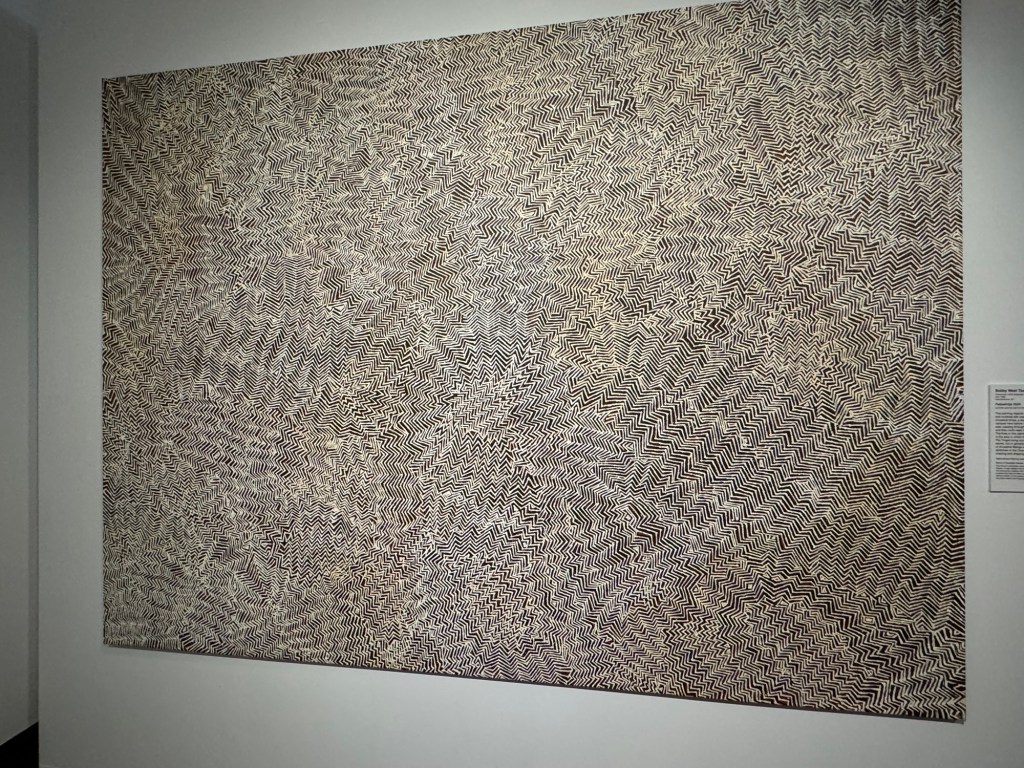
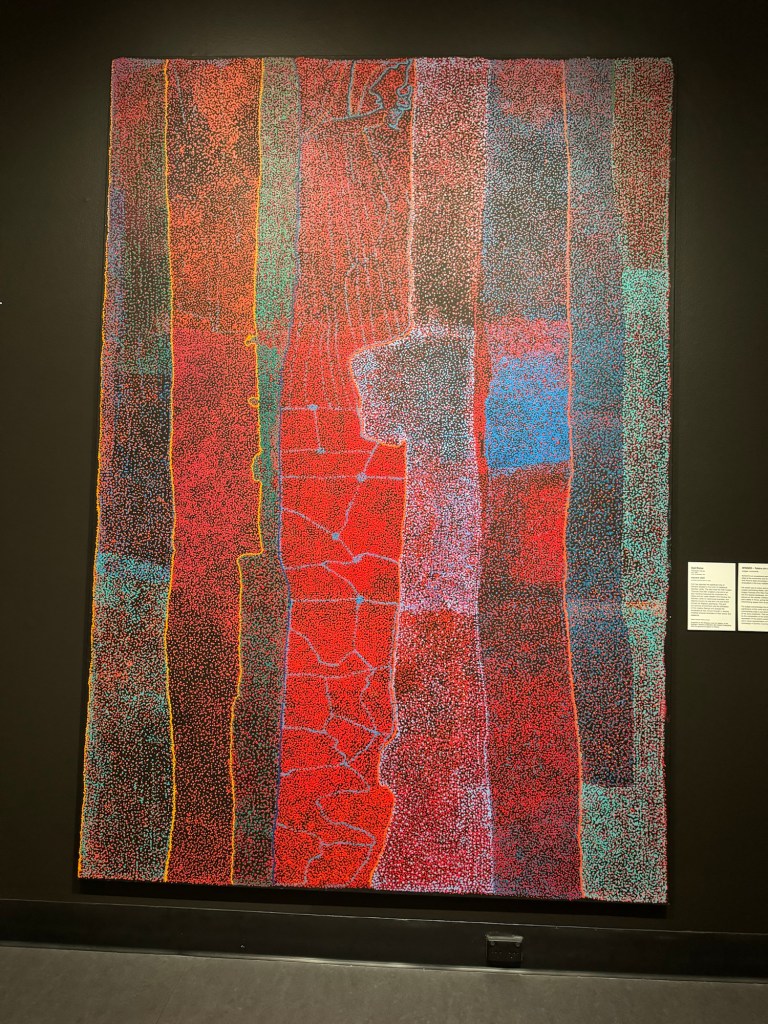
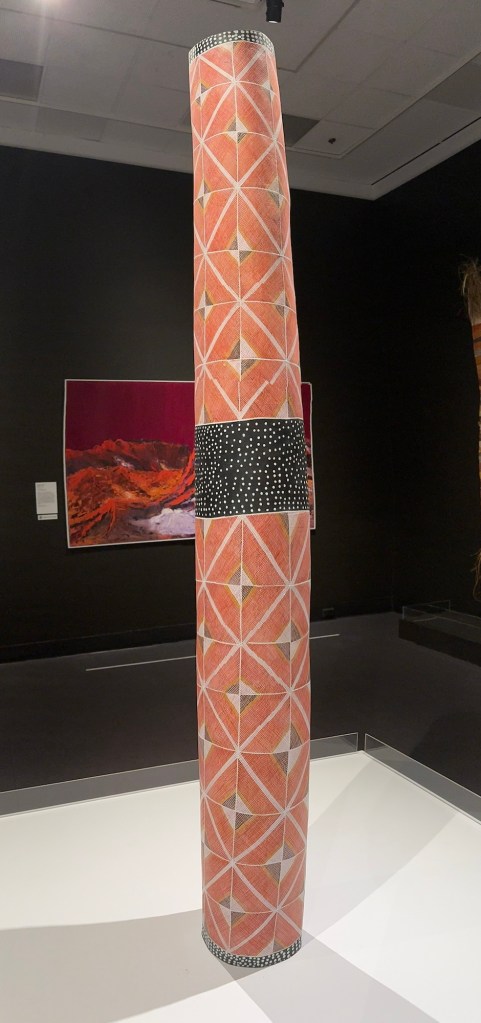
The curator, Bryony Nainby, met us at the entrance and wasted no time imersing us in aboriginal art. Here are some of the most impressive pieces we saw. Double click for a full view.
No Justice 2024 by Johnathon World Peace BushChAoS Movement & Rhythm 2023 by Janet FieldhouseRumbal, the body / the truth 2023 by Wurrandan MarawillPalipalintja 2024 by Bobby West TjupurrulaKamanti 2023 by Noli RictorKunkura 2024 by Obed NamirrkkiTo know sea country through making by Dean GreenoNgura Tali – sand dune Country 2023 by Rene Sundown
After the tour we had a quick bite, and were driven back to the airport for our 3:30 commercial flight to Cairns. It was a crazy day, but we made all our connections and got to Cairns in time to catch our ride to the Silky Oaks lodge, have a light dinner……and slide into bed. Hope tomorrow is a slower day.
Saturday, September 21, 2024
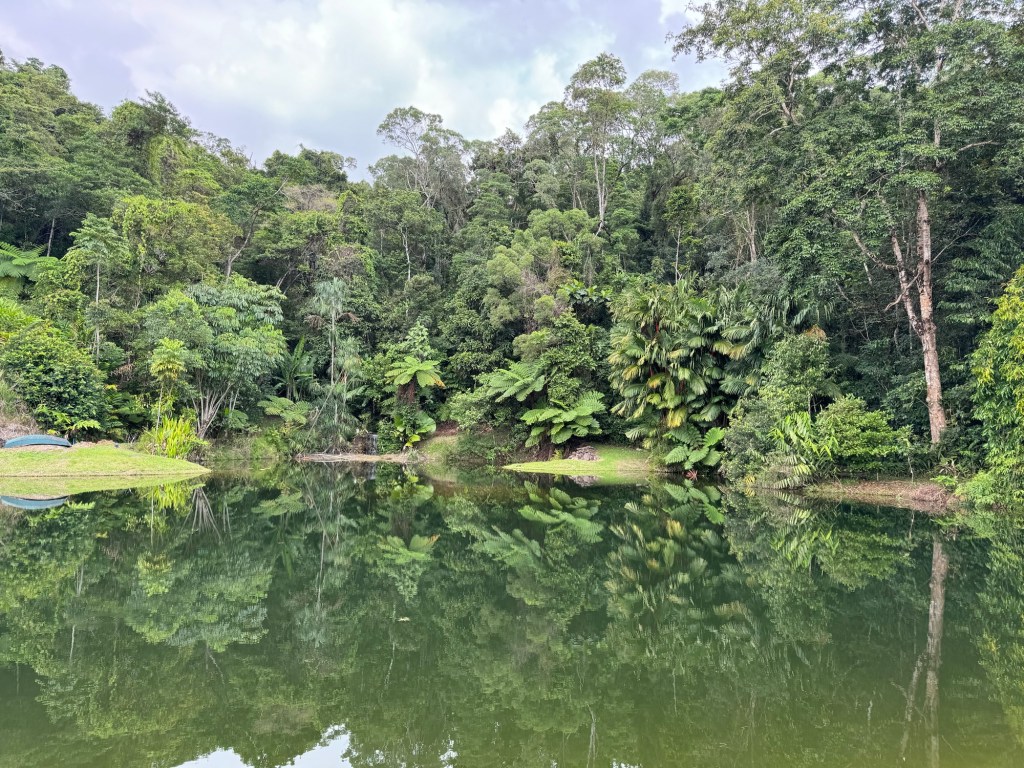
Our accommodations are in a lovely lodge called Silky Oaks on the bank of a river in the middle of a rainforest. It was nice to wake up to the sound of the river just outside our cabin. After breakfast, we were met by Cathy Wharton, our guide for the next two days. Off we went for a drive through the countryside to the rainforest property of Alan and Susie Carle, which they named, Botanical Ark. Cathy introduced us to them and soon we went walking into the forest with Alan to learn about his property and his life’s work of saving rainforests everywhere. He talked about starting with an empty 21 acre piece of ground and collecting seeds from all over the world to plant in his Botanical Ark. The plants have grown quickly in the 43 years since they acquired the property. His ark is now a magnificent rainforest.
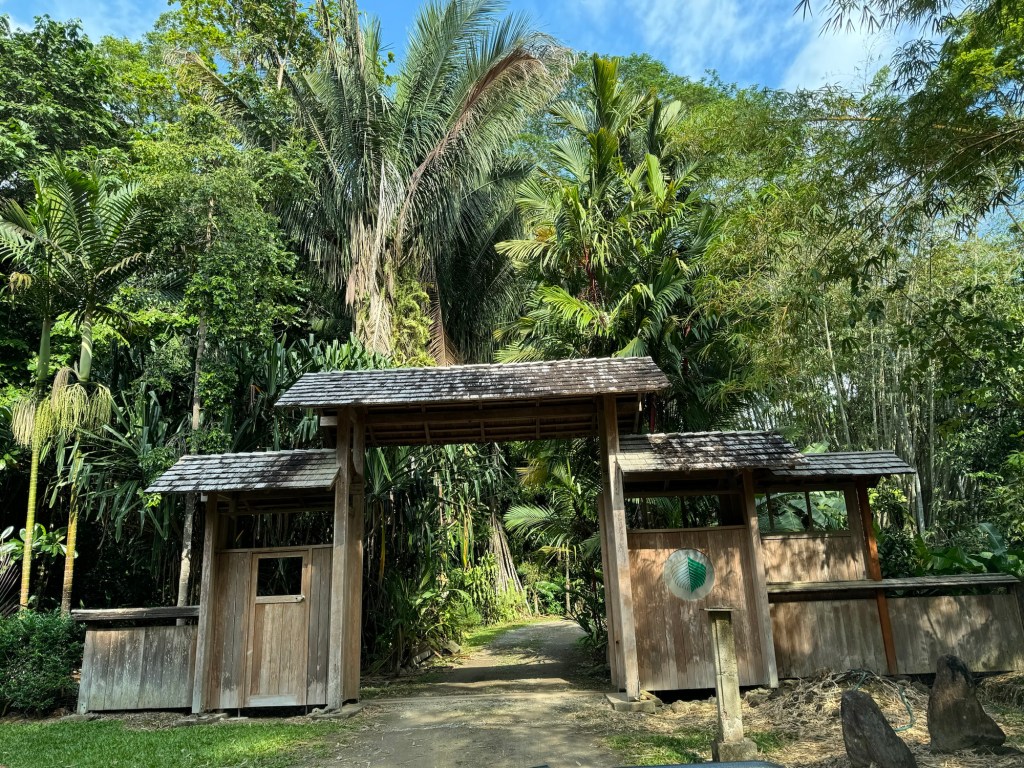
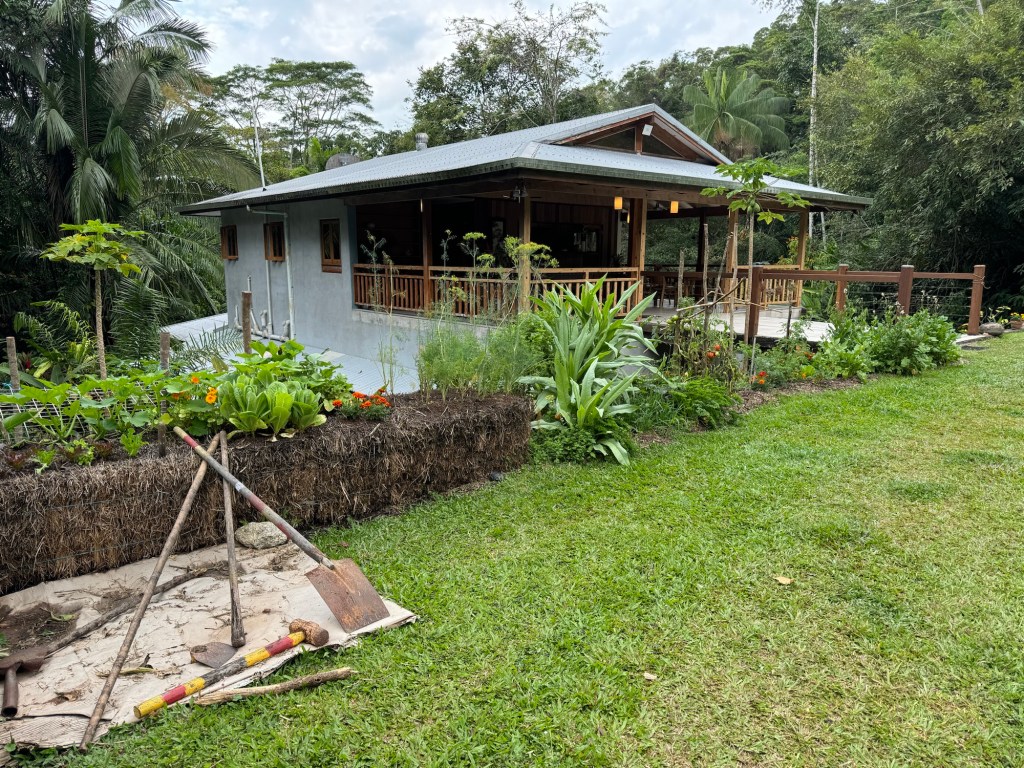
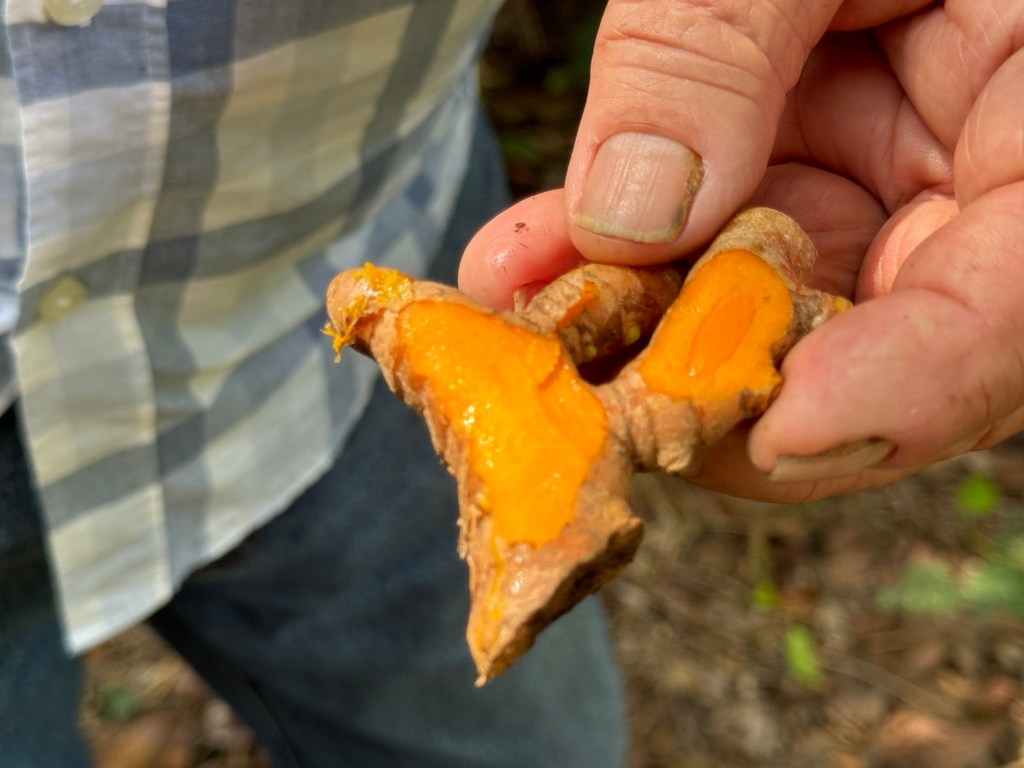
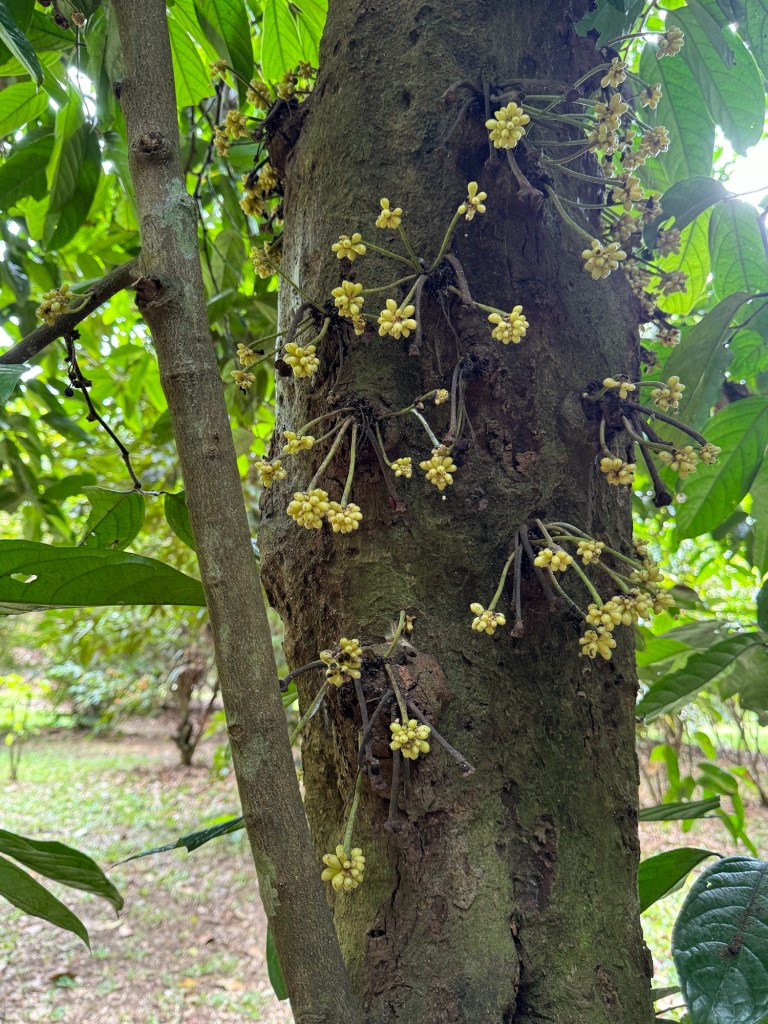
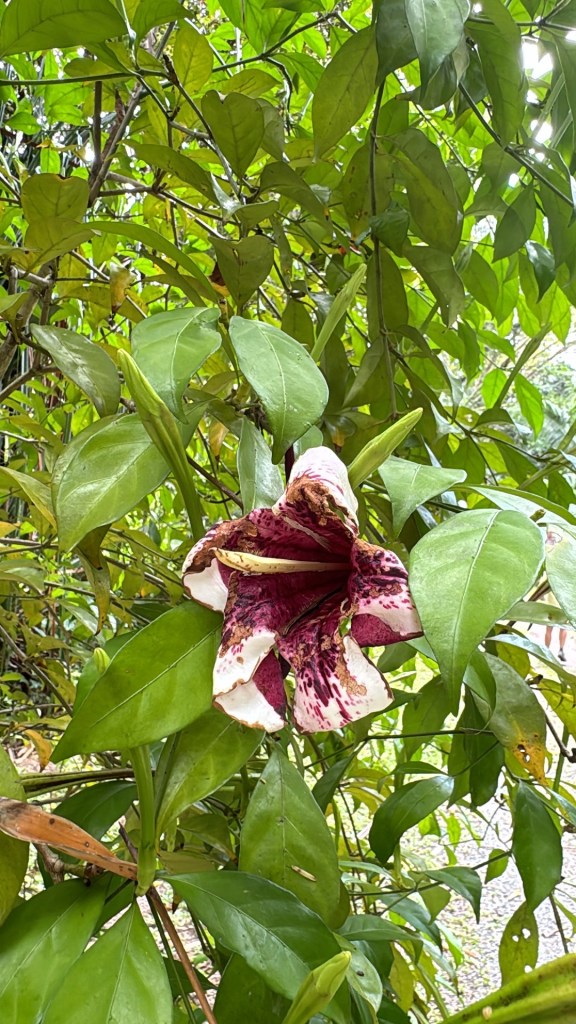
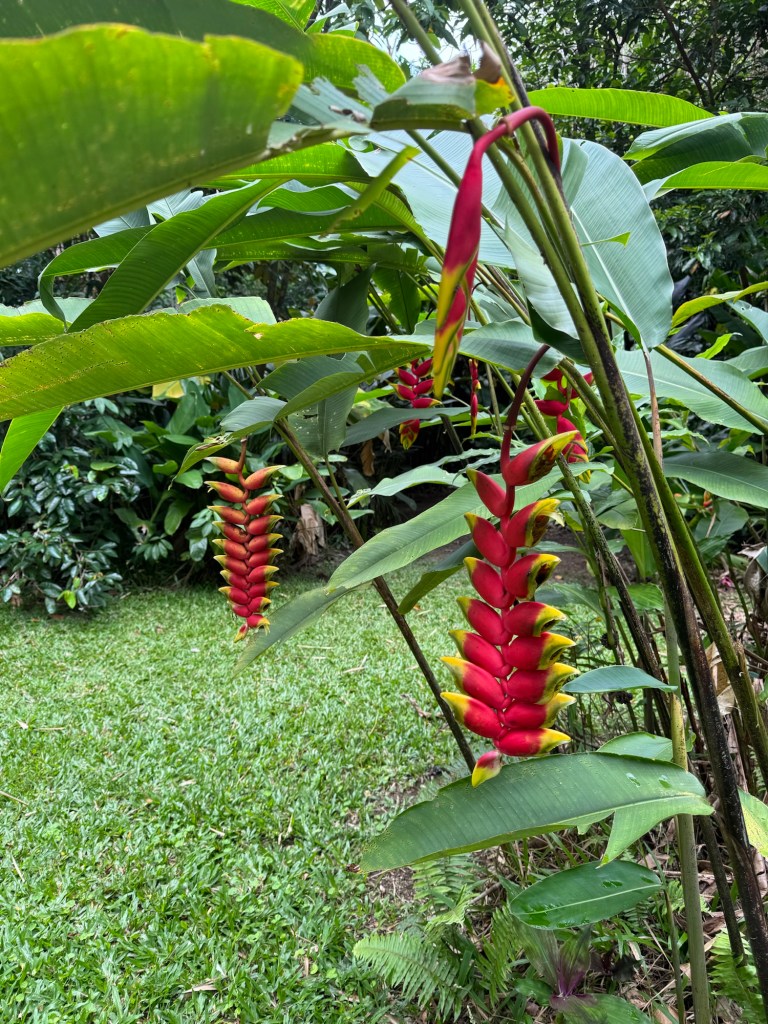
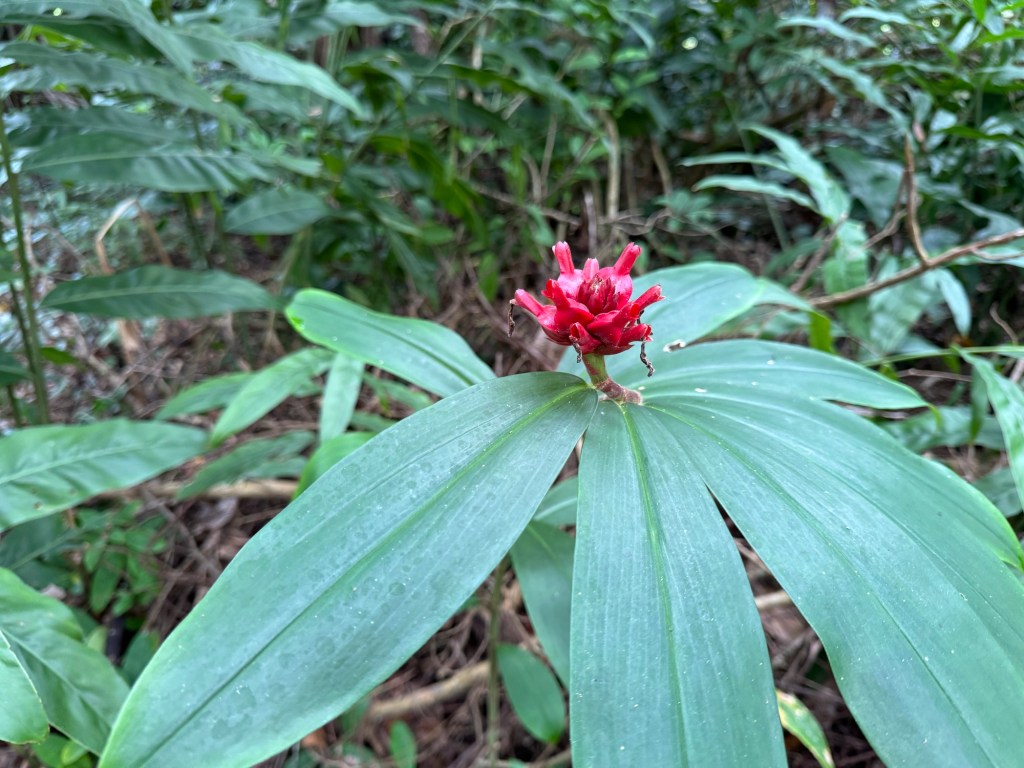
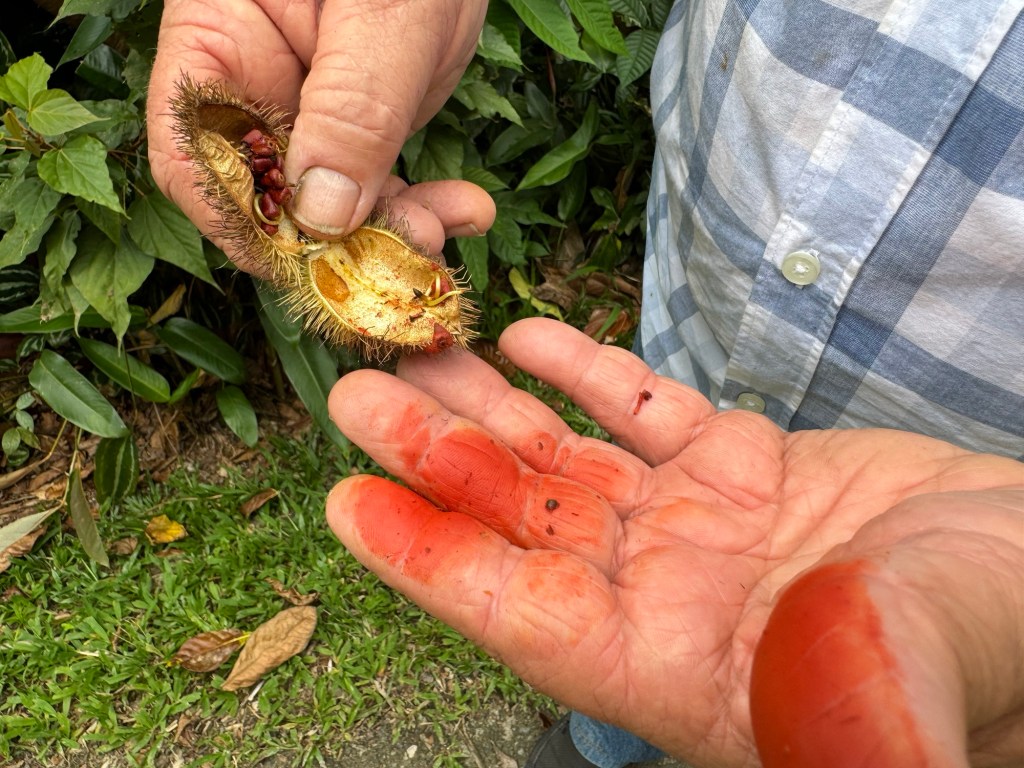
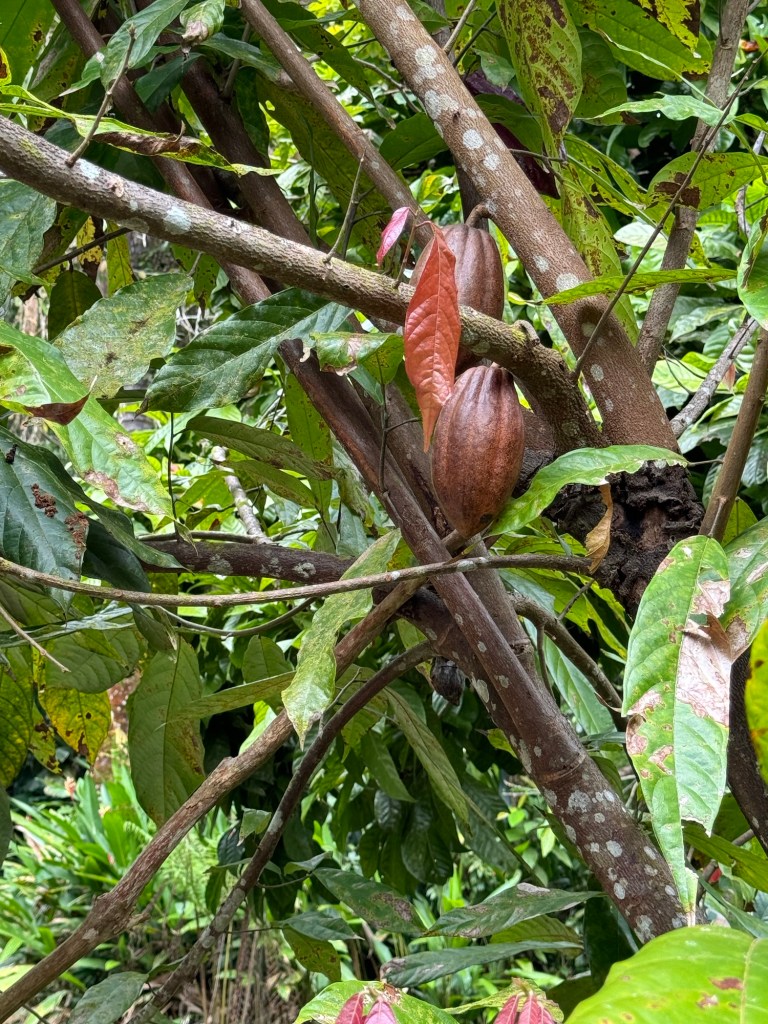
Botanical Ark entranceAlan & Susie’s homeAlan & Susie’s pondDrink of guanabana juice from guanabanaTurmeric rhizomeCostus-Ginger rhizomeTempoi-a flower that grows on trunks of treesBurmese fishtail palmChina DollHelikonia-hanging flowerCrepe gingerBitter gingerBixa-makes a natural red food coloringCacao seed makes chocolateKepel apple- makes the eater smell good
He and Susie wanted tropical fruit so they started with 25 fruits from Asia. Then purchased 80 more fruits and kept them in pots while they grew. To date they have collected 500+ different fruits and flowers. Åt one point they had 2500 different flowers.
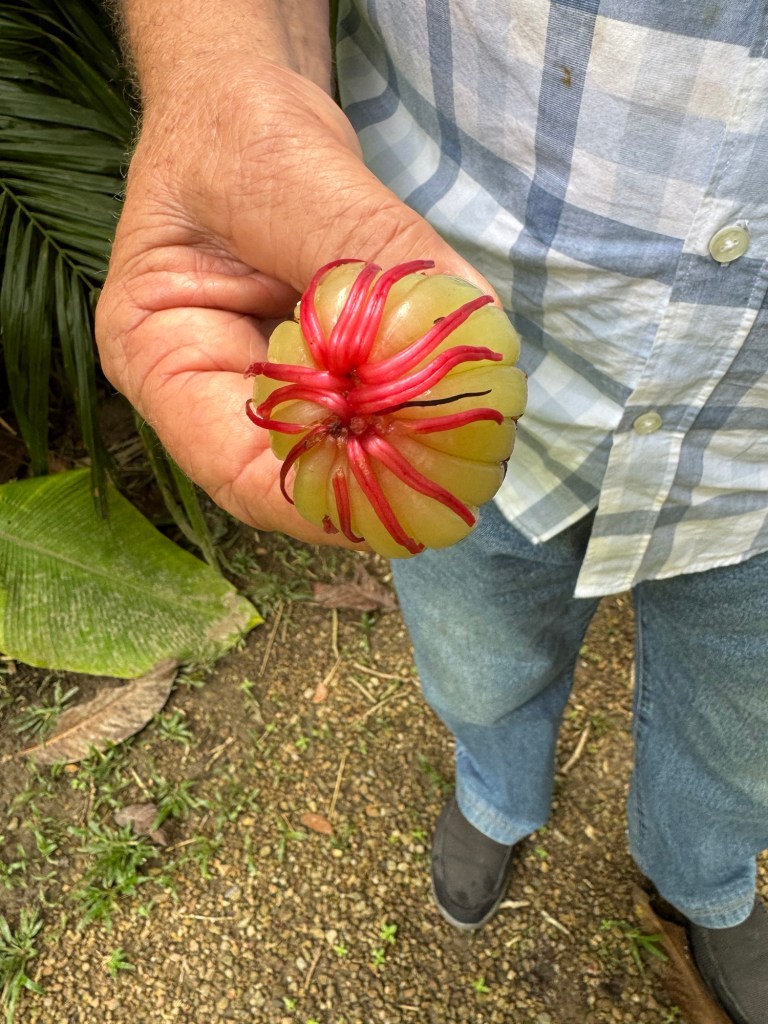
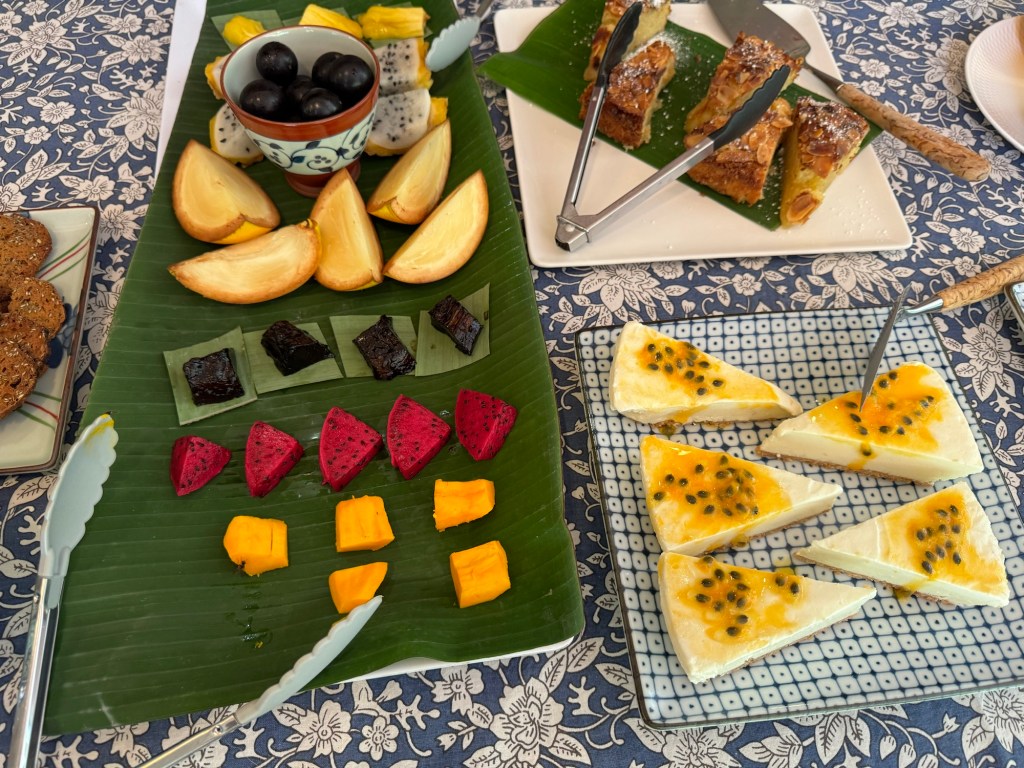
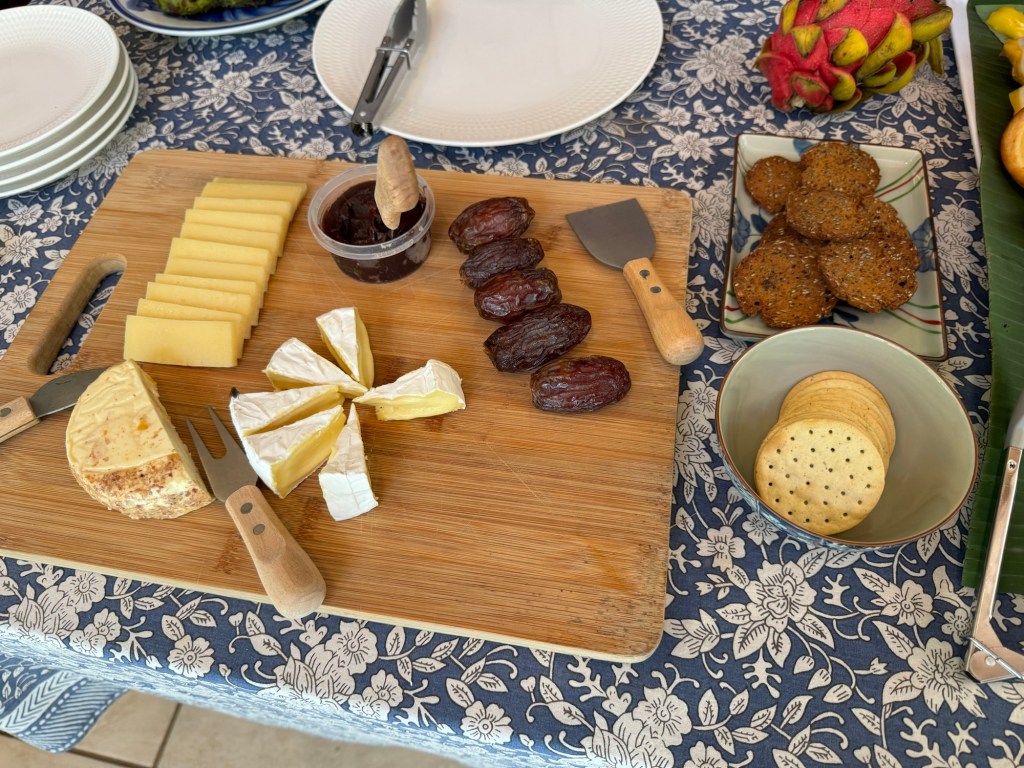
Sue had a very nice spread laid out for us and we sampled a few pieces, took a photo and departed.
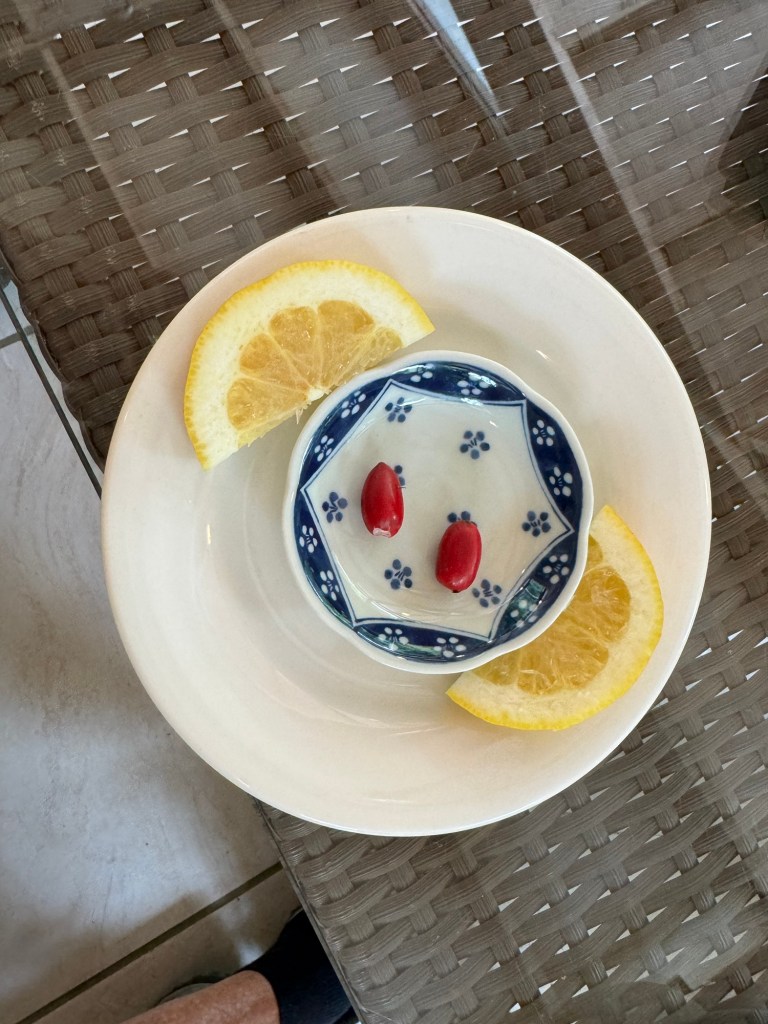
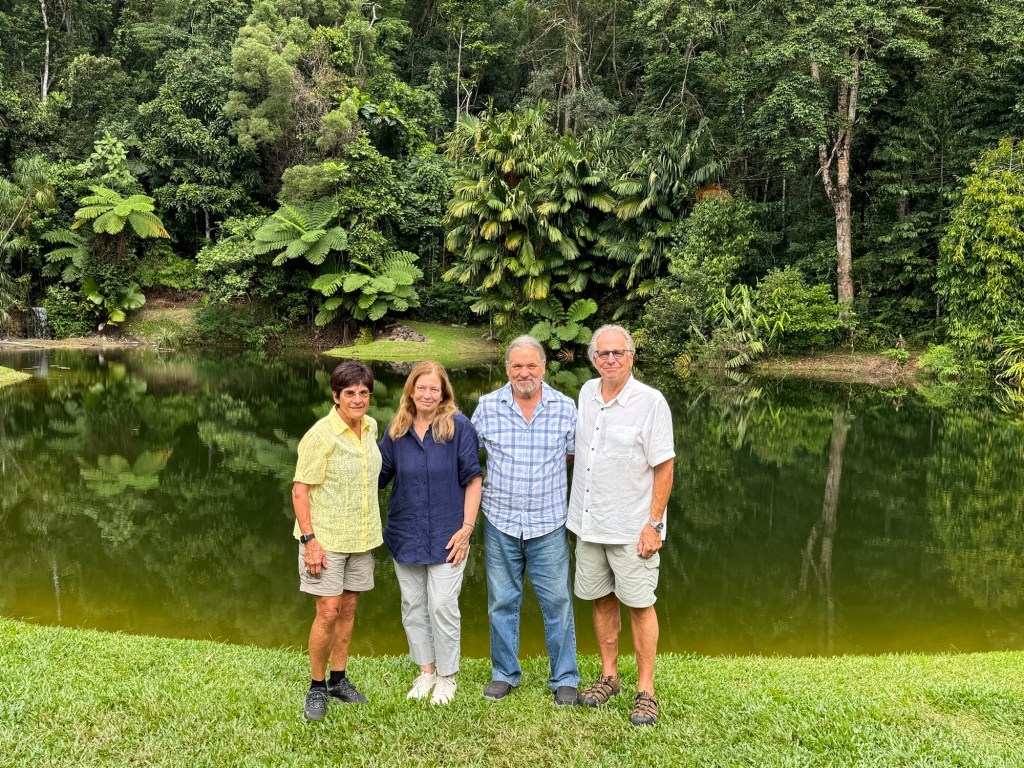
Foods made from Sue and Alan’s garden A seed that turns bitter lemon into sweet lemonAlan, Sue and us in their rainforest garden
We left Alan and Sue around noon and headed to lunch at a restaurant in the National Park after crossing the Daintree River on a ferry to get there.
The nearby Daintree Forest contains 900,000 acres and is a National Park. At 1.45 million years, it is the oldest rainforest in the world.
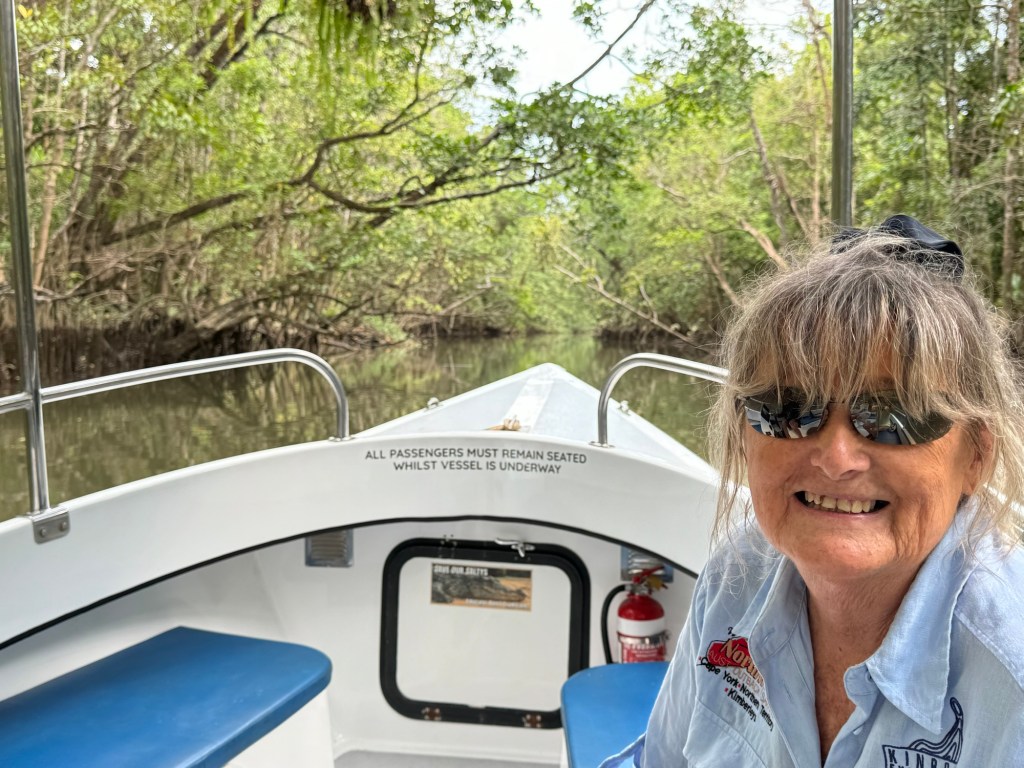
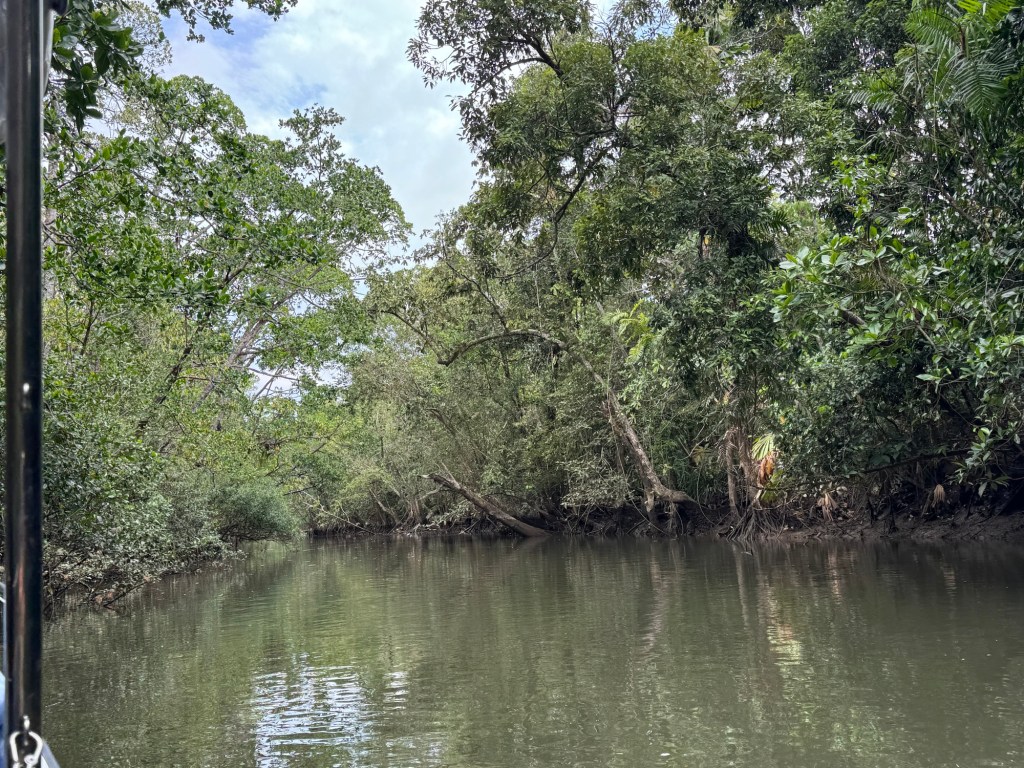
After lunch we went for a boat ride on the Daintree River.
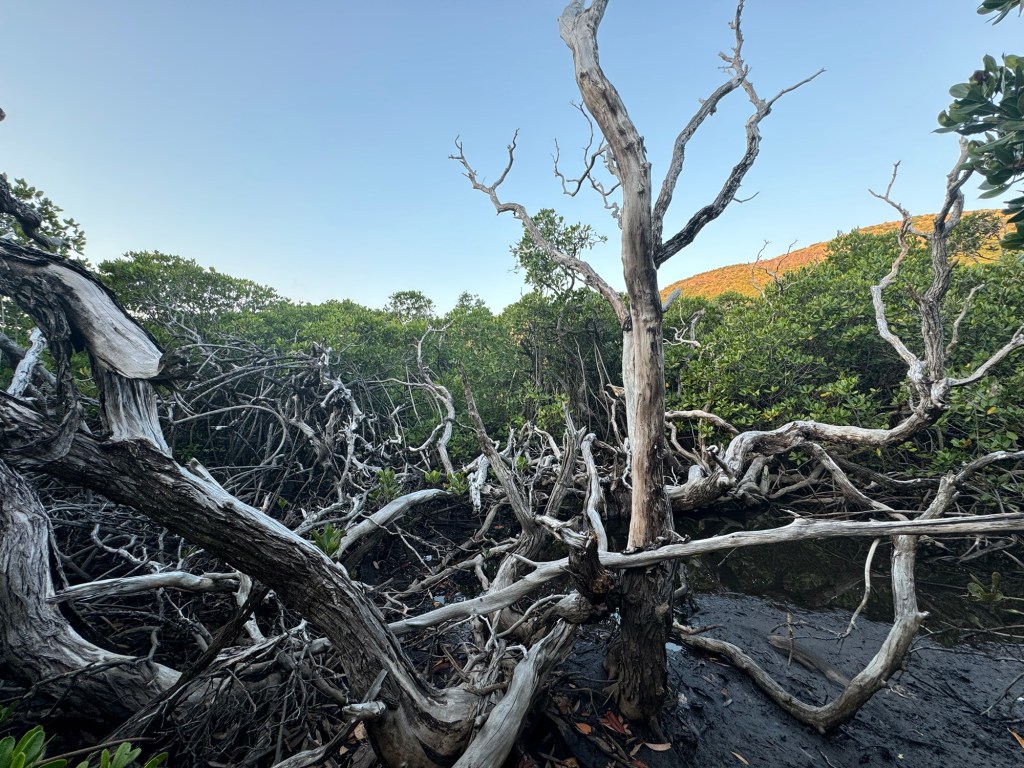
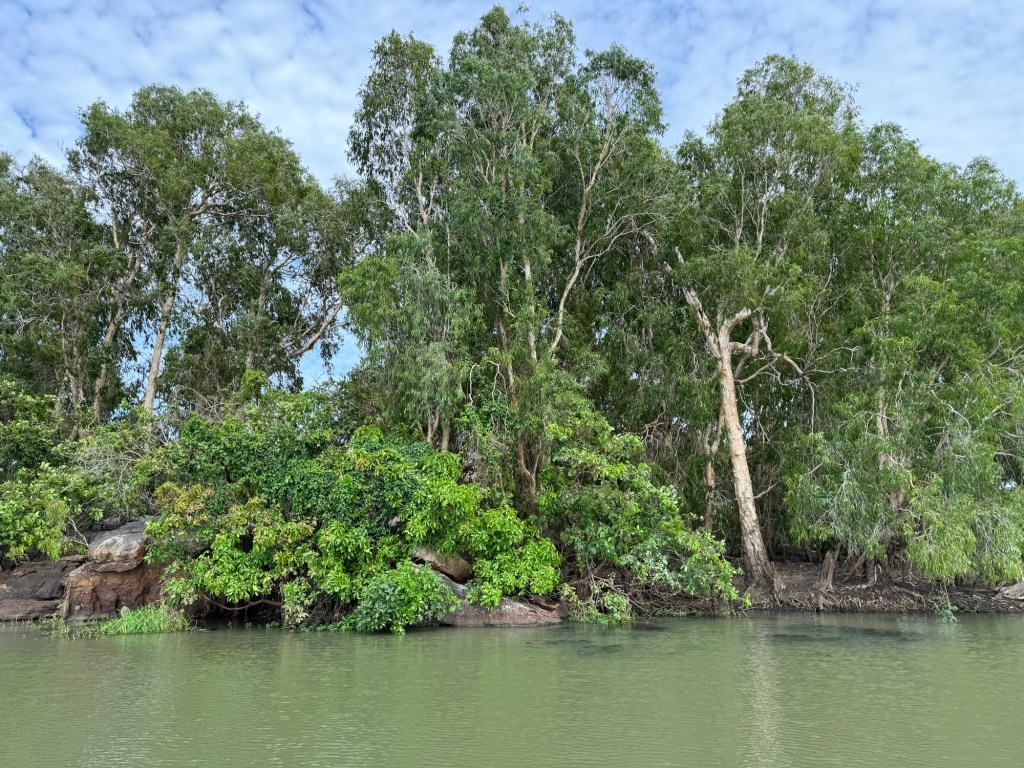
Our guide Cathy enjoying the boat rideThe Daintree River is full of mangrove trees
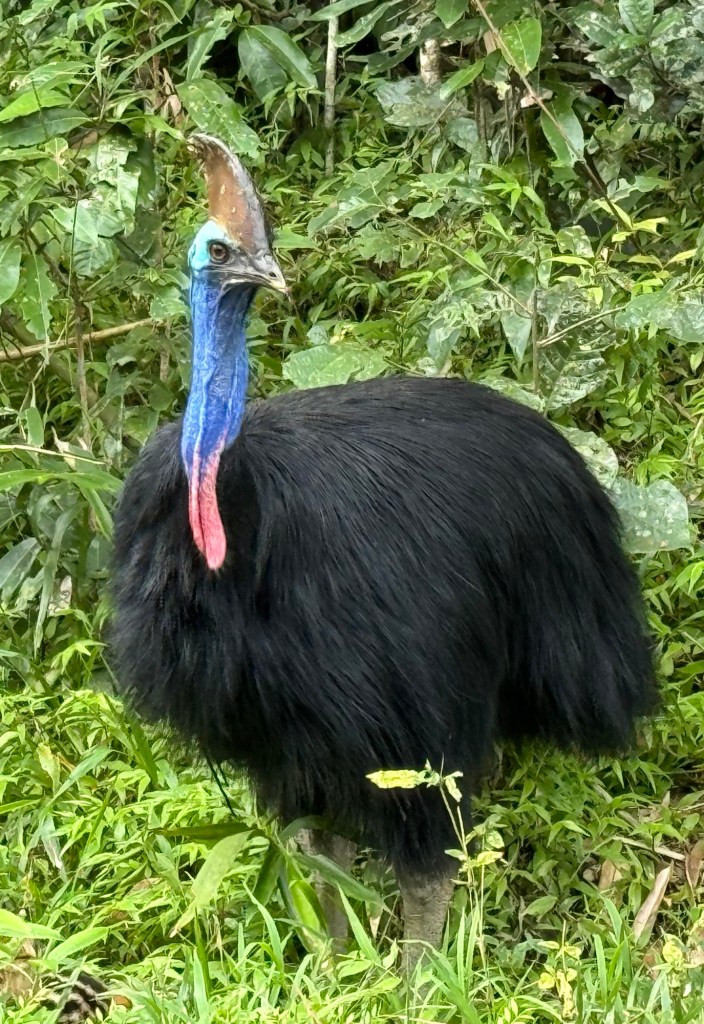
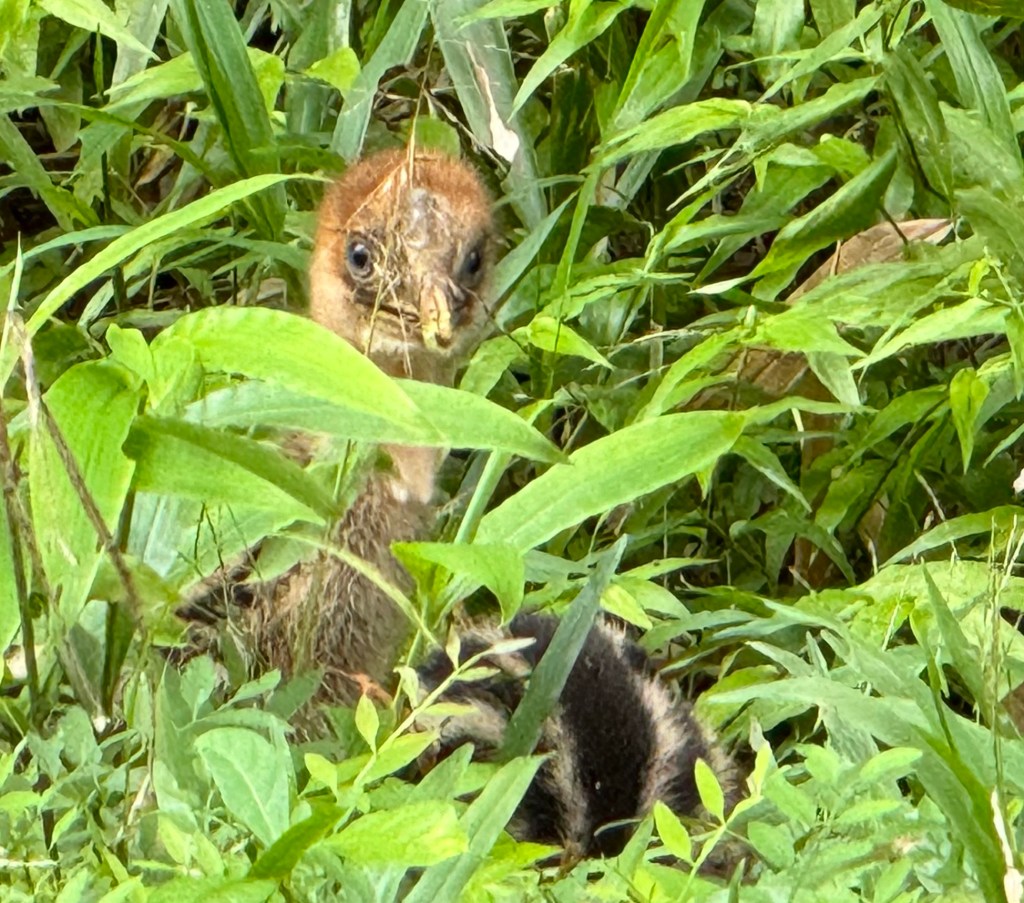
The most exciting part of the afternoon was finding the cassowary bird and her two chicks along the roadside. The rest of the day was quiet.
Female cassowary bird.Baby cassowary bird.
Sunday, September 22, 2024
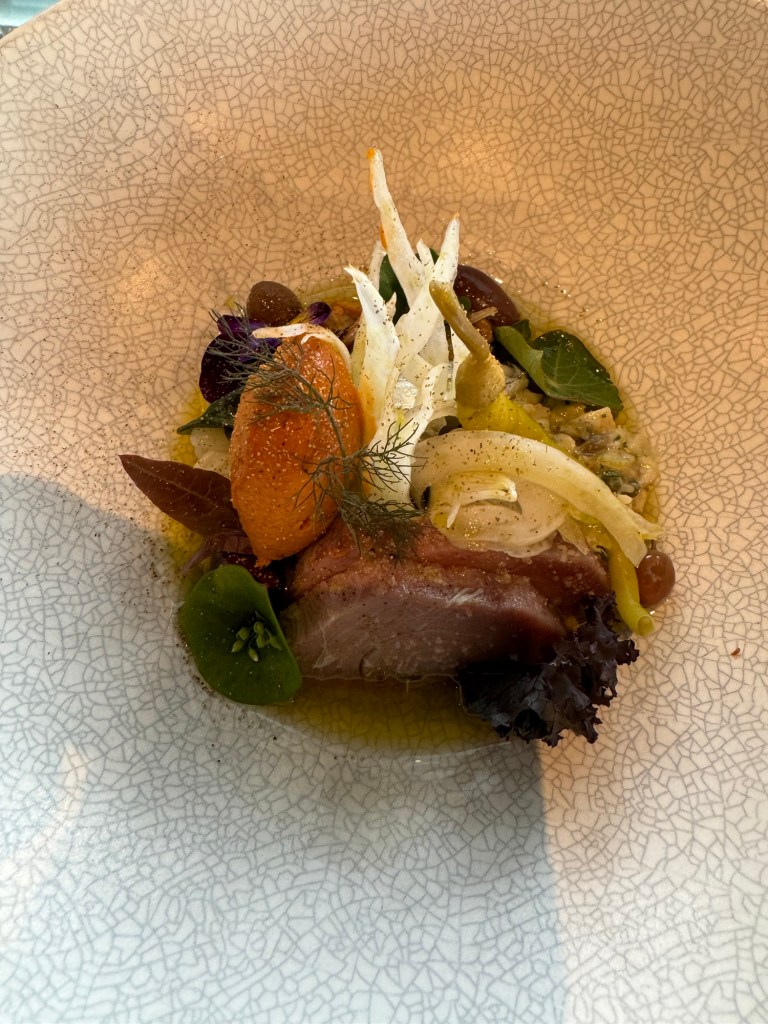
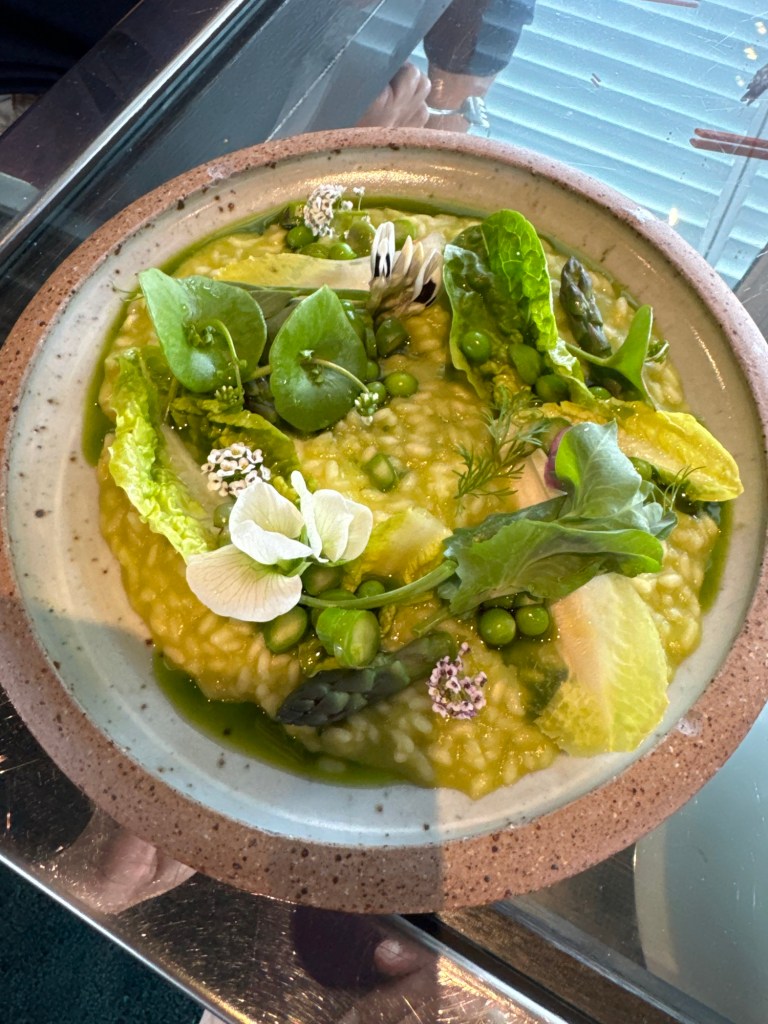
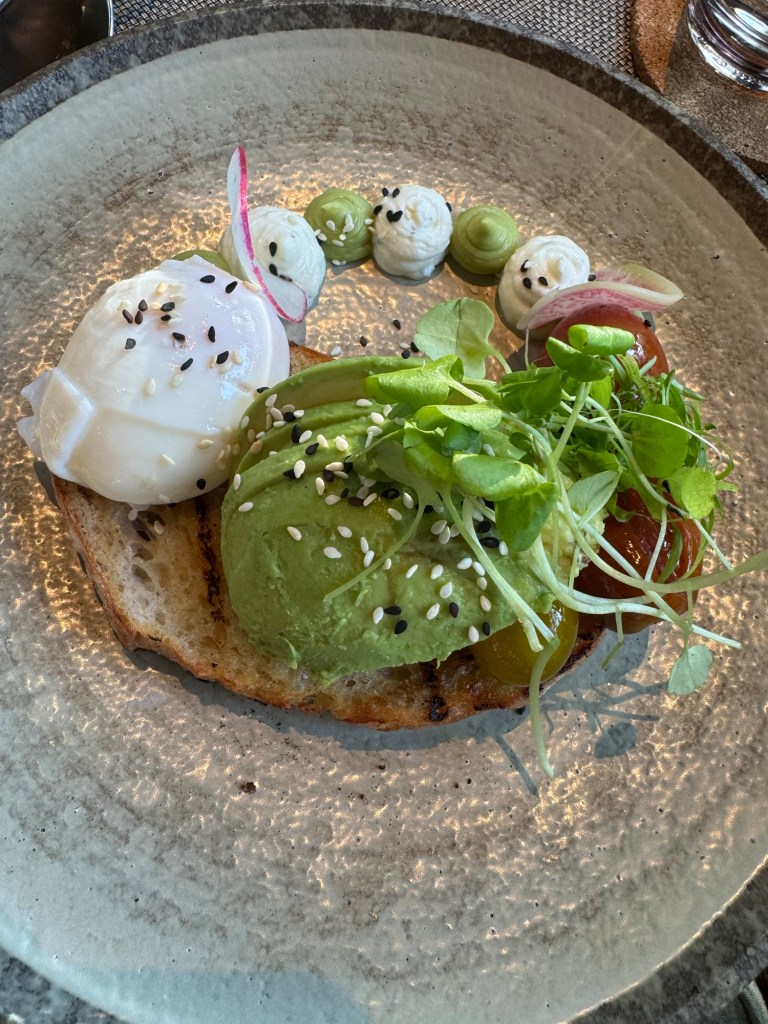
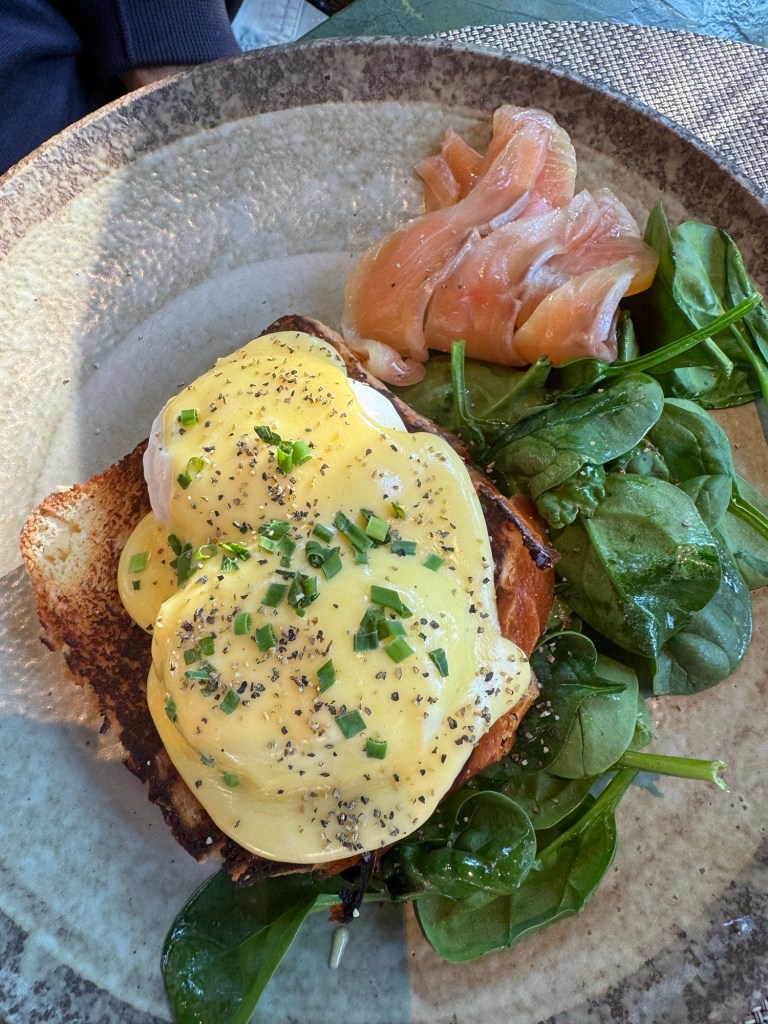
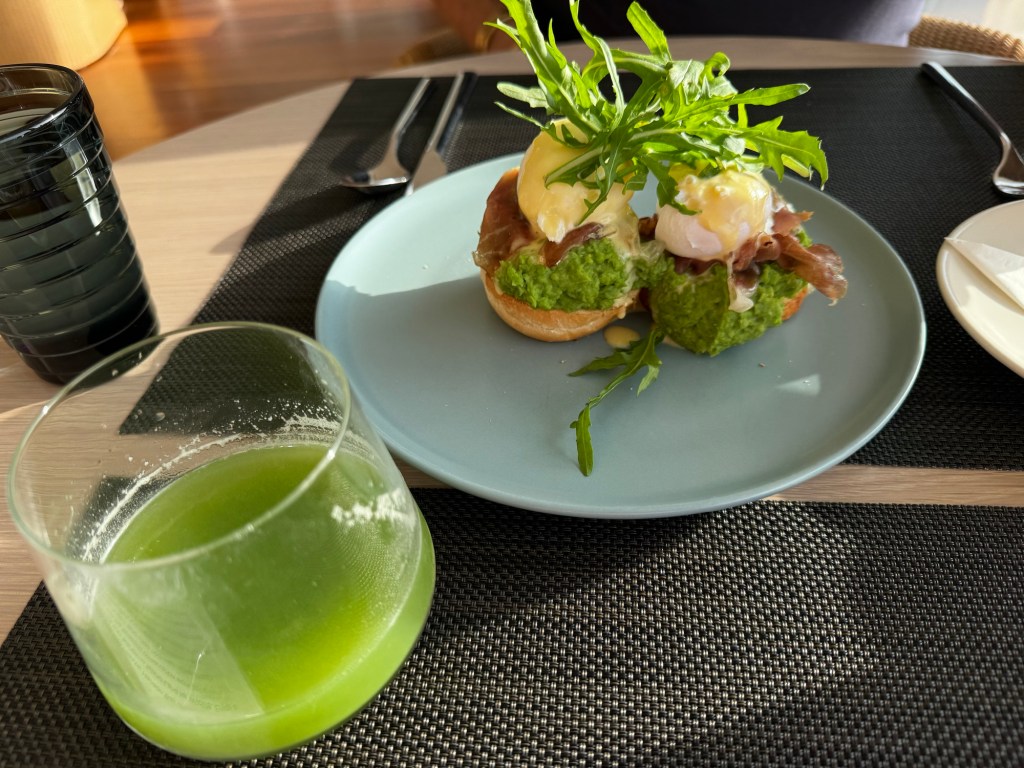
Silky Oaks puts on lovely meals. This morning was no exception. I had Avocado Toast and Mark had smoked Salmon with poached eggs and spinach with hollandaise sauce.
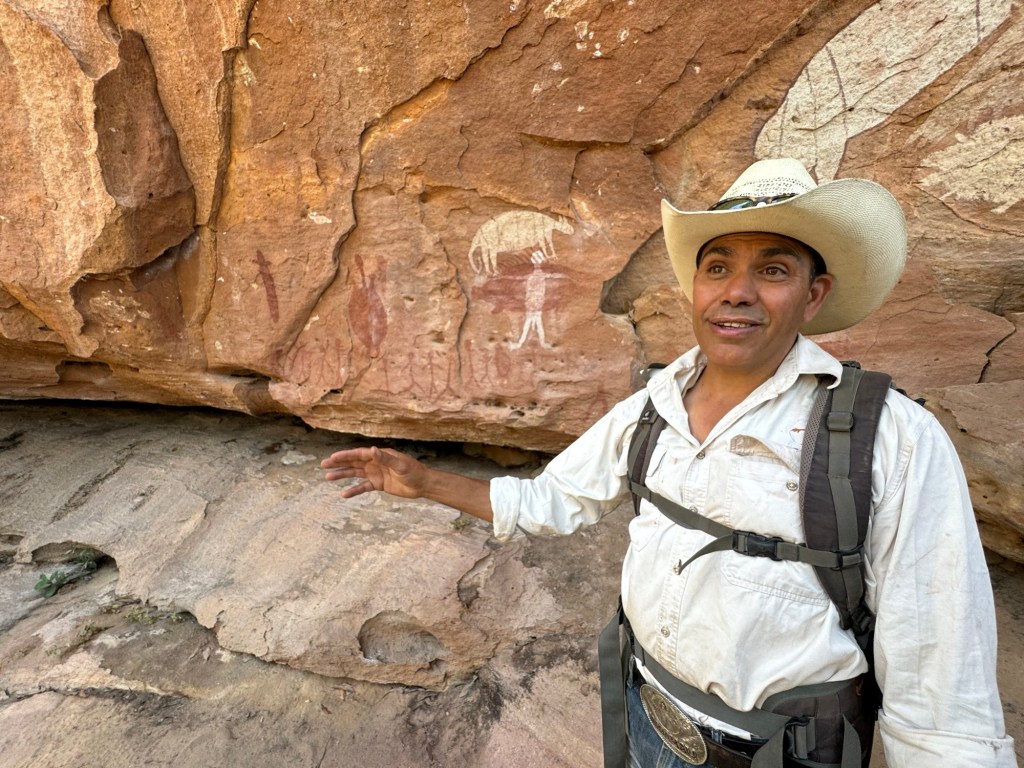
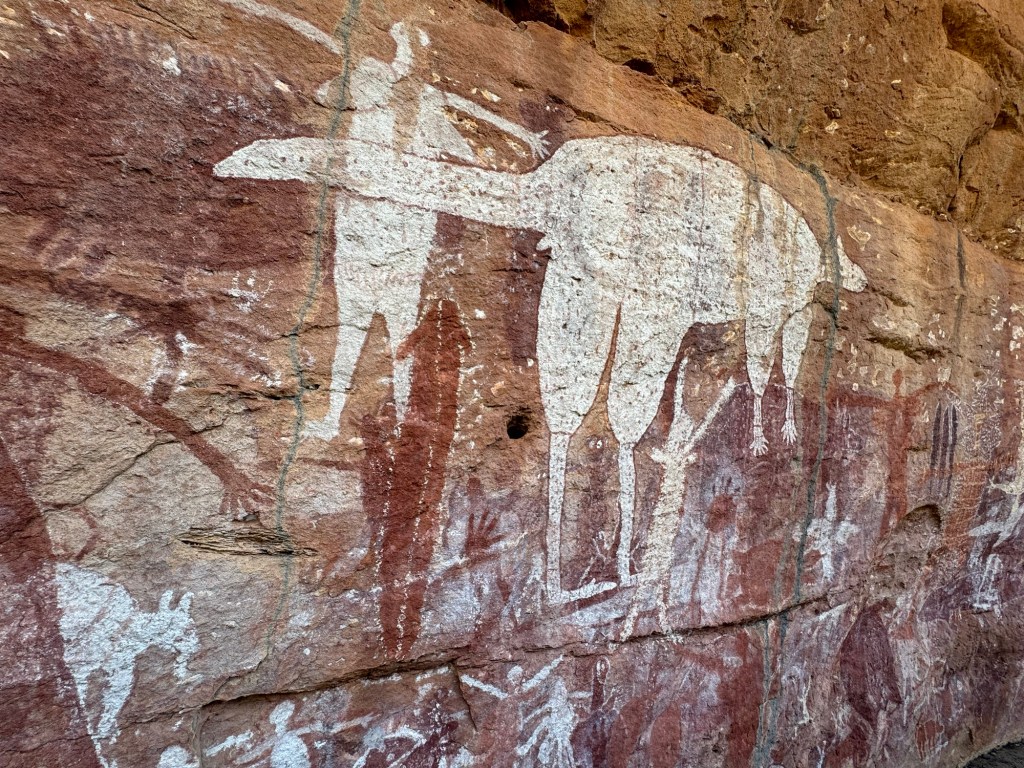
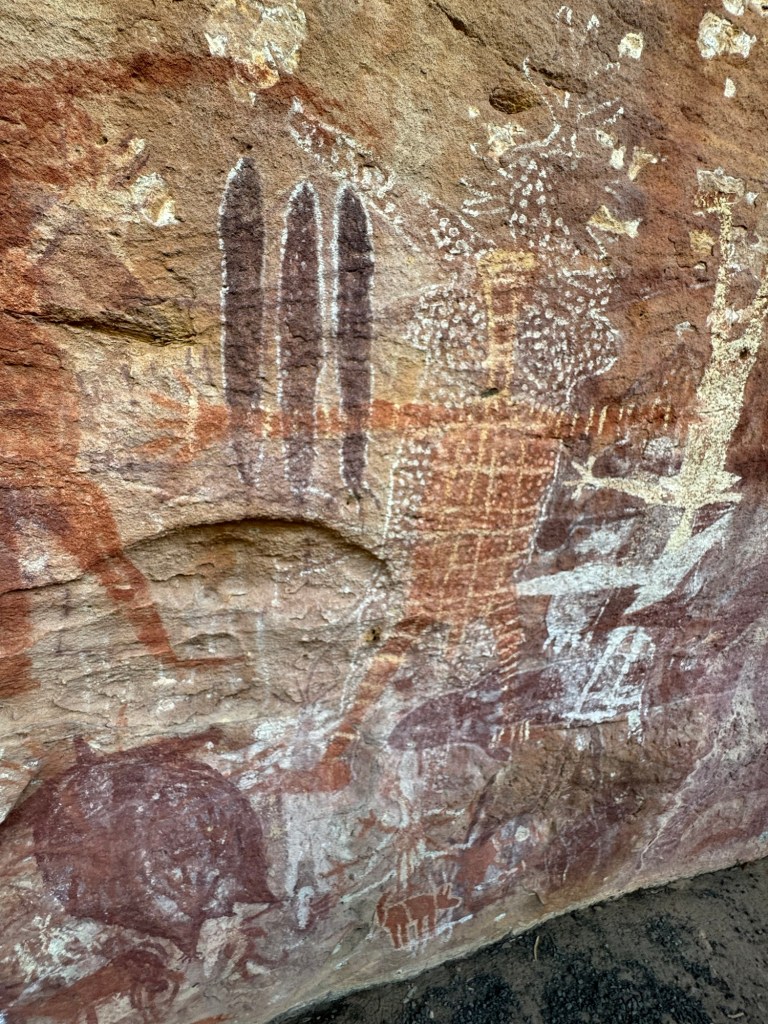
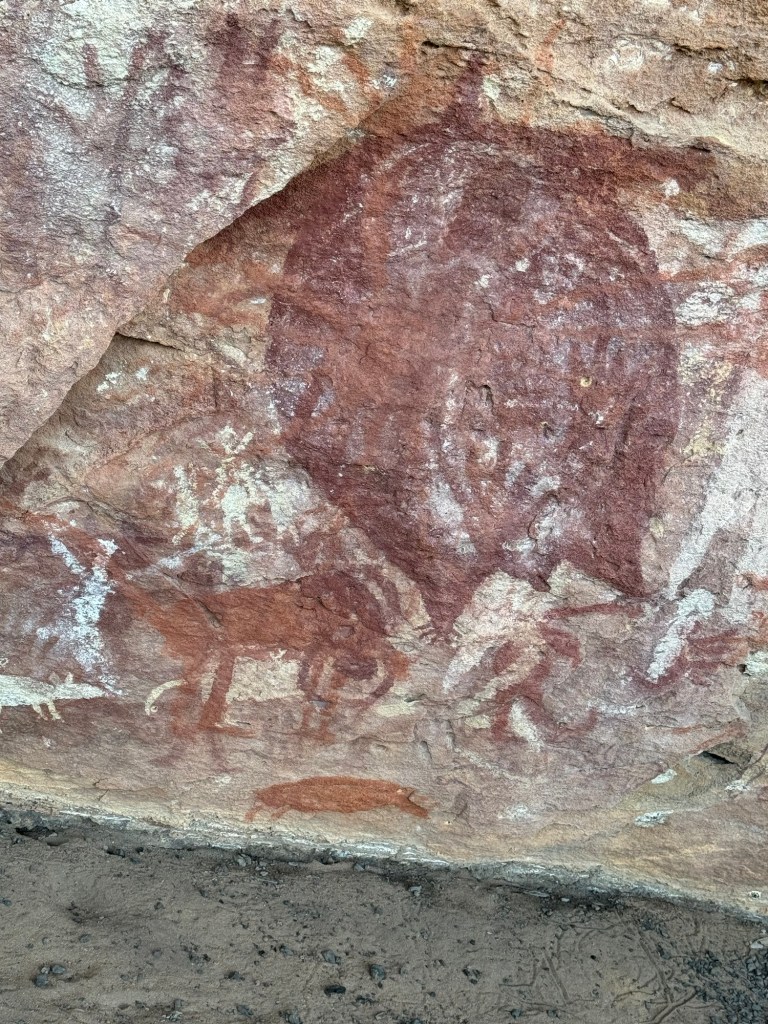
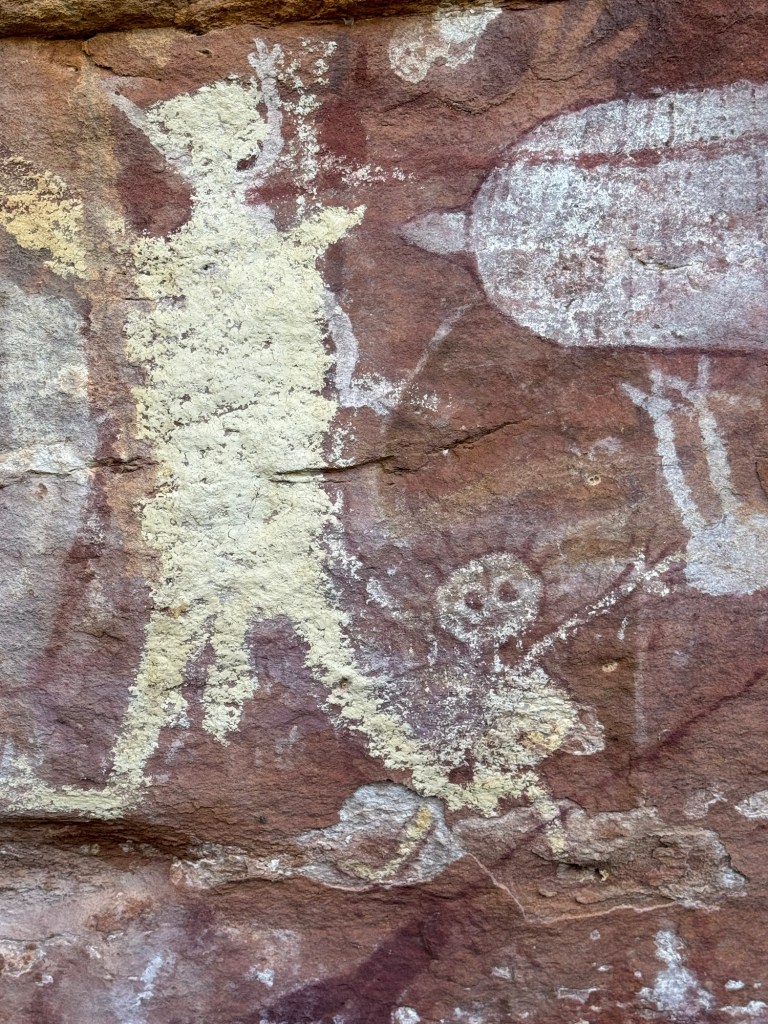
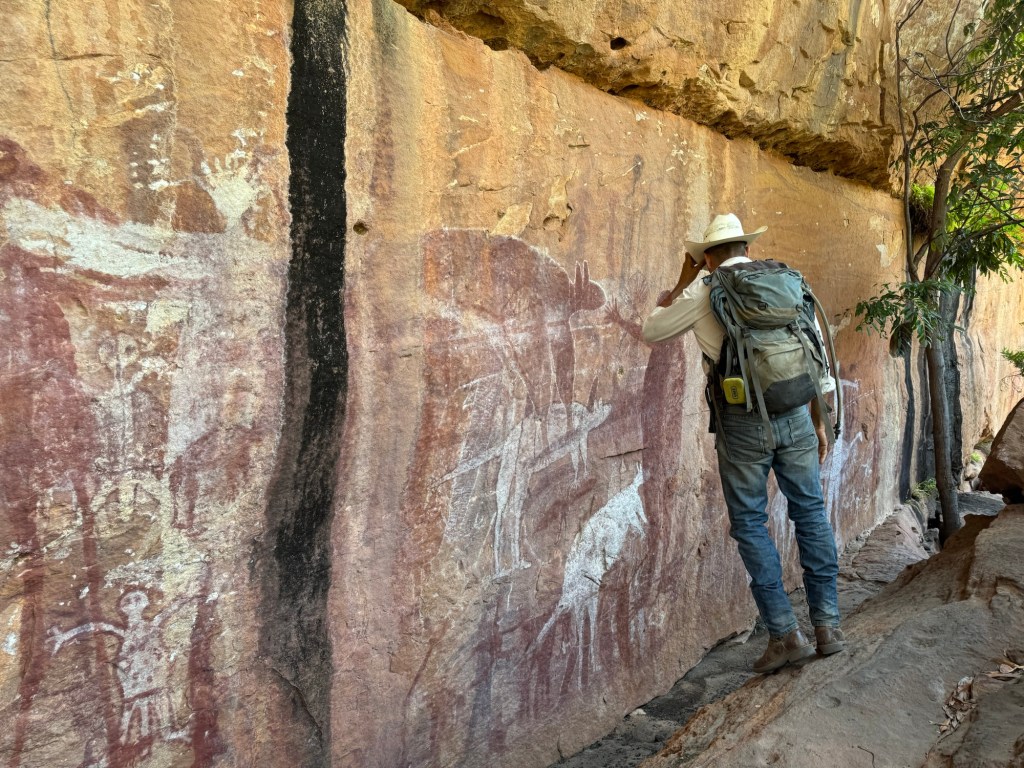
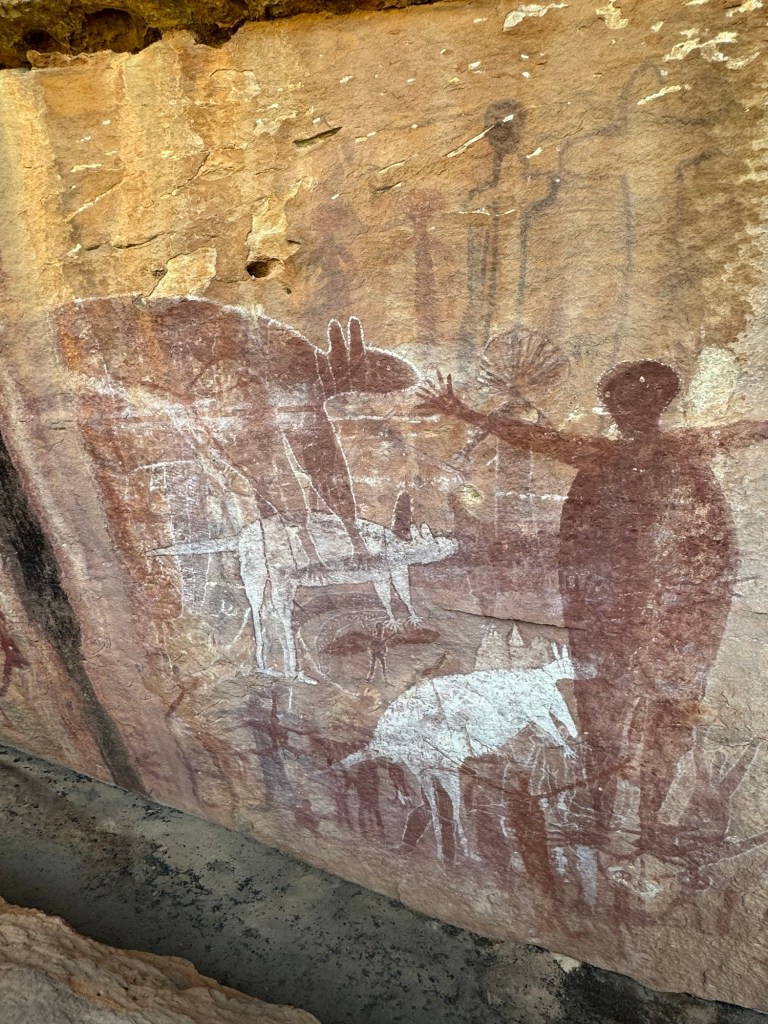
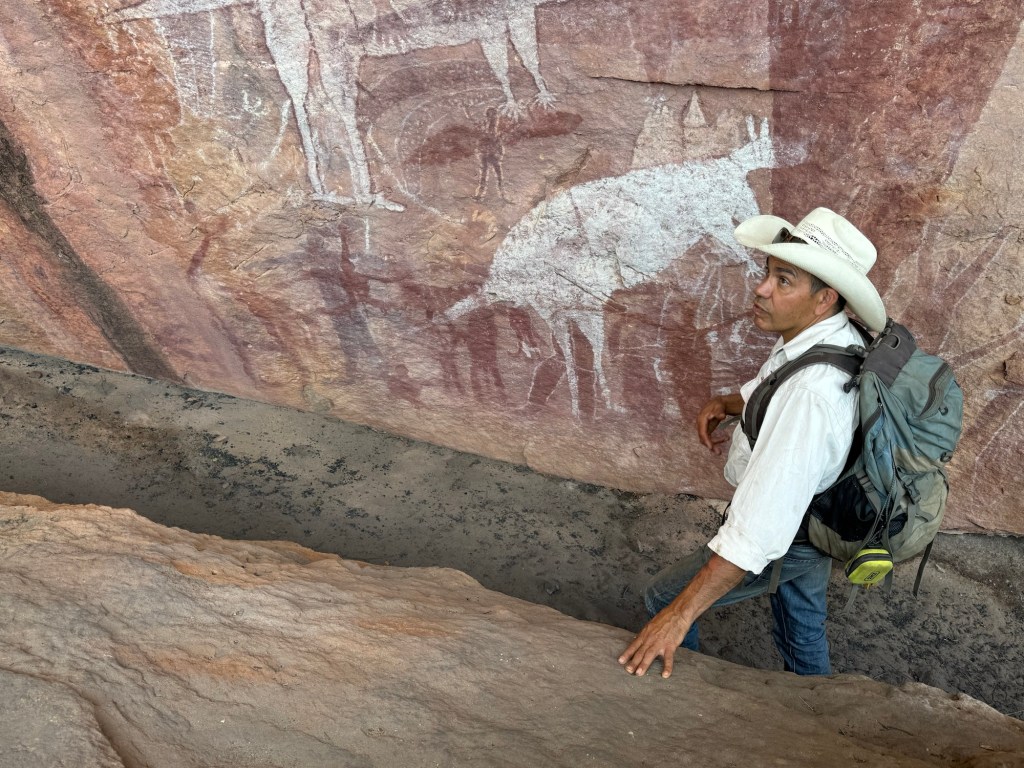
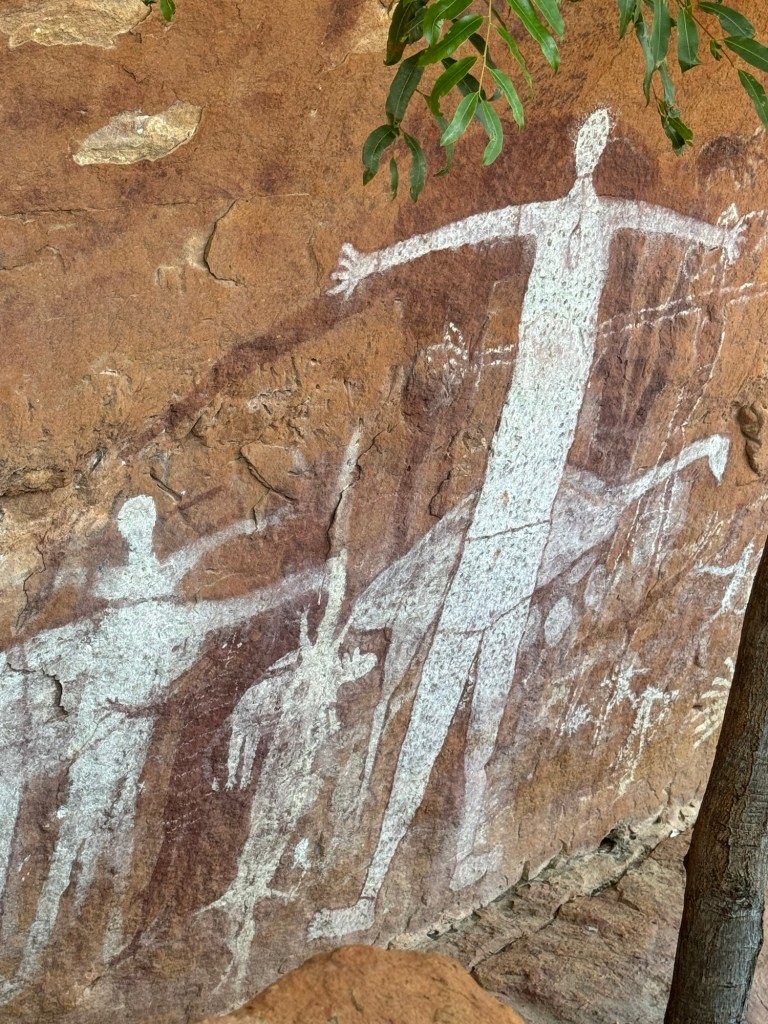
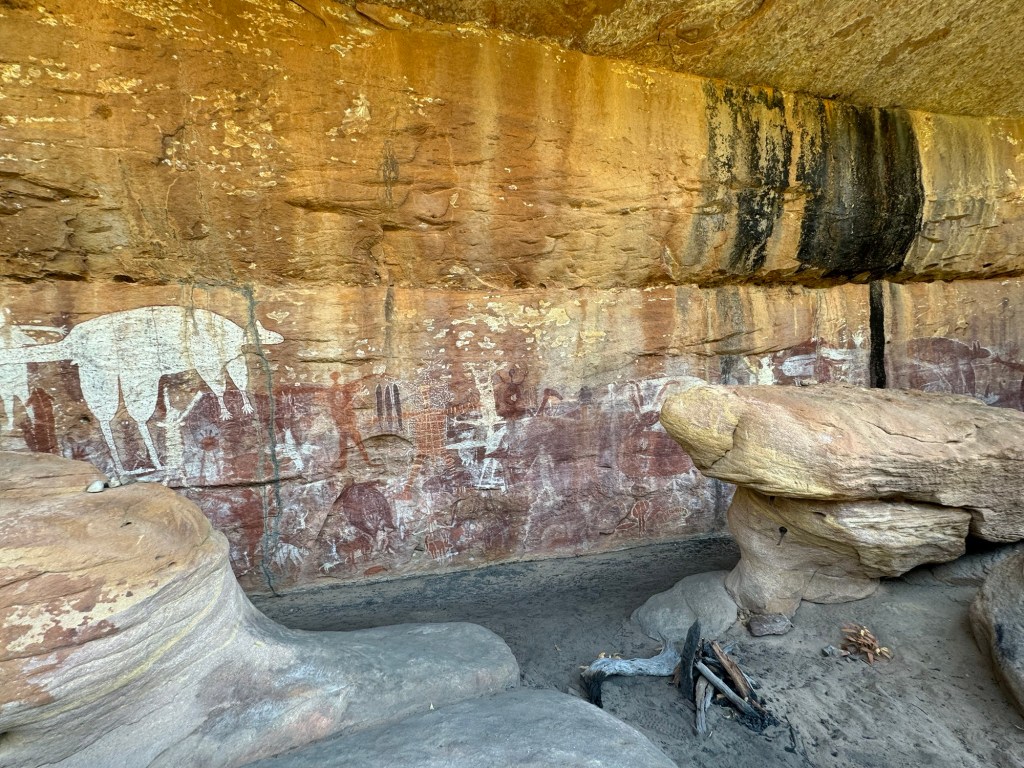
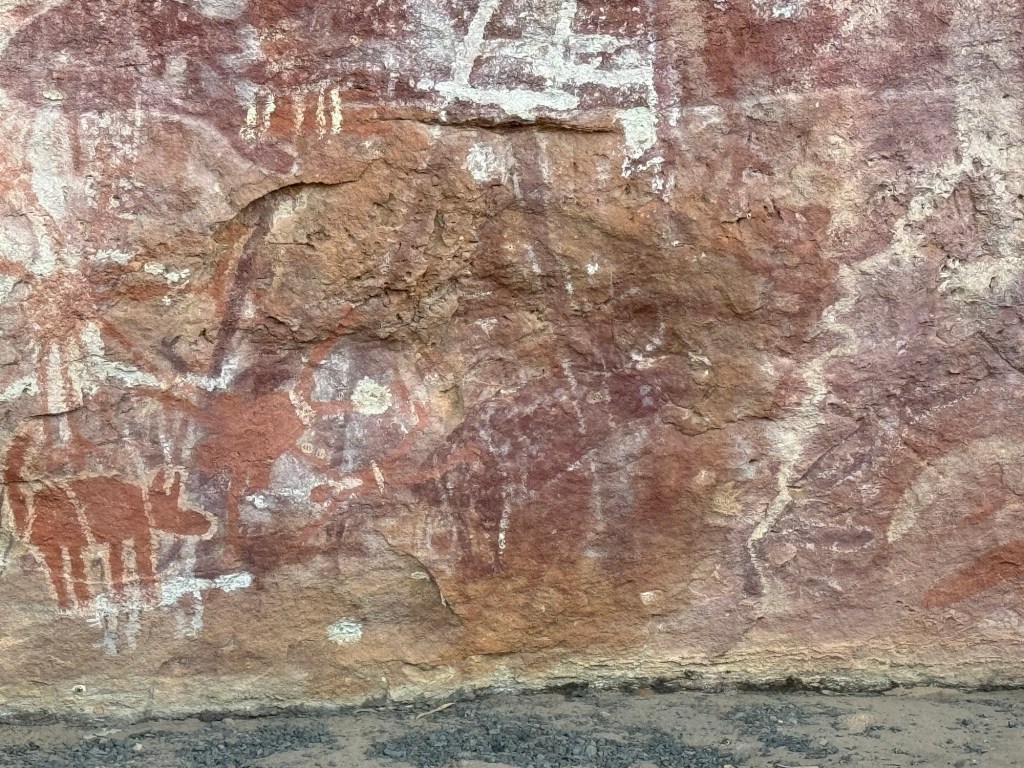
Then we drive to the nearest helicopter pad a few miles away and flew about an hour to a place called Jerramali, which means “thunderstorms”to meet another couple who are friends of Cathy. This couple belong to the western Yalanji people, “people that belong to this place”. They are Johnie, his wife Erica and their three children. There are thousands who belong to this group of people. Johnie will be showing us the traditional art gallery on his property. He has an old utility ATV that he uses to take people close to the art site. It is a scary ride, but better than walking. Anyway, there is still more boulder walking after exiting the vehicle before we are finally at the art gallery. Johnie is pretty good at explaining the figures. What I notice is that the drawings are different in style and color and shape from the art in the Arnhem collection. Here are samples from the art wall.
Large wall full of artJohnie explaining the artA man with 6 fingers and 7 fingersLarge animals3 squash next to a bride in white with headdress and a groom in red check in front of herBig ant eaterUnknown figureLittle figure is a bad guyJohnie in front of art wallFigure with 6 fingers & woman with headdressJohnie and kangarooBig manEmu footprint compared to a handprint
Once we finished visiting the art wall, we had lunch with Johnie’s family and helicoptered back to the car.
The big wallA dingo on left Cathy dishes up lunchLunch is served in Johnie’s 3 sided corogated building with a concrete outhouseMark poses with Johnie’s family & the helicopterPort Douglas in the distance
Back at the heliport, we say farewell to Cathy and take the hotel car back to Silky Oaks. We both felt sticky enough to want to jump in the pool, so we did, then chilled the rest of the day. I finished this post and got it ready for Mark to proof it.
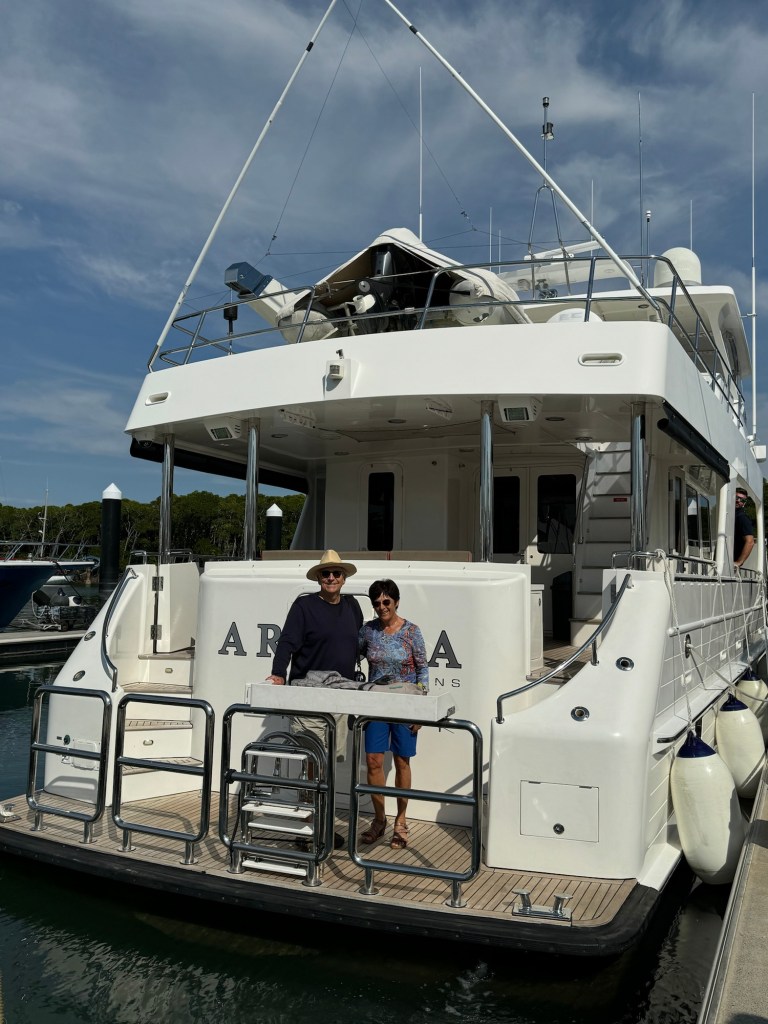
Time to pack and head for the Aroona. Time is flying by.
The flight from Singapore to Darwin took 4 1/2 hours and was uneventful except for a nearby child who cried nearly the whole flight. We arrived about 2:30 pm and went directly to our hotel on the waterfront in downtown Darwin. The room was thankfully cool, but not an inviting place to hang out. The outdoors was very hot and sticky, but offered a walk on the waterfront and restaurants to check out, so out in the sticky heat we went. It wasn’t long before we just wanted to eat and go to bed, so we settled on a place called Pink Chopsticks and filled up on sizzling shrimp, pork belly and rice noodles. Back in the room, we cooled off and crashed.
Tuesday , September 17, 2024
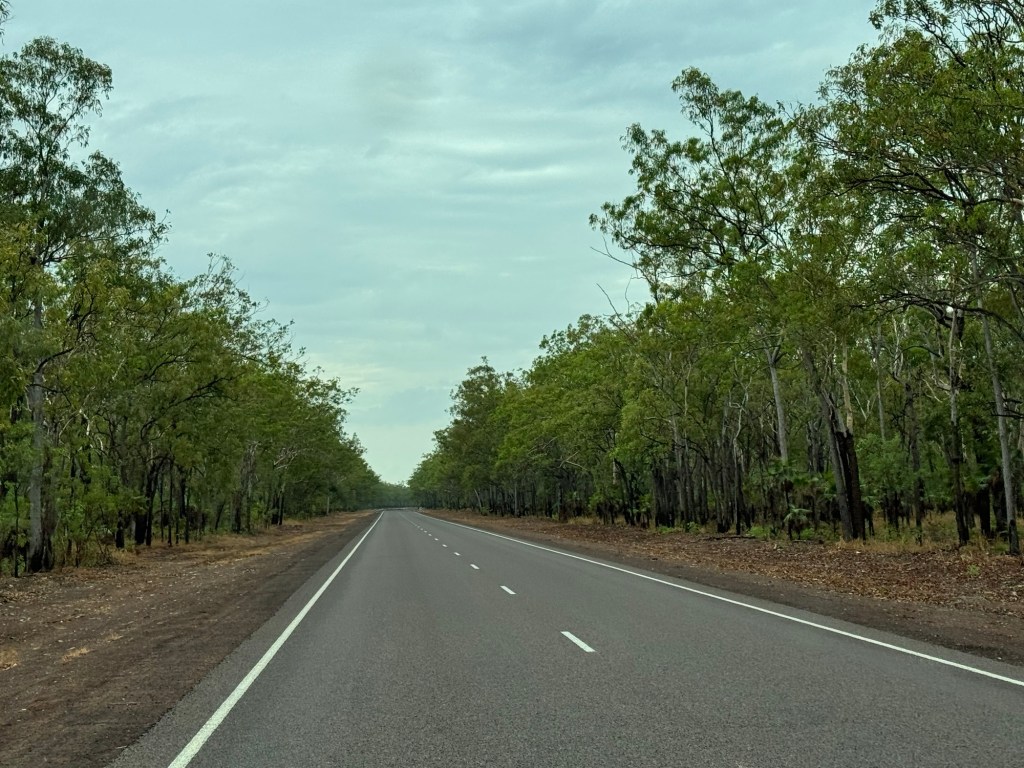
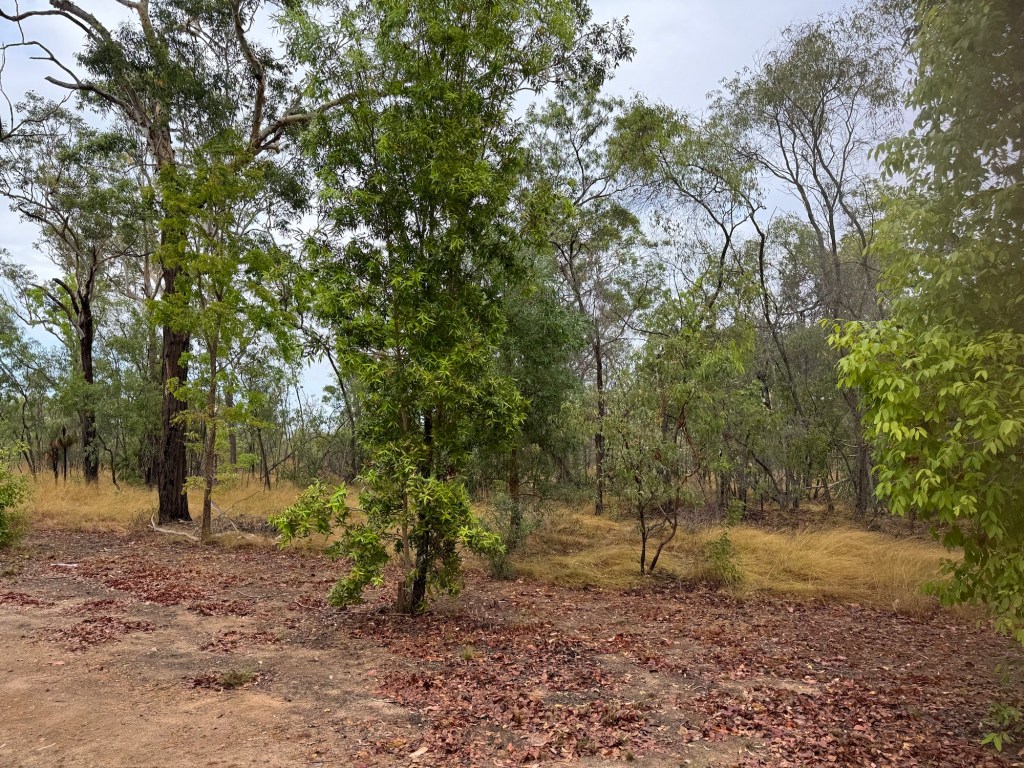
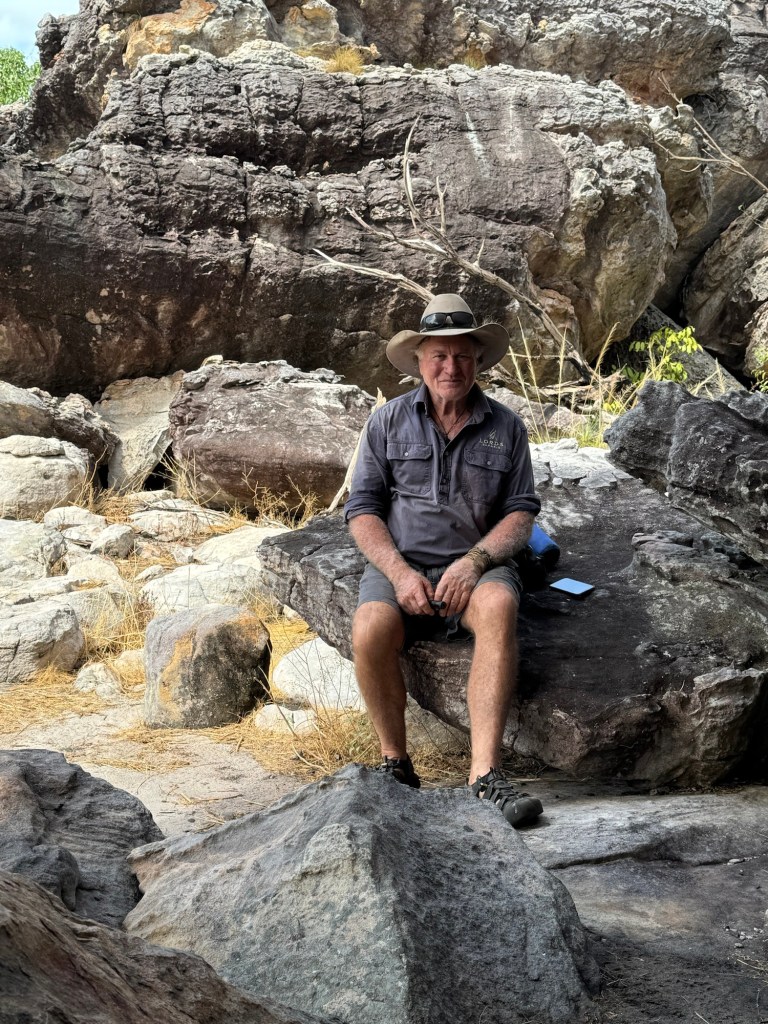
It feels like we have finally arrived at the point of beginning now that we are in Australia. After a simple breakfast, we were met by our guide Sab Lord. He is more than a guide, he is also the owner of Lords Kakadu & Arnhem Land Safaris, the company Martina booked for us, and a very interesting fellow. We embarked on an all day drive through flat land full of paperbark, eucalyptus and Sand palm tree forests, aka the bush, that receives controlled burns on a regular basis.
Driving through the bush
Fortunately, the monotony of the drive is interrupted by the conversation with Sab. He is 64 and getting ready to retire from the business next year, but shares many of his experiences of living in the bush and his knowledge of the aboriginal people. They are 3.5% of the 26M national population. Today’s aboriginals are heavily subsidized by the government, making them very dependent on Government hand outs.
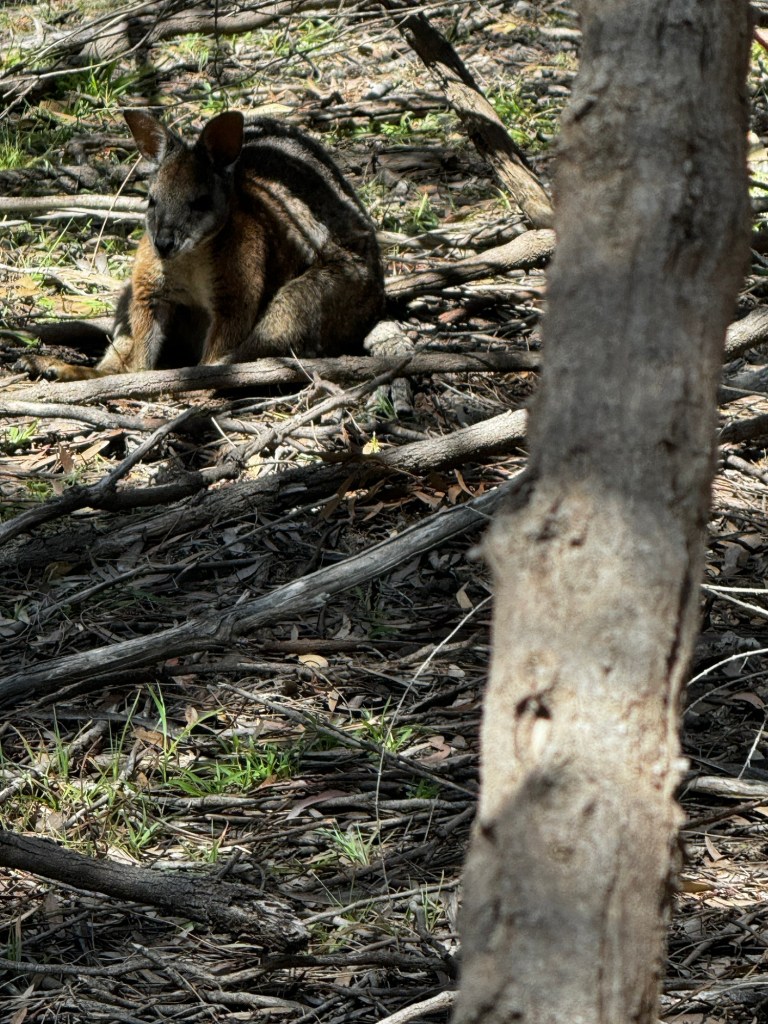
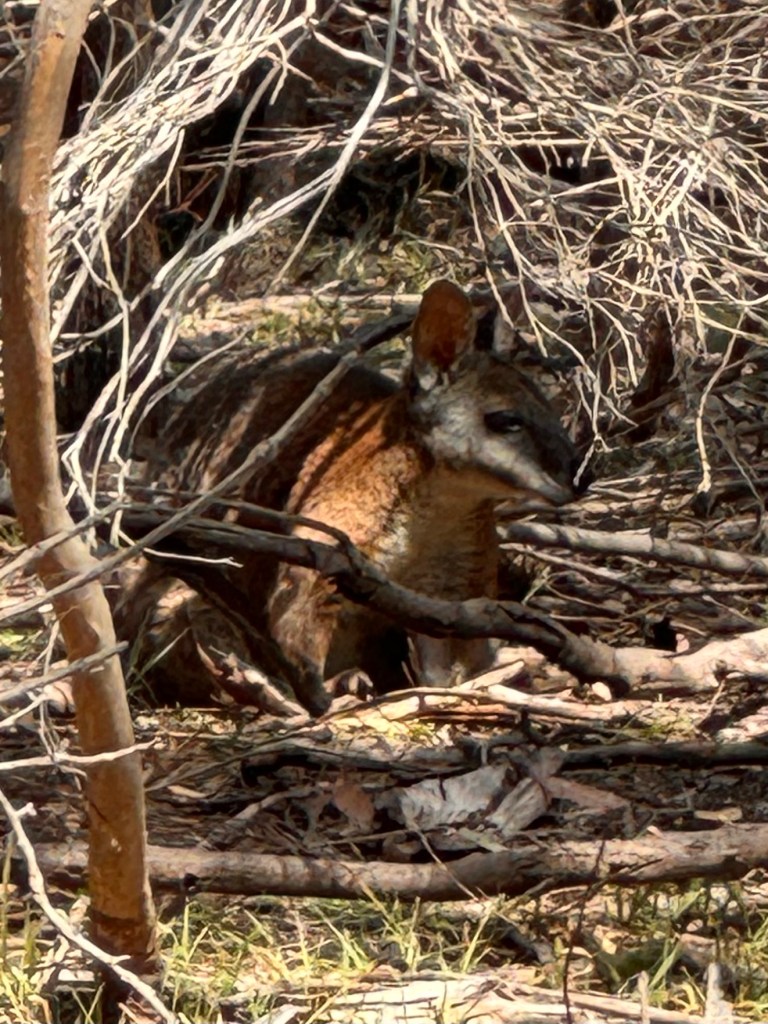
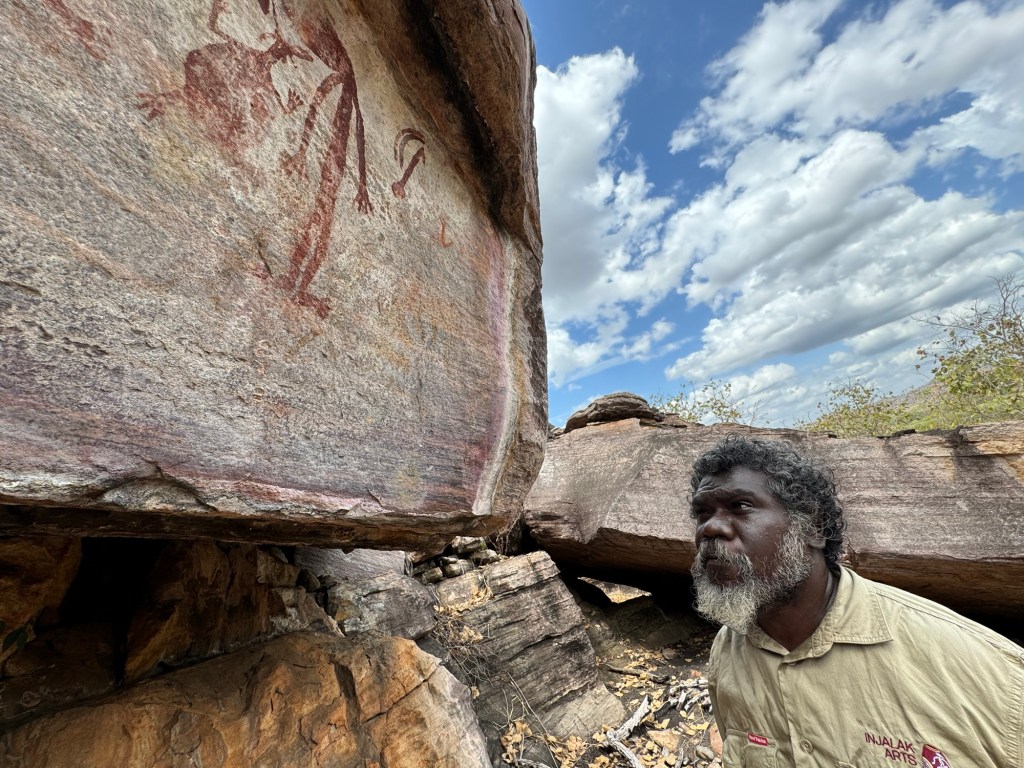
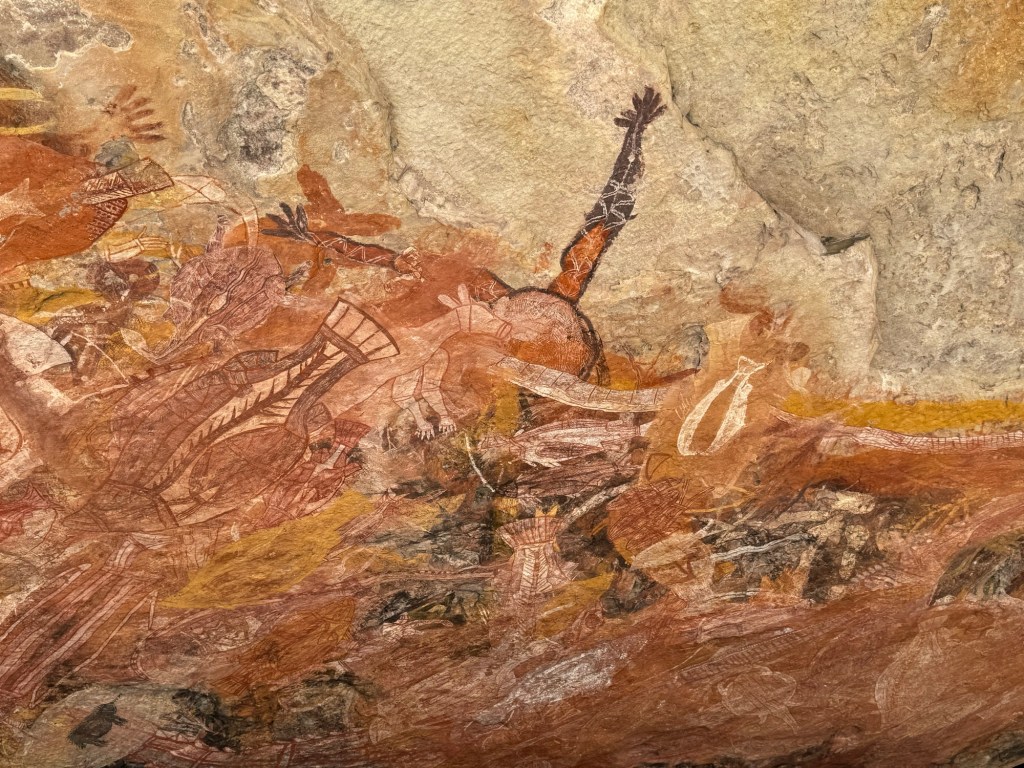
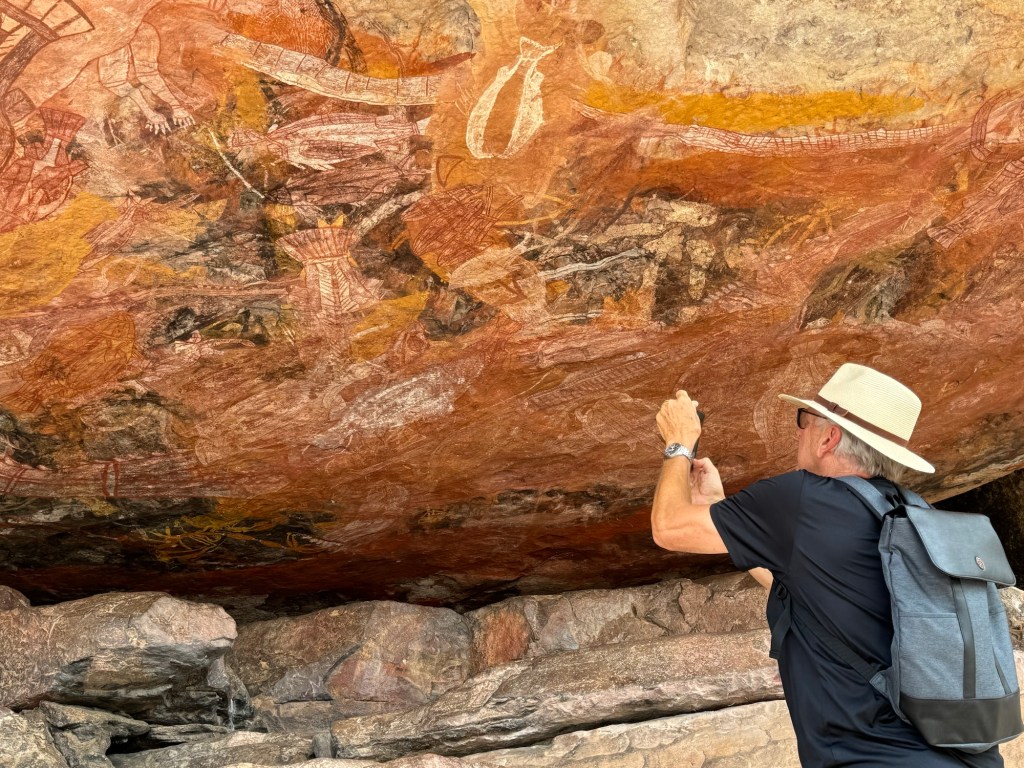
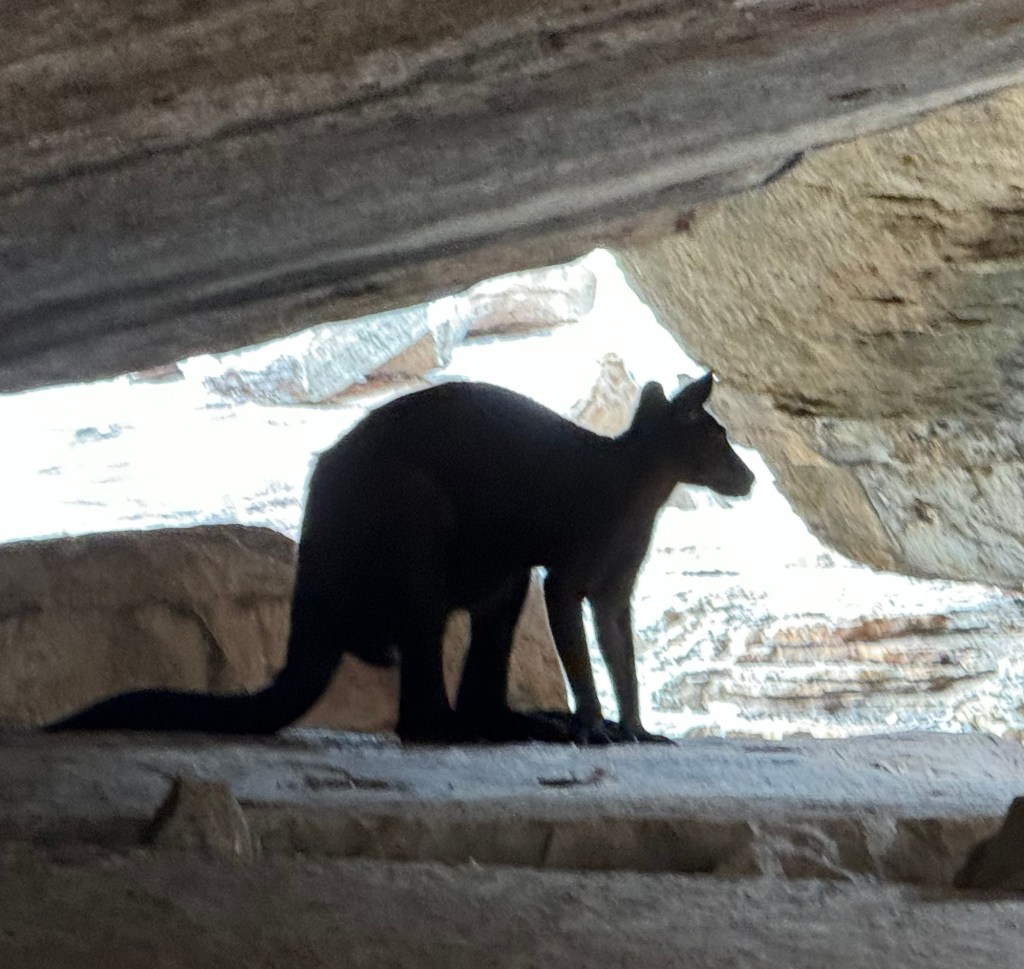
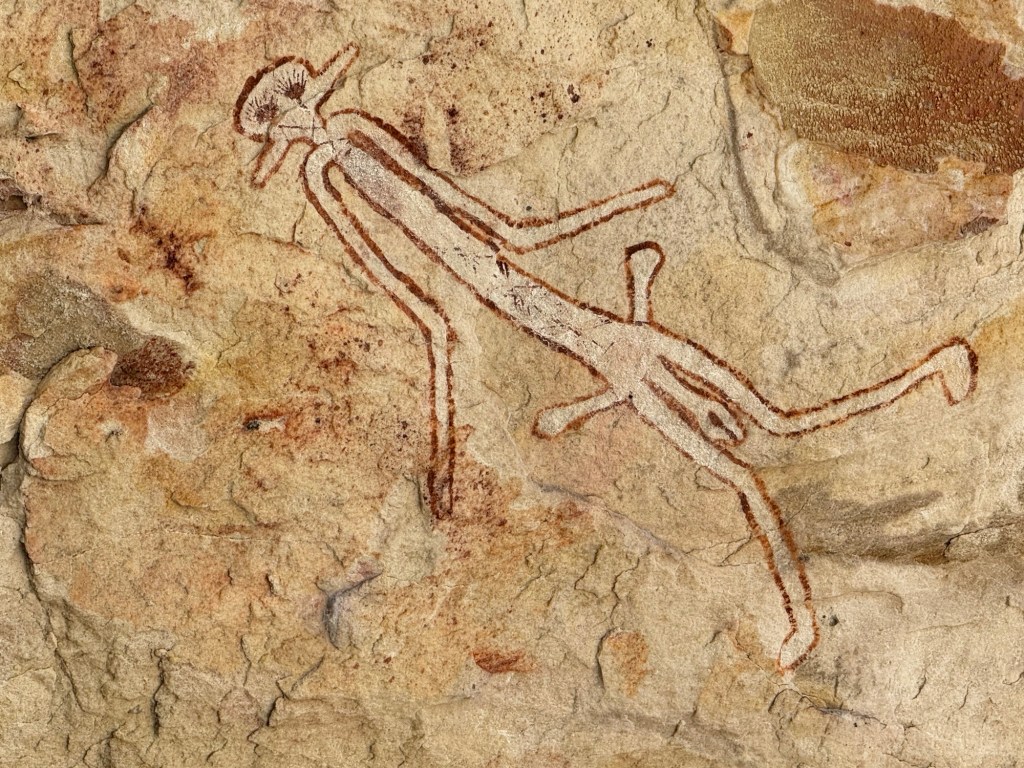
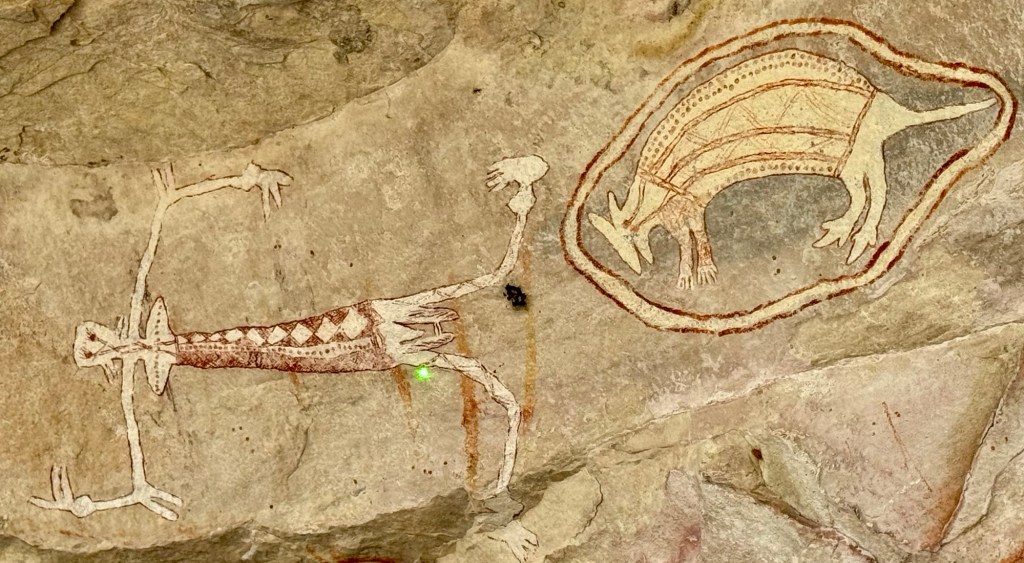
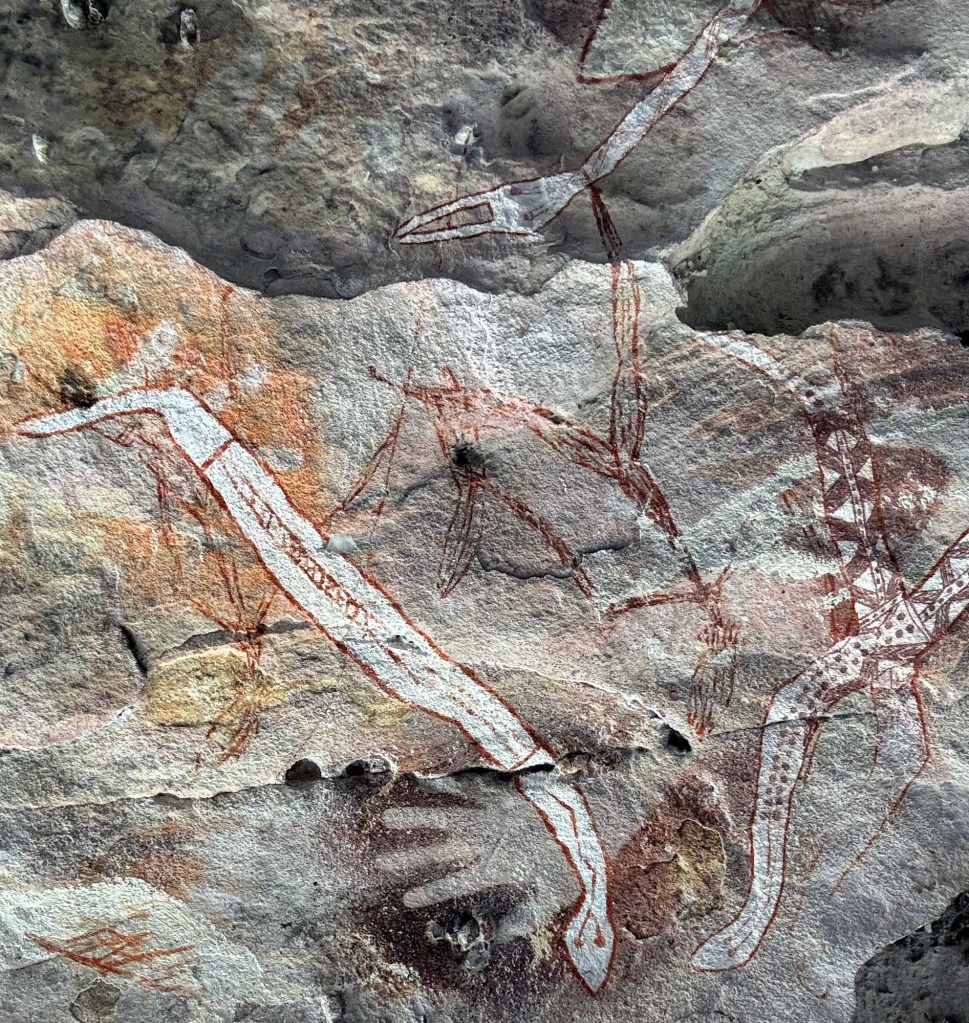
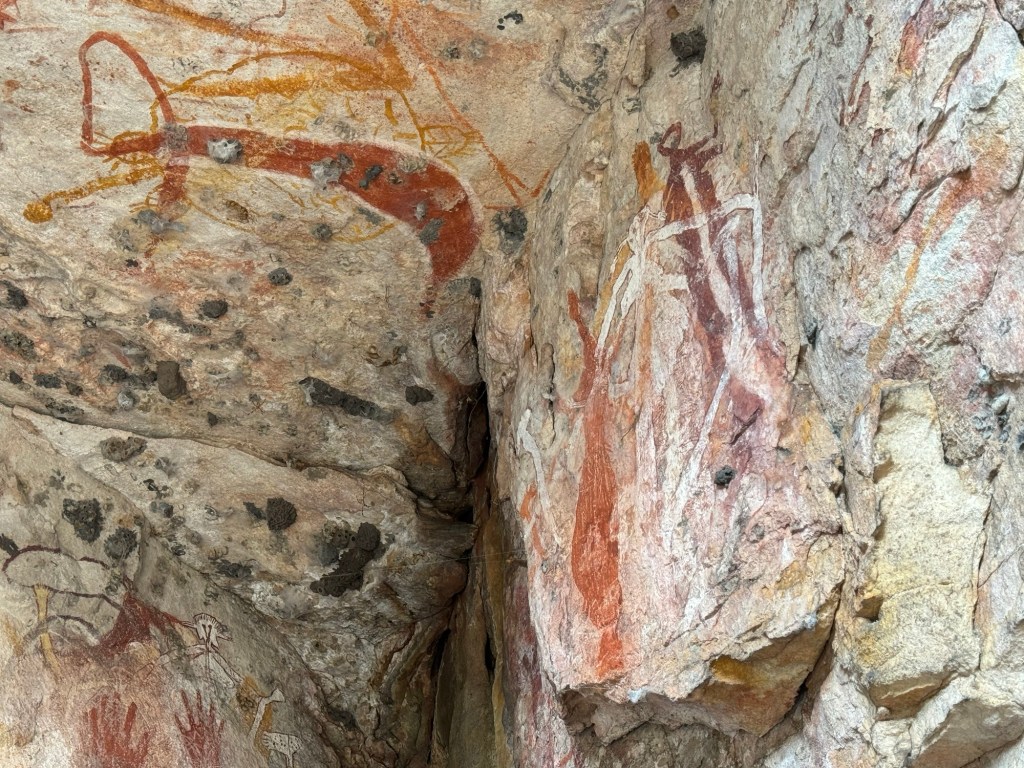
Dallas looking at artTwo birdsTwo men walkingMultiple animals & fishLooking as fish & snakesMark & Dallas looking at artA rare black walleroo
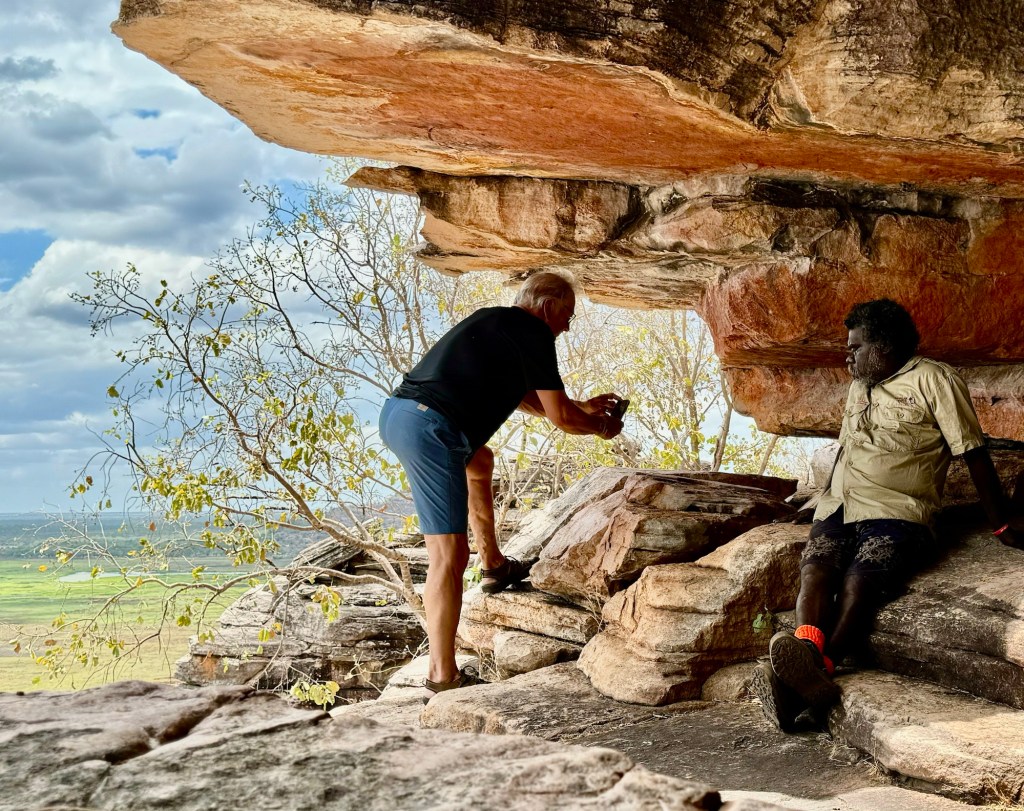
After 2 hours we arrived at Injalak Hill, an iconic indigenous rock art site, that protrudes above the landscape. Sab introduced us to a local aboriginal guide named Dallas, who led us up the boulder strewn hill to see the art. It was a bit rough going in the heat, but, with Mark’s help, I managed. Dallas spoke very little but was clearly proud of his ancestors’ work. He seemed content with his quiet life and uninterested in changing. I couldn’t help comparing him to our Native Americans, many of whom are independent, industrious and participating in American society.
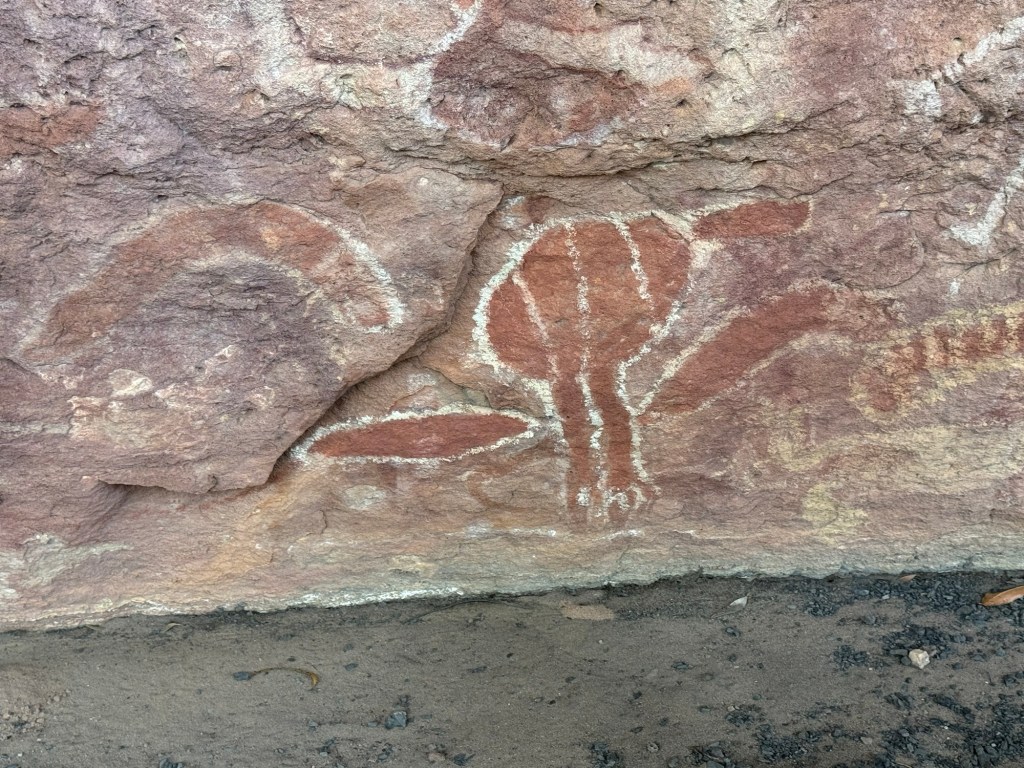
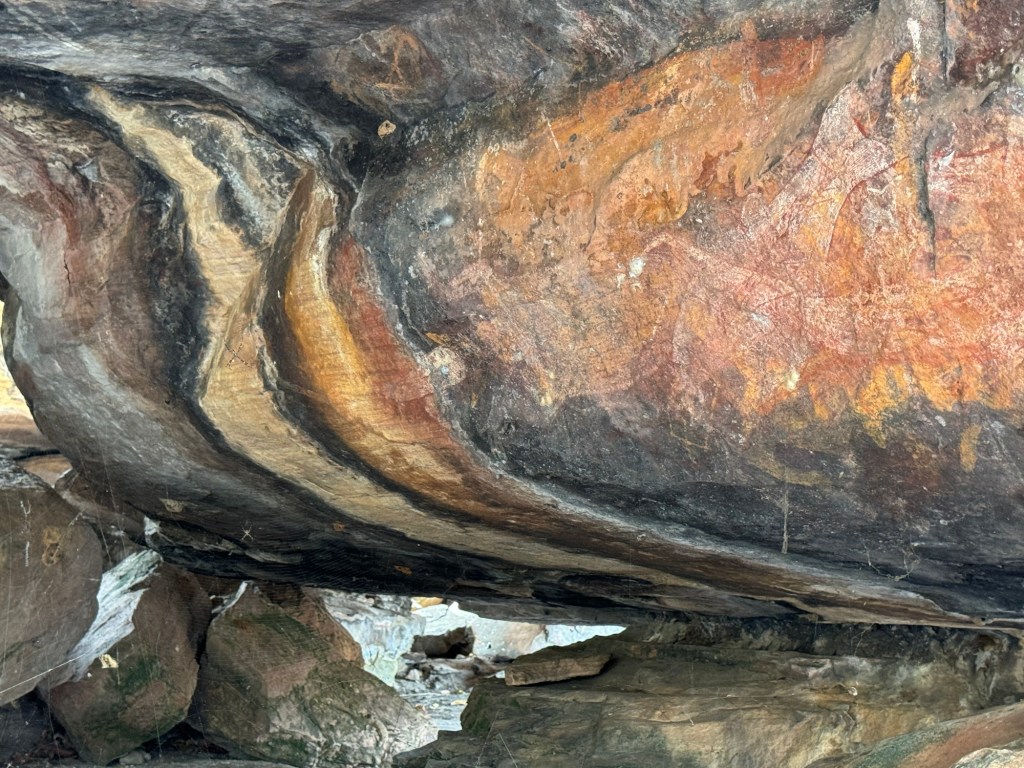
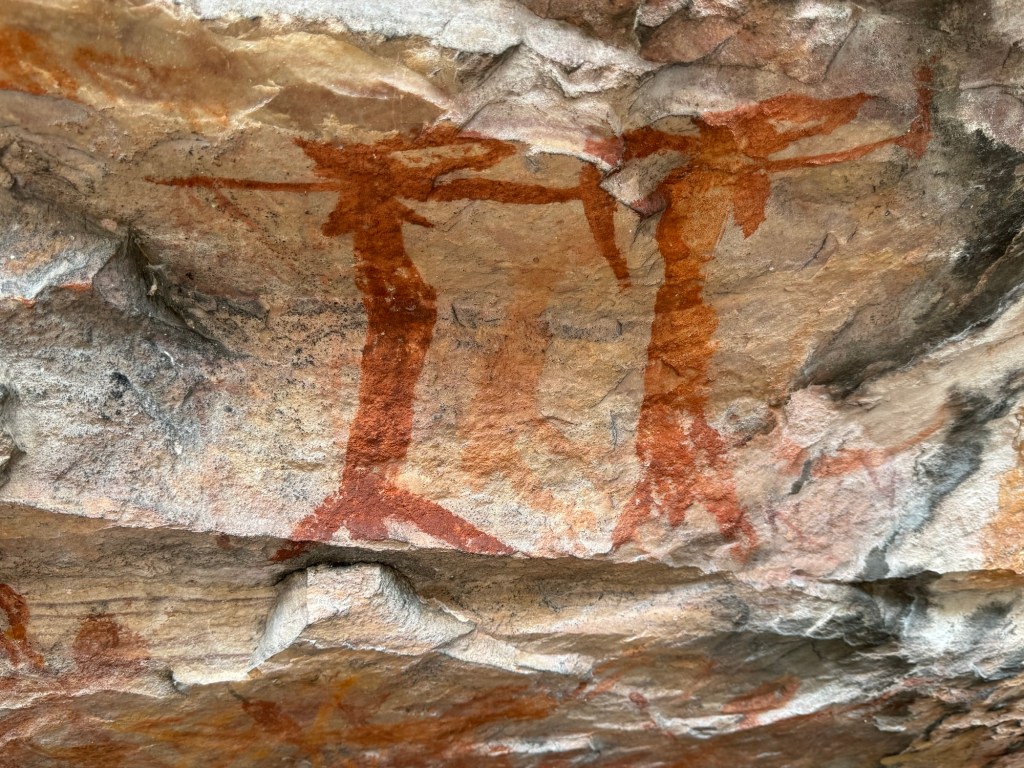
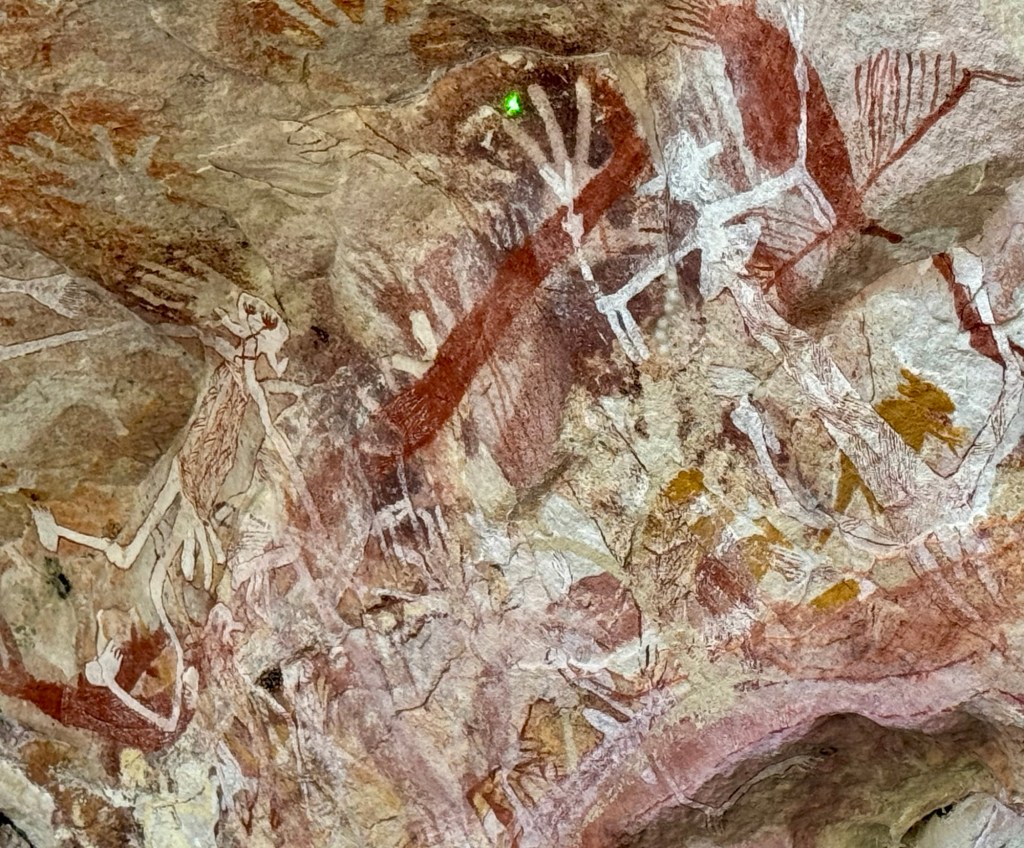
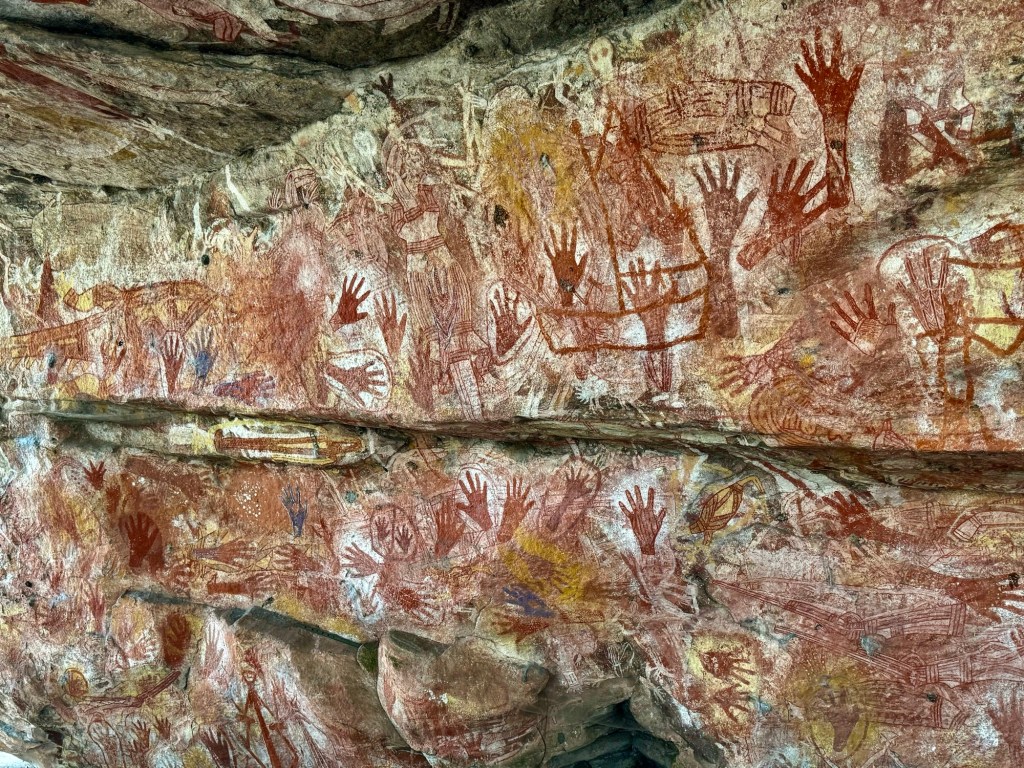
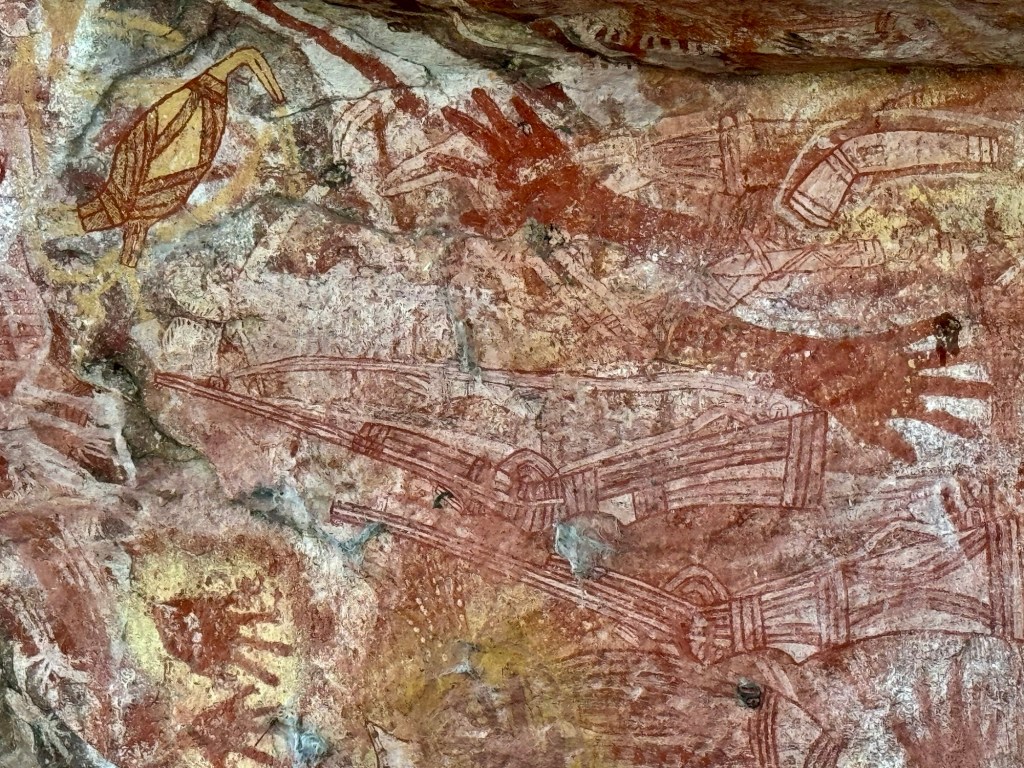
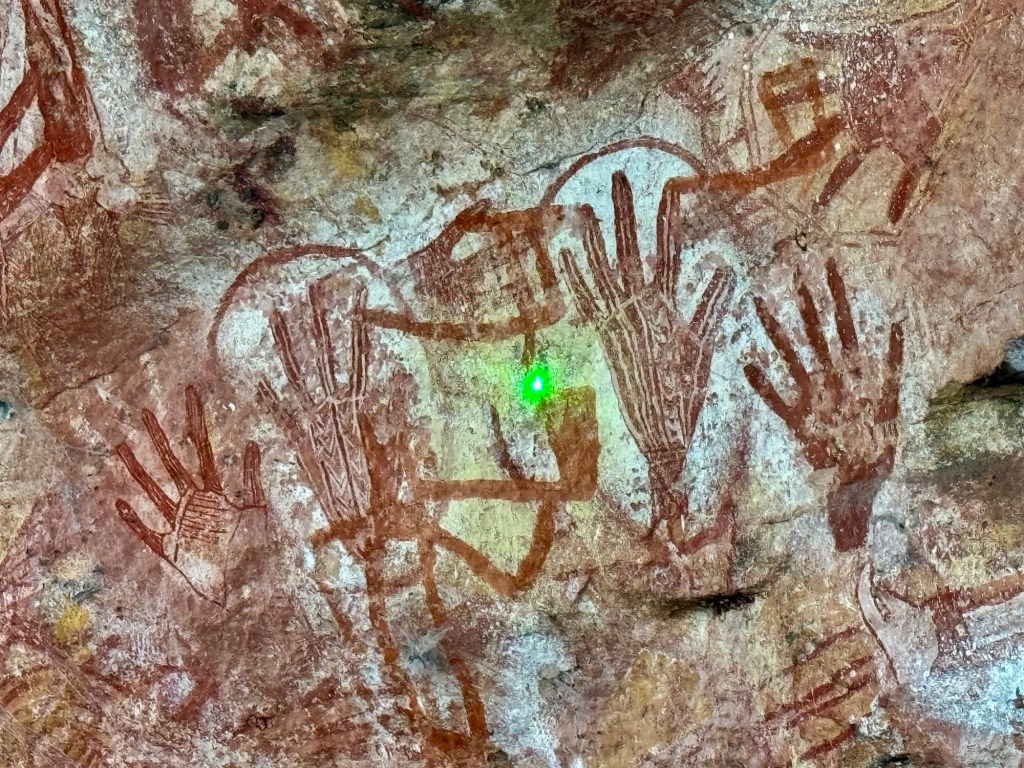
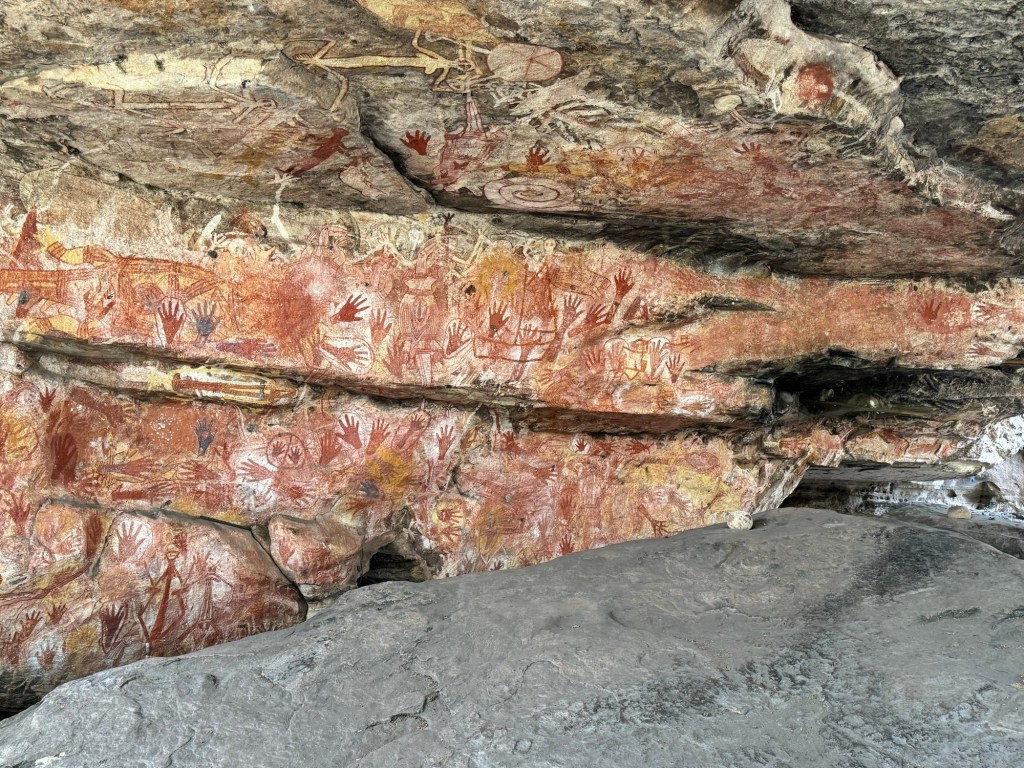
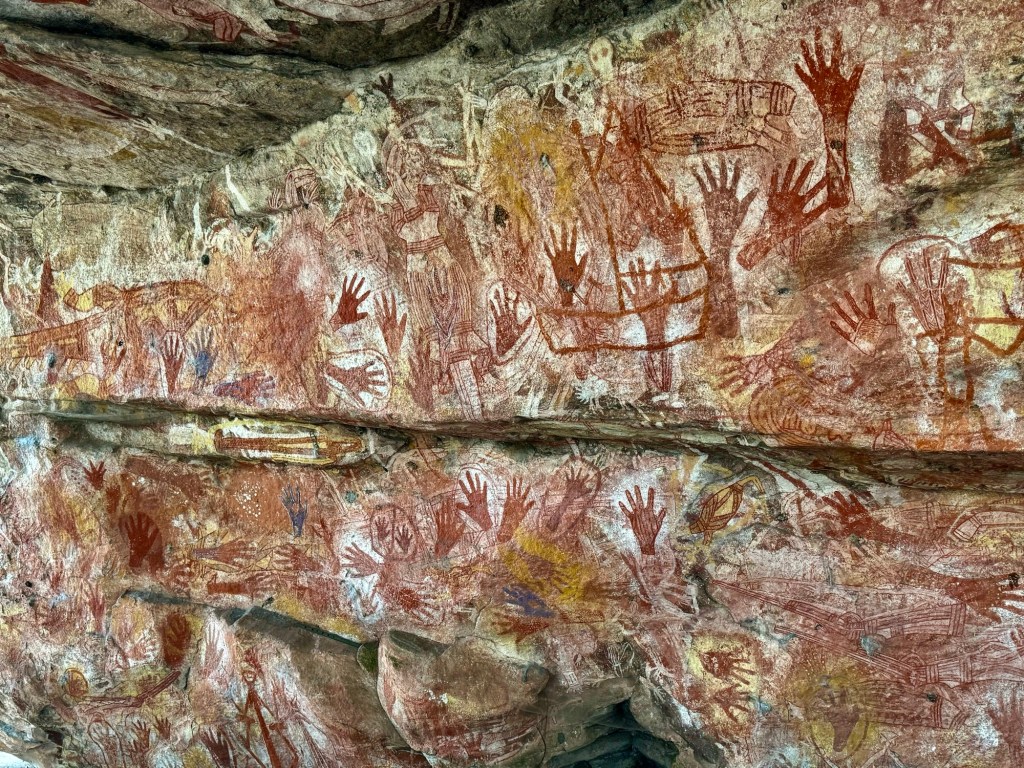
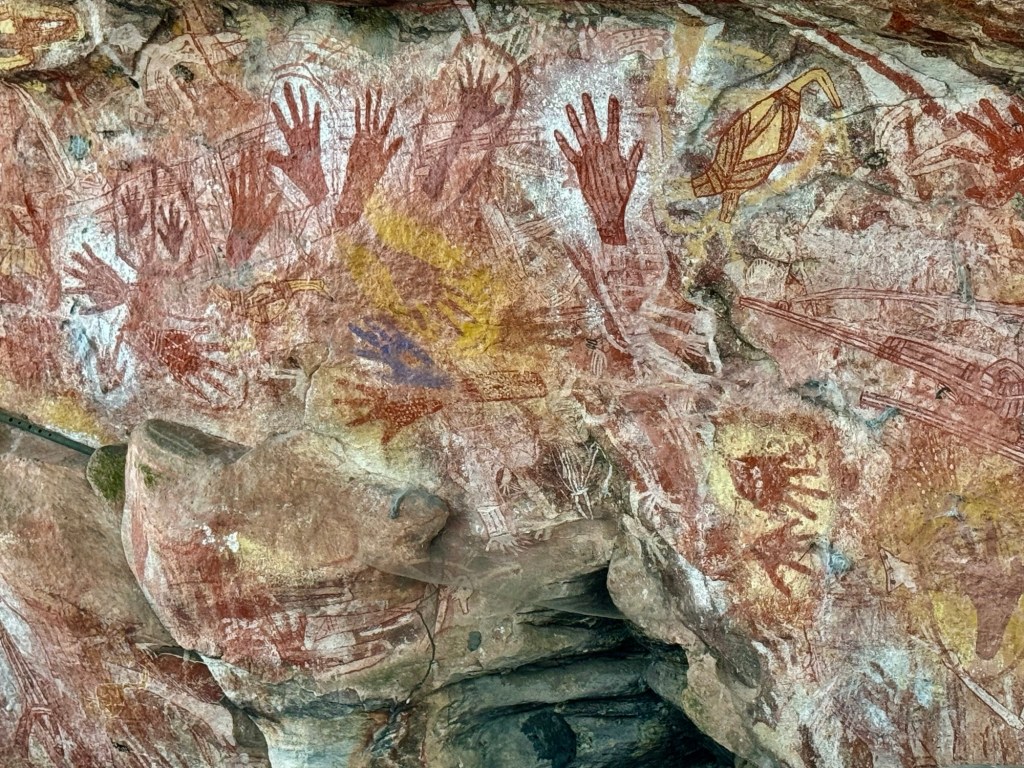
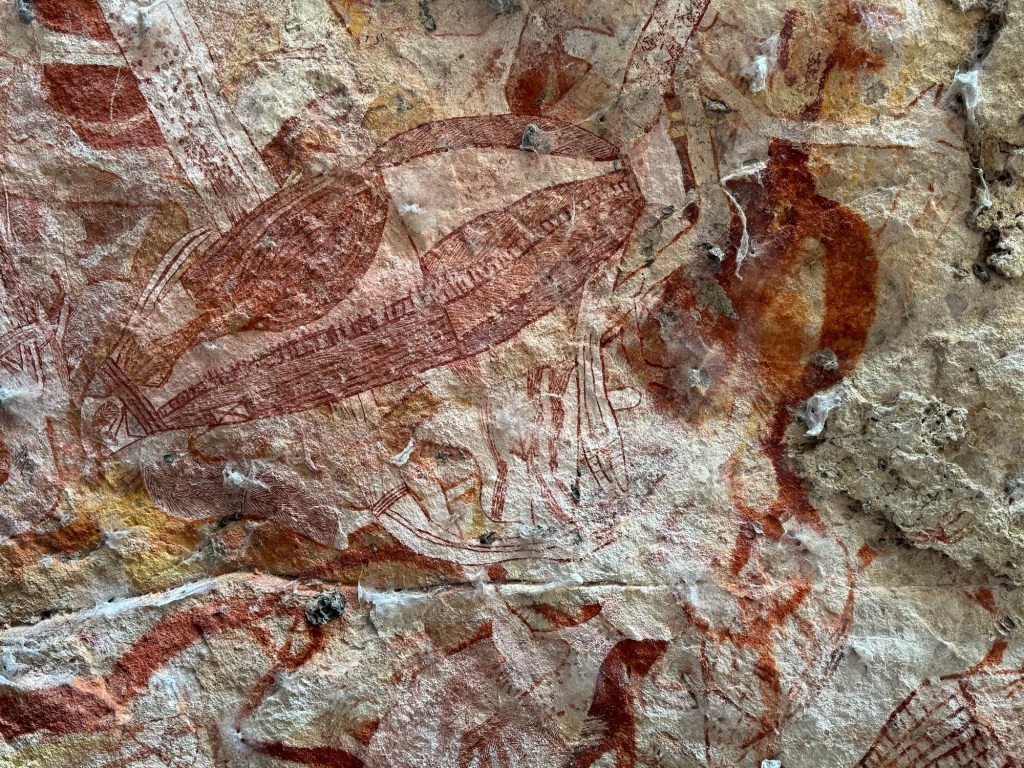
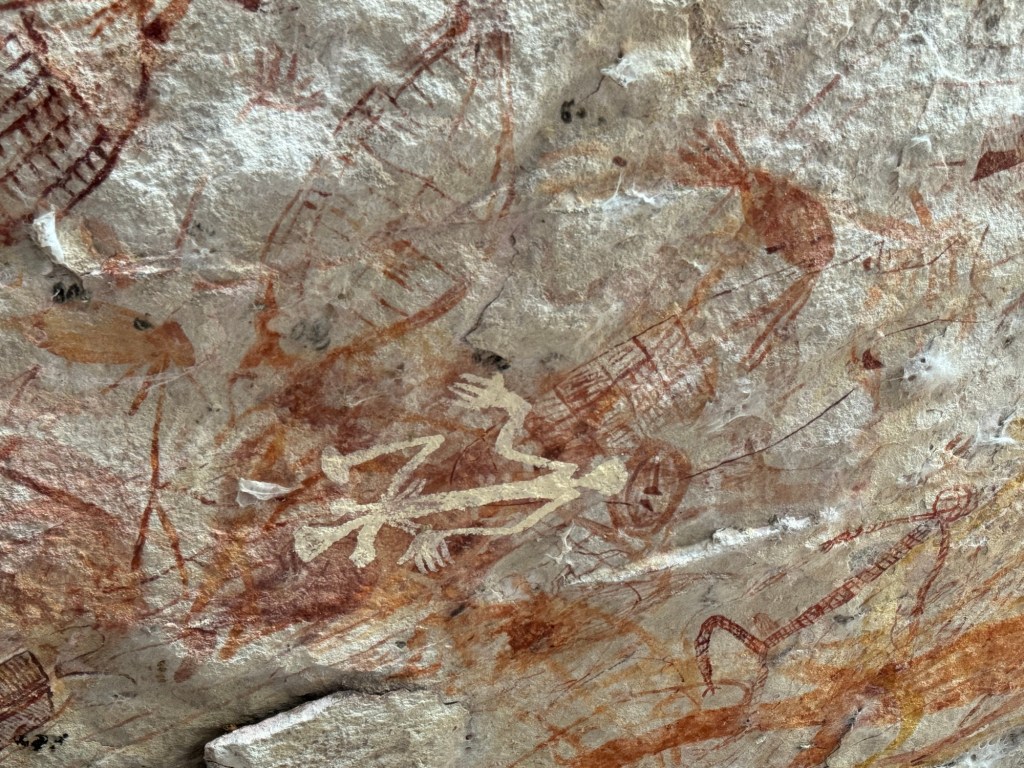
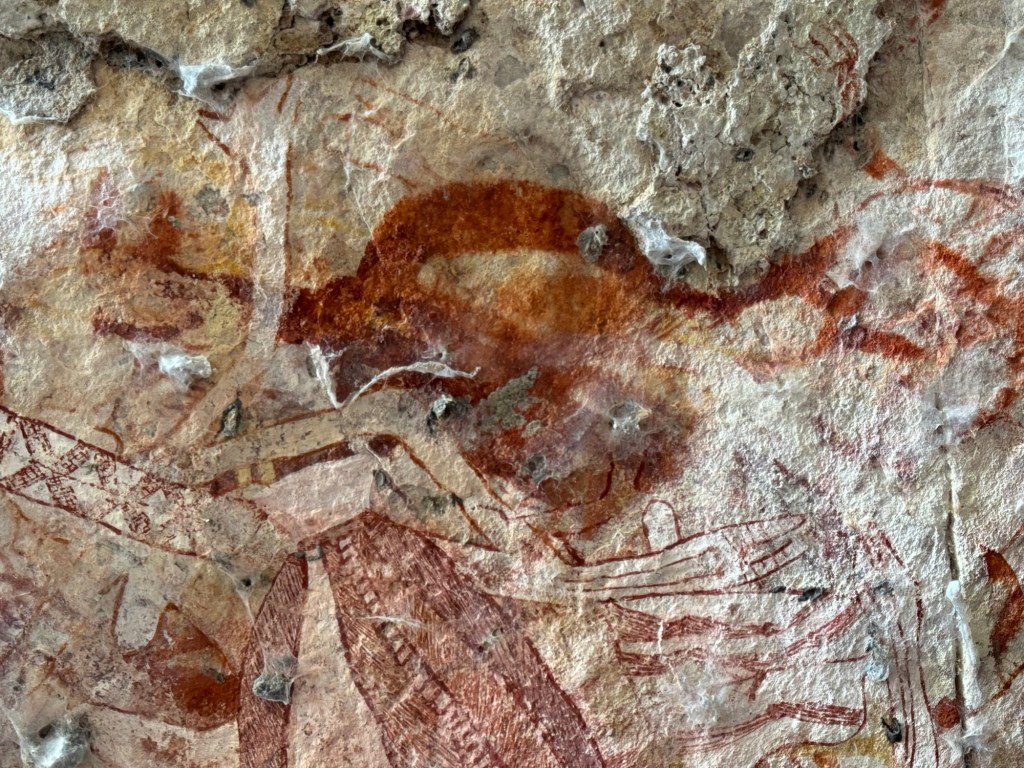
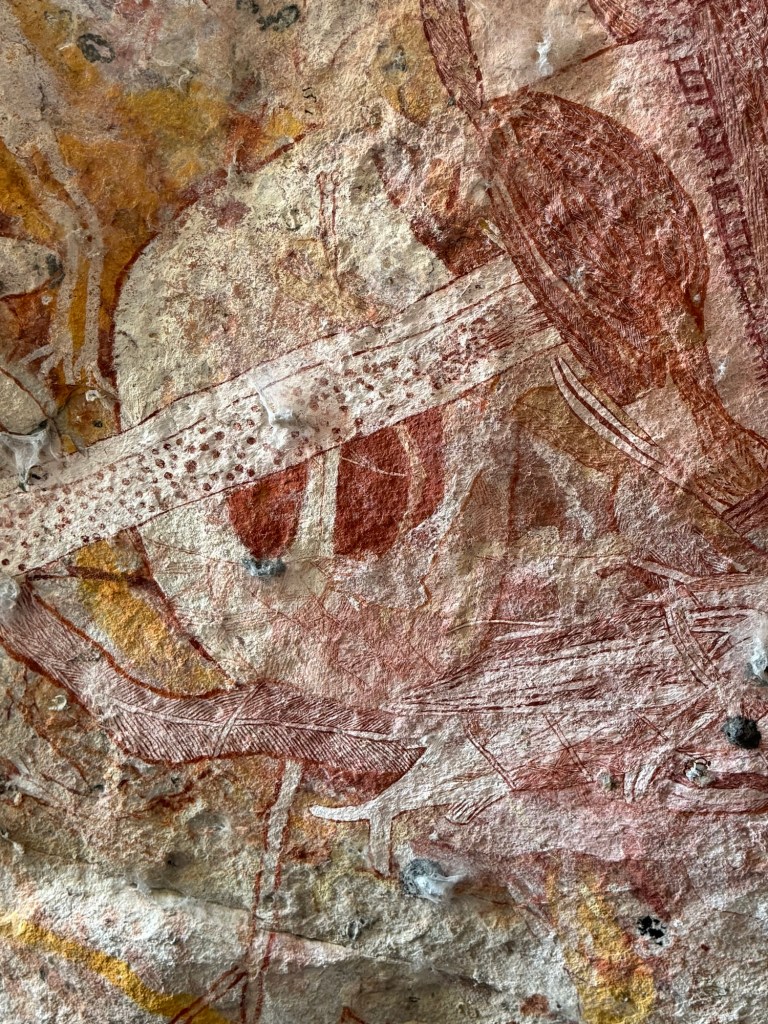
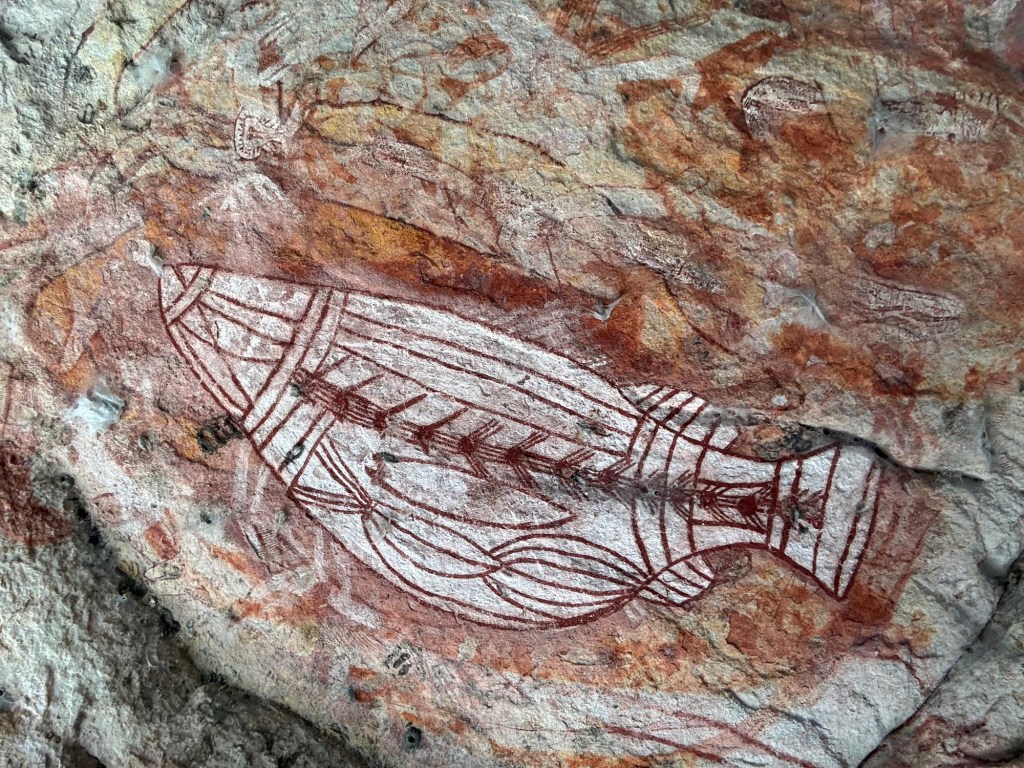
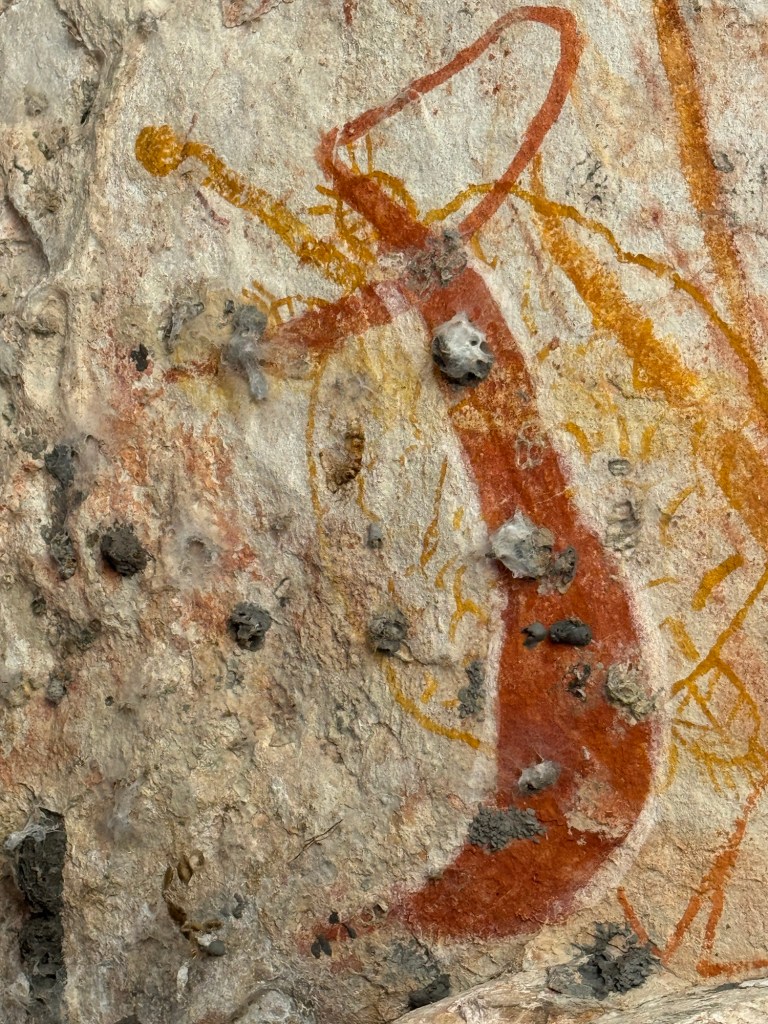
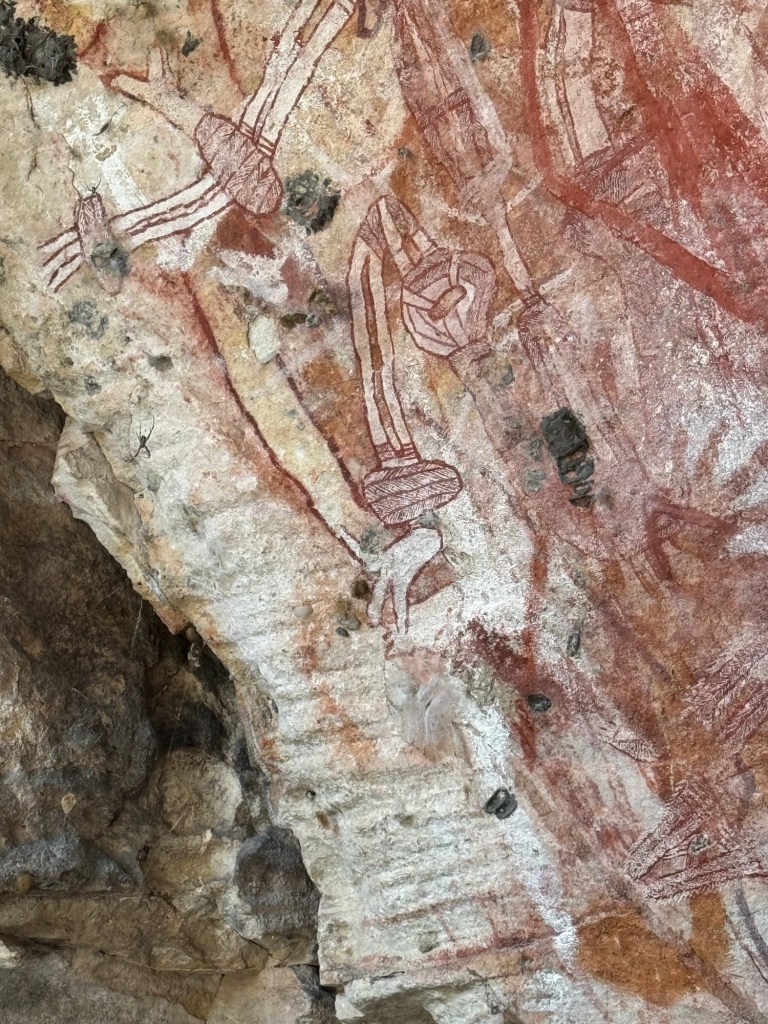
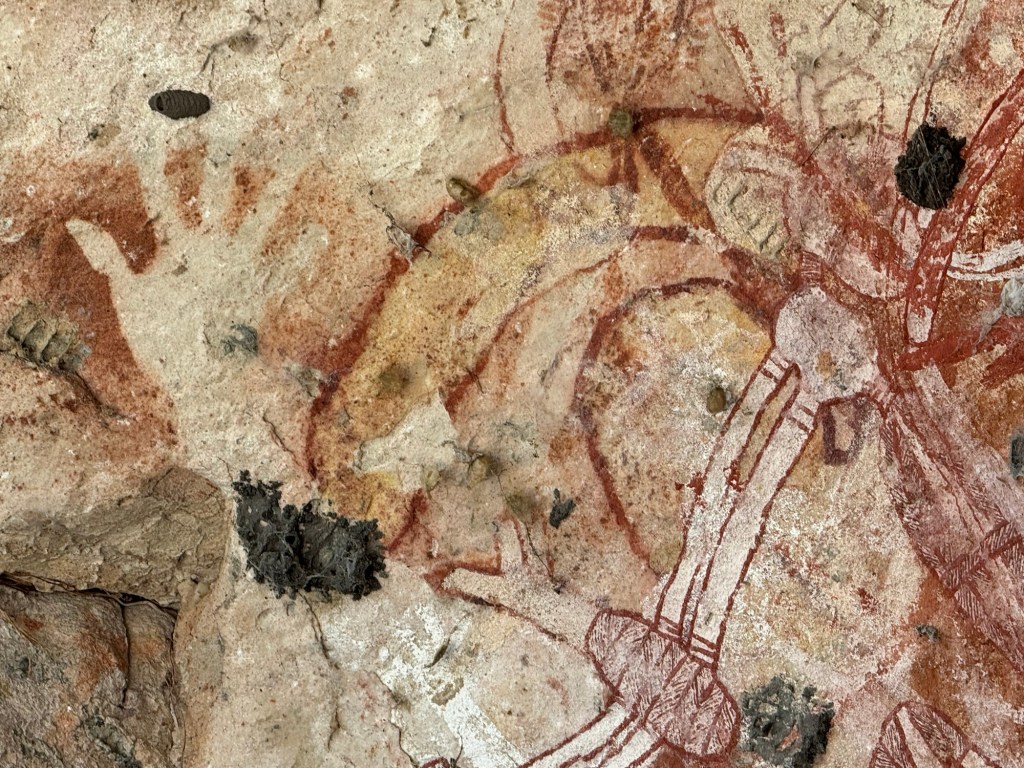
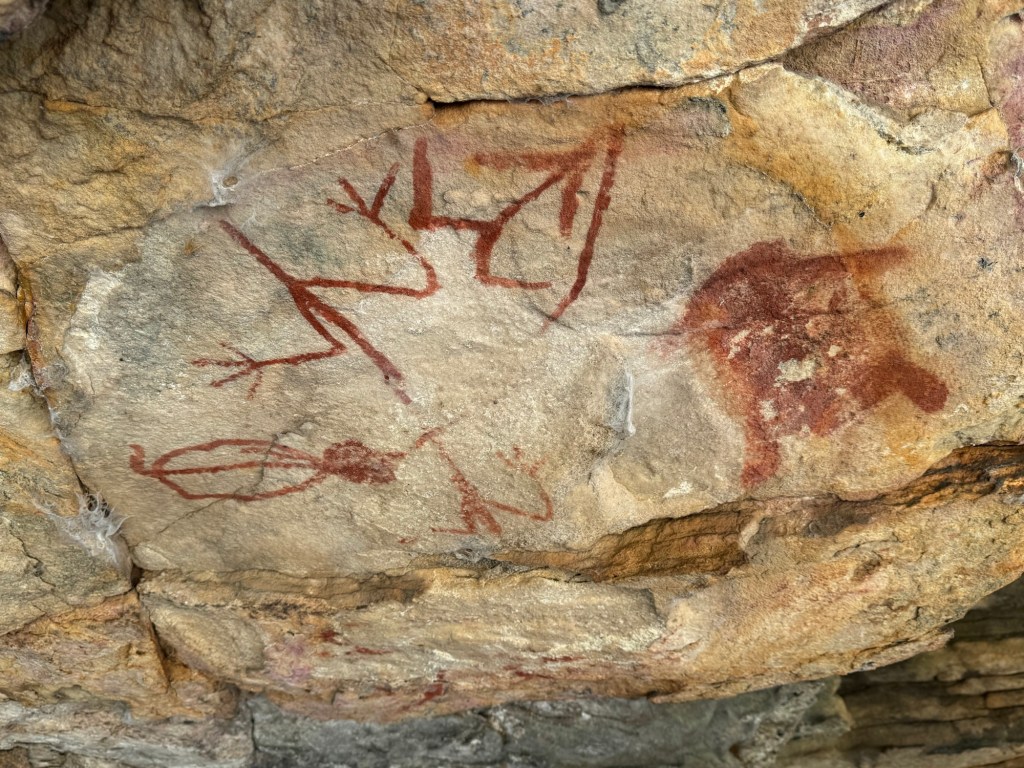
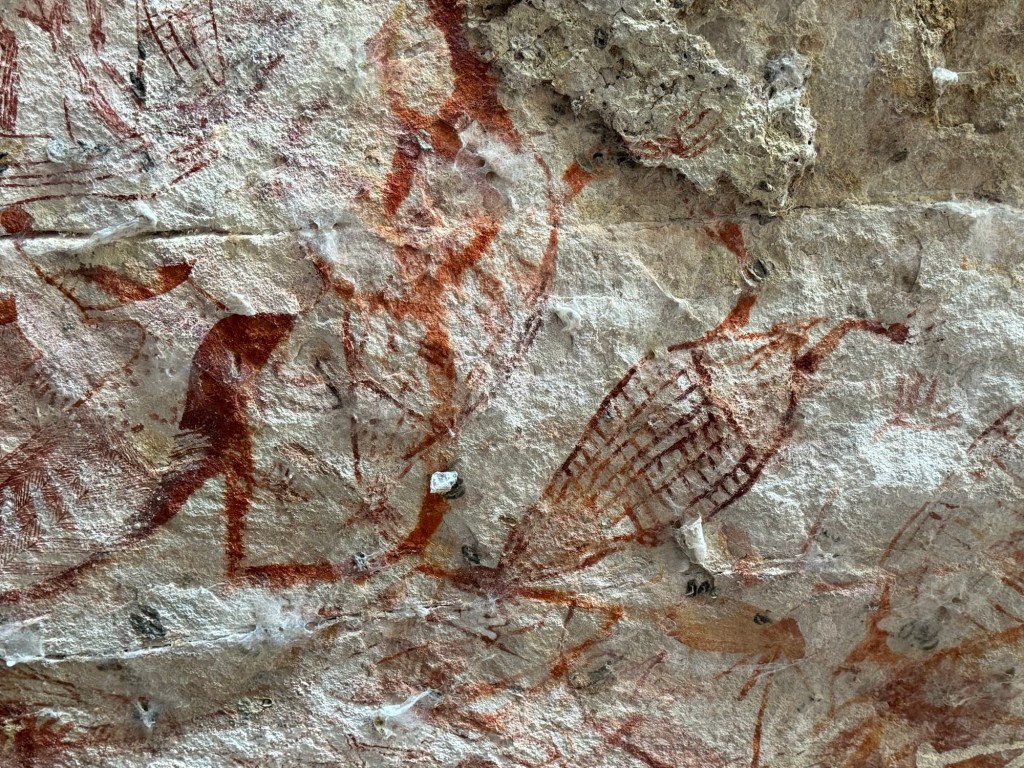
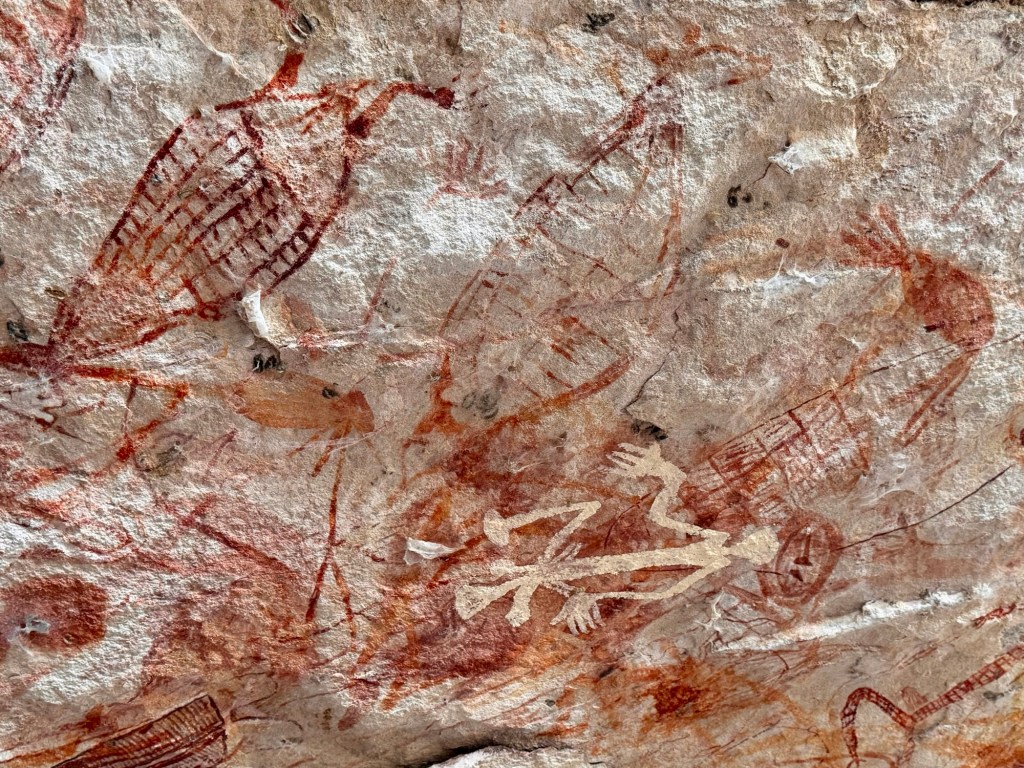
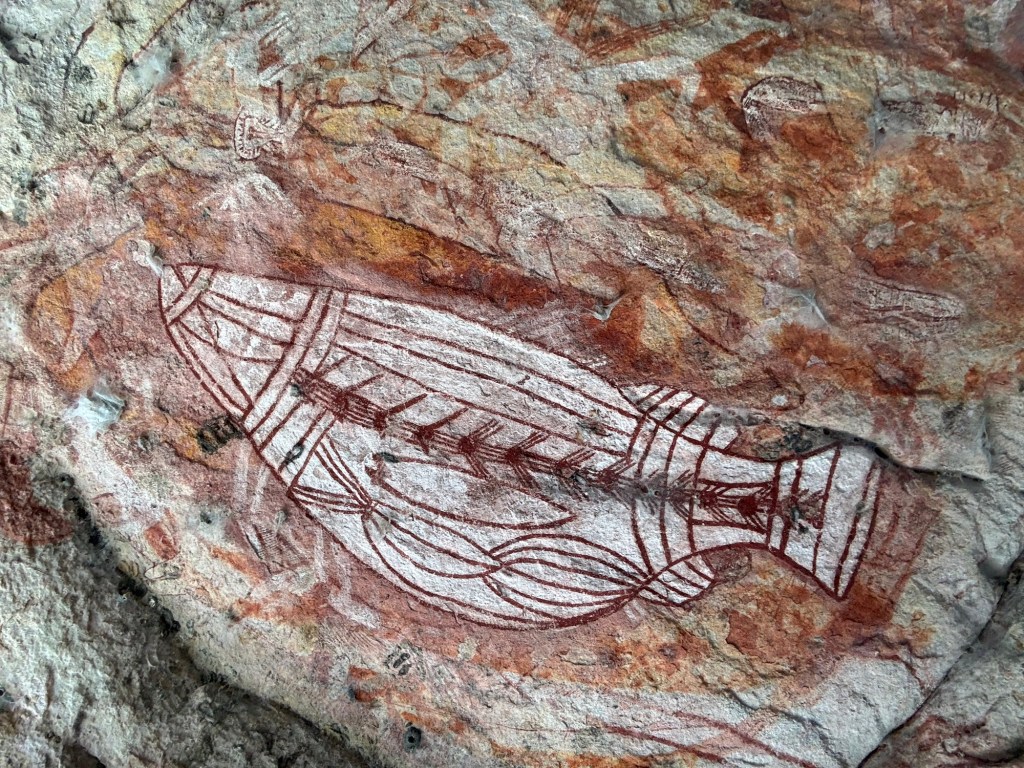
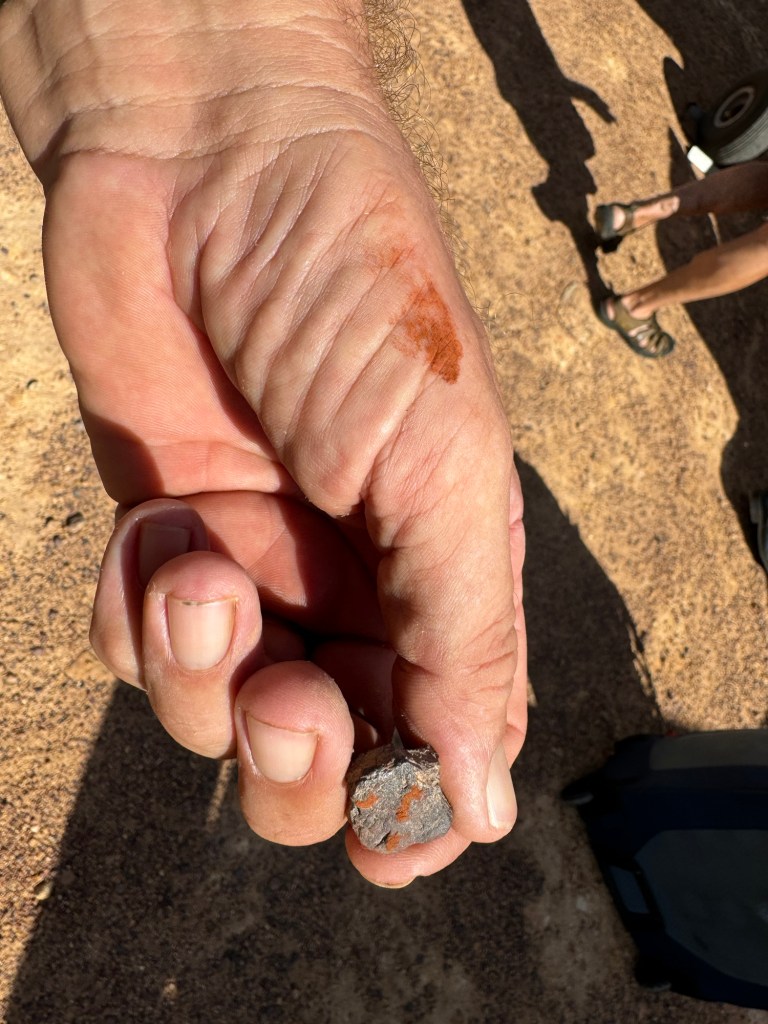
Anyway, the art we saw was exquisite. The subjects were mostly fish, birds and animals with a few stick figure people and lots of painted hands. The art was made with pulverized red and yellow colored sandstone, charcoal and blood. Sab said the art on this hill dates from 90 to 3000 years. Some of it was beautifully drawn and artfully colored.
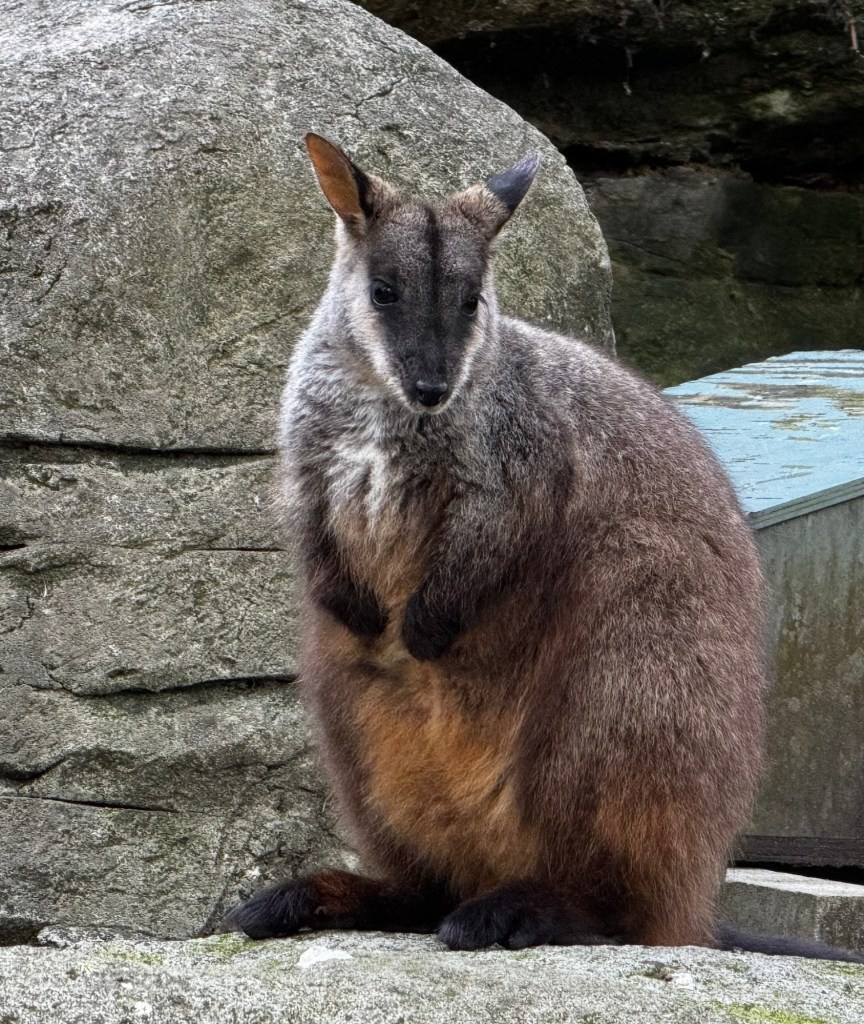
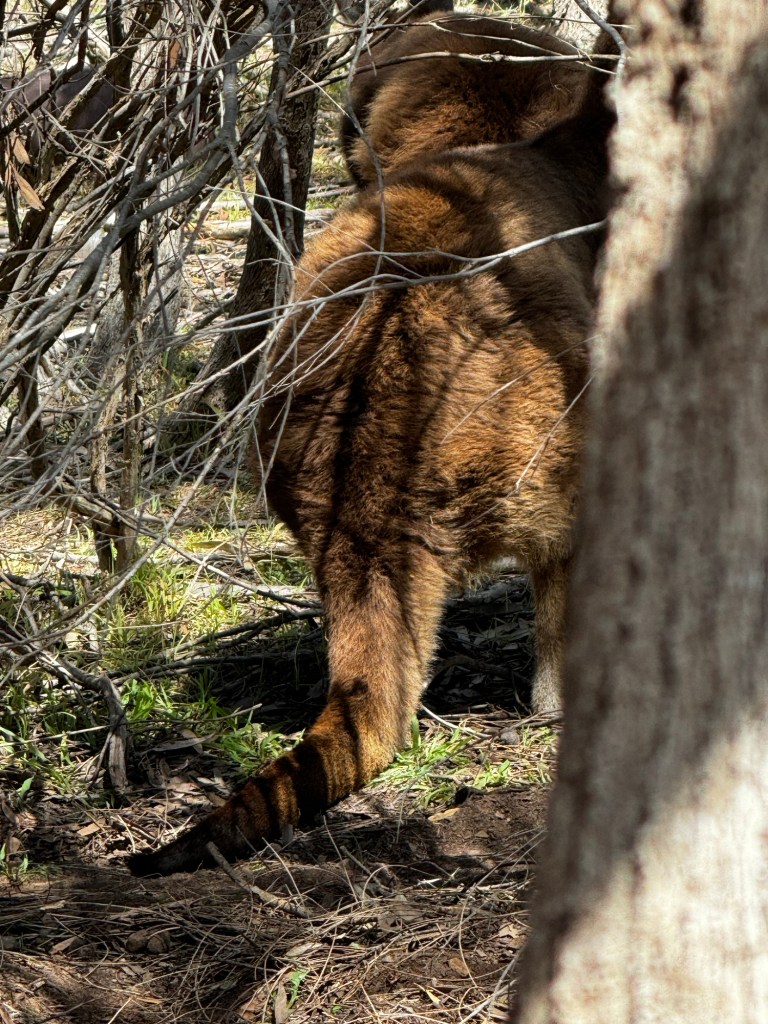
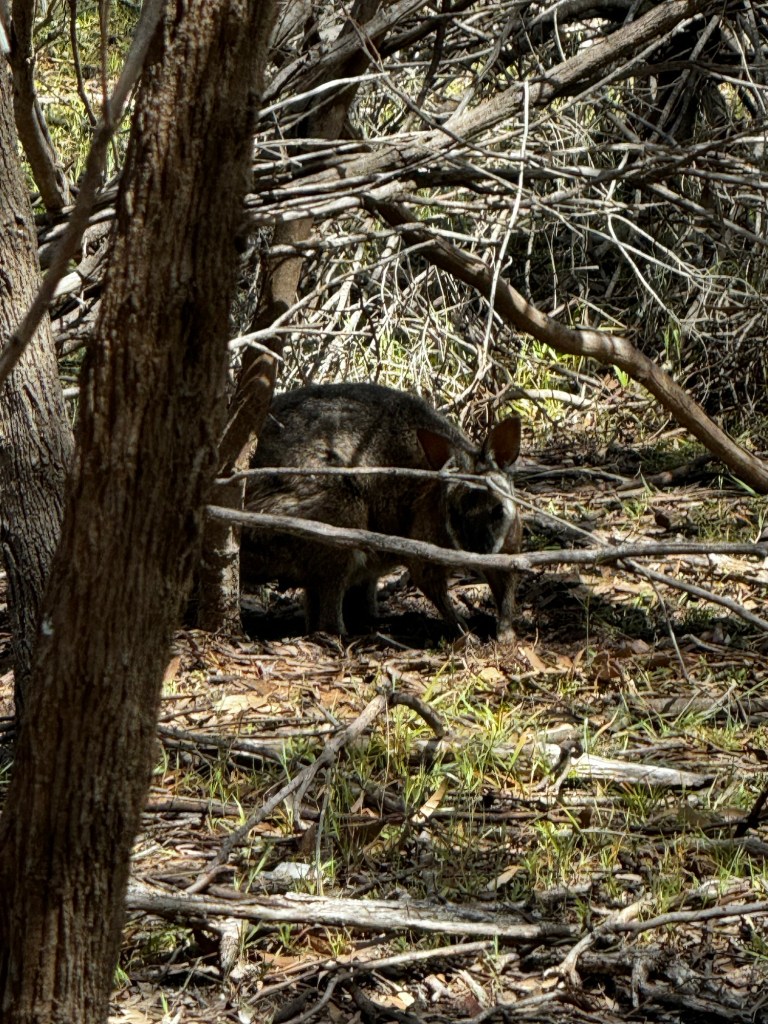
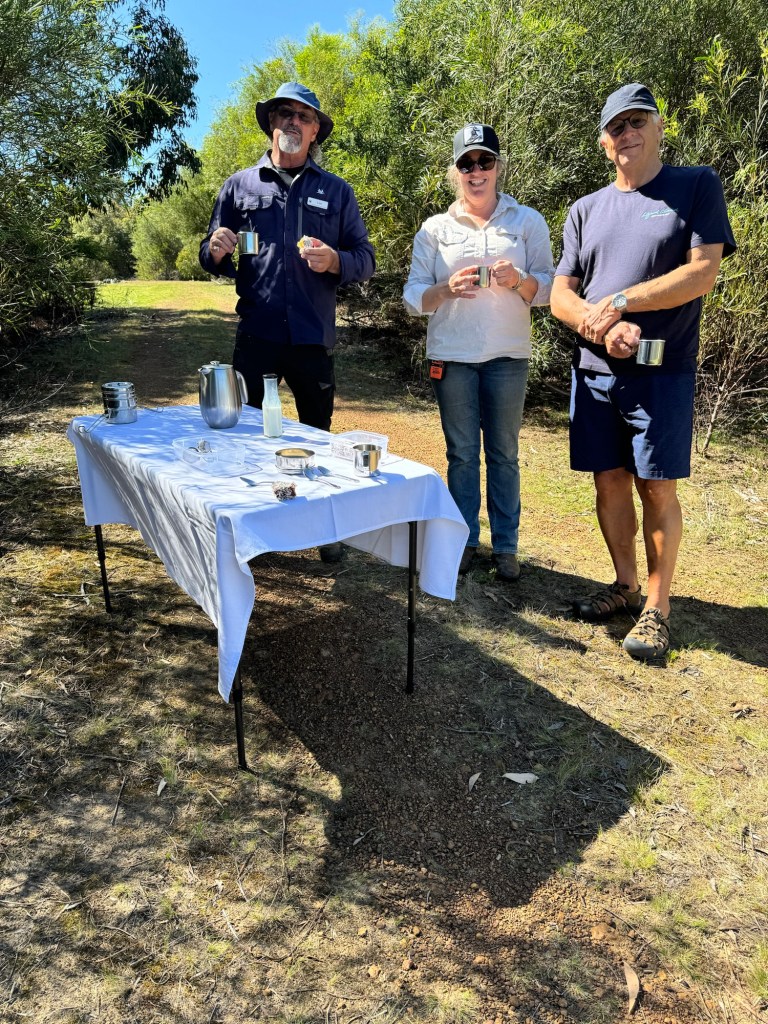
Near the top of the hill we stopped for lunch in a rock cove. Sab put out a delicious sandwich spread and we each made our own. I learned that Sab stands for Sebastian. Just as we finished lunch, we spotted a black Walaroo, somewhat rare,which is slightly larger than a Kangaroo and captured a decent photo of it.
Mark helped me hike back down the hill to the car. We drove another 2 hours through the bush, a flat landscape composed mostly of paperbark, eucalyptus and small palm trees on a dirt track to Davidson’s Safari Camp.
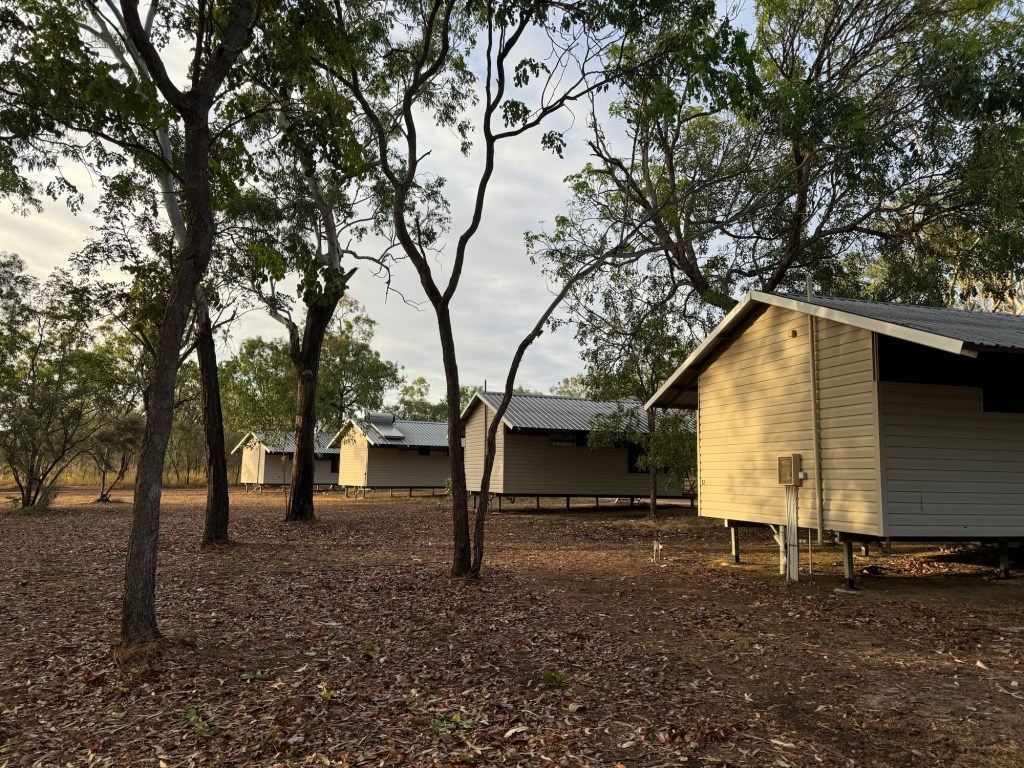
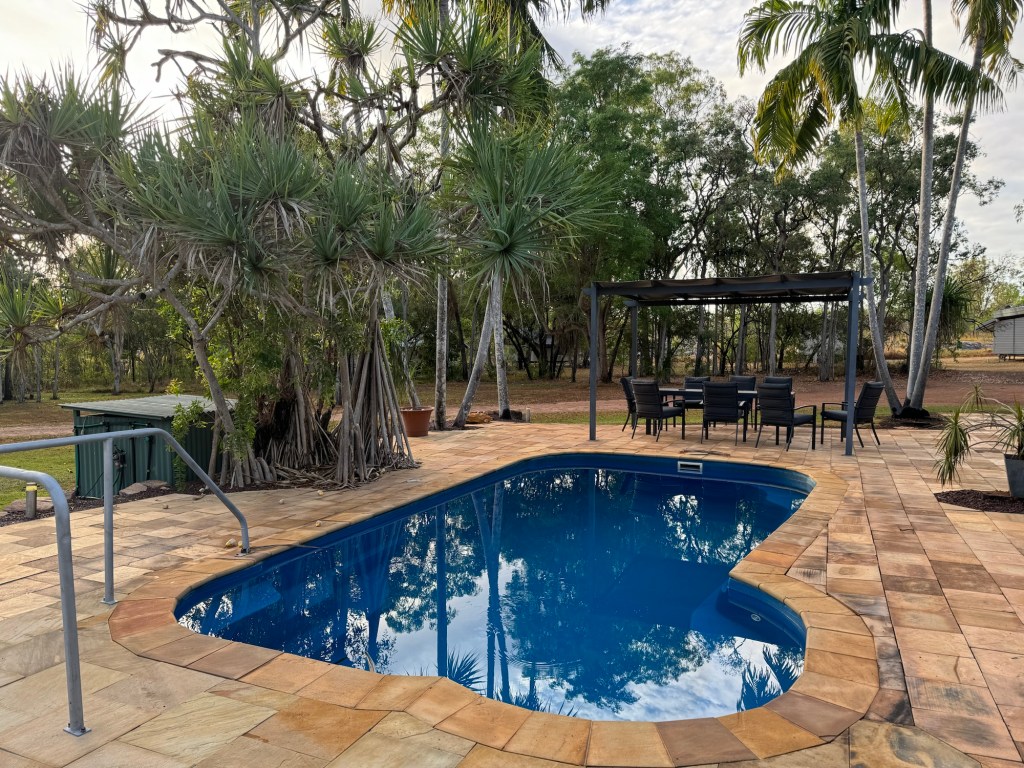
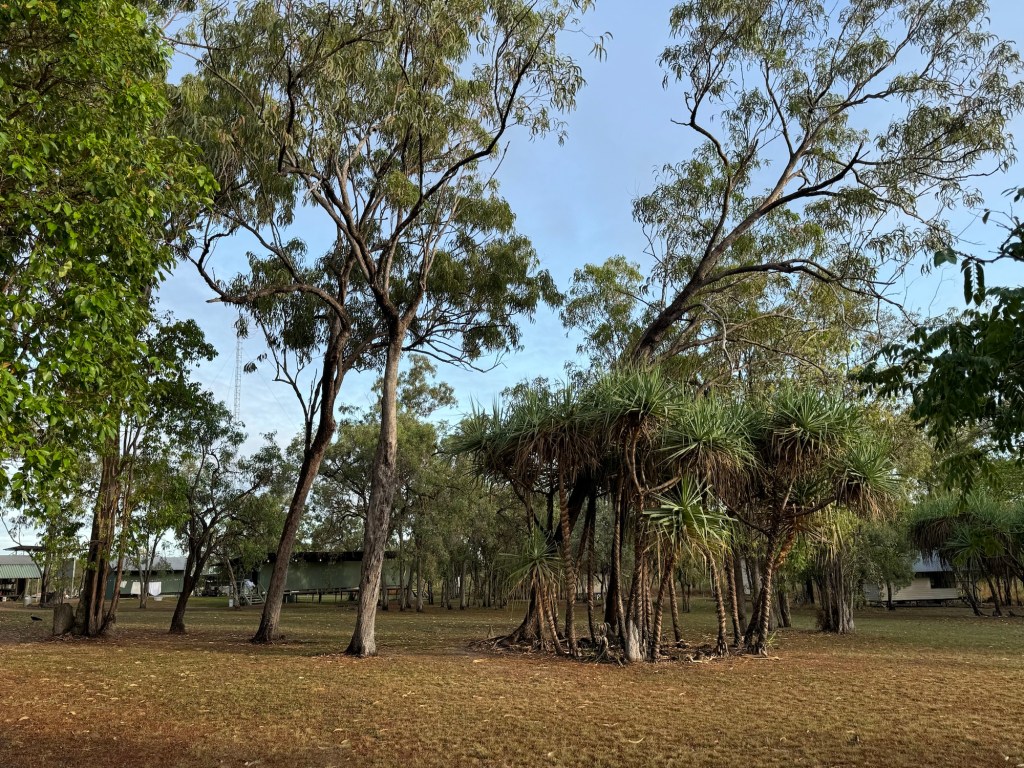
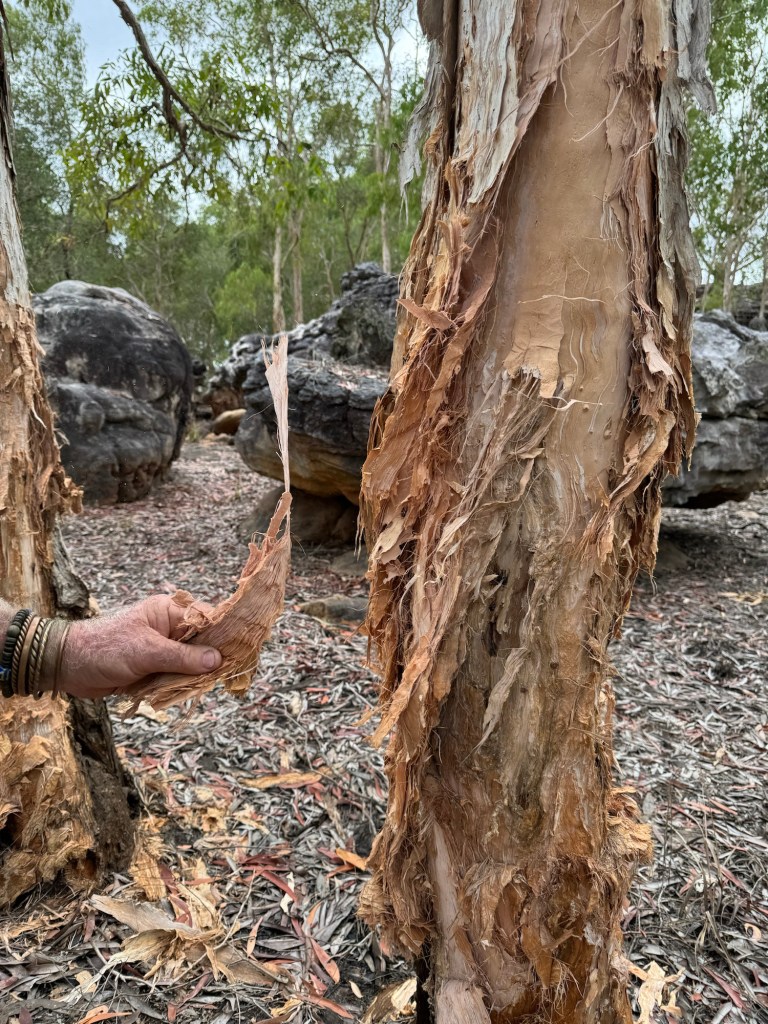
Our cabin in Davidson’sBush scene in campPaper bark tree
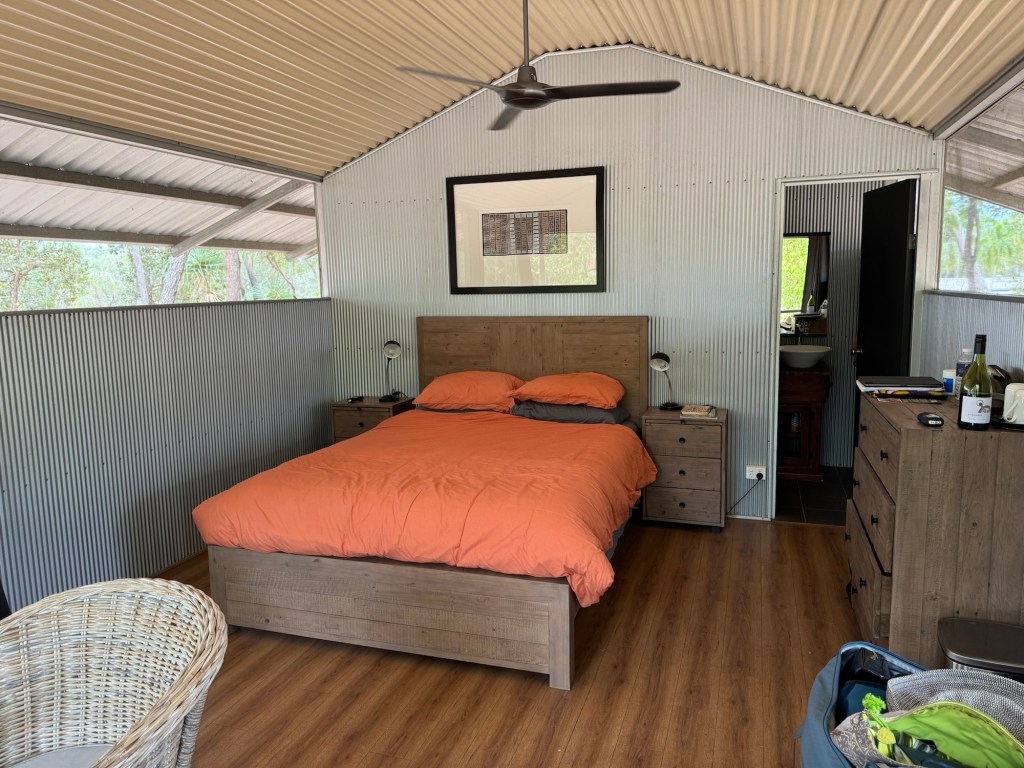
We were assigned our own cabin and found it pleasantly comfortable, except there was no AC. Fortunately, there was a large ceiling fan that kept us almost cool. Once settled in we checked out the lodge, met the few other guests, as the season was almost over, had dinner with Sab and went to bed early. I did learn that I can’t down load photos or publish posts as there is no WI-FI or internet in the bush, but I can keep writing.
Wednesday, September 18, 2024
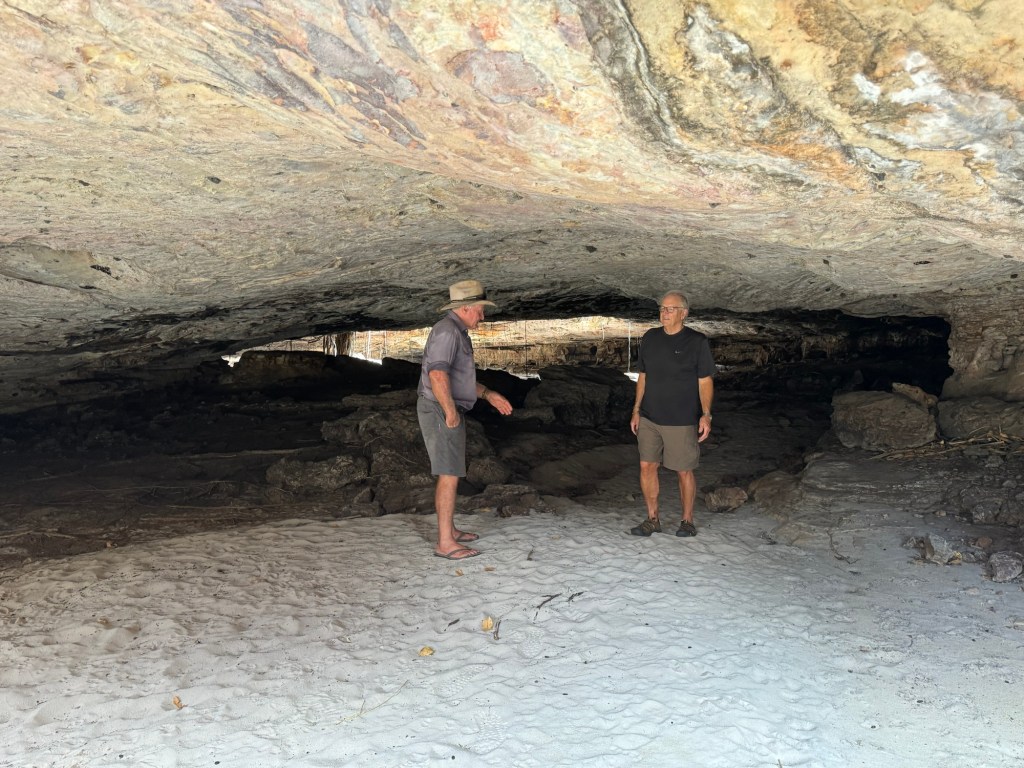
Up and ready to roll by 8:30, Sab drove us in an old safari Land Cruiser to the edge of a large marsh about 30 minutes away. From there, we walked another 30 minutes to a site called The Major Art Gallery.
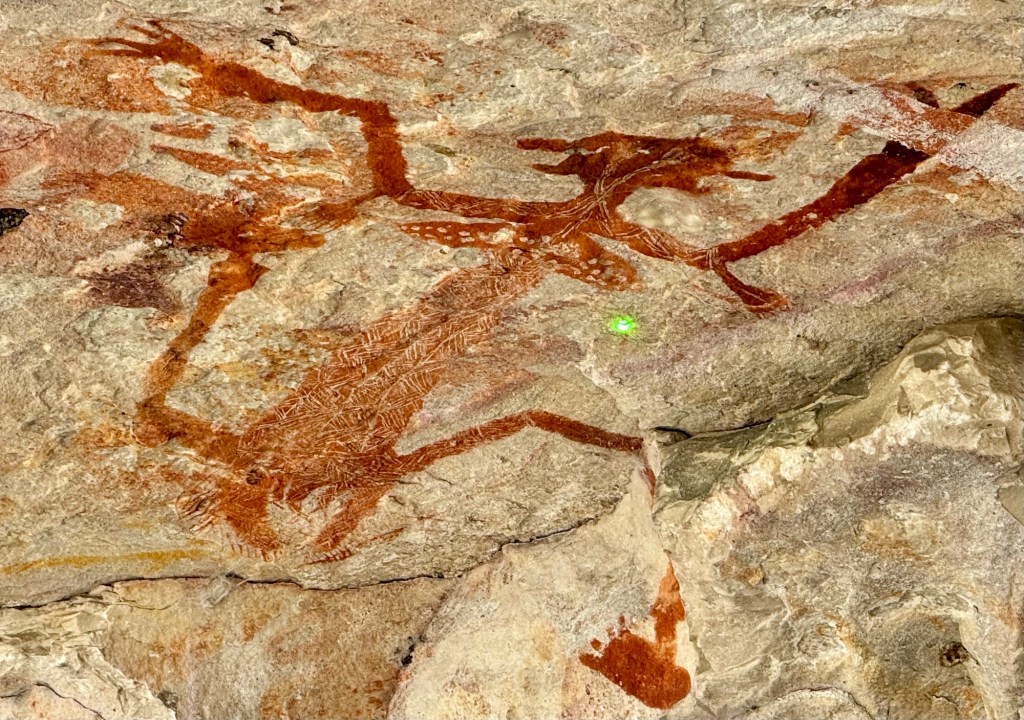
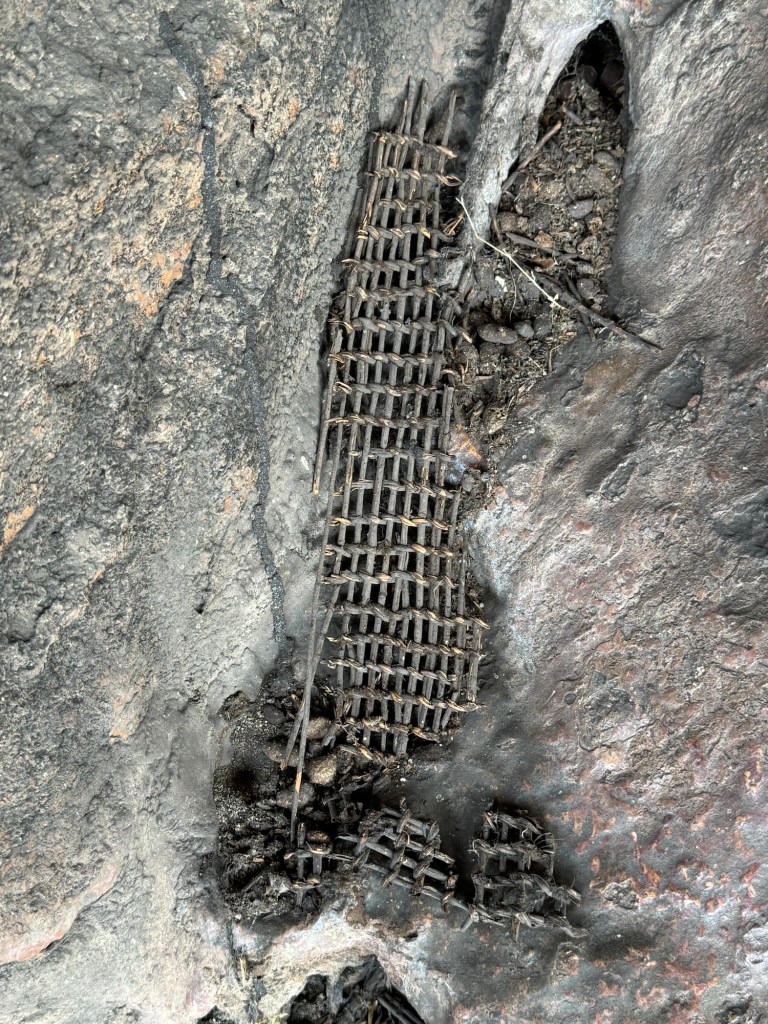
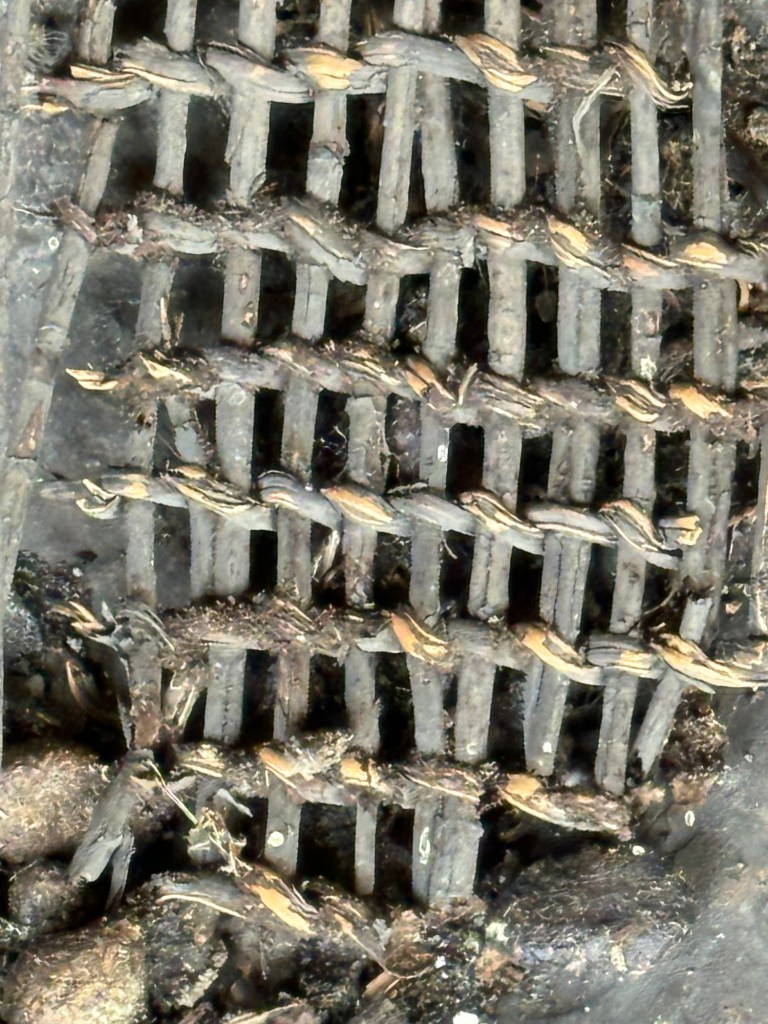
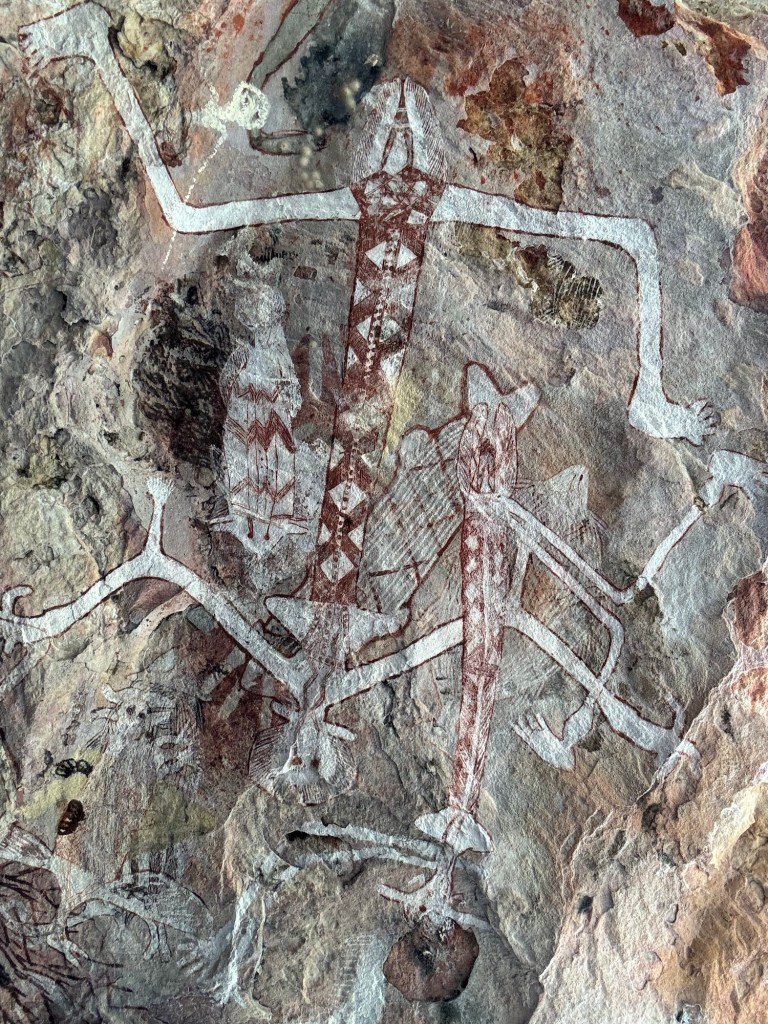
The Major Art GalleryInside the Major art galleryAdult maleSab taking a breakAn adult maleAdult female &a kangarooAn adult femaleAn unexplained weavingClose up of weavingAn upside down woman and other creaturesTwo snakes
The rock walls themselves were complex and numerous and the site was like a maze with large boulders we had to weave ourselves through to get to the art walls. The paintings were awesome and numerous. Sab took a long time telling us about each one as he sorted them out from the mass of work.
Many hands and feetThree guns + other thingsMore hands & feet; some with glovesManta Ray Hands and bodiesAn art wall More hands and feet; some with blue dye brought by EuropeansKangaroo on left
There were many layers going back thousands of years. It was clear that the site was used as a dwelling place as well as a burial site and art gallery. The scene was very fascinating and we stayed there a couple of hours trying to absorb it all.
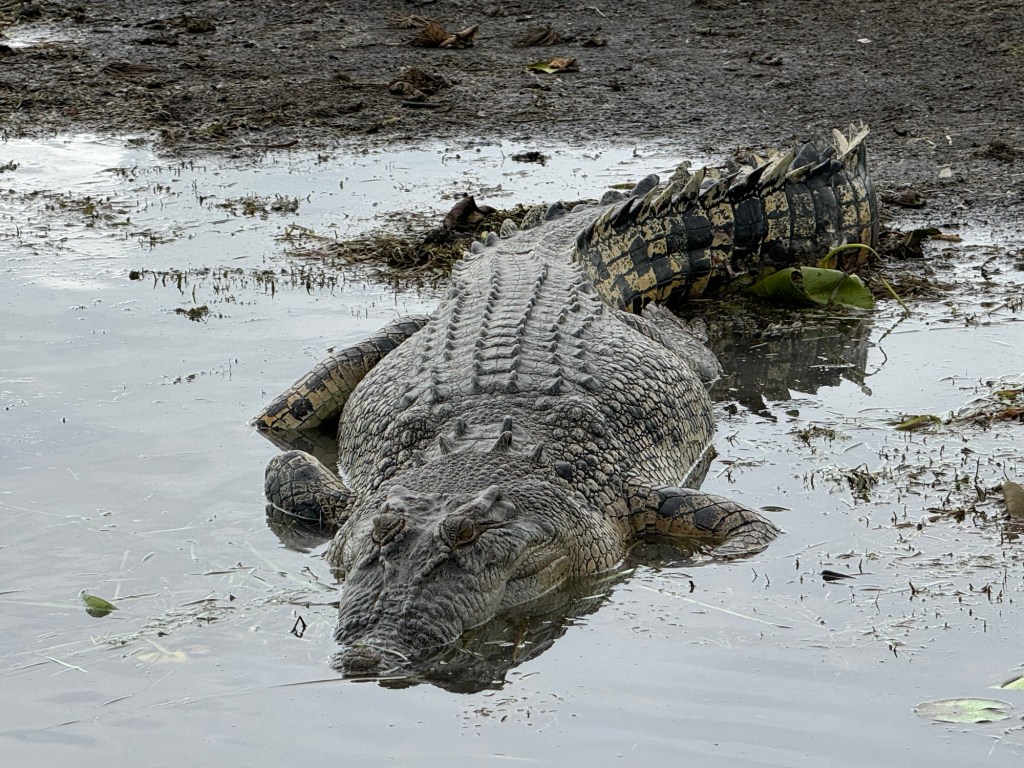
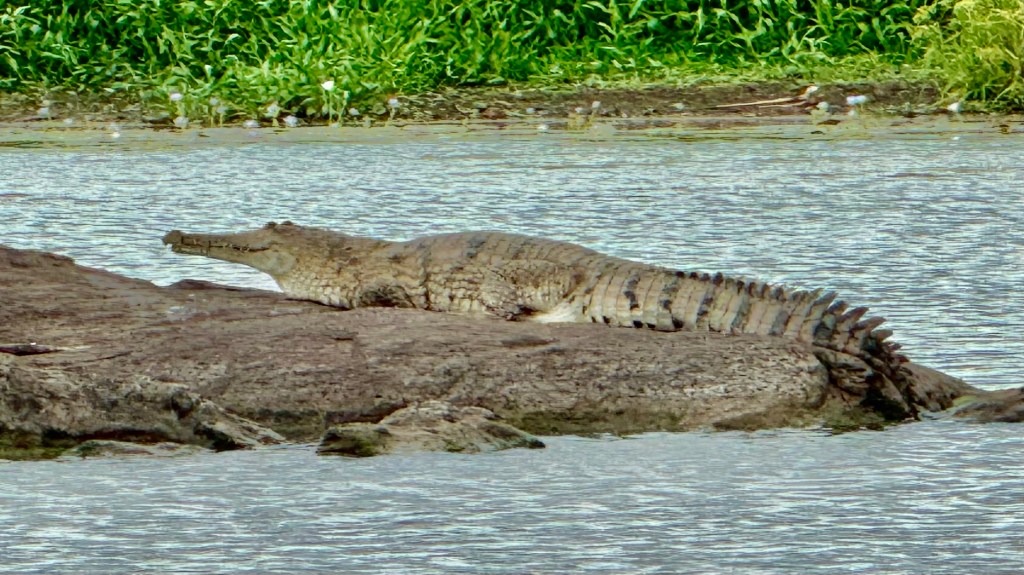
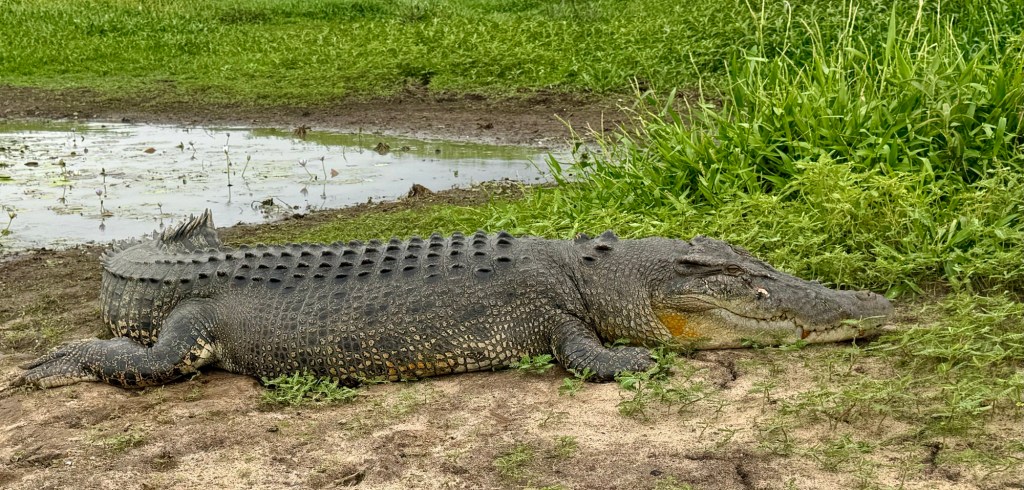
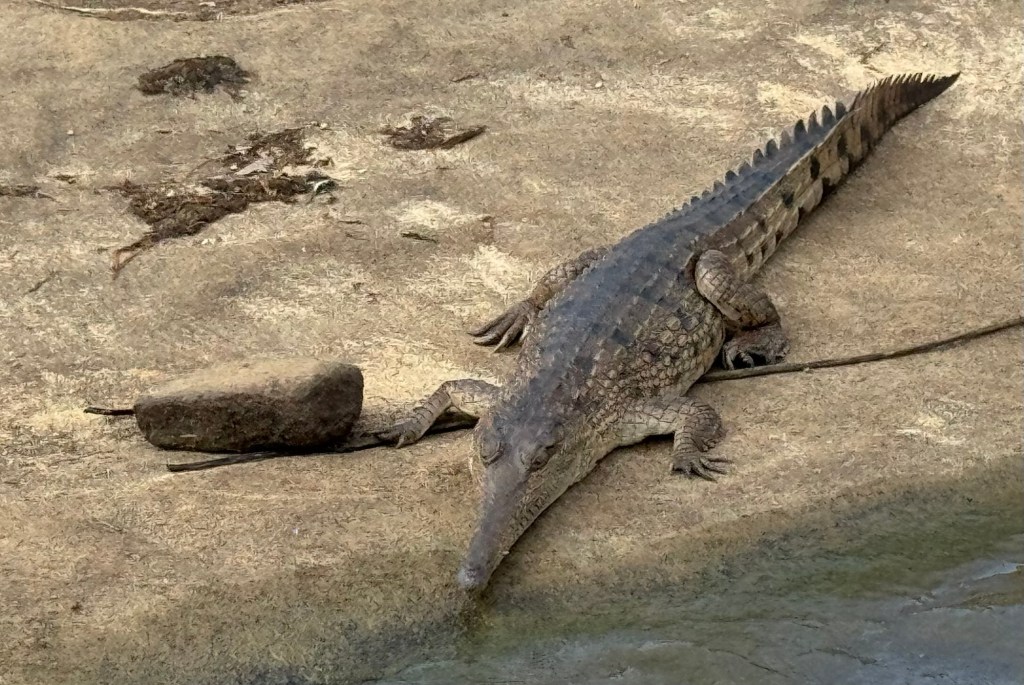
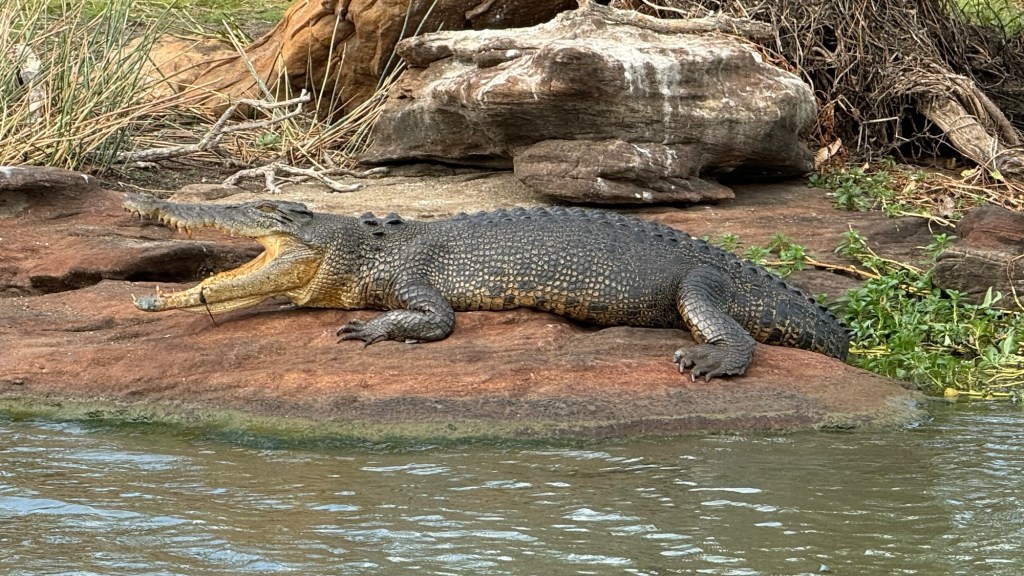
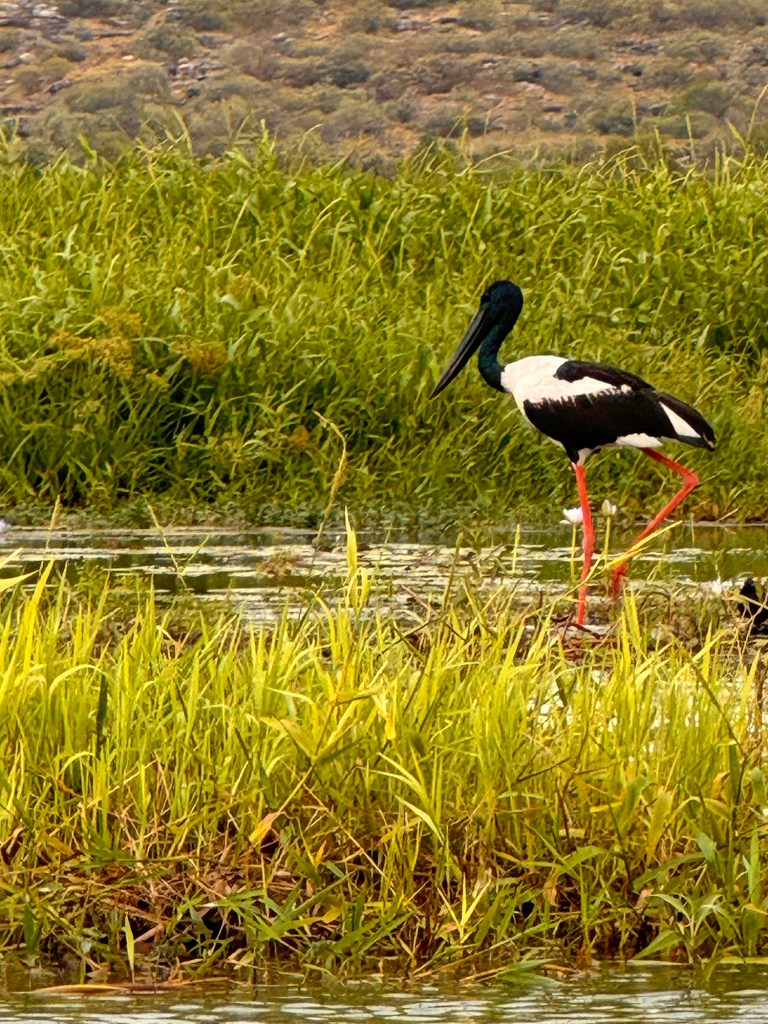
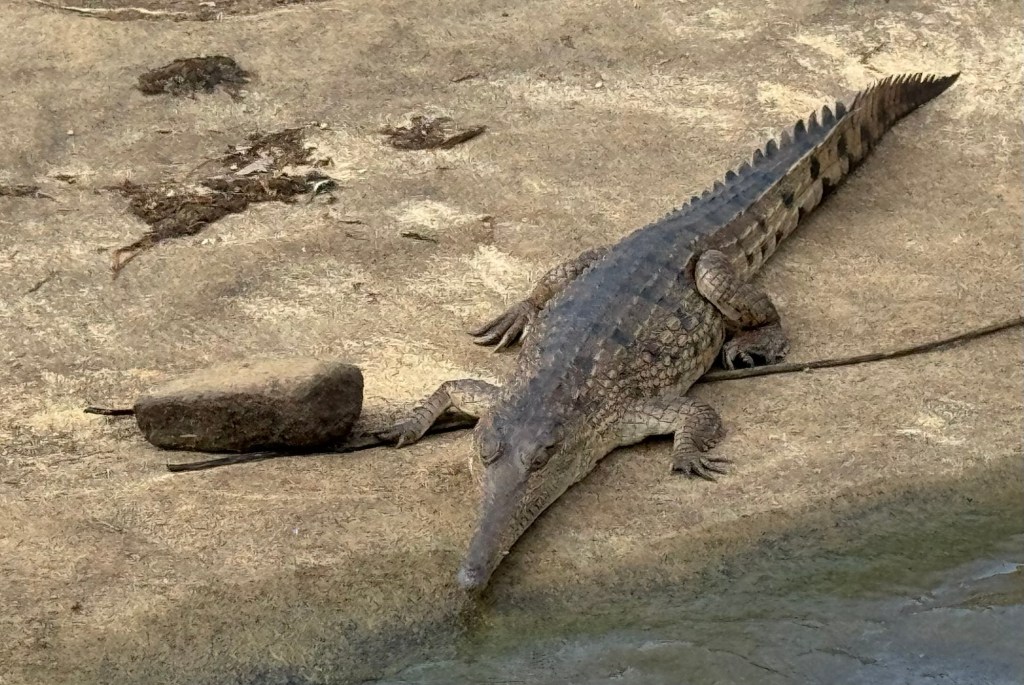
Our room at Davidson’s campWe look interesting to this boyFresh water crock2 JabiruLarge salt water crock
On the way back through the marsh, we saw a few wild pigs and a water Buffalo in the tall grass. The drive back to camp through the bush was uneventful. At lunch Sab talked about the size of the land owned by an aboriginal man named Charlie, who is 90 years old now and will leave the 376,000 acres he owns to his nephew. All the art sites we are seeing lie within his property and he is very possessive about keeping everything in tact.
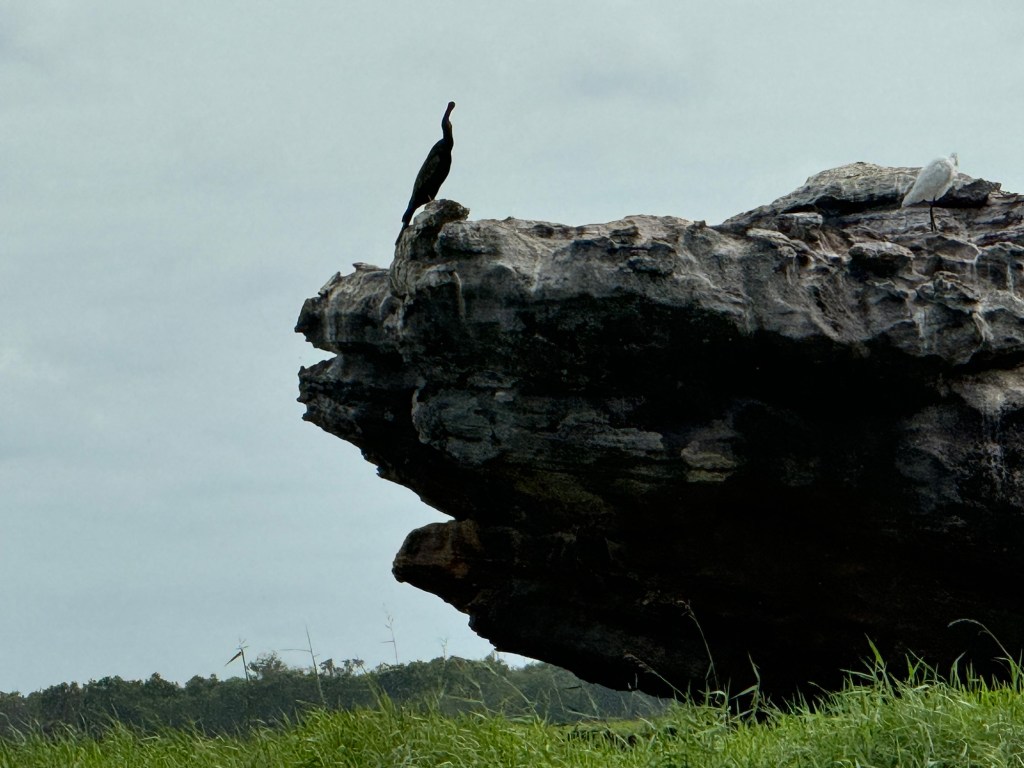
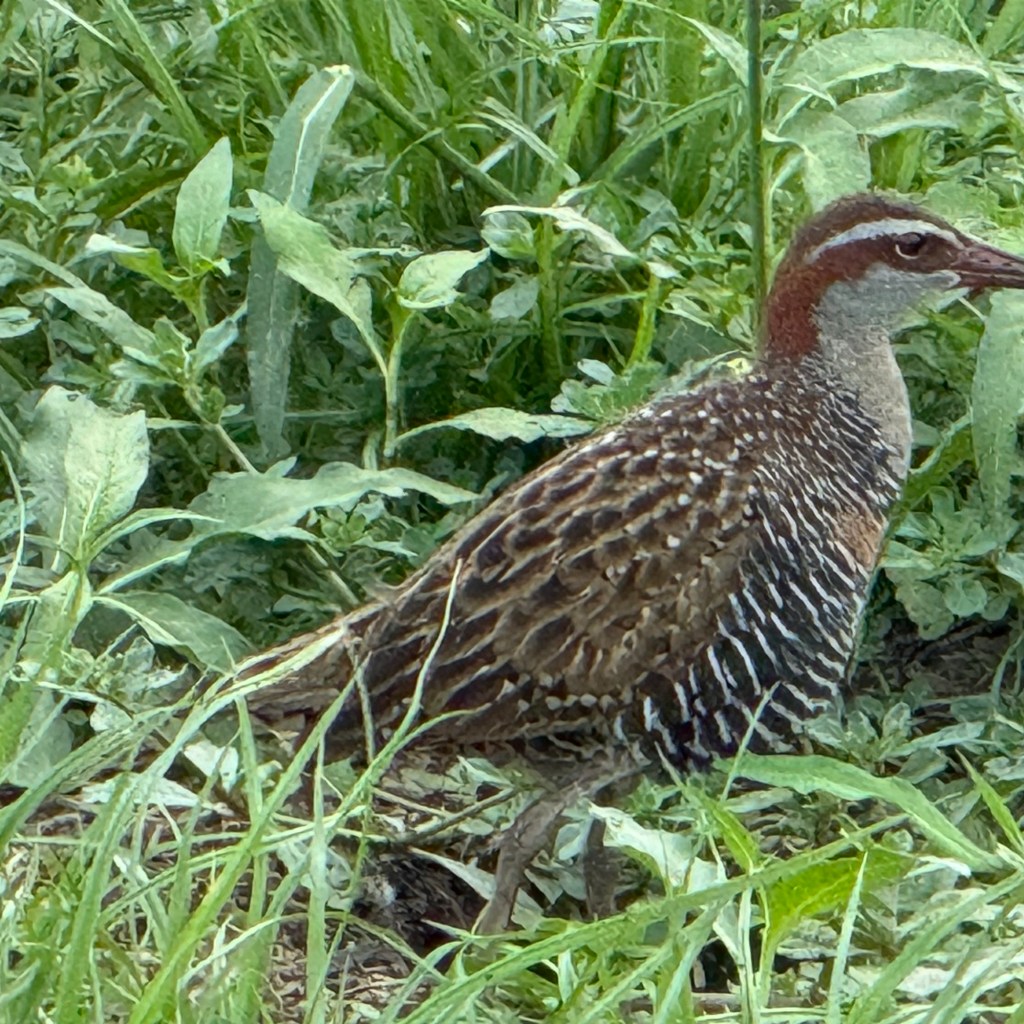
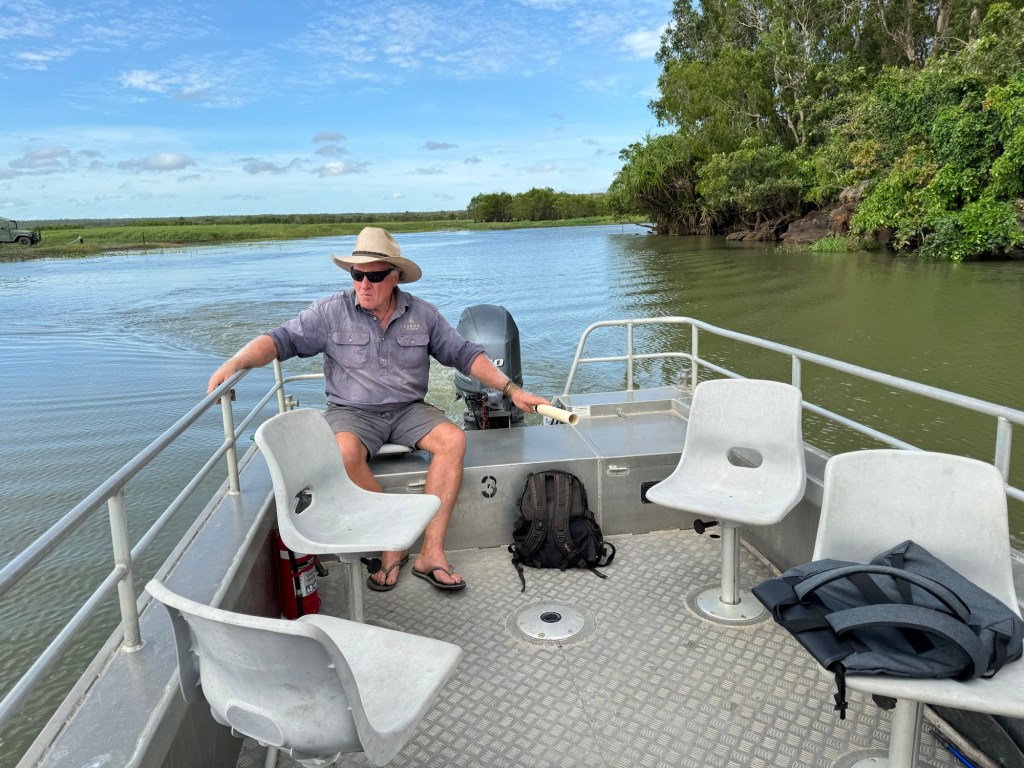
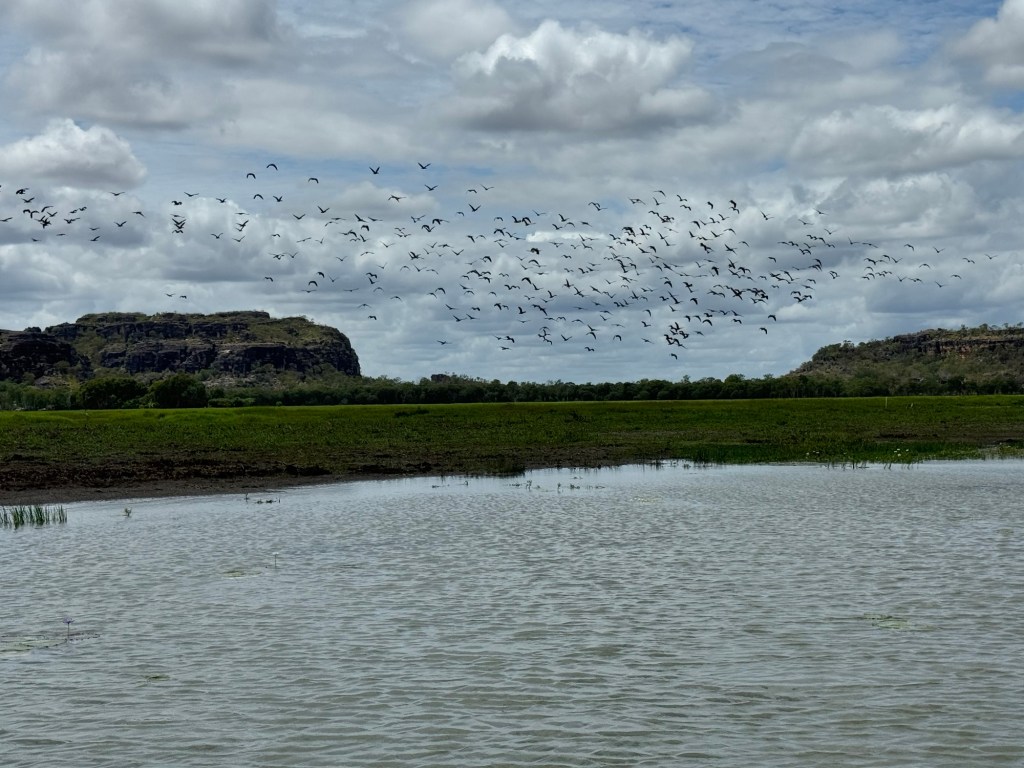
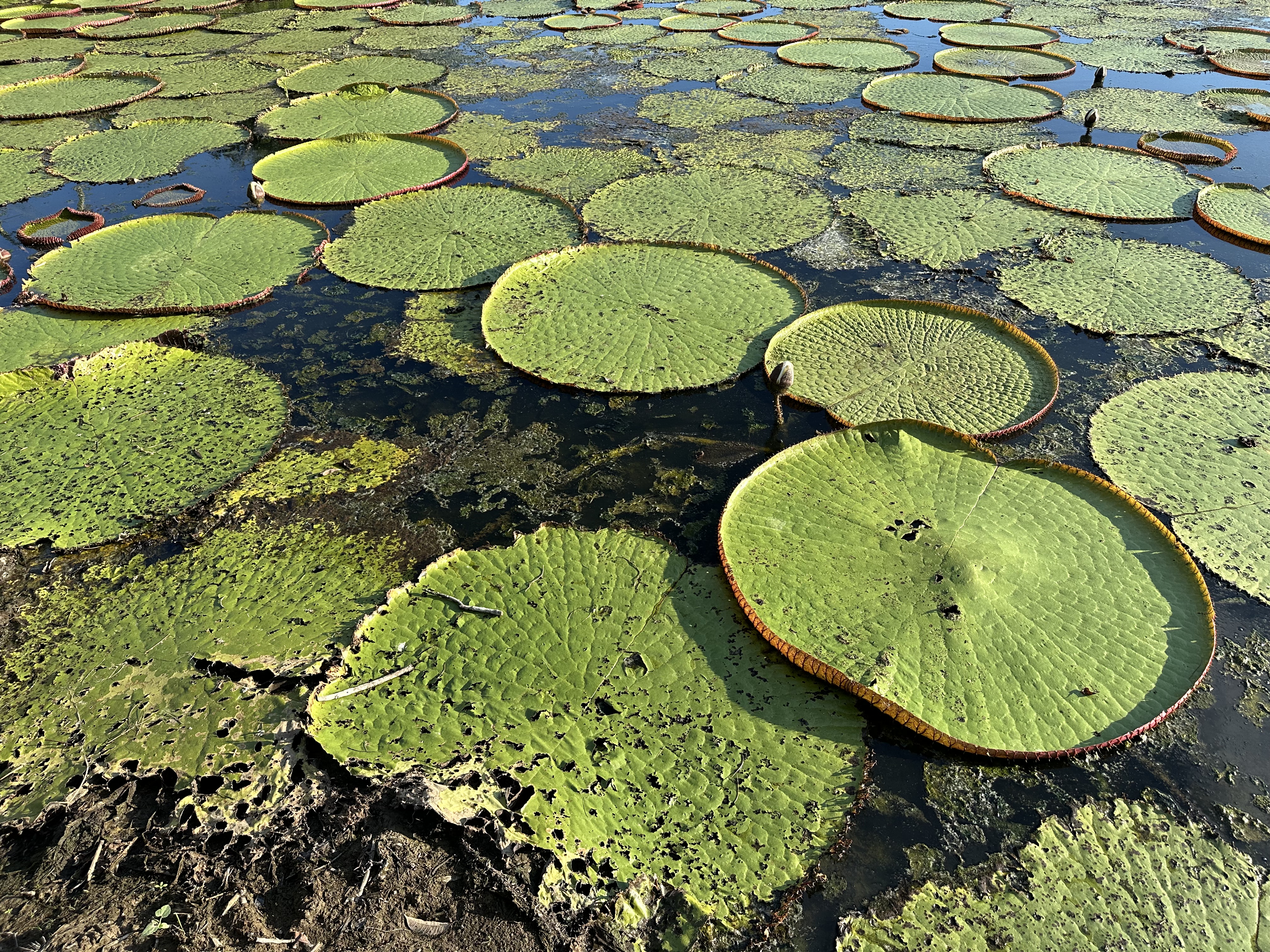
In the afternoon, we were back in the Land Rover heading in another direction to a Billabong (body of water), where we got into a flat-bottom, aluminum, pontoon boat and motored slowly between water lilies and crocodiles looking at Ibis, Jakibu, and a rare bird called a rile. Unfortunately, I cut off its nose. The site was called Mt Borradaile by the aborigines, pronounced Bordilo by white people, and had many lovely works of art.
It is called contact art, because it has been painted since the beginning of colonial times. This is some of the earliest contact art we have seen.
Back on the boat we had sundowners as we drifted along and talked about the lovely evening. Sab is a delightfully pleasant and informed guide and we are enjoying his company.
Flock of whistling ducks JabiruSab’scamp truck
Back at camp we had a quiet dinner for 2 and were in bed before 9pm.
Thursday, September 19, 2024
Ready to roll at 8:30, we joined Sab at the Land Rover and headed for another billabong.
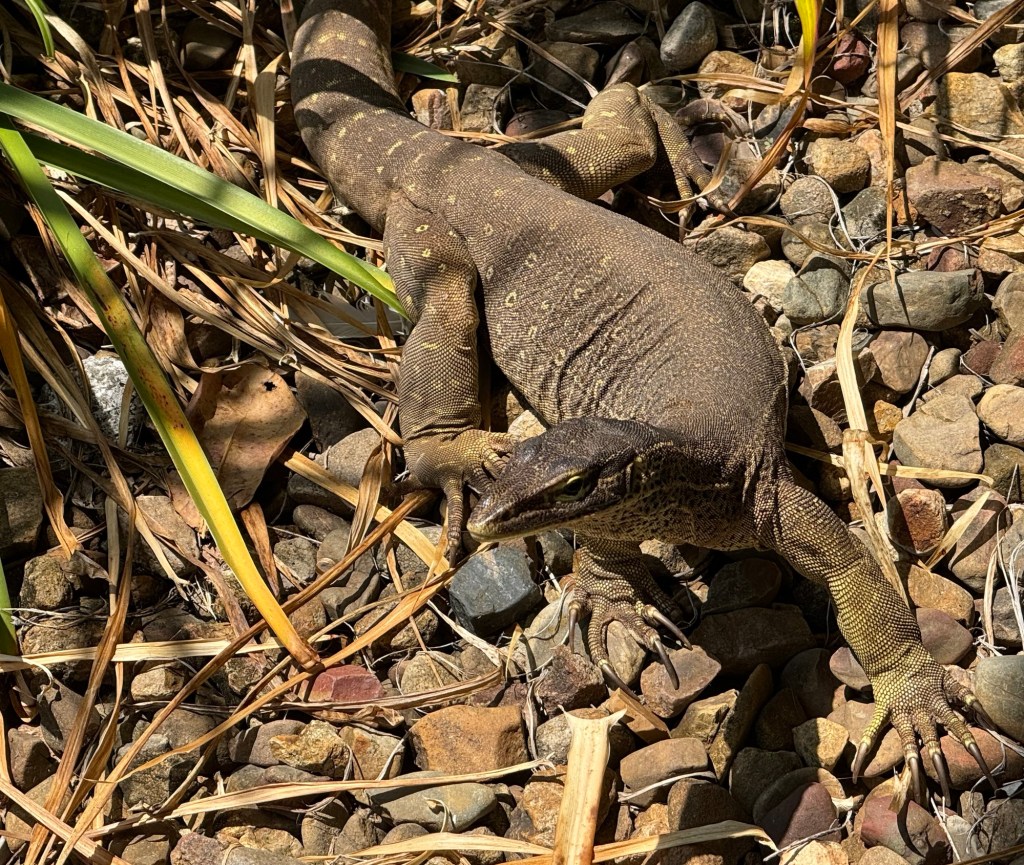
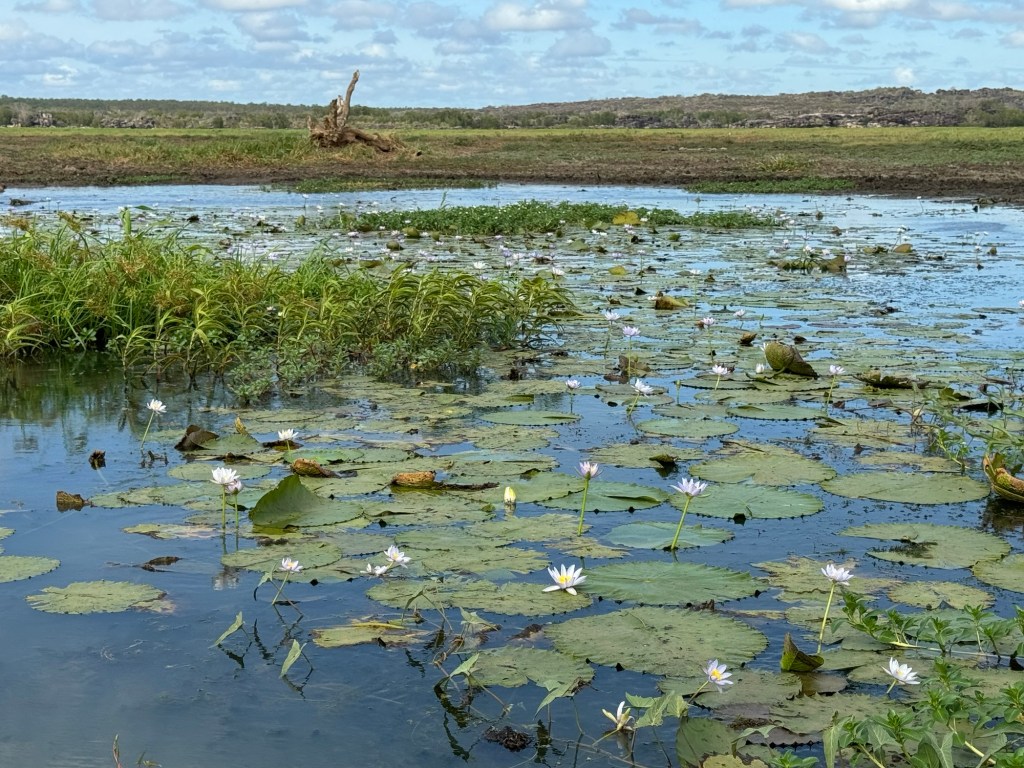
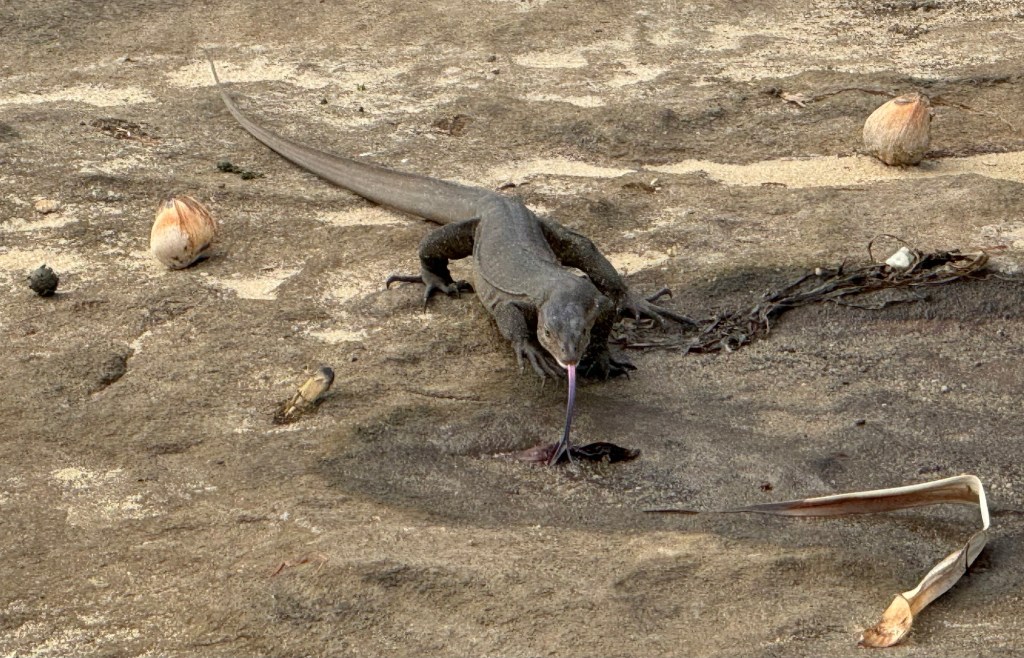
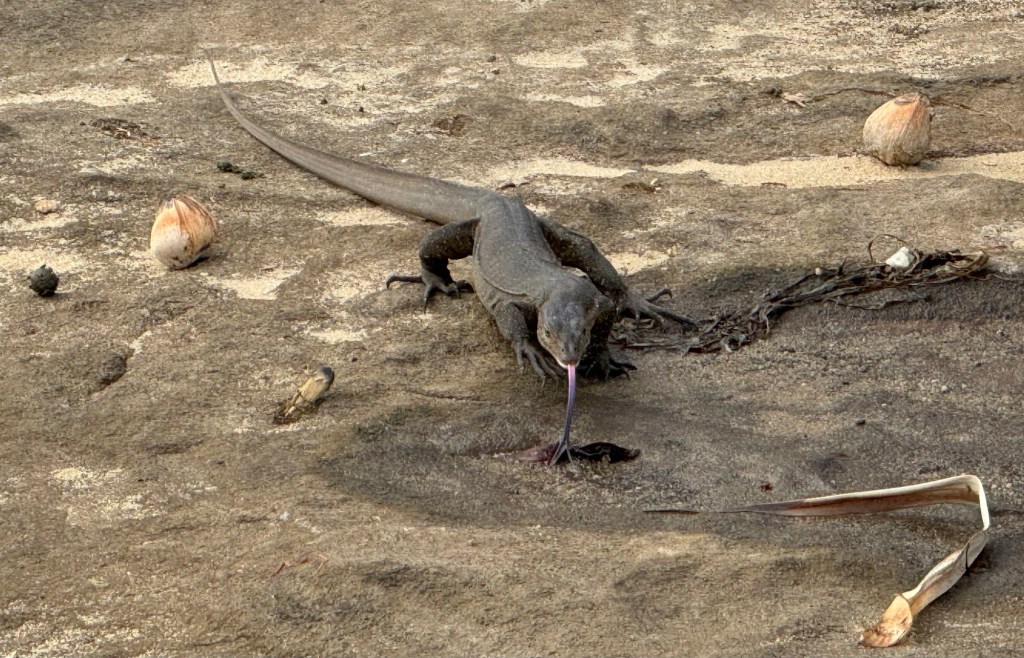
On way to an art gallery Water lilies every whereFresh water crockMonitor LizardDense bush country
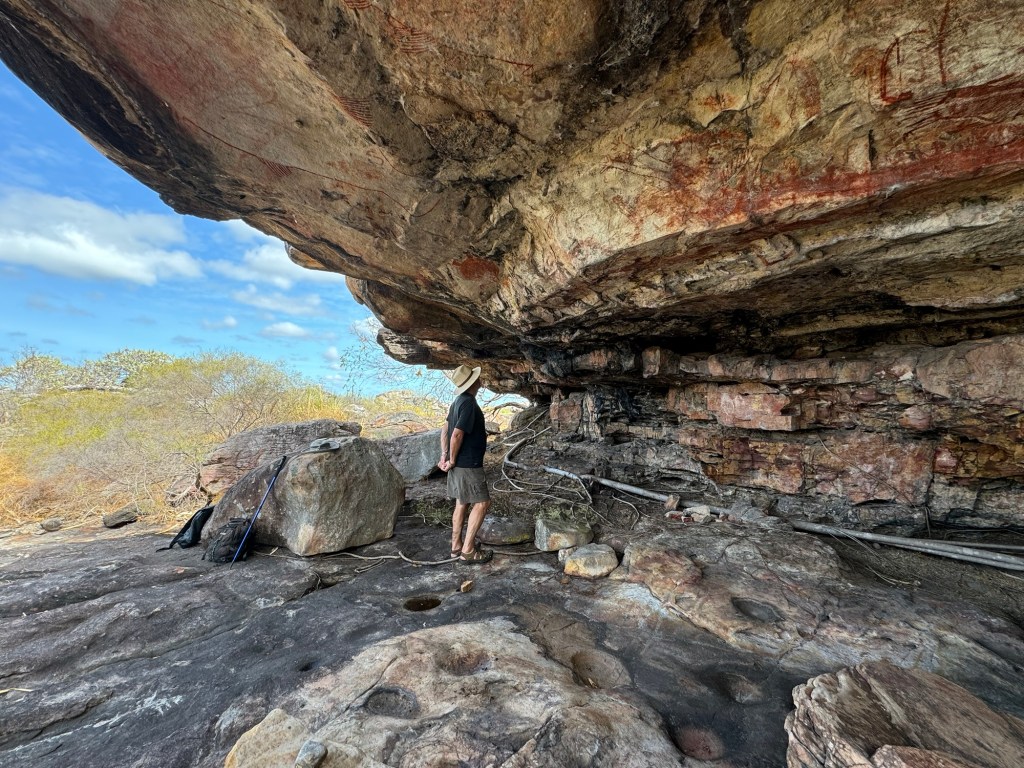
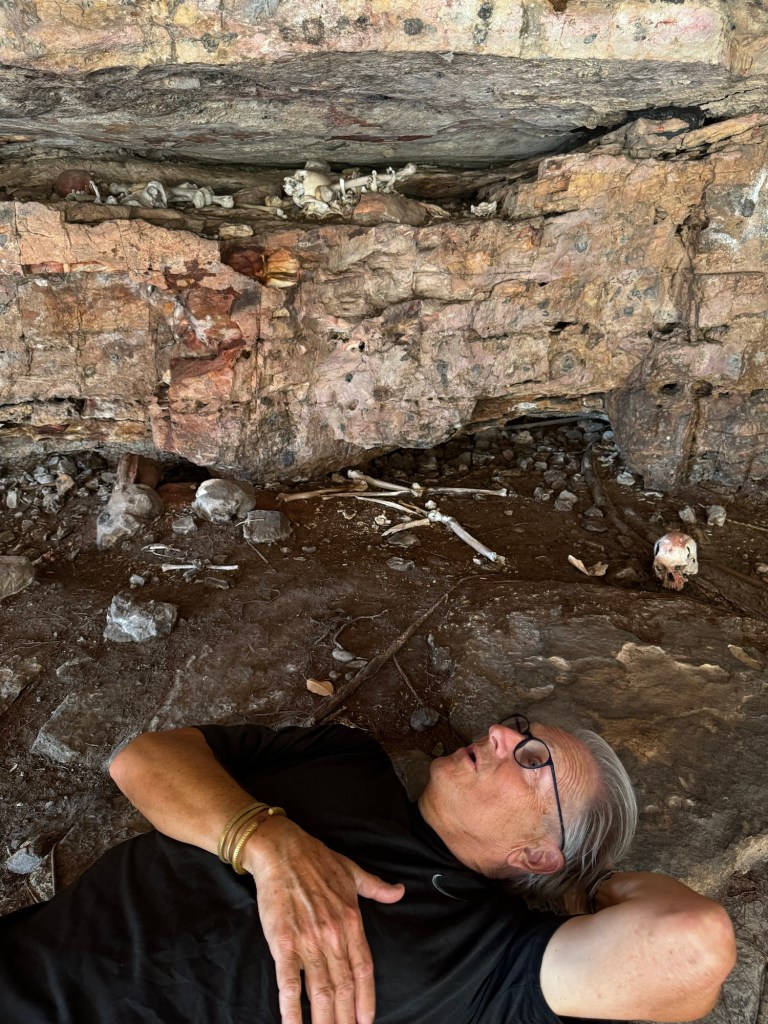
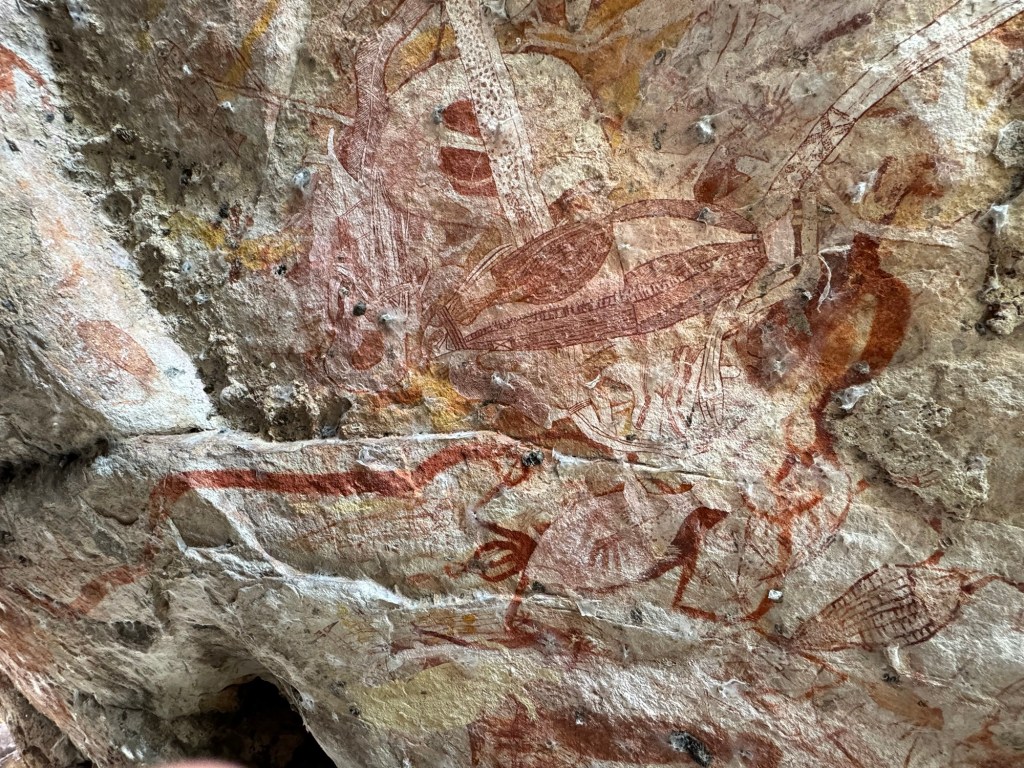
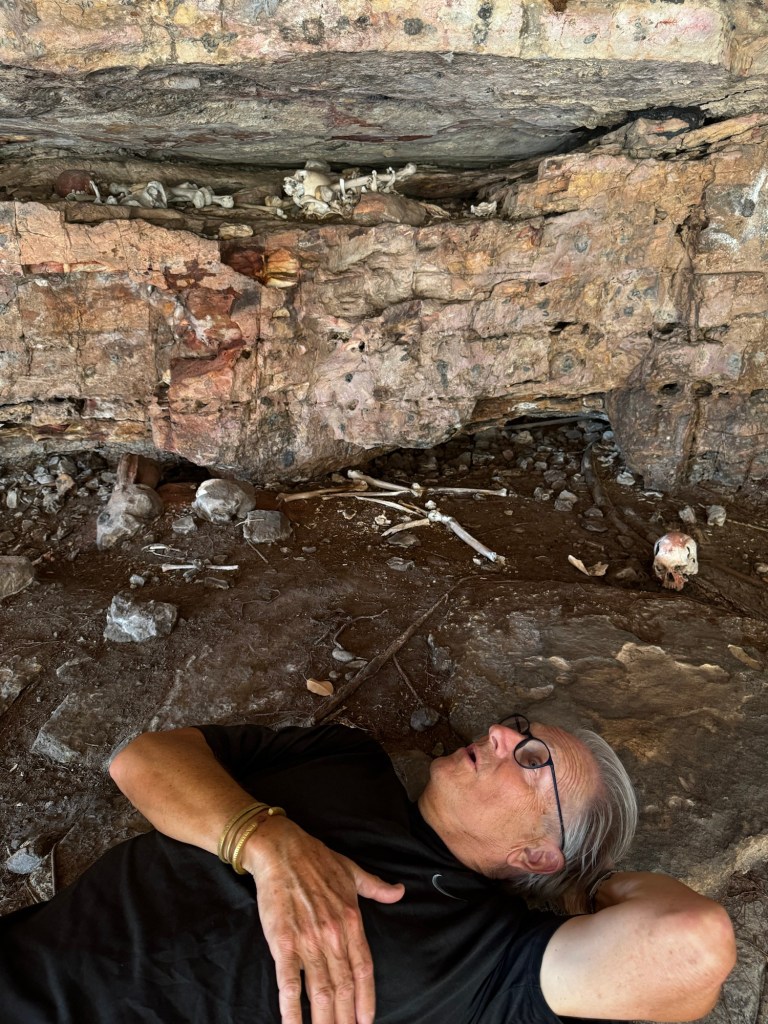
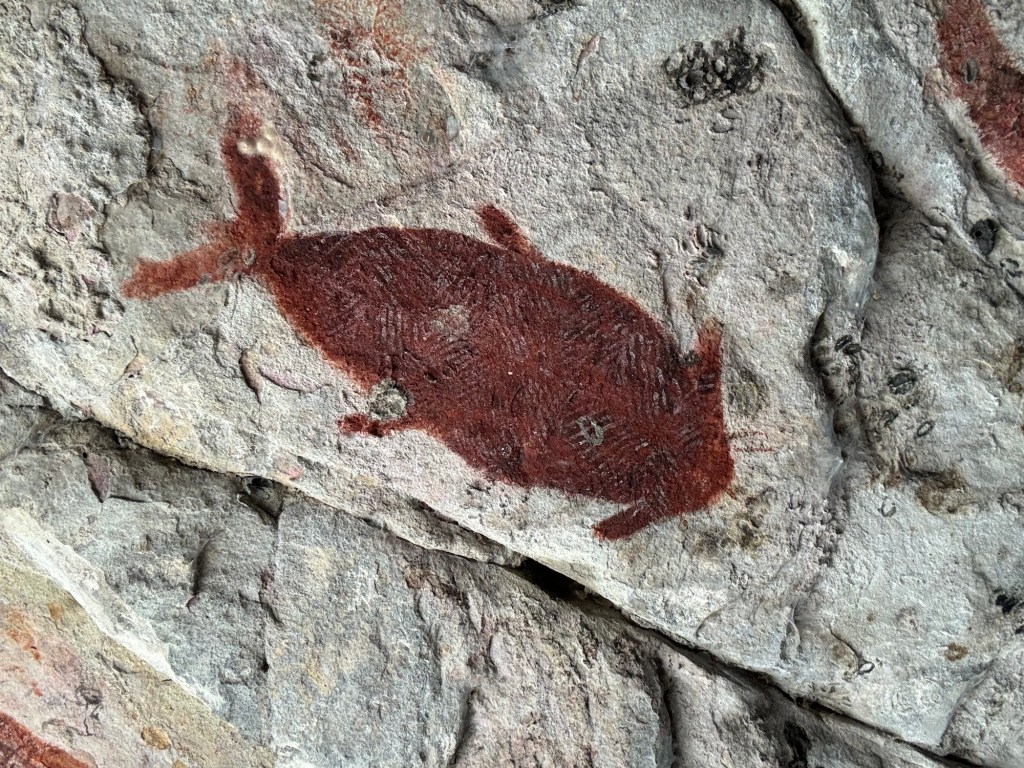
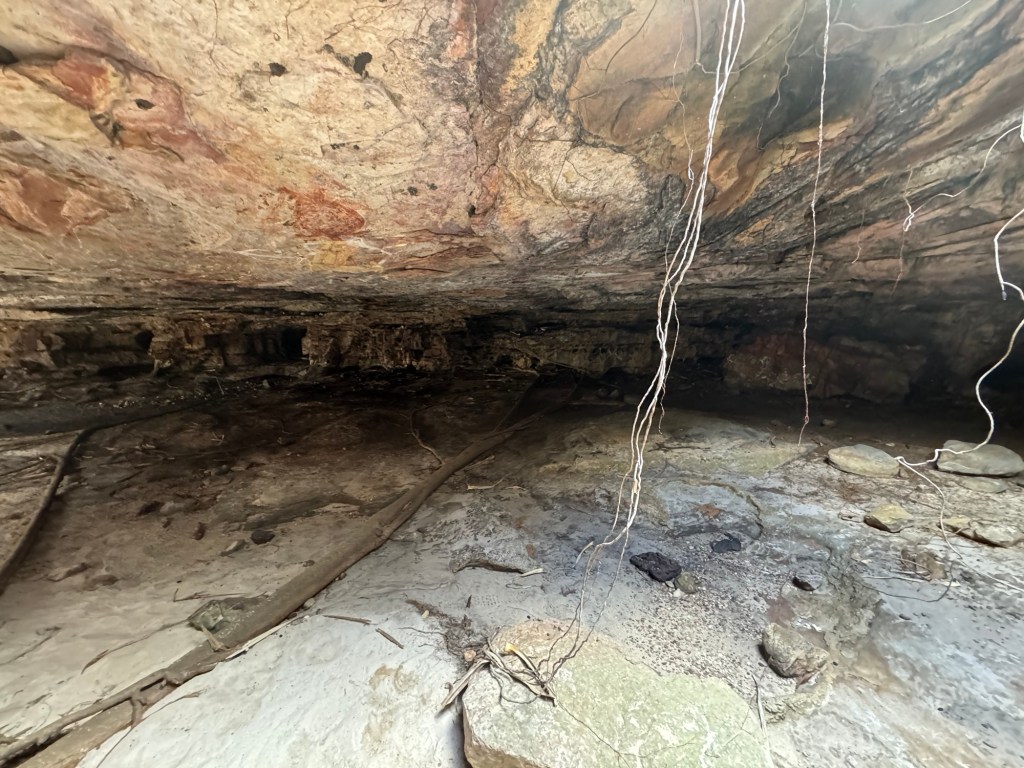
Shortly we stopped at a beach head, from which we could walk to the “Left hand Gallery”, named that for the “Left hand Billabong” it is near. It was an easy walk to the art gallery, which was also a burial site and an aboriginal dwelling site. The art was as beautiful as other sites we have seen, however the burial site and dwelling area were much larger.
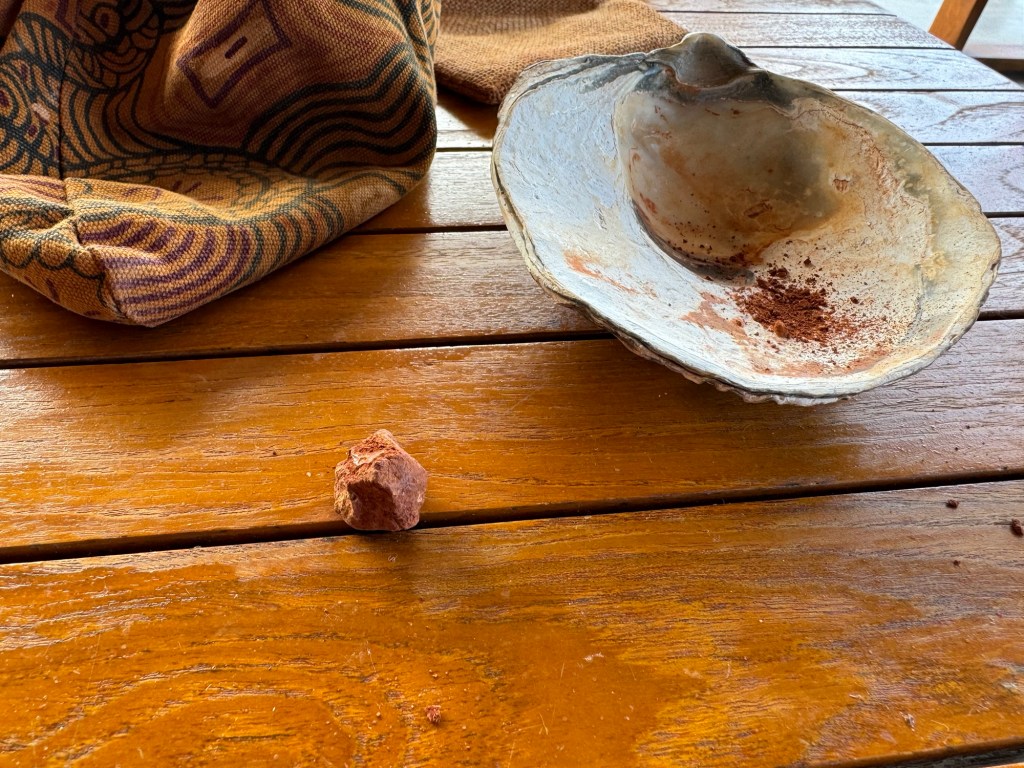
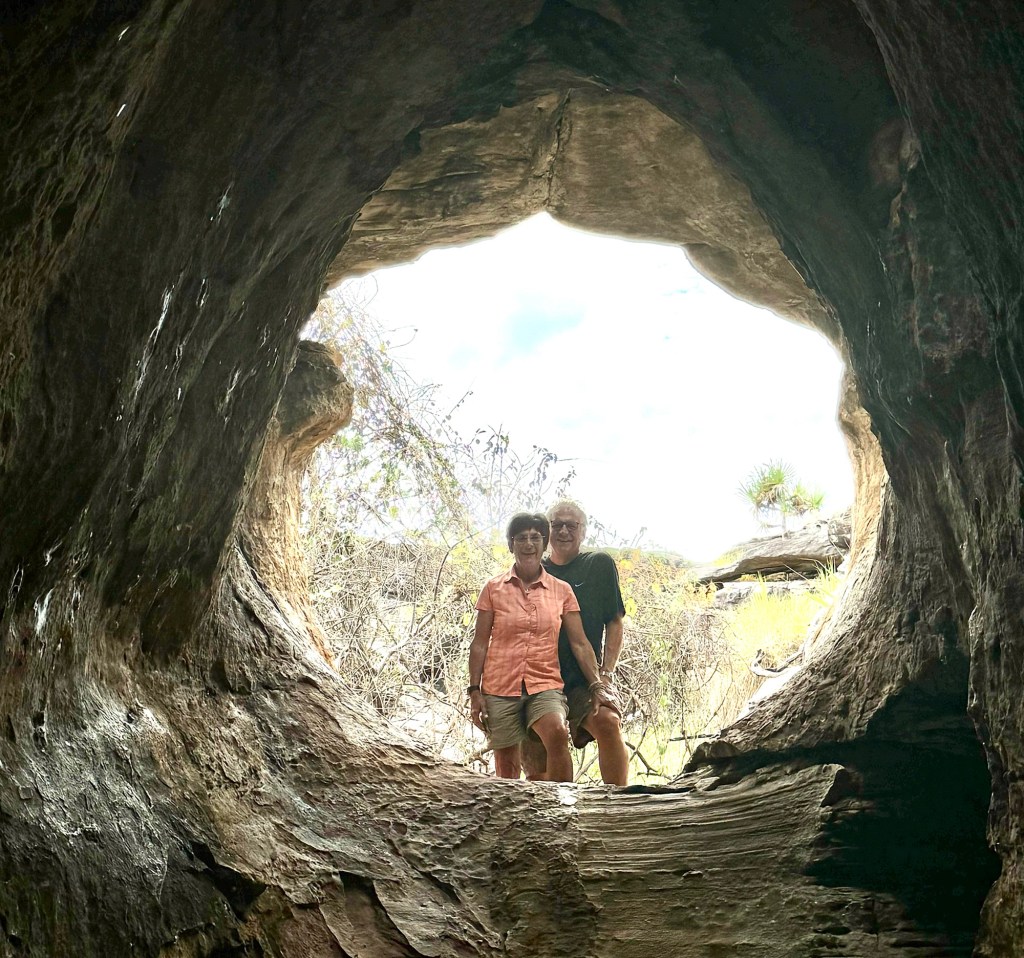
Rock formation holding Left Hand GalleryLeft Hand GalleryA large turtleFishLong neck turtleMark looking up at art with human bones nearbyInside a caveDwelling area Contact artRubbing two rocks together to get red pigment for painting
Although the art gallery was not quite as imposing. It seemed that centuries of weathering have deteriorated the art and it is completely gone in some places.
After lunch and a long, cooling swim in the pool, we joined Sab for a fishing excursion in the nearest billabong. Sab had us outfitted for catching barramundi. The three of us cast out hundreds of times and got only one nibble at the end of the day, but nothing that stayed on the line. While fishing we enjoyed looking at many water lillies and a few large crocks lounging on the shoreline. As the sun went down, we enjoyed a beer, still hoping for a catch. It was almost dark when we gave up on fishing and motored to the beach head.
We enjoyed one last dinner and conversation with Sab before calling it a day and heading for bed. We are almost on Australia time now.
Fridays, September 20, 2024
One final breakfast with Sab. Being an ex dive master, he lectured me about scuba diving and hopes I will only snorkel. I told him I would consider my options seriously. I appreciated his concern for my wellbeing. Then he departed and Mark and I hung out until time for our flight back to Darwin.
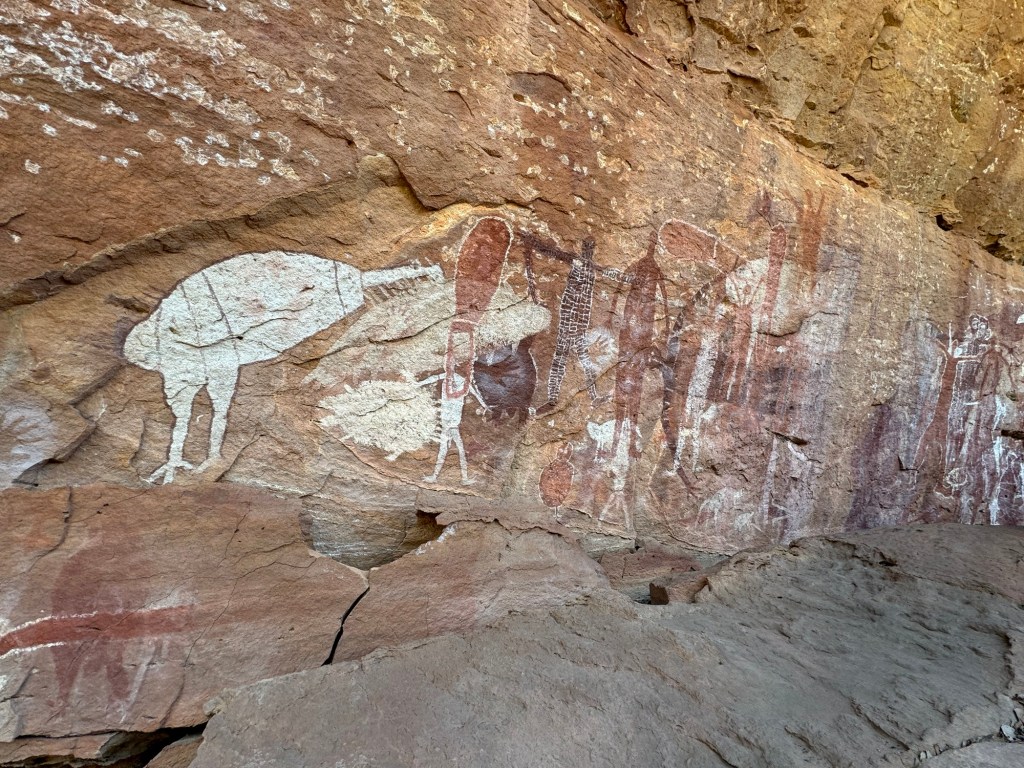
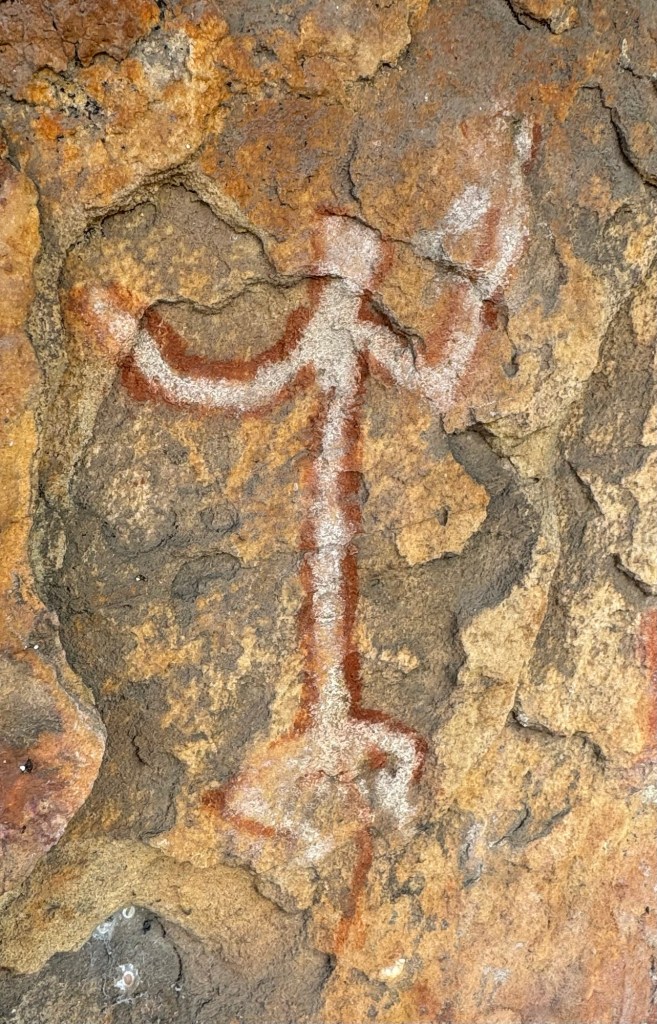
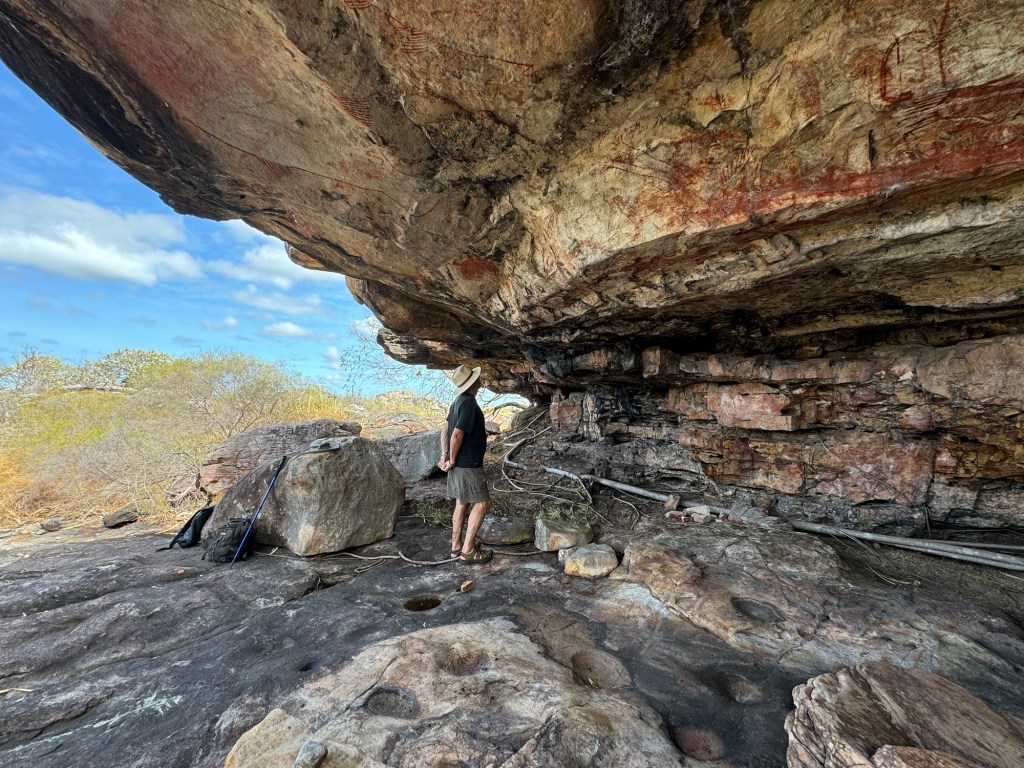
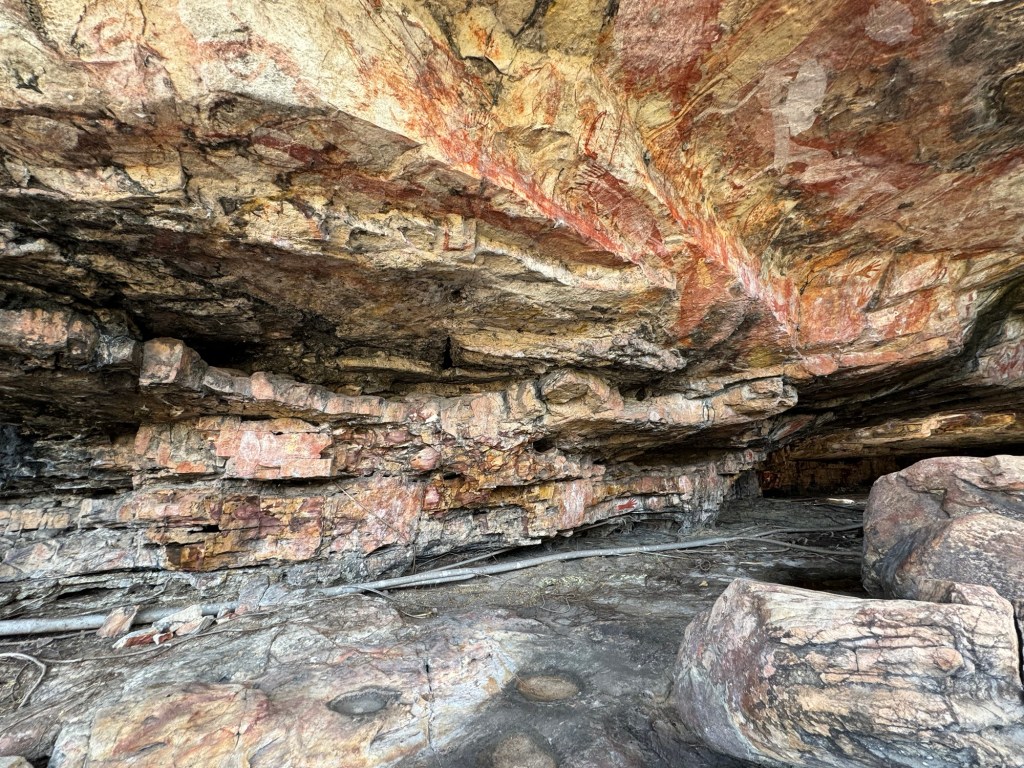
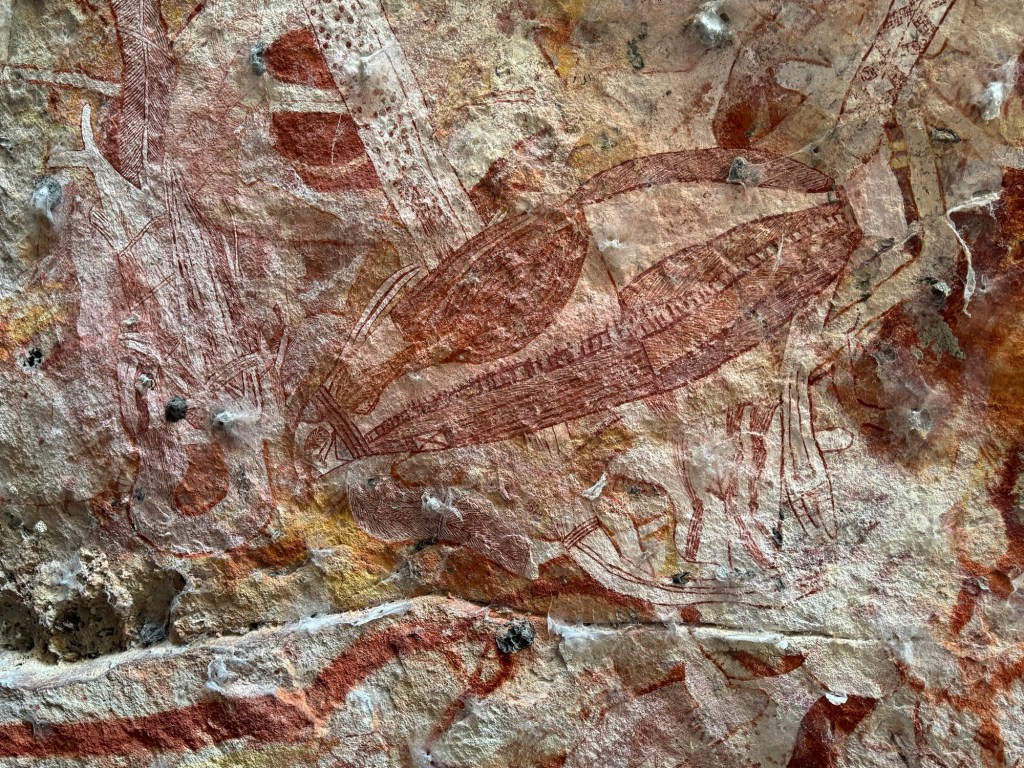
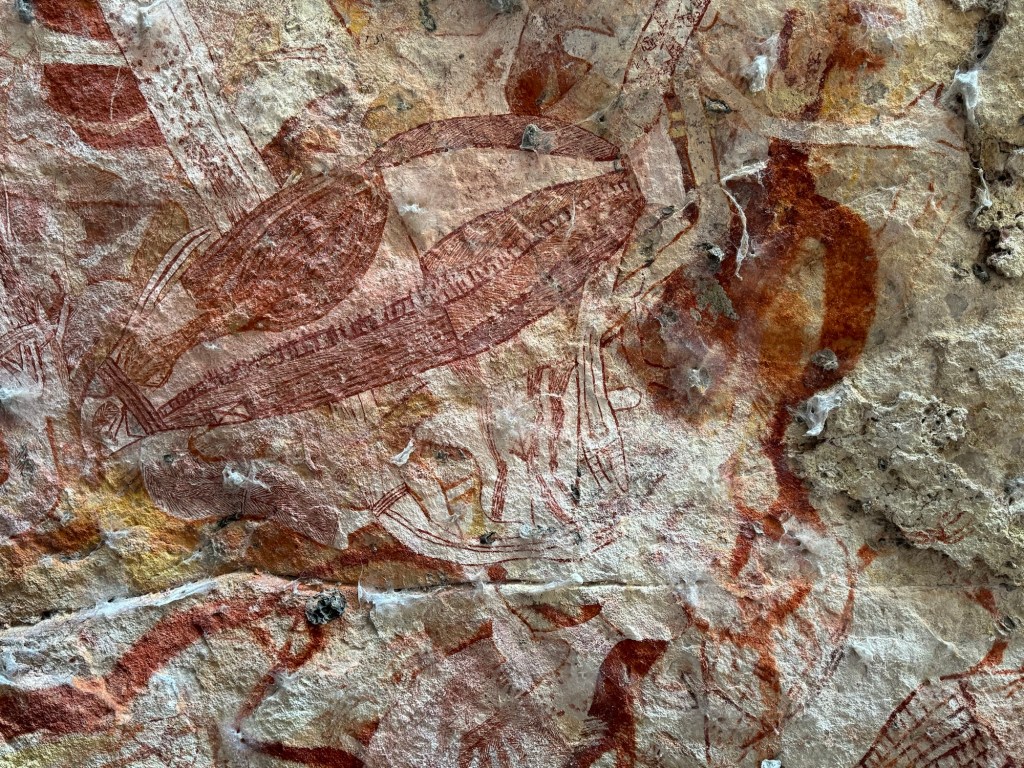
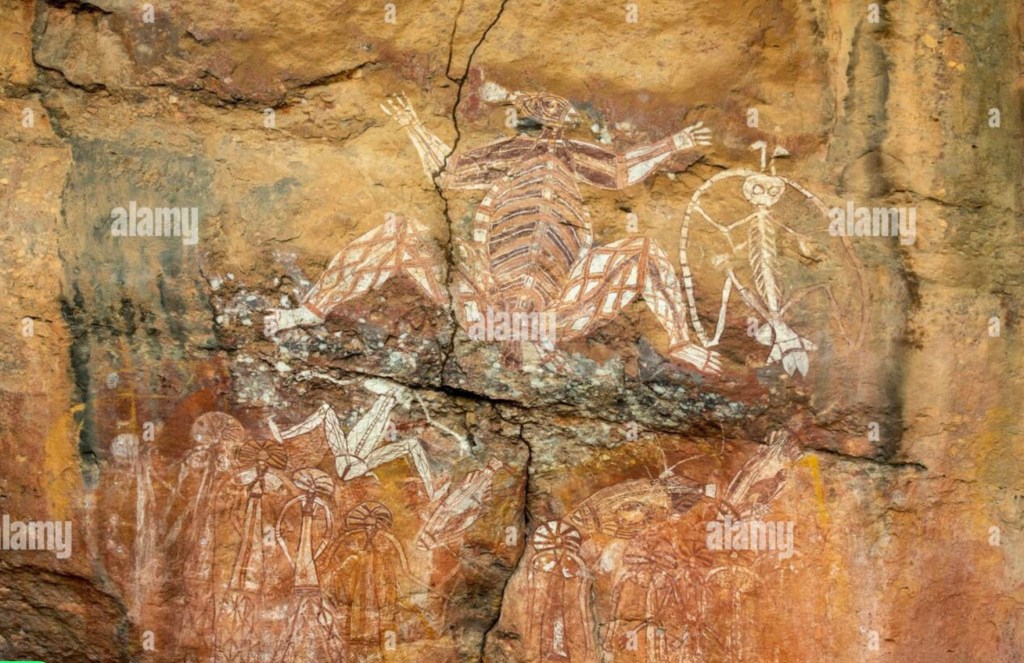
It is believed that humans arrived in what is now the Northern Territory about 65,000 years ago via land bridges and short sea crossings from Southeast Asia, during a period of glaciation when New Guinea and Tasmania were joined to the continent of Australia. Knowledge of this period comes from oral tradition prior to the arrival of the first Europeans. The oldest site showing the presence of humans is a rock shelter in Arnhem Land, near Darwin.
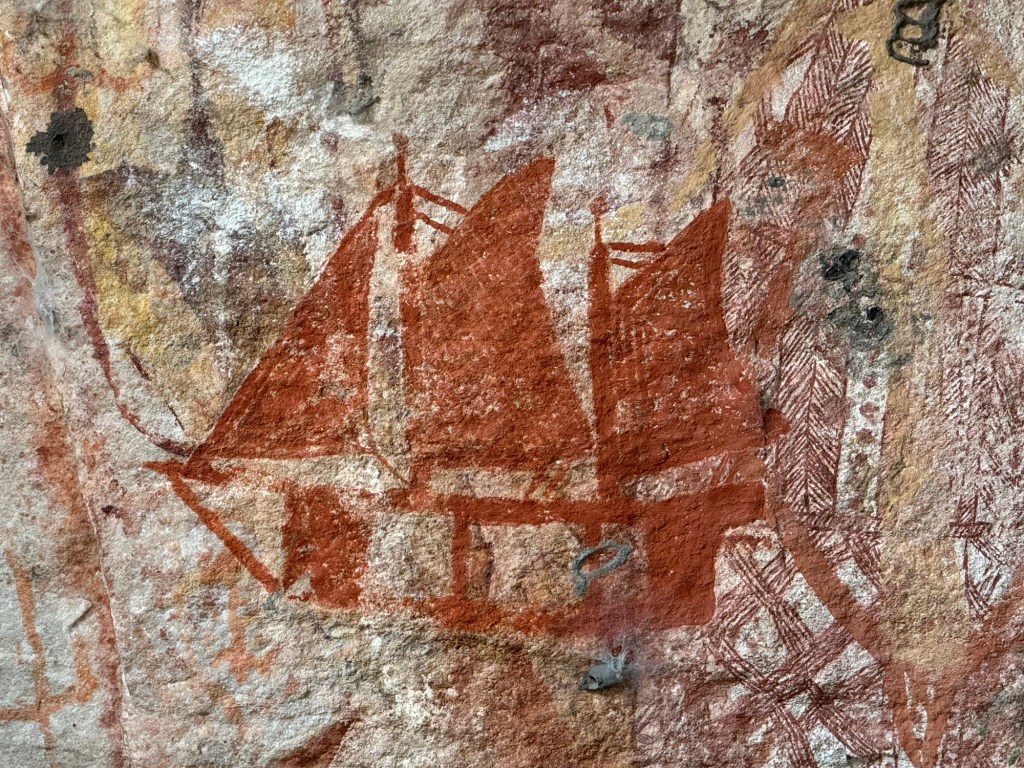
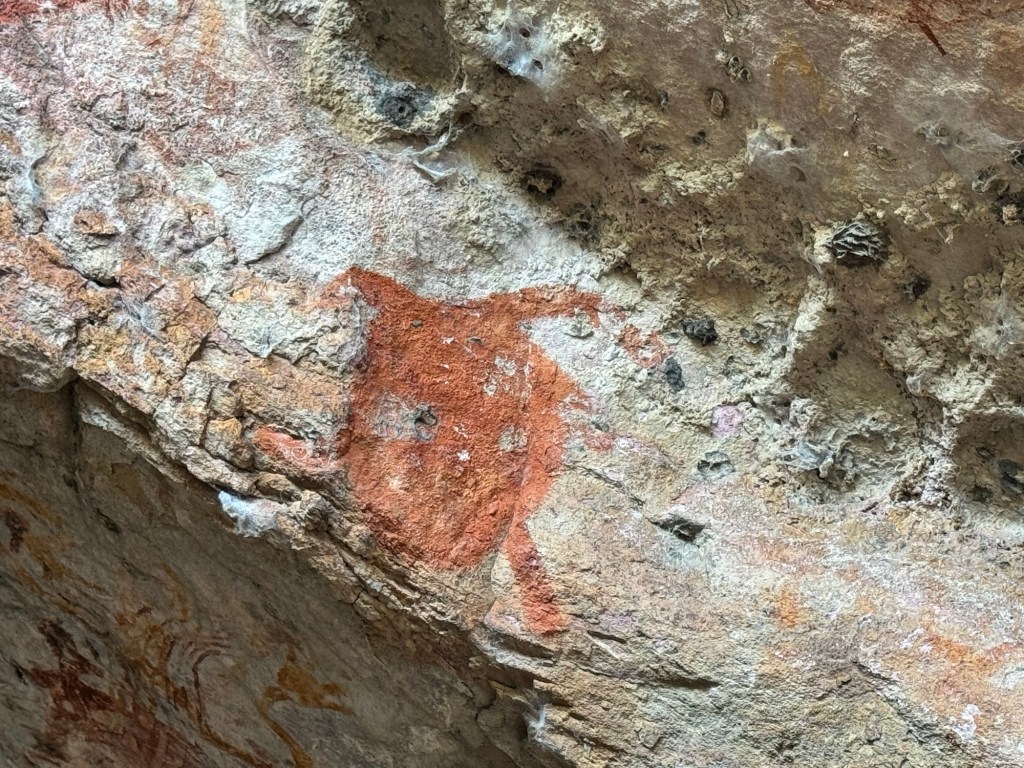
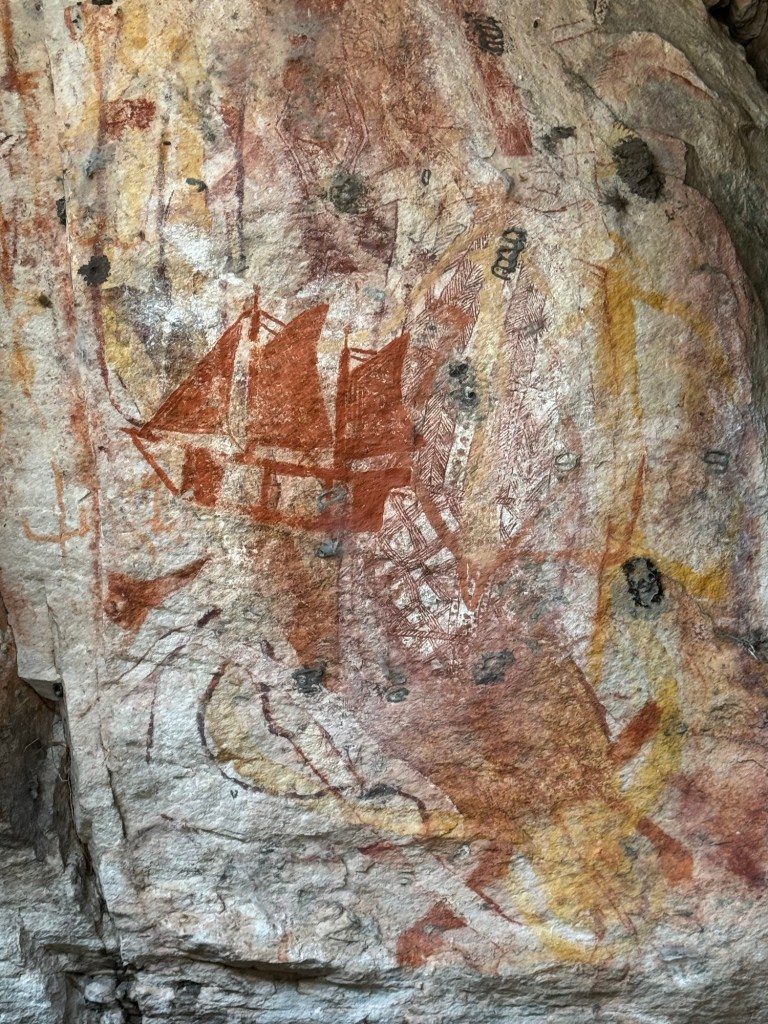
An ancient Aboriginal rock painting
At the time of European contact, it is estimated the Aboriginal, “original inhabitants”, population ranged from 300,000 to one million. There were about 600 tribes speaking 250 languages. They were complex hunter-gatherers, who had diverse economies and societies. Some groups engaged in “fire-stick” farming or controlled burning. Some engaged in fish farming. Semi-permanent shelters were built. It is unclear if any groups engaged in agriculture.
We are headed to the Northern Territory to see where and how the first people lived and to see their art. They may have landed in Western Australia about 60,000 years ago and settled across the continent within 6,000 years
Enroute to Darwin, we stopped in Singapore for a day and two nights to get acclimated after the 15.5 hour flight from SFO on Singapore Airlines. The flight was not so bad as we both took sleeping pills and were out for several hours each. The bed was the flattest, roomiest and most comfortable we have had on an airplane. An escort was at the gate to meet us and walked us through the arrival process and to our transport with no stress or fuss. The ride to the hotel was an easy 25 minutes as it was very early morning. We were wide awake so we stayed up, had a light breakfast in the hotel and then went for a long walk around the area.
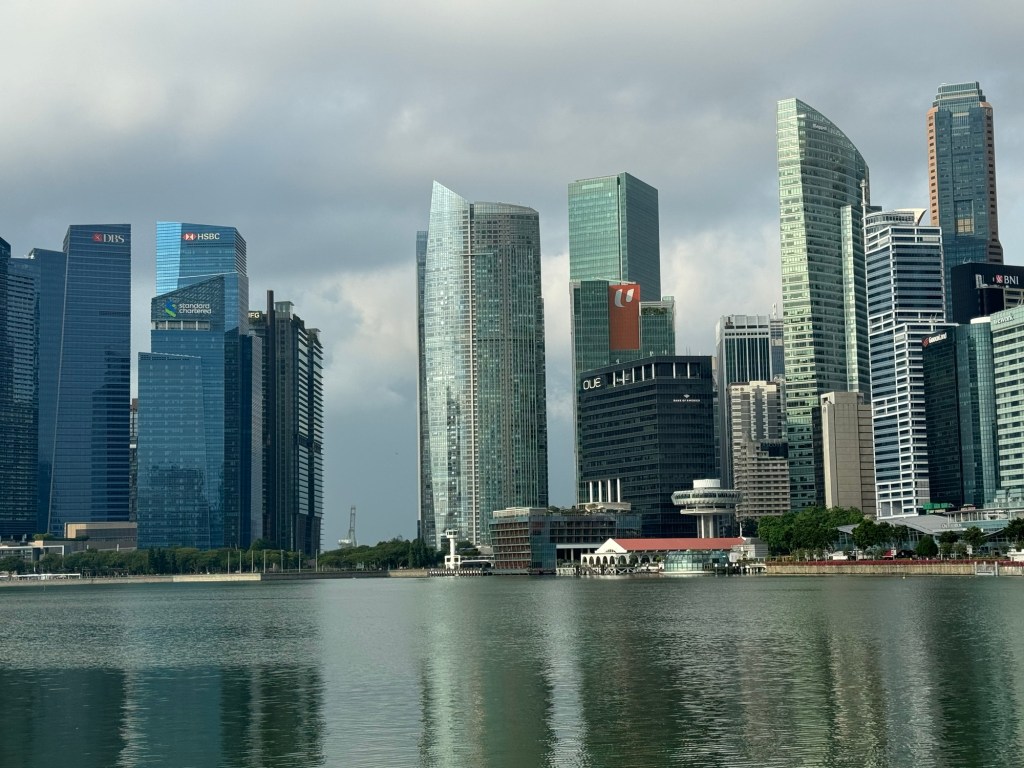
We reminisced about our first time in Singapore in 1993. It was the first stop on our honeymoon. Our big activity was afternoon tea at Raffles Hotel. It was quite a do at the time. Today, Raffles seems small and old compared to the dozens of sky scrapers we see today. Our hotel, not Raffles, is the small building in the center foreground of the image (left of the low white & red pitched roof.)
Singapore Skyline
After a 2.7 mile walk we returned to the hotel just in time to miss a down pour. Our room was quite pleasant with a porch and a good view, so we hung out until our 2:30 food tour with a lady named Charlotte. She gave us some info about Singapore and told us we would be spending time in Chinatown and Little India eating foods from those cultures.
Chinese and Indians arrived in the area 800 years ago to develop trade. Europeans arrived in the 1800’s. The first one was a fellow named Raffle, an employee of the East India Company. British rule reigned from 1924-1963, when the area merged with Malaysia for 2 years. In 1965 Singapore became free and independent.
The current population is 5.6 million, with 4 million being citizens. 75% of the population is Chinese; 14% are Malay; 9% are Indian. 1.4 million residents are people with work passes, who come mostly from Bangladesh and the Philippines.
According to Charlotte, Singapore has the busiest transportation port in the world. It is certainly huge. She pointed out a government housing project that provides 99 year leases, A pedestrian street full of restaurants where the upstairs used to be a red light district and a Taoist Temple that housed a relic of Buddha’s tooth, brought from Sri Lanka. We had to smile as we remembered being in the Taoist Temple in Sri Lanka and seeing the same, or similar, tooth.
Government housing; 99 year leasesShopping street, was once was a red light districtTaoist temple
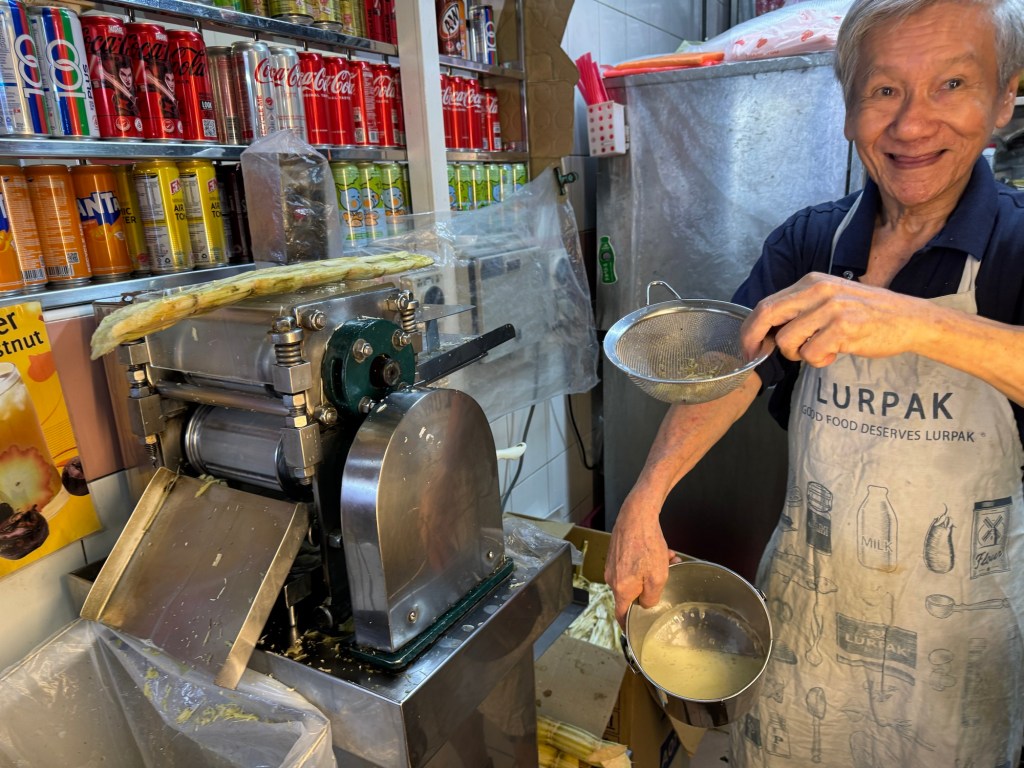
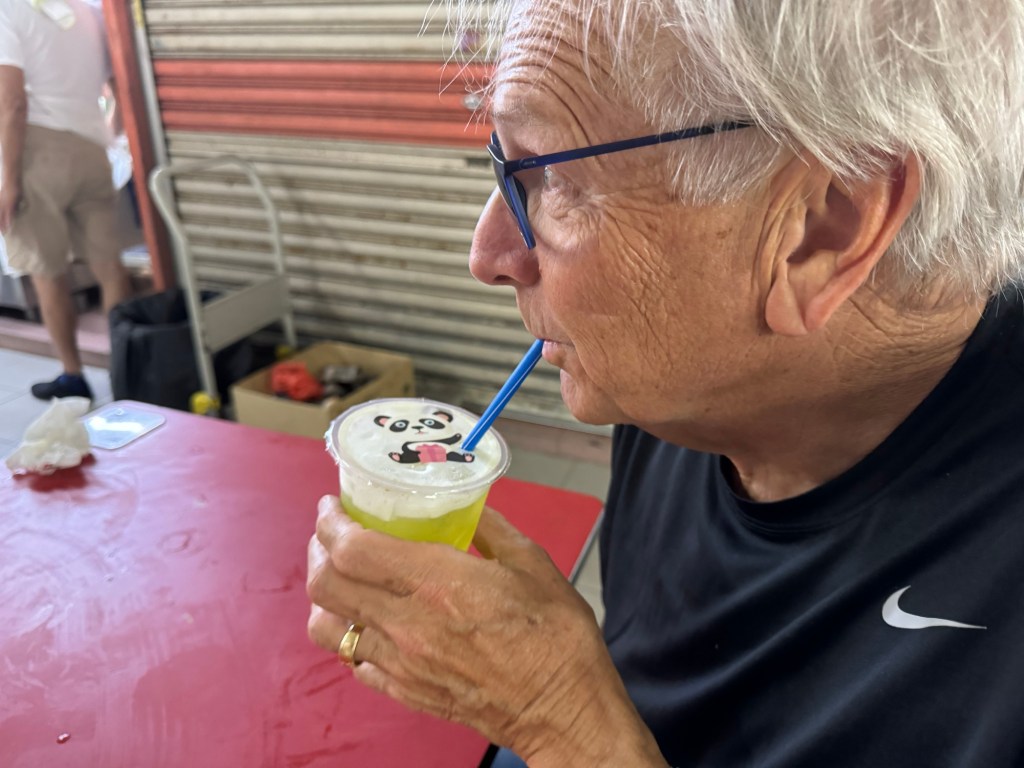
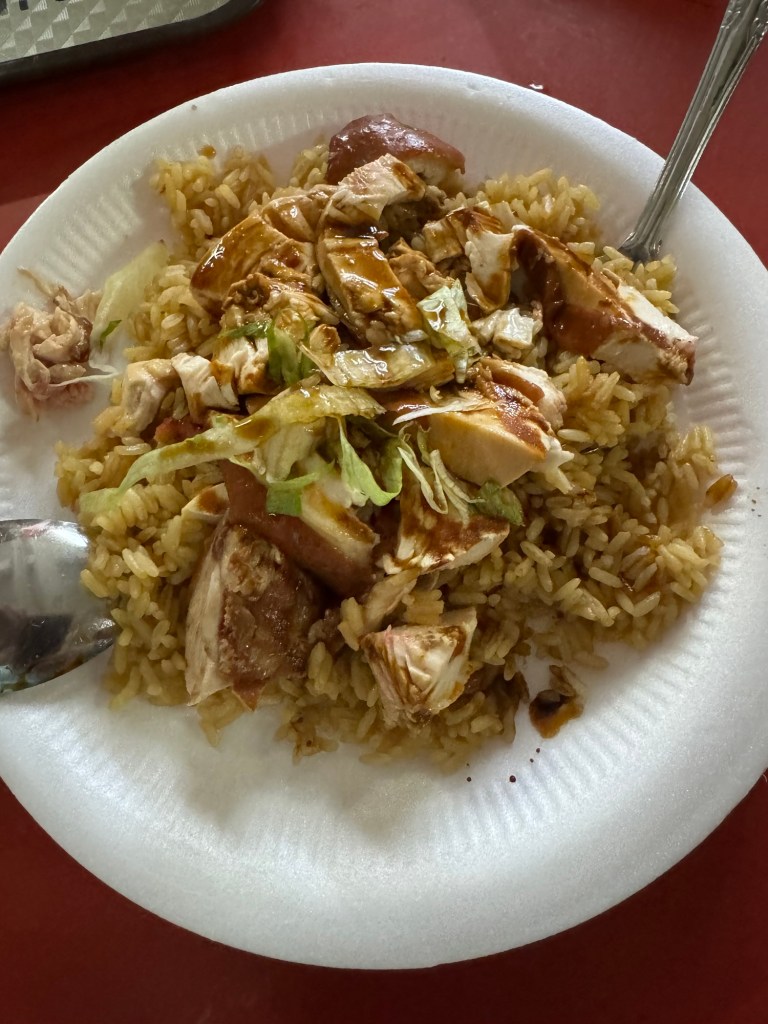
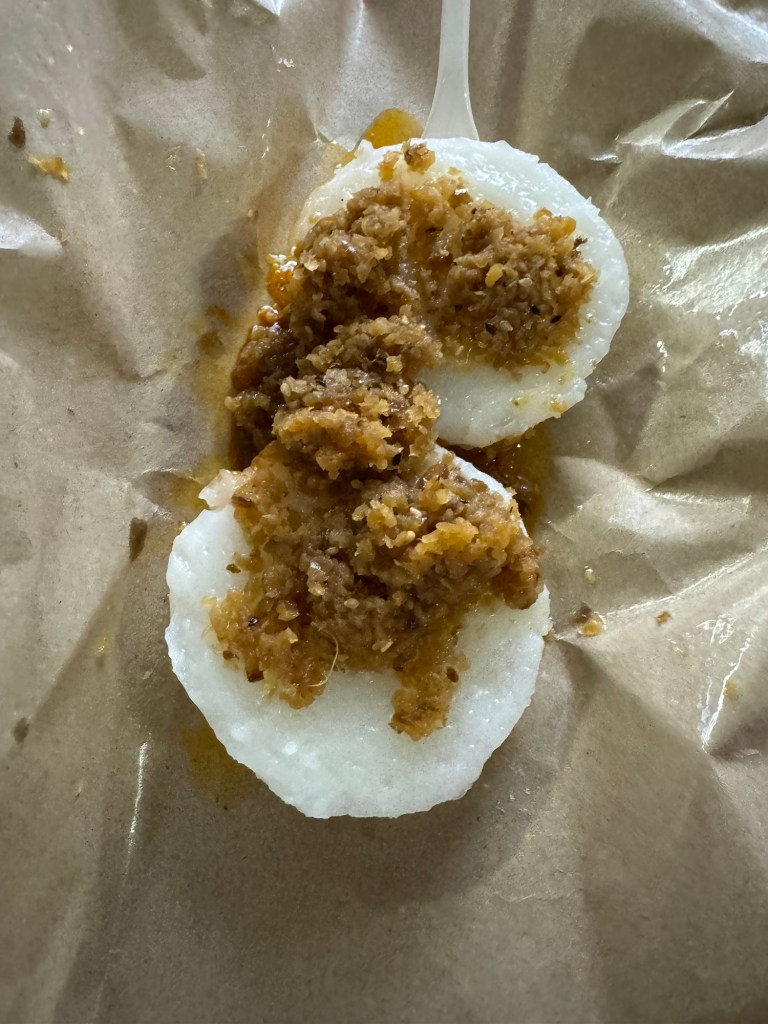
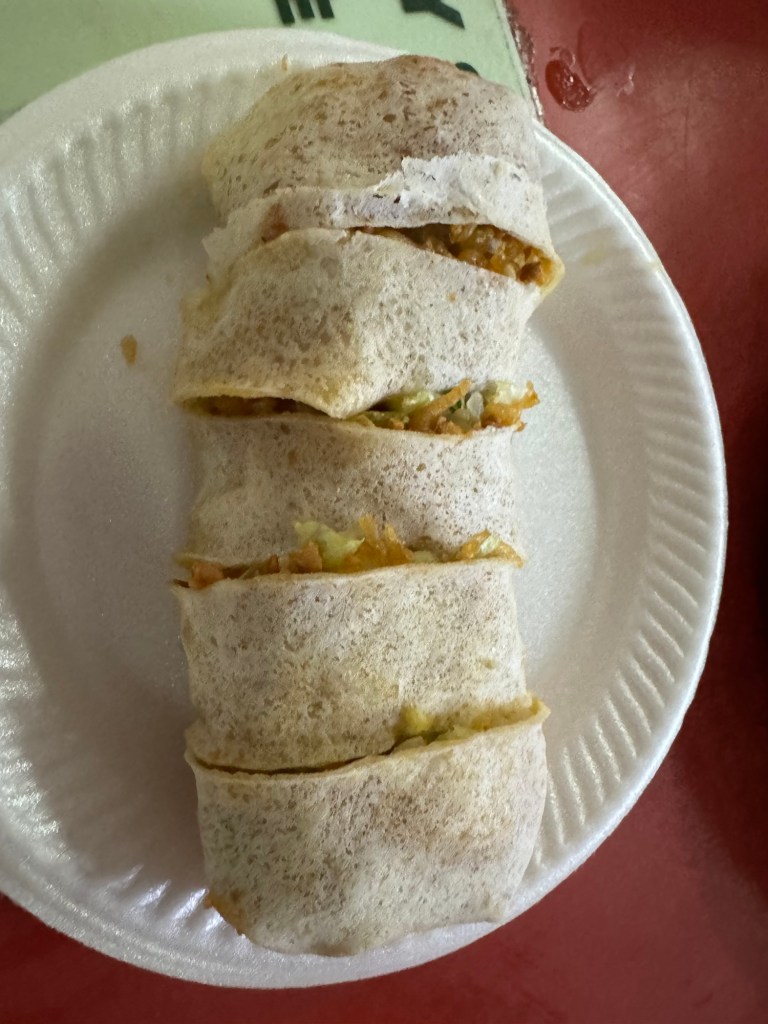
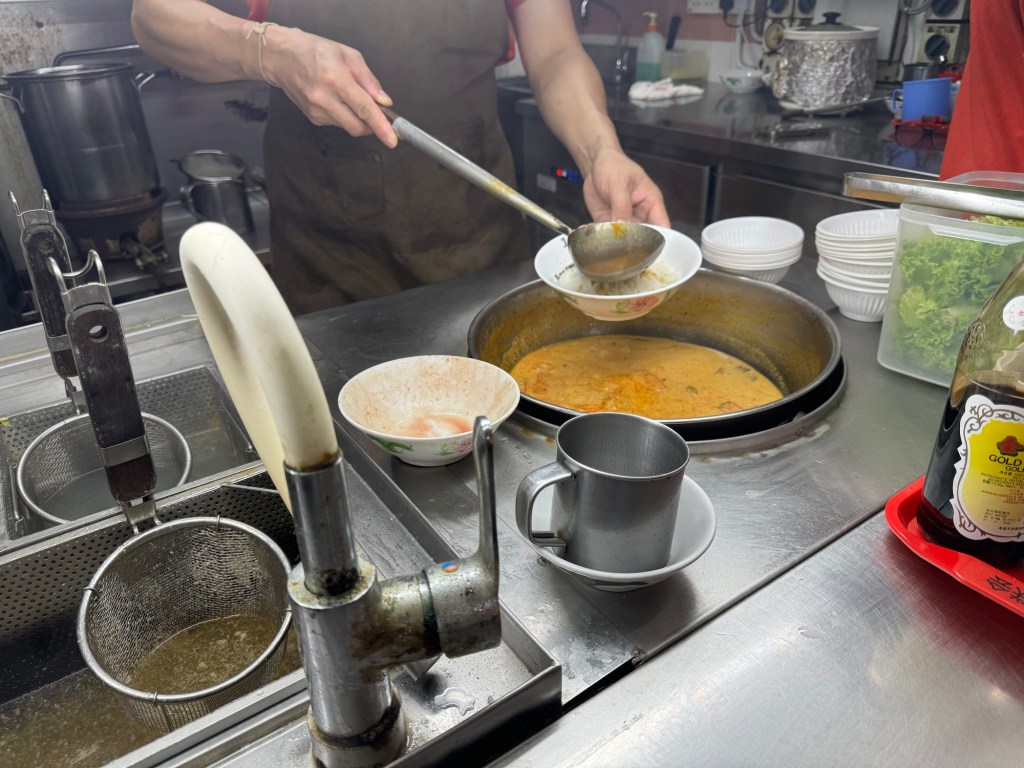
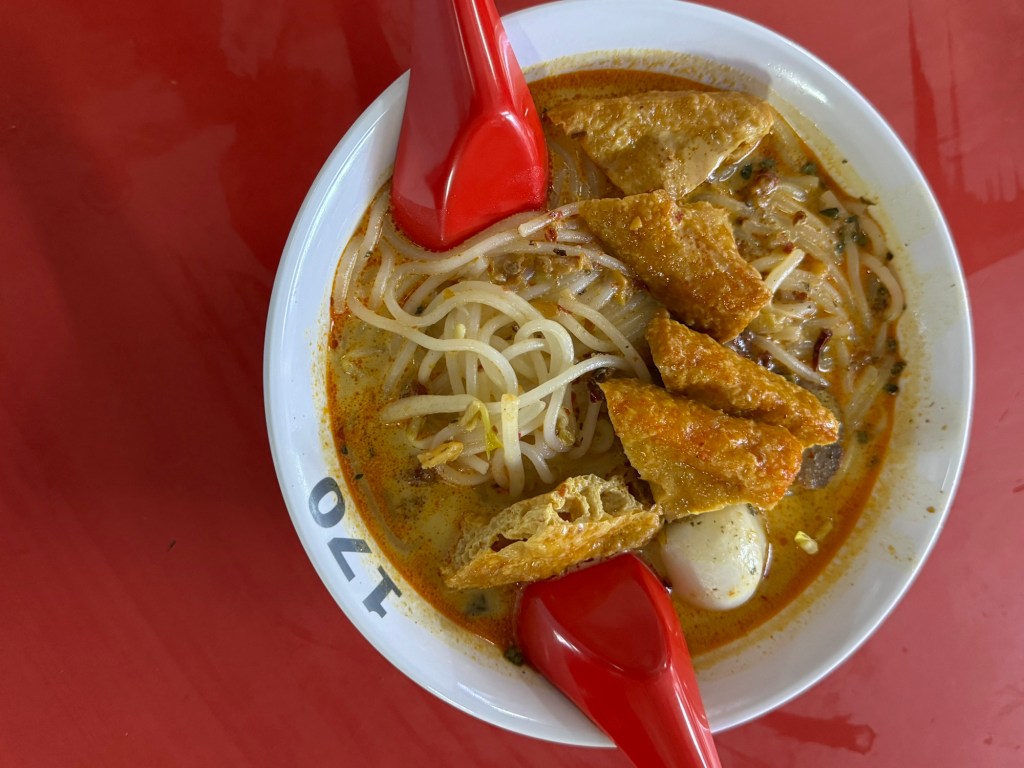
We took a taxi to Chinatown and went into a huge food vendor court. The place was packed with vendors, tables and people buying and eating various food items. Charlotte sat us down at a dirty table, which we cleaned ourselves, while she shopped for 3 different food items starting with a drink of freshly squeezed sugar cane juice. The first items she brought were a plate of Braised chicken and rice; Water cake made with rice flour and a spicy condiment; carrot cake made with daikon. Her next trip produced a dish called Popiah, made with a large, thin biscuit and Jicama; and Laksa, a soup bowl with rice noodles, soy beans, mushrooms and fish. That was enough already. My favorite was the Laksa. We wandered around the court looking at other food offerings, which we were too full to sample.
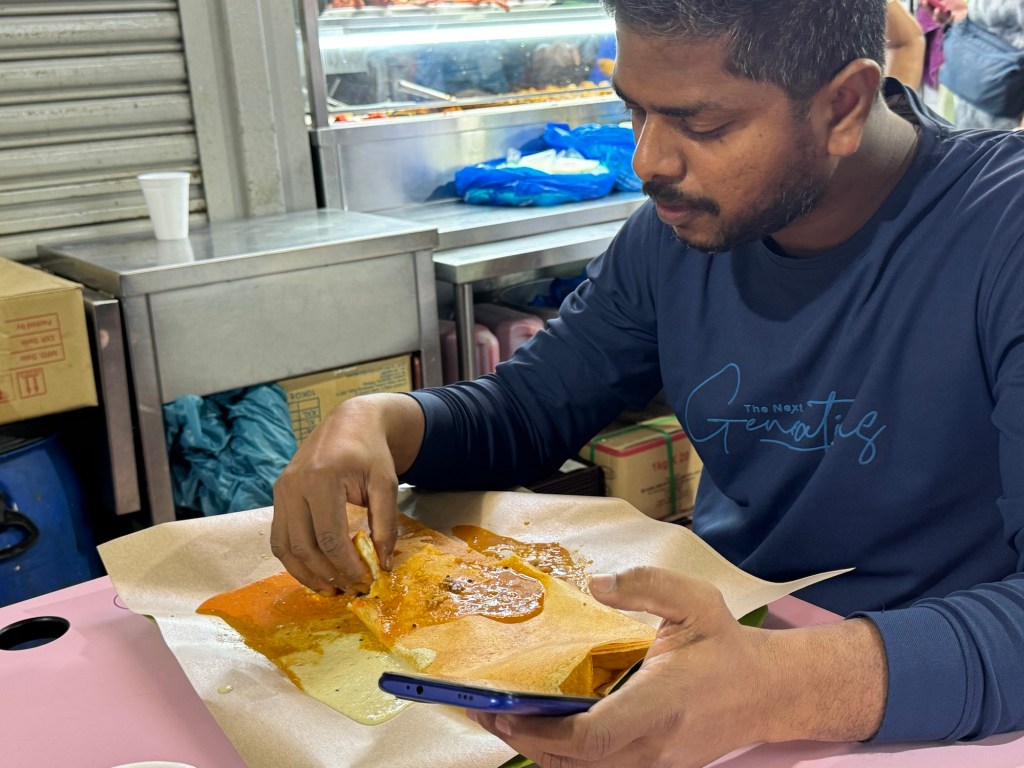
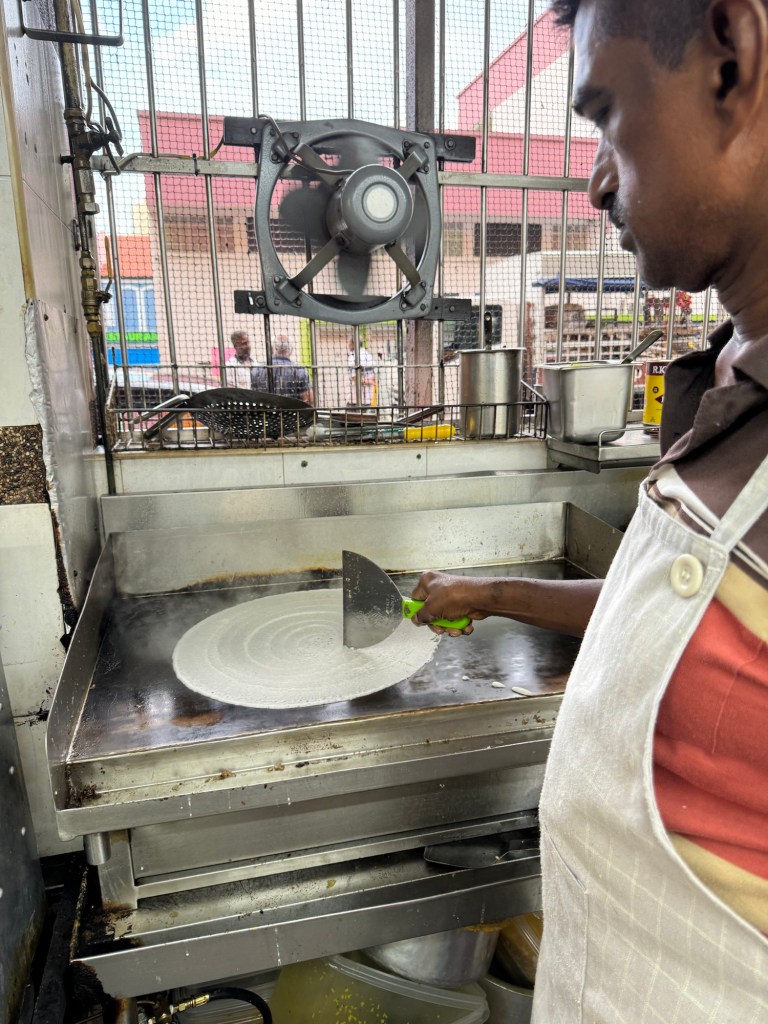
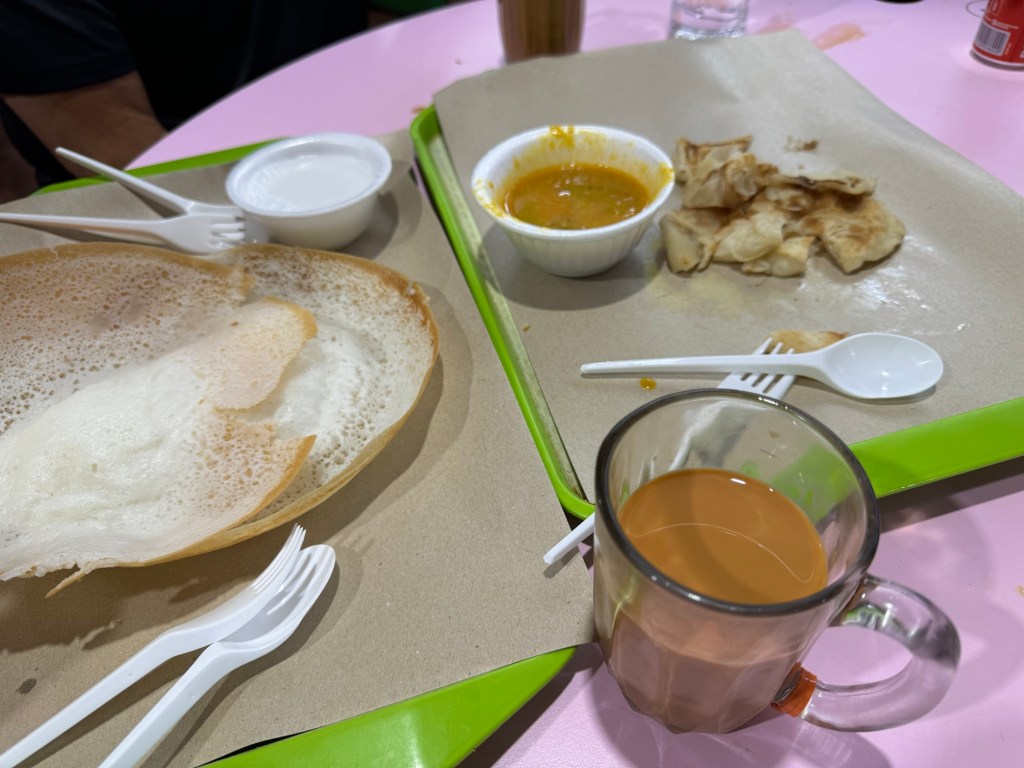
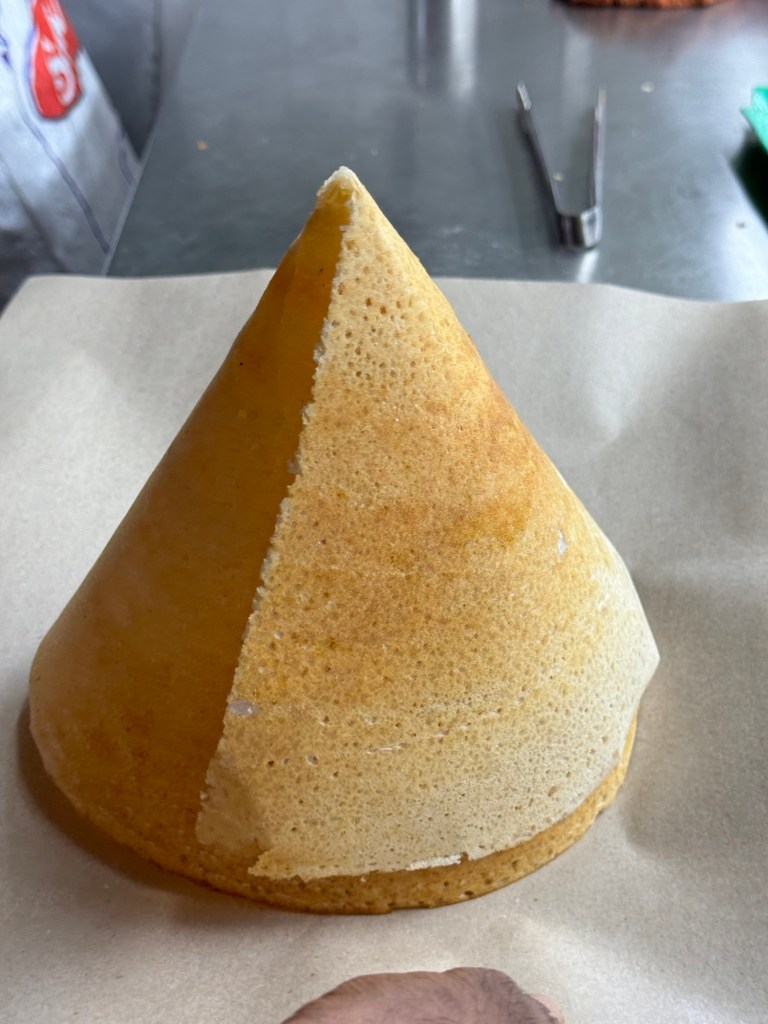
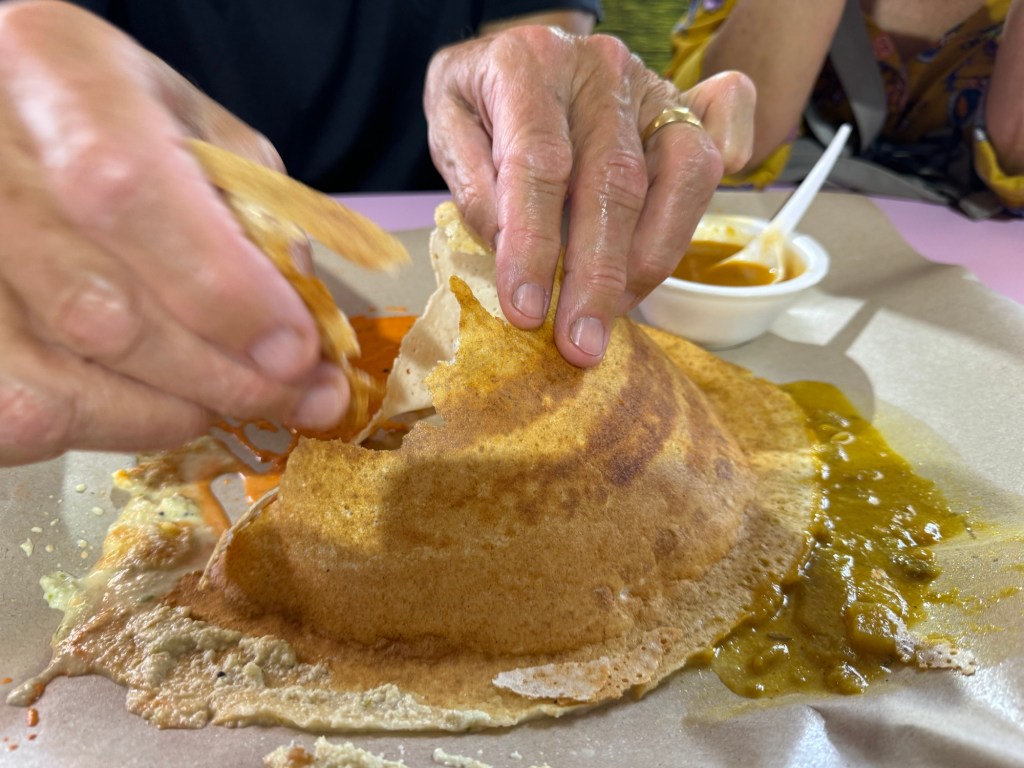
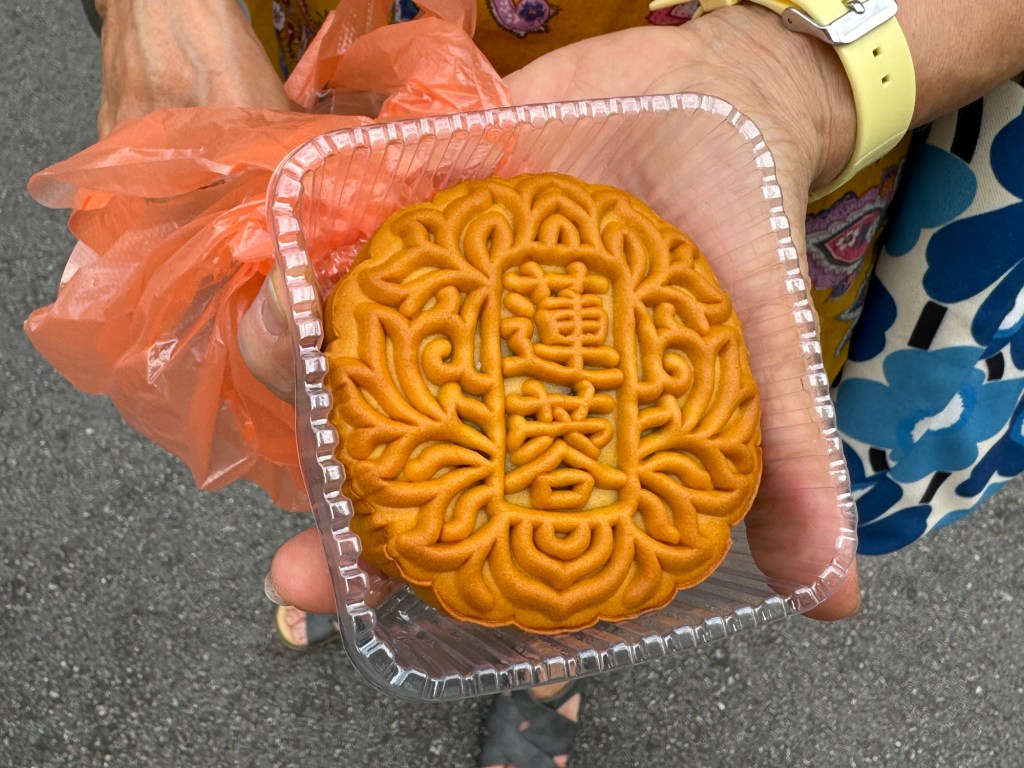
Then we took the subway to Little India where we sampled a version of hot Chai; a dish called Prata, a flat bread made with wheat flour, accompanied by a curry and lentil sauce; Appan, a large crepe made with coconut milk and rice with a dipping sauce of warm, sweetened coconut milk; and finally Thosai, another crepe made with fermented black dough and rice with a dipping sauce. Prata was Mark’s favorite food. For dessert, Charlotte gave us a moon cake to split. It was filled with lotus paste.
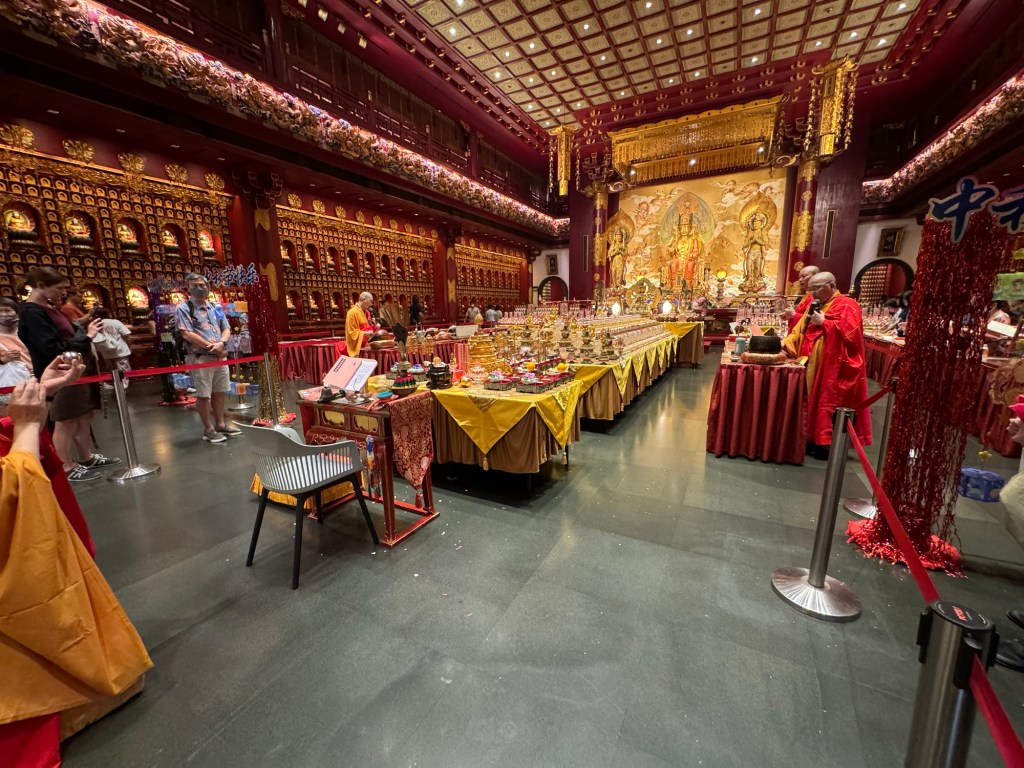
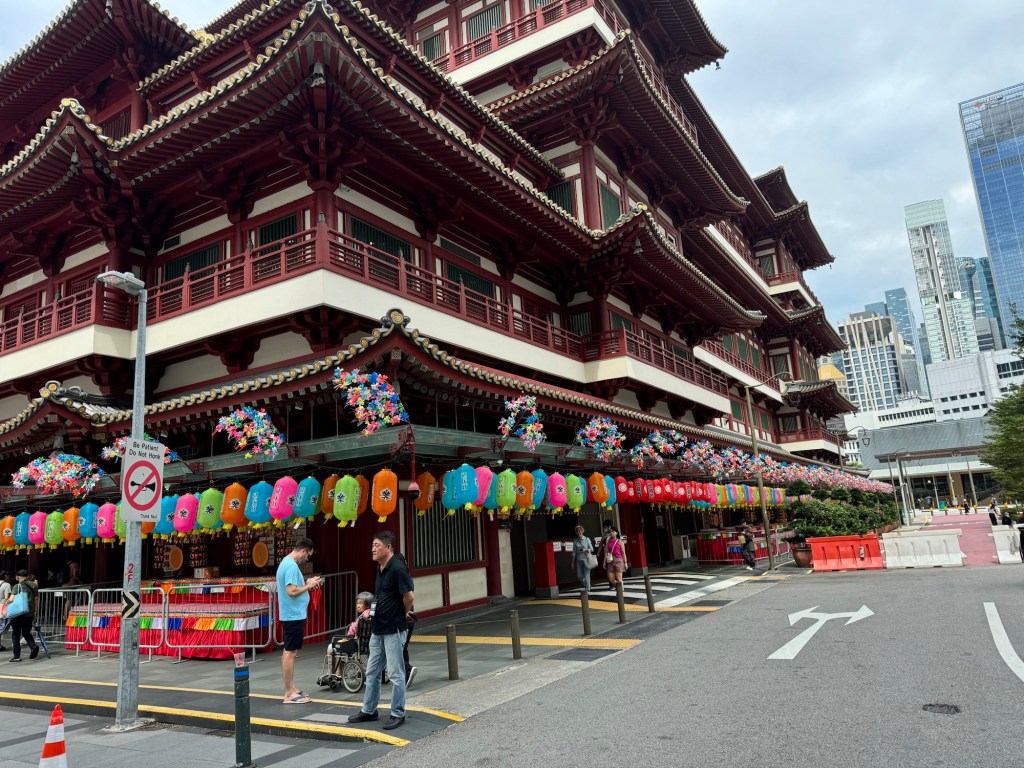
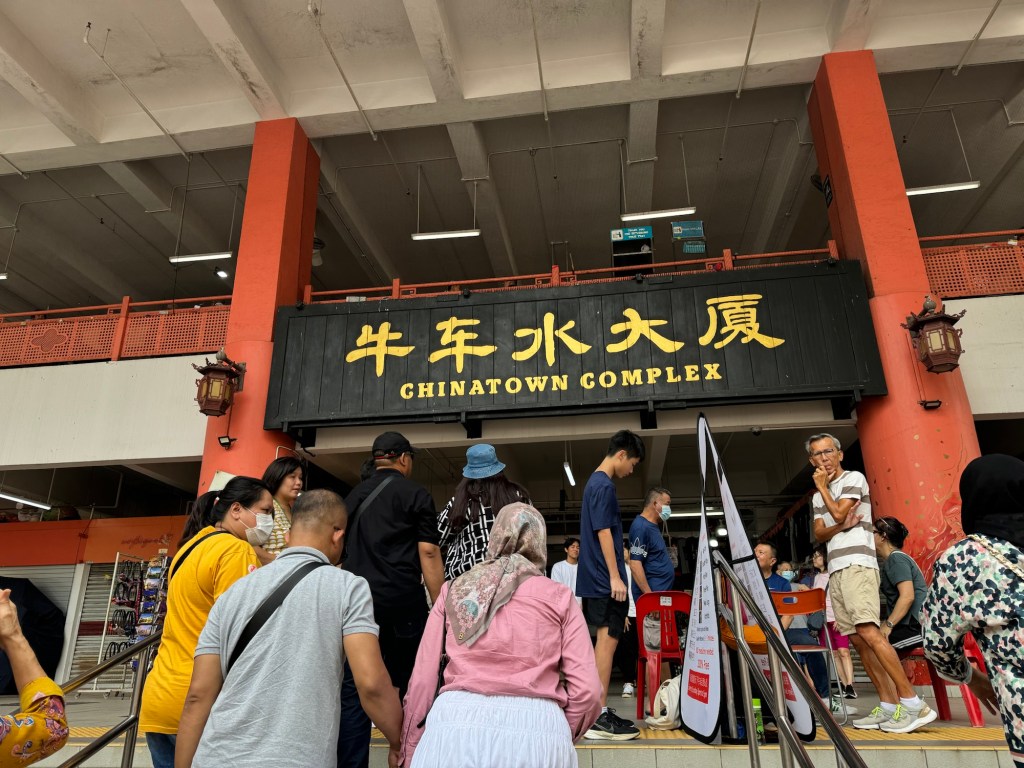
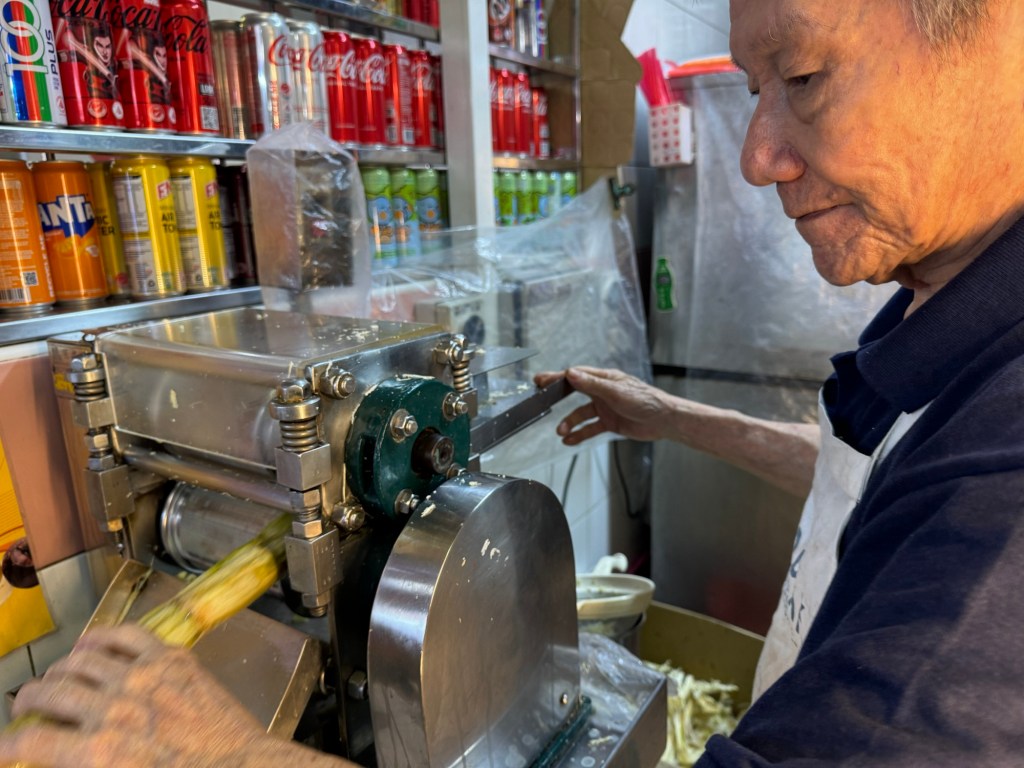
Here are some photos of what we ate in Chinatown. First there is a photo of a Chinese building near the entrance to the Chinatown Complex. The next three photos are of the suger cane juice vendor making juice and serving Mark. The first food dish is Braised chicken and rice, followed by Water cake and Carrot cake. The last dish was Laksa, a noodle soup with several condiments
The Little India food dishes we tasted included: hot chai; Prata; Appan; Thosai; and Moon cake.
We were so stuffed we did not want another thing. We said our good bye’s to Charlotte and took a taxi back to the hotel, where we went straight to bed at 8pm.
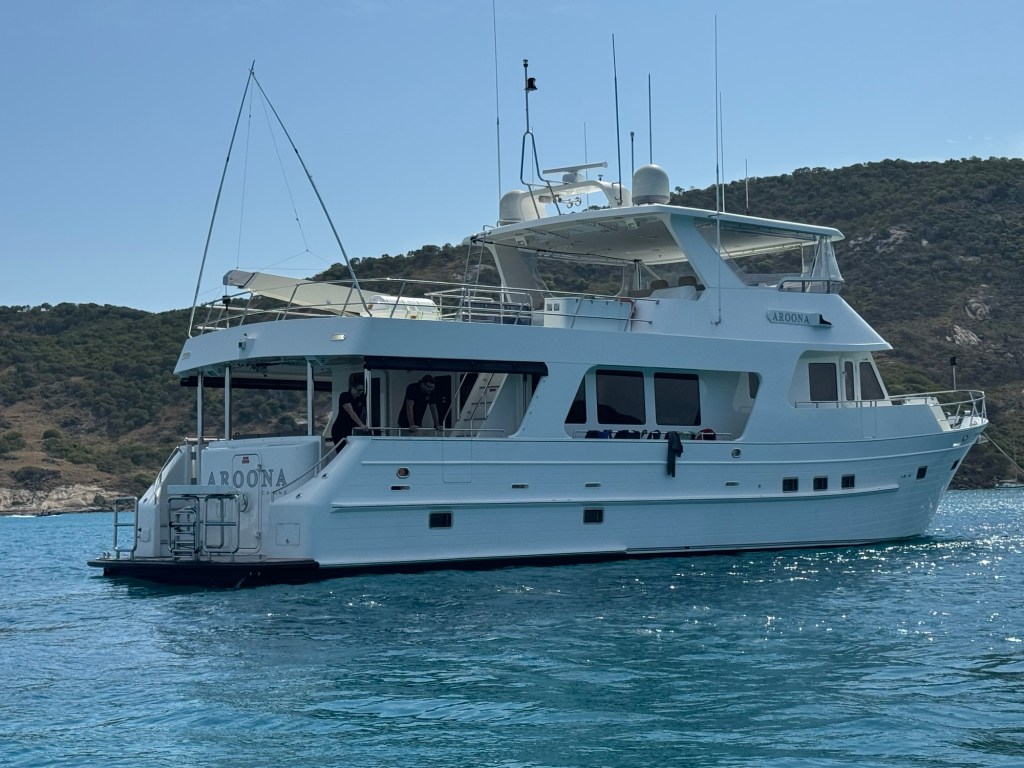
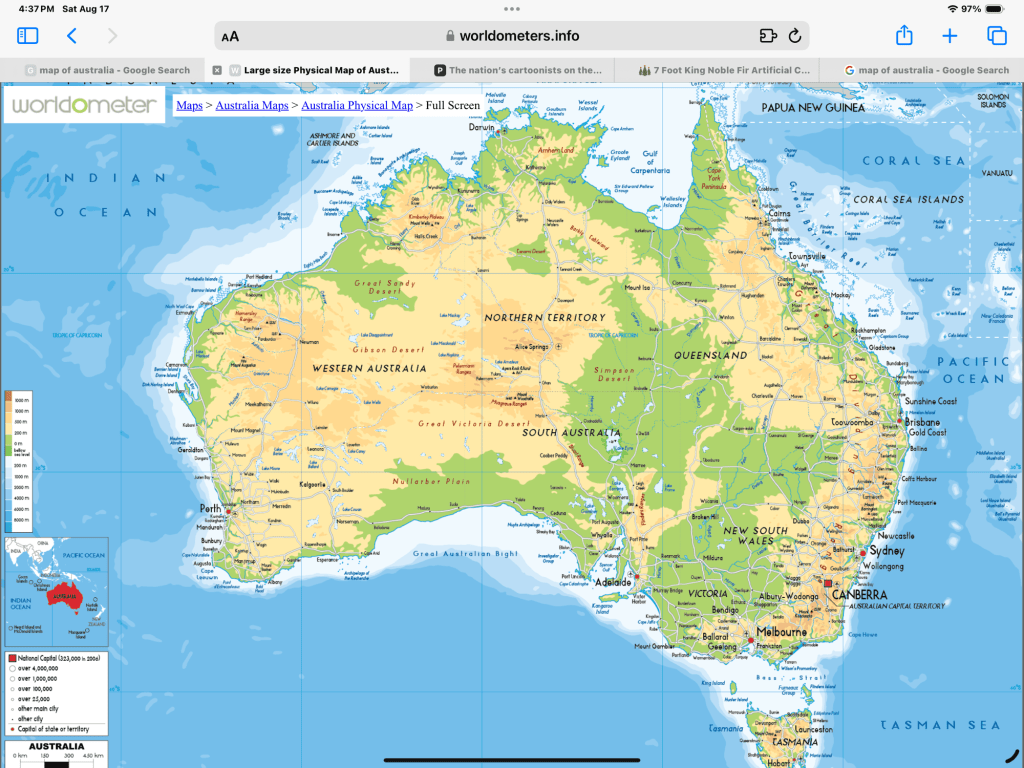
Mark and I have booked a 6 week trip to Australia and are thinking about the final details of preparing for the trip. What extra clothing should we take for the weather we expect? We plan to travel from Darwin in the north where it will be quite hot, to Tasmania in the far south where it will be quite cool, plus many stops in between.
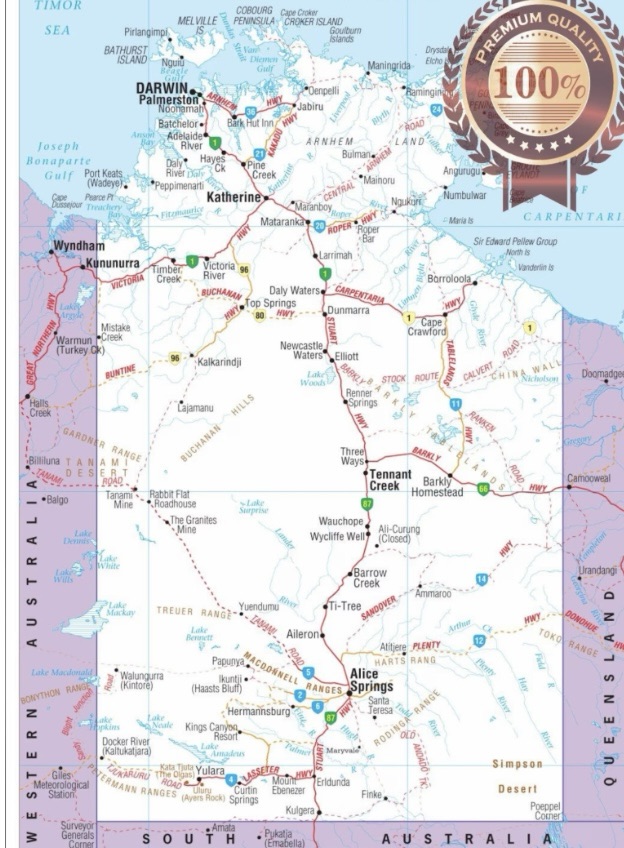
Northern Territory
The first part of the adventure will include locations in the Northern Territory where we will learn about the Aboriginal people, their history and ancient art. Look for the area called Arnhem, slightly southeast of Darwin. We also plan to visit a special museum in Darwin that features the First Nation people.
Great Barrier Reef
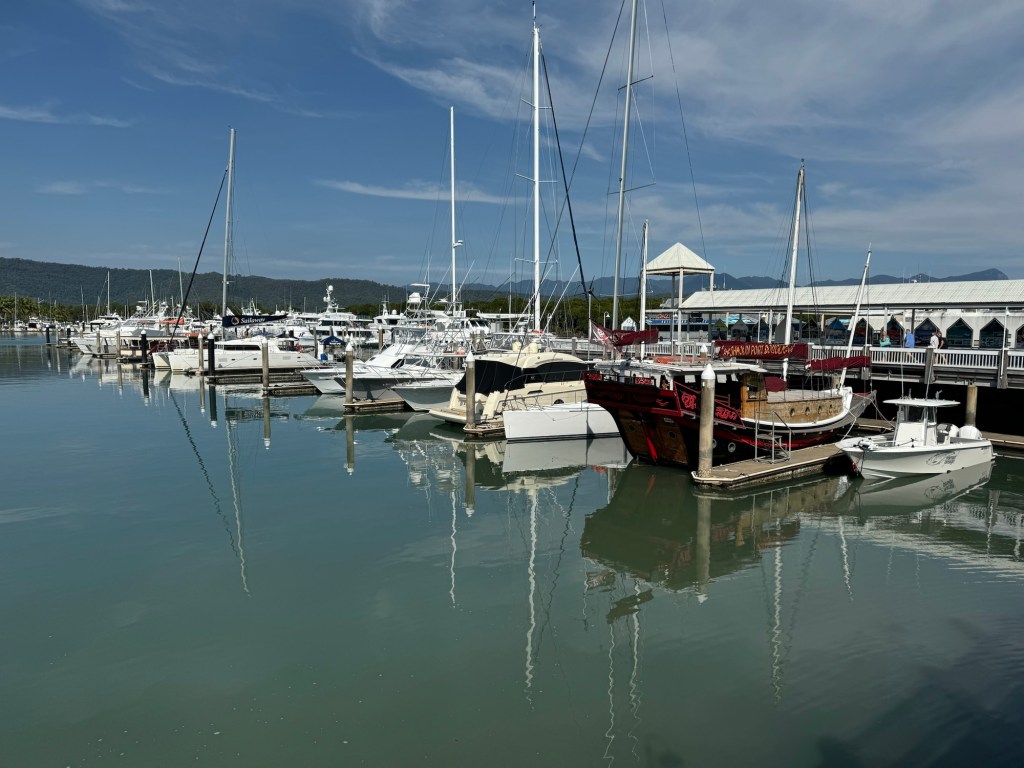
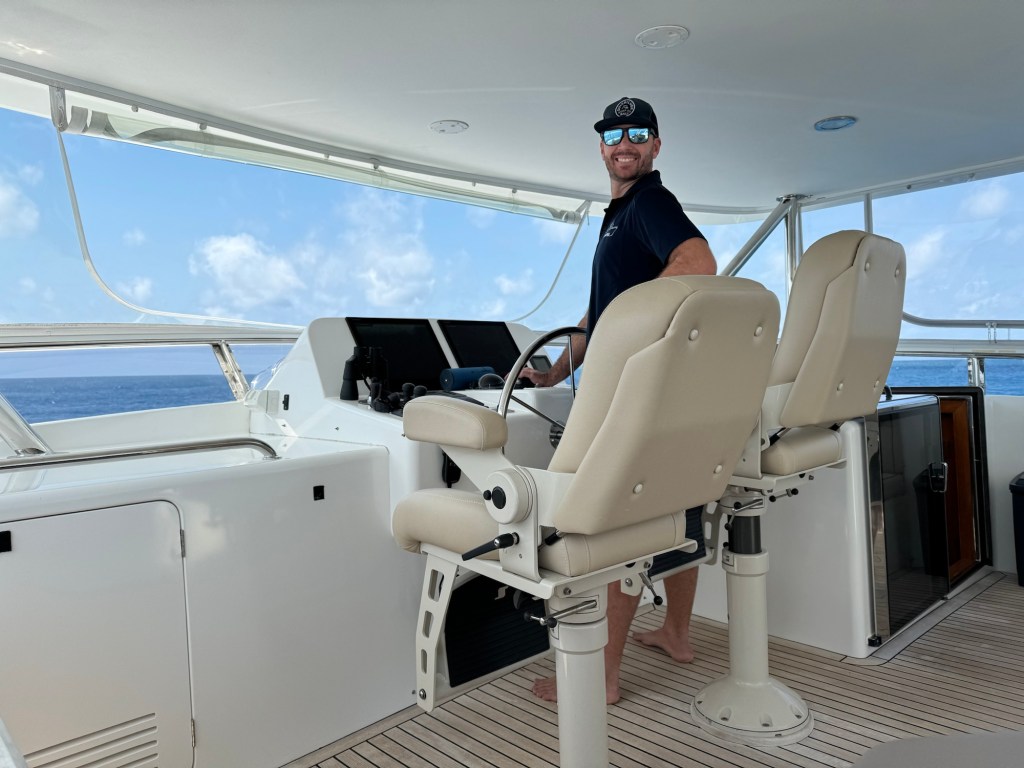
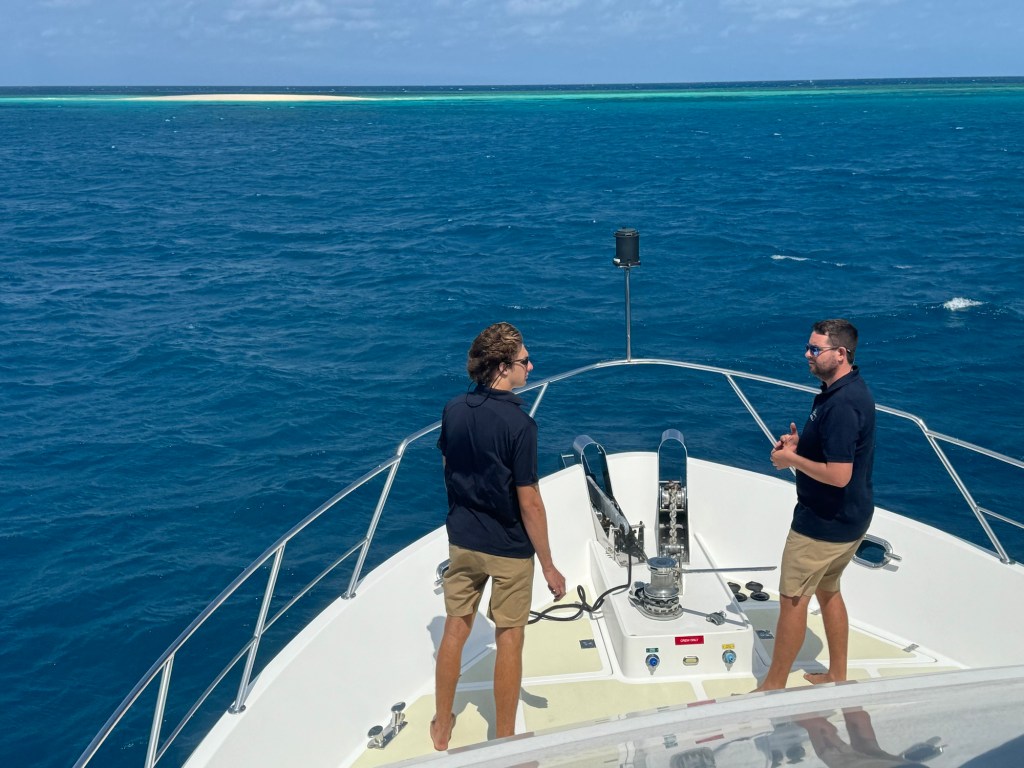
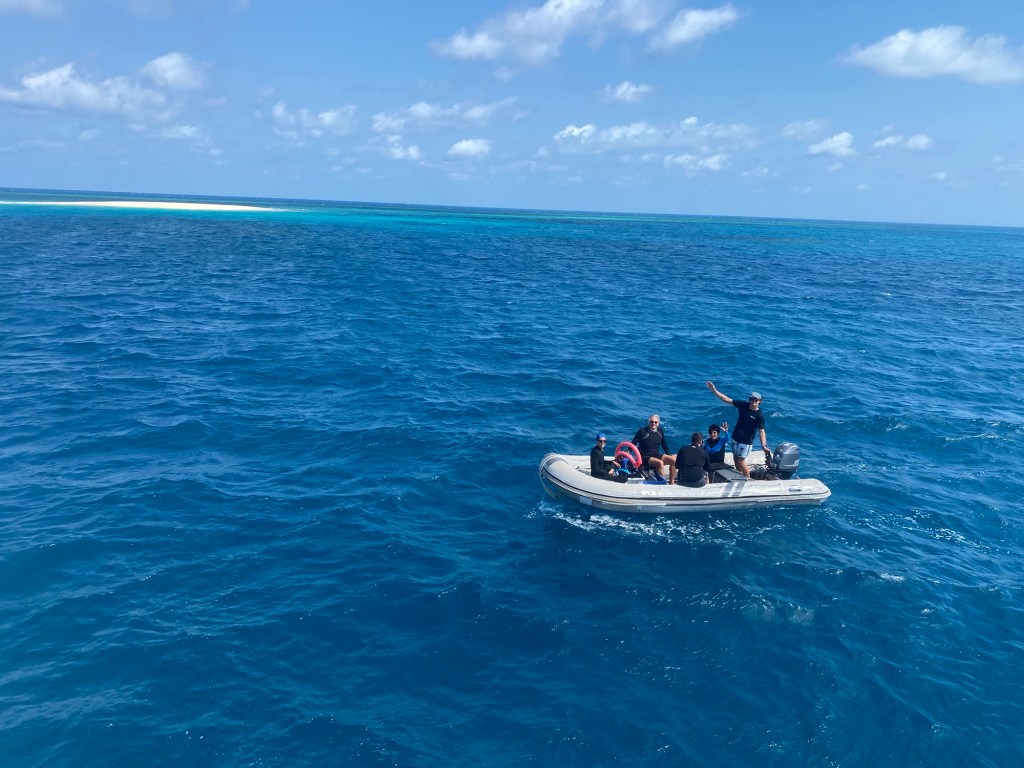
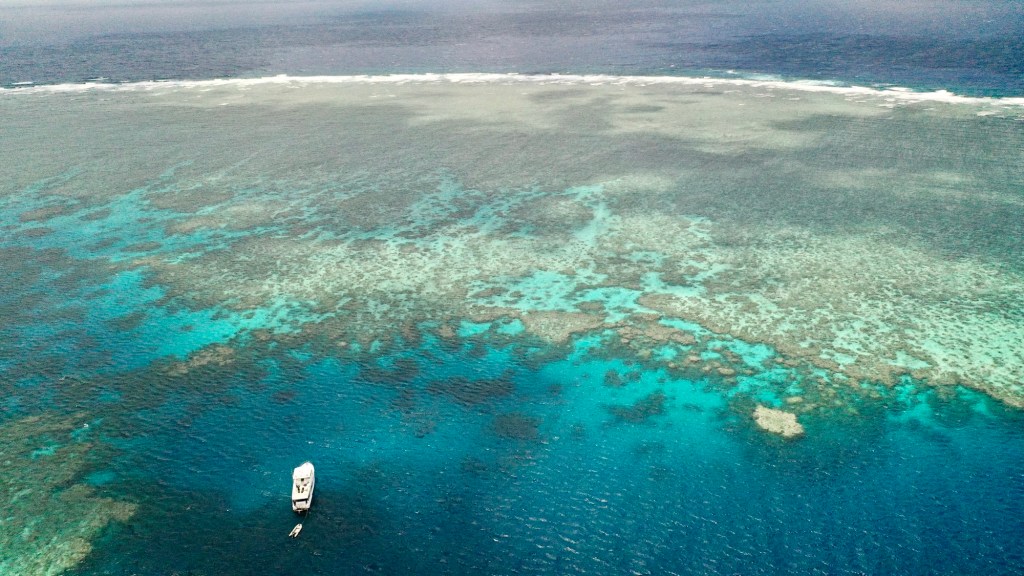
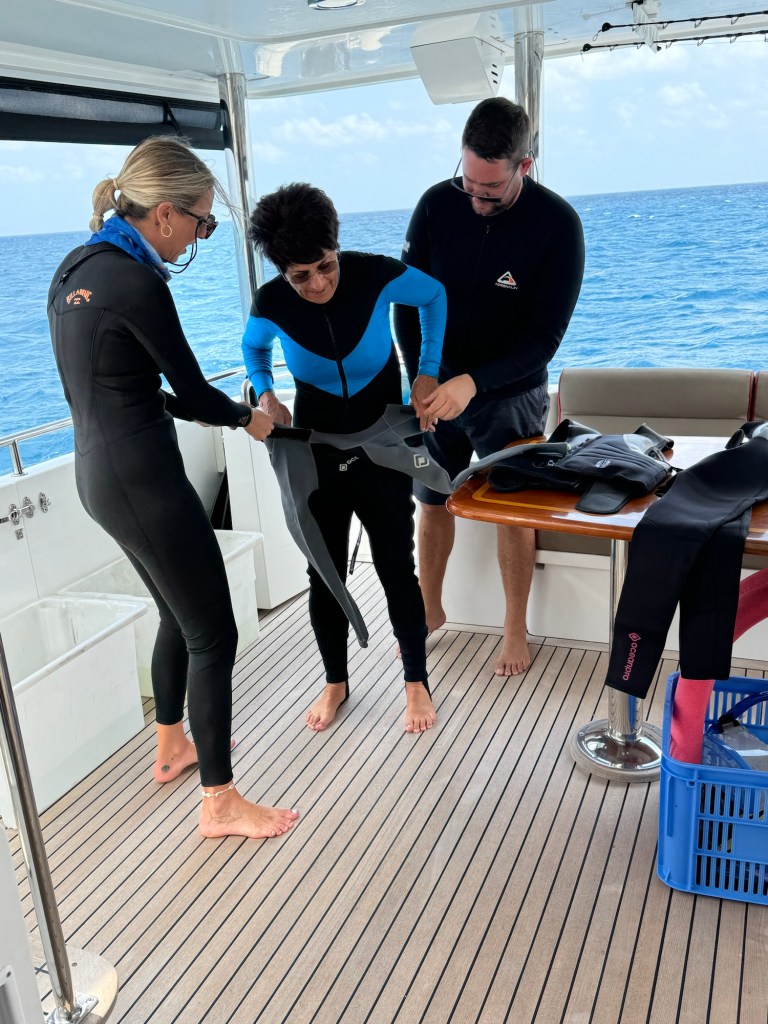
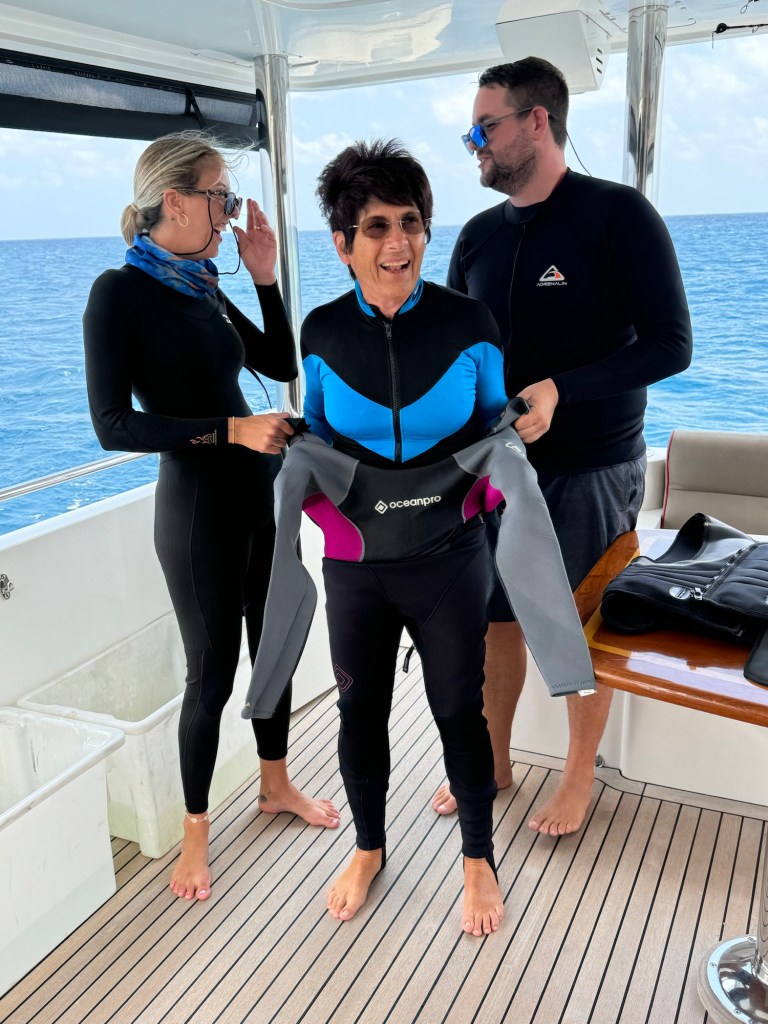
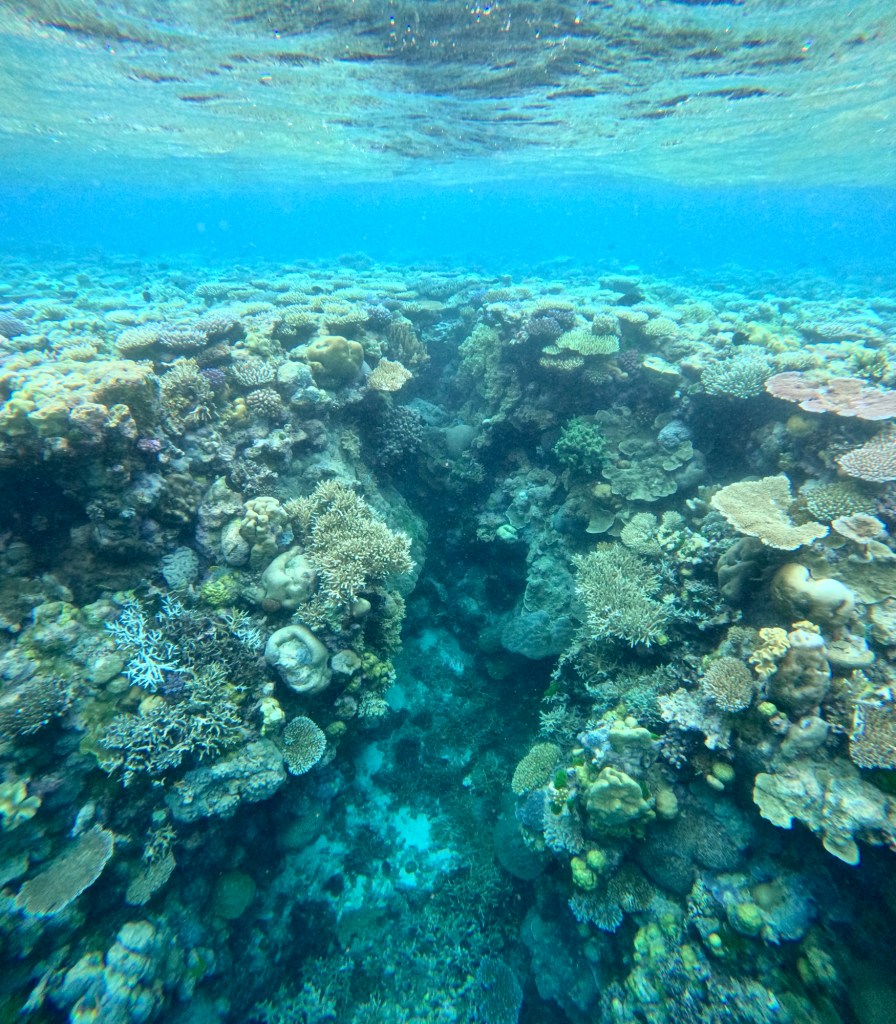
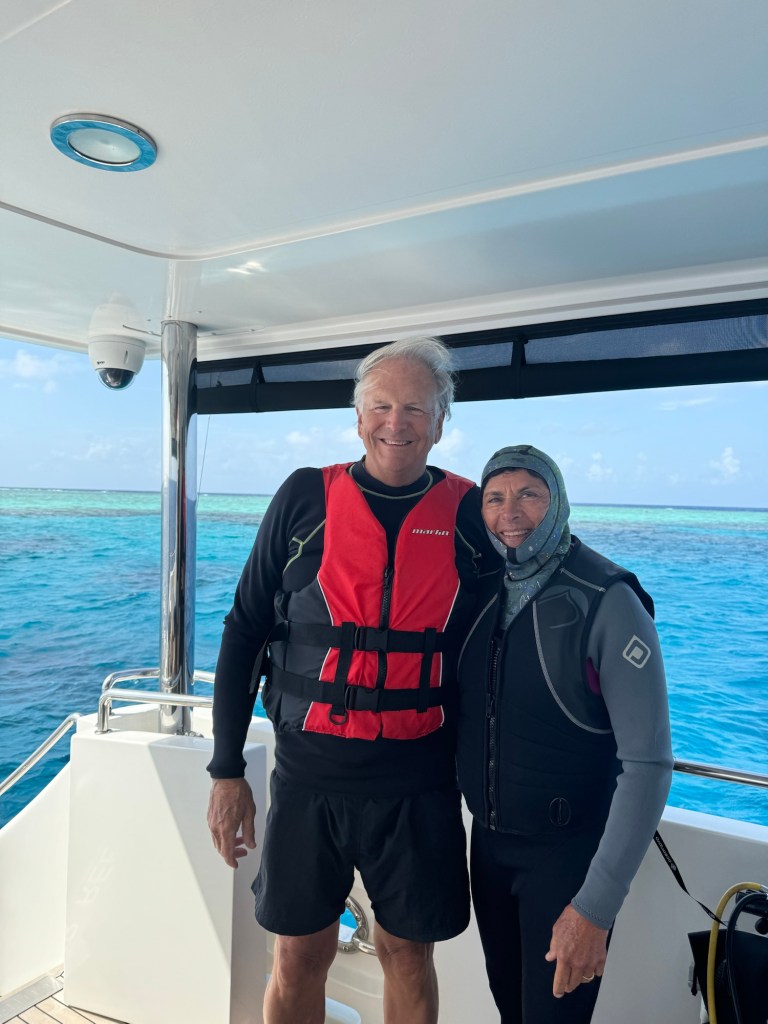
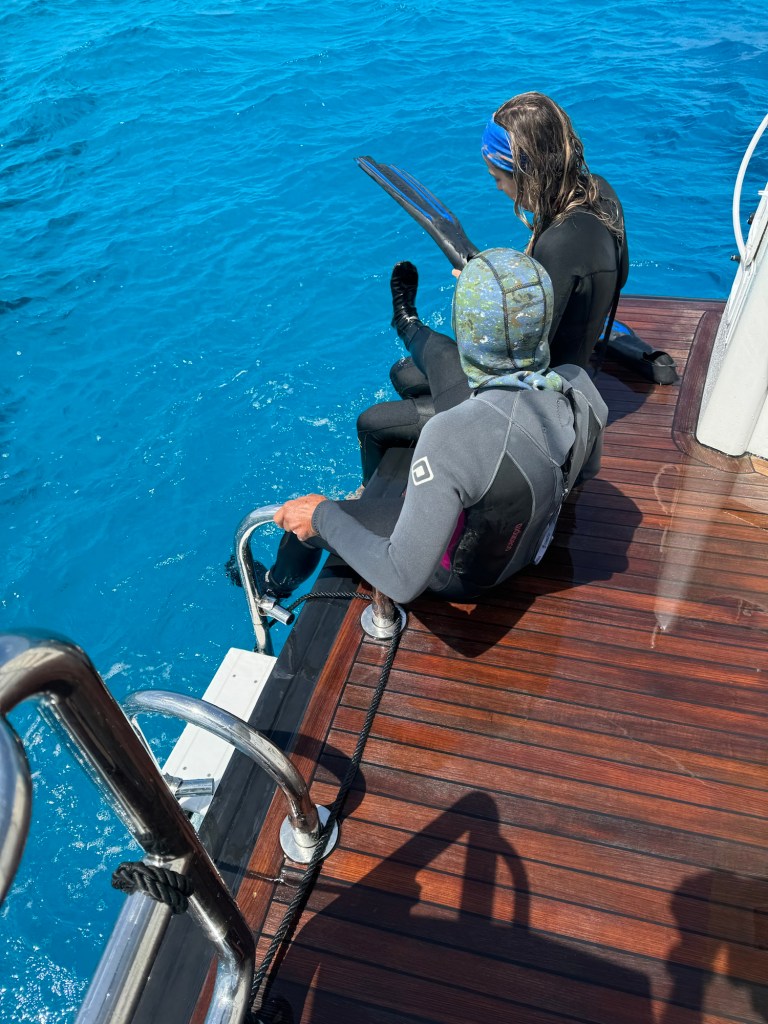
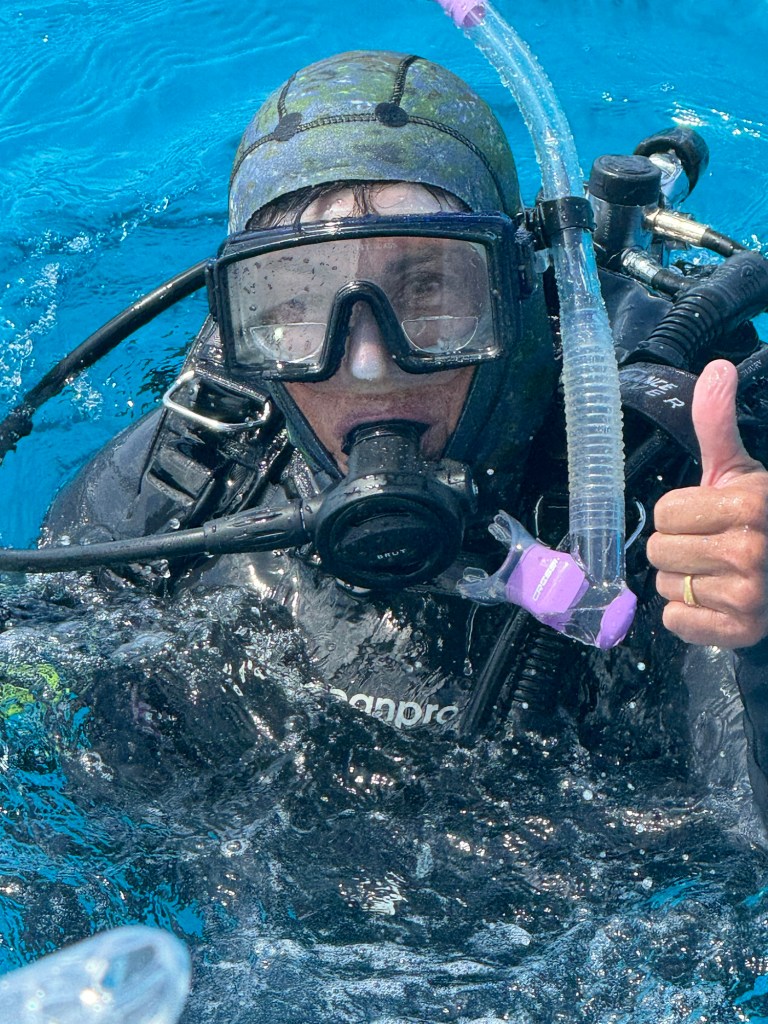
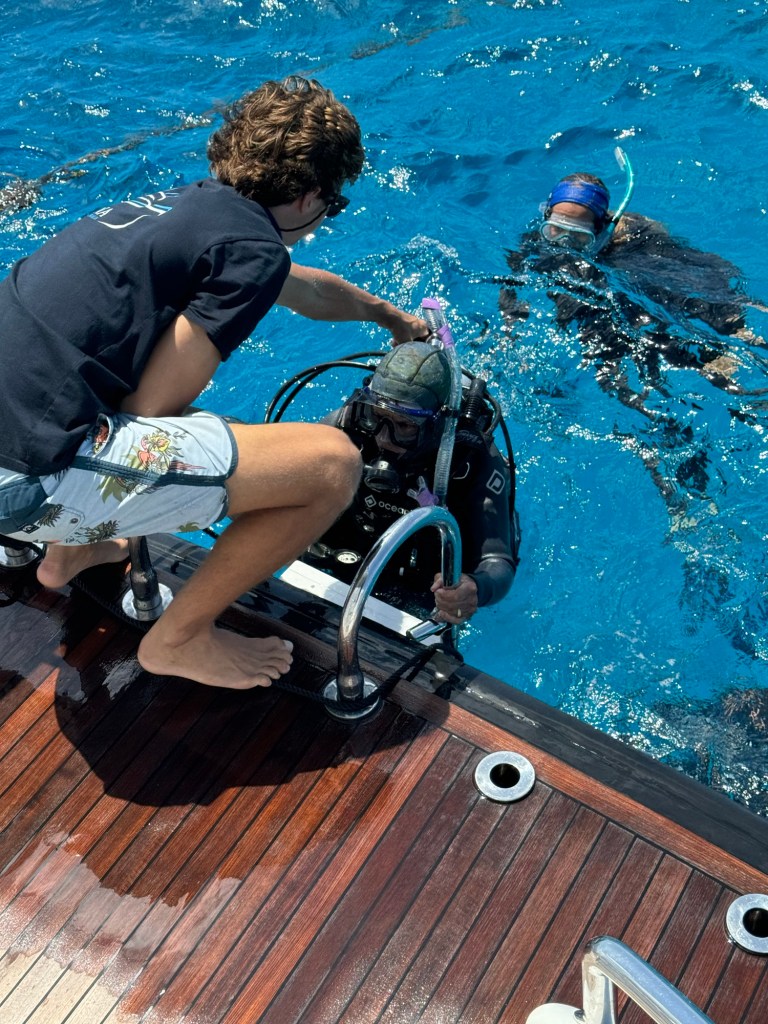
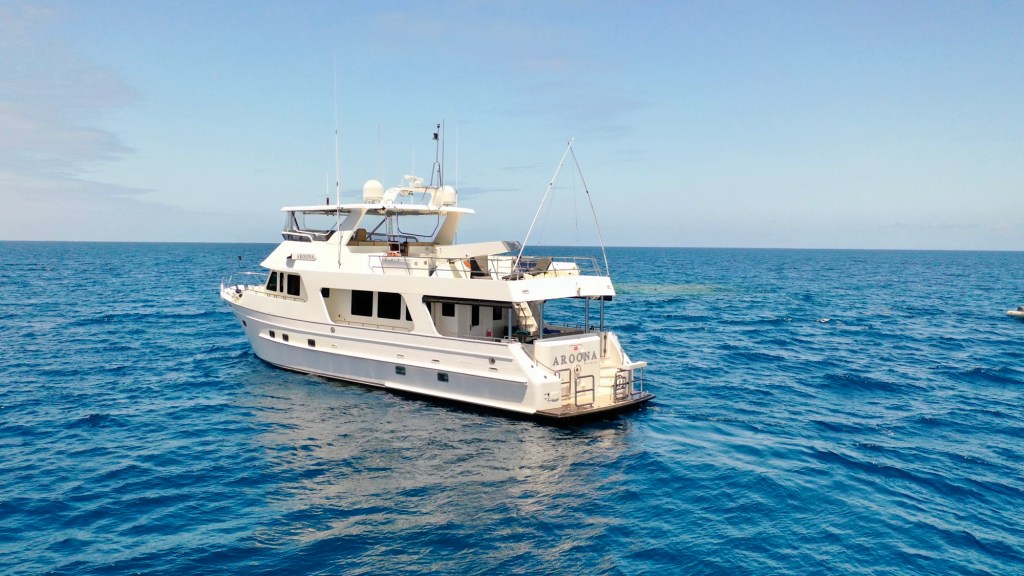
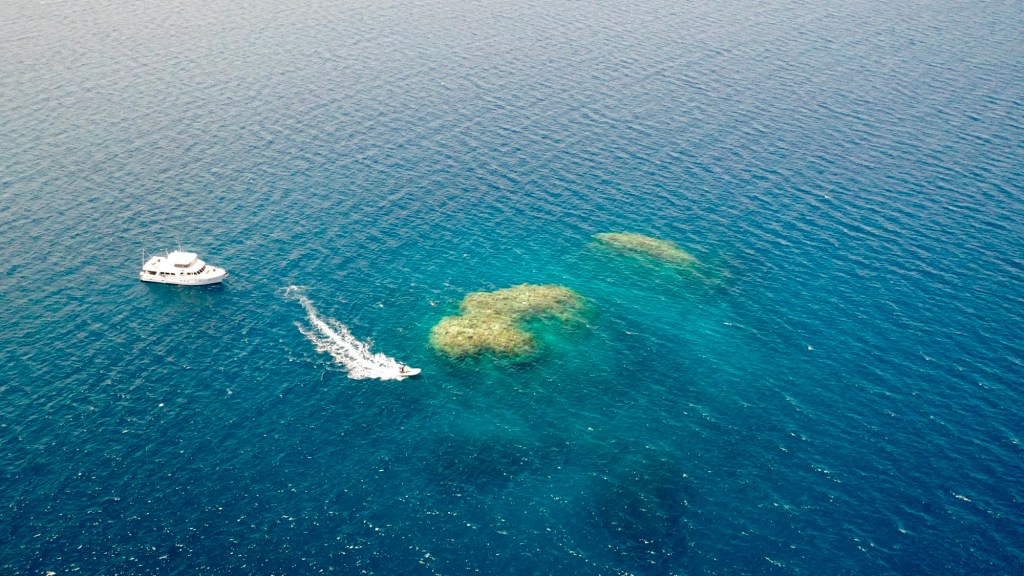
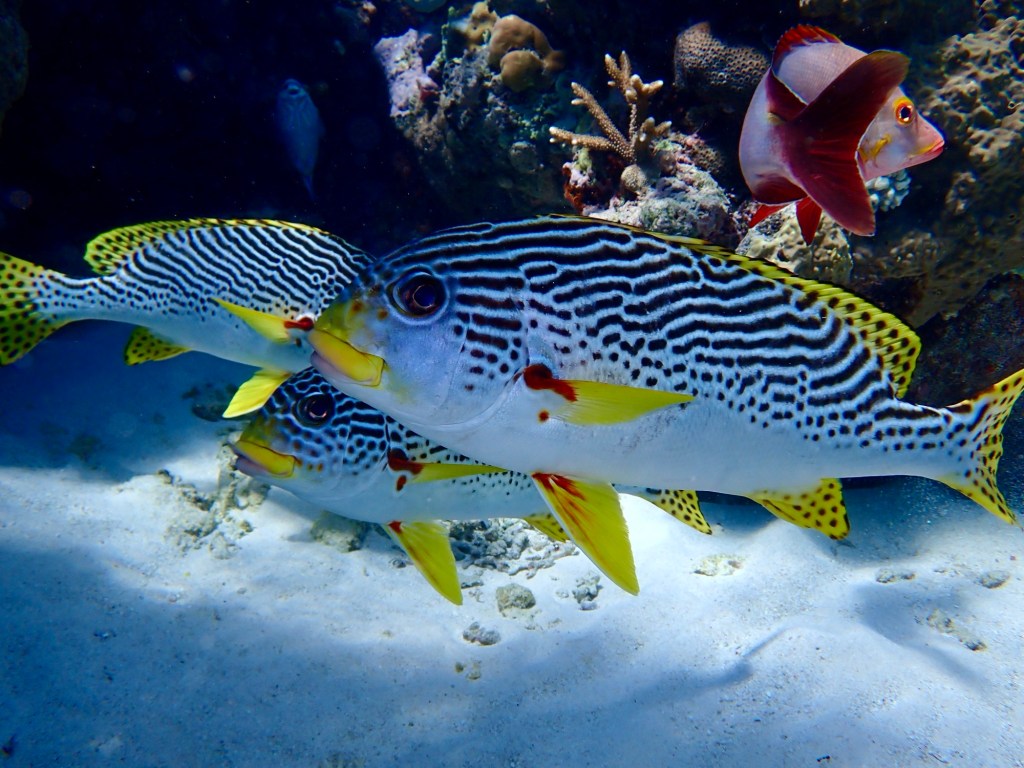
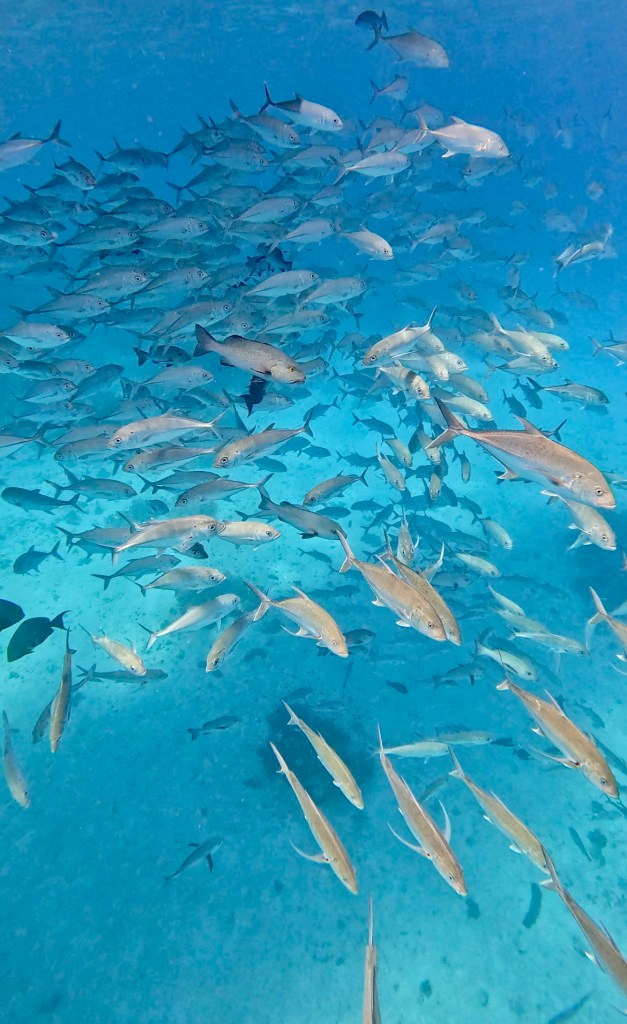
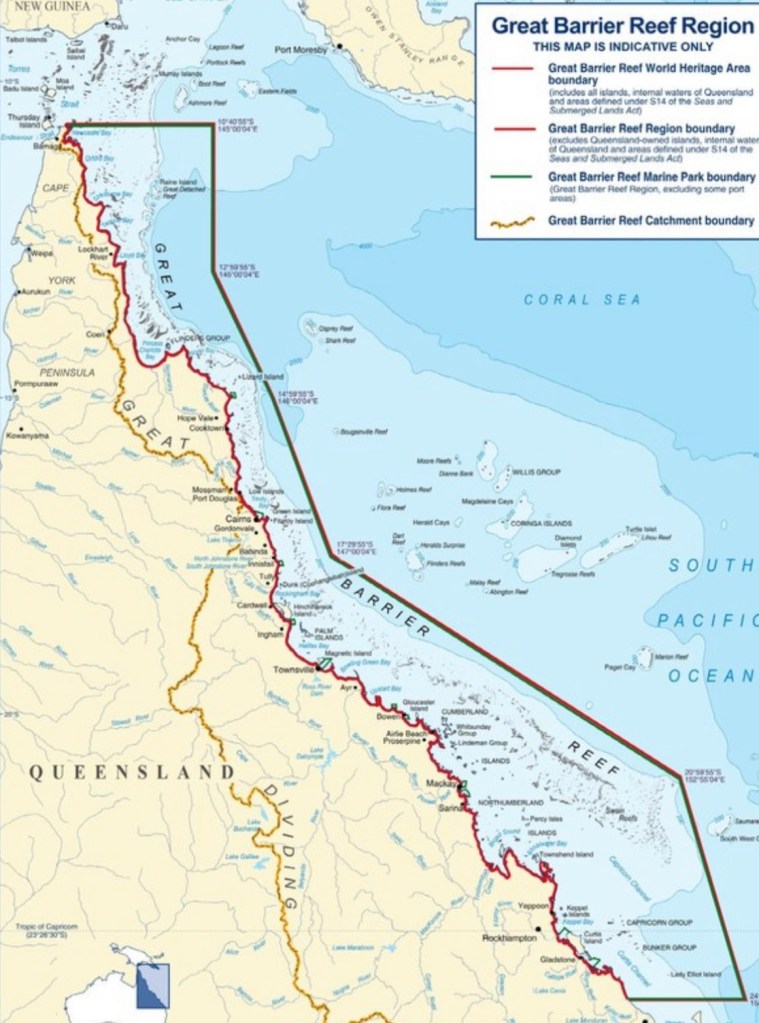
Then we will fly east to Port Douglas in Queensland and the Great Barrier Reef, where we will spend four days living on a boat called Aroona. We expect to do a lot of snorkeling and maybe some scuba diving. Then the boat will drop us off at Lizard Island for a few days of R&R.
Melbourne & Great Ocean Road
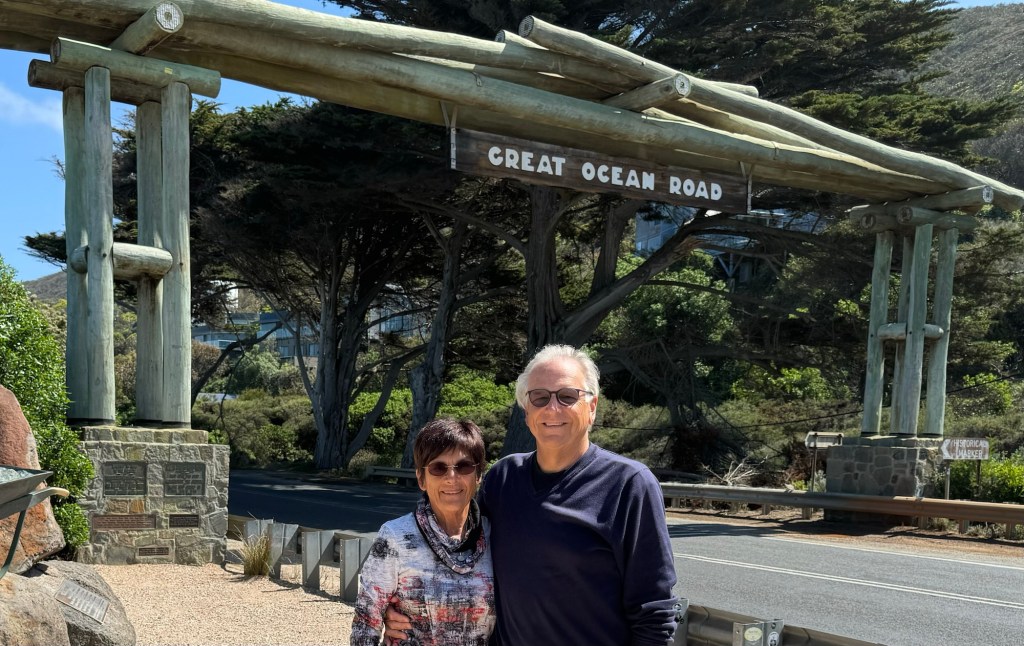
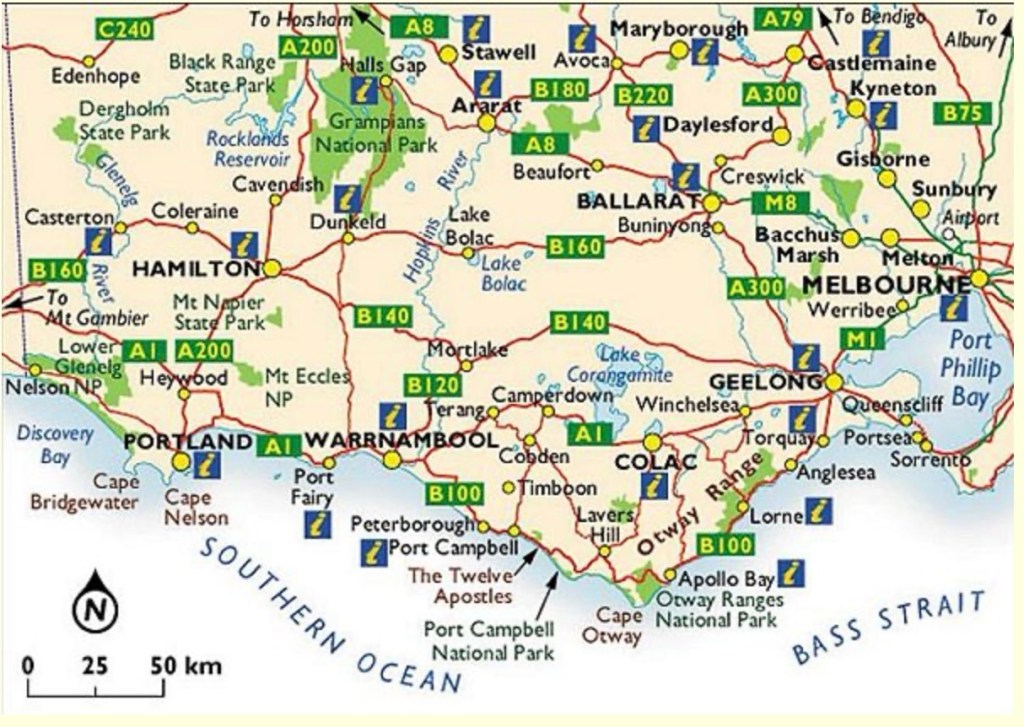
From there we will fly south to Melbourne to visit that city and experience the Great Ocean Road on the southern edge of Australia, which is at least as famous as our Highway 1 in California.
Tasmania
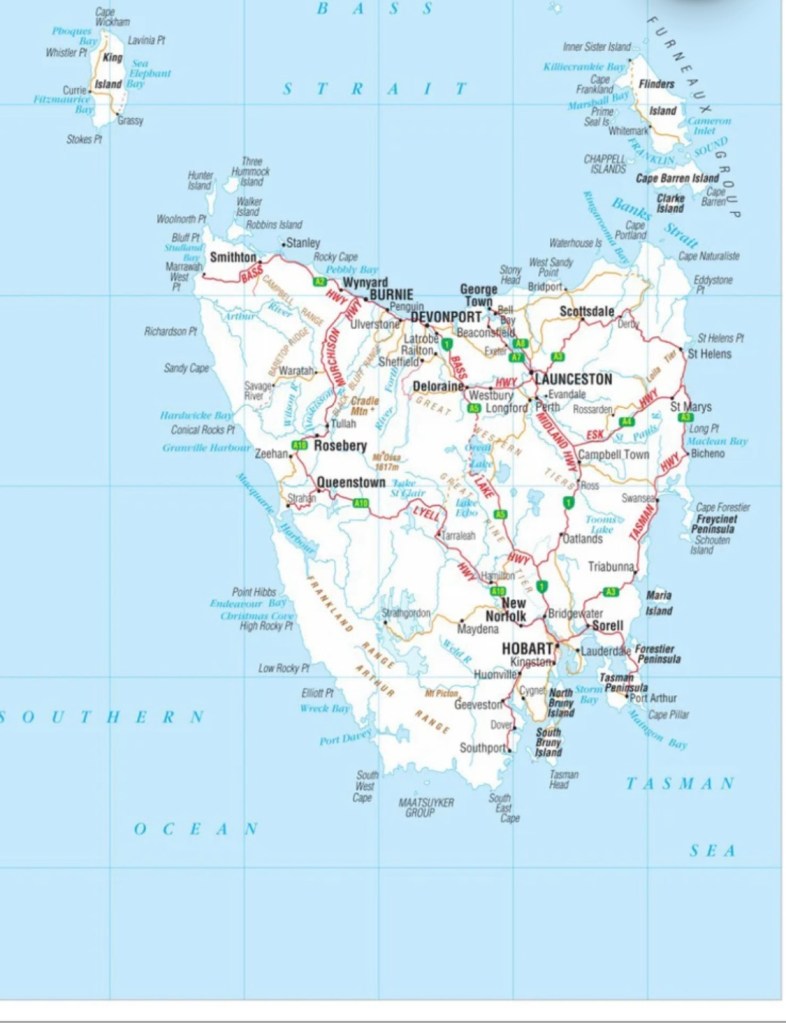
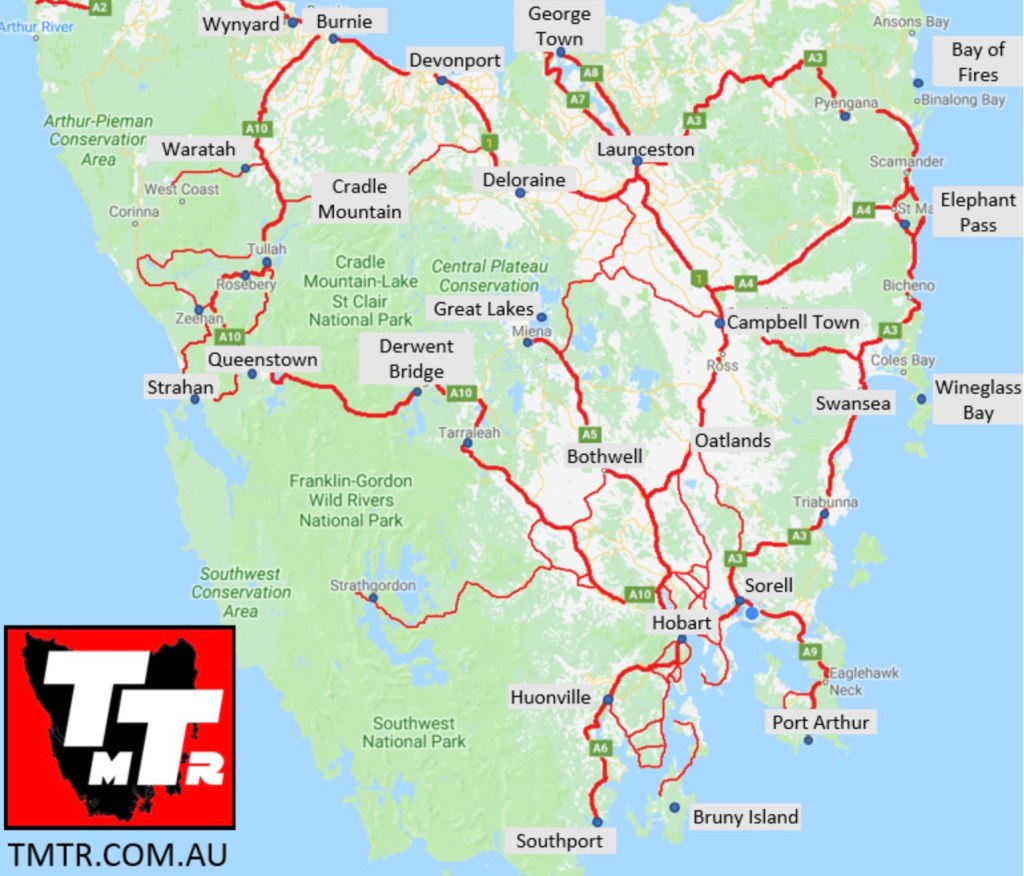
From Melbourne we will fly to Hobart in Tasmania, where we hope to learn about and meet the indigenous population, see local wild animals, and the scenery.
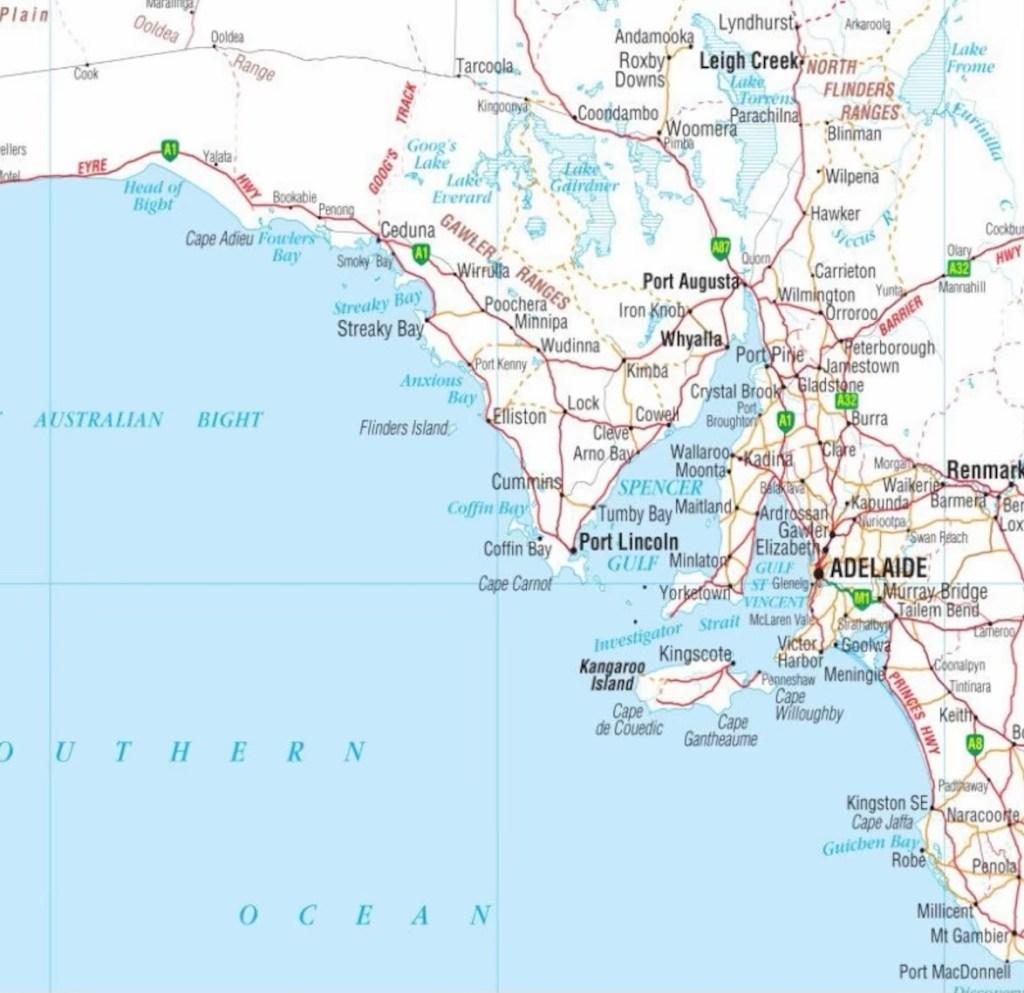
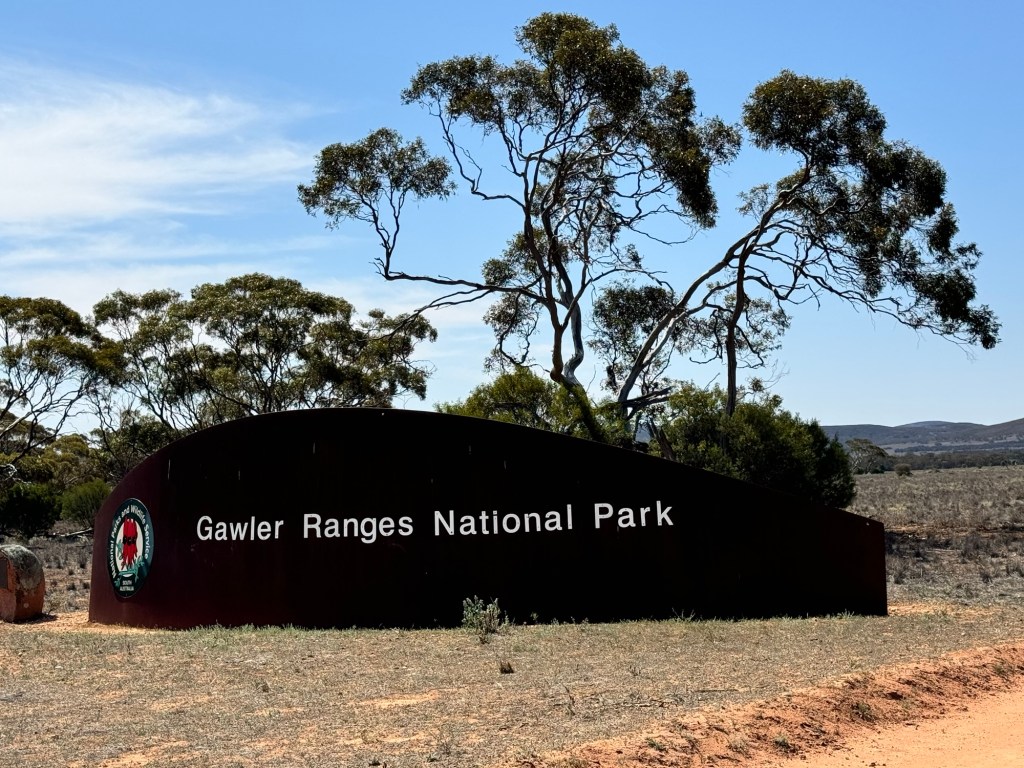
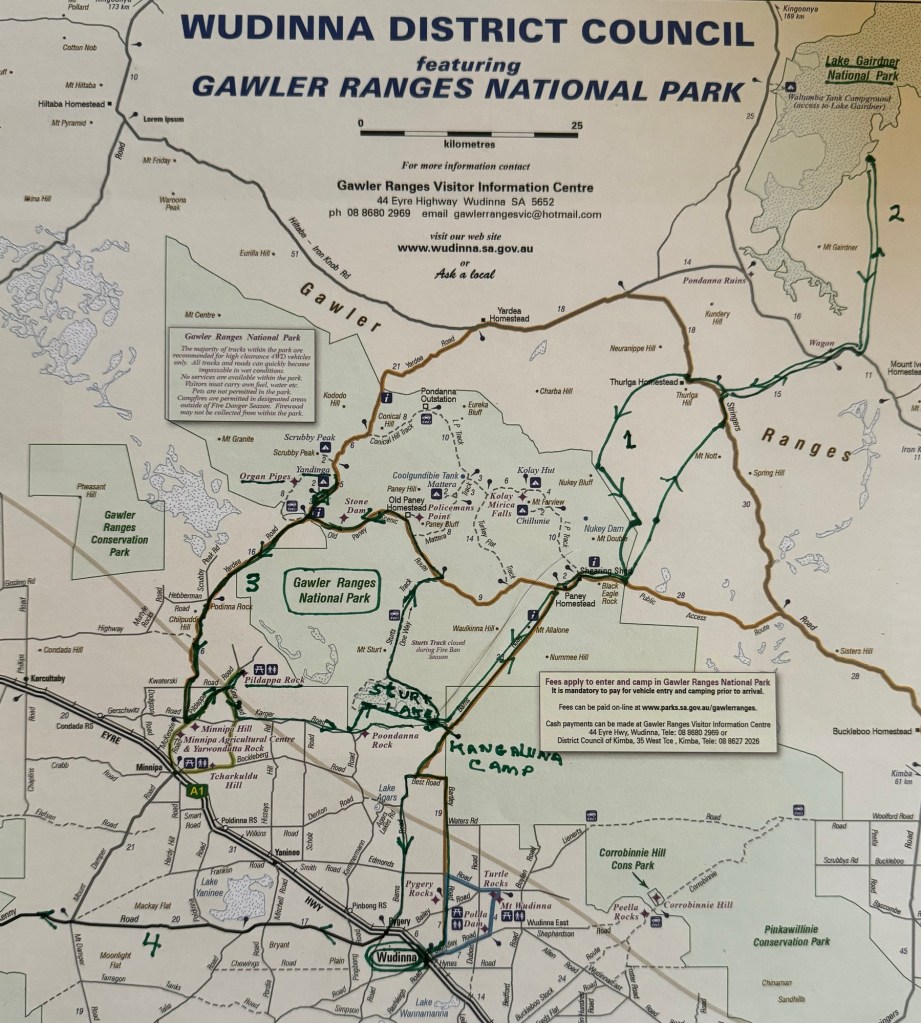
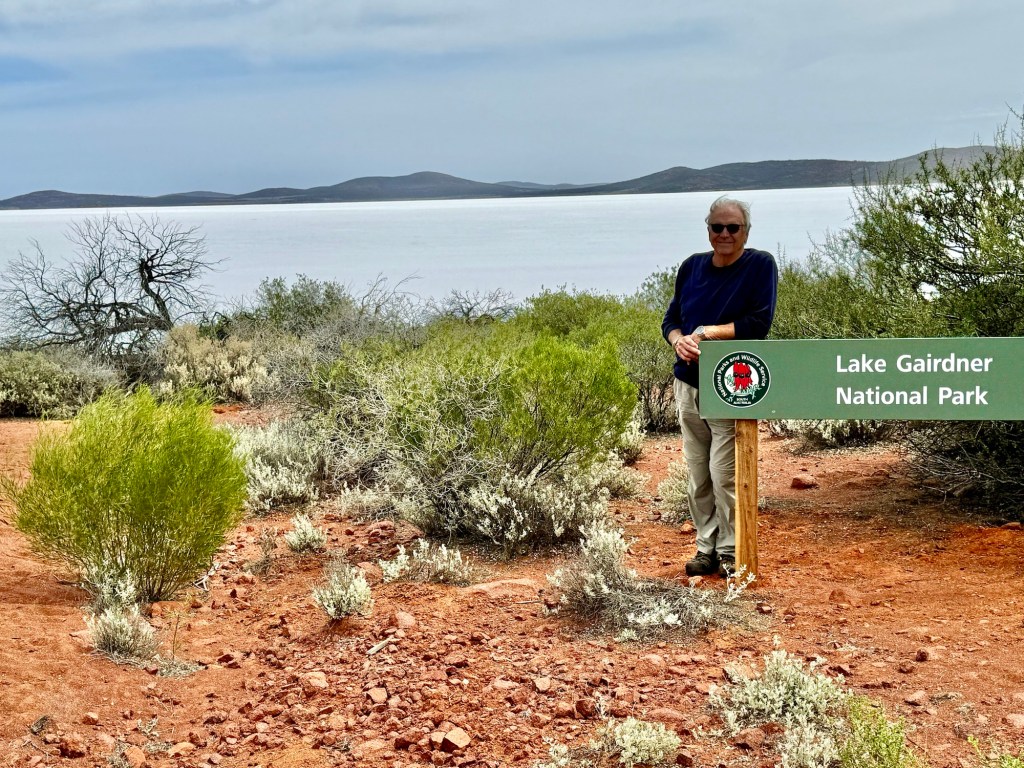
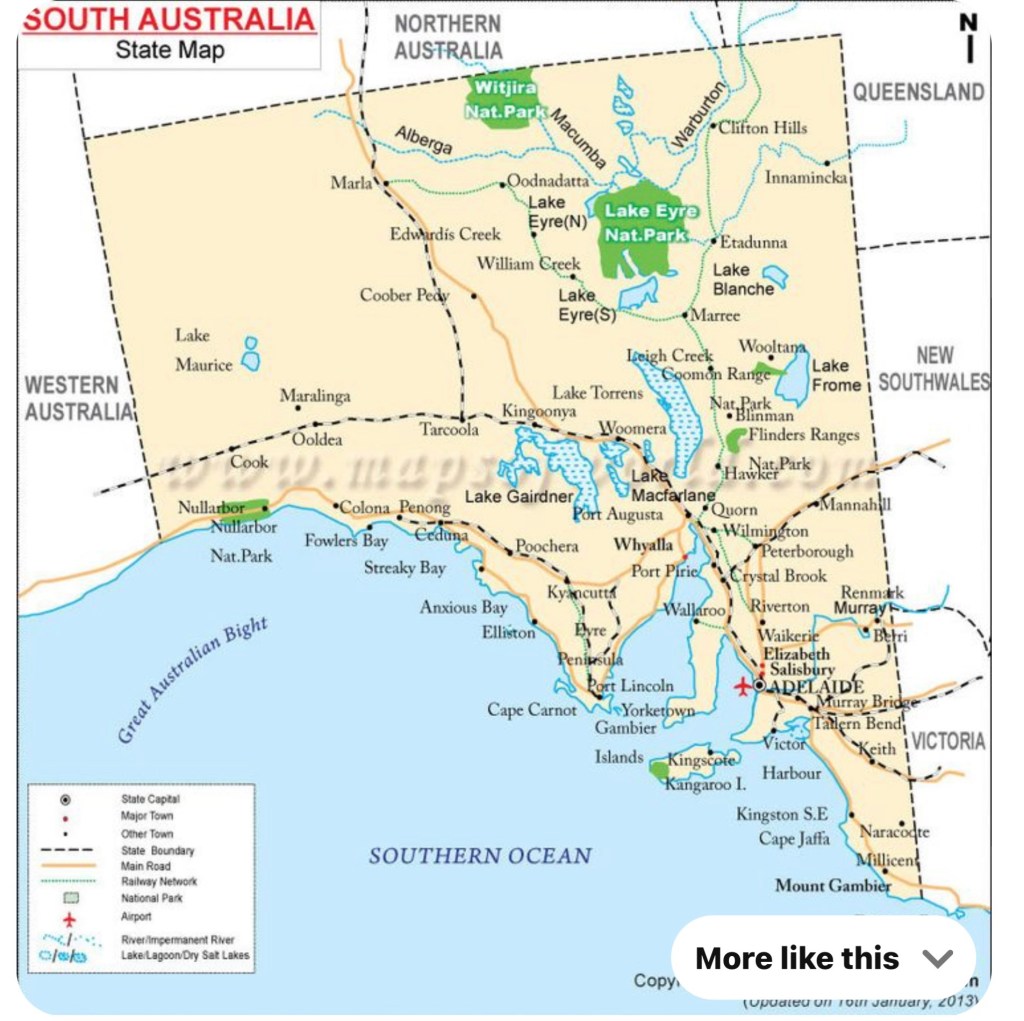
Our adventures continue in South Australia, just north of Tasmania, where we will visit Adelaide, Gawler Ranges National Park, Port Lincoln National Park and other sights. We will also visit Kangaroo Island and the local wildlife there.
Adelaide & South Australia
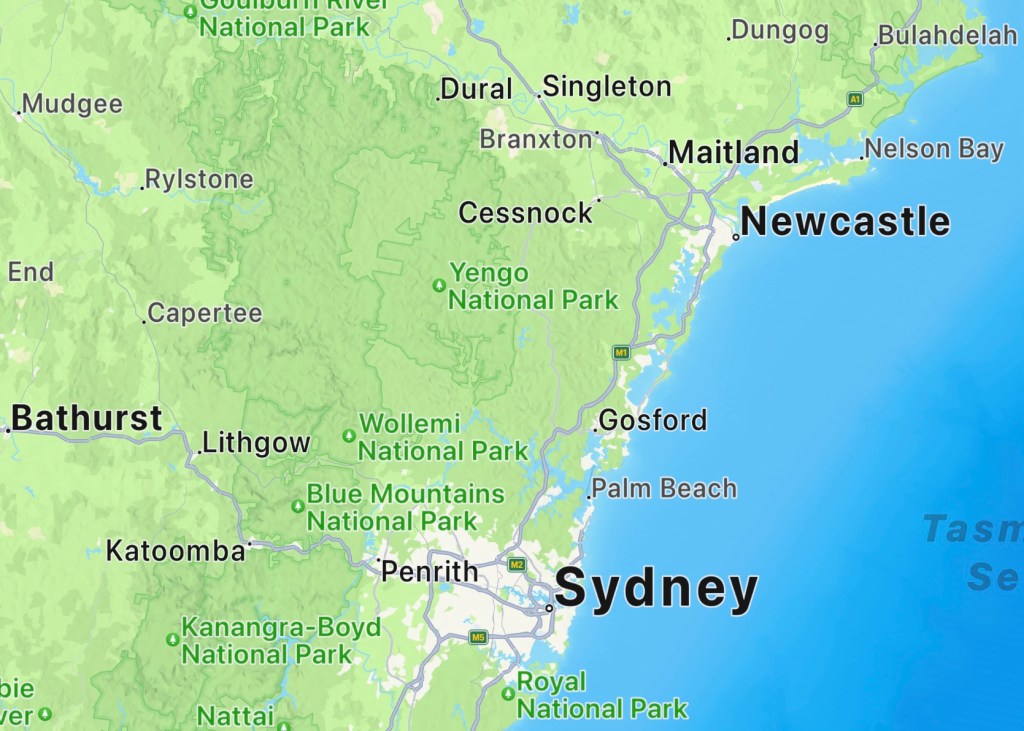
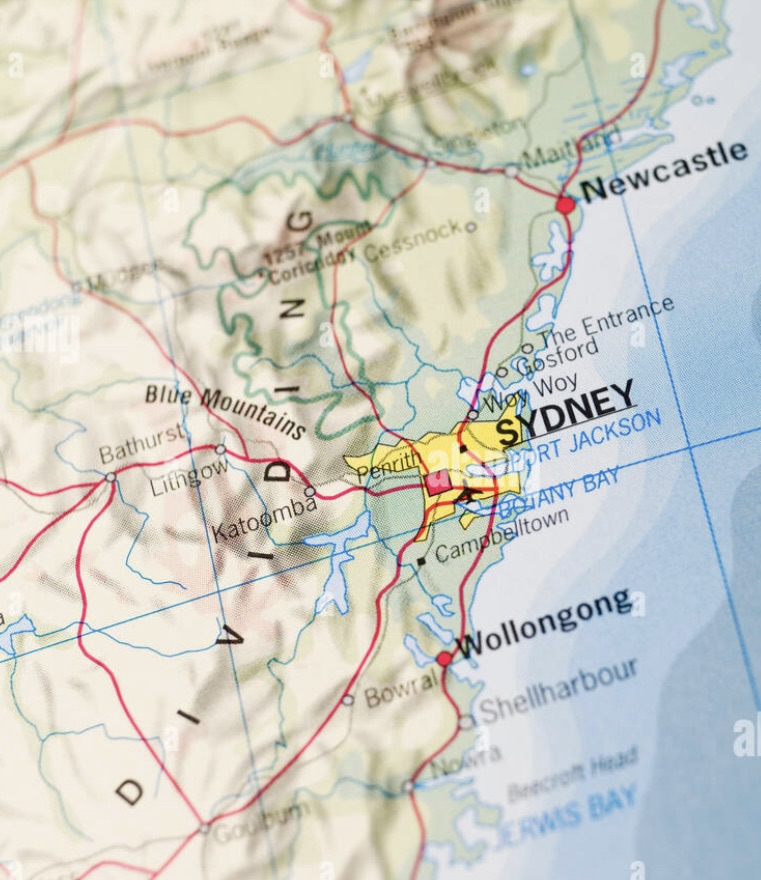
After several days in the far south we will fly from Adelaide to Newcastle, just north of Sidney, New South Wales, to meet our friends Catherine and Martin, who will host us for a few days at their Newcastle home, and then share a week with us in Sidney. After a full collection of activities they have planned for us there, we will finally fly home via Singapore on October 28, 2024.
Newcastle, Sydney and the Blue Mountains
I hope we do not wear you or ourselves out before it is over. Do save the above maps for reference purposes as we move about the country.
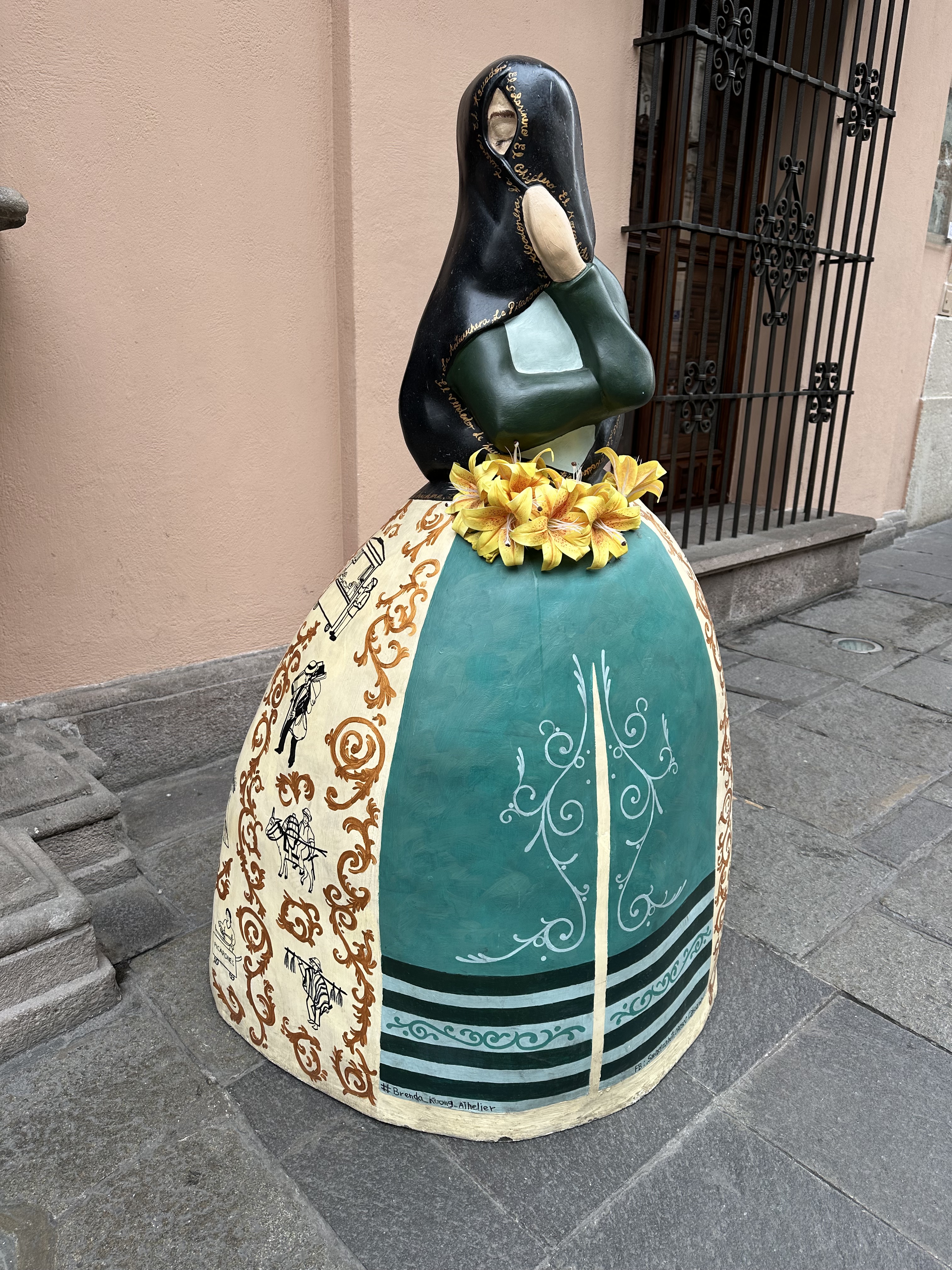
This story accidentally missed the last post and I don’t want you to miss learning about the tapada limena. So here is one final post about Lima.
Tapada Limena was the denomination used at the time of the Viceroyalty of Peru and the first years of the Republic to designate the women in Lima, aka Liman women, who covered their heads and faces with comfortable silk fabrics, revealing just one eye. Its use began around 1560 with particular clothing and cloaks worn by the tapade limena and spread for 3 centuries until well into the 19th century when it was relegated by French fashions. In 1583 the Archbishop of Lima pronounced a rejection of the custom of wearing the clothing by women in the capital and ordered a fine. The fear of this custom, already widespread among Liman women, generated much misunderstanding and confusion and made the authorities suspect transvestism was taking place in the Viceroyalty. Official testimonials and ordinances could not dissuade the Limen women.
The characteristic attire of the tapada “connoted insinuation, coquetry, prohibition and seduction games”, although it was still a dress. The gown outlined the hips, and the cloak covered the head and face, except a single eye. It was a symbol of the freedom for Liman women. The symbol was used to distinguish themselves from women of other classes and races. Behind the cloak could live a toothless grandmother as well as a one-eyed woman covered in smallpox. The possibilities were many and boys and old men could take advantage of the situation too.
The skirt was large, long and silk, colored blue, green, brown or black and of a wide range of quality. A belt was used to secure the skirt and false hips were sometimes added to enhance one’s endowments. Underneath the skirt, the feet were shod with embroidered satin shoes, adding to the fame of the colonial Lima women. The cloak was also made of silk, tied at the waist and up the back to cover the head and face. Its simplicity allowed the wearer to retain anonymity.
The tapadas Limenas were an icon in ancient Lima, an original presence that did not exist in any other city in Hispanic America. T he insinuating game, the symbol of secrecy of an incipient female freedom, caught the attention of passing visitors who wrote books, plays, songs and dances about them. After 3 hundred years, the custom finally fell out of favor with–of course–the Liman.
The lady above was standing near the Cathedral of Lima.
We are home now and back in reentry mode. Laundry and mail underway. Blessing to all of you and a happy summer. Julia and Mark
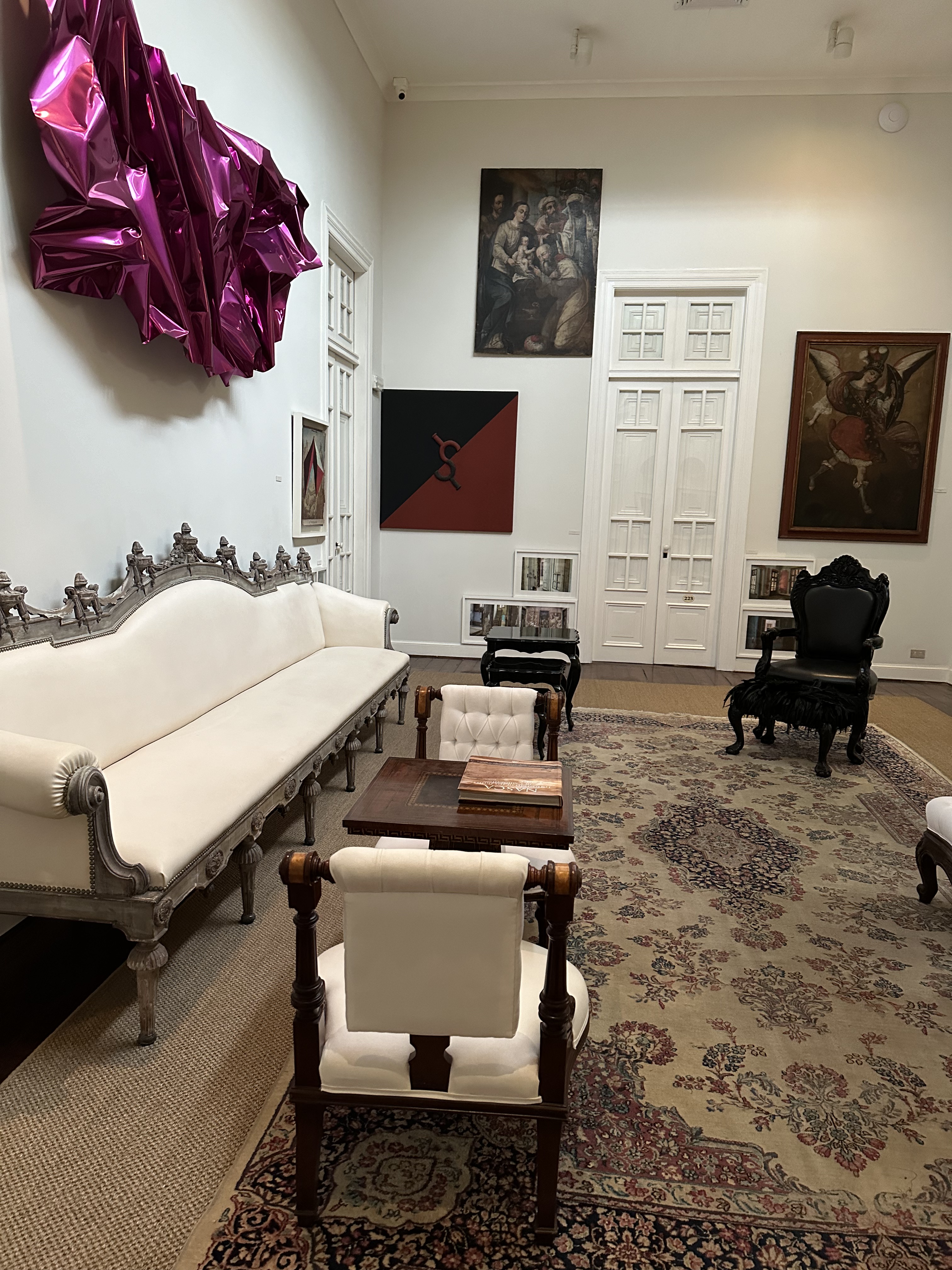
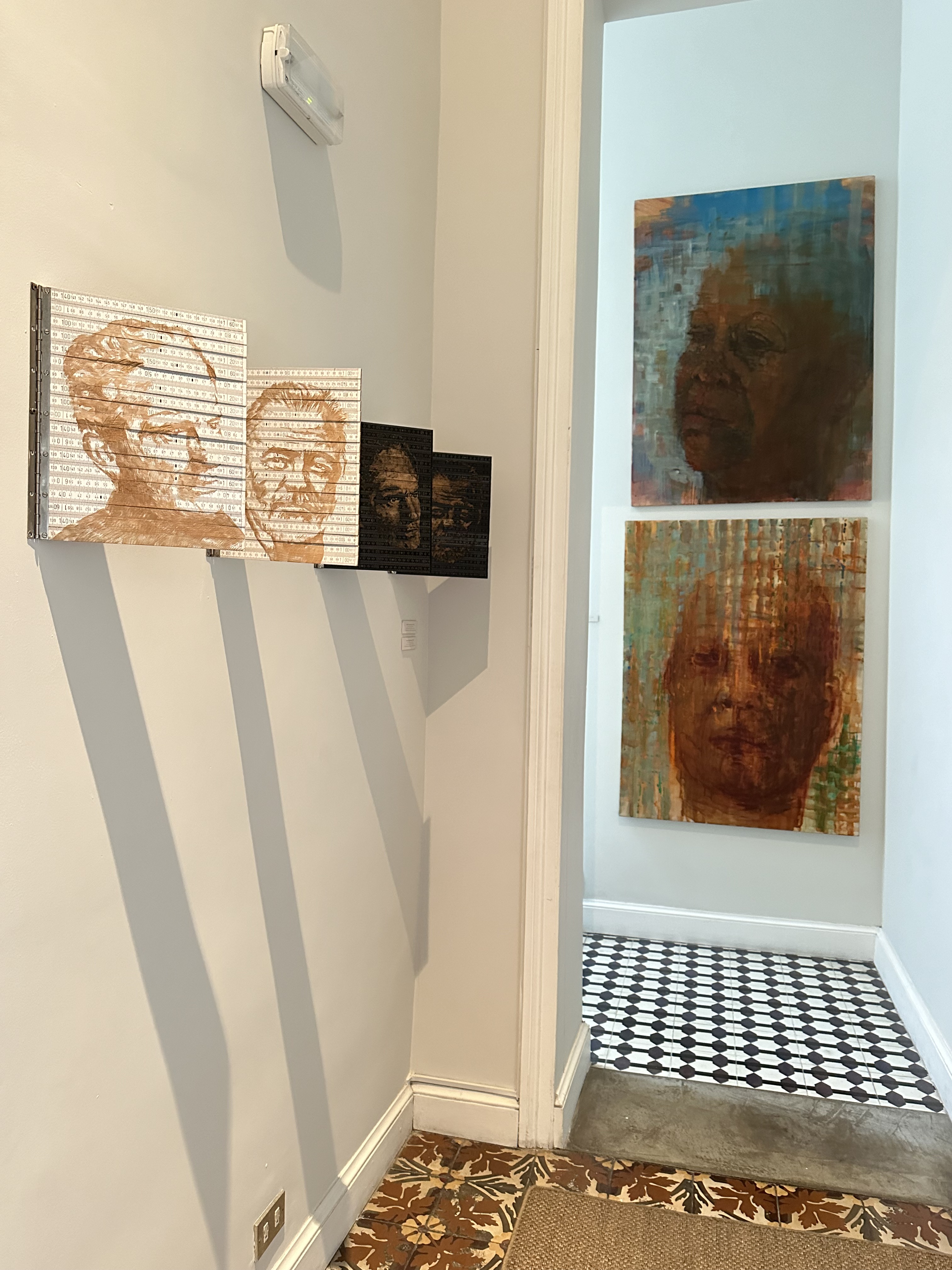
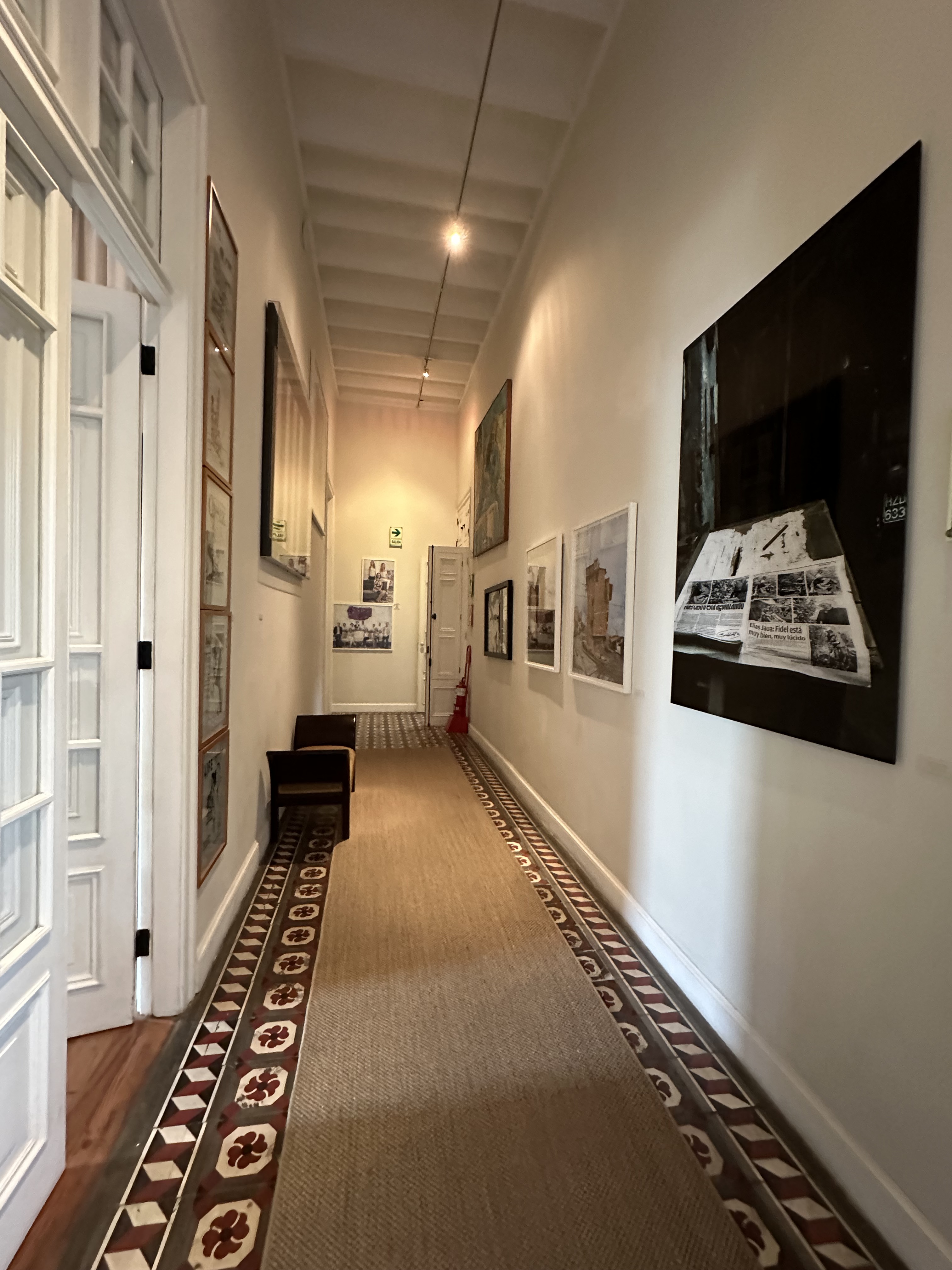
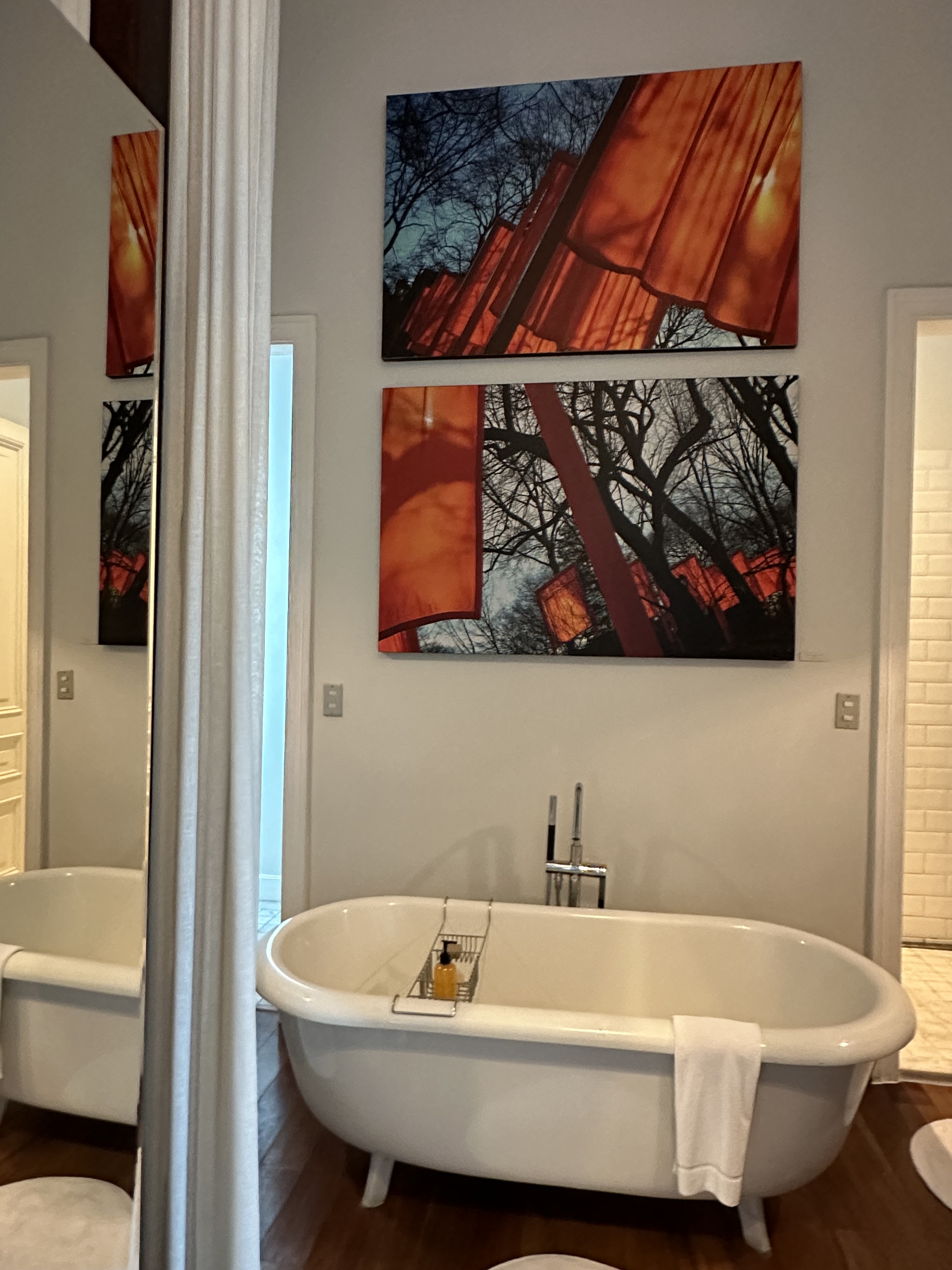
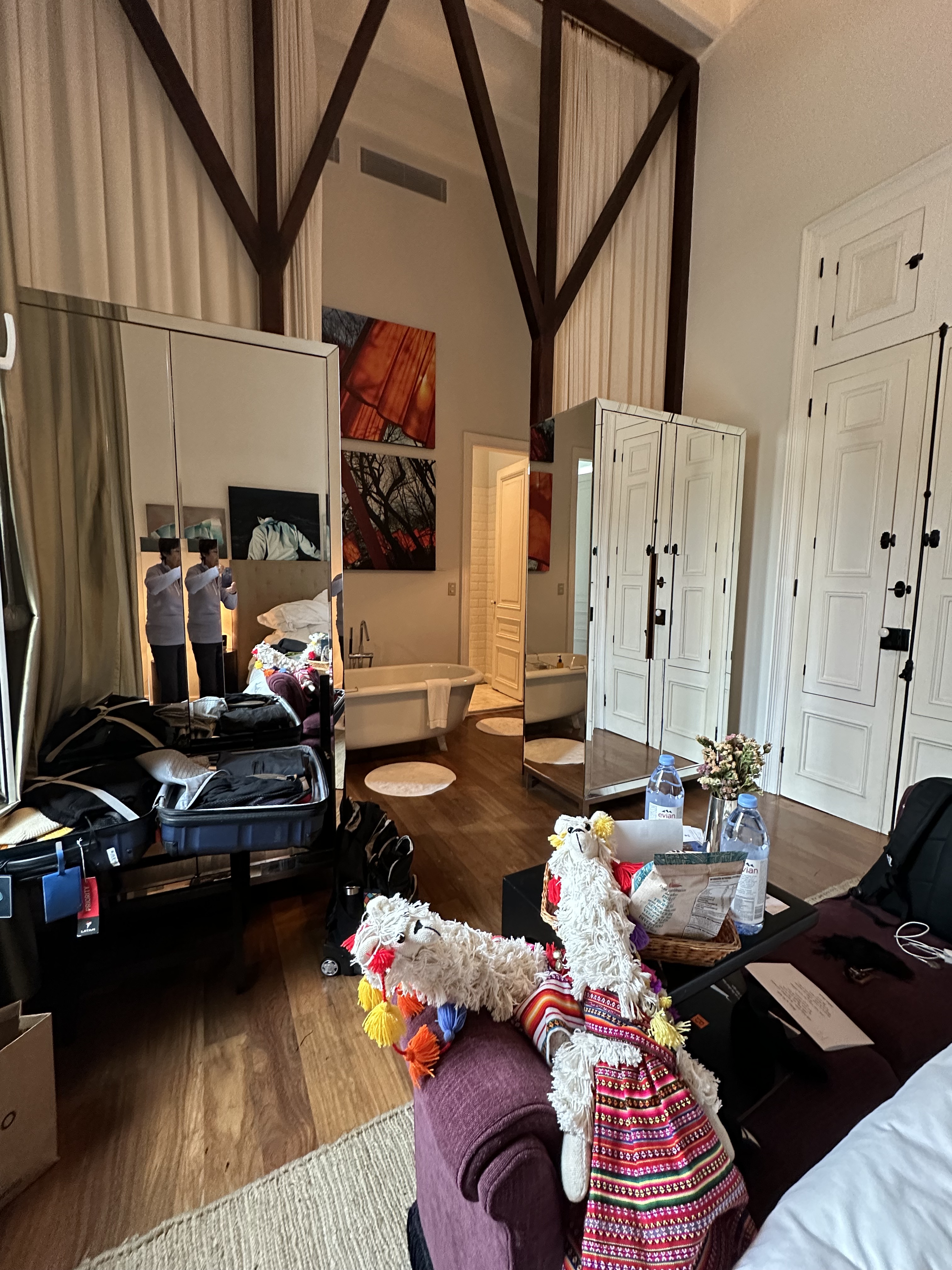
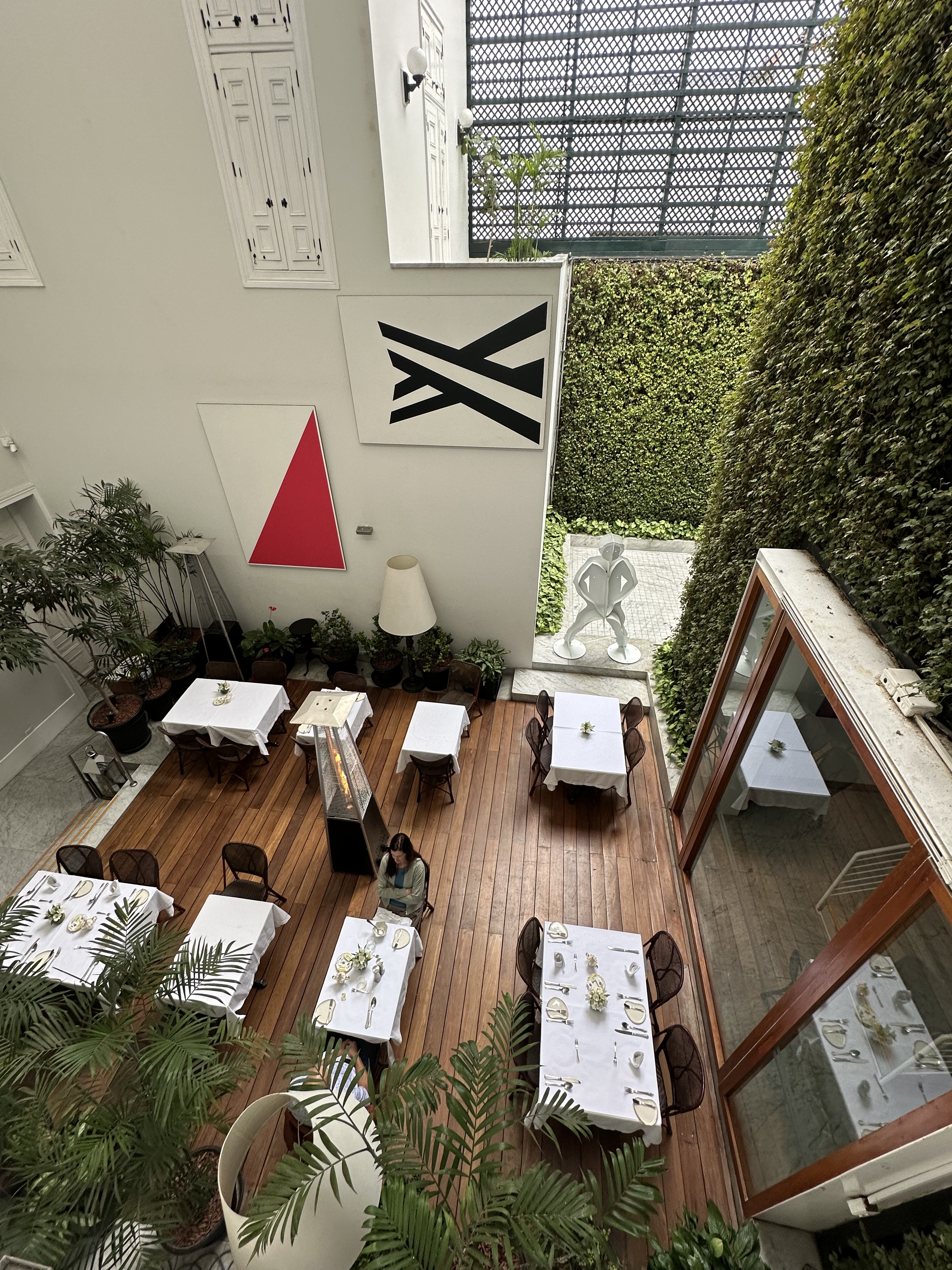
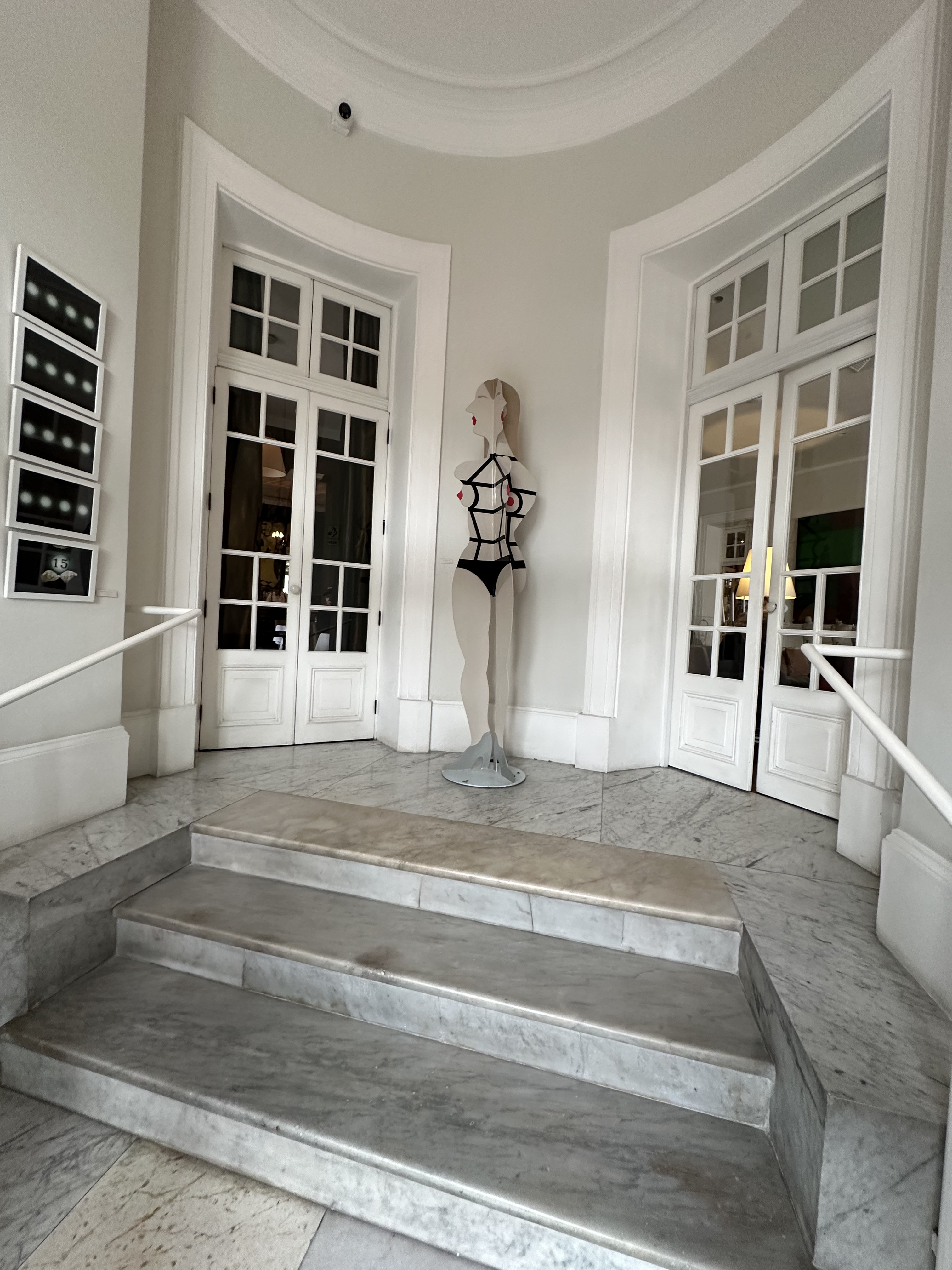
Had a leisurely morning at the Hotel B. Wandered around looking at the art, which I found curious, if uninspiring. The lower left image is our room. It was tall, but small. The lower right image is the breakfast room, as seen from the second floor level.
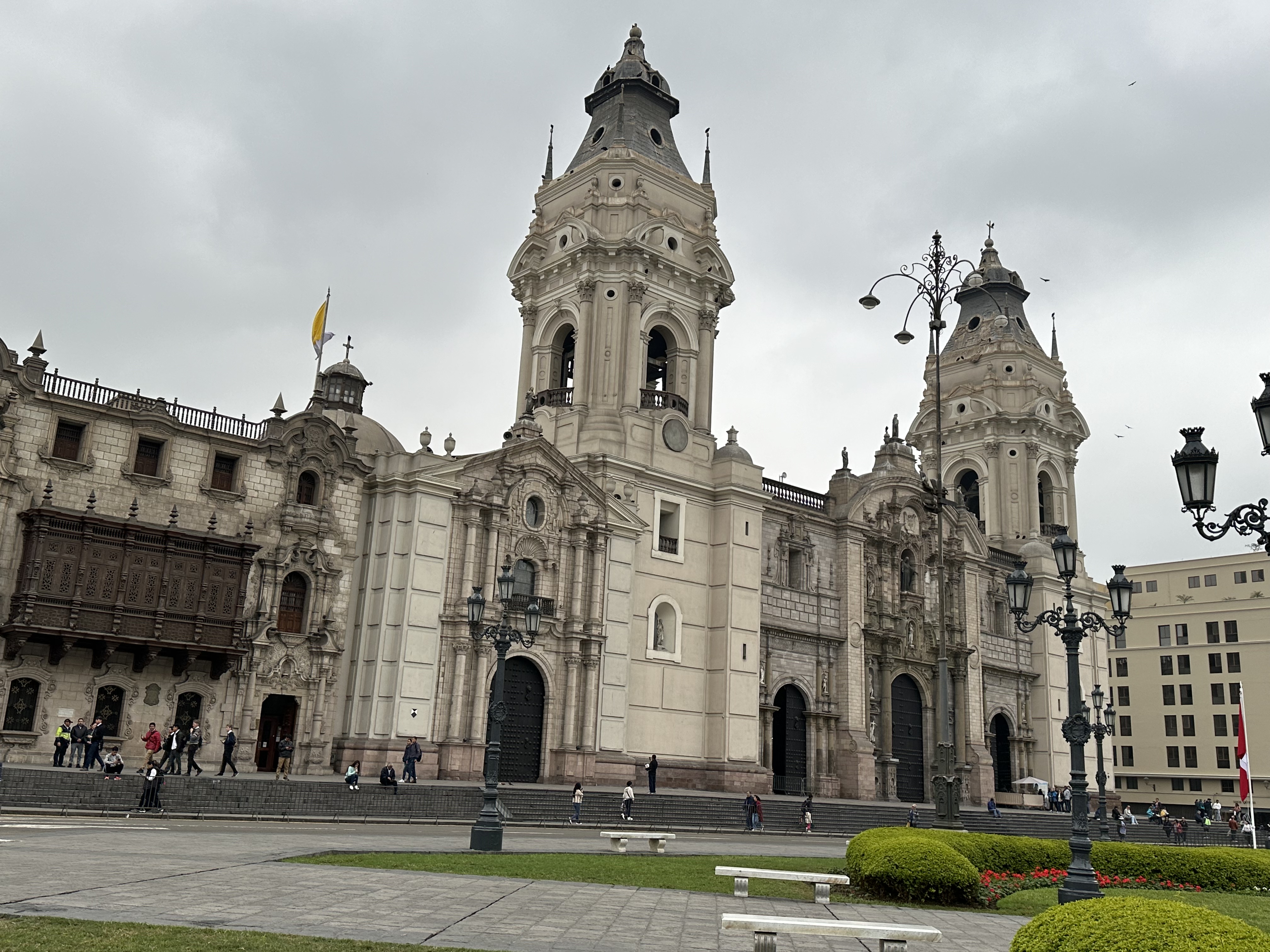
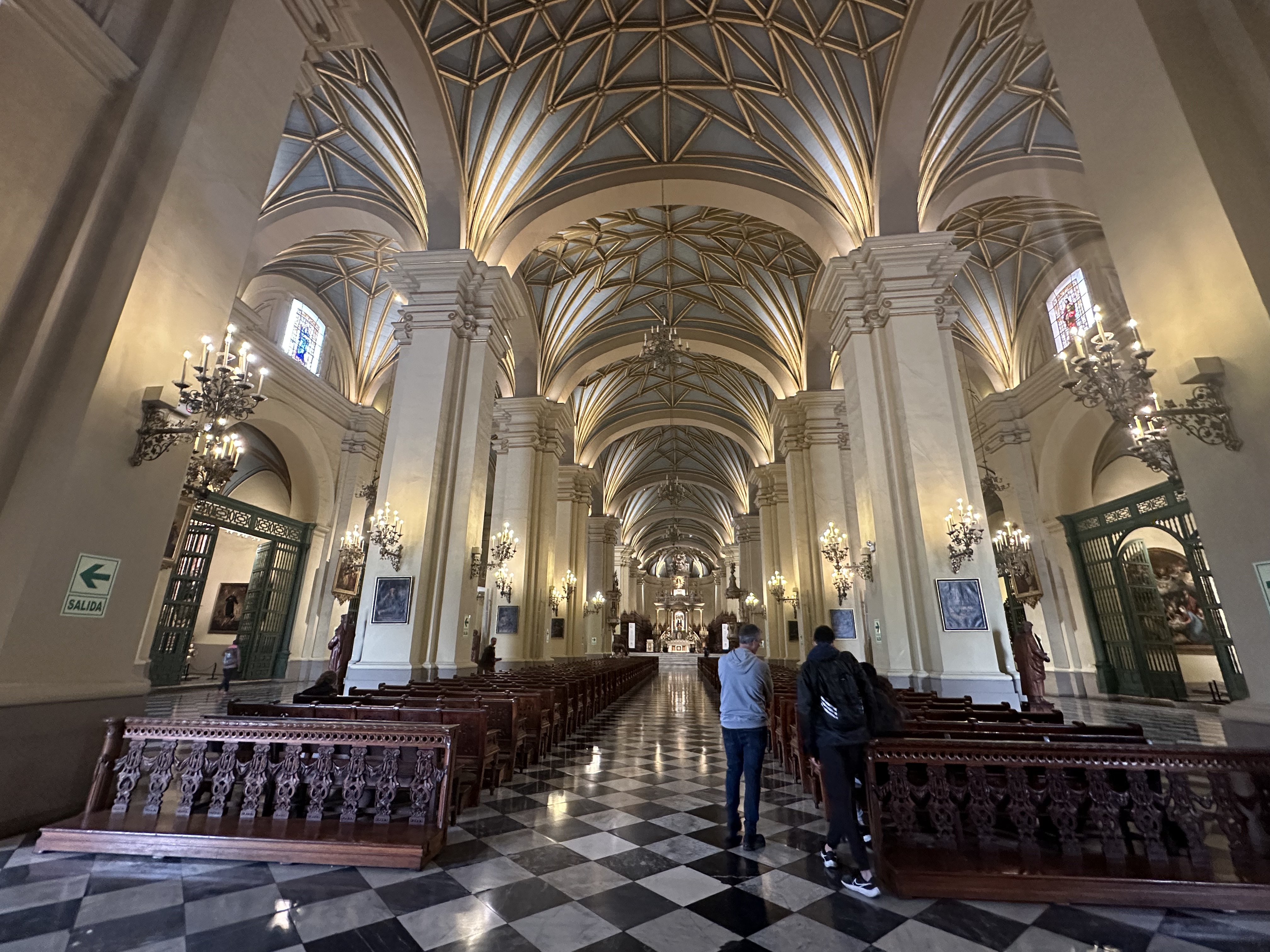
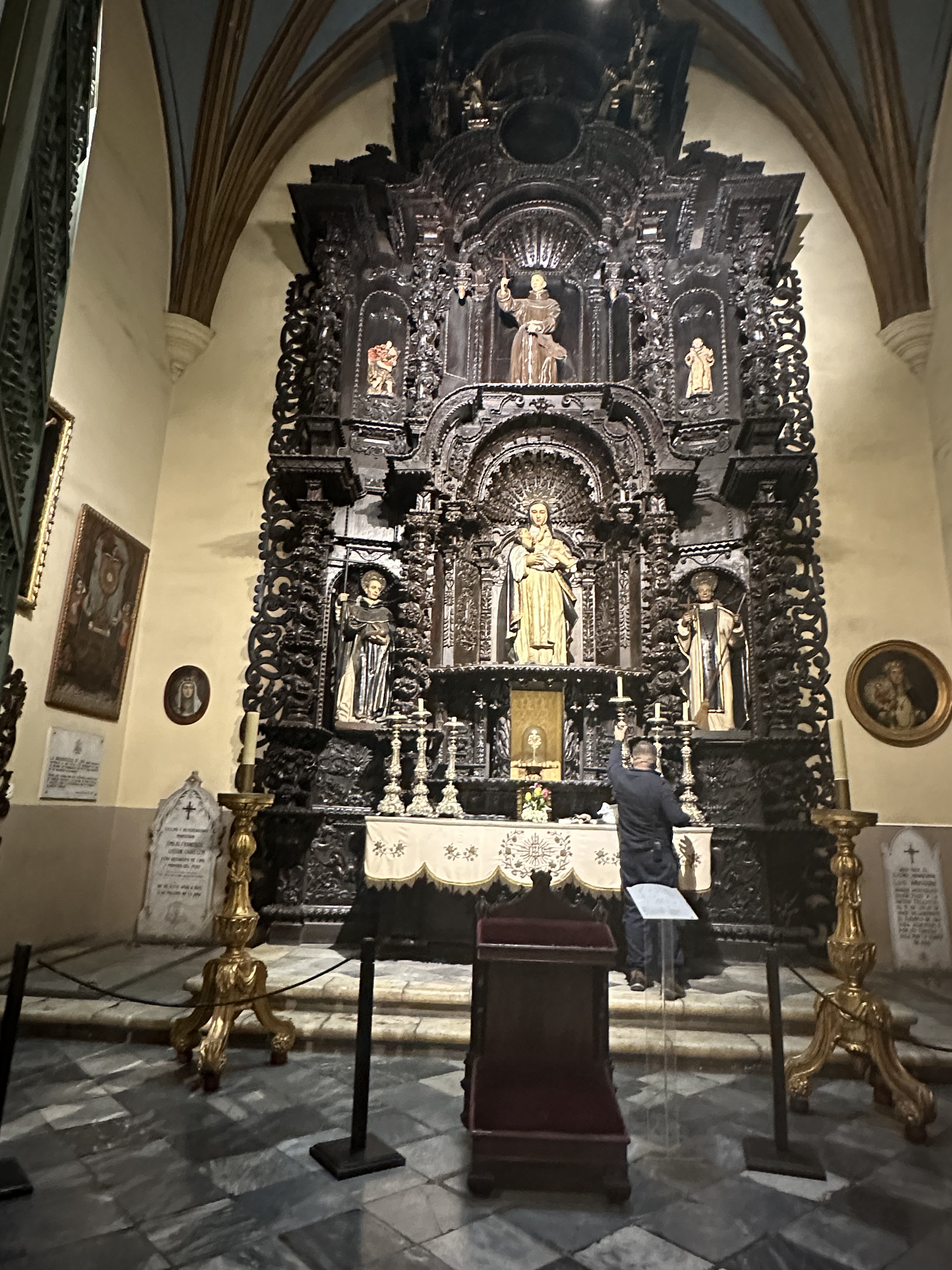
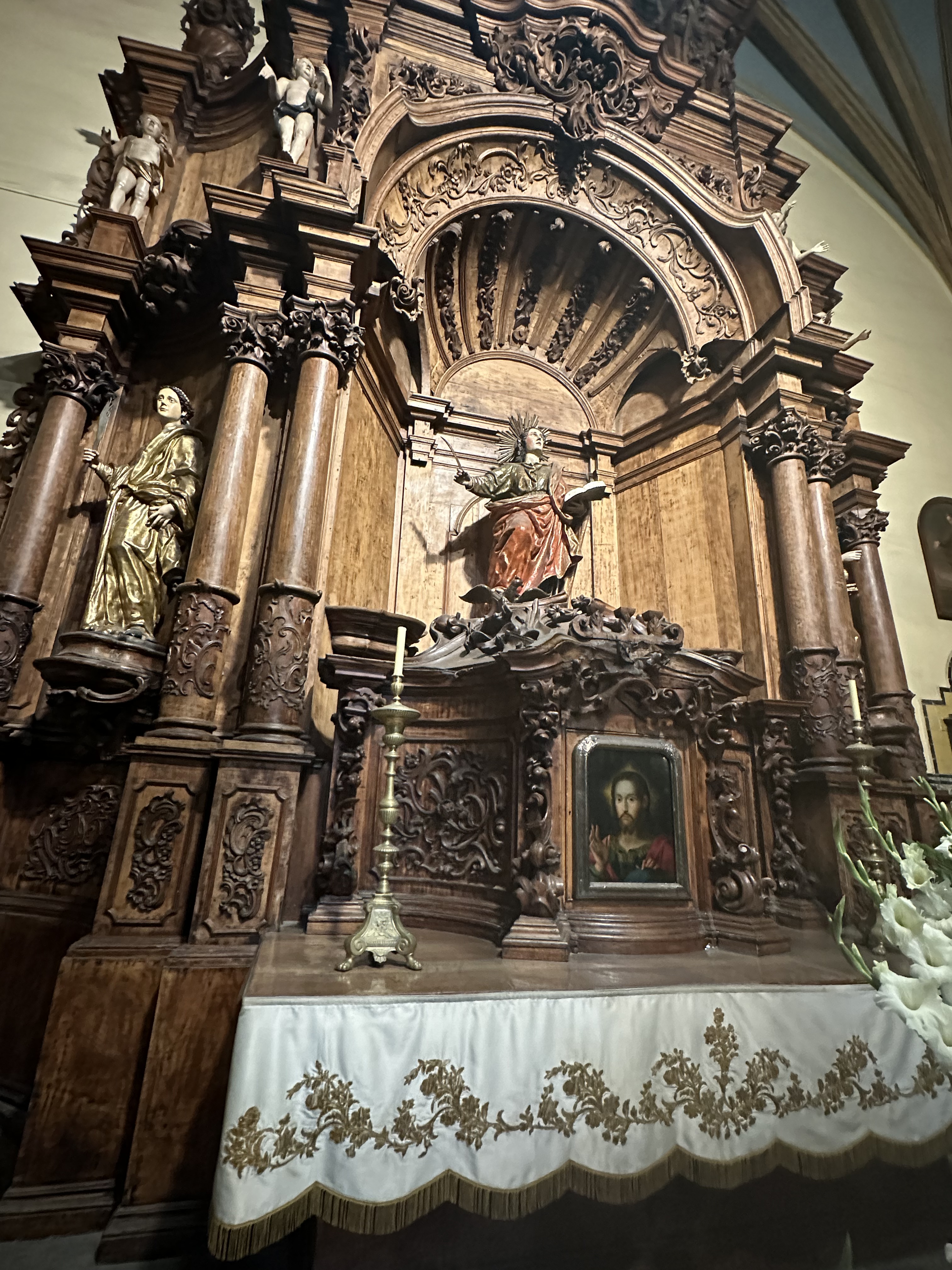
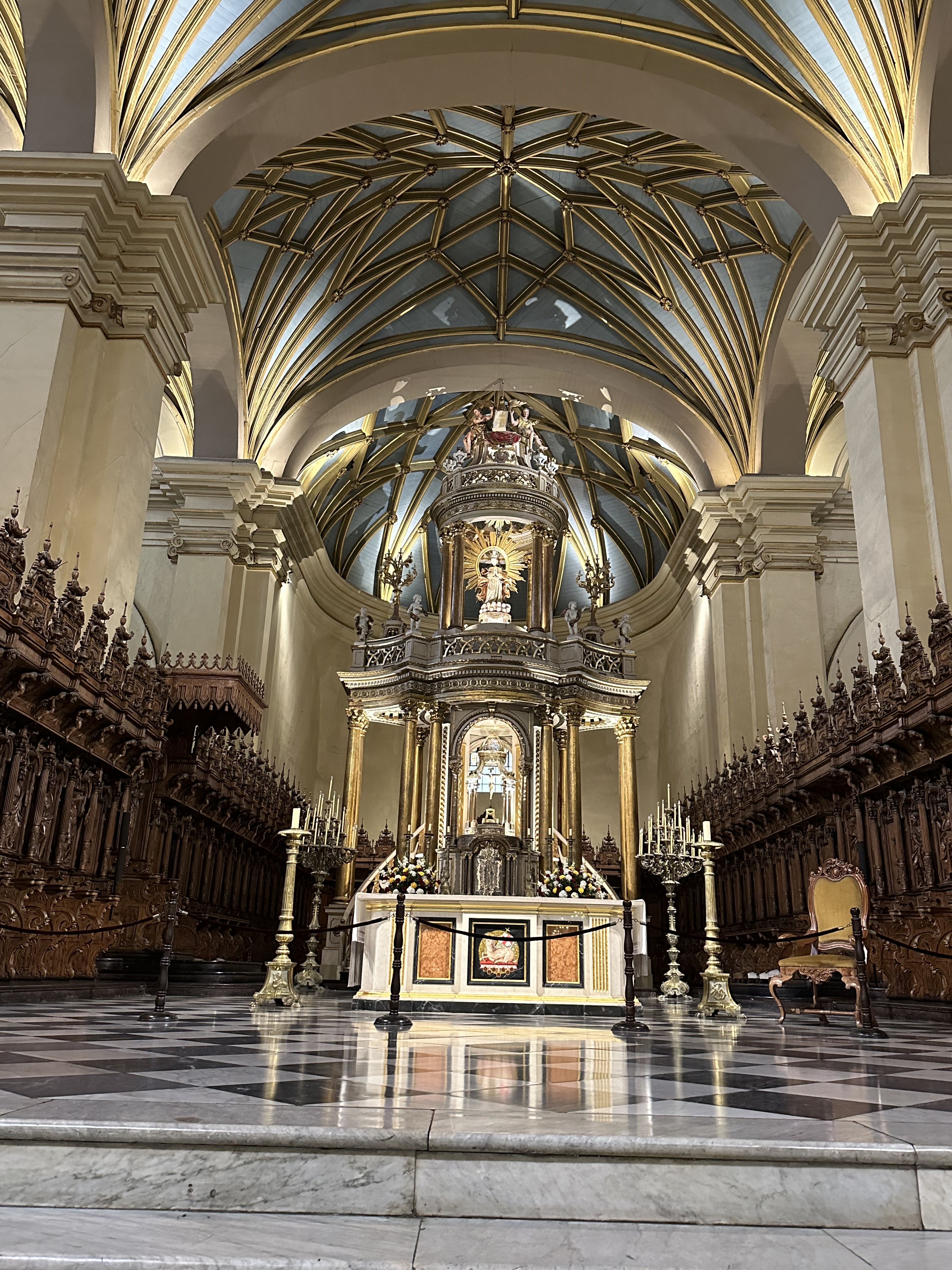
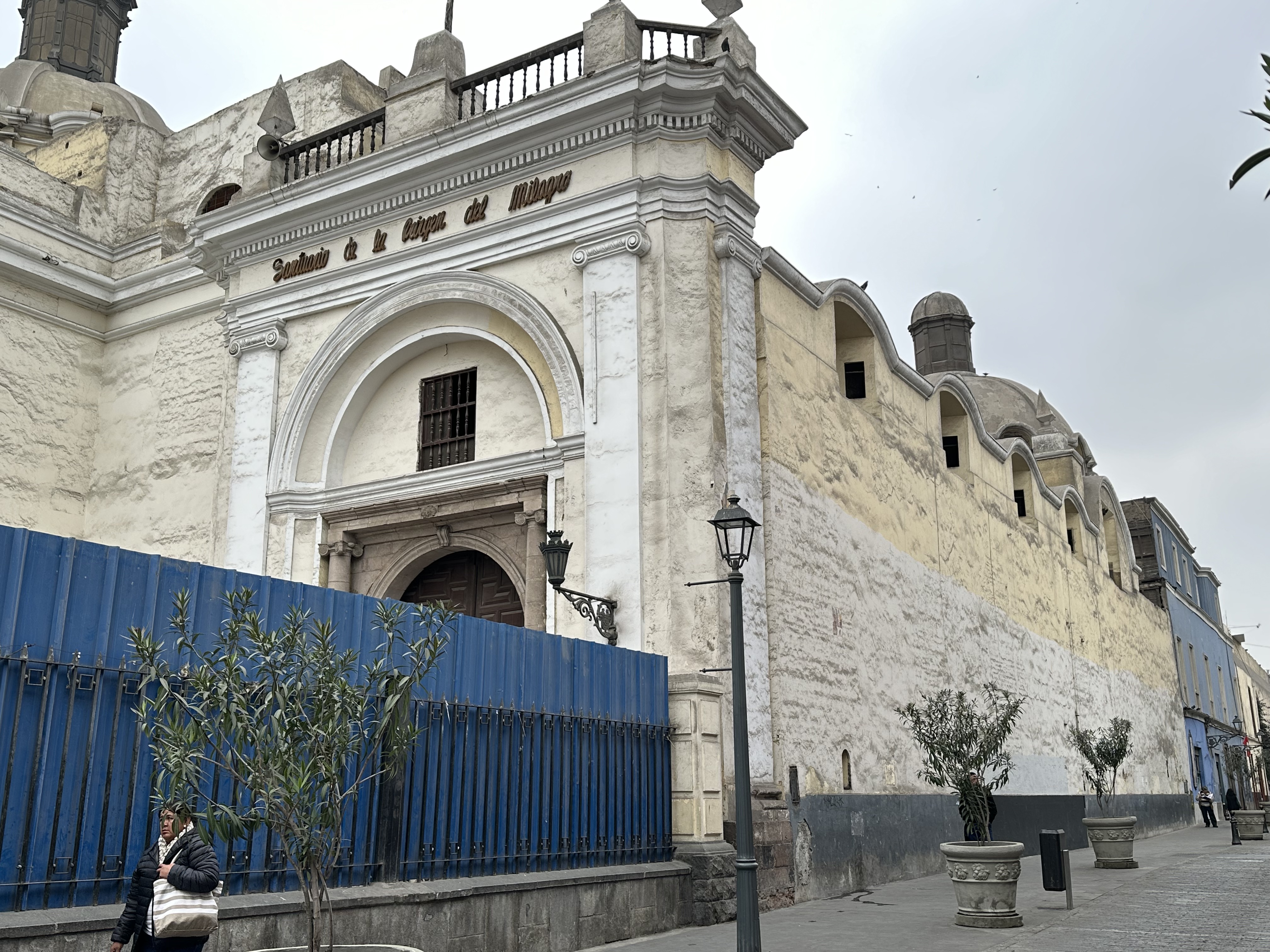
Sophia picked us up at 10am and off we went, with Carlos driving, to stop at the Post Office in Miraflores to buy stamps and then to see the old city center. It took more than an hour to get in the vicinity due to intense congestion on the many narrow 2 lane roads. However, the journey was worth the trouble as the buildings were wonderful 16th century wooden construction. Even the Cathedral of Lima was entirely made of cedar. Sophia told us the reason the towers are so short, for a cathedral, is because of frequent earthquakes. The ceiling was very pretty and many of the side alters were made of beautiful hand carved wood–some cedar and some mahogany.
Cathedral of LimaThe lovely painted knaveA carved mahogany side altarAnother wooden side altar The main altar with a large number of choir stallsThis altar was made of tiles
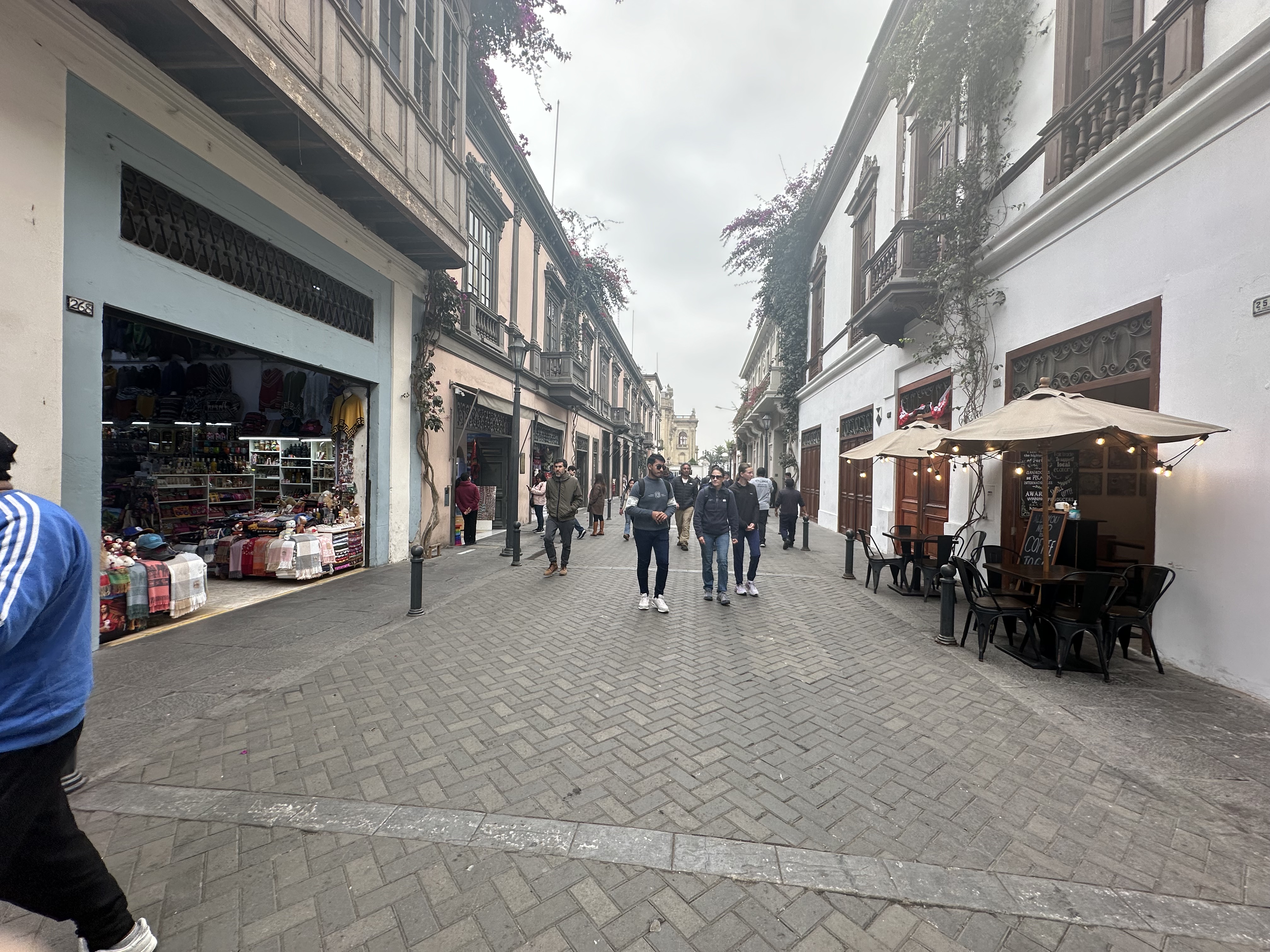
As we walked around the square and several old pedestrian streets. Sophia pointed out the oldest structure in Lima, a rather plain building built in the 1500’s. The wood structure was covered with stucco.
The oldest building in Lima. Built in the 1500’s
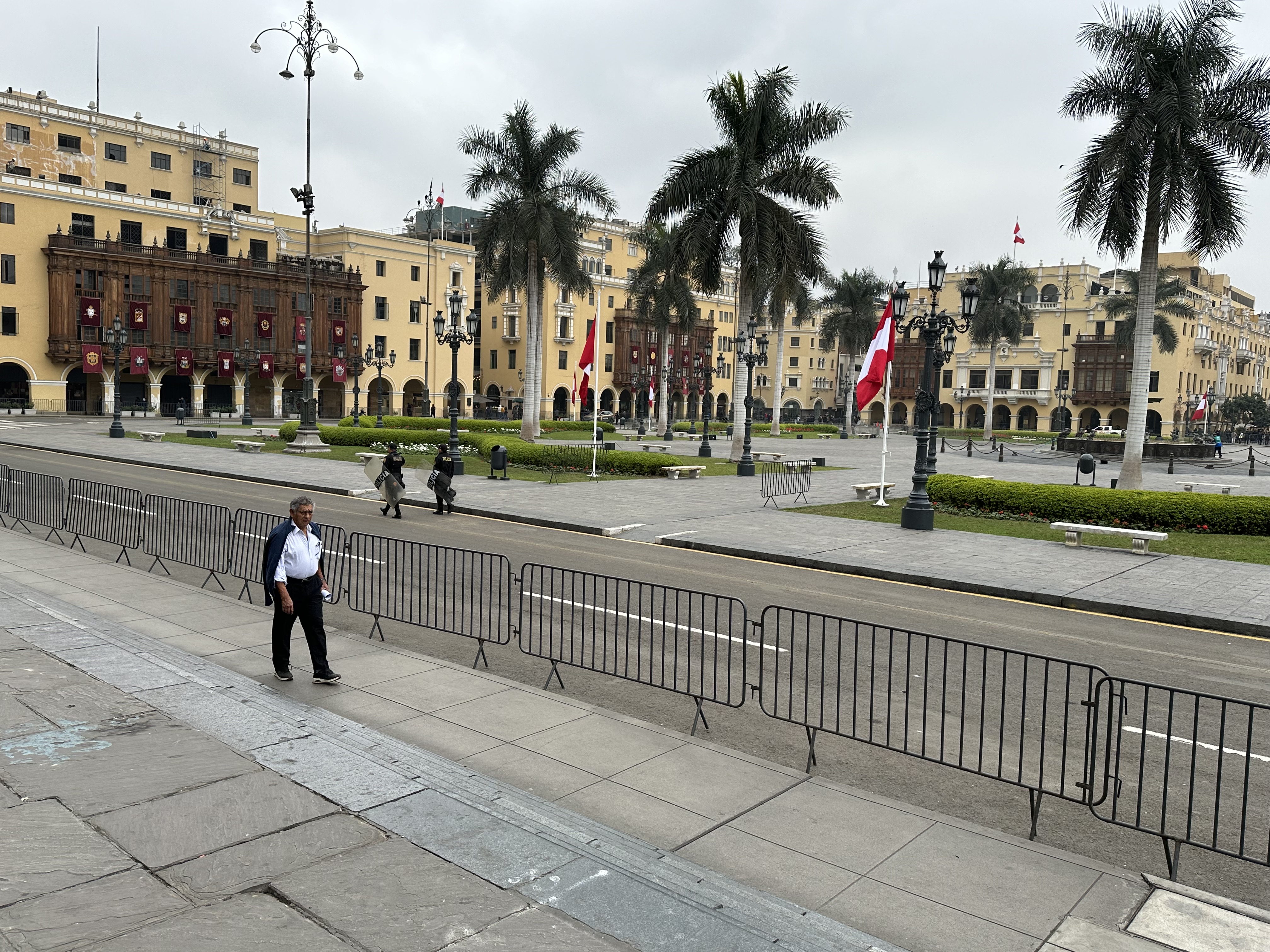
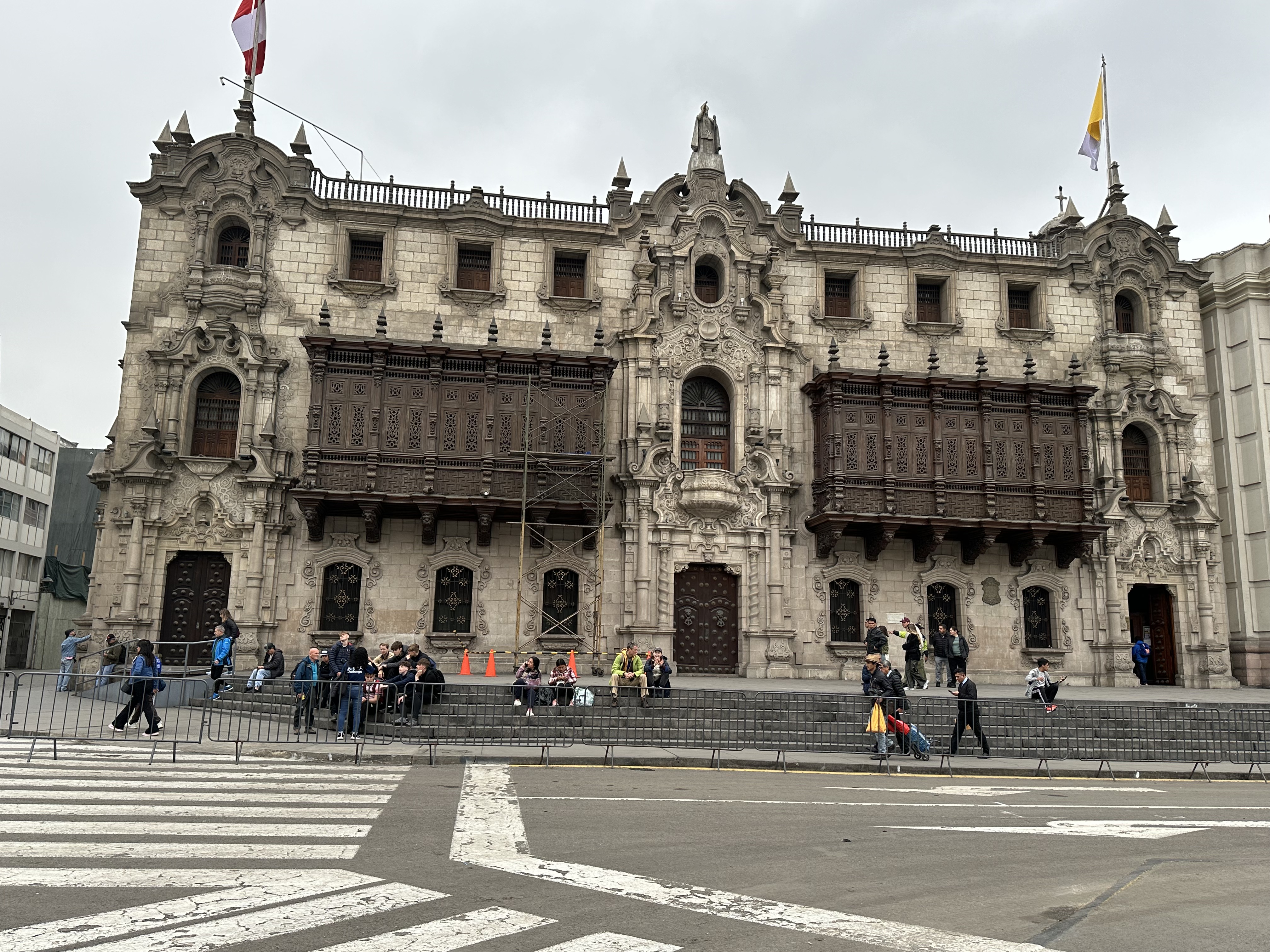
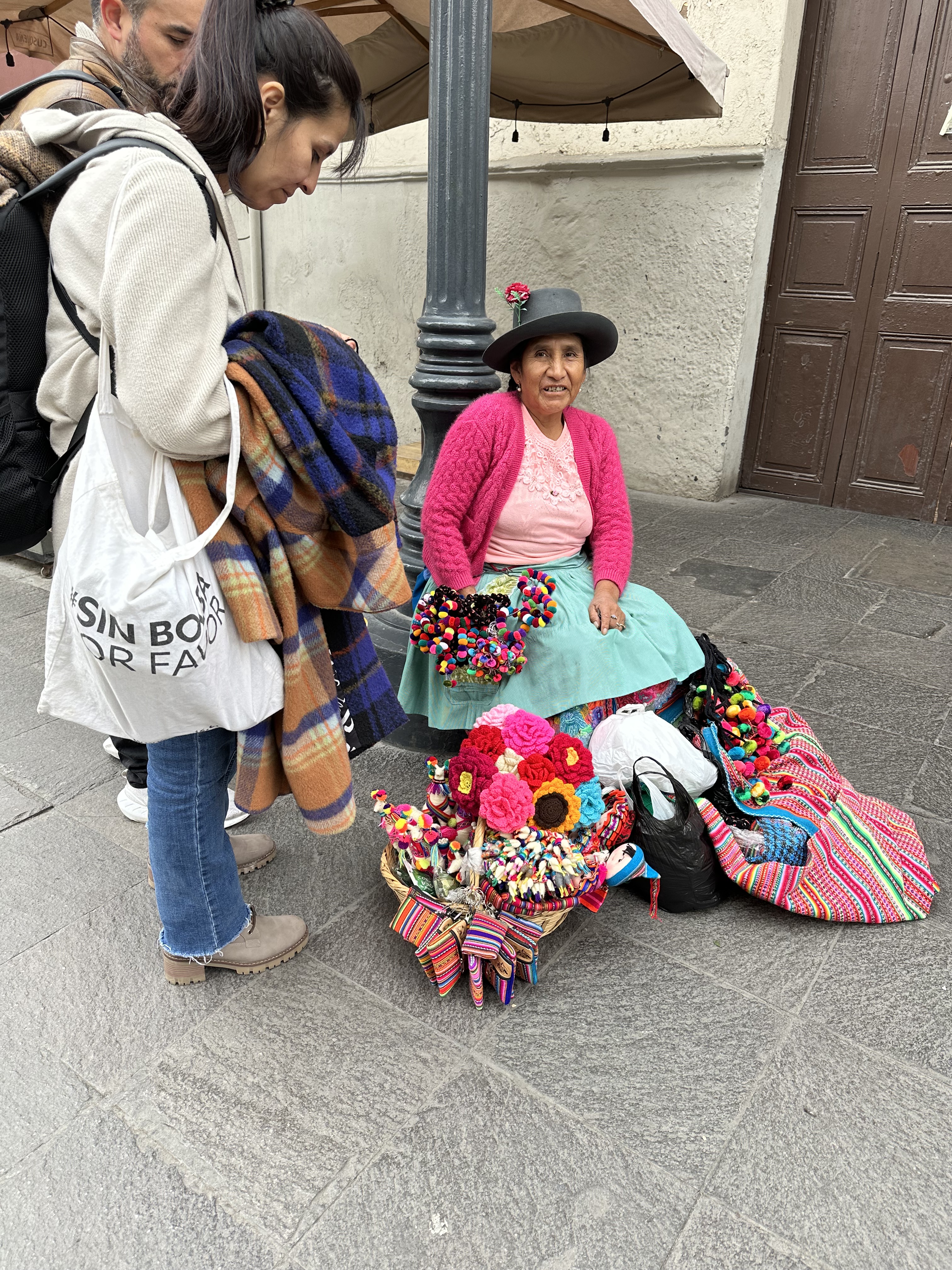
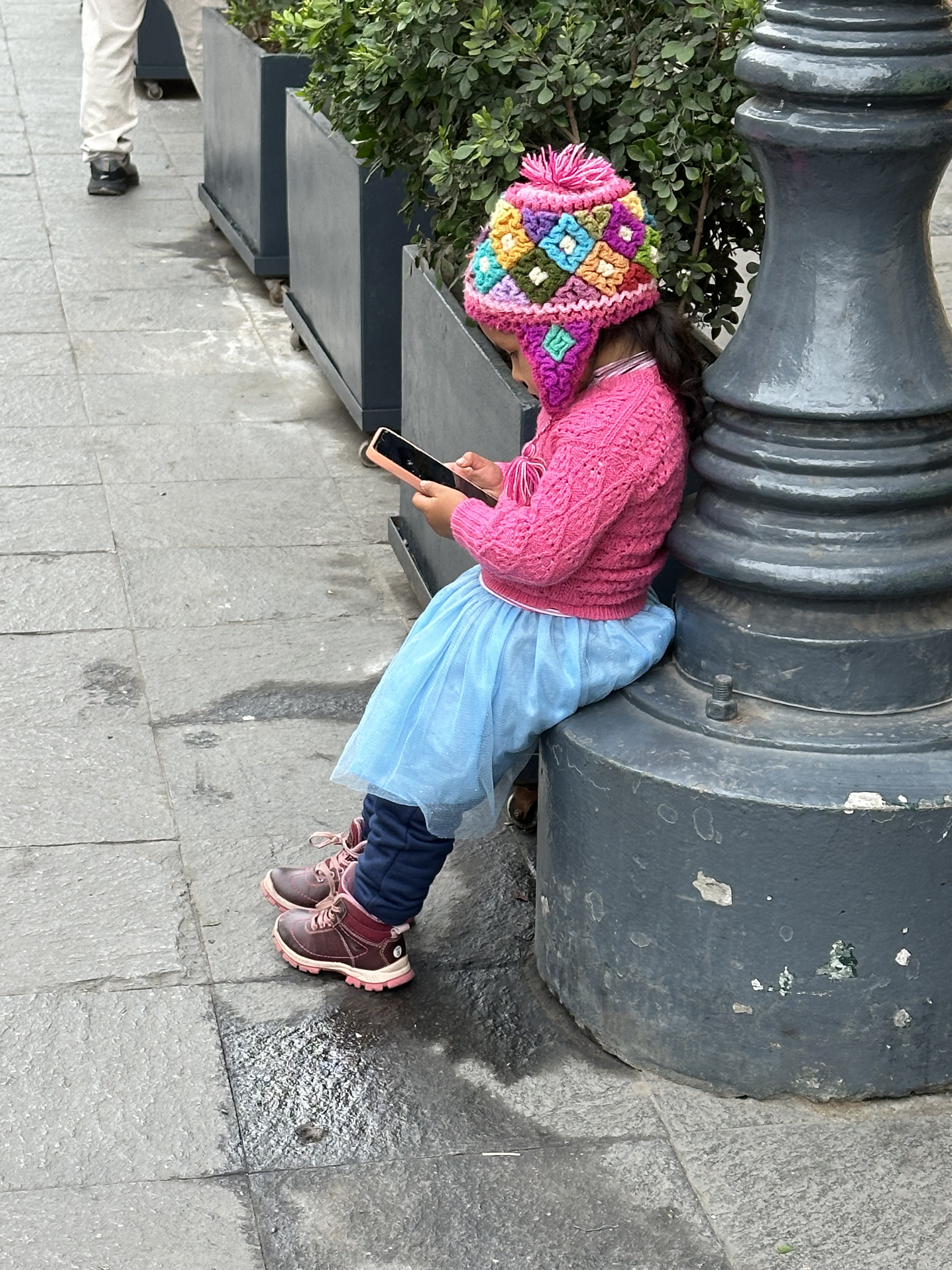
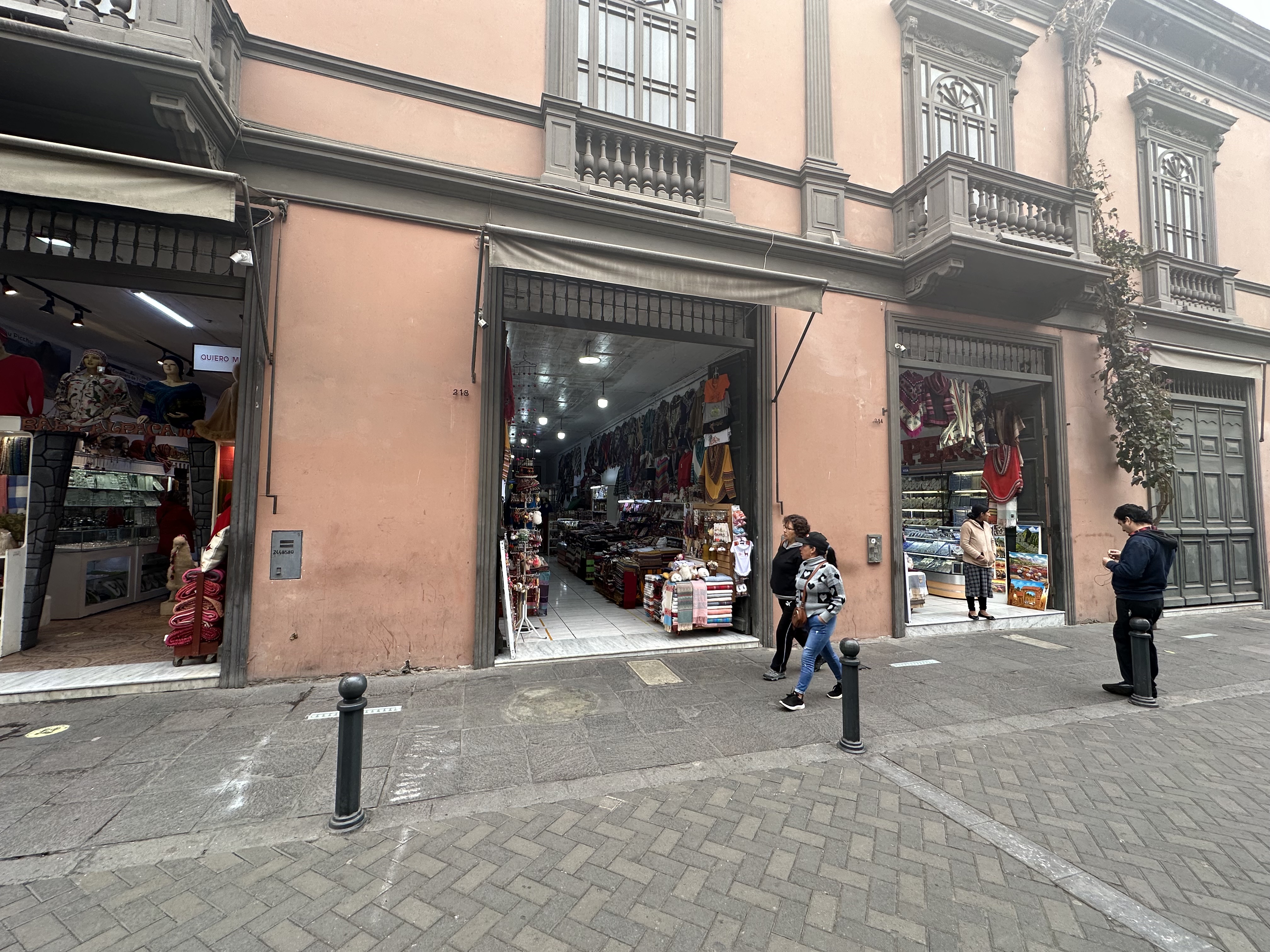
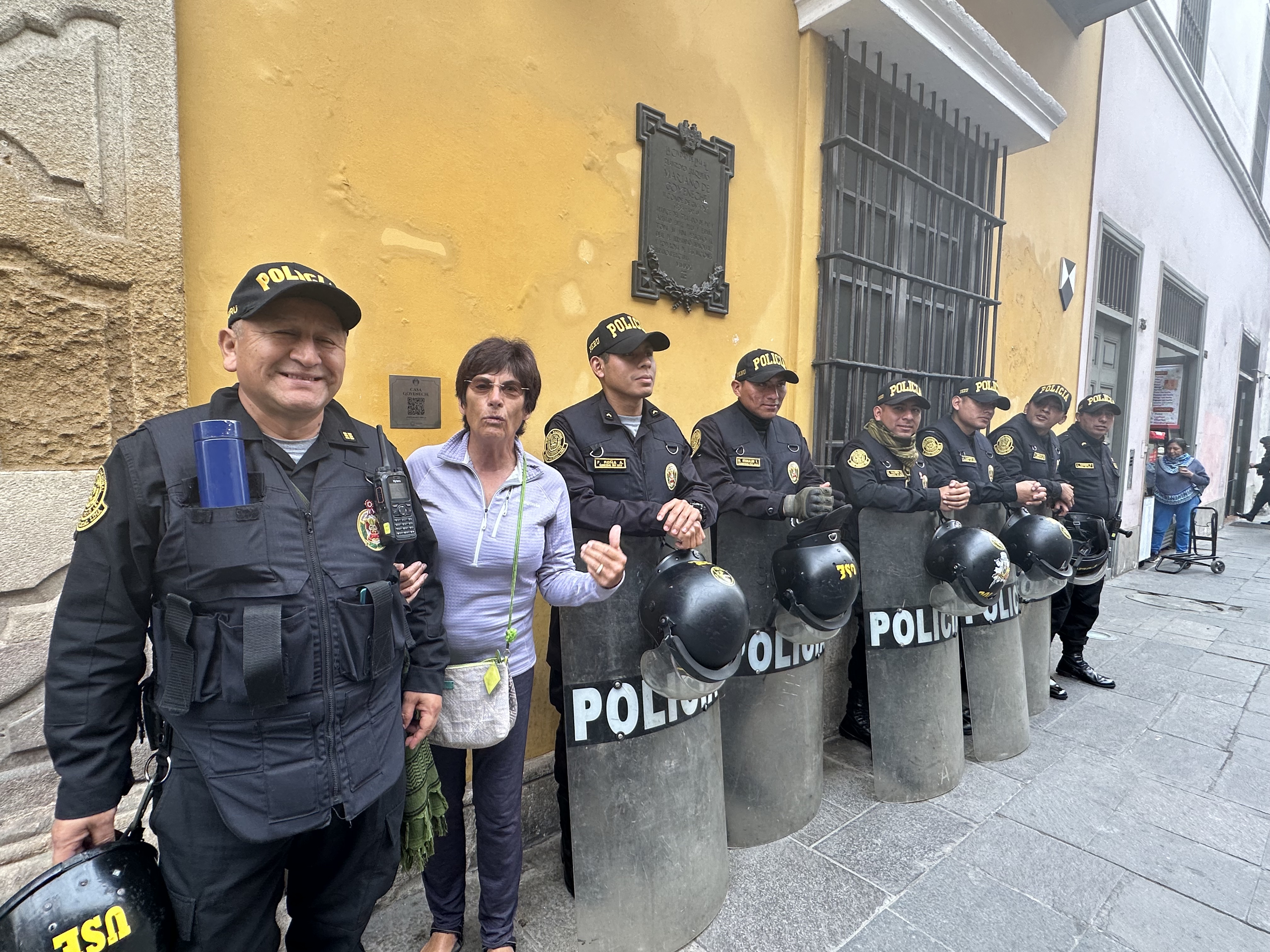
The square in front of the cathedral and other old government buildings.An old building with fancy grill workThis lady reminded me of the way women dressed in Bolivia in the 60’sAnother old city building.The Bolivian lady’s daughter A shop in the old cityA pedestrian street near the cathedral. Military police waiting for the president to arrive for a speech. They invited me to join them for a photo.
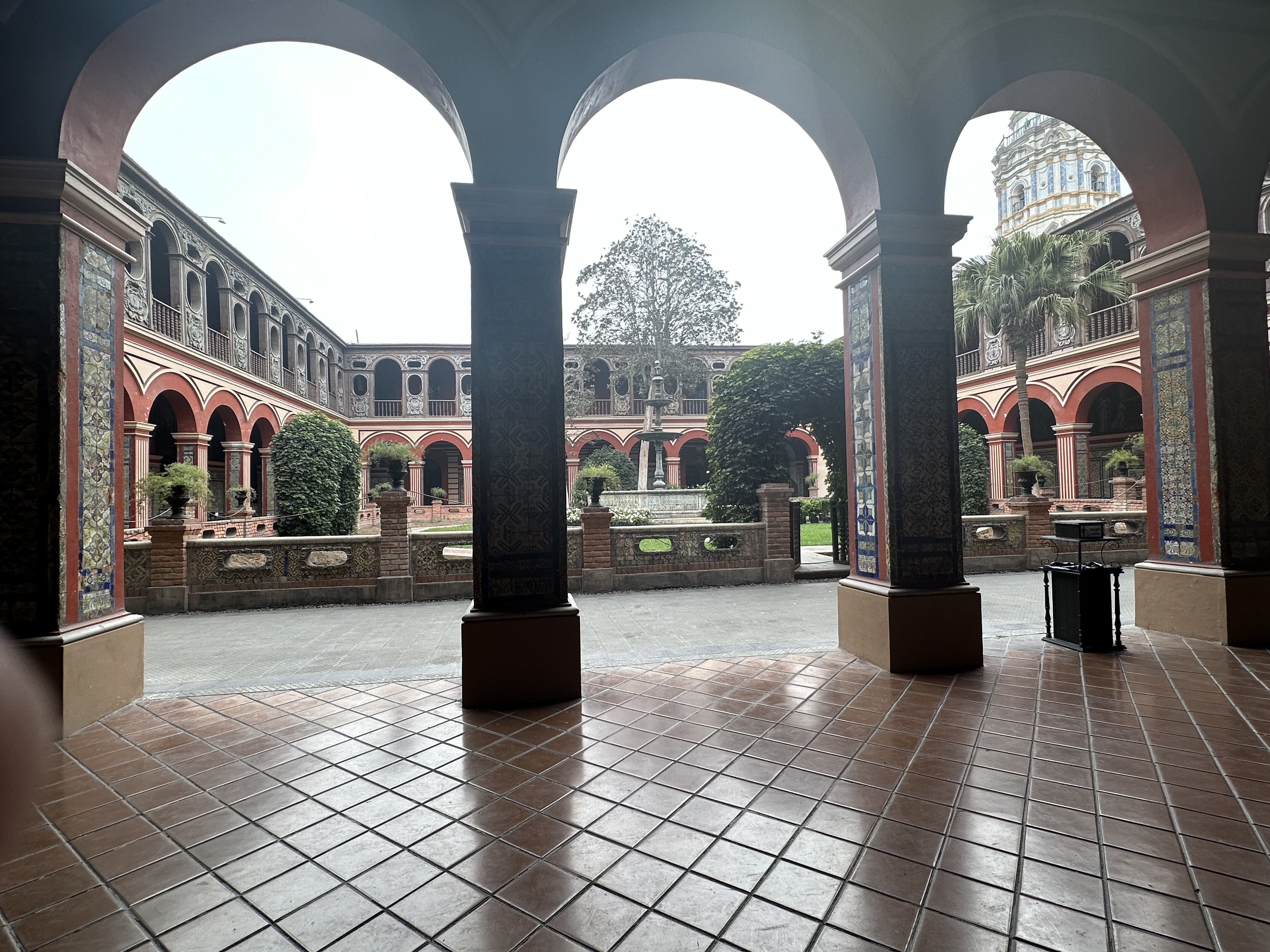
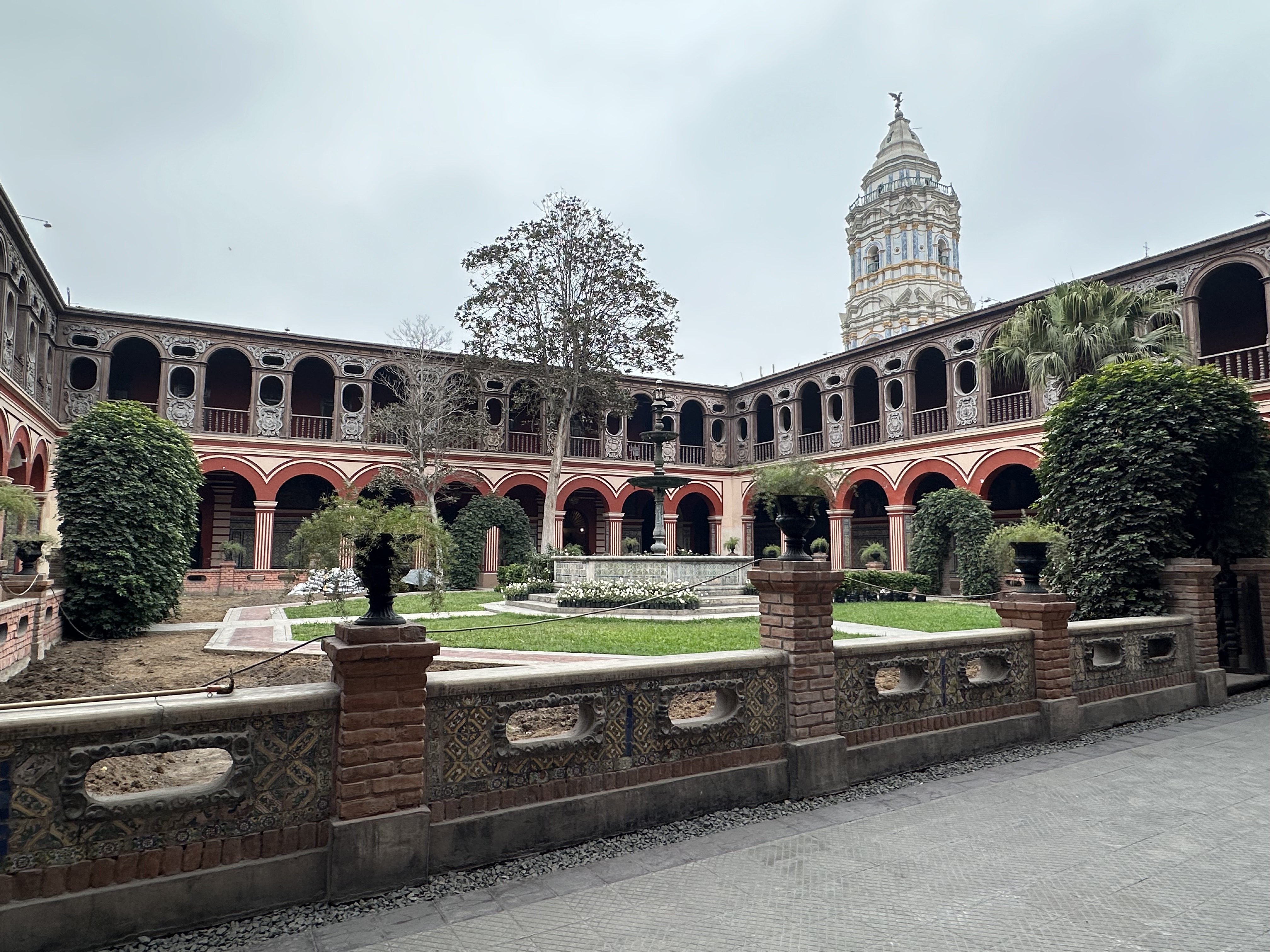
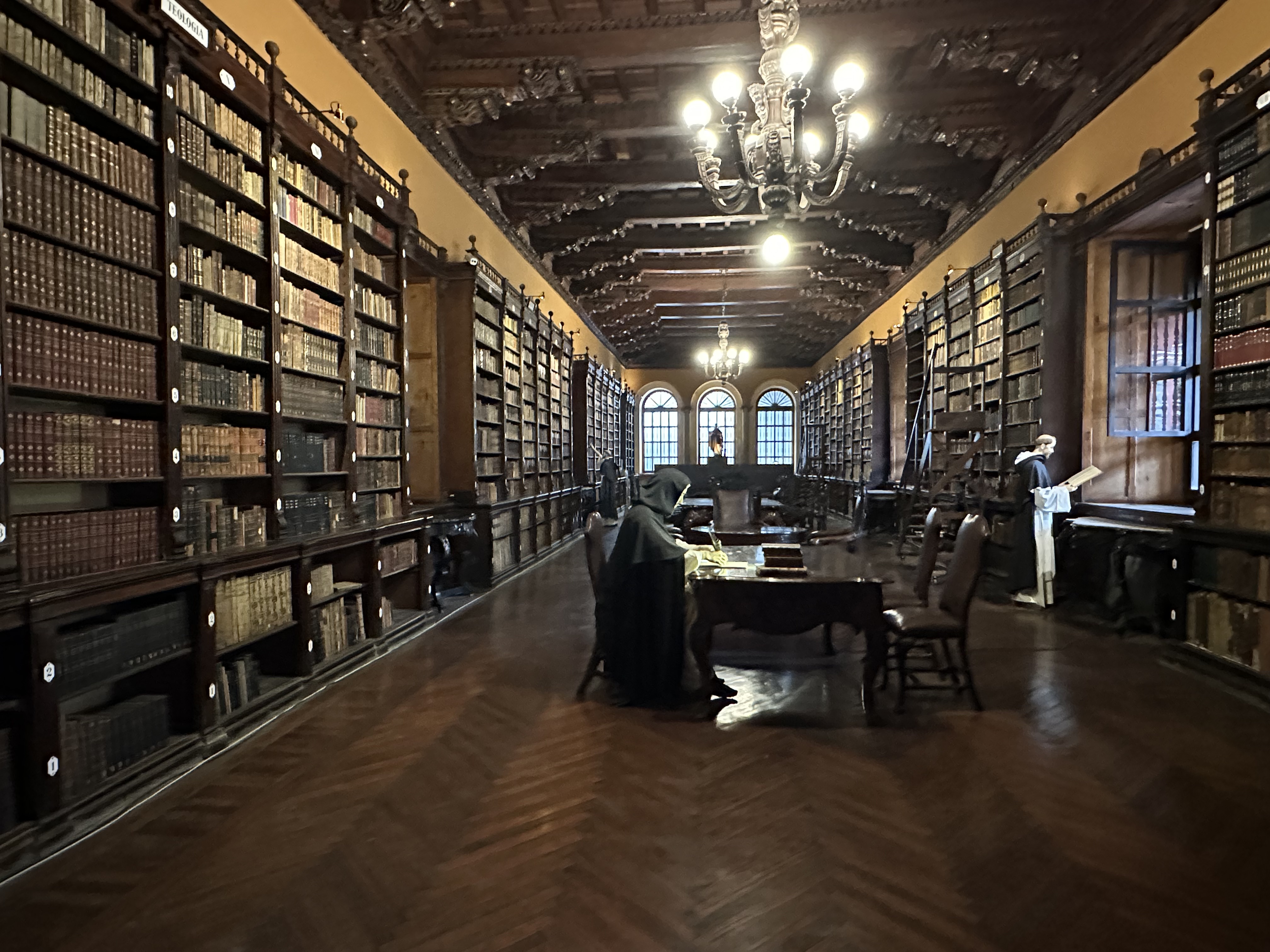
Sophia took us to see a Dominican Mission near the cathedral. The mission library houses over 20,000 books. Somehow the books seem to survive the climate.
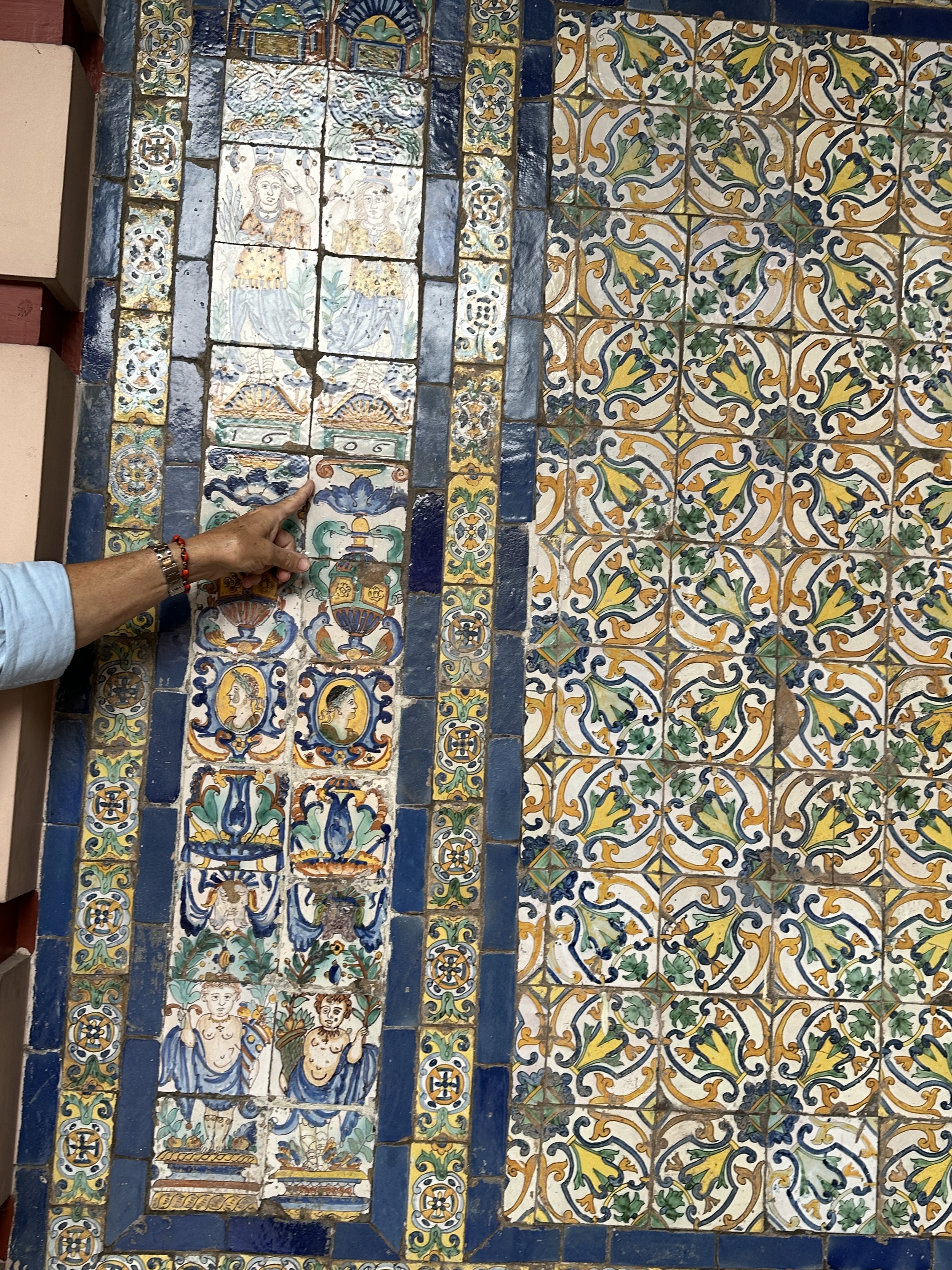
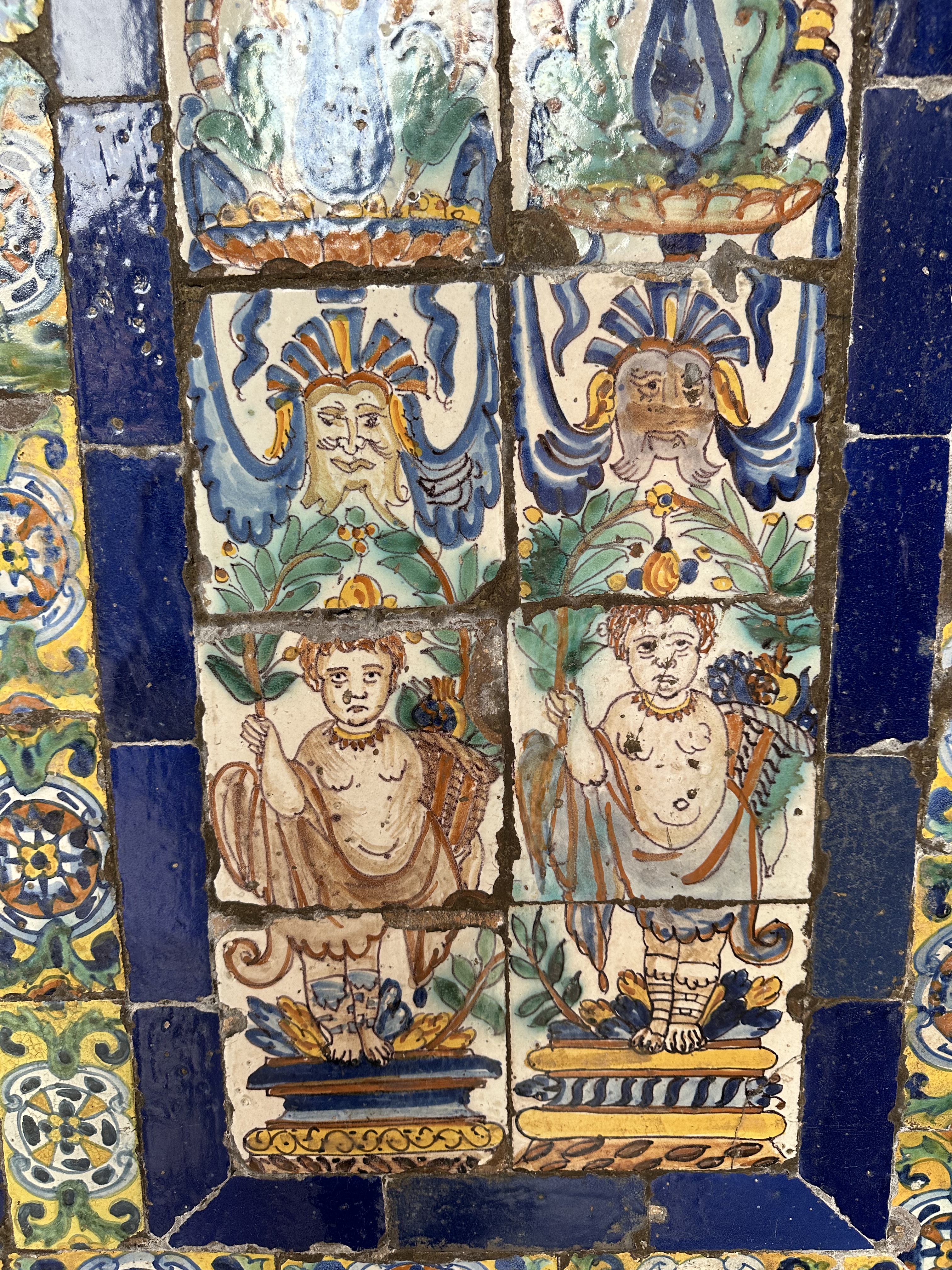
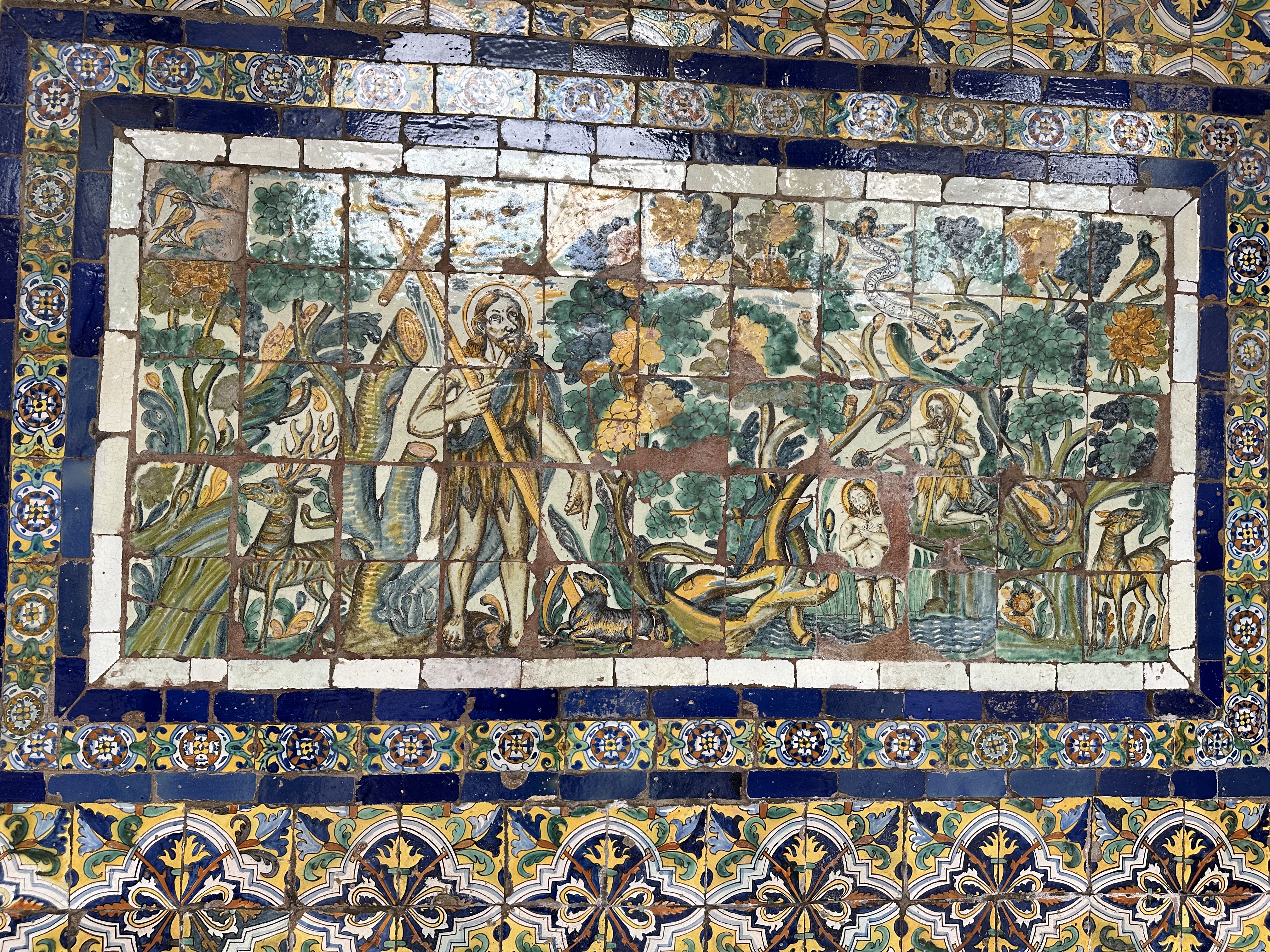
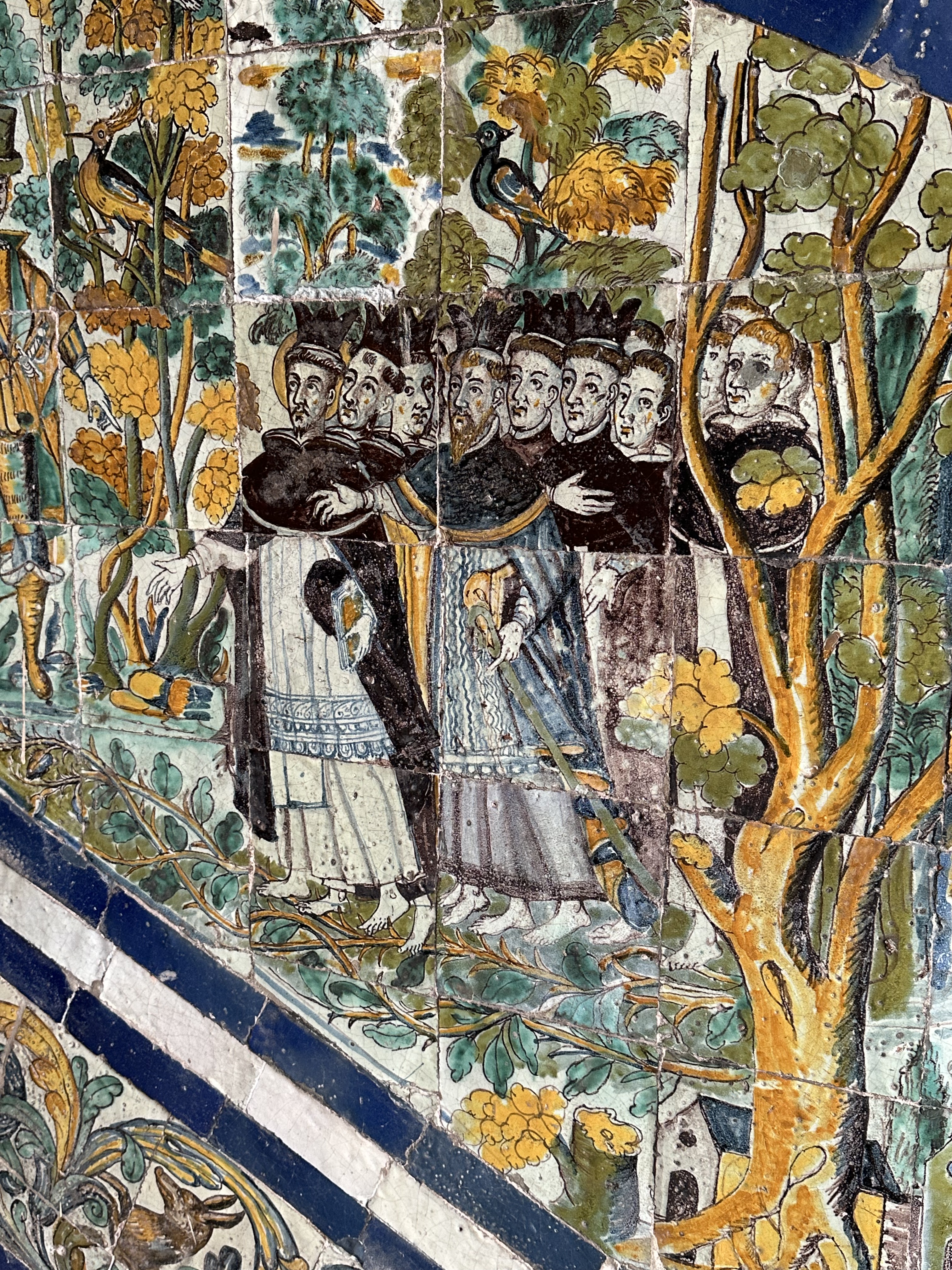
The mission was covered in beautiful tiles from the 1600’s. Here is a small sample.
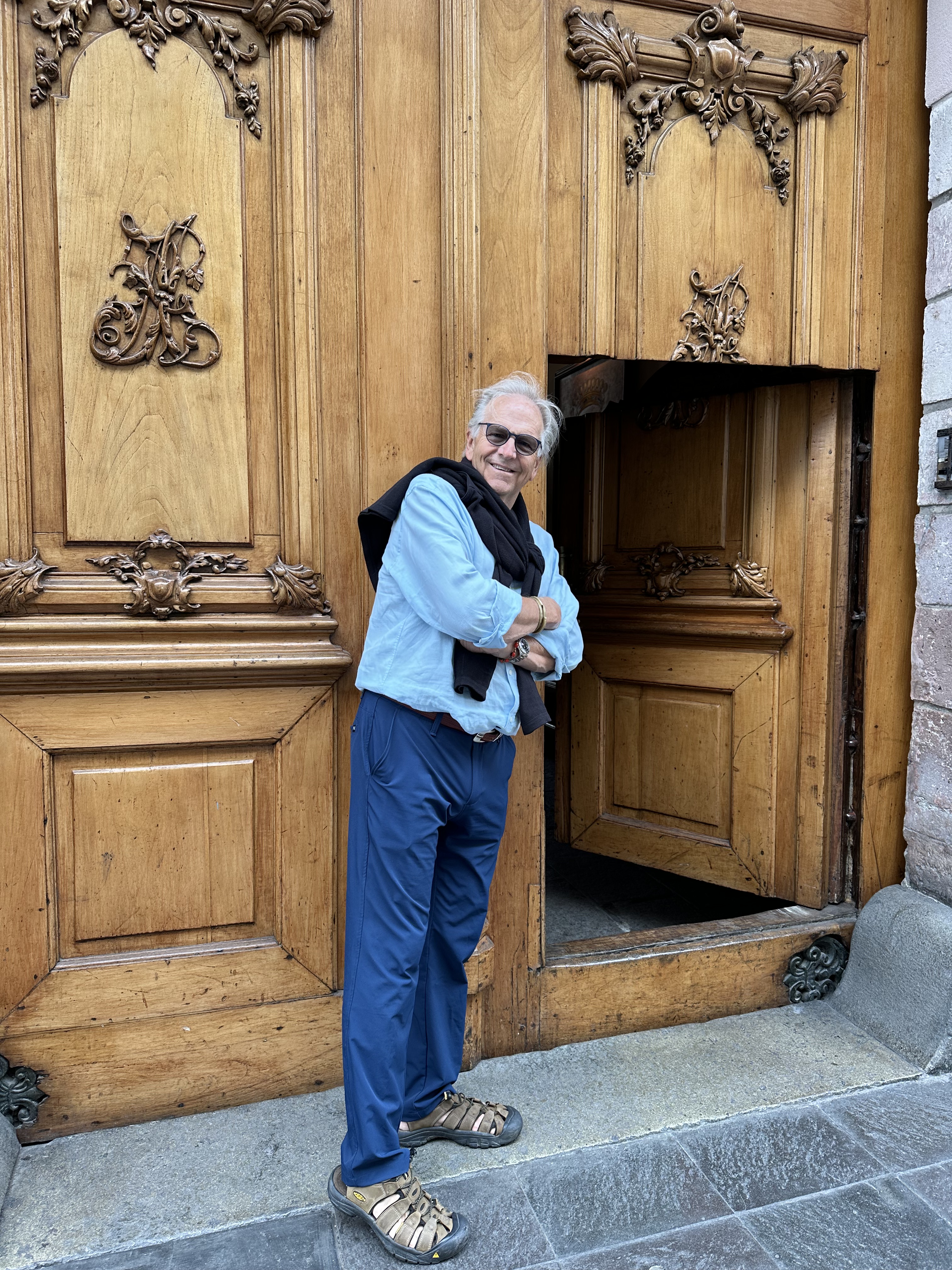
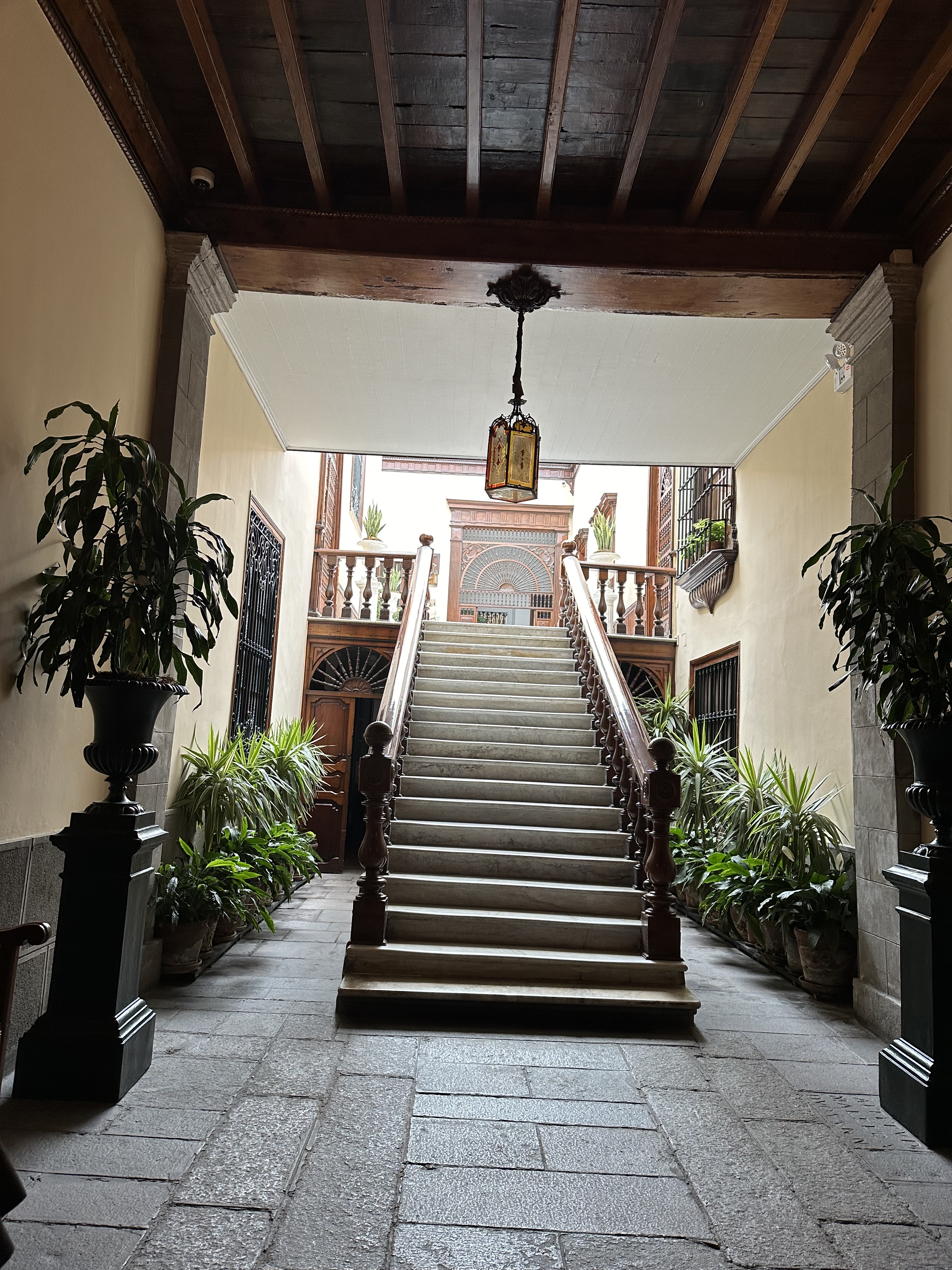
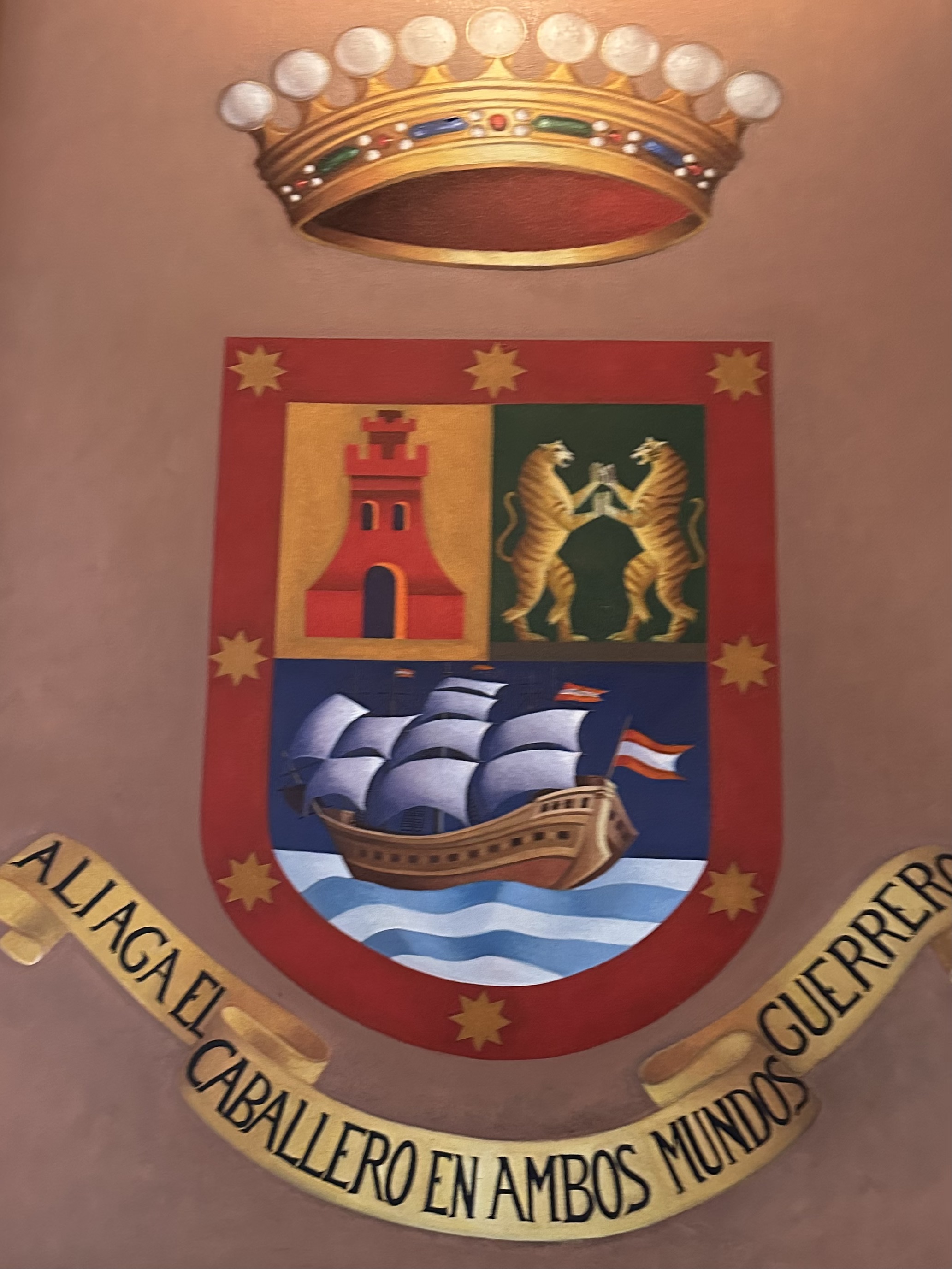
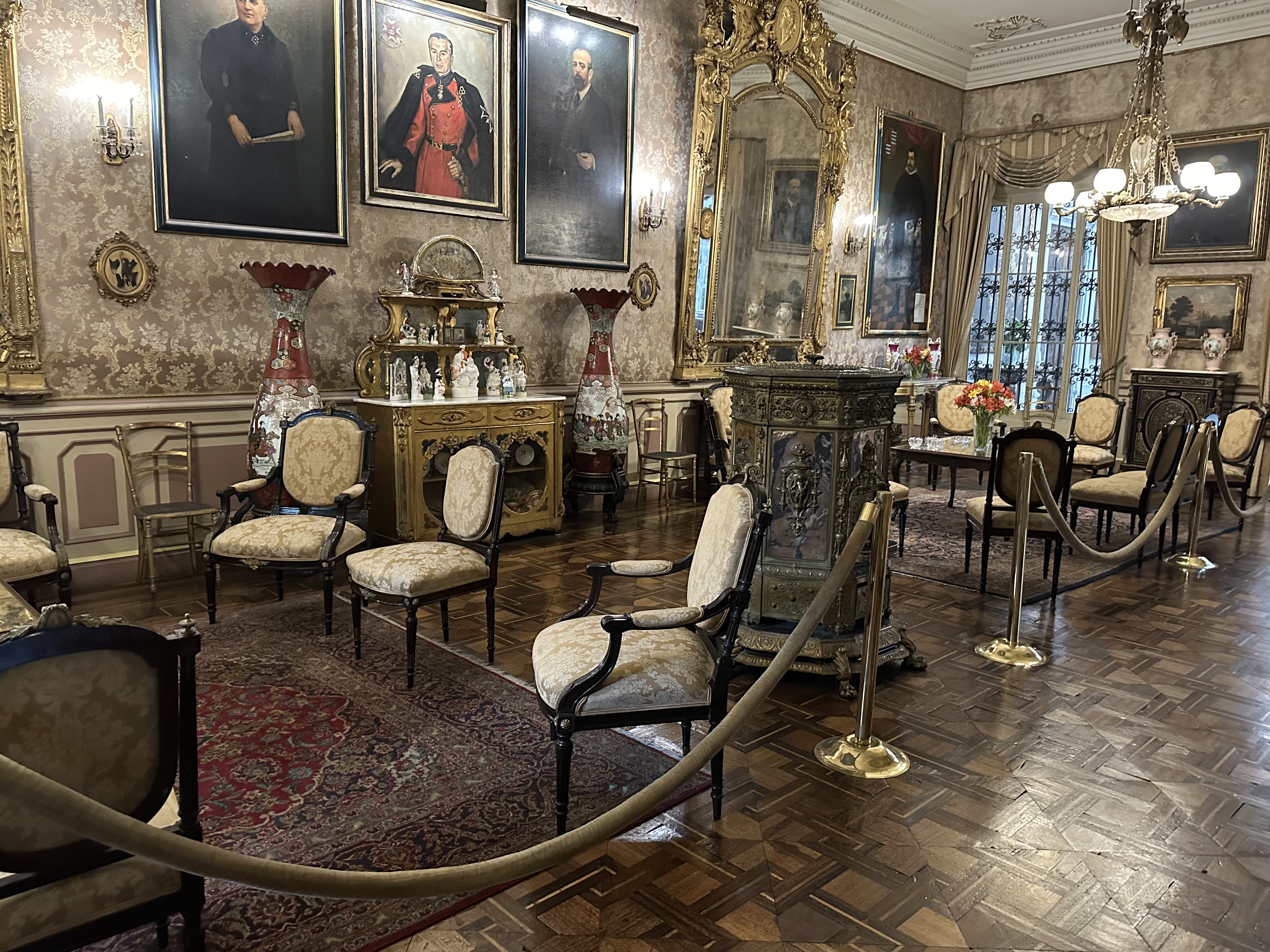
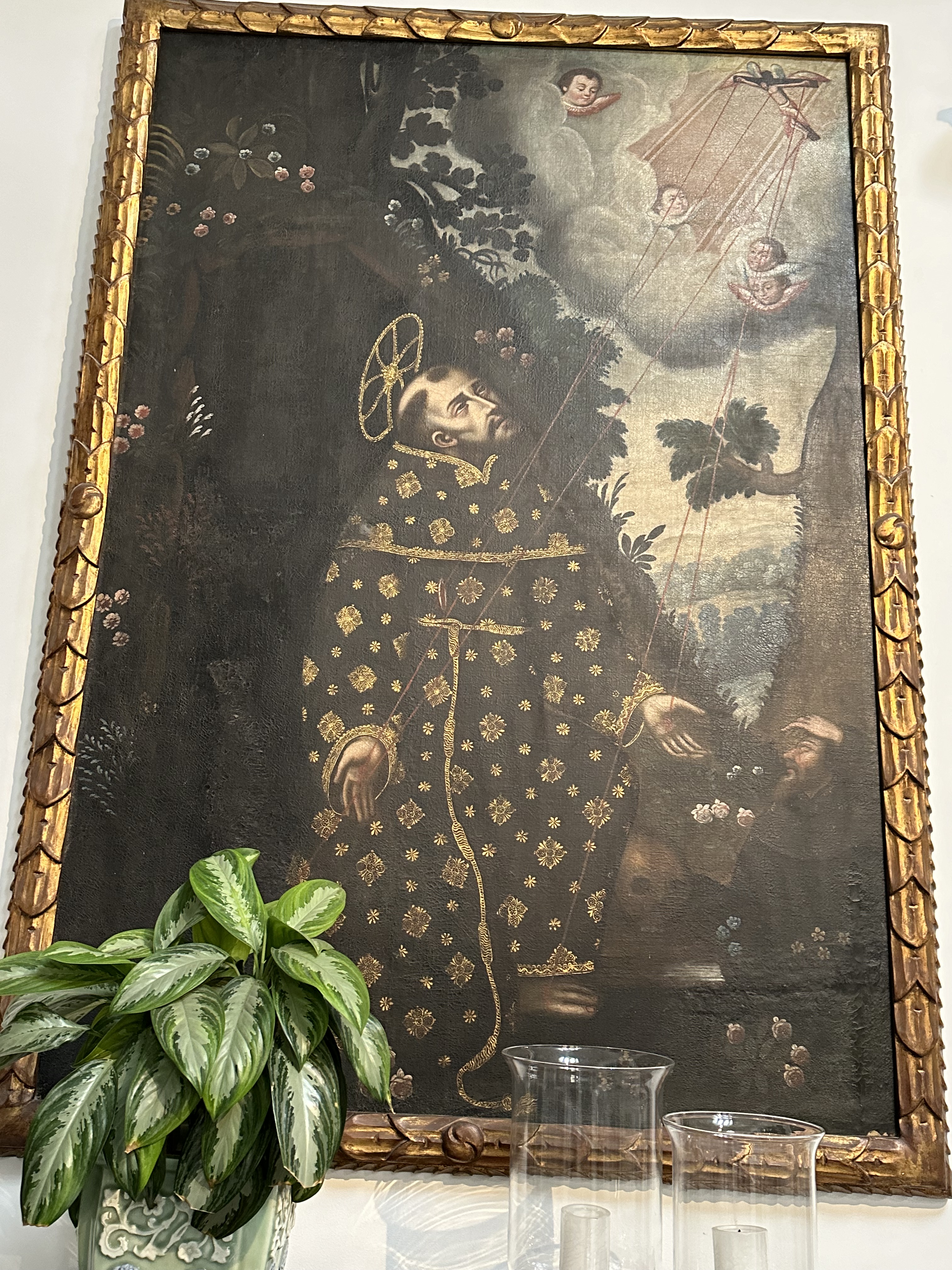
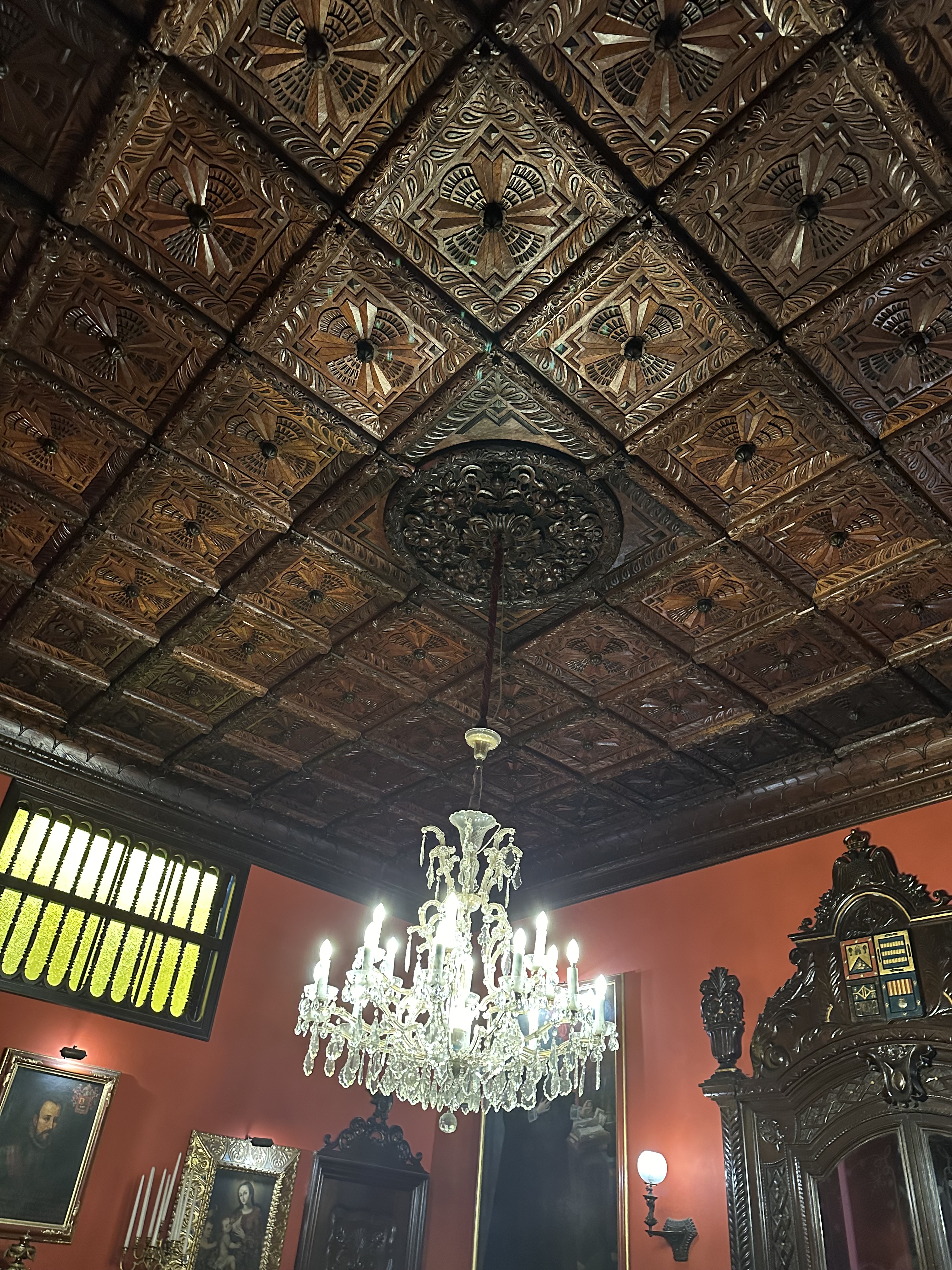
From the mission we entered a private home belonging to the Aliaga family for 18 generations. The original owner was a personal friend of Pizarro, who gave him the land in the 1500’s. The property occupies a full block near the Cathedral. Currently about half of the house is open to the public by private invitation.
Quiet entrance to the Aliaga home.Stairs from the street to house properFamily coat of armsParlor for formal entertainingSt Francis getting the stigmataDining room ceilingMaster bedroom
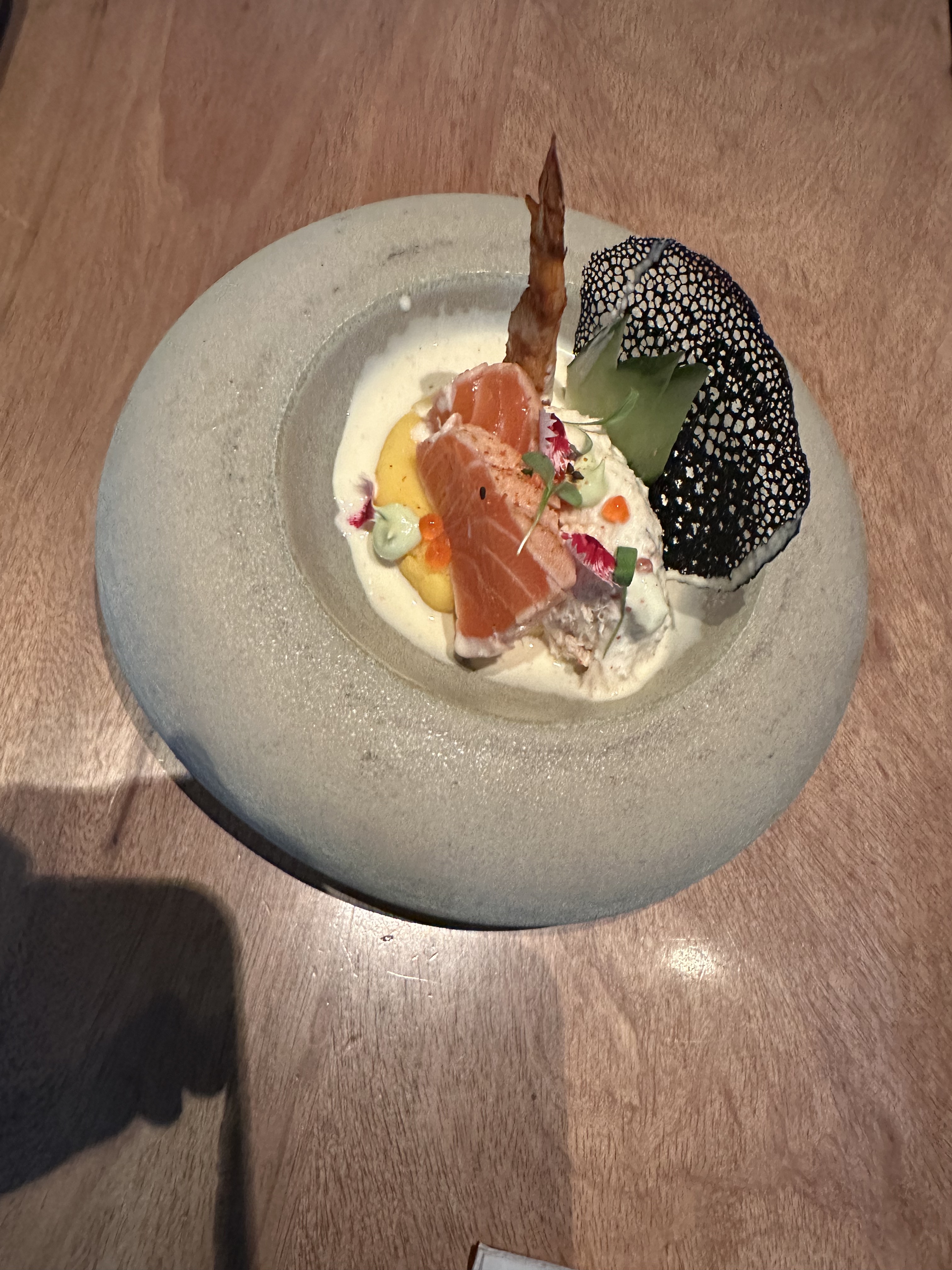
By the time we had finished the 4 hour tour we were hungry and went to a Japanese restaurant called Osaka in Miraflores. It was a most unusual combination of sushi dishes our waiter arranged for us. A couple of nigiri were even charred with a hand held torch. Unfortunately, I was too busy enjoying the presentations that I remembered only to take this one photo.
A dish with raw tuna, shrimp, pickles, salmon eggs, seaweed, and special sauce
Back at the Hotel B, we relaxed until it was time to check out of the room at 8pm, get a bite to eat in the hotel dining room and head to the airport. This trip is done. More another time.
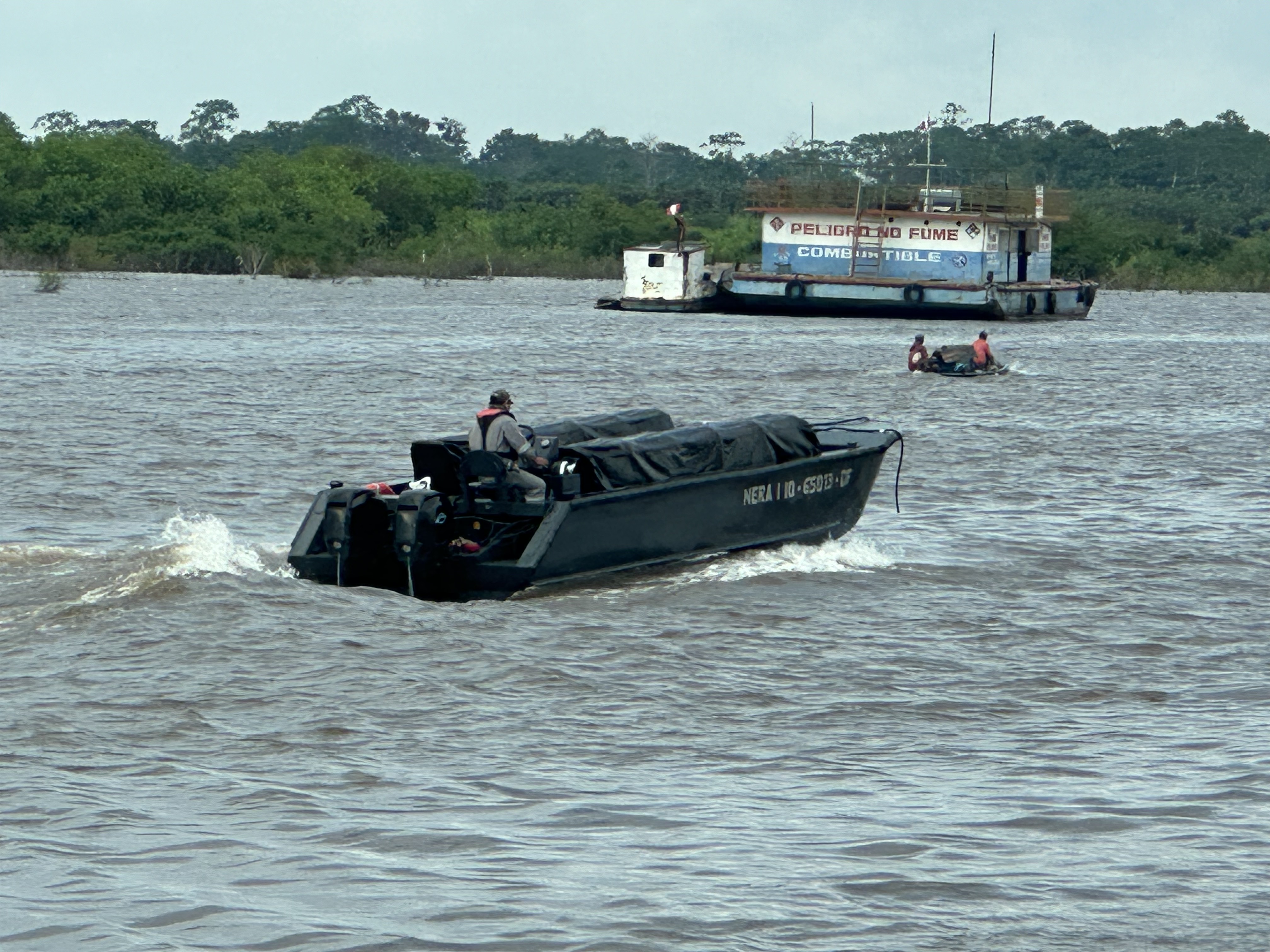
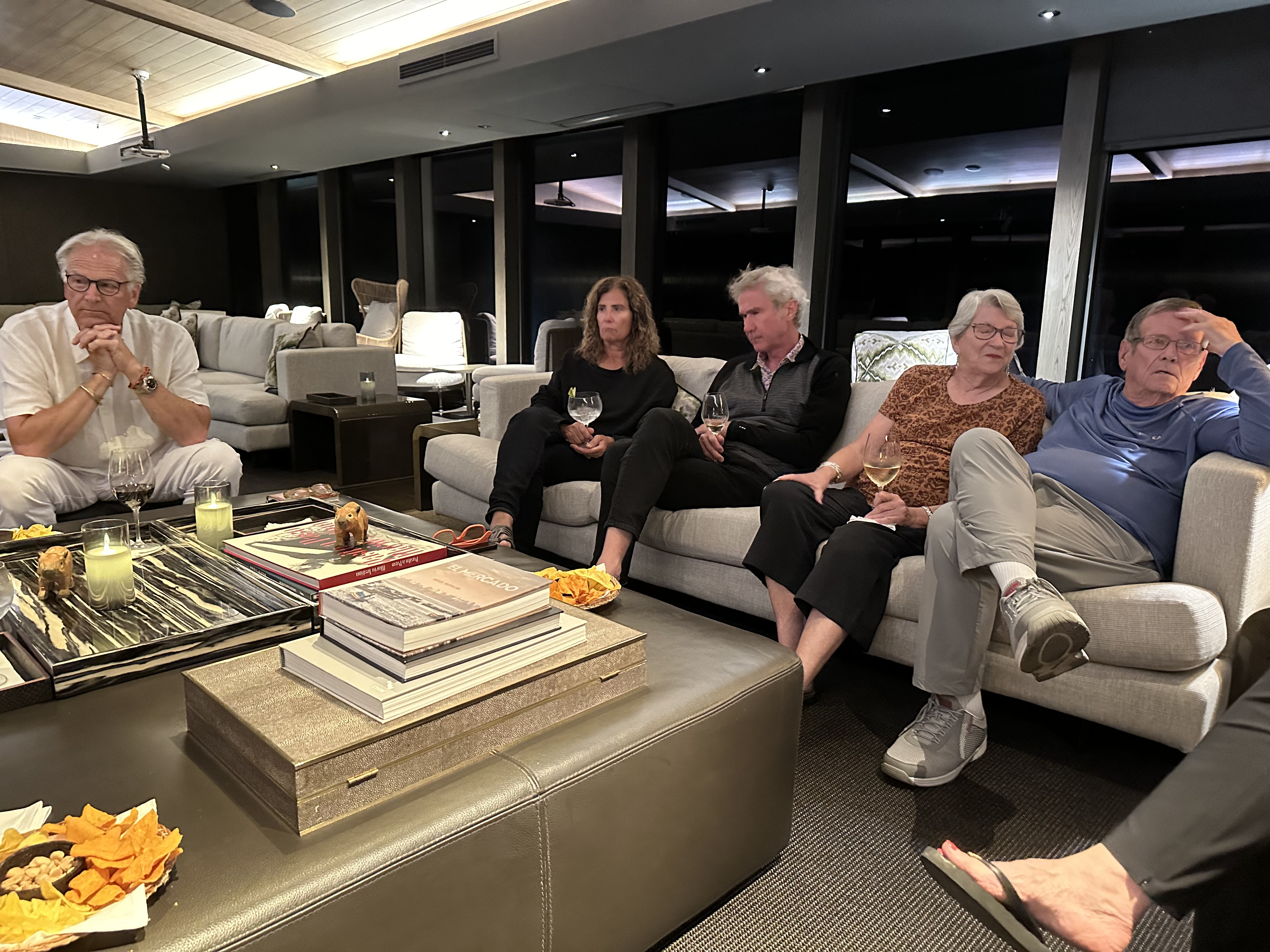
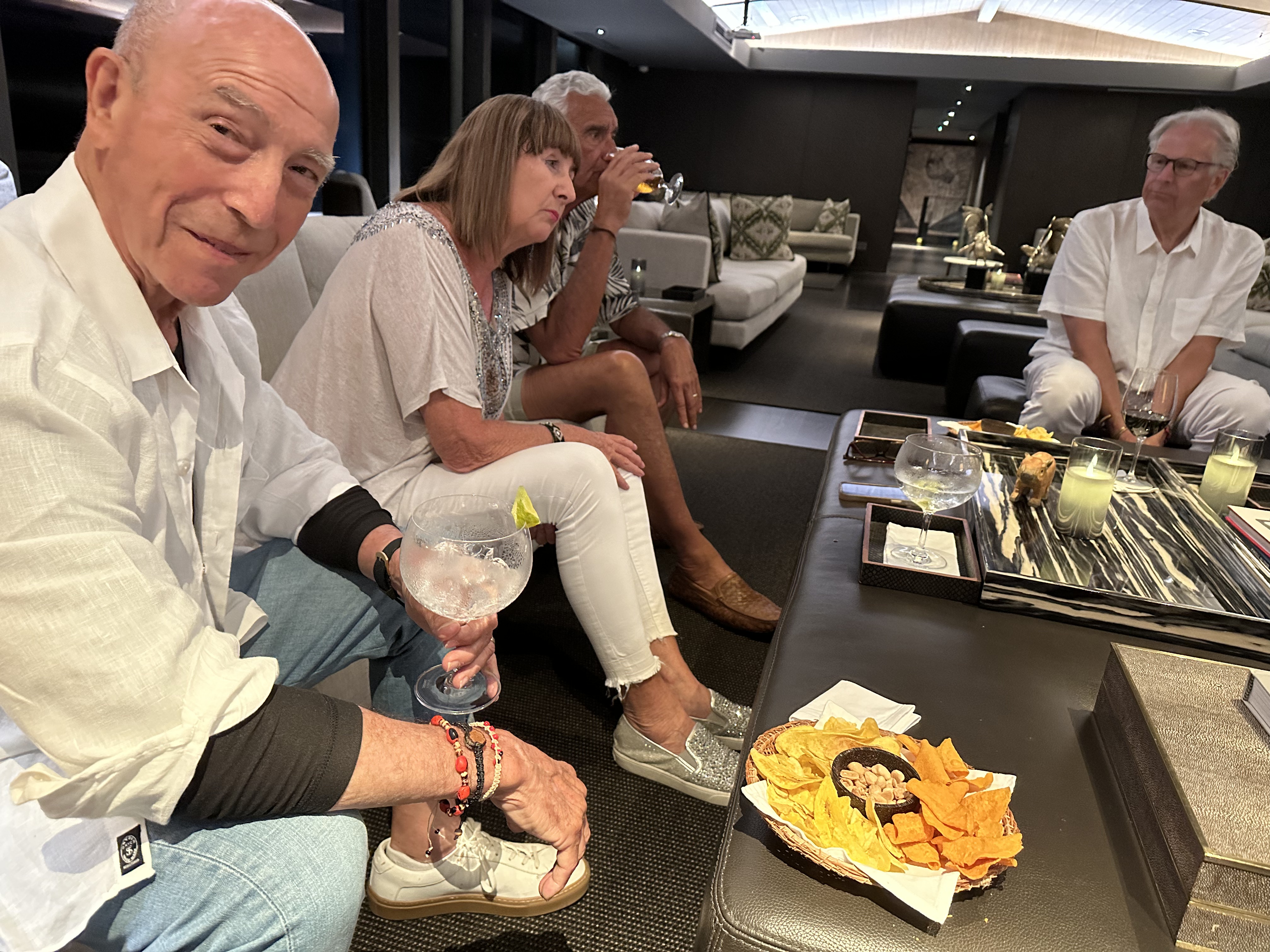
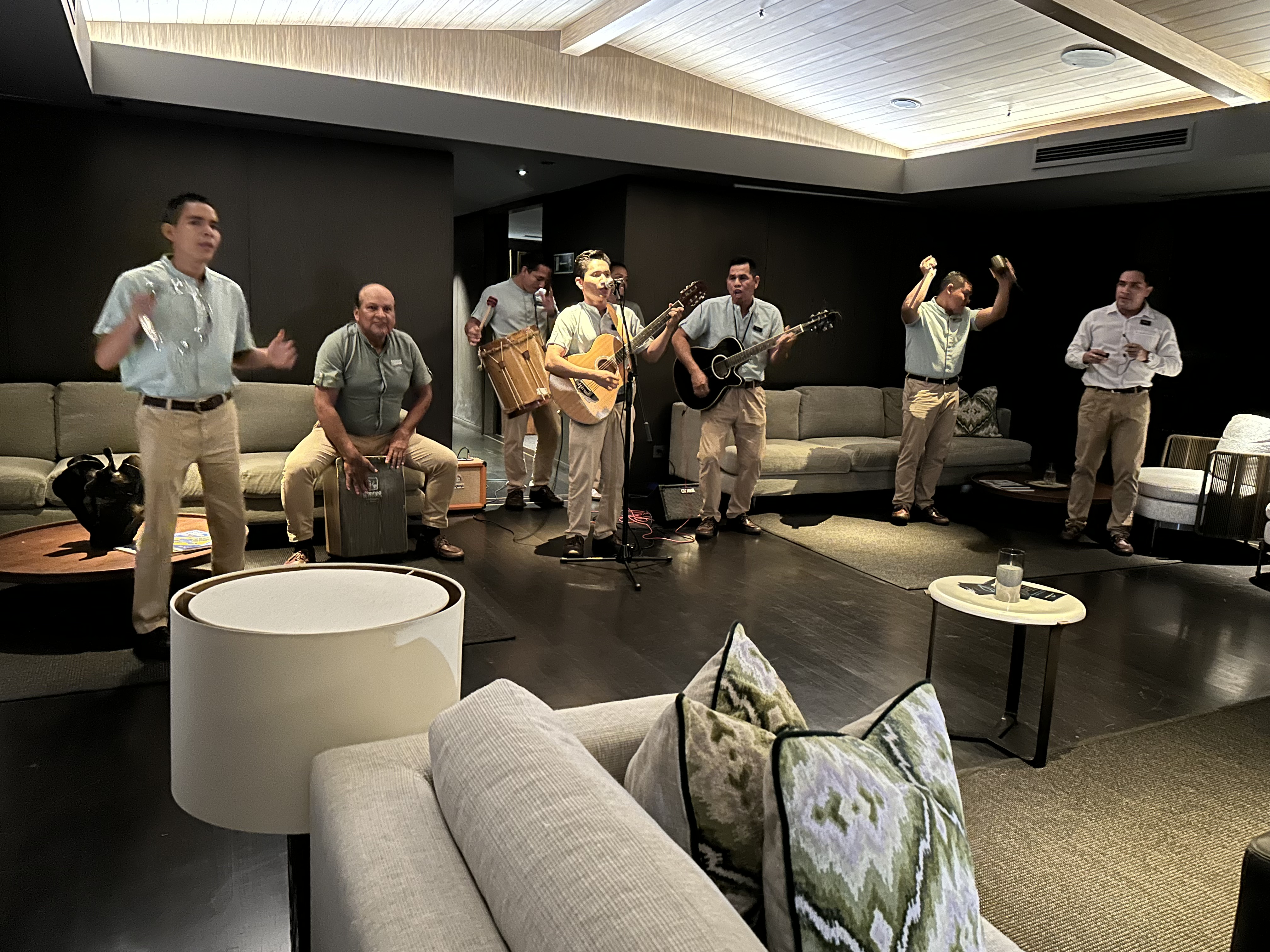
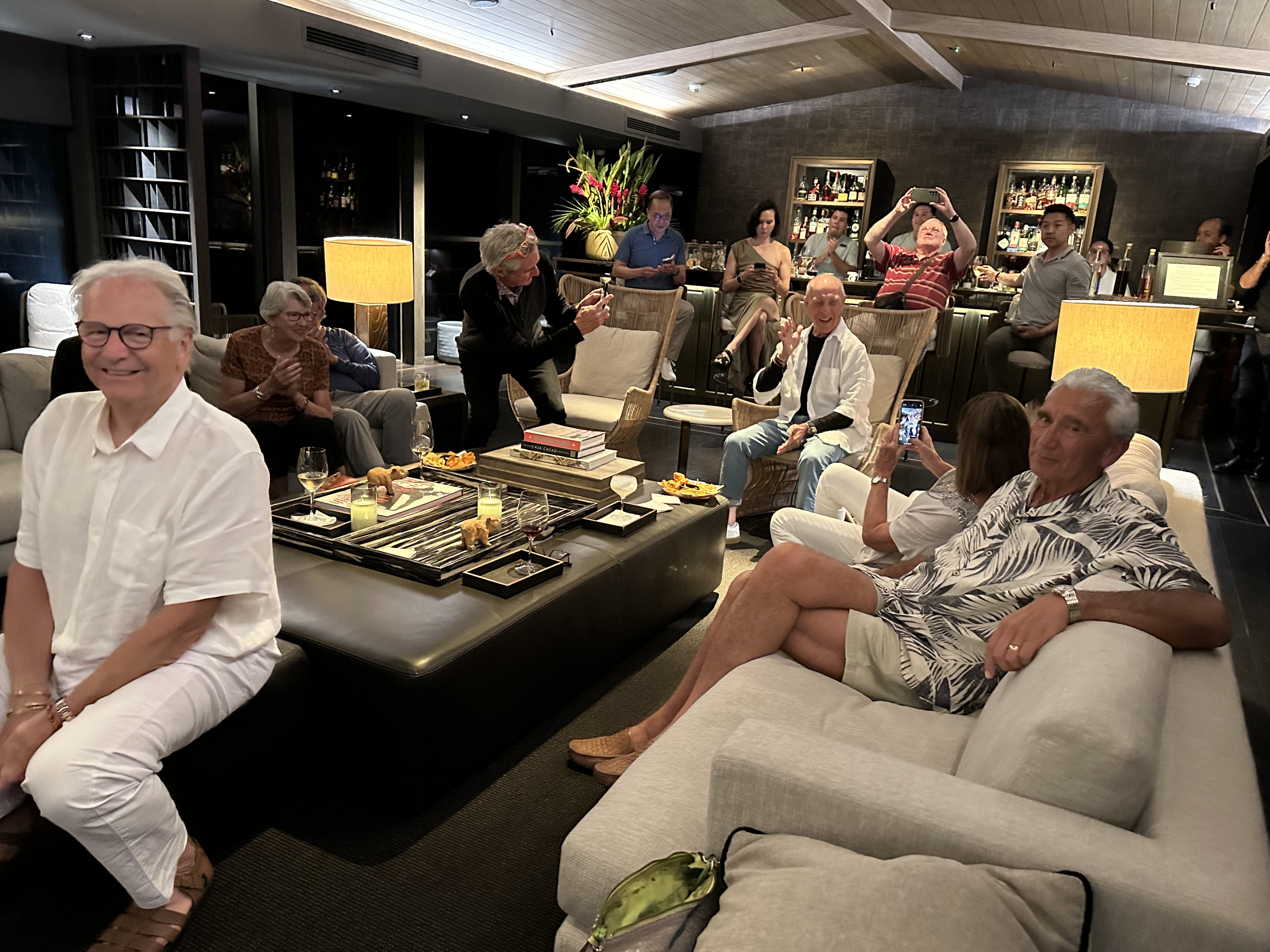
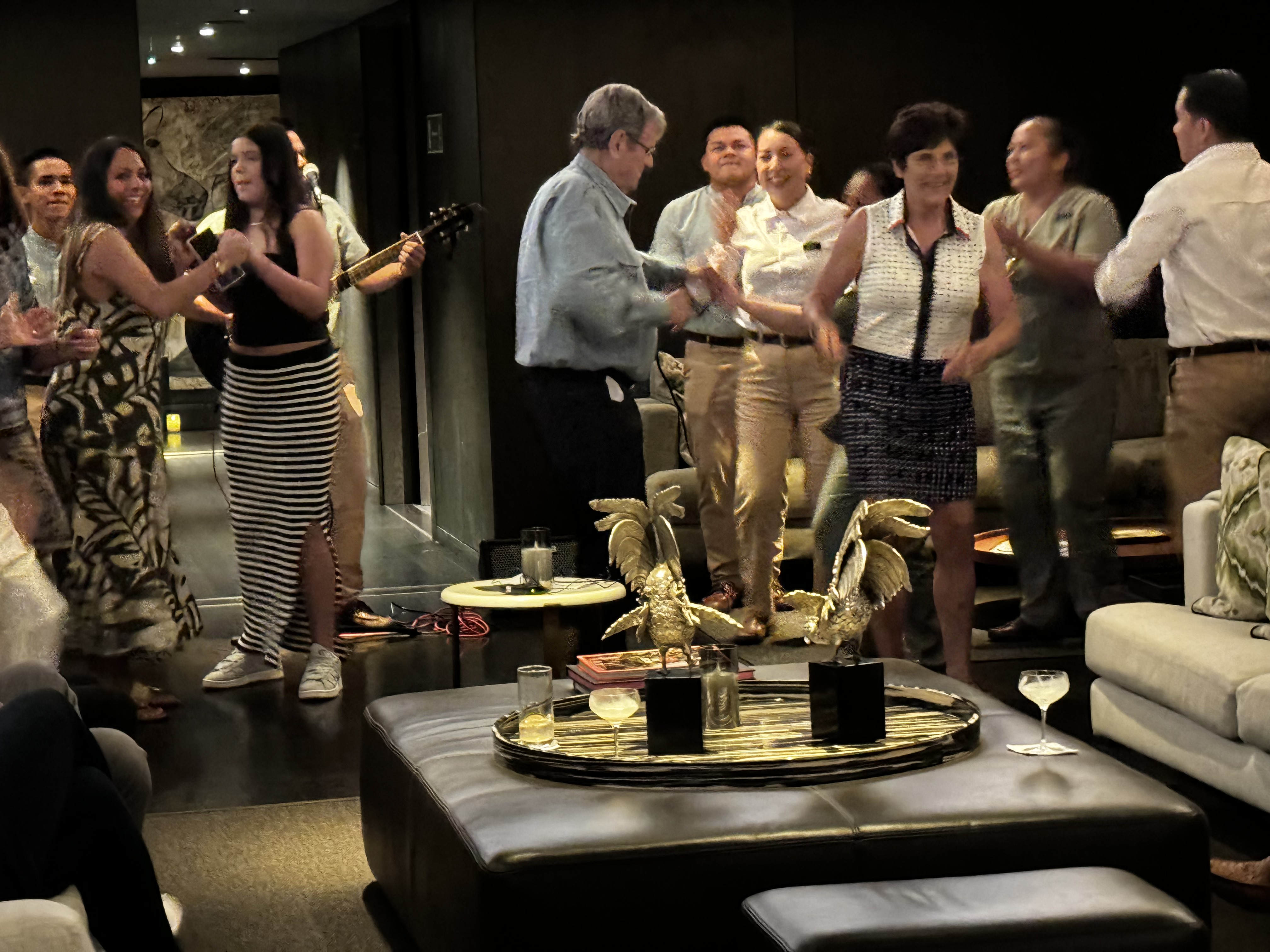
After a small group of us toured the ship, everyone on board gathered in the lounge. We passengers were already drinking to our last night on the ship; even I treated myself to Pisco Sour, when the entire staff marched in clapping as they came, and soon we joined in the clapping. Below is one of our tender’s or skiffs departing with our luggage. Across the channel is one of many stationary gas stations. Photos of fellow guests enjoying cocktails include: Mark, Nancy and Bill and Judy and Vince. Below that is Merv and a couple from New Zealand. Then the band playing and the bar tenders making drinks in the lounge.
Harry, the cruise director, started by introducing Captain Antonio, above in casual attire, followed by Antonio’s assistants, the ship’s doctor, Lilliana, the 4 skiff staff, and the 5 cabin cleaning crew.
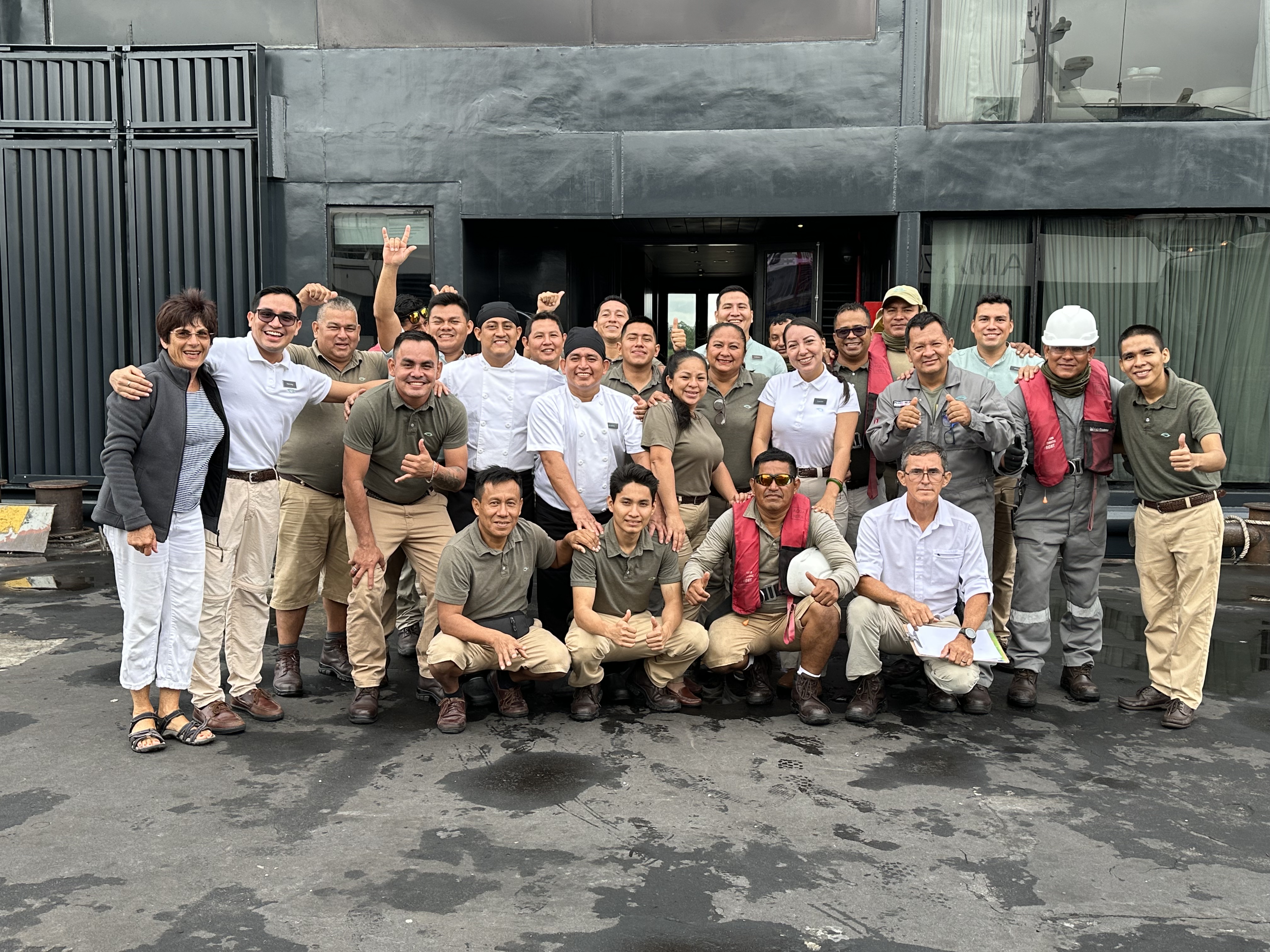
Then came the 4 dining room wait staff, the 4 cooks, the 3 technical staff, the 2 massage ladies, and the assistant cruise director, Iliana. Then the 2 bartenders, Jesus and Jordano, who received loud applause. Lastly, our three guides were introduced: Aldo, Alex and Juan. They also received very loud applause. Juan took the mike and introduced Harry and the band. Soon the 6 piece band was in full sound and we all continued to clap until many of us were up and dancing with the crew. After a week of close companionship, we were all very comfortable together. The above photo includes almost the whole crew. They invited me to join in the photo, which was a nice touch.
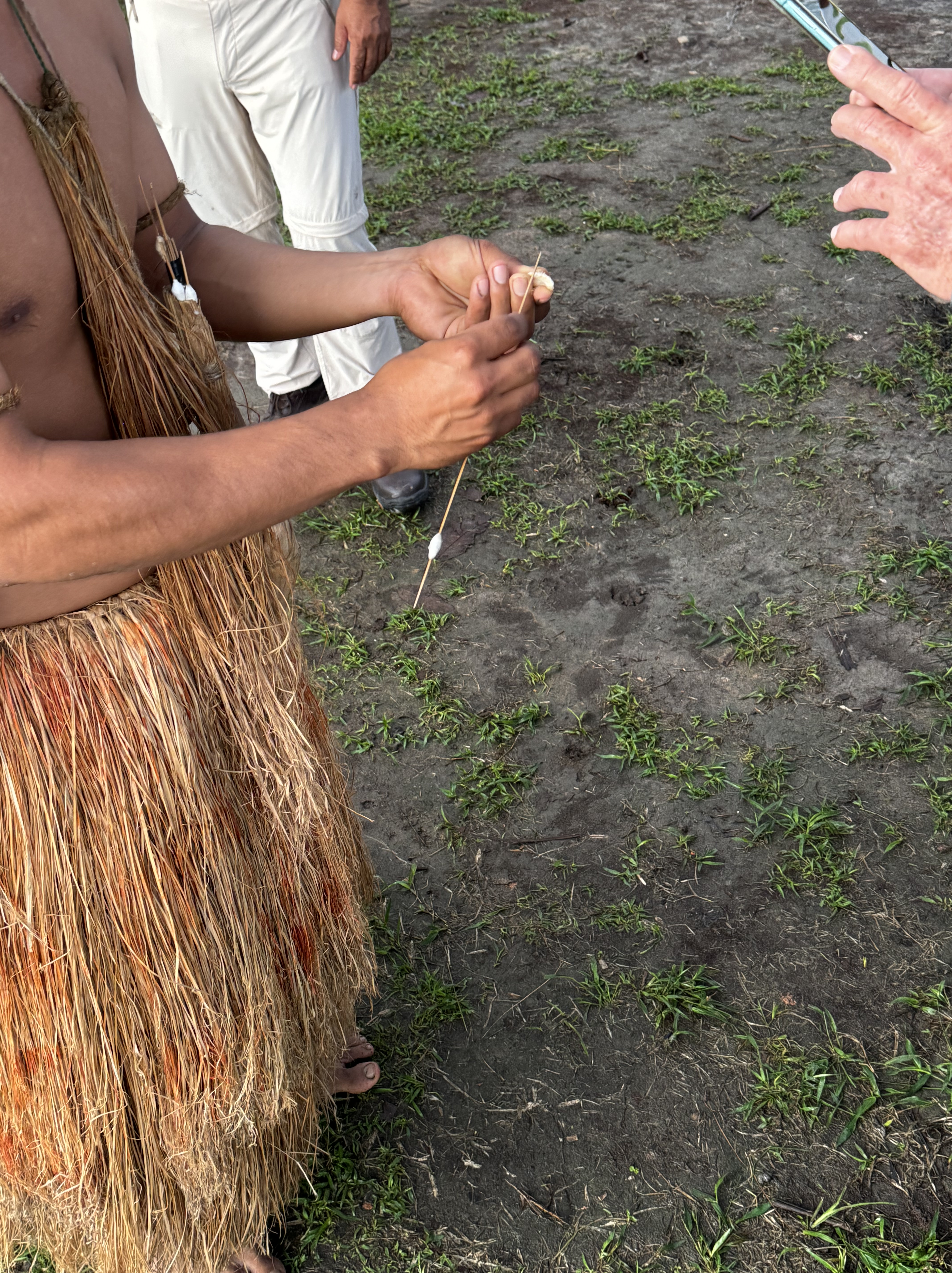
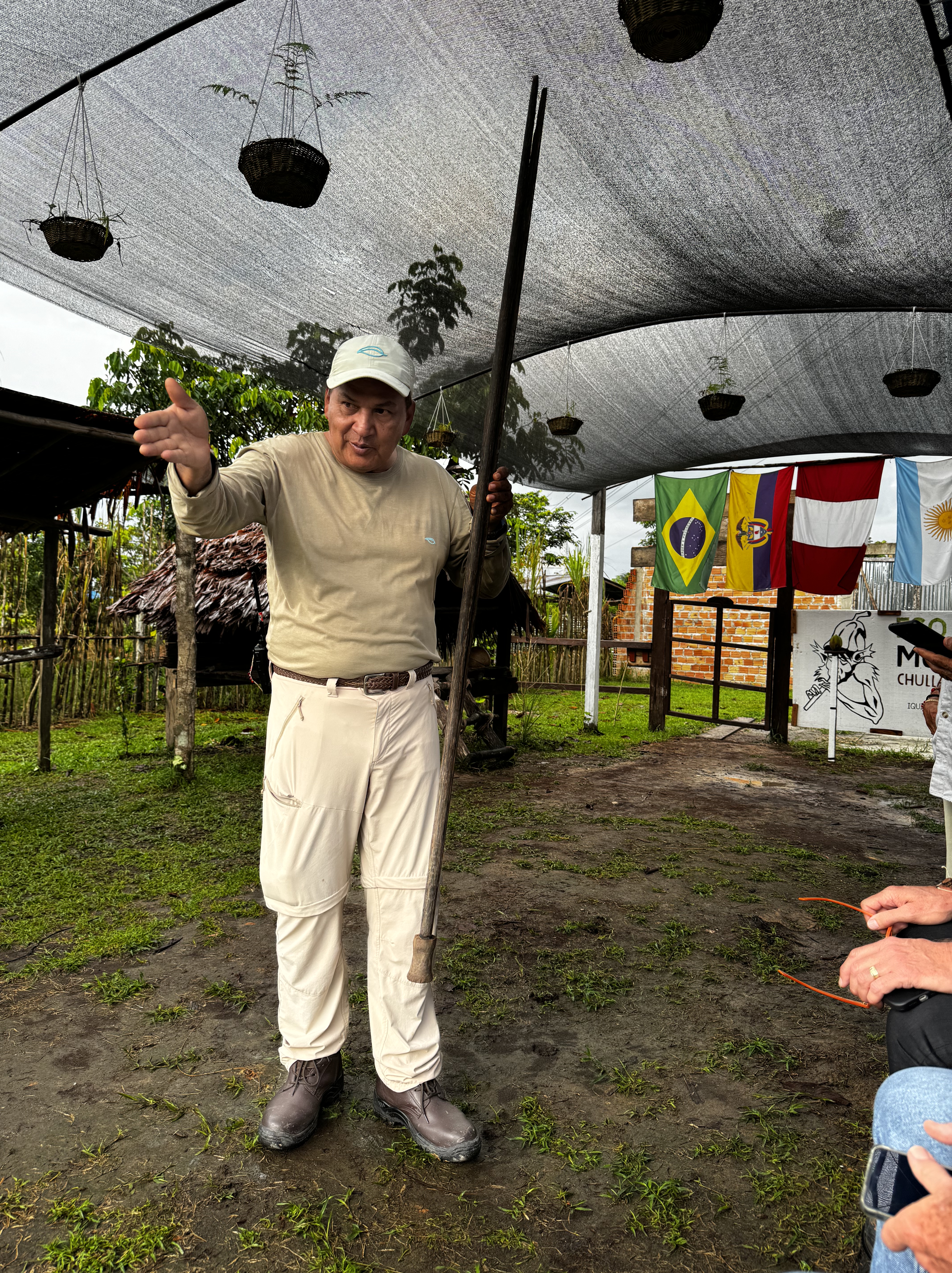
Earlier that morning, Mark was up and out at 6am to join a small group who wanted to learn about shooting monkeys with dart guns. I stayed in bed. The 4 intrepid souls who went included Merv, Bill and Mark. Merv’s attempt fizzled in less than 10 feet, so Mark, not wanting to look inept, did not try. The experts barely hit the target, 30 feet away, after three attempts. They did demonstrate how to make a dart gun, while wearing native clothing. The gun is made of two halves of wood that was hollow when glued together. Then sand was poured into the hollow and a rod was slid back and forth to polish the barrel of the “gun”. Juan, our favorite guide, was doing the English translation of the process. The jaw bone of a piranha was used as a file to sharpen the point of the dart.
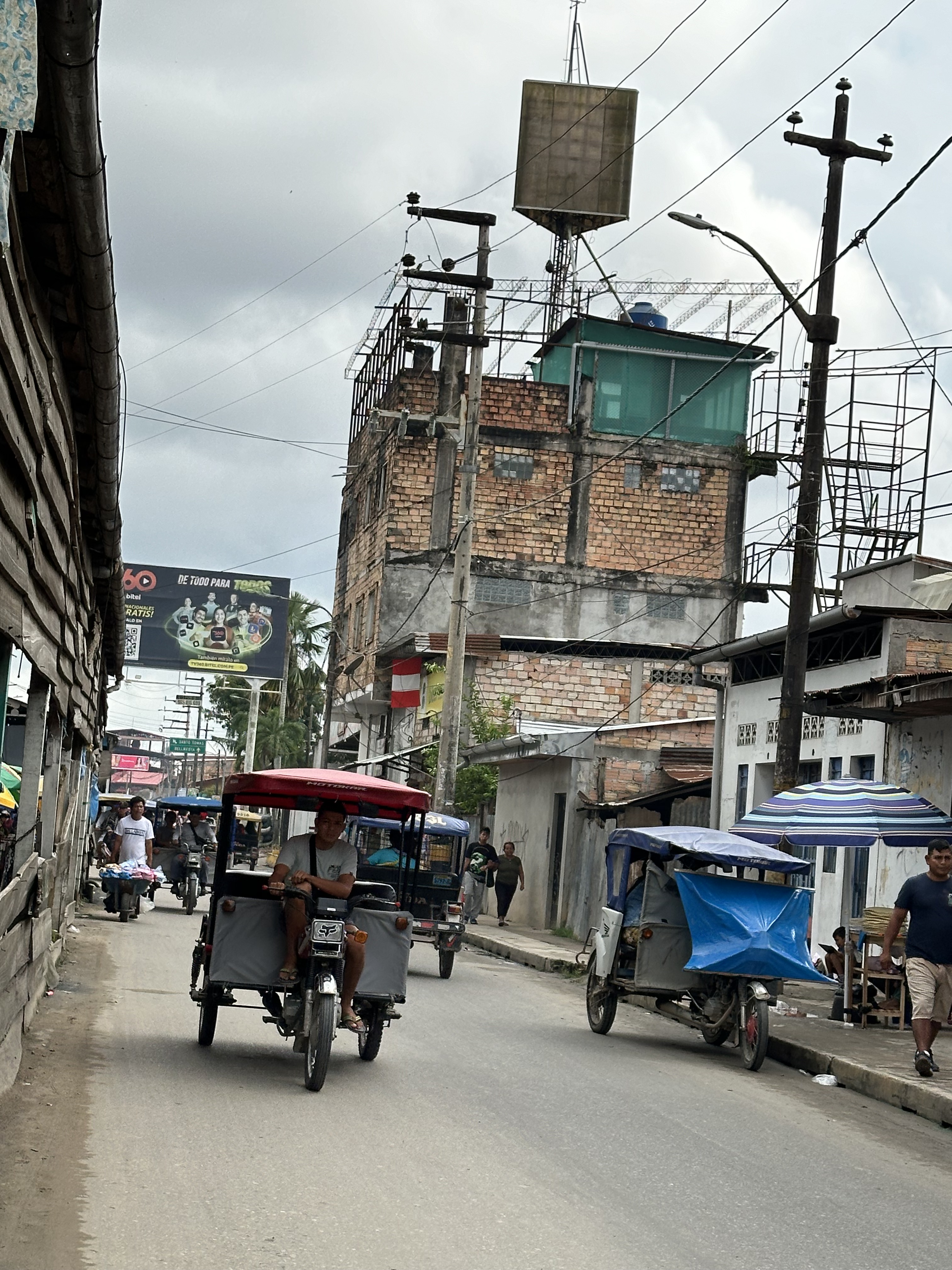
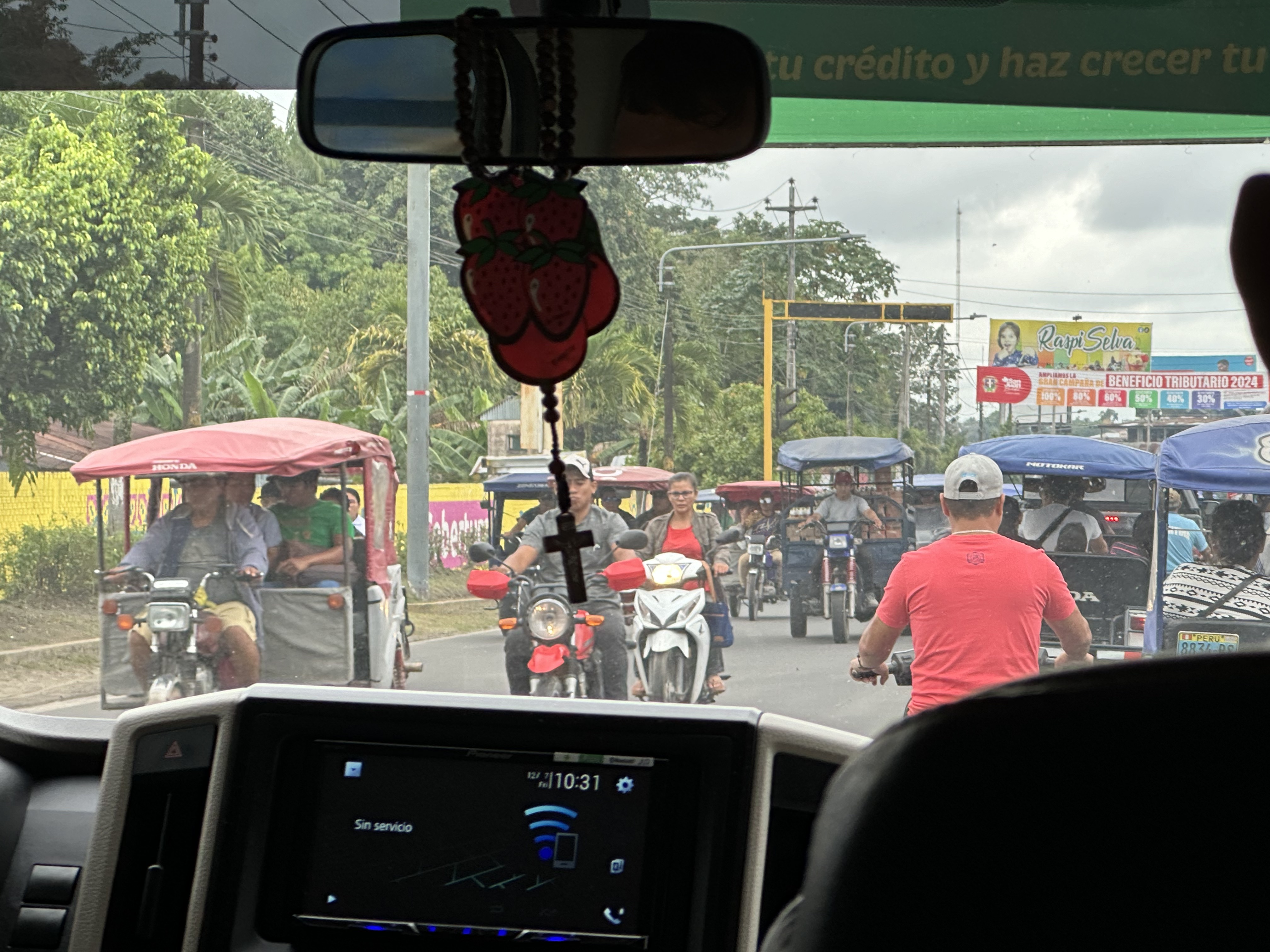
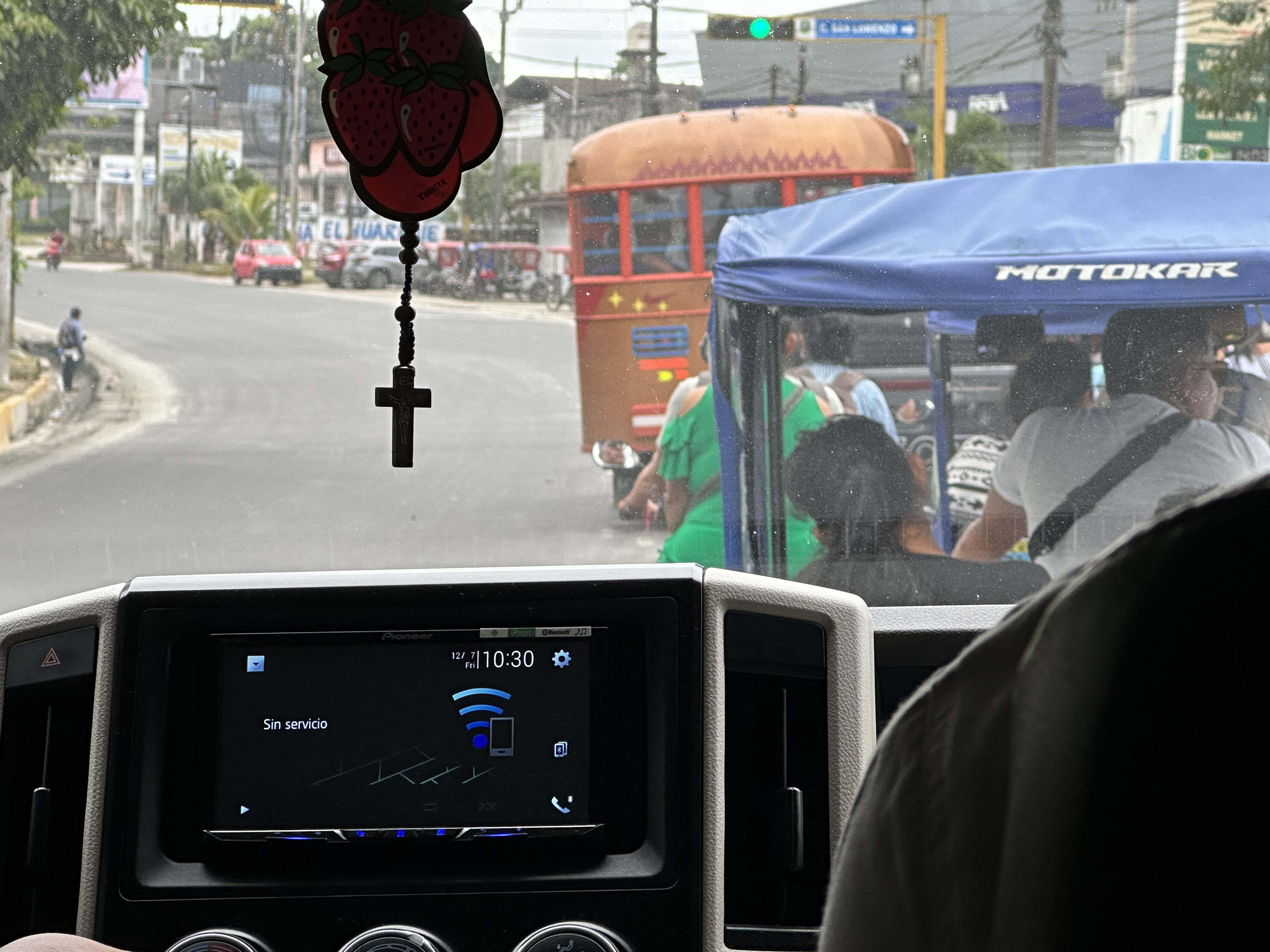
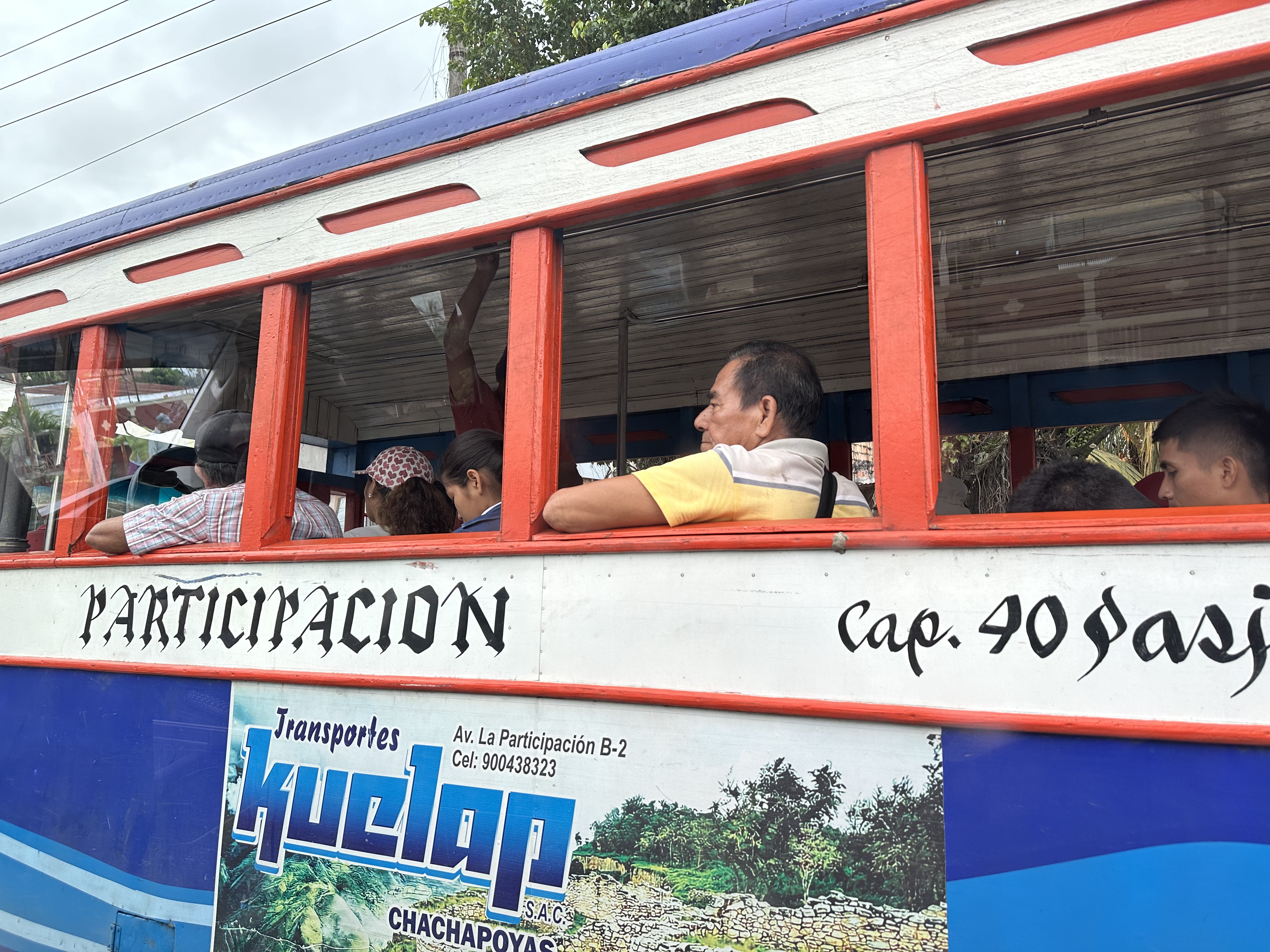
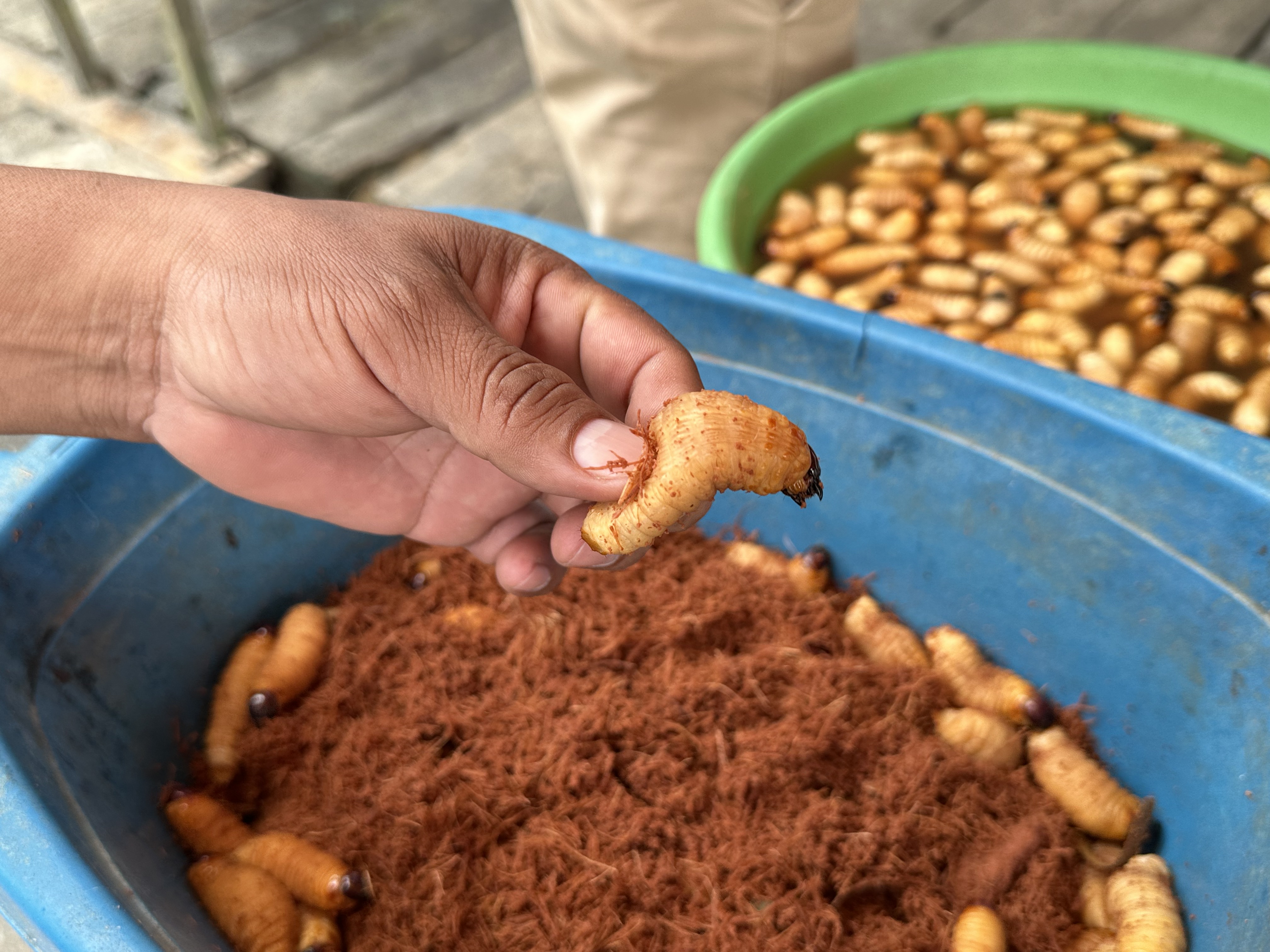
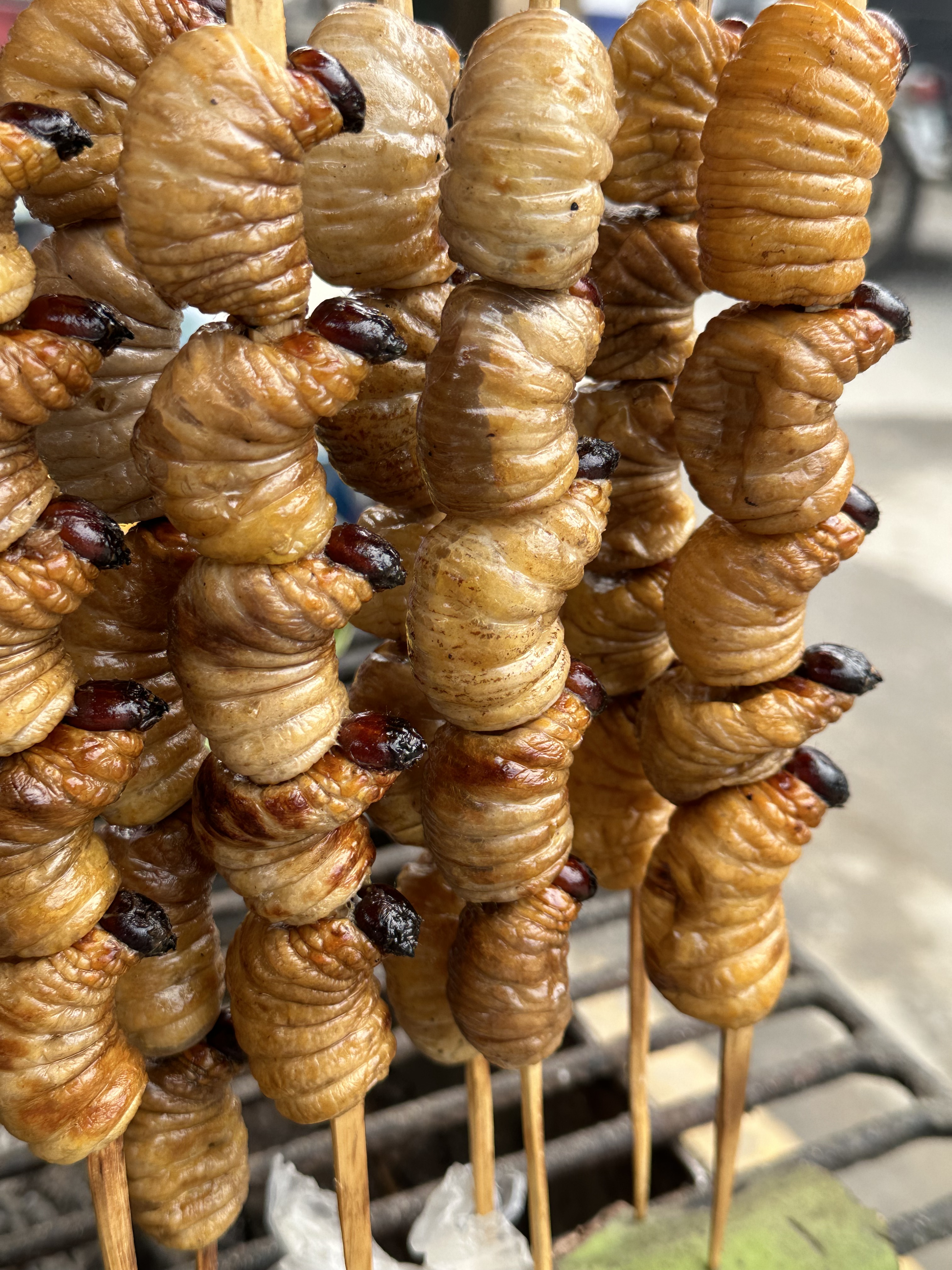
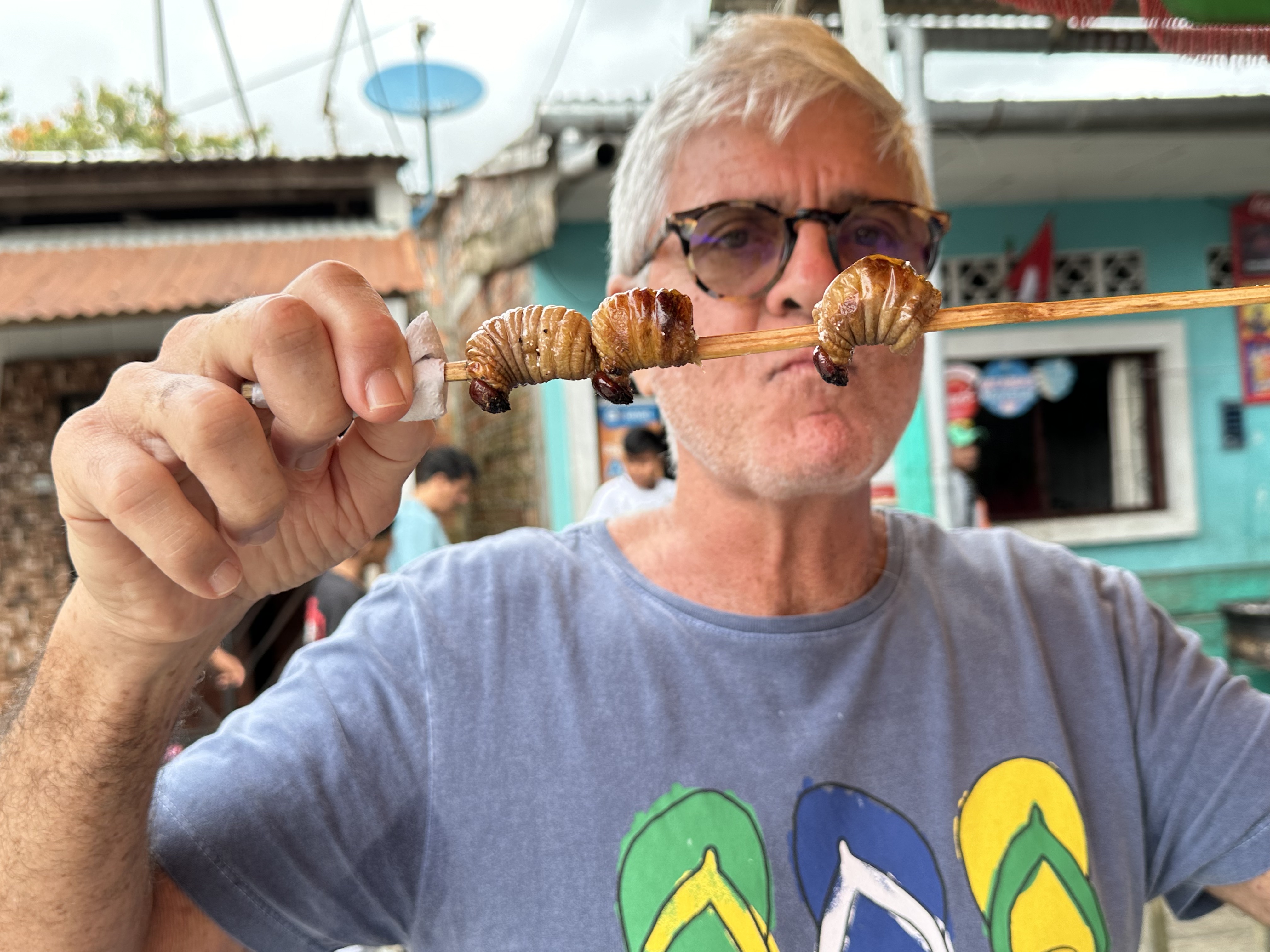
The dart gun group was back in time for breakfast. Our luggage had been picked up by 7am and we were all ready to disembark by 8:30am. We said many good byes to crew and group members. Then into buses we went to tour the city. We saw hundreds of tuktuks, several wooden buses made with wood shells, and many food vendors along the road. We stopped at one food vendor to see live worms being cooked and eaten by locals.
Street sceneToktoks fill the roadwayThe shell of the orange bus is made of woodAnother bus made with woodLive wormsworms grilled and ready to eatA Brazilian guest in our group eats a whole stick of worms.
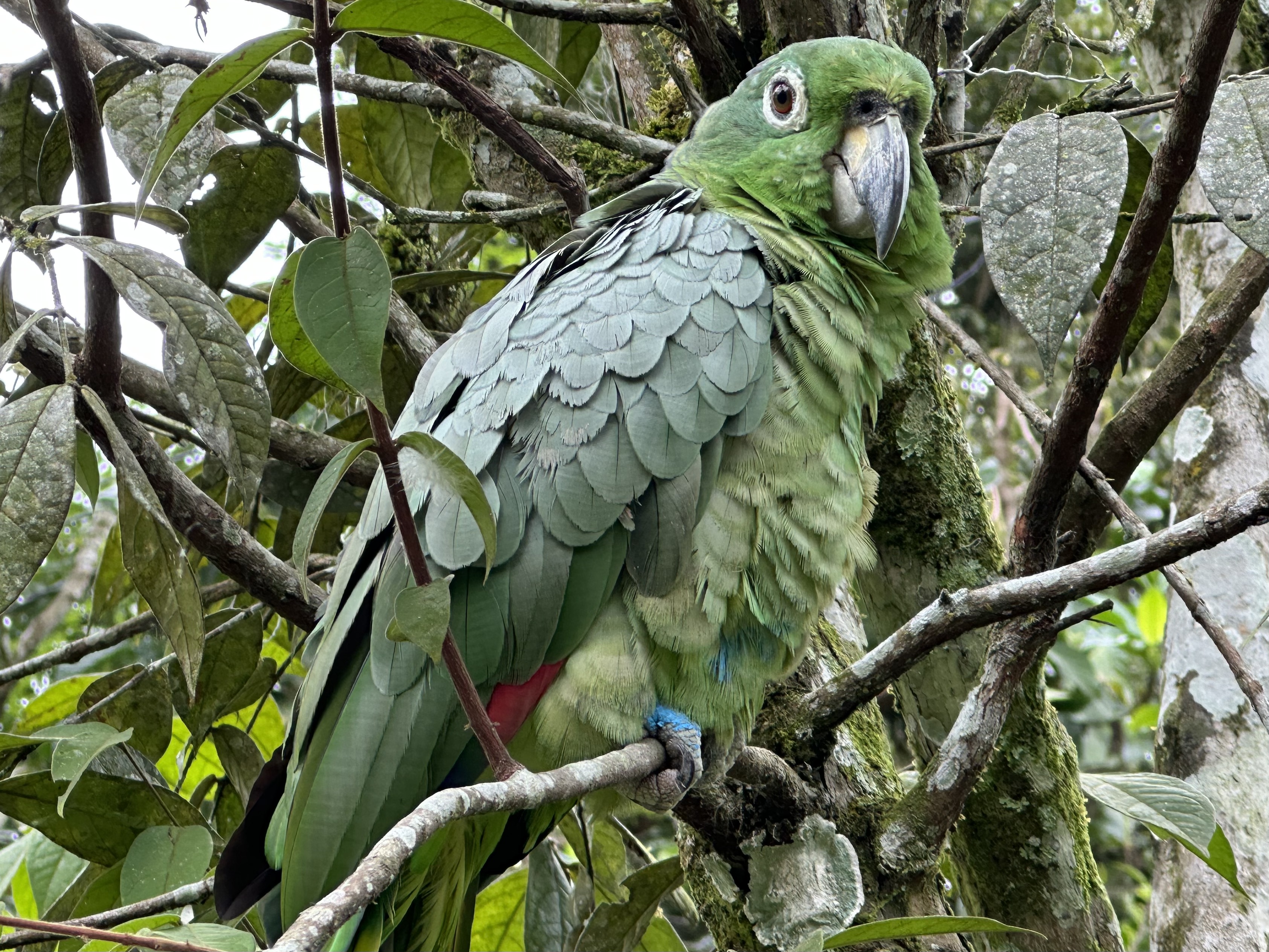
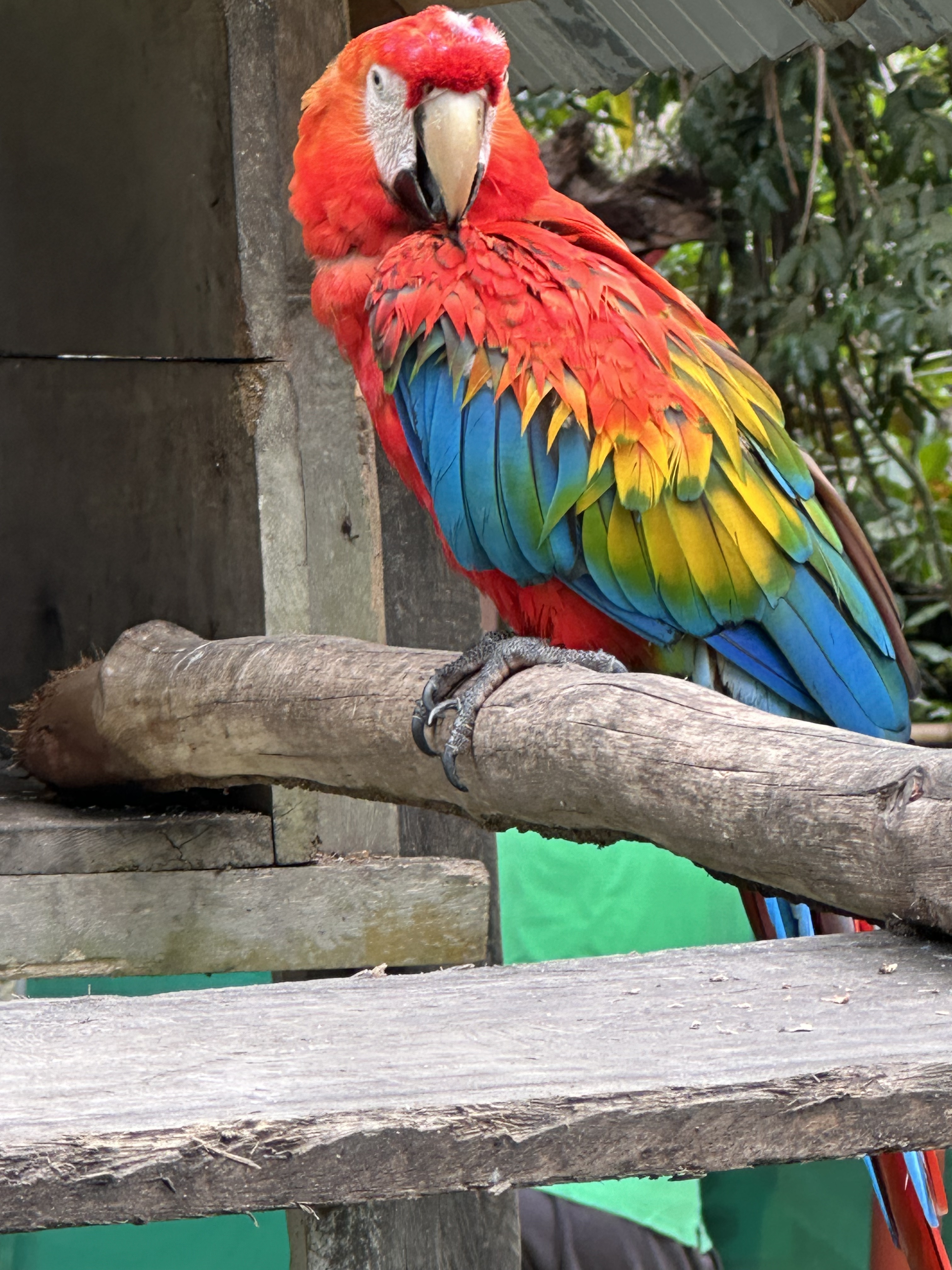
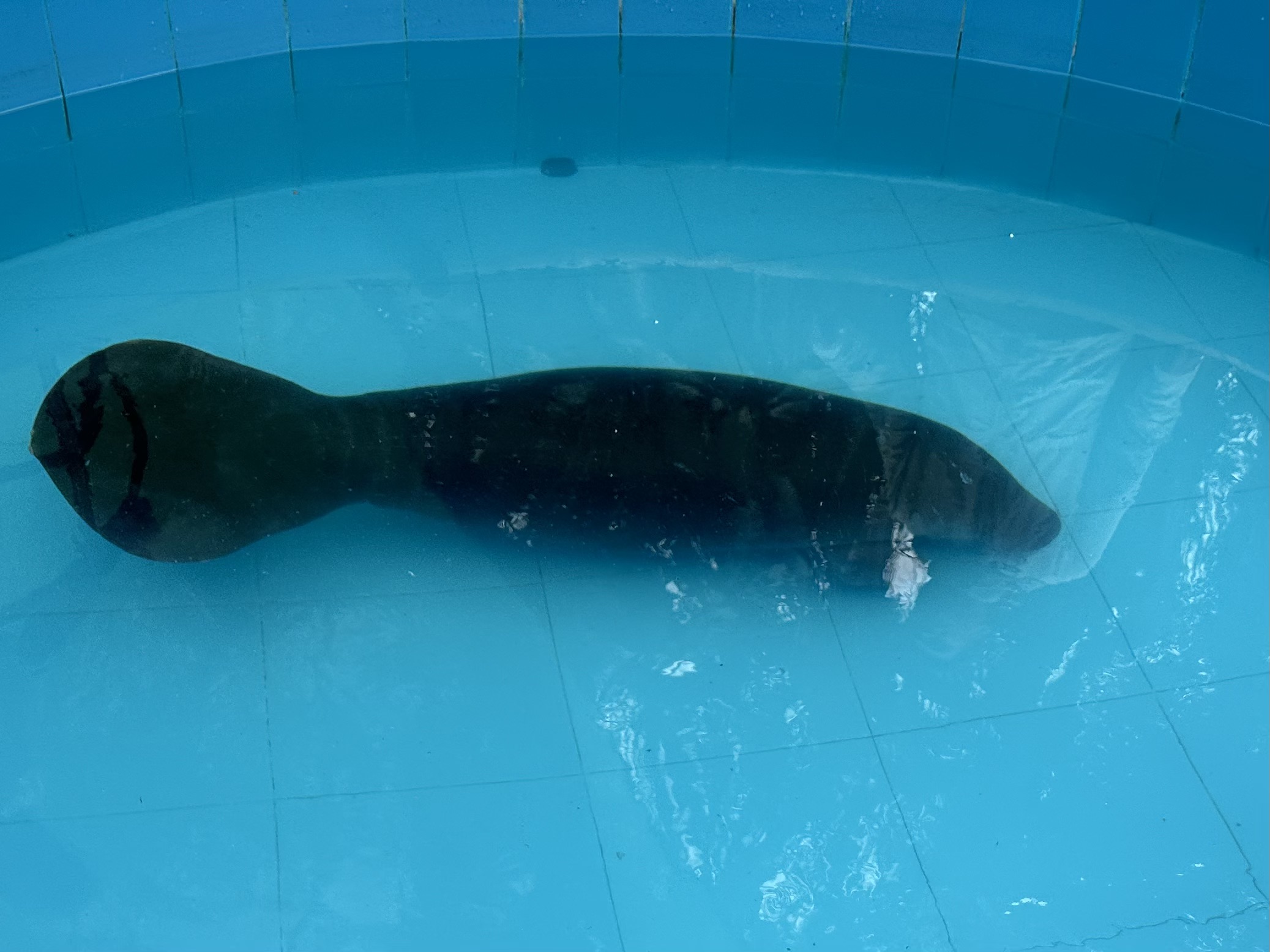
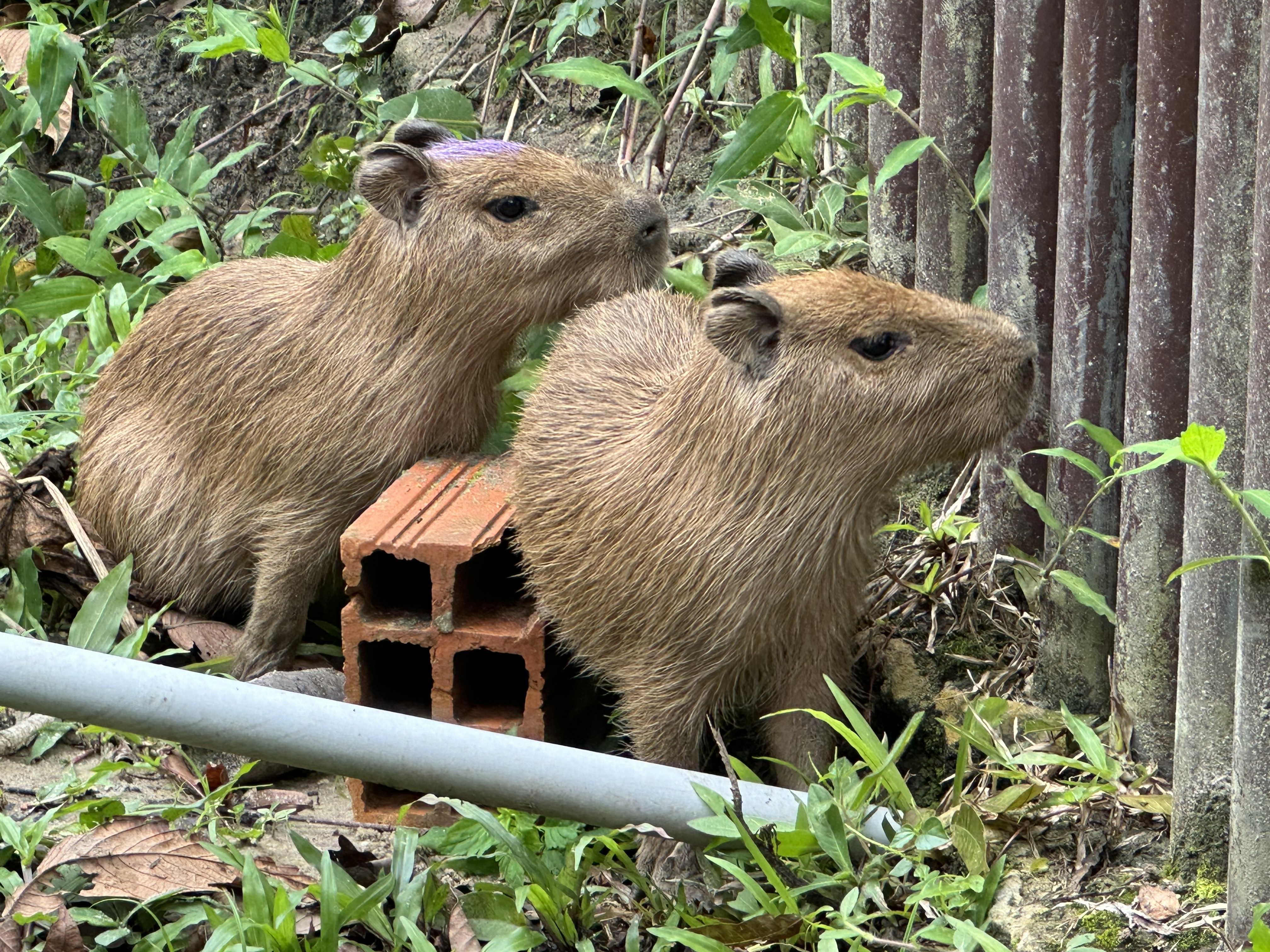
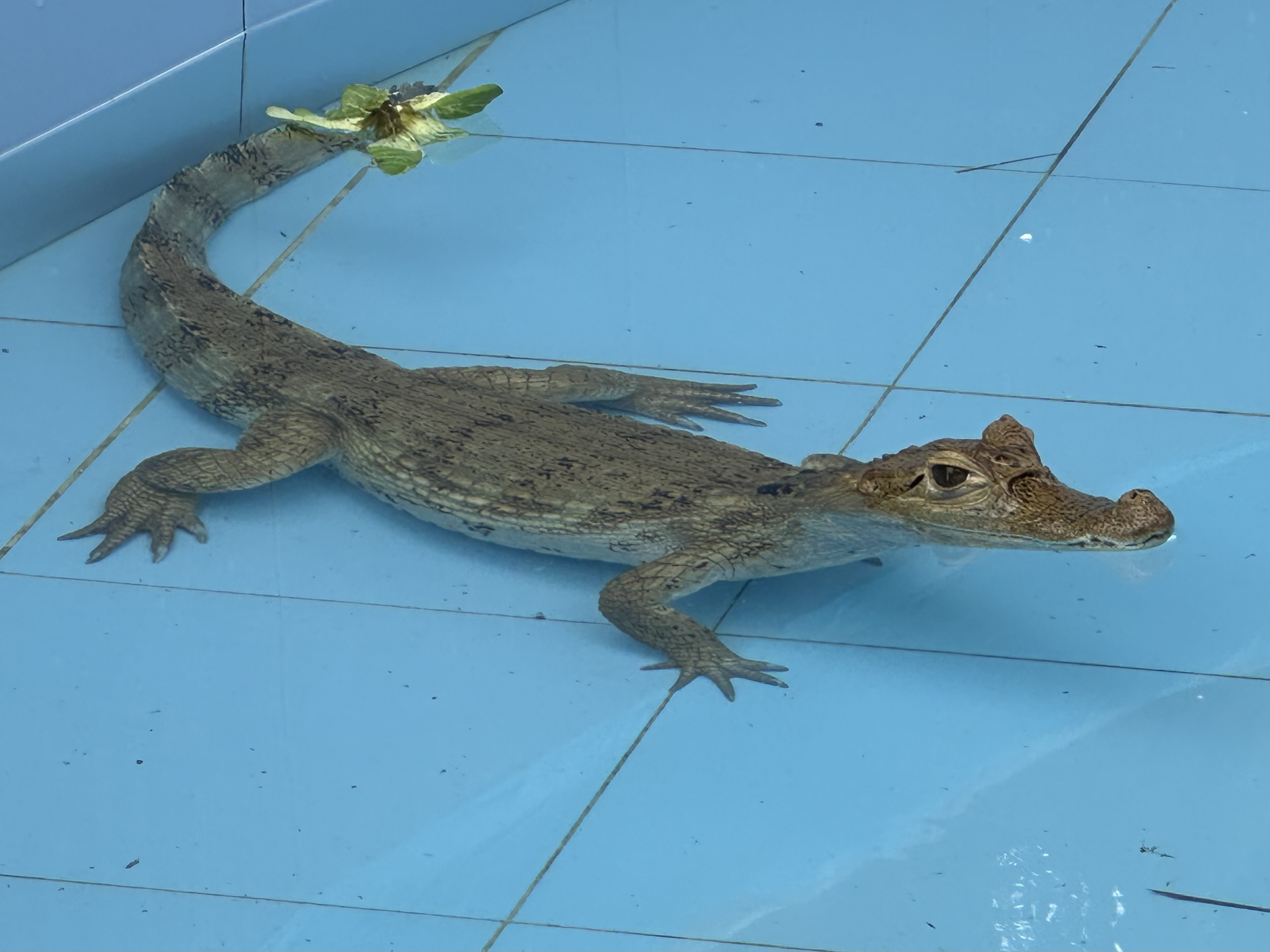
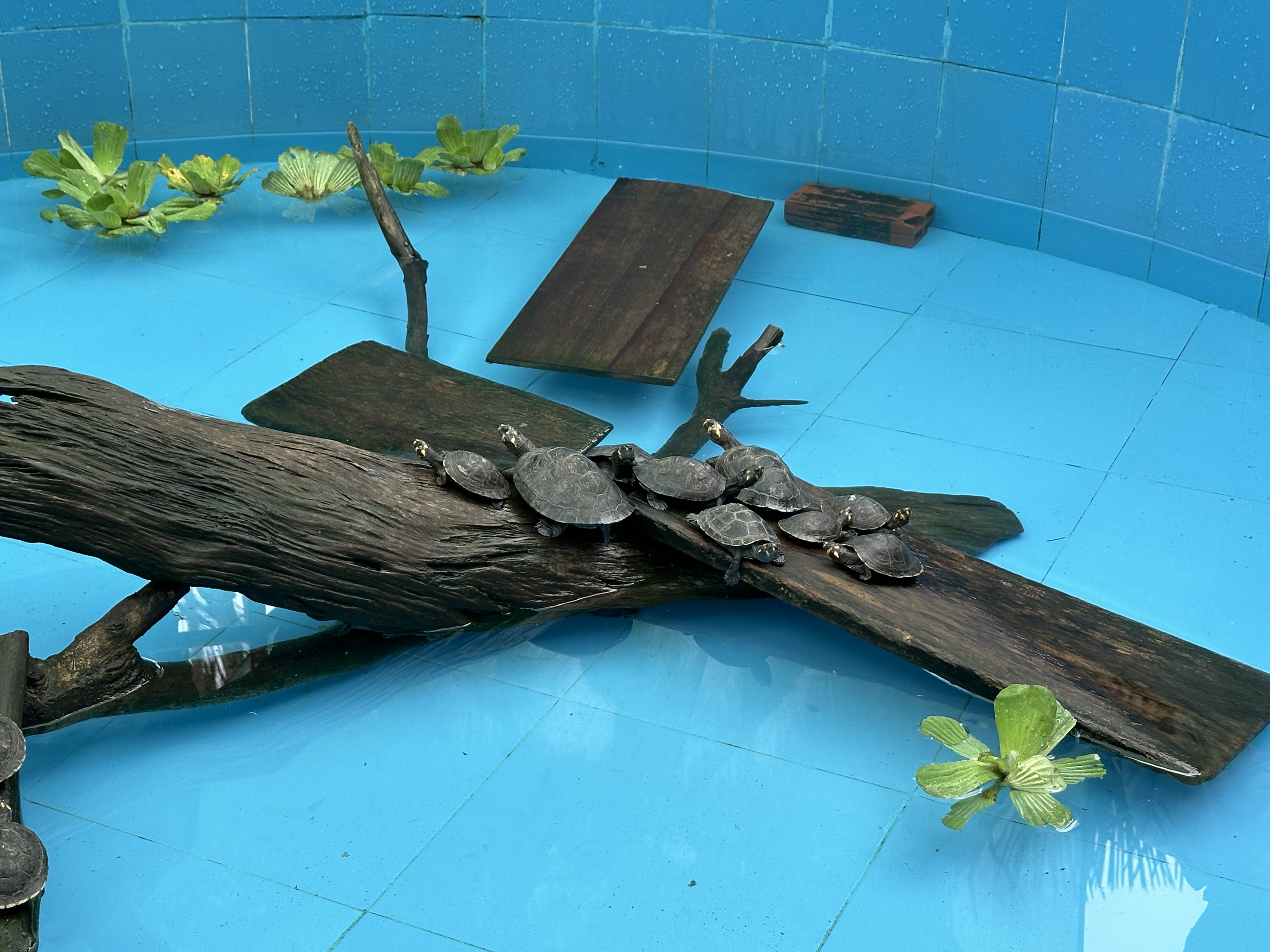
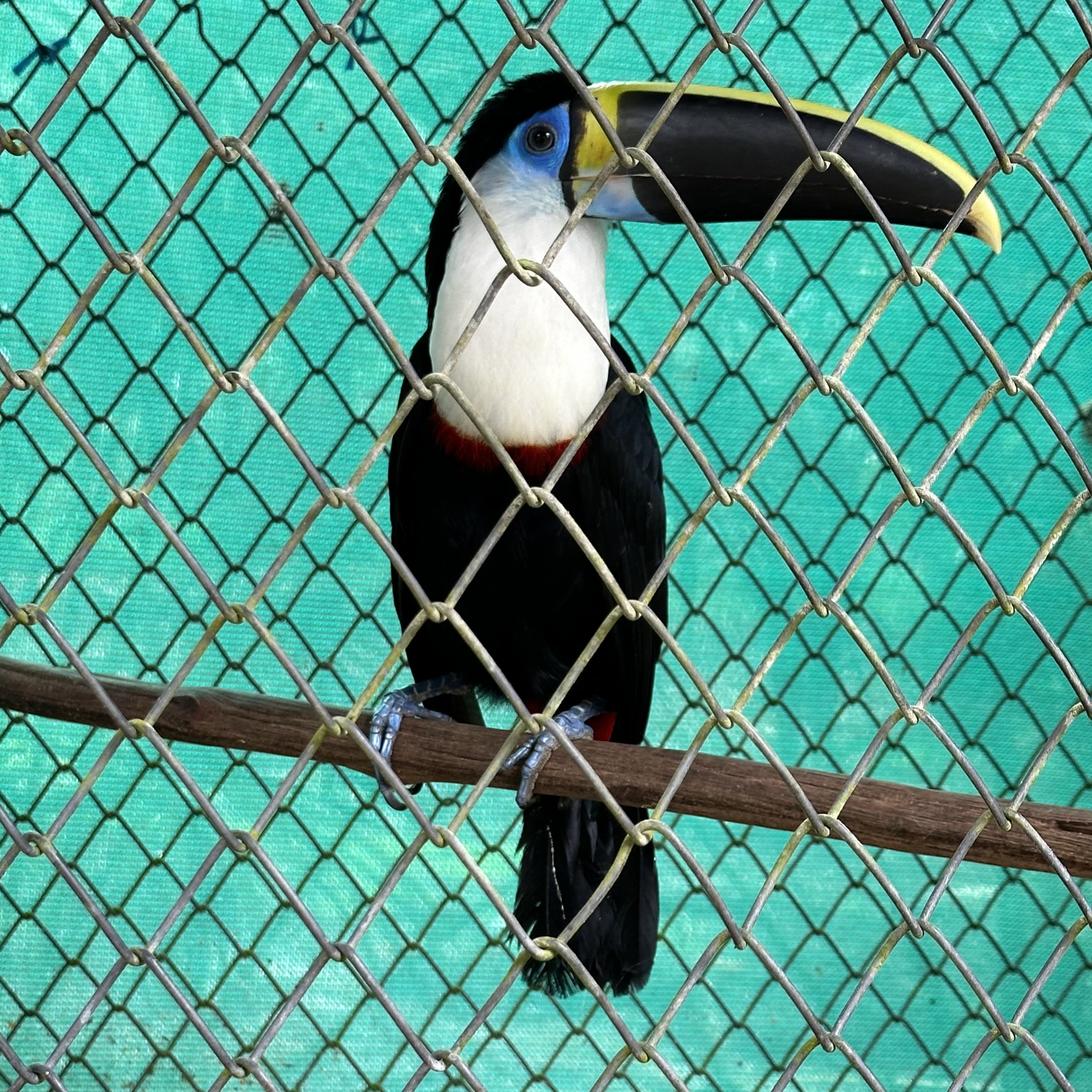
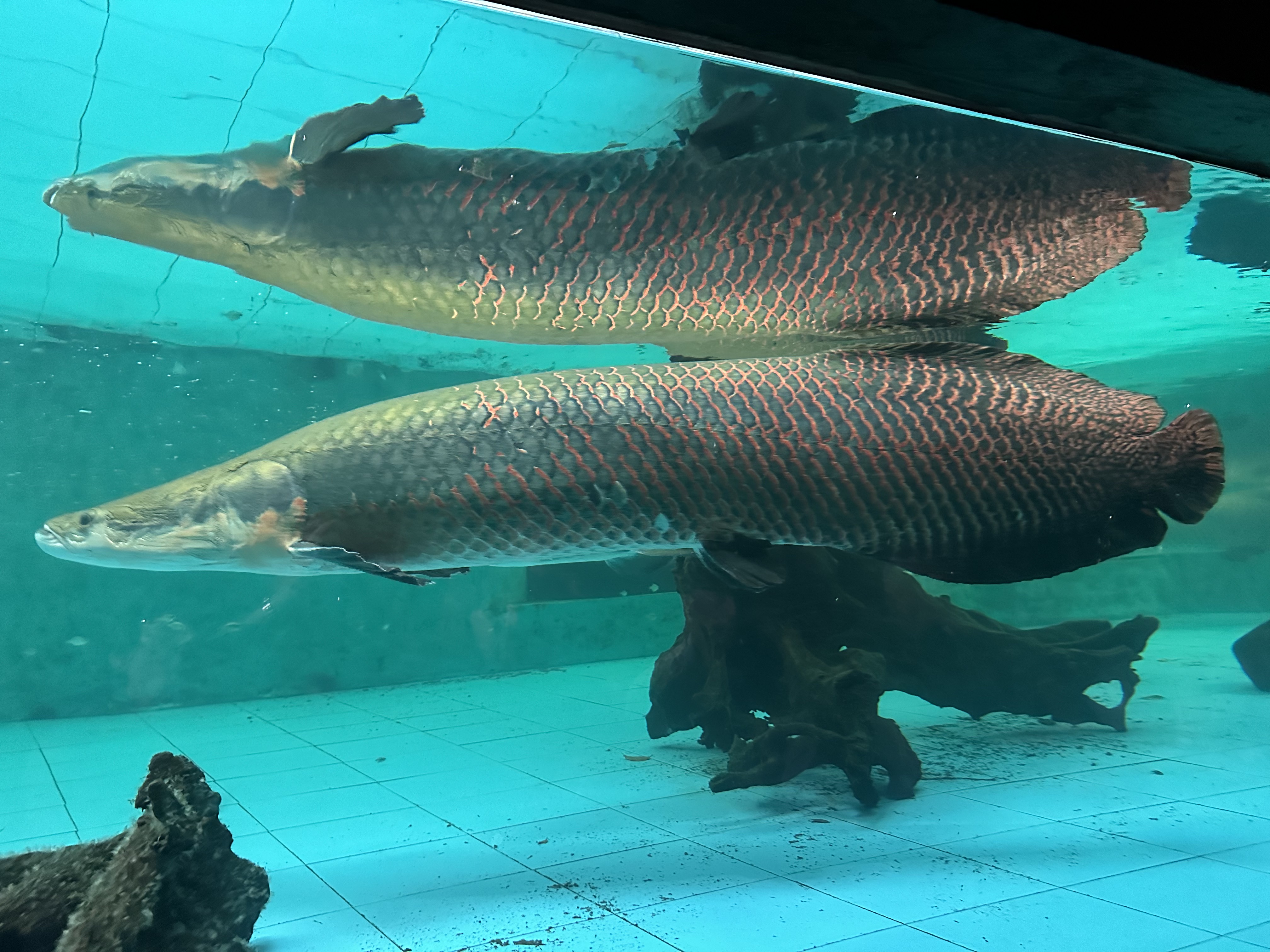
From the worm vendor stop we drove to the Manatee Reserve for a tour of the animal healing facility. To fly back to Lima, the whole group needed to be at the Iquitos airport at 2pm for a 3:30 flight. So, having disembarked at 9am and with time to kill, the ship crew created this activity. The Reserve, which is meant for children mostly, was pretty interesting for us too. We got to see several creatures up close that we had seen only from a distance. They included: Toucans; Macaws; Caimans; capybara, the world’s largest rodent that can get to 170 lbs; turtles, which are being brought back from near extinction; tamarind monkeys; endangered manatees; and the Amazon’s largest fish, the endangered Paiche, which is a slow swimmer, grows to over 9 feet long, has strong bones that can crush its prey with its jaw, and lives 25-30 years. An oxygen breather, the paiche must surface periodically to get air.
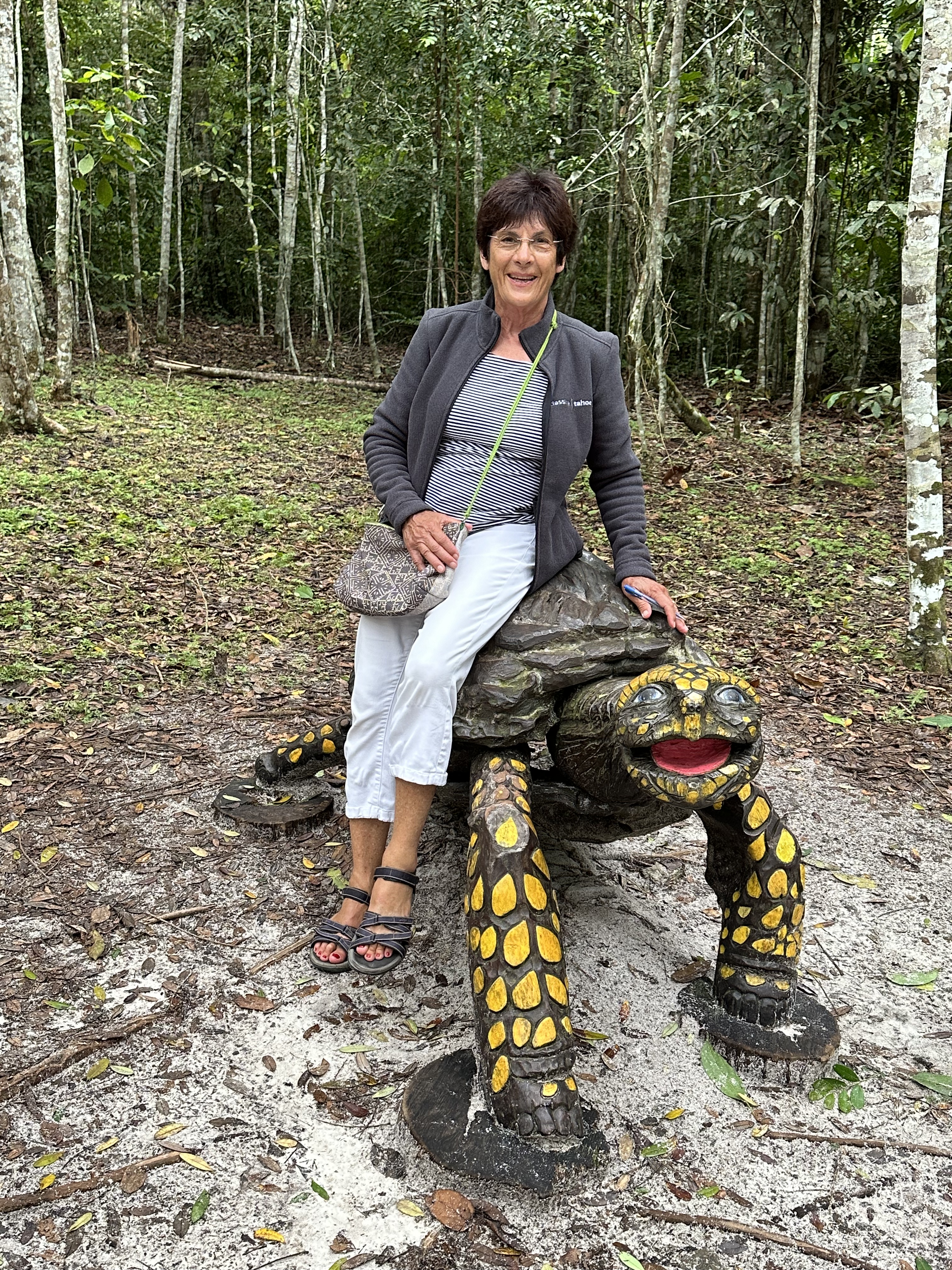
Faringoosa Parrot Red and Yellow McawJuvenile ManateeTwo Capybera, World’s largest rodentSmall Caiman alligator Turtles. Have been sold and eaten nearly to extinction and are now being recovered through conservation efforts. ToucanMe on a turtle on sand that is 2 meters thick and left behind ancient river bed. Endangered Paiche fishPaiche fish. Grows to 2.5 meters long, lives 25-30 years, is excellent eating and scales are used for jewelry and decoration.
From the Reserve, we went to the airport, waited some more and finally flew to Lima. Our guide, Sophia, was waiting for us and off we went on the hour long drive through the busy city to the Hotel B in the popular Barranca neighborhood. We had half an hour to change for our dinner reservation at the nearby highly recommended and very popular restaurant called Siete. Mark had a pasta with pepper and I had the Catch of the day, which included a vey tender and tasty, farm raised Paiche. Both dishes were excellent. Then we went back to the Hotel B and went directly to bed. We both missed our room and bed on the Aqua Nera. The B is interesting and unique, but not comfortable/cozy.
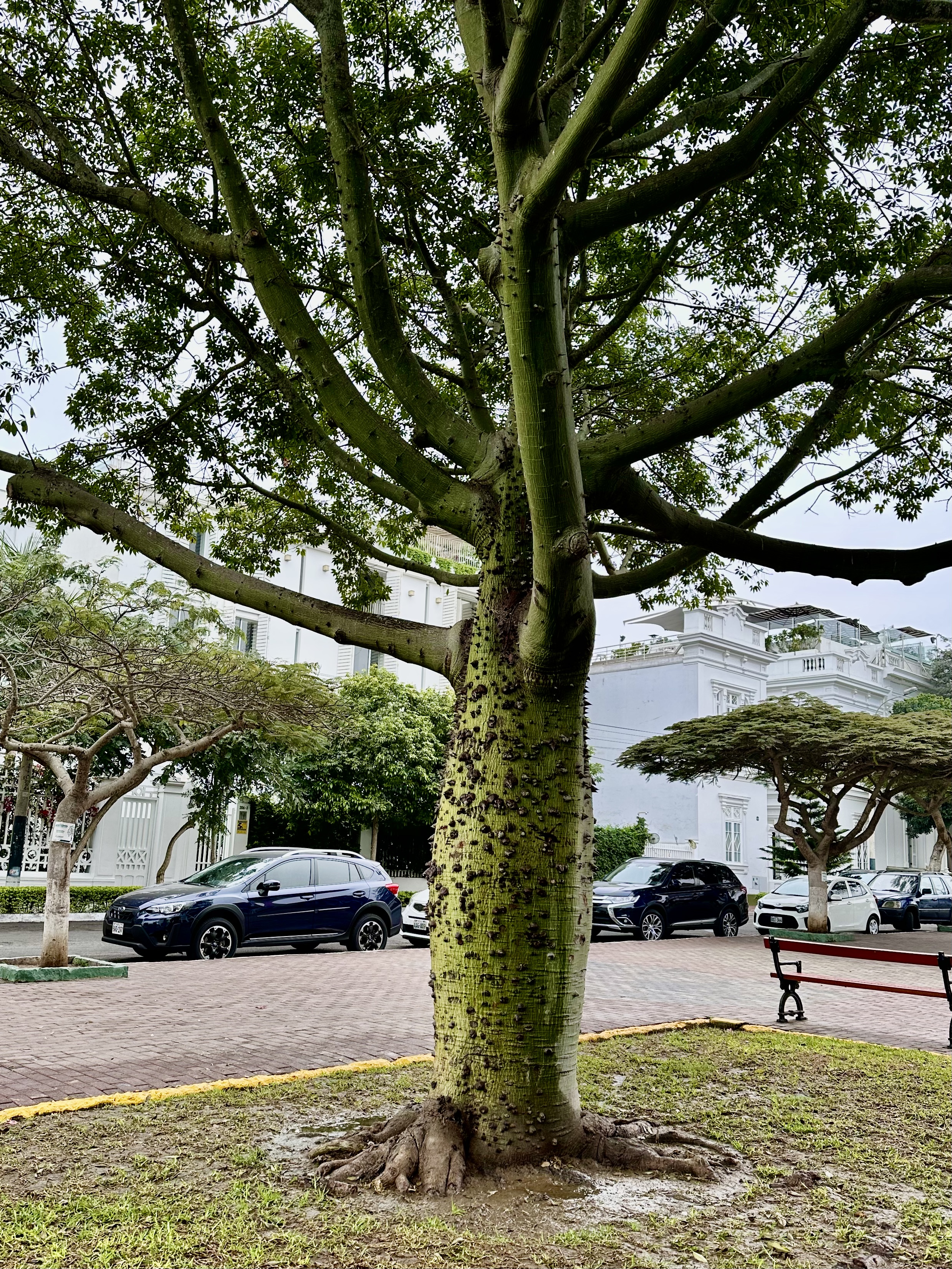
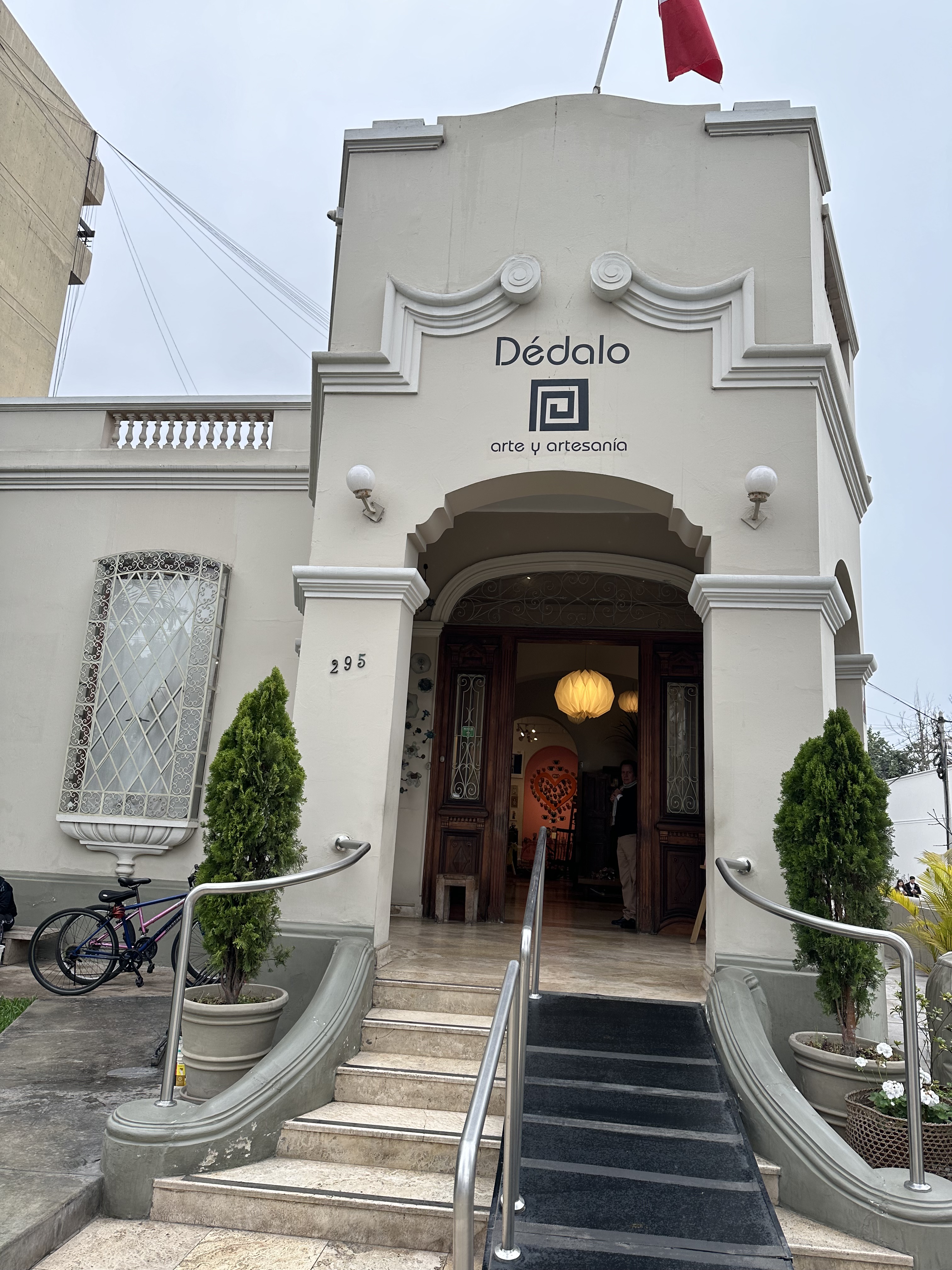
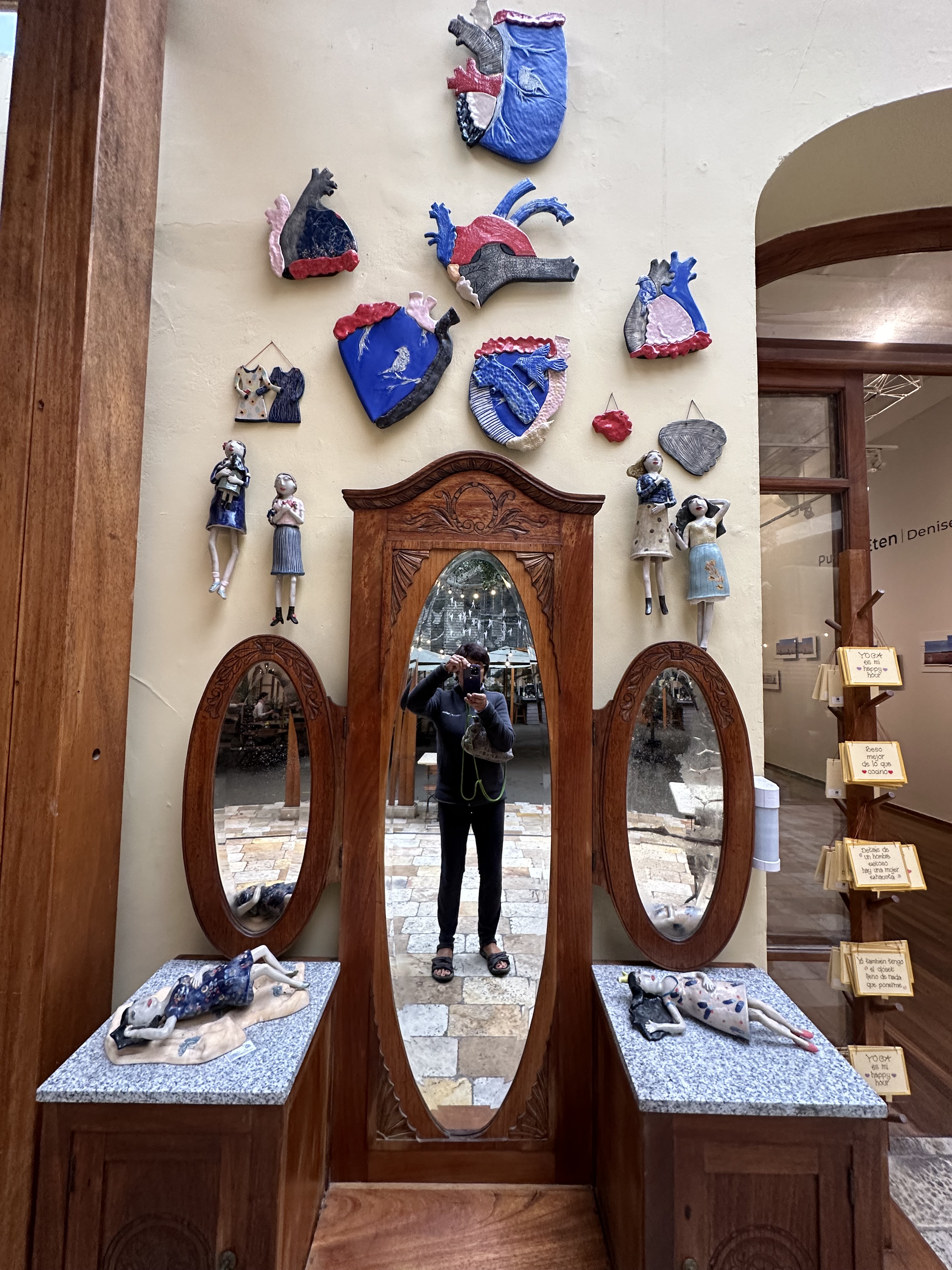
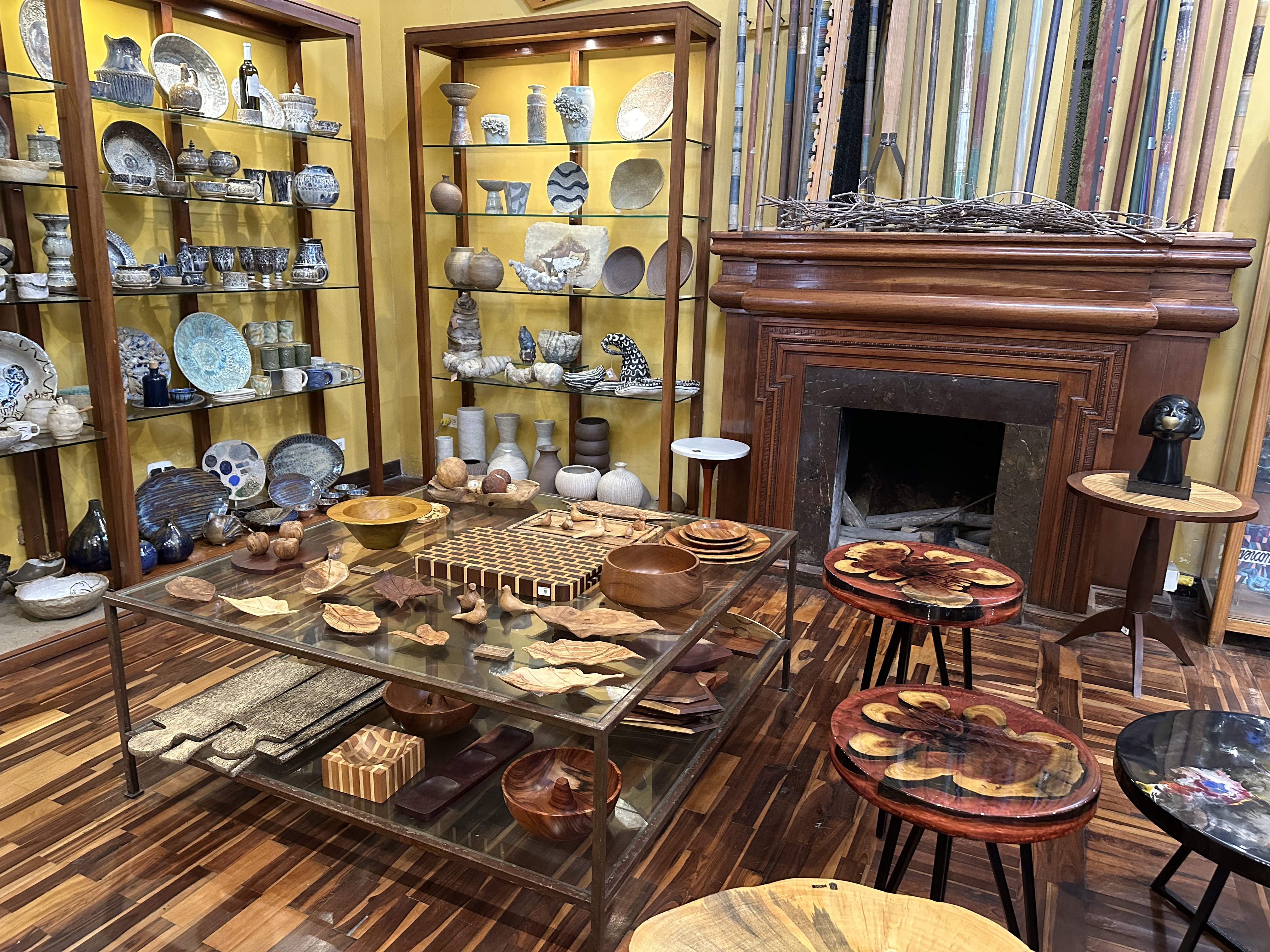
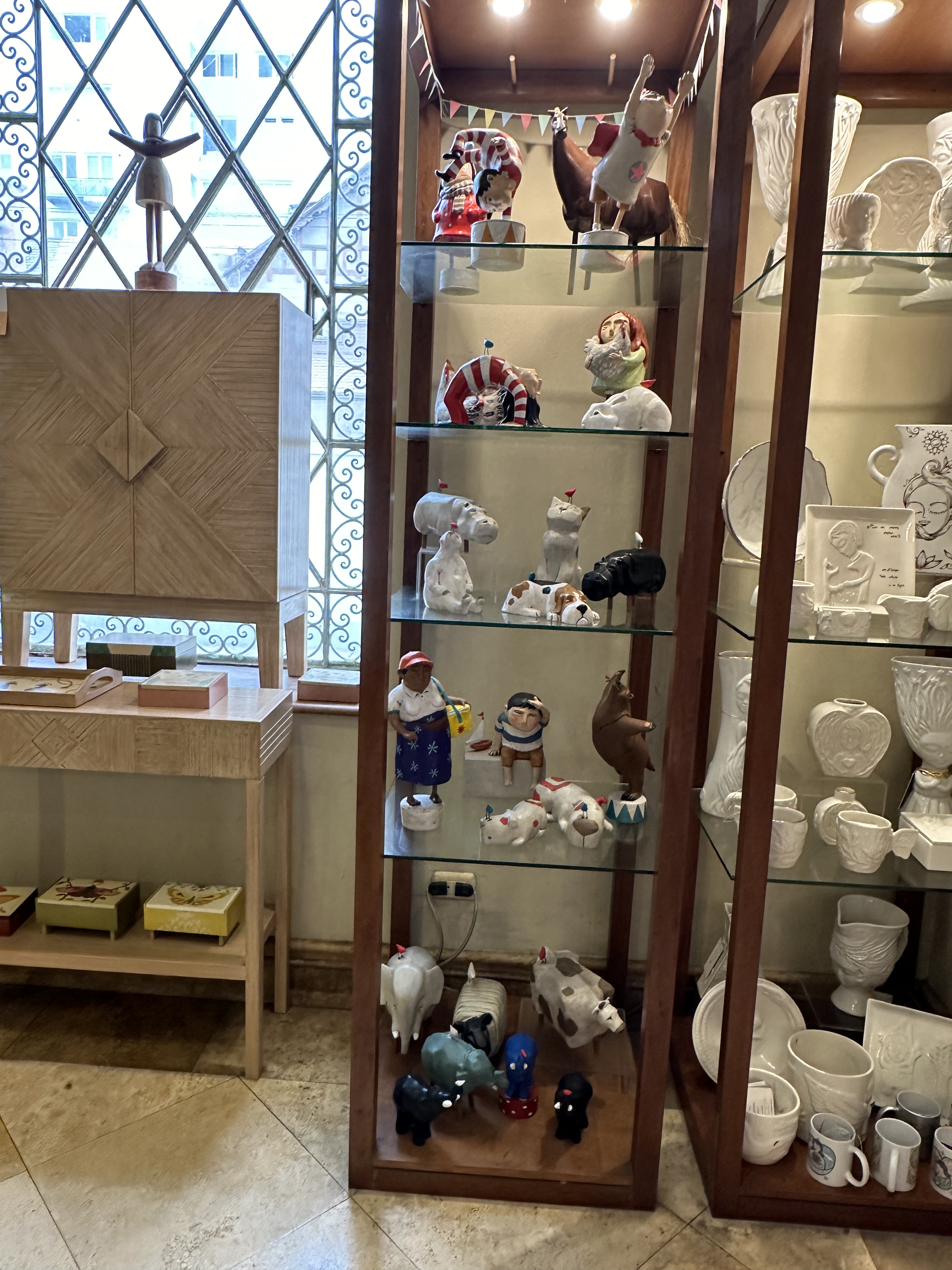
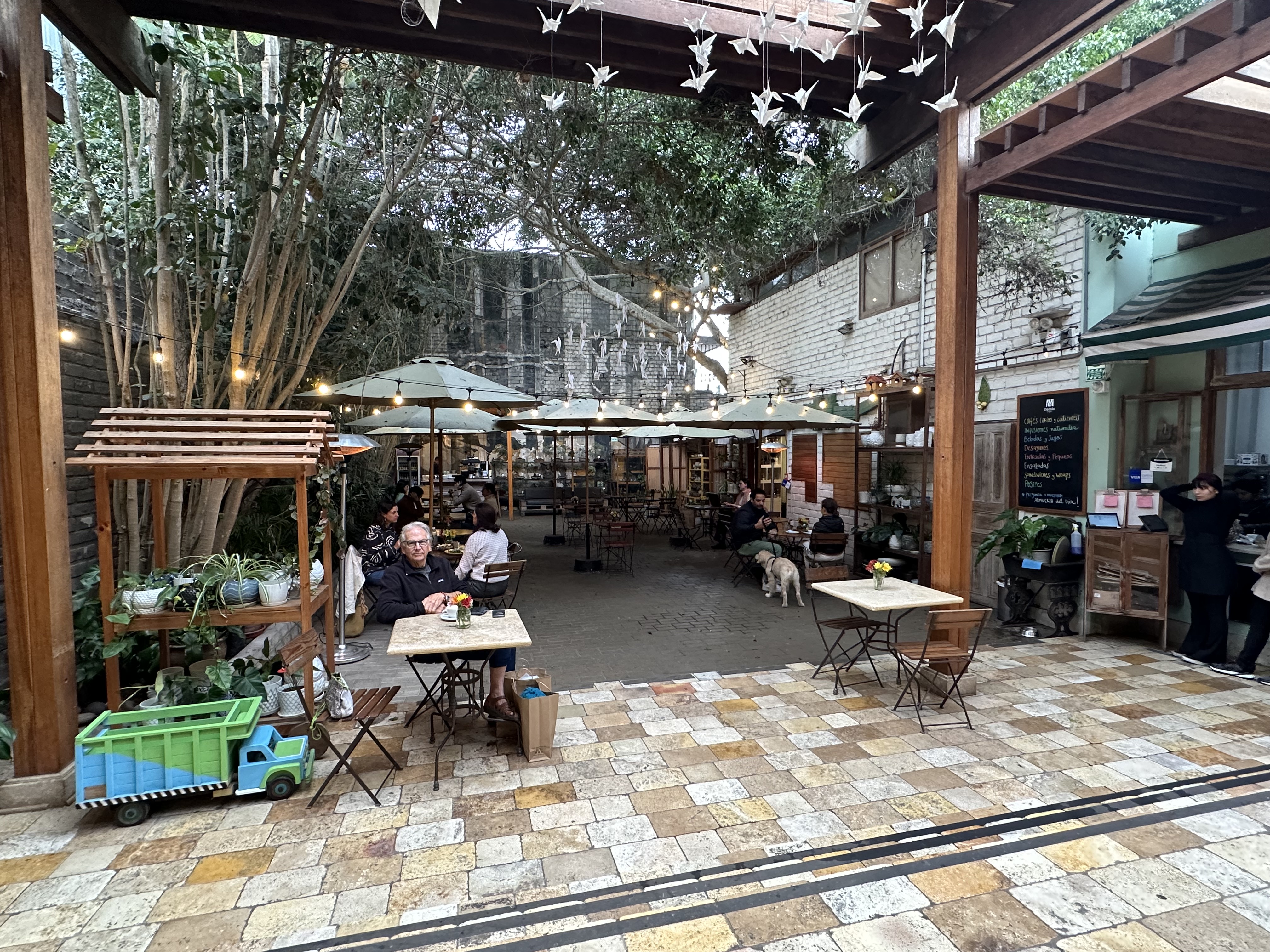
Front of Hotel BSculpture of female in entry to Hotel BFloss Silk Tree near our hotelStore for different artists productsEntry to Dedalo storeA hallway in DedaloA room in Dedalo full of goods for saleA cabinet full of artistic animals with red birds attached.The coffee shop attached to Dedalo
Sunday, July 14, 2024
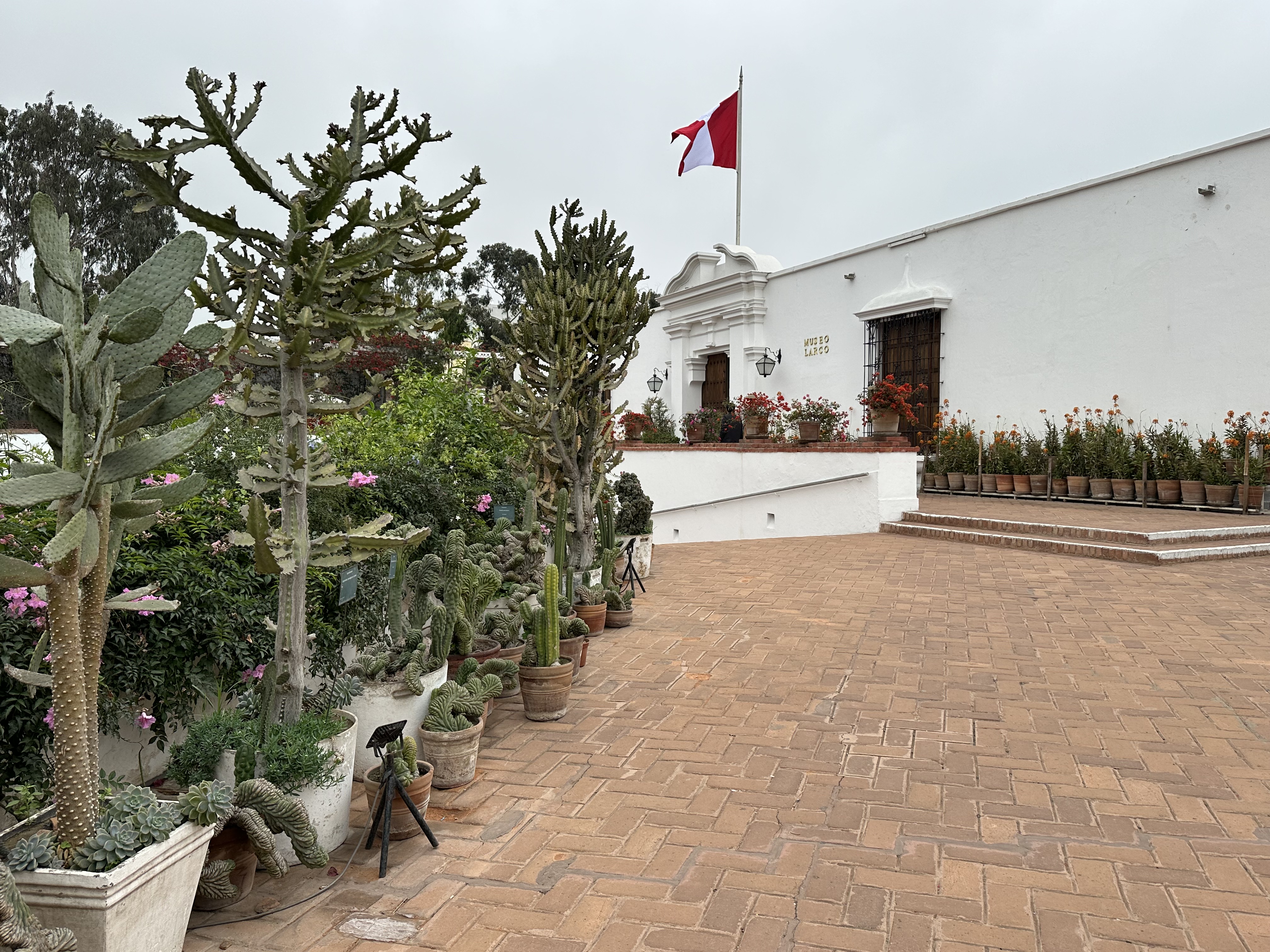
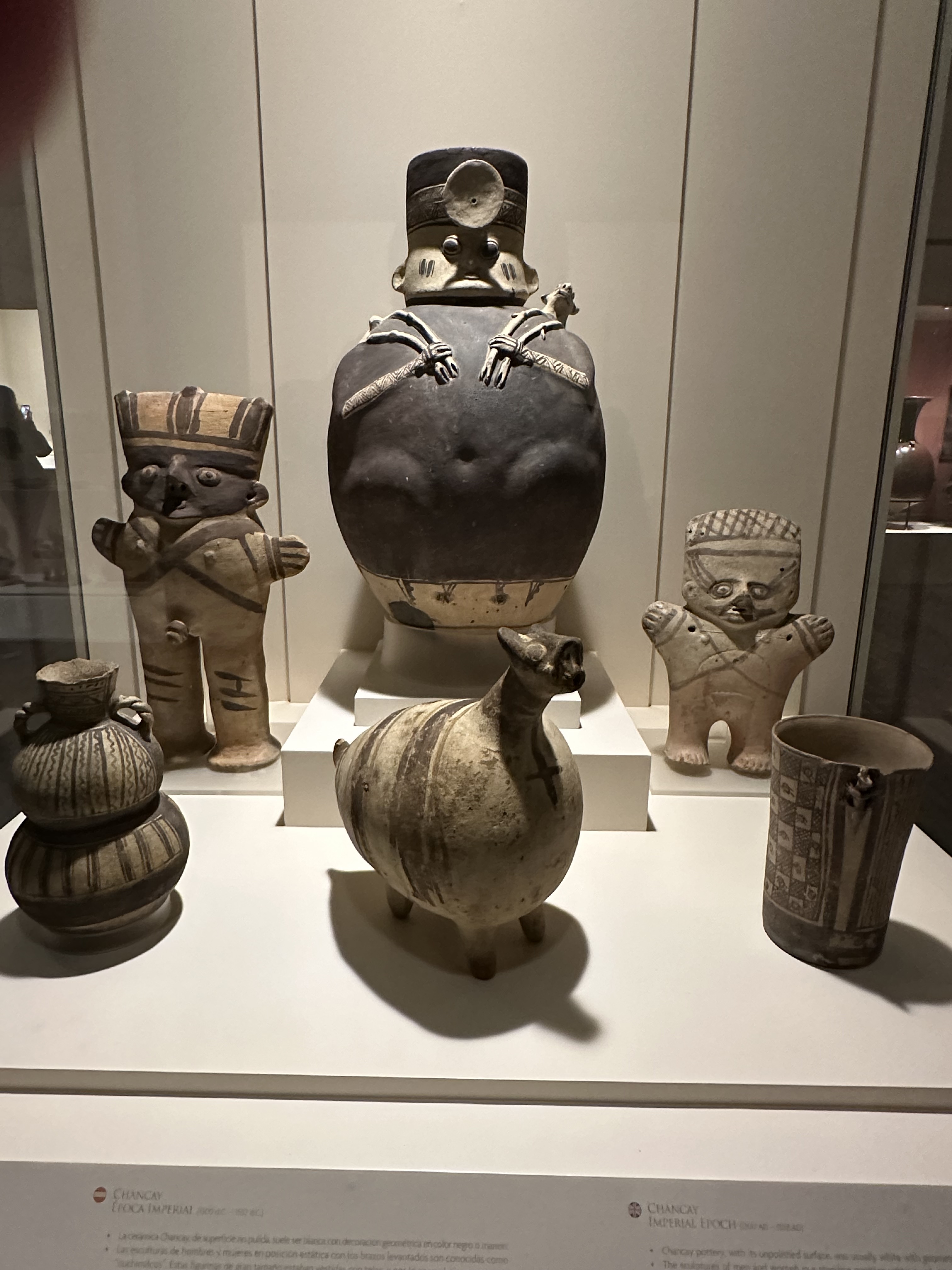
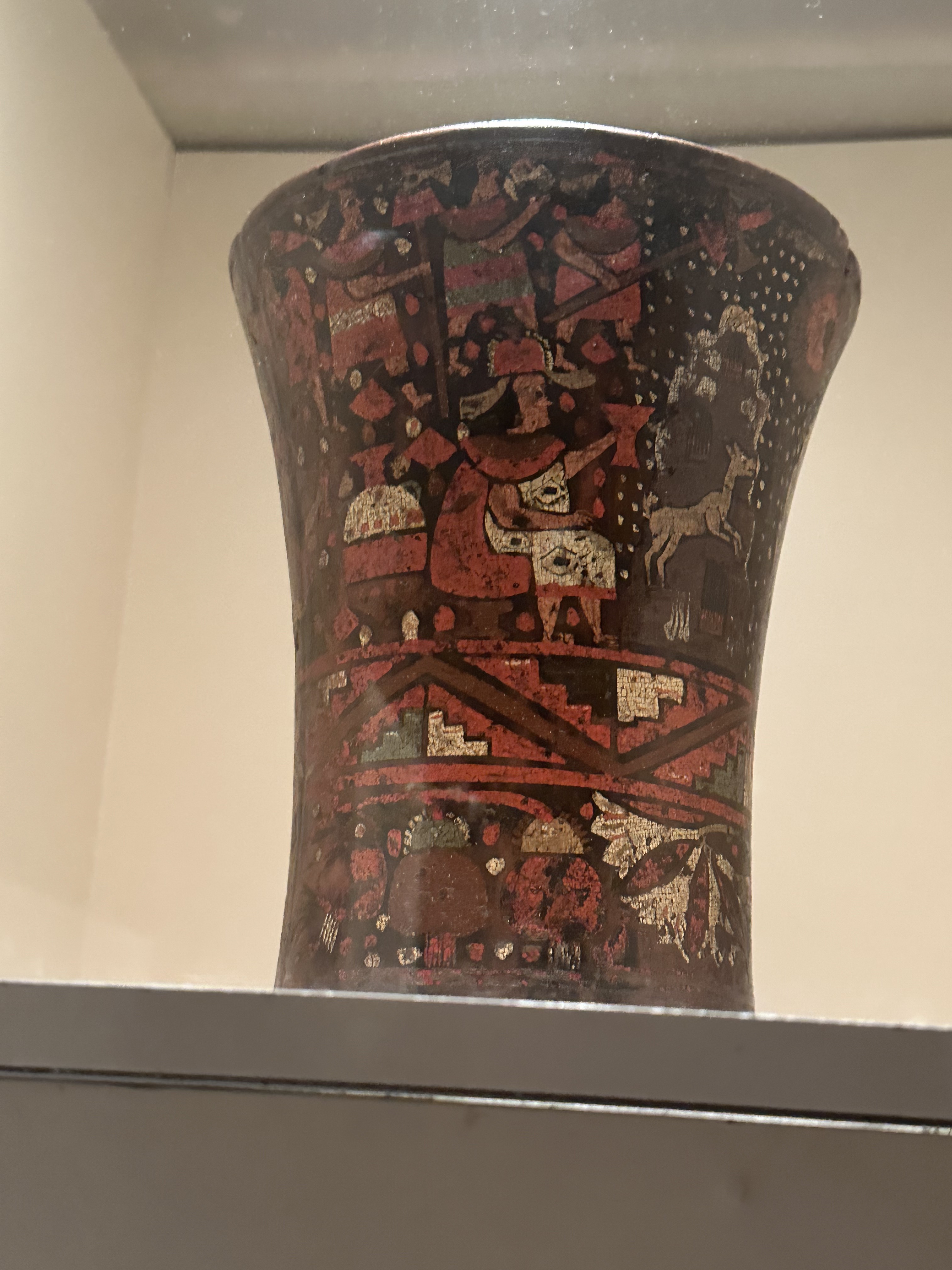
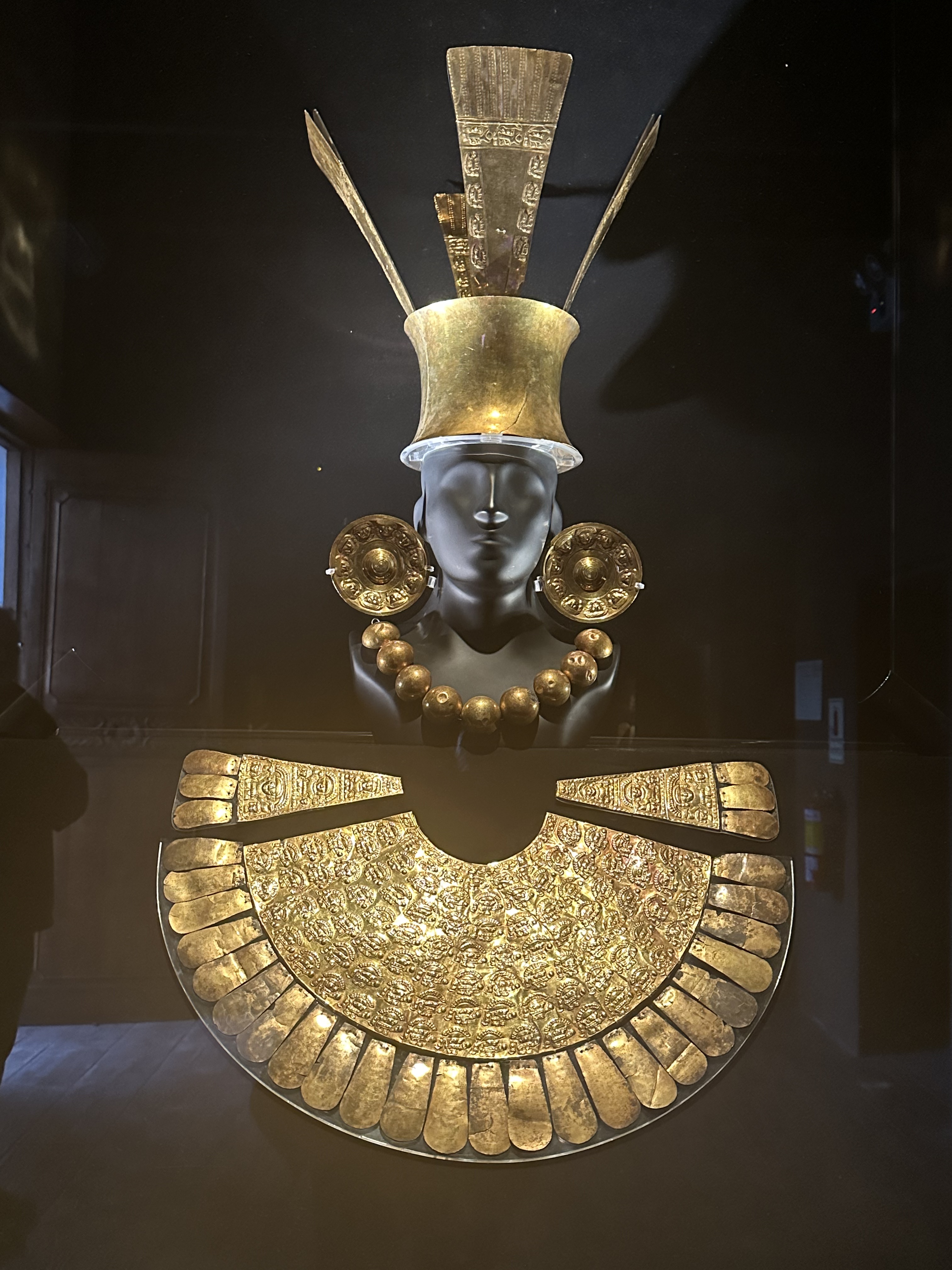
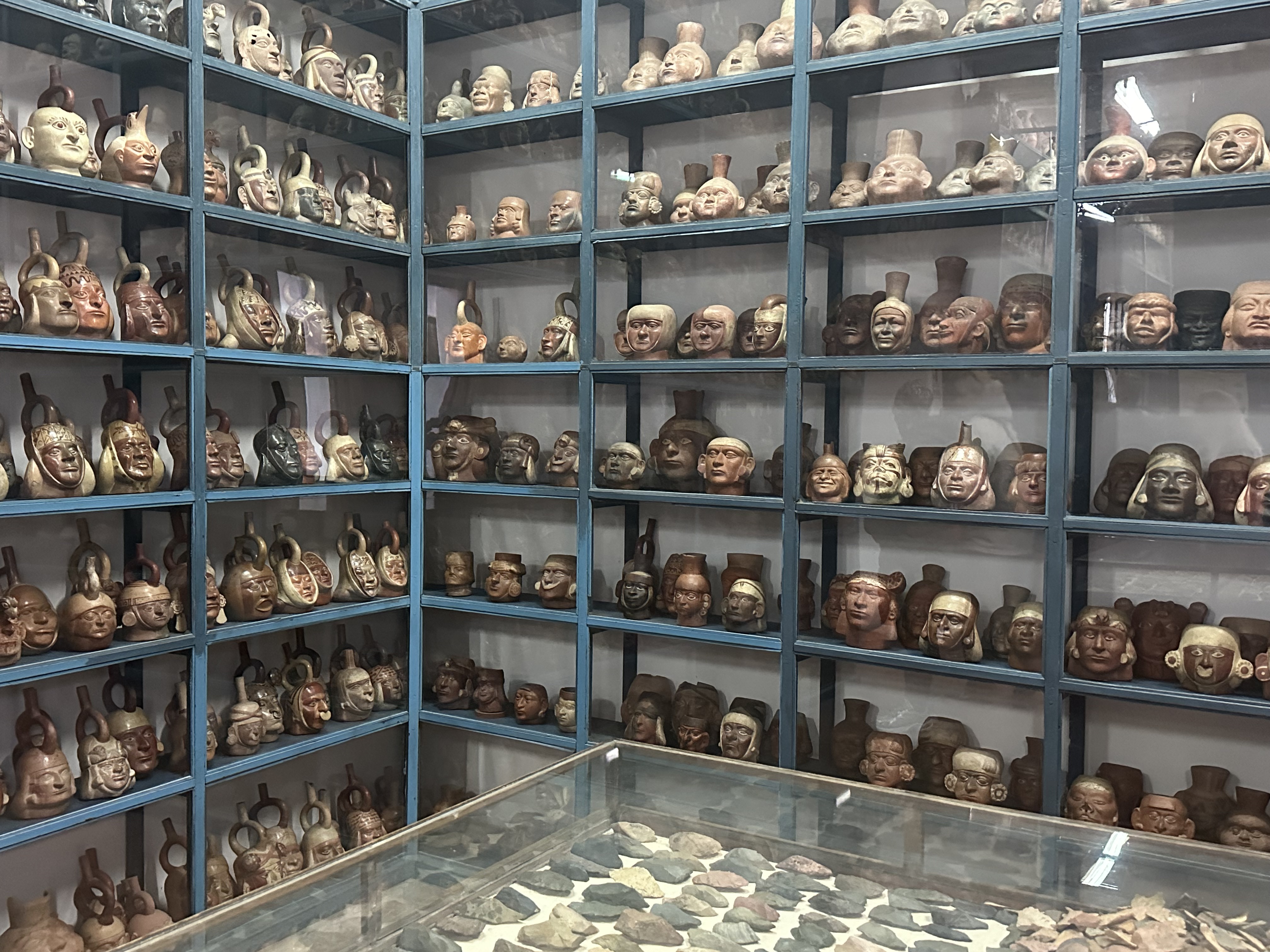
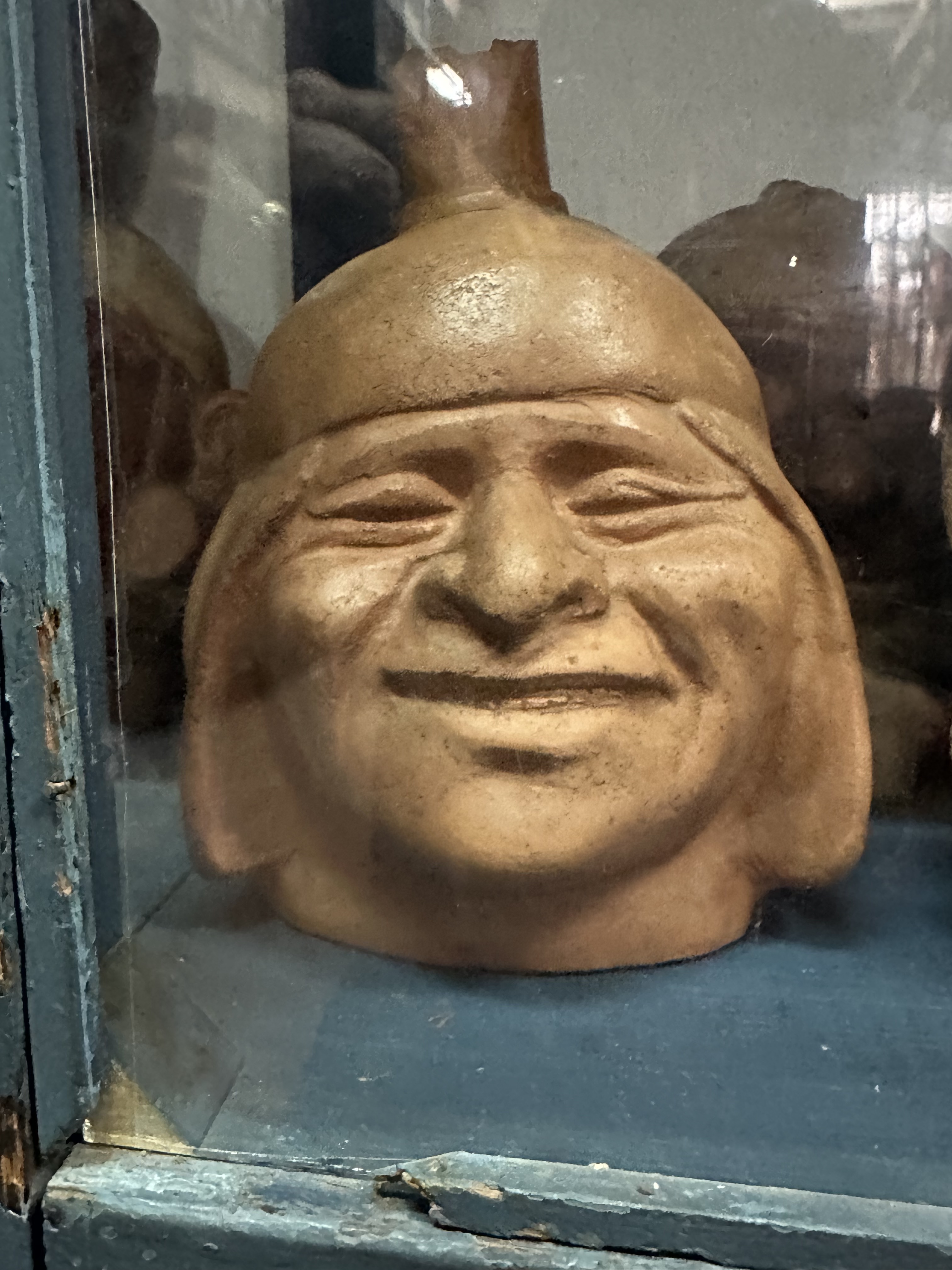
The next morning after breakfast, we went exploring the neighborhood. We soon stumbled by the funny looking tree we learned is a Silk Floss tree, part of the kapok family. Further on we arrived at the store called Dedalo. It is quite an amazing place and we were happy to spend a good amount of time looking around and even buying a few things. After depositing our purchases in our room, we waited for Sophia and Carlos to take us to the Larco Museum, where we spent several hours. Here are some of the artifacts we admired in the halls. Sophia fed us a lot of history which I was, sadly, not able to retain.
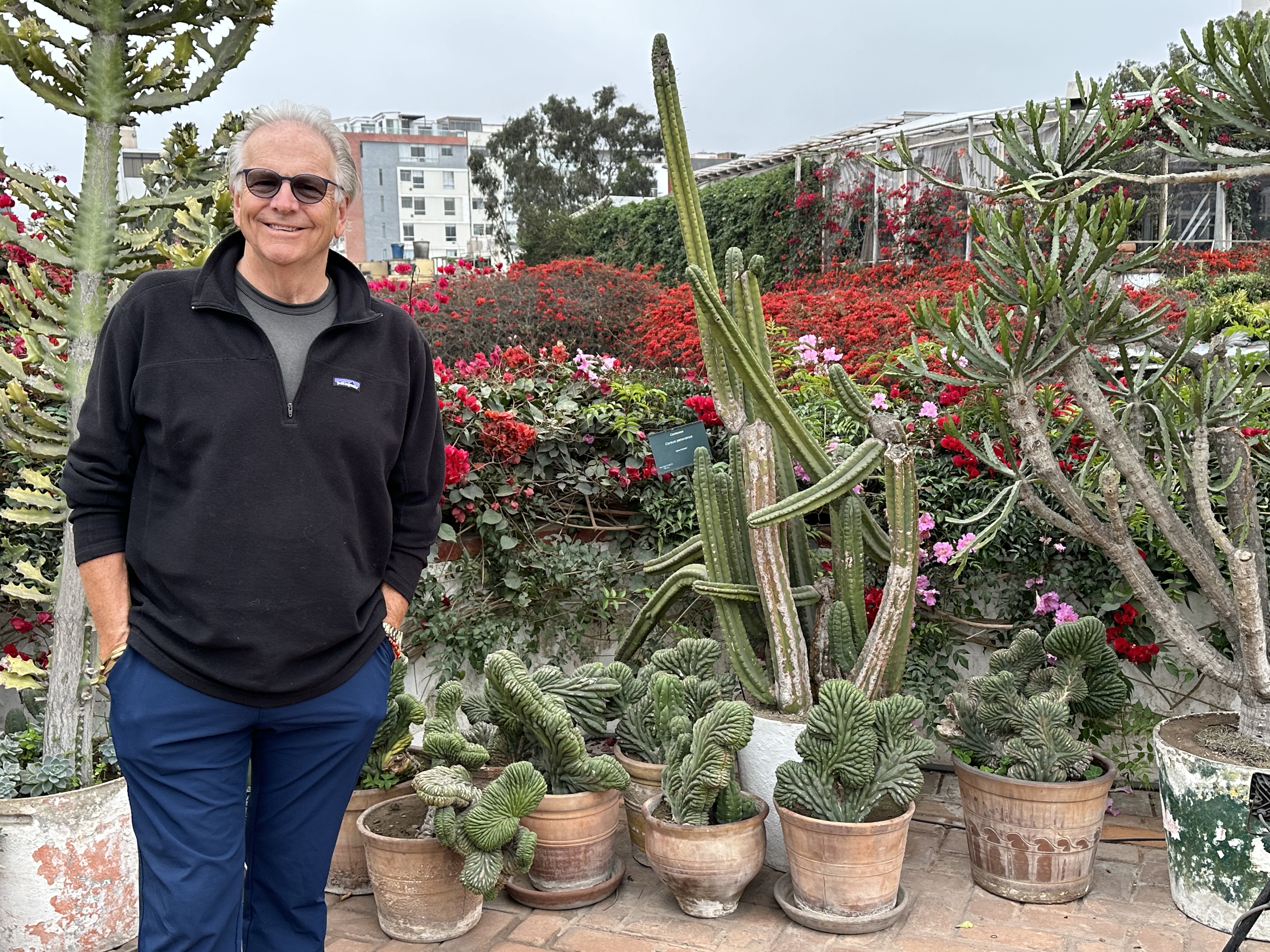
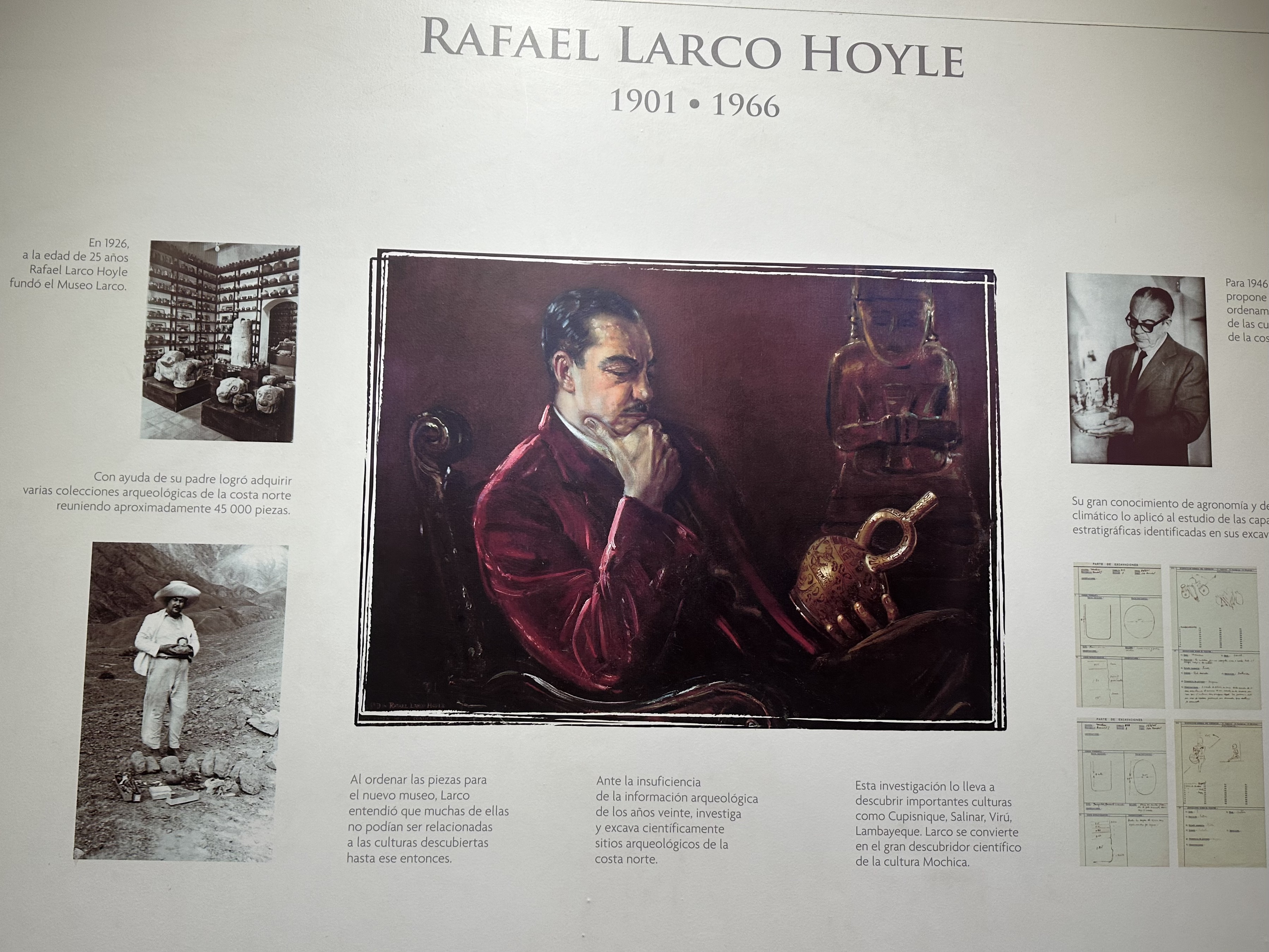
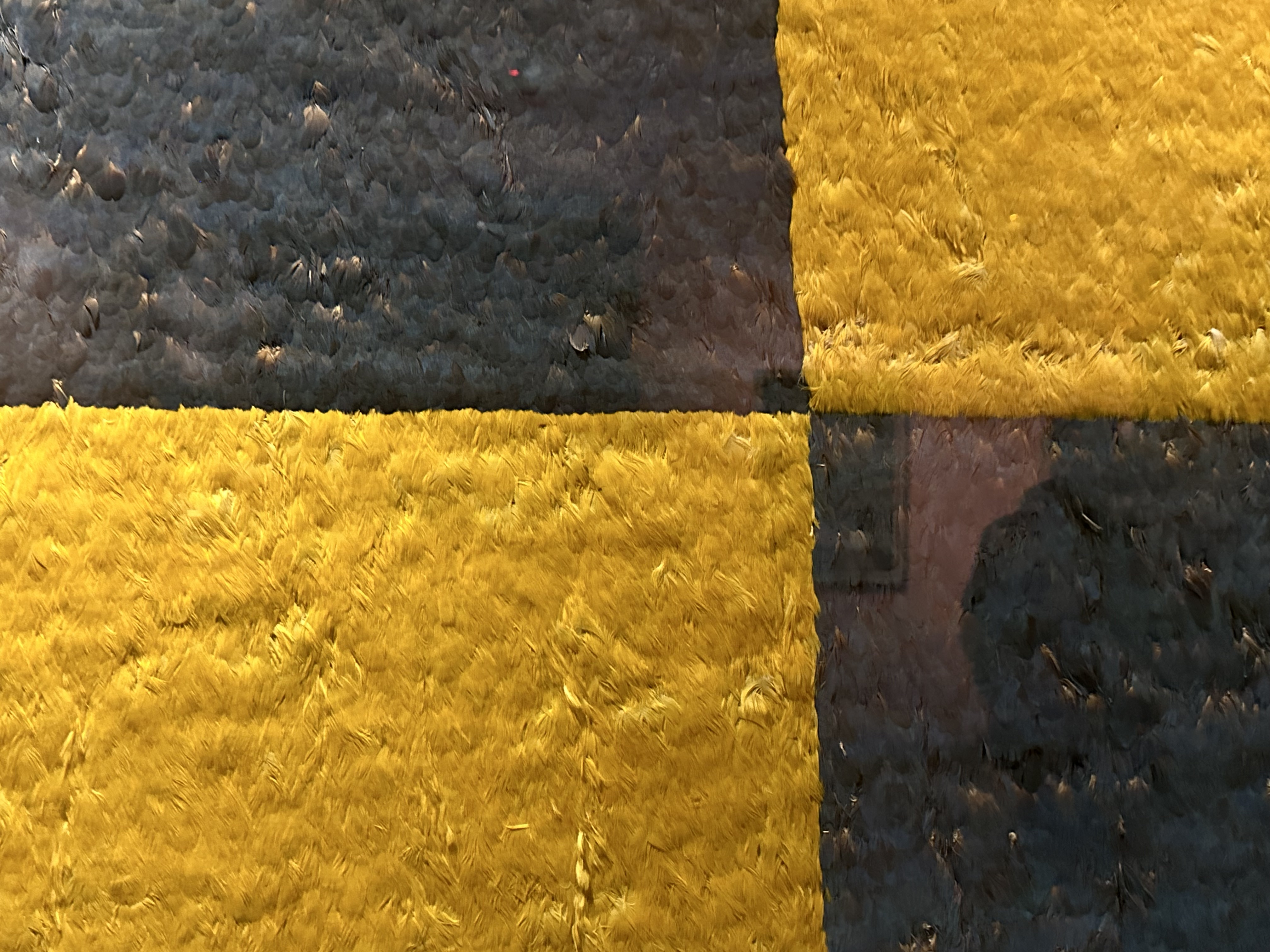
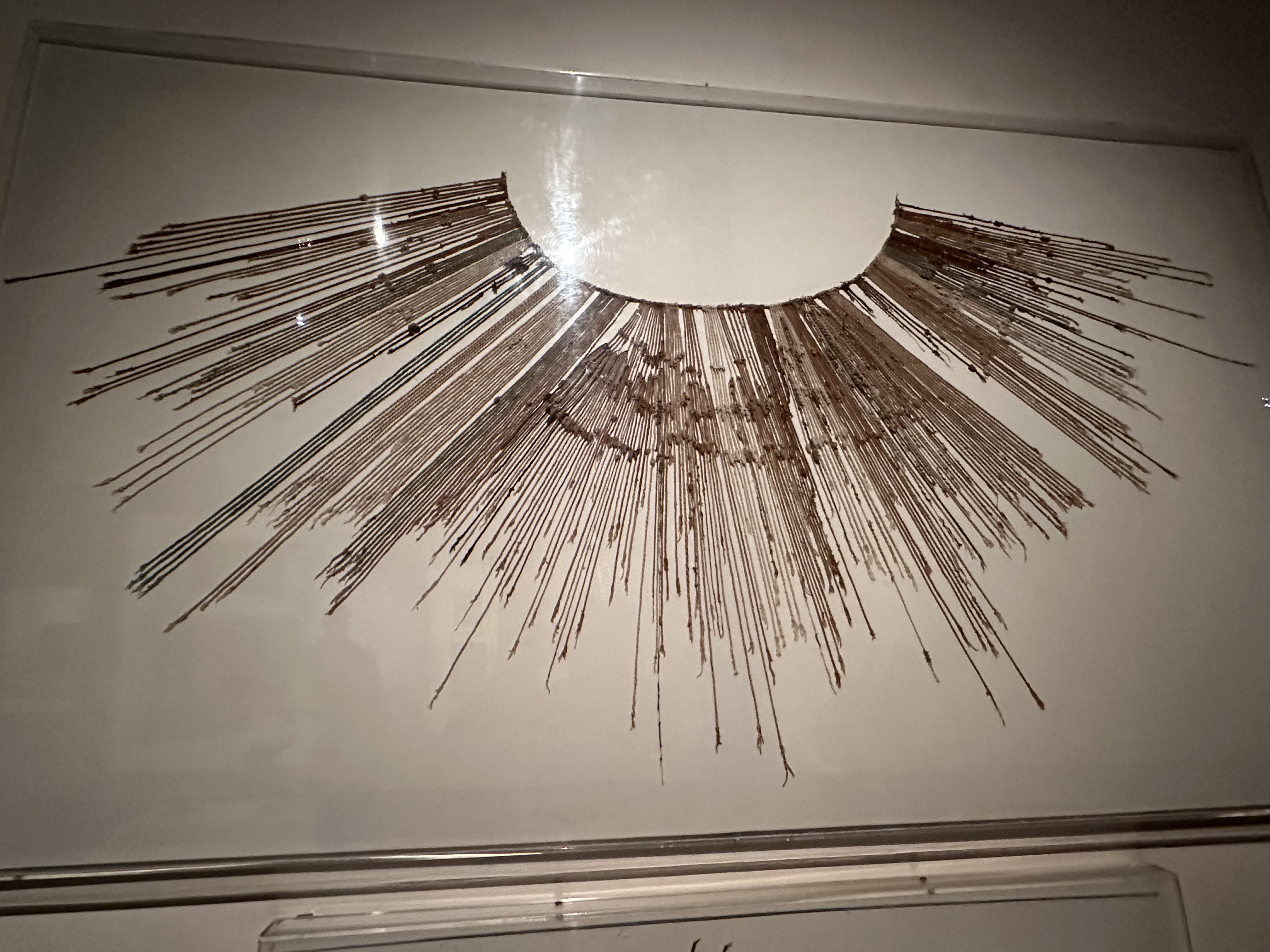
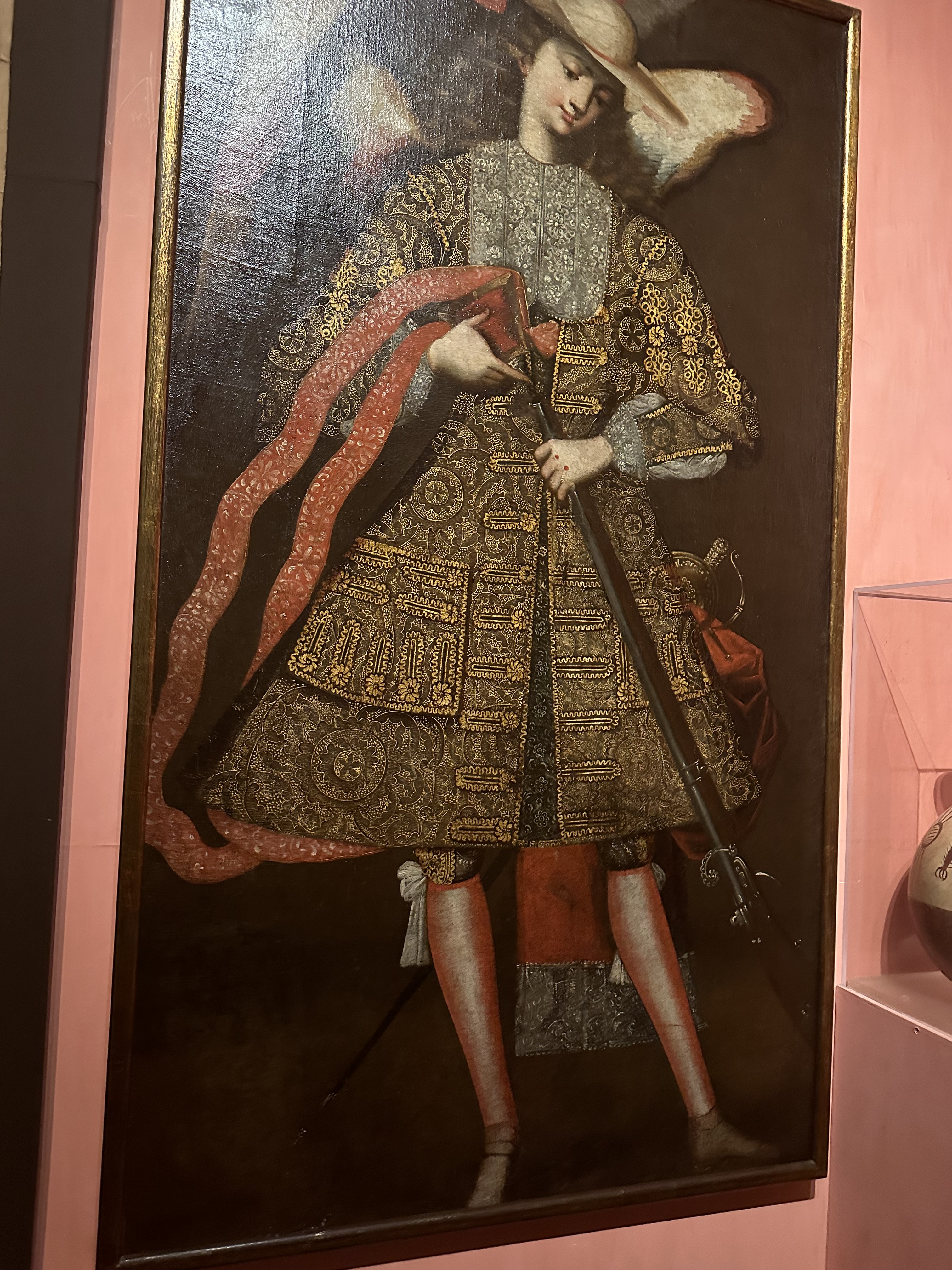
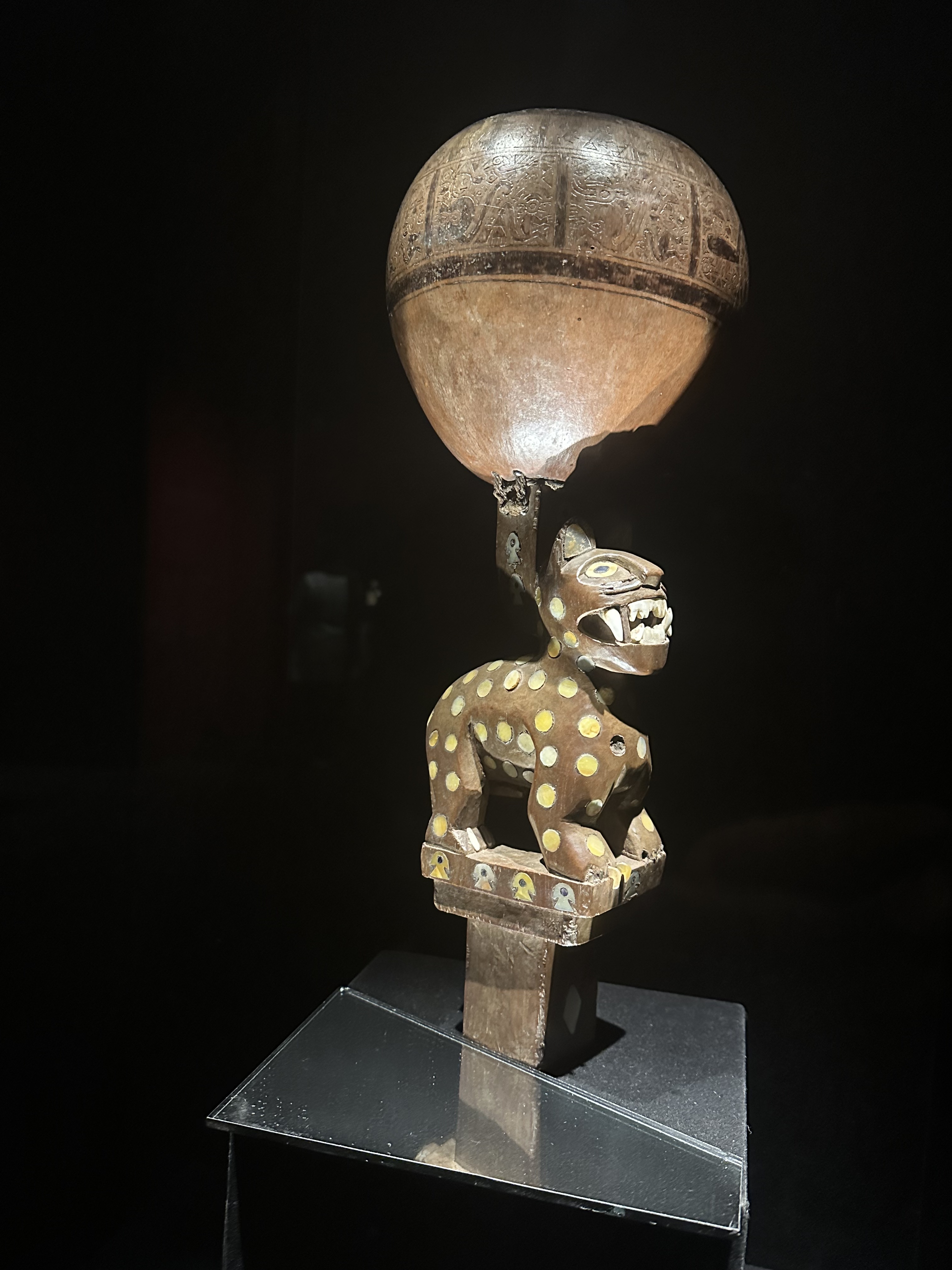
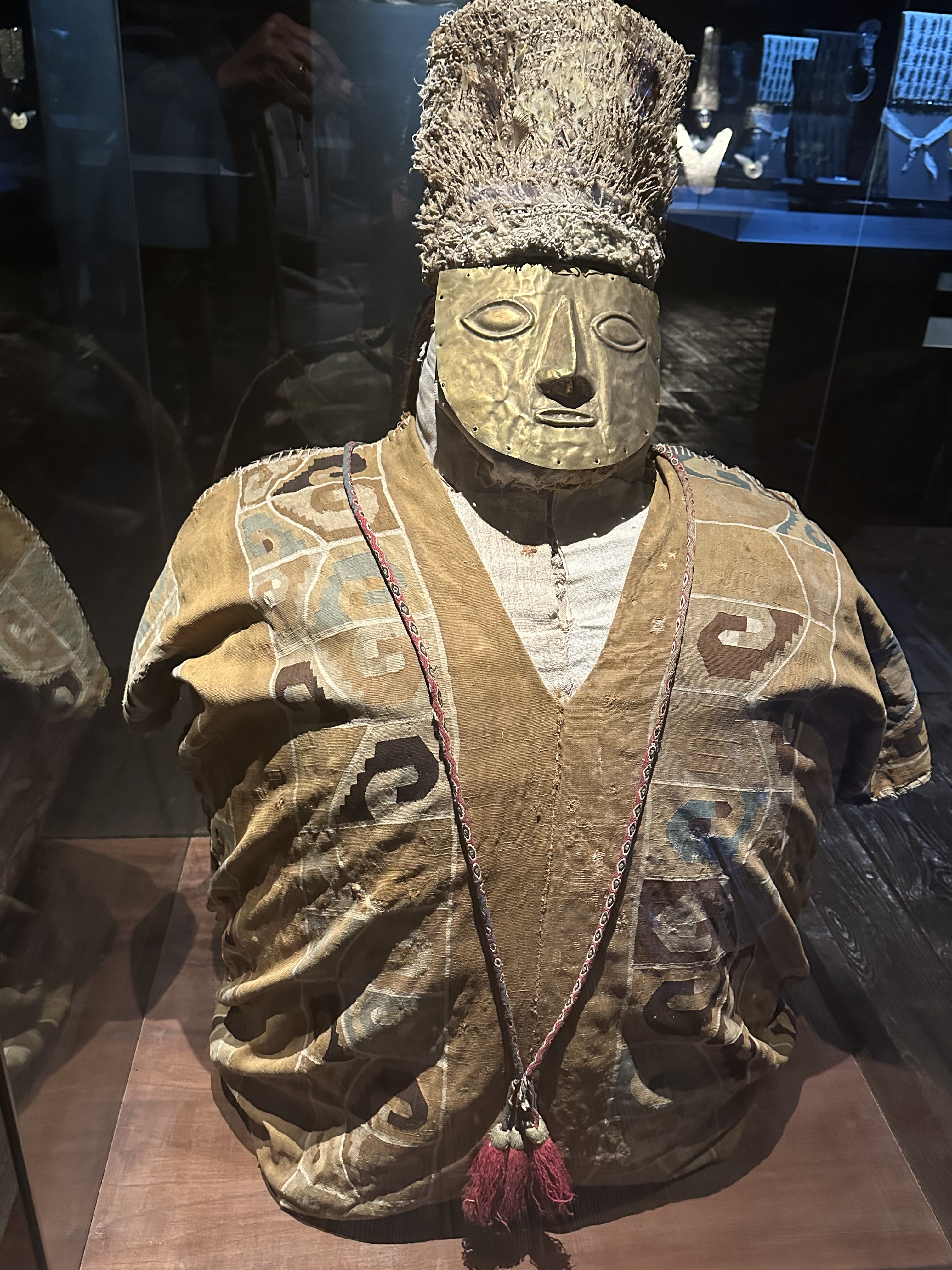
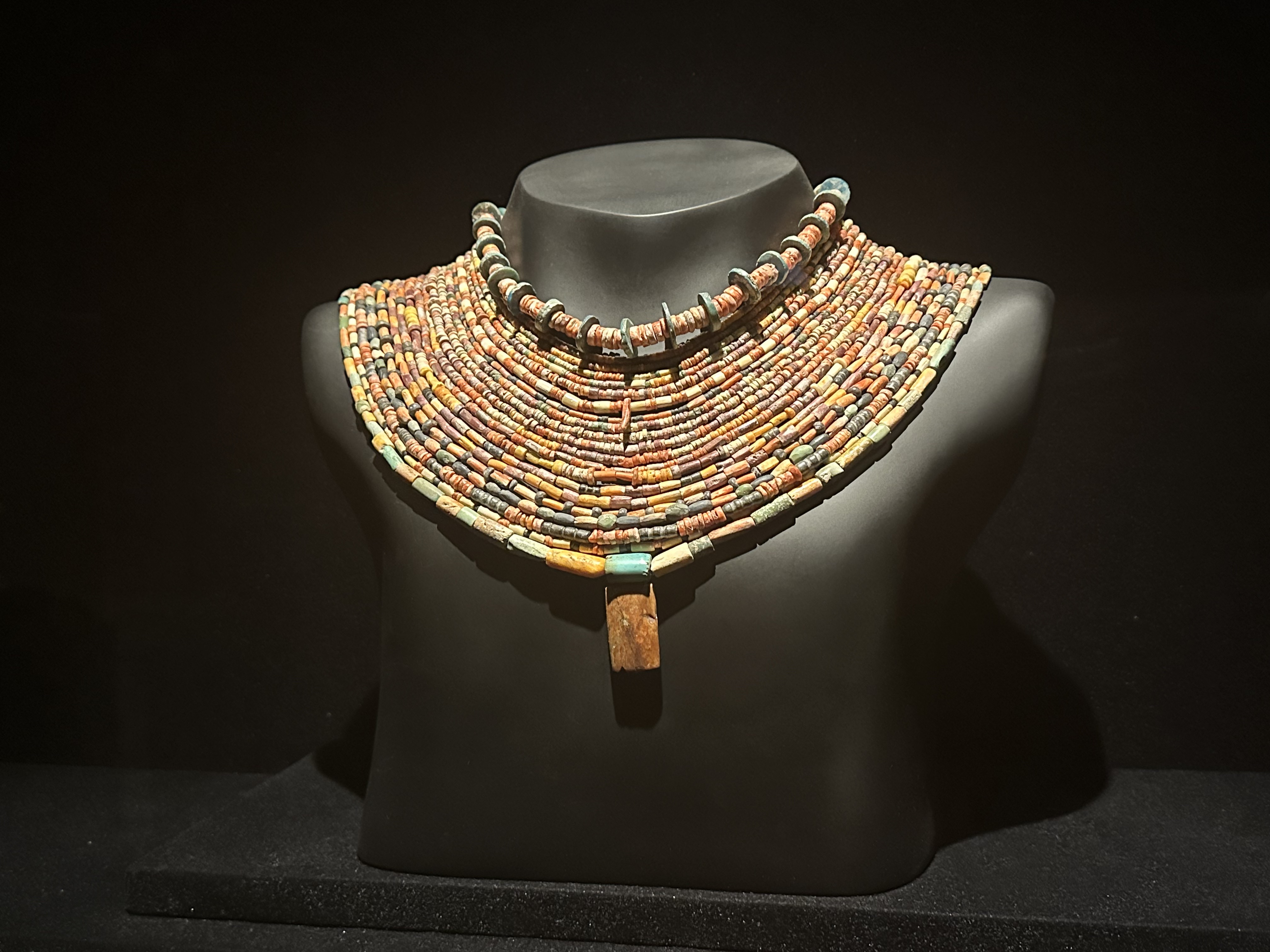
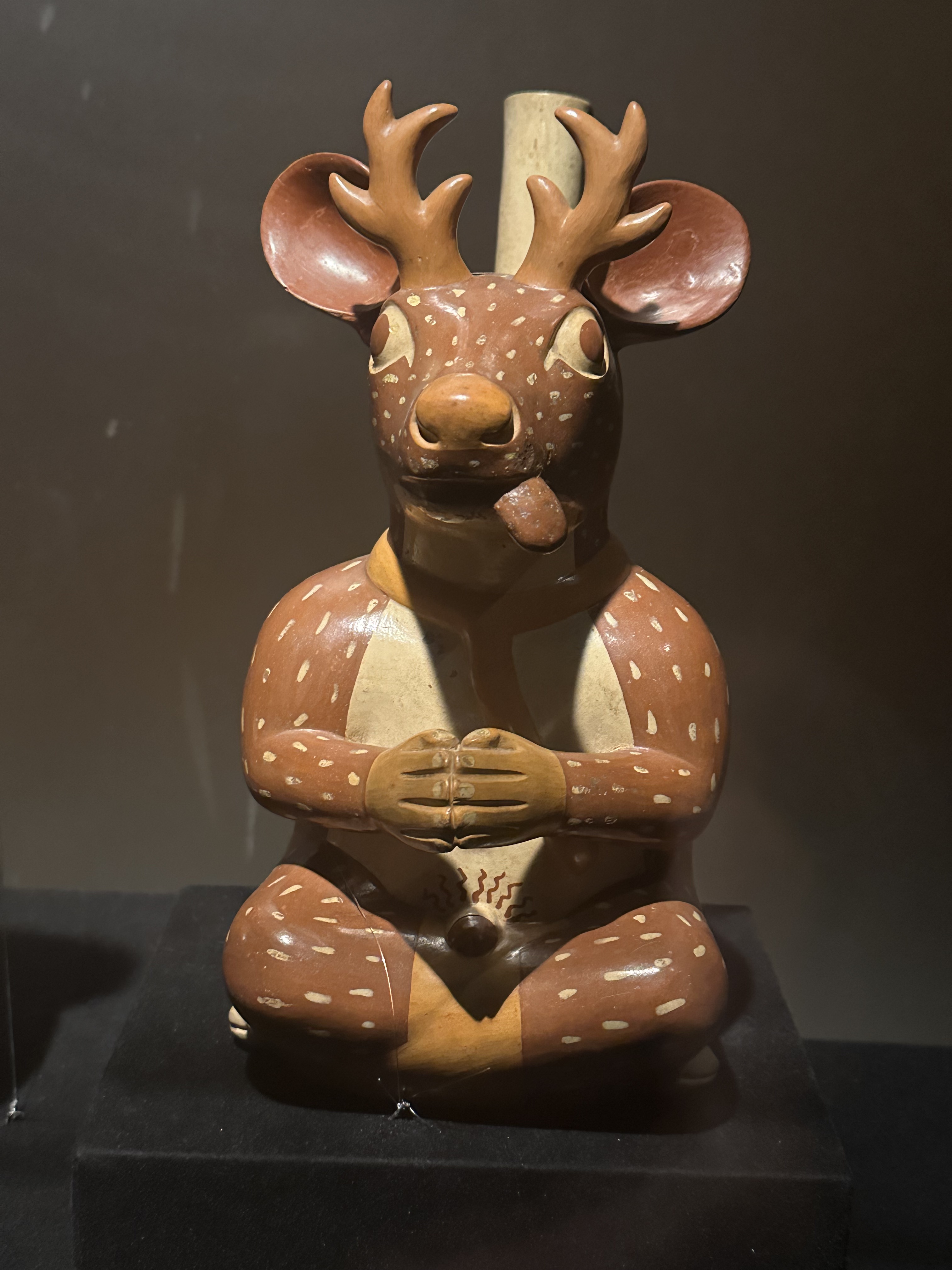
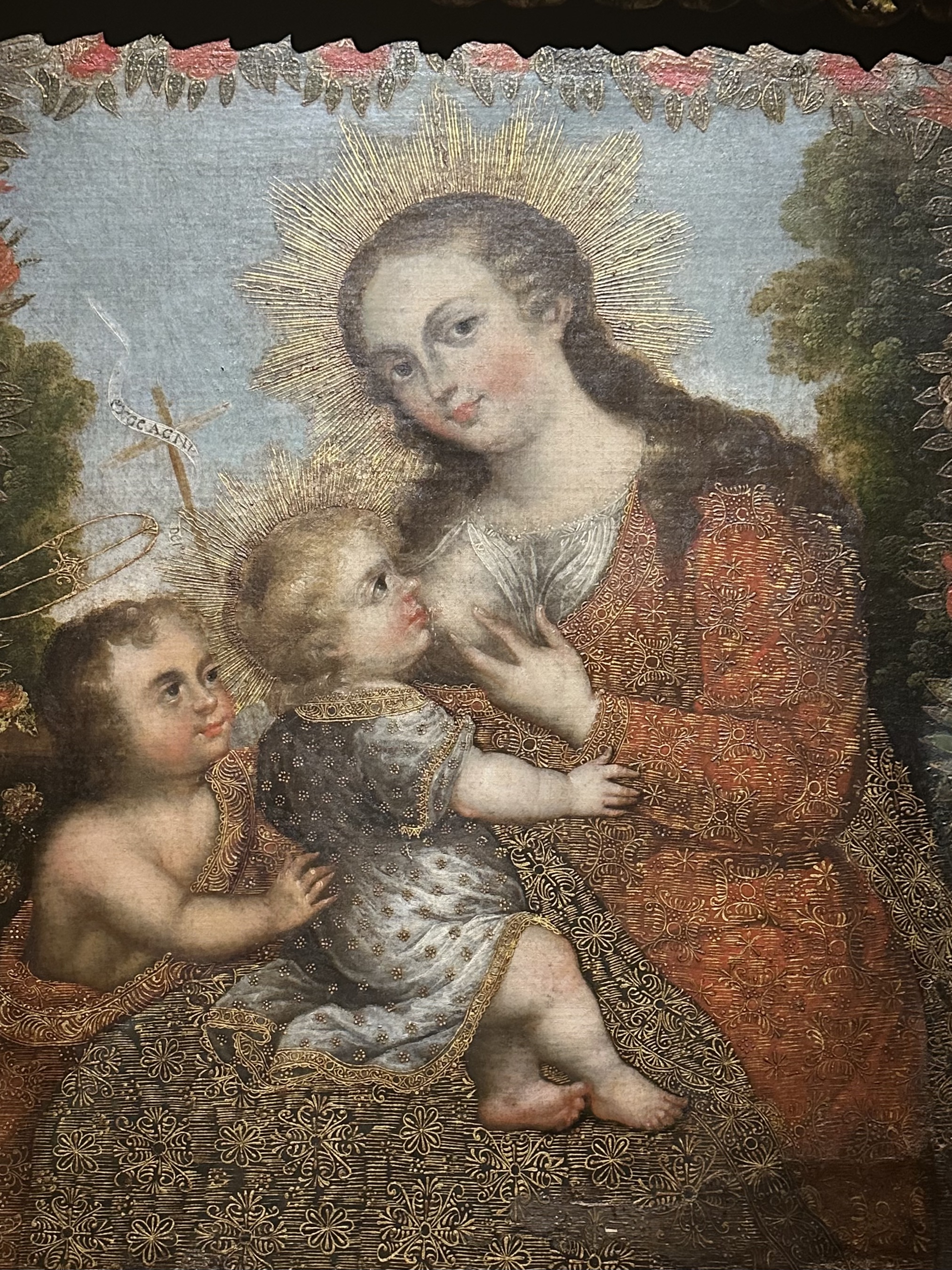
Entrance o Larco Museum in LimaMark admired the cactus collection of the deceased owner’s wifeThe deceased owner who collected most of the art in the museumAn unusual vase made out of glass rather than clayA blanket made with yellow and blue Mccaw feathers. Quipus were the main system employed by the Incas to record information. The knotted cords were used to record countable information. The colors, knots and the distances between the knots enabled those who used the quipus to identify the type of object or the characteristics of the population.During the colonial period, Andean artists became engaged in reinterpreting the culture of Spain. They assimilated European techniques, adapting them to indigenous resources and practices. Artistic European themes were blended with ancestral themes. Under a Christian guise, the myths and rites of the Andes were perpetuated. Expressions of syncretism in Peruvian culture, are found in popular festivities and religious celebrations.CEREMONIAL CUP (800 AD – 1300 AD) Cup made from a pyrography decorated gourd which forms the container and a carved wood feline which forms the handle. The feline is inlaid with seashells and lapis lazuli and one of the feet has natural claws. It is an ancient art practiced to this day.MUMMY In ancient Peru, the preparation of the body was an important stage in the process leading to the deceased’s journey into the afterlife and their transformation into an ancestor or supernatural being. This is a funerary bundle of a 4-5 years old infant who lived and died during the 8th century ADClay beads form this funerary necklace. Symbol of the Moche nobility ceremonial deer hunt (1-800AD)
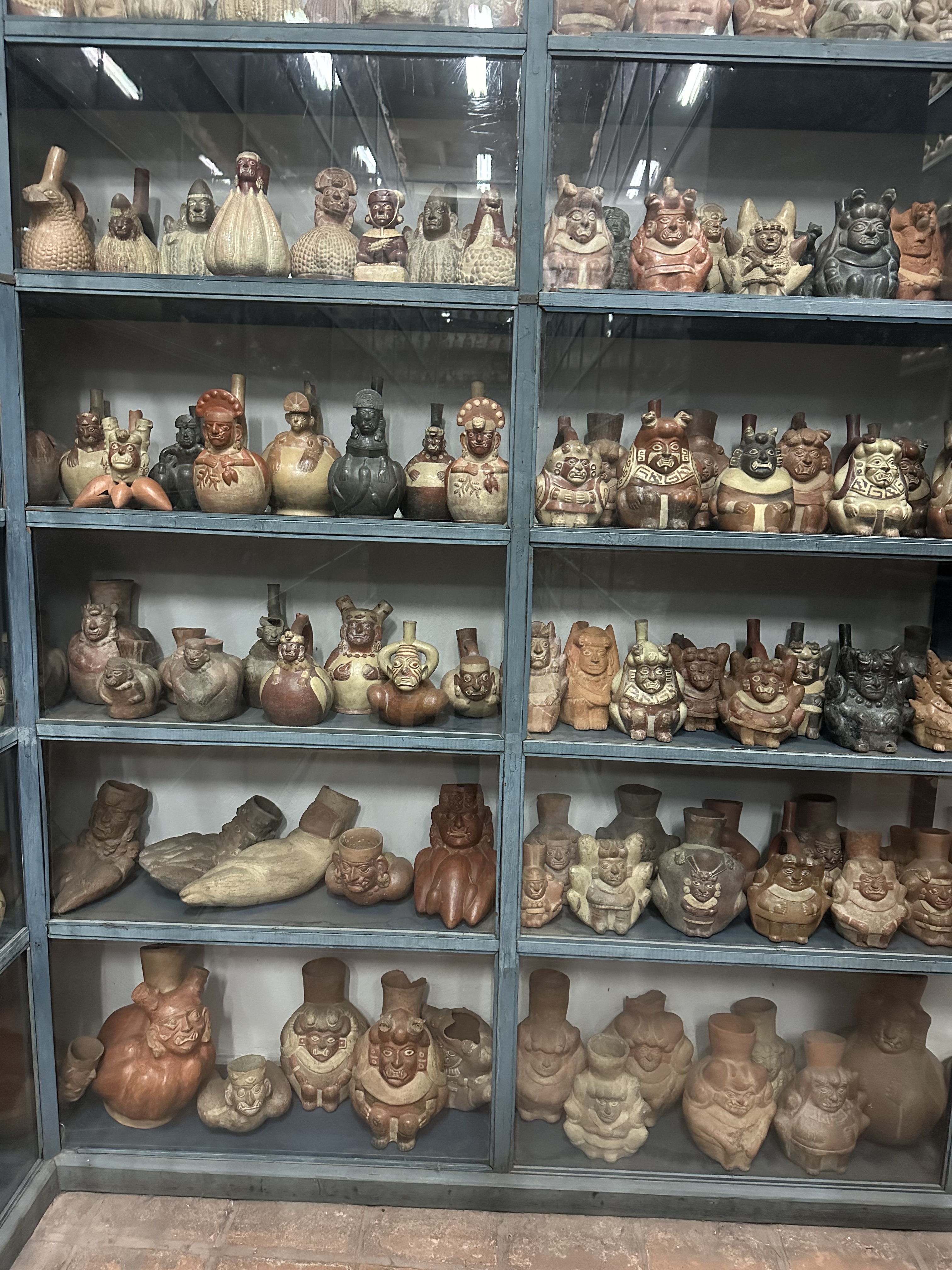
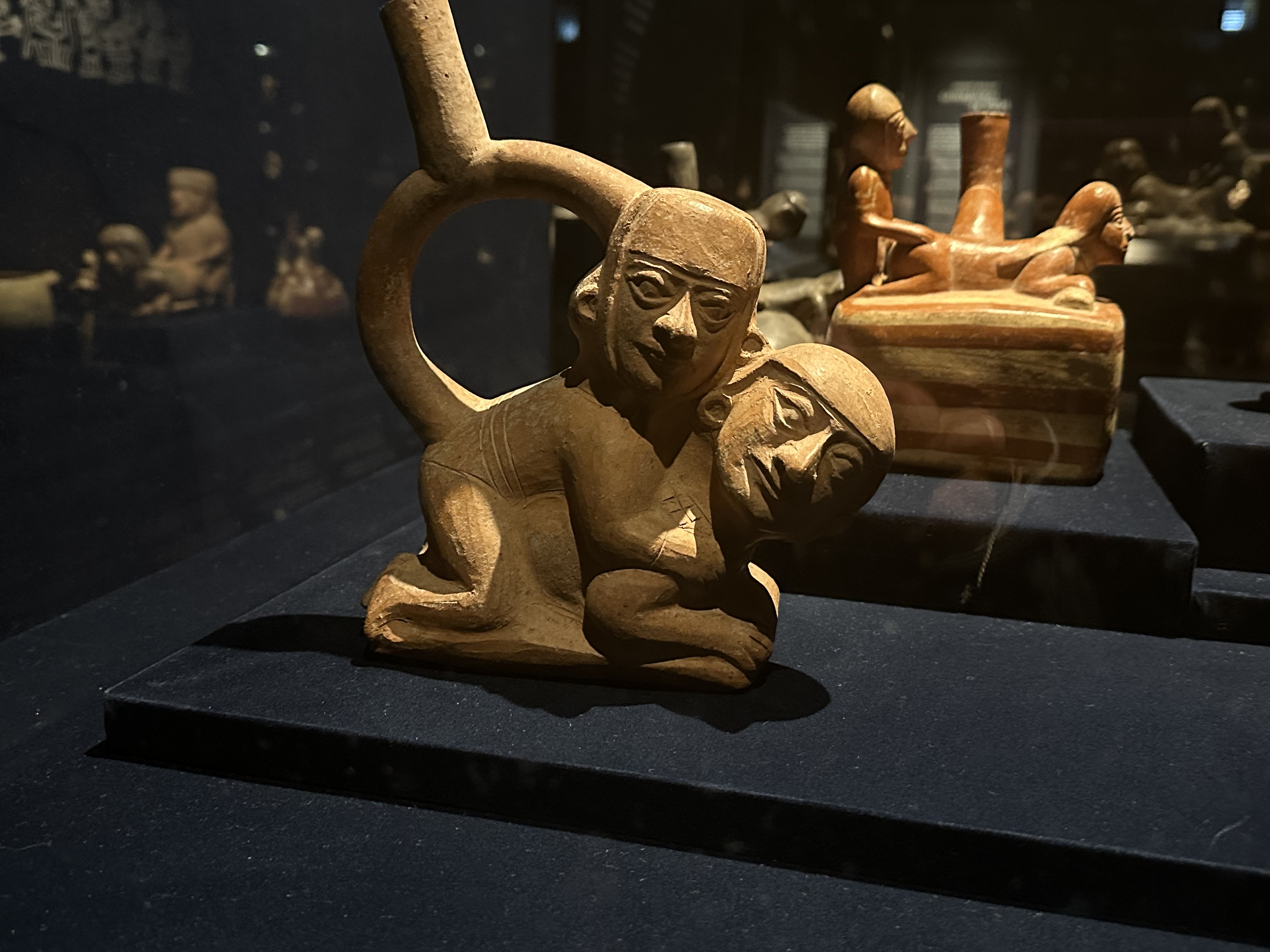
Other items I was impressed by included rooms full of clay statues (over 45,000) down through the ages and found in the sides of many graves, which explains why they are still intact. Also there are a few sexual themes I included here.
Enough for museums. It is the only one we will see in Lima on this trip. Thankfully, says Mark. When we left the museum we stayed in the building to have lunch. Mark had tenderloin salad and I had noodles in sweet pumpkin ricotta cheese on delicate butter sage sauce. Yes it was as good as it sounds. I wanted more.
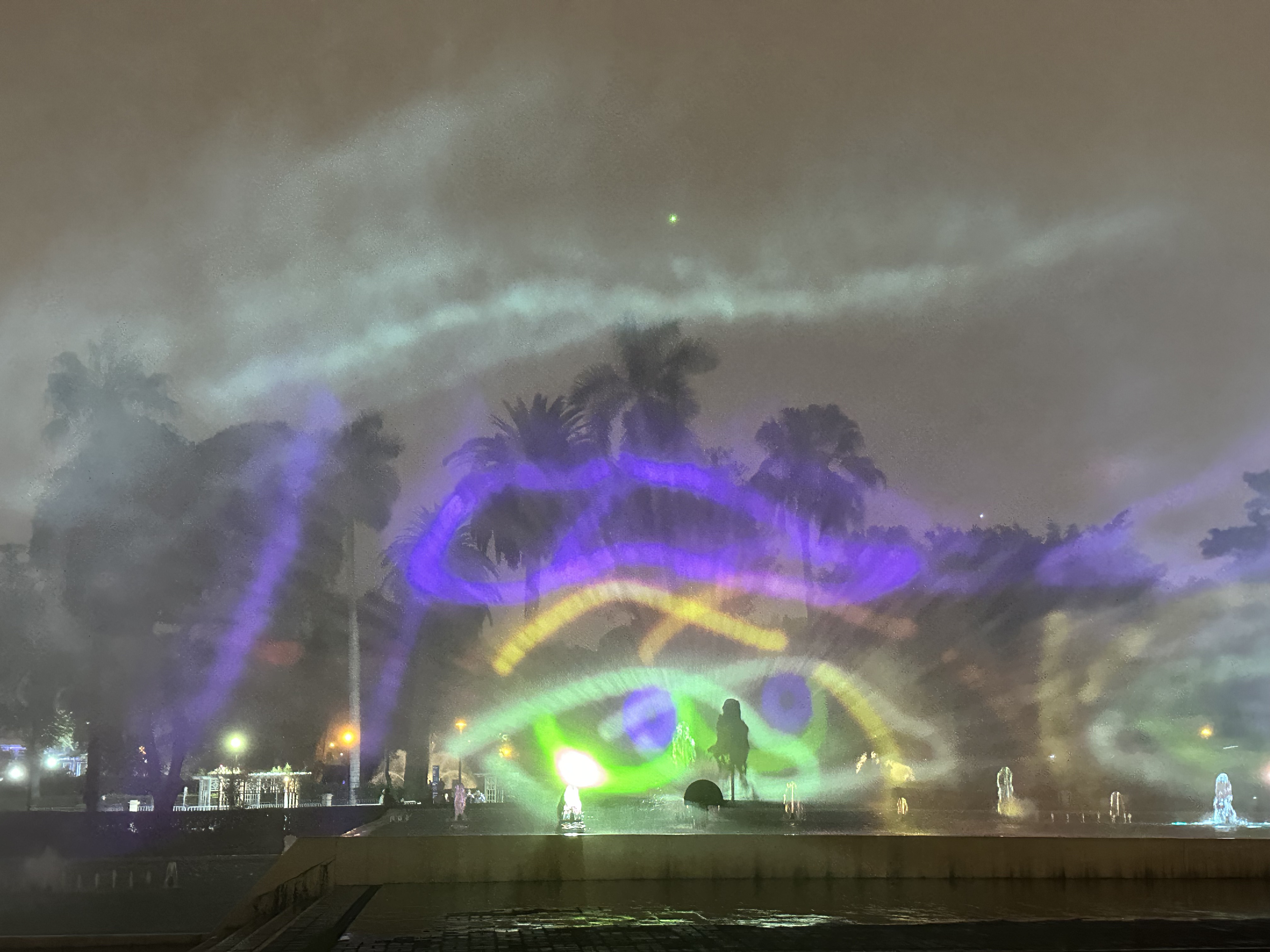
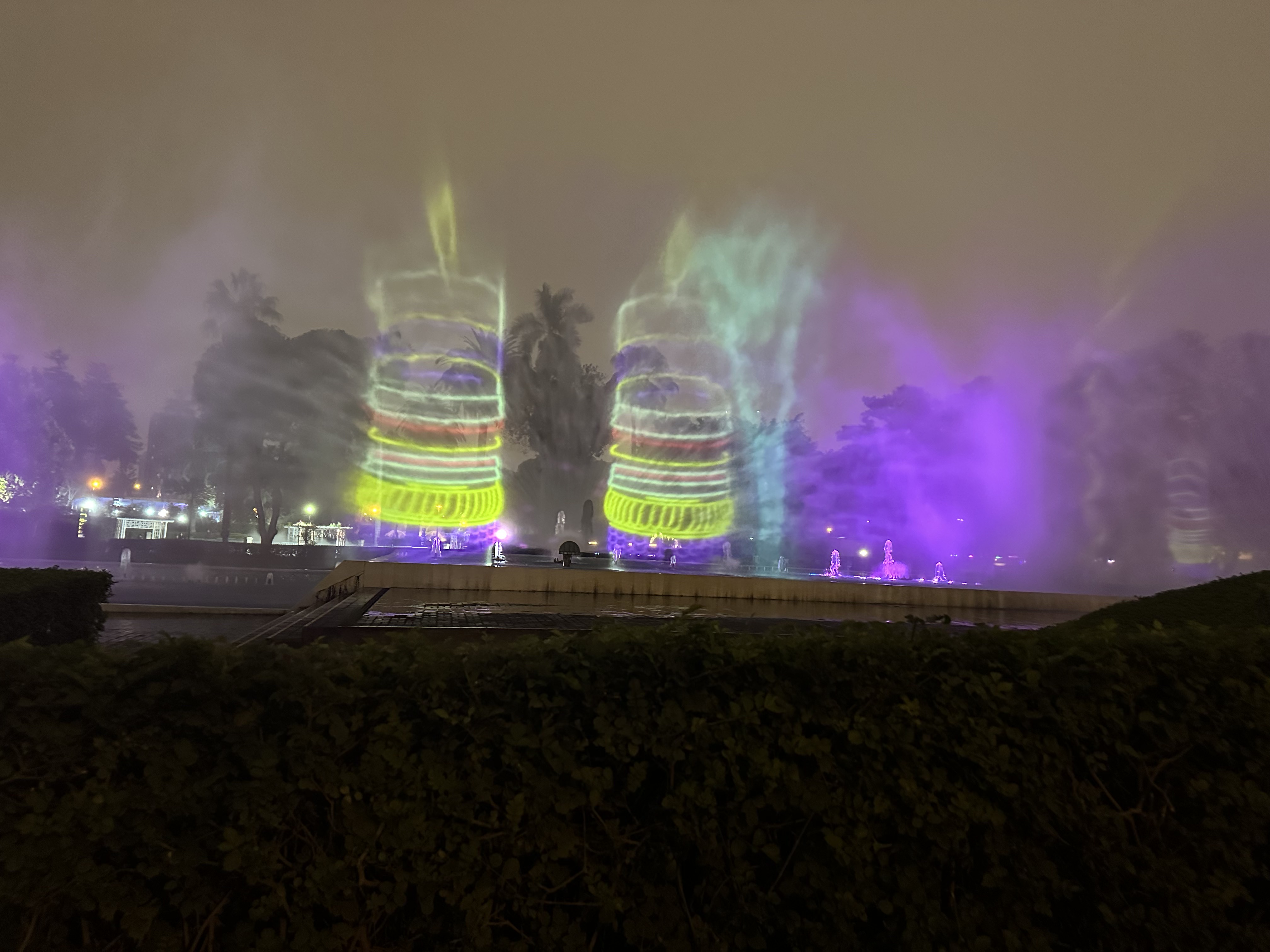
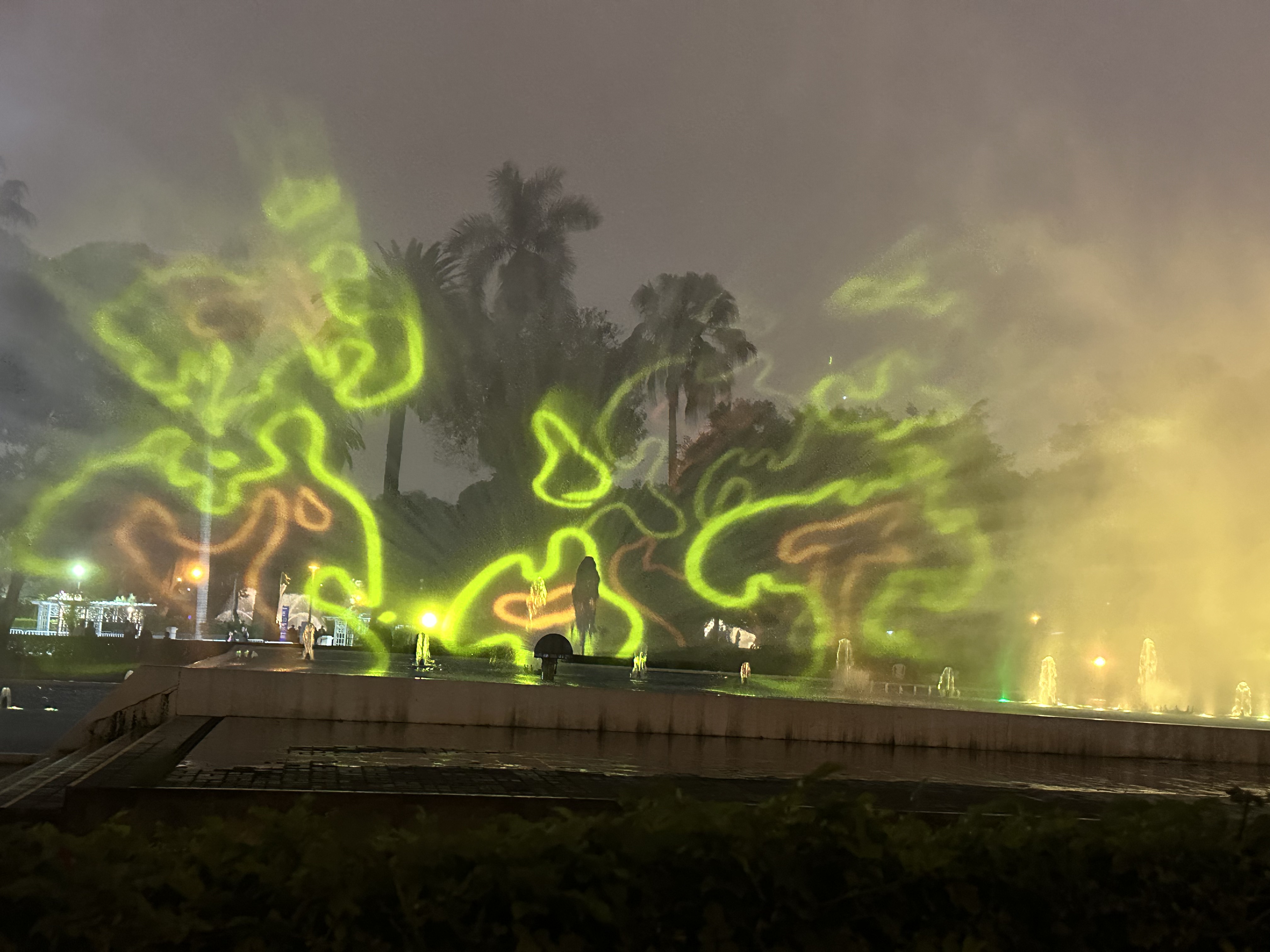
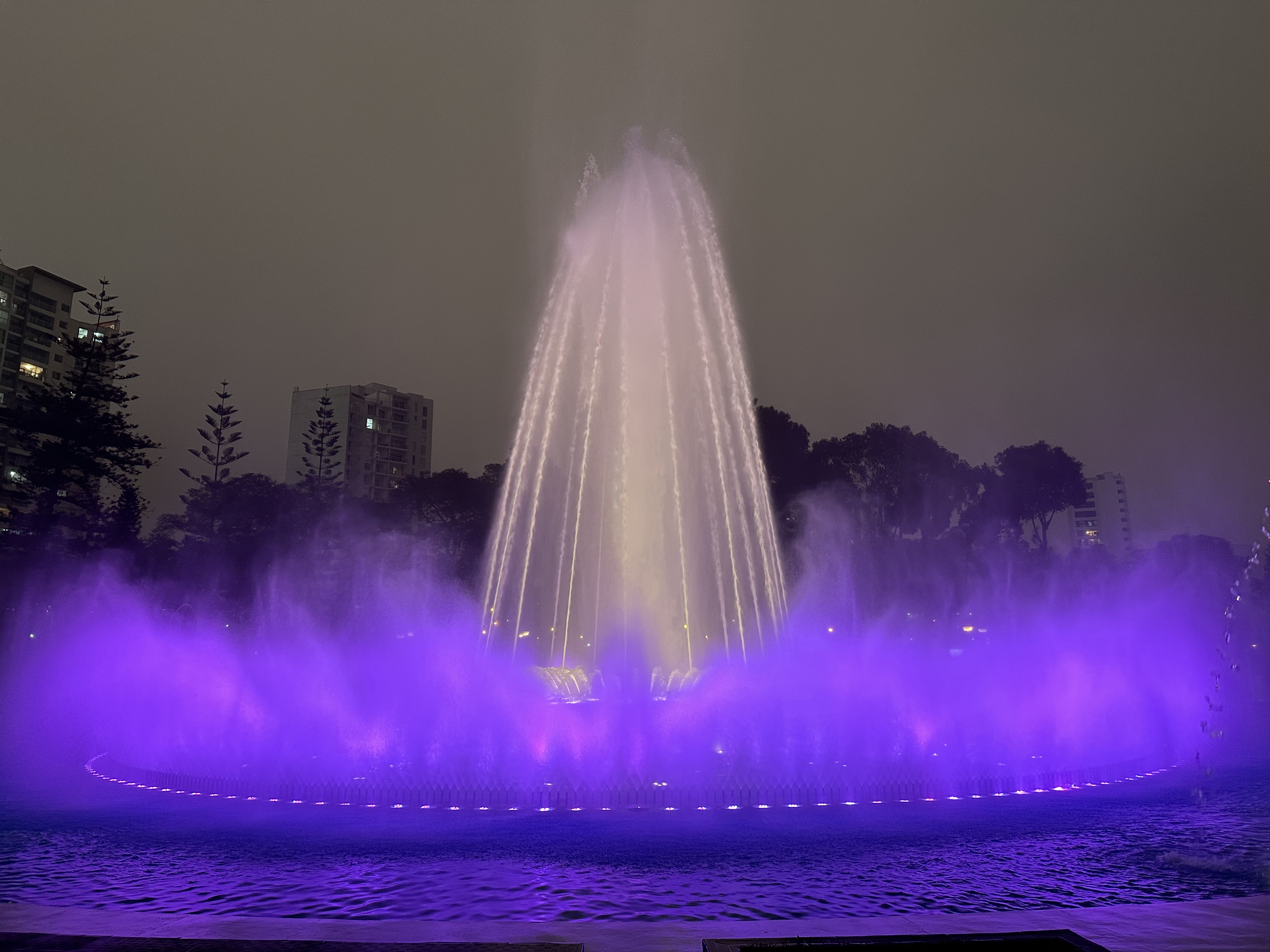
Then we went to a water park to see the Magical Water Circuit. It was pleasant, but I was disappointed as it was really for families with children on a Sunday outing and I was thinking more of a Bellagio-like event. We stayed to the end of the”show” but both Mark and Sylvia were ready to go almost the minute we arrived.
Dinner was at our hotel. Mark experimented with Guinea Pig and liked the dish he got, which had only a small amount of pig in it. I thought I ordered duck, but soon realized that it tasted more like fish than duck and turned out to be paiche, a fish I have had a few times know. Fortunately, it has been excellent every time. Then upstairs to bed for our last full night in Peru.
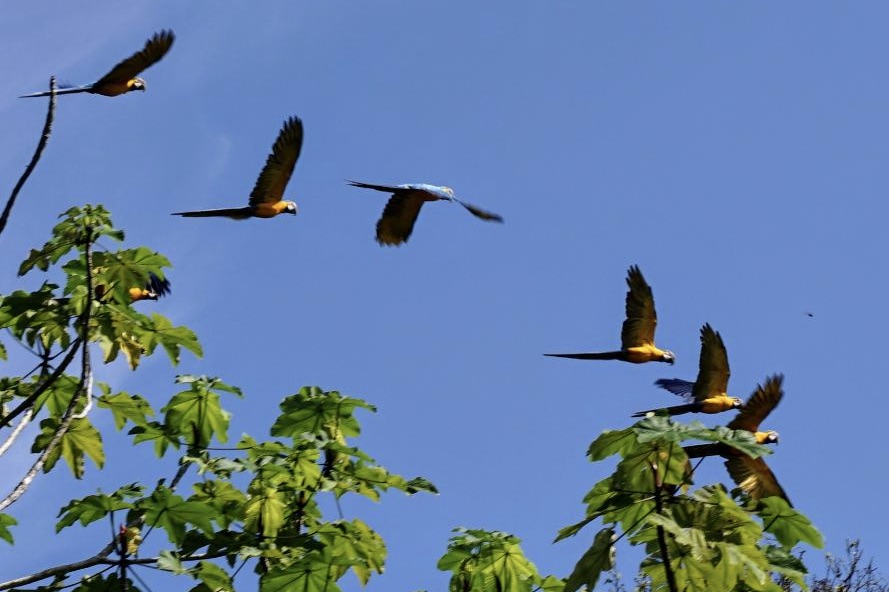
Late yesterday , a few of us went for a tender ride to try to find Macaw birds up the Maranon River, which we reached early in the day. There is no debris or lettuce in this river and it is very black and pretty. We are now at the most southern point of our trip. We found several Macaw high up in the hollows of dead palm trees. I did not get a photo of them flying but I managed to get a few looking out from the tree stumps.
Thursday, July 11, 2024
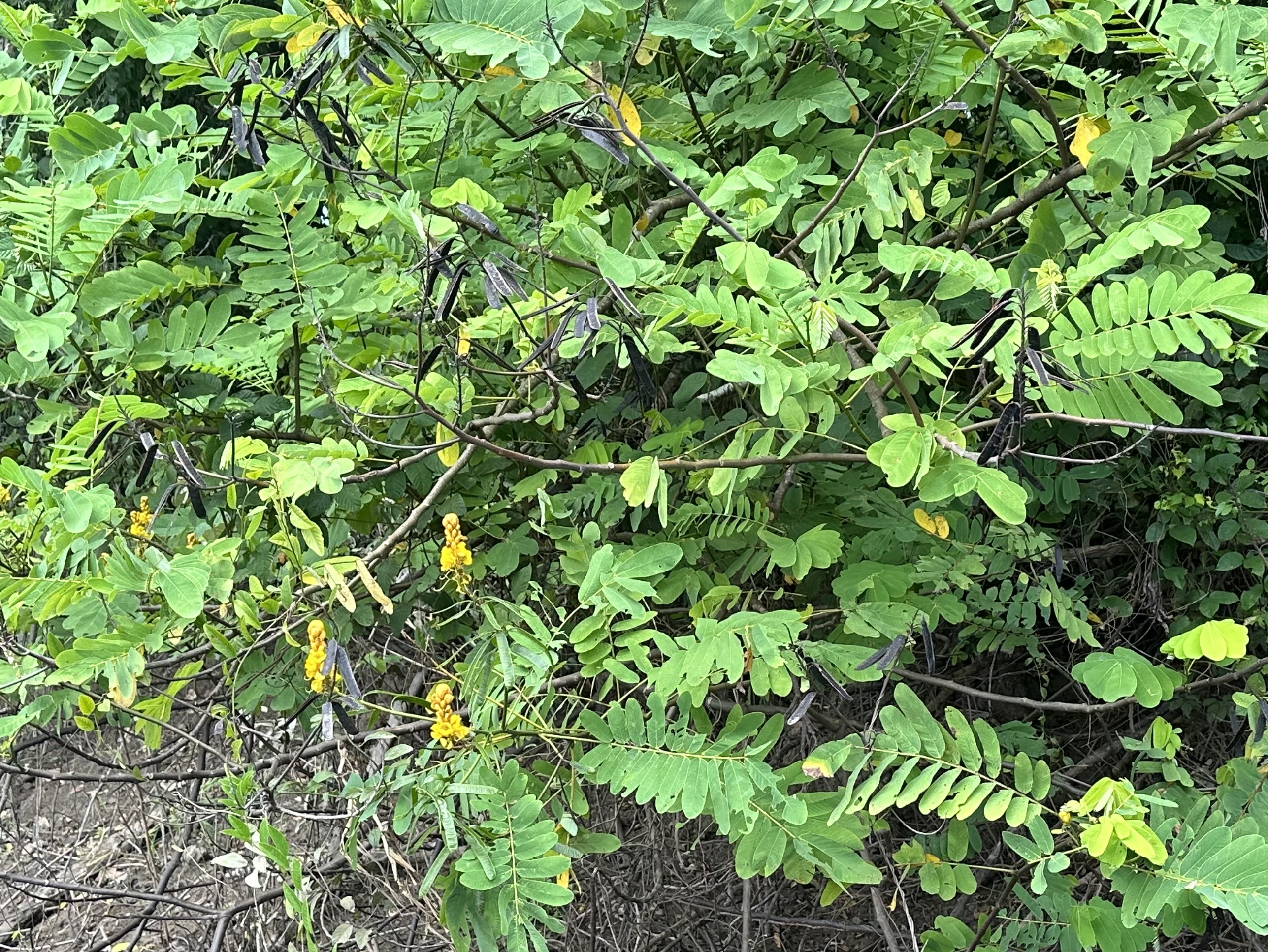
This morning at 9am a group of us set out for a whole day of activities. First we registered into the national reserve at the ranger station. I caught a photo of a flowering acacia. This plant is supposed to help people with kidney problems. We started with biking and kayaking. Mark went biking while I happily went kayaking.
Acacia bush. Good for kidney problems
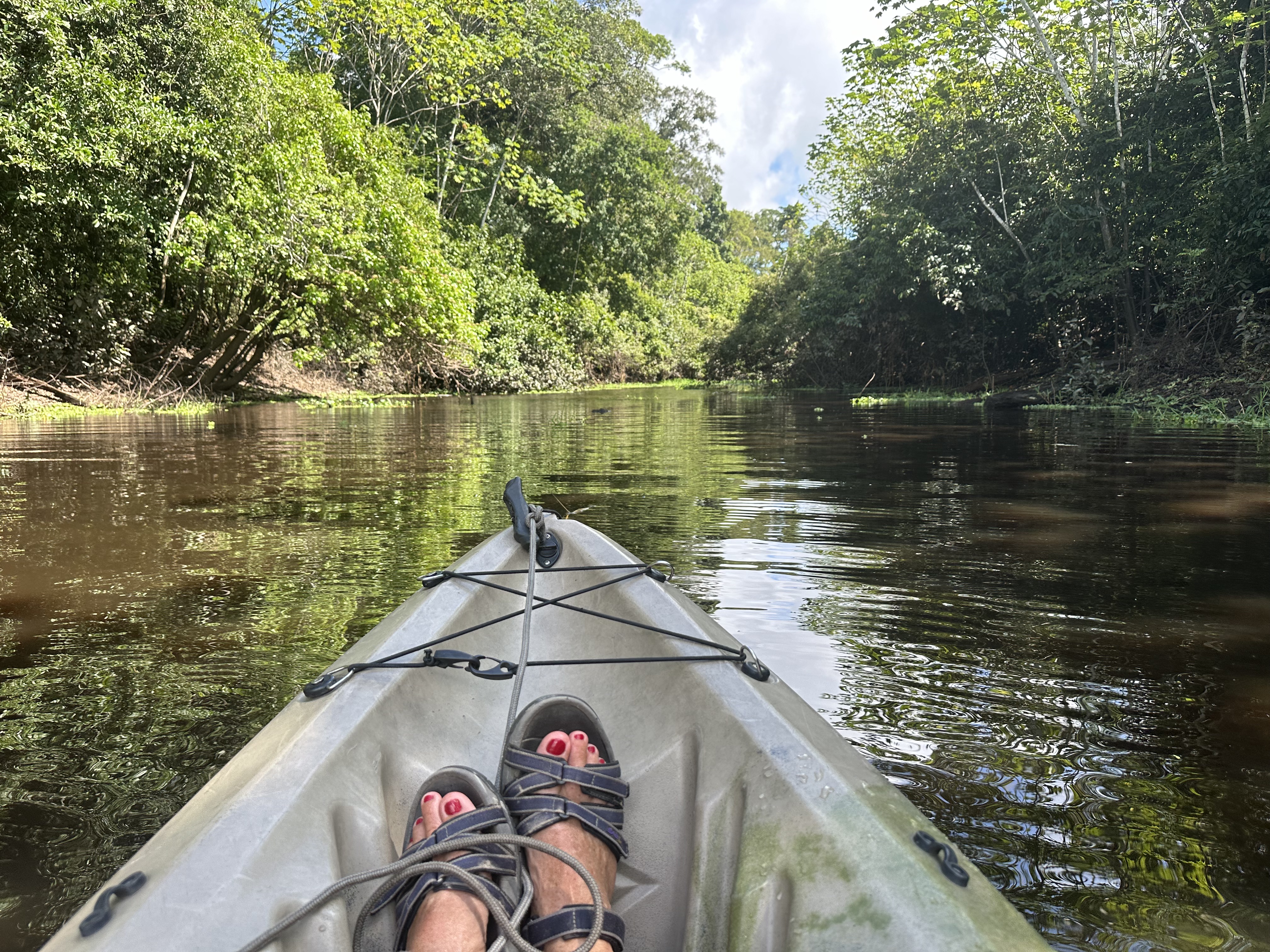
My partner was our female medical doctor who, unfortunately, spoke no English. I learned quickly that she also did not have any kayaking experience. Most of the time I asked her to stop and enjoy the ride while I did the kayaking. However, she was a good medic. I had woken up with a bad head cold and she gave me some pills for it at breakfast. By the time we went kayaking , I was already feeling better.
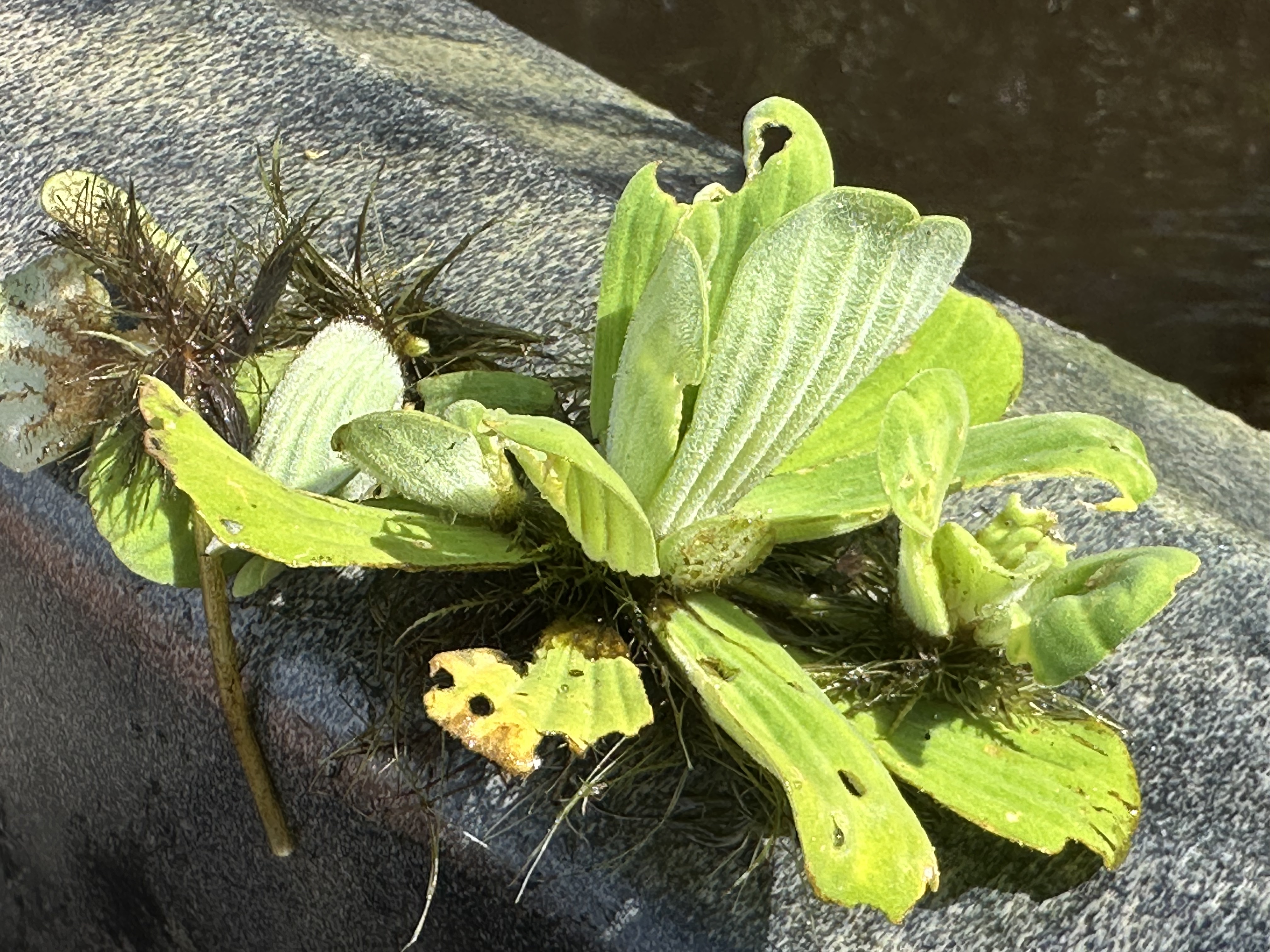
The channel getting clogedThe medic, Liliana, who kayaked with me.Entering a nerrow channelwater lettuce
That worked pretty well and we meandered around a couple of little tributaries off the main black water river, an offshoot of the brown Amazon. After we had done enough kayaking, about 45 minutes, everyone returned to the tender and up the river we went to get to the designated jungle walk. We all changed into rubber boots and headed out into the jungle. It was full of unusual creatures.
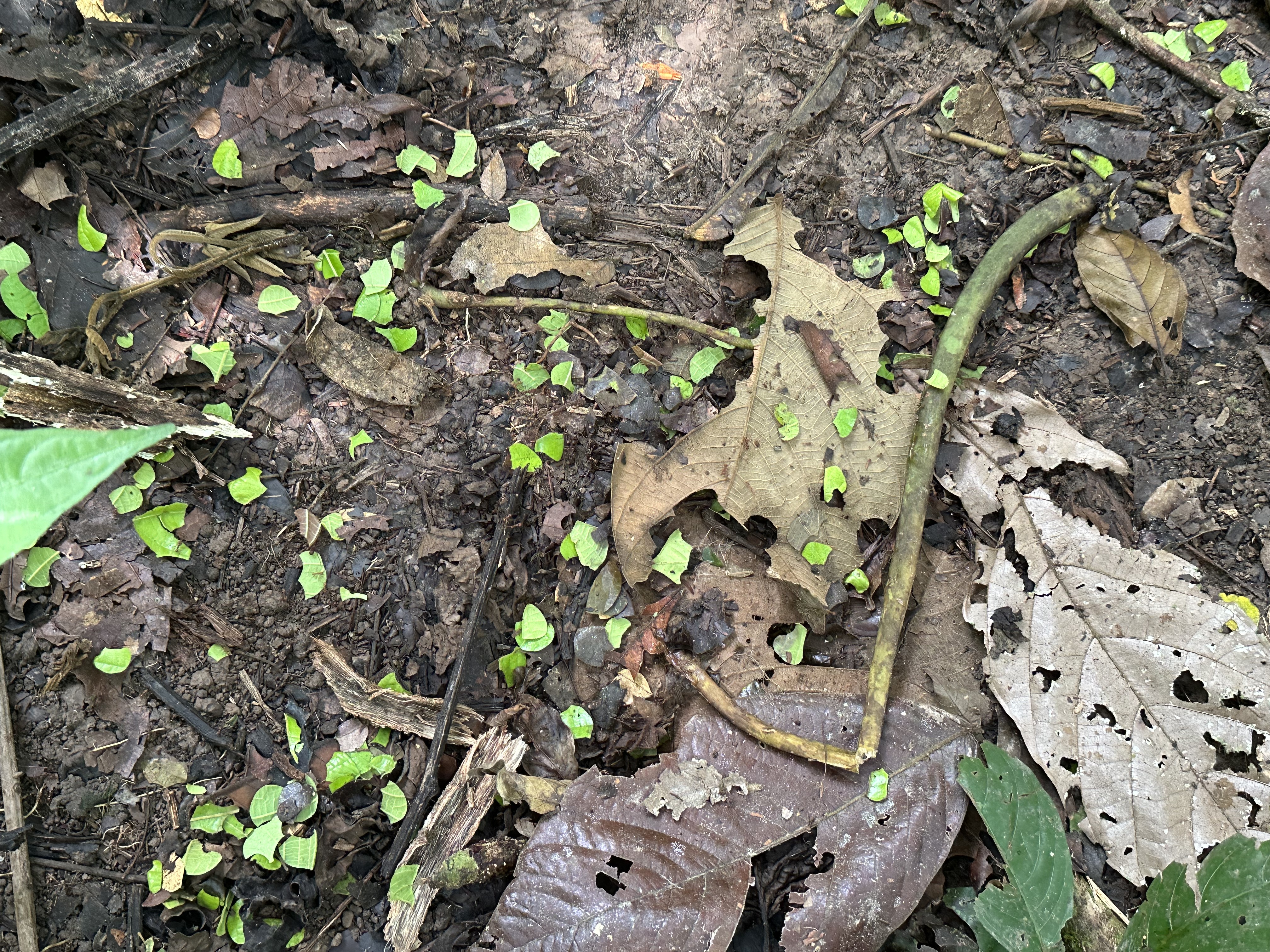
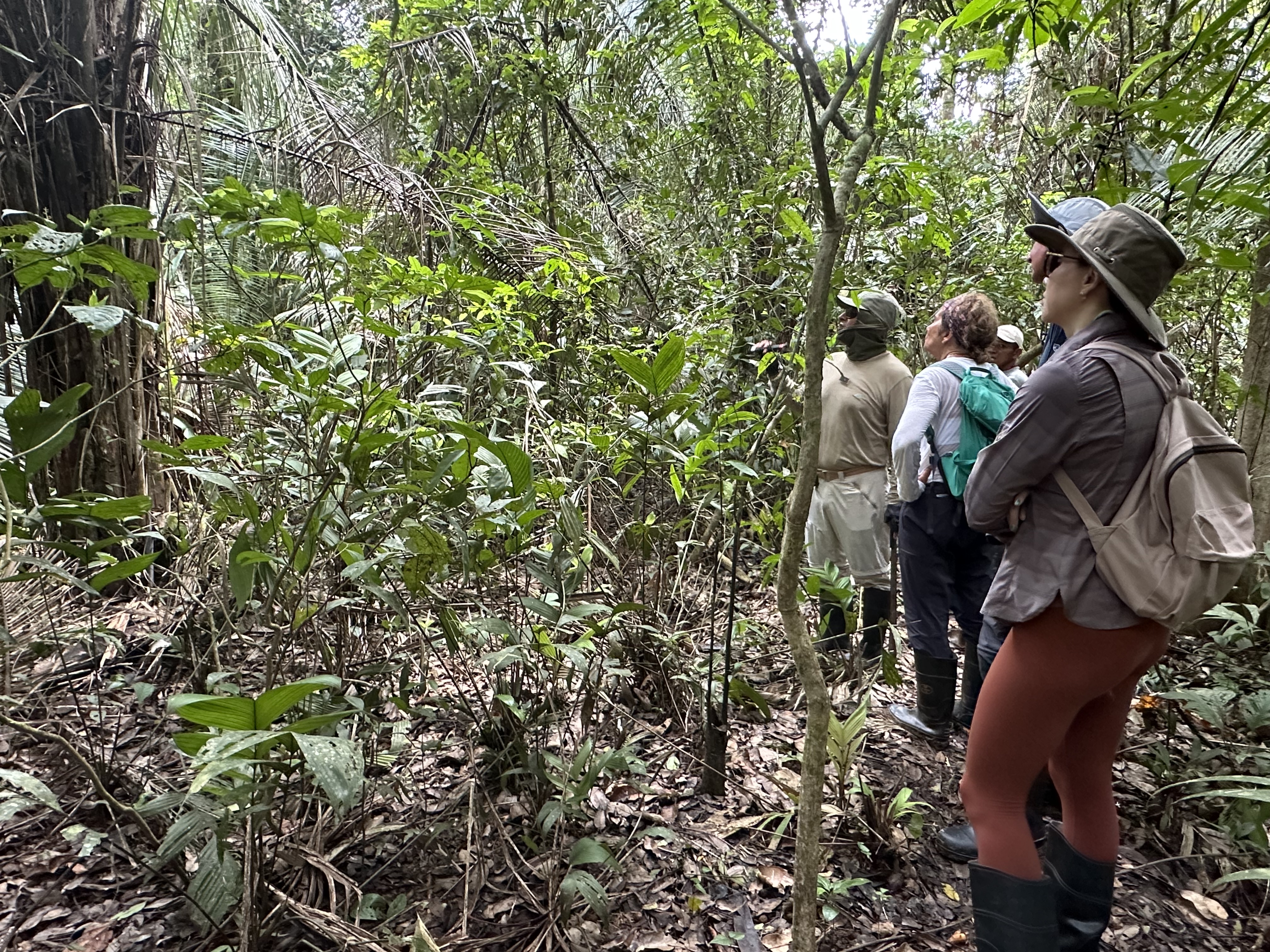
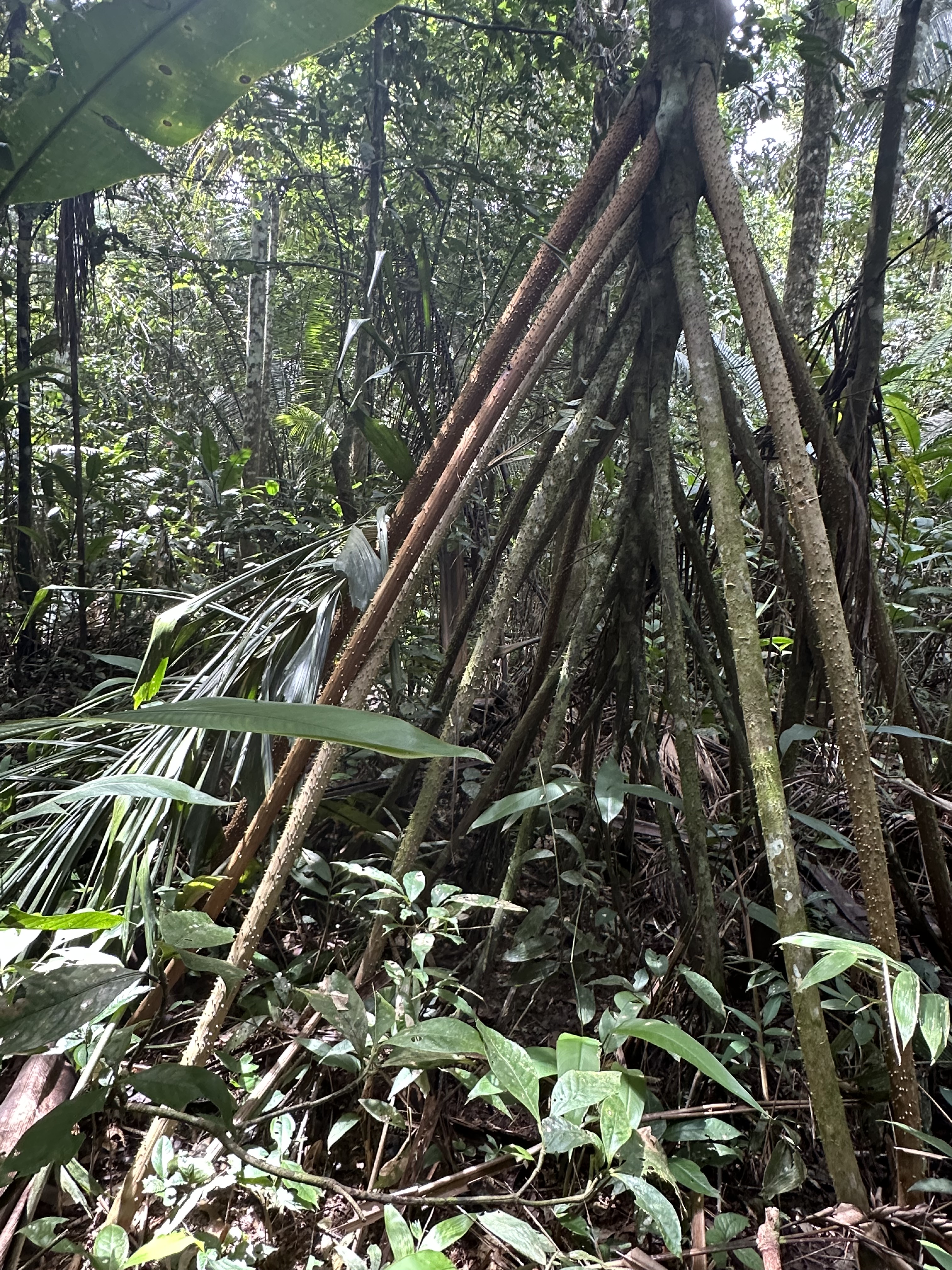
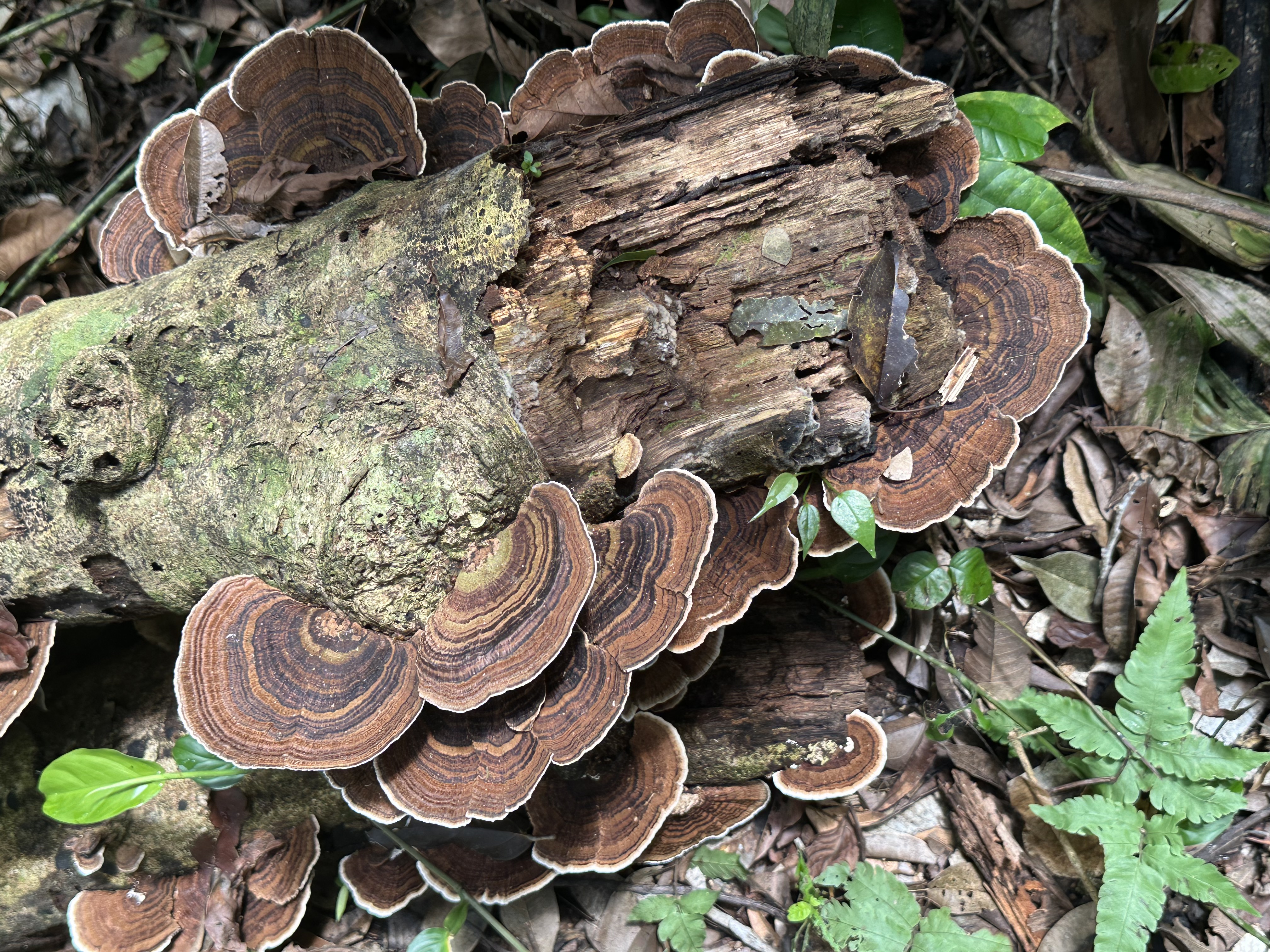
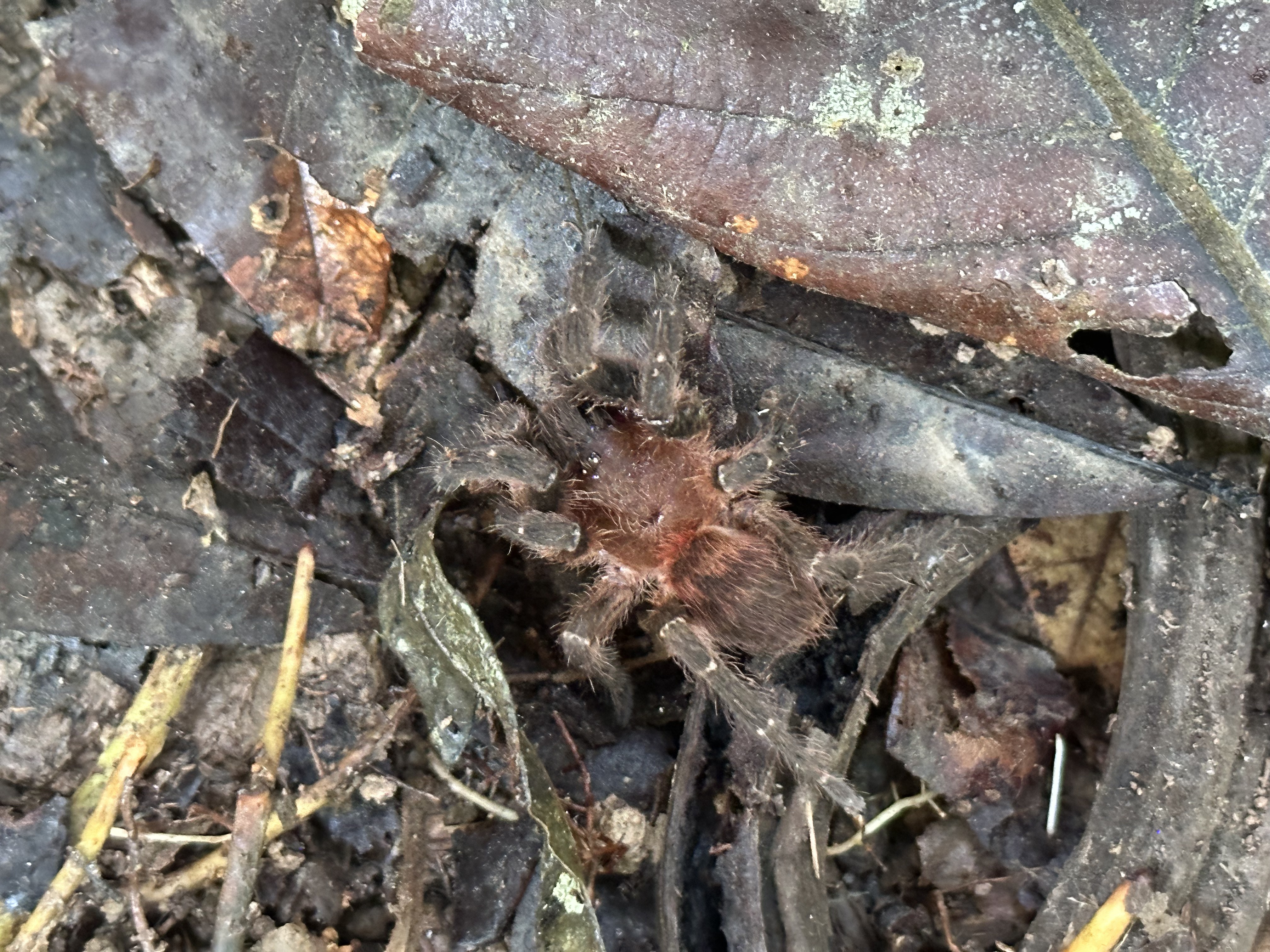
Leaf cutter ants in action The Jungle WalkWaiKng Palm TreeMagic Mushroom for smokingA Terantulla on the path.Rosewood TreeCatahua Tree. It has very poisonous nectarAyahuasca vine used for body healing Yellow Crowned Rat behind the green leaf
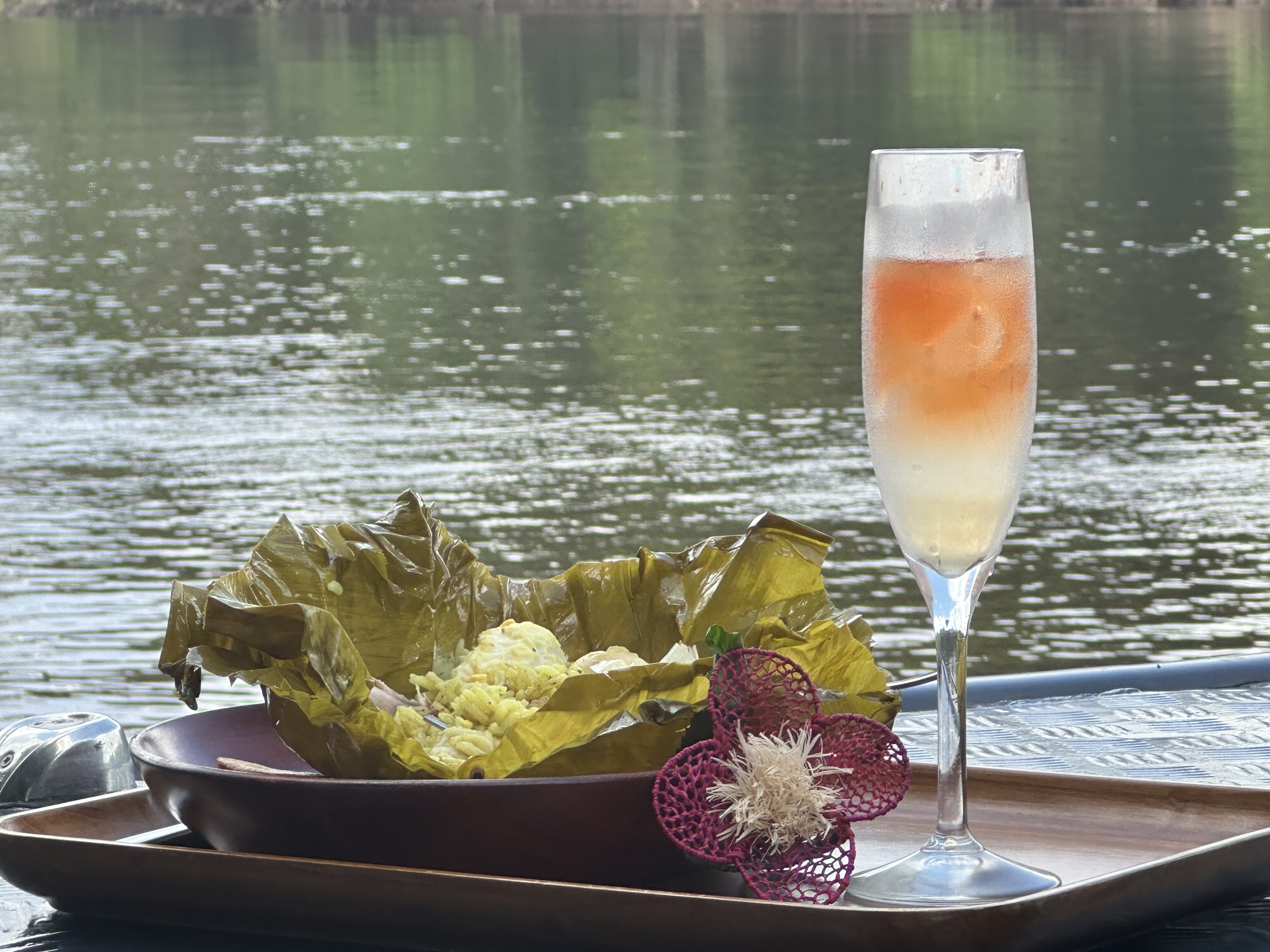
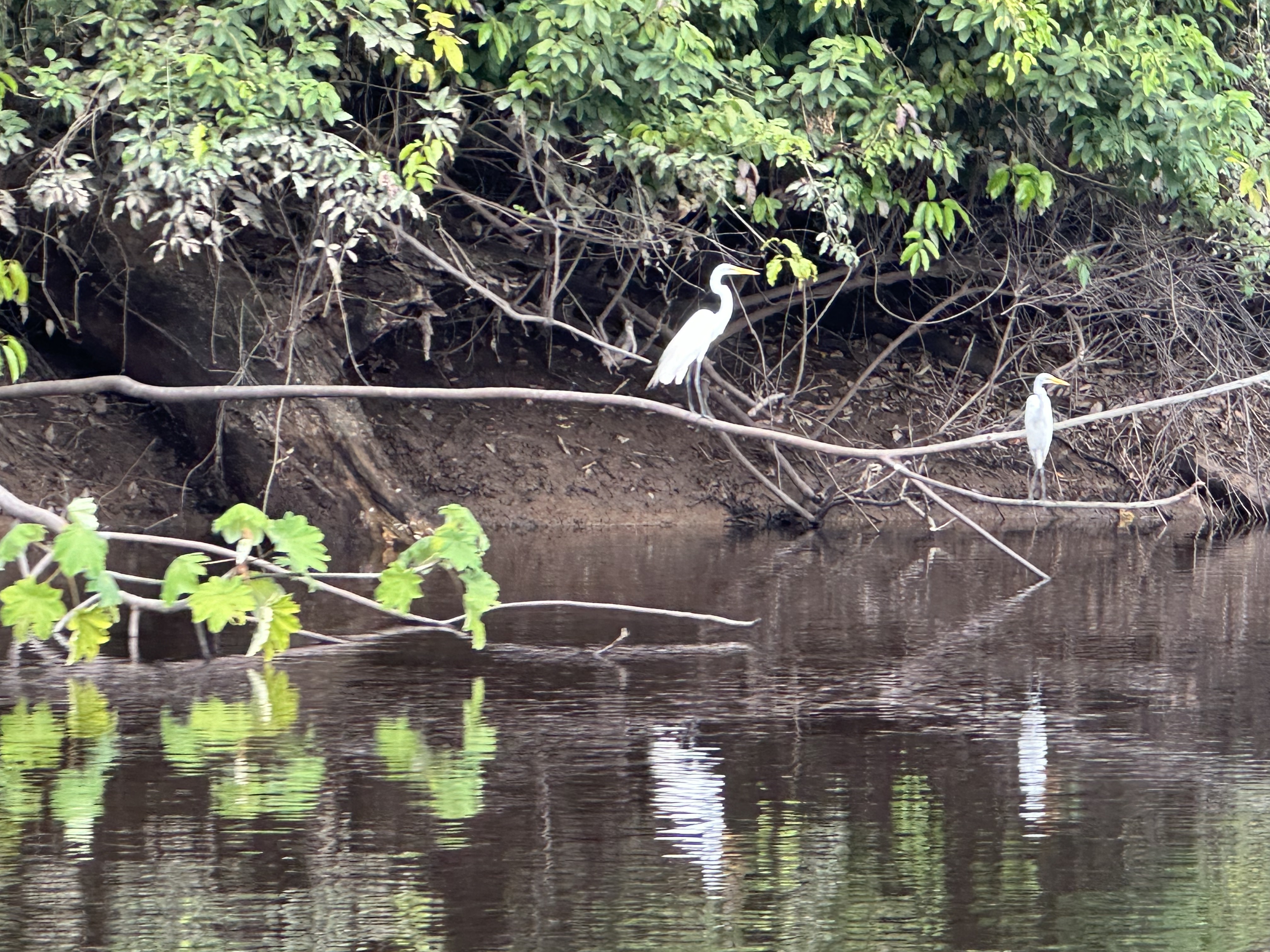
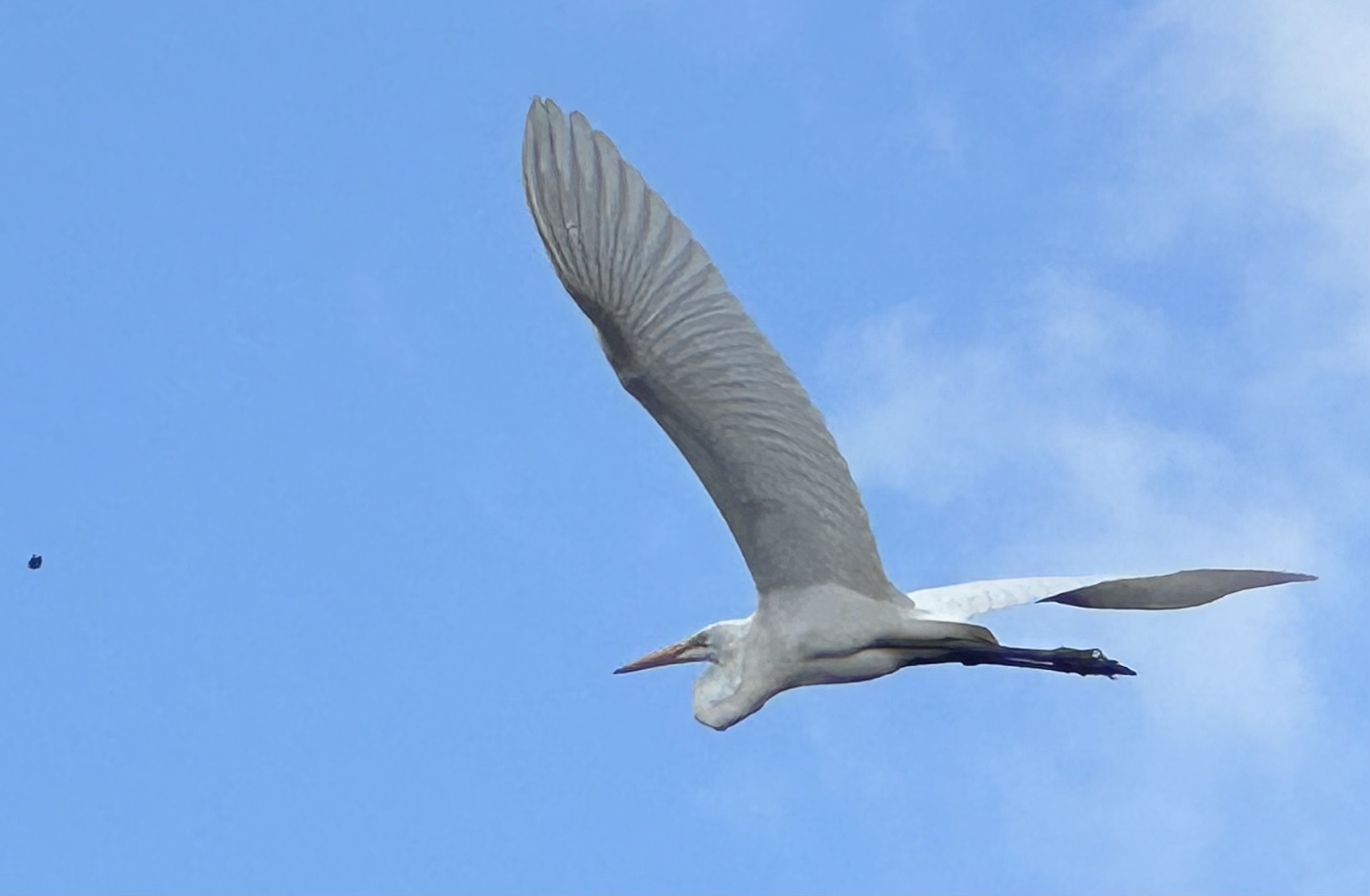
After the one hour walk we got back into the tenders and rafted up with the food tender, bar tender included, for a picnic lunch. This time it was rice, chicken and a hard boiled egg wrapped in a banana leaf, hearts of palm salad, chocolate salami and and Oreo like cookie. We are being fed oh so well. Near by were branches full of egrets. I even caught one in flight.
Shortly after lunch, we motored out into the middle of the river and dropped into the water for a leisurely drift while wearing life vests. Mark took his off and floated on it instead of in it. We were definitely drifting downstream, but decided to let the crew follow us rather than fight the current. The water temperature was perfect. I wish Lake Tahoe was like this. Eventually we were ready to go back to our ship and called for the tender.
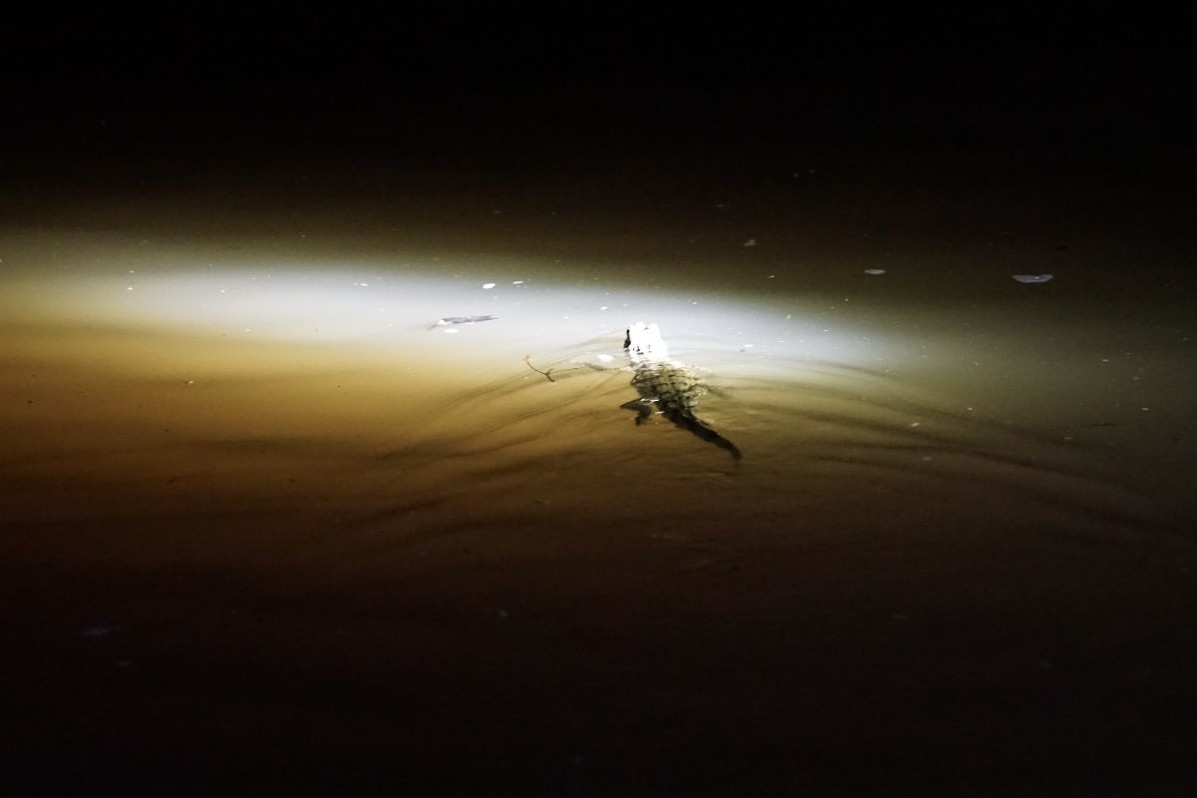
A black Headed HeronA flock of McawsA sea otter popped his head up Sunset from the shipA caiman at night. A member of the alligator family.
We picked up a few more photos on the way and I must give credit for the animal images to Wallace, a fellow traveler. It was about a 20 minute run back to the ship, followed by showers and moisturizers. Most people in our group had received many mosquito bites and too much sun. We had faired fairly well in both cases. Once cleaned up we spent the rest of the afternoon on the pool deck enjoying the breeze as the ship motored north toward Iquitos.
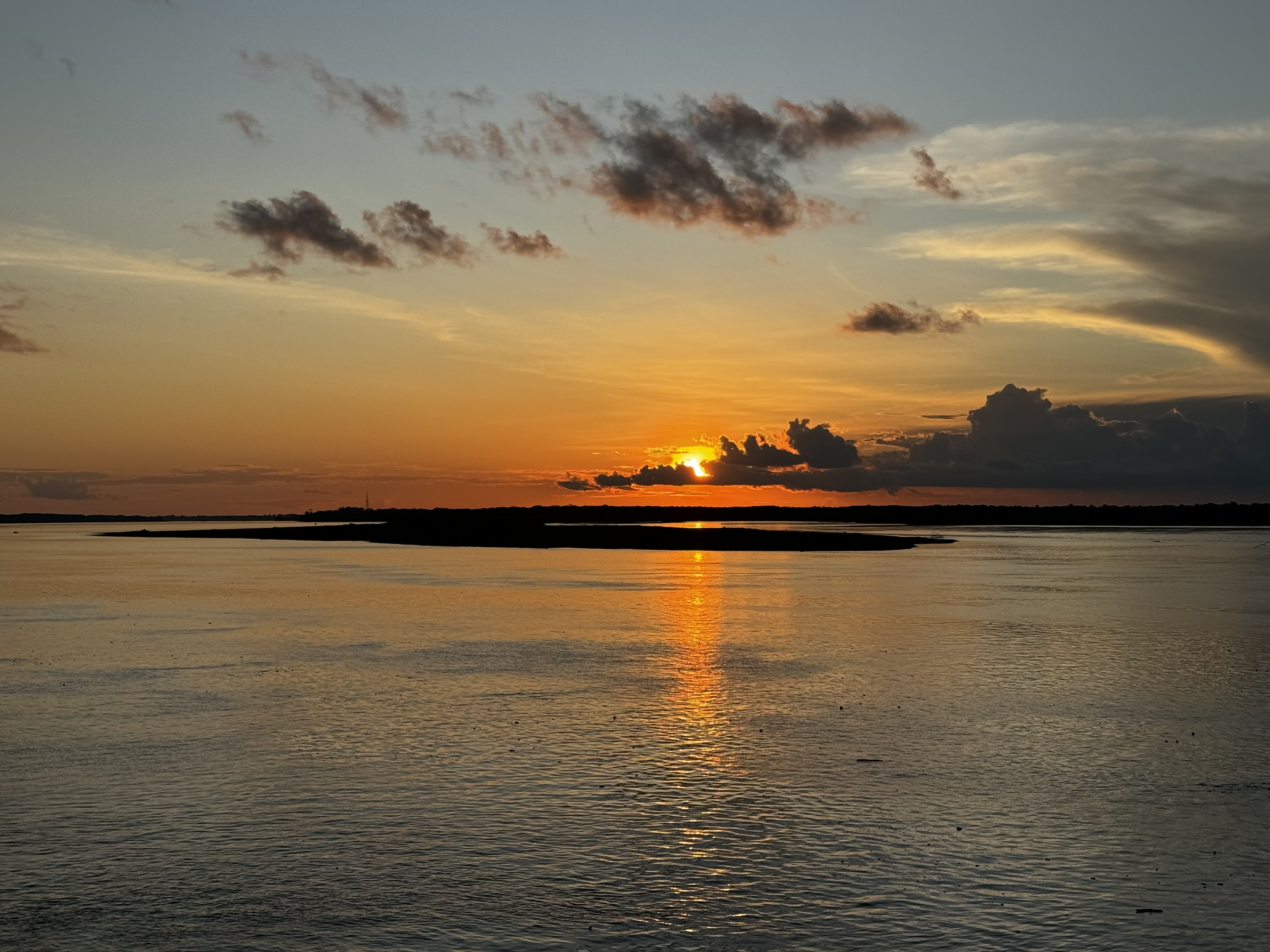
As sunset, the crew band began to play and everyone onboard showed up to share drinks, appetizers and music. Mark took a lovely photo of the sunset. Then we had dinner and went to bed.
The weather has been nearly perfect the whole week. Only one hour of rain on one afternoon. Otherwise sunny, but not overly hot or humid.
Friday, July 1, 2024
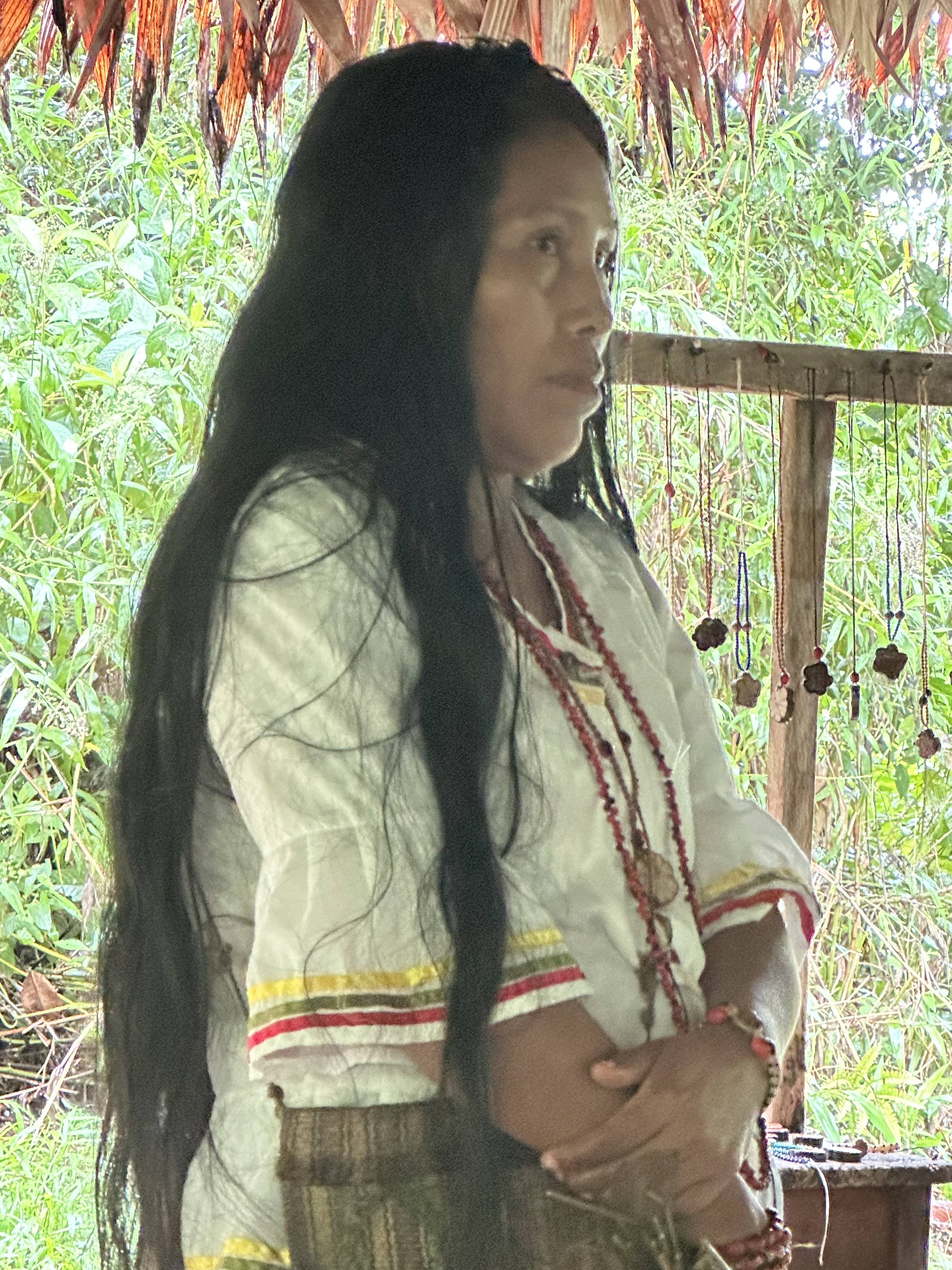
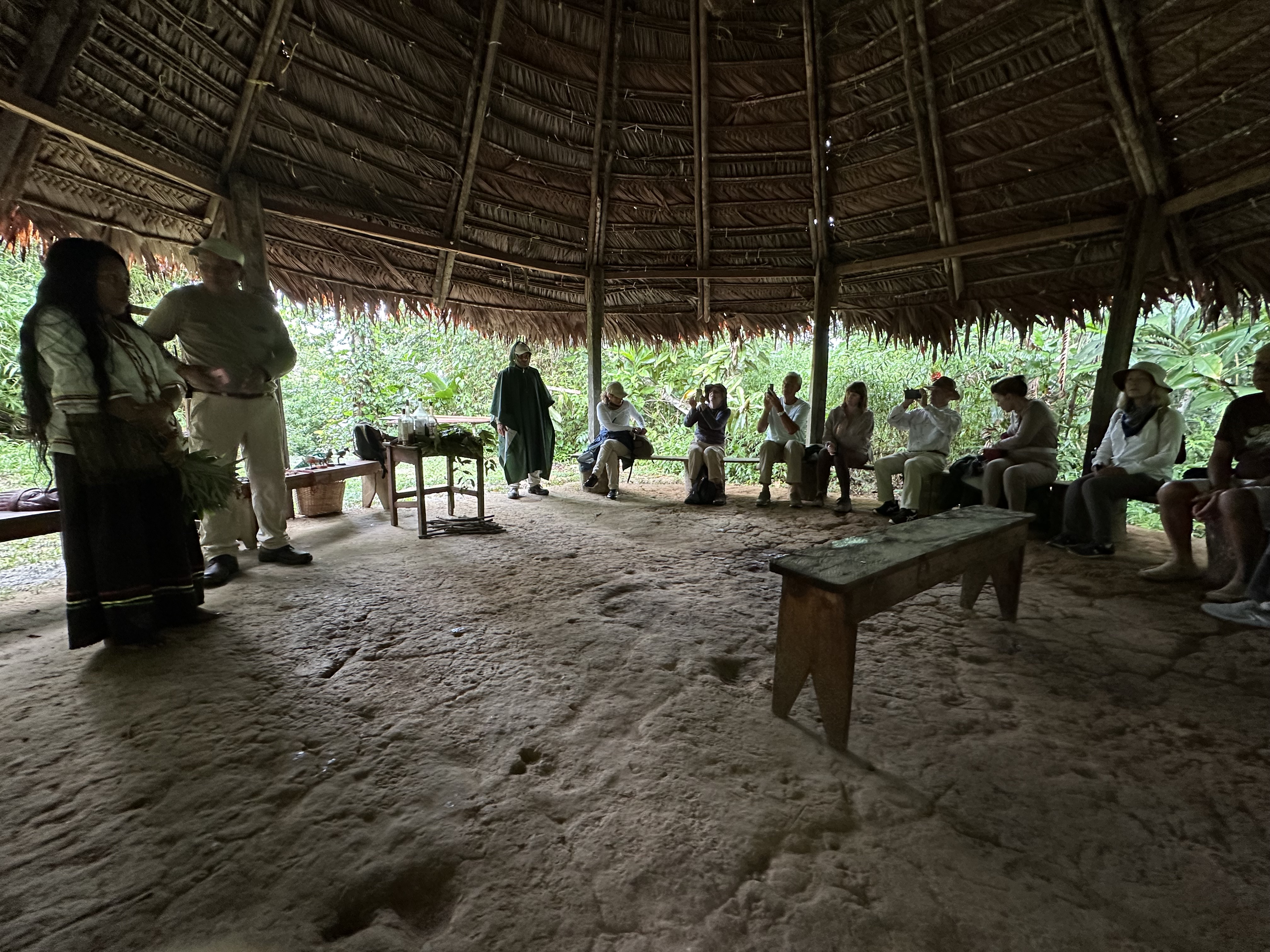
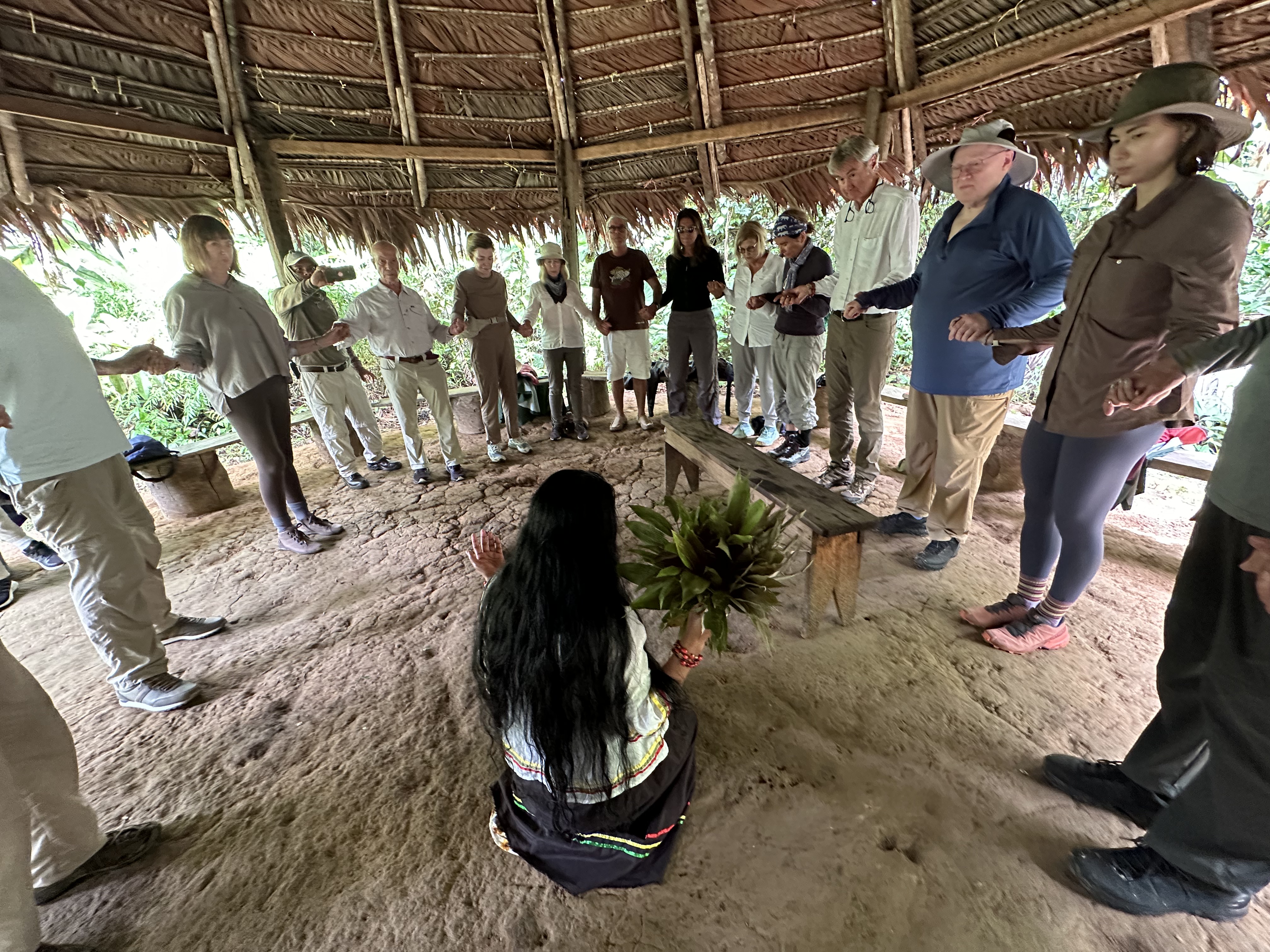
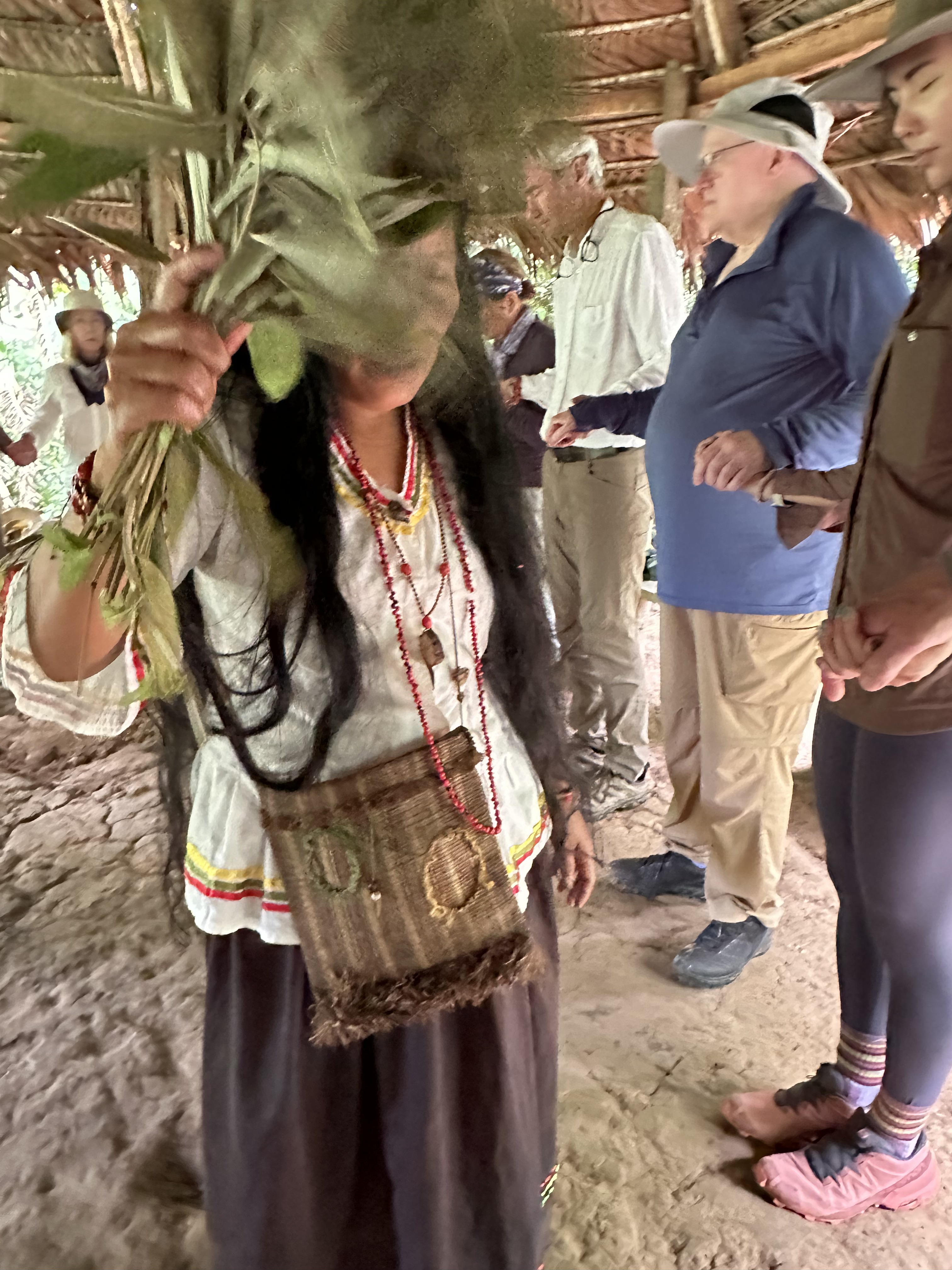
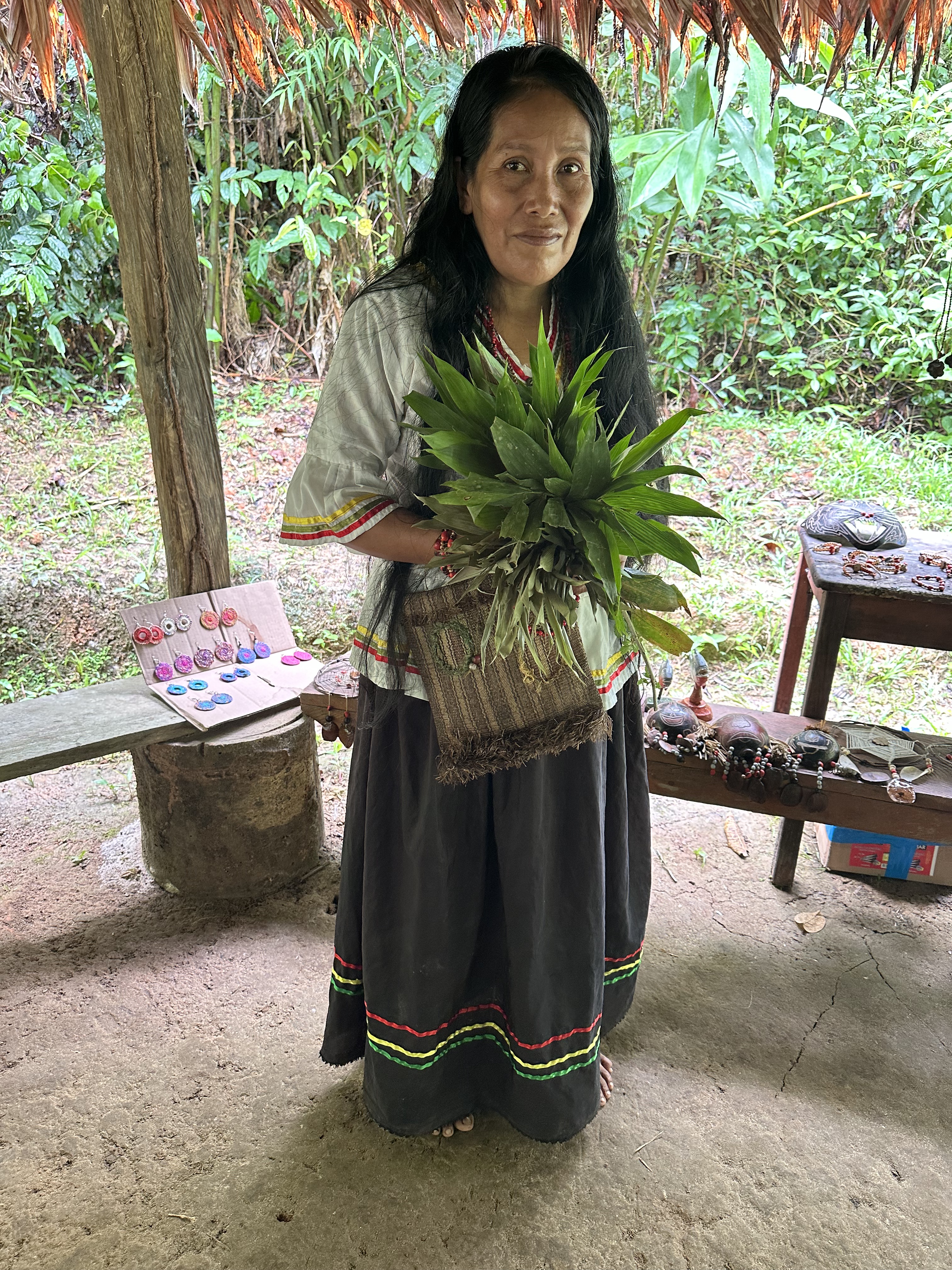
We wake up still on the clear, black Moranon River. Kept breakfast simple with fruit and yogurt. Then out at 9am for a Tender ride to visit a Shamana (female shaman), named Karuka. She is a 31 year old local healer who was chosen at age 14 by her grandfather, a medicine man, who had a vision that she would become a shaman. She agreed and spent 8 years under a strict set of rules to follow as well as a strict diet. Once she finished her training, she became a shaman and started training others in the art.
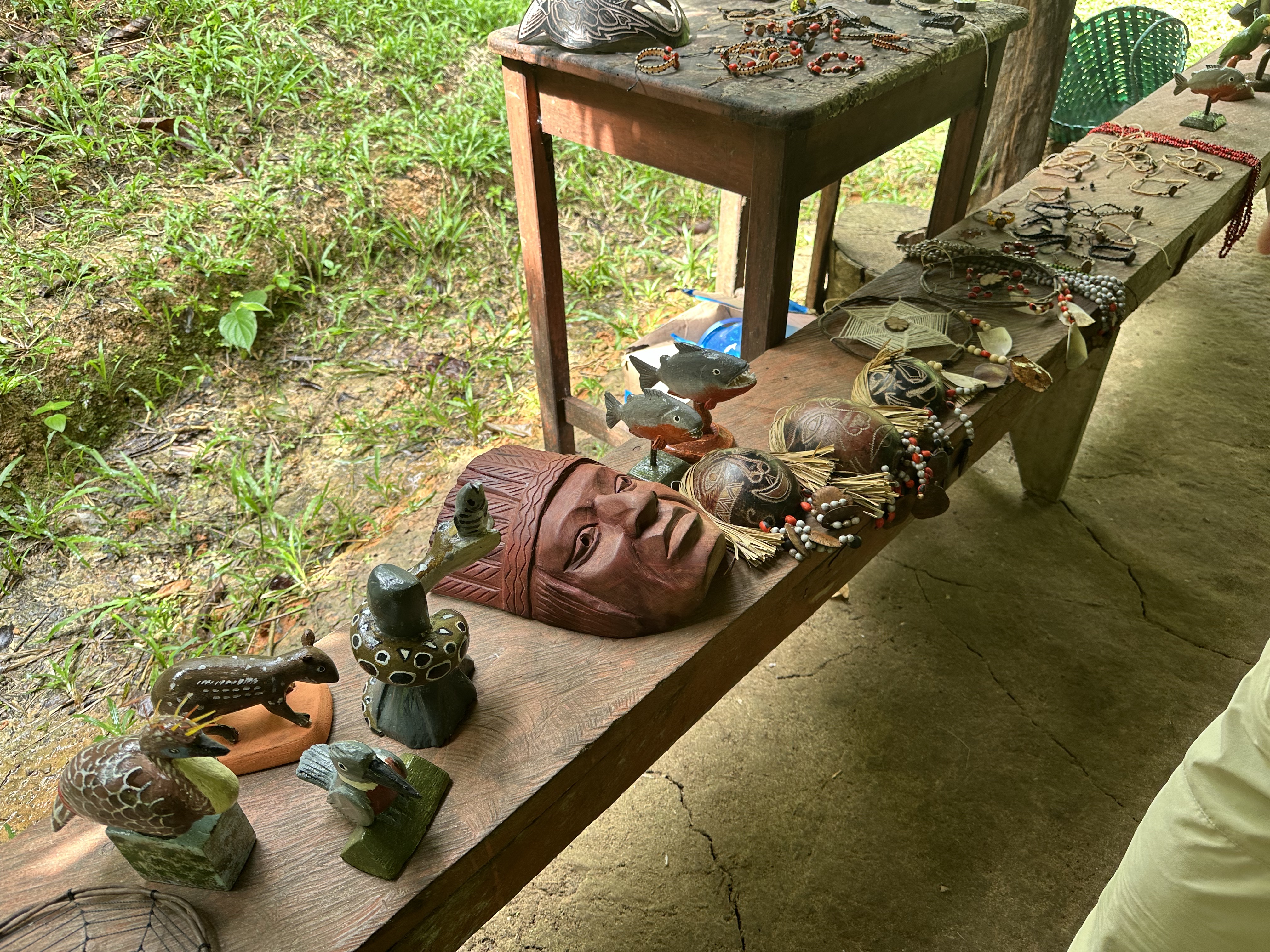
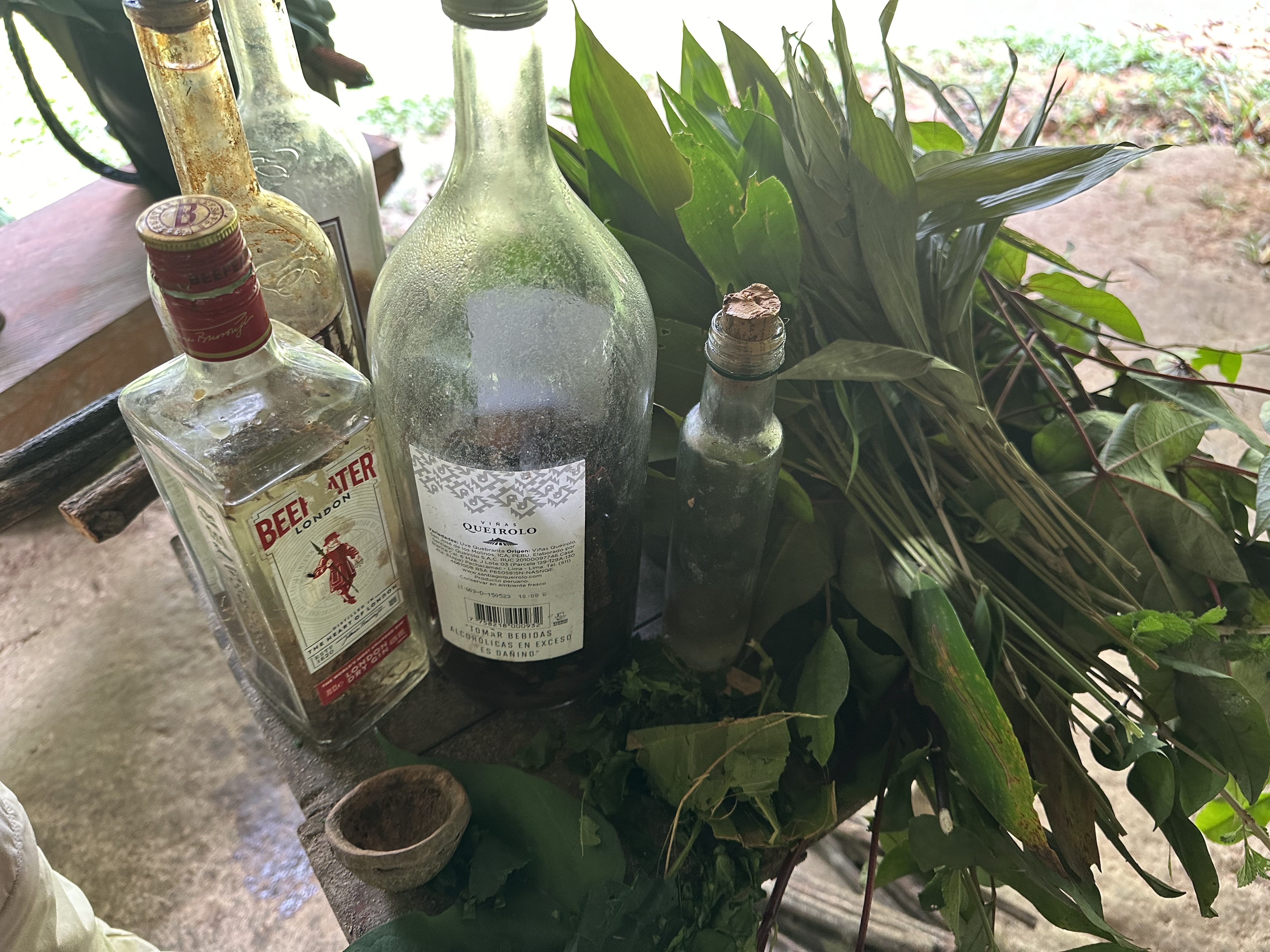
She now has a normal life with a husband and three children. She talked to us about some of her special medicines including Ayahuasca (a wood vine, the juice from which causes significant dreaming); Wild Garlic (crunch a bunch of leaves and inhale the smell as deeply as possible, to prevent or cure Covid, and good for sinus problems); Dragons Blood (the reddish sap is mixed until it becomes a white paste and is used as an anti inflammatory against mosquito bites among other things.); Copaiba ( the sap of which is used for arthritis). After rubbing the Copaiba sap into the joints of several of us, Karuka gave us a blessing and sent us on our way. We bought a bracelet with Ayahuasca wood in it and a Jaguar mask. Then we walked a slippery, muddy path back to the tenders and motored 45 minutes back to the ship. We lucked out with an overcast sky, but no rain.
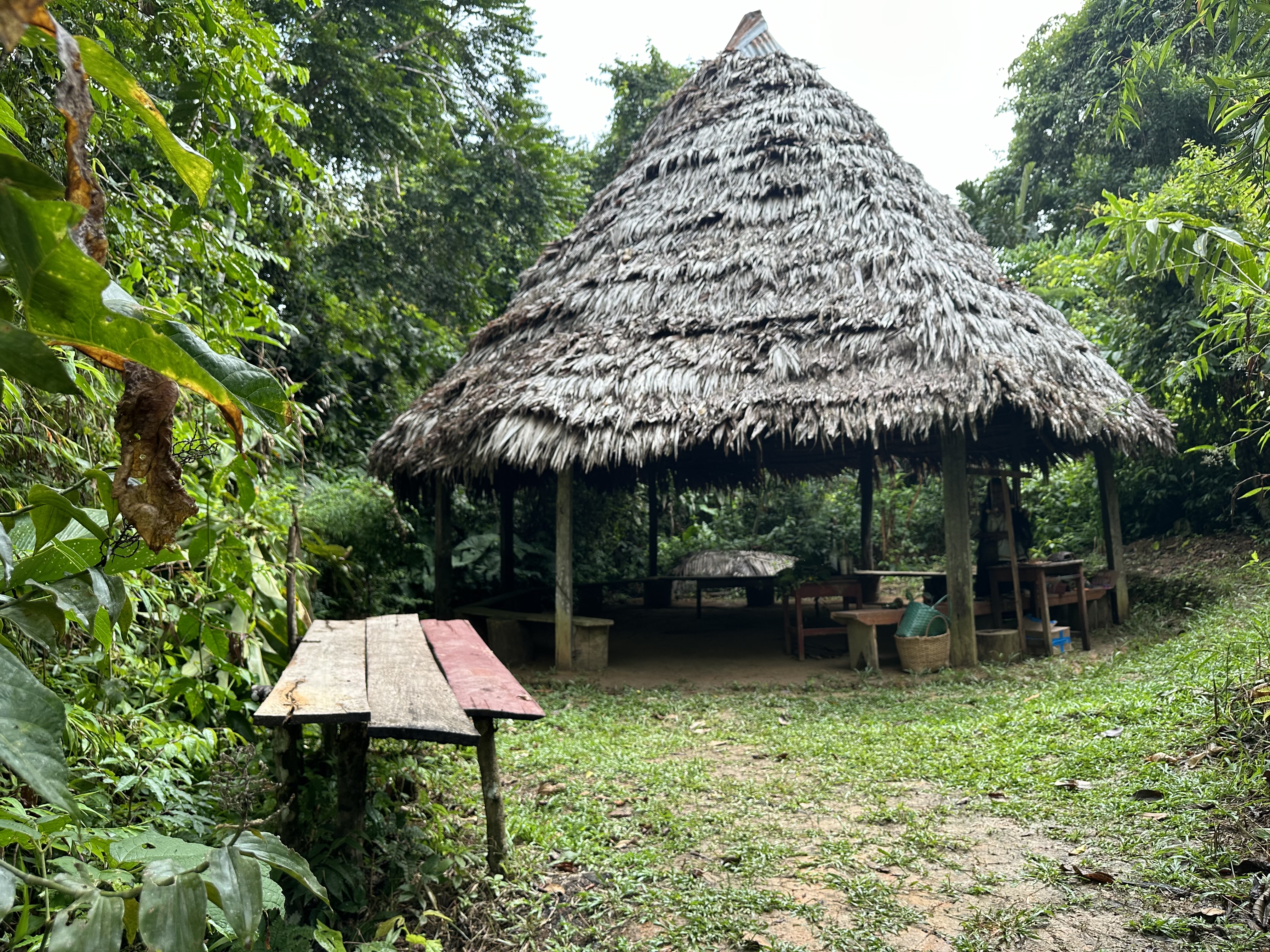
The banda where we met with Karuka Karina waits to talk to us.Various crafts for sale Various saps, barks, leaves and salves used in healing people.Juan translates Karuka’s wordsKarina gives us all a blessingKaruka giving us a blessingKaruka
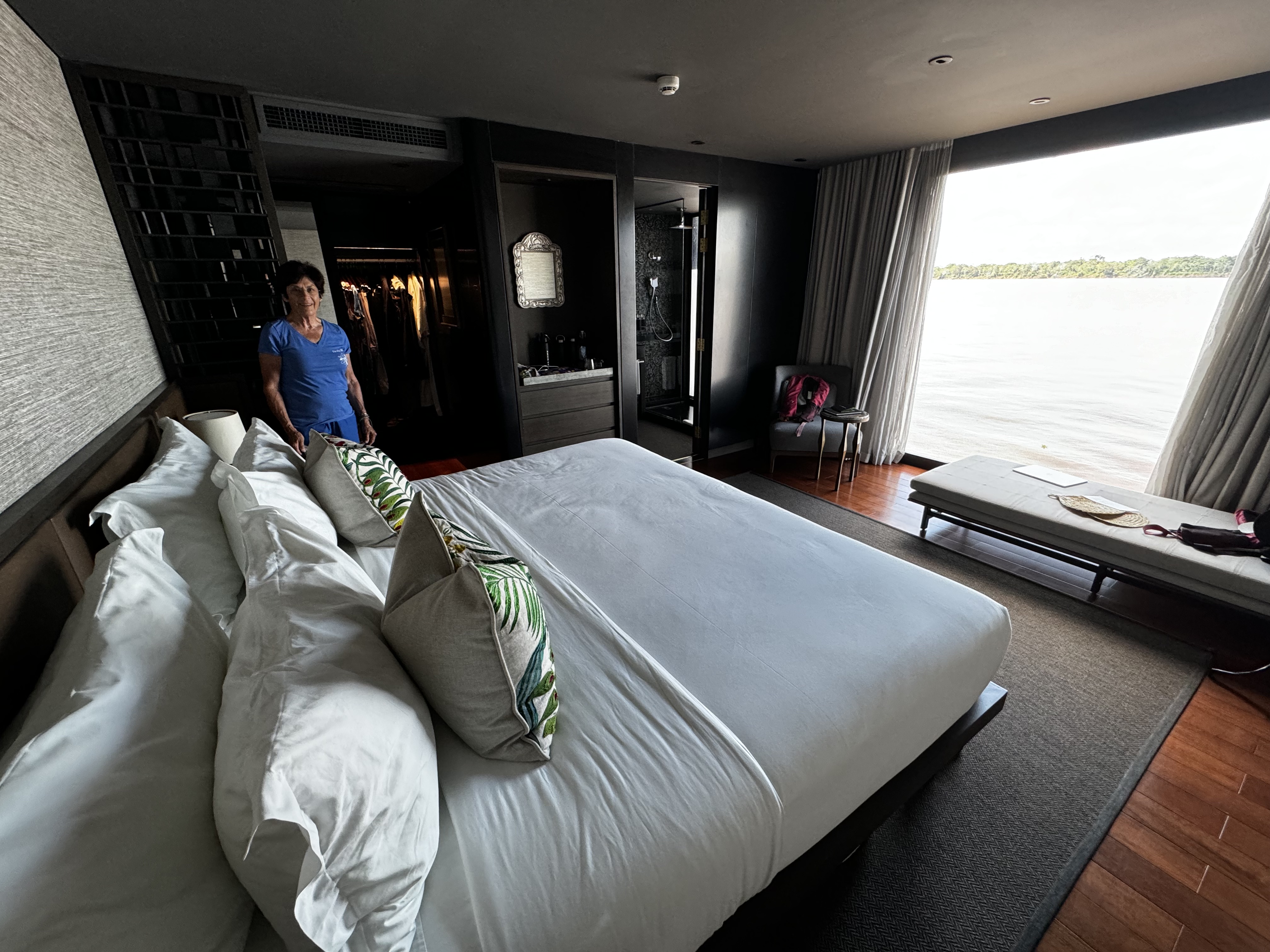
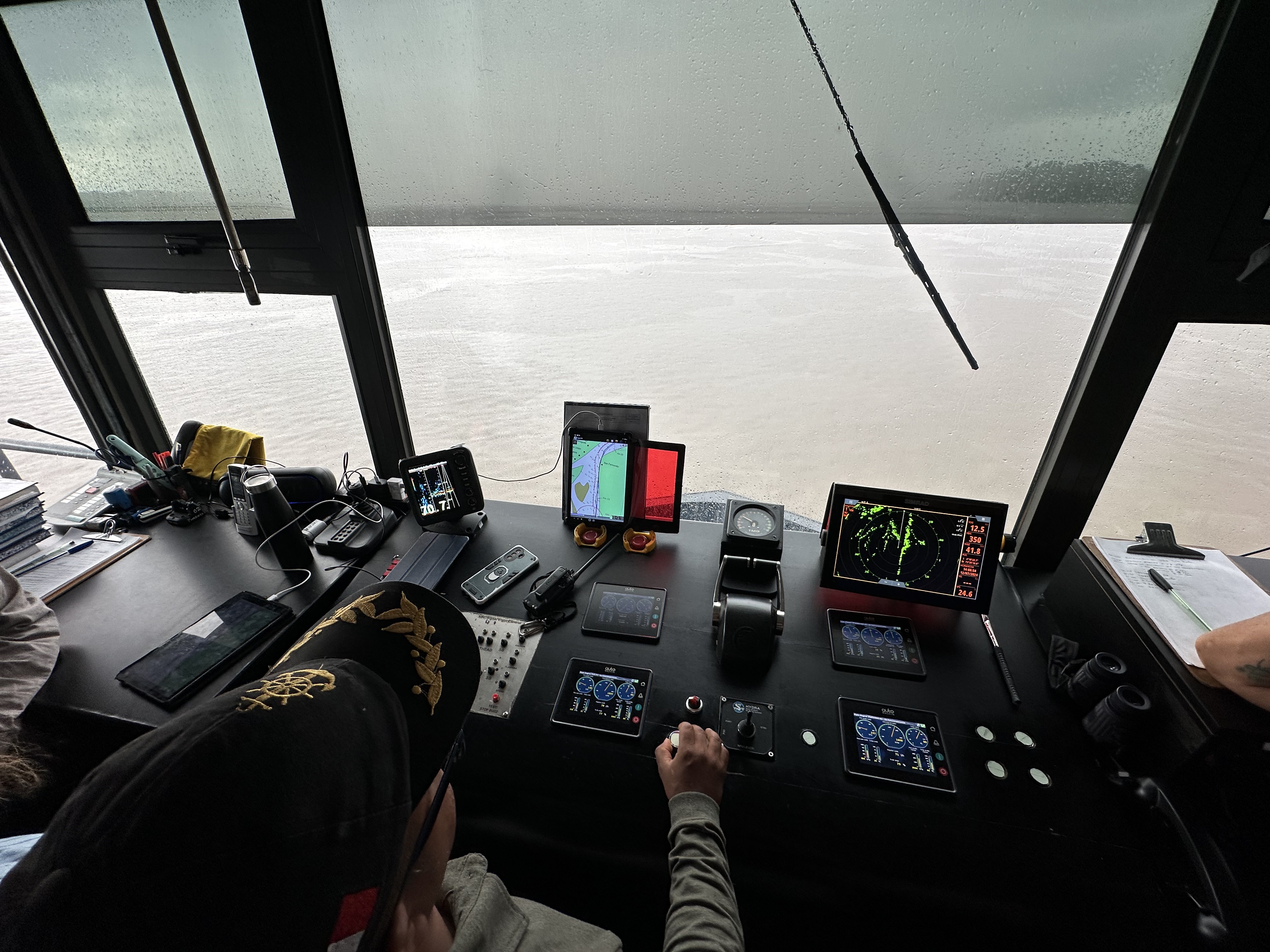
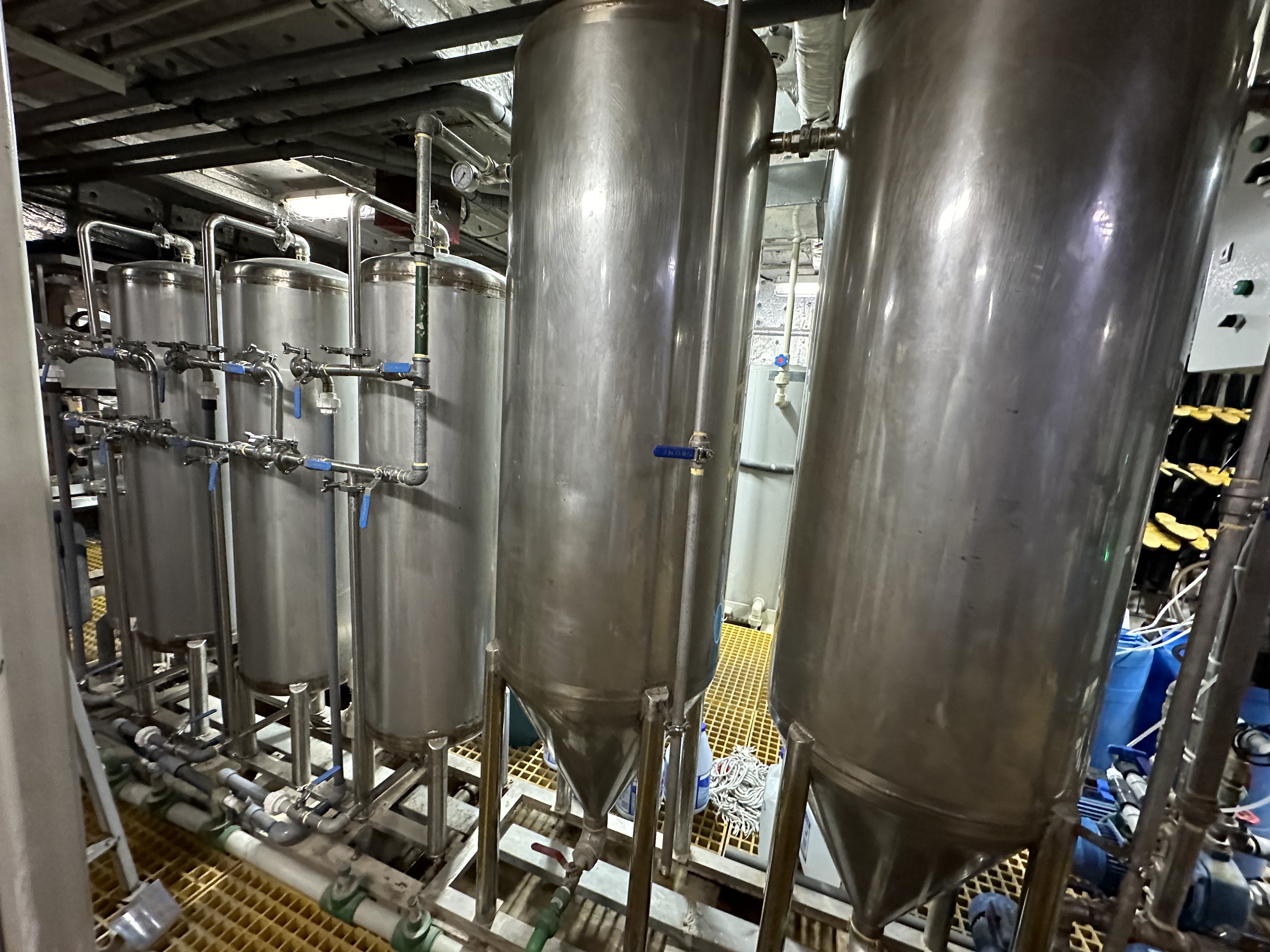
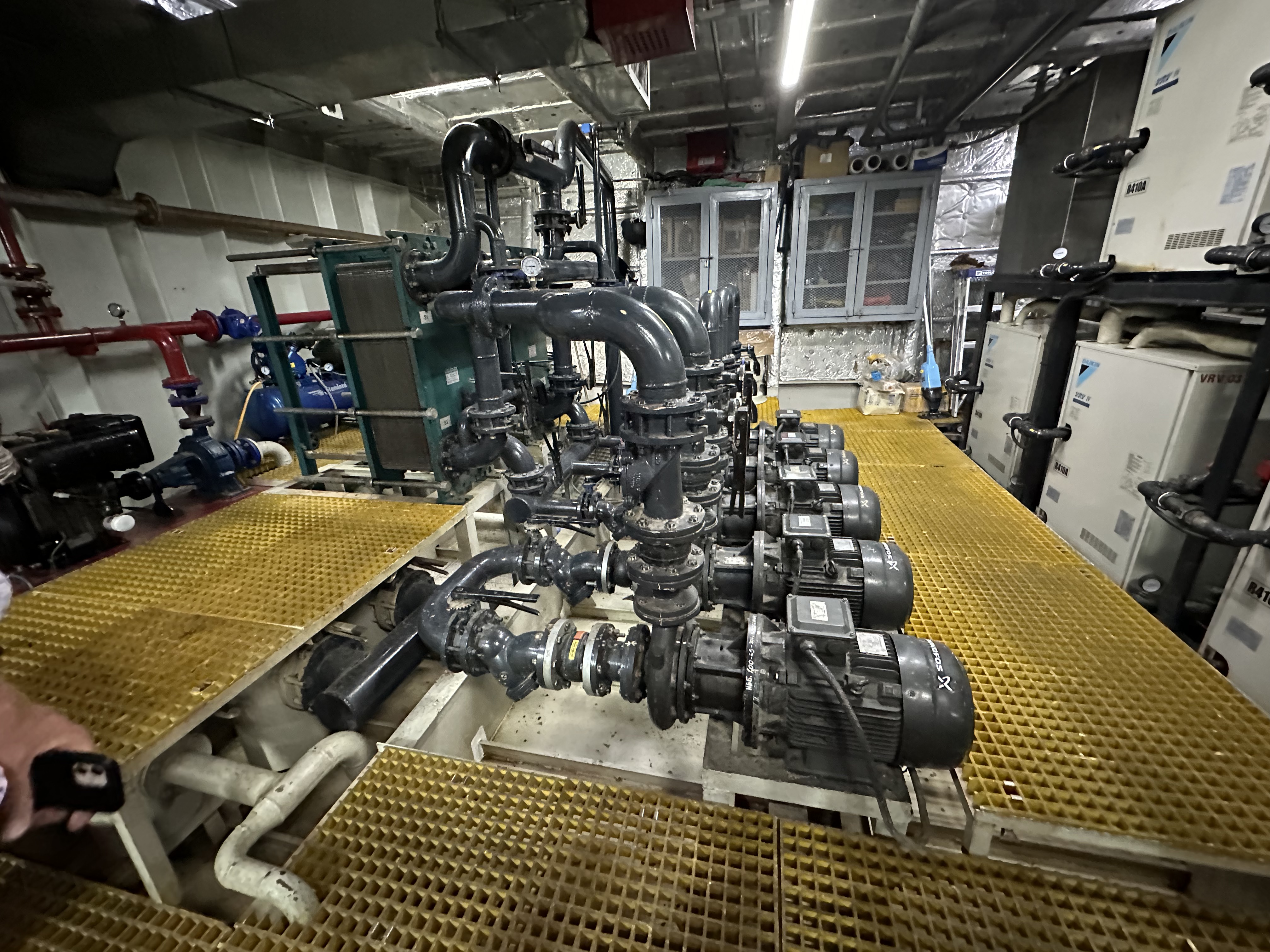
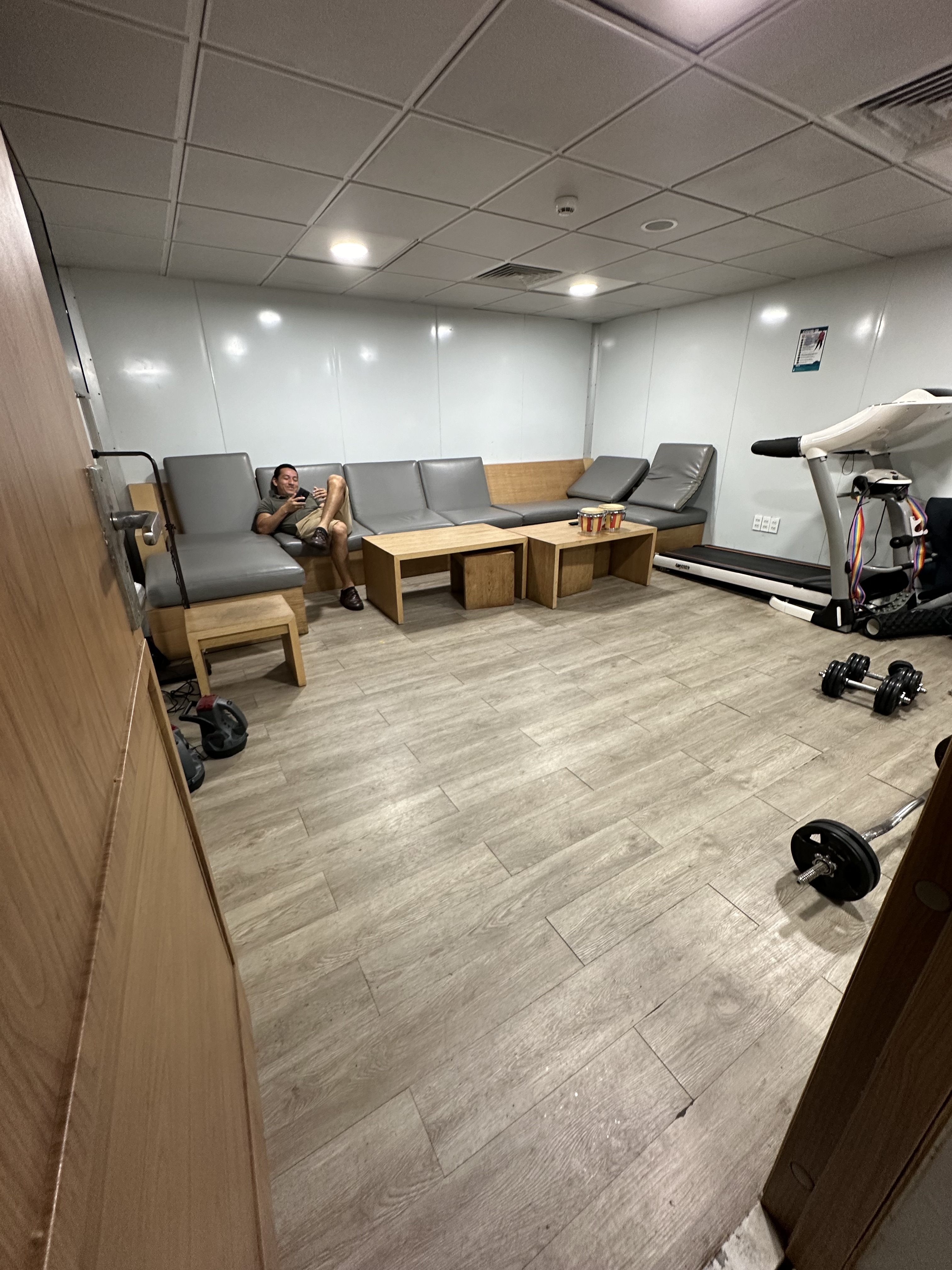
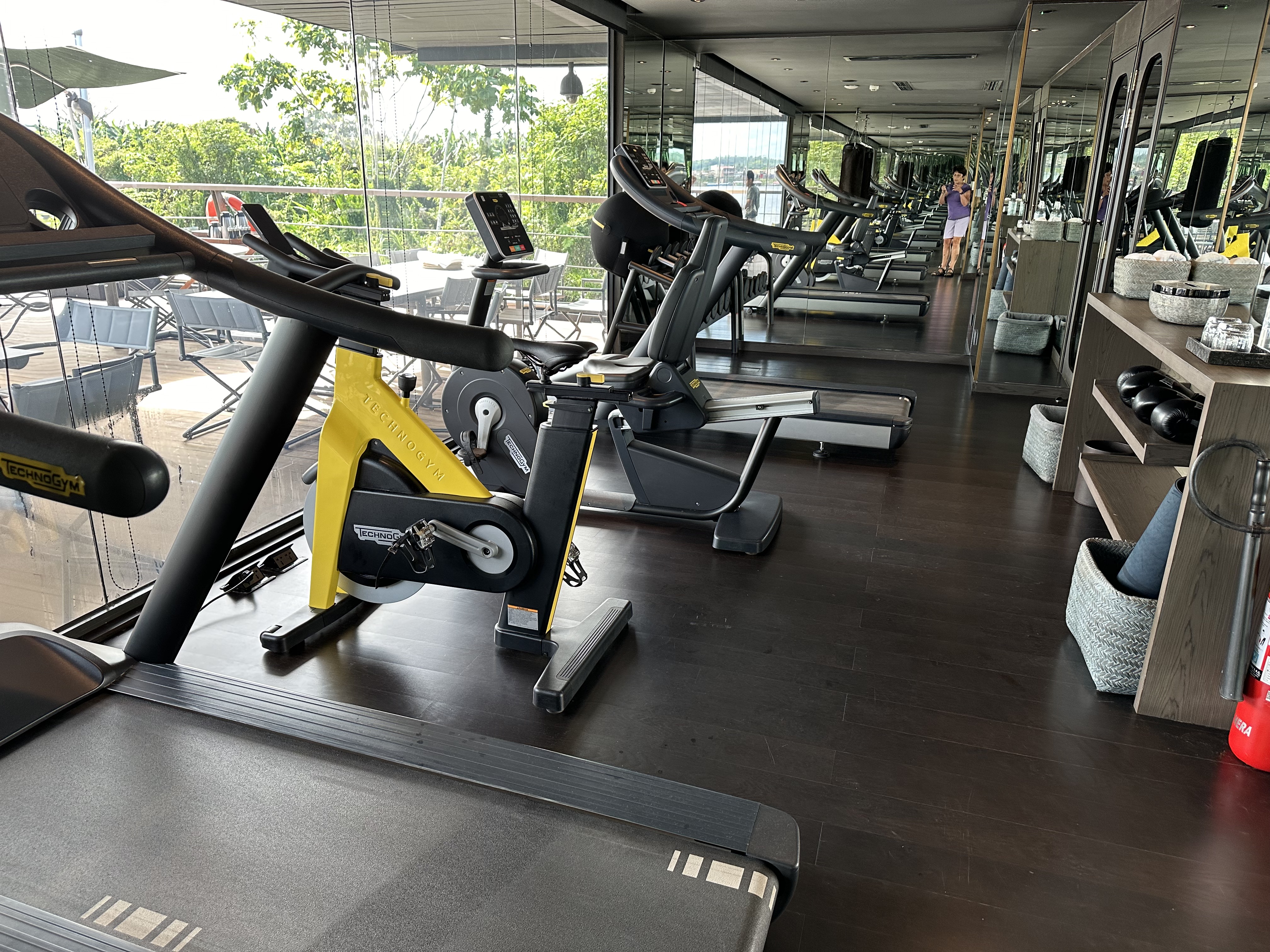
Lunch was an Asian affaire complete with egg drop soup, fresh spring rolls, pork belly in sauce, daikon and cream caramel. The meals have all been good. By being served family style, we can eat as much or little as we wish. Then at 2pm, a few of us were treated to a behind the scenes tour of the ship: including the bridge, the crew quarters, the crew gym and music room; the laundry facilities, storage for extra skiffs, bicycles, kayaks; water supply and filtration system; AC units and more. That tour lasted about 20 minutes and then I was back in our room composing another post. Our room is like all other 19 rooms on the ship with extra wide beds and plenty of storage for a week.
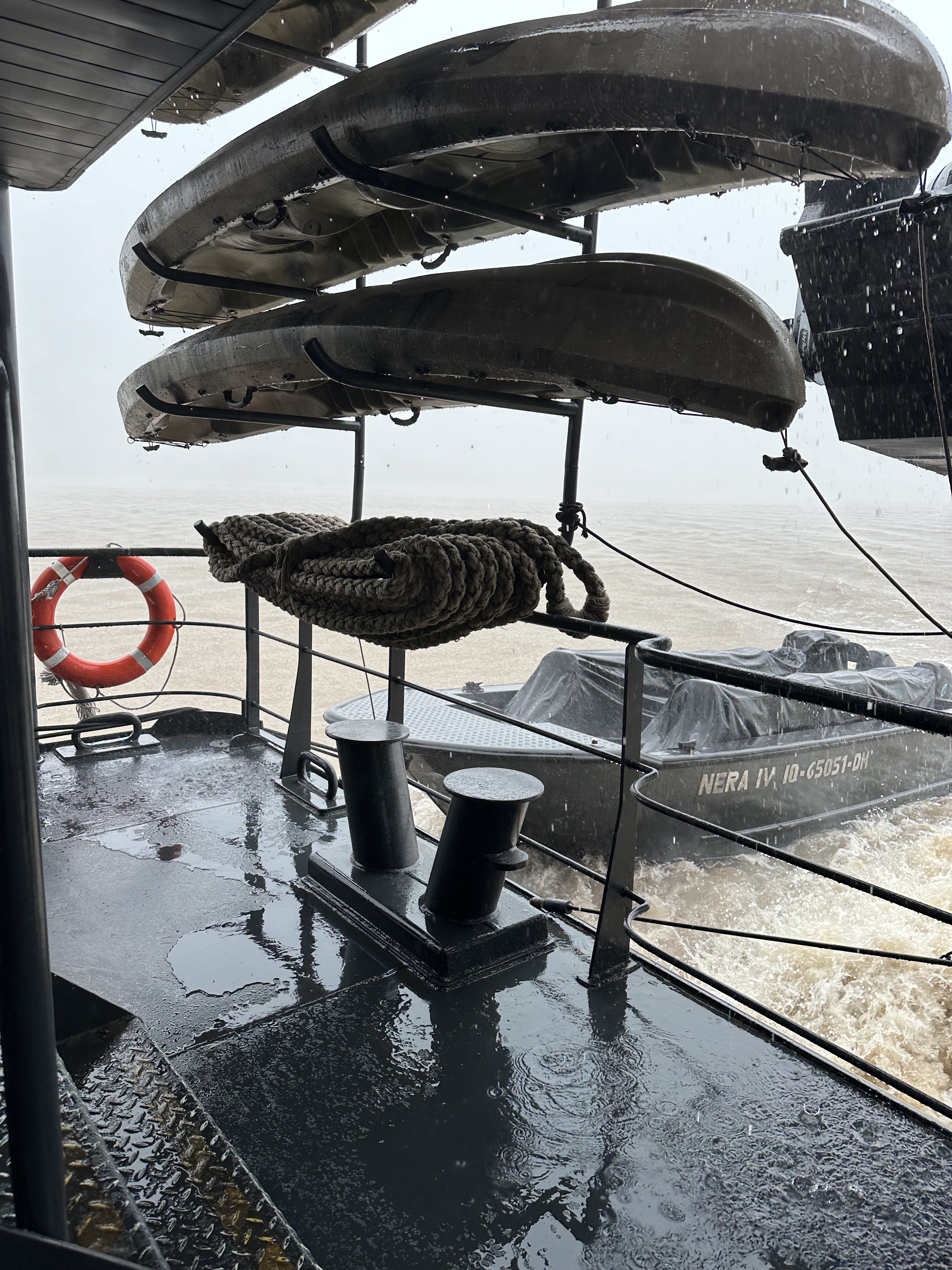
Our room has an oversized king bed and ample room for our one week stay. The bridge with high end equipmentWater filtration systemRiver water pumpsLaundry RoomCrew relaxation spaceCrew dining roomWorking kitchen for the whole shipMore of the working kitchenButler’s pantry next to the Dining Room Dragging one of the 4 skiffs behind the ship and aft Kayak storage on a rare rainy hour.
Yesterday afternoon at about 4pm, the whole group went for a jungle walk near where the boat was parked. We were required to wear knee high rubber boots, which were provided. Long sleeved shirts and long pants were strongly suggested as well as mosquito repellent. Mark and I did not comply with the clothing, although we did use the rubber boots. We lucked out. There were no bugs and the forest was not hot.
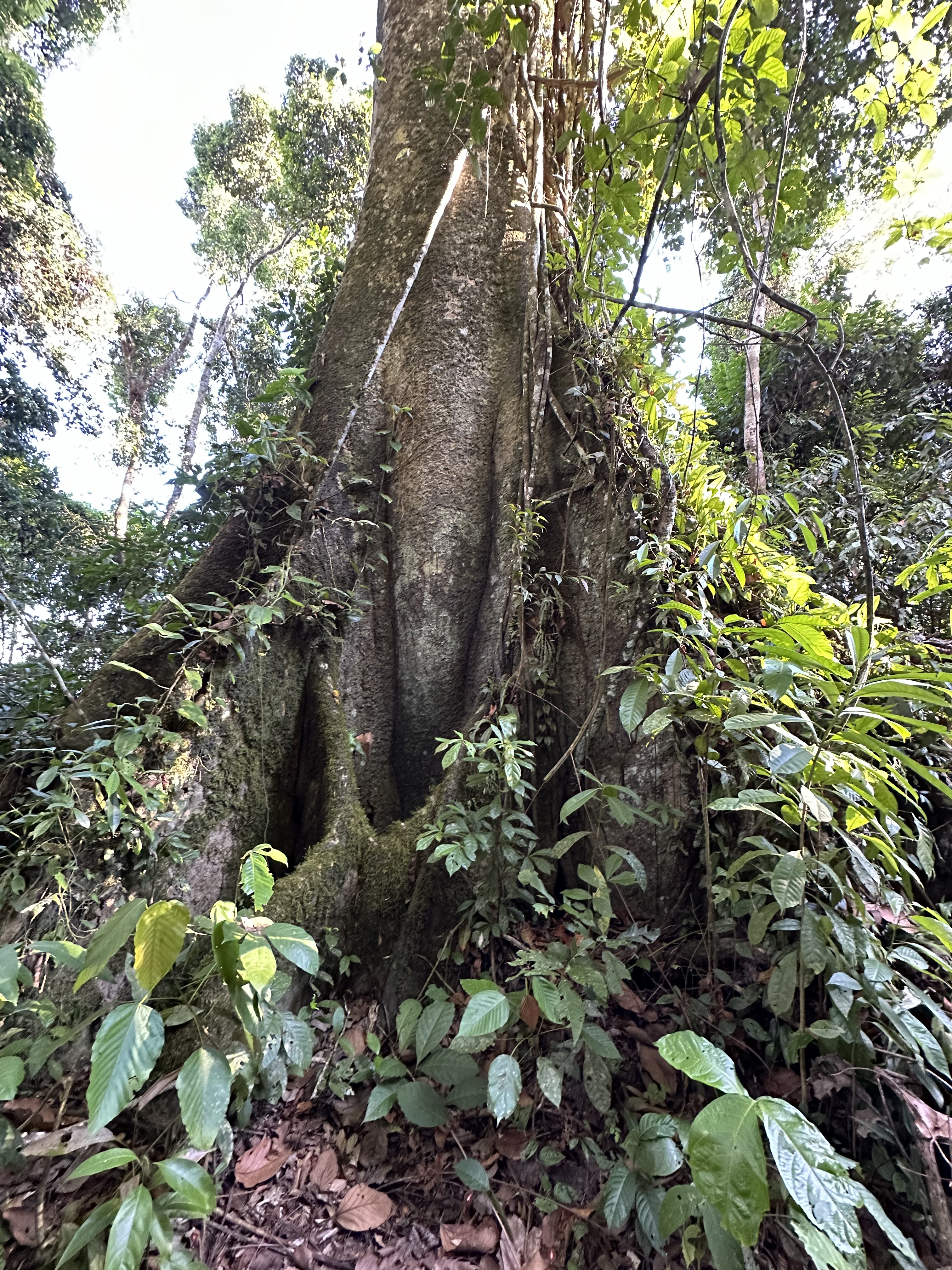
My favorite sighting was a field of lilly pads, even though none were in bloom at the moment. As we slid through the muddy undergrowth, we stepped carefully to avoid walking on army ants carrying leaf pieces. We also avoided many huge 1.2 inch long bullet ants racing up and down certain trees, and packing a powerful sting, if bitten. Mark learned it was the worst sting in the world according to the Schmidt Pain Index. We also saw a nasty bee’s nest, two tarantulas on the ground and a millepede. We walked by a couple of huge Kapoc trees and saw flowering vines everywhere. The whole walk was only 45 minutes and was mildly interesting. Back on the tender, after removing and bagging our rubber boots, we motored into the middle of the river and joined up with the cocktail tender for sundowners. Everyone was treated to an Amazon Mule cocktail. Then back to the boat. Once cleaned up and in the bar lounge, we were introduced to the entire staff and entertained by a handful of them playing instruments and clapping. As time passed everyone loosened up and we got friendly with some our fellow ship mates. I even danced.
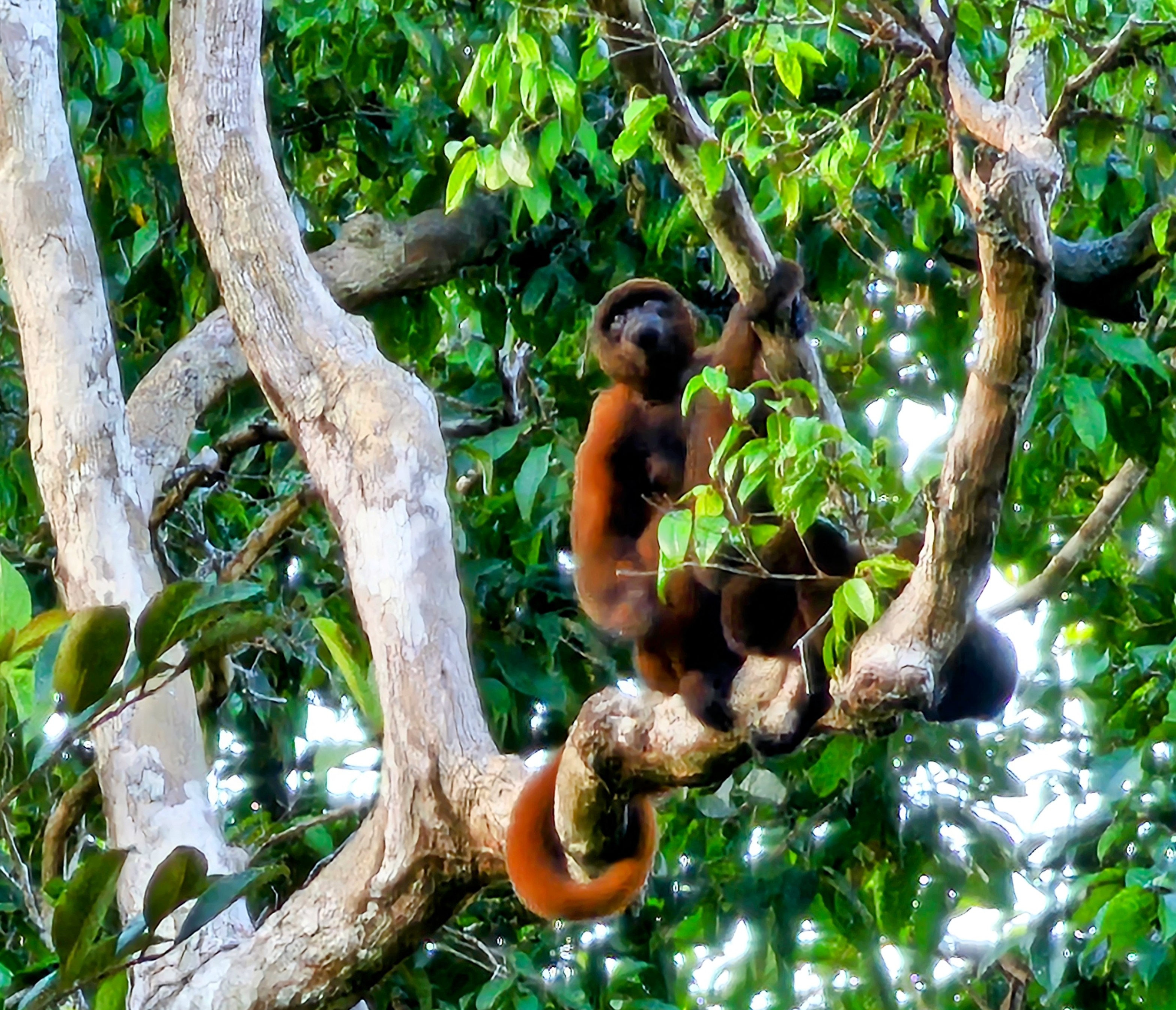
New friends, Bill and Nancya good photographer , Terry, and meDancing in the loungeThe outdoor dining. area and barThe water level during the High water season.Terry’s photo of the wooly monkeys
Eventually many of us were up and dancing to the lively sounds. At 8pm the music stopped and we all trouped into the dining room for dinner. It turns out that the boat was only half full and there are more staff than there are travelers. We sat with a couple named Bill and Nancy and passed a pleasant evening getting to know them. After the unremarkable meal, we happily went to our room and bed.
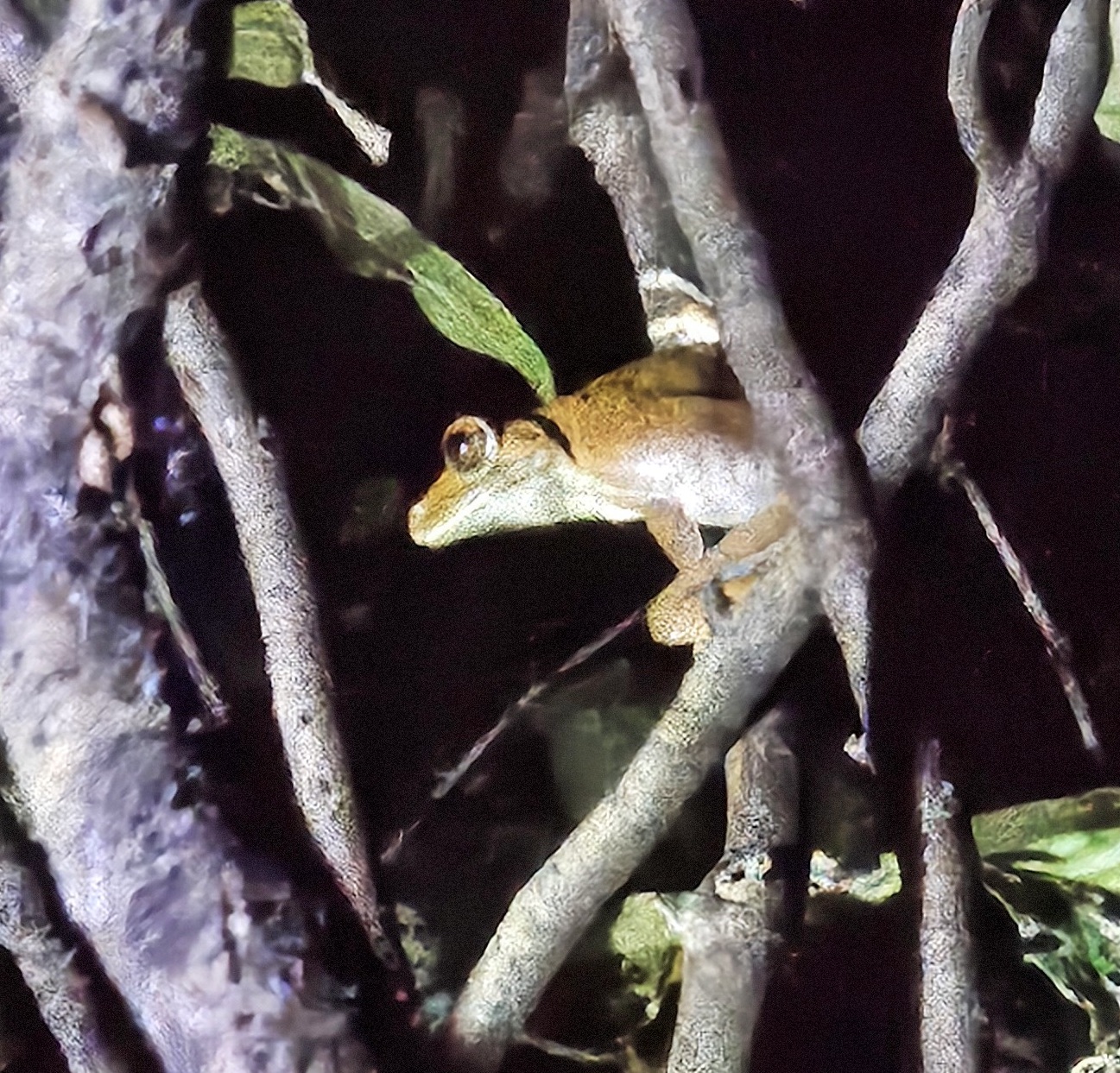
A very hard to see, brown tree frog, that Terry caught nd shared with me.
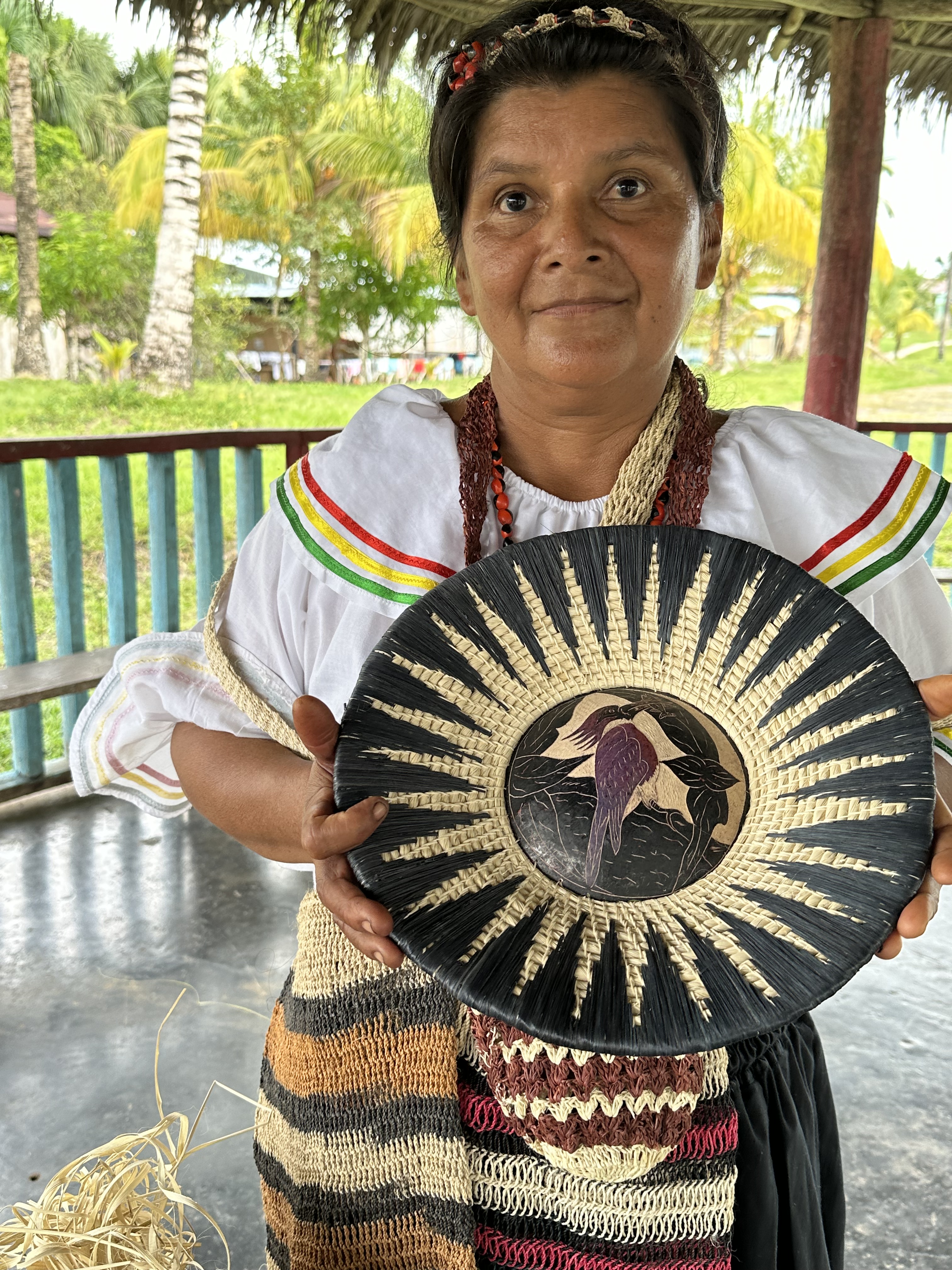
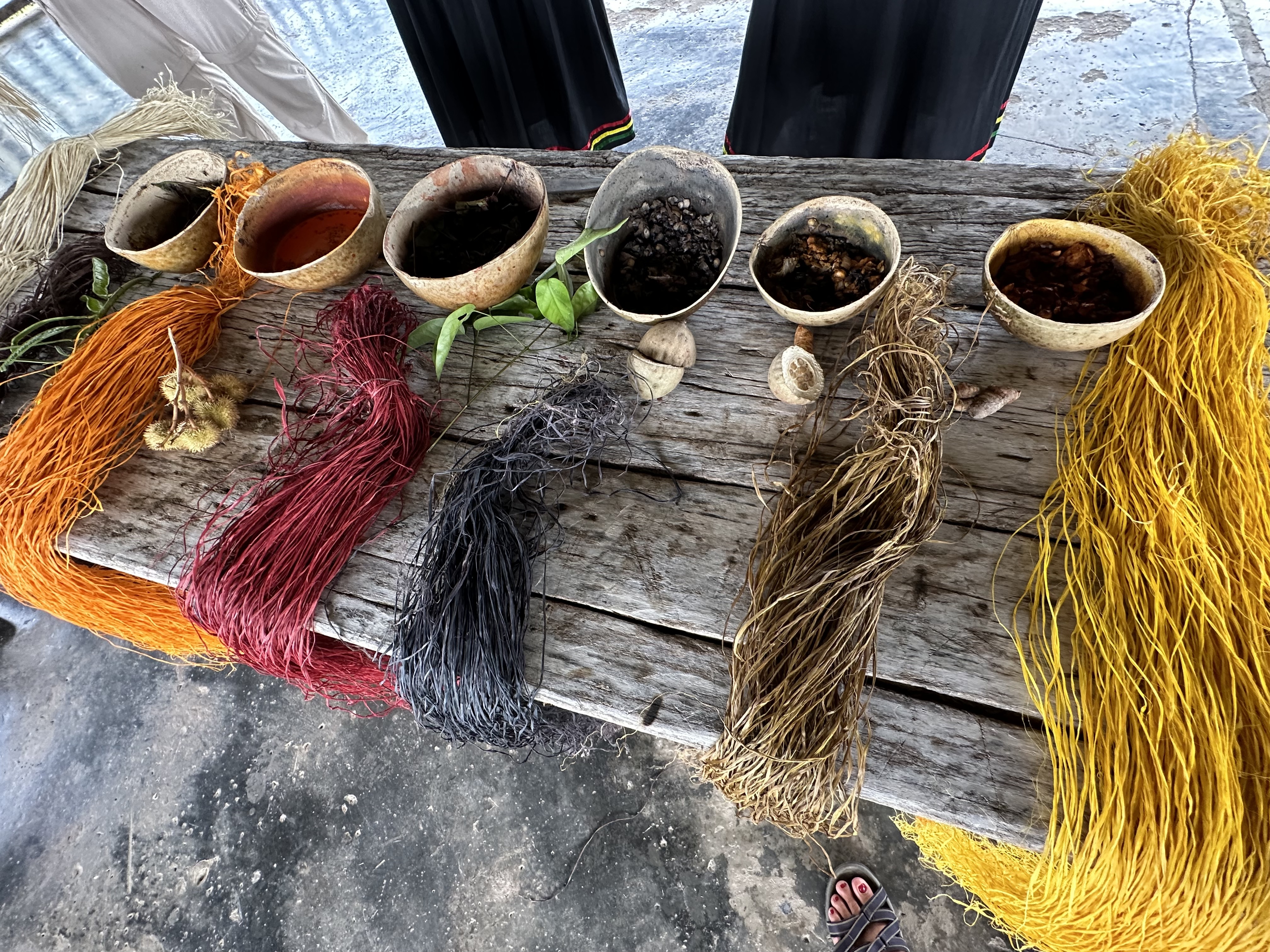
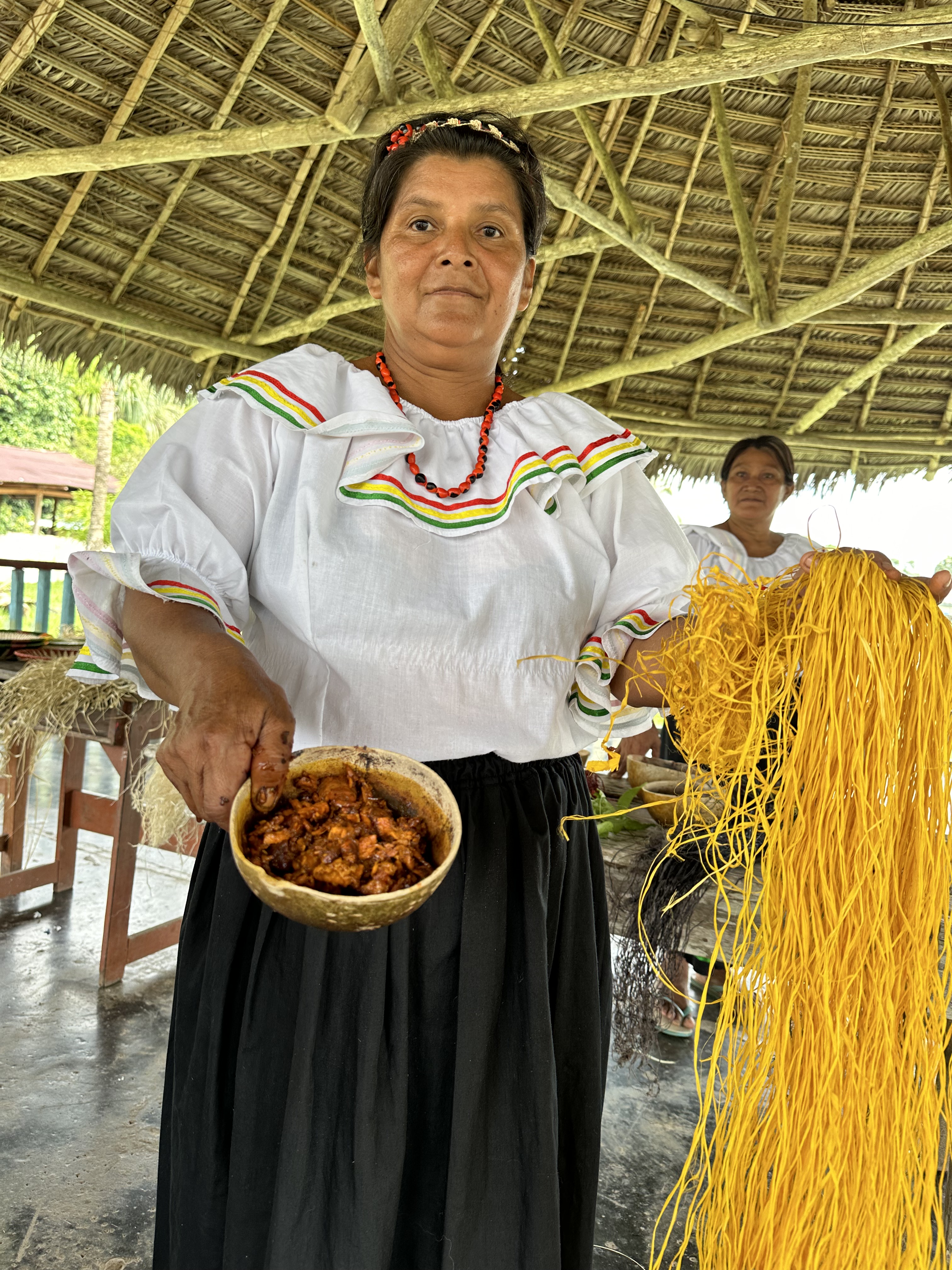
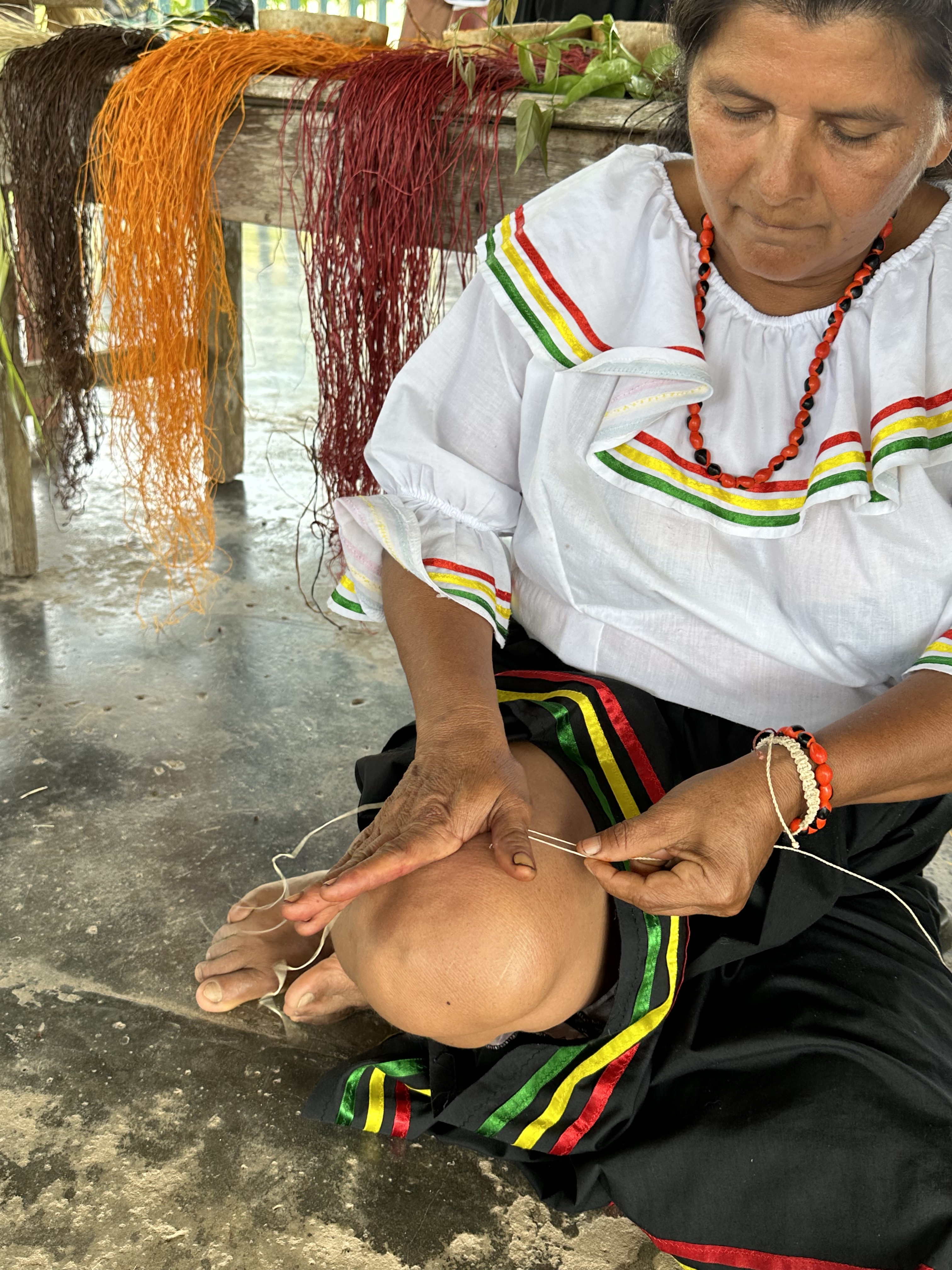
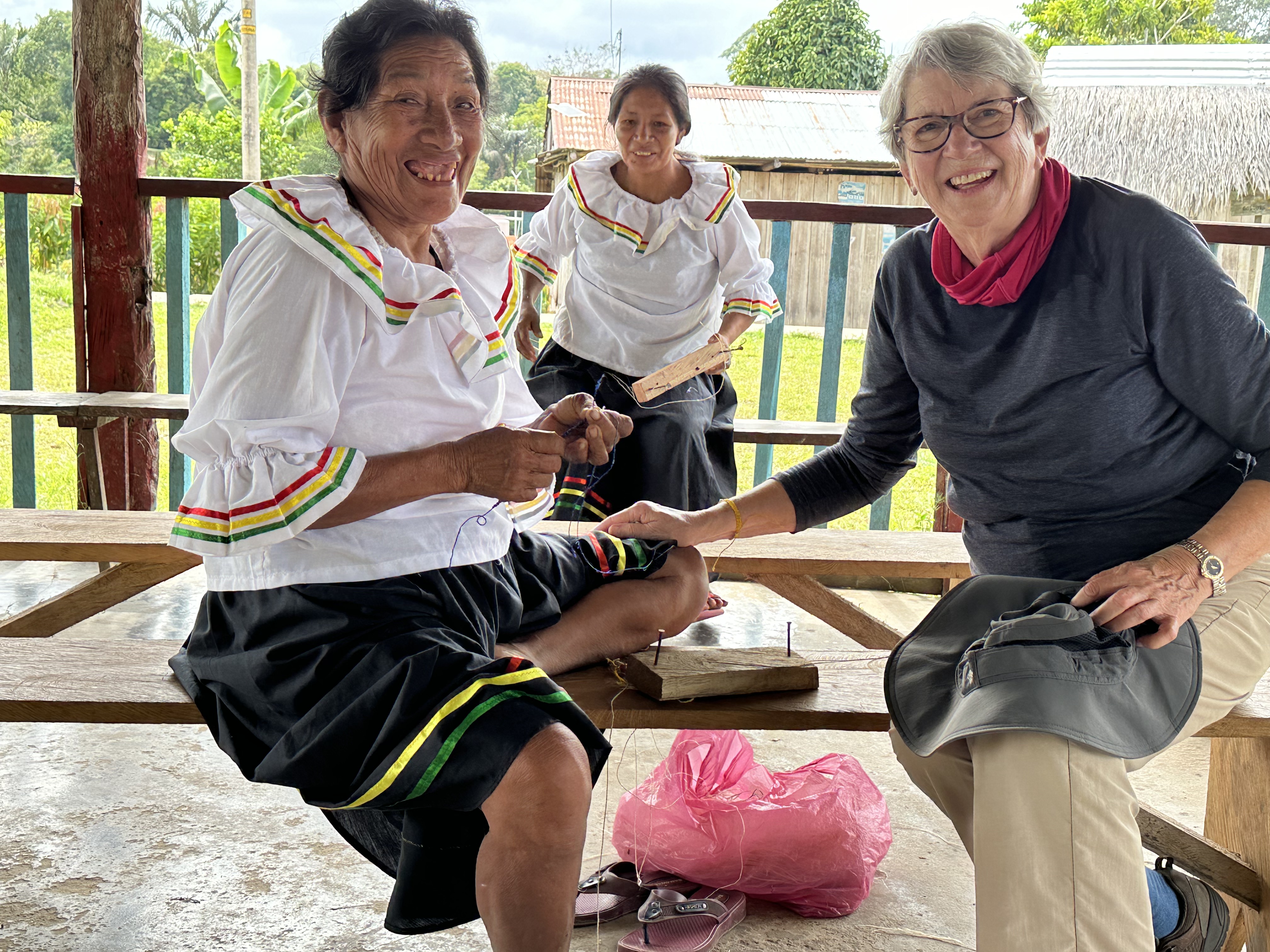
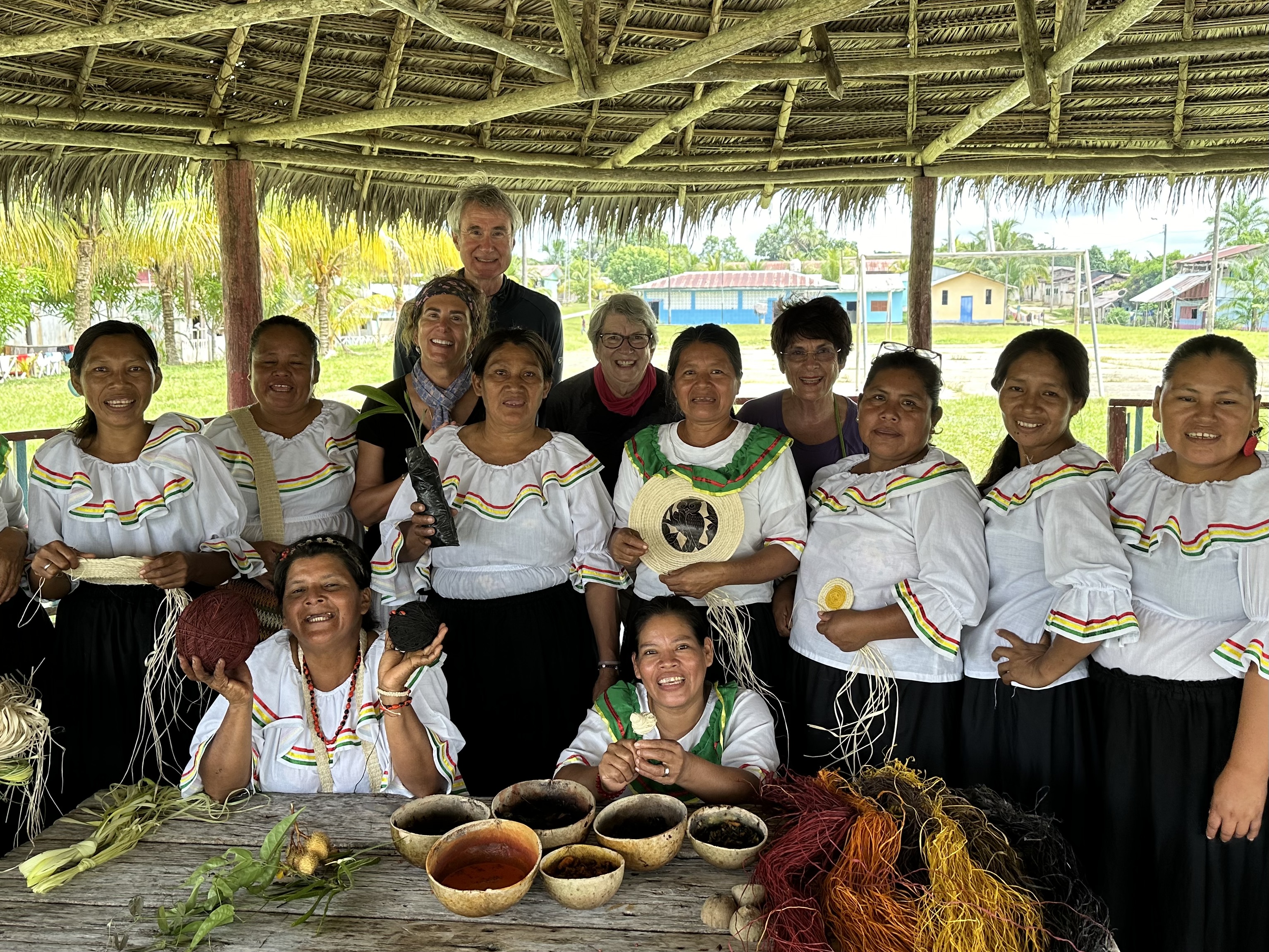
This morning we had breakfast at 8am on the aft deck and said good bye to the short term folks who were departing for Nauta on the other side of the river and a 90 minute drive from there to Iquitos. At 9:15 we broke up into groups. I went with a group headed for a village where handcrafts are being made and demonstrated, Mark went with a group on a boat trip along the river banks to spot birds. My group learned about converting palm fibers into colorful artifacts like bracelets, baskets and ornaments. The village is called Amazona and the people speak two languages: their native Kukama and Spanish. There are 300 residents whose primary occupation is fishing. Since 2016, the ladies do craft work in addition to fishing to make money . They use palm fronds to make their products. They wash the fibers, dry them and then twist them by rolling two or three together on their leg to make them strong . Color is added by boiling the fibers in different dyes for different lengths of time. Then the various products are made.
The village was the tidiest and nicest I have ever seen and the ladies were friendly and artistic. I had not intended to buy anything, but ended up buying a woven plate and bracelet anyway.
I learned there are 70 families in this village. The community house where they demonstrated their craft is called a Malloca, like a banda in Uganda . The river gets to about 180 feet deep and is expected to drop another 20 feet during the dry season.
Meanwhile Mark’s group saw a few birds and other creatures. I borrowed three images taken by another guest named Terry. I had seen the animals but not managed to get decent photos. We were all back for lunch at noon. We had planned to eat only salad, but the chicken course was so juicy and tasty that we ate the whole meal. After lunch I took photos of the various rooms on the ship. It. is a pleasant boat for 40 guests. Even has a small pool. There were only 27 people during the week we were on board.
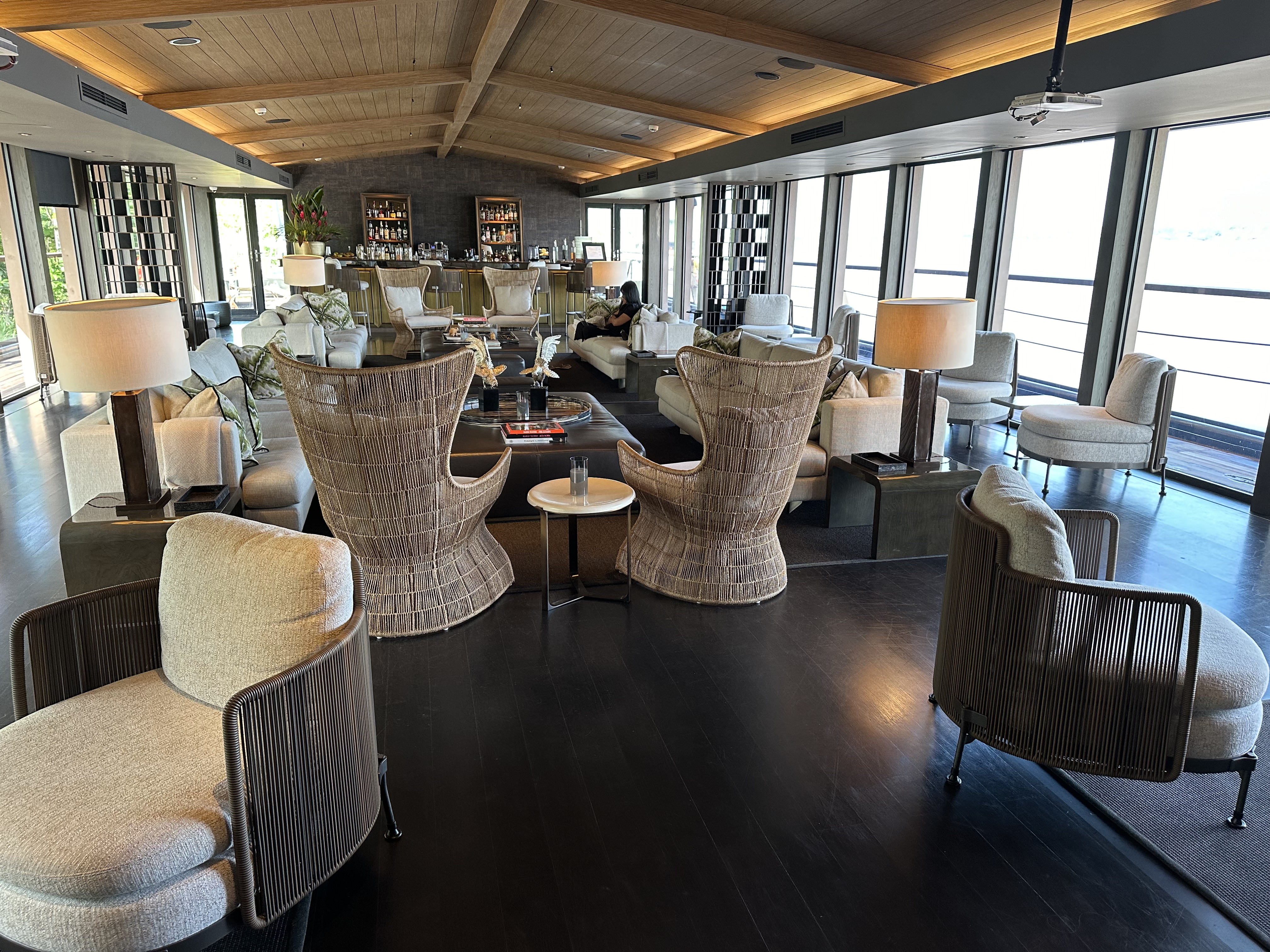
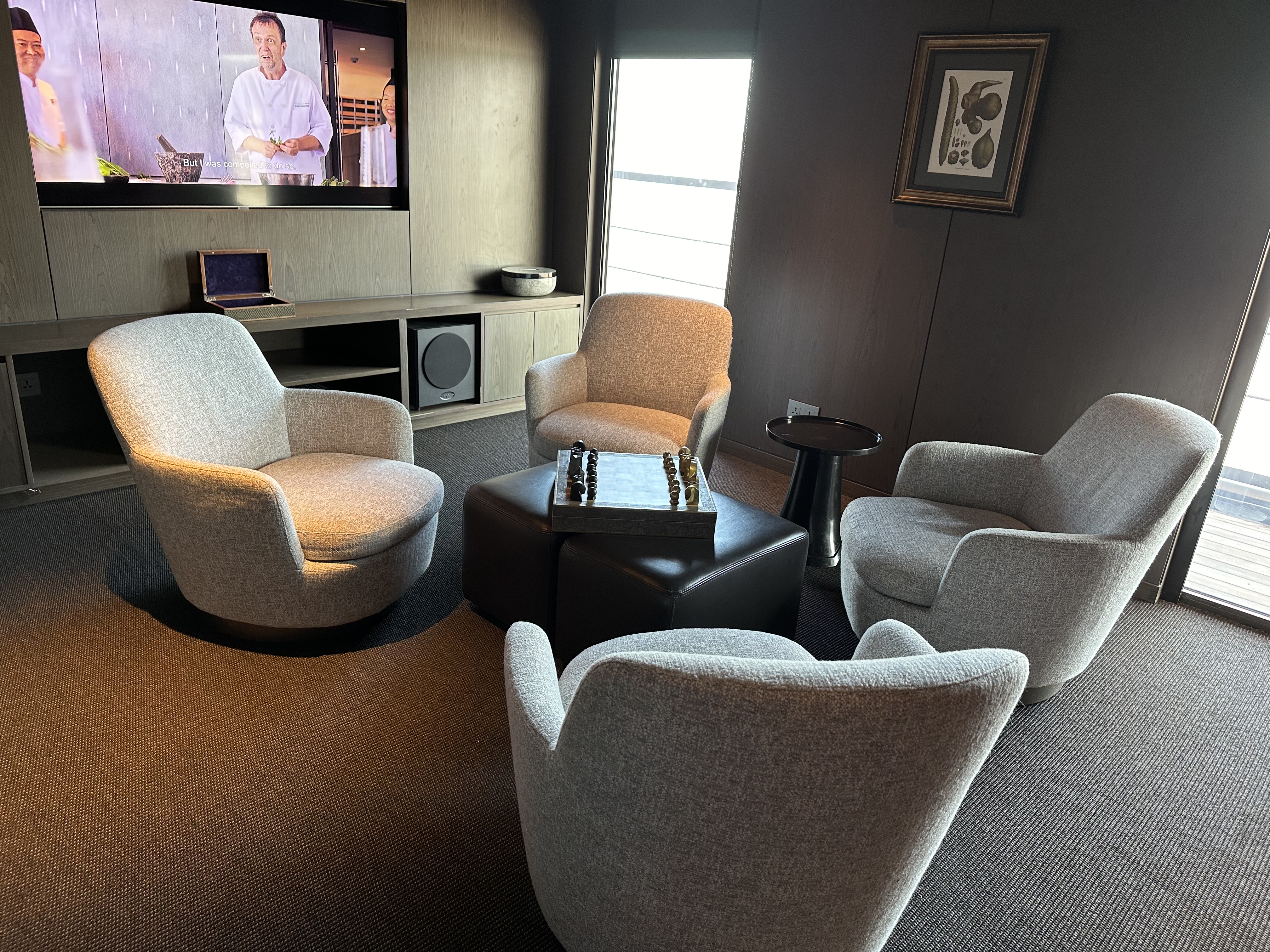
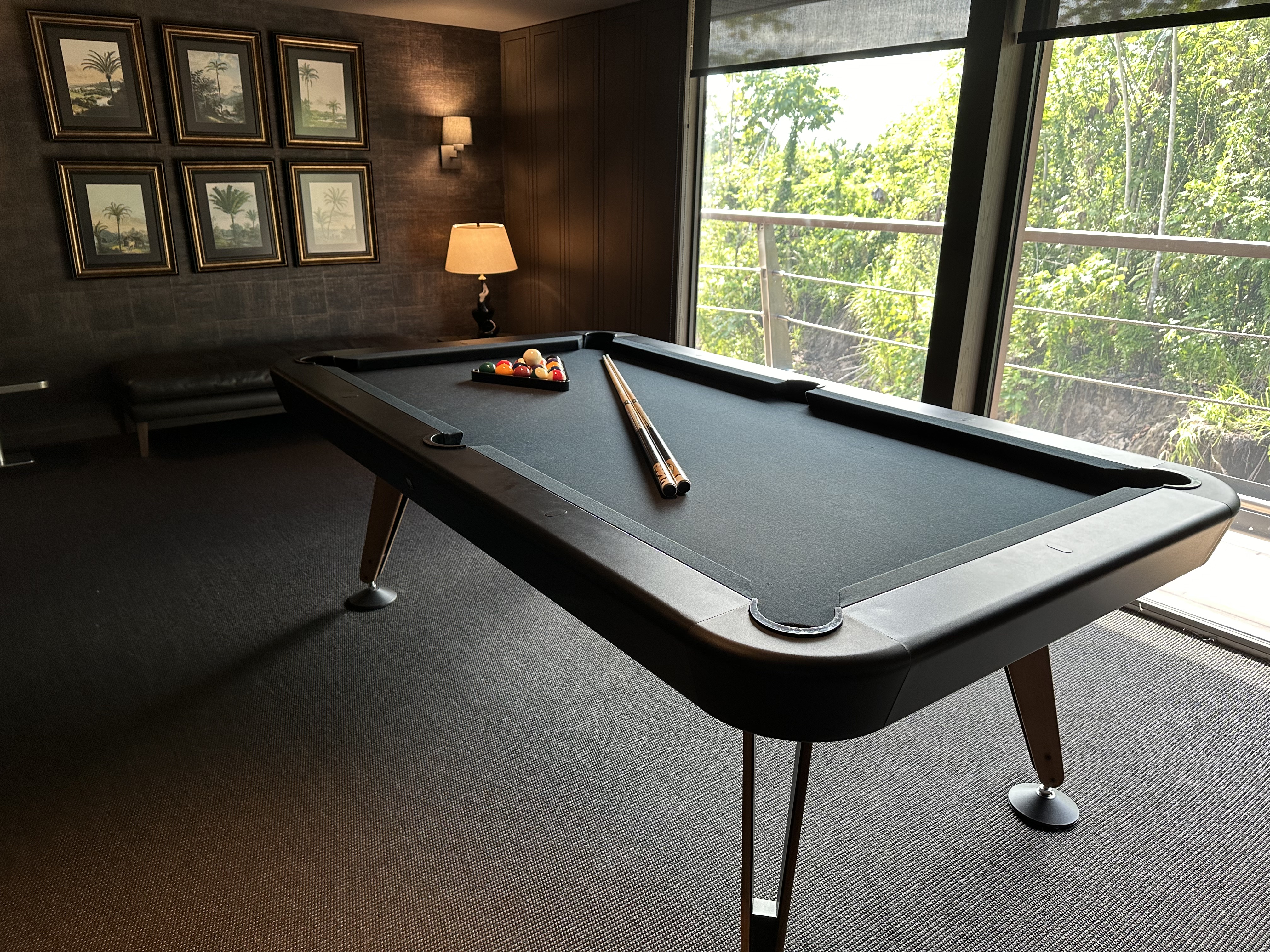
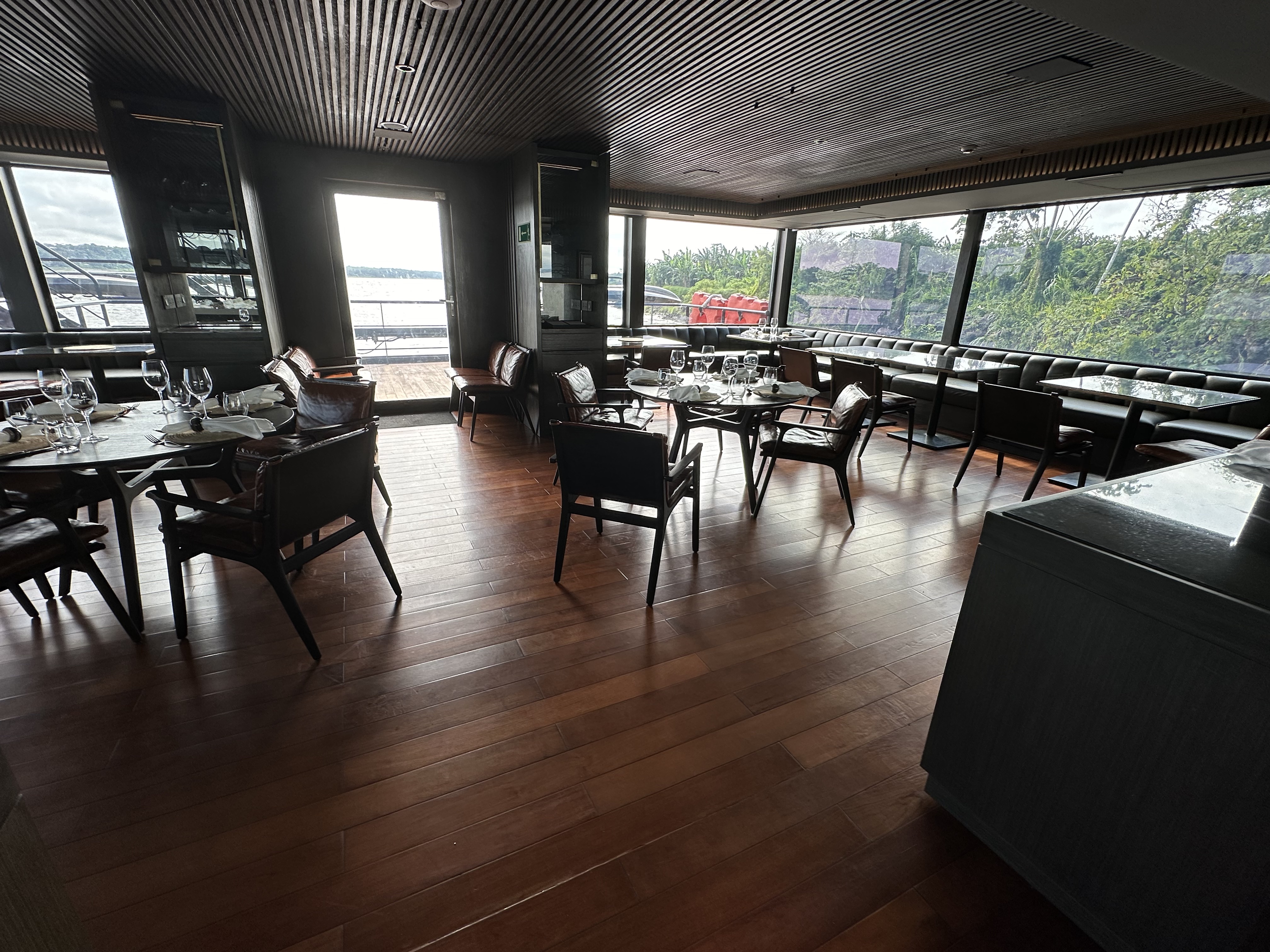
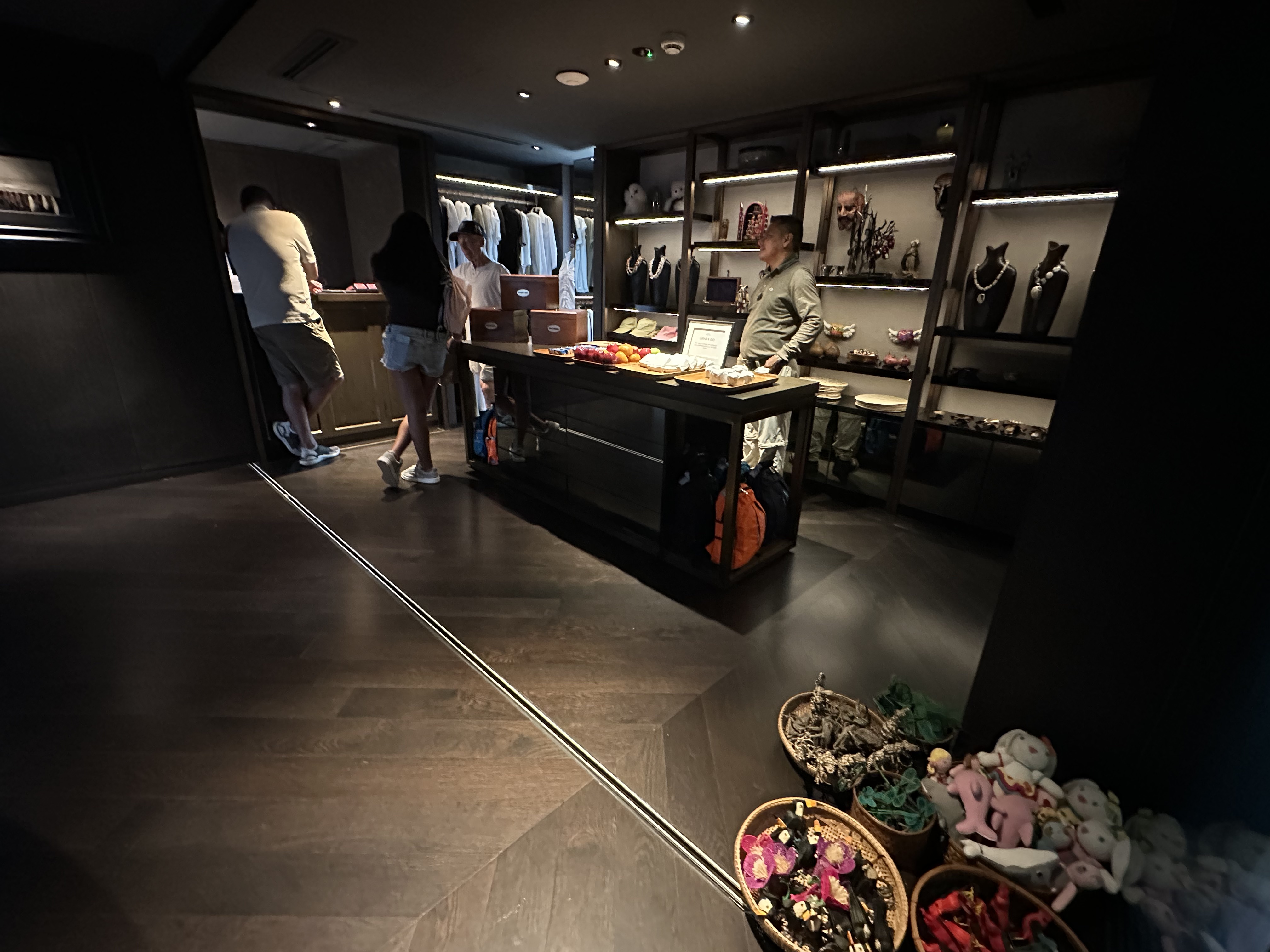
Lounge and BarT V Room Pool Room Quiet Room Exercise RoomOutdoor deck and poolDining RoomGift ShopAdmin Office
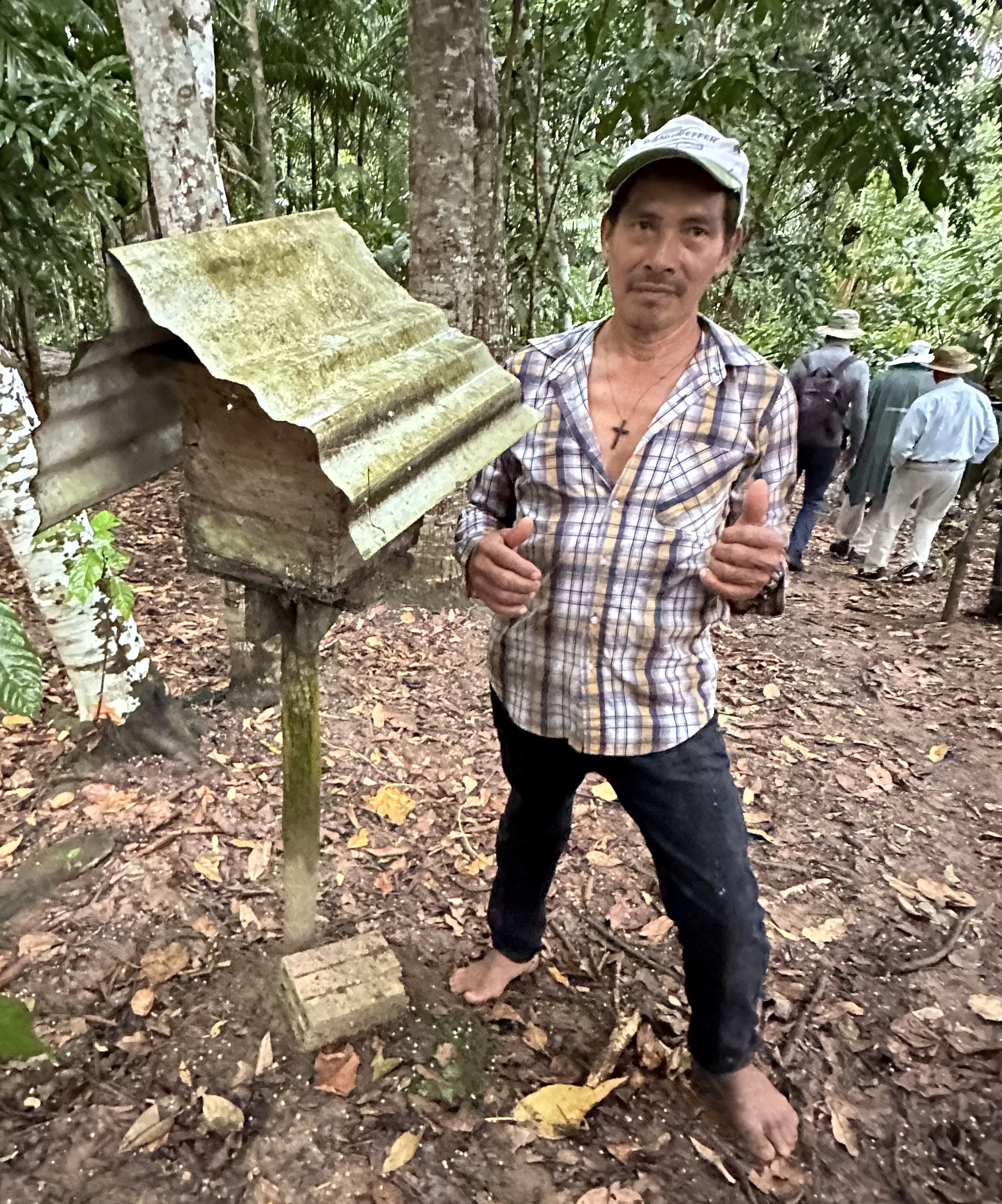
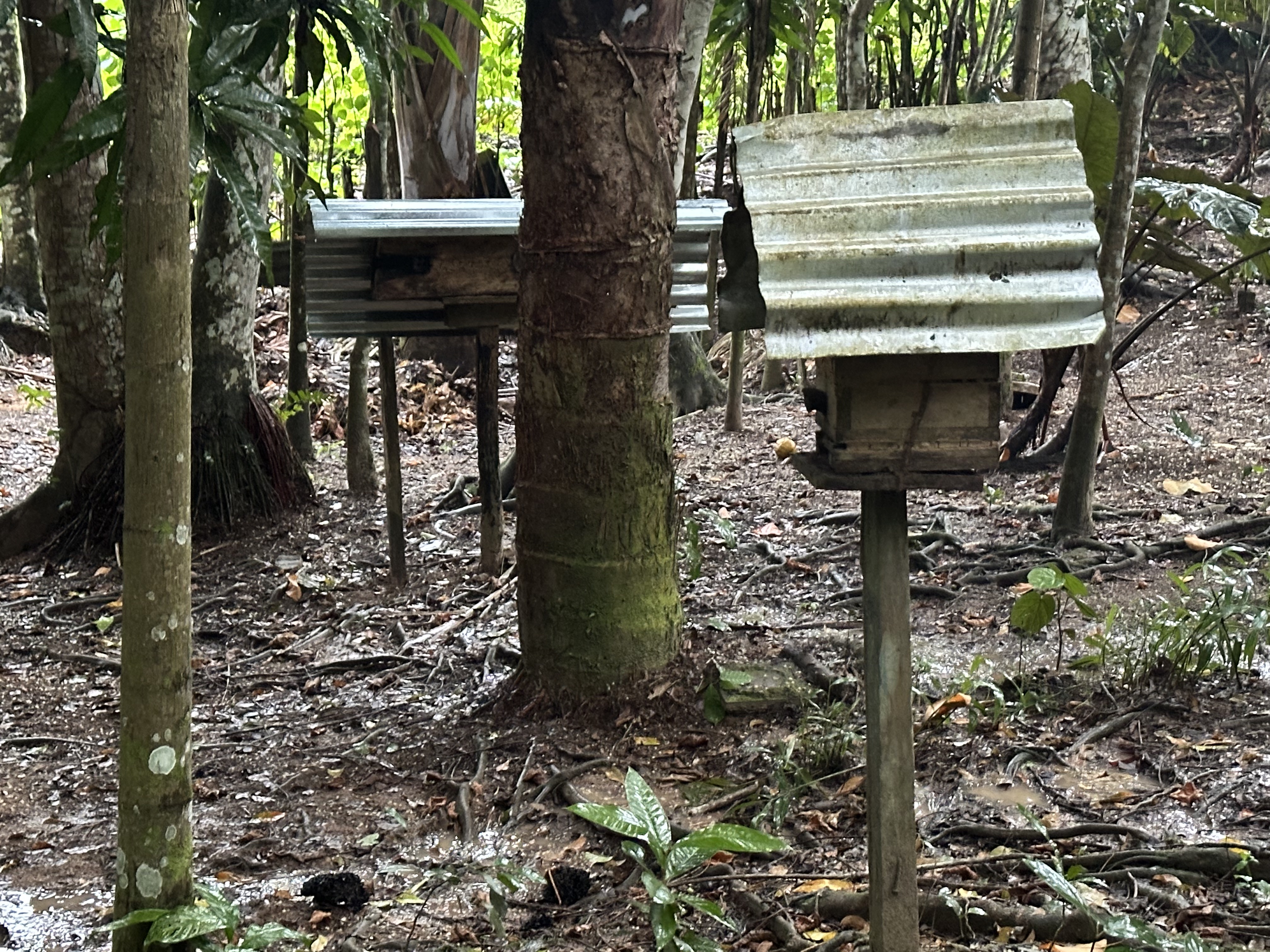
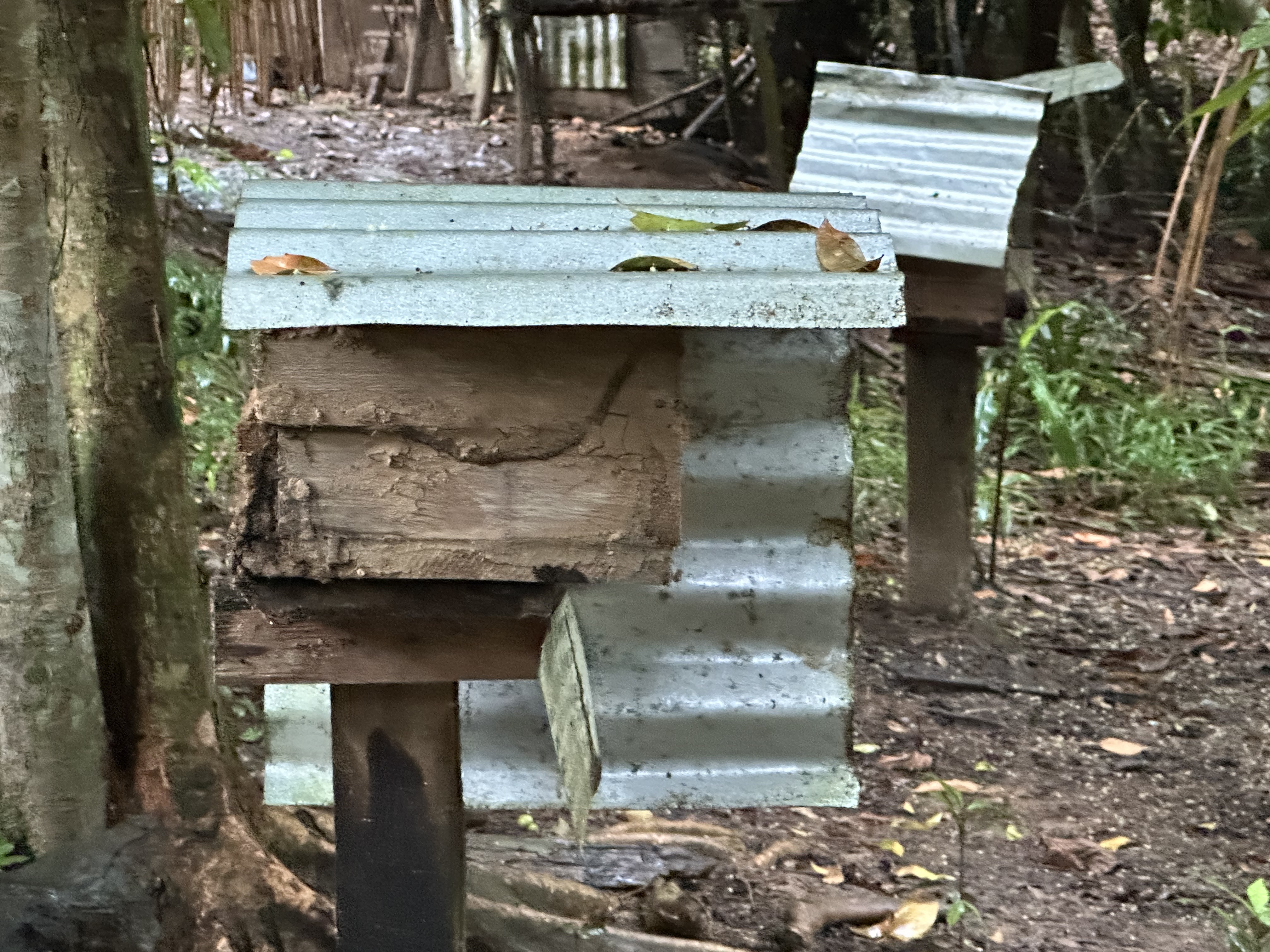
In the late afternoon two tenders full of us motored to the home of a bee keeper, with all of us thinking we would get to see bees in action. However, just as we arrived inside the beekeeper’s work room, we received our first rainfall. It lasted about half an hour but was enough for him to refuse to show us any bees. Instead we received a translated lecture on his method of keeping bees, and stingless ones at that. The beekeeper’s family started raising bees 7 years ago. After learning himself, he is now teaching children how to care for and raise bees. He uses a variety of bees that are stingless. None of us had heard of such bees and were surprised to learn they existed. He currently manages 68 boxes of hives, and harvests the honey every 3 months, getting 1-2 liters per hive. W paid 20 Sols for a small jelly jar size of honey. That amounted to about $5. The honey was surprisingly runny and tart, as though it was mixed with lemon. The rain let up about the time we were ready to depart, but it was too late for seeing bees.
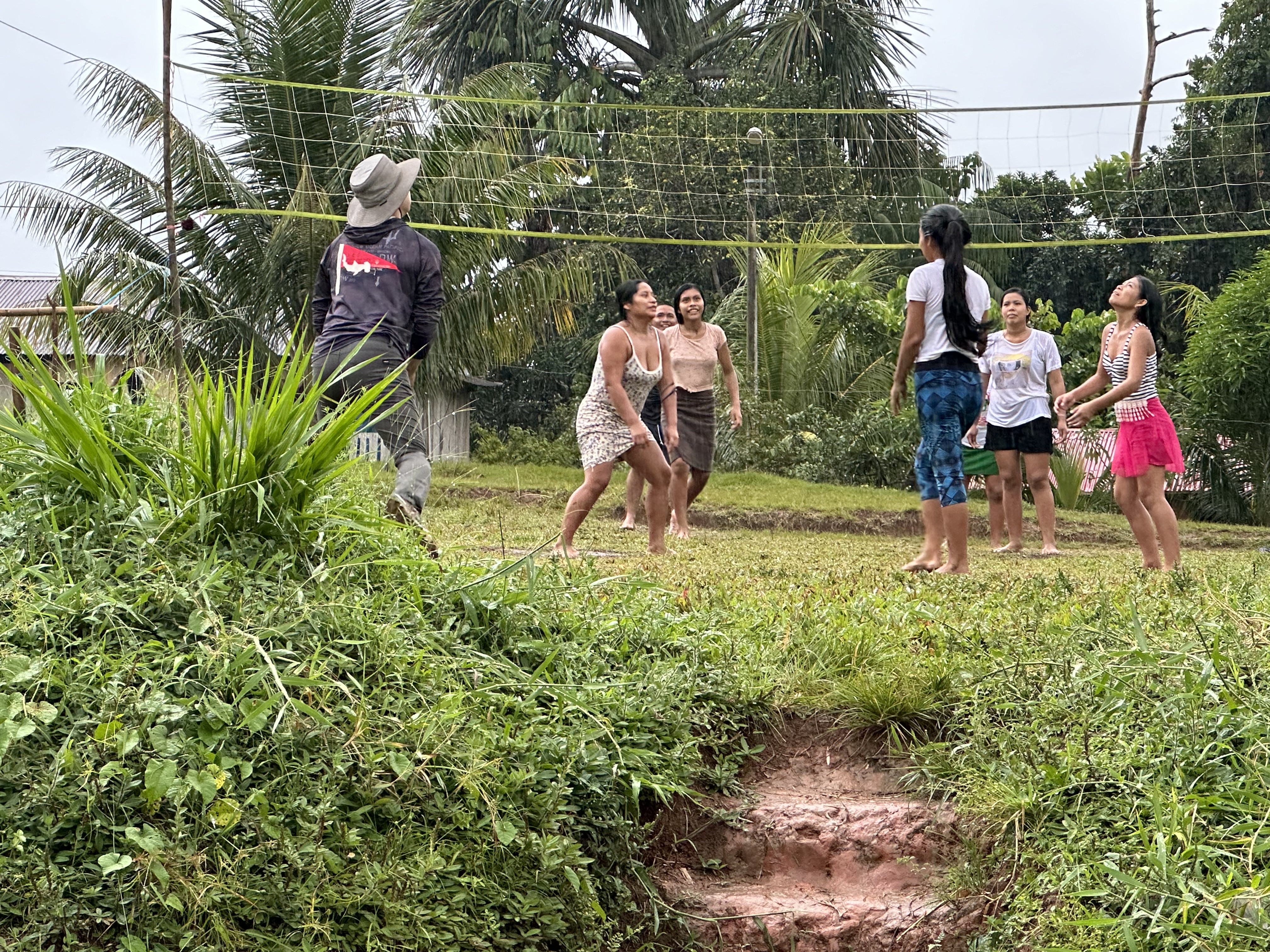
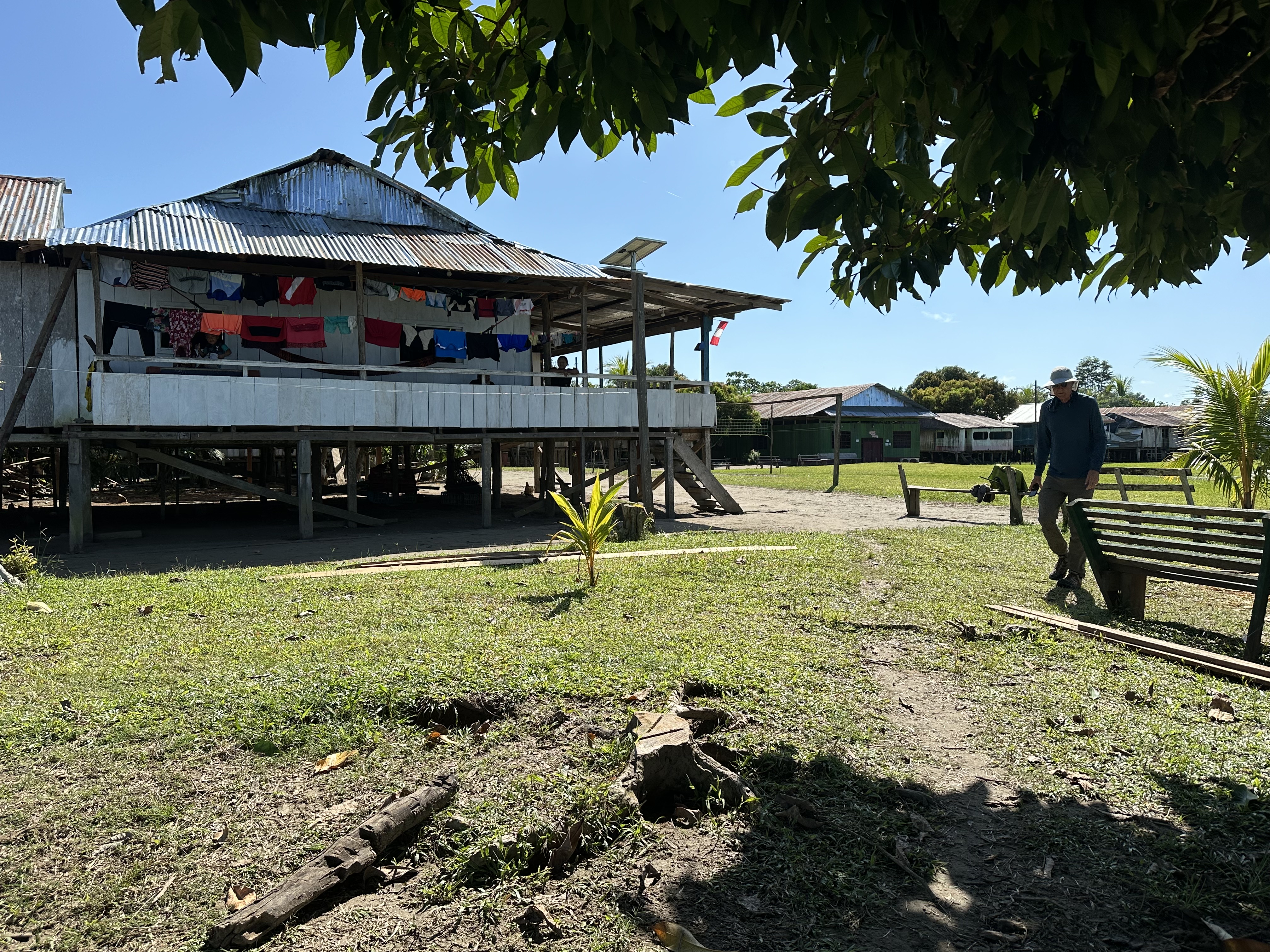
When we arrived I noticed a group of children playing ball in the local field and they seemed totally undeterred by the rain. They were fun to watch.
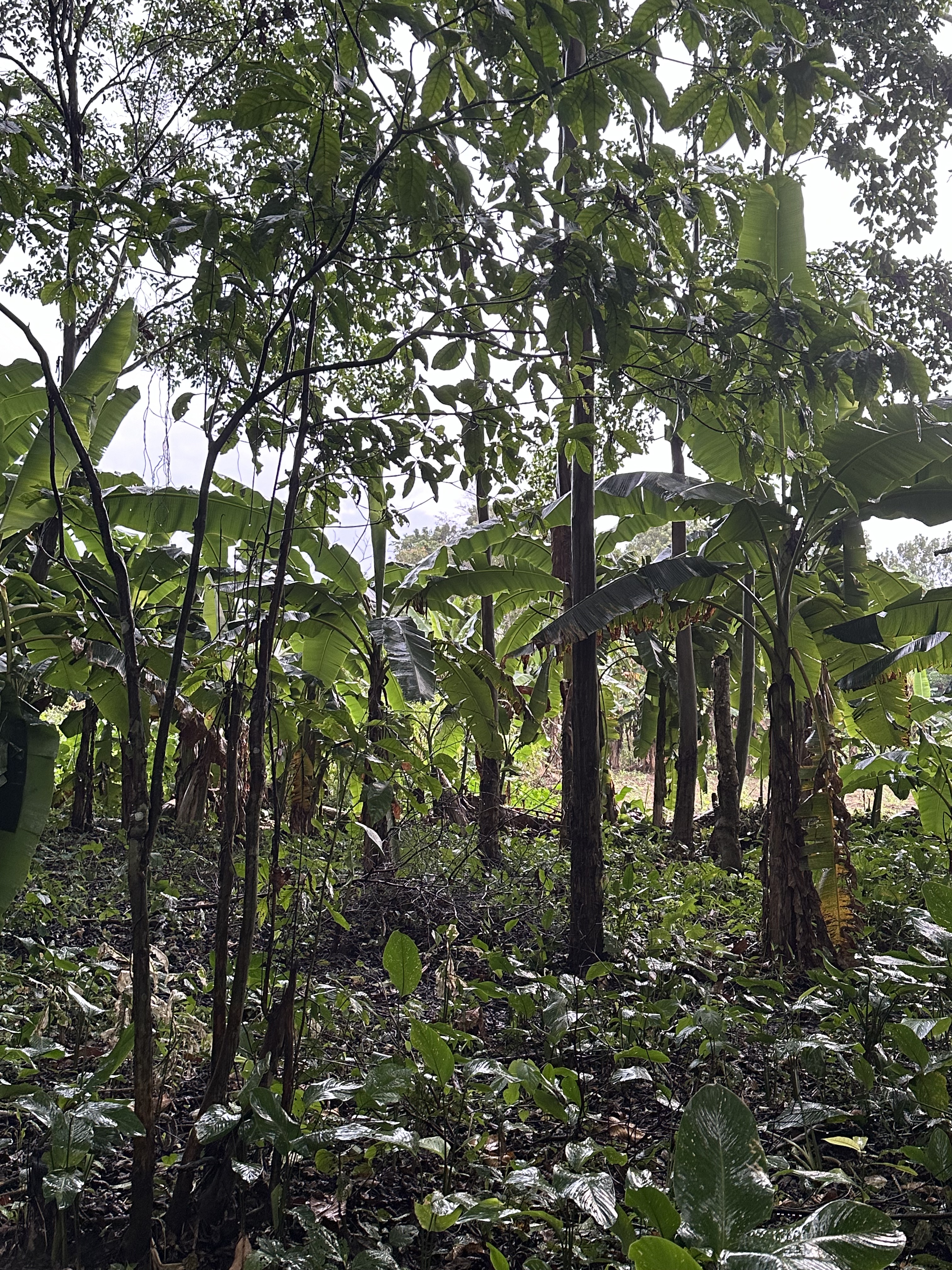
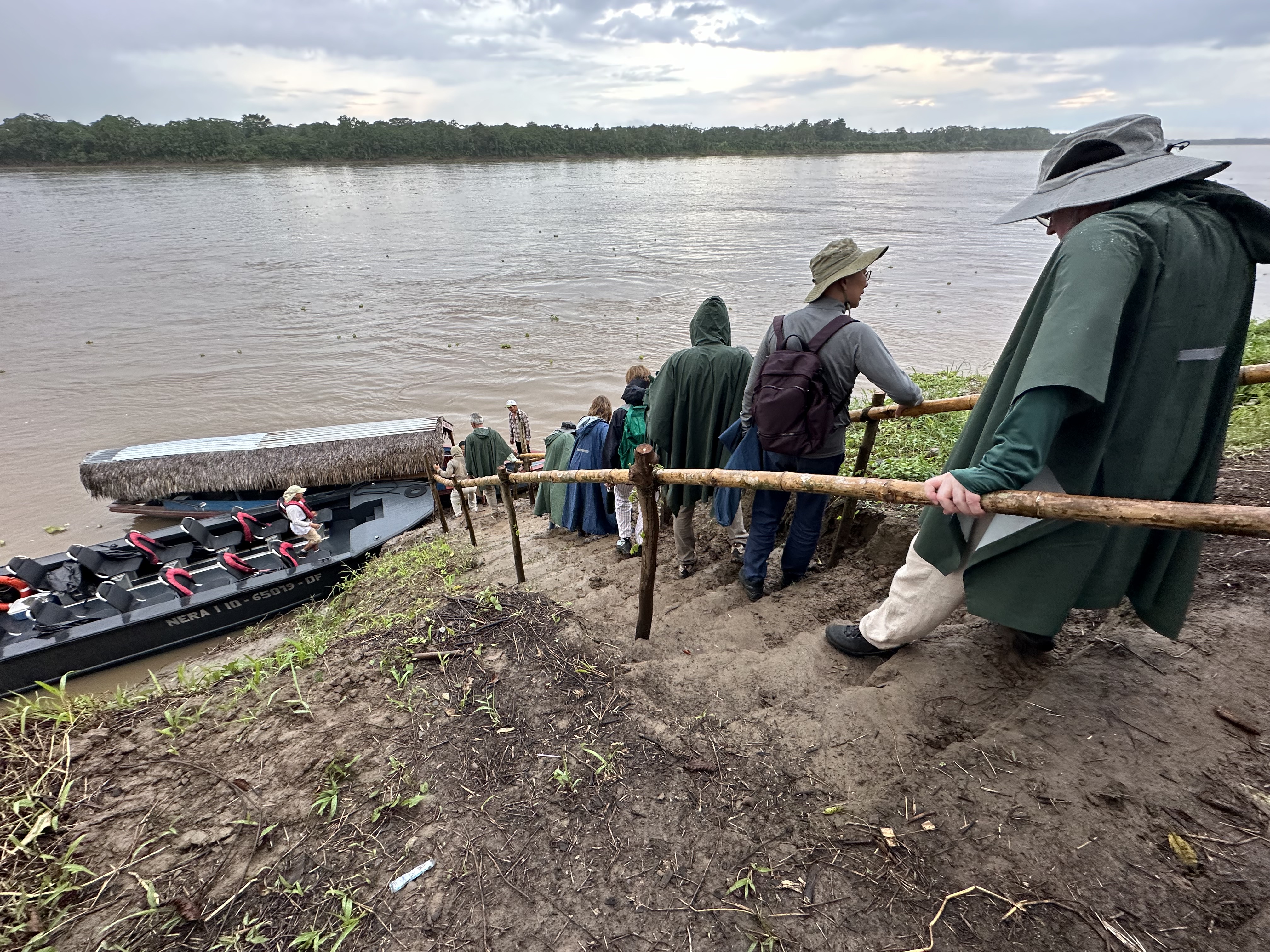
Playing volley ball in the rainThe beekeeper and one of his hives.Some of the hivesMore hivesA lush palm forest Slippery, muddy path back to the tenders.
Back at the ship, we cleaned up, went to the bar for a cocktail and then had dinner with Nancy and Bill. We were happy to turn in early.
Wednesday, July 10, 2024
This morning we departed the ship at 9:30am for another village. This one is called Solterito and the residents were not expecting us. However, the village chief showed up to welcome us and show us around. He said there were 45 families in the village of about 200 people.
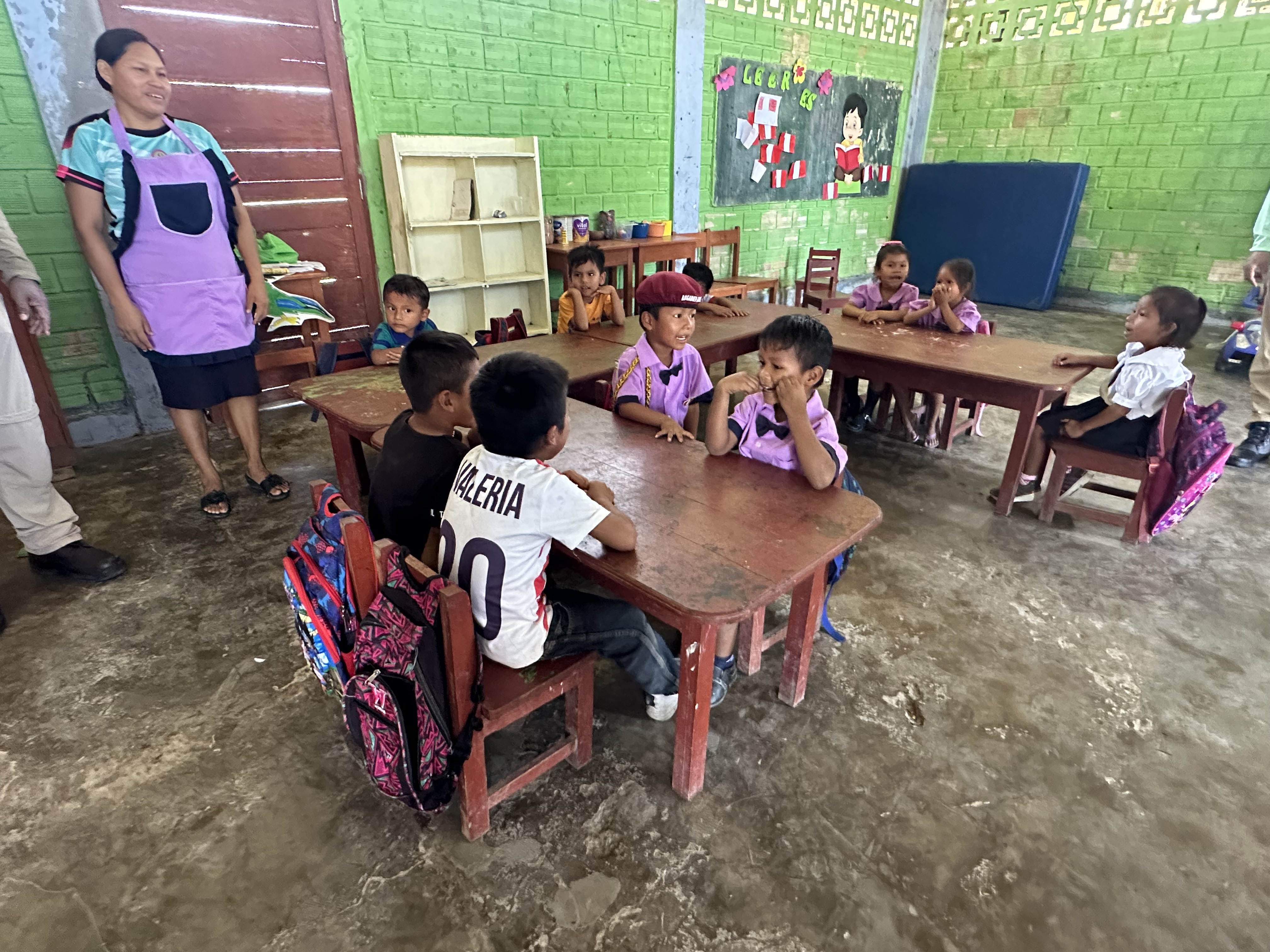
They all speak the local Kukama language and Spanish. The place looked very similar to the village we had seen the day before, with one exception. There was a building that housed a kindergarten classroom with about 14 students. Our guide engaged the kids in a game and a song and everyone was full of smiles. One lady in our group had brought pens and booklets for the kids and she presented the materials to the teacher.
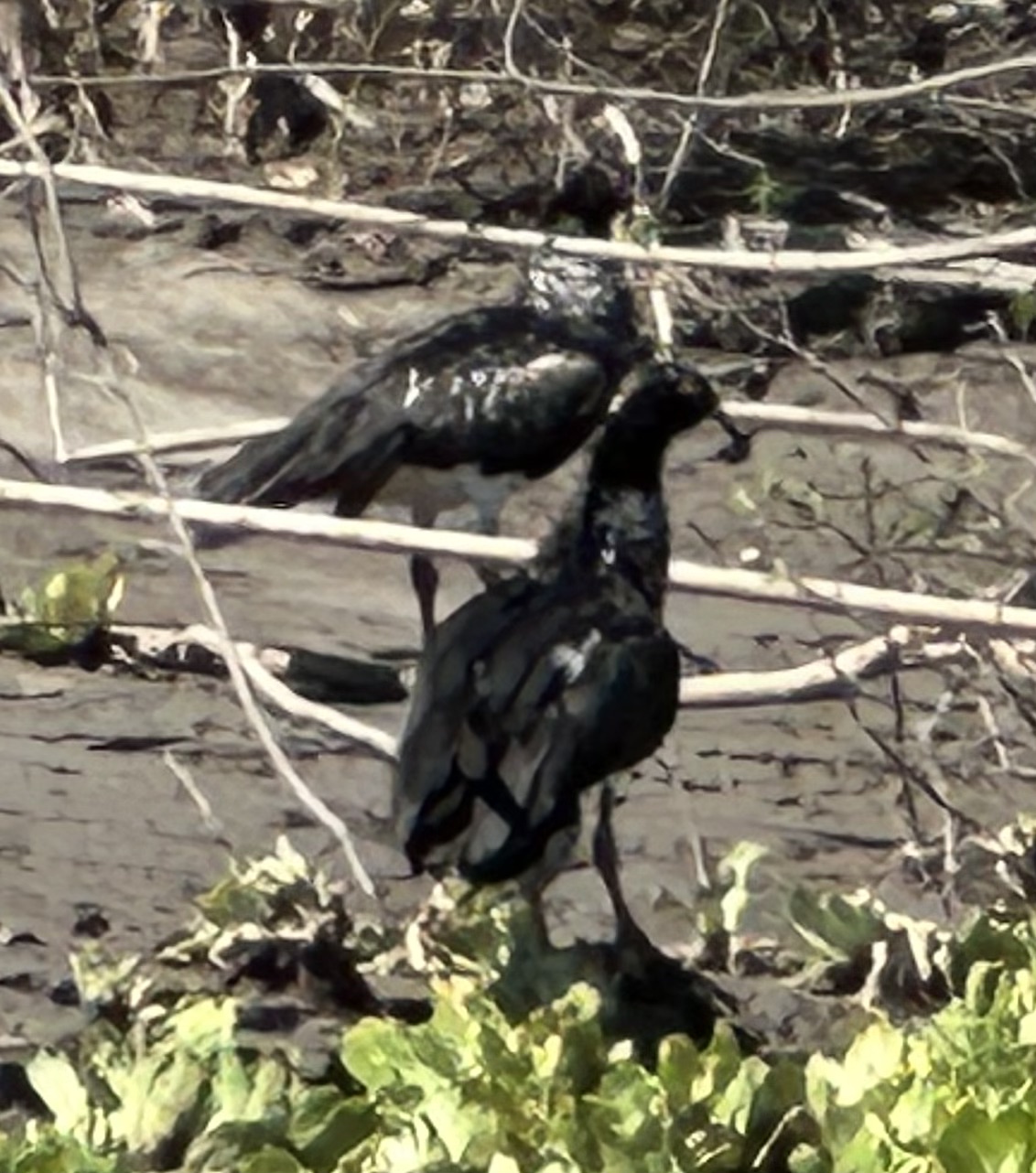
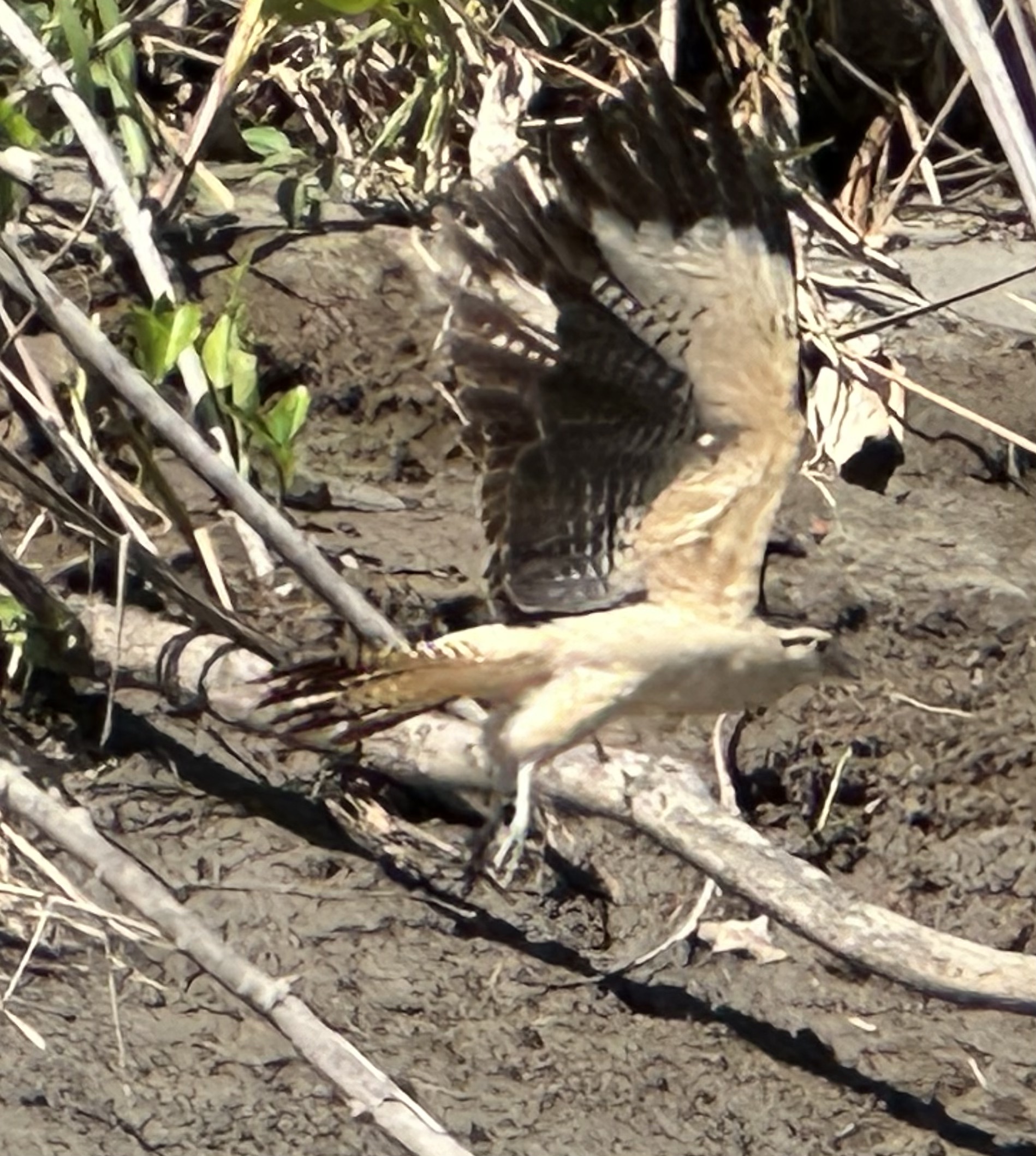
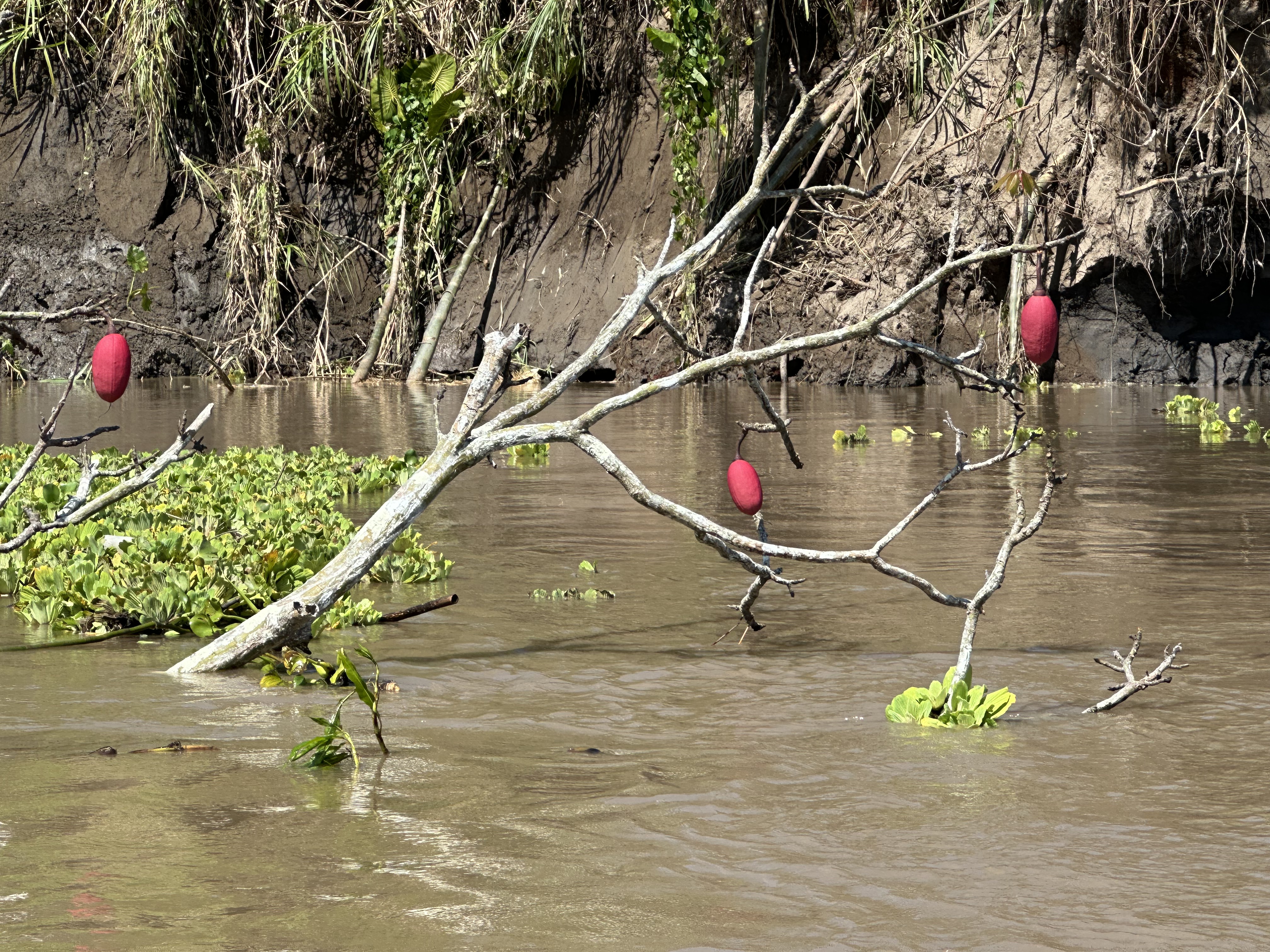
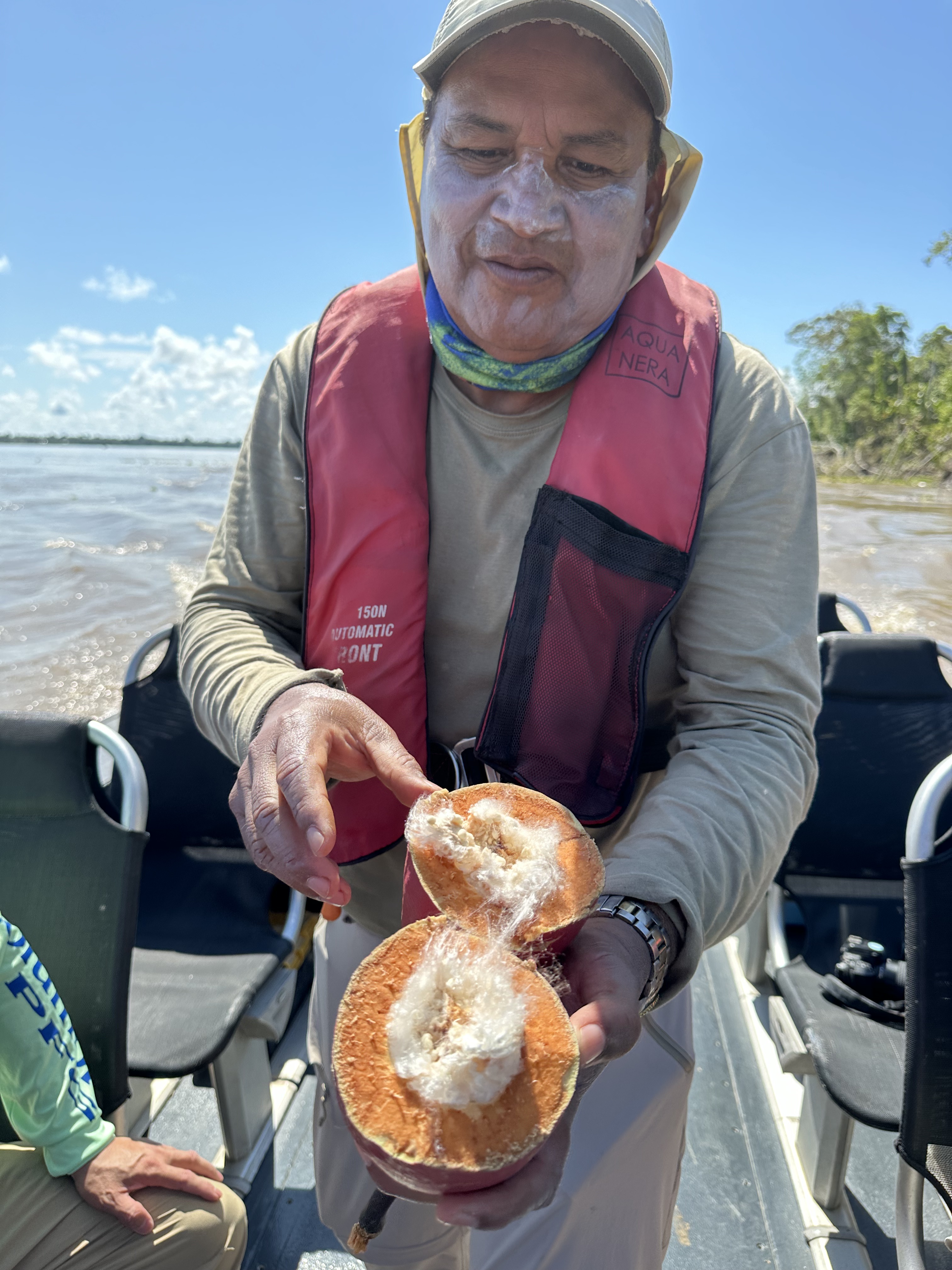
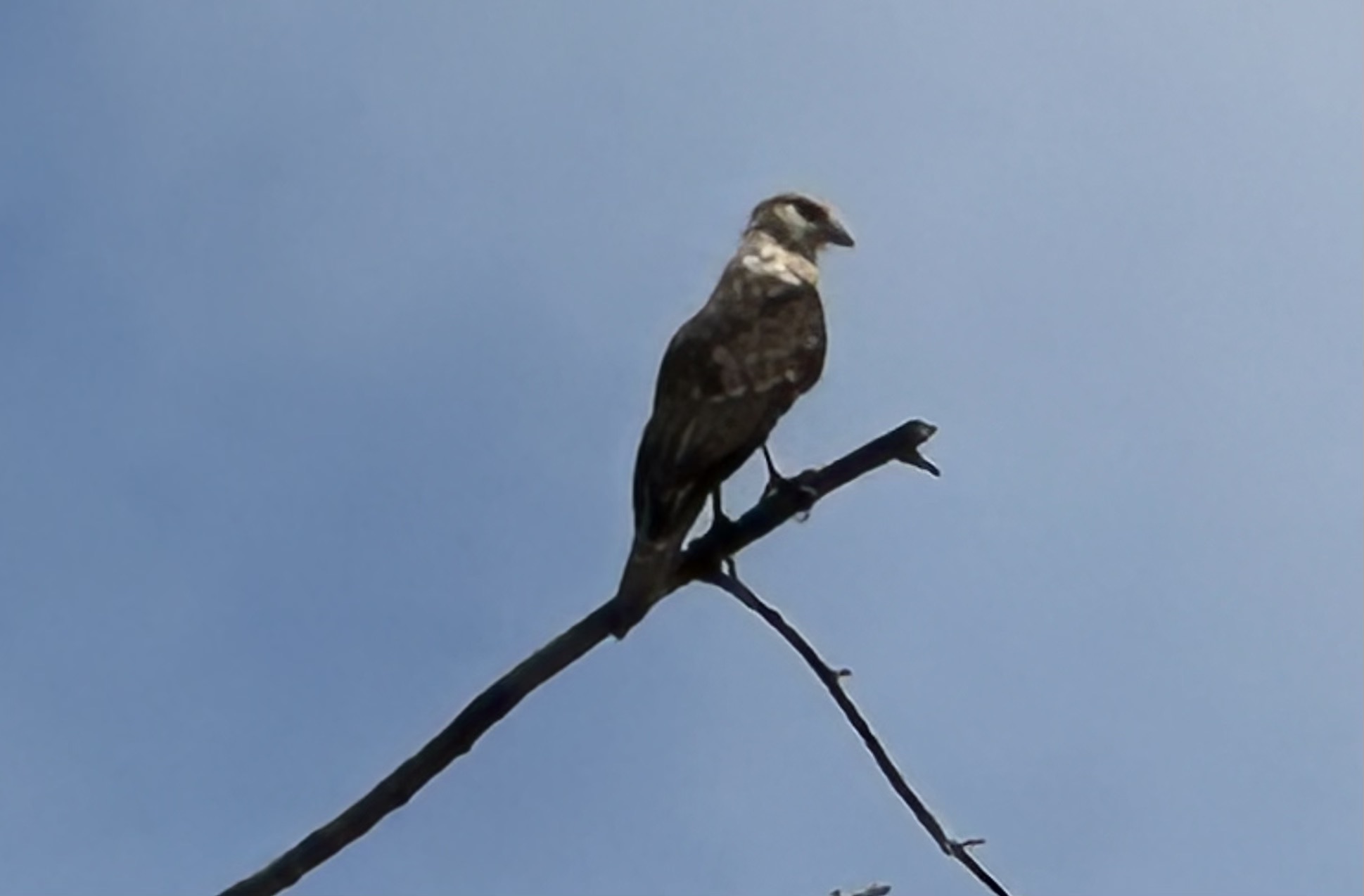
There were no other grades being taught. After awhile we headed back to the tenders and motored across the channel to look for wildlife. Our guide, Juan, spotted a pair of Horned Screamers that are nicknamed Donkey Birds because, according to him, “they walk like a duck, fly like a vulture, sound like a donkey and taste like a chicken”. I got a poor shot of them, but then captured a nice image of a Yellow-headed Cara Cara bird taking off. Near this scene was a downed Kapok tree with some fruit still attached to a limb. Juan ripped one off the limb, cut it open and showed it with is. It had a cotton like substance in the middle as well as some seeds that parakeets eat and a very hard, thick reddish core. The cotton is used on the darts of a blow gun.
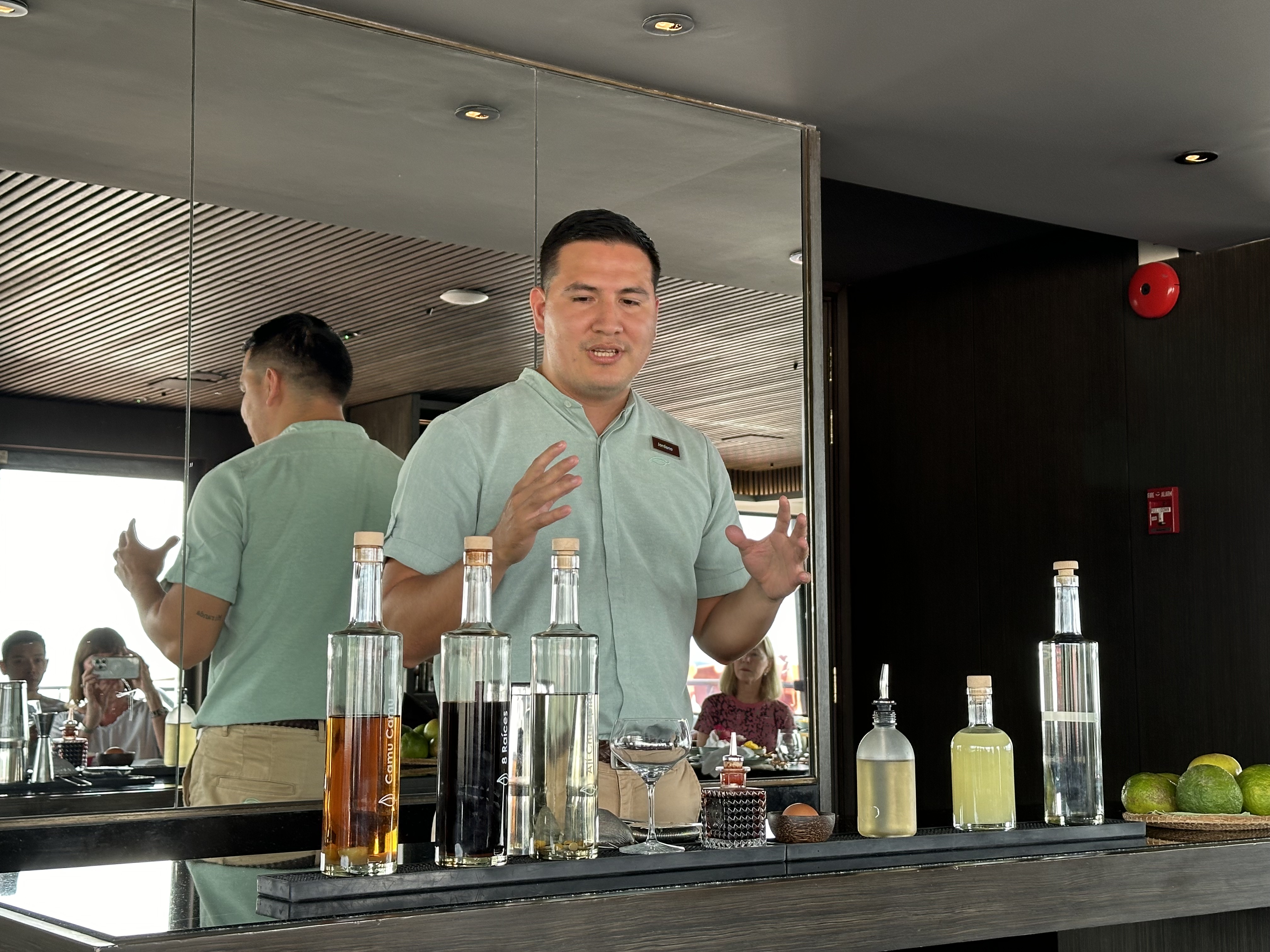
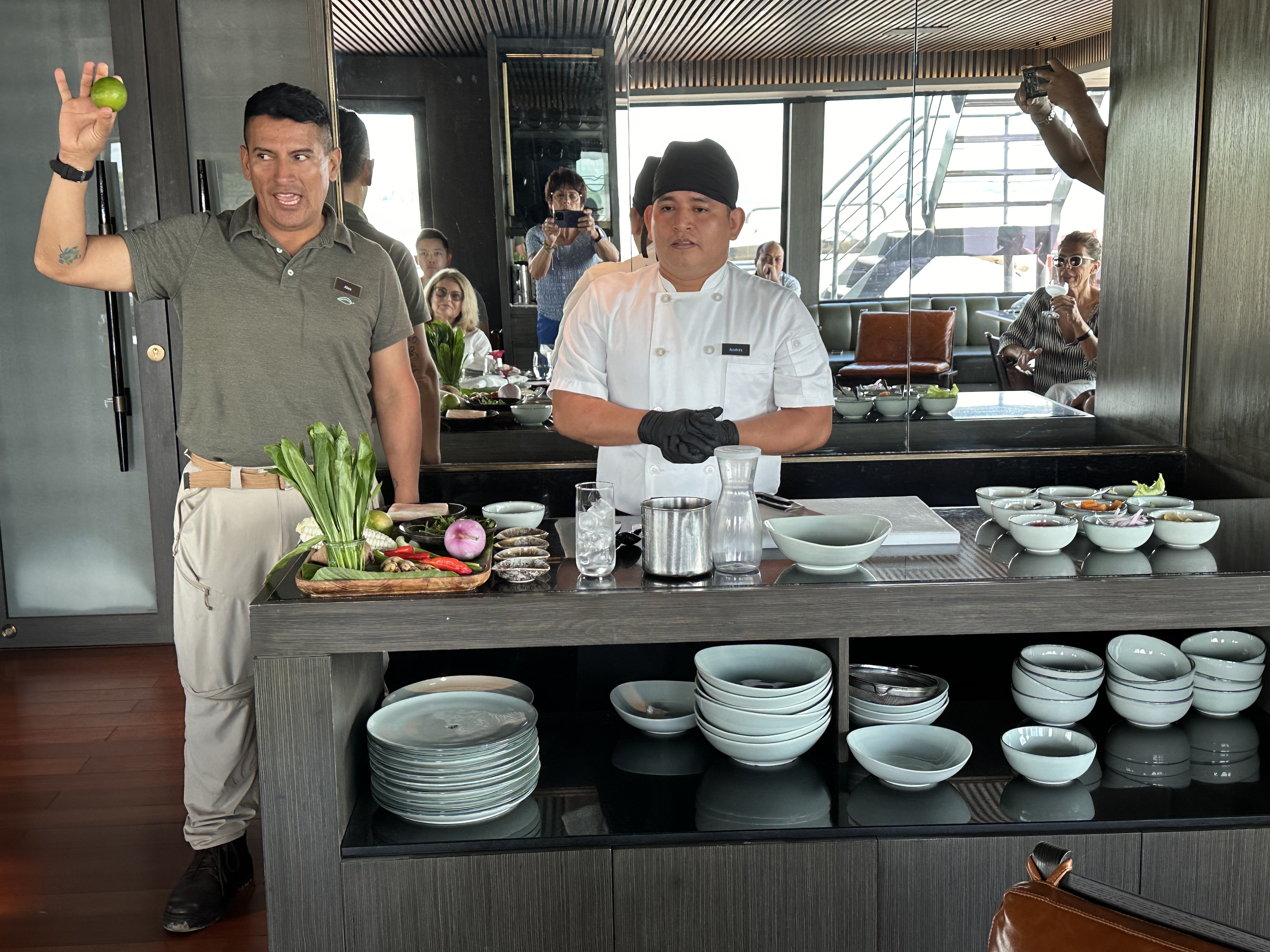
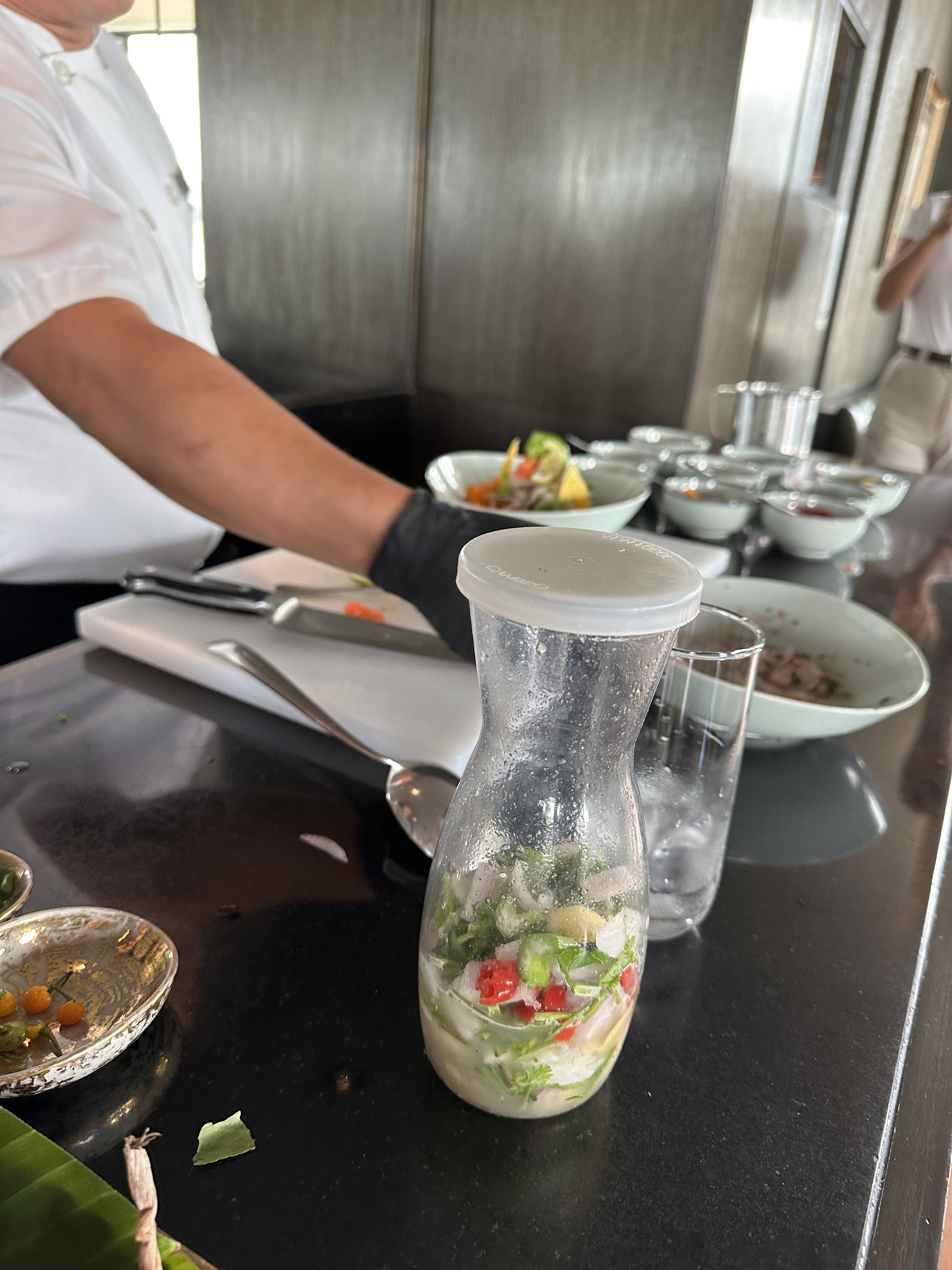
Back at the ship we were treated to a Pisco Sour demonstration by the bar tender as well as a ceviche creation by the chef. Then lunch was served. One ceviche was more than enough lunch for me.
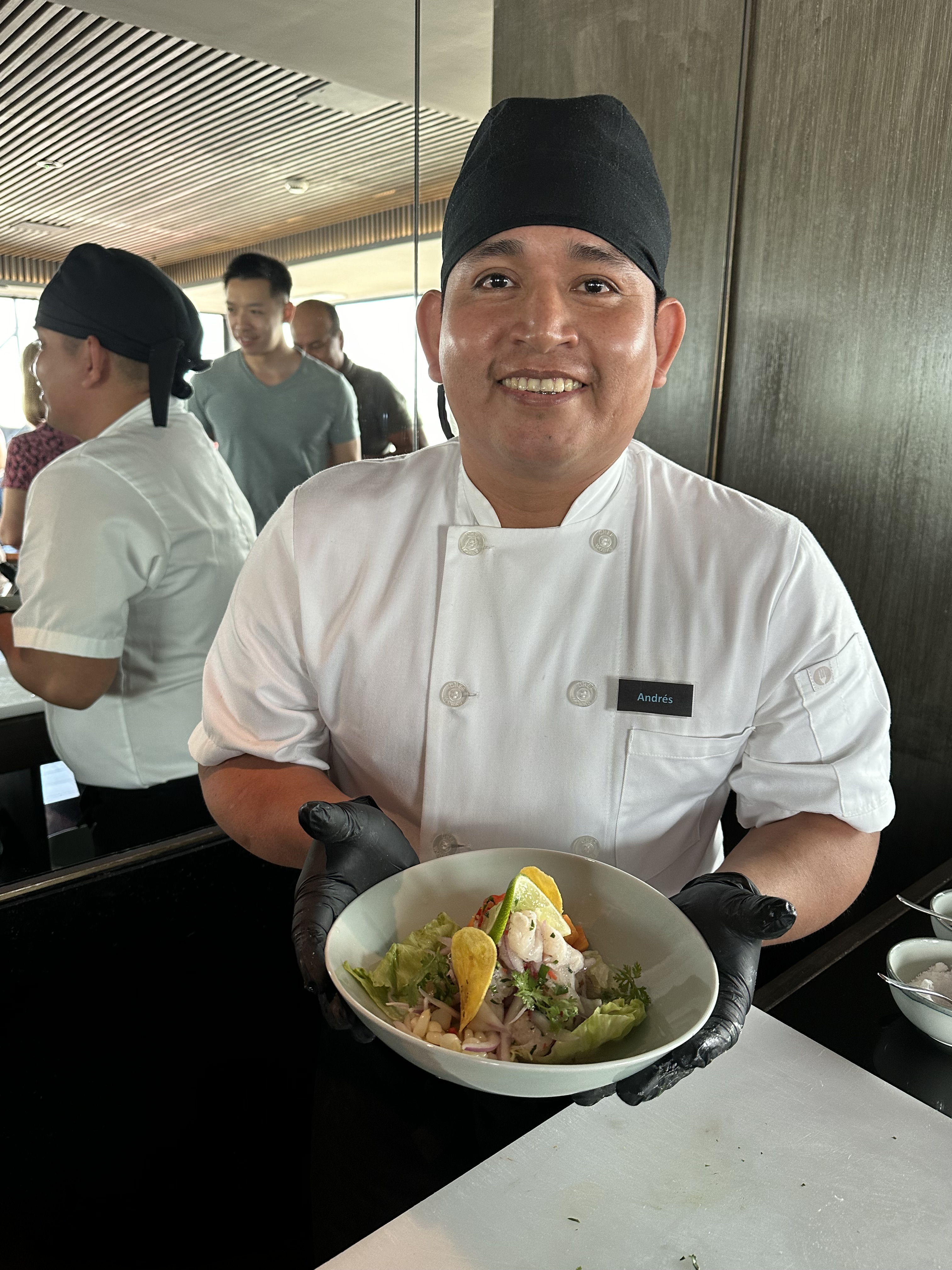
THE BARTENDER EXPLAINING HOW TO MAKE A PISCO SOURCHEF ANDRE MAKING A PANICHE FISH CEVICHETIGERS MILK MARINATINGANDRE’S PANACHE CEVICHE
Panache is the world’s largest edible white fish. It was reasonably tasty.
After lunch we relaxed until 3:30. A few of us went out in the skiff again, to look for Macaw birds. I saw a few sitting in holes in dead palm trees, but nothing I could photograph well. I did learn that the plants floating on the water are water lettuce and that they are liked by the large bird called a Horned Screamer.
Juan cracked open a Kapok seed for us to see its insides. The fluffy white stuff was like cotton and there were seeds inside that some birds eat.
Horned Screamer birdsYellow-Headed Cara Cara BirdSeeds from a dead Kapok treeJuan shows us the inside of a Kapok seed
Back at the boat we joined a group for cocktails and 8 of us sat together for dinner. It was a pleasant evening with good food and lots of laughter.
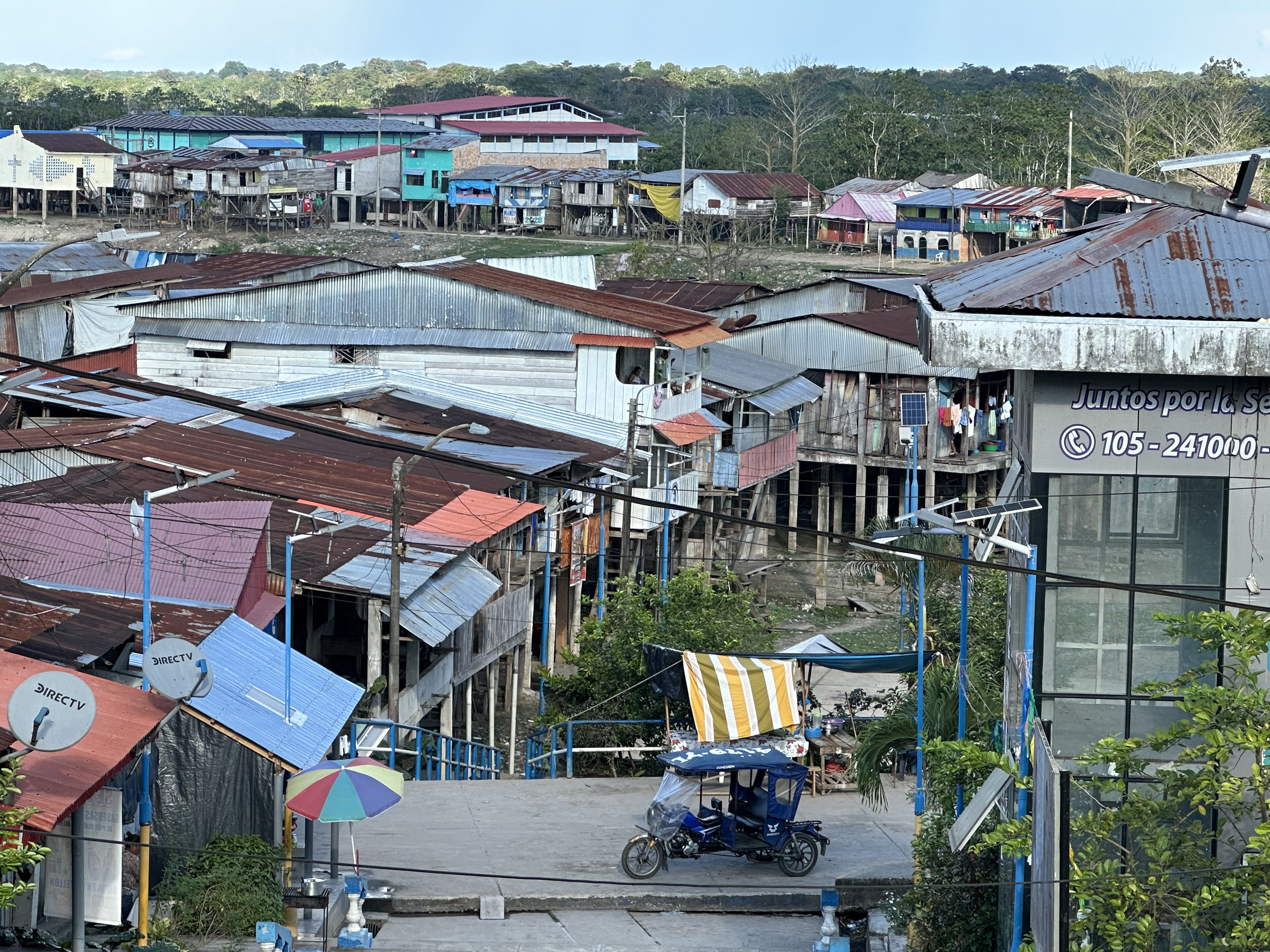
Had a relaxed morning, yesterday, while waiting for our 10:30 am ride to the airport followed by more waiting for our 1;30pm flight to Iquitos. The flight was almost 2 hours followed by a slow bus ride touring through Iquitos while waiting for our 5:30pm boarding time on the Aqua Nera. It was interesting to see the city of half a million people, who are mostly marooned. We took many photos of the pre-colonial buildings, the stilt houses, the hundreds of tuktuks, the huge fruit and vegetable markets, the multitude of people milling about, and more. We learned that people shop every day for their food needs and then cook it the same day, even though they have refrigeration. As much as anything else, it appears to be a social experience.
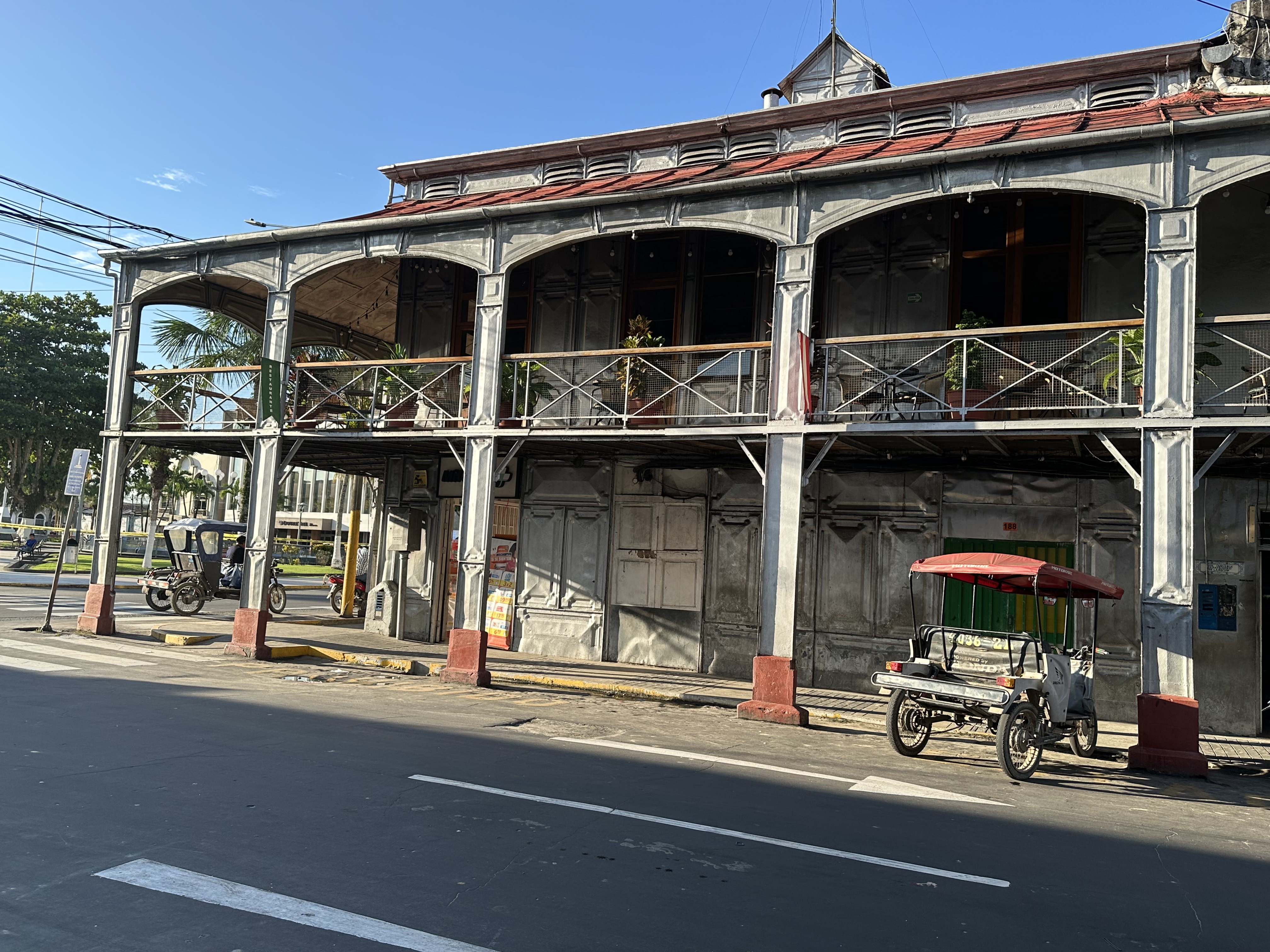
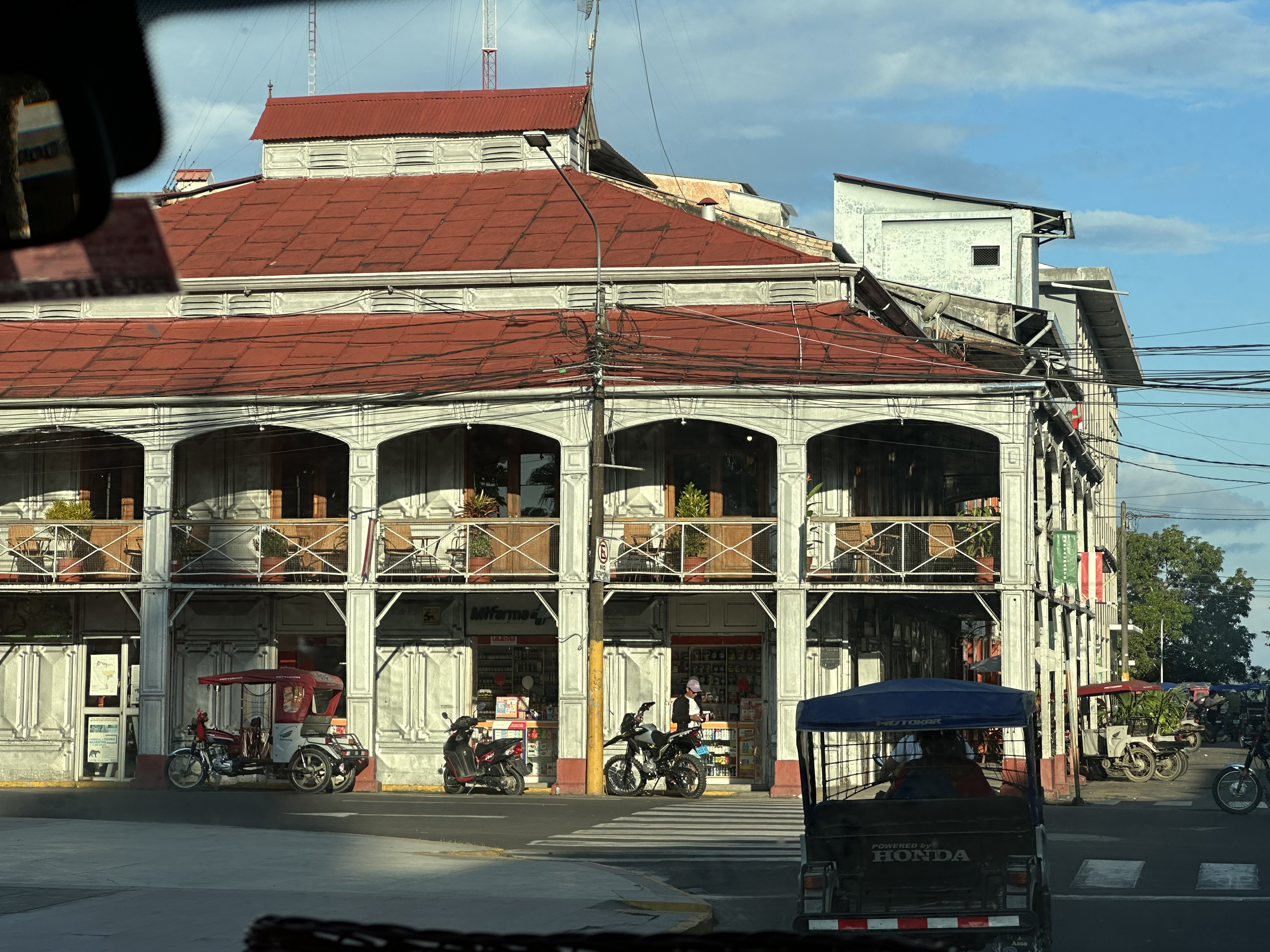
Life happens on the streets in Iquitos. Stores are open from 6am to 7pm daily. Art, beauty, eating, visiting, playing and marketing all take place on the streets. There were three industries during the 1800’s; rubber, timber and petroleum. The rubber barrens really struck it rich and built fancy houses in the city. We were told the wives of these men sent their dirty laundry to Europe to be cleaned rather than put it in the brown river. It took 4 months for the clean laundry to be returned. One baron had a French, Eiffel designed house dismantled, shipped and rebuilt in Iquitos. It is the house in the above collection with the red roofed tuktuk in the right of the photo. The house below that is reputed to be the first hotel built in Latin America. Chinese people arrived during the 1800’s to work in the rubber industry. Many stayed and are currently in the restaurant business throughout the city.
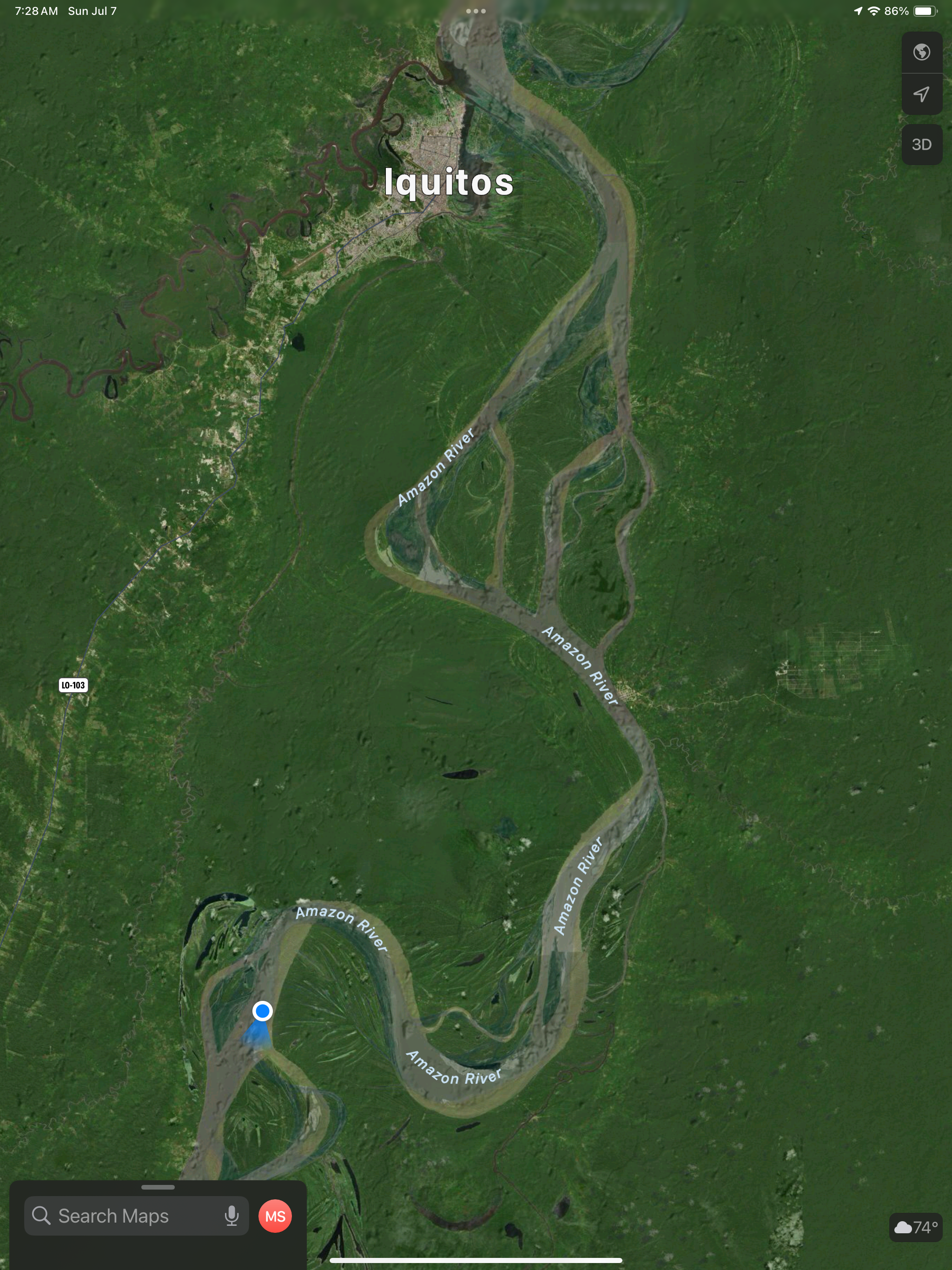
Iquitos cannot be accessed by road as there are none. One can either fly in from Lima or drive for three days to the town of Pucallpa and then boat down the Amazon River for 5 days to Iquitos. As you might expect, it is very expensive to live In Iquitos. The name means “people surrounded by water”. The main rivers are the Amazon and the Italia, which cuts through the city. The Amazon was redirected away from the city to reduce flooding. The longest road in Iquitos is 8 kilometers. The district of Belen is home to 38 thousand families living in houses on stilts to be above the flooding.The government considers these illegal residences. Below is a map of Iquitos and the Amazon. You can make out the Italia River curving around the west of the city. As you can see, there are no roads outside the city.
July 7, 2024
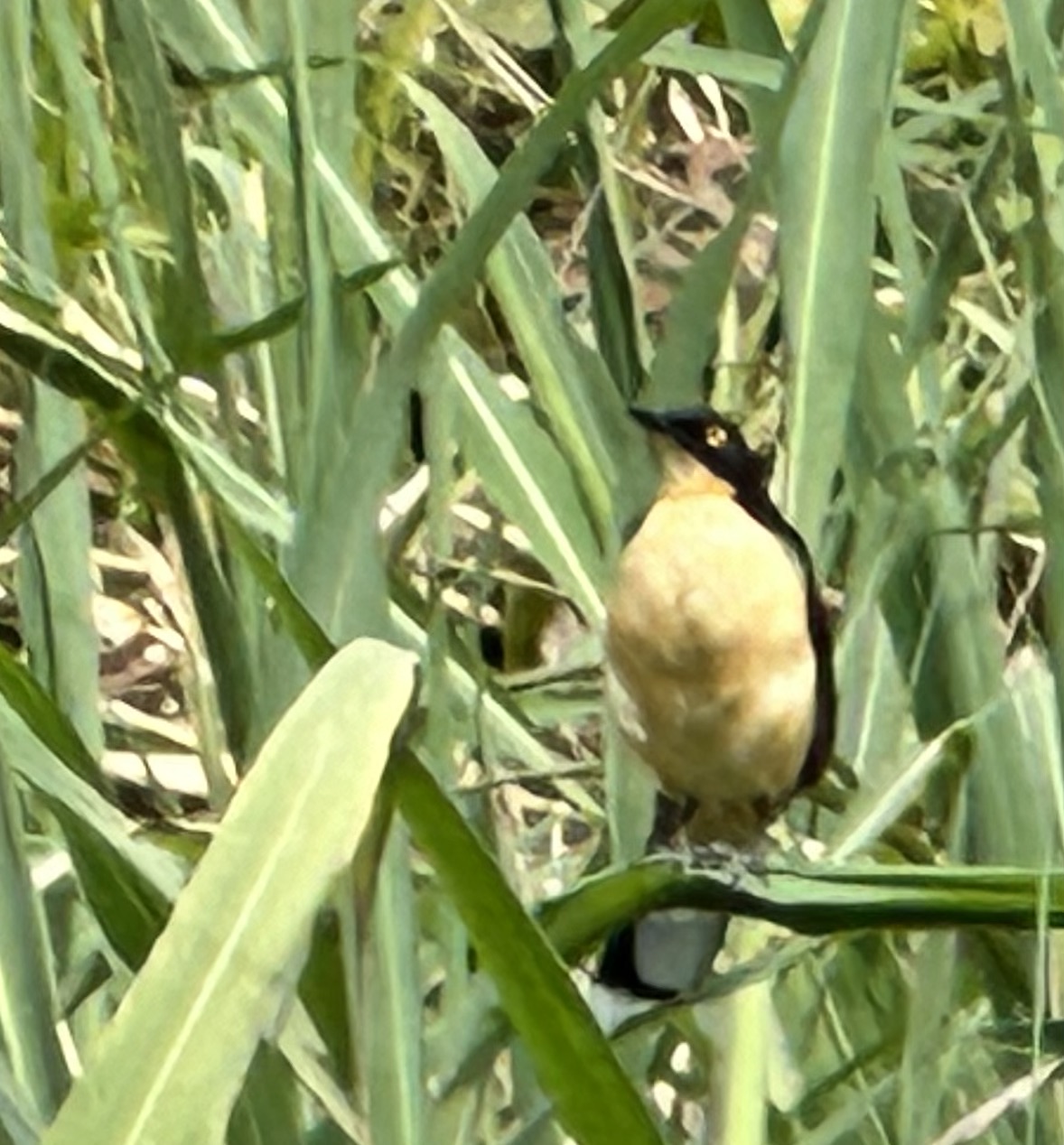
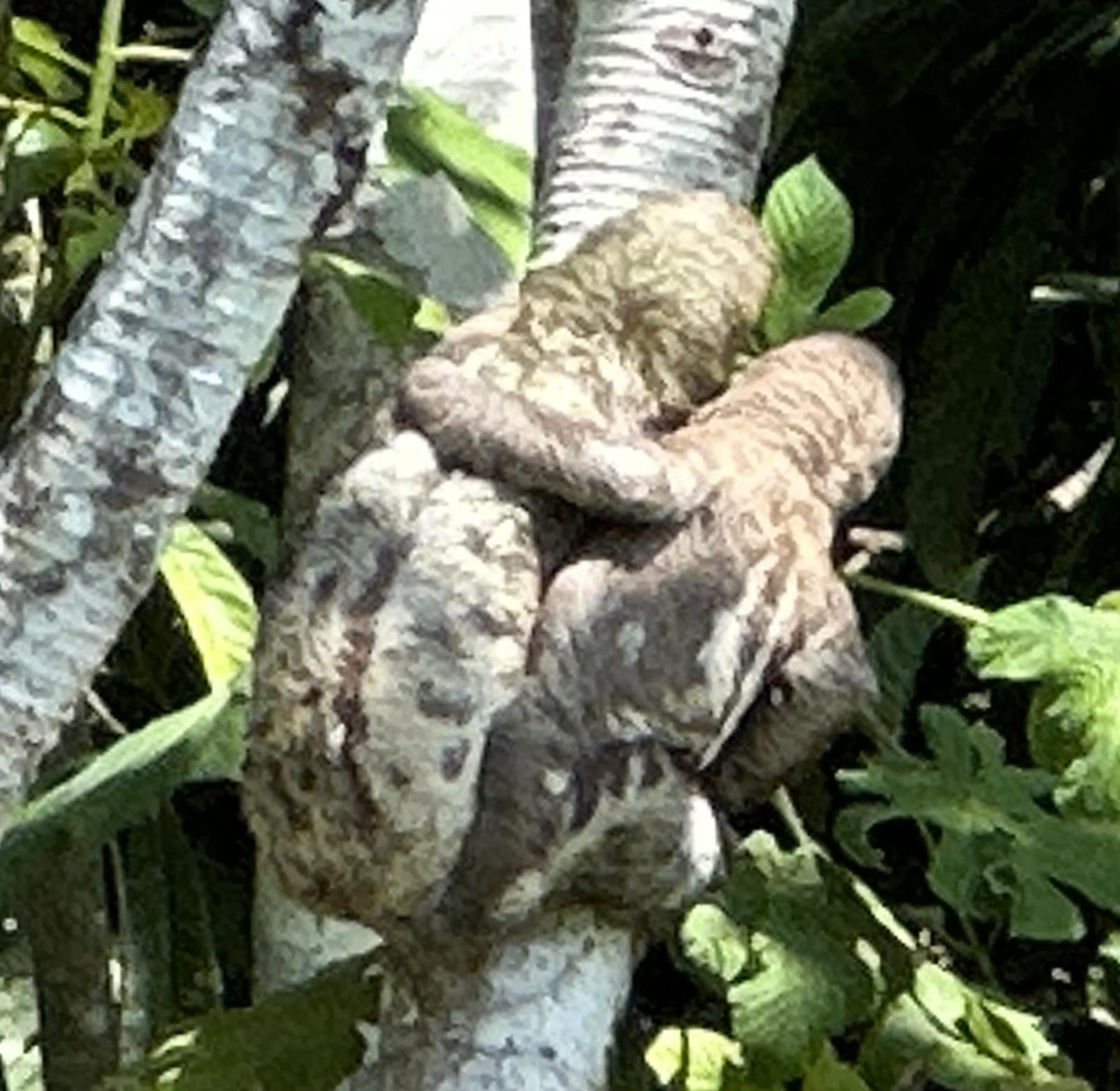
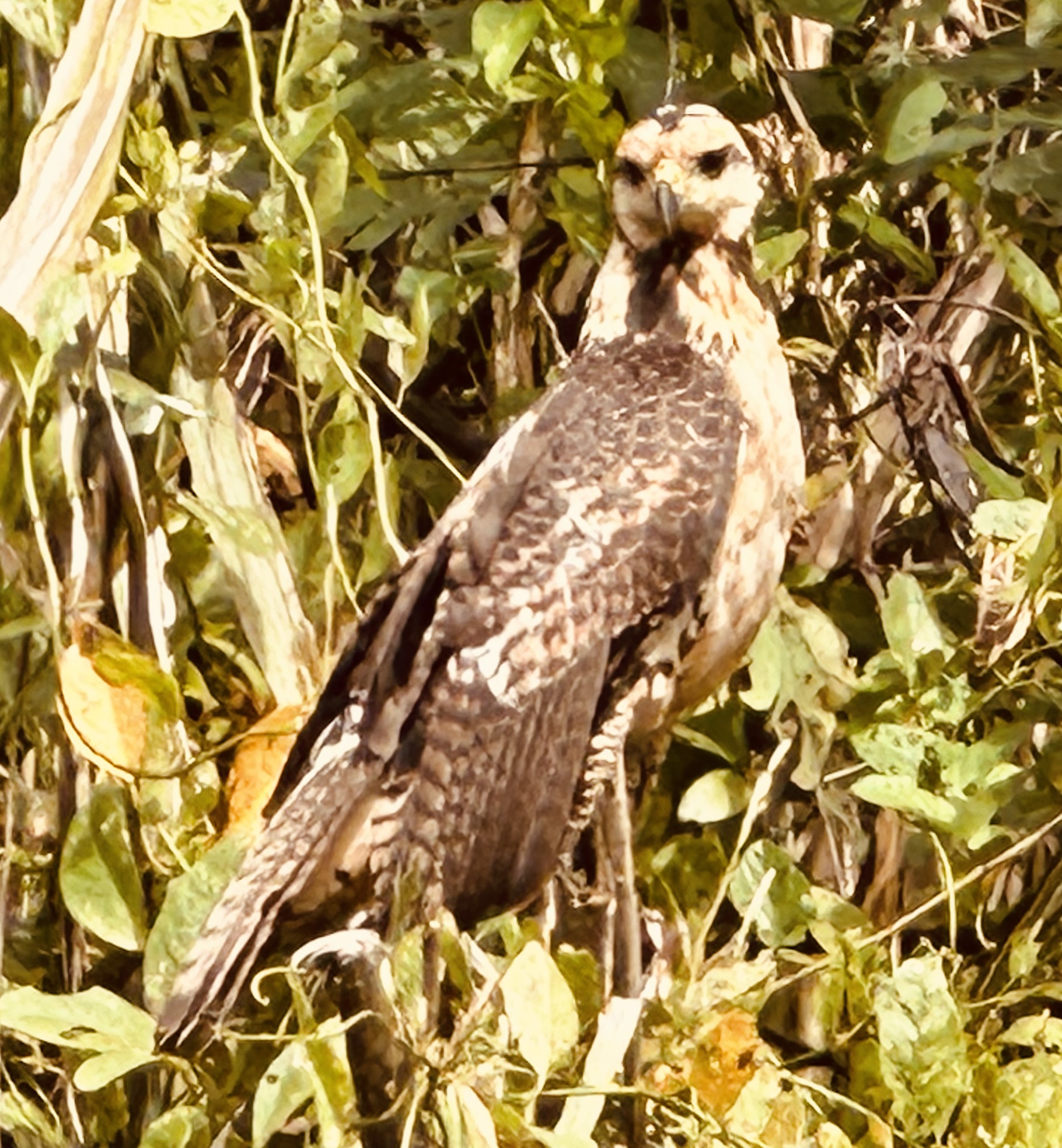
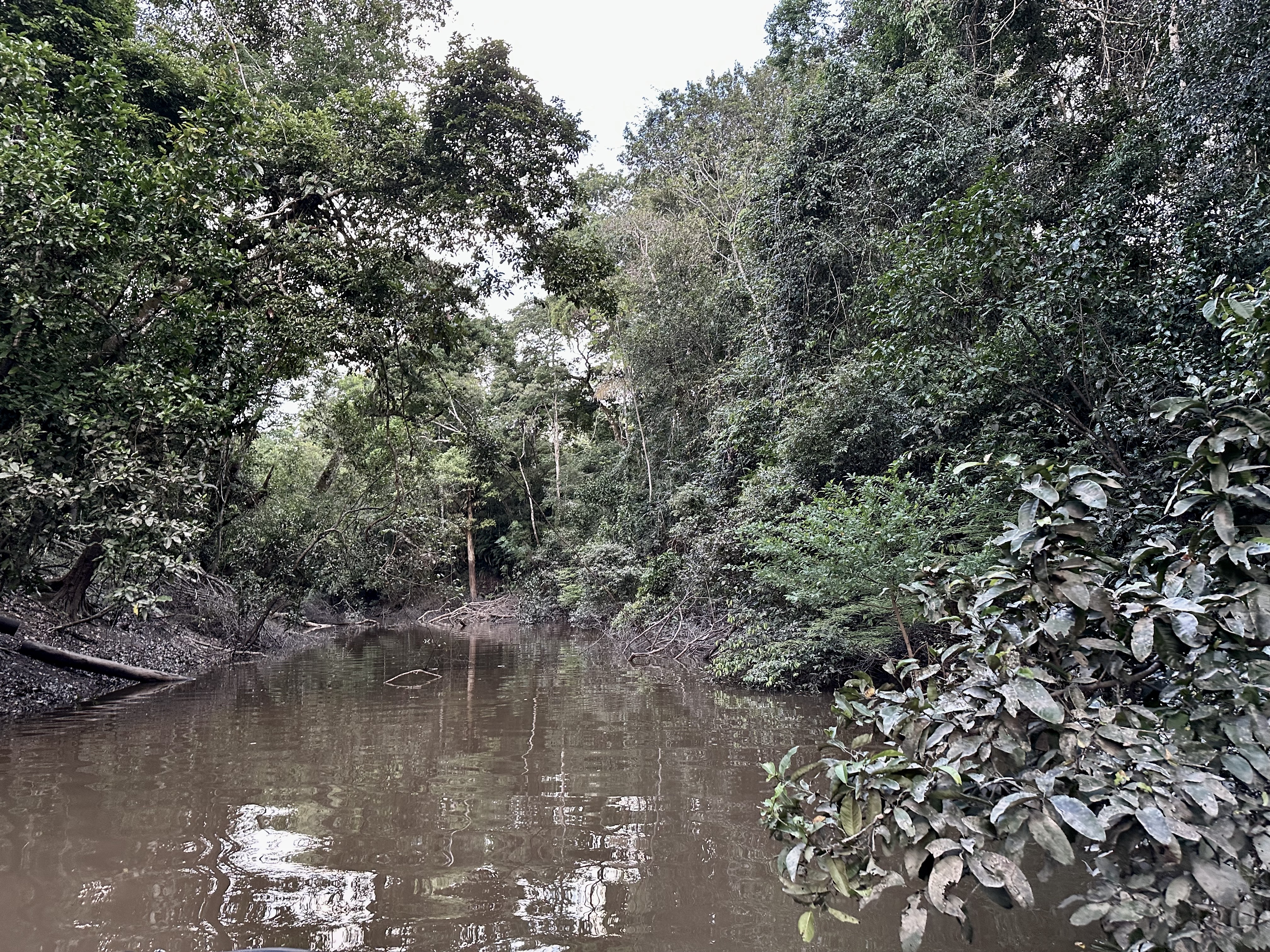
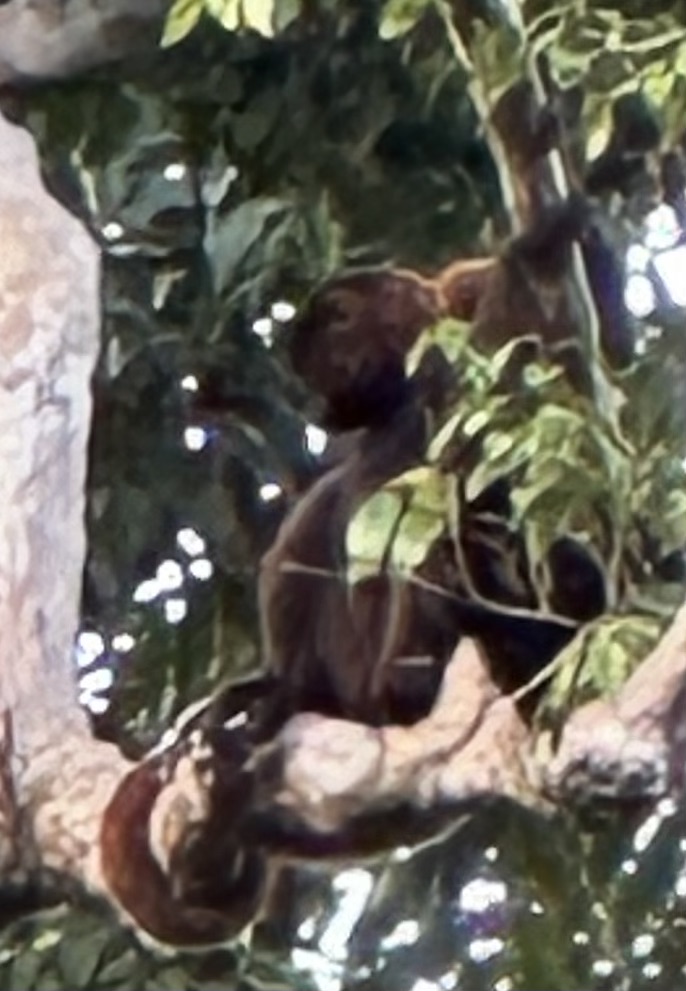
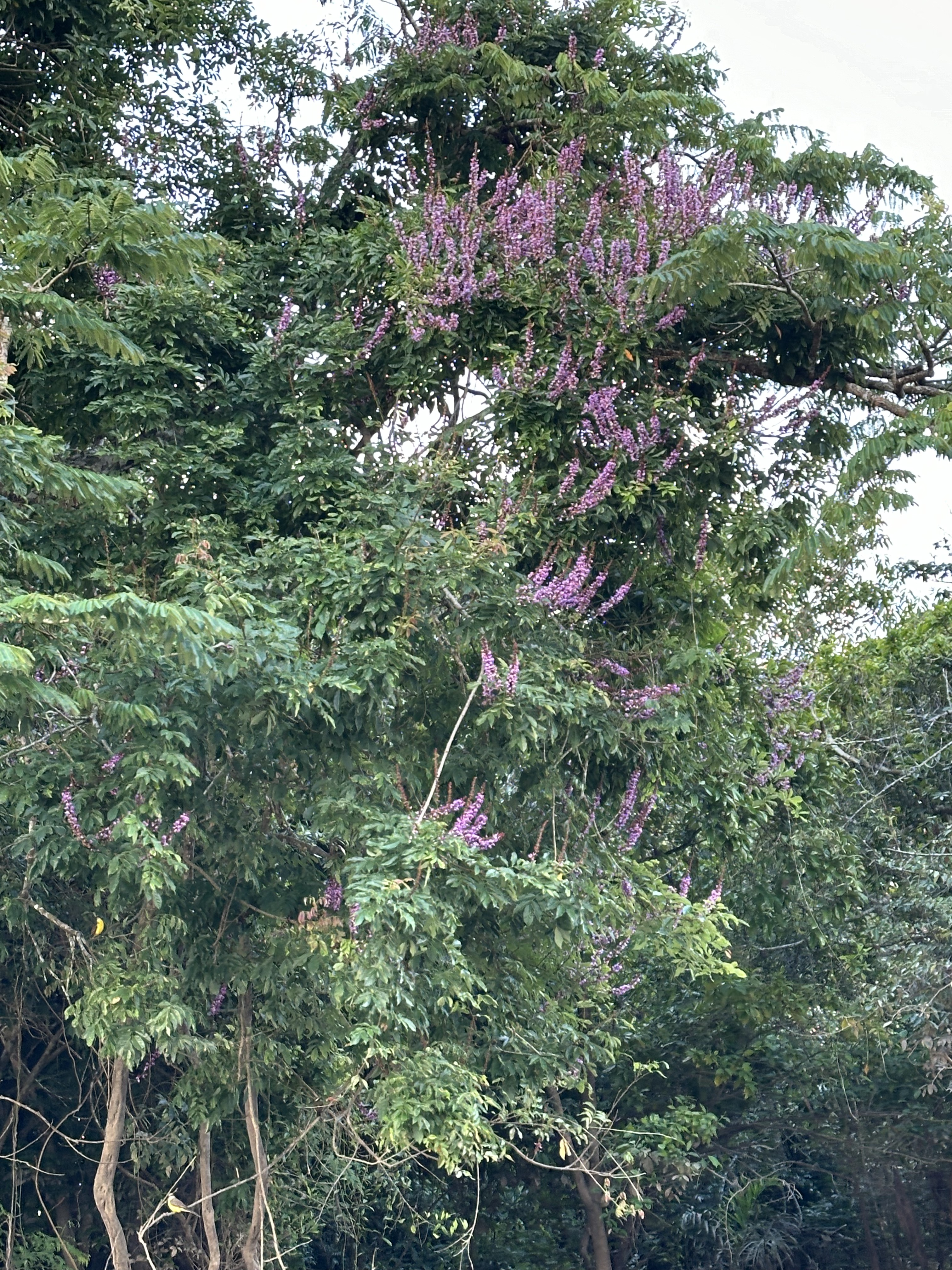
After the buffet breakfast, we joined a group of about 8 guests on a flat bottomed motorboat for a ride up a tributary called Yana Yacu, the Black Water River, but it’s really only brown. The weather was very pleasant. Not too hot or humid. After motoring awhile we began to pick up some wildlife. First we spotted a pink fresh water dolphin, with a hump on its back and no dorsal fin. The we saw a black collared hawk followed shortly by a Great black hawk. These sightings were soon overshadowed by a mother sloth with a baby slowly decending a large tree trunk. We watched them quite awhile and I finally managed to get a photo. We saw a huge Coral tree with pretty orange/yellow flowers that provide nectar for bees and small birds. We spotted a black-capped Dona Cobious and a yellow headed Cara Cara. Then we saw another sloth with child, several Blue and Yellow McCaws and, finally, a brown Capuchin Monkey. Our guide, Juan, was thrilled with our sightings and felt we had had an excellent sighting adventure. So, we were happy too, even though I got very few photos and no really good ones.
Horned Screamer or Donkey BirdBlack Capped Dona CobiousMotering along the Yana Yacu TributaryA mother and child slothYellow Headed Cara CaraAnother mother and baby slothGreat Black Hawk -JuvenileCoral Tree
The afternoon excursion was similar to the morning one in that we had the same guide, Juan, and much the same group of passengers. We set off down another black tributary called the Yarapa River. Juan filled us with more information about the area. First he reminded us there are only 2 seasons in Peru and on the Amazon: high water, which is December through May and; low water, which is June through November. There can be between 25 and 45 feet variation between the seasons, with rain occurring about 250 days a year. Juan thinks it is unusual for us to be in Peru 4 days already and not to have experienced any rain. I am very happy that is the case. He proceeded to tell us more facts. During the high water season, fish congregate under whatever trees the monkeys are feeding in, as they drop seeds and uneaten fruit that the fish then consume. People then follow the monkeys and catch the fish feeding the water under the trees. The monkey fish is even able to jump 2-3 feet in the air to get the fruit. As this. is the dry season, we did not see any monkey fish. The water level is 15 feet below where it was just a couple of month ago. Our morning tour ended back at our skiff in time for lunch. Then, after a hearty meal of catfish, rice, green salad and fried plantains, we had some down time. During the afternoon tour with Juan, he helped us spot several more birds and animals, but we had a hard time getting clear photos. This is the best I could do.
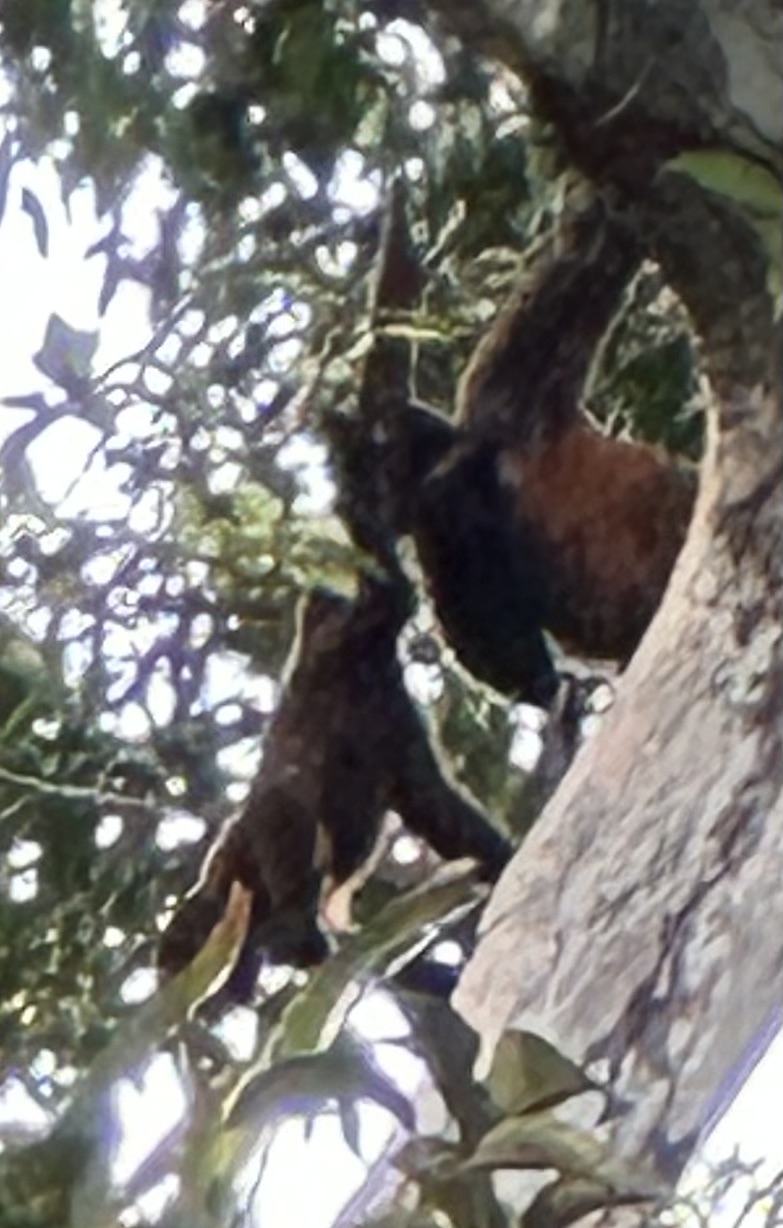
Typical rainforest scene in the dry seasonWooly monkey and babyWooly monkey and b babyBlack Collared HawkPretty purple flowering vine.
We even saw a night jar, which Mark and I were surprised to see at the Amazon River. We also saw a brown frog in a tree, but it was too dark for me to capture a photo of it. The day ended with us enjoying the many stars in the dark night sky as we motored back to the ship. Not only had it not rained, there had been no mosquitos, no humidity and no high temperatures. The end of a lovely day. After a pleasant evening visiting with new acquaintances over dinner, we went to our overly air-conditioned room, brushed our teeth and dove into bed.
Monday, July 8, 2024
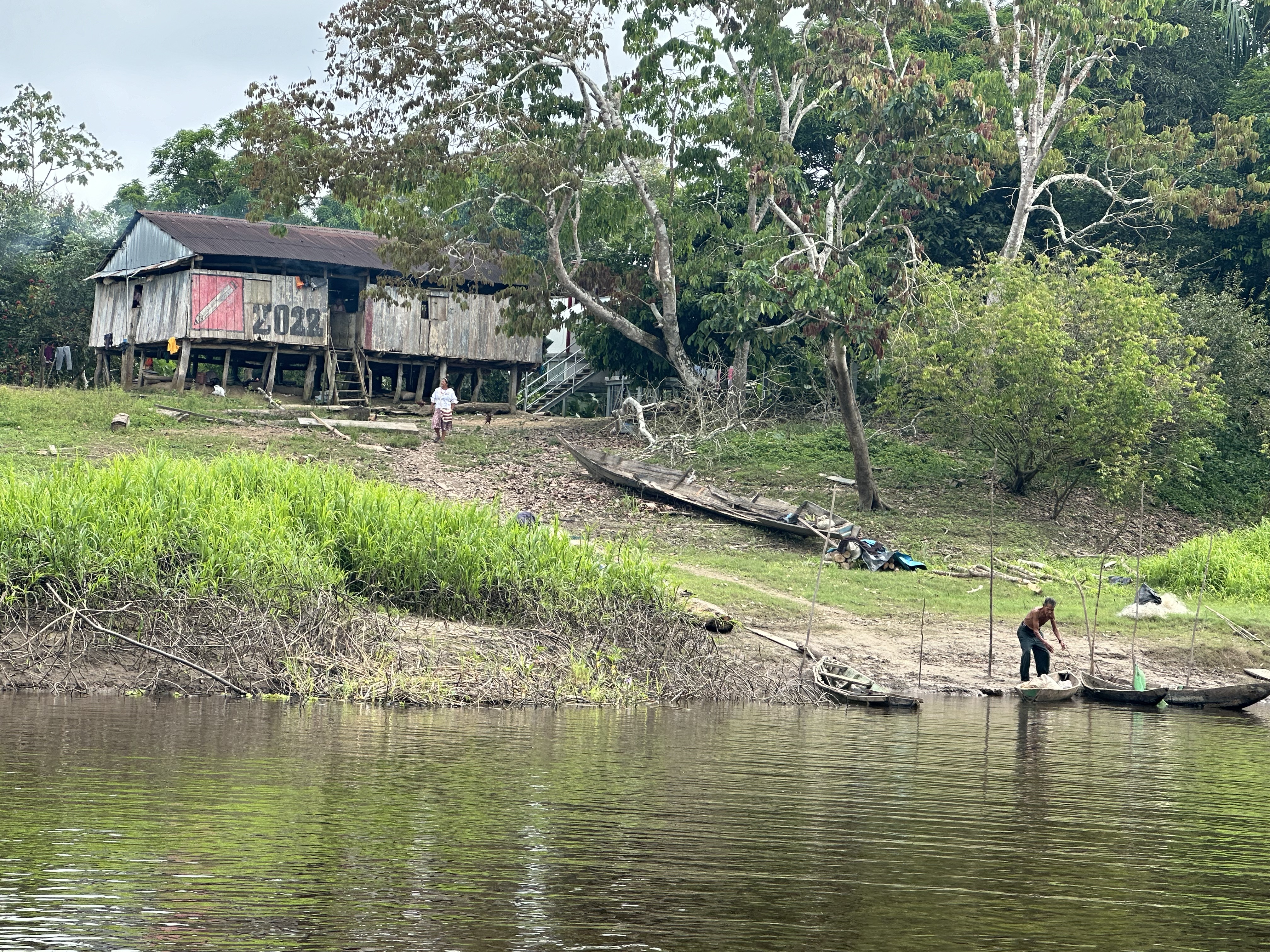
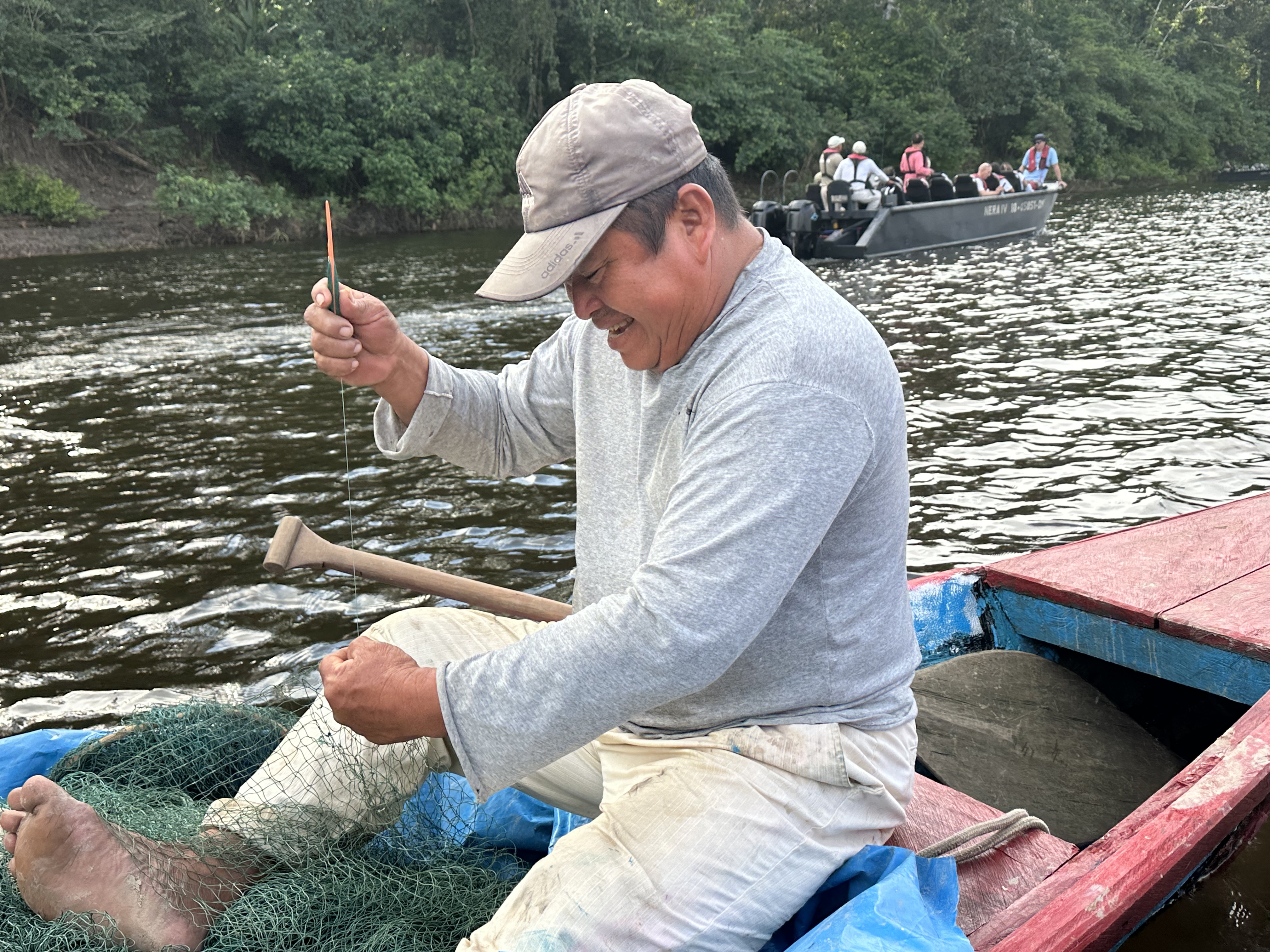
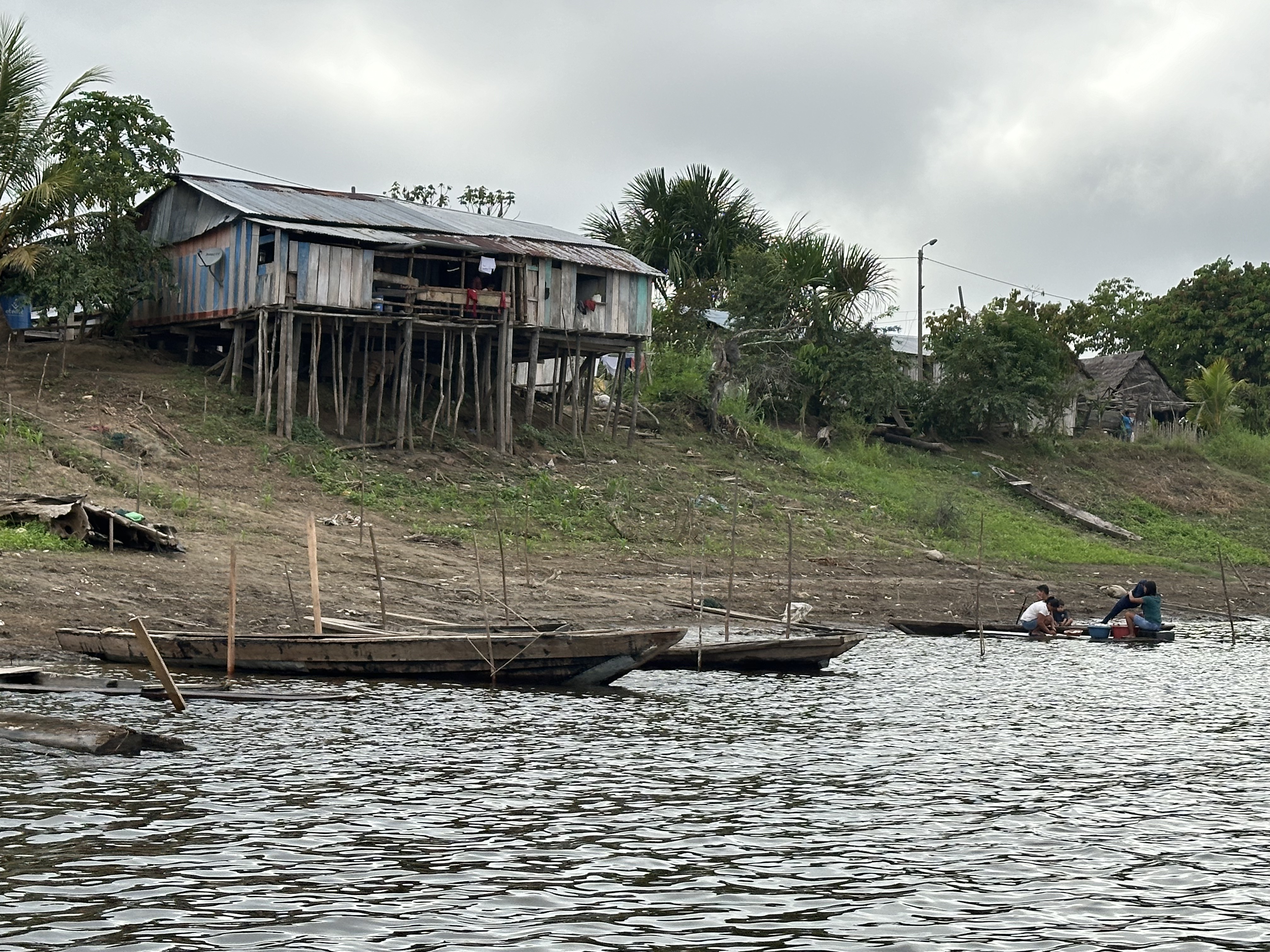
Up, dressed with swim suits on and clothes over and into a skiff at 7:30. We motored into a black water tributary while watching locals doing laundry and fishermen tending nets. At the entrance to the tributary we saw several grey dolphins popping up for air. This was about as much of one as we ever saw. After watching the dolphins awhile, and turning into the tributary, we came upon a village where people were busy tending nets and doing laundry. The houses were on stilts above the high water line.
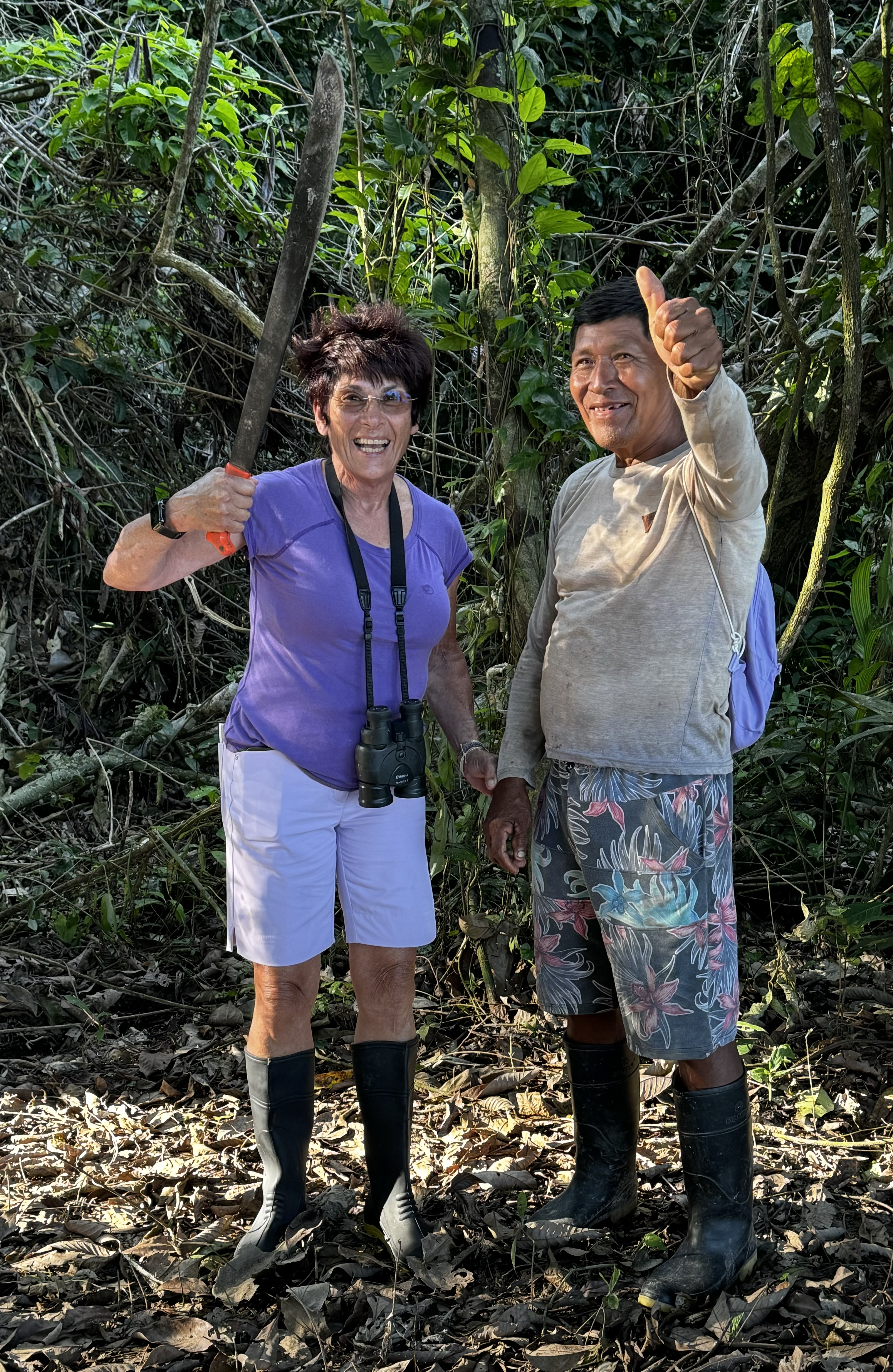
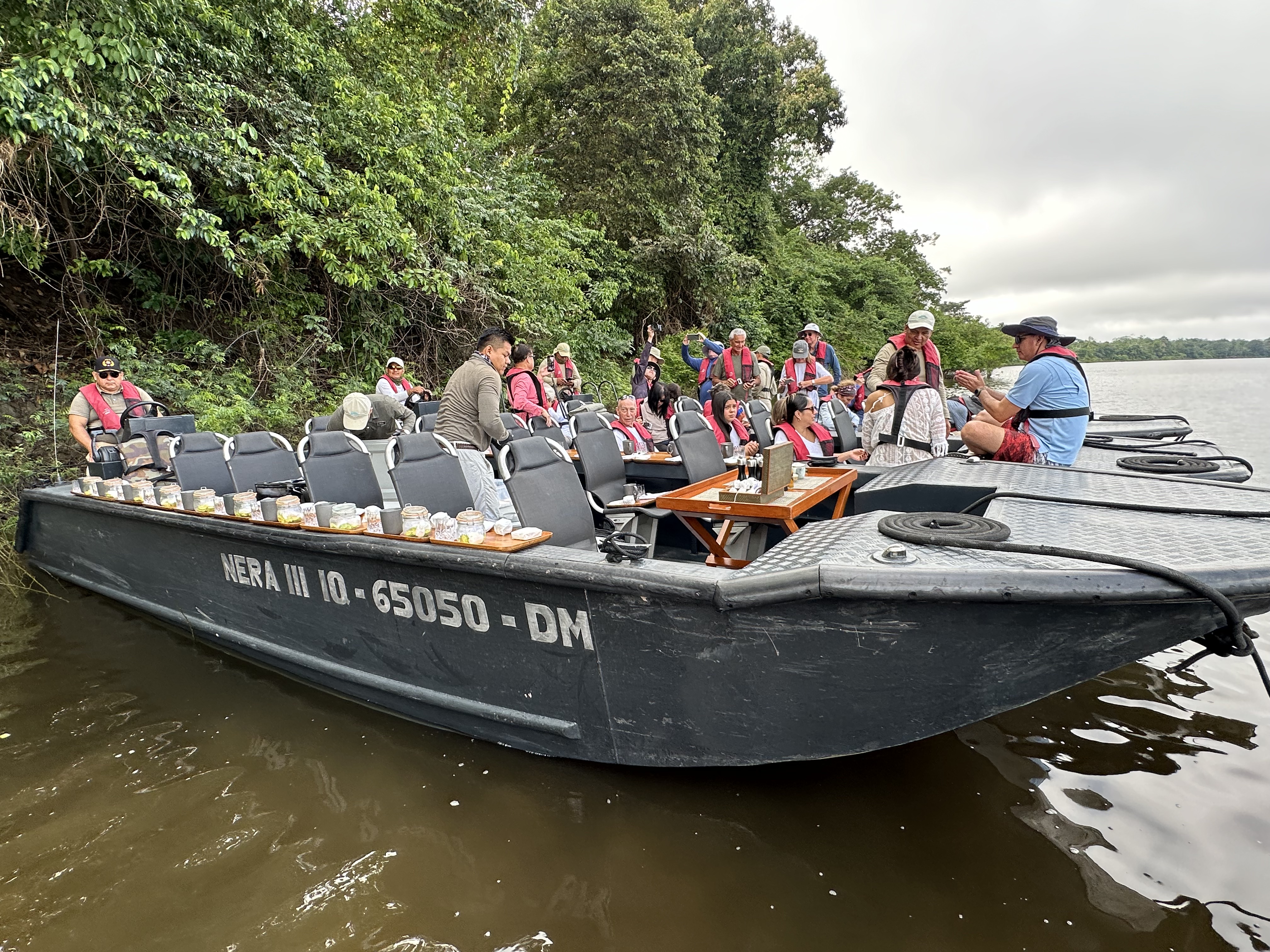
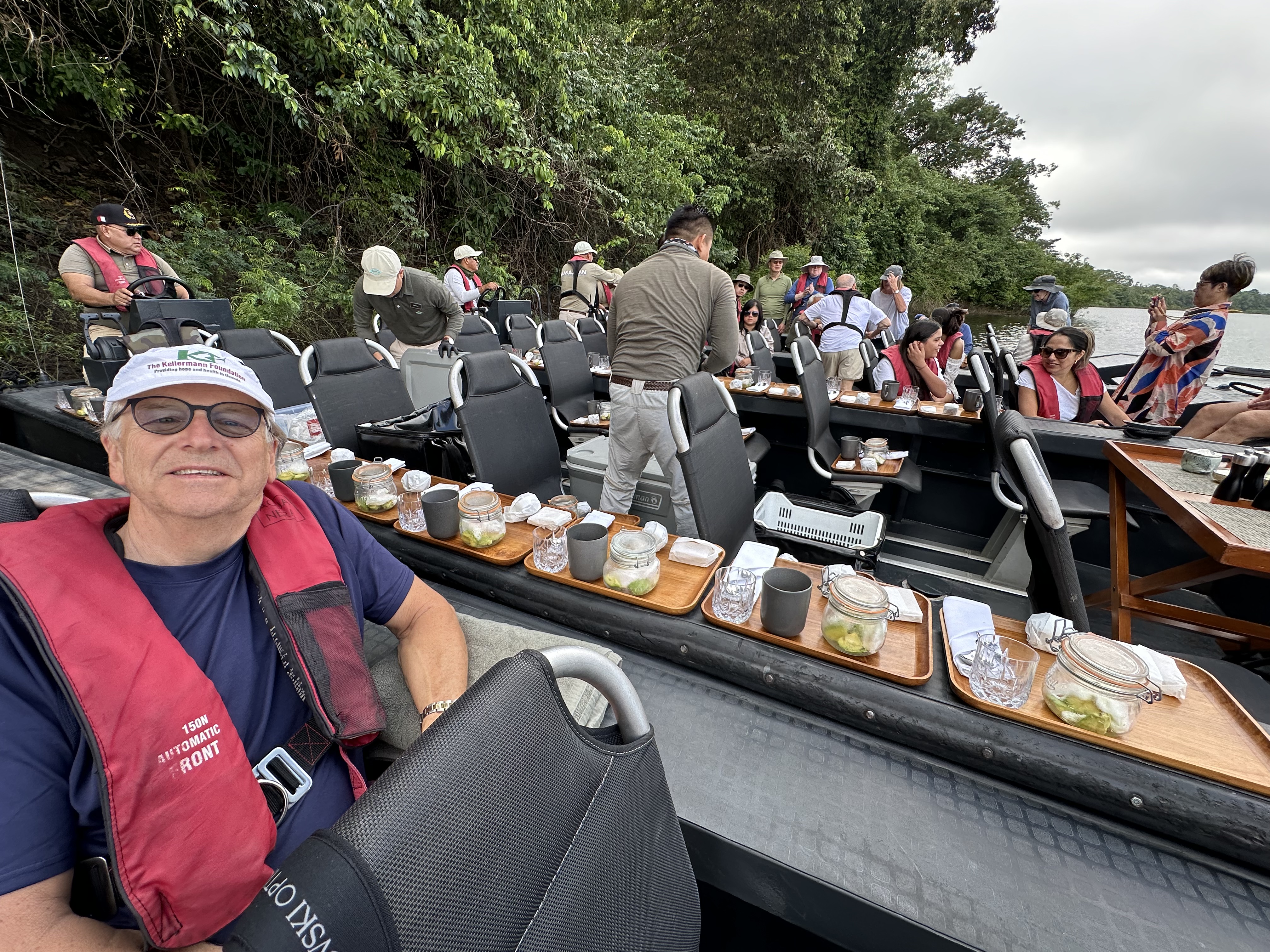
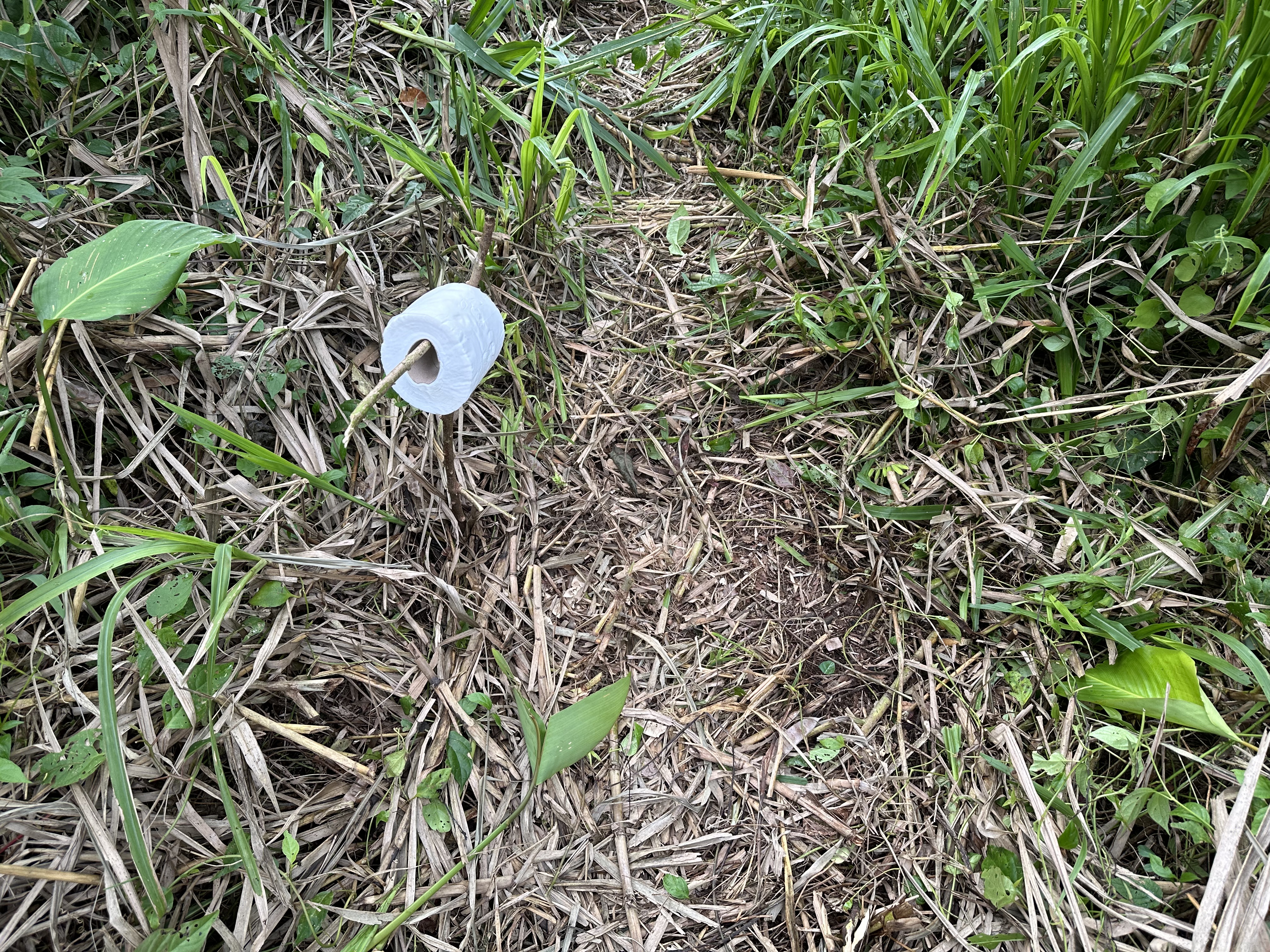
Shortly, we arrived at a predetermined site and stopped for breakfast, which the ship crew had set up on a separate tender. We did not get off the boats as I thought we would. After eating a surprisingly delicious poached egg with avocado and fresh fruit meal, some of us needed a pitstop, so a crew member cleared a path and a flat place for us using a machete. I, for one, was much obliged even though the hike up the side of the river was slippery and steep.
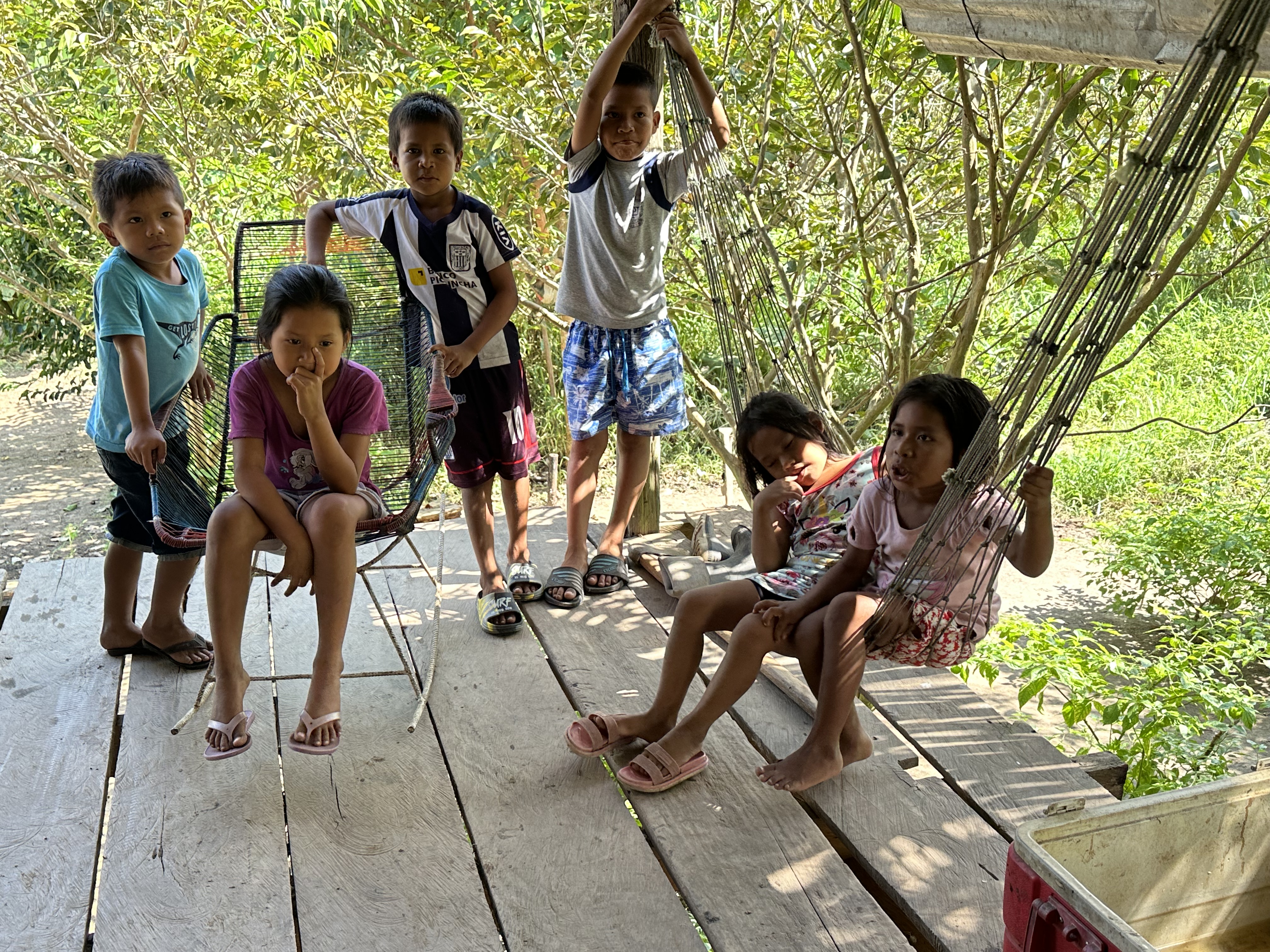
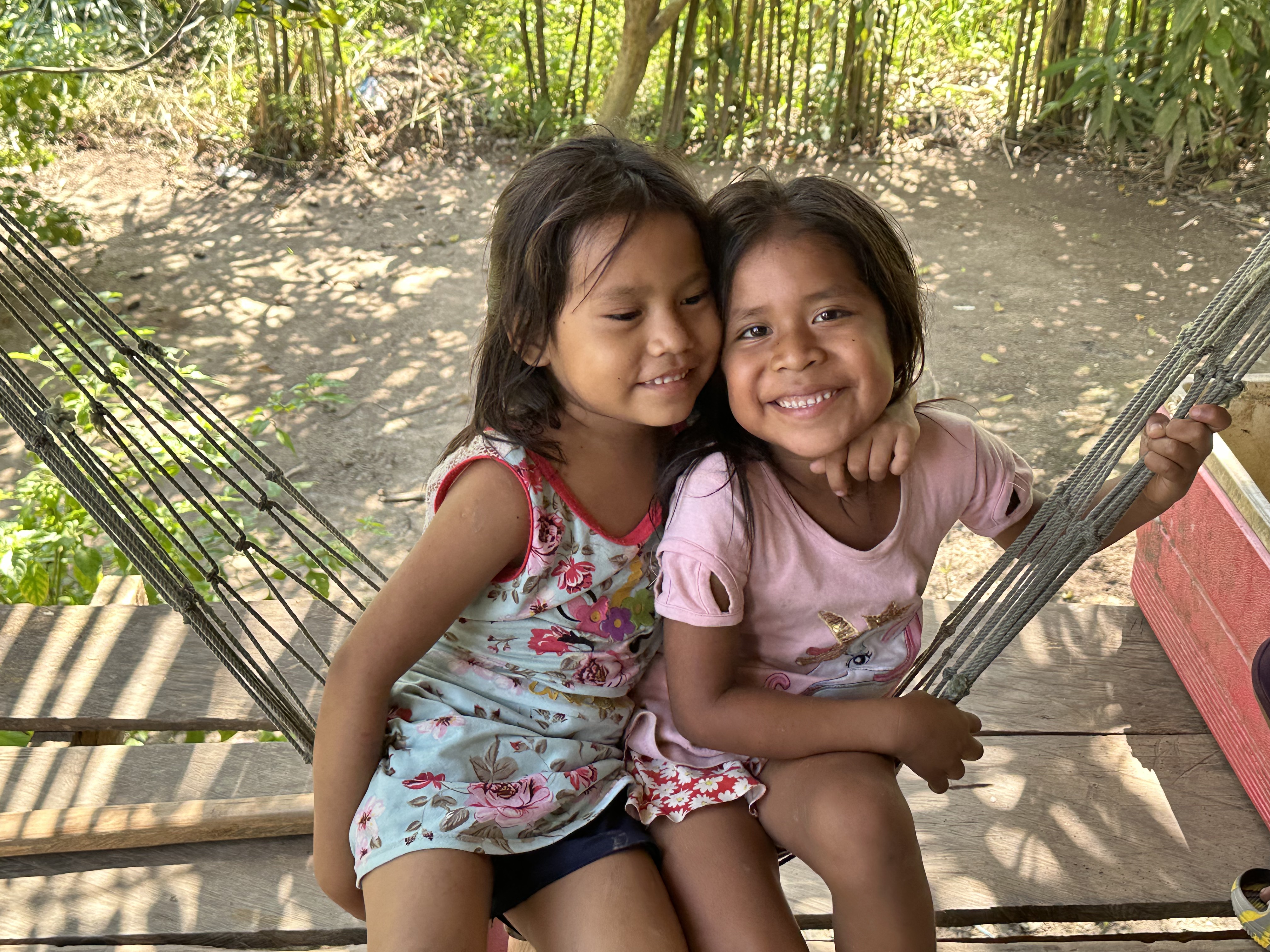
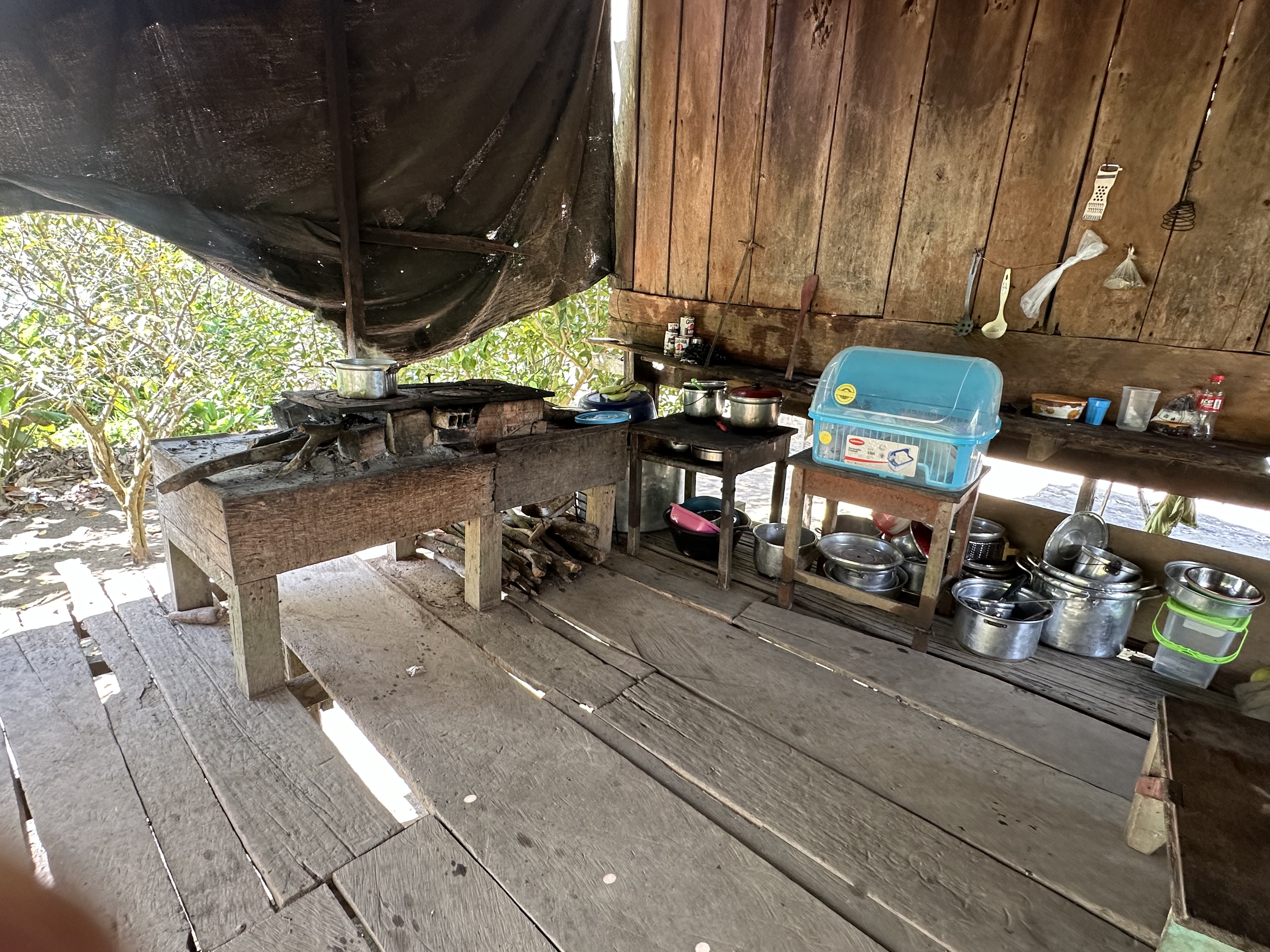
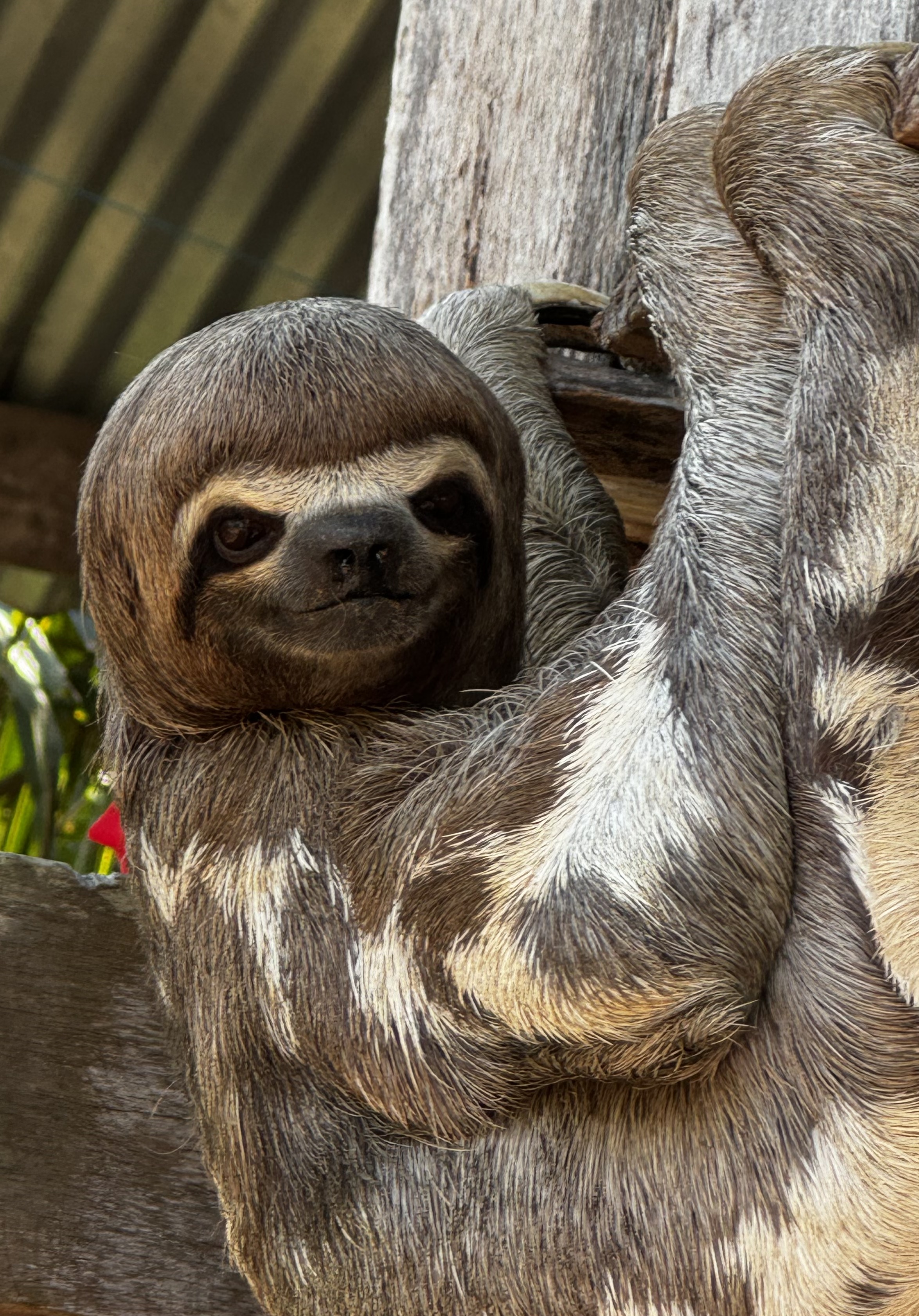
Then we motored to a village where we had been invited to visit a home. We were very surprised to see a sloth hanging out on the family home as though it was a pet. Final, we had a nice sighting.
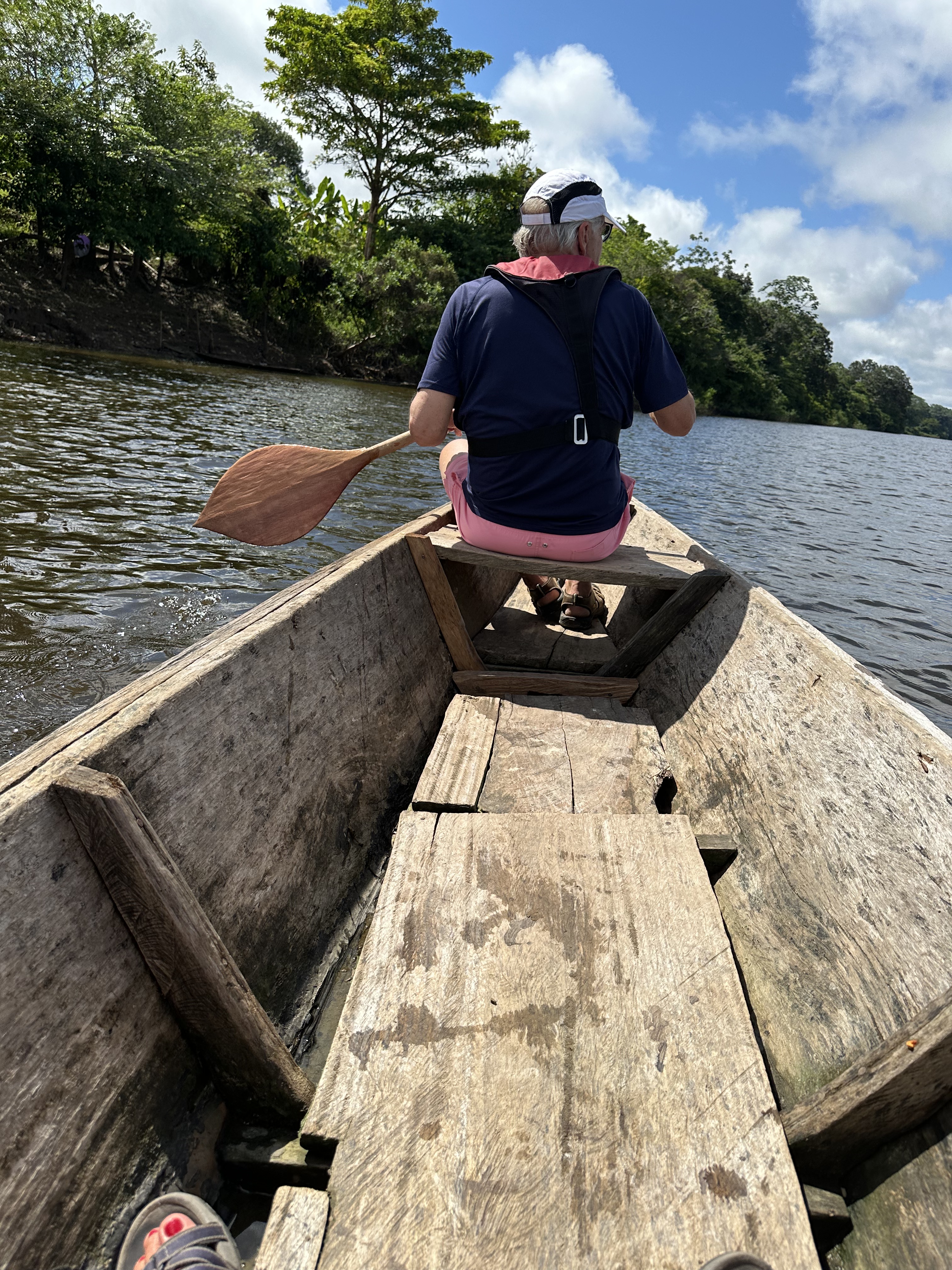
Our next activity was paddling in a dugout canoe. Mark and I managed with a local lady at the stern. The paddles were very heavy and we had had enough after a short time in the heavy canoe. Mark’s new shoulder was happy when we quit.
Back in the tender, we motored out into the middle of the black water lake for a swim. We learned that the muddy, brown Amazon has a Ph of 11, while the clean, black tributaries have a Ph of 3. The weather had warmed up considerably since morning and we were delighted to get into the water. It was very refreshing even if we were in it only 15 minutes or so. Then we motored back to the Aqua Nera, which was in the muddy-brown Amazon waiting for us. Shortly thereafter, a pizza and pasta lunch was served. We are both feeling overfed and stuffed. But how do you skip a meal? There is no going into the kitchen later to get a snack.
Overlooking the ocean from the promenade near our hotel in theBarranca District.
Already this morning we have learned that Lima is the second largest city built on a desert after Cairo. Pre colonial civilizations began to build water canals 2,000 years ago. that are still being used today. The population of Lima is 12 million. After a light breakfast we walked along the nearby promenade overlooking the ocean. It is winter here and the temperature is quite chilly. I am not prepared for cool weather. I sure hope it warms up soon. We walked through an outdoor shopping arcade and I bought a sweater that should help keep me warmer. Along the walk we visited and admired a small church called Our Lady of Fatima.
Had a delicious lunch of ceviche and salad in a restaurant called Huaca Pucllana. (The ceviche was so delicious I noted the ingredients: octopus, shrimp, yellow potatoes, seaweed and hominy in a spicy lime juice sauce.) It was next to an archeological site of the same name and, after lunch, we toured the site with our guide, Sophia. The place, considered sacred, looked like dirt hills as late as 1981. By 1994, it had been designated and confined. By 2012 it had been excavated to look like what we see today. Sophi explained how the bricks were made hollow to be earthquake resistant and had stood for centuries after construction between 450 – 650 AD during the height of what we now know as Lima culture (200- 750 AD). The use of the site remains unclear. In later centuries the top of the construction was used by different cultures as a burial place. Water channel systems for irrigation made it possible to increase agricultural production in the area. Fishing was pursued both inshore and out to sea. The most sought after catch being sharks.
The mud brick hillside with actual remains, including a plastering effect and yellow paint, as well as reconstructed areas. People were buried in a fetal portion sitting up. The smooth ground has yet to be uncovered.
After the cool morning, the day warmed up and became sunny with a slight breeze. I was comfortable in a light sweater. There was no measurable humidity. A perfect weather day.
From the archeological site, our driver, who had waited for us, took us to the District called Barranca. It is one of 43 in Lima, fairly small and very bohemian, with all classes of people living in a very charming space. Art is everywhere. Murals, music, textiles and art in and out of galleries. The mural is of a woman named Chabuca Granda. She was a locally famous singer and composer. Two of her well known songs are Jose Antonio and Flour de la Camilla. Sophia suggested we and you, look her up and listen to her songs. If you do, let us know what you think about them.
The cartoon character in the yellow dress is Mafalda. She was created by an Argentinian artist named Quino. She is famous throughout Latin America as a talkative child who sends funny but pointed double messages.
After walking around Barranca for an hour or so, we went back to the hotel. I blogged, while Mark learned about making Pico Sours from the bartenders in the ground floor lounge. At 6;30 our driver, Carlos, drove us to a restaurant on the beach, called Cala. The beaches in the area are all pebble rather than sand and they make for a lovely noisy sound. We had a delicious rockfish dinner listening to the waves crashing very nearby. Later, back at the hotel, we stopped in the bar to have another visit with the friendly bartenders. Mark had another spicy passion fruit Pisco Sour and I had a hot tea and a test of his drink. We were off to bed by 9pm. It had been a very nice day in Lima.
It is the 4th of July and Mark and I are on our way to spend a few days in Lima and then fly to Iquitos in North East Peru for a boat trip on the Amazon River. We will not be seeing other parts of Peru as I spent 3 months in Peru in the late 60’s visiting Cusco and Machu Picchu by train one time and then another time by horseback over the 16,000-foot Salcantay Pass with a group of Marin photographers on a 5-day adventure that was full of unexpected challenges; including crossing the pass during a snow storm, running to board a moving train at midnight, being rousted at day break for camping in a village market and more. Quite a story that is good for another time over cocktails.
Meanwhile, a bit of info about the country. The Amazon rainforest is divided about 60/40 between Brazil and Peru. The Peruvian portion covers 60% of that country, is referred to as the Peruvian Jungle and is divided into two ecoregions: the lowland jungle, which has an elevation between 80 and 1000 meters, an average temperature of 82 degrees F, over 75% humidity and 100 inches of rainfall; and the highland jungle which stands between 1000 and 3,800 meters, has an average temp of 75 degrees F and between 59 and 118 inches of rainfall each year depending on the terrain. The Peruvian Jungle is one of the most biologically diverse areas on Earth. It has the largest number of bird species in the world and the third-largest number of mammals. It also has a very large number of species of butterflies and orchids.
With such hot, humid weather, it is no wonder that only 5% of the population lives in the jungle. The largest group of jungle dwellers are the indigenous people called the Ashaninka. They survived the European epidemics in the 1700’s and repulsed Spanish military and the Franciscan missionaries attempts to Christianize them. In the 19th century they resisted the slave raids during the rubber gathering boom. A significant and interesting people, the Ashaninka do not believe in a creator, but in a hero called Avireri, who transformed humans into animals, plants, mountains and rivers.
The largest problems in the jungle today are illegal smuggling of rubber, timber, gold and oil. In spite of governmental efforts to slow the illegal removal of these products, such activities continue at a great pace.
For us the adventure will begin in Lima. From Sacramento we flew to Atlanta, changed planes, and flew on to Lima, a 12-hour trip all together. The strains of last night’s music at the North Star House were still ringing in my ears. MIMs July 3rdperformance has become a deep abiding tradition for us, affecting our activities every year. This year is no exception. To fit in the music on the 3rd, we were forced to get up at o’dark thirty on the 4th for a 7am flight. Well worth the effort.
Lima, the capital of Peru, was founded by Francisco Pizarro on January 18, 1535. Prior to the Spanish conquest, the Peruvian coast was home to the Norte Chico civilization, the oldest civilization in the Americas and one of the six cradles of civilization in the world. When Pizarro arrived, Peru was the home of the highland Inca Empire, the largest and most advanced state in pre-Columbian America. In the years between 1524 and 1526, smallpox, introduced from the Conquistadors in Panama and transmitted through the Inca population, caused the death of many people including the Inca ruler, most of his family, and his heir. This caused the fall of the Inca political structure and contributed to the civil war between two brothers fighting to be the next ruler. Pizarro arrived at the perfect time to carry out a coup. On November 16, 1532, while the Inca victor and his army were celebrating, the Spanish lured them into a trap and killed thousands of barely armed Inca soldiers. By March 23,1534, Pizarro and the Spanish re-founded the Inca city of Cuzco as a Spanish colonial settlement. Pizarro’s most significant milestone was the foundation of Lima in January,1535. From there the political and administrative institutions were organized. In 1541 Pizarro was assassinated by the conquistador, Diego del Almagro. The Spanish conquest of the Americas is a long and bloody tale.
We arrived at our hotel, the Miraflores Park Hotel, in the heart of Lima in the Barranco neighborhood after an hour drive from the airport and waiting a very long time for our bags to on the appear on the carousel. We had a strong fear we had lost the bags. What a relief to see them at last. Our Lima guide, Sophia Herrera, met us outside baggage claim and accompanied us to the hotel. We visited in the hotel lobby awhile. When she left, we checked out the room and went to the hotel bar for a night cap at 11pm local time (nine pm California time). The bar tenders were charming and fun and we visited with them until midnight and. finally. went to bed.
Sophia and me in the Mirafores Park lobby.
July 5, 2024
Already this morning we have learned that Lima is the second largest city built on a desert after Cairo. Pre colonial civilizations began to build water canals 2,000 years ago. that are still being used today. The population of Lima is 12 million. After a light breakfast we walked along the nearby promenade overlooking the ocean. It is winter here and the temperature is quite chilly. I am not prepared for cool weather. I sure hope it warms up soon. We walked through an outdoor shopping arcade and I bought a sweater that should help keep me warmer. Along the walk we stopped at a small church called Our Lady of Fatima.
Twenty years ago Julia and I set out on an adventure to explore and meet the tribes of southern Ethiopia. We had been in northern Ethiopia in 2004 to visit the stone hewn churches of the orthodox Christian’s.
We set out from Addis Ababa with a driver-guide, Atnafu, and cook, Mustafa, in a Toyota SUV packed with camping gear on our journey to Lake Turkana on the border with Kenya. There are not many “camp grounds” in Ethiopia but Atnafu had a plan. We would drive until we found a suitable site and set up camp. We were quite a site and you can imagine we always grew a crowd of onlookers. To say it was hot and dirty would be an understatement but we always found a way to get a shower at the end of the day. We saw a few animals along the way: giraffes, Cape buffalo and the largest crocodiles we have ever seen to this day. We met people from tribes we were searching for including: Hamer and Mursi tribe members.
All in all that part of trip was quite an adventure and the plan was for us to rendezvous with our Kenyan guide at lake Turkana and continue our journey up the Omo river to the stronghold of where these tribes live.
Eventually our Kenyan guide, Halowyn, arrived in two boats for our journey up the river, one boat full of gear, a second for us explorers. After an unimaginable lunch of fresh greens in a salad and wonderful charcuterie, we headed for the mouth of the river. As we reached the area of a sandbar we had to cross to enter the river, it was sadly evident there was not enough water to float our boats. We were in the water up to our knees but were unsuccessful in getting the boats to move over the sand. With crocs in the water our pushing efforts did not last long. Our plans to explore the Omo River delta were dashed. We did go on to have an enjoyable time with Halowyn, exploring other places and tribes around the lake.
So now we sit on the shore of the Omo just above the delta where we were stuck 20 years ago.
This year we started about midway down the river and spend time in a camp near the Mursi tribe. On we traveled down the hersey brown river in the very same boat as 20 years ago to a second camp to visit the Hamer and Kara tribes and we finish our travels with the Dasenach tribe in the river delta just above where we had been stuck.
After 20 years there seems to be little progress in the lives of these tribes. There is a random cell phone in a few guys hands and a solar panel near the odd hut. They are guardedly friendly and curious towards us as we stroll through the village. Last night we were in a remote village that may see no more than a handful of outsiders a year. The reception was slightly guarded at first but gradually the people warmed to us.
So after 20 years we close the chapter on our Omo adventure having come full circle. I don’t imagine we will ever be back in this area but we leave having met wonderful people just trying to survive with their families. Lovely people although our worlds could not be further apart.
We started this trip at the Bwindi Community Hospital for the ground breaking of a new clinic, an effort to improve the sight and dental condition of those in Bwindi, Uganda. Next we went to Queen Elizabeth park to see some animals and left with the hope of putting a tracking collar on a lion to better understand the lions habits and travels. Next stop was the DRC and saw the conservation efforts of African Parks as they fight to defend the animals and nature from marauding poachers. We have been exceeding priviledged with opportunities in travel.
I guess Julia and I are lucky to have found each other with both of us enjoying to travel to what seems to be the end of the world. The heat and dirt and bugs don’t seem to be a deterrent, although challenging at times. We don’t know what’s next but remember this thought I have picked up somewhere.
“Travel is the only purchase you make that makes you richer”
Breakfast and goodbyes to the Chen Camp staff at 8:30. Gave a special hug to Bardoley. Then we motored down river for an hour to the takeout where our cars were parked. So, we were off the boat and into cars for the next leg. Another bumpy dirt road followed by the paved highway for 1.5 hours to another 40-minute river trip, all to avoid an 8-hour serpentine river ride. Our boat was larger, and the next leg was pleasant. We saw a Sykes’ monkey in a tree and many bee eaters starting to build nests in the hillsides above the river. I was fascinated by the different striation in the cliffsides and wondered how old the hills were. Will thought they were at least 300 thousand years old.
ash layer was quite deep and must have represented a long volcanic period. At last, we arrived at our second camp, Lale, where the Kara people live. The camp is on a bluff above the river and offers some shade and cooling. As expected, we are the only guests in camp. Our tent is on the edge of the bluff. We were greeted by vervet monkeys and found the tent slightly larger and nicer than the Chen Camp. We settled in quickly. Behind the camp is Korcho, the local Kara village where most of the camp employees live.
About 5:15 we began what was supposed to be a 1 hour walk that lasted 2 hours and found us trekking across logs and stumps in near darkness to get back to camp. I clung to Mark’s hand to keep from falling. The first half of the walk was fine. We saw a few special birds including a cardinal woodpecker. a red-billed hornbill, and a Pell’s Fish Owl, which was sitting grandly on a large limb in a nearby tree. It is so large that it is unlikely to be confused with any other bird. Still, I needed help spotting it, but managed to get a reasonable shot with my iPhone. Eventually we stumbled back into camp with the staff wondering what had happened to us. We were very hot and sweaty and wanting a full shower bucket of water each. The water was cool and refreshing, even though we were still a bit sweaty afterward. We had a pleasant dinner and by 9:30 were laying on our beds with no covers. The air was still quite warm.
February 1, 2024
Wow. It’s February already. Our one whole day in Lale’s Camp. We left camp at 6:15 to visit the Hamer people in their village called Dus, about 20 minutes away. They were delightful people; friendly and welcoming.
At the first compound we visited we were invited into their round wood-pole house with a thatched roof. There was the husband, Banko, his number 1 wife, Lapa, several children, and other family members who continued to crowd into the space to catch the action. We were just in time for their morning coffee service and were served coffee made using boiled coffee bean husks and served in a calabash shell. Lapa had many calabash shells to go around, and everyone was served except the small children. Banko then gave a blessing by taking a sip of coffee and blowing it out in a fine spray. Mark and I took a couple of sips of the brew just to be polite. I noticed the coffee boiling and figured it was probably safe although the calabash shells were dusty and Lapa used her hands to wipe the dust off. There were a lot of back-and-forth questions about them and us. We talked about cows, sheep, and goats and how his family would take care of the animals when he is gone. Banko wanted to know about our “resources” and who would take care of them because we had no children. He asked if he could tend our resources himself. We told him we had made other provisions and that our resources would go to help other people. He accepted our answer and stepped outside to tend to his hoofed resources. We were pleased with the interaction and happily chatted with other Hamer people in the village.
Near the village was a grammar school so we stopped to visit it. There were very few students, especially in the upper grades, and the school was very dilapidated, but functional. We wanted to help them with supplies so planned to buy things in Turmi the next day.
We relaxed by the river in the heat of the day and then walked over to the kitchen area where the staff and other Hamer people were putting on clay and mud makeup. They were almost ready when I decided to join them and one of the ladies painted my face.
I looked a bit silly with my western hair style and glasses, but who cares. Everyone laughed. And off we all went to the Dus village where the ceremonial dance was to take place. The ladies dragged me into the dance where I was matched up with a different young man for each dance. I am not good at jumping up and down, but I did my best and did several dances before one young man got a little frisky with me. Fortunately, that was the beginning of rest time. We left the scene to go home for showers and dinner. It had been a delightful experience.
February 2, 2024
Departed Lale’s Camp by car at 9am to head for our next camp. Meanwhile the boat had left very early and took 8 hours to get to the camp ahead of us. The drive was much shorter at 2.5 hours. While on the road, I had a long chat with Adja, the manager of both Lale and the delta camps. I asked him about the culture of different tribes regarding death and religion.
The Mursi people do not believe in God and bury their dead at night of the same day as death occurs. They mourn the death of a man for 4 days and the death of a woman for 3 days. After the deceased is buried, the villagers move to a new location.
For the Hamer people, when a Hamer man dies, all the relatives are notified, and the body is carried to the foot of the local mountain where it is buried, and the grave piled with rocks. Mourning lasts for 1-3 months depending on the age and importance of the deceased and the length of time to get to the grave site. Half of the deceased’s animals go to the men who carry his body to the grave site. They eat what they need along the way and keep the rest. The Hamer do believe in Gods and a life after death.
The Kara people bury their dead the night of the death and mourn for 4 days for men and 3 days for women. Adja is Kara and Christian and believes in God and life after death. His left ear is clipped to indicate he is married, a Kara tradition.
We stopped in the small town of Turmi to buy school supplies. Bought reams of notepads and plenty of pens for the whole school. Wish our purchase could make a difference. Then we walked around and found a street vendor selling the Hamer first wife style necklace and bought one for our collection. A guy selling bracelets approached us and we bought one each to wear. We also saw a vegetable vendor and a bag of coffee husks the locals use to brew a cheap coffee and a barber giving a man a black dye application. Will posed with a well made wood fence. The many we have seen are both attractive and functional. Then we drove on to the town of Omorate for lunch.
The driver knew a restaurant that served engera, so we stopped and had engera for the first time since our last visit to Ethiopia 20 years ago. The place was less than appealing, but the food was fine. It was made with Nile Perch and tasted good. However, a few efforts using my hand was enough and I asked for a spoon. Mark managed the whole meal with his right hand. 20 years ago, I managed with my hand too. This time I did not care. It went down with a cold beer. After lunch we drove 20 minutes to our Omo delta camp near the village of Calama, which is occupied by the Dasanach people.
The Dasanach live in oval huts covered with corrugated tin roofing material. It keeps out the rain, but not the hea,t and it is very hot. There are about 25,000 of them and they live in the delta area of Ethiopia and in northern Kenya. They are Agra-pastoralists. According to Adja, they do not get along with their close neighbor, the Turkana.
They do practice dimi, the circumcision ceremony for females. Every day the fathers and mothers of the girls about to be circumcised, do a daily ceremonial dance through their village for several months, up to 3 years before the actual event. The actual circumcision is done by the mother and another elder woman.
About 5pm we boated across the river to an area where there are no roads and walked into a Dasanach village where we managed to get several photos in spite of the sensation they had seen whitenot people before. It was as if we their first visitors. It was the first time Will’s Delta camp had been set in this location and there is no easy river crossing. The village had been destroyed by flooding and moved to this barren, dirt moonscape of a location. Then back across the river for dinner and bed.
February 3, 2024
Early this morning we drove to a Dimi ceremony at a village called Kalem. It was a large place with many huts in a broad loose circle for about 2000 people. There were about 15-20 fathers and an equal number of mothers dressed up for the dance. Men were wearing leopard skins and ostrich feathers in their hair and women wore colobus monkey skins. The men also carried 12-foot-long sticks vertically for the dance. There were totem poles at several of the huts and they were each covered with leopard and colobus monkey skins and topped with ostrich feathers. The dancers moved around the camp dancing in front of the various marked huts. The dancing continued until about 9am and the dancers dispersed. We went back to our camp for breakfast. We chilled during the heat of the day and got onto the boat at 3pm to make a long ride down river to almost the mouth of Lake Turkana. We saw several birds including fish eagles, pied kingfishers, a goliath heron, a grey -headed kingfisher, a black-winged kite and a rare, black-crested eagle. There was much green delta marshland with few trees. Then we slowly motored back upriver to camp, arriving just at sunset for a lovely photo to finish our adventures. We enjoyed a leisurely dinner and talked about the highlights of the whole adventure.
Will believes the birth of mankind took place near our location, as the first homosapien was found near Kibish, a village near our camp. There is a vast genetic variance in people, with 52 unique linguistic groups in the area. We have come close to the ends of the earth or maybe the beginnings of it. Will thinks we are the first visitors in the area in years and there are few others who will venture this far.
Will wondered if we were anxious to go home. I would happily carry on if I could have a good shower. I am not ready to go home. Our cold showers felt good even if we hardly cooled off. It rained during the night and the air cooled down some.
February 4, 2024
Our last hours in the delta. After breakfast, we packed up and drove to Omorate to clear customs and visit the Christian Orthodox church as it was Sunday and we had heard people singing across the river since early morning. It reminded us of the orthodox churches we had visited in northern Ethiopia years before. The church was octagon shaped with a cross on a high central point as typical of an orthodox church. However, the decorations were fewer and simpler and there was almost no interior. Will bought a scarf for me to wear. Everyone sat outdoors on rocks or the ground. By the time we arrived the singing was over, and a preacher was carrying on in a fire and brimstone fashion. Not long after arrival we were introduced to the head of the church and asked for support for their church. We told them we supported our own church and that was enough. That was our call to leave. Mark still slipped him some bills and off we went to the airstrip. I happily kept the scarf.
We drove the short distance to the Omorate airstrip and waited about 15 minutes for the plane to arrive. Our 2.5-hour flight to Addis was overcast, and bumpy, but, once on the ground we enjoyed the lower temperature that the elevation gain provided. Back at the Hyatt Regency we took long hot showers and felt clean for the first time since leaving the Hyatt a week earlier. I had a salad for lunch and worked on the post until our final dinner with Will. He checked my post for correctness and then we enjoyed our last time together.
February 5, 2024
We spent our last morning in Addis working on the blog. I keep having trouble getting the details worked out and Mark help ed me. Sometimes with success and other times not. This last post may not go out before we get home as I must add all the photos to accompany the text.
I did learn a few things about the city. The population of Addis is 5 million and the country is 120 million. It is the second most populated country in Africa behind Nigeria and ahead of Egypt. When we were here in 2004, the only road that was paved was the main road through the city, which was much smaller. Today all the downtown streets are paved, and traffic is very congested. Then we stayed at the Sheraton and the street in front of it was dirt. From our room we could see the shanty town across the street. What a difference 20 years has made.
Here are Mark’s comments.
Twenty years ago Julia and I set out on an adventure to explore and meet the tribes of southern Ethiopia. We had been in northern Ethiopia in 2004 to visit the stone hewn churches of the orthodox Christian’s.
We set out from Addis Ababa with a driver-guide, Atnafu, and cook, Mustafa, in a Toyota SUV packed with camping gear on our journey to Lake Turkana on the border with Kenya. There are not many “camp grounds” in Ethiopia but Atnafu had a plan. We would drive until we found a suitable site and set up camp. We were quite a site and you can imagine we always grew a crowd of onlookers. To say it was hot and dirty would be an understatement, but we always found a way to get a shower at the end of the day. We saw a few animals along the way: giraffes, Cape buffalo and the largest crocodiles we have ever seen to this day. We met people from tribes we were searching for including: Hamer and Mursi tribe members.
All in all that part of trip was quite an adventure and the plan was for us to rendezvous with our Kenyan guide at lake Turkana and continue our journey up the Omo River to the stronghold of where these tribes live.
Eventually our Kenyan guide, Halowyn, arrived in two boats for our journey up the river, one boat full of gear, a second for us explorers. After an unimaginable lunch of fresh greens in a salad and wonderful charcuterie, we headed for the mouth of the river. As we reached the area of a sandbar we had to cross to enter the river, it was sadly evident there was not enough water to float our boats. We were in the water up to our knees but were unsuccessful in getting the boats to move over the sand. With crocs in the water our pushing efforts did not last long. Our plans to explore the Omo River delta were dashed. We did go on to have an enjoyable time with Halowyn, exploring other places and tribes around the lake.
So now we sit on the shore of the Omo just above the delta where we were stuck 20 years ago.
This year we started about midway down the river and spend time in a camp near the Mursi tribe. On we traveled down the hersey brown river in the very same boat as 20 years ago to a second camp to visit the Hamer and Kara tribes and we finish our travels with the Dasenach tribe in the river delta just above where we had been stuck.
After 20 years there seems to be little progress in the lives of these tribes. There is a random cell phone in a few guys hands and a solar panel near the odd hut. They are guardedly friendly and curious towards us as we stroll through the village. Last night we were in a remote village that may see no more than a handful of outsiders a year. The reception was slightly guarded at first but gradually the people warmed to us.
So after 20 years we close the chapter on our Omo adventure having come full circle. I don’t imagine we will ever be back in this area but we leave having met wonderful people just trying to survive with their families. Lovely people although our worlds could not be further apart.
We started this trip at the Bwindi Community Hospital for the ground breaking of a new clinic, an effort to improve the sight and dental condition of those in Bwindi, Uganda. Next we went to Queen Elizabeth park to see some animals and left with the hope of putting a tracking collar on a lion to better understand the lions habits and travels. Next stop was the DRC and saw the conservation efforts of African Parks as they fight to defend the animals and nature from marauding poachers. We have been exceeding priviledged with opportunities in travel.
I guess Julia and I are lucky to have found each other with both of us enjoying to travel to what seems to be the end of the world. The heat and dirt and bugs don’t seem to be a deterrent, although challenging at times. We don’t know what’s next but remember this thought I have picked up somewhere.
“Travel is the only purchase you make that makes you richer”
We departed Garamba National Park on the morning of the 27th after stopping at the hospital to ask the doctor about the sores on my tongue. He thought I had Candida and prescribed a mouth wash that worked almost instantly. He had also given Mark antihistamine for his heat rash and that was helping too. We got a tour of the small, 14 bed facility with one OR a small maternity ward and a pharmacy. There were 2 MDs, and a few nurses. The doctor told us there are 20 births a month in the hospital. Malaria is a big problem as he cannot get the people to use the bed nets he distributes. He gives them out and people sell them rather than use them.
We left a small donation for the hospital and drove to the airstrip. where we waited for the caravan to take us to Entebbe. It arrived at 10am. There was plenty of room for more people, so Martin joined us to Entebbe. We arrived there at 12:30 and were met by Jonathan’s driver, David, who dropped us off at Hotel No. 5 in Entebbe. It was nicer than the Protea, where we usually stay, but it did not have a view of anything, and we missed seeing Lake Victoria from our room. We both took long showers. Then Mark chilled for the rest of the day as I worked feverishly to get the Garamba post finished. The wi fi had been problematic the entire time we were in the National Park and I had not been able to do much until we were back in Entebbe. I finally made good progress and we went to dinner. Pizza and pasta were the foods we craved. Then bed.
January 28,2024
David picked us up at 8:30 and took us back to the Entebbe airport for our 11am Ethiopian Air flight to Addis Ababa, which, at 7520, is the second highest elevation airport in the world. There we were met by a facilitator, Mr. Lewl. Good thing, as I did not have a visa, despite Marks efforts before we left home. We went through some hoops at the airport and finally, at much expense, I had a visa. The next problem was our binoculars. Although we had prepaid the fee to bring both pair, the officials would not allow Mark’s binoculars into the country, as they were too powerful and the requirements had changed to dis-allow them. So, after 2 hours of hassle, we left his at the customs office and took mine. While we waited, I watched lines of people get all of their bags ransacked. What an ordeal.
Once outside the airport we met Will, our guide and owner of Journeys by Design, his assistant Ben, and a driver. They had waited patiently and drove us to the Hyatt Regency for one more first-class hotel night before heading into the bush. While hanging out in our room, I finished the Garamba post, Mark edited it and then we published it. With that project done, we joined Will in an Asian Restaurant and started learning more about the Omo River and our journey.
The lower Omo Valley of southern Ethiopia is home to some of the world’s least changed cultural groups. The area is a melting pot of cultures and communities and represents some of the greatest genetic variance on the continent. It is sometimes described as the birthplace of mankind, and it is not hard to see why.
Known for their painted, pierced and scared bodies, the people of the Omo River Valley, tucked deep in the country’s southwestern corner, are some of the most unique on the African continent. Over 40 tribal groups live remotely here. Following in the footsteps of their ancestors, they are known for their cultural traditions and interaction with the physical environment—a lifestyle in harsh and unforgiving landscapes. Today for example, the temperature is above 100 degrees F. as it was yesterday and will probably be tomorrow and weeks to come. The Omo River is a lifeline for these tribes. Here are some images of our first day in the Omo Valley–a typical termite mound, goats on a typical road, white-backed vultures in a freshly planted field, sorghum growing along the banks of the Omo, a desert rose bush, our boat on the river.
The tribes rely on the river’s natural flood cycles for farming, fishing and grazing. The lower Omo Valley is very beautiful with diverse ecosystems including grasslands, volcanic outcrops and one of the few remaining pristine riverine forests in semi-arid Africa which supports a wide variety of wildlife.
The Mursi people, whom we visit first, attribute overwhelming cultural importance to cattle. They wear bones, shells and skins and practice scarification. The women are known for their clay lip plates. The lip plates are a sign of beauty and are worn only when the wife is serving food to her husband. Women start cutting their lower lip when they are about 18 and expand their lip opening over time by sticking ever larger diameter sticks in the opening. It is a very painful process. All Mursi have their lower front teeth removed when they are small children to help them survive should they get lock jaw, which they get from tetanus, a common ailment within the tribe. Notice the image of the standing woman tethered to a log. She is unhappily married to an older man and has run away a few times. Sooner or later she will have to accept her fate. The basket is so densely made that it is water tight.
January 29, 2024
Finally, we landed at Murulle, a small dirt airstrip in the lower Omo Valley at mid-day. The temperature was 98 degrees and headed for over 100. We were met by 2 men named Aewl and Gater, who both worked for Graham, the owner of our first Omo camp, called Chem Camp. We road in a Toyota SUV on very bumpy dirt roads through acacia and tamarind trees and herds of sheep and goats for about half an hour until we came to a lovely, paved road that was built by the Chinese to deliver sugar cane from the fields to Addis.
The landscape changed to fields of papaya, banana and open areas ready for planting. Anyone can rent the government owned land and plant crops. We followed that road in almost a straight line for an hour and finally reached our put in on the river. The group of people at the put in were members of a local tribe called Nyagatom. They were not friendly or welcoming, so we moved directly to the boat, where we met Graham, the camp and boat owner, and cast off. With the engine running and the wind in our faces, we were comfortable motoring upstream for the next couple of hours. Both sides of the river are covered with trees reaching down to the fast moving, light chocolate river. There were the usual birds and a few to add here: goliath heron, Egyptian plover, yellow-billed black kites and Northern Masked Weaver birds. We saw no hippo but there were several crocks along the riverbank. At last, we reached camp and moved into our tent under a large fig tree. The tent was a good size and had several screened air vents. The attached bathroom was open to the sky and had dried figs all over the floor. I pushed them out of the way, and we enjoyed the bucket shower with cool water. We were too hot to want a warm shower anyway. We slept well without bed covers most of the night.
January 30, 2024
The only cool time is in the early morning, so we were up early to enjoy it. After porridge for me and an English breakfast for Mark, Will and Graham took us for a walk through the woods to a clearing where we met the Mursi people in a small encampment. My first photo of a Mursi was of a bearded man named Chamankoro and his wife. At the encampment the men were listening to a talk about allowing tourists into their midst and why they should be agreeable. Money, medicine and education are the reasons to allow us in. After the talking, a butchered cow was thrown onto a roaring fire and shortly the crowd was happily eating the meat. I noticed there were no women present, except me. We ate a small piece and found it very tasty.
Chamankoro and his wife pose for me.
He also posed with Machetti Maron, who was the general manager of the camp. We were shown a basket made of densely woven palm fronds, such that the basket could hold water. It was very special, but too large to bring home. Nearby was a bush that had yellow hibiscus flowers that were very pretty. Some of the boys who were scared also posed for me.
I was fortunate to have several conversations with Bardoley Tula. He was the only Mursi person who is educated and speaks fluent English. He is about 26 years old and was educated by missionaries. He was adopted by a missionary family from Virginia and educated in Addis University. He has a master’s in Anthropology and in Theology. Currently, he is working for Graham as a language consultant, and “An African Canvas”, with whom he is supporting 40 Mursi students through high school. Next for us is the Chem camp crew saying posing for a good buy photo and then waving as we float away.
He told me there are 25,000 or more Mursi, despite what commercial publications say that the population is at no more than 10,000. The Mursi are not nomadic. The men have cattle farms away from the family encampment where they live on a diet of cows’ blood and milk. When in camp, they and their families subsist on sorghum, which they grow on the banks of the Omo River. They are, therefore, agro-pastoralists who they love and respect each other. They have a somewhat pagan belief system. They believe in nature and evil spirits who must be appeased. There is no life after death, but there is consideration paid to ancestors. Burials take place immediately after death, but mourning lasts for 4 days for men and 5 days for women. During the mourning period rituals take place to appease evil spirits.
Bardoley told me about a favorite game the Mursi play called Donga. It is a bit like sword fighting, but with long wooden sticks. Both parties cover themselves to keep from getting hurt and generally no one does get hurt badly. They try to bash each other until the referee declares a winner. It is supposed to be good fun. Certainly, the audience loves the game.
In recognition of Graham’s efforts to improve their circumstance, the Mursi were having a bull ceremony. At 11:30 am we walked 20 minutes through the woodland to a clearing where about 40-50 Mursi men were having a discussion about the effects of allowing tourists in their midst, while a fire roared in preparation for cooking a large bull. Someone was waxing on with questions about why should they allow tourist into their area. Then Bardoley got up and spoke about the benefits of having tourists, especially for medical assistance and schools, which are very difficult to get. The government had promised such facilities but failed to deliver. A School teacher had been unwilling to stay very long and the monthly medical clinic has not materialized. As Bardoley spoke, slabs of beef were thrown on the hot ash and cooked very quickly. When he finished, the meat was pulled out of the fire and consumed by the men using their machete’s to carve off pieces. To keep the meat clean, large bunches of green brush were used as tables to hold the uneaten meat. It smelled so good, we each had a few small pieces too. We took a lot of photos and then headed back to camp. One last image was taken of a lonesome boy at the edge of the clearing. Bardoley told us he had owned the bull and was sad about it being killed, even though he was paid for it.
As we left the camp area we saw some Mursi huts on the hill top. In the late afternoon we motored upriver looking for birds, monkeys, and crocks for about 2 hours, then floated down stream back to camp while drinking our beers. We saw one big crock, who did not run into the river. There were colobus monkeys, and some birds like: Bataleur and Open billed storks. The Mursi had their sorghum fields on the left riverbank and the Nyagantom Tribe had their fields on the right bank. We spent very little time with the Nyagantom people as we found them very unwelcoming.
Back at camp we had cocktails, dinner, nice cold showers, and bed.
Garamba National Park was created in 1938 and is the third oldest park in the world. It is in the NE part of the DRC in the transition zone between the dense tropical forests of the Congo Basin and the Guinea-Sudano savannas. The village near the airstrip is called Nagero. The park’s immense savannahs, grasslands, and woodlands, interspersed with gallery rain forests and riparian forests along the riverbanks and the swampy depressions are home to forest elephant, the rare Kordofan giraffe, hippopotamus, and white rhinoceros, which had become extinct but, recently, 15 have been introduced to the park from South Africa. We hope to see them. The population of elephants combines forest elephants, bush elephants and hybrid animals that demonstrate characteristics of all three species. The park contains many square miles resulting in a well-protected area for the many large animals as well as the large population of African buffalo. There is also lion, the spotted hyena and numerous species of antelope.
The above information on the Congo came from a Wikipedia site. Mark and I have been in the Congo for 4 days now and can tell you there are some inaccuracies. Due to severe poaching during the last 50 years the animal population is much reduced. Until today we were driving through the park on the few roads that exist. We saw sizeable groups of Uganda cob, hartebeest, bushbuck and huge numbers of hippos and vultures. We saw only one giraffe, a rare Kordofan, a crocodile, some wart hogs, 3 buffalo, a few oribi and miles and miles of thick, very tall dry grass. Mark thought the grass looked like dried out sugar cane. We heard lion, but never say any. We did see the 15 white rhino that have been recently introduced to the park and are being kept in a 100-hectare sanctuary. They appear to be doing well. In a few weeks, 64 more white rhino will be delivered by 747. A much larger sanctuary is being created for their arrival in June.
Our arrival in a Cessna caravan, the landscape looking over a boulder and our first view of a white rhino from the Toyota Land Cruiser, our transport for the 6 days we were there.
January 23, 2024
Up early to go bird watching with Martin, a. handsome young researcher, who is specializing in the study of white Rhino. We walked along the edge of the Dungu River where our lodge was located. He named many little birds and Mark was able to pick up on most of them. Unfortunately for me, most of them looked like LBJ’s (Little brown Jobs).
Martin found this African Clawed frog under a leaf and showed it to us. It was soft and spongy. Mato, the Congolese English speaking military ranger who accompanied us everywhere we went, picked this plant for us to recognize and not touch. It is a bit like fiber glass and very hard to get off clothes and skin.
I was able to make out a few: the speckled mouse bird, Vieillot’s black weaver, the red throated bee eater, a palm nut vulture (did get a photo of this one above) and several very colorful Paradise Flycatchers. However, the most interesting event on the walk was the observation of a fish feeding on the skin of a hippo in the river. We could make out its tail, but not see the whole fish. There must be more fish with this unusual behavior, but we never saw the behavior again.
After a late breakfast with Martin, Ruth drove the three of us (Jonathan, Mark and me) 40 minutes up the road to visit the 15 white rhinos in their electrified sanctuary. Along the way Jonathan spotted white headed and white backed Vultures, a black bellied bustard, a martial eagle and a northern wheat ear. When we reached the Rhino, they had already finished eating and were looking for the shade of a few trees to nap. After spending a good bit of time with them, we visited the nearby park headquarters from where law enforcement is managed.
Law enforcement maintains 6 hilltop posts for observation and communication. 314 rangers protect 55,000 square kilometers of park land. They are divided into patrolling sections to protect the animals from being poached.
There are also 90 soldiers from the regular army and dog units that track poachers. Gold mining is a huge problem in 3 areas near the park and the soldiers try to control the miners from poaching. We also visited the small storage building where illegal ivory tusks, and pangolin scales are stored. The stash represented over 50 killed elephants. Very depressing to see so much devastation.
Despite the very tall, dry grass, we were able to spot a several different animals like kob, bush buck, wart hog and hartebeest in the distance from slightly raised points on the road. Along the river banks we could see many hippo and a few crocodile. This one is fully 17 feet long. Huge. There were many small wet lands full of papyrus. Jonathan also pointed out a grasshopper buzzard. Soon we were back at the lodge.
January 25, 2024,
We went for a delightful 2-hour helicopter ride and saw extraordinary scenery, just as described above. We spotted good size herds of buffalo, between 50-70 forest elephant, (although we did not recognize any hybrid animals), several hundred Ugandan kob, a hundred or so of Lowell’s hartebeest, hundreds of hippos, several crocodiles, a few wart hogs, a handful of oribi and some waterbuck.
Our pilot, Oggie, was excellent and flew us low and slow as I had requested. We stopped at the top of the only hill in the park and had coffee and cookies while we enjoyed the view and chatted with the three guards manning the post. Back in the helicopter, we continued flying around the area and found a few more elephants and one Kordofan giraffe. We were happy that we found one and flew around it several times.I managed to get one decent photo of it. Oggie had us back at the lodge in time for lunch. The conversation was lively, even if the food left something to be desired. So far, the local cooks are preparing mediocre Congolese fair, that we do not find pleasing.
We took the afternoon off. Stayed cool in our room and read, wrote, and rested. At 6pm we gathered around the campfire for cocktails and talked more about the animals we were not seeing. With us were Martin, the handsome young researcher and expert on white Rhino; Oggie, our delightful helicopter pilot; Connor, a military trainer for the Garamba Park rangers; and Phillipe, the park manager. Jonathan was not feeling well and departed early. From the research there should be 1500 elephants, 82 giraffe and 8,000 buffalo, among all the other animals. We talked about how hard it is to spot them in the tall grass and ways to try and increase the population, about the lack of tourists and how to attract them, and the fear factor due to years of wars and animal poaching. It did not make for a pretty picture as far as I can tell.
January 26, 2024
Another bird watching morning. Sorry to bore you with so many birds, but I love to see them even if I can’t find them on my own. I especially enjoyed watching the small cardinal woodpecker poking away for bugs. There was the African black flycatcher, the plantain eater bird, the violet backed starling and the yellow billed kite. Martin found an African clawed frog under some leaves, and I got a photo. It was soft and squishy.
Then I got to ride in a Husky with another pilot, Trevor, who oversees the aviation department. We were in the air about 50 minutes and were hoping to find giraffe but had no luck. We did see 4 adult elephants and babies with them. Couldn’t tell what sort of elephant they were. From the air the tall grass does not look so overwhelming, and the scenery opens out into the savannah it really is. Back at the airstrip, I traded places with Mark. Unfortunately, he had no better luck than I had.
Mark and I tried to chill the rest of the very hot afternoon. This was the hottest day of our whole trip so far. It was 94 degrees.
At 5:30 Ruth, John, director of conservation, and the three of us packed for a sundowner and drove up to the white Rhinos just in time to beat the sunset. Beer and snacks were our repast while we watched the rhino graze and a managed fire burn in the distance. It was a very pleasant evening. John told us the park was increasing the boma size from 100 hectares to 500 hectares for the arrival of the next 64 animals. He will be going to South Africa to take delivery and escort the Rhinos to Garamba. They will be caged individually and tranquilized for the flight. On the way back, Jonathan used a large spotlight and and a flash light to watch for movement of animals and birds, especially night jars, the bird we most wanted to see. As it so happened we saw several male and female night jars. The males are the ones that are attractive as they have extra pennant wings that look like they are flying separately. At last, a male sat down in the road and I was able to get a photo of his pennant wings.
A male night jar with pennant wings sitting on the ground next to the vehicle. Back at the lodge we gathered one last time with the group of staff who had provided us with so much service. The meal was a Congolese buffet. We sampled a few items, but did not really enjoy the meal. The next morning the caravan arrived at 10am to return us to Entebbe, where we spent a night in a hotel called No. 5. It was super for us as we had our first hot, pressurized shower in a week. We even had pizza and pasta for dinner. The next morning we flew from Entebbe to Addis, where we met Will Jones and began our next adventure on the Omo River in SW Ethiopia.
Right after I sent the last post, the staff told us a lion had been spotted. So we ran to the car and drove 20 minutes to the sighting. The lion was asleep on top of a huge rock outcrop. It lifted its head a couple of times, looked at us, and went back to sleep. Mark got a photo. It is the best we could do. Meanwhile, we learned that our flight was further delayed. It will be mid-afternoon before we depart Apoka. So, Johnathan has decided to make pasta and we are thinking about swimming, giving Bob another scratch and enjoying the view.
Here are a few more photos from our time in Honey Bear Camp. They include the salt and fresh water lakes in the foothills of the Rwenzori Mountains. We were required to take a guard with us. You can see the steep drop off called Baboon Rock.
The elevation of Apoka Camp was 3800 feet, and the temperature was quite comfortable. At 4pm we went for a game drive in a Toyota Land Cruiser. The roads were very bumpy and dusty, but the landscape was outstanding. Wide open savannah interspersed with low shrubs and woodland, and hills in the misty background. Intermittently we saw many water buffalo, wart hogs and water buck. In fewer numbers we saw Jackson’s hartebeest, white-eared kob, Burchell’s zebra, several baboons, a crested crane (see photo below) and one eland. We identified a few birds, especially the pretty Rose ring Parakeet. We also had a sundowner.
Back at camp, we had dinner on the veranda overlooking a water hole. A few waterbucks and hartebeest were still sipping. Sitting with us were Jonathan, Emily and a couple who had just arrived in camp. It was a pleasant evening that ended when Mark and I excused ourselves to go to bed. It felt great to slip between the sheets.
January 20, 2024
Up and out by 6am. We took a different road each drive. This time there was more trees and less open space. Our focus was on birds, and we saw many. I was able to identify: White browed coucal, Tawny Eagle, Sooty Chat, Northern Puffback, Martial eagle, Abyssinian Hornbill, and a pair of Secretary Birds. We also saw a Patas Monkey (See photo above). We must have seen more animals and birds, but I did not get them logged.
Back as camp, we had a light salad for lunch and took the afternoon to finish and publish a post, and swim in the rock pool. The water was delightful—not too cold or warm. Our bungalow is the farthest out. It was quite comfy. We also spent some time scratching the resident wart hog, Bob.
At 4pm we were back in the land cruiser hunting for predators, which we did not find. We did identify more birds, especially the Black Shouldered kite, the very colorful Abyssinian Roller (see photo below), a Yellow-Billed Kite and a Bateleur (see photo below). We were pleased to see several Rothchild giraffe along with a few elephants. On the crest of a hill, we stopped for sundowners. Jonathan and Emily outdid themselves making Mint Julips and Mojitos, which we thoroughly enjoyed. I don’t remember the drive back to camp, after the sundowners. Hmmm.
The staff served us a tasty salad and ravioli dinner beside the pool. Jonathan and Emily joined us. The four of us had a lot of fun and good laughs. I was so grateful for Emily’s help in getting my post published. I worry about future posts due to wi-fi and WordPress difficulties. Anyway, I will try to get one more post off before we leave Apoka for the Congo.
January 21, 2024
Another early start produced few animals but lots of beautiful scenery with mountains in the distance. After the coffee break, we began to see lots of animals, especially water buffalo and wart hogs in their hundreds, elephants in the dozens and giraffe in the teens. The terrain had turned to wetland, that was in the process of drying up. Many varieties of animals were in the area. At one point we encountered 2 large bull elephants, one of them in musth, that followed us and made our driver depart in a hurry.
January 22, 2024
Today Jonathan, Mark and I depart for the Congo. We are both excited and a little nervous. I think we may not have Wi-Fi or internet, so we do not expect to be able to blog while there. We may not have internet in Ethiopia either, so please do not wonder why there have been no posts. I will still be writing and taking photos, so there will be posts eventually. Meanwhile, thank you for your good thoughts and prayers.
My travel experience began at 19 when I was an exchange student to Germany. After college I wanted to travel, but had no money so the natural choice was to become a stewardess. I was hired by World Airways and traveled all over the world on the non-scheduled carrier. It was exciting and wonderful and made me want to keep traveling even after I quit the airborne waitress business. At one point I realized that I liked flying as much as I liked traveling and earned my pilot's license at the age of 30. Since then I fly and travel as much and as often as possible. I used to write about my early travels in long hand but they were not legible. Now, with the aid of this computer, I am able to share my experiences. I hope you enjoy them.