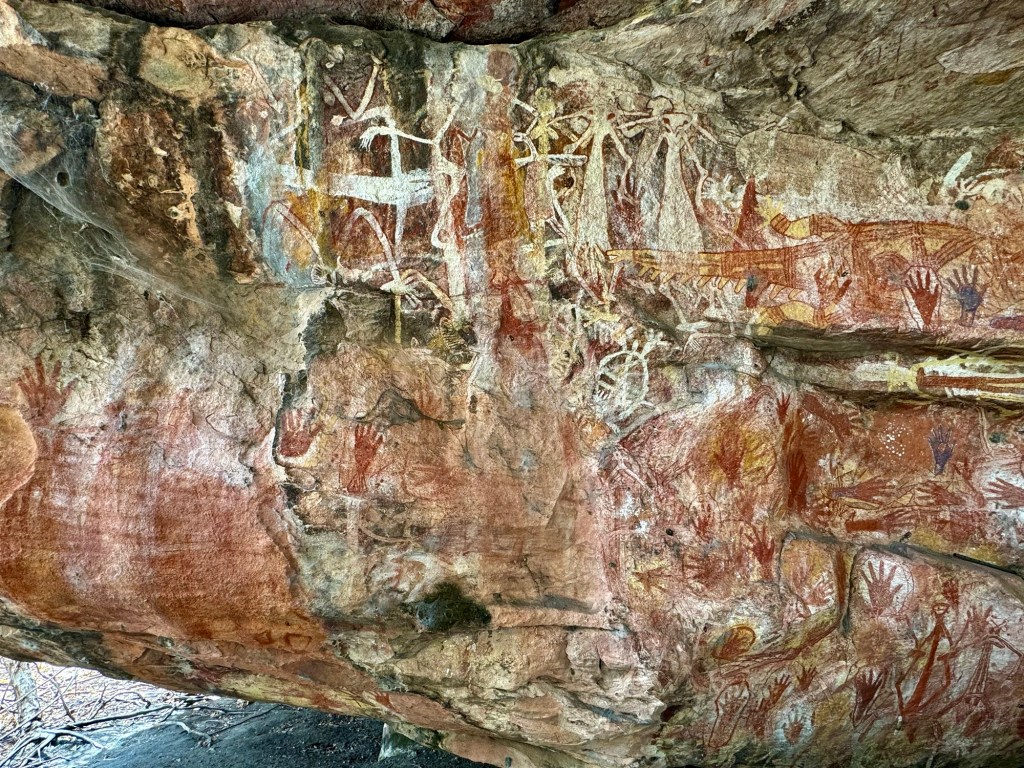
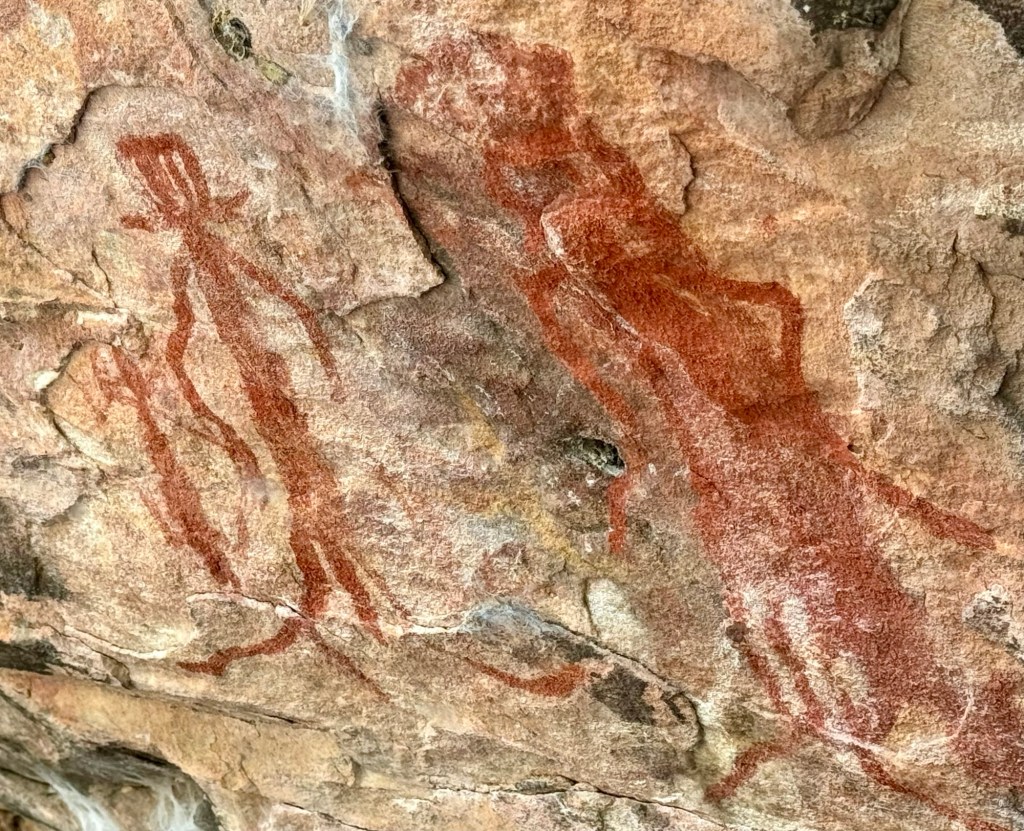
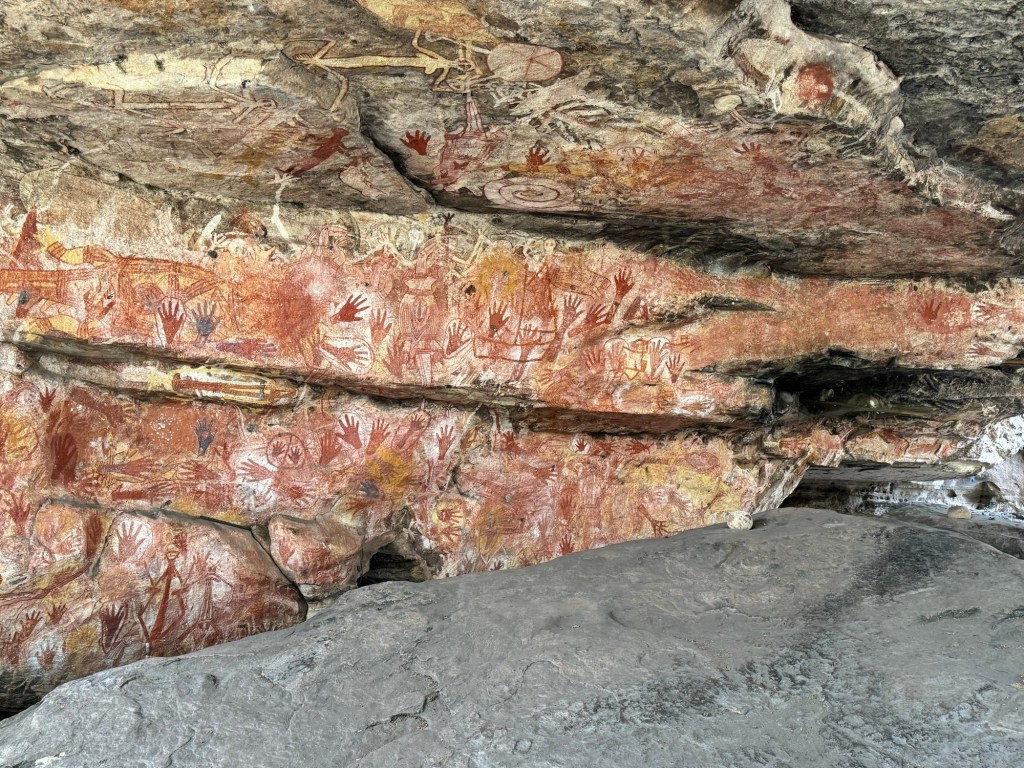
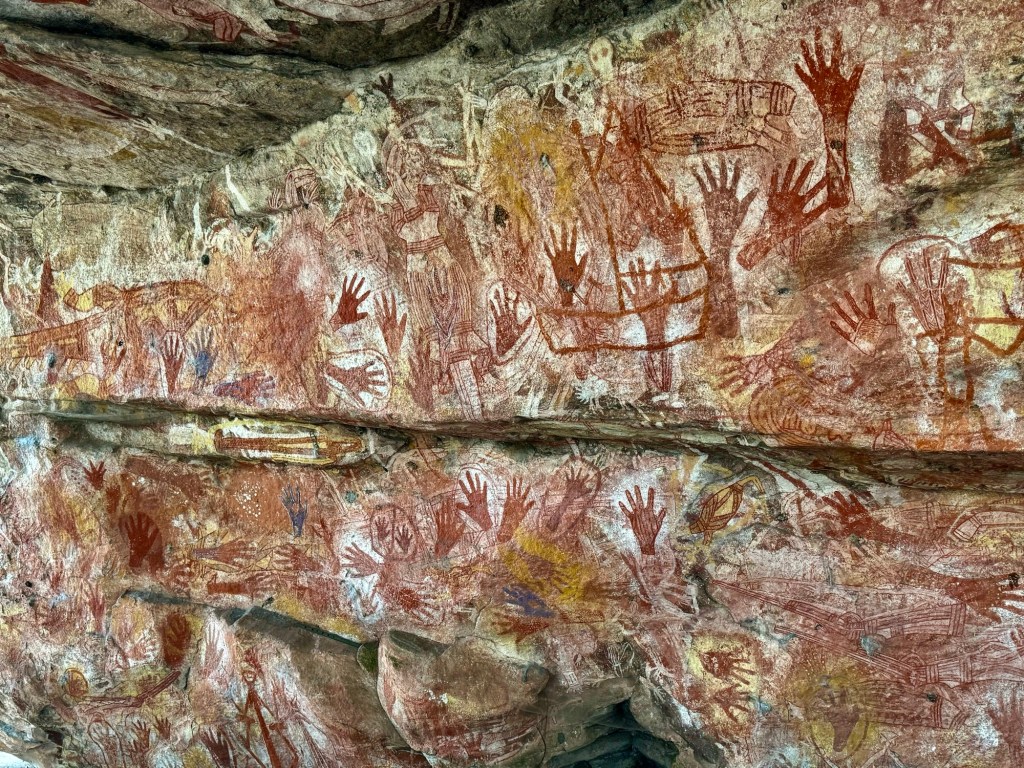
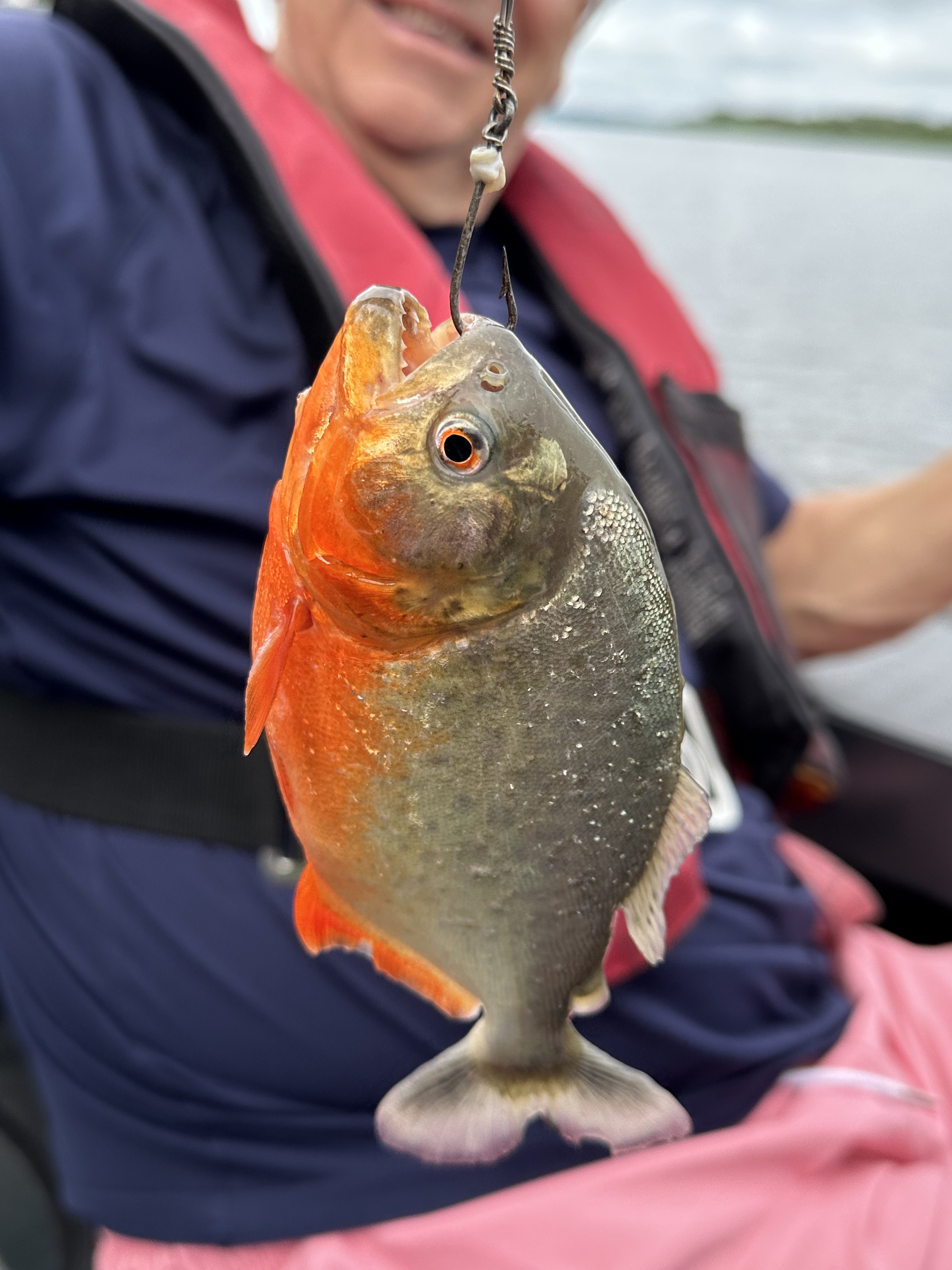
A week in Sydney

Monday, October 21, 2024

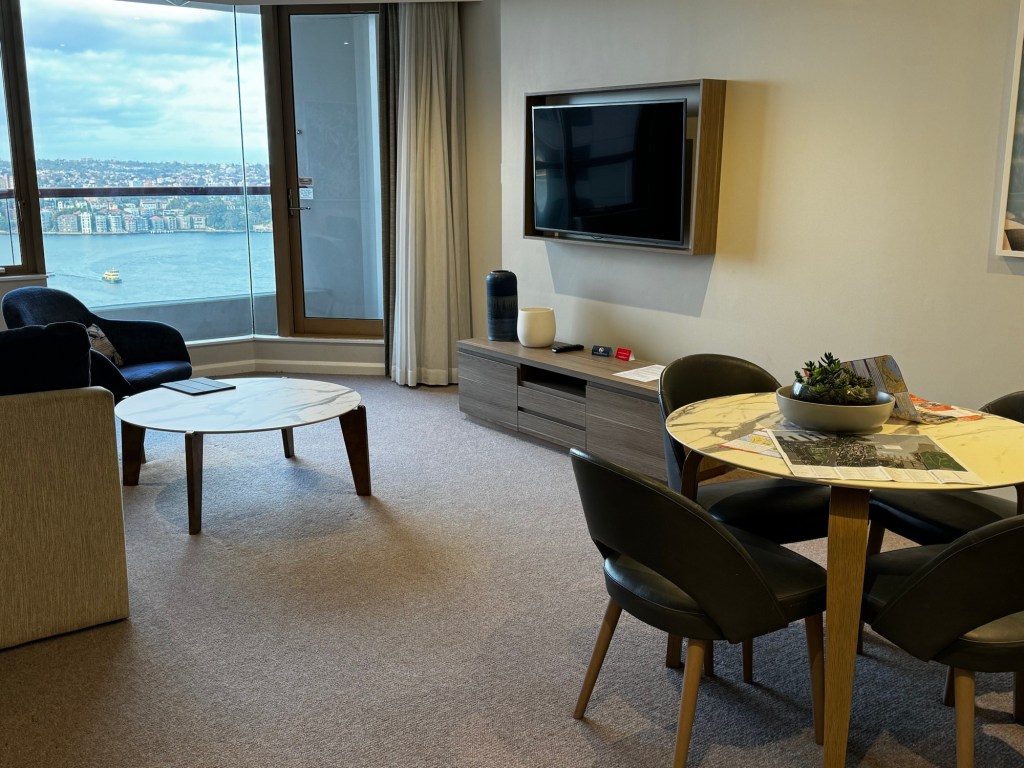
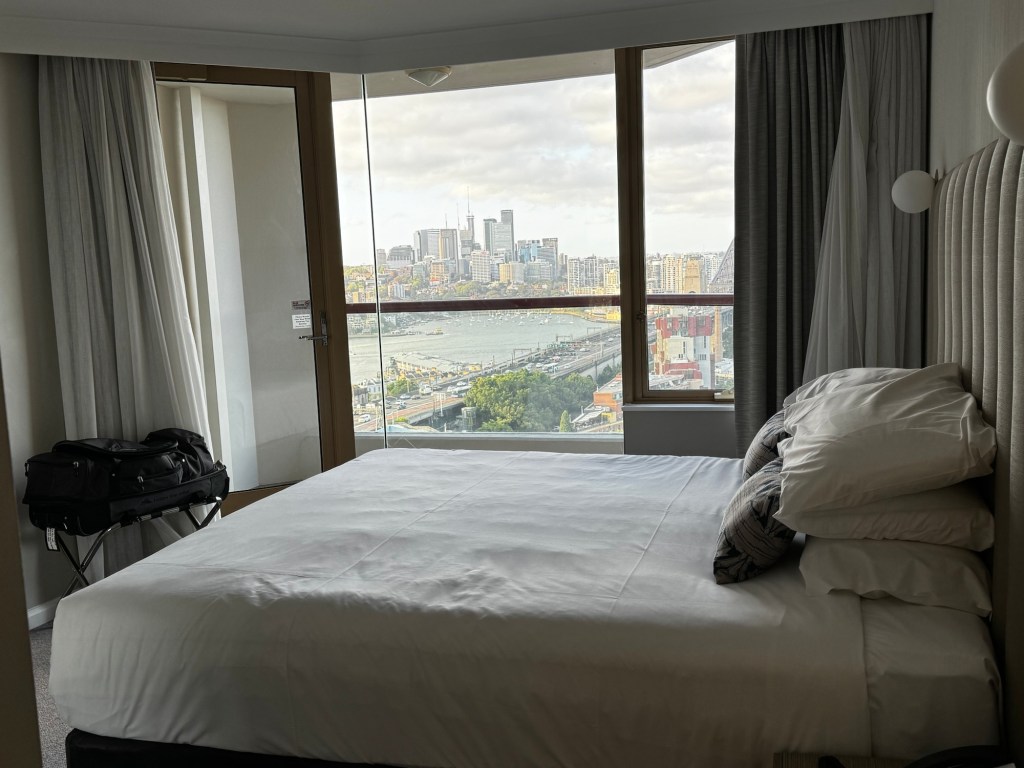
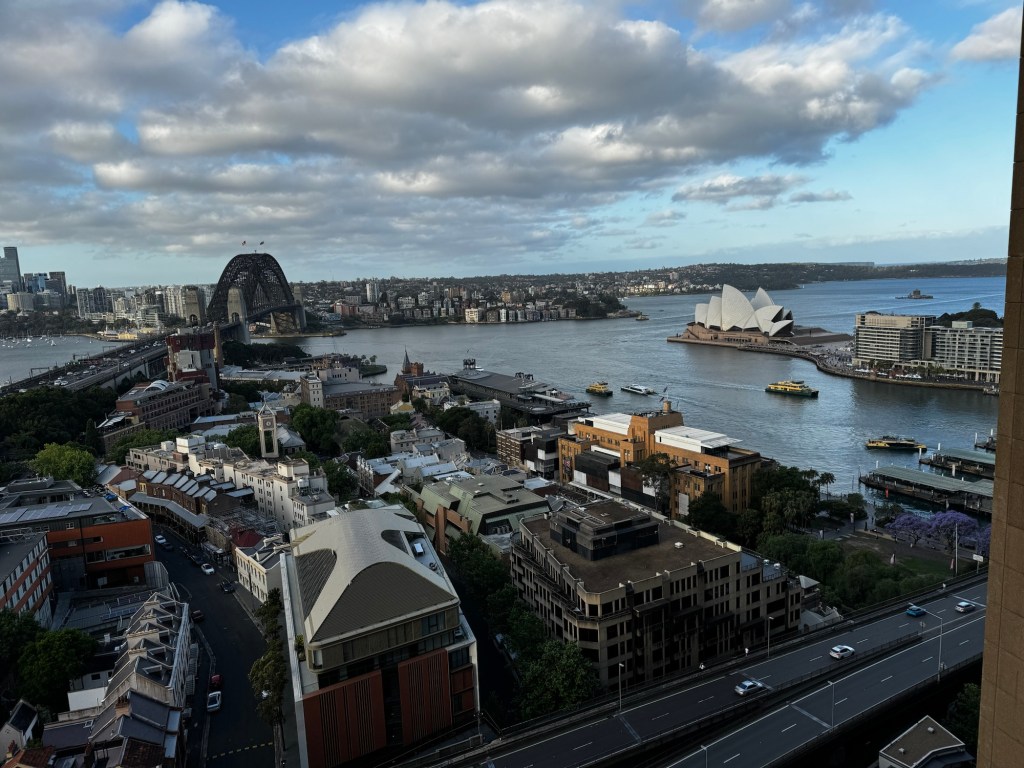
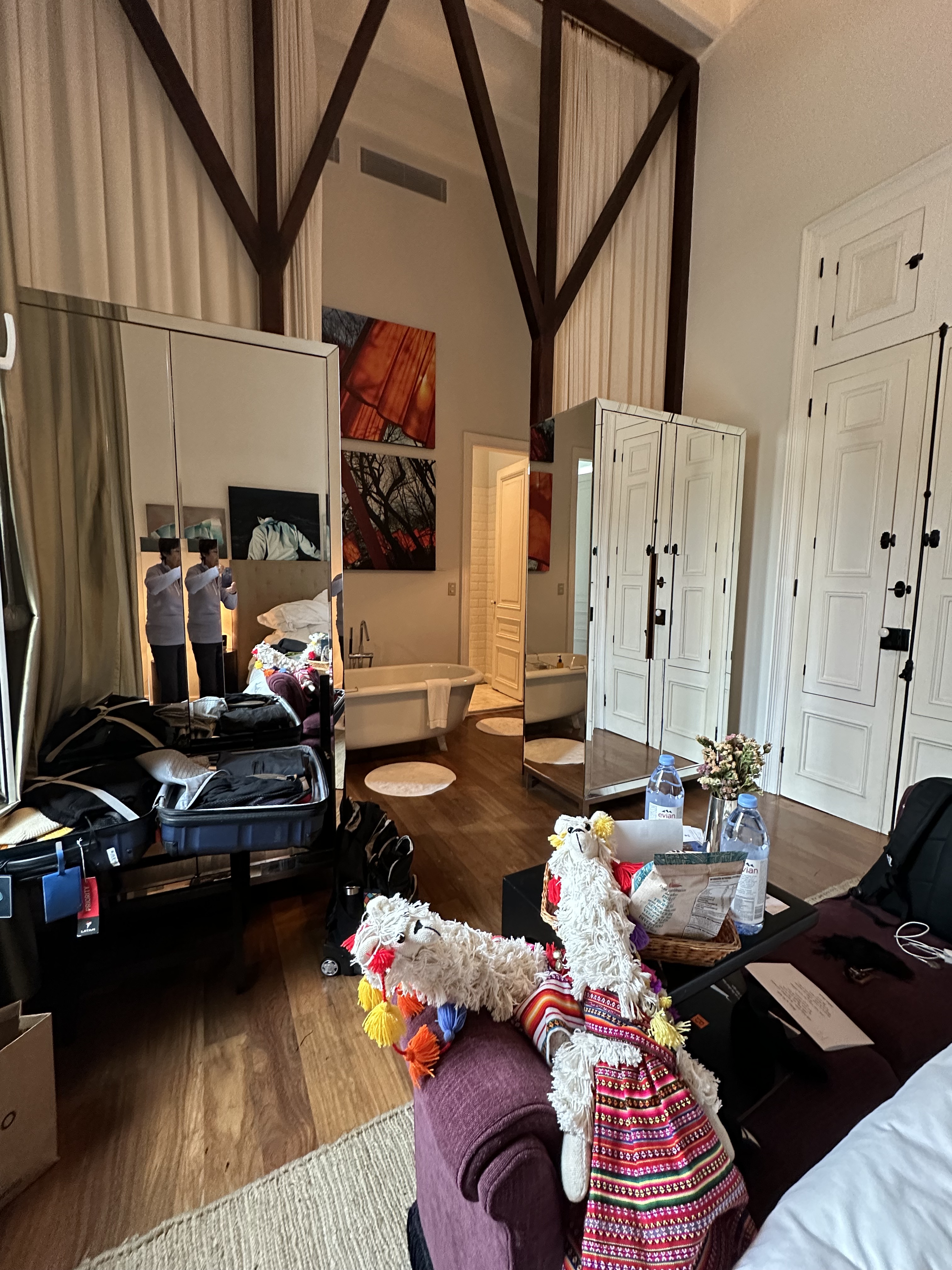
Left Newcastle for Sydney at 11am and arrive at our hotel parking garage about 1pm. The garage is at least 8 floors underground and we drove down to level 6 before finding a spot. Finally reached the Lobby at 1:30 and were in our room at 1:40. Catherine booked the Sebel Quay West Hotel for us months ago and it certainly lived up to expectations. Our room has a spectacular view of both the bridge and the Opera House and is very close to everything we are interested in visiting.
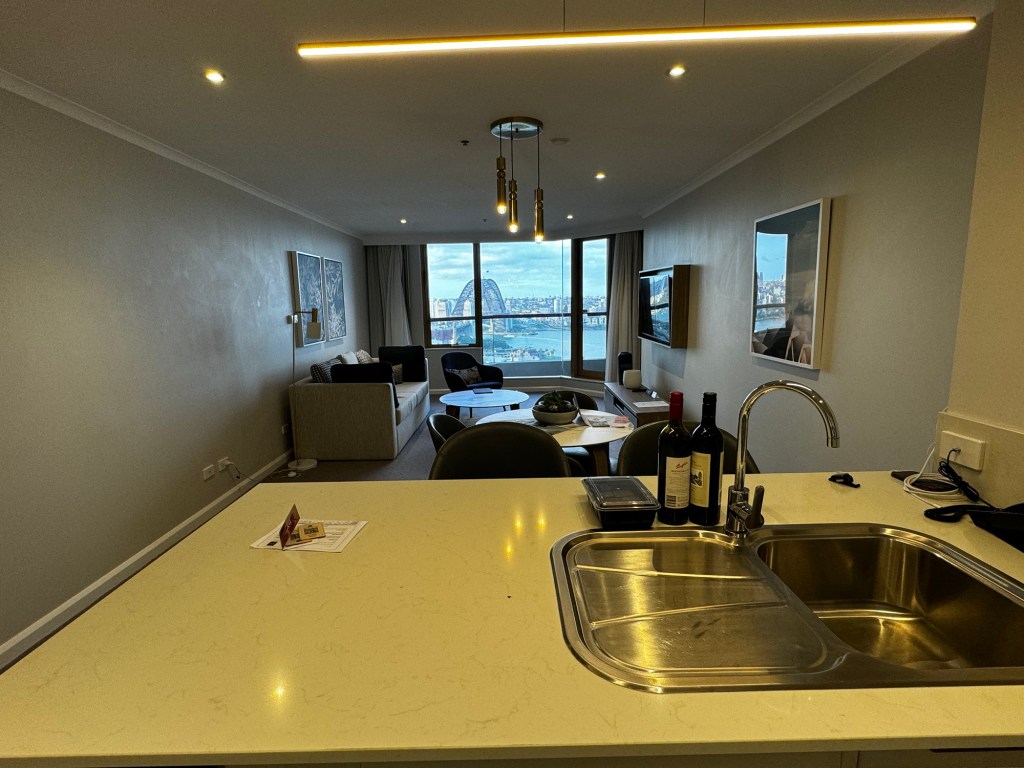
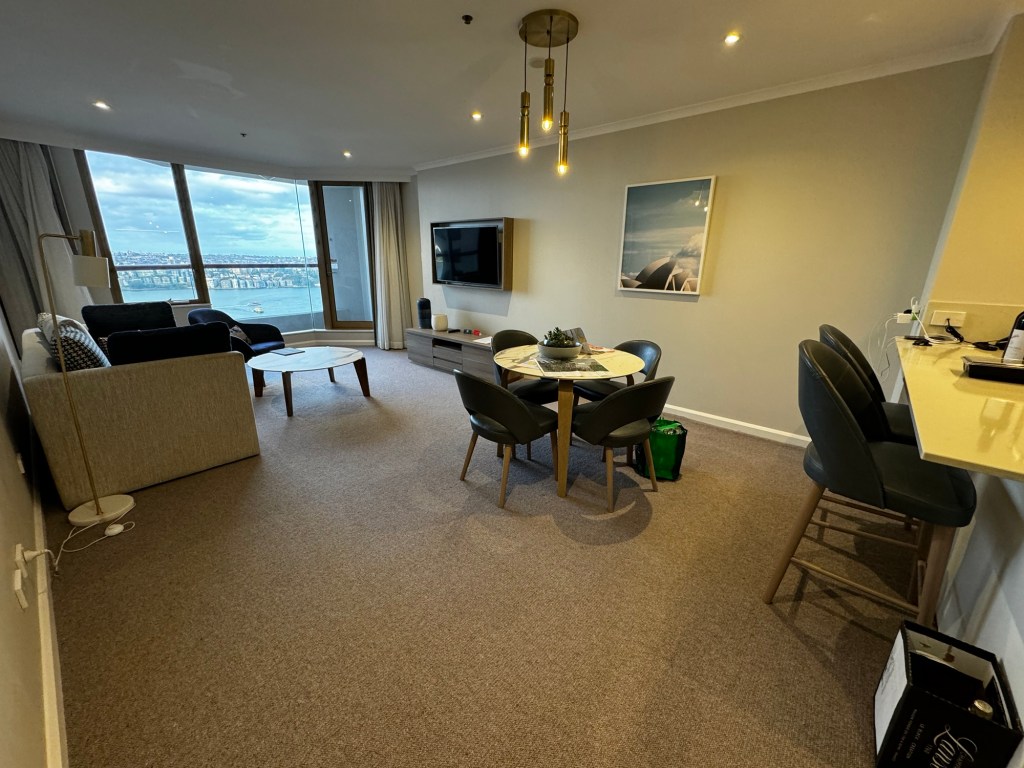
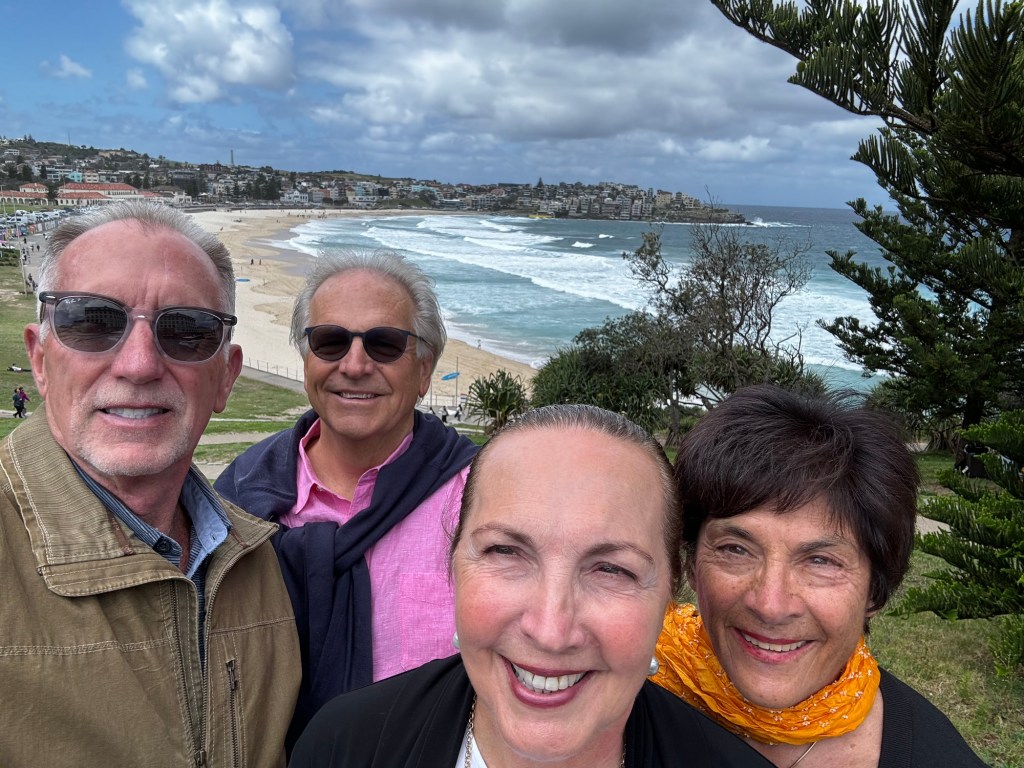
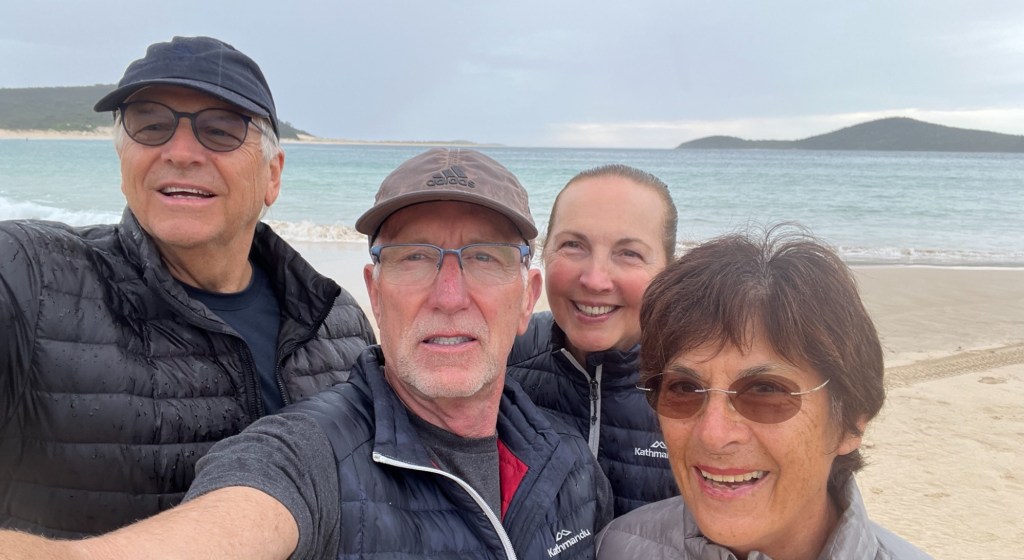
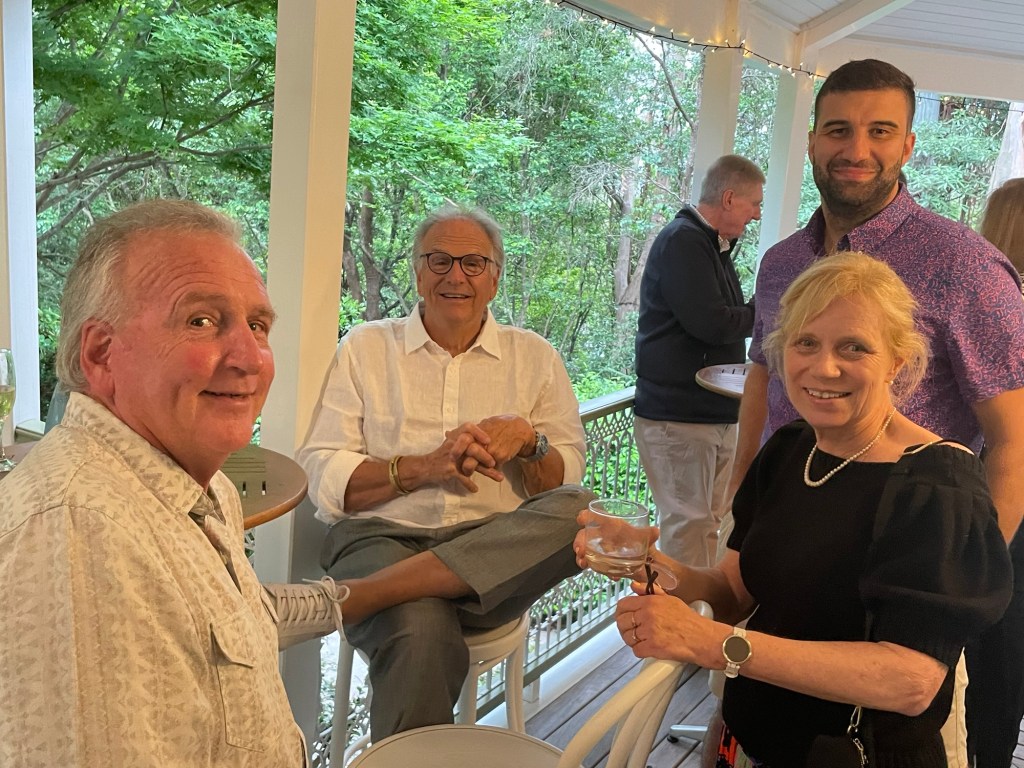
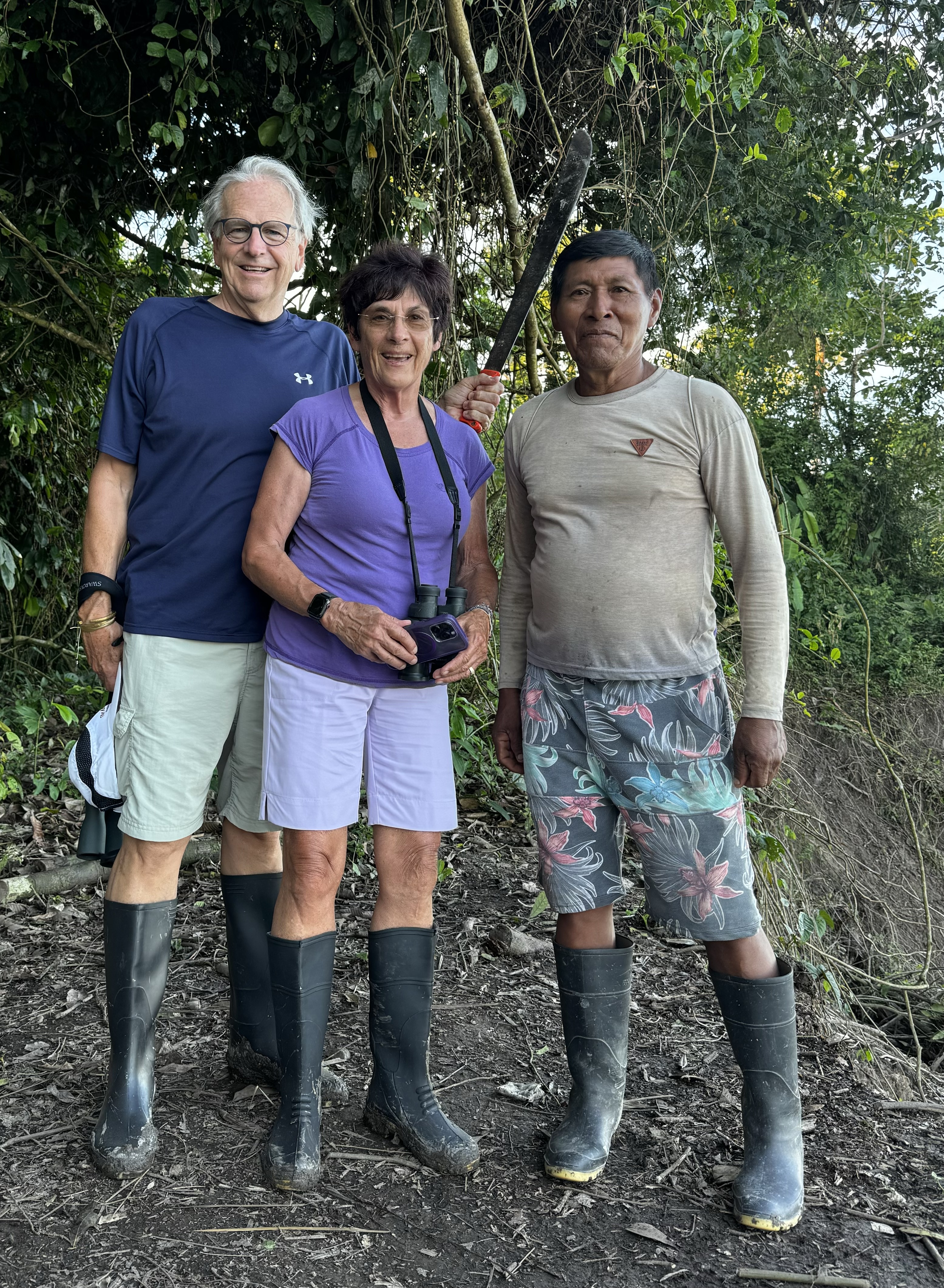
Martin, Mark, Catherine and me at Bondi Beach.

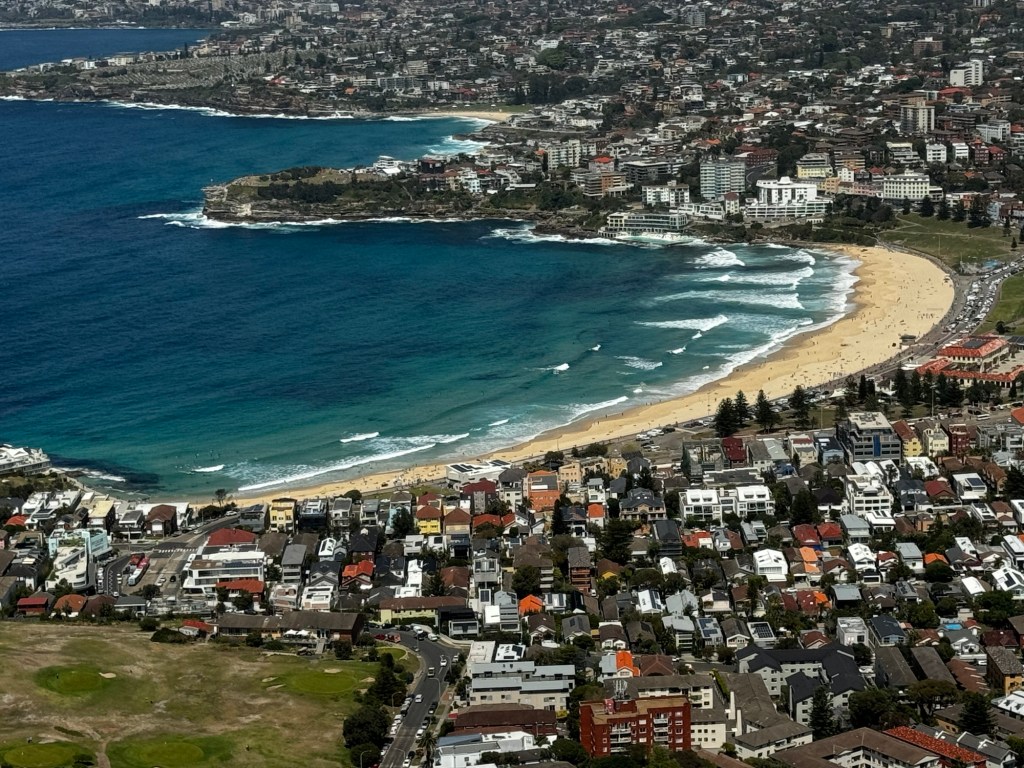
We hung out in the room a short while and then took an Uber to the Bondi Icebergs Restaurant overlooking the famous Bondi Beach, which Catherine had also booked months in advance and where we had a late lunch with the plan of skipping dinner.

Everyone had a delicious meal including my cuttlefish entree and Mark’s Whiting fish main dish. After lunch we admired the Beach view awhile and headed back to the Sebel Quay West where we hung out until we all got sleepy. Catherine and Martin have a similar room on a different floor.

Tuesday, October 22, 2024

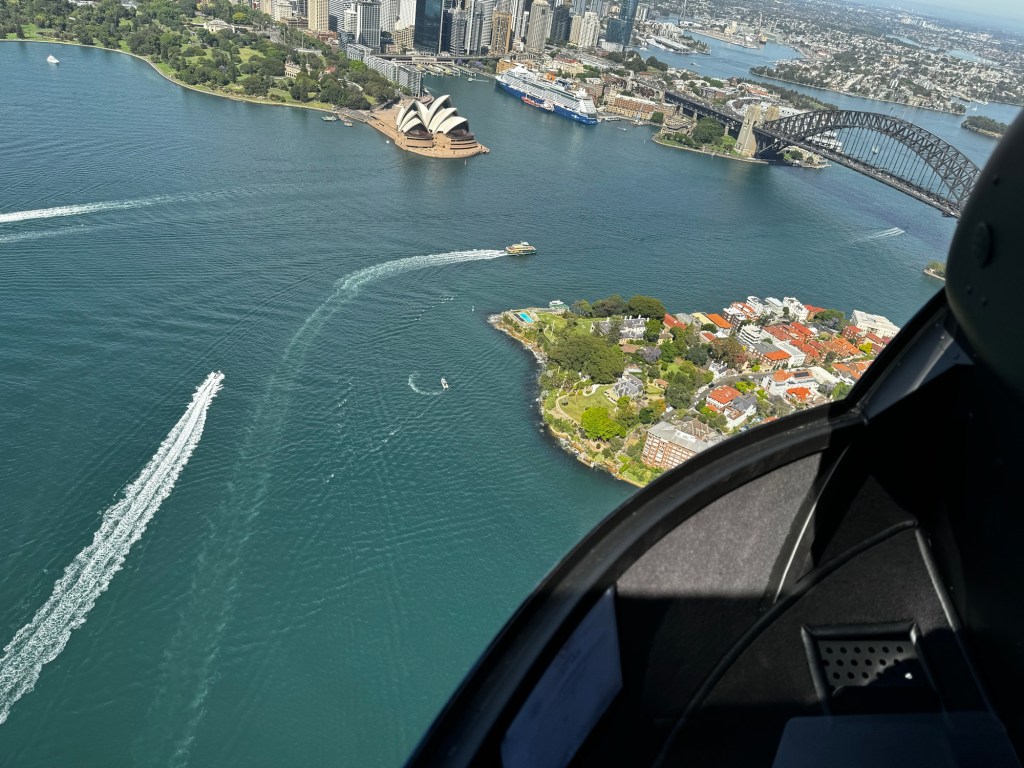
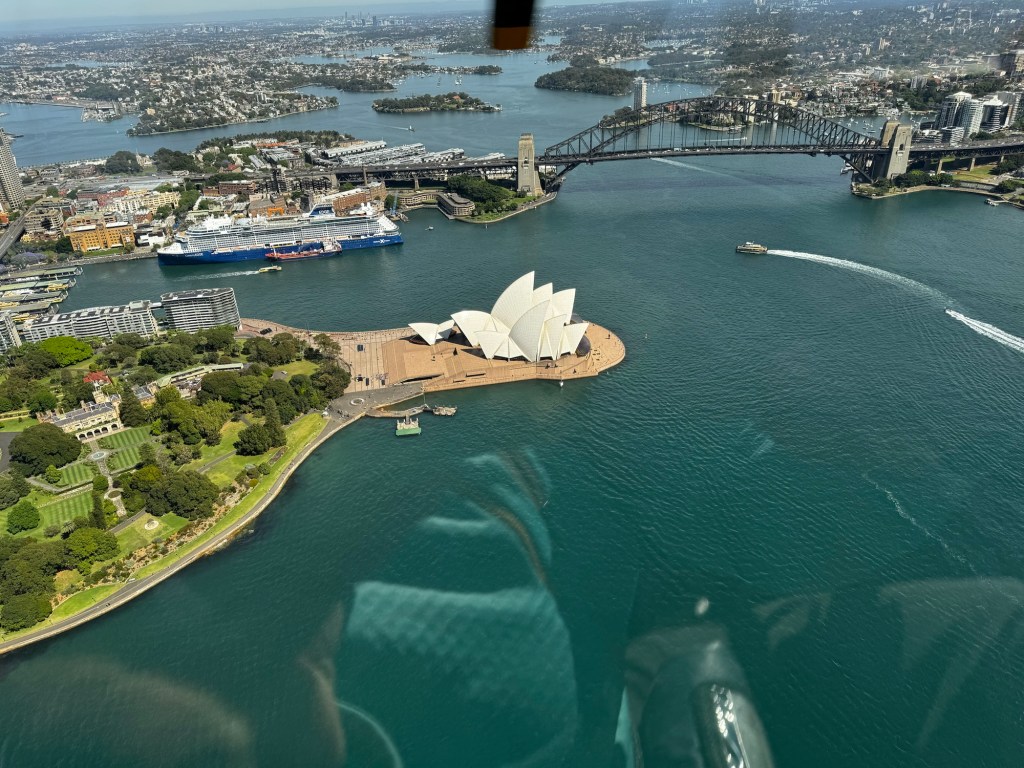
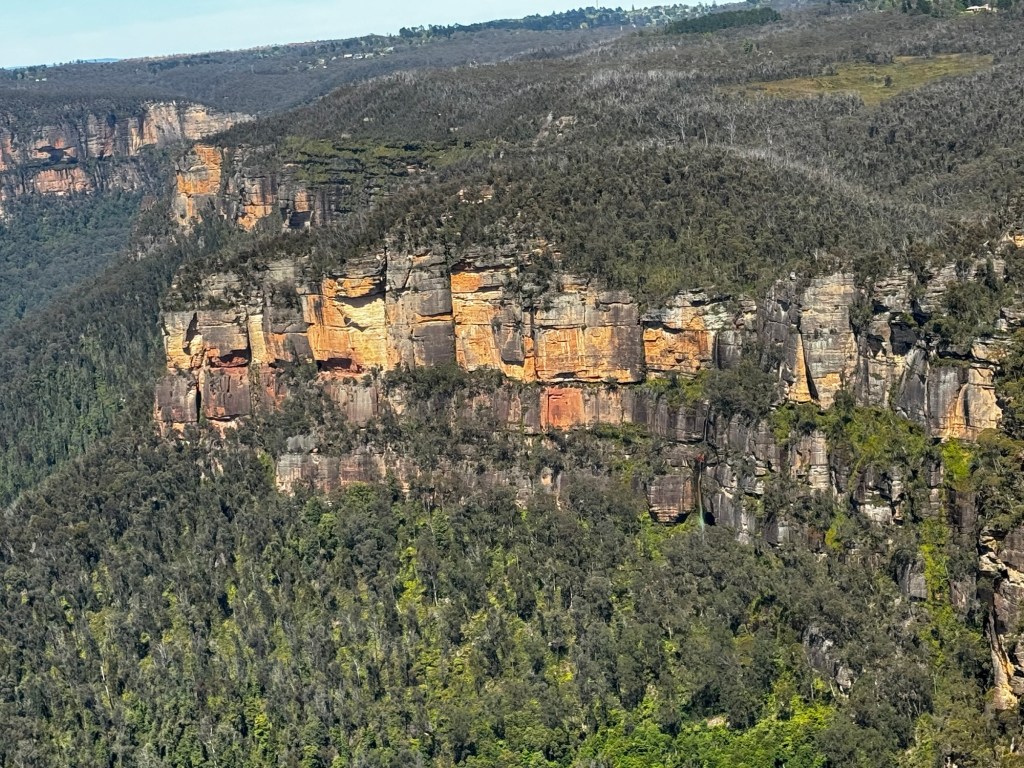
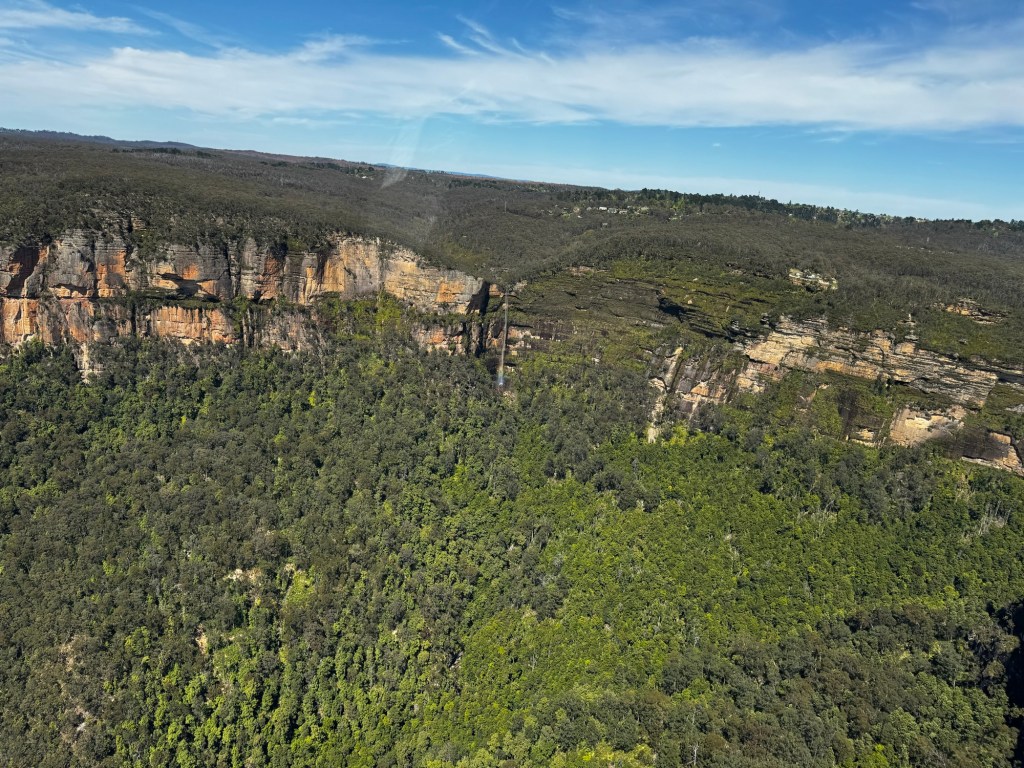
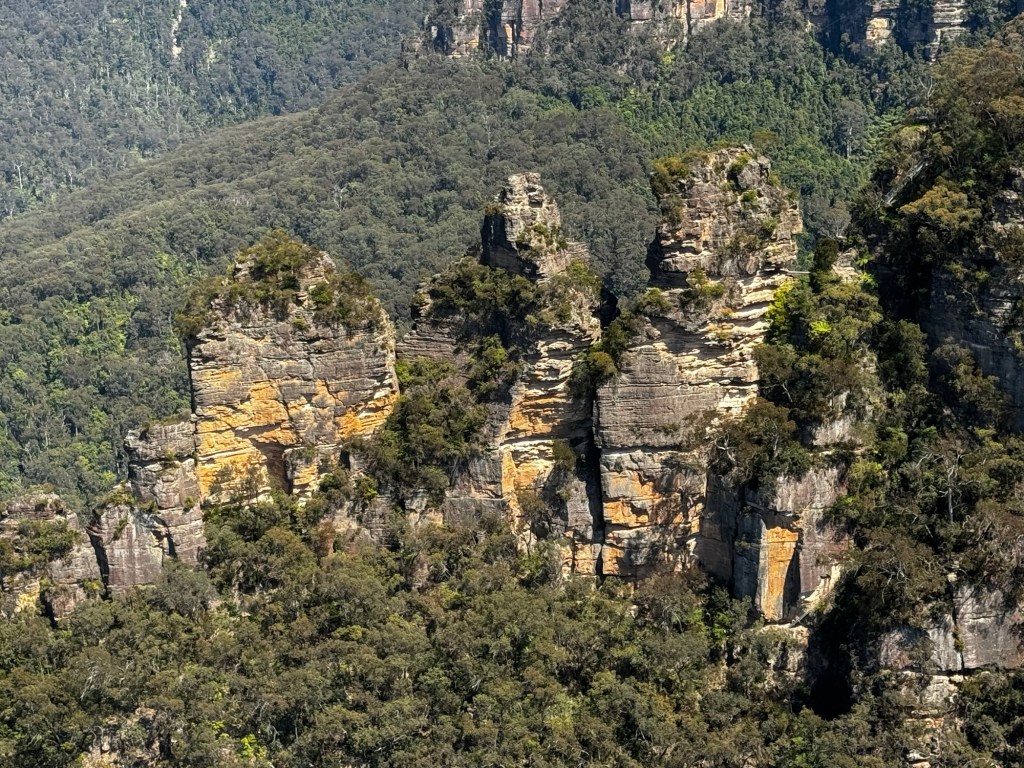
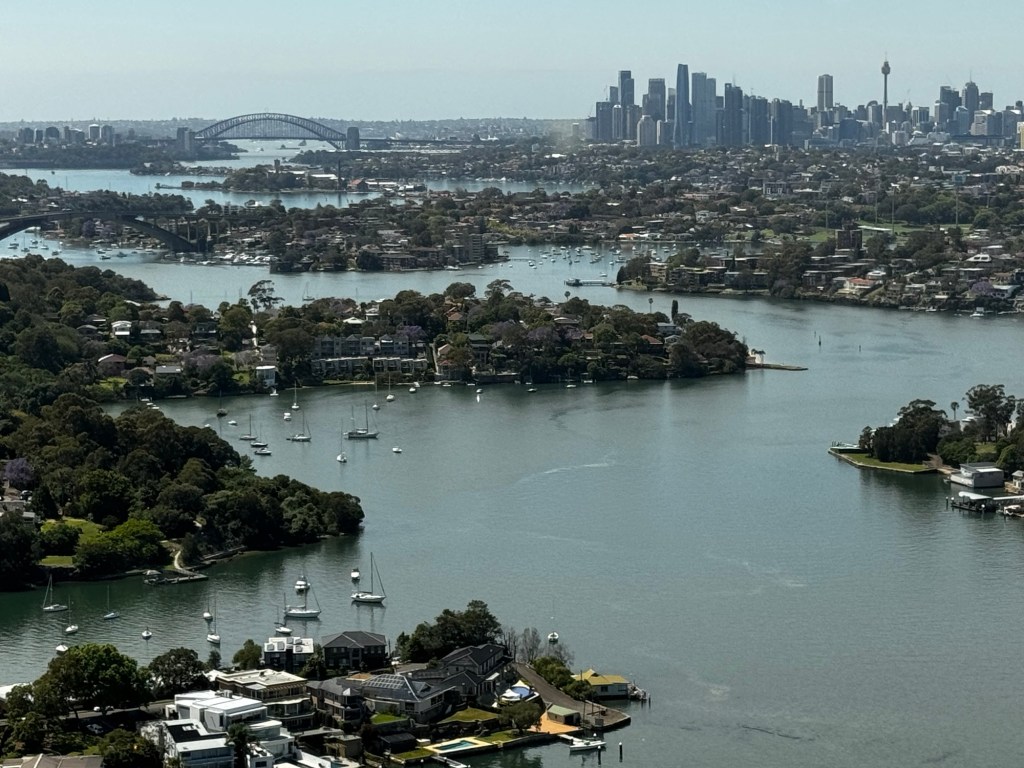
Our plans for the day were action packed. Mark and I went on a 90 minute helicopter ride over the Sydney area and out to the Blue Mountains to see the scenery, especially the Three Sisters rock formation. We took lots of photos and enjoyed the ride.

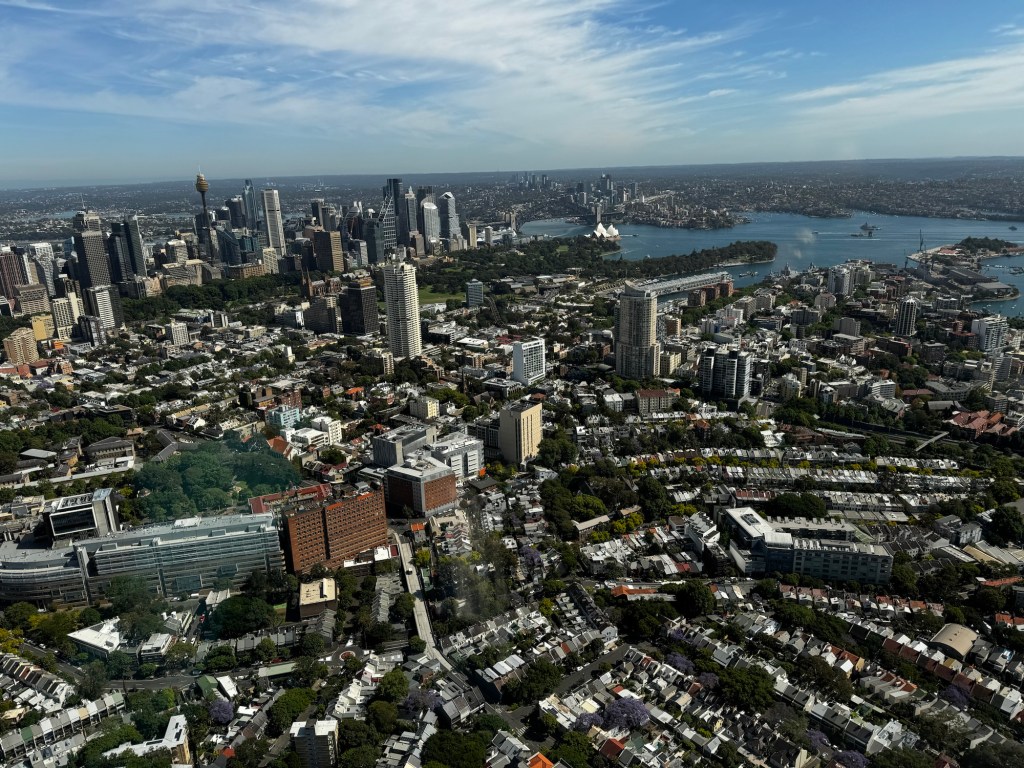
After that we went for a walk in the Botanical Gardens and had a light lunch in a cafe in the gardens. We walked back to the hotel for a brief rest and then headed for our second big event of the day, the BridgeClimb, on the Sydney Harbor Bridge.

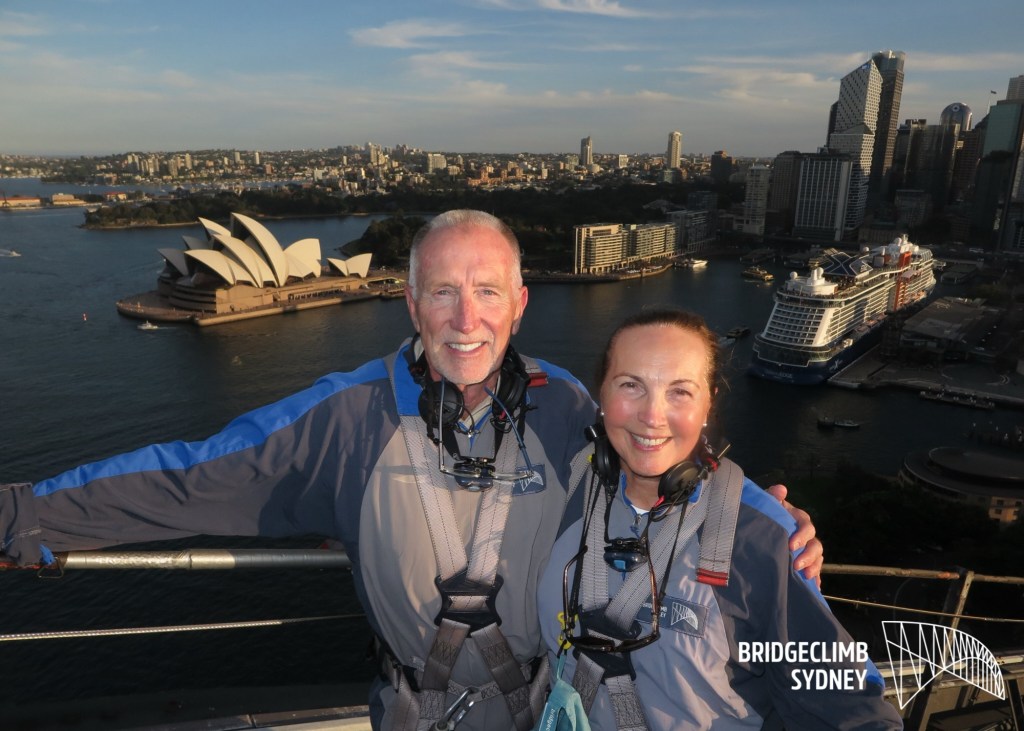
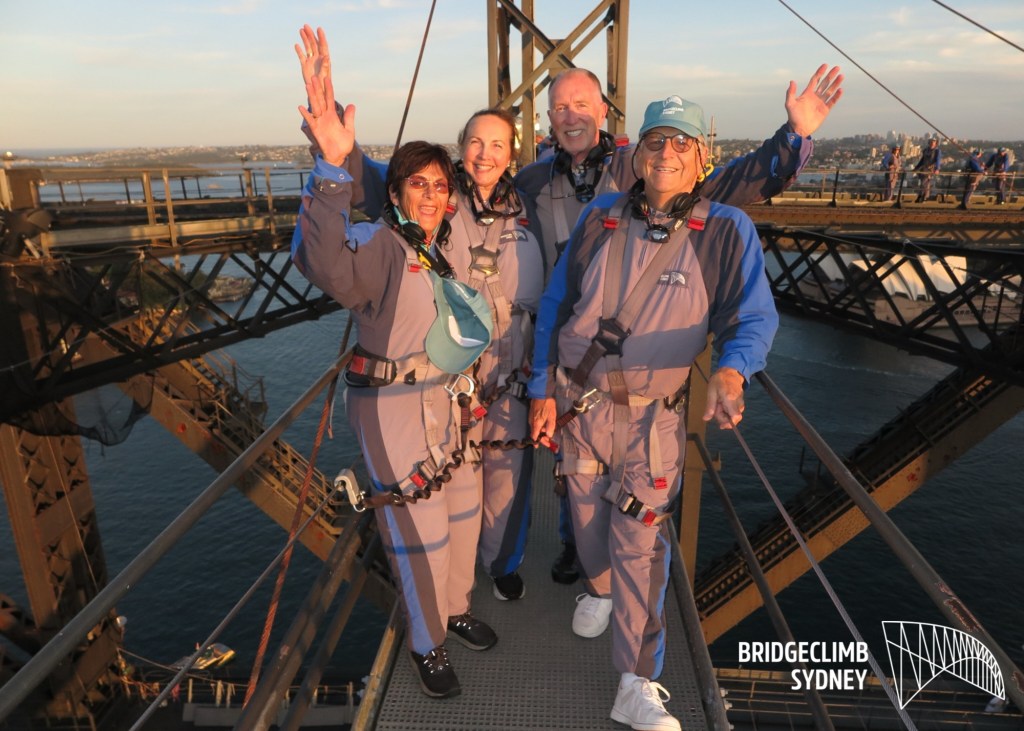
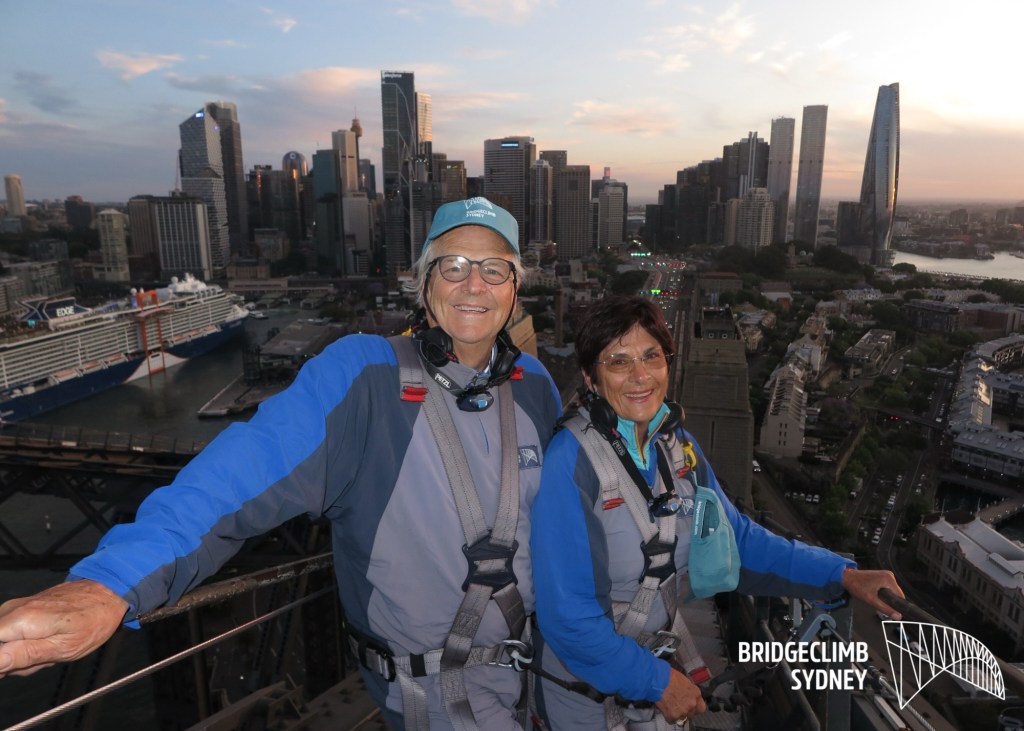
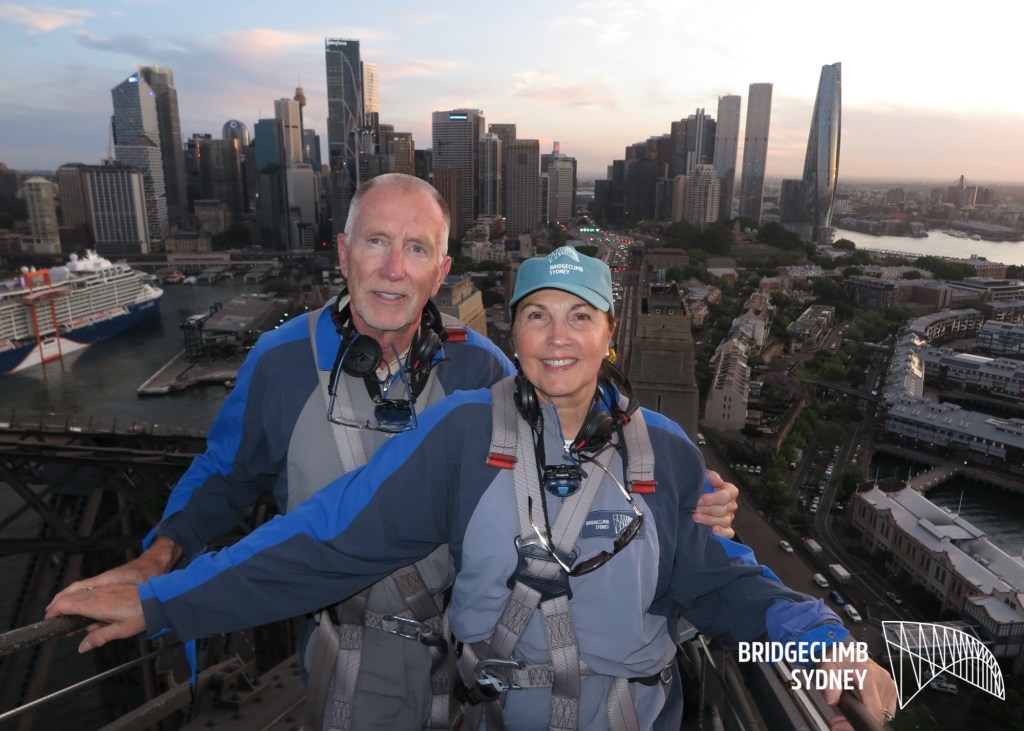
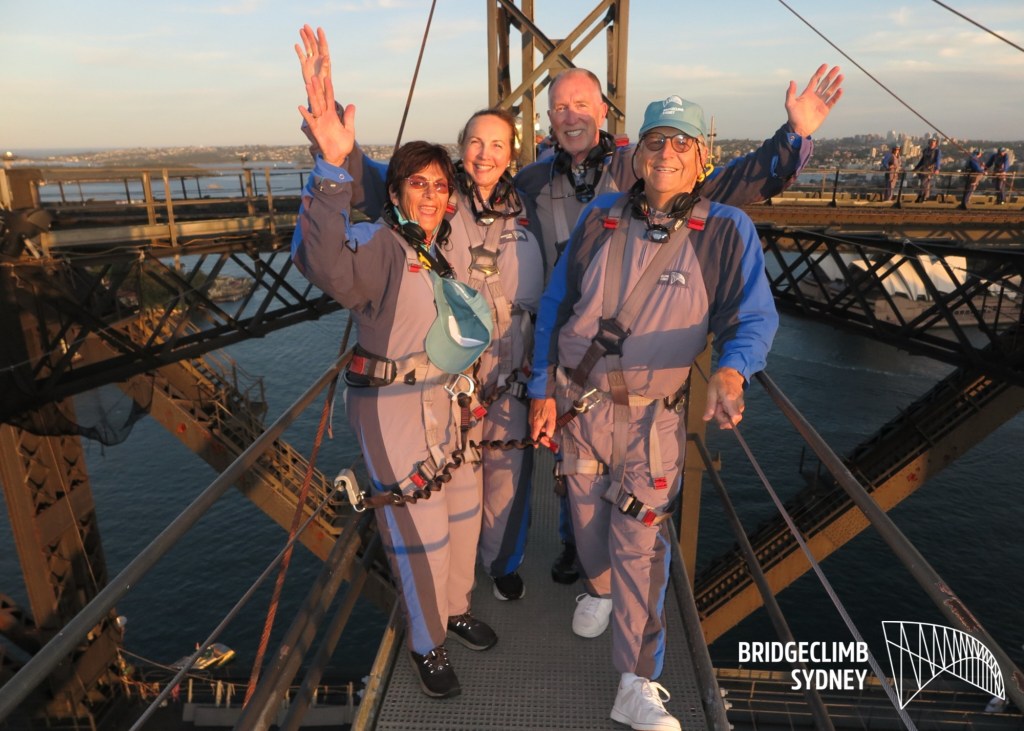
We arrived at the Bridge climb check in and gift shop at 4pm and began the process of getting prepared for the walk. There was still some concern about my health, but after talking a few minutes, the staff was satisfied. The lecture about do’s and don’ts, the process of getting prepared, putting on all the clothing and gadgets required for a safe walk and double checking each person before heading out took almost 60 minutes. Unfortunately, we were not allowed to have our cameras so I have no photos of the experience except the ones the bridge crew took.
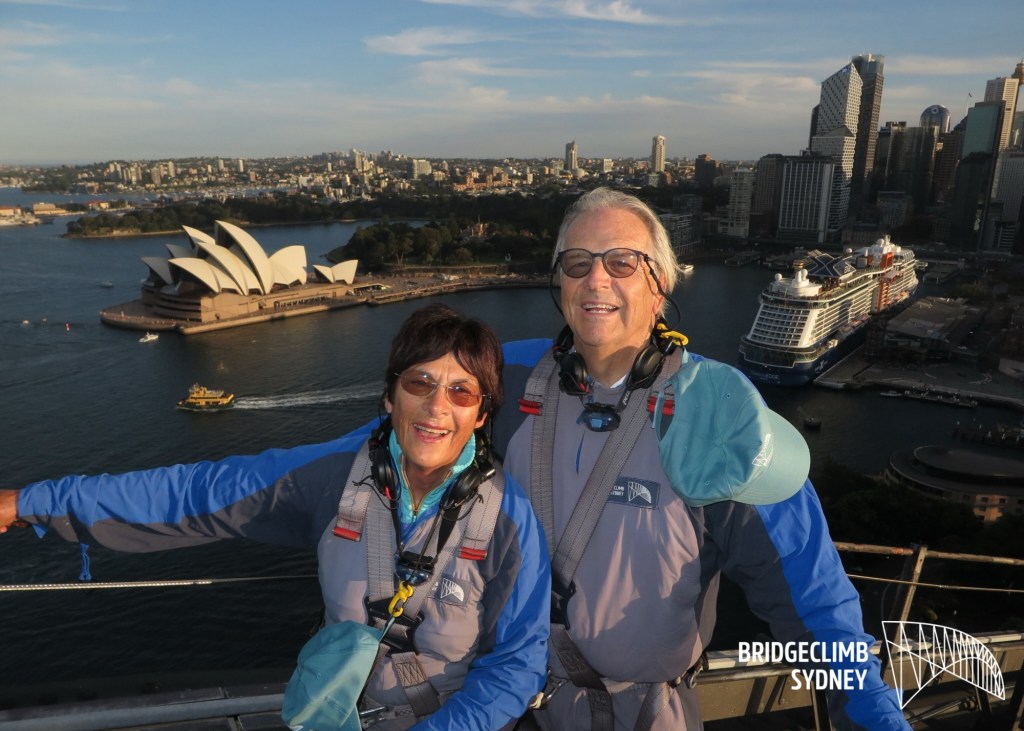
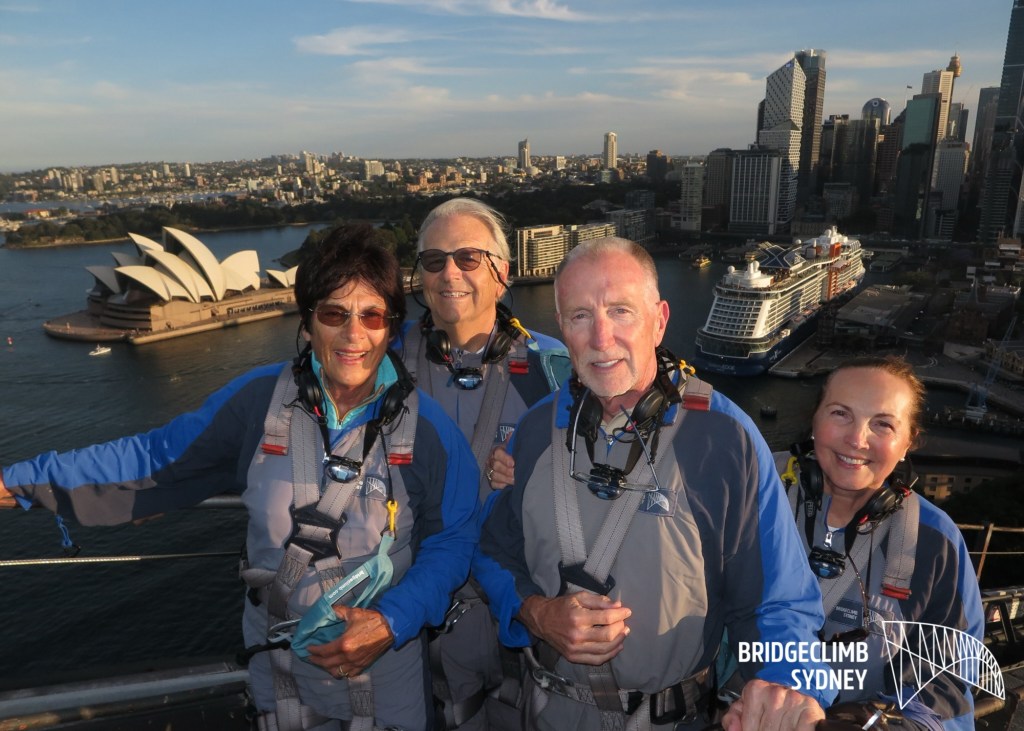
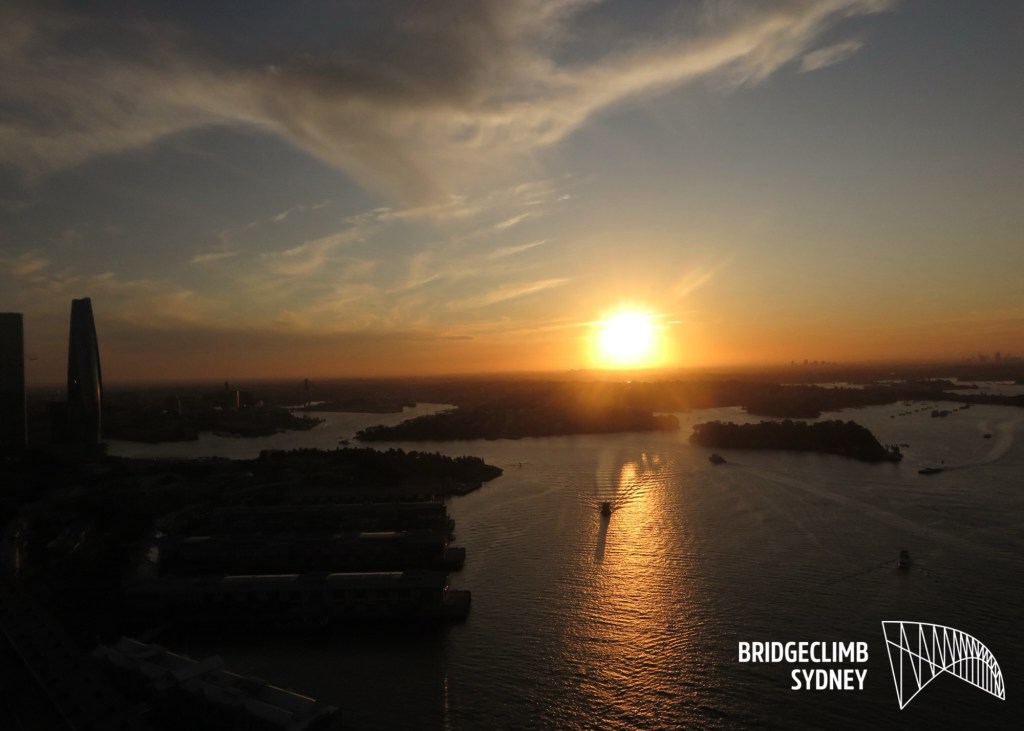
Our clothing included a full jumpsuit and harness, hat, headset to hear the crew while on the walk, a cable attachment for the entire walk, a scarf to use if your eyes or nose need whipping, croakies to attach my glasses, headset and hat. Nothing could be unattached in case something should fall onto a vehicle on the bridge. We were assigned to a group of 14 walkers and one leader. After dressing, we assembled and went through an orientation including saying our name and where we were from and being assigned a position in the group lineup. Being the weakest person, because I admitted to being terrified of falling, I was put in the first position with Mark behind me. Our leader, Jesse, instructed us on how and where and when to walk and off we went. To make us take our mind off the walk, he talked about the history of the bridge and told a few funny stories. It did help, but at first I had a hard time taking more than baby steps, but Mark kept nudging me on and eventually I walked faster, though I was not able to look around, only down at the walk way. Jesse had us stop at a few designated photo stops where the crew took photos of each couple and group. We arrived at the top of the bridge just a few minutes before sunset. The crew took several photos there and we continued across and down the other side. I began to feel more comfortable on the way down and walked faster. But I could look around only when we were not walking. It was a huge relief when we finally reached the bottom and were back in the changing room.
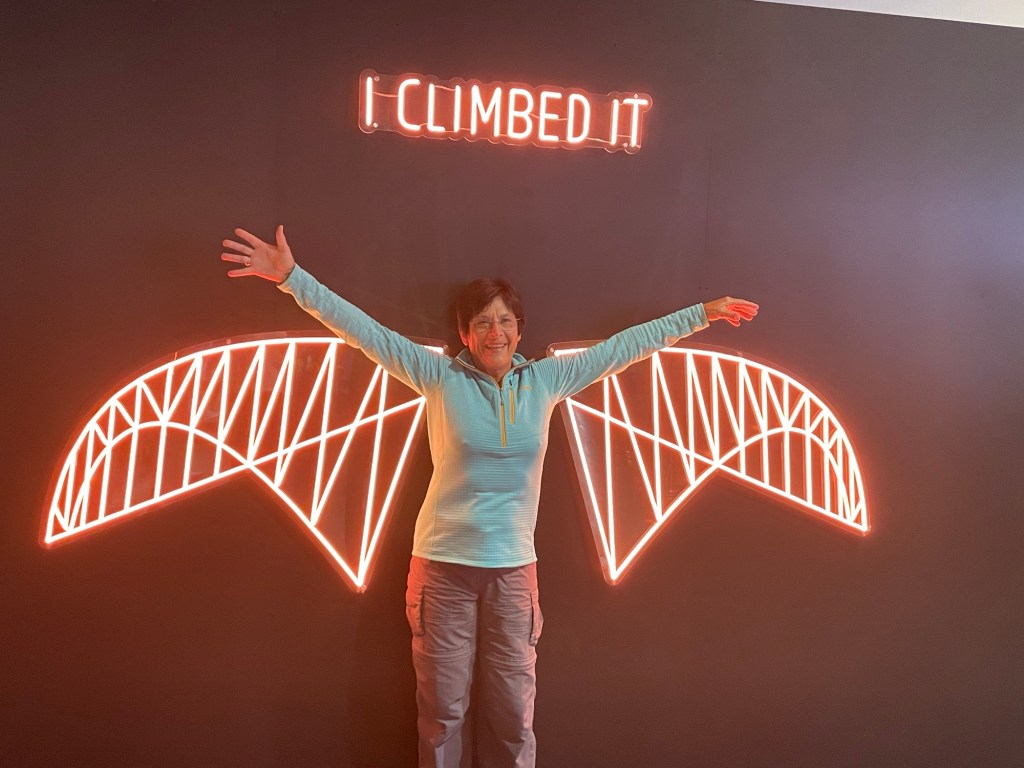
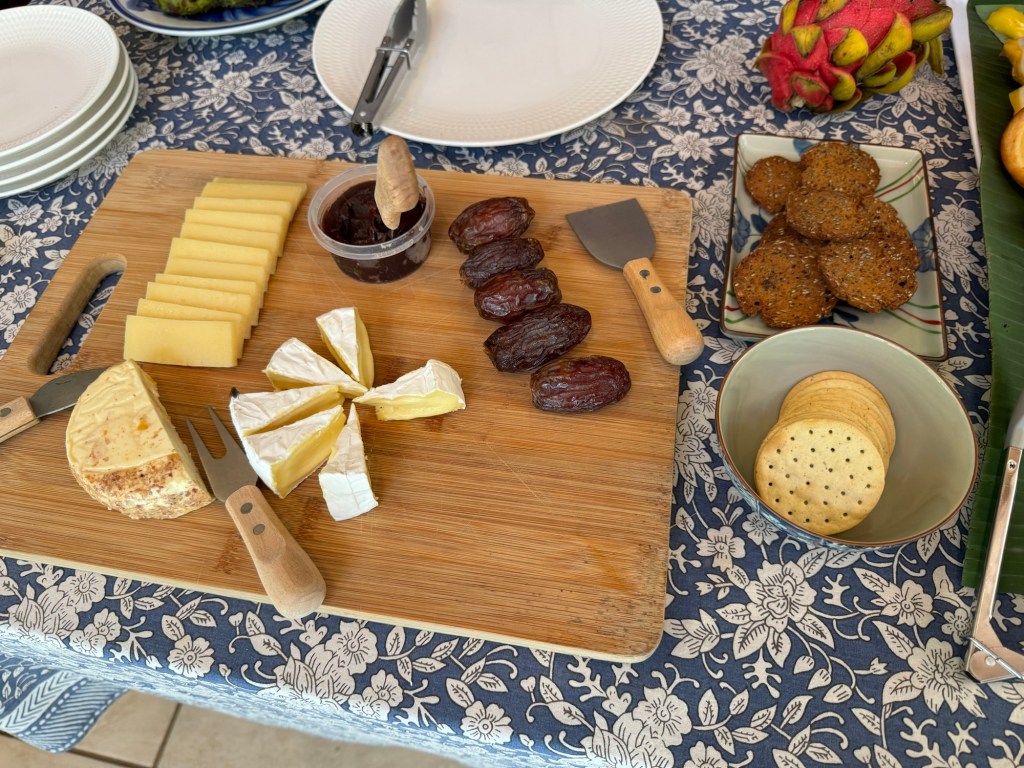
I certainly felt like celebrating and couldn’t wait for my first scotch. We went directly back to our room where drinks were waiting. I ordered some hot pasta from room service while drinking my first scotch. The rest of the group drank Champaign and wine and ate cheese and crackers Catherine had brought from home. I proceeded to polish off the pasta and 2 more scotches and it wasn’t long before I was ready to crash. Soon Catherine and Martin left and Mark joined me in bed. It had been quite a day.

Wednesday, October 23, 2024

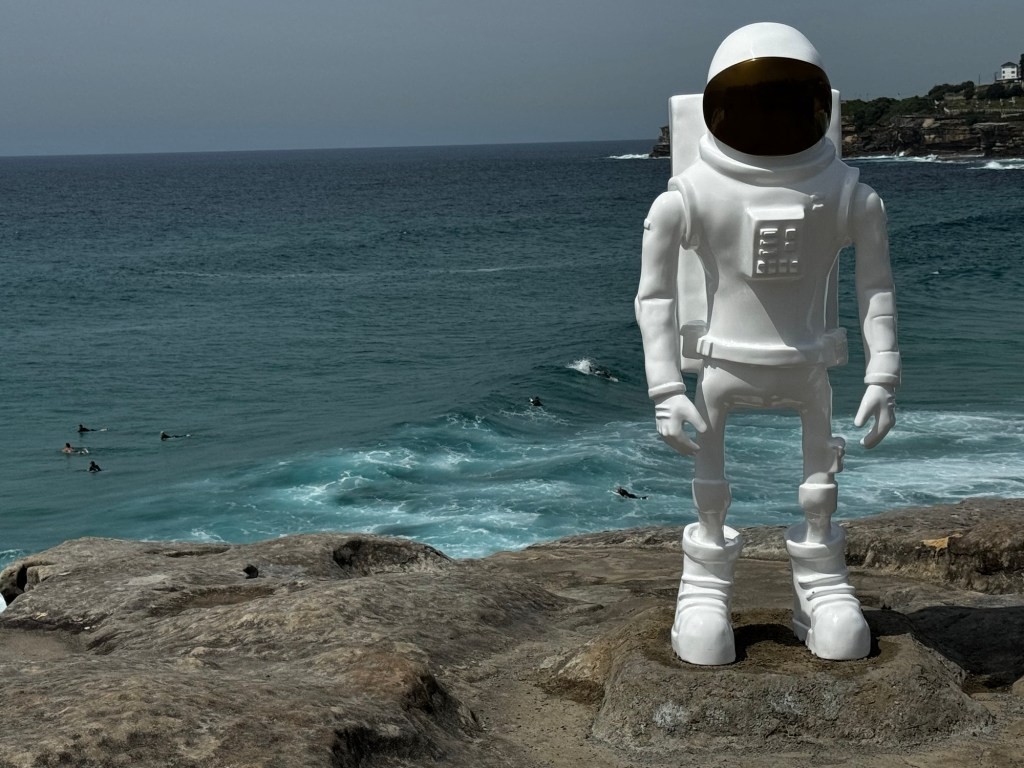
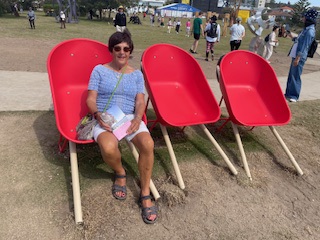
The 26th Exhibition of Sculpture by the Sea.
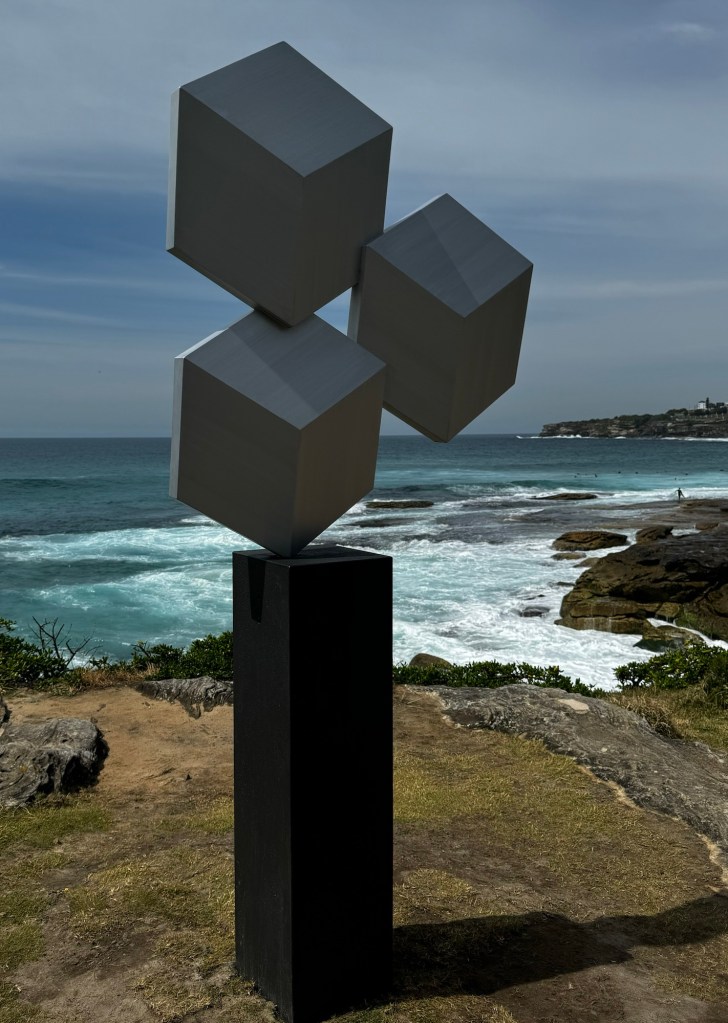
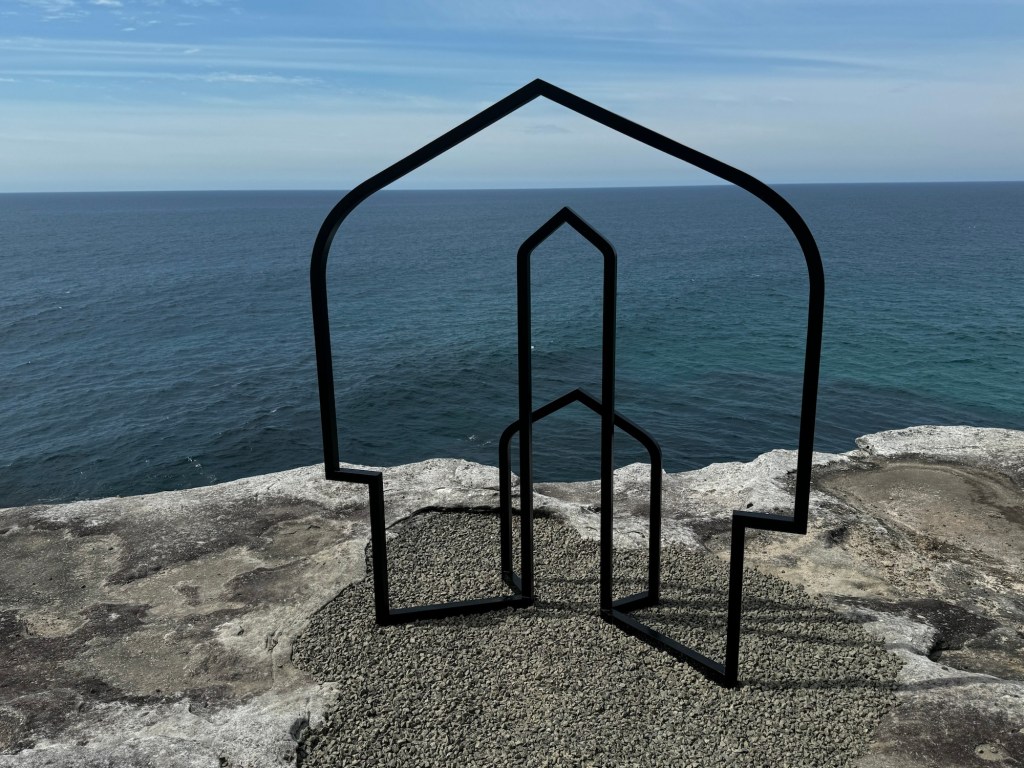
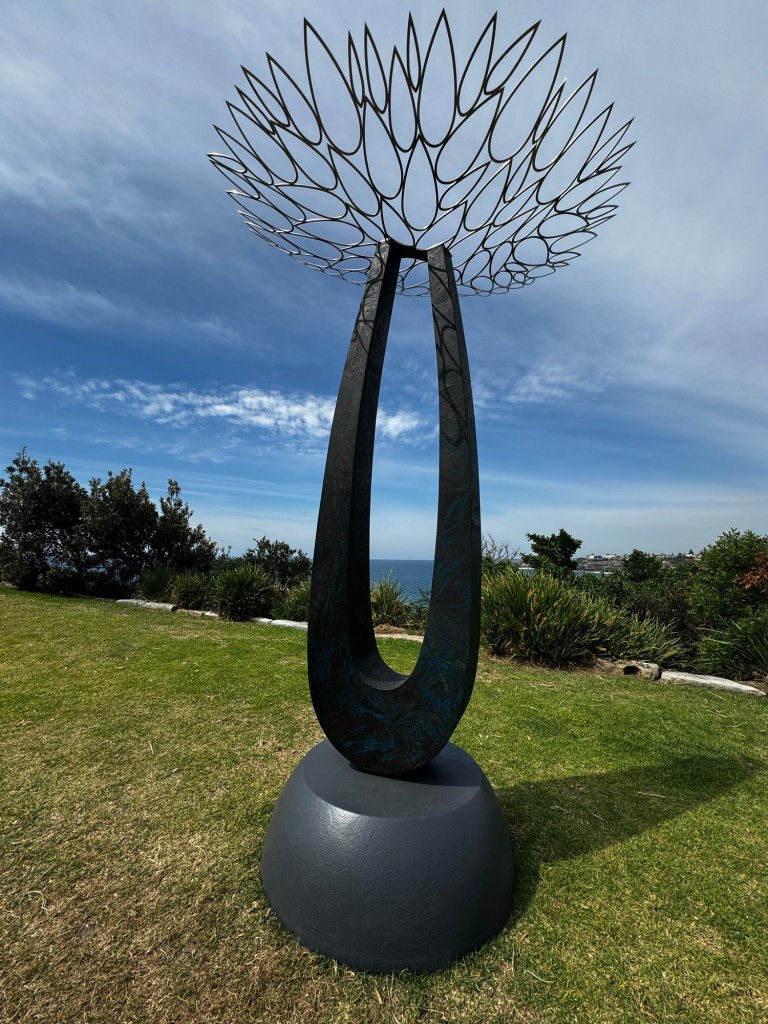
This was a much more relaxing day for all of us. A leisurely breakfast was followed by an Uber ride to Bandi Beach, where Mark, Catherine and I walked the 26th Exhibition of the Sculpture By The Sea. There were 100 pieces and we managed to take in almost all of them. Most were not of much interest to us, but a few were very good. The walk followed the shoreline and ended at another beach called Tamarama. Here are a few of the pieces I liked.

The gaze of a king-between conceit and indifference. The freedom to be oneself.
The turbulent Tamarama Beach

I took a short walk on Tamarama Beach, and then the three of us took an Uber to a fish restaurant called Doyle’s, where we met up with Martin and feasted on a delicious lunch of fish and chips and mussels.

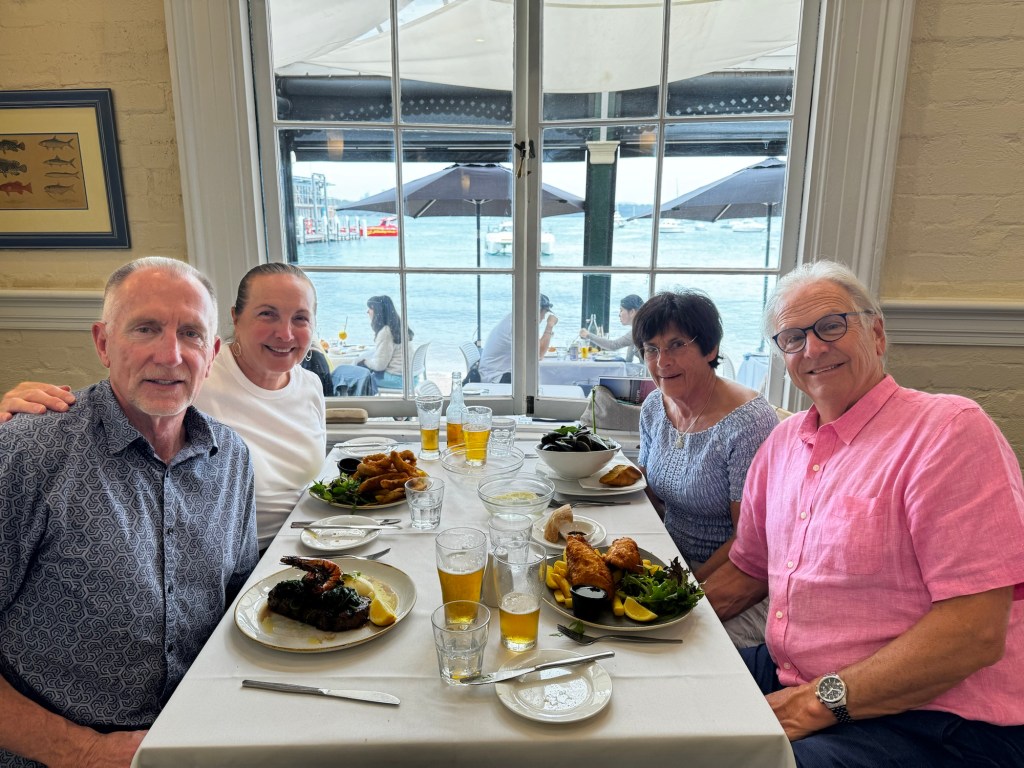
Then we hopped on a Hop on-Hop off boat and rode it to our hotel stop. By then it was late afternoon and we were all ready to have some down time and call it a day. We did meet up later in the evening for a light dinner and beer at a nearby pub.

Thursday, October 24, 2024

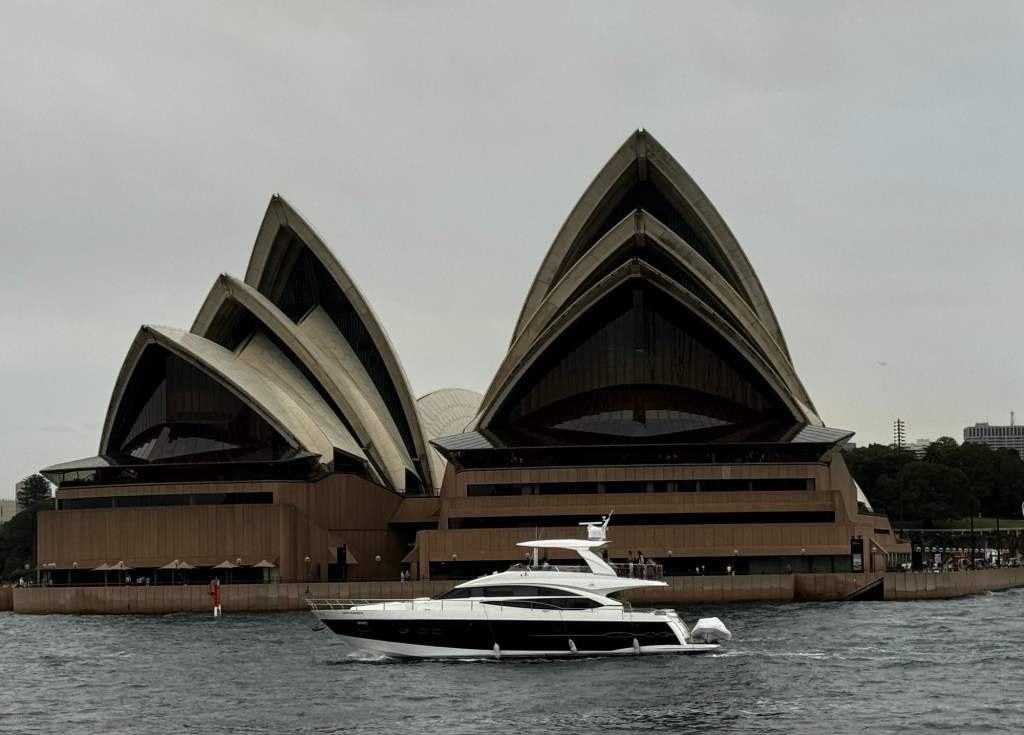
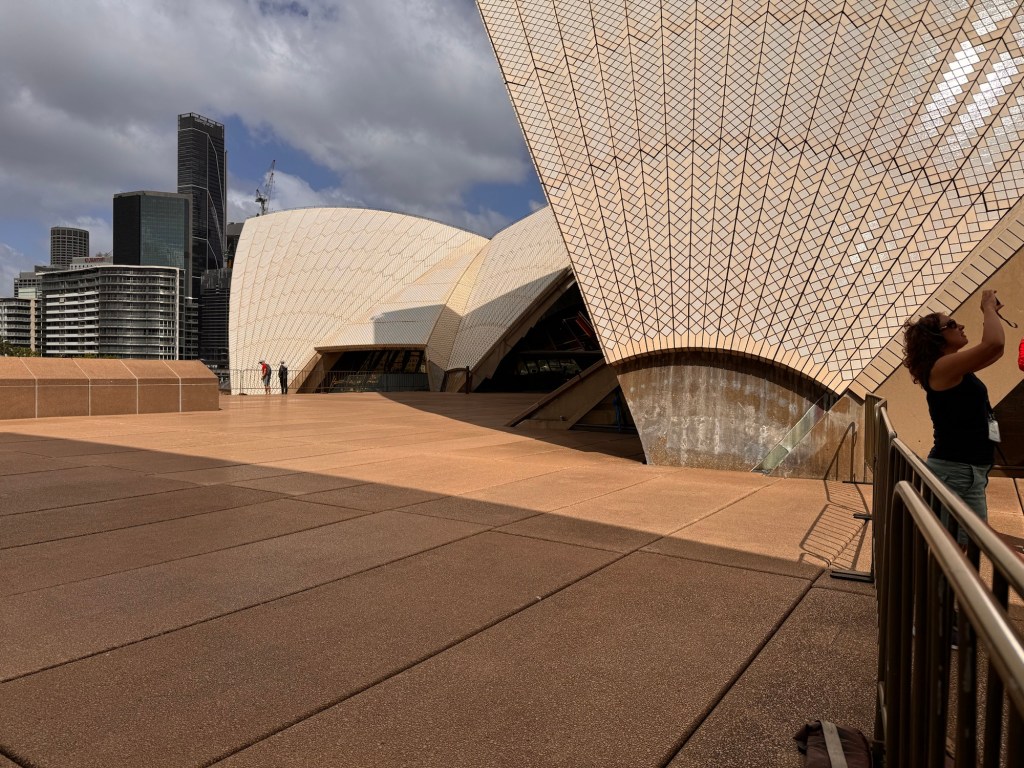
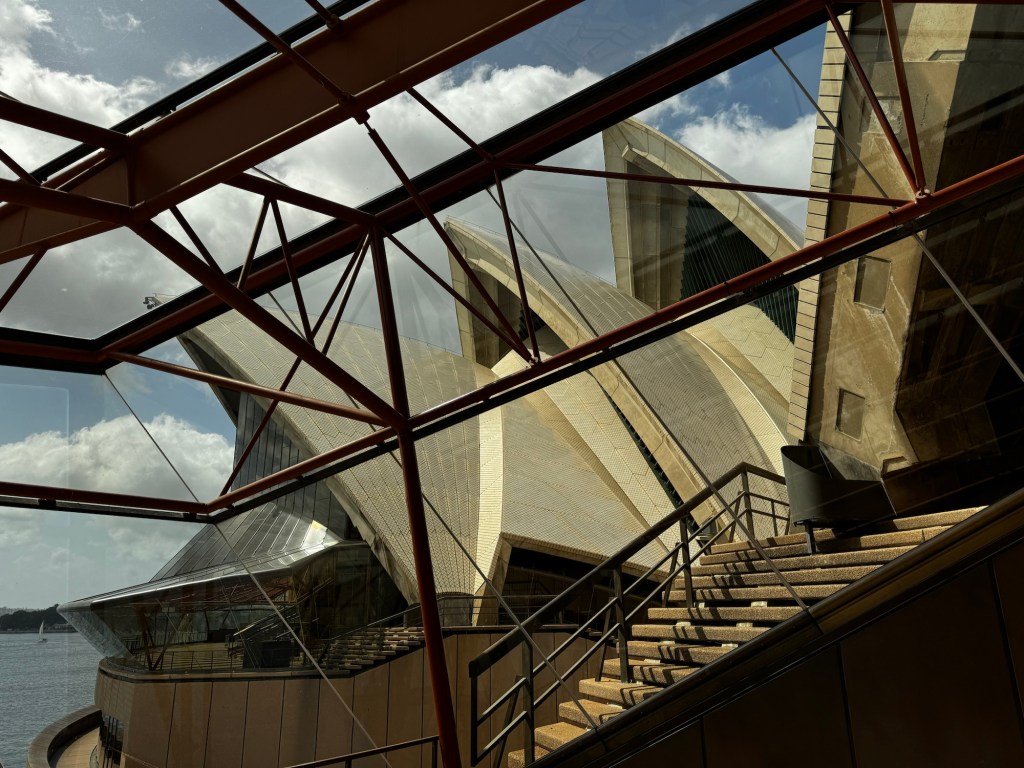
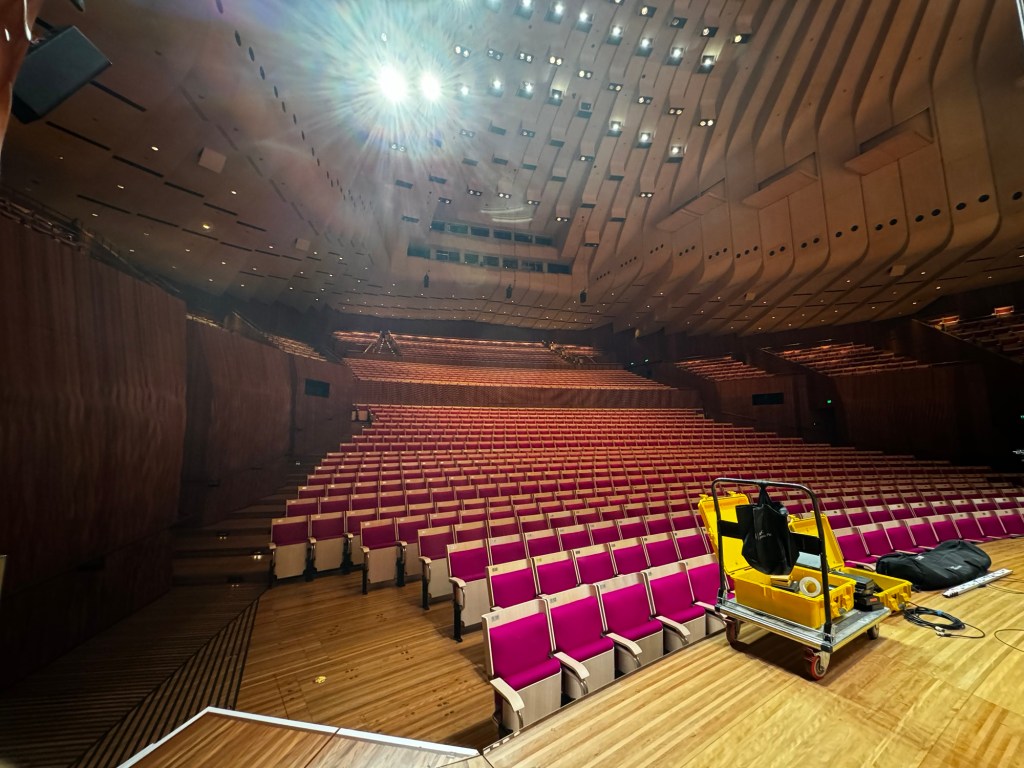
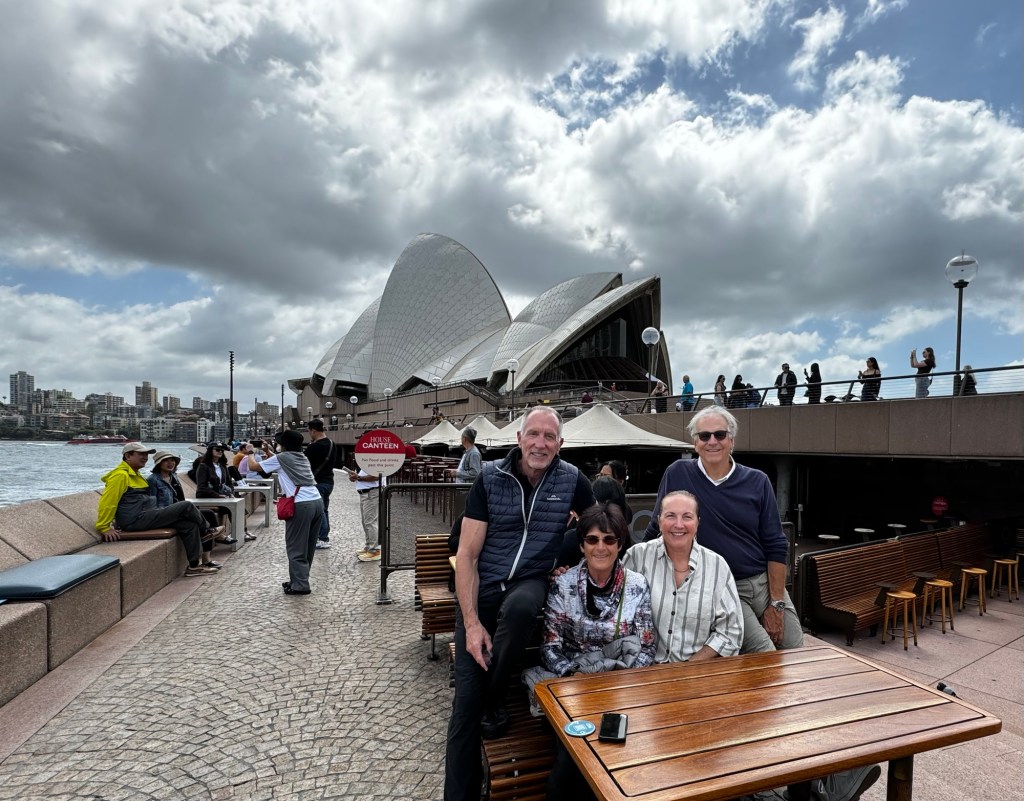
Sydney Opera House-near side is opera hall, far side is symphony hall. Seats descend facing left. The stages are under the tallest “sails”.

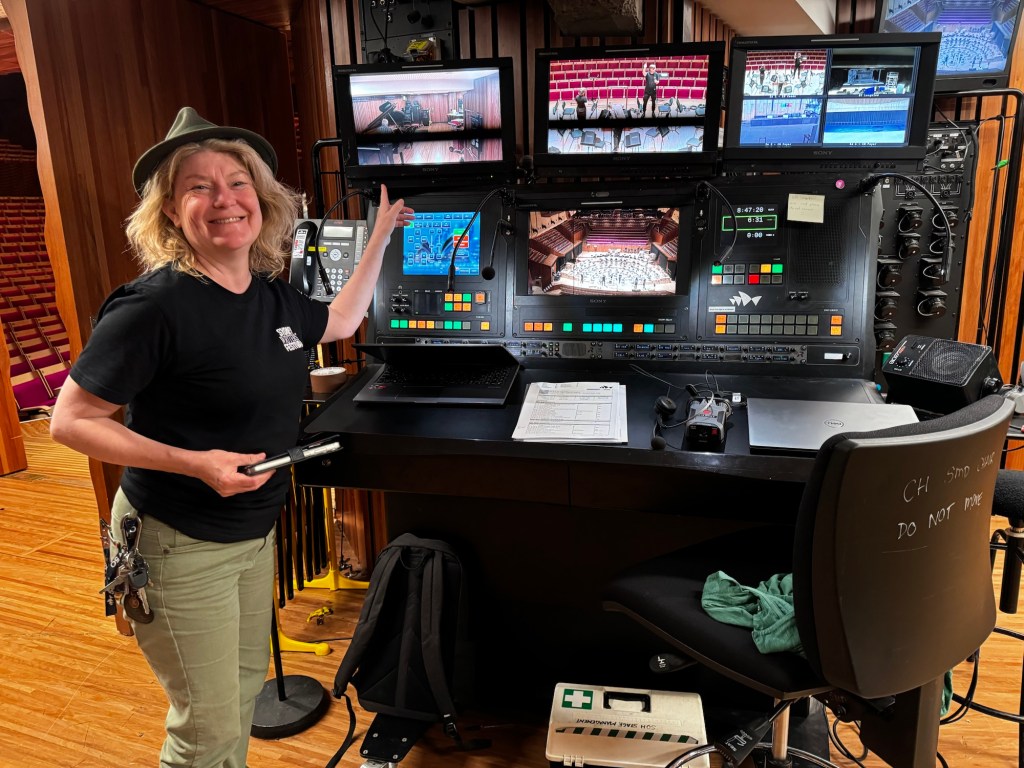
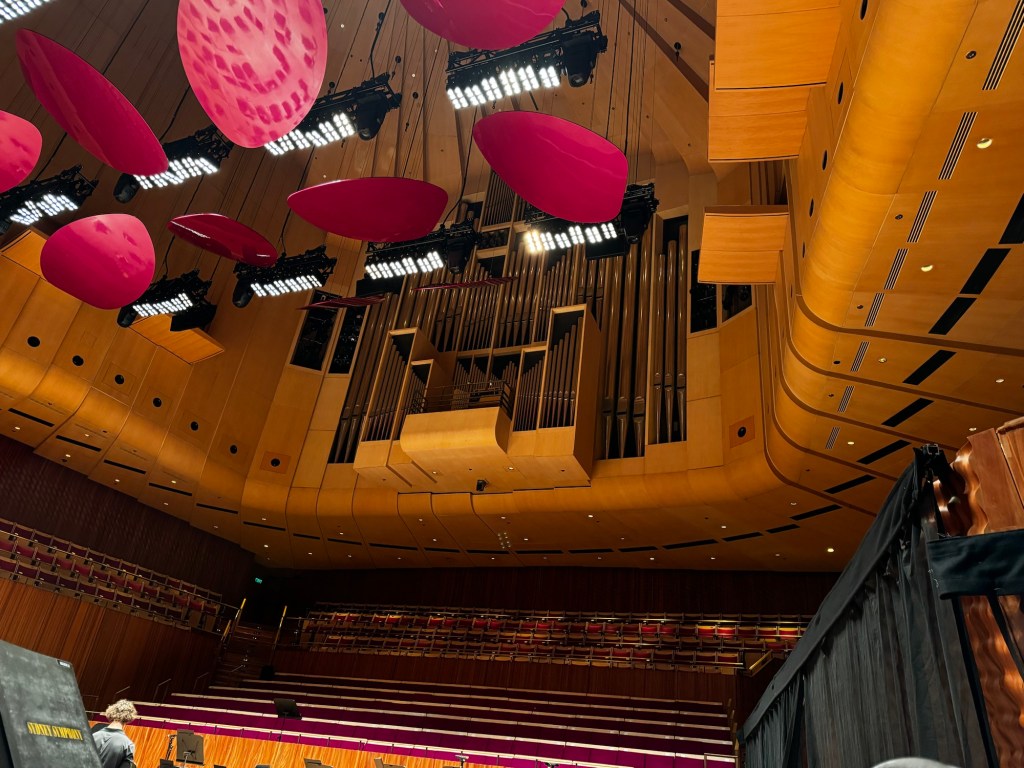
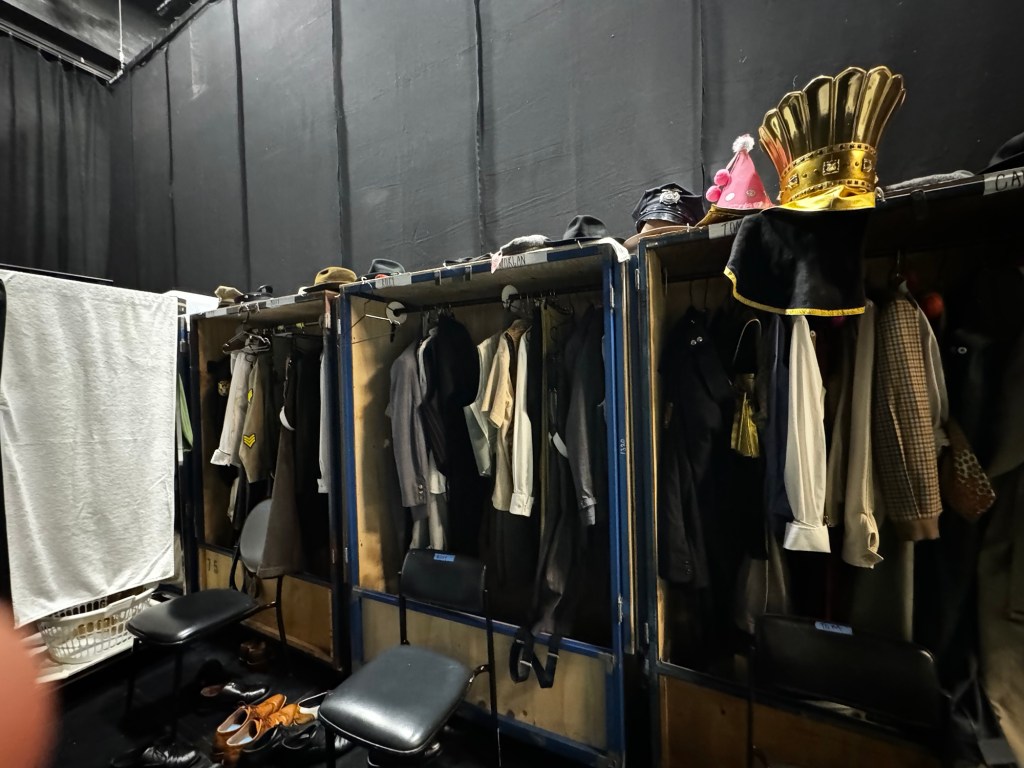
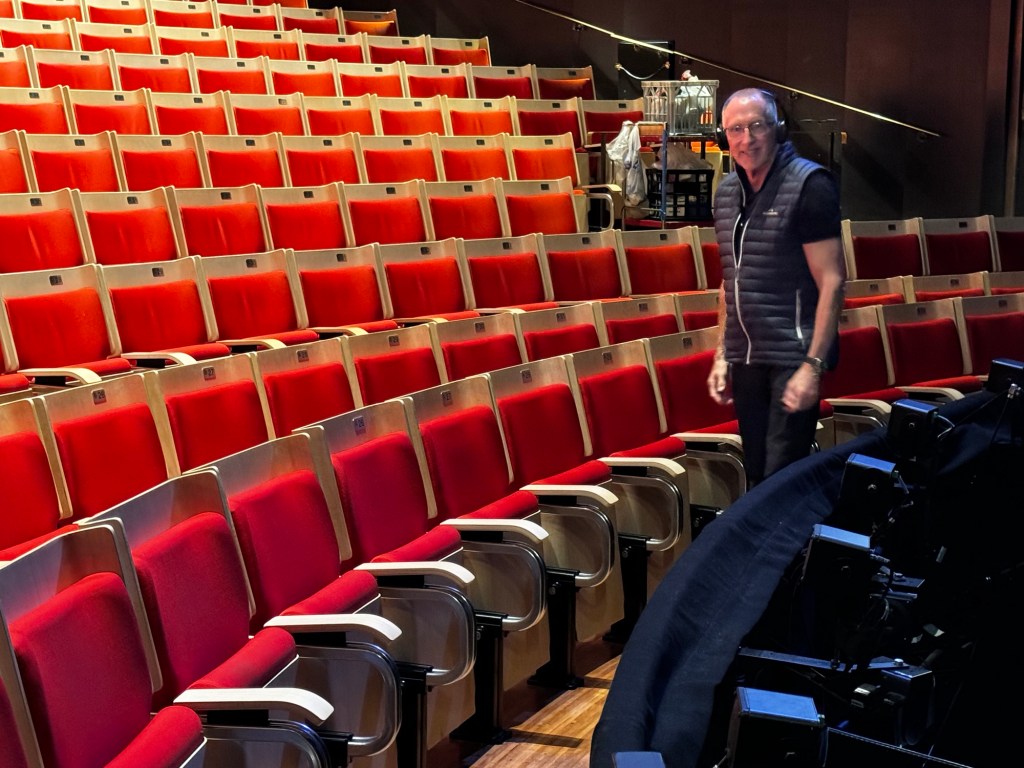
This was our Sydney Opera House day. We were up and at the opera house at 7am for our first tour, the inside of the house, back stage tour.We got to see all 5 of the theaters in the building and learned a few details. Building the facility took 16 years, somewhat longer to build than the original timeframe of three years, from 1956-1973. There were many architectural problems that took years to be resolved, including firing the design architect, Jorn Utzon. Renovations and adjustments were completed in mid 2023 at the cost of 255 million. The original cost of the building was estimated at 7 million but the final cost was 102 million. There are 12 floors below street level as well as several above. The largest hall, the Symphony Hall, has 2700 seats, all made with white birch as it is a soft, absorbent wood. The Opera Hall, named for Joan Sutherland, whom I heard sing in the San Francisco Opera House in the 70’s, has 1500 seats. The building occupies 4.4 acres of land, is 600 ft long and 394 ft wide. It is as tall as a 22 story building. The interior is substantially covered in white ash plywood from northern Australia.
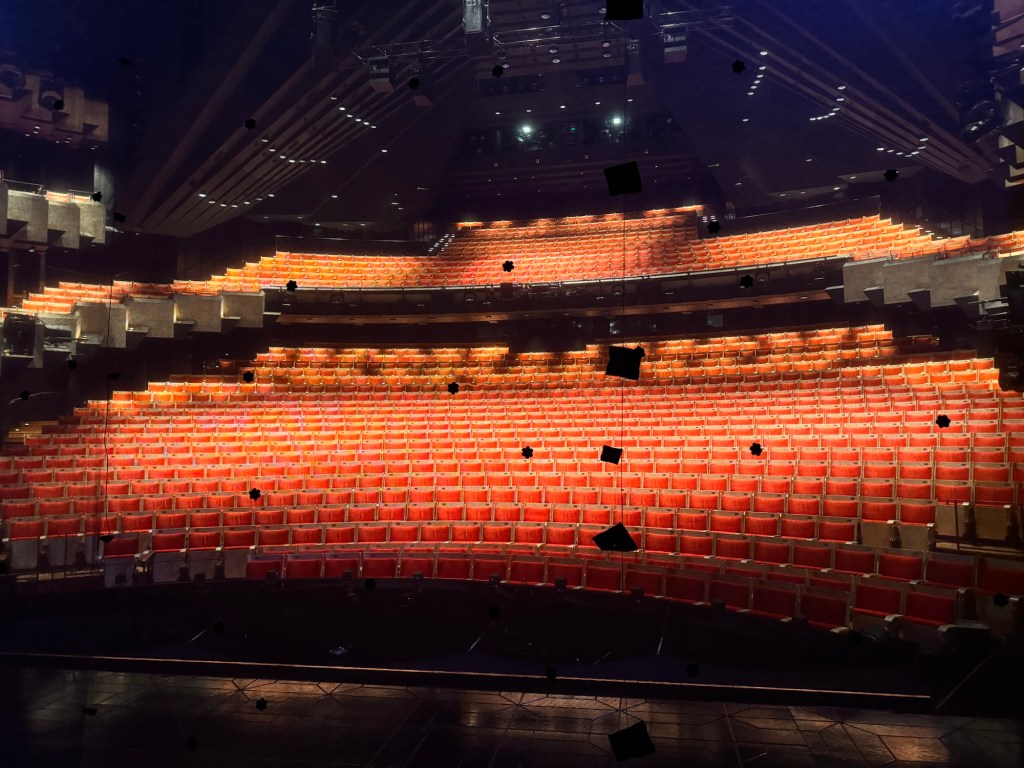
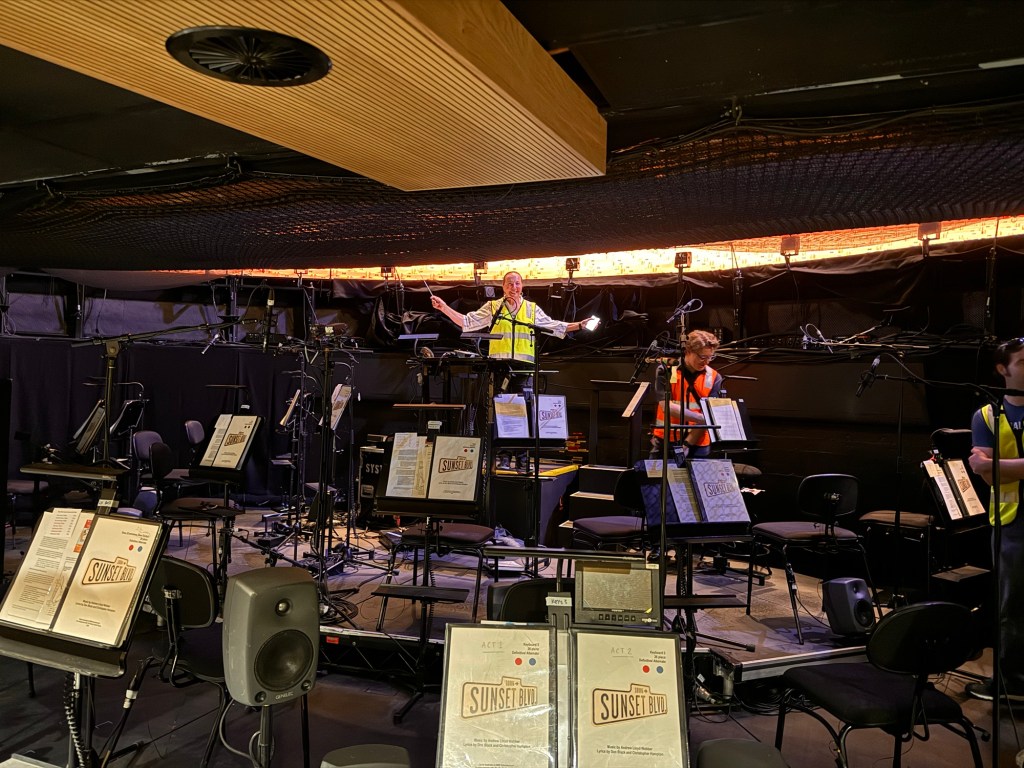
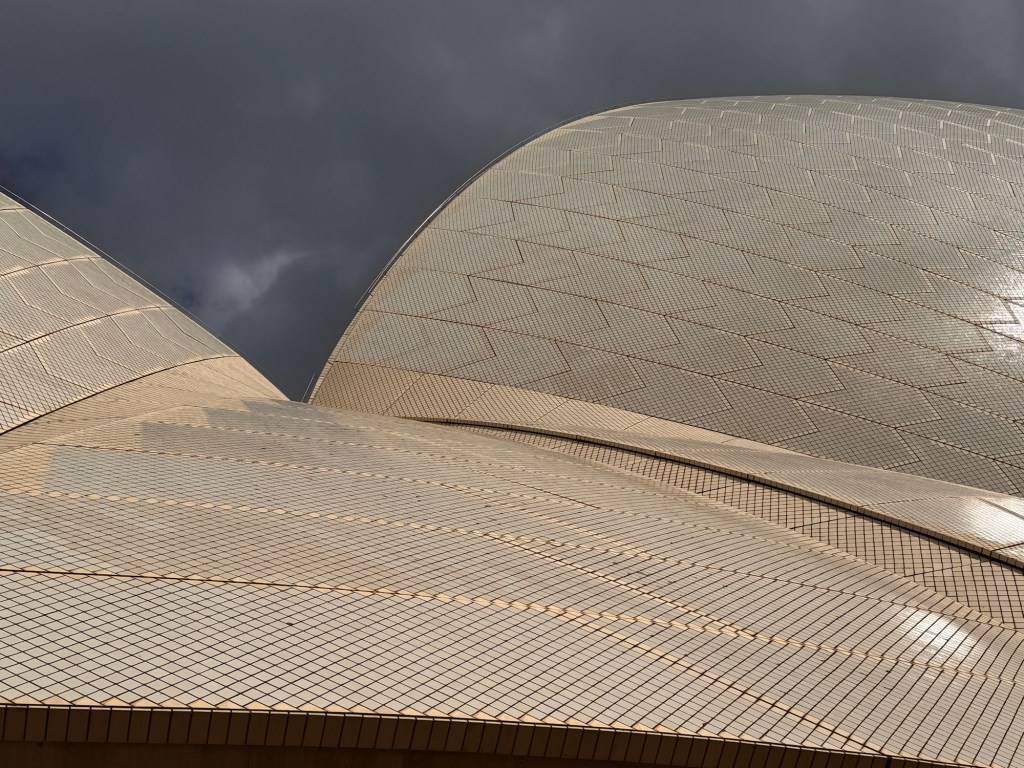
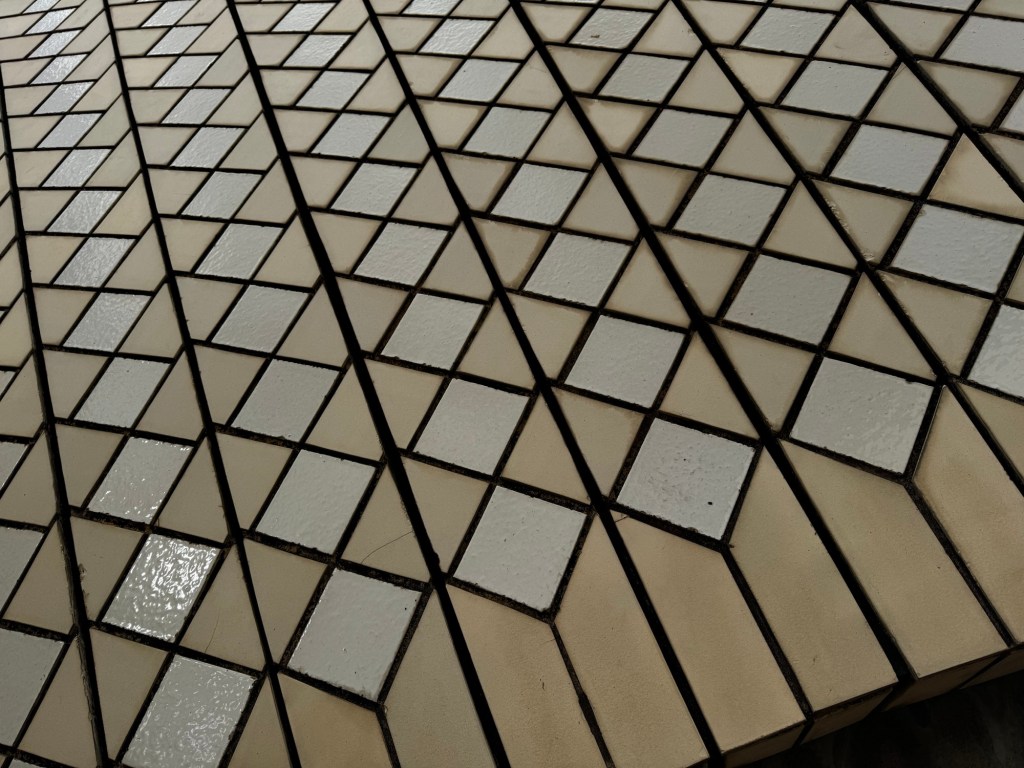
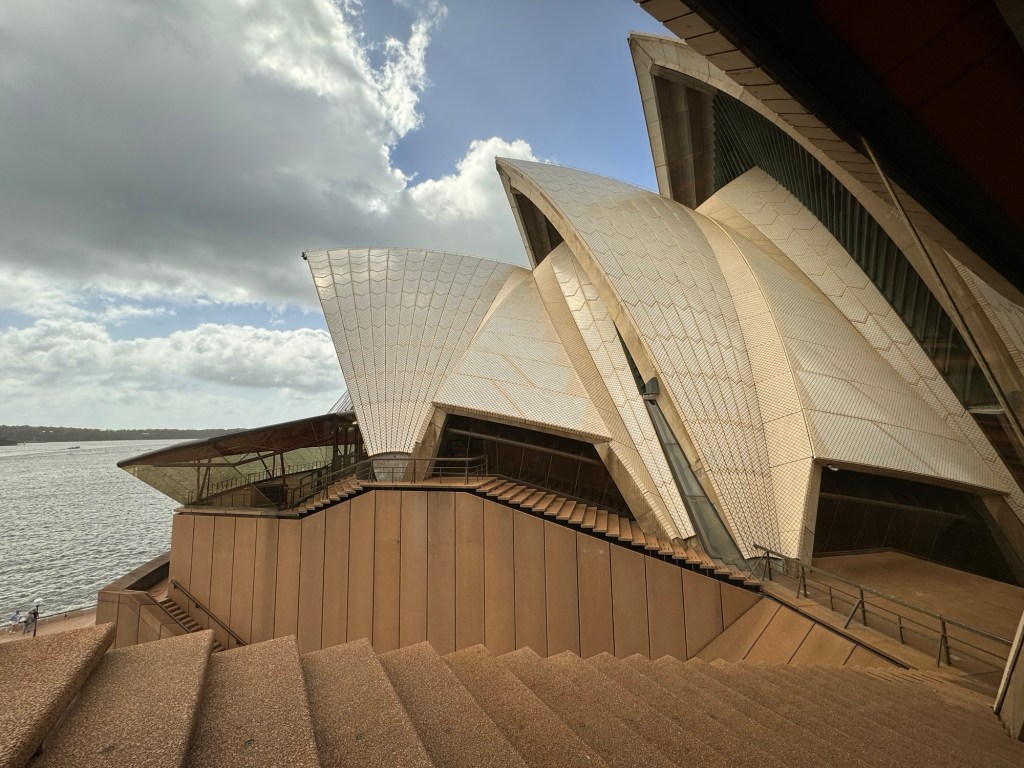
Then we had breakfast in the employee cafeteria and dashed to our second tour of the exterior of the building. There are 1,056,006 tiles covering the opera house. There are two colors,polished white and matte cream.

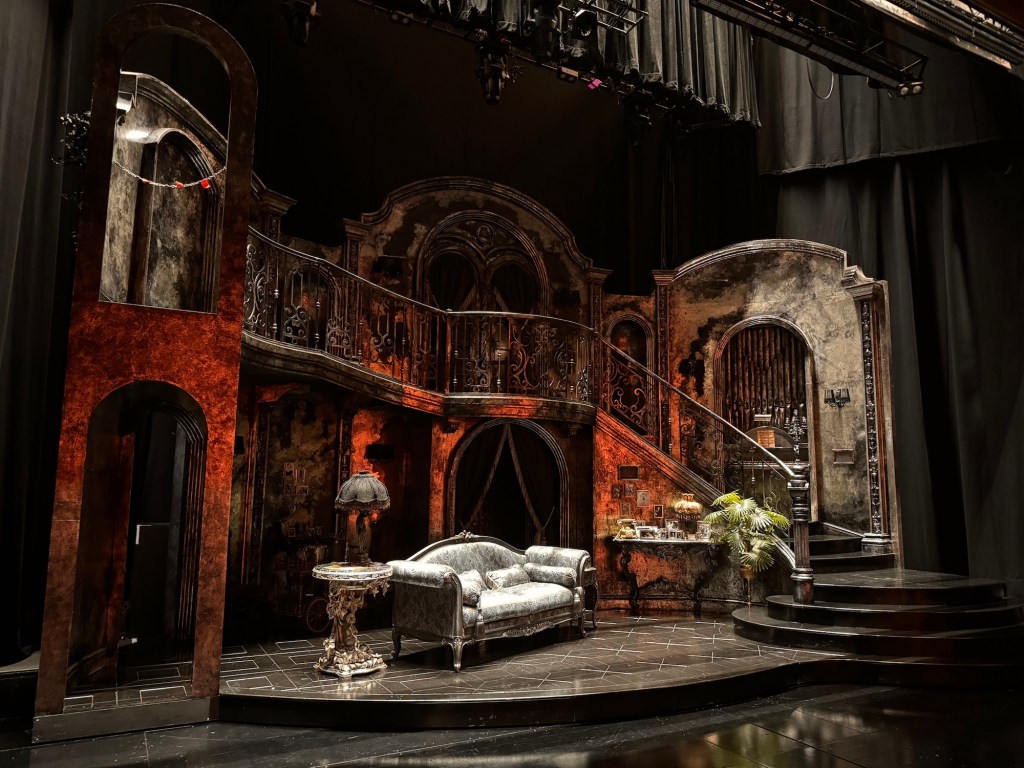
Prop for Sunset Boulevard

Back at the hotel by noon, there were no plans and we all felt like taking a break so we stayed in our rooms until 5:30 when we assembled in Martin and Catherine’s room for Champagne and pizza.
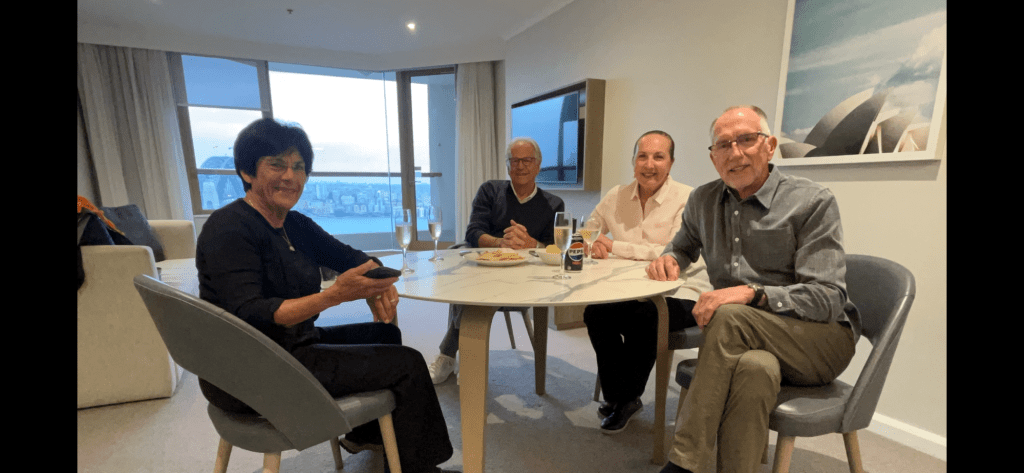
By 6:30 there was a light sprinkle so we wore our rain coats to the opera house for the 7:30 performance of Sunset Boulevard, a production by Andrew Loyd Webber. We had excellent seats in the third row center, but neither the music nor the performances were very exciting. Apparently even the newspaper had unflattering reviews about Sarah Brightman, the elderly actress who played the lead. Mark and I smiled at each other during her bad opening song. I was embarrassed for her, but the audience seemed to support her with enthusiasm and gave her a standing ovation at the end. We did not stand.

There were still a few light sprinkles on the walk back to the hotel so we wore our raincoats again. As it was 10:45 when we returned to our hotel. We all went directly to bed.

Friday, October 25, 2024

At breakfast we were still talking about Sarah Brightman and getting a good laugh. Then the subject moved to Trump and we stopped laughing.

At 11am we checked out of the Sebel Quay West Hotel, which we had enjoyed so much for its perfect location and stunning view. Martin, meanwhile, rescued his car from the 6th underground floor and off we went to the Toranga Zoo for our last adventure with the Whites.
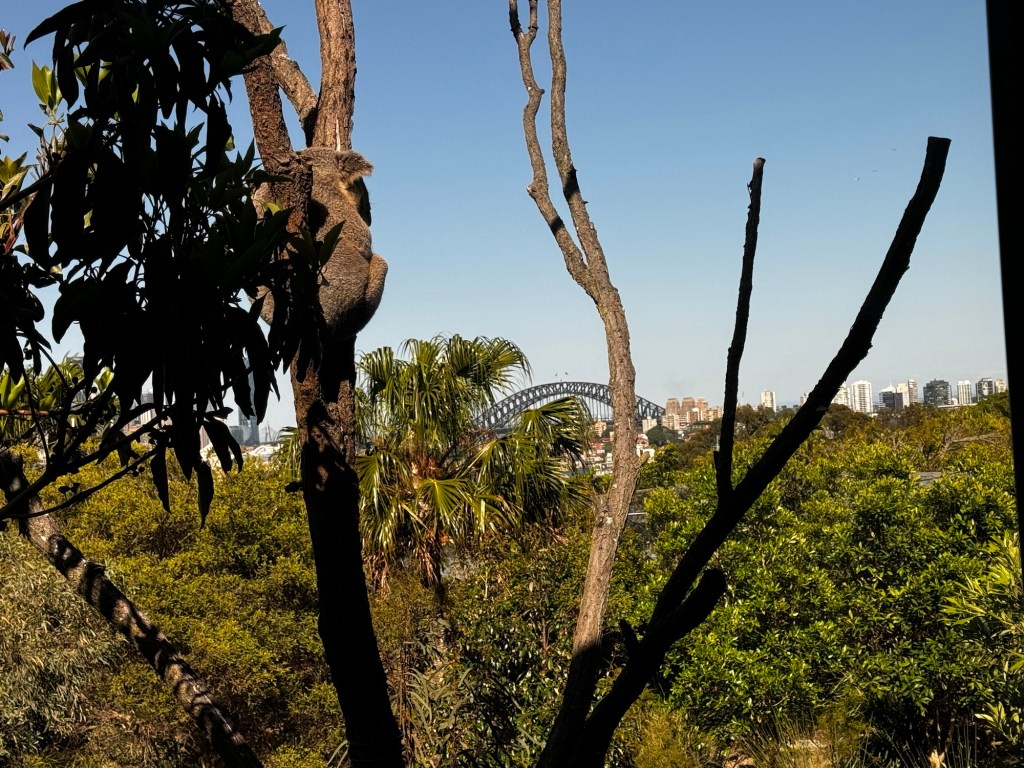
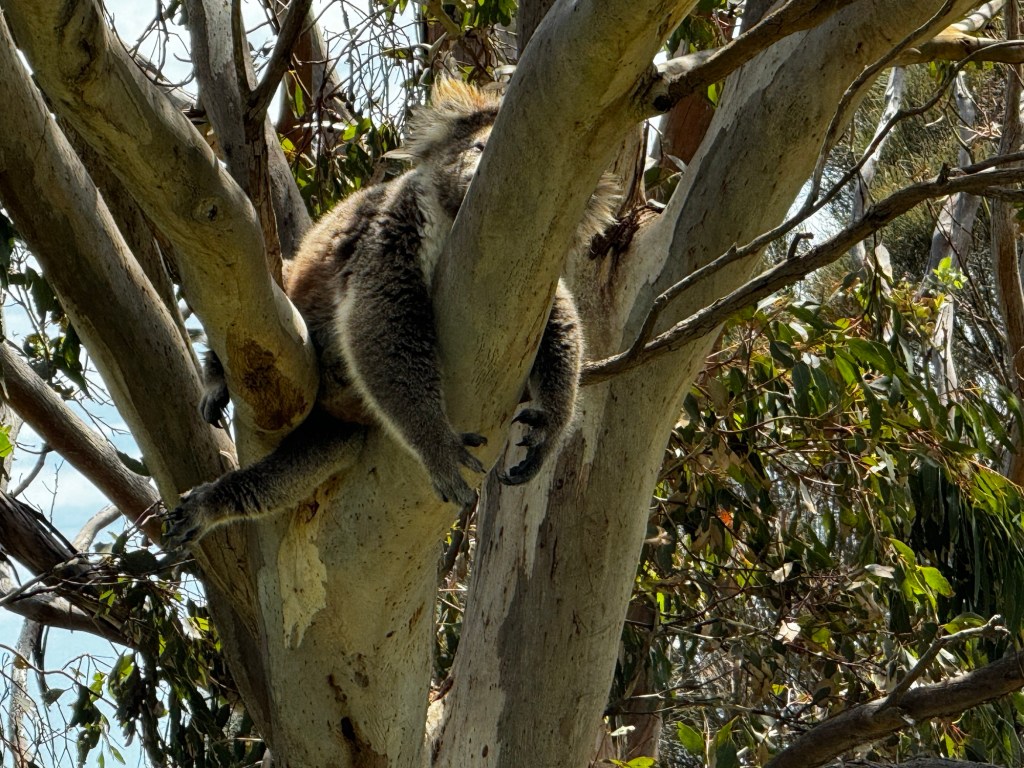
The city view from our Wildlife Retreat room with a sleeping koala

It was a 45 minute drive through the city to the outskirts where the Tarango Zoo was located. We checked into our rooms in the Wildlife Retreat at Toranga, and headed into the zoo.
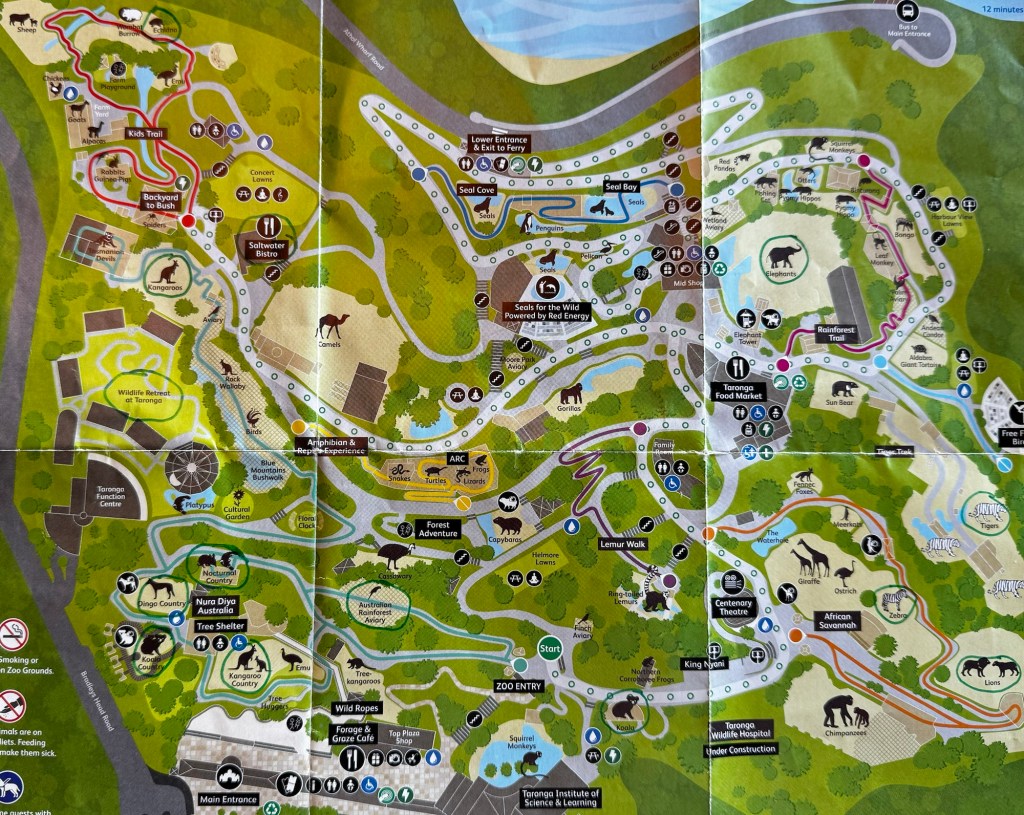
Our map was comprehensive. We circled the animals we most wanted to see and started walking.
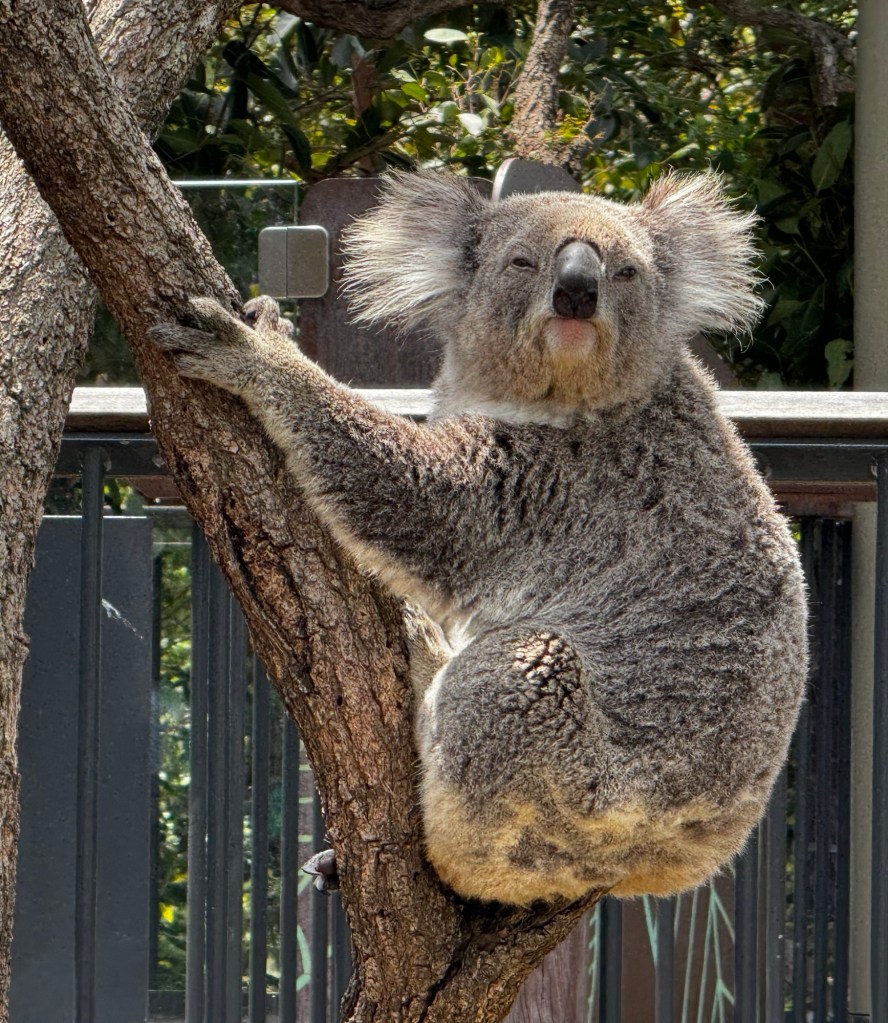
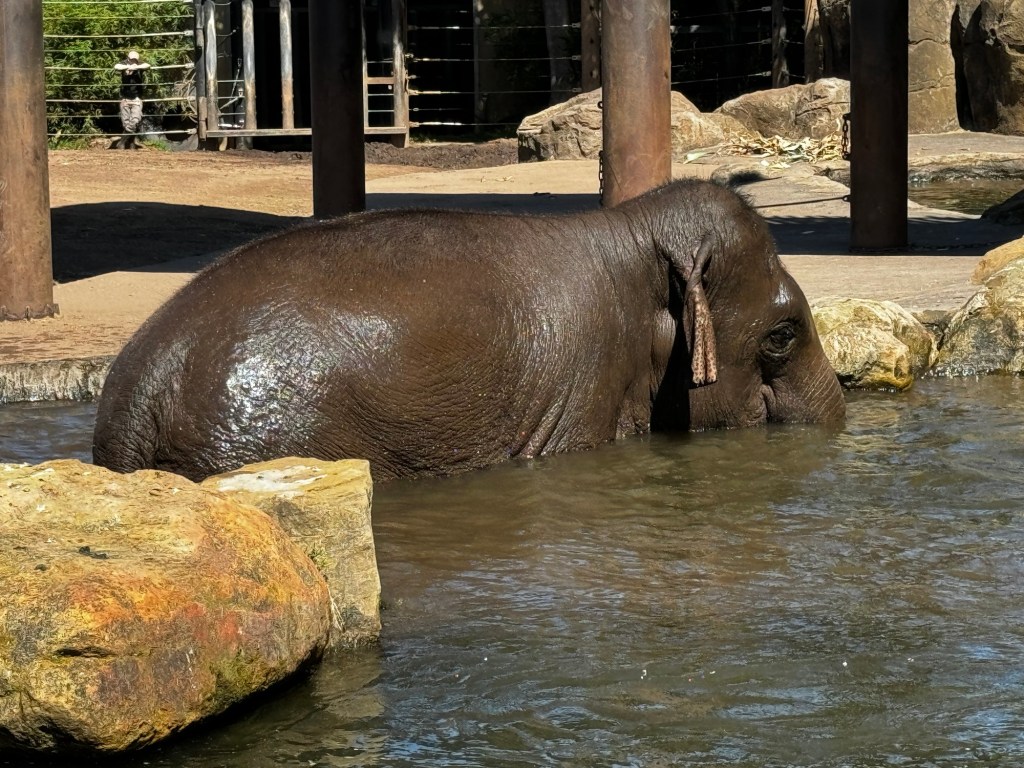
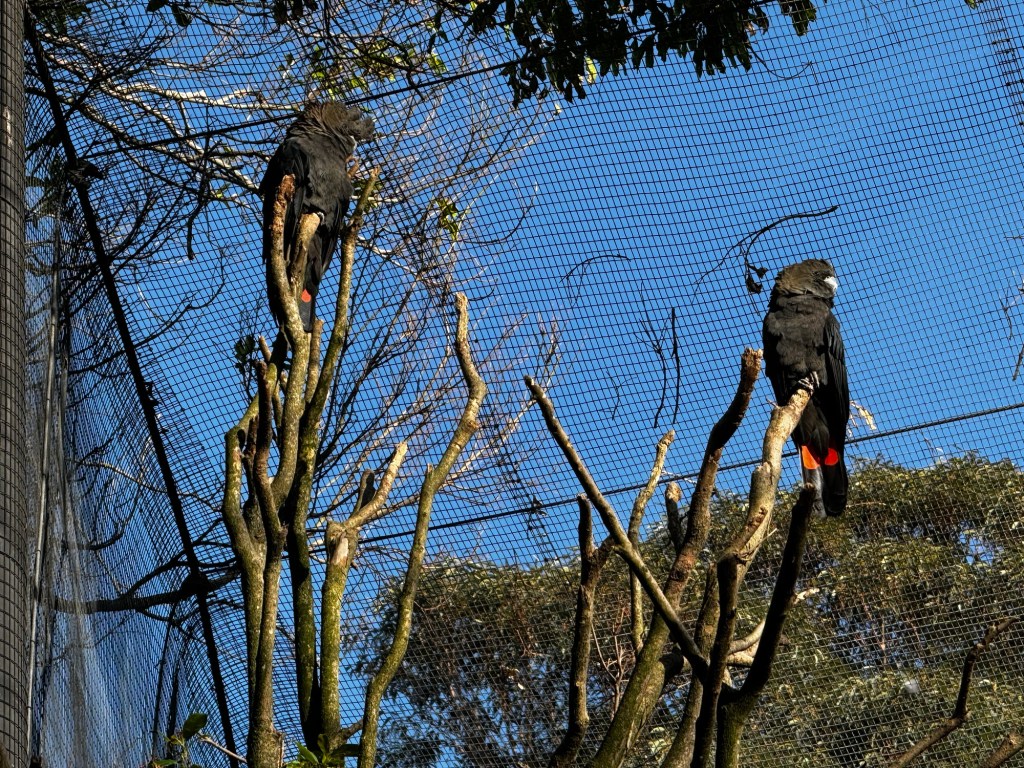
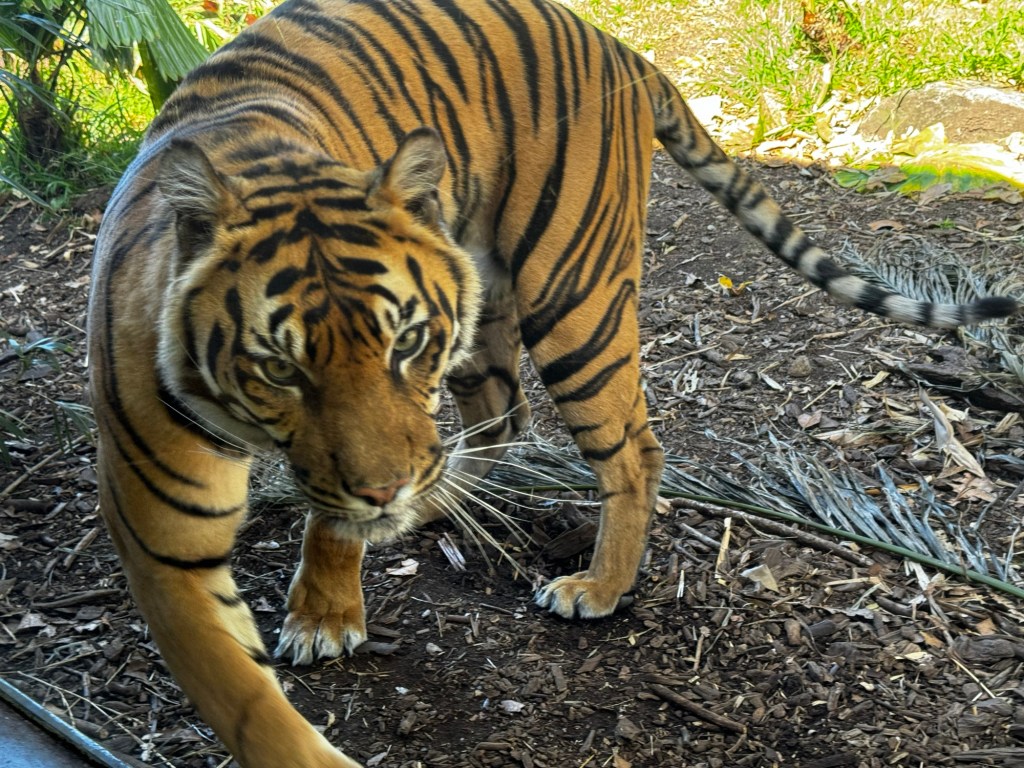
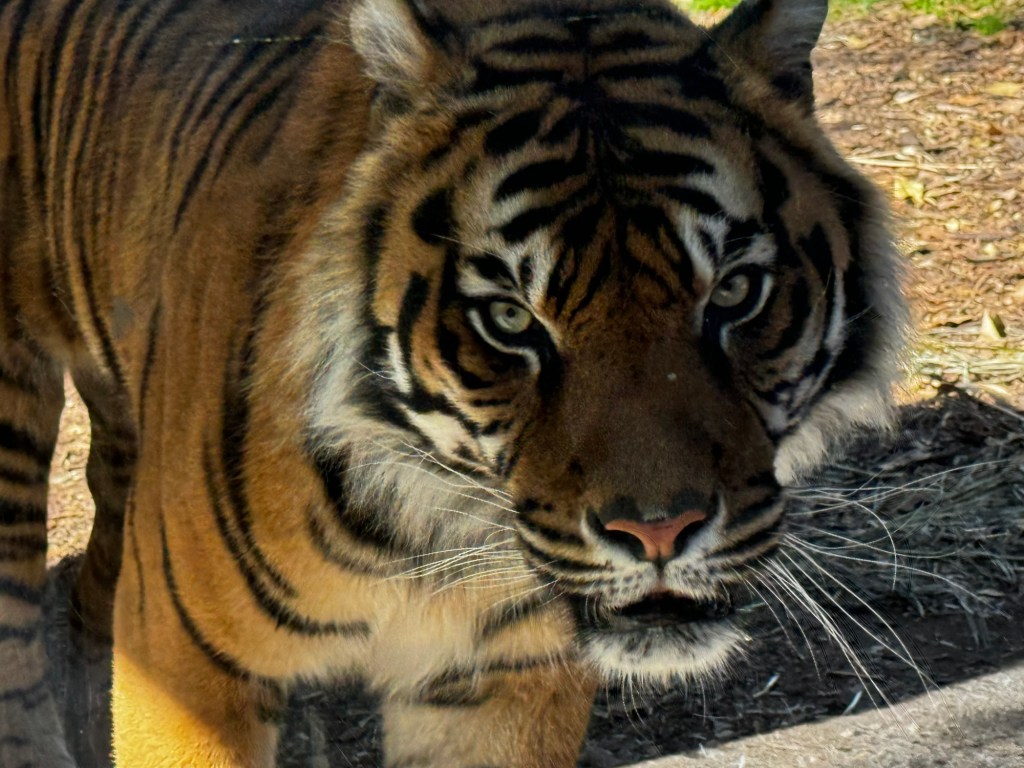
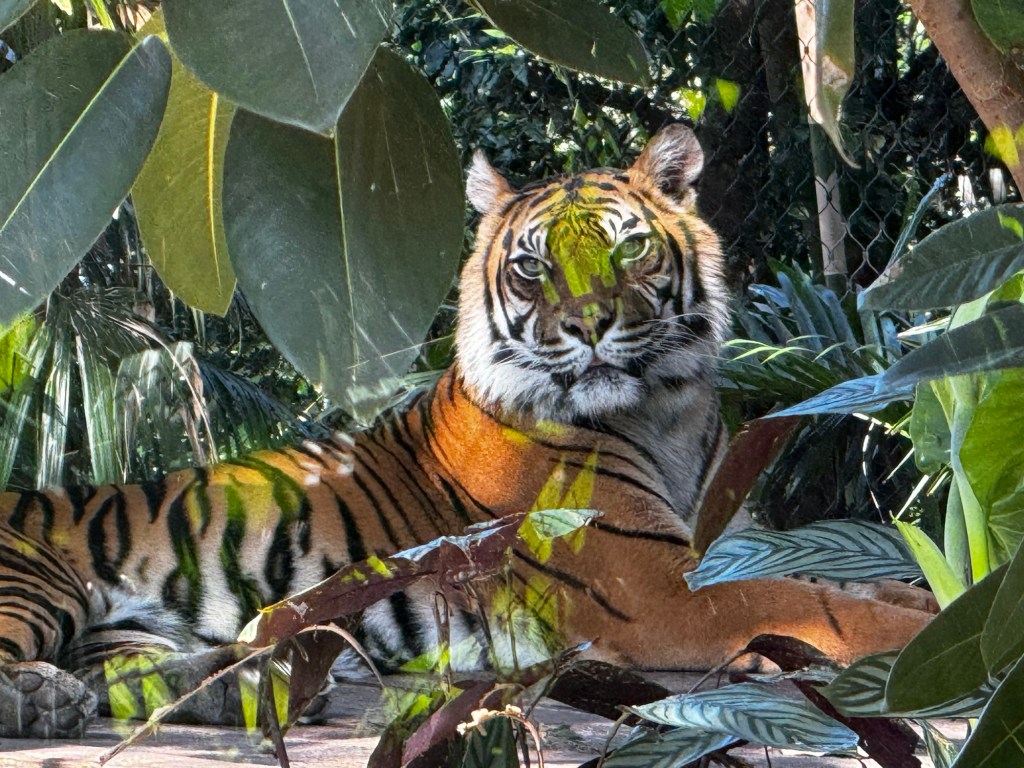
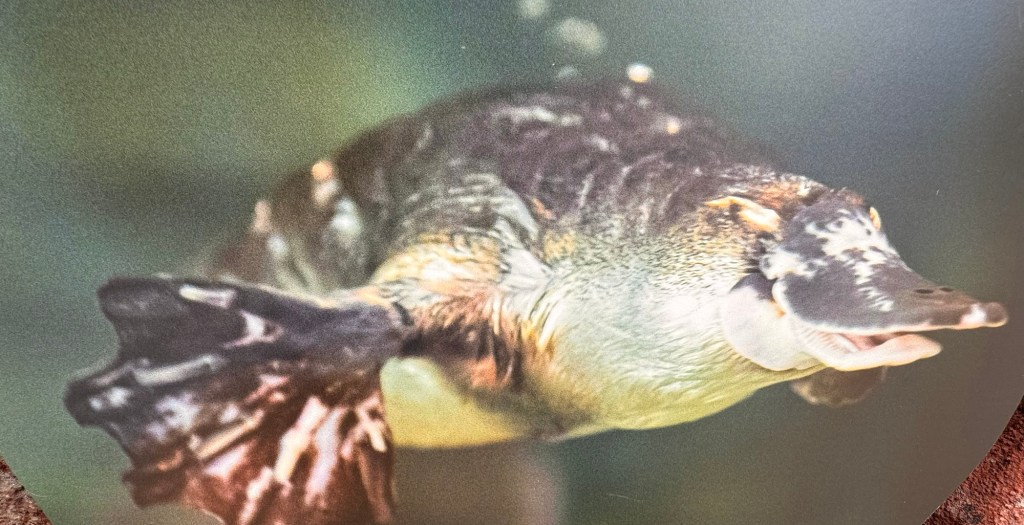
First we went through the Aviary, which was full of birds even Mark could not identify. Then we covered Kangaroos and Wallabys, Koalas, Lions, Zebras, Elephants, Gorillas, Echidnas, other animals and finally Nocturnal creatures, trying hard to see the platypus, to no avail.

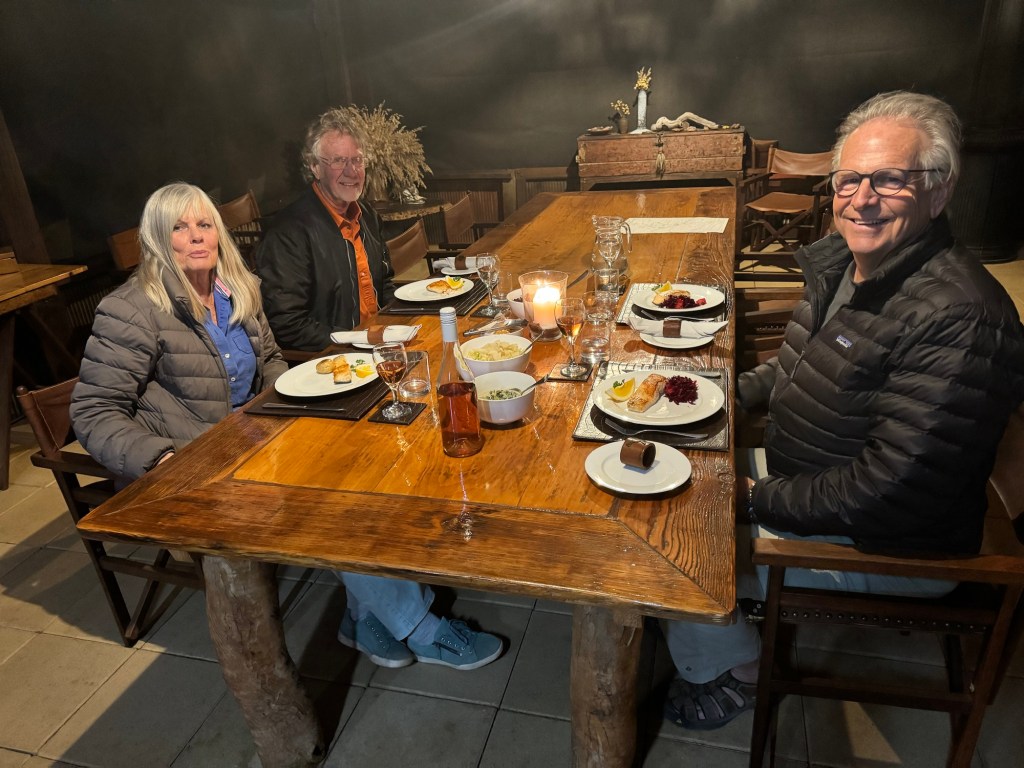
Enough animal watching for one day. Back in the Retreat, we cleaned up and had one last dinner together right at the hotel. A “feast” of a meal we enjoyed along with several glasses of wine and much good conversation. We have already made plans to get together when they come to Nevada City next week, a few days after we get home.

Saturday, October 26, 2024

After breakfast and saying good bye to Catherine and Martin, we headed back into the zoo to see the animals we had missed. Here they are.
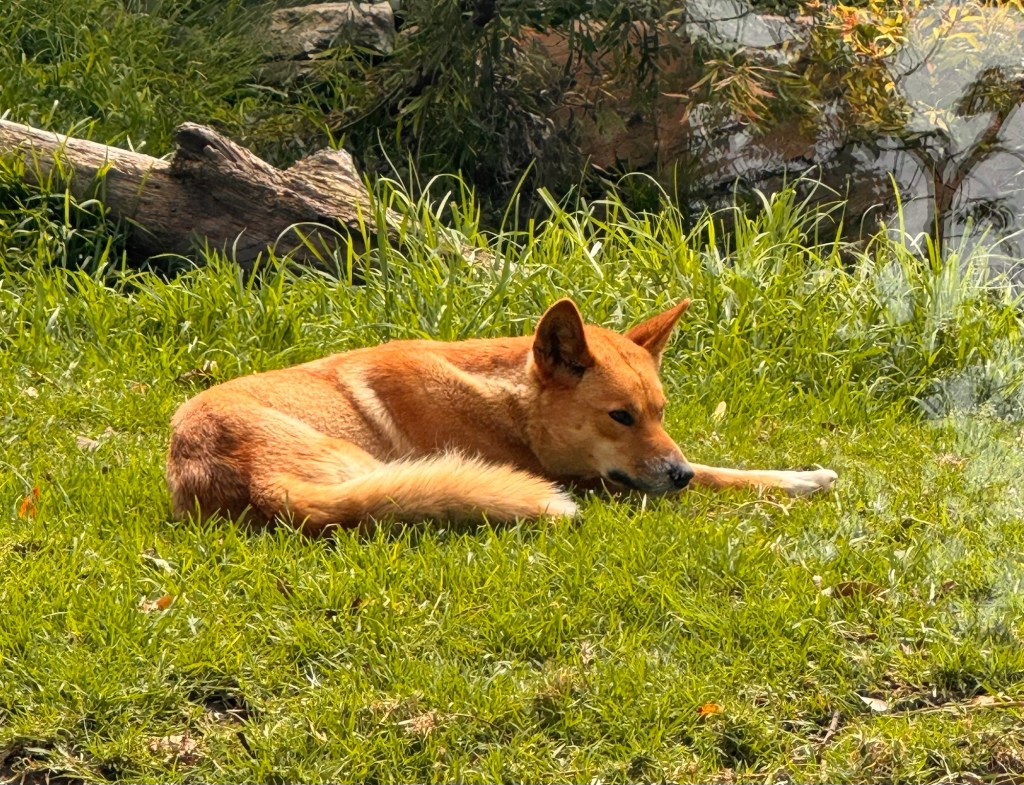
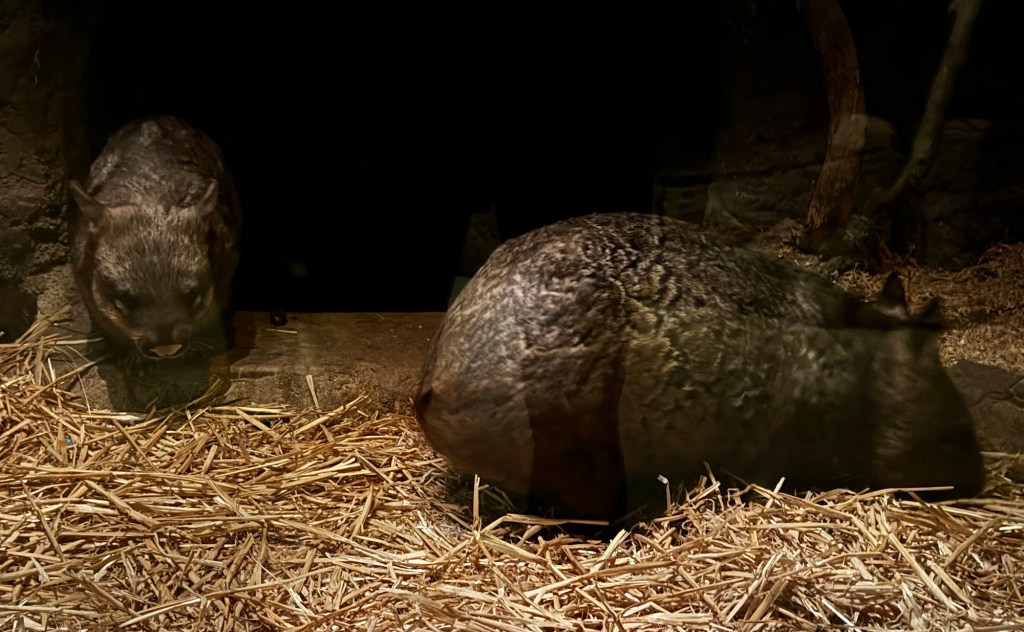
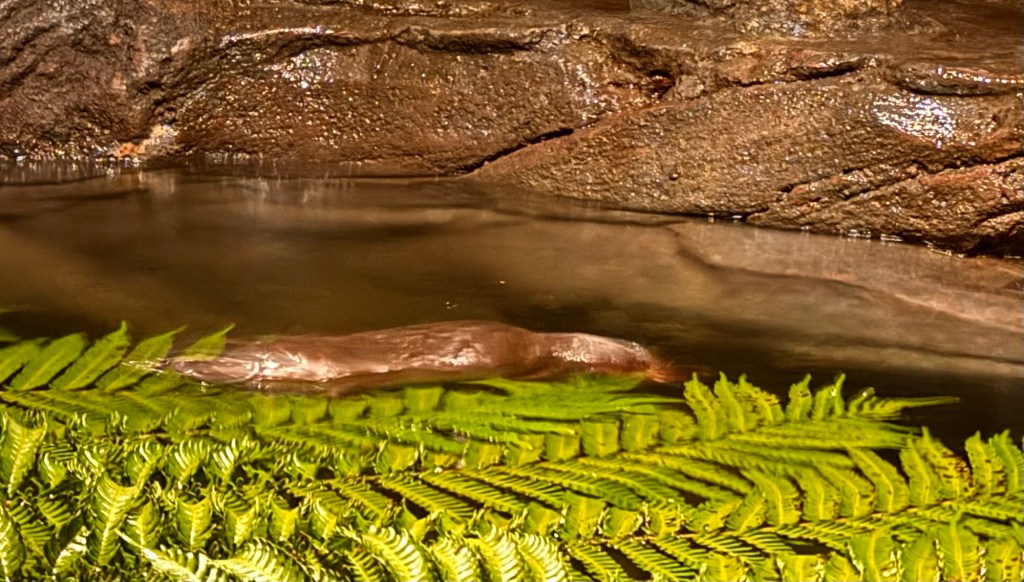
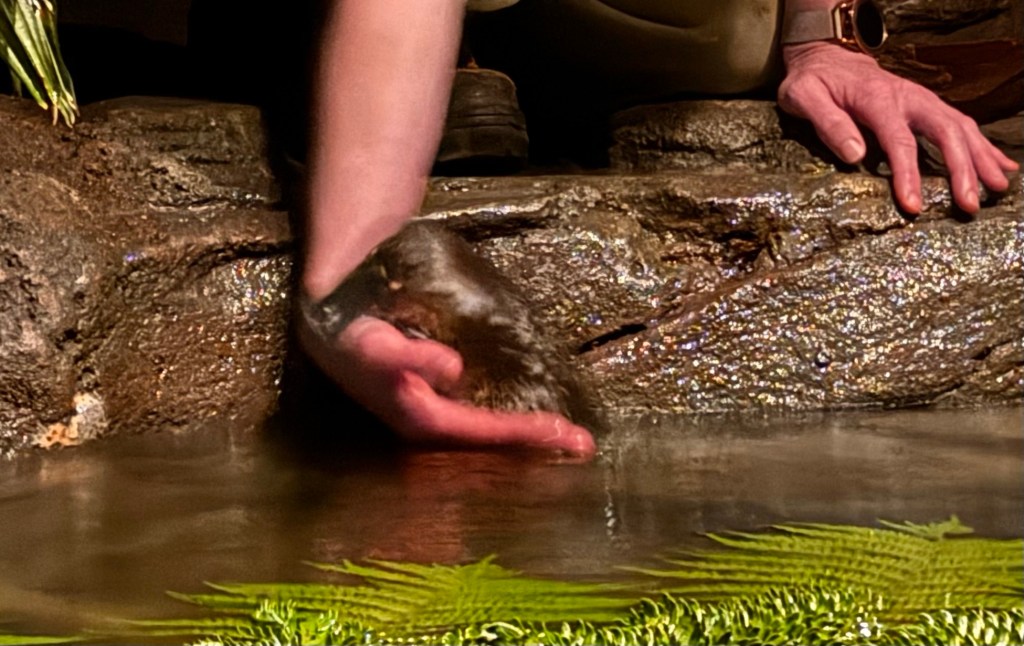
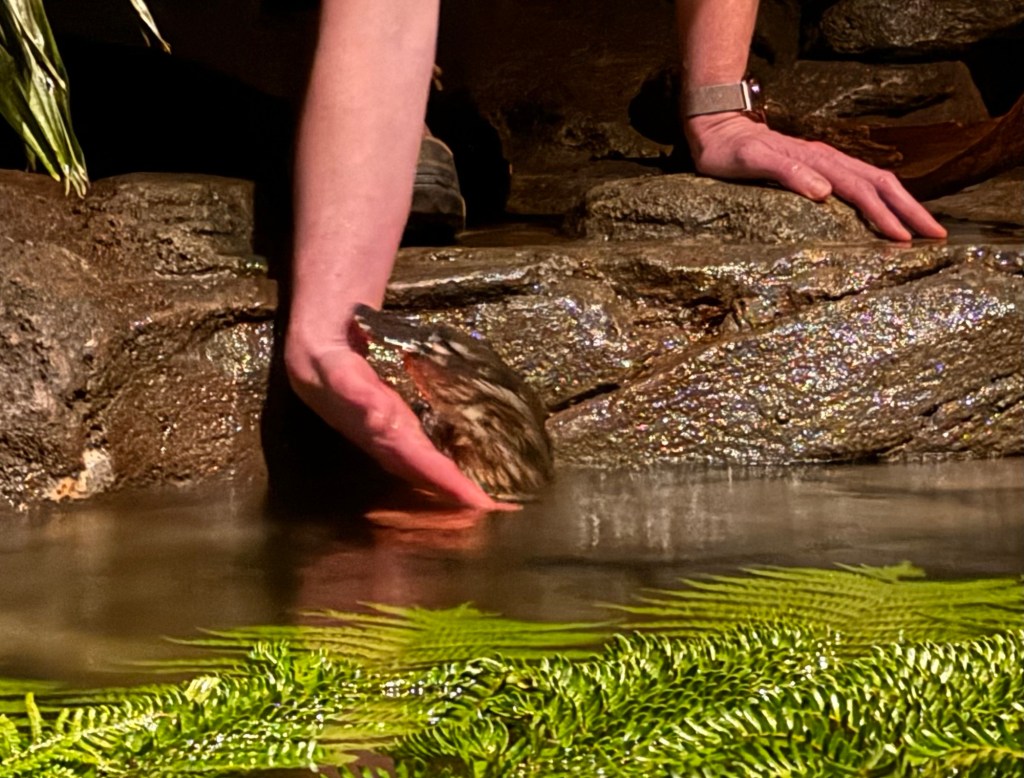
Mark and I had a reasonable viewing of them all this time, especially the platypus, named Matilda. I added another hour with the reptiles, but they were not very photogenic.

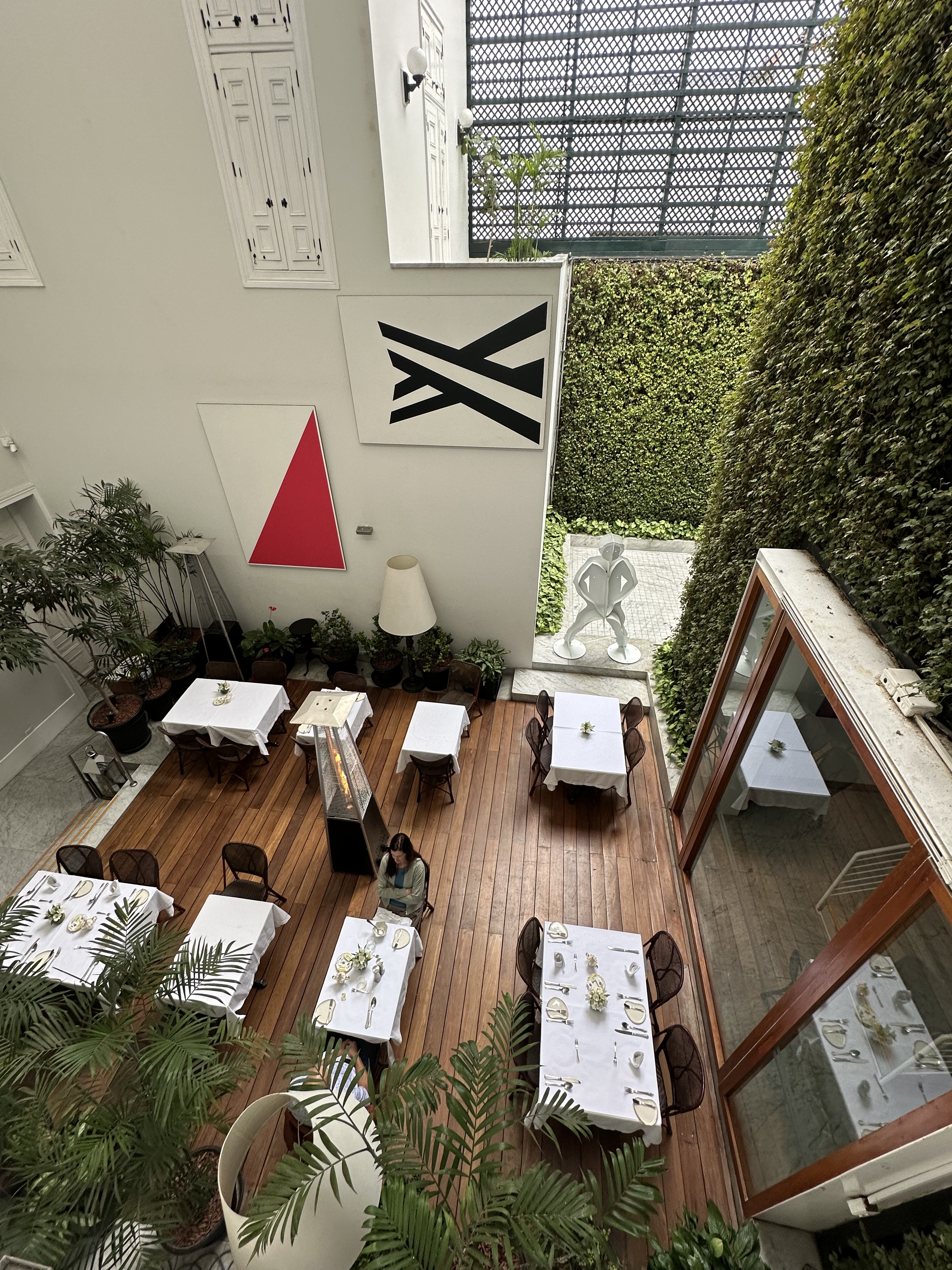
We packed up and left the Wildlife Retreat at about 12:30 and Uber’d back into the city for our final hotel stay, the Park Hyatt, which is located on the Harbor looking directly at the Sydney Opera House.
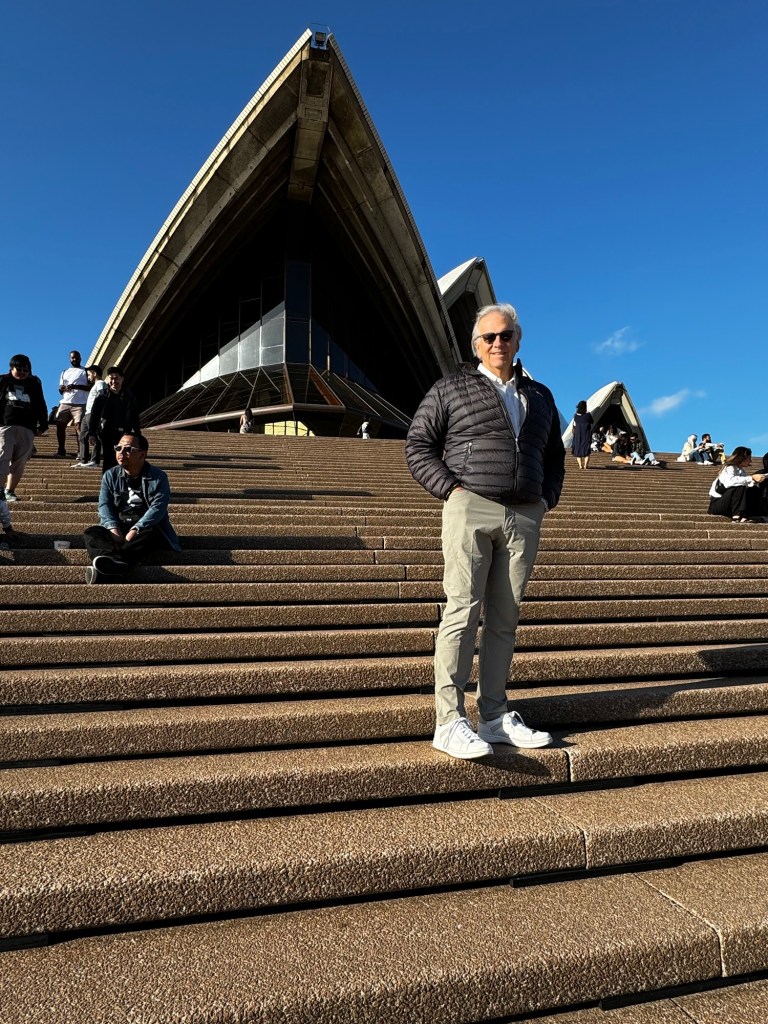
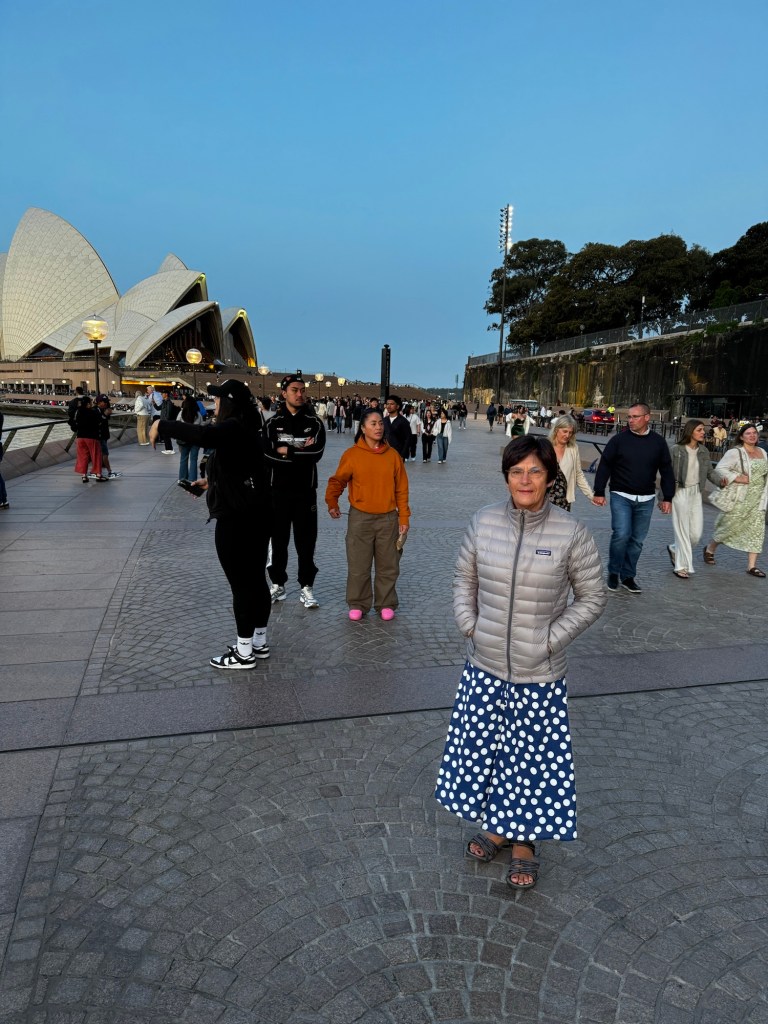
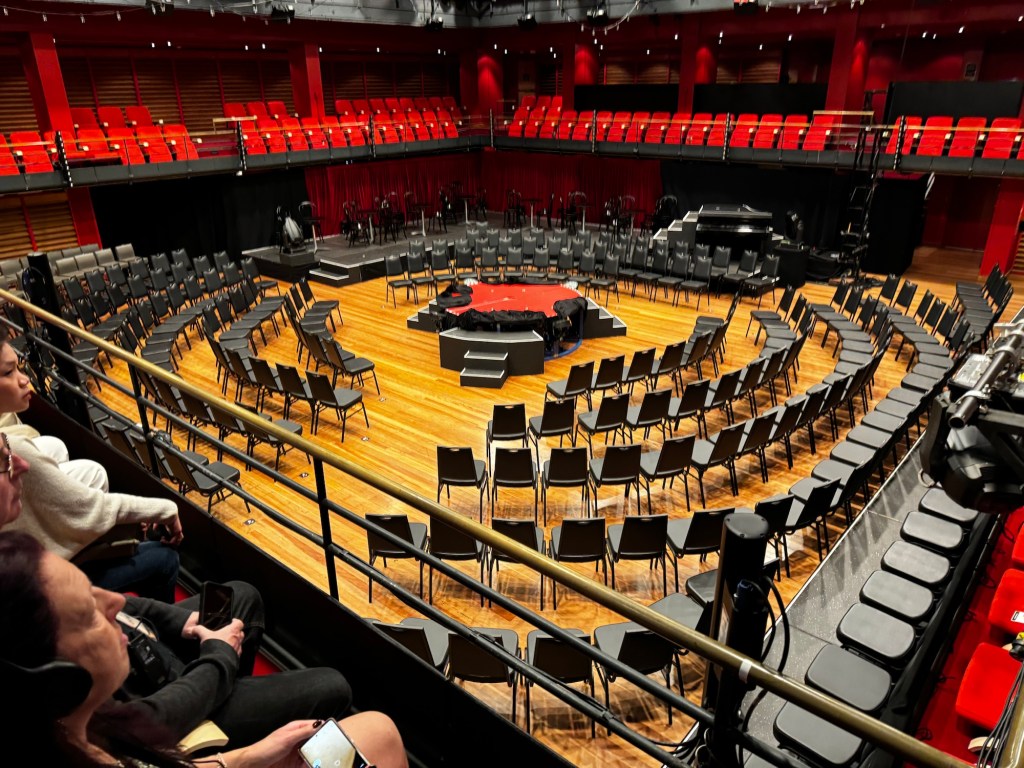
We relaxed the rest of the afternoon until time to go to our second performance at the Opera House. It was a risqué program being held in the Studio, the smallest of the 5 Opera House halls. It was set up as a theater in the round. There is a photo of it taken during the tour earlier. Here is the only photo I captured just before the show. And yes there was a bathtub in the opening act and lots of people in the front rows got wet.
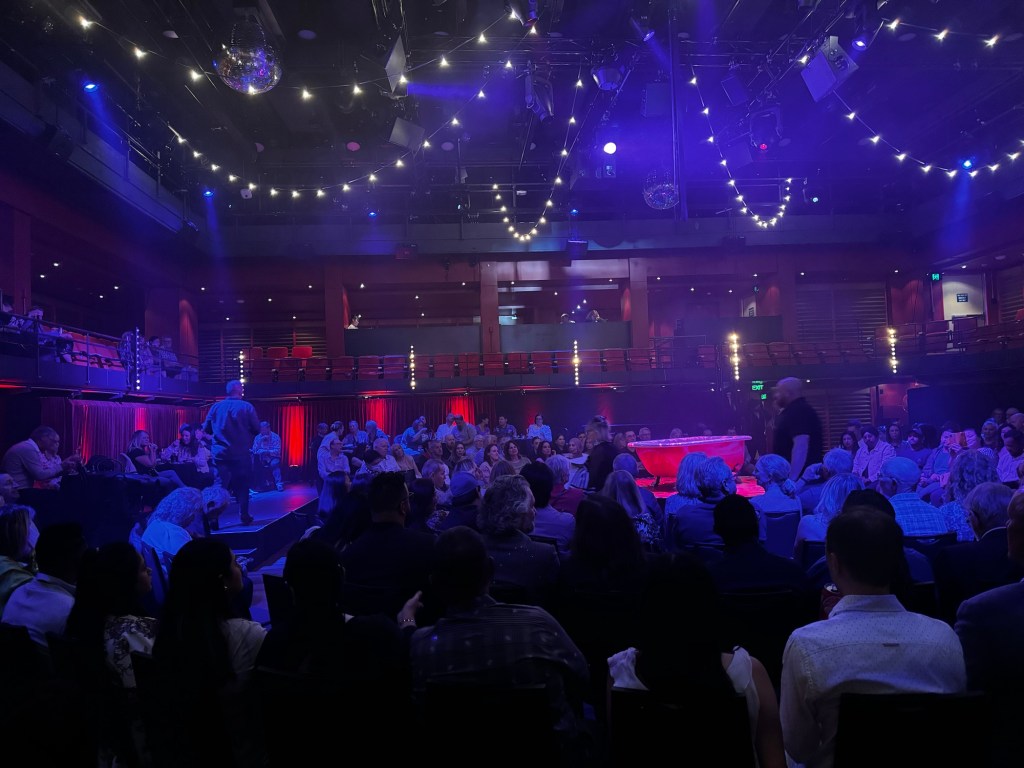
The place was packed and the entertainment baudy to say the least. There were 8 performers, each doing separate acts one right after another. Three acts were performed in the nude. What impressed me most was the muscular shape their bodies were in. Three other performances were done with silks and they were excellent. One lady did a performance with 4 umbrellas that was delightful. That and the last silk performance even impressed Mark. The show lasted about 1.5 hours and once out of the theater, we had diner at an outdoor cafe between the Opera House and our hotel. Mark had oysters again and I had scallops. We figure he has eaten about 6 dozen oysters on this trip.

Sunday, October 27, 2024

Another leisurely morning followed by a long walk through the part of the city called The Rocks. Bought a few souvenirs, including a new purse for me. Apparently Mark did not like the purse I have carried through this entire trip. Now I have a nice new one.
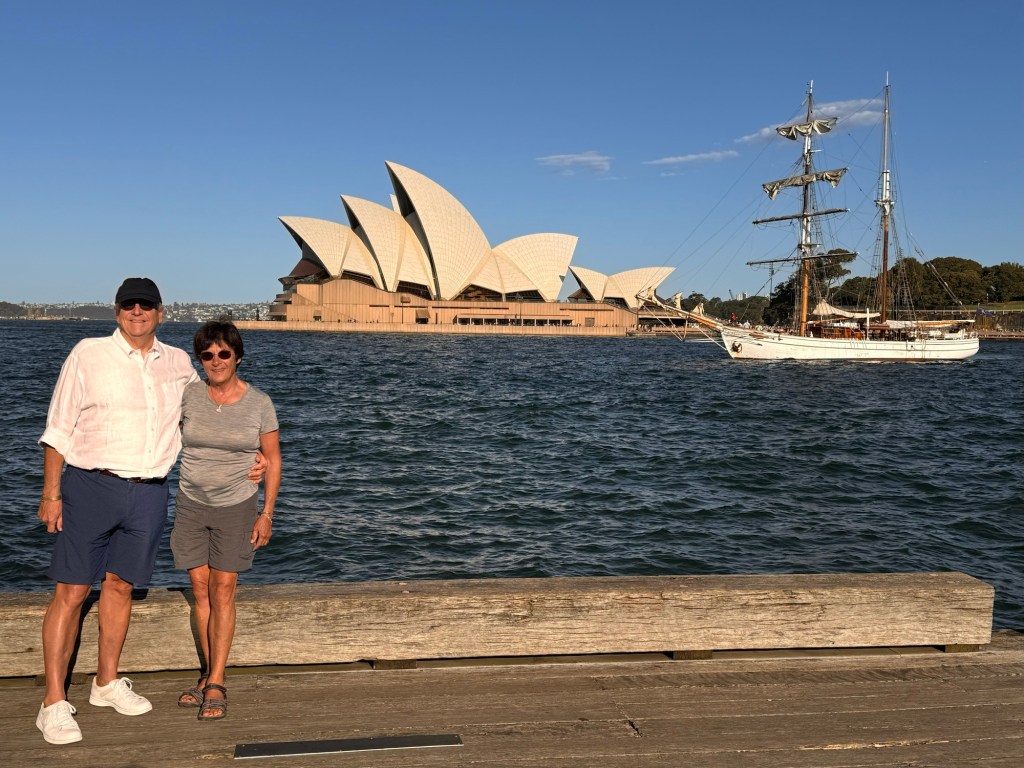
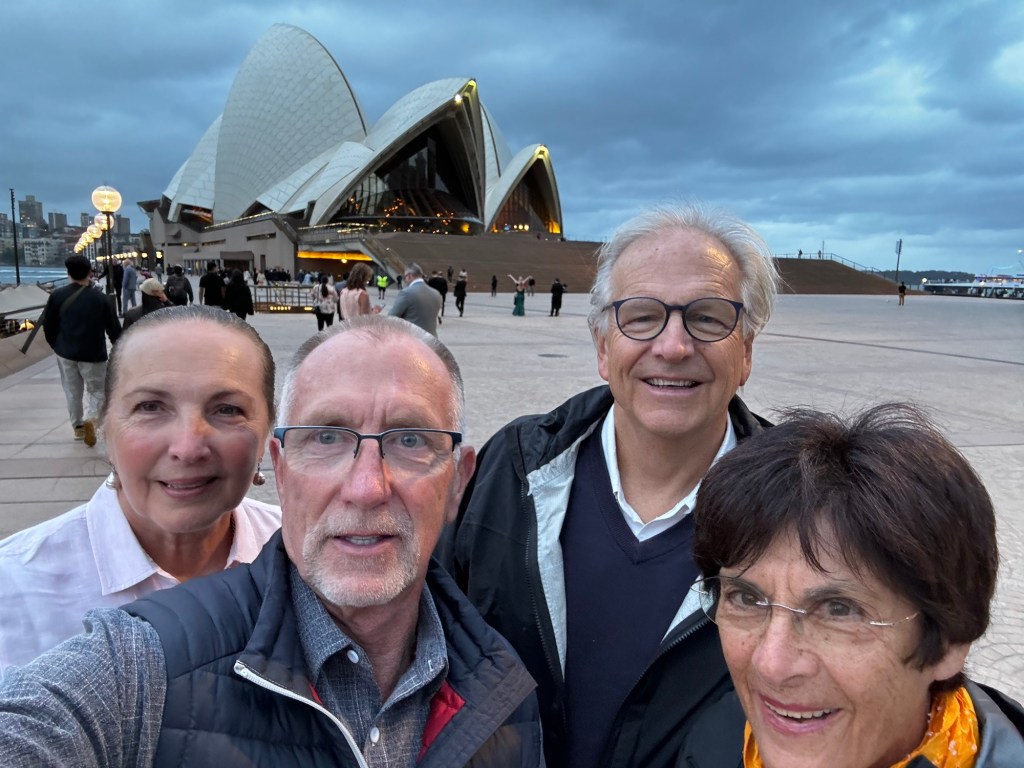
Last photo in front of Opera House

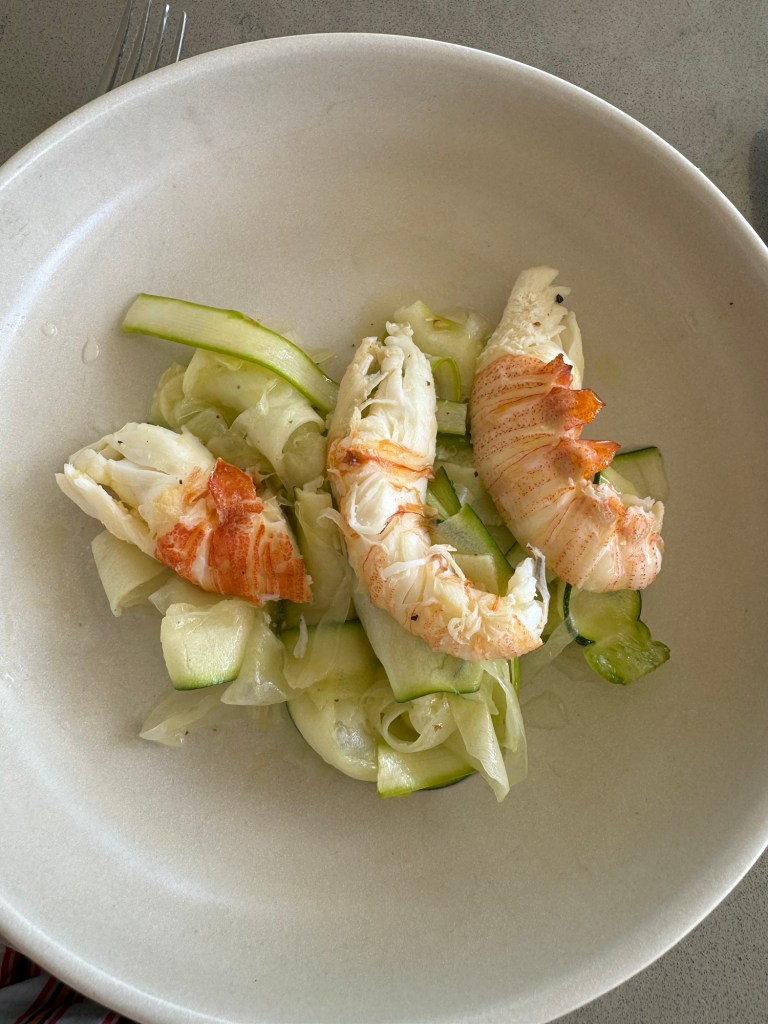
We had an early dinner on the street overlooking the Opera House. I ordered lobster and ate almost all of it. Mark had pork belly and ate the pasta in my lobster dish along with some of my lobster.
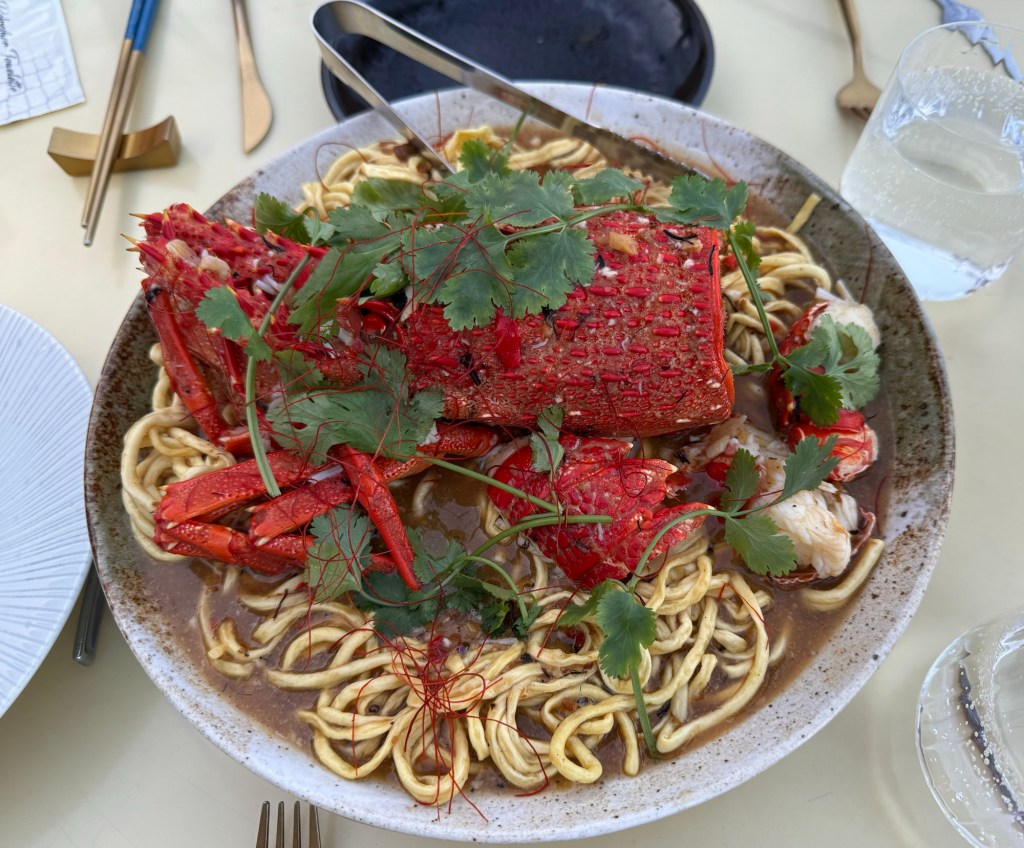
Fresh Rock Lobster and home made noodles

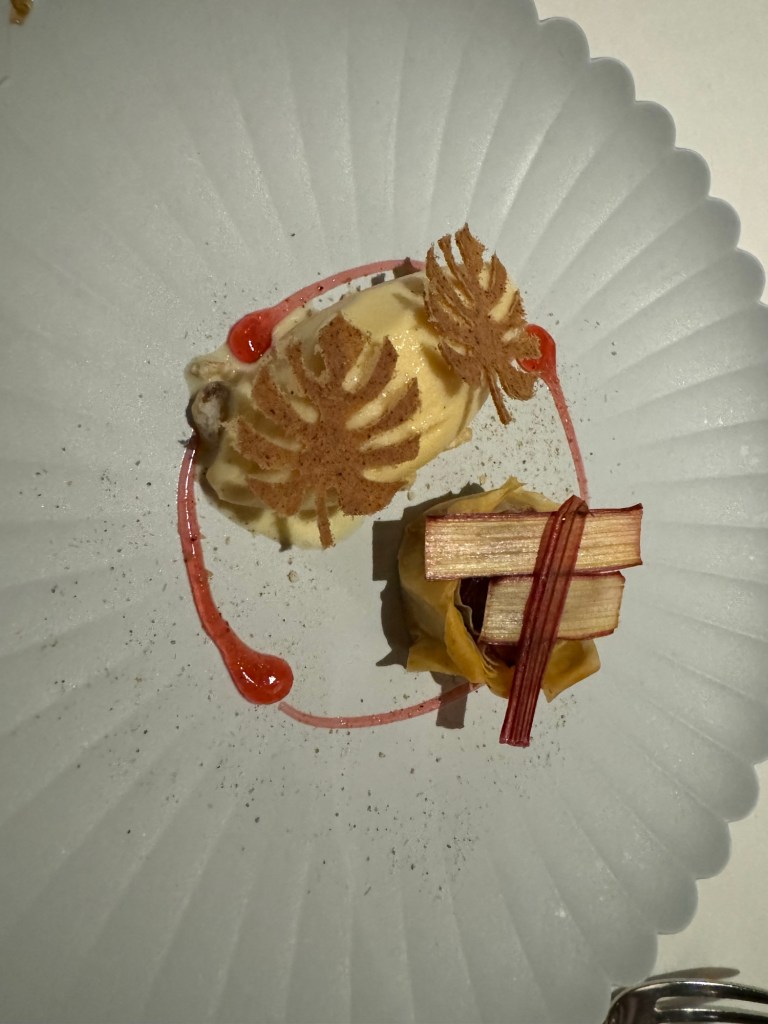
It was very tender and tasty. After dinner we walked back to the room and ordered dessert delivered. Nice finishing touch to our meal. Tomorrow morning, October 28, 2024, we get picked up at 9:30 and begin our return to Nevada City. After 24 hours of traveling, it will still be October 28 when we get home, a 41 hour day.

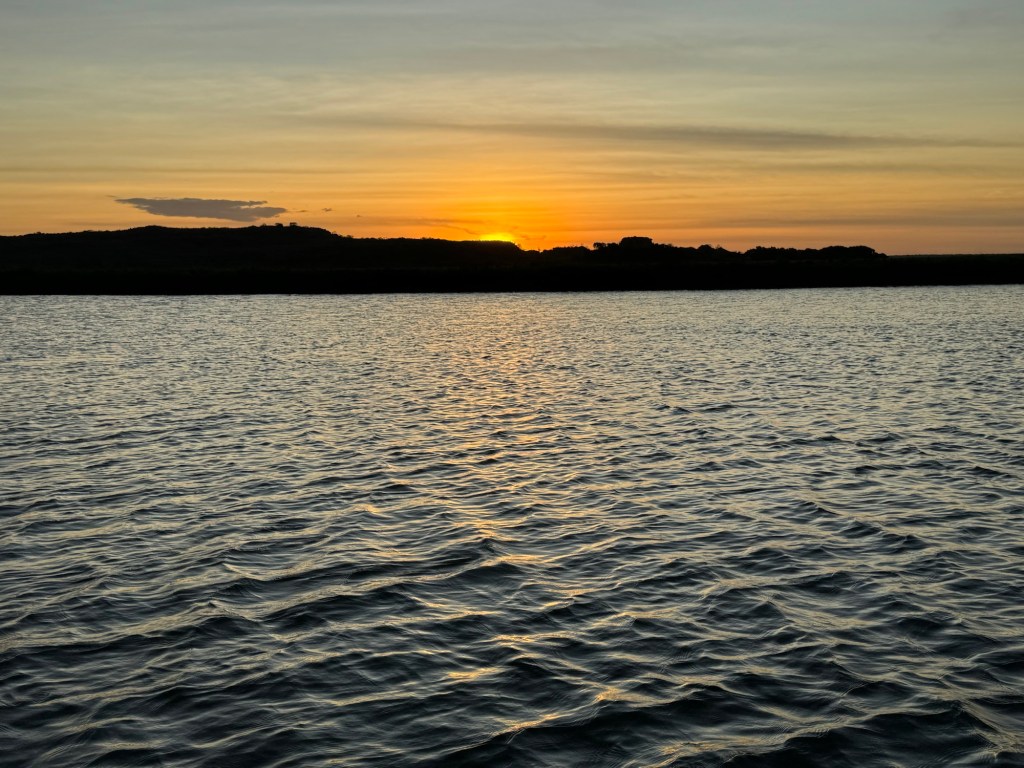
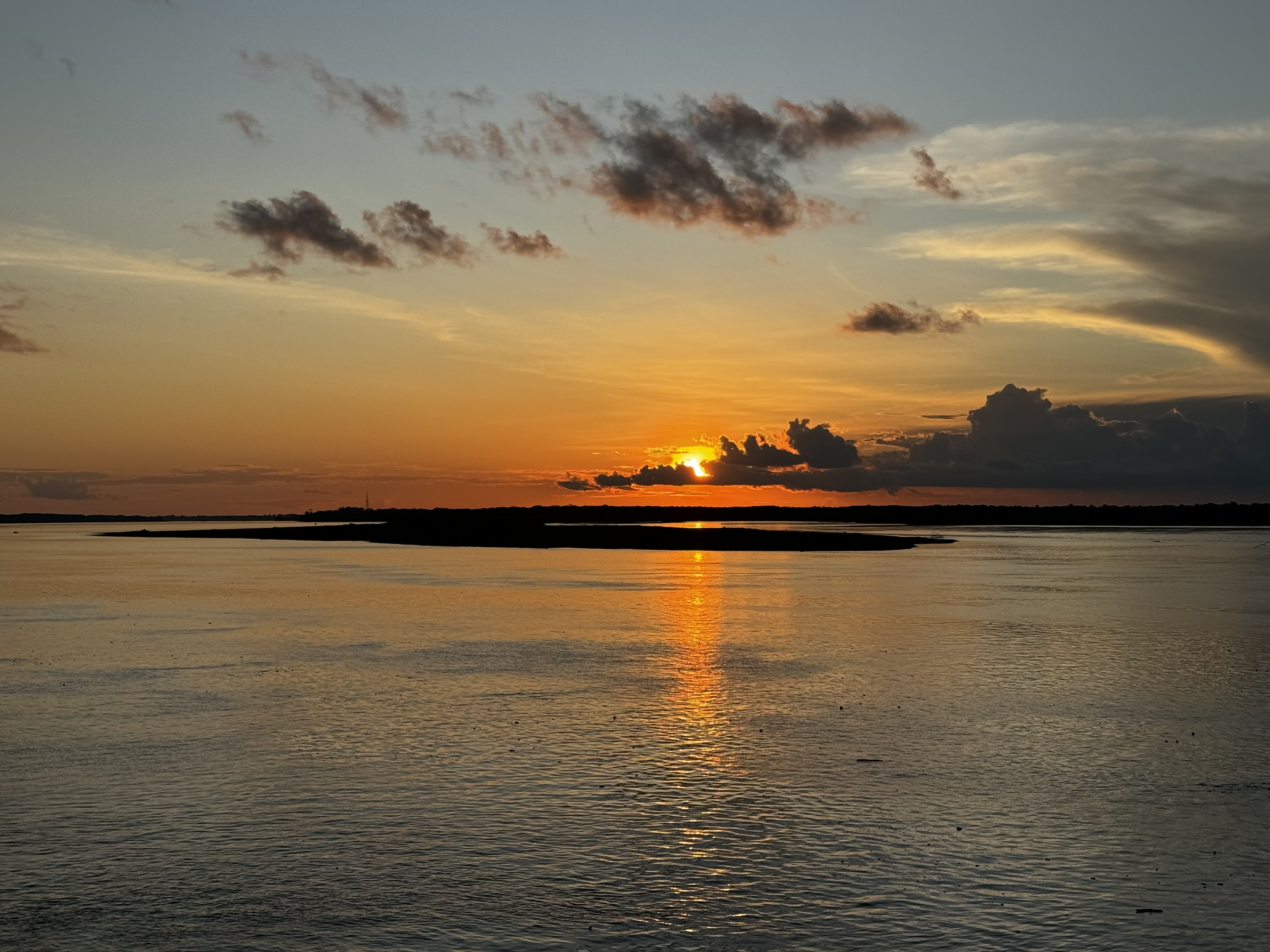
Sunset at Toronga zoo

Around Newcastle, New South Wales

Where we were with the Whites

Thursday, October 17, 2024

It was a long, slow travel day with one cancelled flight, another flight that was delayed, a missed connection and a wait for a third flight that put us into Newcastle at 8:30pm. We were supposed to be there at 3:30. Consequently, we missed dinner with our friends, Catherine and Martin, and instead, had a late snack, a glass of wine and some time to chat in their Fingal Bay house. We had no trouble getting to sleep.

Friday, October 18, 2024

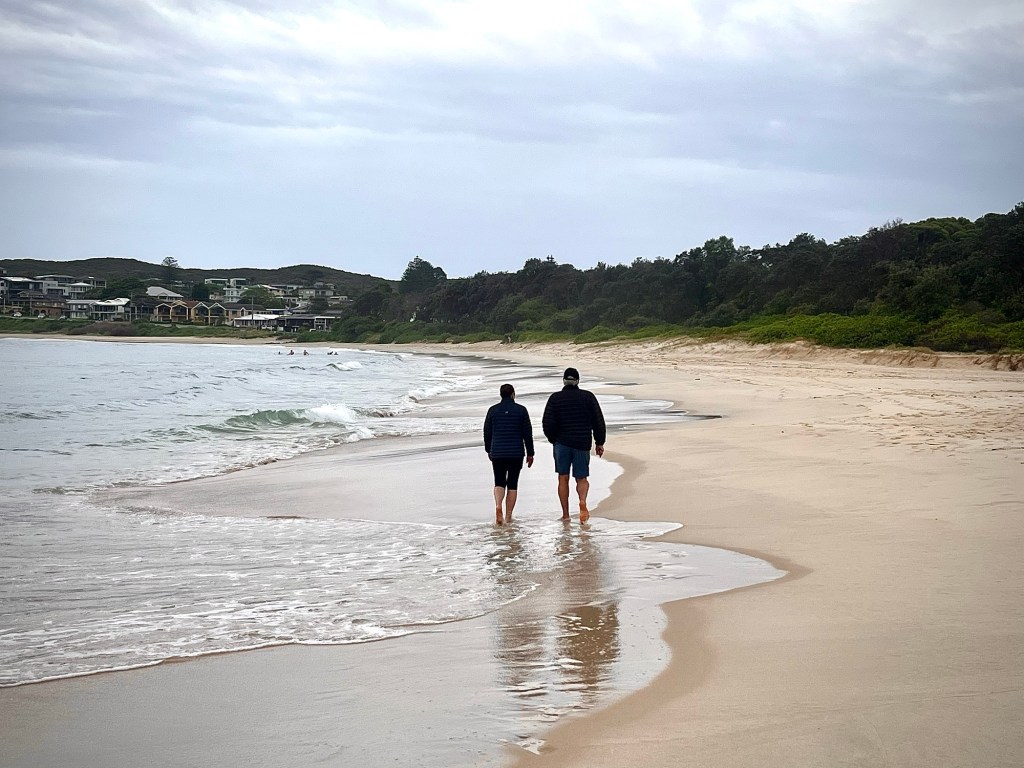
Fingal Bay is a small town right on the Pacific Ocean about 3 hours north of Sydney. Martin and Catherine gave us a tour of the town and we had a pleasant stroll at Nelson Bay marina and Shoal Bay beach in front of their townhouse.

Fingal Bay Beach

Back at the house, Catherine made us all tasty grilled cheese sandwiches, we packed up our bags and left for their primary home in Newcastle, an hour south.

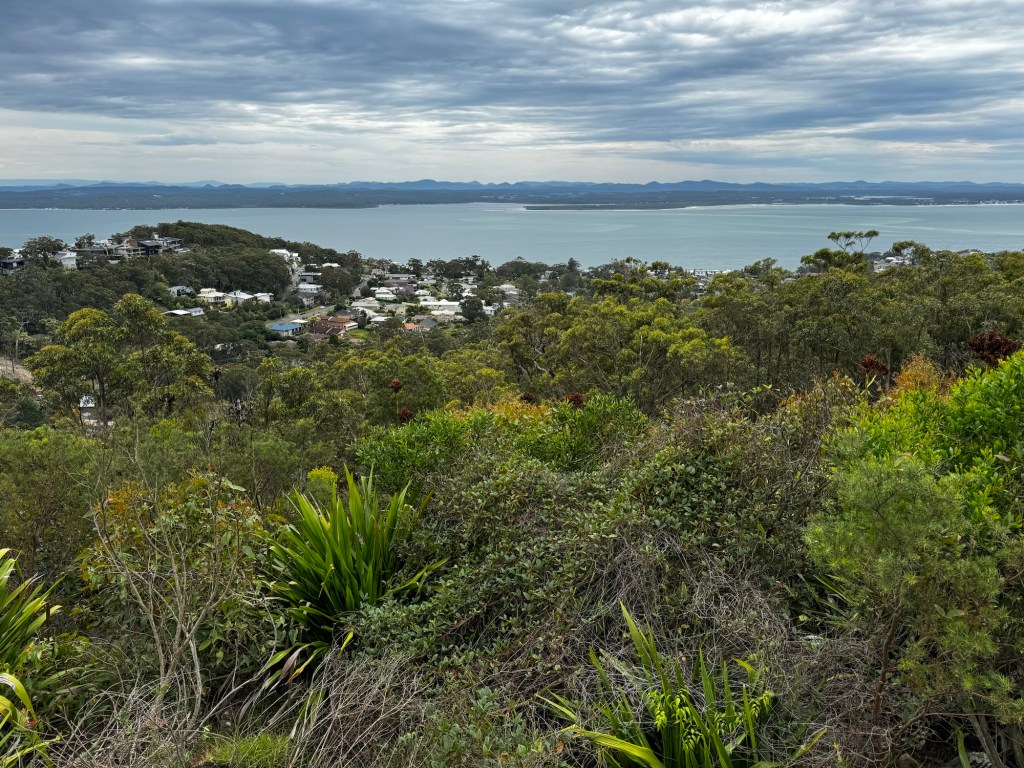
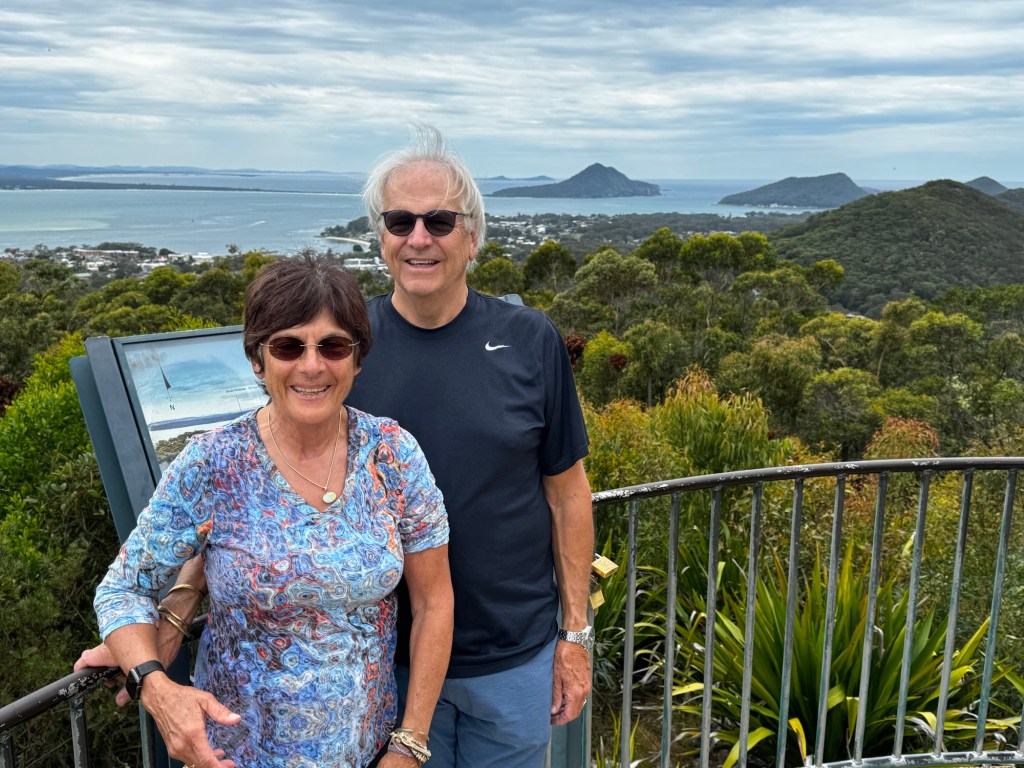
On the way, Martin drove us to the top of a hill called Gan Gan, the aboriginal word for “white breasted fish hawk”, where we got a commanding view of the countryside including small towns, beaches and the Pacific Ocean.

We learned that the population of Newcastle is 500+K. That the city was founded in 1801 as a coal harbor and a penal colony. The city is still a major exporter of grain and coal. After arriving in the dark it was nice to see the setting around us.

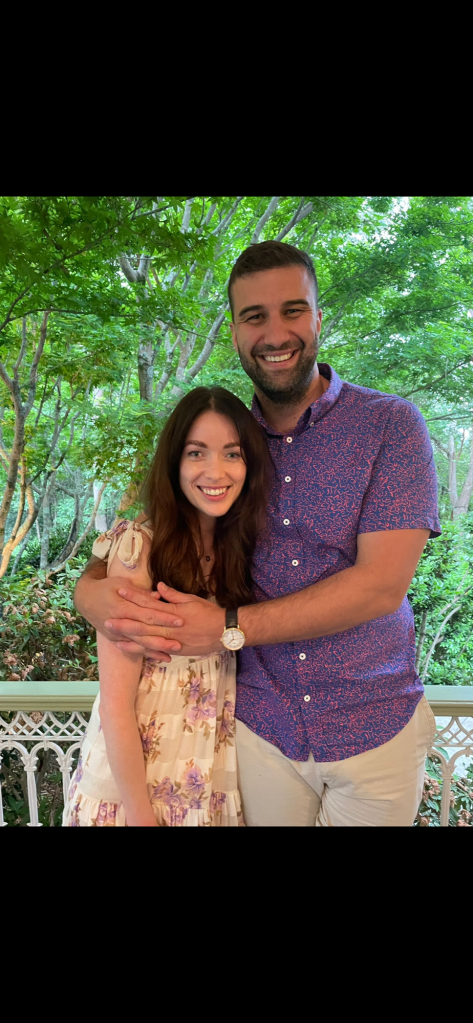
Mark, Martin, Catherine and Julia on Fingal Bay

We arrived at their home in Newcastle about 1pm. We had heard about it for a long time and it was nice to finally get to see their lovely 2 acre garden and expansive home.

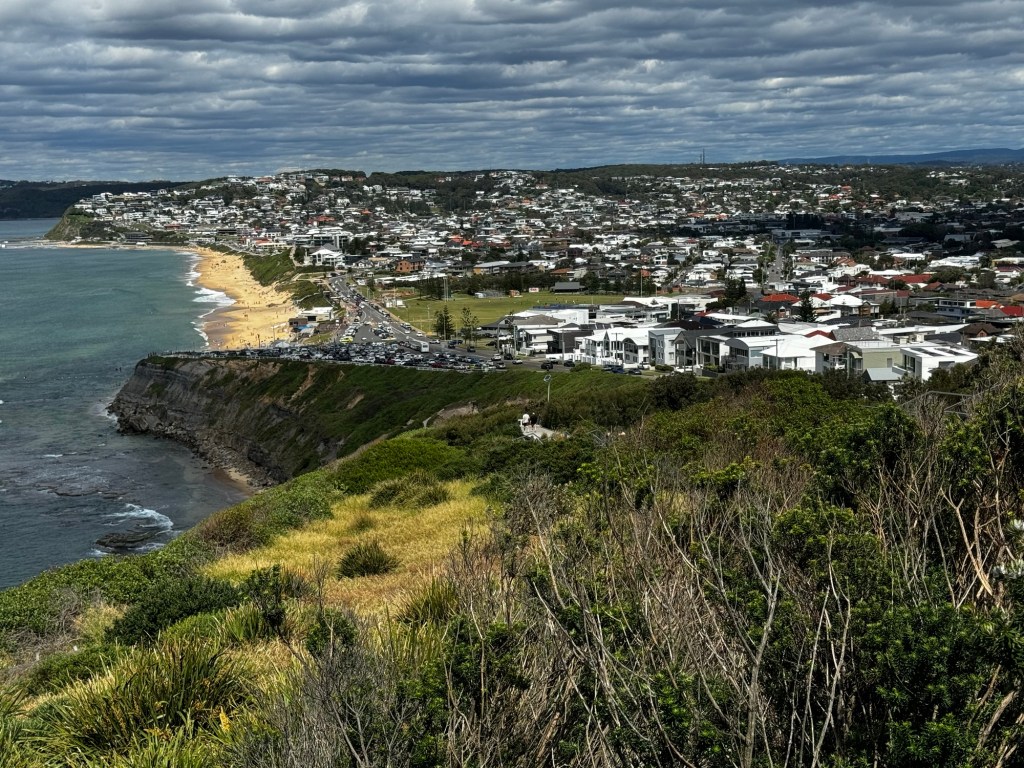
We did not have much time to settle in before Catherine delivered me to a shop in Hamilton, a suburb of Newcastle, where I received a much needed pedicure and some purple polish. Then she drove me to a hair salon where I received a cut and color. Those beauty jobs done, the 4 of us drove to their son Andrew and his wife, Sinead’s (pronounced Shinade) apartment for cocktails and a view of nearby Bar Beach. We were so engaged in the conversation that we forgot to take any photos, but we did get some details about them. Sinead is a psychologist and Andrew is a business manager. They are young, enthusiastic and career oriented and made me aware of my age.

Late afternoon we returned to Catherine and Martin’s home and were soon joined by their daughter Sophie, a newly graduated anesthesiologist in training, and her husband Luke, a construction project manager. They too are young, enthusiastic and career oriented.

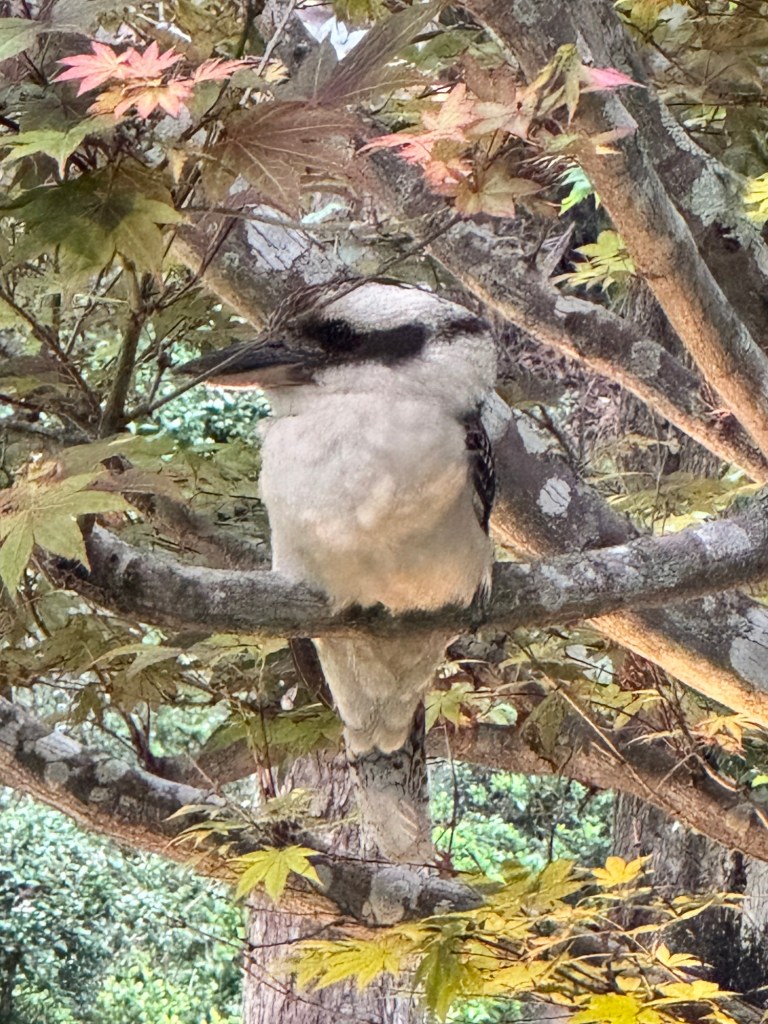
I did get some photos of their lovely home and a local kookaburra bird sitting in the old gum tree.

Saturday, October 19, 2024

Martin and Catherine are up early swimming in their pool, an activity they do every day. By 8am we were having breakfast and discussing the day, The plan was for us to do a morning walk followed by a drive to Hunter Valley, return to the house and prepare for a party at 4pm for about 30 friends of the White’s and their family.

The walk was very interesting as it was on an elevated walkway called ANZAC, for Australia, New Zealand Army Corp. in memory of the people who fought in WWI. We also walked along Bar Beach.

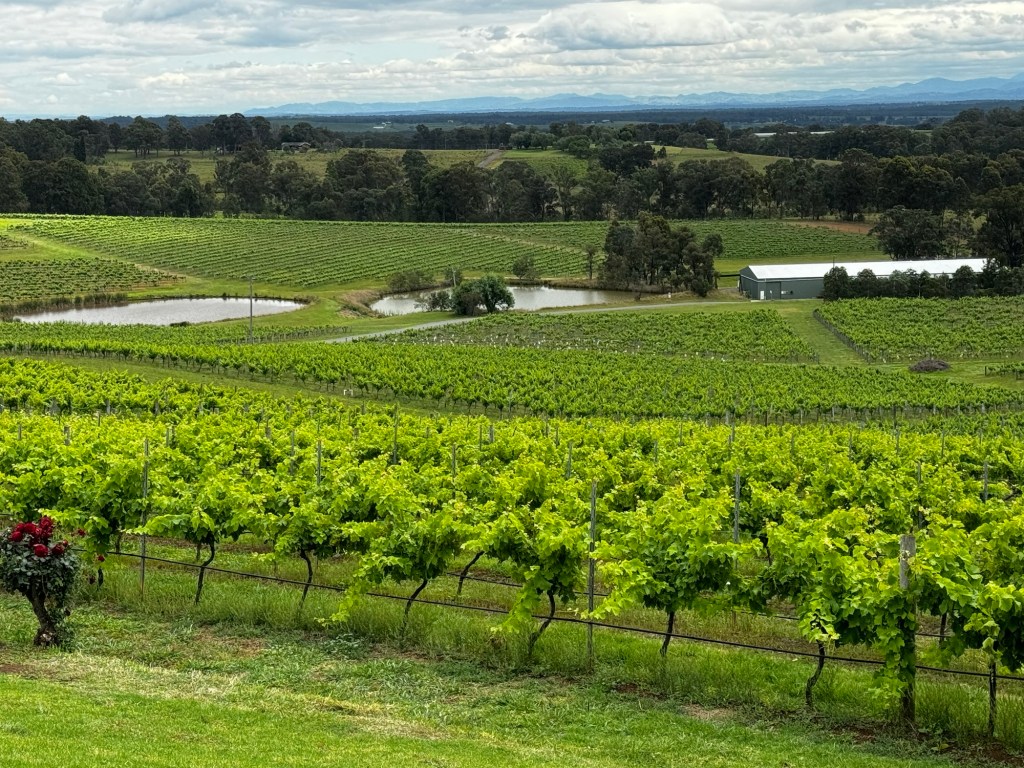
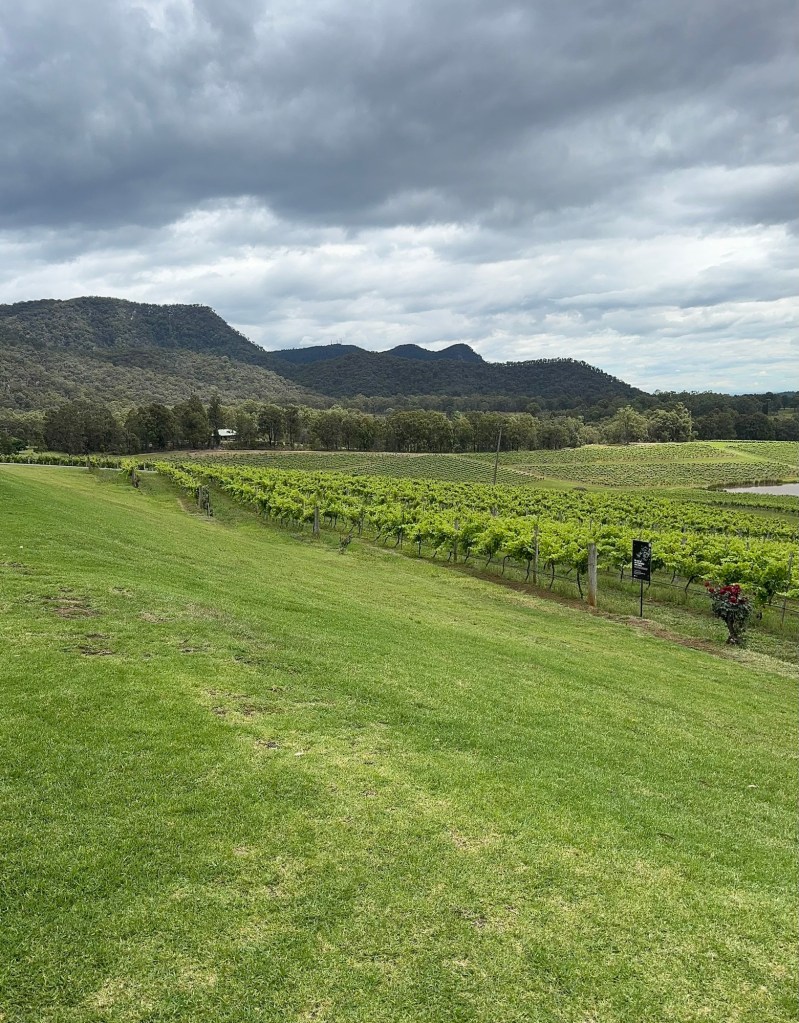
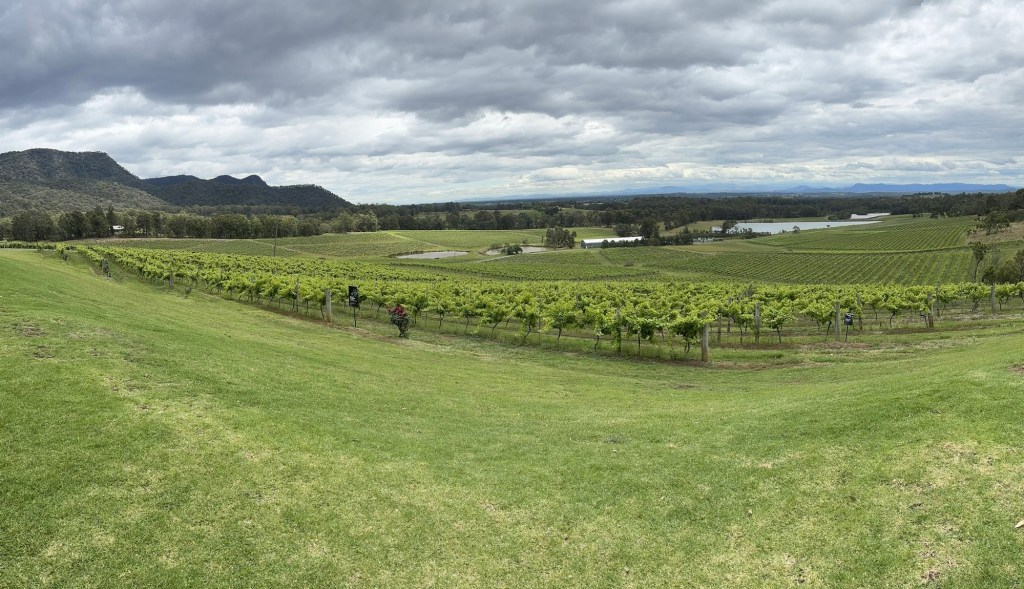
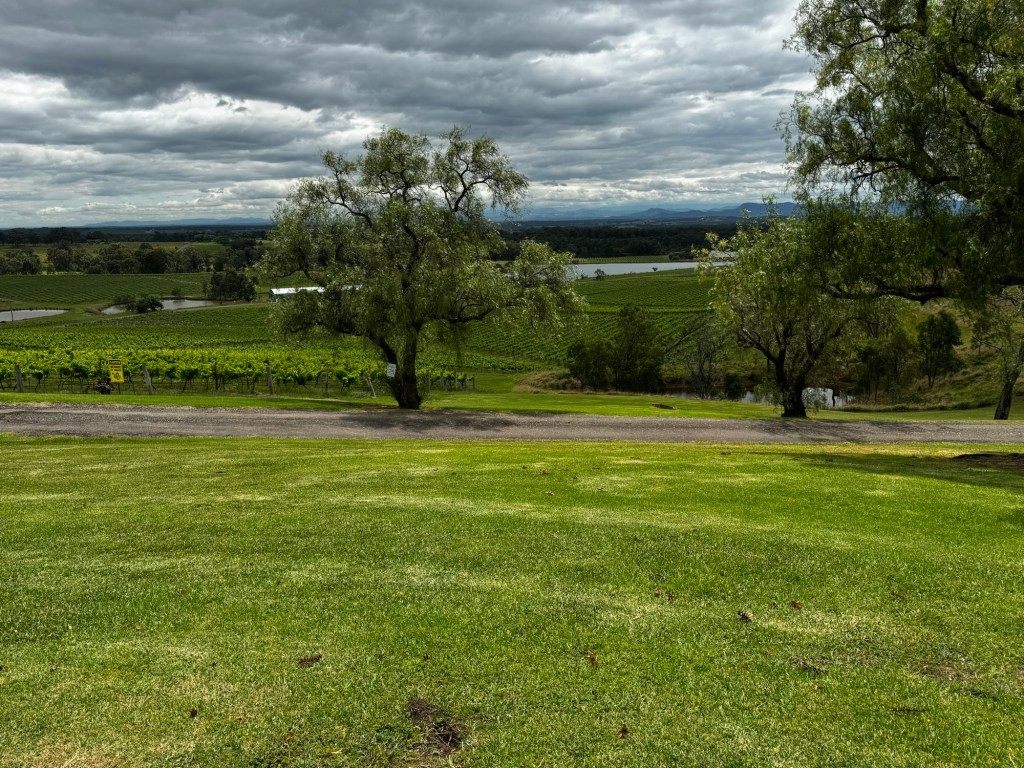
Then we drove 35 kilometers west to the wine country. Beautiful rolling green hills full of vines.

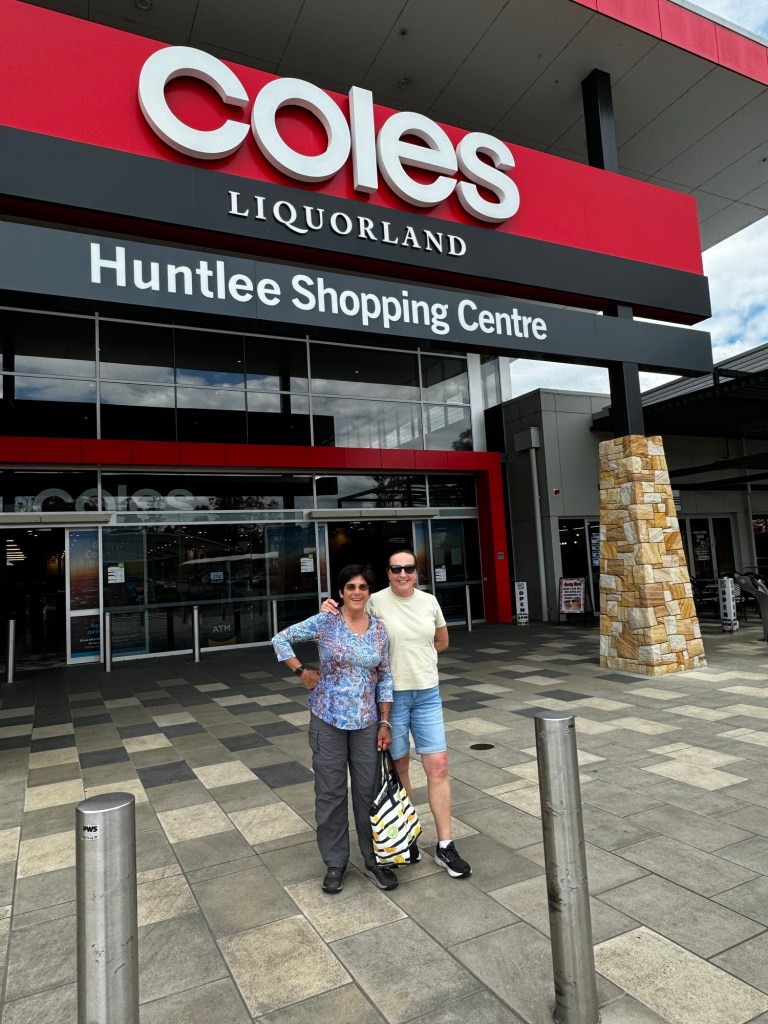
We stopped at one winery but did not stay as the place was fully booked. From there we stopped at a grocery store called “Coles”in a large new subdivision to see the place and buy a few items for the afternoon party. Then it was full steam ahead to get home and ready for the party.

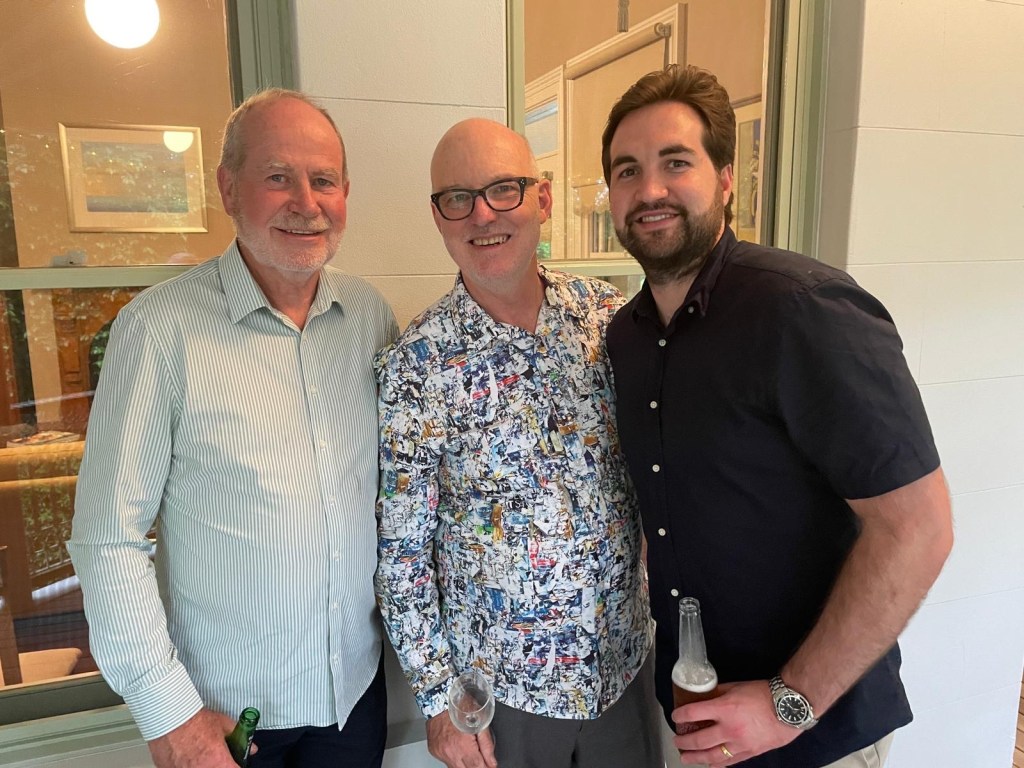
At 3:30 the family arrived, including Joan Smith, Sinead’s mother. We had a pleasant time together, before the guests arrived.

Sunday, October 20, 2024

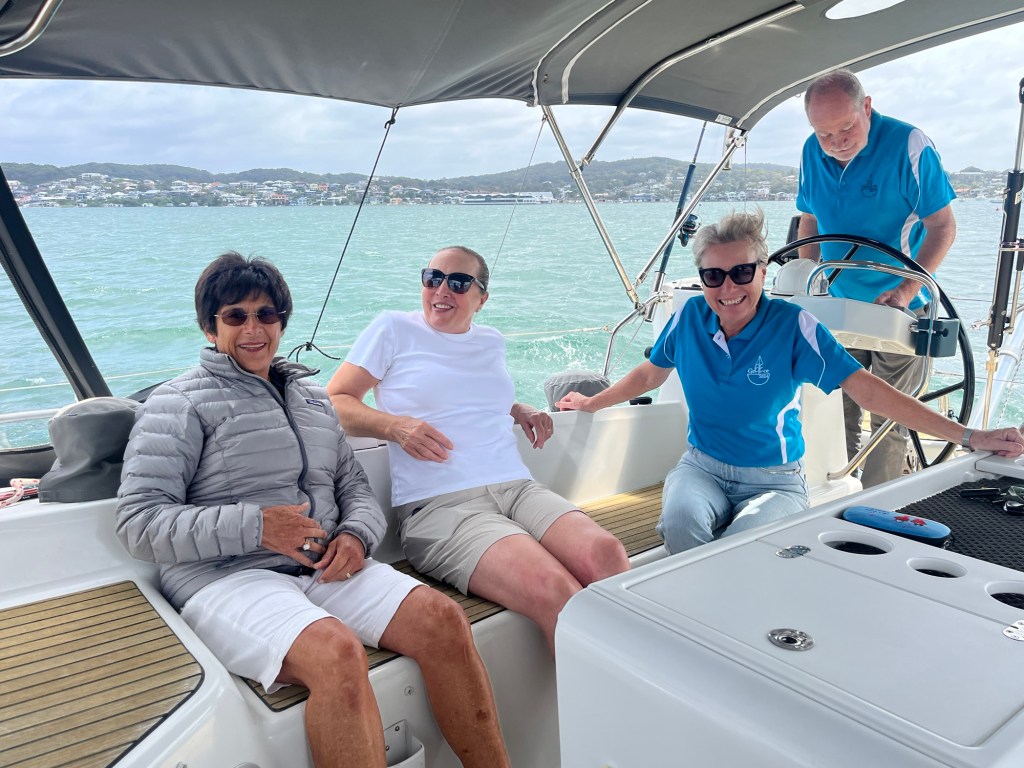
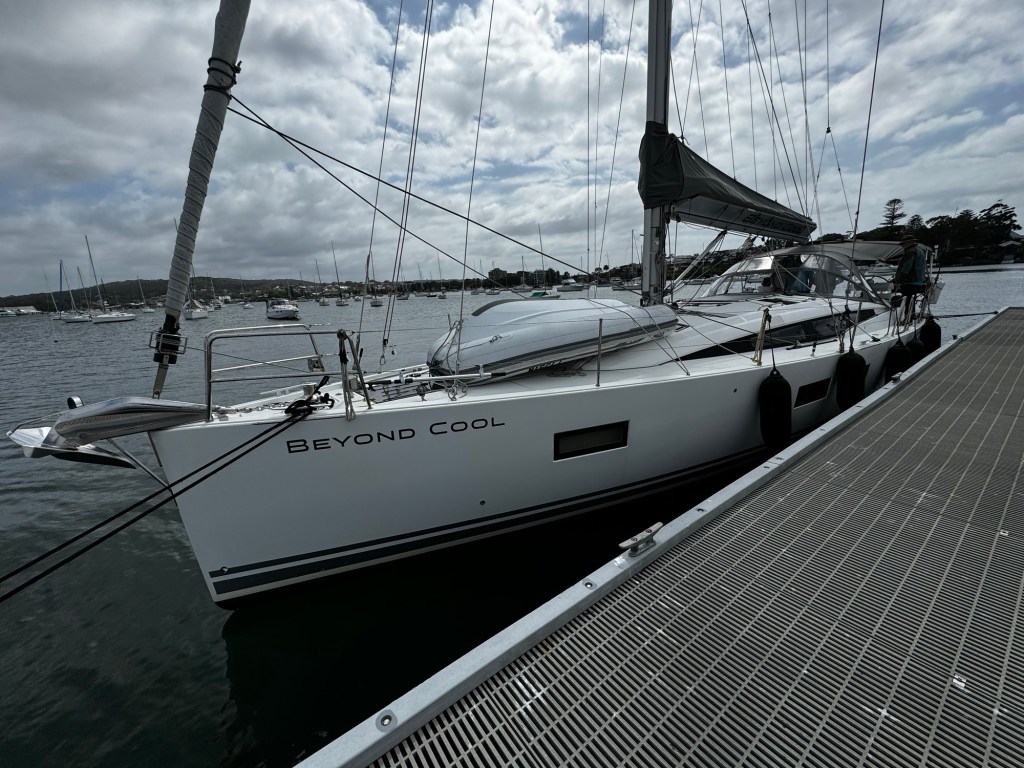
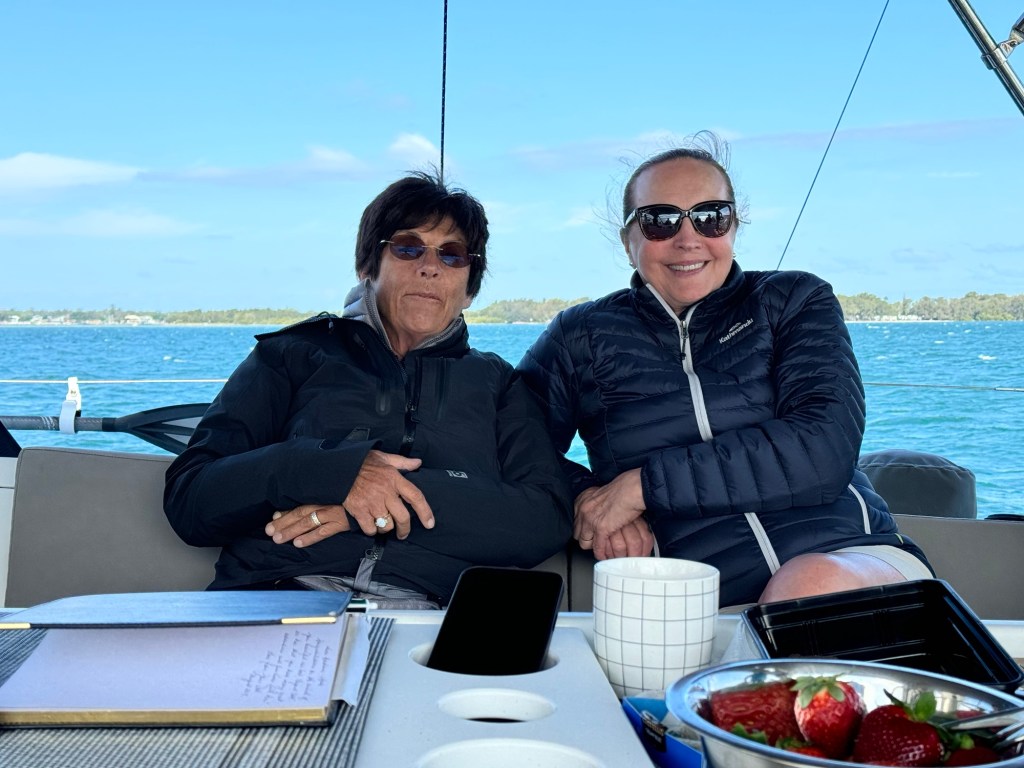
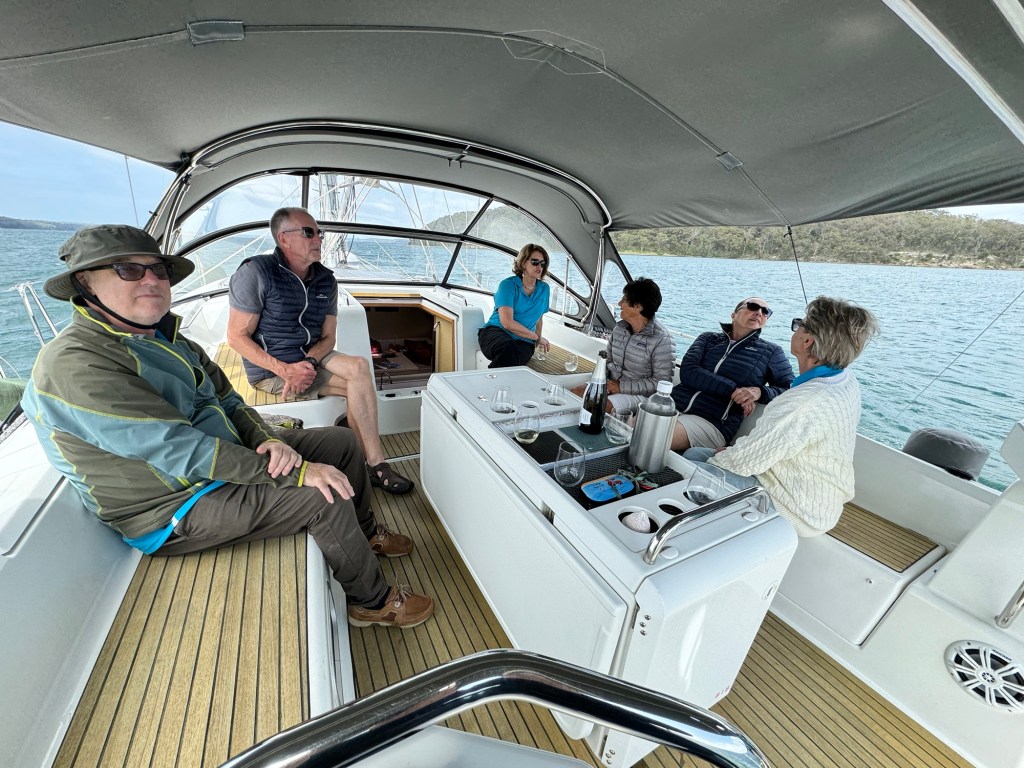
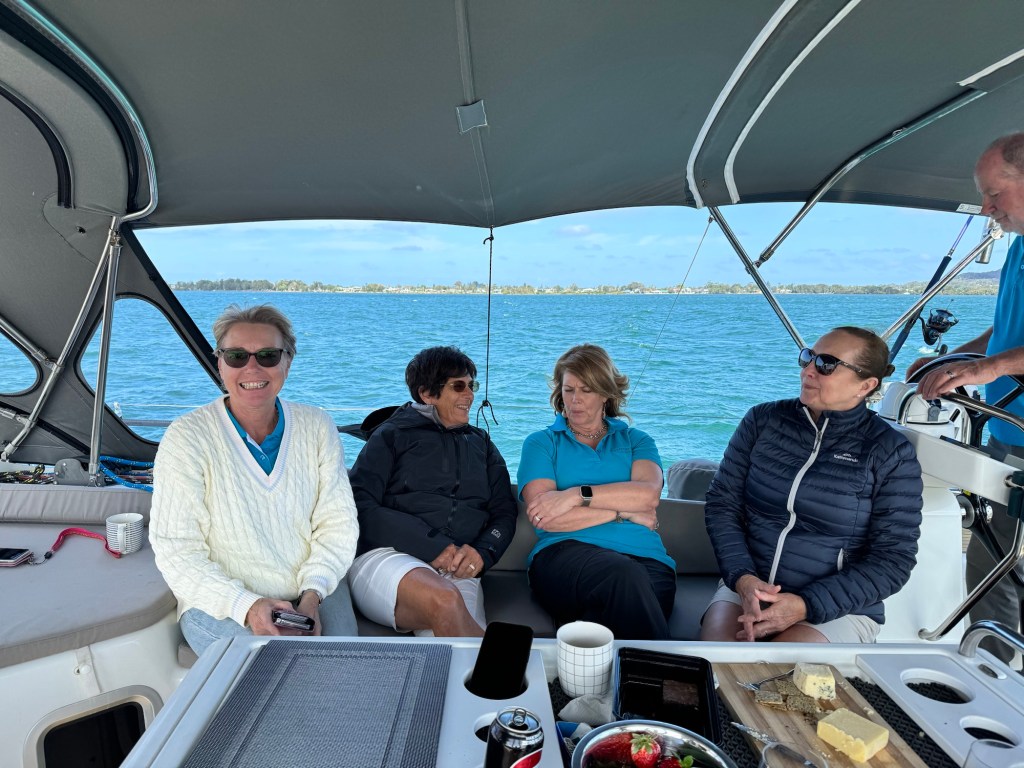
After a leisurely morning we left the house at 10am and headed for Lake Macquarie and our new friend’s boat, the Beyond Cool. It is owned by Mark and CarolAnne Clement, who graciously welcomed us onto their boat along with Catherine and Martin and Rob, who was Martin’s anesthesiologist and his wife, Jana. Everyone, except Mark and I, brought food to share and a feast we did have after motoring an hour into the lake to the lee of an island where we dropped anchor and began eating and drinking. The weather grew warmer and sunnier as the day went on. Soon we were eating boiled prawns with a mustard sauce. Then, Mark fired up the BBQ, and cooked a boneless lamb shoulder that had been seasoned in a Greek marinade. Then it was rested in a faux fur blanket until the rest of dinner was ready, including roasted potatoes, and slaw salad with cashews. We all ate like kings, who, speaking of which, is in Australia at the moment and will be in Sydney when are. It will be interesting to see how that turns out.

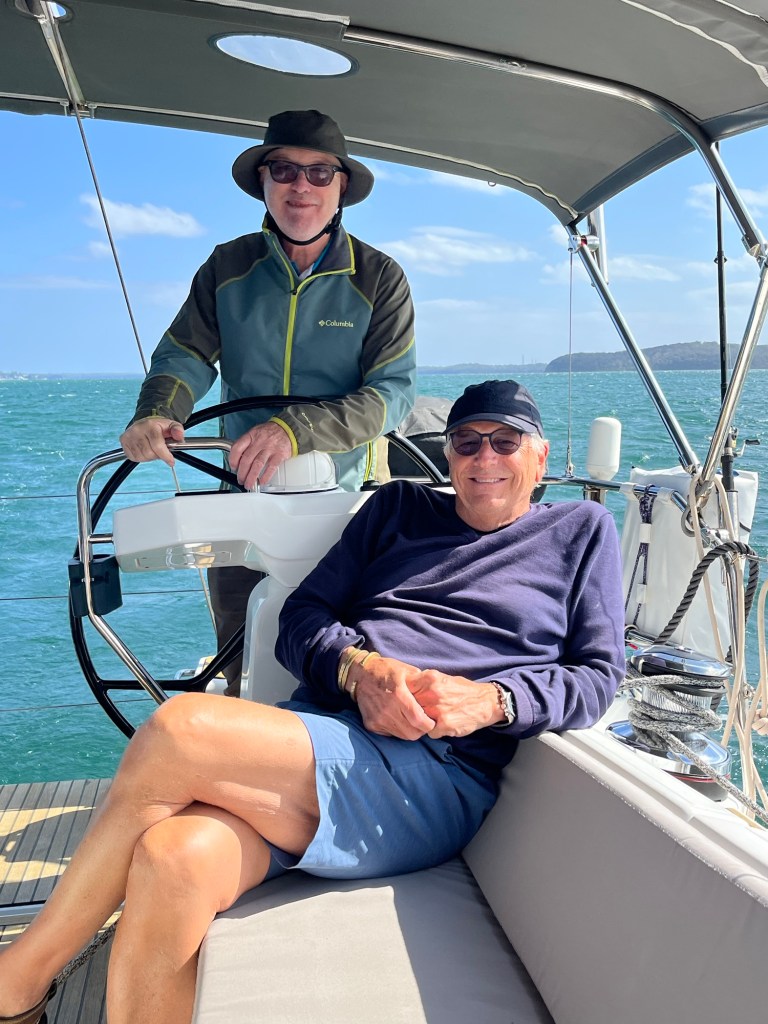
Mark at the helm & Rob, a longtime friend

Everyone had a grand time. Finally, at about 4pm, Mark put up the head sail and we flew home on a tailing wind. By 5pm the four of us were home and chilling. It had been a delightful and busy weekend. Tomorrow we head for Sydney.

Kangaroo Island

Monday, October 14, 2024

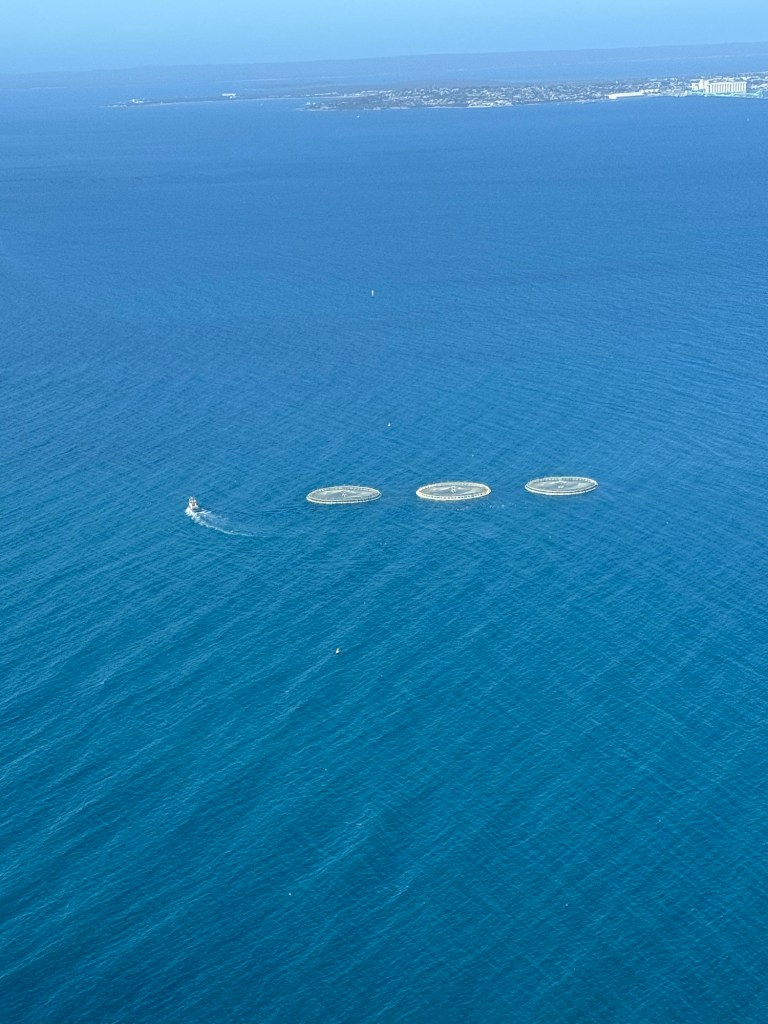
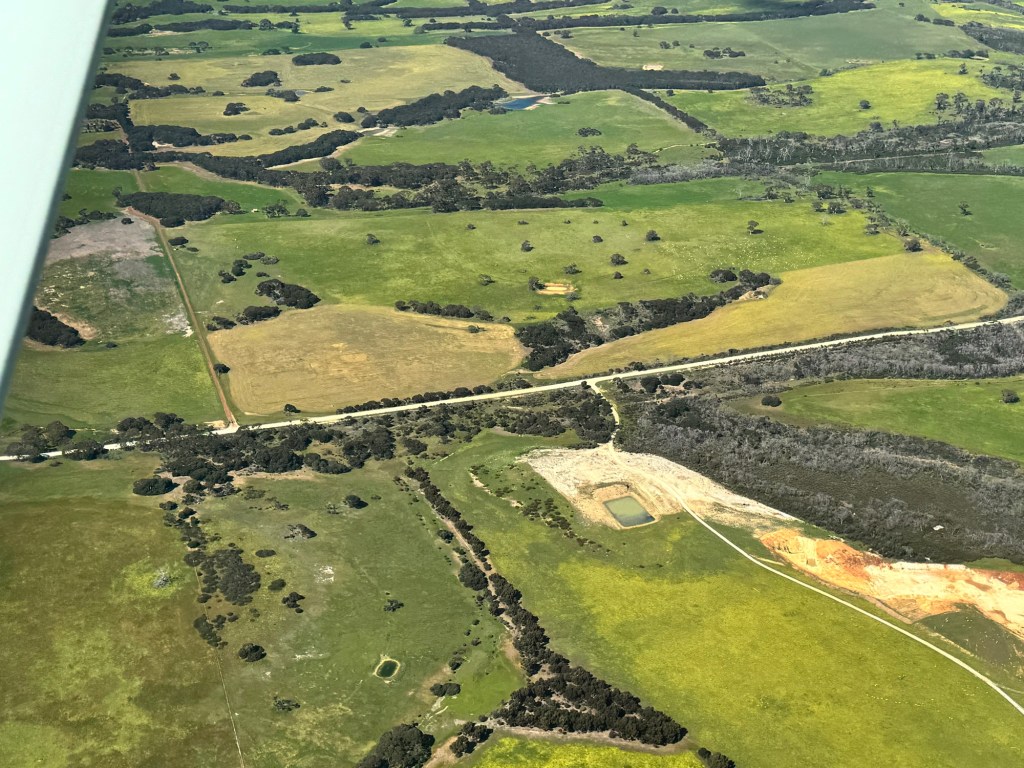
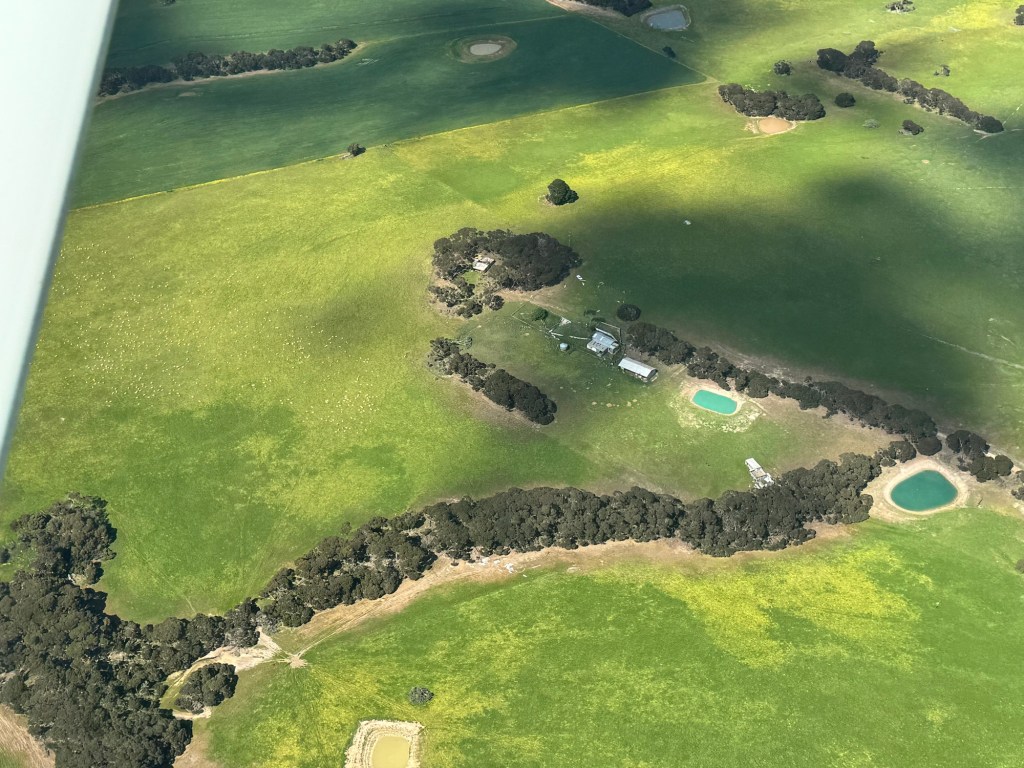
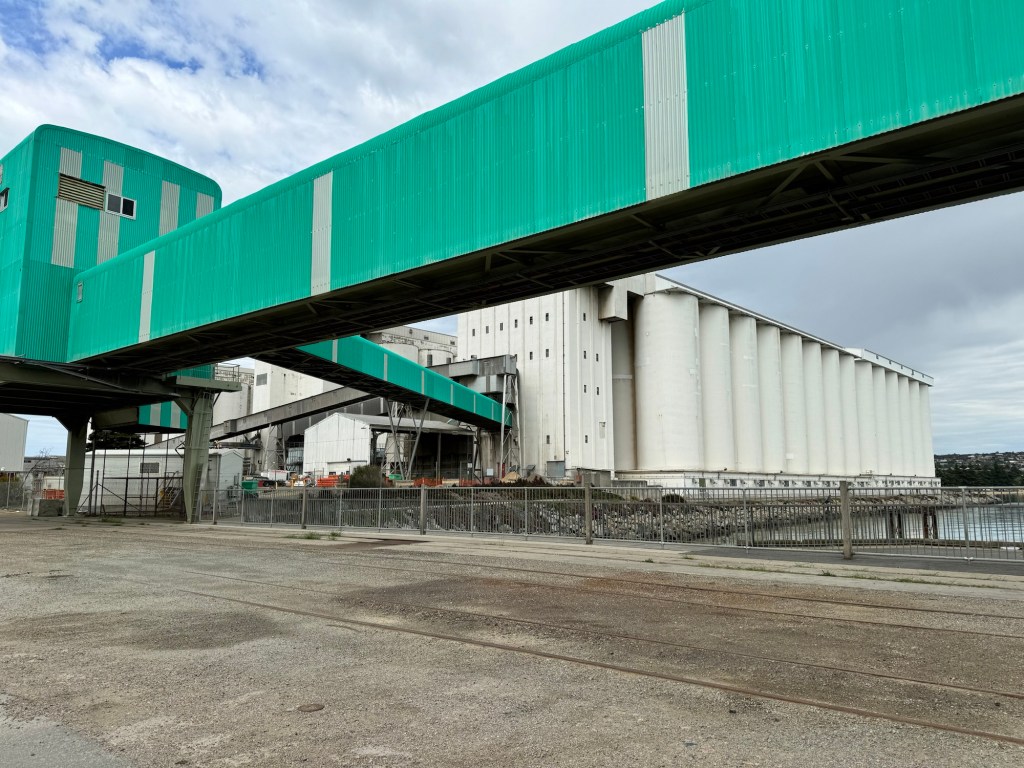
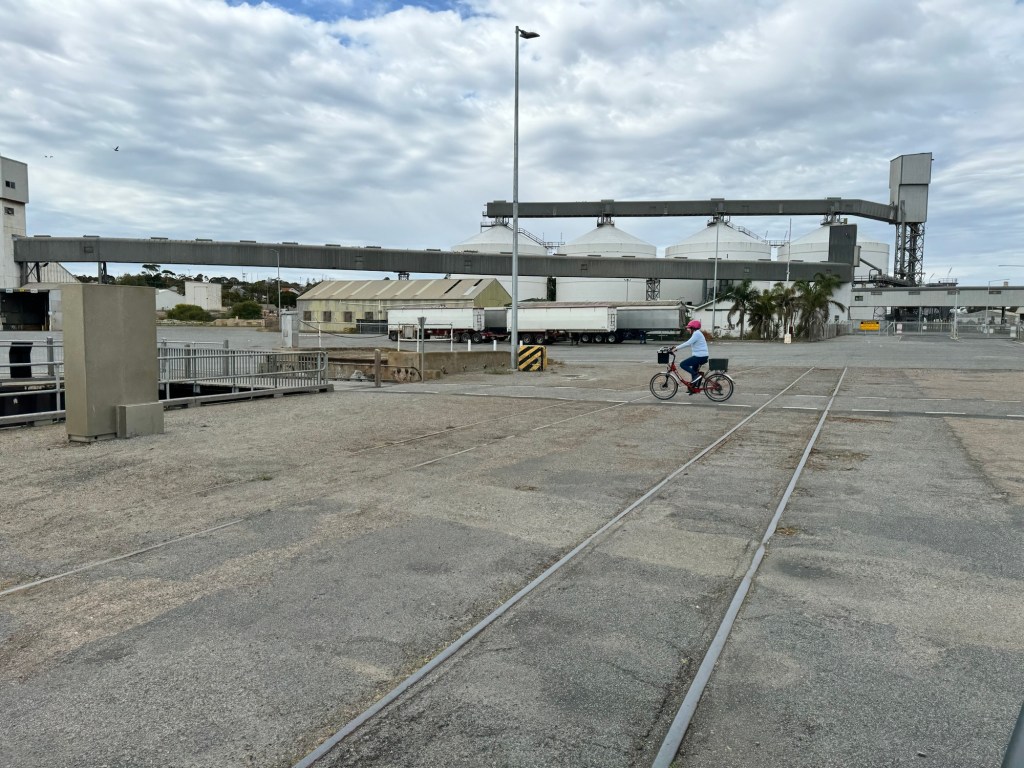
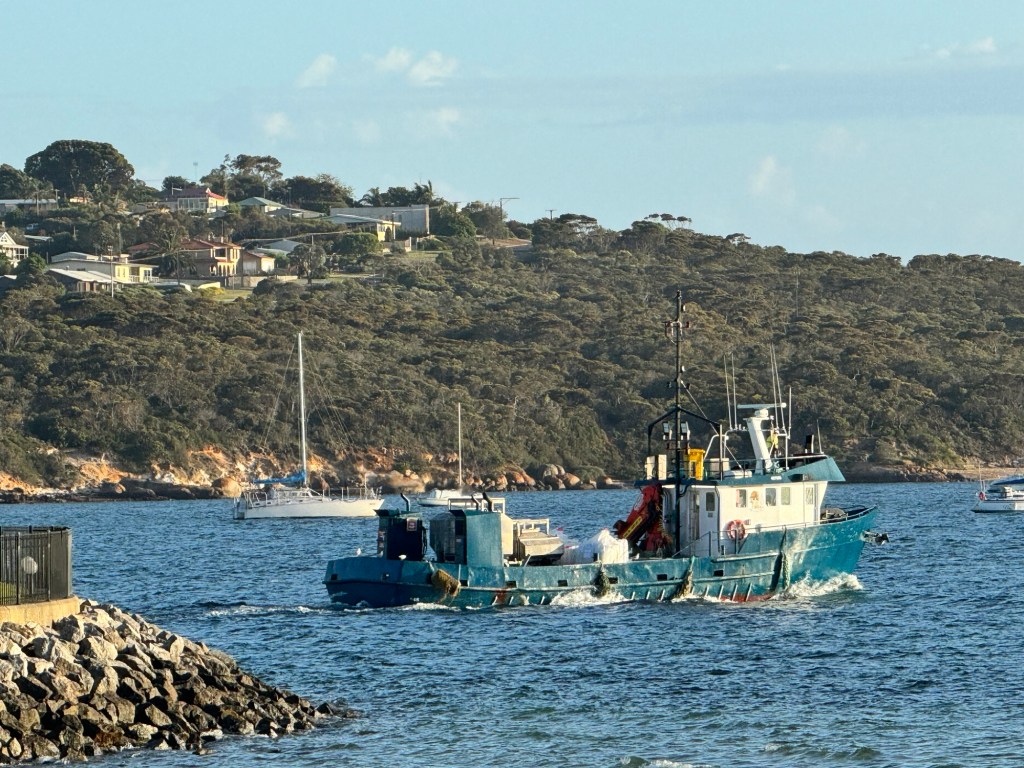
The flight from Port Lincoln to Kangaroo Island was itself interesting. Shortly after take off, we flew over the large rings where Blue fin Tuna are being fattened and Kingfish are being raised along with mussles, abalone, prawns, crabs and flounder. Port Lincoln, I learned, is the seafood capital of Australia. We also got a good shot of the grain loading conveyor belts in Boston Bay. The biggest problem for the small city of 14.500 people is lack of water. The town is considering building a desalination plant. After 40 minutes over the Southern Ocean we were over Kangaraoo Island with green fields and many rain water catchment basins.

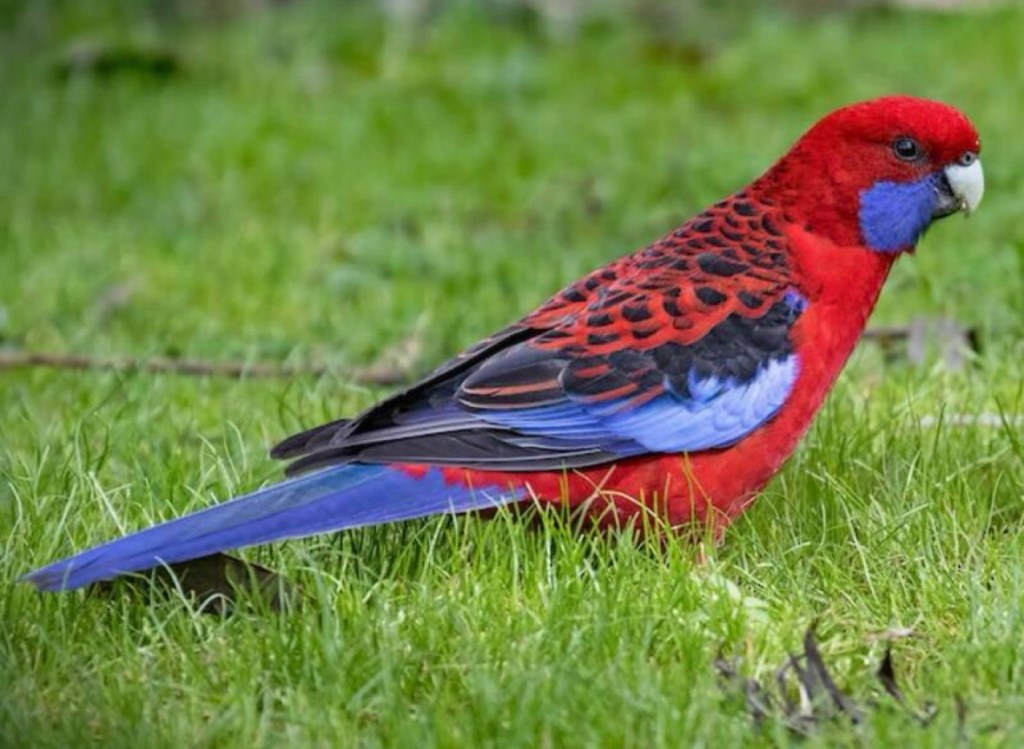
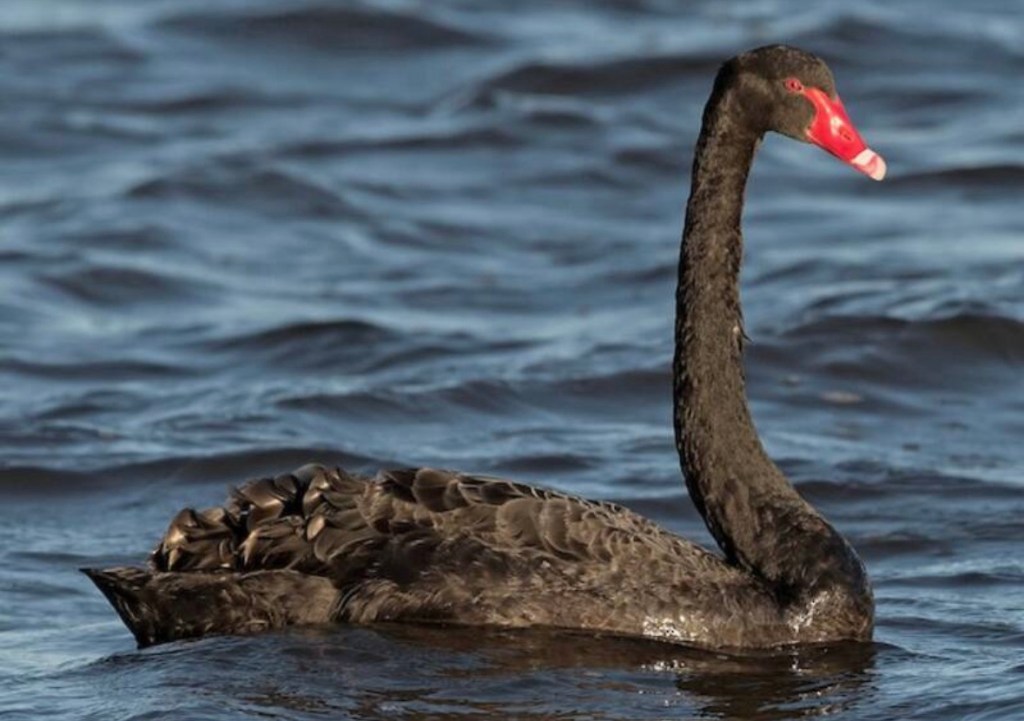
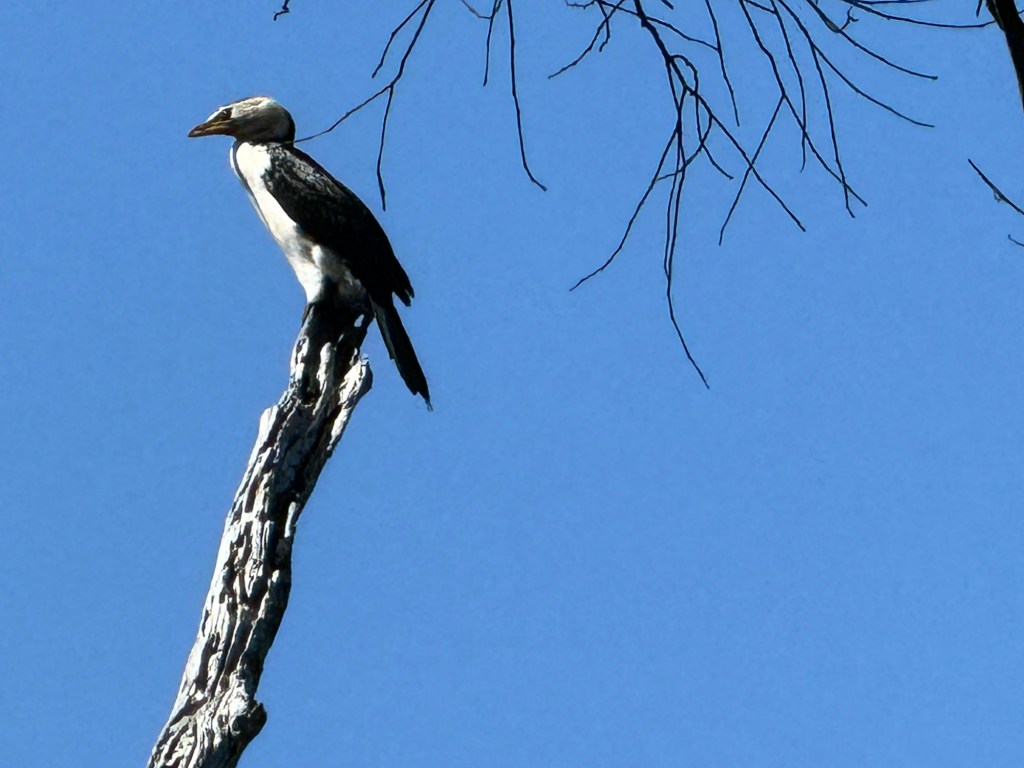
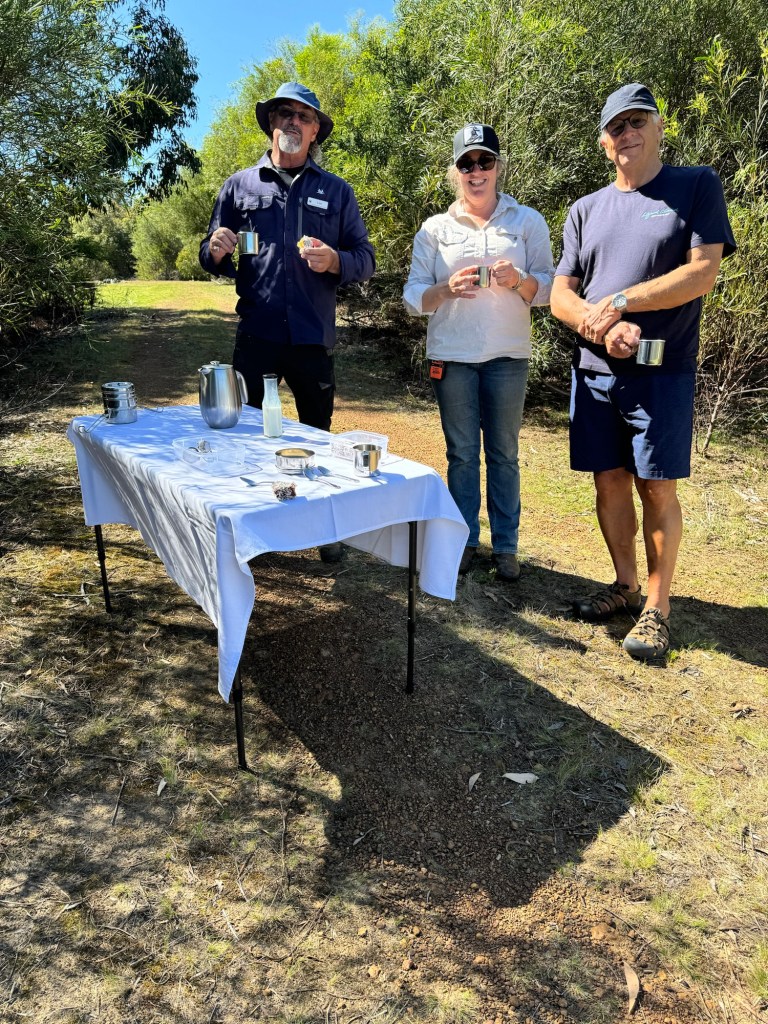
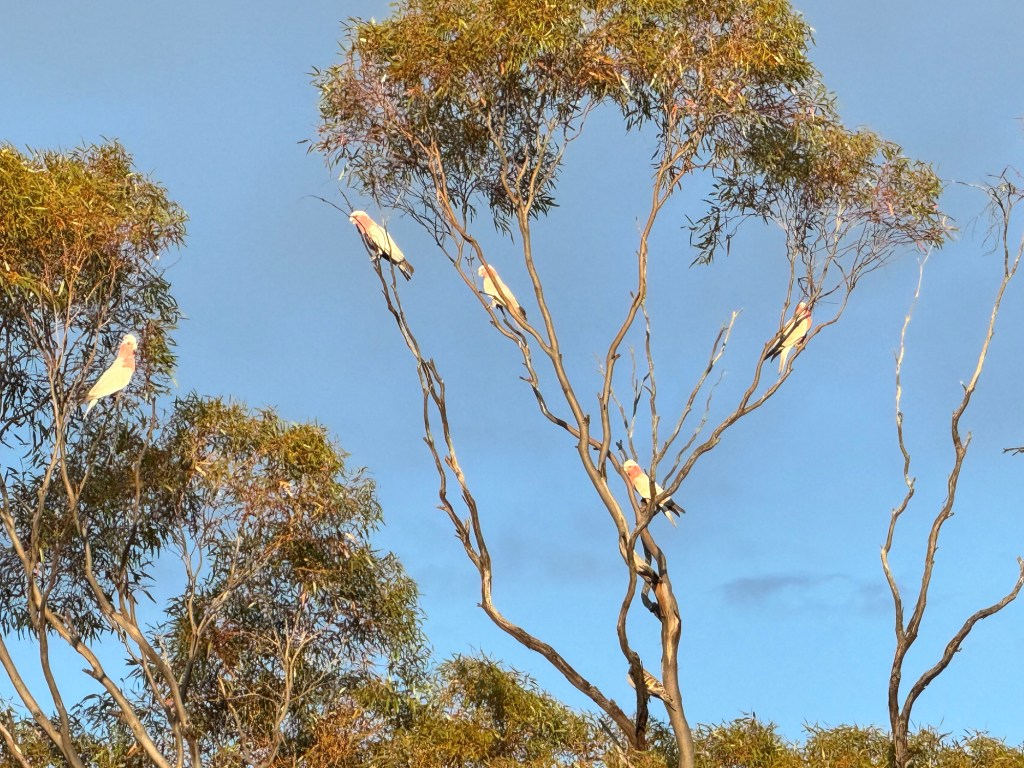
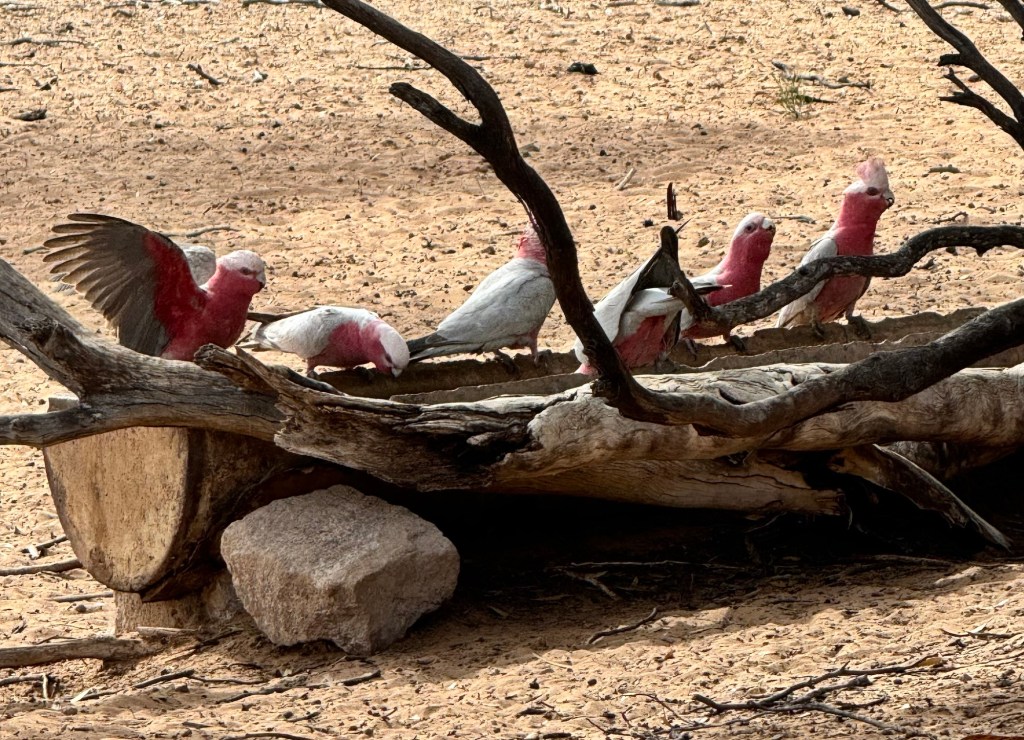
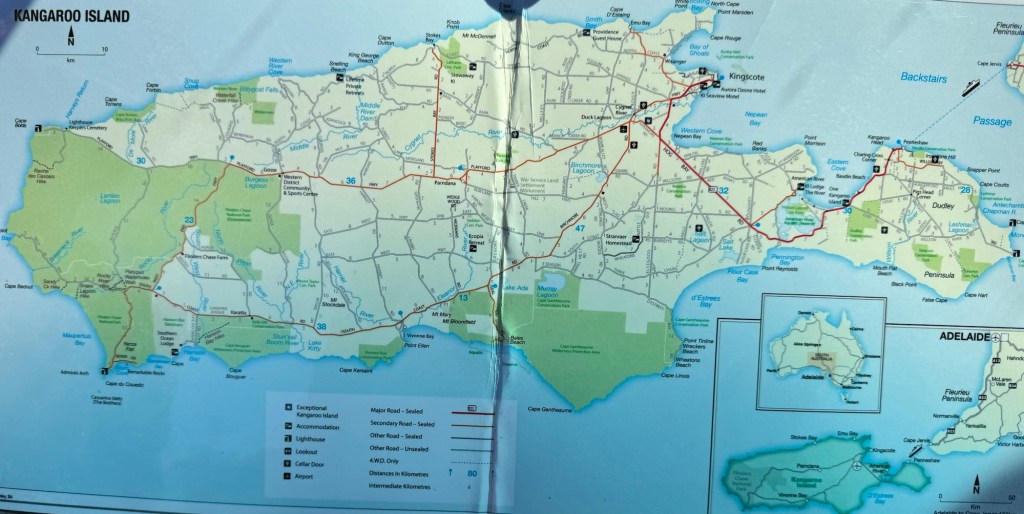
We landed near Kingscote on Kangaroo Island and were met by our next driver guide, Lee. He wasted no time getting our program started by driving us to a place called Duck Lagoon, where we had tea and coffee and saw lots of birds including: black swans with several cygnet (baby swans), ibis, pied cormorant, galah, crimson rosella and several koala asleep in the trees. Lee told us there are 273 endemic birds in all of Australia, but too many koalas on Kangaroo Island. Meanwhile, there are only 4,500 people. The island is approximately 100 miles long and 50 miles wide and has 335 miles of coastline with a lot of it being white sand and wild seas.

A fire in 2020 wiped out half the island. The 60K koala were reduced to 30K. Eucalyptus oil is made on the island and exported for use as cleaning products. While Lee waxed long about eucalyptus, we were more interested in the birds, especially the three below.

Crimson Rosella
Black Swan
Pied Cormorant

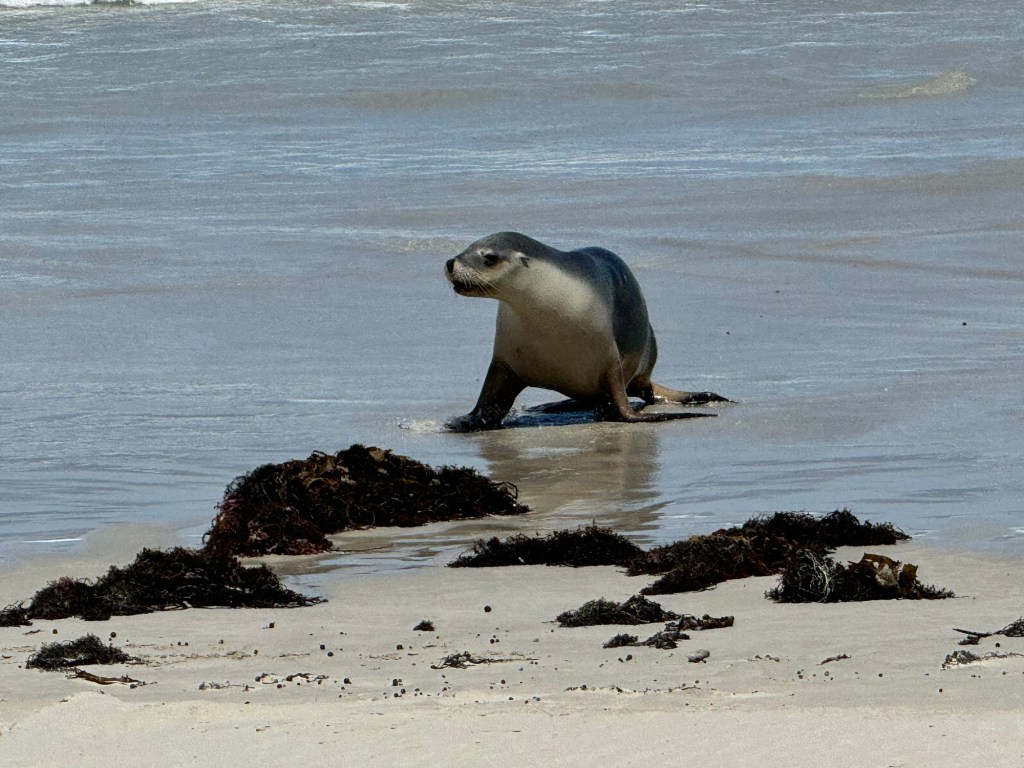
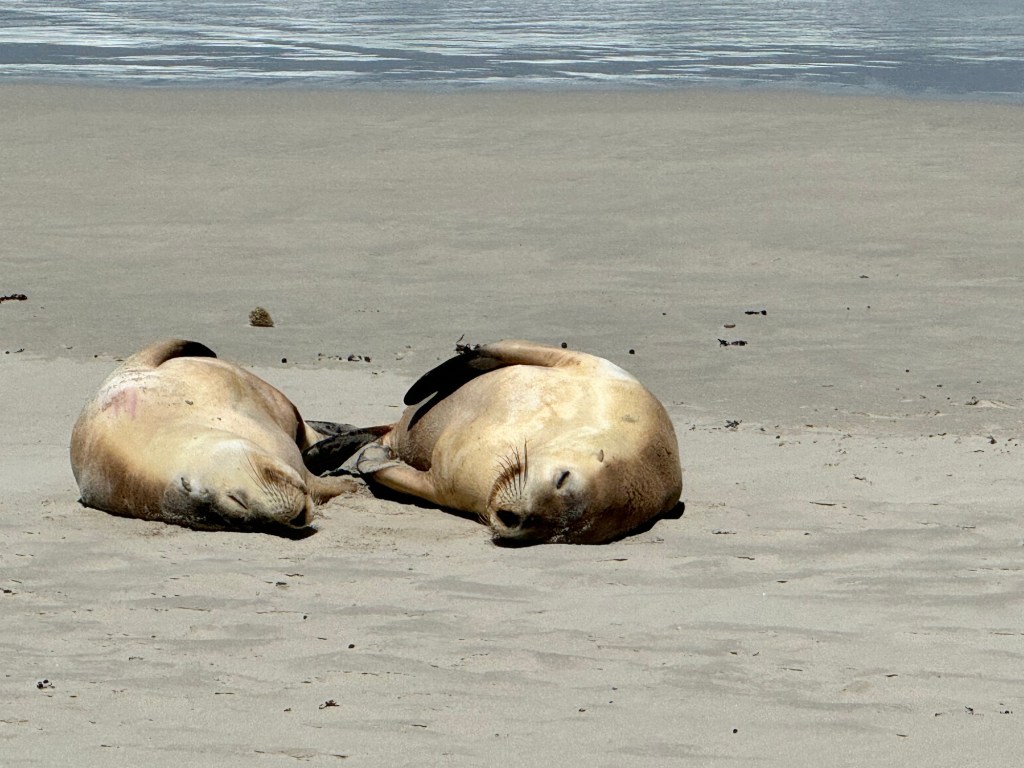
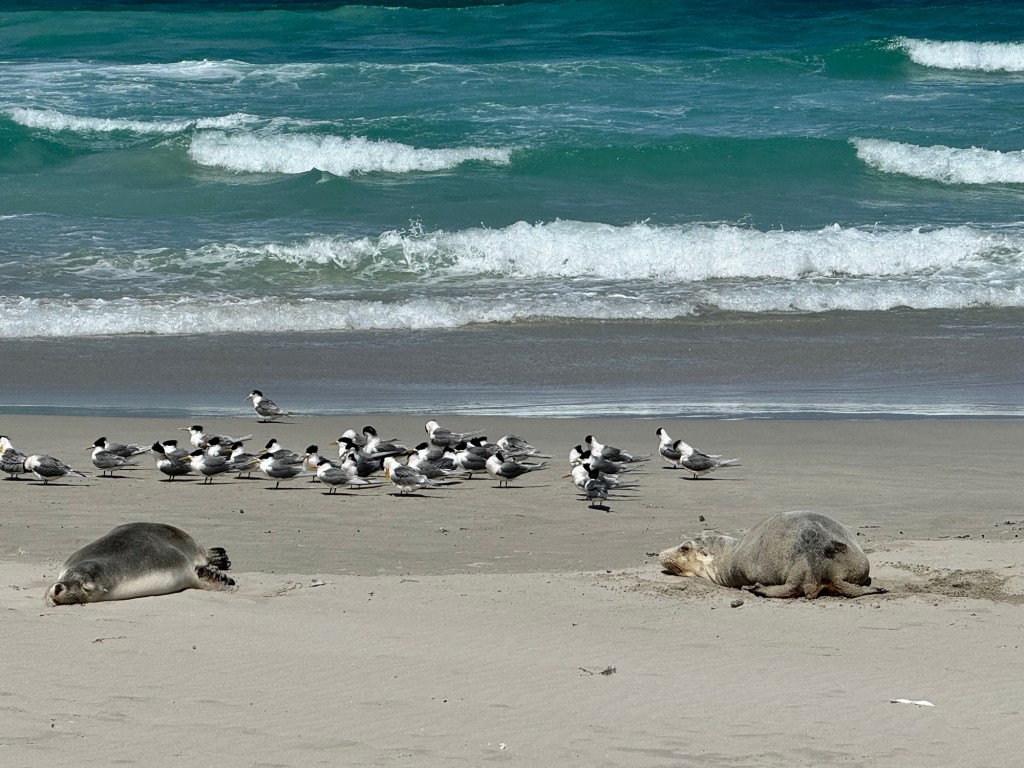
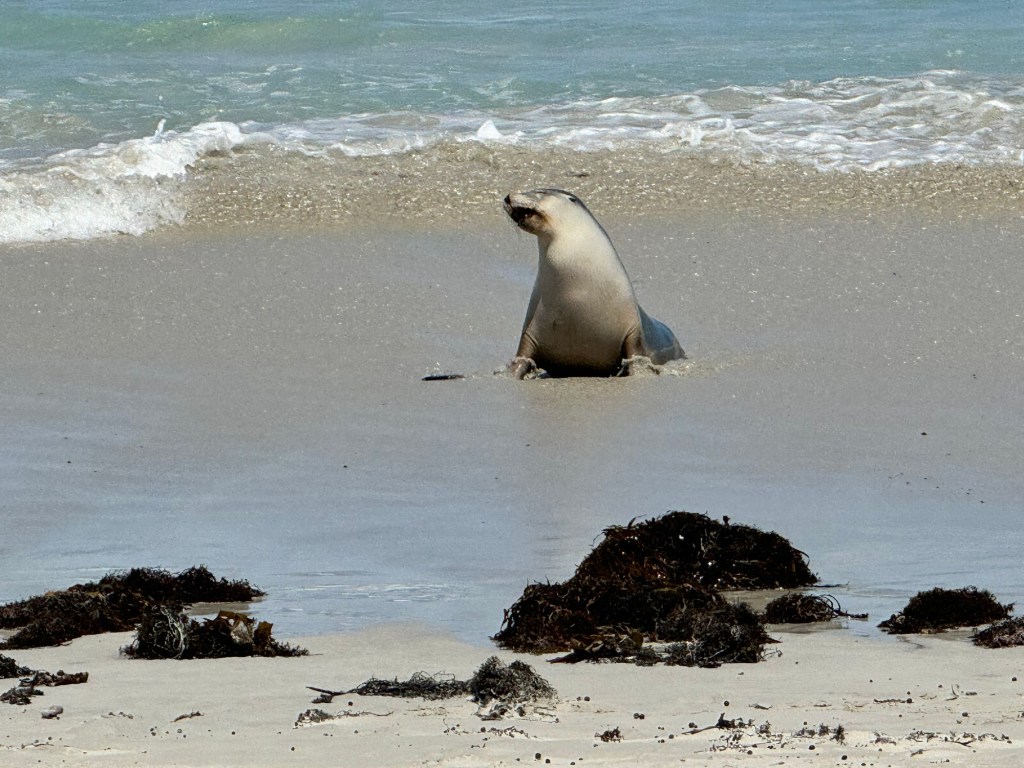
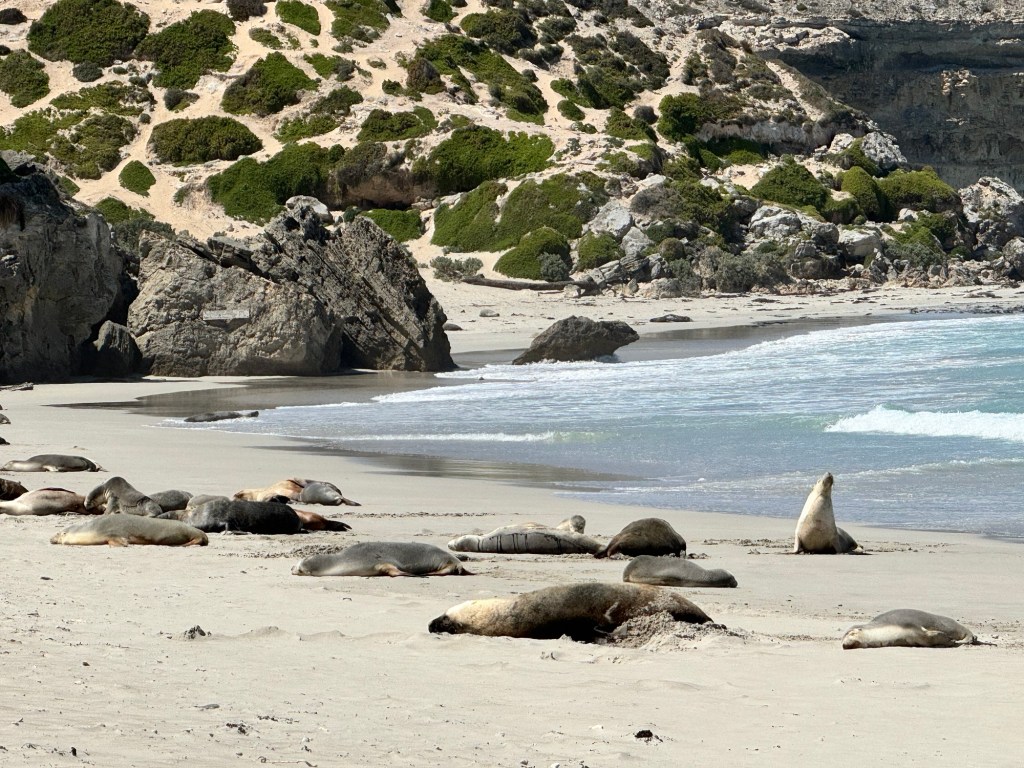
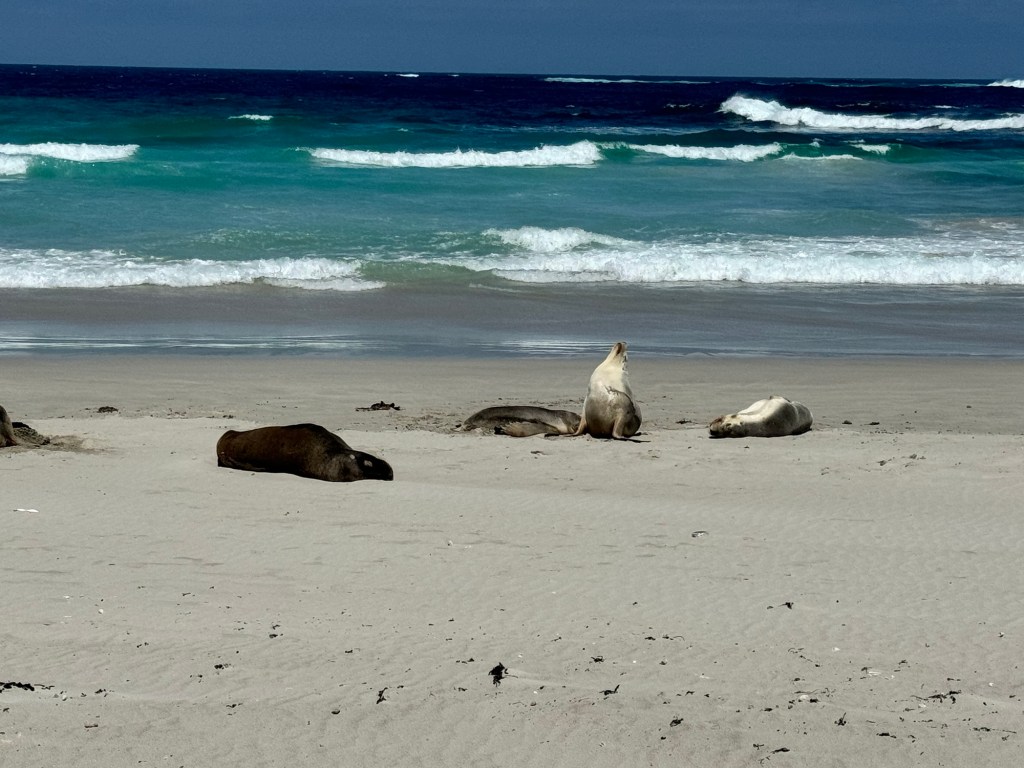
From there we went to Seal Bay where we saw many sea lions warming up on the beach and a flock of Great Crested Terns.

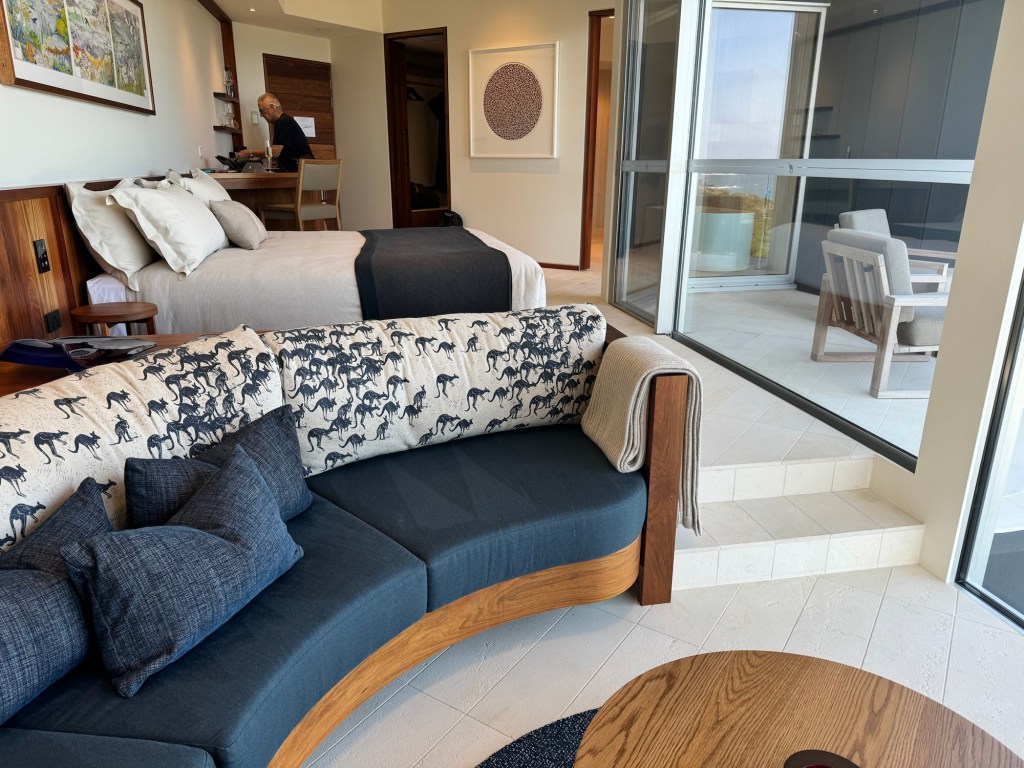
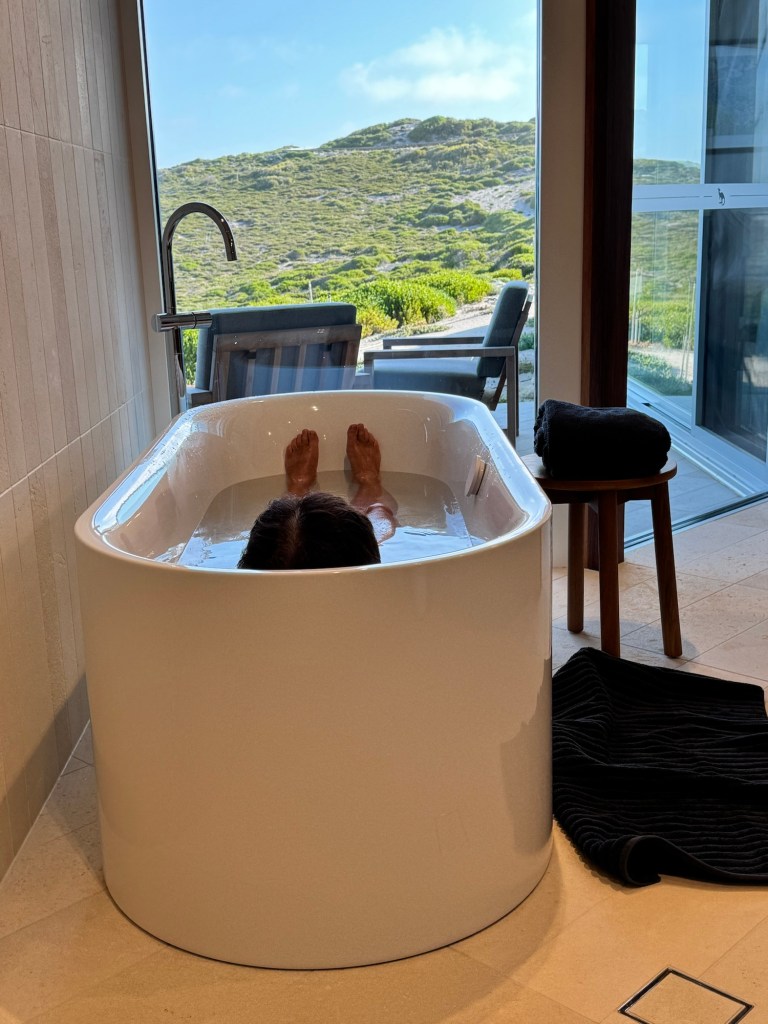
Finally, we arrived at our hotel, the Southern Ocean Lodge. We were glad to stop moving and settle into our rooms with a Southern Ocean view.

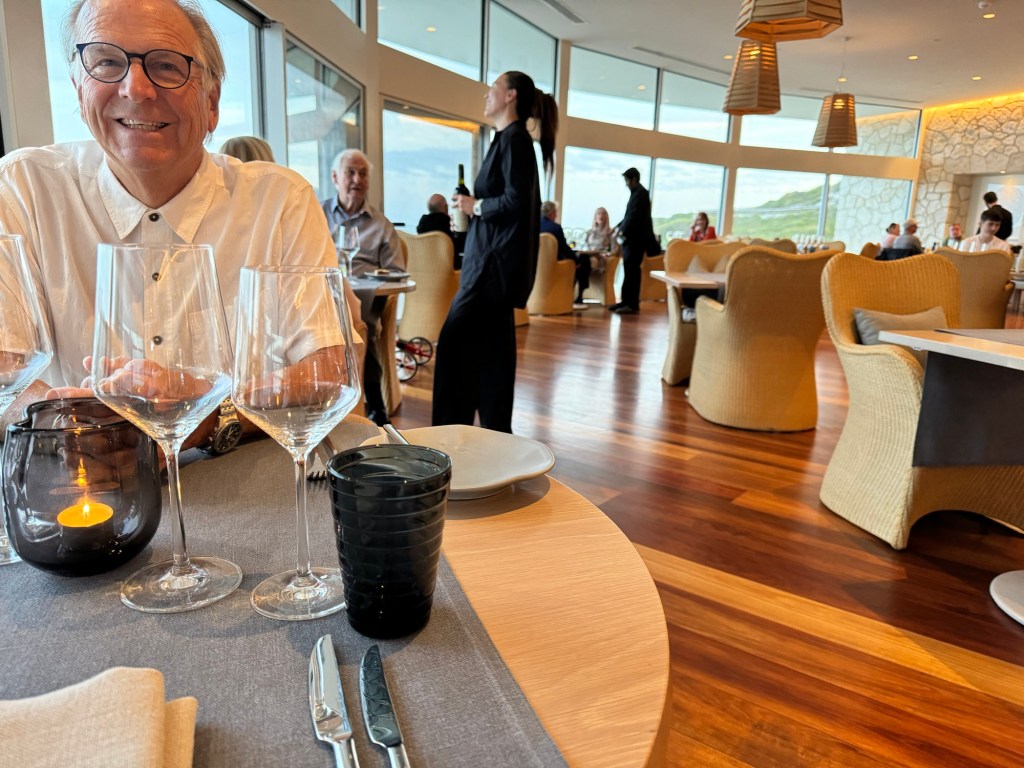
Hotel Restaurant dining room. I was in for a light meal. It was excellent and small.
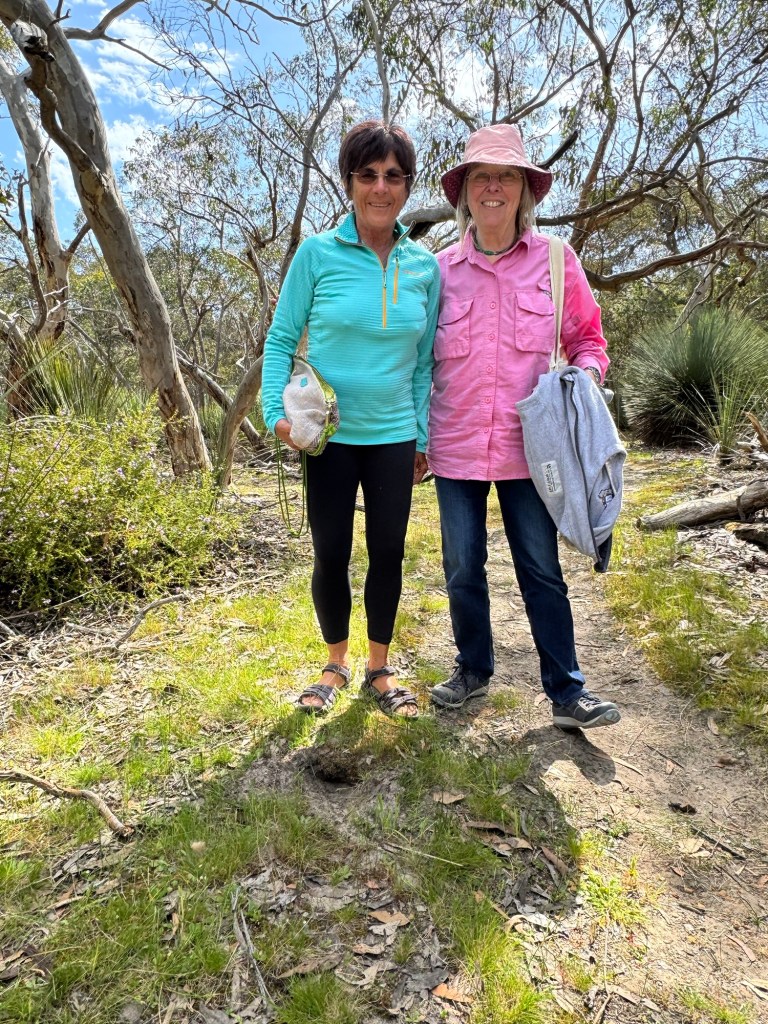
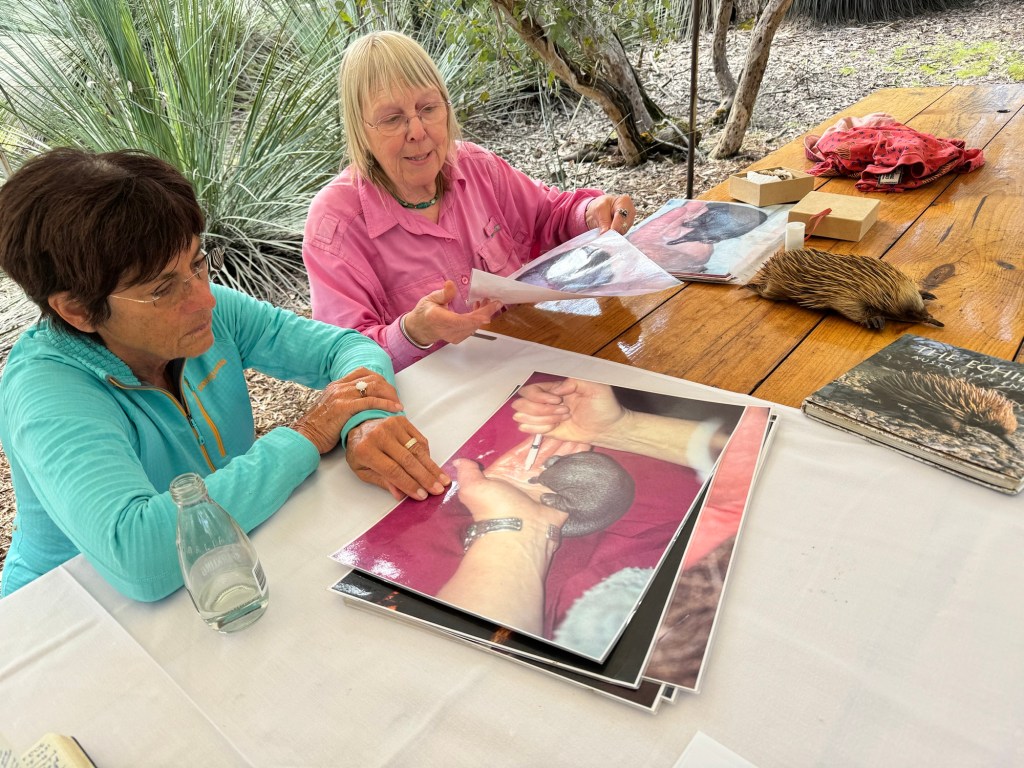
I am standing with Peggy Rismiller over looking an echidna hole in front of my left foot. She has agreed to join us for a picnic lunch and talk about echidnas, a topic she is an expert on. She is an internationally recognized Environmental Physiologist who lives and works on Kangaroo Island and specializes in reptiles including Rosenberg’s goanna.
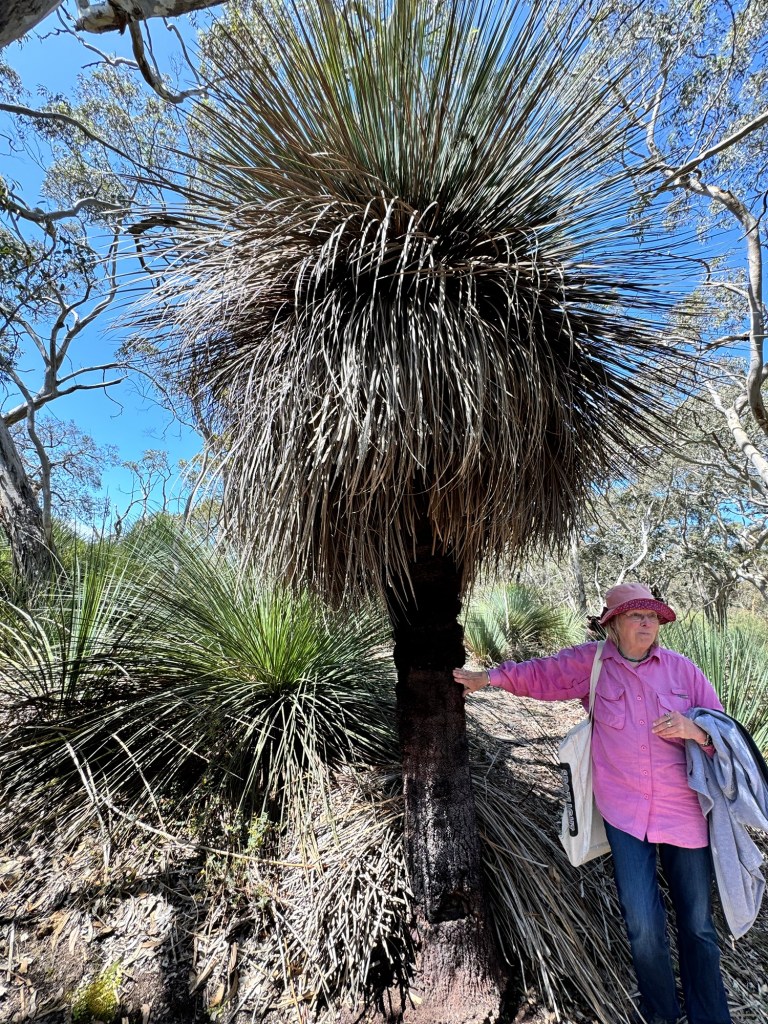
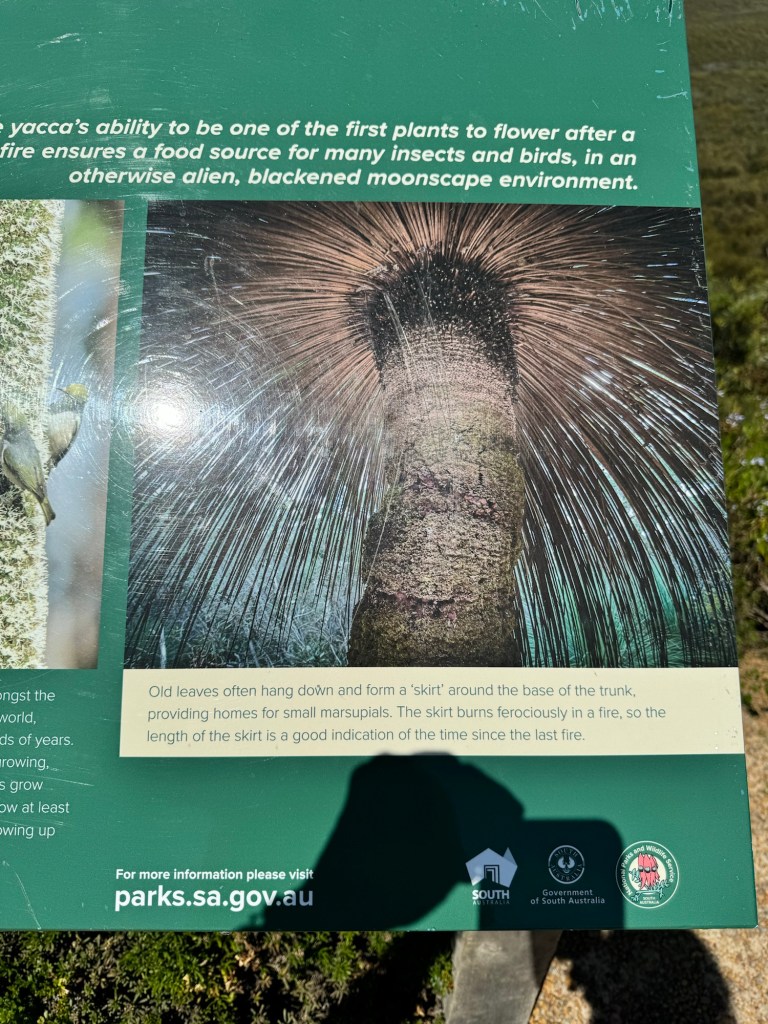
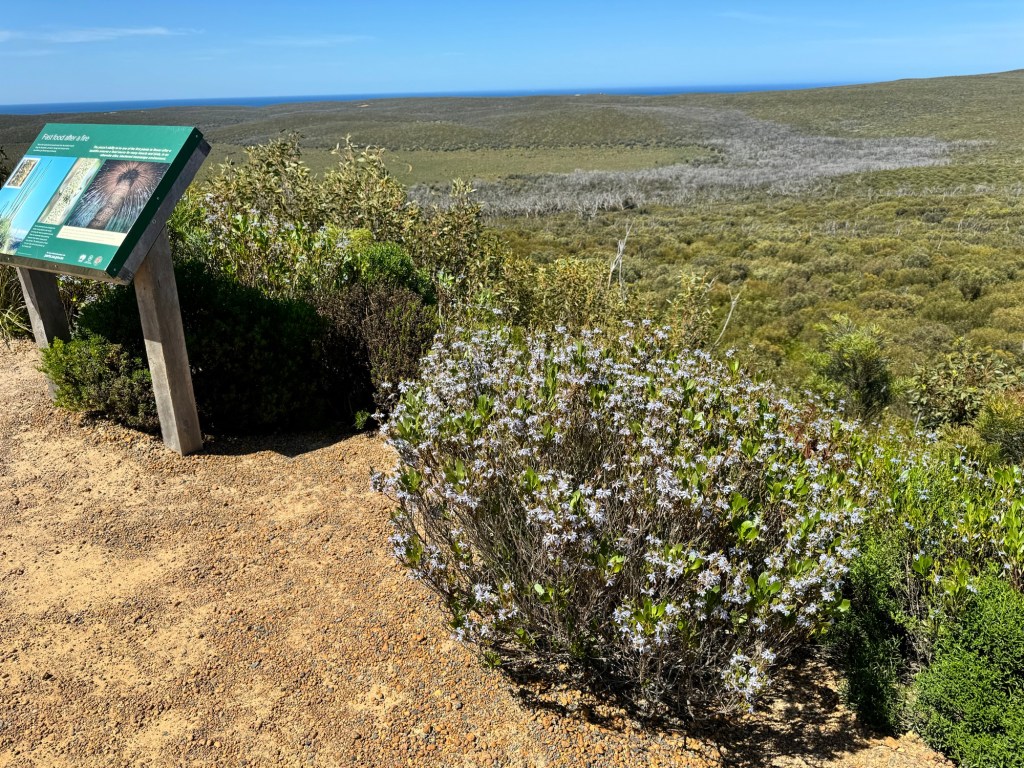
Turns out she knows a lot about many things. In this case, she is telling me that Yakka plants grow a centimeter a year and their leaves protect many tiny animals and invertebrates during fires and winter storms.
After lunch she showed me several photographs of echidna in different stages of growth. In this photo she is feeding a baby. A dead Echidna is on the table in front of her.

Tuesday, October 15, 2024

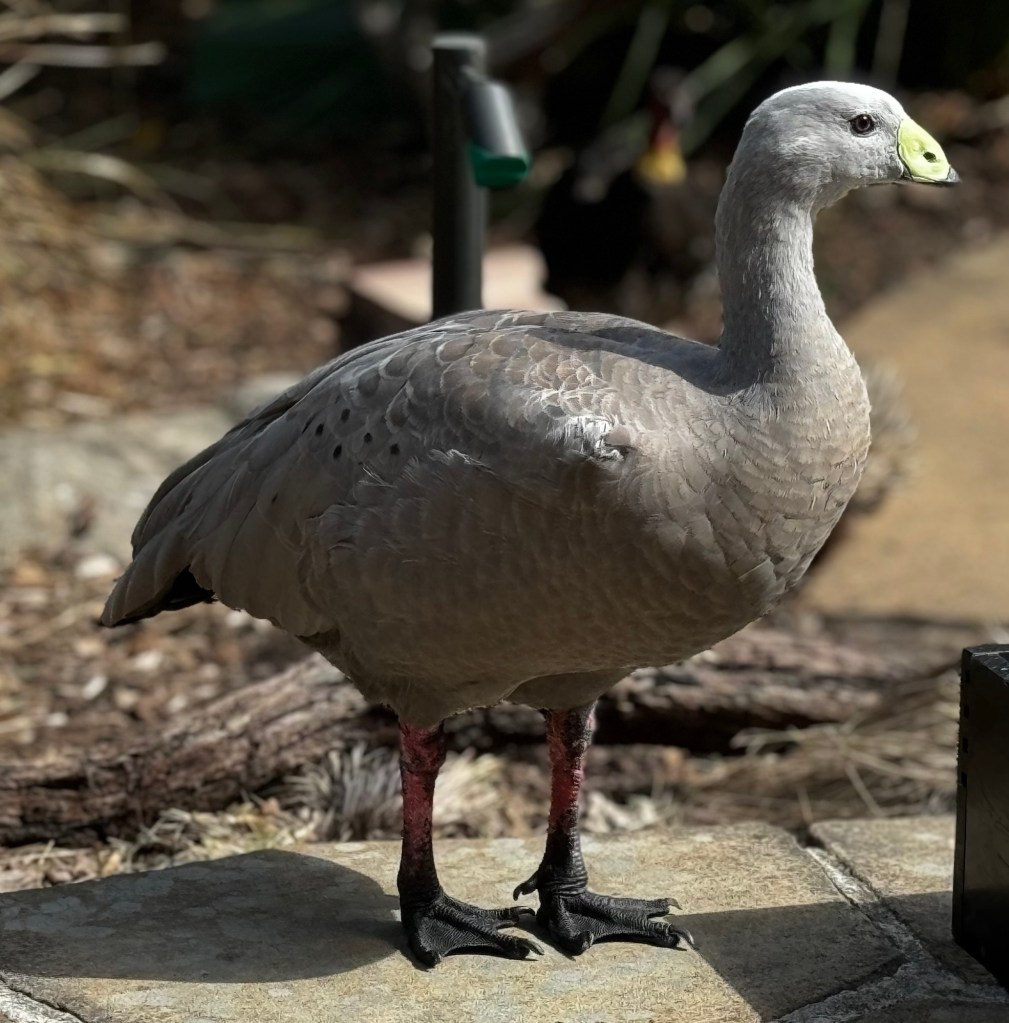
Gray Guinea
Hansons Bay

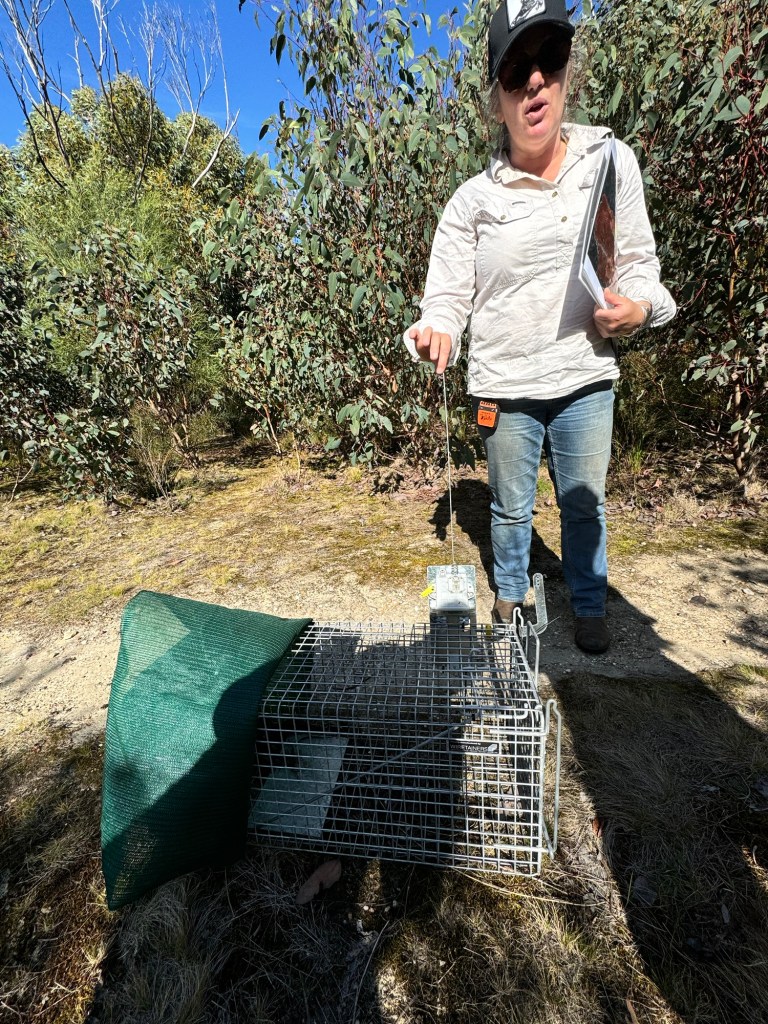
Lee picked us up at 9:30 and off we went to the nearby Hansons Bay to get a look. Then we continued to a rendezvous place to meet Heidi Griffey, a Dutch conservator whose goal is to eradicate feral cats on the island. She owns 200 acres of her own and works with other small land owners to capture and eradicate the unwanted animals.

Heidi demonstrates her cat capture process, which is baited with chicken wings or cat urine. This method catches too many animals besides cats so it is being phased out.
This machine is capable of face recognition and sprays poison on the recognized cat, which licks itself, goes to sleep and then dies, both methods are successful and do not require much attention. However the machine is costly. Heidi is trying to develop more funding as many farmers cannot pay for the machine.
Having tea with Heidi, Lee and Mark
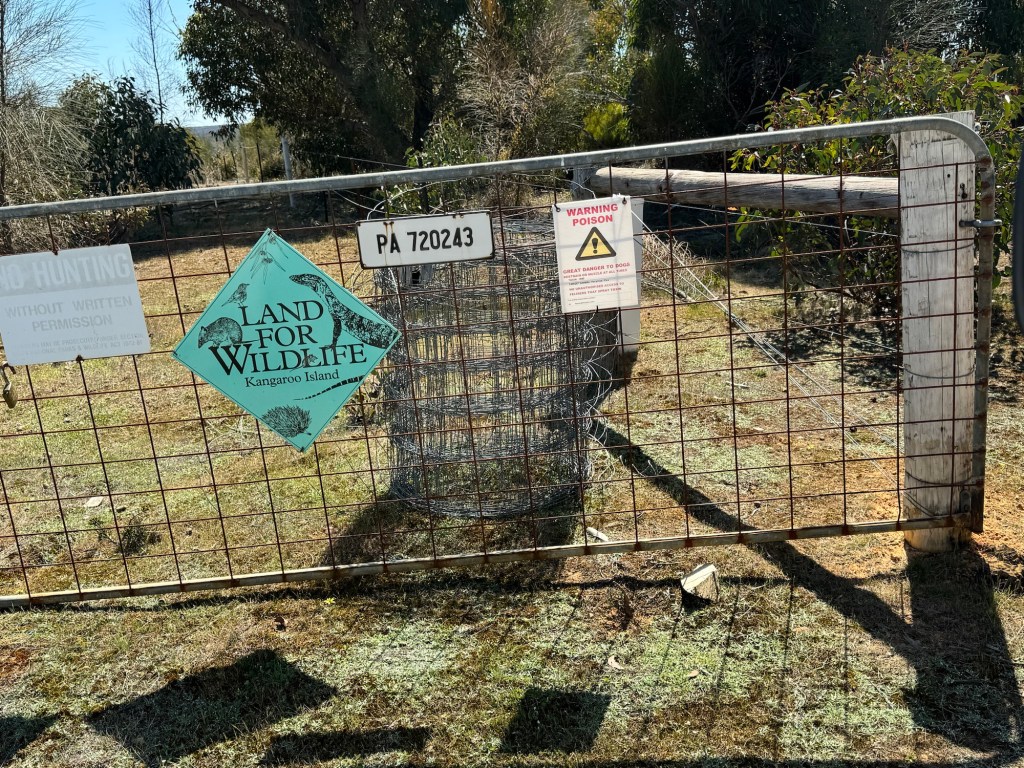
Heidi’s fence with her Land For Wildlife sign.

After we left Heidi, we checked into Flinders Chase National Park Headquarters to get permission to enter.

Wednesday, October 16, 2024

Meet Lee at 9:30 for a day of exploring beaches. But first, Mark fortified himself with an Eggs Benedict that had smashed peas in it.

As we headed north for the Western River Cove, we stopped along the way to see some fencing to get a good look at what they call varmit fencing that we refer to as hog wire. All the fencing is new due to the huge fire that wiped out so very much in 2019-20. The landscape is a beautiful green where the trees have been cut. The sheep have just been sheered and they look very happy. The hog style fencing is installed so the bottom foot is folded out away from the protected area. There is no barbed wire on the top. A lot of trees still need to be removed, but much has been done and both people and animals are slowly recovering.

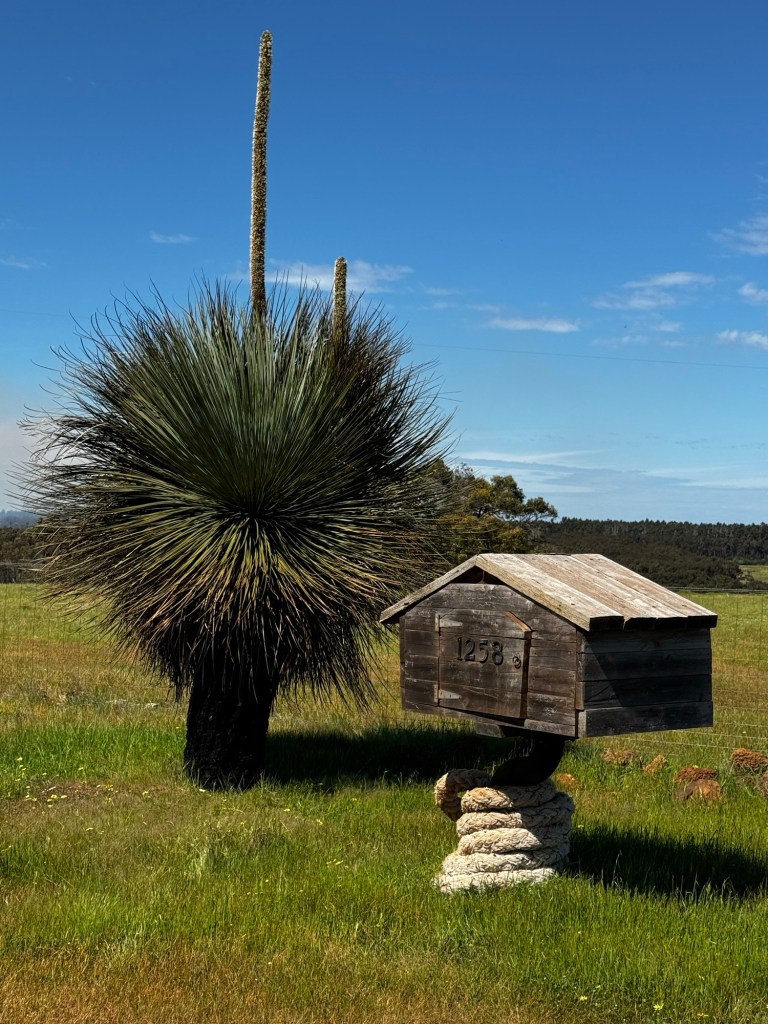
A rural mail box and a yucca tree that is just finishing flowering
A Willy Wagtail

At the convergence of the Western RIver with the Beach, we walked across a foot bridge and had a close encounter with a Willie Wagtail, who danced around for a long time, before flying away.

After a pleasant hour on the lovely and nearly deserted beach, we drove on to our next Beach experience, Snelling Beach. Along the way we saw a few koala in the trees. This was our lunch stop and Lee served a delicious spread of meats and salad. This beach was almost as nice as Western River Cove.

Snelling Beach
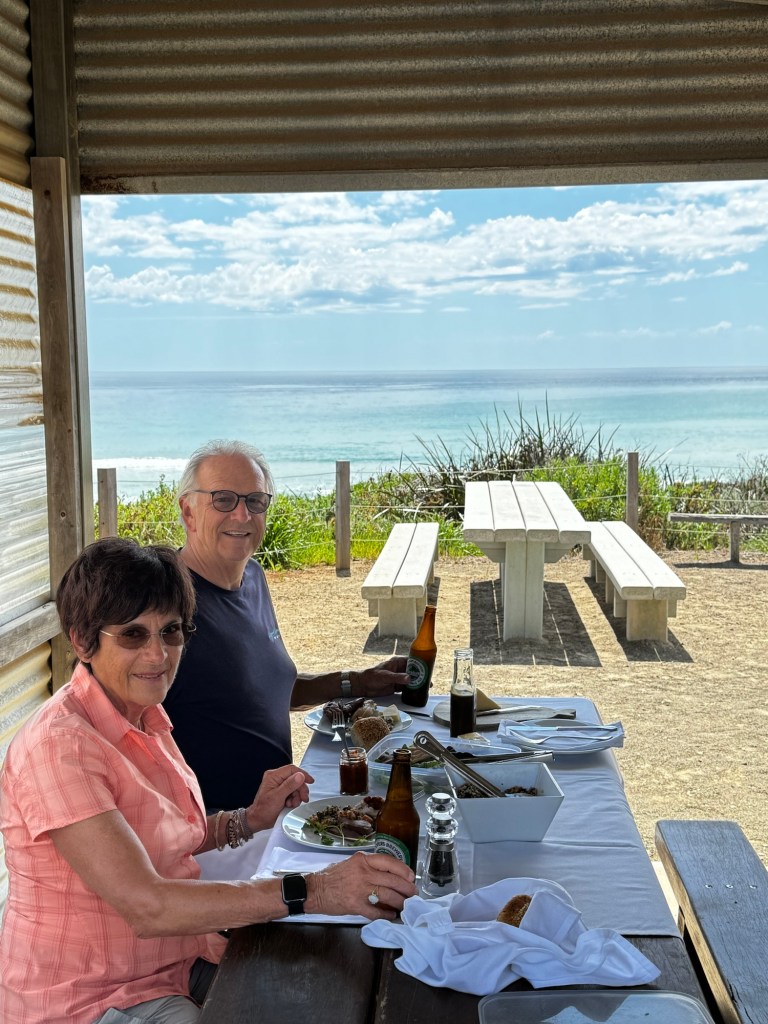
Lunch at Snelling Beach

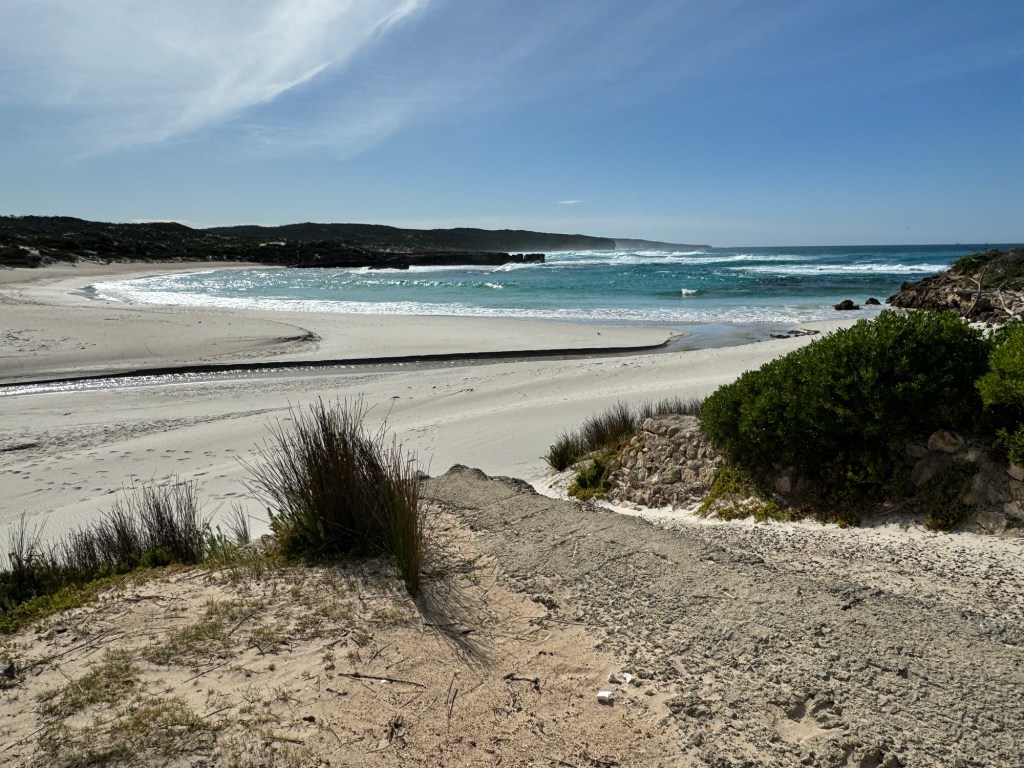
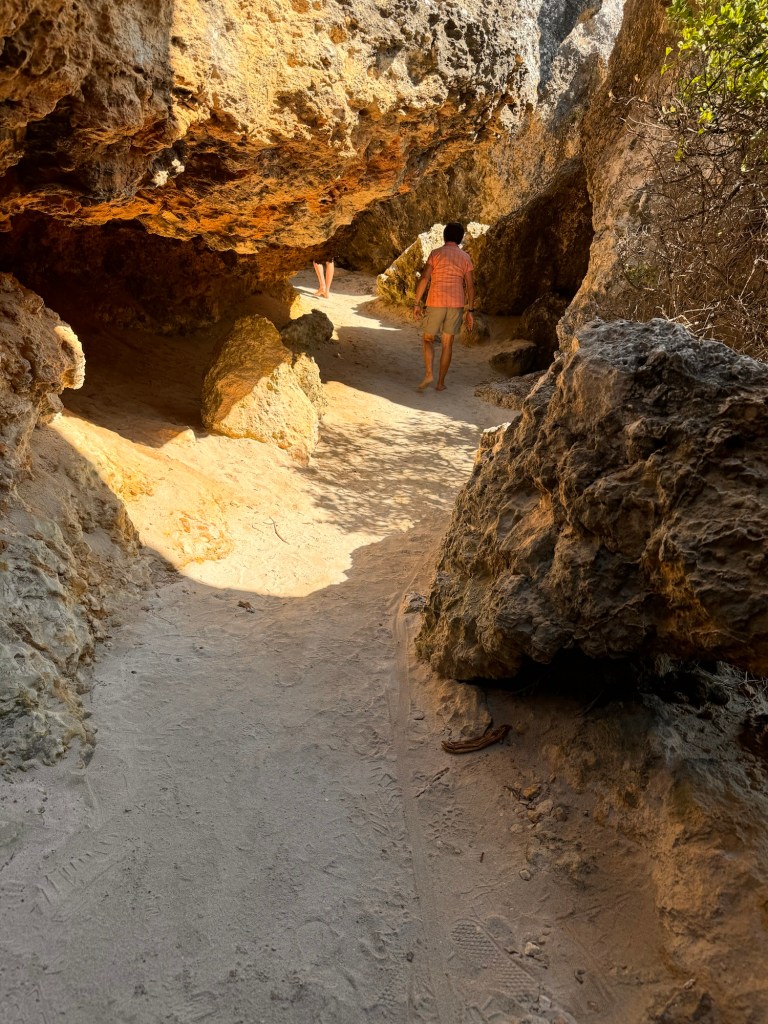
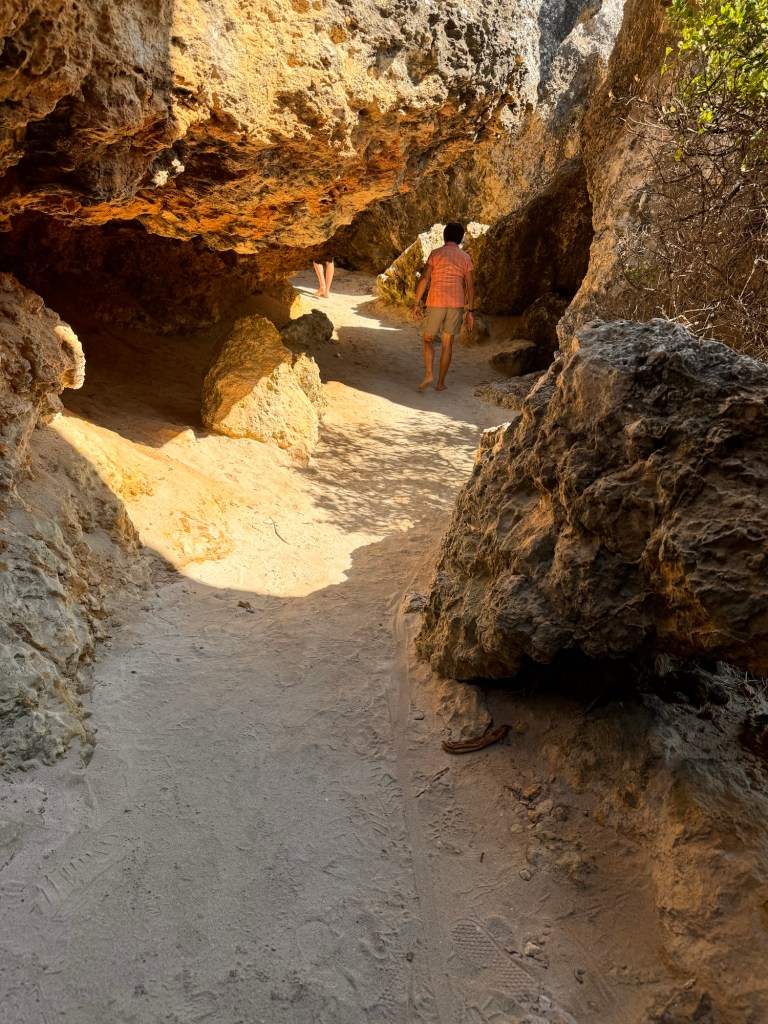
Our last beach of the day was Stokes Bay and Lee was looking forward to showing us a special tunnel. When we arrived we were not impressed with what we saw as the beach was full of rocks, dried kelp, pebbles and trash. Then he told us to follow him and soon we were navigating a narrow passage among large boulders.

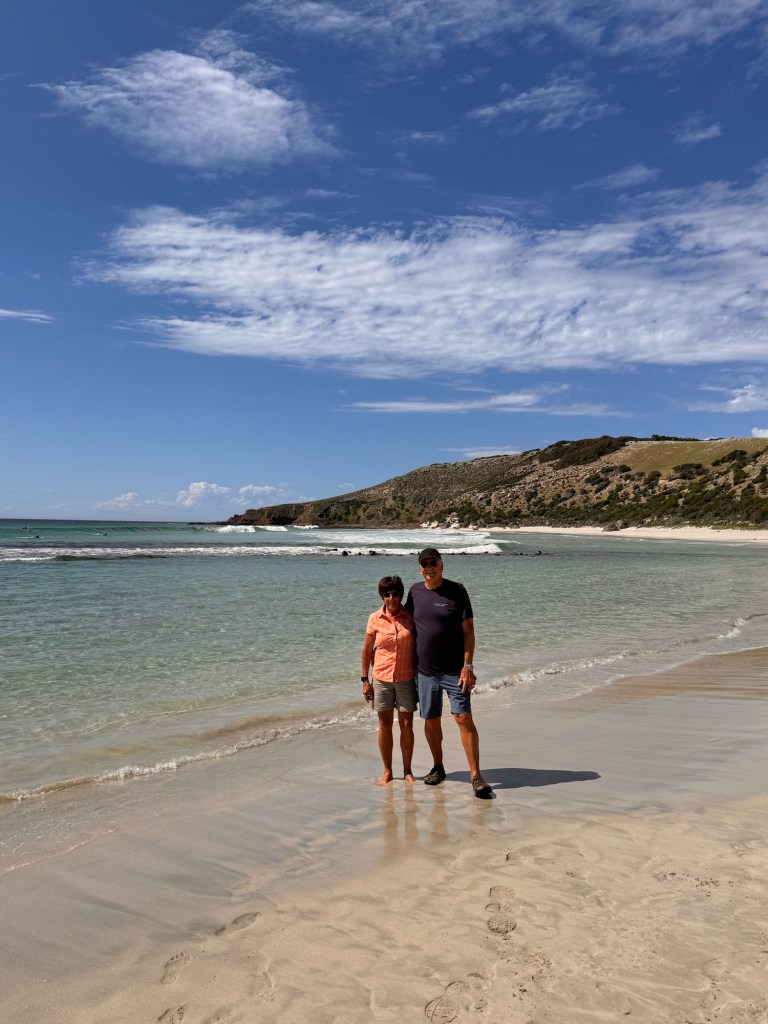
Eventually we passed the last boulder and stepped into the sunshine on another beautiful beach. What a pleasant surprise. After a pleasant walk on this beach, we headed back to the hotel.

The beach on the far side of the tunnel at Stokes Bay

It turns out Kangaroo Island is full of lovely beaches and the locals are very spoiled. The water is pretty cold, but not uncomfortable in late spring and summer.

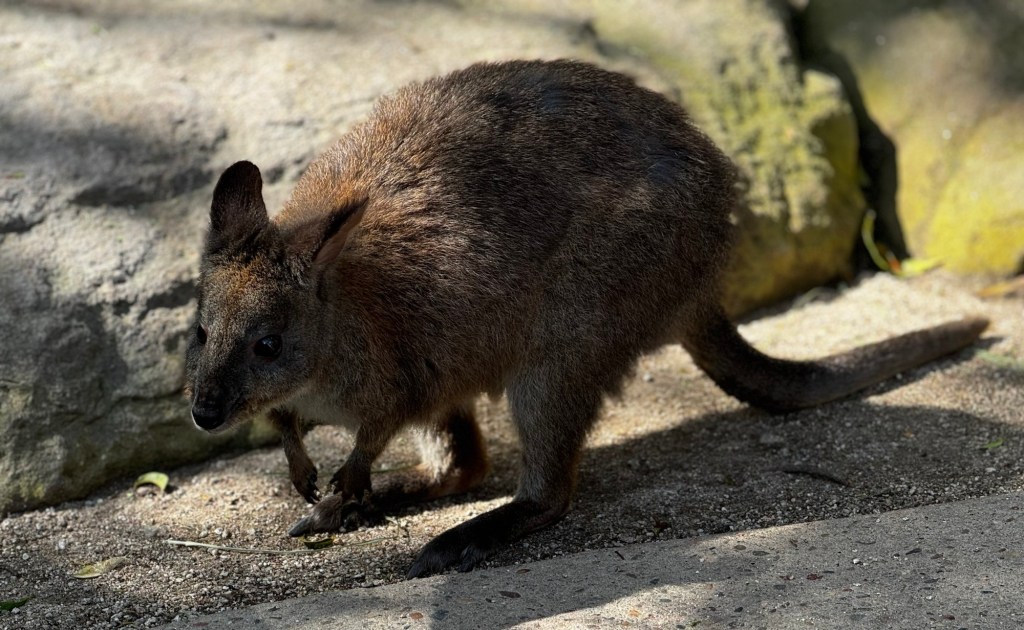
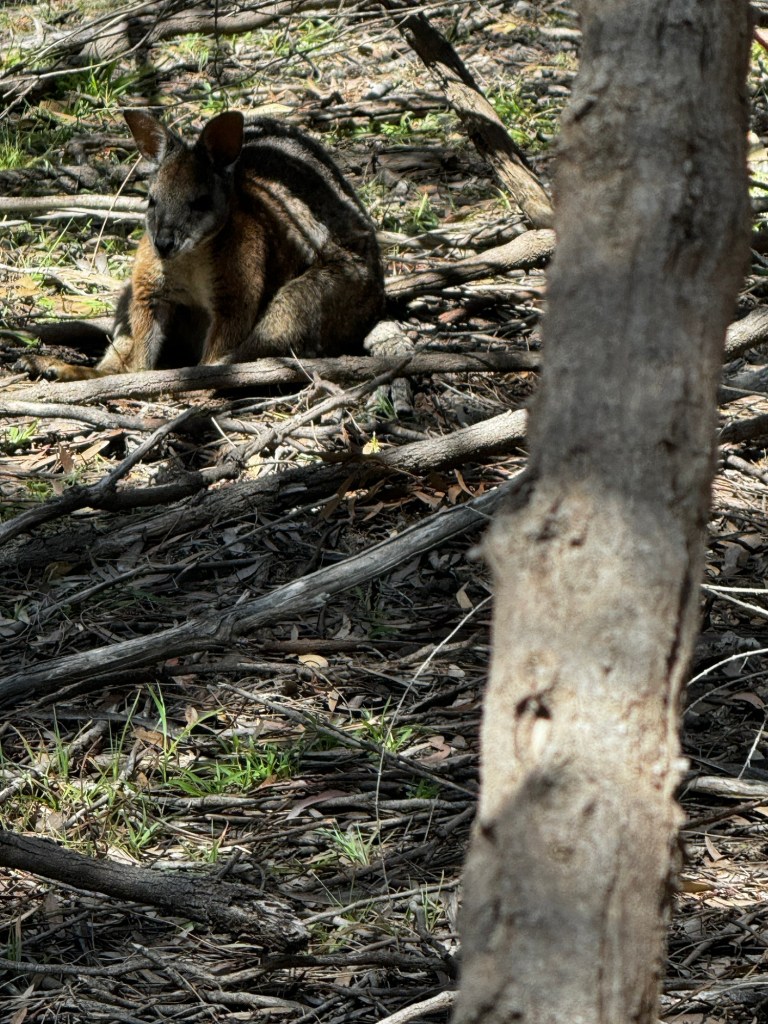
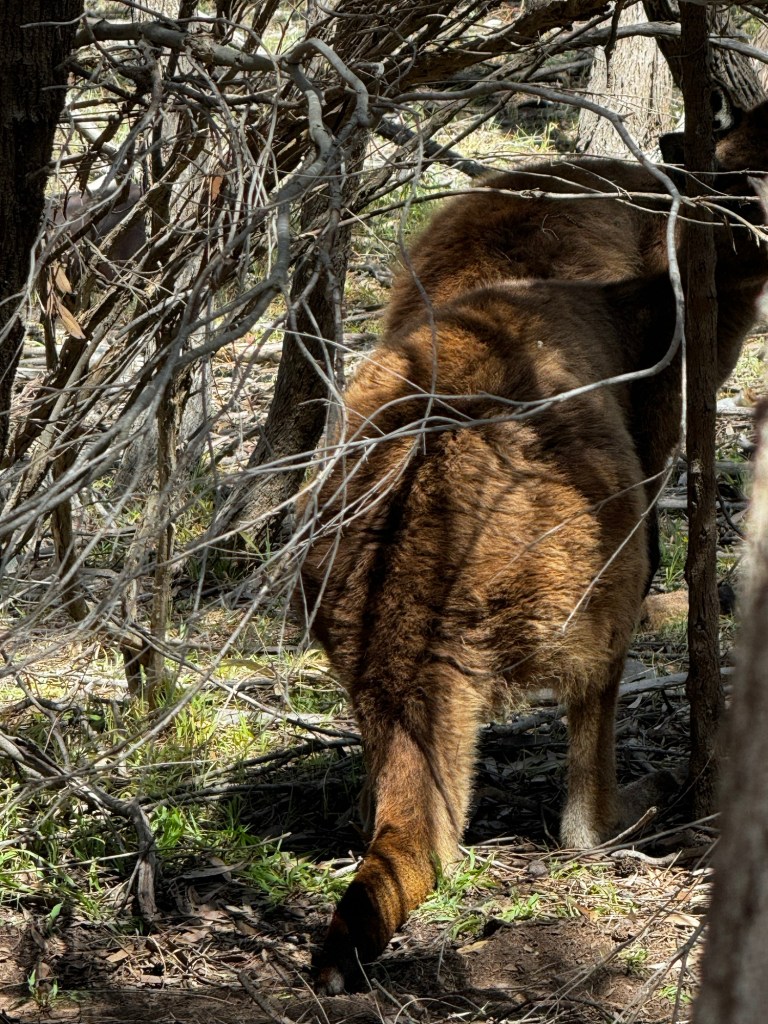
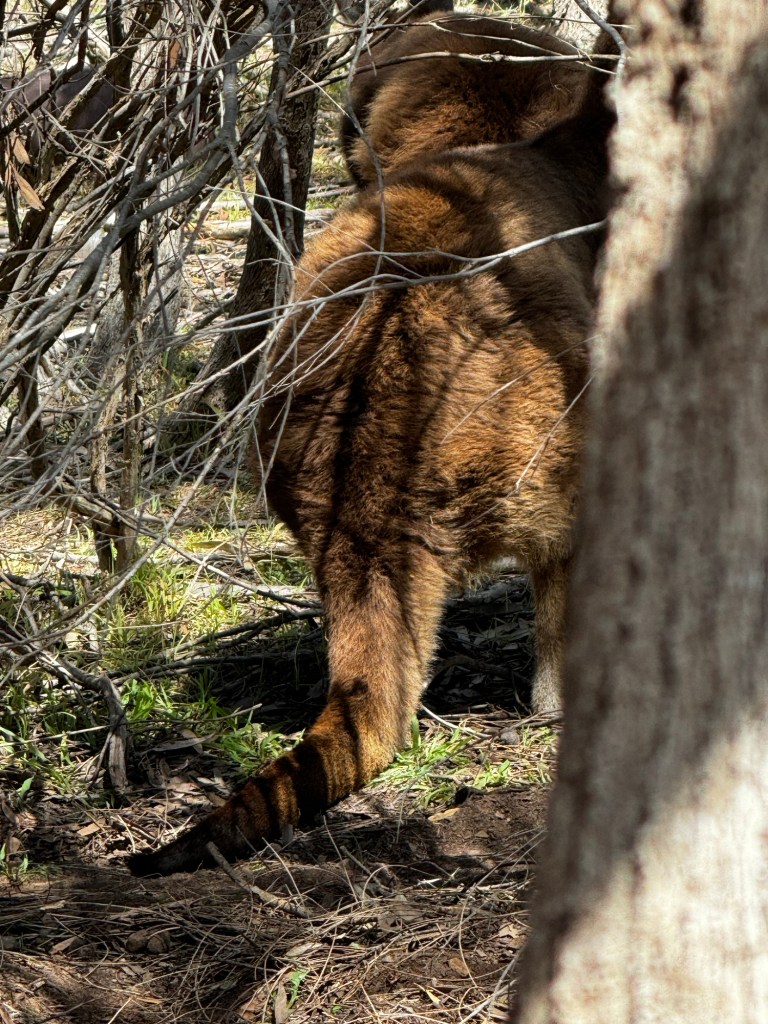
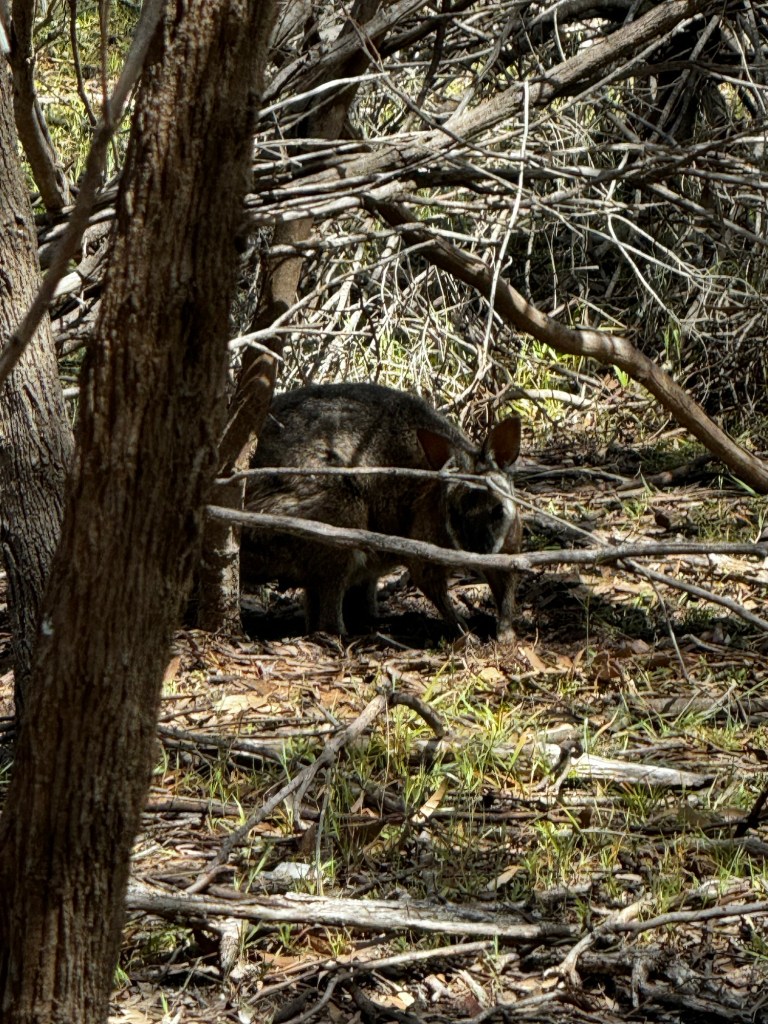
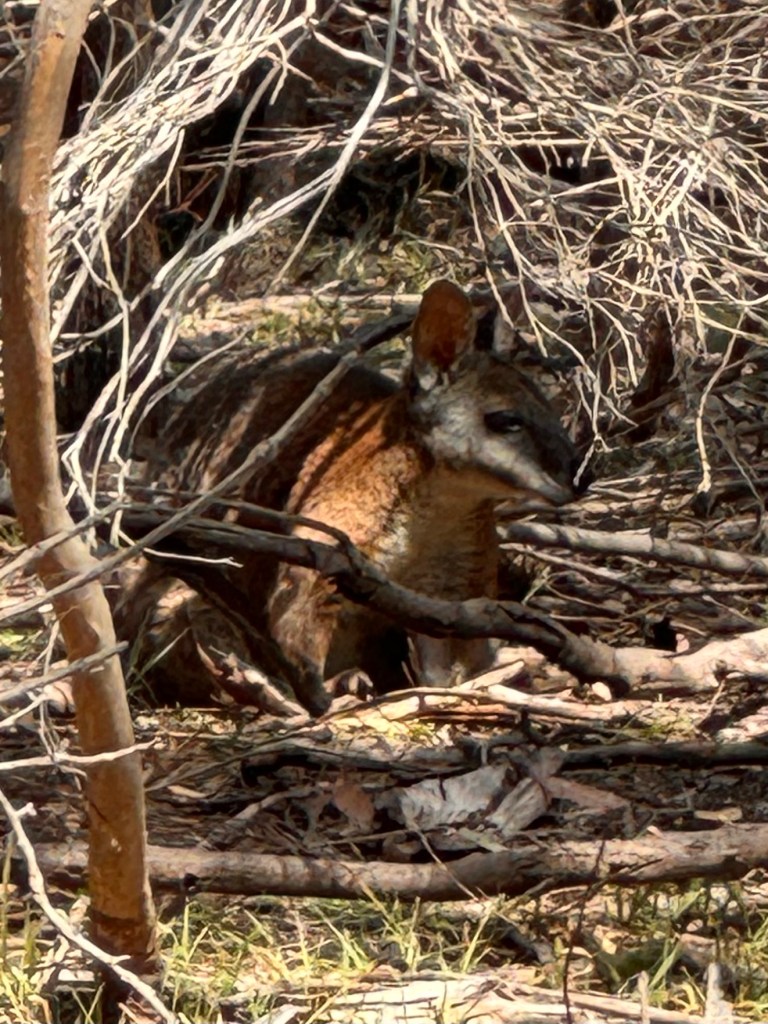
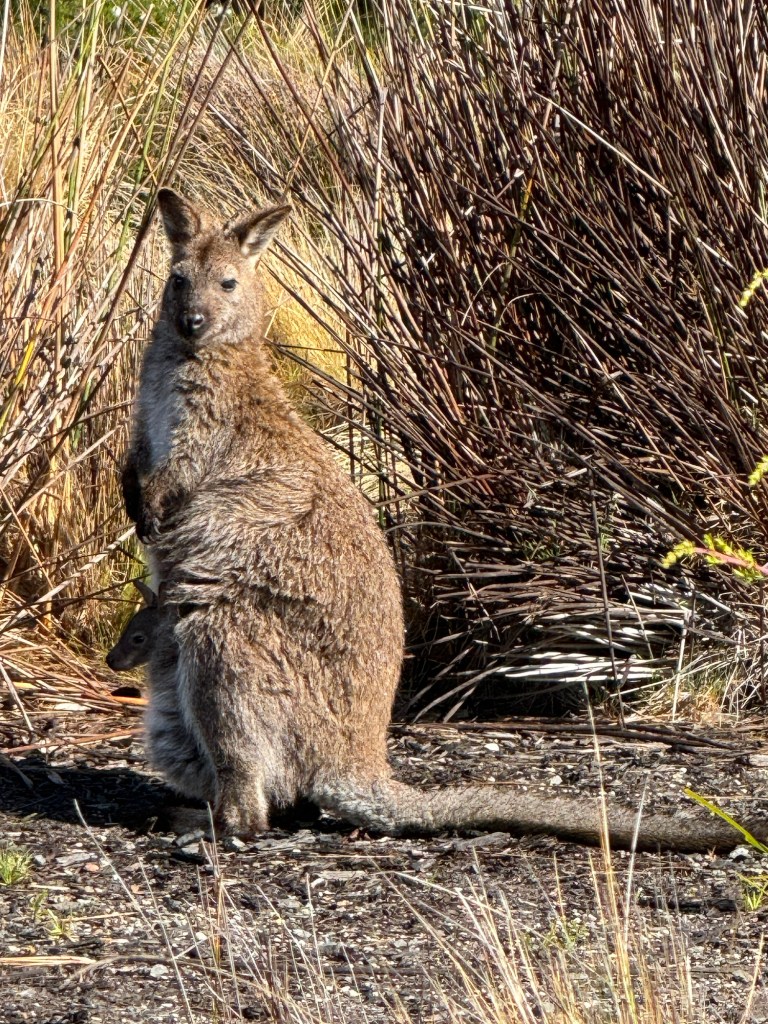
On the way back to the lodge from the north coast beaches, Lee spotted several wallabys and Mark was able to snap this one. Really good of him as Tammer is the only wallaby on Kangaroo Island.

A Tammer Wallaby hiding in the bush.

Thursday, October 17, 2024

It is Thursday morning and we are sitting at the airport terminal waiting for our Quanta’s flight to Adelaide followed by another wait for an onward flight to Newcastle. So I end this most southerly part of our trip.

South Australian Outback

Tuesday, October 8, 2024

Southern half of South Australia

Depart Hobart at 9am. Transit Melbourne and arrive Adelaide in South Australia at 4pm. We had only one afternoon and evening in Adelaide. We walked around a few streets and ended up in a neighborhood of massage parlors and strip clubs. There were a number of restaurants and we settled on one called ShoboSho, that was Japanese fusion. We had two kinds of potstickers that were excellent. The place was full of young people. Adelaide seems like a nice city with a defined one mile square plan surrounded by parklands. It is named for Queen Adelaide, who was the wife of King William the IV. The city was founded in 1836.

Wednesday, October 9, 2024, Our 31st wedding anniversary. Mark gave me a lovely anniversary card. I forgot to reciprocate, as usual, when we are traveling. Very sorry Mark.

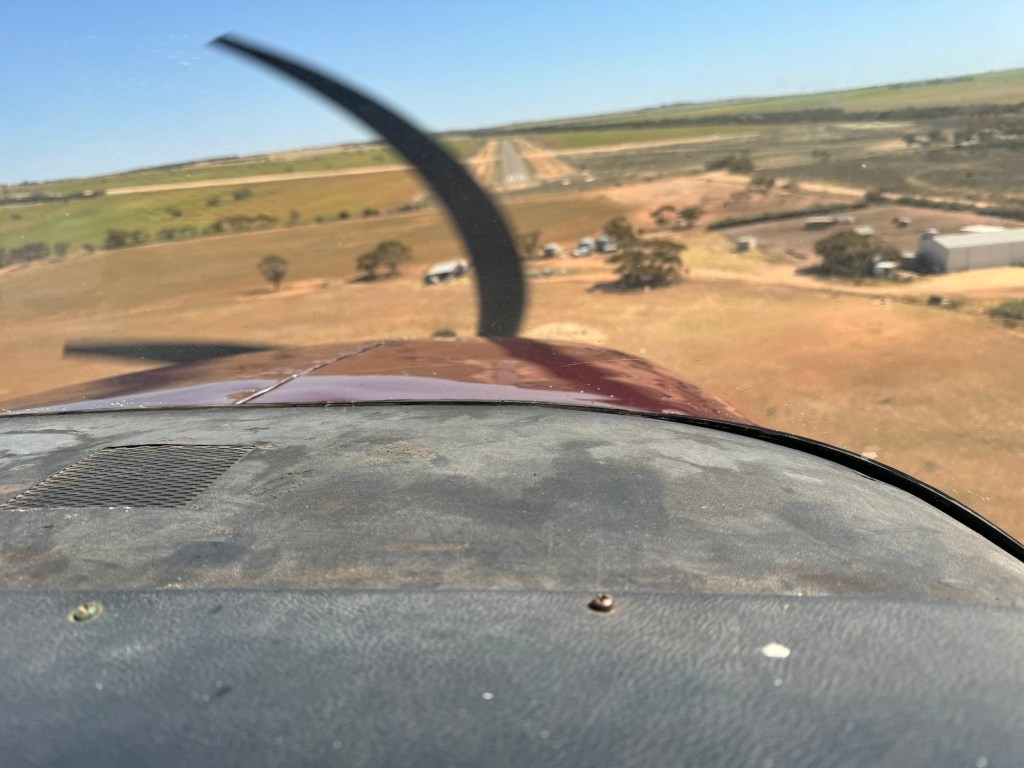
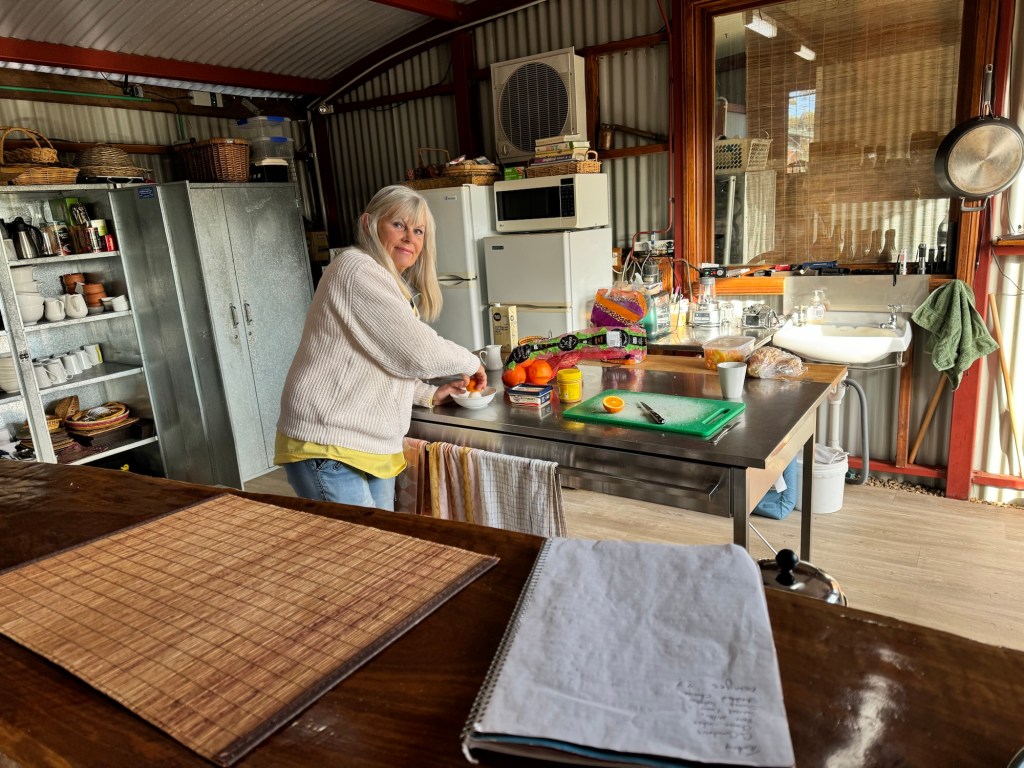
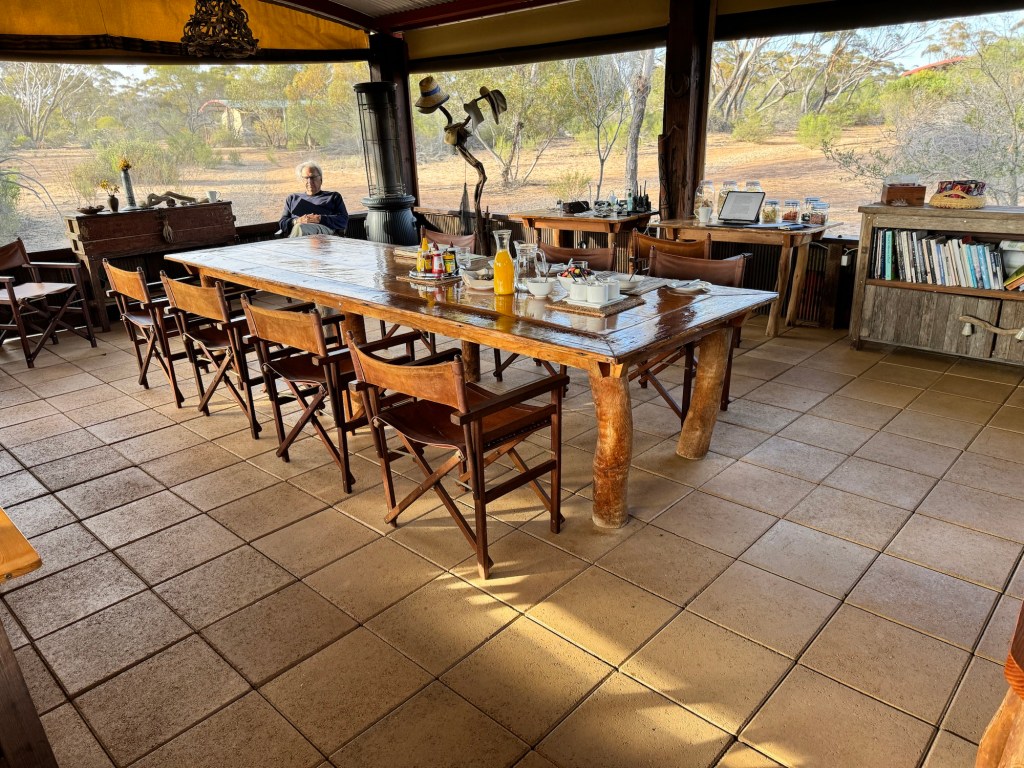
We leave Adelaide at 9am in a Cessna 210 and arrive Wudinna, a thriving town of 600 people, at 10:30. It is a successful farming community due to wheat, barley and canola being grown locally and sold to China and Saudi Arabia. Getting out of the plane, we were surrounded by flies, lots of flies, all trying to gain access to my mouth, eyes and nose, which was disturbing at first. Met by our camp driver/guide, Rosie Woodford Ganf, who seemed unfazed by the flies and chatted away while driving us 40 minutes to Kangaluna Camp next to Gawler Ranges National Park. Flies were everywhere and drove us a bit nuts. Fortunately our tent and the dining tents were screened. We are told to use face nets if we can’t stand the flies.

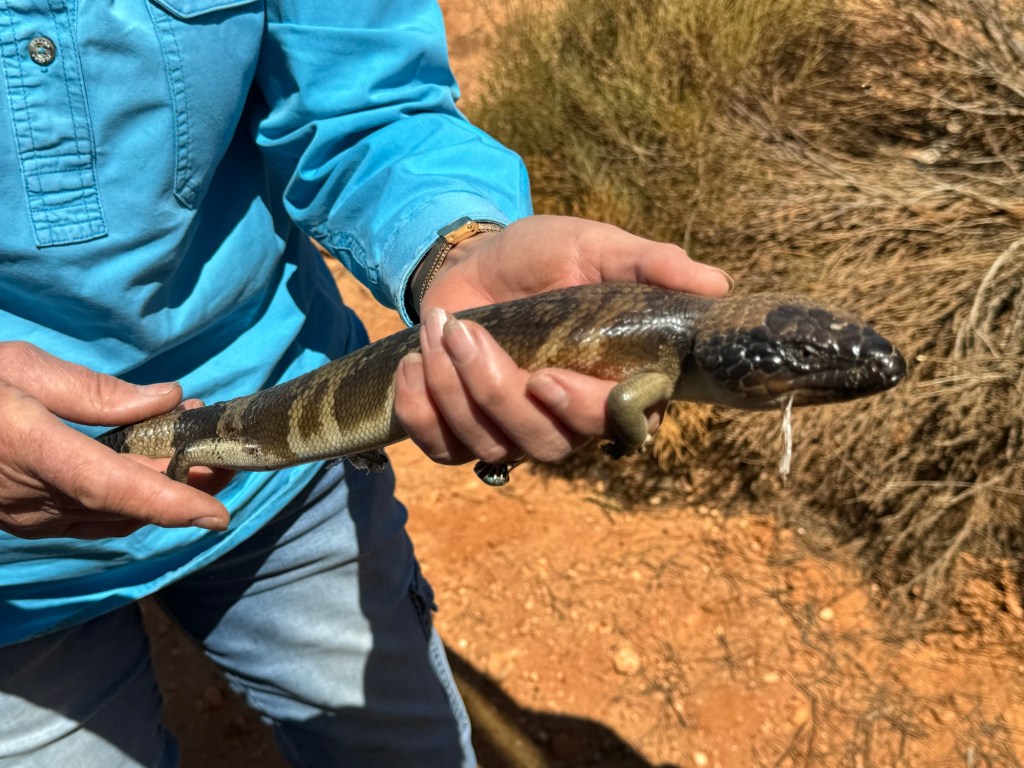
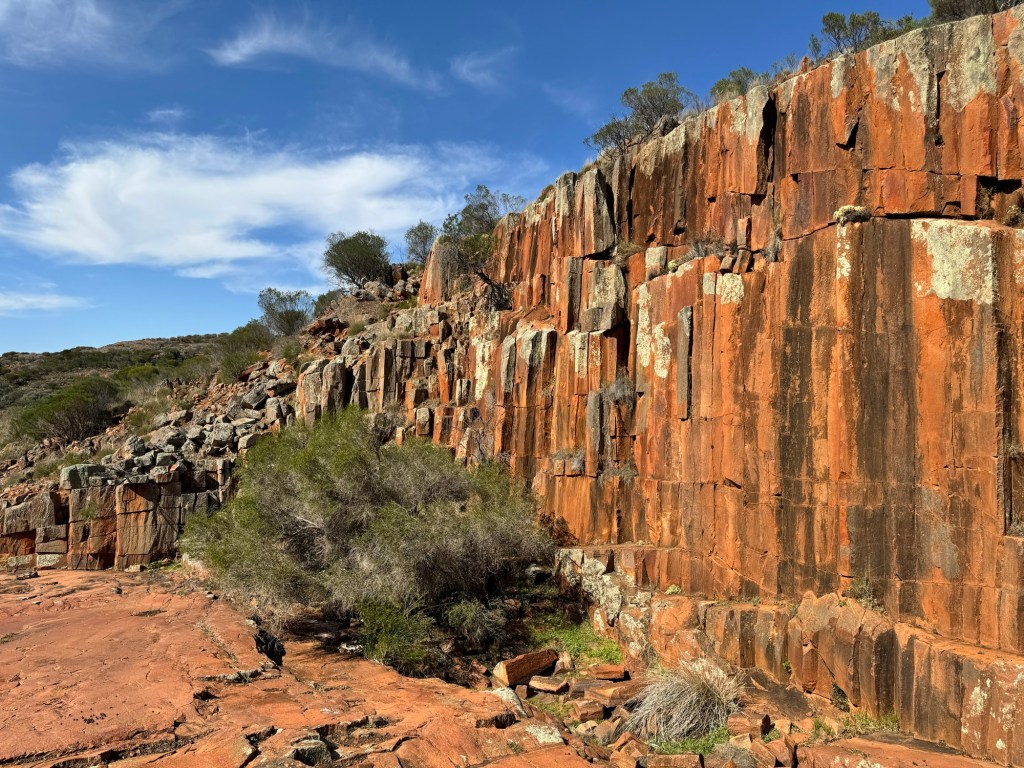
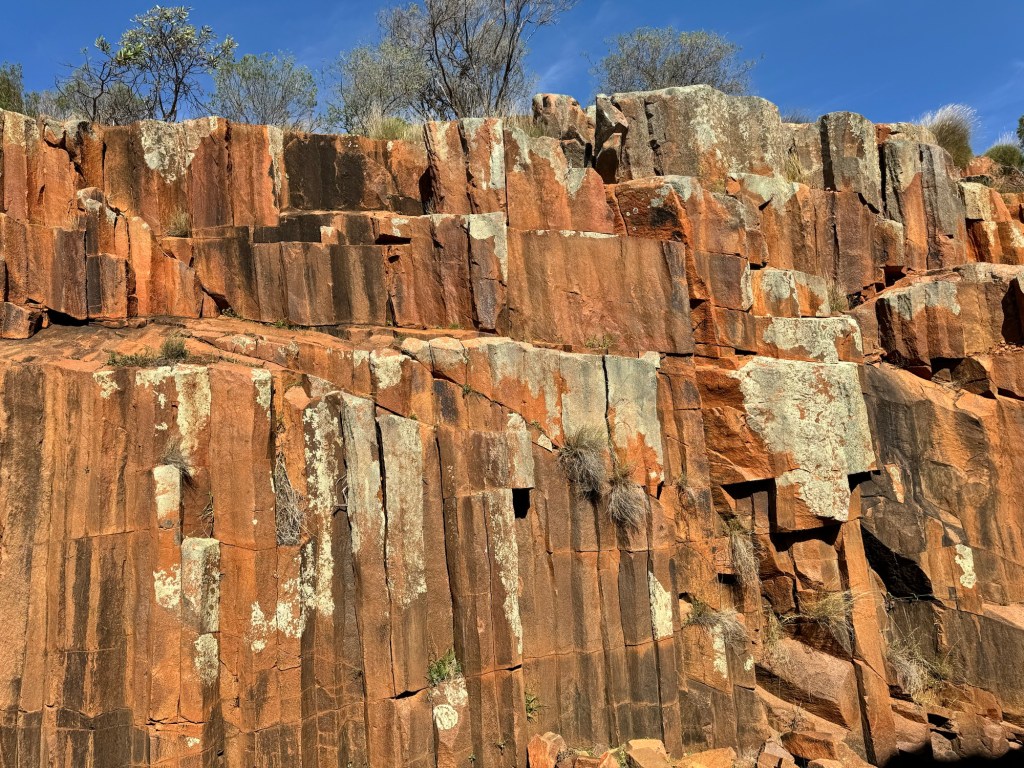
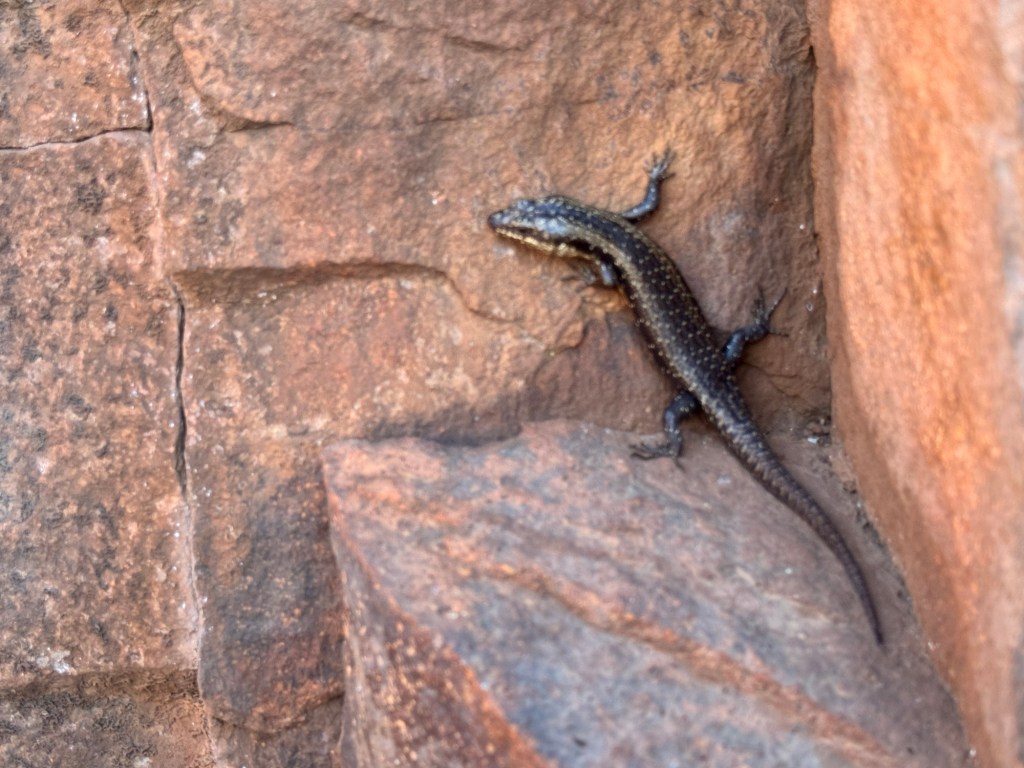
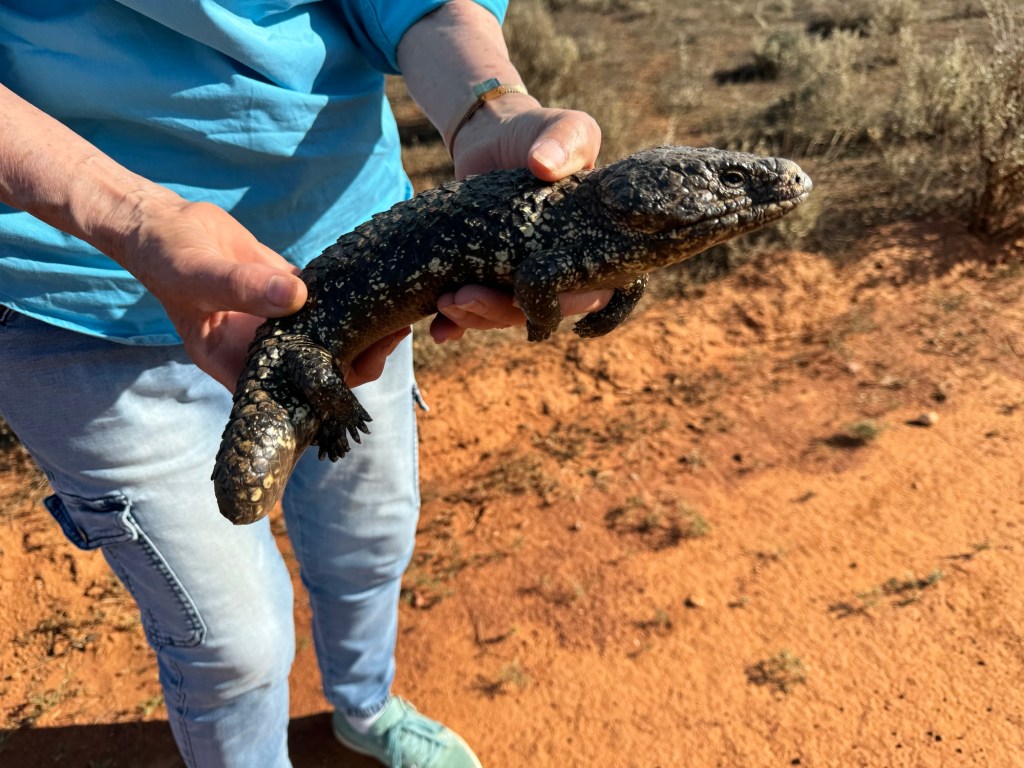
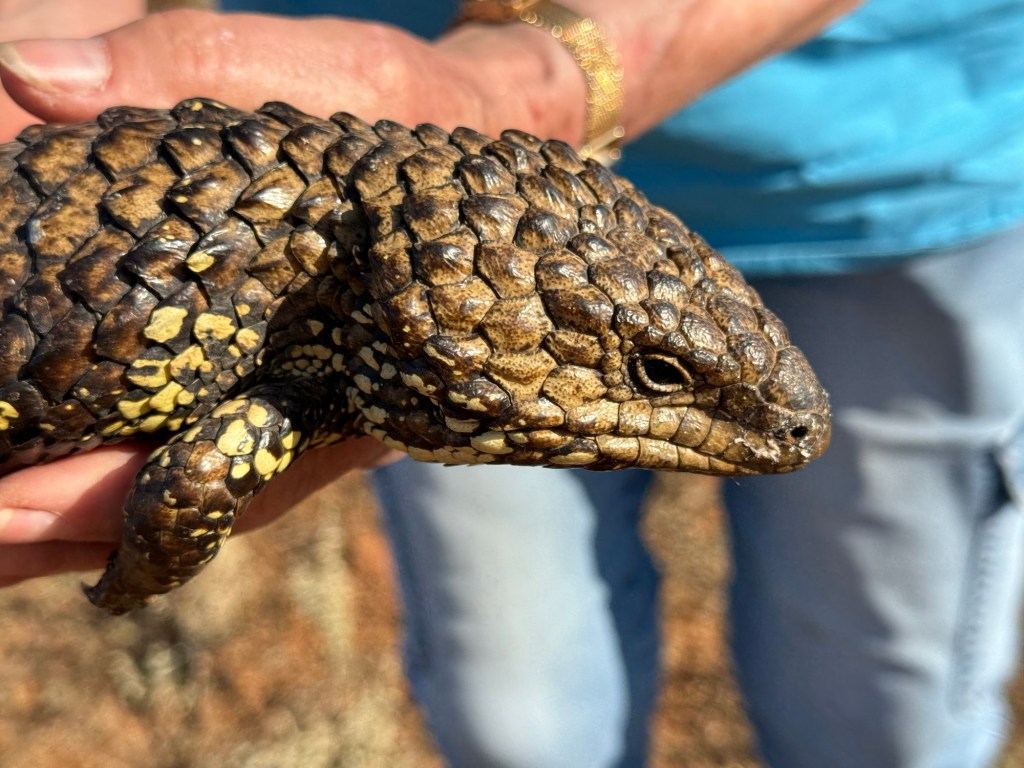
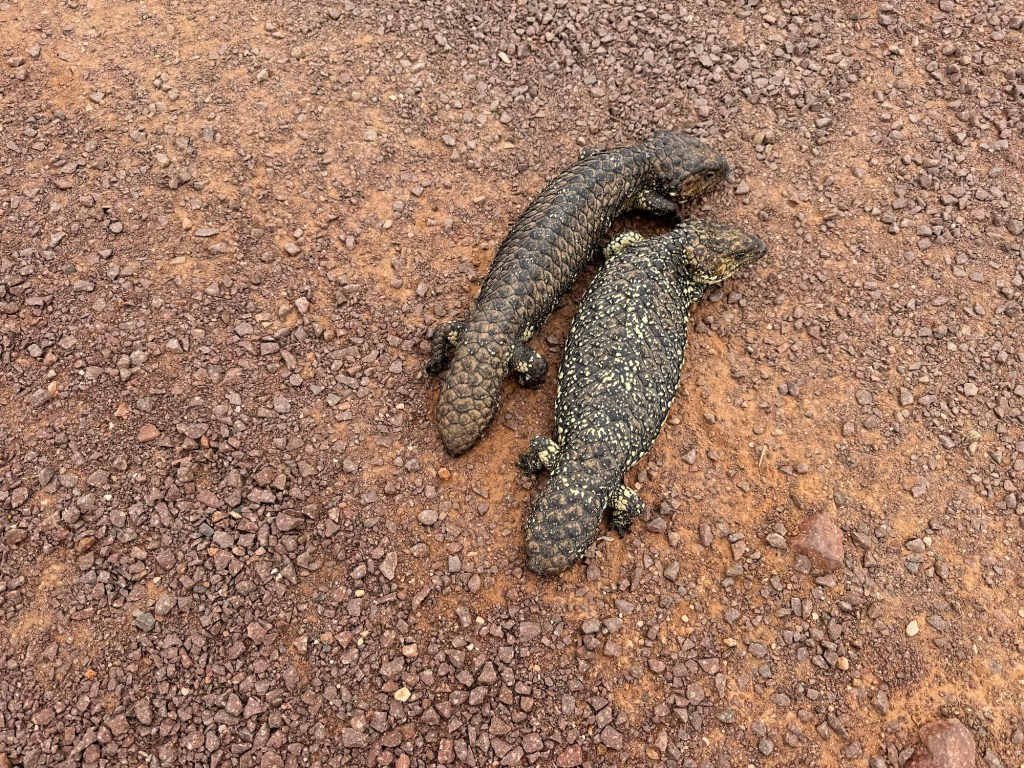
We had lunch and moved into our tent. Late afternoon Rosie took us Mirica Falls, which has no water, but where we had nibbles and drinks. The falls are made of Rhyolite and look like Devils Post Pile in Mammoth Lakes. They are red instead of black. We got some photos of a water skink who happily ate the chopped carrot we gave it. Rosie had no trouble picking up a couple of Shingle back or sleepy skinks as well as the blue tongue. They are slow reptiles that mate for life and live about 3 years. Colorful creatures for sure. On the way back to camp we finally spotted a wombat next to its hole. Not very close but the best we could do.

Southern hairy Nose Wombat

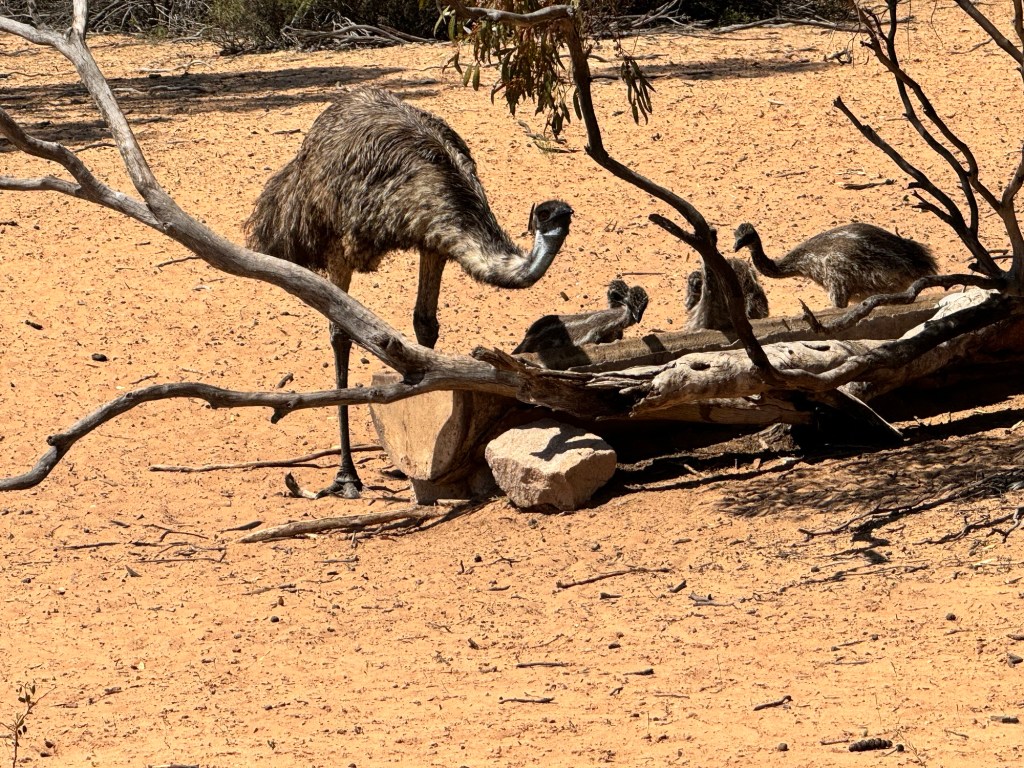
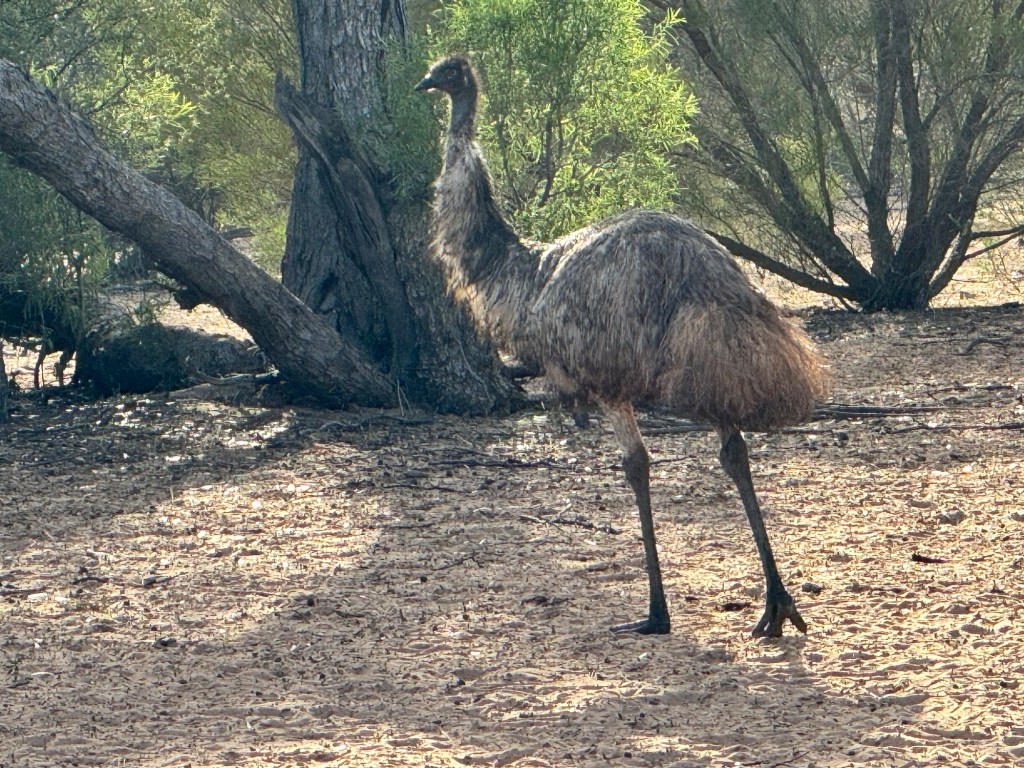
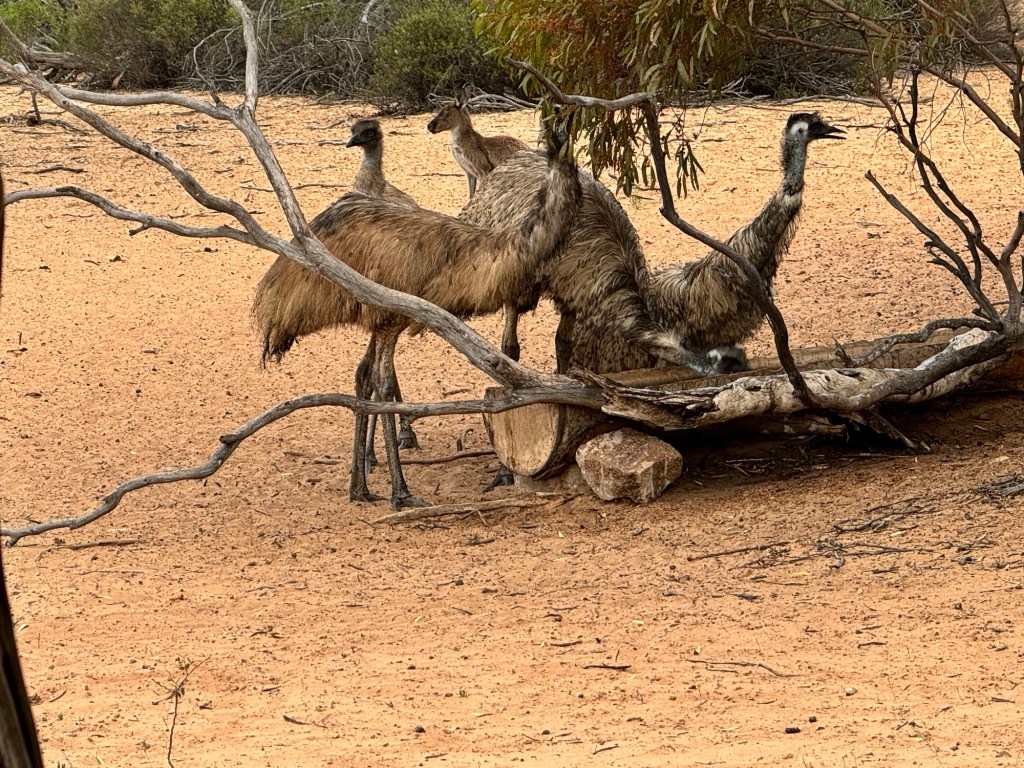
Back at camp, Rosie and Jeff Scholz, the manager and cook of the camp, chatted with us while they made dinner. As we are the only guests in camp at the moment, the conversation was casual and friendly. Just outside the dining tent we saw several Emu, kangaroos and birds. It was a bit like being at a water hole in an African camp—with different creatures.

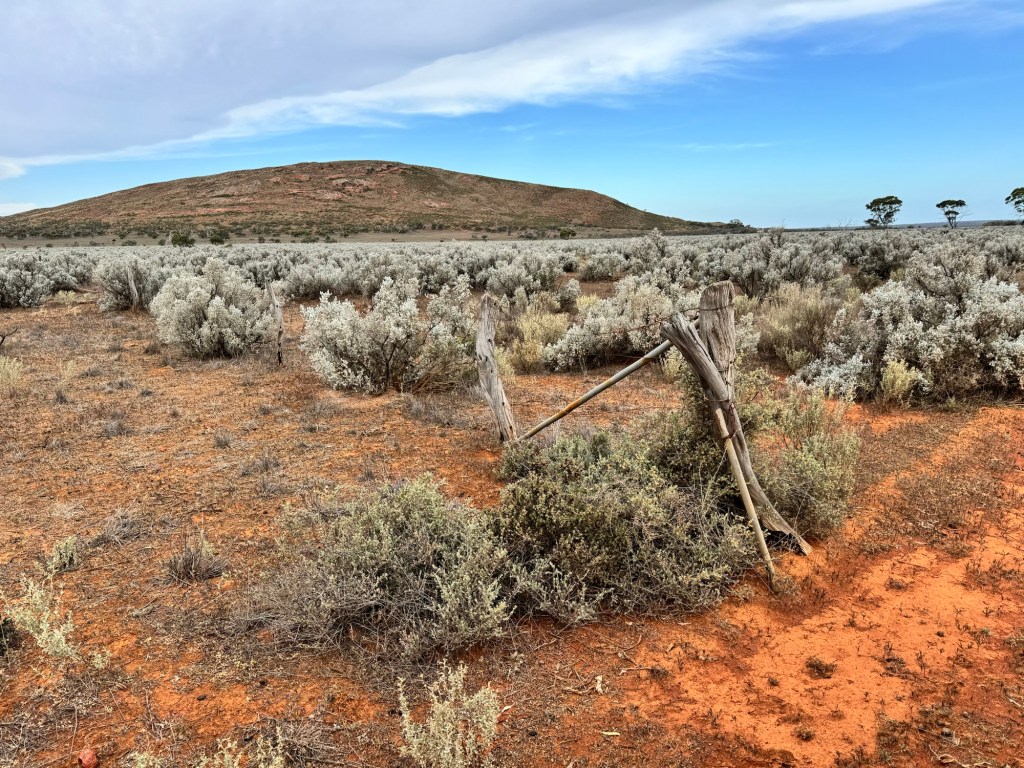
I asked Jeff how to define “outback” and he said the lands outside the surveyed and agriculture areas of Australia are considered Outback. The survey line was set at 10 inches of rainfall to quantify the limit of cultivated agriculture development. The land beyond is known as “outback”. Kangaluna Camp is in the outback. More than half Australia is considered outback.

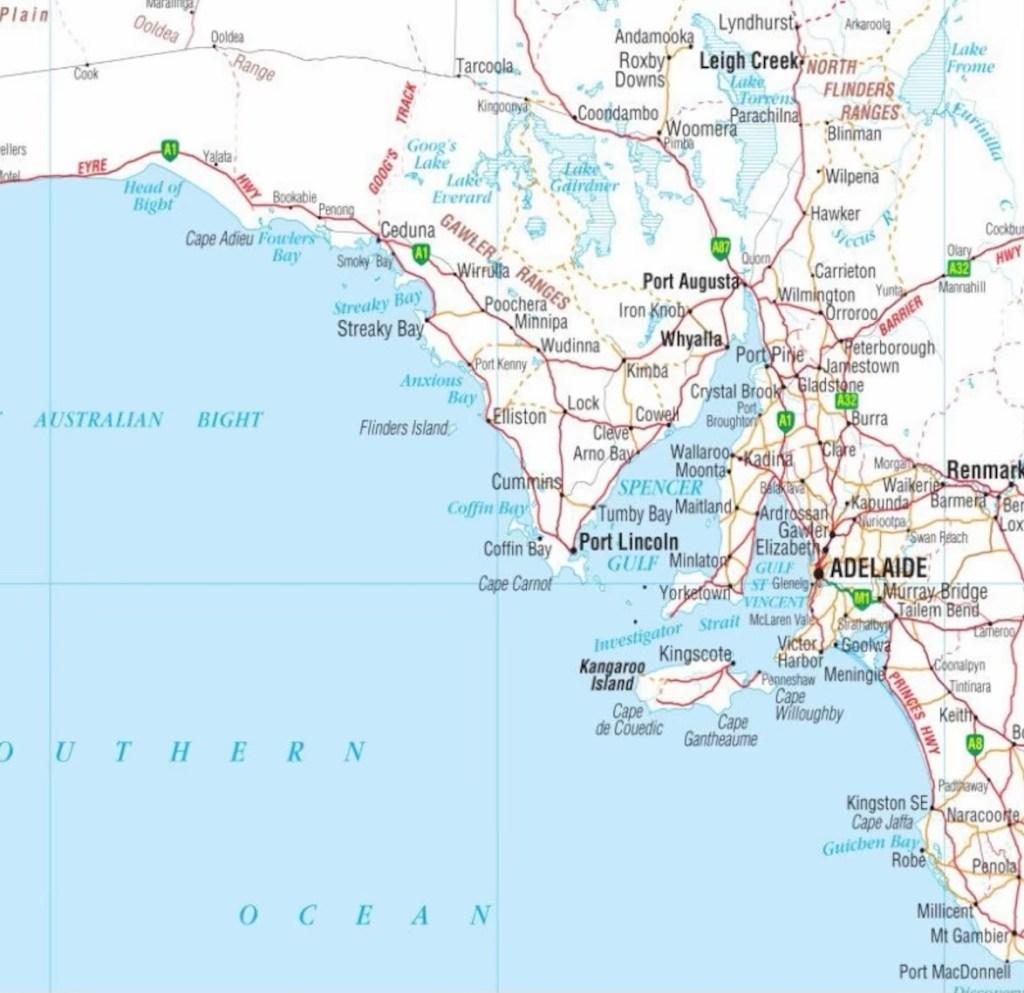
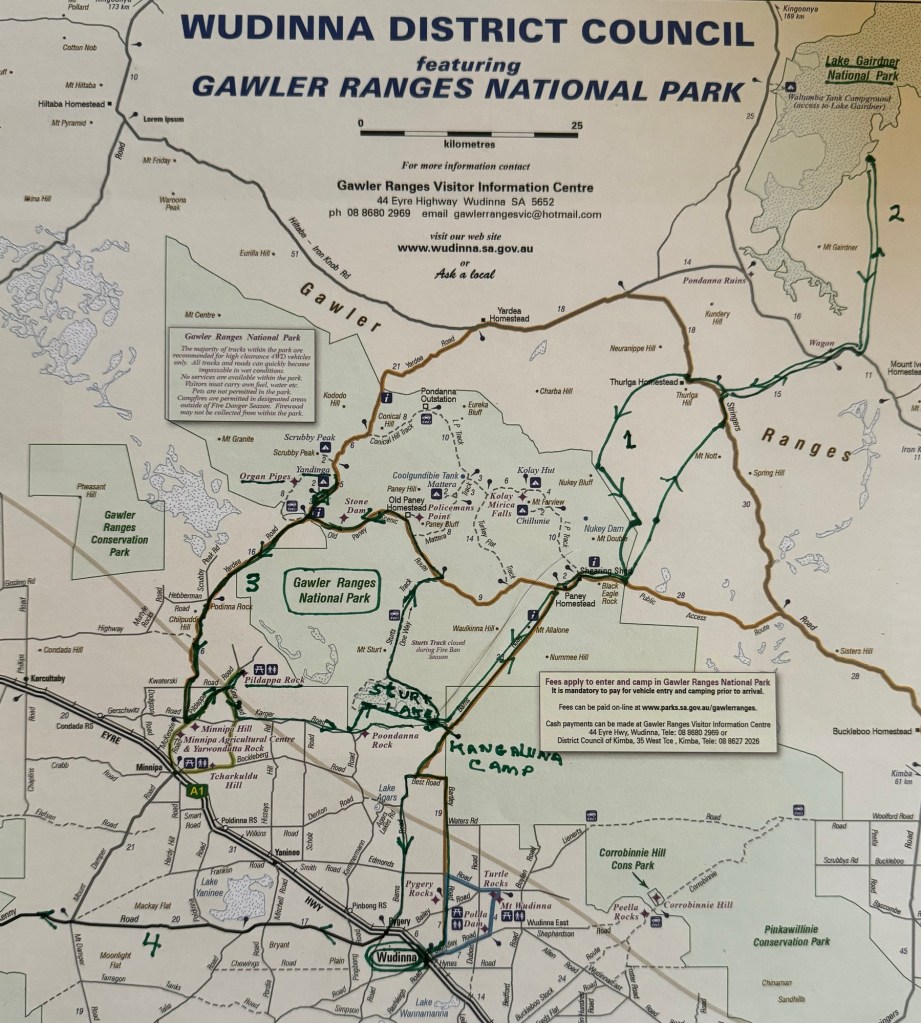
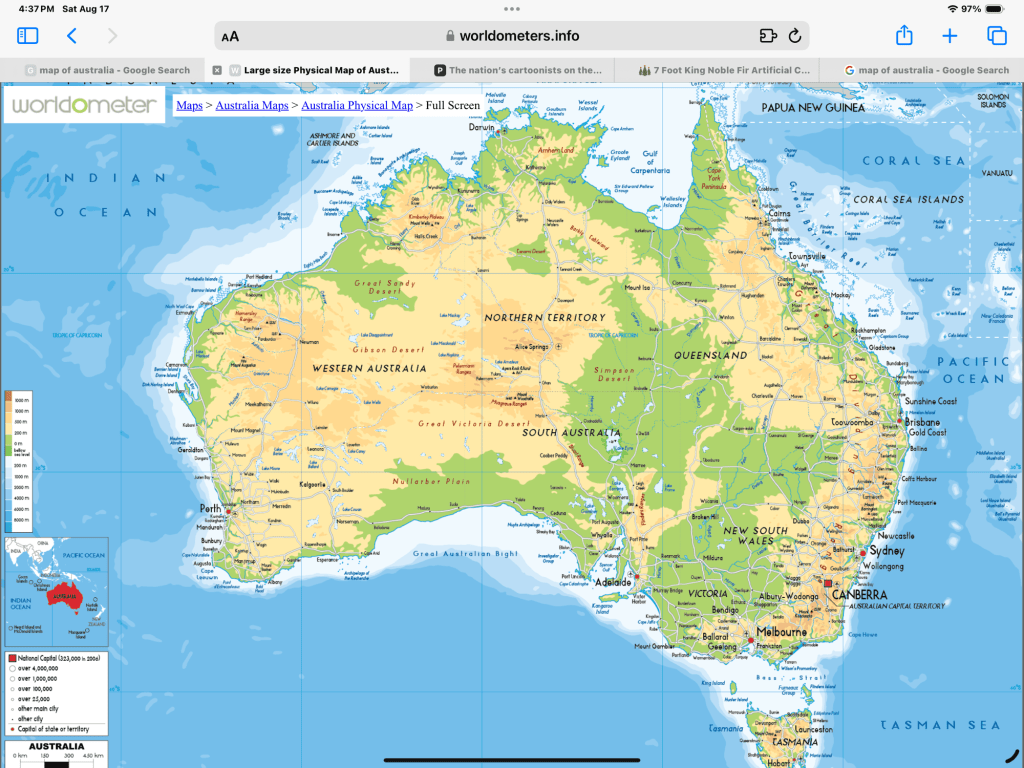
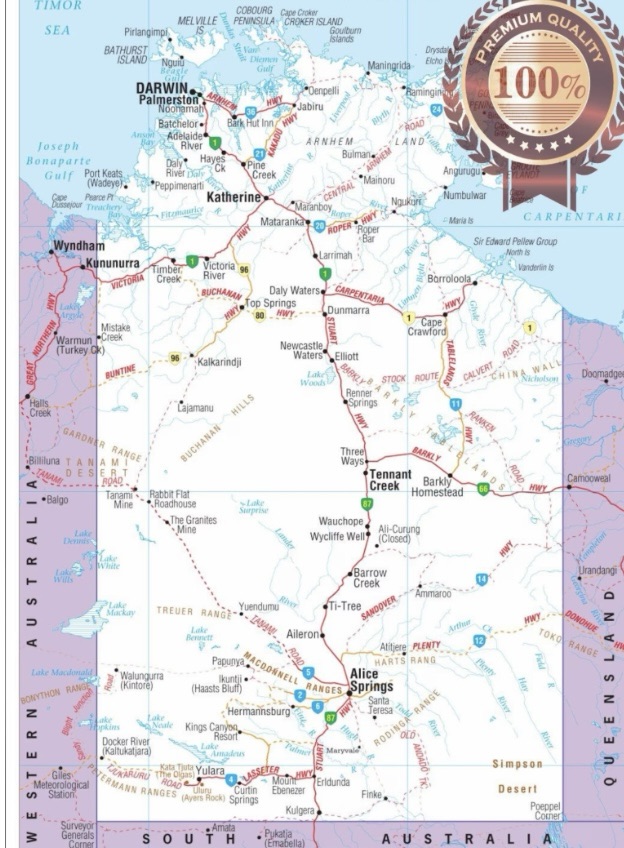
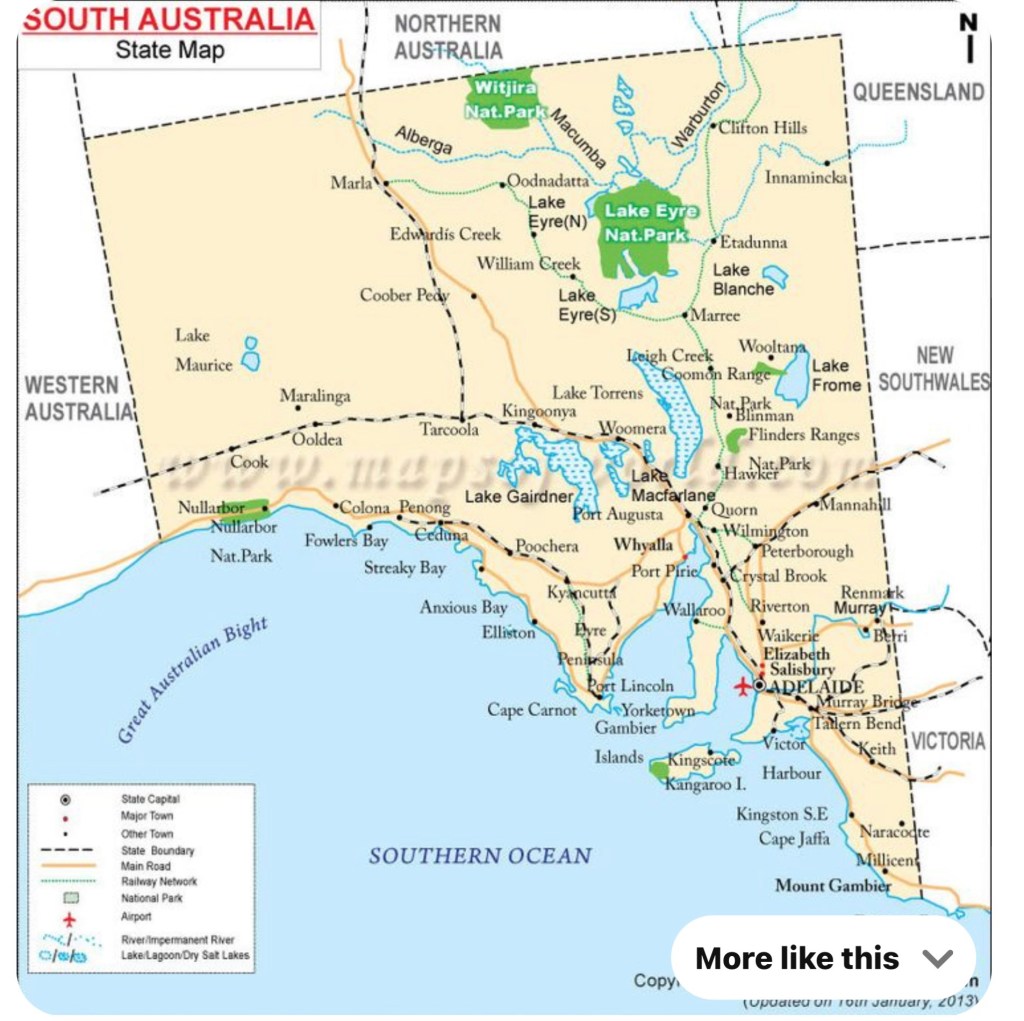
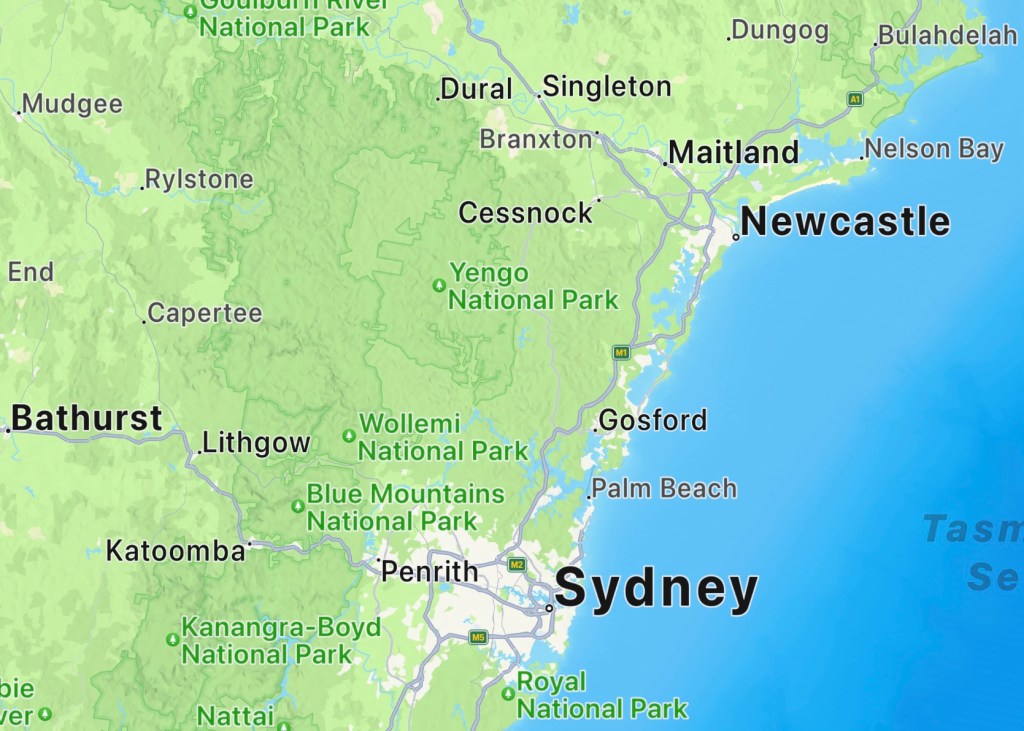
We are taking several outings in the area. This map shows the way.

Map of areas we visited while in Kangaluna Camp.

Thursday, October 10,2024

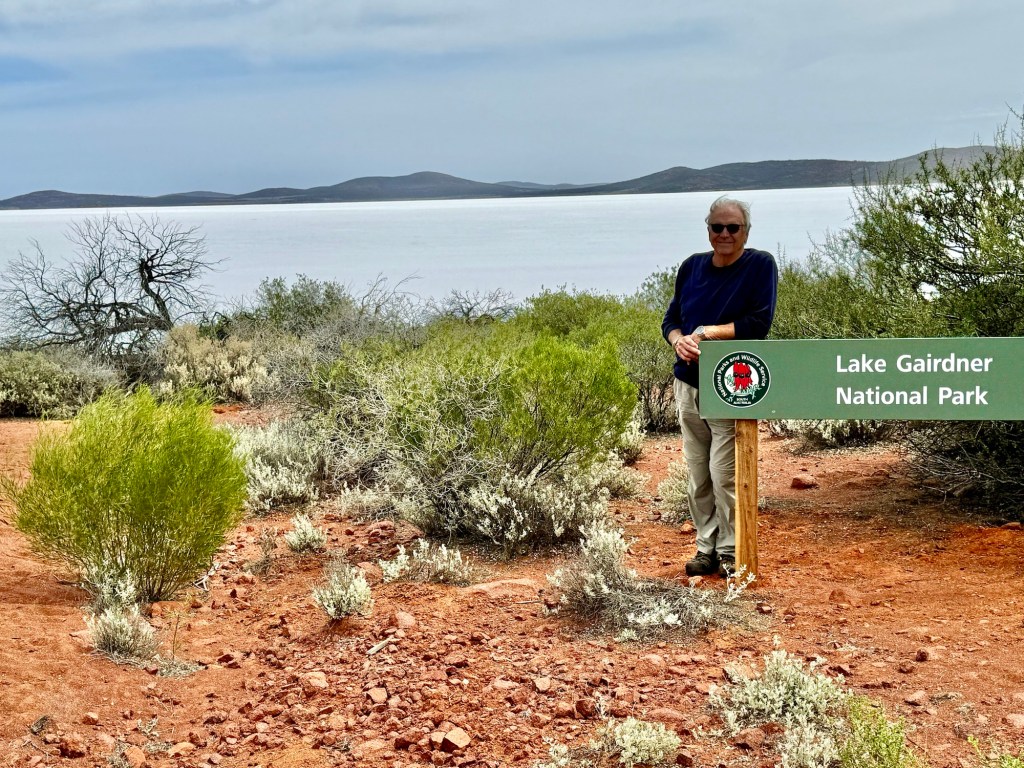
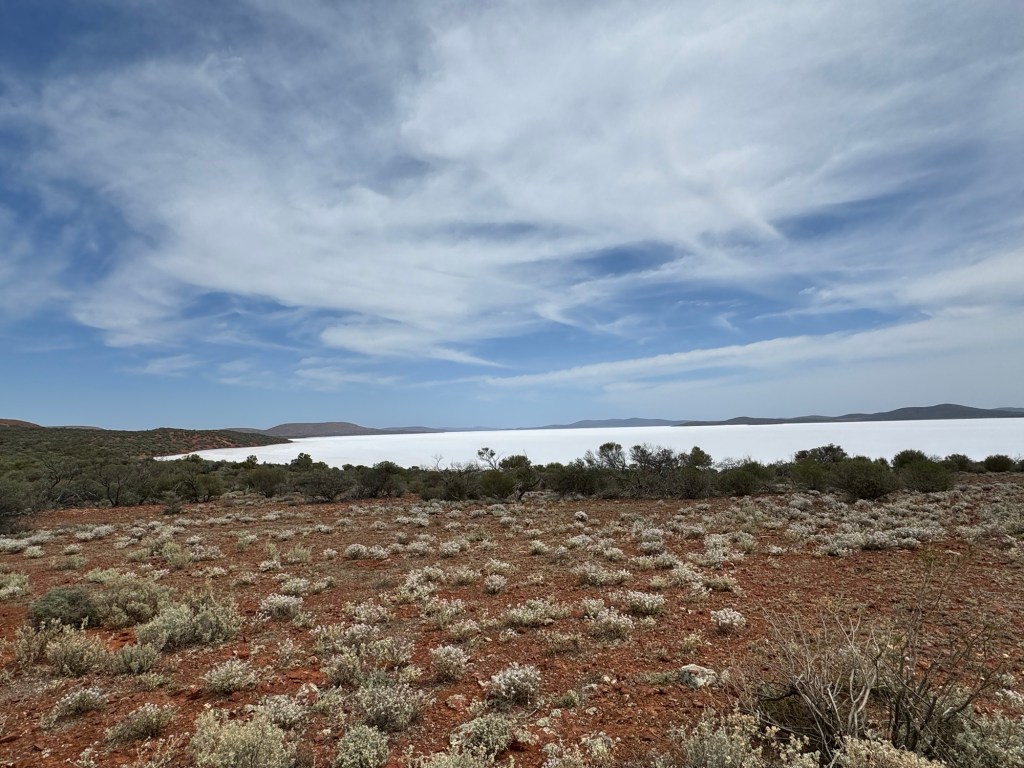
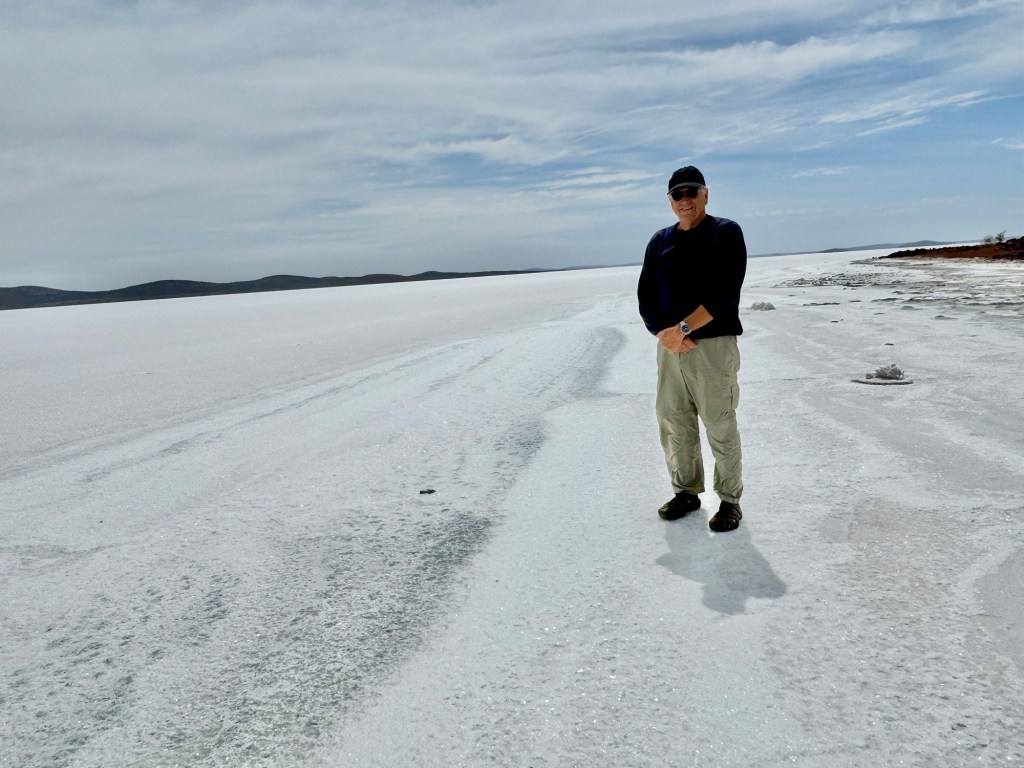
Each day at Kangaluna we drove and hiked in a different direction. Our first day was on a game drive in the national park to Mirica Falls where we fed a water skink carrots. Number 1. Our second day was to drive through the park and 3-4 large sheep stations to the totally salt Lake Gairdner an hour and a half north of camp. Number 2.

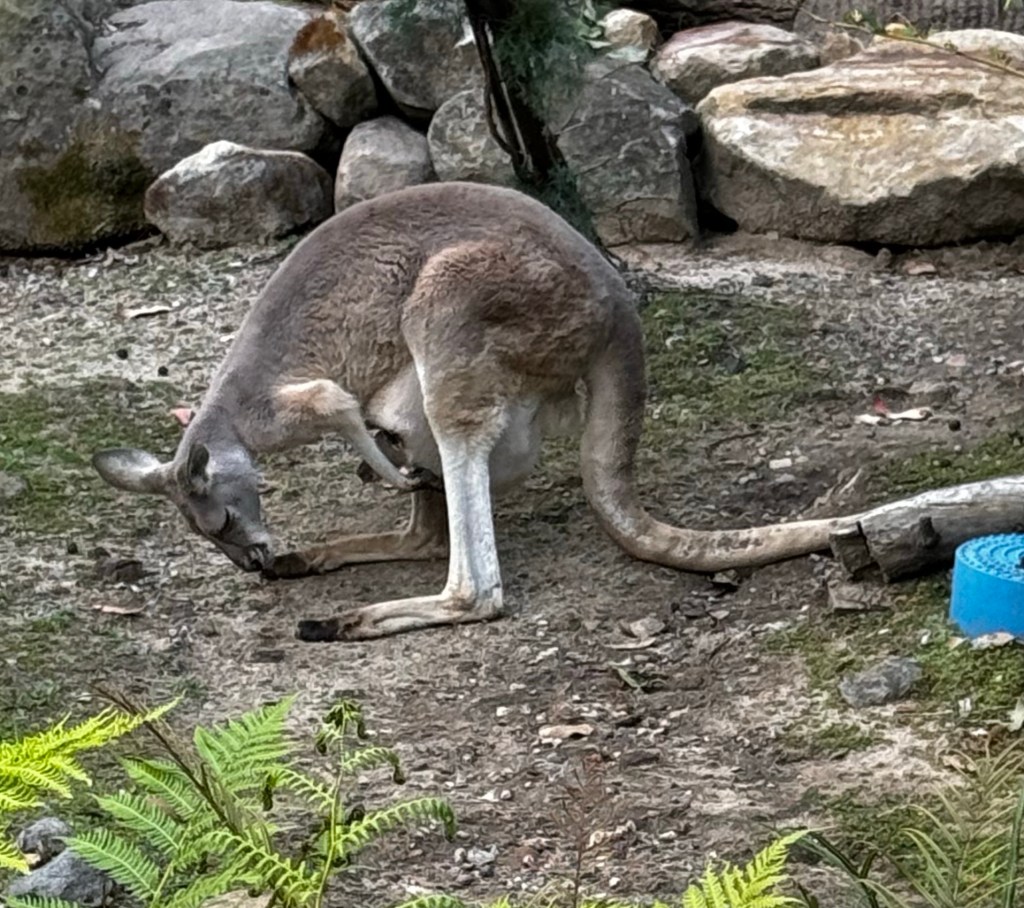
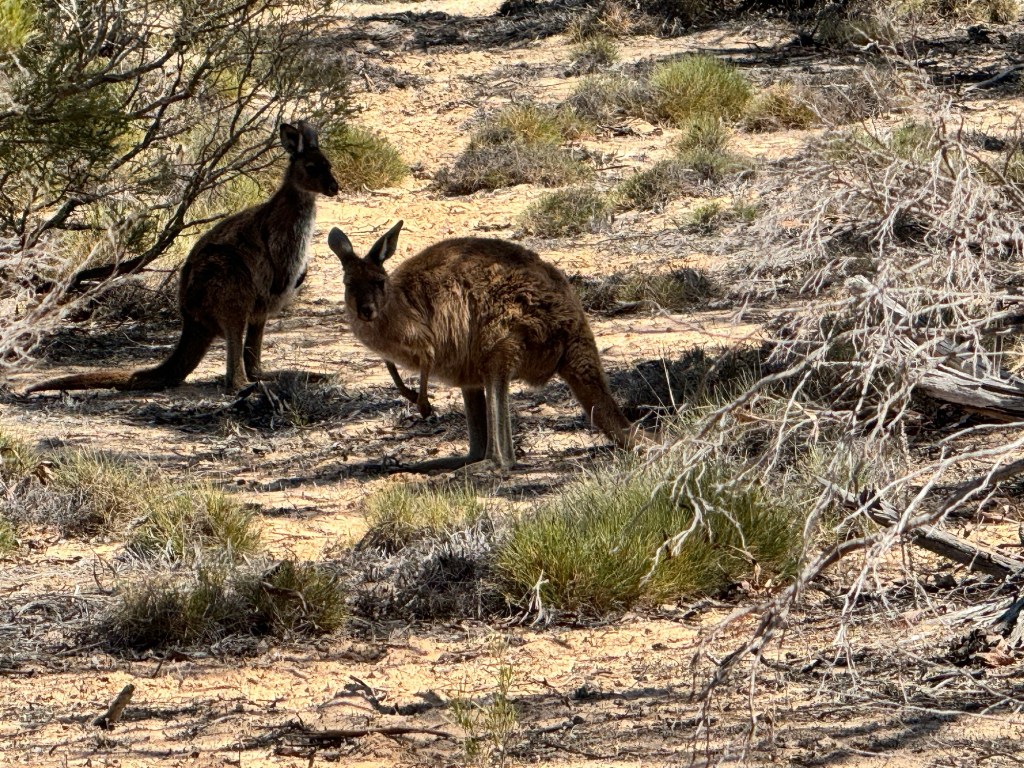
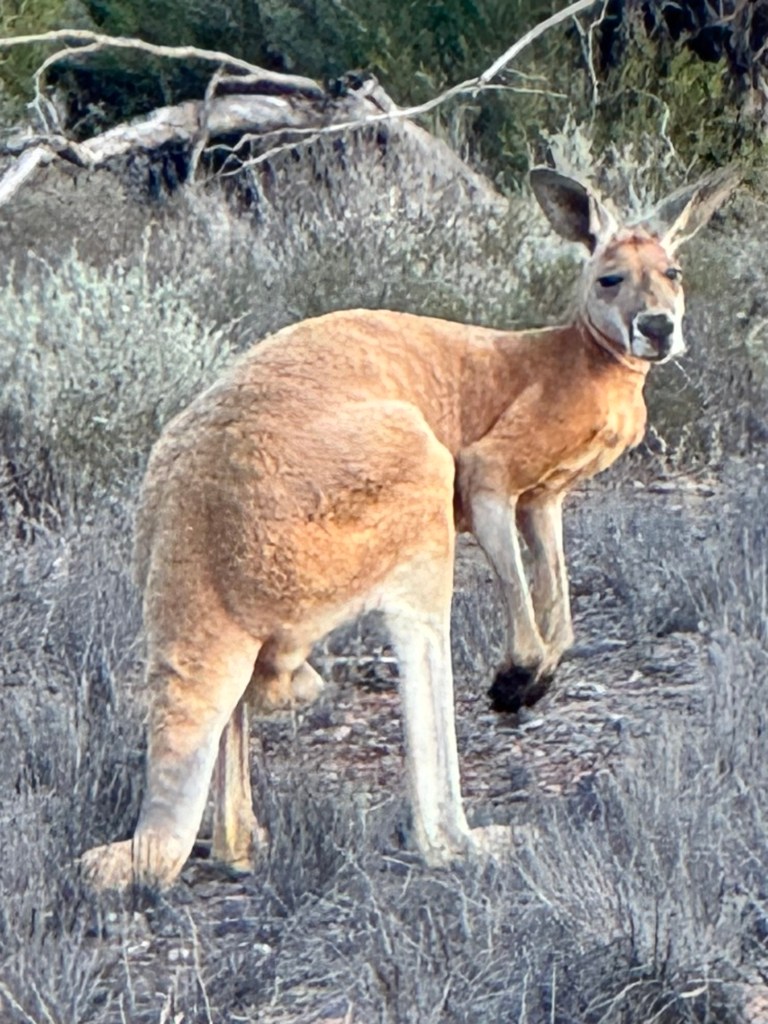
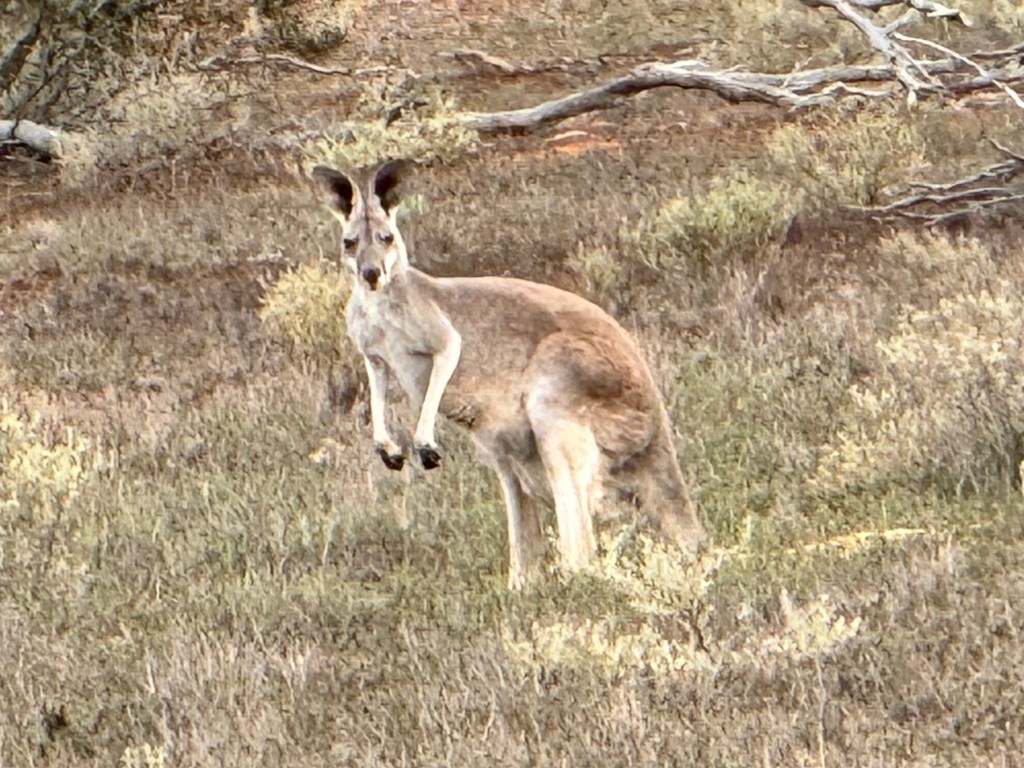
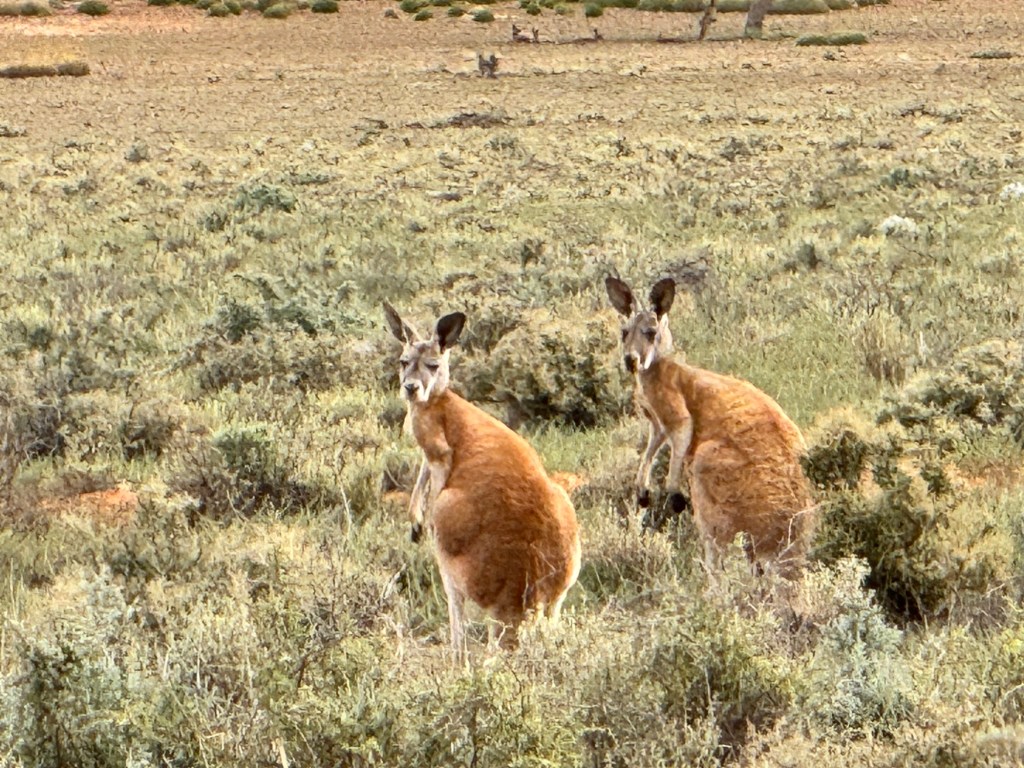
It was an interesting drive. We saw many red kangaroos as well as sheep and goats along the way.

The salt lake is 100 miles long and 31 miles wide. Huge and awesome. Did not get tired staring at it while we ate a picnic lunch.

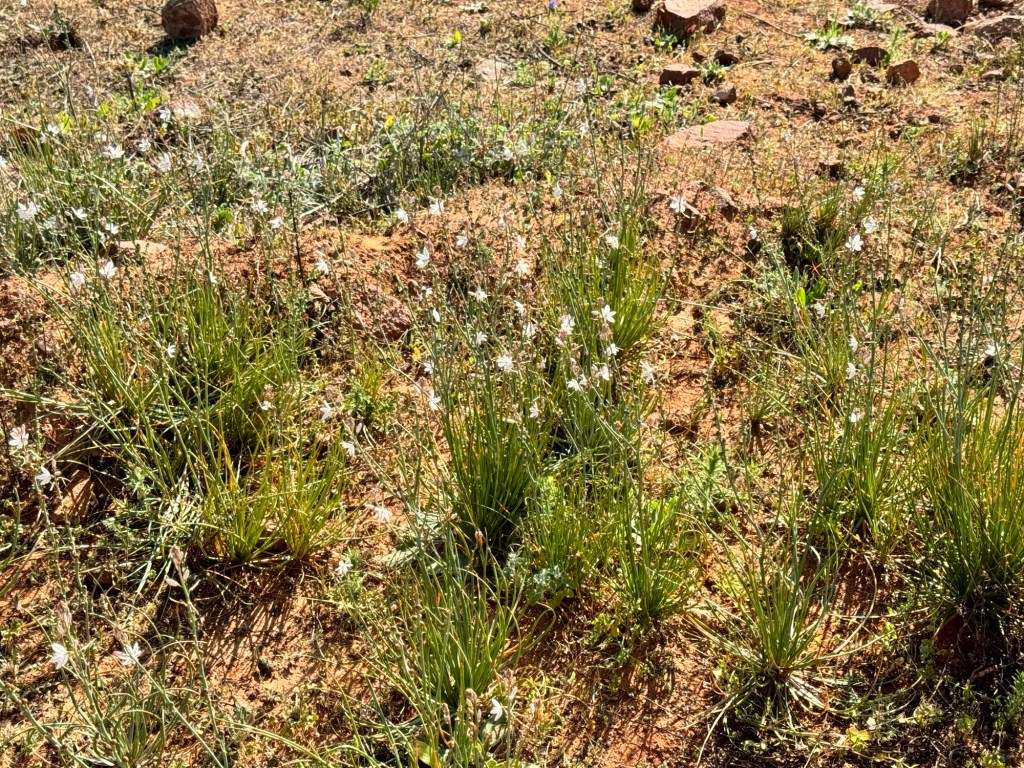
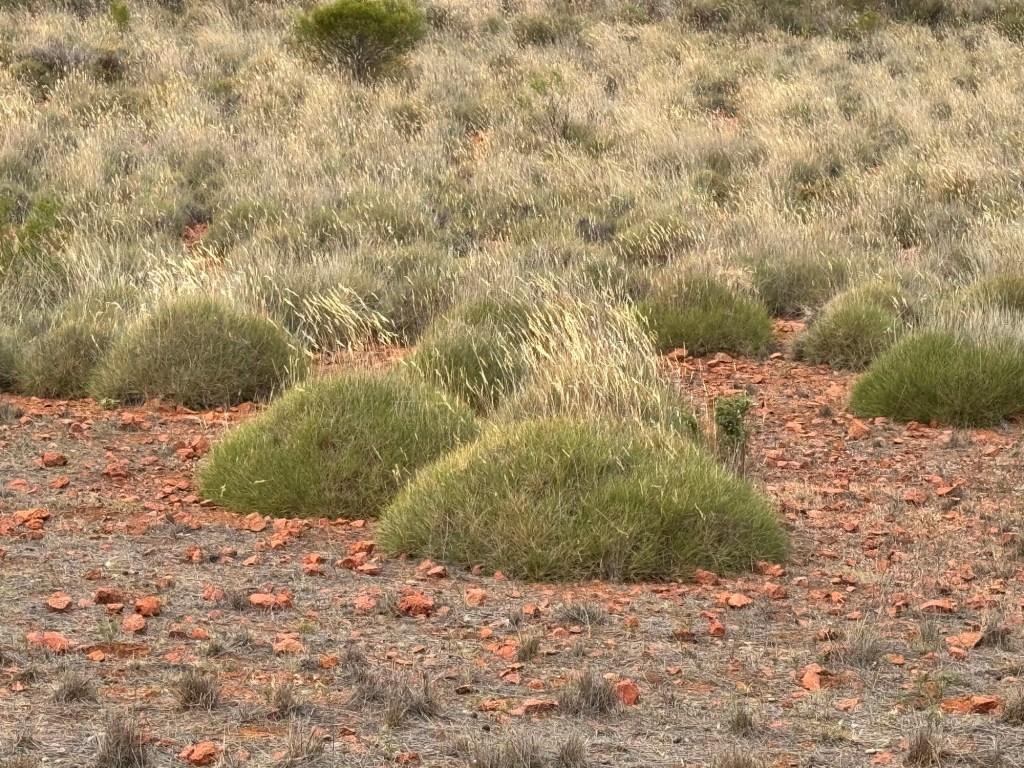
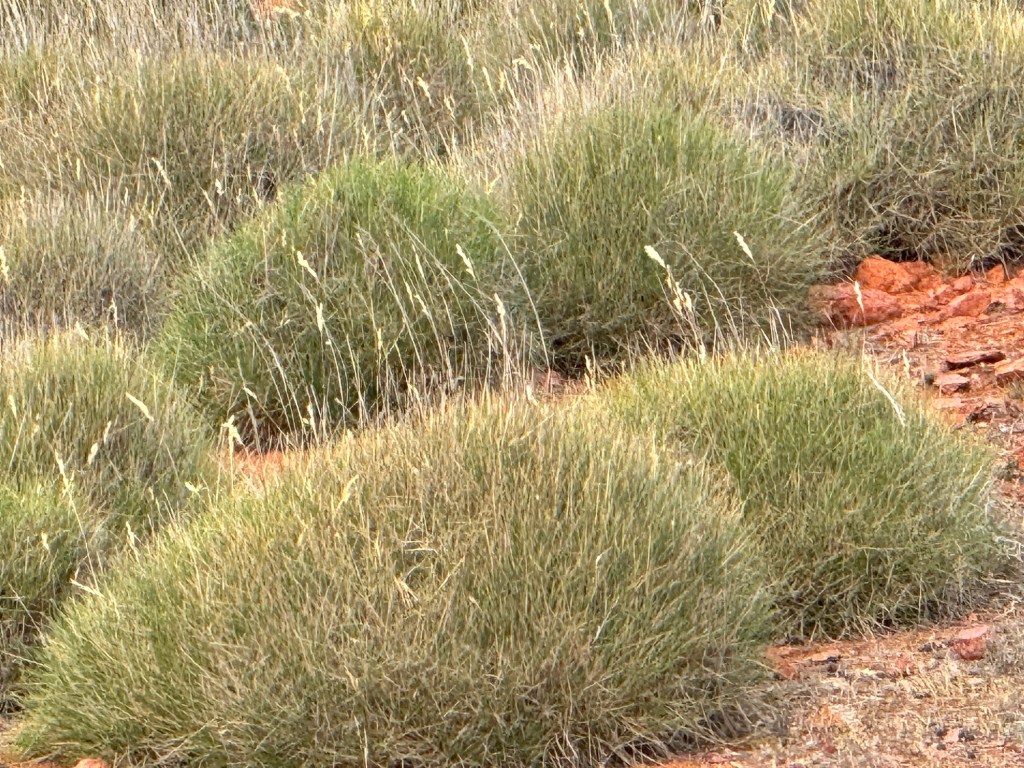
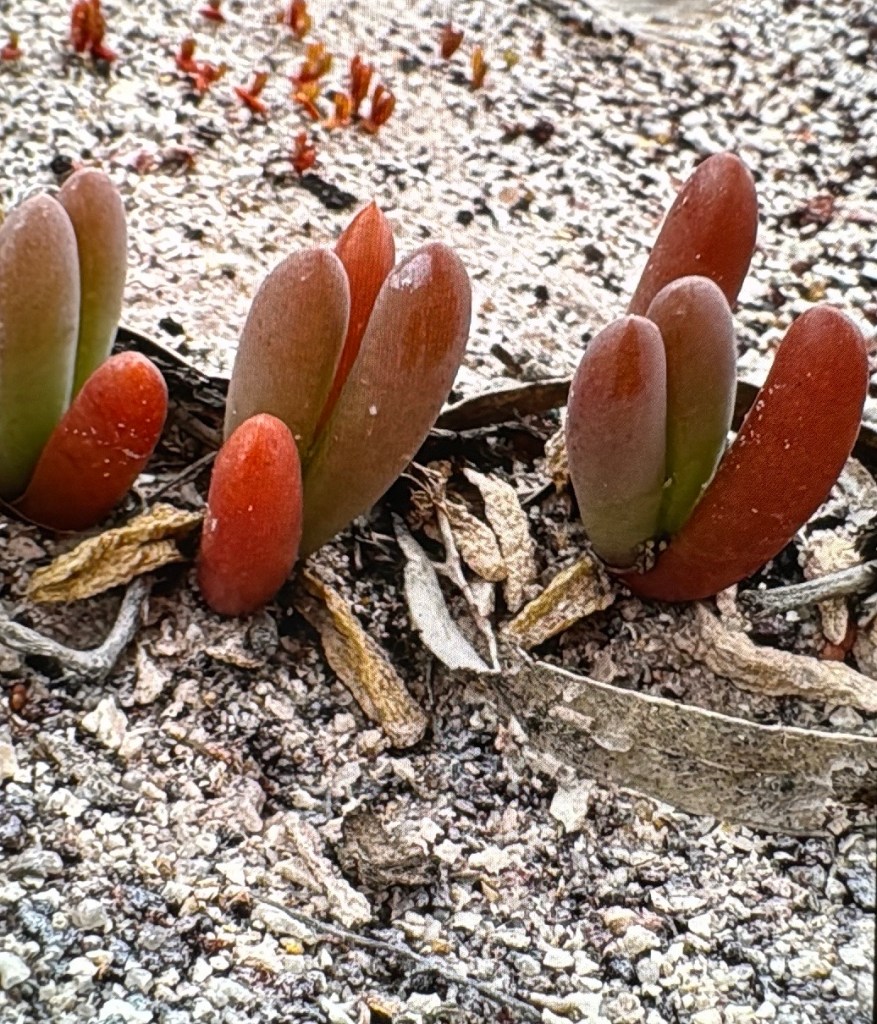
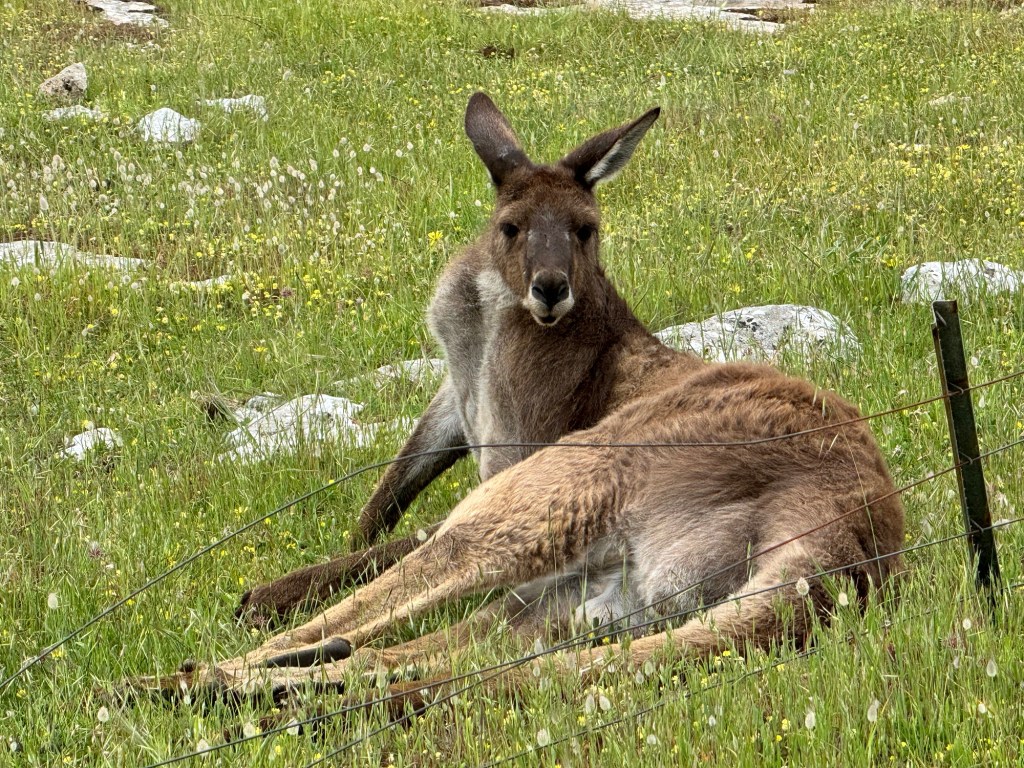
In addition to the pretty red Roos, we saw Pig Face ice plant, Yellow camel weed, Pearl Blue Bush and Spinifex grass, which is pretty, but prickly so nothing eats it.

Red Kangaroos

Pig Face Ice Plant
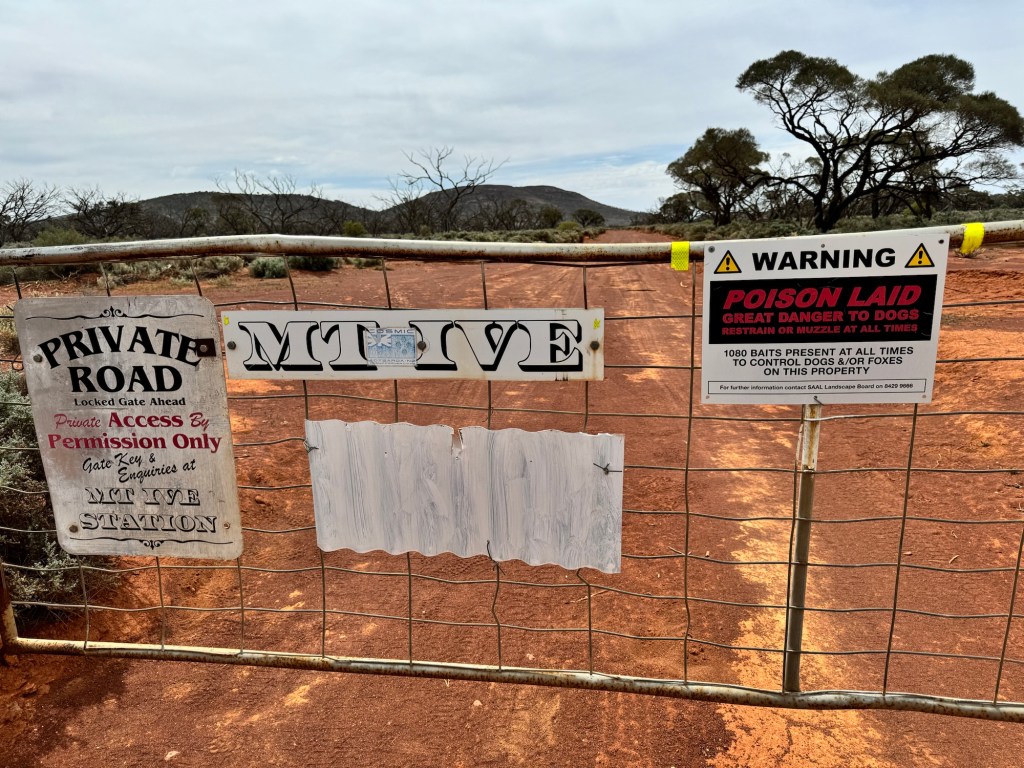
One of the three 400,000 acre stations we crossed getting to Lake Gairdner. 1080, a poison used for killing rabbits, feral cats and foxes.

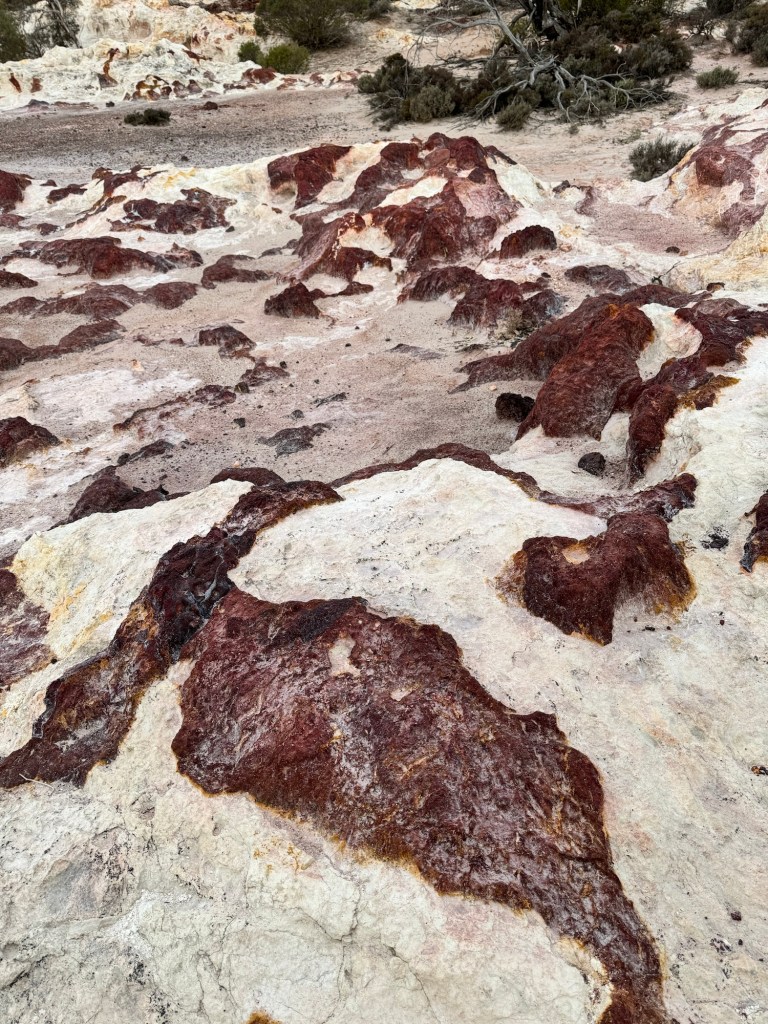
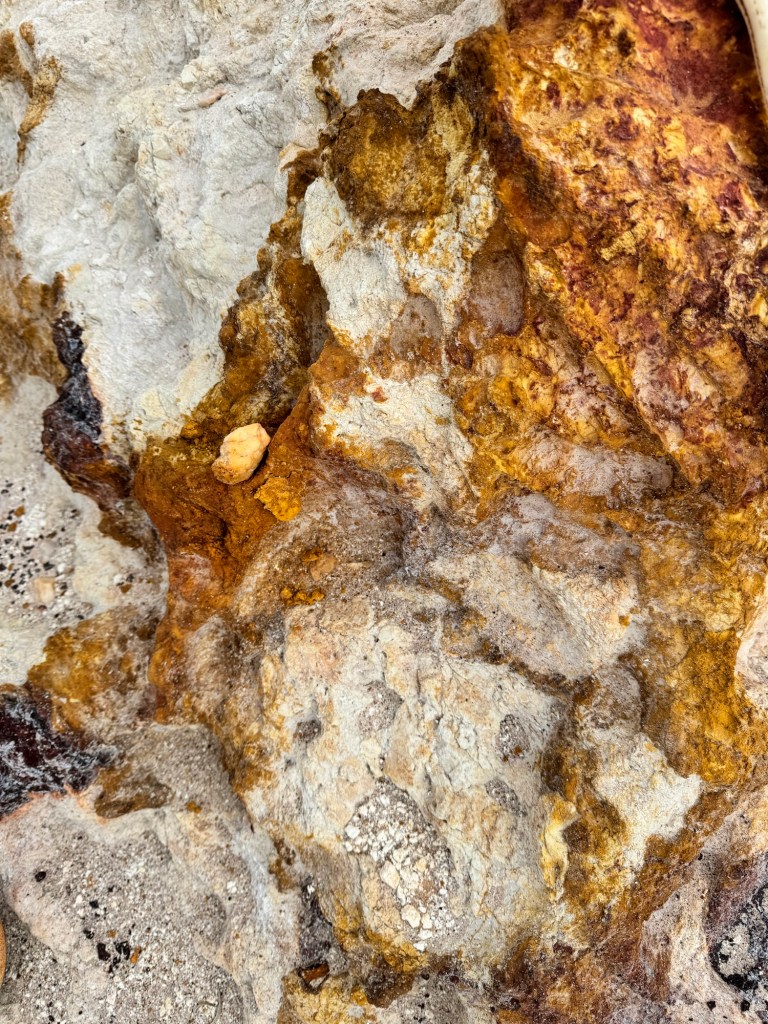
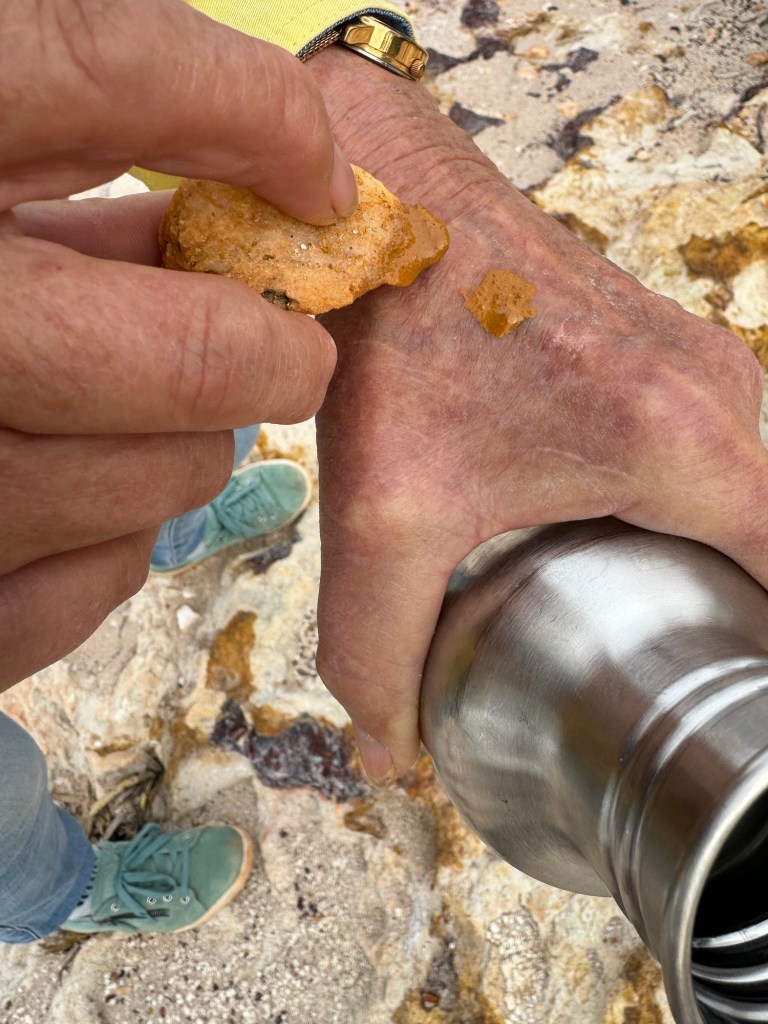
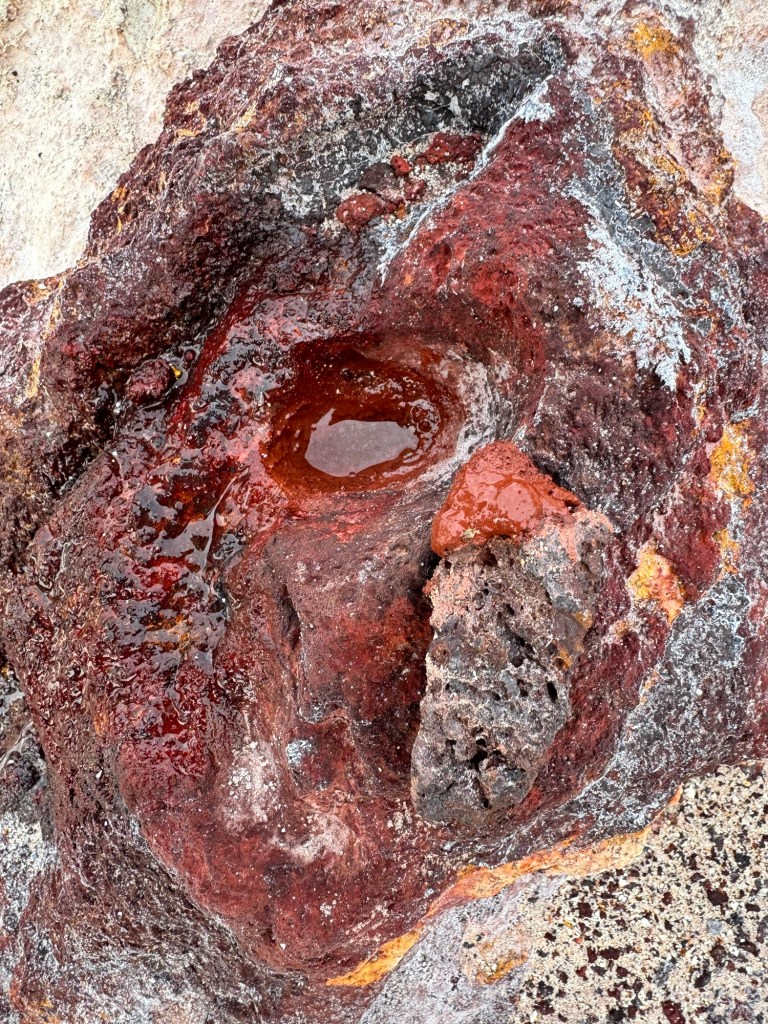
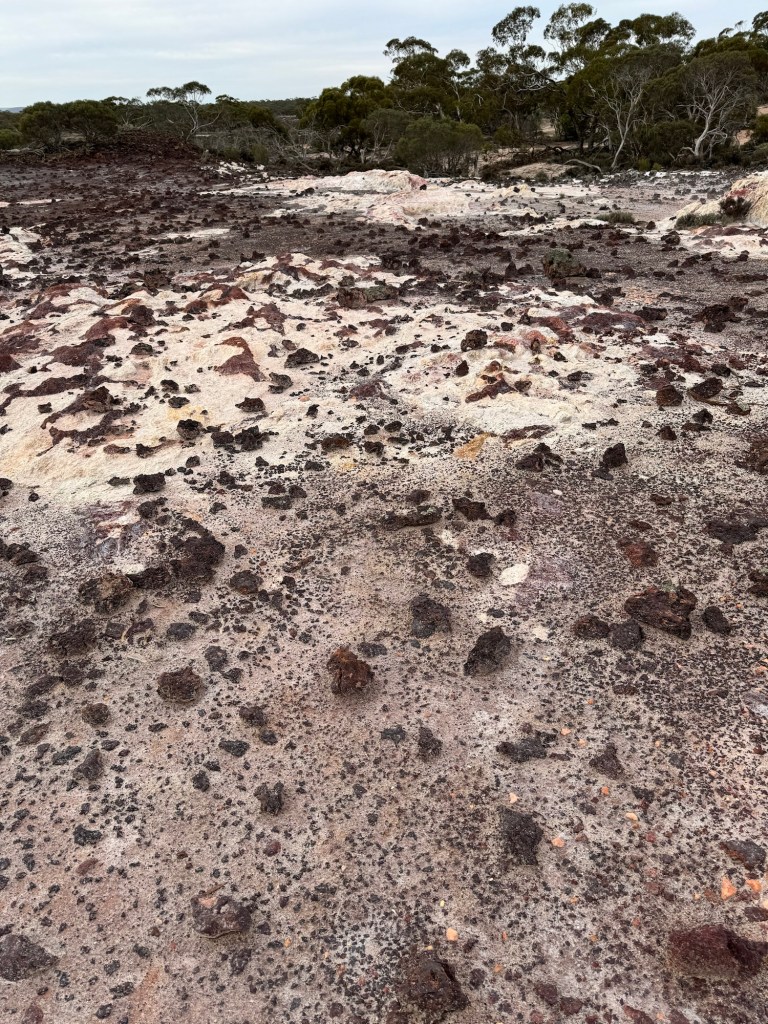
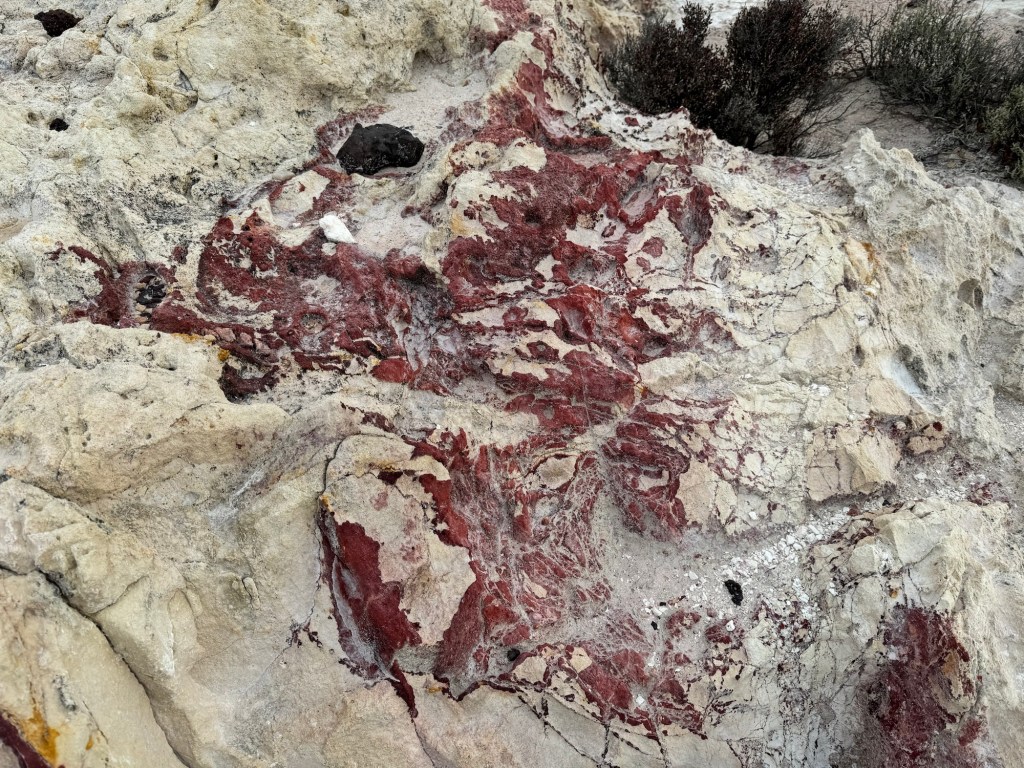
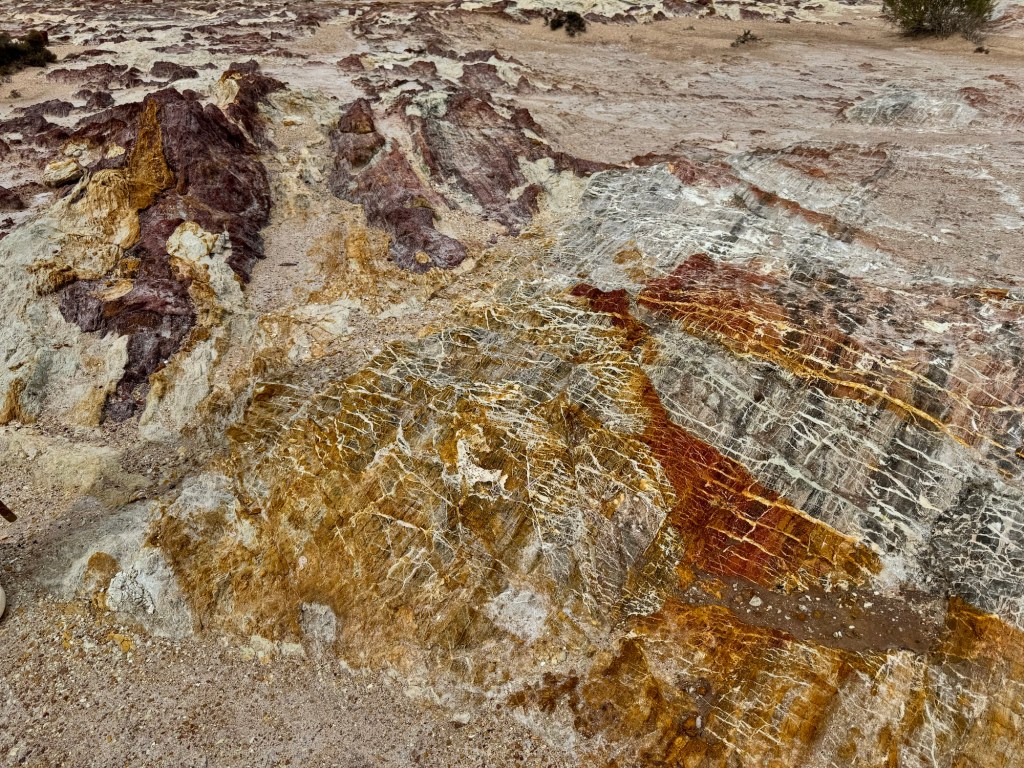
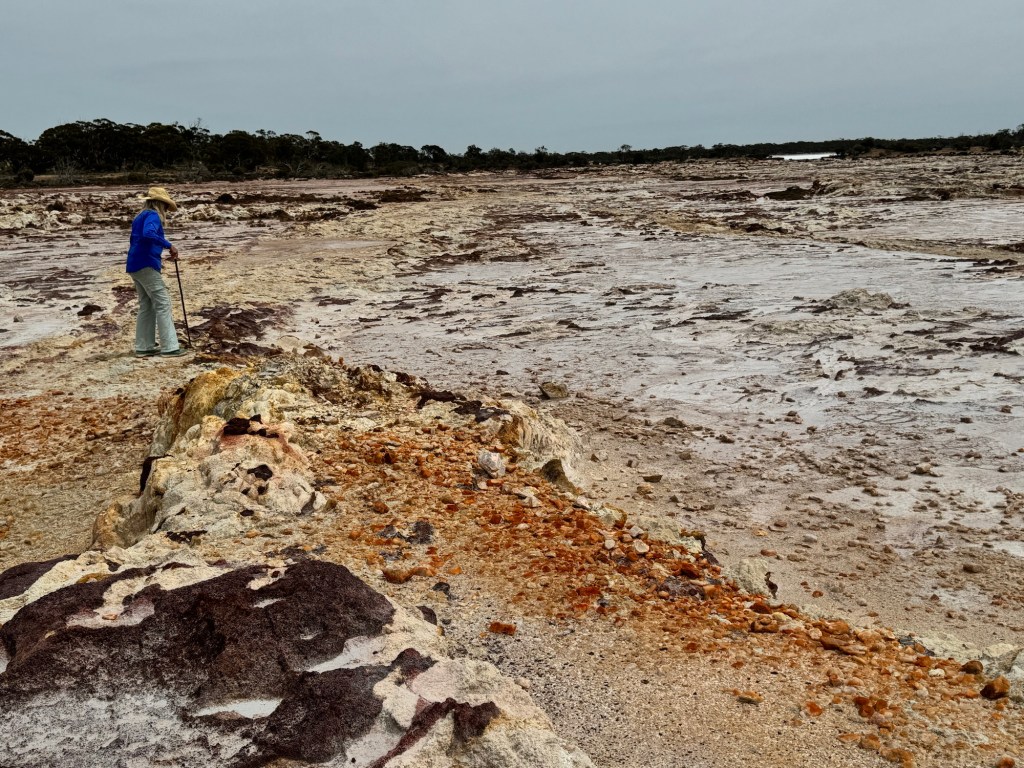
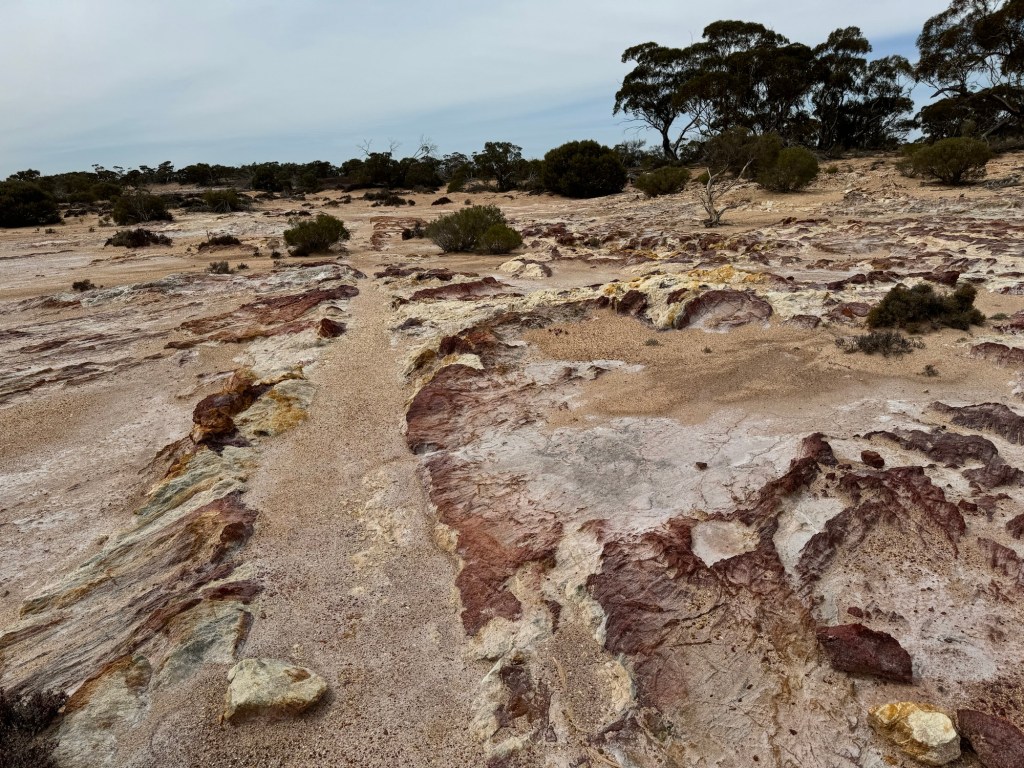
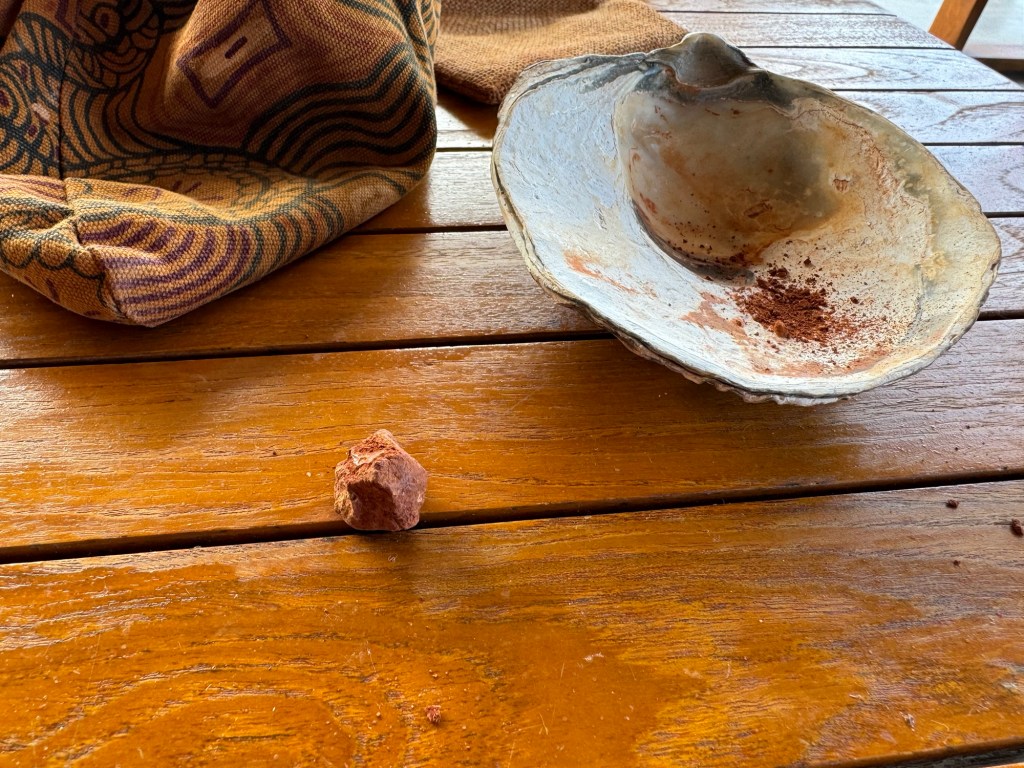
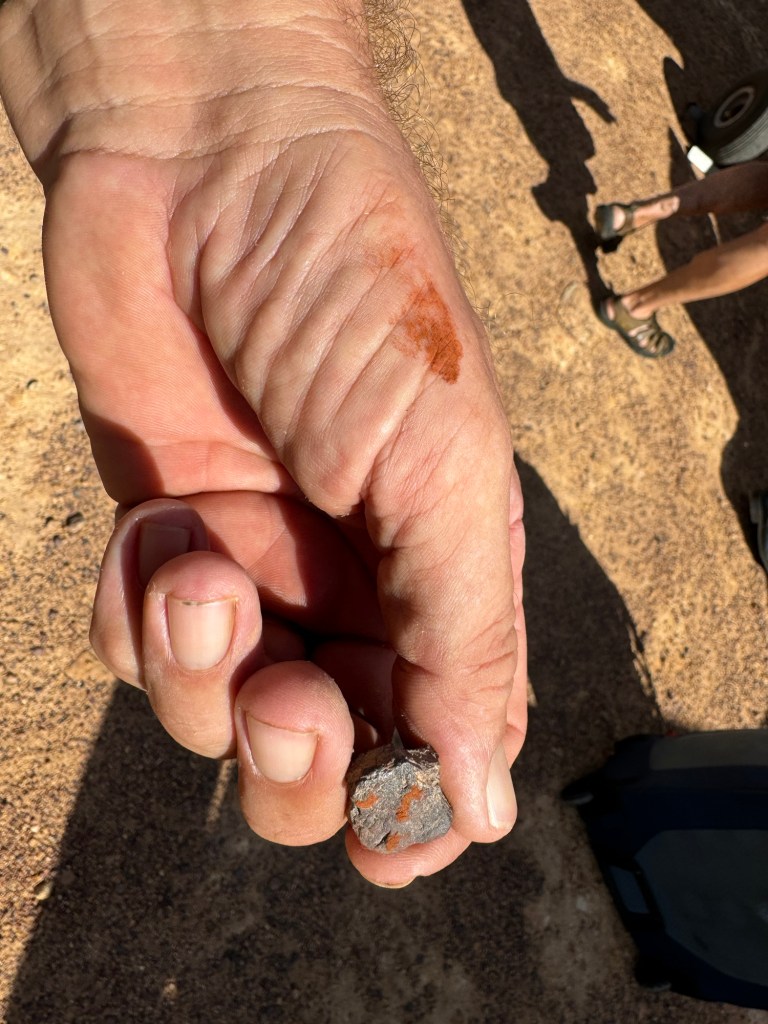
Before returning to camp, Rosie made a stop for us to see a patch of ancient ocher deposited in mud. Number 3 drive on the map. The colored stone comes from dissolved iron. The pit was used by aboriginal people many thousands of years ago, to make ochre dyes. The colors we saw included: yellow, orange, red, many shades of pink and white. Rosie ground each color with a piece of rock of the same color to get some powder, then mixed a bit of water with the powder and applied the dye to her hand. She did it with several colored rocks and produced a variety of colors, all shades of ochre. The color is determined by the amount of iron in the stone. White stone contains no iron. The black rocks scattered on the ochre rocks are an iron stone called ferrocrete

Over dinner we learned that the flies get worse the further west you go. Uluru (Ayer’s Rock) is insufferable with flies. That being the case, this is as far west as we care to go. Give us anywhere in Africa, where we have never seen flies.

Friday, October 11, 2024

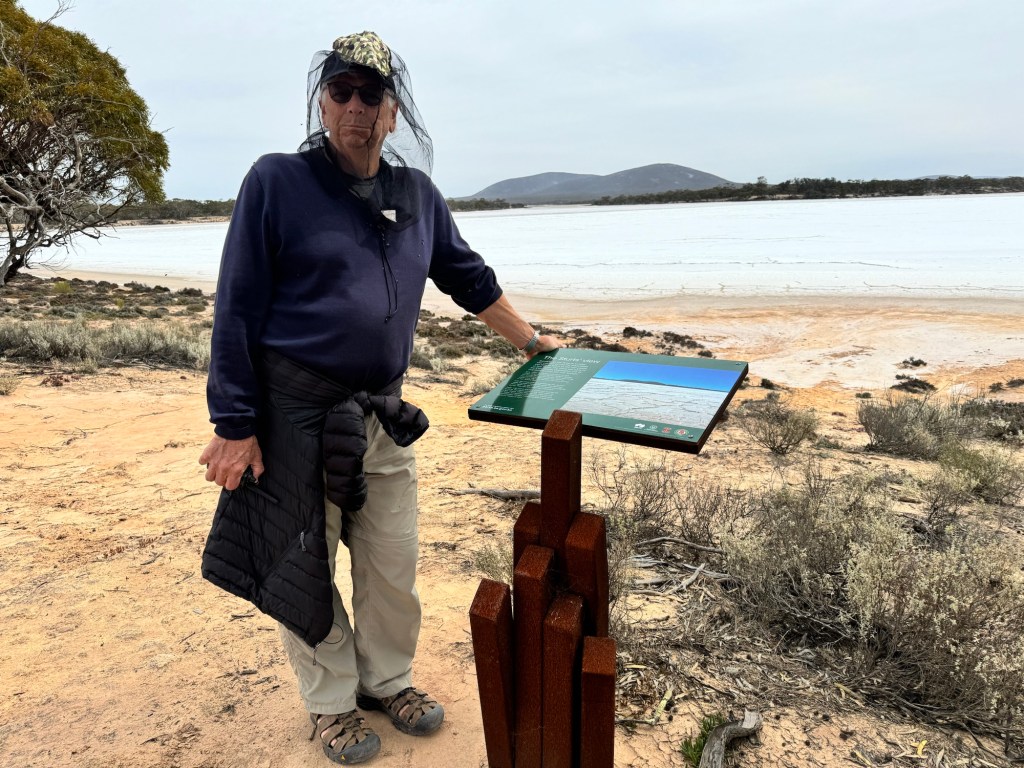
Protected with a fly net, Mark checks out Sturts salt lake

Fortunately, the flies don’t like wind and disappear at night. So far we have managed reasonably well wearing a head net.

On Friday morning, Mark and I walked a couple miles to another salt lake. Rosie joined us with the car and off we went on another long drive about. The landscape looks the same to me, but Rosie constantly tells stories about the place. At lunch we stop at the Old Paney Homestead, where we eat indoors to avoid the flies. Rosie tells us about the family that originally occupied the place. While the husband spent weeks out working the property and taking care of sheep and goats, the wife raised 11 children in this small building.

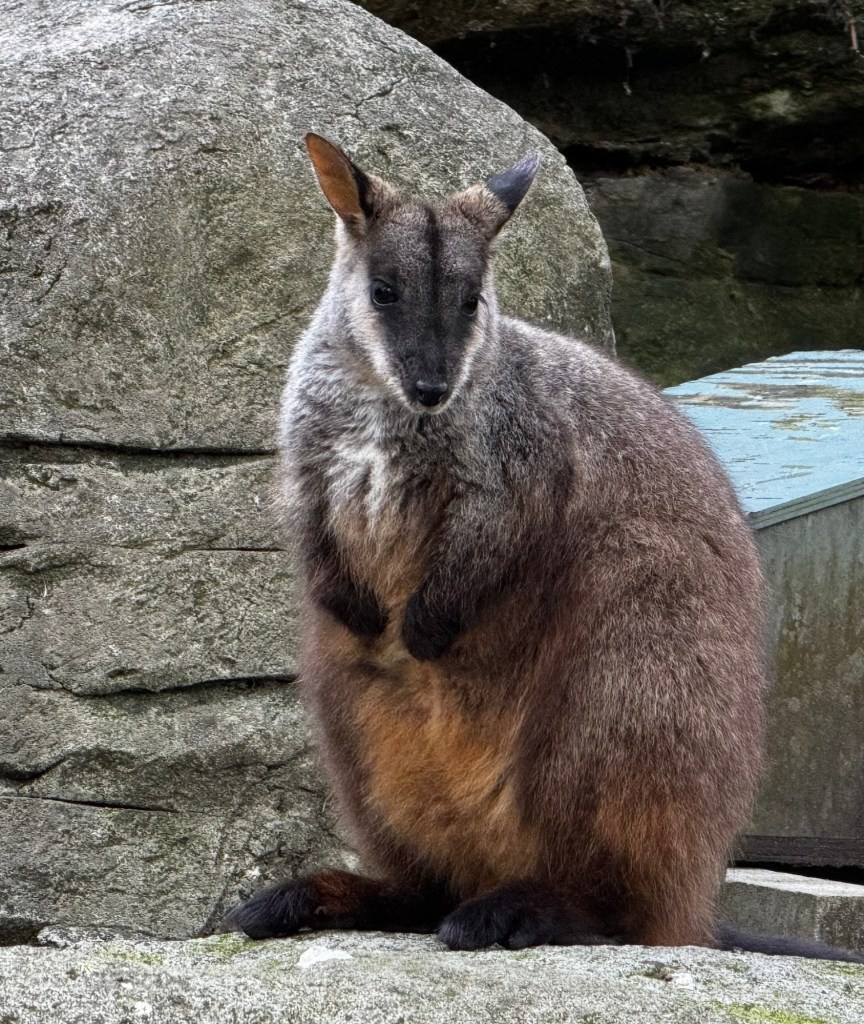
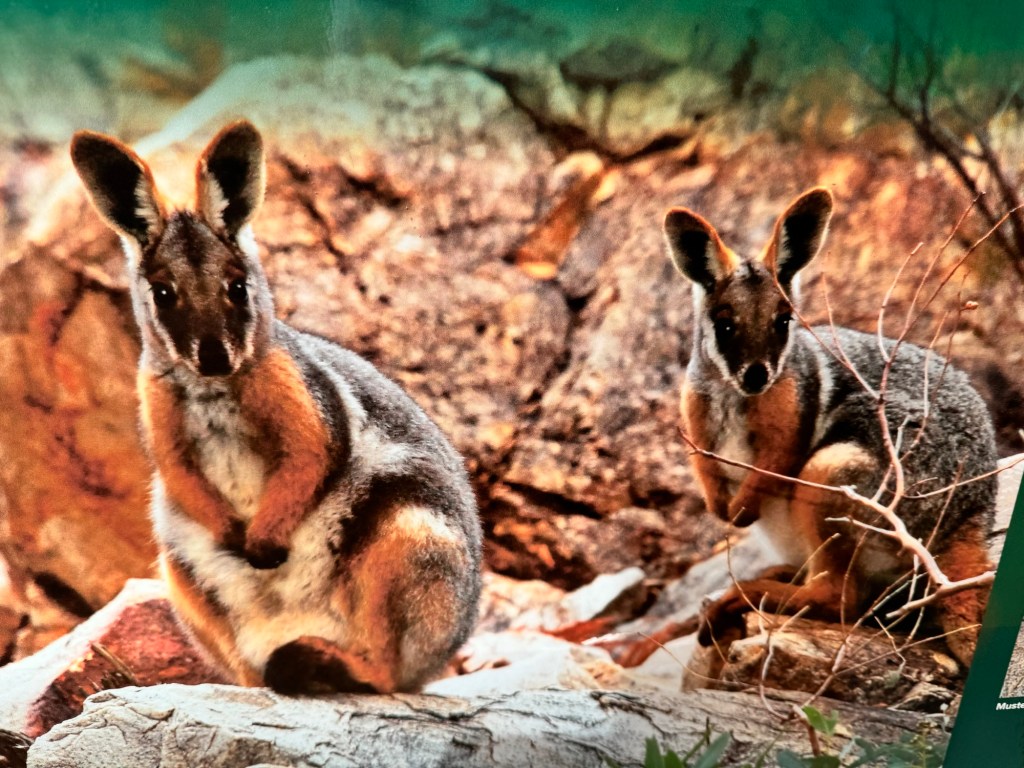
After lunch we drove to Yandinga Canyon looking for a rare wallaby, the yellow footed rock wallaby. We spent about a hour scanning the area with no success. Too bad, as it is a very pretty wallaby. Here is a photo anyway.

Yellow footed rock wallaby

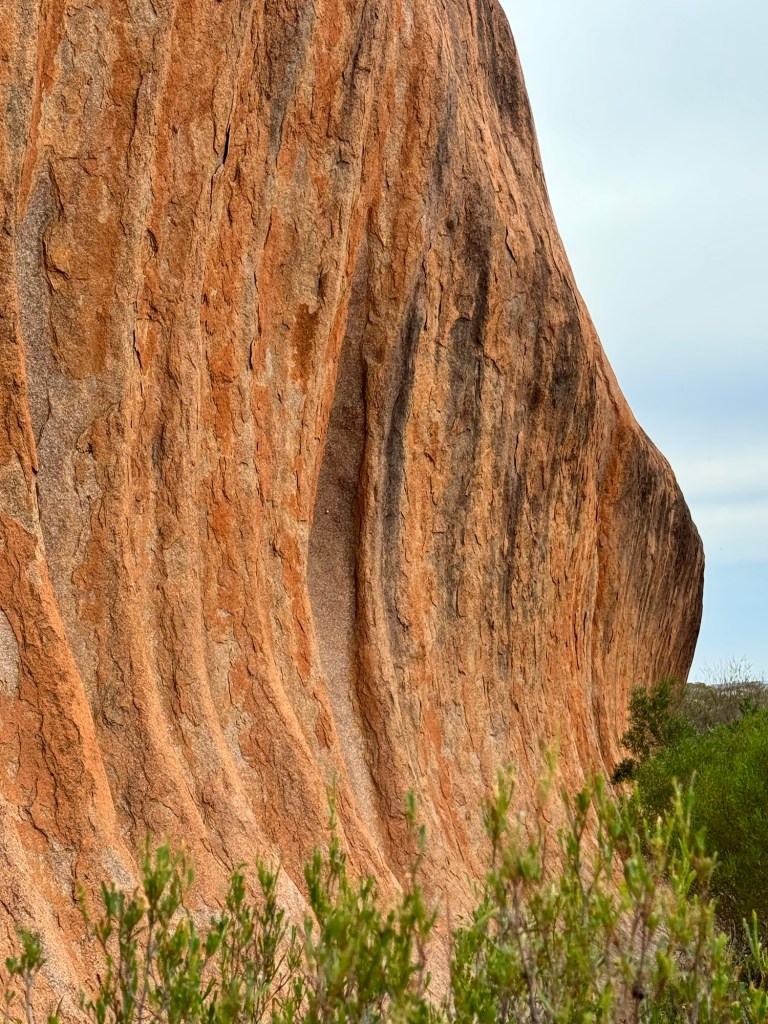
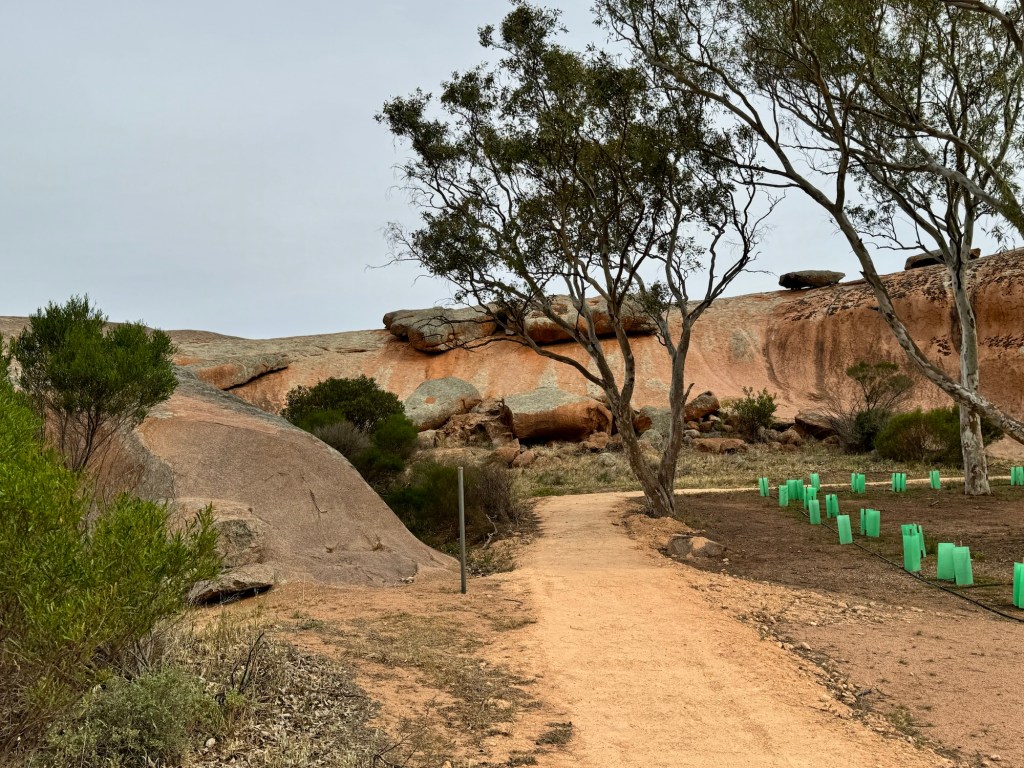
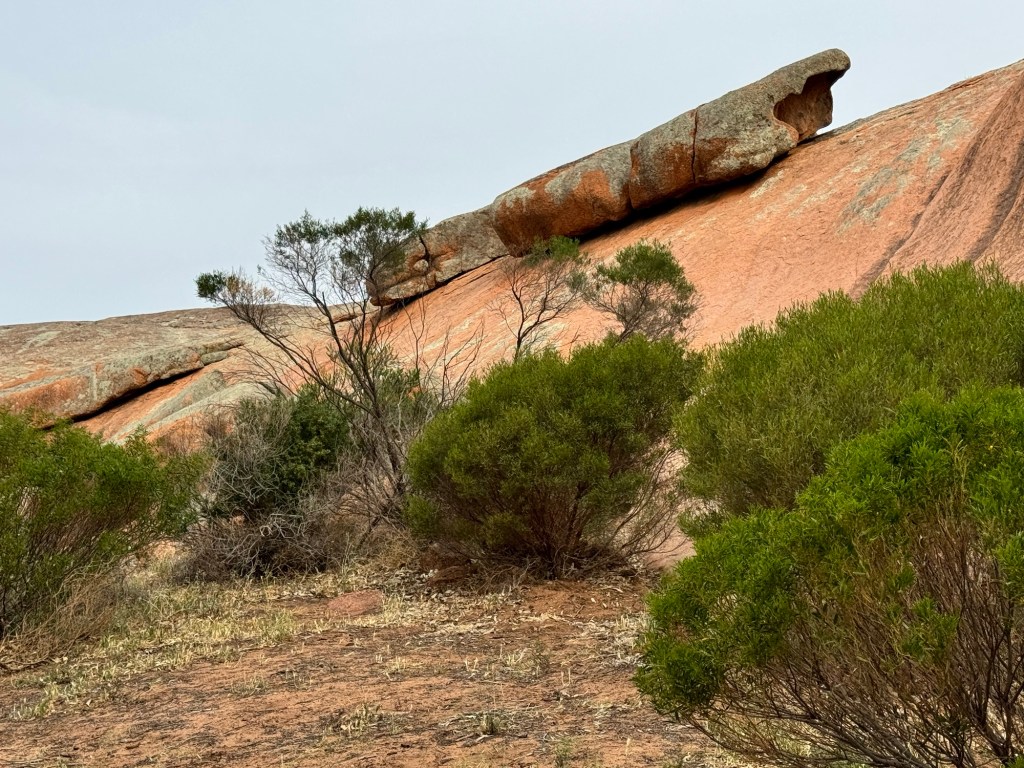
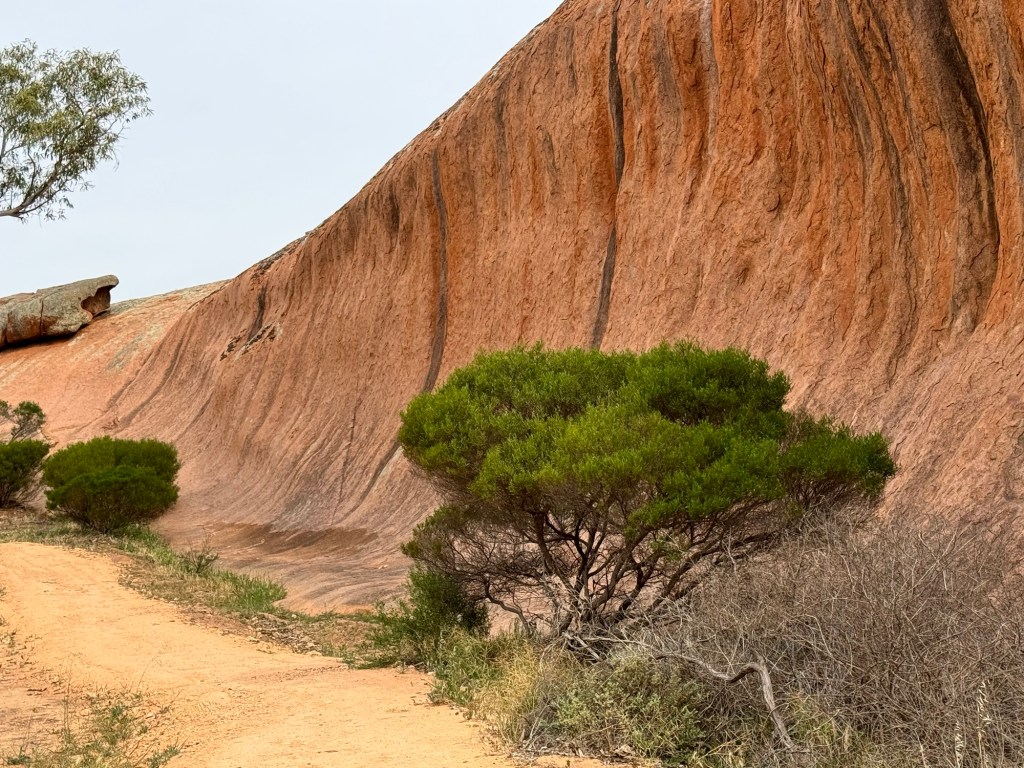
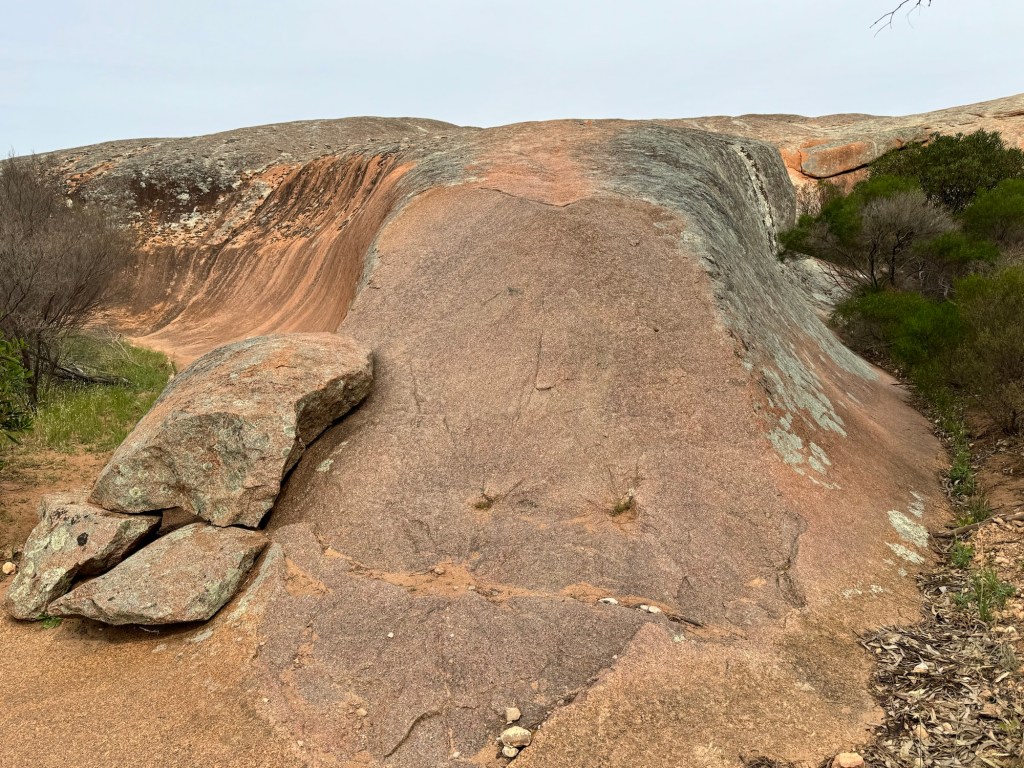
From there we drove on to the Pildappa Rock to see a monolithic stone that features the shape of a wave. Although huge, it is no where near the size of Uluru.

Pildappa Rock

Over dinner that evening Rosie and Jeff Scholz, our camp host, talked a lot about the animals and scenery we are seeing including some of God’s creatures we saw in several places.

Saturday, October 12, 2024

We have been on the road a month now. Today we leave Kangaluna Camp and drive to Port Lincoln. Rosie is Back at the wheel. Number 4 track on the map.

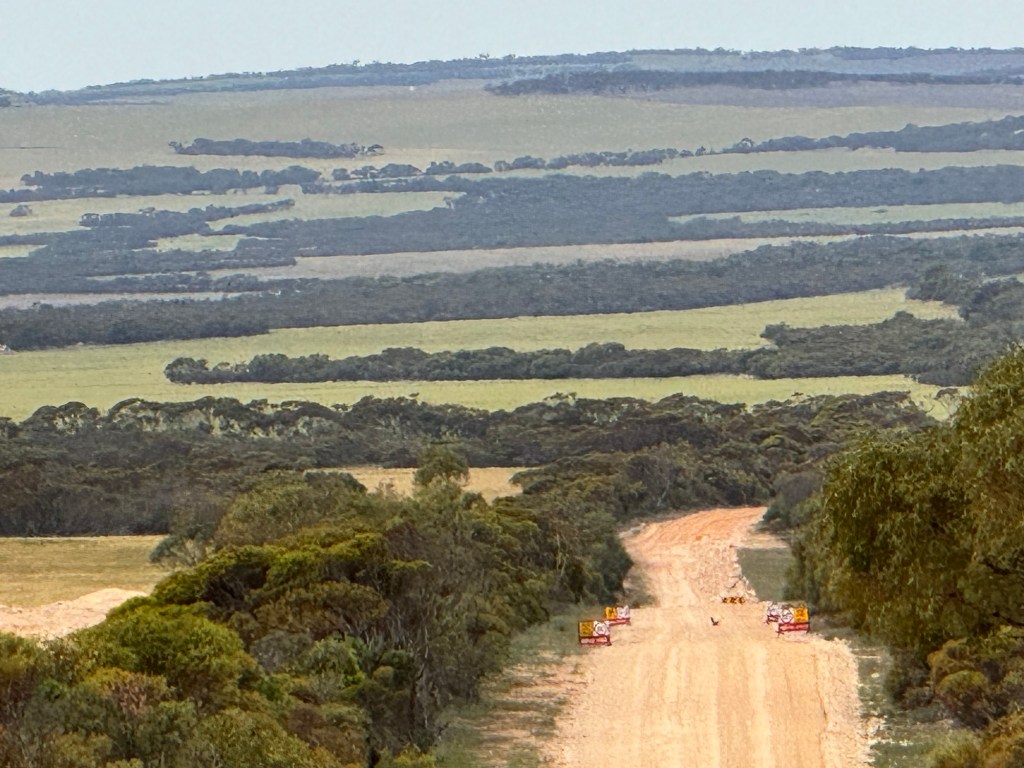
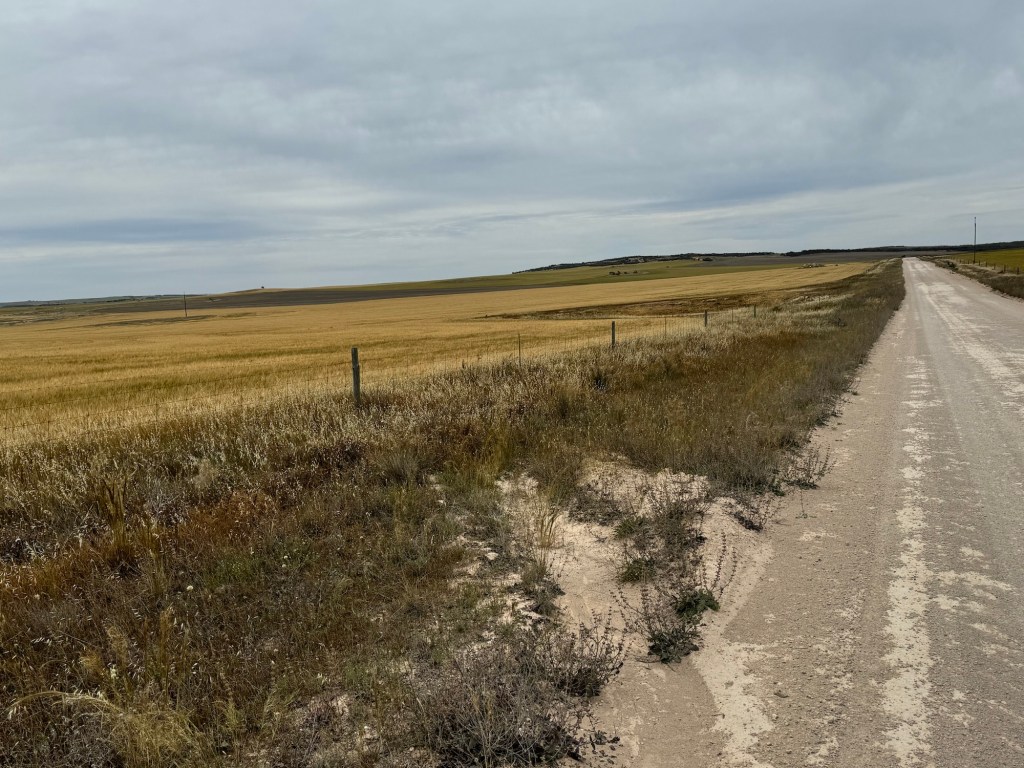
Driving through South Australia. The roads are a mix of clay and sand and are in very good condition. The scene here is wheat interrupted by the required 15% bush.
A huge station full of wheat.
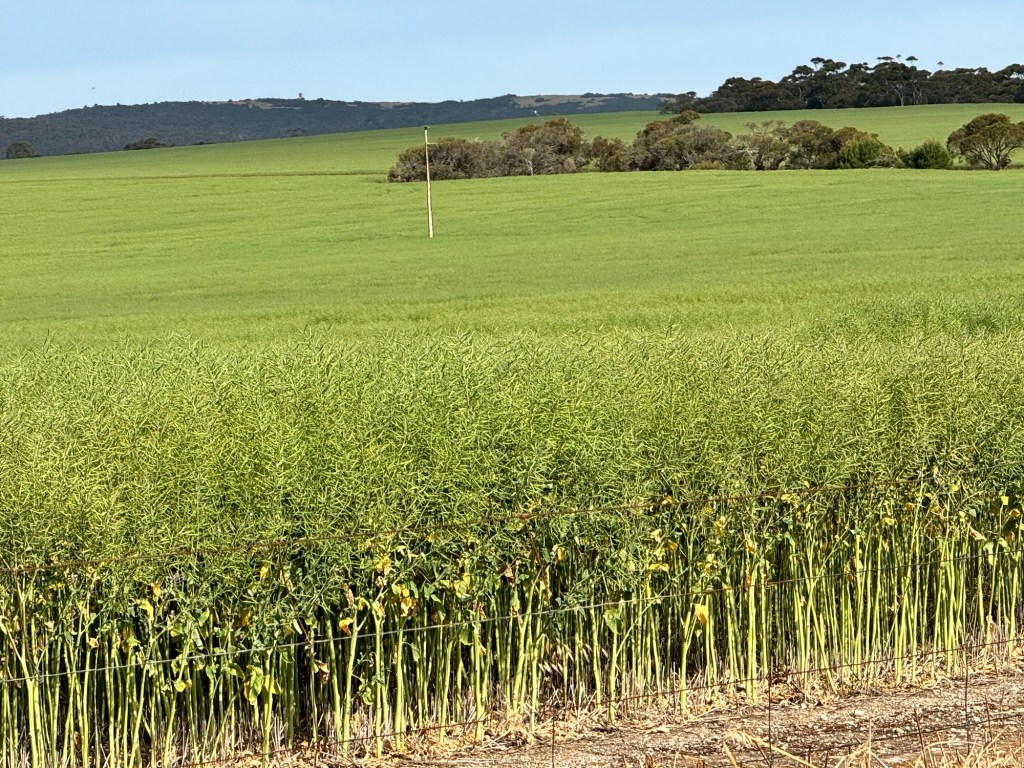
Another huge farm full of Rape seed for making canola oil, which gets sent to China.

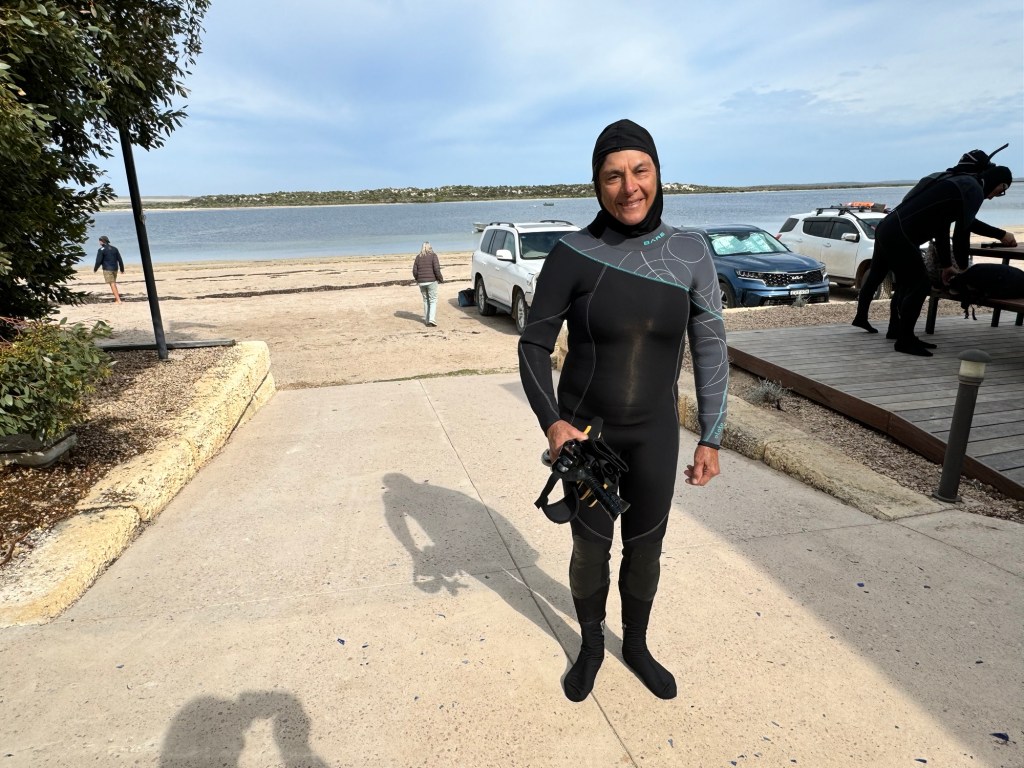
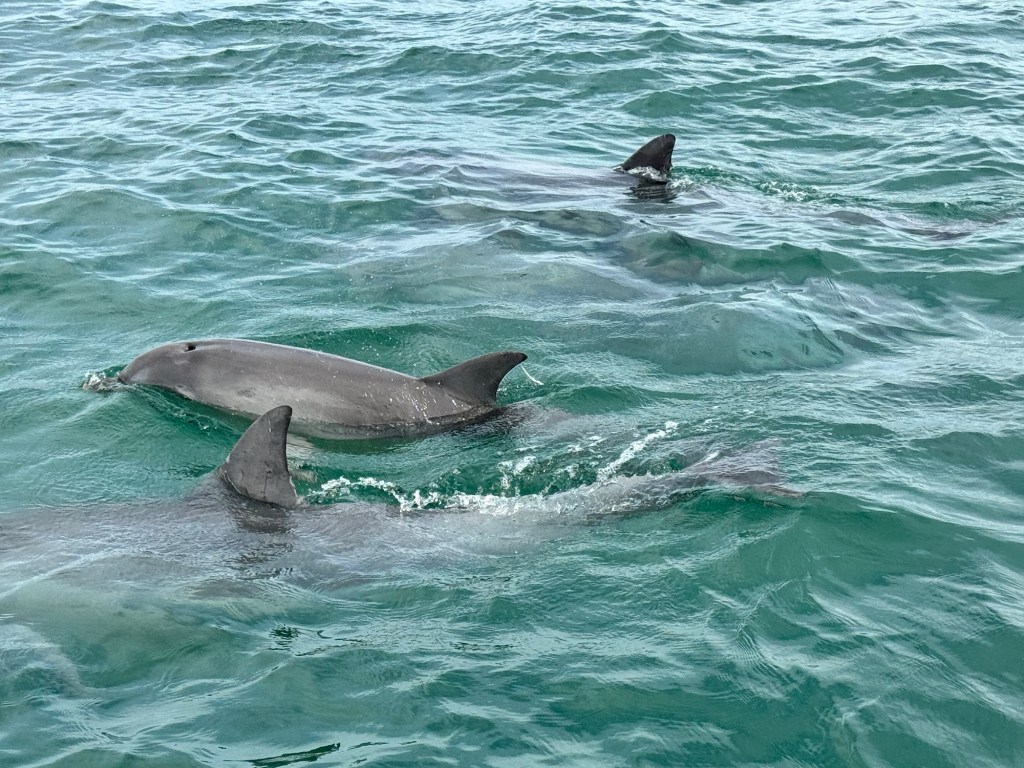
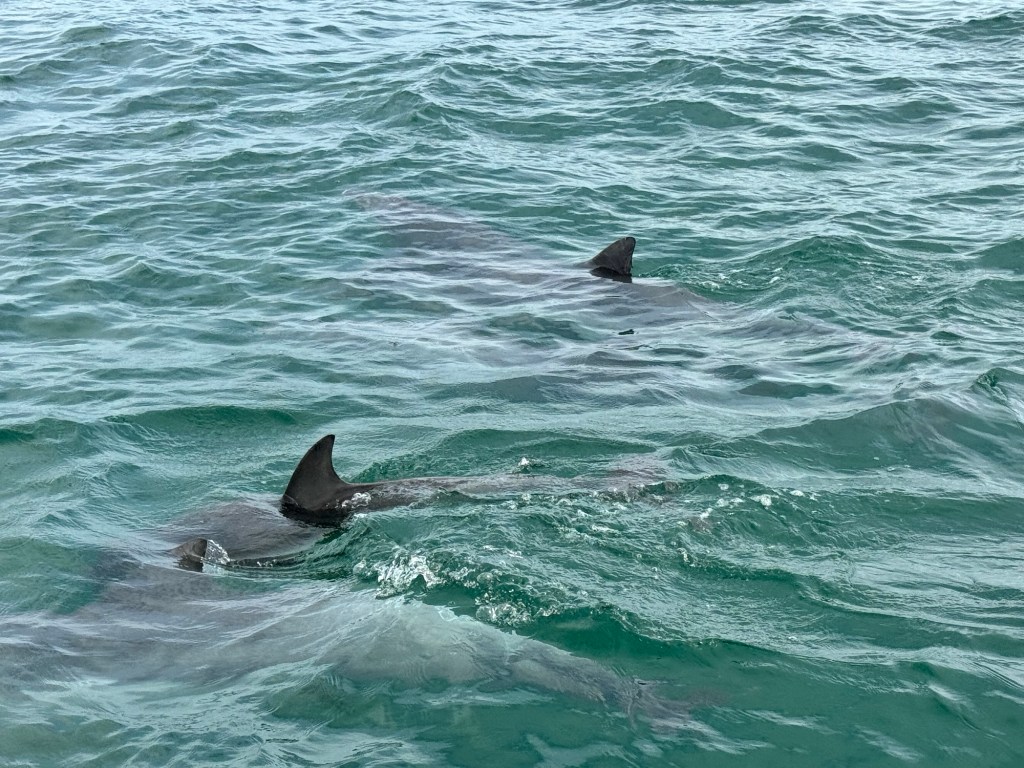
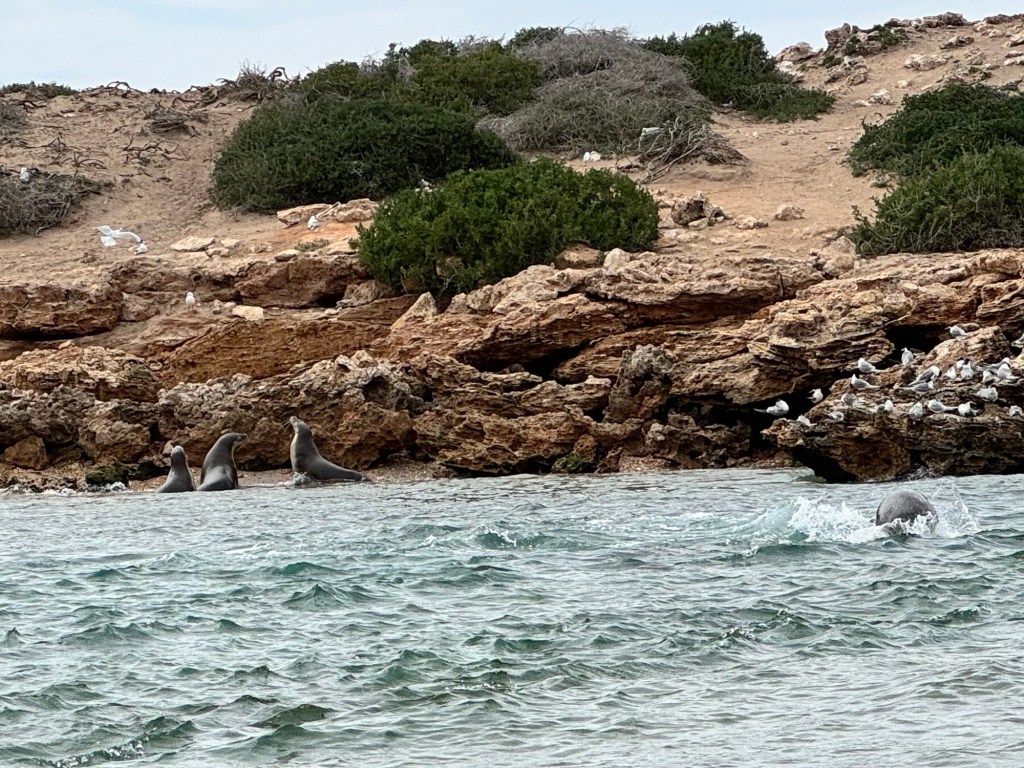
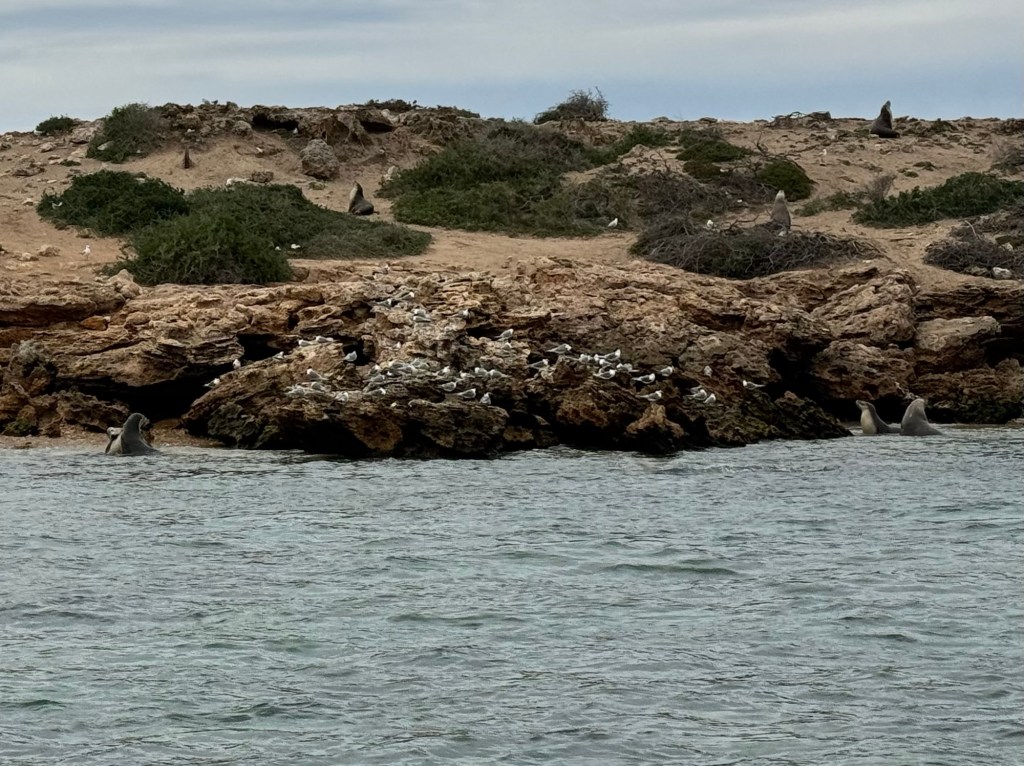
We drive west for 2 hours to Baird Bay Expeditions, where we join a boat tour that is taking guests swimming with dolphins and sea lions. Mark wanted no part of the freezing 58 degree water, complimented by a cool breeze.

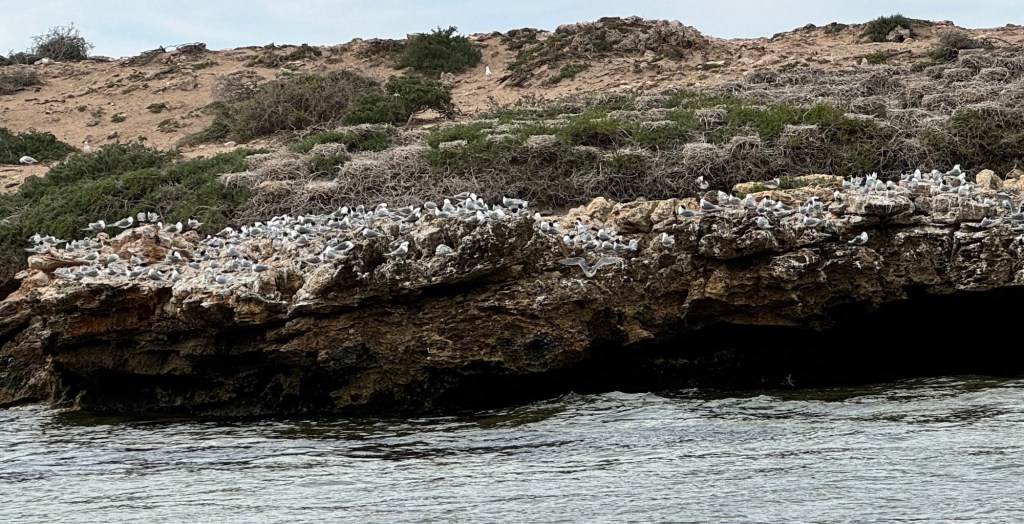
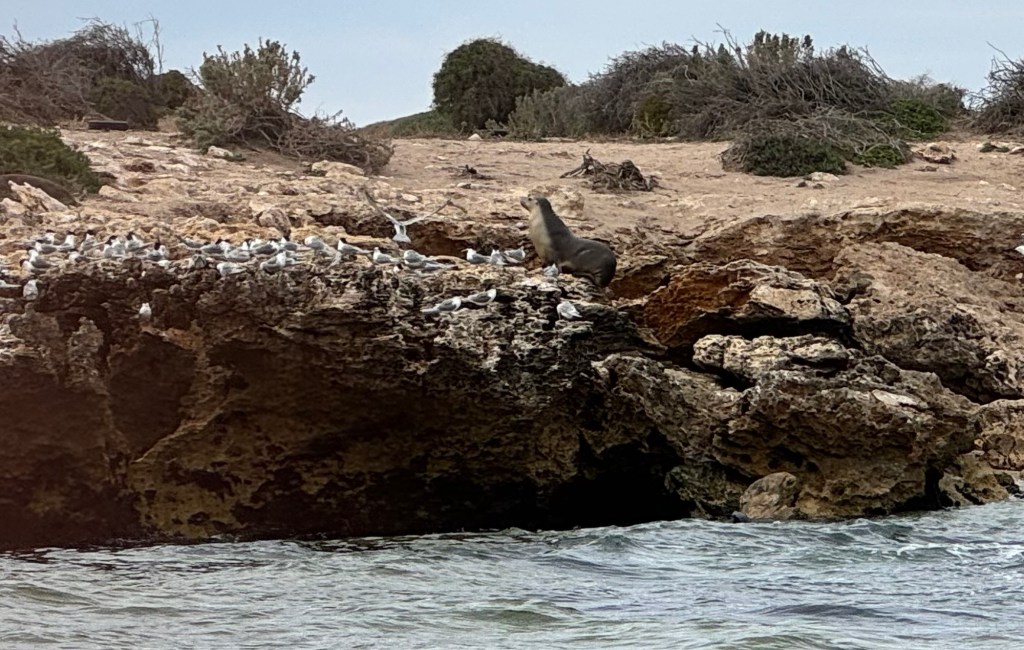
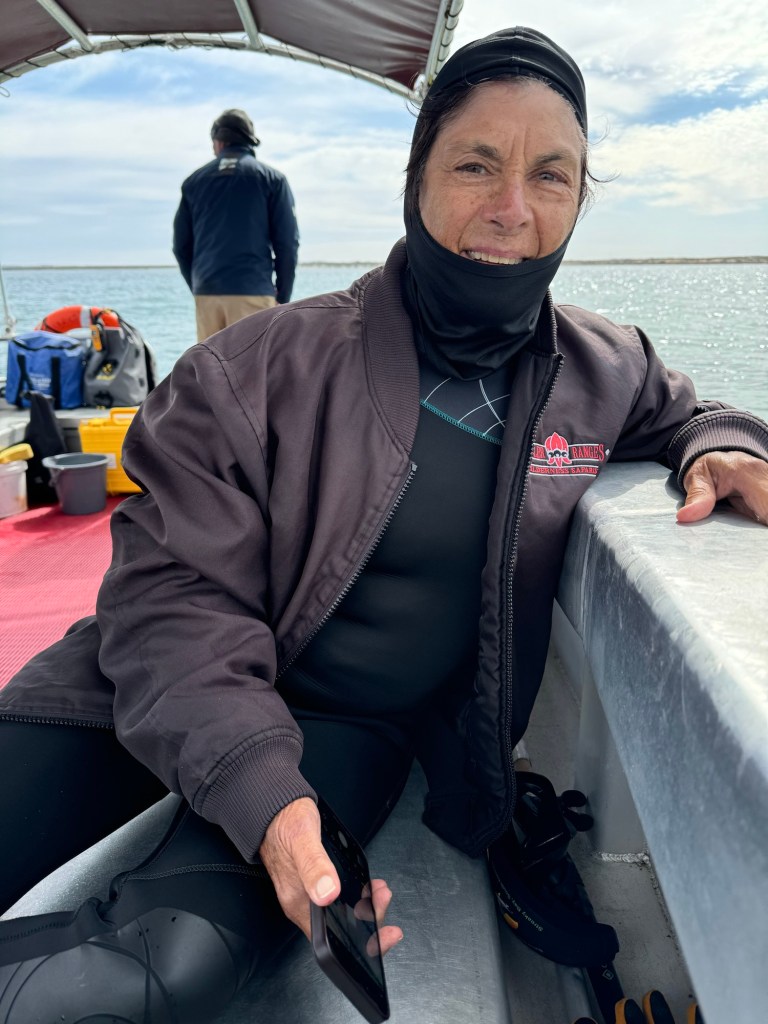
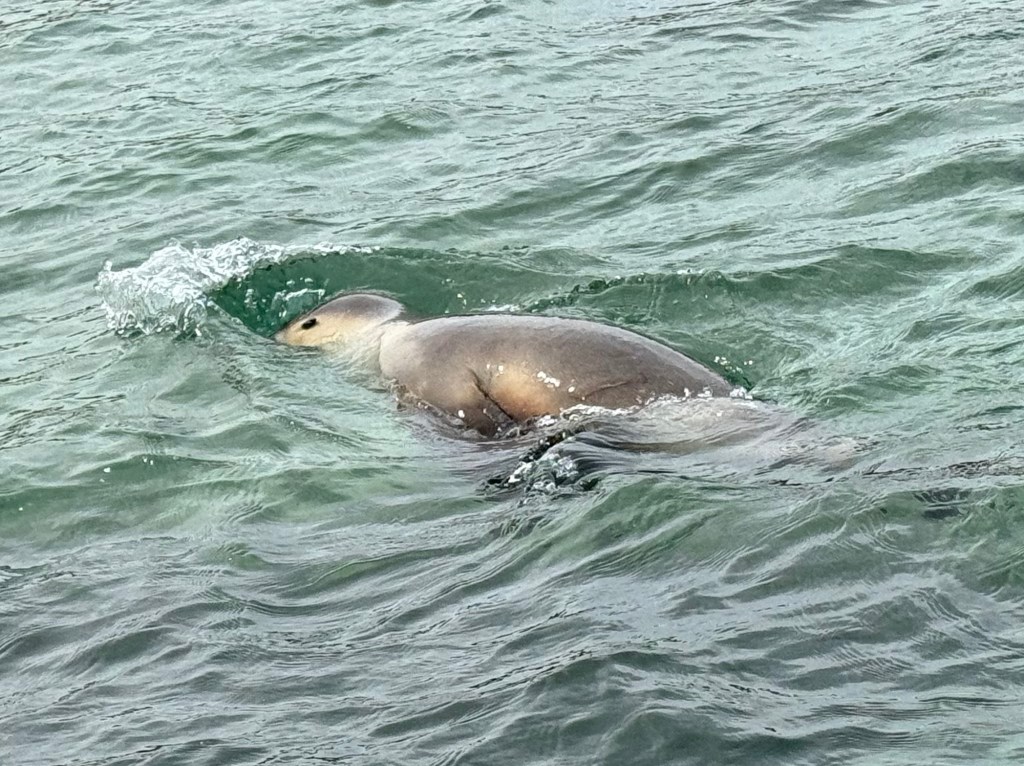
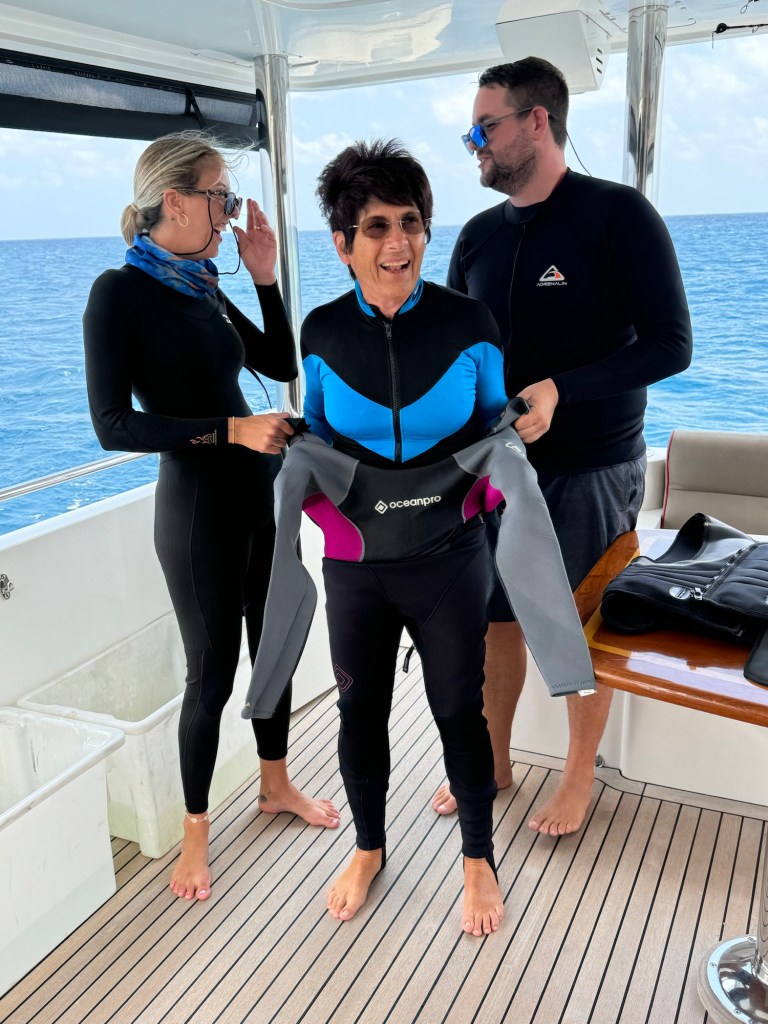
I suited up in a 5 ml wet suit, just in case I would be motivated. Off we went. By the time we were to get in the water, I was freezing and chickened out. It turns out, Mark and I saw almost as much fish activity being in the boat as the snorkelers did. We got very close to the sea lions and many dolphins swam right up to the boat. The skipper shared much with us that the swimmers did not hear, so we felt good about the experience. Along with the animals were thousands of crested terns, pelicans and cormorants.

It was a short drive to Rosie’s home in Venus Bay.

She showed us around and we ate lunch on the patio in her succulent garden, which needs little water. From there we drove into Port Lincoln where we had reservations to stay in a B&B home overlooking the bay.

We met the manager of the house, Robin, and the chef, Kerry. She made us a delicious king fish fillet, on a bed of cabbage slaw, topped with roasted tomato. After she cleaned up and left, we relaxed awhile and went to bed.

Sunday, October 13, 2024

We were picked up at 10am by David Doudle, our guide for the day. He told us we would be going to Winters Hill Lookout first thing to get the lay of the land.

Then we would go to Flinders Port Wharf to see what drives the local economy. That is wheat, barley and Canola. This port is so large that it can handle 504 thousand tons of grain at any one time. 2.2 billion dollars of product, grain and seafood, is exported each year.

Kerry, our chef who is married to a fisherman, told us the Southern Bluefin Tuna fishing boats go out for 3 months at a time. One boat drags a huge cage into which the live fish are put. The drag boat slowly drags the live catch around the ocean, while continuing to collect the harvest from other boats. The fish in the cage are fed for a few months until they are ready for market, then divers get into the cage and put the fish on conveyor belts that drag the fish into the boat, where they are killed immediately and snap frozen. When the boat returns to port, the fish are ready for shipment to Japan and some other countries.

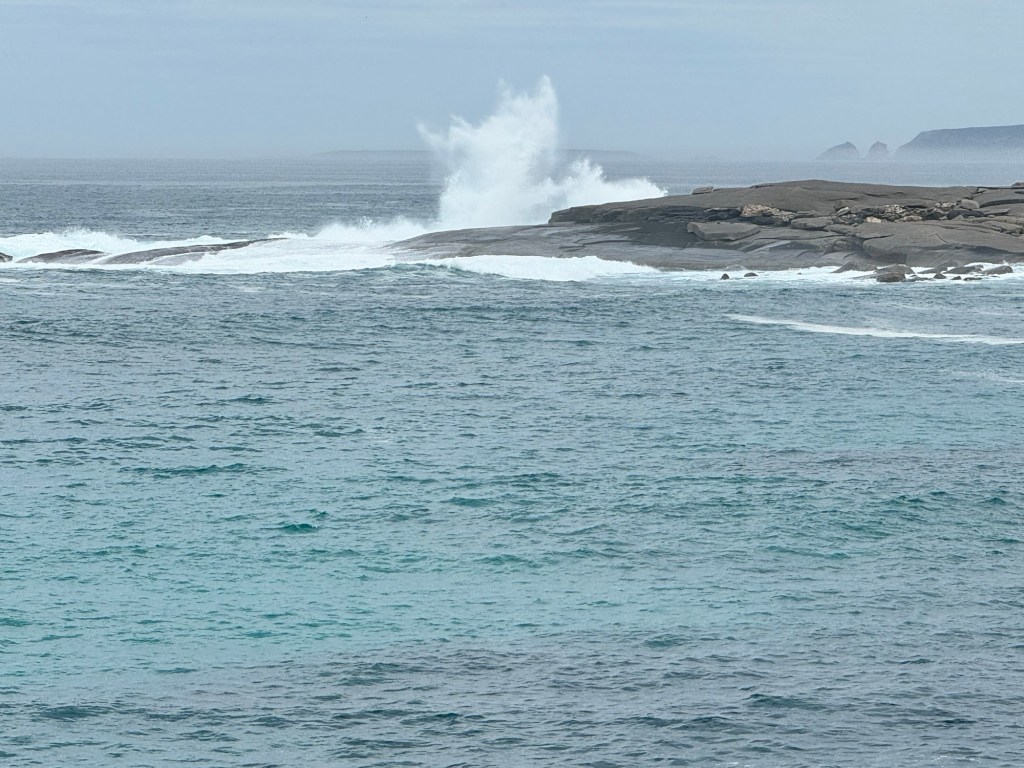
From there we drove to Wanna Lookout to drive on the sand. David deflated the tires to 20 psi and put up a safety flag before driving through the dunes. He gave us a spectacular hour’s ride up, over, around and through the dunes. Finally, he stopped for lunch on a limestone cliff top overlooking the Southern Ocean. The next landfall is Antarctica, only 5500 kilometers away.

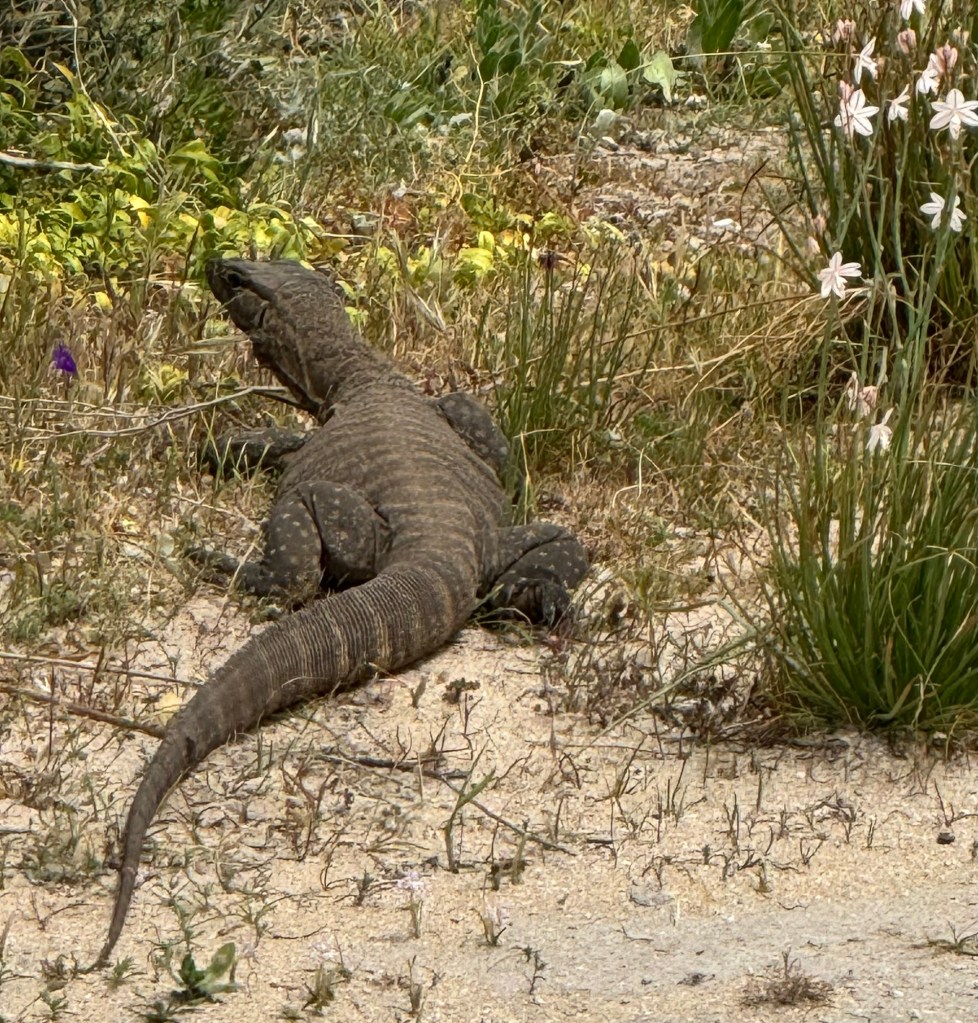
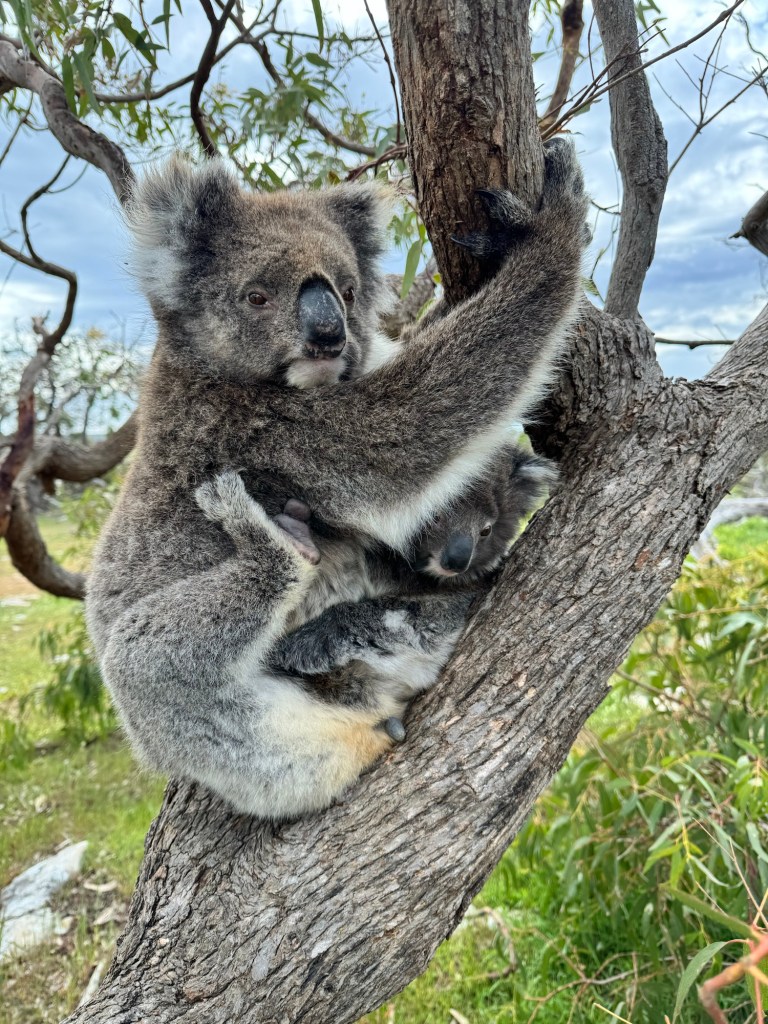
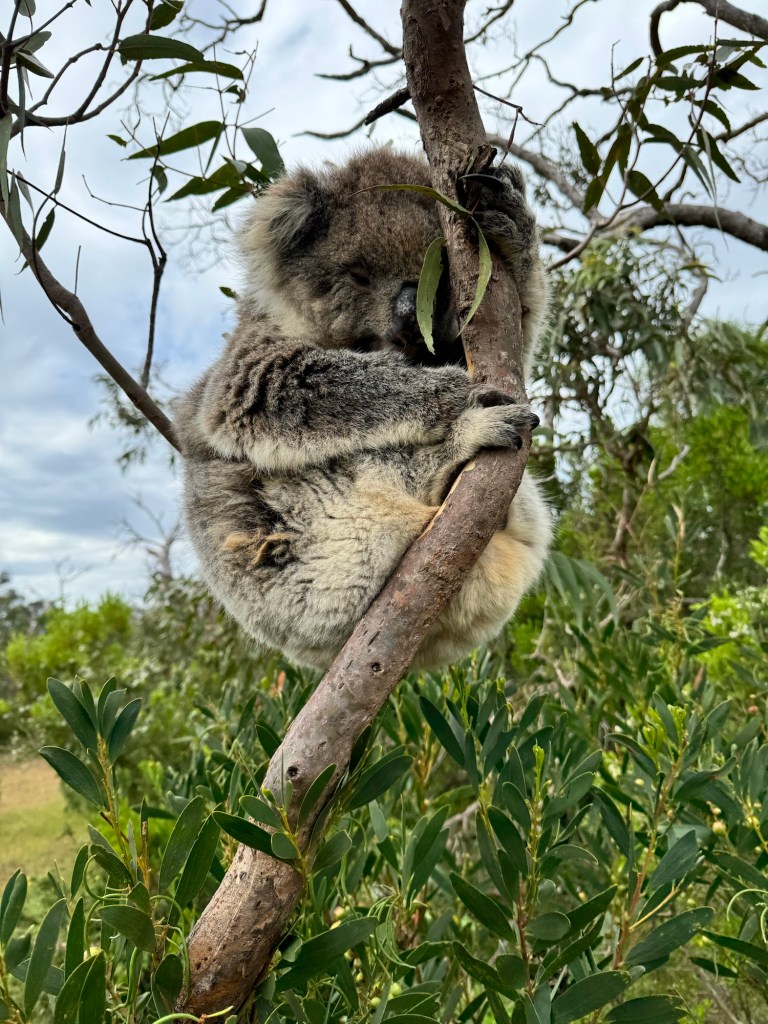
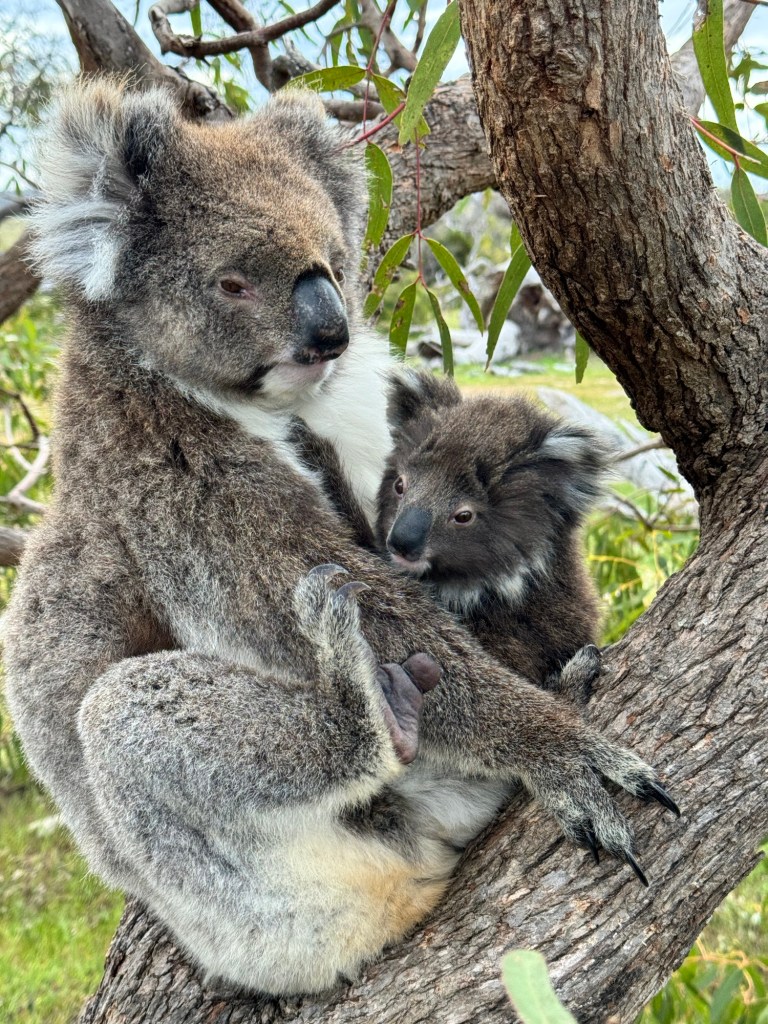
After lunch, Dave reinfected the tires with his on board compressor and we drove to a private property where wild animals are conserved. We saw several dozen koalas, a few Emu, Kangaroo, shingle back lizards and one Rosenberg Goanna, a rare monitor lizard. The koalas were delightful to see. There were often 2-3 in a tree.

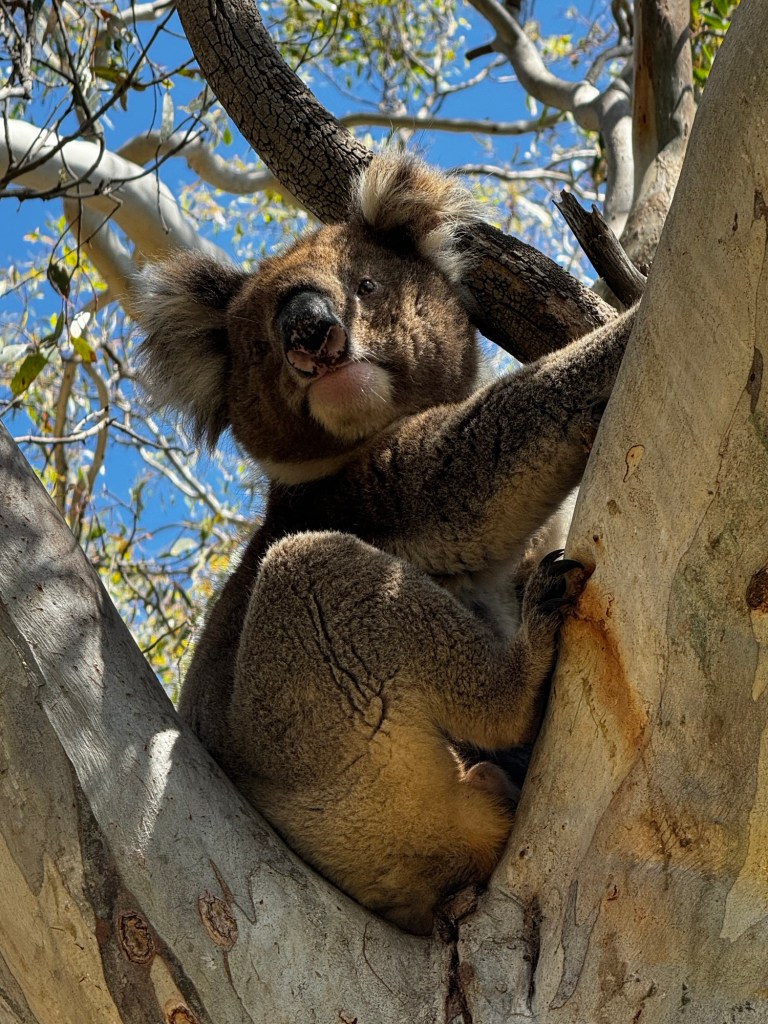
Koala and Joey
A koala scratching herself

It was a super day with great activities. Four wheeling in the sand was over the top as was seeing so many koalas in such a short time in just a few trees.

David blew us away with the action packed day.

Monday, October 14, 2024

Dave drove us to the Port Lincoln General Aviation Airport at 9am where we said good bye to him and joined a pilot who flew us in a Cessna 210 to Kangaroo Island.

Tasmania

Tazmania

Friday, October 4, 2024

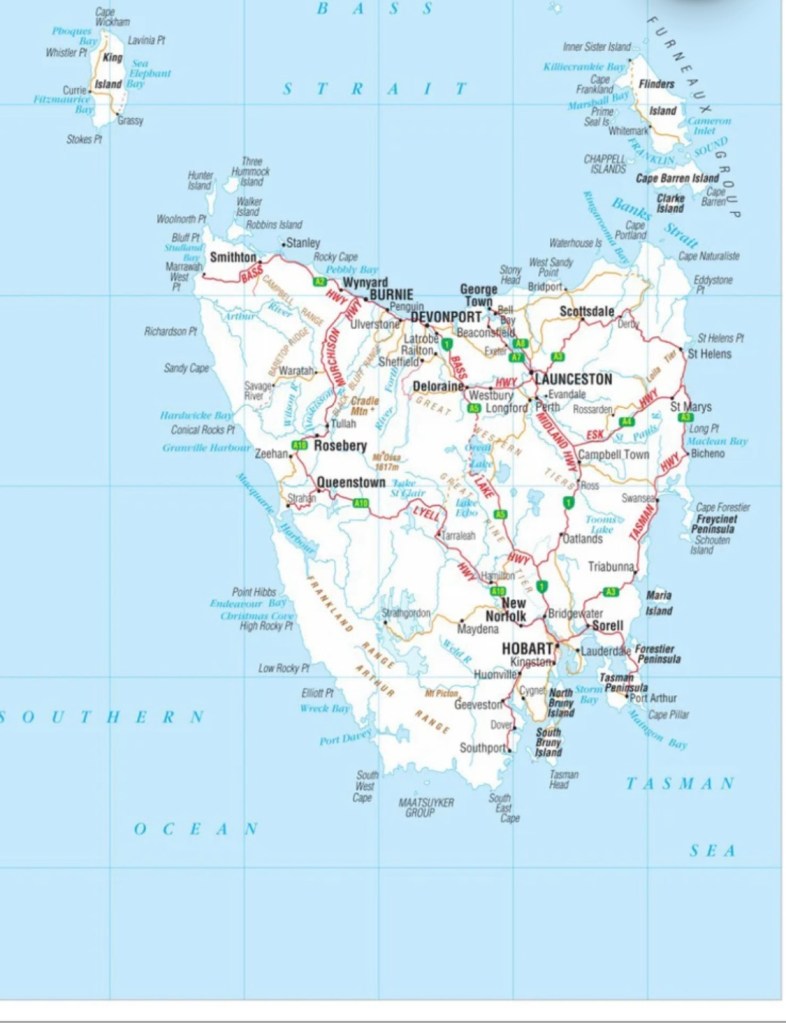
We arrive in Hobart from Melbourne at 10am. Our driver, Andrew, was delightfully charming and informative. Much more than a transport driver. Soon I was taking notes. The population of the state of Tasmania is 565,000 and is approximately the size of West Virginia. It is the least populated state in the country. The half of the population lives in Hobart, the capital. About 100K has some aboriginal heritage. Tasmania claims to have 4 distinct seasons as they are 40 degrees south of the equator. As Grass Valley is about 39 degrees north of the equator, our climates must be similar. The temperature was 63F in Hobart.

The first European to land on the island was Abel Janzoon Tasman in 1642. The state was named for him in 1856. Originally a prison colony, 190,000 prisoners were sent to Tasmania from England. Roughly half came to Tasmania and half went to Sydney. The first successful European settlers came in 1804 and settled in what became Hobart. It has the 2nd deepest port in the world. Money-making products were fish and organic foods. Whiskey was also a moneymaker.

Then Andrew dropped us off at the Museum of Natural Art (MONA) and we began our 11am tour, which was a self guided computer app. It was the most unusual museum I have ever experienced. The art is all over the globe in terms of subject and translation. There is no map of the layout to follow or any organization to understand. After wandering around for almost 2 hours, we were tired and confused and wanting the experience to be finished. We left the building, knowing there must be a lot we missed. We had lunch in the museum, but found it somewhat confusing too.

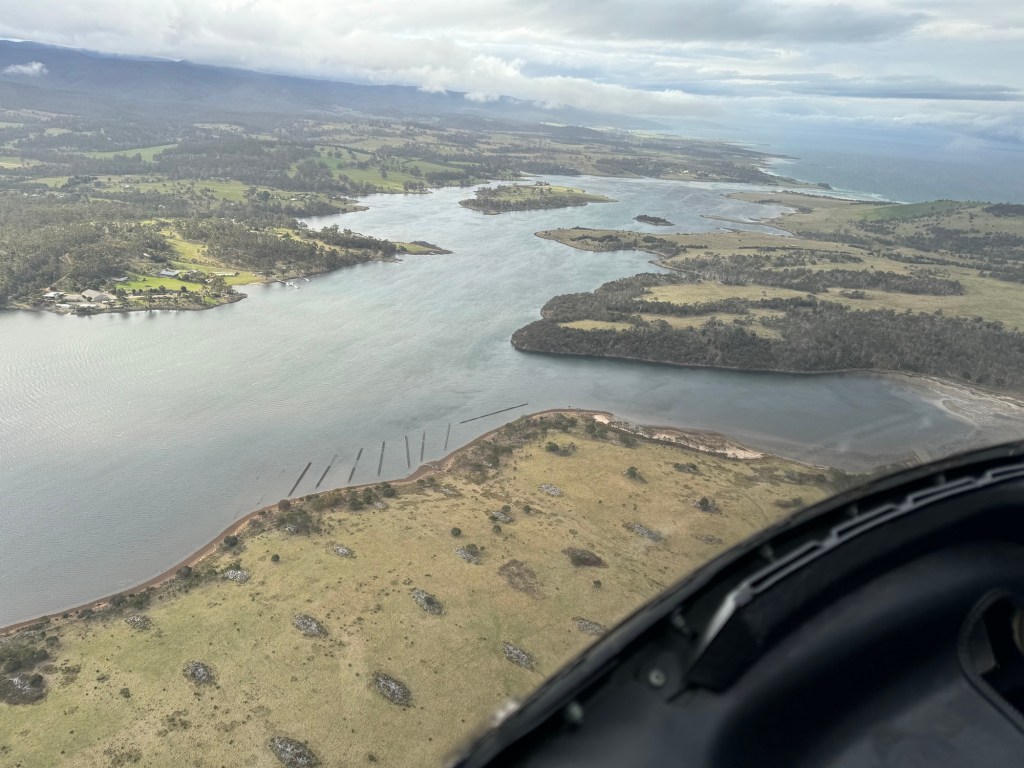
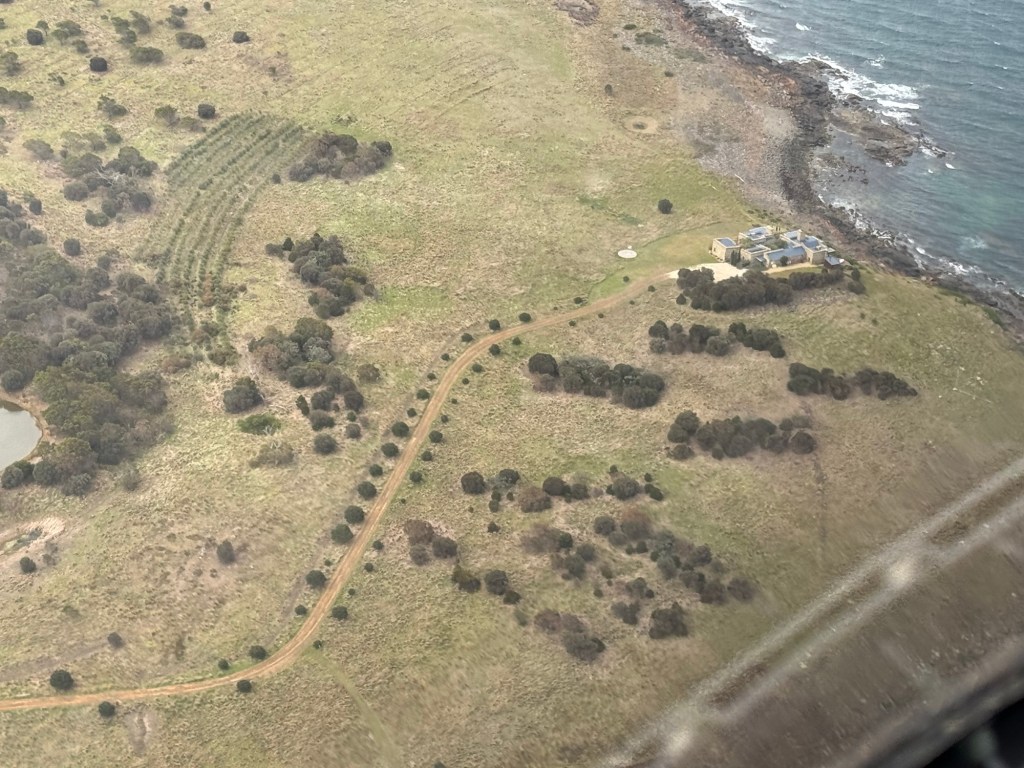
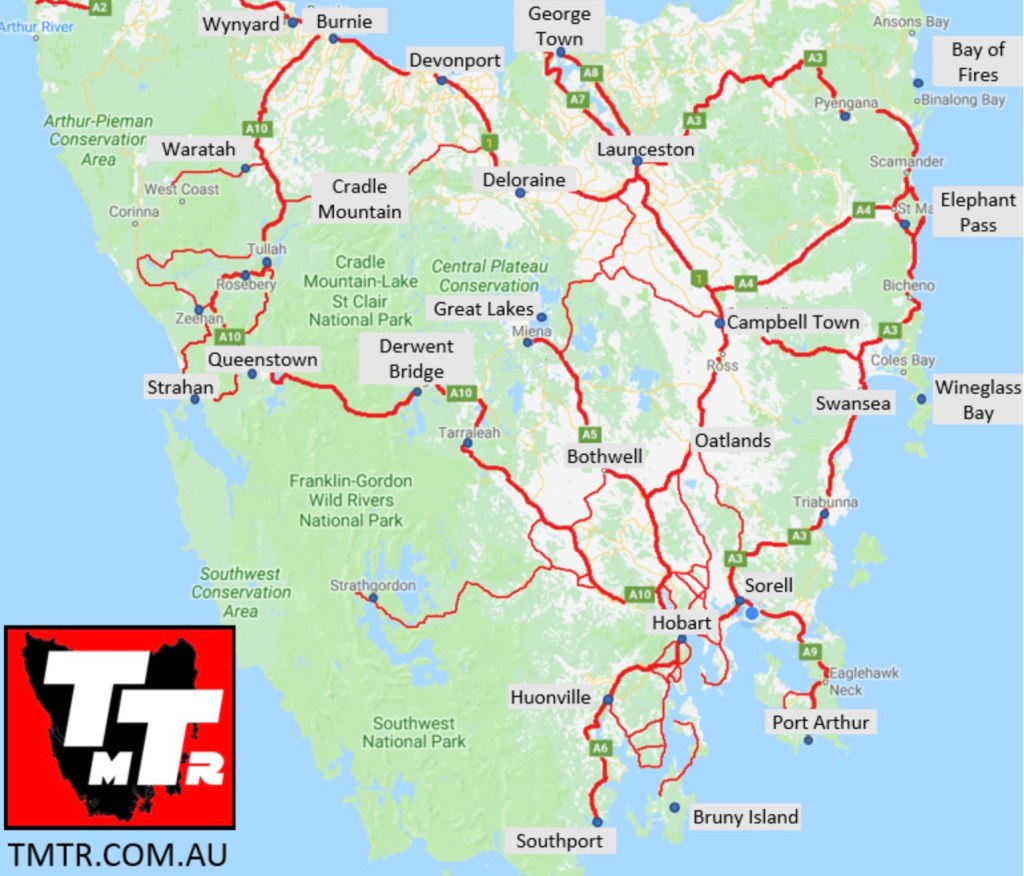
When we left the museum, the sky was raining lightly and Andrew quickly took us to the heliport for our 50 minute flight to our Hotel, the Saffire Freycinet on the east side of the island. (The Freycinet Peninsula is marked on the map). The pilot was happy to get airborne and off we went.

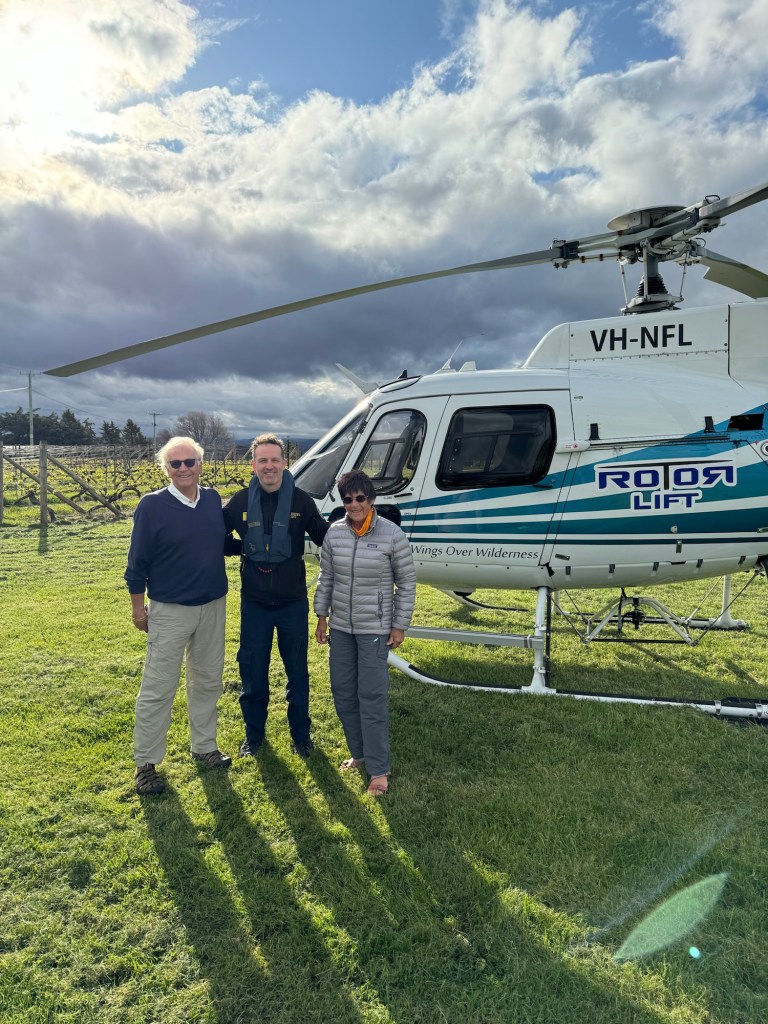
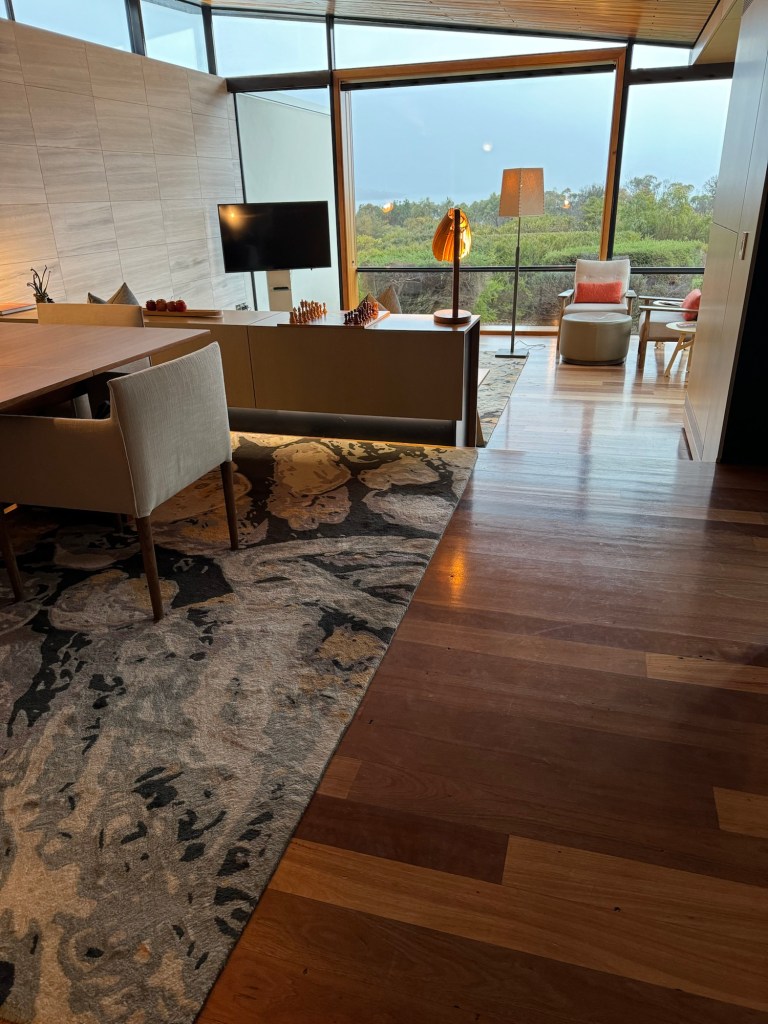
After 40 minutes the fog had descended below minimums and he decided to put the chopper down in a winery vineyard, short of our hotel destination. Very shortly a friend of the pilot’s drove up and agreed to take us the rest of the way to the hotel. It is so nice in a small country, where everyone knows everyone and is willing to lend a hand. We were on our way by car in just a few minutes and reached the hotel about 30 minutes later. Everyone was so very nice. Soon we were in our hotel room and able to relax.

Apparently the Freycinet brothers arrived in the area in 1802 and mapped the area, but did not live here.

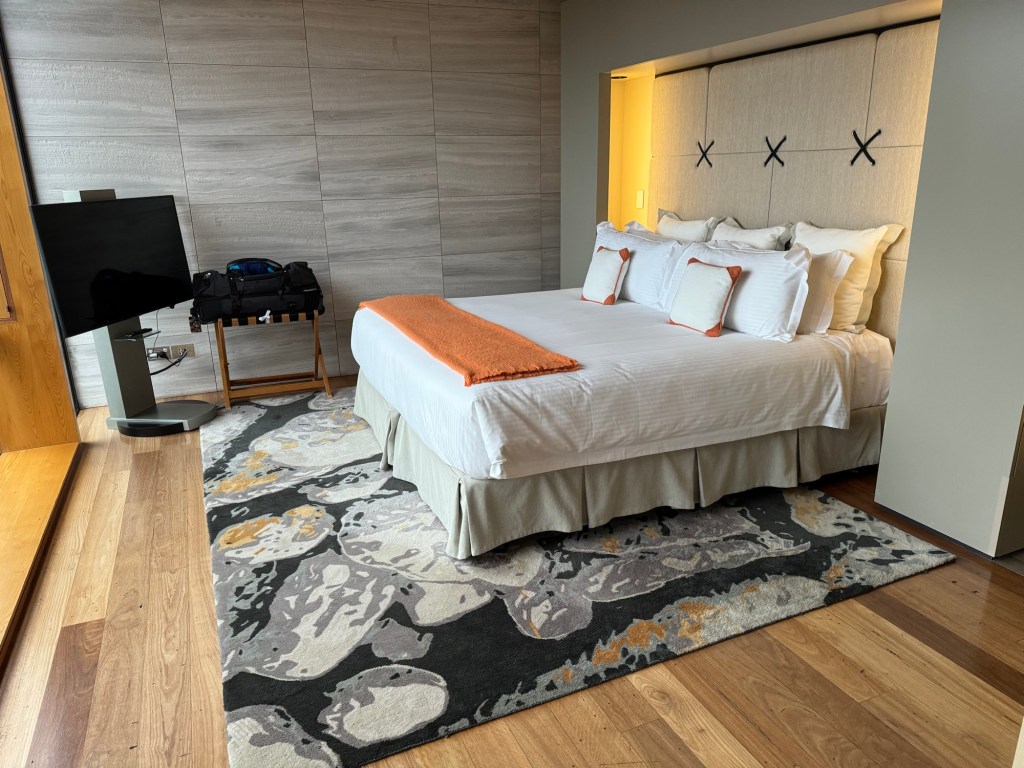
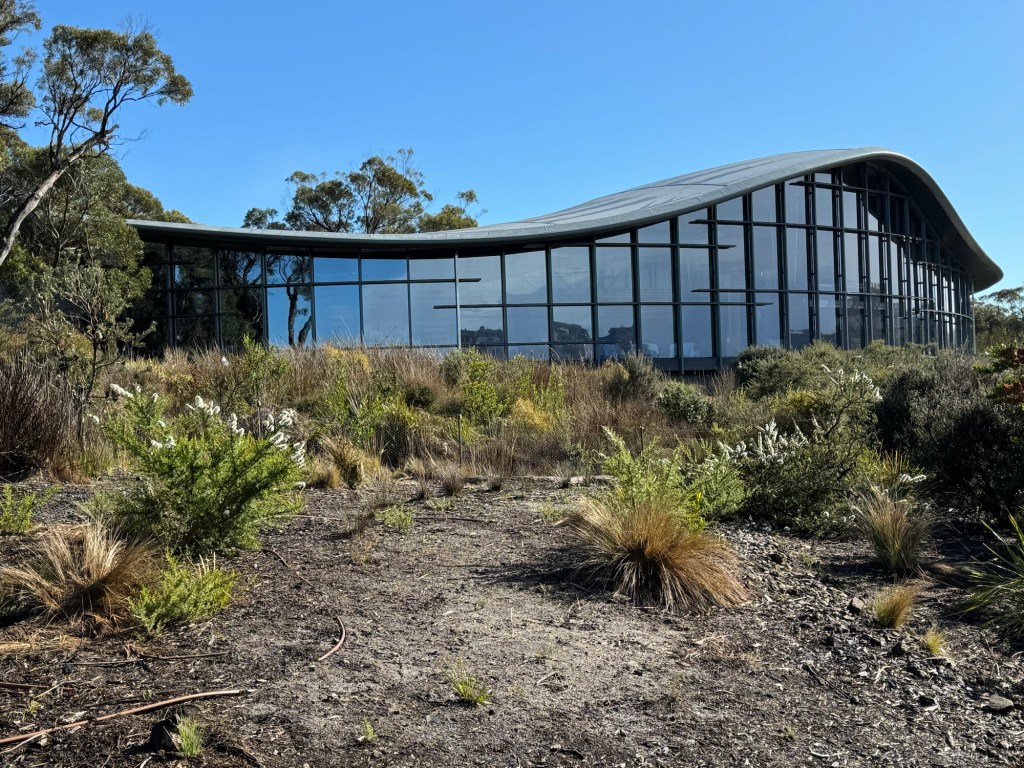
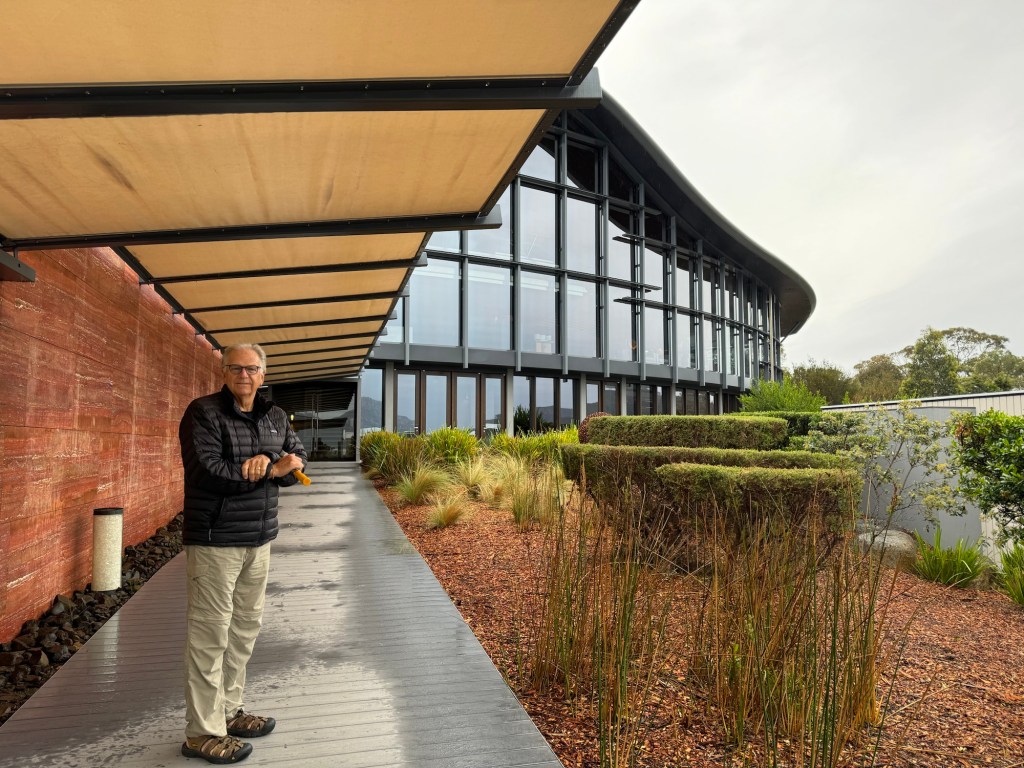
We had a light simple dinner and were happy to relax in our room. The building is designed to look like a Southern Eagle Sting Ray.

Saturday, October 5, 2024

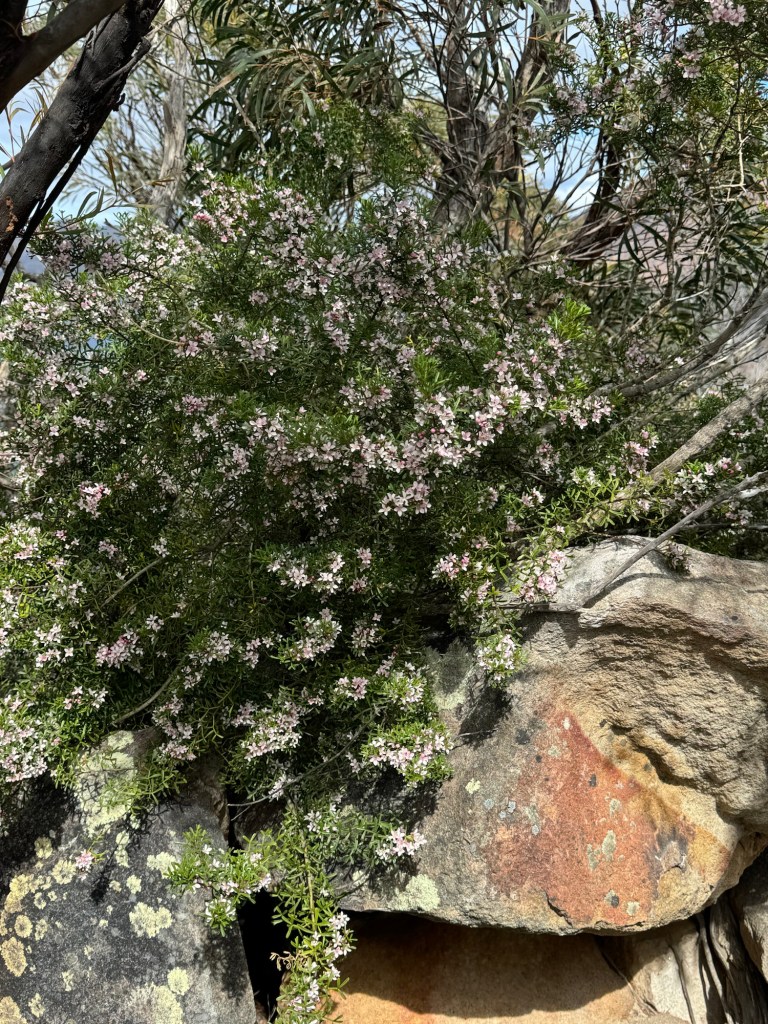
Up and out for a reasonably sunny day, with a light breeze and a few clouds. Simple breakfast followed by a ride then walk hike with the hotel guide, Nicole. We walked on a very easy trail that was most pleasant. Nicole identified many plants and lichen, with a limerick: “Freddy fungi and Alice algae met and took a lichen to each other”.

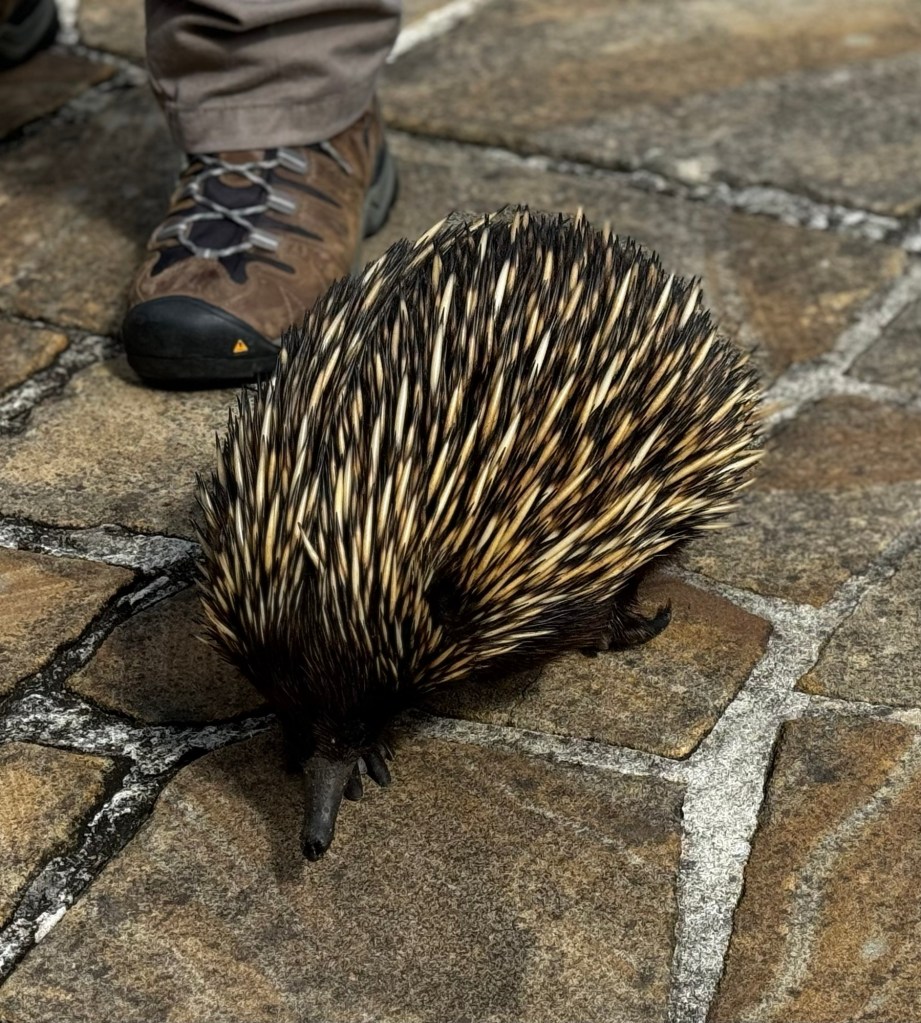
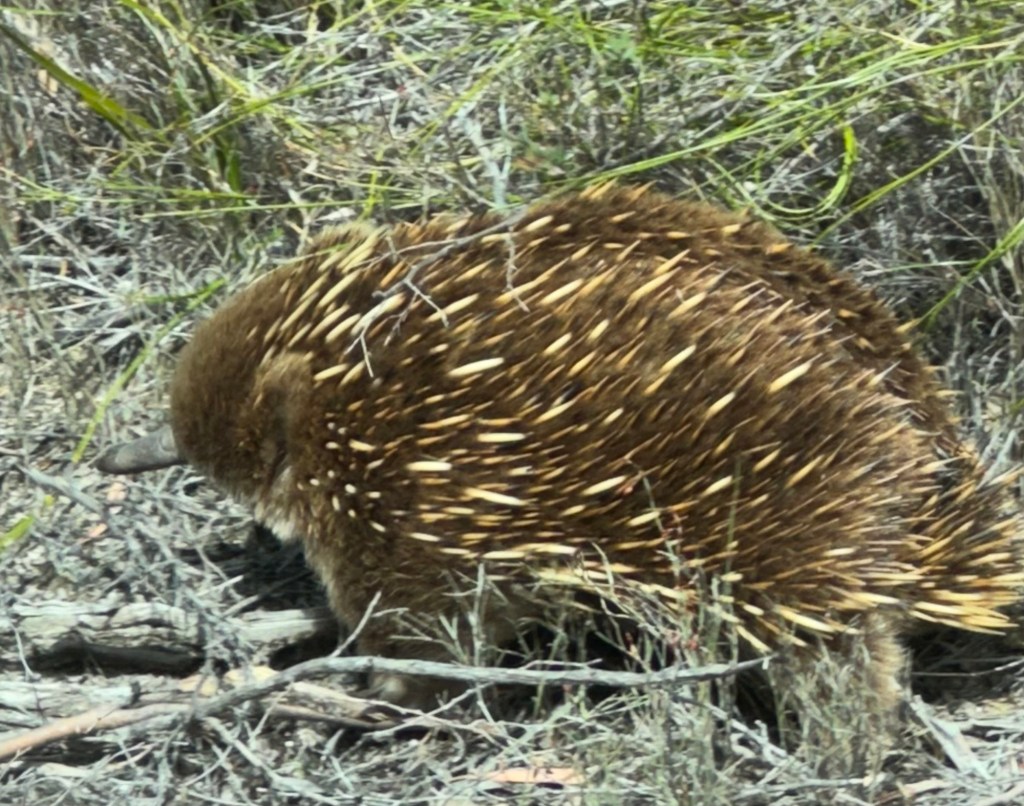
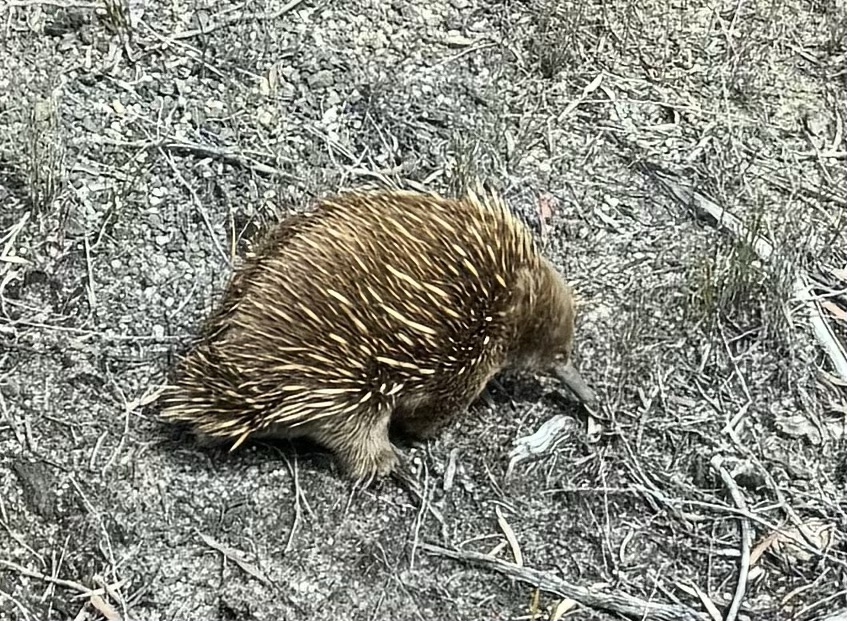
The echidna has quills as well as soft fur.
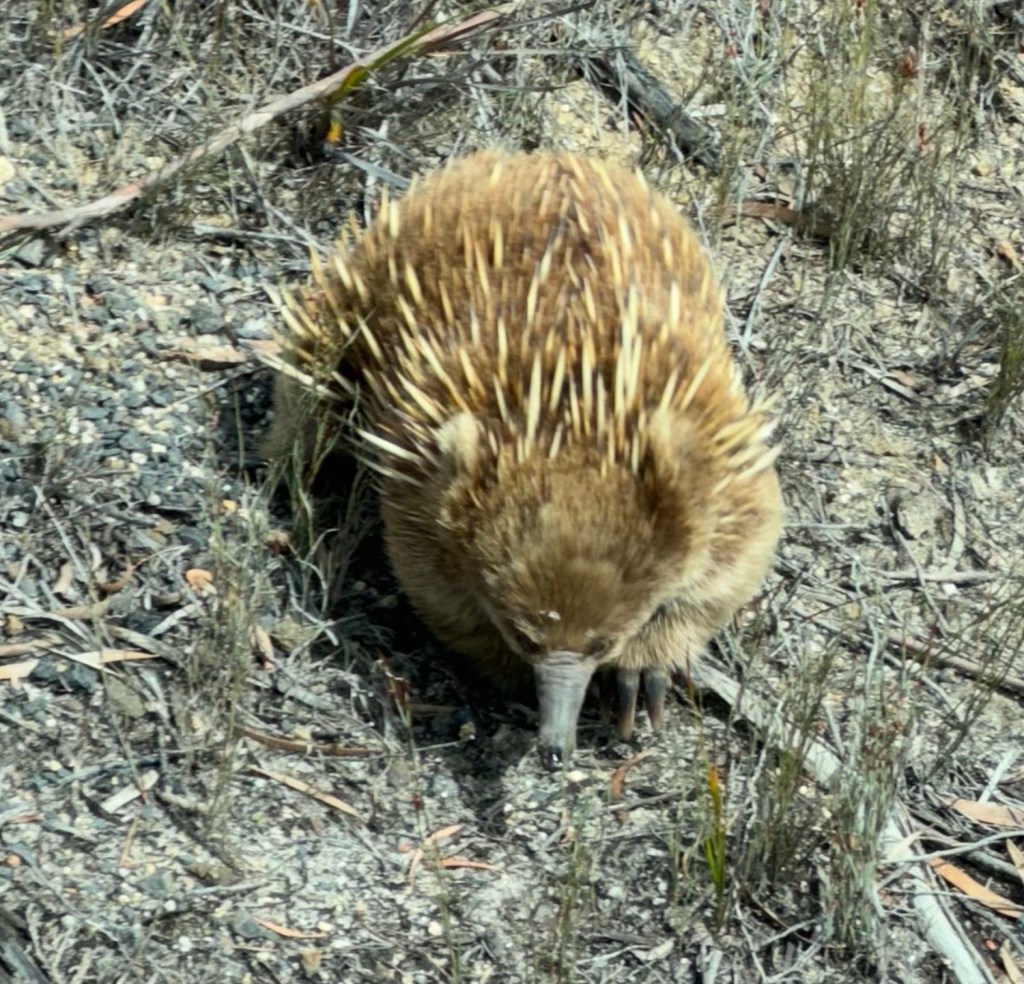
Look at that nose
See the Echidna nose or beak, sharp claws and small eyes. They have a great sense of smell and hearing.

On our drive with Nicole, we saw three different Echidna along the roadside and were thrilled to see them and get these photos. Echidna is a Greek word for “spiny ant eater”. They live only in Australia, and are very smart, having the largest frontal cortex in relation to their size of all mammals including humans. Along with the platypus, they are the only living mammals that lay eggs. About 30 days after mating the female deposits a single, soft shelled, leathery egg in her pouch. The egg hatches after 10 days and the baby lives in the pouch for 7 weeks. The mother gives pink milk due to high iron content of her diet, which includes termites, ants, earth worms, beetles and moth larvae.

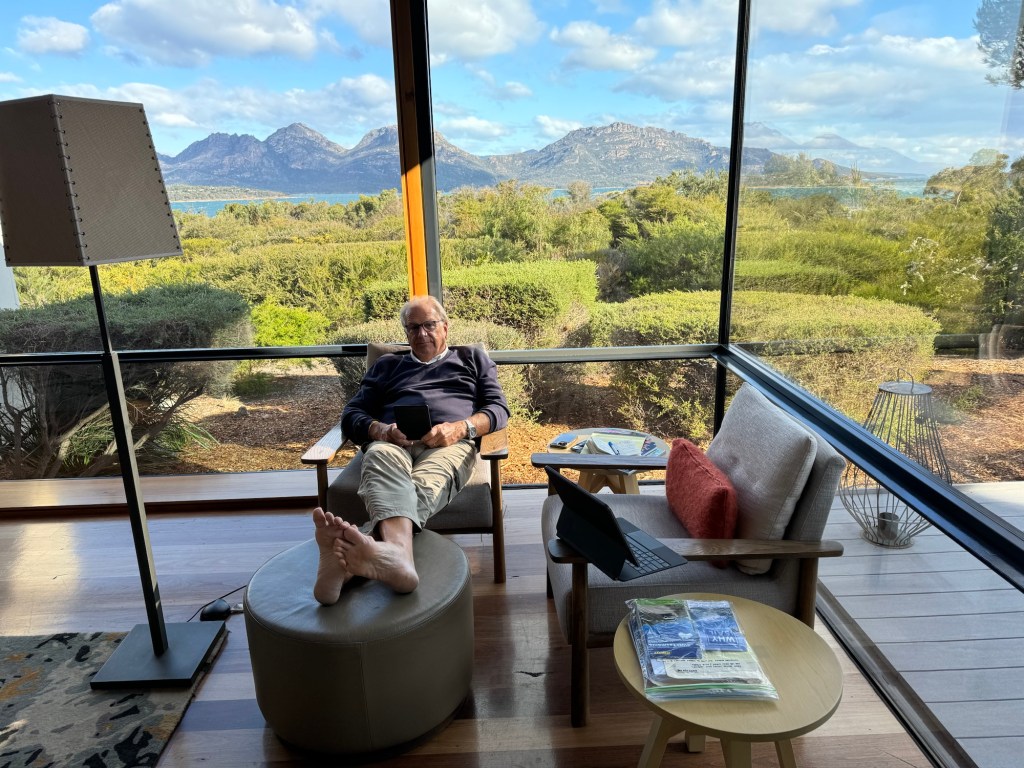
Relaxing in our suite

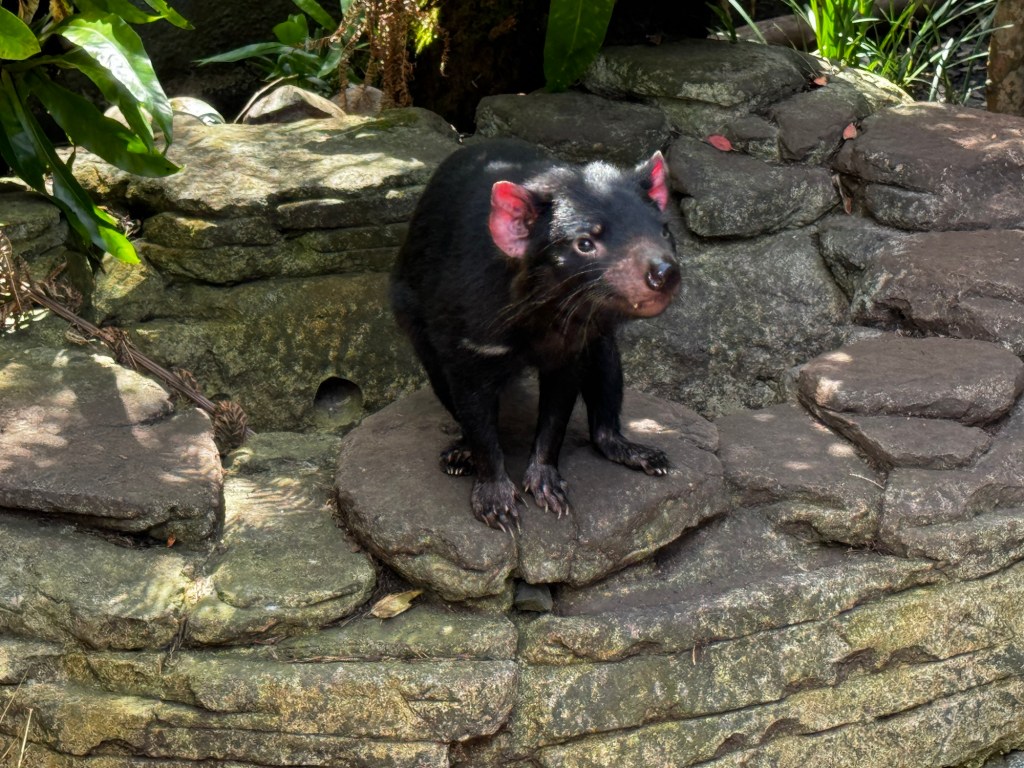
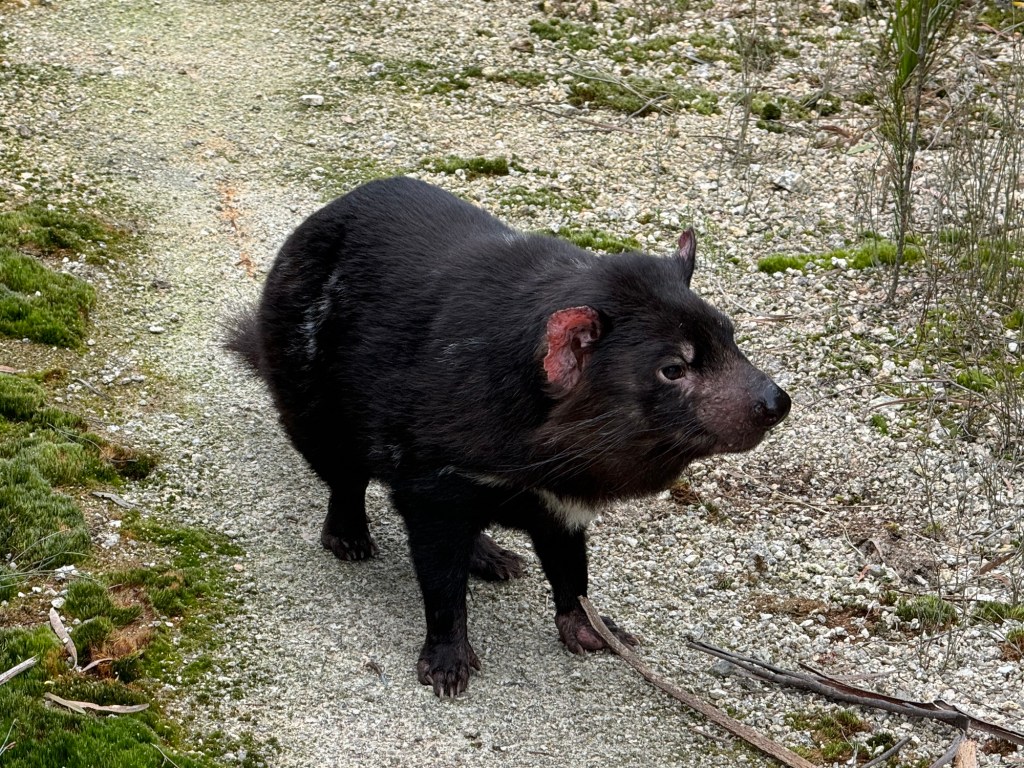
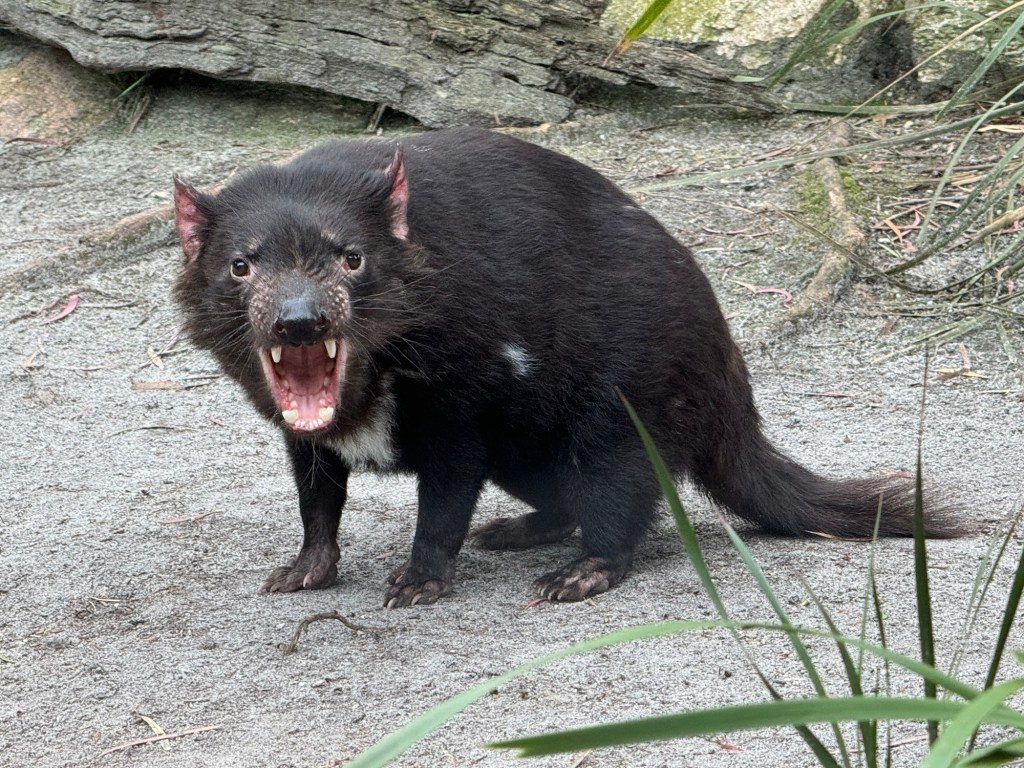
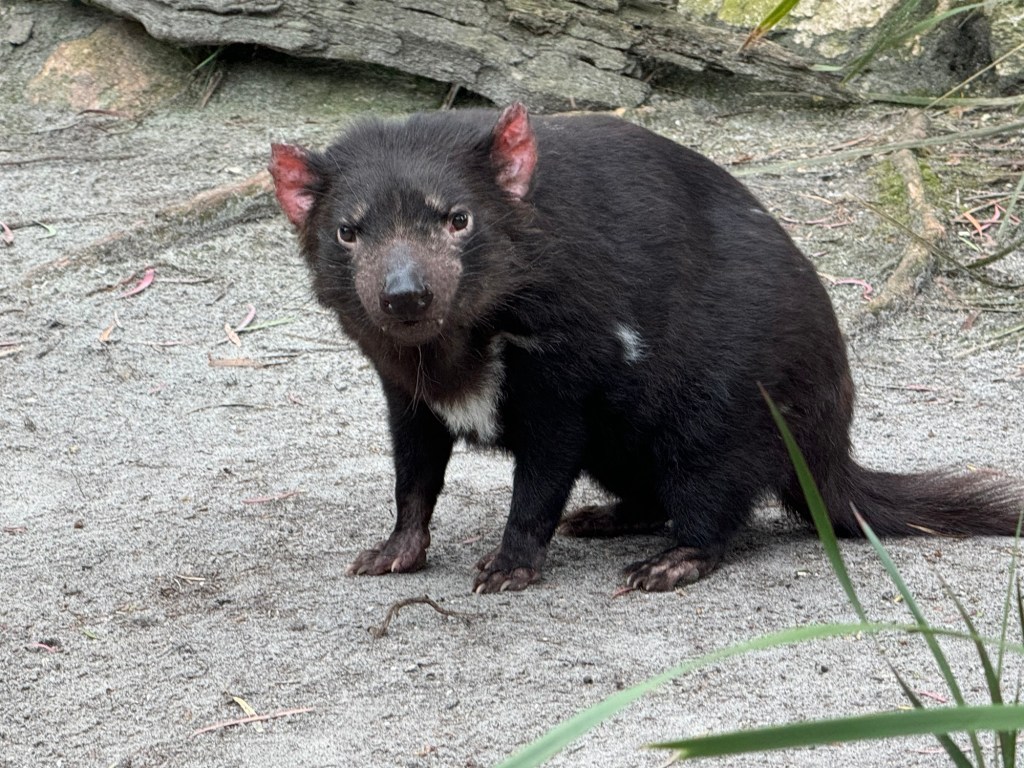
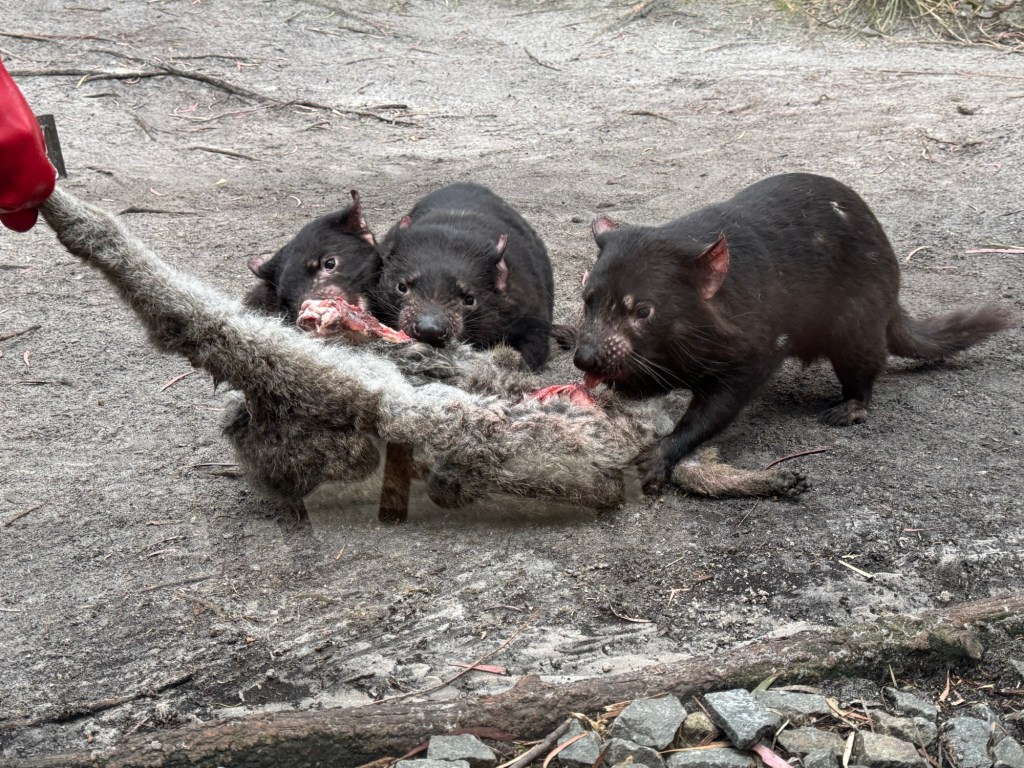
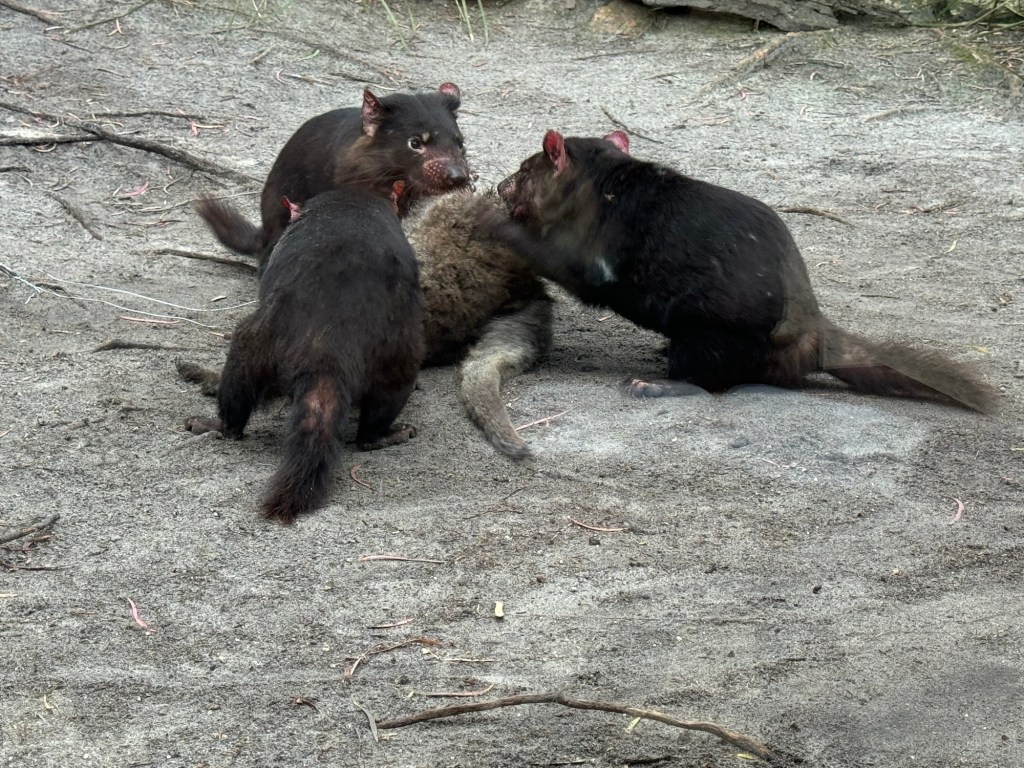
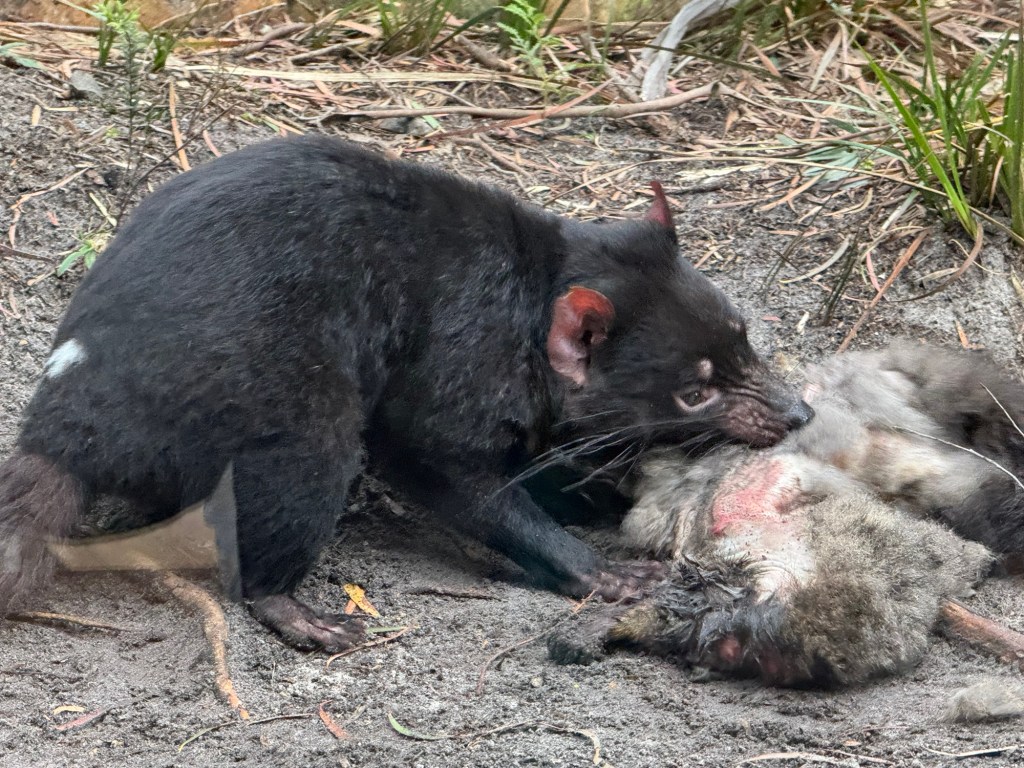
Back at the lodge, we had lunch and relaxed until 4pm, when we had our next planned activity—a visit to the Tasmanian Devil enclosure. It is on site at the lodge and a big part of its conservation efforts. The enclosure is 2.5 acres in size and currently contains 5 aging female devils. The only male had died a couple of weeks ago.

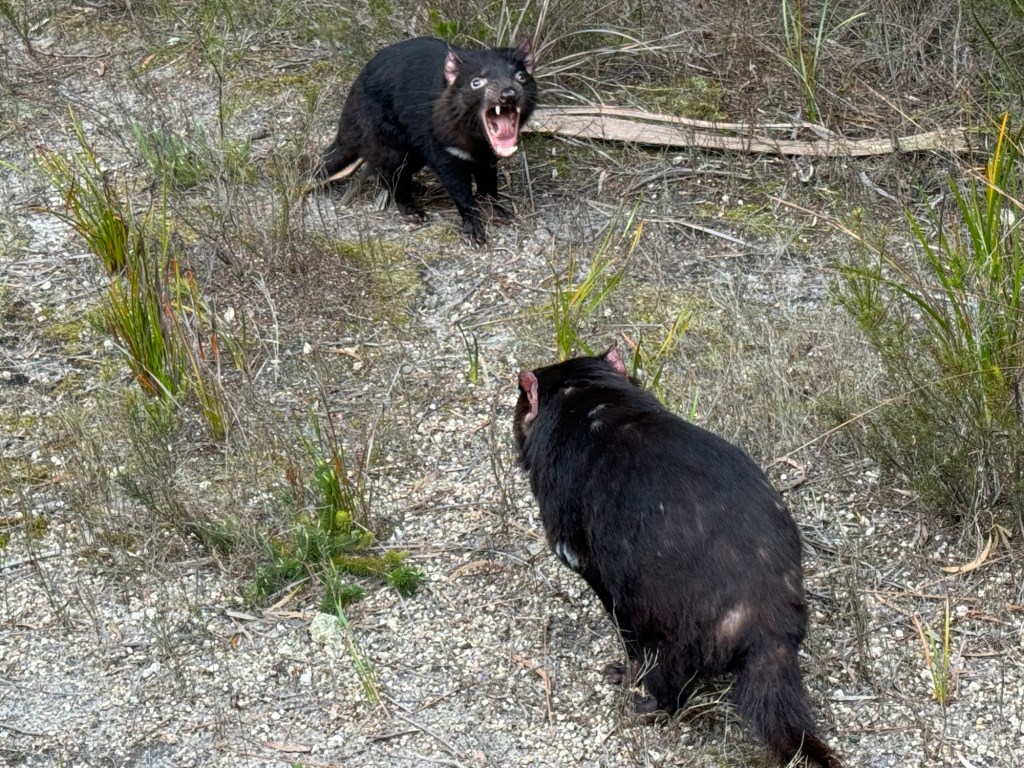
Tasmanian Devils are the largest carnivorous marsupials in the world and have the strongest bite for their size of any mammal. They only live on Tasmania as they became extinct everywhere else 3500 years ago. They eat up to 40% of their body weight in a day. Here at Saffire Freycinet, the devils are fed wallaby or possum every other day. They scream and shout and act like they are about to fight with each other, but they are displaying dominance and generally don’t fight.
These ladies don’t mate anymore, but those that do will have a litter of 20-40 Joeys, each the size of a grain of rice. As the mother has only 4 teats, that is all that will survive. They leave the pouch after 105 days and become independent after 9 months. Devils are very timid and quiet as a rule. They would rather run than fight. There are only 7-12,000 left in the wild. They are dying due to a very contagious cancer. A vaccine has been developed to eradicate the cancer, but inoculation is slow in happening.

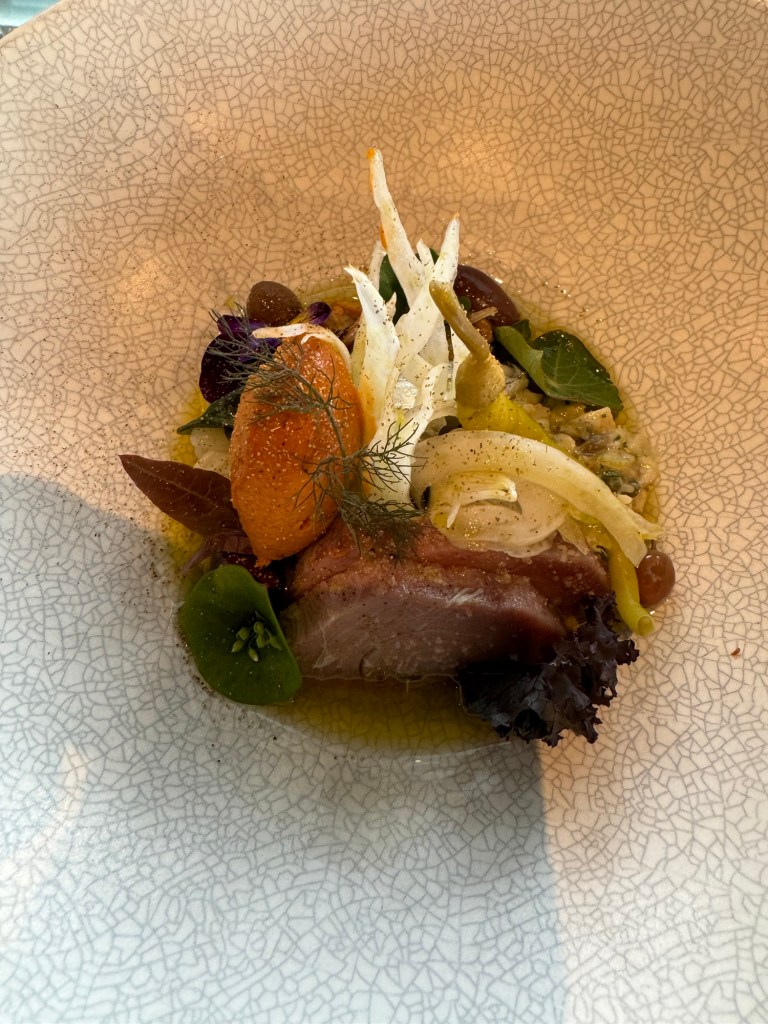
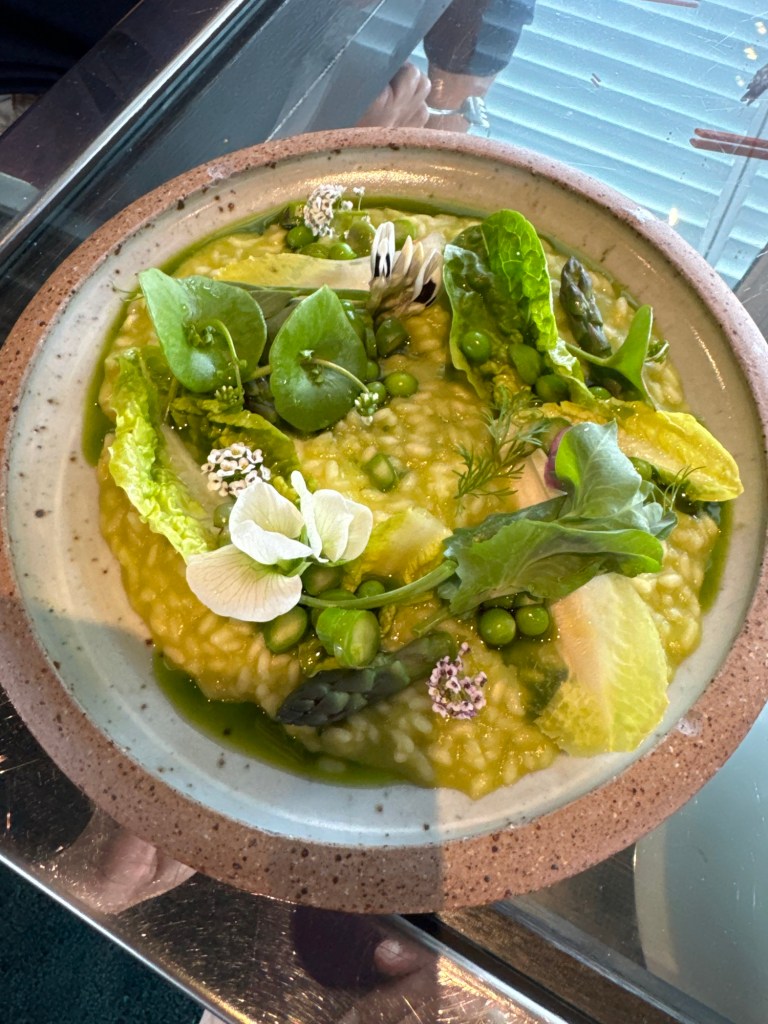
Back inside the dining room, we found the place packed. Turns out to be a long holiday weekend for locals and we got the last table in the house. Mark enjoyed a bunch of very fresh oysters, while I ate a raw scallop. Excellent start. Next course was venison for Mark and a nice flaky fish for me. We even had room for dessert. Then early to bed.

Sunday, October 6, 2024

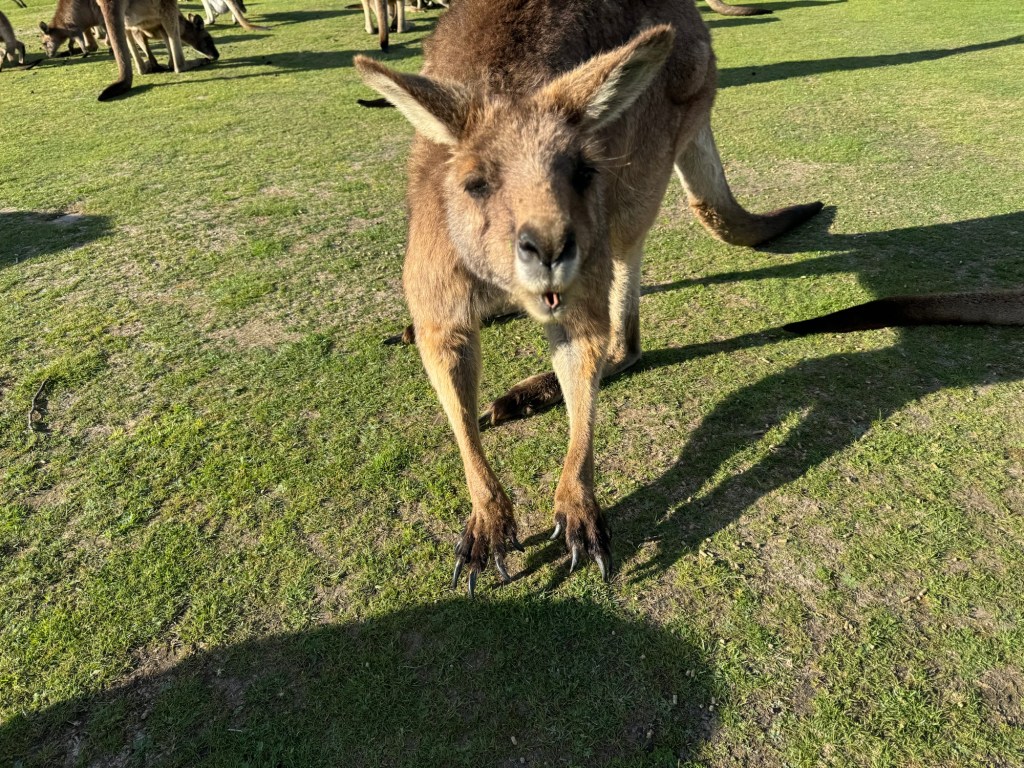
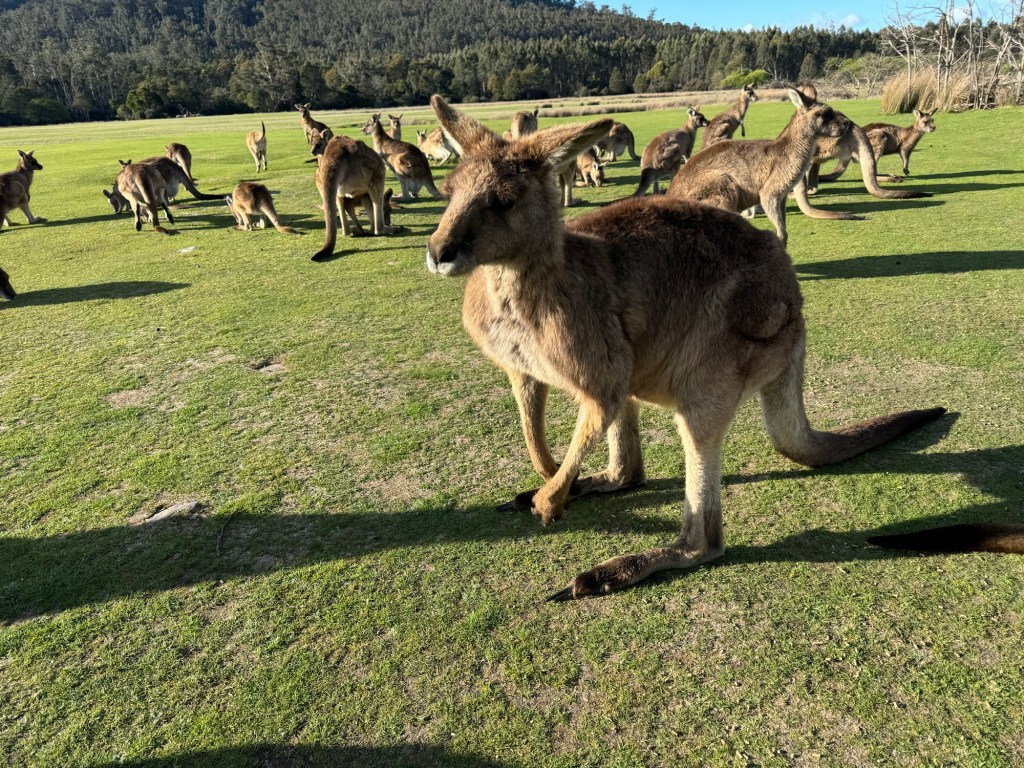
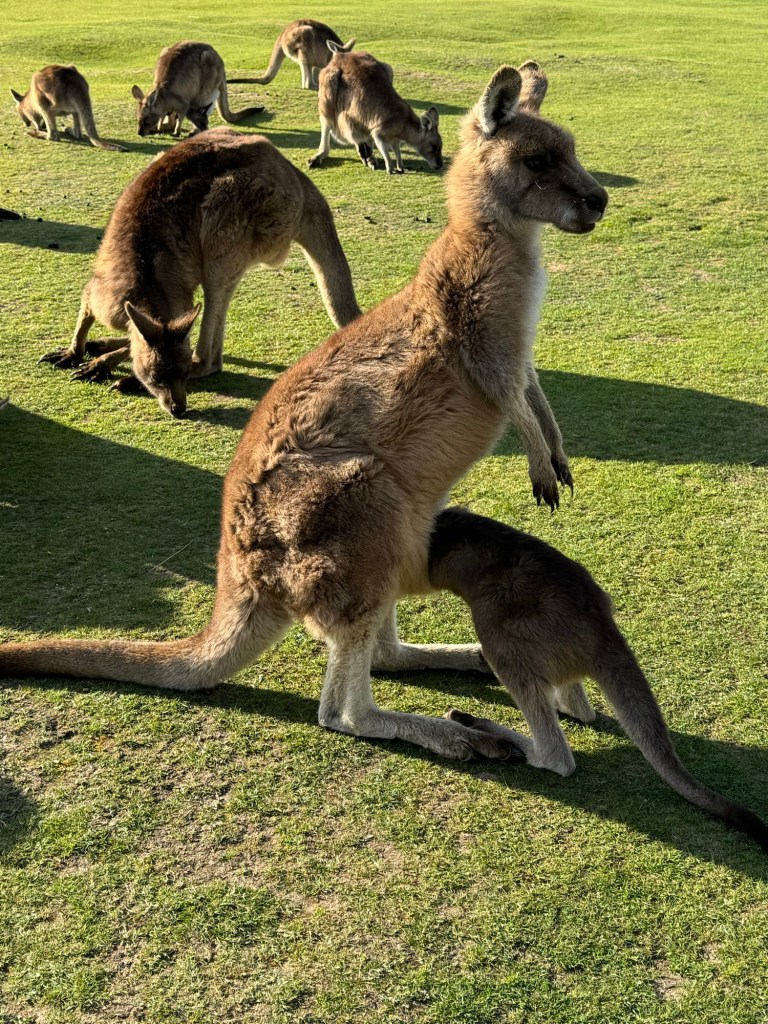
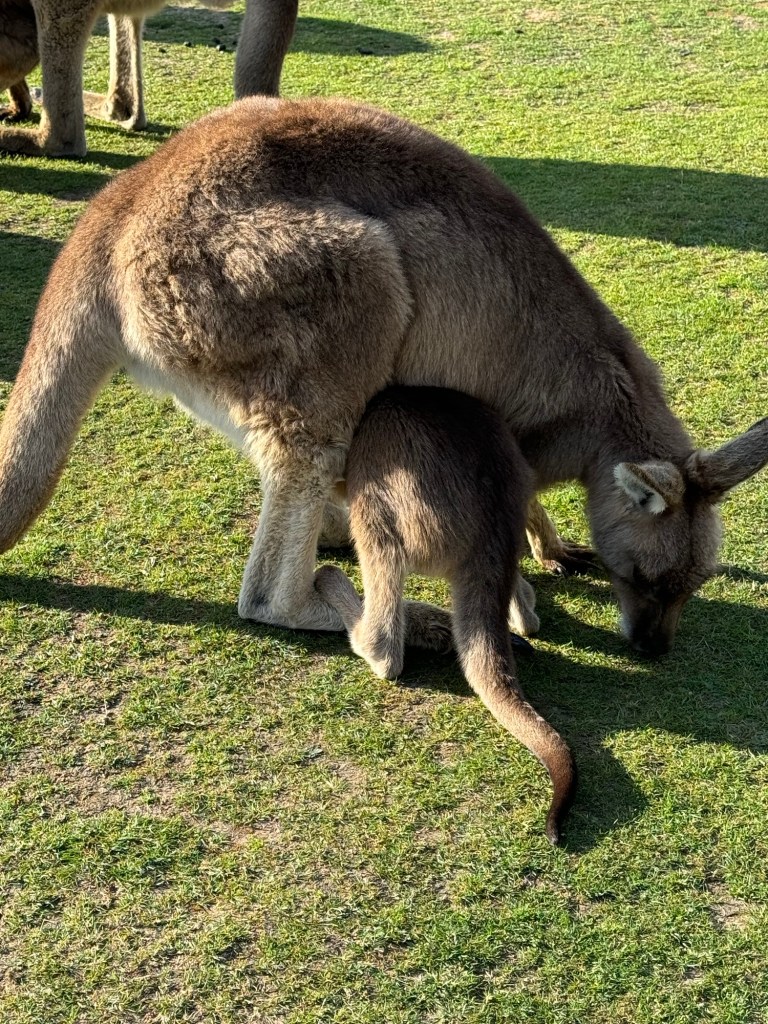
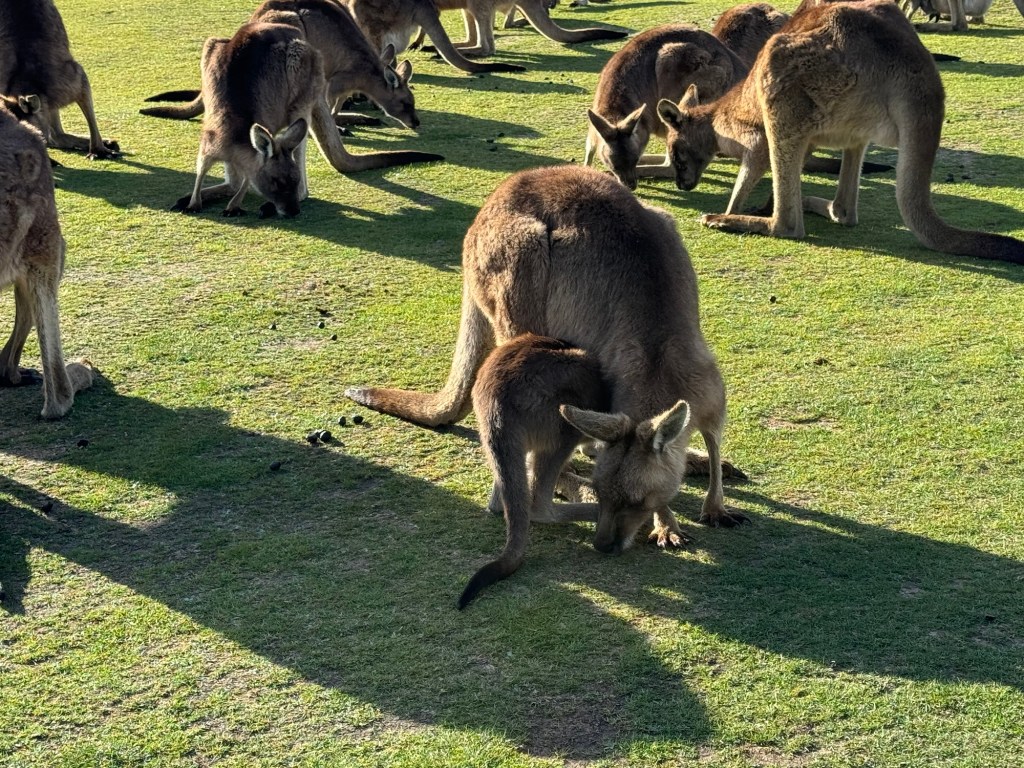
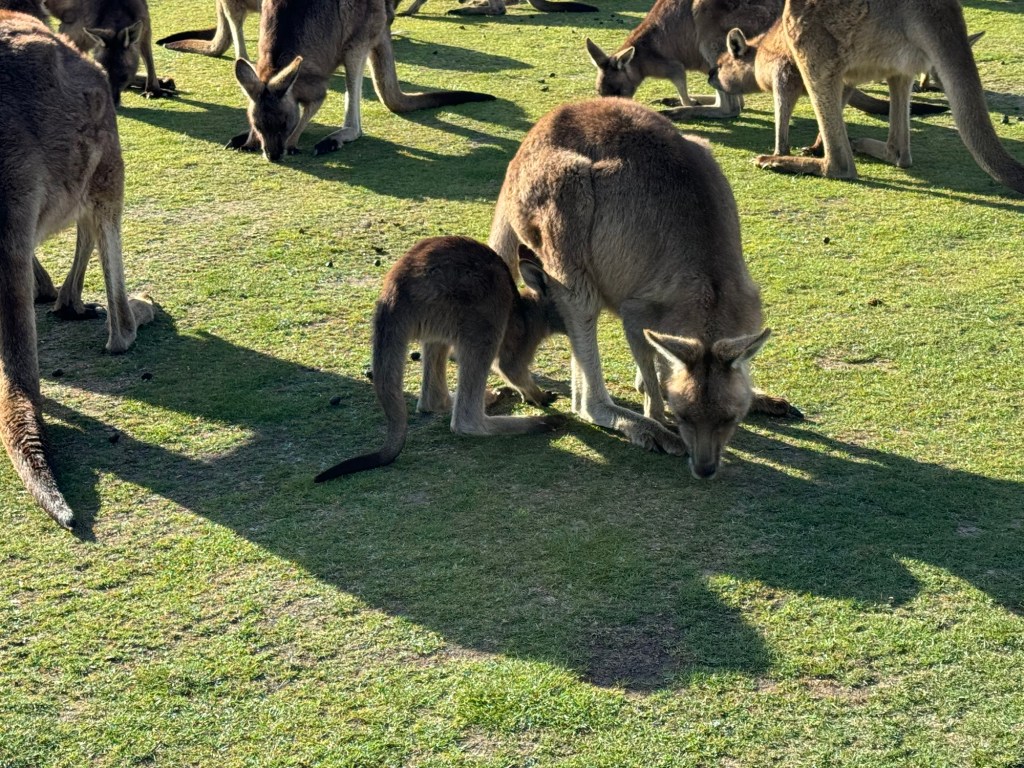
Coffee and Fresh OJ arrived at 7am, so we enjoyed the early morning in our room. There was almost no one in the dining room for breakfast. On the way we encountered this Kangaroo and her Joey.

We had no plans until 2pm, so we enjoyed our private space.

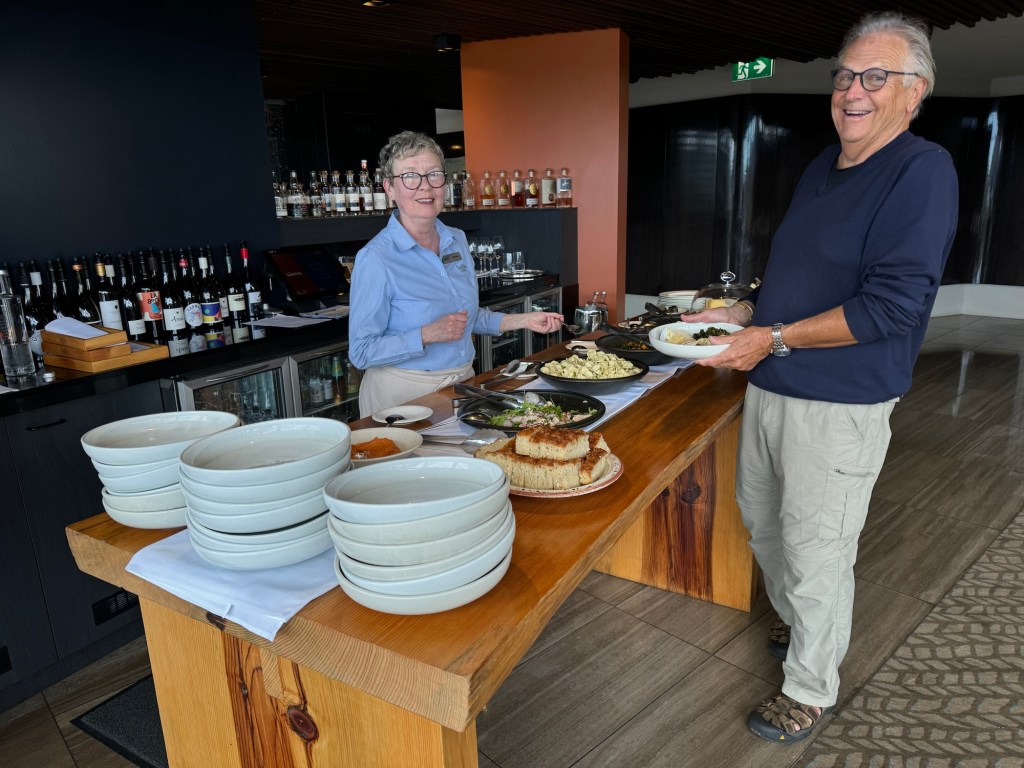
Lunch was a casual buffet in the lounge.

Then we were off on a helicopter ride to see more animals. The copter is a brand new airbus helicopter with only 20 hours of flight time. It holds 7 people and we both got to sit in the front with the pilot Ben.

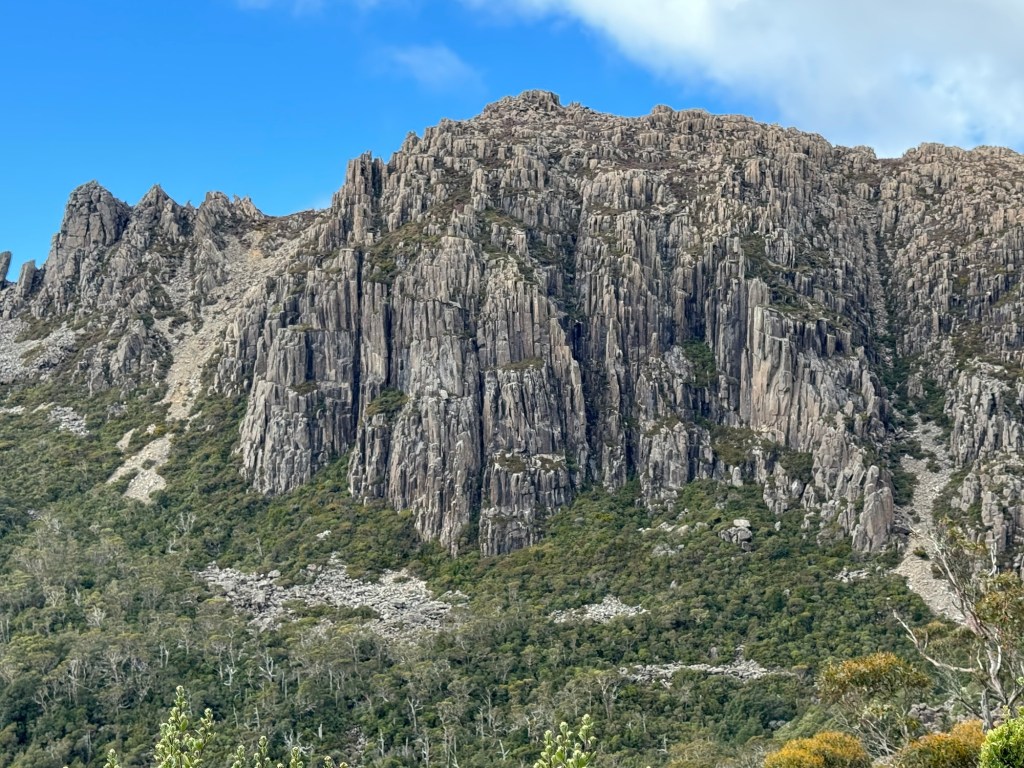
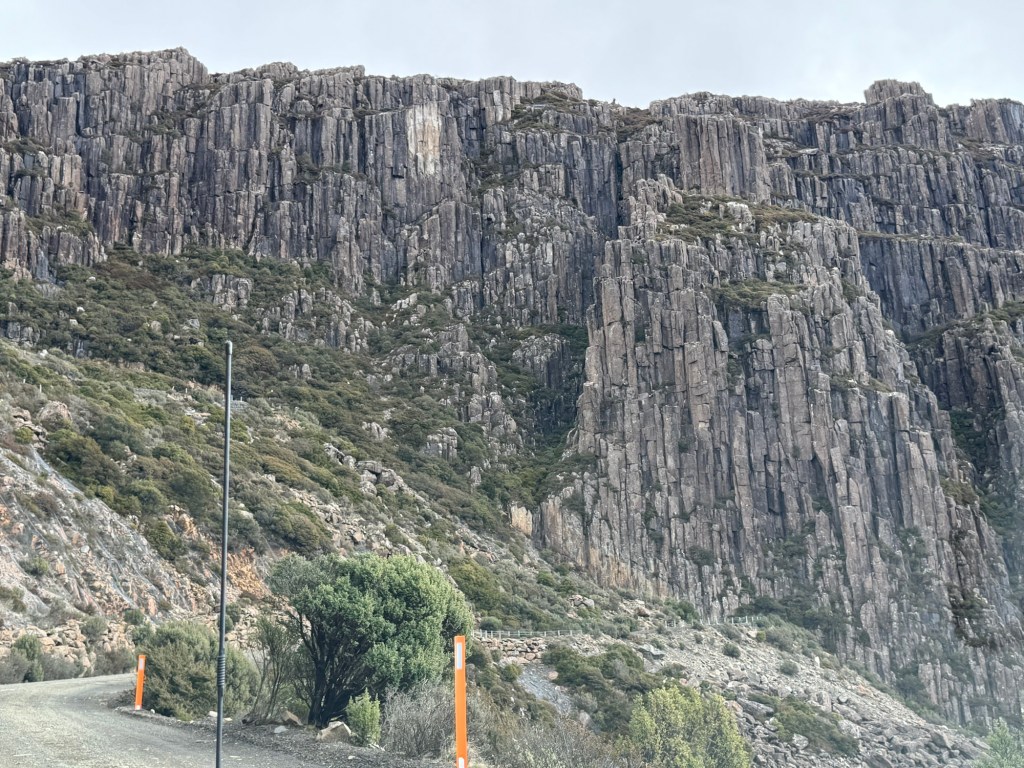
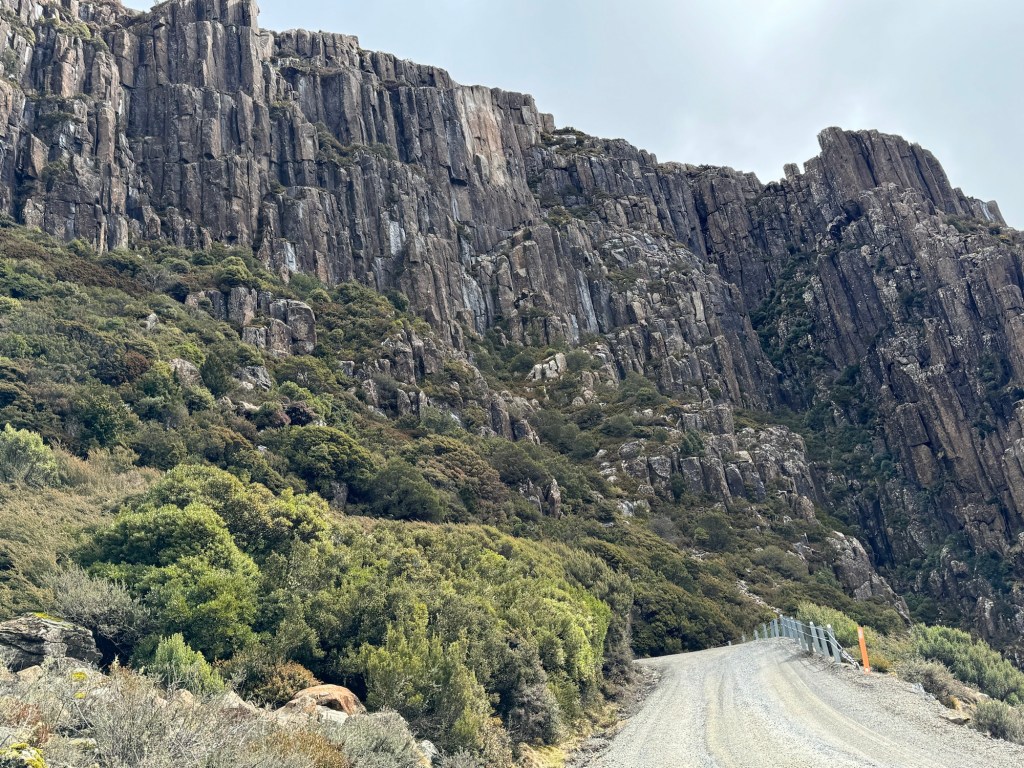
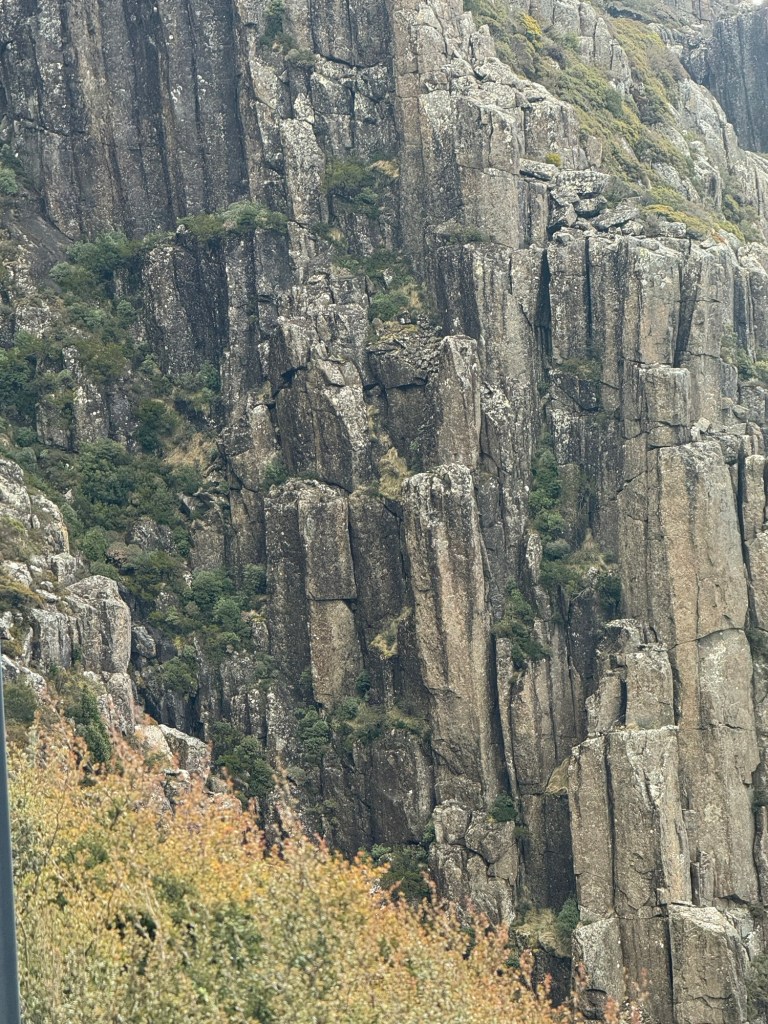
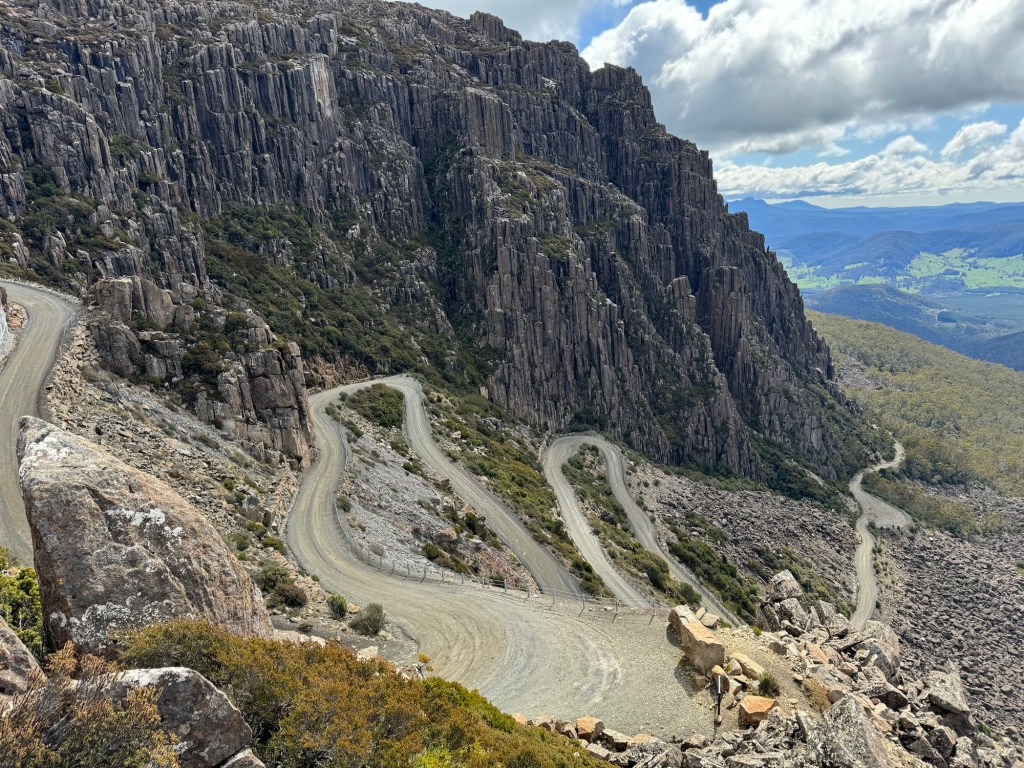
We flew about 45 minutes over densely wooded hills and lush green valleys to a prearranged open place where our guide, Bushy, met us. Off the copter went and we joined Bushy in his vehicle. He drove us to Ben Lomond, the second highest mountain in Tazmania and the peak of a Jurassic Dolomite mountain. We saw some very interesting rock formations that were similar to the Devil’s Post Pile near Mammoth Lakes.

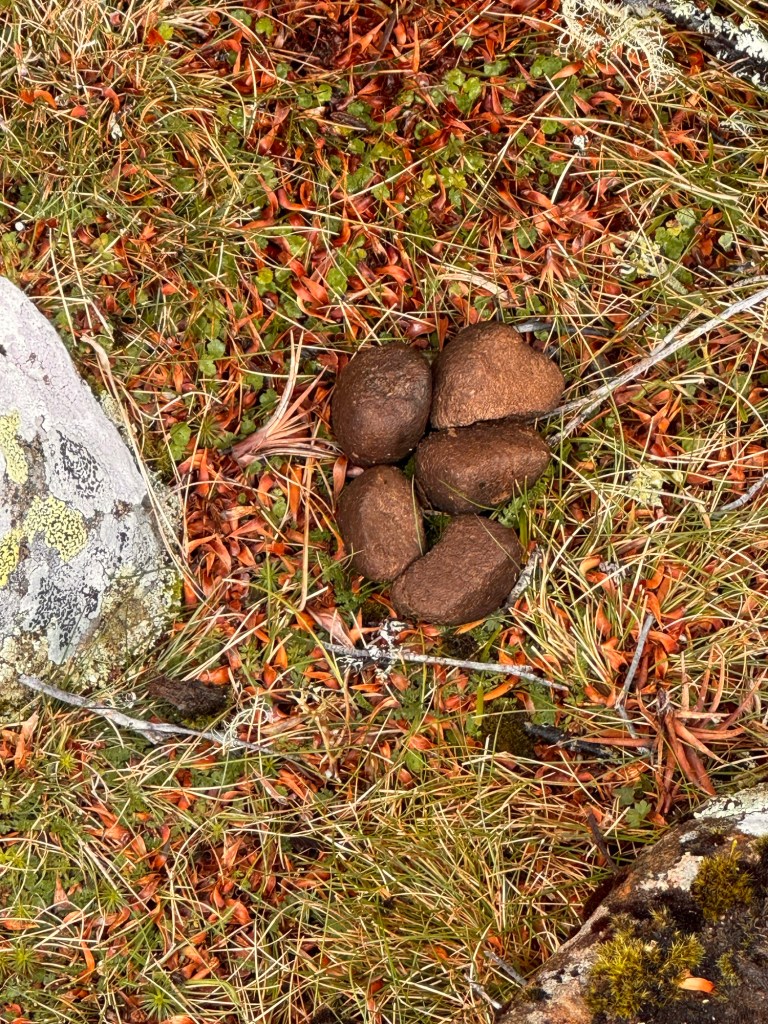
While there we saw the back end of a Wombat and its cube shaped poop.

We saw another echidna and I got to pet both its soft and spiny fur.

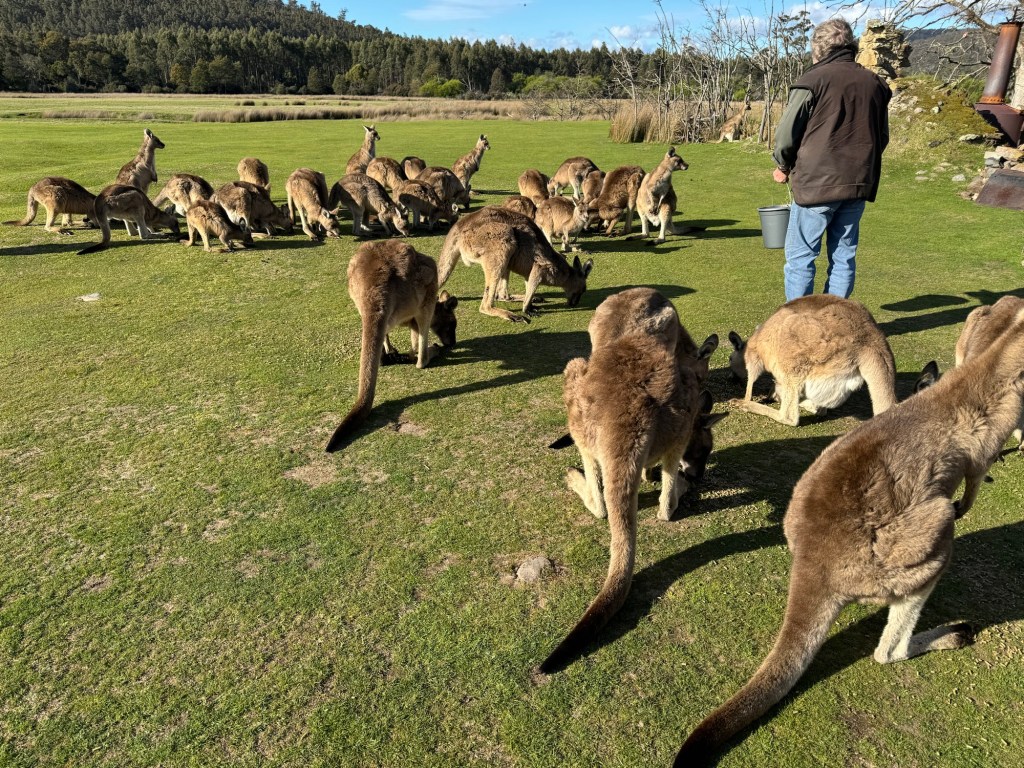
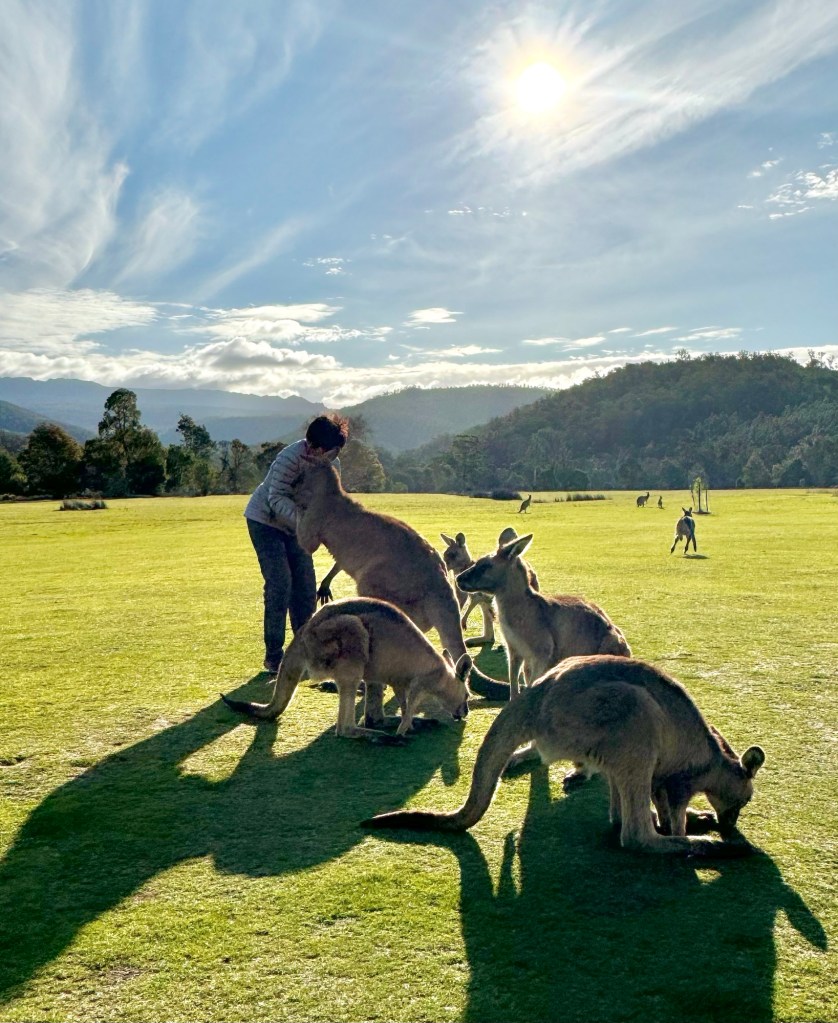
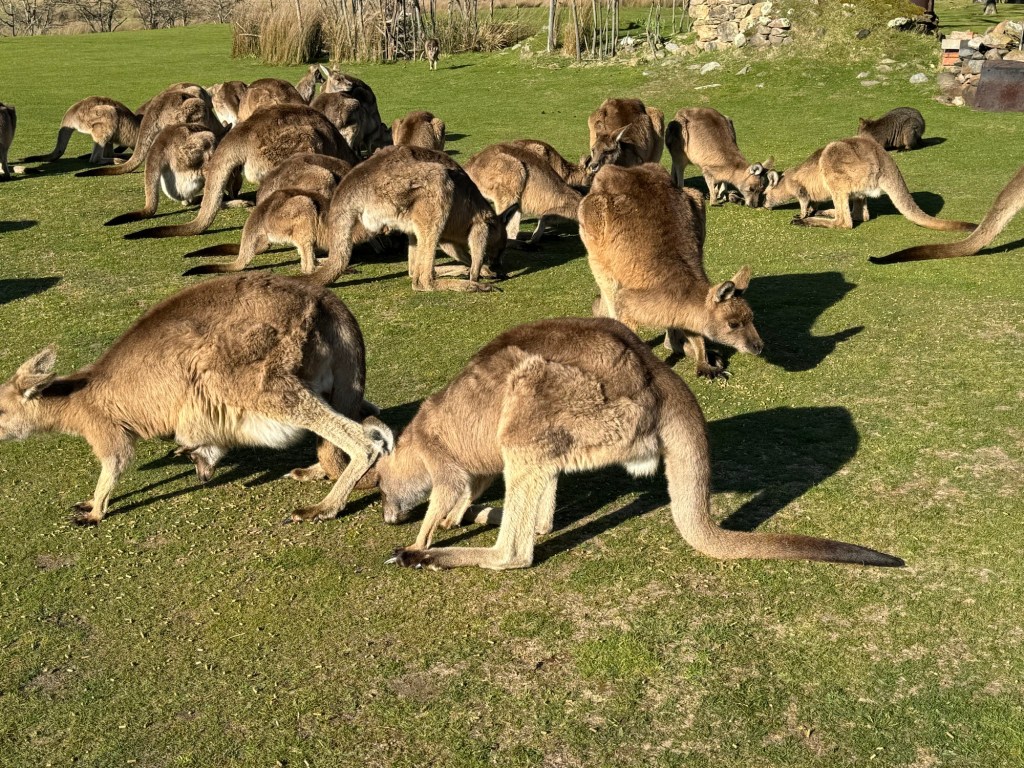
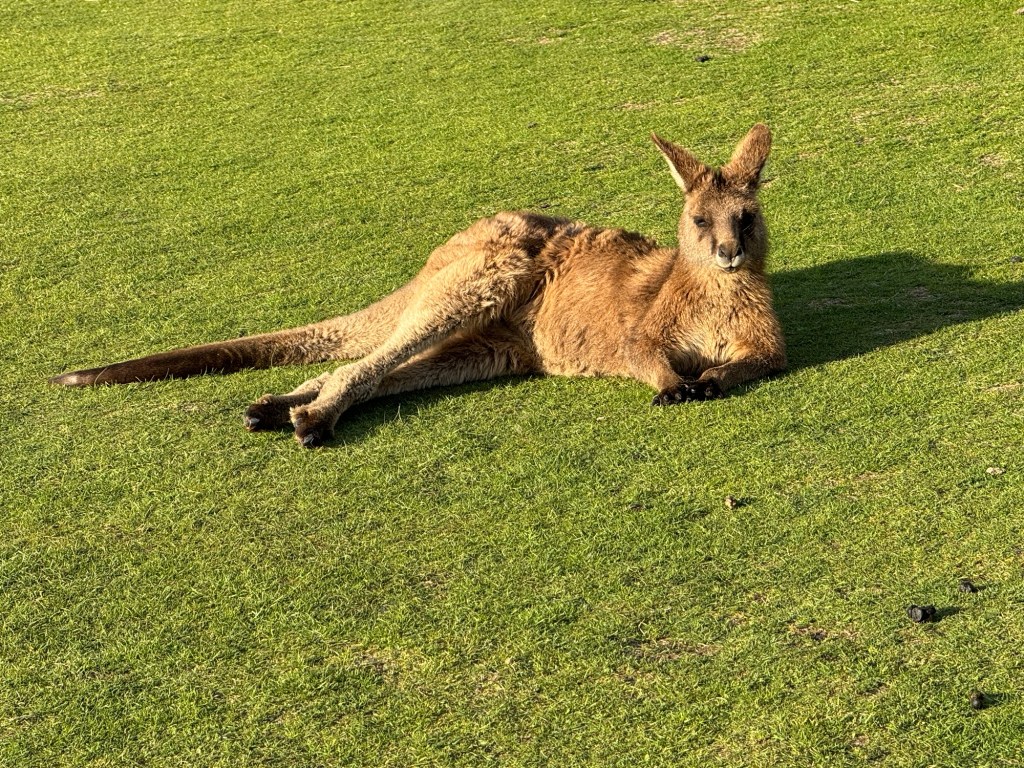
From the mountain we drove to Bushy’s bush camp. (On the map it is about where the “n” is in the town called Launceston.) He did not tell us any details about the camp, wanting us to be surprised, and surprised we were. We no sooner drove into the property when we were surrounded by a “Mob” of Kangaroo, and three pademelon, which we had not seen before. We got a kick out of his very rustic cabin, outhouse, wood stove and fire pit. Bushy served us a drinks and then fed the animals a large quantity of pellets.

Bushy feeding the mob

The name Pademelon means “small kangaroo from the forest’. They are small marsupials with dark brown to grey brown fur. They are killed for their meat and soft fur and are now endangered due to loss of habitat. They have a life span of 4-9 years.

Finally, the elusive spot tailed Quoll made its appearance. It was high on my list of animals to see and I was glad to see one, but here we saw 4. They are carnivorous marsupials, primarily nocturnal and spend most of their days in a den. They are highly mobile and travel several miles each night. They have litters of 6 every year, live 4-5 years in the wild and can get to 1 meter long.

Spot tailed Quall

After a tasty meal of fresh salmon and salad, that Bushy prepared himself, he drove us back to the Saffire lodge. It was a 2.5 hour drive and we were ready for bed by the time he dropped us off at 10pm.

Monday, October 7, 2024

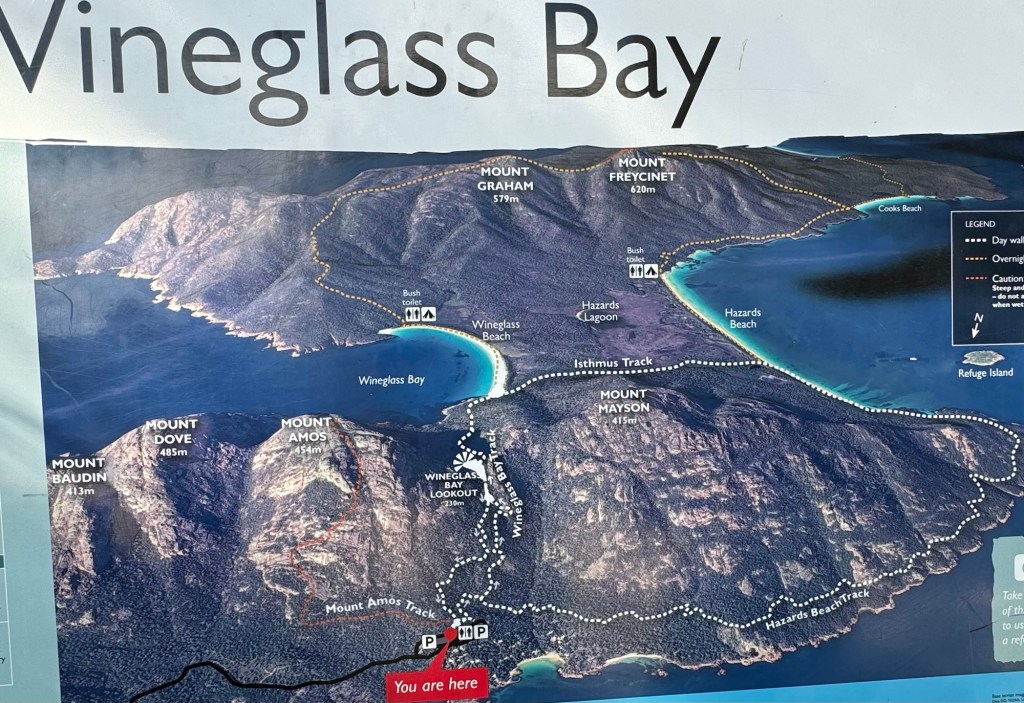
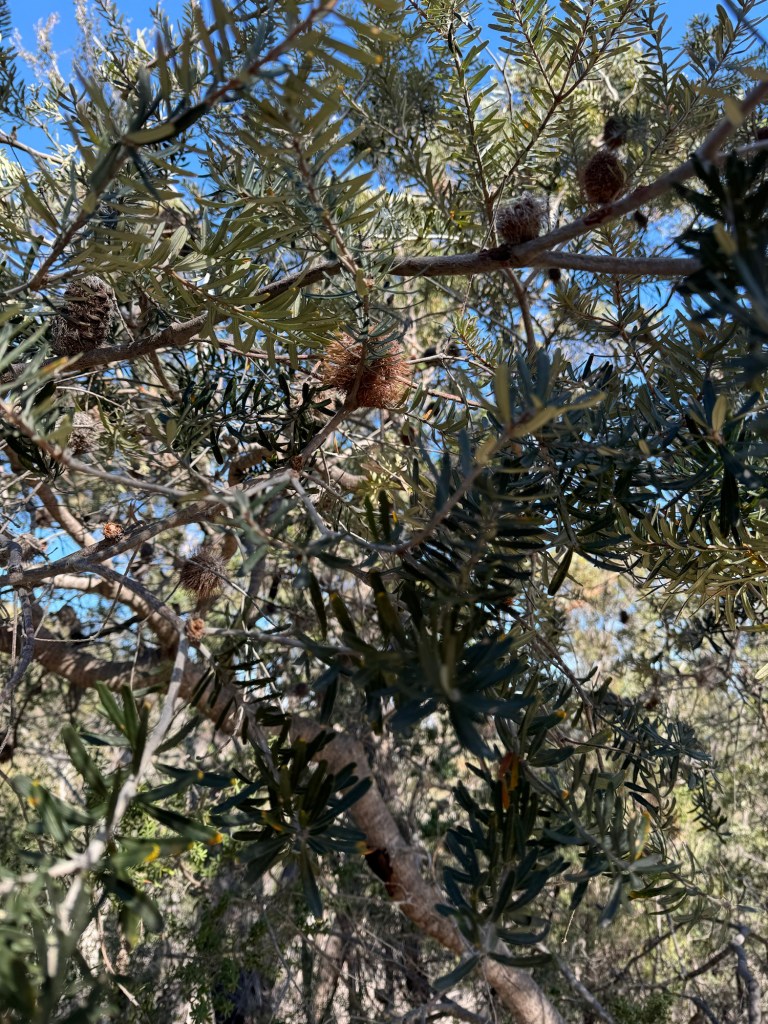
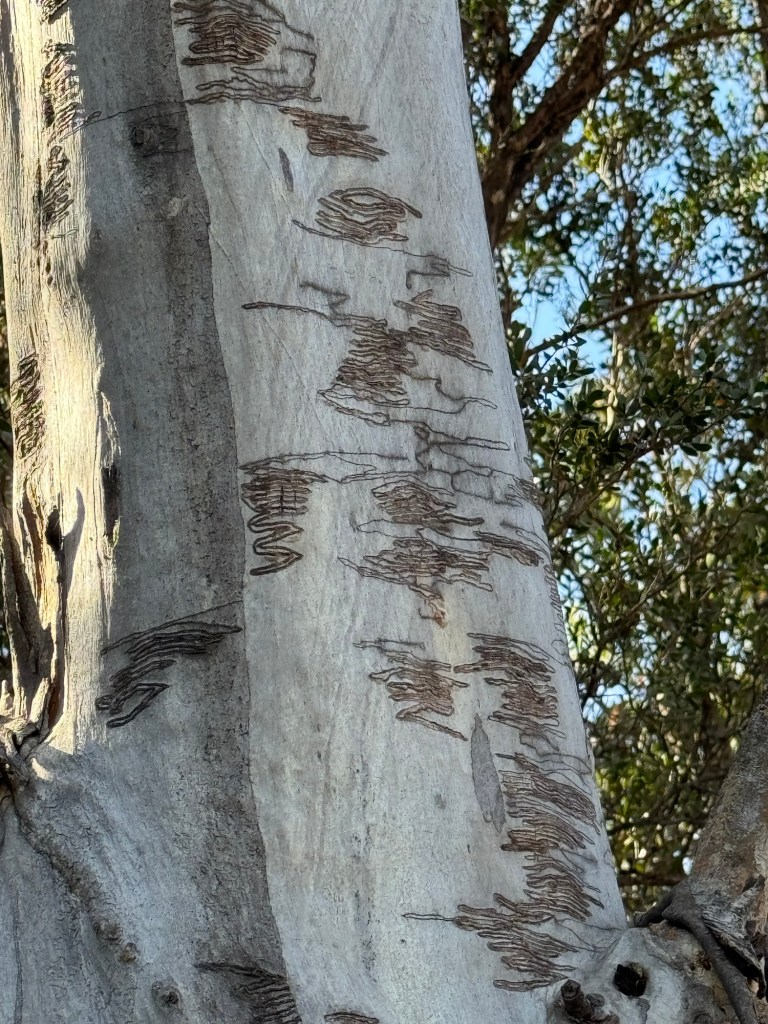
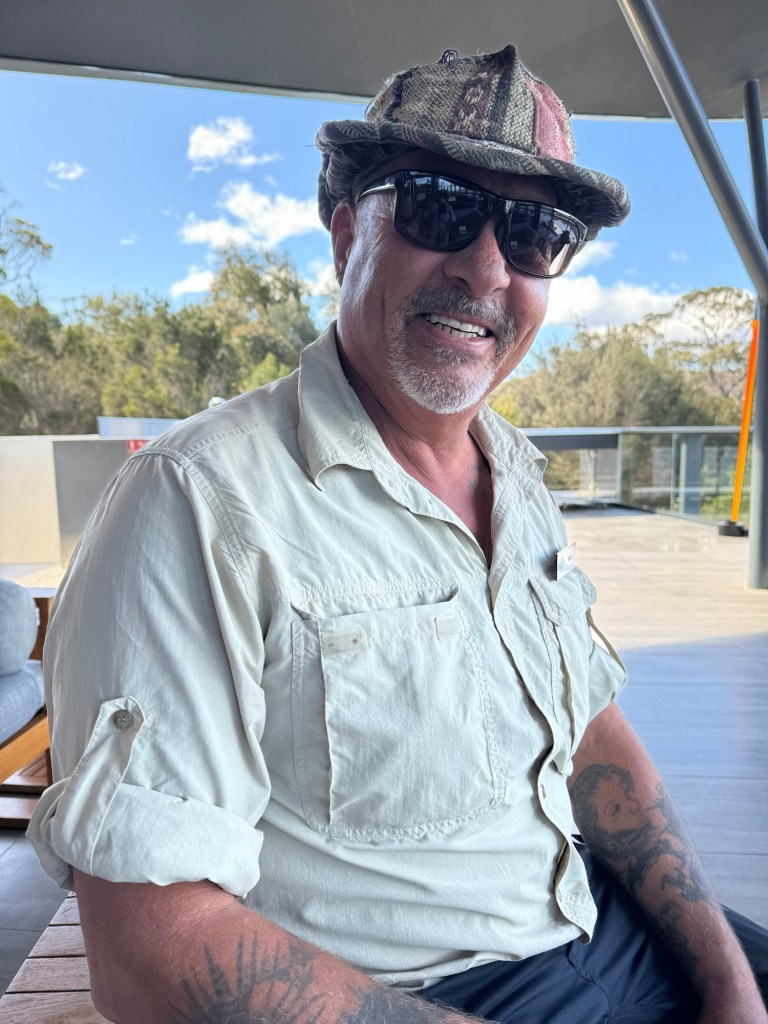
This morning we had a 9:30 hike scheduled to see the Wineglass Bay. Our guide, Chris, drove us to the “You are here” sign about 5 miles from our hotel, and we hiked 1.7 miles in a loop up and back. It was a pleasant walk with lots of people on the trail. Chris was very entertaining and introduced us to plants and trees we had not known.

The hike to the Wineglass Bay lookout

It rained pretty heavily on us during the end of our hike and we were all cold. Back at the lodge, we warmed up and had lunch.

We had one last activity planned and Mark decided to pass. At 2pm I met Mick Quilliam, a full aboriginal, who shared some of his culture with me. He belongs to the tribe called Minapelaver, which means “Lagoon people”. They arrived in Tasmania 42,000 years ago. Today there are 25,000 indigenous people in 9 different tribes on Tasmania. The tribes gather together about 3 times a year and live by their own tribal rules. Mick showed me how to make tough string from bull rushes; how to use seal fat to make soft skins and pelts; how to mix egg white and ocher and use it for painting. We had a nice conversation for about an hour and a half.

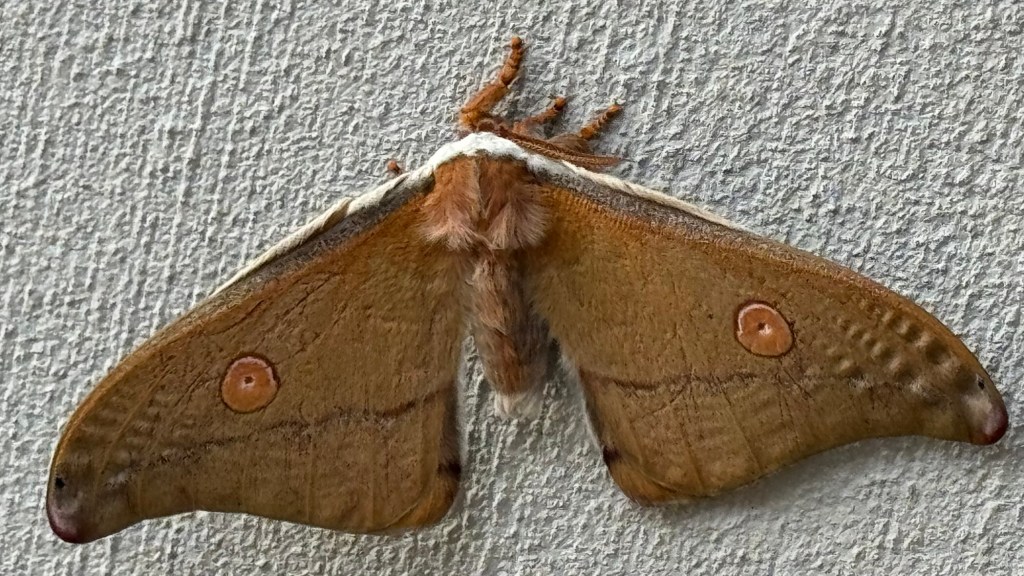
On the wall next to our suite was a very pretty moth. We learned it was an Emperor Gum Moth. It looks like it is covered in fur like I was with Mick. For dinner Mark had more oysters and short ribs. I had wallaby back strap and spaghetti with olives. A meal we both enjoyed.

Tuesday, October 8, 2024

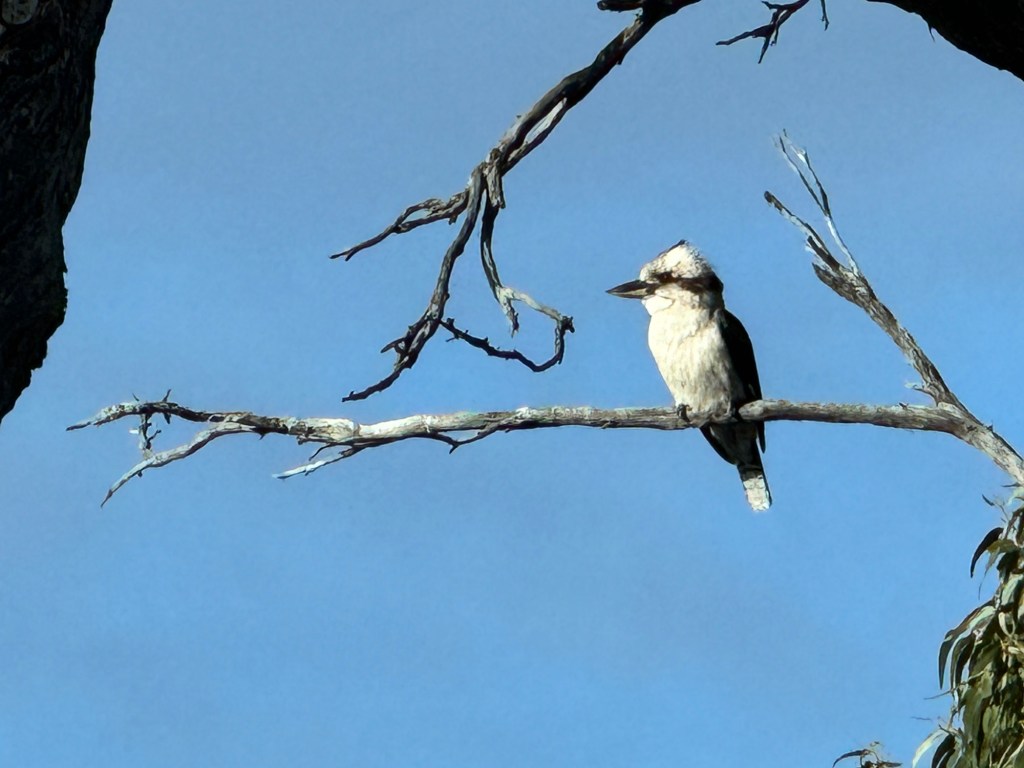
During breakfast I captured a kookaburra on a nearby tree.

A kookaburra, is a very large kingfisher
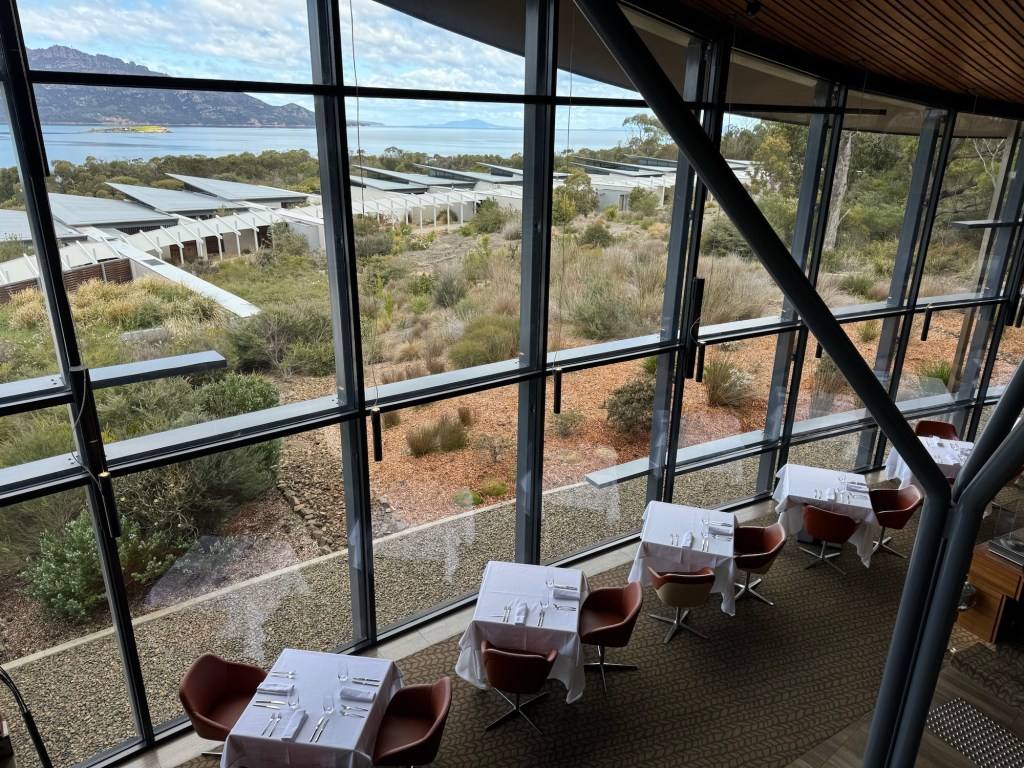
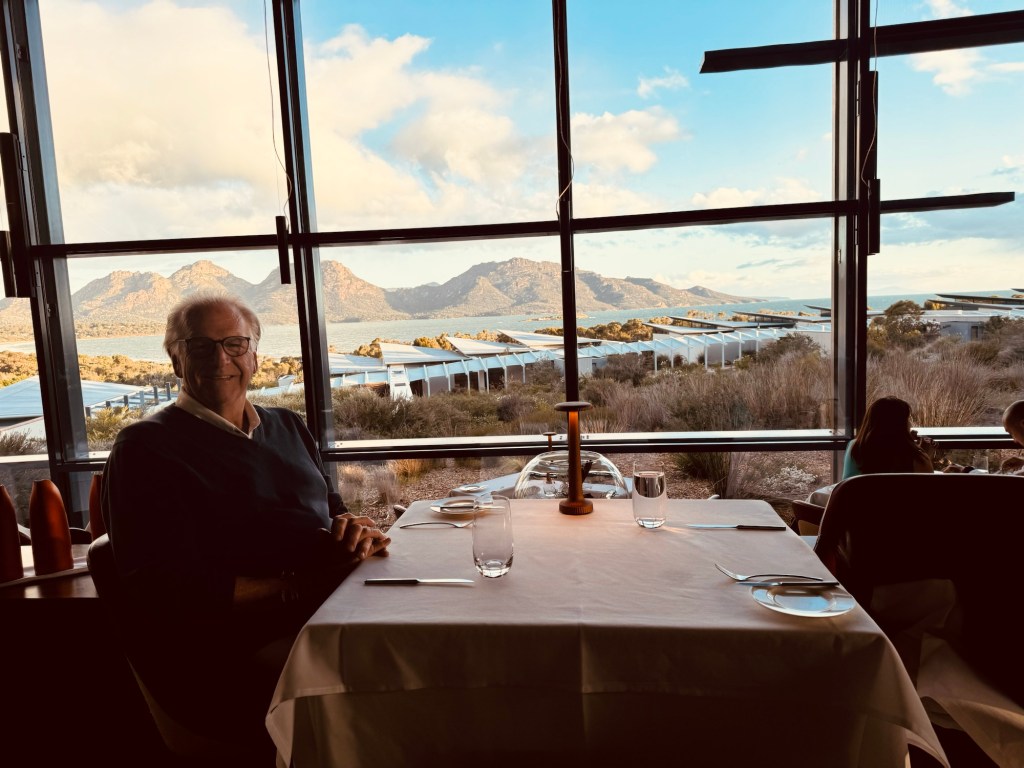
The Hazard Mountains from the Saffire dining room as we wait for breakfast

We said good bye to the Saffire staff and began our 3 hour drive to the Hobart airport. Our transport driver, Gil, was quite chatty and gave me lots of information.

We talked about convicts. The first ones arrived in 1804 along with free settlers and military. The last of them to arrive in Tasmania, came in the 1870s. Their sentences were all 7 years, during which time they built roads and bridges, worked on farms, built structures, etc. When their term was over, they usually stayed in the country and continued to work for hire.

Gil talked about products produced in Tasmania. Vegetables are prolific in the North West of the state, which we did not get to see. In the dryer parts of the country we saw sheep, cattle, dairy cows, berries, cherries, and many vineyards. Seafood and oysters are also big crops.

The most valuable products are minerals, especially zinc.

The average age of the population is 43. There are not enough workers and more of the oldest and least educated people. Tasmania, like other parts of the world, is shrinking.

We arrived at the Hobart Airport at noon, said good bye to Gil, and found the Saffire lounge. No food, but snacks and a comfortable resting place. We had about half an hour before boarding a Virgin Australian aircraft for a flight to Melbourne, followed by another flight to Adelaide, where we will spend the night. We are slightly more than half way through our Australian adventure.

Melbourne

Tuesday, October 1, 2024

We have landed at the Park Hyatt Hotel in downtown Melbourne. The sky is clear but cold. The temp is 50 but feels colder. We have moved South from summer to spring but it feels like winter.

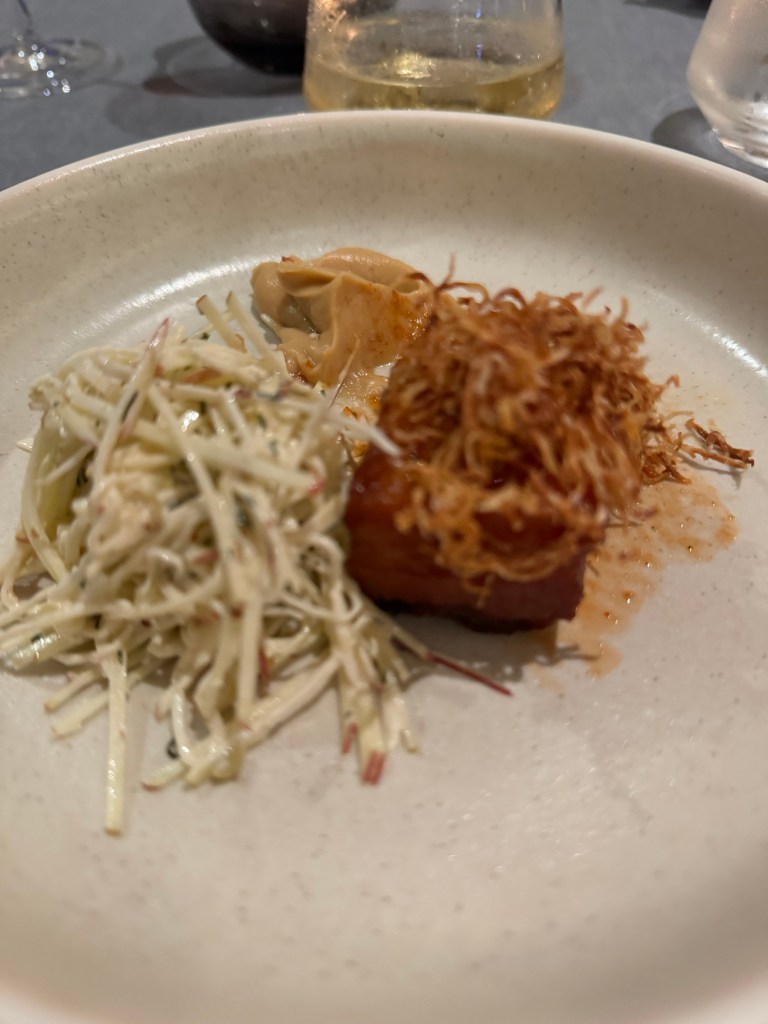
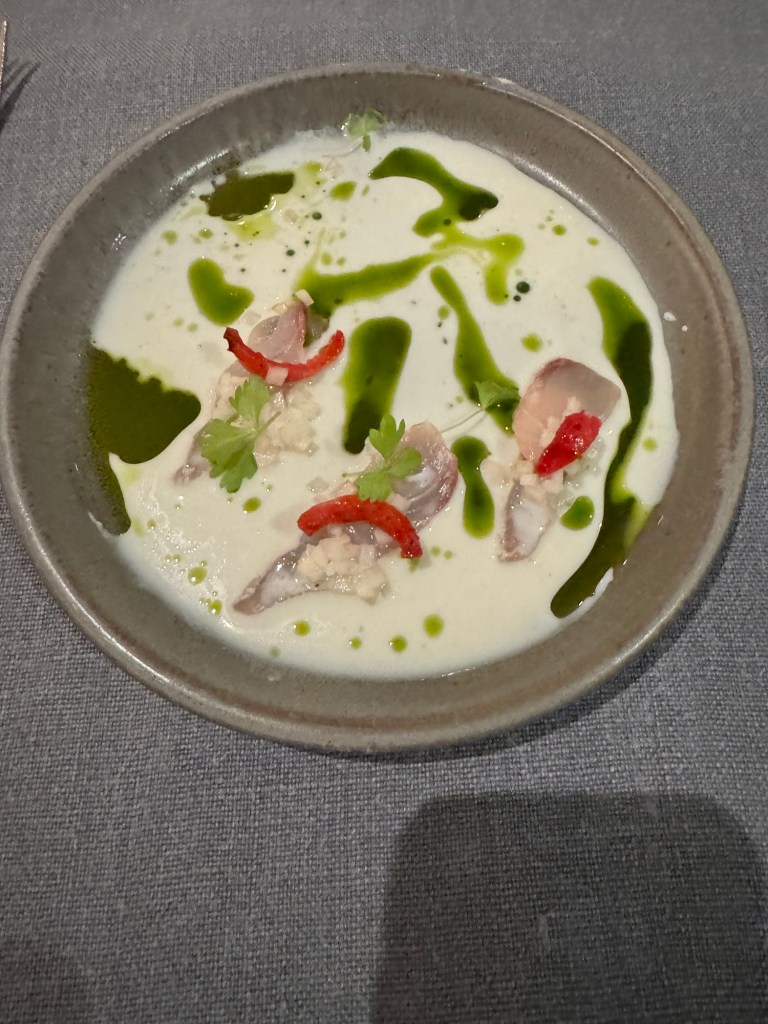
Last night we had dinner at a place called Nomad. It was very full of young, upscale people eating unusual food. We had dishes of bone marrow and flatbread, fried green olives, kingfish crudo, lamb neck pie, and Jerusalem artichoke salad. All very tasty. Apparently Melbourne is famous for its food and restaurants abound. Martina booked us into three places and now I can see why. There would be no getting into popular eateries without a reservation.

Melbourne is the coastal capital of the southeastern Australian state of Victoria. The city was founded in 1835 and the population is 6.7 million. Currently the country population is 27M and 90% of the people live near the coast. Melbourne was the capital of the country from 1901 to 1913 when the capital shifted to Canberra. During the Victoria Gold Rush of 1851, Melbourne became the richest and largest city in the world. In 1956 it hosted the Olympics and invited 150 Italian chefs to the city to bring good coffee and food to stimulate activity. It worked. It is now a coffee and food Mecca and today 60% of the city’s residents were born outside the country.

Daniel Platt, the owner of the travel agency, Localing, and our guide for the day, drove us around many areas in the city as well as taking us on a walking tour. We learned that the downtown is planted with plane trees for beauty and shade.

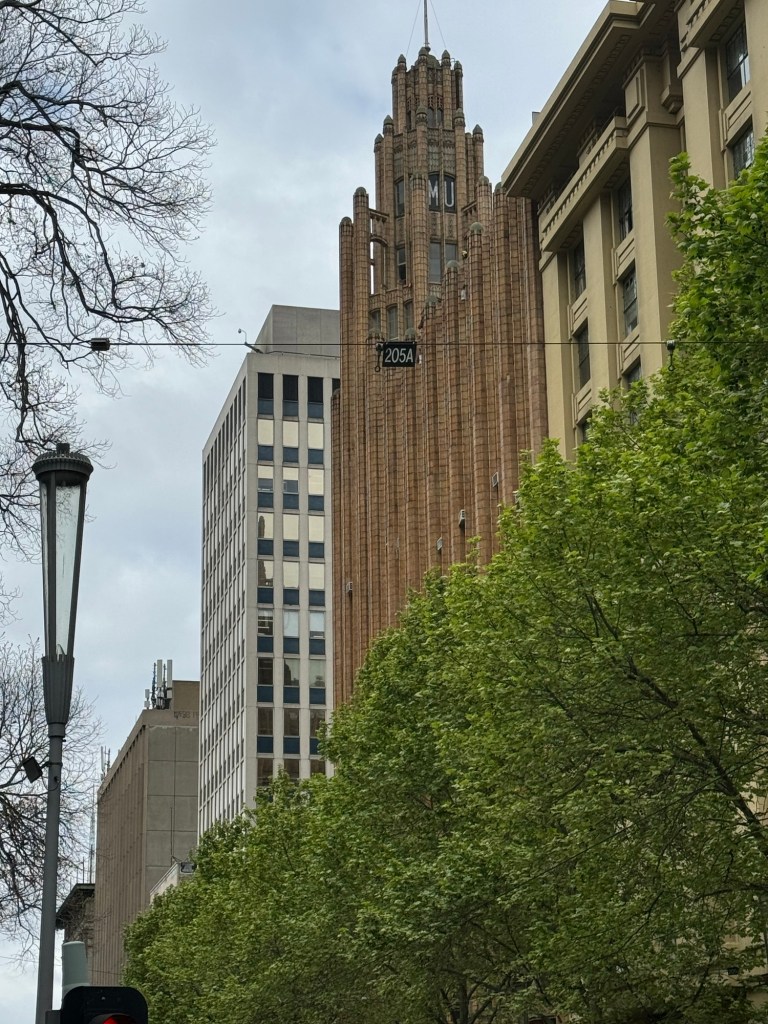
He pointed out the Manchester Unity Building that is modeled after the Tribune Building in Chicago.

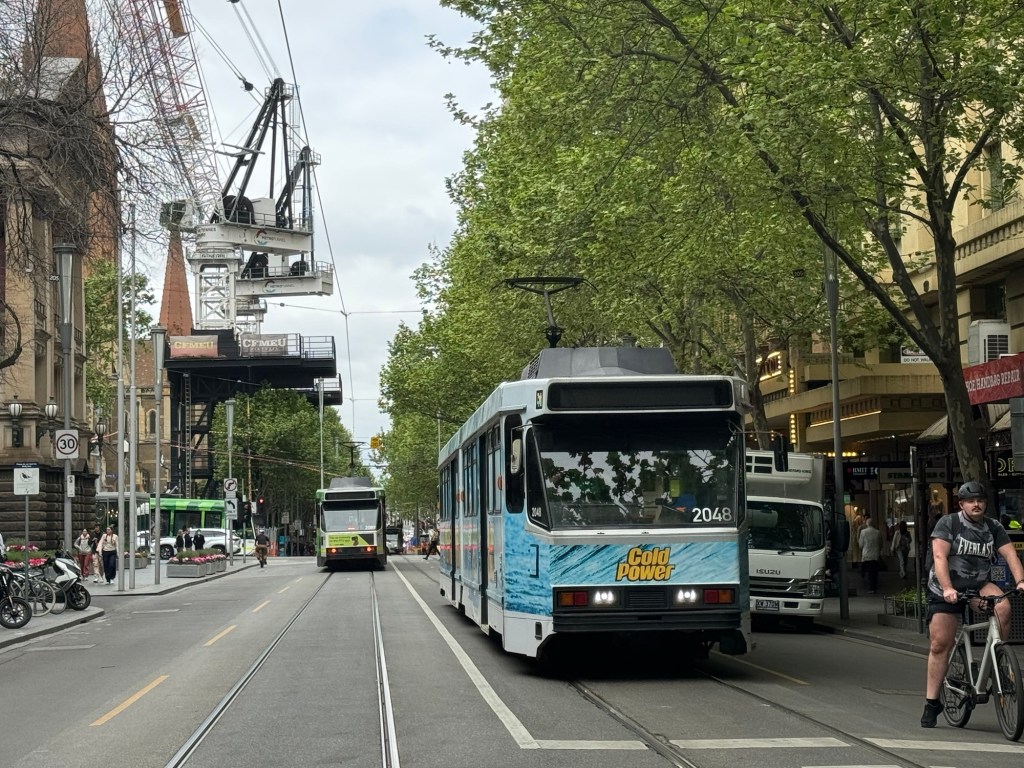
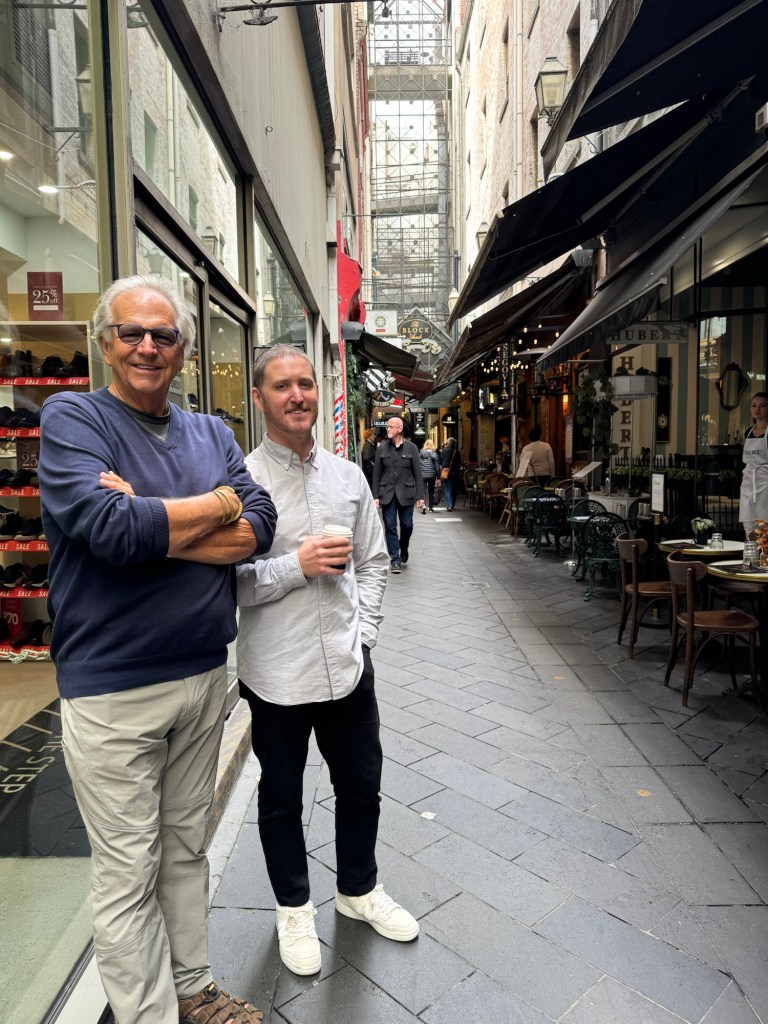
The boulevards are 99 feet wide and allow for the free tram system to function well. In between boulevards are 66ft lanes and 33ft allies that provide for smaller more intimate businesses and restaurants to flourish. Having three sizes of streets works well and is a pleasure for everyone.

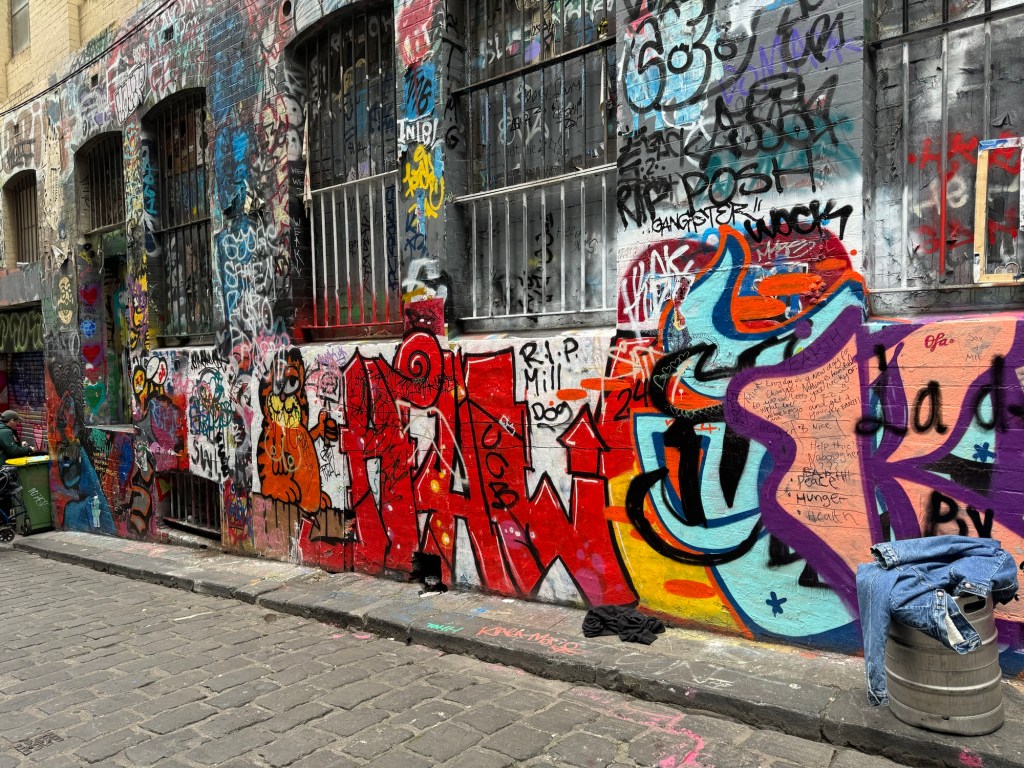
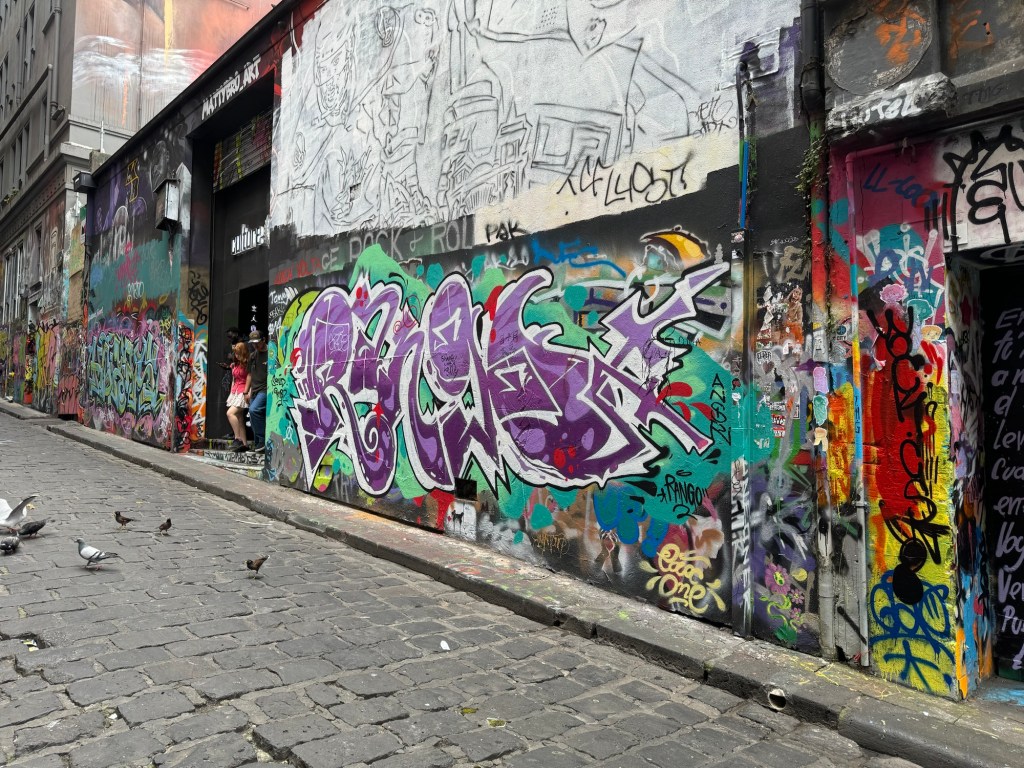
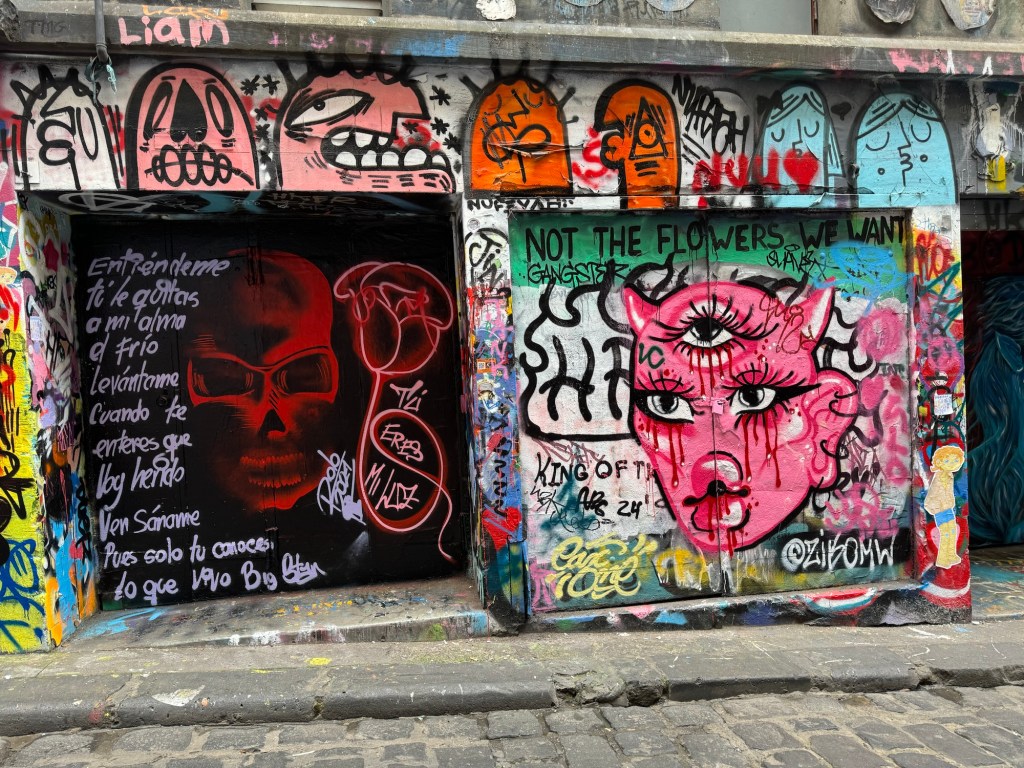
More than 60% of all businesses in the state of Victoria have only 1-6 employees. Together they create a robust economy. One alley in particular, was full of permitted graphite art.

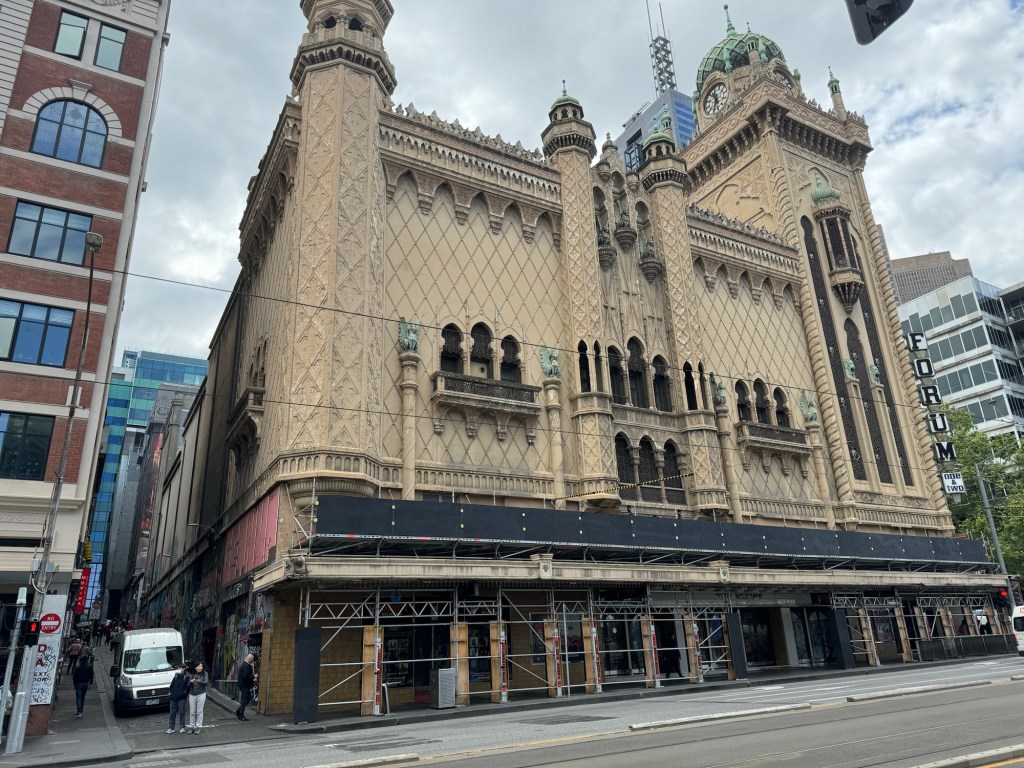
The Forum Theater where alternative artists perform

Then Dan showed us the popular and dynamic public space called Federation Square. Under the steel shell is a geometrically patterned glass and steel walled atrium. The building is used for art exhibits, performances and a multitude of public events.

We stopped for lunch at a fusion Asian restaurant called Supernormal, that happened to be across the street from Nomad, where we had dinner the night before. Dan ordered a variety of dishes including: Korean rice cakes, prawn dumplings, duck leg in plum sauce and a lobster roll.

Since 2011, Melbourne has been voted the World’s most livable city almost every year.

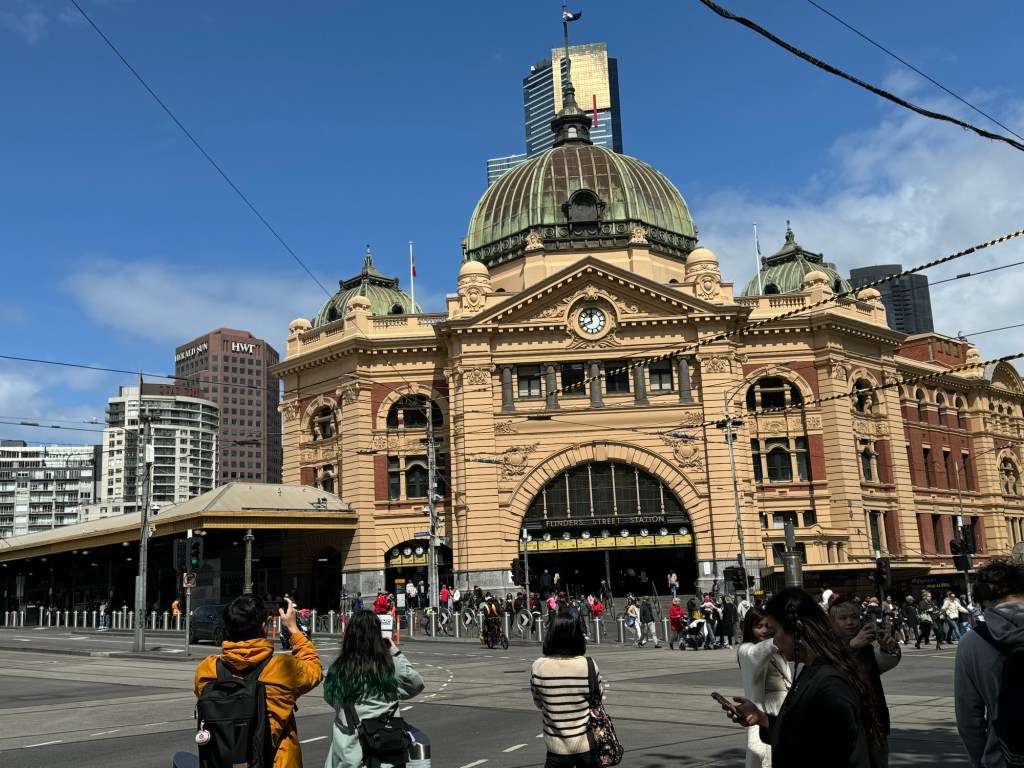
Flinders Street Station is the central train terminal.

After lunch Dan drove us all over the city looking at different business districts and neighborhoods from the relatively poor to the super rich. The city is quite large, flat and very spread out. Some neighborhoods front on the ocean and many others take advantage of being on or near the Yarra River, that runs through the heart of the city.

It is a very pleasant city. No wonder residents we spoke to like living here. Even the cold morning warmed up during the day.
Our dinner location was a short Uber away at a place called Carlton Wine Bar. It was small like the other places we have eaten in Melbourne, but packed. We would not have gotten in without an advanced reservation. Martina has thought of everything.

As we were early, we sat at the bar. Our first event was signature cocktails. Normally I pass on fancy drinks, but I could not resist getting a rhubarb daiquiri. It was so delicious that I had a second one. Over the top for me. We were treated very nicely and ordered a few small dishes rather than a big meal. The food is very different, but interesting and tasty. One dish we ordered was a pasta that had rigatoni, white beans, cavolo Nero, pan grattato, and pecorino. Enjoy looking up descriptions of the terms 😘. There was also fabulous potato focaccia bread, we could not resist. It did not take long before we were both full. Again I forgot to take photos.

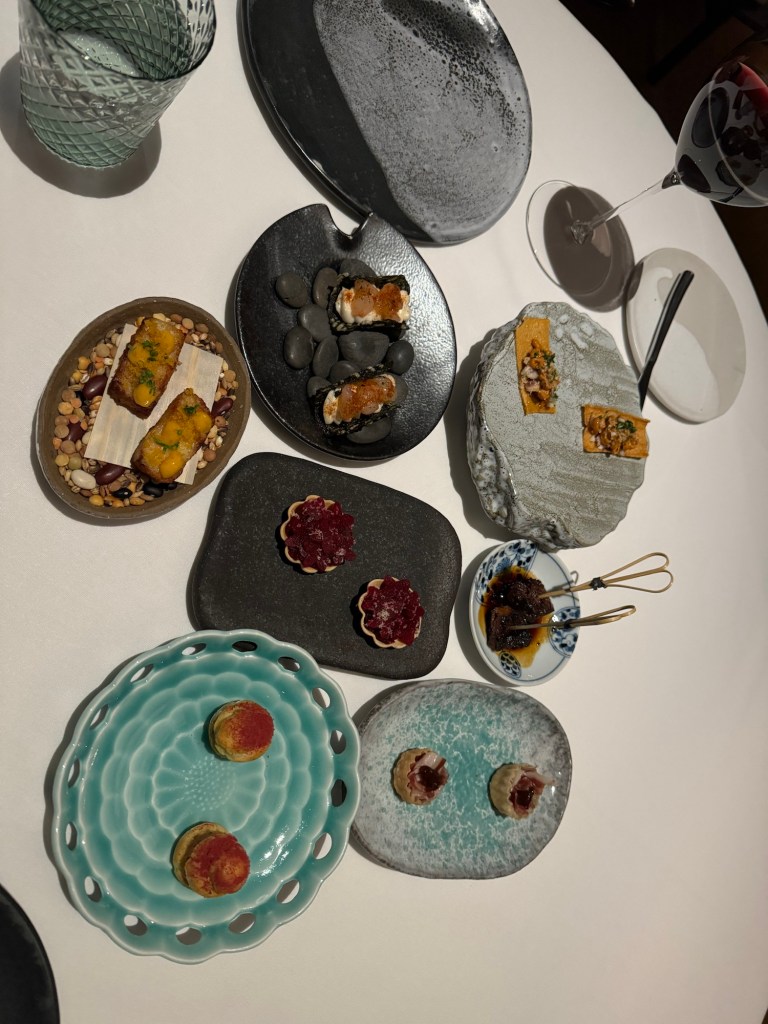
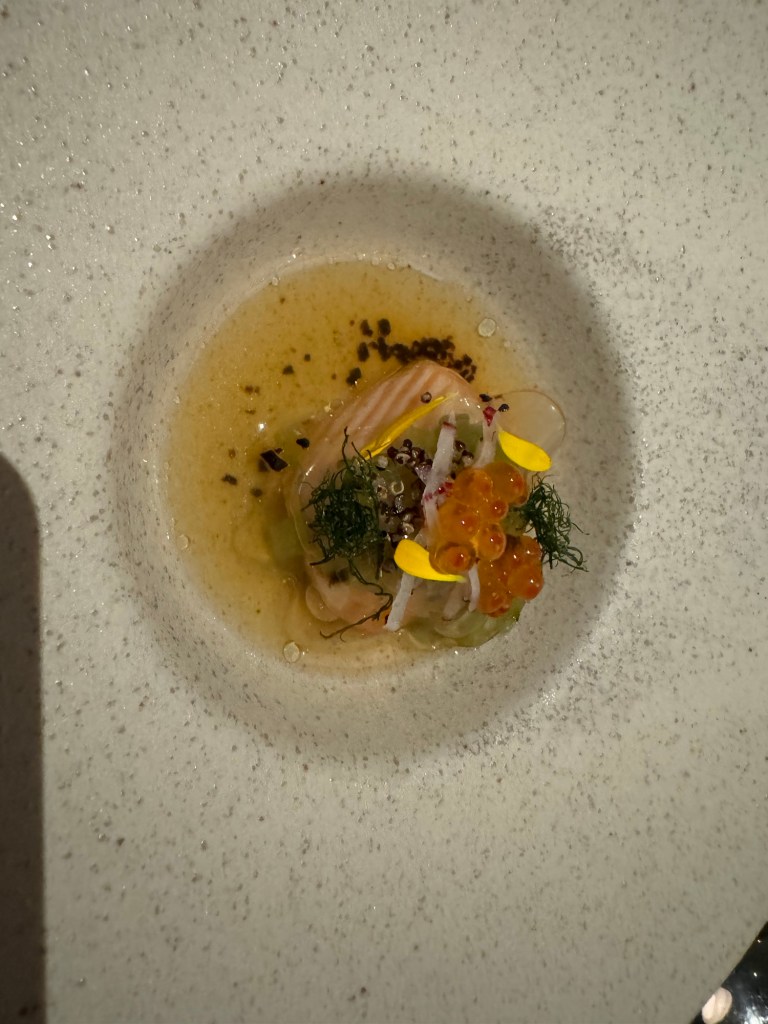
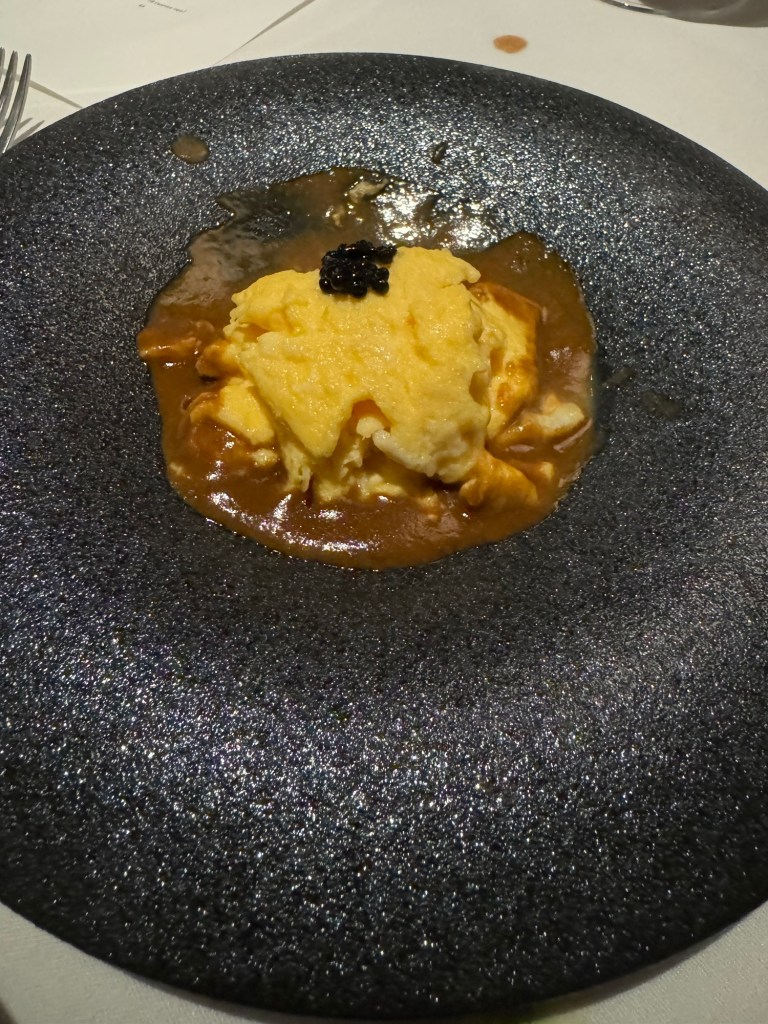
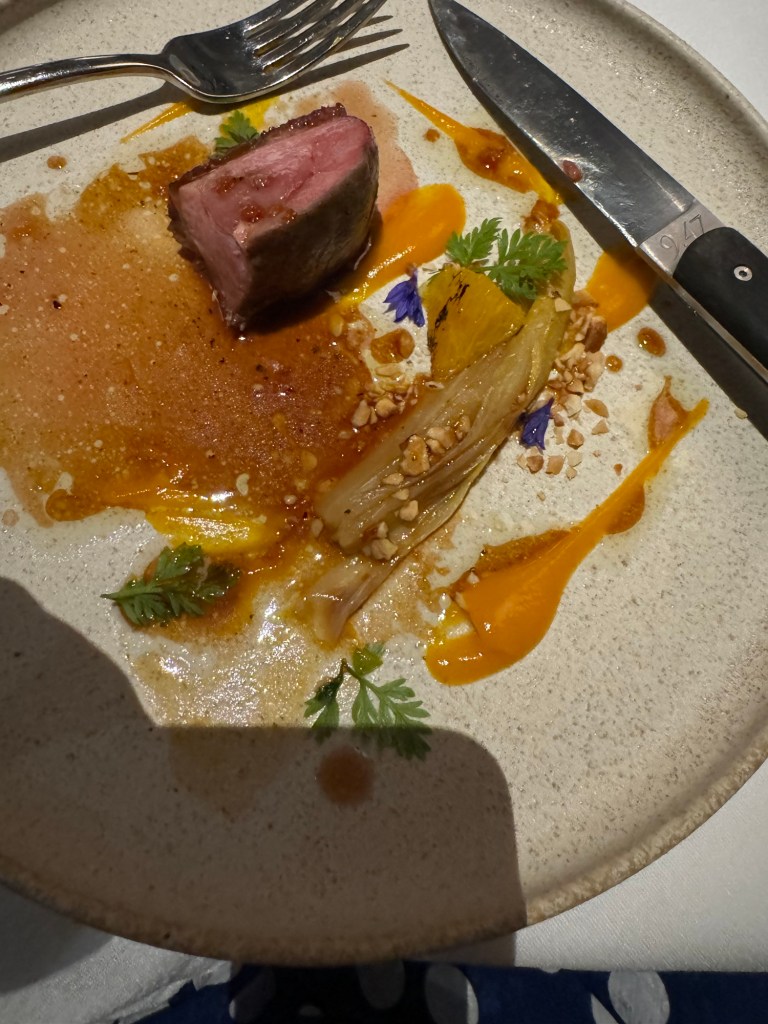
We repacked for an overnight on The Great Ocean Road, where we expect it to be cold, had dinner in a Japanese restaurant called Kazuki. We were served a Michelin style meal with 6 small courses. One course included Ox tail and another was duck.

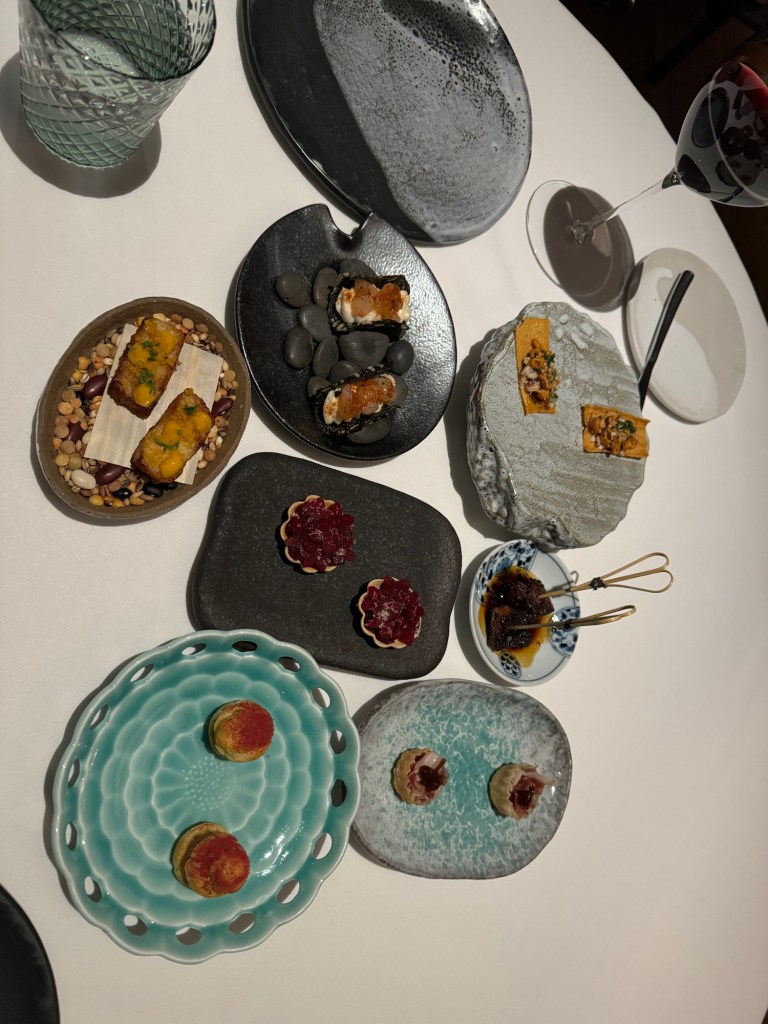
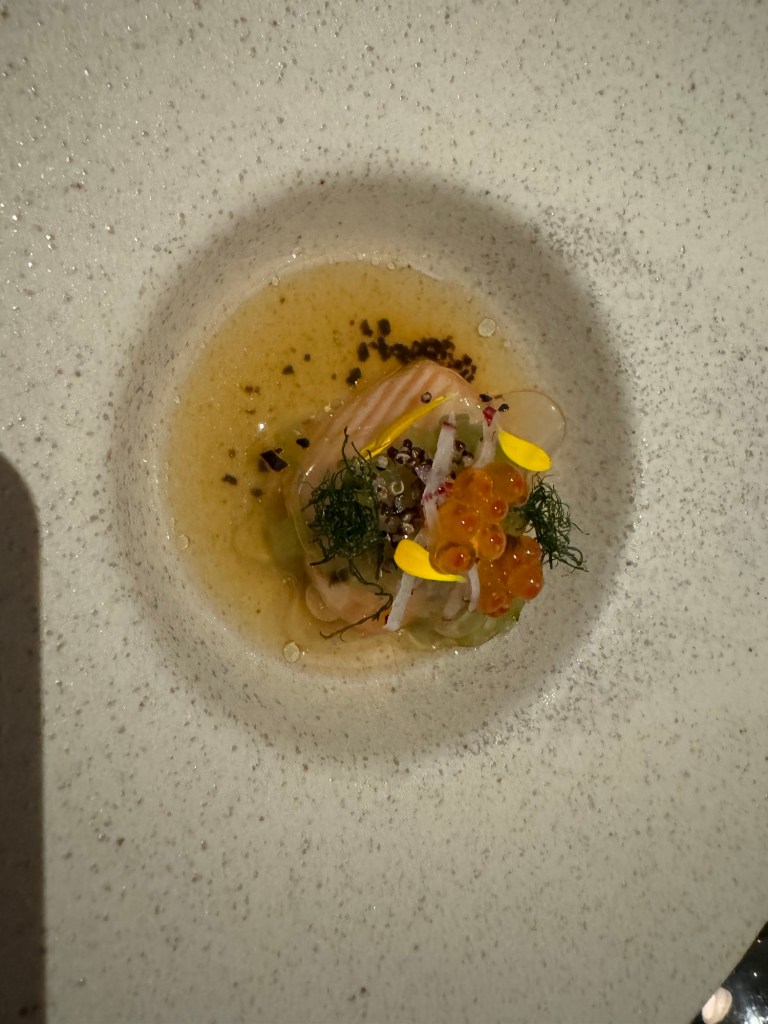
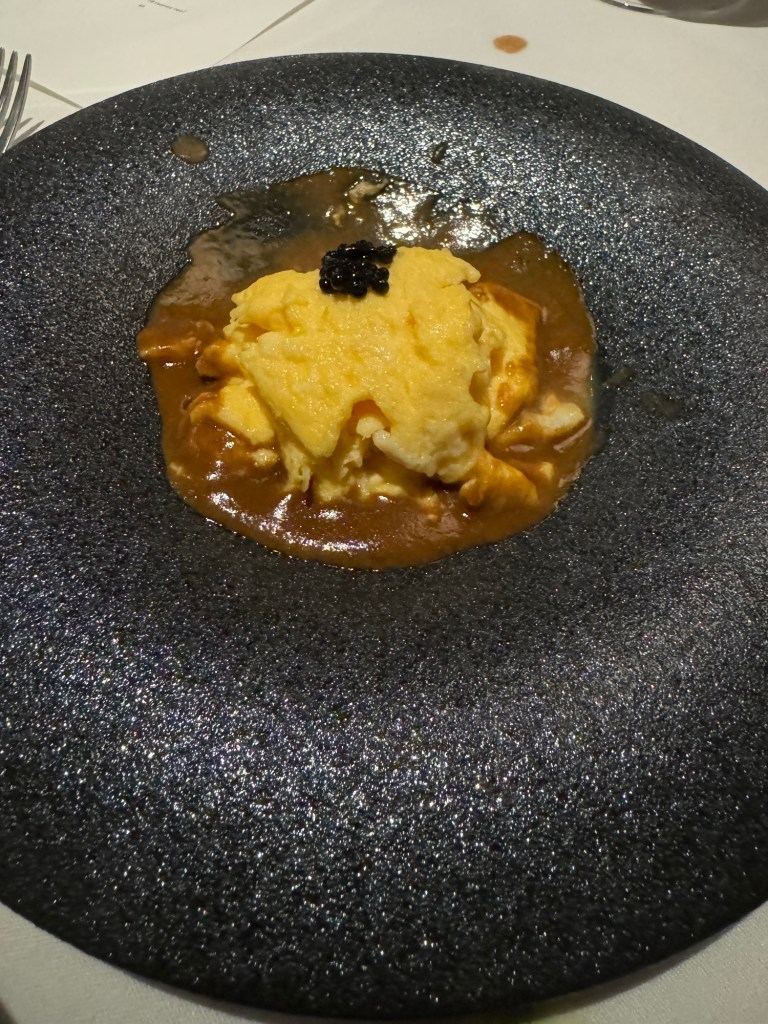
We both liked the oxtail and the duck. I liked the ice cream and cardamom.

Wednesday, October 2, 2024

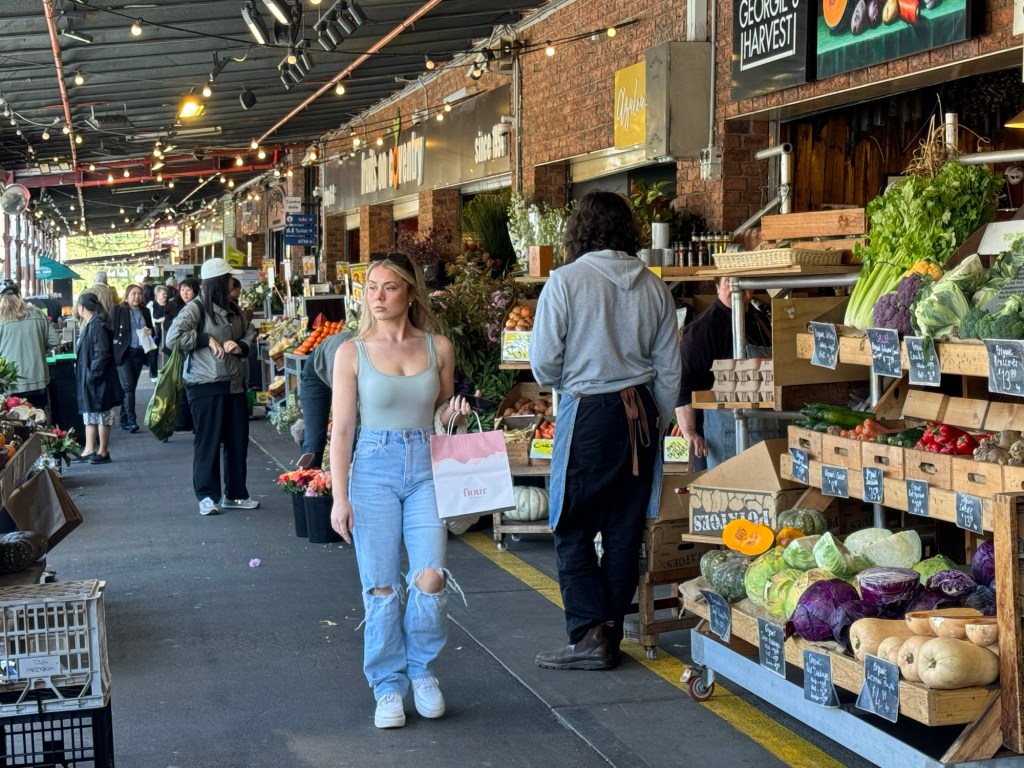
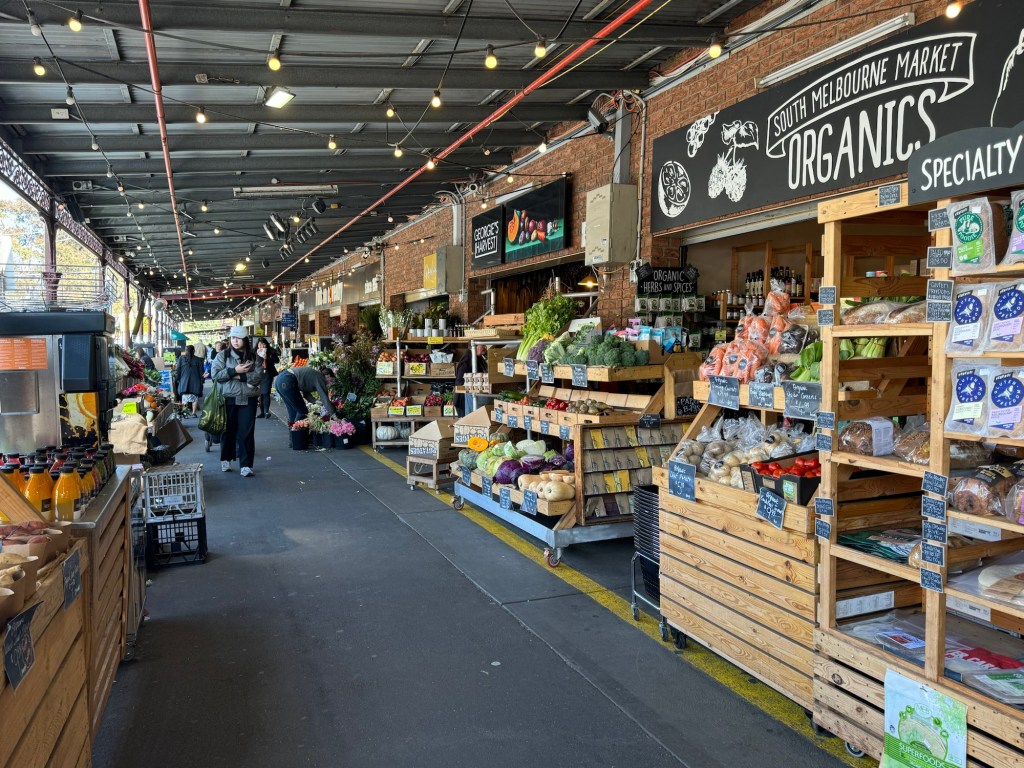
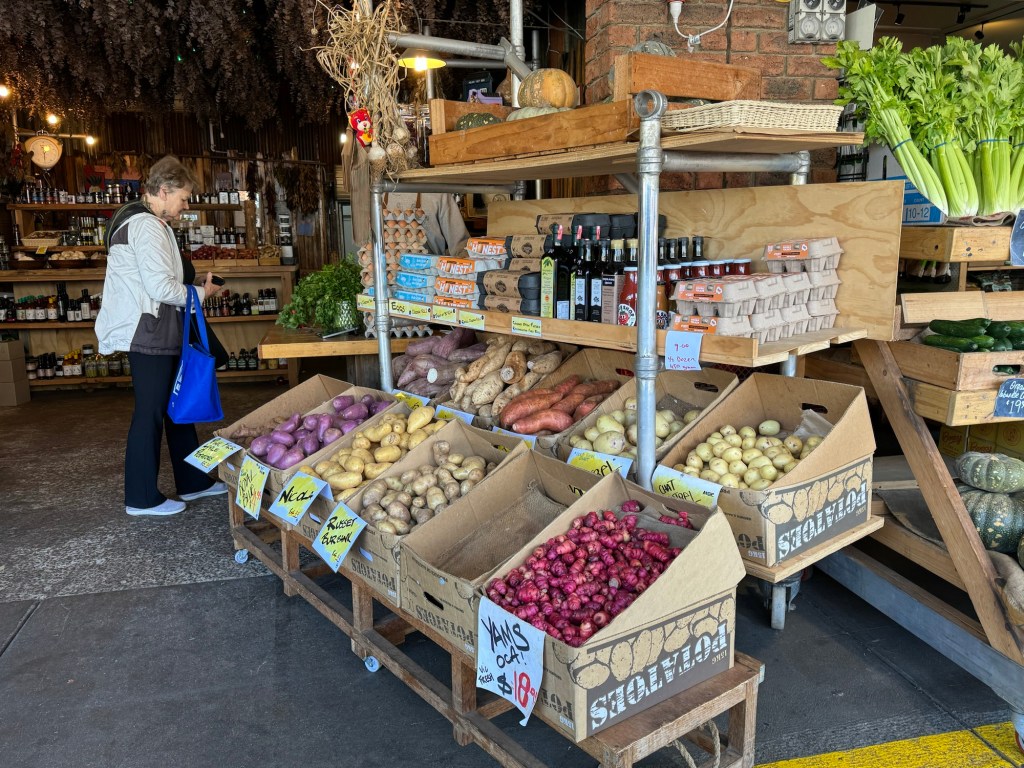
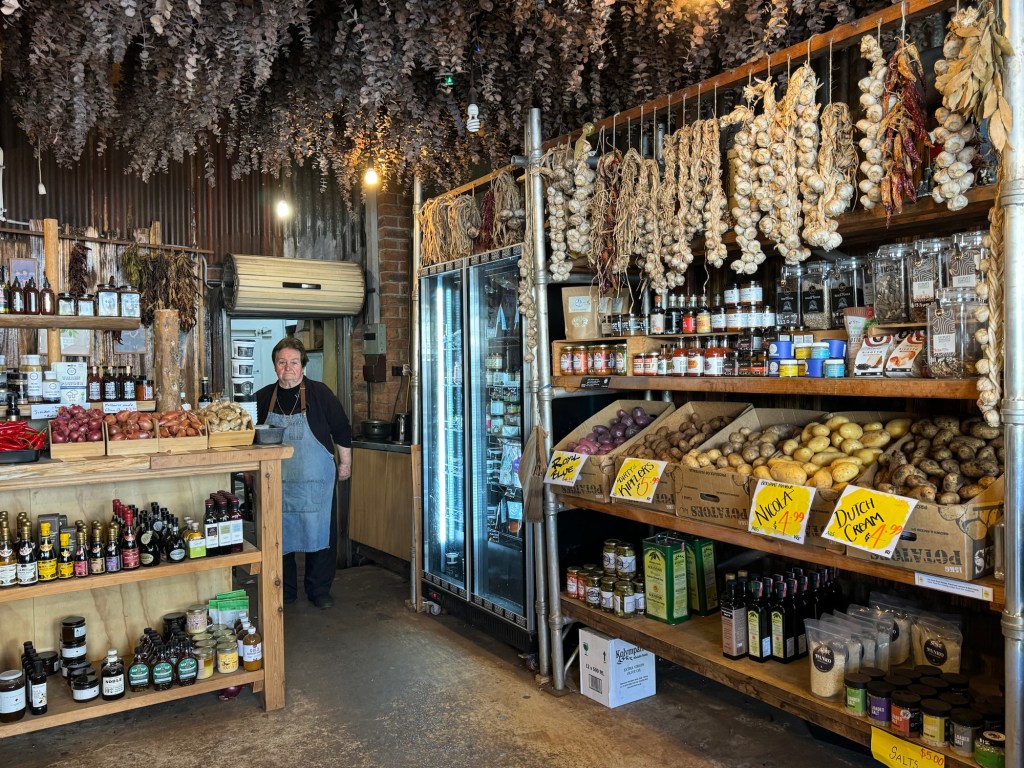
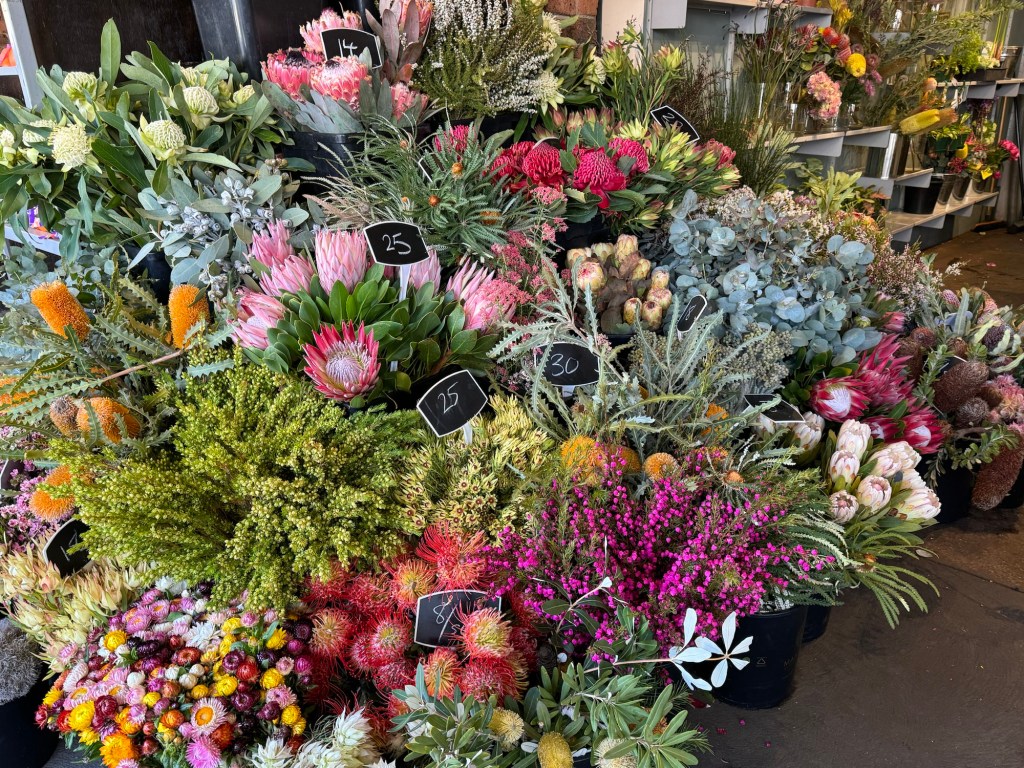
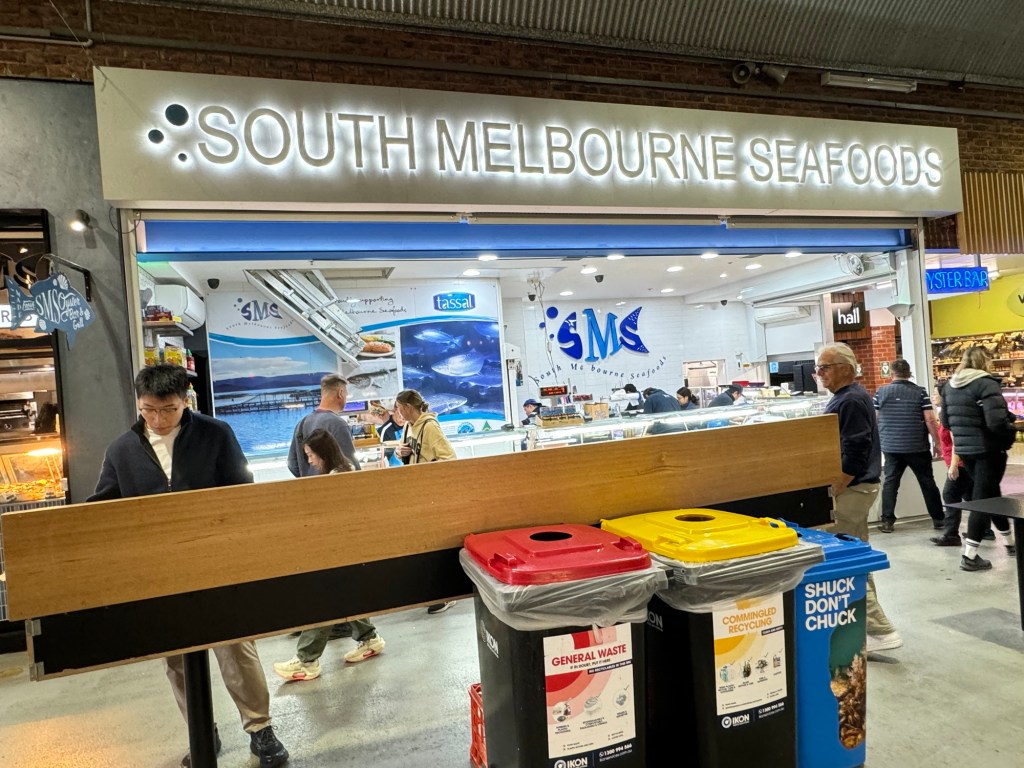
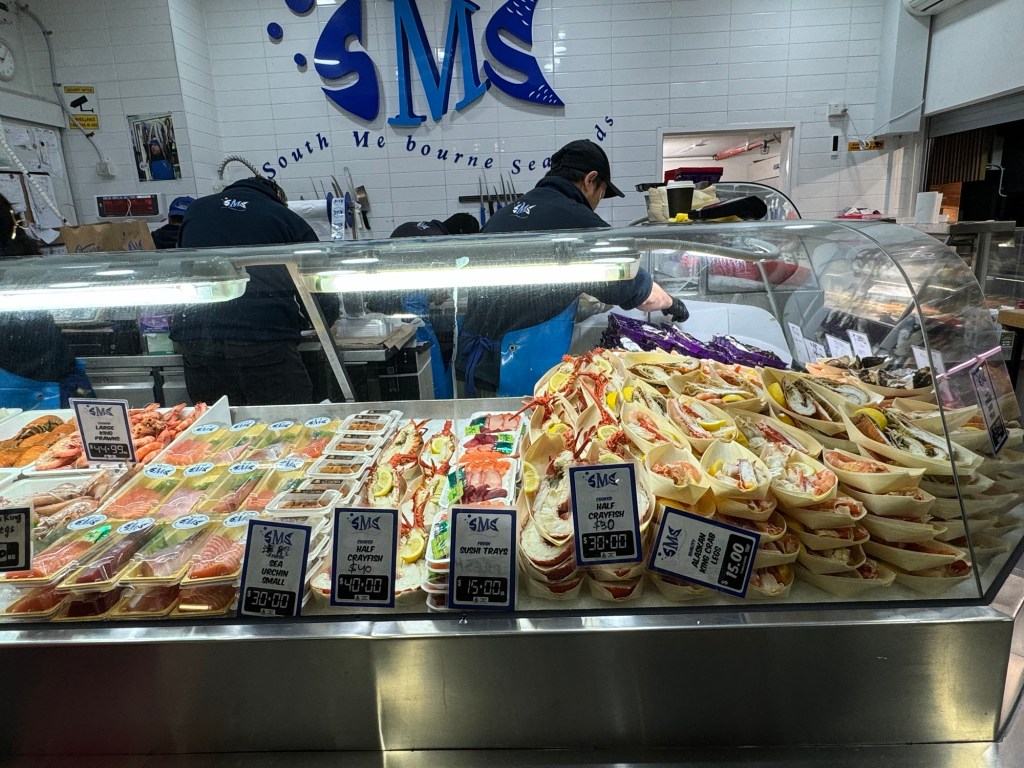
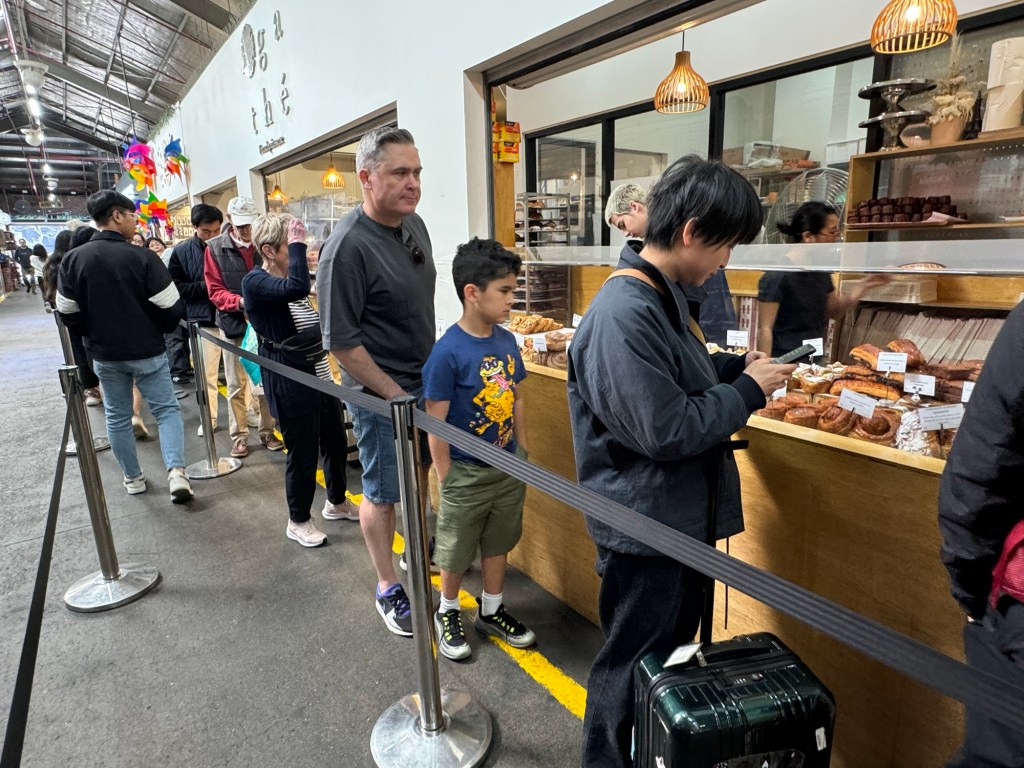
Up early and repacked. We will be traveling overnight on the Great Ocean Road, so we are not giving up our room as we will back in it tomorrow night. We are taking a small overnight bag as there is limited room on the helicopter we will be using to return from the ocean tomorrow. We were soon with Simon Greenfield, our new guide for the Great Ocean Road trip. Before leaving the city we stopped at the South Melbourne Market to check it out. It is a huge facility full of many individual vendors peddling every food imaginable plus flowers and other goods.

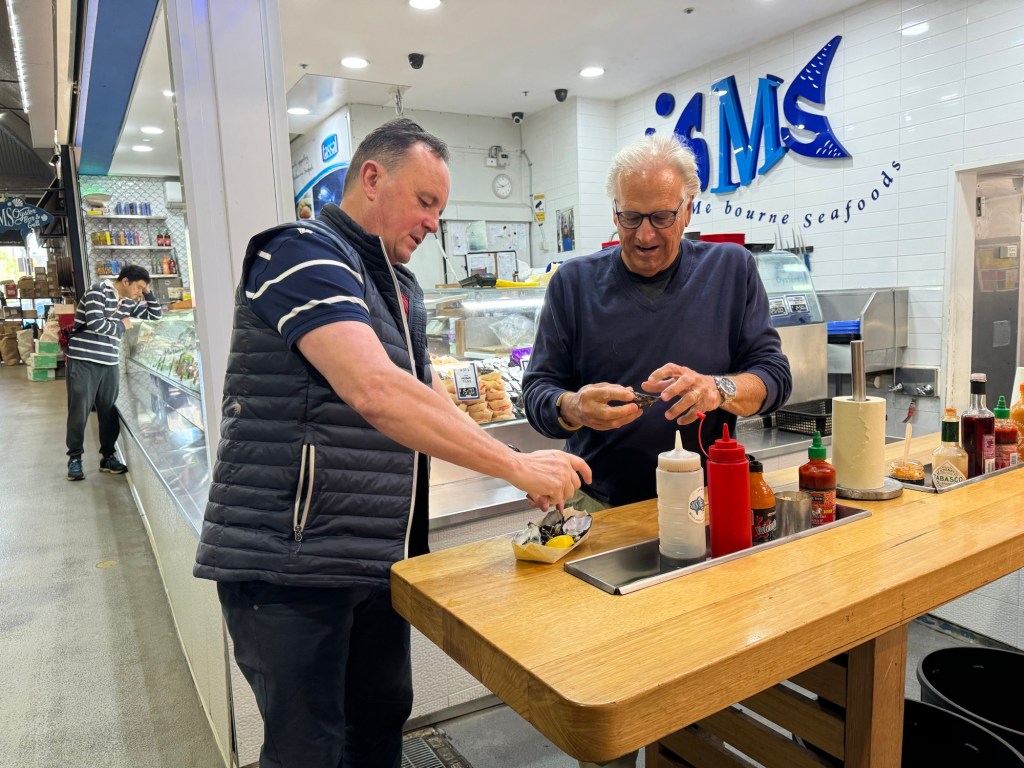
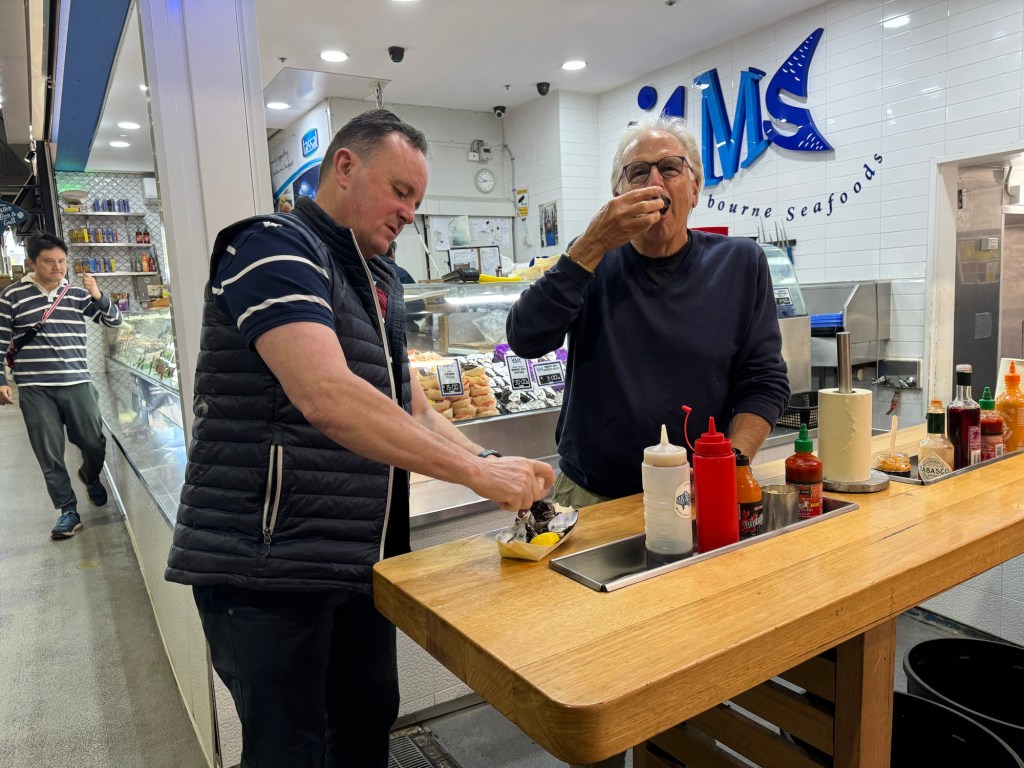
He says people like to shop in it because it is very social as well as providing really fresh products. We enjoyed walking around and indulging in some coffee and focaccia. Simon and Mark scarfed several exceedingly fresh oysters for breakfast.

Back in the car, we headed south out of the city toward the very bottom of the country.`

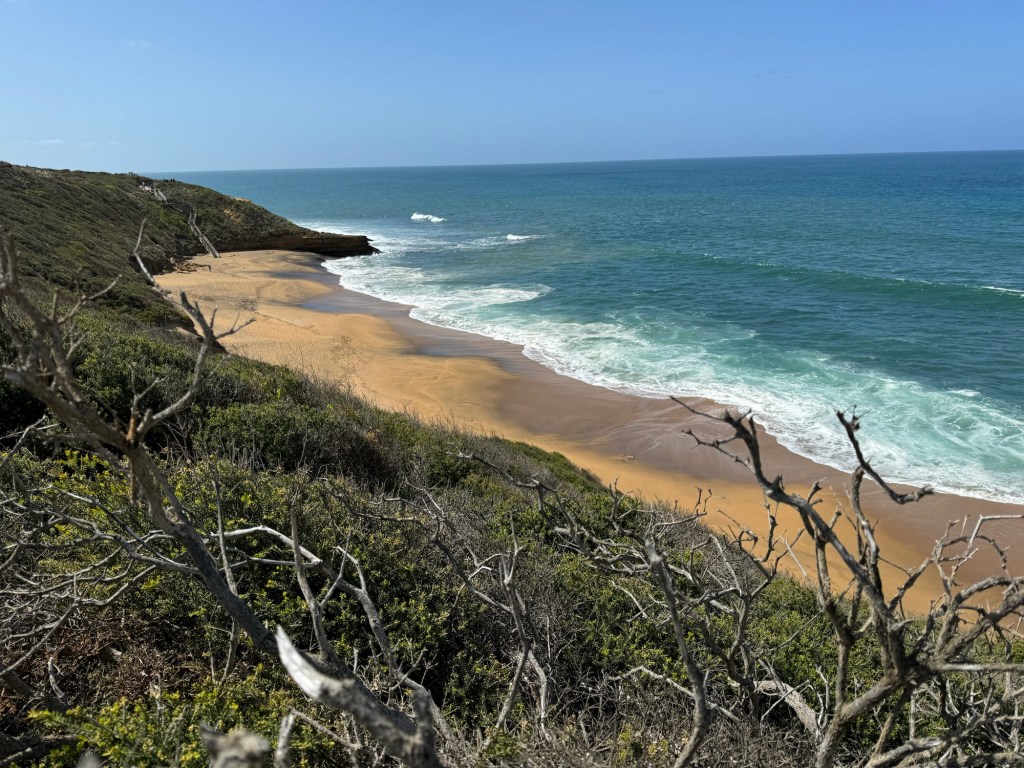
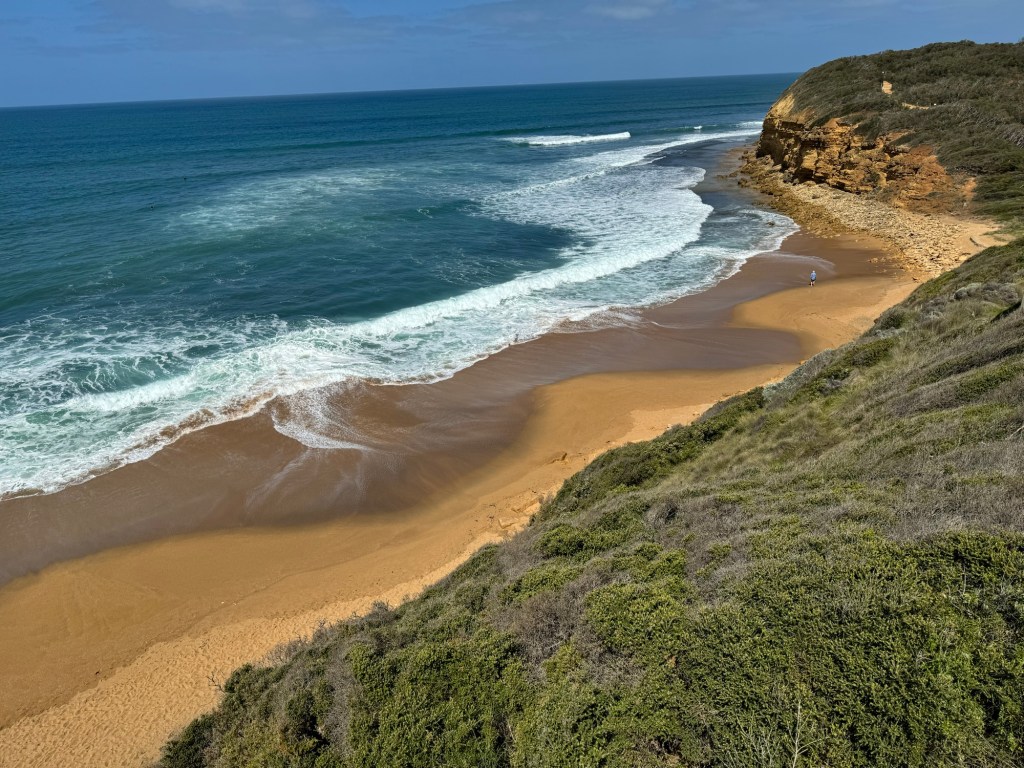
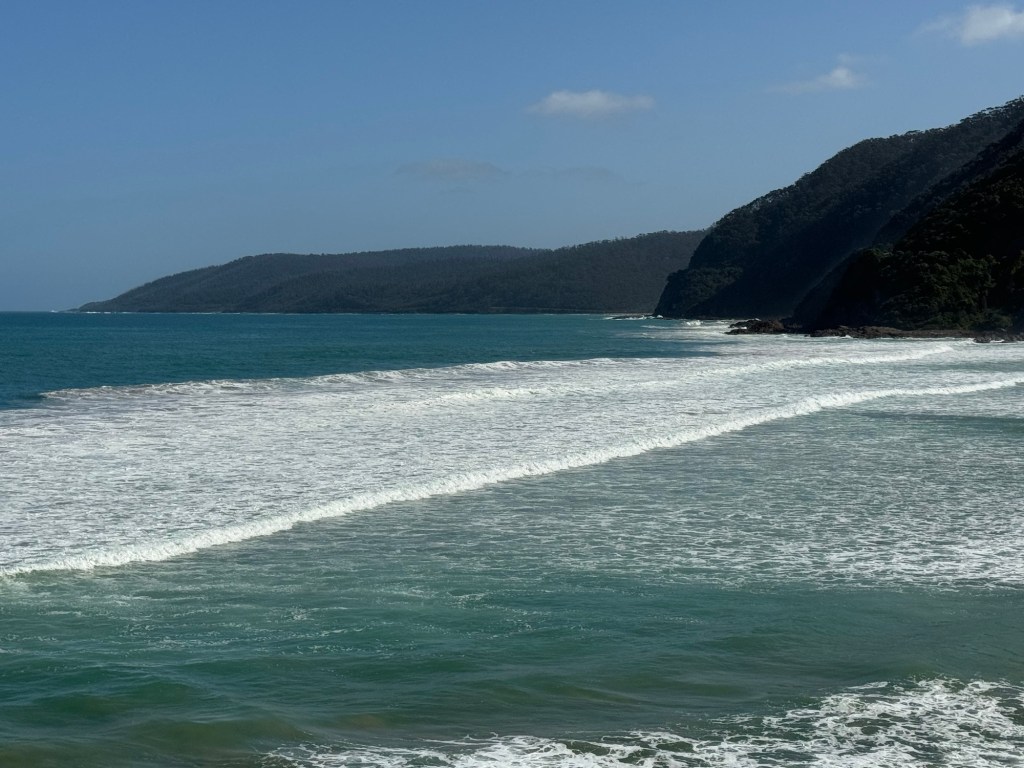
Within an hour we were at Bell’s Beach, the beginning of the Great Ocean Road and a beach that provides great surfing. When we were there the waves were hitting 12 feet.

No place for beginners. After watching the half dozen surfers in the very cold water awhile, we continued along the coast road to Angelsea and Lorne,

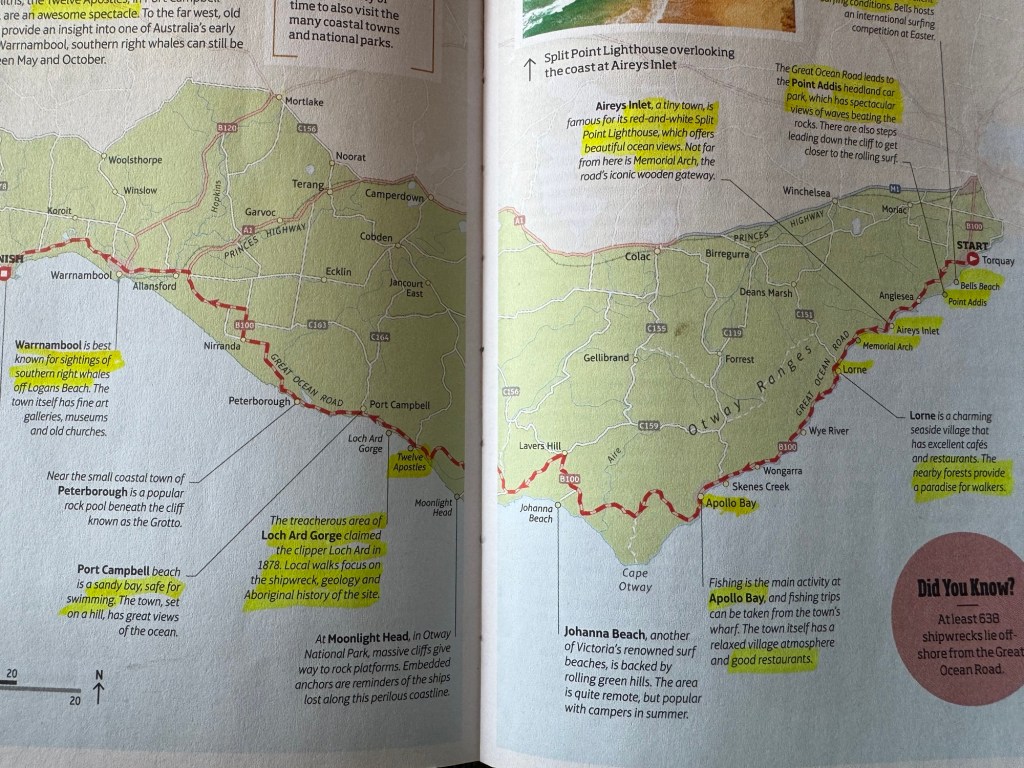
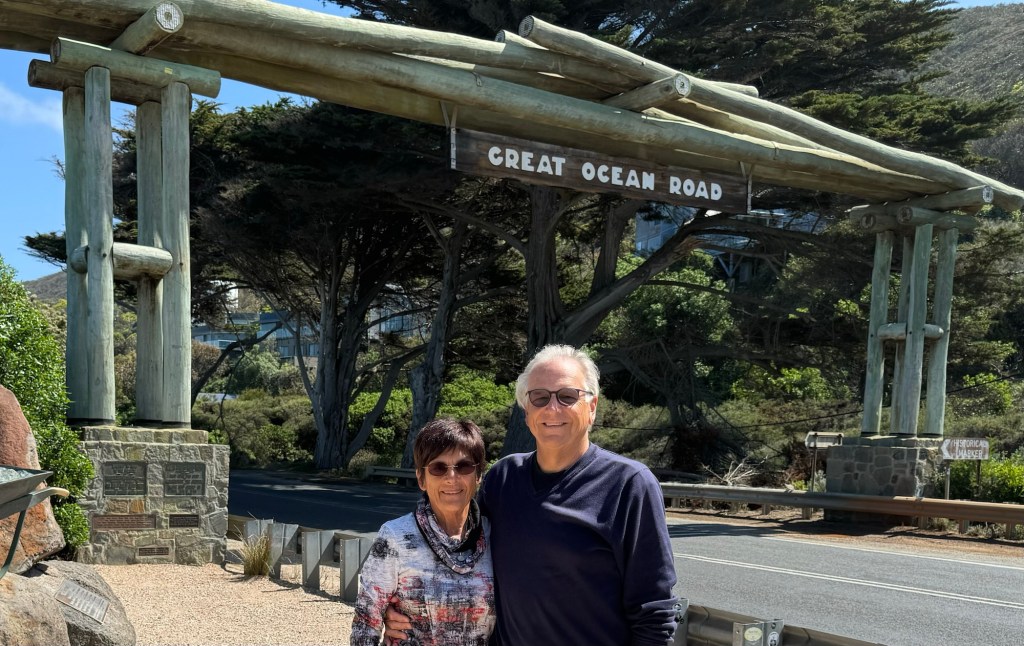
where we passed under the Road arch and stopped for lunch. The Great Ocean Road is 170 miles long.

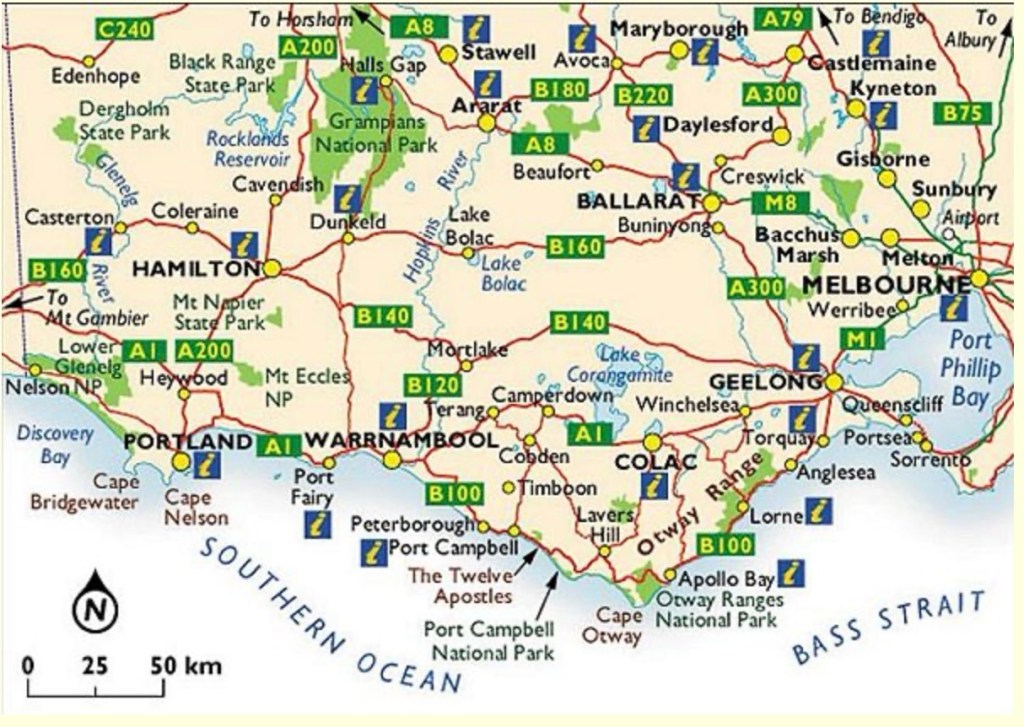
Map of the Great Ocean Road at the south end of Australia.

I had “gummy shark”, fish and chips.

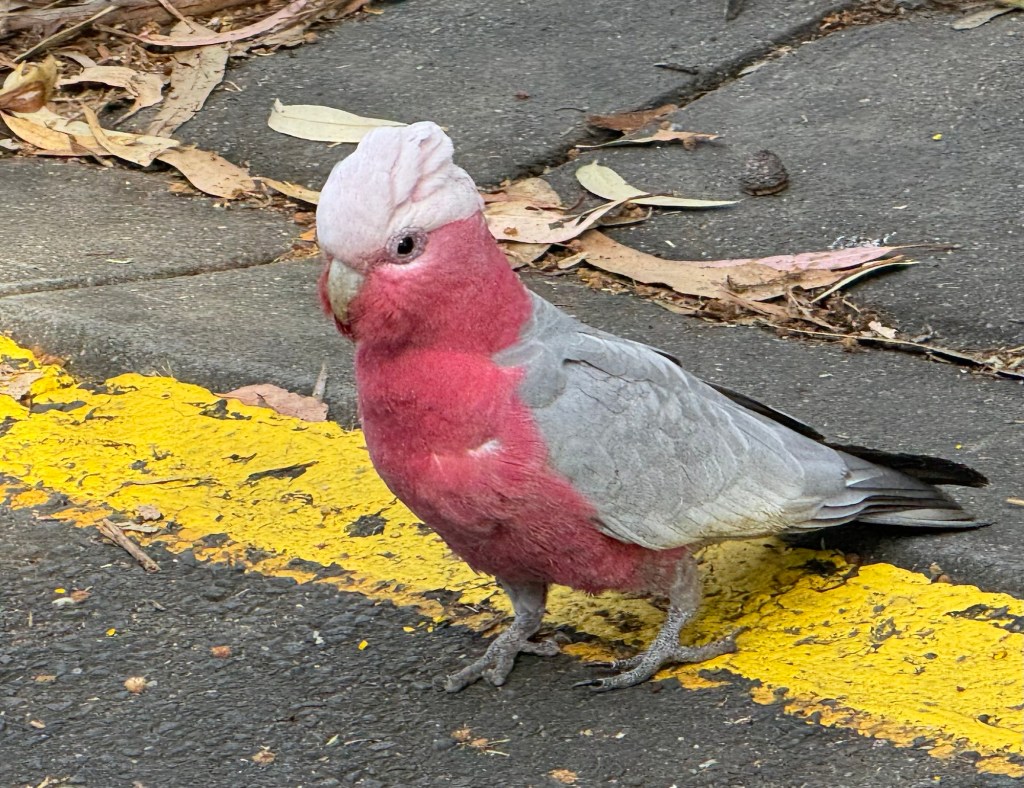
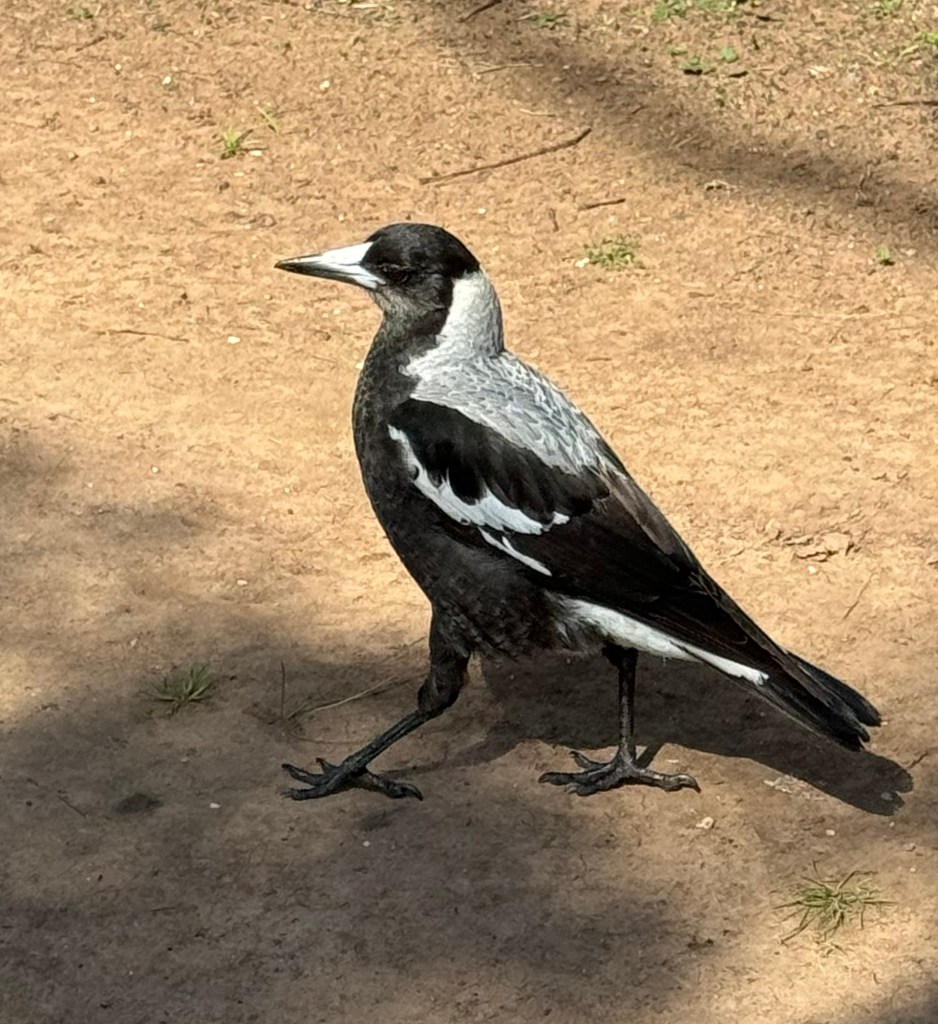
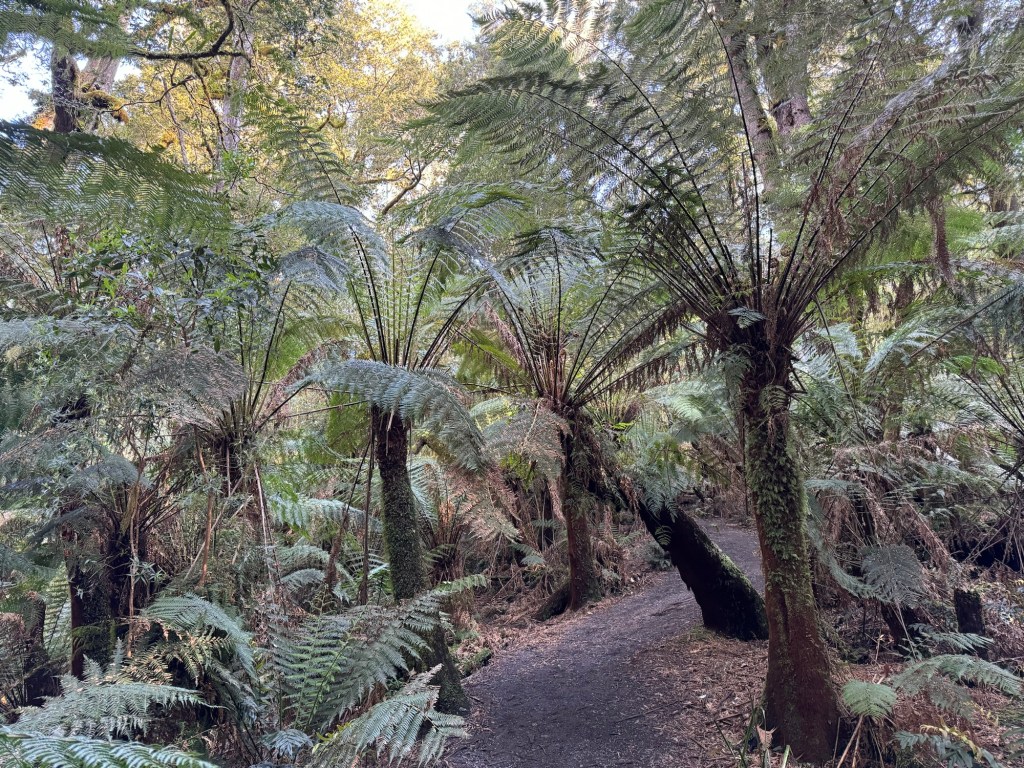
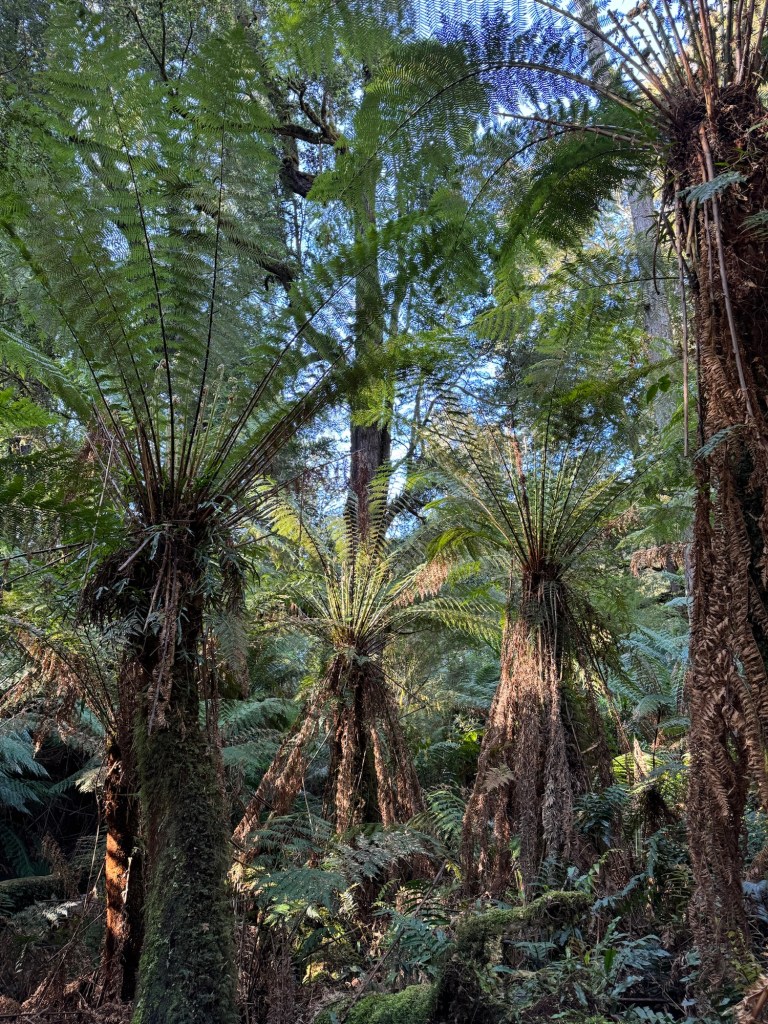
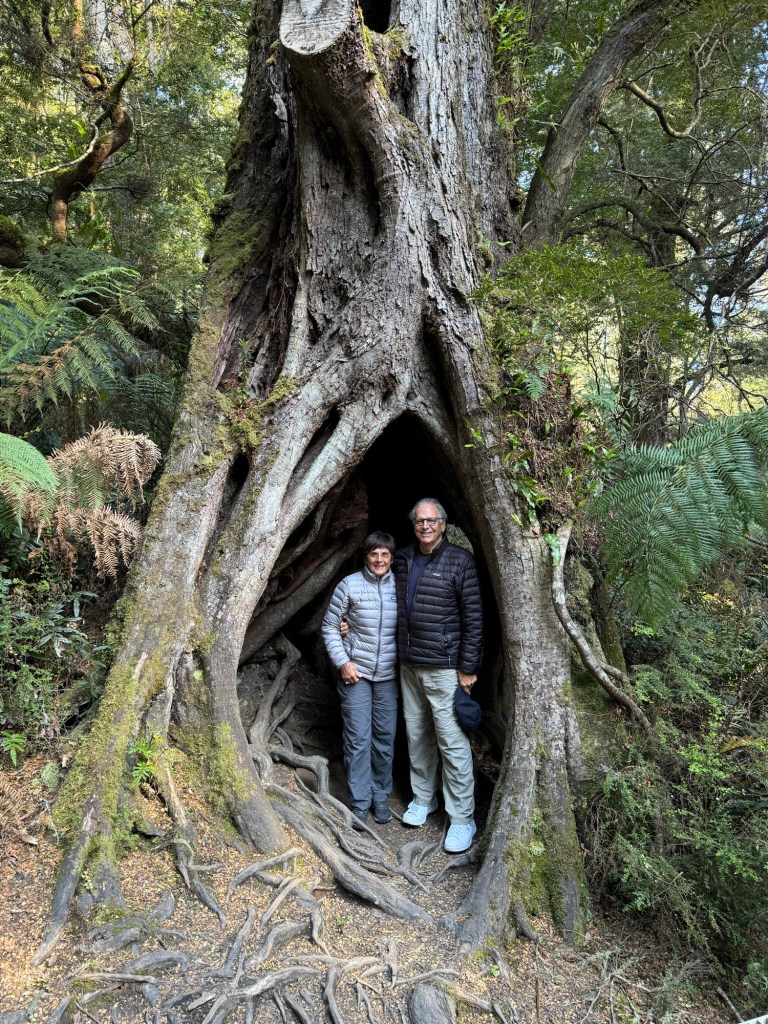
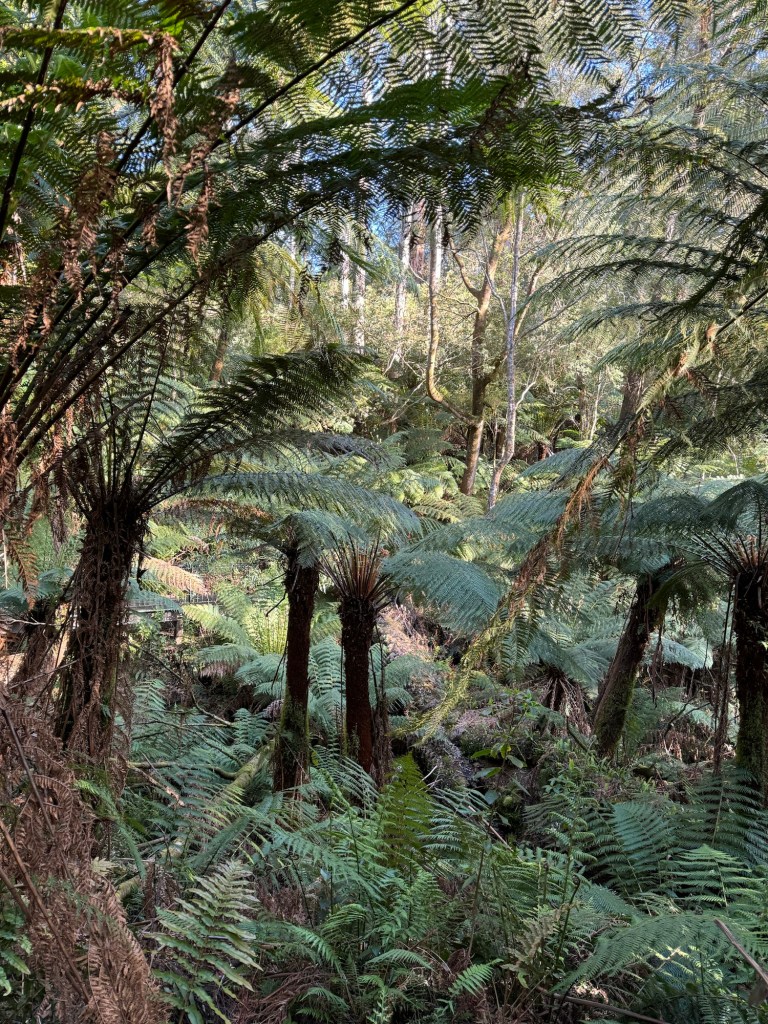
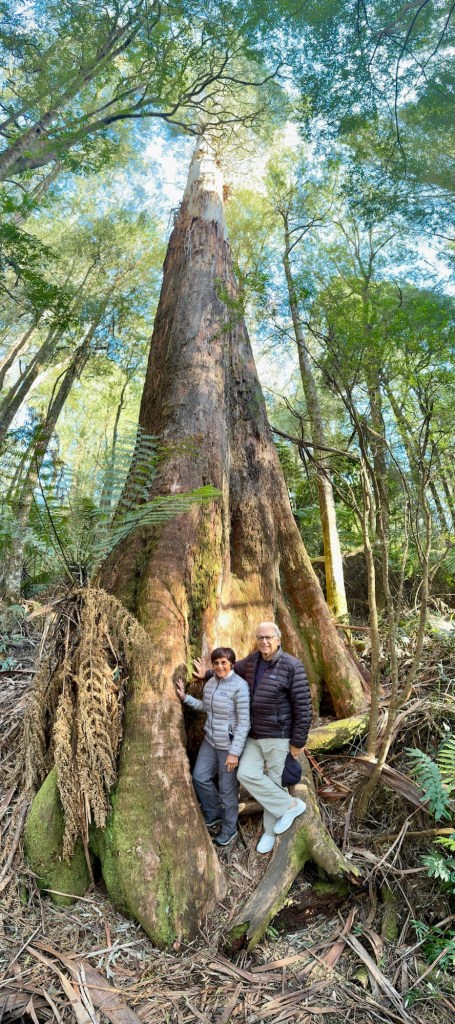
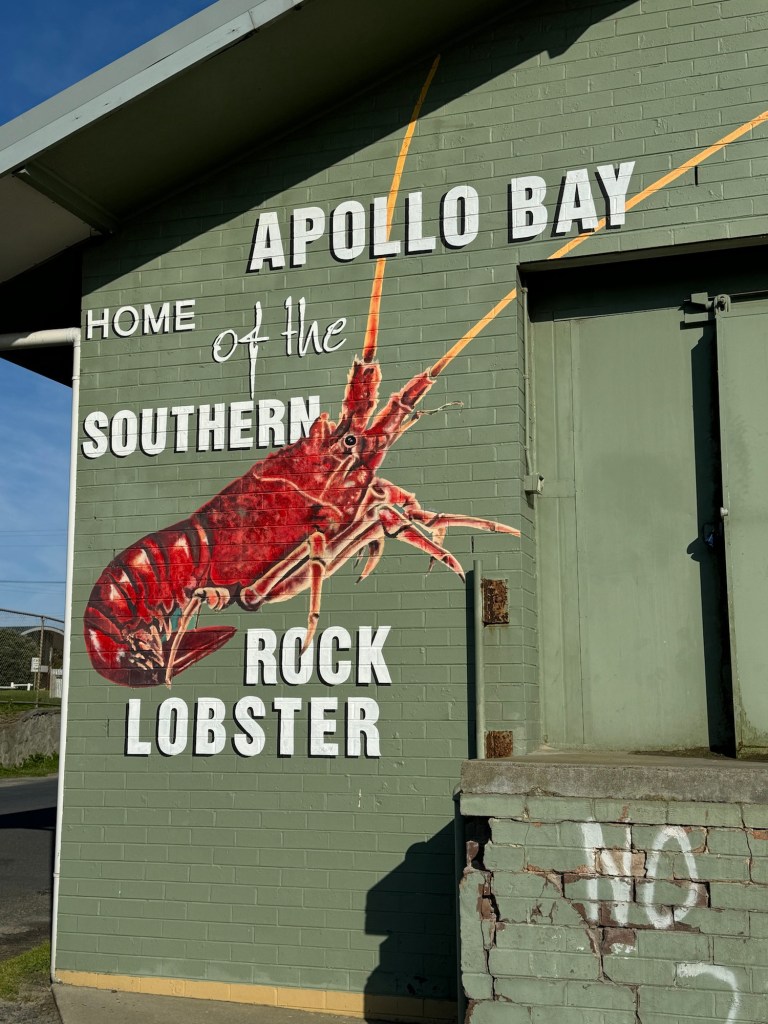
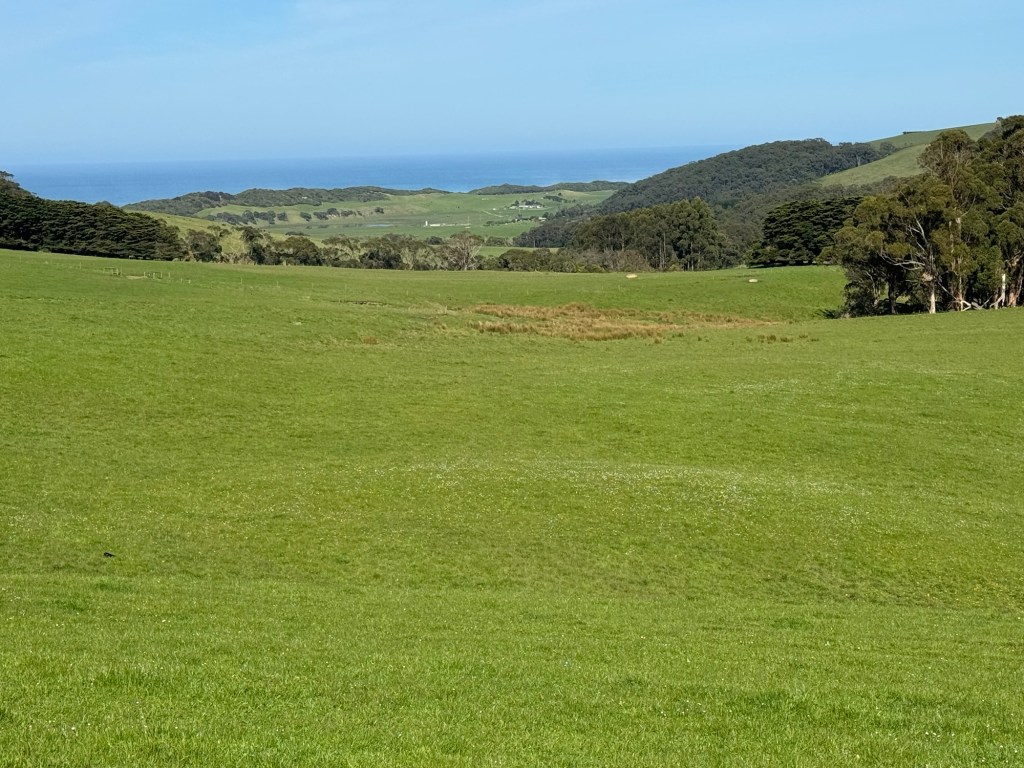
On a short walk about, we got some good bird photos: a galah, which is a member of the parrot family, a cockatoo, and an Australian magpie. Then we drove through Apollo Bay and on into the temperate rainforest near Cape Otway. The rain forest was quite lovely with huge eucalyptus trees and ferns and many other flowering plants. Some of the trees were close to 300 feet tall. The latitude here is 43 degrees south, compared to our latitude of 39 north. Not surprising that the spring here is like our spring. Meanwhile the temperature is a pleasant 68F.

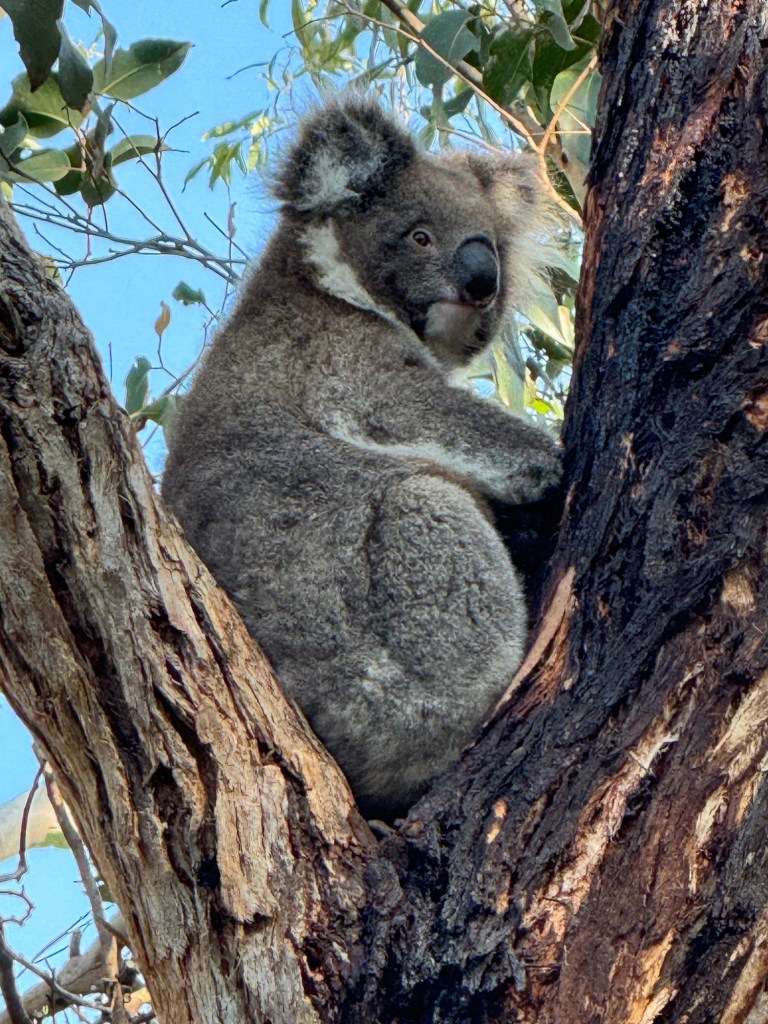
Simon drove us around looking for koala bears. We found a couple but couldn’t get them to look at us. Finally one looked our way and here it is.

Back in Appolo Bay, we checked into our room for the night. It was a 2 block walk to the east facing beach and an 2 block walk to an Italian restaurant, so we were set. Met Simon for dinner, had a somewhat familiar puttanesca and went to bed early.

Thursday, October 3, 2024

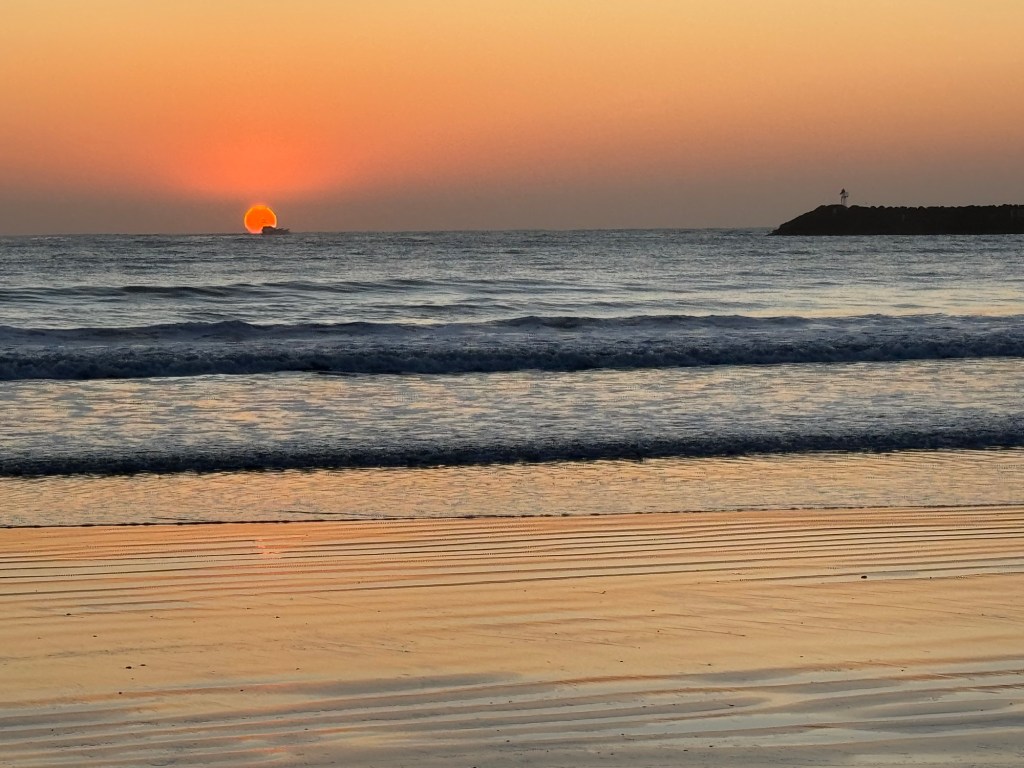
Got up at 5:30 to see the sunrise in the east over the Bass Strait/Southern Ocean. It was a clear, cloudless morning with an uninteresting sunrise, but we were there to see it.

Simon knew a lot of people in town and introduced us to the owner of the local bakery where we hung out awhile.

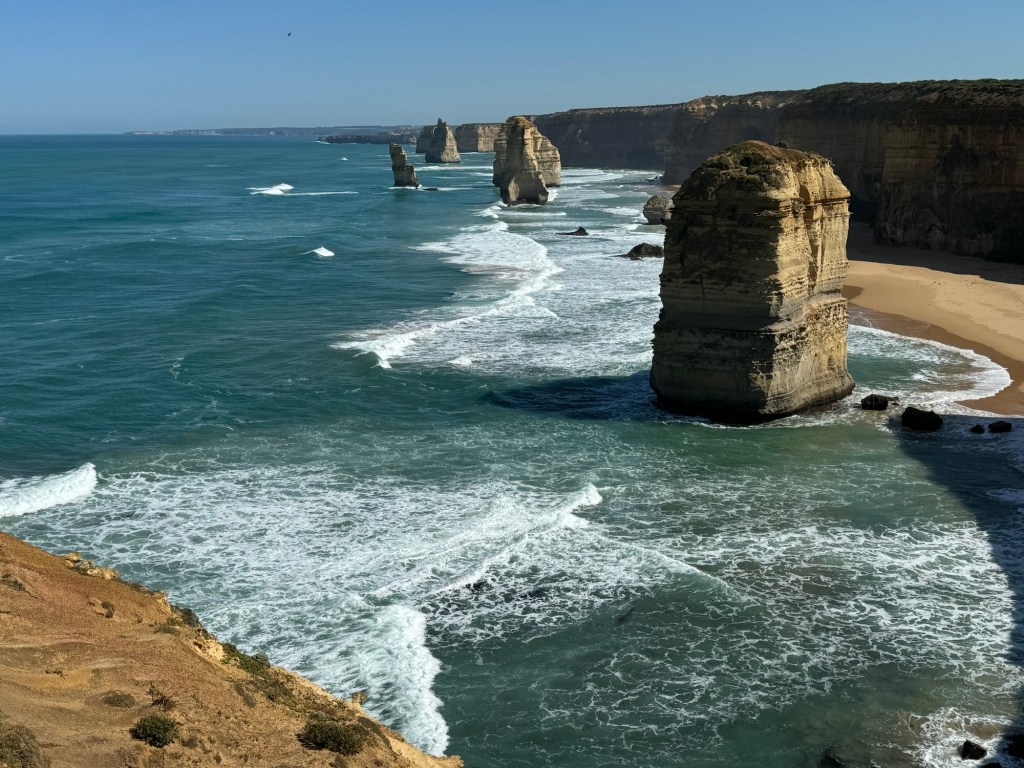
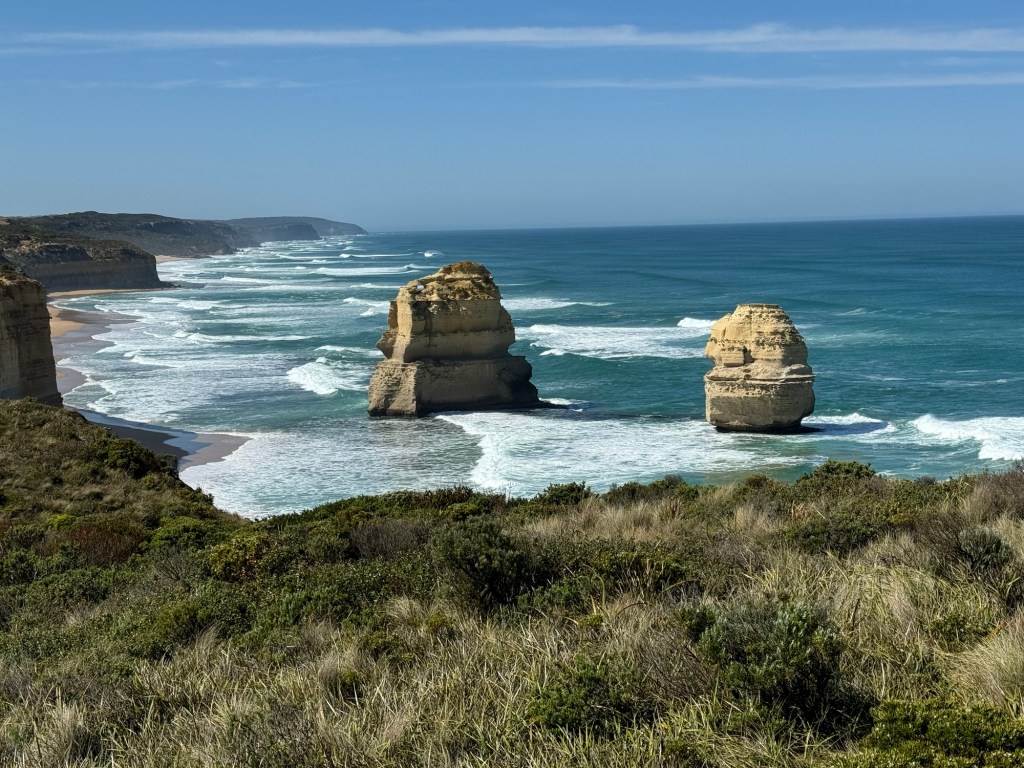
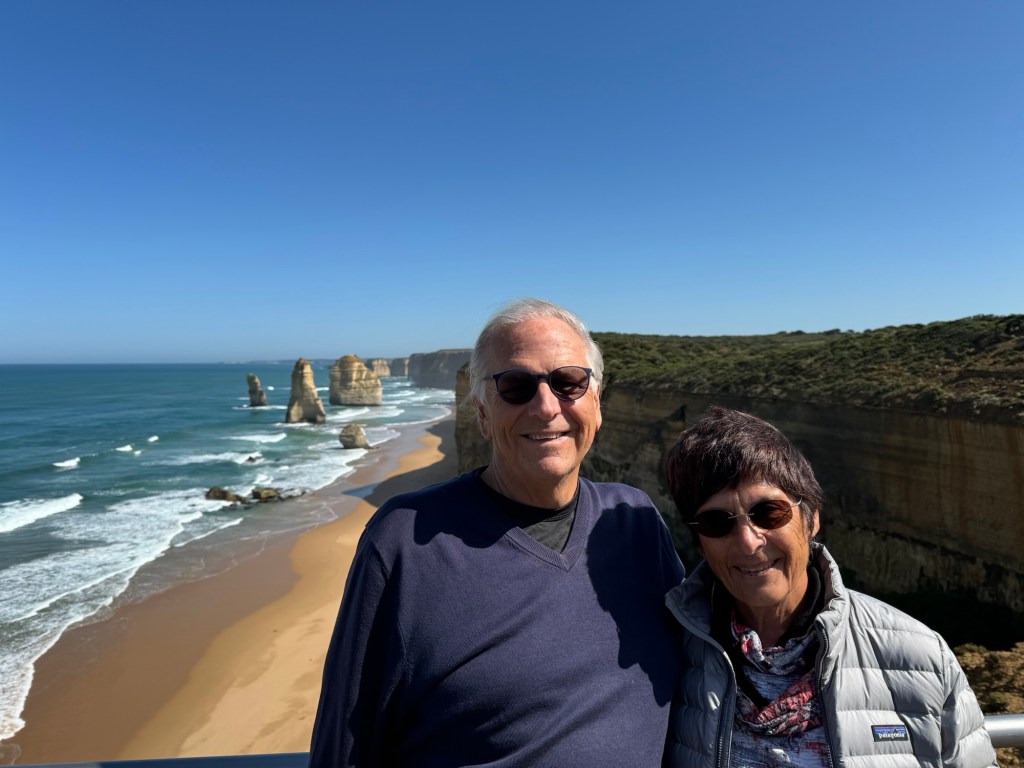
Back on the road we head for the famous 12 apostles. There are not 12 any more, but they live up to the hype about them.

About 3pm he drops us off at the heliport and a pilot flies us back to Melbourne. We thought the flight would end at the airport, but the pilot surprised us by landing downtown on a city helipad next to the river. It was not far from our hotel. Made us feel unreasonably important. Unfortunately, both our phones were dead at the moment, so no photos.

Back in our hotel, we repacked for Tasmania, expecting it to be cold. We also packed up a box of things we will not need, such as our snorkles and masks, and had the hotel send the box home. Helped free up some space.

Then we went to dinner at a Japanese restaurant called Kazuki. They served us a 6 course Michelin style meal, which was good and especially interesting. Mark loved the ox tail and duck. I loved the dessert.

We Ubered back to the hotel, enjoyed the city view from our 19th floor windows and went to bed. Tomorrow we start a new adventure in Tasmania.

Lizard Island

Friday, September 27, 2024

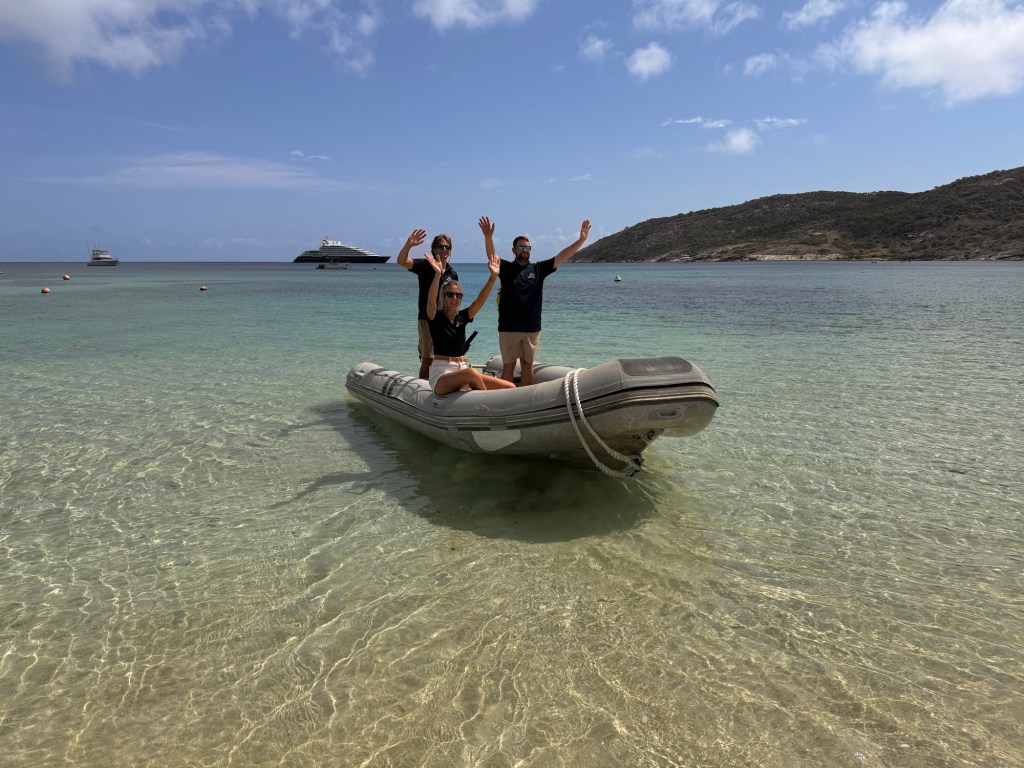
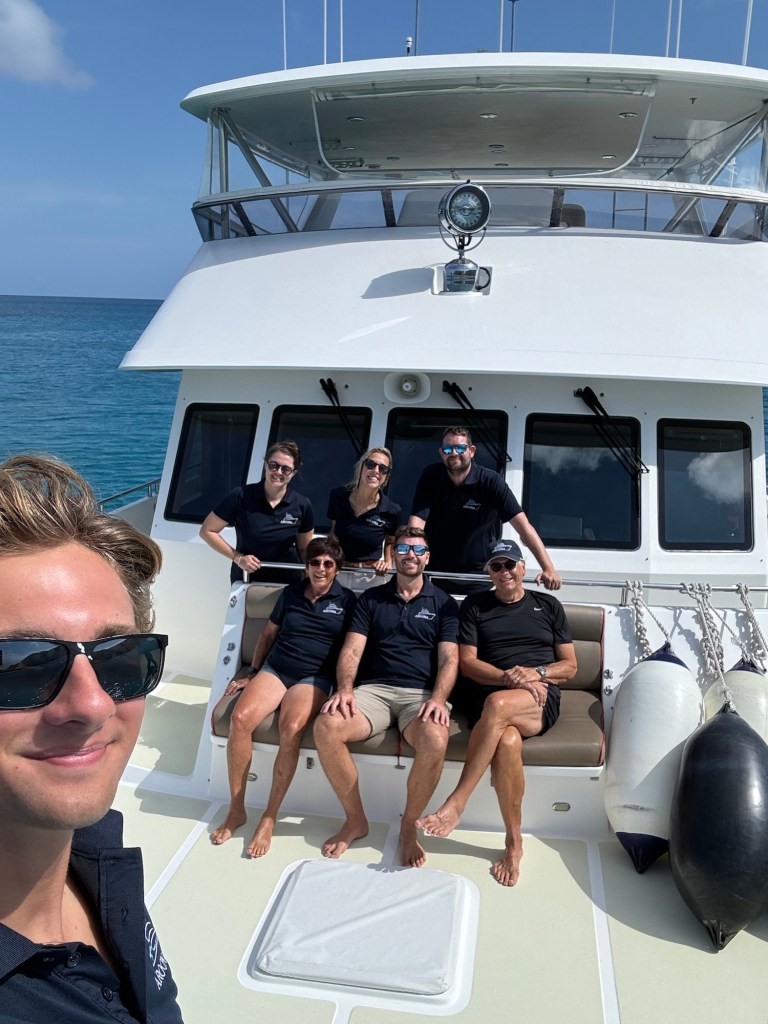
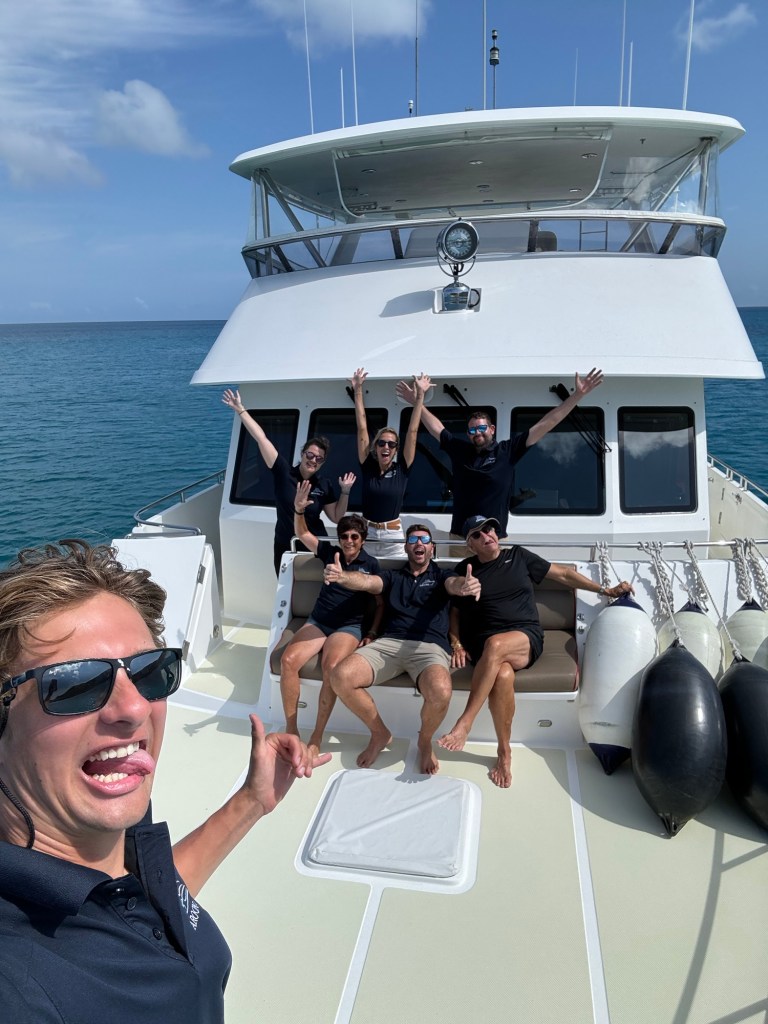
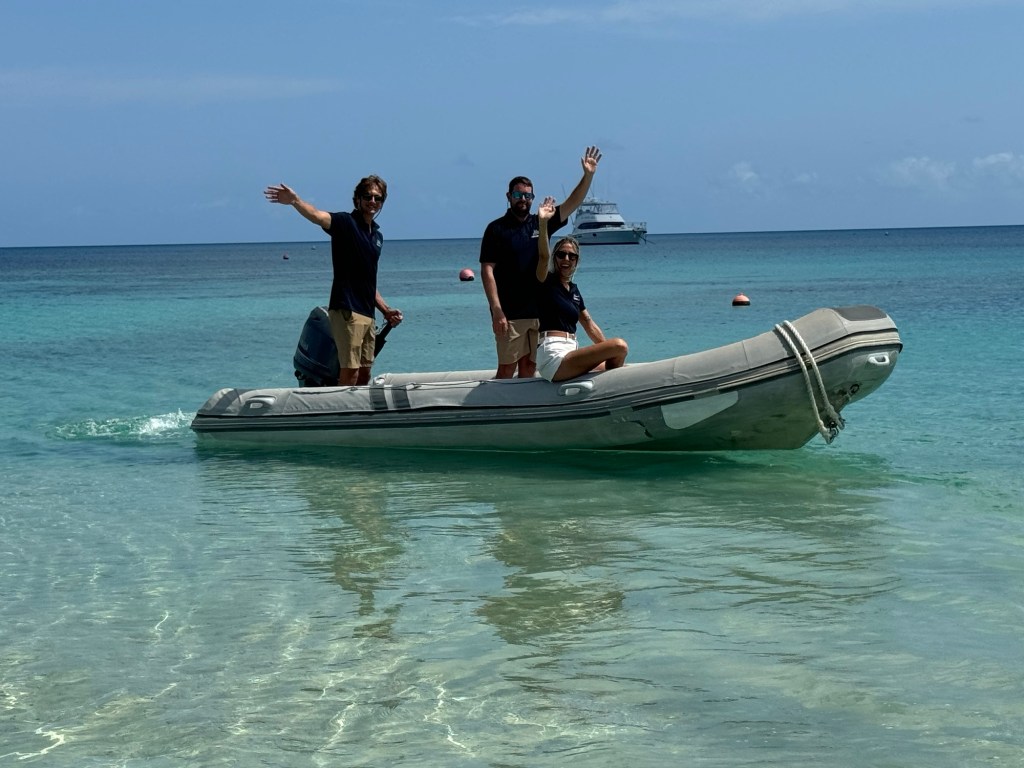
By 10:30 the Aroona crew had left us behind on Lizard Island and taken the tender back to the boat.

I watched until the boat motored out of sight. Been a long time since I had been so sorry to see something end. We had had such a good time with everyone and with the boat itself.

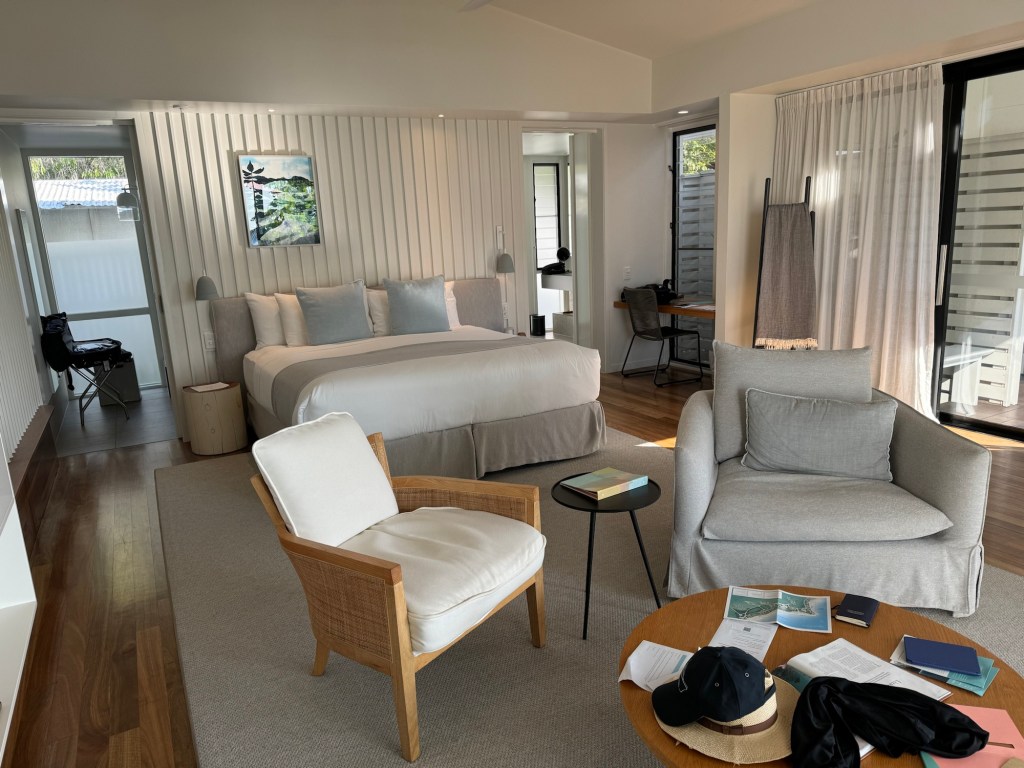
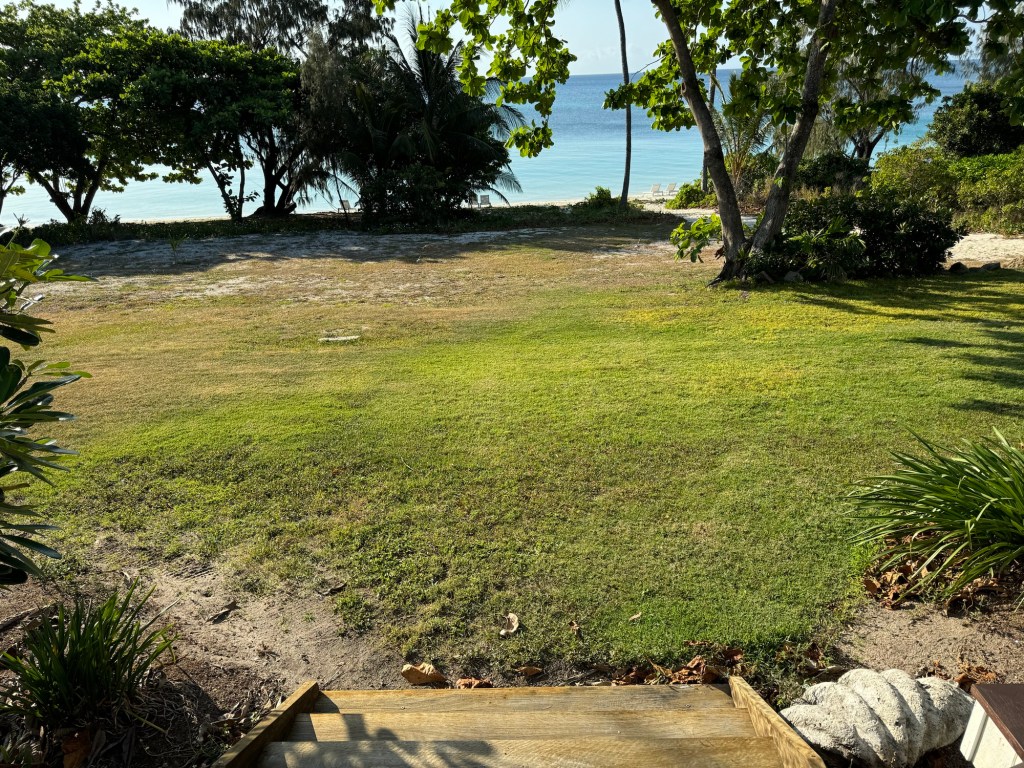
Anyway, we are now on a new adventure. The day is clear and sunny and our room faces across the lawn and to the sandy beach. The water is pleasantly cool, but the sand and air are very hot. We went for a dip to cool off and settled into our Air conditioned room to read. We had a light lunch and relaxed the rest of the afternoon.

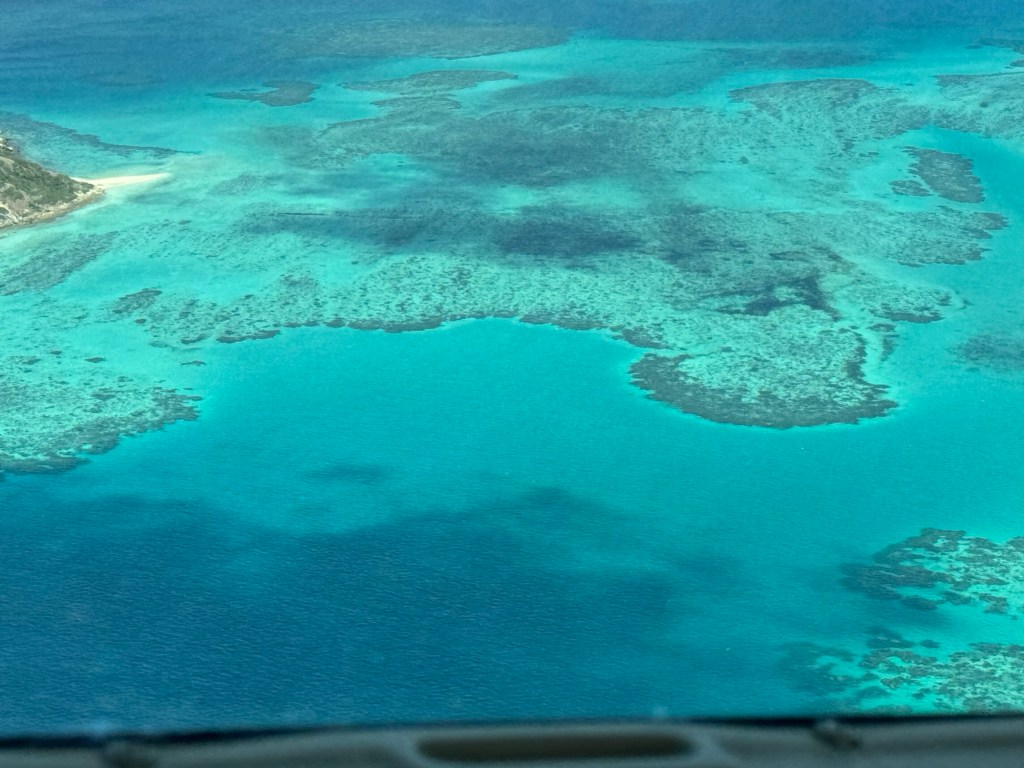
I finished my book about Australia, called “Sunburned Country” by Bill Bryson. He travels all over the country and provides a good and humorous read. He did touch on nearly all the places we have or will visit and confirmed our experiences so far. The north is very hot in September and sparsely populated. The locals we have met have all been friendly, welcoming and inquisitive. The Barrier Reef is equally hot at this time. When we started on the boat trip, the air was breezy and the water was choppy. Gradually the wind died down and the water grew calmer, especially our last day on the boat.

When we were not in the water, we played the card game of Uno, ate and told stories. We learned a lot about the adventures of the crew before they signed on to the Aroona. They each had unique and interesting lives. Their ages ranged from 19 for Fletcher to 37 for Lorenzo with experiences to match. Mark and I shared some of our history too. The last night everyone shared an experience no one else in the group knew. Th evening got a little emotional. The next morning, we had breakfast, went for an early walk on the public beach, grabbed ours bags and motored in the tender to the shore in front of the resort.

That night we walked the beach to the Marlin Bar for pizza and beer. The bar is filling up with people who are here to fish for marlin. The Island will be visited by passionate marlin fishermen for the next month. Fortunately, we will leave the Island before the crush.

Saturday, September 28, 2024

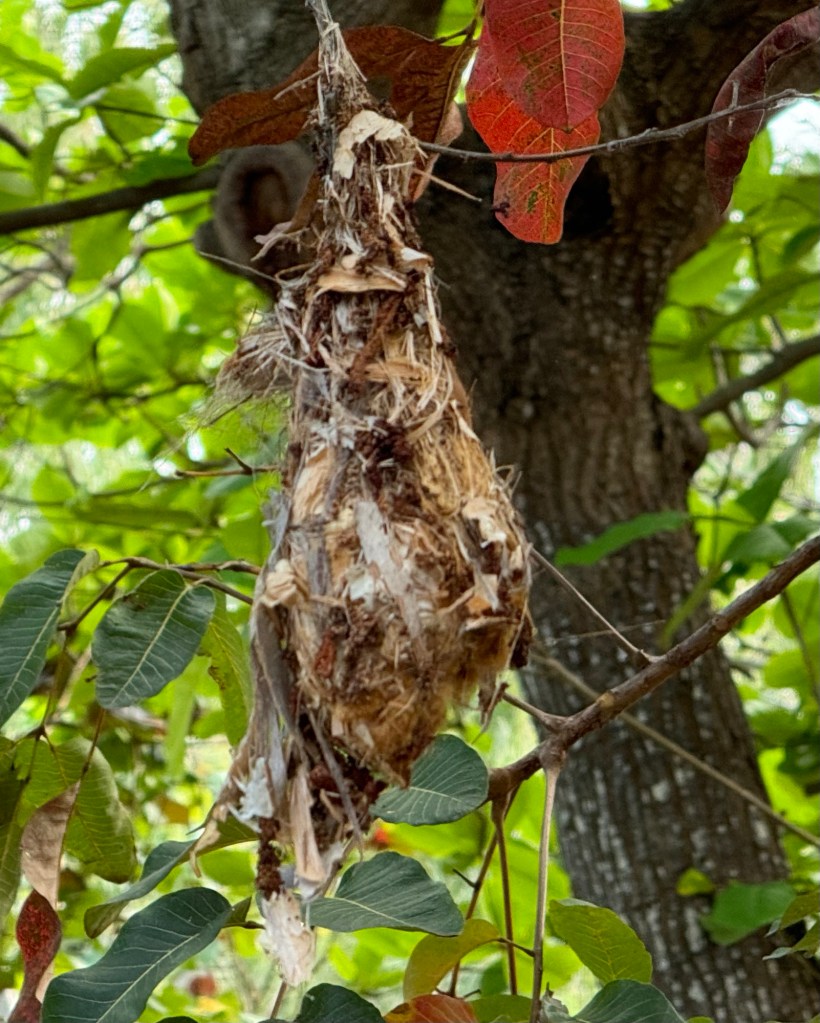
At 7am we went for a bird walk with a naturalist named Lauren, originally from Weatherford, Connecticut but we saw only a few birds and got fewer photos. Particularly the Olive-backed Sunbird, which had a lovely sound and was pretty to look at. All I captured was its interesting, but abandoned, nest.

Sunbird nest

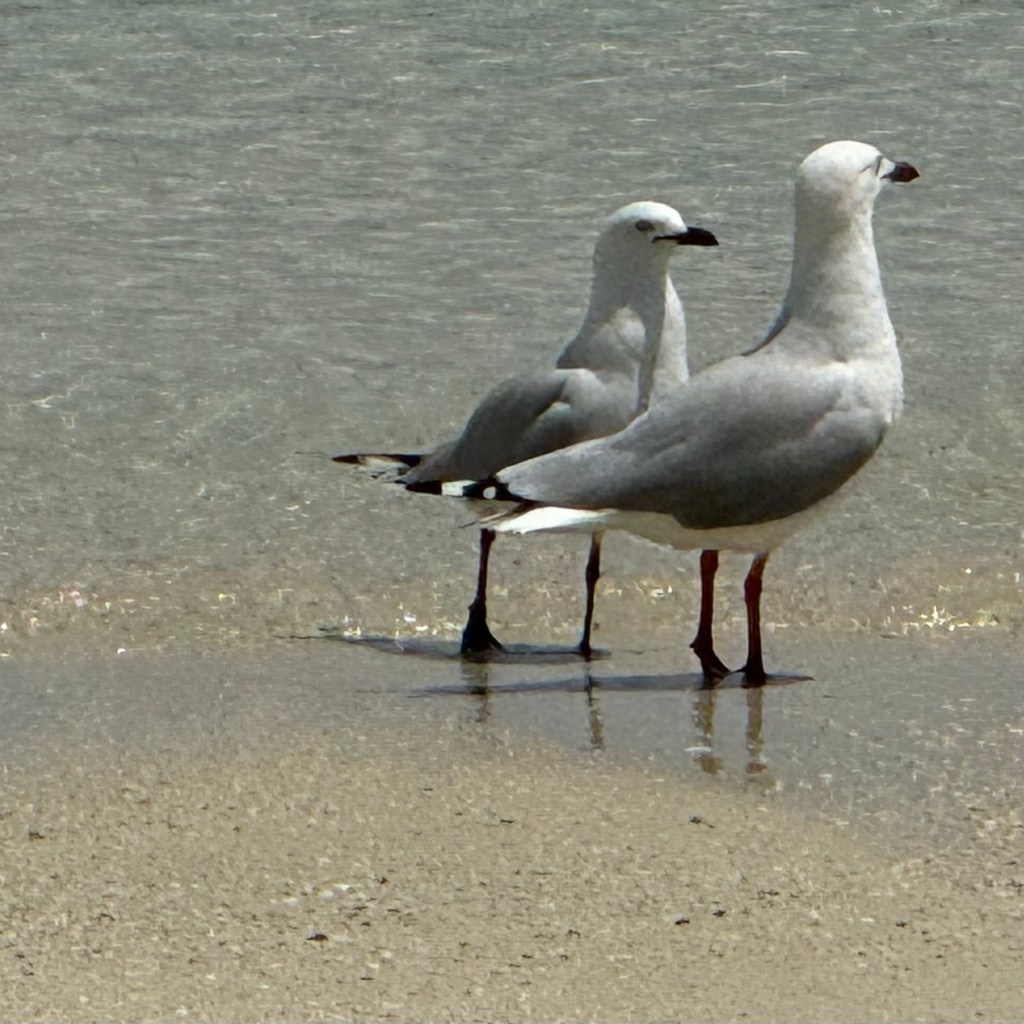
The Pheasant Coucal, which makes a loud whoop whoop sound; the Silver Gull, or Australian seagull;

Australian Seagull

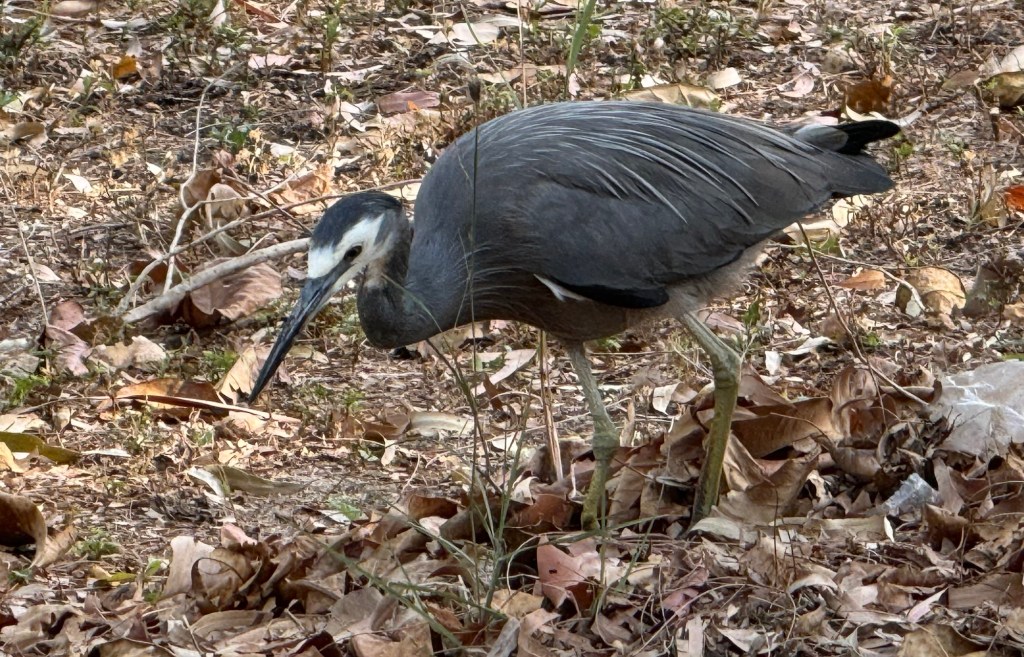
A Grey Heron with a wounded leg

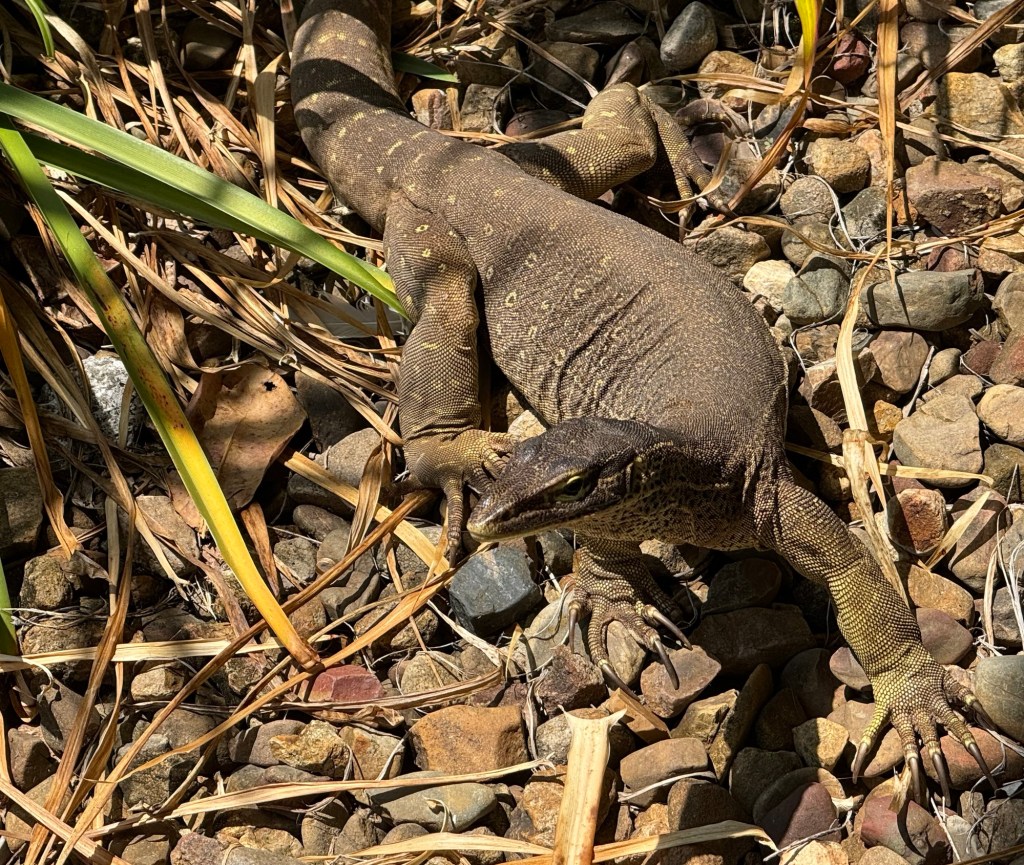
A Large Monitor Lizard

and a monitor Lizard but we enjoyed the walk. Then we had breakfast and went walking on the beach.

Now we are sitting on the beach at Lizard Island and I am reminiscing about the boat trip rather than being on the beach. We are, however, sitting on the beach and I am hot so about to go swimming. We walked into the water up to our necks, enjoying the coolness and calmness of the water. We had lunch

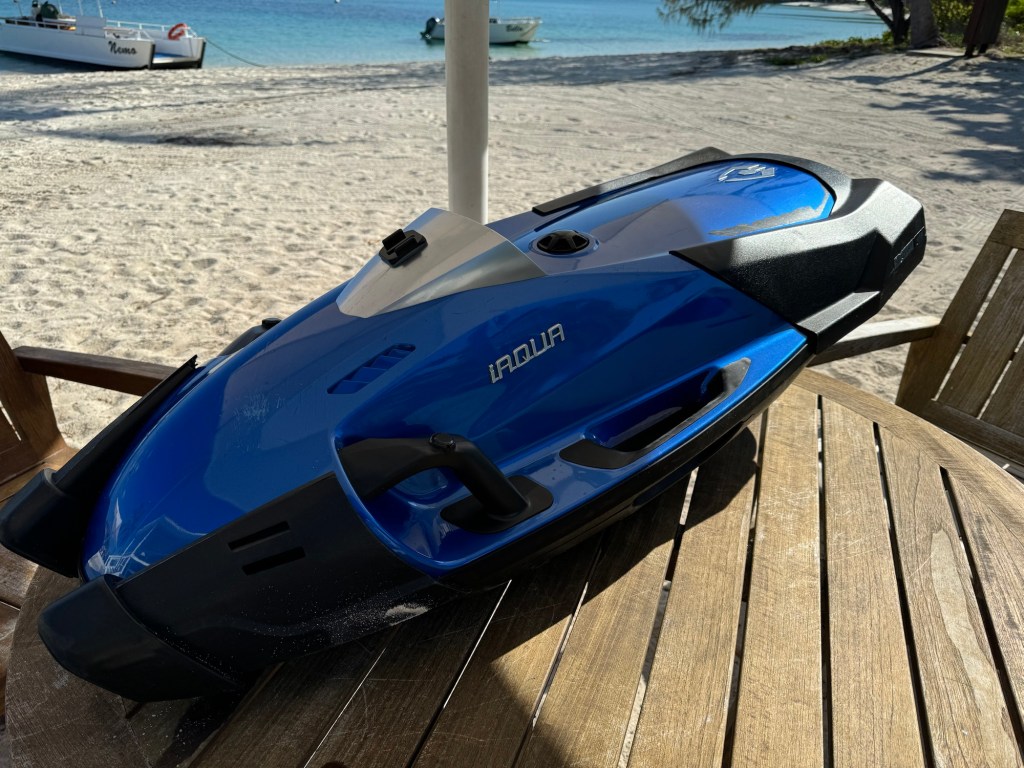
and then went for a snorkel with a guide named Ella, who provided us with sea darts, which are machines that pull you along in the water as you look at fish and coral. I had a very difficult time getting used to the thing, but eventually got some control of it. It does pull you through the water at a good clip.

Sea Dart. Grab the handles near the front, lay on the dart and pull the handles. There are 3 speeds, but I could barely manage slow speed.

Mark got into it right away and was going at full speed. As we made a beach start, the water was a bit murky, the coral was not at its best and there were few fish, compared with our diving and snorkeling off the Aroona. Being away from the shore has its advantages.

That experience did me in for the day. After a hot shower to get rid of the sand and salt, we settled in with our reading, dinner and bed.
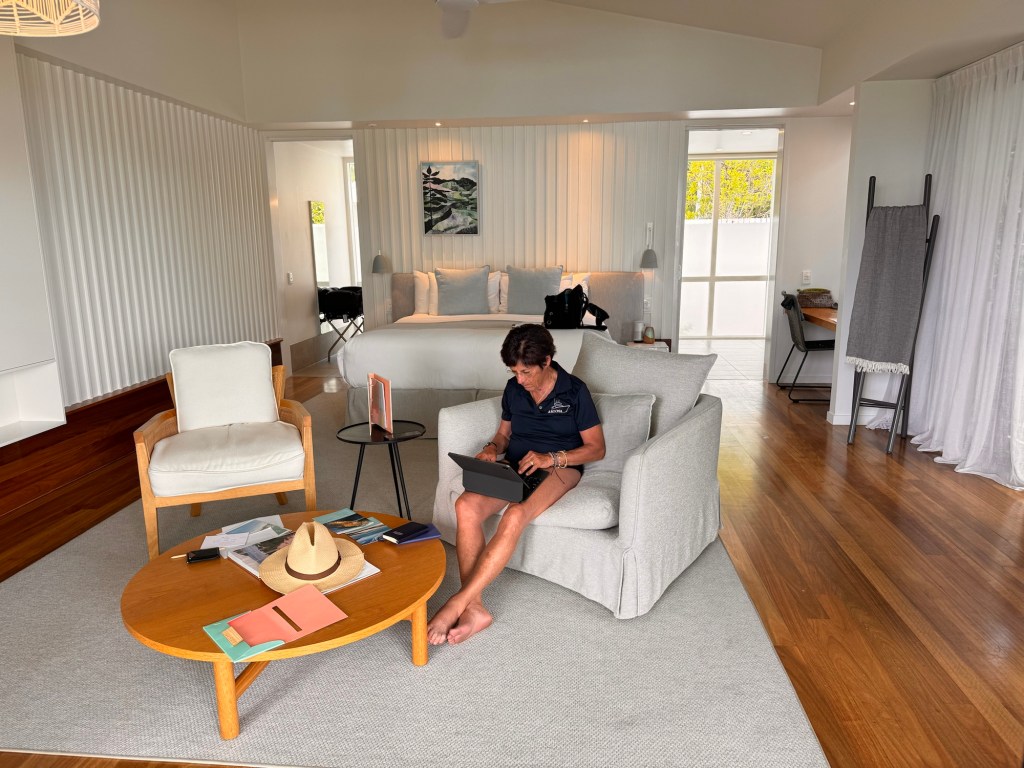
Working on the blog

The food is good at each meal, although we liked it better at Silky Oaks. There was a short menu at each meal, from which there was always something appealing to choose.

Sunday, September 29, 2024

We got up in time for a walk before the heat of the day set in.

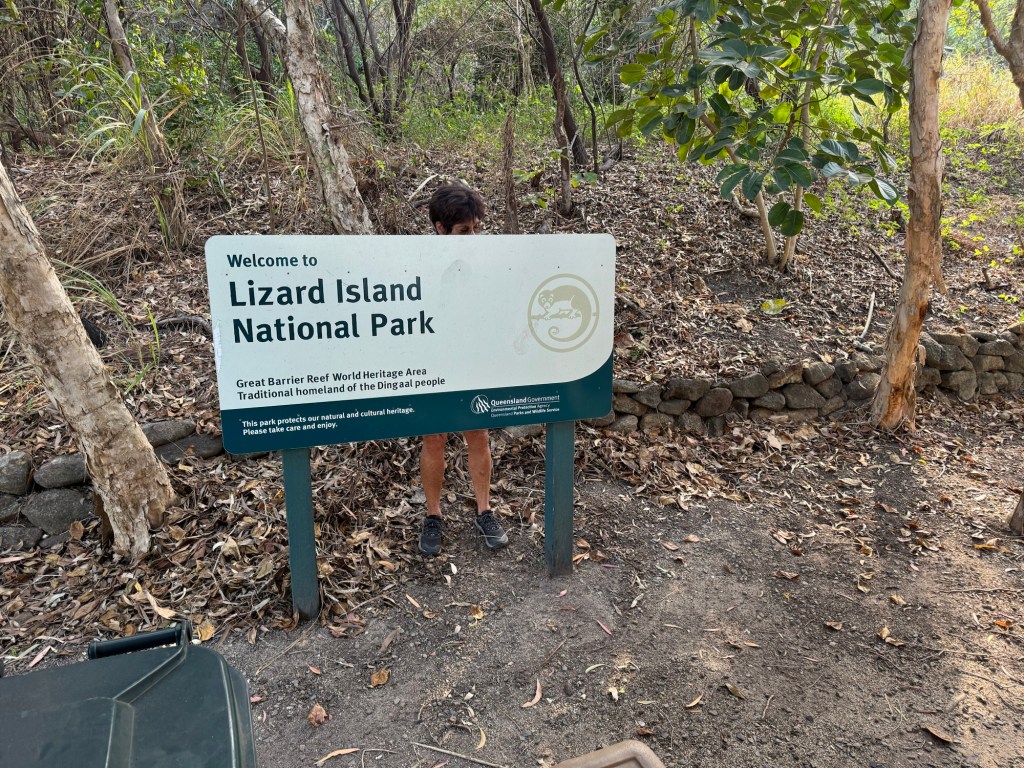
Hiding behind the park sign

We walked up to a lookout point overlooking Watson and Anchor Bays. Then walked back down the hill and along the airport runway. We made it back to the lodge in time for breakfast at 9am.

We had two planned activities this day. The first was a 1:30 snorkel dive to see turtles and the second was a 5pm walk to see bats.
The snorkel was in Watson Bay. There were three of us and the guide, Ella. It was a bust for turtles, but we saw lots of fish and coral and clams and more. I did not want to quit, but, after 45 minutes we were all getting cold.

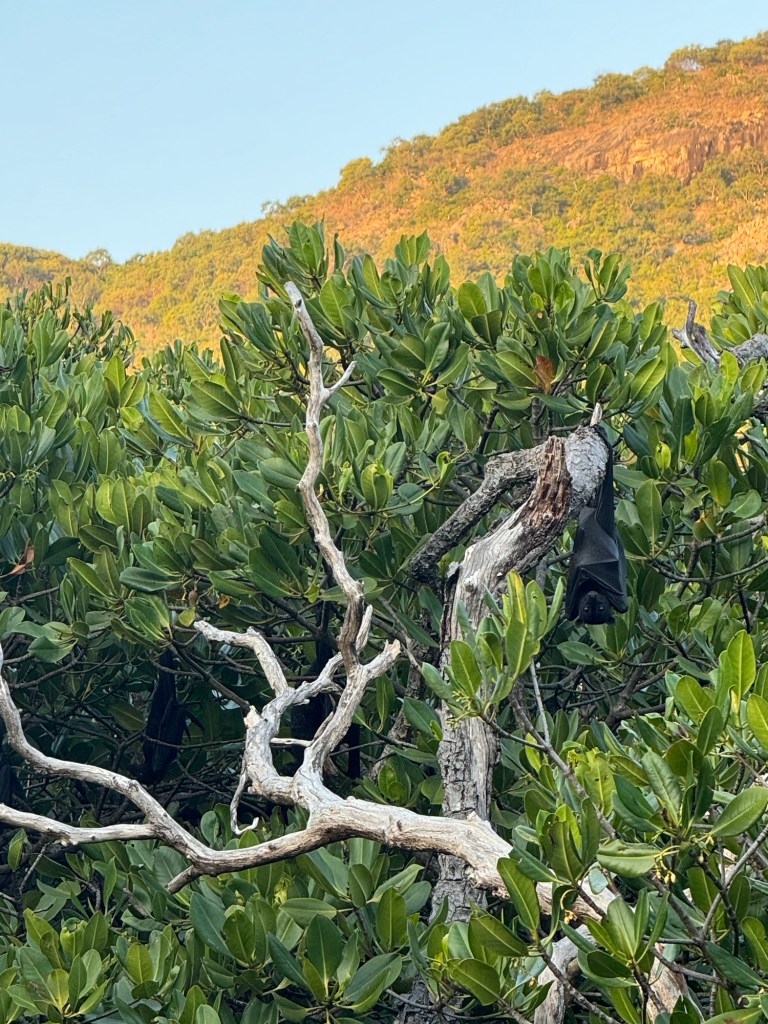
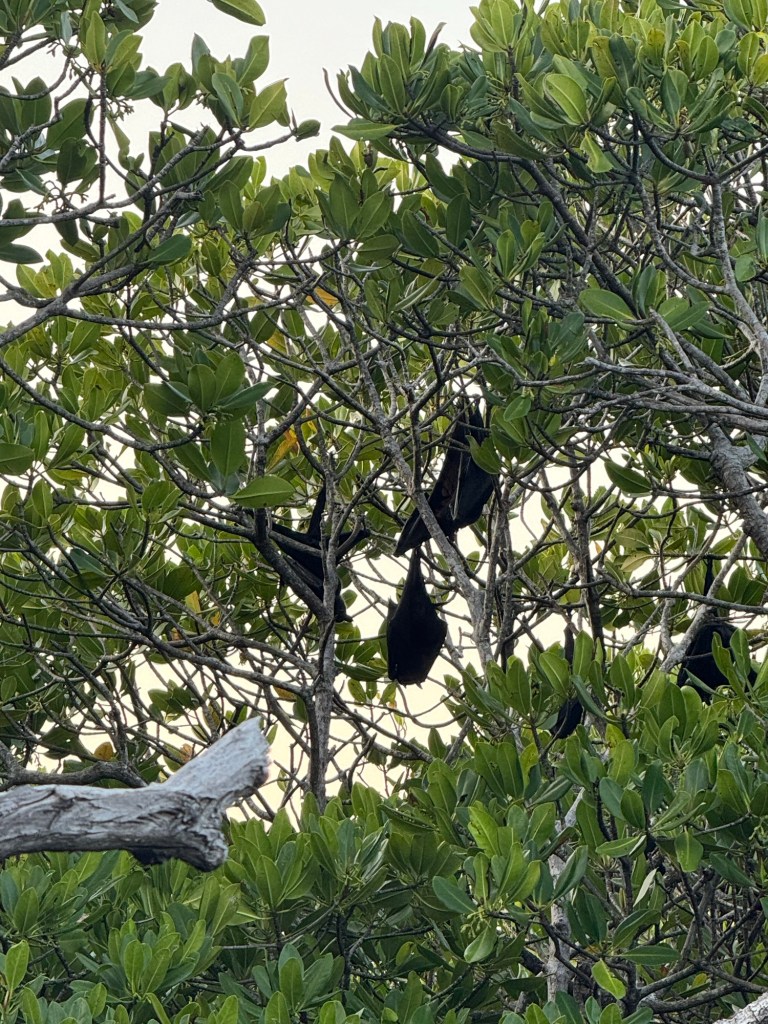
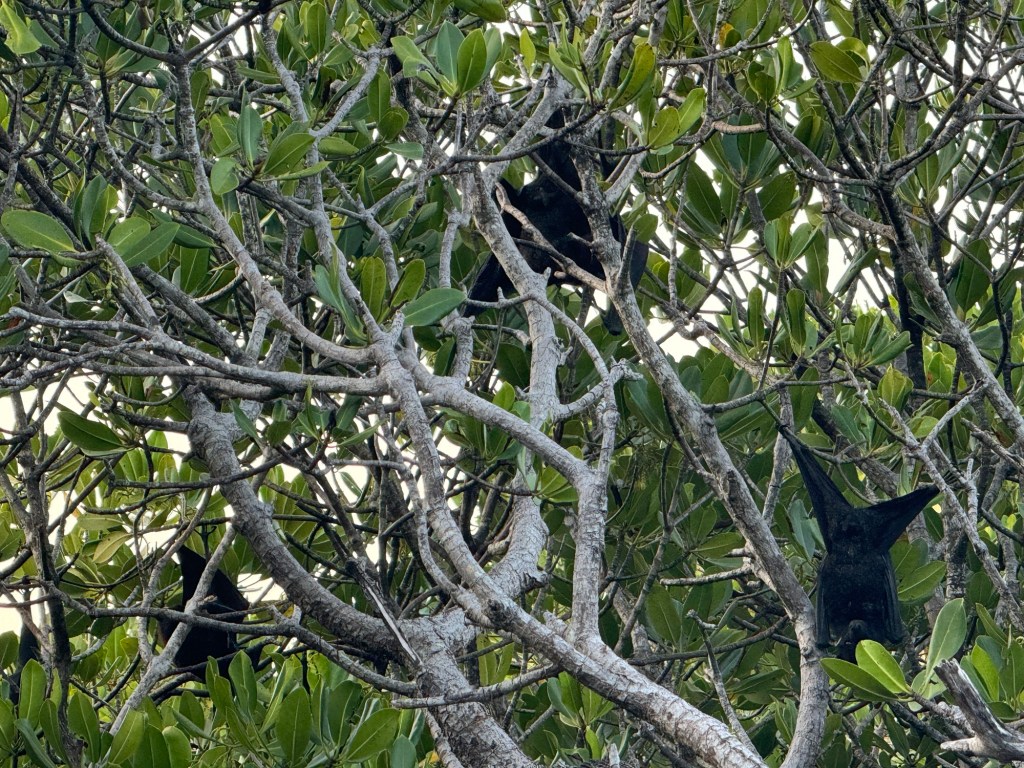
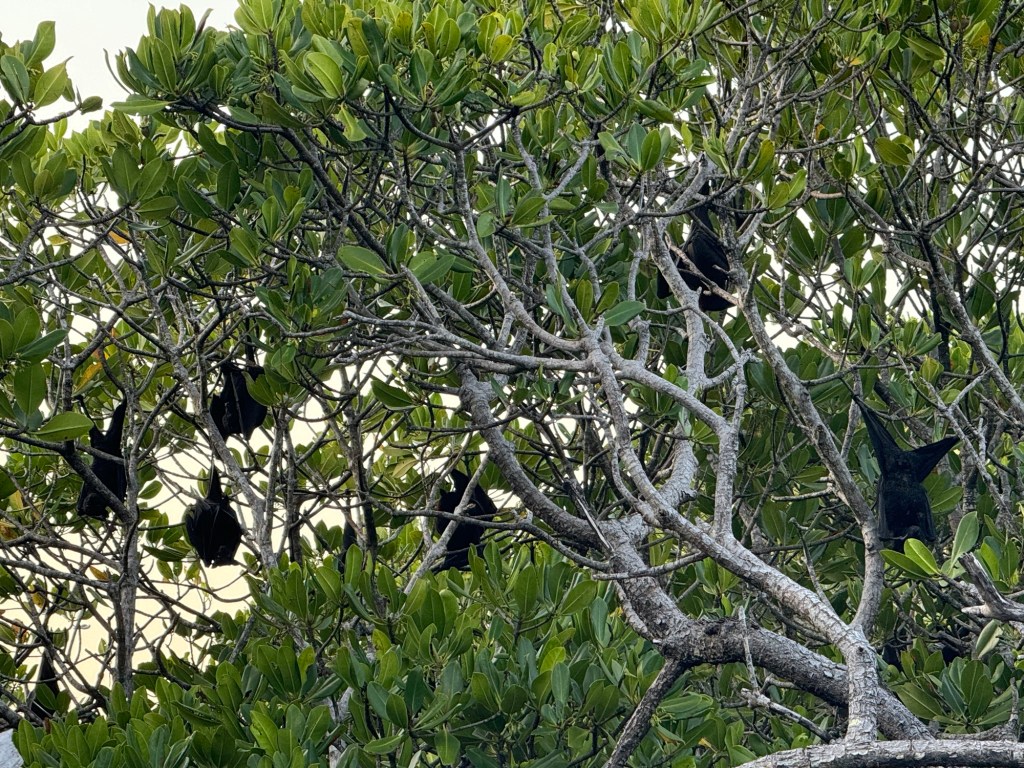
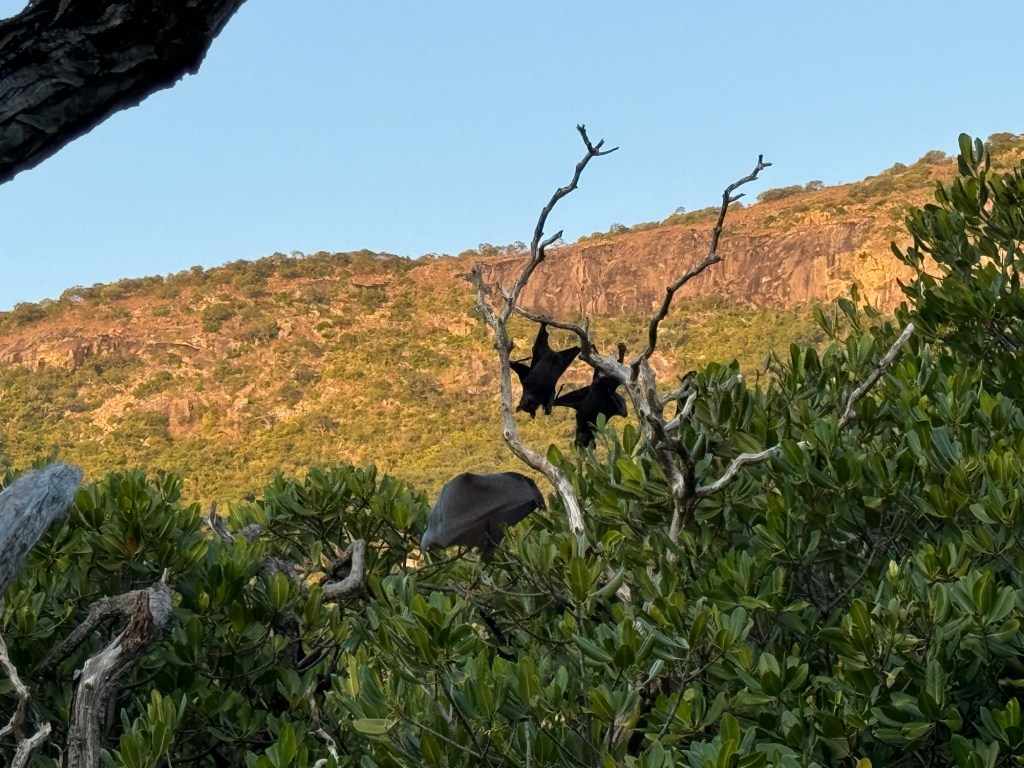
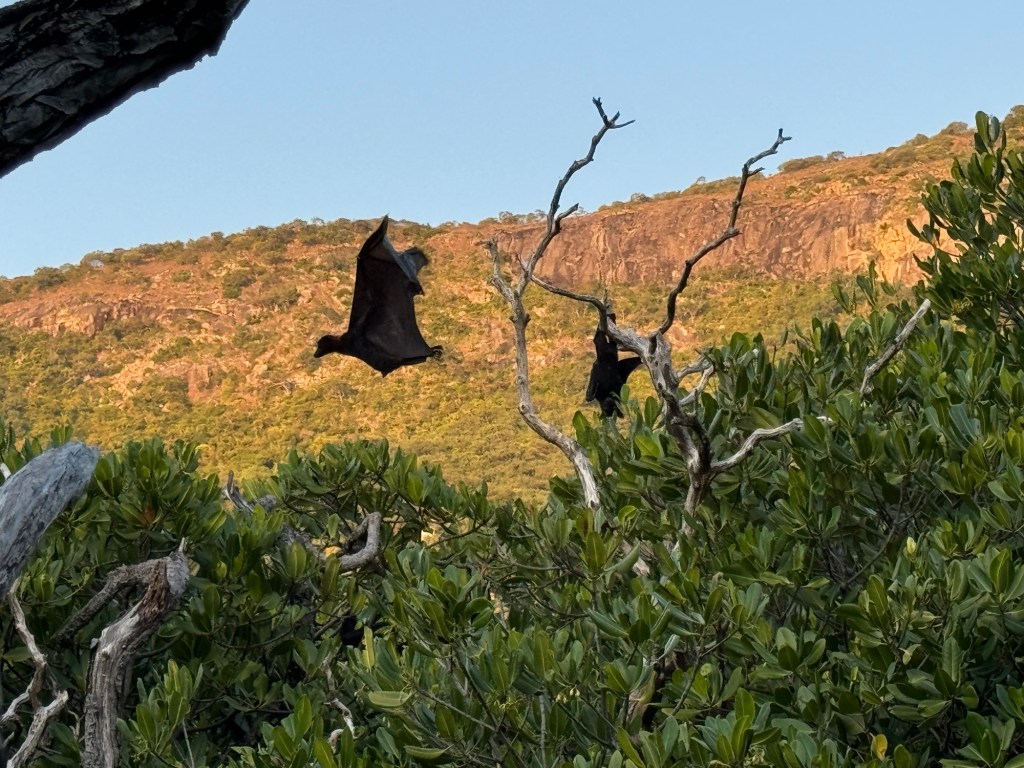
Clean and dry, we were ready for the 5 pm bat walk with Lauren. These are Flying Foxes or Fruit Bats. They are the second largest bats in the world, next to bats in the Philippines.

In addition to bats Lauren shared a lot about the history of Lizard Island. The island is approximately 2146 acres in size, was occupied by an aboriginal tribe called Dingaal, who used it three months of the year for male initiation ceremonies and called the island Jiigurru. Women were not allowed on the island. Today the remaining tribe members live on nearby Cape Flattery. In 1879, a Robert Watson arrived on the island with his wife, Mary, and 2 chinese male employees and started a business of harvesting sea slugs for export to China. Sometime in 1881, when he was out fishing with one of the Chinese, a band of Dingaal arrived on the island and were about to kill the woman interloper, Mary Watson, her 5 month old baby and the other Chinese man. They escaped in a large water tub and floated to another island but within a few days all three died of dehydration. The beach is named Watson Bay.

Much later, in 1973, a small resort was opened with 4 rooms. Over time it has grown and been remodeled more than once. Today there are 40 suites and the current leaseholder, Delaware North Corporation, has the lease until 2035. The majority of the island is a national park owned by the Australian government. The resort is in reasonable condition, the menu has interesting choices and the food is good. There are many activities to keep people busy. Although very nice, I think the place is slightly overrated.

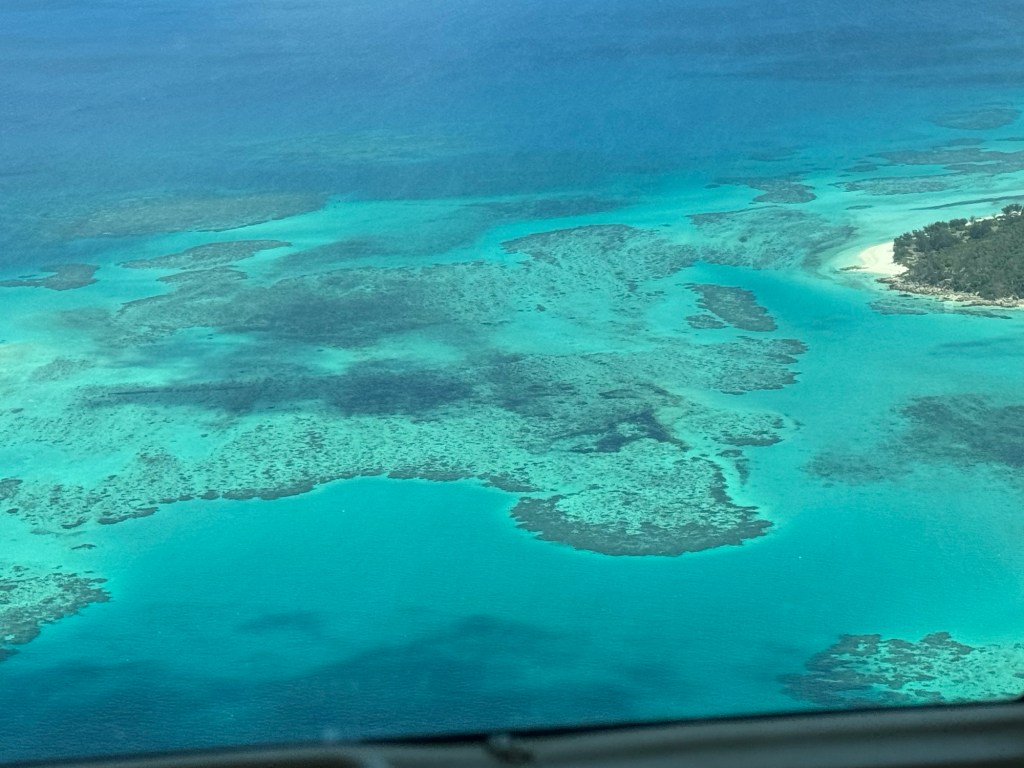
September 30th at 10:30 we flew from Lizard Island to Cairns in a Cessna 404.

In Cairns, we switched to a Virgin Airlines flight to Melbourne. This was the end of our Great Barrier Reef Adventure. It was not nearly enough reef time for me and I would love to come again.

The Great Barrier Reef

Monday, September 23, 2024

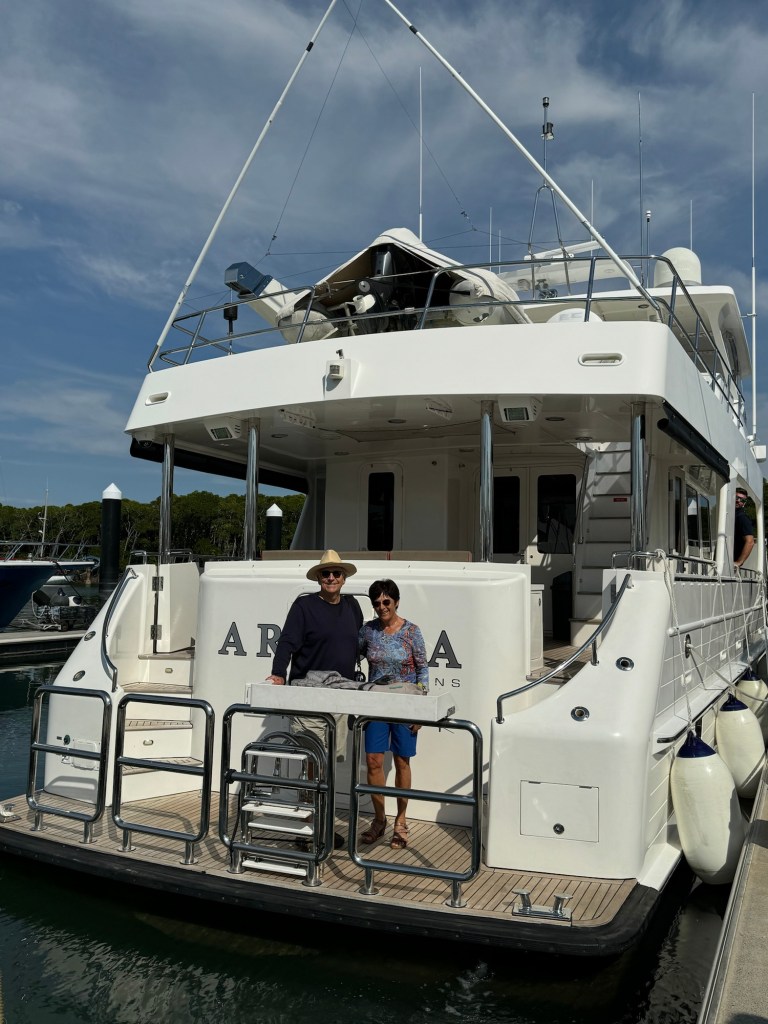
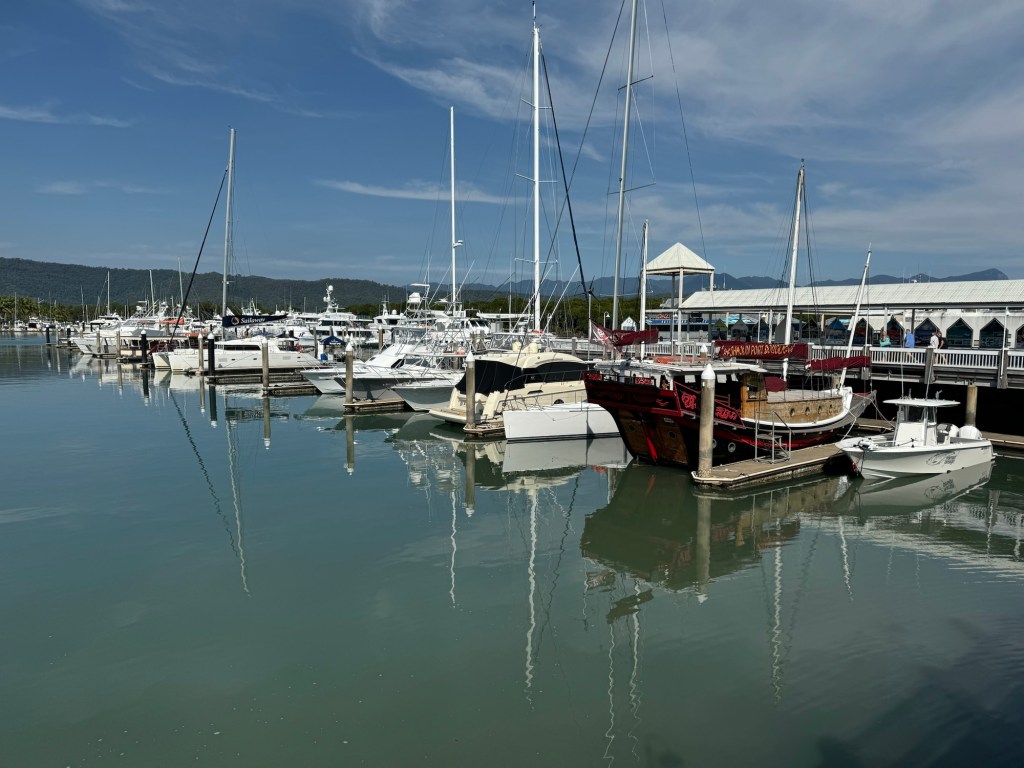
We departed Silky Oaks (a type of tree) Lodge about 8:30 for an 1/2 hour drive to the dock at Port Douglas.

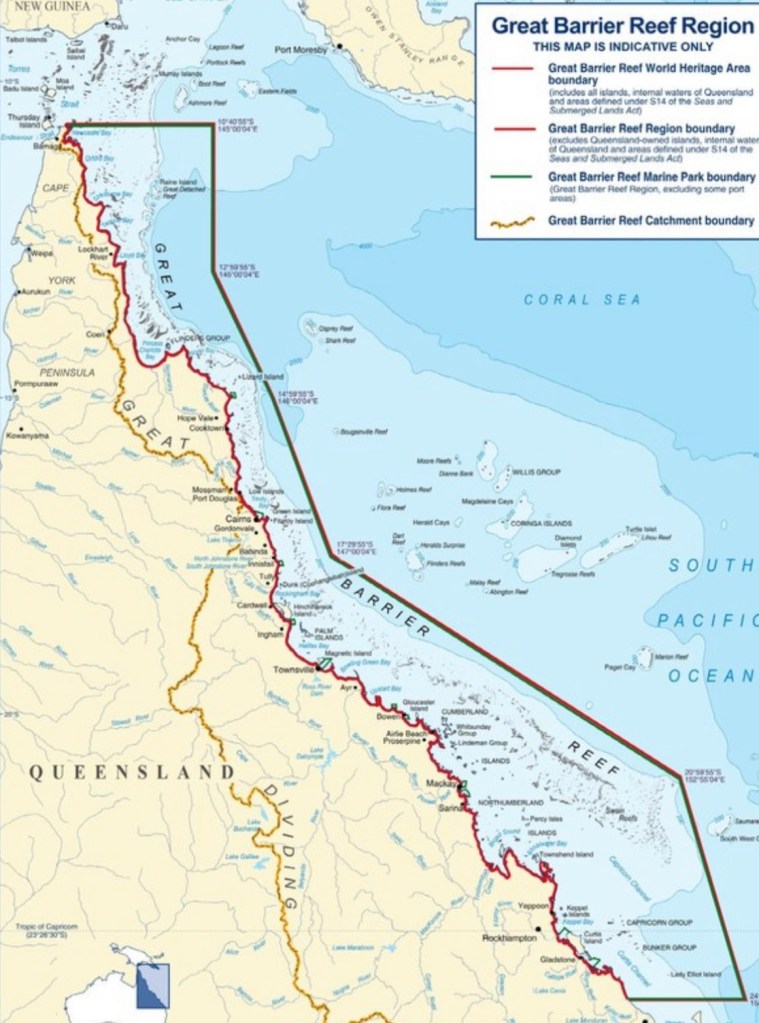
Part of Great barrier Reef we navigate, follow the green line, from Port Douglas to Lizard Island with stops and dive sites circled

The Aroona and crew were waiting for us and we wasted no time getting on board and heading out to sea by 10am. We are 7 on board. Mark and me and 5 crew. As we motor 28 Nautical miles north to a sand beach called Mackay Cay, we get to know the crew.

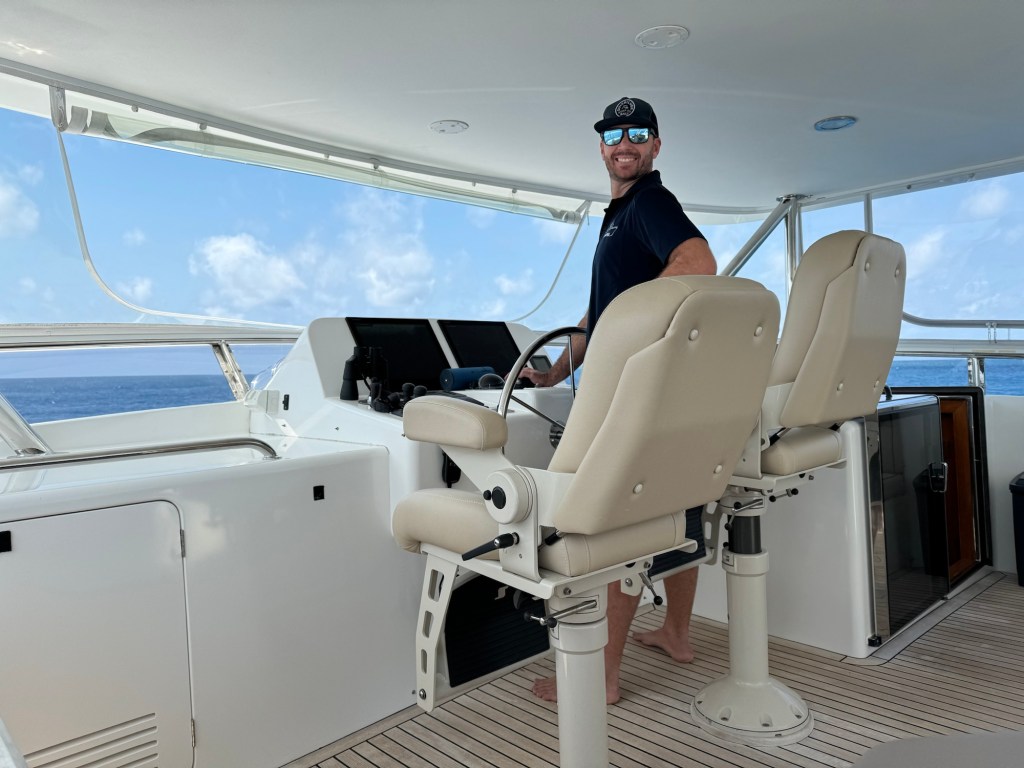
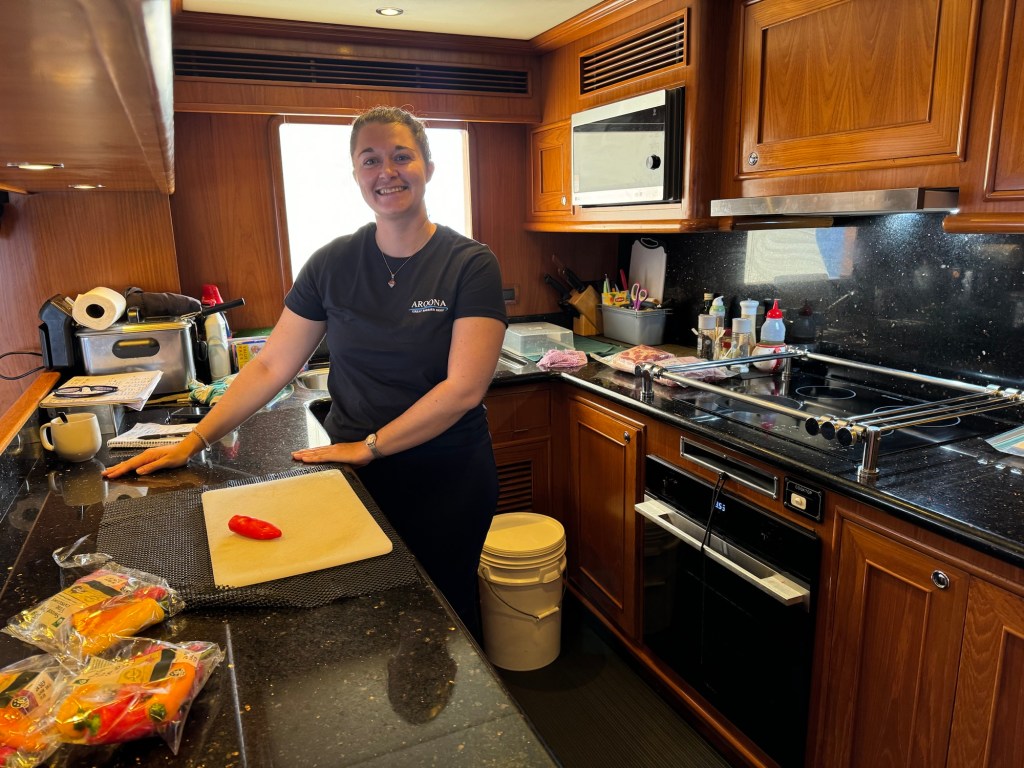
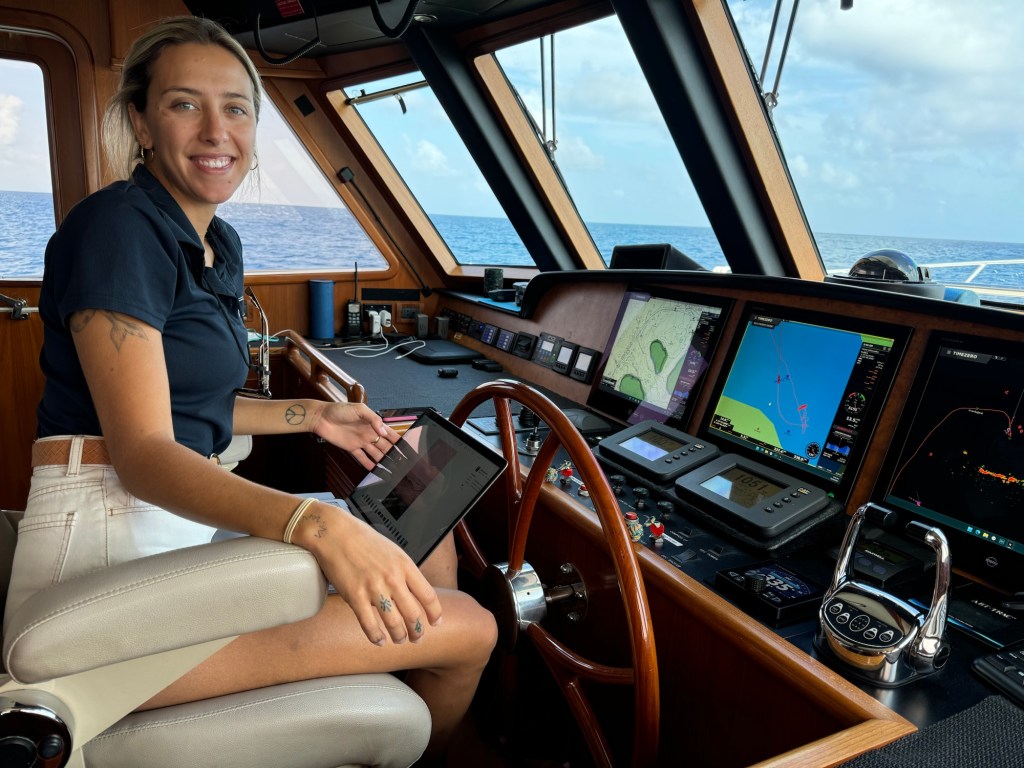
The Captain is a charming Italian fellow named Lorenzo, who grew up in Venice. The Hostess is Eva, a Queensland Australian, the chef is a French lady named Adele, the Dive Instructor is a South African named Jarryd, and the Deck hand is Fletcher, a young man from the nearby aboriginal town of Mossman. Fortunately for us, they all speak perfect English and they are all friendly and talkative.

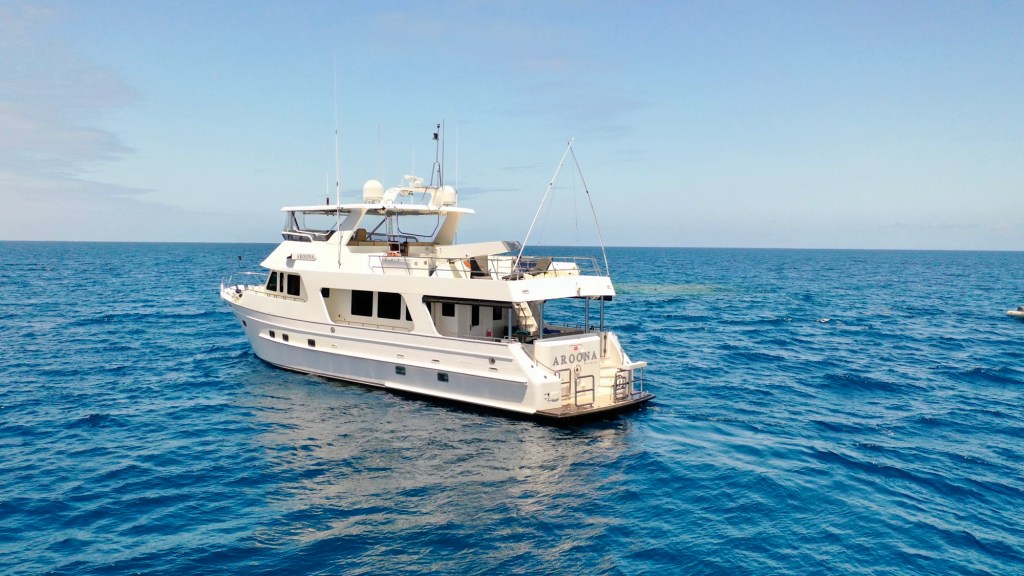
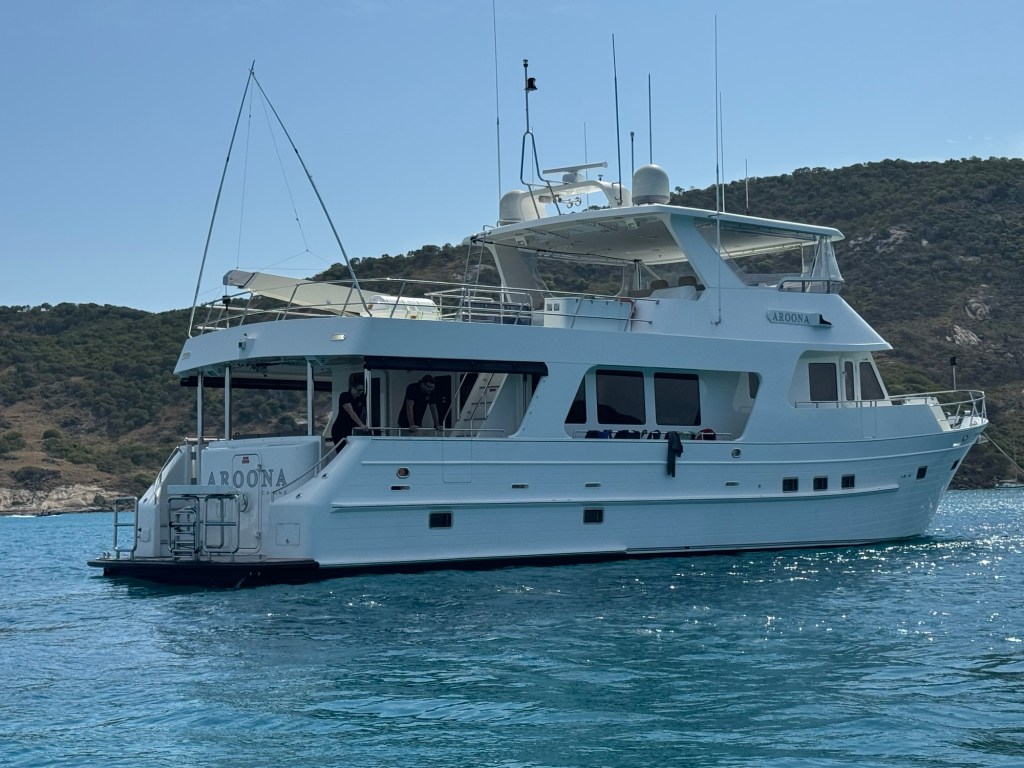
Along the way, Lorenzo gave us some details about Aroona. Her name has 2 meanings. One is “Clear Running Water” and the other is “Place of Peace”. Both are nice. She was built in 2011, is 70 feet long, has a draft of 5.25 feet and can take 9 passengers at a time. Everyone is happy with just 2 passengers. She can hold 2300 gallons of fuel and 500 gallons of water. However, she has continuous fresh water making capabilities. She also has maximum communication capabilities, so we are set for blogging and zoom calls.

We arrived at Mackay Cay about 1pm and suited up for snorkeling. I was very tentative, which was obvious from my hesitancy, but Mark and Jarryd were with me and I managed to snorkel about a half hour. I did not see many fish and thought the coral was sparse and dull looking. Maybe it was me. The life vest was too large and slipped up to my neck. I also had a noodle holding me up and that was not helpful. I was glad to quit and get out of the water. A hot shower and dry clothes felt good. Mark seemed to have a better experience. We called it a day and relaxed on the boat. Adele made a nice pork and pasta dinner and we ate together as a family. Had a lively conversation about each person. Lorenzo kept the boat in the same spot overnight. I slept really well, but snored too much for Mark.

Tuesday, September 24, 2024

Mark got up for a zoom meeting at 5:30am. At 6am the boat was moving and I was up too. The boat reached the dive site Lorenzo had in mind, called Ribbon Reef 3, and we were ready to go snorkeling by 11am.

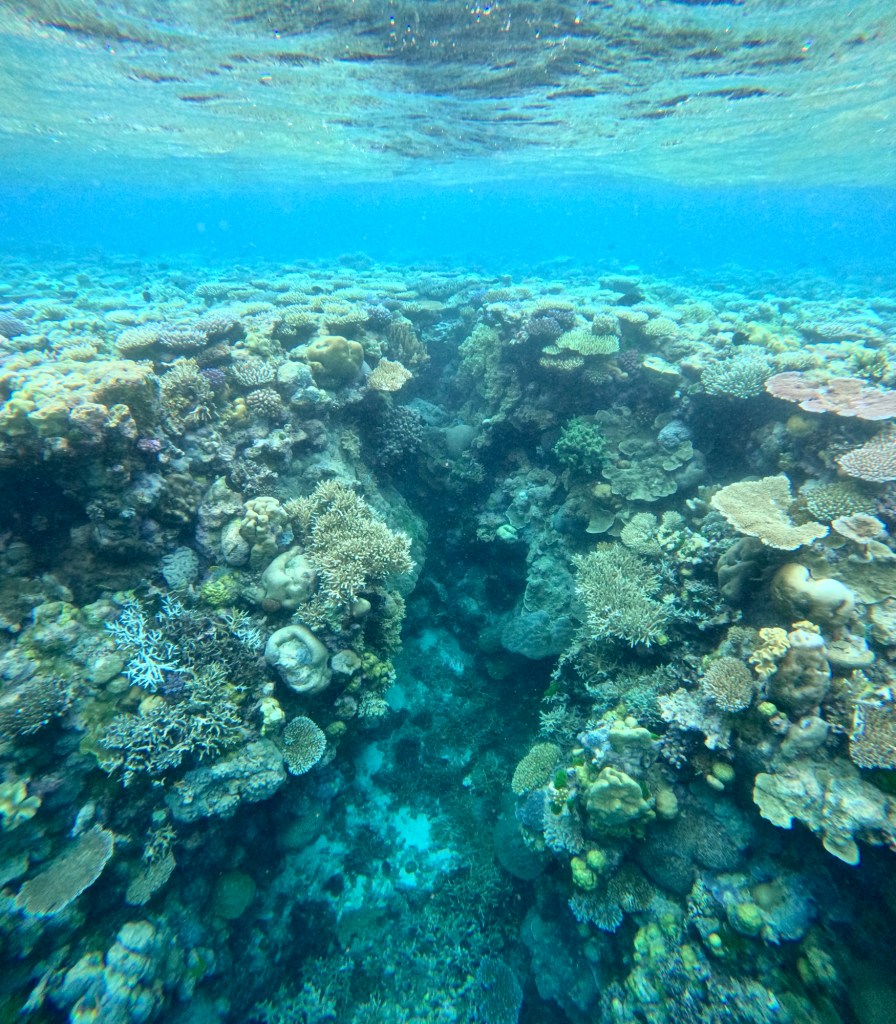
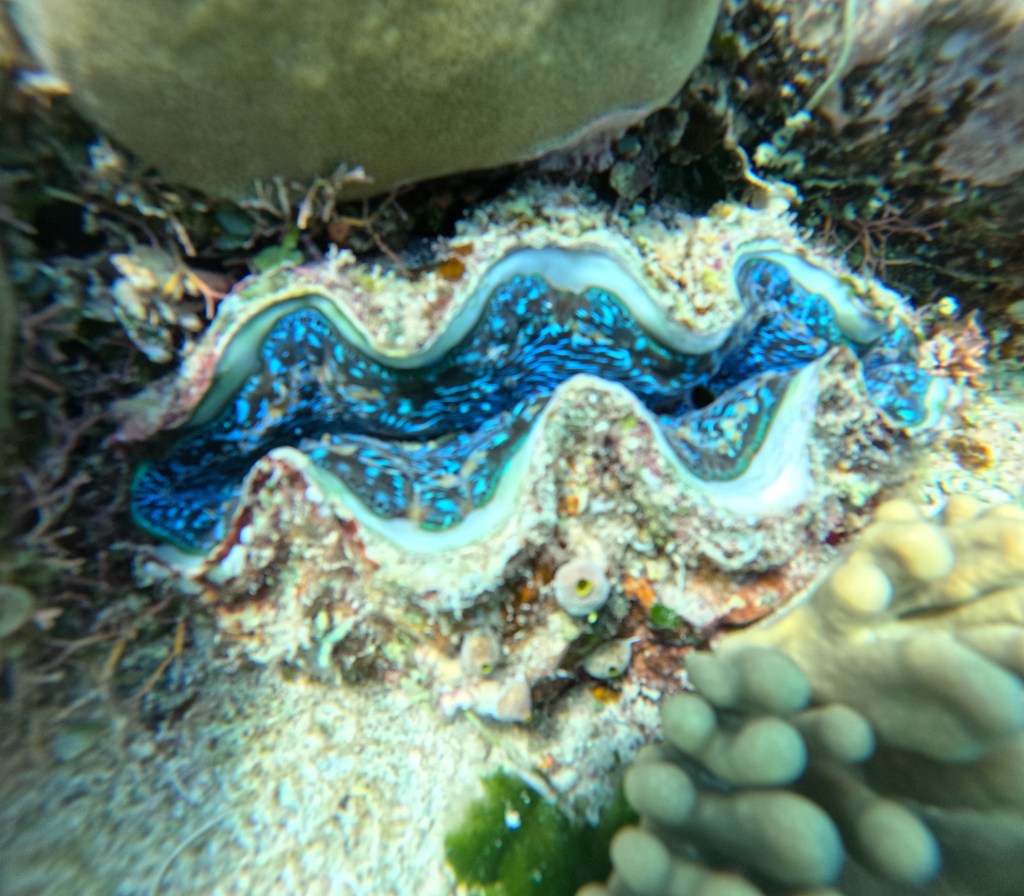
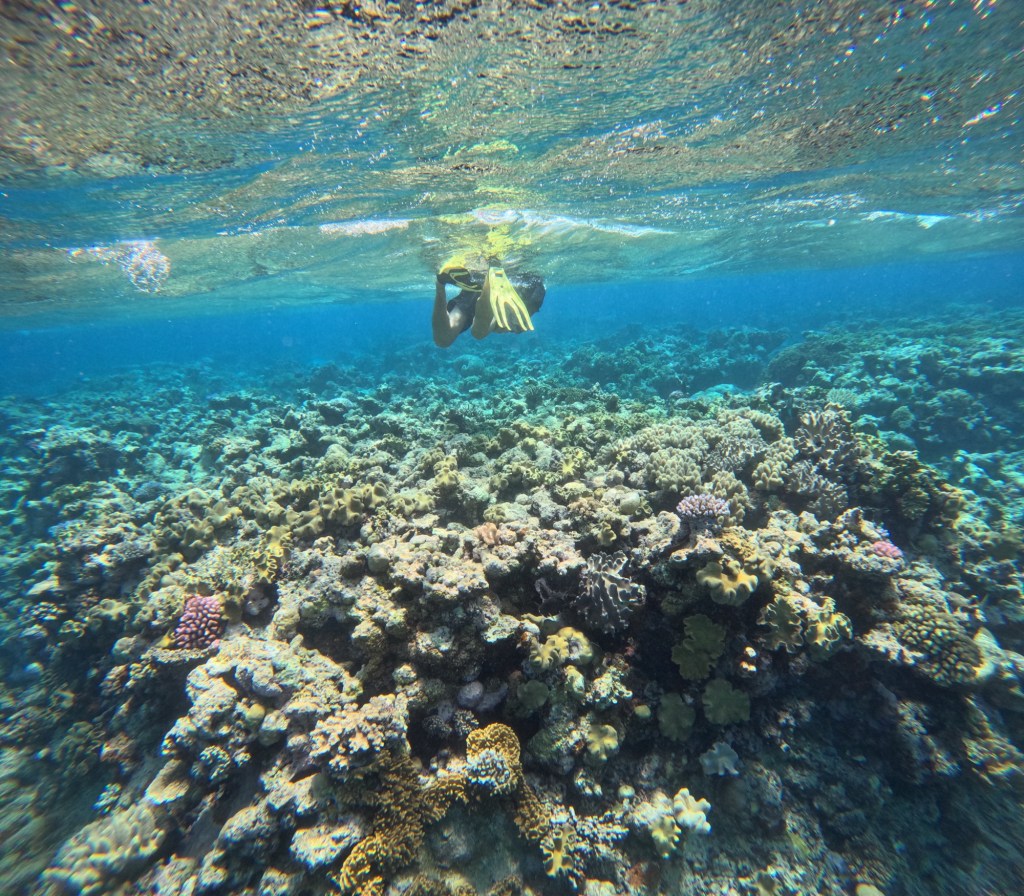
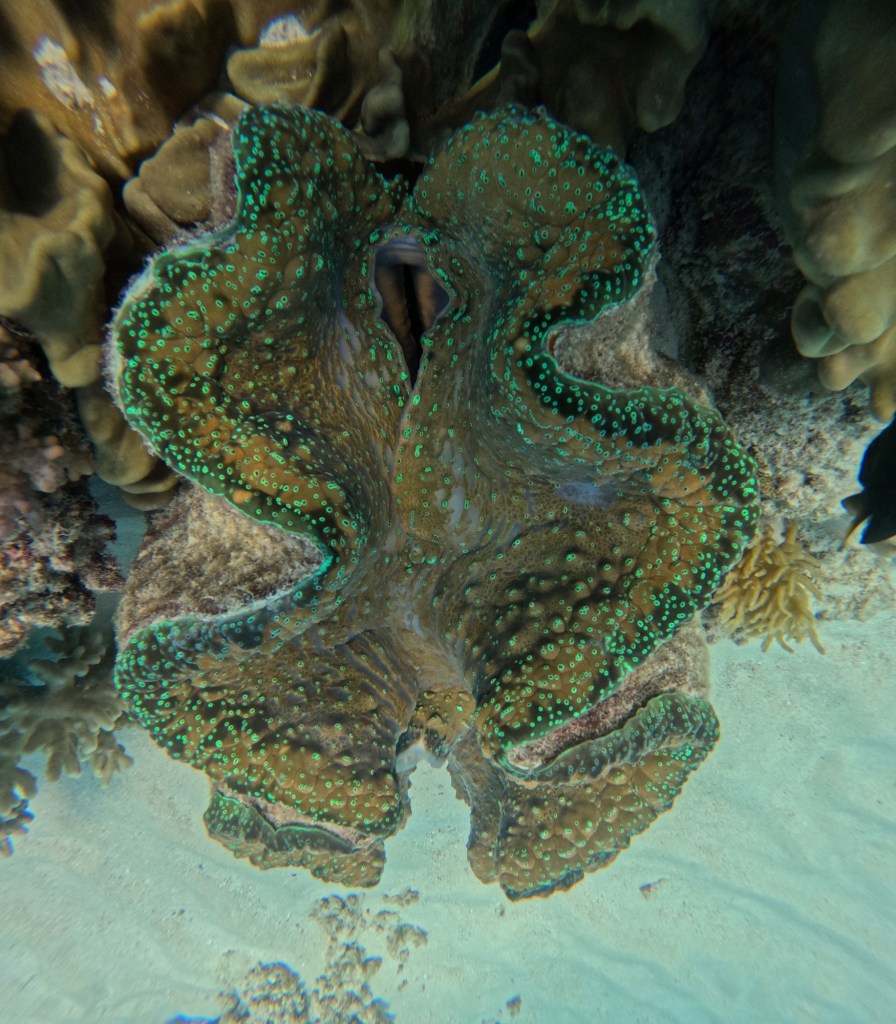
I felt much better and my equipment fit better too. I had on two wet suits and a better fitting vest We were in the water 45 minutes plus and I was still not feeling cold. The water temperature was in the low 80’s and very pleasant. There was a fairly strong current and I had a hard time moving against it. Fortunately, Jarryd and I were holding opposite ends of a safety float and he was able to pull me when I could not keep up. We saw a lot more fish and coral at Ribbon Reef 3. Meanwhile, Eva was busy free diving and taking photos of the things we were seeing, so I have included them here. Neither Mark nor I have an underwater camera.

After the snorkel and a hot shower, we relaxed and enjoyed motoring through the reef toward our next stop.

A giant tridacna clam

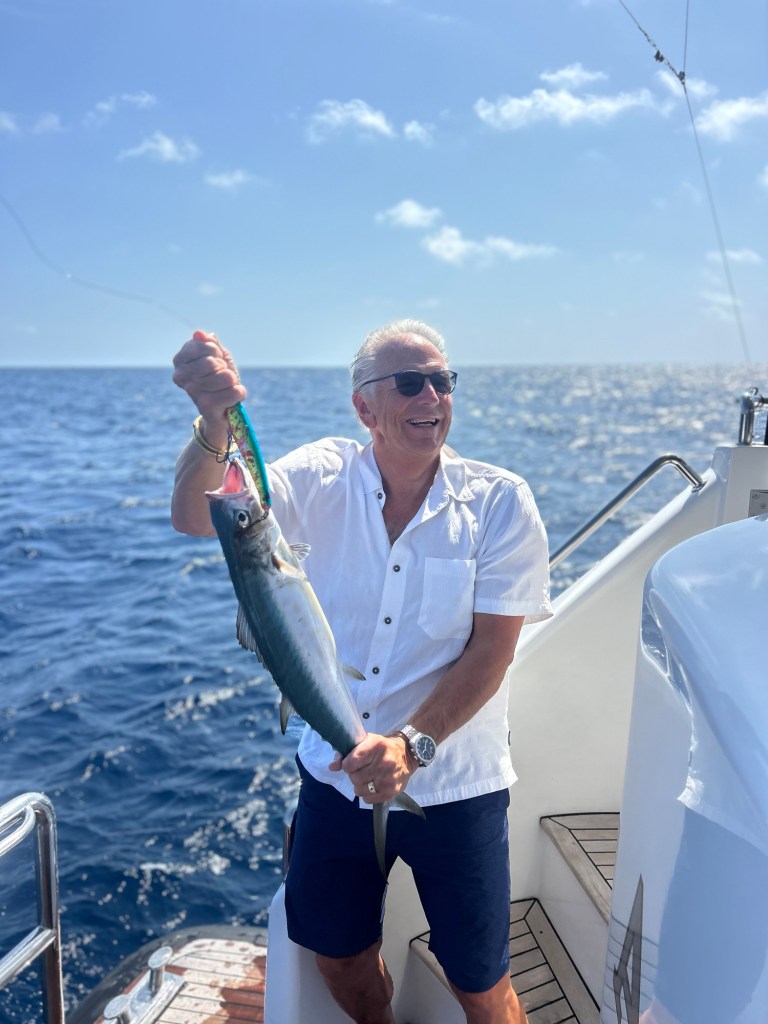
As we were trolling, a 30 inch Spanish mackerel caught the line. Fletcher realed it in and cleaned it for Adele to prepare. After a group discussion, she prepared the fish for seveche and grilling.

I got too much sun and need to watch out from now on. The air is breezy and cool, but the sun is intense. Went undercover on the upper deck. I invited the crew to play a game and they were up for it. The only game they had on board was a card game called Uno, so that is what we played. We had a lot of laughs and fun for a couple of hours until it was dinner time. We have asked the crew to eat with us rather than separately and our conversations are much more interesting. The fish was delicious and oh so fresh.

Wednesday, September 25, 2024

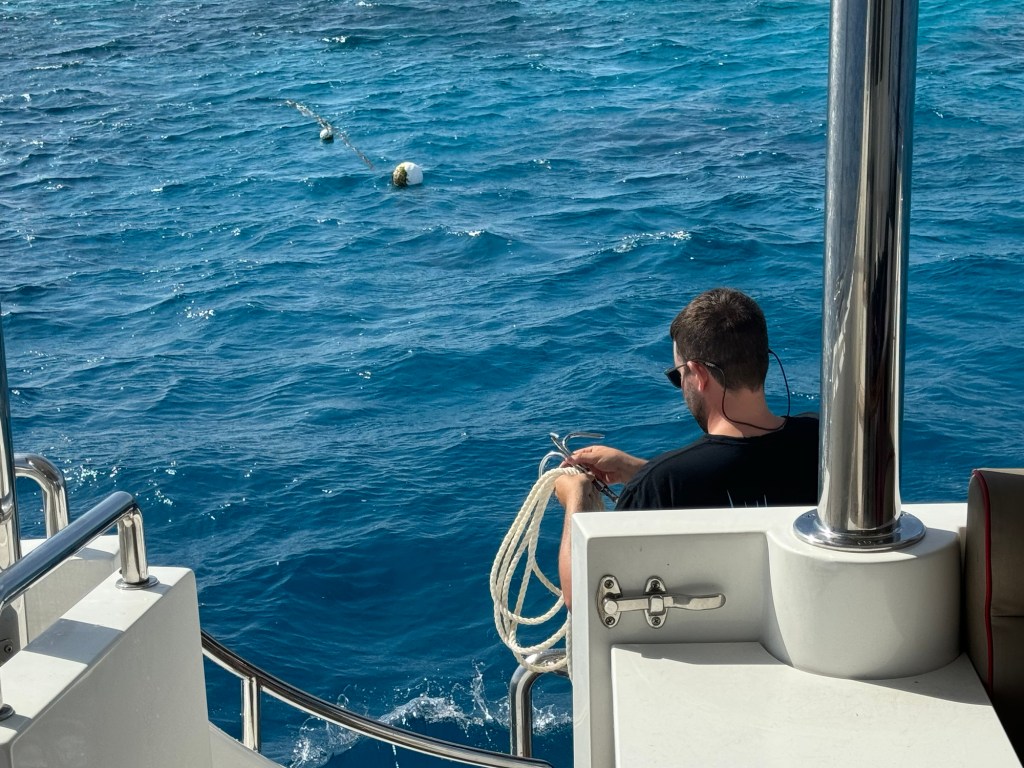
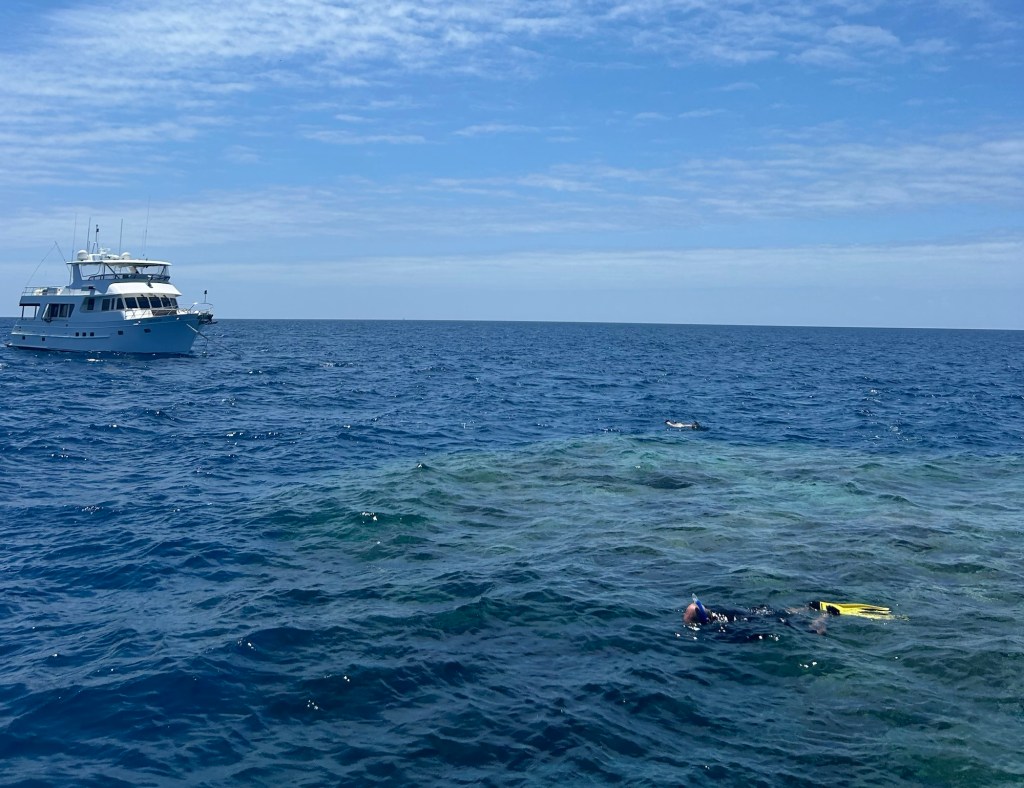
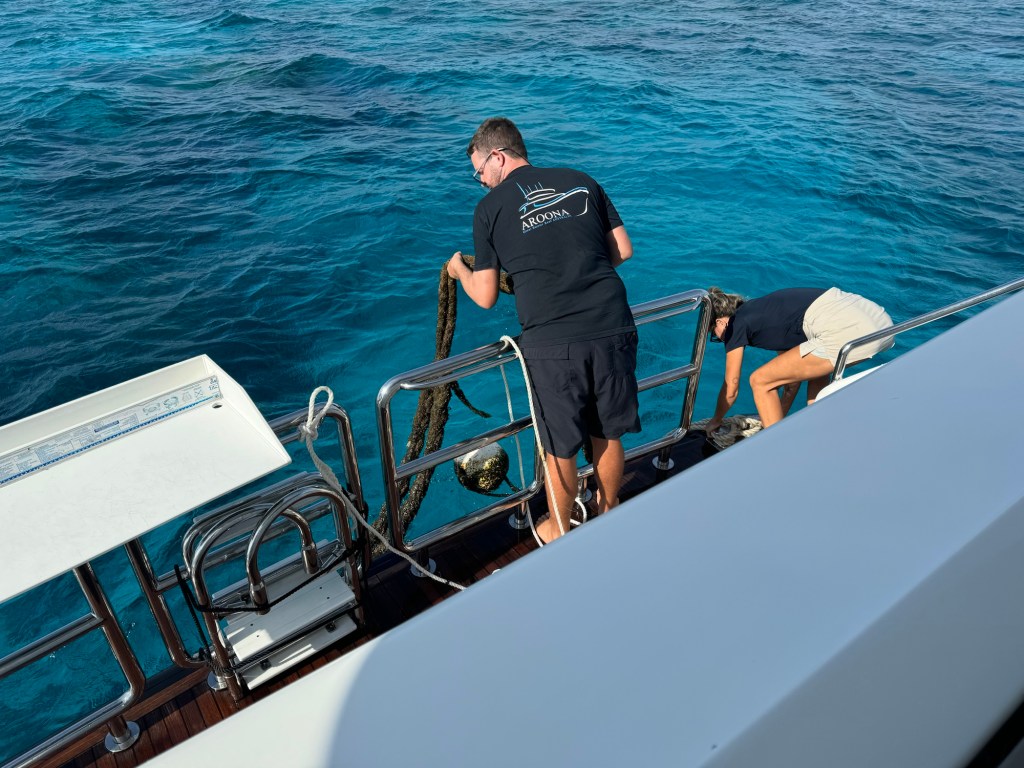
After a good night’s sleep, we were up at 6am. The boat was still at anchor from last evening and everyone else was already up. Coffee was ready and shortly fruit and fresh orange juice were ready too. After breakfast, the crew pulled the anchor and we motored closer into Ribbon Reef 5 where we will snorkel and maybe dive too. About 9am, Lorenzo tied up to a reef bouy and we prepared to snorkel and dive.

Jarryd reviewing the dive equipment with me

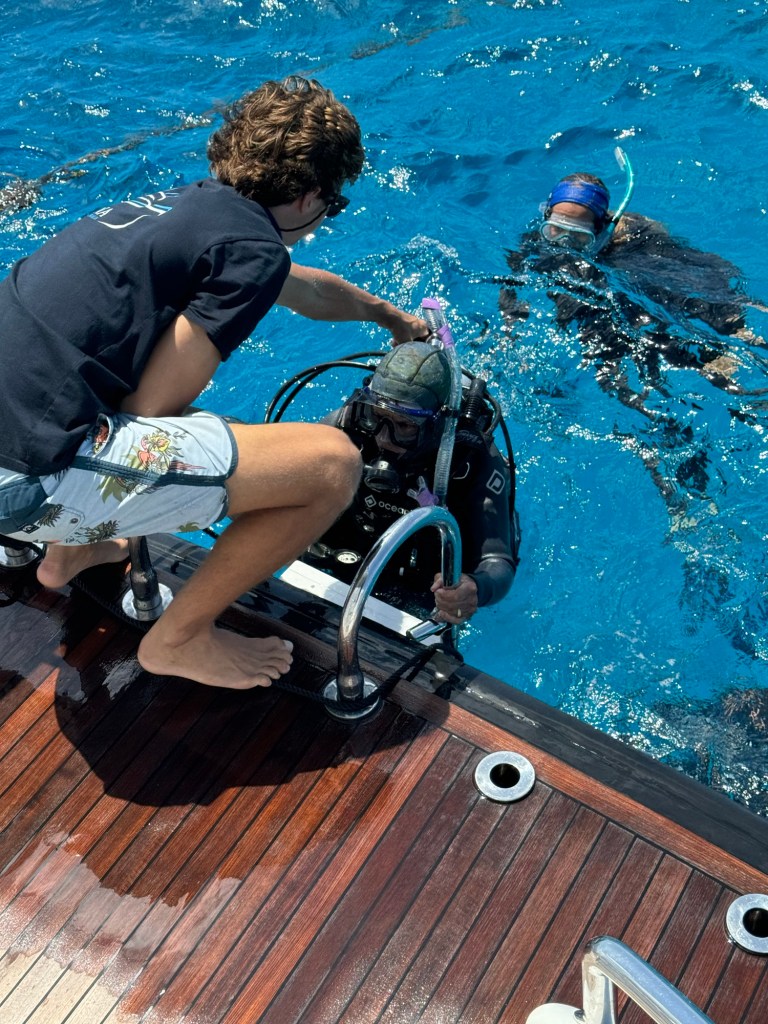
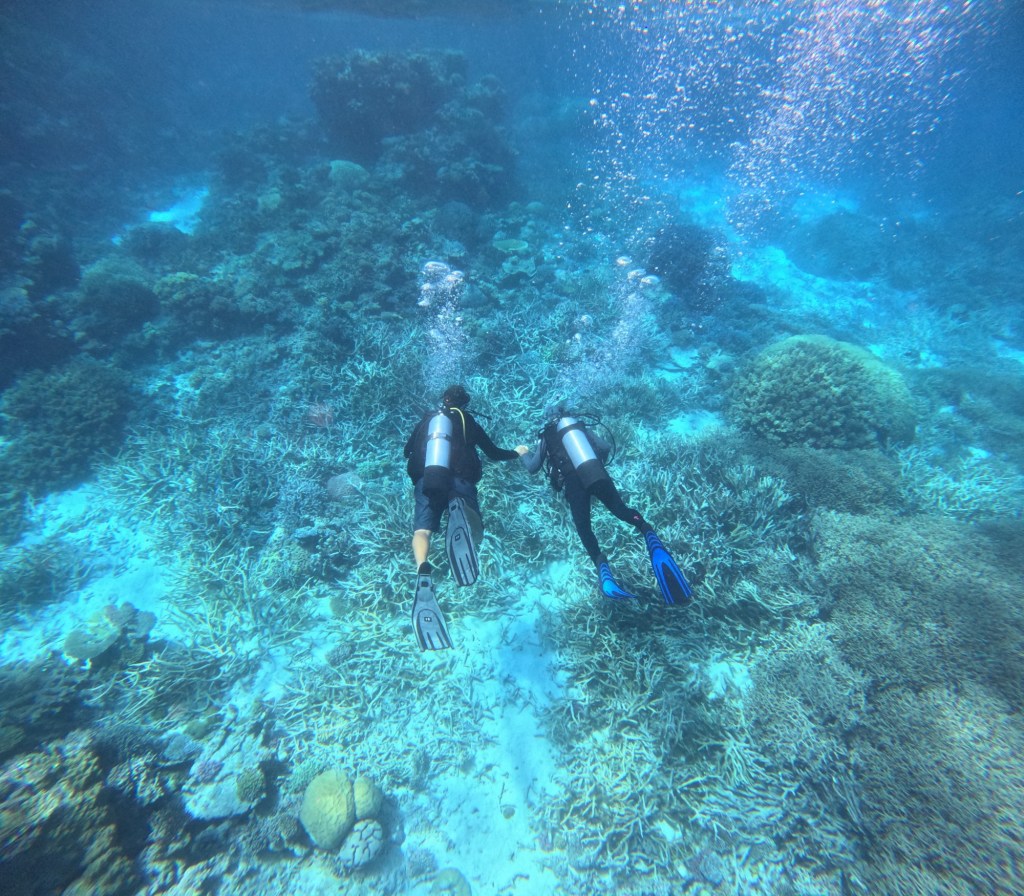
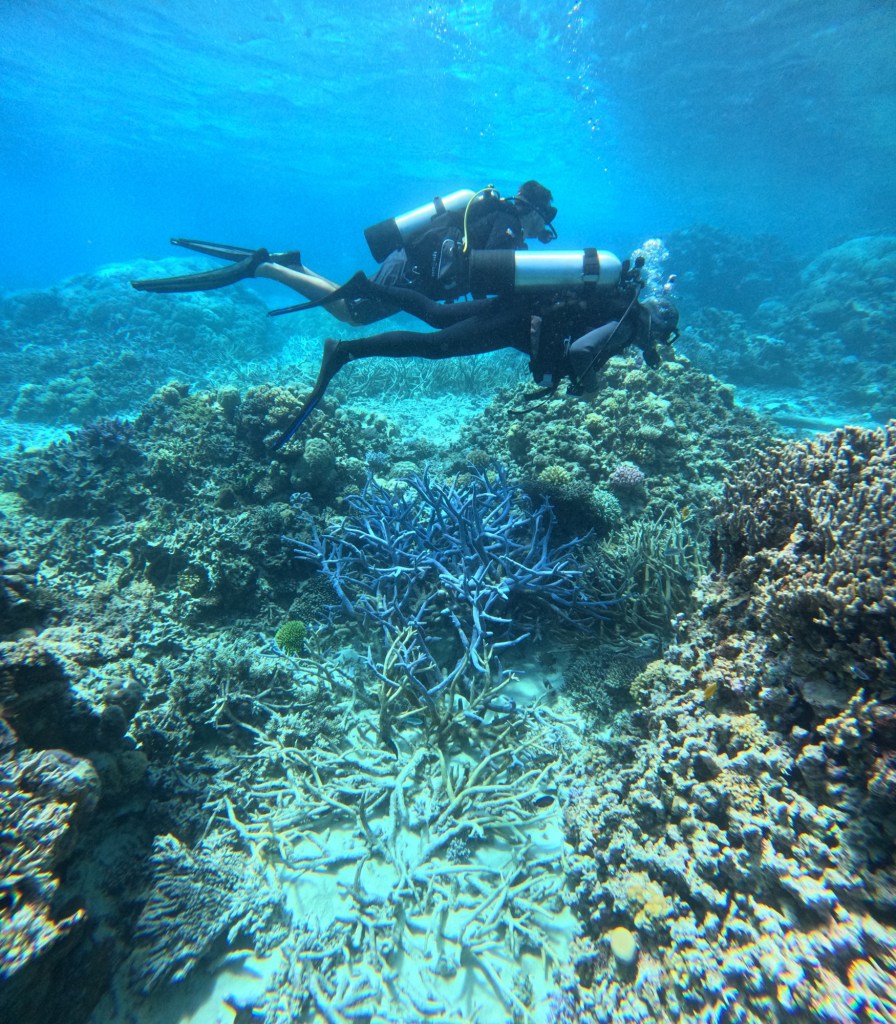
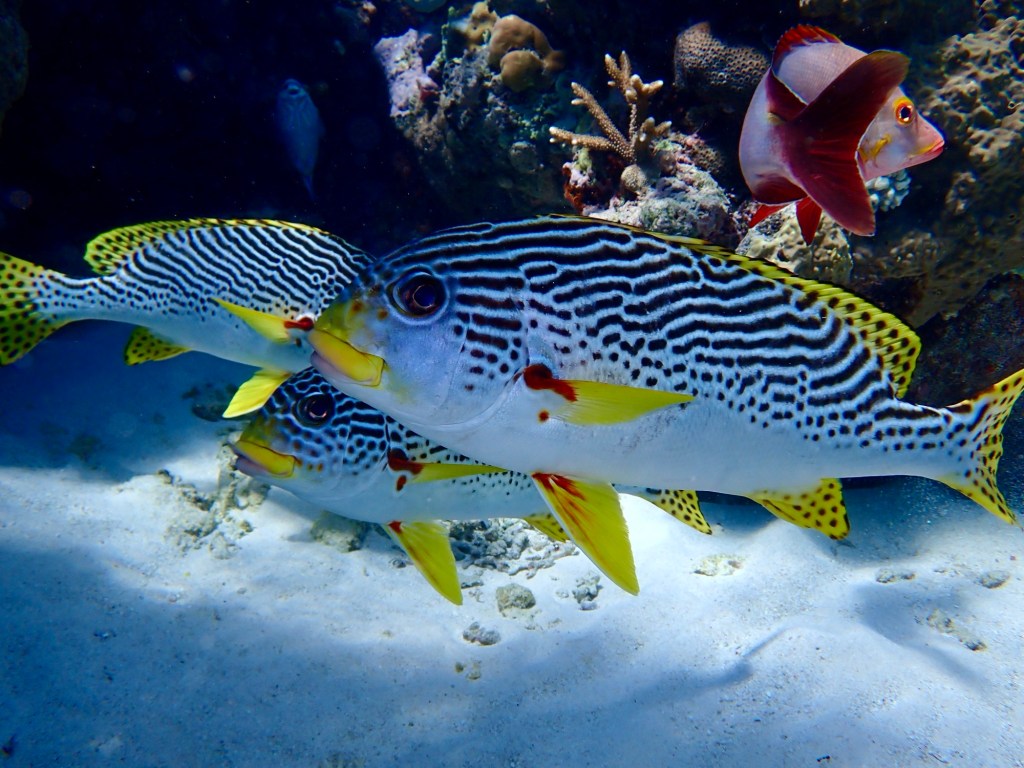
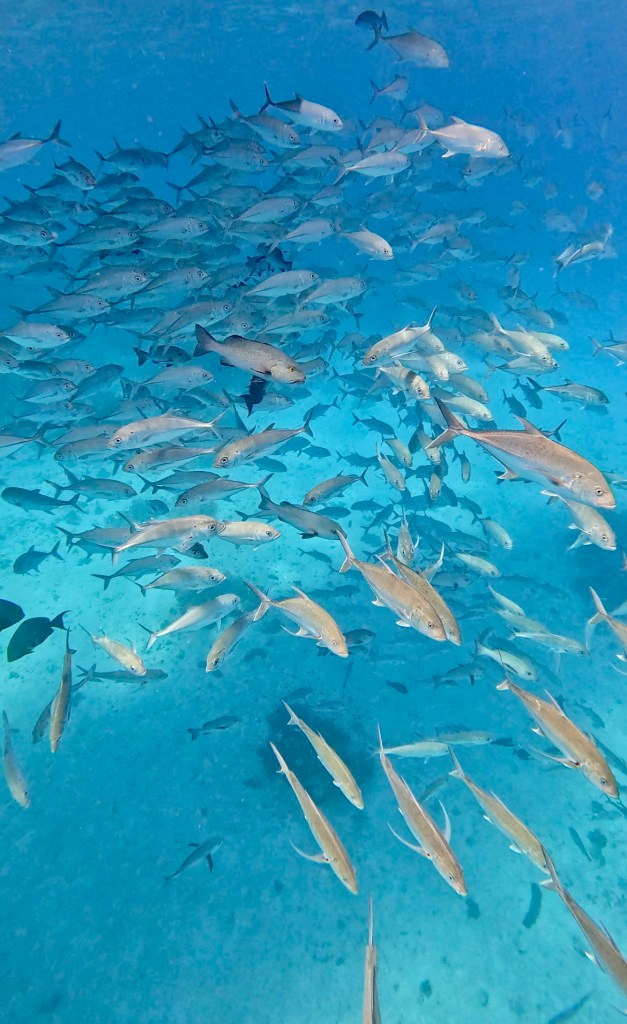
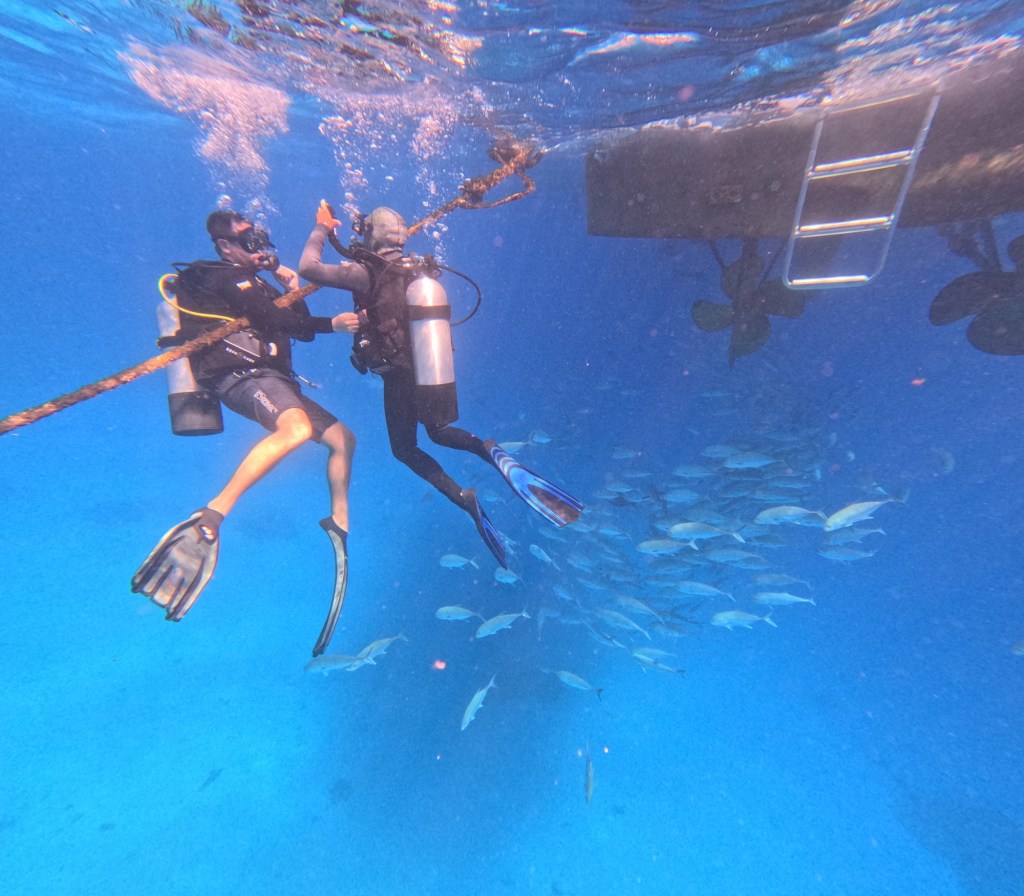
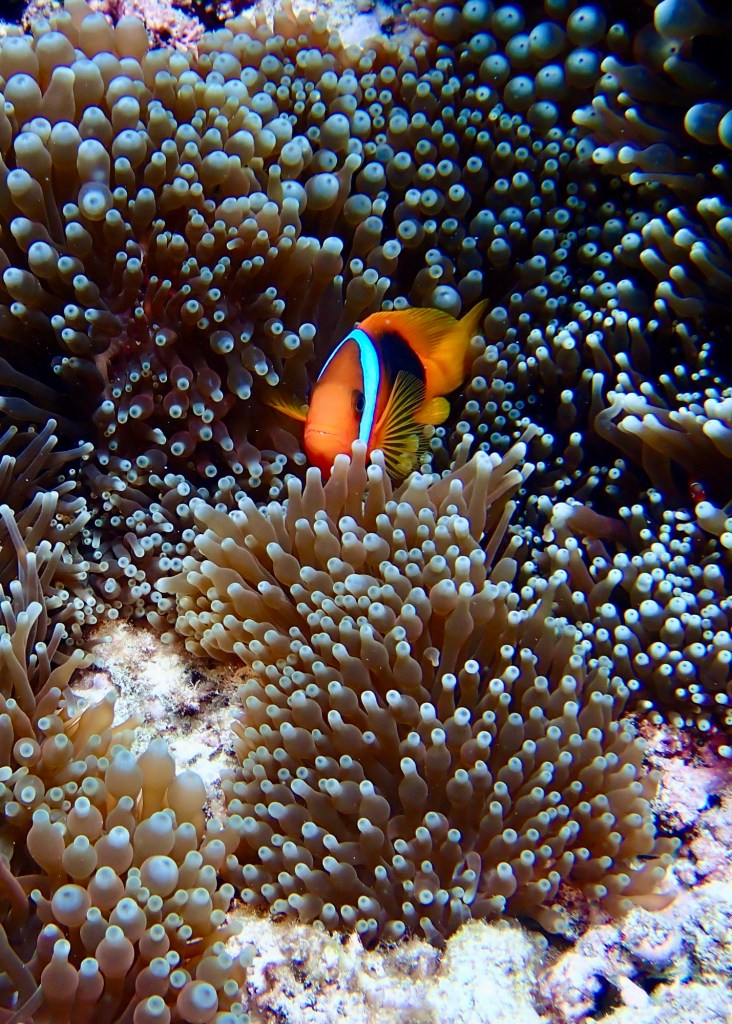
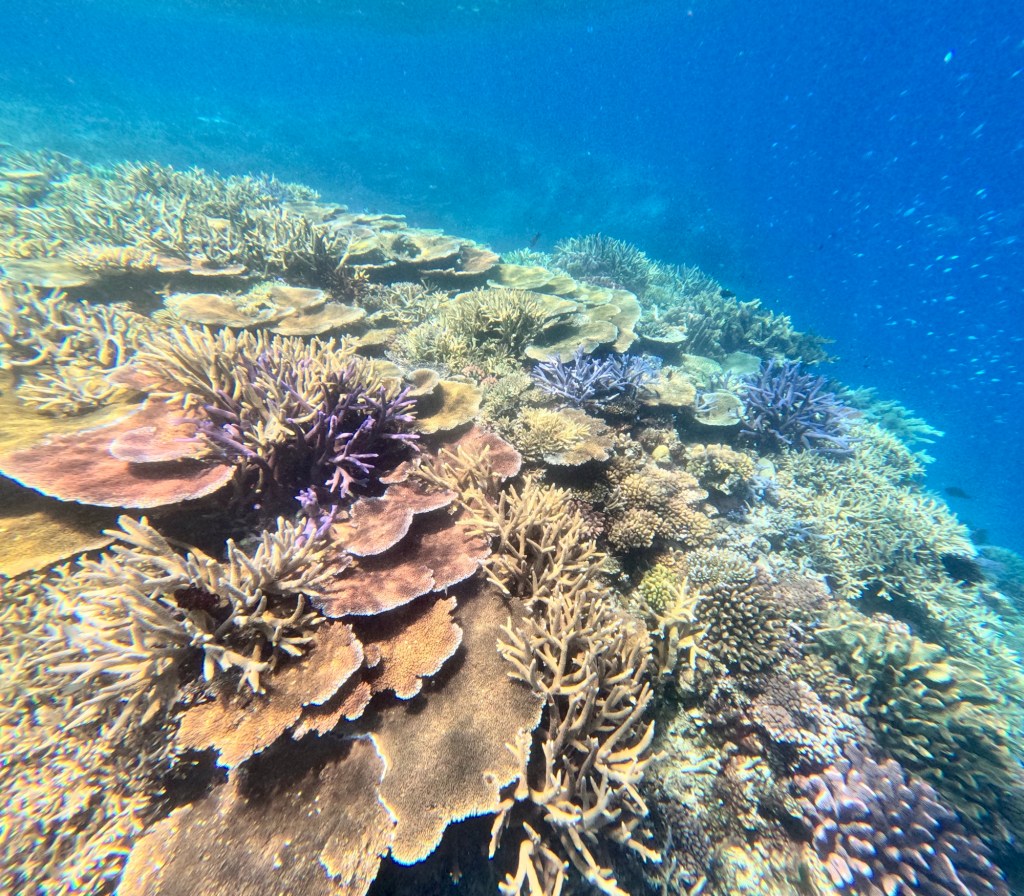
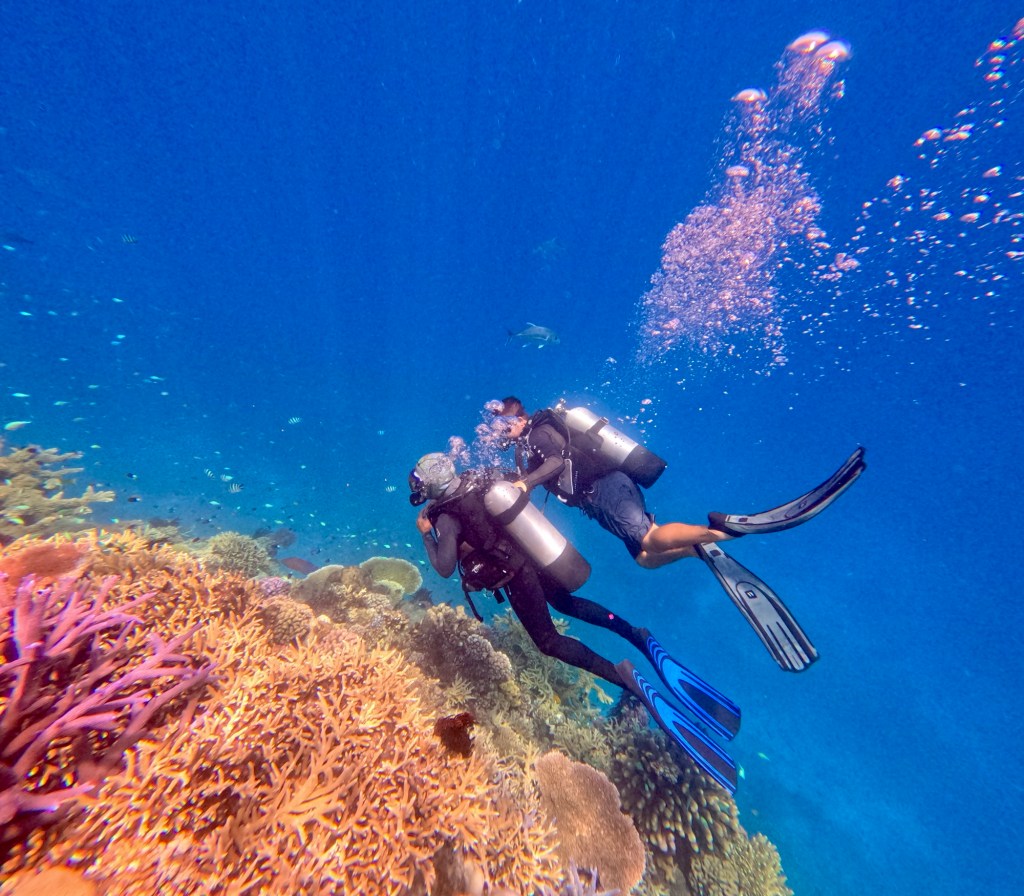
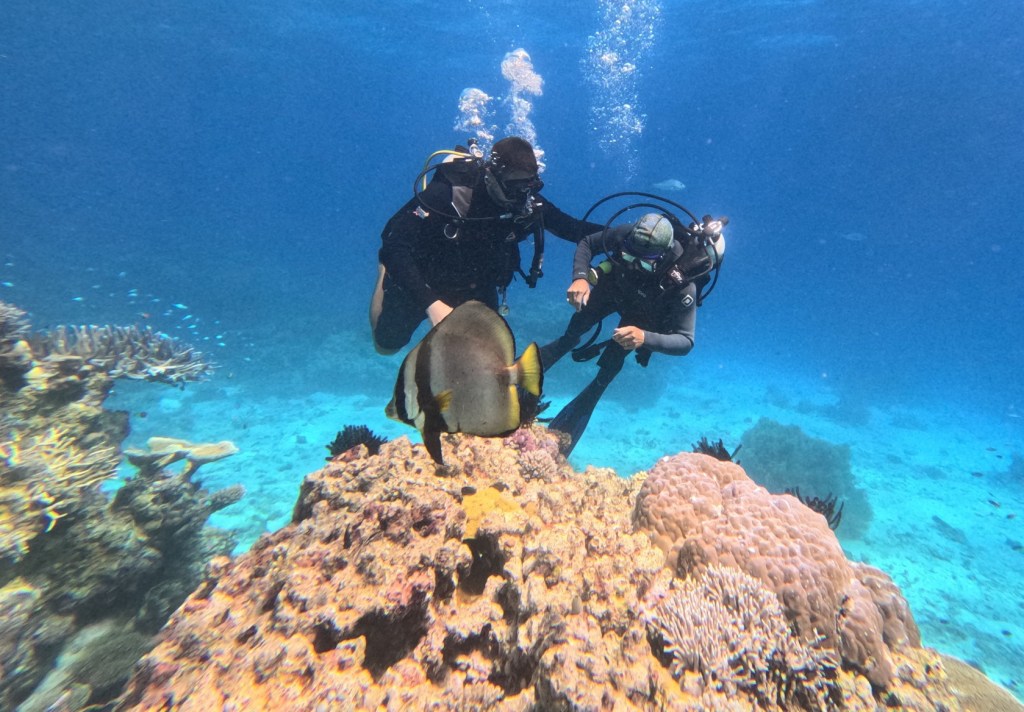
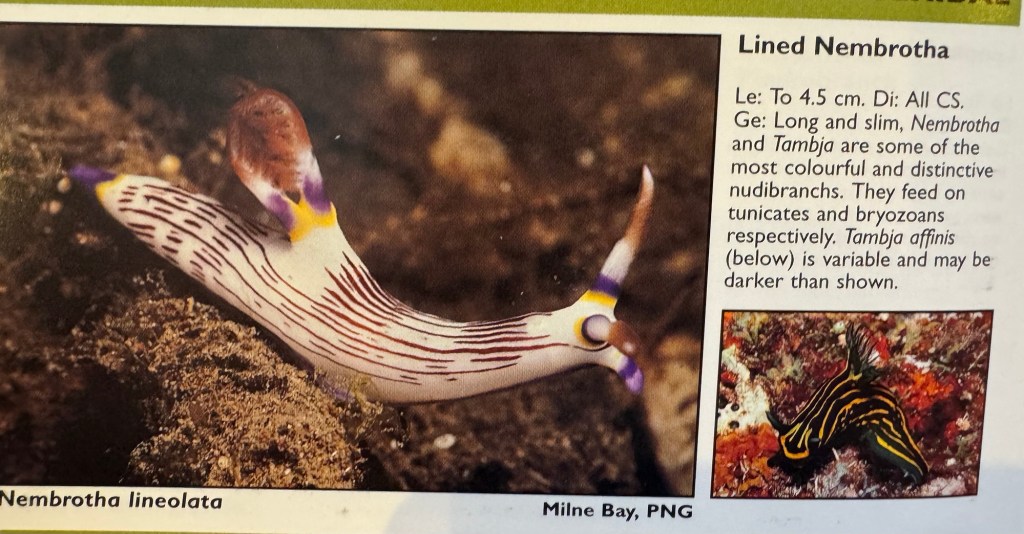
Jarryd stayed close to me at first as we slowly went down to about 20 feet, where the bottom was. Gradually I let go of him, relaxed and swam on my own. There were lots of different fish and coral. We saw fish in many sizes and colors. I wish I could name them all. The easy ones included clown and anemone fish, parrot fish, trigger fish, sea slugs and moorish Idols. The coral were not as colorful as I had hoped, but they were plentiful, especially purple acropora and blue staghorn coral. After about 30 minutes I finally got cold and signaled to Jarryd to go in.

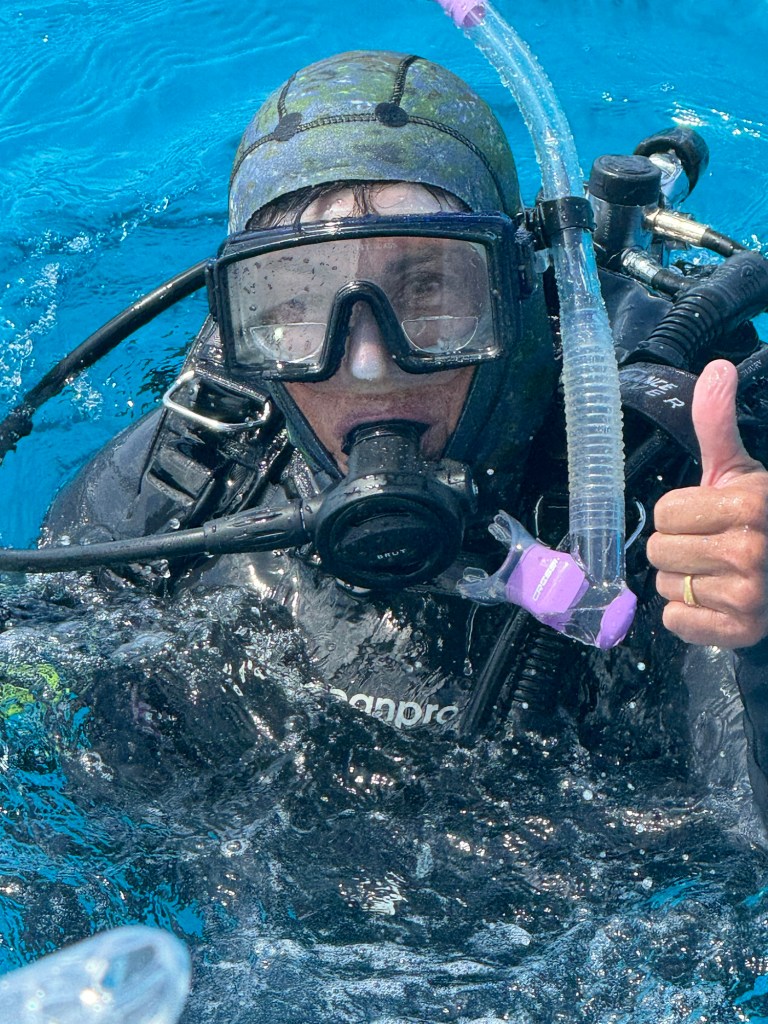
I was very pleased with myself that I had finally, after 50 years of wanting to, done a dive in the Barrier Reef and am now looking forward to more dives. WooHoo!!! Mark and the crew were all happy for me too.

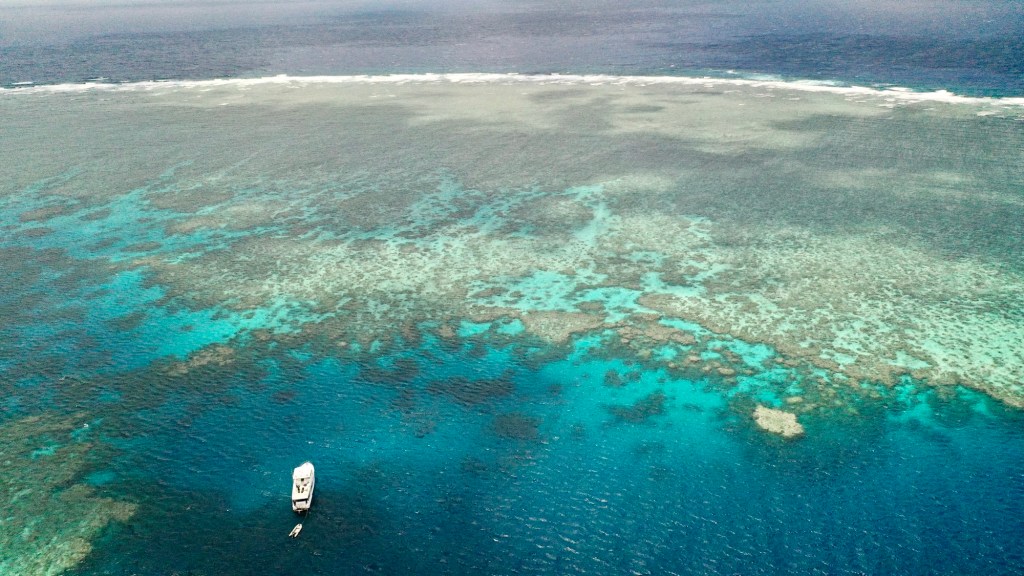
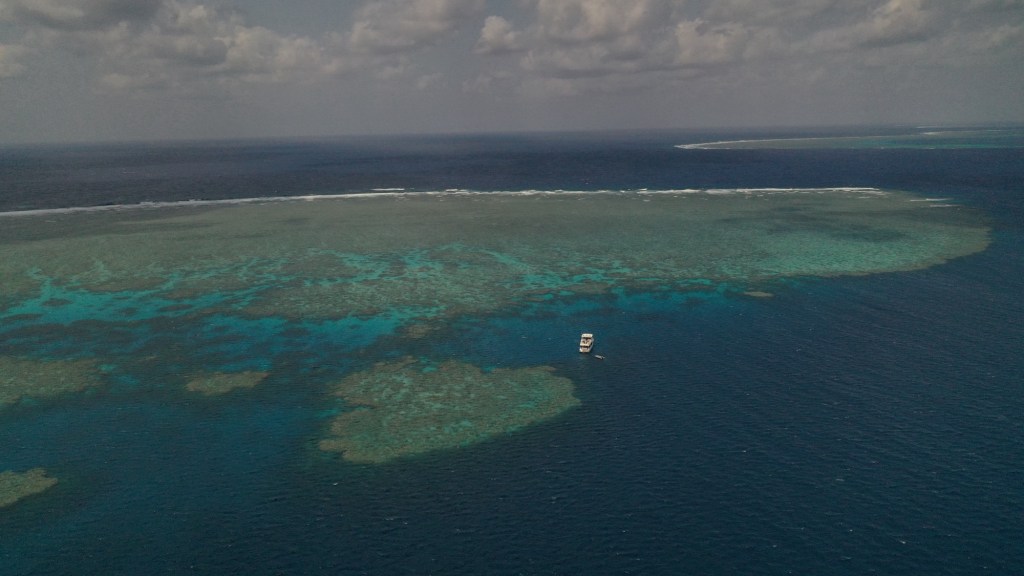
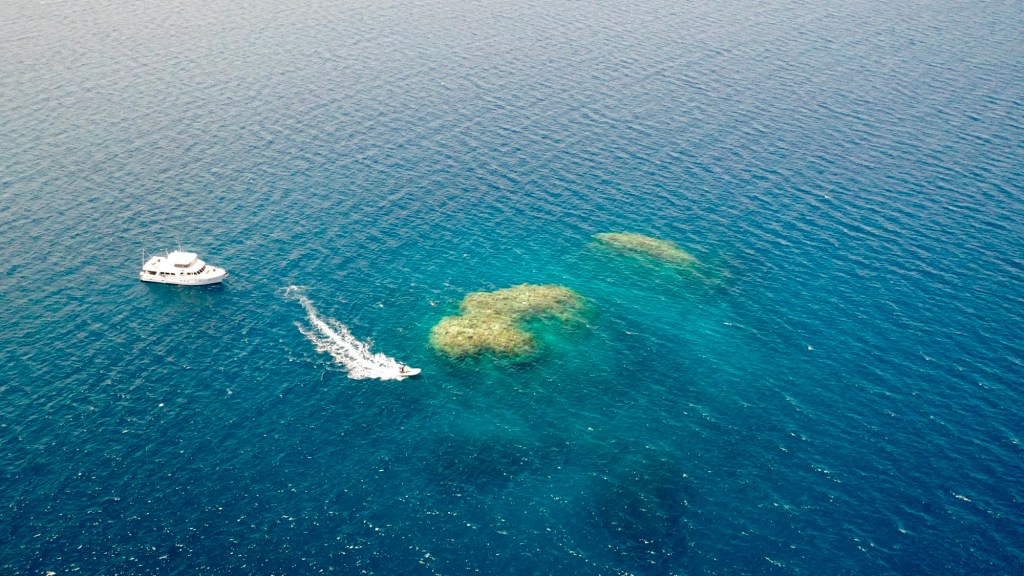
The Aroona parked in front of a large reef. Lorenzo’s drone takes the photo.
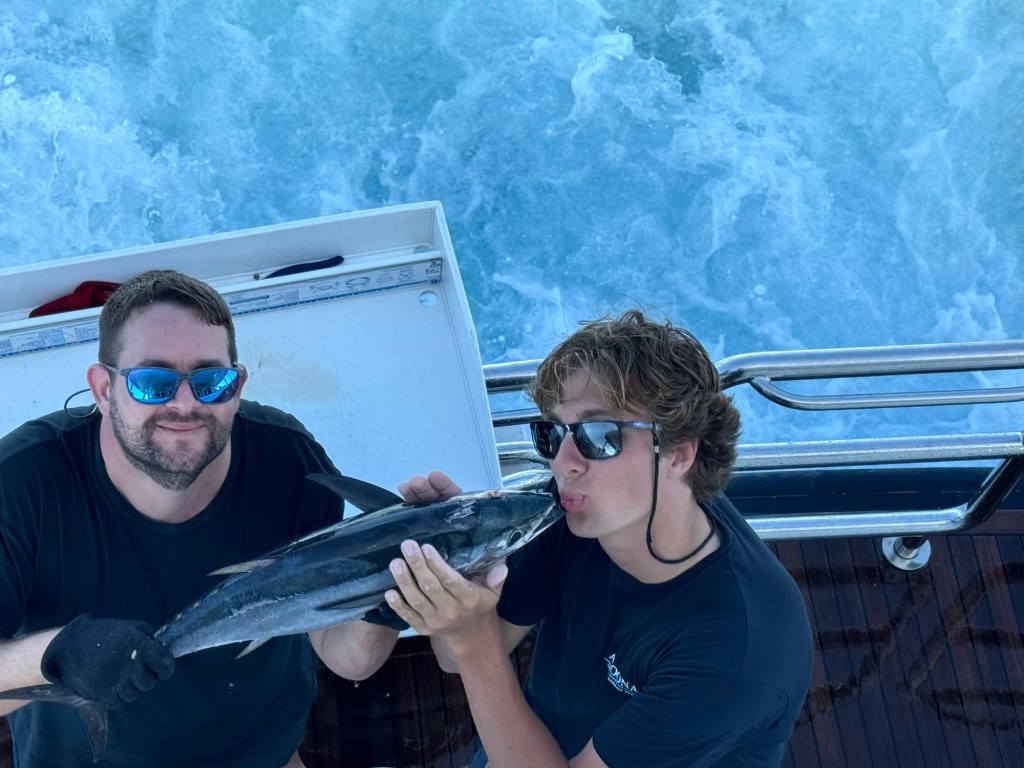
Mark caught a shark mackerel. Not good eating
so he tossed it back

This is a good day. A dive and a fish.

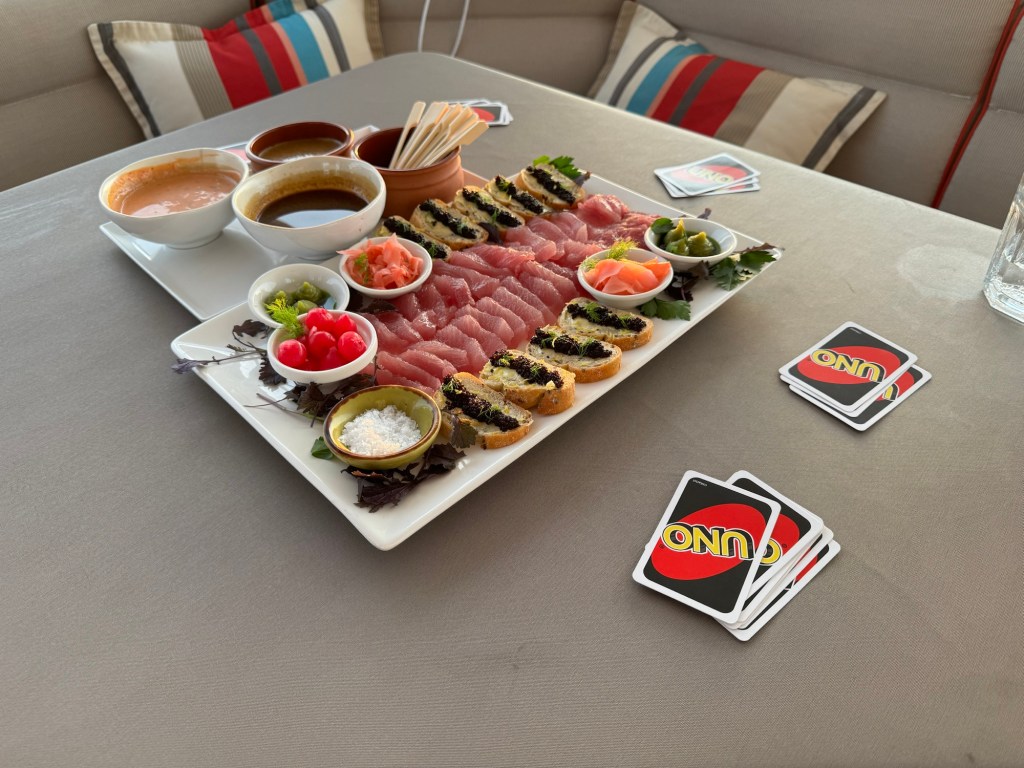
In the late afternoon we all played another round of the game Uno. Silly game, but good fun. Then we had appetizers and dinner on the back deck so we could all sit together.

Appetizers and Uno

I asked everyone to share their knowledge and or feelings about aboriginal people and they each had different experiences to share. In all, they are friendly toward aboriginals and each has a few close aboriginal friends. They all support the notion of live and let live.

Finally, about 9:30 the boat generators were turned off and we were all in bed.

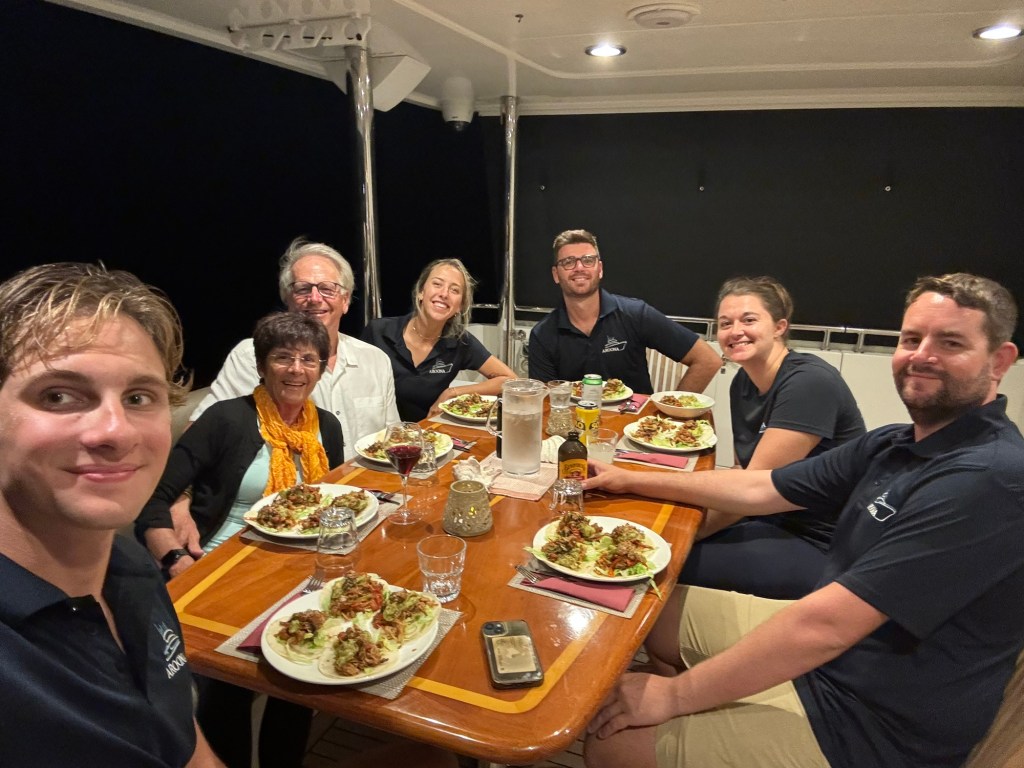
Fletcher, me, Mark, Eva, Lorenzo, Adele and Jerryd enjoying a pork taco dinner.

Thursday, September 26, 2024

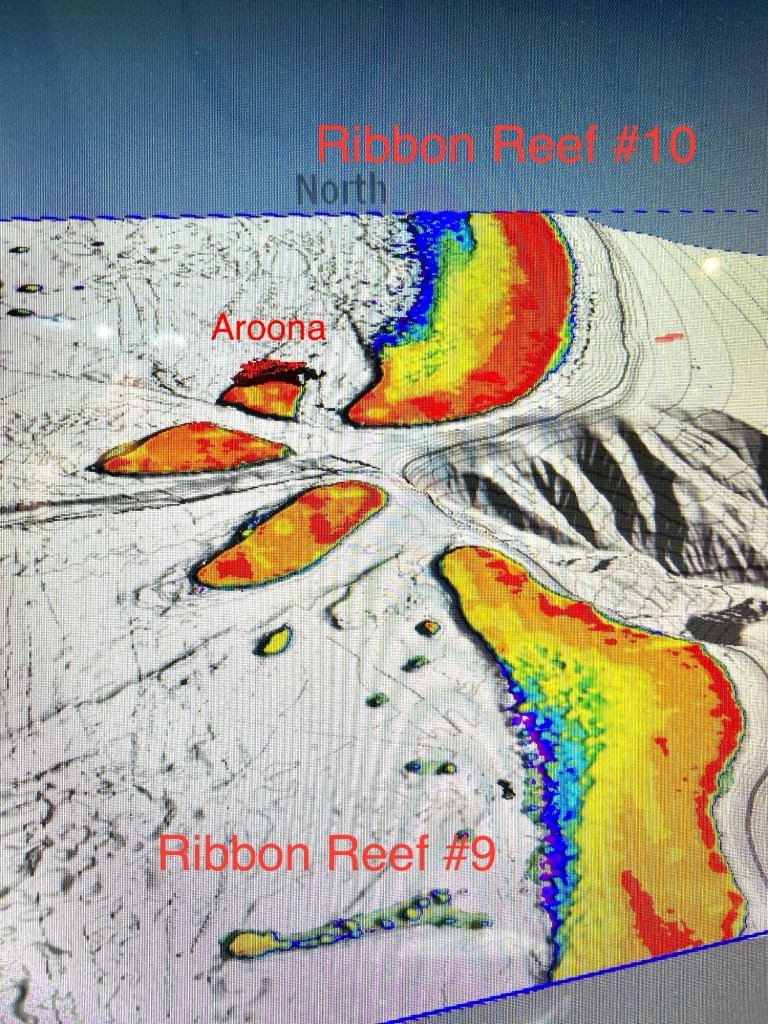
After breakfast, the crew moved the boat to a dive buoy between Ribbons 9 and 10.

We parked over the dive site. This is a photo of the boat’s computer screen.

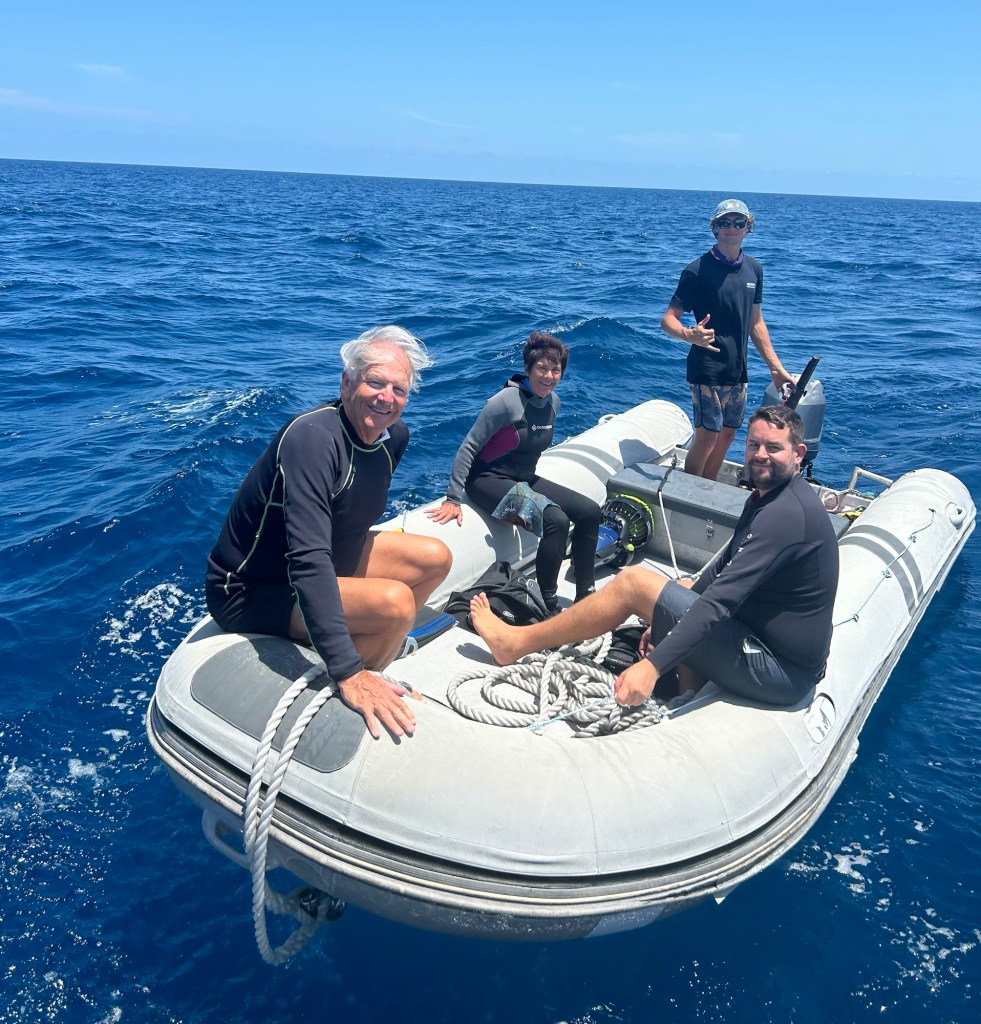
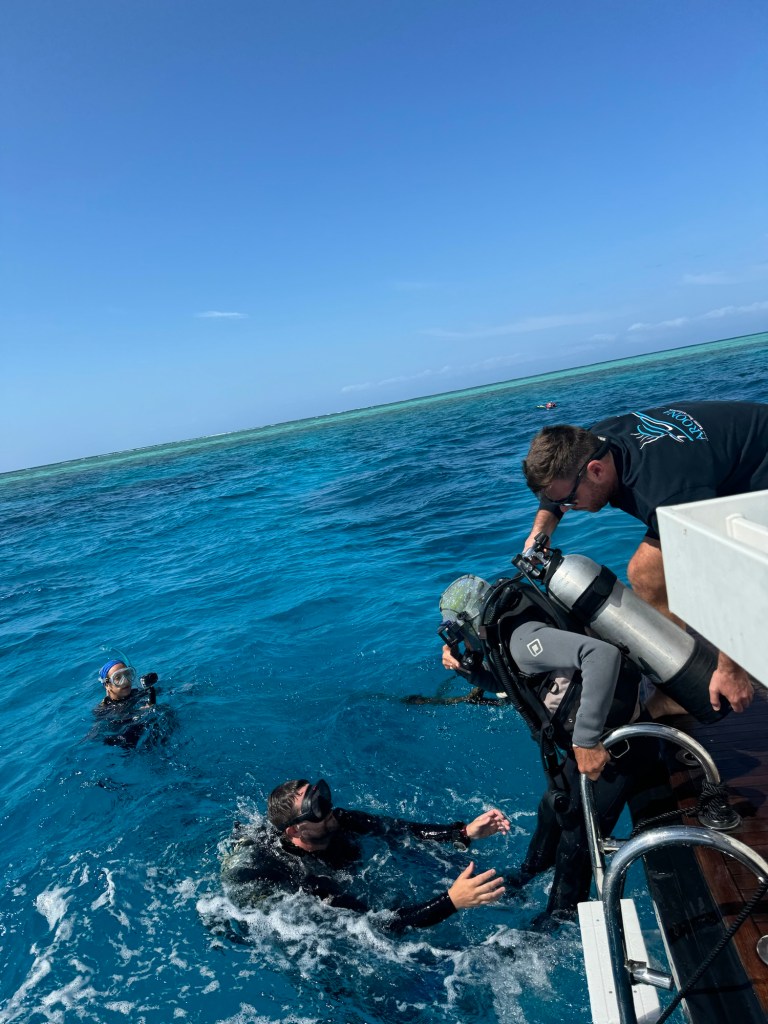
From the Aroona location, Mark used a sea scooter to do a long snorkel, while Jerryd and I went scuba diving.

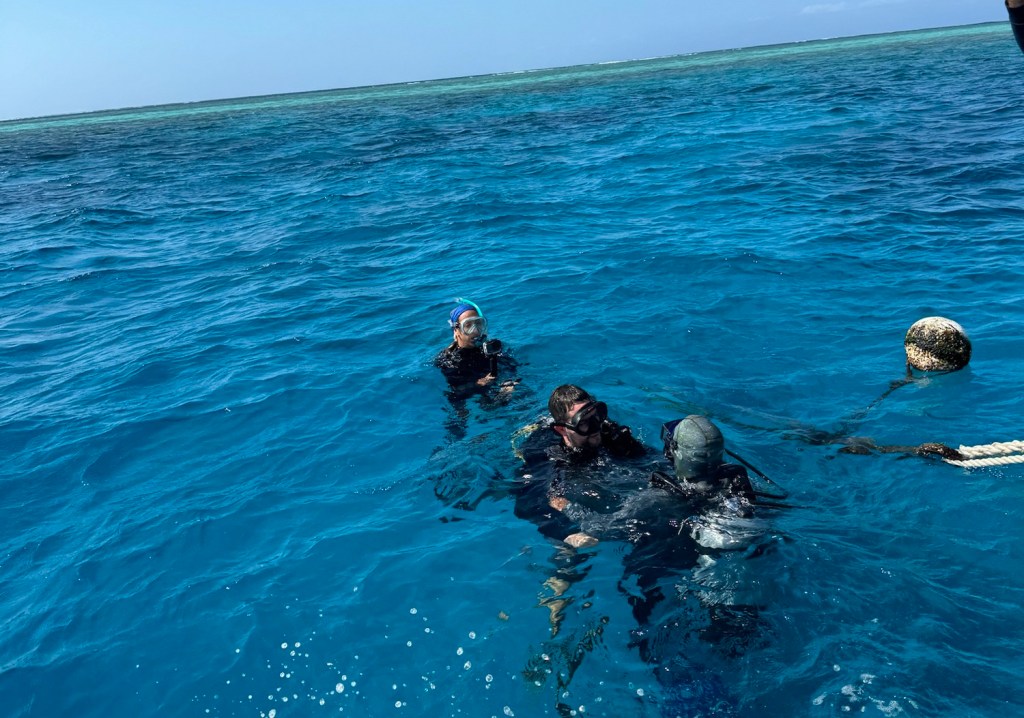
Between dives we rested and warmed up. 40 minutes in the water makes me really cold even though the water temp is 84 degrees. After 2 hours we suited up to go again. This time to the twin towers site, which is 20 minutes north of Ribbon 9.5 Lorenzo raved about the site and it lived up to his praise.

Video of me entering the water for dive at twin towers site
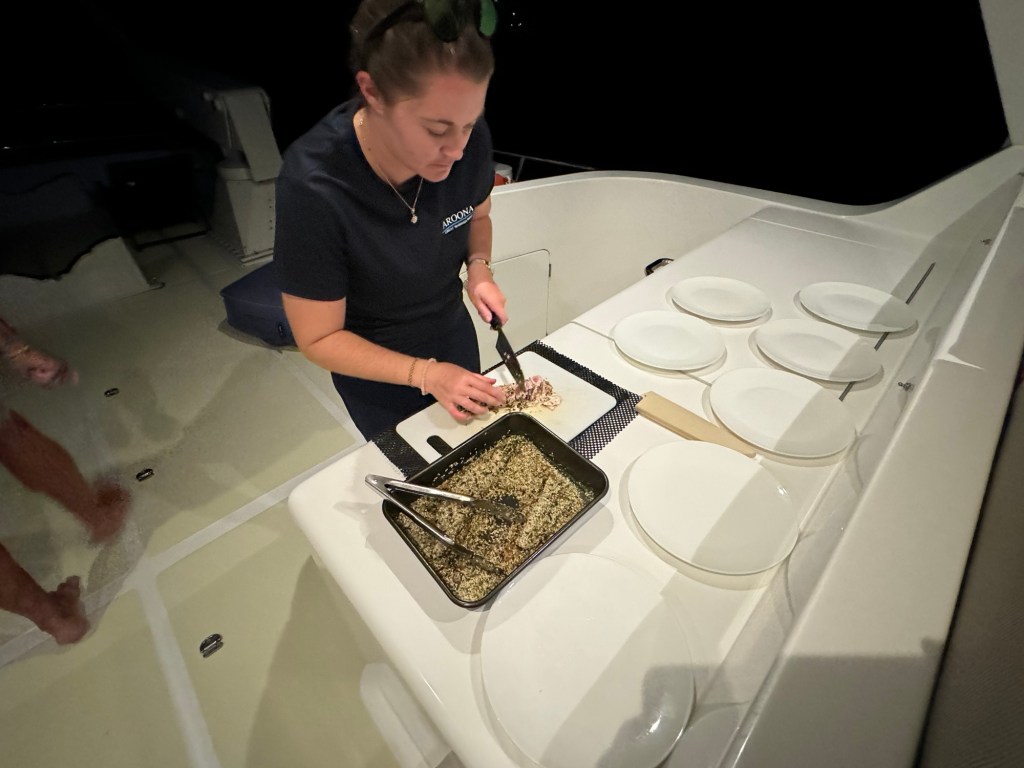
The tuna appetizer dish Adele made for our last night

Back to Darwin and on to Silky Oaks, Queensland

Friday, September 20, 2024

After saying good bye to Sab, we went to the airstrip near Davidson’s camp and flew back to Darwin in an old Cessna 210,

where we were immediately picked up and driven to the Darwin Museum and Art Gallery of Northern Territory for a private one hour tour of the current aboriginal Exhibition.

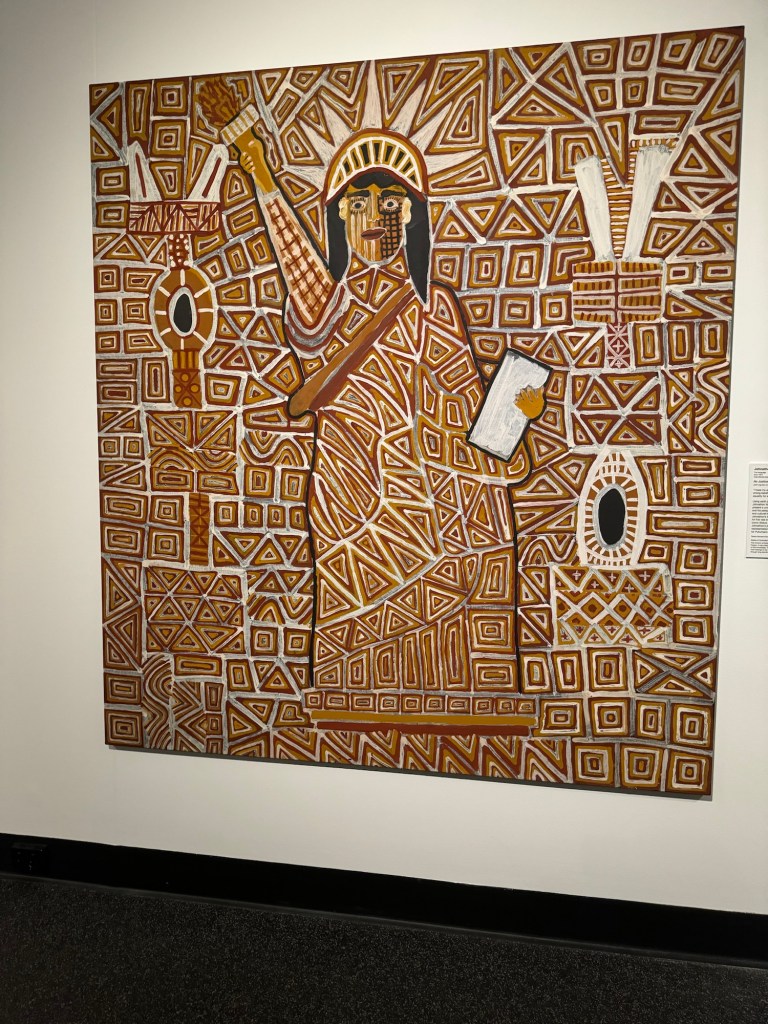
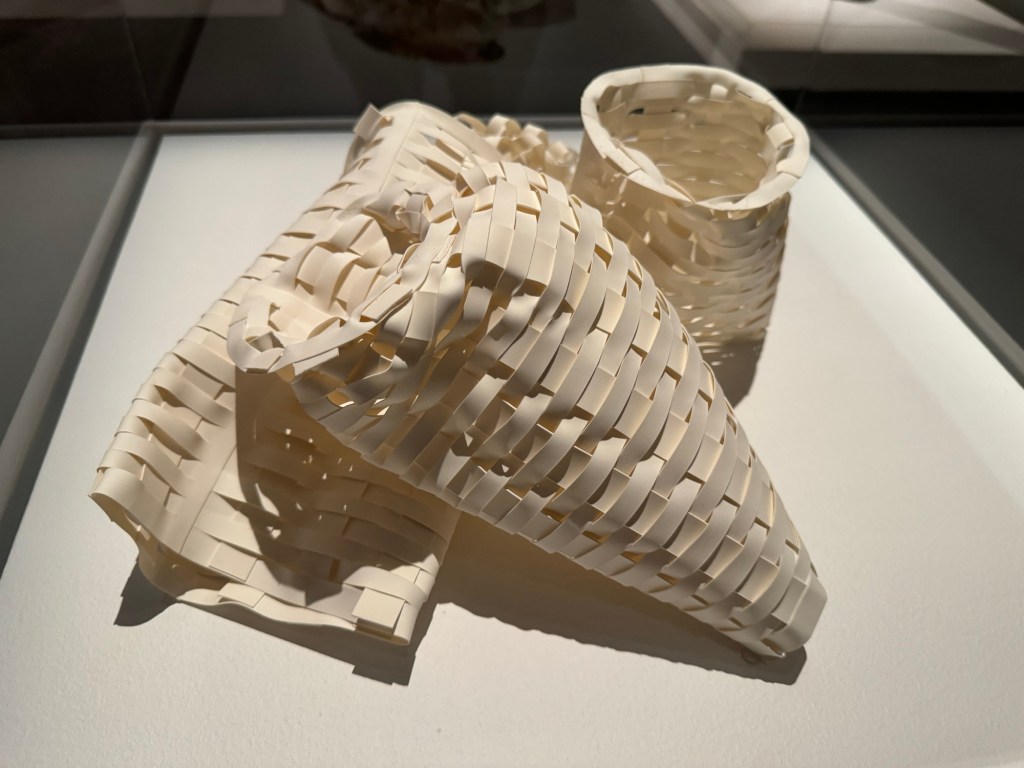
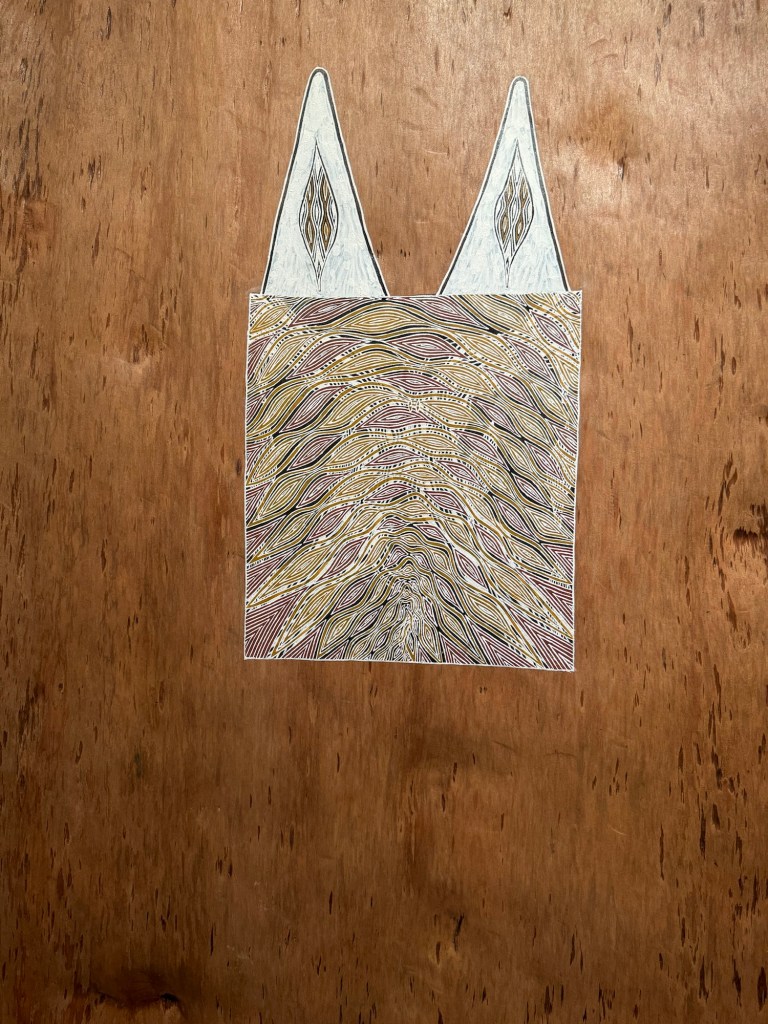
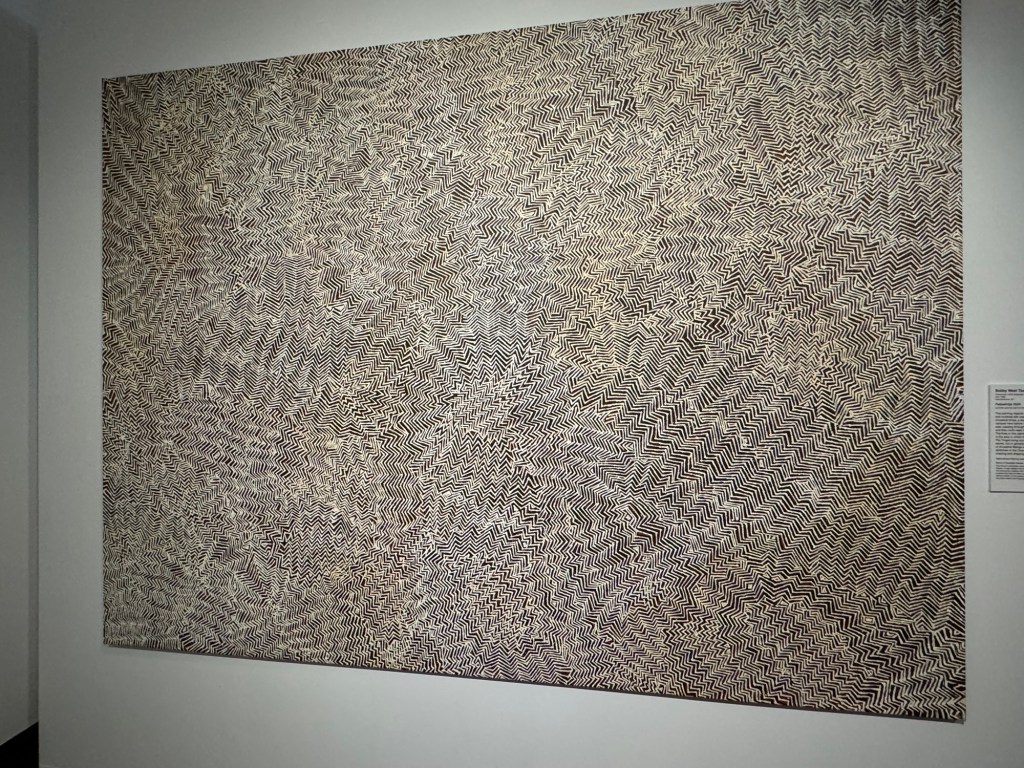
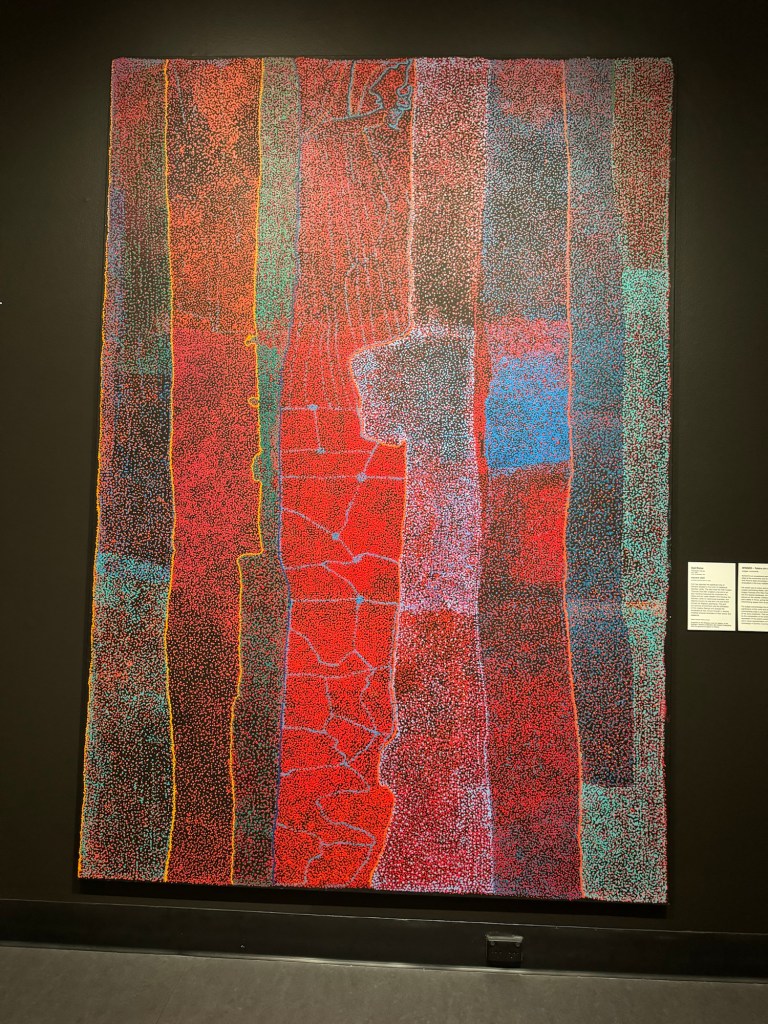
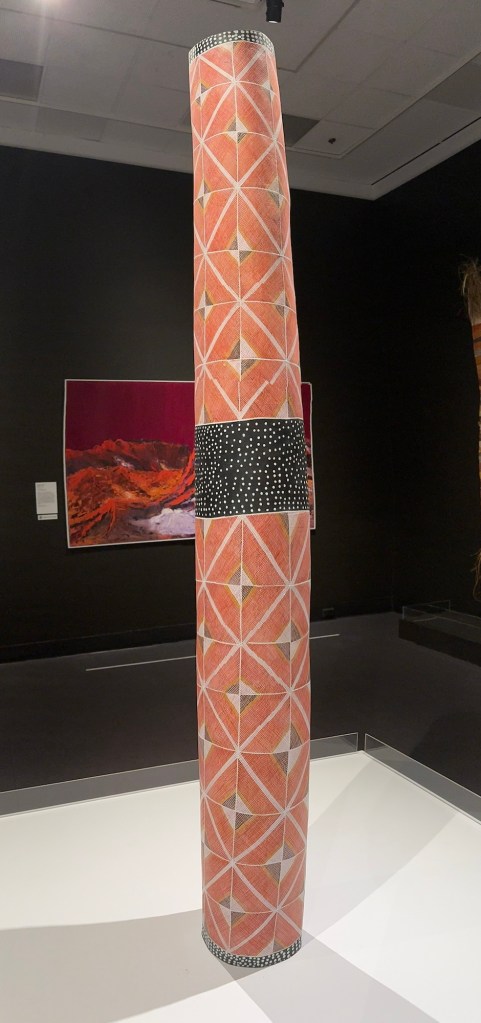
The curator, Bryony Nainby, met us at the entrance and wasted no time imersing us in aboriginal art. Here are some of the most impressive pieces we saw. Double click for a full view.

After the tour we had a quick bite, and were driven back to the airport for our 3:30 commercial flight to Cairns. It was a crazy day, but we made all our connections and got to Cairns in time to catch our ride to the Silky Oaks lodge, have a light dinner……and slide into bed. Hope tomorrow is a slower day.

Saturday, September 21, 2024

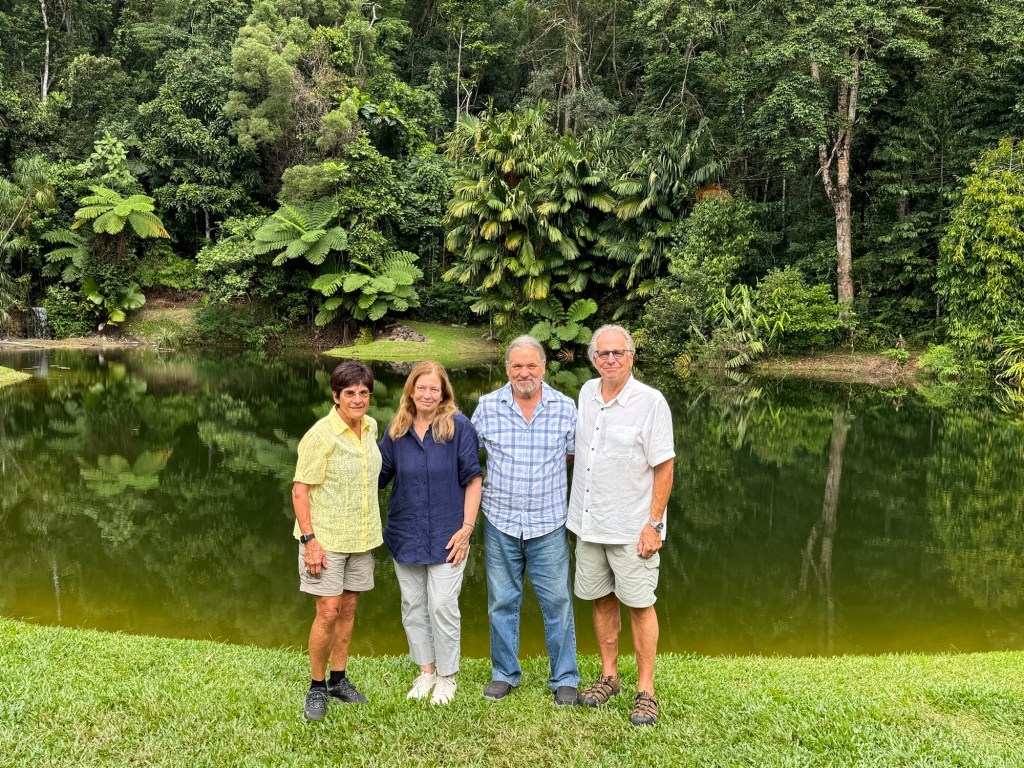
Our accommodations are in a lovely lodge called Silky Oaks on the bank of a river in the middle of a rainforest. It was nice to wake up to the sound of the river just outside our cabin. After breakfast, we were met by Cathy Wharton, our guide for the next two days. Off we went for a drive through the countryside to the rainforest property of Alan and Susie Carle, which they named, Botanical Ark. Cathy introduced us to them and soon we went walking into the forest with Alan to learn about his property and his life’s work of saving rainforests everywhere. He talked about starting with an empty 21 acre piece of ground and collecting seeds from all over the world to plant in his Botanical Ark. The plants have grown quickly in the 43 years since they acquired the property. His ark is now a magnificent rainforest.

He and Susie wanted tropical fruit so they started with 25 fruits from Asia. Then purchased 80 more fruits and kept them in pots while they grew. To date they have collected 500+ different fruits and flowers. Åt one point they had 2500 different flowers.

Sue had a very nice spread laid out for us and we sampled a few pieces, took a photo and departed.

Alan, Sue and us in their rainforest garden

We left Alan and Sue around noon and headed to lunch at a restaurant in the National Park after crossing the Daintree River on a ferry to get there.

The nearby Daintree Forest contains 900,000 acres and is a National Park. At 1.45 million years, it is the oldest rainforest in the world.

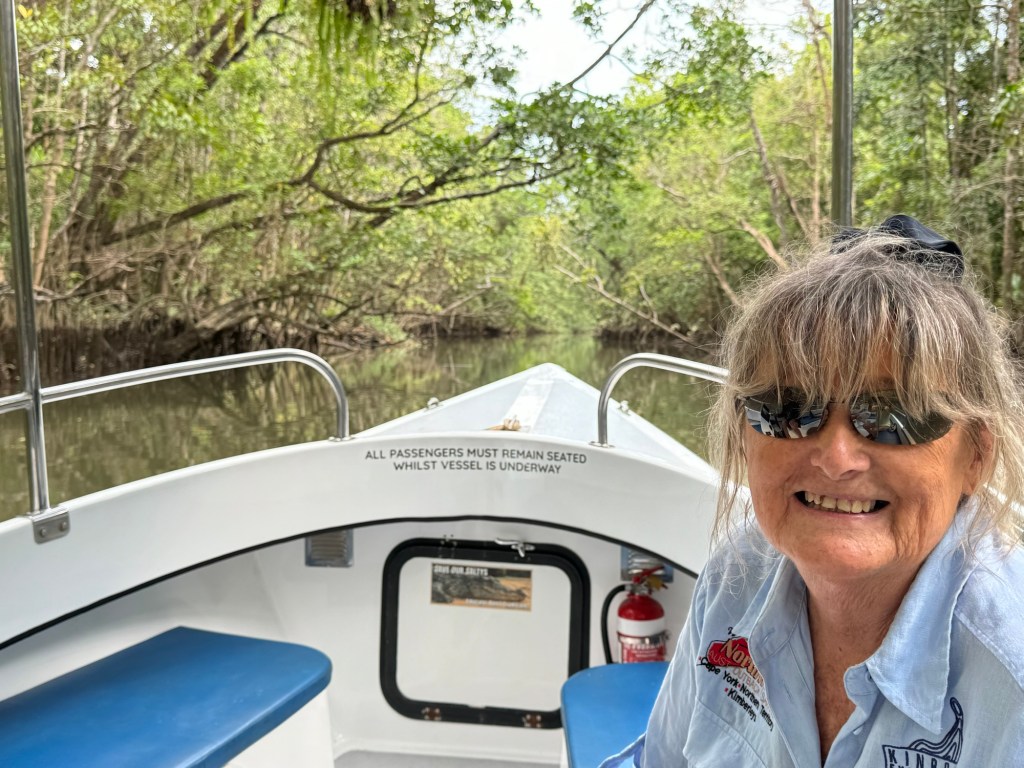
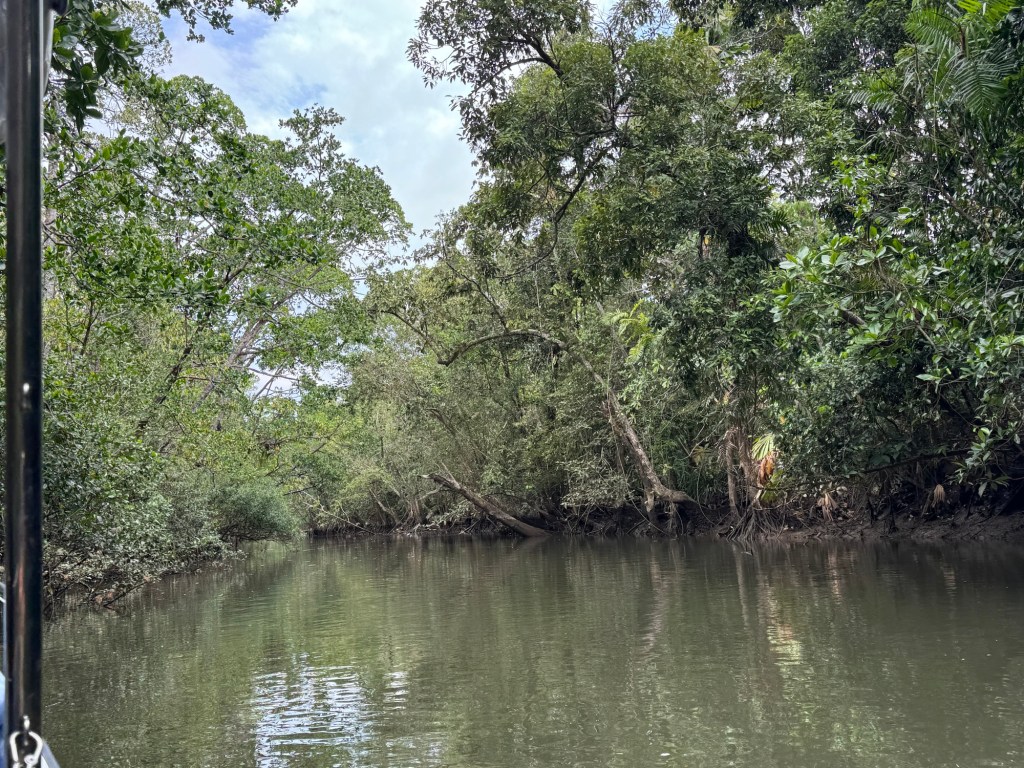
After lunch we went for a boat ride on the Daintree River.

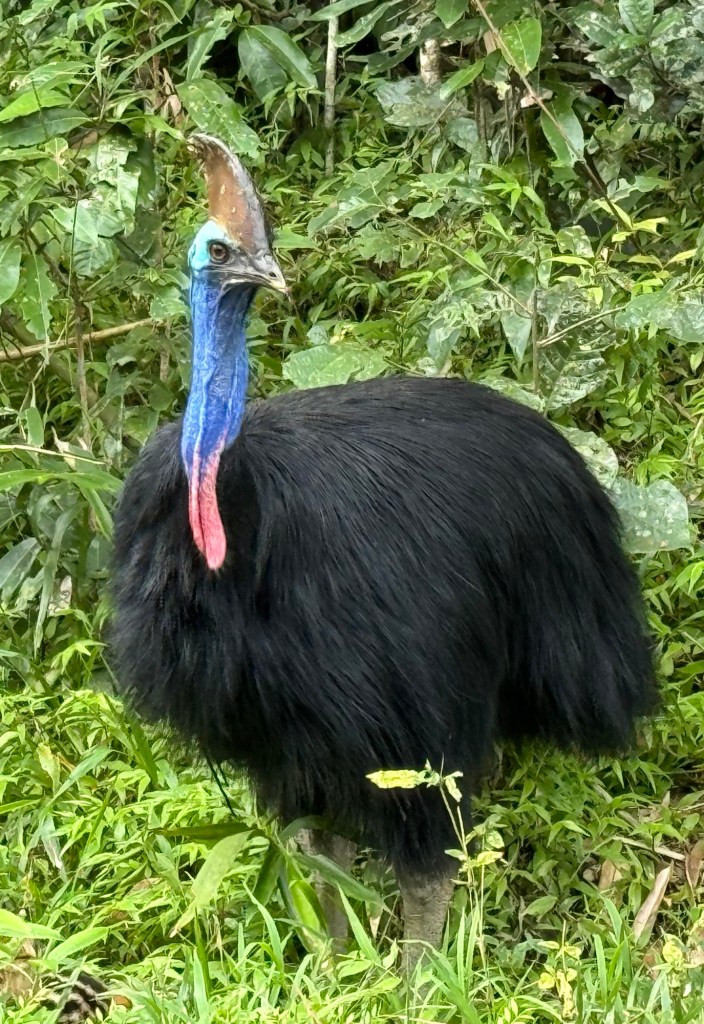
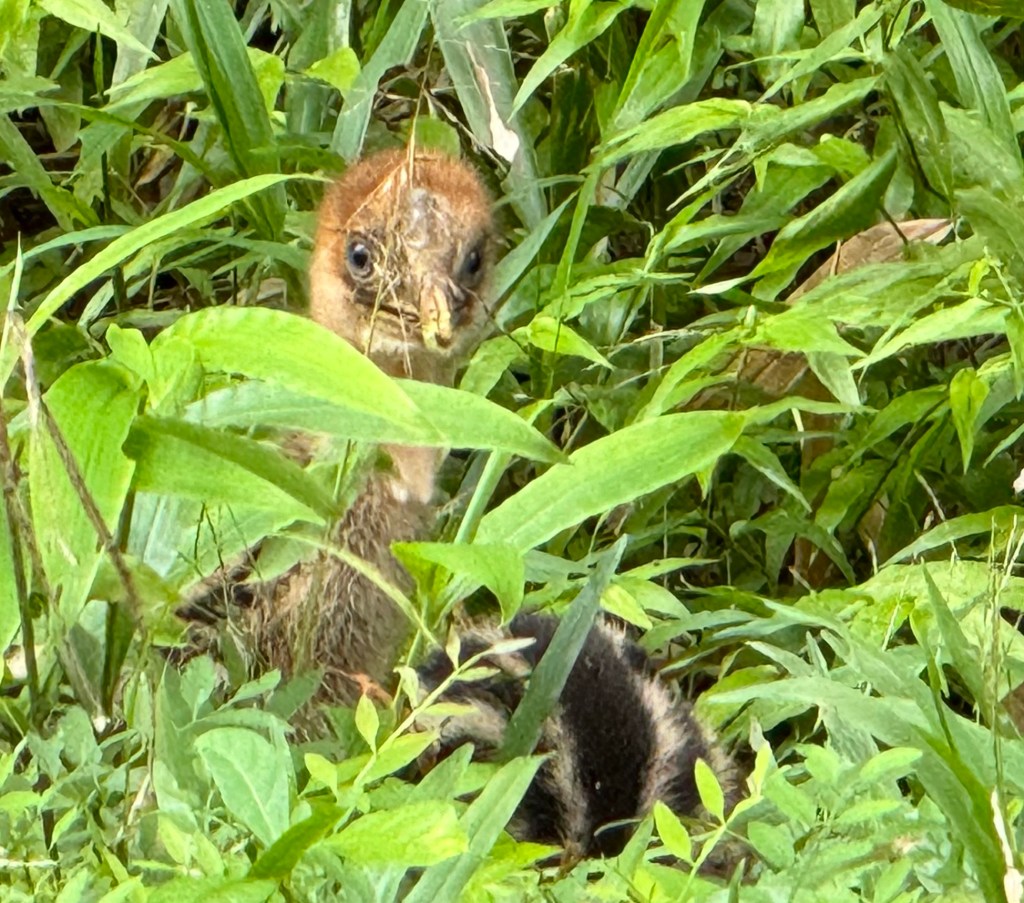
The most exciting part of the afternoon was finding the cassowary bird and her two chicks along the roadside. The rest of the day was quiet.

Sunday, September 22, 2024

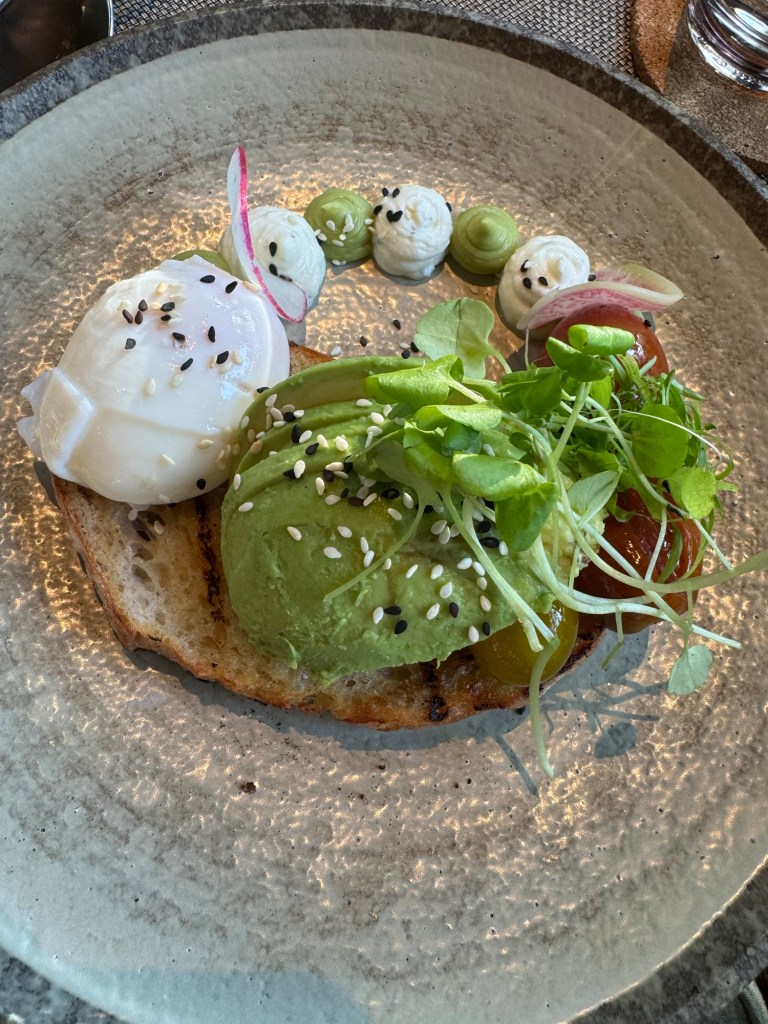
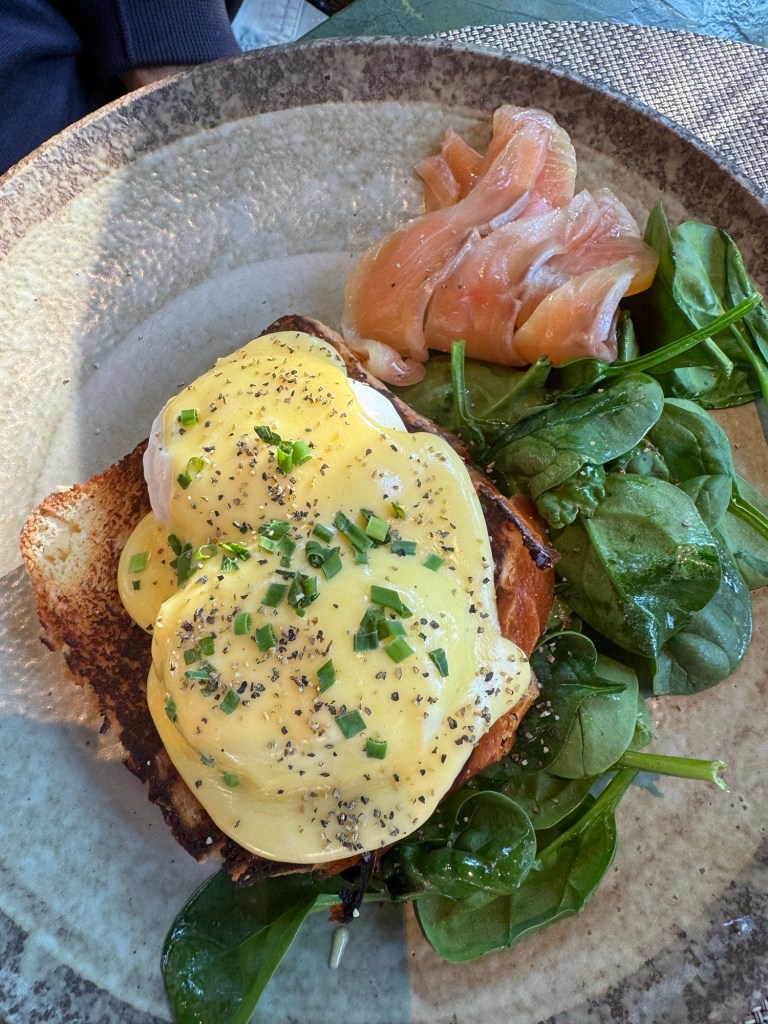
Silky Oaks puts on lovely meals. This morning was no exception. I had Avocado Toast and Mark had smoked Salmon with poached eggs and spinach with hollandaise sauce.

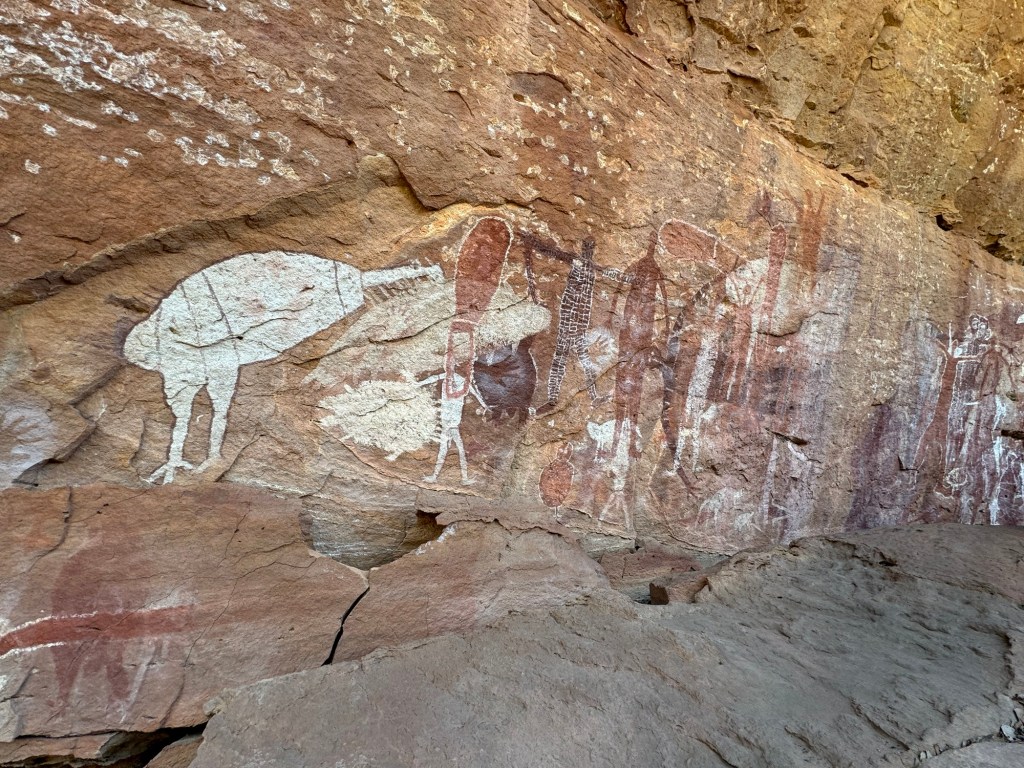
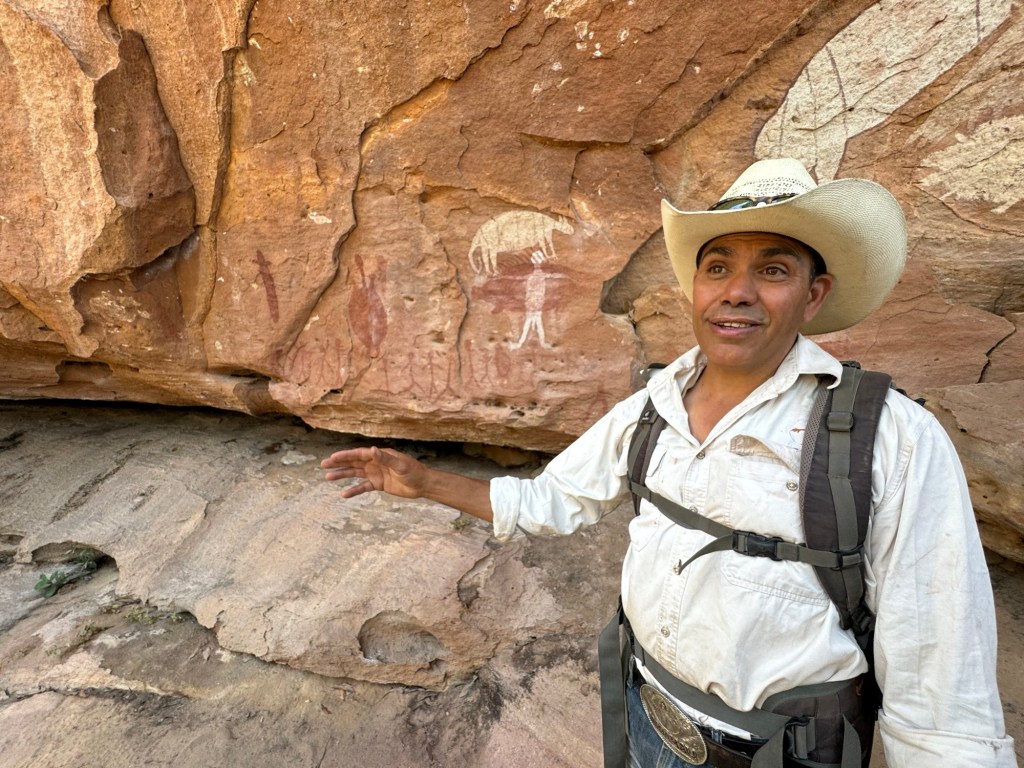
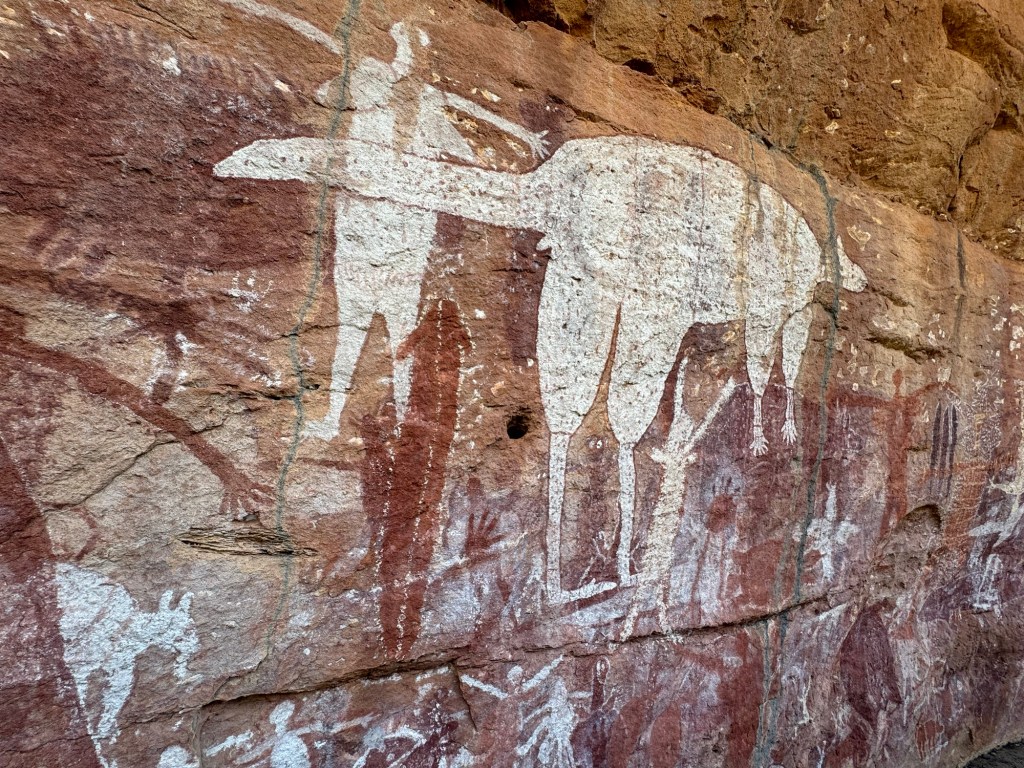
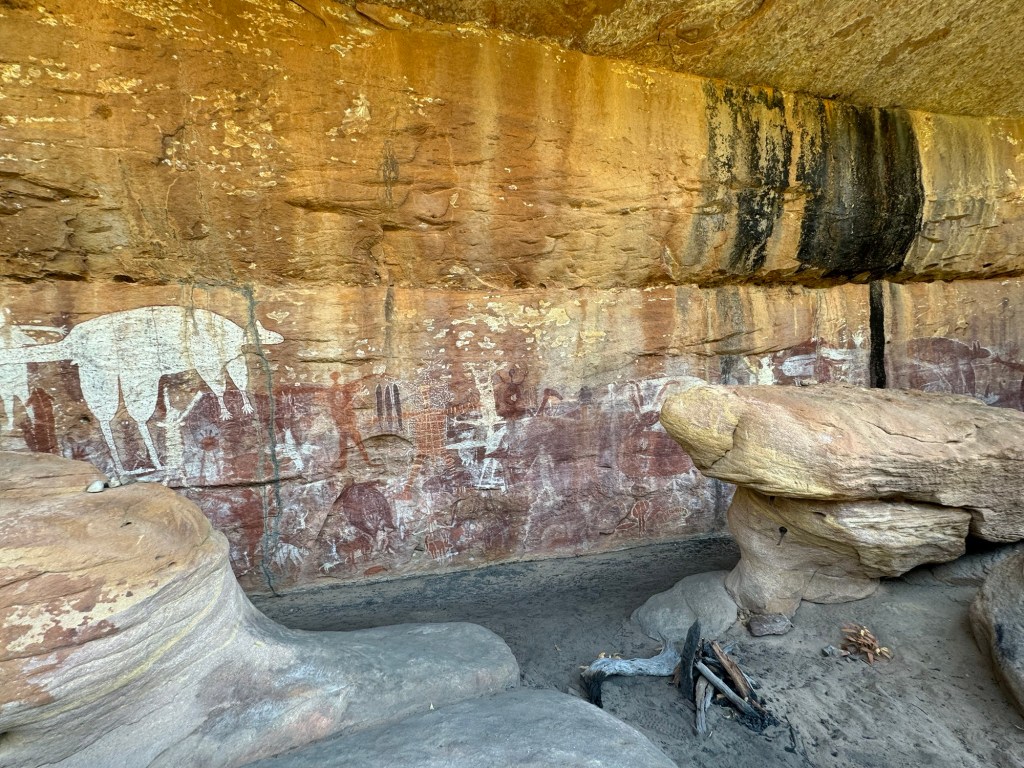
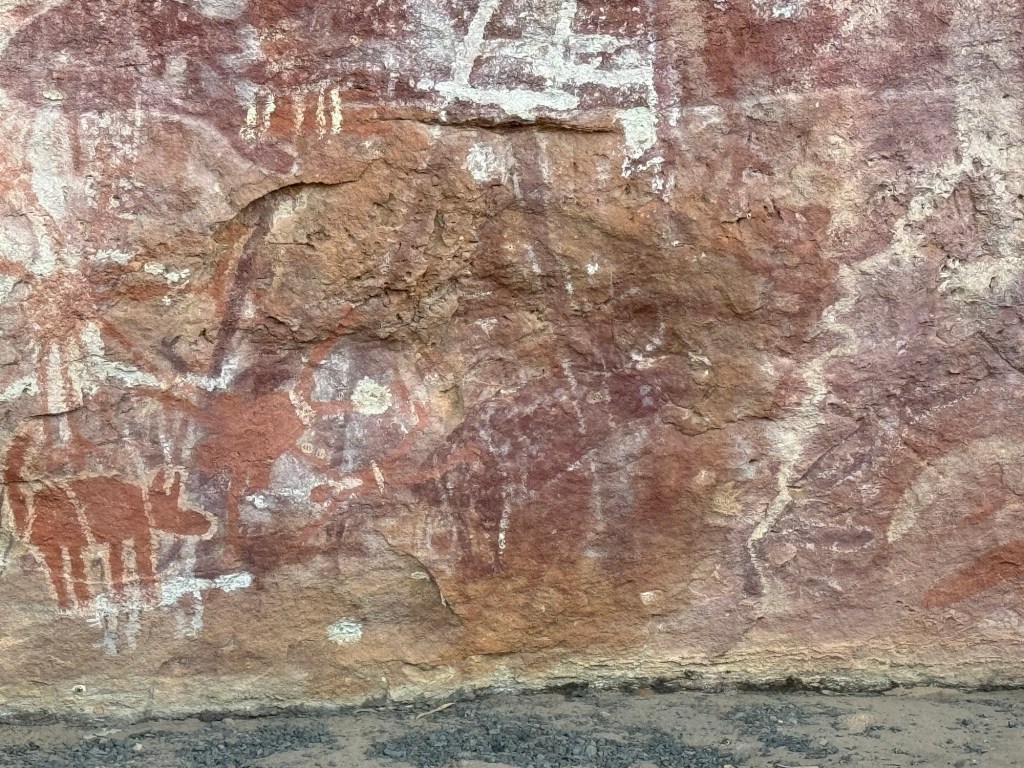
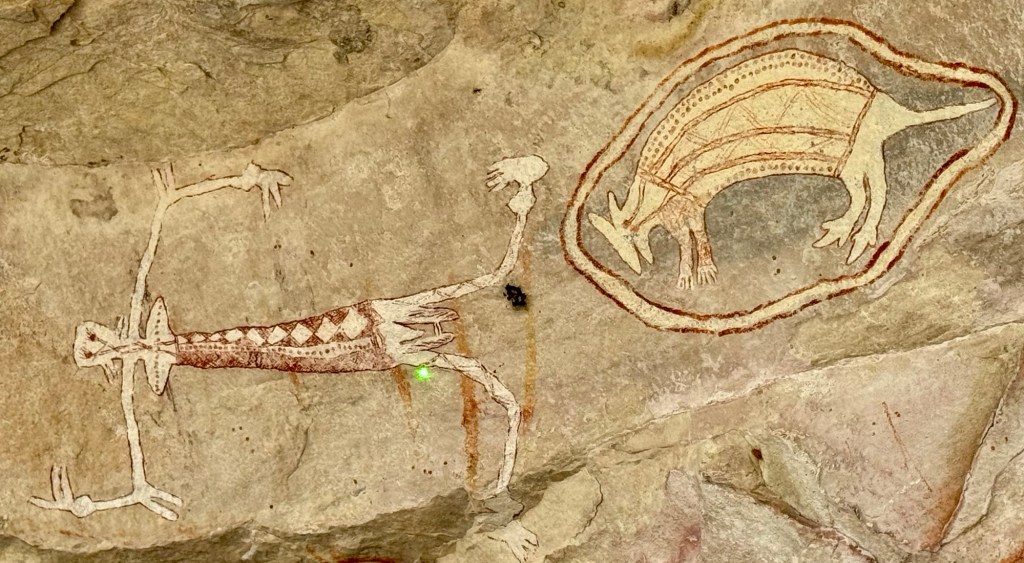
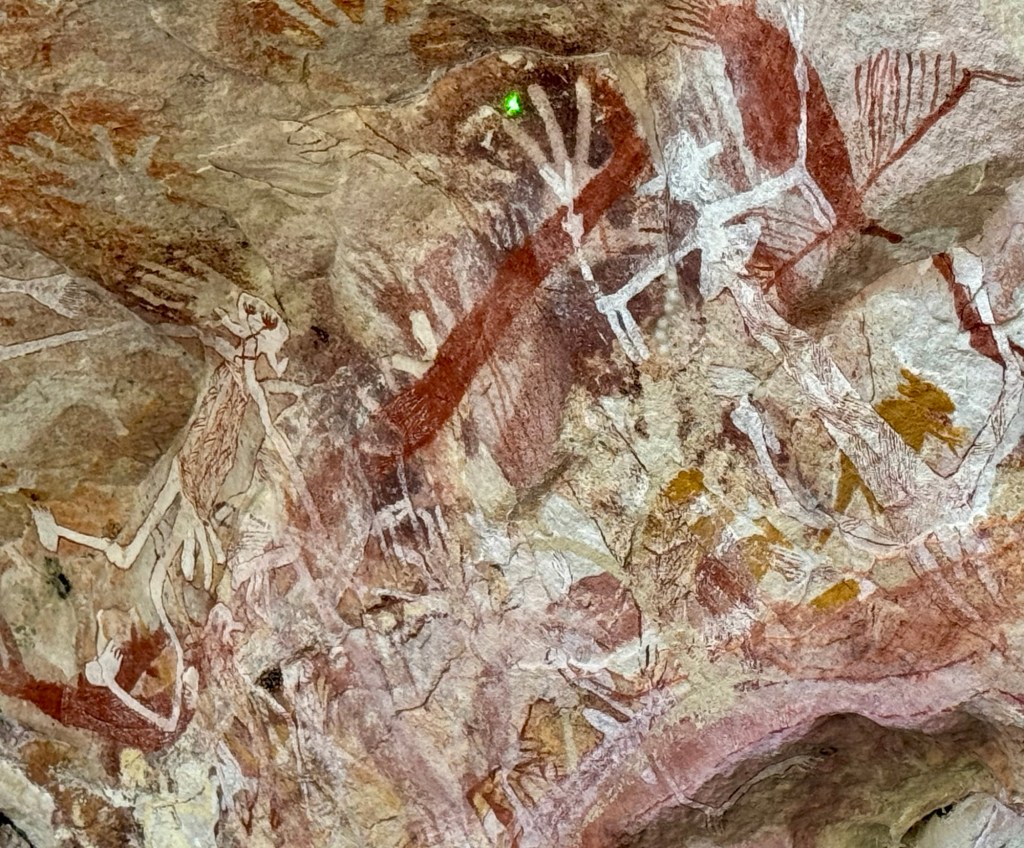
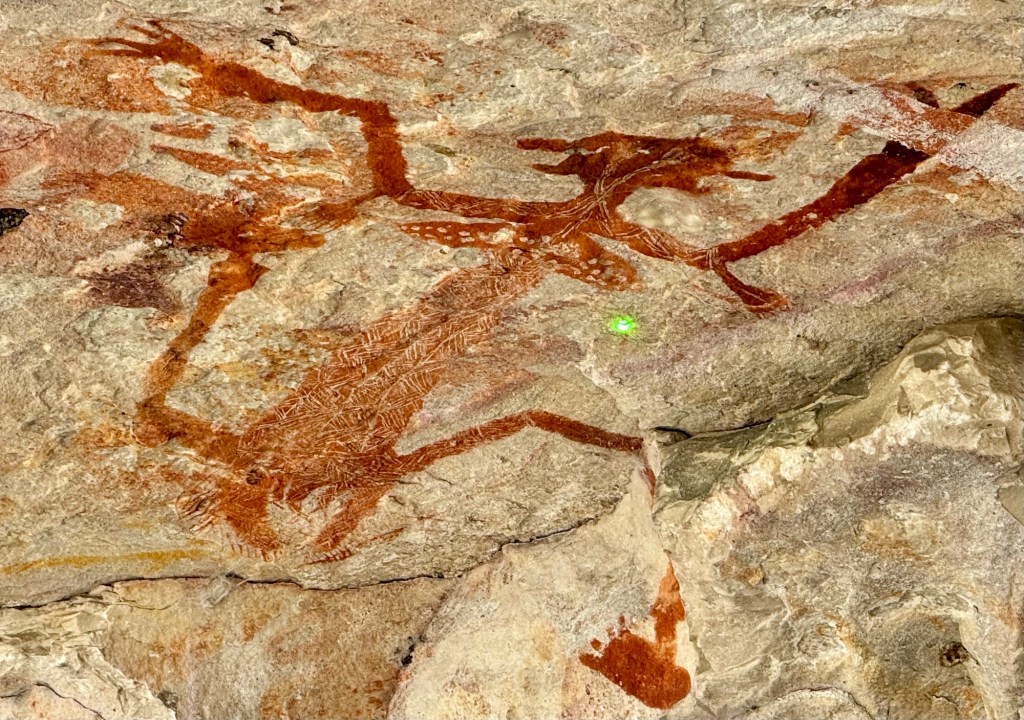
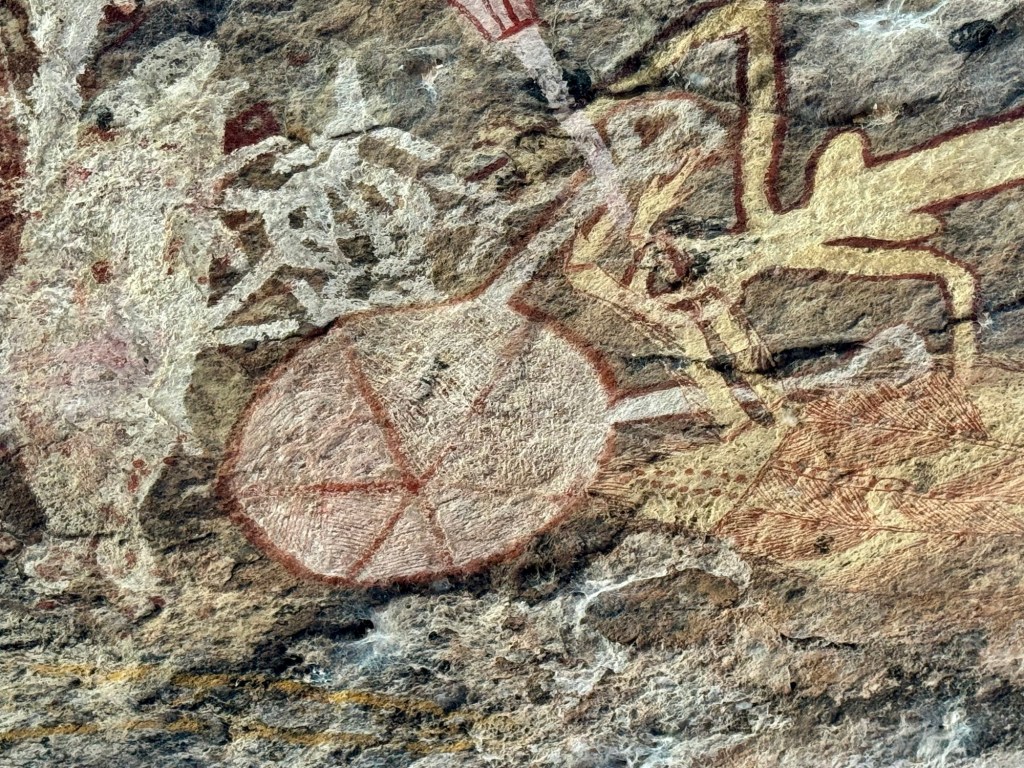
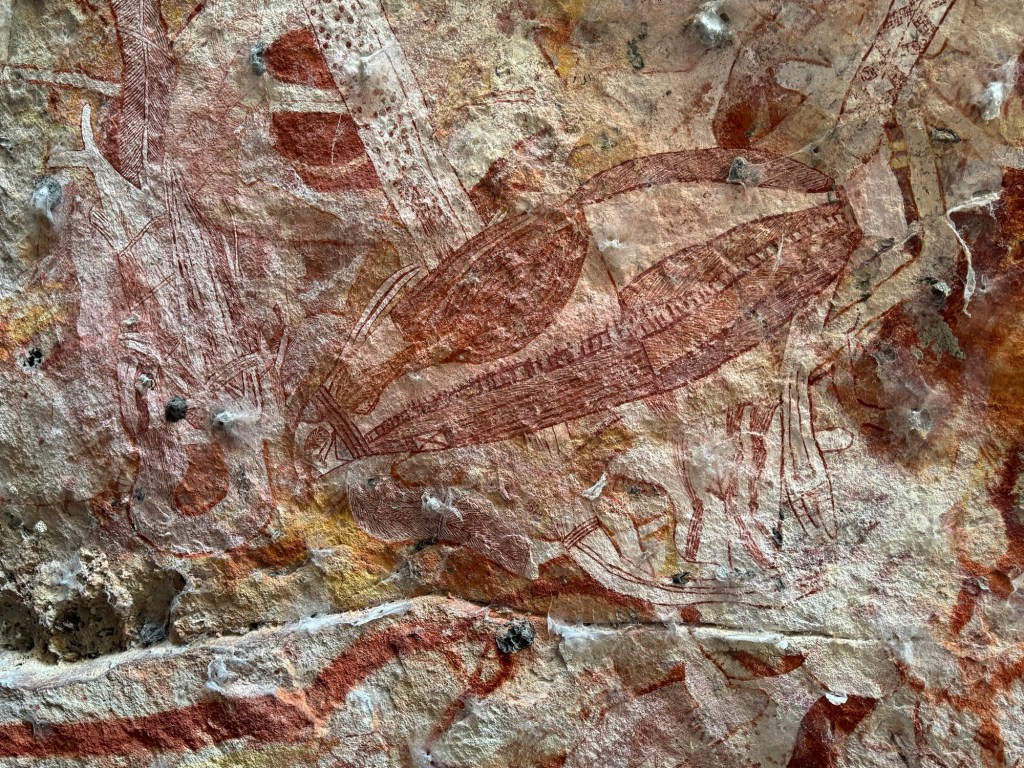
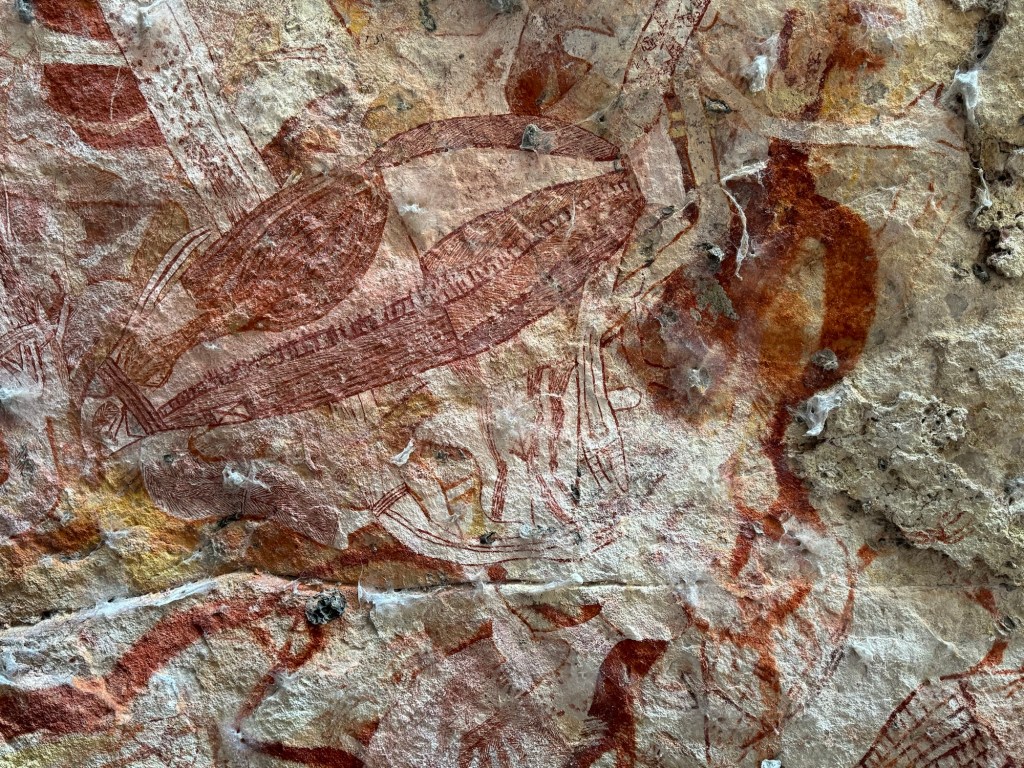
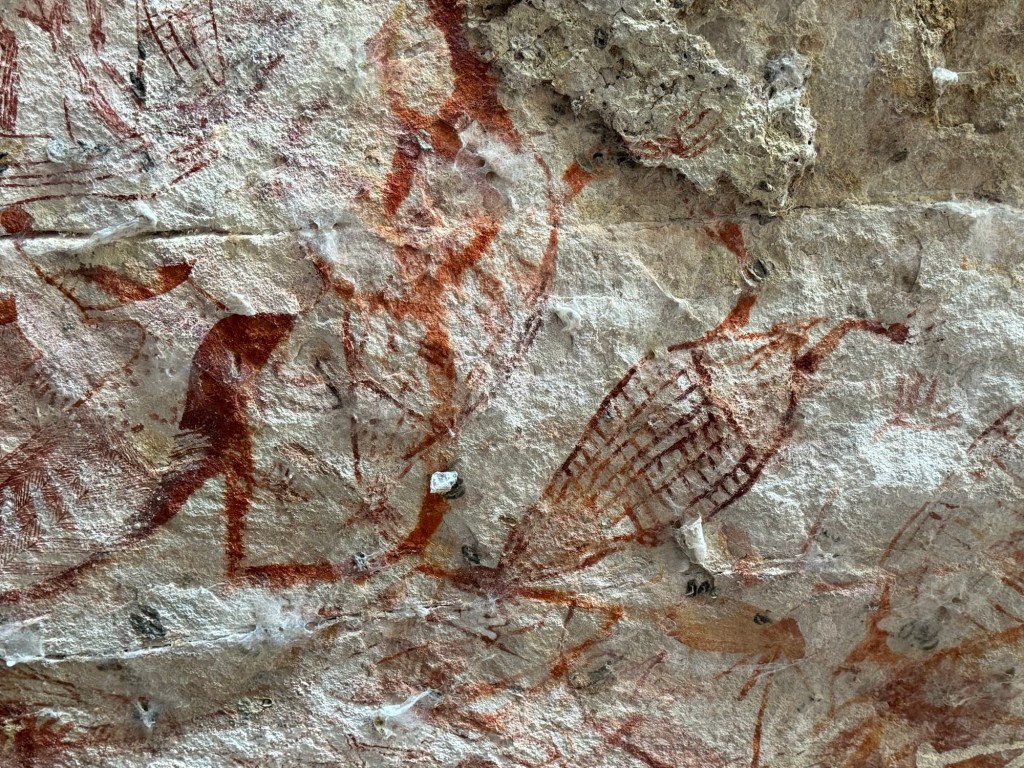
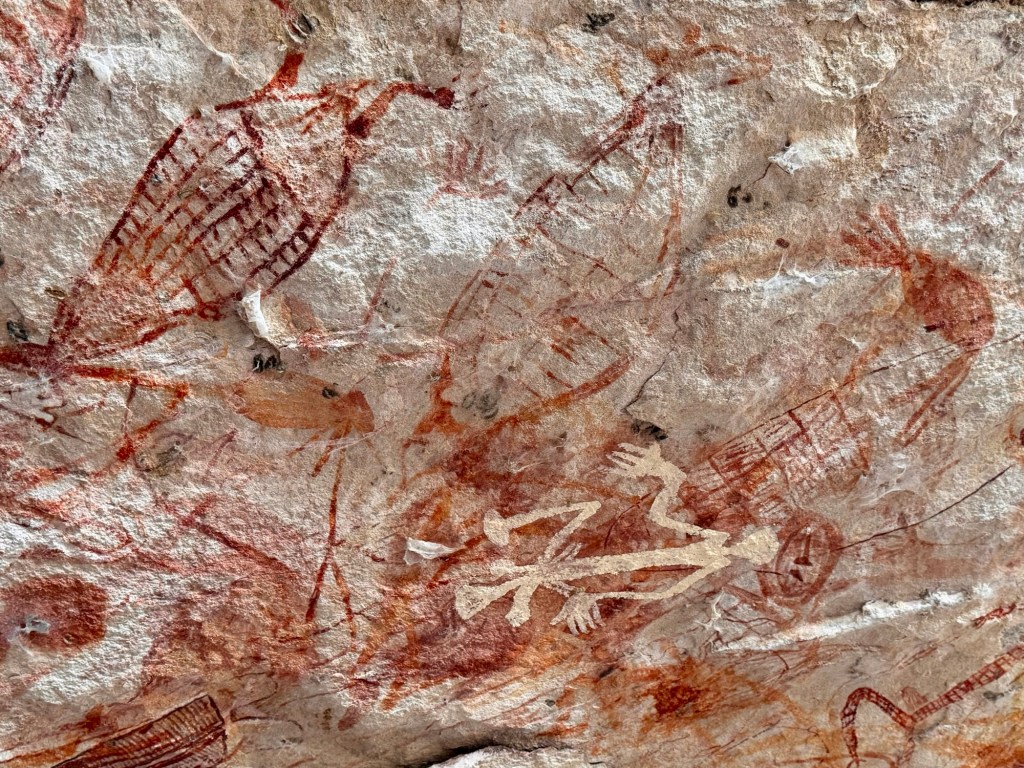
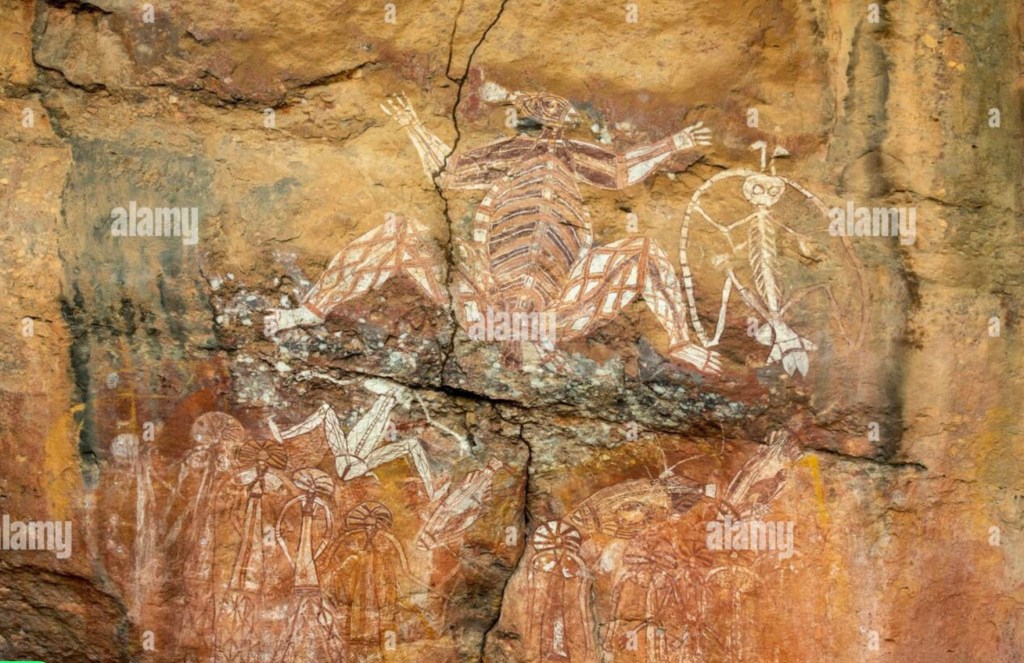
Then we drive to the nearest helicopter pad a few miles away and flew about an hour to a place called Jerramali, which means “thunderstorms”to meet another couple who are friends of Cathy. This couple belong to the western Yalanji people, “people that belong to this place”. They are Johnie, his wife Erica and their three children. There are thousands who belong to this group of people. Johnie will be showing us the traditional art gallery on his property. He has an old utility ATV that he uses to take people close to the art site. It is a scary ride, but better than walking. Anyway, there is still more boulder walking after exiting the vehicle before we are finally at the art gallery. Johnie is pretty good at explaining the figures. What I notice is that the drawings are different in style and color and shape from the art in the Arnhem collection. Here are samples from the art wall.

Once we finished visiting the art wall, we had lunch with Johnie’s family and helicoptered back to the car.

Back at the heliport, we say farewell to Cathy and take the hotel car back to Silky Oaks. We both felt sticky enough to want to jump in the pool, so we did, then chilled the rest of the day. I finished this post and got it ready for Mark to proof it.
Time to pack and head for the Aroona. Time is flying by.

The top End of Down Under

Monday, September 16, 2024

The flight from Singapore to Darwin took 4 1/2 hours and was uneventful except for a nearby child who cried nearly the whole flight. We arrived about 2:30 pm and went directly to our hotel on the waterfront in downtown Darwin. The room was thankfully cool, but not an inviting place to hang out. The outdoors was very hot and sticky, but offered a walk on the waterfront and restaurants to check out, so out in the sticky heat we went. It wasn’t long before we just wanted to eat and go to bed, so we settled on a place called Pink Chopsticks and filled up on sizzling shrimp, pork belly and rice noodles. Back in the room, we cooled off and crashed.

Tuesday , September 17, 2024

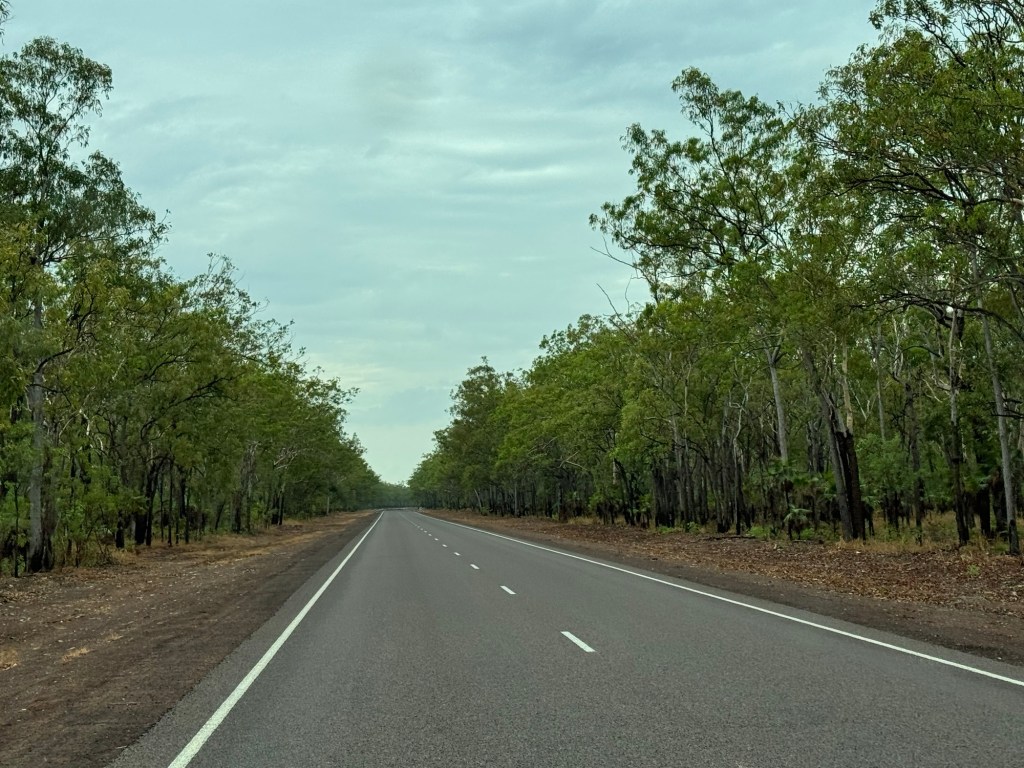
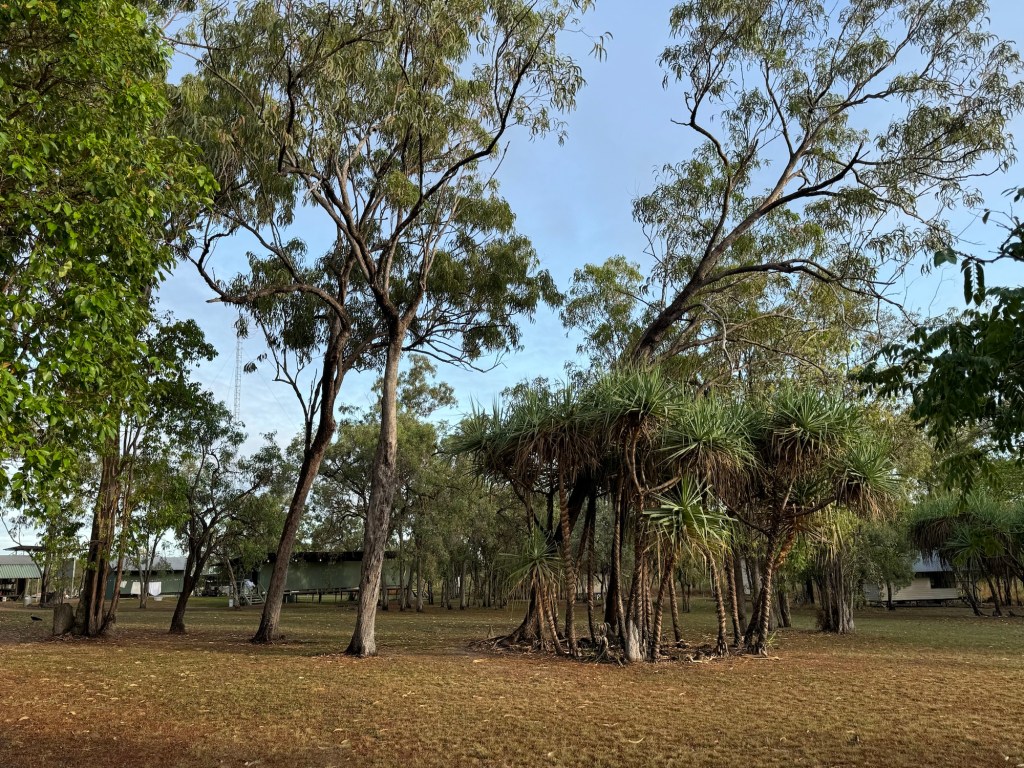
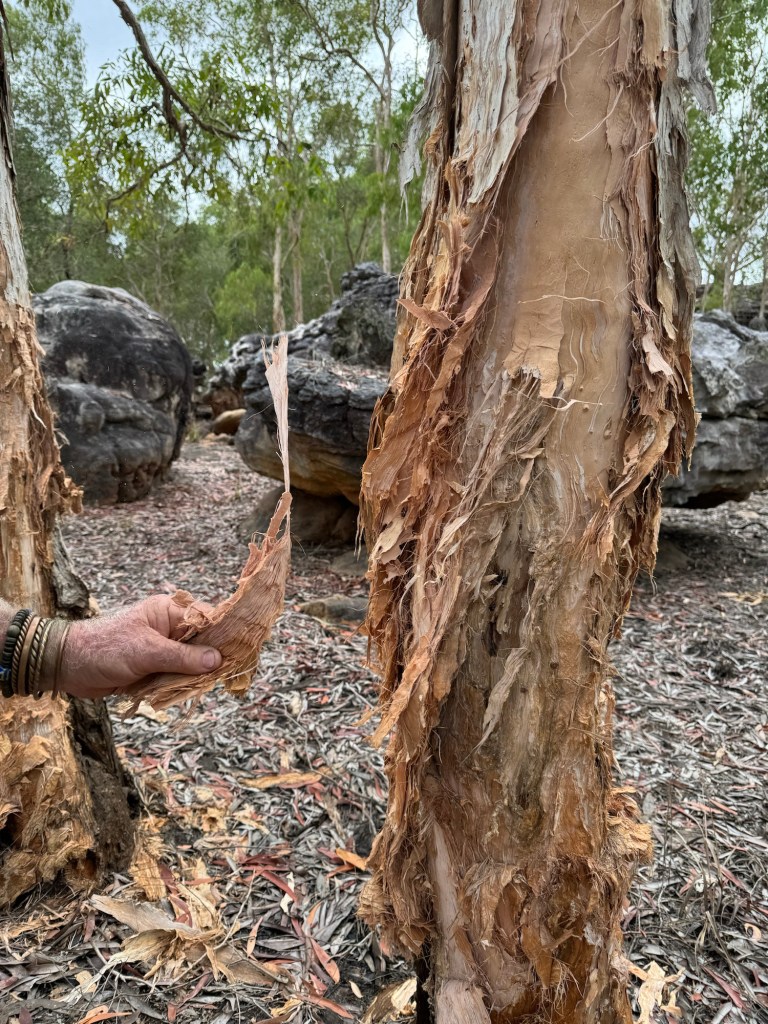
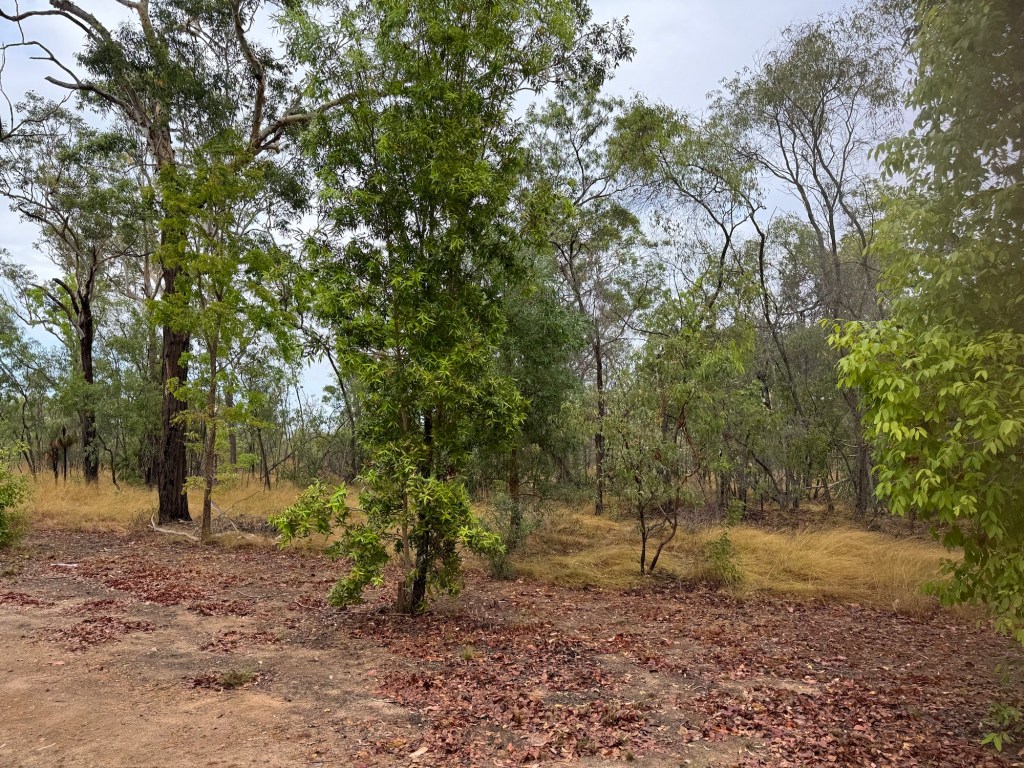
It feels like we have finally arrived at the point of beginning now that we are in Australia. After a simple breakfast, we were met by our guide Sab Lord. He is more than a guide, he is also the owner of Lords Kakadu & Arnhem Land Safaris, the company Martina booked for us, and a very interesting fellow. We embarked on an all day drive through flat land full of paperbark, eucalyptus and Sand palm tree forests, aka the bush, that receives controlled burns on a regular basis.

Driving through the bush

Fortunately, the monotony of the drive is interrupted by the conversation with Sab. He is 64 and getting ready to retire from the business next year, but shares many of his experiences of living in the bush and his knowledge of the aboriginal people. They are 3.5% of the 26M national population. Today’s aboriginals are heavily subsidized by the government, making them very dependent on Government hand outs.

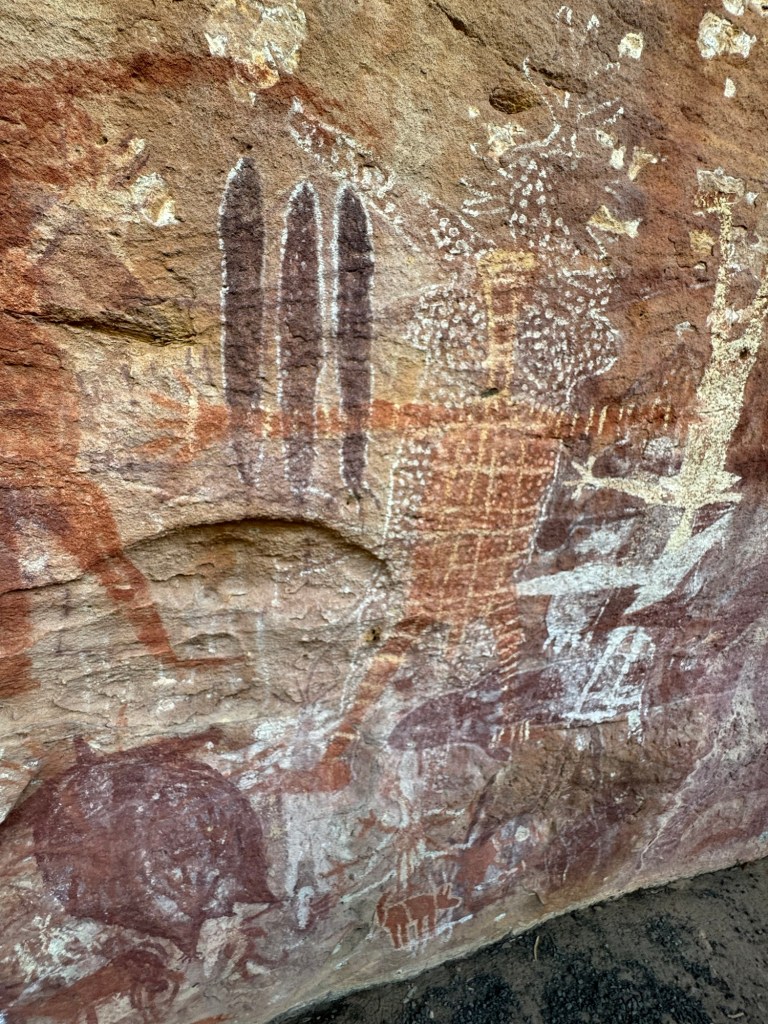
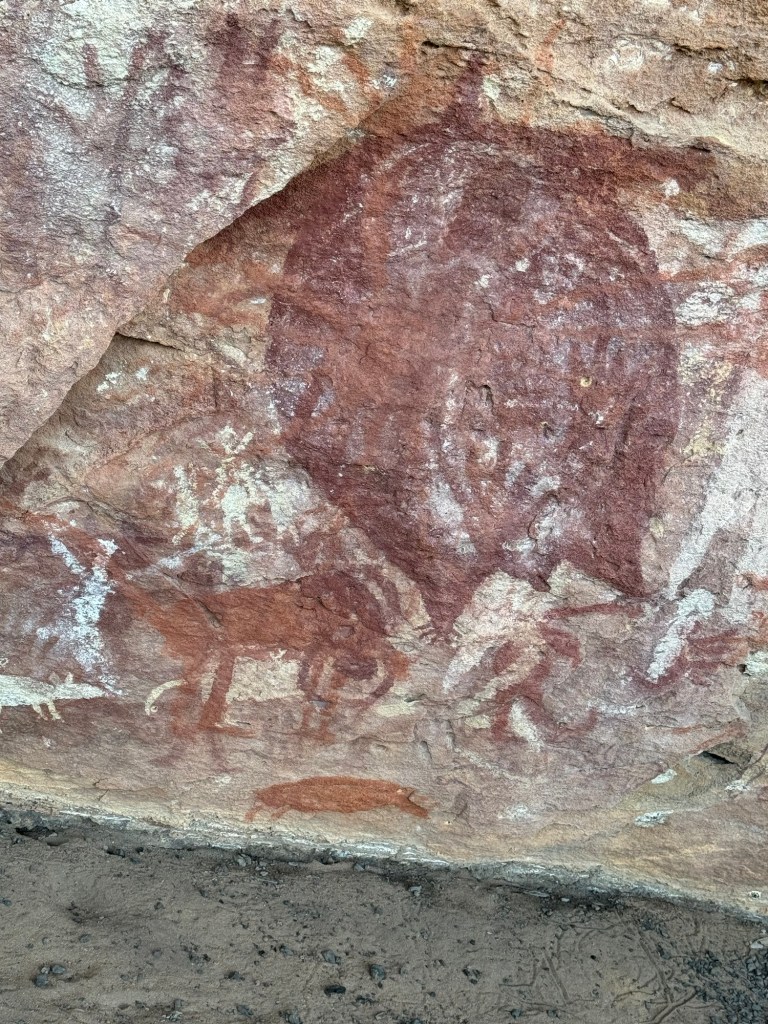
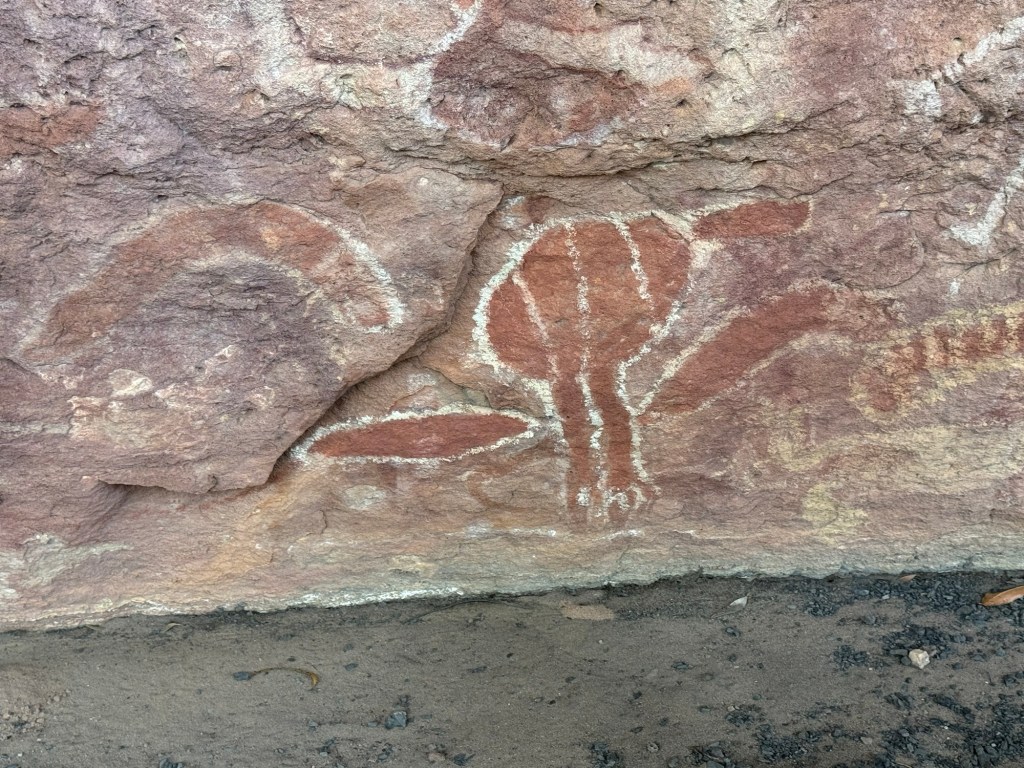
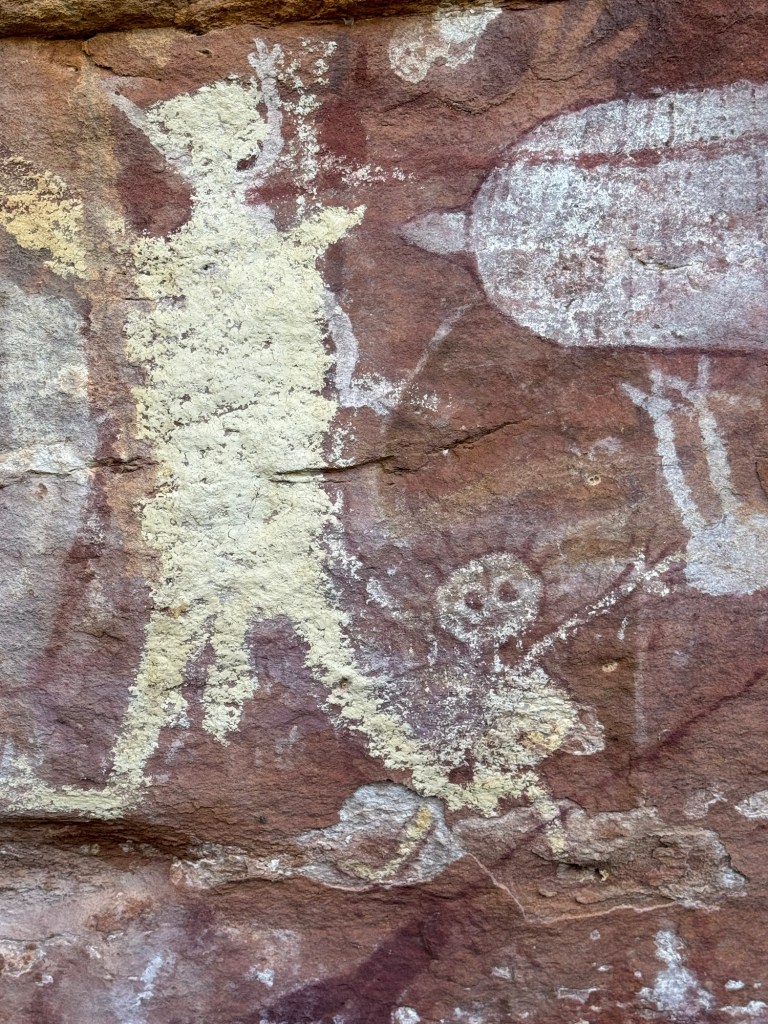
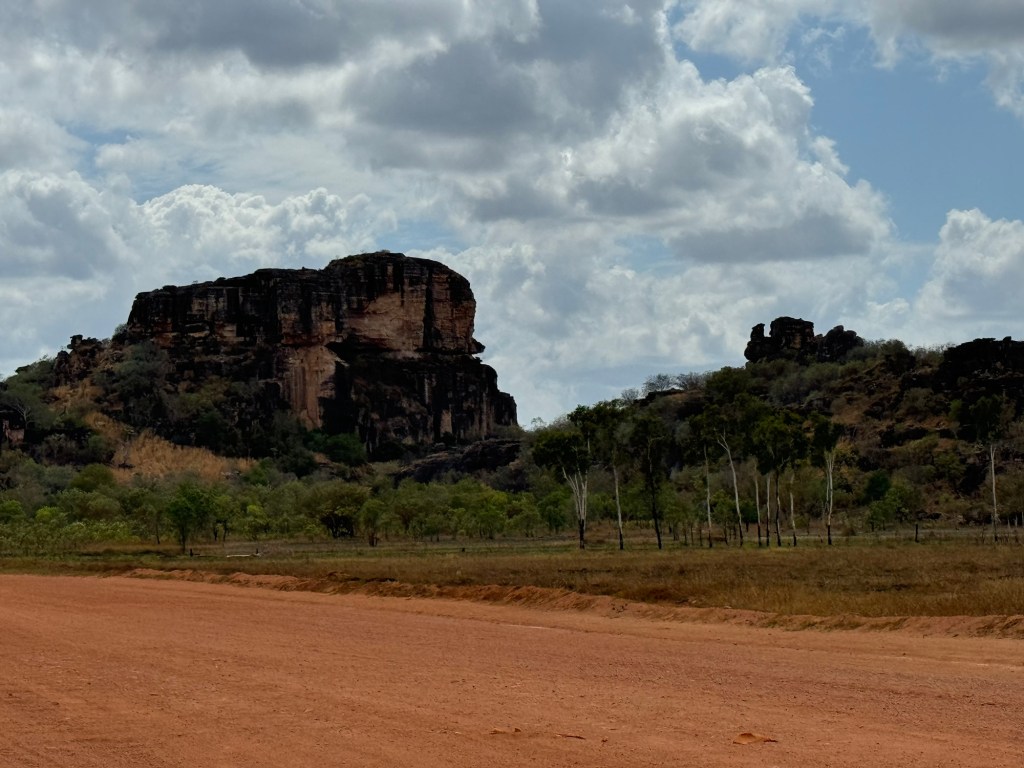
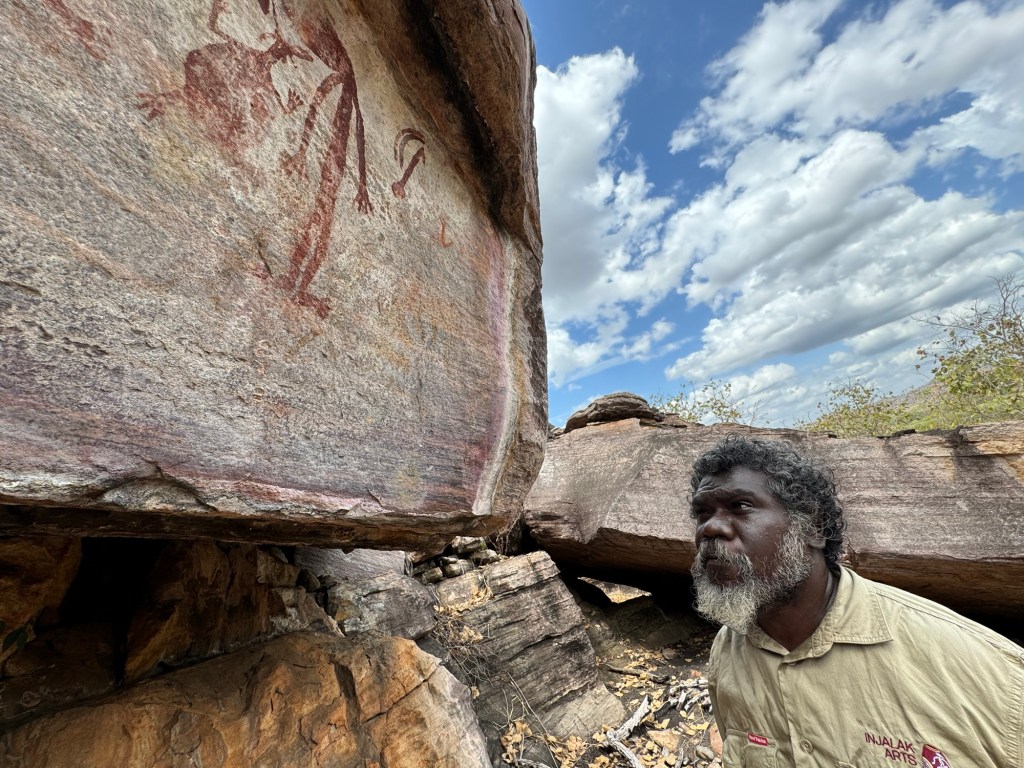
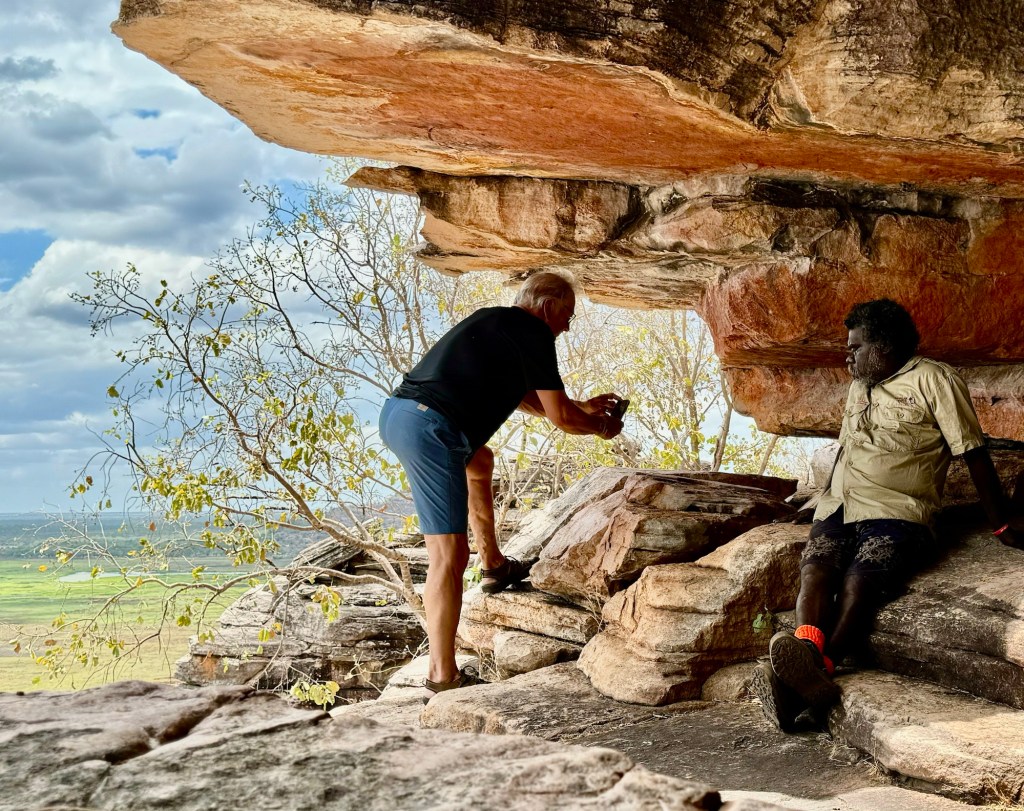
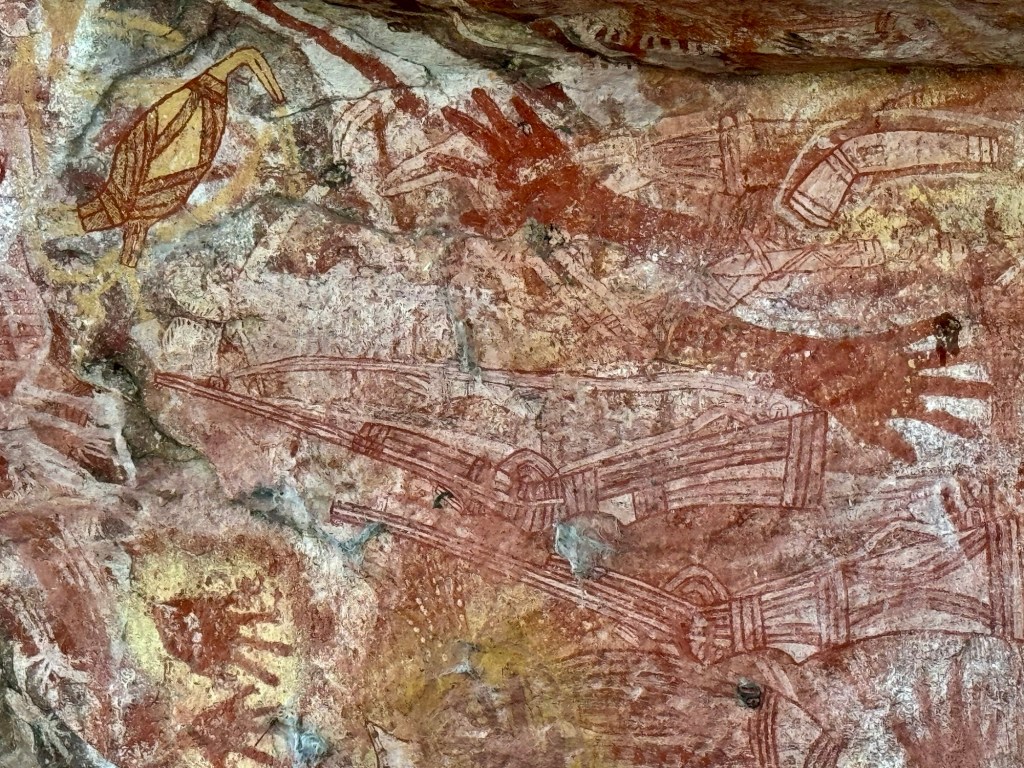
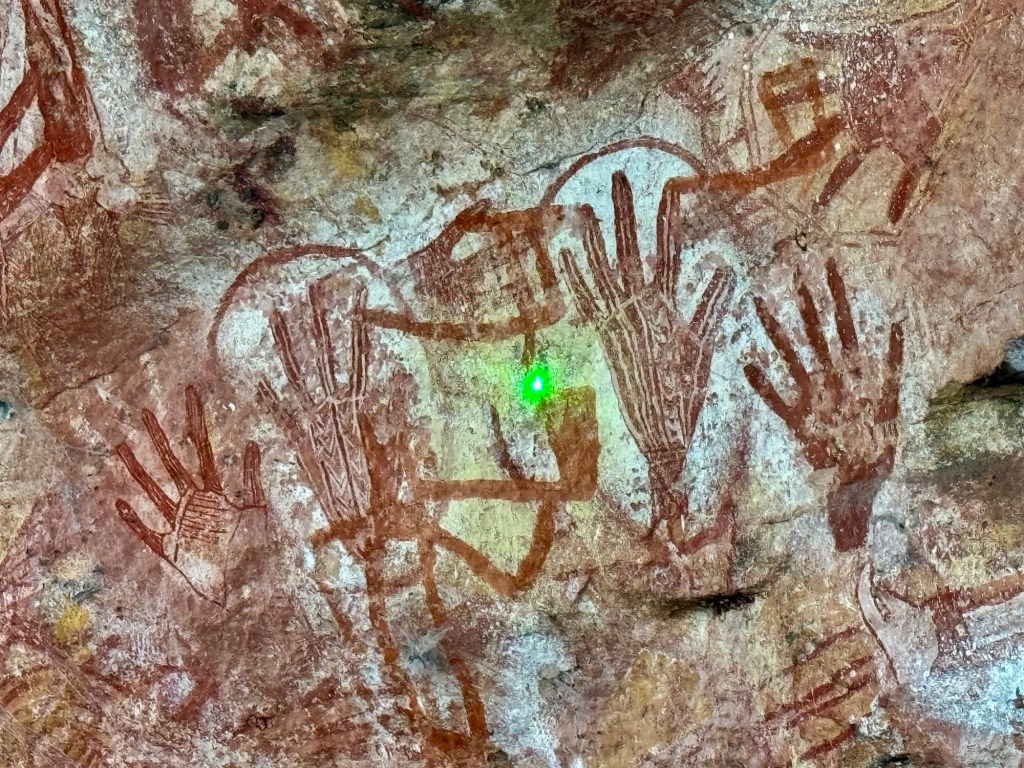
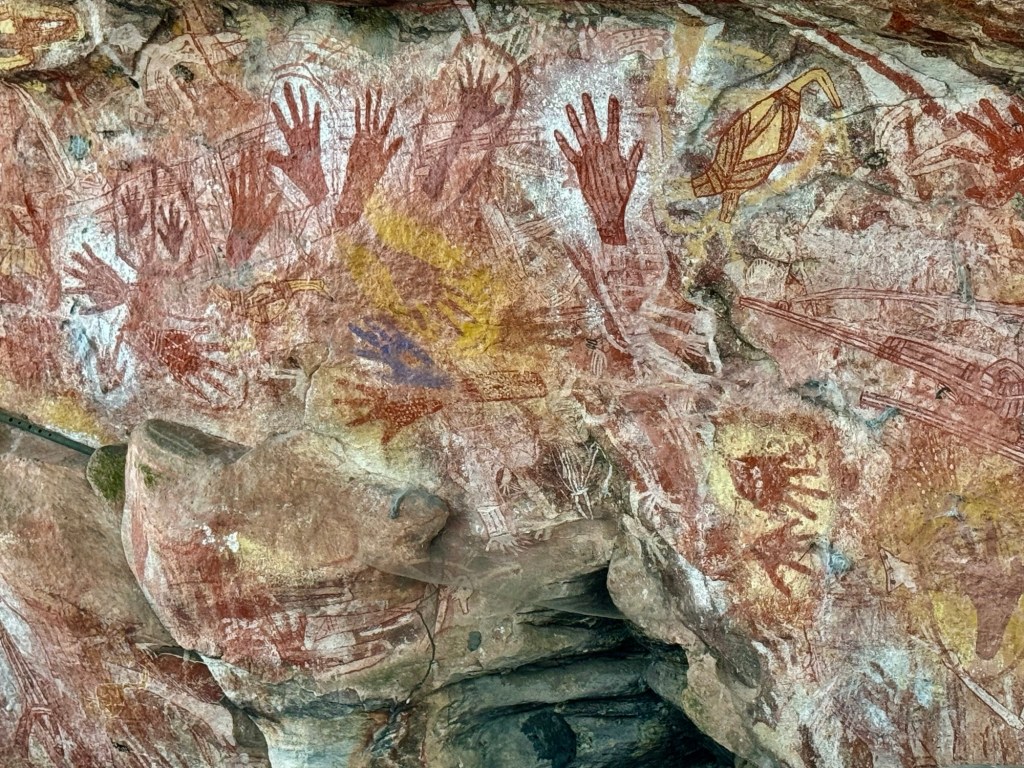
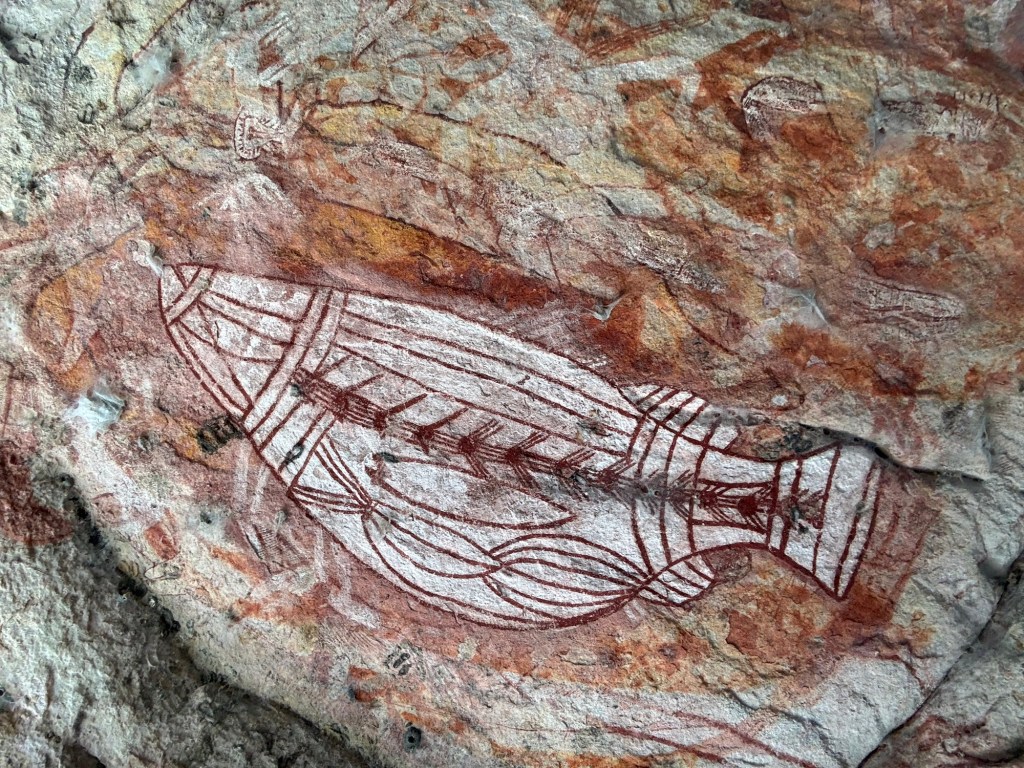
After 2 hours we arrived at Injalak Hill, an iconic indigenous rock art site, that protrudes above the landscape. Sab introduced us to a local aboriginal guide named Dallas, who led us up the boulder strewn hill to see the art. It was a bit rough going in the heat, but, with Mark’s help, I managed. Dallas spoke very little but was clearly proud of his ancestors’ work. He seemed content with his quiet life and uninterested in changing. I couldn’t help comparing him to our Native Americans, many of whom are independent, industrious and participating in American society.

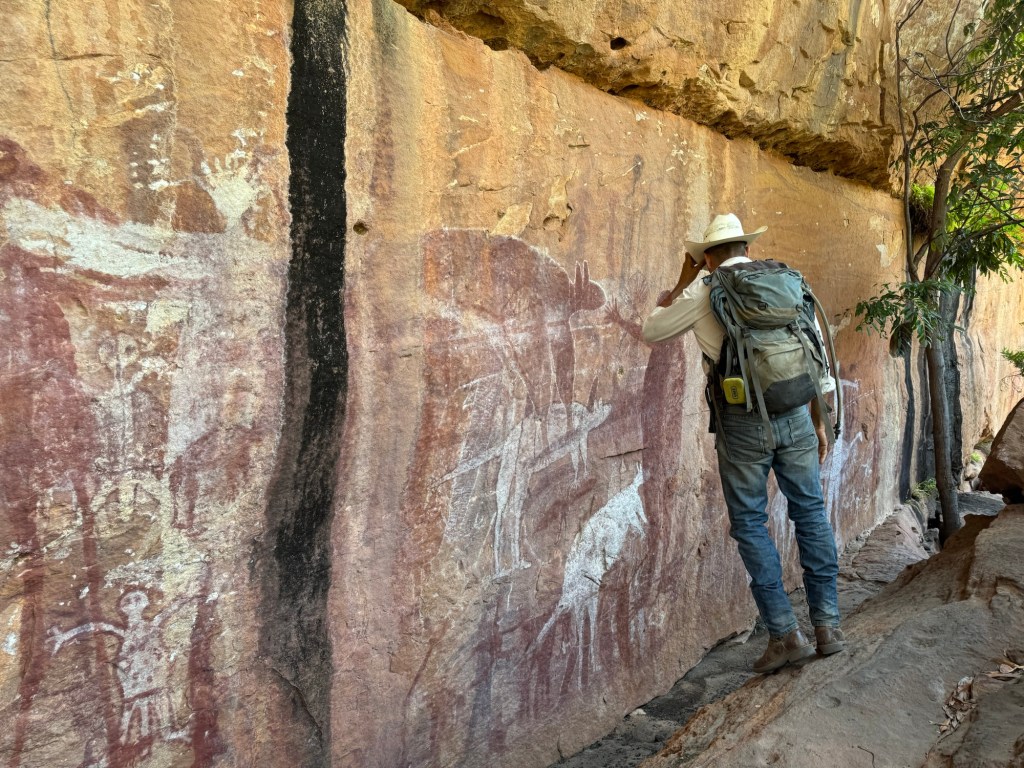
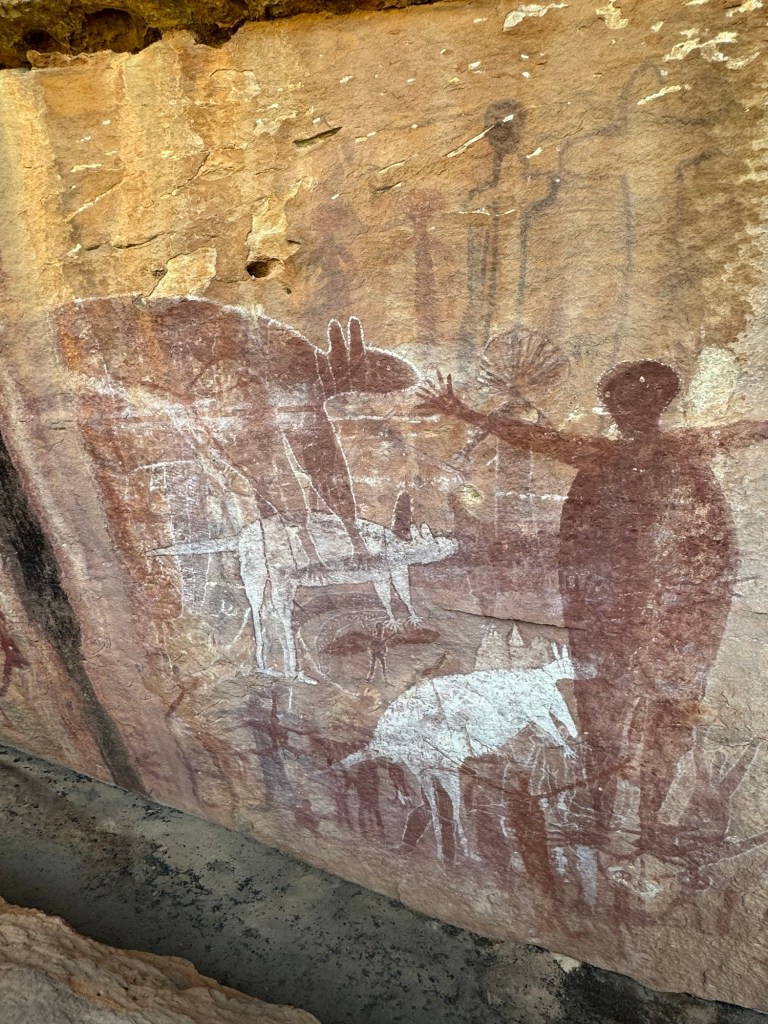
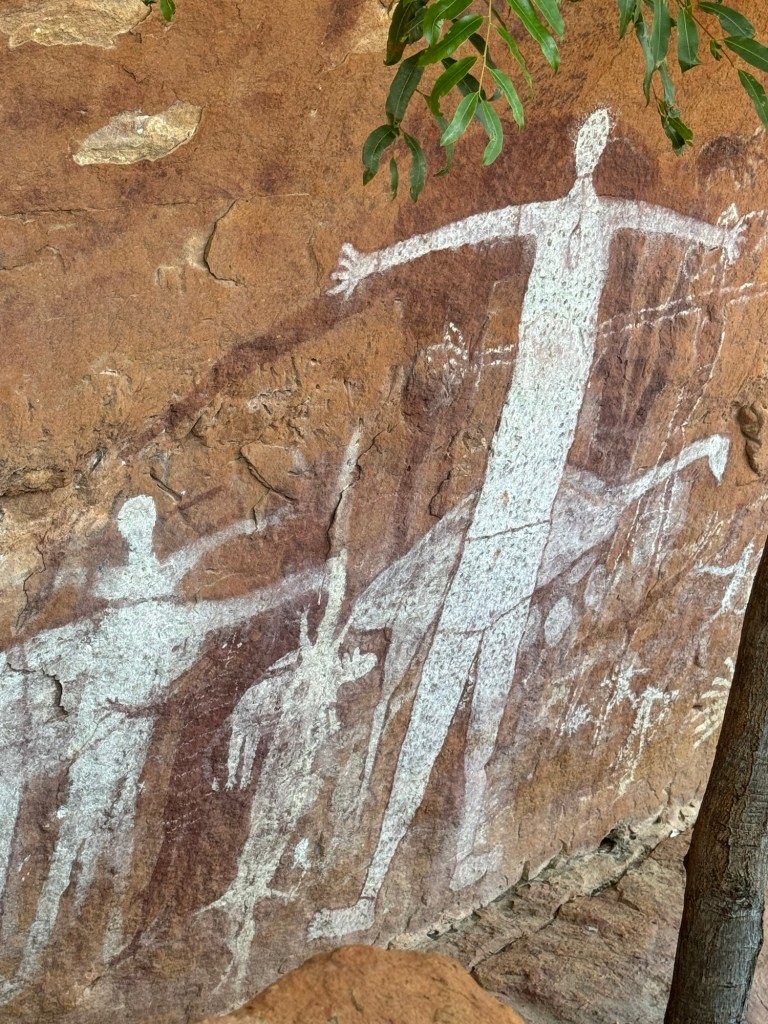
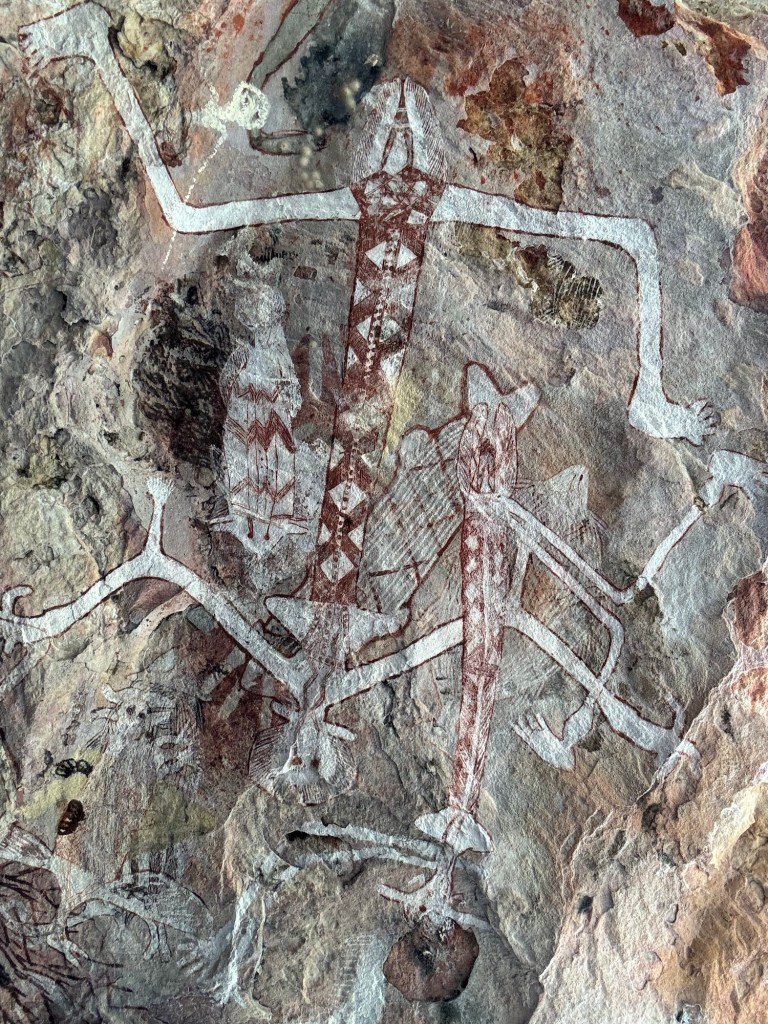
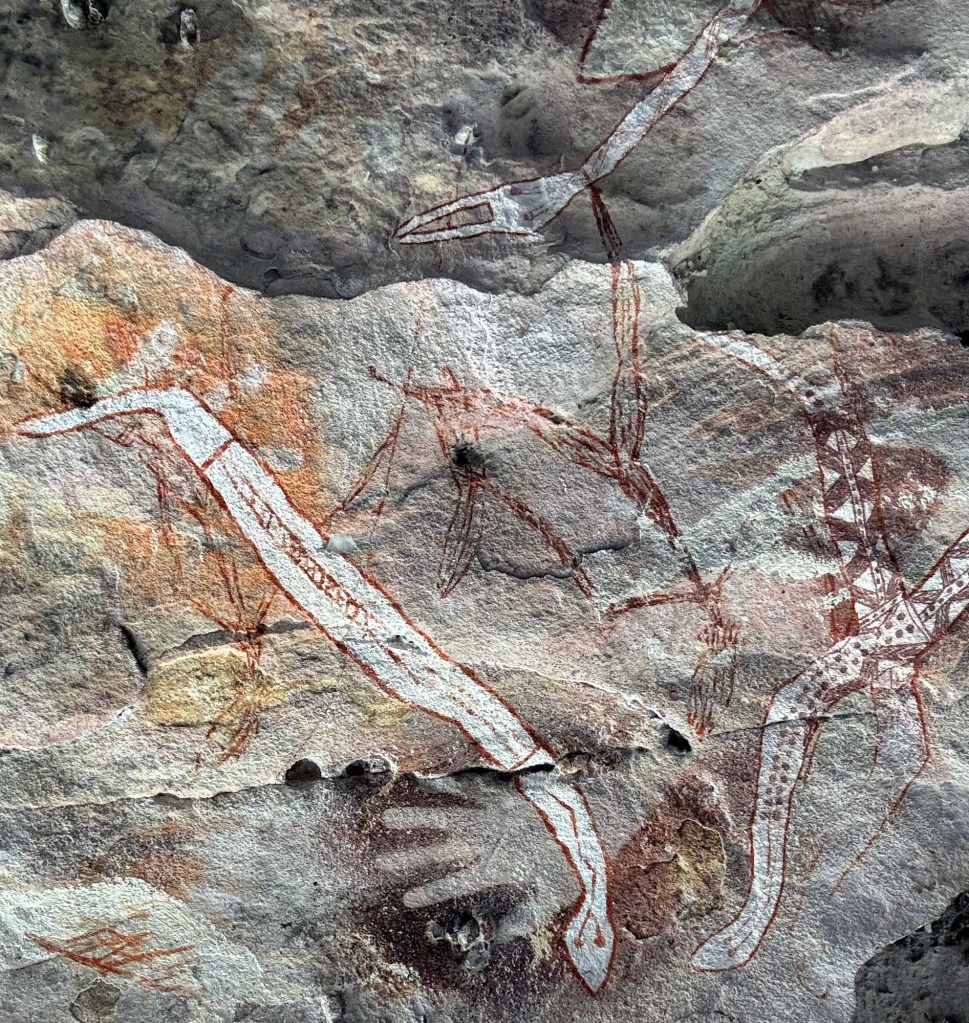
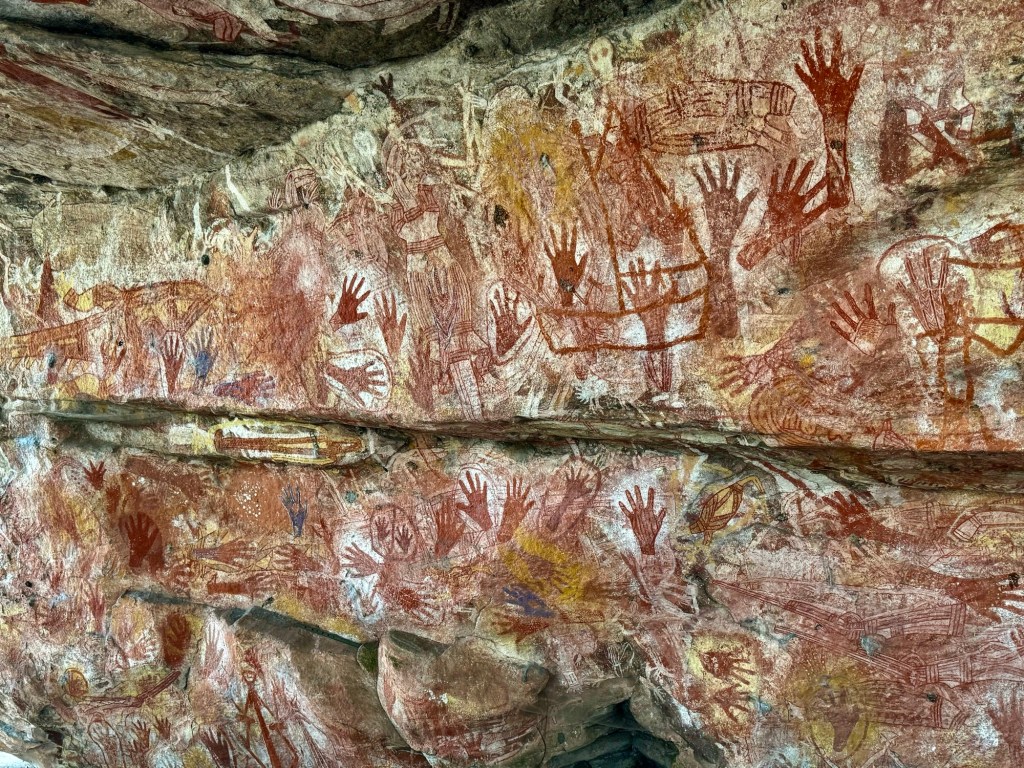
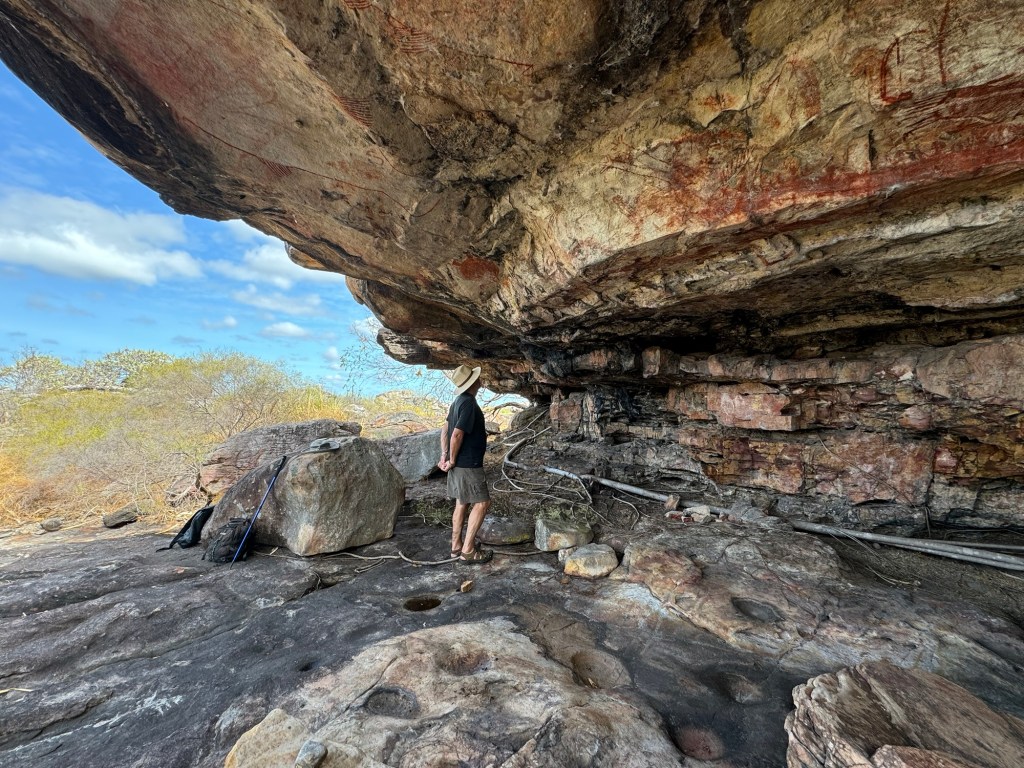
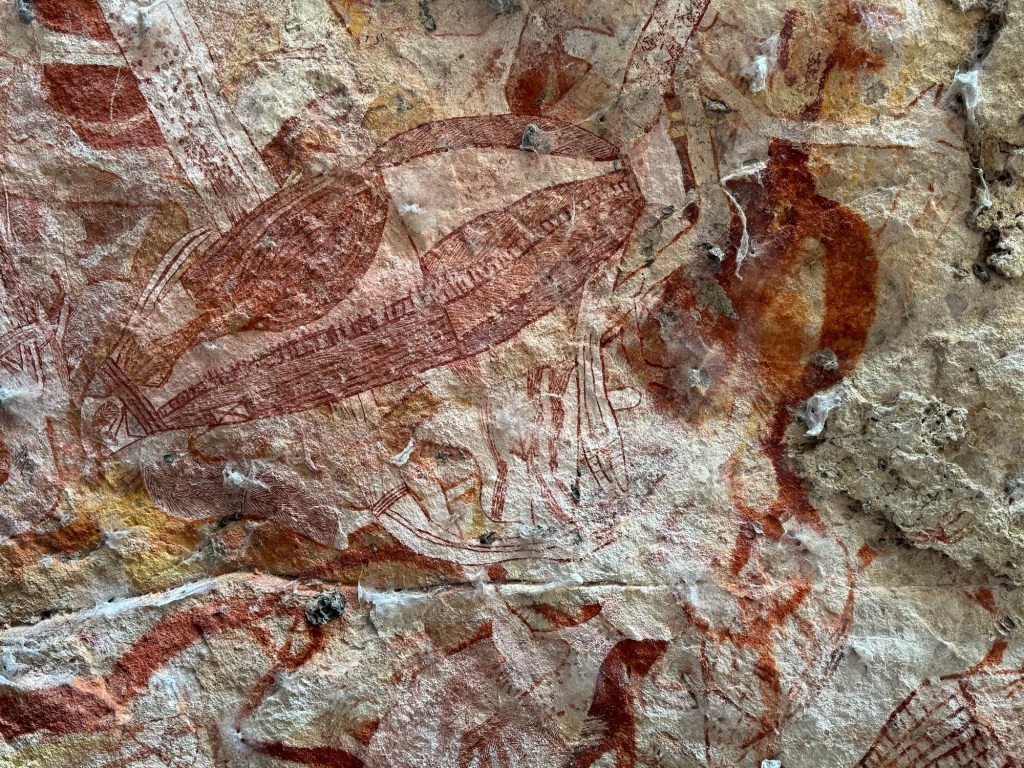
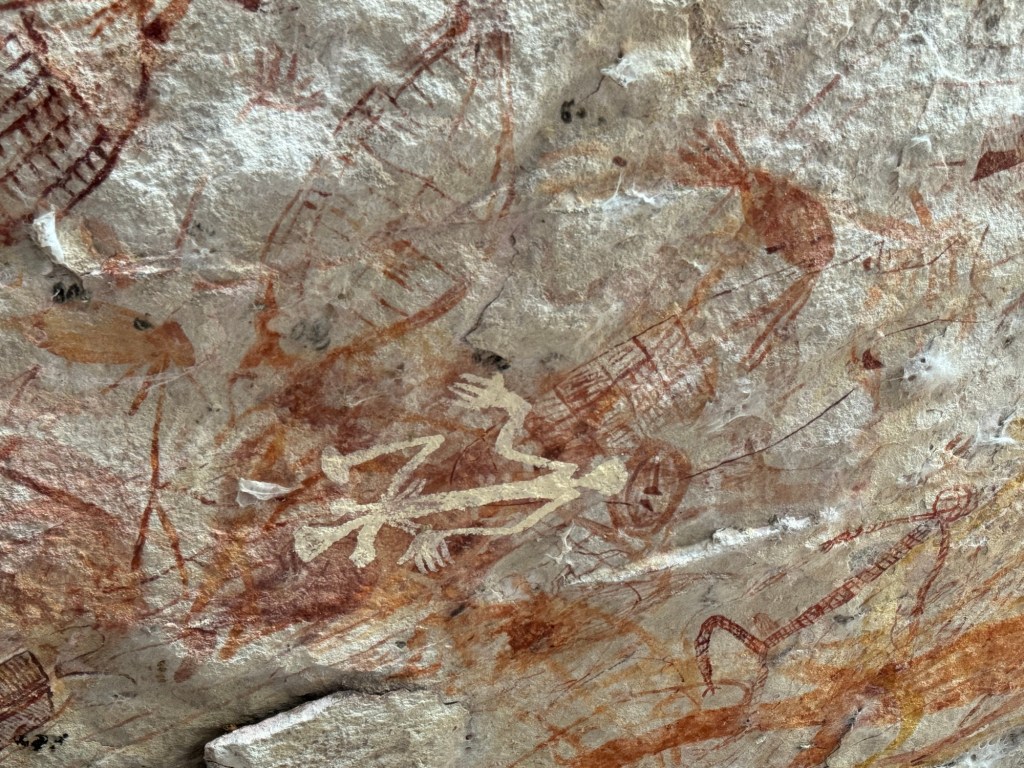
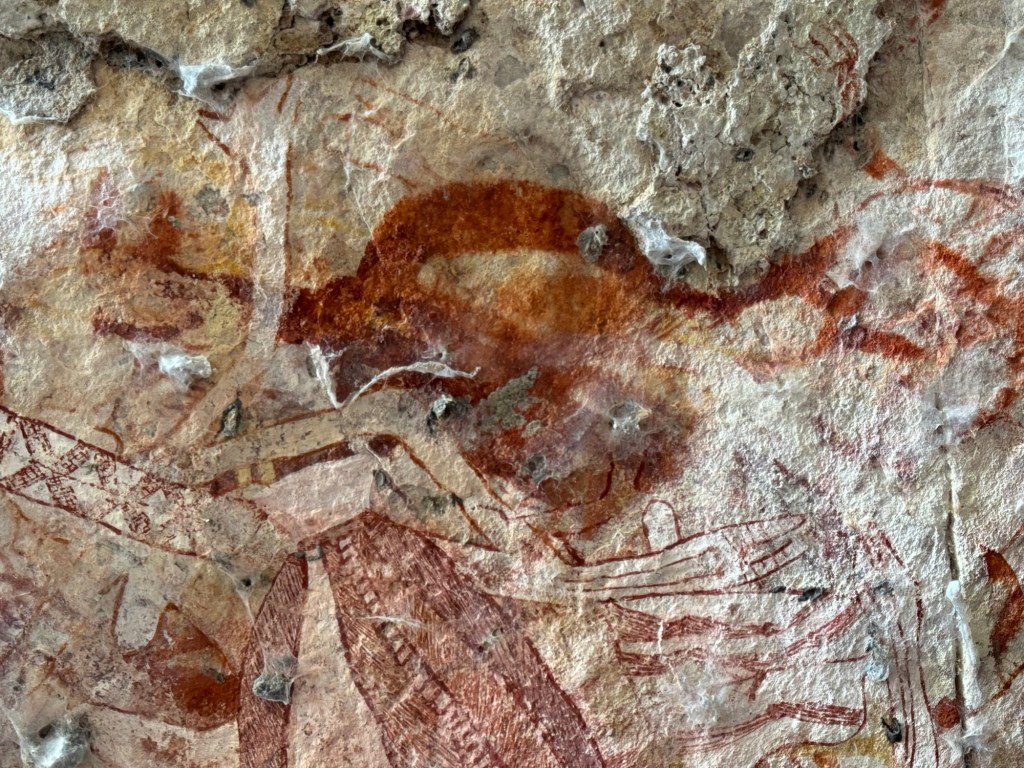
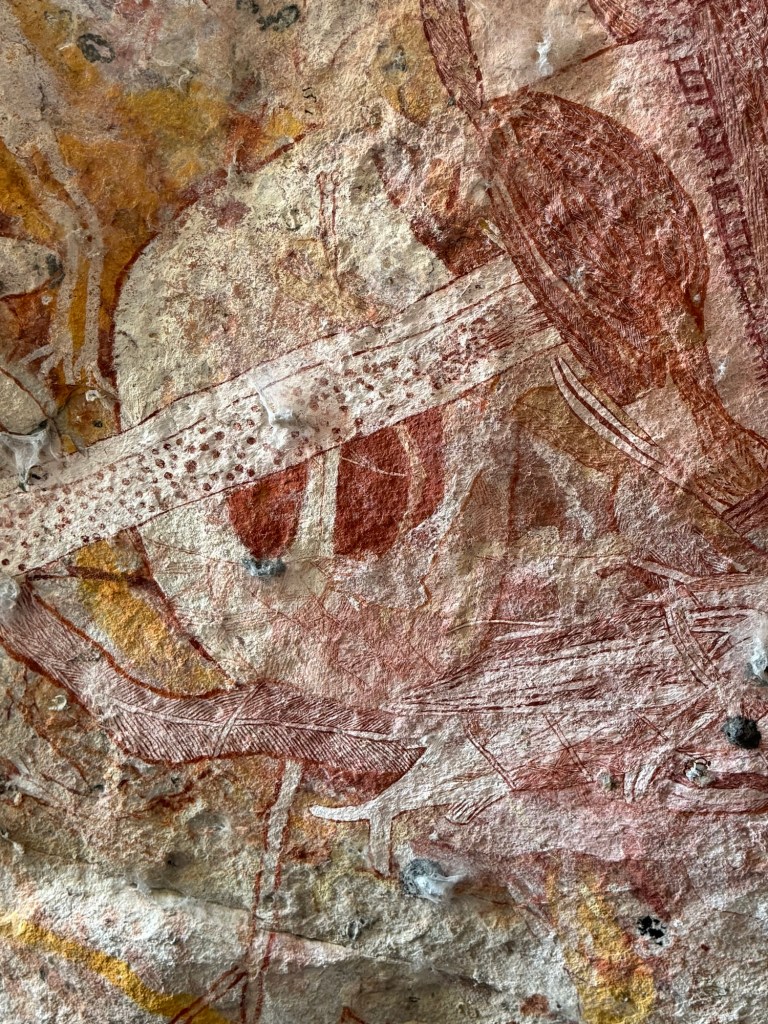
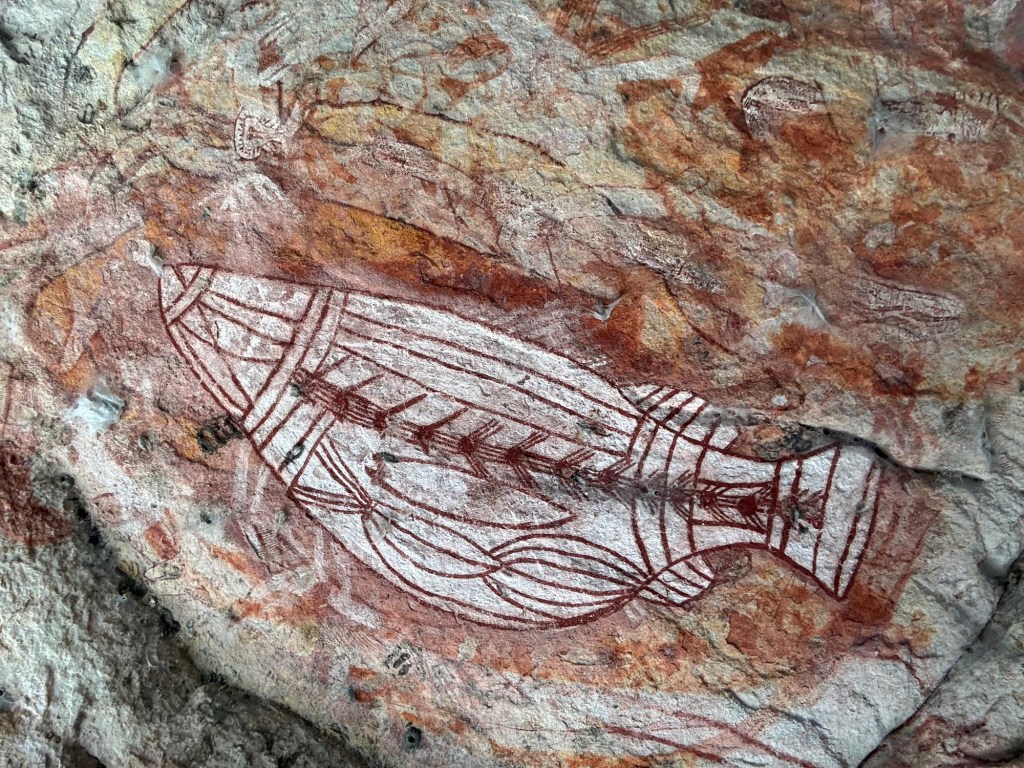
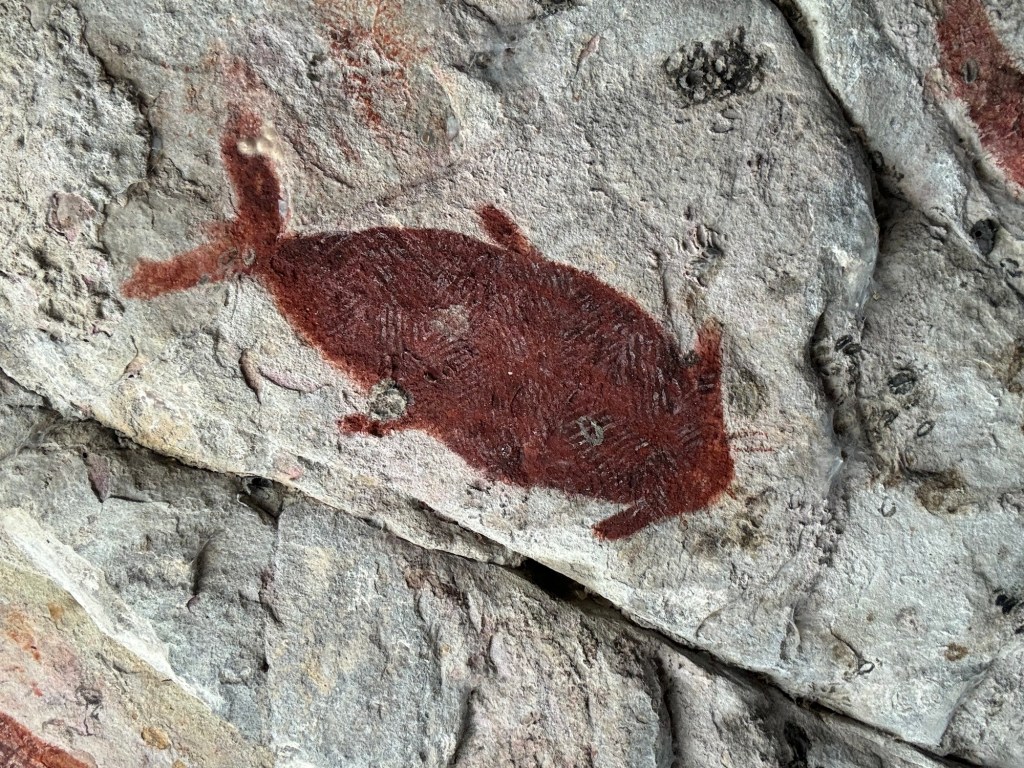
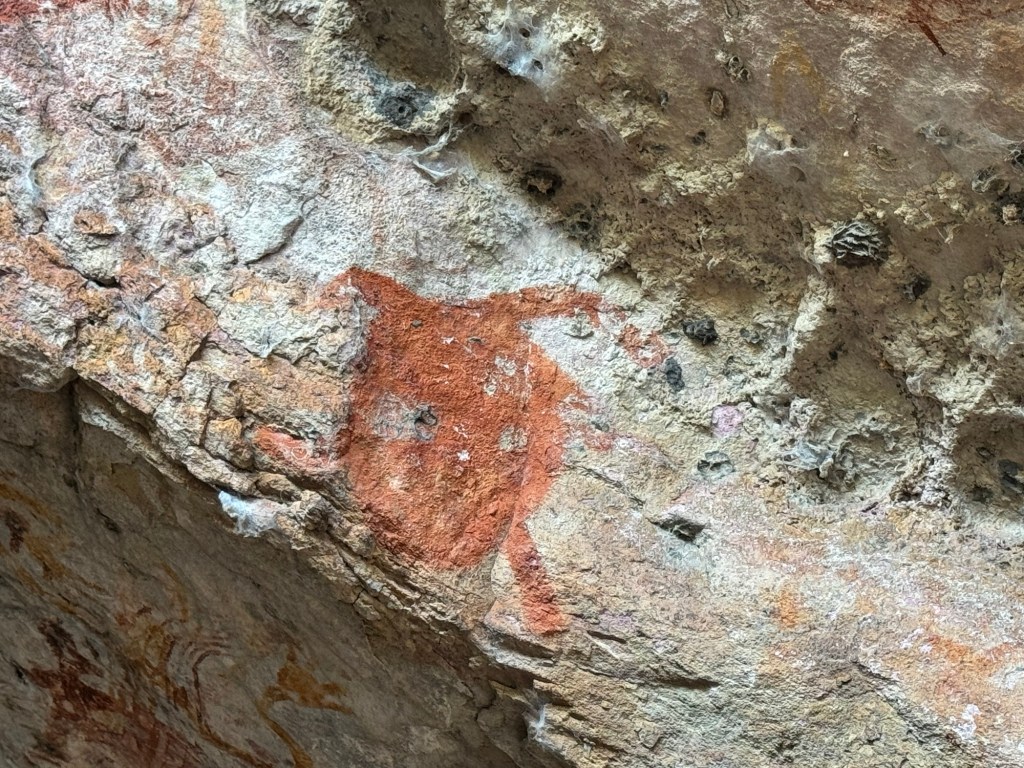
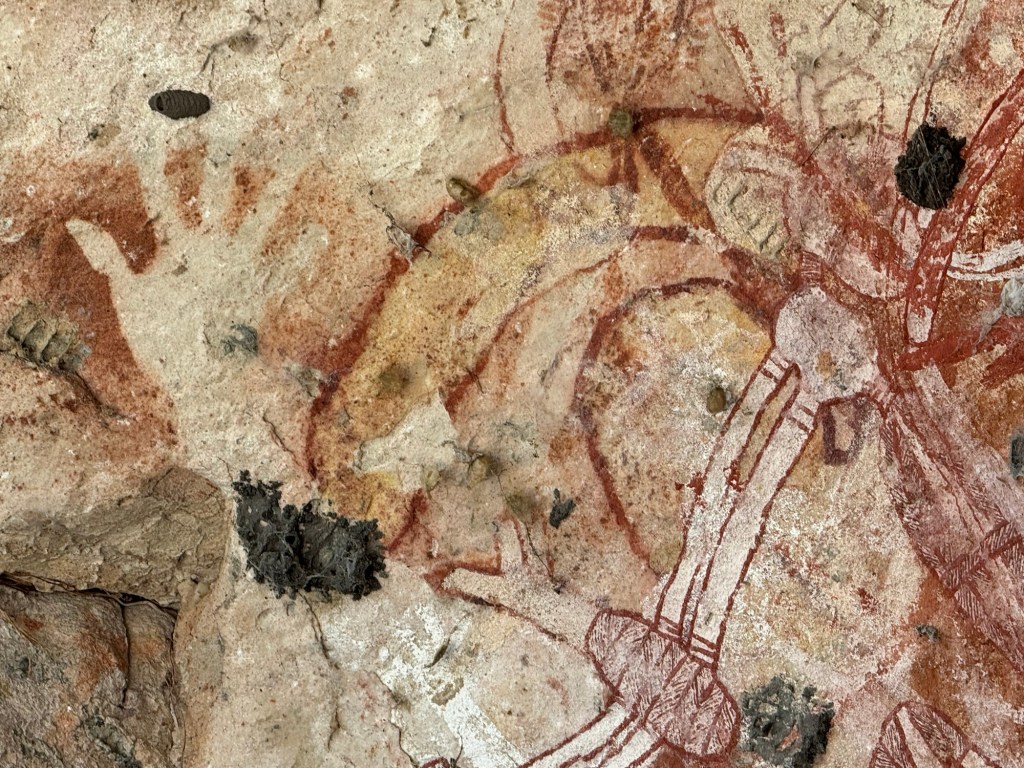
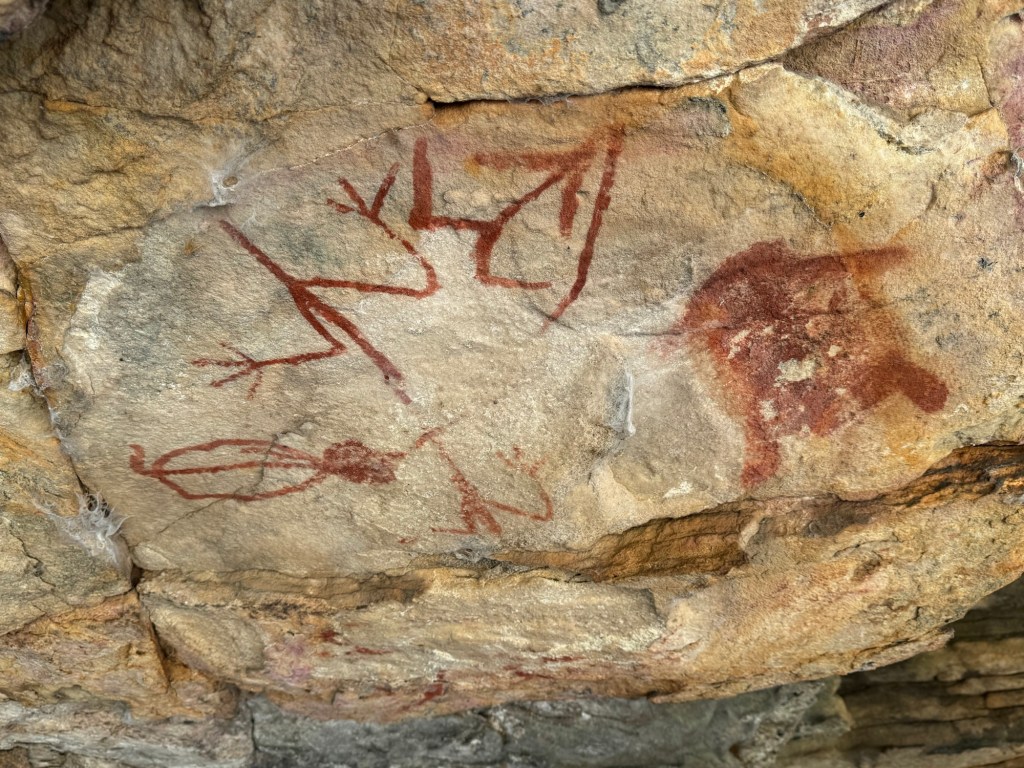
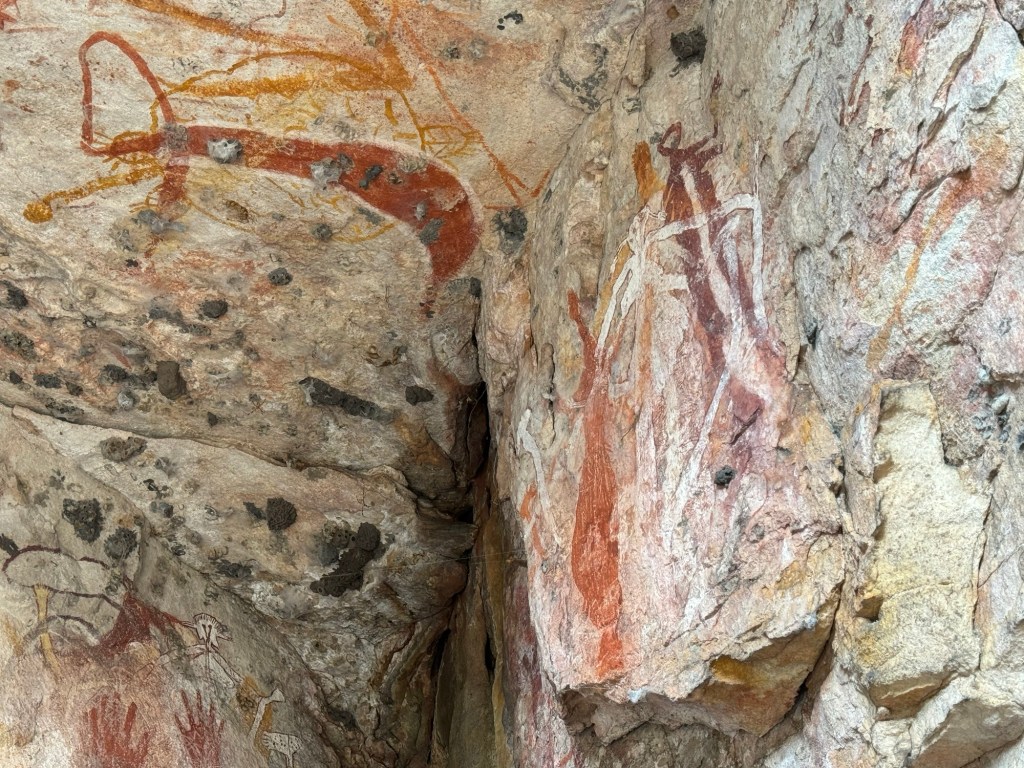
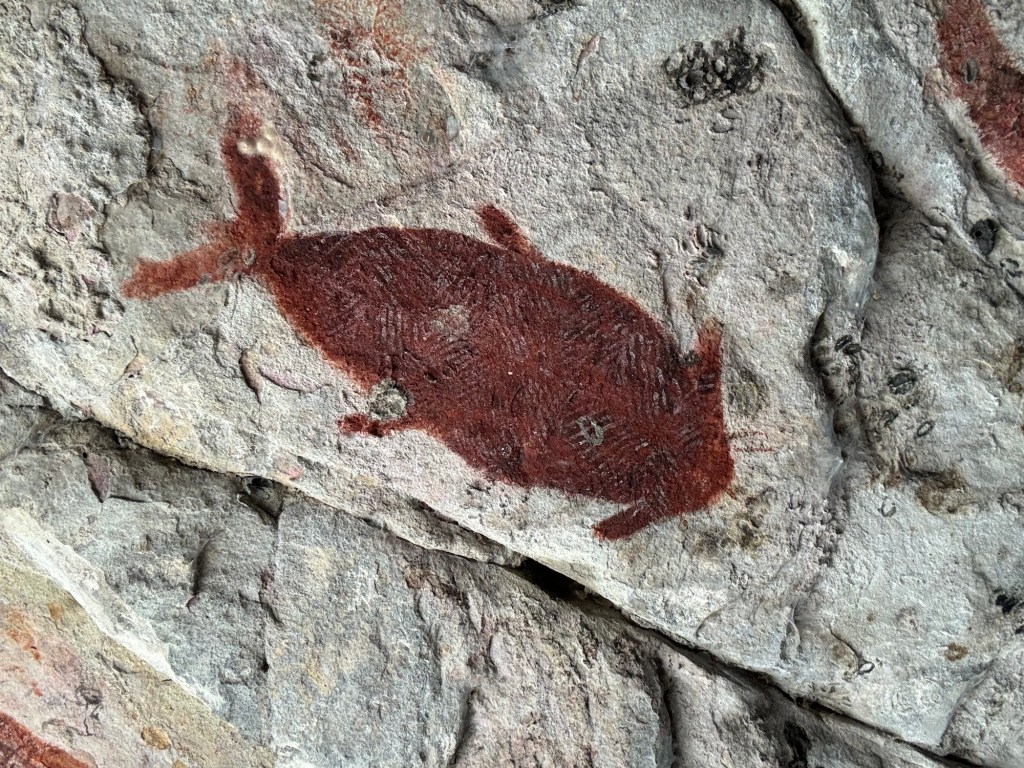
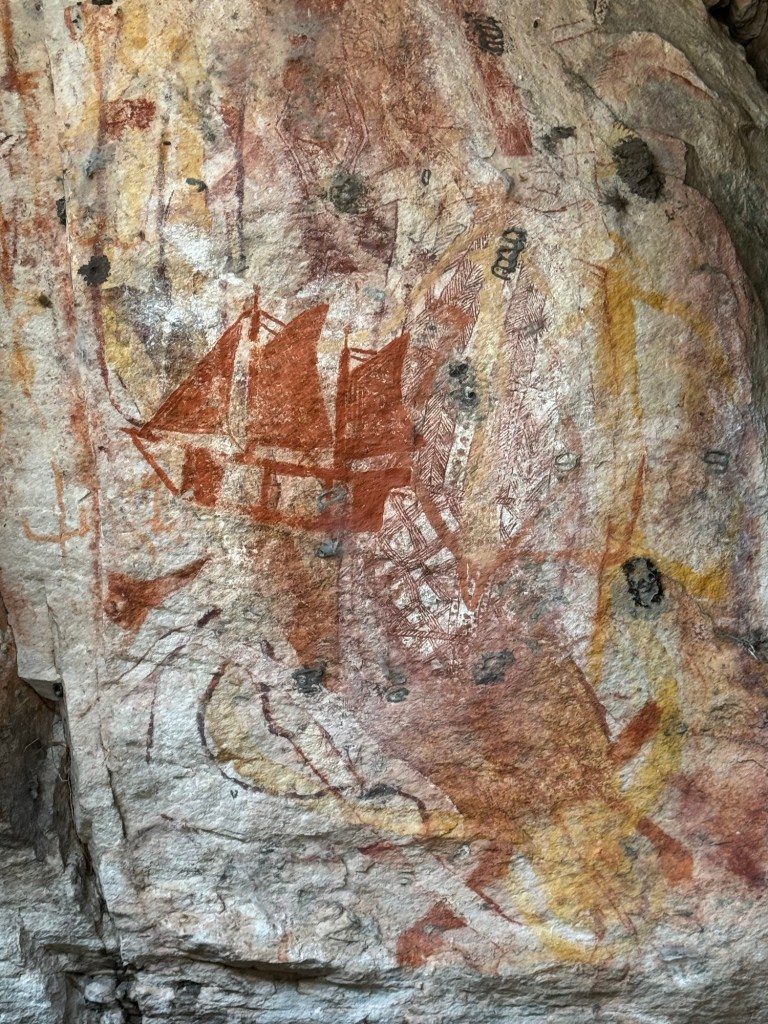
Anyway, the art we saw was exquisite. The subjects were mostly fish, birds and animals with a few stick figure people and lots of painted hands. The art was made with pulverized red and yellow colored sandstone, charcoal and blood. Sab said the art on this hill dates from 90 to 3000 years. Some of it was beautifully drawn and artfully colored.

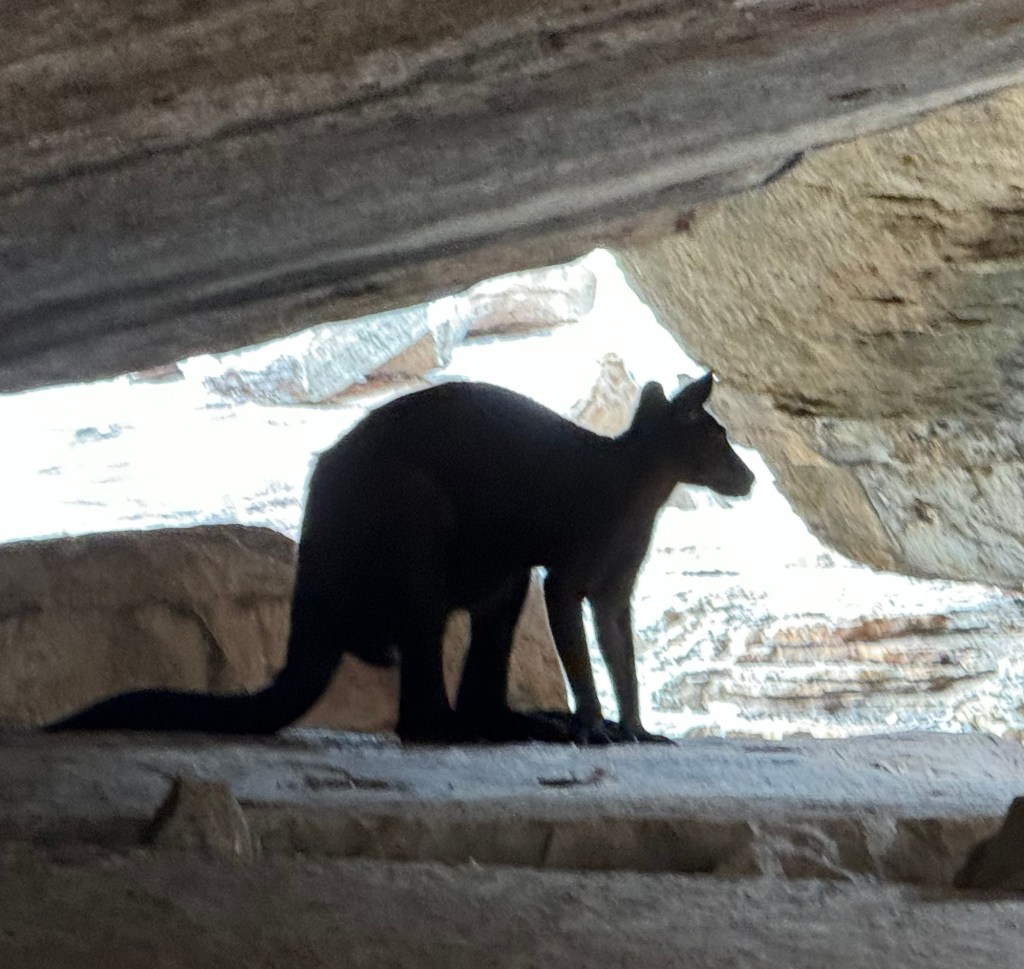
Near the top of the hill we stopped for lunch in a rock cove. Sab put out a delicious sandwich spread and we each made our own. I learned that Sab stands for Sebastian. Just as we finished lunch, we spotted a black Walaroo, somewhat rare,which is slightly larger than a Kangaroo and captured a decent photo of it.

Mark helped me hike back down the hill to the car. We drove another 2 hours through the bush, a flat landscape composed mostly of paperbark, eucalyptus and small palm trees on a dirt track to Davidson’s Safari Camp.

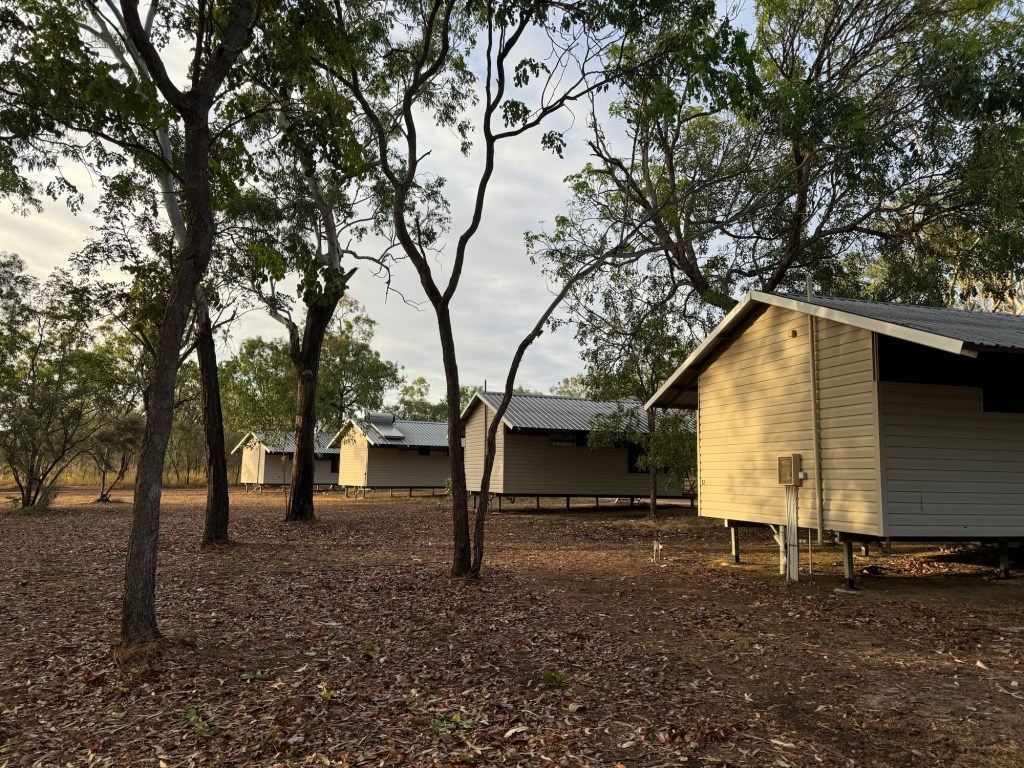
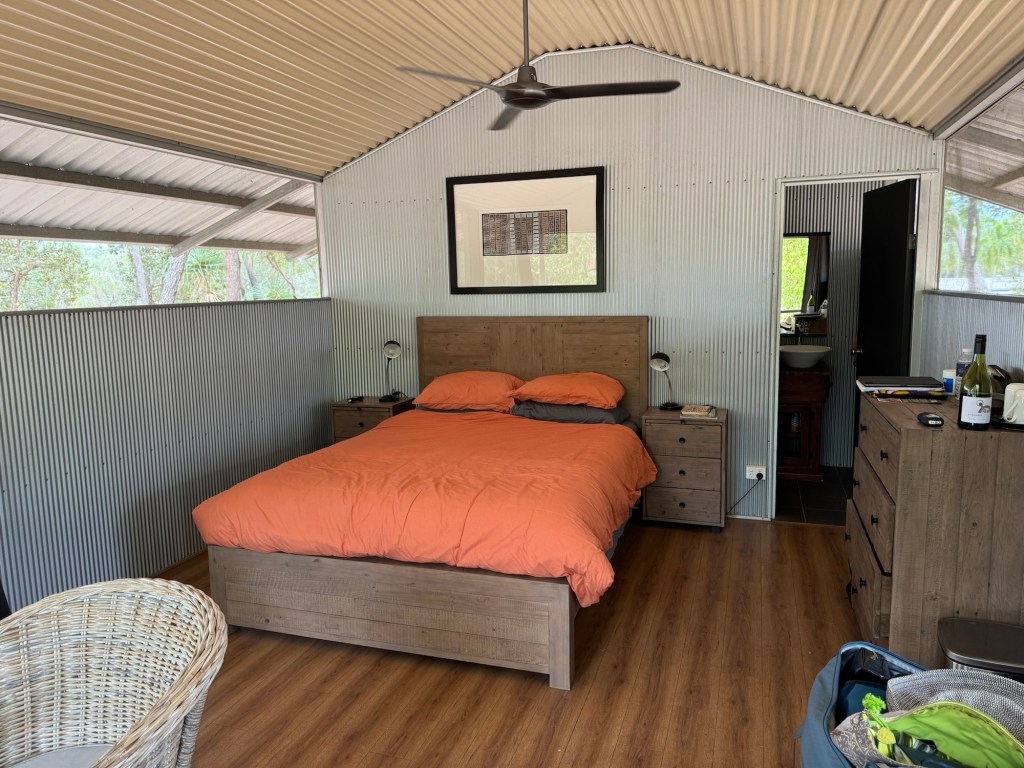
We were assigned our own cabin and found it pleasantly comfortable, except there was no AC. Fortunately, there was a large ceiling fan that kept us almost cool. Once settled in we checked out the lodge, met the few other guests, as the season was almost over, had dinner with Sab and went to bed early. I did learn that I can’t down load photos or publish posts as there is no WI-FI or internet in the bush, but I can keep writing.

Wednesday, September 18, 2024

Up and ready to roll by 8:30, Sab drove us in an old safari Land Cruiser to the edge of a large marsh about 30 minutes away. From there, we walked another 30 minutes to a site called The Major Art Gallery.

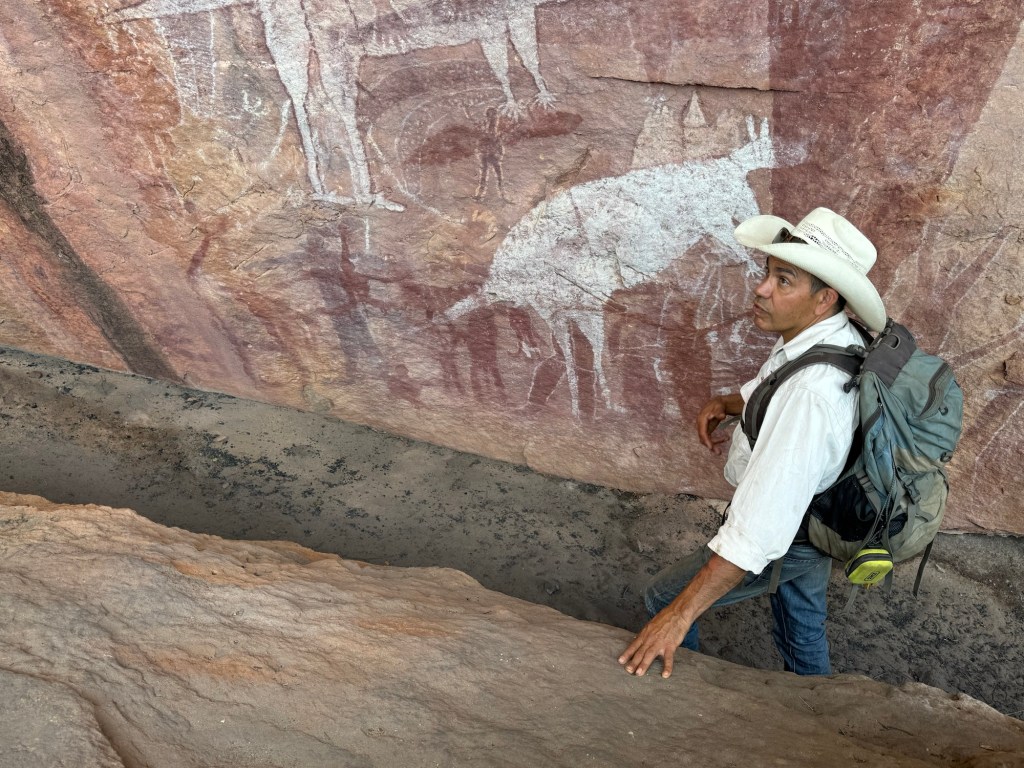
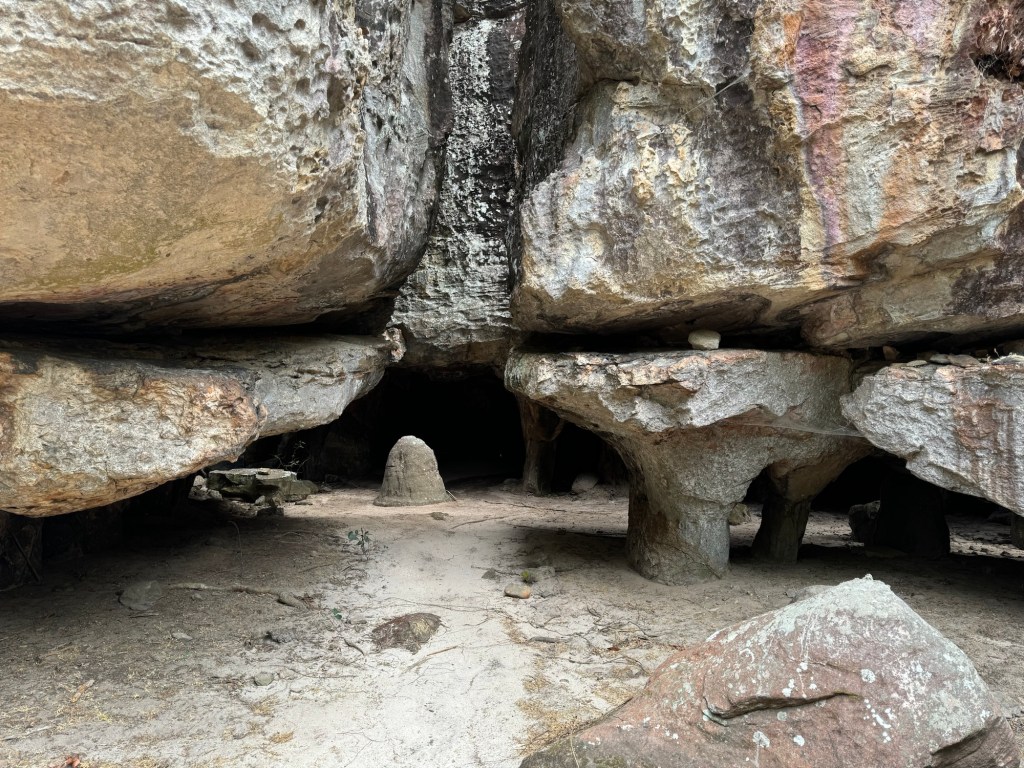
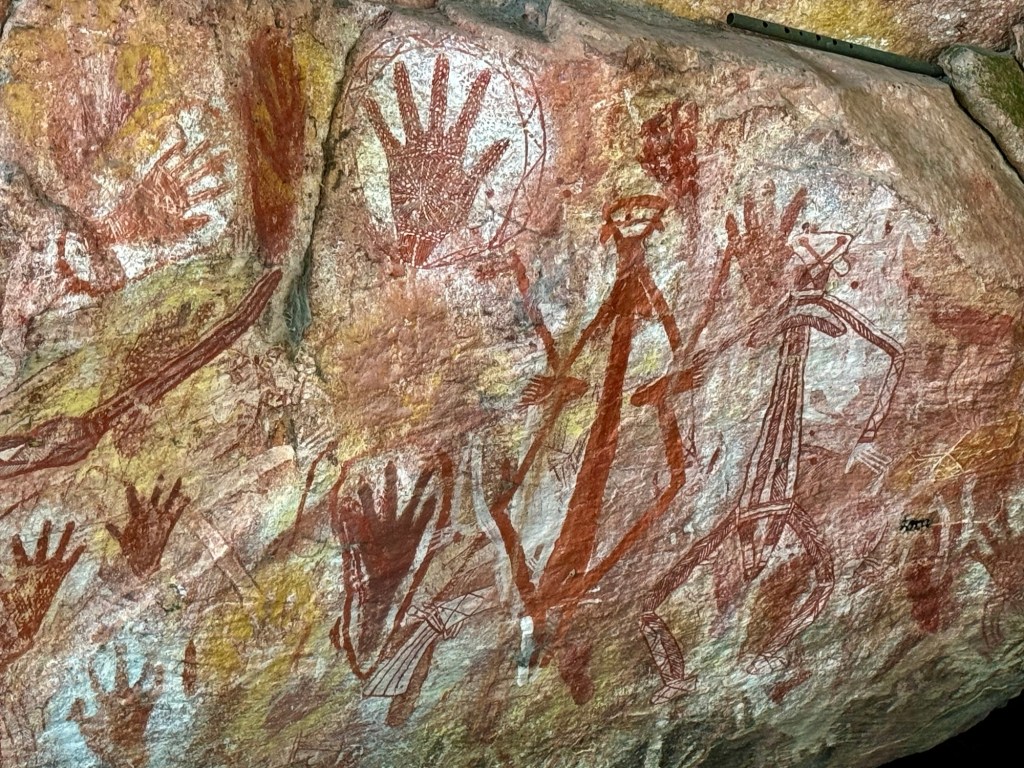
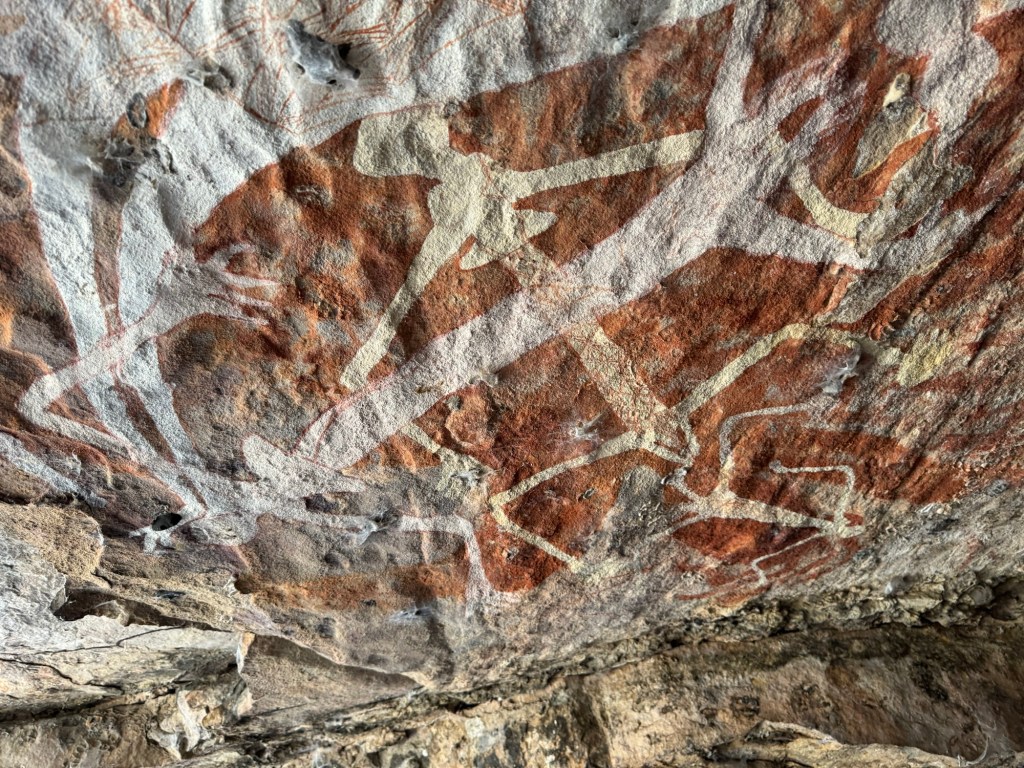
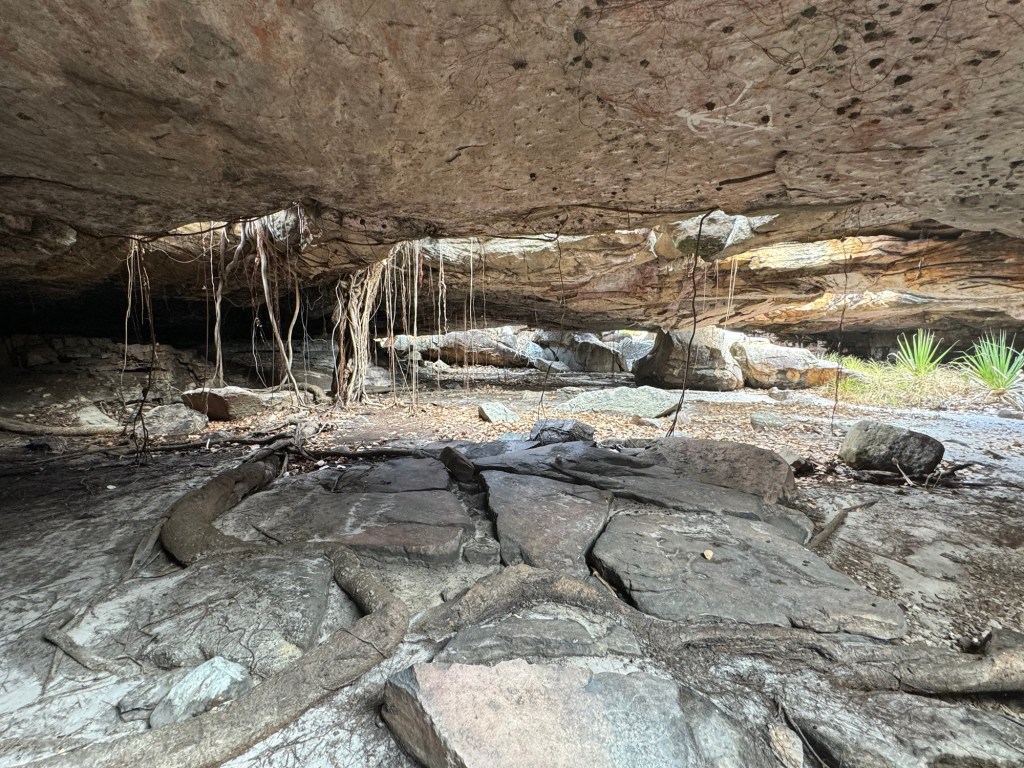
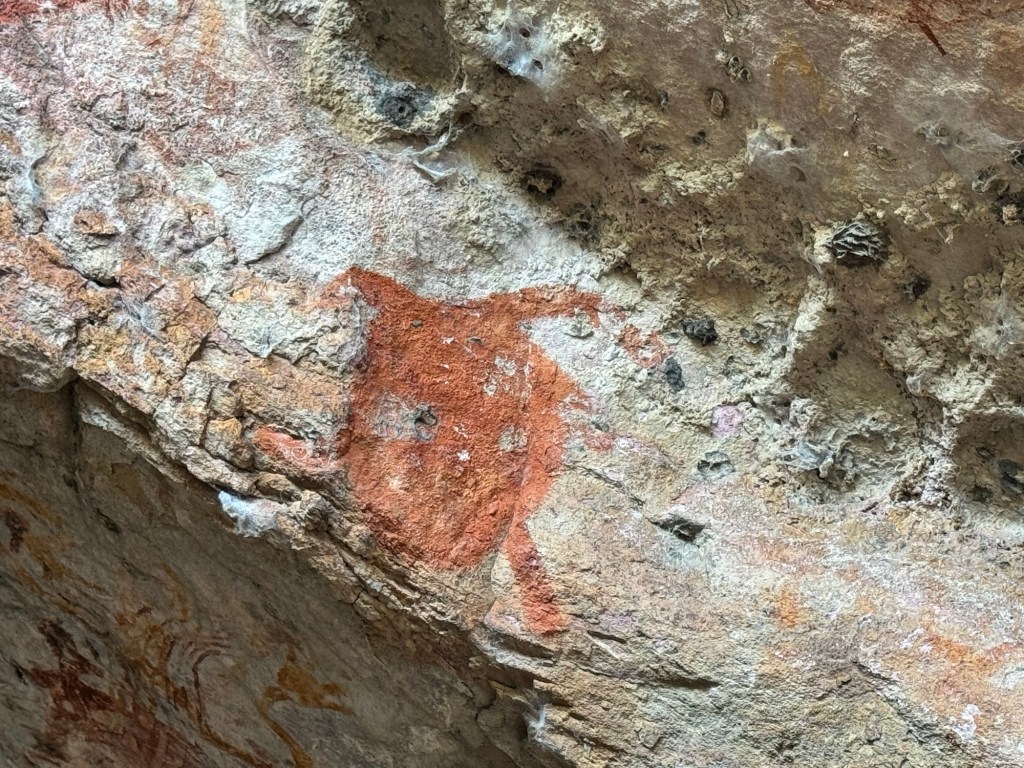
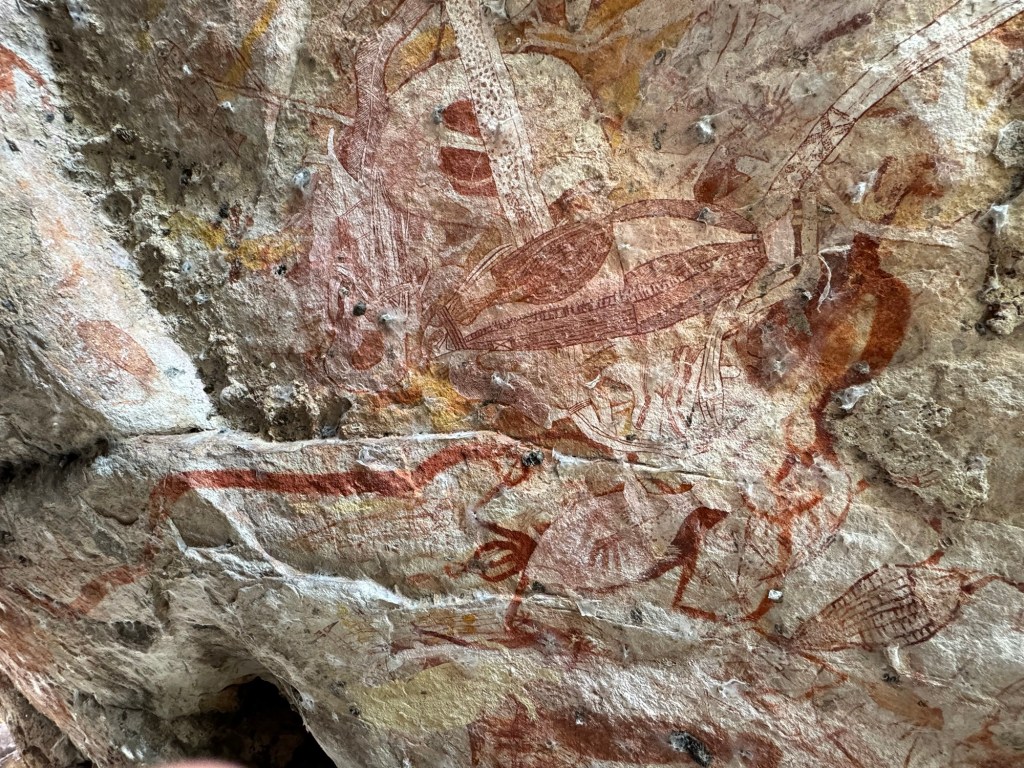
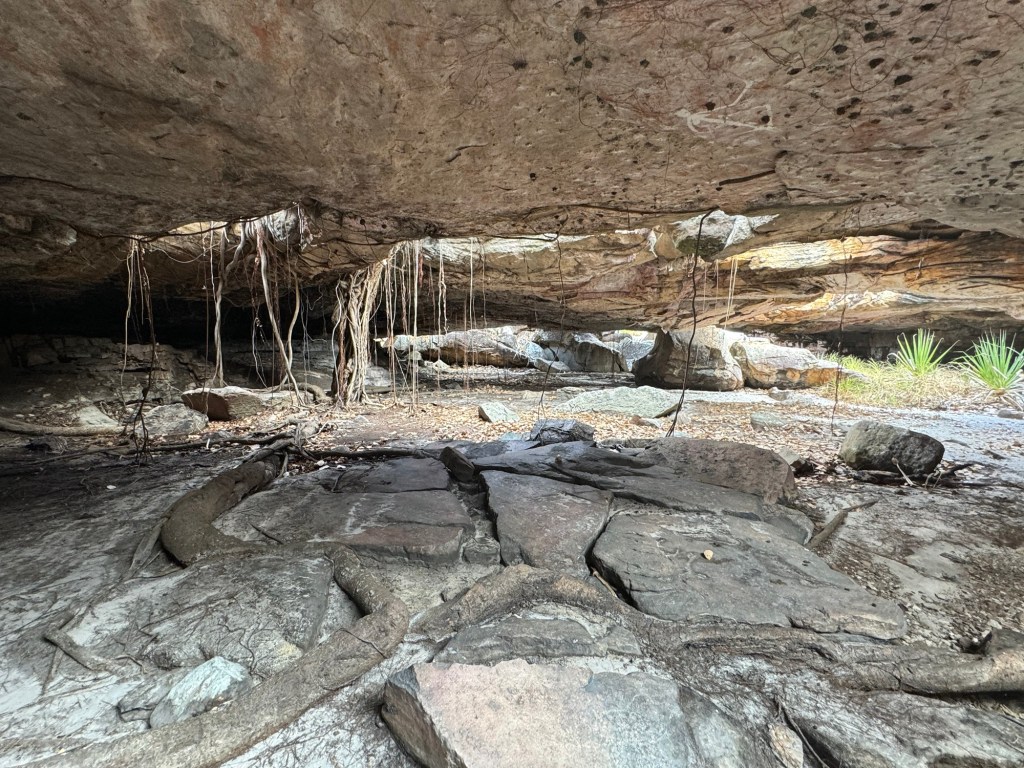
The rock walls themselves were complex and numerous and the site was like a maze with large boulders we had to weave ourselves through to get to the art walls. The paintings were awesome and numerous. Sab took a long time telling us about each one as he sorted them out from the mass of work.

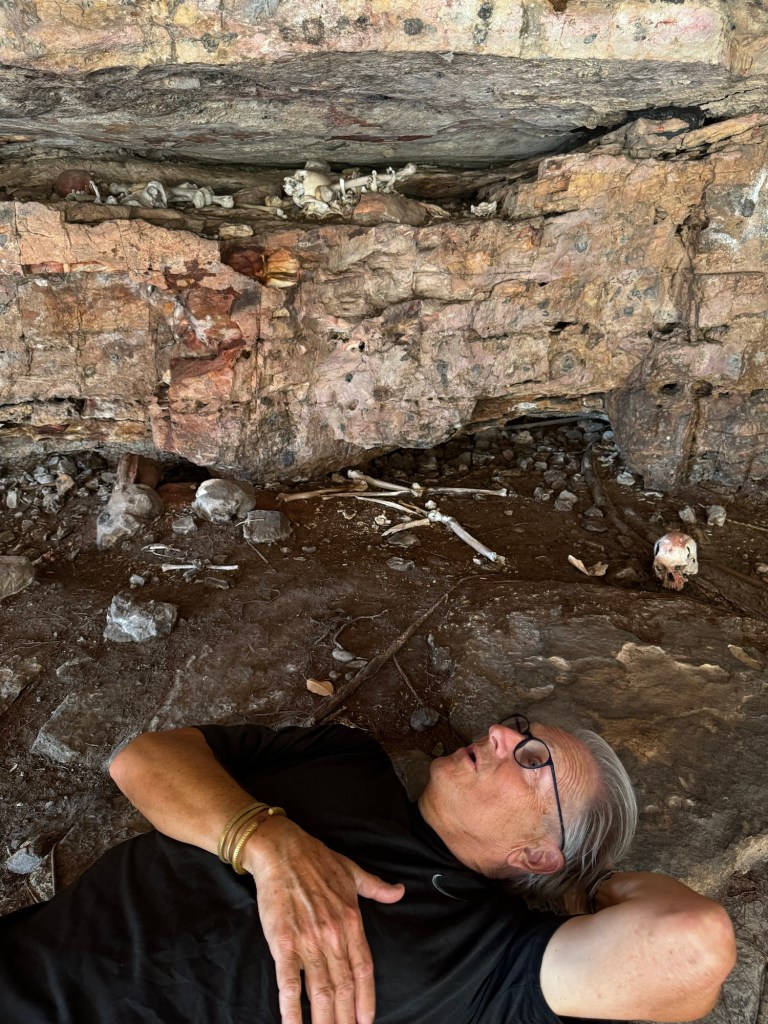
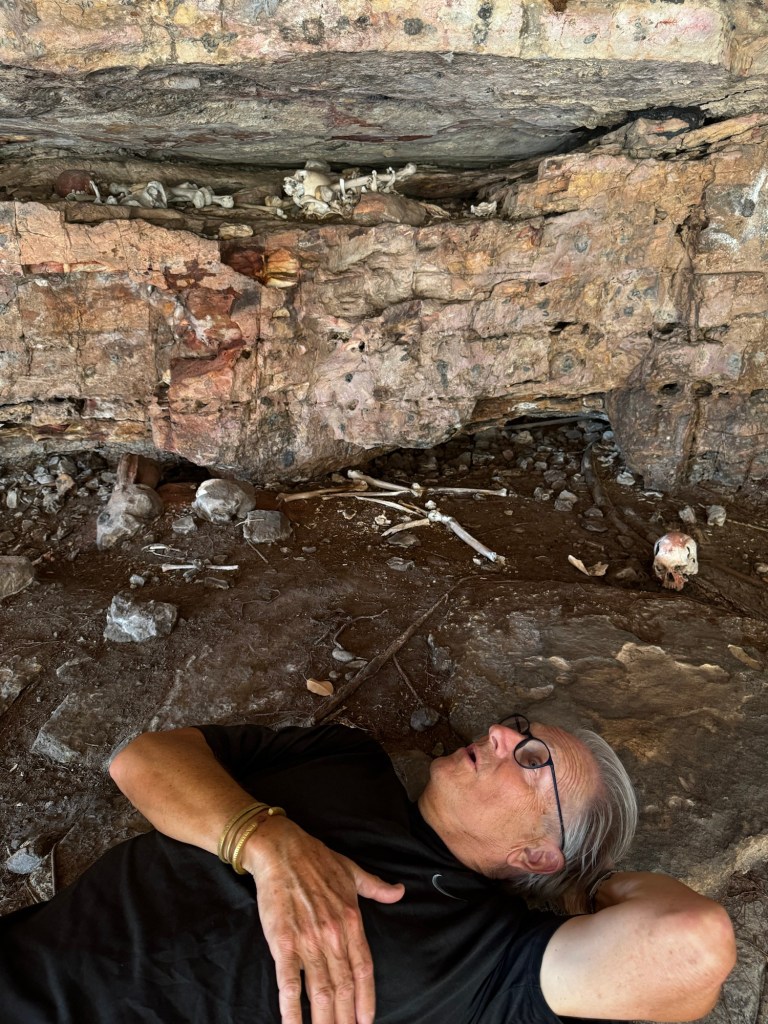
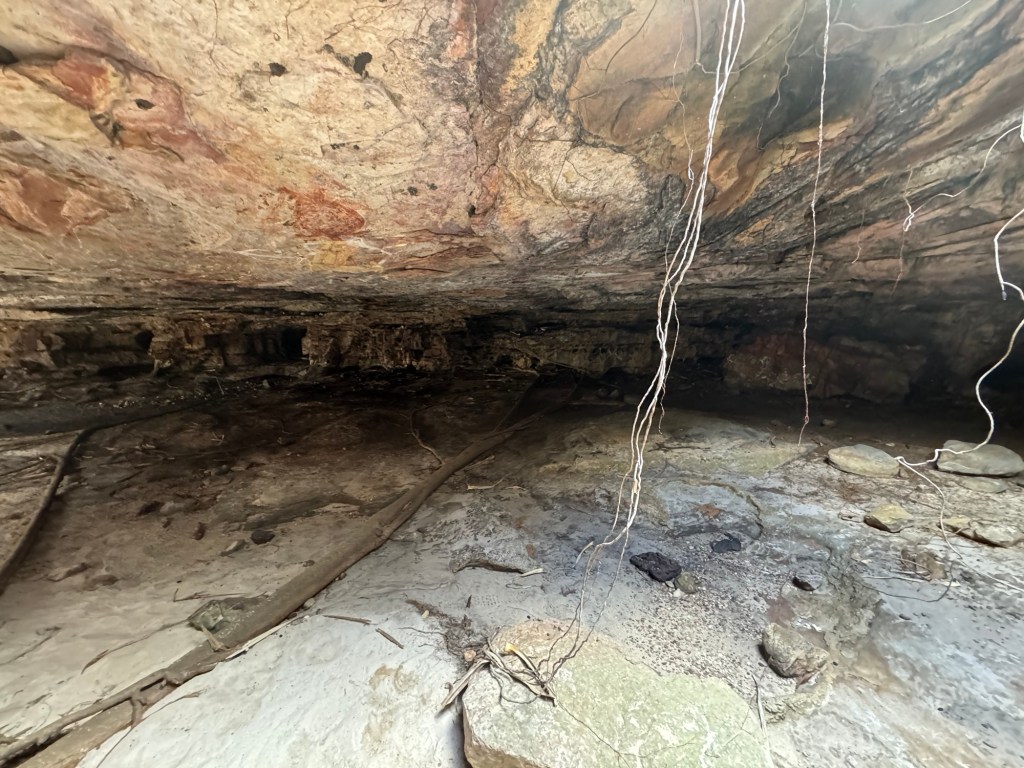
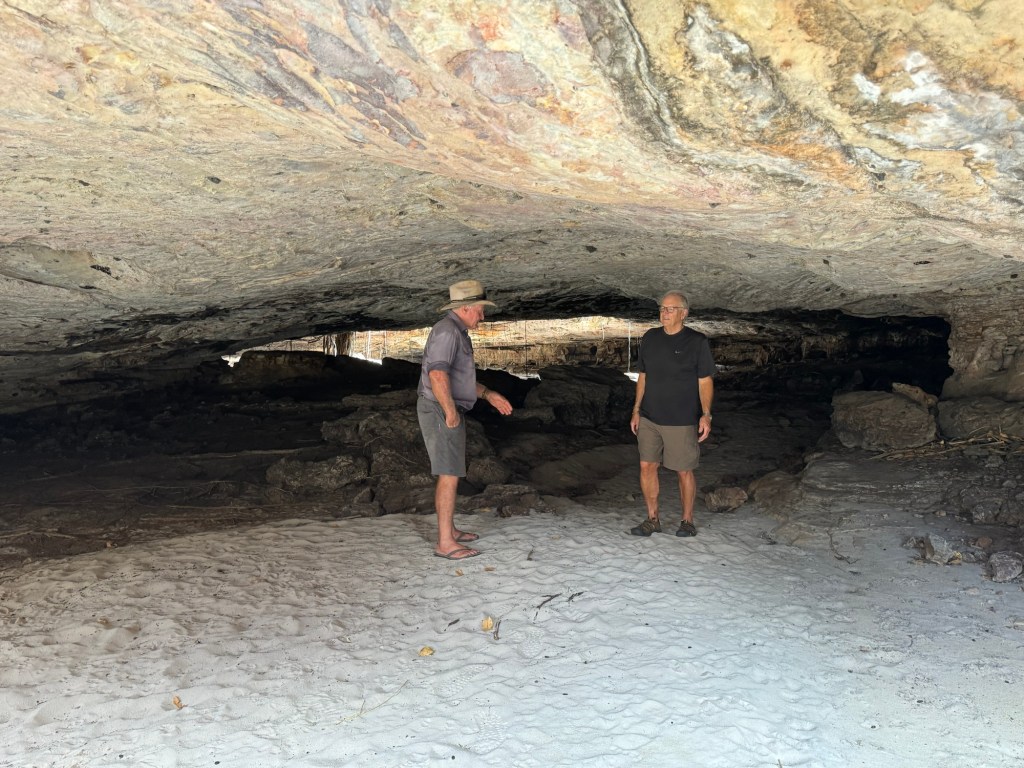
There were many layers going back thousands of years. It was clear that the site was used as a dwelling place as well as a burial site and art gallery. The scene was very fascinating and we stayed there a couple of hours trying to absorb it all.

On the way back through the marsh, we saw a few wild pigs and a water Buffalo in the tall grass. The drive back to camp through the bush was uneventful. At lunch Sab talked about the size of the land owned by an aboriginal man named Charlie, who is 90 years old now and will leave the 376,000 acres he owns to his nephew. All the art sites we are seeing lie within his property and he is very possessive about keeping everything in tact.

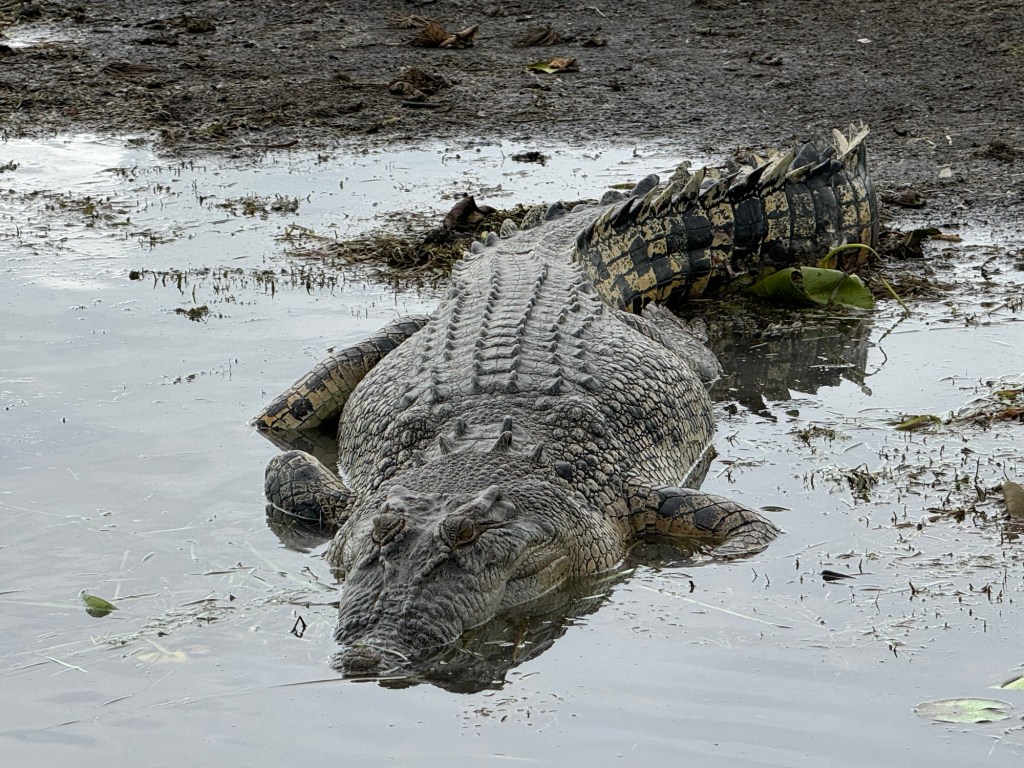
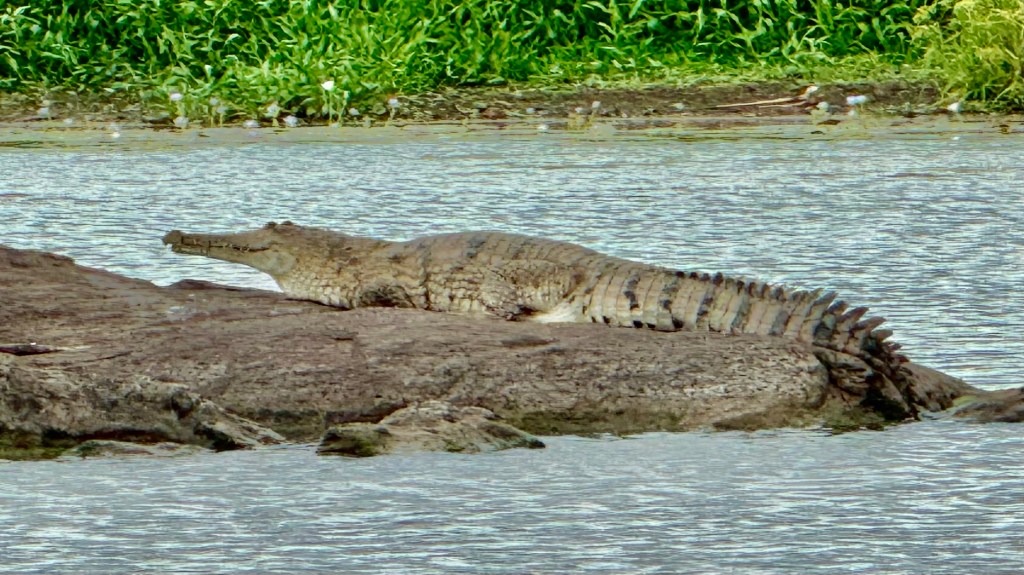
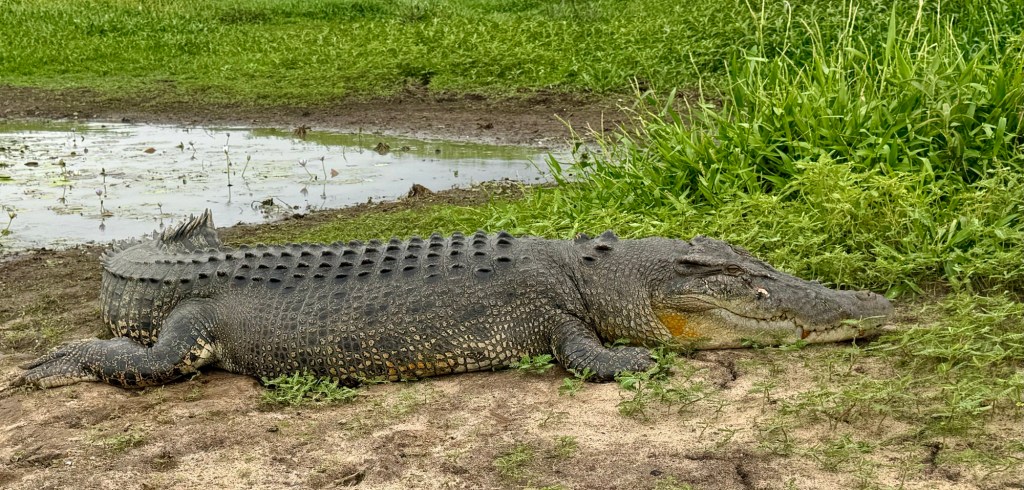
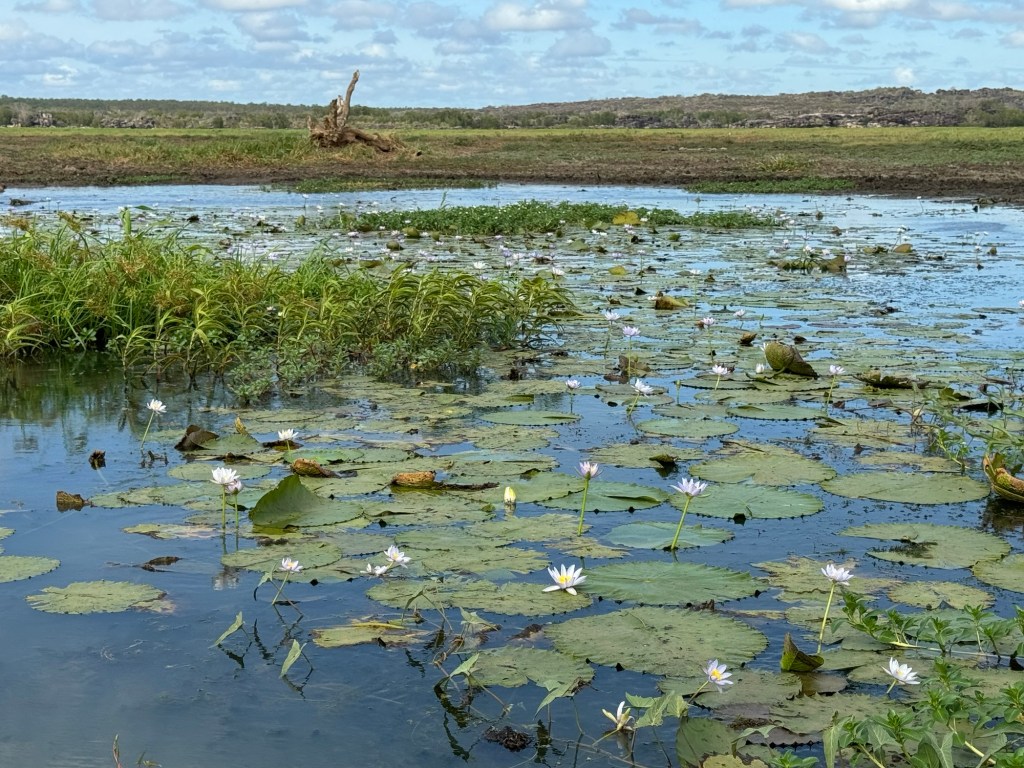
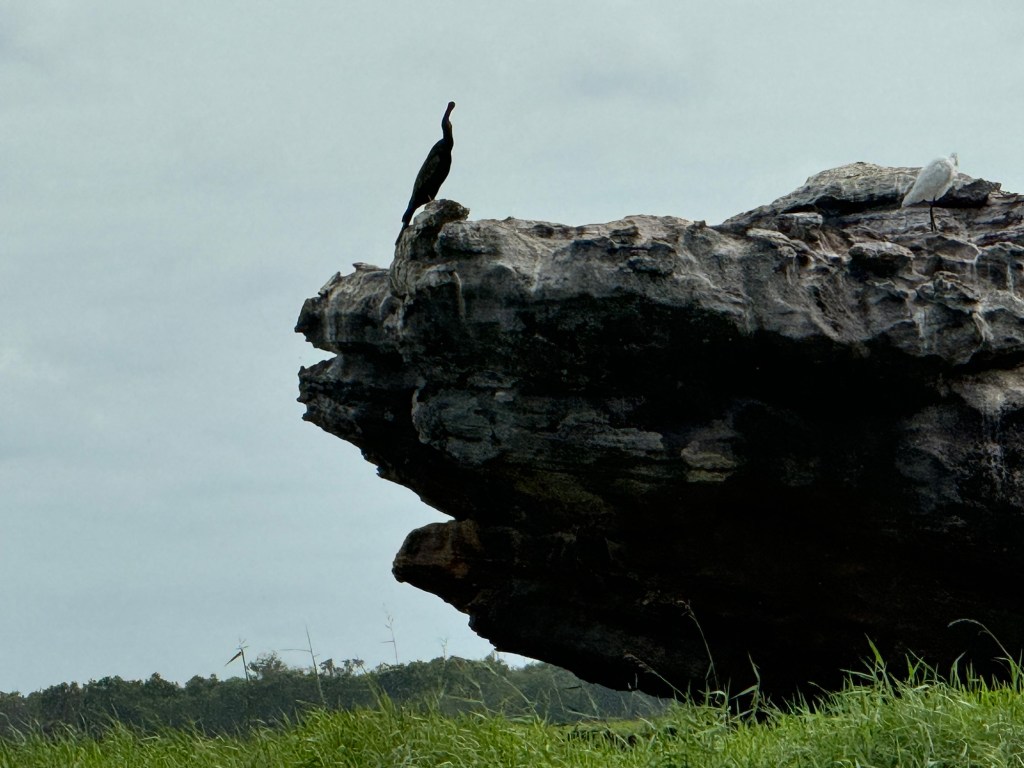
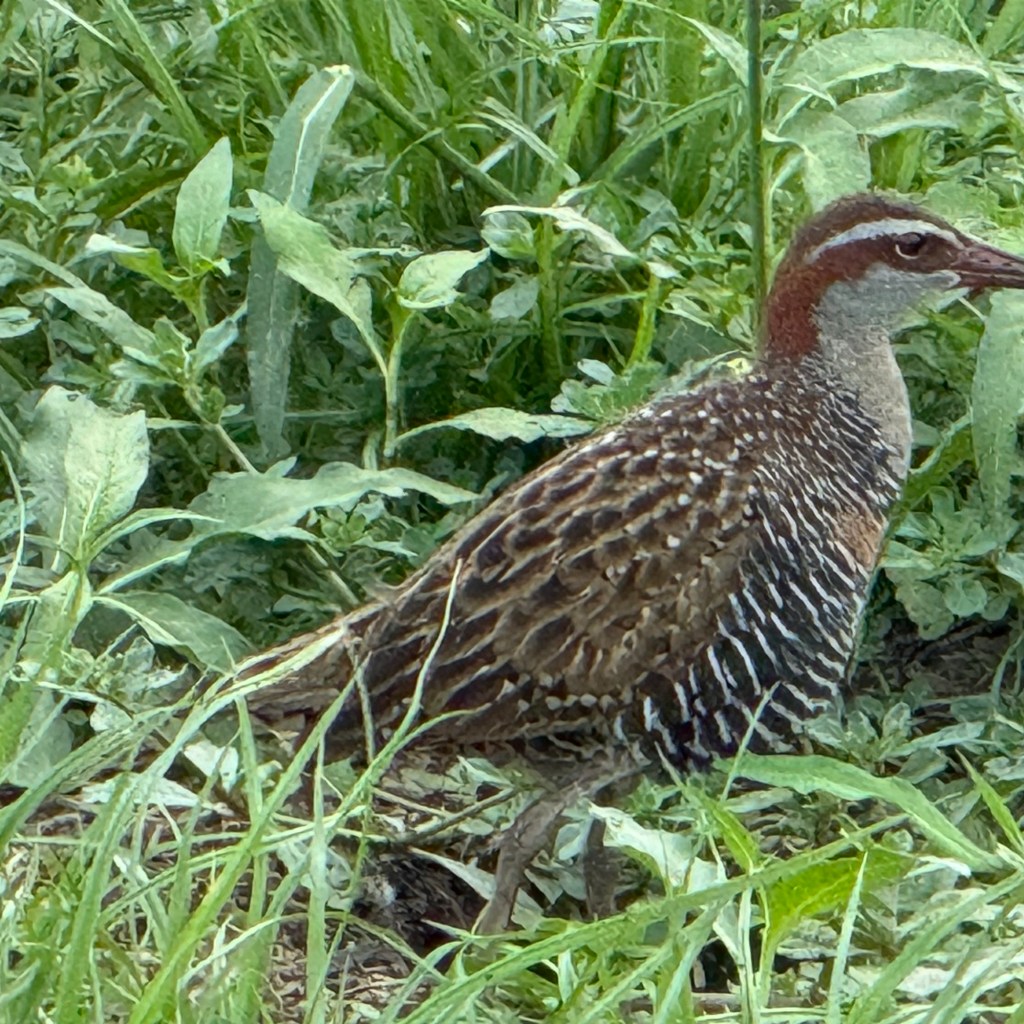
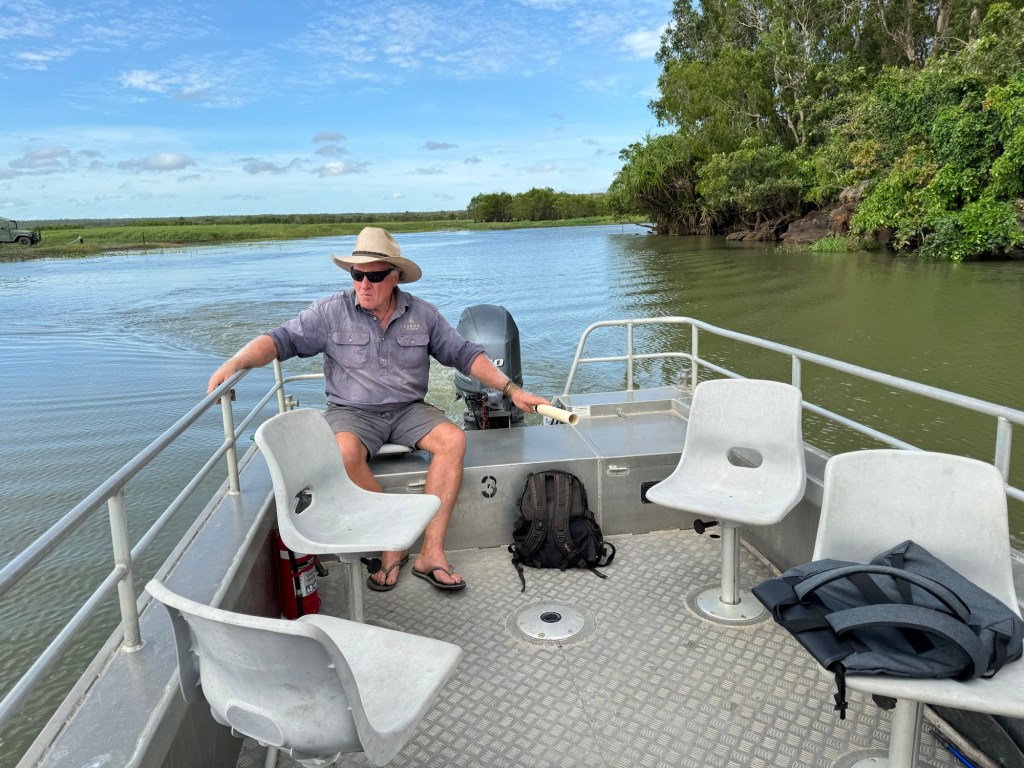
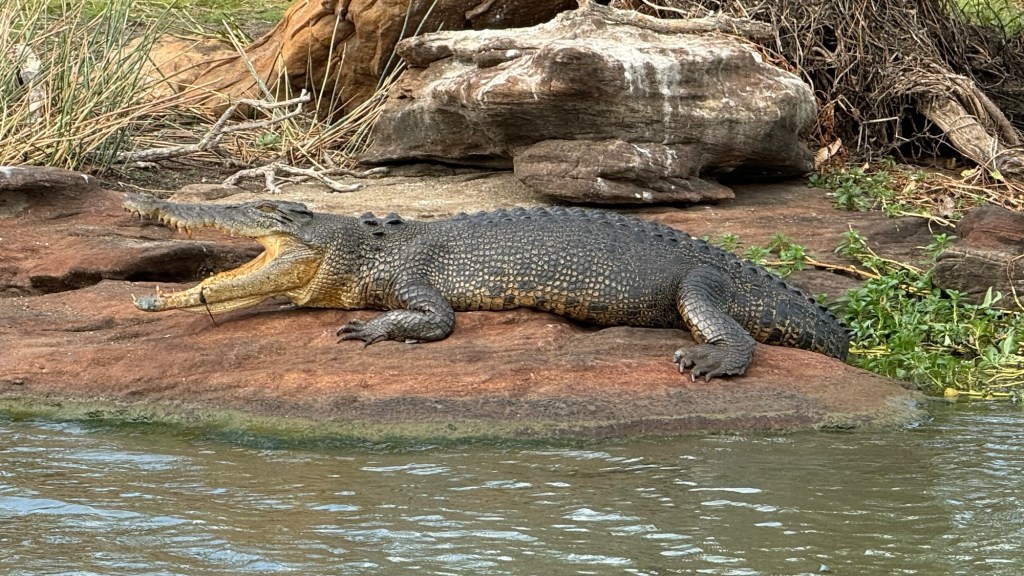
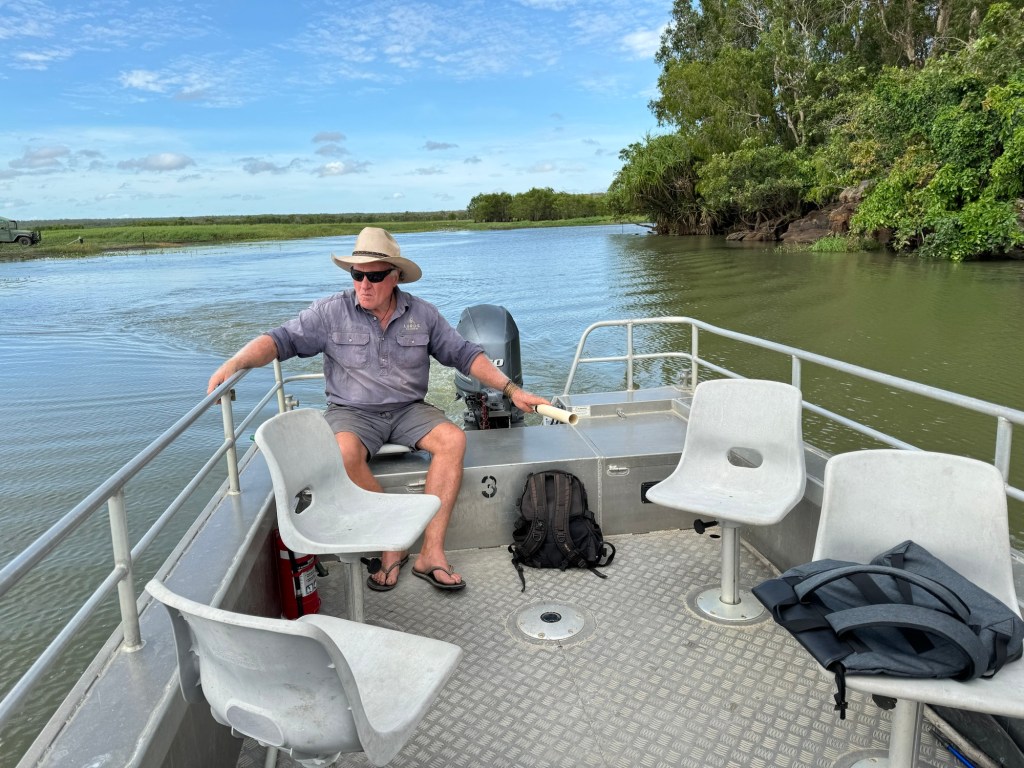
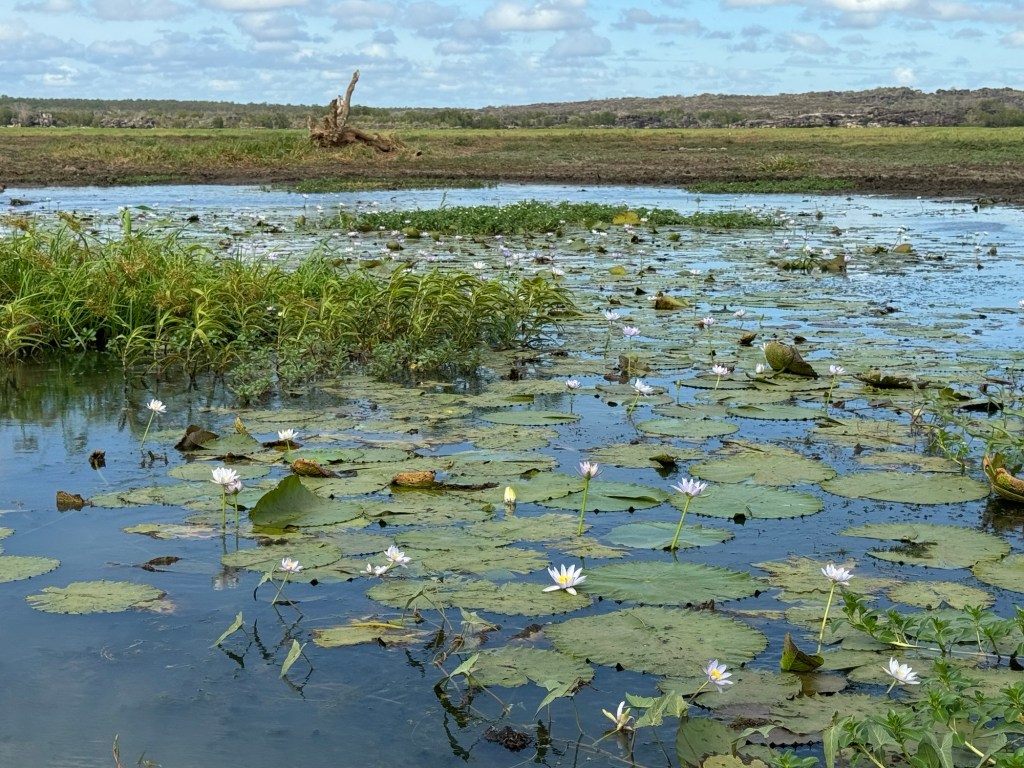
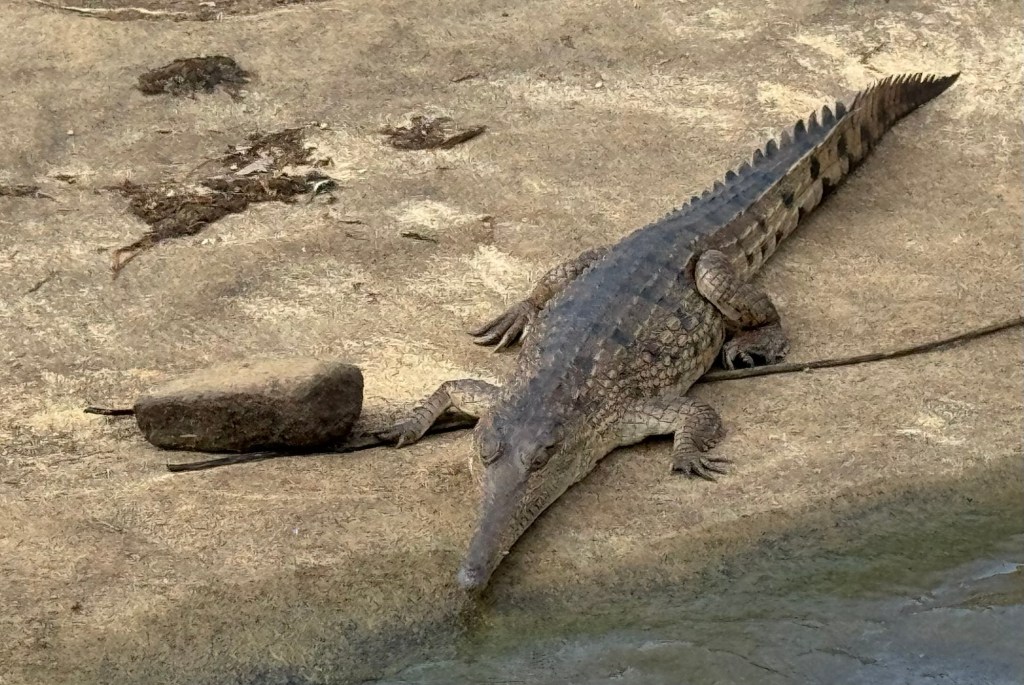
In the afternoon, we were back in the Land Rover heading in another direction to a Billabong (body of water), where we got into a flat-bottom, aluminum, pontoon boat and motored slowly between water lilies and crocodiles looking at Ibis, Jakibu, and a rare bird called a rile. Unfortunately, I cut off its nose. The site was called Mt Borradaile by the aborigines, pronounced Bordilo by white people, and had many lovely works of art.

It is called contact art, because it has been painted since the beginning of colonial times. This is some of the earliest contact art we have seen.

Back on the boat we had sundowners as we drifted along and talked about the lovely evening. Sab is a delightfully pleasant and informed guide and we are enjoying his company.

Back at camp we had a quiet dinner for 2 and were in bed before 9pm.

Thursday, September 19, 2024

Ready to roll at 8:30, we joined Sab at the Land Rover and headed for another billabong.

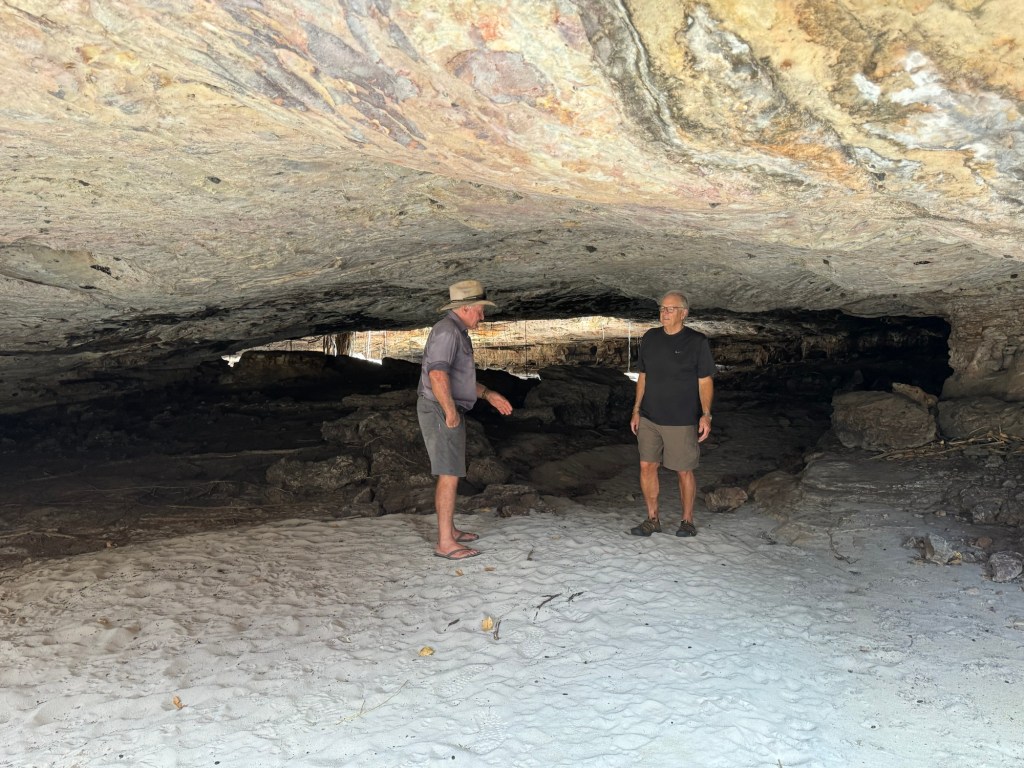
Shortly we stopped at a beach head, from which we could walk to the “Left hand Gallery”, named that for the “Left hand Billabong” it is near. It was an easy walk to the art gallery, which was also a burial site and an aboriginal dwelling site. The art was as beautiful as other sites we have seen, however the burial site and dwelling area were much larger.

Although the art gallery was not quite as imposing. It seemed that centuries of weathering have deteriorated the art and it is completely gone in some places.

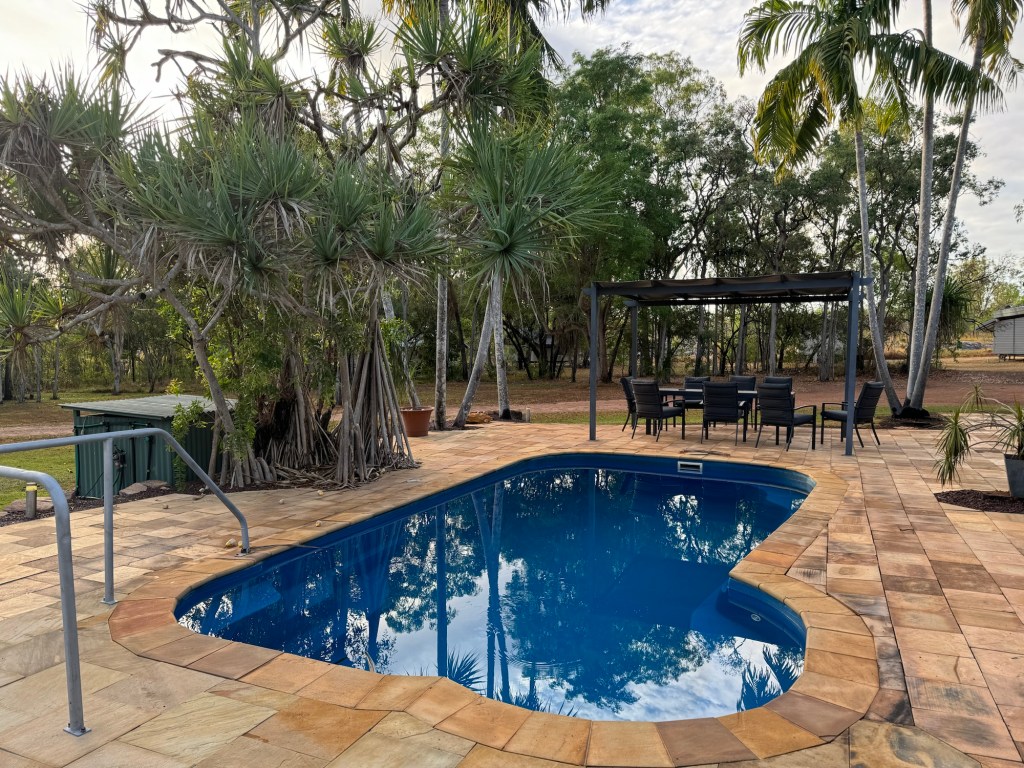
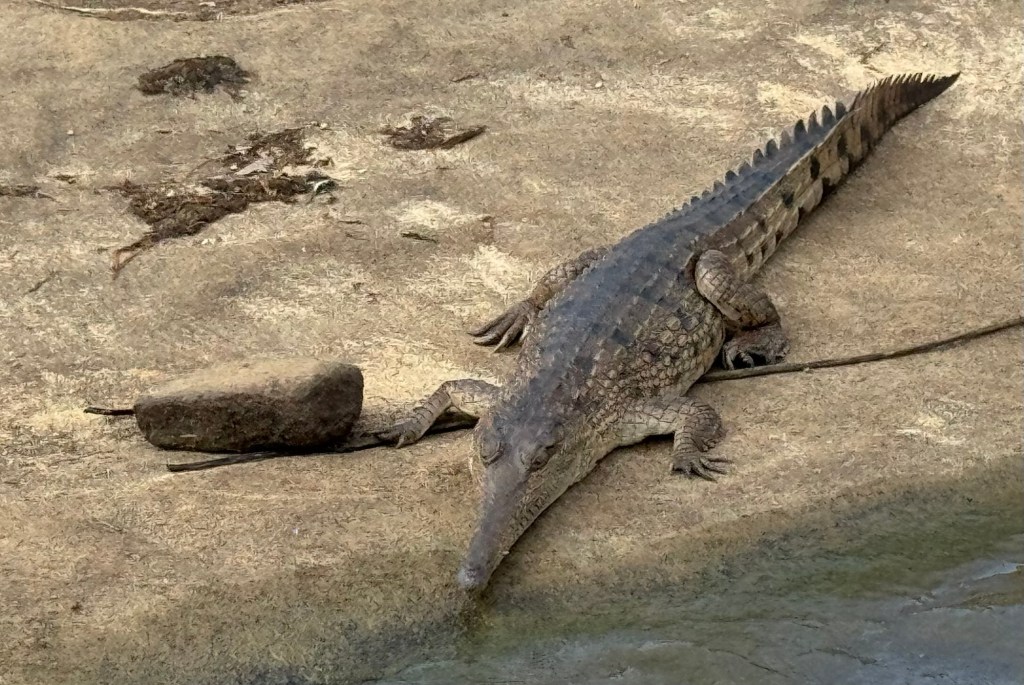
After lunch and a long, cooling swim in the pool, we joined Sab for a fishing excursion in the nearest billabong. Sab had us outfitted for catching barramundi. The three of us cast out hundreds of times and got only one nibble at the end of the day, but nothing that stayed on the line. While fishing we enjoyed looking at many water lillies and a few large crocks lounging on the shoreline. As the sun went down, we enjoyed a beer, still hoping for a catch. It was almost dark when we gave up on fishing and motored to the beach head.

We enjoyed one last dinner and conversation with Sab before calling it a day and heading for bed. We are almost on Australia time now.

Fridays, September 20, 2024

One final breakfast with Sab. Being an ex dive master, he lectured me about scuba diving and hopes I will only snorkel. I told him I would consider my options seriously. I appreciated his concern for my wellbeing. Then he departed and Mark and I hung out until time for our flight back to Darwin.

Some Prehistory of the Aboriginal people and a stop in Singapore

Monday, September 16, 2024

It is believed that humans arrived in what is now the Northern Territory about 65,000 years ago via land bridges and short sea crossings from Southeast Asia, during a period of glaciation when New Guinea and Tasmania were joined to the continent of Australia. Knowledge of this period comes from oral tradition prior to the arrival of the first Europeans. The oldest site showing the presence of humans is a rock shelter in Arnhem Land, near Darwin.

An ancient Aboriginal rock painting

At the time of European contact, it is estimated the Aboriginal, “original inhabitants”, population ranged from 300,000 to one million. There were about 600 tribes speaking 250 languages. They were complex hunter-gatherers, who had diverse economies and societies. Some groups engaged in “fire-stick” farming or controlled burning. Some engaged in fish farming. Semi-permanent shelters were built. It is unclear if any groups engaged in agriculture.

We are headed to the Northern Territory to see where and how the first people lived and to see their art. They may have landed in Western Australia about 60,000 years ago and settled across the continent within 6,000 years

Enroute to Darwin, we stopped in Singapore for a day and two nights to get acclimated after the 15.5 hour flight from SFO on Singapore Airlines. The flight was not so bad as we both took sleeping pills and were out for several hours each. The bed was the flattest, roomiest and most comfortable we have had on an airplane. An escort was at the gate to meet us and walked us through the arrival process and to our transport with no stress or fuss. The ride to the hotel was an easy 25 minutes as it was very early morning. We were wide awake so we stayed up, had a light breakfast in the hotel and then went for a long walk around the area.

We reminisced about our first time in Singapore in 1993. It was the first stop on our honeymoon. Our big activity was afternoon tea at Raffles Hotel. It was quite a do at the time. Today, Raffles seems small and old compared to the dozens of sky scrapers we see today. Our hotel, not Raffles, is the small building in the center foreground of the image (left of the low white & red pitched roof.)
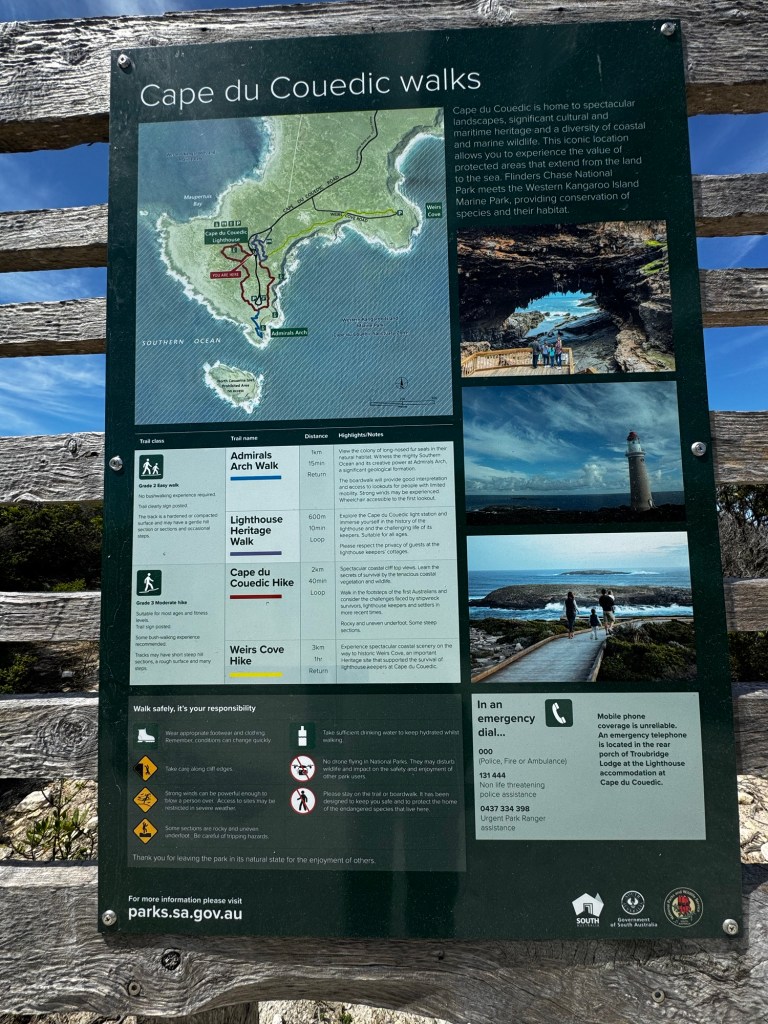
Singapore Skyline

After a 2.7 mile walk we returned to the hotel just in time to miss a down pour. Our room was quite pleasant with a porch and a good view, so we hung out until our 2:30 food tour with a lady named Charlotte. She gave us some info about Singapore and told us we would be spending time in Chinatown and Little India eating foods from those cultures.

Chinese and Indians arrived in the area 800 years ago to develop trade. Europeans arrived in the 1800’s. The first one was a fellow named Raffle, an employee of the East India Company. British rule reigned from 1924-1963, when the area merged with Malaysia for 2 years. In 1965 Singapore became free and independent.

The current population is 5.6 million, with 4 million being citizens. 75% of the population is Chinese; 14% are Malay; 9% are Indian. 1.4 million residents are people with work passes, who come mostly from Bangladesh and the Philippines.

According to Charlotte, Singapore has the busiest transportation port in the world. It is certainly huge. She pointed out a government housing project that provides 99 year leases, A pedestrian street full of restaurants where the upstairs used to be a red light district and a Taoist Temple that housed a relic of Buddha’s tooth, brought from Sri Lanka. We had to smile as we remembered being in the Taoist Temple in Sri Lanka and seeing the same, or similar, tooth.

We took a taxi to Chinatown and went into a huge food vendor court. The place was packed with vendors, tables and people buying and eating various food items. Charlotte sat us down at a dirty table, which we cleaned ourselves, while she shopped for 3 different food items starting with a drink of freshly squeezed sugar cane juice. The first items she brought were a plate of Braised chicken and rice; Water cake made with rice flour and a spicy condiment; carrot cake made with daikon. Her next trip produced a dish called Popiah, made with a large, thin biscuit and Jicama; and Laksa, a soup bowl with rice noodles, soy beans, mushrooms and fish. That was enough already. My favorite was the Laksa. We wandered around the court looking at other food offerings, which we were too full to sample.

Then we took the subway to Little India where we sampled a version of hot Chai; a dish called Prata, a flat bread made with wheat flour, accompanied by a curry and lentil sauce; Appan, a large crepe made with coconut milk and rice with a dipping sauce of warm, sweetened coconut milk; and finally Thosai, another crepe made with fermented black dough and rice with a dipping sauce. Prata was Mark’s favorite food. For dessert, Charlotte gave us a moon cake to split. It was filled with lotus paste.

Here are some photos of what we ate in Chinatown. First there is a photo of a Chinese building near the entrance to the Chinatown Complex. The next three photos are of the suger cane juice vendor making juice and serving Mark. The first food dish is Braised chicken and rice, followed by Water cake and Carrot cake. The last dish was Laksa, a noodle soup with several condiments

The Little India food dishes we tasted included: hot chai; Prata; Appan; Thosai; and Moon cake.

We were so stuffed we did not want another thing. We said our good bye’s to Charlotte and took a taxi back to the hotel, where we went straight to bed at 8pm.

Mark and our food guide, Charlotte

Getting ready for Australia

The continent of Australia

September 11, 2024

Mark and I have booked a 6 week trip to Australia and are thinking about the final details of preparing for the trip. What extra clothing should we take for the weather we expect? We plan to travel from Darwin in the north where it will be quite hot, to Tasmania in the far south where it will be quite cool, plus many stops in between.

Northern Territory

The first part of the adventure will include locations in the Northern Territory where we will learn about the Aboriginal people, their history and ancient art. Look for the area called Arnhem, slightly southeast of Darwin. We also plan to visit a special museum in Darwin that features the First Nation people.

Great Barrier Reef

Then we will fly east to Port Douglas in Queensland and the Great Barrier Reef, where we will spend four days living on a boat called Aroona. We expect to do a lot of snorkeling and maybe some scuba diving. Then the boat will drop us off at Lizard Island for a few days of R&R.

Melbourne & Great Ocean Road

From there we will fly south to Melbourne to visit that city and experience the Great Ocean Road on the southern edge of Australia, which is at least as famous as our Highway 1 in California.

Tasmania

From Melbourne we will fly to Hobart in Tasmania, where we hope to learn about and meet the indigenous population, see local wild animals, and the scenery.

Our adventures continue in South Australia, just north of Tasmania, where we will visit Adelaide, Gawler Ranges National Park, Port Lincoln National Park and other sights. We will also visit Kangaroo Island and the local wildlife there.

Adelaide & South Australia

After several days in the far south we will fly from Adelaide to Newcastle, just north of Sidney, New South Wales, to meet our friends Catherine and Martin, who will host us for a few days at their Newcastle home, and then share a week with us in Sidney. After a full collection of activities they have planned for us there, we will finally fly home via Singapore on October 28, 2024.

Newcastle, Sydney and the Blue Mountains

I hope we do not wear you or ourselves out before it is over. Do save the above maps for reference purposes as we move about the country.

A story about the women of Lima

This story accidentally missed the last post and I don’t want you to miss learning about the tapada limena. So here is one final post about Lima.

Tapada Limena was the denomination used at the time of the Viceroyalty of Peru and the first years of the Republic to designate the women in Lima, aka Liman women, who covered their heads and faces with comfortable silk fabrics, revealing just one eye. Its use began around 1560 with particular clothing and cloaks worn by the tapade limena and spread for 3 centuries until well into the 19th century when it was relegated by French fashions. In 1583 the Archbishop of Lima pronounced a rejection of the custom of wearing the clothing by women in the capital and ordered a fine. The fear of this custom, already widespread among Liman women, generated much misunderstanding and confusion and made the authorities suspect transvestism was taking place in the Viceroyalty. Official testimonials and ordinances could not dissuade the Limen women.

The characteristic attire of the tapada “connoted insinuation, coquetry, prohibition and seduction games”, although it was still a dress. The gown outlined the hips, and the cloak covered the head and face, except a single eye. It was a symbol of the freedom for Liman women. The symbol was used to distinguish themselves from women of other classes and races. Behind the cloak could live a toothless grandmother as well as a one-eyed woman covered in smallpox. The possibilities were many and boys and old men could take advantage of the situation too.

The skirt was large, long and silk, colored blue, green, brown or black and of a wide range of quality. A belt was used to secure the skirt and false hips were sometimes added to enhance one’s endowments. Underneath the skirt, the feet were shod with embroidered satin shoes, adding to the fame of the colonial Lima women. The cloak was also made of silk, tied at the waist and up the back to cover the head and face. Its simplicity allowed the wearer to retain anonymity.

The tapadas Limenas were an icon in ancient Lima, an original presence that did not exist in any other city in Hispanic America. T he insinuating game, the symbol of secrecy of an incipient female freedom, caught the attention of passing visitors who wrote books, plays, songs and dances about them. After 3 hundred years, the custom finally fell out of favor with–of course–the Liman.

The lady above was standing near the Cathedral of Lima.

We are home now and back in reentry mode. Laundry and mail underway. Blessing to all of you and a happy summer. Julia and Mark
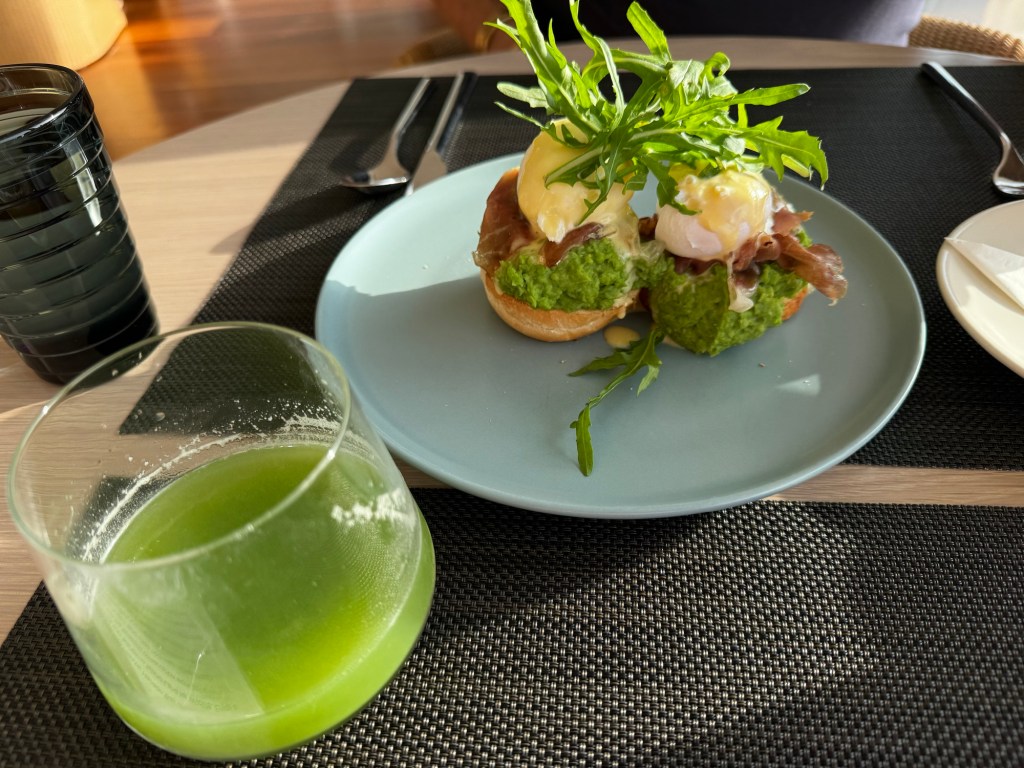
Last of Lima; heading for home

Tuesday, July 16, 2024

Had a leisurely morning at the Hotel B. Wandered around looking at the art, which I found curious, if uninspiring. The lower left image is our room. It was tall, but small. The lower right image is the breakfast room, as seen from the second floor level.

Sophia picked us up at 10am and off we went, with Carlos driving, to stop at the Post Office in Miraflores to buy stamps and then to see the old city center. It took more than an hour to get in the vicinity due to intense congestion on the many narrow 2 lane roads. However, the journey was worth the trouble as the buildings were wonderful 16th century wooden construction. Even the Cathedral of Lima was entirely made of cedar. Sophia told us the reason the towers are so short, for a cathedral, is because of frequent earthquakes. The ceiling was very pretty and many of the side alters were made of beautiful hand carved wood–some cedar and some mahogany.
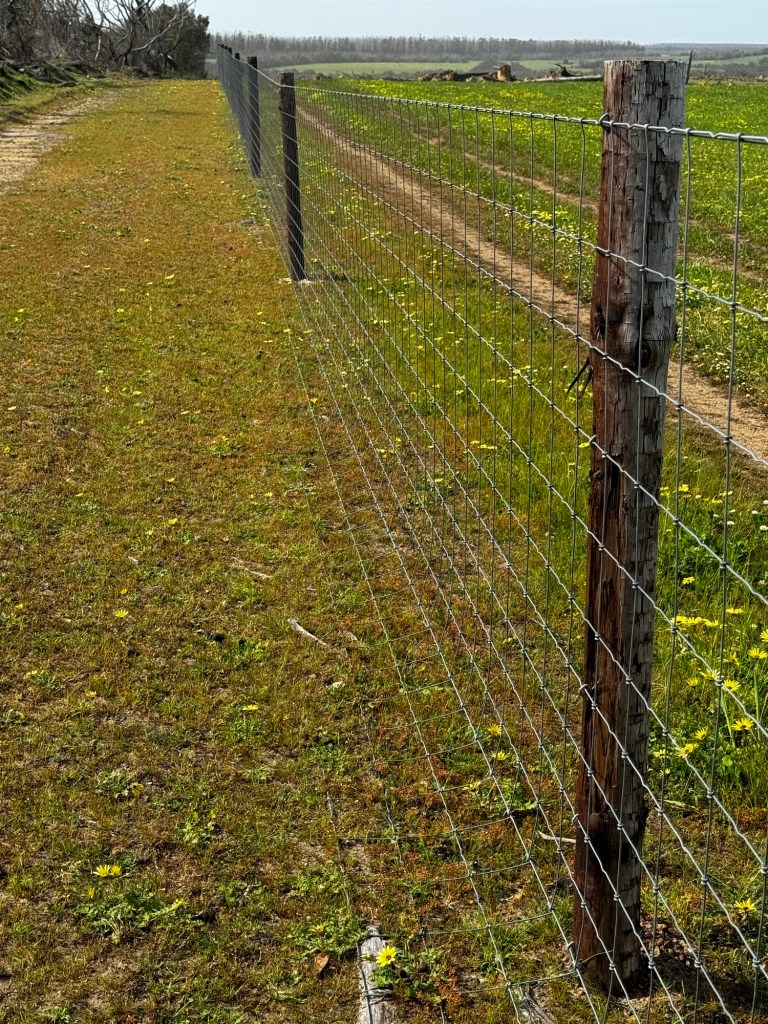
As we walked around the square and several old pedestrian streets. Sophia pointed out the oldest structure in Lima, a rather plain building built in the 1500’s. The wood structure was covered with stucco.
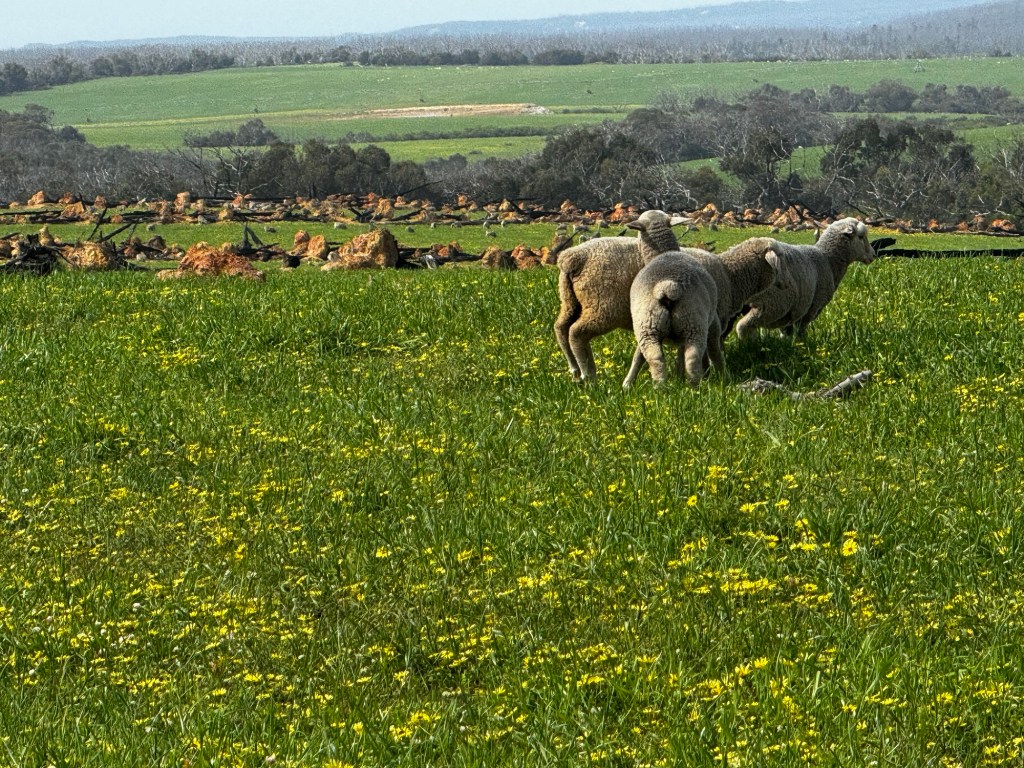
The oldest building in Lima. Built in the 1500’s

Sophia took us to see a Dominican Mission near the cathedral. The mission library houses over 20,000 books. Somehow the books seem to survive the climate.

The mission was covered in beautiful tiles from the 1600’s. Here is a small sample.

From the mission we entered a private home belonging to the Aliaga family for 18 generations. The original owner was a personal friend of Pizarro, who gave him the land in the 1500’s. The property occupies a full block near the Cathedral. Currently about half of the house is open to the public by private invitation.

By the time we had finished the 4 hour tour we were hungry and went to a Japanese restaurant called Osaka in Miraflores. It was a most unusual combination of sushi dishes our waiter arranged for us. A couple of nigiri were even charred with a hand held torch. Unfortunately, I was too busy enjoying the presentations that I remembered only to take this one photo.

Back at the Hotel B, we relaxed until it was time to check out of the room at 8pm, get a bite to eat in the hotel dining room and head to the airport. This trip is done. More another time.

Back to Lima

Saturday, July 13, 2024

After a small group of us toured the ship, everyone on board gathered in the lounge. We passengers were already drinking to our last night on the ship; even I treated myself to Pisco Sour, when the entire staff marched in clapping as they came, and soon we joined in the clapping. Below is one of our tender’s or skiffs departing with our luggage. Across the channel is one of many stationary gas stations. Photos of fellow guests enjoying cocktails include: Mark, Nancy and Bill and Judy and Vince. Below that is Merv and a couple from New Zealand. Then the band playing and the bar tenders making drinks in the lounge.

Harry, the cruise director, started by introducing Captain Antonio, above in casual attire, followed by Antonio’s assistants, the ship’s doctor, Lilliana, the 4 skiff staff, and the 5 cabin cleaning crew.

Then came the 4 dining room wait staff, the 4 cooks, the 3 technical staff, the 2 massage ladies, and the assistant cruise director, Iliana. Then the 2 bartenders, Jesus and Jordano, who received loud applause. Lastly, our three guides were introduced: Aldo, Alex and Juan. They also received very loud applause. Juan took the mike and introduced Harry and the band. Soon the 6 piece band was in full sound and we all continued to clap until many of us were up and dancing with the crew. After a week of close companionship, we were all very comfortable together. The above photo includes almost the whole crew. They invited me to join in the photo, which was a nice touch.

Earlier that morning, Mark was up and out at 6am to join a small group who wanted to learn about shooting monkeys with dart guns. I stayed in bed. The 4 intrepid souls who went included Merv, Bill and Mark. Merv’s attempt fizzled in less than 10 feet, so Mark, not wanting to look inept, did not try. The experts barely hit the target, 30 feet away, after three attempts. They did demonstrate how to make a dart gun, while wearing native clothing. The gun is made of two halves of wood that was hollow when glued together. Then sand was poured into the hollow and a rod was slid back and forth to polish the barrel of the “gun”. Juan, our favorite guide, was doing the English translation of the process. The jaw bone of a piranha was used as a file to sharpen the point of the dart.

The dart gun group was back in time for breakfast. Our luggage had been picked up by 7am and we were all ready to disembark by 8:30am. We said many good byes to crew and group members. Then into buses we went to tour the city. We saw hundreds of tuktuks, several wooden buses made with wood shells, and many food vendors along the road. We stopped at one food vendor to see live worms being cooked and eaten by locals.

From the worm vendor stop we drove to the Manatee Reserve for a tour of the animal healing facility. To fly back to Lima, the whole group needed to be at the Iquitos airport at 2pm for a 3:30 flight. So, having disembarked at 9am and with time to kill, the ship crew created this activity. The Reserve, which is meant for children mostly, was pretty interesting for us too. We got to see several creatures up close that we had seen only from a distance. They included: Toucans; Macaws; Caimans; capybara, the world’s largest rodent that can get to 170 lbs; turtles, which are being brought back from near extinction; tamarind monkeys; endangered manatees; and the Amazon’s largest fish, the endangered Paiche, which is a slow swimmer, grows to over 9 feet long, has strong bones that can crush its prey with its jaw, and lives 25-30 years. An oxygen breather, the paiche must surface periodically to get air.

From the Reserve, we went to the airport, waited some more and finally flew to Lima. Our guide, Sophia, was waiting for us and off we went on the hour long drive through the busy city to the Hotel B in the popular Barranca neighborhood. We had half an hour to change for our dinner reservation at the nearby highly recommended and very popular restaurant called Siete. Mark had a pasta with pepper and I had the Catch of the day, which included a vey tender and tasty, farm raised Paiche. Both dishes were excellent. Then we went back to the Hotel B and went directly to bed. We both missed our room and bed on the Aqua Nera. The B is interesting and unique, but not comfortable/cozy.

Sunday, July 14, 2024

The next morning after breakfast, we went exploring the neighborhood. We soon stumbled by the funny looking tree we learned is a Silk Floss tree, part of the kapok family. Further on we arrived at the store called Dedalo. It is quite an amazing place and we were happy to spend a good amount of time looking around and even buying a few things. After depositing our purchases in our room, we waited for Sophia and Carlos to take us to the Larco Museum, where we spent several hours. Here are some of the artifacts we admired in the halls. Sophia fed us a lot of history which I was, sadly, not able to retain.

Other items I was impressed by included rooms full of clay statues (over 45,000) down through the ages and found in the sides of many graves, which explains why they are still intact. Also there are a few sexual themes I included here.

Enough for museums. It is the only one we will see in Lima on this trip. Thankfully, says Mark. When we left the museum we stayed in the building to have lunch. Mark had tenderloin salad and I had noodles in sweet pumpkin ricotta cheese on delicate butter sage sauce. Yes it was as good as it sounds. I wanted more.

Then we went to a water park to see the Magical Water Circuit. It was pleasant, but I was disappointed as it was really for families with children on a Sunday outing and I was thinking more of a Bellagio-like event. We stayed to the end of the”show” but both Mark and Sylvia were ready to go almost the minute we arrived.

Dinner was at our hotel. Mark experimented with Guinea Pig and liked the dish he got, which had only a small amount of pig in it. I thought I ordered duck, but soon realized that it tasted more like fish than duck and turned out to be paiche, a fish I have had a few times know. Fortunately, it has been excellent every time. Then upstairs to bed for our last full night in Peru.

More on the Amazon

Late yesterday , a few of us went for a tender ride to try to find Macaw birds up the Maranon River, which we reached early in the day. There is no debris or lettuce in this river and it is very black and pretty. We are now at the most southern point of our trip. We found several Macaw high up in the hollows of dead palm trees. I did not get a photo of them flying but I managed to get a few looking out from the tree stumps.

Thursday, July 11, 2024

This morning at 9am a group of us set out for a whole day of activities. First we registered into the national reserve at the ranger station. I caught a photo of a flowering acacia. This plant is supposed to help people with kidney problems. We started with biking and kayaking. Mark went biking while I happily went kayaking.

My partner was our female medical doctor who, unfortunately, spoke no English. I learned quickly that she also did not have any kayaking experience. Most of the time I asked her to stop and enjoy the ride while I did the kayaking. However, she was a good medic. I had woken up with a bad head cold and she gave me some pills for it at breakfast. By the time we went kayaking , I was already feeling better.

That worked pretty well and we meandered around a couple of little tributaries off the main black water river, an offshoot of the brown Amazon. After we had done enough kayaking, about 45 minutes, everyone returned to the tender and up the river we went to get to the designated jungle walk. We all changed into rubber boots and headed out into the jungle. It was full of unusual creatures.

A Terantulla on the path.

After the one hour walk we got back into the tenders and rafted up with the food tender, bar tender included, for a picnic lunch. This time it was rice, chicken and a hard boiled egg wrapped in a banana leaf, hearts of palm salad, chocolate salami and and Oreo like cookie. We are being fed oh so well. Near by were branches full of egrets. I even caught one in flight.

Shortly after lunch, we motored out into the middle of the river and dropped into the water for a leisurely drift while wearing life vests. Mark took his off and floated on it instead of in it. We were definitely drifting downstream, but decided to let the crew follow us rather than fight the current. The water temperature was perfect. I wish Lake Tahoe was like this. Eventually we were ready to go back to our ship and called for the tender.

We picked up a few more photos on the way and I must give credit for the animal images to Wallace, a fellow traveler. It was about a 20 minute run back to the ship, followed by showers and moisturizers. Most people in our group had received many mosquito bites and too much sun. We had faired fairly well in both cases. Once cleaned up we spent the rest of the afternoon on the pool deck enjoying the breeze as the ship motored north toward Iquitos.

As sunset, the crew band began to play and everyone onboard showed up to share drinks, appetizers and music. Mark took a lovely photo of the sunset. Then we had dinner and went to bed.

The weather has been nearly perfect the whole week. Only one hour of rain on one afternoon. Otherwise sunny, but not overly hot or humid.

Friday, July 1, 2024

We wake up still on the clear, black Moranon River. Kept breakfast simple with fruit and yogurt. Then out at 9am for a Tender ride to visit a Shamana (female shaman), named Karuka. She is a 31 year old local healer who was chosen at age 14 by her grandfather, a medicine man, who had a vision that she would become a shaman. She agreed and spent 8 years under a strict set of rules to follow as well as a strict diet. Once she finished her training, she became a shaman and started training others in the art.

She now has a normal life with a husband and three children. She talked to us about some of her special medicines including Ayahuasca (a wood vine, the juice from which causes significant dreaming); Wild Garlic (crunch a bunch of leaves and inhale the smell as deeply as possible, to prevent or cure Covid, and good for sinus problems); Dragons Blood (the reddish sap is mixed until it becomes a white paste and is used as an anti inflammatory against mosquito bites among other things.); Copaiba ( the sap of which is used for arthritis). After rubbing the Copaiba sap into the joints of several of us, Karuka gave us a blessing and sent us on our way. We bought a bracelet with Ayahuasca wood in it and a Jaguar mask. Then we walked a slippery, muddy path back to the tenders and motored 45 minutes back to the ship. We lucked out with an overcast sky, but no rain.

Lunch was an Asian affaire complete with egg drop soup, fresh spring rolls, pork belly in sauce, daikon and cream caramel. The meals have all been good. By being served family style, we can eat as much or little as we wish. Then at 2pm, a few of us were treated to a behind the scenes tour of the ship: including the bridge, the crew quarters, the crew gym and music room; the laundry facilities, storage for extra skiffs, bicycles, kayaks; water supply and filtration system; AC units and more. That tour lasted about 20 minutes and then I was back in our room composing another post. Our room is like all other 19 rooms on the ship with extra wide beds and plenty of storage for a week.

Continuing on the Amazon River

Tuesday, July 9, 2024

Yesterday afternoon at about 4pm, the whole group went for a jungle walk near where the boat was parked. We were required to wear knee high rubber boots, which were provided. Long sleeved shirts and long pants were strongly suggested as well as mosquito repellent. Mark and I did not comply with the clothing, although we did use the rubber boots. We lucked out. There were no bugs and the forest was not hot.

My favorite sighting was a field of lilly pads, even though none were in bloom at the moment. As we slid through the muddy undergrowth, we stepped carefully to avoid walking on army ants carrying leaf pieces. We also avoided many huge 1.2 inch long bullet ants racing up and down certain trees, and packing a powerful sting, if bitten. Mark learned it was the worst sting in the world according to the Schmidt Pain Index. We also saw a nasty bee’s nest, two tarantulas on the ground and a millepede. We walked by a couple of huge Kapoc trees and saw flowering vines everywhere. The whole walk was only 45 minutes and was mildly interesting. Back on the tender, after removing and bagging our rubber boots, we motored into the middle of the river and joined up with the cocktail tender for sundowners. Everyone was treated to an Amazon Mule cocktail. Then back to the boat. Once cleaned up and in the bar lounge, we were introduced to the entire staff and entertained by a handful of them playing instruments and clapping. As time passed everyone loosened up and we got friendly with some our fellow ship mates. I even danced.

Eventually many of us were up and dancing to the lively sounds. At 8pm the music stopped and we all trouped into the dining room for dinner. It turns out that the boat was only half full and there are more staff than there are travelers. We sat with a couple named Bill and Nancy and passed a pleasant evening getting to know them. After the unremarkable meal, we happily went to our room and bed.

This morning we had breakfast at 8am on the aft deck and said good bye to the short term folks who were departing for Nauta on the other side of the river and a 90 minute drive from there to Iquitos. At 9:15 we broke up into groups. I went with a group headed for a village where handcrafts are being made and demonstrated, Mark went with a group on a boat trip along the river banks to spot birds. My group learned about converting palm fibers into colorful artifacts like bracelets, baskets and ornaments. The village is called Amazona and the people speak two languages: their native Kukama and Spanish. There are 300 residents whose primary occupation is fishing. Since 2016, the ladies do craft work in addition to fishing to make money . They use palm fronds to make their products. They wash the fibers, dry them and then twist them by rolling two or three together on their leg to make them strong . Color is added by boiling the fibers in different dyes for different lengths of time. Then the various products are made.

The village was the tidiest and nicest I have ever seen and the ladies were friendly and artistic. I had not intended to buy anything, but ended up buying a woven plate and bracelet anyway.

I learned there are 70 families in this village. The community house where they demonstrated their craft is called a Malloca, like a banda in Uganda . The river gets to about 180 feet deep and is expected to drop another 20 feet during the dry season.

Meanwhile Mark’s group saw a few birds and other creatures. I borrowed three images taken by another guest named Terry. I had seen the animals but not managed to get decent photos. We were all back for lunch at noon. We had planned to eat only salad, but the chicken course was so juicy and tasty that we ate the whole meal. After lunch I took photos of the various rooms on the ship. It. is a pleasant boat for 40 guests. Even has a small pool. There were only 27 people during the week we were on board.

In the late afternoon two tenders full of us motored to the home of a bee keeper, with all of us thinking we would get to see bees in action. However, just as we arrived inside the beekeeper’s work room, we received our first rainfall. It lasted about half an hour but was enough for him to refuse to show us any bees. Instead we received a translated lecture on his method of keeping bees, and stingless ones at that. The beekeeper’s family started raising bees 7 years ago. After learning himself, he is now teaching children how to care for and raise bees. He uses a variety of bees that are stingless. None of us had heard of such bees and were surprised to learn they existed. He currently manages 68 boxes of hives, and harvests the honey every 3 months, getting 1-2 liters per hive. W paid 20 Sols for a small jelly jar size of honey. That amounted to about $5. The honey was surprisingly runny and tart, as though it was mixed with lemon. The rain let up about the time we were ready to depart, but it was too late for seeing bees.

When we arrived I noticed a group of children playing ball in the local field and they seemed totally undeterred by the rain. They were fun to watch.

Back at the ship, we cleaned up, went to the bar for a cocktail and then had dinner with Nancy and Bill. We were happy to turn in early.

Wednesday, July 10, 2024

This morning we departed the ship at 9:30am for another village. This one is called Solterito and the residents were not expecting us. However, the village chief showed up to welcome us and show us around. He said there were 45 families in the village of about 200 people.

They all speak the local Kukama language and Spanish. The place looked very similar to the village we had seen the day before, with one exception. There was a building that housed a kindergarten classroom with about 14 students. Our guide engaged the kids in a game and a song and everyone was full of smiles. One lady in our group had brought pens and booklets for the kids and she presented the materials to the teacher.

There were no other grades being taught. After awhile we headed back to the tenders and motored across the channel to look for wildlife. Our guide, Juan, spotted a pair of Horned Screamers that are nicknamed Donkey Birds because, according to him, “they walk like a duck, fly like a vulture, sound like a donkey and taste like a chicken”. I got a poor shot of them, but then captured a nice image of a Yellow-headed Cara Cara bird taking off. Near this scene was a downed Kapok tree with some fruit still attached to a limb. Juan ripped one off the limb, cut it open and showed it with is. It had a cotton like substance in the middle as well as some seeds that parakeets eat and a very hard, thick reddish core. The cotton is used on the darts of a blow gun.

Back at the ship we were treated to a Pisco Sour demonstration by the bar tender as well as a ceviche creation by the chef. Then lunch was served. One ceviche was more than enough lunch for me.

Panache is the world’s largest edible white fish. It was reasonably tasty.

After lunch we relaxed until 3:30. A few of us went out in the skiff again, to look for Macaw birds. I saw a few sitting in holes in dead palm trees, but nothing I could photograph well. I did learn that the plants floating on the water are water lettuce and that they are liked by the large bird called a Horned Screamer.

Juan cracked open a Kapok seed for us to see its insides. The fluffy white stuff was like cotton and there were seeds inside that some birds eat.

Back at the boat we joined a group for cocktails and 8 of us sat together for dinner. It was a pleasant evening with good food and lots of laughter.

From Lima to Iquitos

July 7, 2024

Had a relaxed morning, yesterday, while waiting for our 10:30 am ride to the airport followed by more waiting for our 1;30pm flight to Iquitos. The flight was almost 2 hours followed by a slow bus ride touring through Iquitos while waiting for our 5:30pm boarding time on the Aqua Nera. It was interesting to see the city of half a million people, who are mostly marooned. We took many photos of the pre-colonial buildings, the stilt houses, the hundreds of tuktuks, the huge fruit and vegetable markets, the multitude of people milling about, and more. We learned that people shop every day for their food needs and then cook it the same day, even though they have refrigeration. As much as anything else, it appears to be a social experience.

Life happens on the streets in Iquitos. Stores are open from 6am to 7pm daily. Art, beauty, eating, visiting, playing and marketing all take place on the streets. There were three industries during the 1800’s; rubber, timber and petroleum. The rubber barrens really struck it rich and built fancy houses in the city. We were told the wives of these men sent their dirty laundry to Europe to be cleaned rather than put it in the brown river. It took 4 months for the clean laundry to be returned. One baron had a French, Eiffel designed house dismantled, shipped and rebuilt in Iquitos. It is the house in the above collection with the red roofed tuktuk in the right of the photo. The house below that is reputed to be the first hotel built in Latin America. Chinese people arrived during the 1800’s to work in the rubber industry. Many stayed and are currently in the restaurant business throughout the city.

Iquitos cannot be accessed by road as there are none. One can either fly in from Lima or drive for three days to the town of Pucallpa and then boat down the Amazon River for 5 days to Iquitos. As you might expect, it is very expensive to live In Iquitos. The name means “people surrounded by water”. The main rivers are the Amazon and the Italia, which cuts through the city. The Amazon was redirected away from the city to reduce flooding. The longest road in Iquitos is 8 kilometers. The district of Belen is home to 38 thousand families living in houses on stilts to be above the flooding.The government considers these illegal residences. Below is a map of Iquitos and the Amazon. You can make out the Italia River curving around the west of the city. As you can see, there are no roads outside the city.

July 7, 2024

After the buffet breakfast, we joined a group of about 8 guests on a flat bottomed motorboat for a ride up a tributary called Yana Yacu, the Black Water River, but it’s really only brown. The weather was very pleasant. Not too hot or humid. After motoring awhile we began to pick up some wildlife. First we spotted a pink fresh water dolphin, with a hump on its back and no dorsal fin. The we saw a black collared hawk followed shortly by a Great black hawk. These sightings were soon overshadowed by a mother sloth with a baby slowly decending a large tree trunk. We watched them quite awhile and I finally managed to get a photo. We saw a huge Coral tree with pretty orange/yellow flowers that provide nectar for bees and small birds. We spotted a black-capped Dona Cobious and a yellow headed Cara Cara. Then we saw another sloth with child, several Blue and Yellow McCaws and, finally, a brown Capuchin Monkey. Our guide, Juan, was thrilled with our sightings and felt we had had an excellent sighting adventure. So, we were happy too, even though I got very few photos and no really good ones.

The afternoon excursion was similar to the morning one in that we had the same guide, Juan, and much the same group of passengers. We set off down another black tributary called the Yarapa River. Juan filled us with more information about the area. First he reminded us there are only 2 seasons in Peru and on the Amazon: high water, which is December through May and; low water, which is June through November. There can be between 25 and 45 feet variation between the seasons, with rain occurring about 250 days a year. Juan thinks it is unusual for us to be in Peru 4 days already and not to have experienced any rain. I am very happy that is the case. He proceeded to tell us more facts. During the high water season, fish congregate under whatever trees the monkeys are feeding in, as they drop seeds and uneaten fruit that the fish then consume. People then follow the monkeys and catch the fish feeding the water under the trees. The monkey fish is even able to jump 2-3 feet in the air to get the fruit. As this. is the dry season, we did not see any monkey fish. The water level is 15 feet below where it was just a couple of month ago. Our morning tour ended back at our skiff in time for lunch. Then, after a hearty meal of catfish, rice, green salad and fried plantains, we had some down time. During the afternoon tour with Juan, he helped us spot several more birds and animals, but we had a hard time getting clear photos. This is the best I could do.

We even saw a night jar, which Mark and I were surprised to see at the Amazon River. We also saw a brown frog in a tree, but it was too dark for me to capture a photo of it. The day ended with us enjoying the many stars in the dark night sky as we motored back to the ship. Not only had it not rained, there had been no mosquitos, no humidity and no high temperatures. The end of a lovely day. After a pleasant evening visiting with new acquaintances over dinner, we went to our overly air-conditioned room, brushed our teeth and dove into bed.

Monday, July 8, 2024

Up, dressed with swim suits on and clothes over and into a skiff at 7:30. We motored into a black water tributary while watching locals doing laundry and fishermen tending nets. At the entrance to the tributary we saw several grey dolphins popping up for air. This was about as much of one as we ever saw. After watching the dolphins awhile, and turning into the tributary, we came upon a village where people were busy tending nets and doing laundry. The houses were on stilts above the high water line.

Shortly, we arrived at a predetermined site and stopped for breakfast, which the ship crew had set up on a separate tender. We did not get off the boats as I thought we would. After eating a surprisingly delicious poached egg with avocado and fresh fruit meal, some of us needed a pitstop, so a crew member cleared a path and a flat place for us using a machete. I, for one, was much obliged even though the hike up the side of the river was slippery and steep.

Then we motored to a village where we had been invited to visit a home. We were very surprised to see a sloth hanging out on the family home as though it was a pet. Final, we had a nice sighting.

Our next activity was paddling in a dugout canoe. Mark and I managed with a local lady at the stern. The paddles were very heavy and we had had enough after a short time in the heavy canoe. Mark’s new shoulder was happy when we quit.

Back in the tender, we motored out into the middle of the black water lake for a swim. We learned that the muddy, brown Amazon has a Ph of 11, while the clean, black tributaries have a Ph of 3. The weather had warmed up considerably since morning and we were delighted to get into the water. It was very refreshing even if we were in it only 15 minutes or so. Then we motored back to the Aqua Nera, which was in the muddy-brown Amazon waiting for us. Shortly thereafter, a pizza and pasta lunch was served. We are both feeling overfed and stuffed. But how do you skip a meal? There is no going into the kitchen later to get a snack.