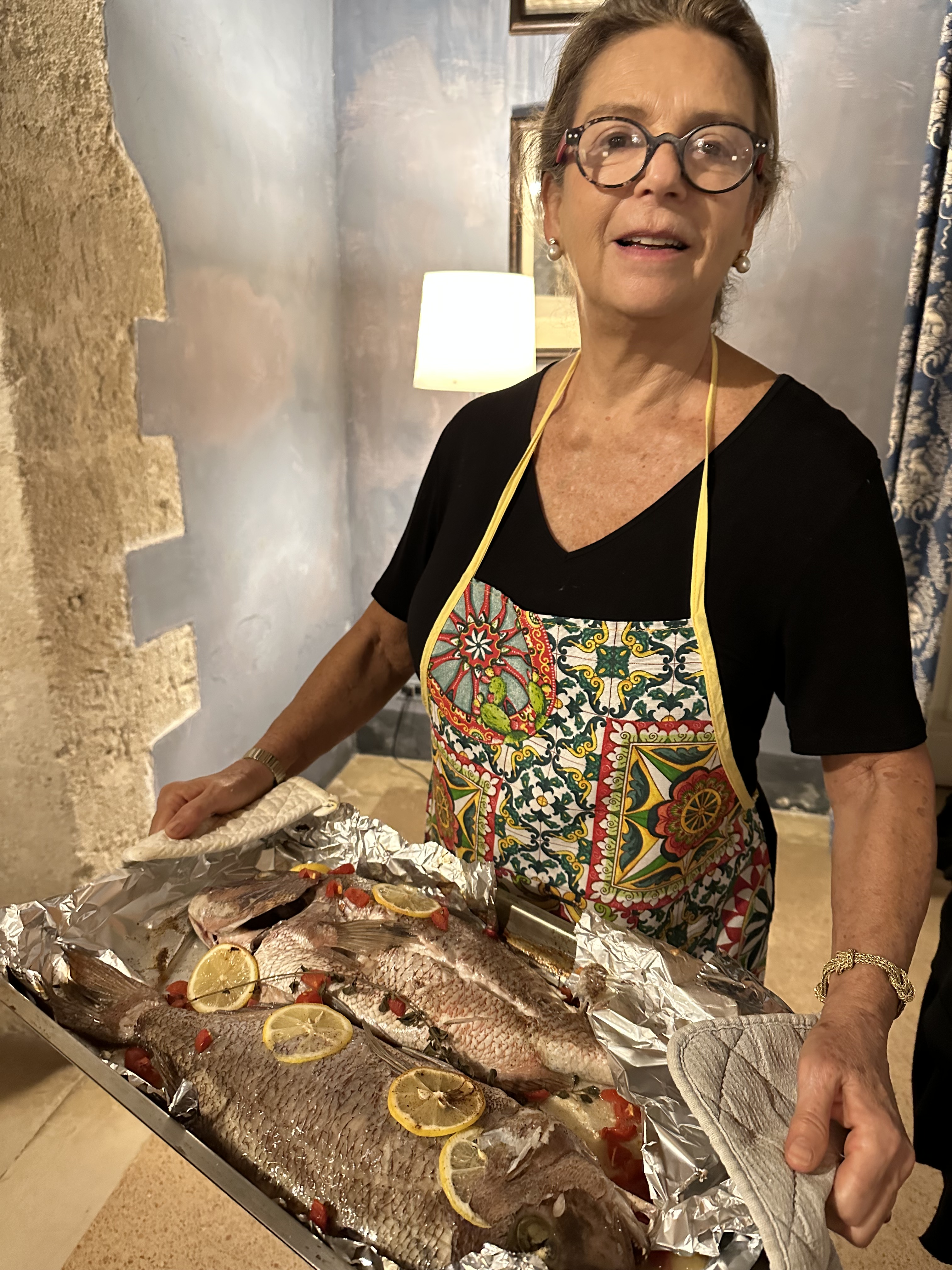
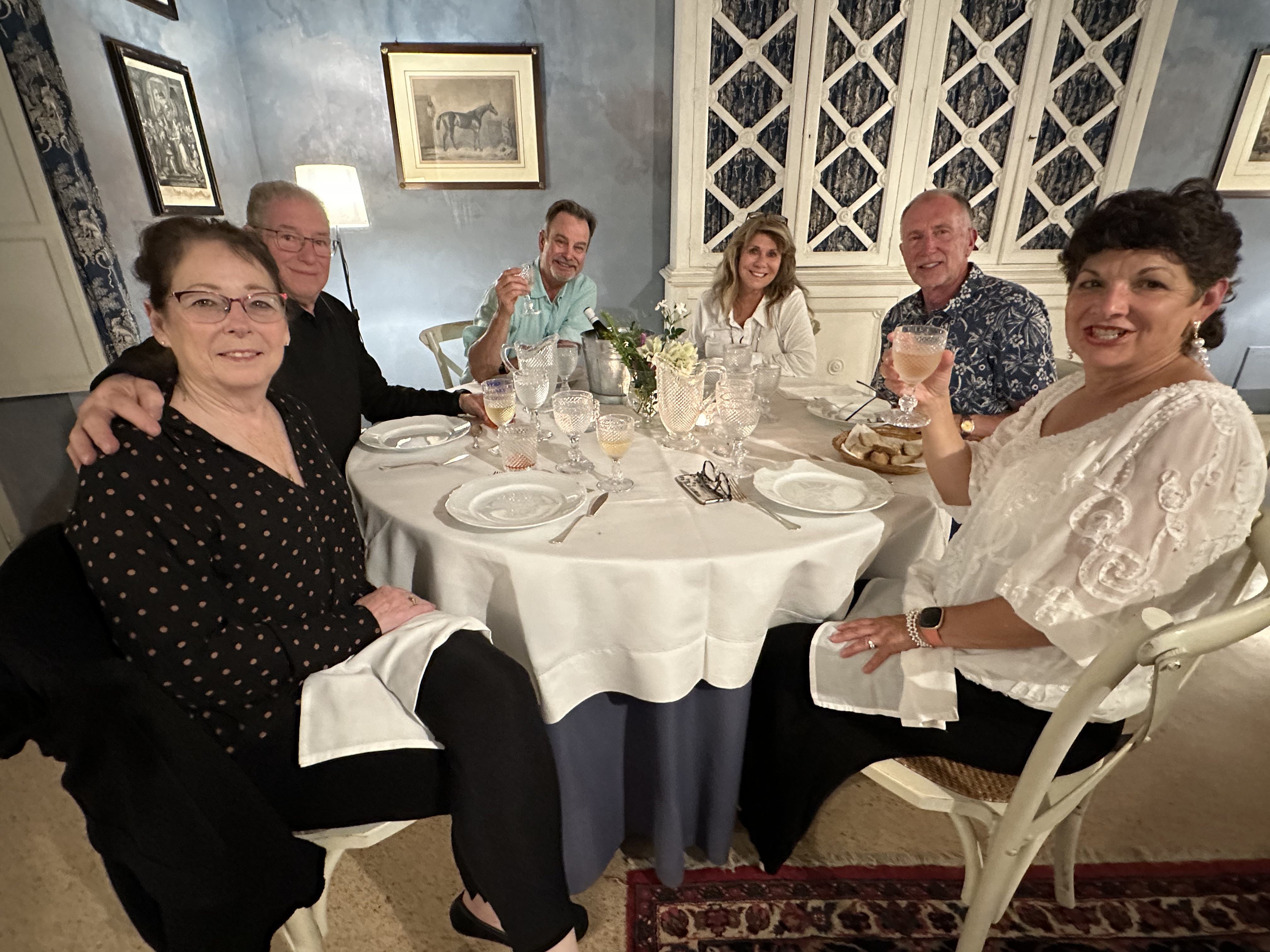
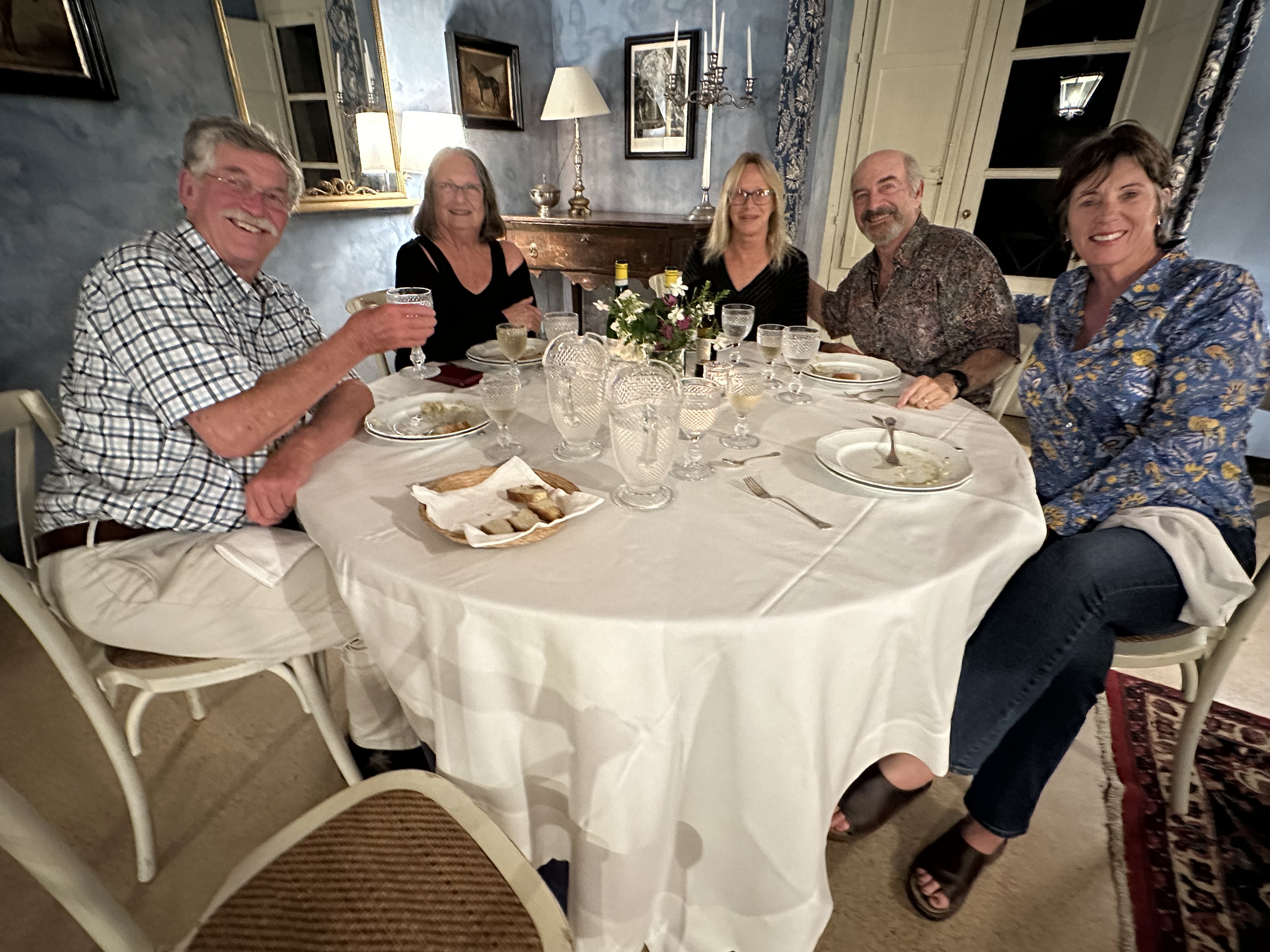
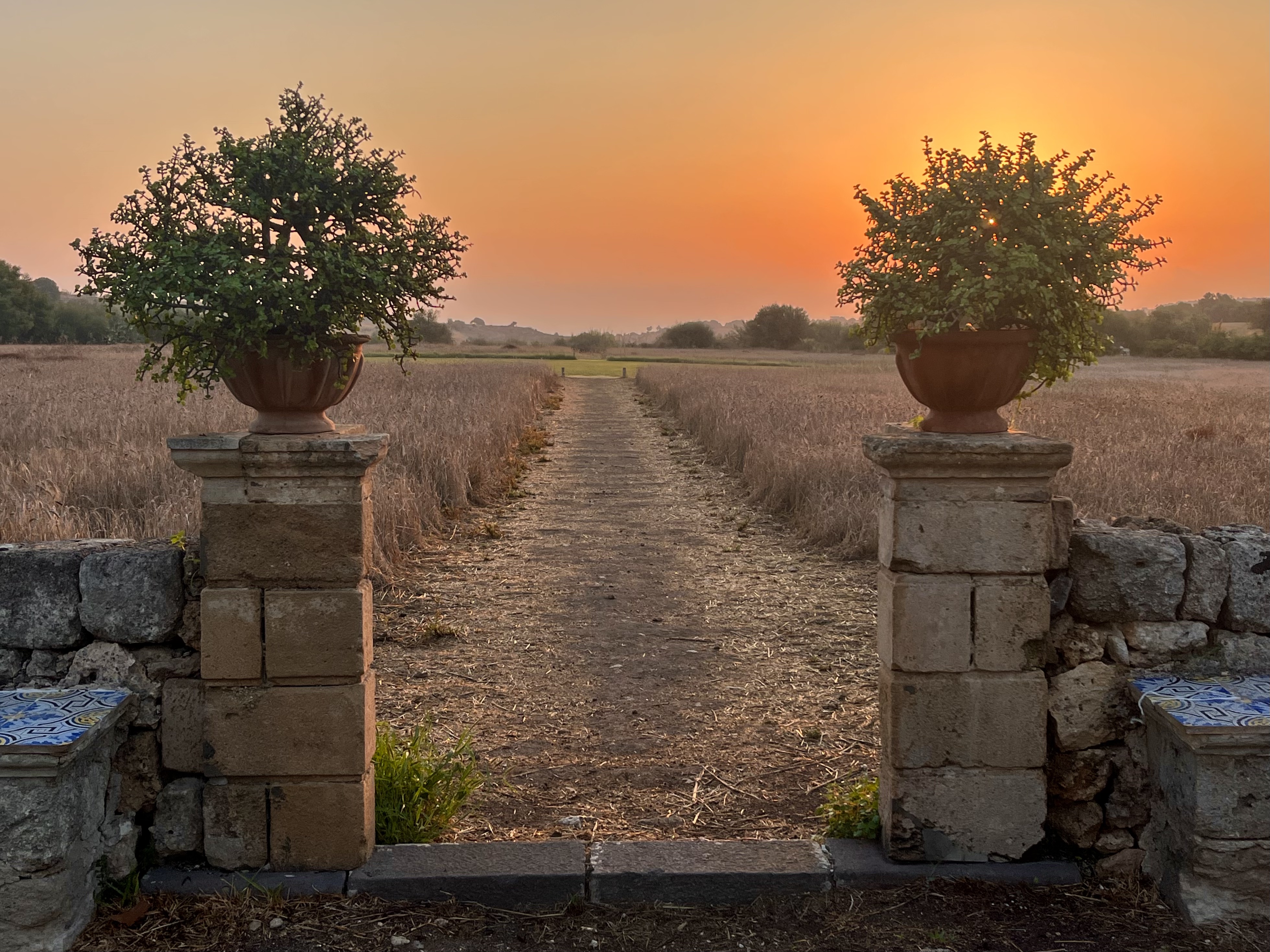
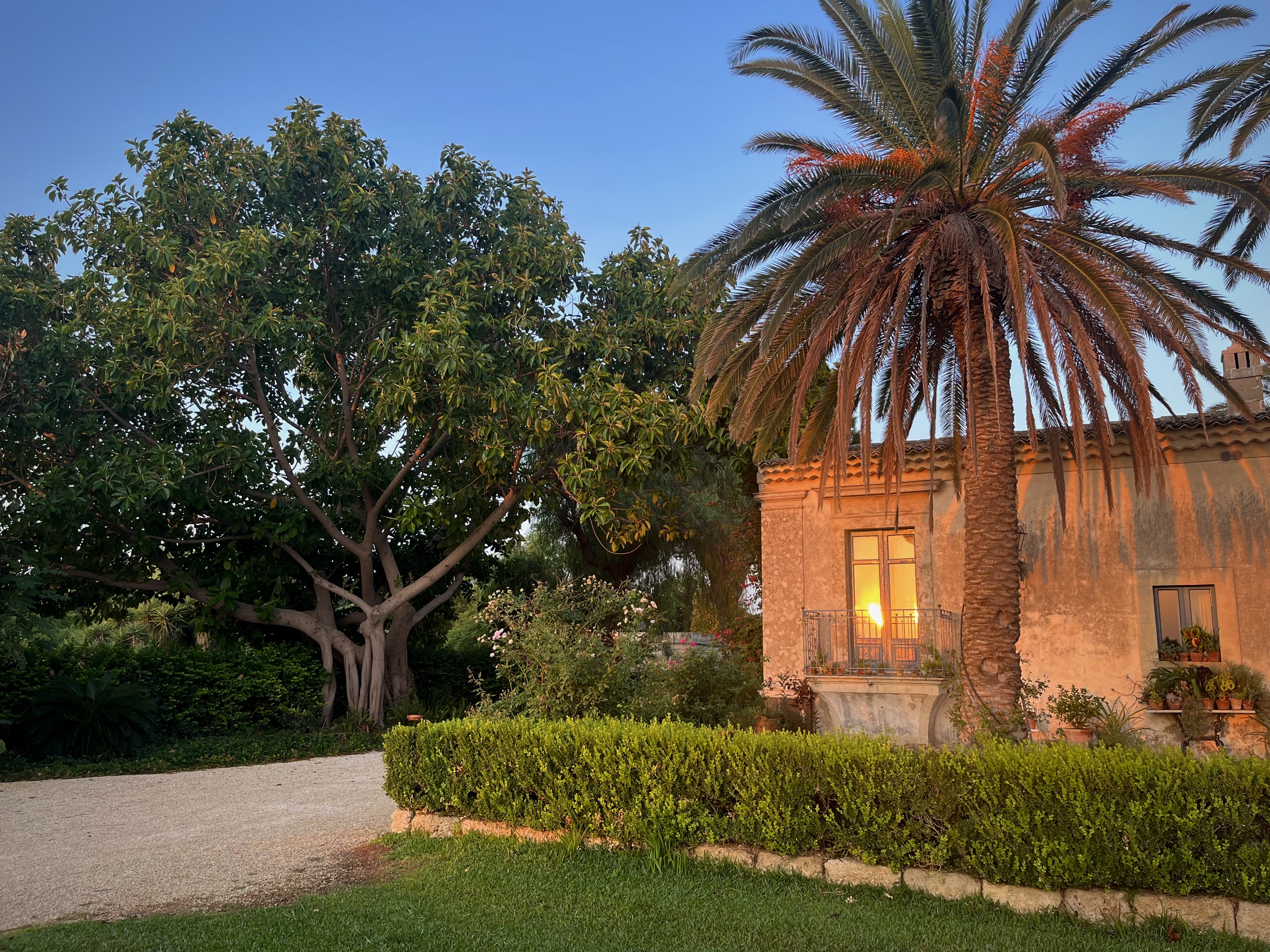
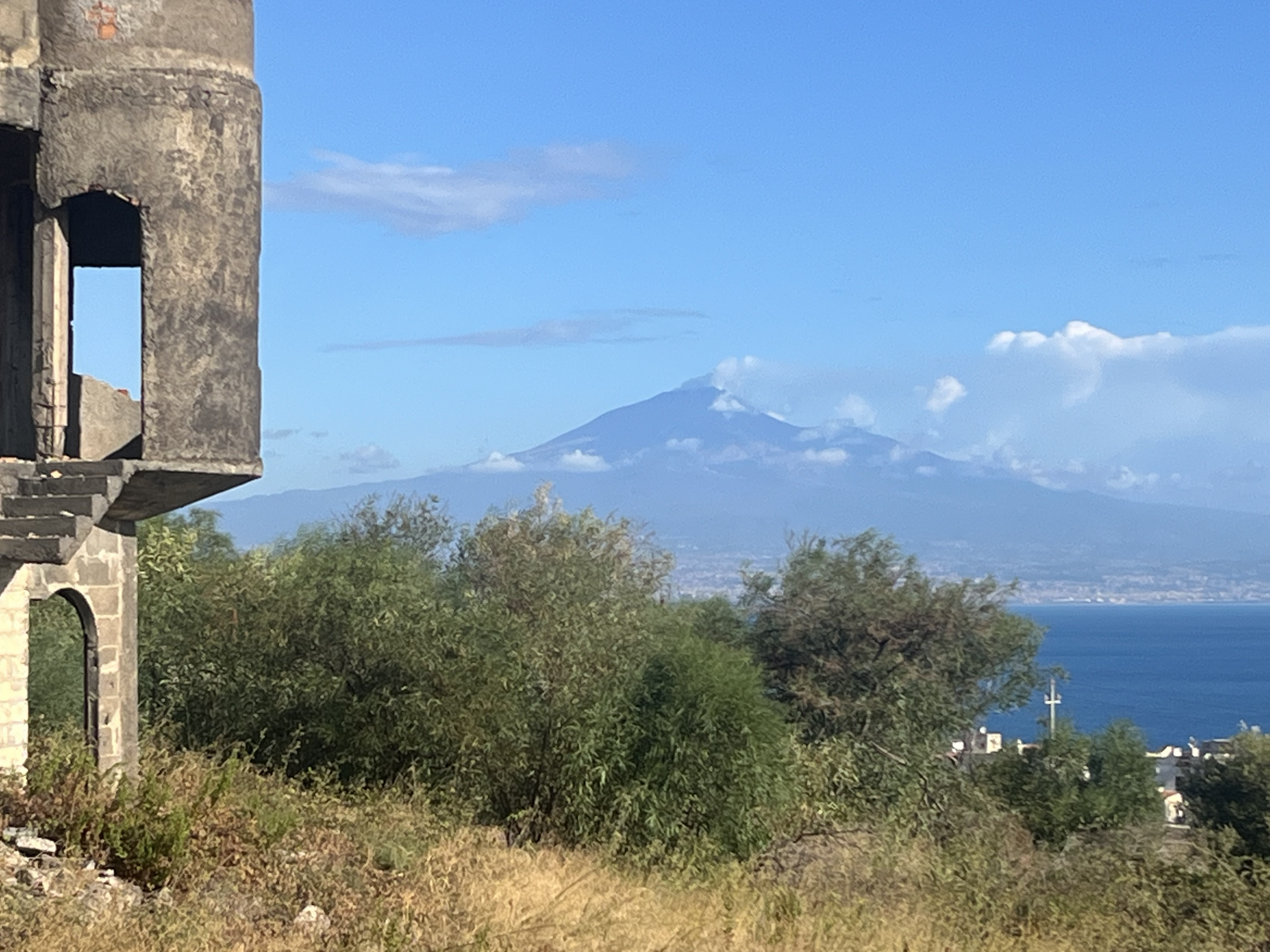
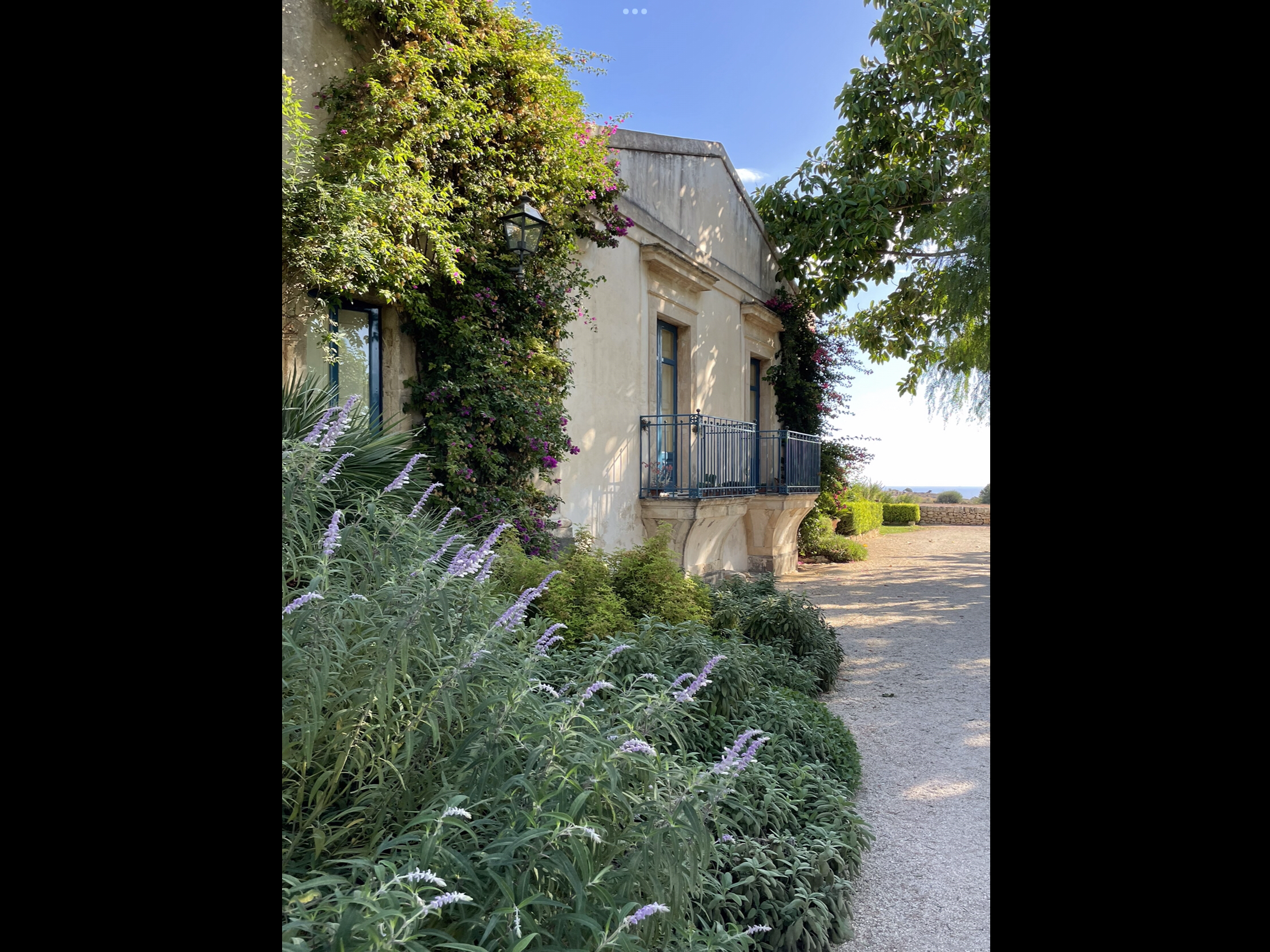
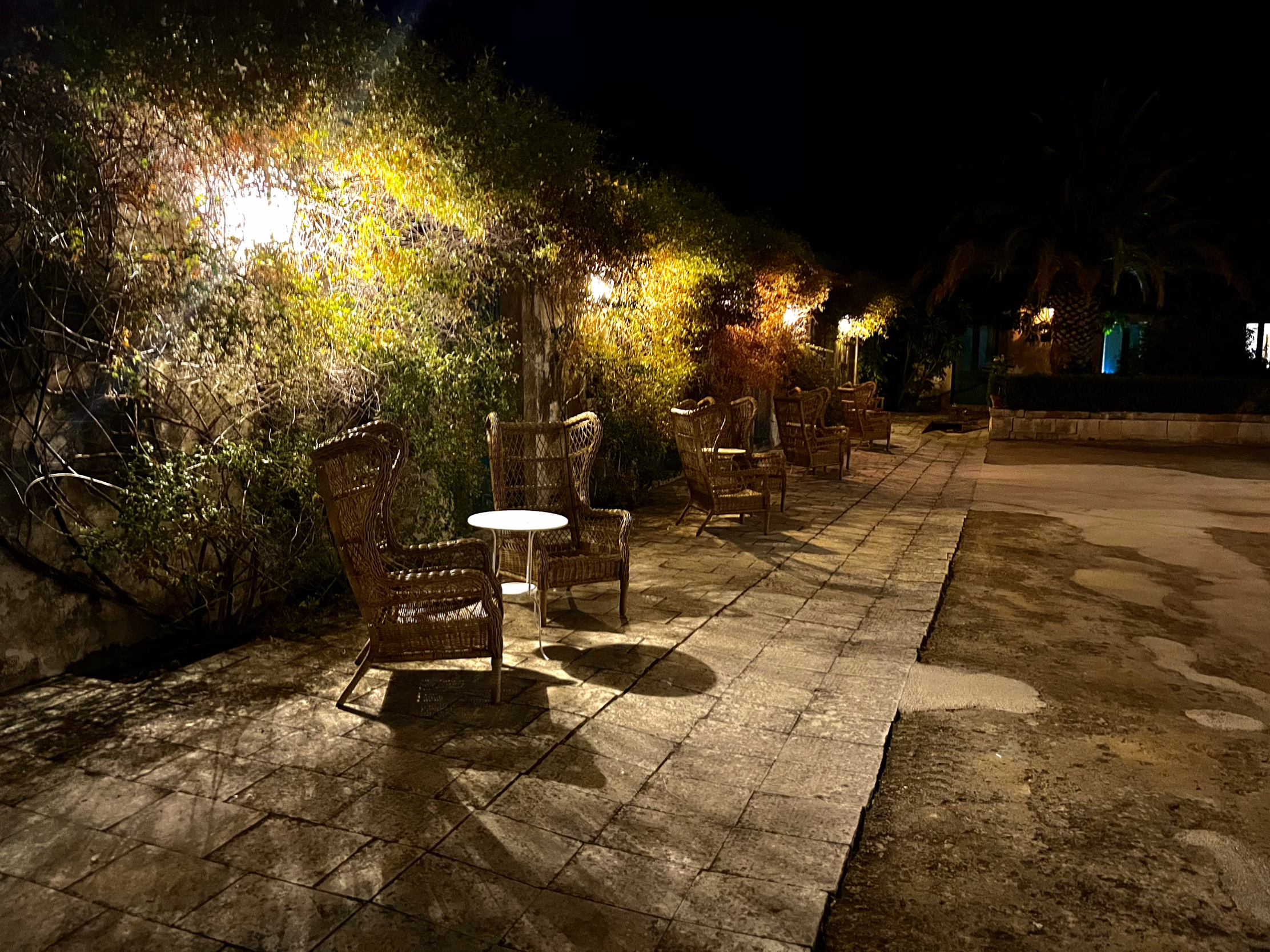
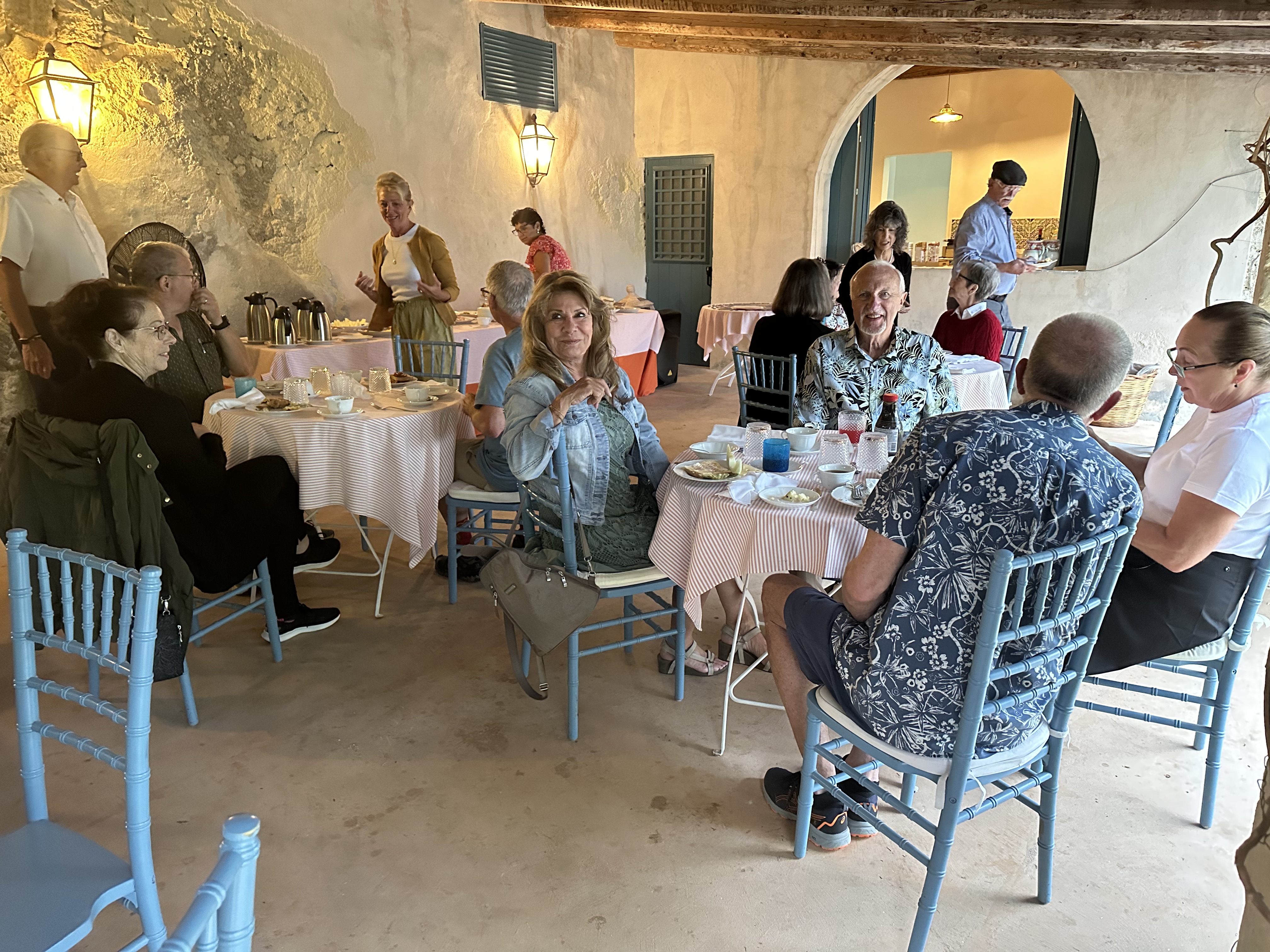
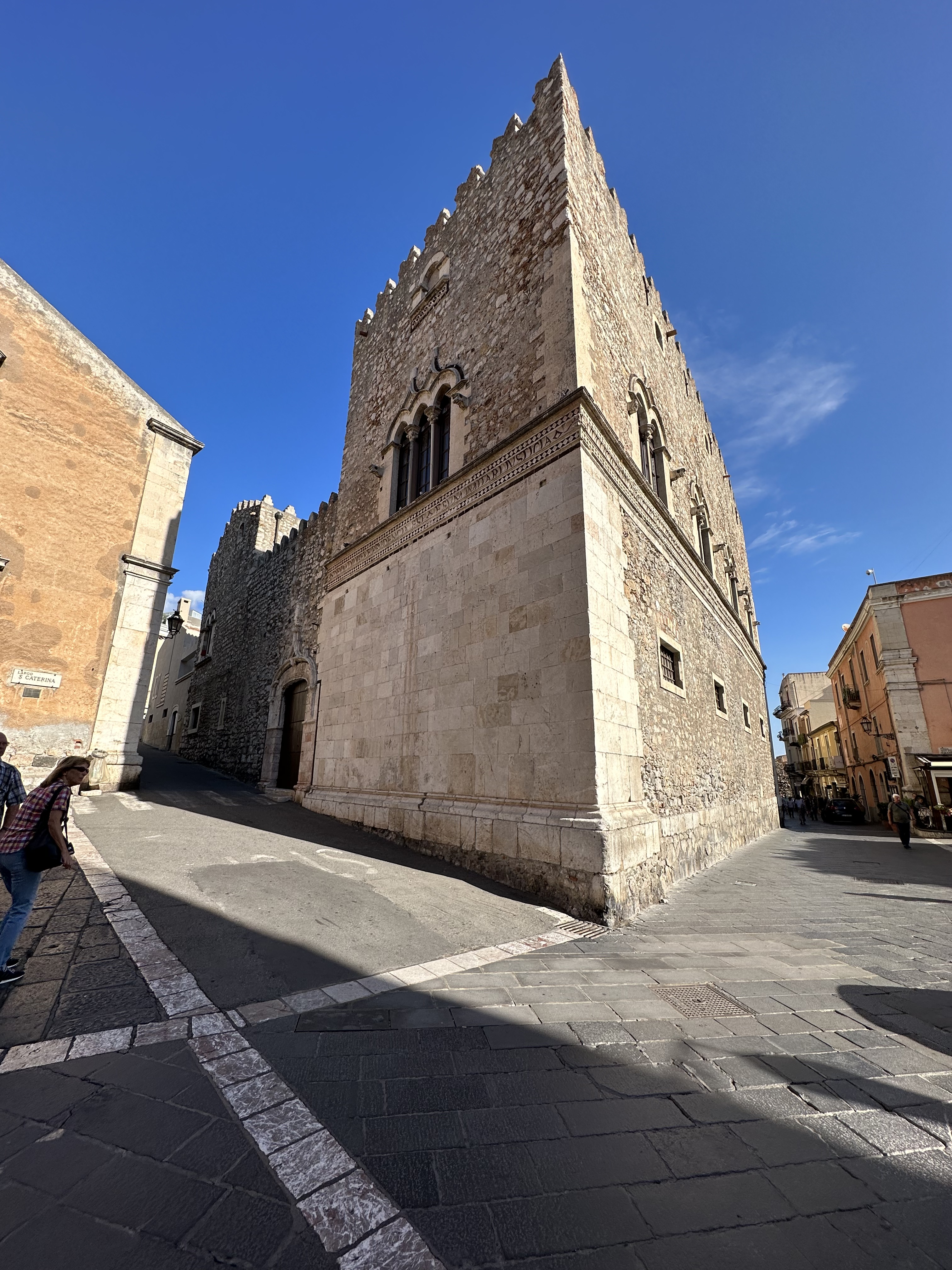
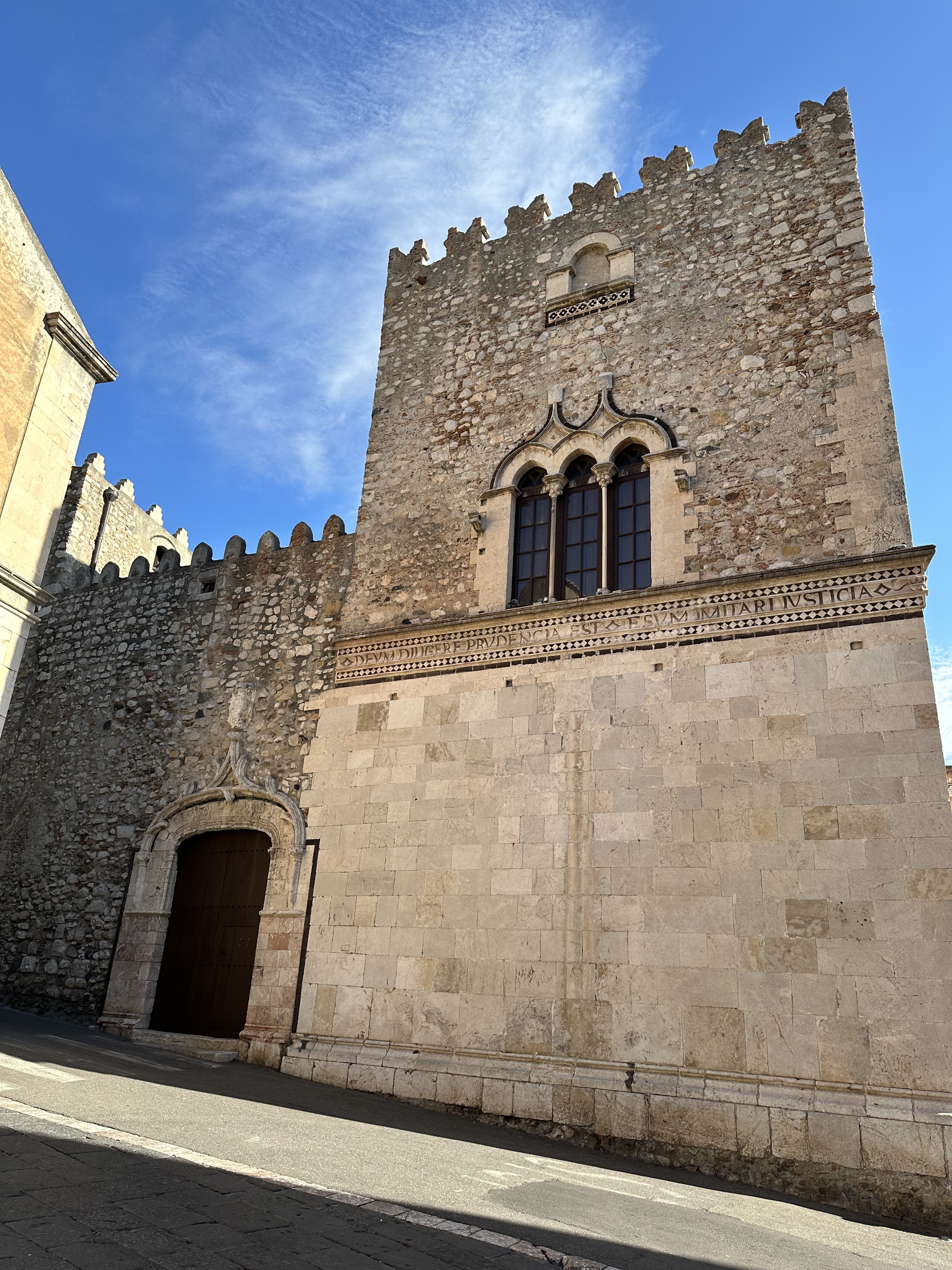
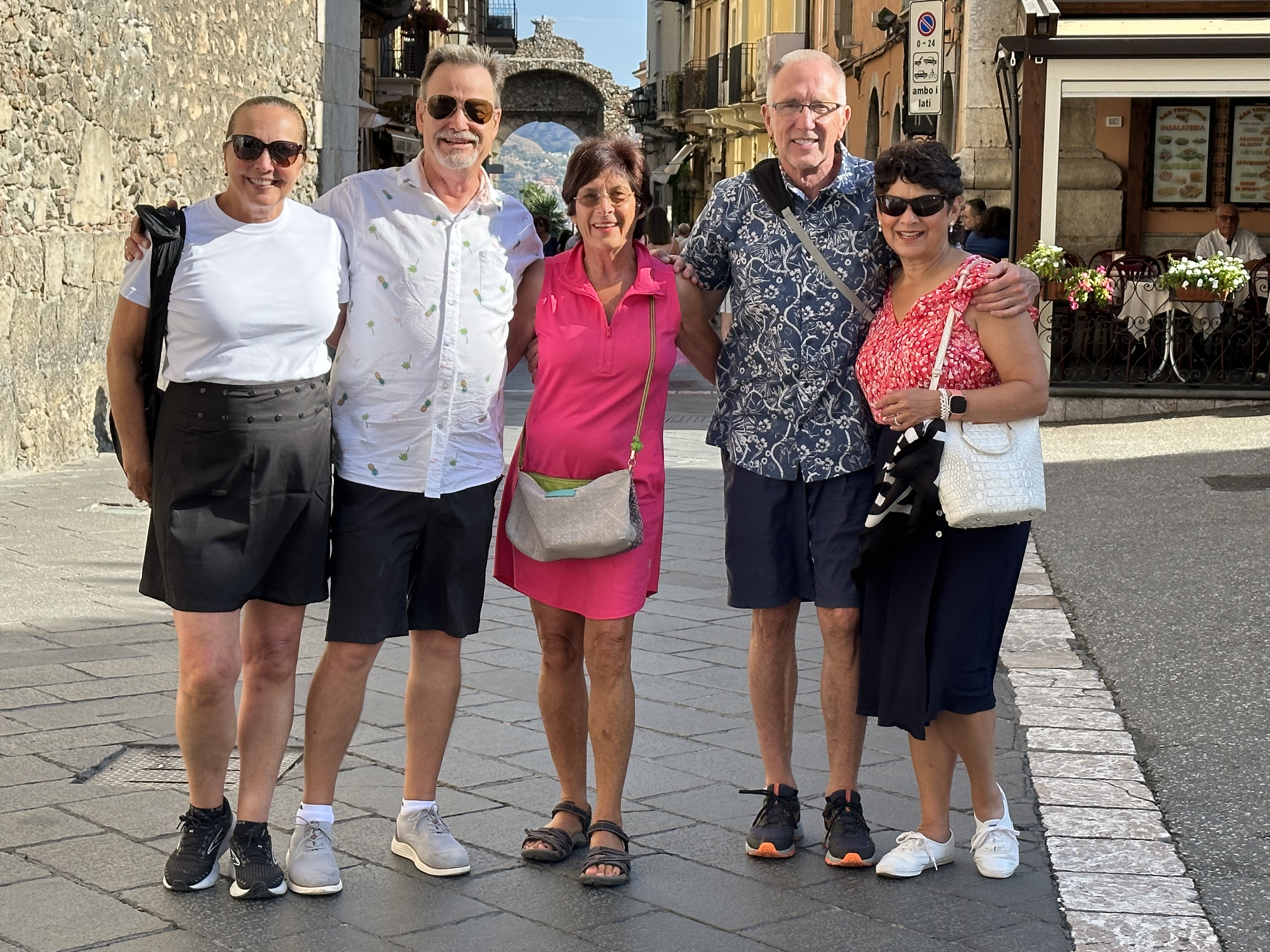
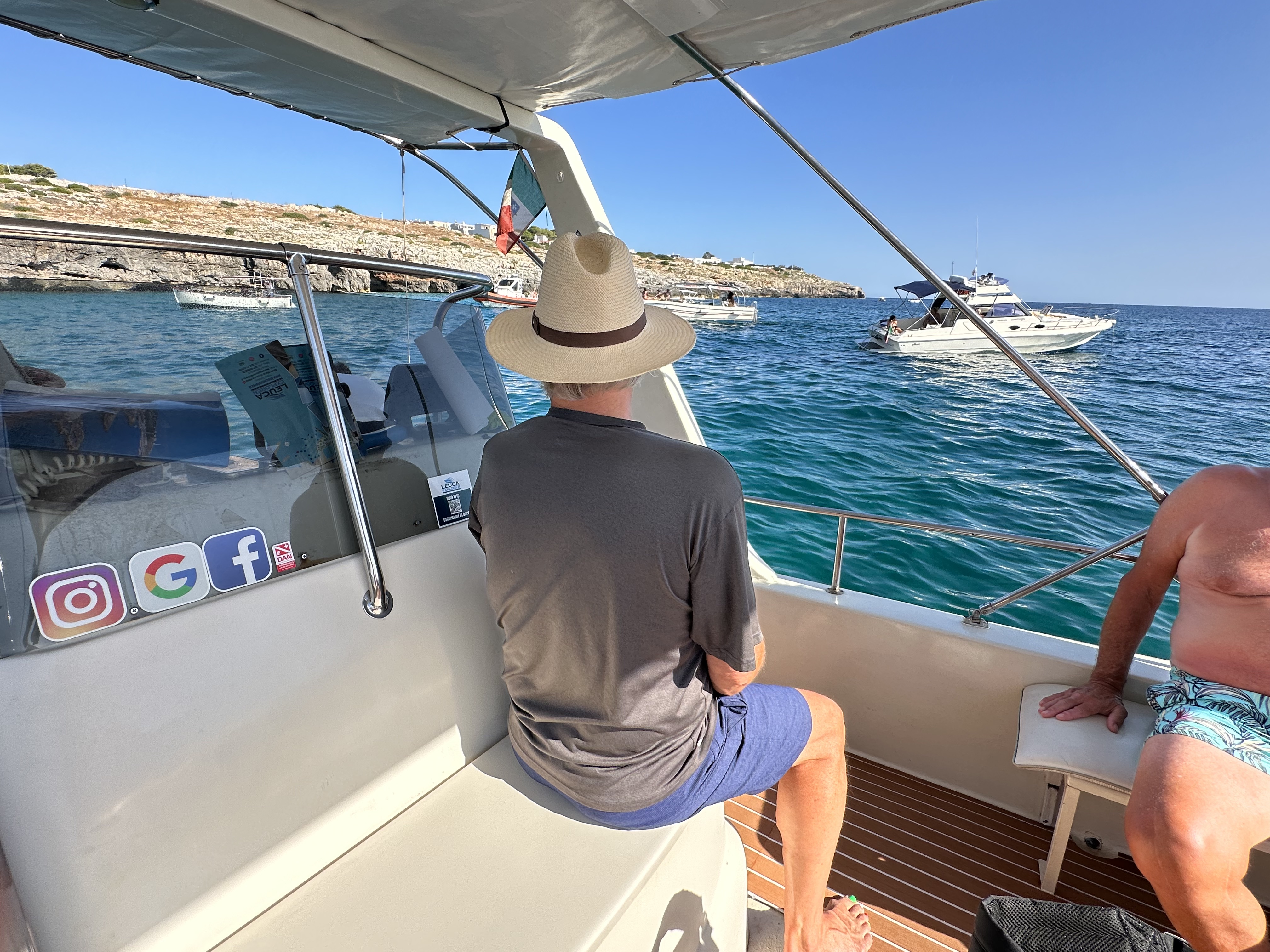
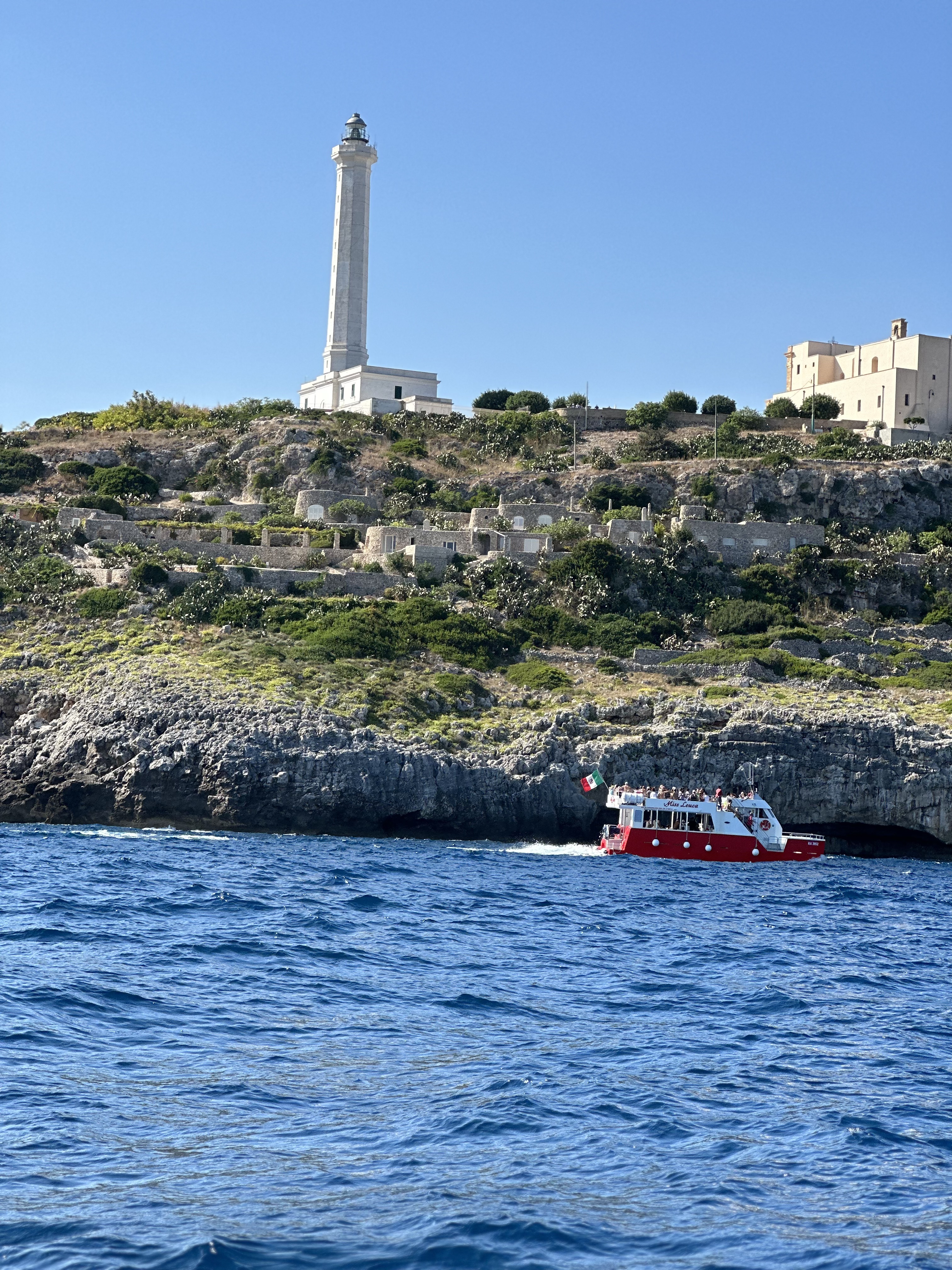
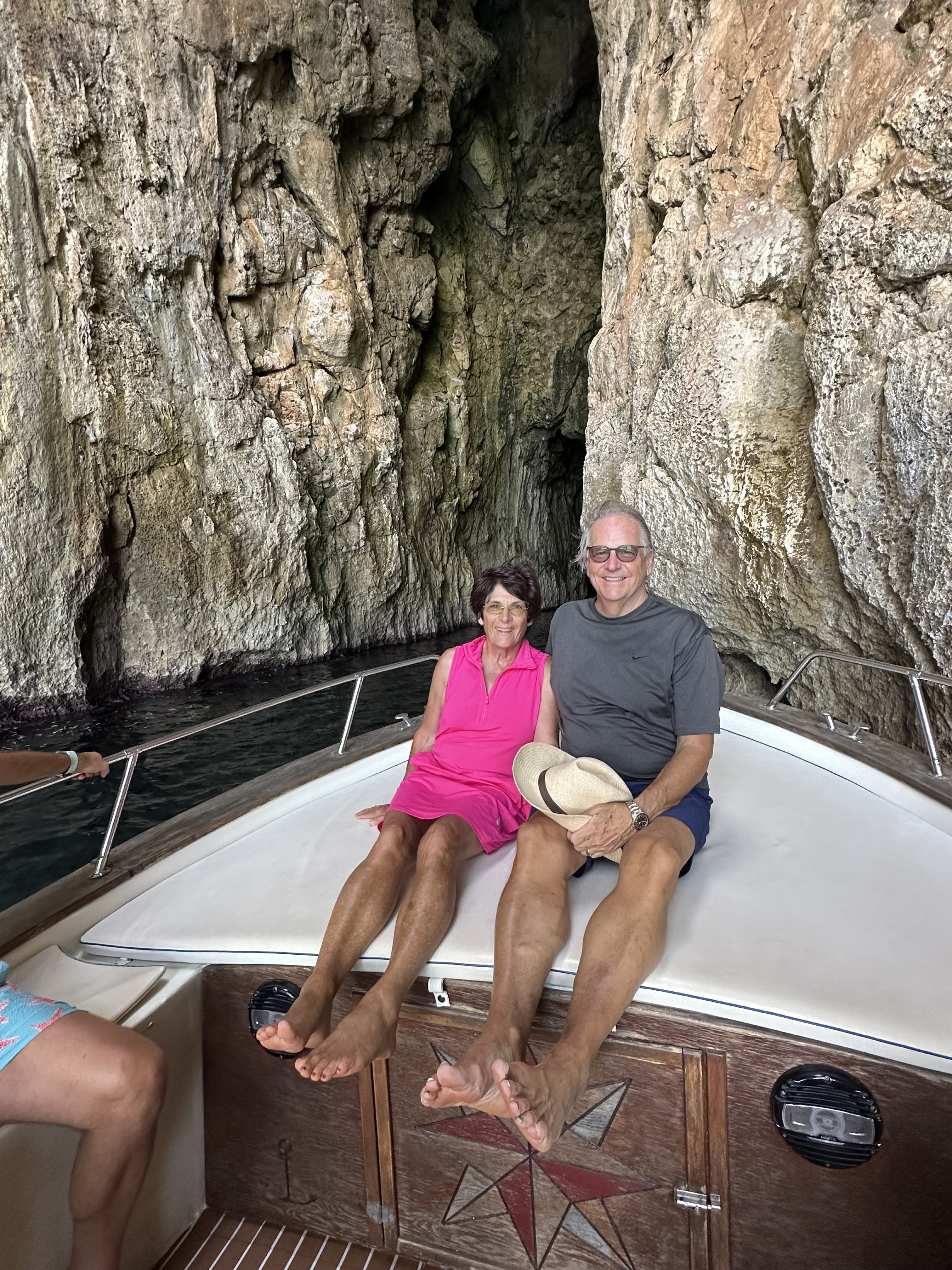
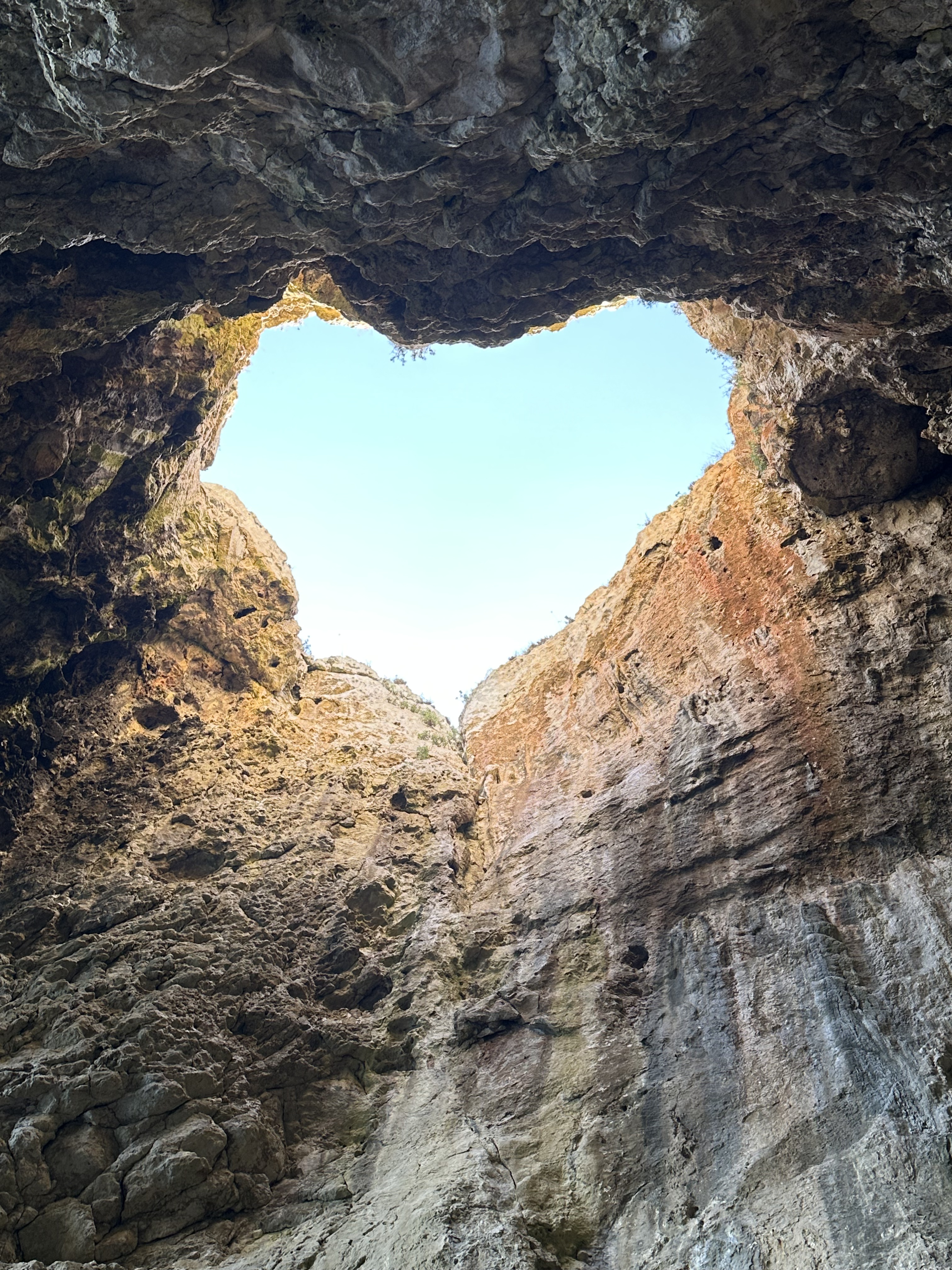
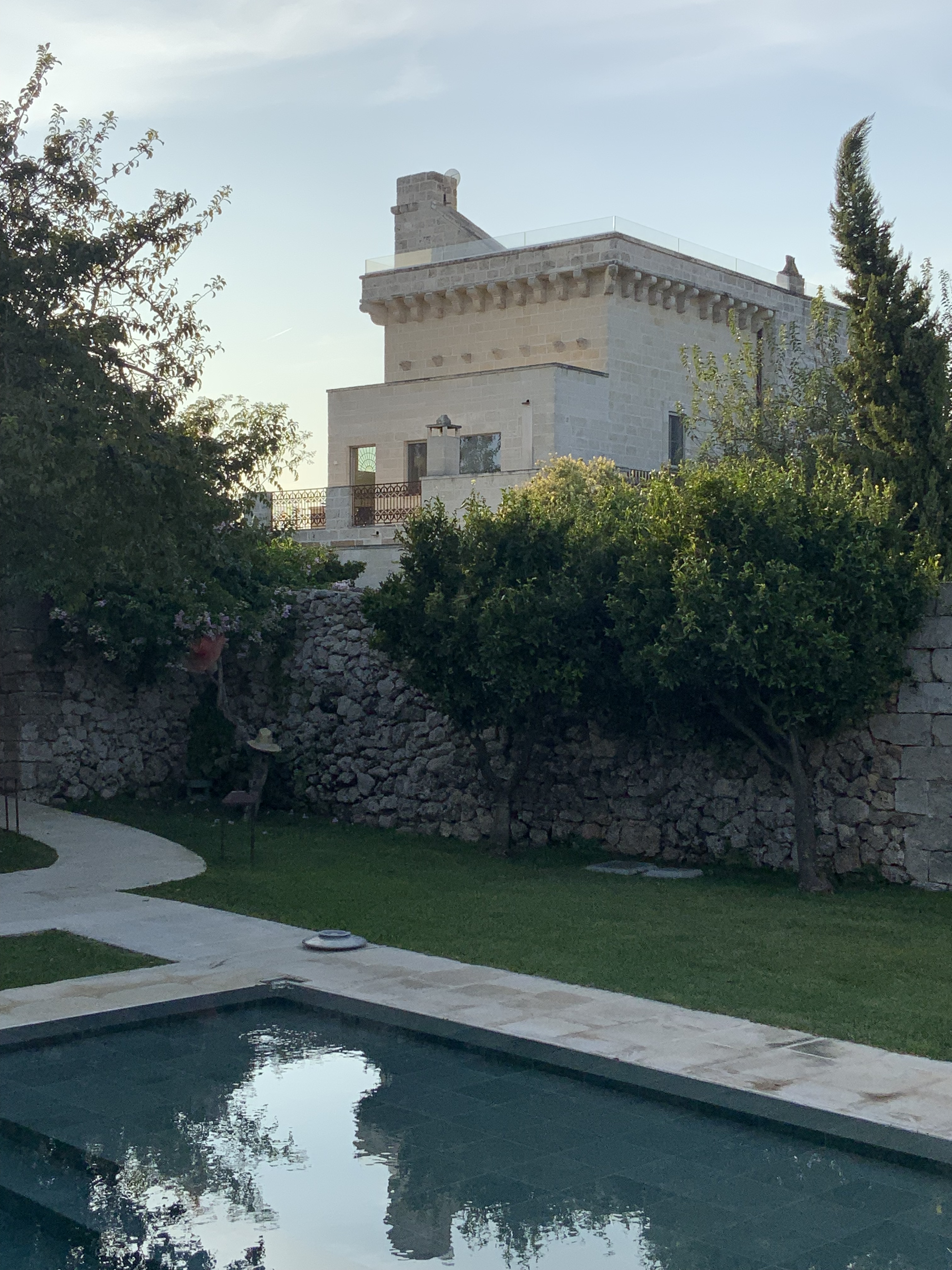
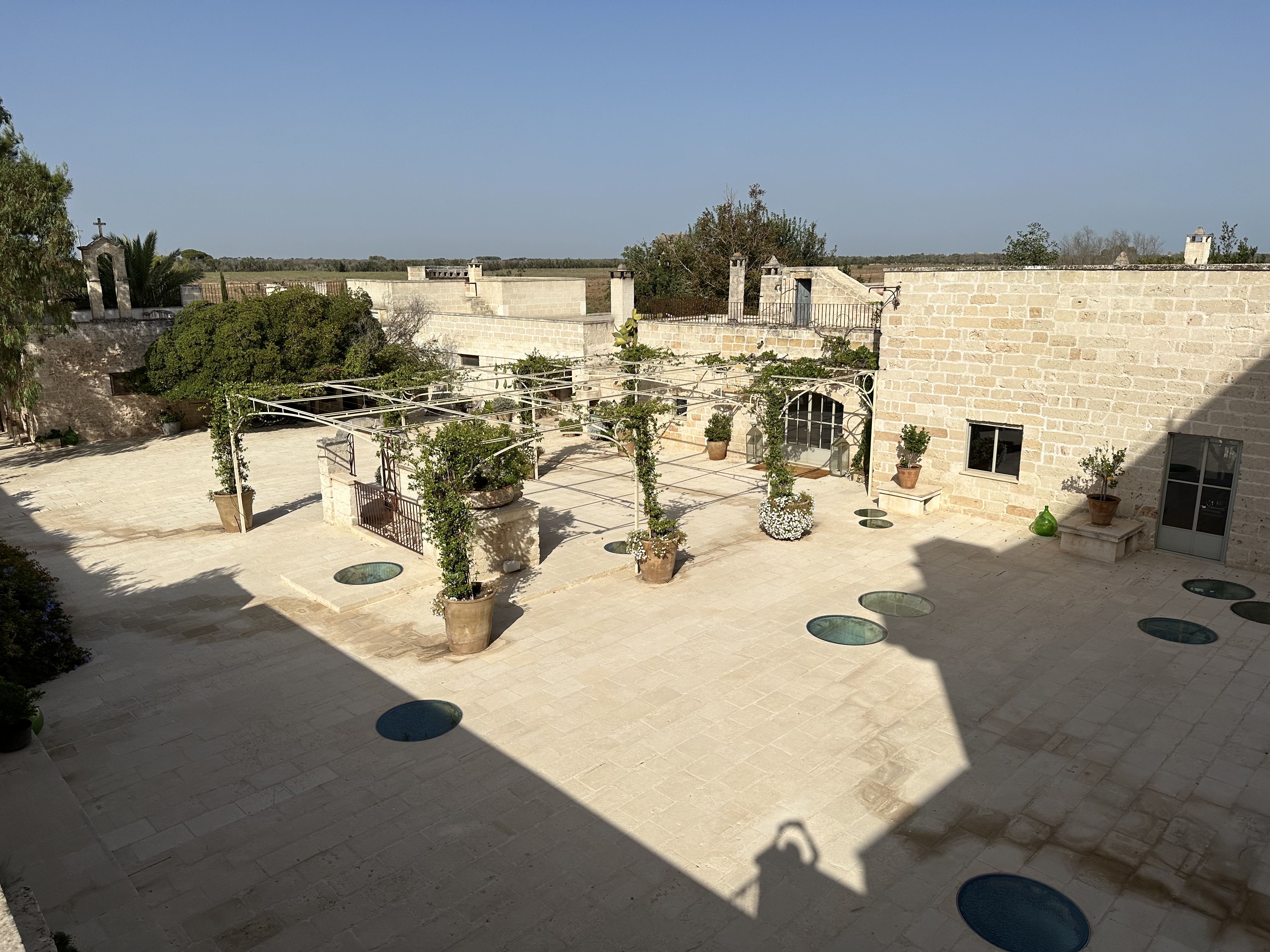
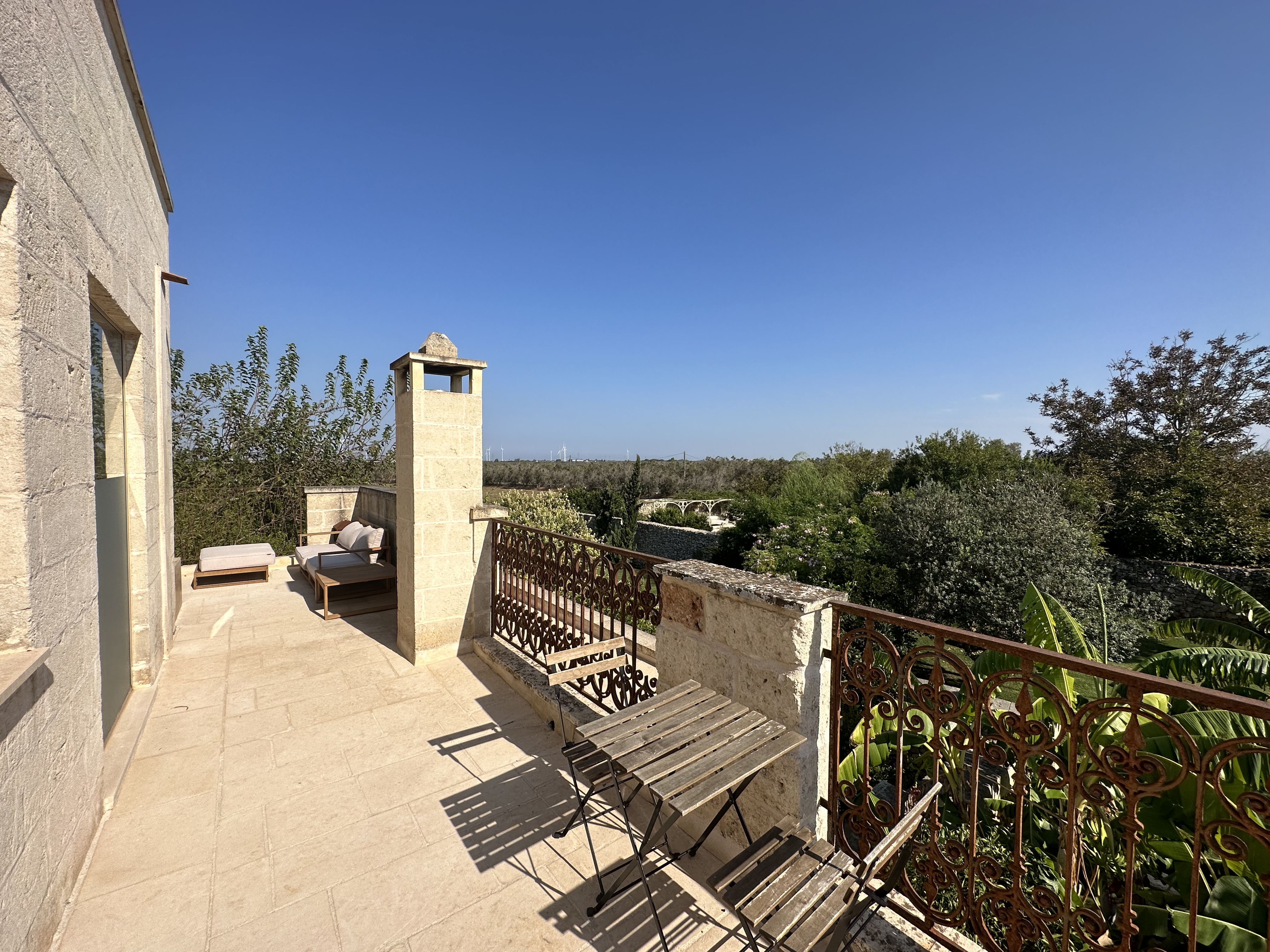
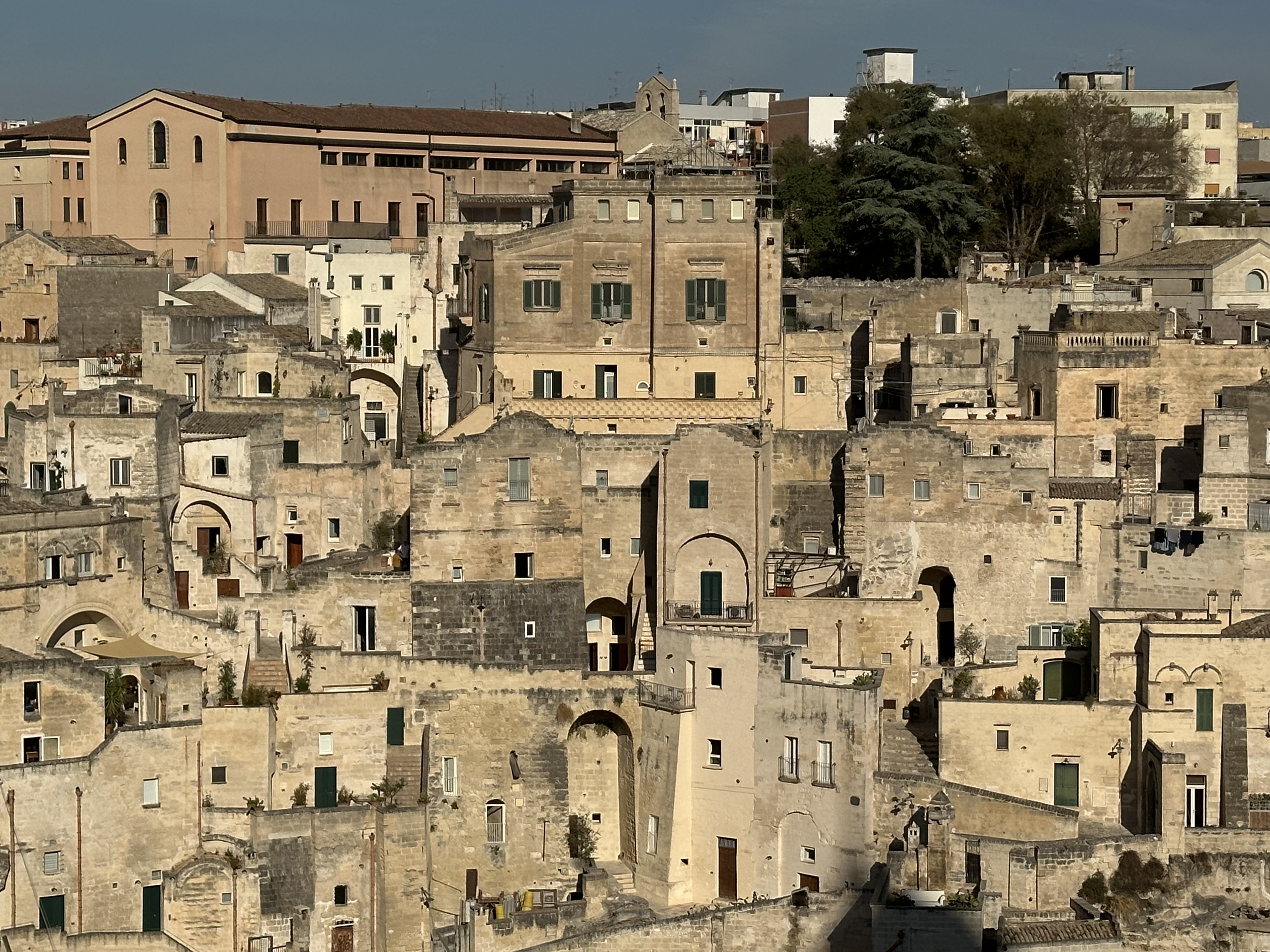
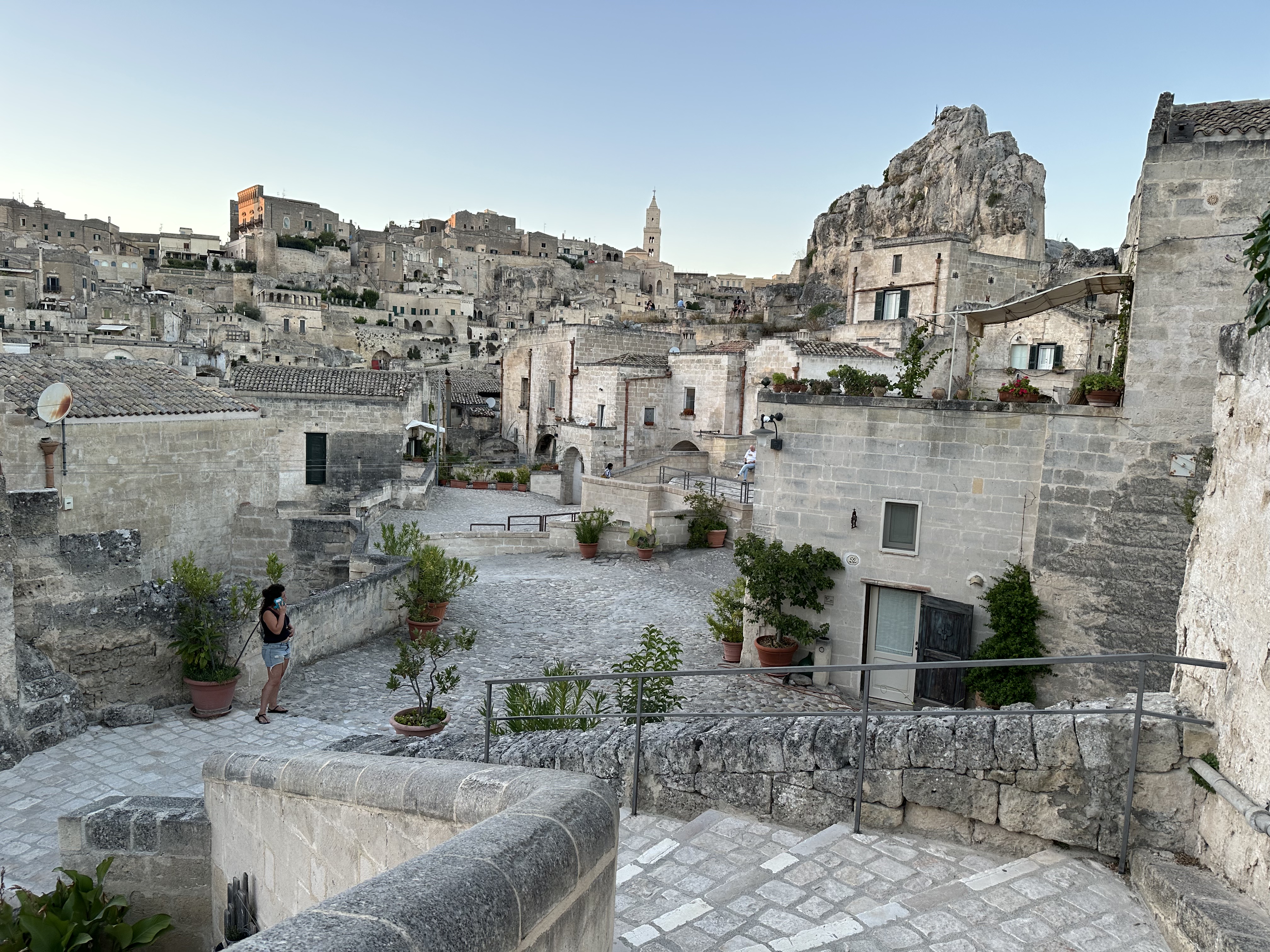
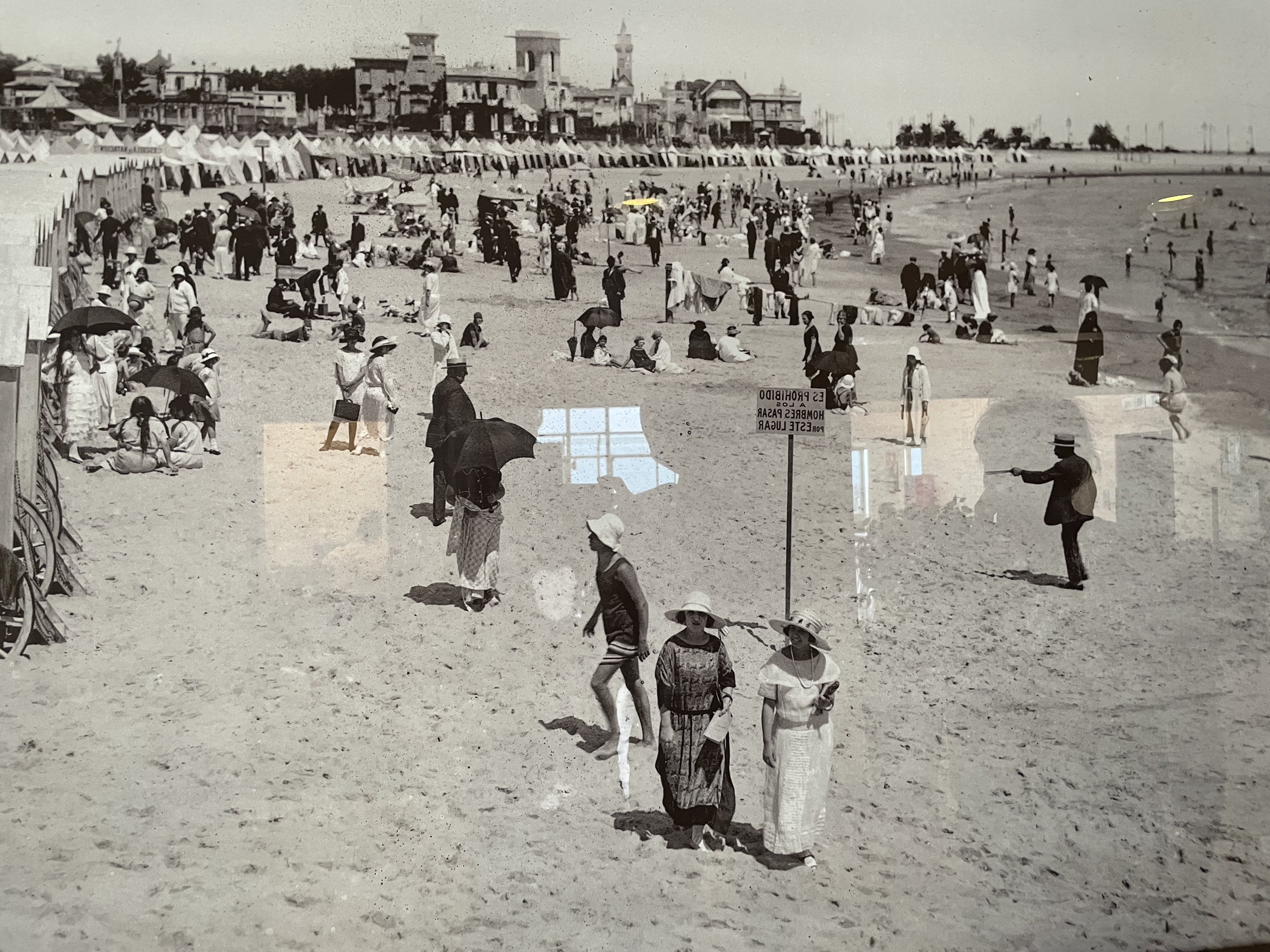
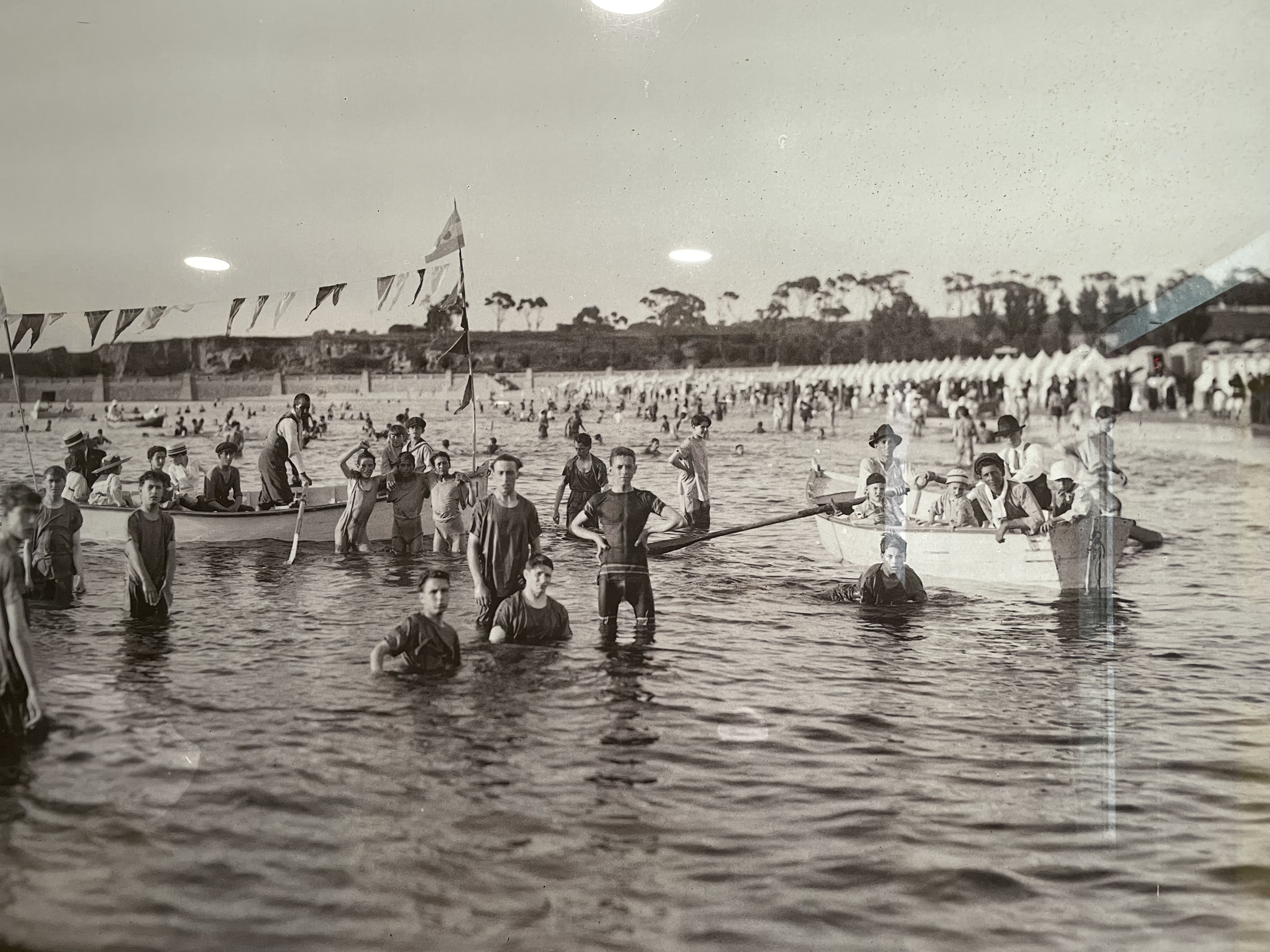
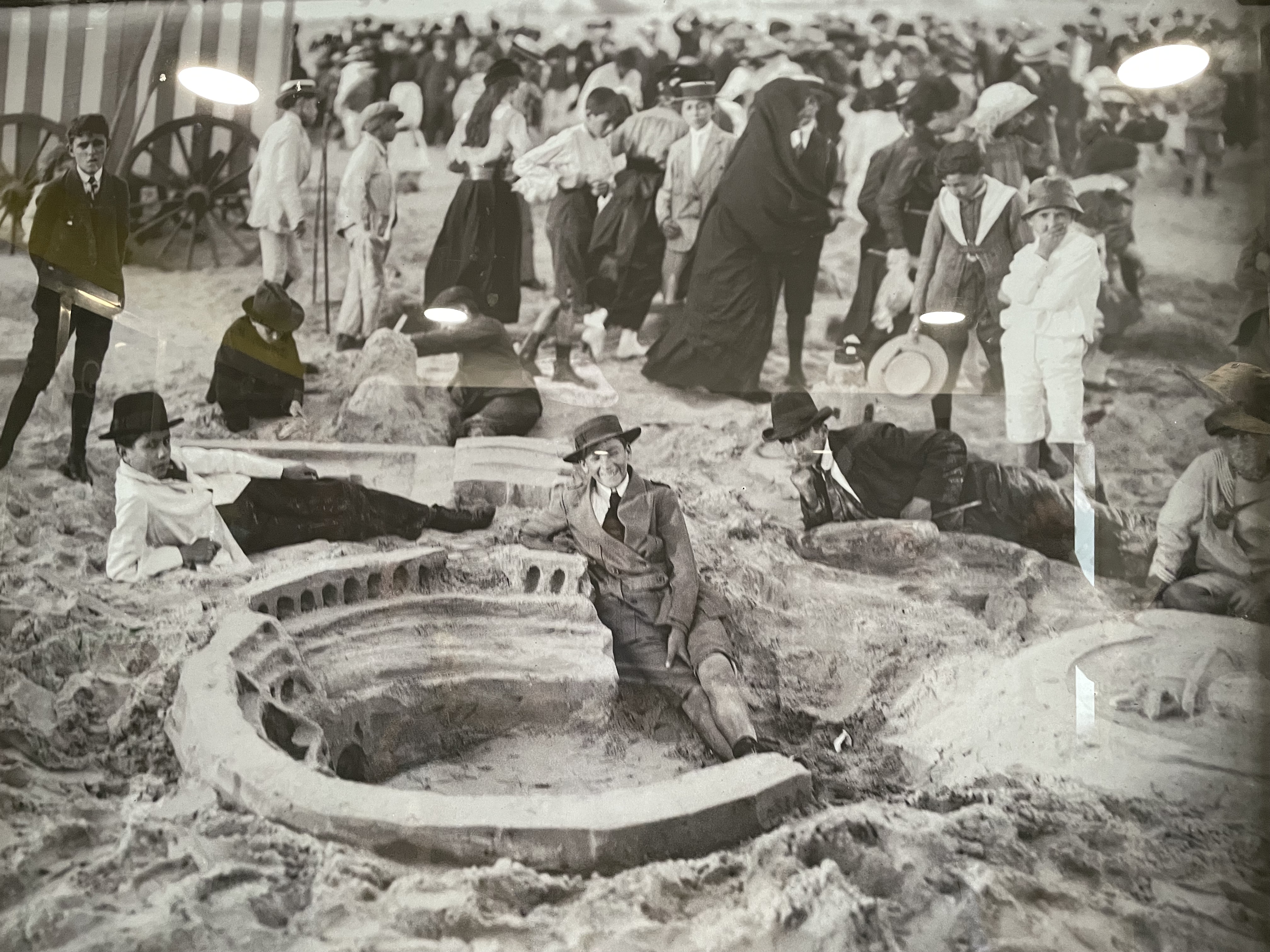
More of our week at the villa Commenda di San Calogero

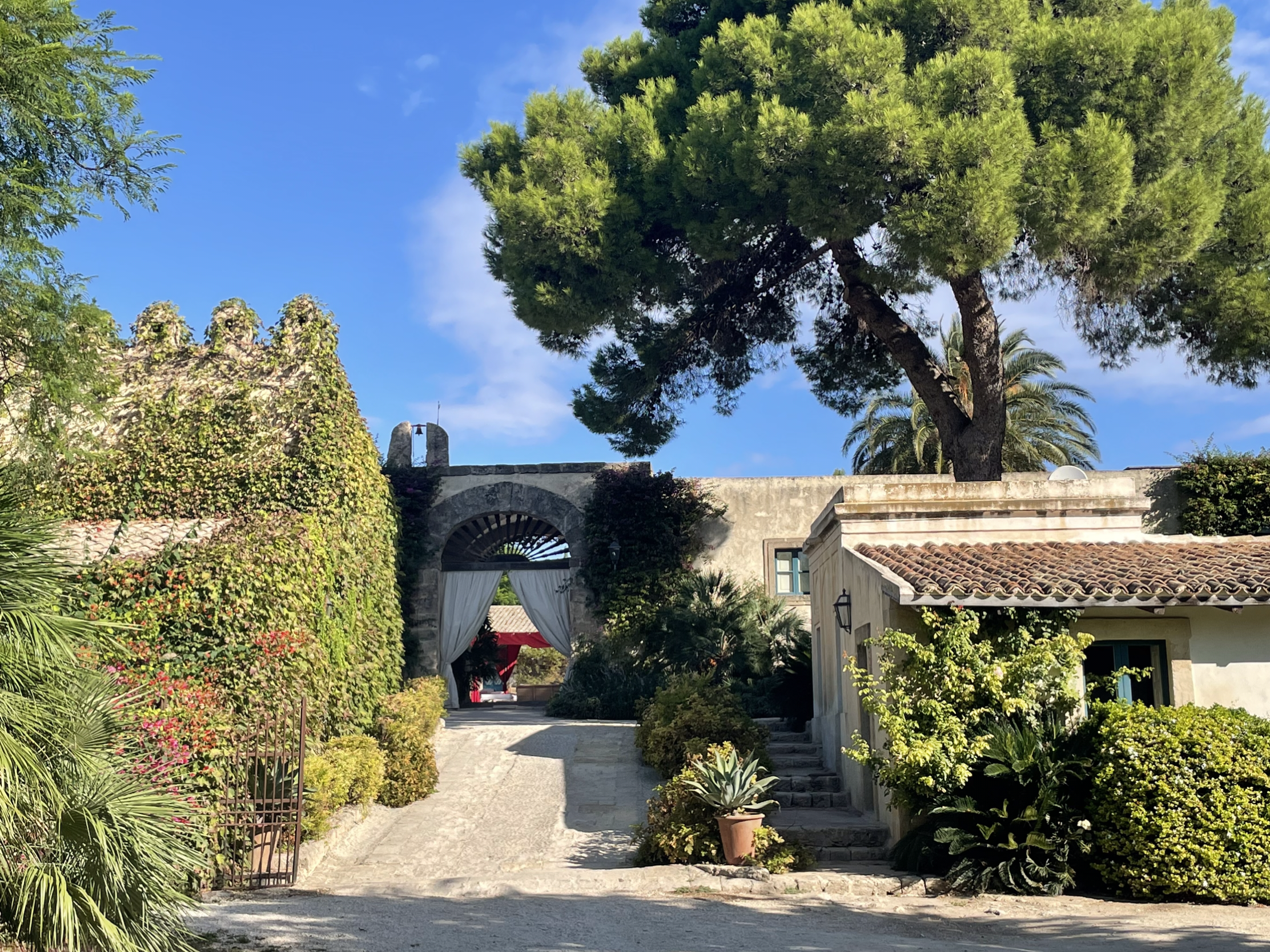
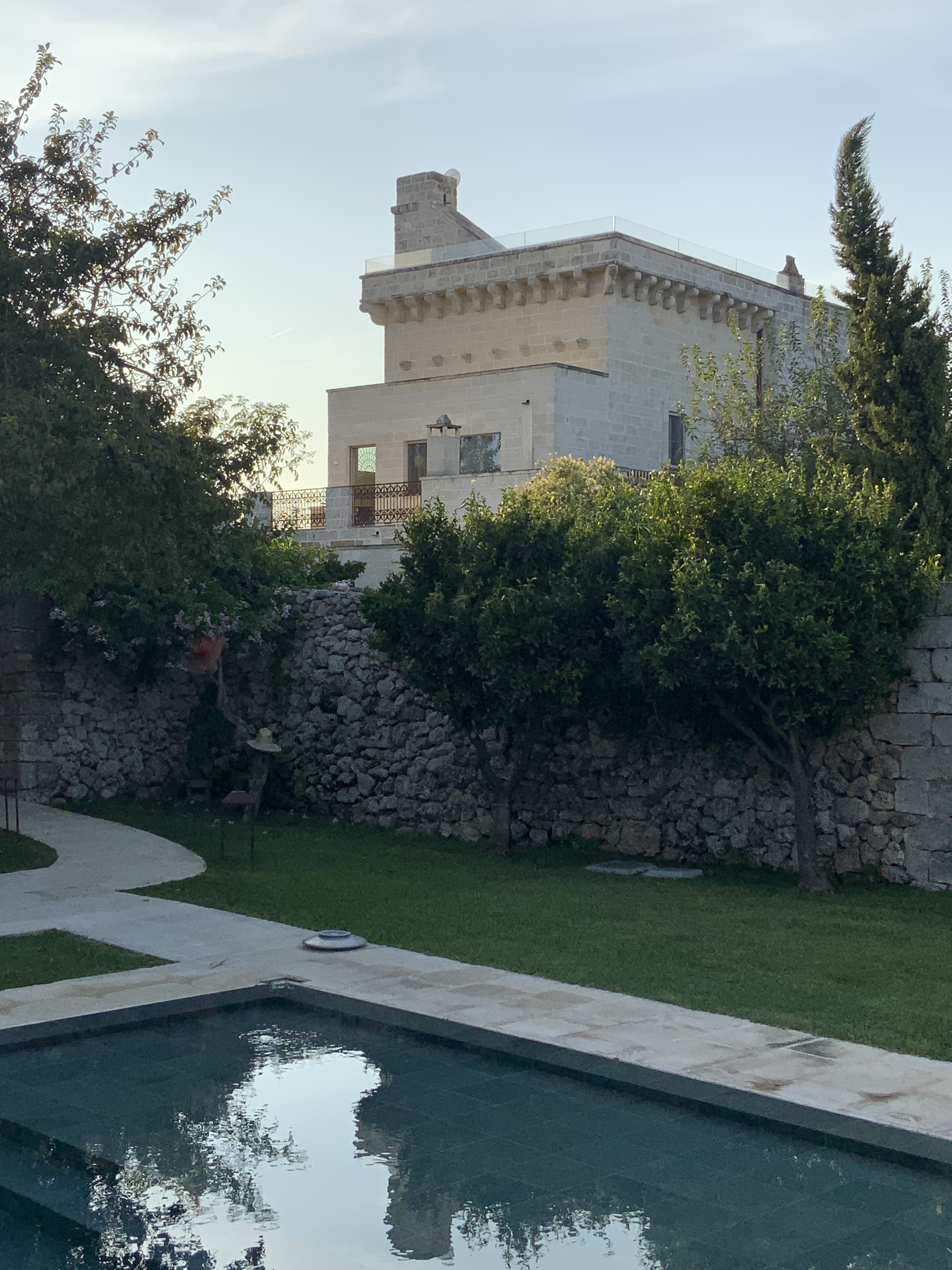
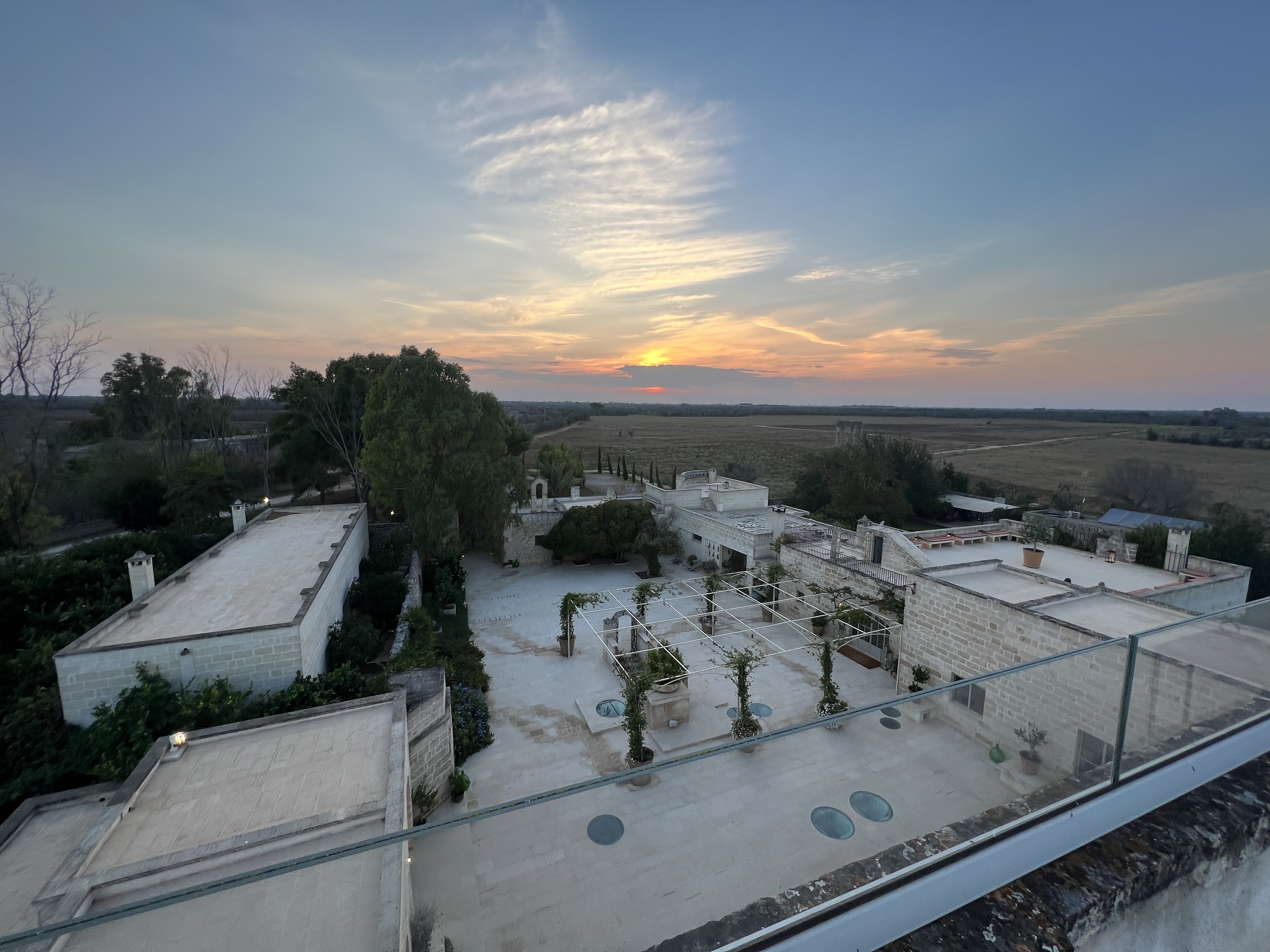
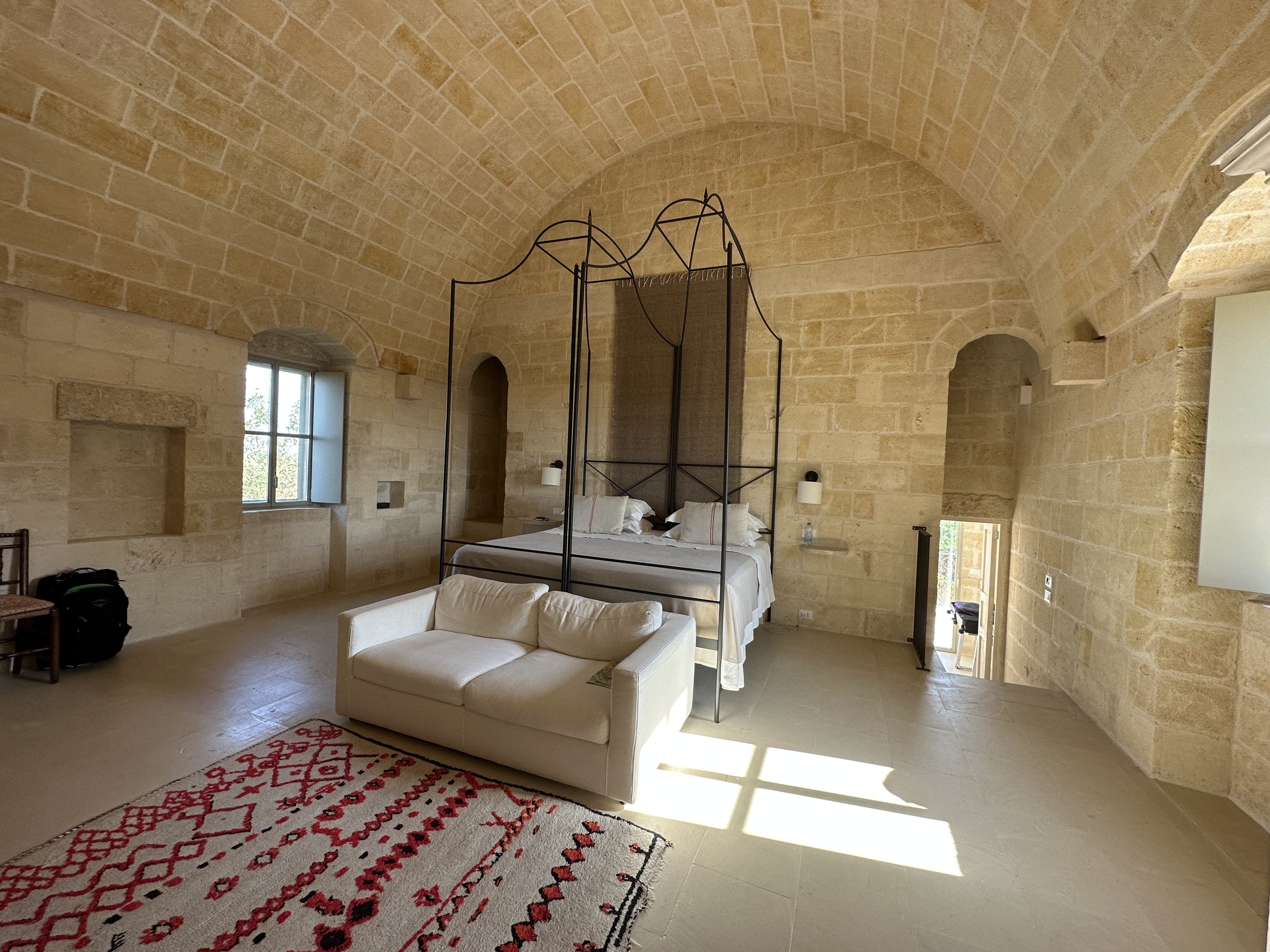
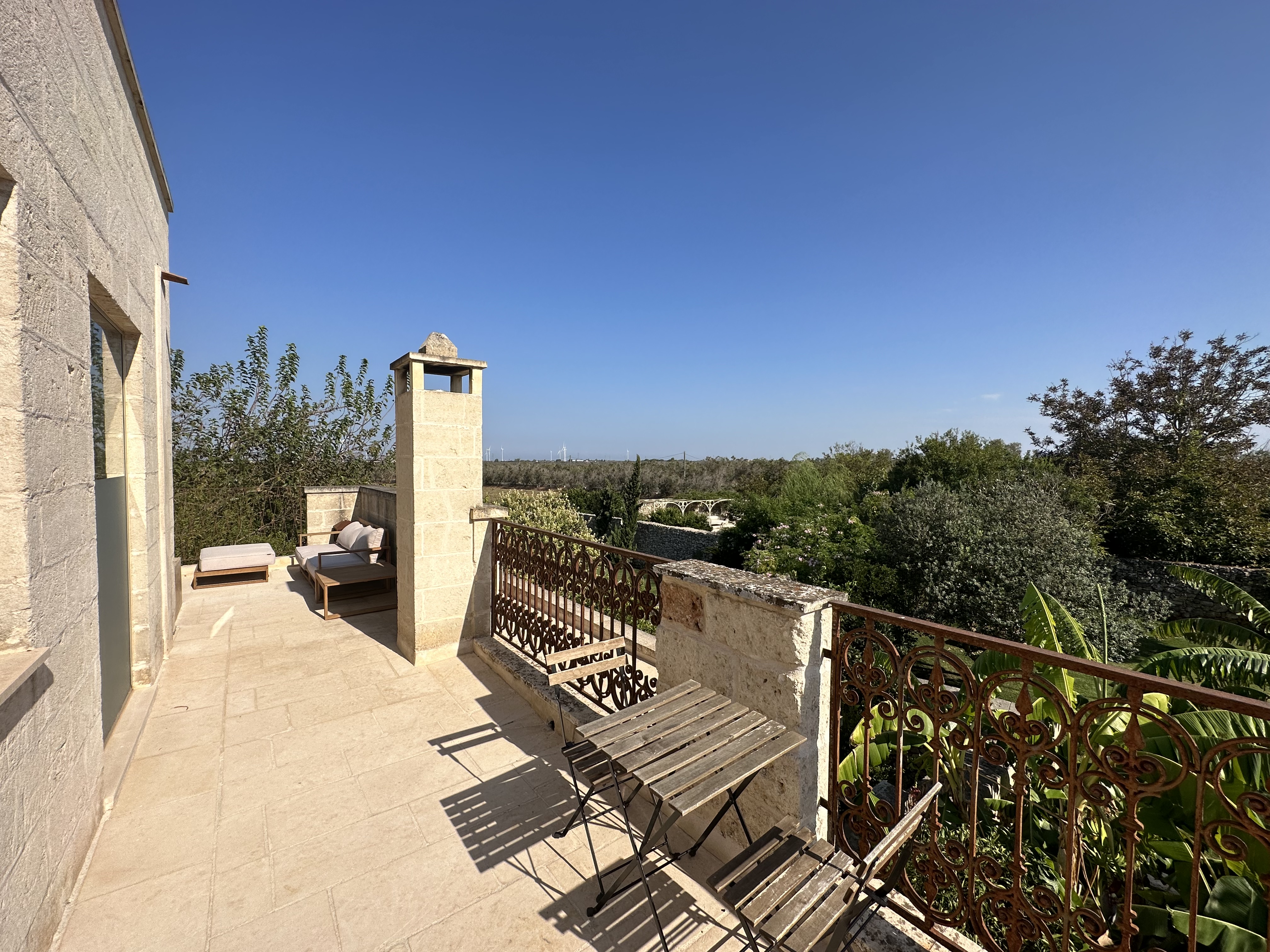
First I want to make a correction. All the time I have been calling the villa “Il Borgo” thinking that was the name of the villa, but I just learned that Borgo is not the name. It merely references a place. So the name of our villa is Commenda di San Calogero. This explains why everyone was having a hard time finding the place. Thank goodness that problem is solved.

Monday, September 25, 2023

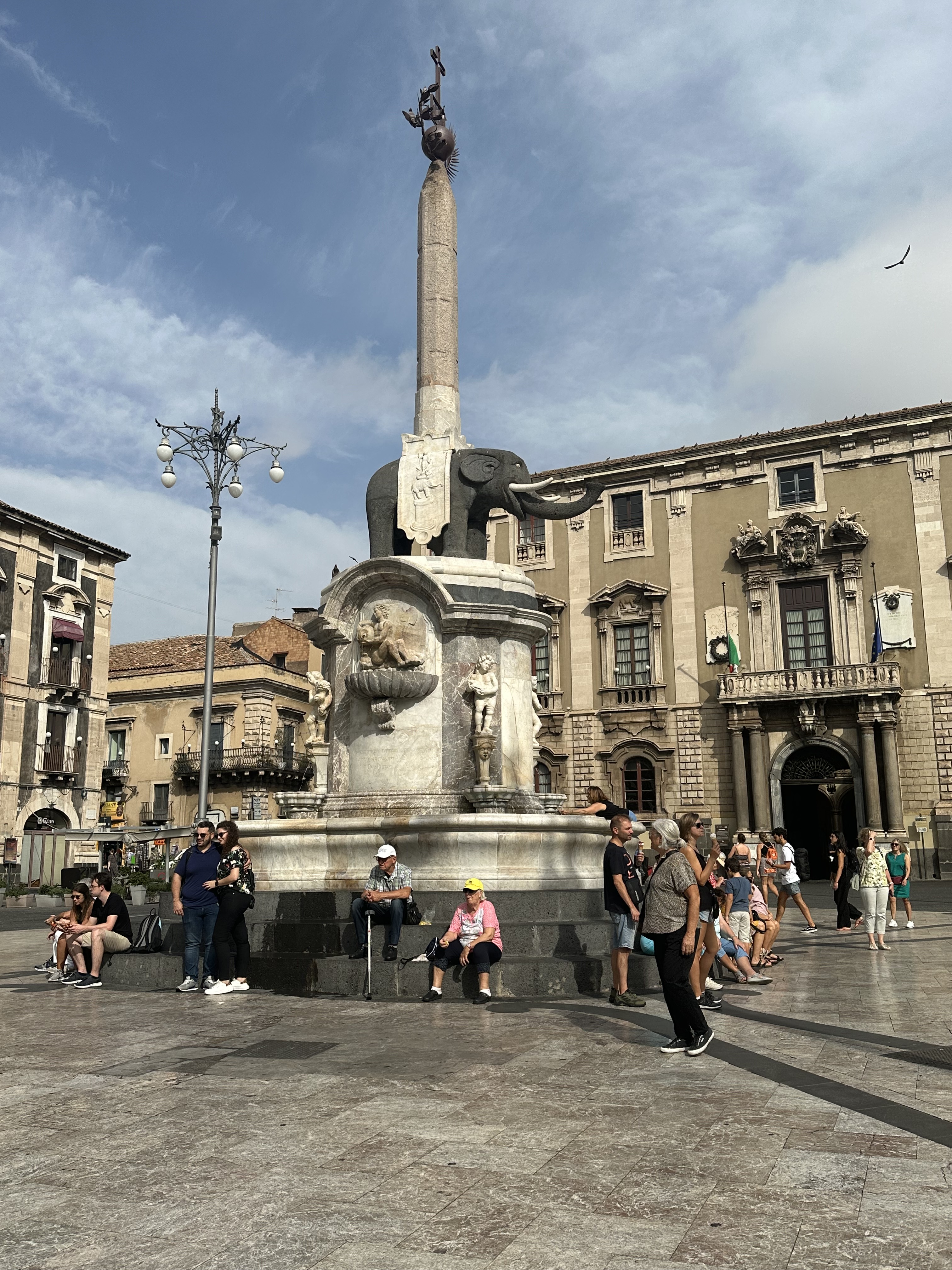
Today was the food tasting tour in Catania.  Another event arranged by Terry.  Almost everyone got themselves to the elephant sculpture in the middle of the main piazza at 10am.  
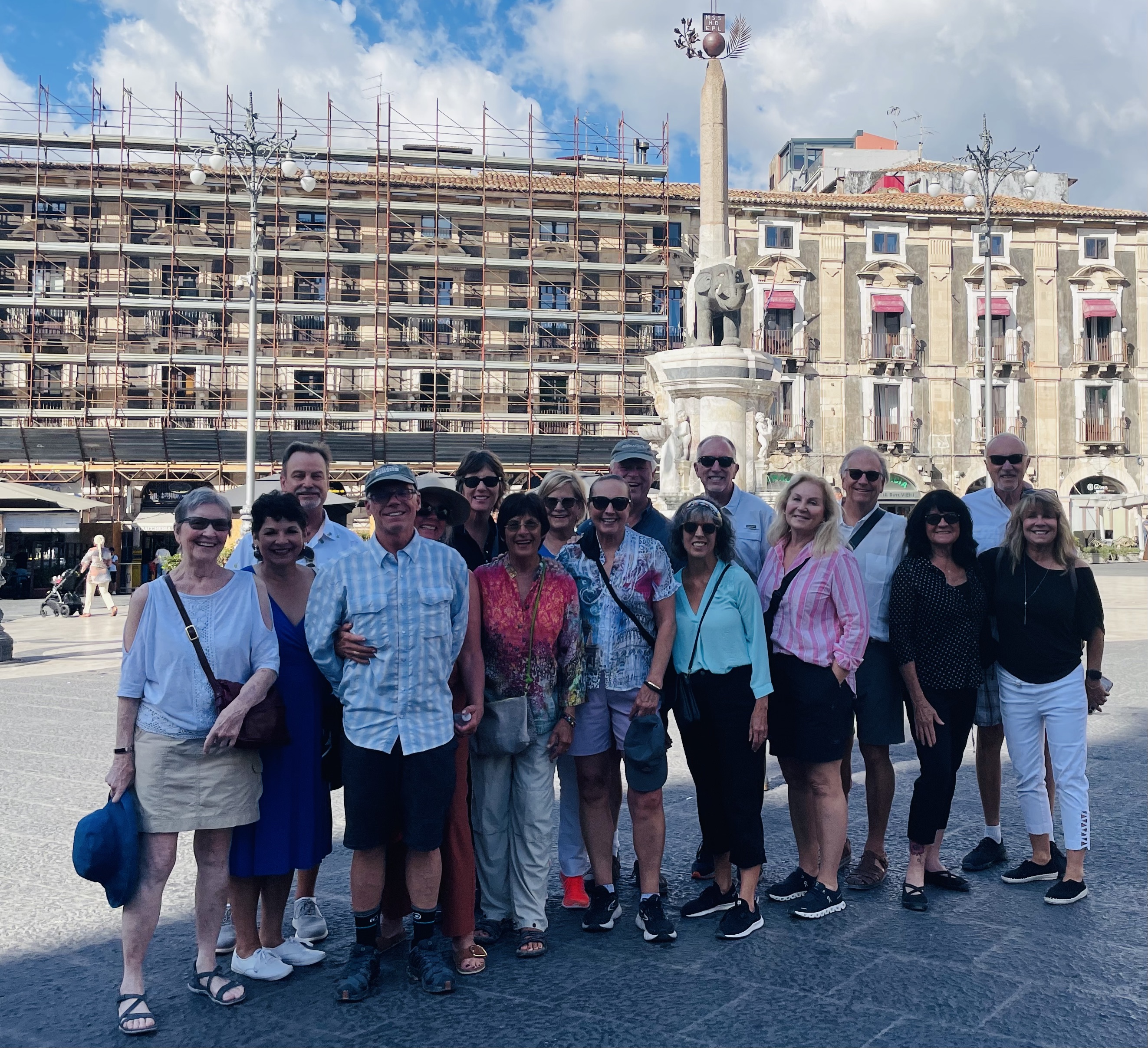
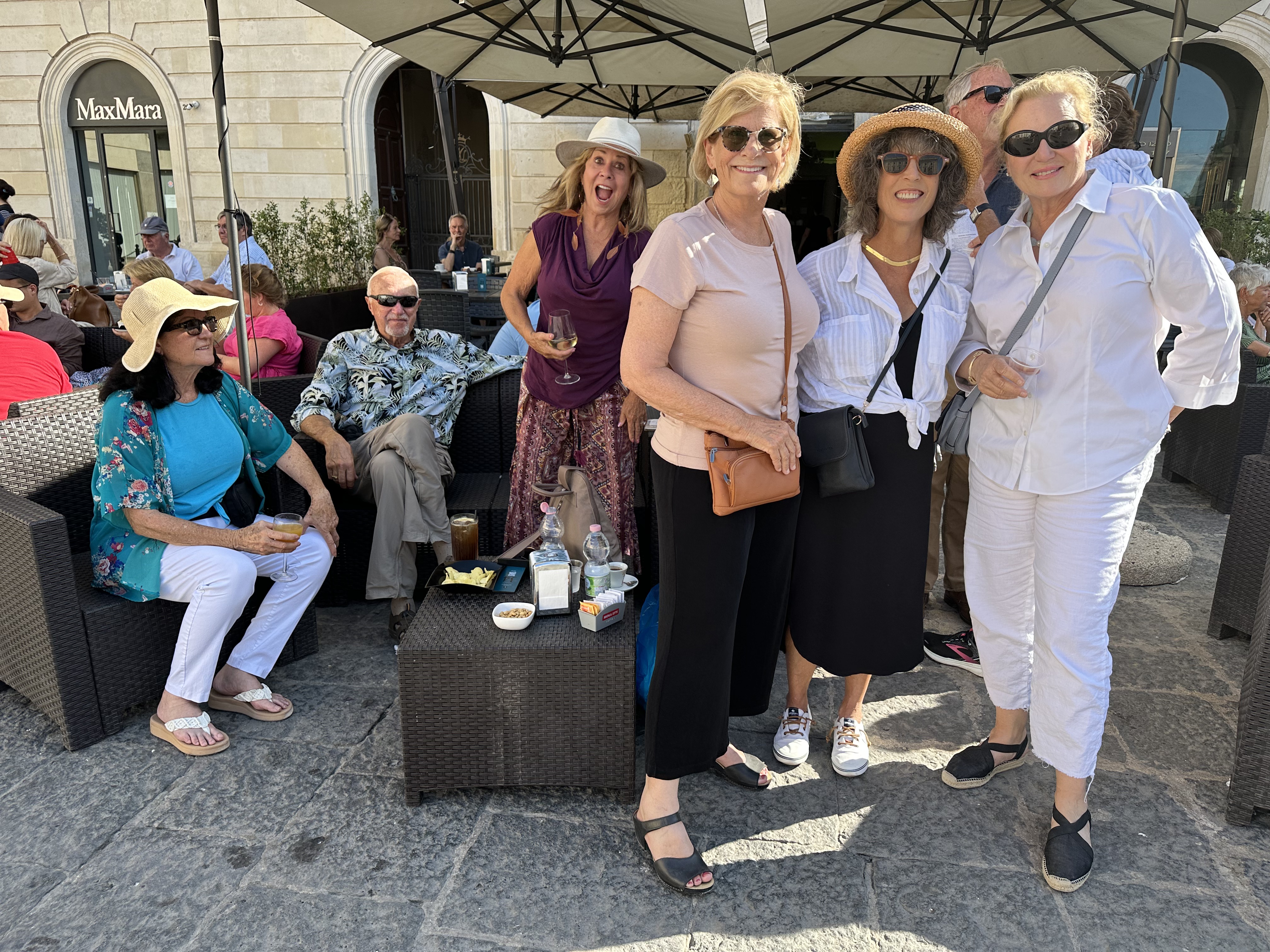
Our group in front of the elephant in the piazza
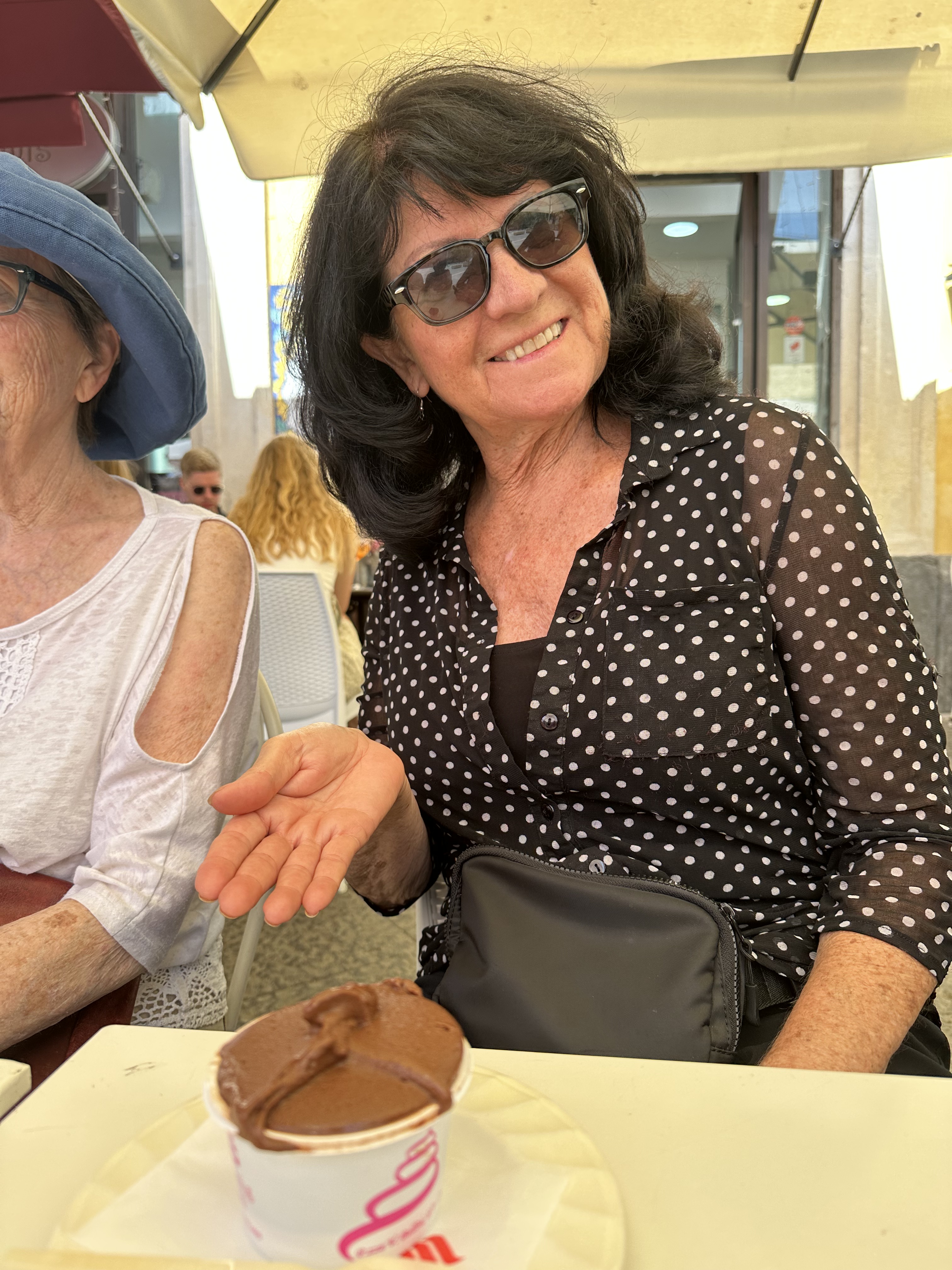
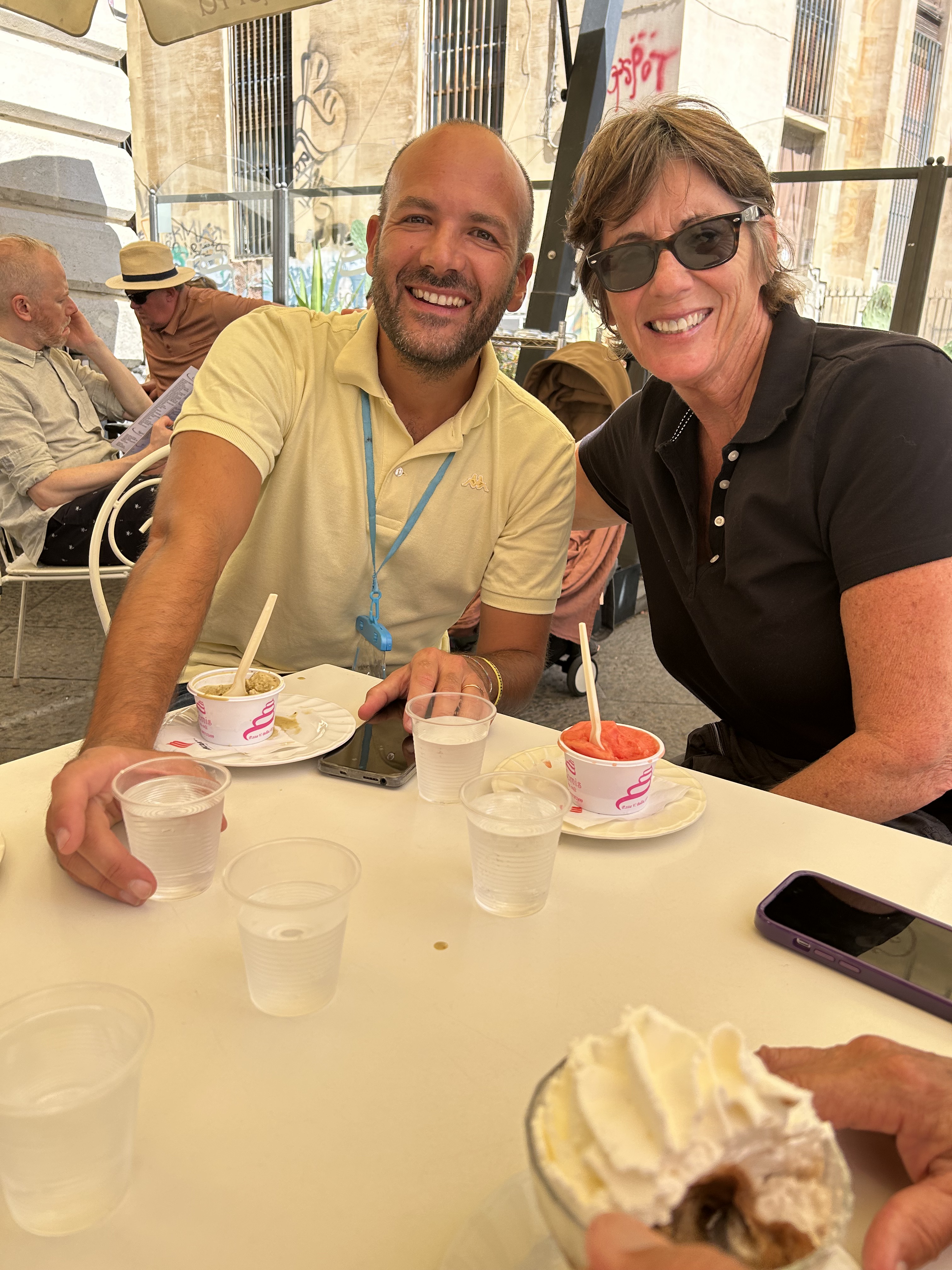
Peppe and Liz enjoying gelato. Julia tasting her Cafe Granita with whipped cream isn lower right.

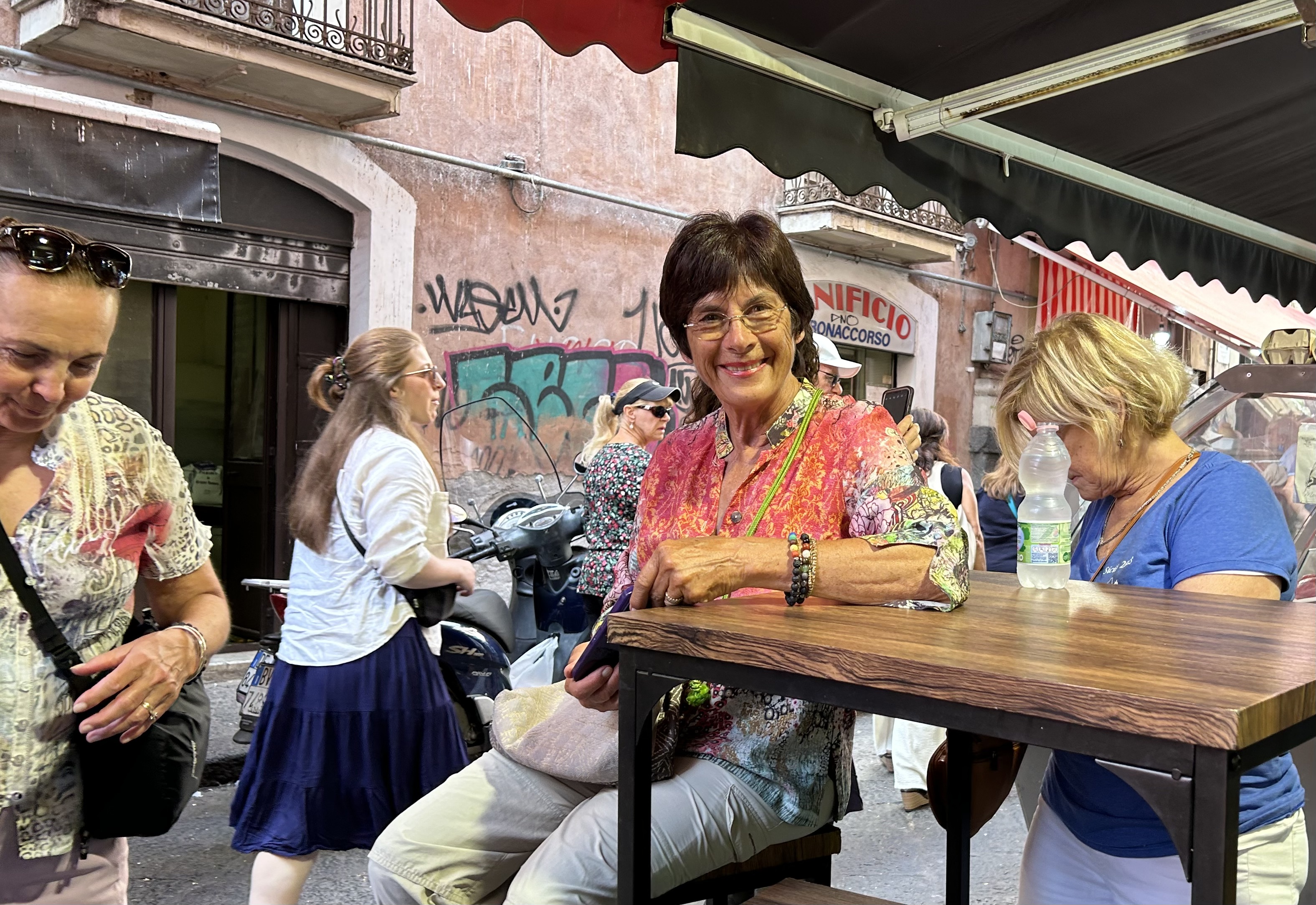
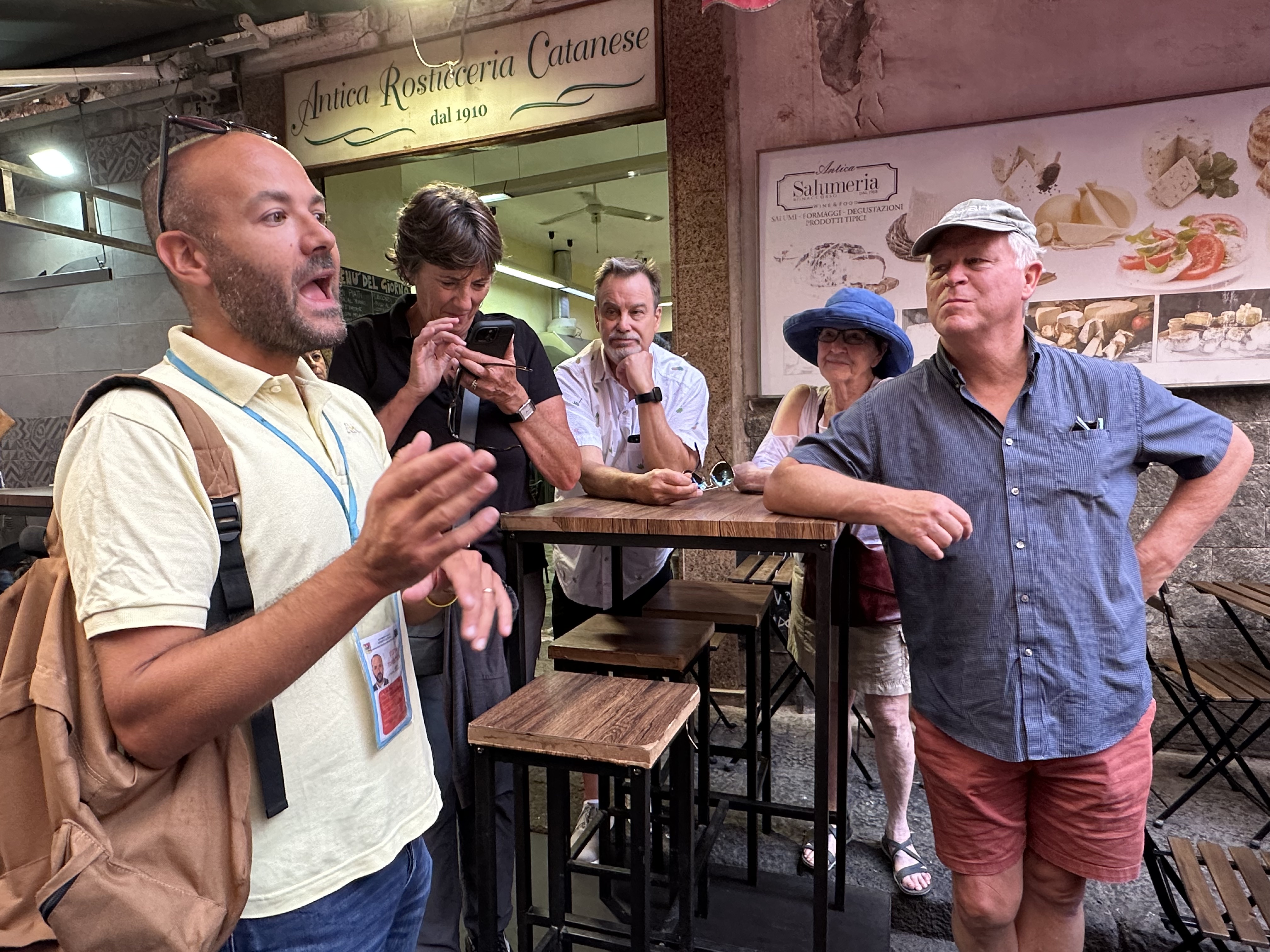
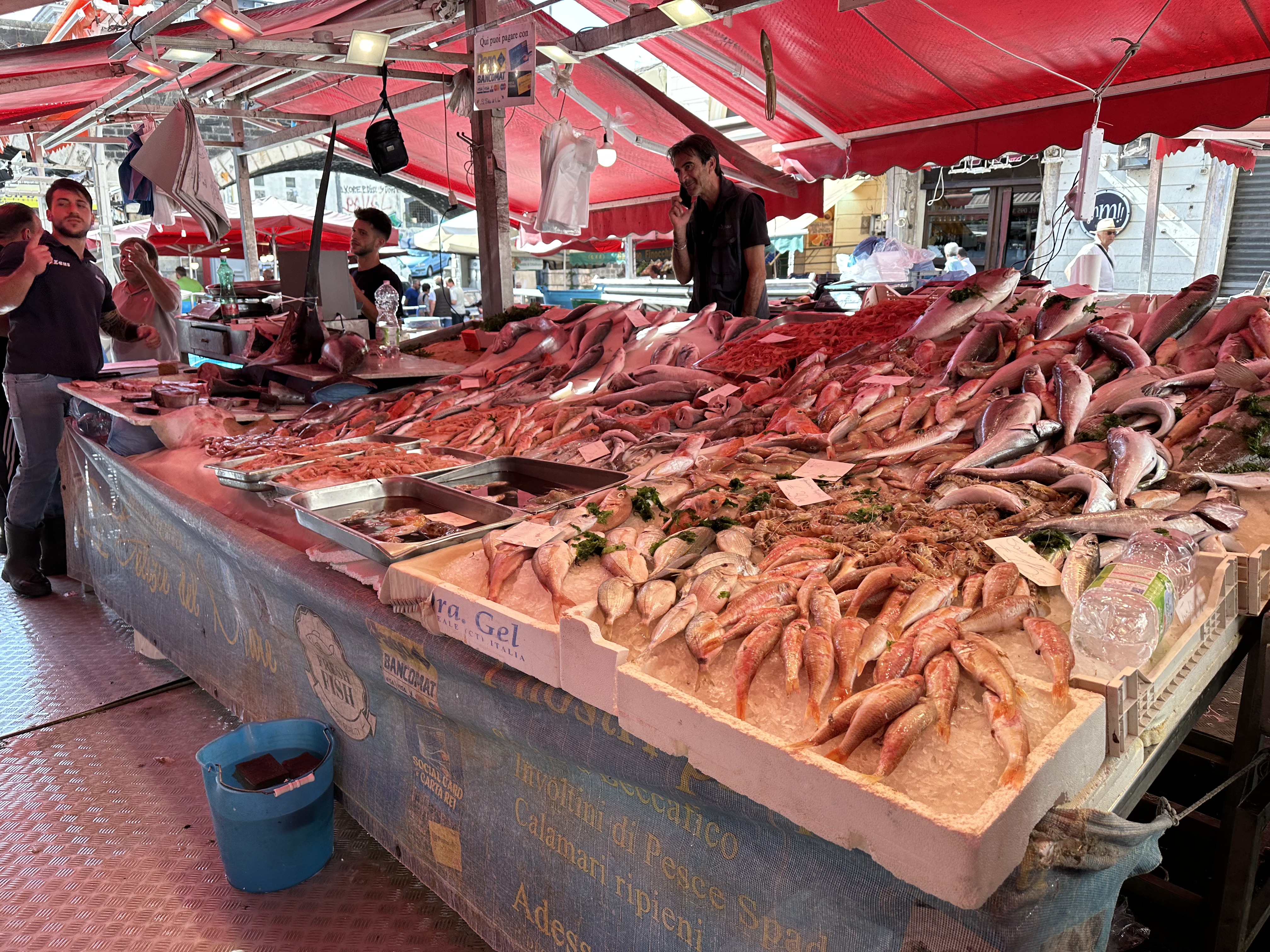
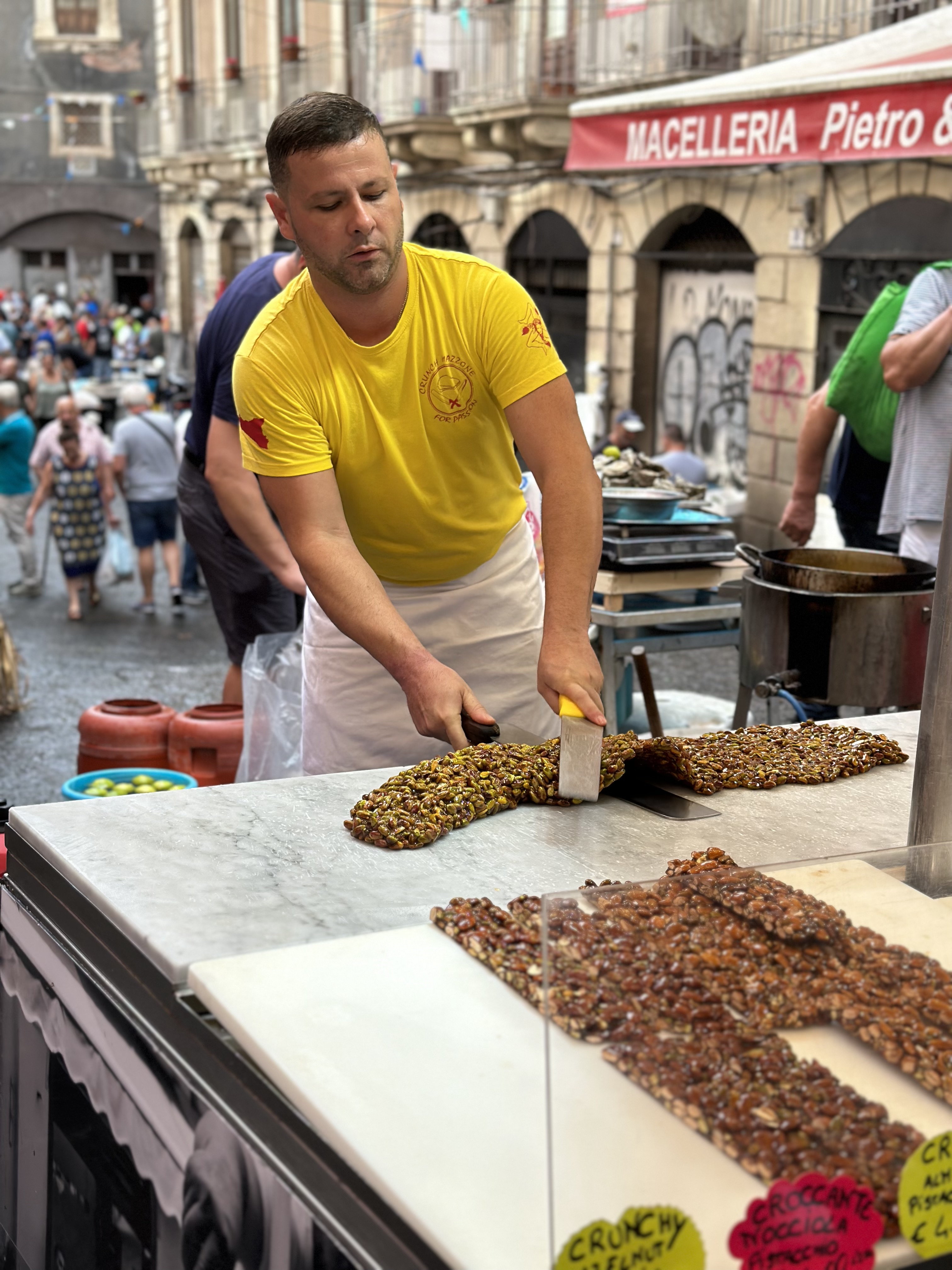
There we met the walking food guide, Peppe.  He spoke English well and was loud and clear to hear.  We wandered through the fish market and arrived at a café that served us the most traditional, Sicilian food item called arancini.  It consists of a ball of rice and breadcrumbs filled with cheese and ham and deep fried.  It was delicious.  Then we cruised through other streets and tasted other foods that did not capture my taste buds.  We stopped for different drinks along the way too.  The most interesting was a mix of sparkling water, lemon juice and salt.  Supposedly it is an energy drink.  I drank it, but would not ask for it again.  
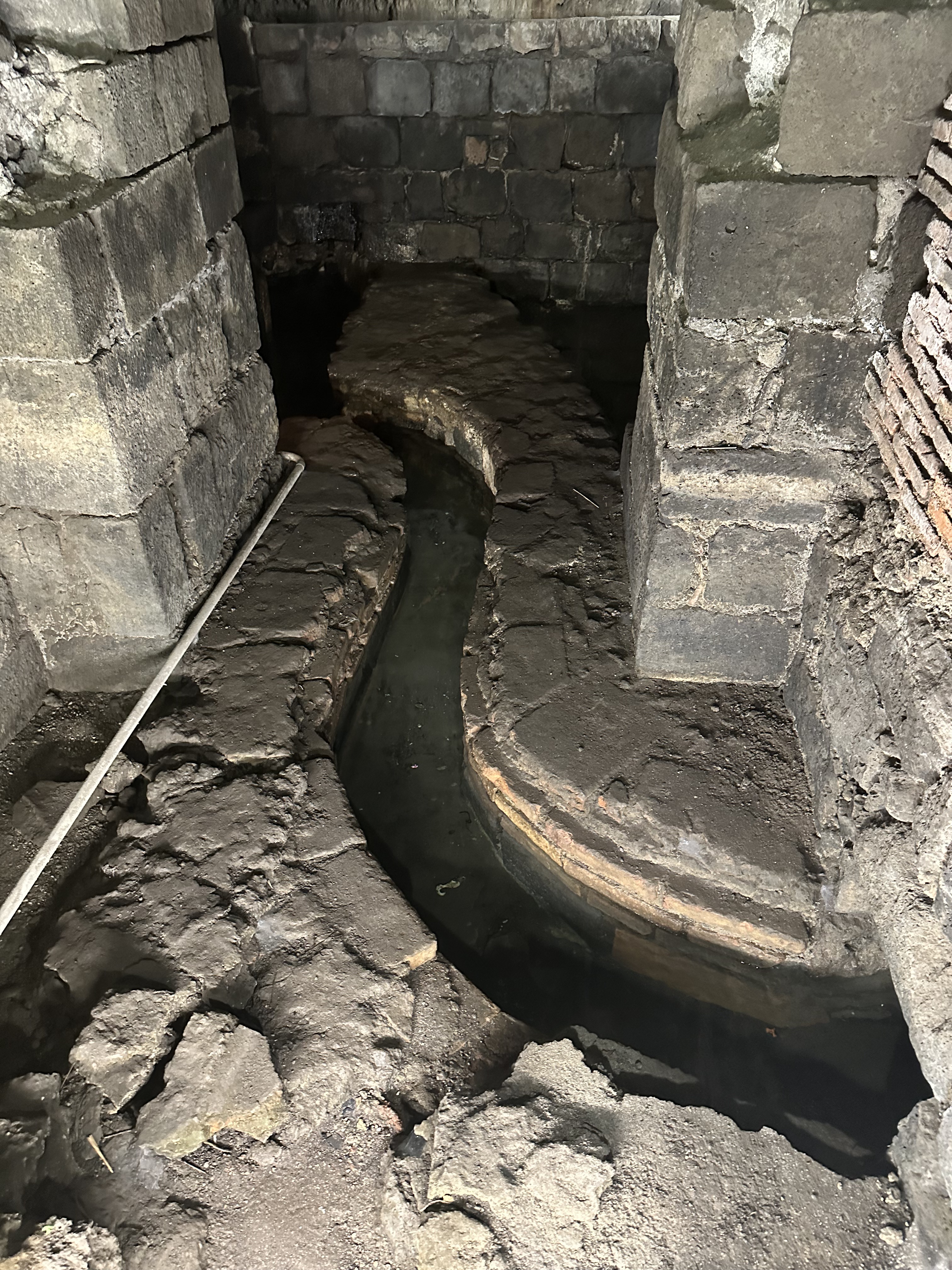
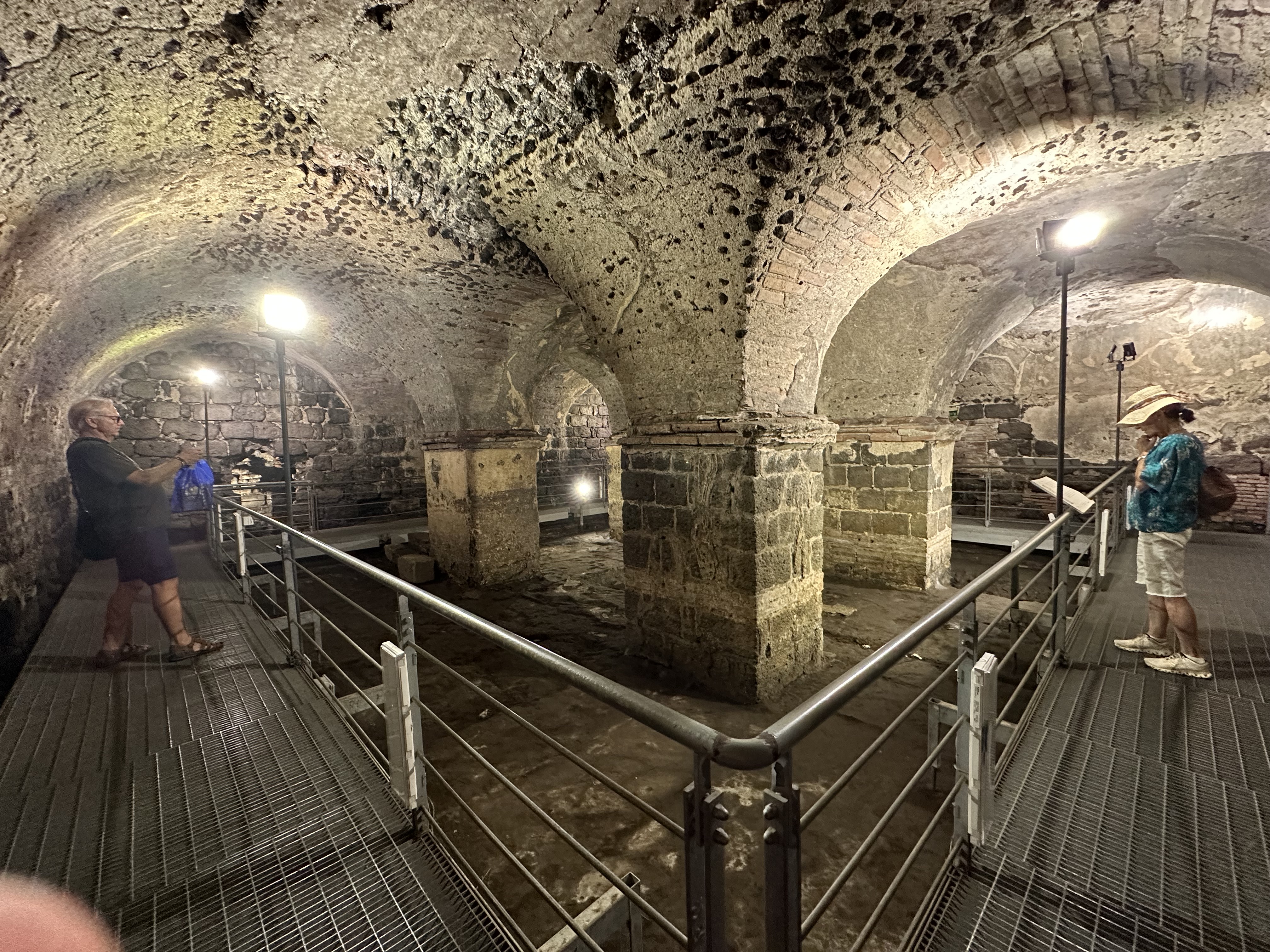
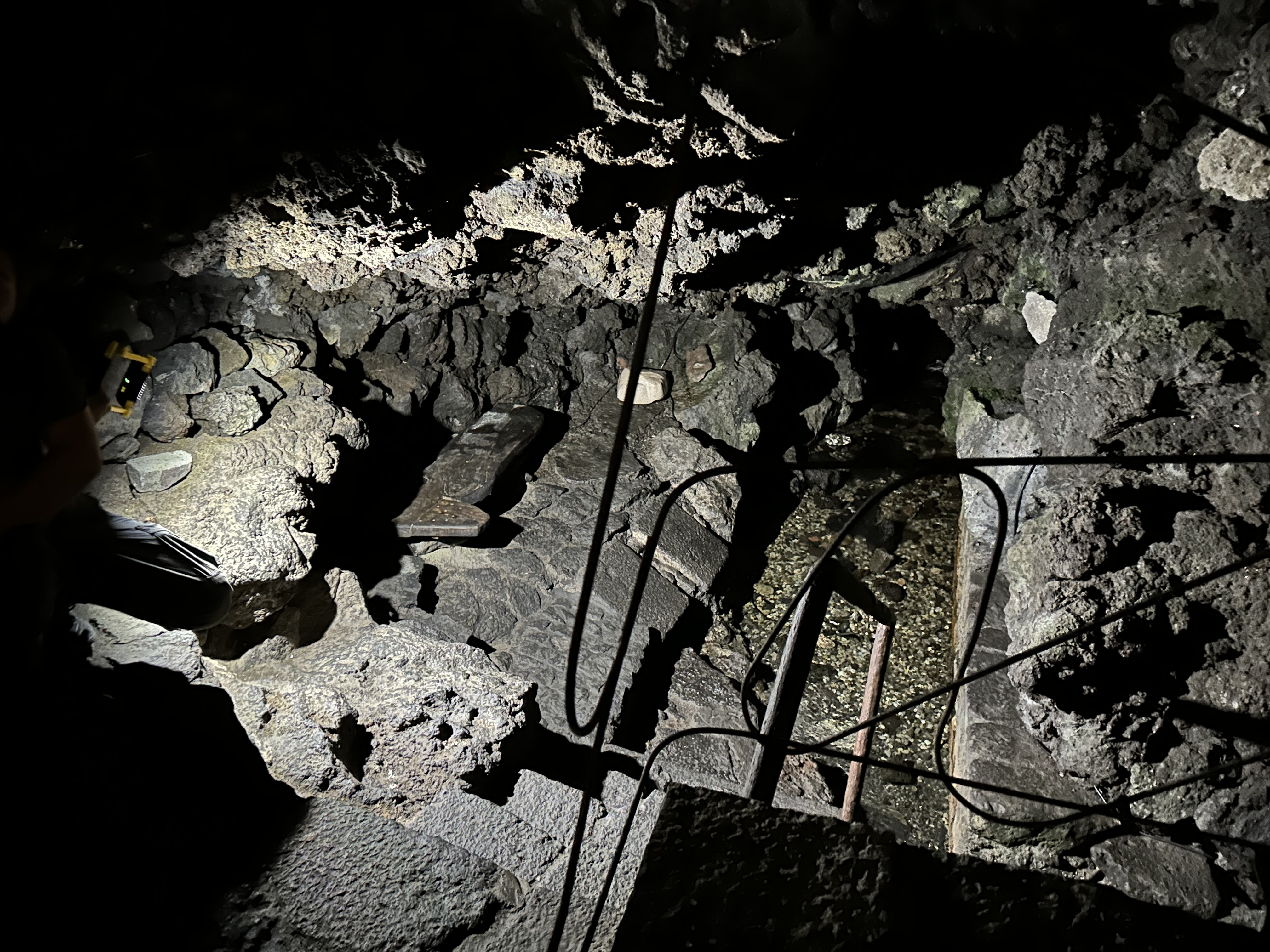
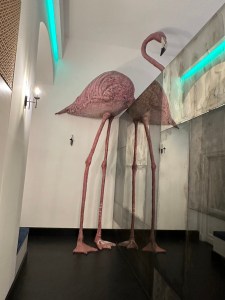
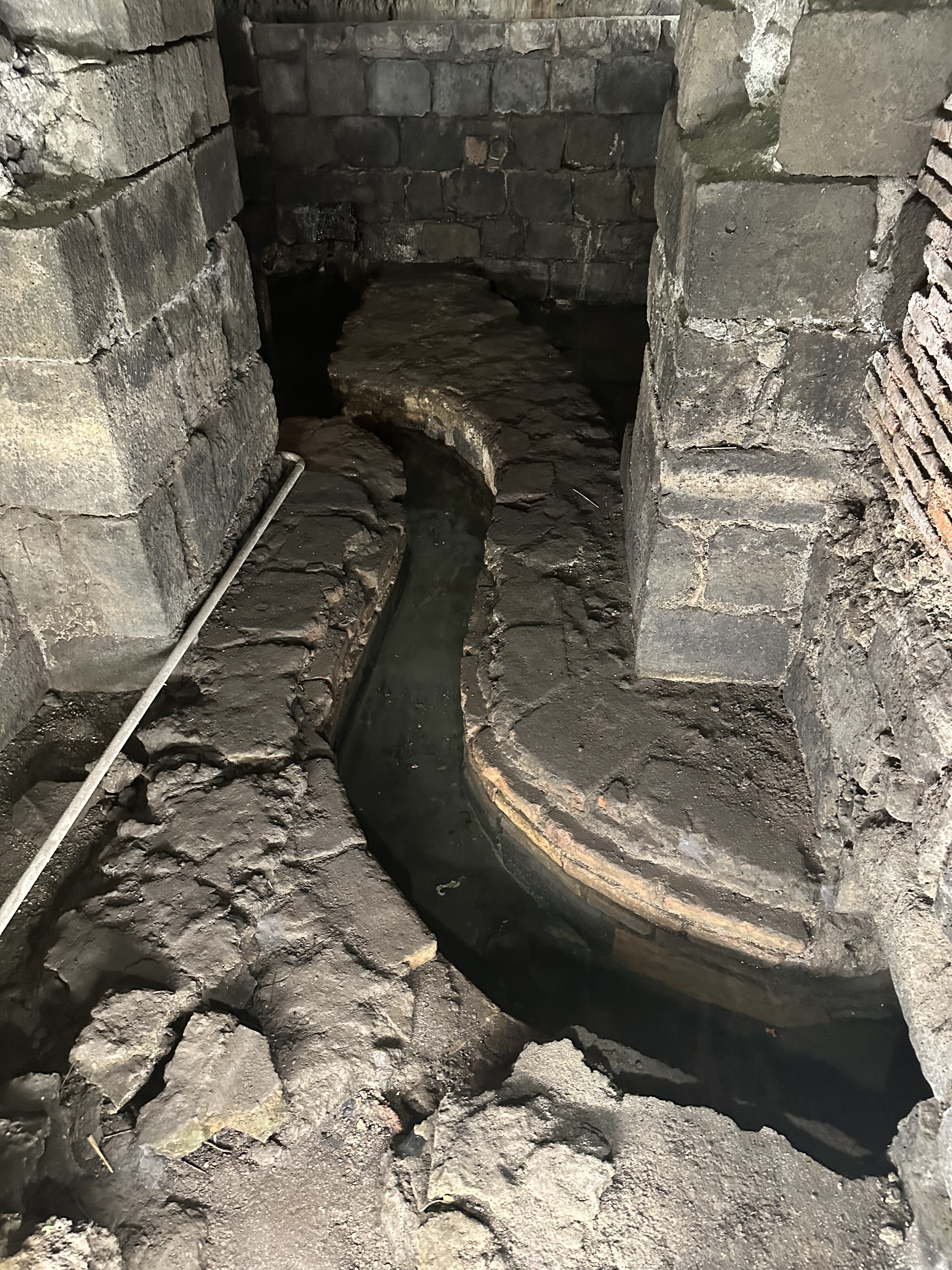
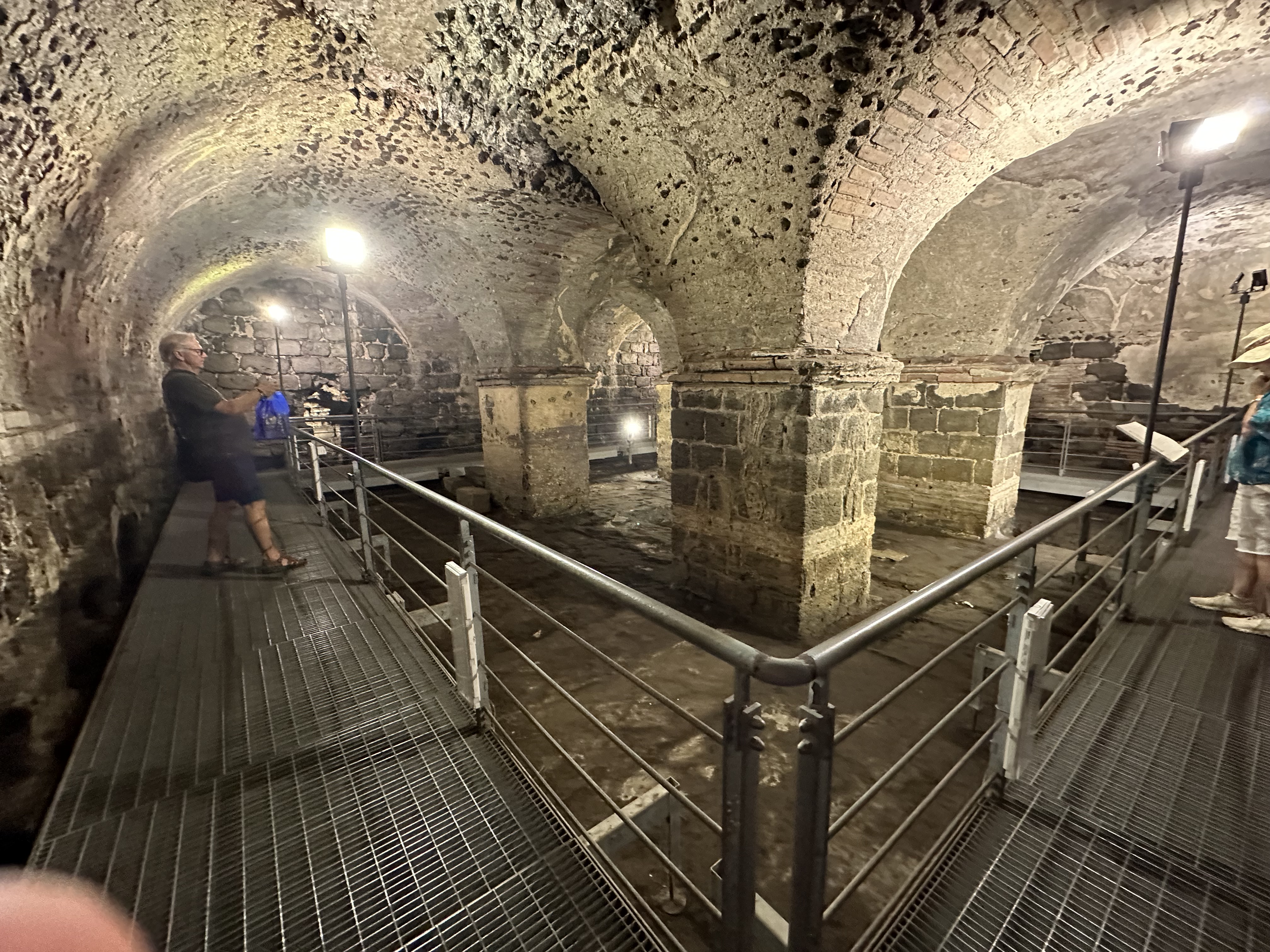
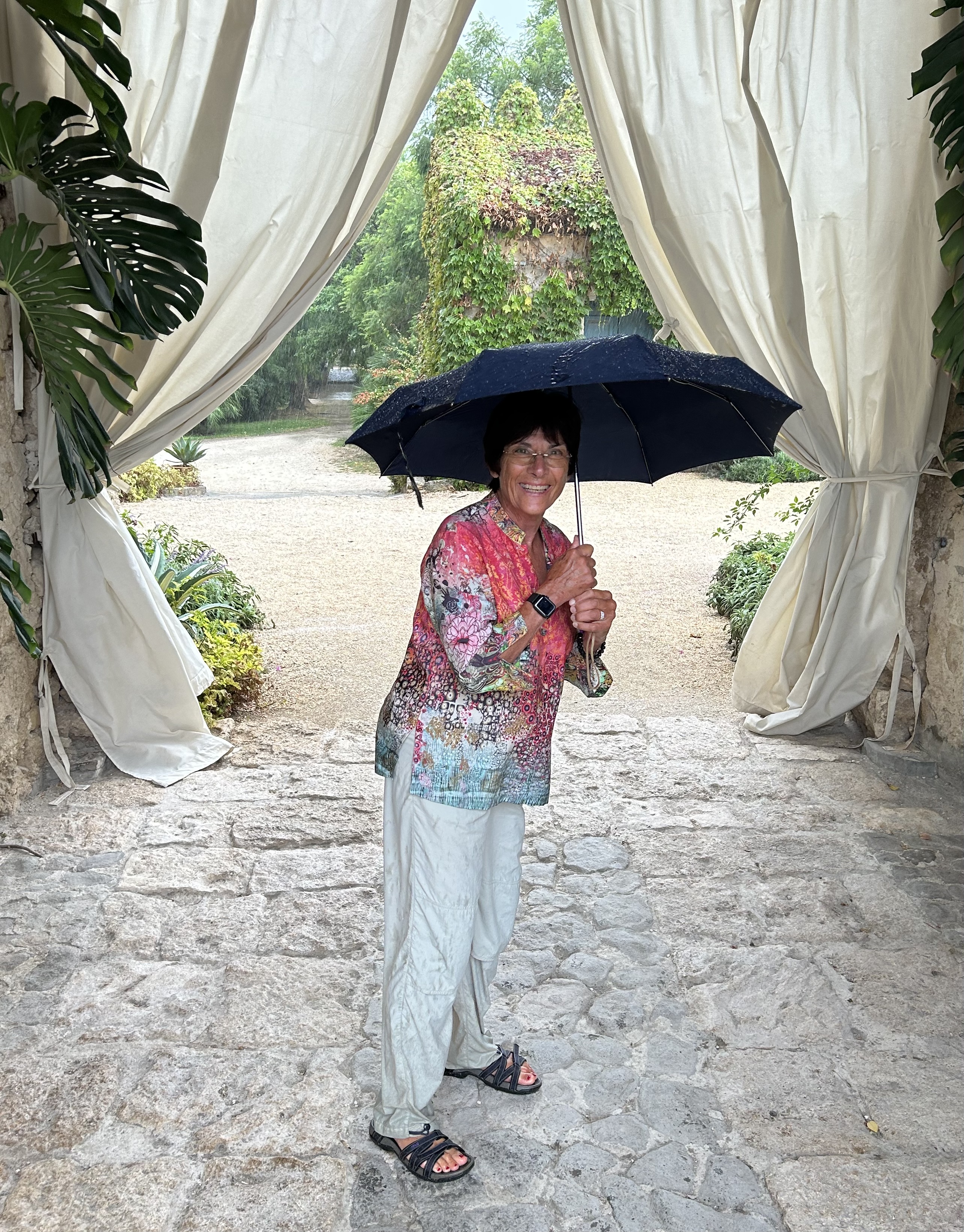
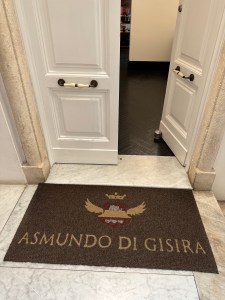
Along the walk Peppe took us to an ancient underground river and spring which were fascinating to see.  He finished the tour at a café that served us a variety of ice creams and coffee drinks.  I tried to get the drink we had had with Silvia a few days before, but it was only a partial approximation.  While at one café, I noticed it was very close to the Osmundo hotel we had stayed in a few nights before.   I wanted people to see how unusual it was, so I invited a few ladies and got in to see the public rooms.  They enjoyed the art as much as we had. Once we were finished with Peppe, we drove back to the villa to enjoy the pool and visit the rest of the day.  In addition to sunshine, the sky blessed us with several sprinkles of rain drops. No one was bothered by the rain.  Most everyone stayed at the villa for dinner. It is hard to keep track of who was doing what, but everyone seems to be having a good time.    
Tuesday, September 26, 2023

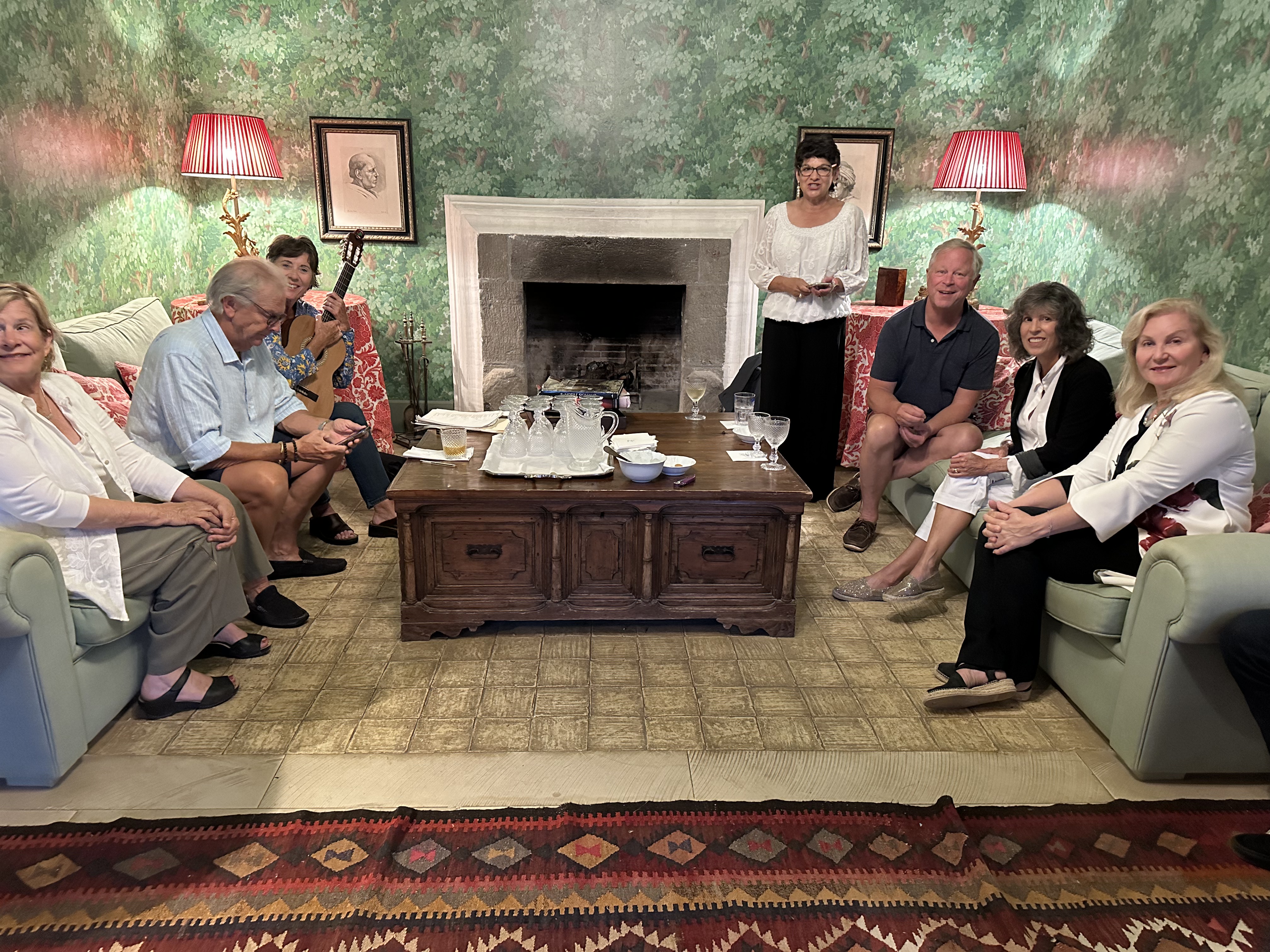
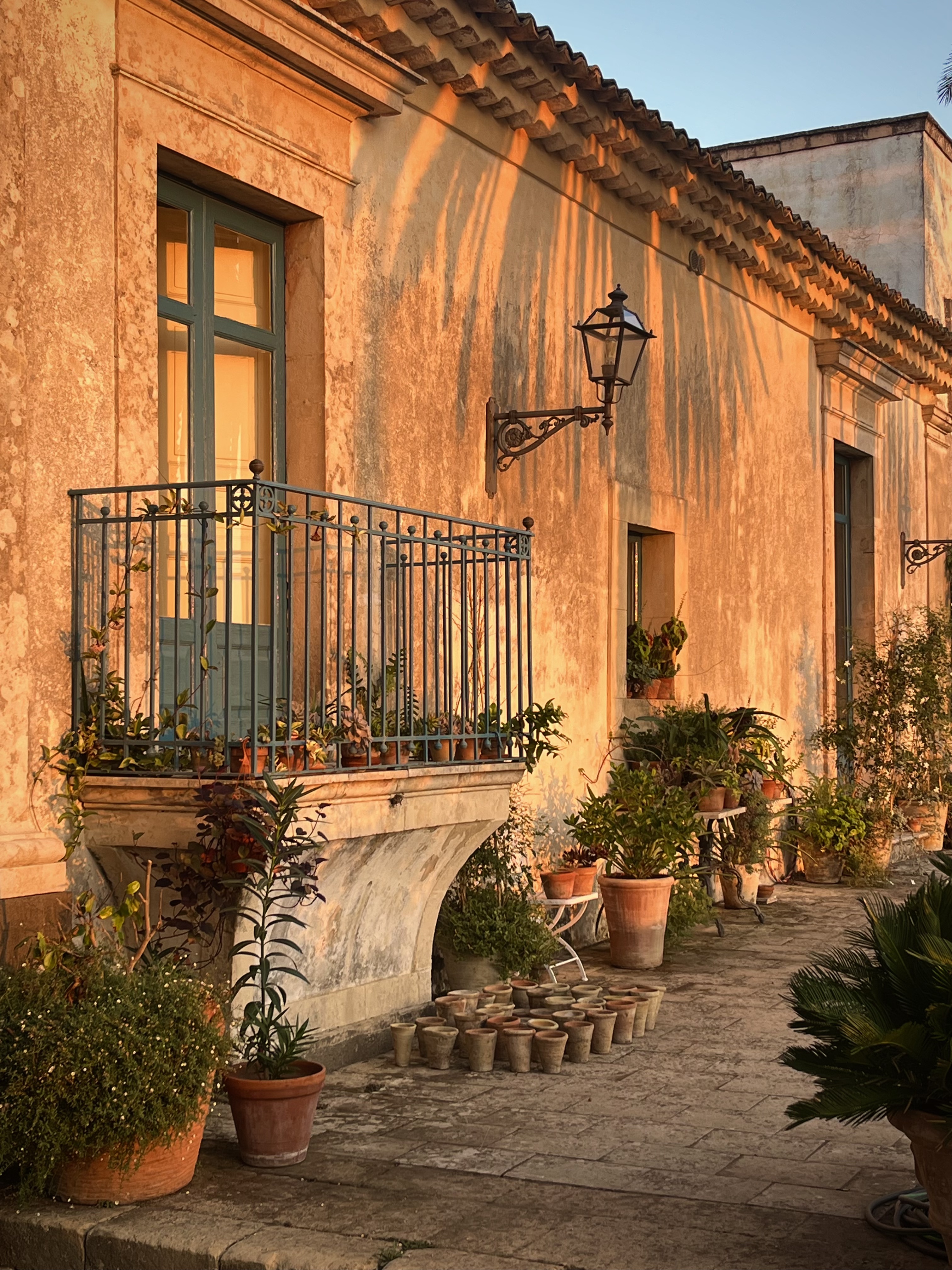
Our fisrt day with no planned activities and everyone had an idea how to spend their day.  For me it was about the jigsaw puzzle I had brought from home.  It is a map of Italy indicating all the wine growing regions.  I set it up in the poolside dining area and put in the edges.  Soon others came around and started adding pieces.  My hope was to engage people in a collective activity and it seemed to work.  The steam room was on and hot.  The pool was delightful.  A small group went to Agrigento and another to Villa Romana for sightseeing.  Some went to nearby Brucoli for dinner.  Others stayed at the villa with Mark and me.   Here are a few images taken by others.
Wednesday, September 27, 2023

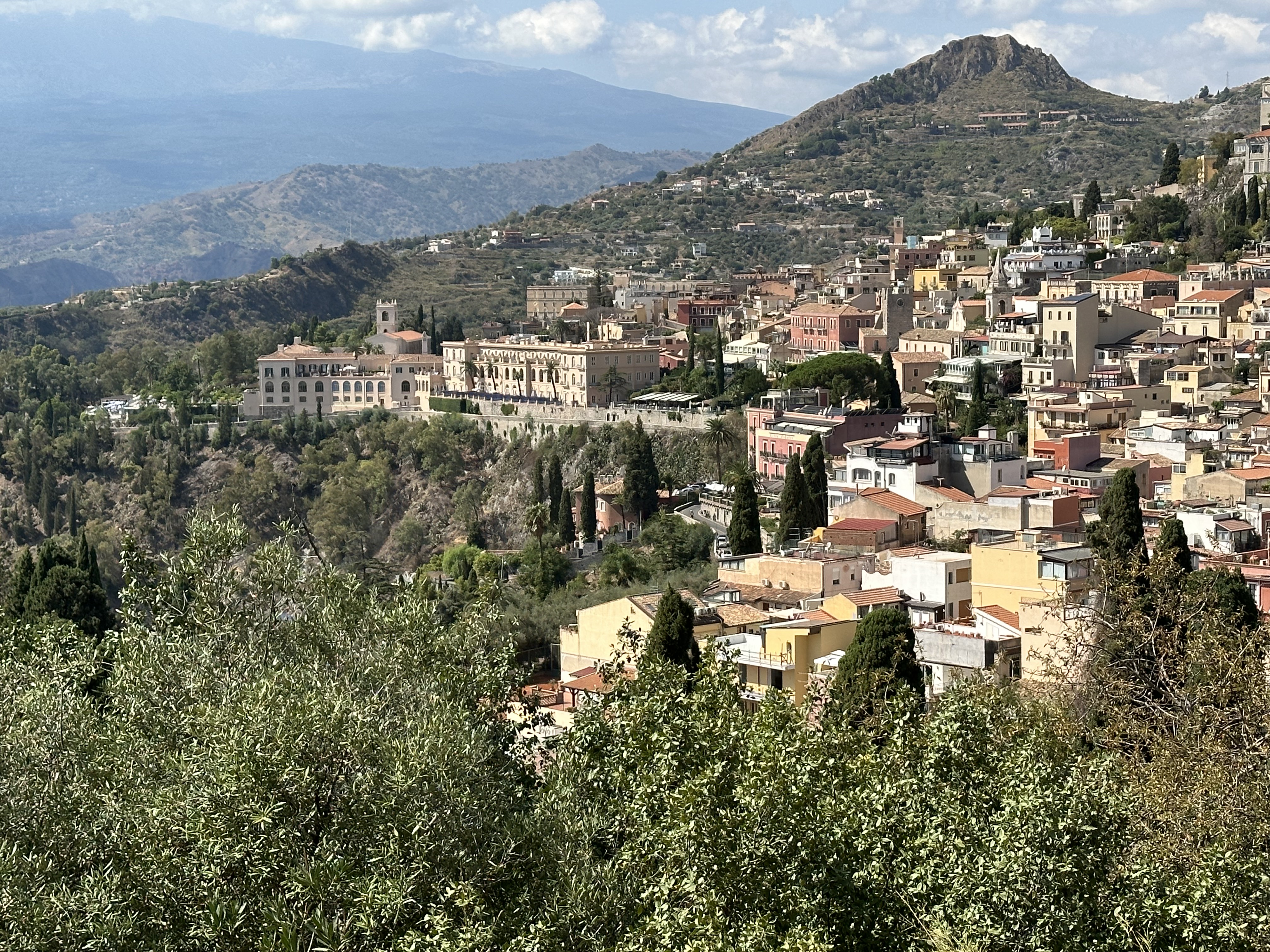
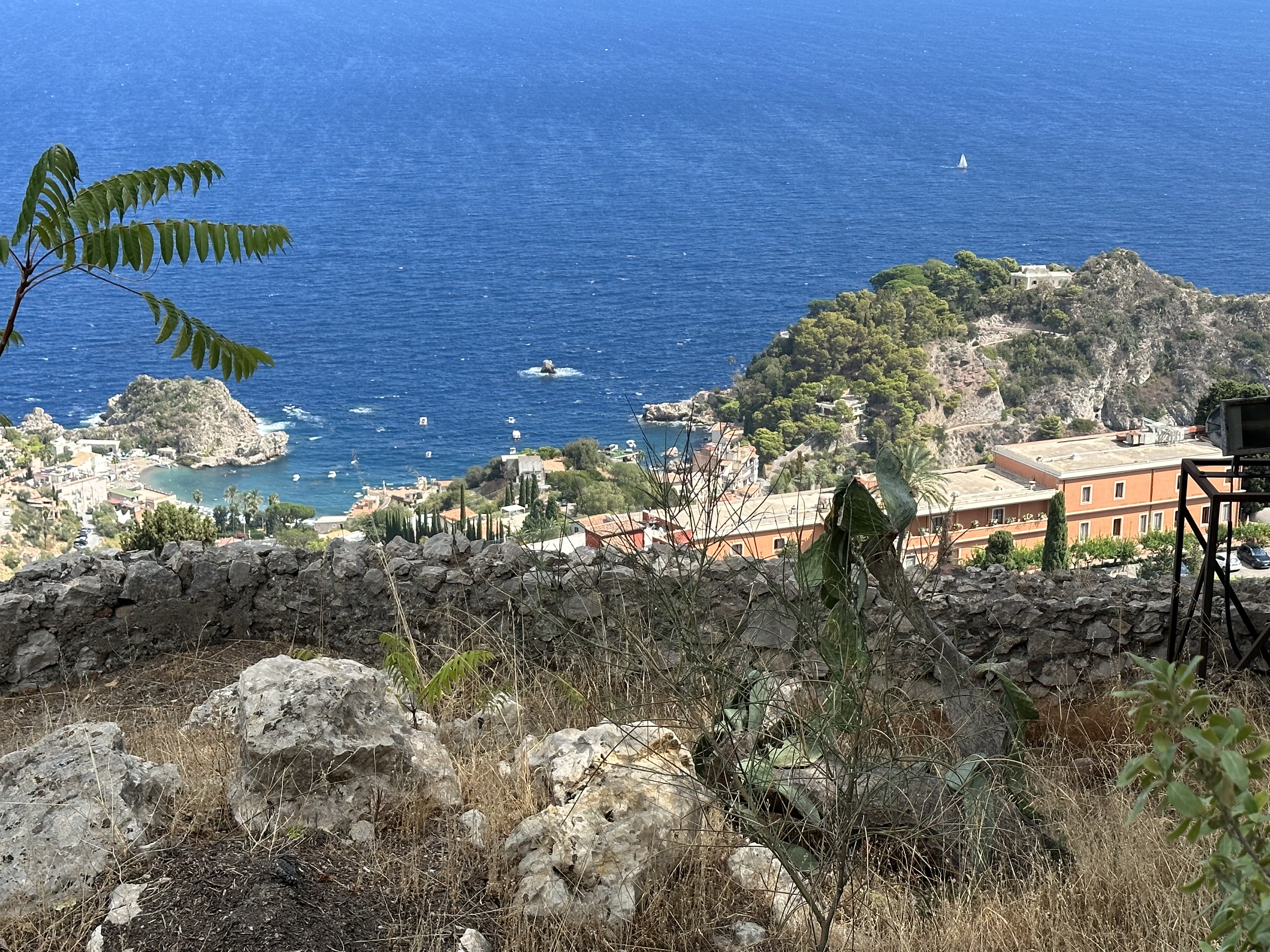
Today was Cannoli making day in Taormina, another activity Terry McAteer had arranged. High on a hillside overlooking the Mediterranean Sea, Taormina was a lovely place to see and visit and even more special having an activity to share.  The drive was 1.5 hours north of the villa and everyone went on the adventure, although a few did not engage in cannoli making.

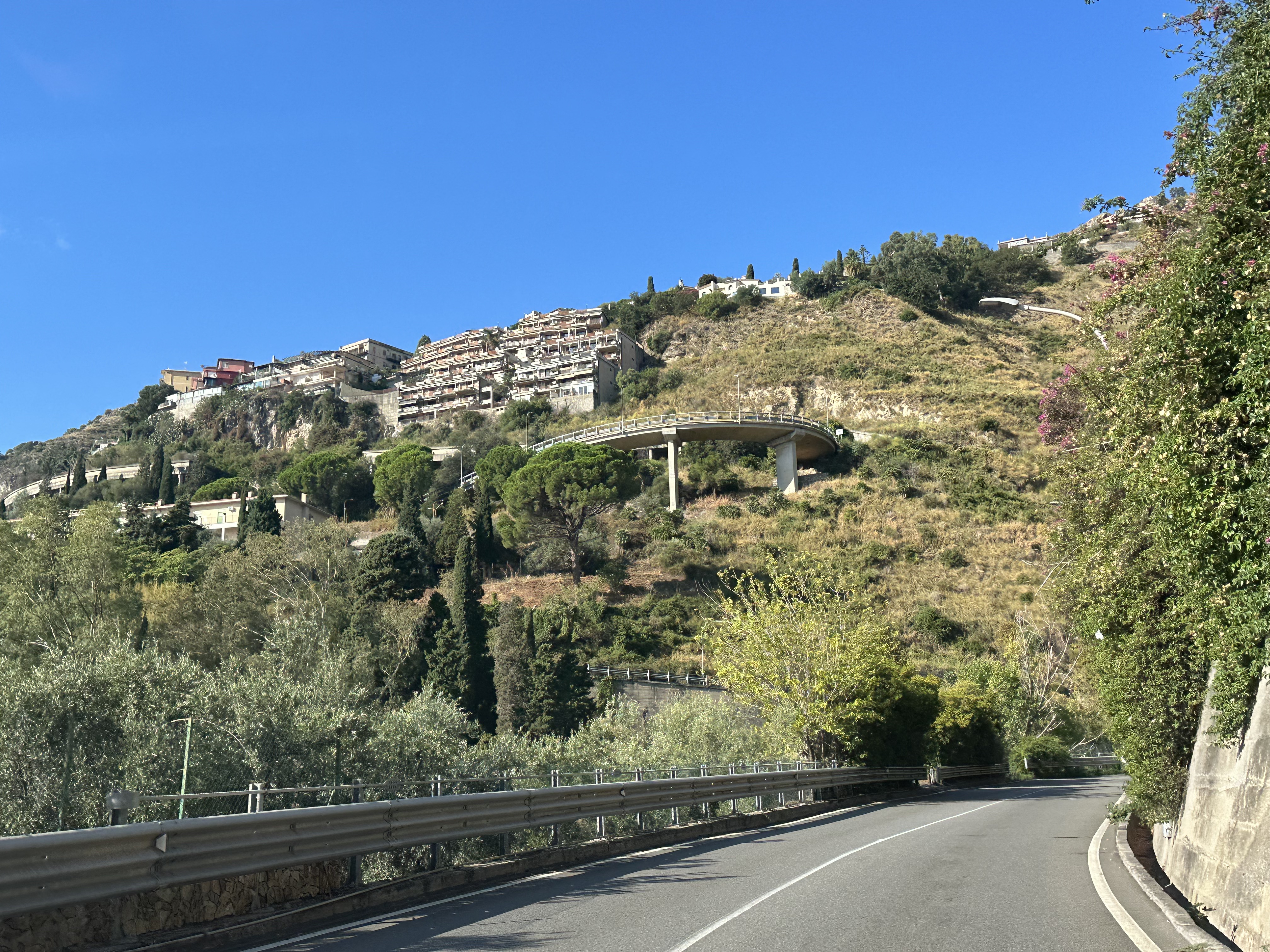
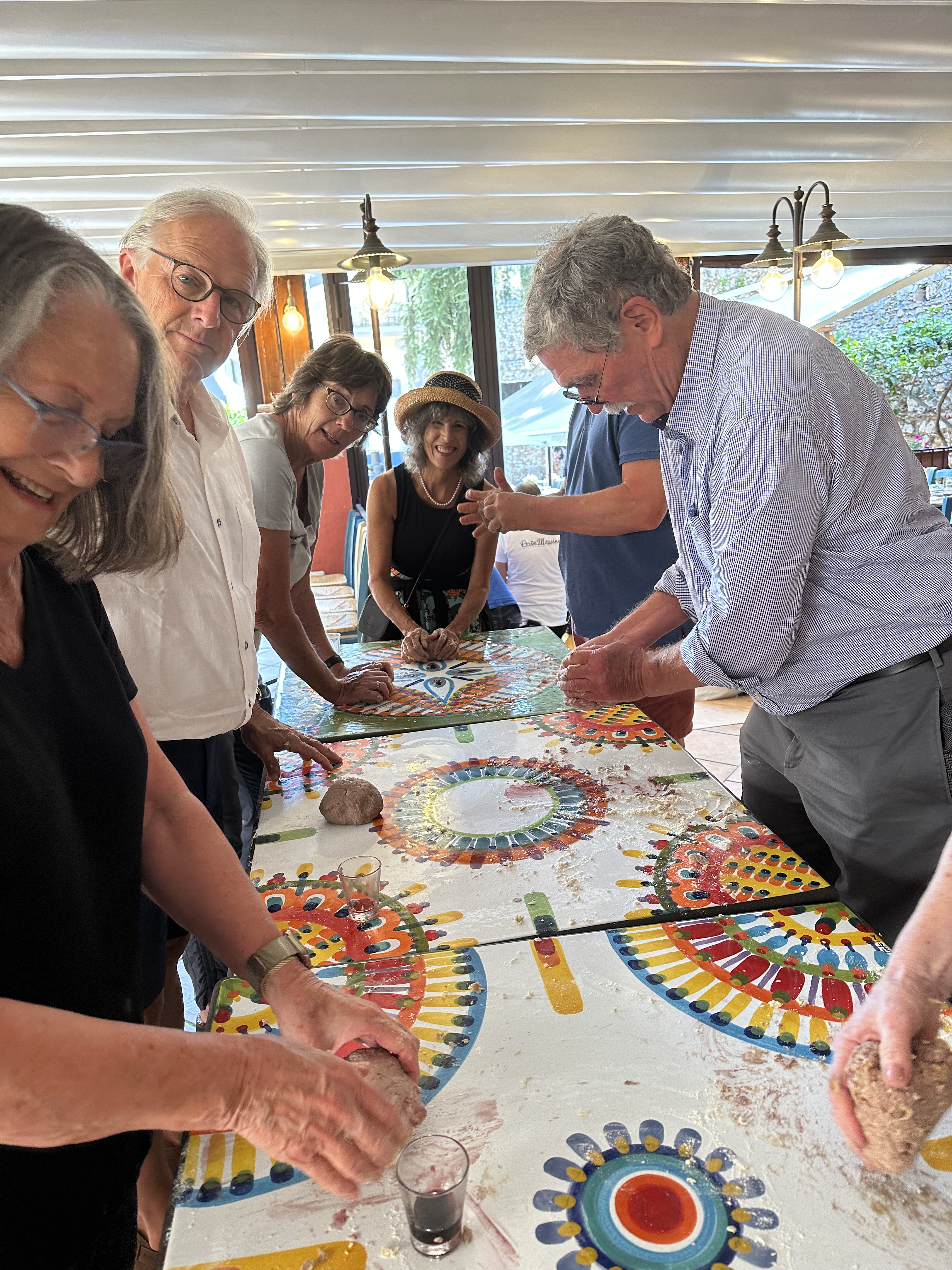
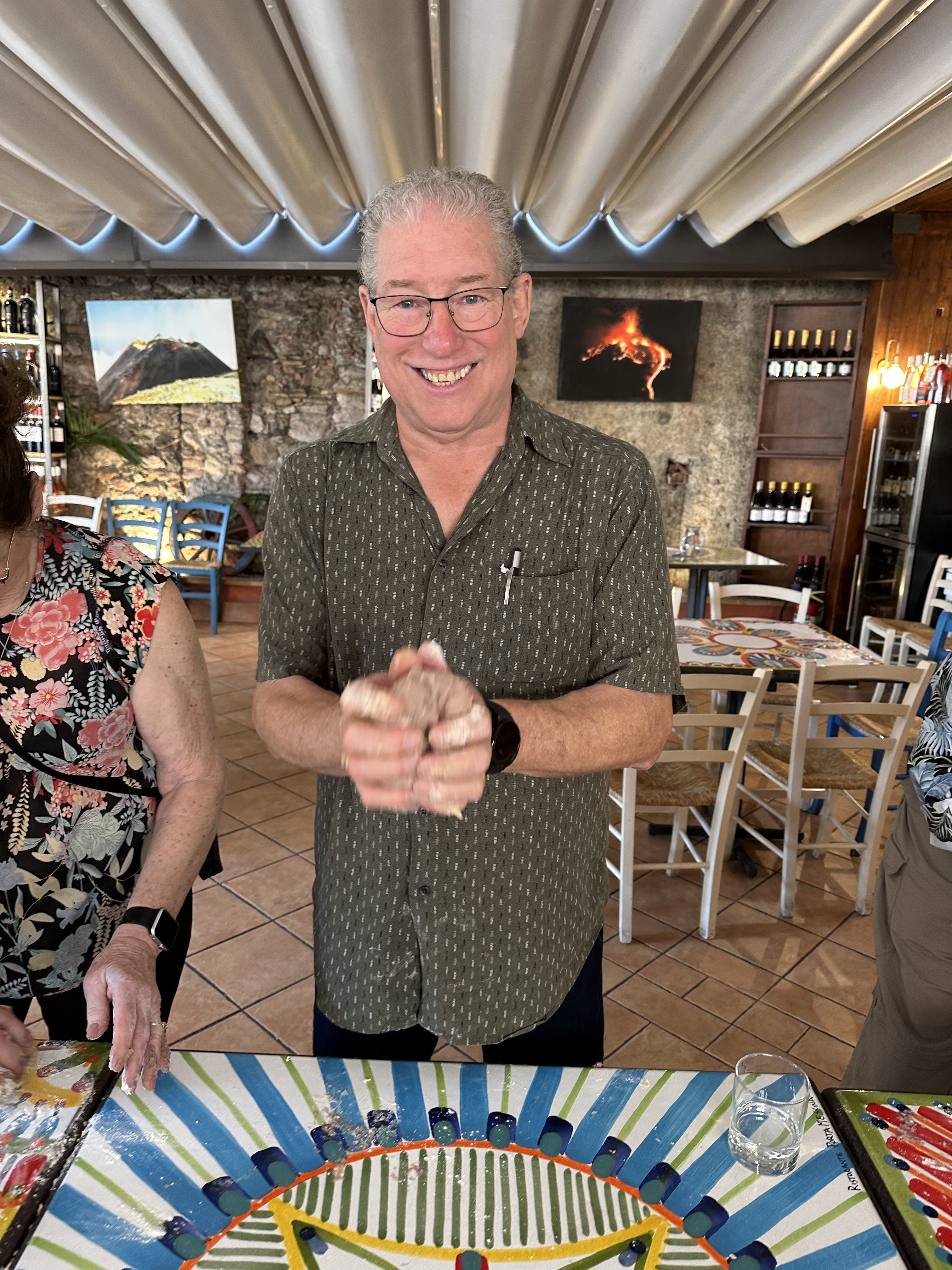
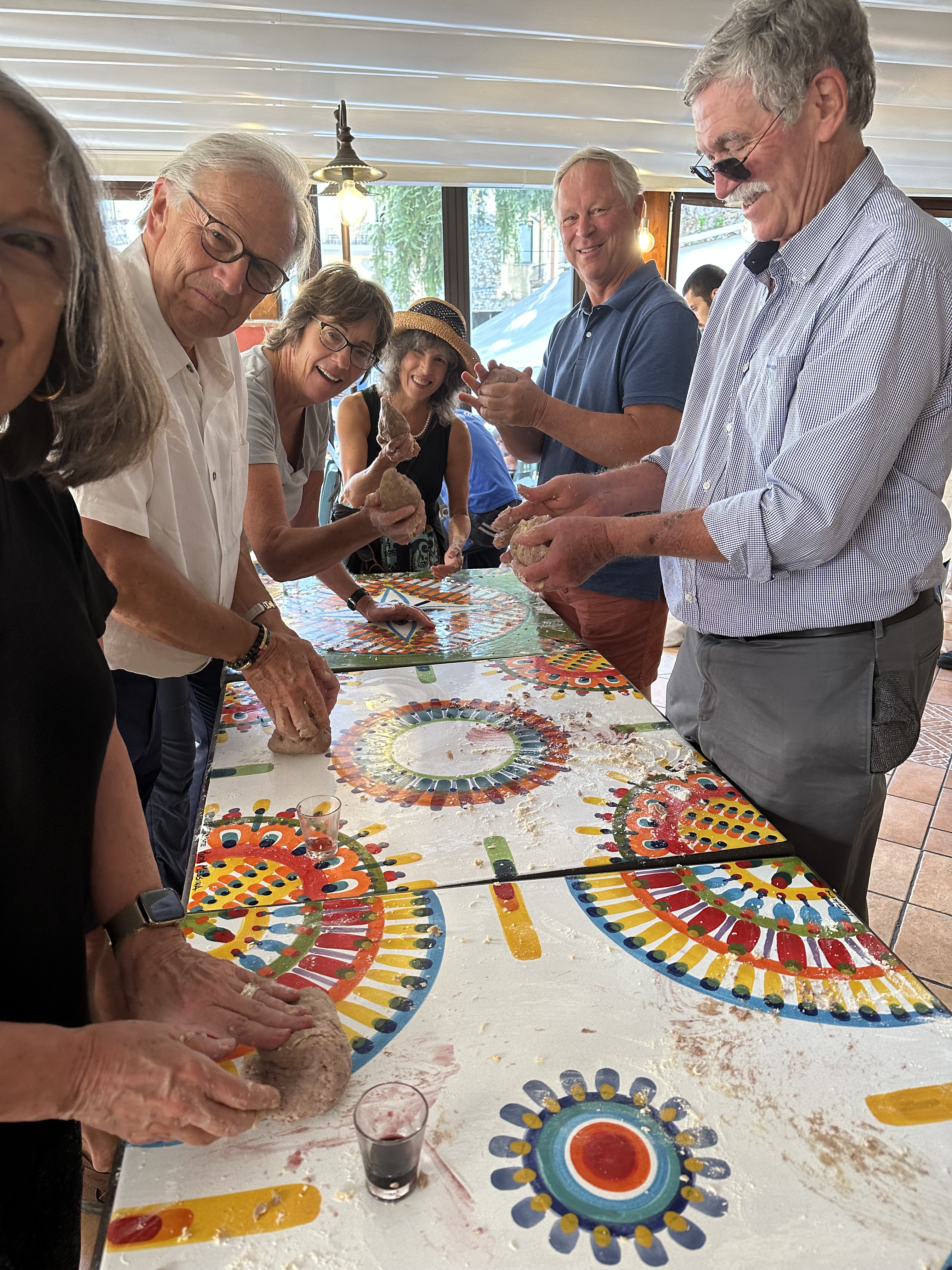
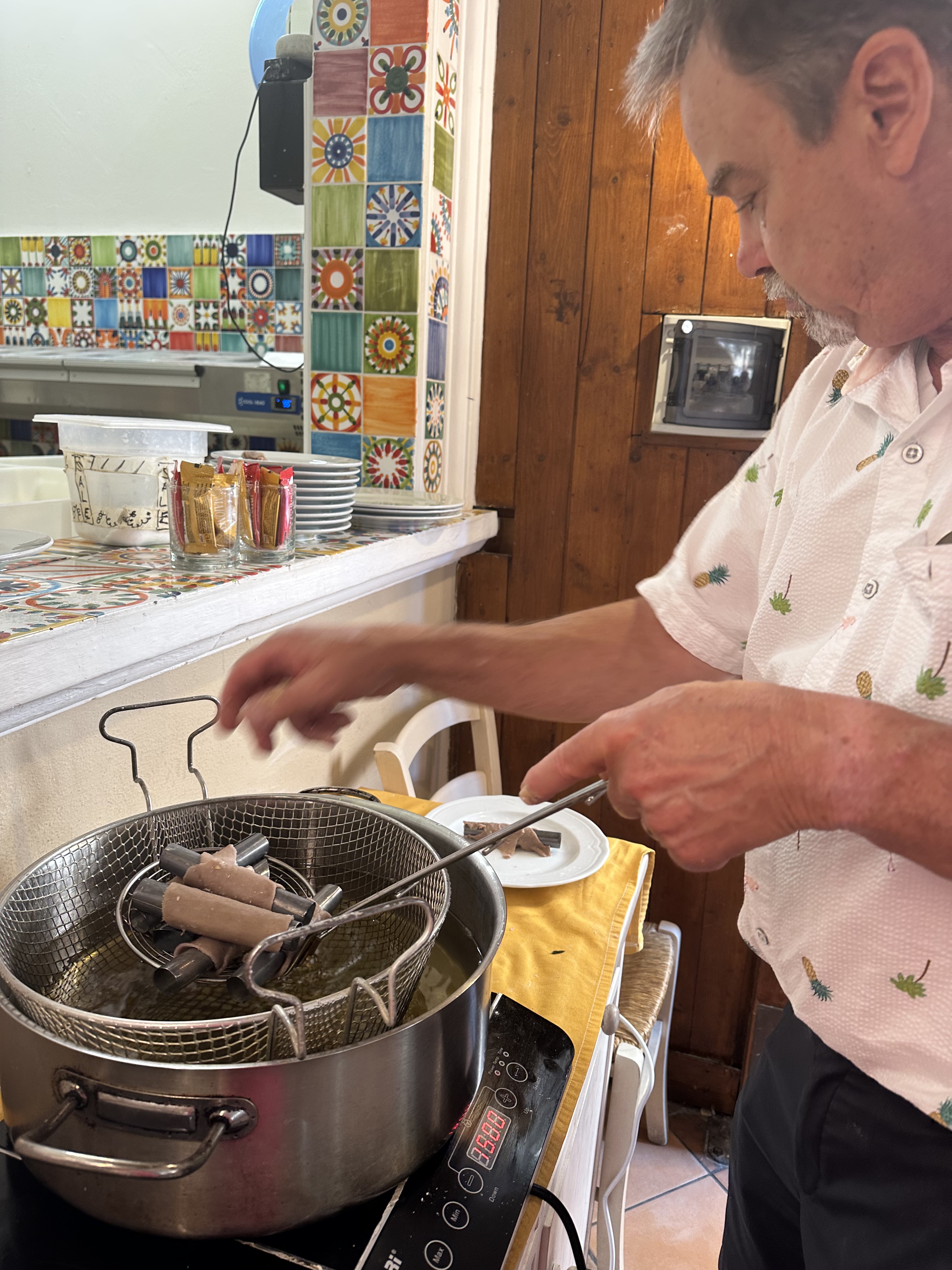
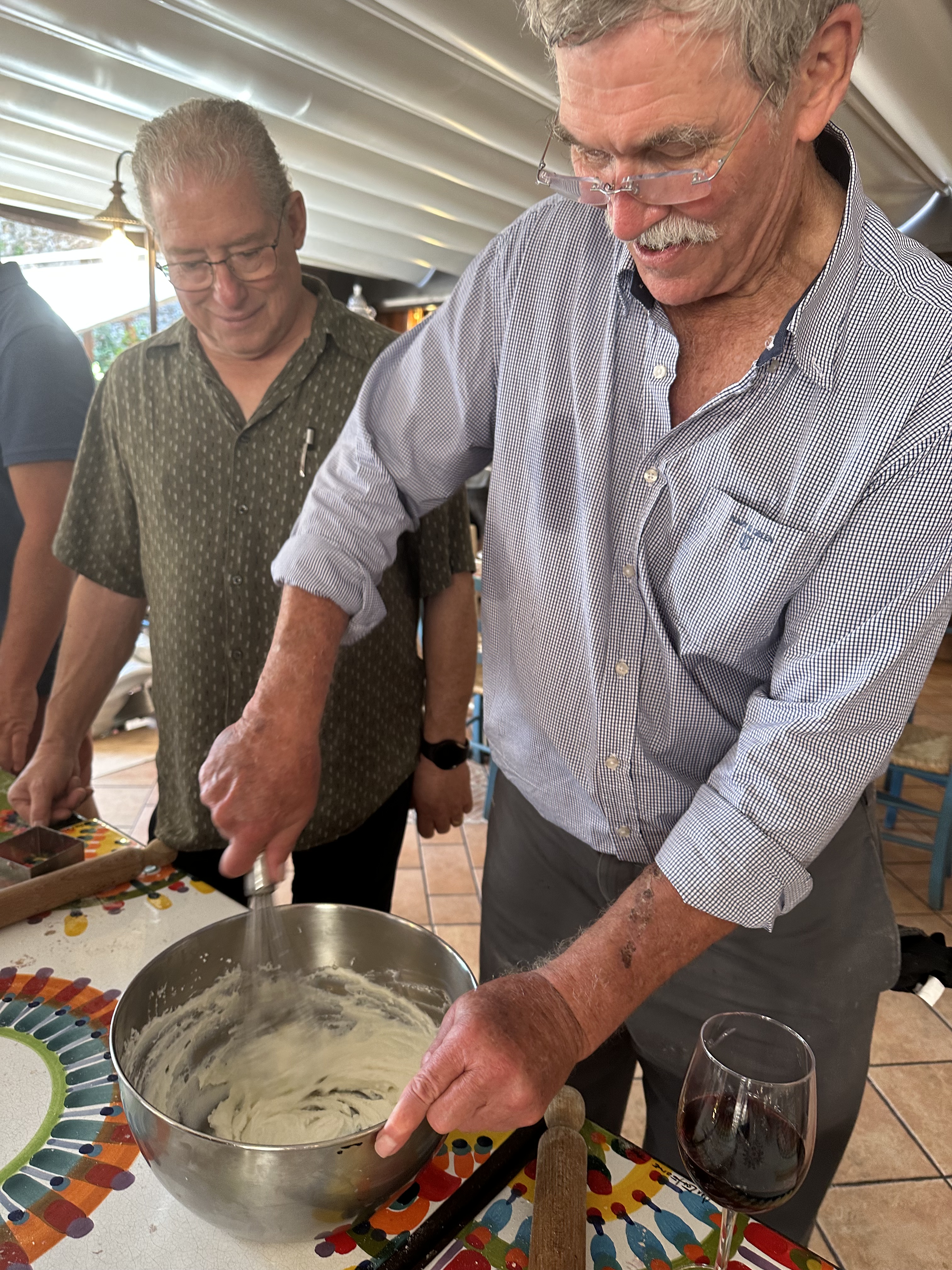
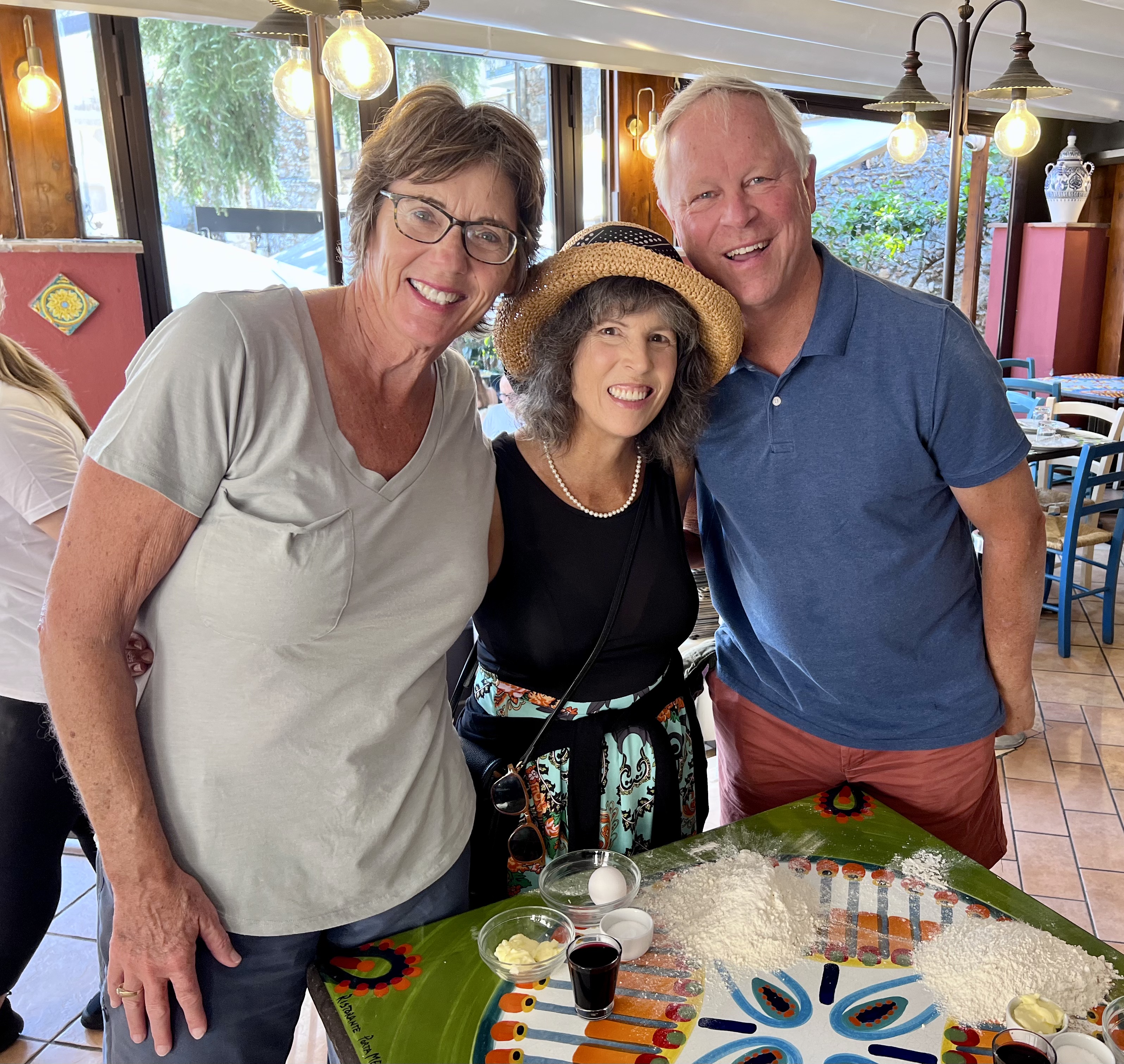
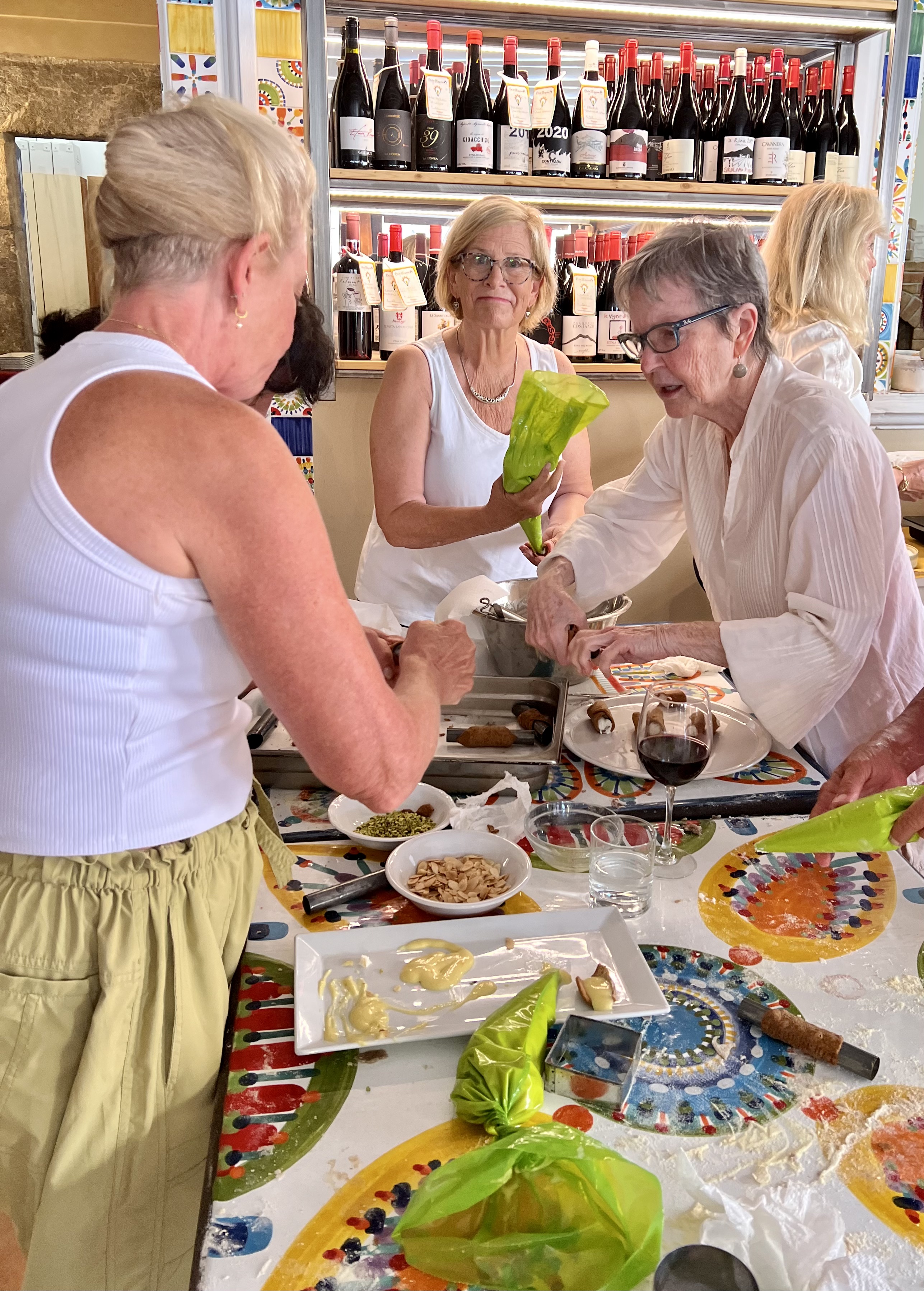
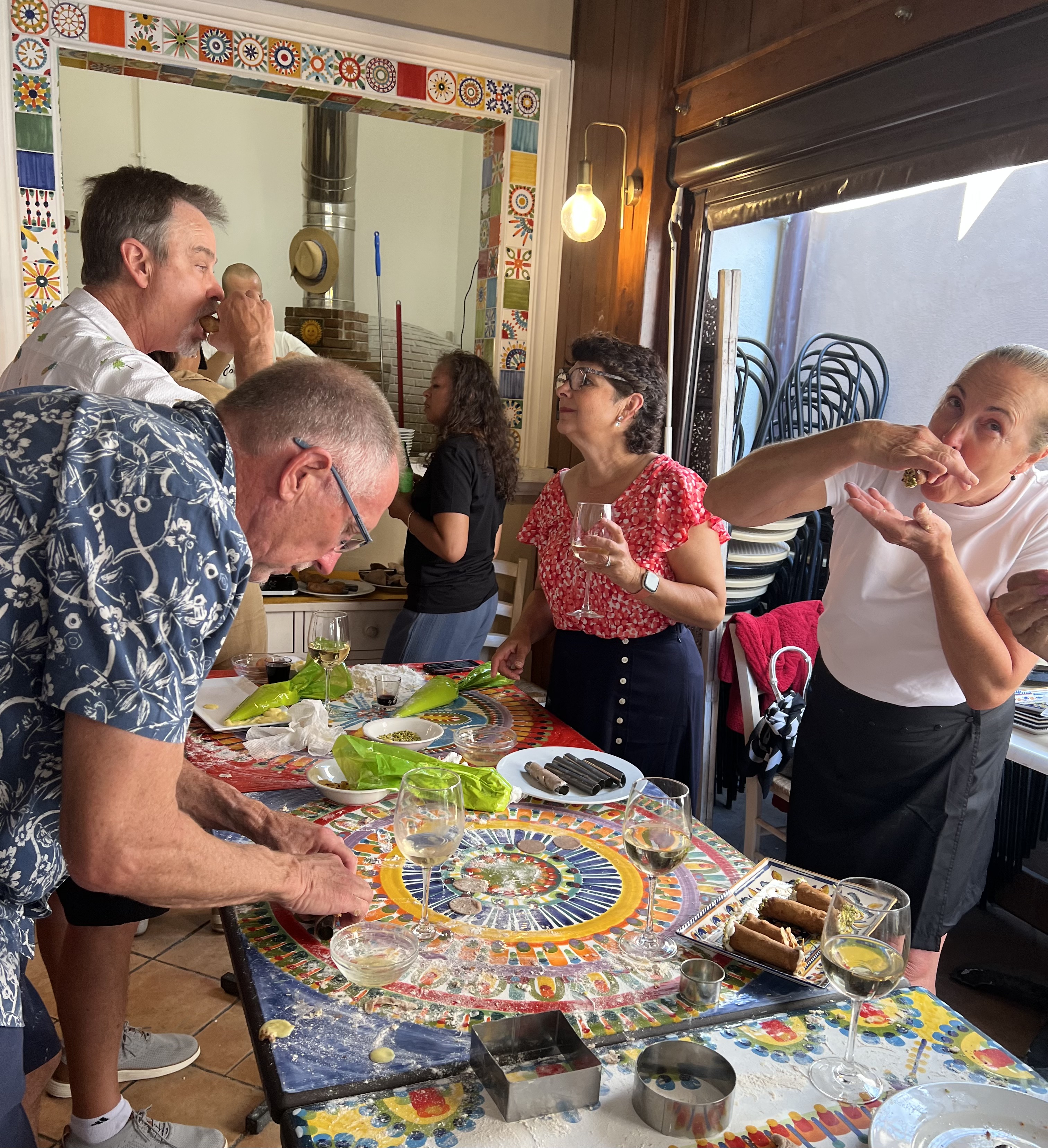
We set off at 8:30 to be in time for our 10:30 date at Porto Messina Restaurant.    The restaurant was ready for our large group of 21 and we were each assigned a station in front of a small pile of flour, a half cup of wine, a quarter cup of sugar, an egg, a quarter cup of butter, a dash of cocoa powder and a pinch of cinnamon.   We mixed it all together and kneaded it until it was firm.  Then we rolled the blob into a thin flat shape we then cut into rings with round or square cutters.   Then we rolled the rings around split metal tubes and sealed the dough rings with egg white.   Some of us never quite got the hang of the process, but we all had fun making a mess any why.  The rings that were decent looking, went into boiling oil and came out fried.  Immediately after the dough was cooked, we removed the split rings from under the cooked dough by twisting them.  If all went well, the cannoli came out whole and was ready to be stuffed.  Once we had made the filling of ricotta or lemon curd, we stuffed as many as we could and then ate them, almost as fast as we stuffed them.  Much fun was had by all.  
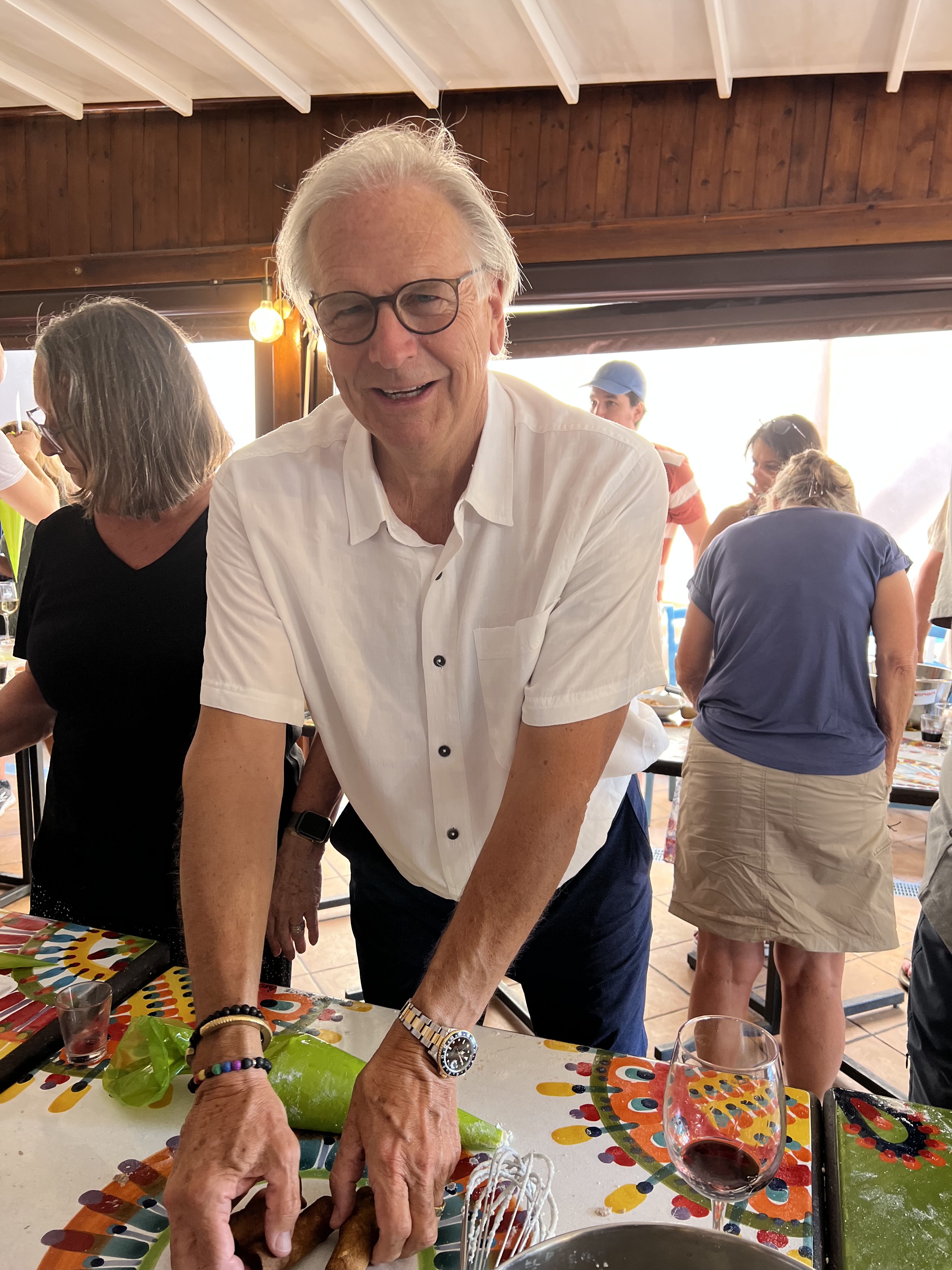
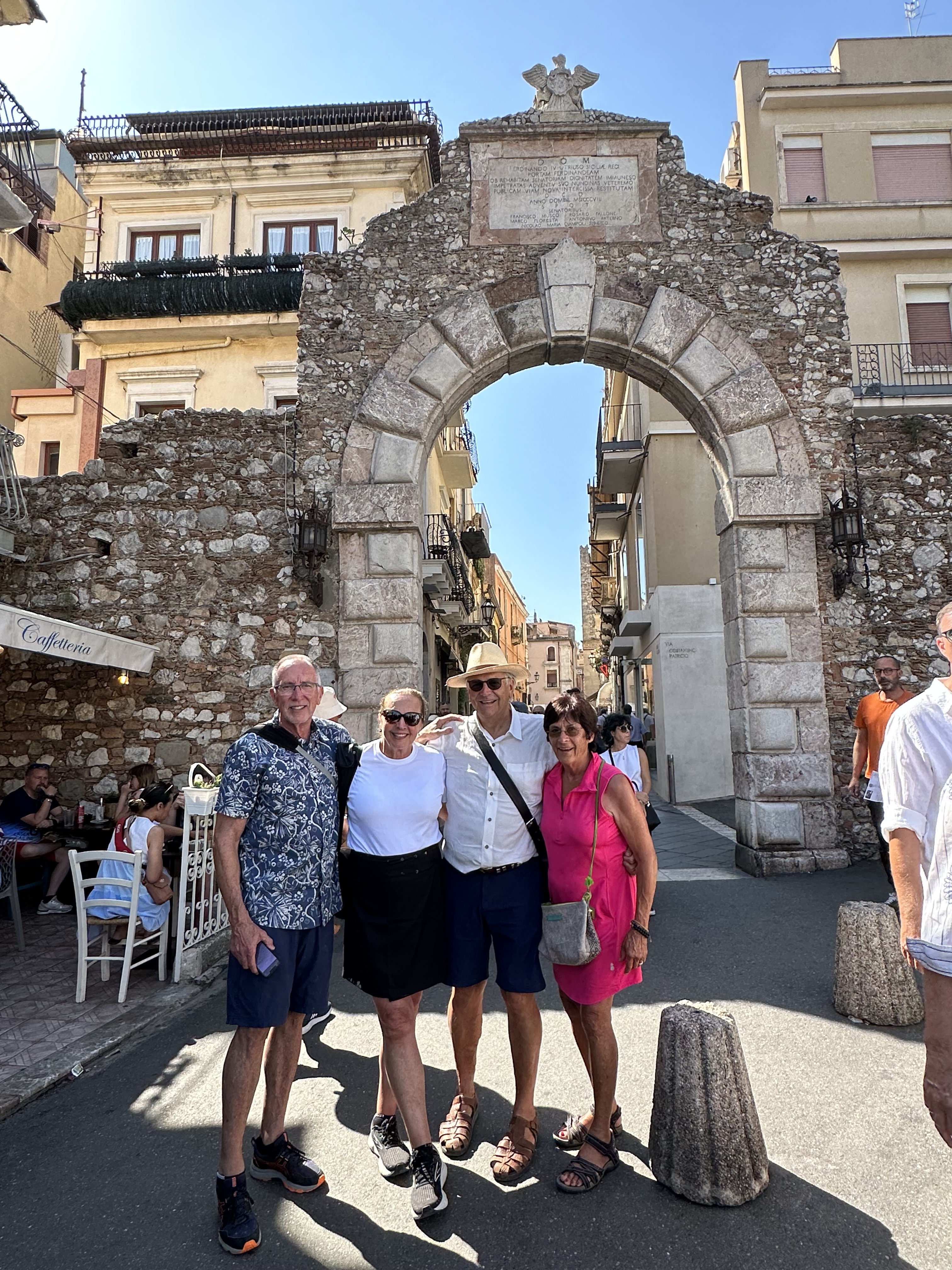
After cleaning up as best as possible, Catherine and Martin White and Mark and I went on a guided tour of the city.
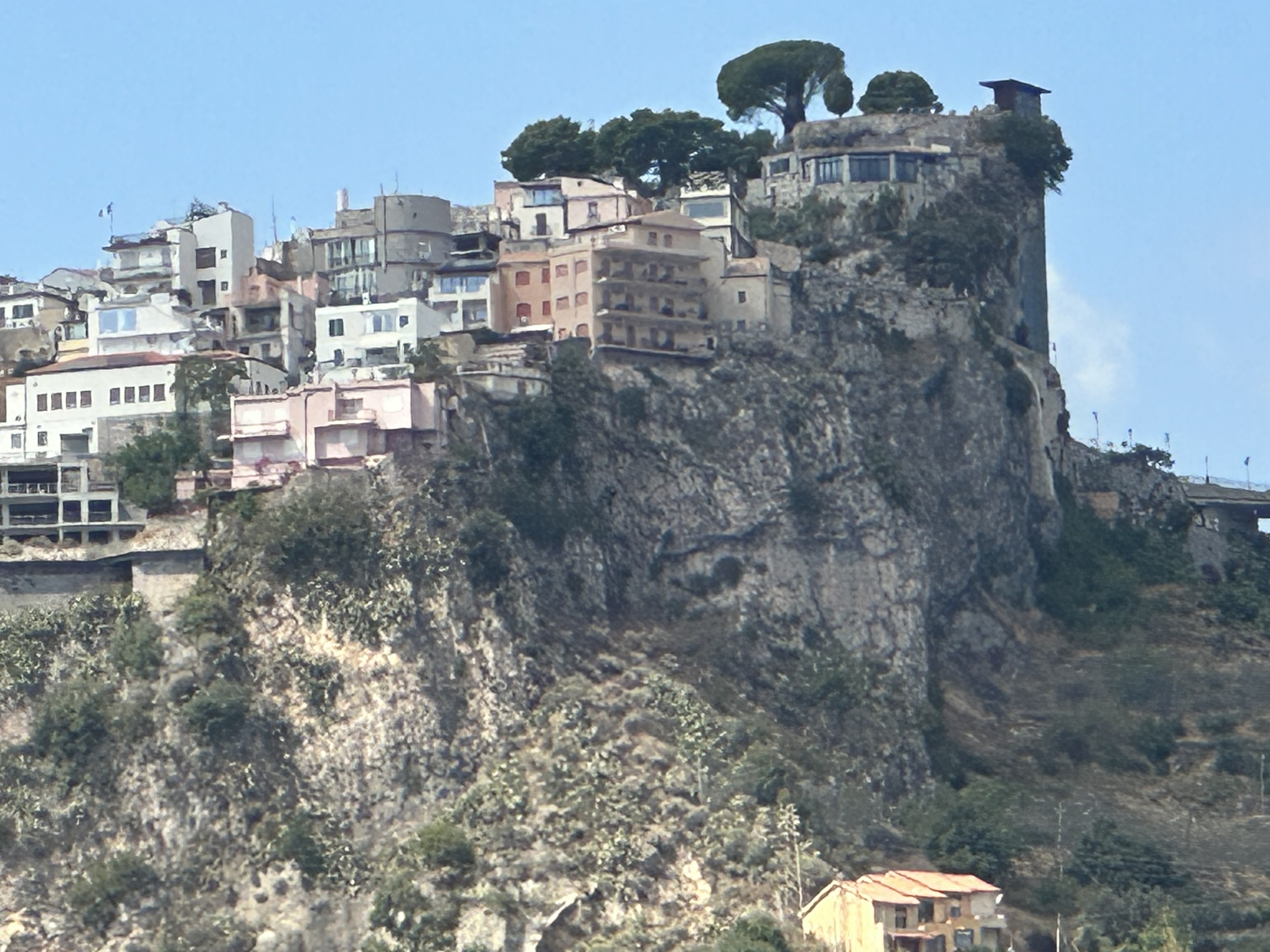
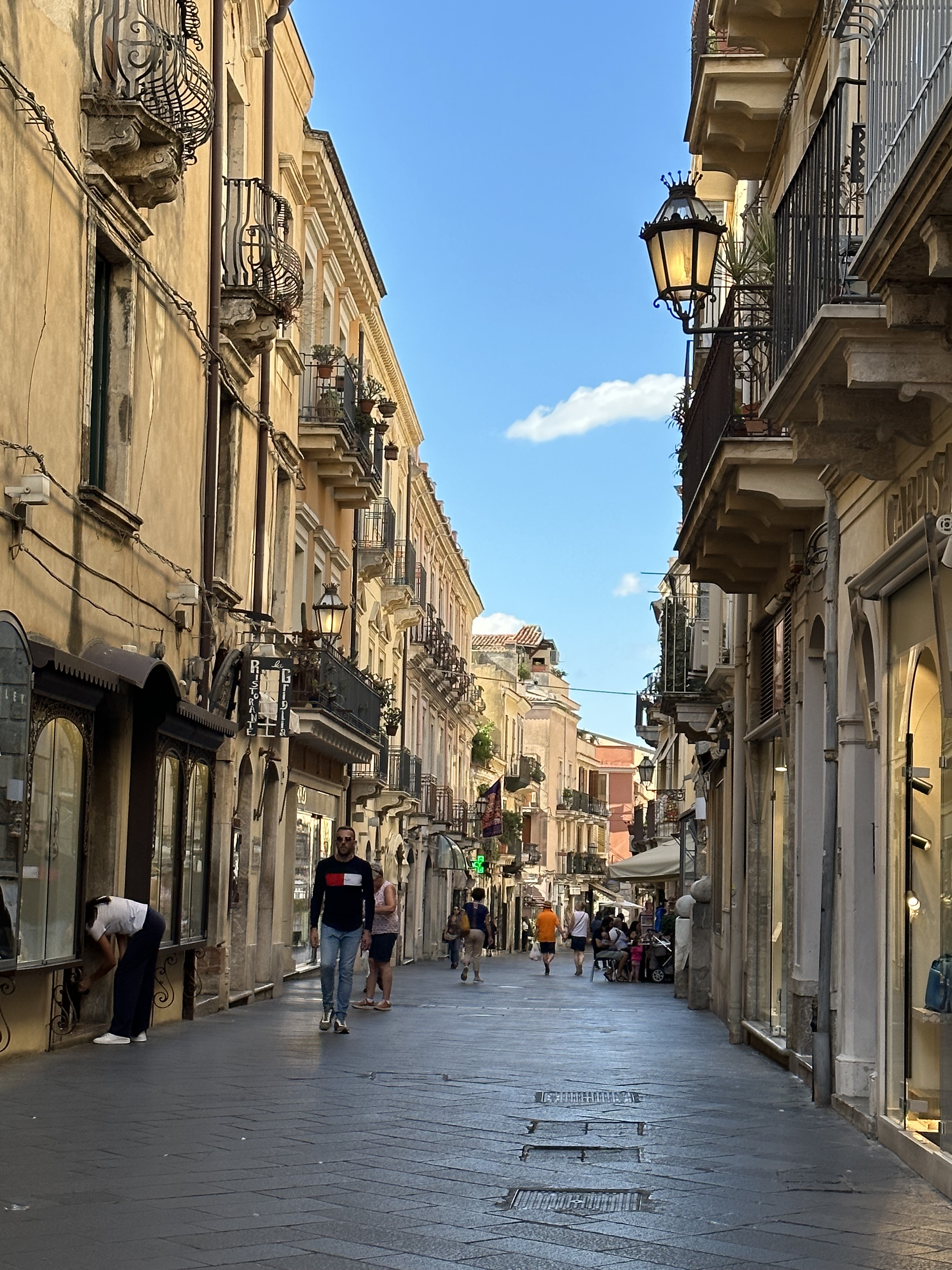
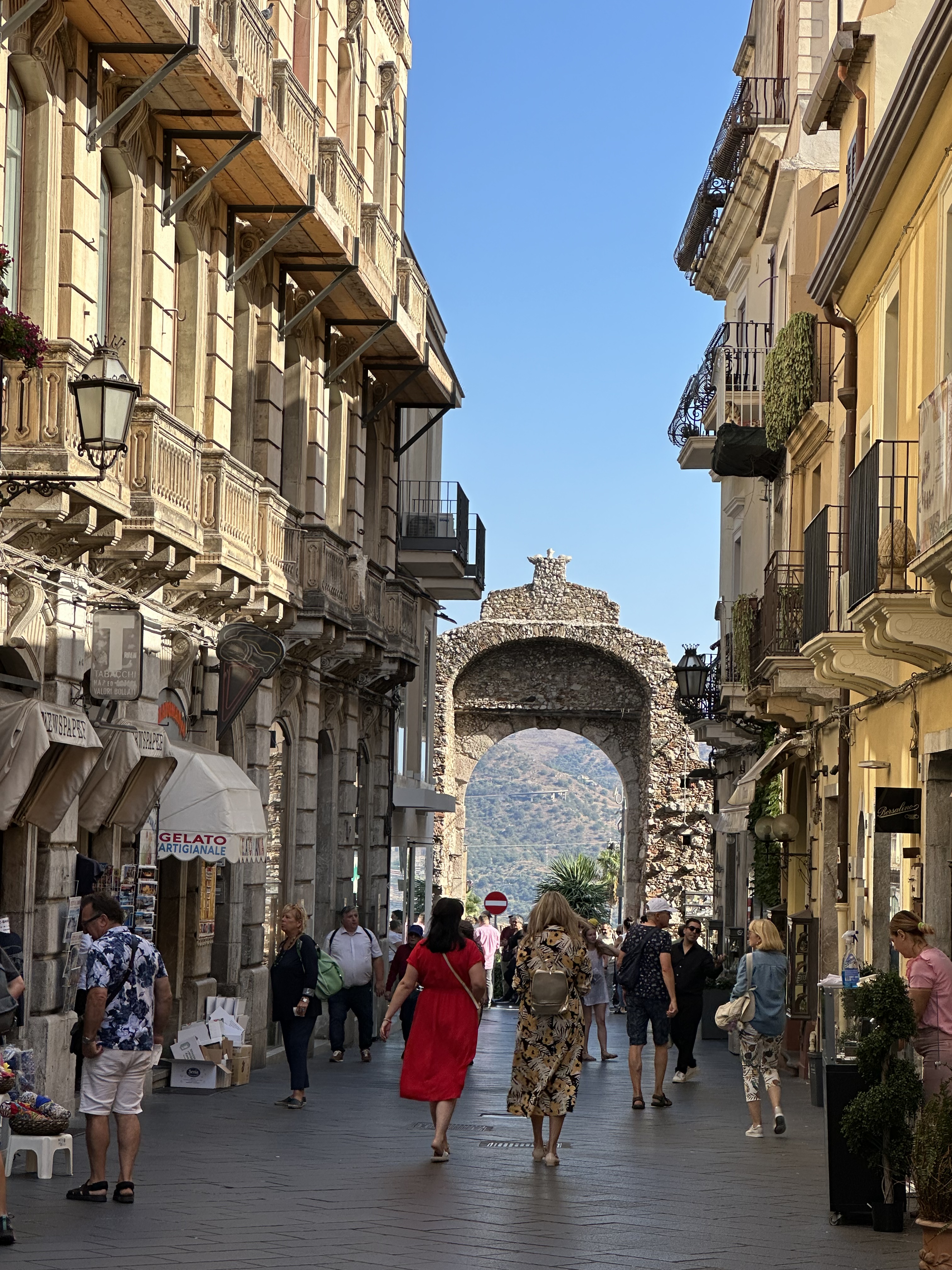
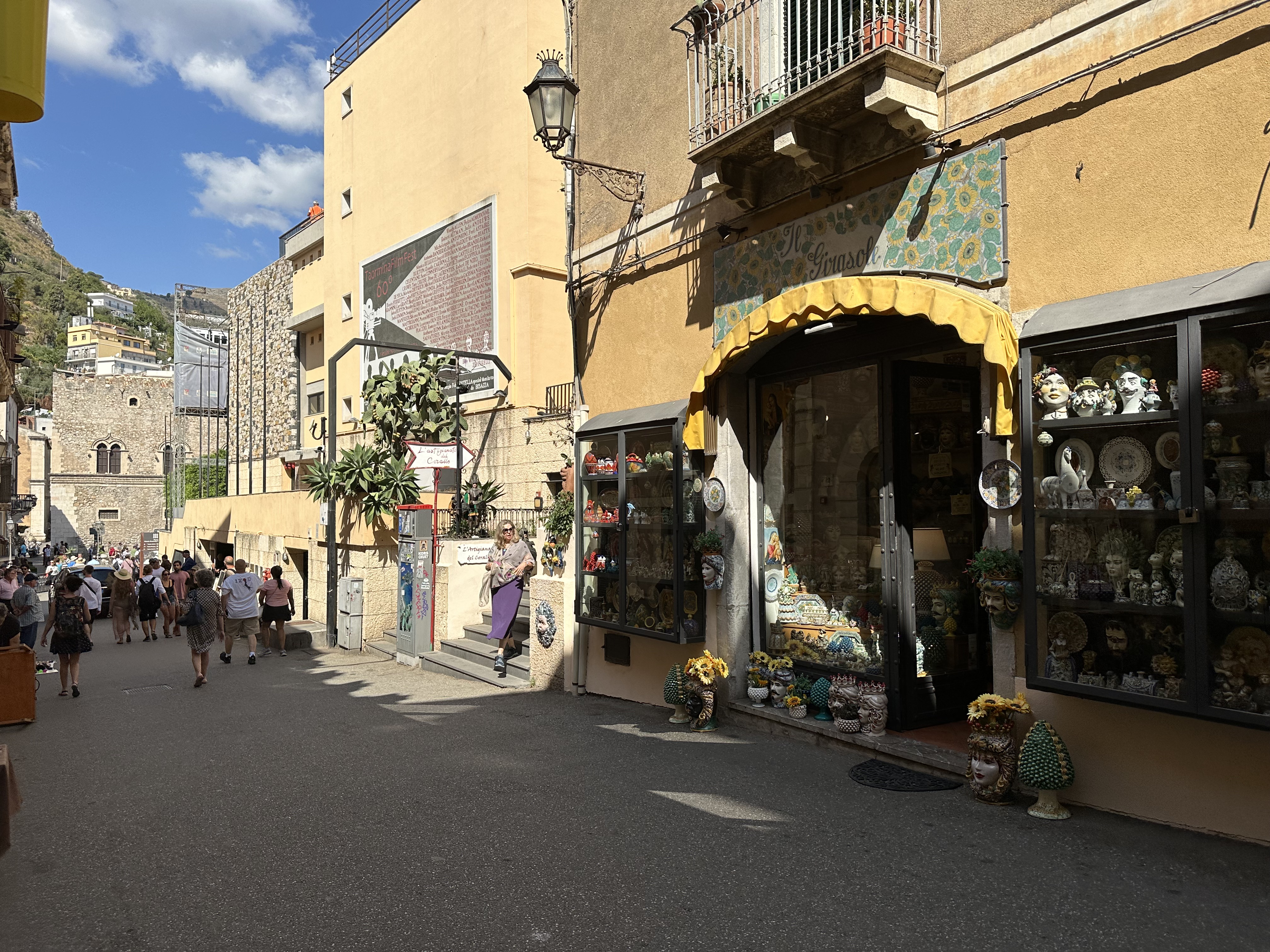
The town was packed with tourists, many of whom were from ships parked in the bay at the bottom of the town.  After wandering past many upscale shops and interesting facades and churches, we reached the 3rdcentury BC Greek-Roman Amphitheater on the same level as mid-town.  It affords a super view of town and the sea in the distance.  Then we stopped at the Hotel Metropole in the middle of town and had a pizza and beer.   
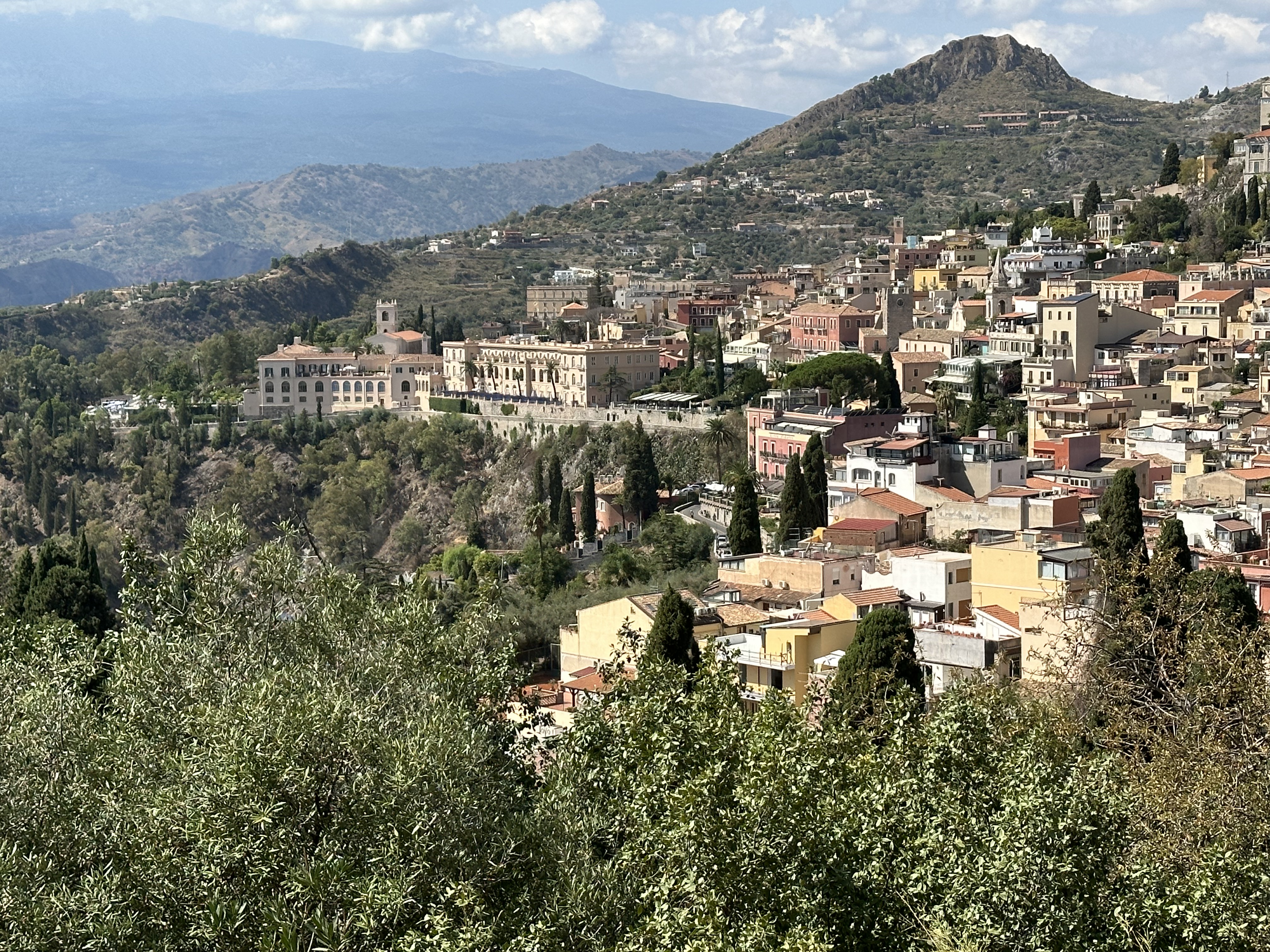
Excavations of an ancient site in Taormina.

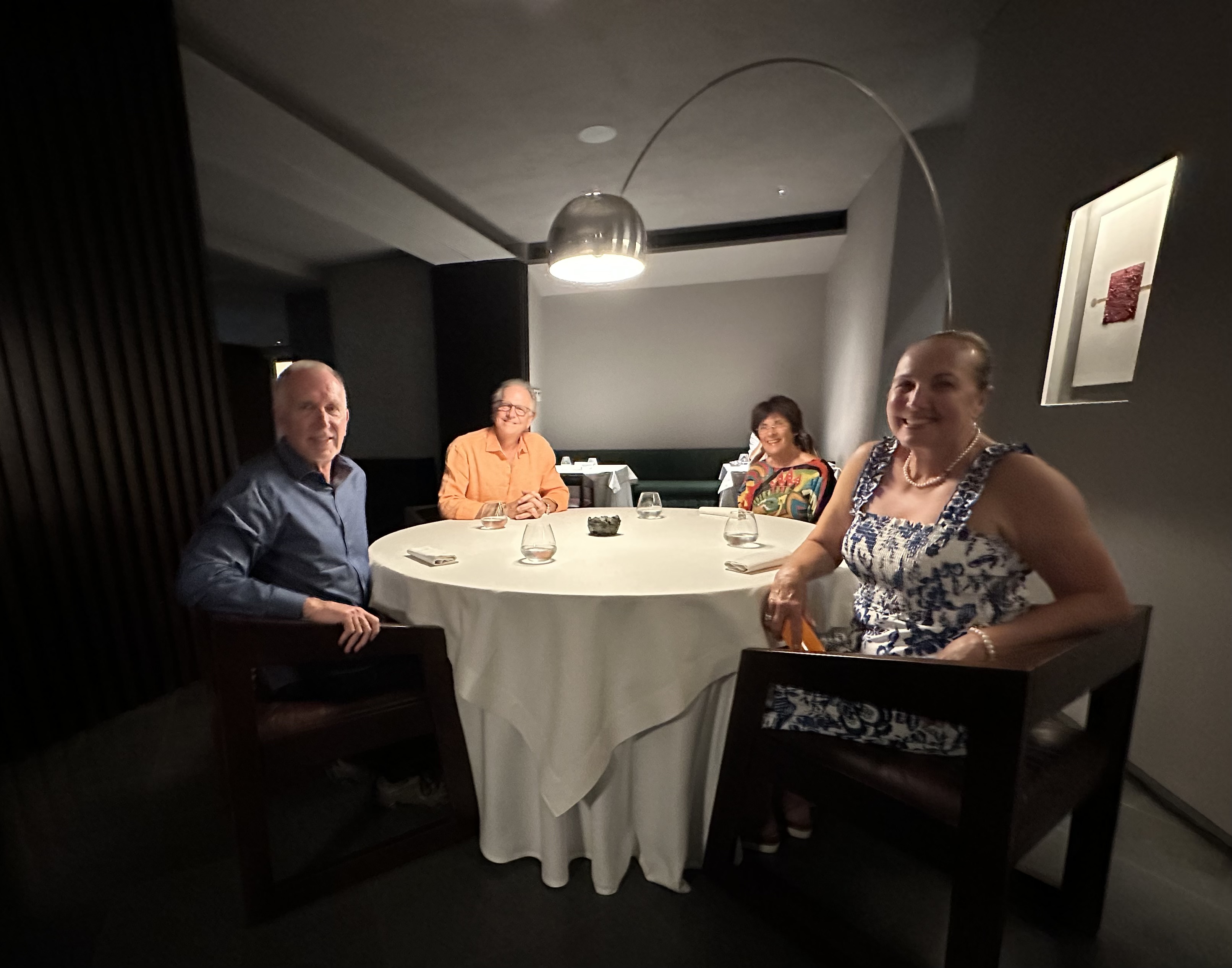
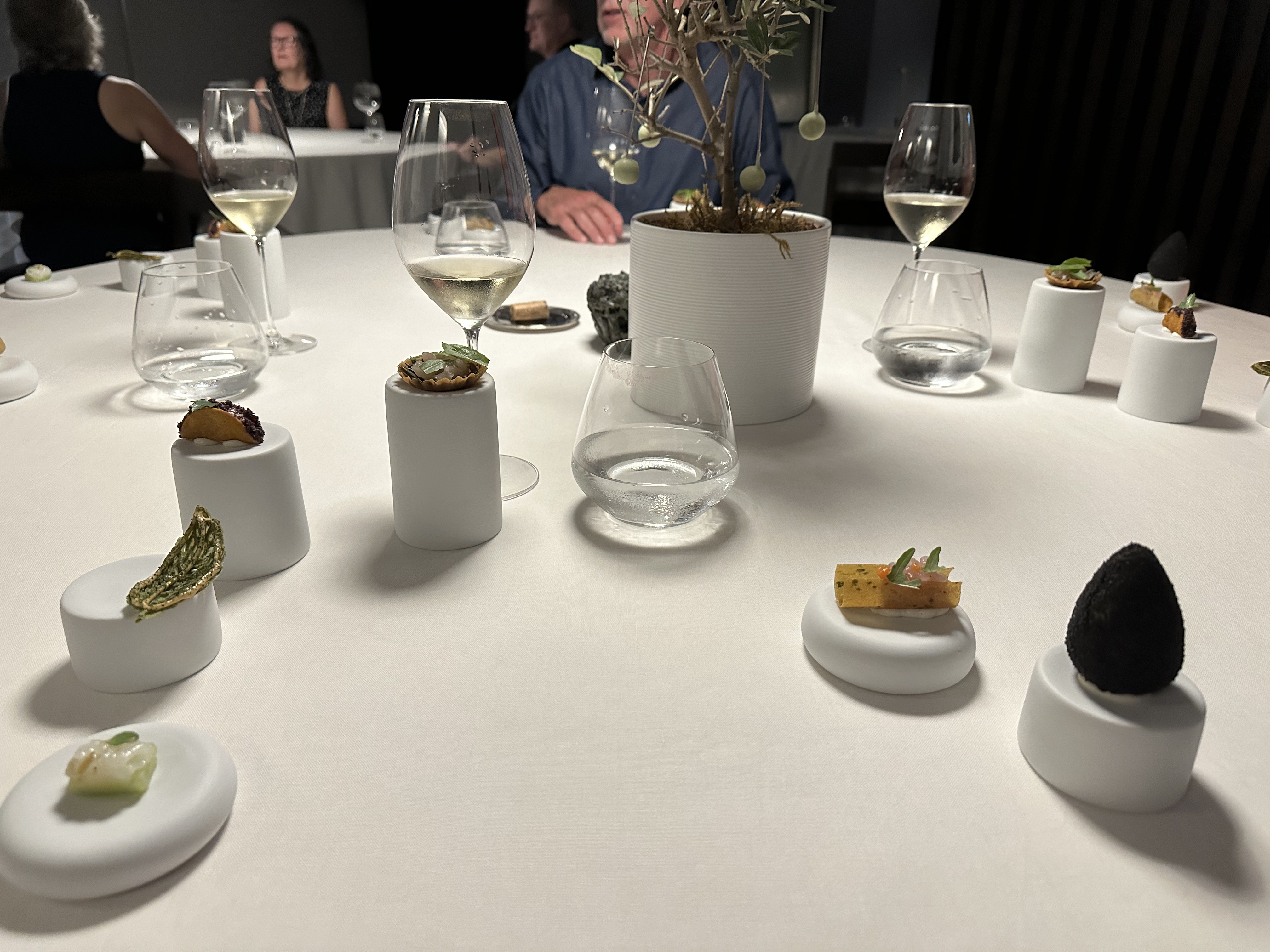
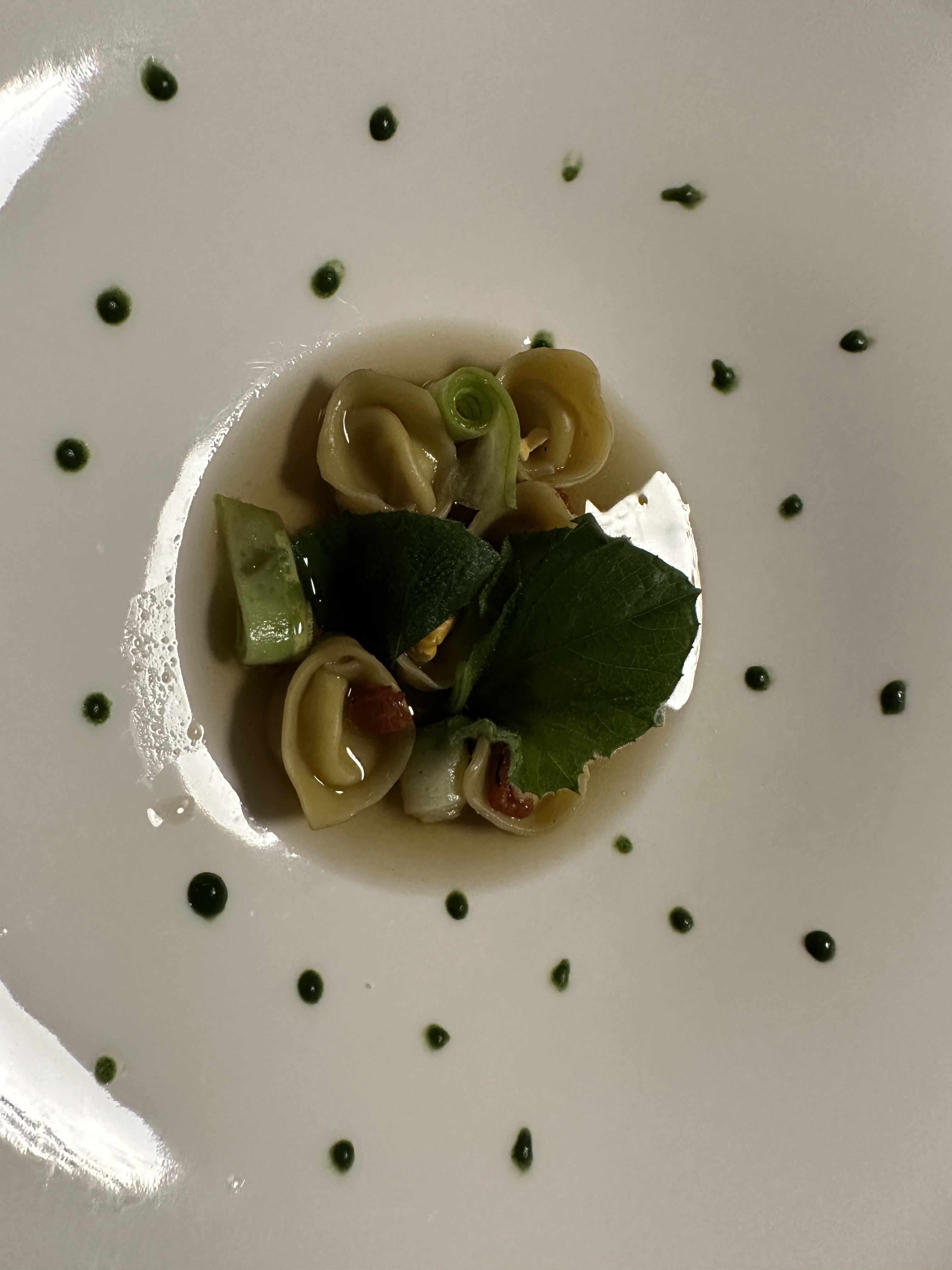
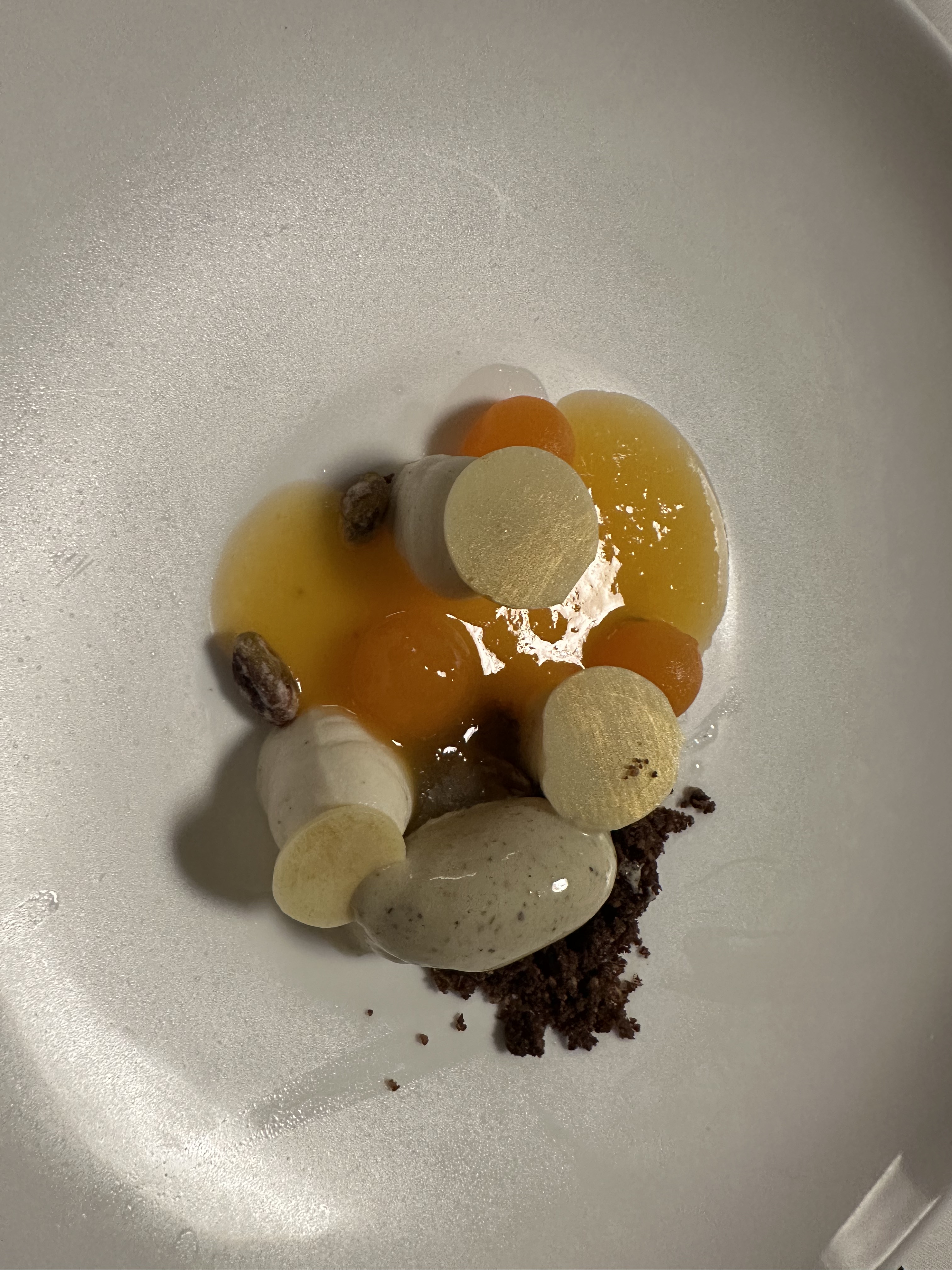
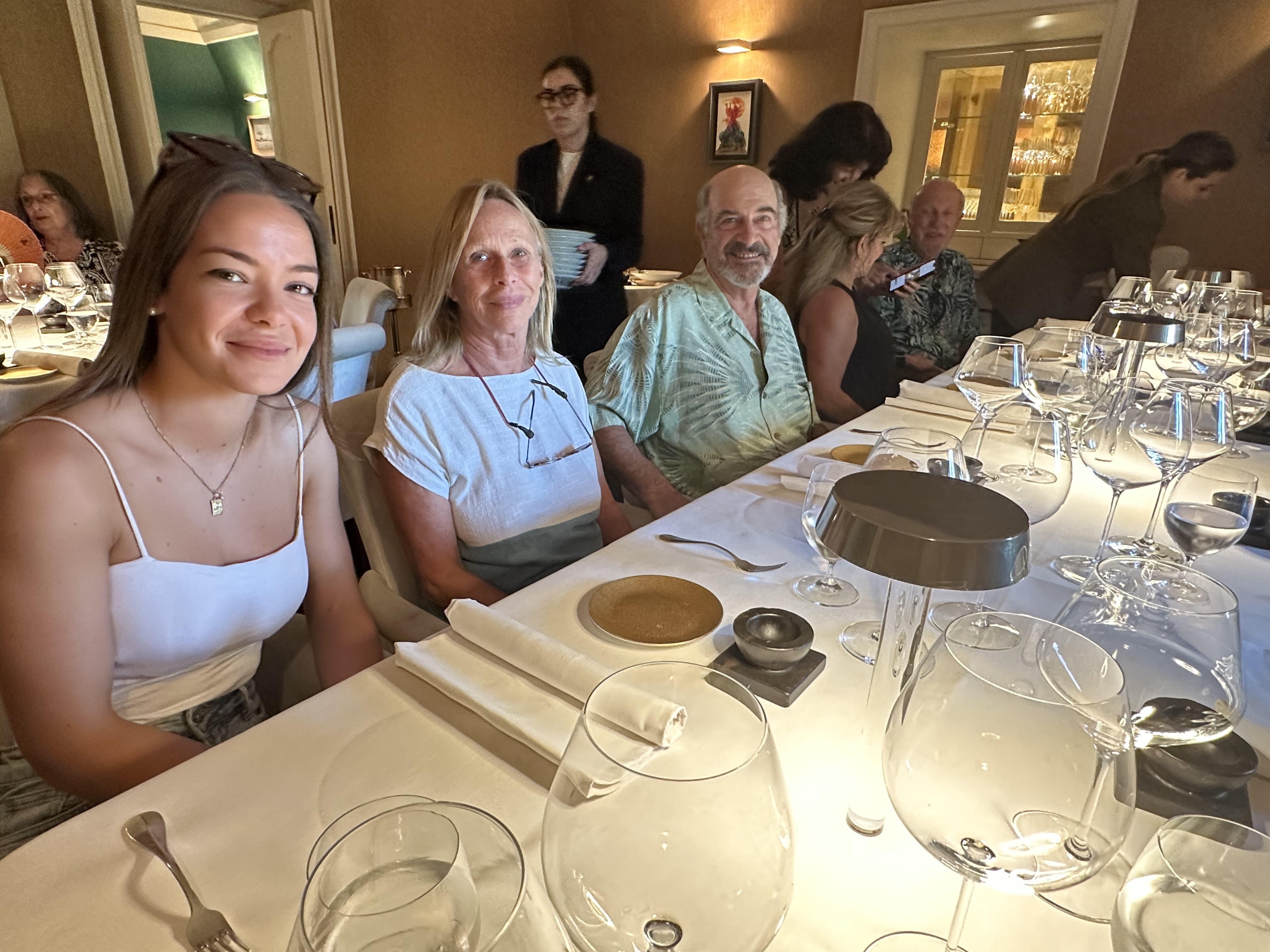
We drove back to the villa and relaxed a while.  Then the 4 of us changed and went back to Catania for a Michelin Star dinner a place called Sapio.  The table was big enough for 8 and we had a hard time talking to each other across the expanse.  We laughed about the ridiculously oversized table and agreed to order a very nice 7-course meal that did not leave me overstuffed.  Mark, however, said he was more than full.
Thursday, September 28, 2023

This was our day to drive to Ragusa, walk the town per Rick Steve’s book, get a tour of a private home in the downtown and walk to another Michelin star restaurant.  This one was reputed to have 2 stars.  
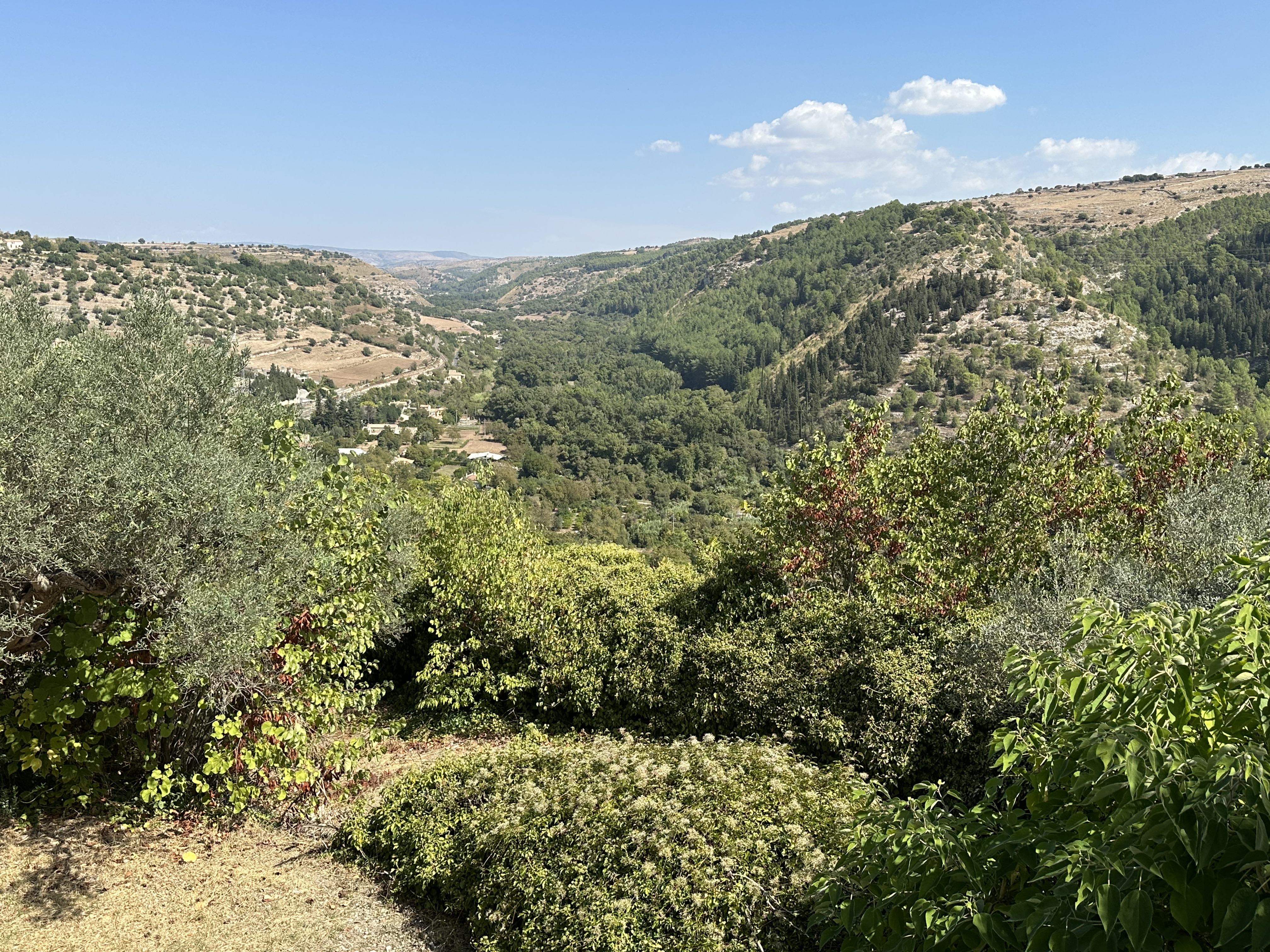
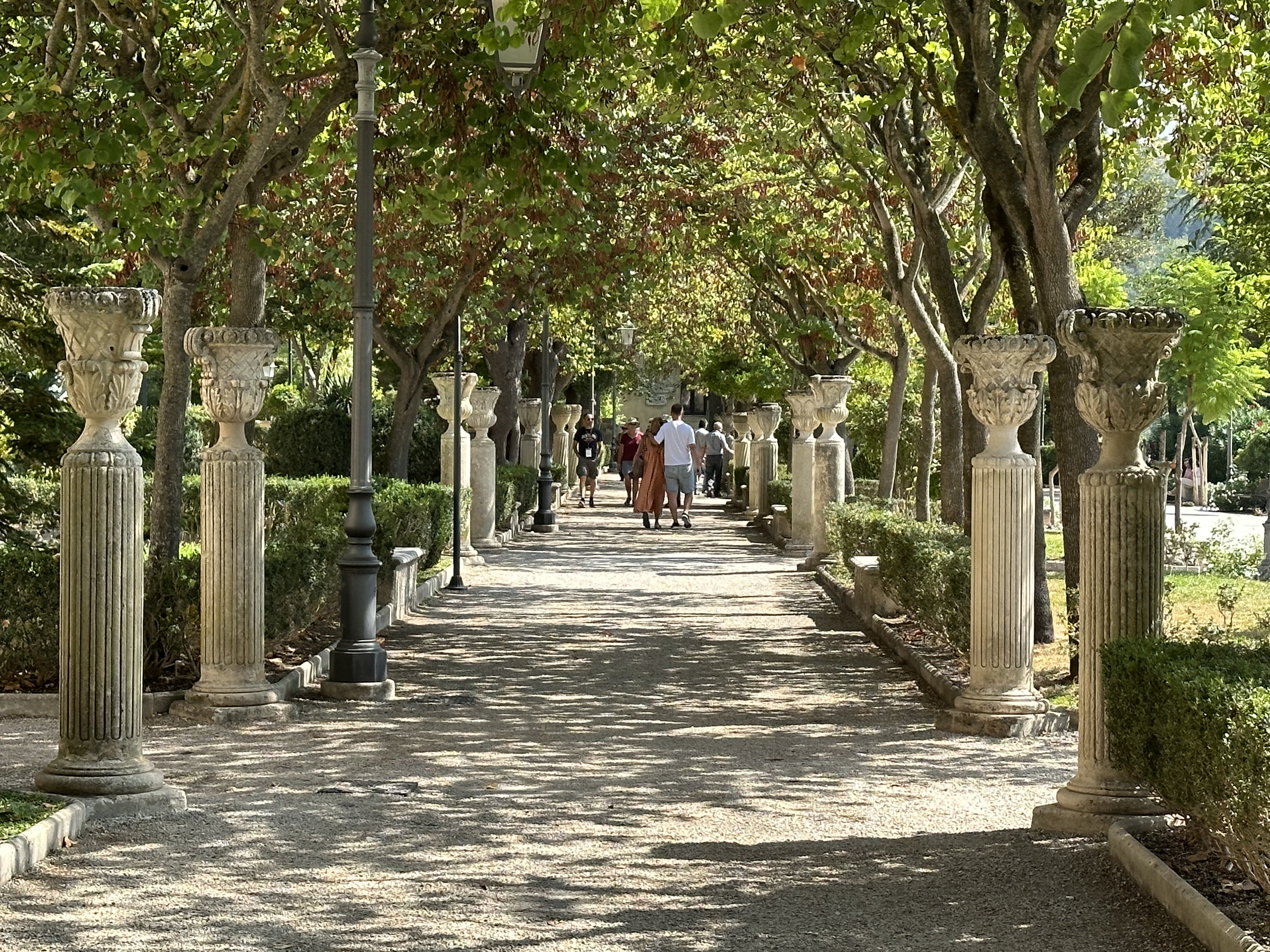
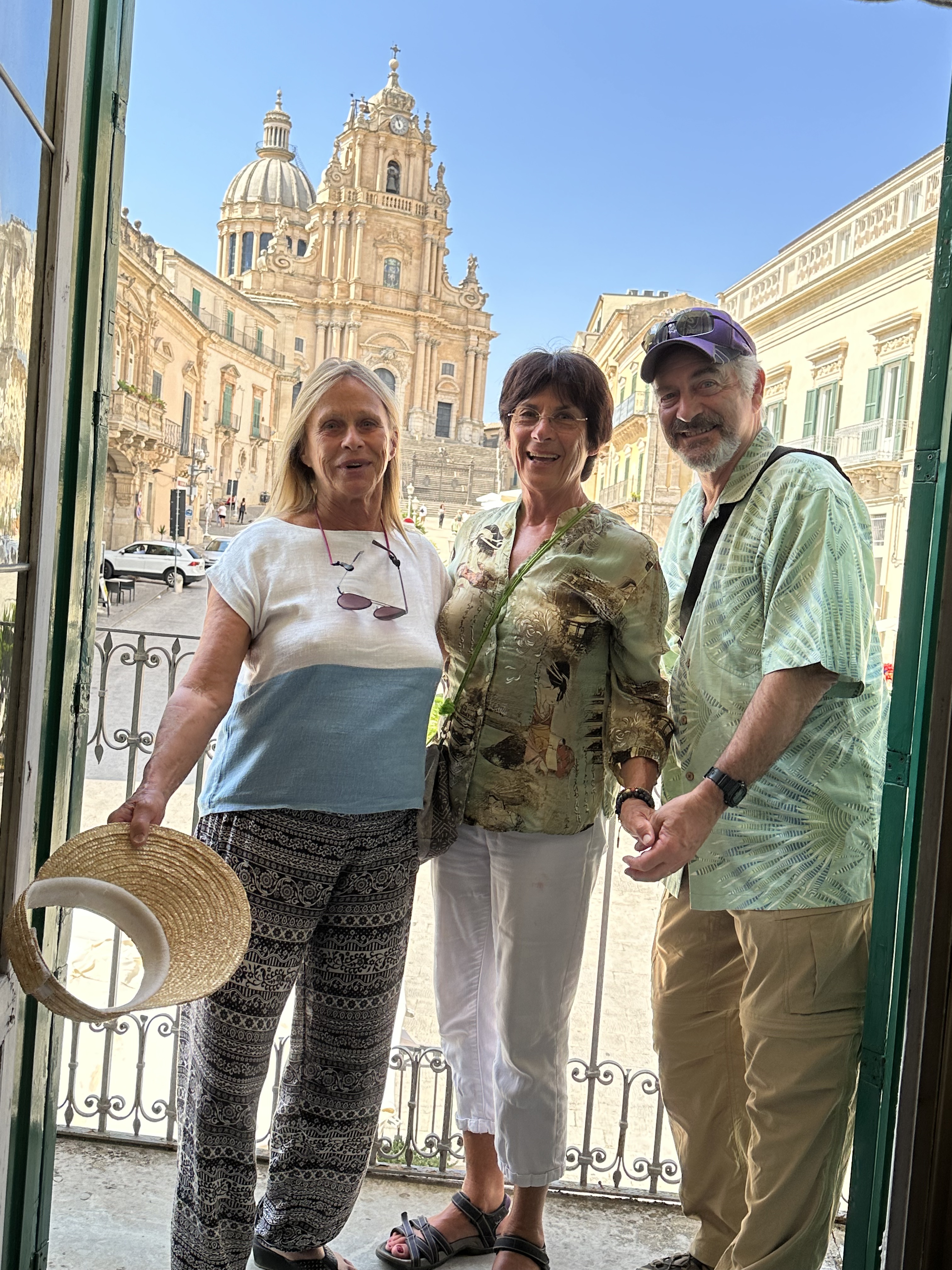
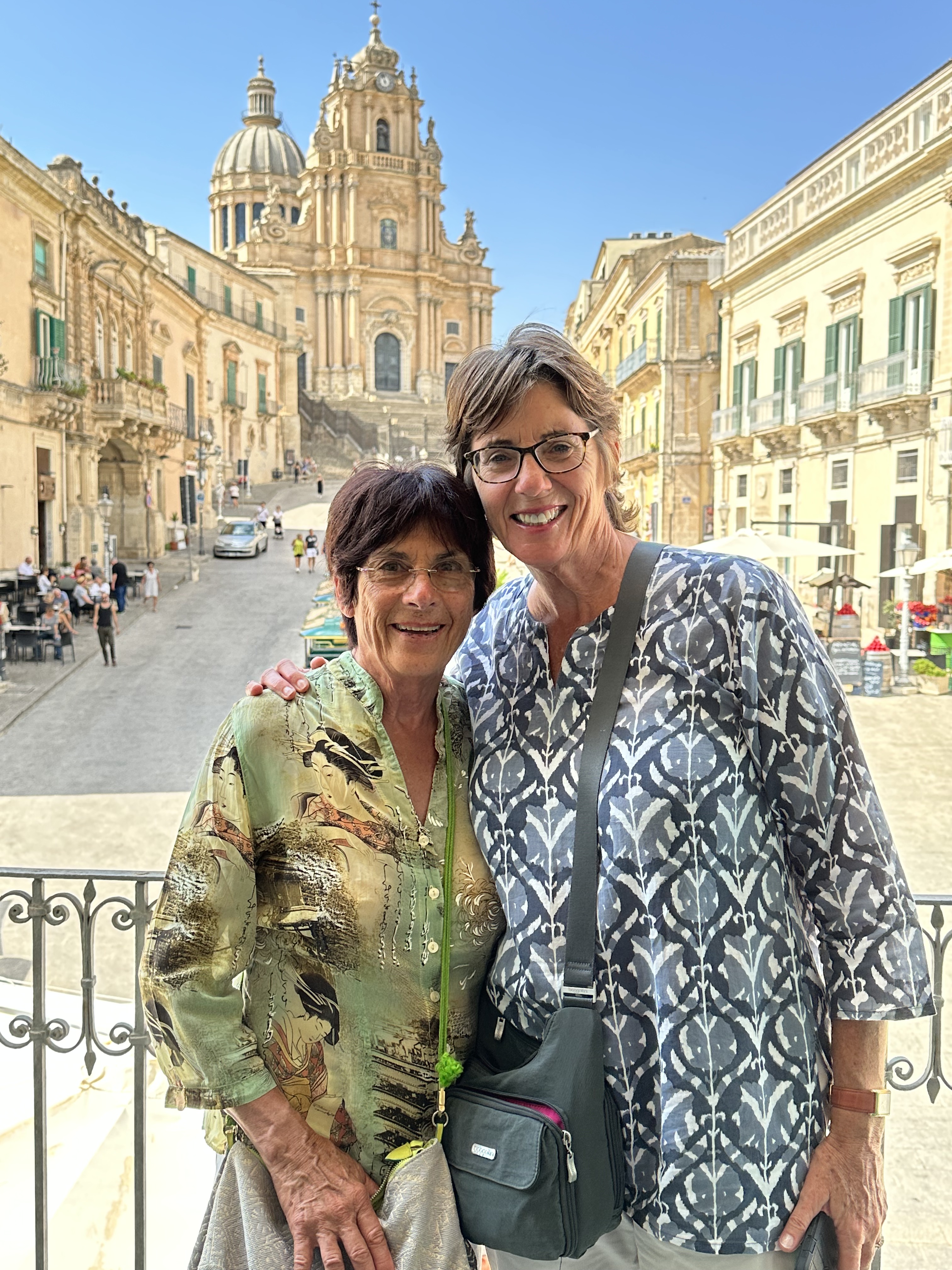
As everyone was booked for the lunch, we all carpooled and enjoyed the scenic drive to Ragusa.  Parking was a bit of an issue for some, but eventually we all got parked and met up in the town.  The beginning was a lovely garden at the bottom of the rather steep hillside town.  After walking around the garden, we slowly walked up hill passing more shops, and trinket stores. 
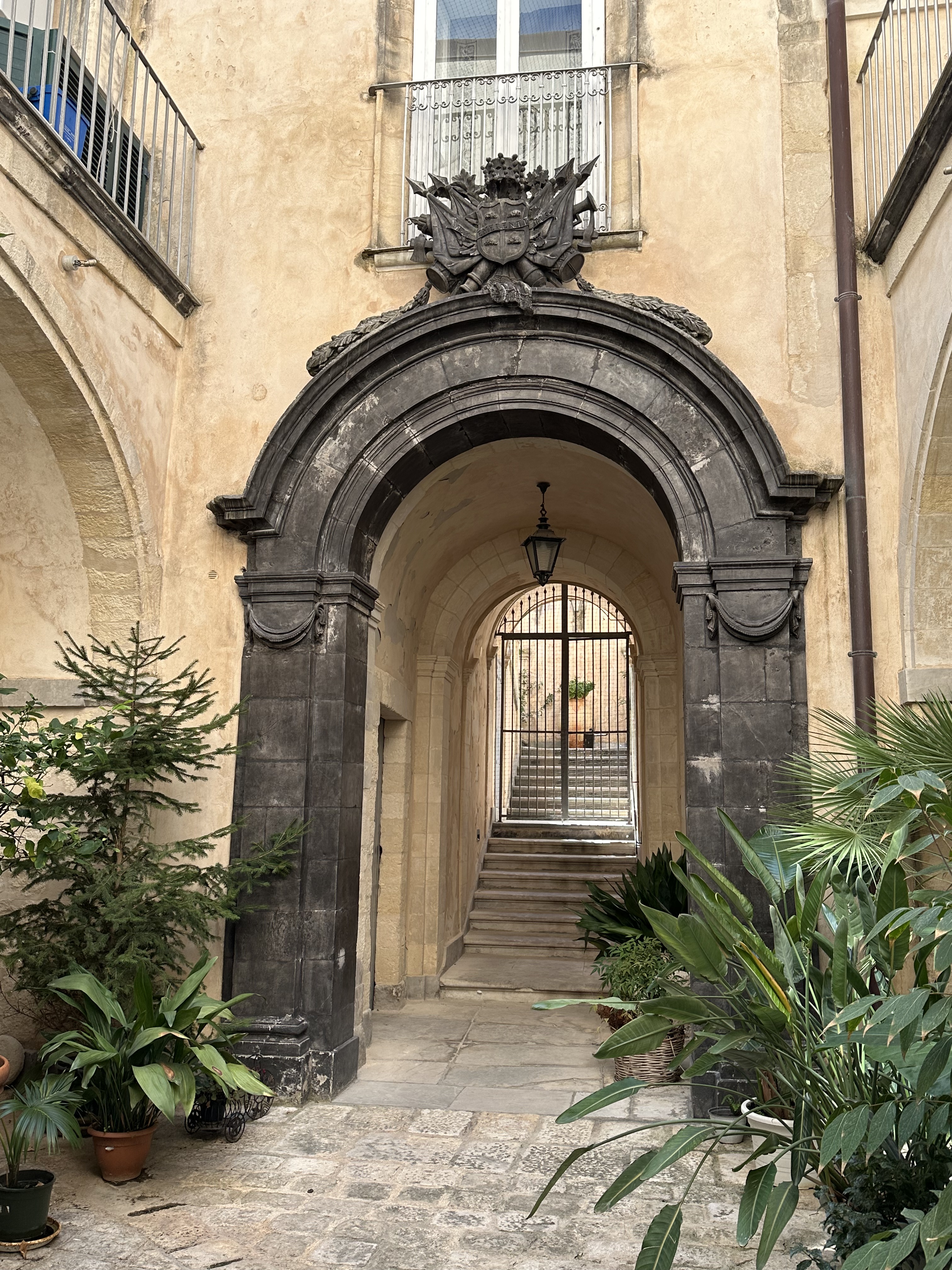
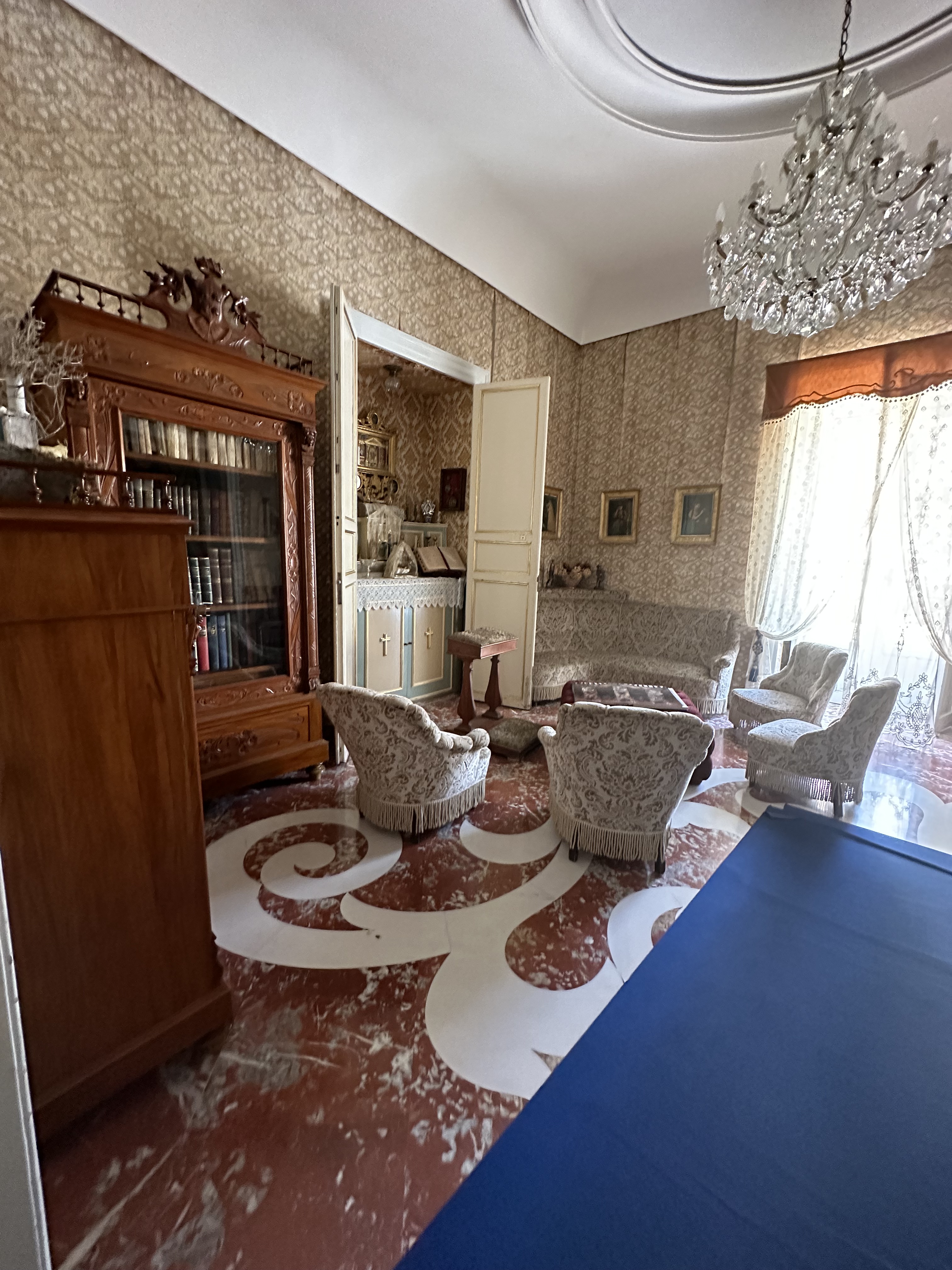
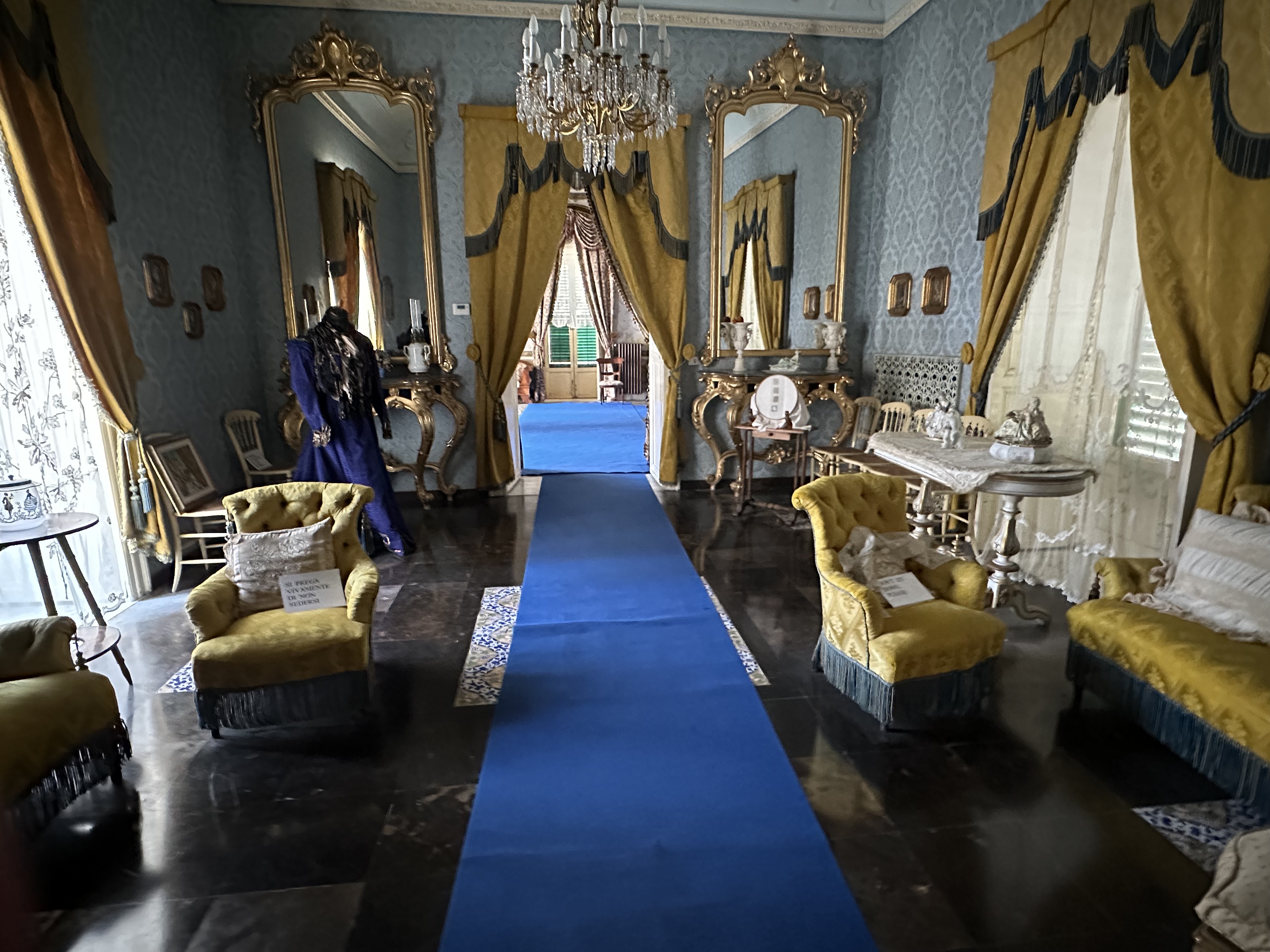
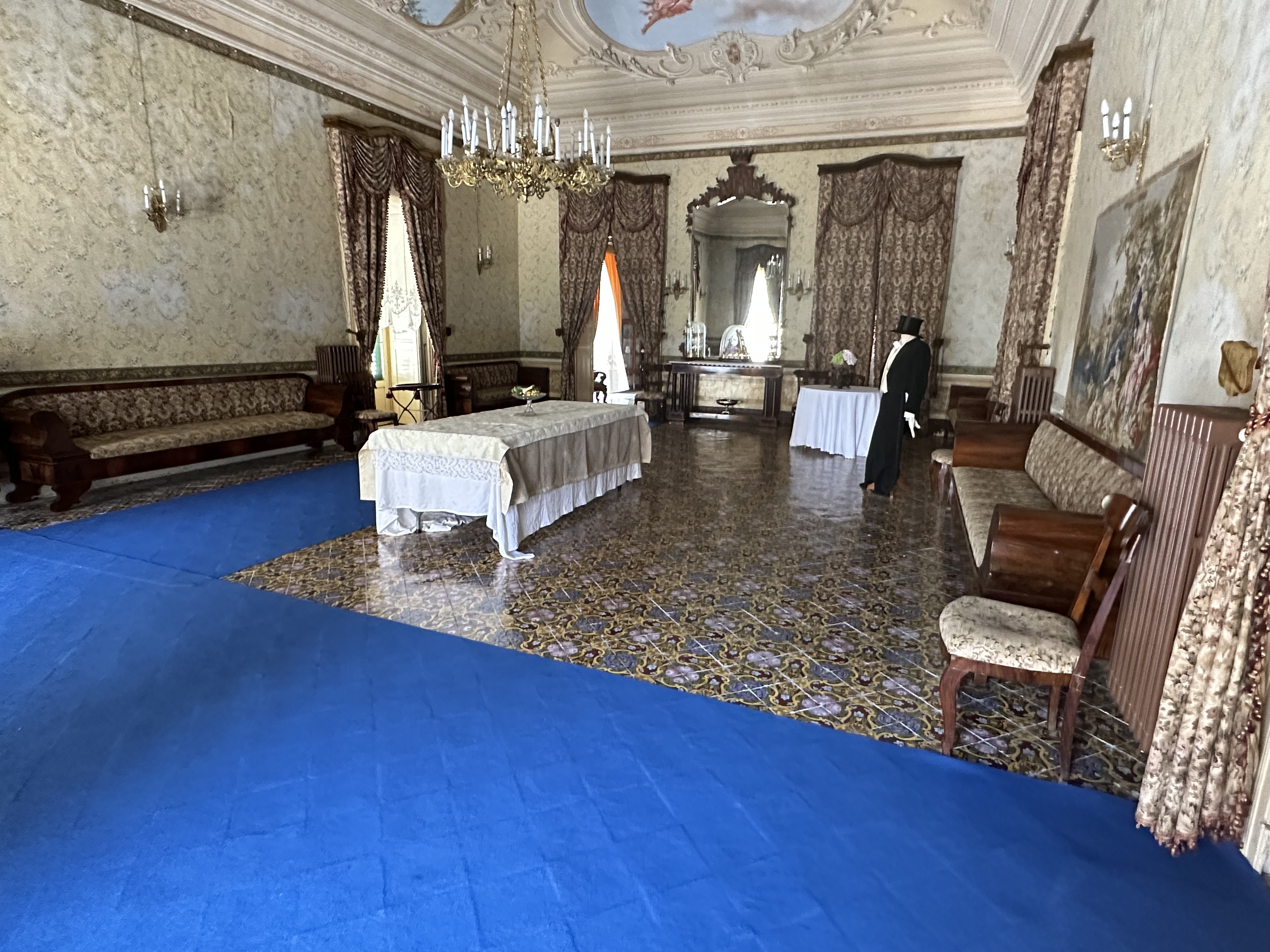
 Midtown, we reached the private home we were scheduled to tour and met the owner.  Once we were all assembled, he walked us up a large central staircase into the formal rooms of the palatial home.  We were invited to inspect the ball room, drawing room, dining room and an office space.  We saw paintings and photographs of his relatives going back 5 generations, a ball gown worn by a great grandmother, several Venetian glass chandeliers, several generations of furniture.  His parents still live in the half of the house he did not show us.  His ancestors had been aristocrats, and public figures in the community.  It was an interesting tour that lasted about 45 minutes.   Then he pushed us out the door as he had an Italian group coming right behind us. I suspected this was his way of paying for the maintenance of the property, but it looked quite neglected

Exactly at that moment Scott Kellerman appeared with his luggage in tow.  He was expected, but it was still a surprise to actually see him.   

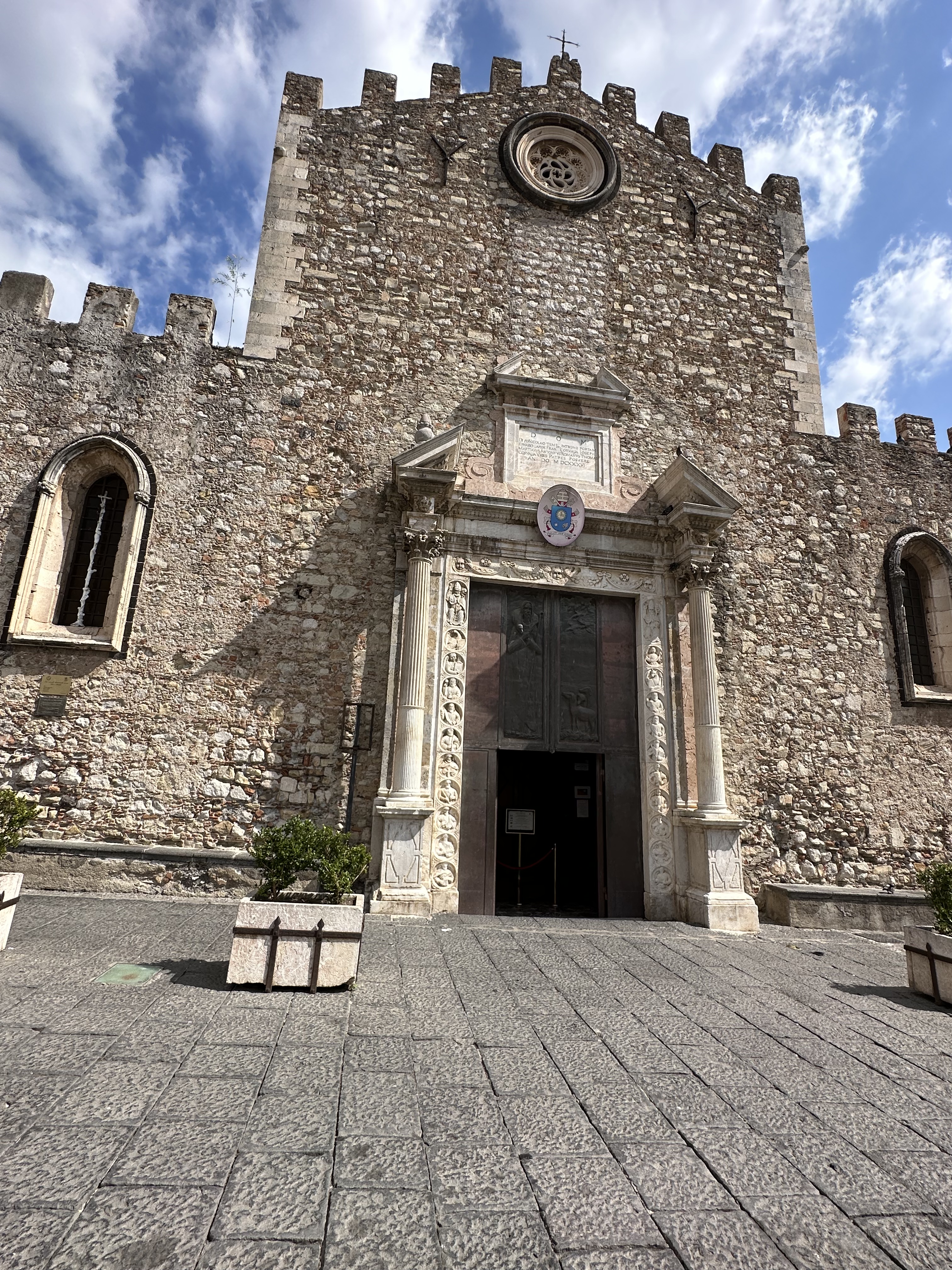
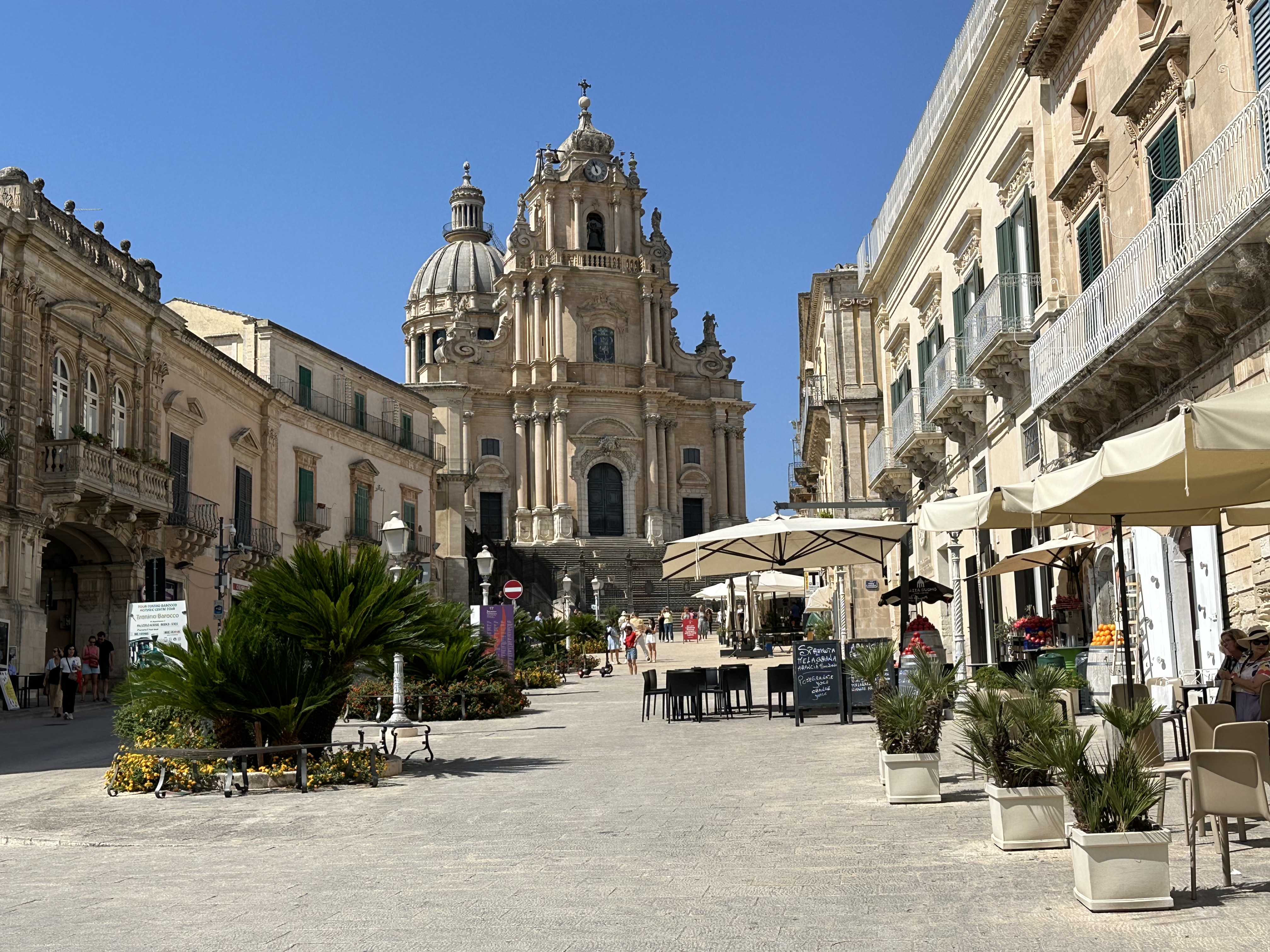
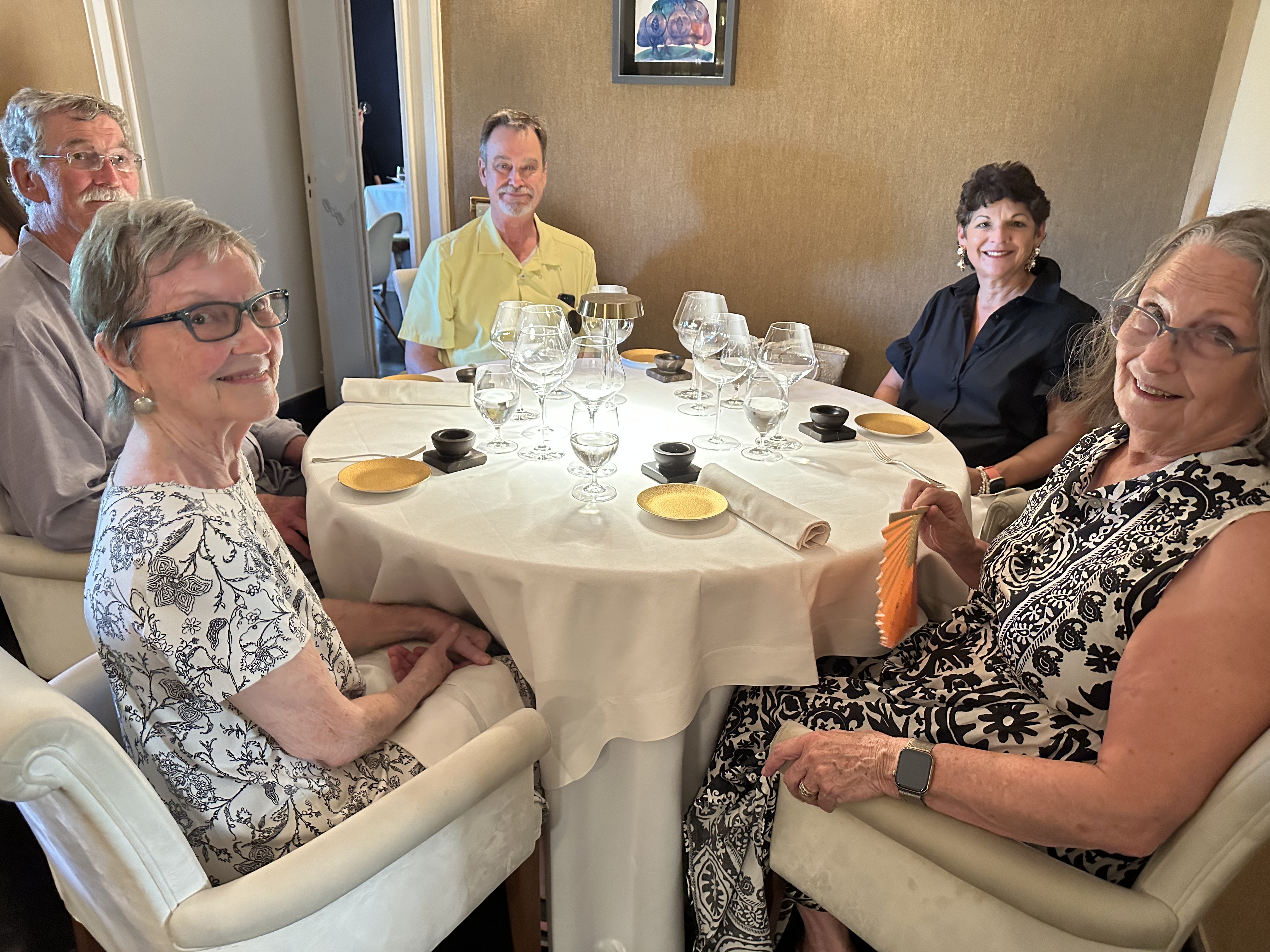
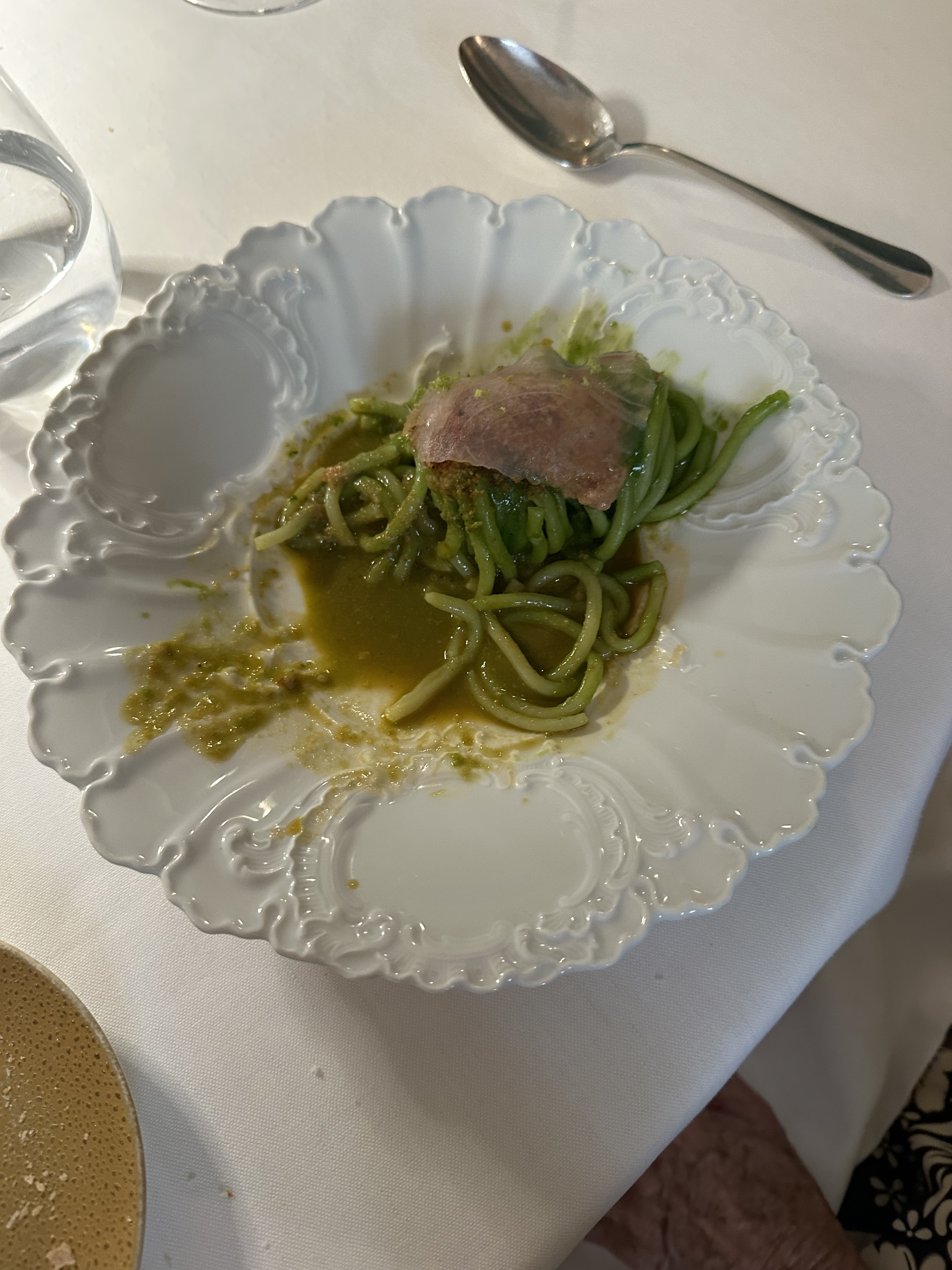
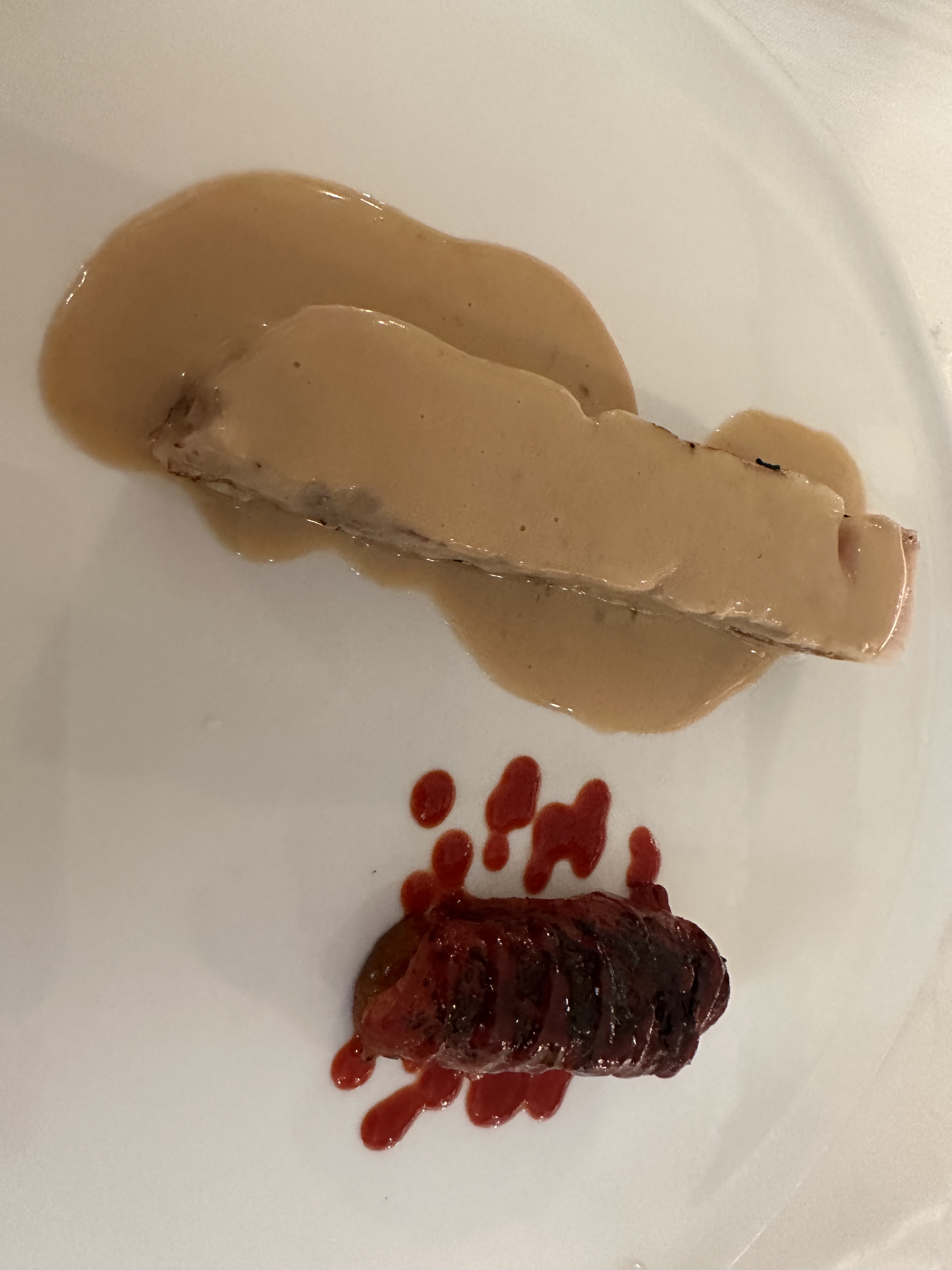
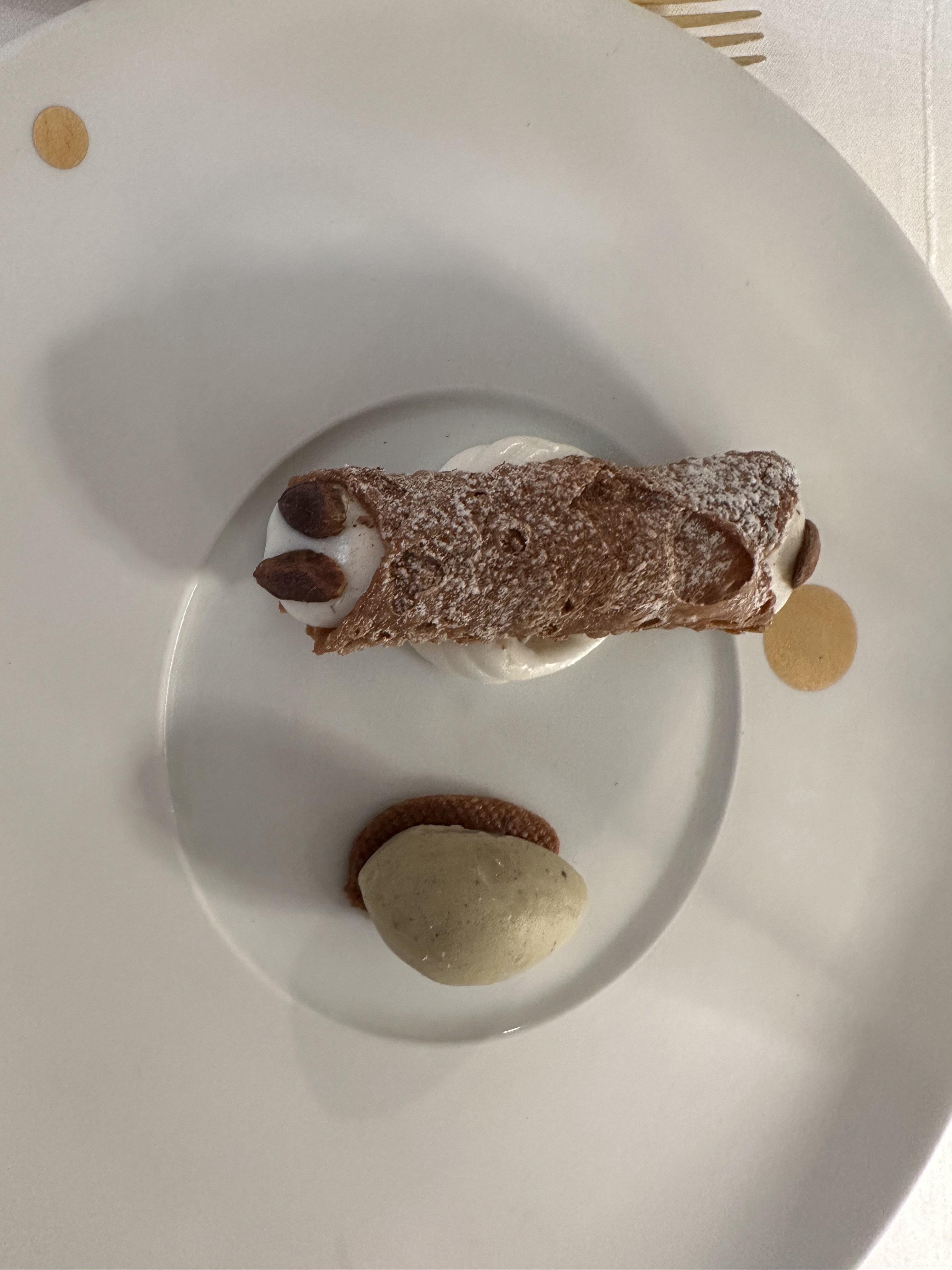
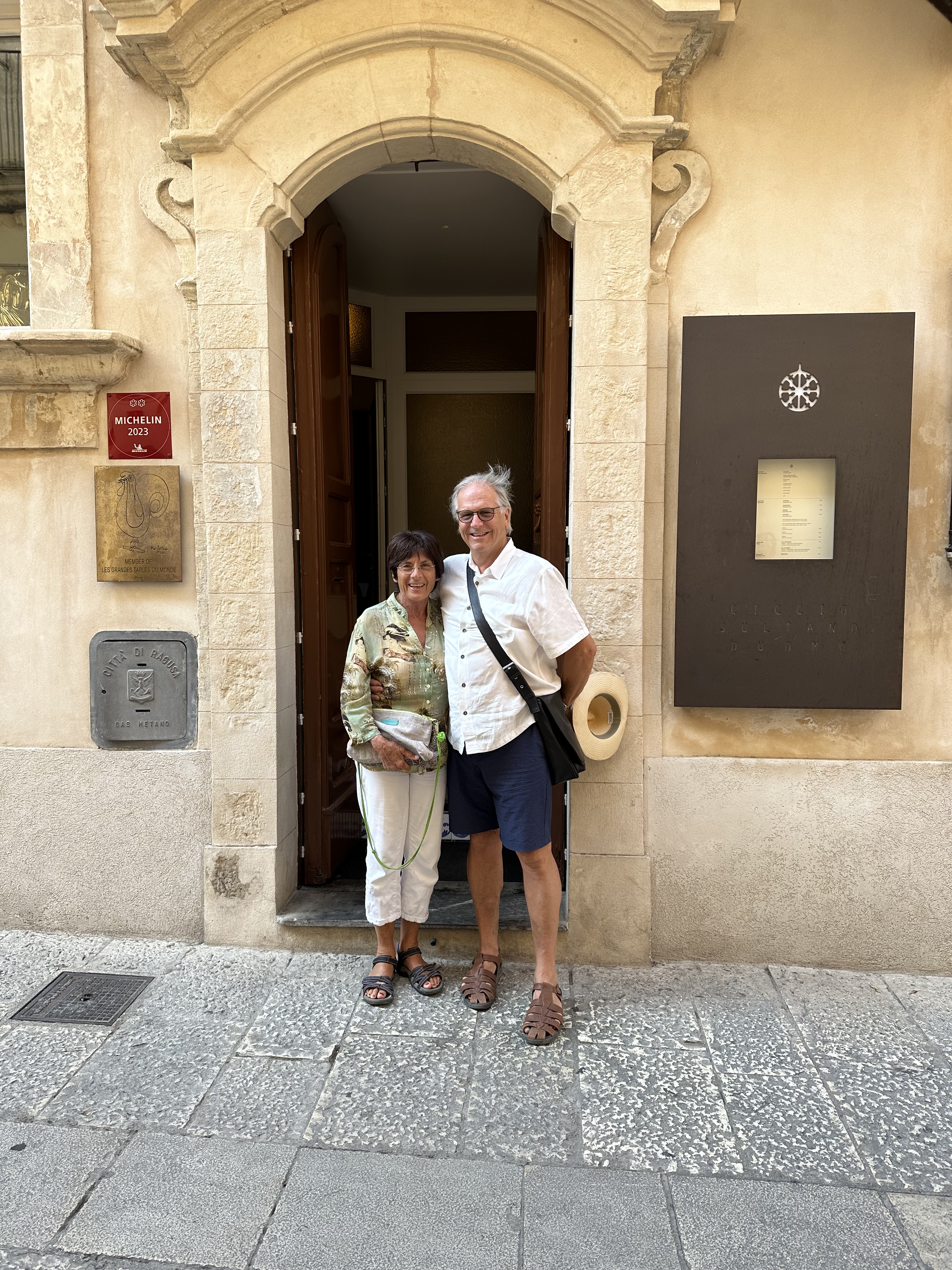
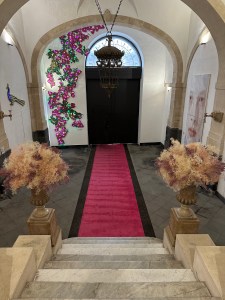
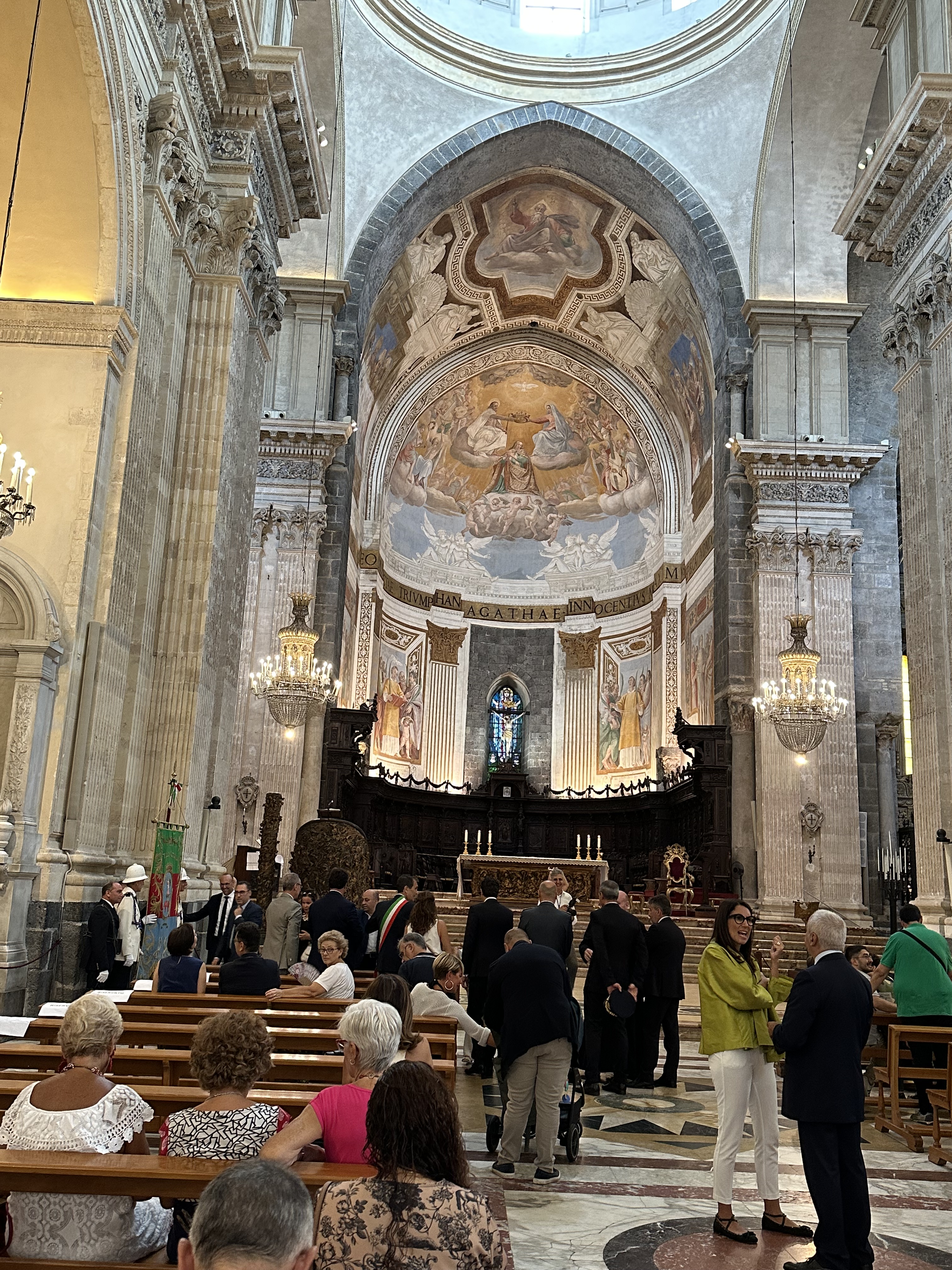
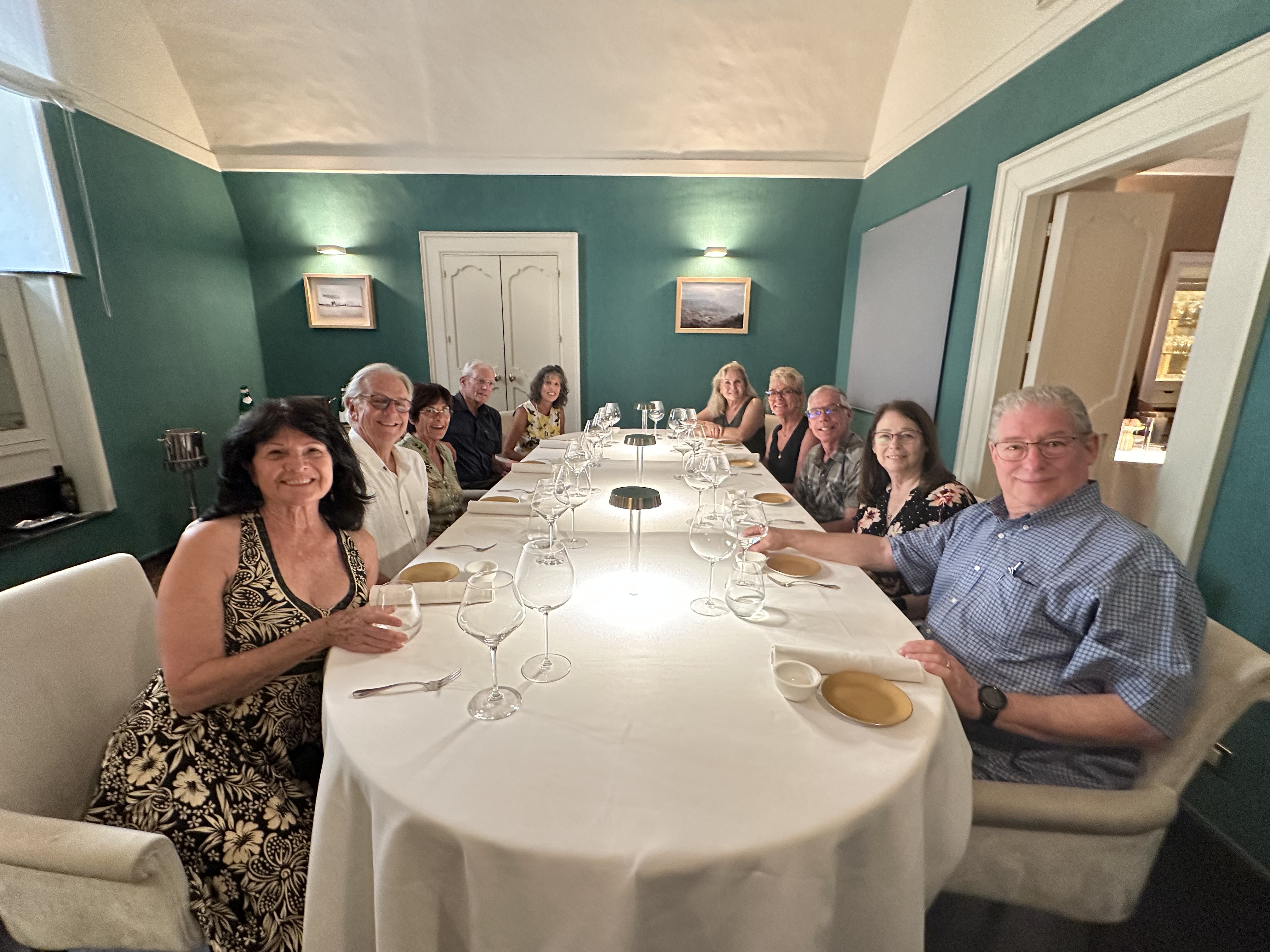
We all continued up hill to the cathedral, which was lovely to see and visit and then, at 2pm, we converge on Ciccio Sultan Duomo, the Michelin 2-Star restaurant Terry had booked us into for a 3-course lunch. We took up the entire placed sitting in overly padded, all white chairs in 2 all white rooms.  The wine flowed freely, and everyone became quite jovial.  It was a delightful afternoon with wonderful, delicious food.
After departing the restaurant everyone ambled downhill to their cars and drove back to the villa with a stop along the way in the little town of Modica, famous for its chocolate, especially the factory called Antica Dulceria Bonajuto  

 The factory was located on a side street off the main street of town. Eventually everyone found the place and we all bought bars of different flavors to take home and indulged in a cold; very dark chocolate drink topped with heavy whipped cream.  If we were not stuffed already, the drink finished us off.  By the time we got back to the villa, the sky was dark, and we were all pooped.  
Our week at the Il Borgo Villa, Sicily

September 23, 2023

We flew from Bari, the capital of Puglia, to Catania, Sicily on the evening of September 22 and took a taxi to our hotel in the heart of Catania’s Old Town. Our travel agent, Martina, had booked the place but not told us what to expect.


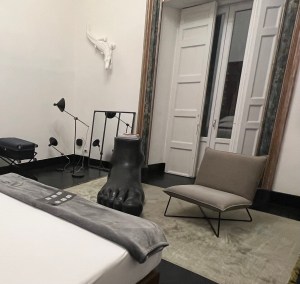
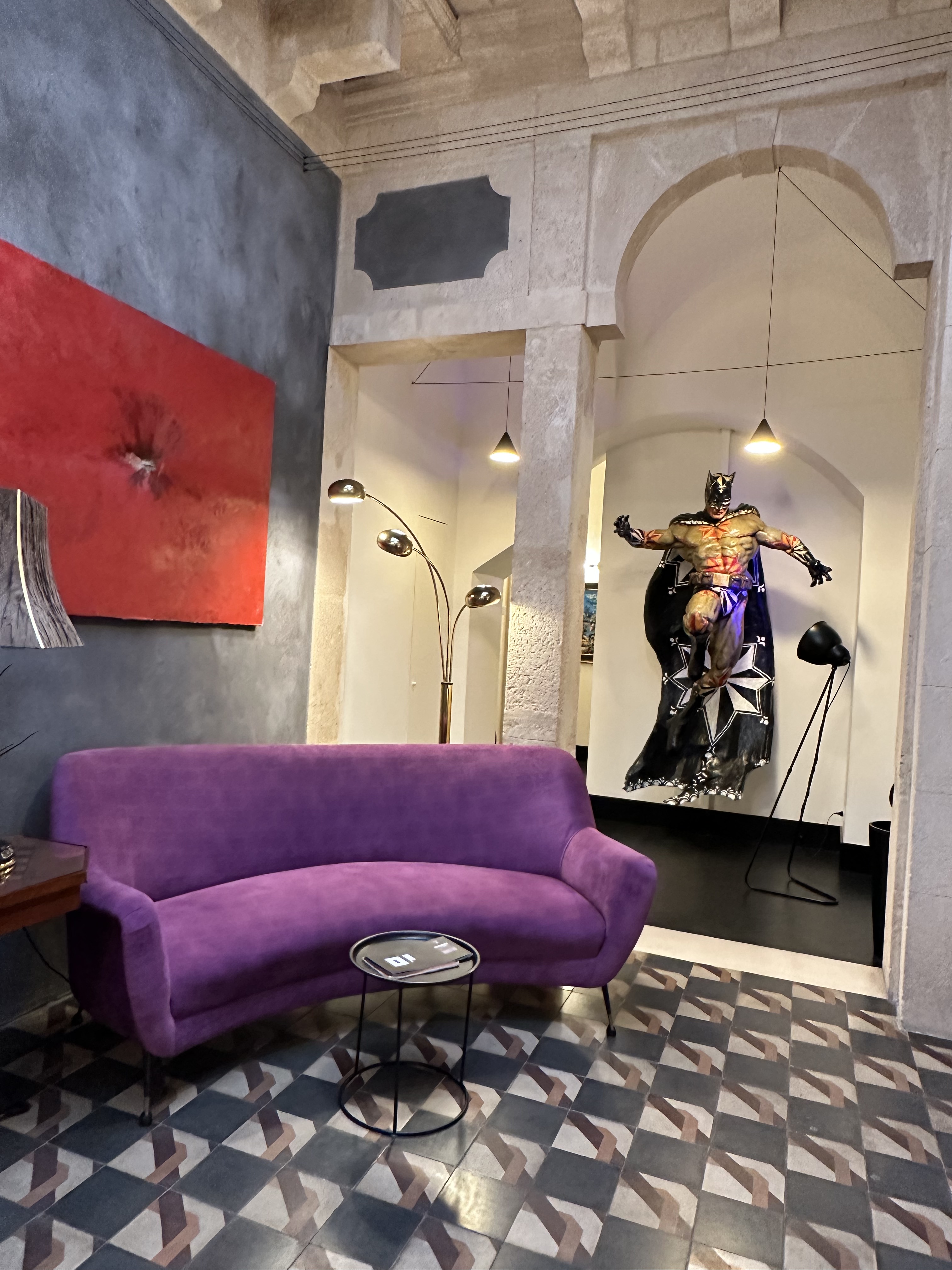
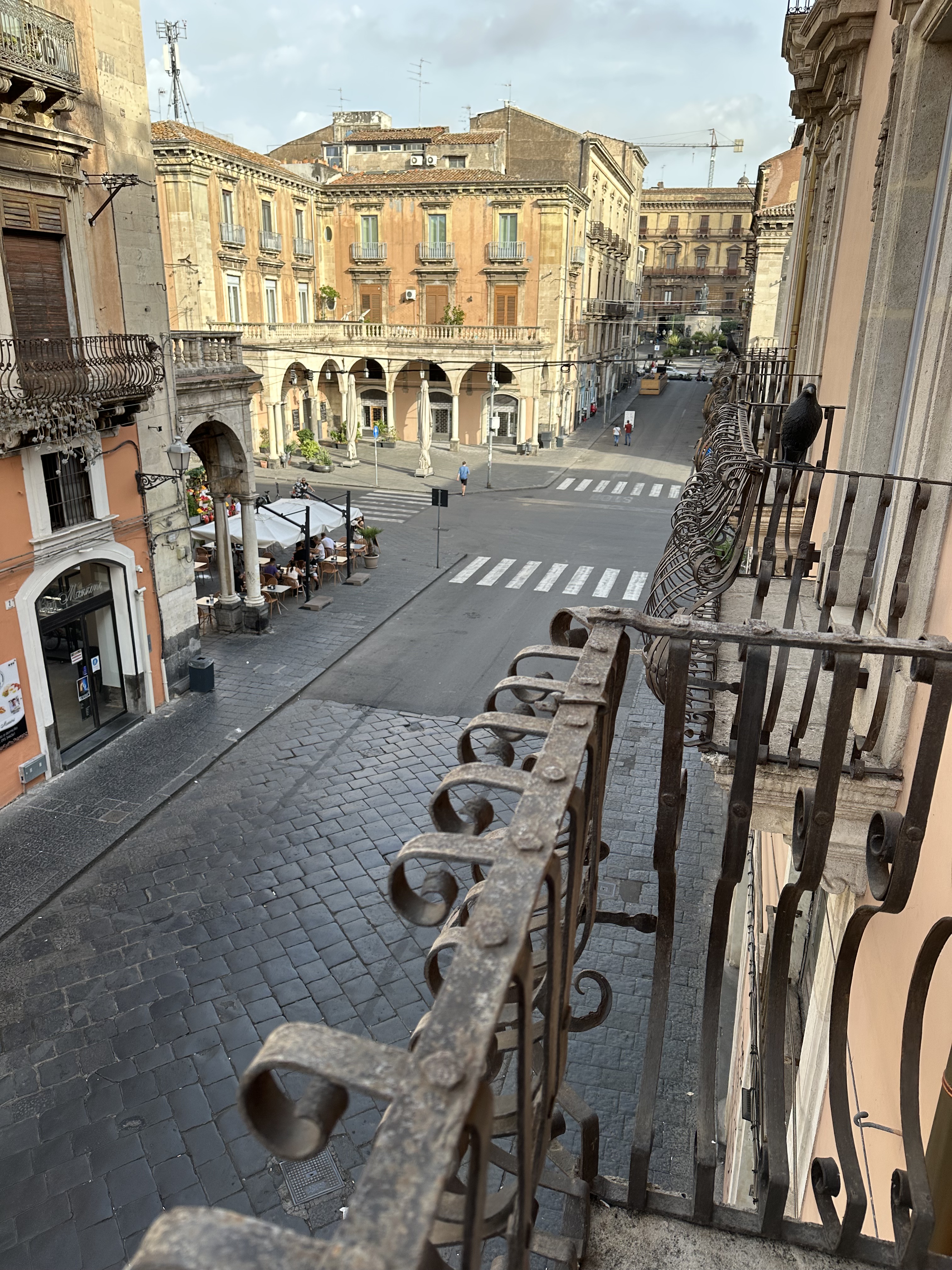
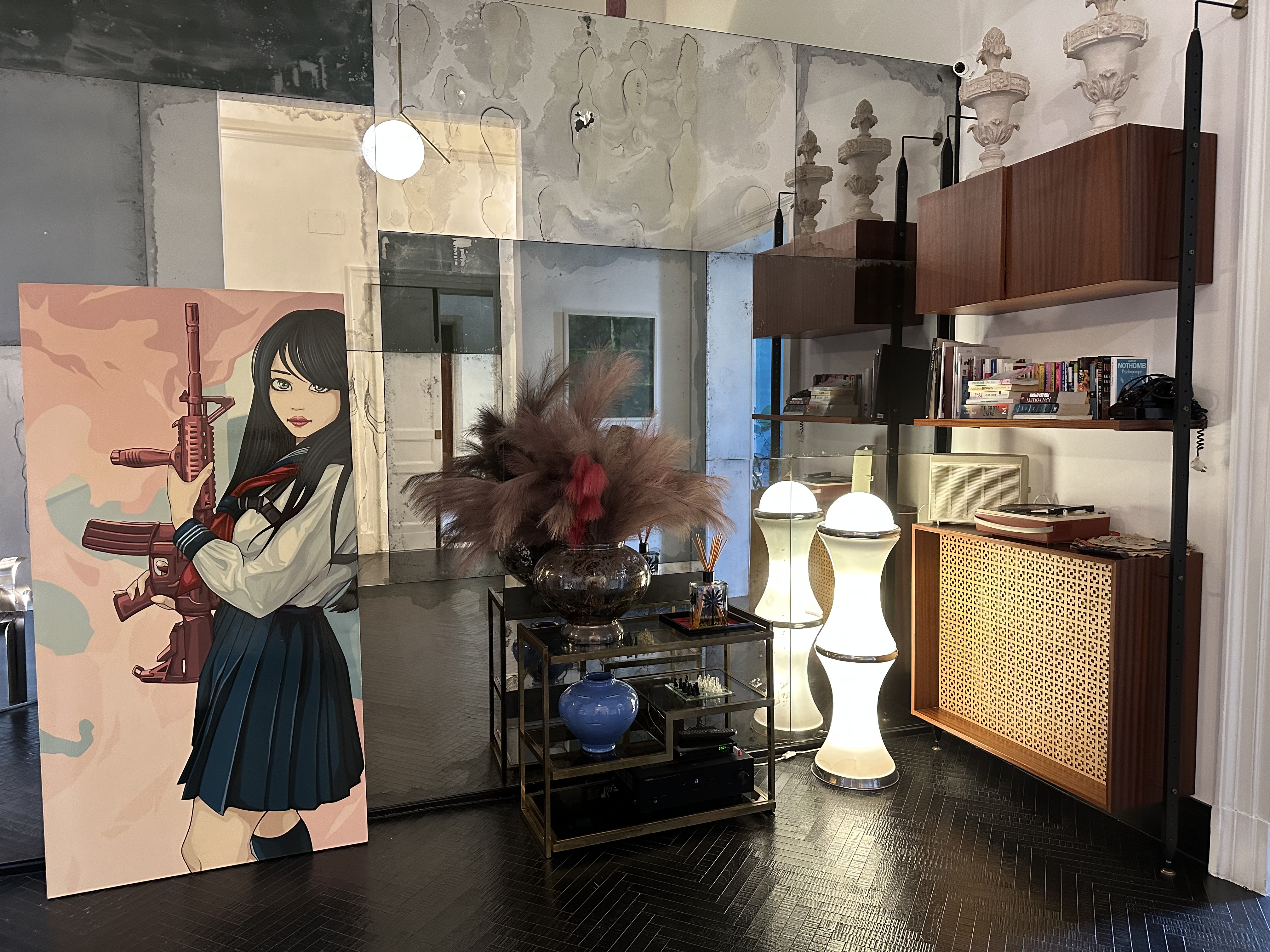
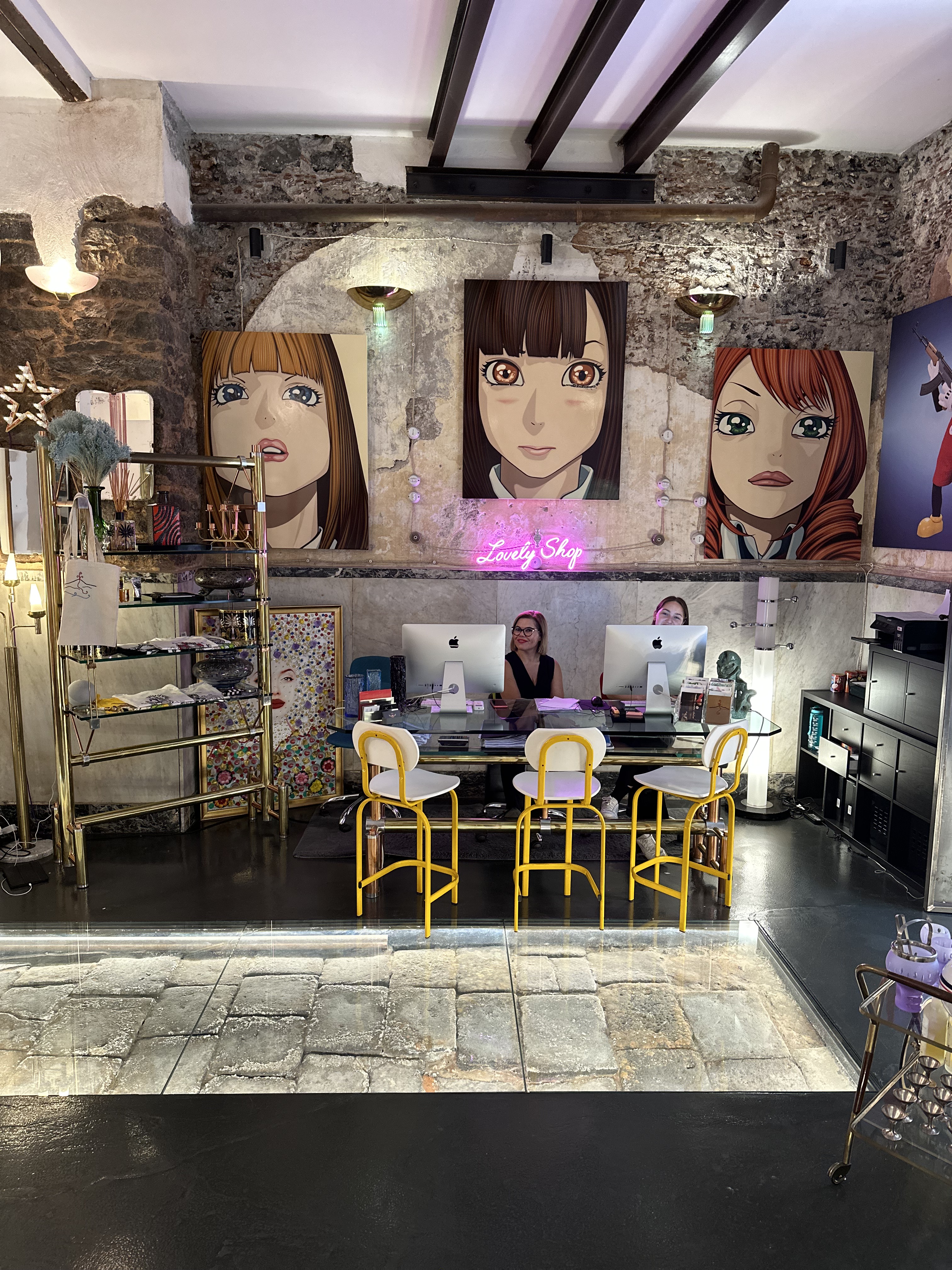
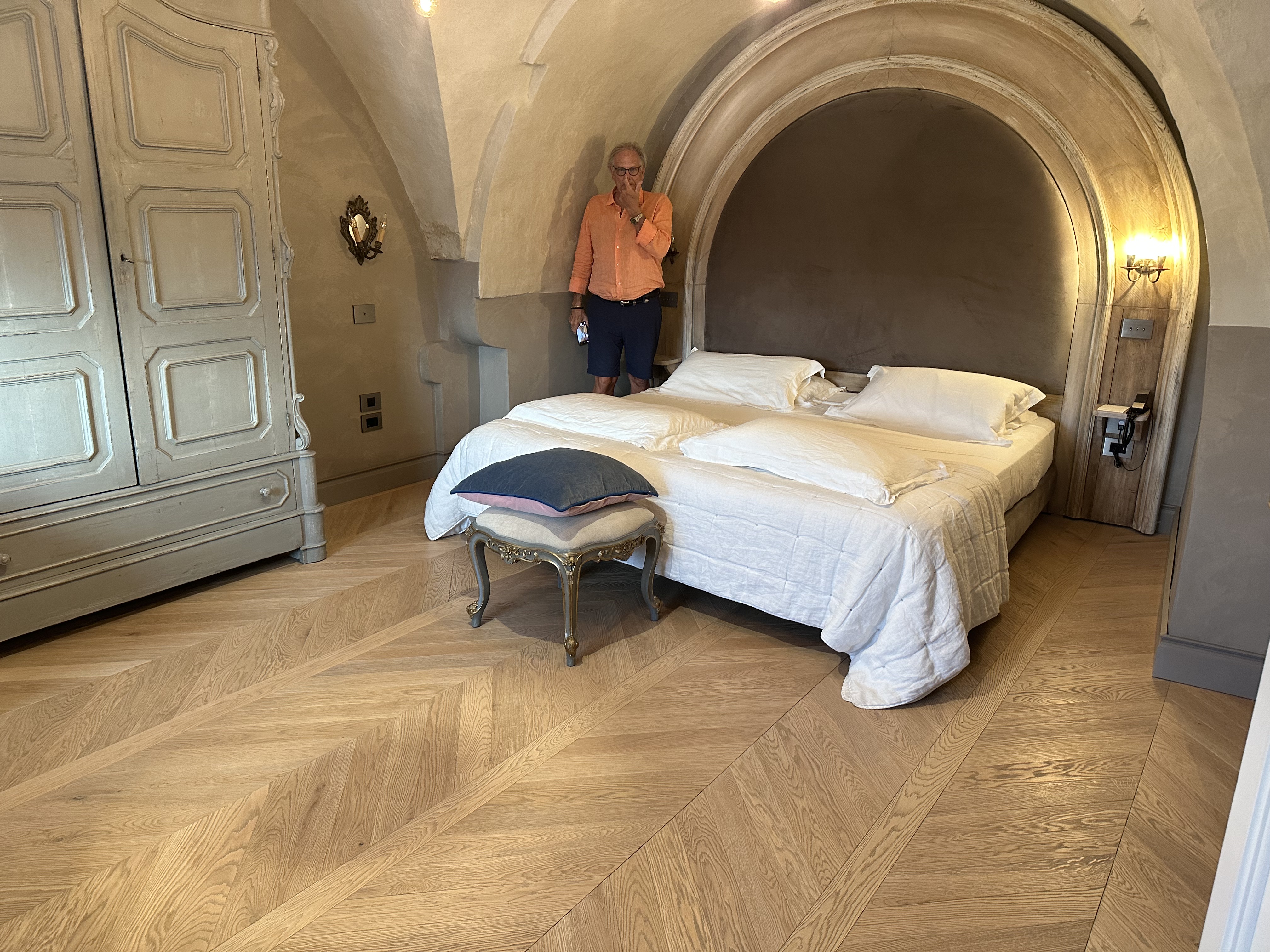
It was the most outlandish accommodation we have experienced as well as the most humorous and appealing. For starters, there was a huge, ceramic black foot in the middle of our room, not to mention the life-size ceramic sculpture of Spiderman outside our door, as if standing guard. There was pop art in all the public rooms and on every shelf and wall space. We wandered around smiling at everything. The hotel was on a pedestrian only street with several restaurants. We selected one and had a delicious meal of fresh fish and pasta. We were joined by the first of our selected group to arrive, Jayna and Craig Ashcraft, Ken and Julie Zuckerman and Jean Creasey. They had all arrived early for our group gathering and we were happy to have them join us for dinner. We were all giddy to finally be together in Sicily after a year and a half of planning. We lingered over dinner a long time umtil we were all getting sleepy. We crawled into bed giggling about the foot at tne end of our bed.
September 23, 2023
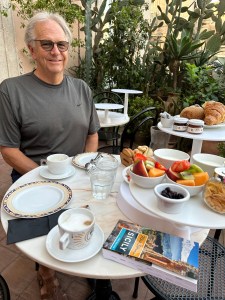
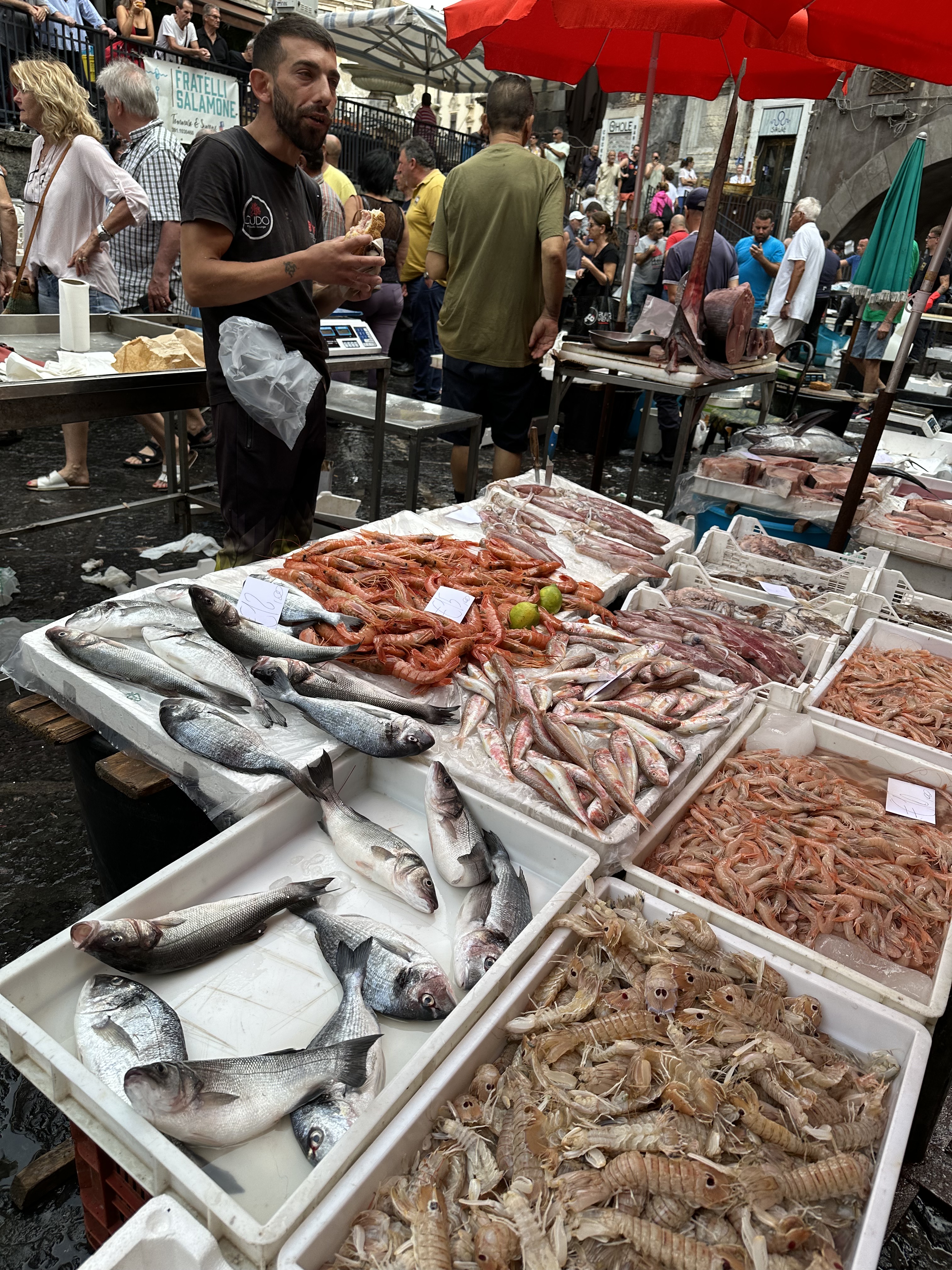
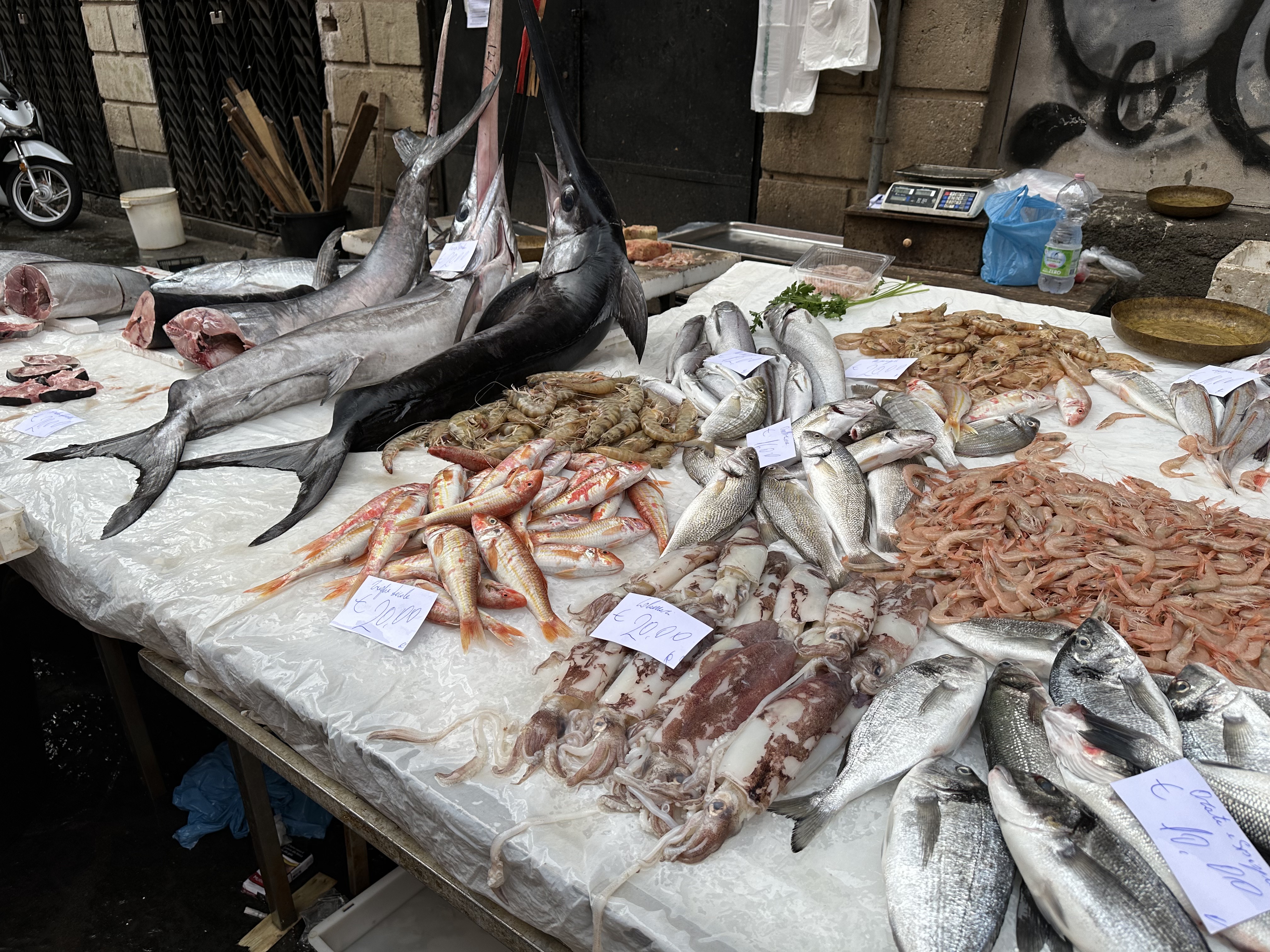
Breakfast was on the plant bedecked terrace overlooking a piazza. It was the usual European breakfast of cappuccino, cheese, lunch meat, fruit, yogurt and fresh breads. Each day we try to eat less, but are not very successful. Thankfully we don’t eat like this at home, or we would be blimps. Then we went for a stroll around the old town and observed that our hotel was literally on the same street as the busy and entertaining Fish Market.

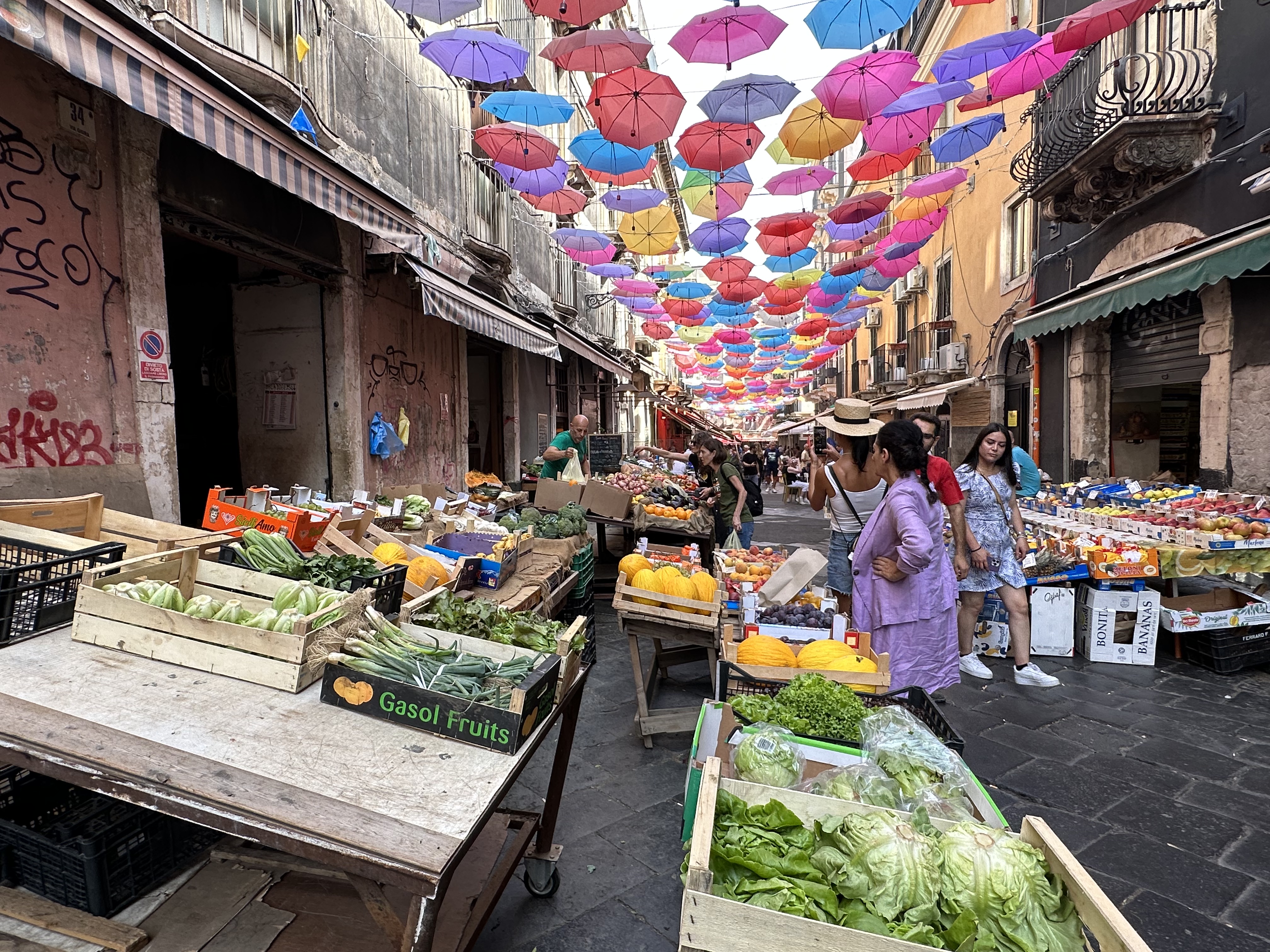
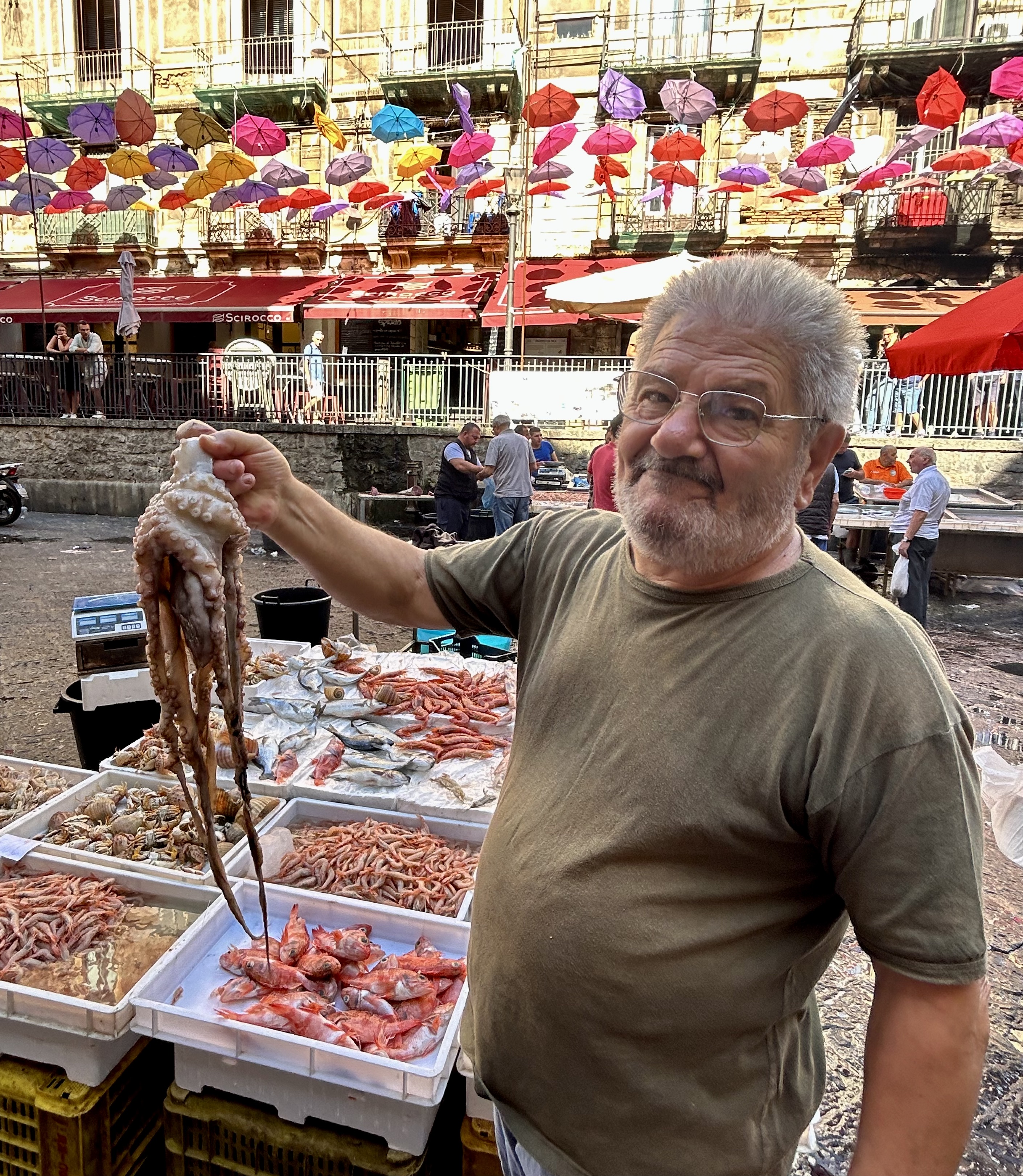
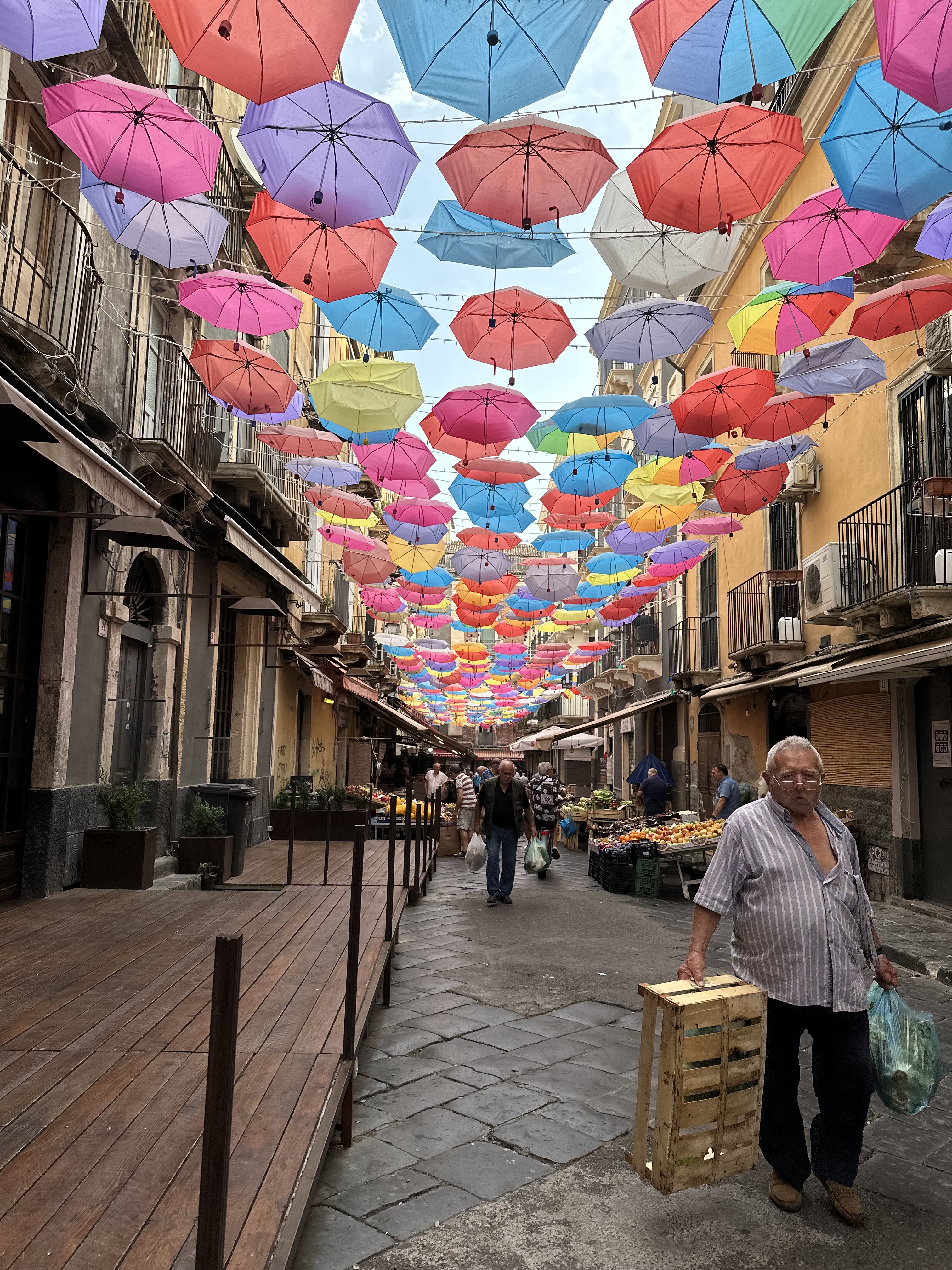
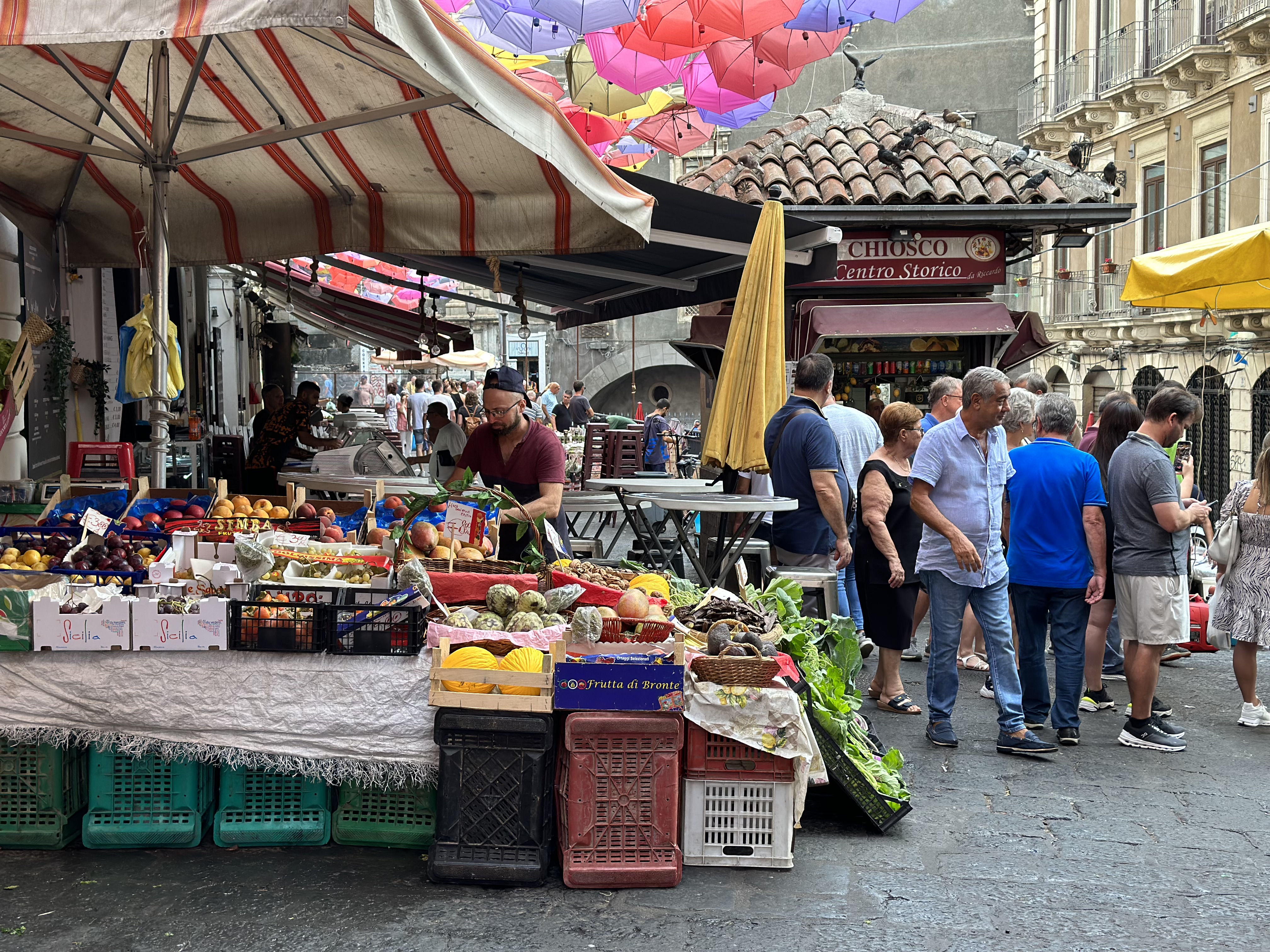
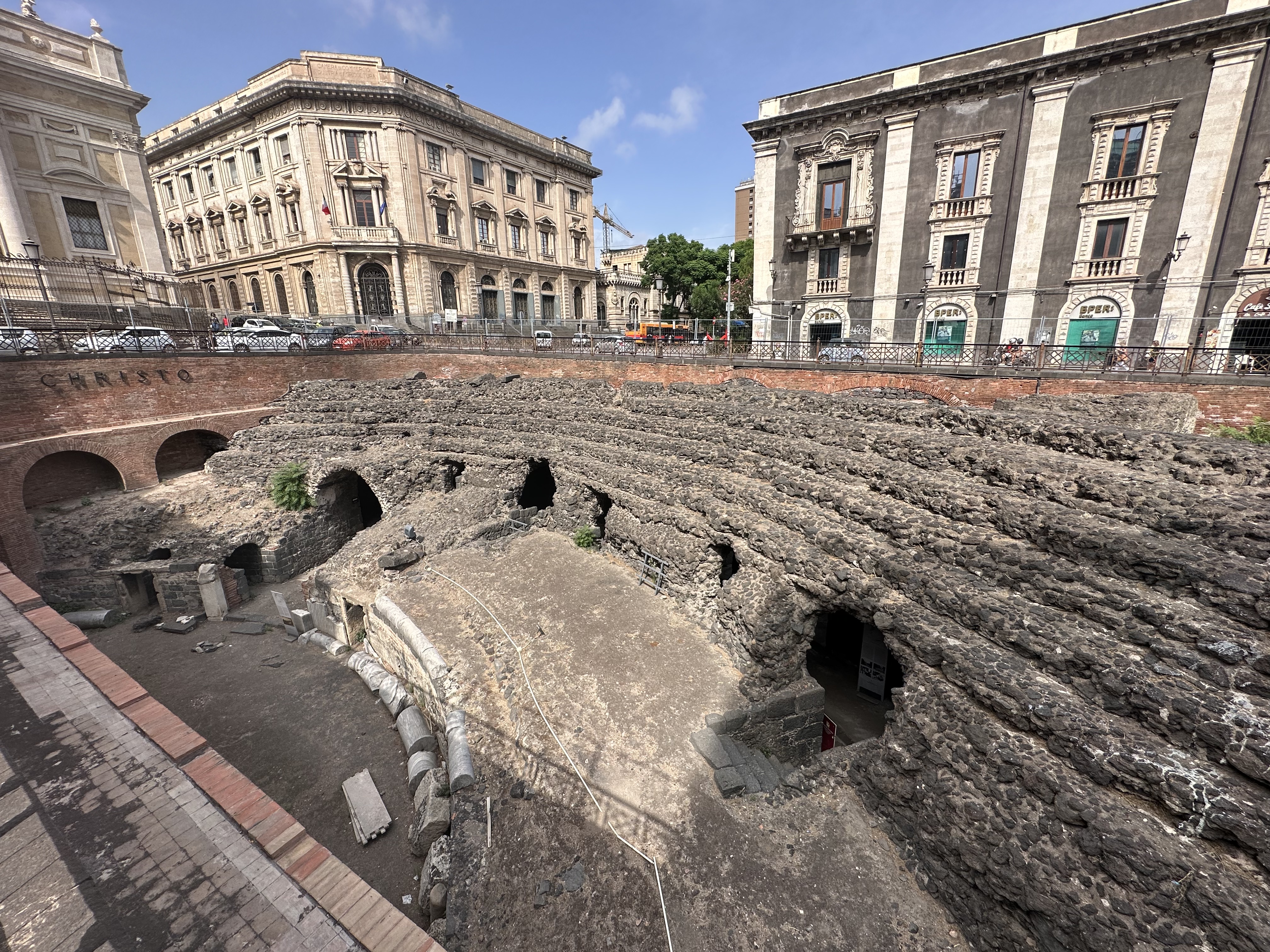
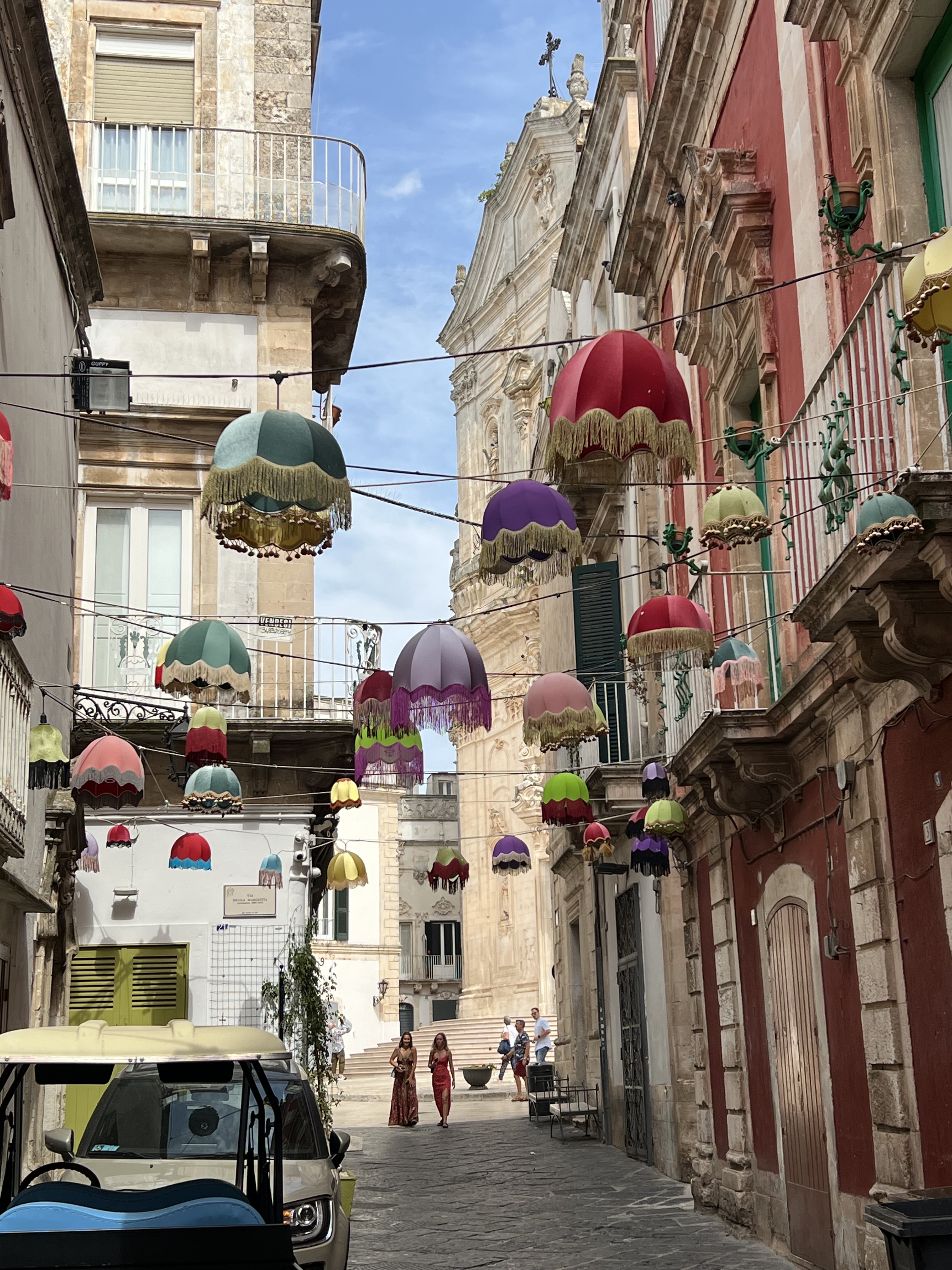
The Fish Mongers are all shouting about their products and wanting us to taste and buy different fish. Above the street was a roof of colored umbrellas that provide some shade and rain protection. Then we followed Rick Steves walking directions and saw several ancient buildings as well as churches and underground antiquities.

Back at the hotel by noon, we checked out, got some lunch, picked up the car and headed for our villa for a week called Il Borgo.   It was a half hour drive south of Catania in the middle of orchards of fruit trees and grass land.  It definitely contained the required 12 suites, public areas and large swimming pool. It was just a bit more rustic than I expected.
Mark and I busied ourselves deciding where to locate each of our 21 guests, putting name tags on each door and laying out T-shirts Mark had designed and made for everyone. Before we knew it, our first guests appeared and by 6:30 everyone had arrived, except Judith Ciphers, whose flight plans delayed her until mid-day on the 24th. The weather was very warm and the pool very inviting. As people arrived they put on their suits and hung out in the water. Everyone ordered cocktails and the party began.

By 7:30 we gathered in the courtyard for dinner. The villa staff provided us with a delicious buffet with typical Sicilian dishes. The sky sprinkled on us and most of us moved under cover. Al Dover gave a lovely welcome thank you to Mark and me for hosting the week. It was very touching. Then I talked about housekeeping matters and Terry McAteer talked about the planned activities for the week. I was thrilled that everyone had arrived safely and were already enjoying themselves. Success.  We had been so  busy chatting that we forgot to take photos.  Sorry.

September 24, 2023

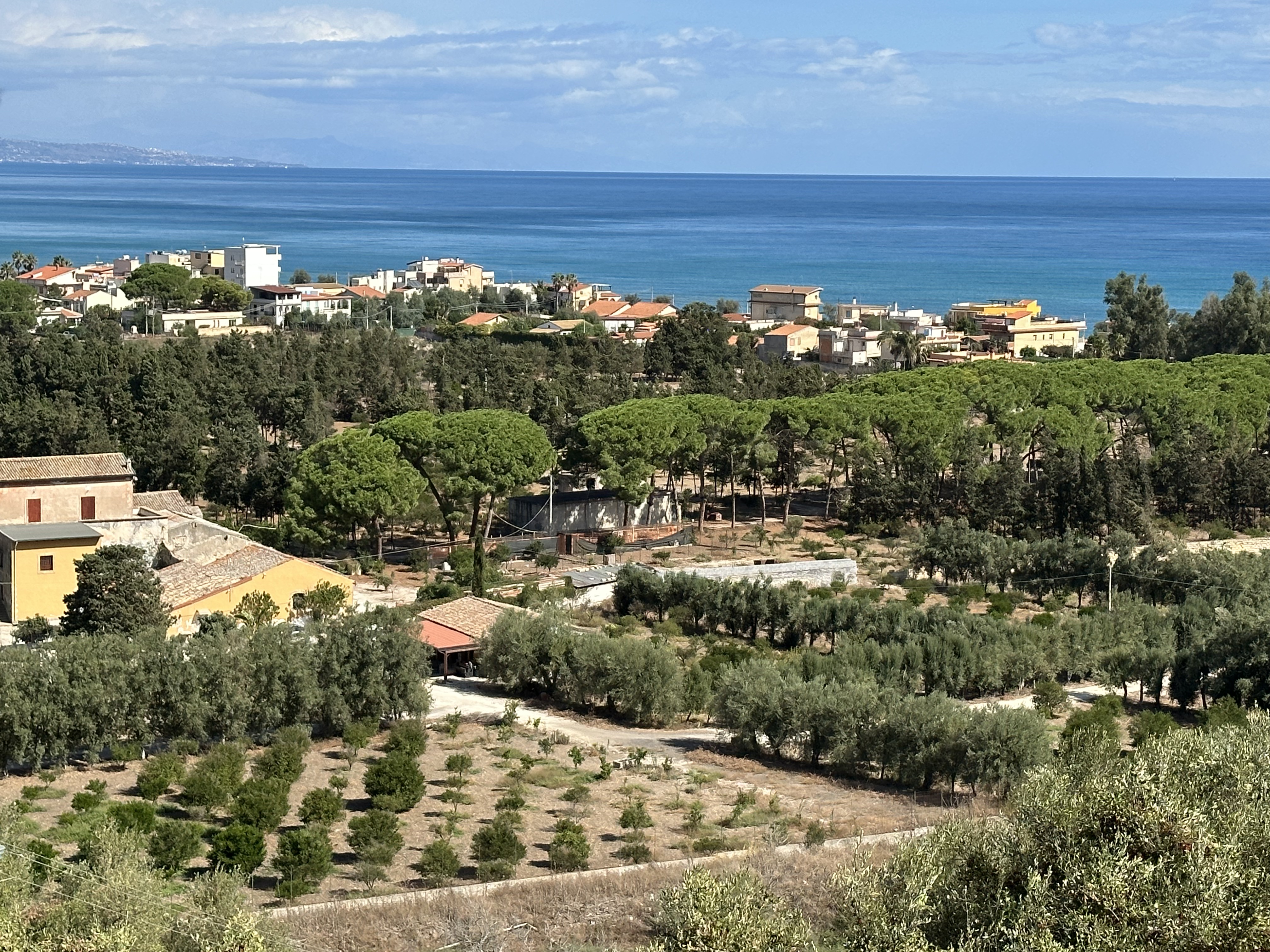
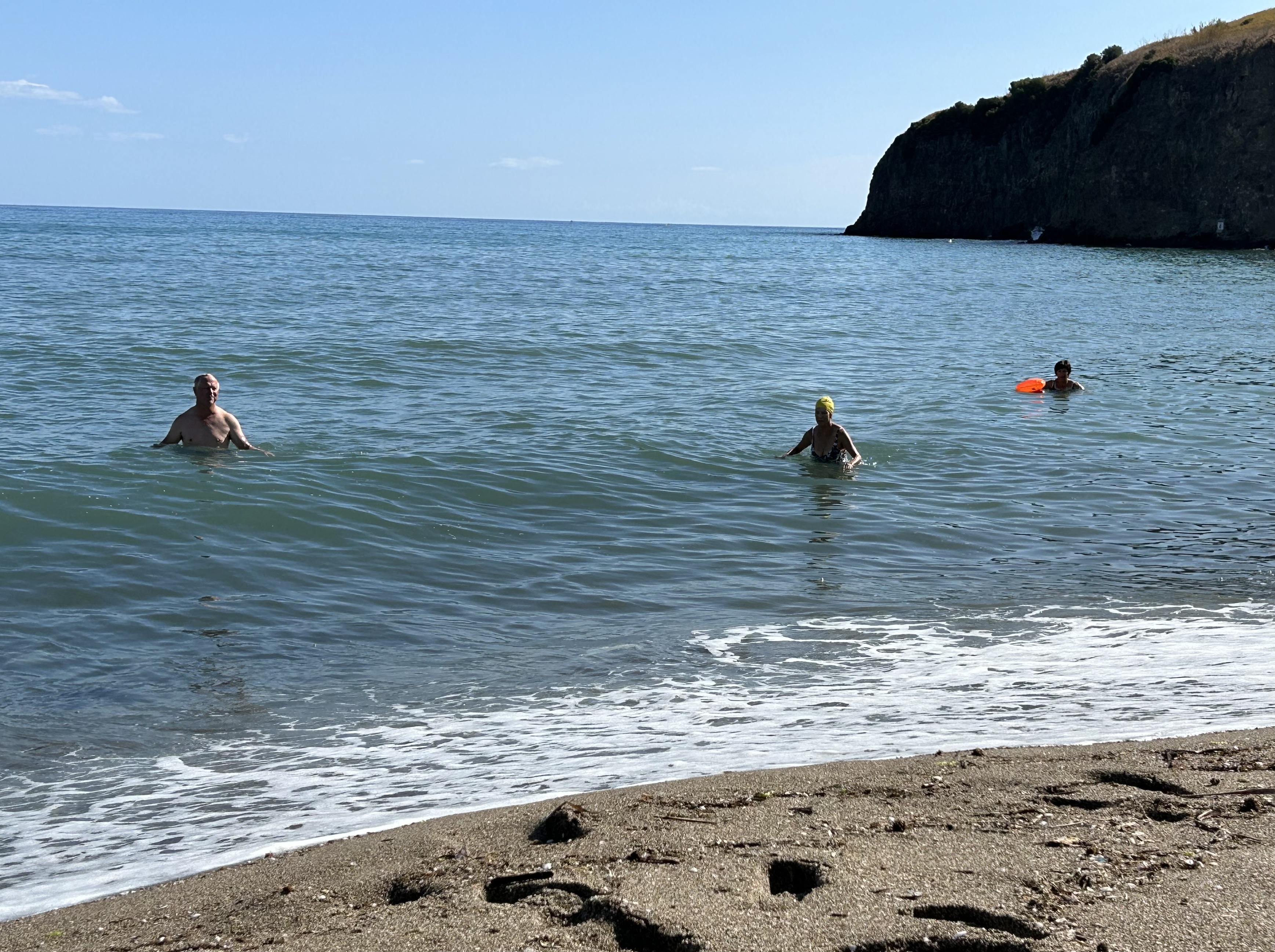
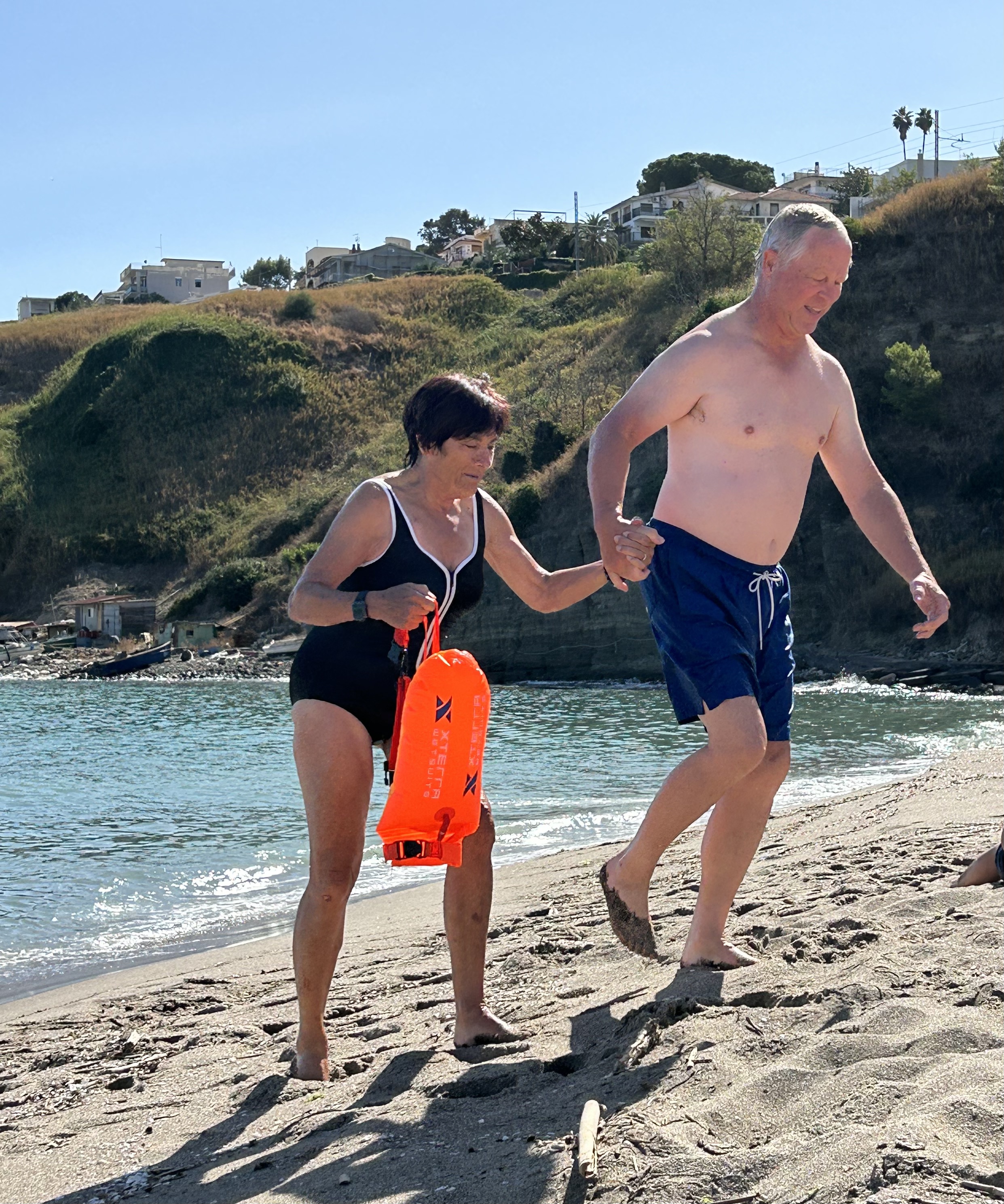
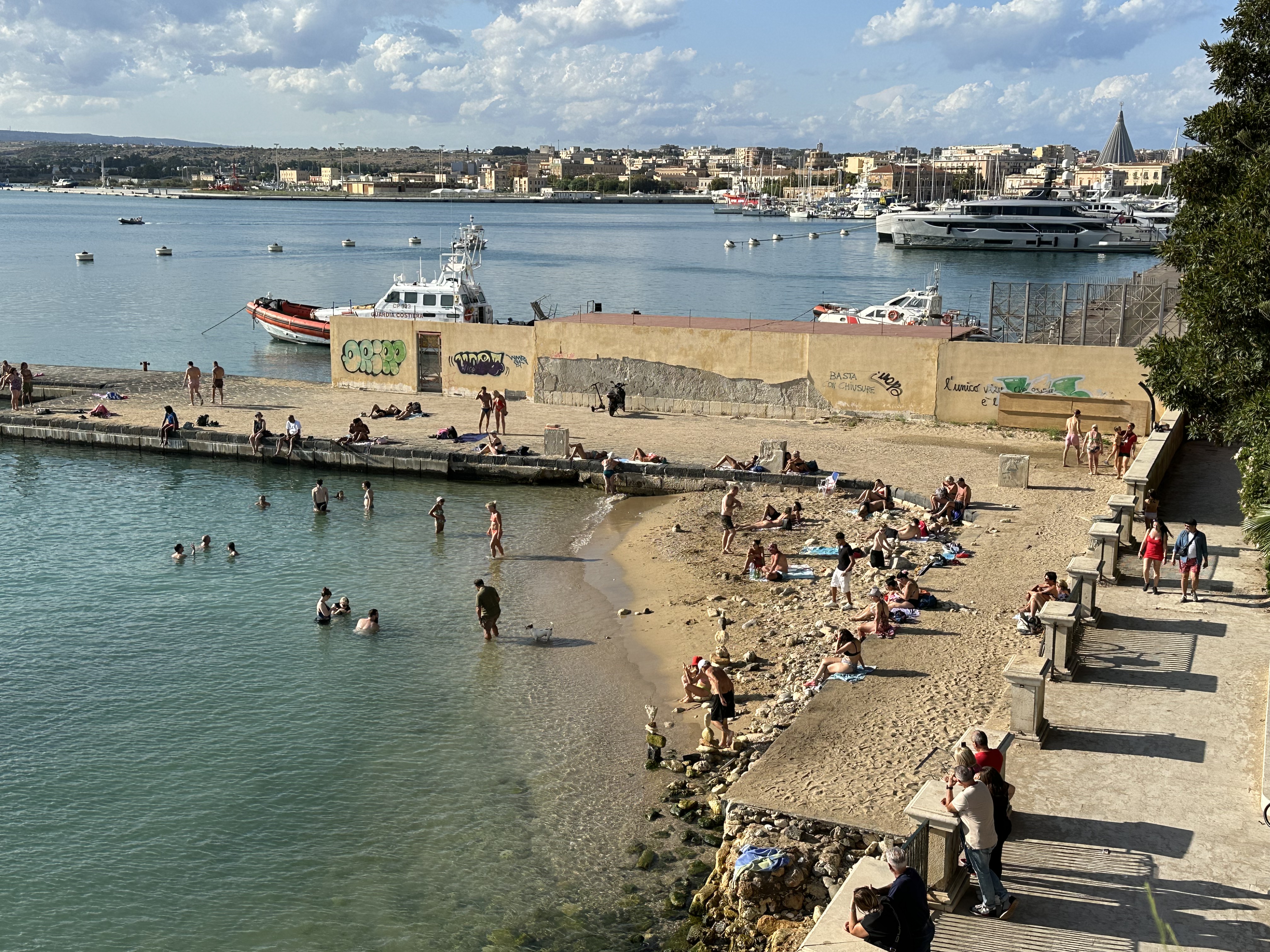
We woke up to a sunny and warm day. Breakfast was at 8am. Some of us stayed by the pool while 8 of us went to the beach at Agnon Bagni Beach about 12 minutes from the villa.

The water was a comfortable temperature and we had fun bobbing around.  Liz and Jean went for long swims. I thought the beach was pretty dirty and a bit disappointing. The pool was a much better place to cool off.  Some of us worked out with Roxanna back at the villa.
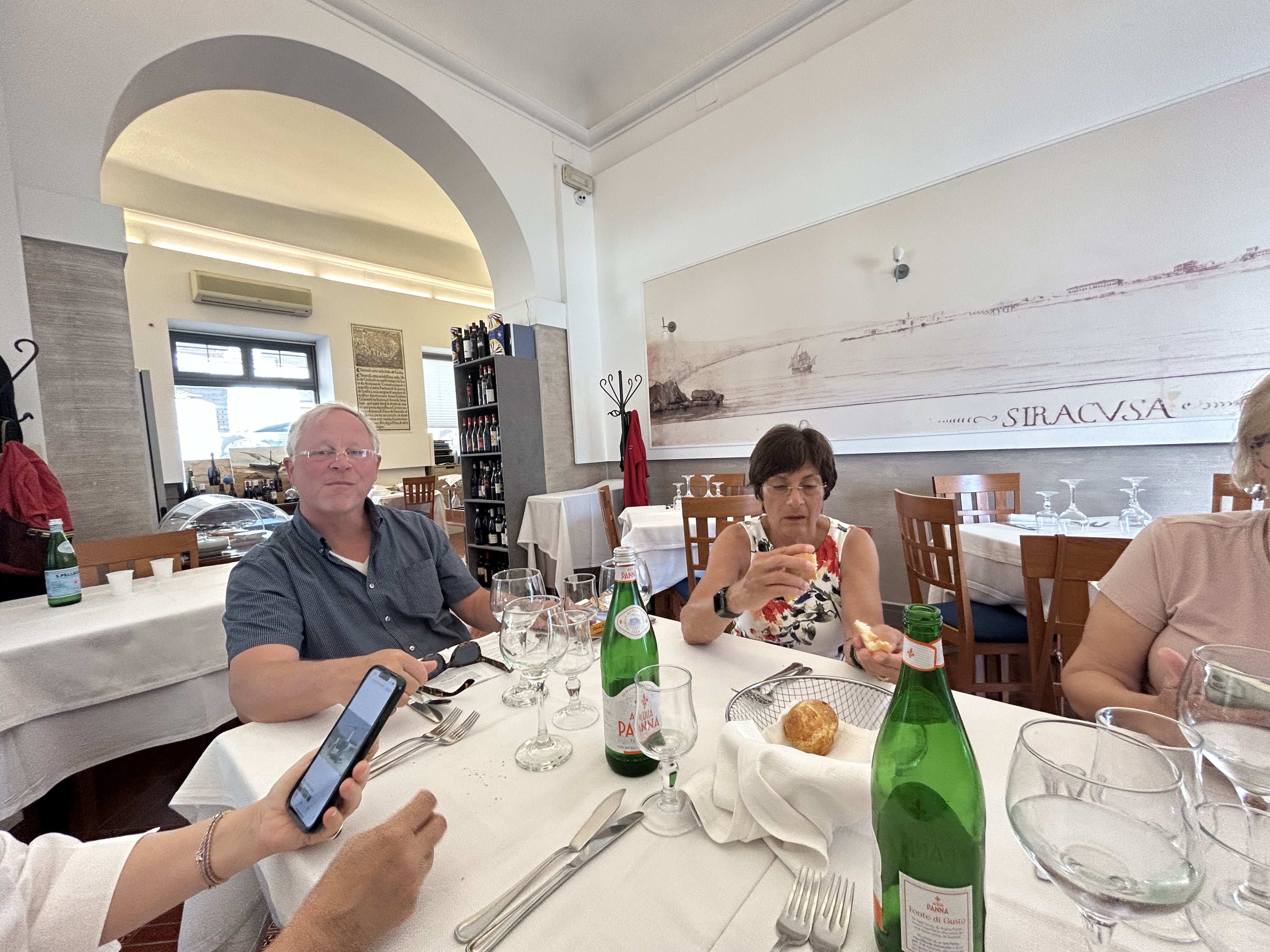
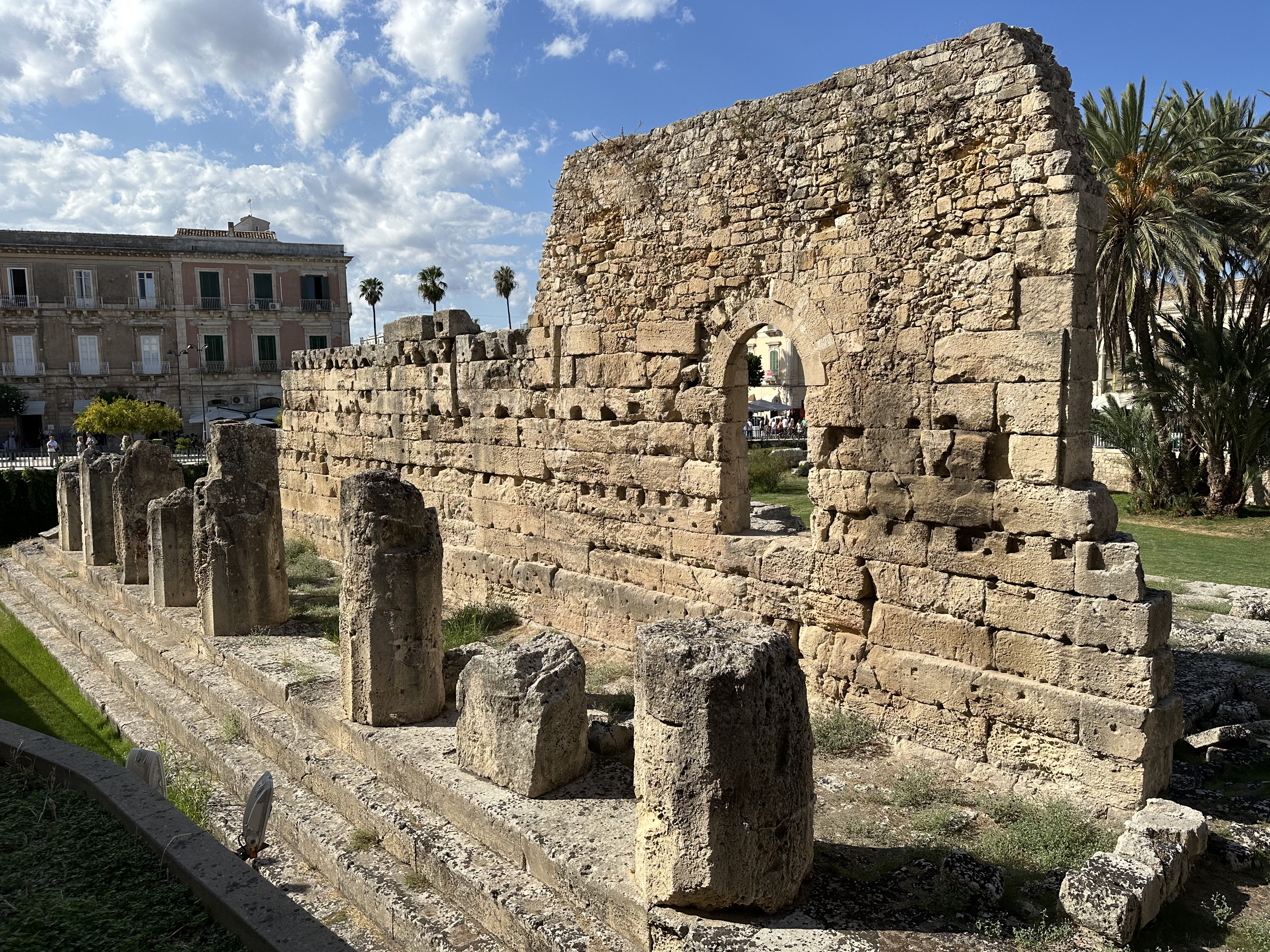
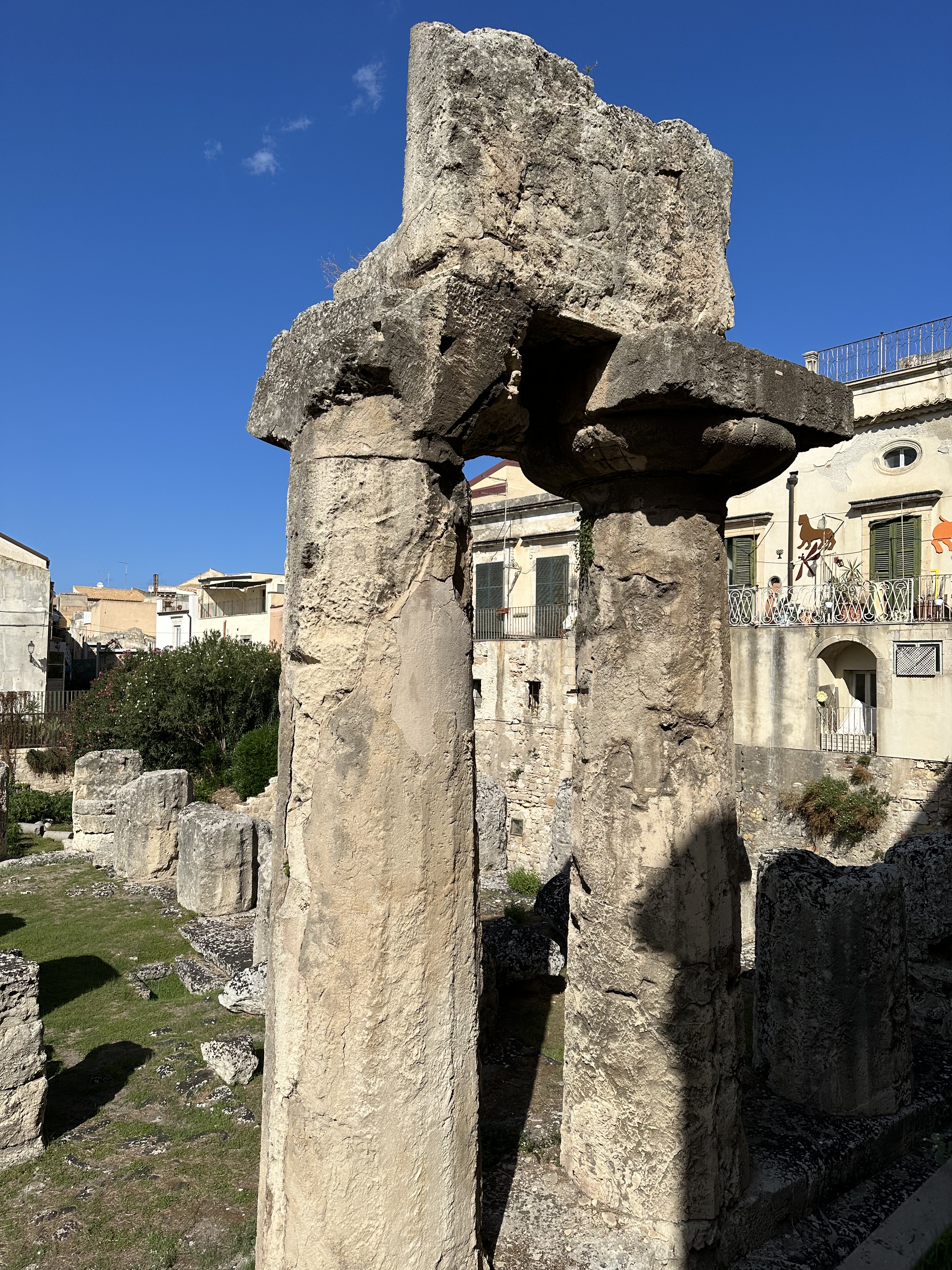
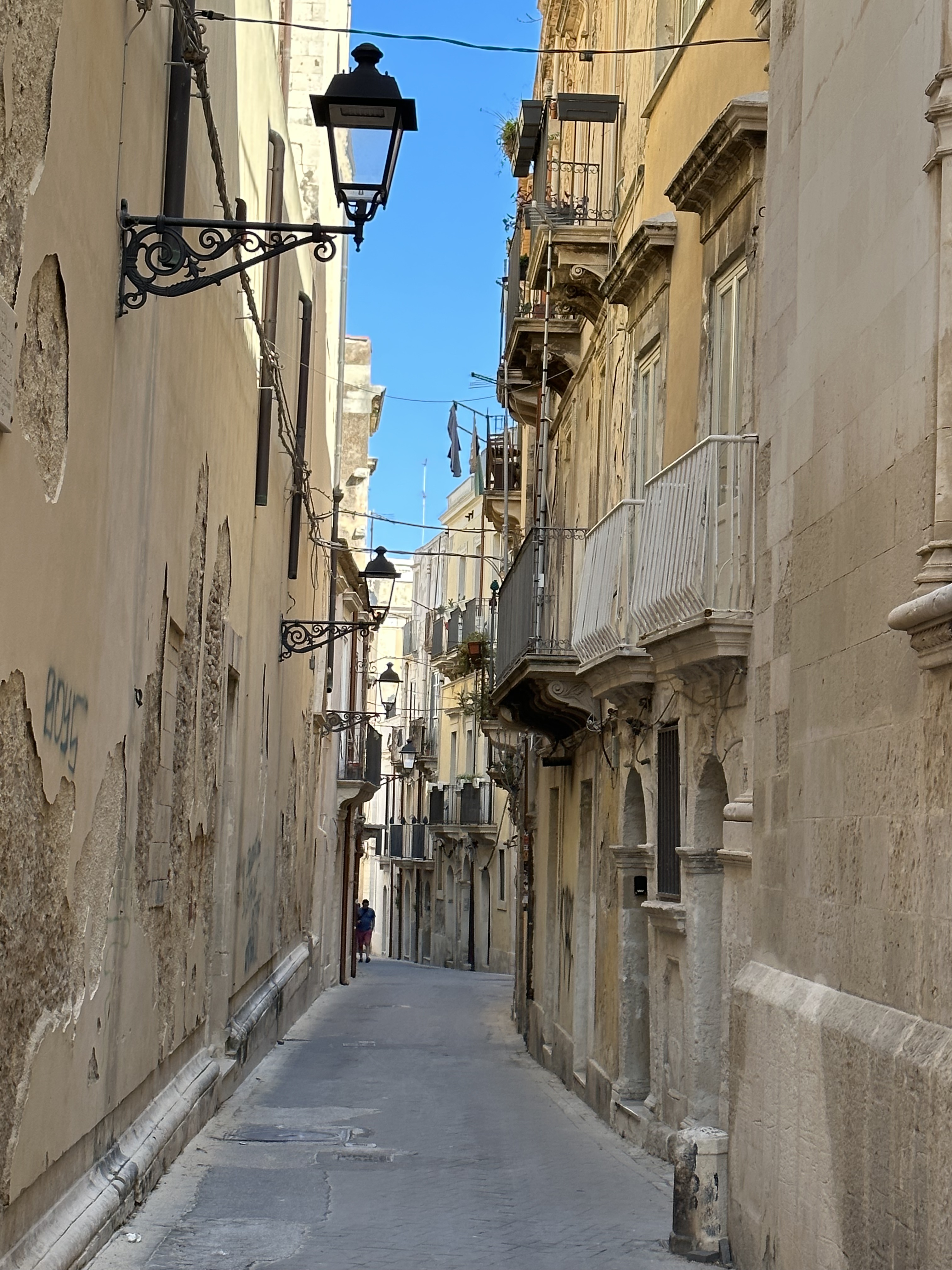
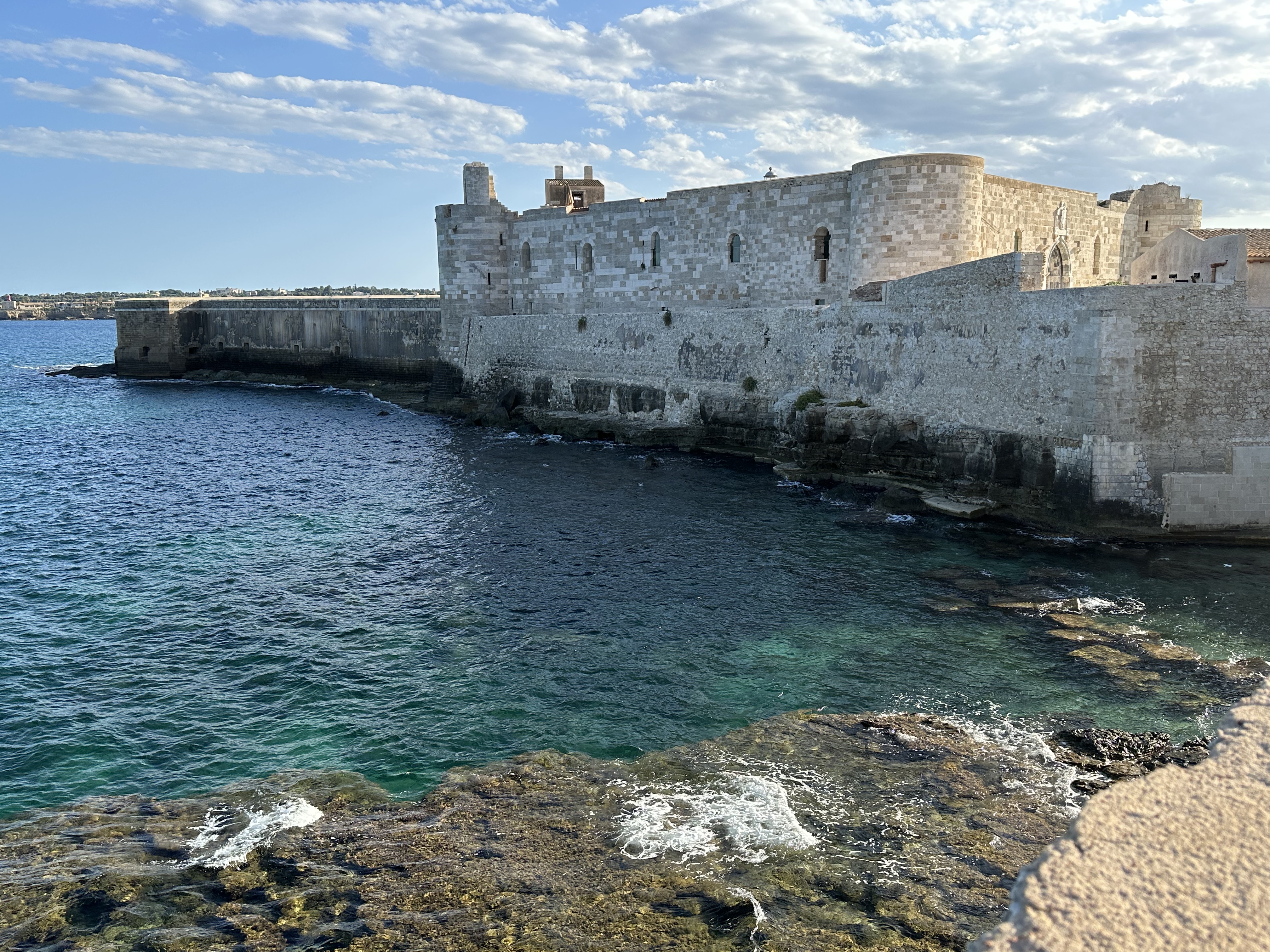
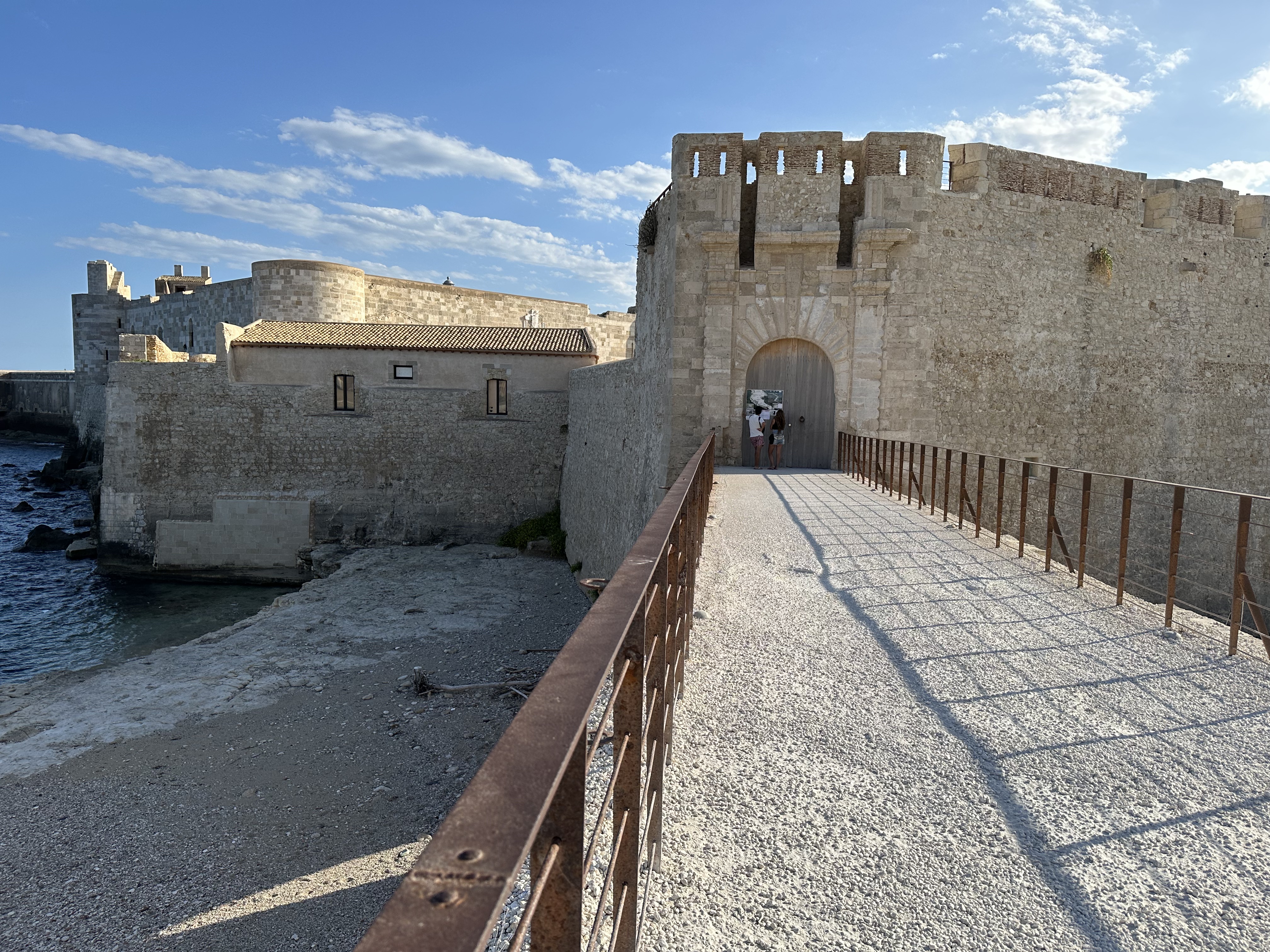
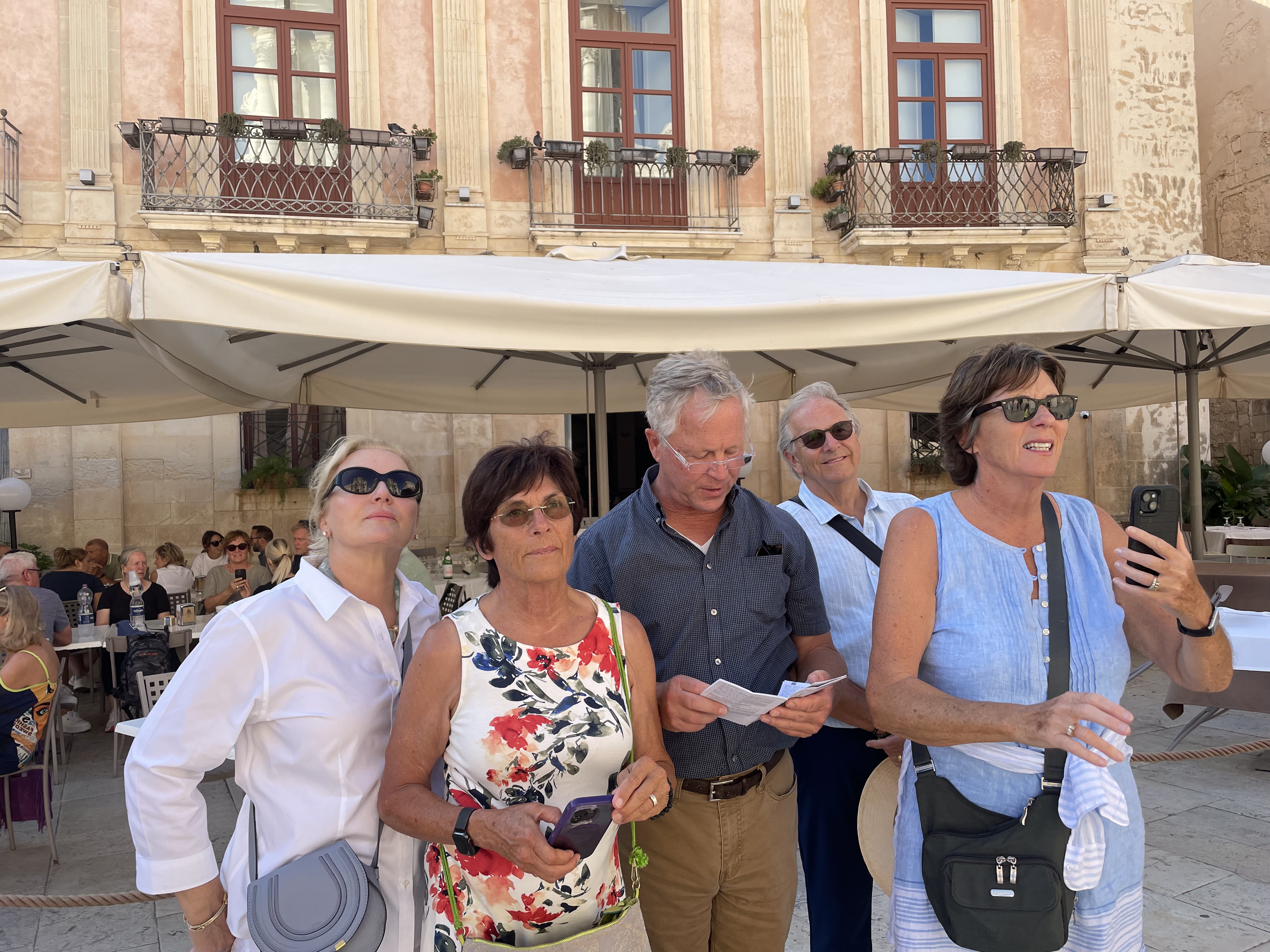
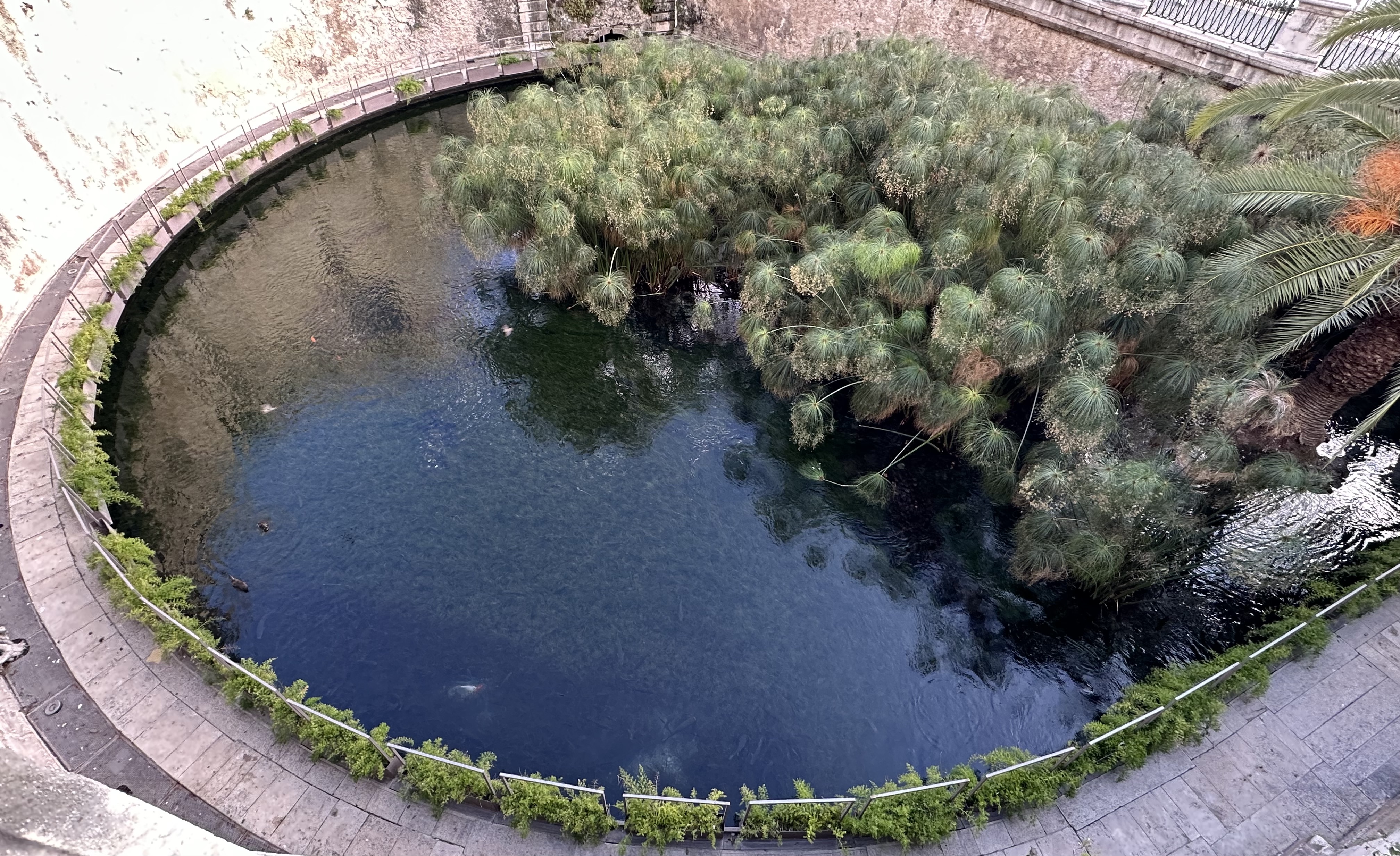
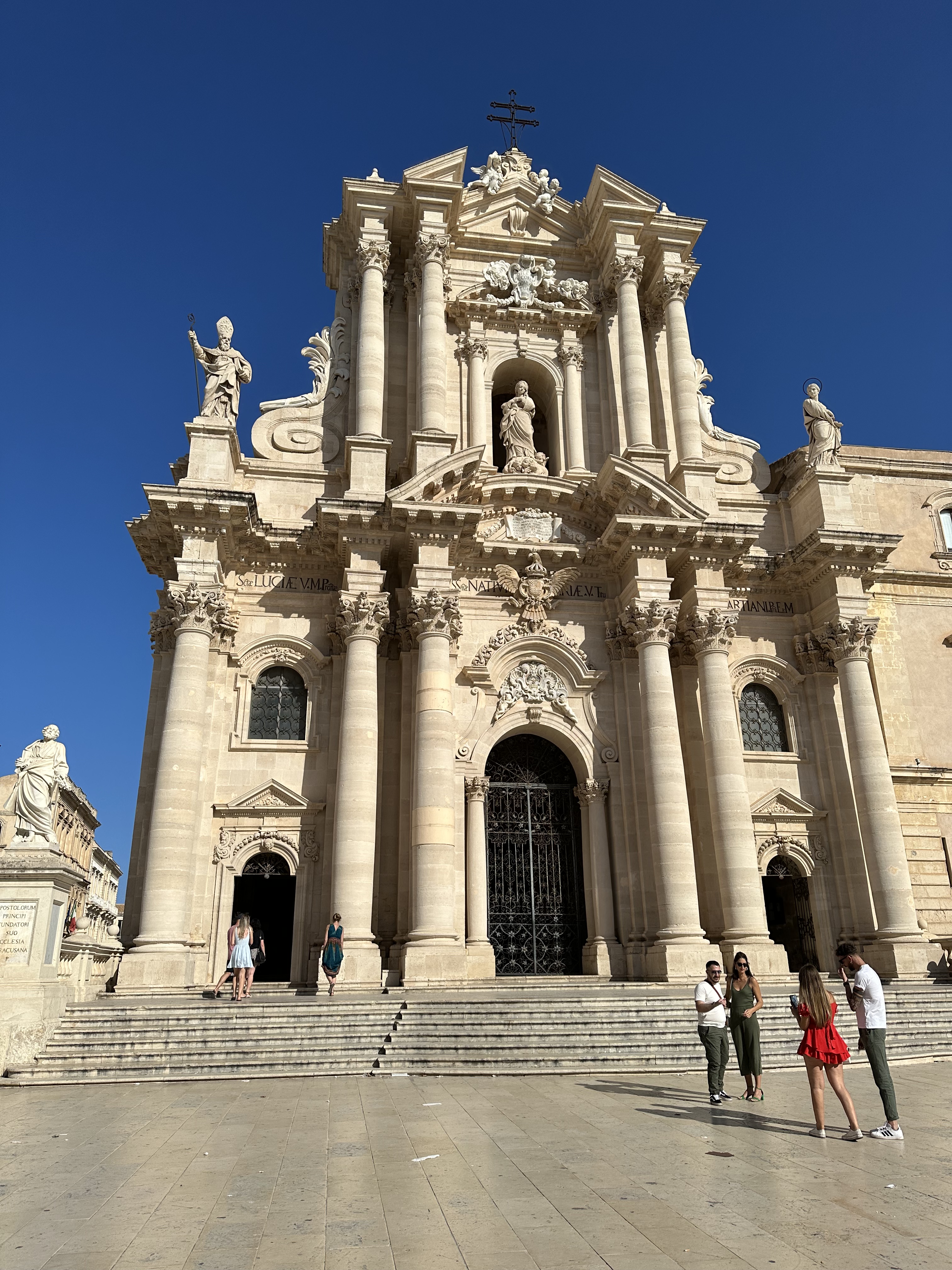
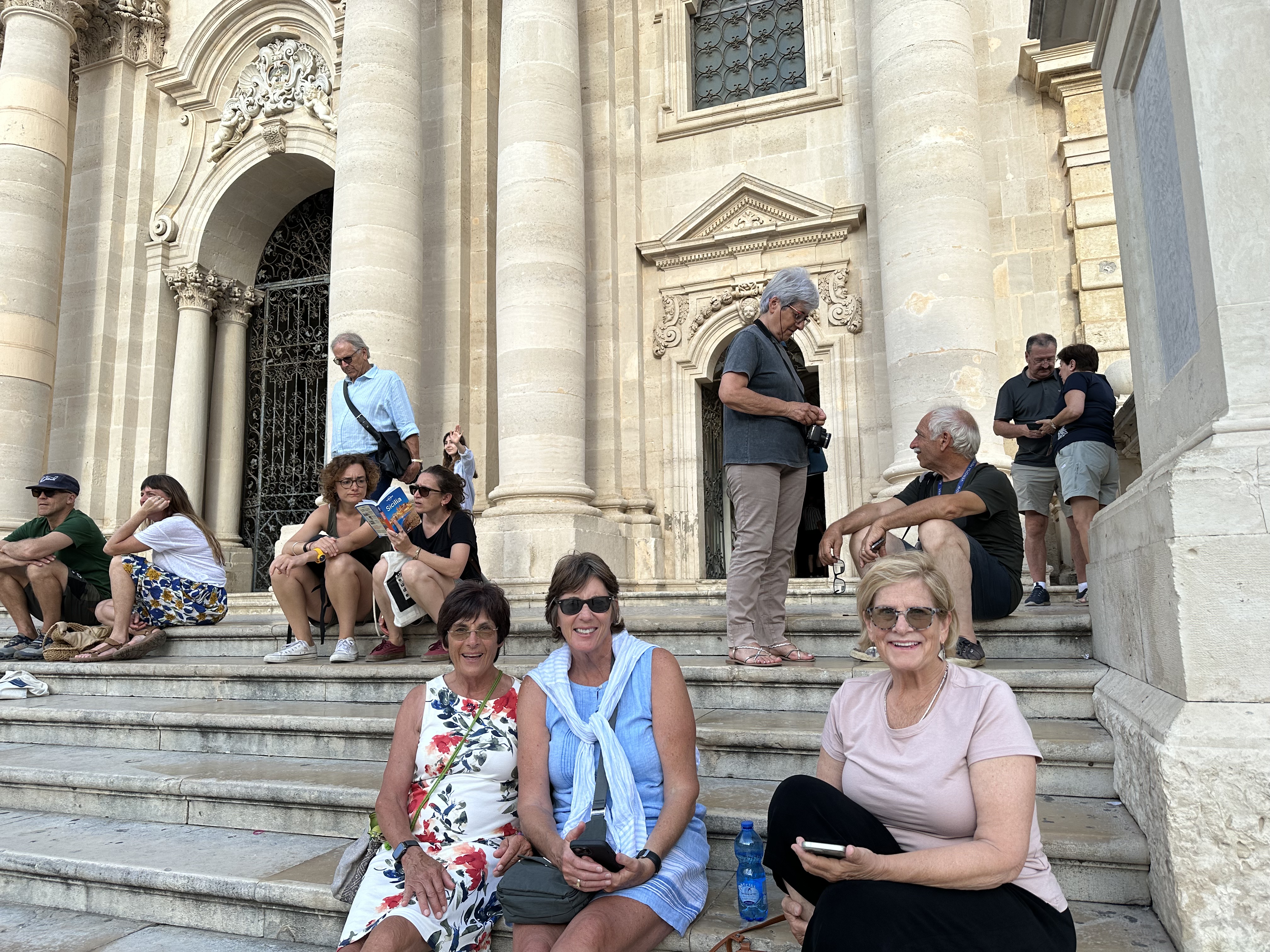
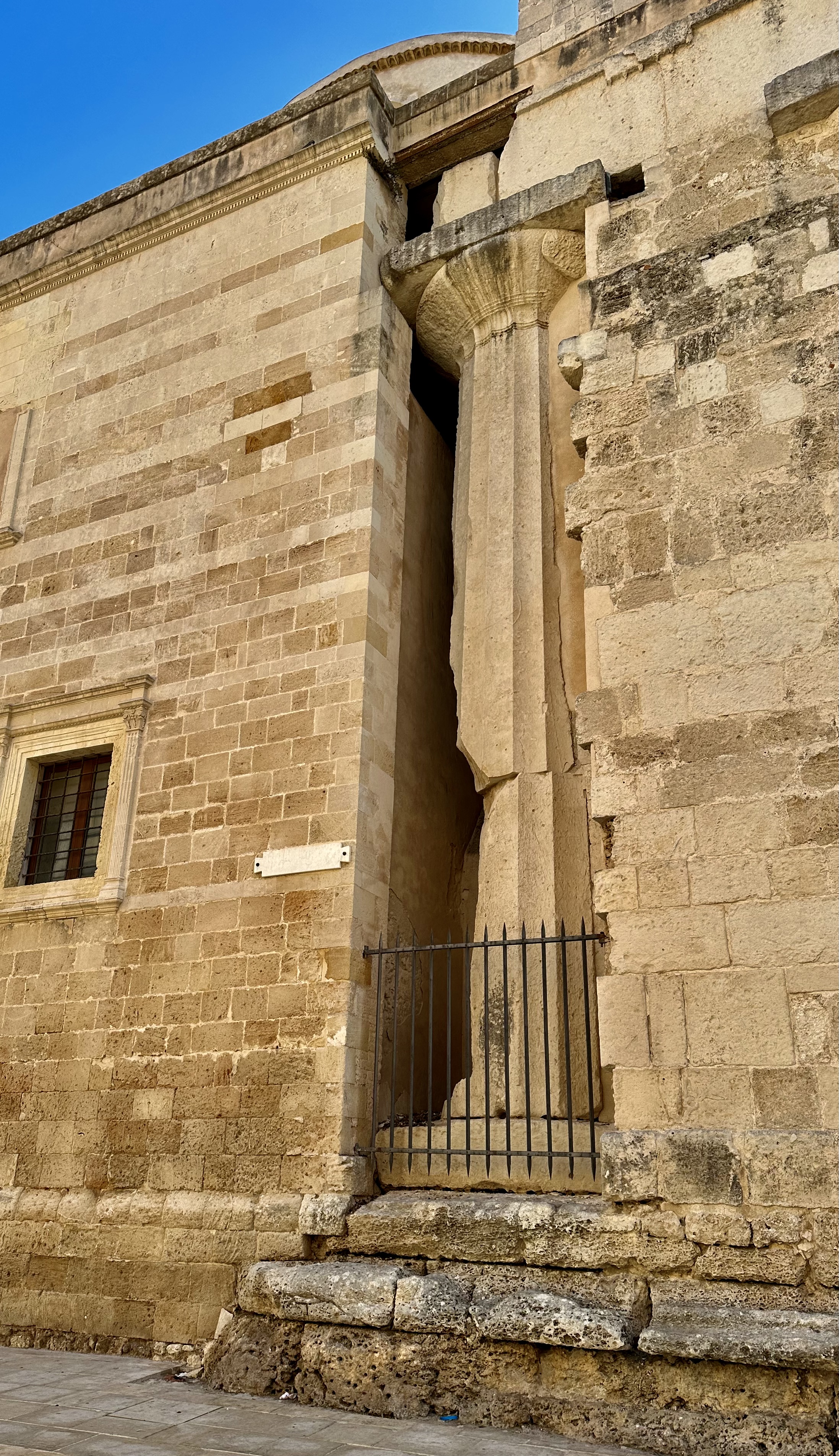
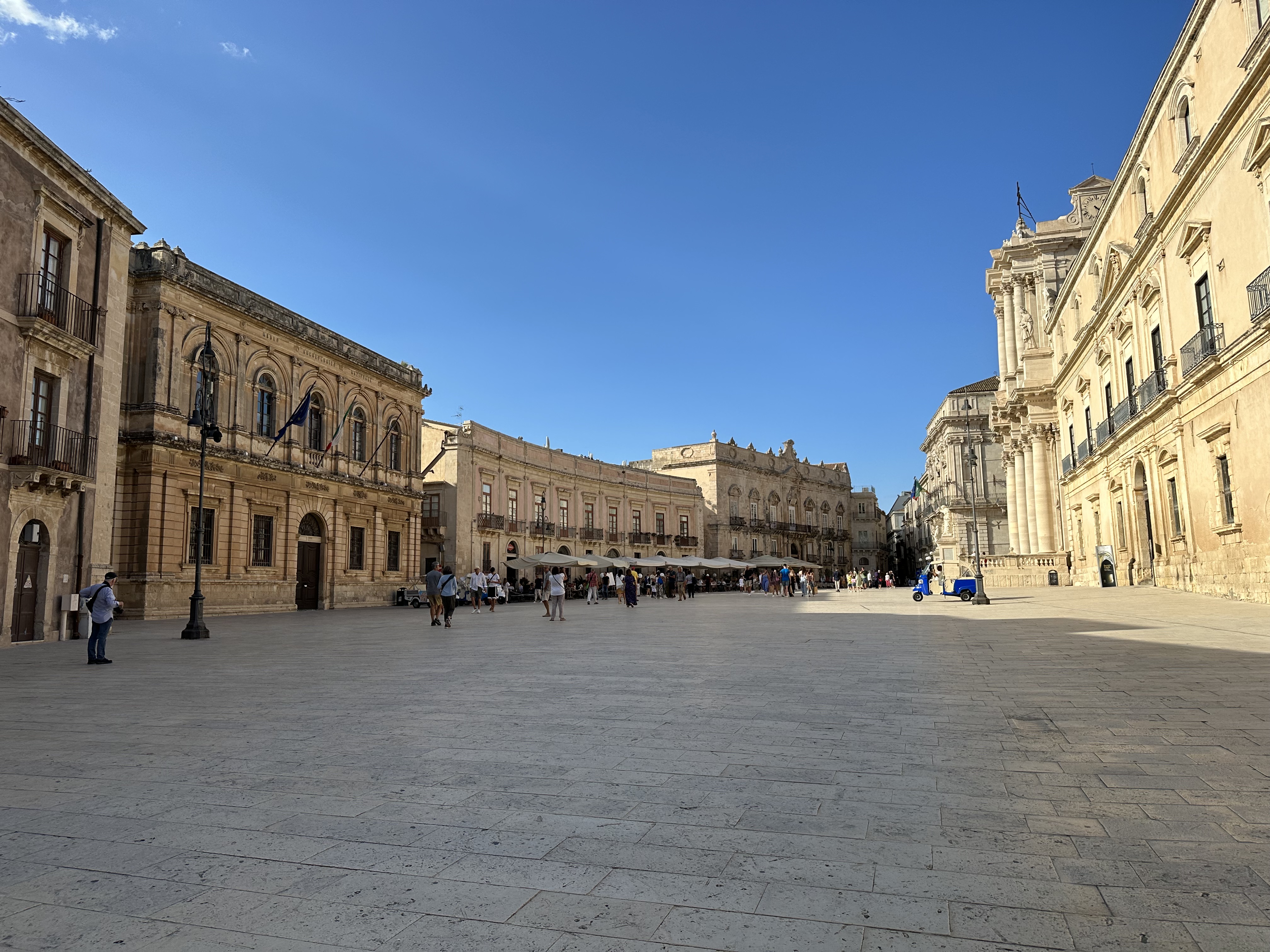
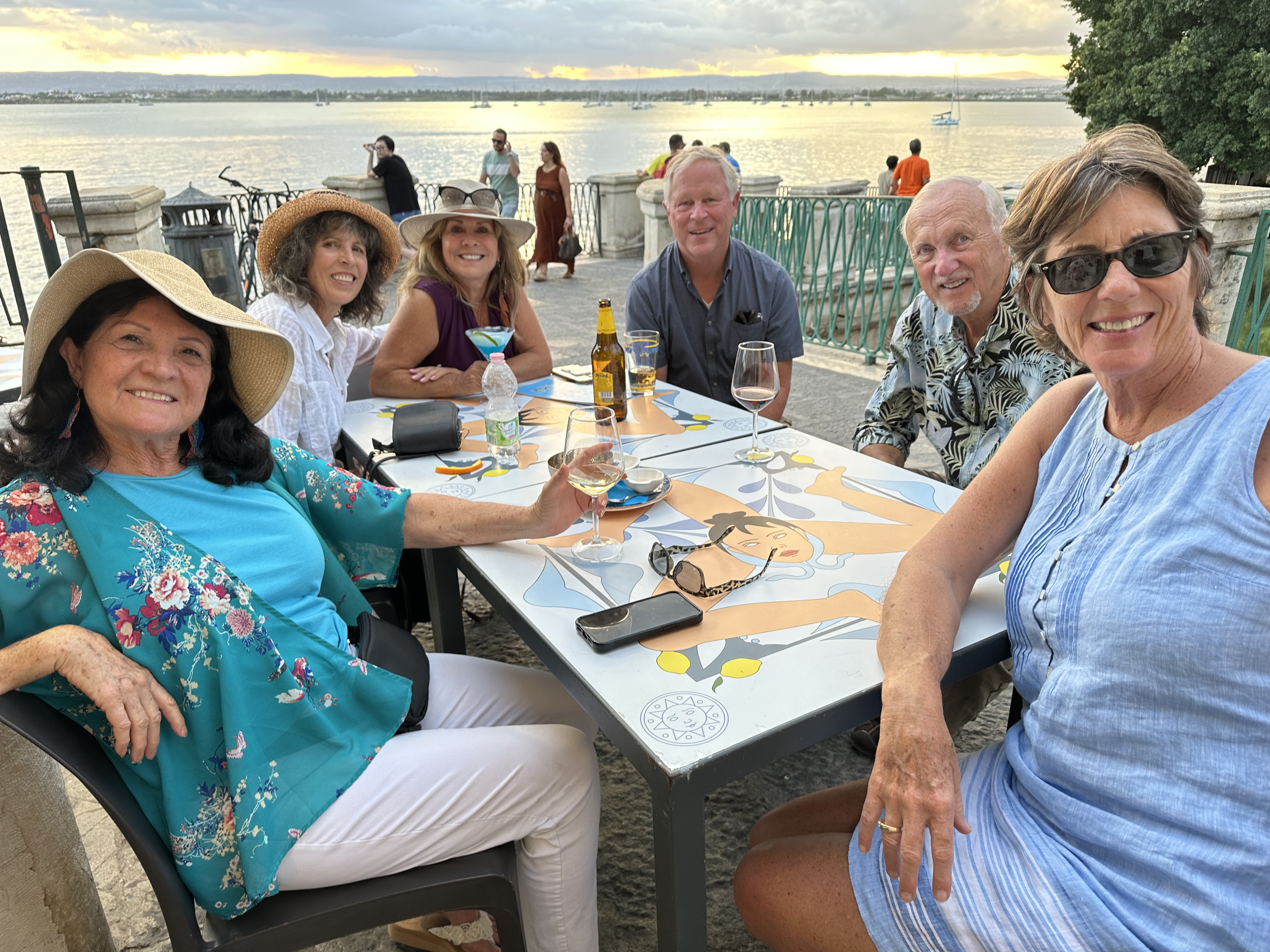
We changed, ate a fast lunch and drove in several cars to Syracuse for a walking tour led by Terry.   It included Greek antiquities in the middle of the modern city, the ancient city walls, the large and lovely Piazza Duomo  and the Cathedral, which had originally been a Greek temple, later replaced by a muslim mosque and finally by the Roman Catholic Church .  We attended Mass in the Cathedral at 7pm and dinner at a nearby  reserved restaurant at 8pm.  The food was terrific.  All went as planned by Terry.   Love that boy.


Martina Franca and Alberobello-our last 2 towns in Puglia

September 21, 2023

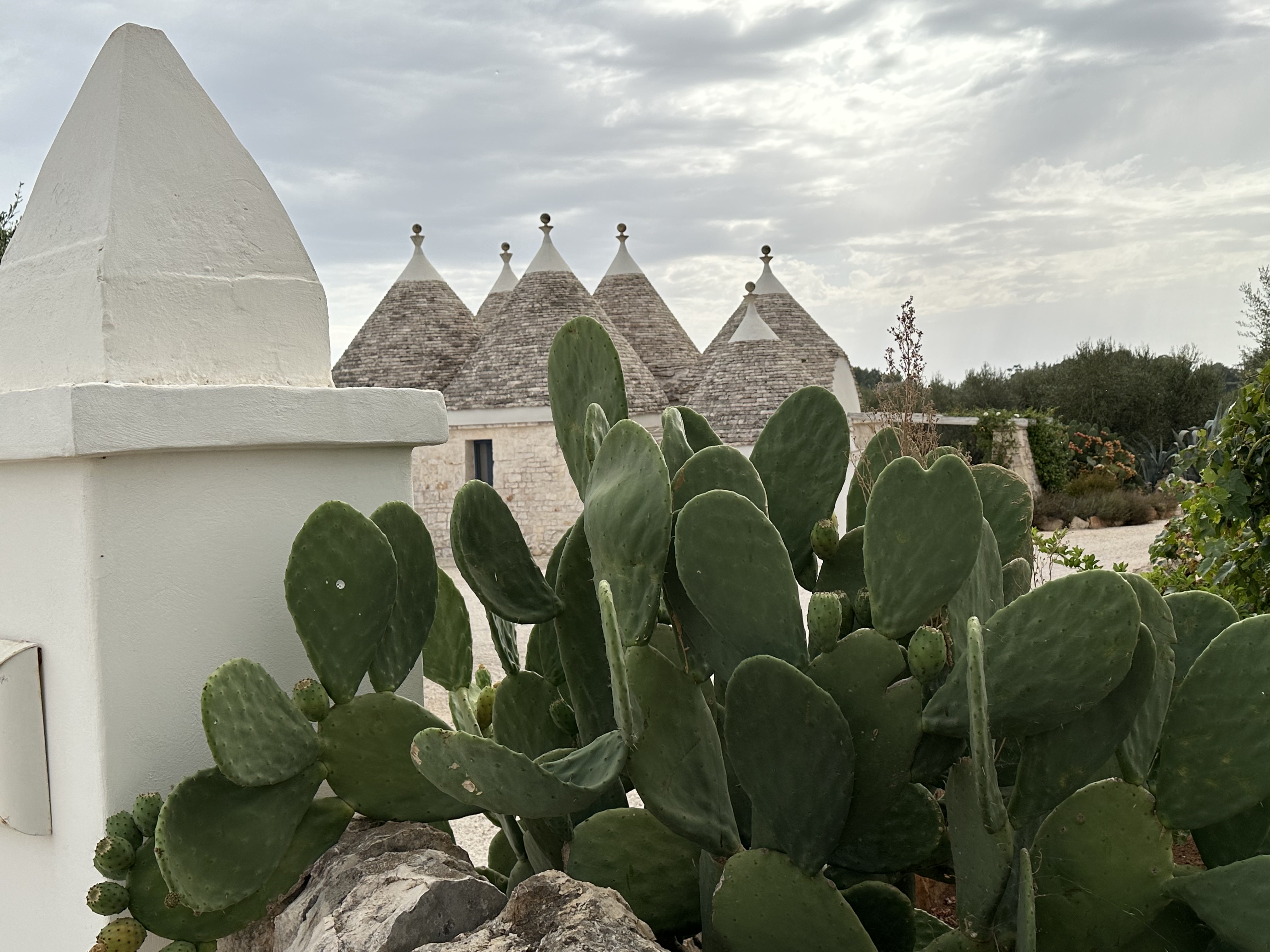
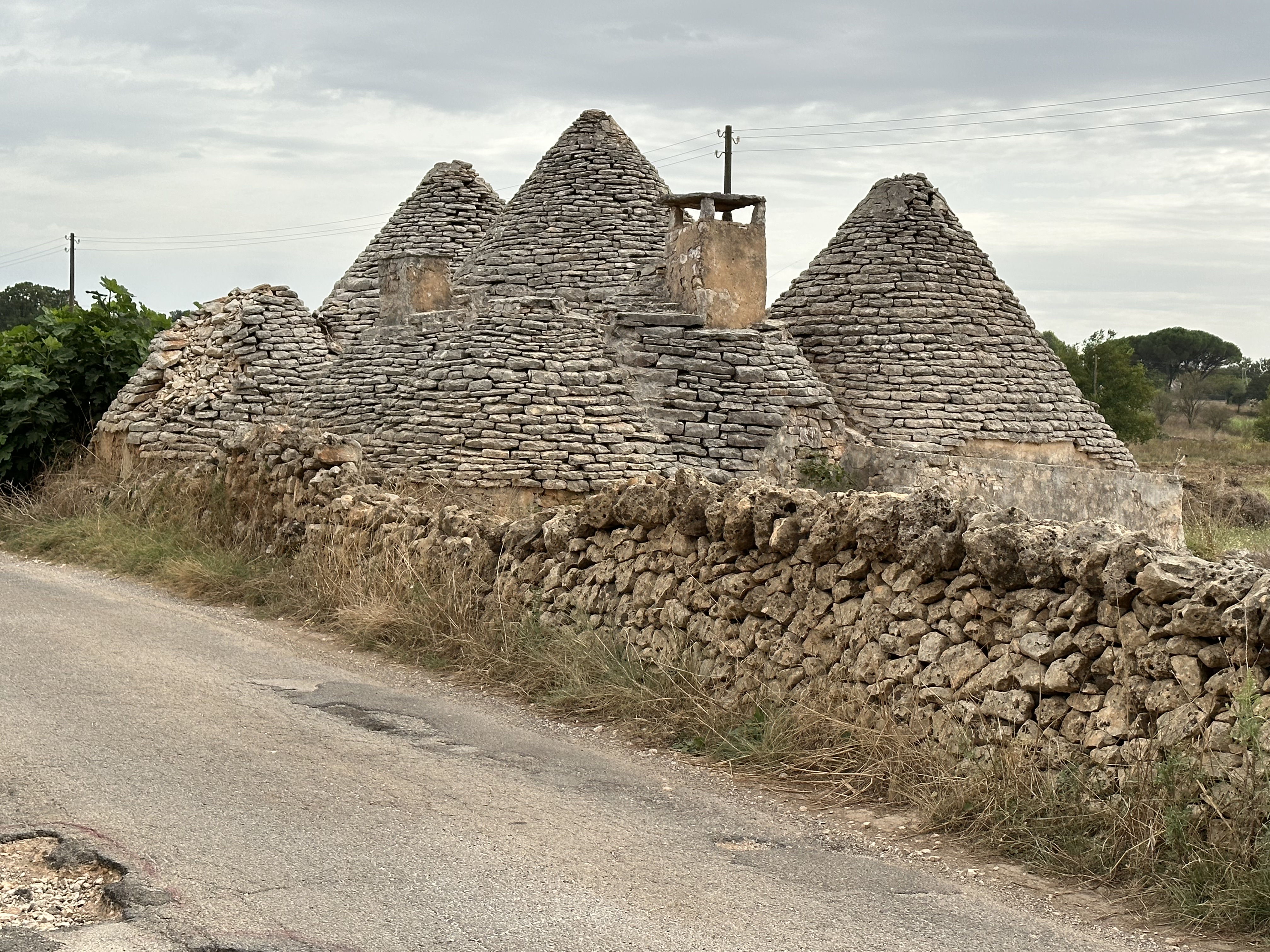
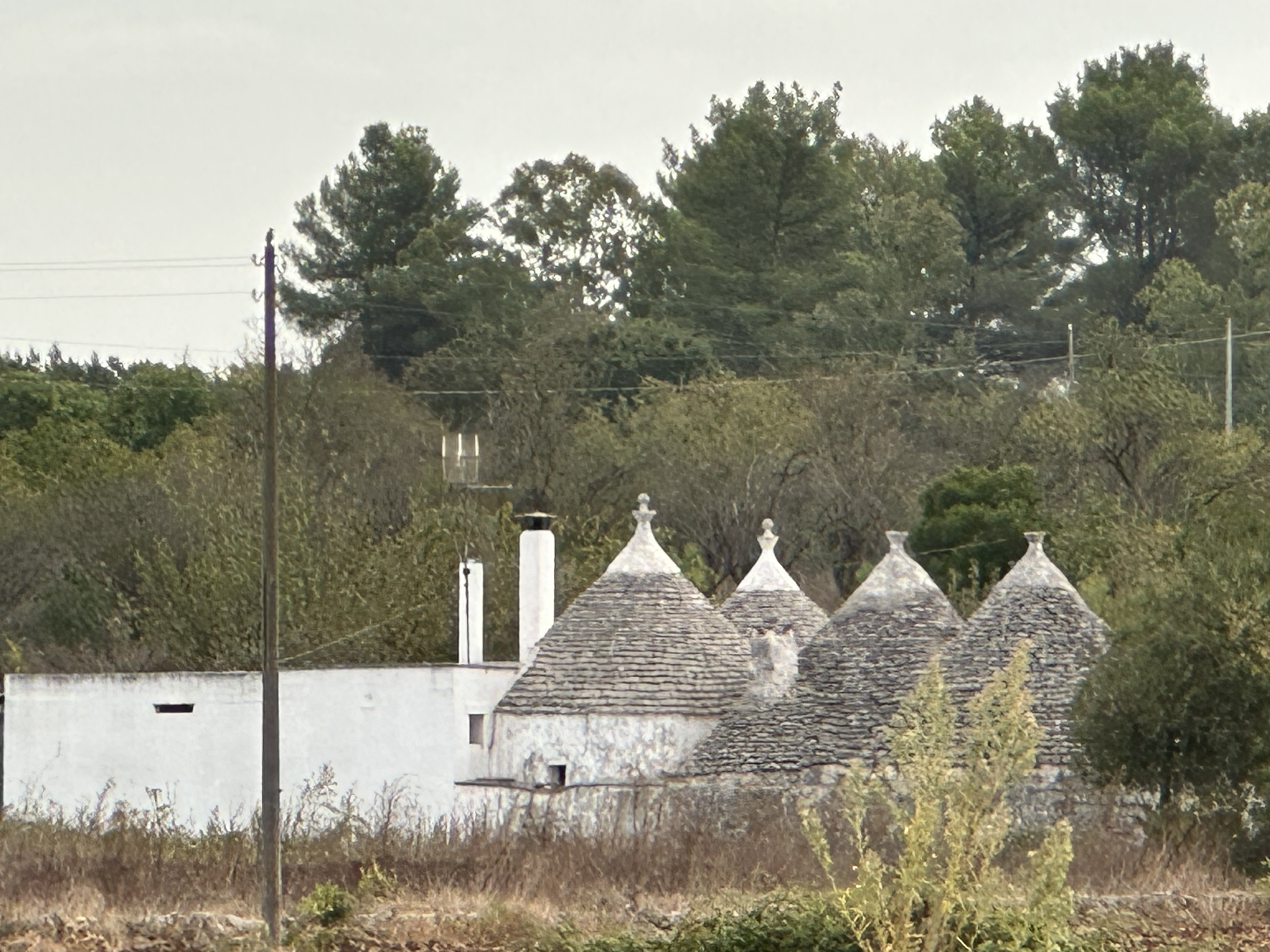
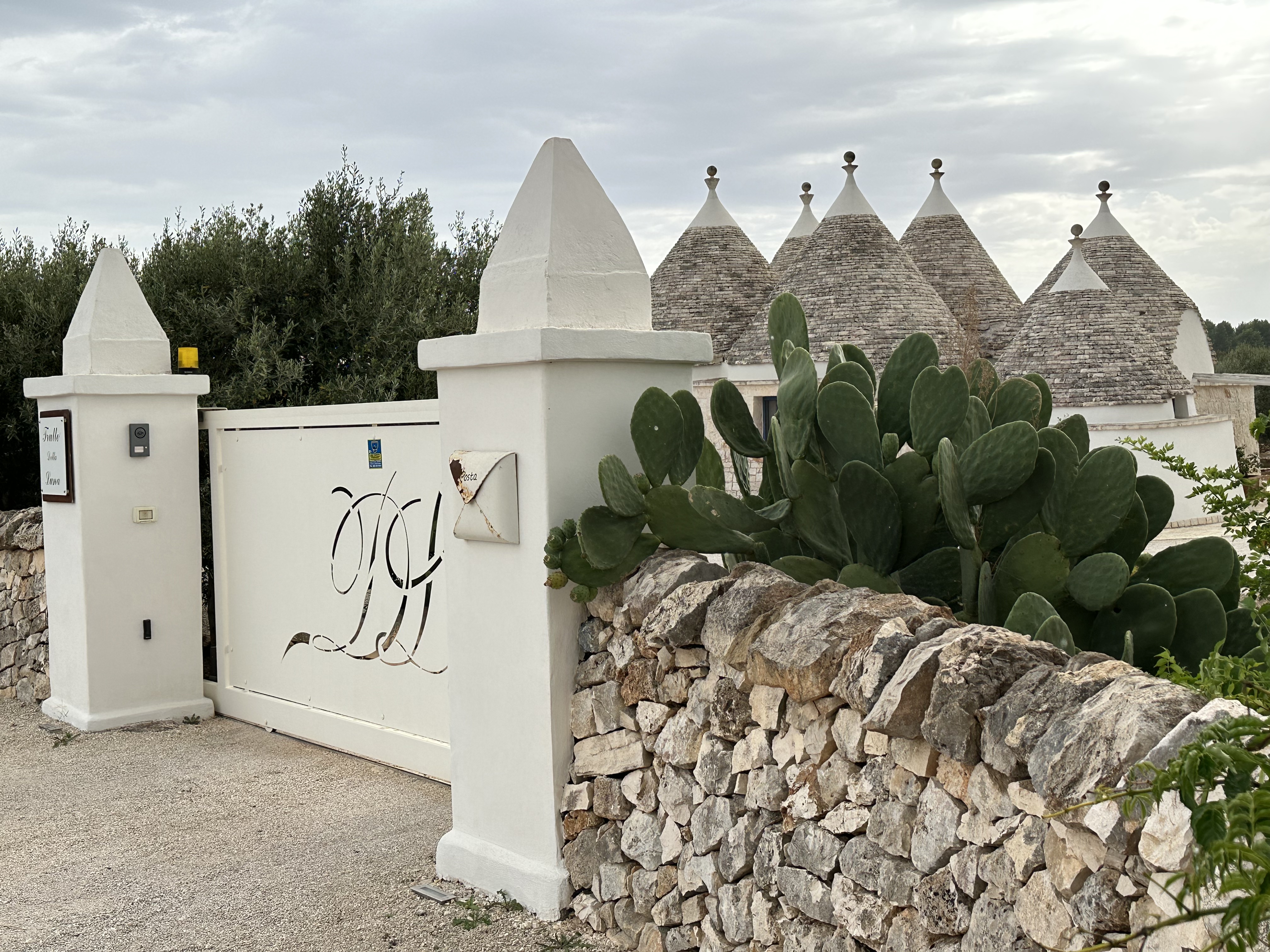
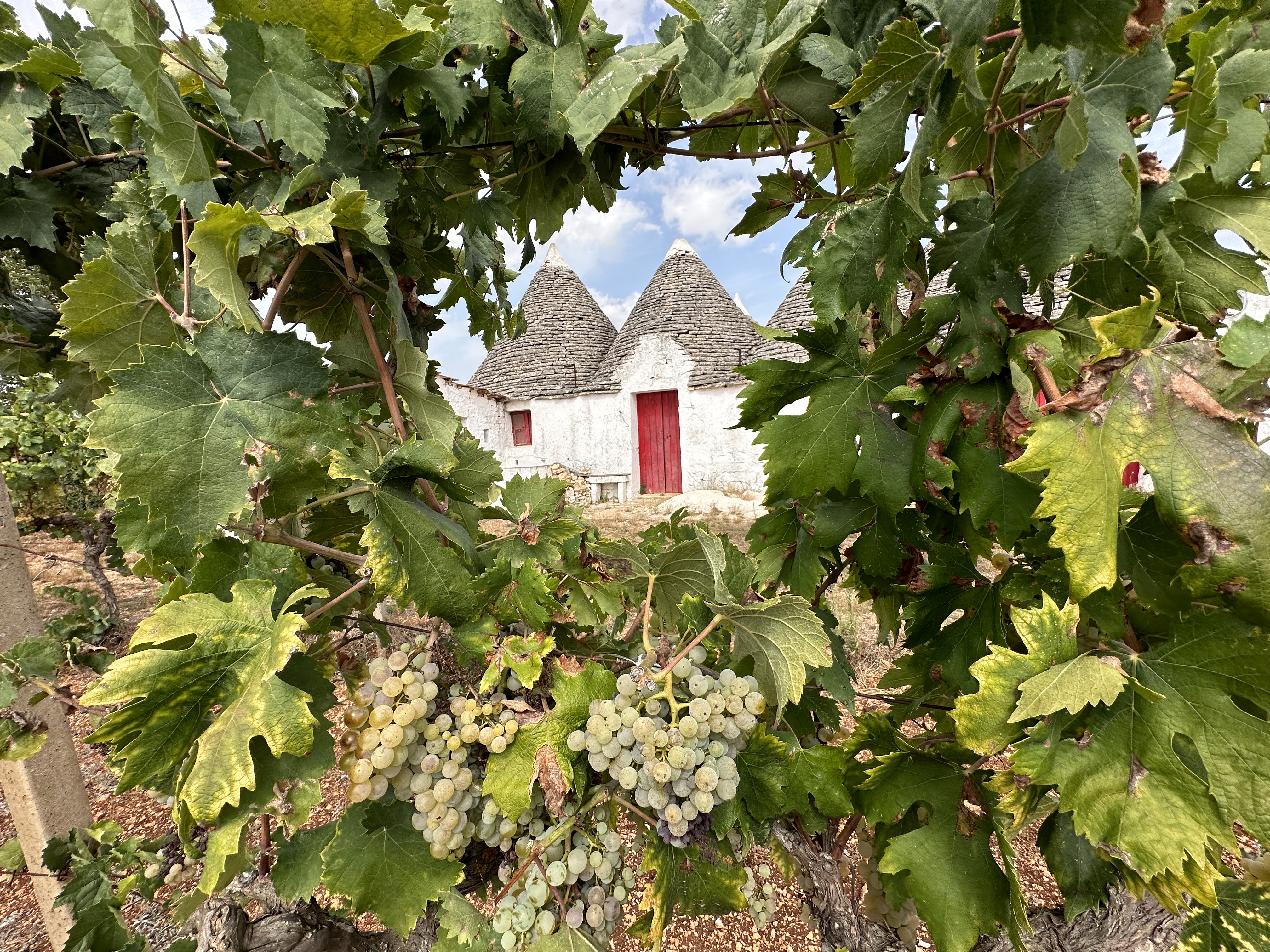
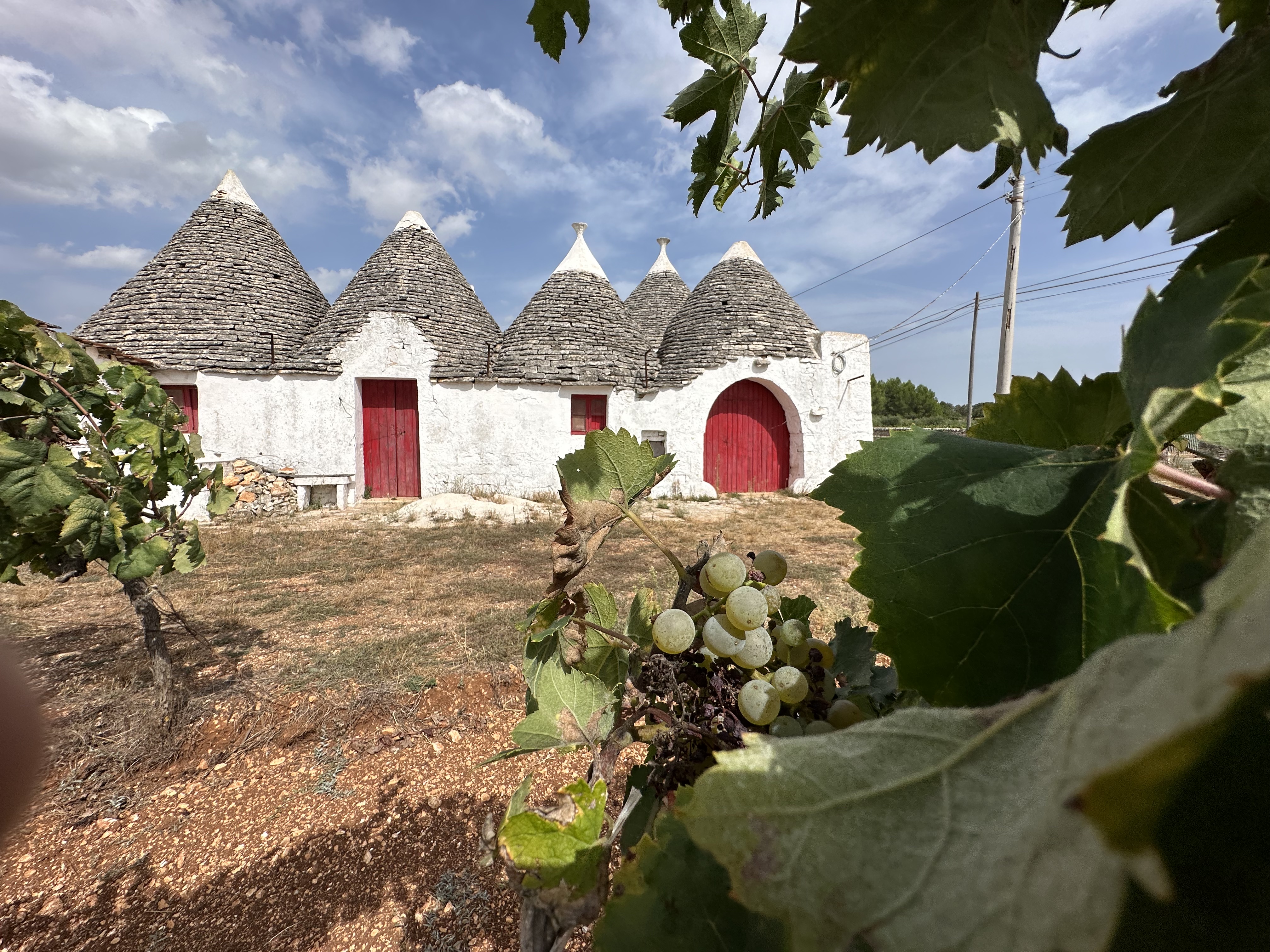
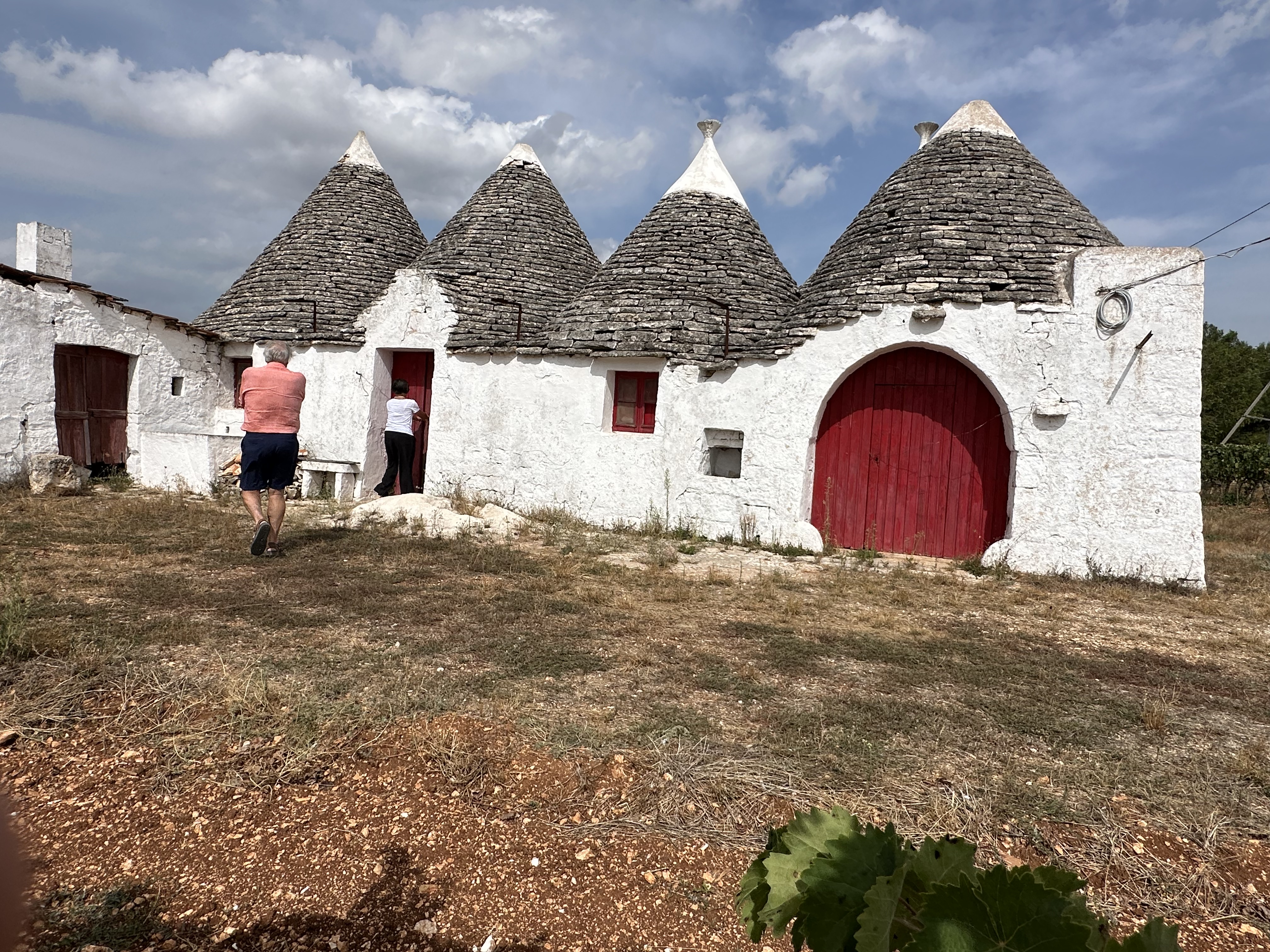
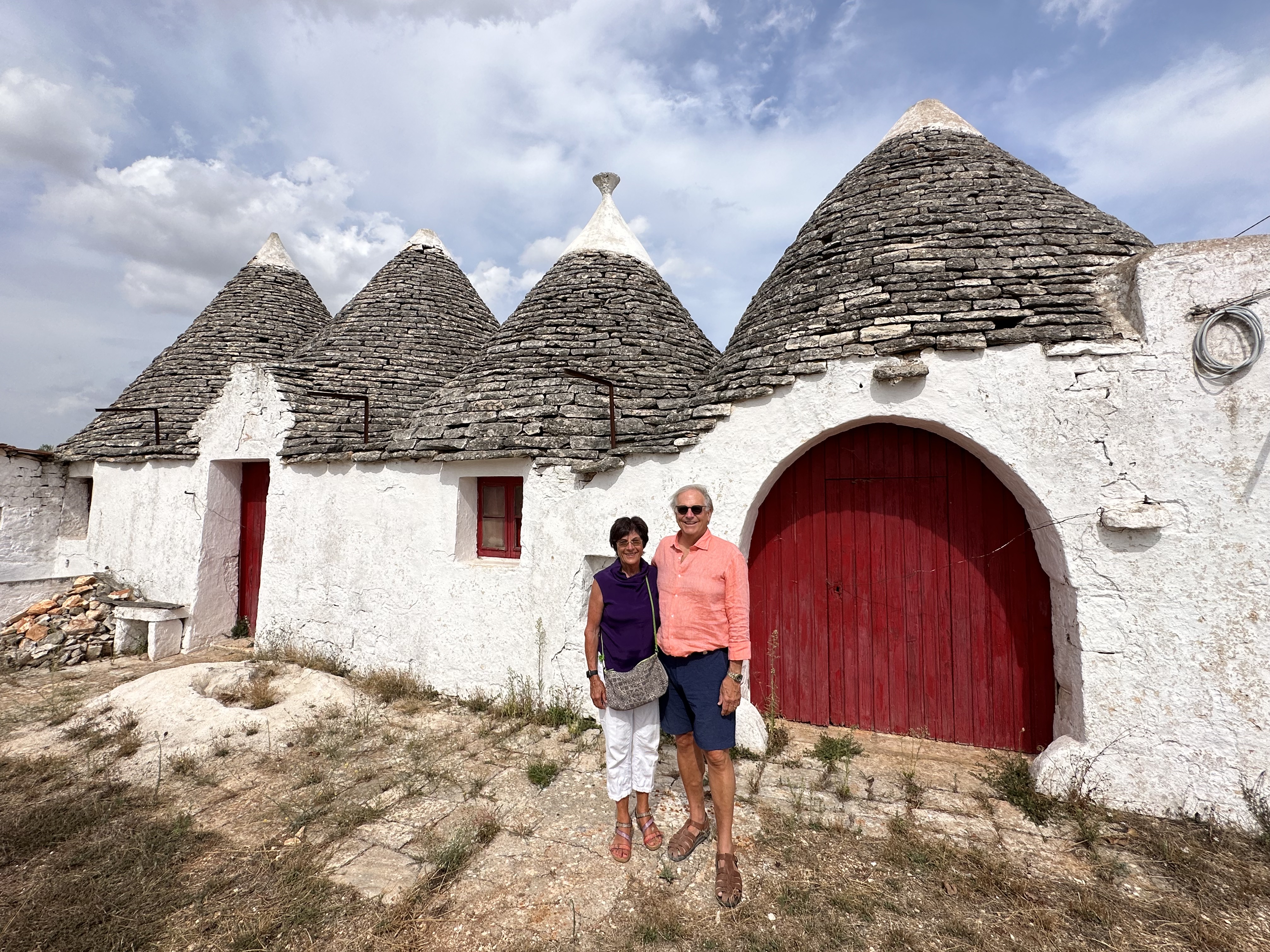
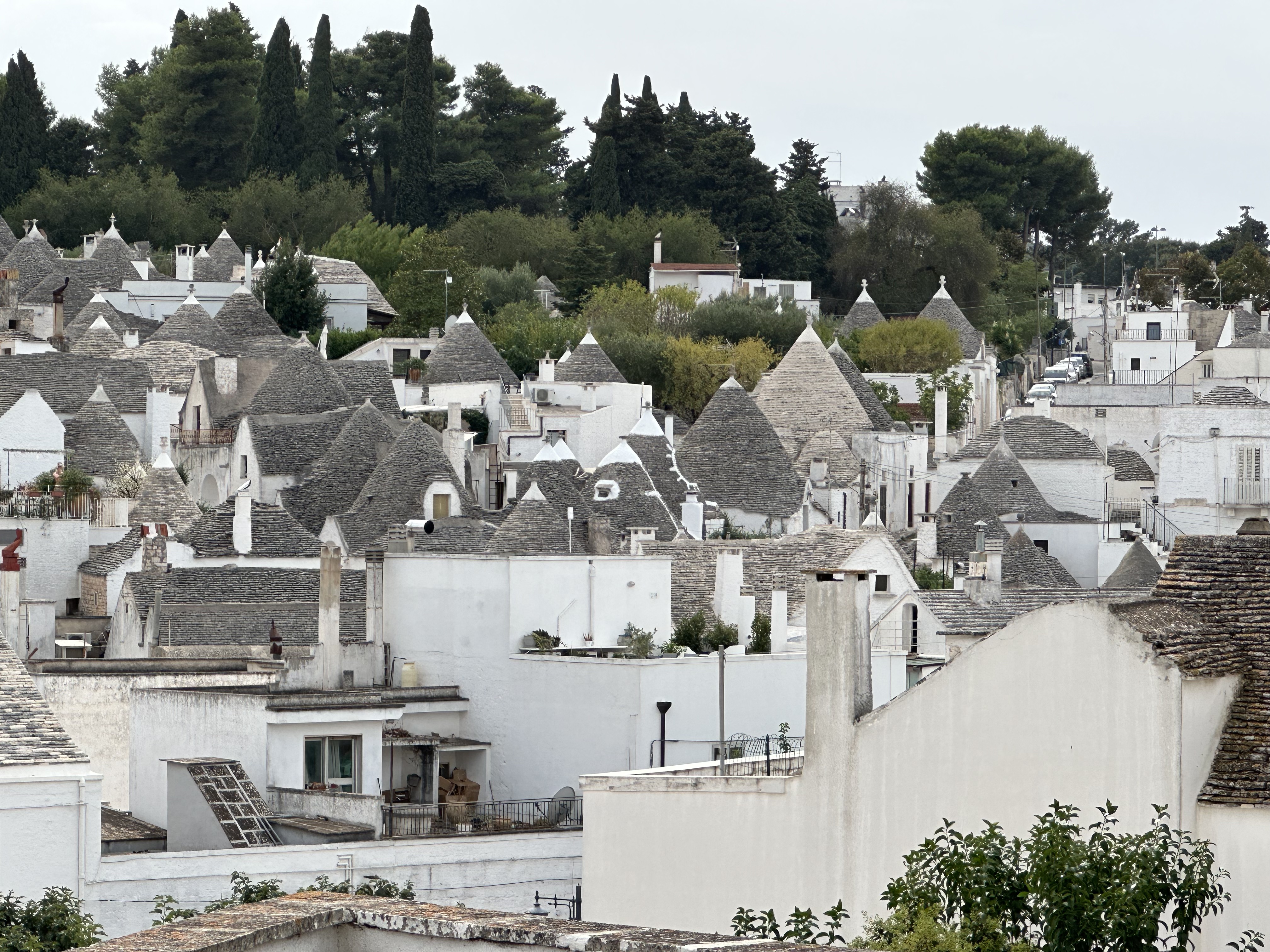
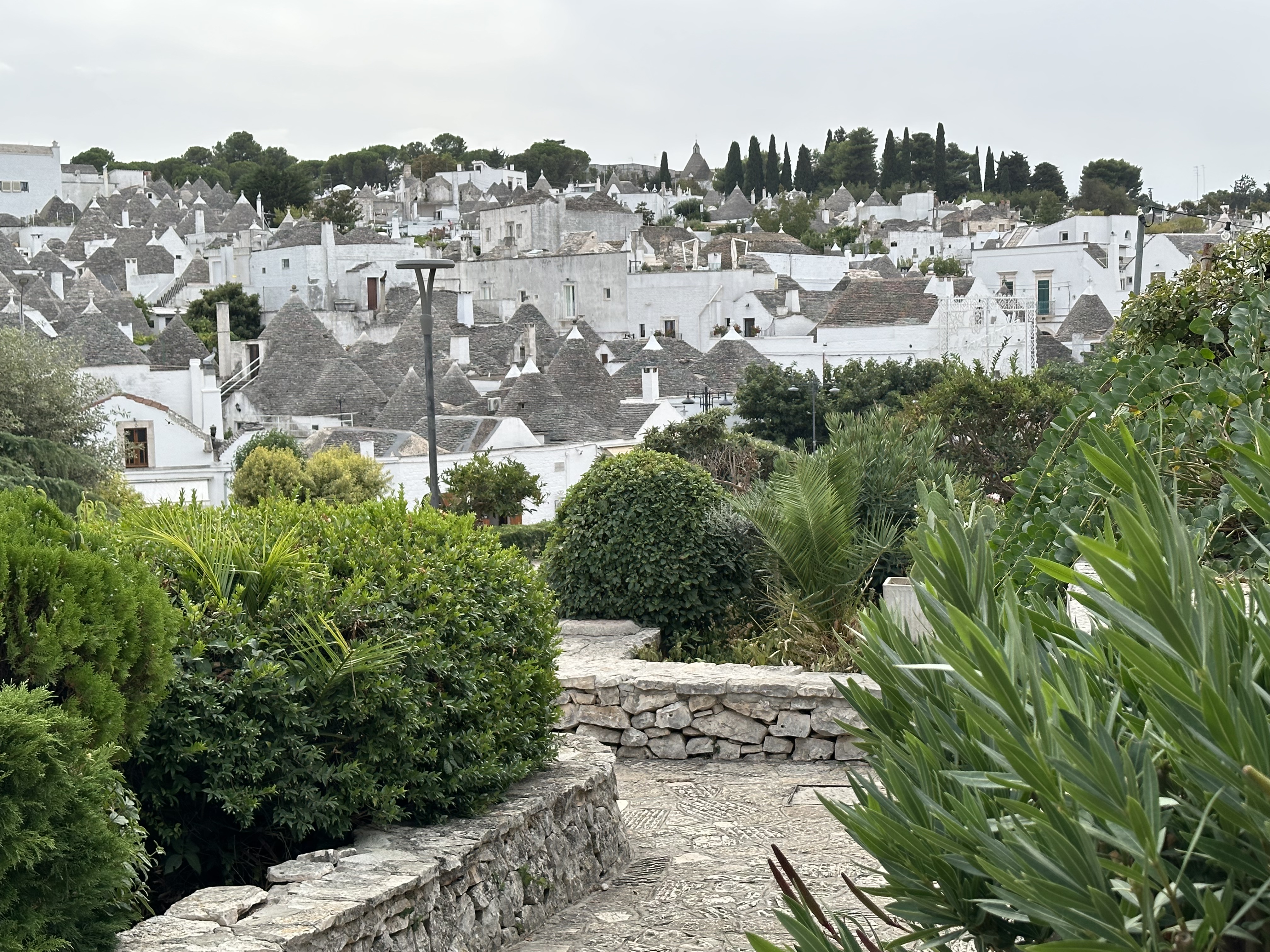
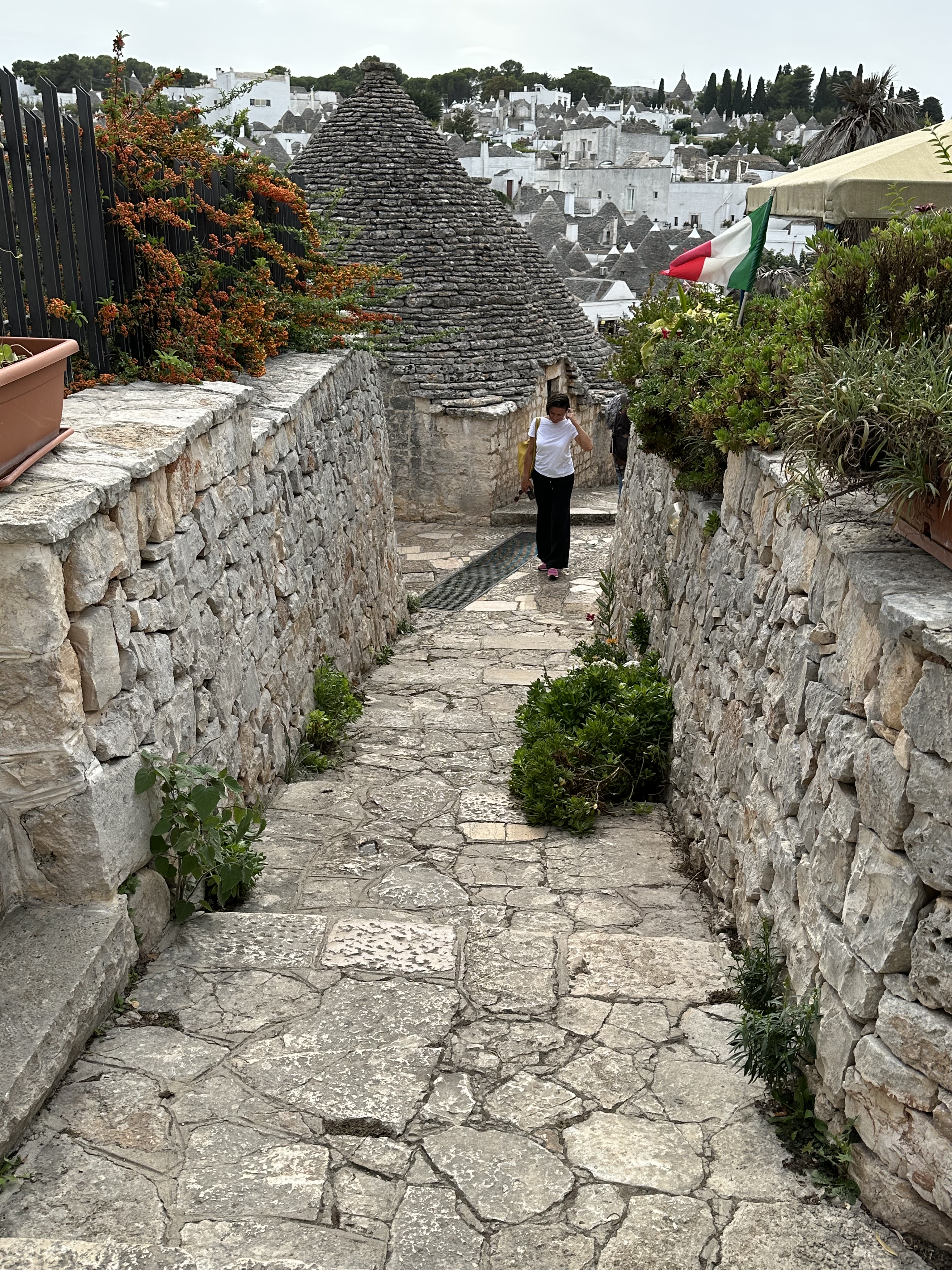
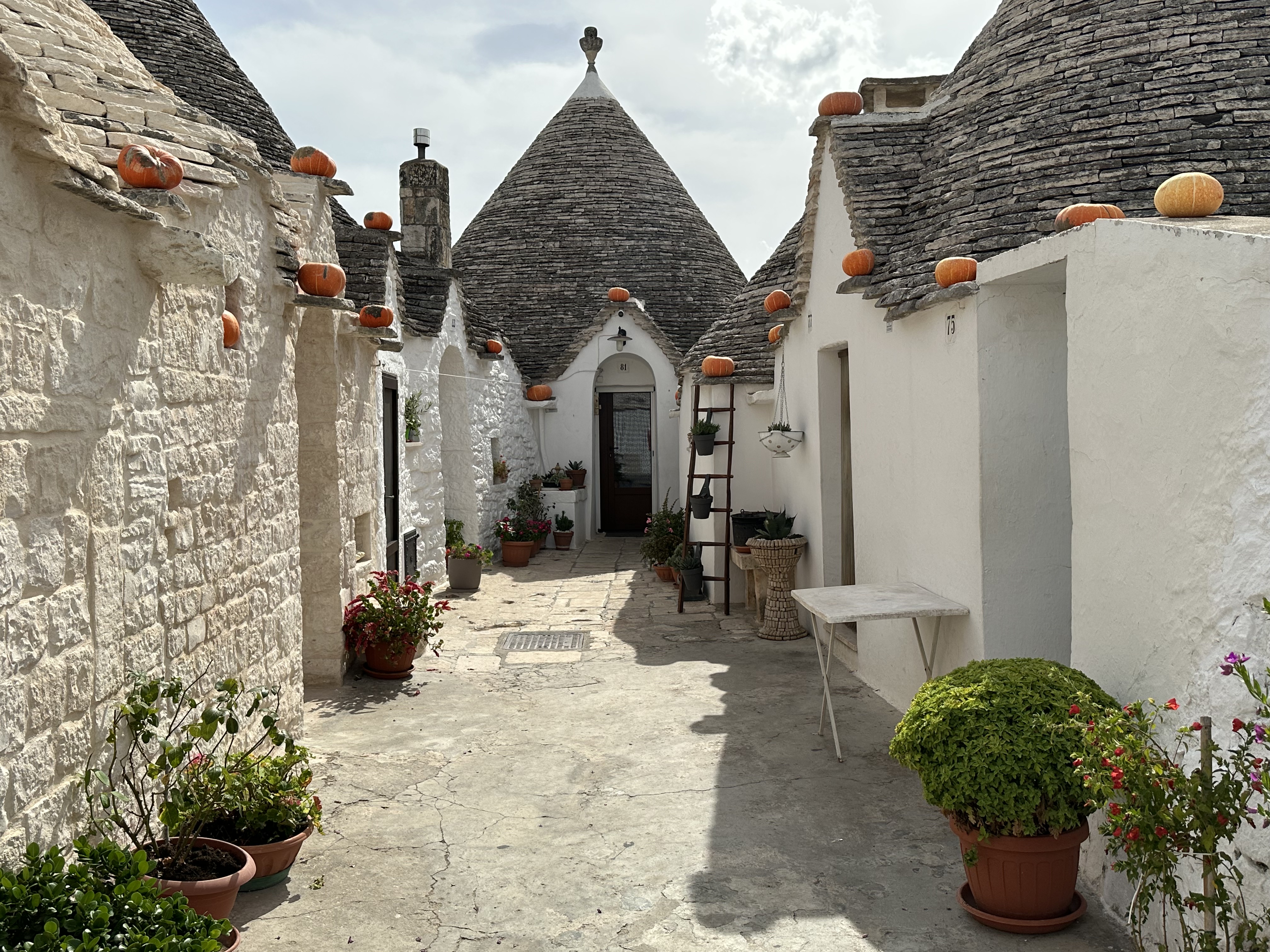
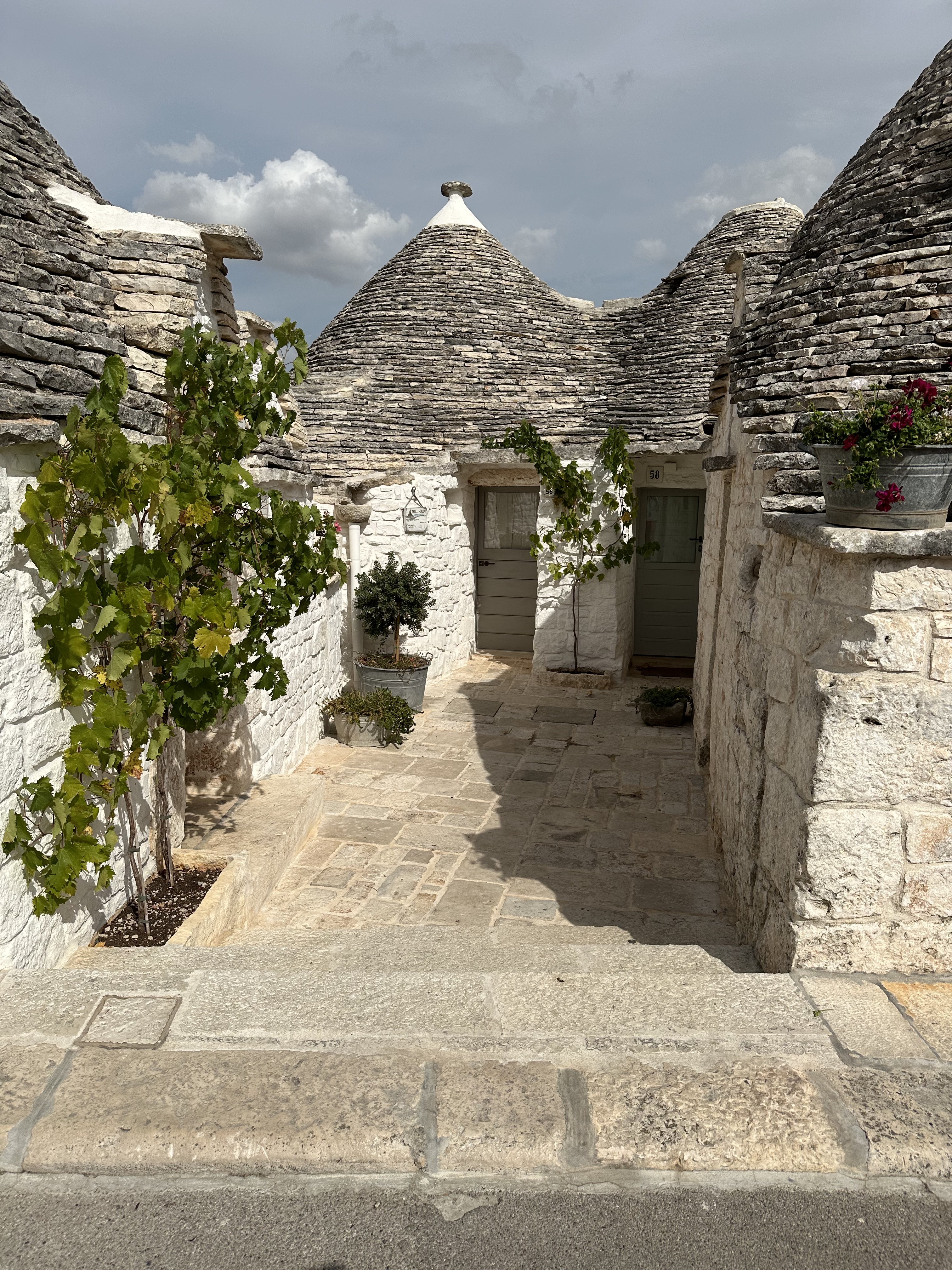
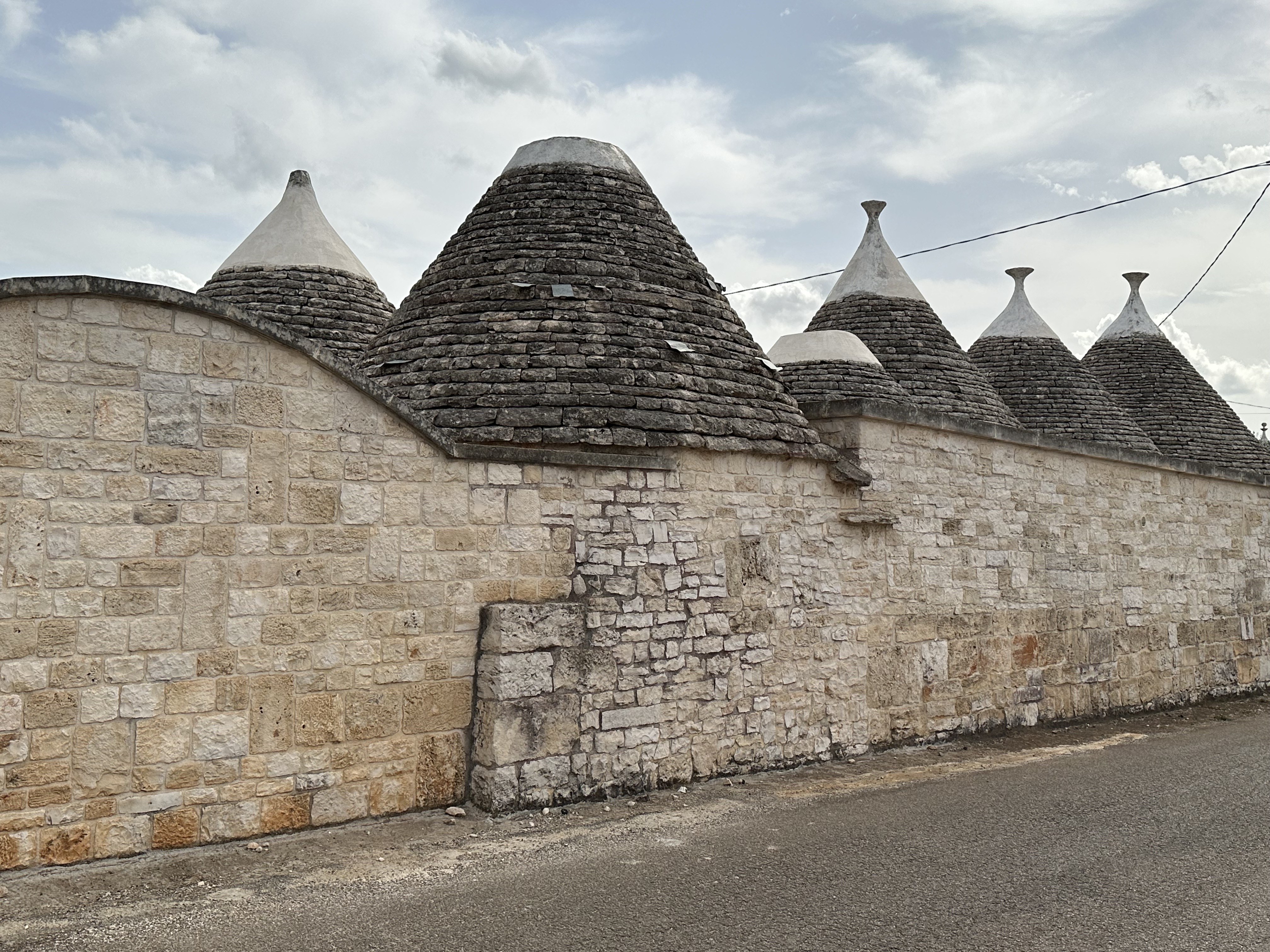
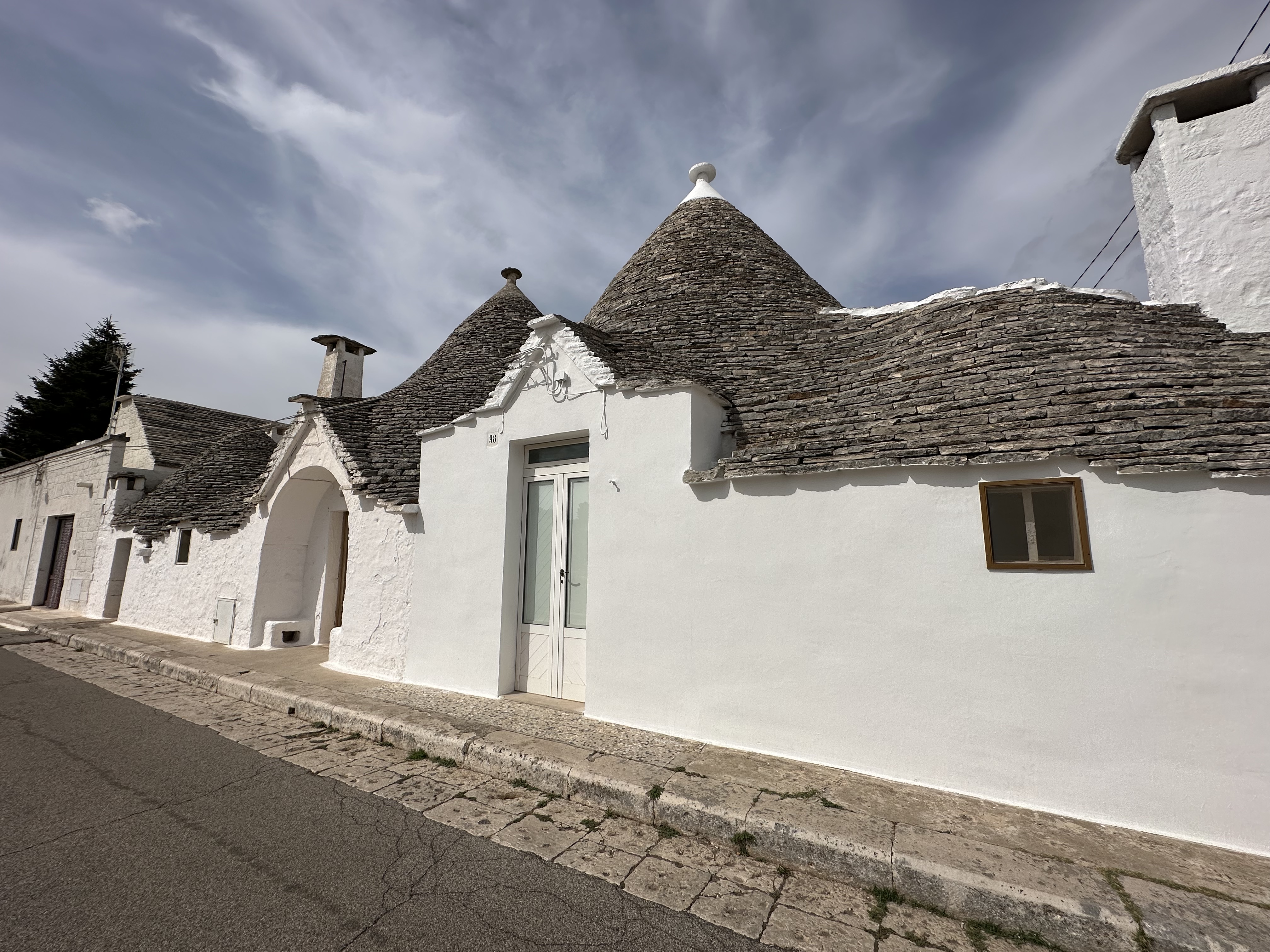
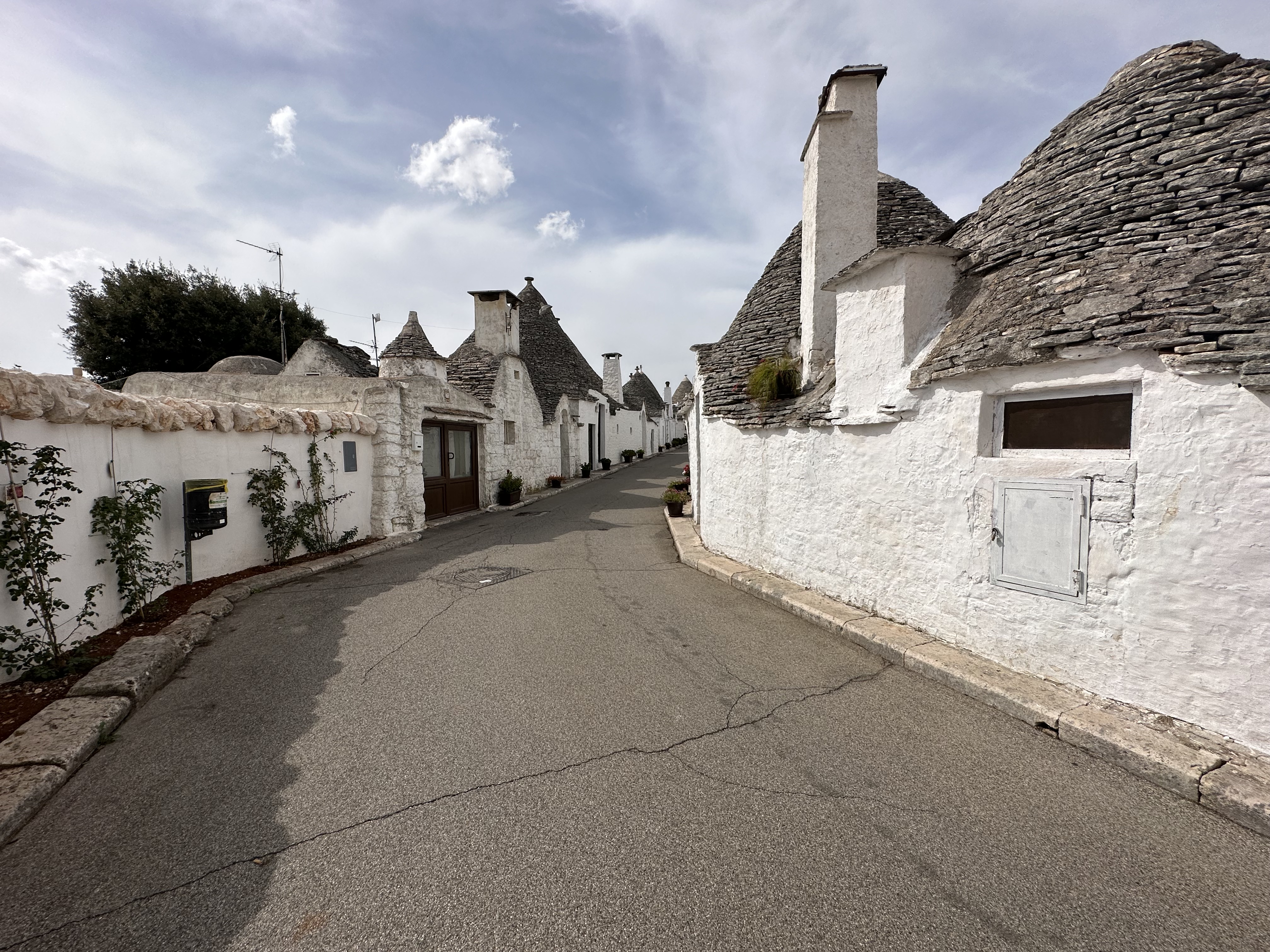
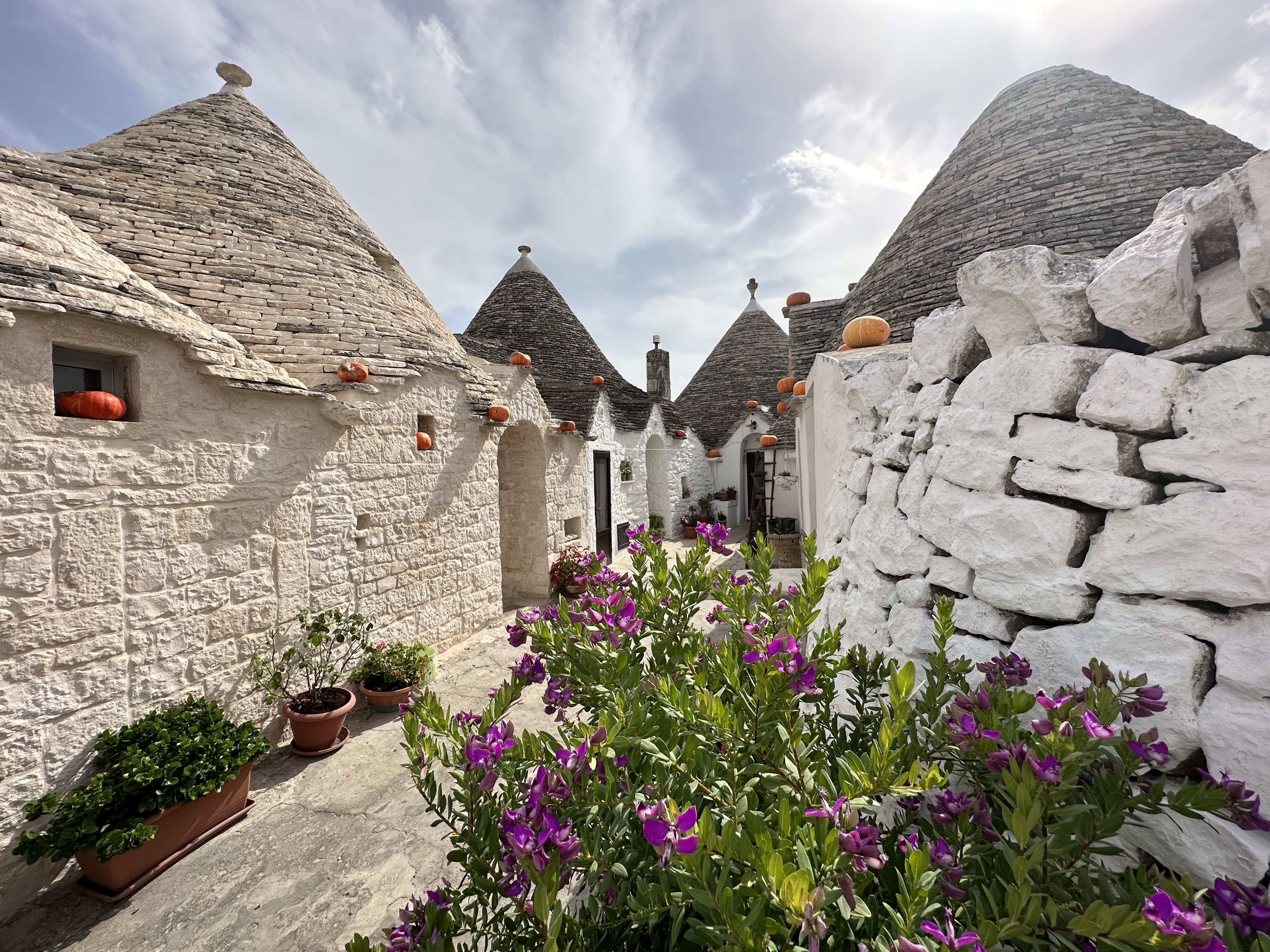
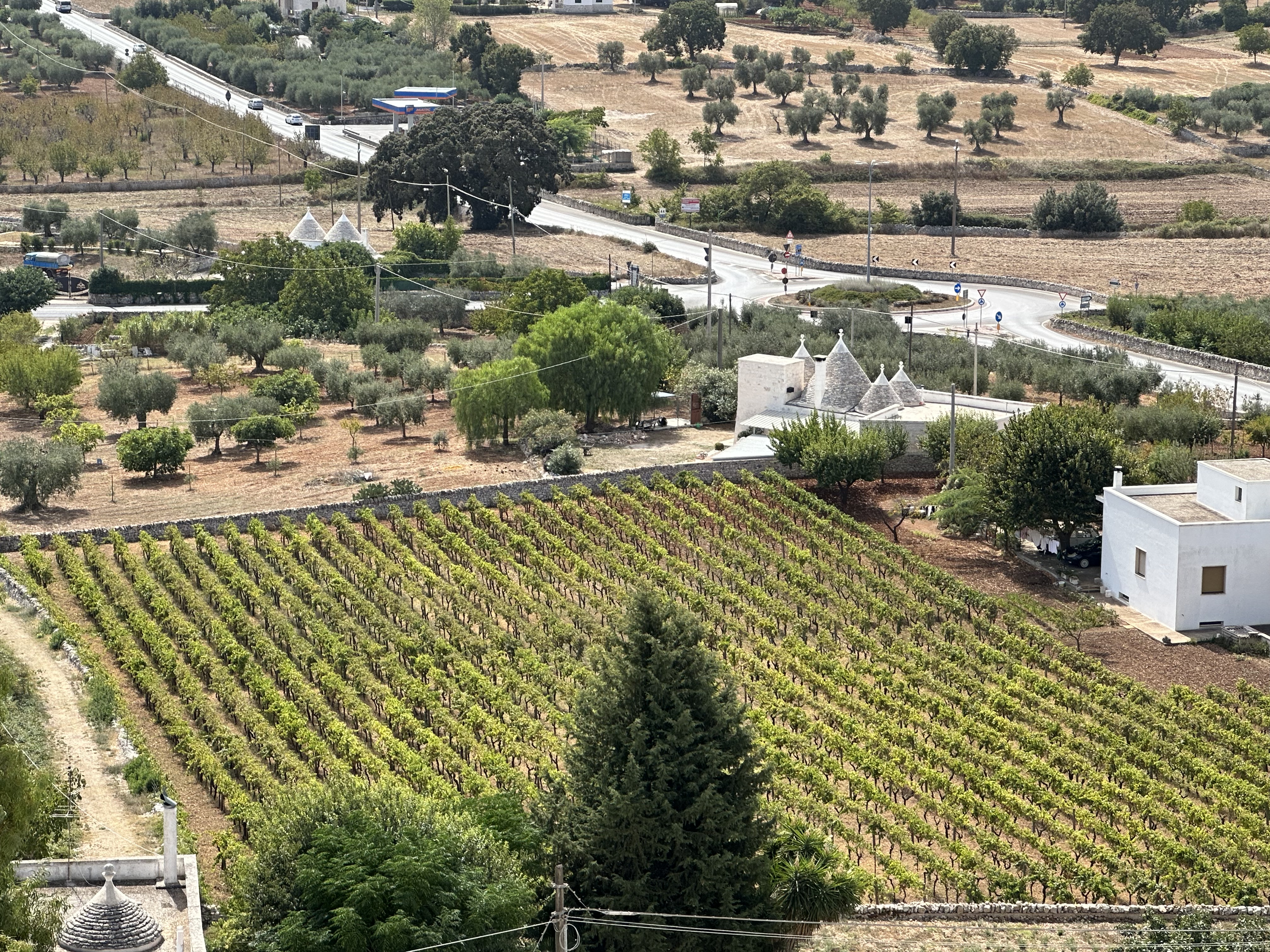
We spent our last full day in Puglia with Silvia visiting 2 more towns in the Valle d’Itria and watching a cheese maker create his specialities of mozzarella and burrata cheeses.. The landscape consists of karst Murgia hills and large caves covered in dense vegetation and a cultivated plateau with red terrain that extends to the sea. The countryside is dotted with conical, white stone structures called trulli.

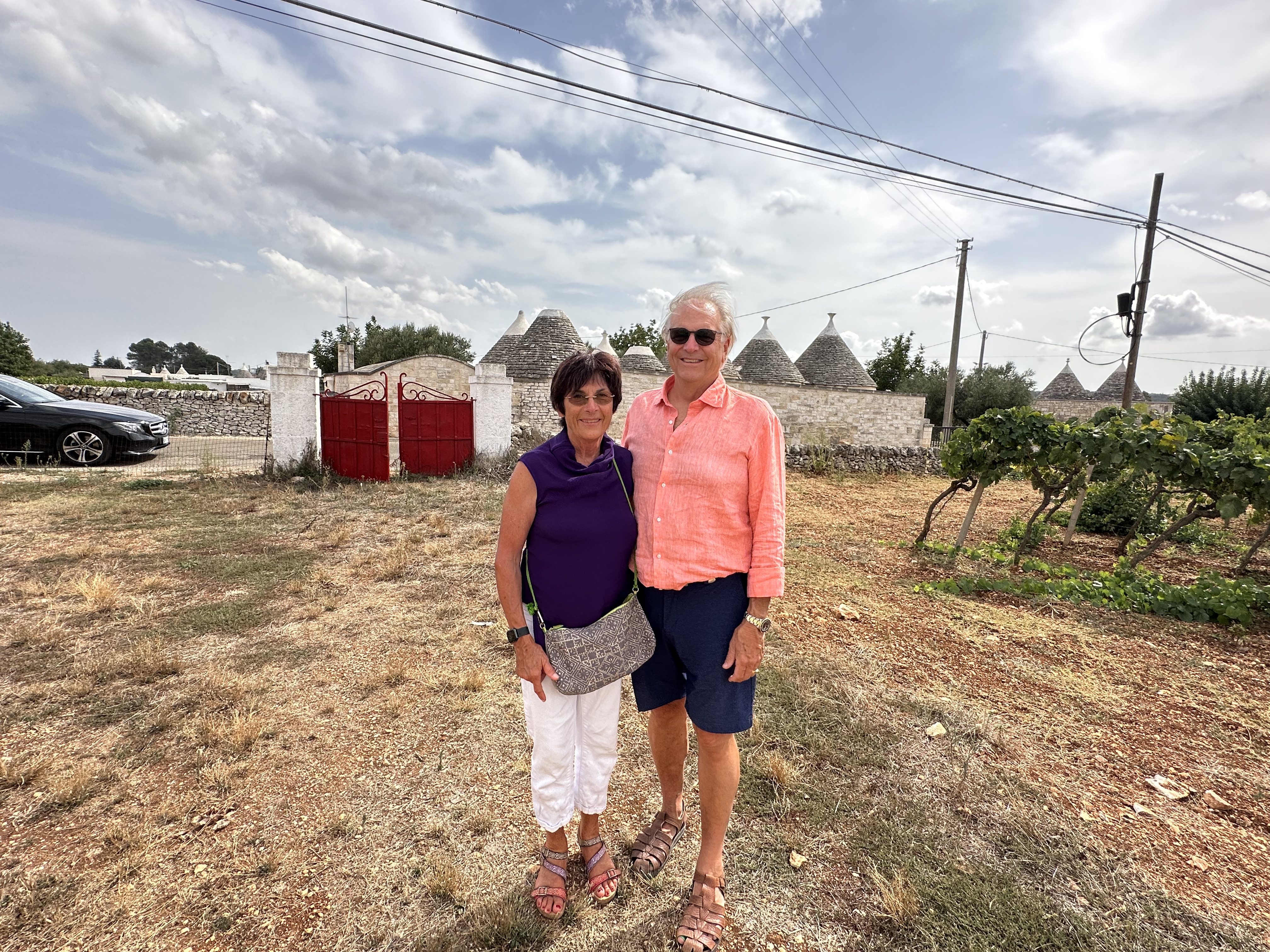
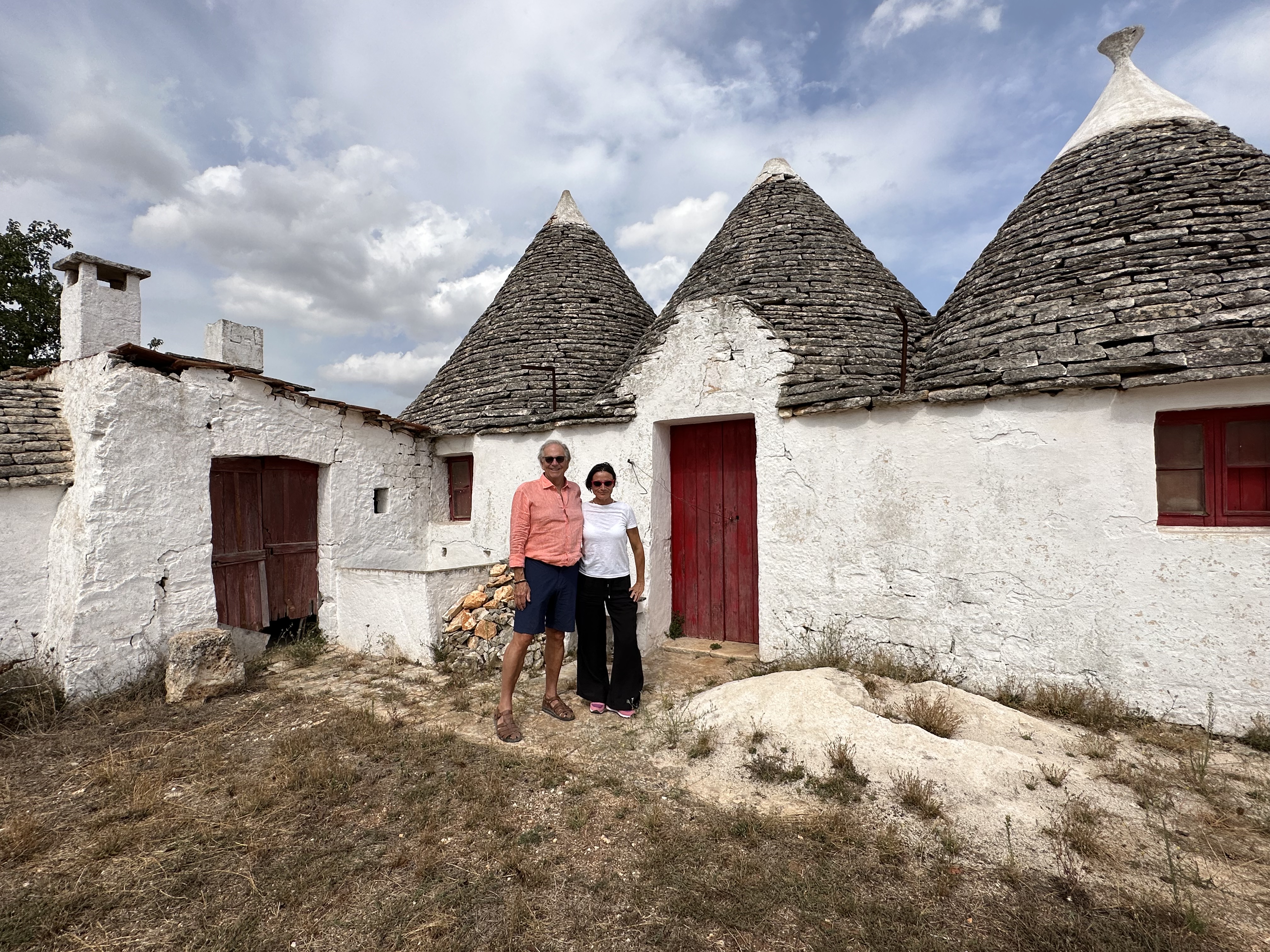
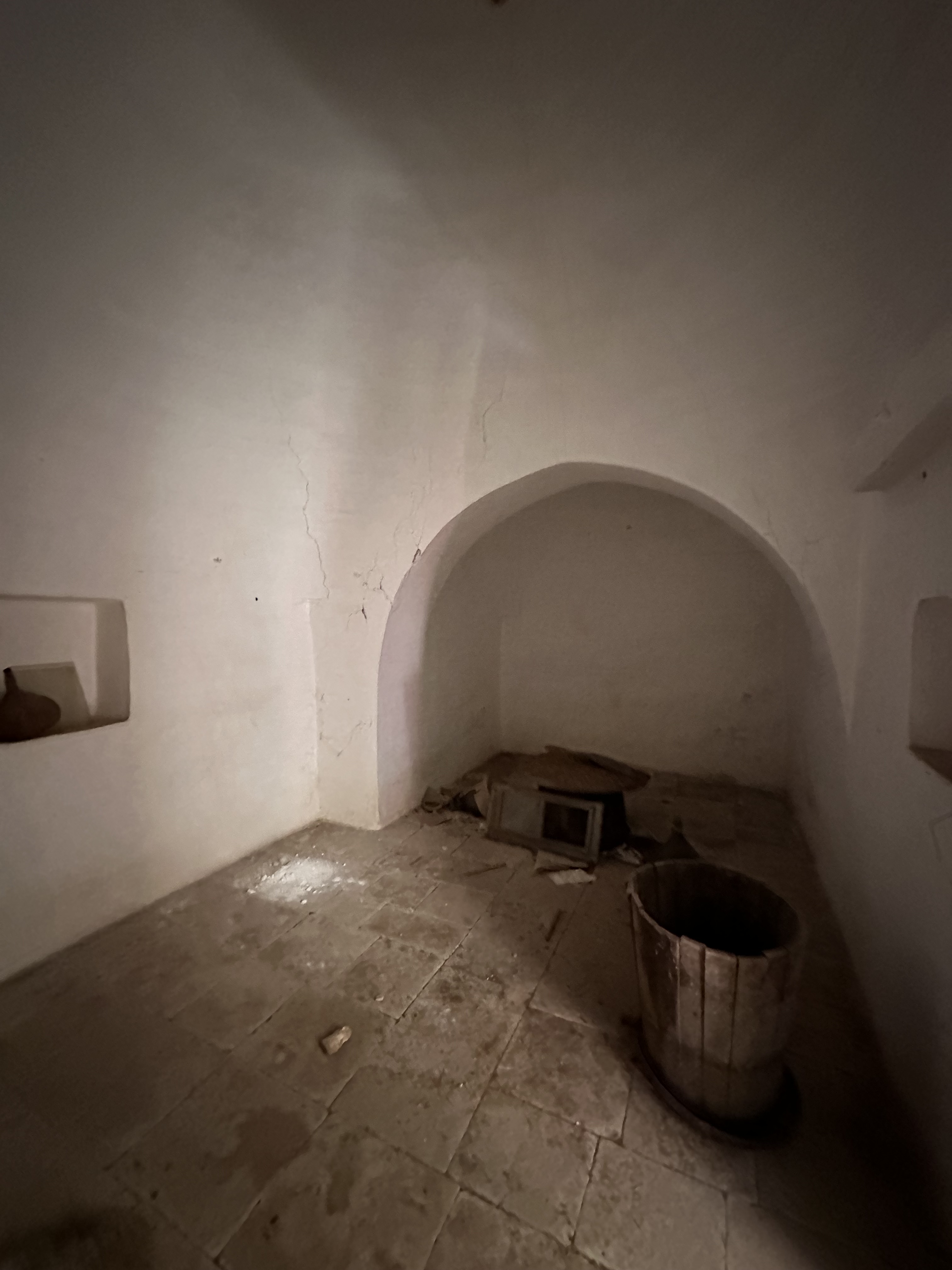
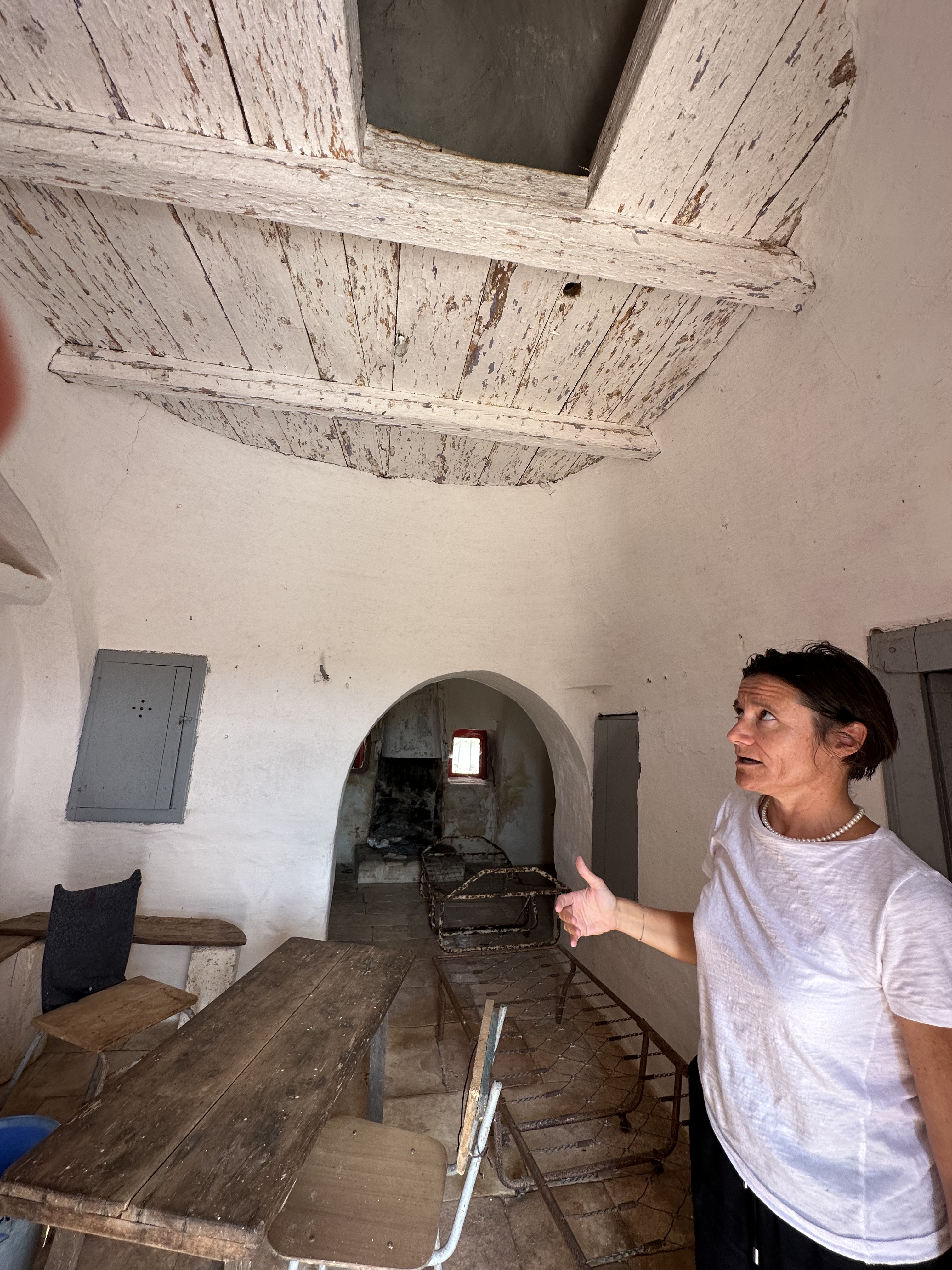
I was taken with these houses and wanted to see many of them. Here are a few of the offerings. We did get into an abandoned house Silvia knew about and that helped add to the story.

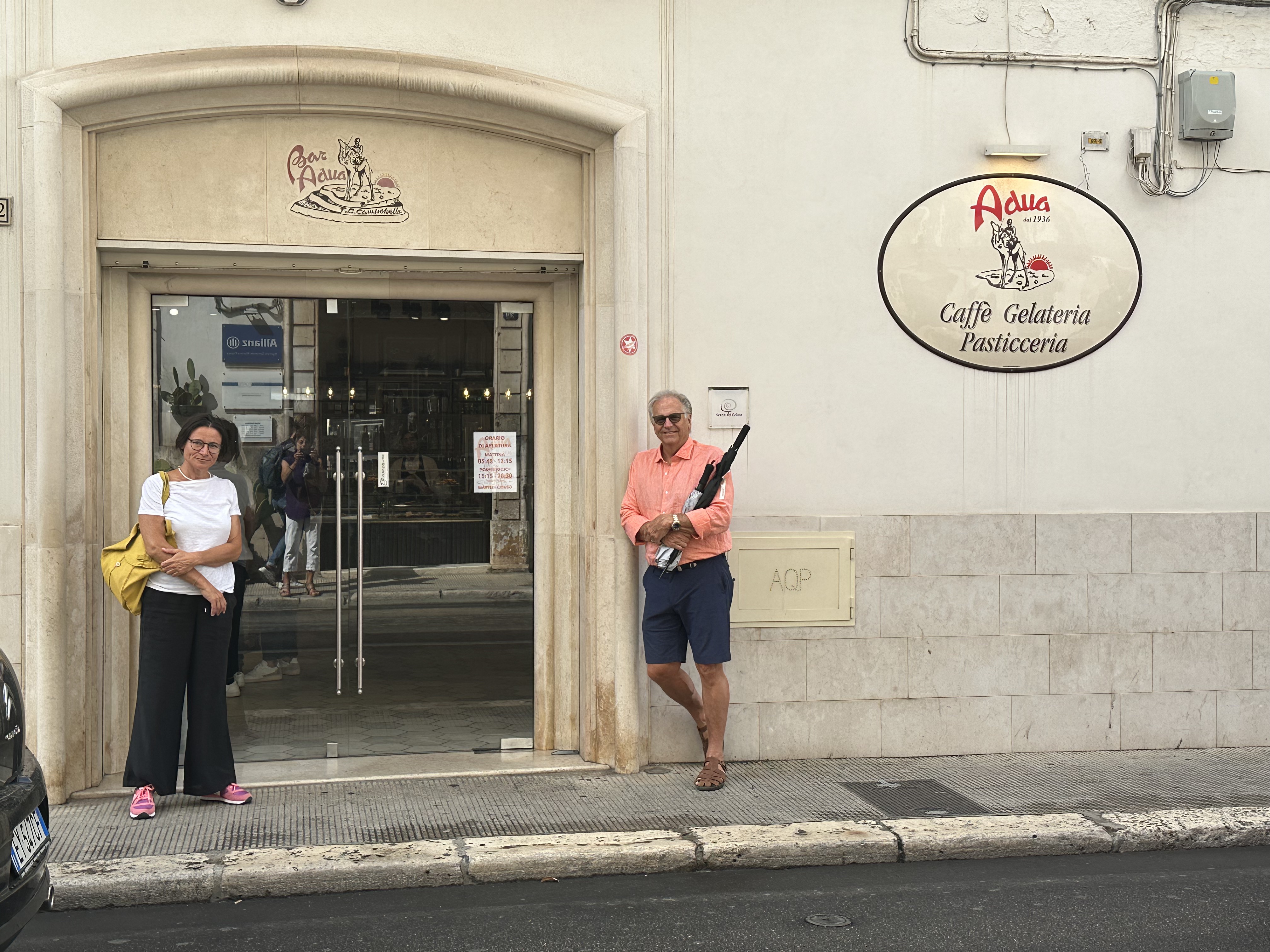
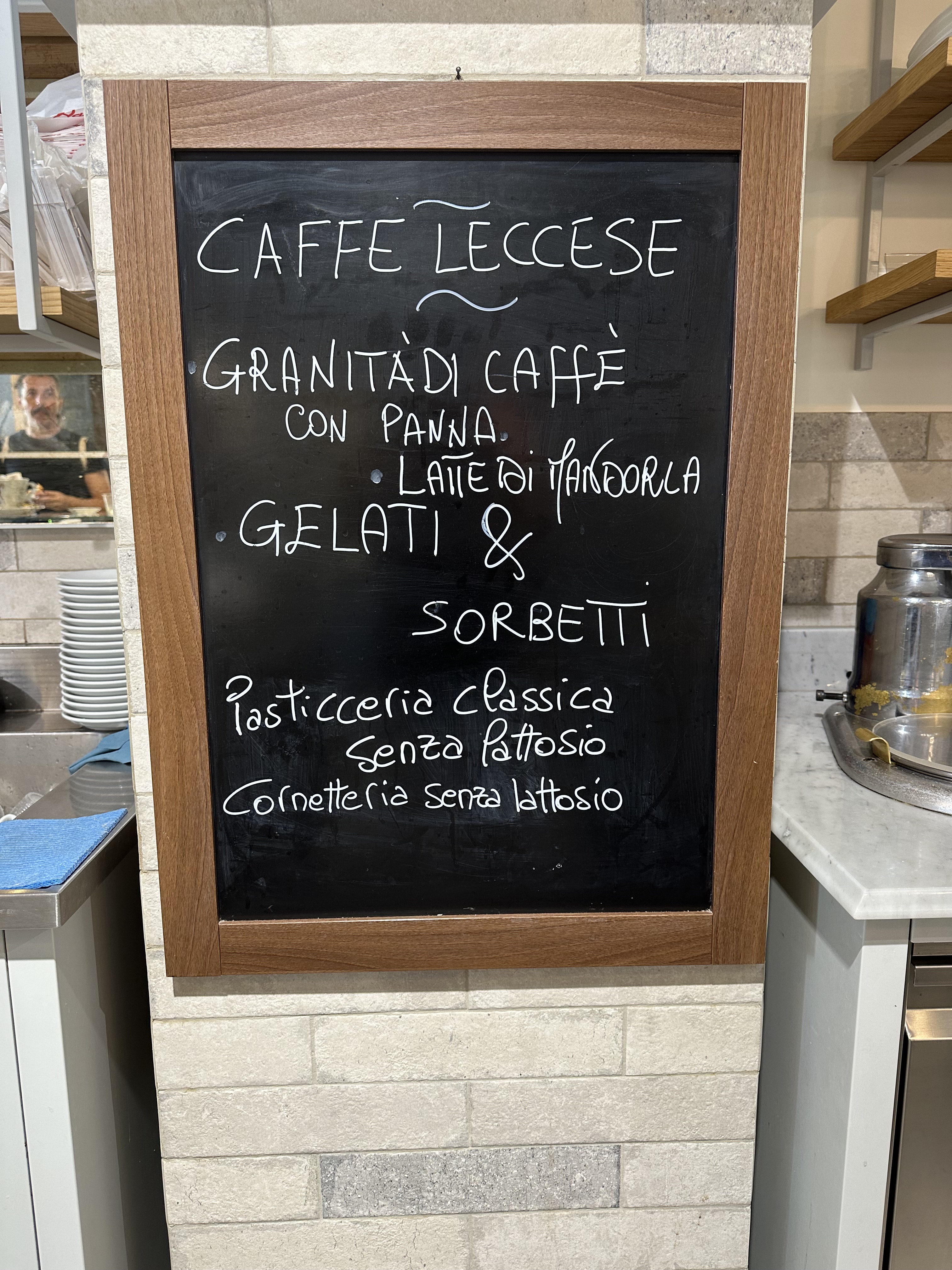
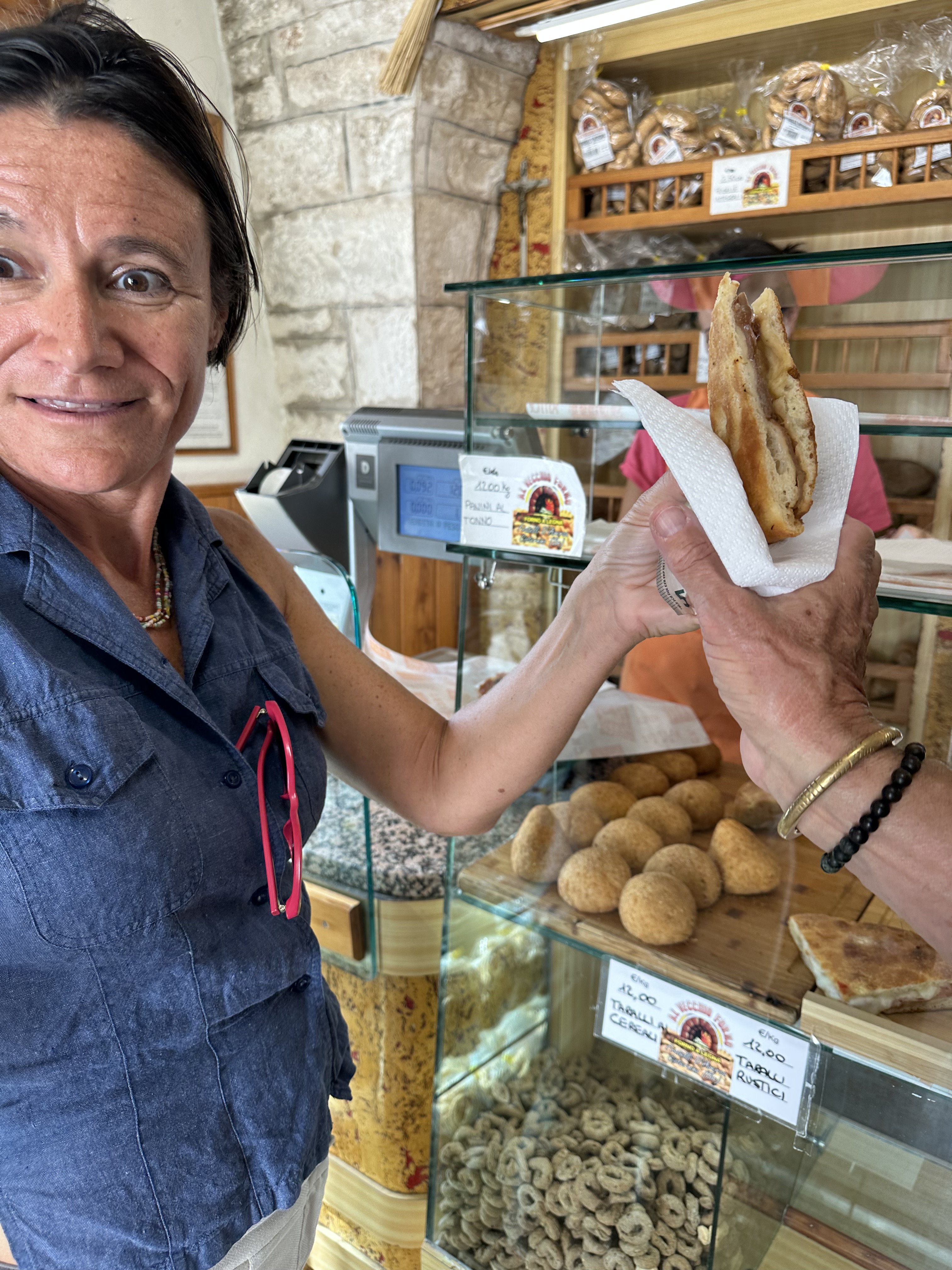
Our first stop in town was at a cafe shop called Bar Adula in Marina Franca. It was Silvia’s favorite place and we could understand why. The coffee choices were extensive and the best was a cold coffee drink called Granita Di Caffe that had an iced coffee mix at the bottom with dense whipped cream on top. Even I had to admit that it was excellent.

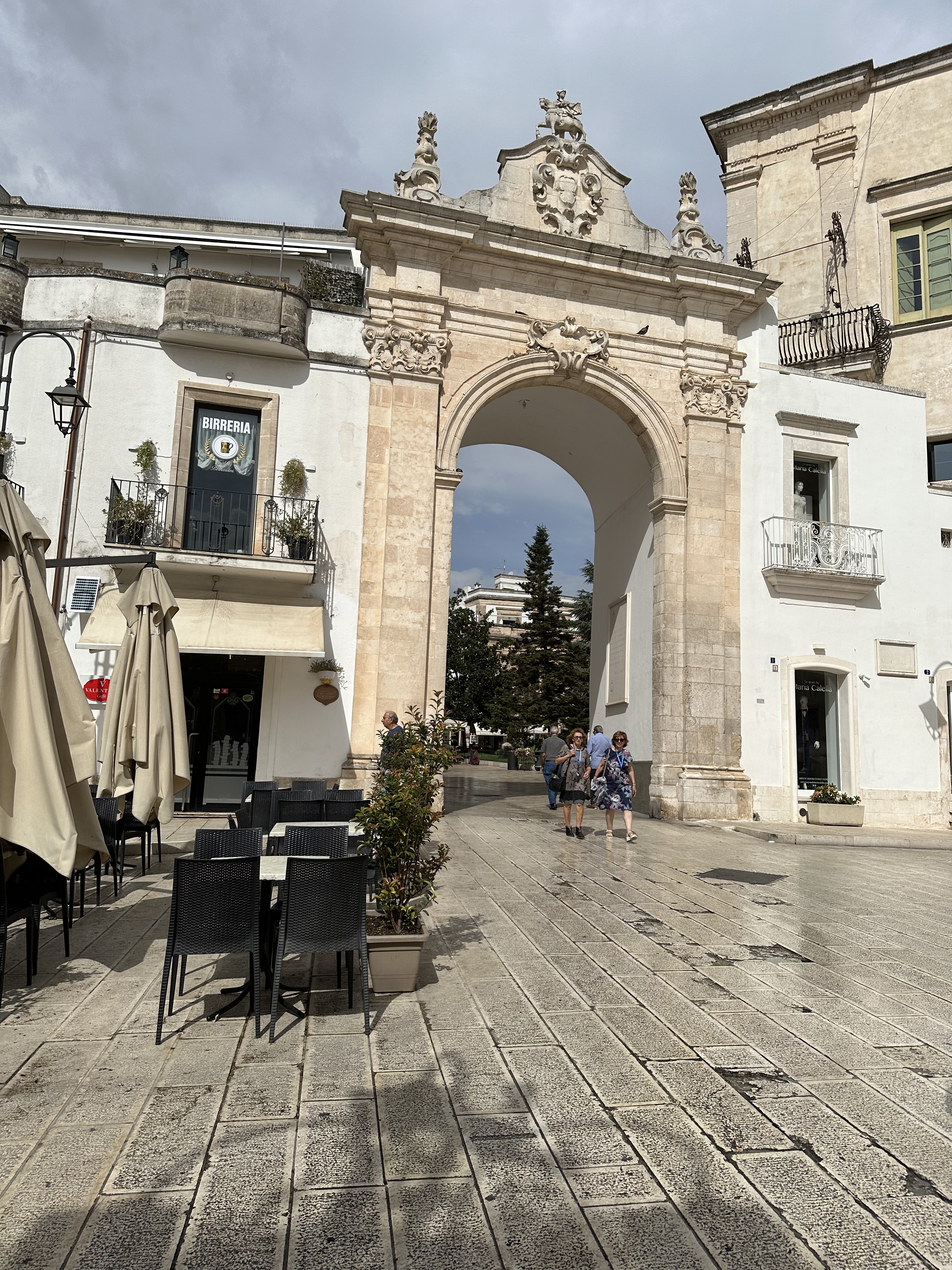
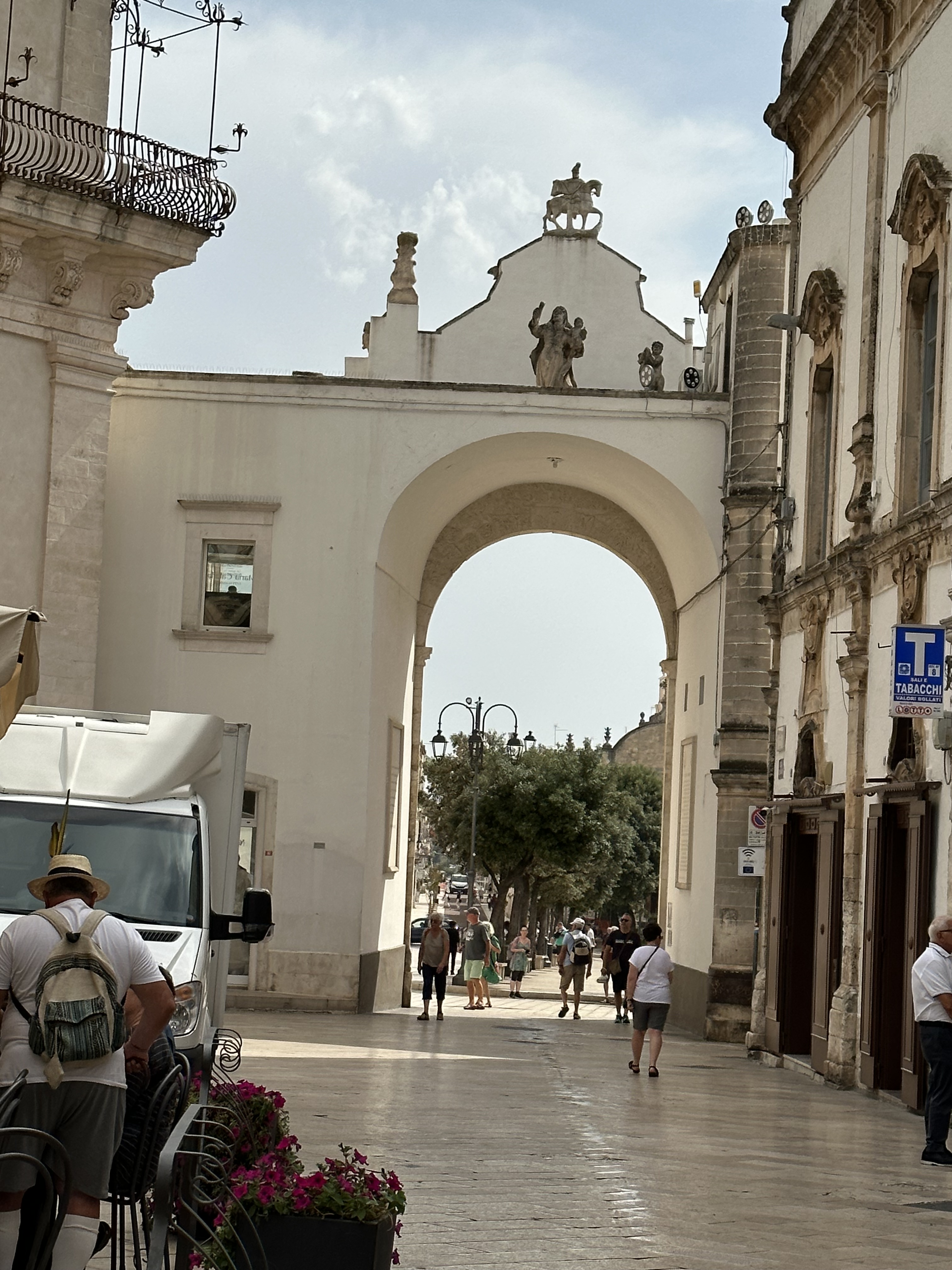
Once fortified with the coffee we walked under the entry arch into the Old City of Marina Franca. The first thing we saw was a statue of St Martino cutting his cloak in half in order to give half to a poor beggar. St Martin is the national patron saint of France.

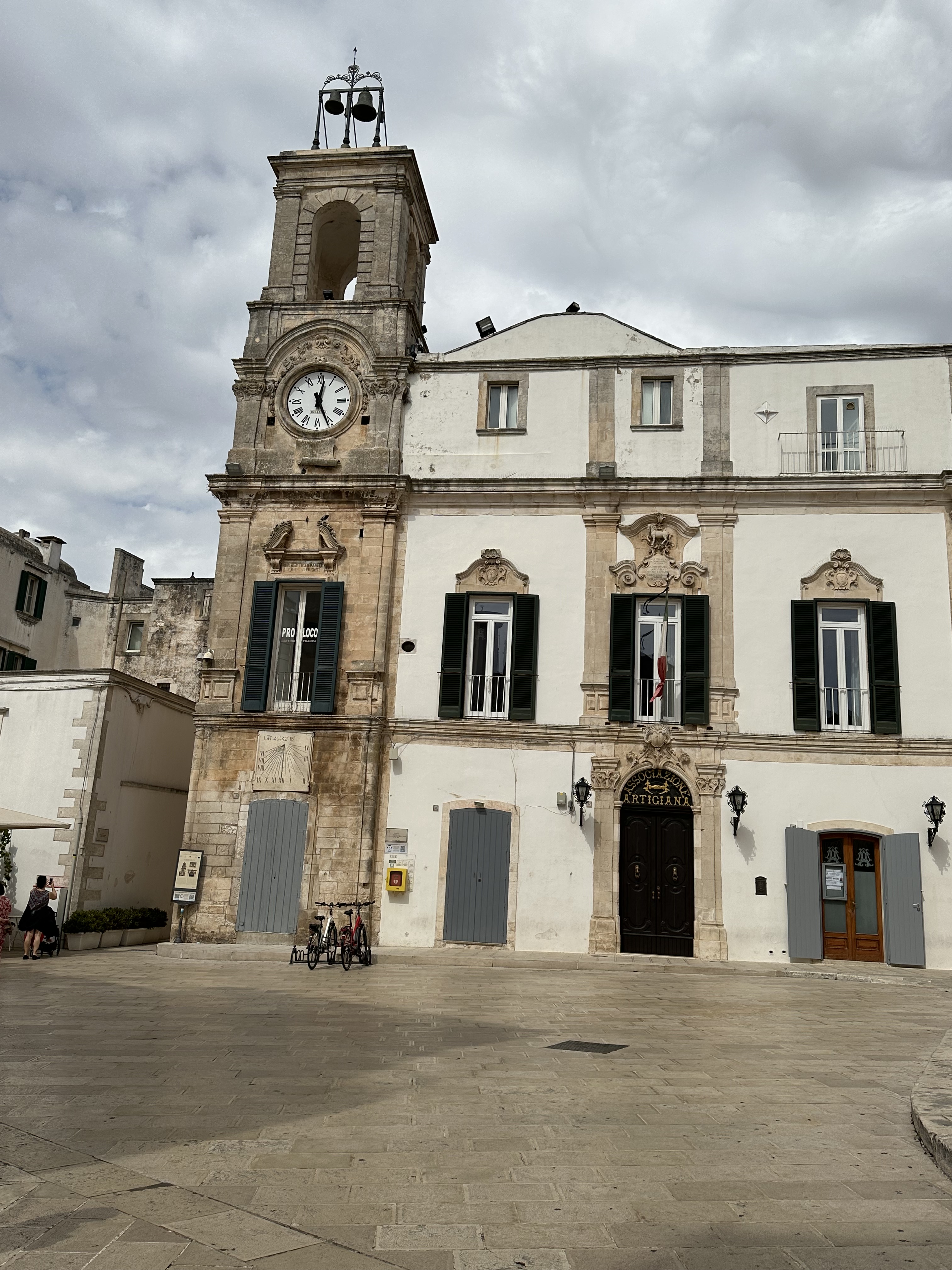
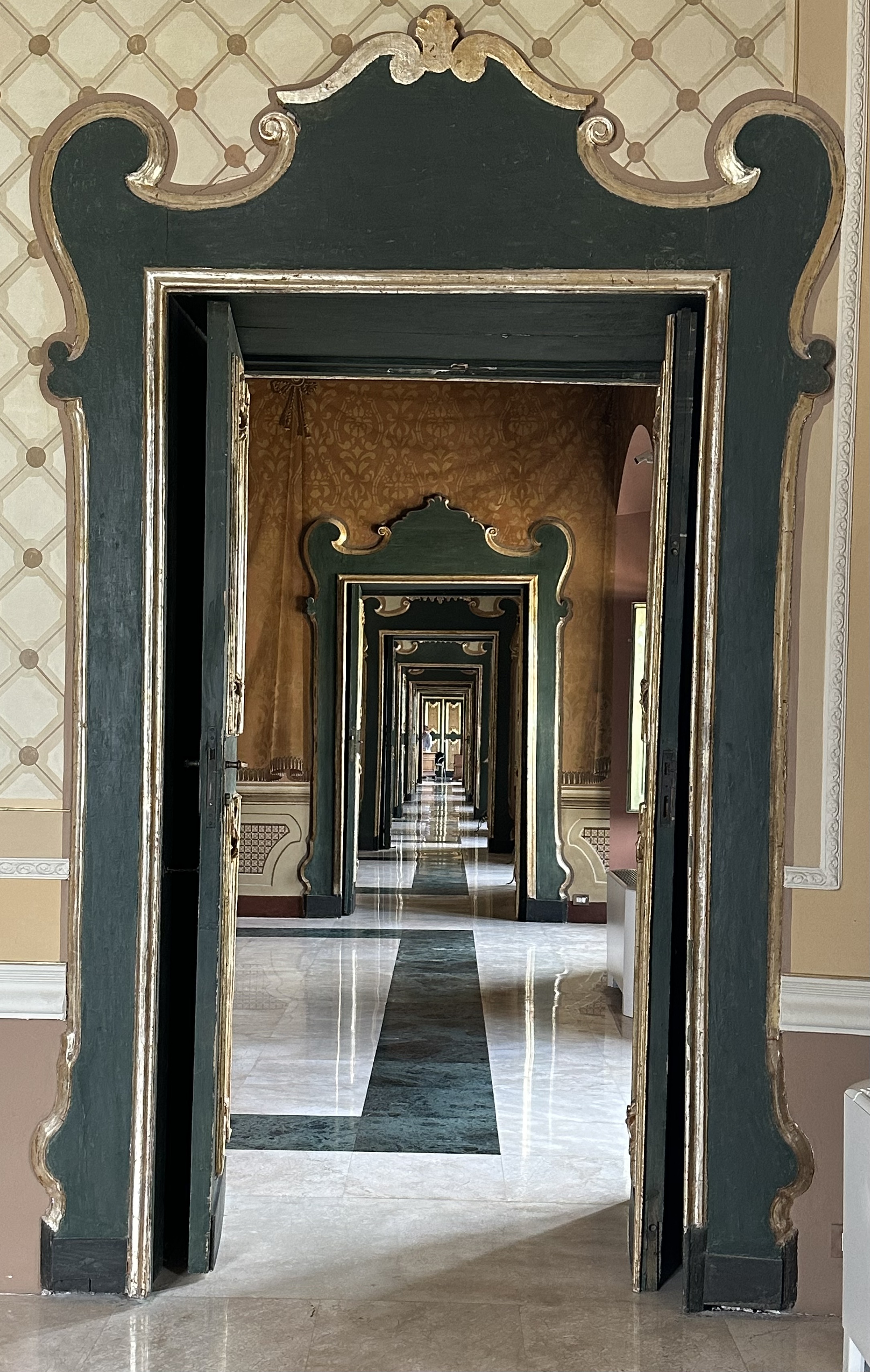
We explored the Palazzo Ducale, a huge building that had belonged to the Caracciolo family of Naples. This family administered the town from 1600 to the 1800’s. Many rooms were frescoed with scenes from mythology and the Bible. Several doors were linked together to create a telescopic perspective with a baroque effect. An annual opera festival takes place here that is very popular, the Itria Valley Festival.

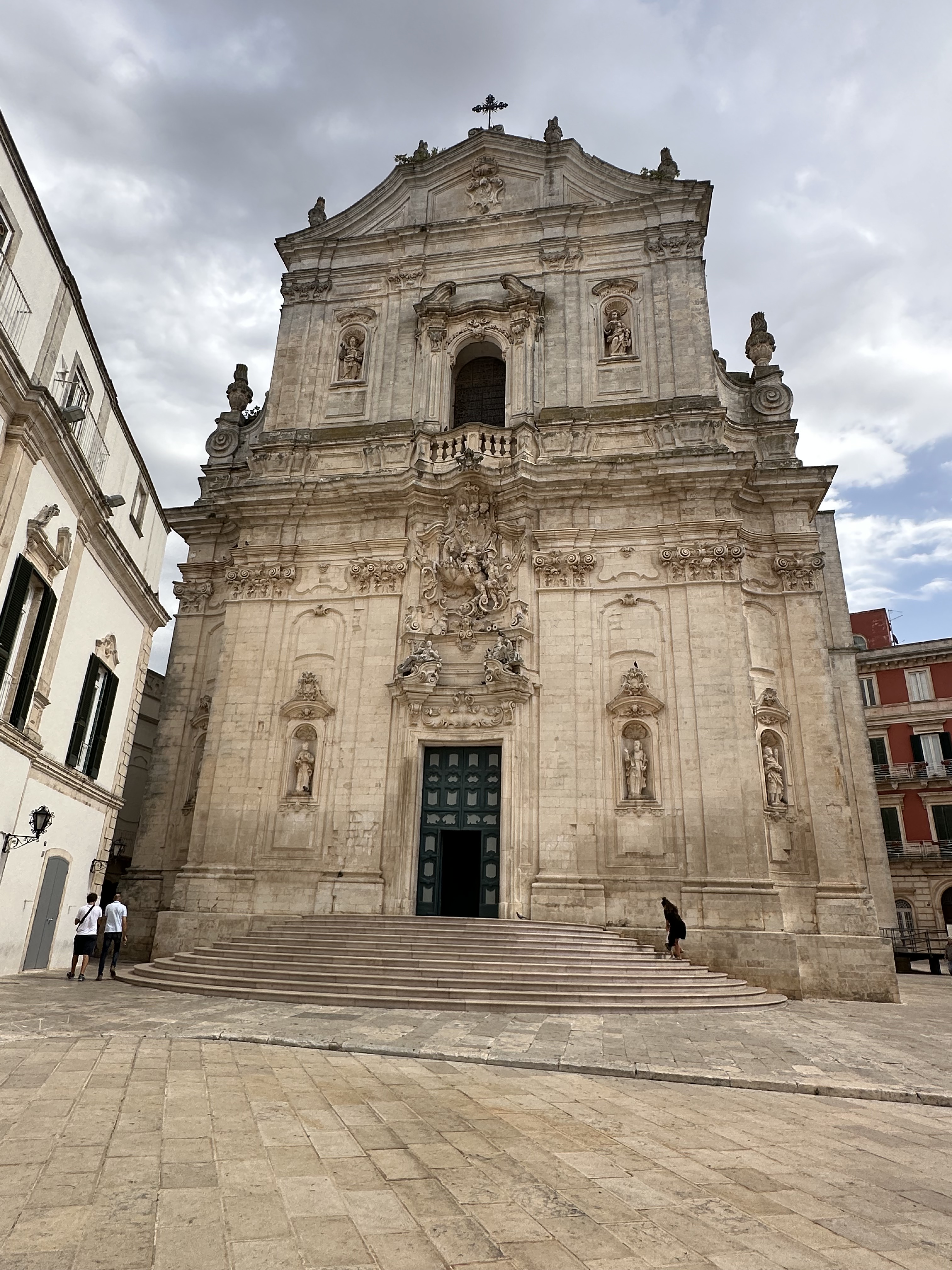
Martina Franca is the largest town in the valley with a population of 50,000. The town is named for St Martin and Franca refers to a tax free zone officially established in the 1300’s . The tax free zone helped establish the development of the area. Local products could be shipped in both directions to either sea. In the 1743 an earthquake damaged homes and public buildings. The new baroque style was used in new construction to good effect in the late 1700’s. Rococo decorations were also included in the structure. In front of the church is the Piazza Plebiscito.

Many buildings were originally built in the 1300’s, but an earthquake in 1743 caused much destruction. It was a good excuse to use the new, modern styles of Baroque and Rococo in late 1700’s construction, including the Basilica of San Martino, the Church of St Dominic and its attached cloister and many houses.

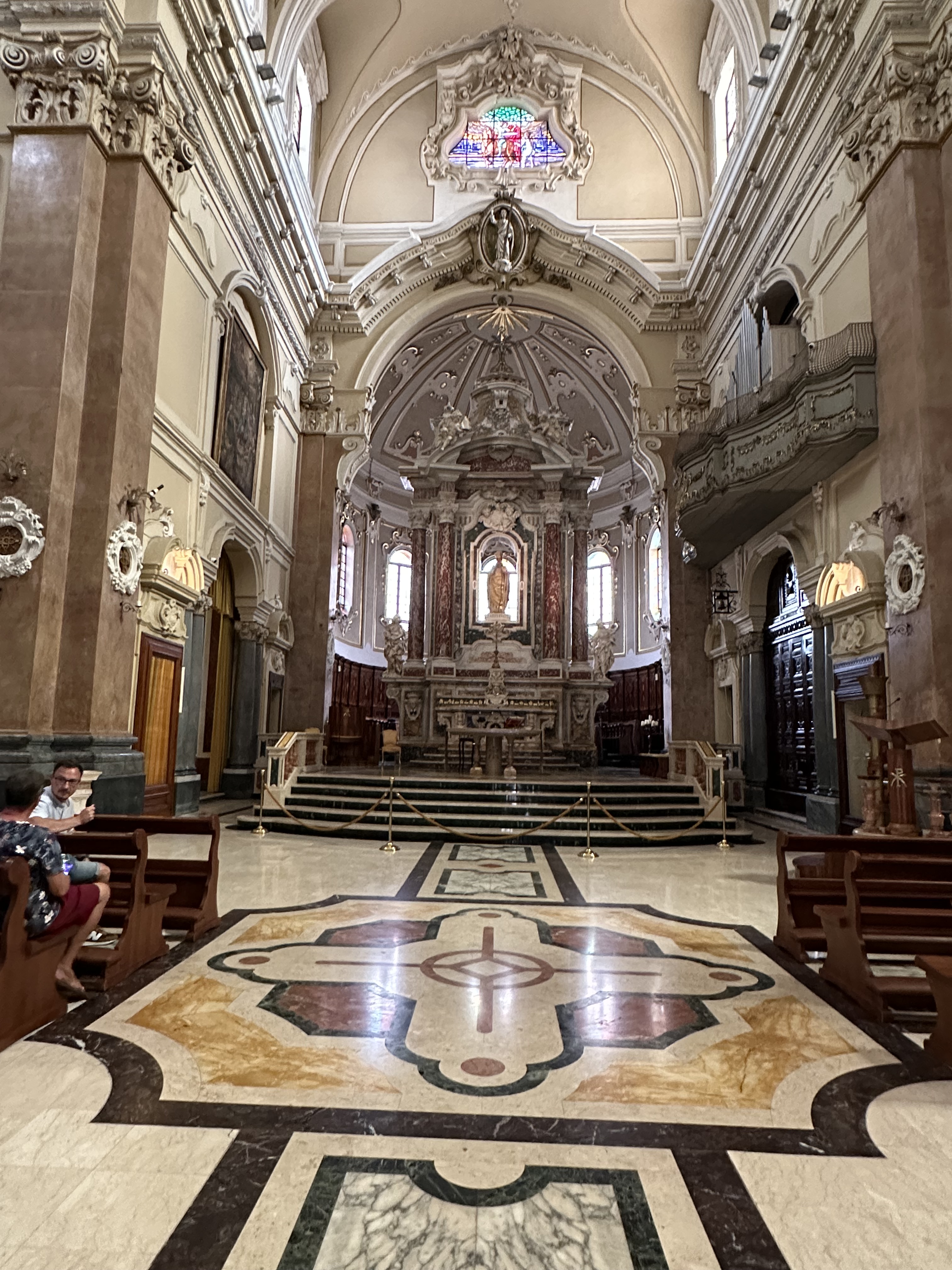
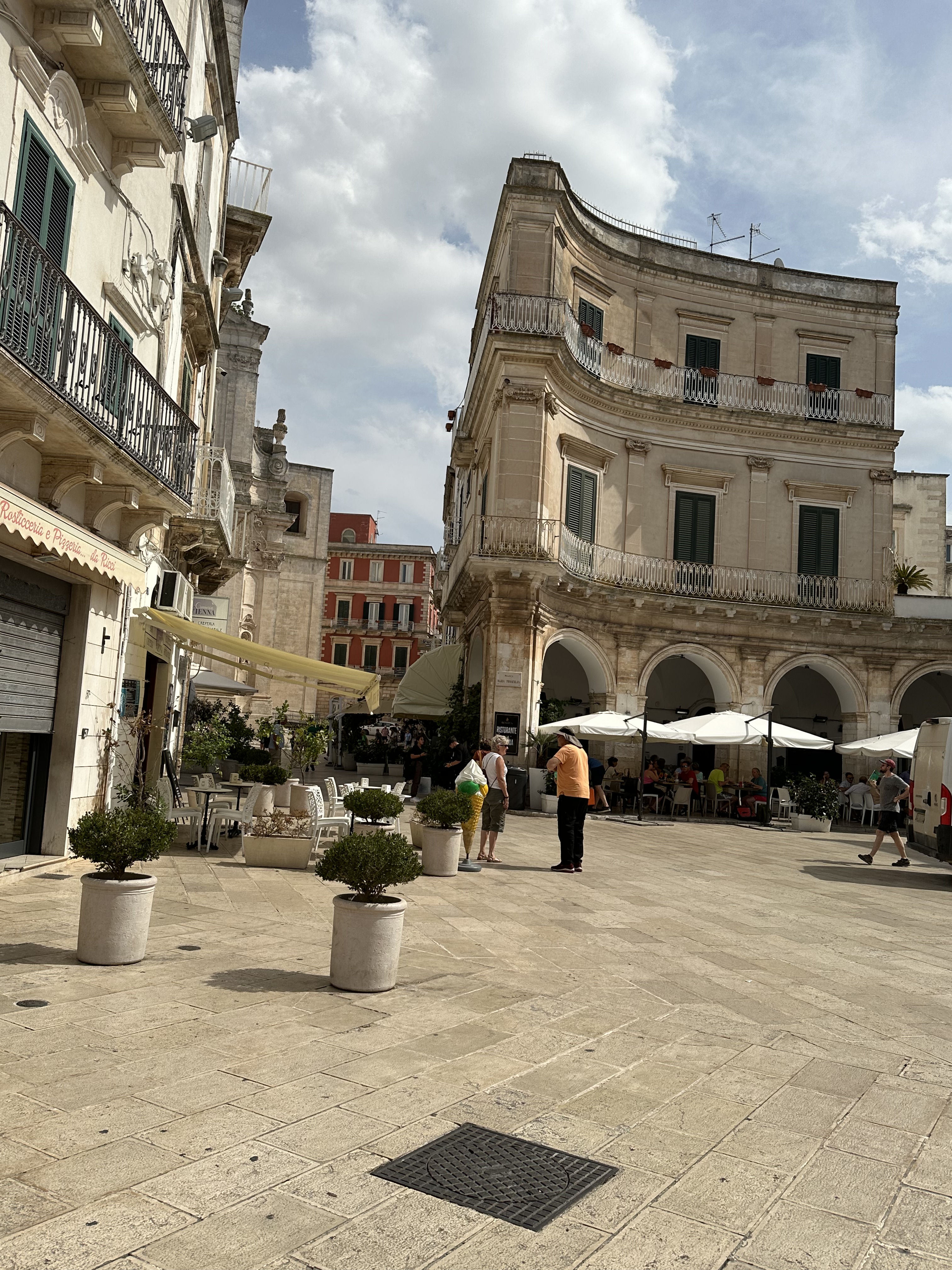
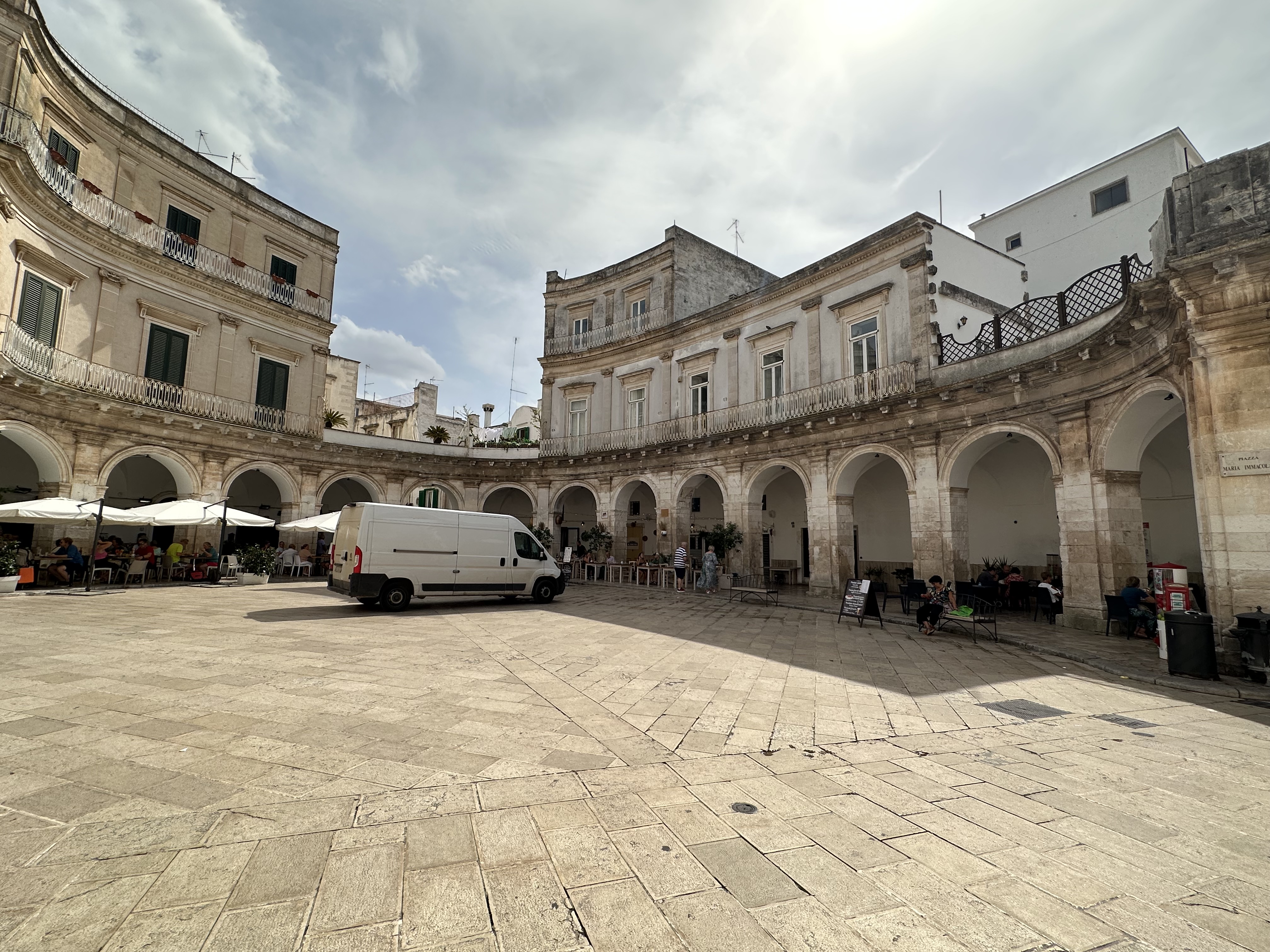
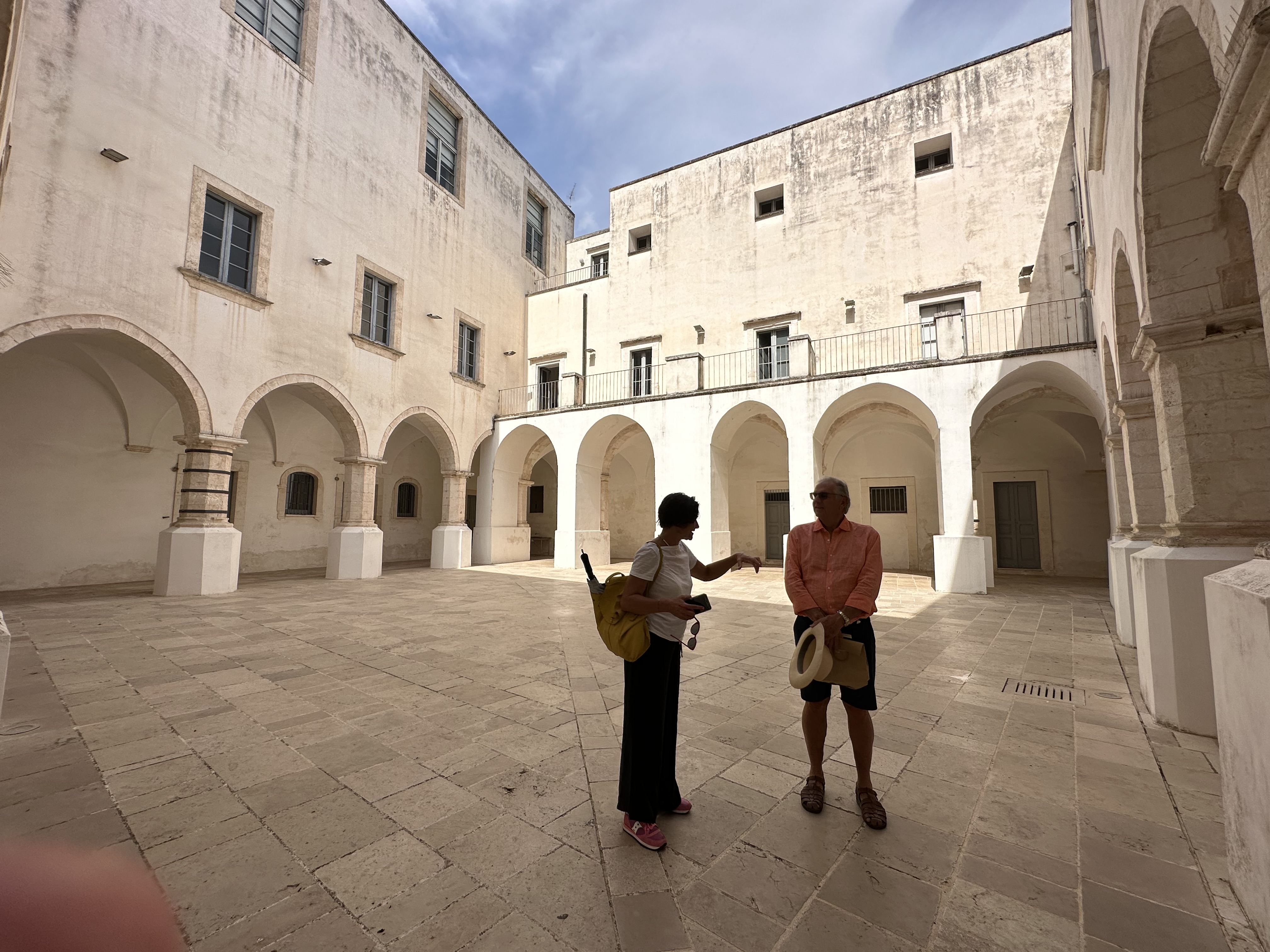
In front of St Martin’s Basilica is the Piazza Plebiscite. The piazza is surrounded by a covered archway that is popular for vendors in the summertime. Around the neighborhood we arrived at St Dominic Church, also from the late 1700’s. Attached to the church was the Dominican cloister, which is now used for a preschool. There were few people in the town. Almost no tourists. The streets provided very pleasant strolling with many upscale clothing stores. We found a store where Mark bought another shirt. This makes 3 new ones for him and one purple outfit for me. Enough!

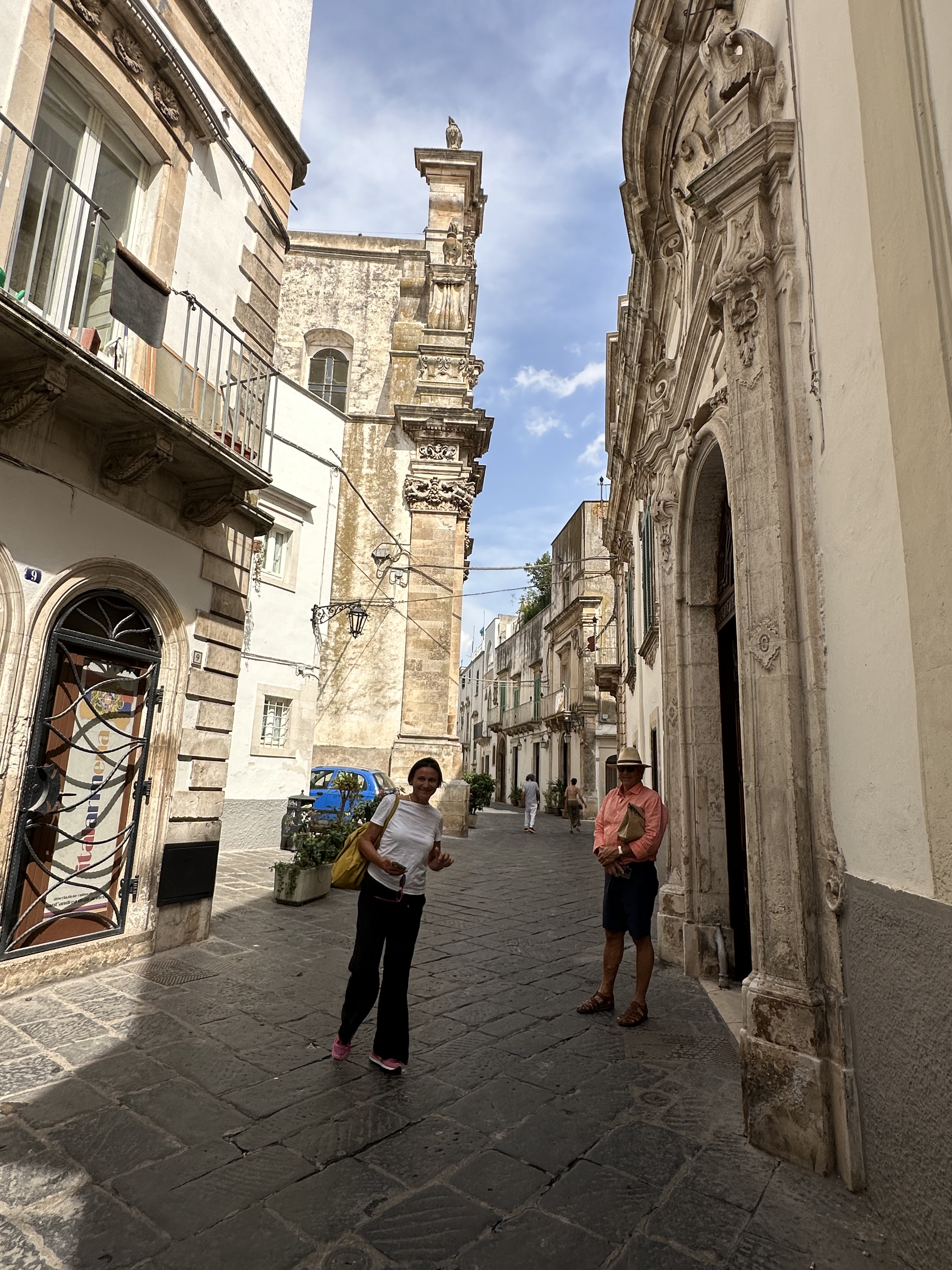
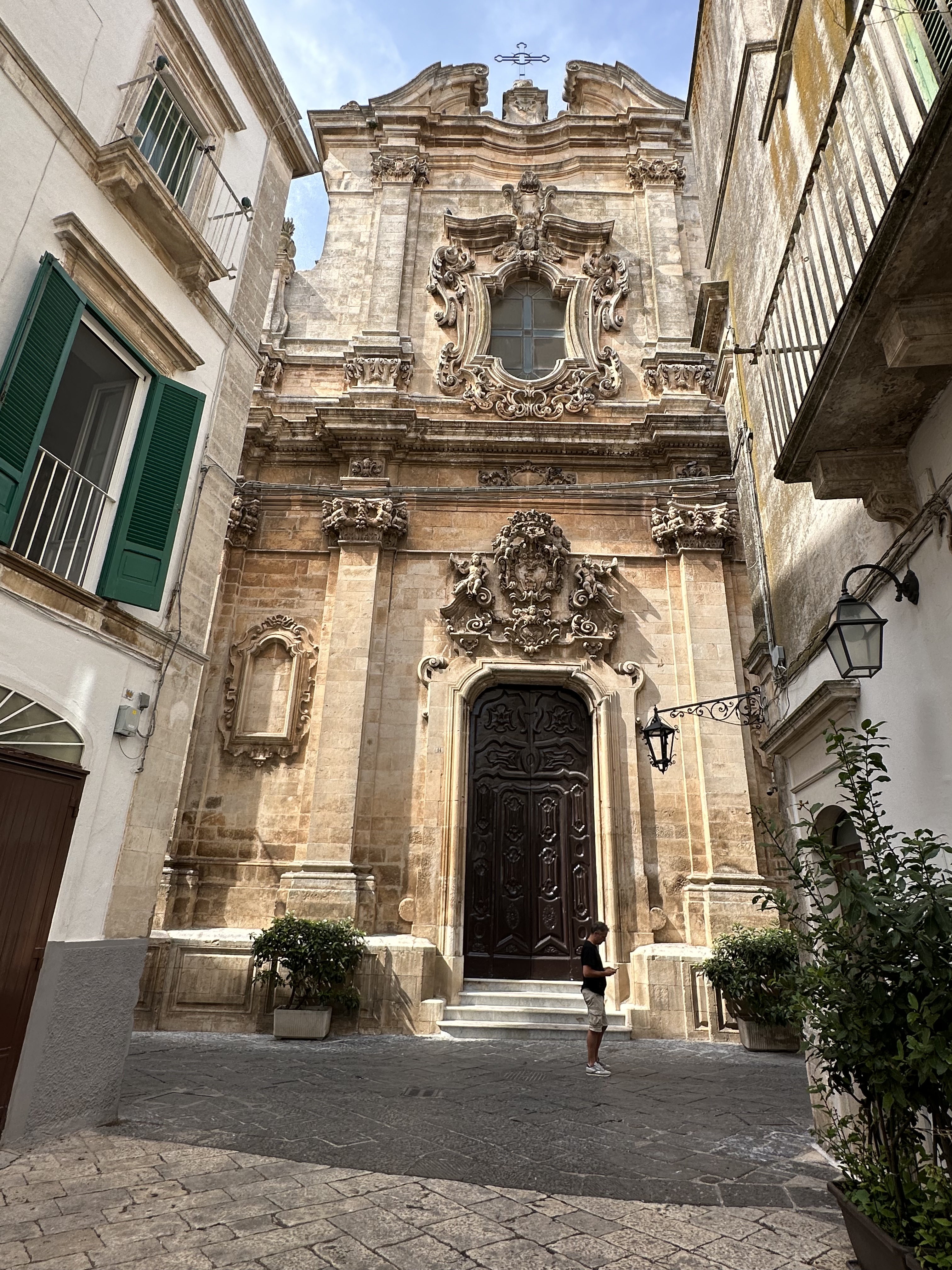
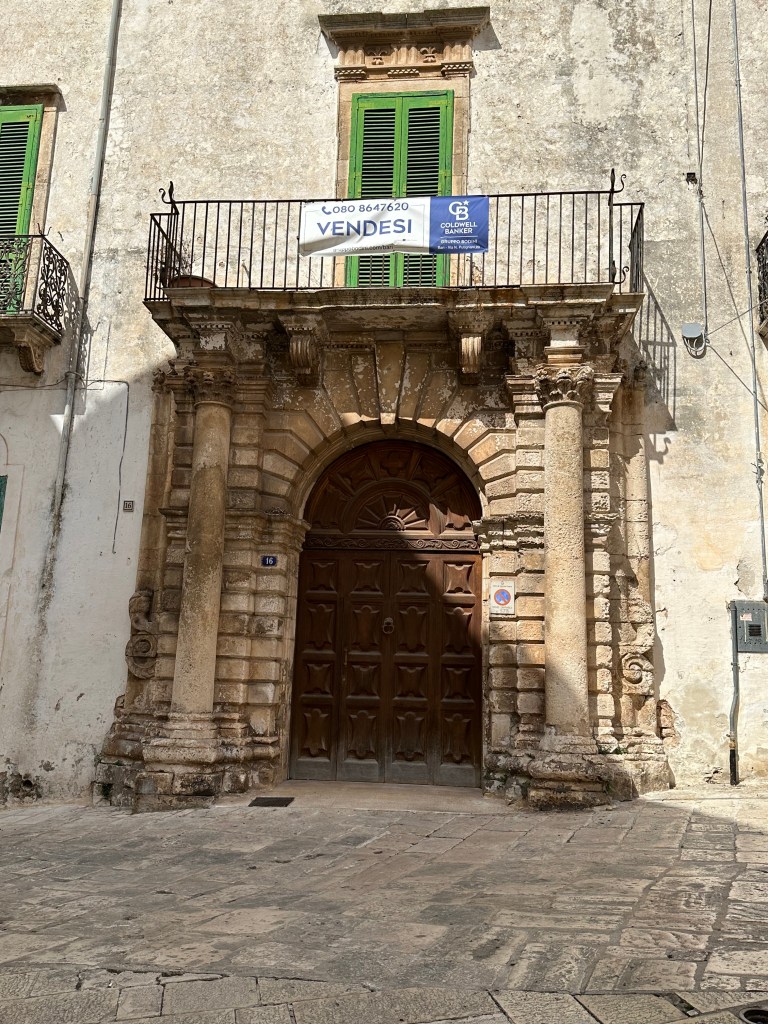
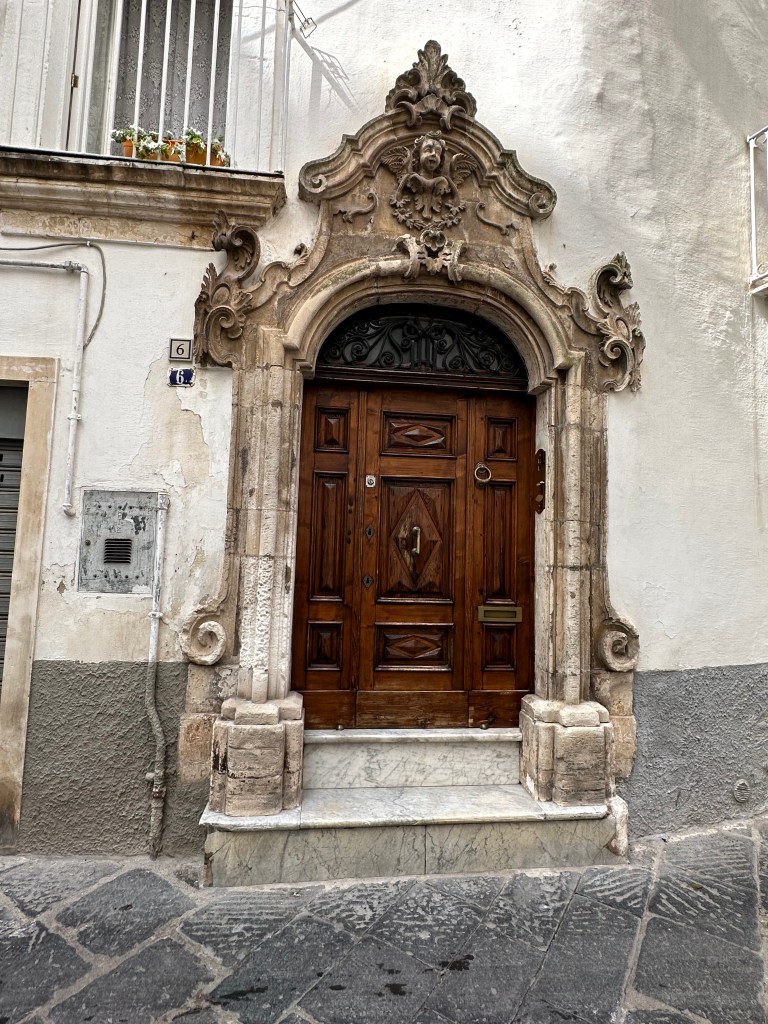
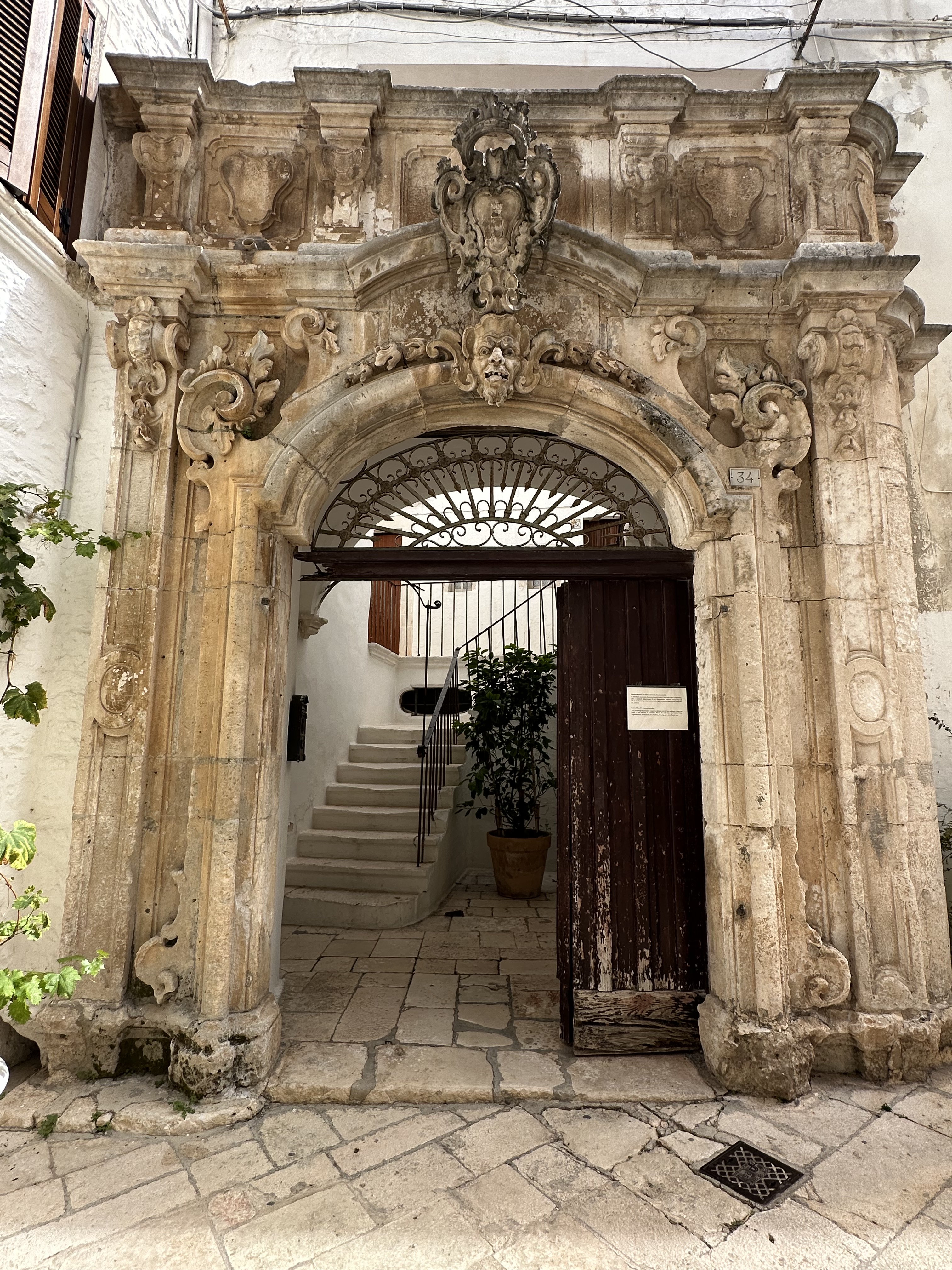
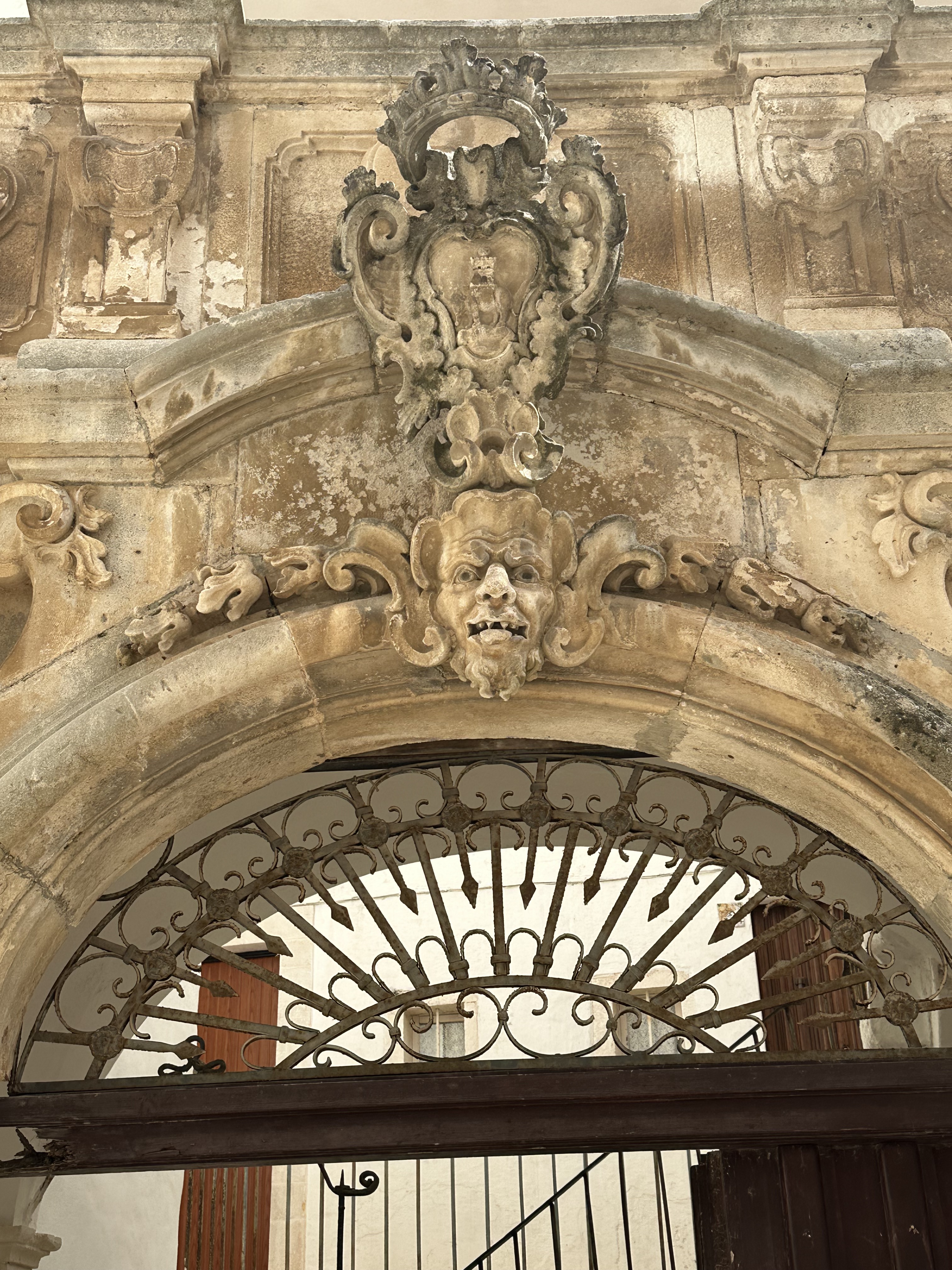
We learned that many people who had lived in the town through the centuries had been very wealthy, but the younger generations turned to spending rather than investing and eventually they could not maintain their salacious homes, so they sold them. Today we see fancy entry doors, but plain walls on the rest of the building. New owners maintain the property as best they can. Here are a few.

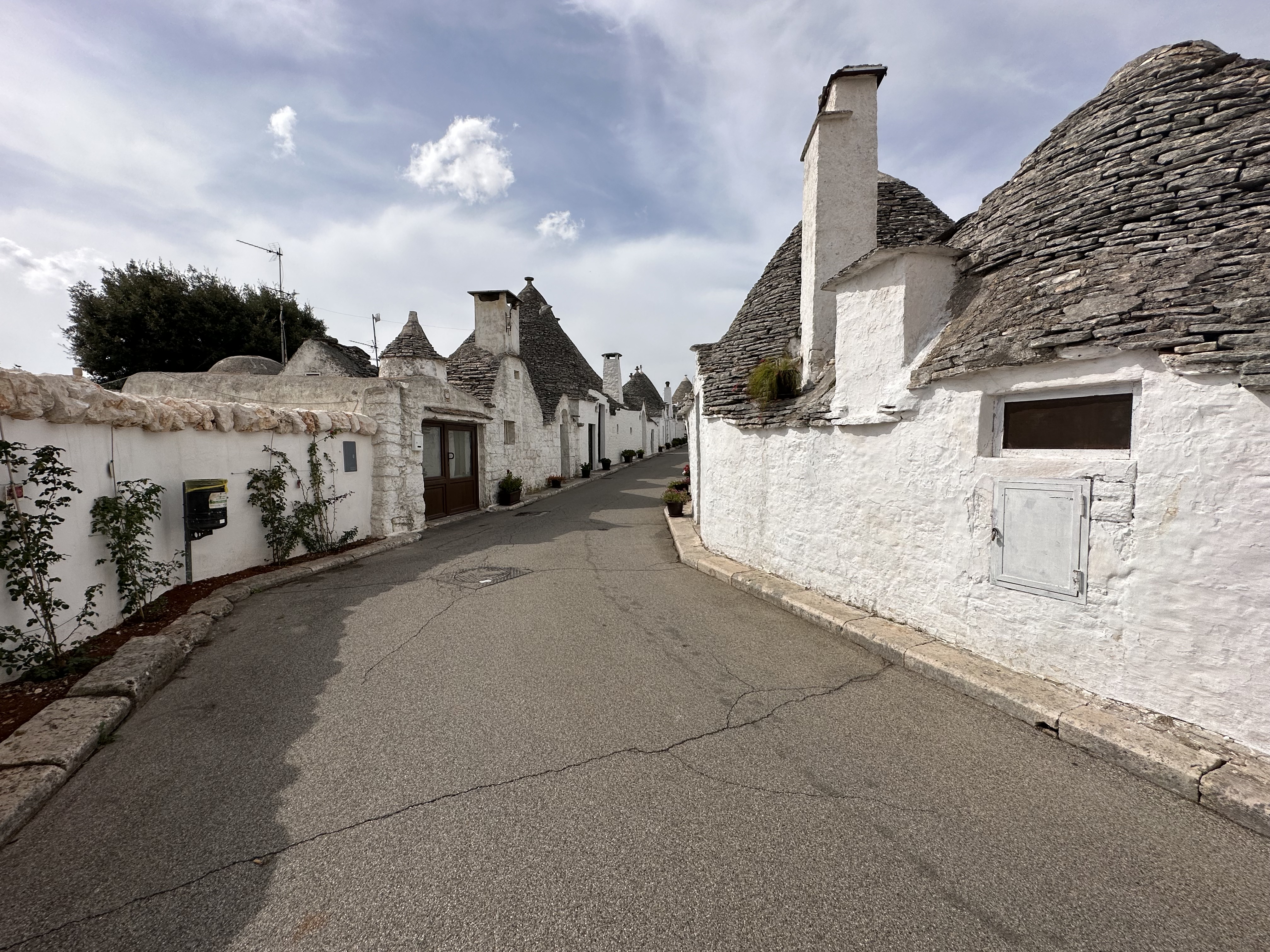
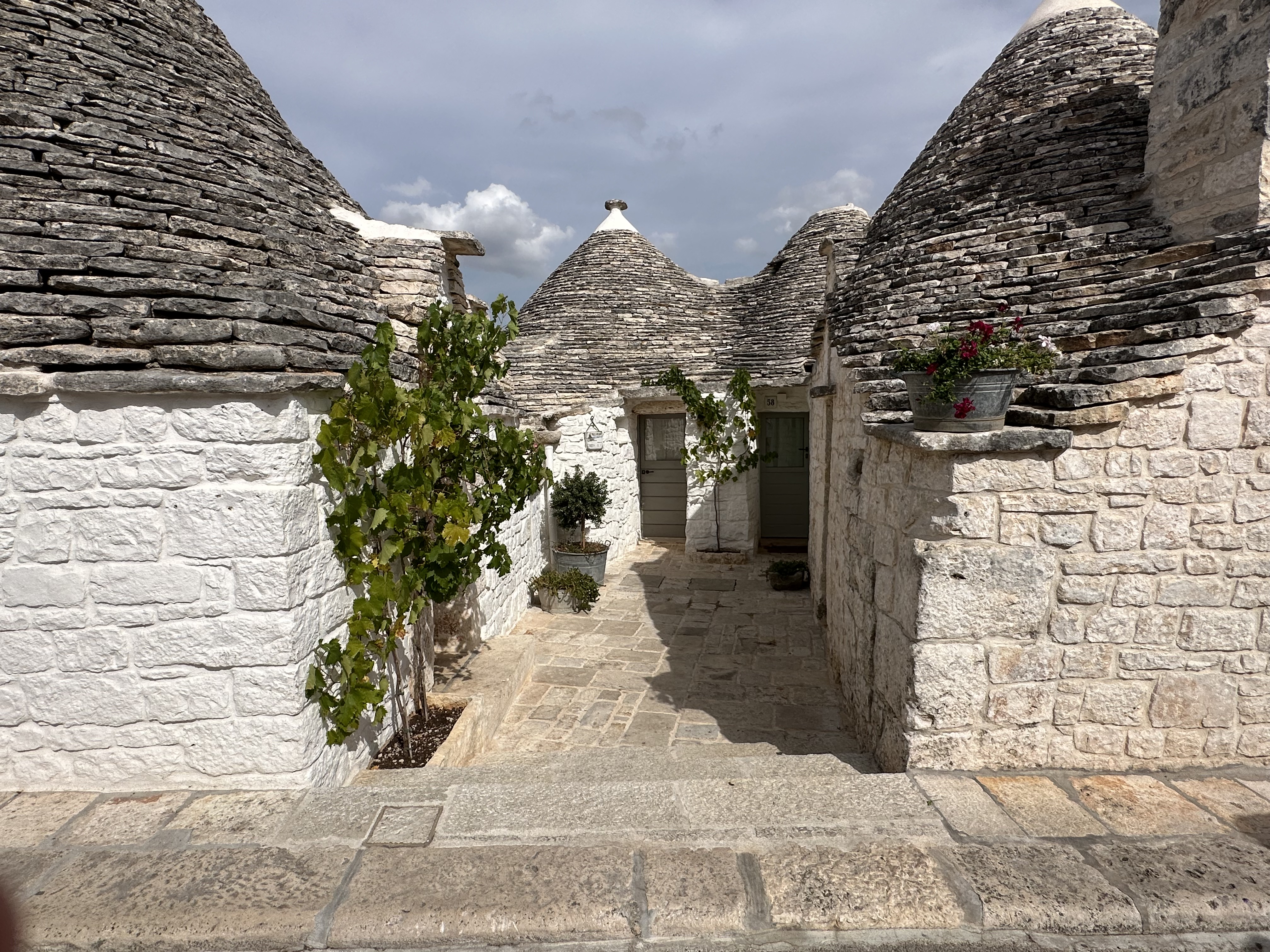
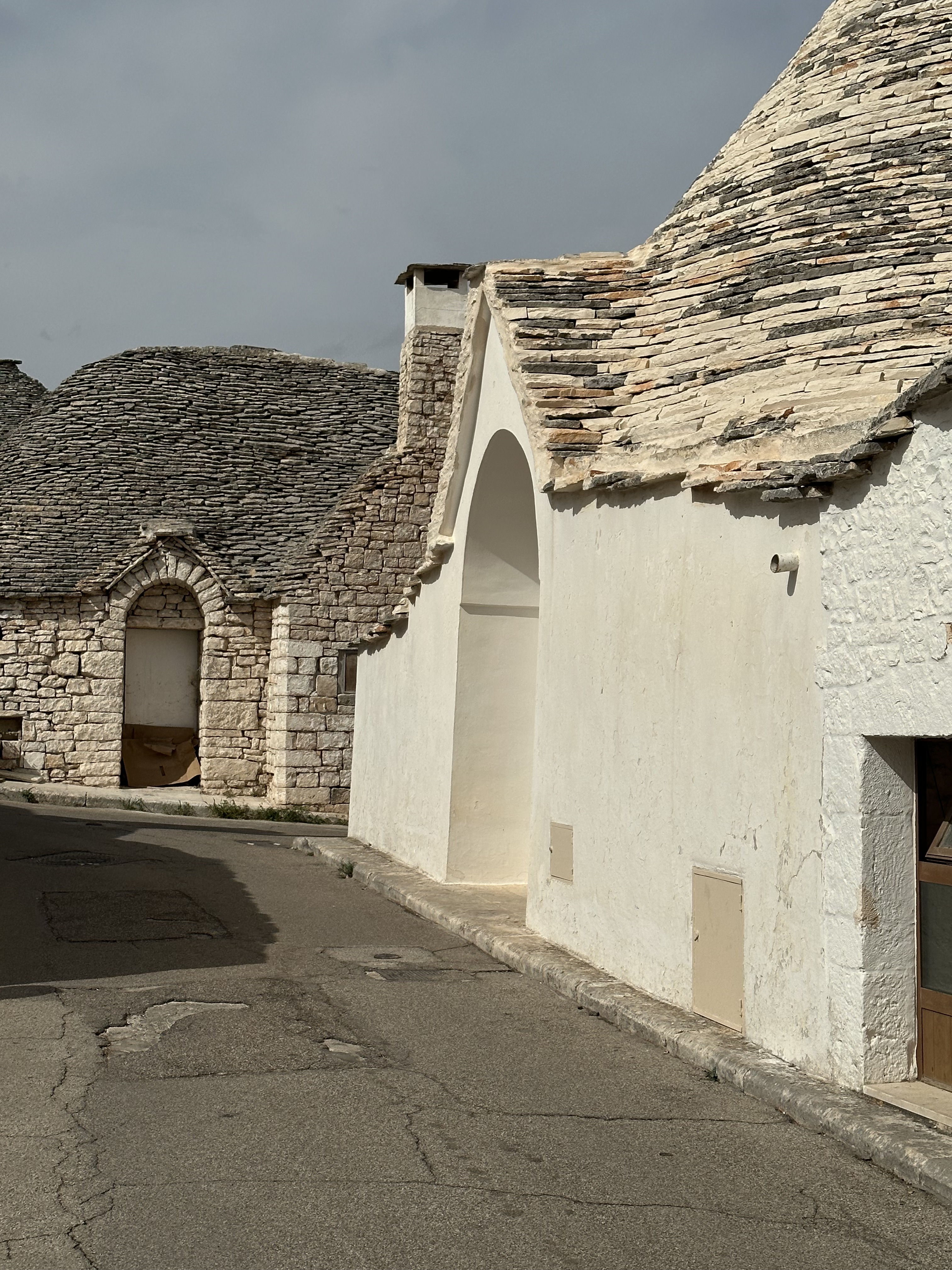
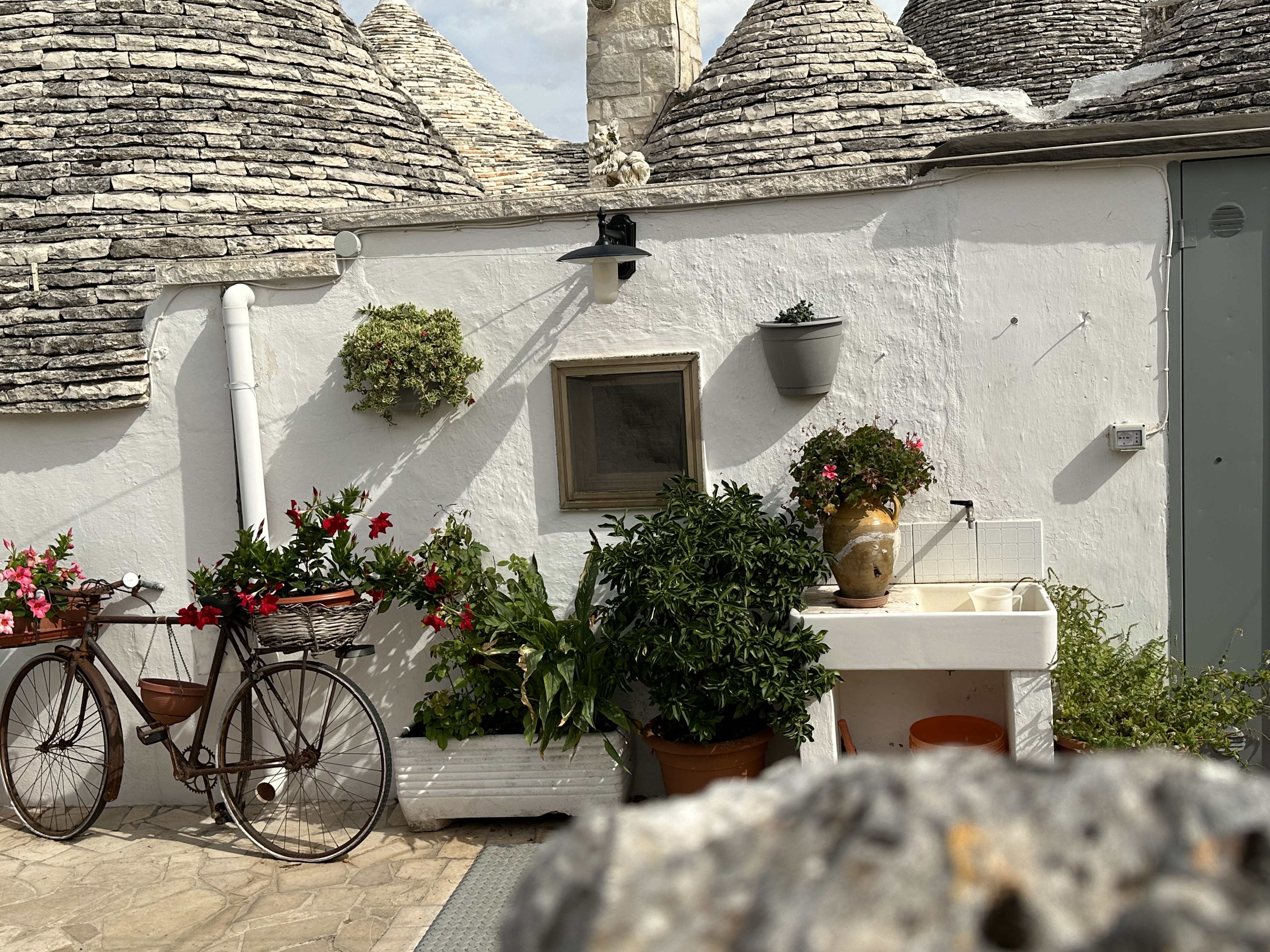
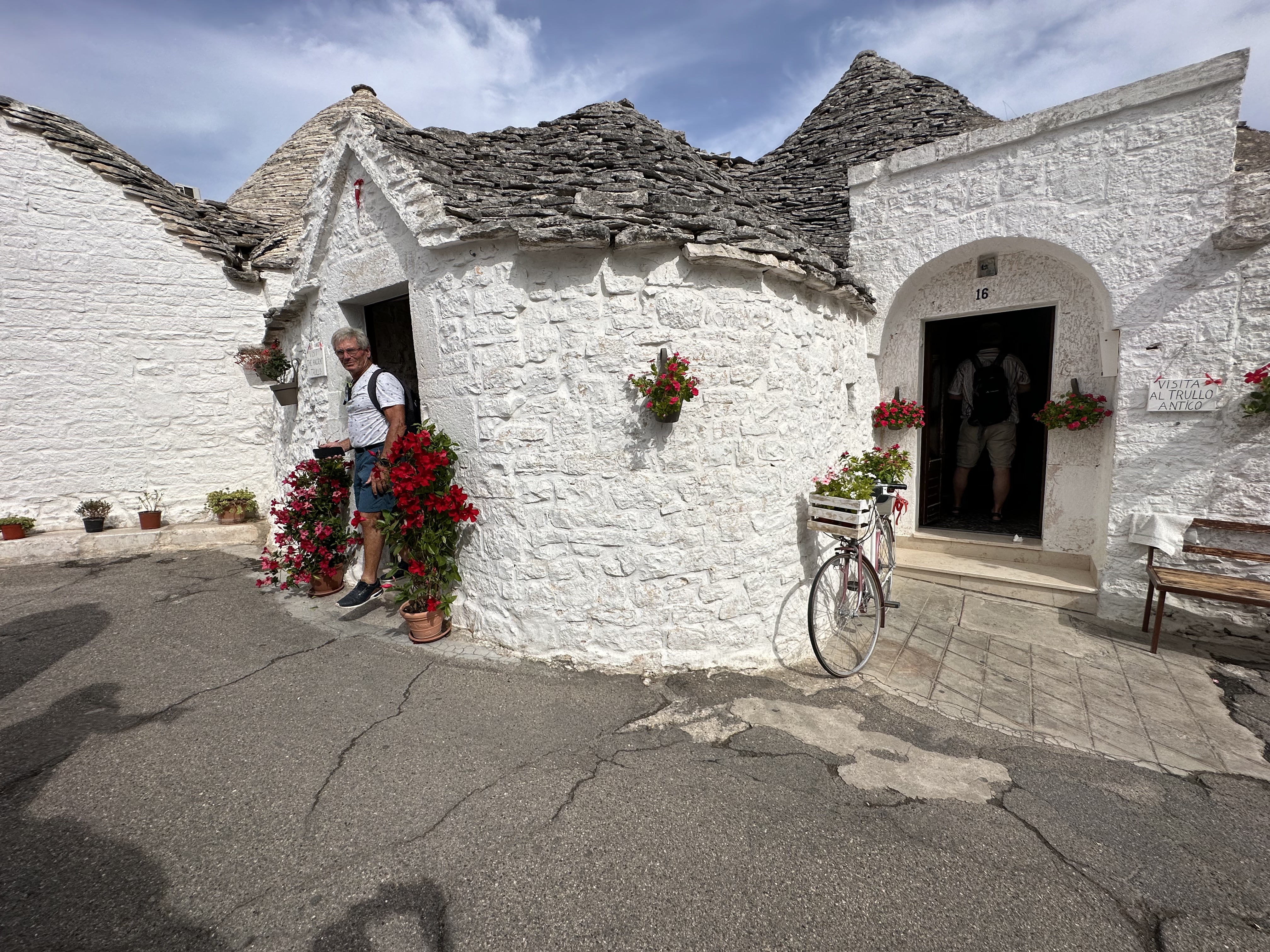
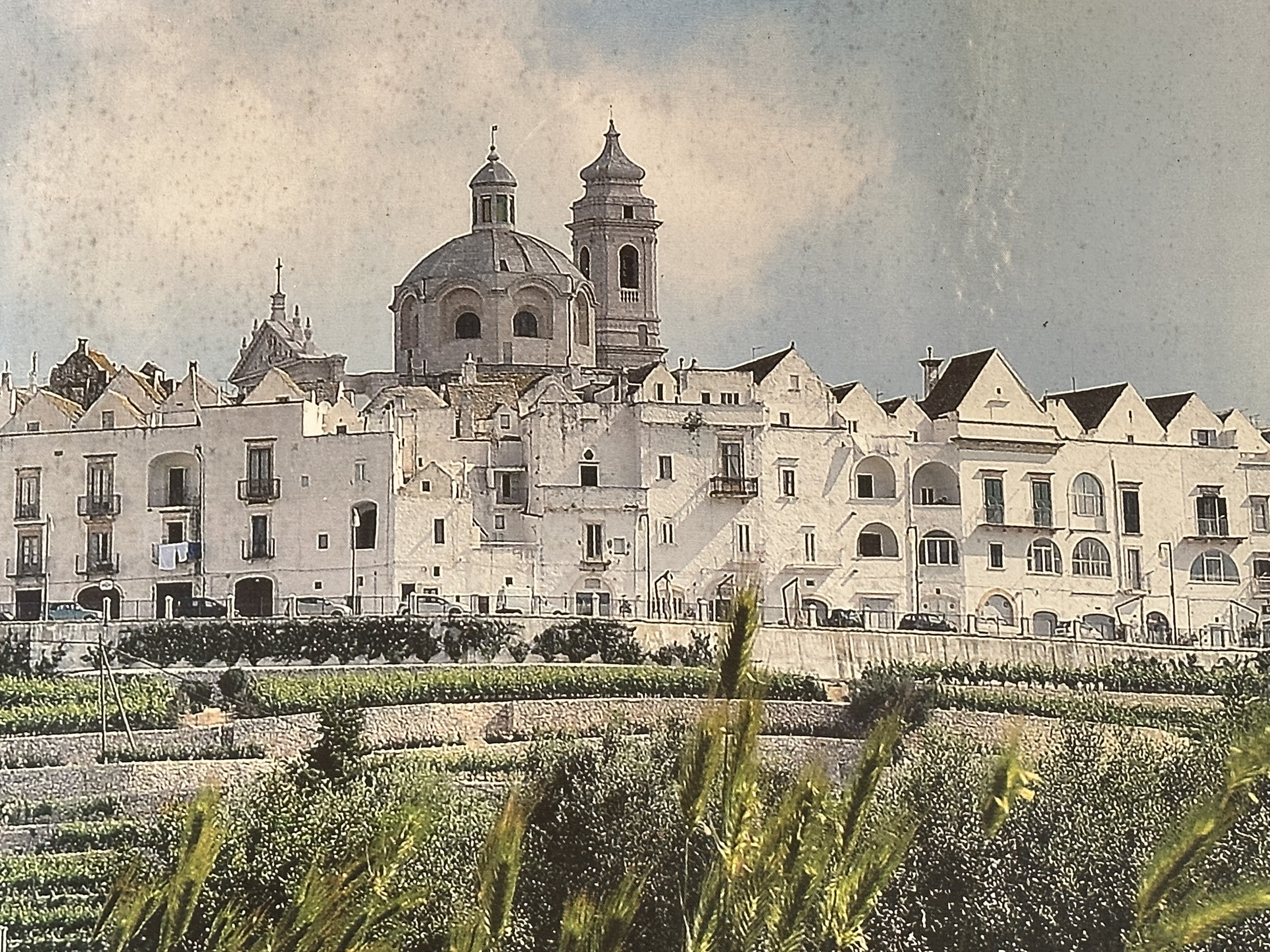
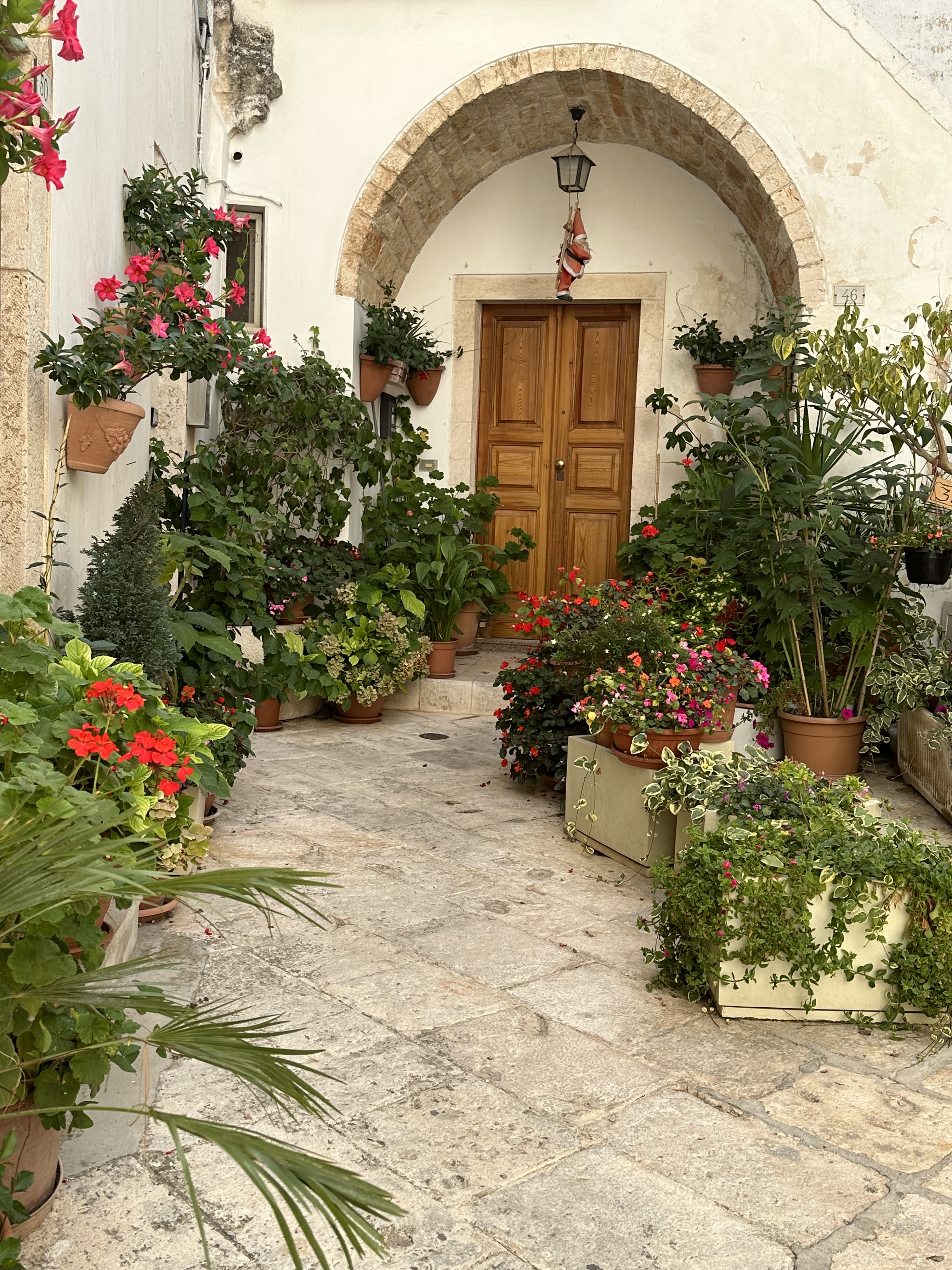
A colorful scene of Martina Franca near the Basilica. From here we headed for the UNESCO Heritage site of Alberabello, which was begun in the 1500’s. The village is the town full of Trulli, round structures with cone shaped roofs that were dry-stacked. Many were whitewashed to protect the walls from crumbling as they built without cement. The people who initiated the structure were the Acquaviva Family. The first house was built in 1428. They paid no taxes because the roof was not permanent. By dry stacking, the owner could remove the roof and no longer have a taxable home, only a stable. As soon as the government taxing authority agreed there was nothing to tax and departed, the owner put the roof back on the building. The concept became popular. The town, having no taxable buildings, had no name either and was known as a ghost town.

Today Trulli houses are valuable as tourist attractions and second homes. Many of them are lived in full time and have all the conveniences of modern houses. Here is an abandoned countryside house Silvia found to explore. It had olive trees, and wheat fields. We pretended to be proud new purchasers of the fixer upper. This would be our 5th remodel. Nice huh.

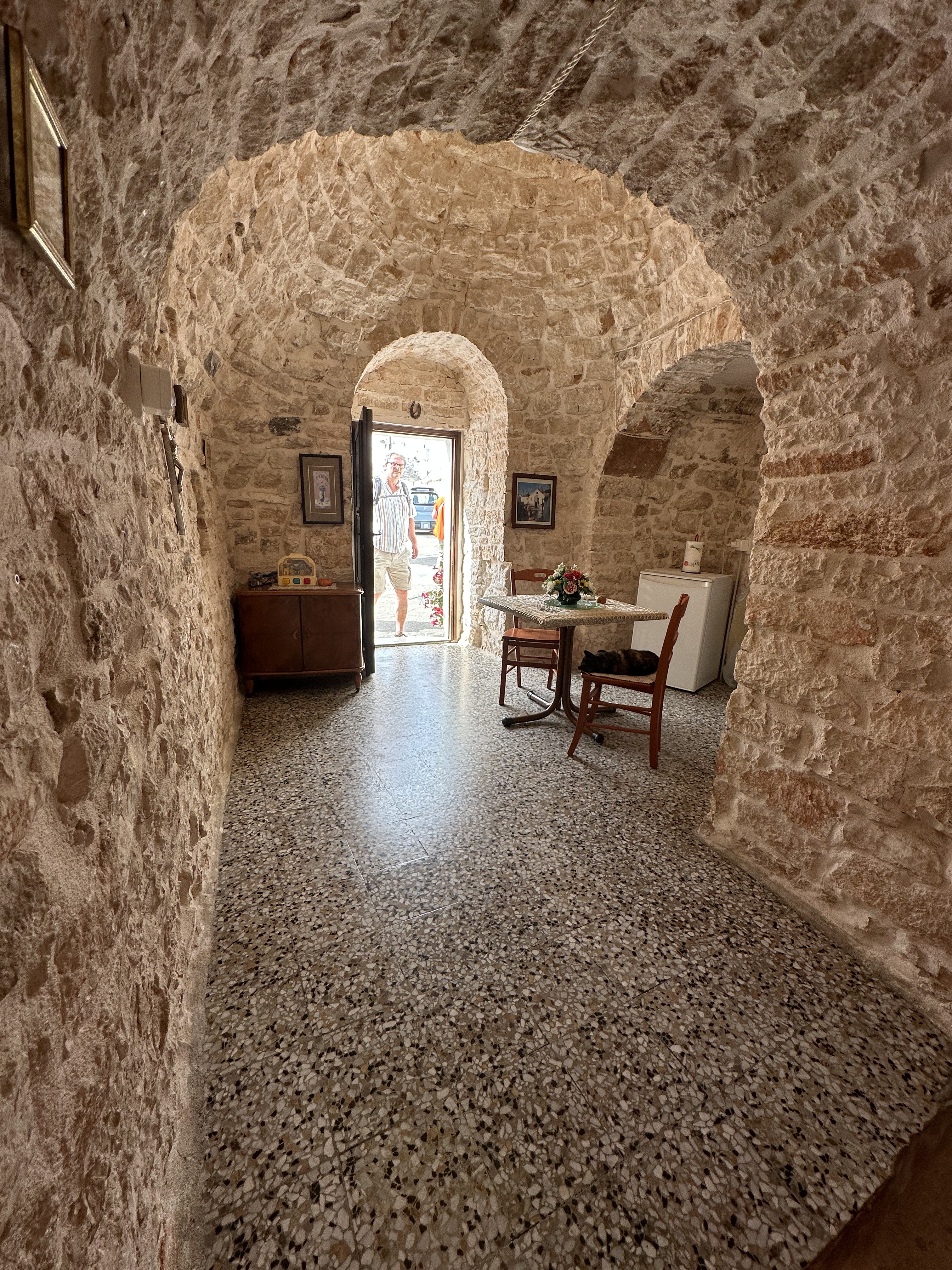
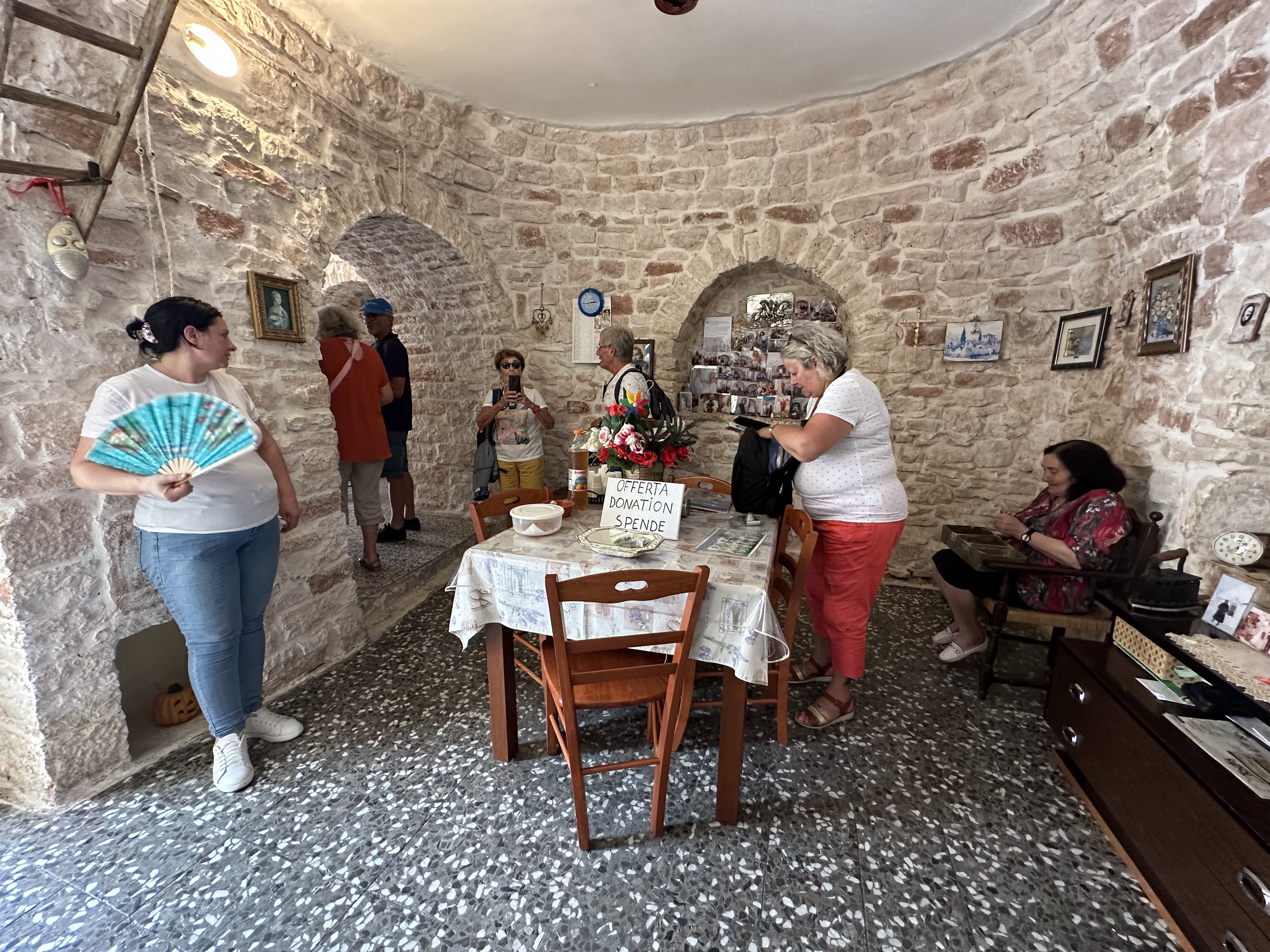
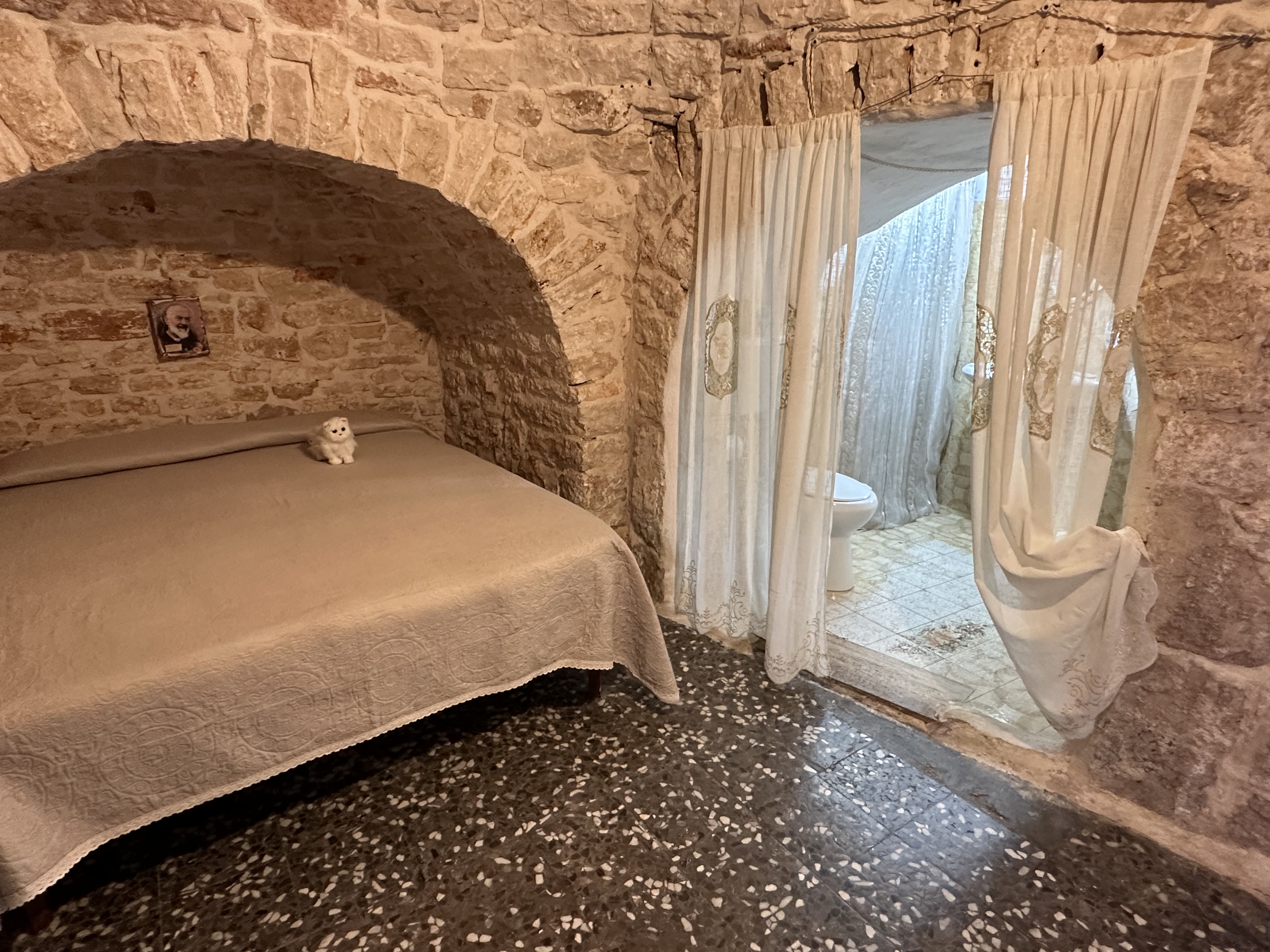
We went into the town and found a Trullo house that the owner uses to attract tourist money. She does not live there but spends her days there to show off the place. Remodeling an old historic Trullo with a modern bathroom is illegal, but she has managed to get away with it because she did it before the restrictions took place.

We walked around the town an saw many trulli and eventually had enough.

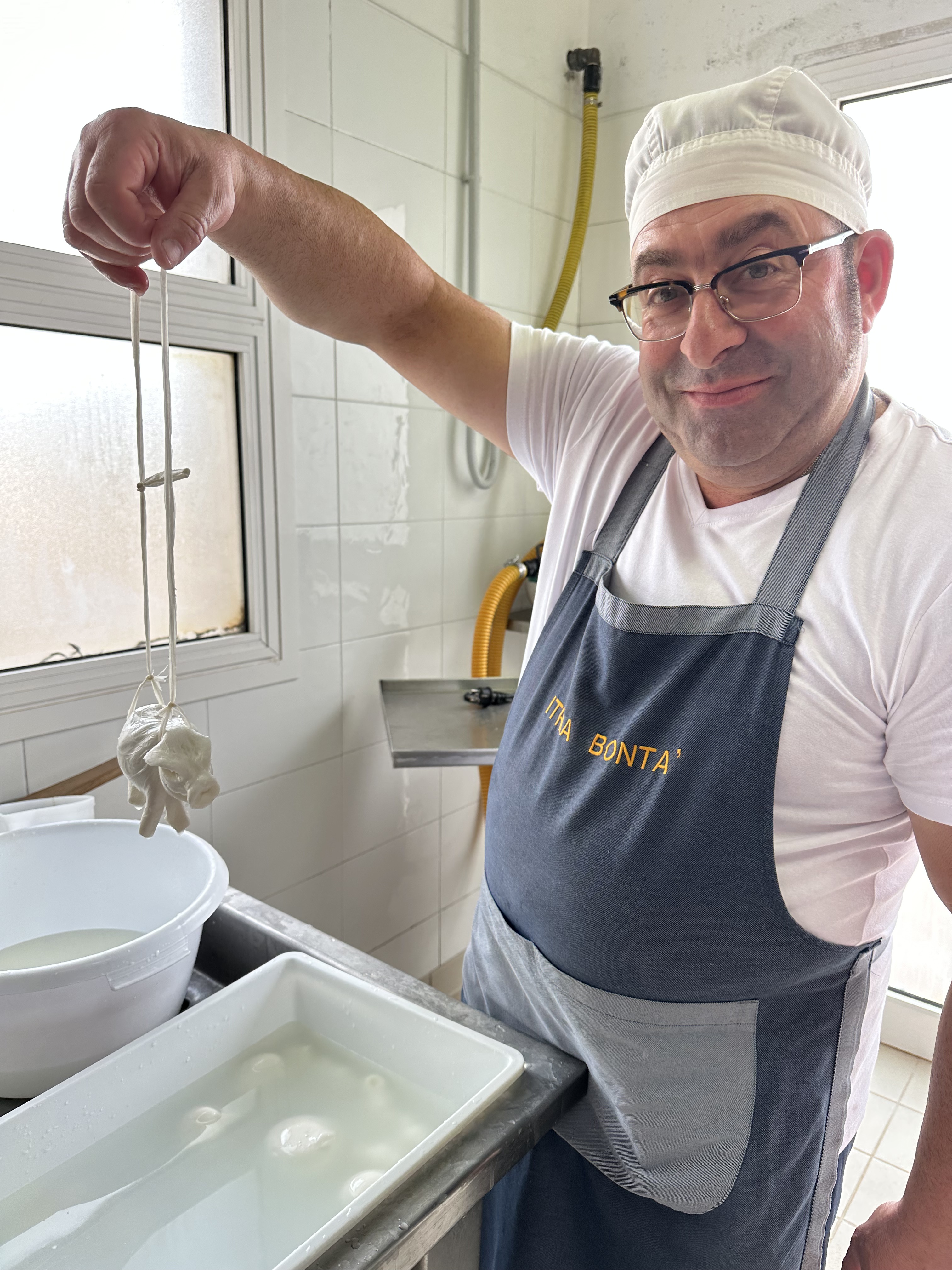
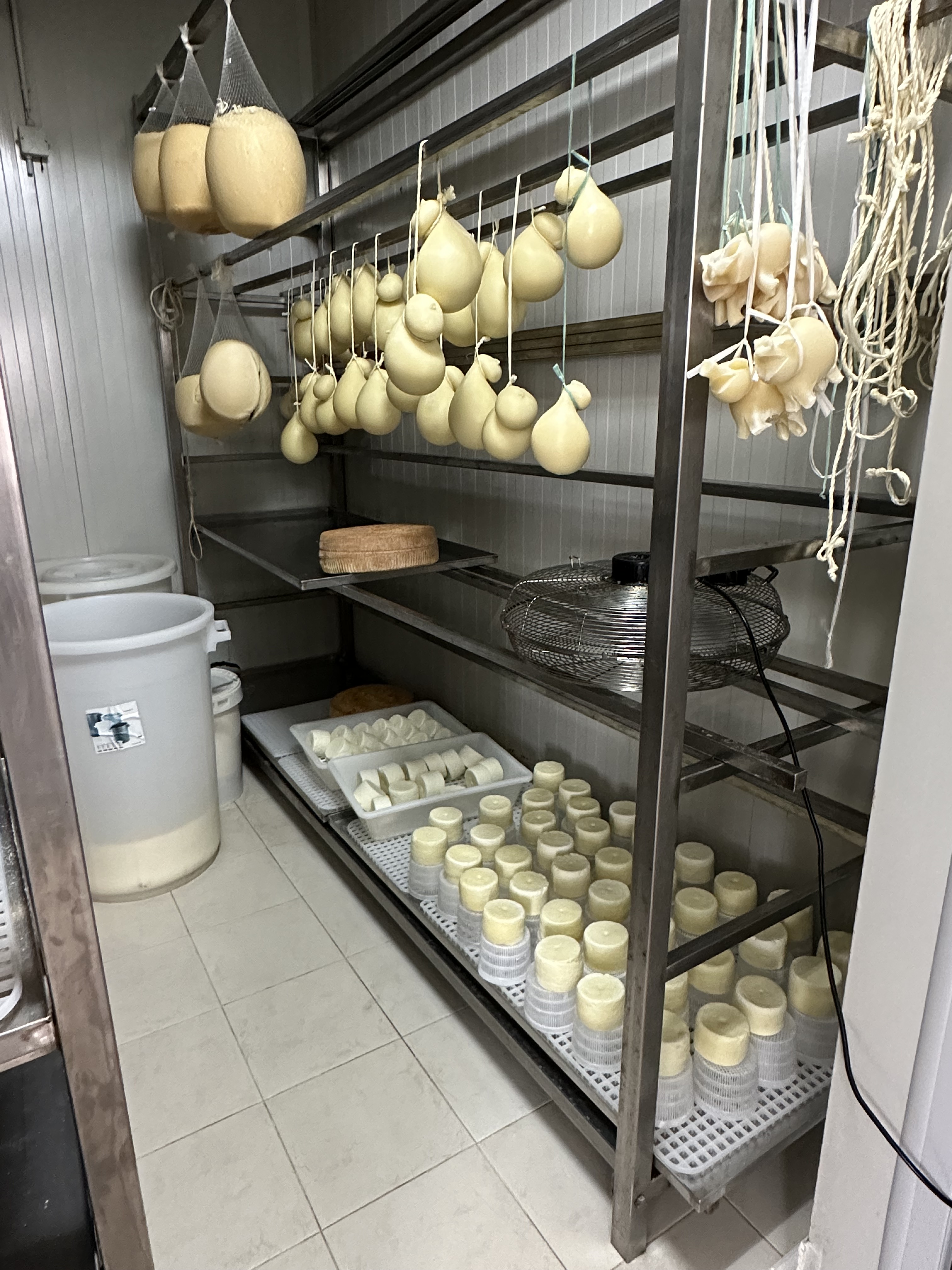
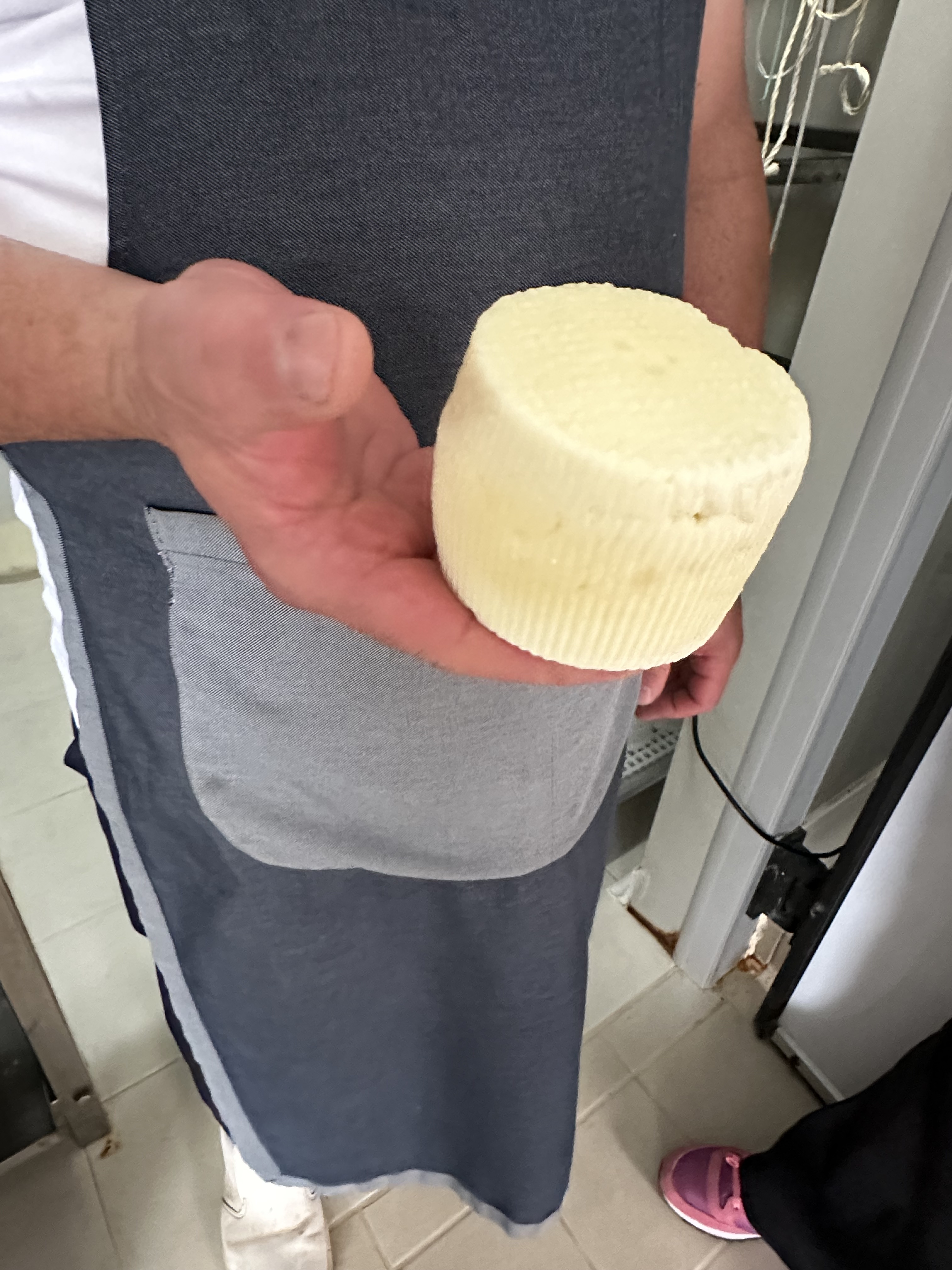
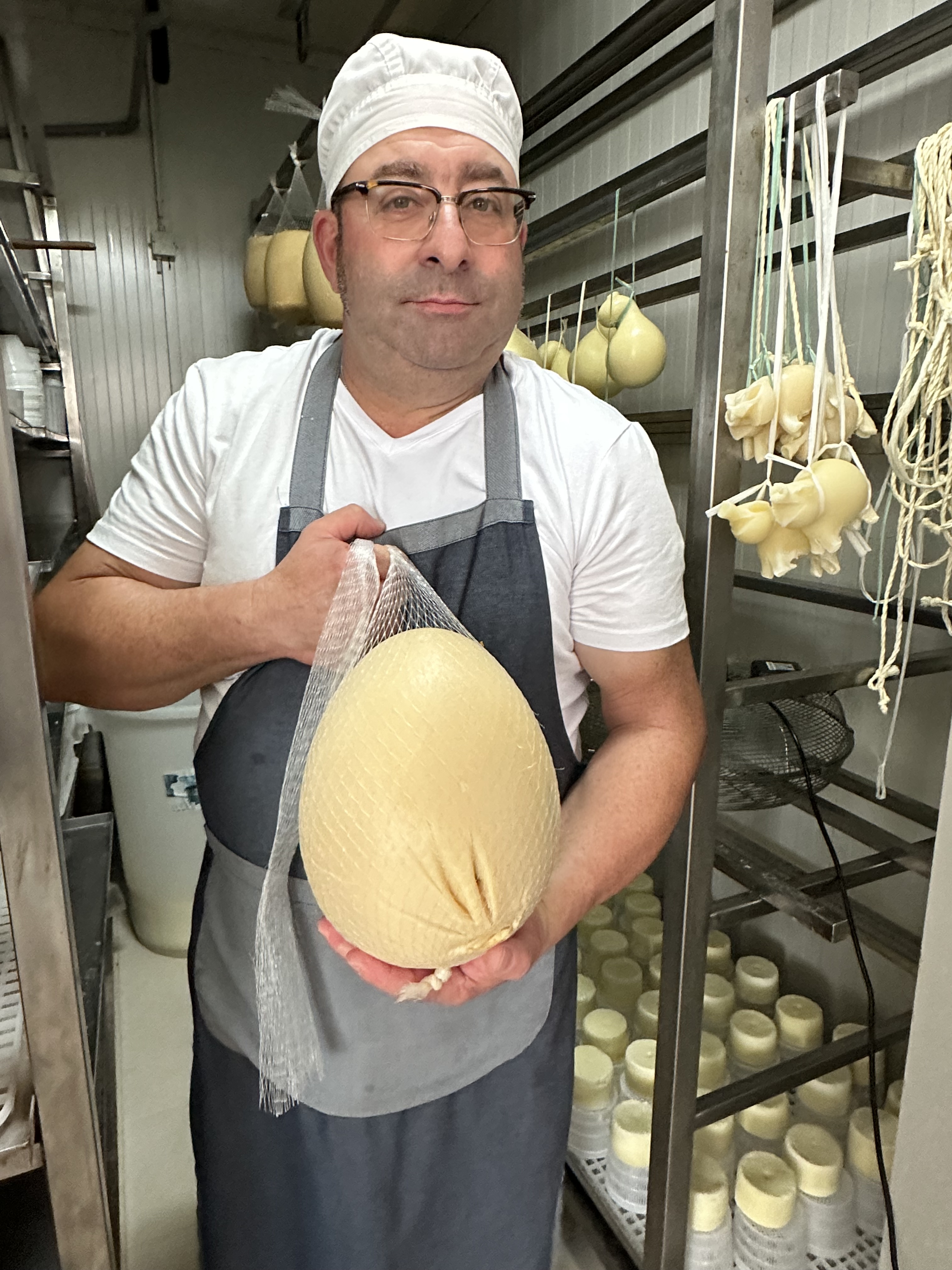
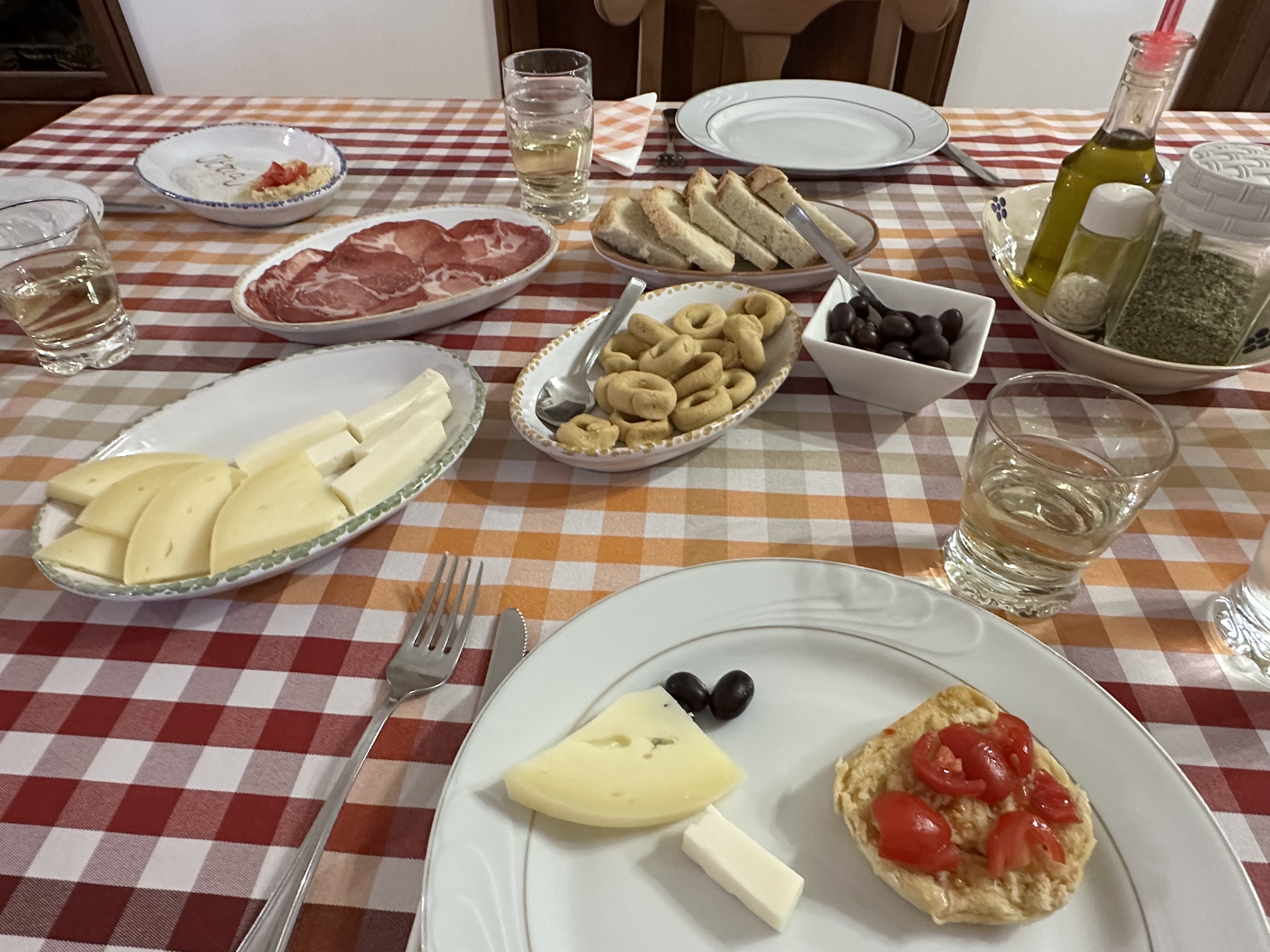
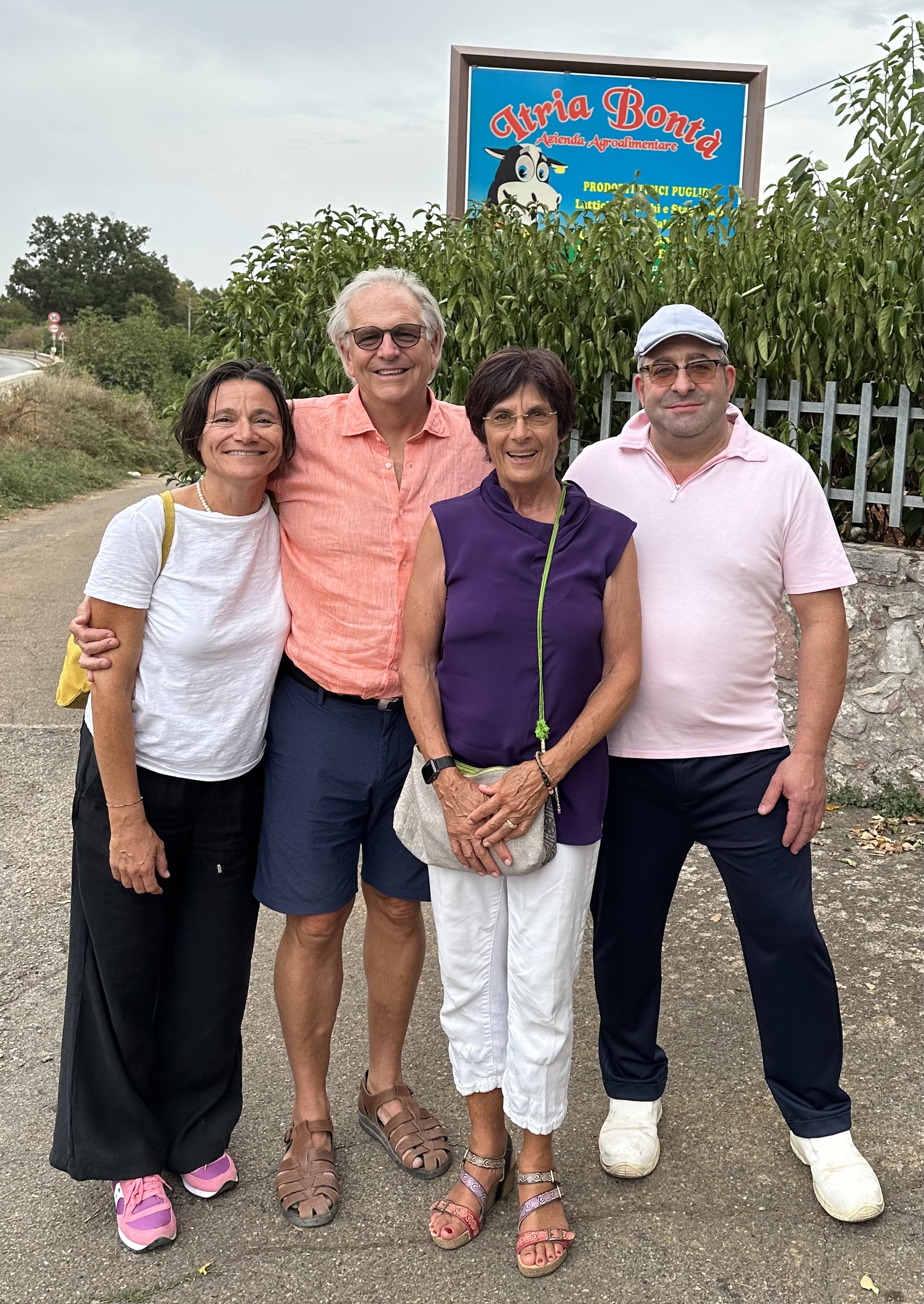
From Albebello we headed into the countryside to a cheese factory called Itria Bonte and the home of the cheese maker, Georgio, He was a man of few words but oh could he make cheese. He took us through the process of making Mozzarella cheese, as well as burrata, which I much prefer. Mark, on the other hand, prefers mozzarella. I got so involved in the process that I forgot to take photos until we were standing with the finished products. After the demonstration, Georgio and his wife served the three of us lunch of a selection of cheeses, homemade salami, capicola, home made olives and wine and cheese cake for dessert.

We are at the end of our stay in Puglia and we have enjoyed every bit of it, just as our travel agent, Martina, said we would. Now we are headed for Sicily, where a whole new adventure begins.

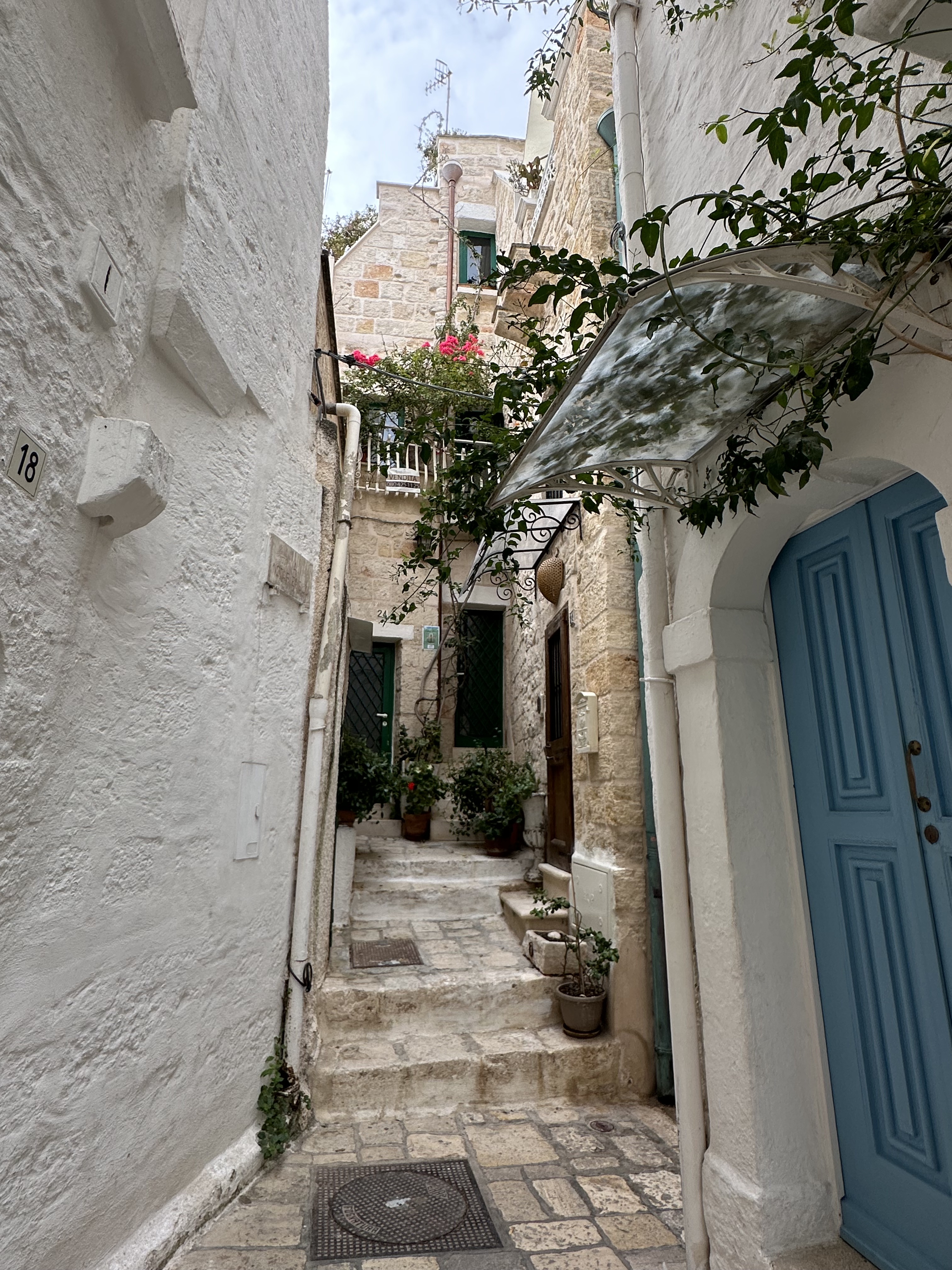
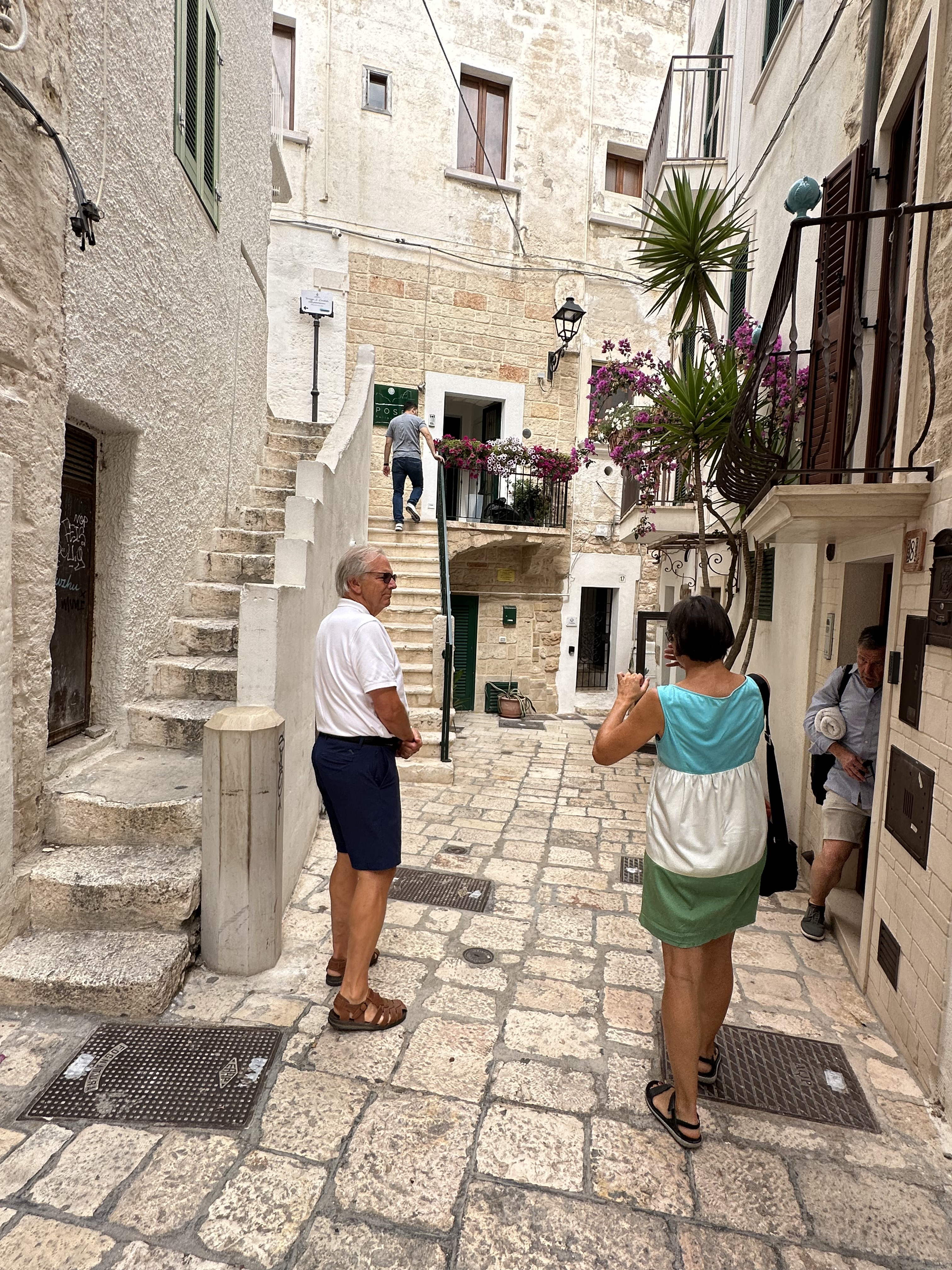
Polignano a Mare, a town on the Adriatic

September 20, 2023

We’v been slowly working our way up the east coast of Puglia and today we visited Polignano. It is a small seaside town with colorful character. Our new driver, Carlo, is the owner of the company that has been driving us around. He speaks very good English and was very pleasant to be with, especially as Silvia did not meet up with us until we reached Polignano, an hour after departing Ostuni. His tourist driving company is very lucrative and he and his wife and daughters are able to travel a fair amount. He goes to Sicily every year and has been to the US 4 times. He was driving us in a new Alfa Romeo today. We met up with Silvia at Elisa’s office at her guide service company, called Southern Visions, in Puglinano. We visited awhile and complimented Elisa on the excellent service we have received.

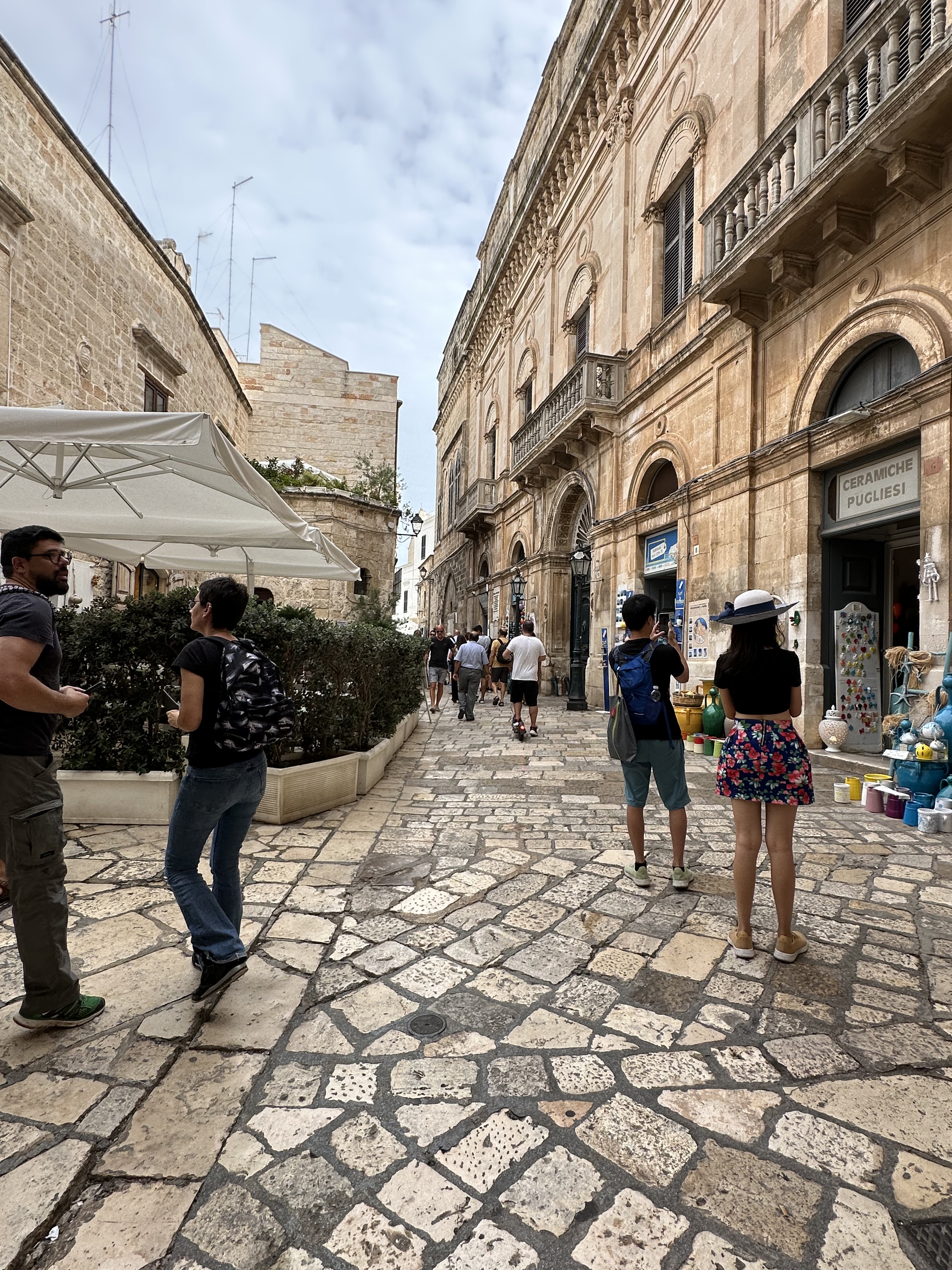
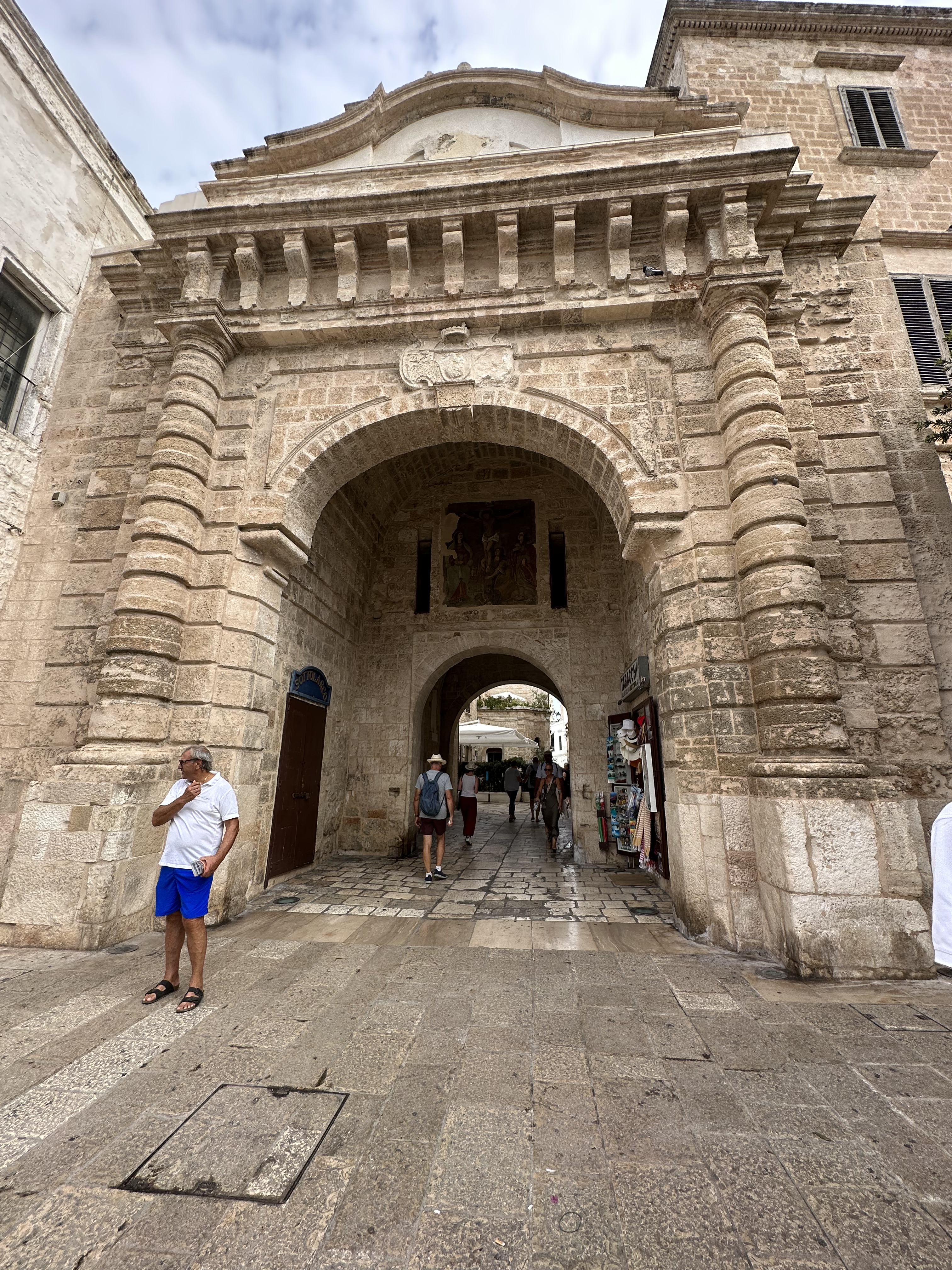
From there, we drove to the main gate and did a short walk through the gate and into Polignano.

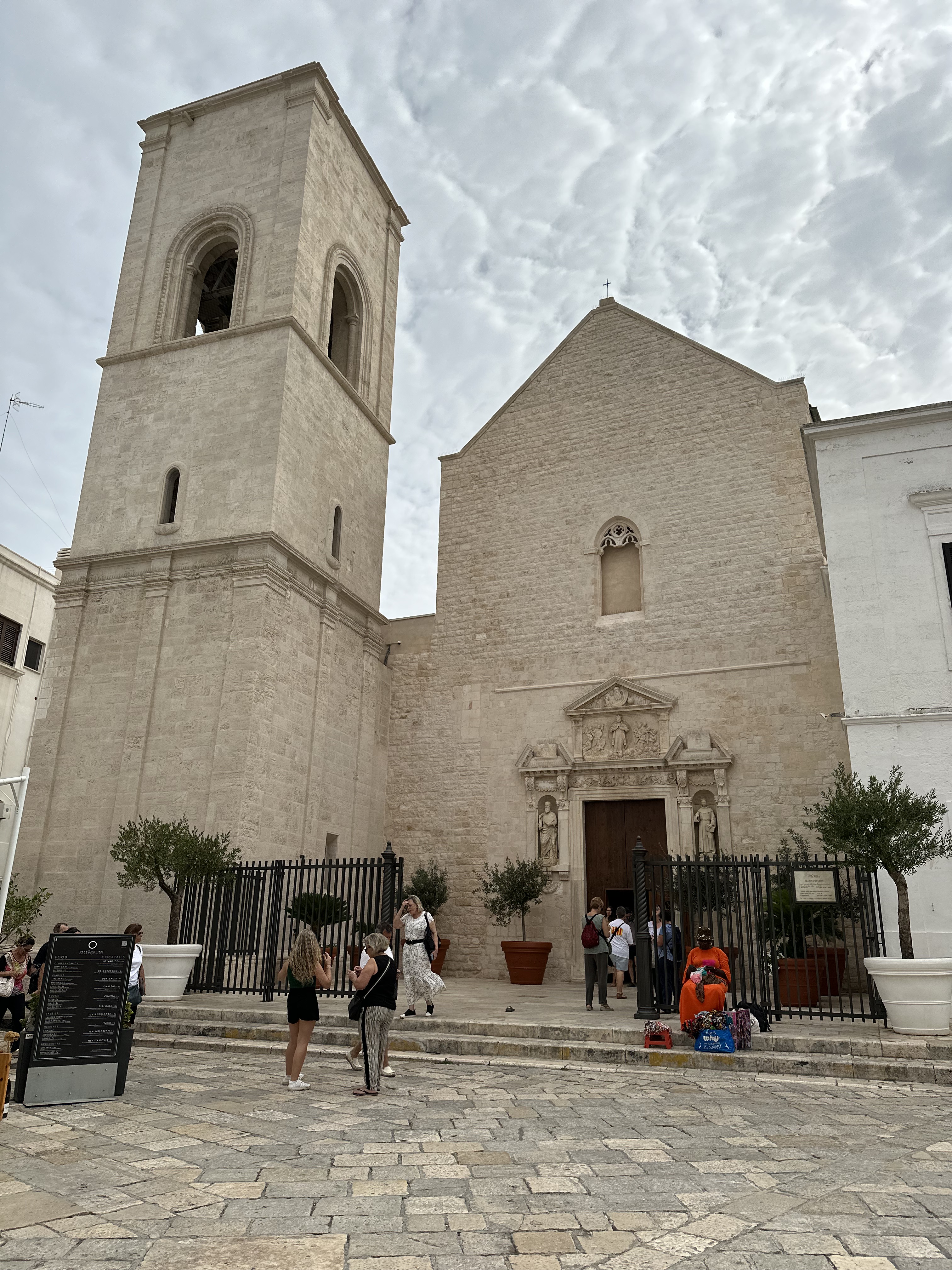
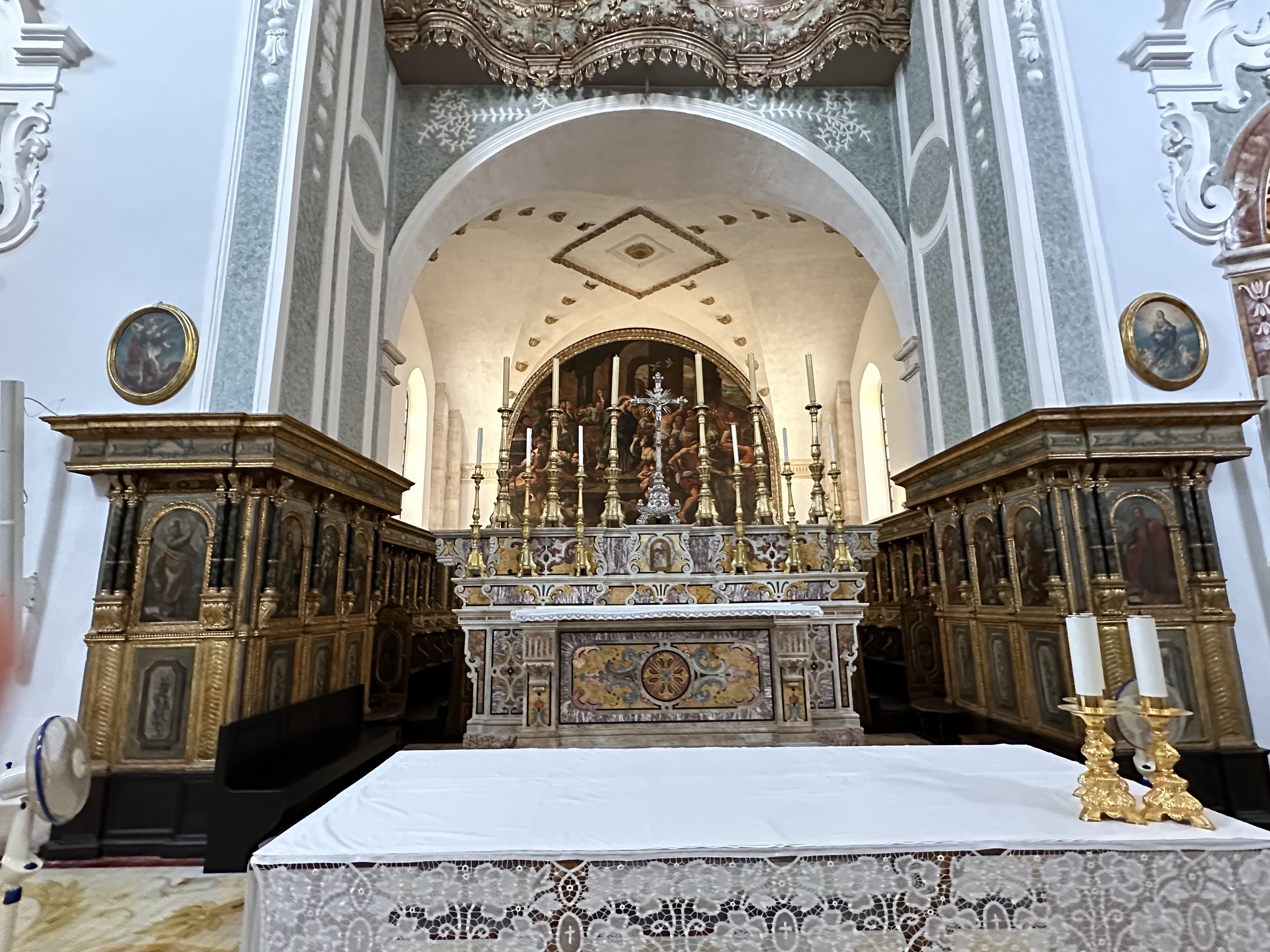
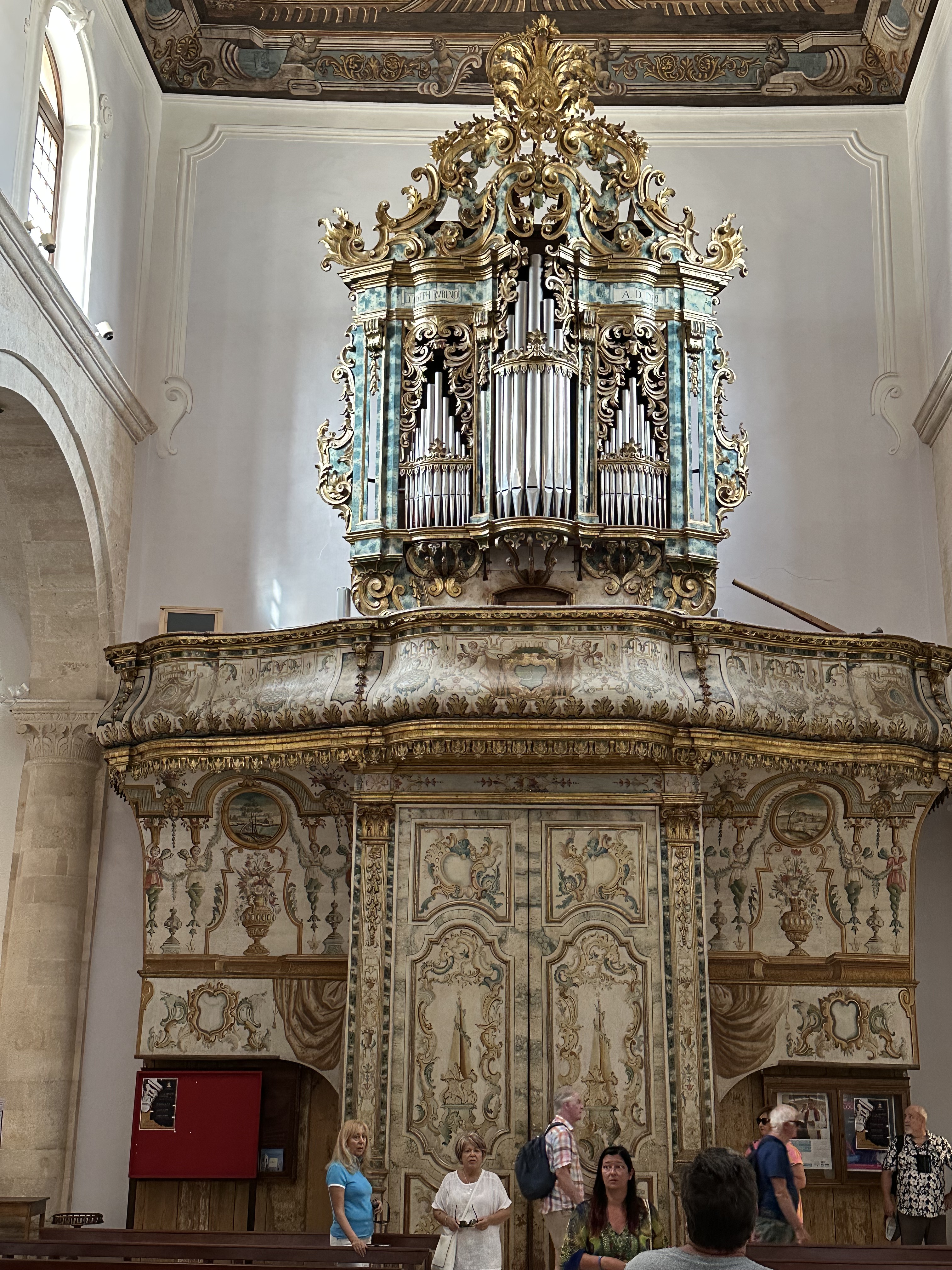
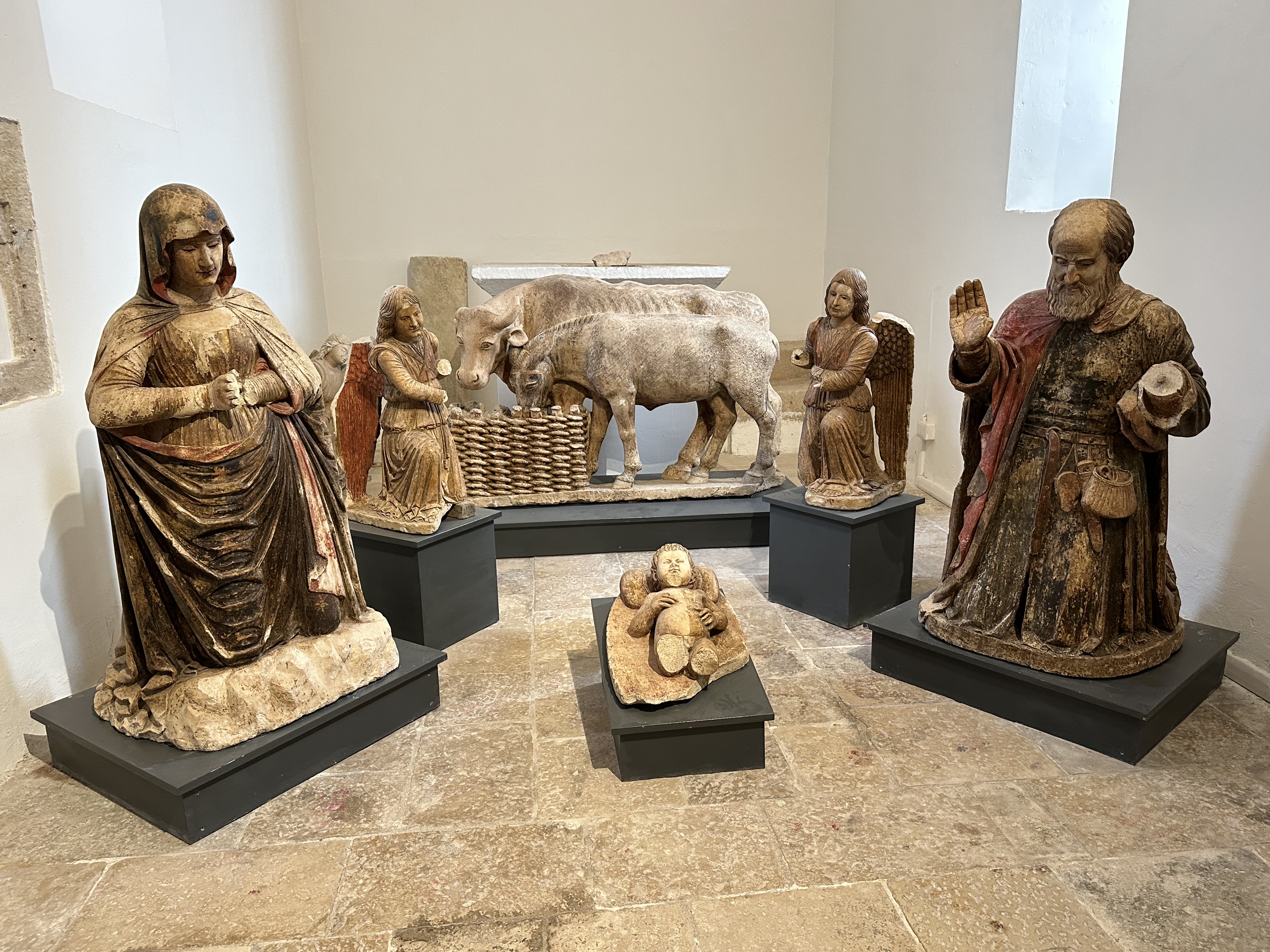
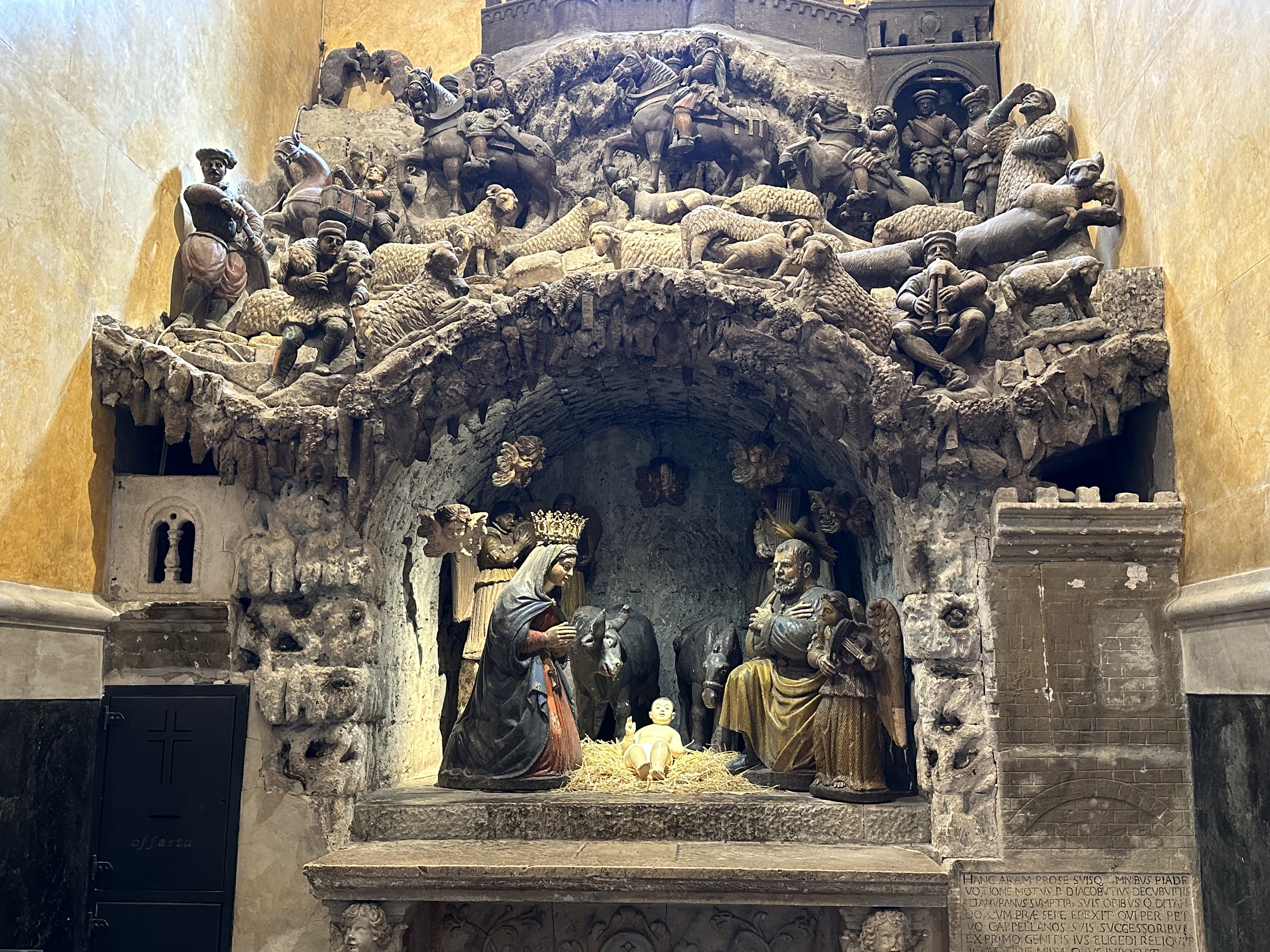
We went inside the important town Church di Santa Maria Assunta and saw a real marble altar with lovely wooden choir, a beautiful organ, and an exquisite sculpture of the Nativity by Stefano da Putignano. Apparently it is so well regarded that an Italian stamp has been made of it.

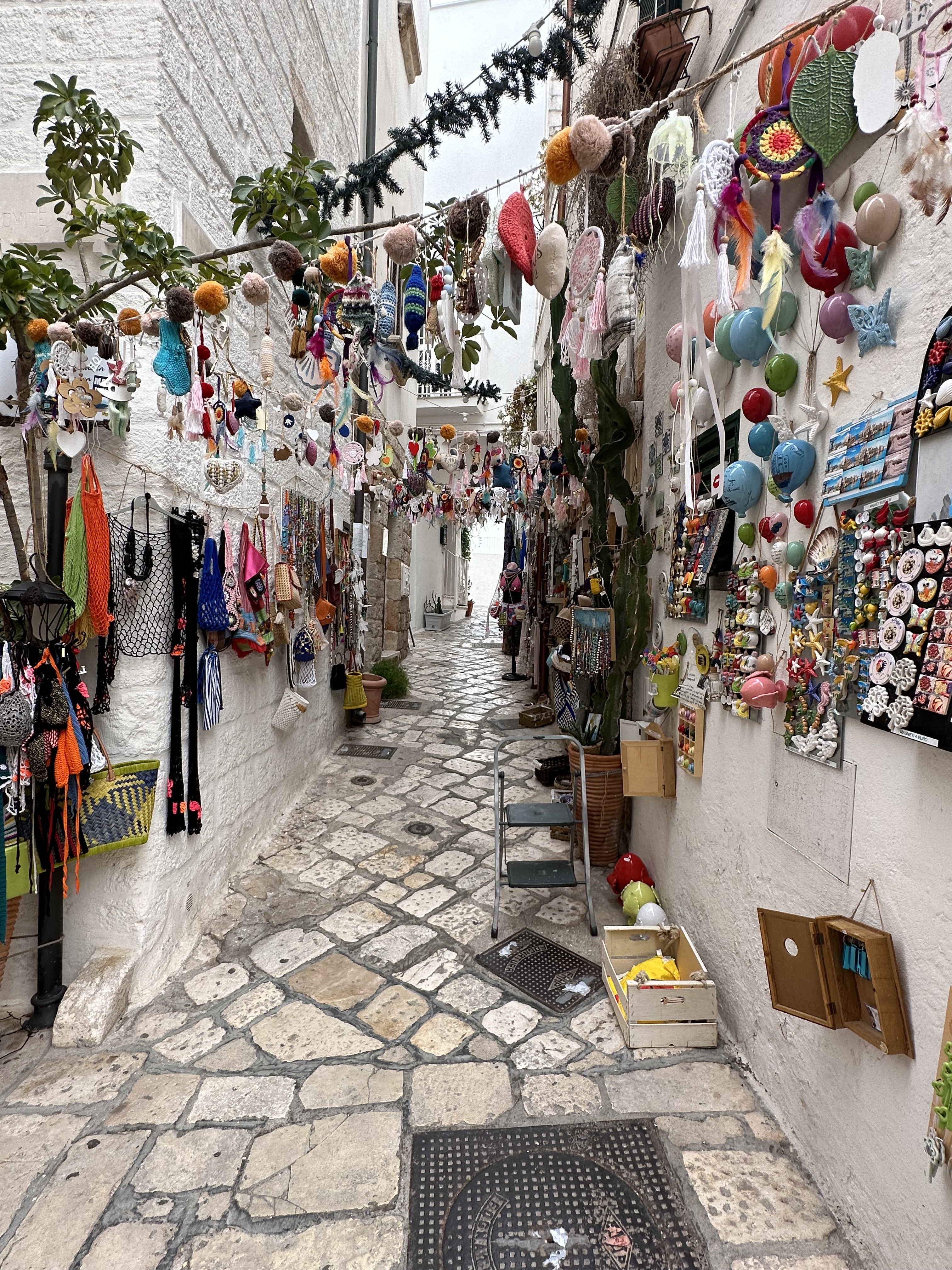
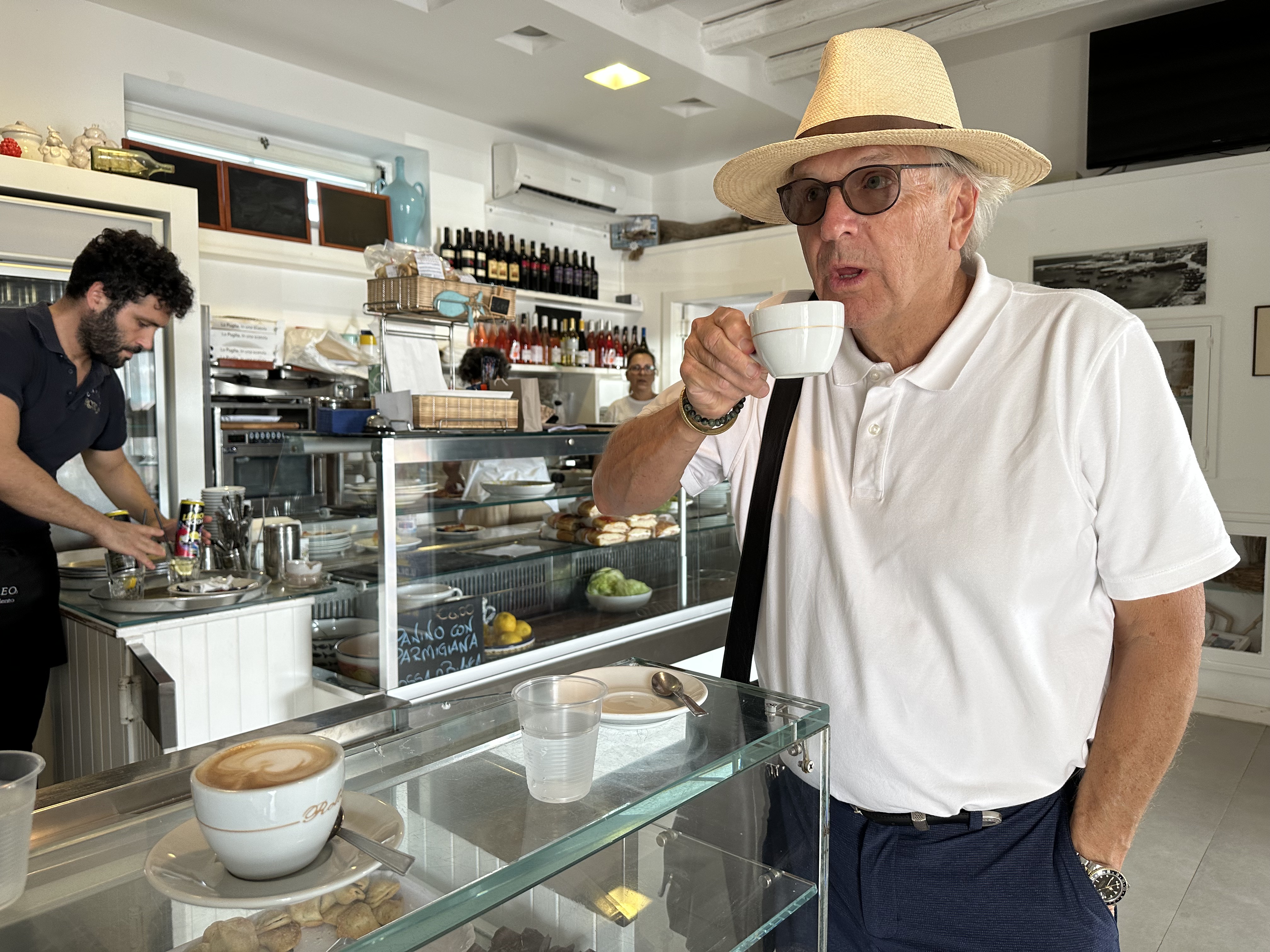
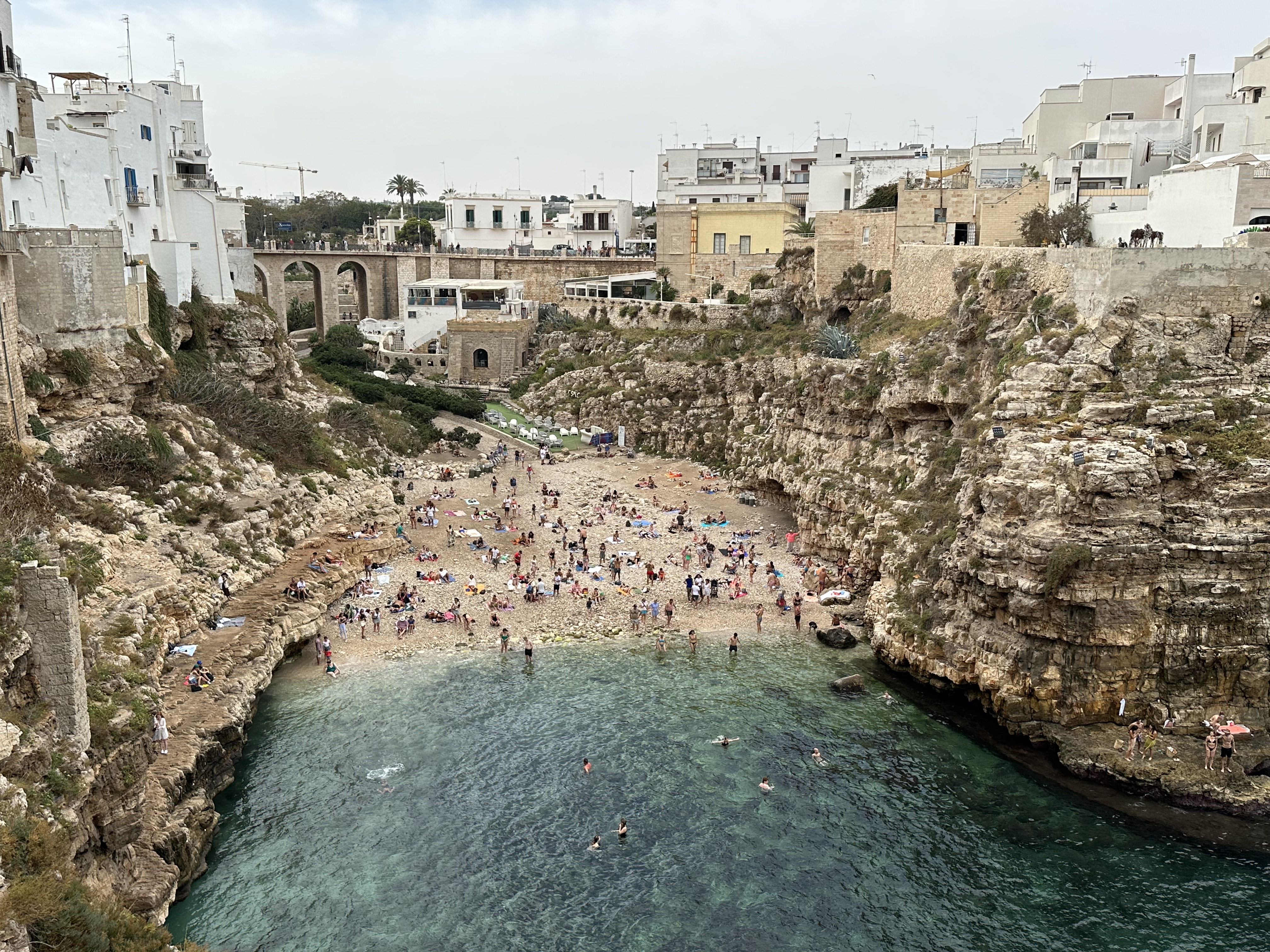
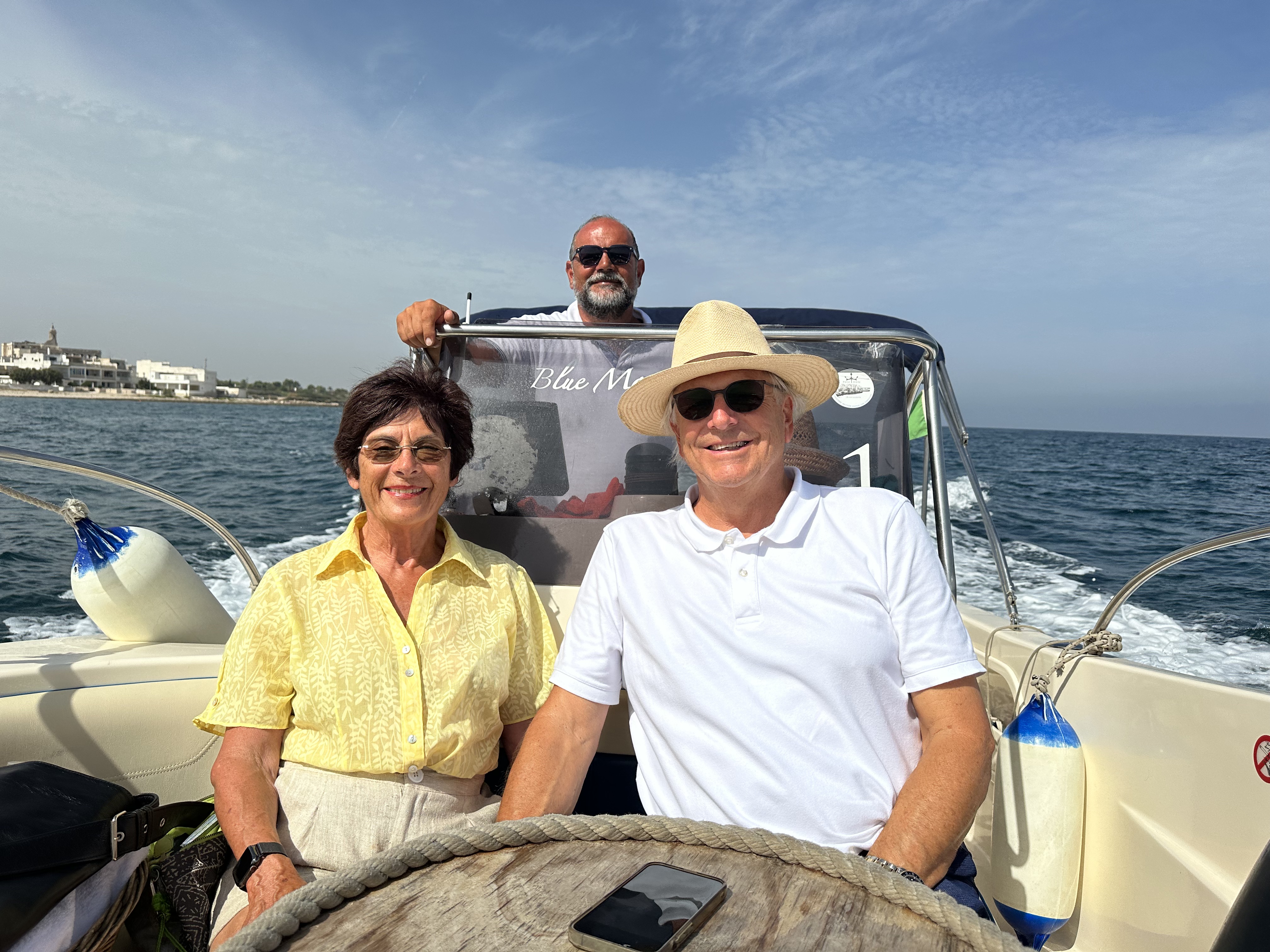
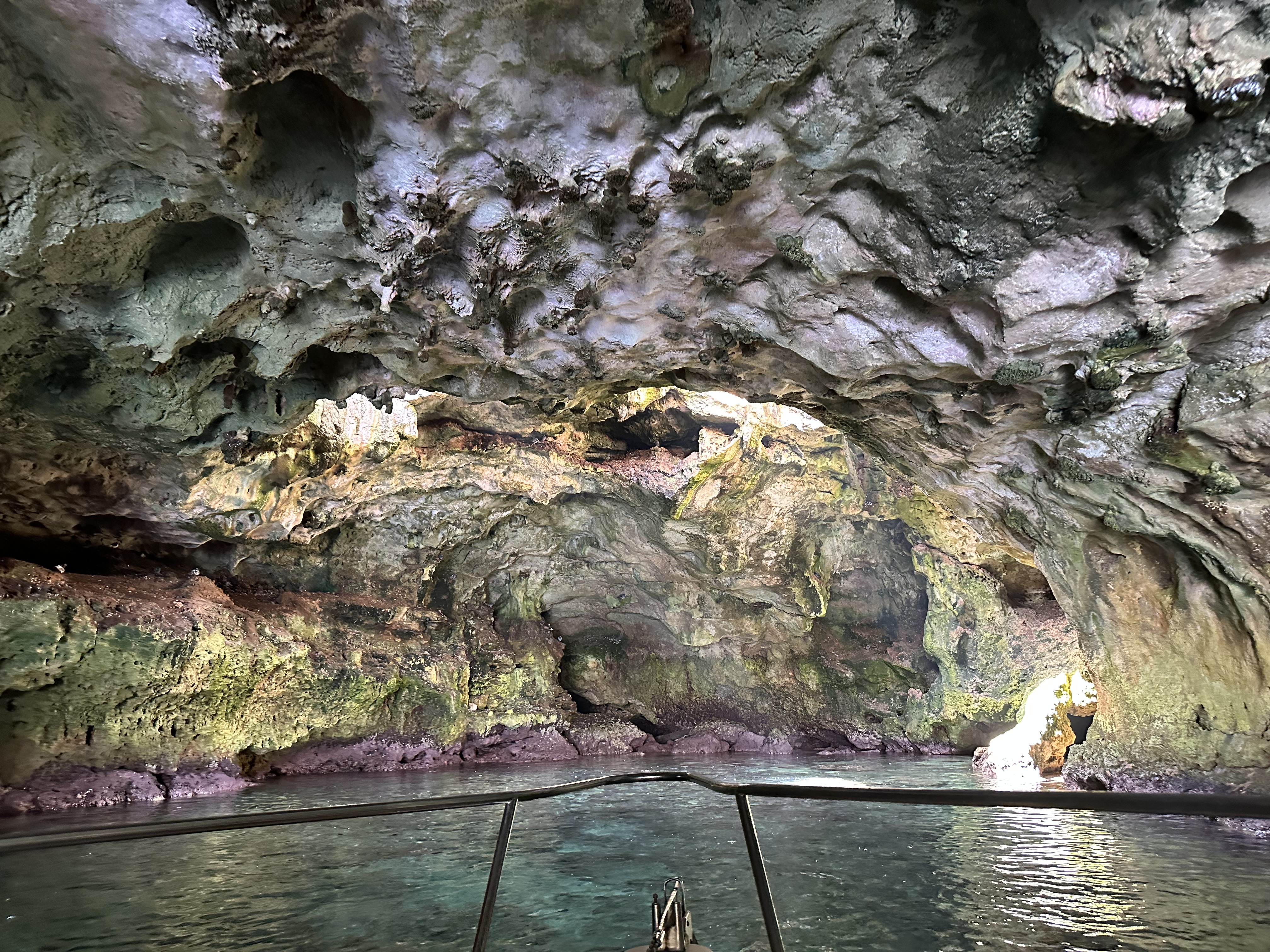
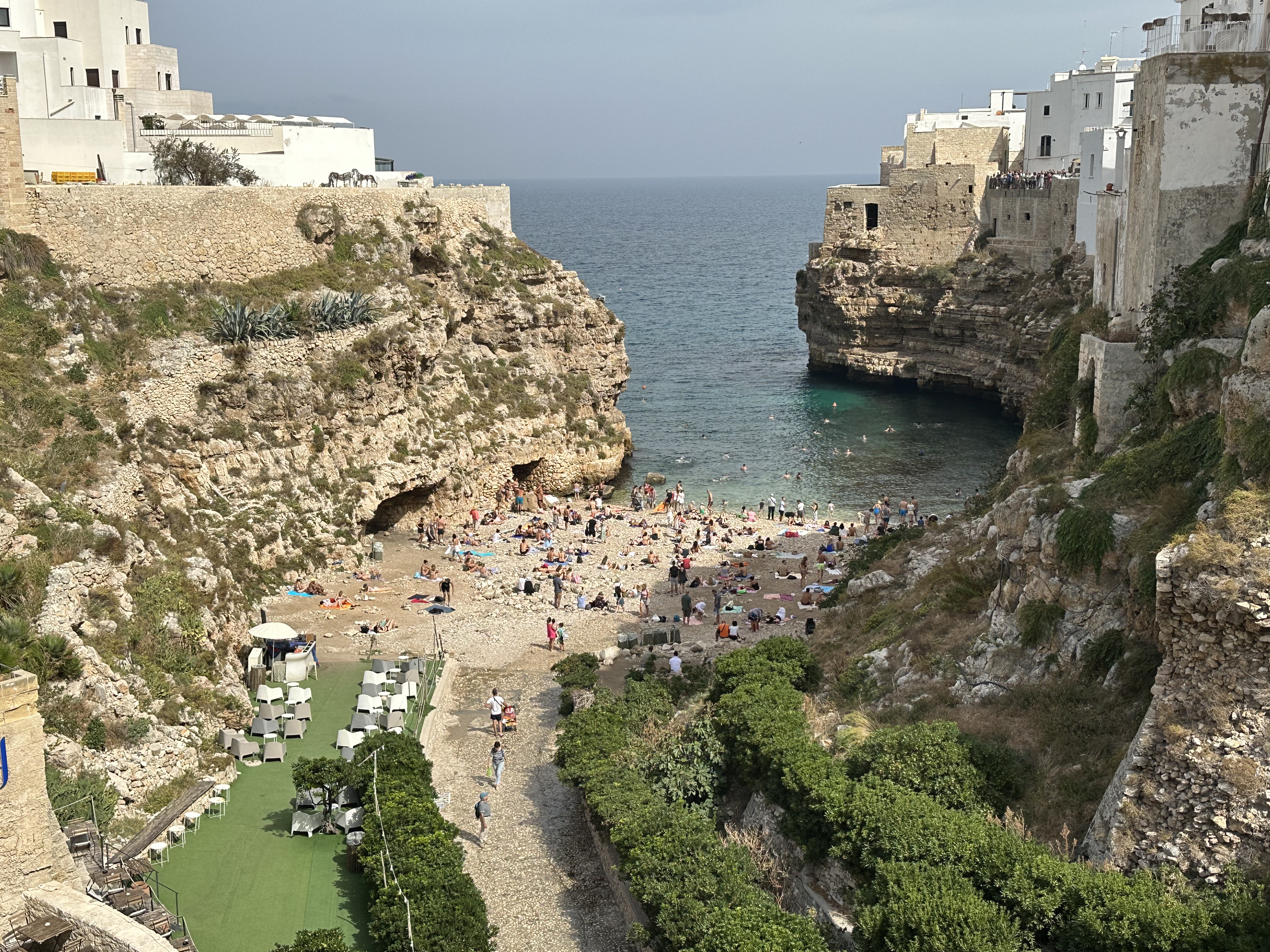
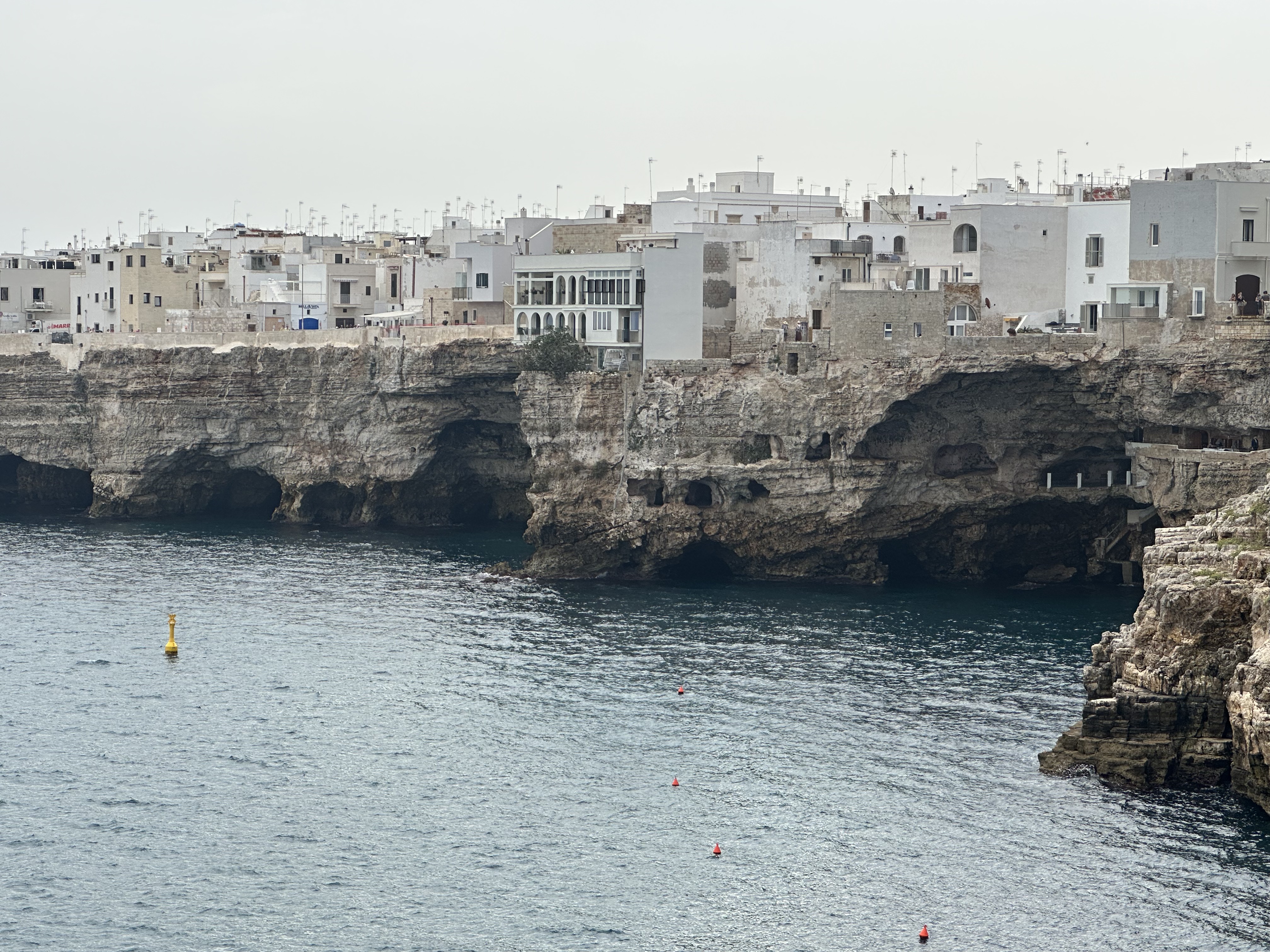
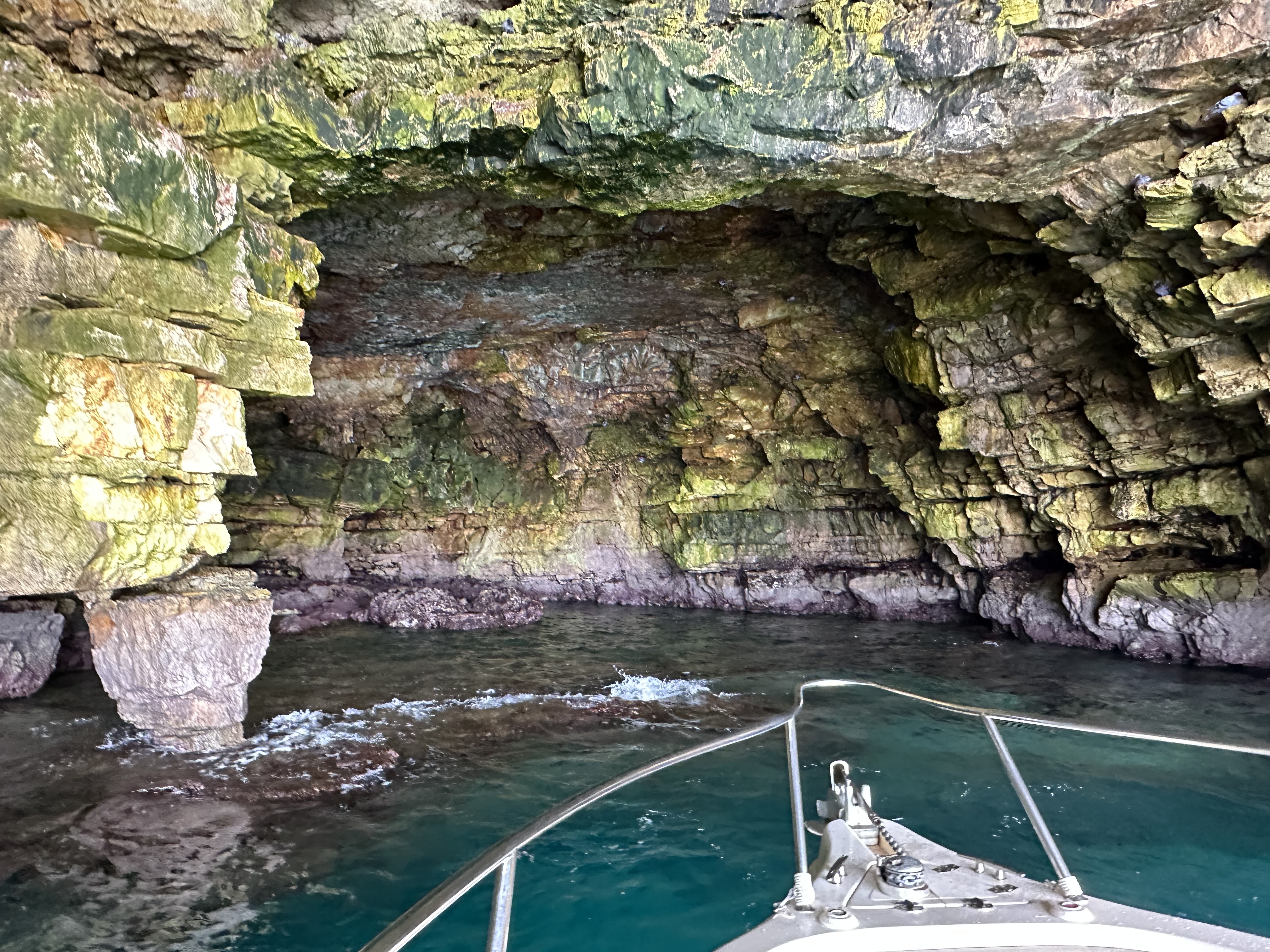
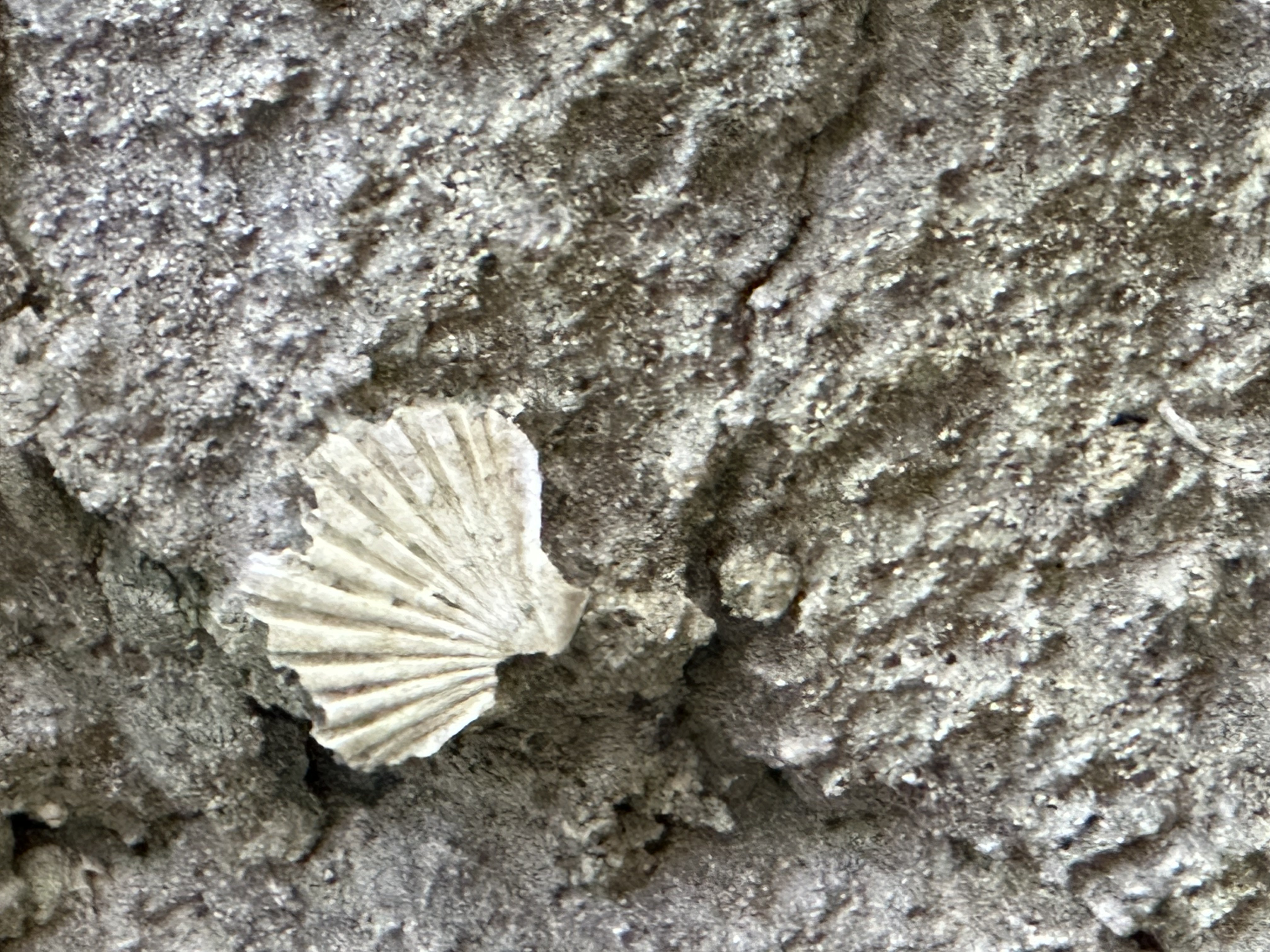
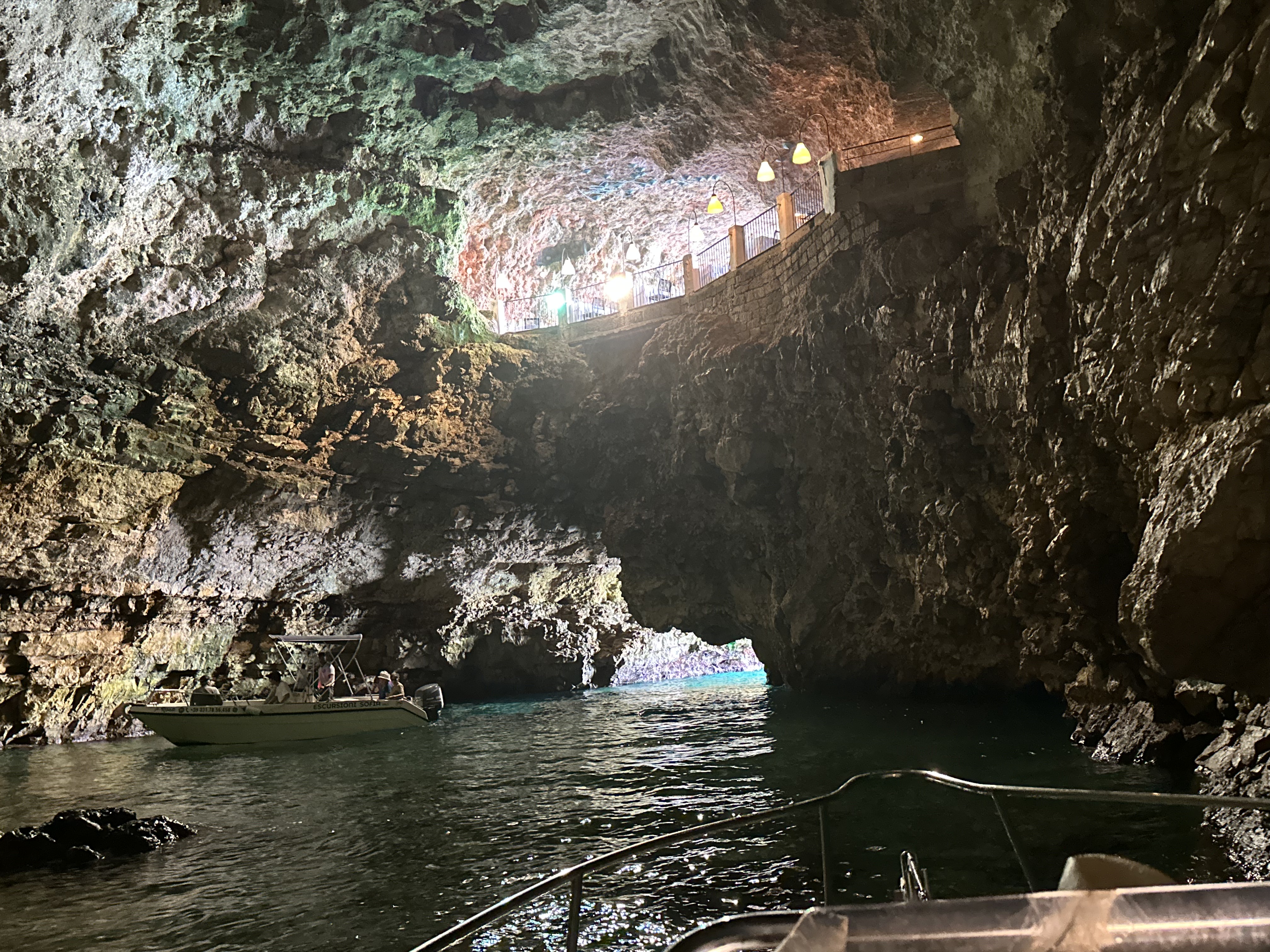
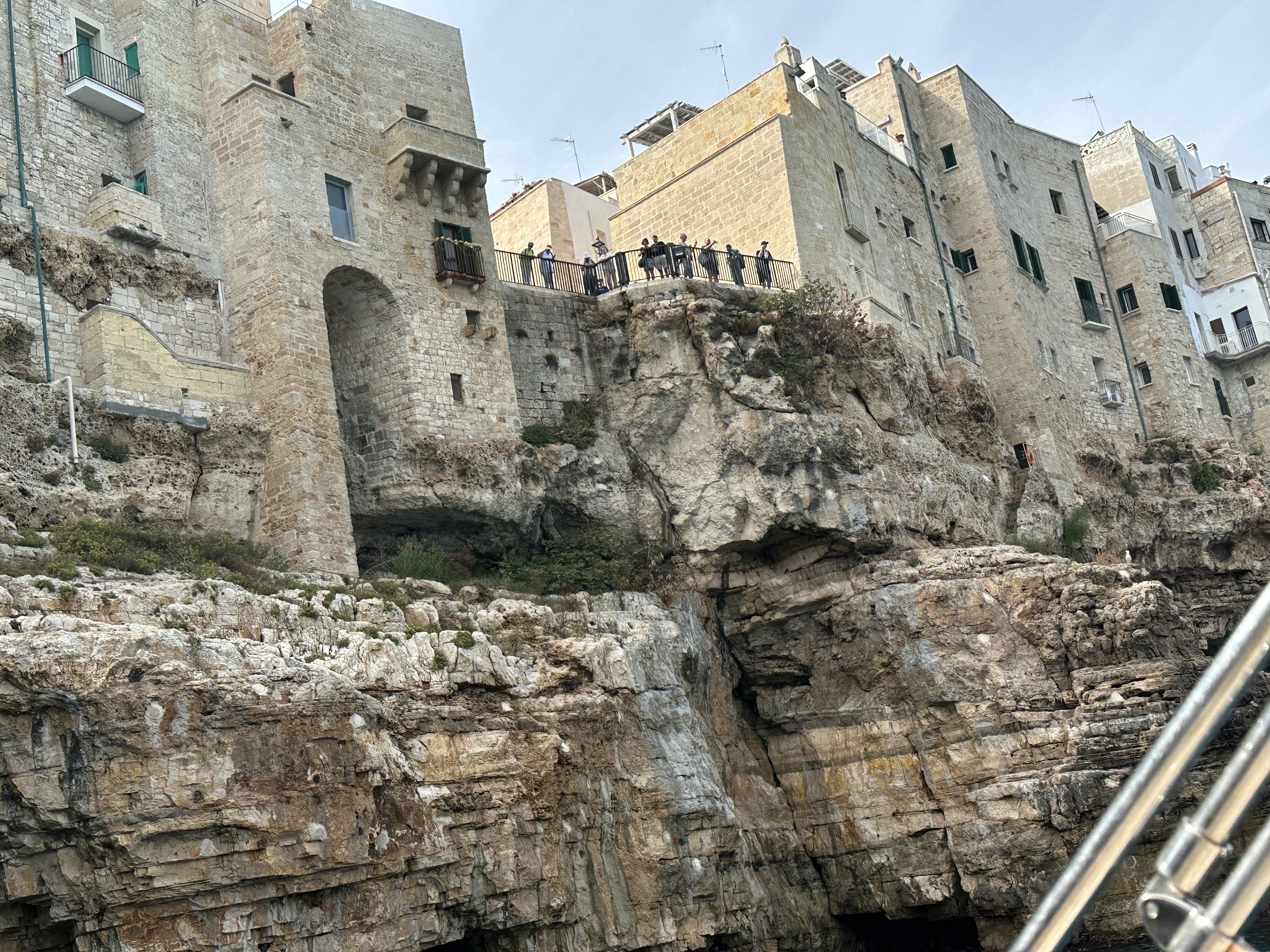
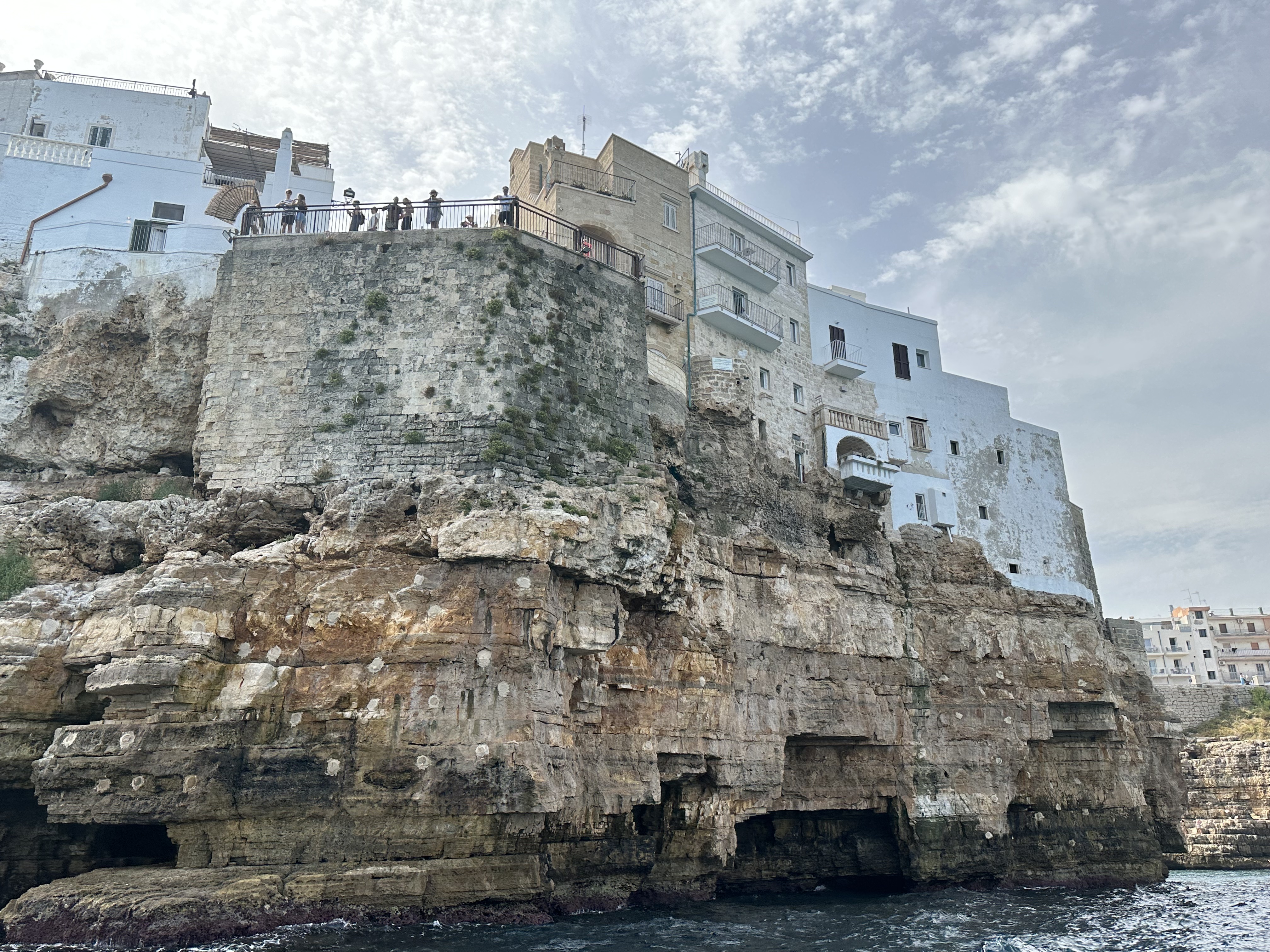
From the church we wandered around the small, narrow streets enjoying the views of town and the Adriatic See. Before getting on a boat to see caves, Mark had another cappuccino . I was concerned that the water would be rough, as it had been the other day, but the Sea was only slightly choppy. We, however had no interest in swimming. The caves were larger and easier to enter and experience than the last trip, which was nice. The rocks were colorful, there were lots of shells and it was fun to see the town hanging on the edge of the cliffs. The tiny, rocky beach was full of people enjoying themselves, but it did not occur to us to join them.

Carlo drove us back to our hotel in Ostuni, where we relaxed by the pool until it began to sprinkle. The first rain we have seen on this trip. It lasted only long enough to drive us out of the garden and into our room. After a couple of hours, we walked down into the old town and got a bite to eat. The couple sitting next to us spoke English so we got into a nice conversation. He was from Australia and she was from New York. Currently they live in Australia and are in Italy on a month long holiday. Well after dark, we slowly walked back uphill to our hotel and dropped into bed.

Ostuni and nearby communities

September 18, 2023

This morning we gave up our rental car and were picked up by a new driver, Roberto, who took us to Ostuni. Before heading that way, however, we drove into the town of Surbo to a large shopping mall so Mark could buy an adapter. No problem.

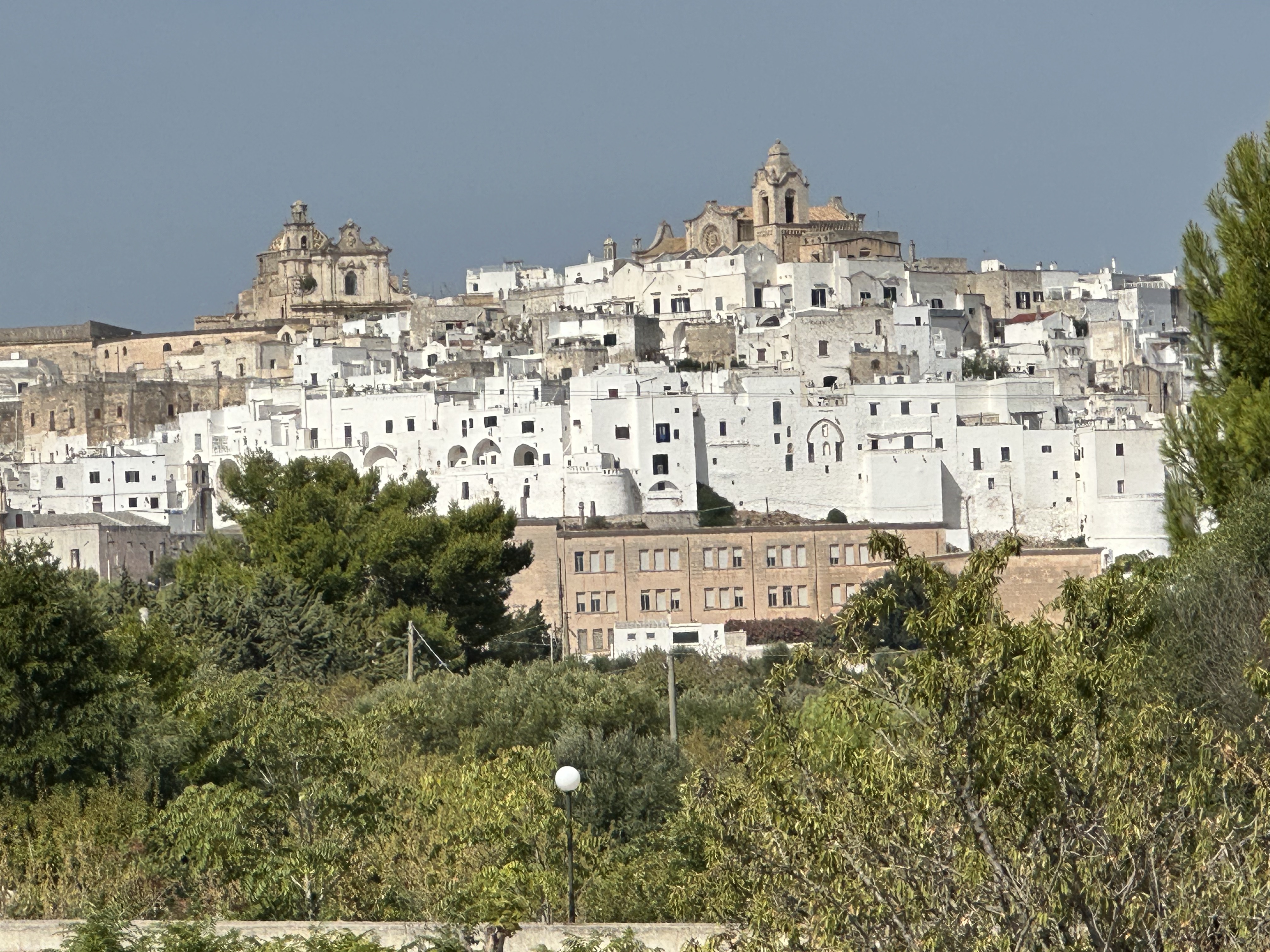
Back on the road, the drive took about an hour. We began to see more olive trees that were alive and appeared healthy. We hope to learn more about what is happening to them soon. Soon we could see the white city of Ostuni. Roberto stopped to let me capture a photo.

The Old White CIty of Ostuni

Roberto drove through and around the Old town before finding our hotel. Sure glad we were not driving and having to find which narrow streets to navigate and where to park. After he dropped us off at the 11 room Paragon 700, at the top of the town, we dropped our bags and went for a walk about. Very narrow and hilly streets. The town was full of tourists shopping, eating and hanging out. After a while we had a bite to eat too and went back to the hotel to check in and cool off. There is a lovely garden in back of the hotel with a swimming pool too. Hope we have time to enjoy it. At 4pm we met our guide, Silvia. She had been with us a few days ago. Today she showed us around Ostuni. We had already walked much of the town, but with her, we saw the place in depth. We got much exercise in walking stairs and hills as well as exercise in history.

After our tour of Ostuni with Silvia, we stopped at a charcuterie restaurant in the Piazza della Liberta and got a bite to eat before heading for the room and bed. We are not late night people these days. Thankfully our hotel is a short walk from the center of town.

September 19, 2023

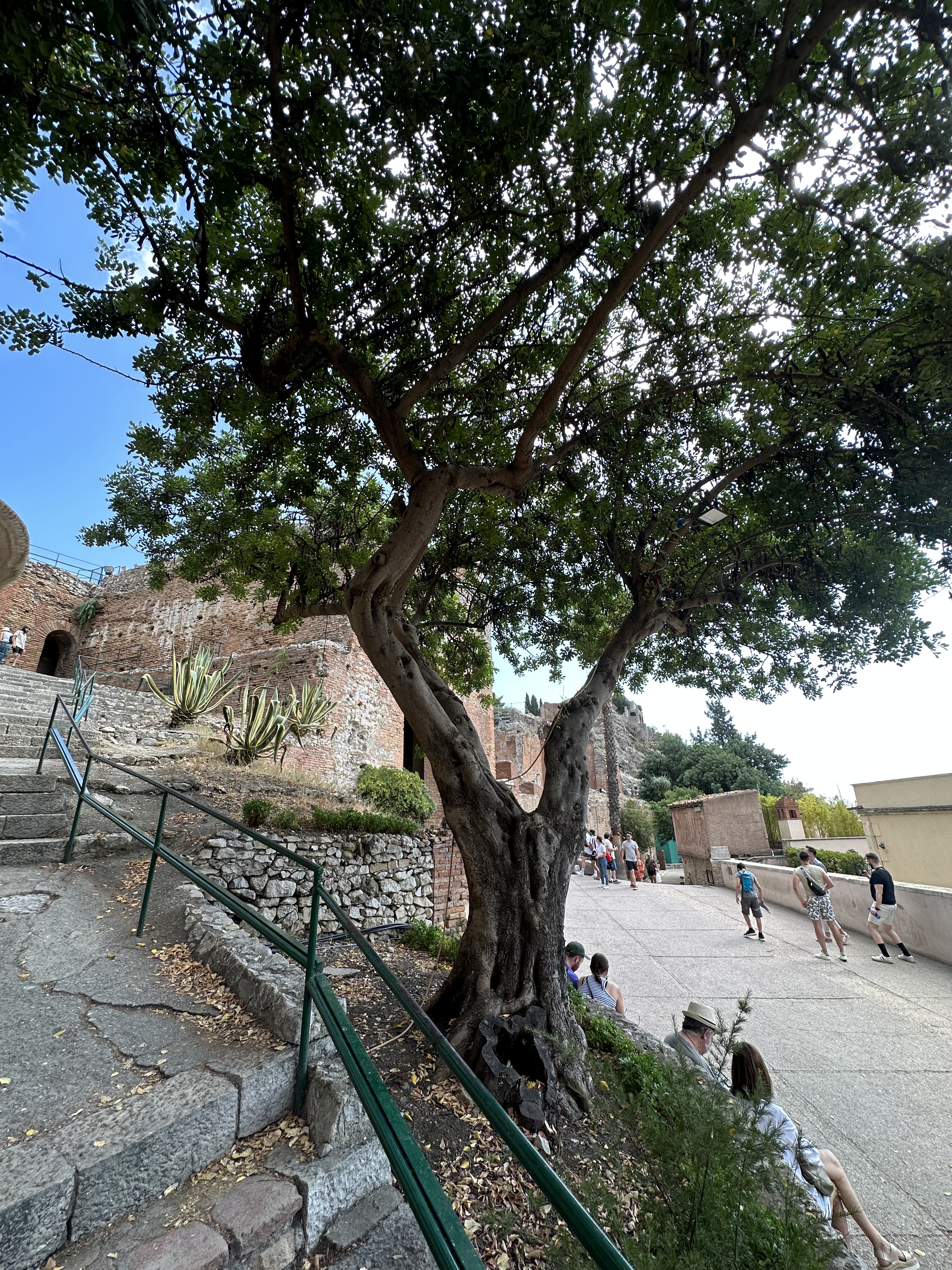
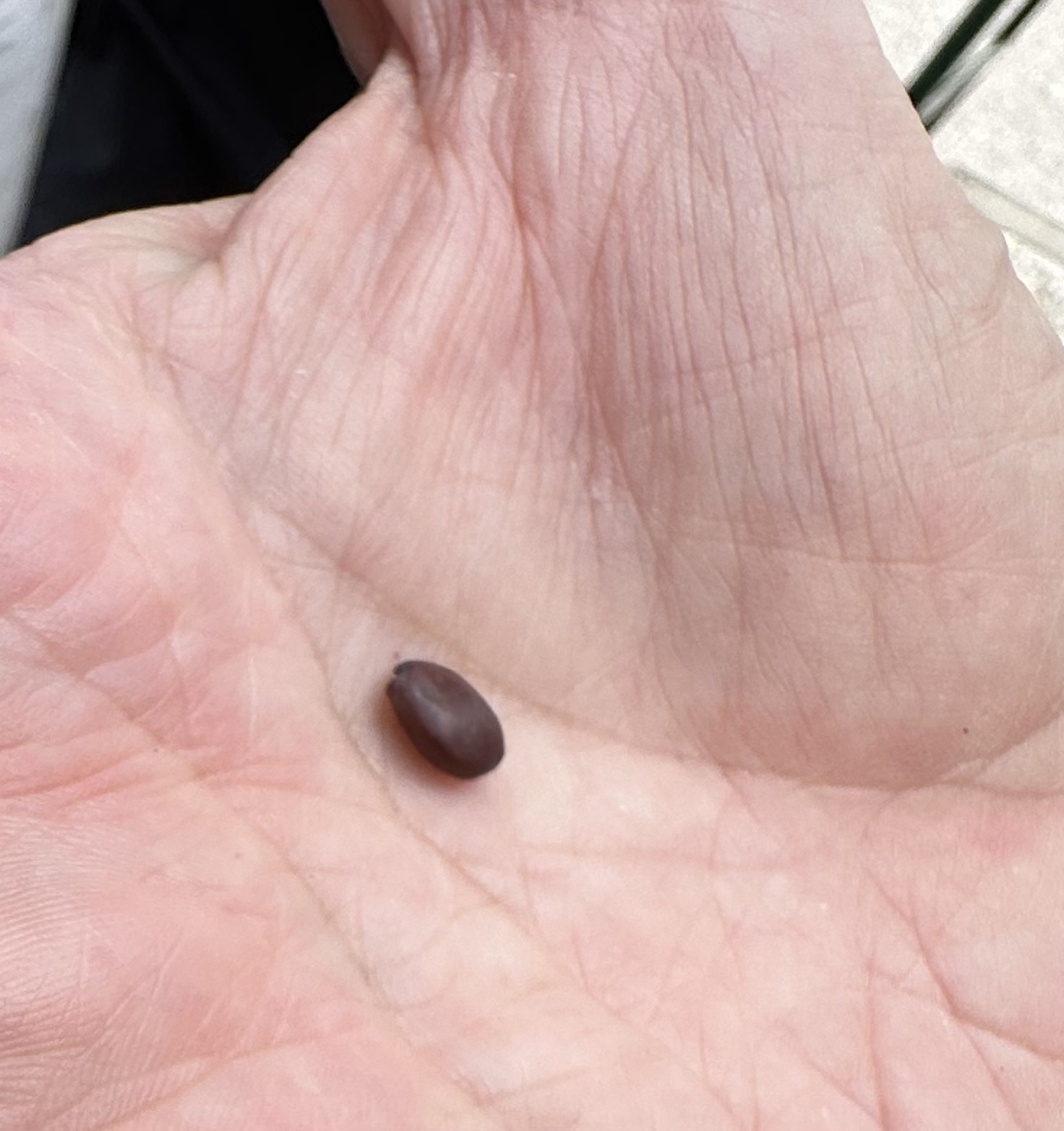
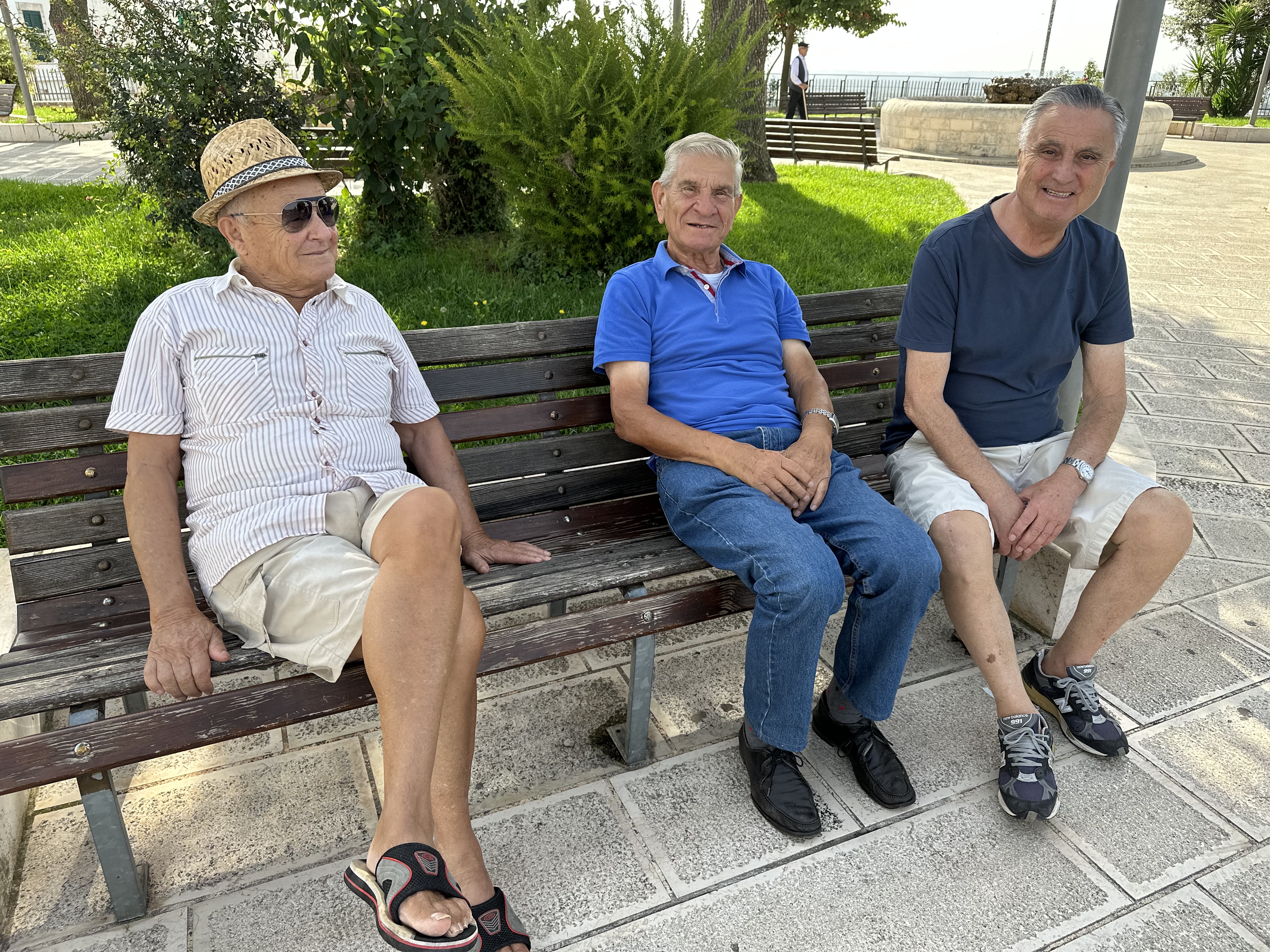
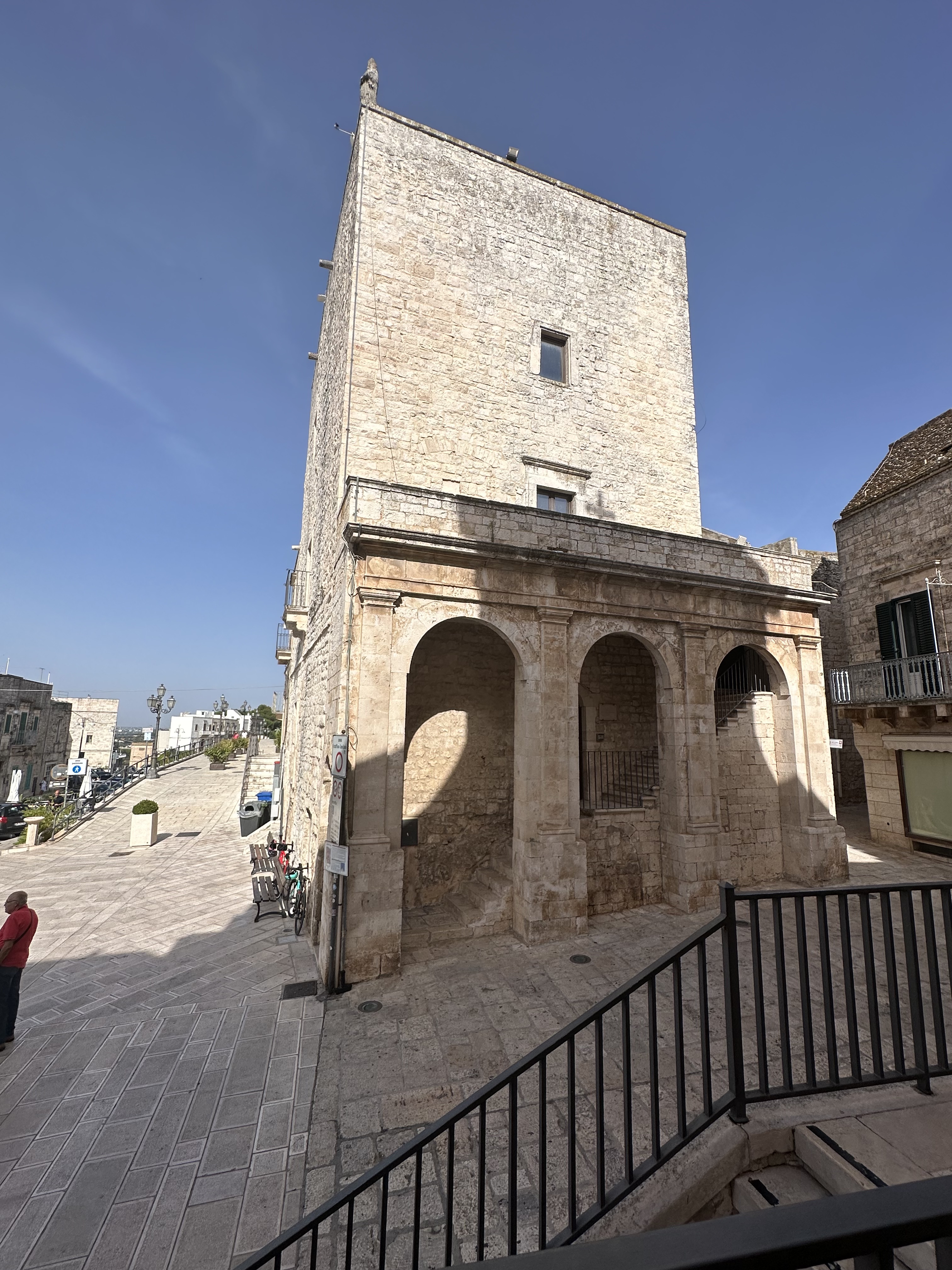
We were up for breakfast at 8:00 in the garden. Then met our new driver, Michael, who drove us to the train station, where we met Silvia and headed for Cisternino. We walked through a small park and found three gentlemen more than happy to chat with us. They were all alone in life and found pleasure in companionship with each other as well as talking to strangers. We had a a pleasant visit and then walked on into the small town with narrow streets, few people and fewer cars. There were good views from the belvedere, which was at 500 feet asl. The area produces many fruit trees including seeds, nuts, pomegranates, peaches, figs and more. We passed a carob tree and learned that any seed from the carob is the measure used for diamonds. The weight of 1 carob seed equals the weight of a 1 carat diamond. because all carob seeds weigh the same. This is how the use of the word carat for diamonds came to be. So we learned something new.

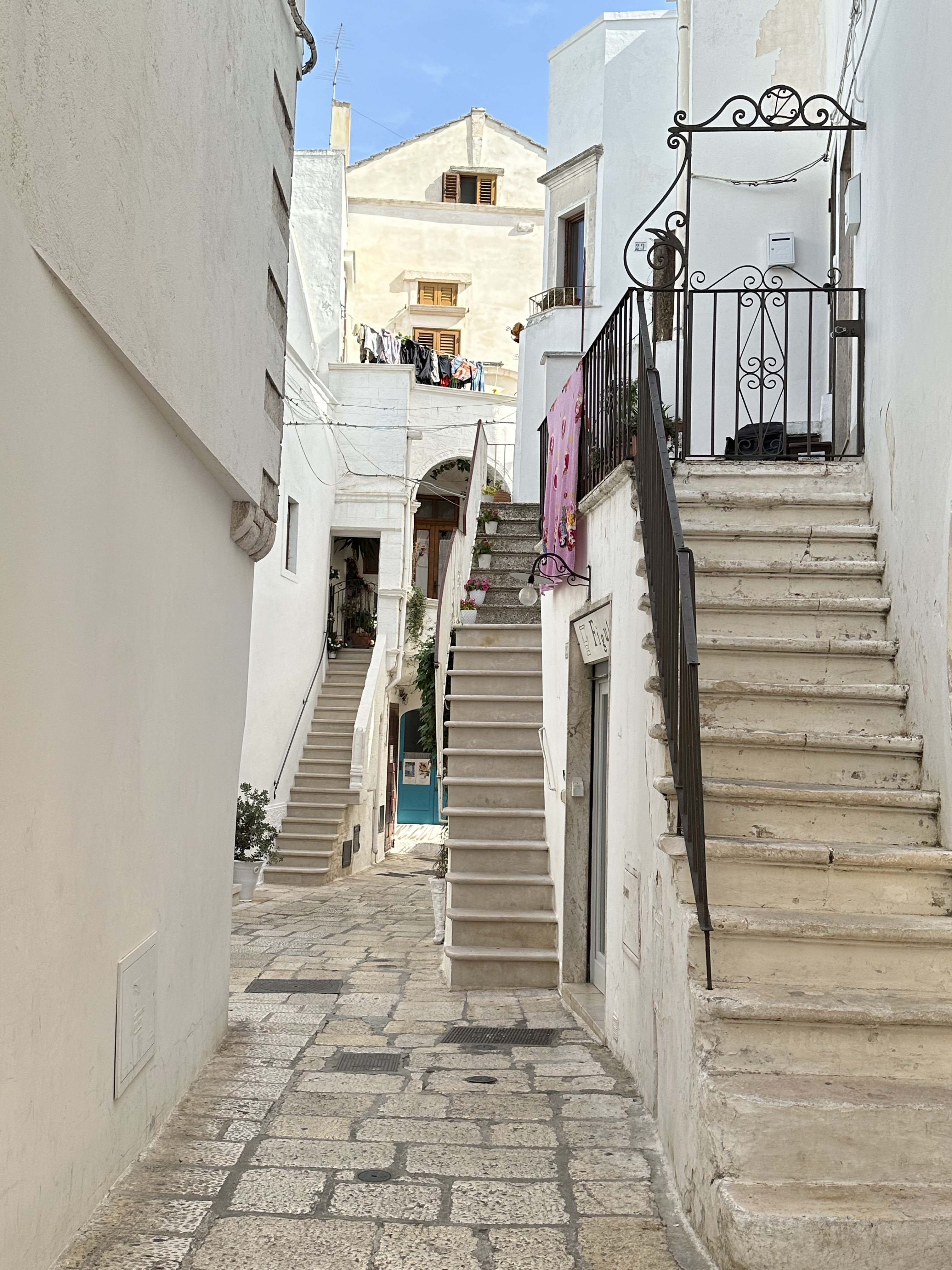
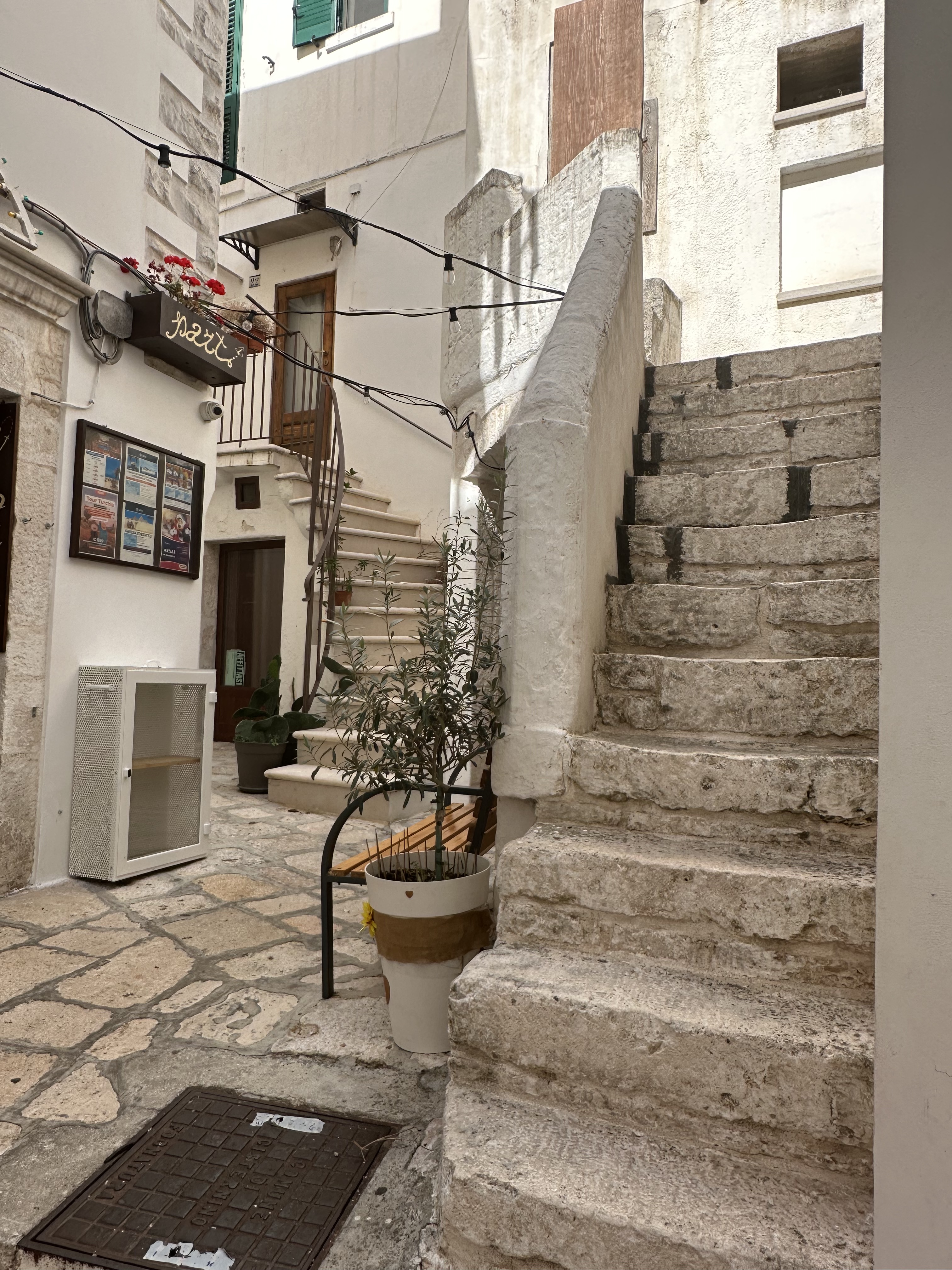
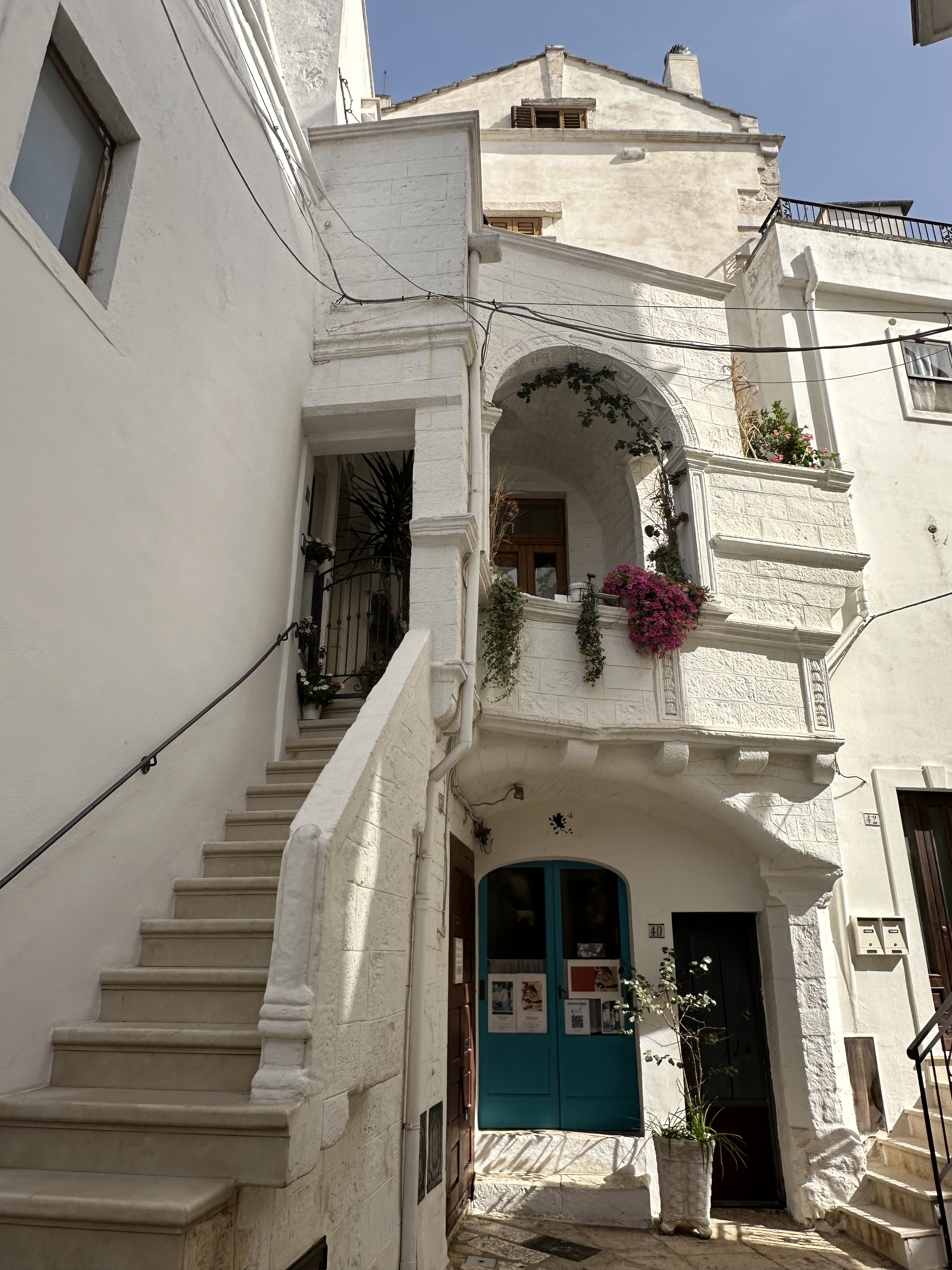
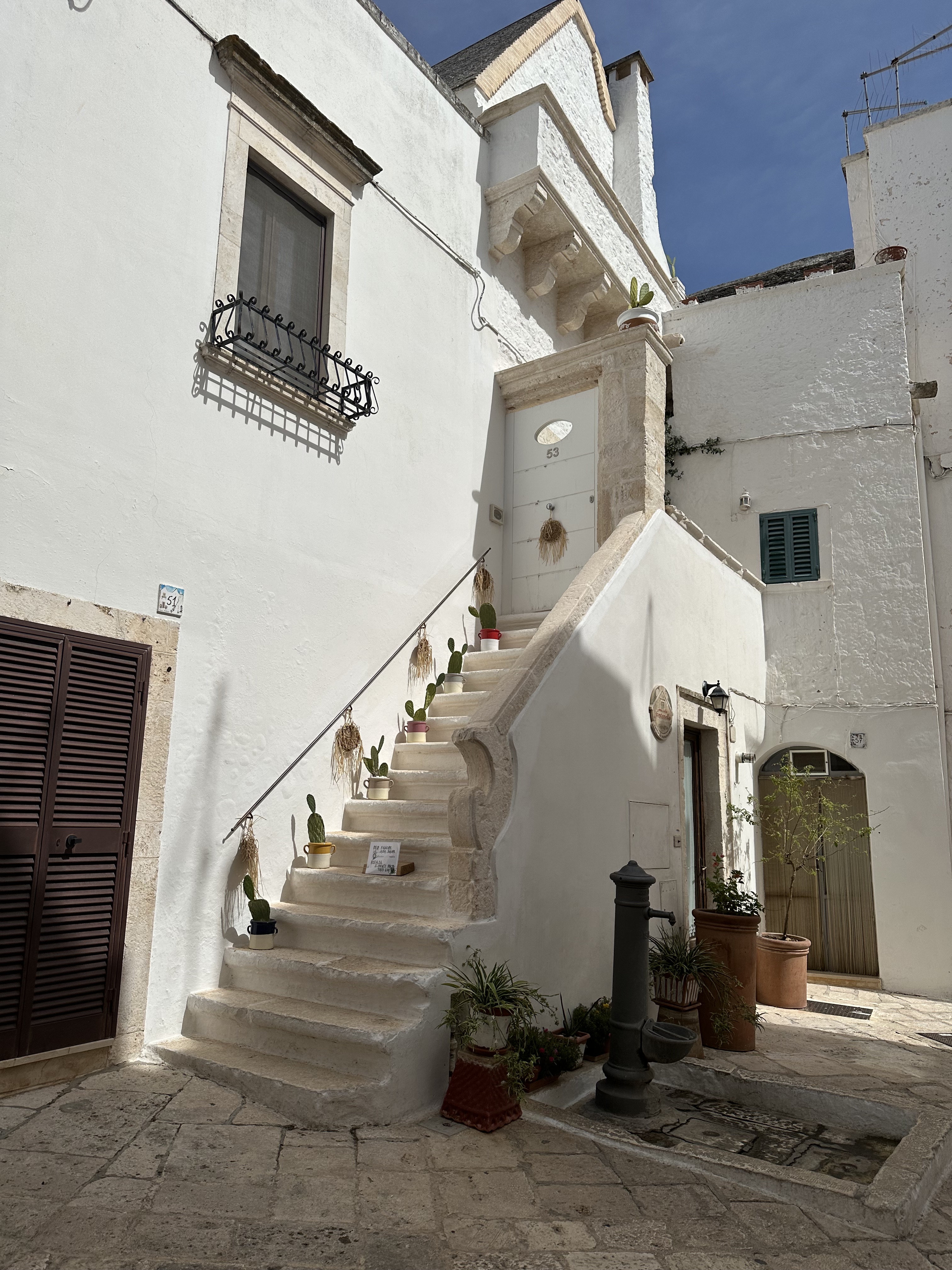
There are many stairs in the Cisternino and we took plenty of photos. Apparently there is no tax charged for exterior stairs, only interior ones. No wonder we saw so many.

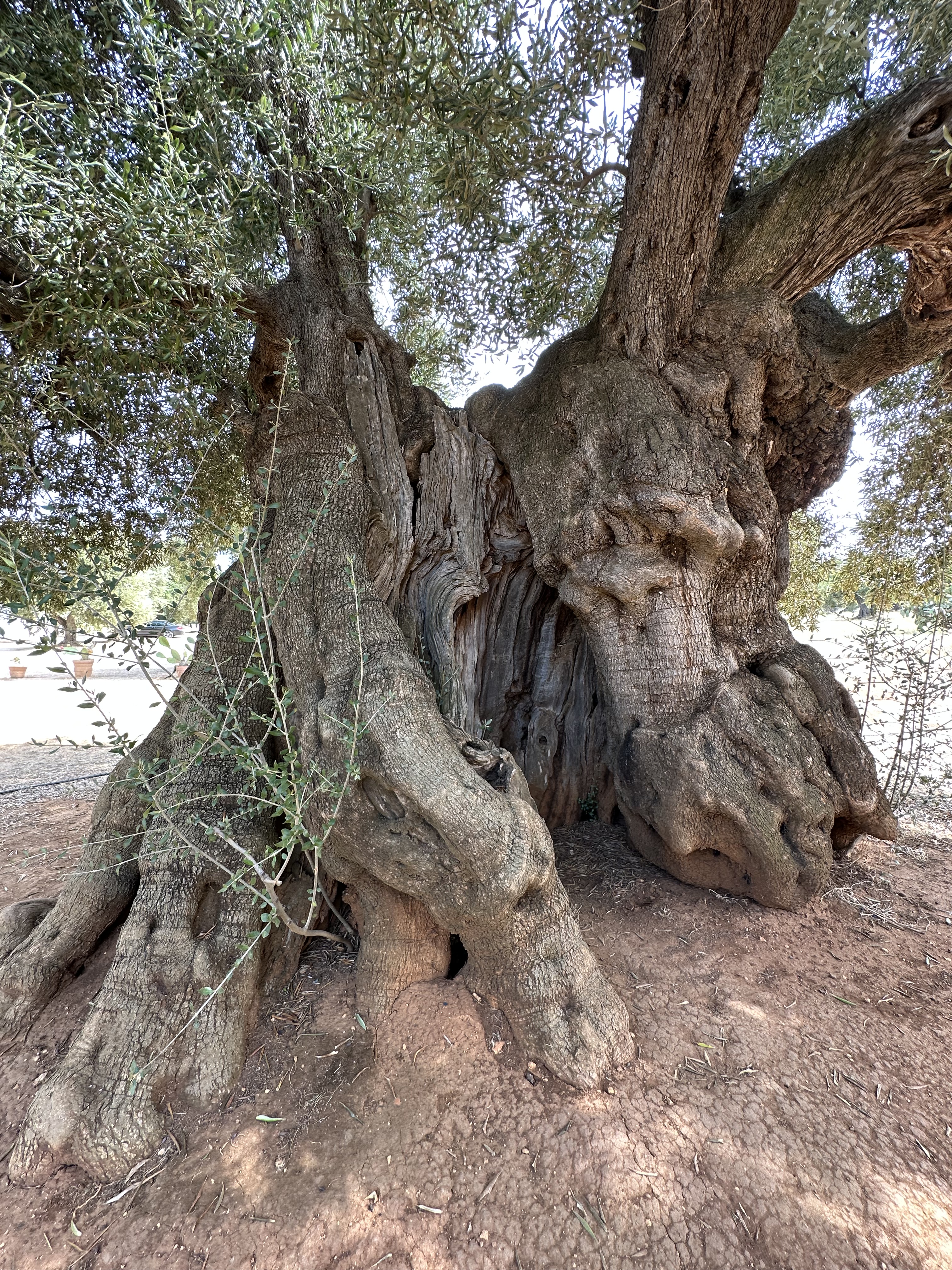
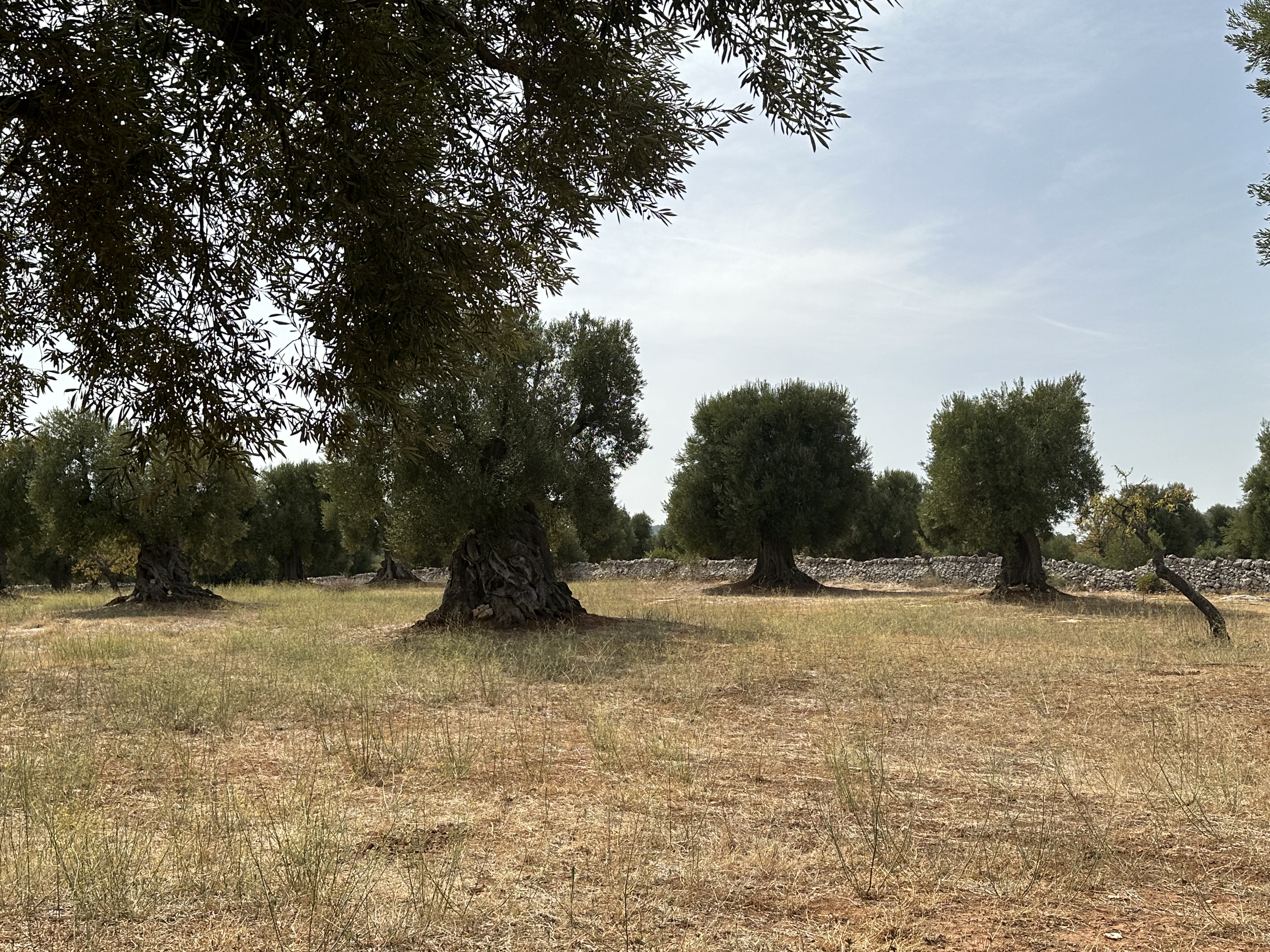
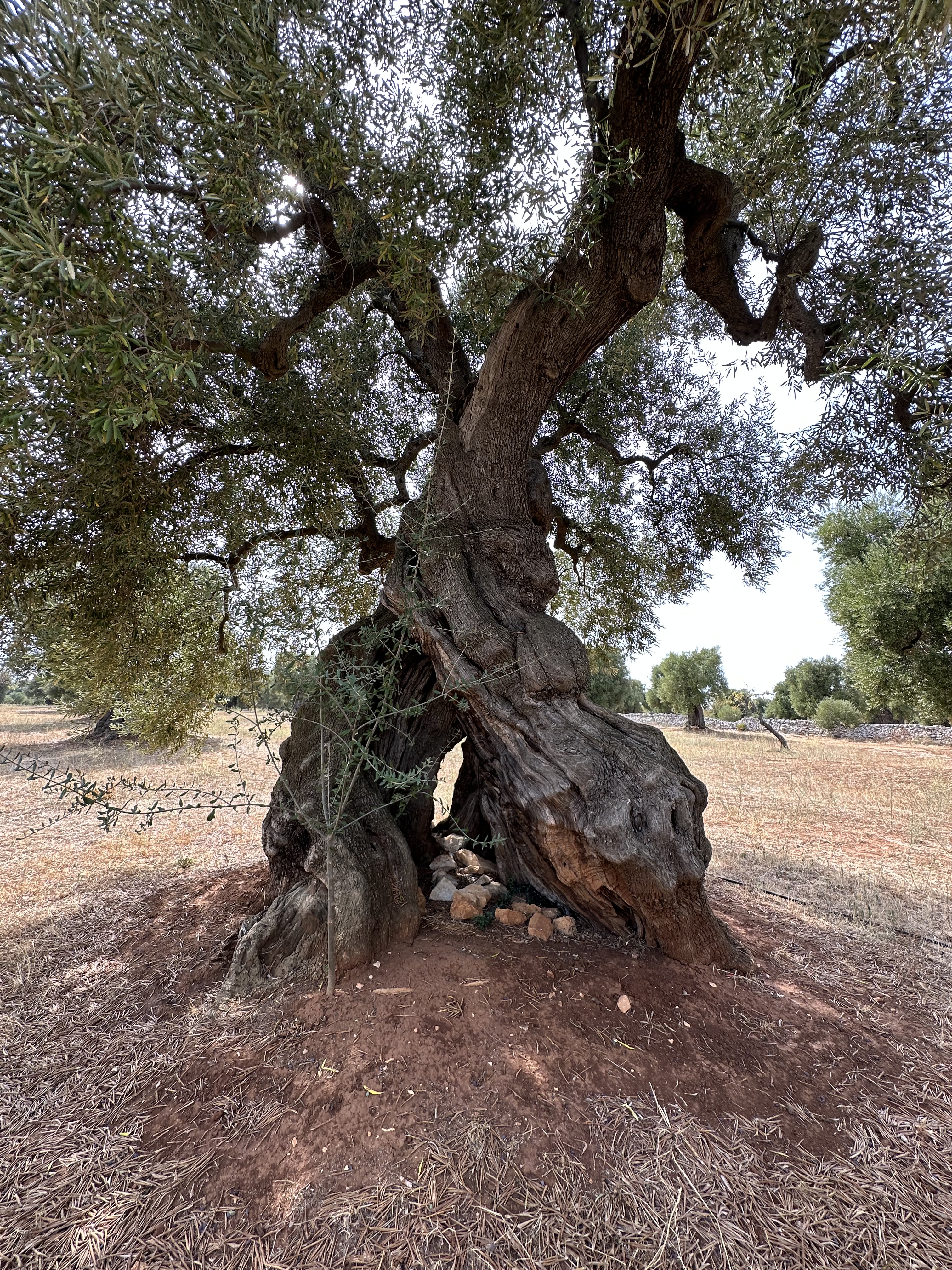
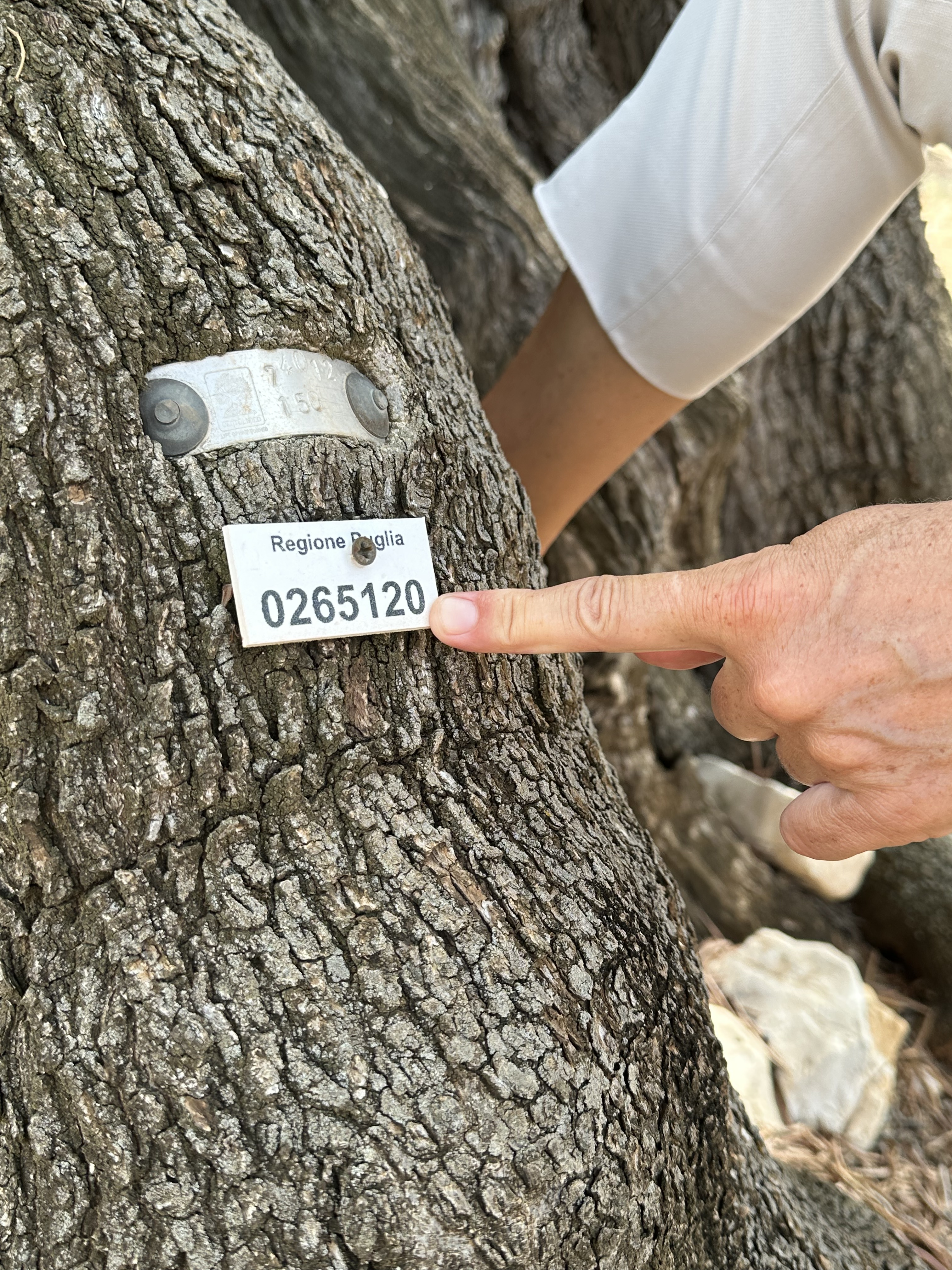
We drove away from Cisternino and headed for an olive masseria to taste olive oil and learn more about it. The name of the place was Antica Masseria Brancati. The elder owner met us at the entrance and introduced us to his 2000 year old trees. His great grandfather had purchased the Masseria many years ago and now he is getting ready to turn the business over to his 21 year old son. He is very proud of his work and hopes his trees will be saved from the Xyllele bacteria which travels on a bug that is slowly moving north through Puglia.

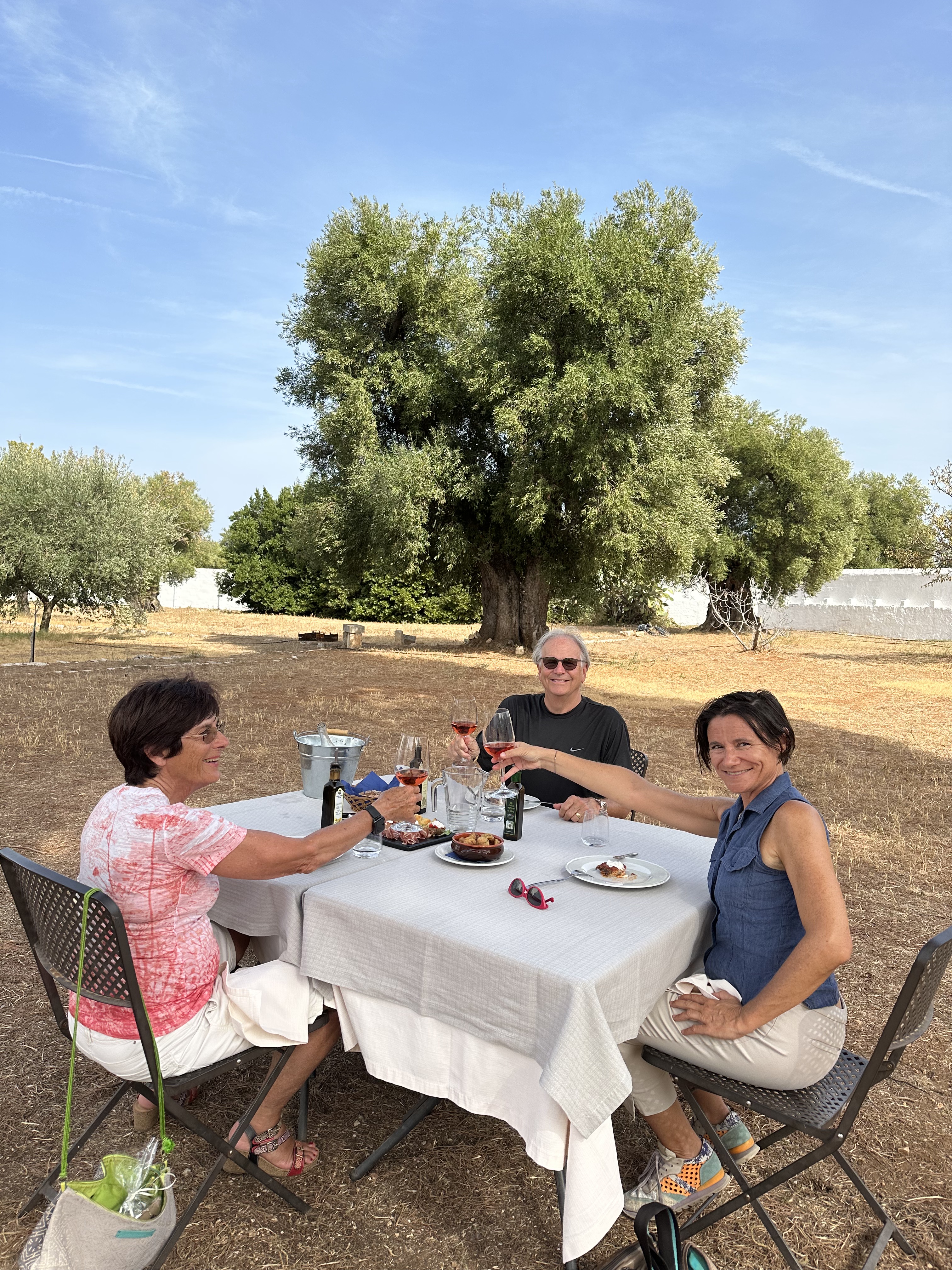
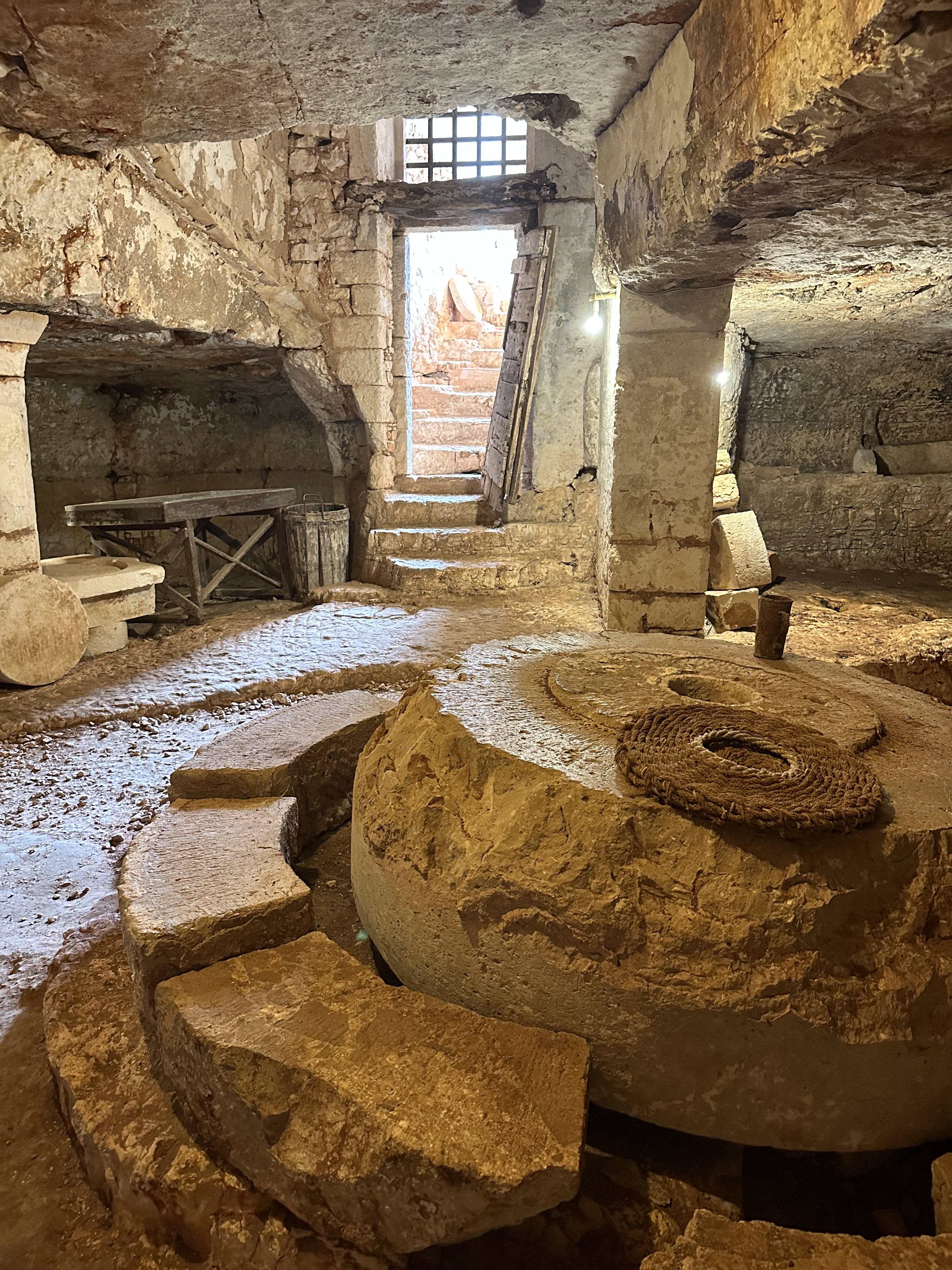
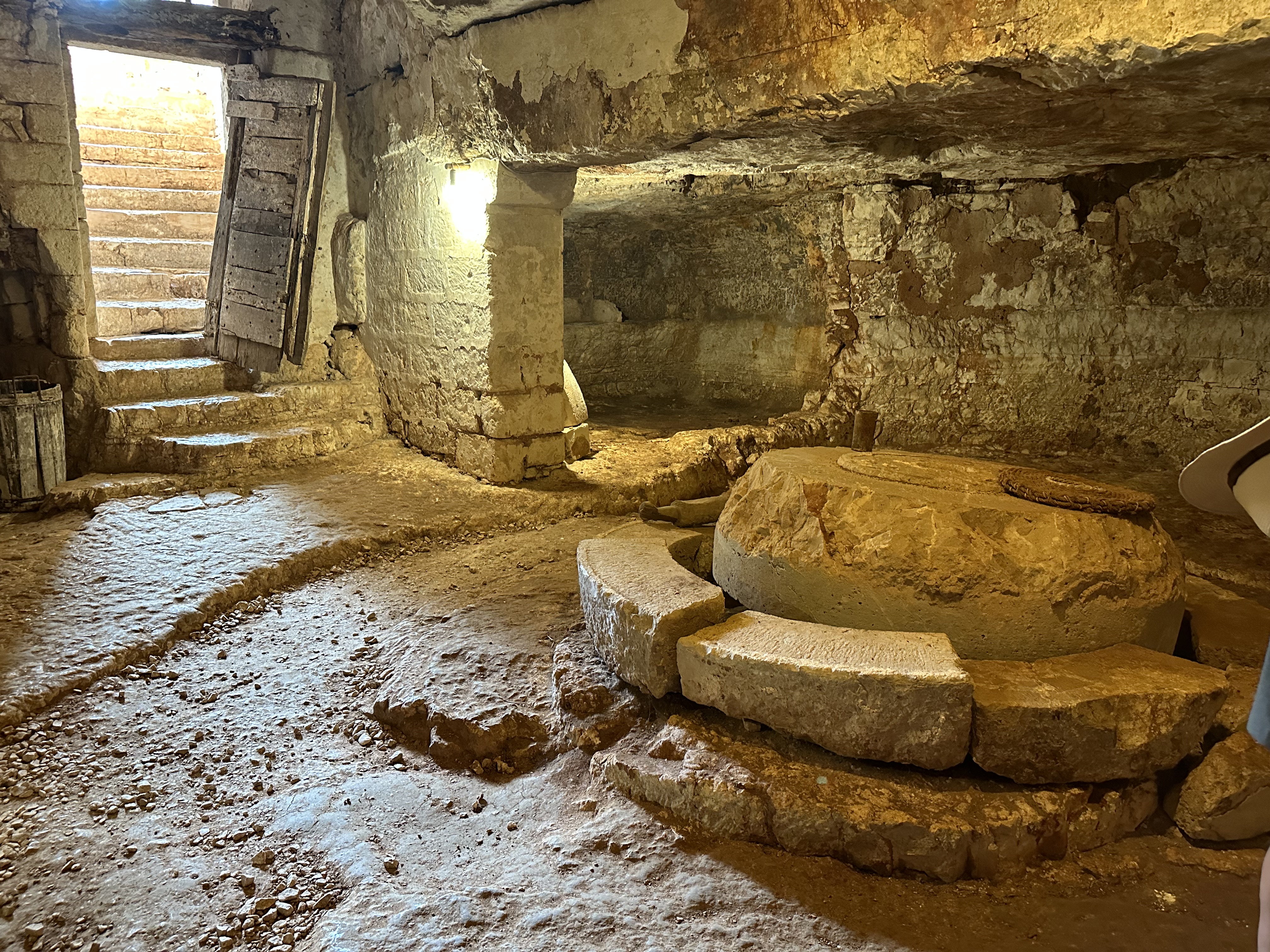
Silvia gave us a tour of the olive cellar and how the olive pressing process works. It was familiar to us, but still interesting to see how it was done so many years ago in a real live press. Today the work is done elsewhere in a sterile environment. After studying the press we went into the garden for an oil tasting and lunch. We tasted 4 different oils, with different grades and flavors. One was pressed with lemon and rosemary. They were very tasty. As was lunch. It consisted of a bottle or Rose wine and platters of appetizers followed by a pasta dish. Dessert was fresh peaches with mint and ice cream cannoli. We were stuffed, but feeling most satisfied. We drove back to Ostuni knowing we would skip dinner.

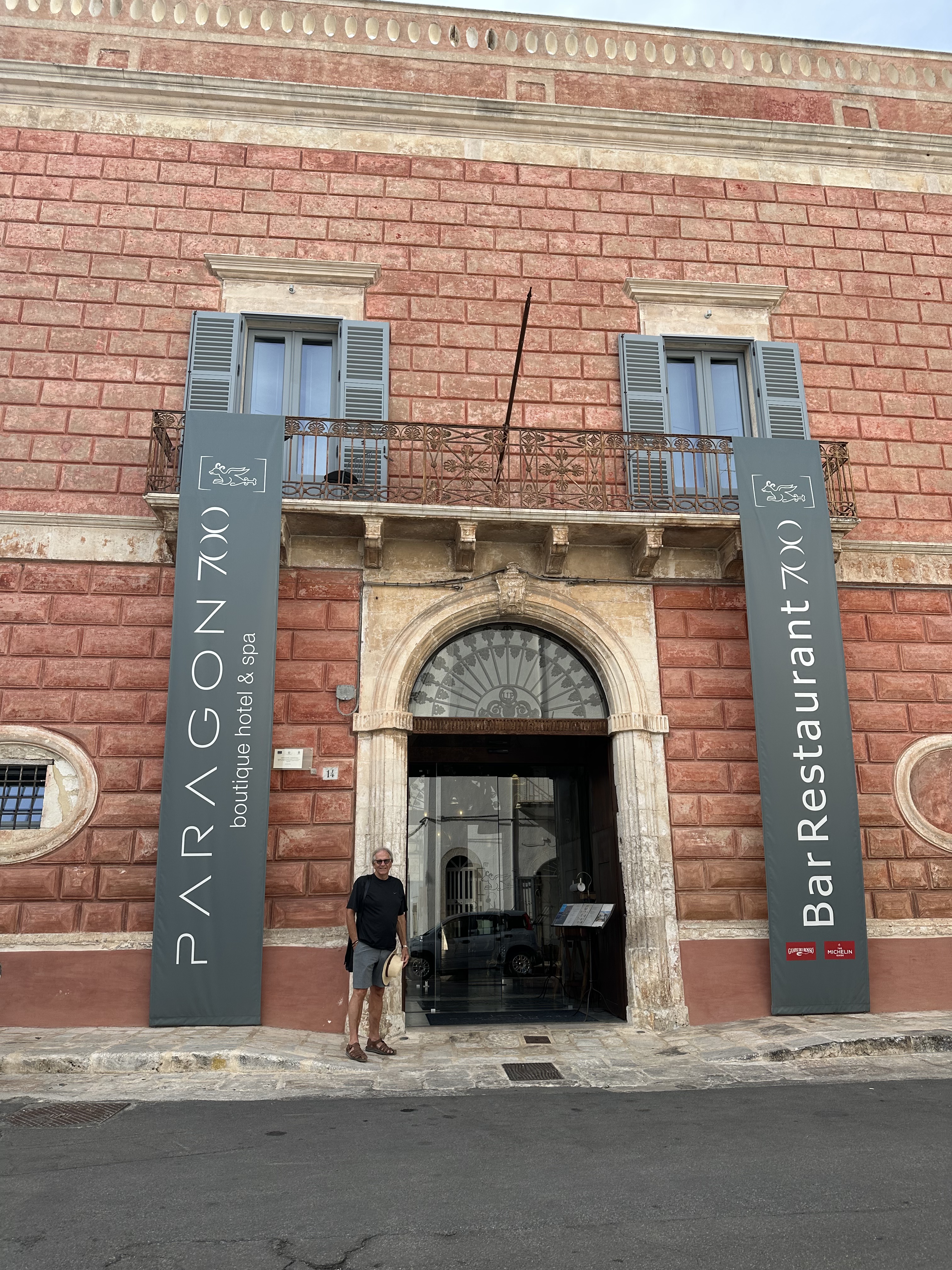
The Paragon 700 Hotel in Ostuni, where we are staying. After relaxing for a couple of hours we went for a walk about the city center and had a cocktail. The air was comfortable but not vey cool. We were happy to get back to the A/C in our room.

The east coast of Puglia from Otronto to St Maria di Leuca

September 17, 2023

This was our last day at the Masseria Trapana.  We have enjoyed having several days in the quiet countryside.  Today we drove back toward Otronto and south along the Adriatic coast.  Our plan was to enjoy the coast line and see the beaches along the way.  

The route was mostly high above the sea and very rocky.  Where there were housing settlements, the traffic was very congested and the beaches were not close.  The countryside was so rocky that the vegetation was sparse and dry.  We were disappointed in the drive, even though we did see a few rocky coves with small sandy beaches.  

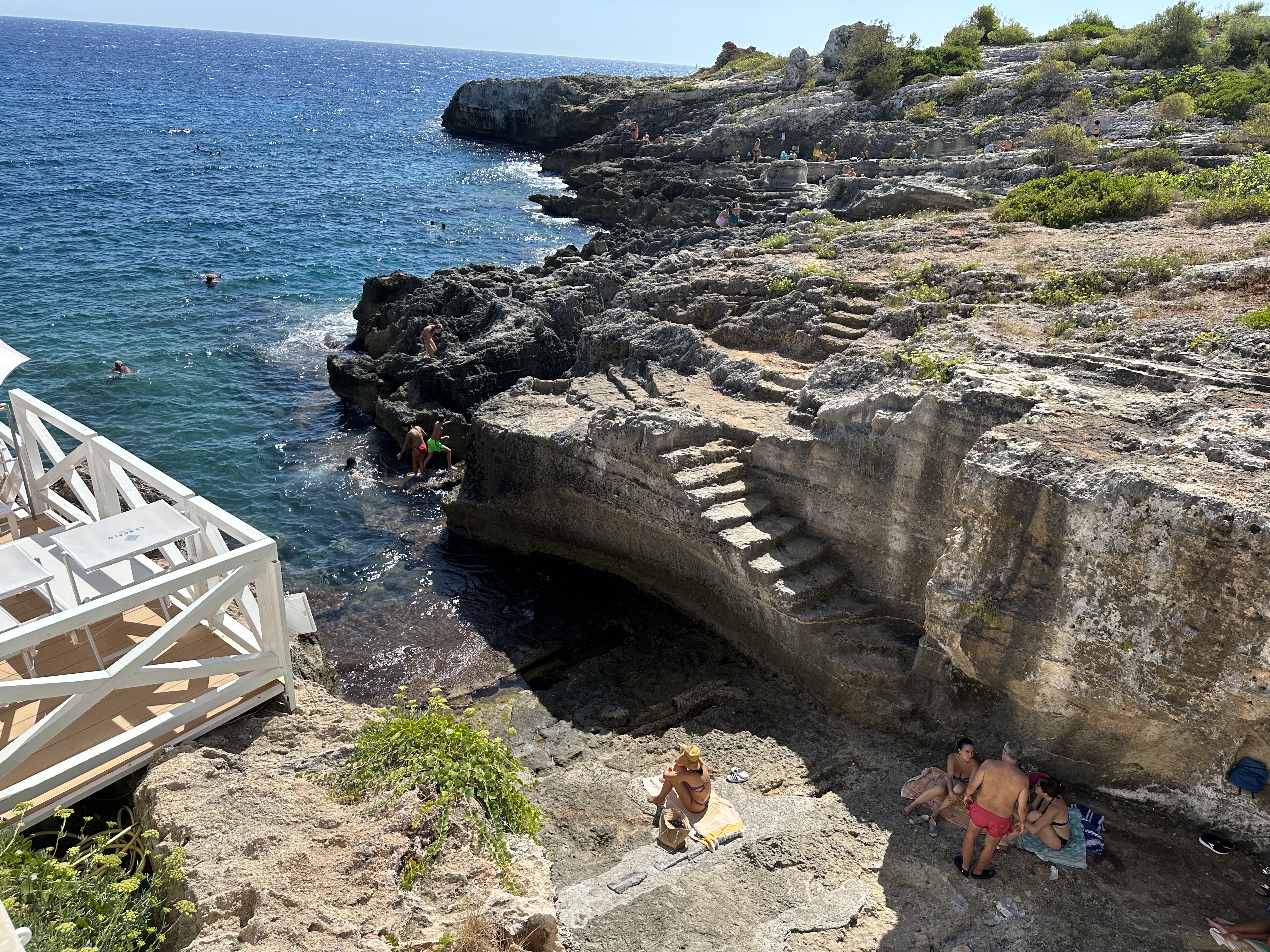
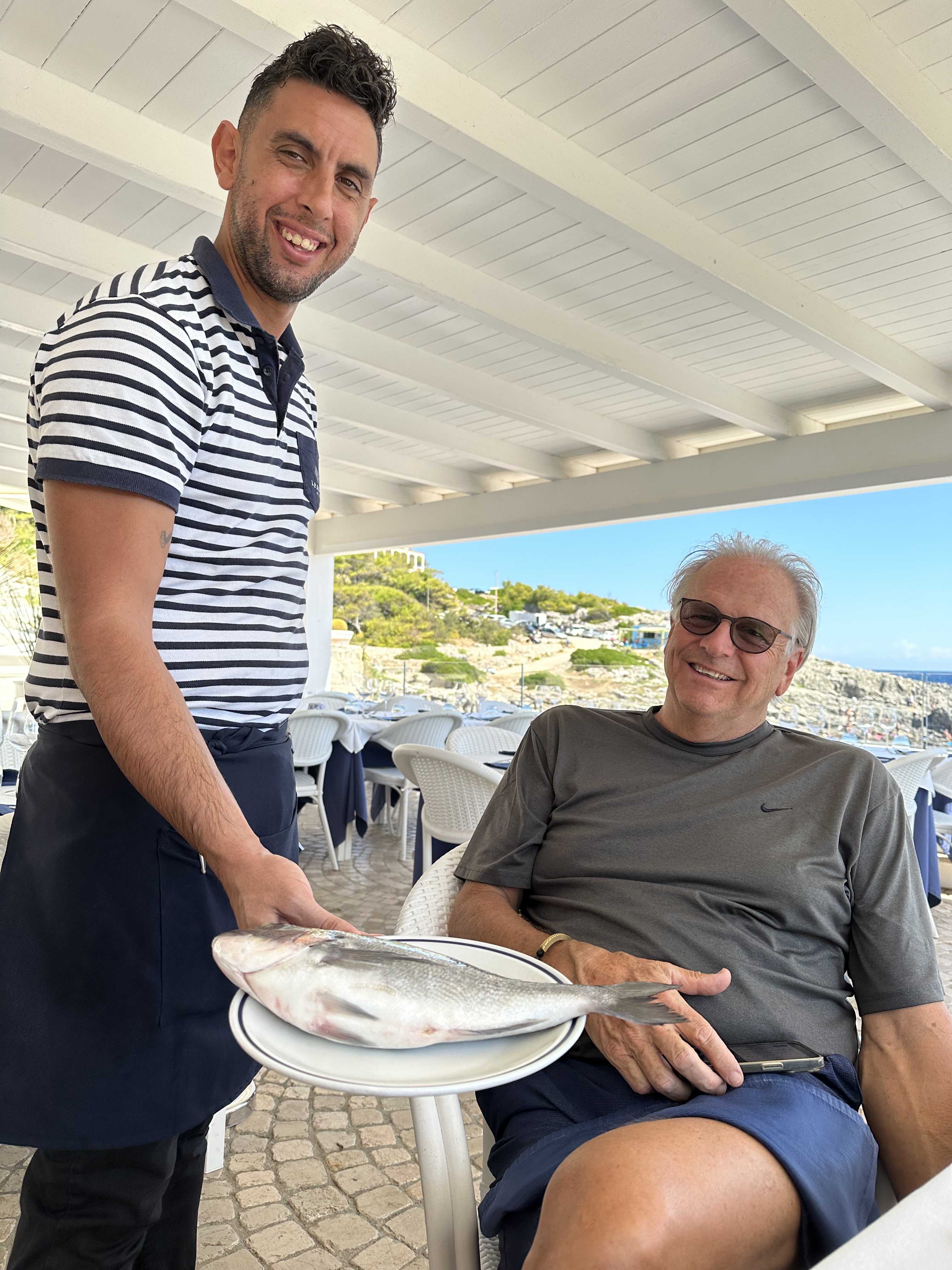
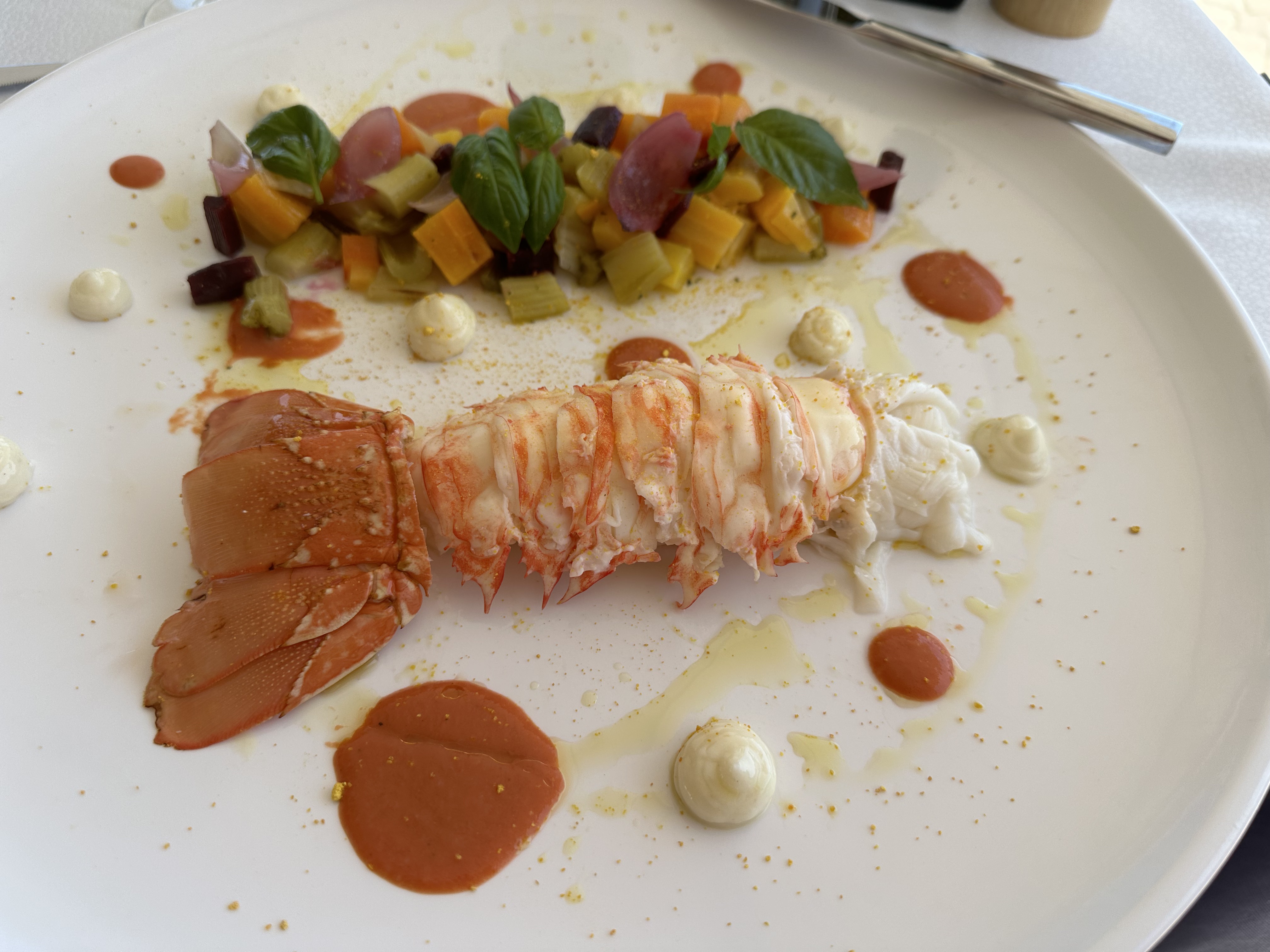
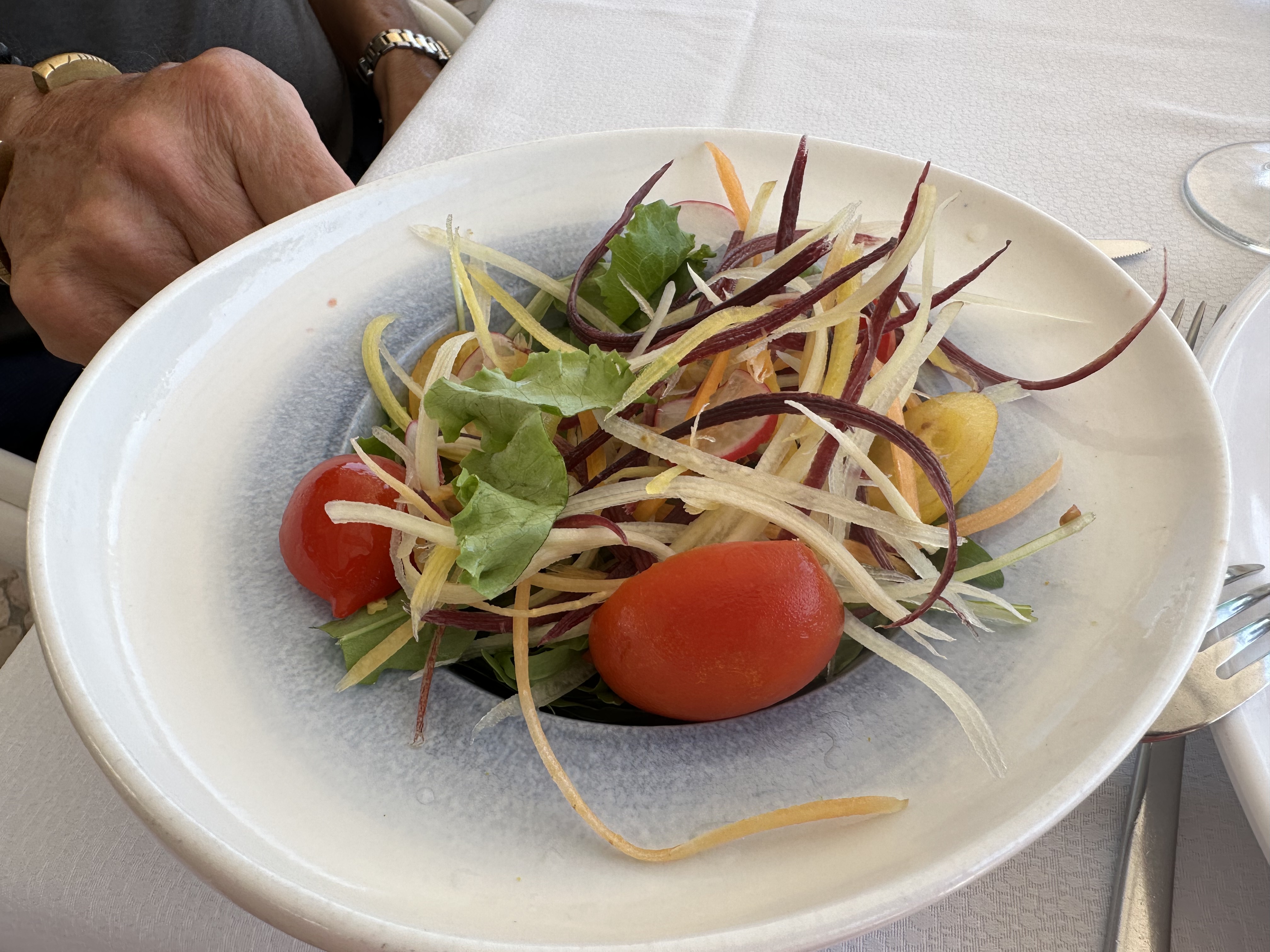
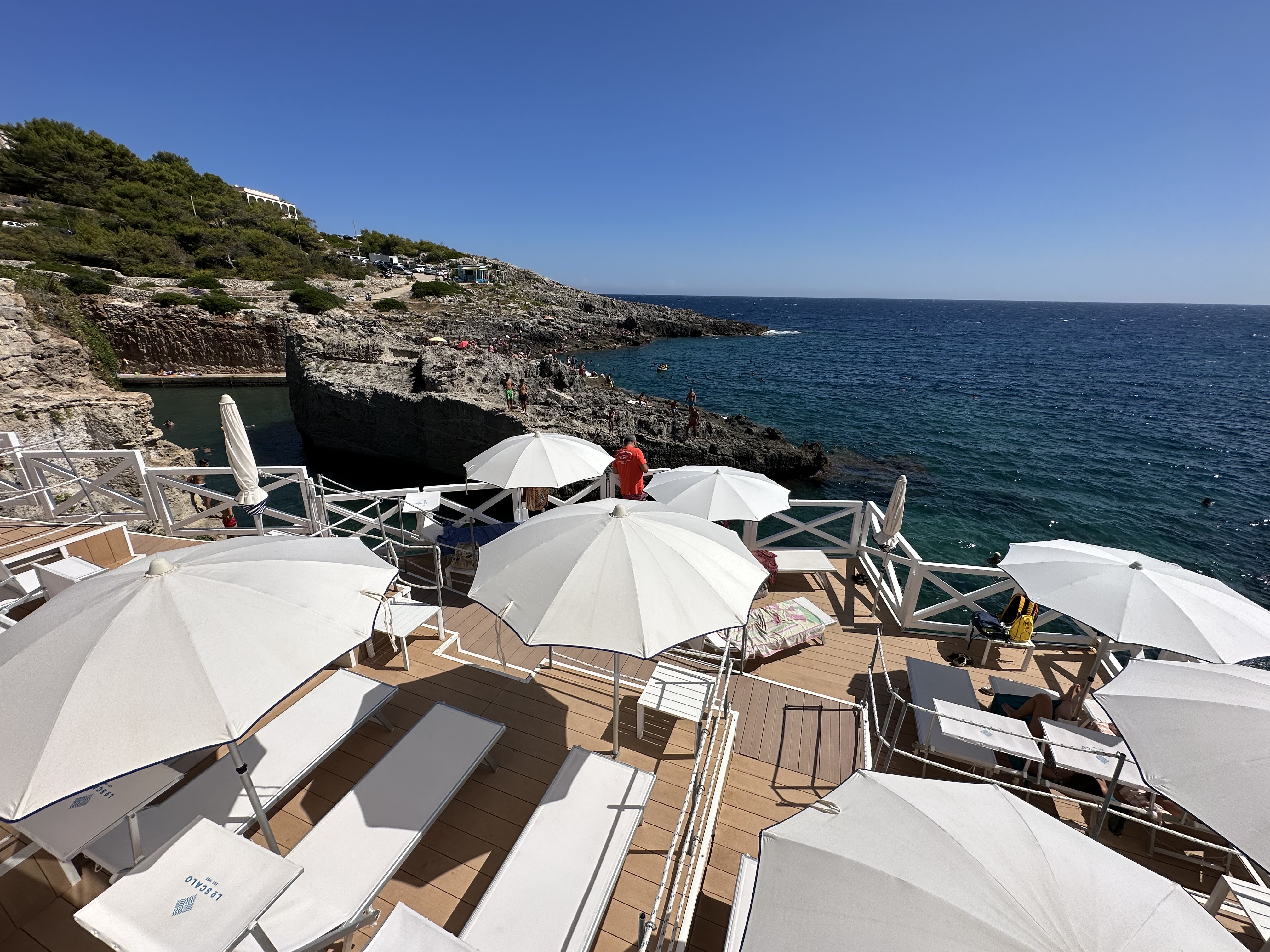
 The high point of the drive was our lunch stop at a place called Lo Scolo in the village of Marina di Novaglie.  It was a charming place overlooking the sea and a popular swimming spot with no sand, just boulders.  I had local lobster and Mark had sea bream.  The lobster was superb—tender and sweet.  I probably will not have it again as the price, which I learned when we got the bill, was astronomical.  Glad I ate it before knowing the cost.

After lunch we drove to the tip of Puglia and got on a small boat with 6 other people.   First we motored up the east coast through the usually rough water of the Adriatic.  The boatmen stopped several times at various caves to show us points of interest.  After the first couple of caves, we were ready to be finished as there was nothing special to see and the caves were too shallow to enter.  Eventually we turned around and headed south to the place where the Adriatic and Ionian seas meet.   Almost instantly the water calmed down.  Turns out the Ionian See is always calmer than the Adriatic.  We saw a few more caves and stopped twice to snorkel and swim.  Mark and I had not intended to swim, so we watched the others. 

About 5:30 we were back at the dock and on our way north by the inland route.  We had a couple of mis-directions returning home but made it safely by 7:30, as it was just getting dark.  We went directly to dinner, had a light meal and headed for showers and bed.  We agreed that other coastline drives were far superior, such as Highway 1 in California, the Amalfi Coast in Italy and Hwy 28 and 89 around Lake Tahoe.

This was the side deck off our bathroom. It had a nice view of the countryside and was pleasant in the early morning before the heat got to it.

September 18, 2023

Galatina and Gallipoli

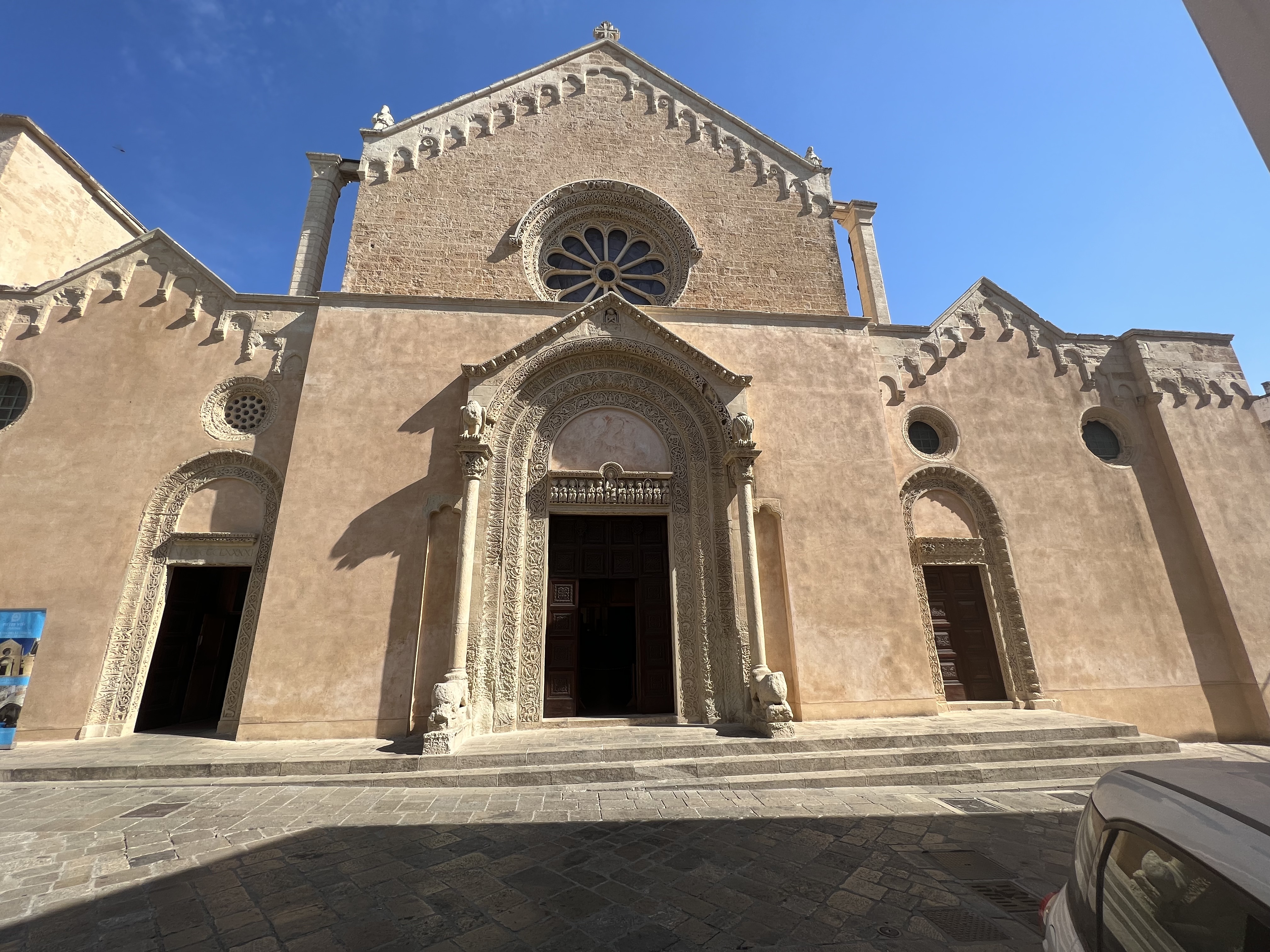
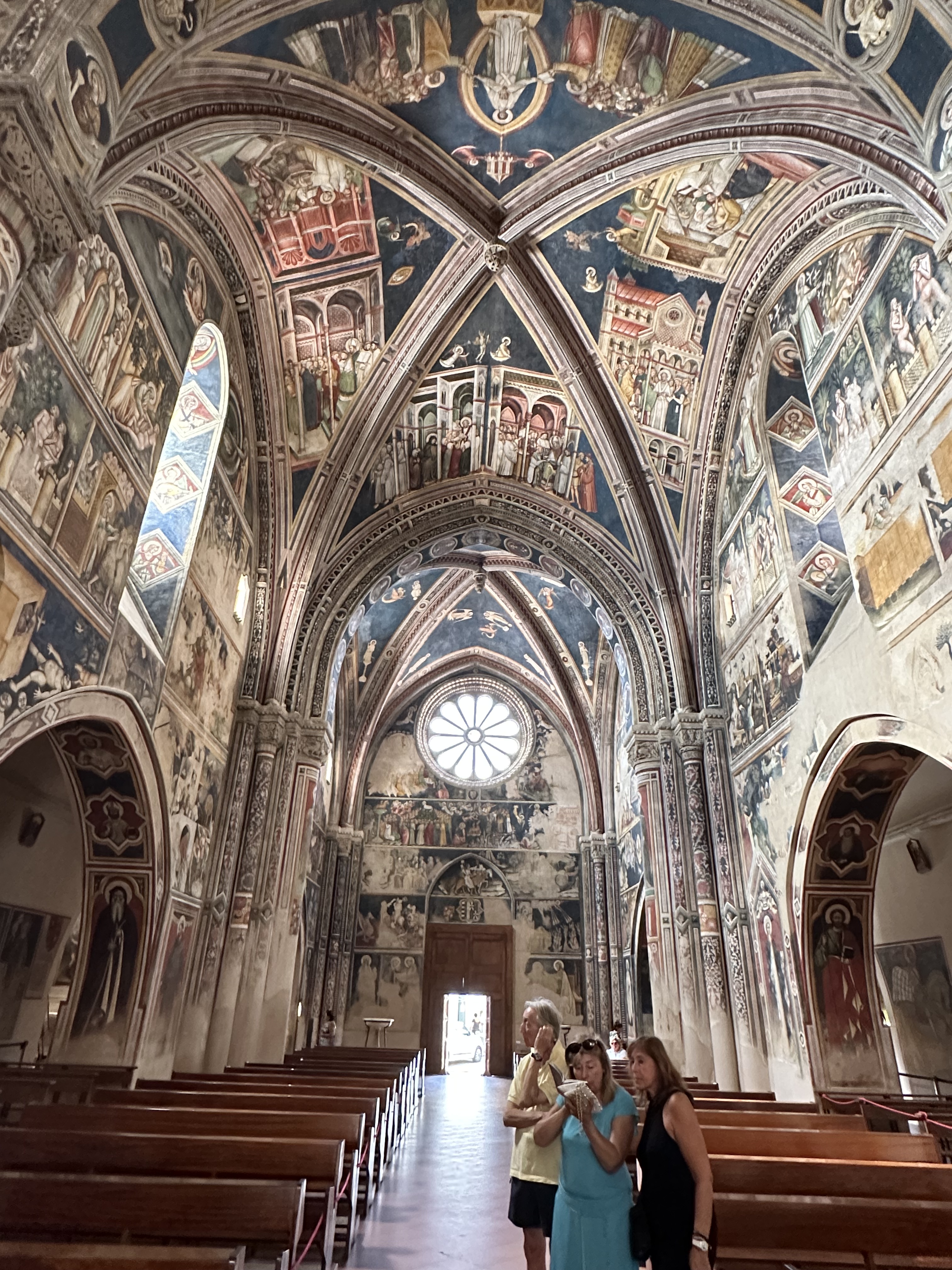
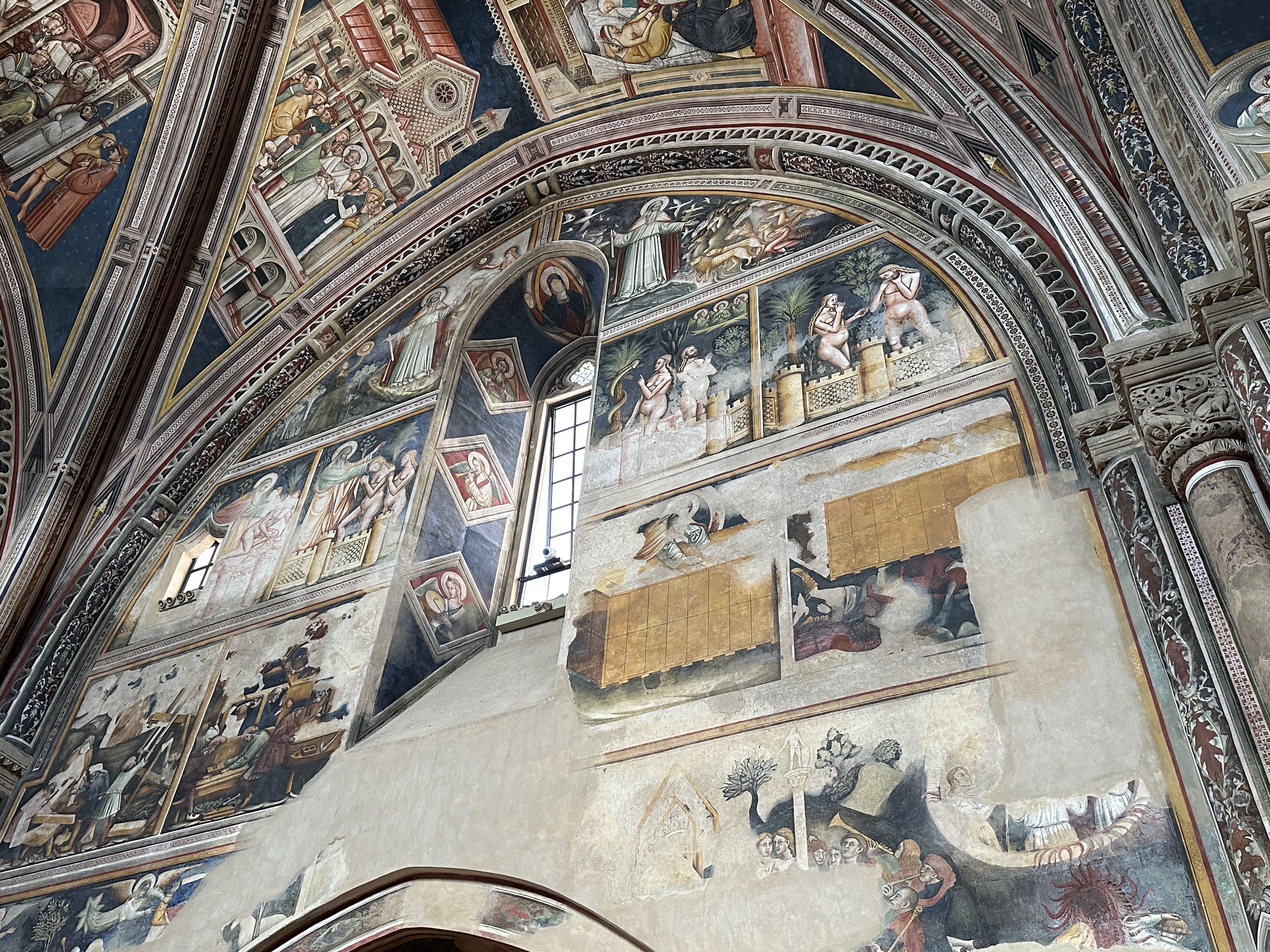
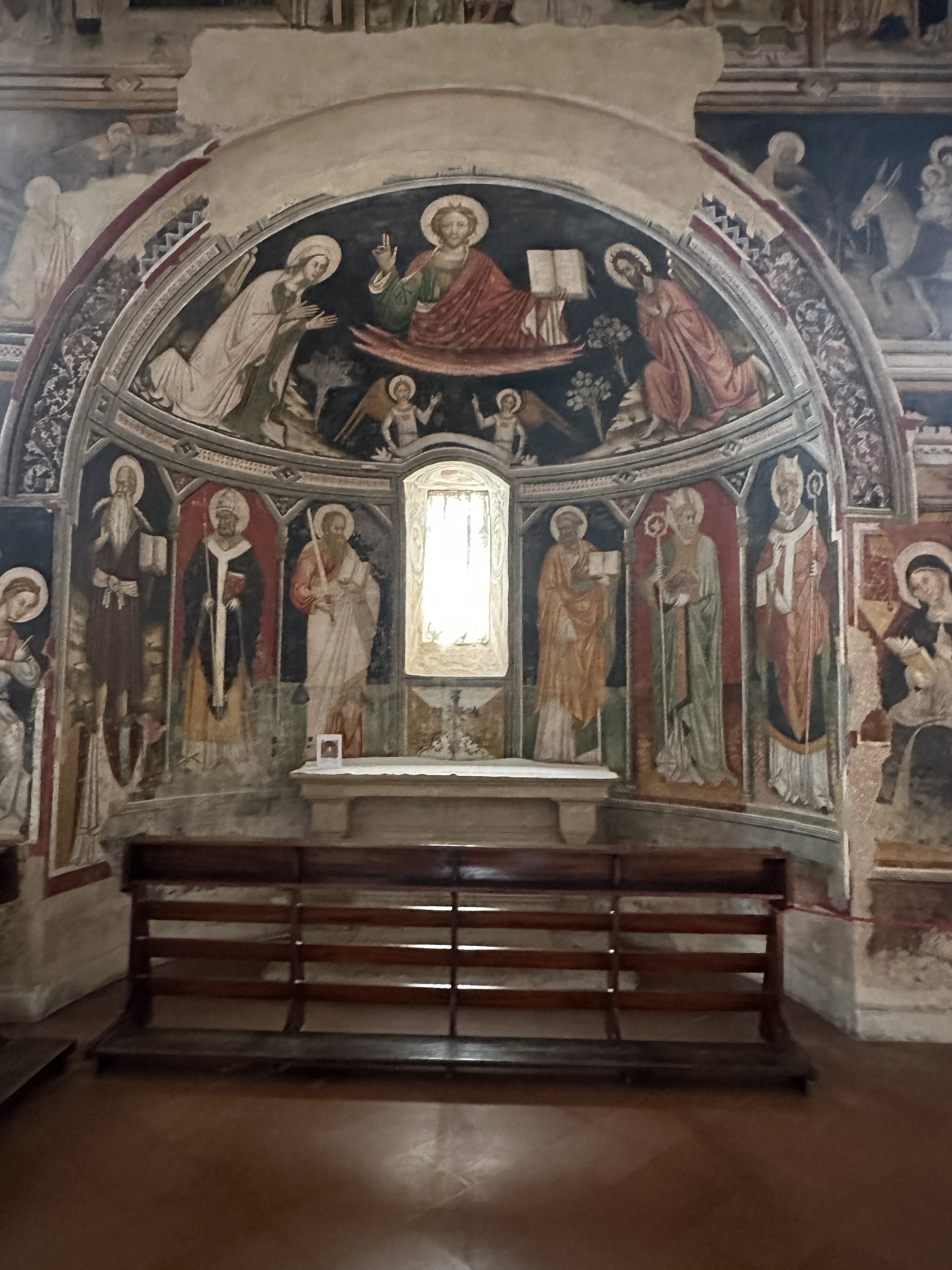
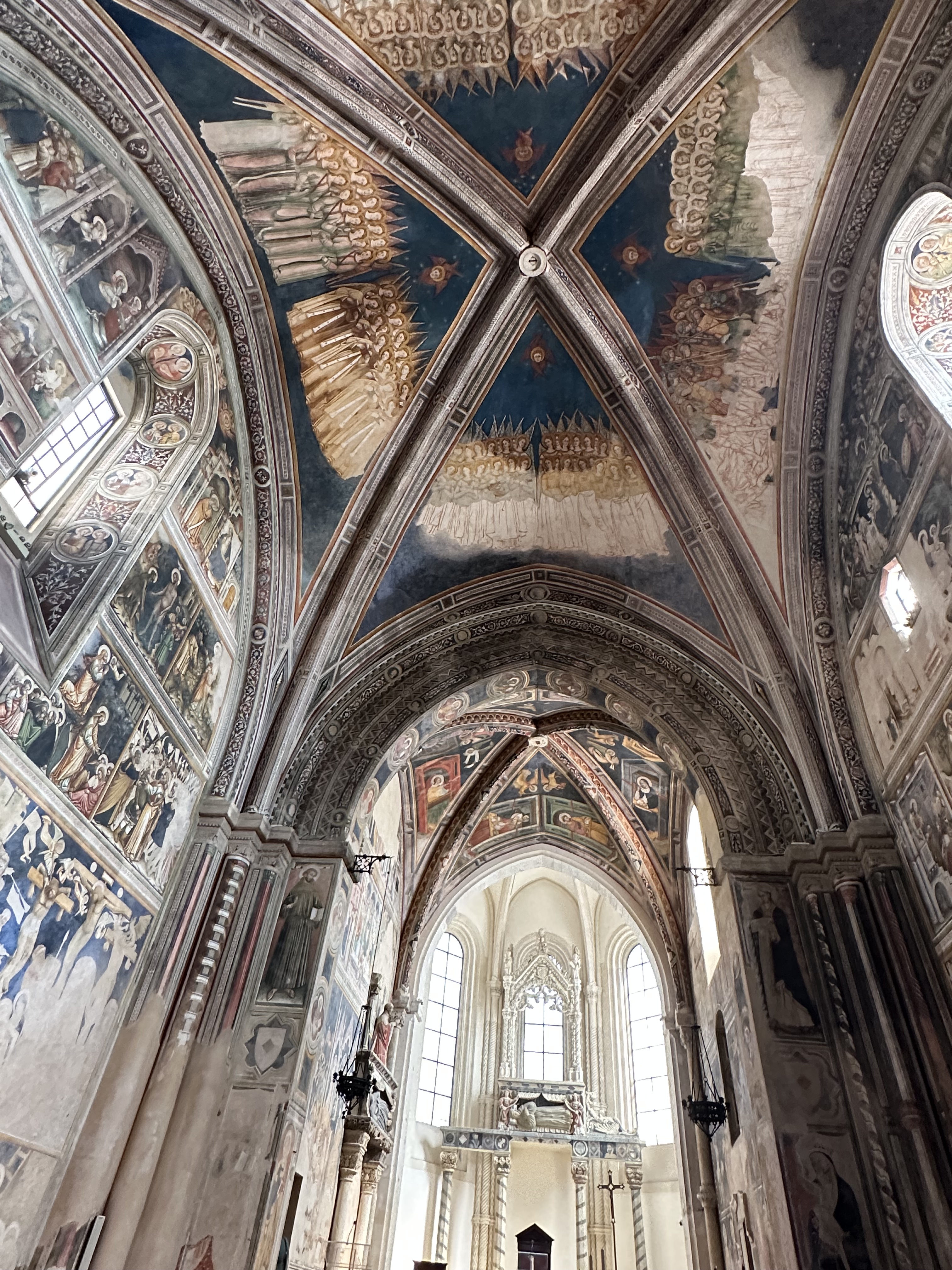
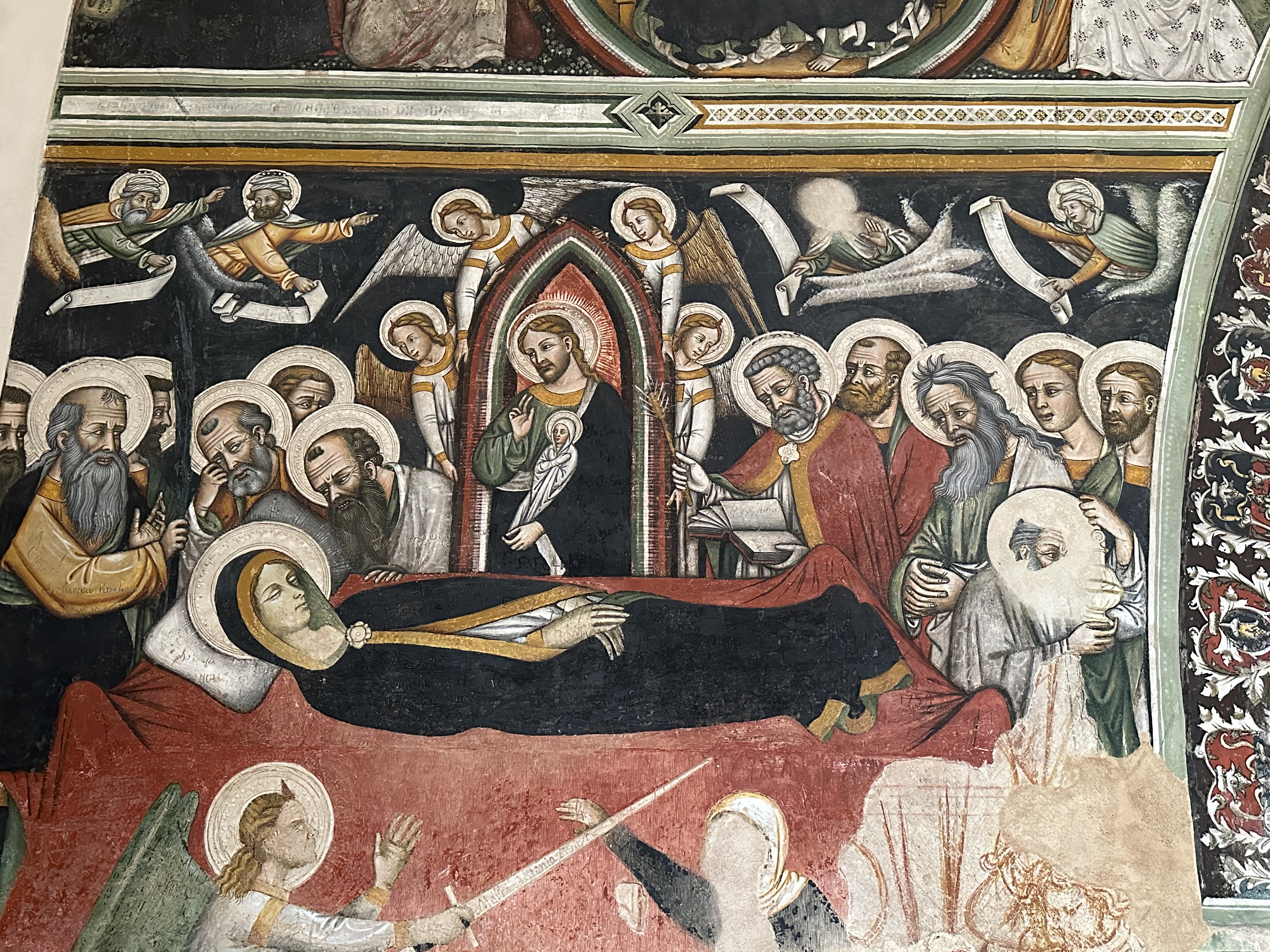
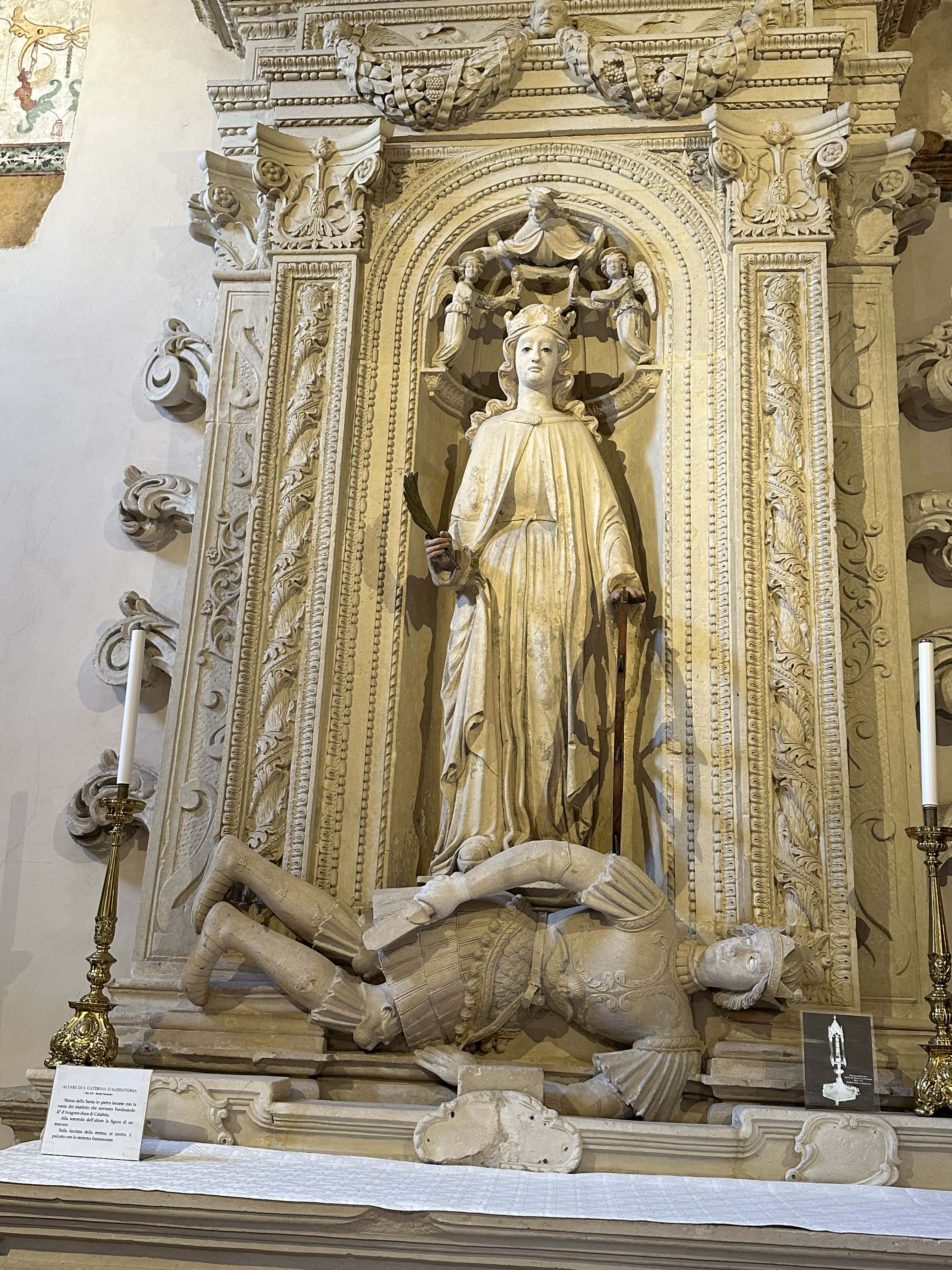
Galatina is a small town famous for the Church of St Catherine of Alexandria. It was built in 1391 in the Romanesque and Gothic styles.

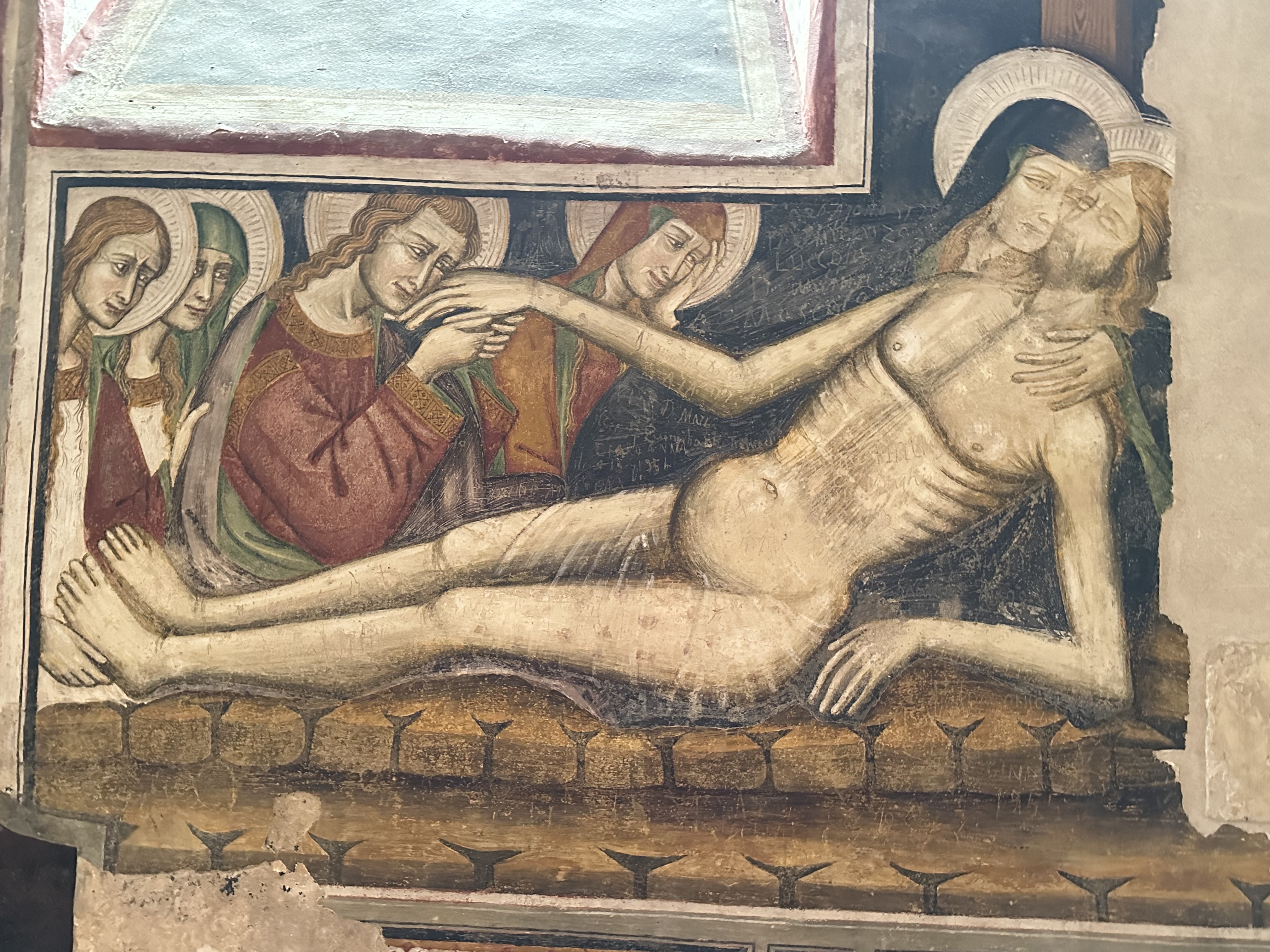
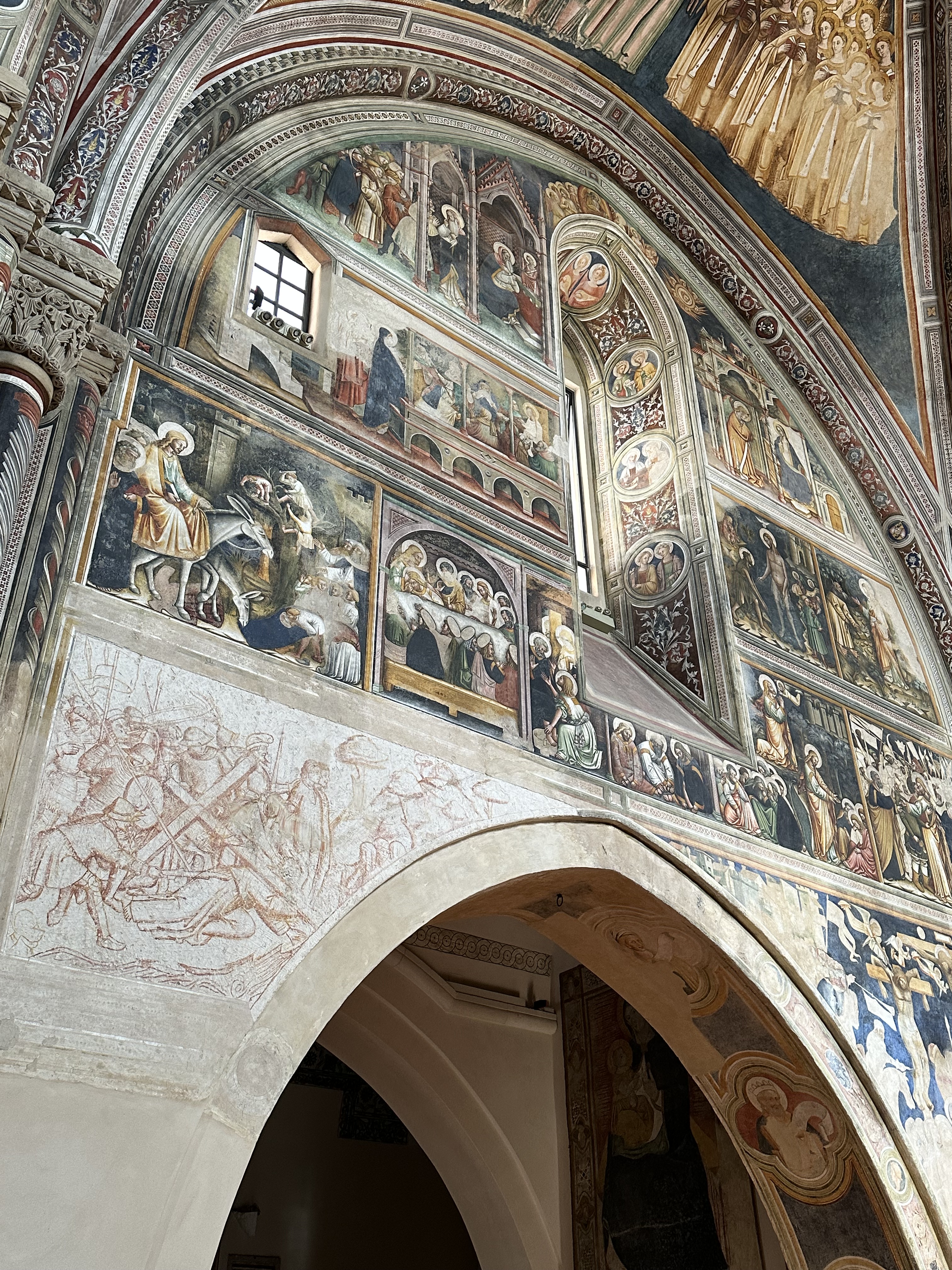
It was commissioned by a man named Romandello. He was the forth son of a local rich lord and not expected to receive any wealth from his father. So he became a crusader knight and a dignitary in the court of Naples. He married up to the countess of Lecce. Supposedly he bit off the finger of the dead St Catherine in Naples and brought it home to create a pilgrimage destination of the Church of St Catherine. He died six years after marrying the countess. She then married her husband’s enemy, the king of Naples. After 8 years, he died in battle. She returned from Naples and commissioned frescos for the church in her first husband’s name. She did not like the work and recommissioned the frescos to be painted again by different artists. The church is spectacular. All the scenes are from the Bible: the Apocalypse; Genesis; Life of Jesus; scenes from St Catherine’s life.

Raymondello, who commissioned the church to be built.

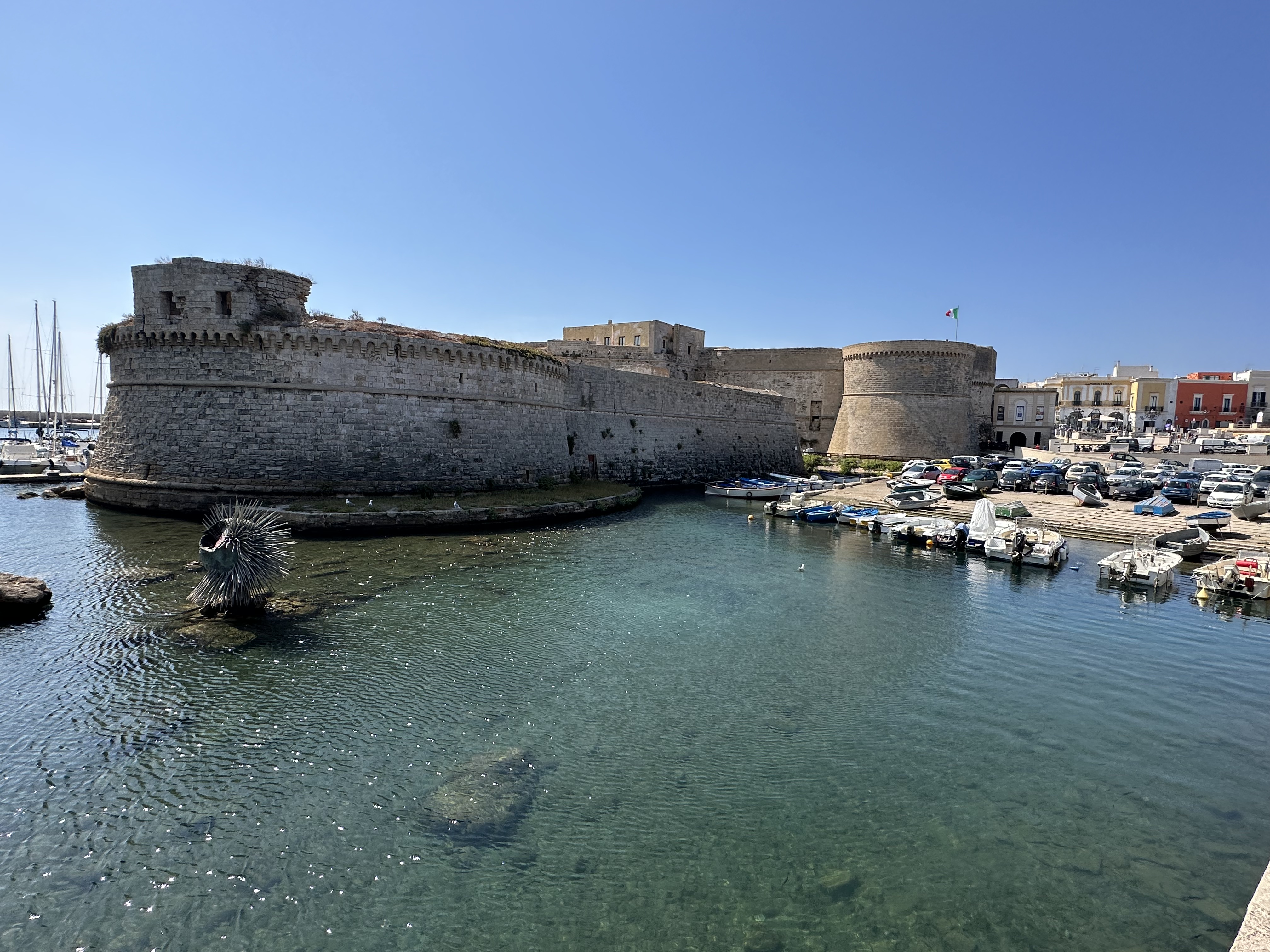
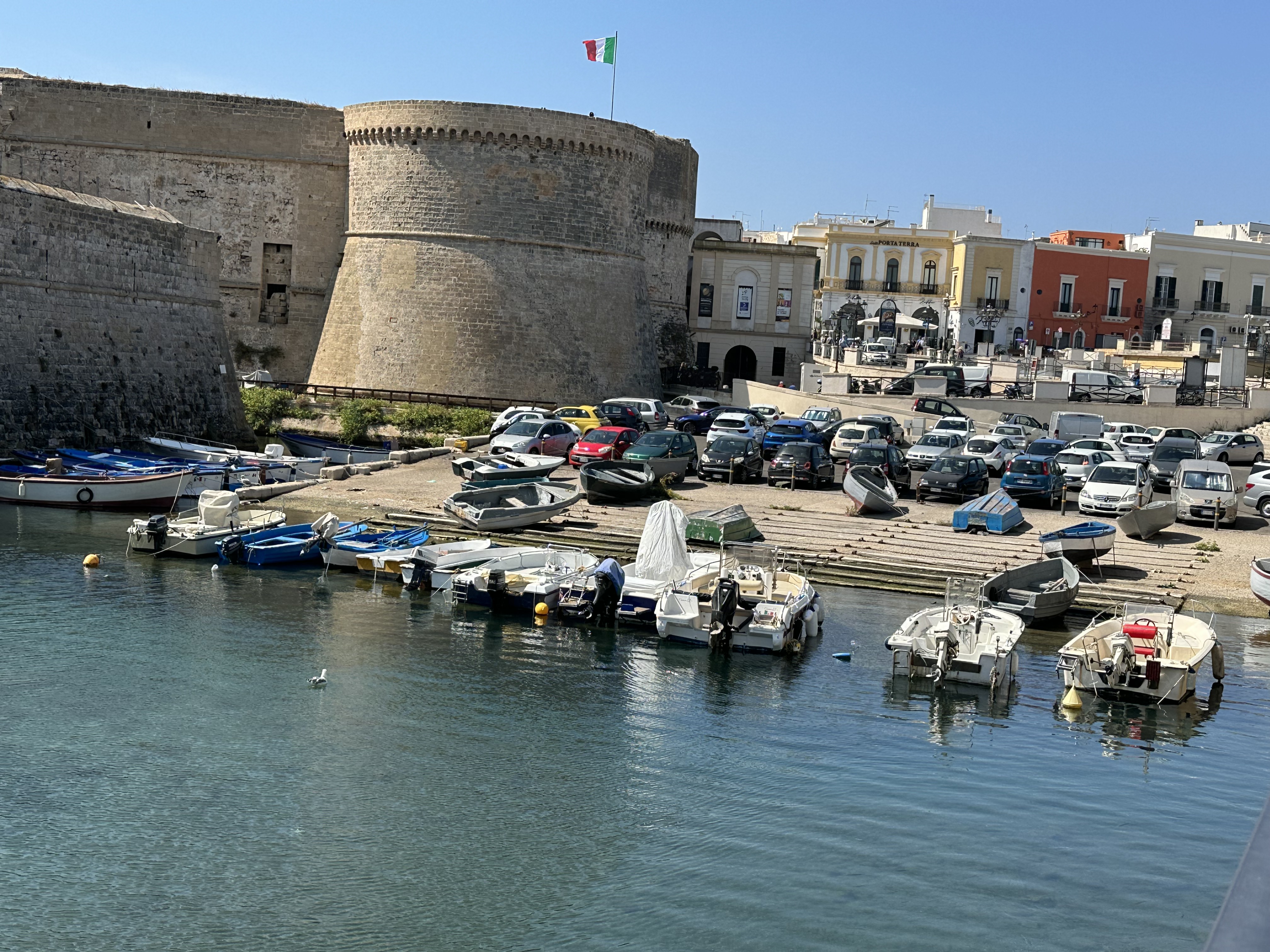
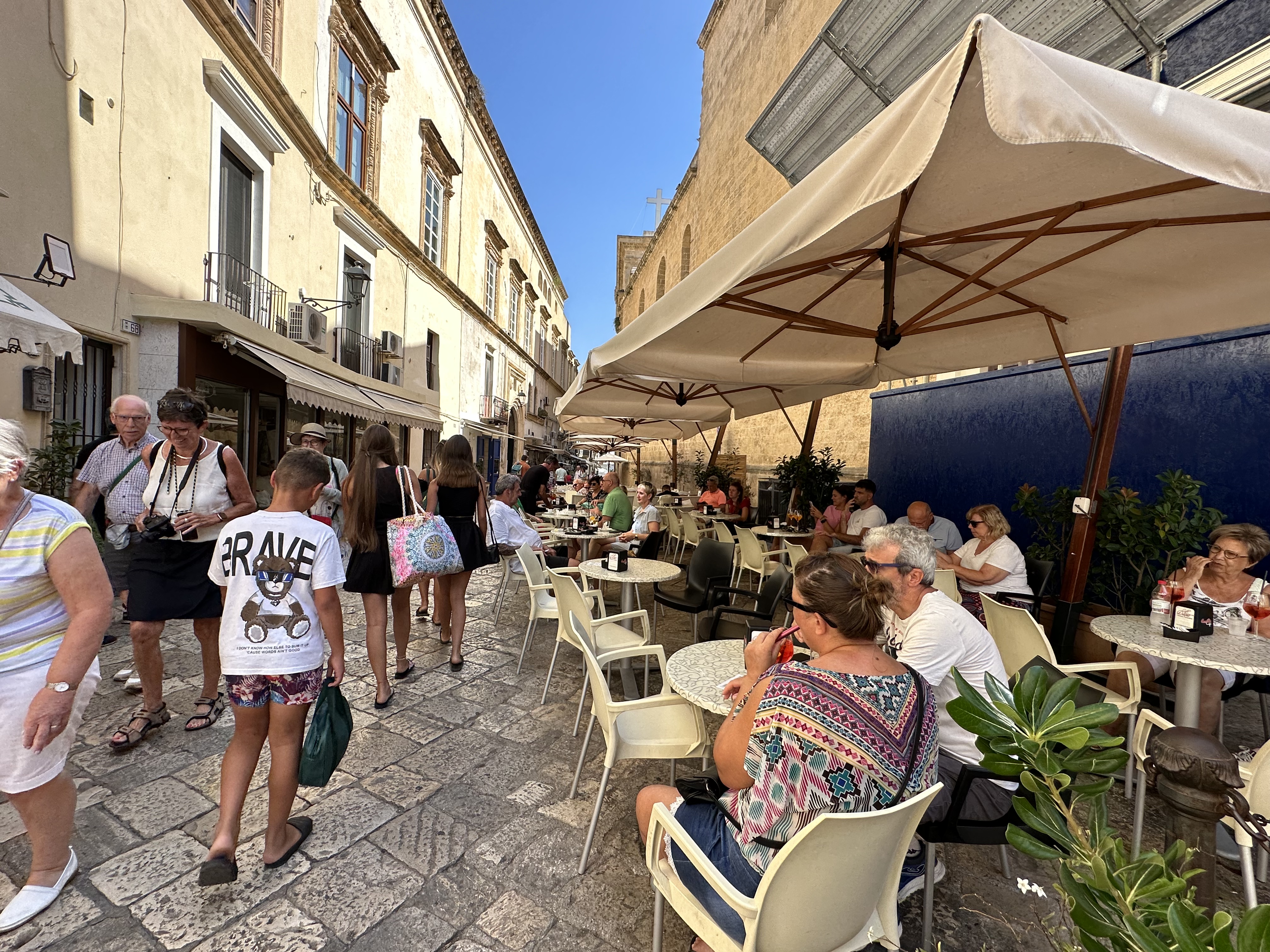
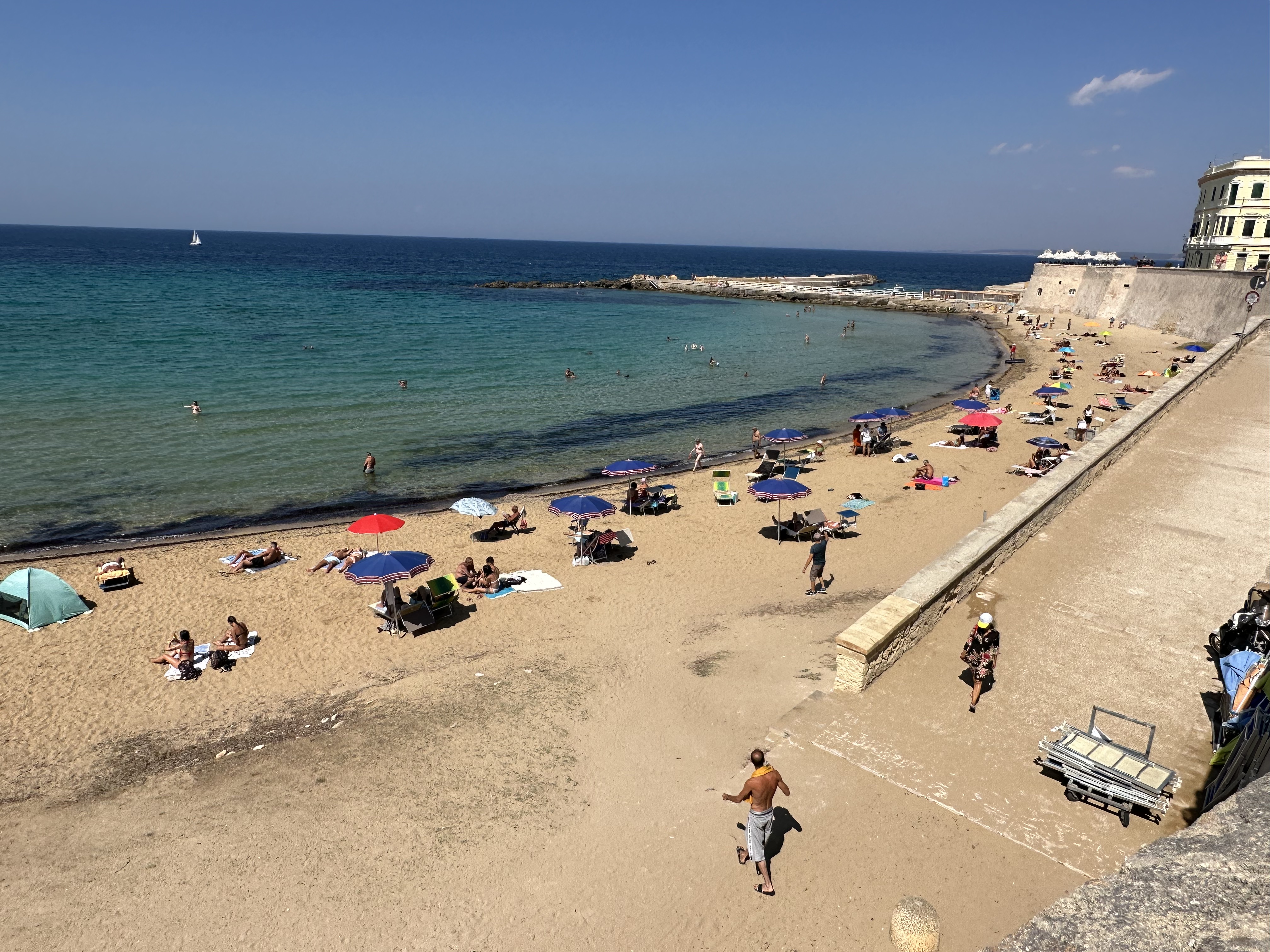
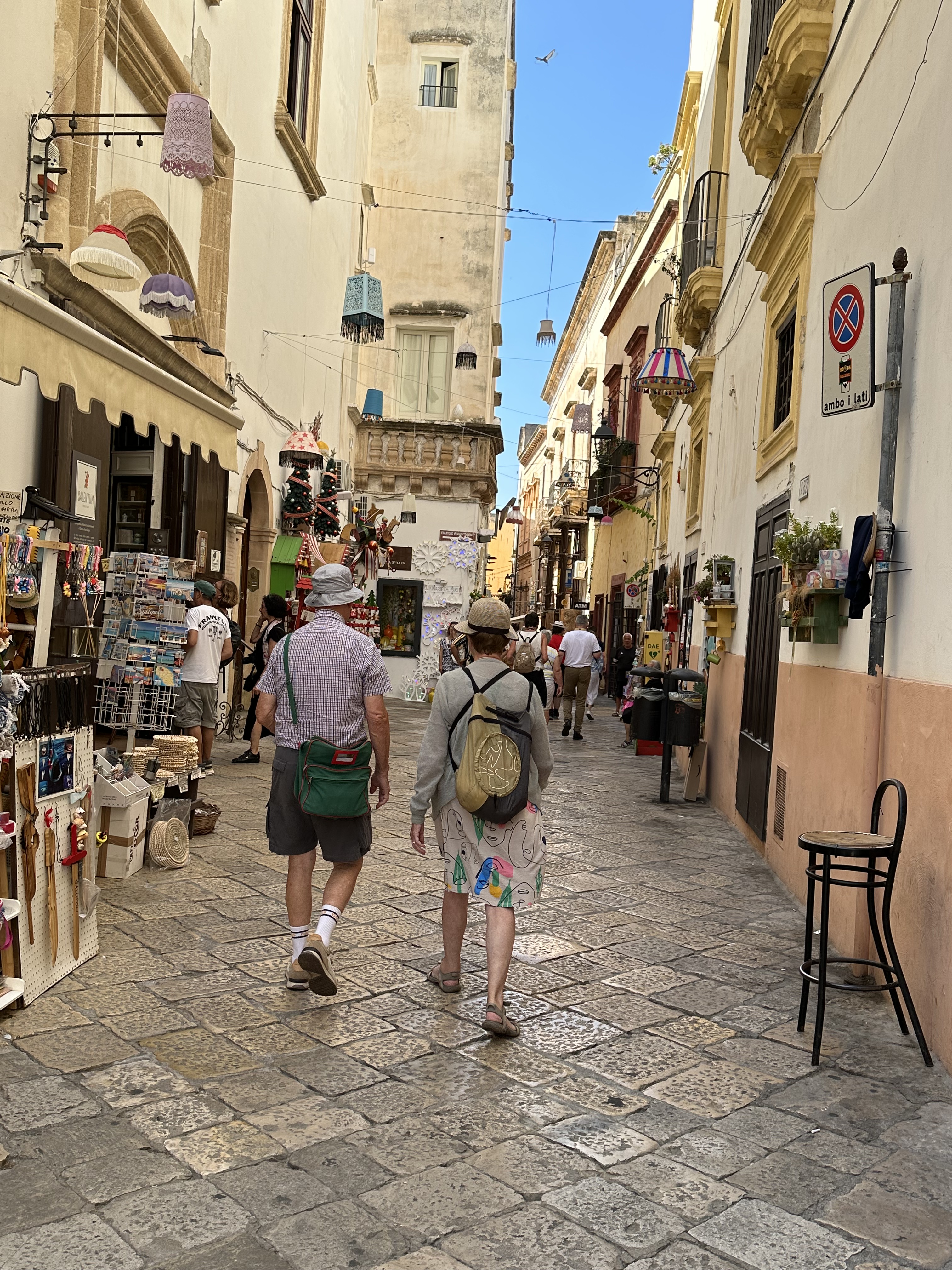
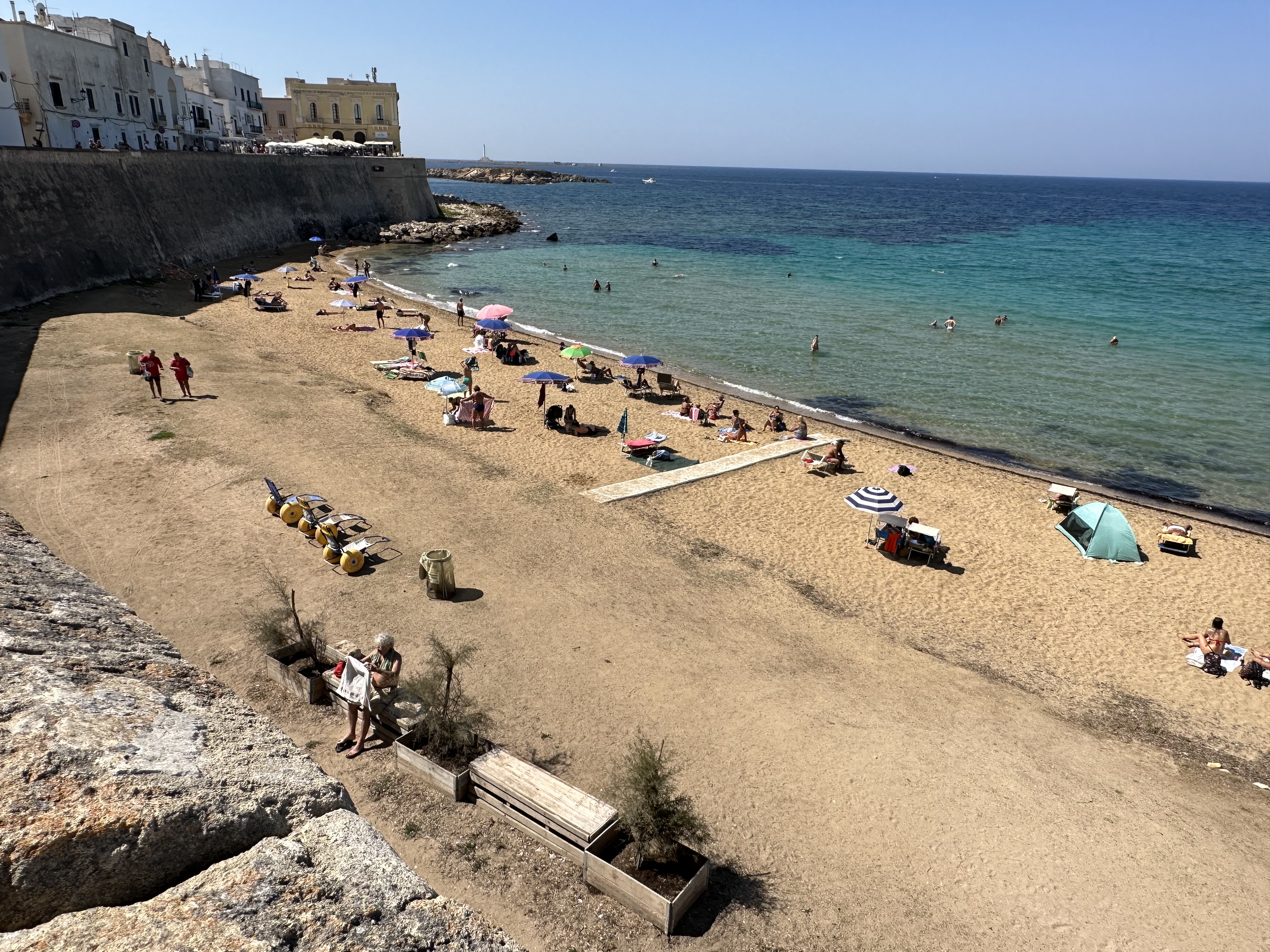
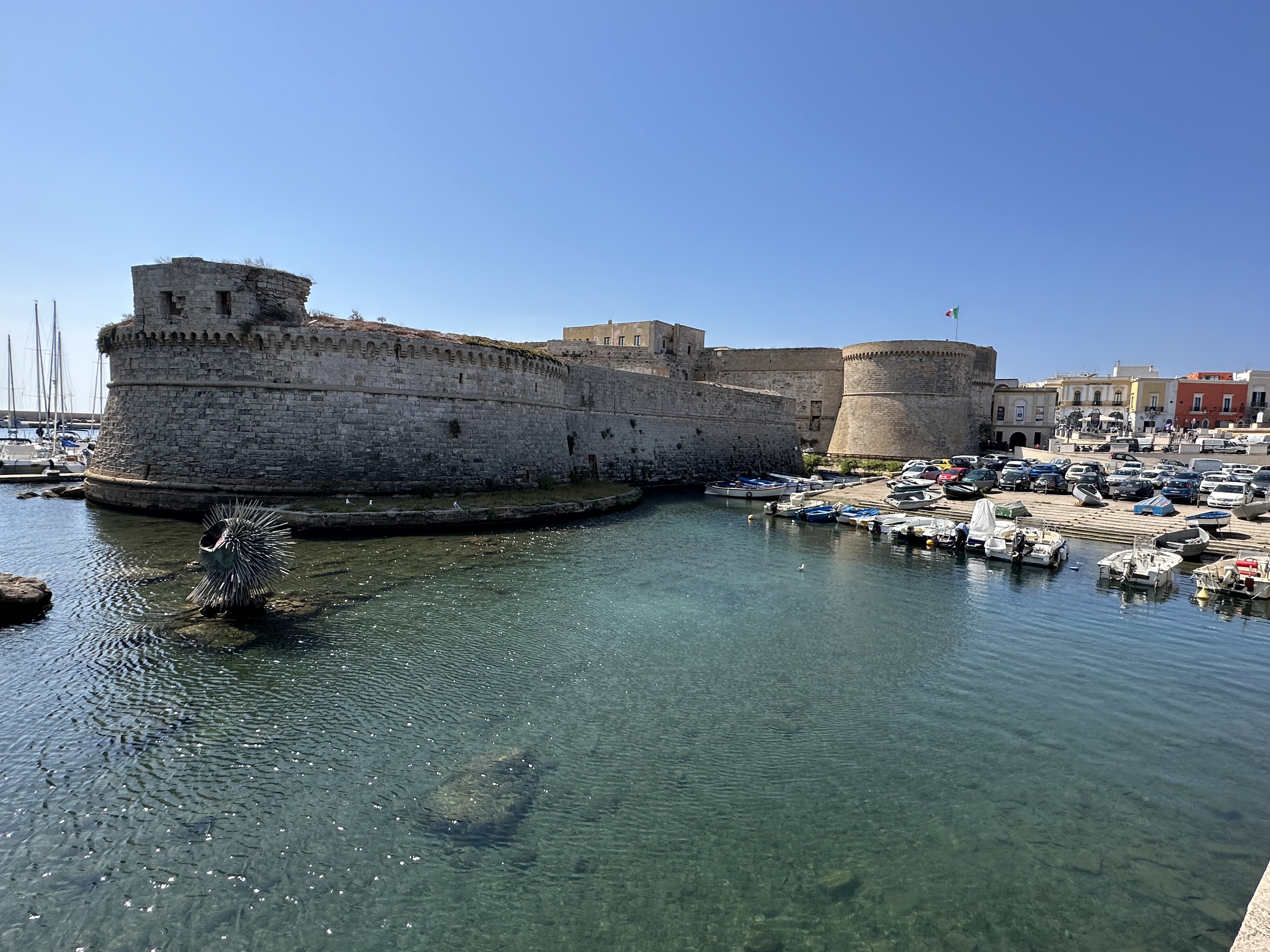
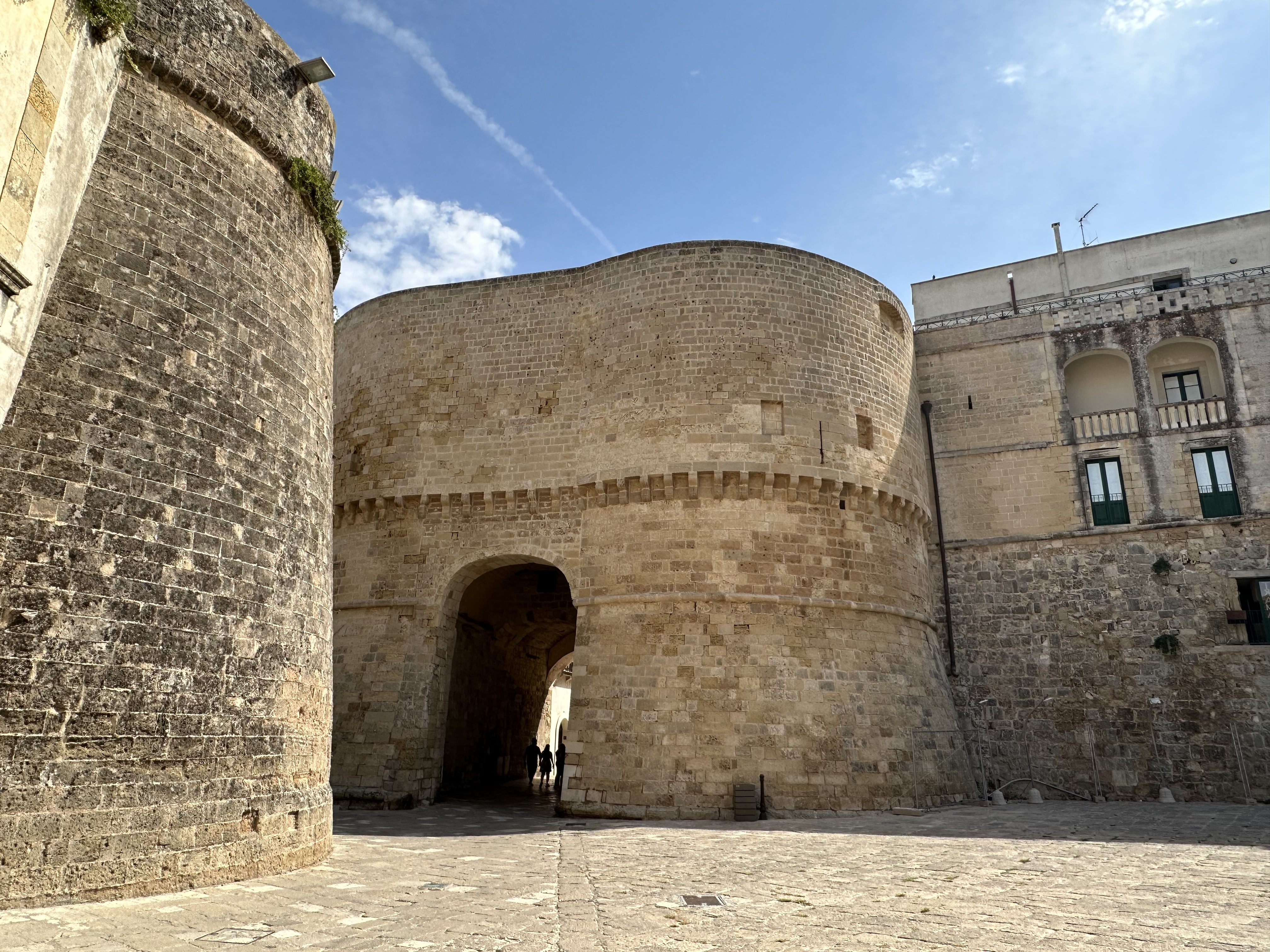
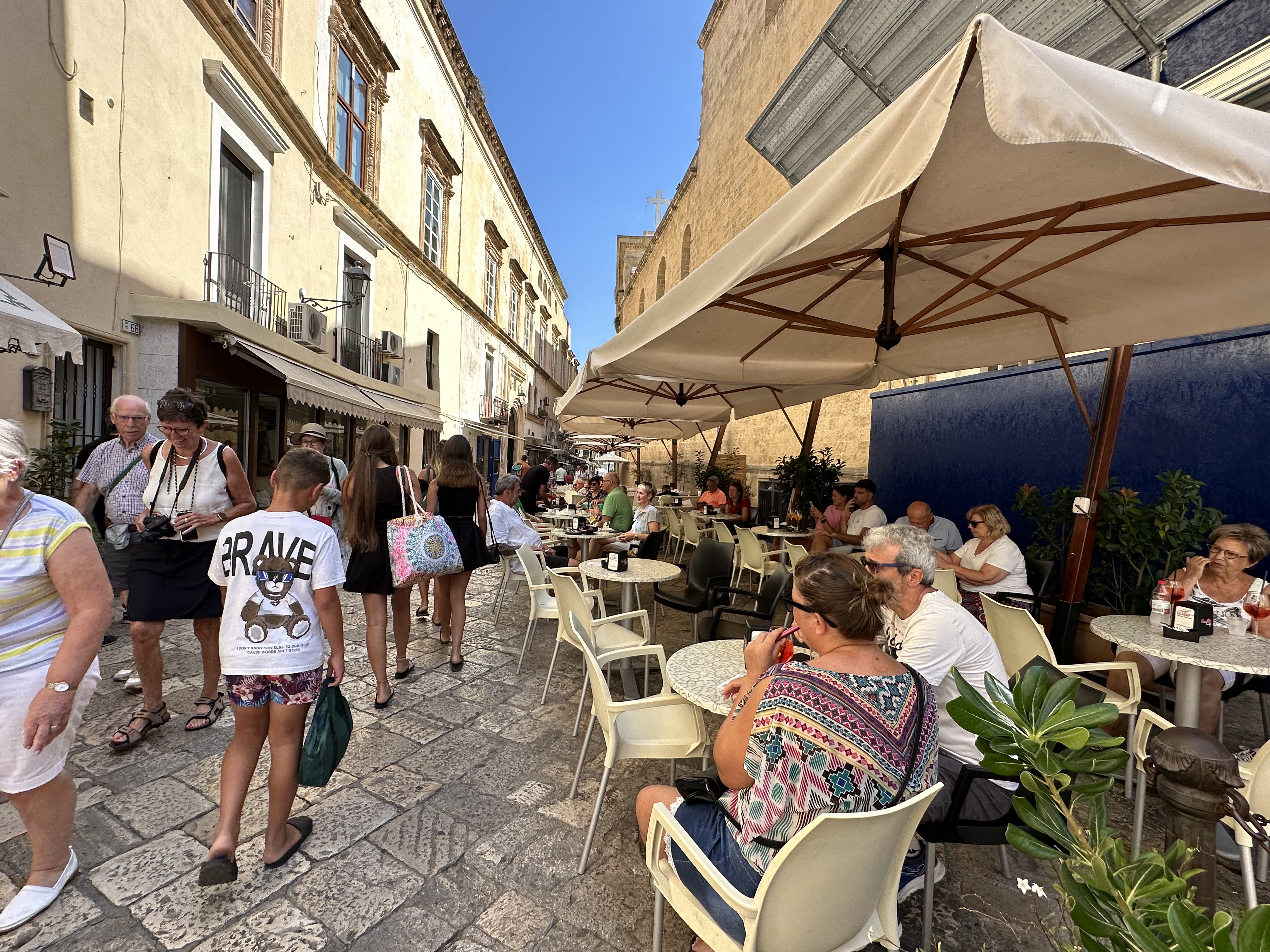
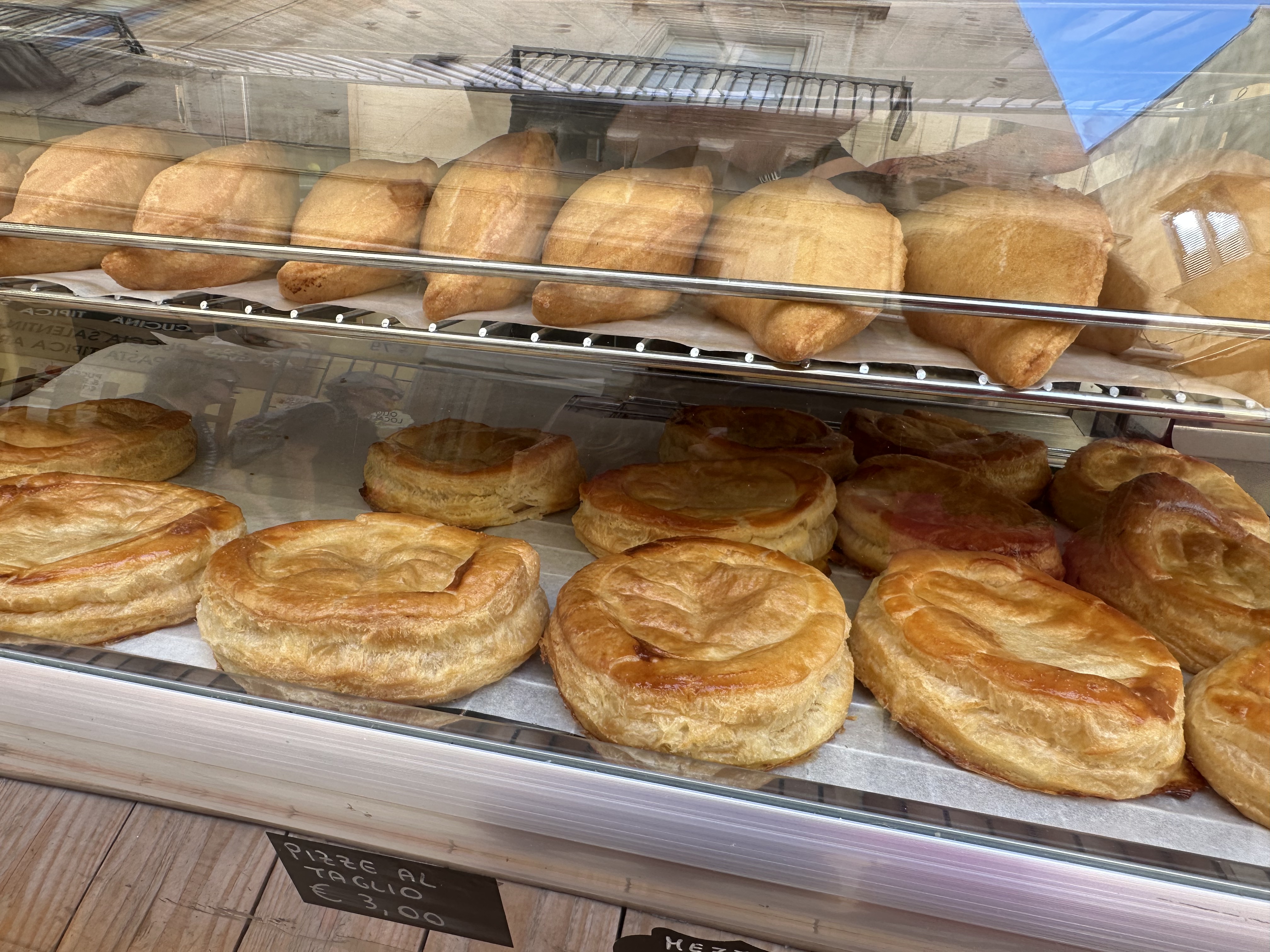
From Galantine, southwest of Lecce, we drove to Gallipoli on the Ionian Sea. There we wandered around the town and enjoyed watching the scene. Being a beach town, Everyone was casual and relaxed. Gallipoli is an island with a strong ancient defensive position that makes for a good tourist visit today.

When we have not been sightseeing we have been hanging out at Masseria Trapana, our digs for 5 nights. Today we had a day off and tomorrow we plan to drive the east coast from Otronto to Santa Maria di Leuca. I apologize again for the content mishap. Hopefully it won’t happen again.

Masseria Trepana, our home while we visited Otronto and Lecce

September 13, 2023

Masseria Trepana is a villa near Lecce that our agent in New York, Martina, thought we would enjoy. A Masseria refers to a farm house surrounded by local orchards including oranges, persimmons, pomegranates, figs and especially, olives. We arrived at noon time after having spent the morning on a self-guided walk about Matera. Got a few more photos that we included in yesterday’s post. Massimo drove us from Matera to the villa through flat countryside full of what looked like thousands of dead olive trees. We asked about the trees and were told that many thousands of olive trees had been attacked by bugs that caused a virus and killed the trees.

I have spent many hours updating the blog and was nearly finished with our time in Otronto, and Lecce, when my computer died and I lost all the text from several days. I do not have the energy to recreate the text, but will send lots of photos to try to make up for it. Our first day at the Masseria, we went to Otronto and met our guide, Sabrina.

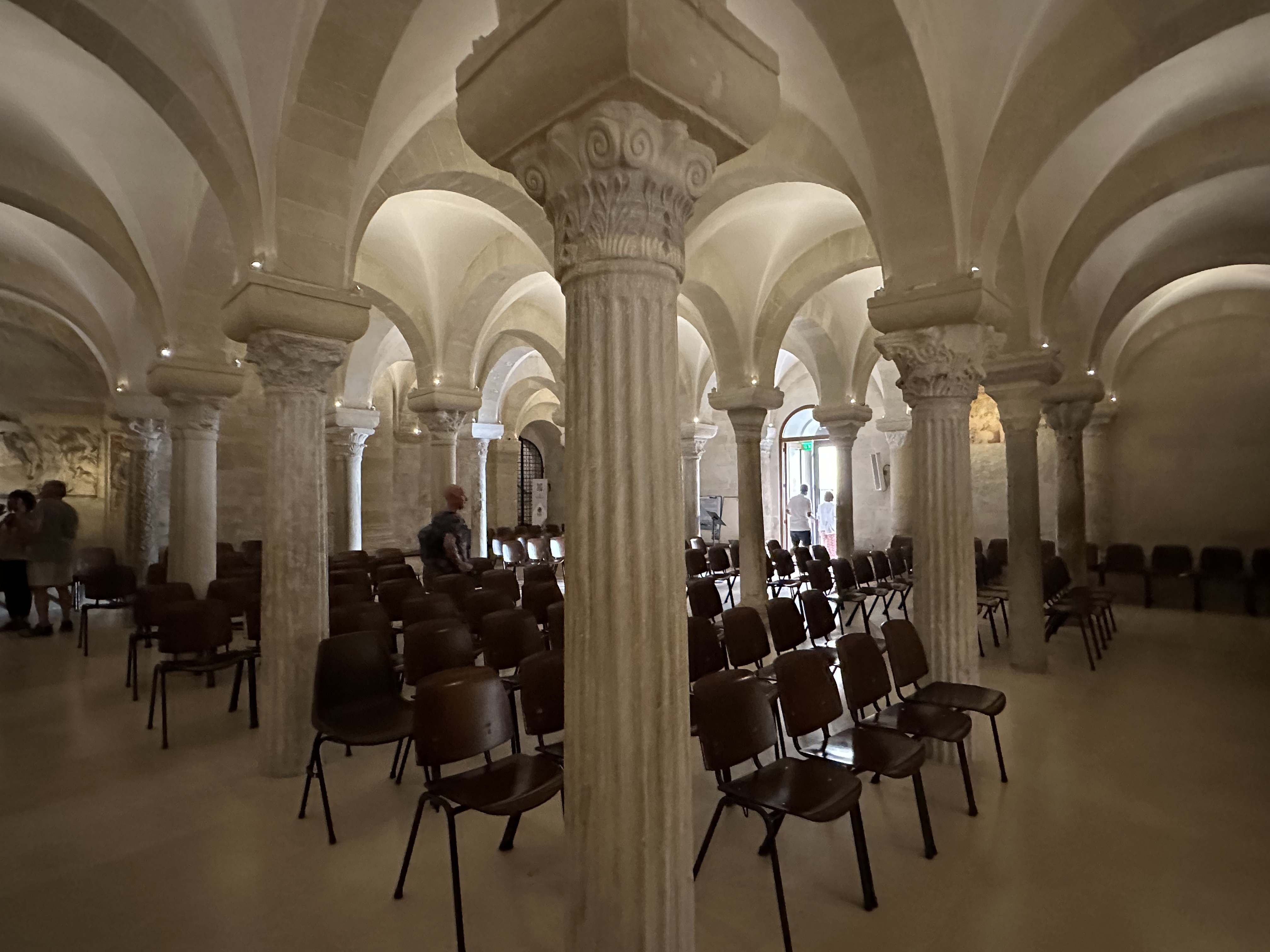
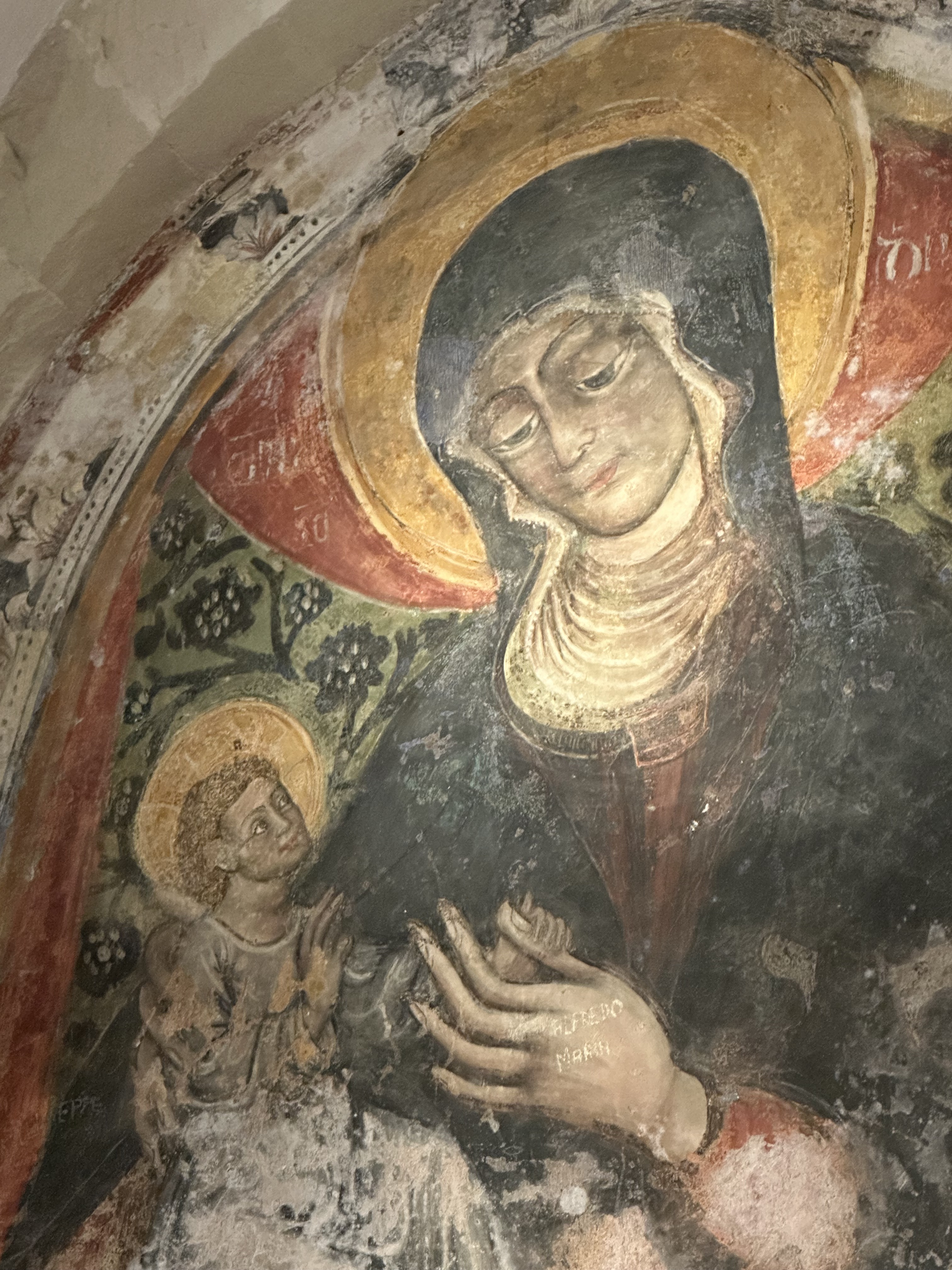
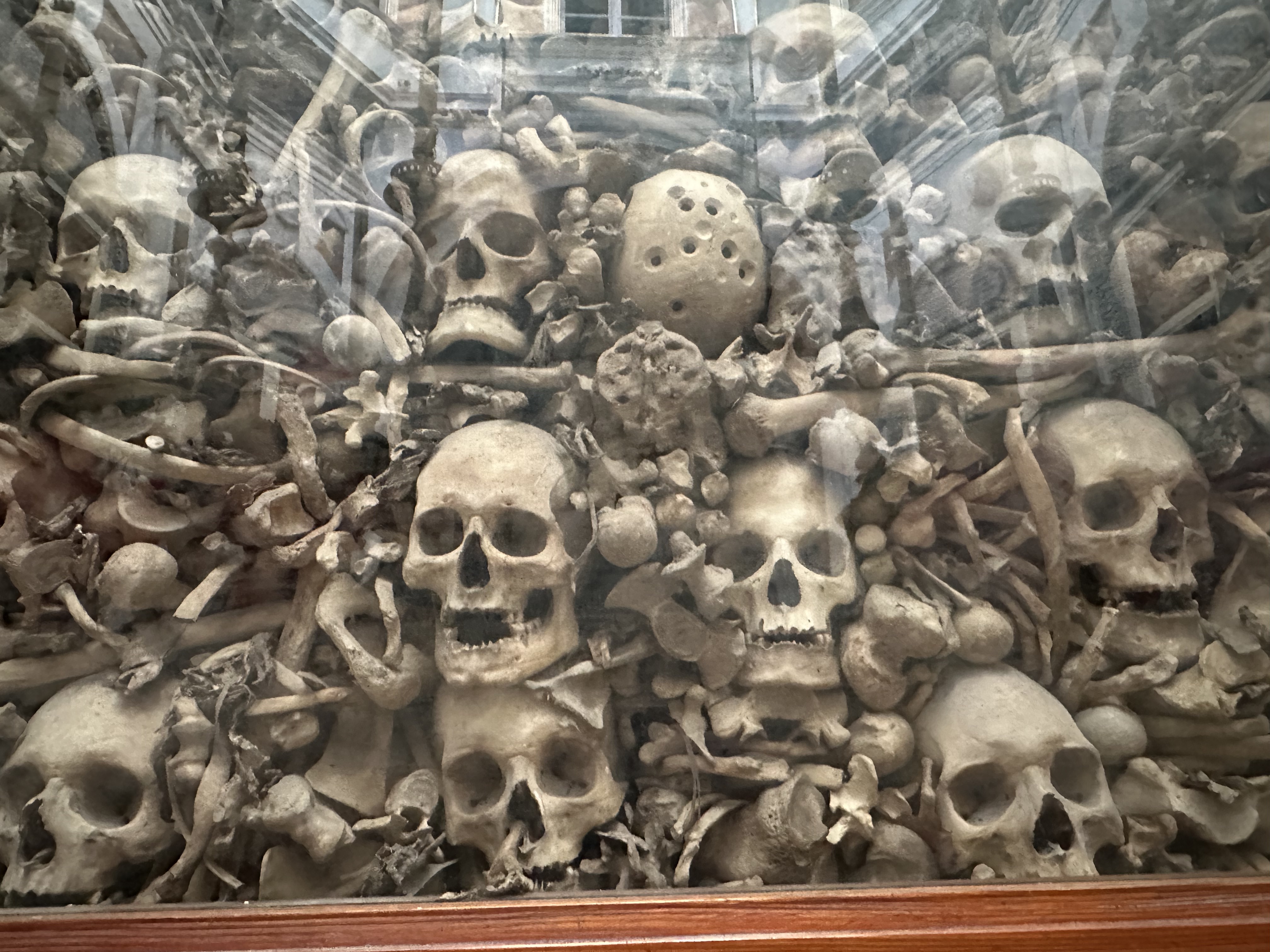
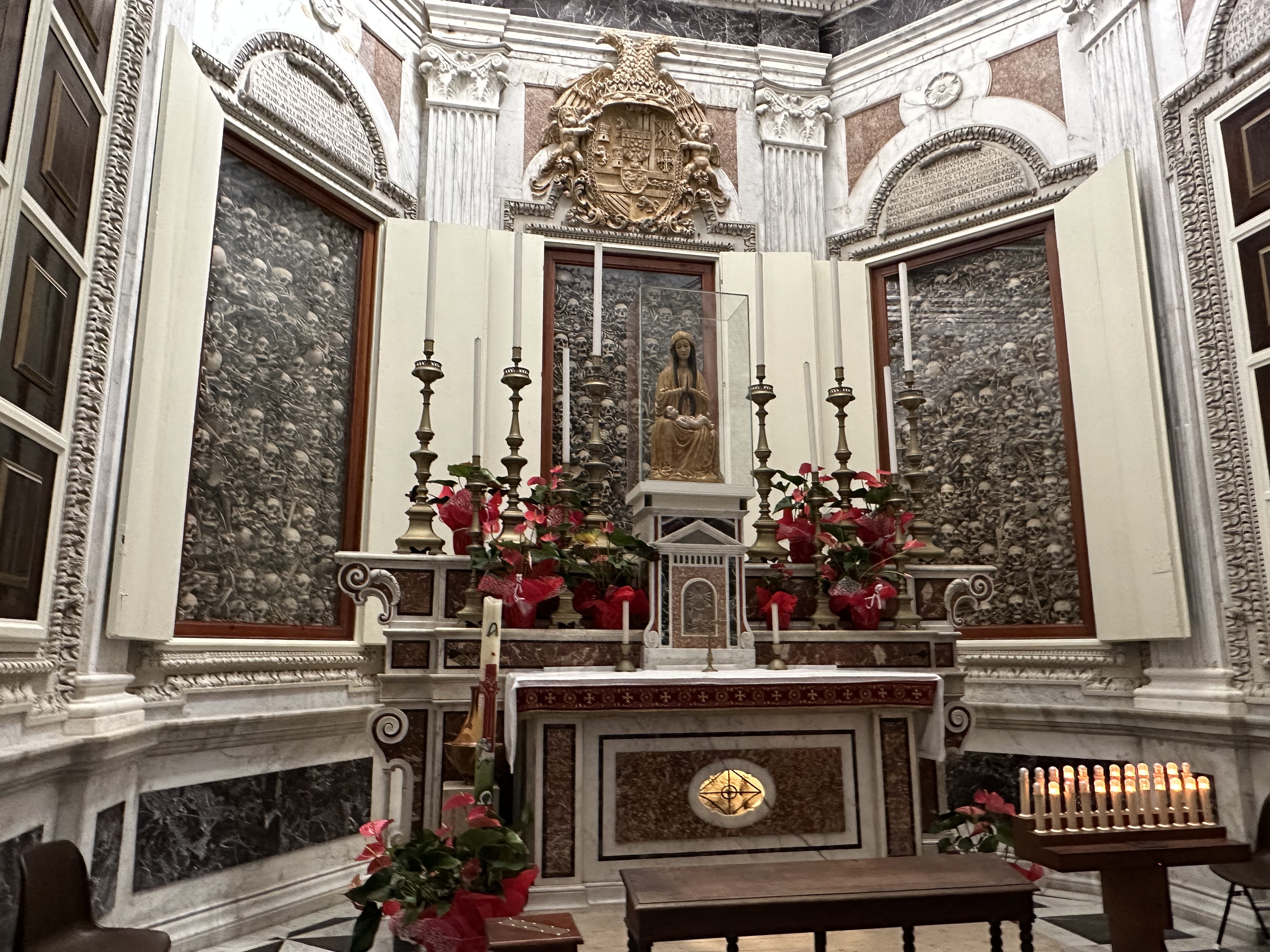
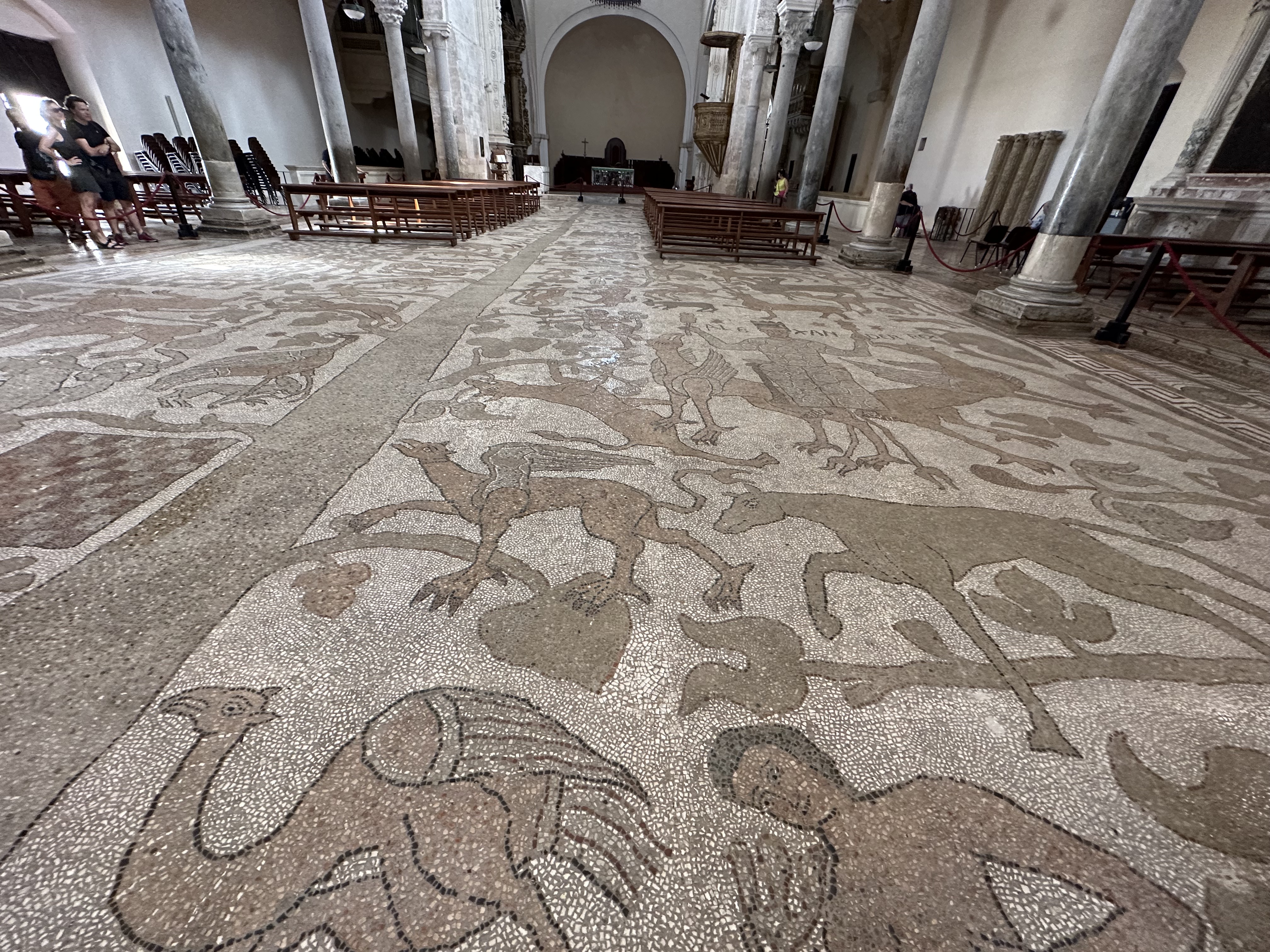
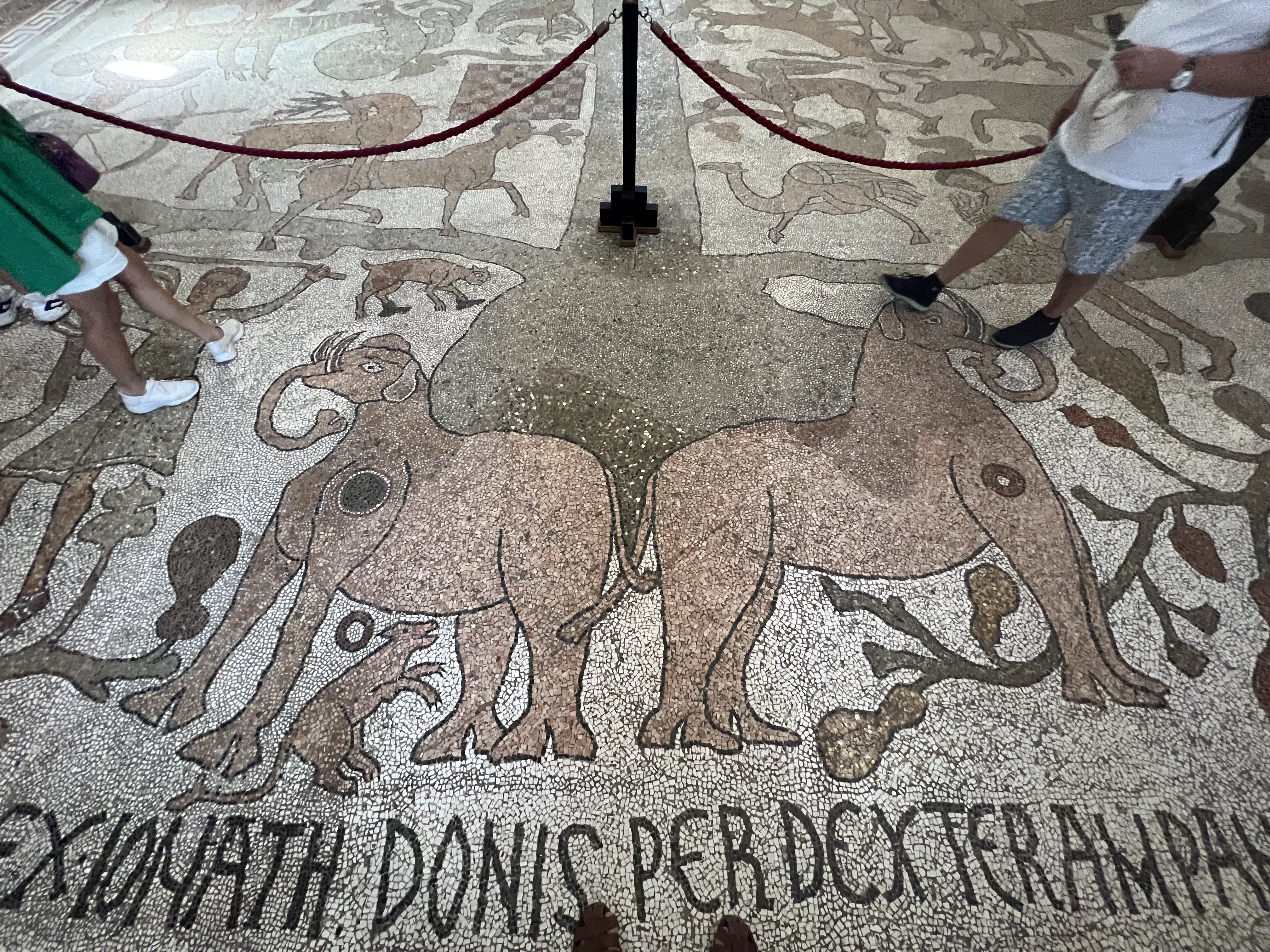
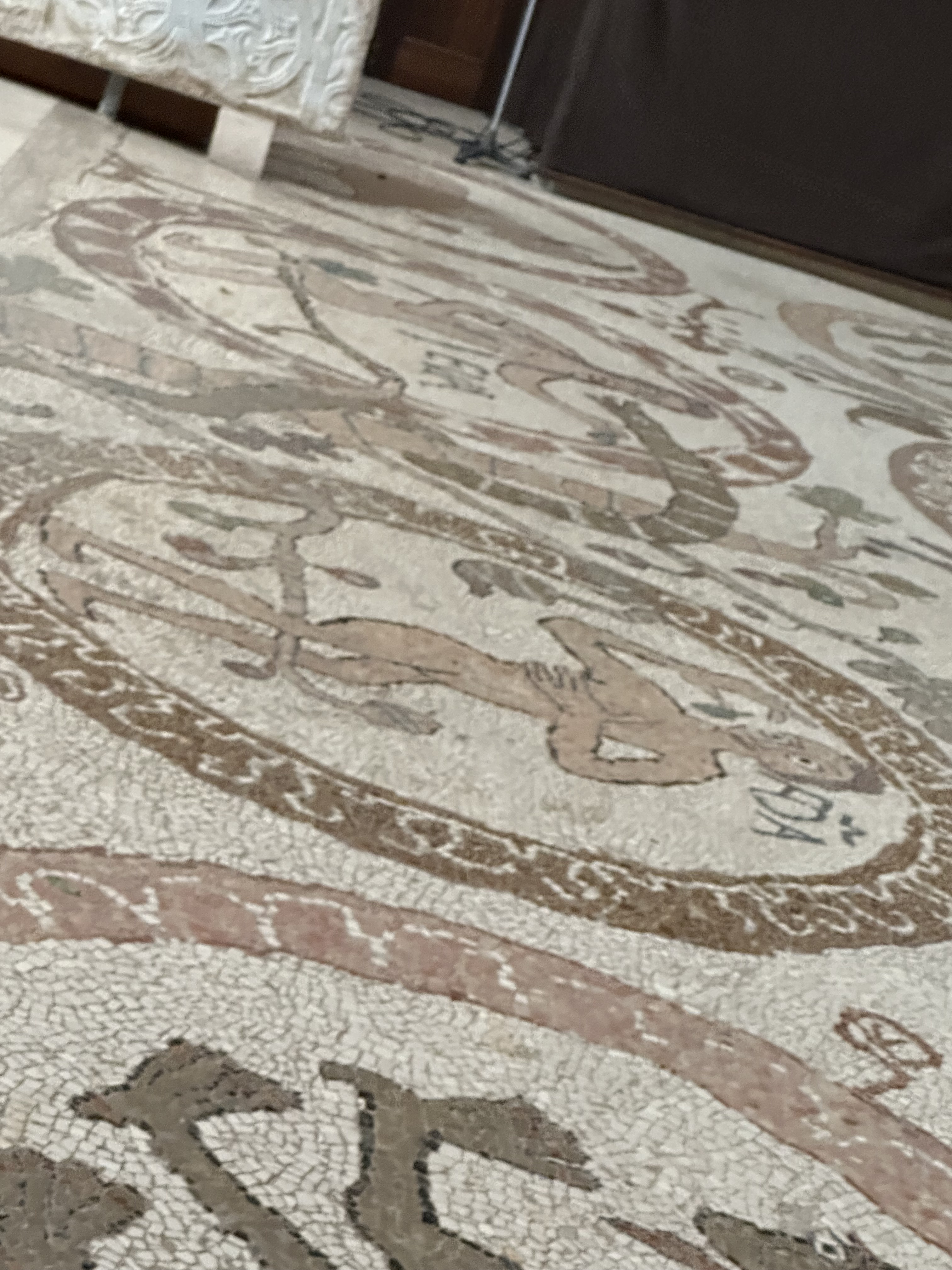
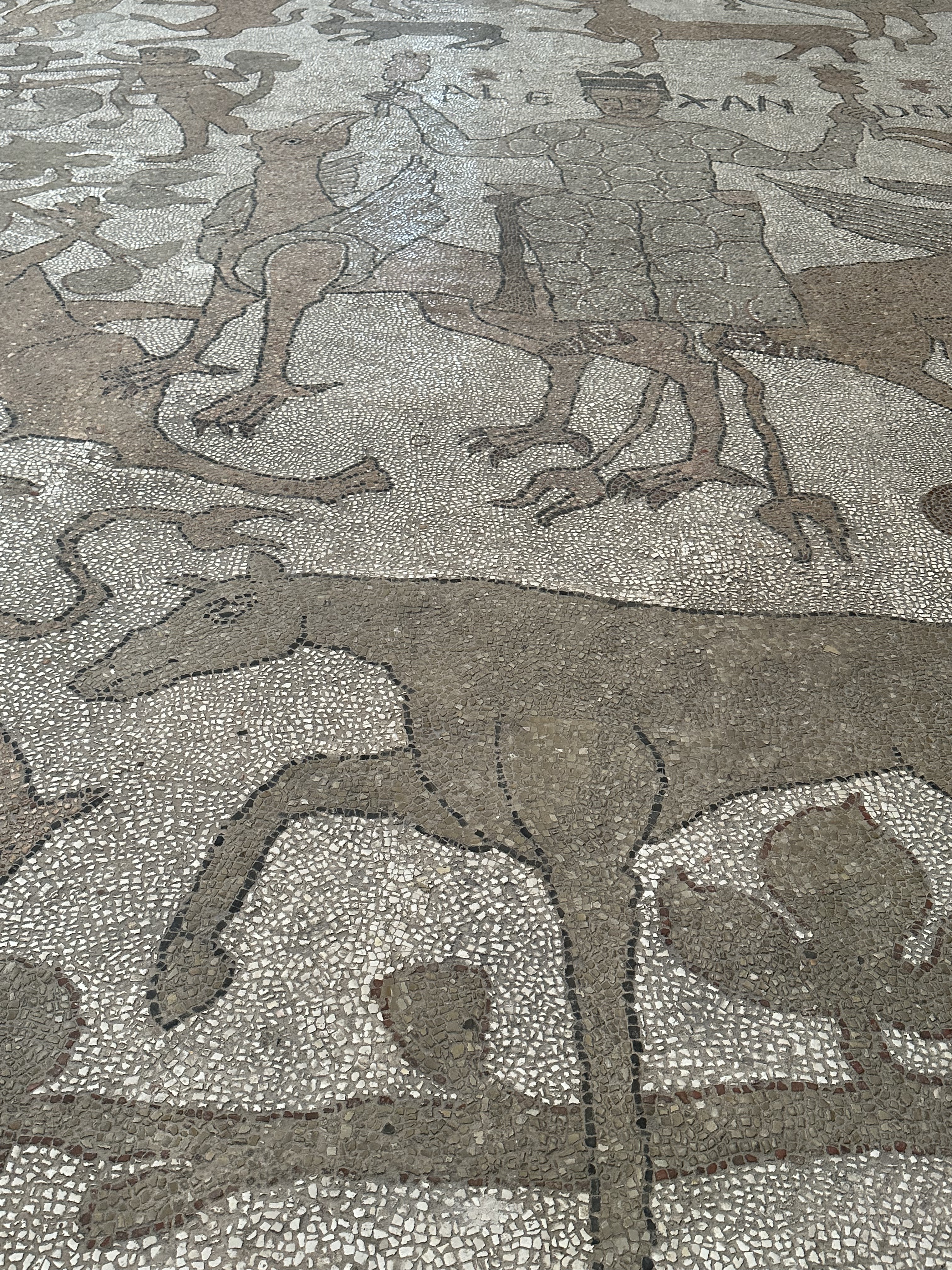
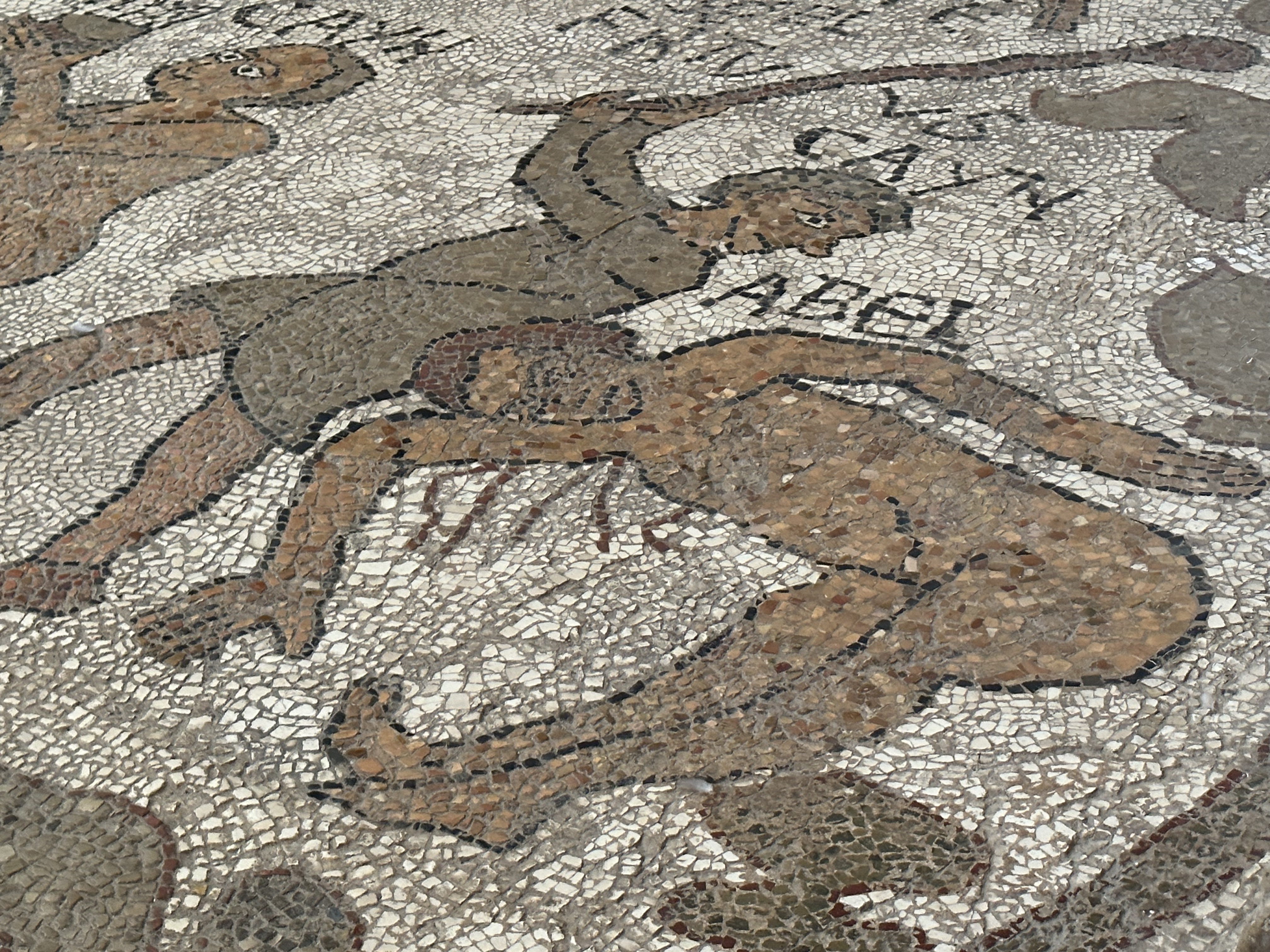
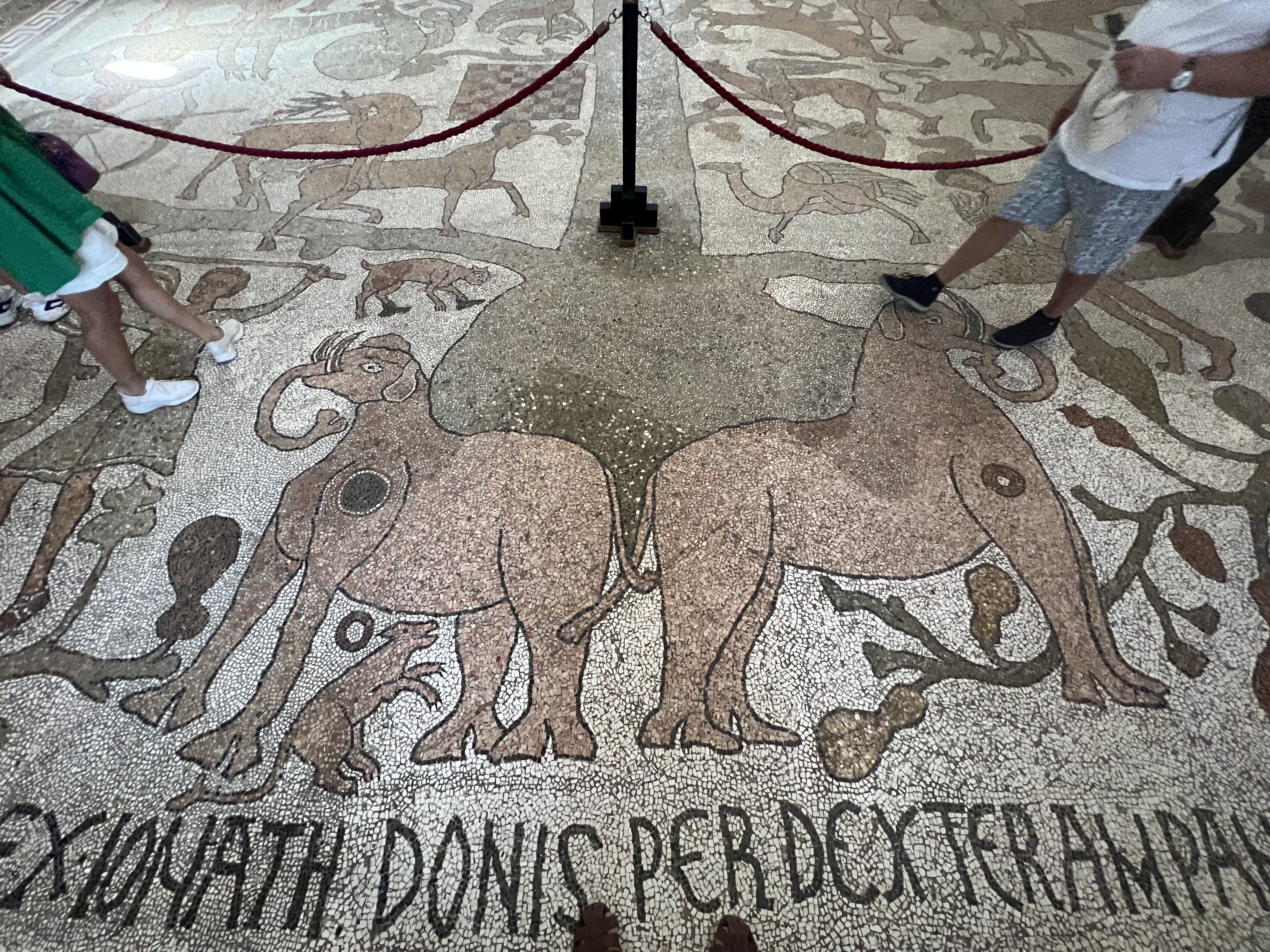
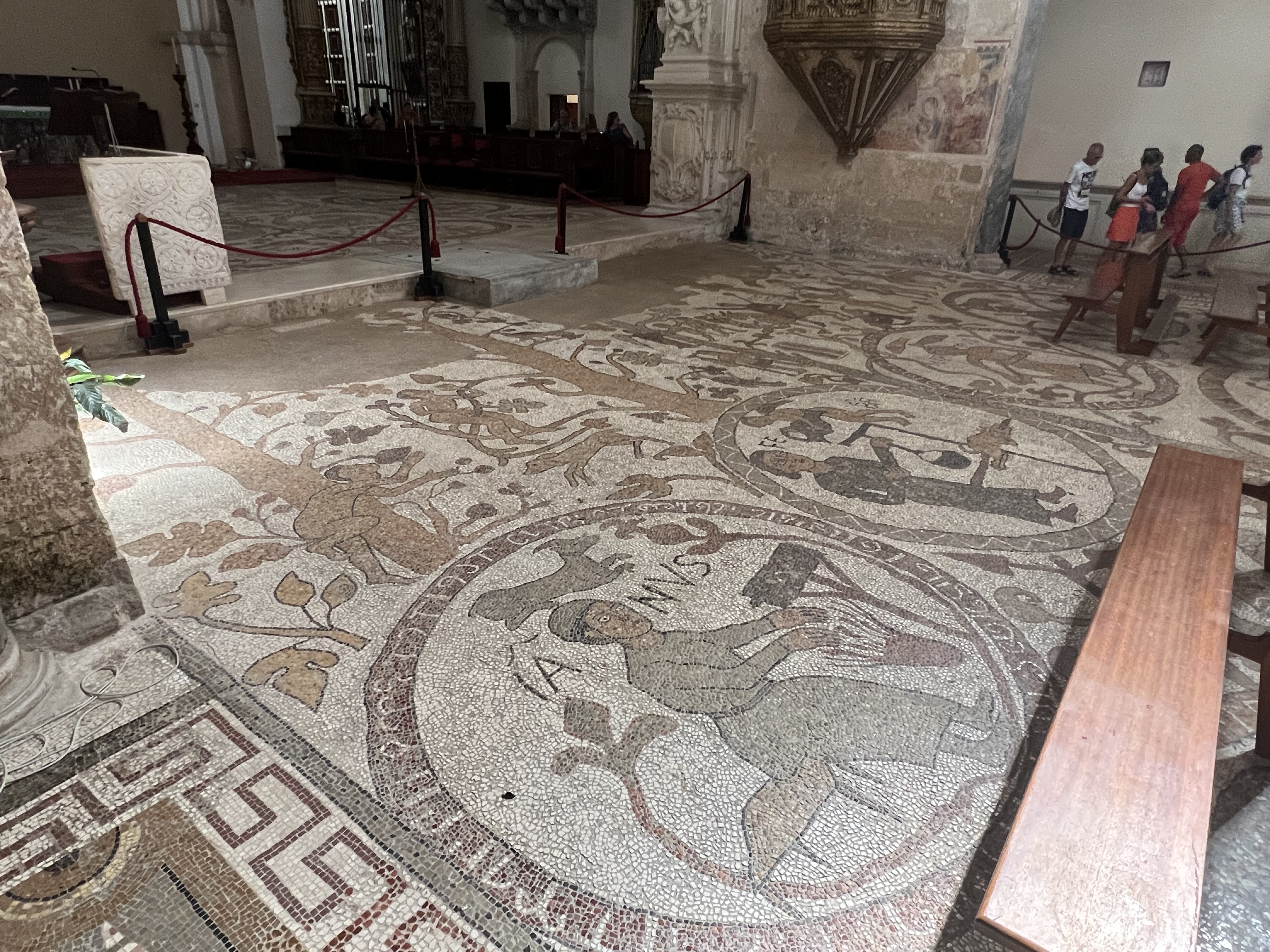
We carried on and visited the Church of the Martyrs, the results of Ottoman savagery in 1480 and Renaissance architecture, and a huge tiles floor inside the Church of the Martyrs, along with 72 columns in the crypt, plus a lovely frescos. The Ottomans beheaded 800 people for refusing to give up their religion. The church contains some of the skulls.

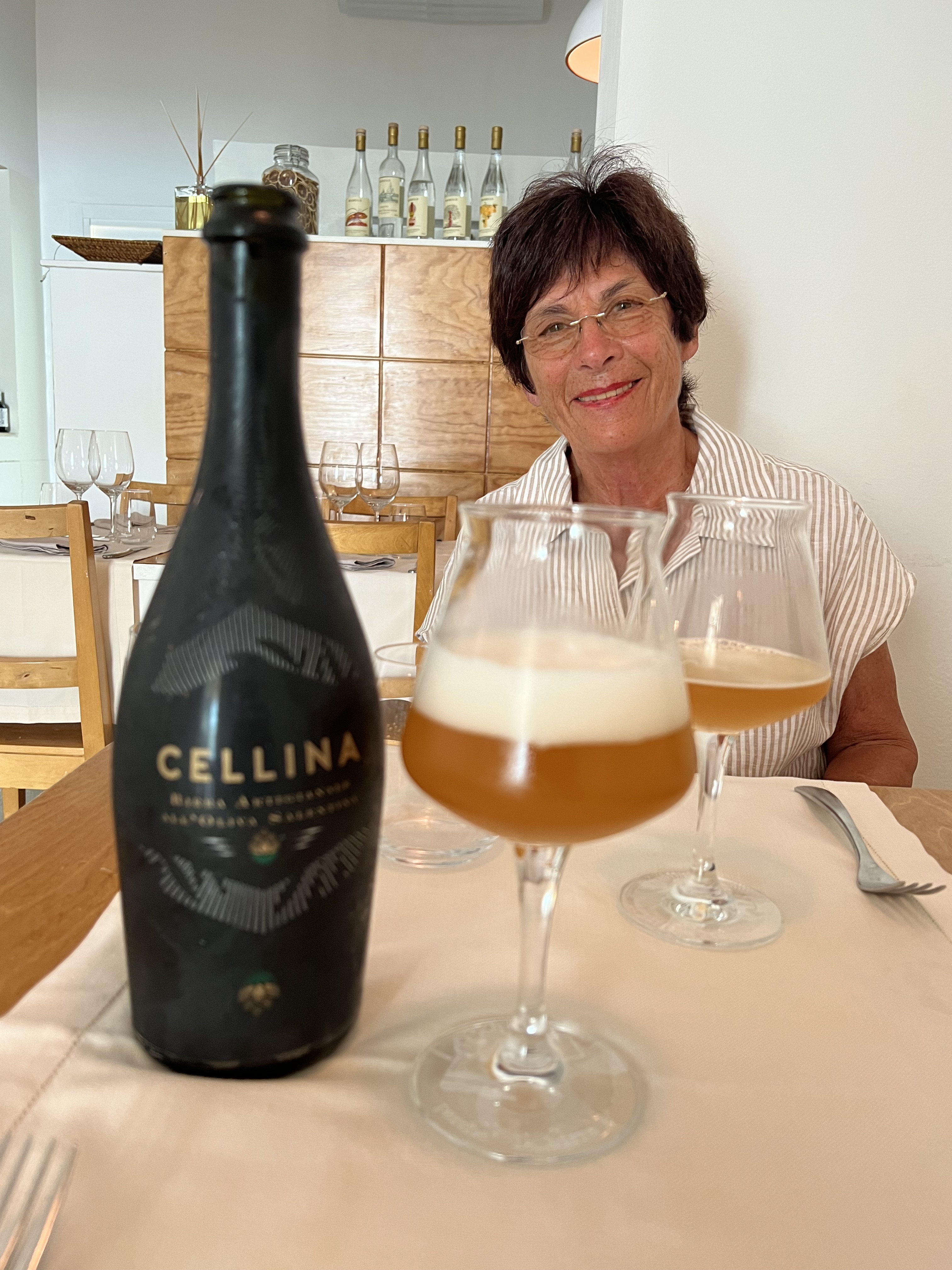
Lunch included this wine-like bottle of beer.

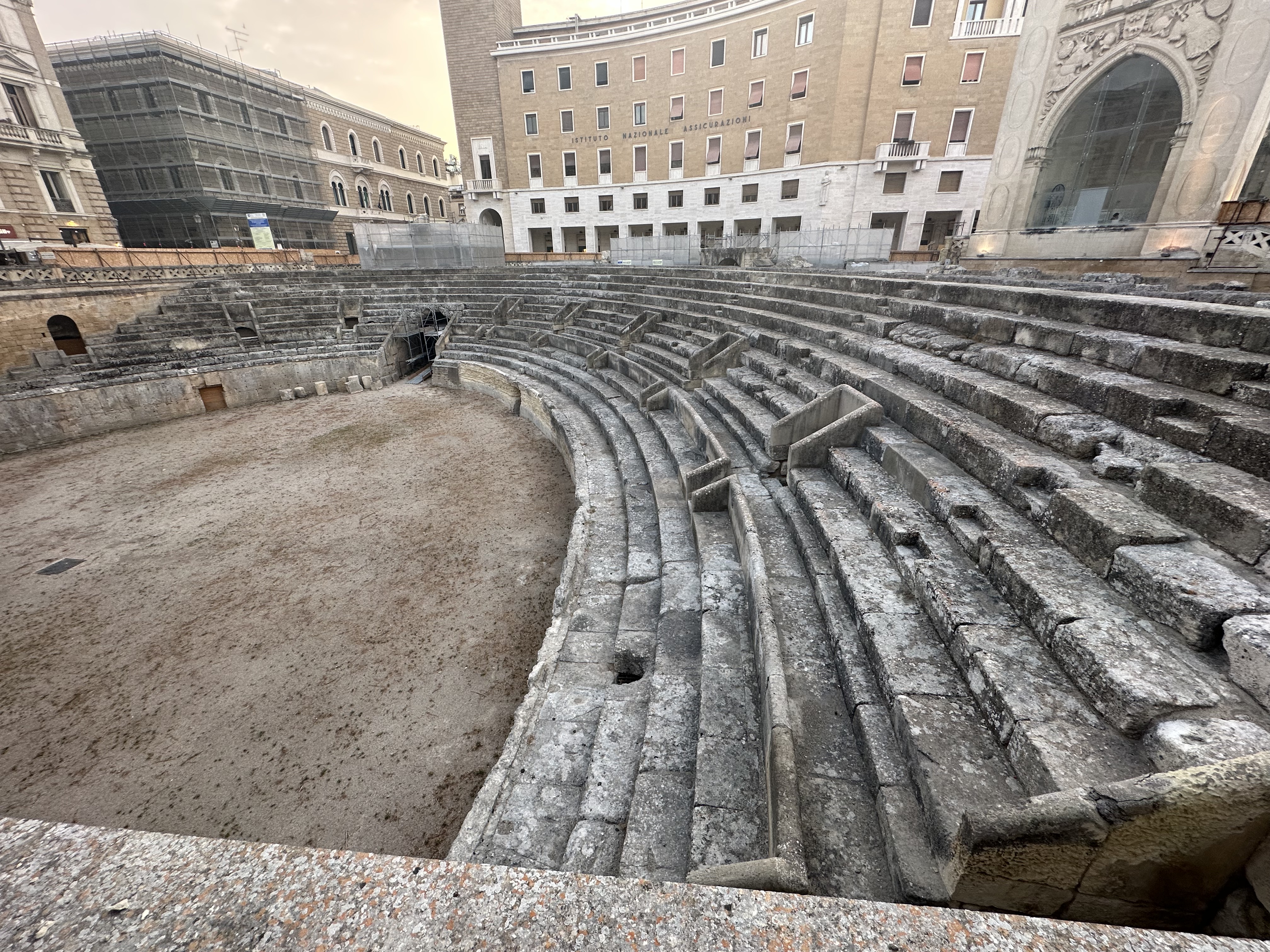
On to Lecce, the capital the province. Turns out Puglio is the capital of the region, not a province. We took a break after lunch and reset with Sabrina at 5pm for another walking tour. This one was of the Old City of Lecce.

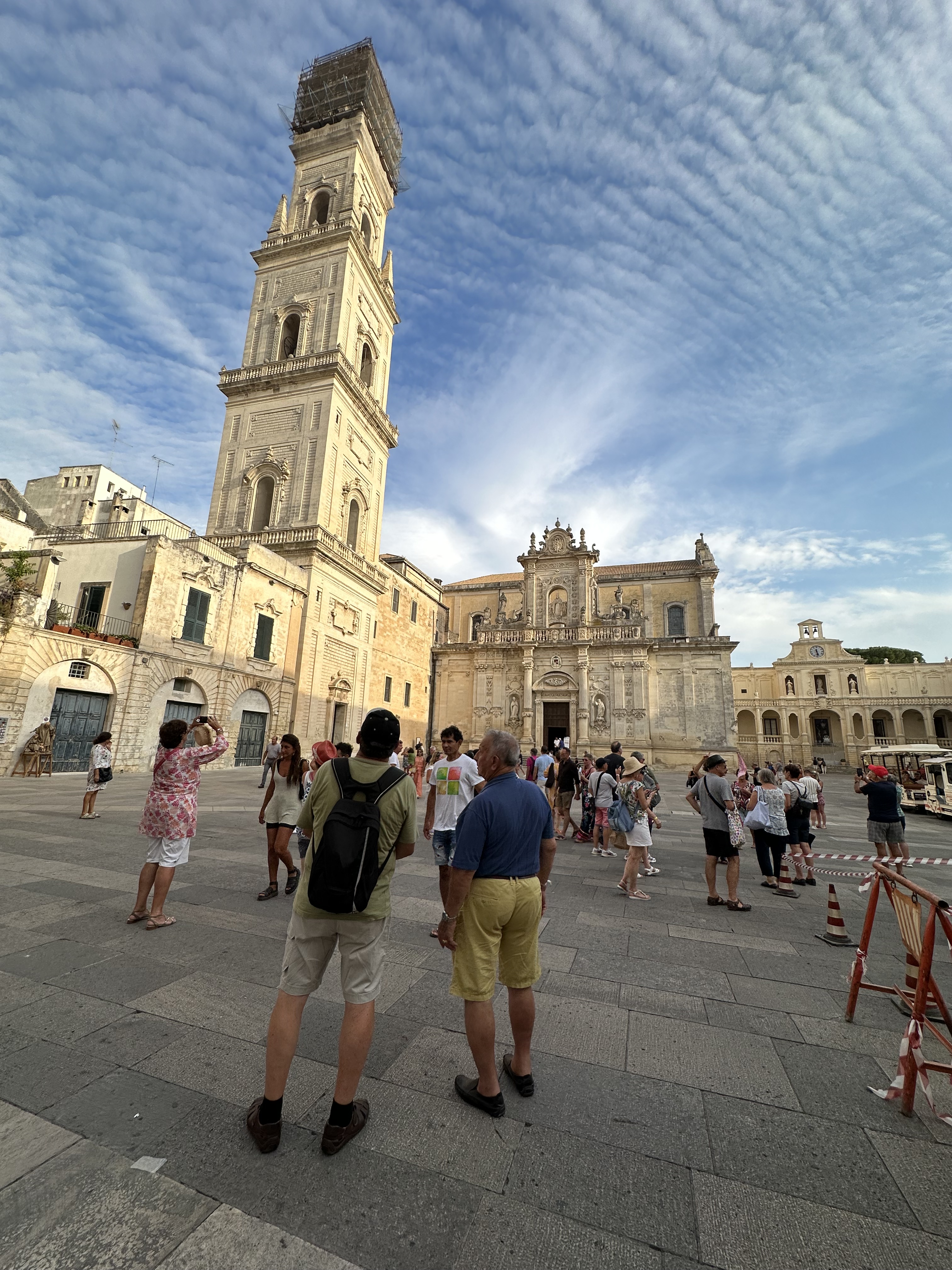
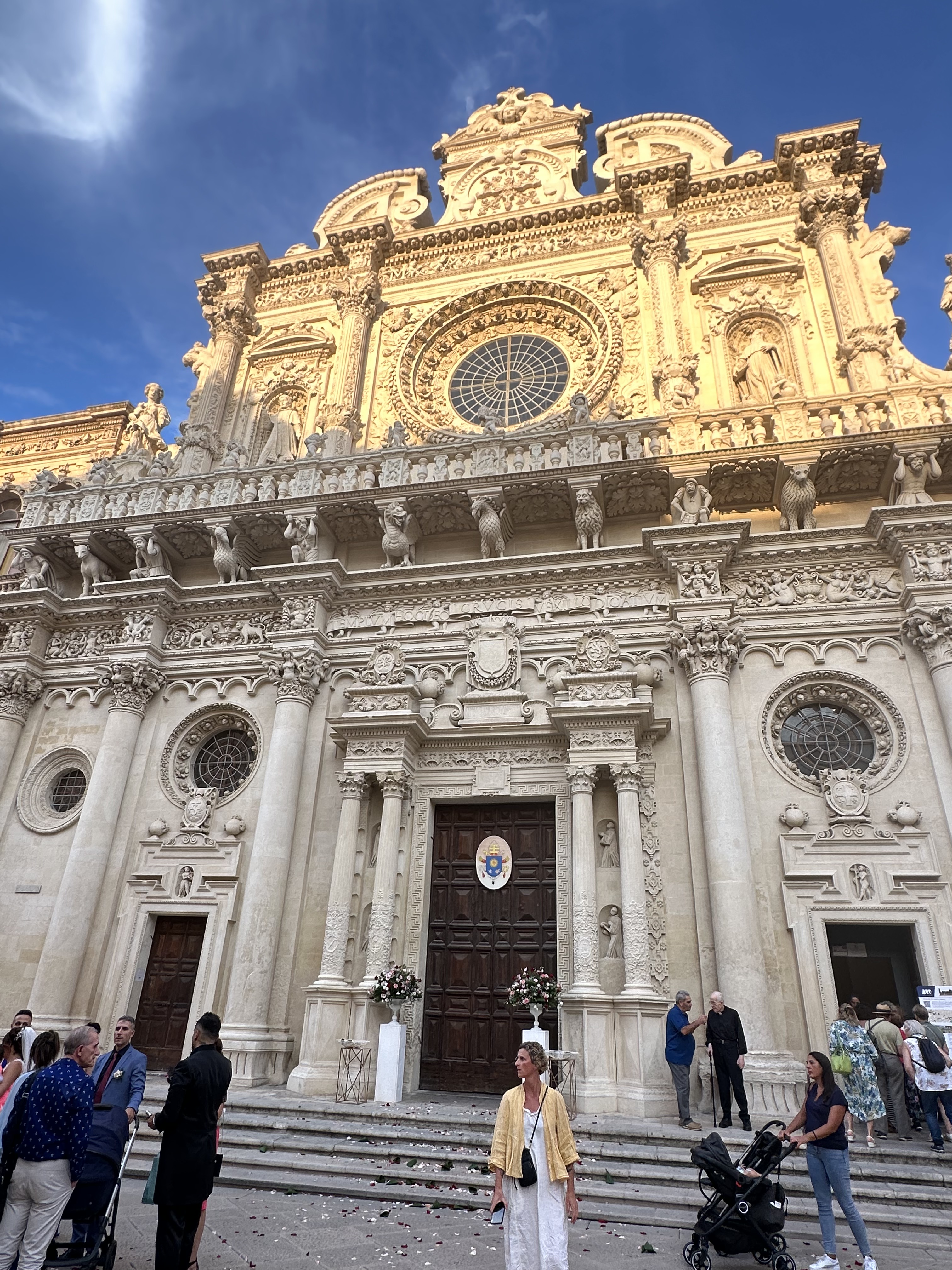
This Basilica shines in the setting sun. The top is Baroque and the bottom is Romanesque.

After the tour Sabrina took us to a special restaurant in the middle of the city called Vico dei Sotterranei. We had an excellent meal, found our way back to the car and drove home.

Altamura and Castel del Monte

September 12, 2023

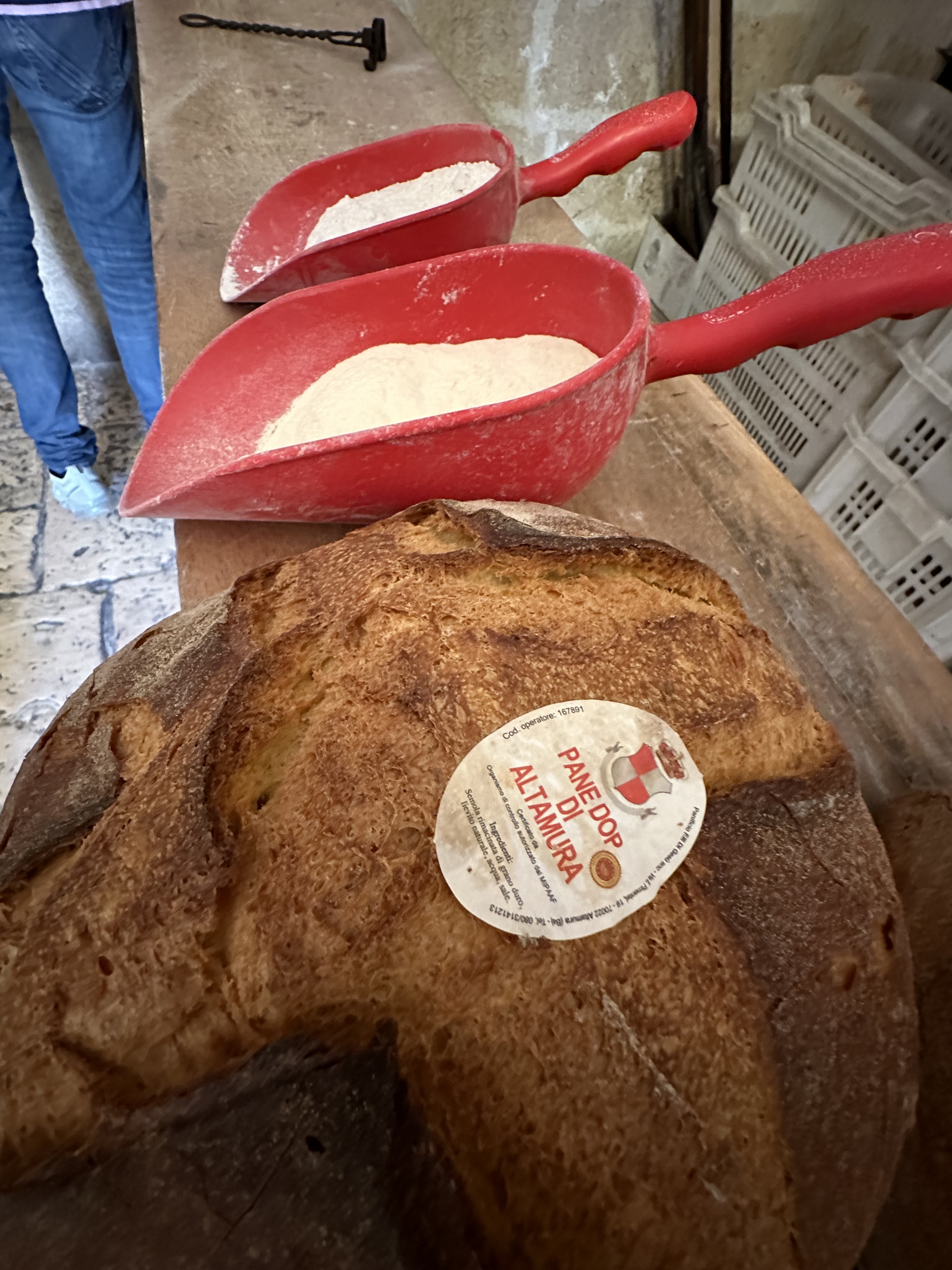
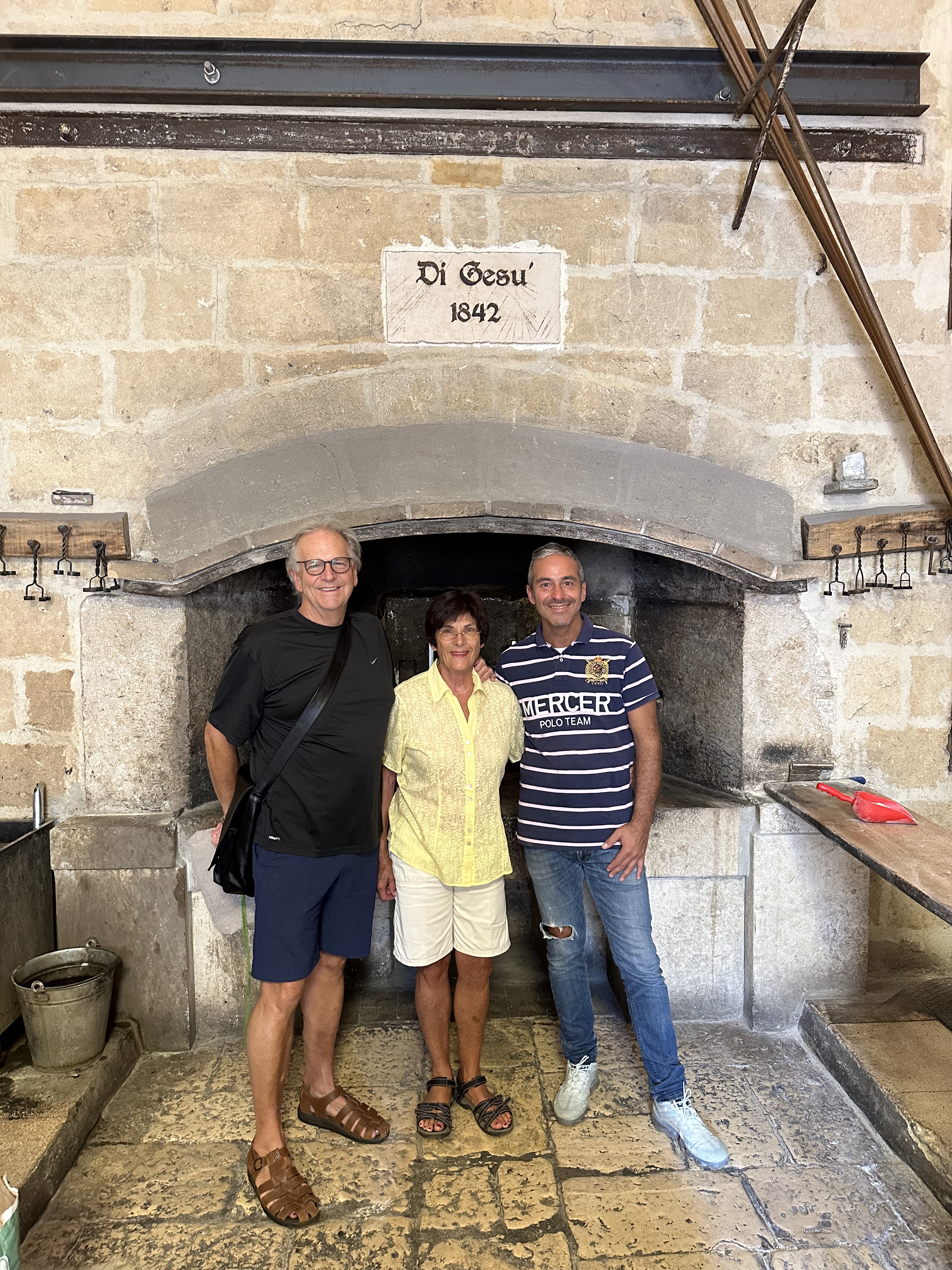
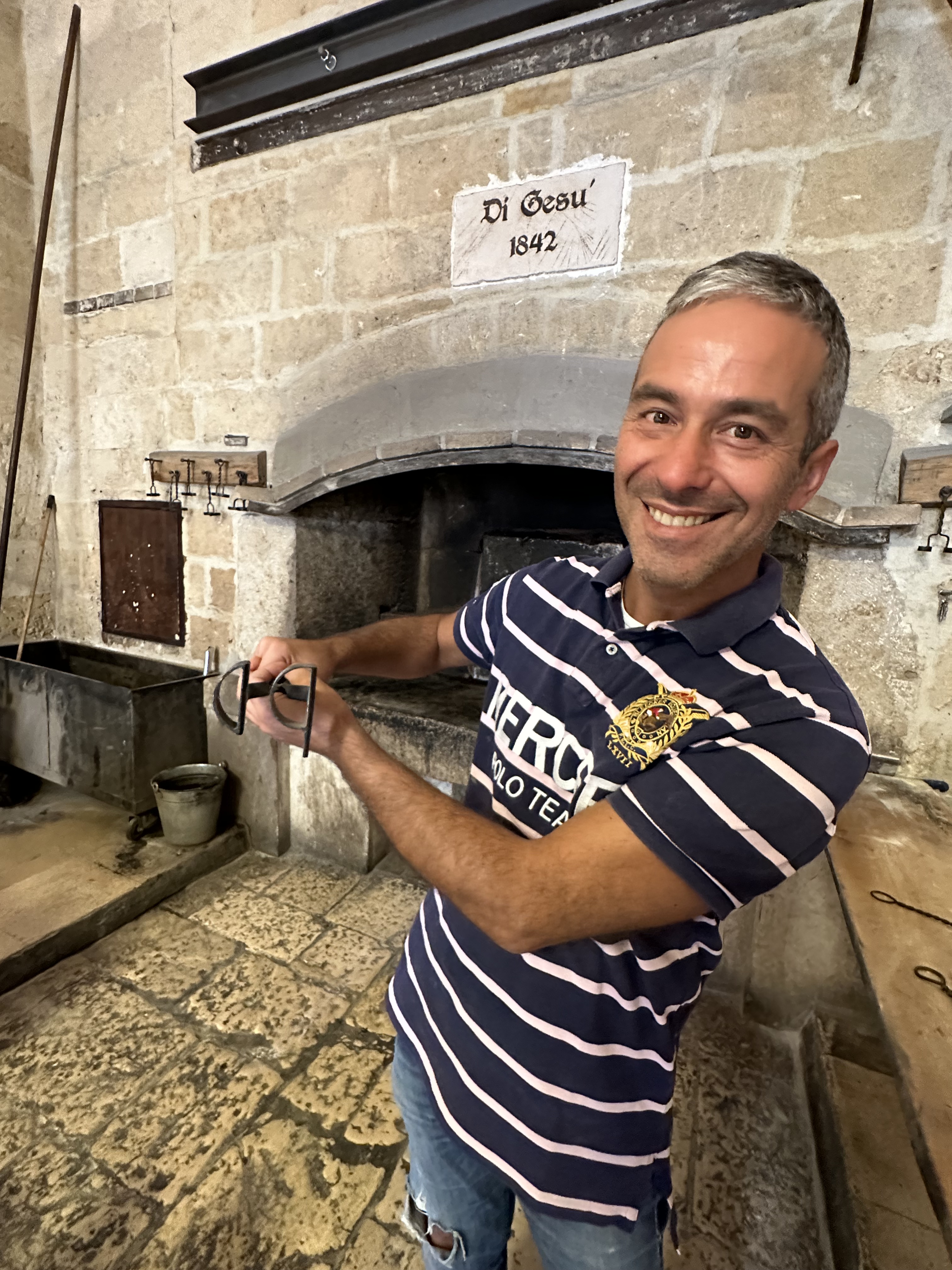
We were picked up by our driver, Massimo, and left Matera for Altamura and Castel del Monte. We rendezvoued with our guide for the day, Silvia, at the Di Gesu Bakery in Altamura . We were met by Giuseppe, the 5th generation proprietor of the business. He was quite proud of his product and walked us through the steps of making the best bread around. We had to admit that it was very tasty, soft in the middle and crispy on the outside The wood burning oven behind us in the photo is 6 meters in diameter. Quite huge. It takes 40 minutes to load the oven and the best bread is what goes in first and comes out last.

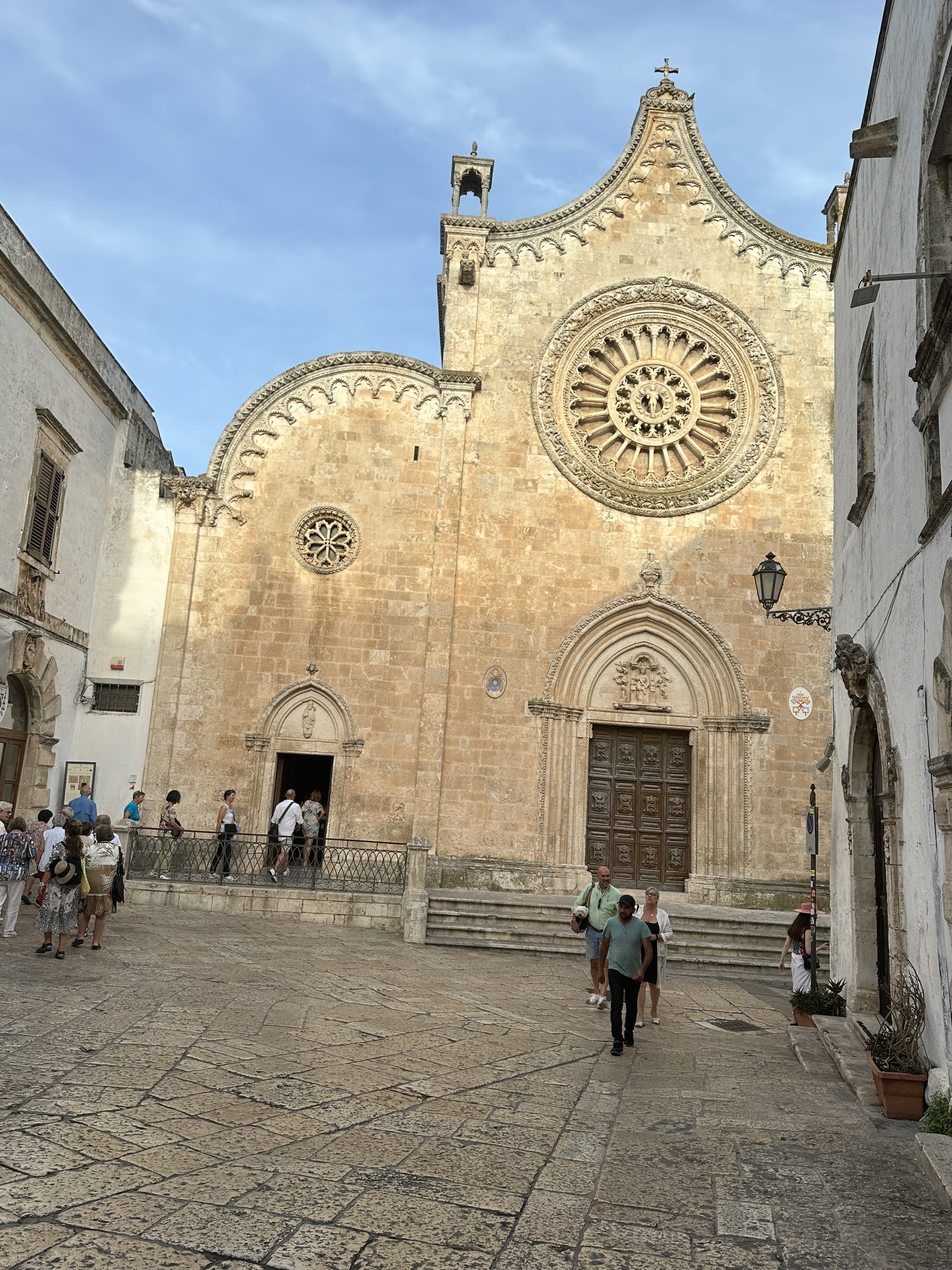
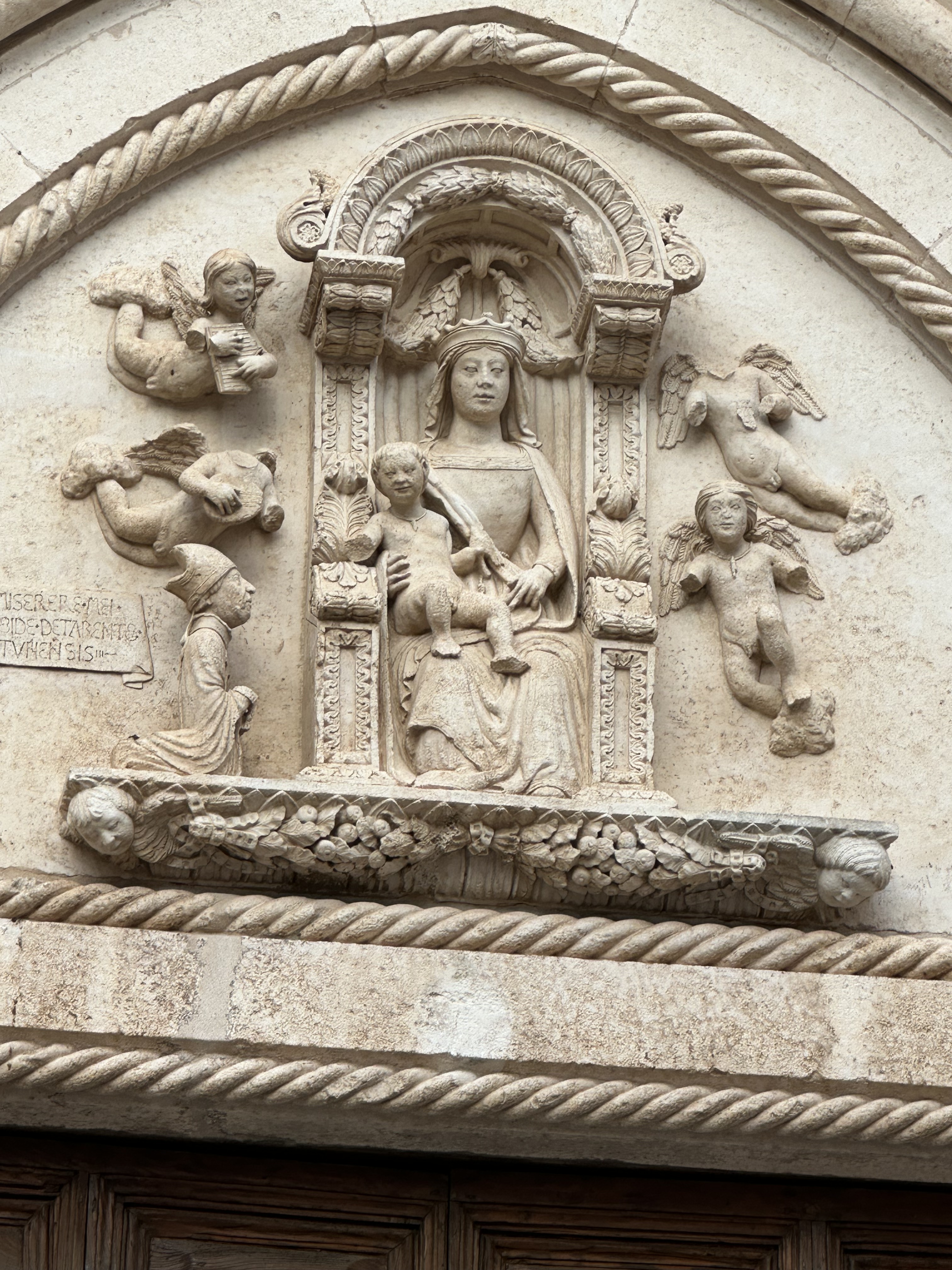
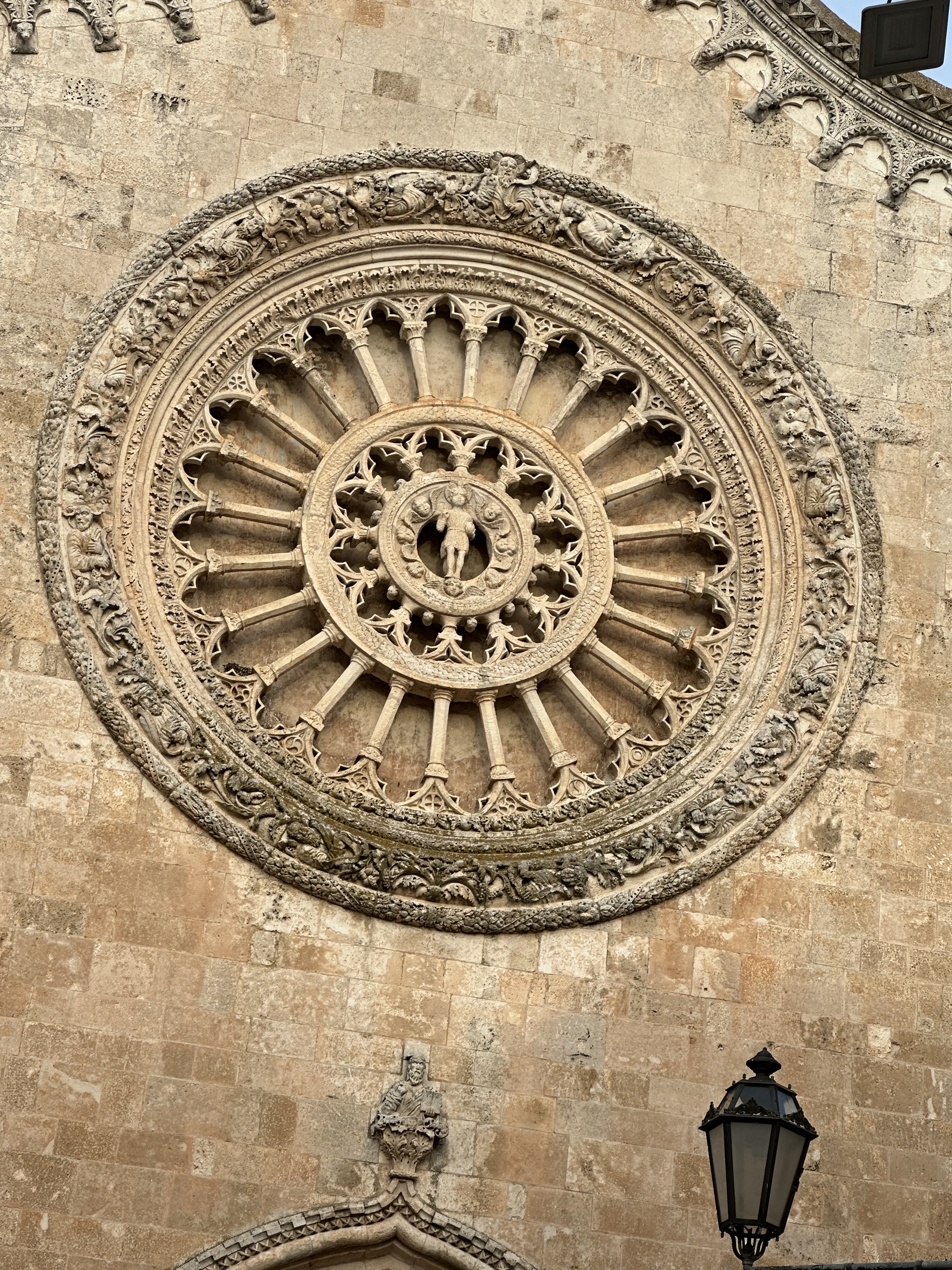
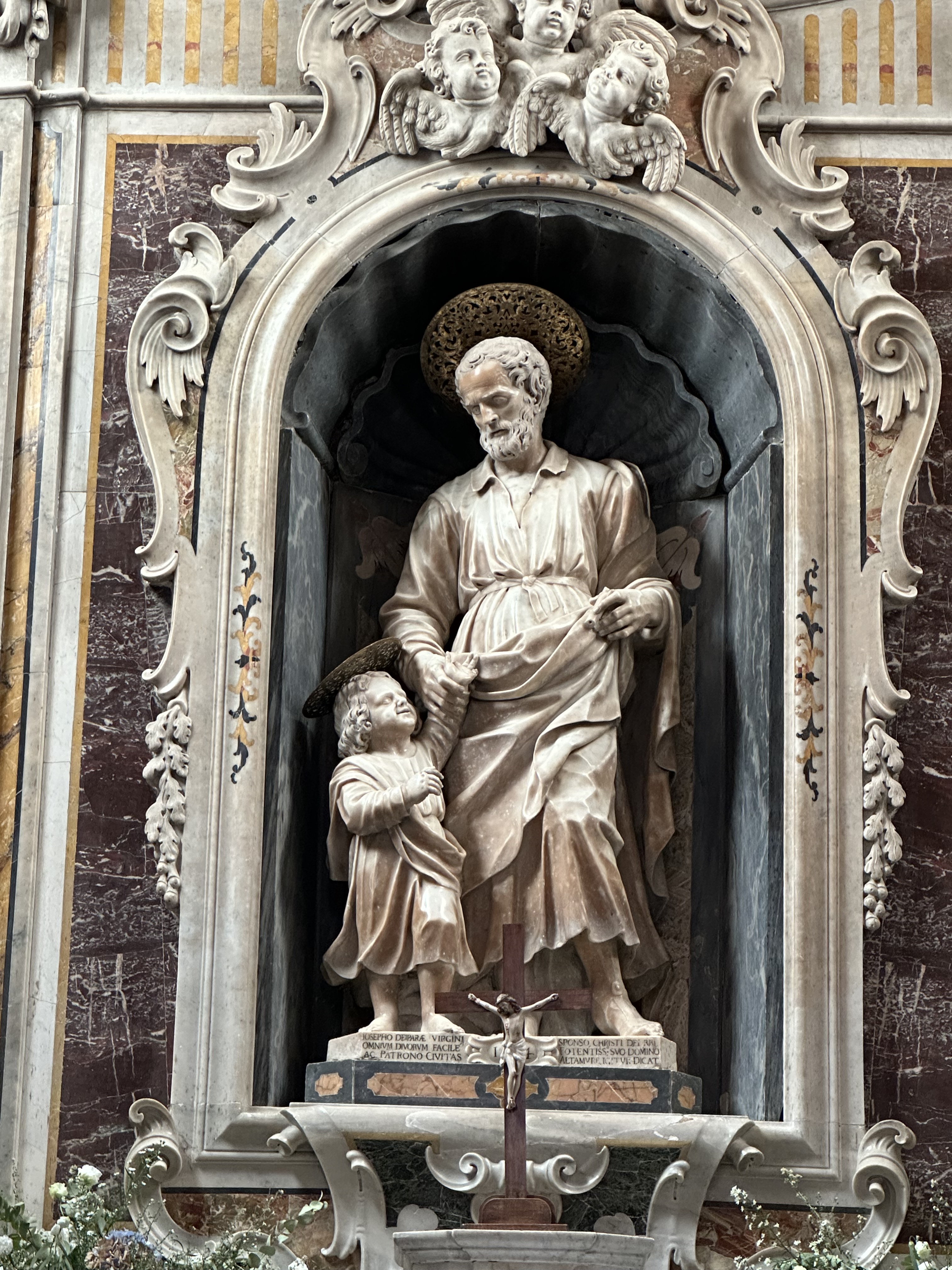
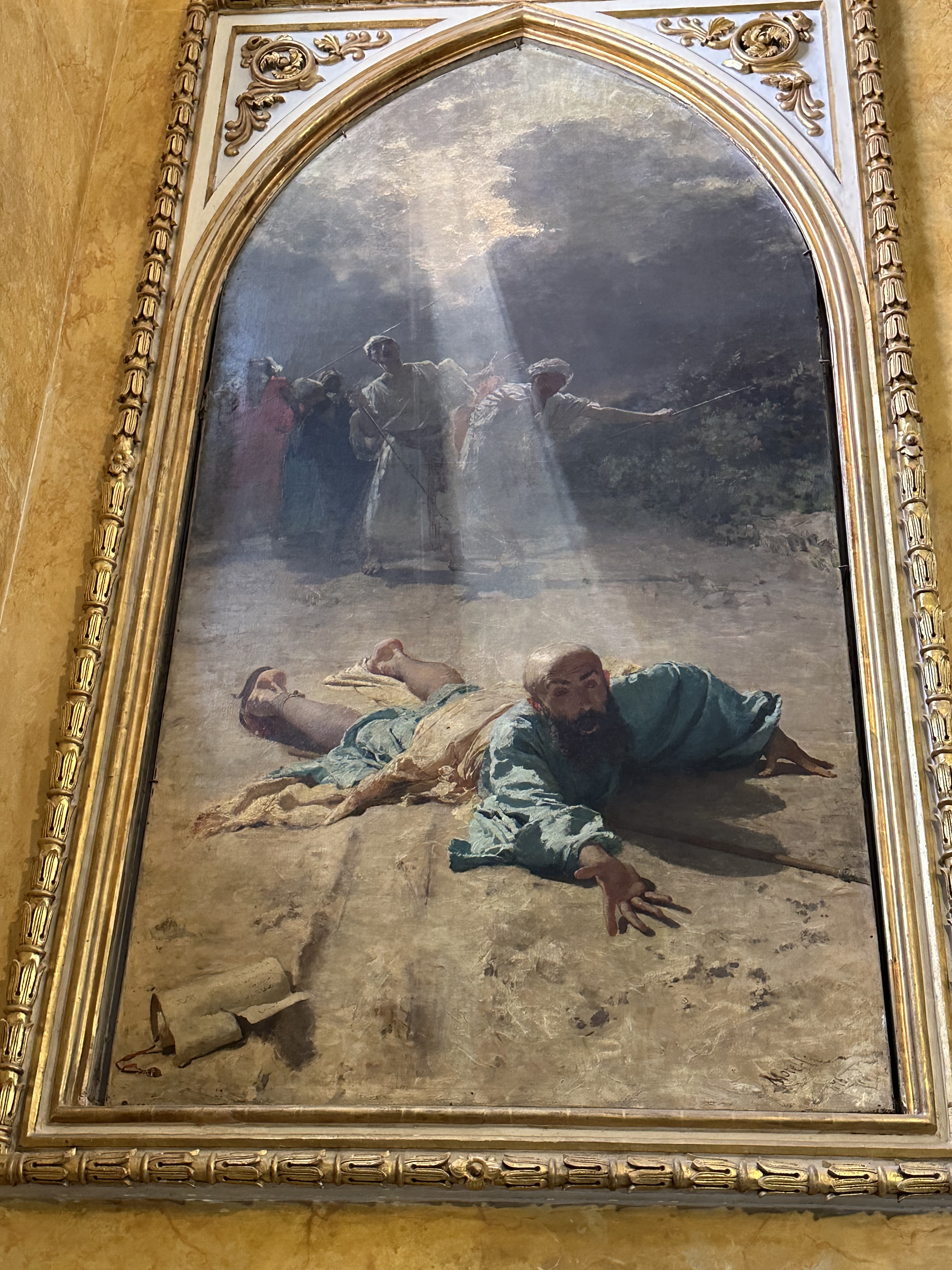
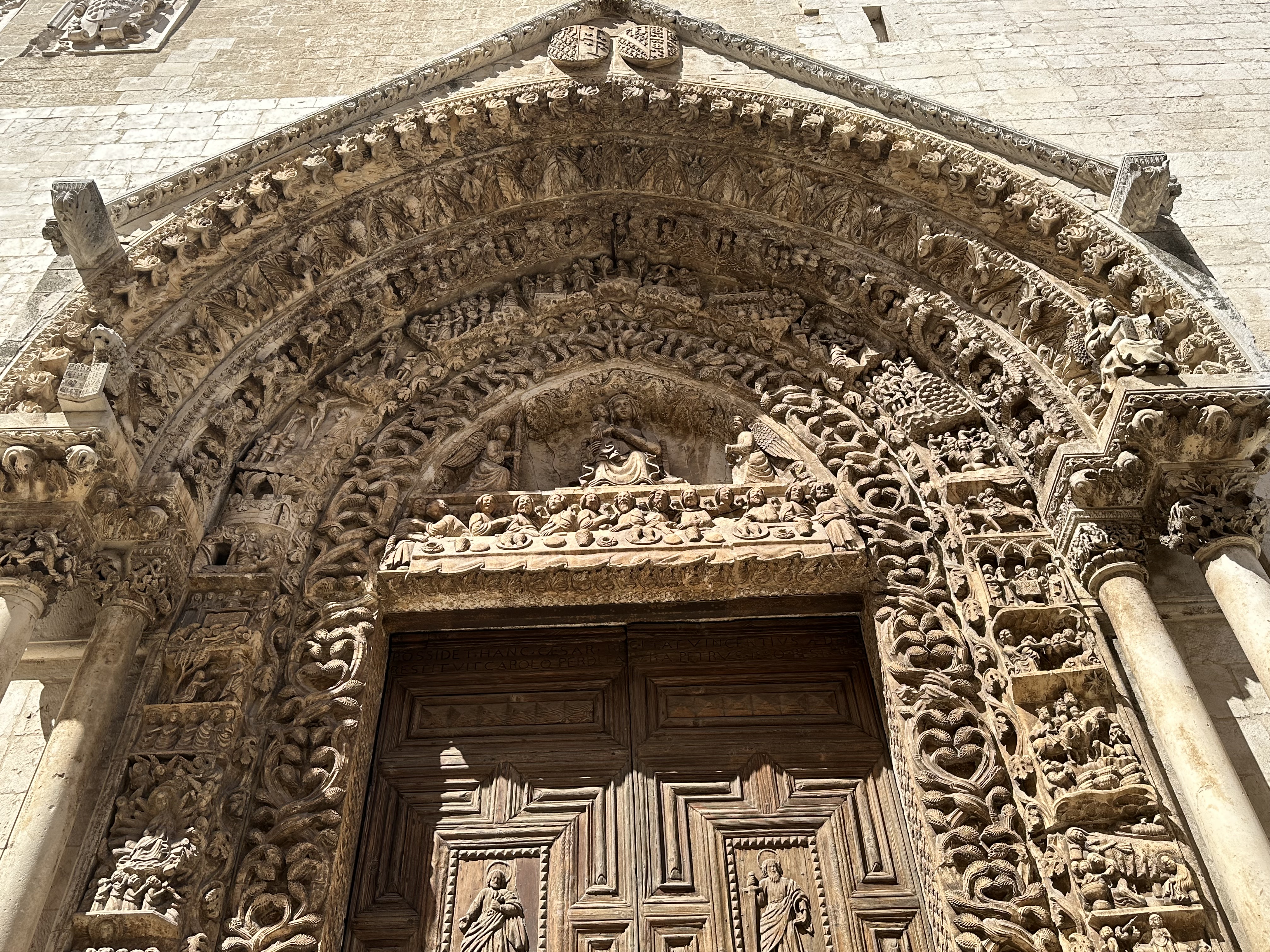
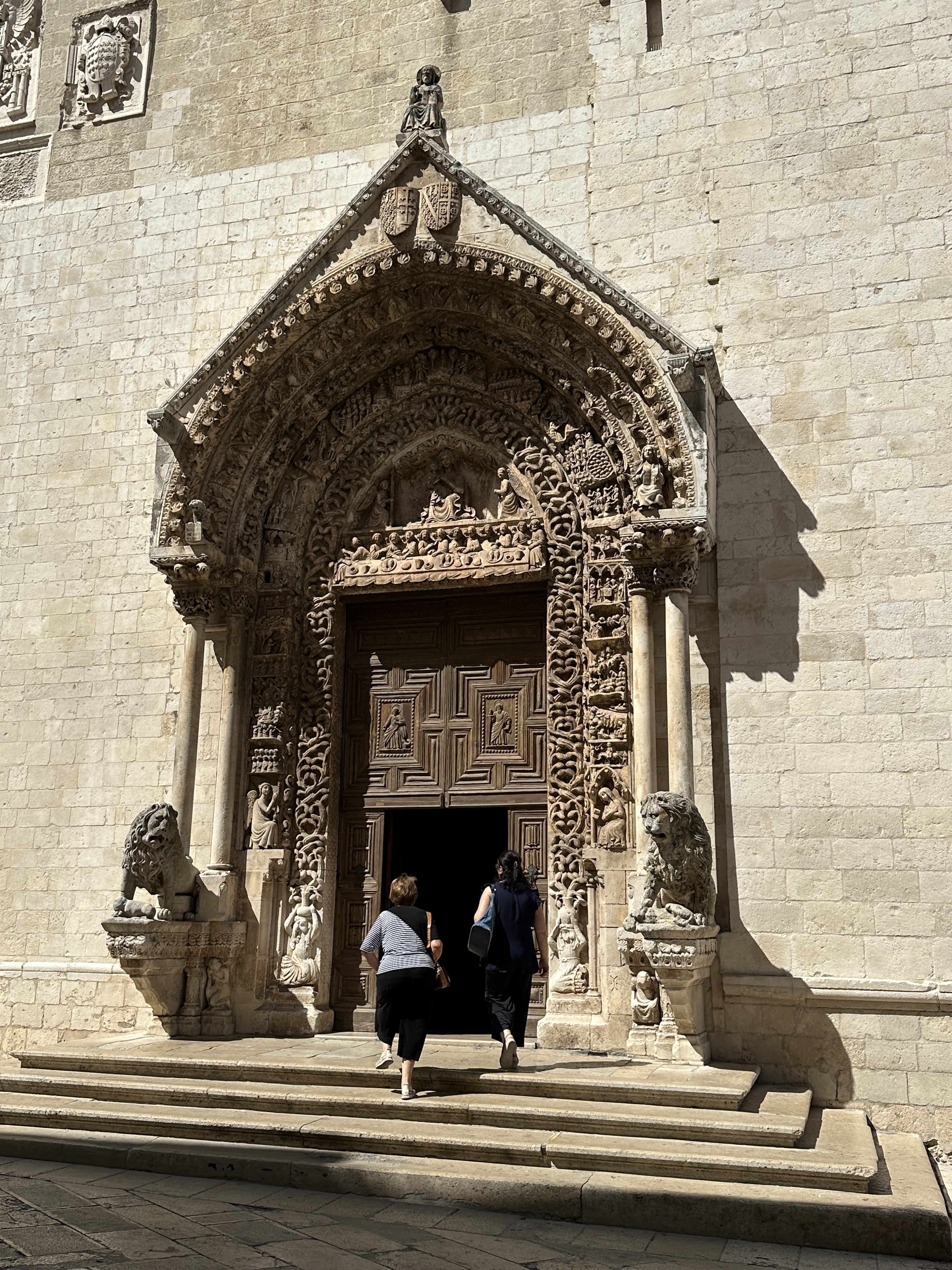
From the bakery we walked through Altamura’s Old CIty, which had been abandoned in the 600’s when Rome fell and was rejuvenated by Frederick II in 1233. We stopped at the Cathedral of the Assumption to view the intricately carved portal, a lovely sculpture of a young Joseph with Jesus and a special painting of the conversion of St Paul.

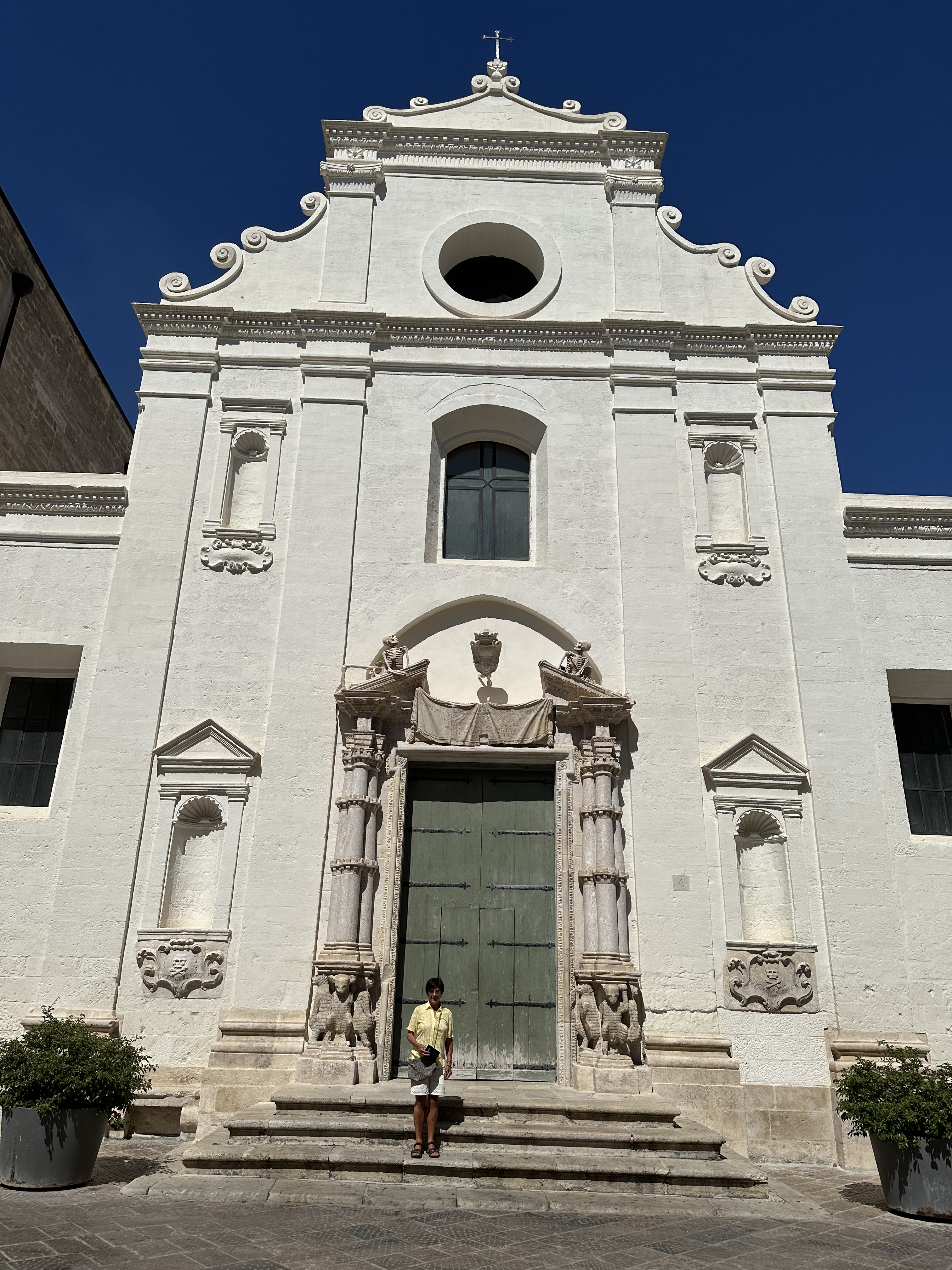
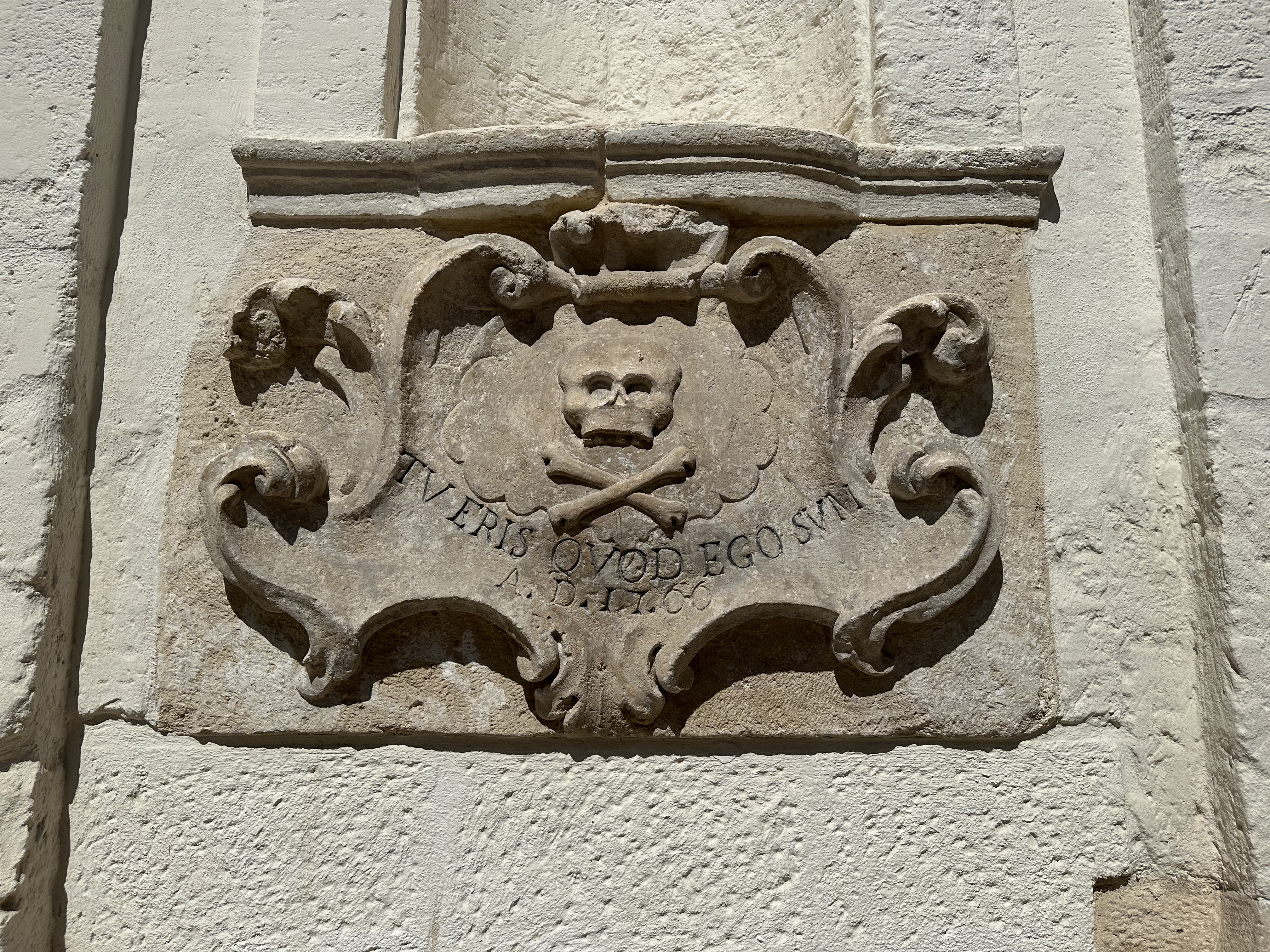
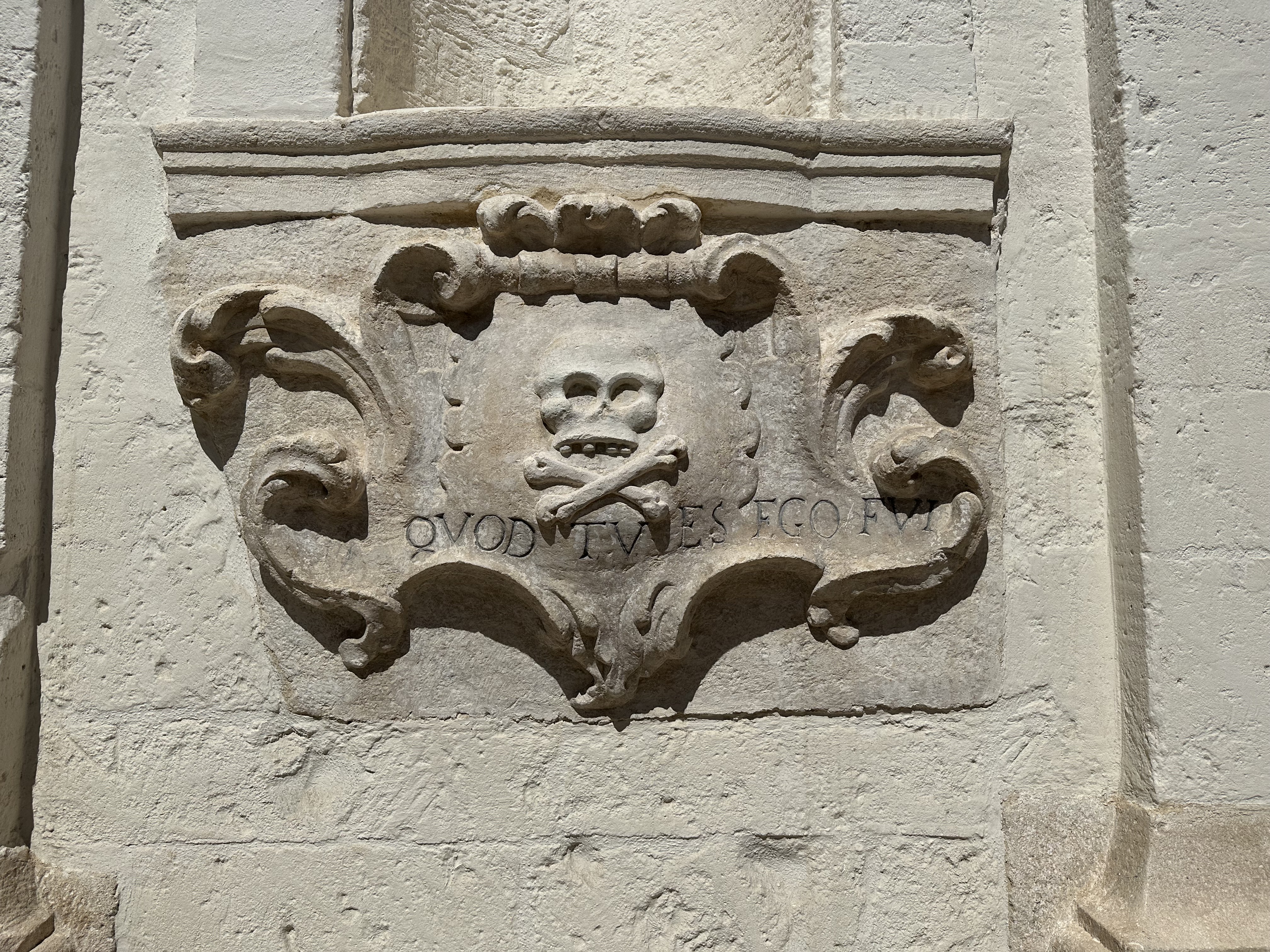
I bought a purple outfit I saw in a store window and could not resist. Then we headed for the next town, Gravina, where we stoped at the Church of Purgatory and took in the sayings on the wall. “What you are, is what I used to be.” “What you are going to be, is what I am.” Sylvia had her own saying. “The mother of the idiot is always pregnant.” Not sure what she had in mind.

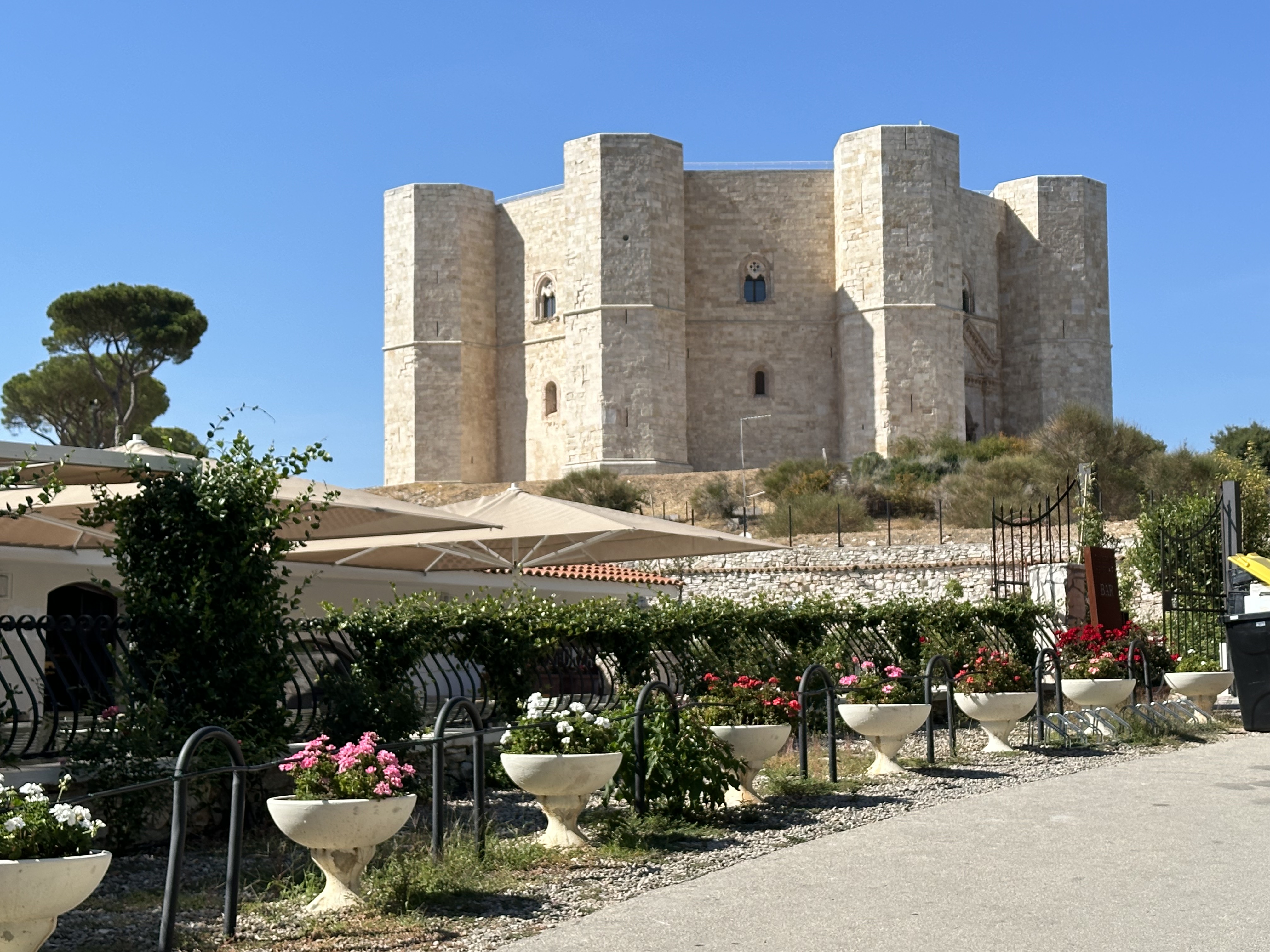
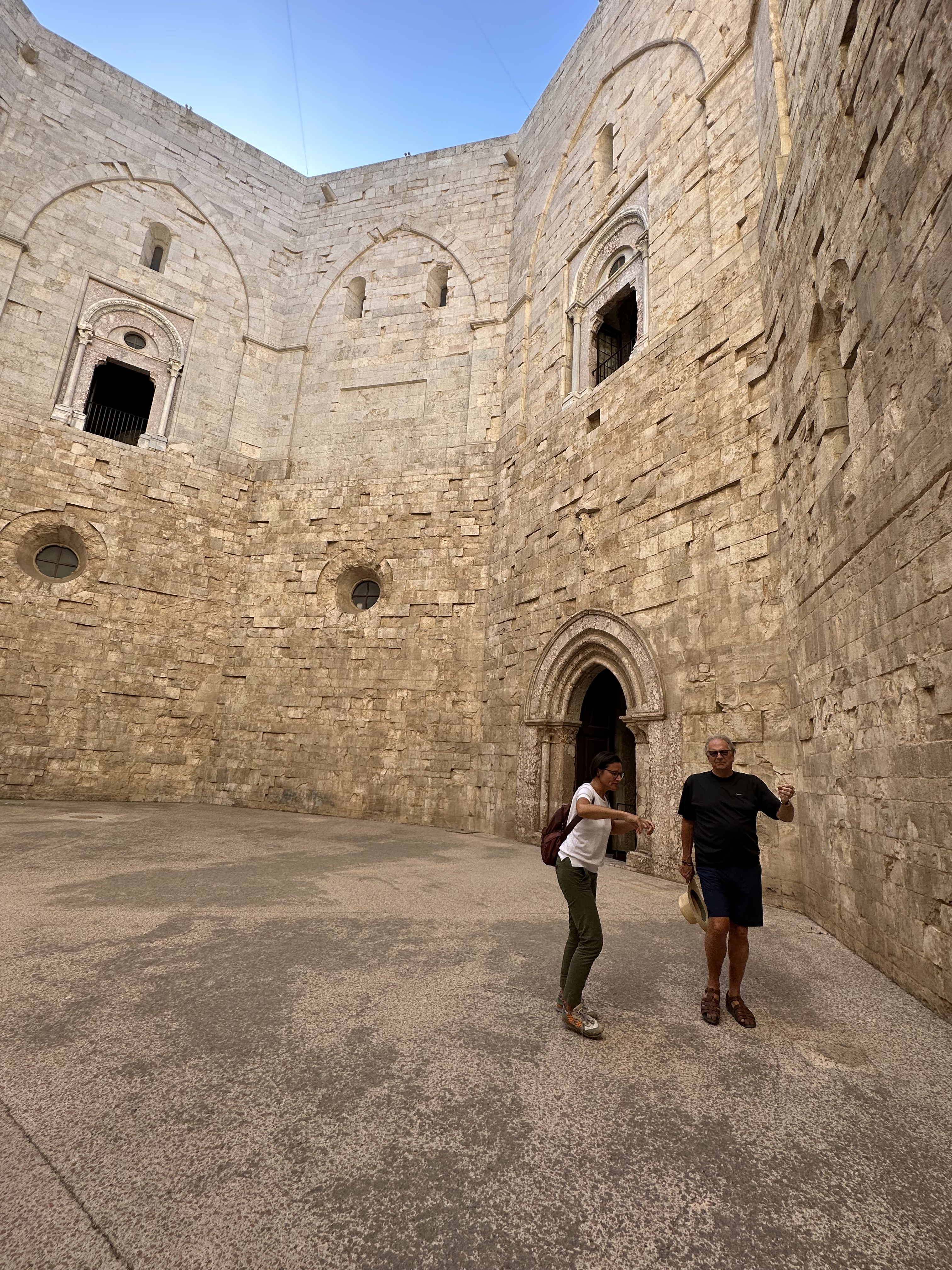
On that note we all had a coffee and then hit the road for my big goal for the day, the Castel del Monte an hour north of Gravina. The countryside was mostly gentle rolling hills. Very lovely even though the fields were mostly brown cut grass. Trees were very sporadic but added variety to the sameness of the undulating hills. Most of the buildings we saw along the way were abandoned farm houses. Farming and sheep raising had once been the main economy of the region. Today the economy is mostly olive oil, then olives and grapes, followed by almonds, fruit trees and then wheat–the crop we were passing through.

As we approached the Castel, the conversation turned to Frederick II, who commissioned the castel in the 1240’s. He was born in 1194, became the king of Germany in 1212=]\ and Emperor of Italy and the Holy Roman Empire in 1220. He was a Christian, but was excommunicated 3 times by the pope. He died in 1250 after having been a forward thinking leader and commissioner of great works.

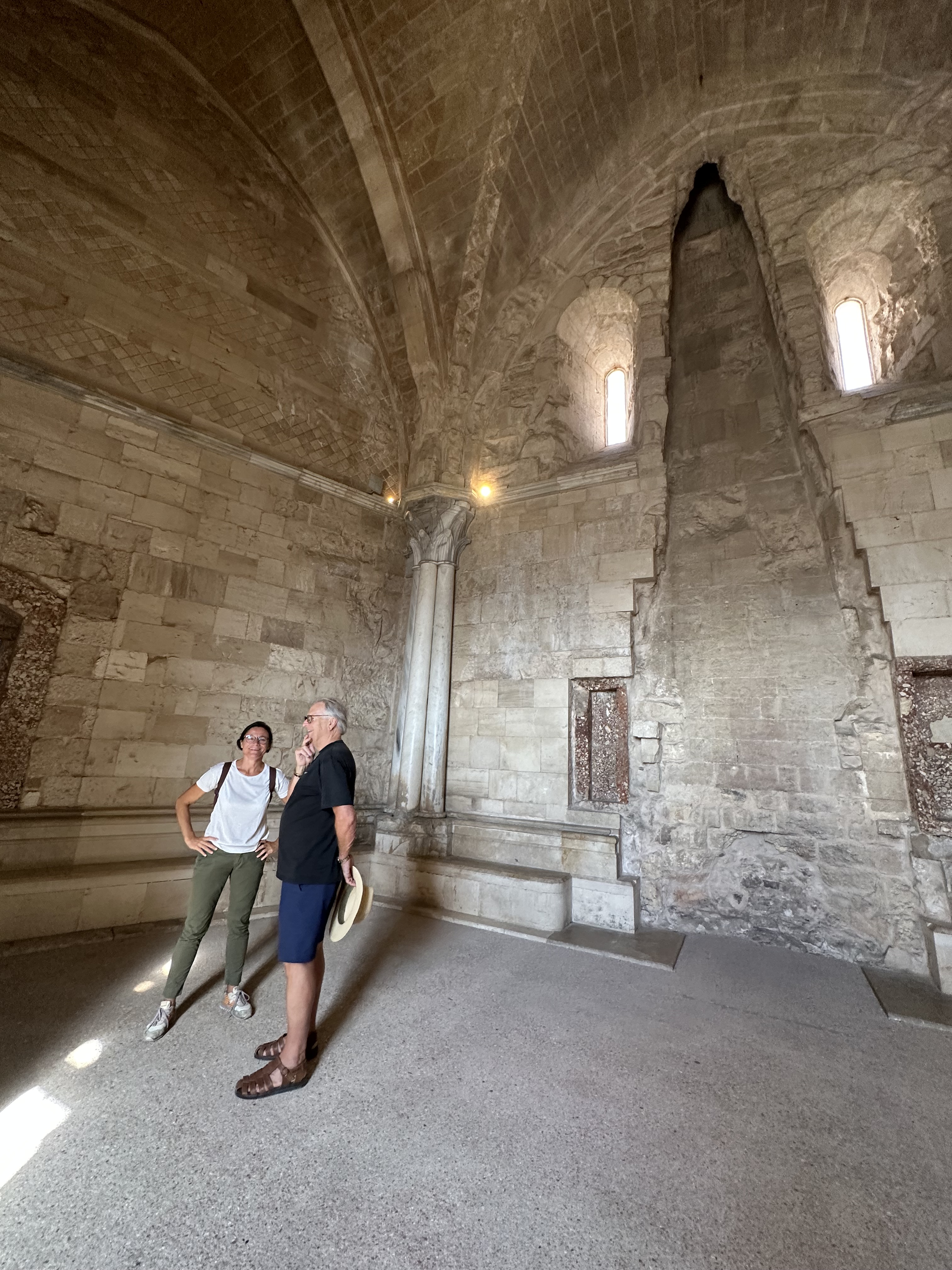
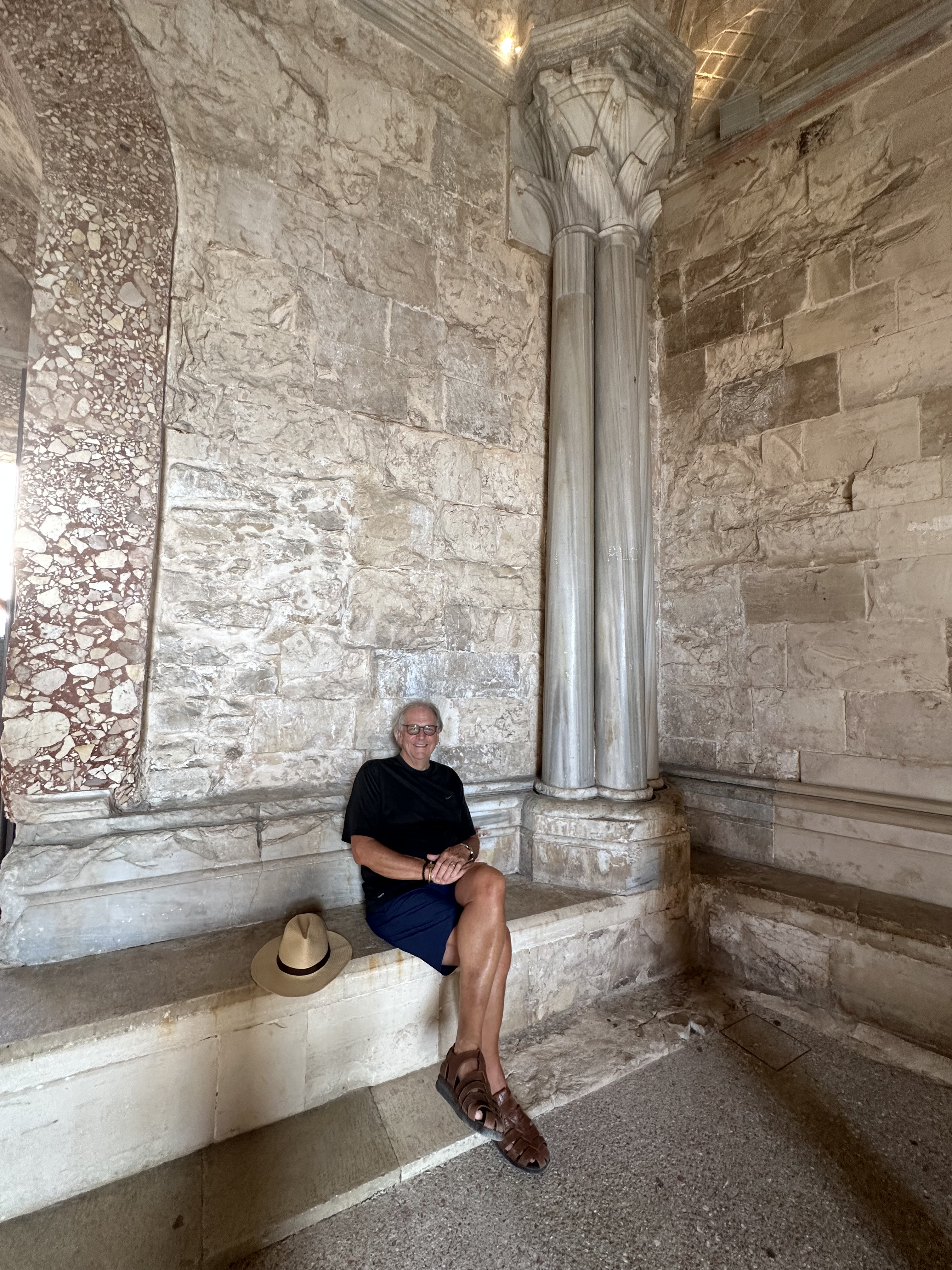
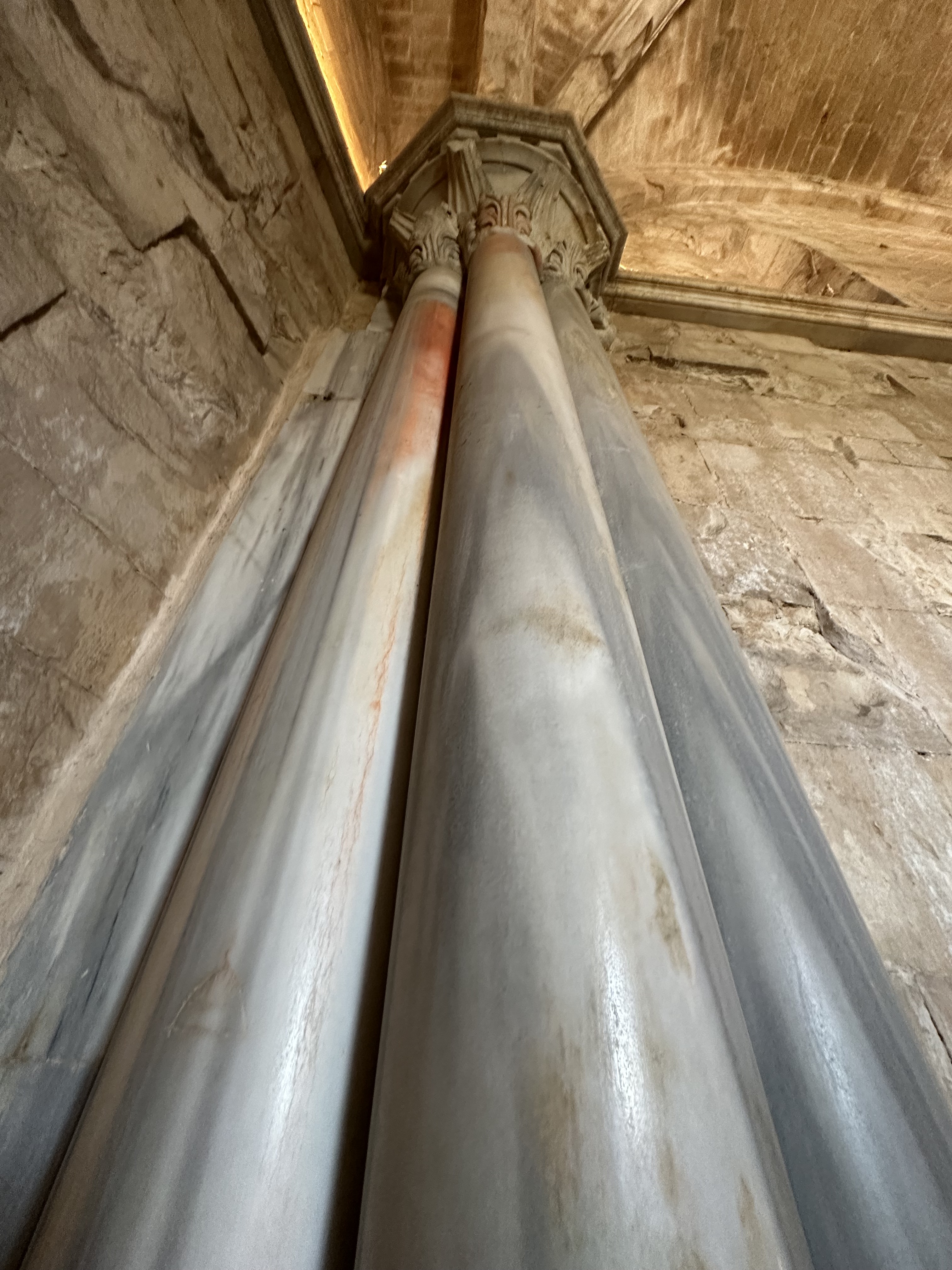
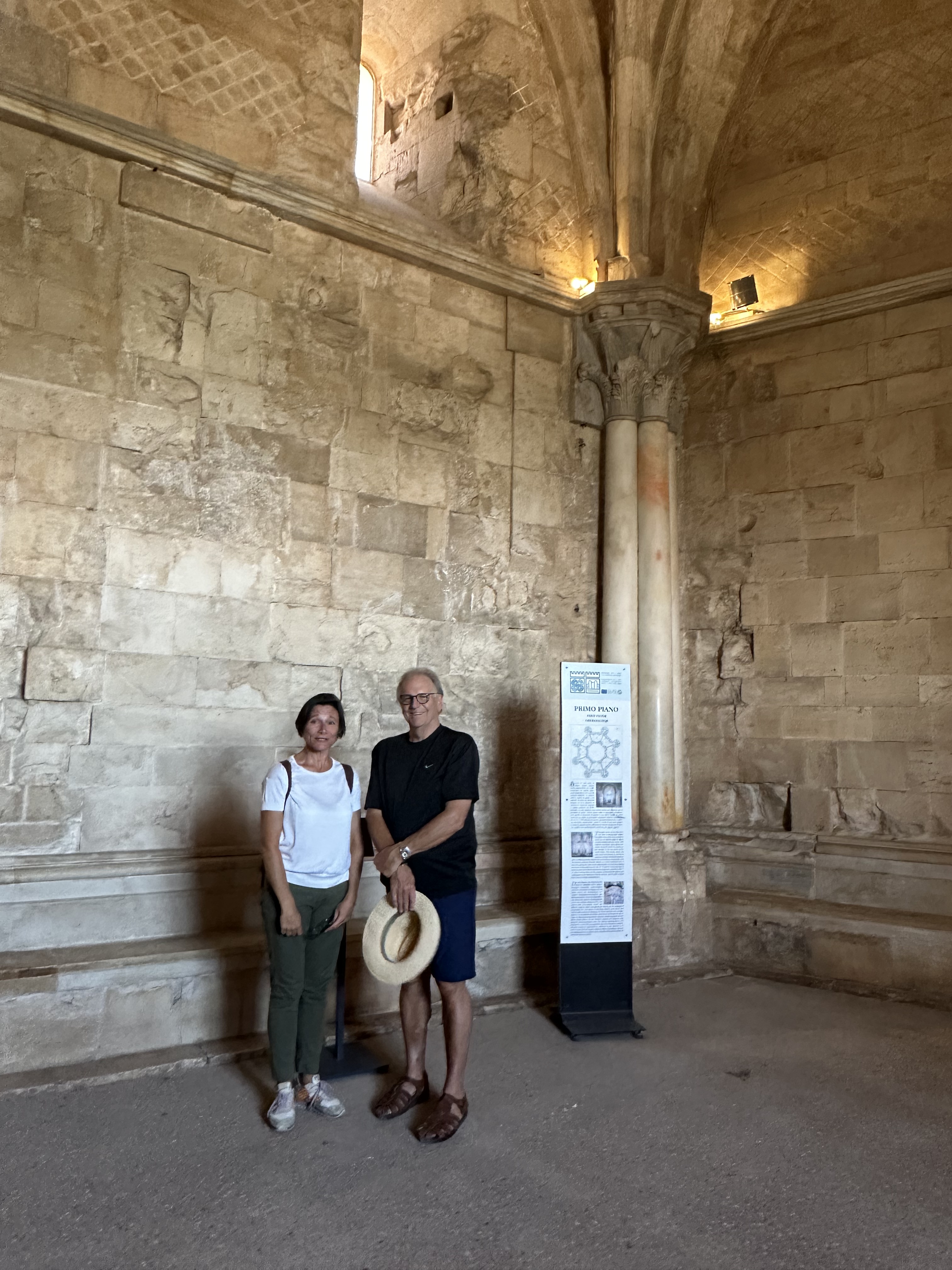
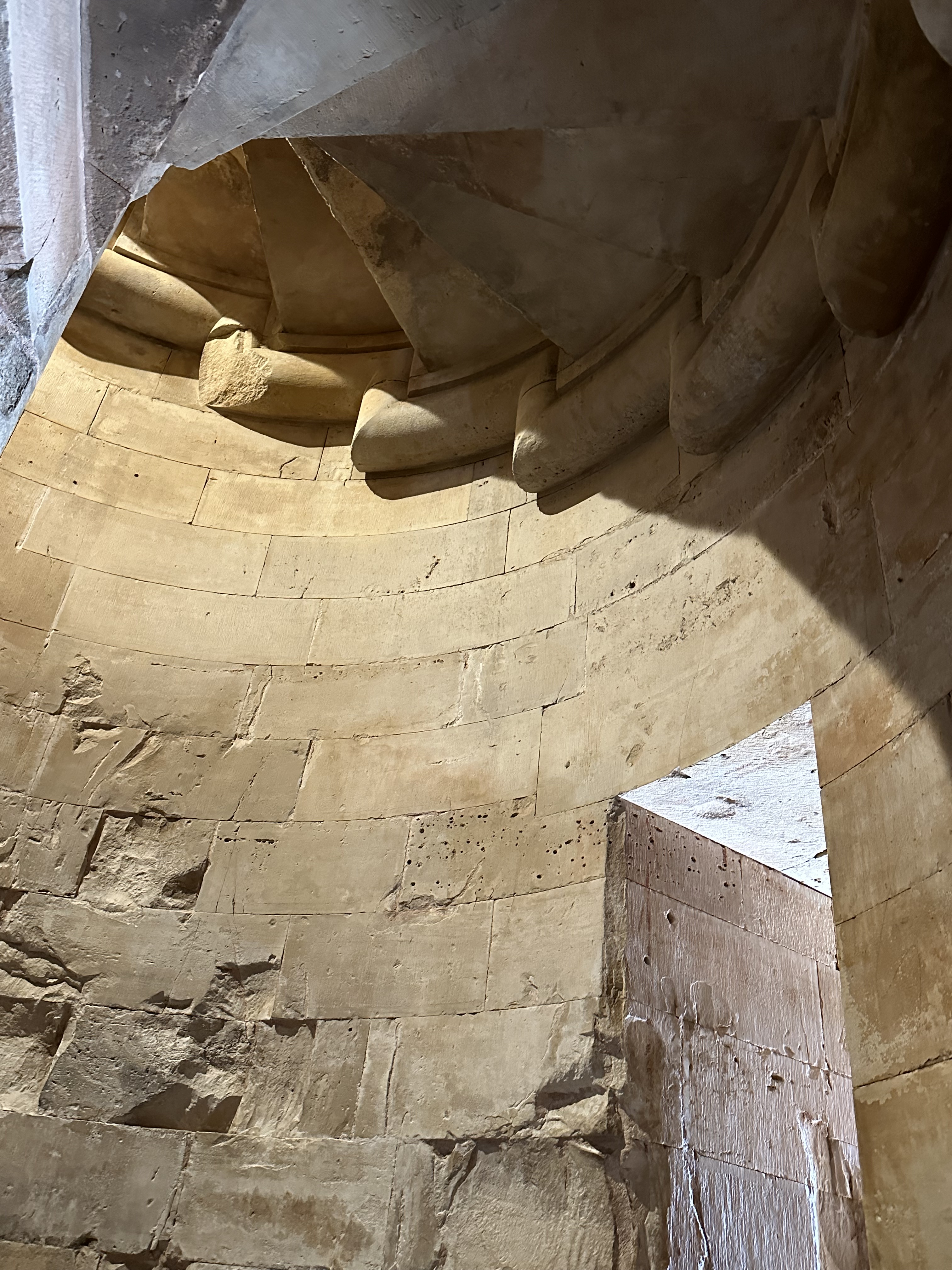
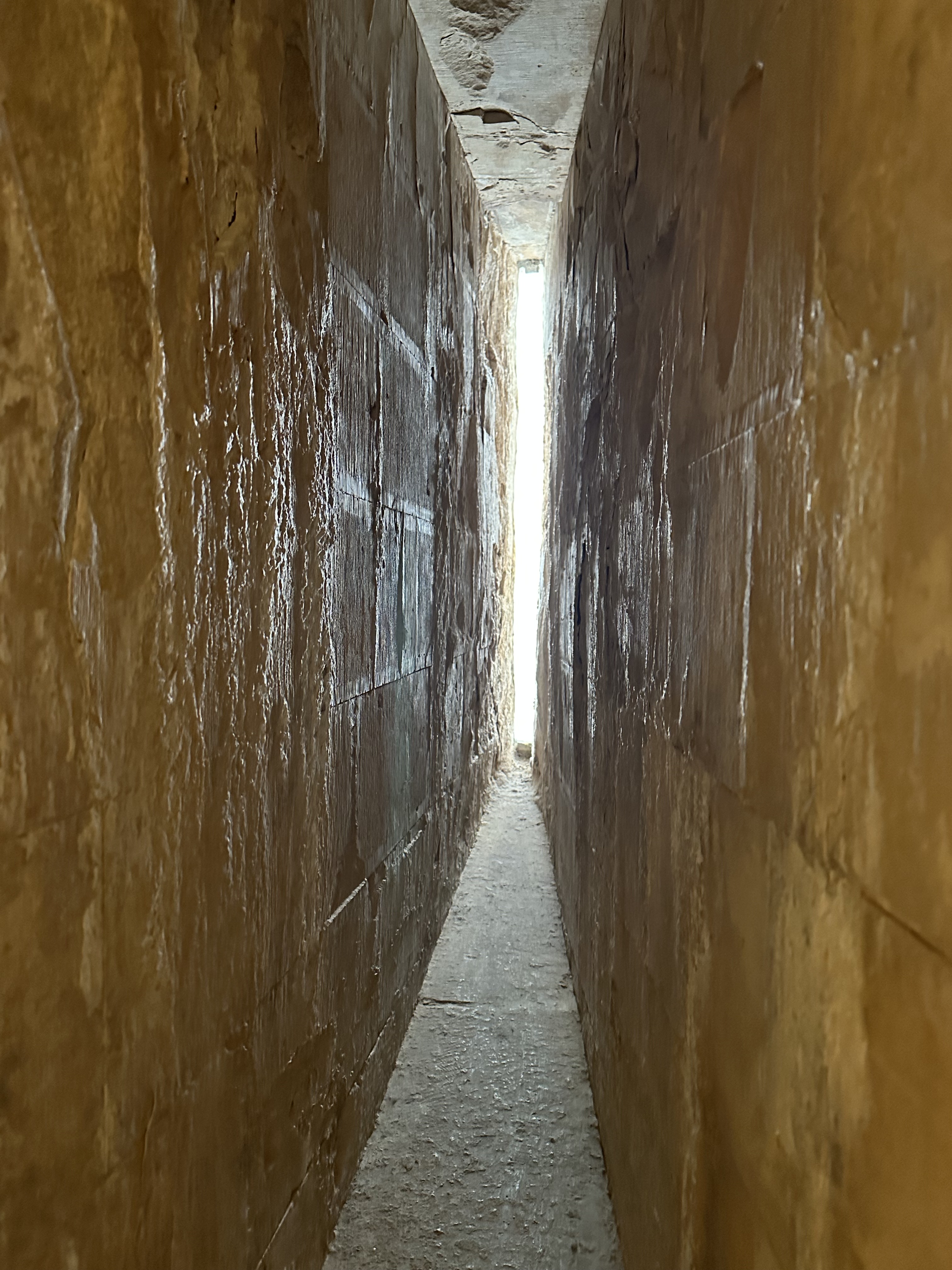
This structure is a perfect octagon, that took years to get perfect. there are 8 sides, 8 equally sized rooms on two floors, beautiful marble walls with corinthian columns, and bathrooms on both floors. The building sits on top of a hill with a 360 degree view of the area. It was built with great precision and has a grace about it that makes me think of it more like the Taj Mahal. We spent an hour roaming around the place and taking in the atmosphere. I was pleased to have added it to our list of sights to see. We drove back to Matera and called it a good day. Mark and I had dinner in a local underground restaurant called La Lopa and went to bed. We have not yet adjusted to the time change..

2023 Sept-Oct: Italy/Sicily/Malta

We began in Puglio Province, the heel of Italy

September 10, 2023

Planning for this trip began over a year and a half ago, during the waning days of COVID confinement, when Mark and I began discussing how to spend our coming “aught” dates: his 70th, my 80th, and our 30th anniversary.   We agreed it would be wonderful to invite some friends to join us on a travel adventure. 

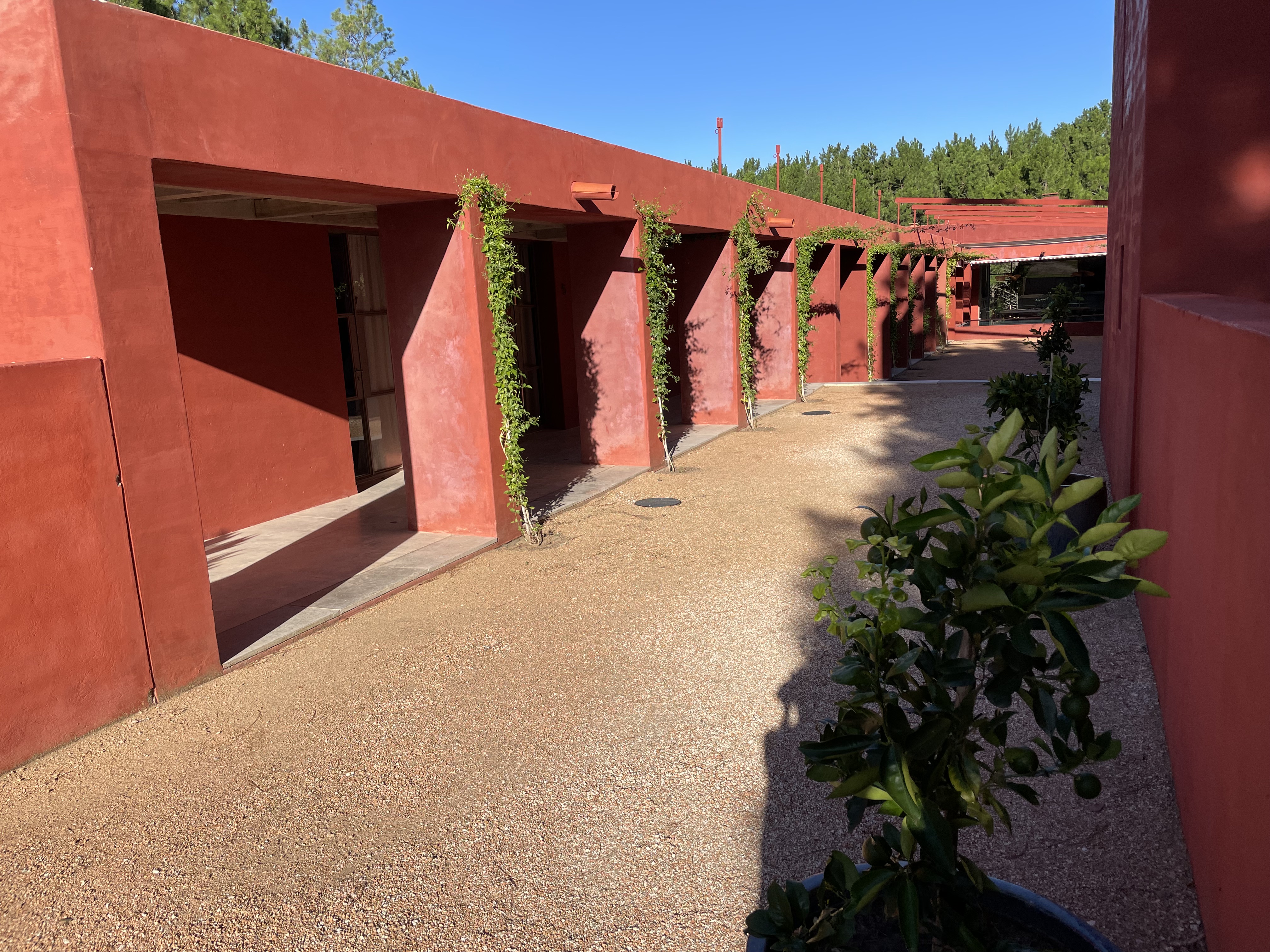
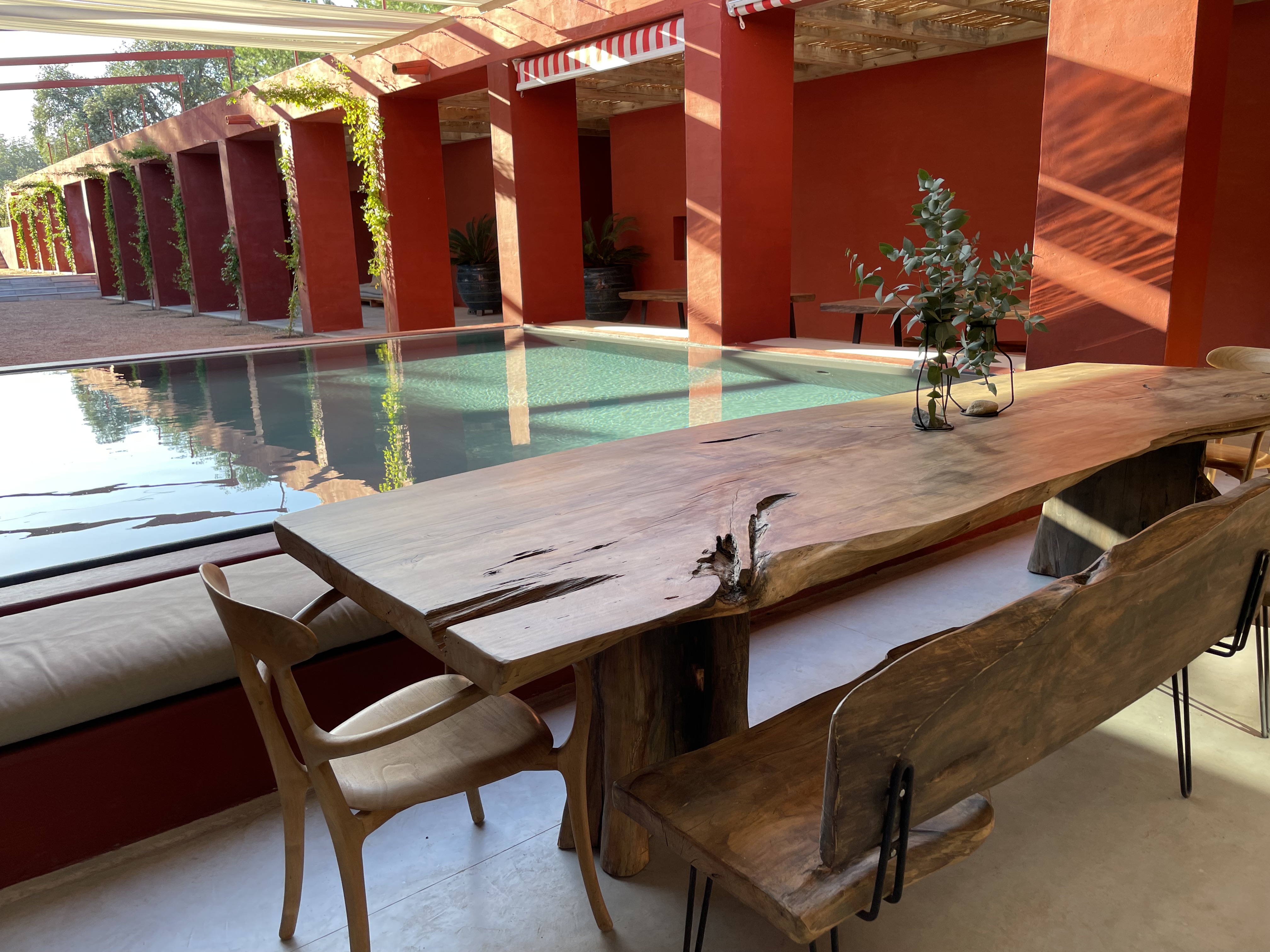
We chose Sicily as a place we wanted to visit and thought others might want to visit too. We made lists of companionable people to invite.  At first, we thought it would be hard to find enough couples, but in the end, I was wishing we had more rooms to share. There are several more people we would like to have included.  I went online and researched places that could provide what we had in mind.  Eventually I found Il Borgo, a villa on the east coast of Sicily between Catania and Syracuse.  It had 12 equally nice suites, each with a private bath, set in a lovely courtyard and floral gardens. There was a pool and sauna, an olive orchard, a nearby beach and catered meals per request.  On top of all that, the place came with a concierge to help us plan our daily activities.  

Once we secured the place, we started asking people to join us.  We agreed to pay for the accommodations but they would need to provide their own air, ground transportation and most meals.  We were not sure what reception we would get, but almost everyone gave an enthusiastic yes.  I guess Sicily, photos of the villa, birthdays to celebrate and plenty of lead time to make their own plans drew people to us.

A year and a half later we are finally on our way.  Our personal plans have evolved to include the province of Puglia (the heel of Italy), Sicily, Malta and finally Florence.  Our week at the villa in Sicily is from September 23-30.  Each couple has created their own adventure.  Some left home days ago, others leave during this next week.  Some will arrive just in time and travel to other places after Sicily.  We are having much fun following all their plans and getting excited along with them.   

I had not planned to keep the blog going during this very social adventure, but several people have asked me to do it so I will try to accommodate but am making no promises.  

We left home at 8am on the 10th and arrived at SFO after only 2 hours and 19 minutes with Mark at the wheel.  Our friend Josh Scott accompanied us and drove away when we said good bye.  I sure hope he drives slower than Mark did.

It was my first time through security with my pacemaker.  I was pulled aside, had to take my shoes off, even though I am over 75, and received the most thorough pat down I have ever experienced.  Sure hope that will not be my plight with every flight.

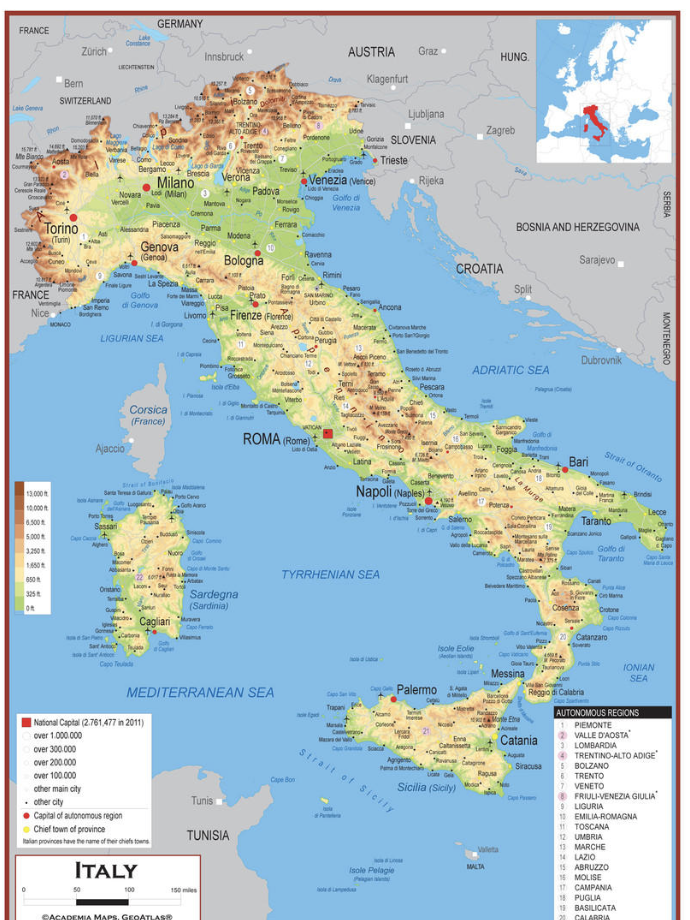
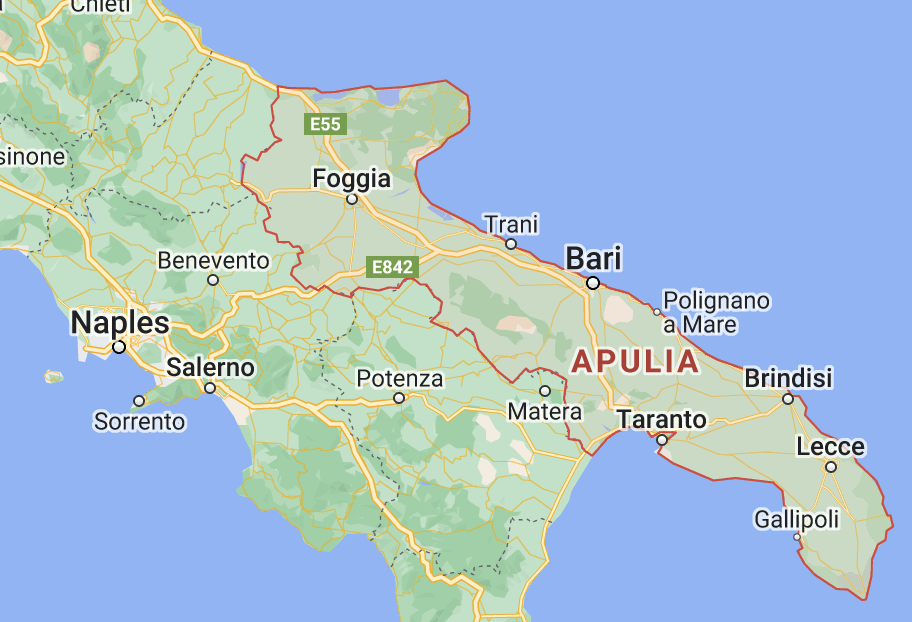
We flew on United from SFO to Munich, had a short lay over and continued on to Bari, the capital of Puglia Province in Italy.  From there we were driven 65 kilometers southwest to Sassi di Matera, which is in the Italian province of Basilicata.   Have a look at the map of Apulia, Latin for Puglia, above.

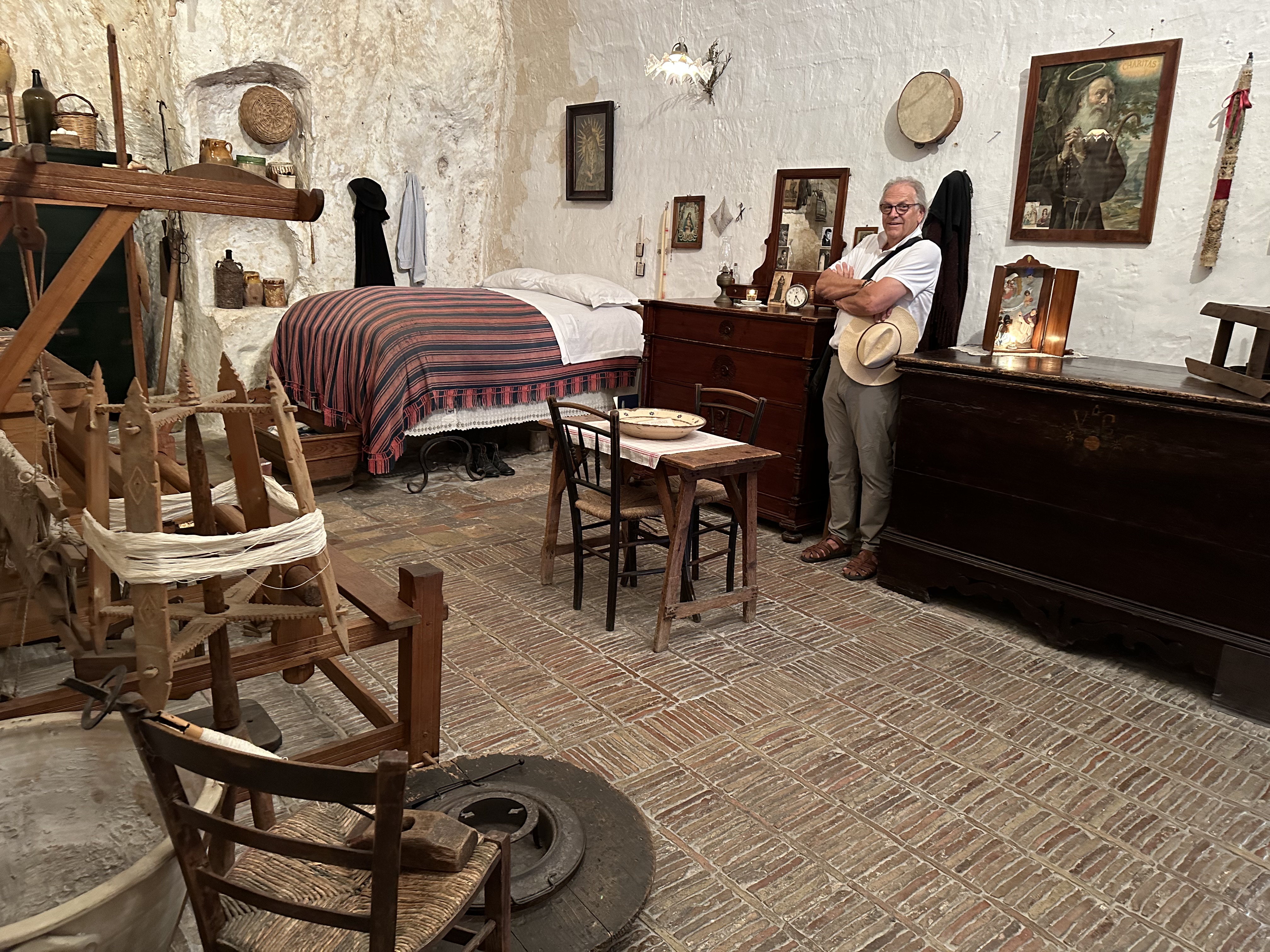
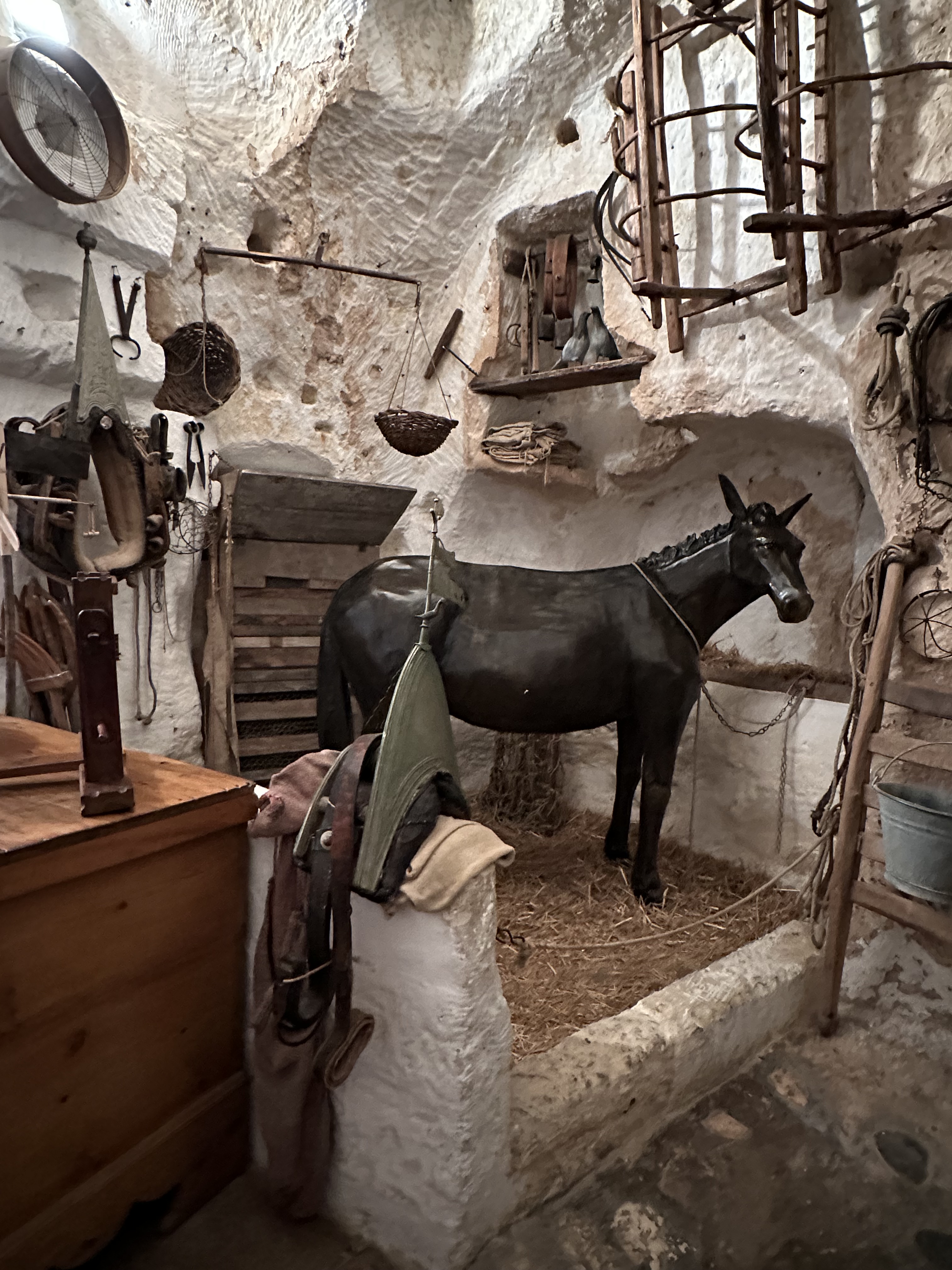
Our guide for the afternoon was Anna.  She met us at our lodging in Matera, Corte Sin Pietro, and we began our walk-about.  Sassi, she said, means rock or stone and Matera is built on hills made totally of rock and stones.  There are 2 different Sassi neighborhoods that contain over 3,000 structures carved completely out of rock.   They were occupied for millennia by troglodytes and are one of the oldest occupied towns in existence.   Human remains have been found in the area from 9,000 years ago.  

More recently, house fronts have been made with constructed limestone blocks with caves in back of or under the house.  Today, houses are built completely of stone blocks with no attachment to caves.  

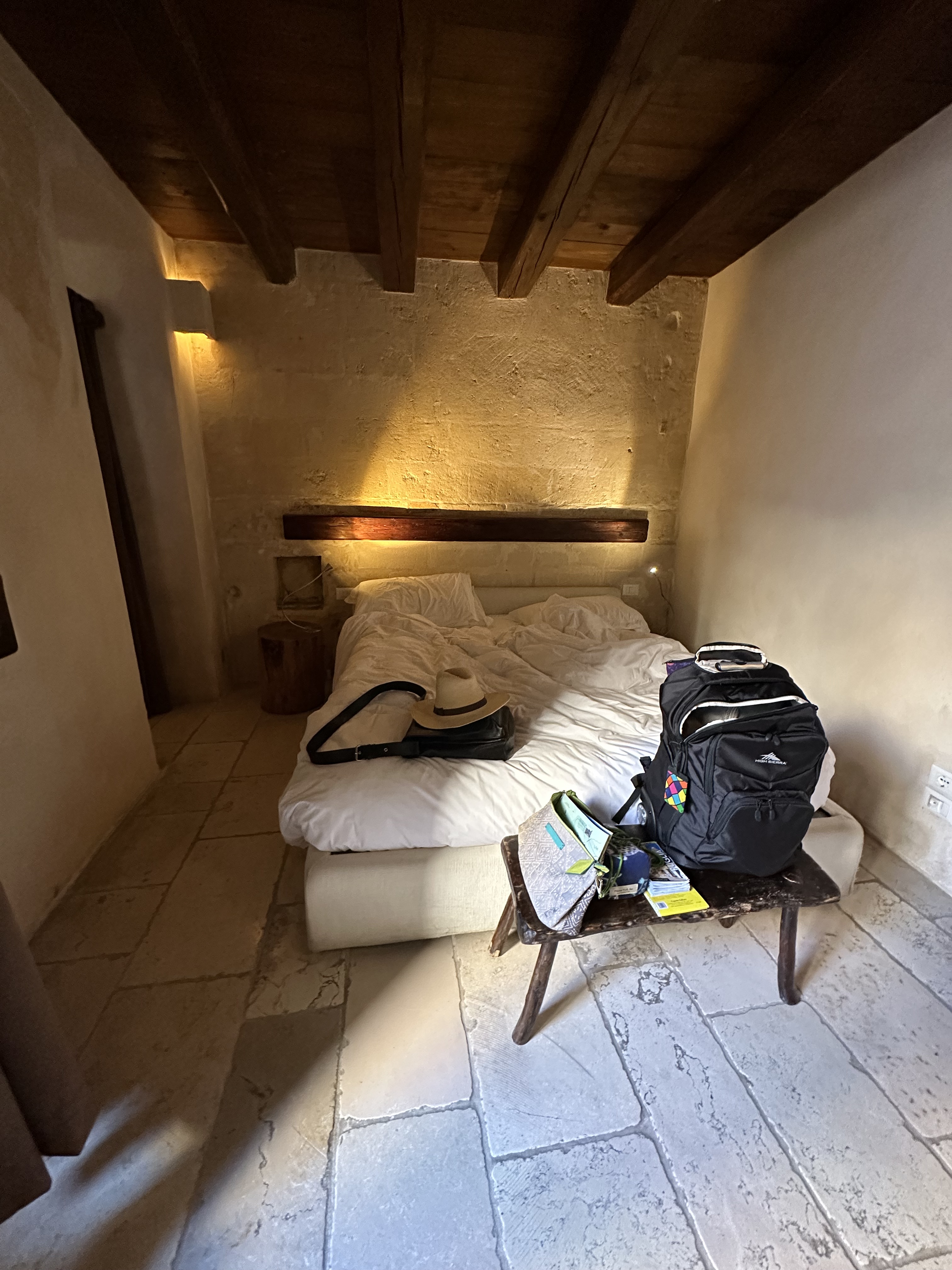
The whole town is bizarre, but most interesting and appealing to wander through. Tourism has become big in the area and the town is full of restaurants and houses converted into accommodations, such as the cave-like room we are staying in, which has no windows and is below ground.  

Our cave room

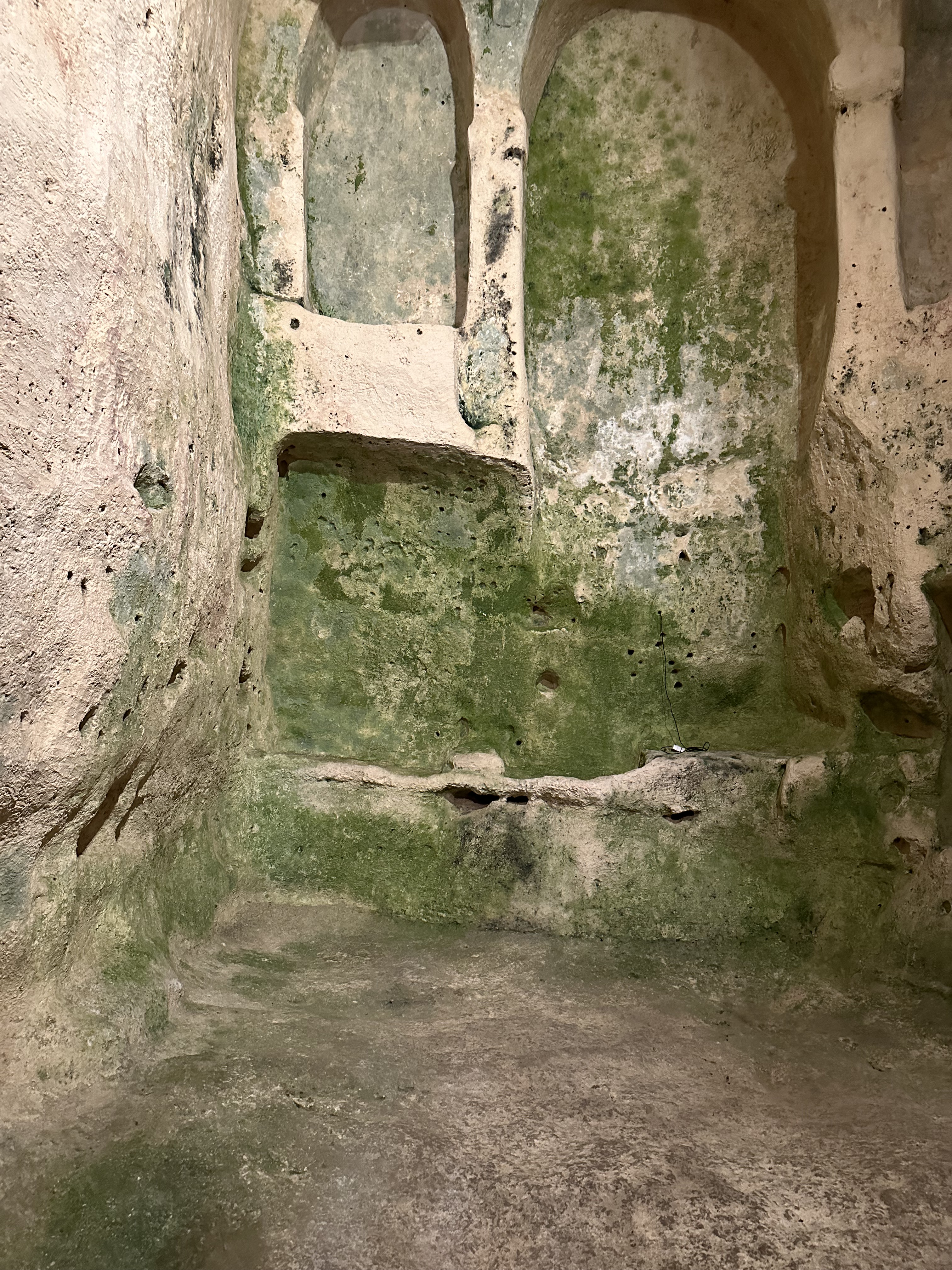
Anna lead us to interesting churches that were made at least partially in caves.  

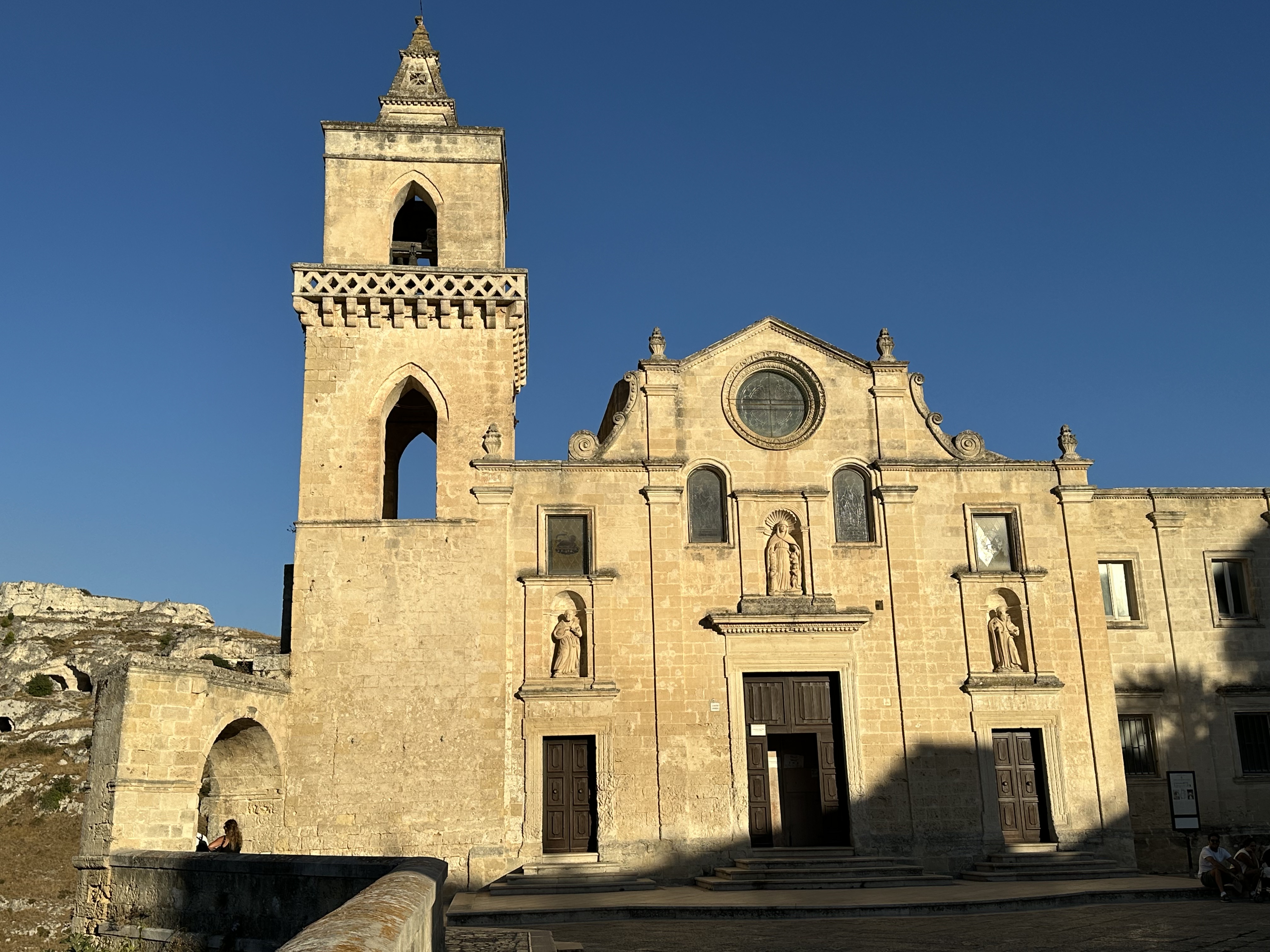
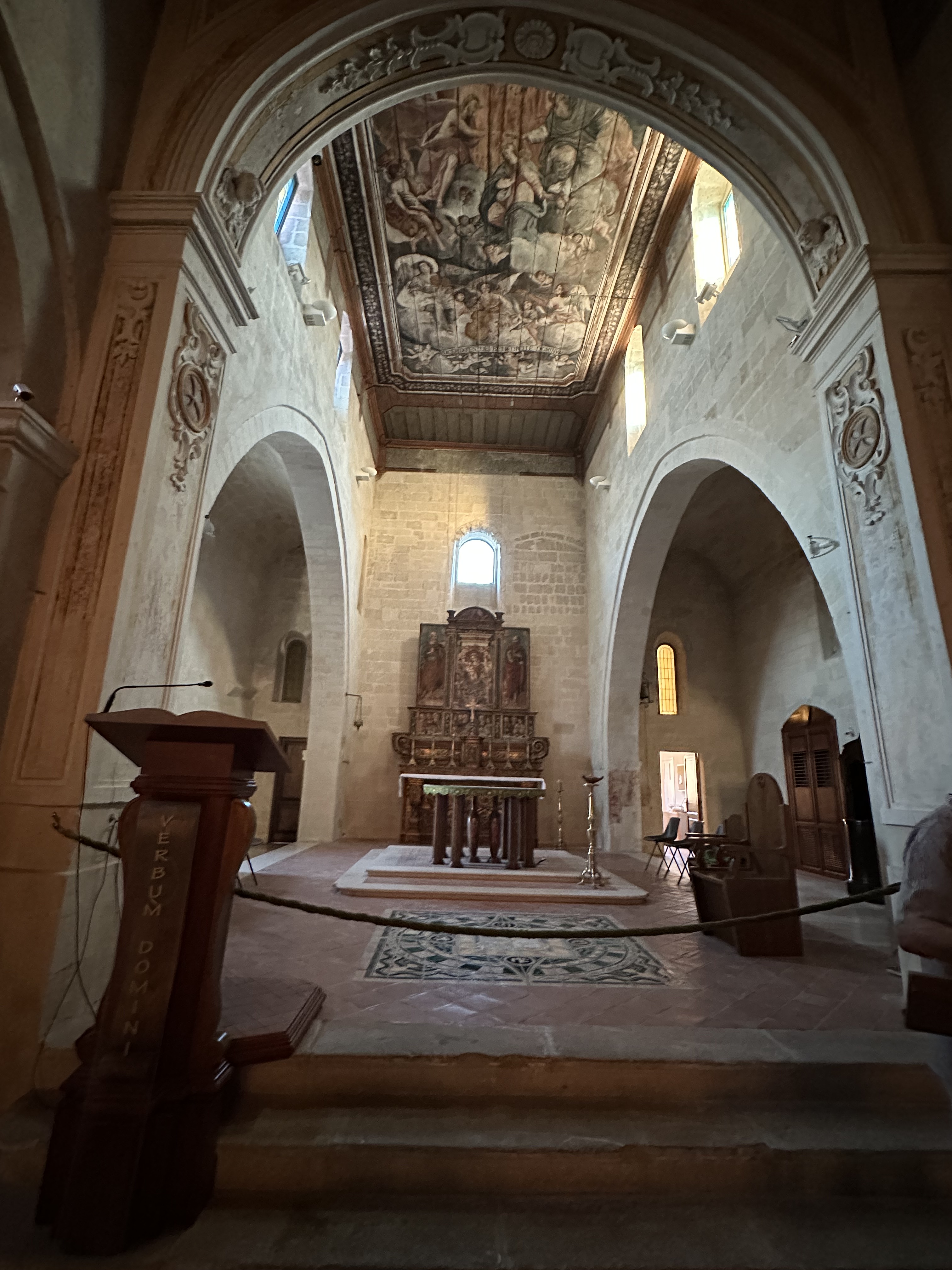
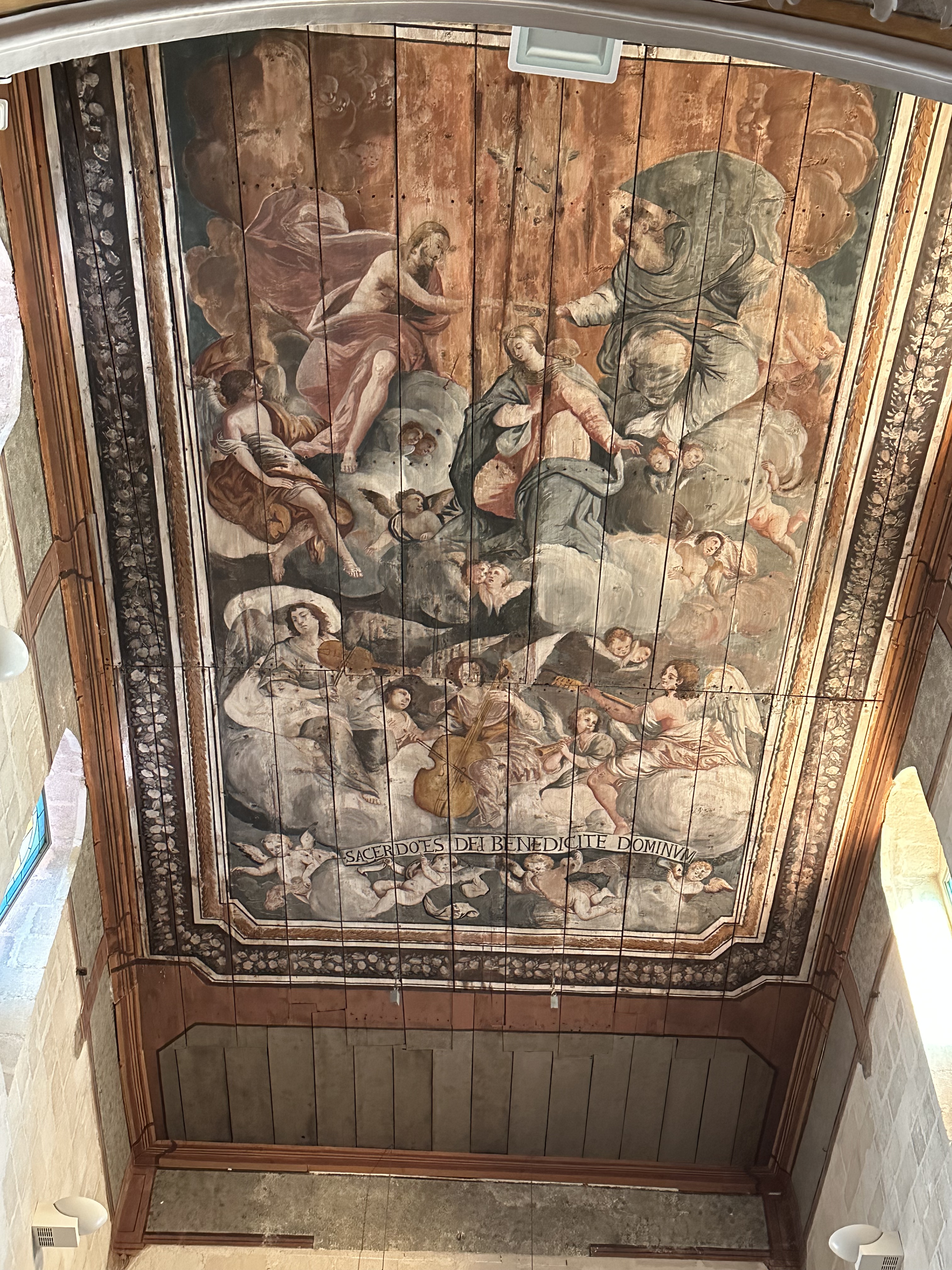
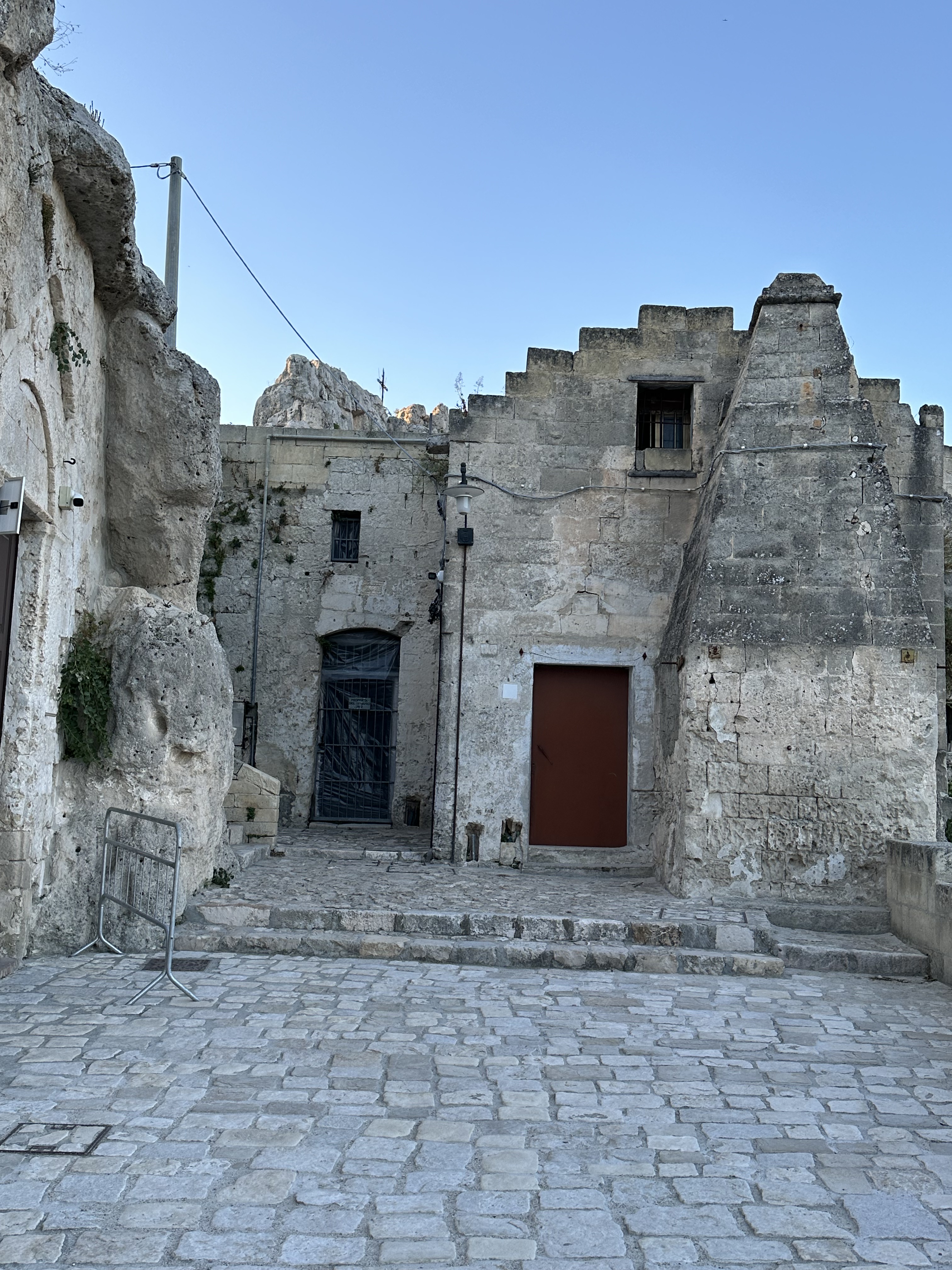
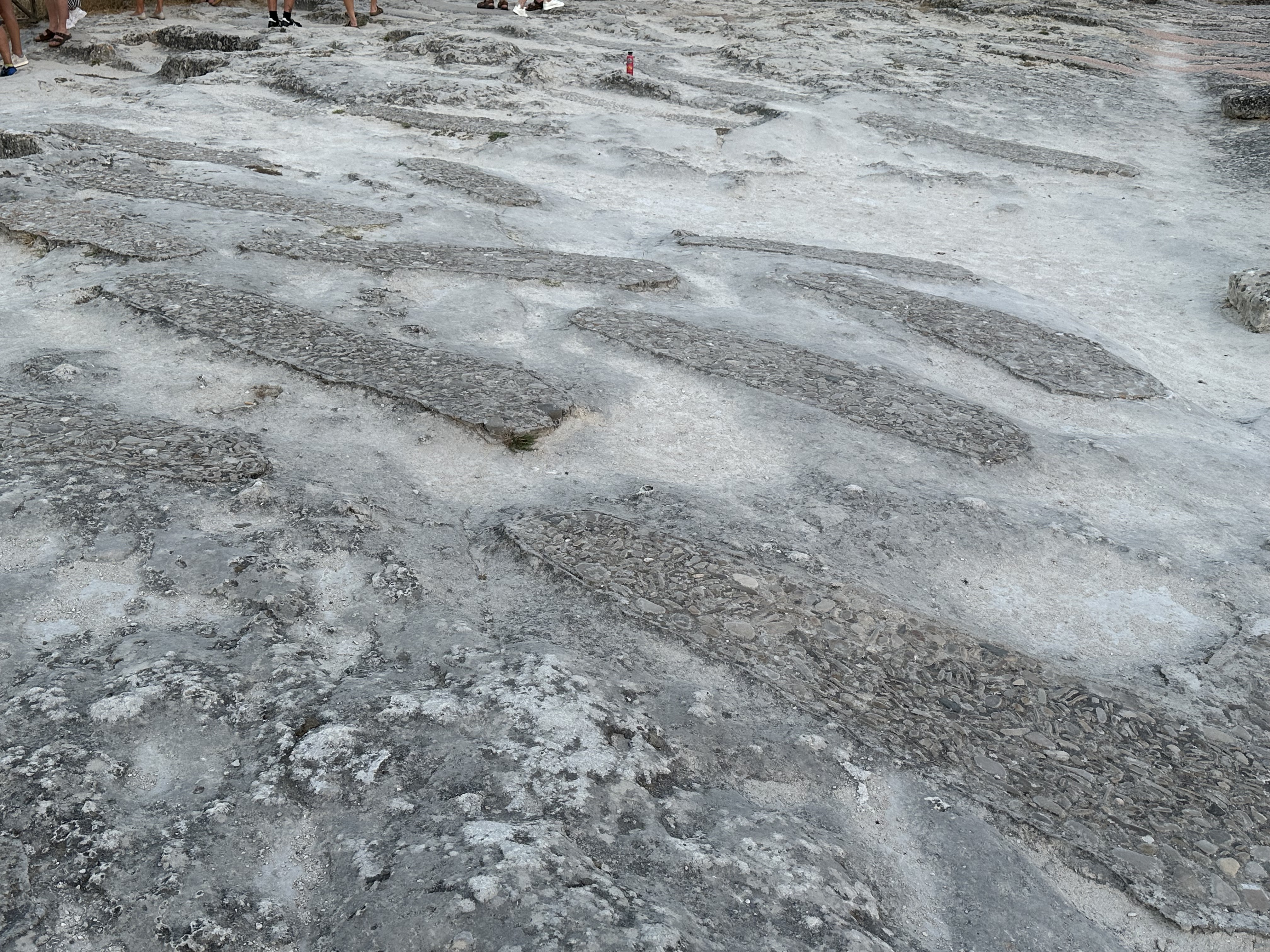
St Lucia Cave Church from 1000’s, was lived in by Benedictine nuns and had a cemetery on the roof.   There was a museum attached to the church that was also interesting and unusual.   The Church of St Peter Caveoso had a painted wooden ceiling from the 1700’s and a niche for St Anthony.  The whole tour was very unusual and kept us both engaged.

Due to poverty, humidity, mold and sickness, the government moved the residents out of the Sassi neighborhoods into apartments in 1952.  The people were healthier but missed the attachments they had to each other living in close proximity in the Sassi.  Today many descendants of the Sassi residents maintain homes in the area.  

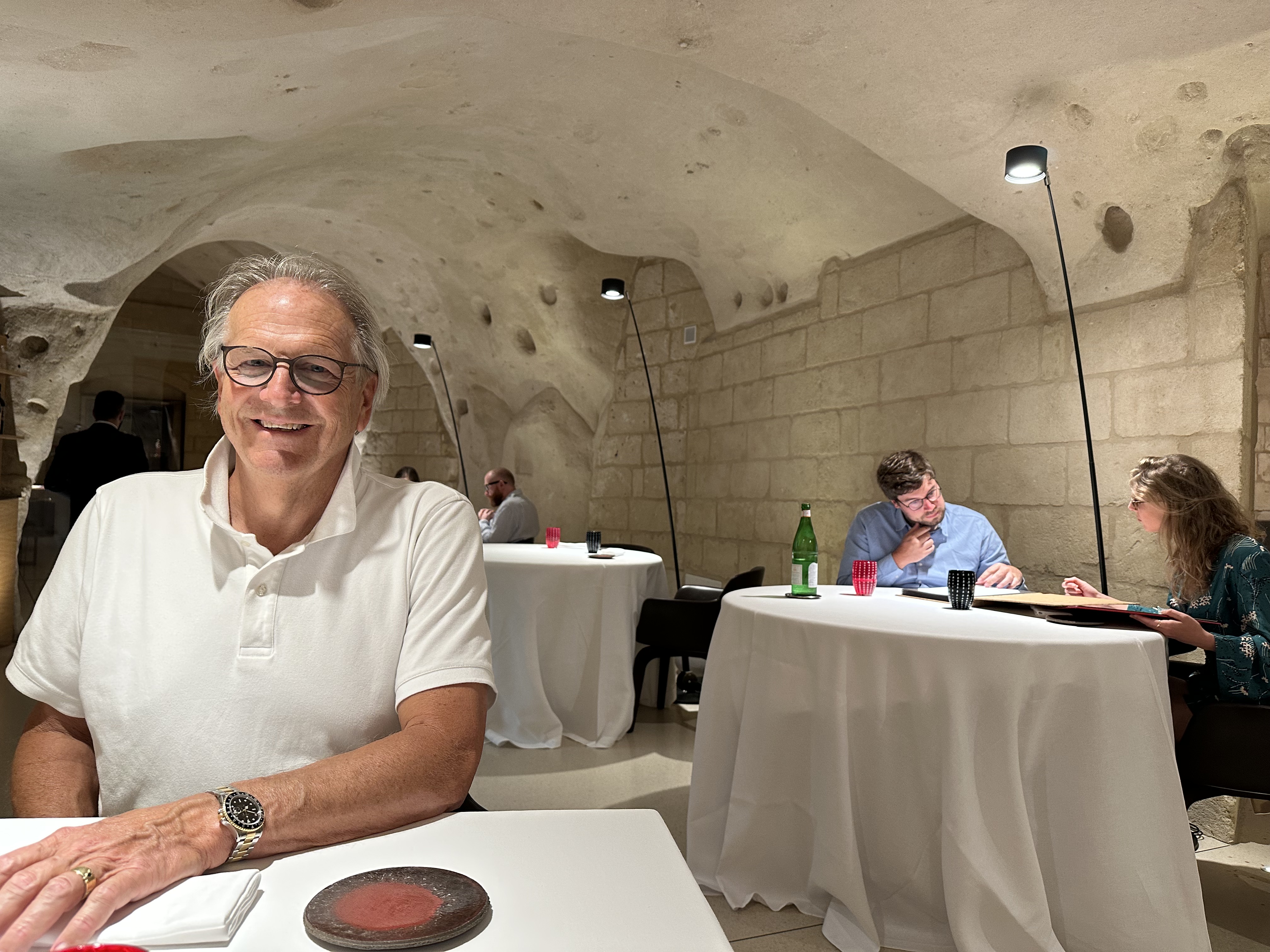
At 8pm, we had dinner at a Michelin Star restaurant called Vitantonio Lombardo.  It was named for the chef and was in a nearby cave. We had a delicious 5-course meal skipping the 7 and 10 course option, and that was just the right amount of food.  By the time we finished, we barely  made it to our room before falling asleep.  It had been over 30 hours since leaving home.   Very long, but satisfying day.

Waiting for dinner Inside the cave restaurant called Vitantonio Lombardo

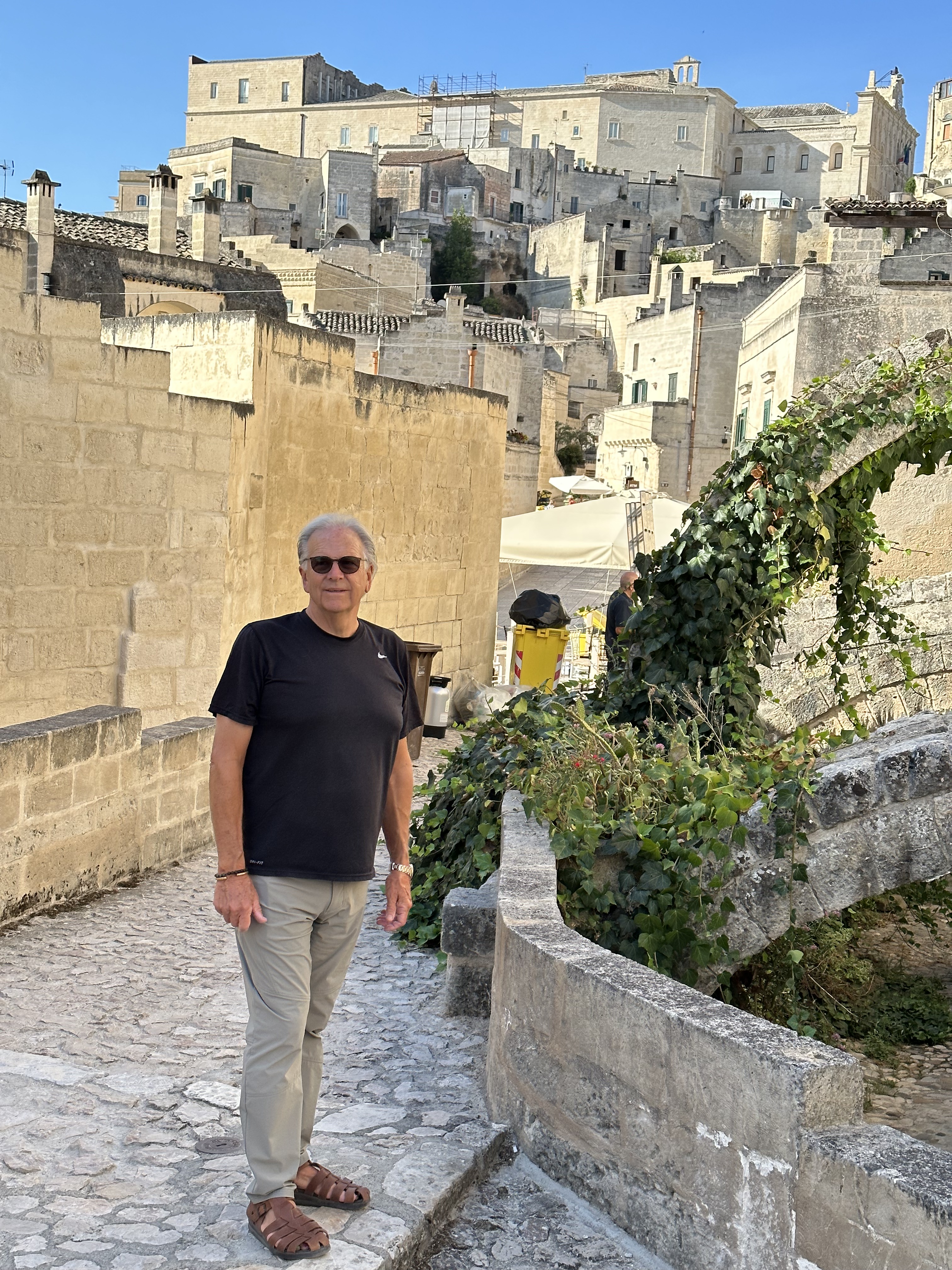
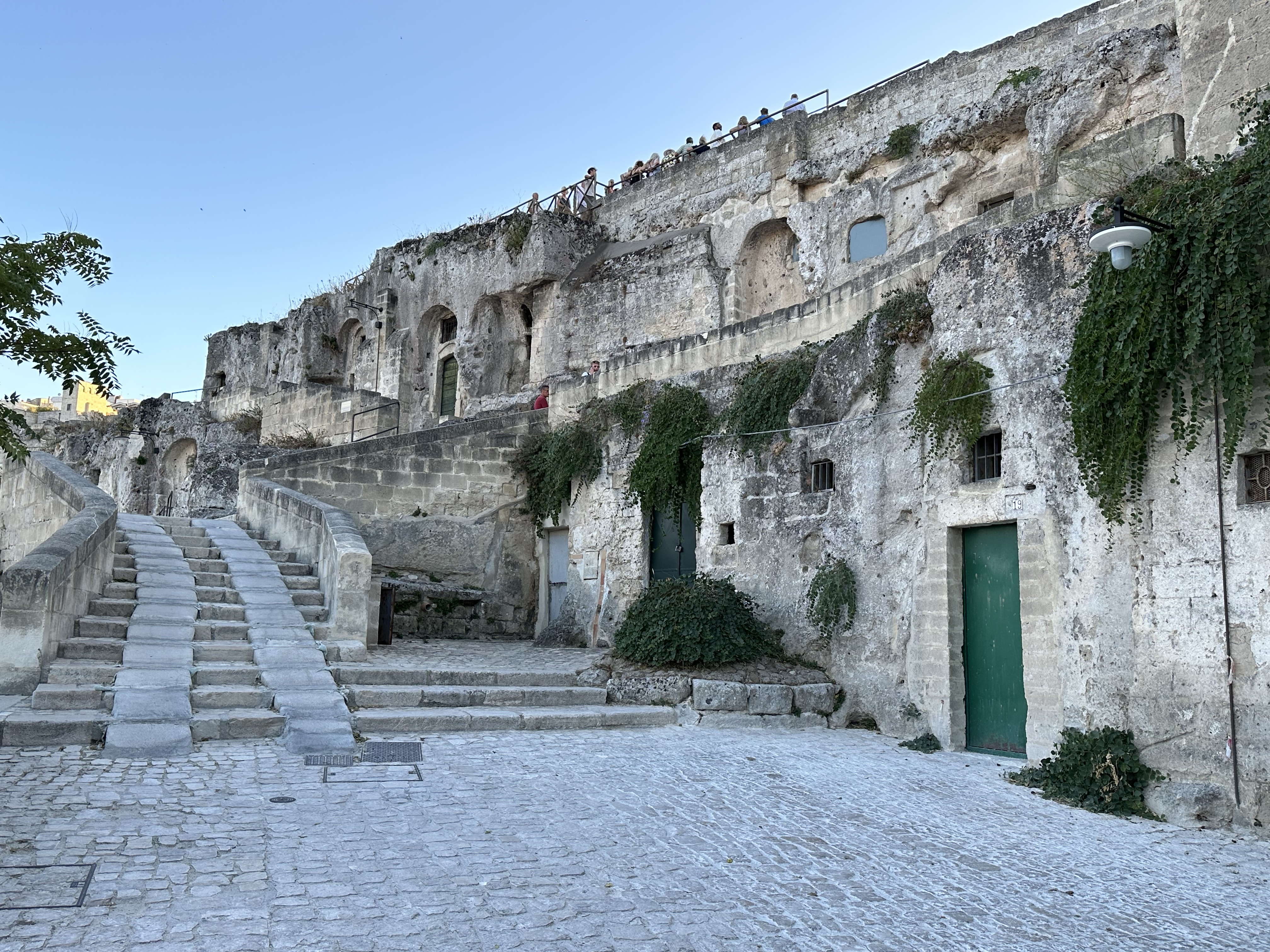
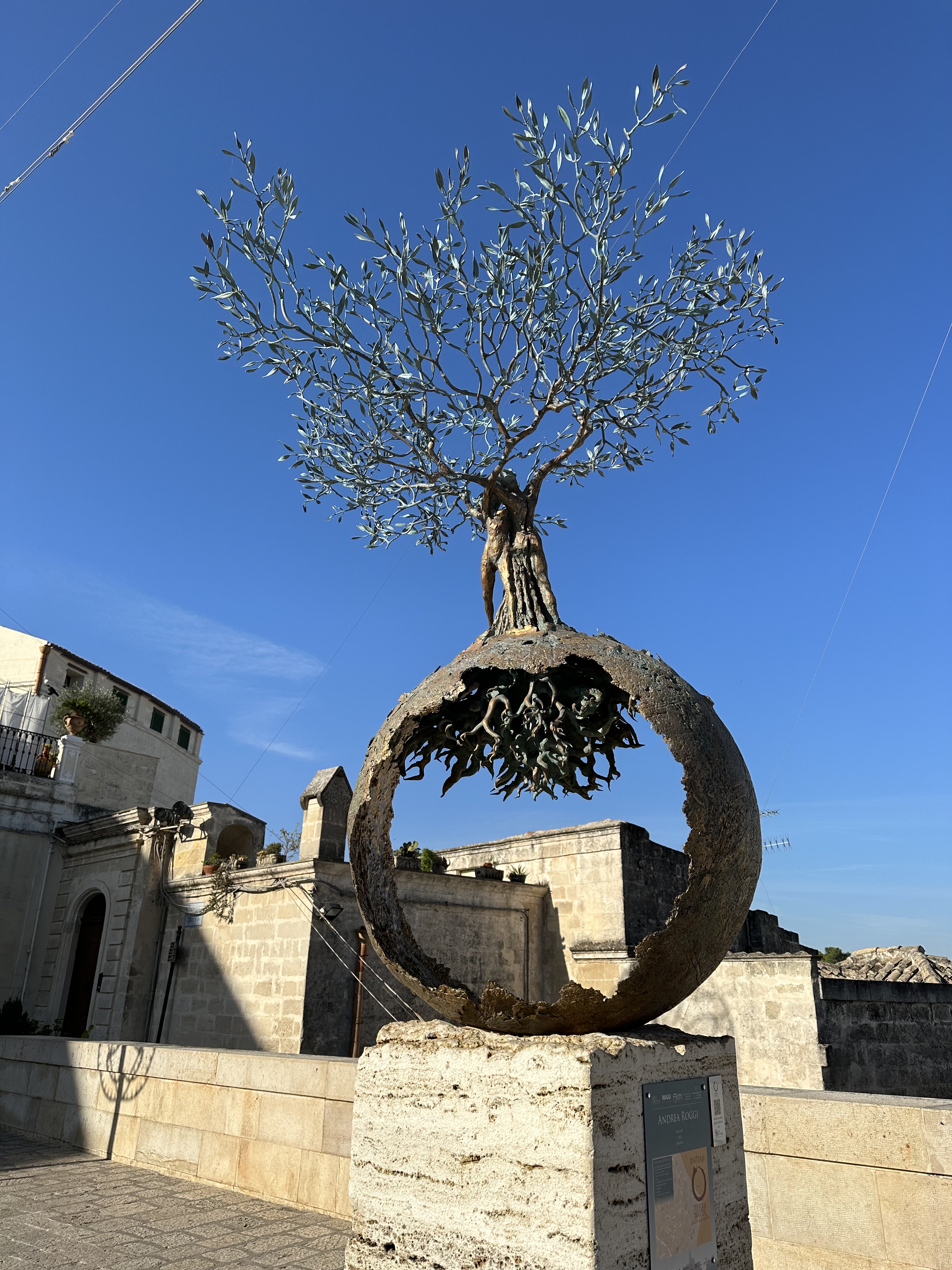
Scenes from around Matera

From Last February! Interesting pictures from our trip to Patagonia!! We are now on our way to Italy!

Patagonia is spread between Argentina and Chili and is the southernmost region of South America, including Tierra del Fuego.  Patagonia is famous for its variety of wildlife, unspoiled nature, and ancient Indian cultures.  Archeological findings date back to 8,000 BC, from Pre-Columbian civilizations to the skilled Mapuche Indians known for their mastery in weapons making and agriculture in the 16th century.  In addition, part of the Andes, one of the longest rock formations on earth, are found here.  Within the Andes is the tourist destination and trekking paradise of Torres del Paine National Park located in the Cordillera del Paine mountain chain. 

Massive exposed, granite rock features, formed in the Cretaceous Period, when dinosaurs wandered the planet, raise among turquoise lakes, rapids, waterfalls, and flatlands.  They are the remnants of the sedimentary stratum, which has been eroded away in the Torres del Paine Park.  Hopefully, I will have some photos to share soon.  

Meanwhile, the park was established in 1959 and is 70 miles north of Puerto Natales. At 593,000 acres it is one of the largest and most visited in Chili.  In 1978, the park became a UNESCO Biosphere Reserve.  It is known as the most beautiful park in Chili for its famous Grey Glacier, two popular treks and the most photographed attraction called the Torres del Paine, the three distinct 11,000 foot+ granite towers.  The word Paine is from the Tehuelche Indian word meaning “blue”blue towers.

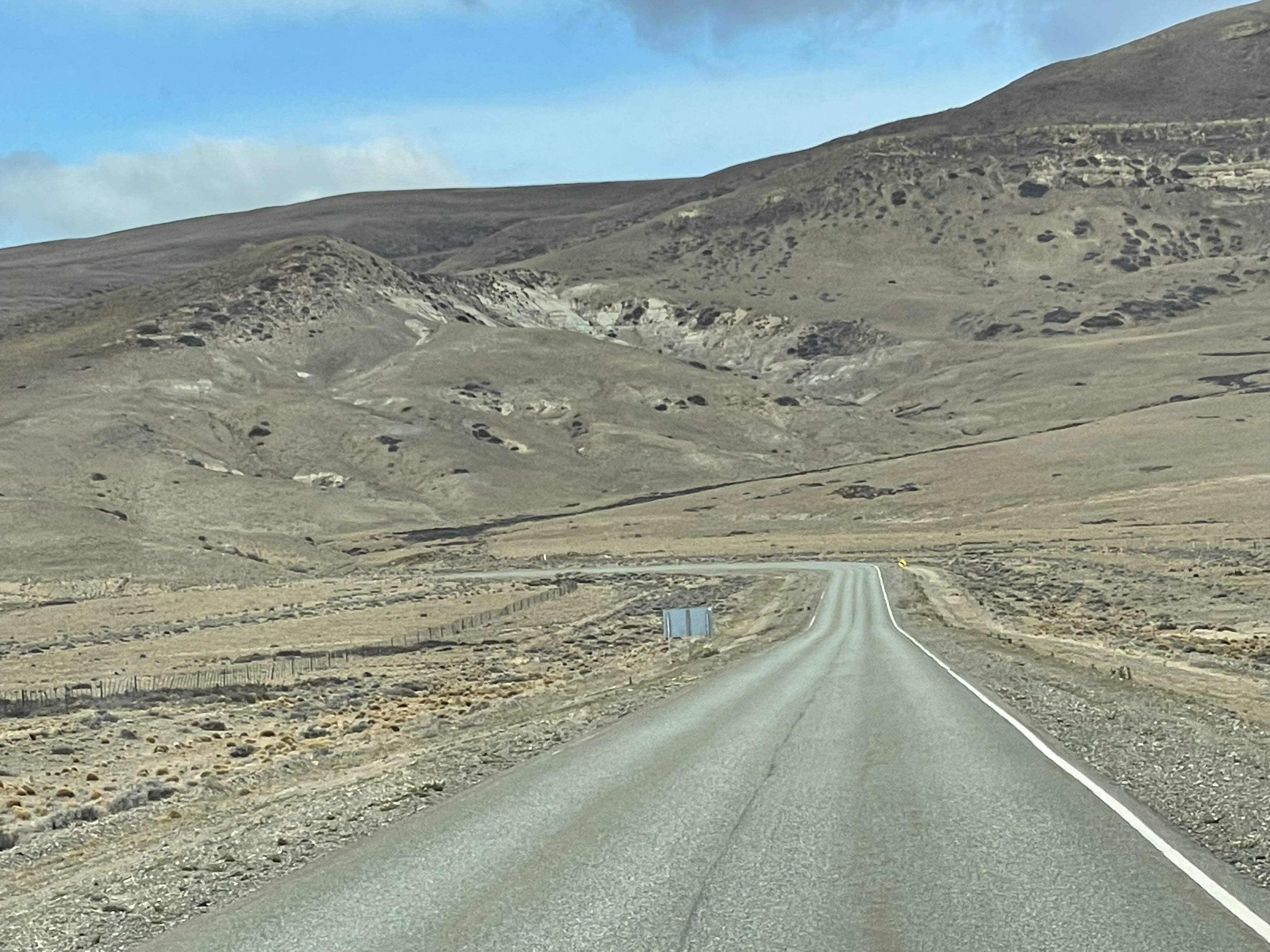
We arrived at Puerto Natales in a driving rain storm and zero visibility. After a lengthy arrival process we finally departed in a van with another couple and headed for Explora Lodge, an hour and a half away. The road was a mix of asphalt and gravel. Very rough and bumpy and the rain did not let up. The other couple never said a word to us and it was a very quiet rode. We could see only the scrub, brush and low tree cover near the road and the occasional lake. Eventually we passed the large and very turquoise blue Rio Paine. Very pretty even through the rain. Once we arrived ate the lodge, we were greeted by the receptionist and activities director, who walked us through the activities options for our 3 day stay. Tomorrow’s suggested options include a short hike for Mark and a horseback rode for me, followed by lunch and a break before the afternoon activity of a looping drive to see the Torres del Paine hopefully. It all depends on the weather; wind, rain and fog. The lodge is very light and airy and spread out. Our room is very close to the dining room, thankfully. We quickly unpacked and went to dinner. Finished unpacking and went to bed.

Between Uruguay and Italy was…Cuba….

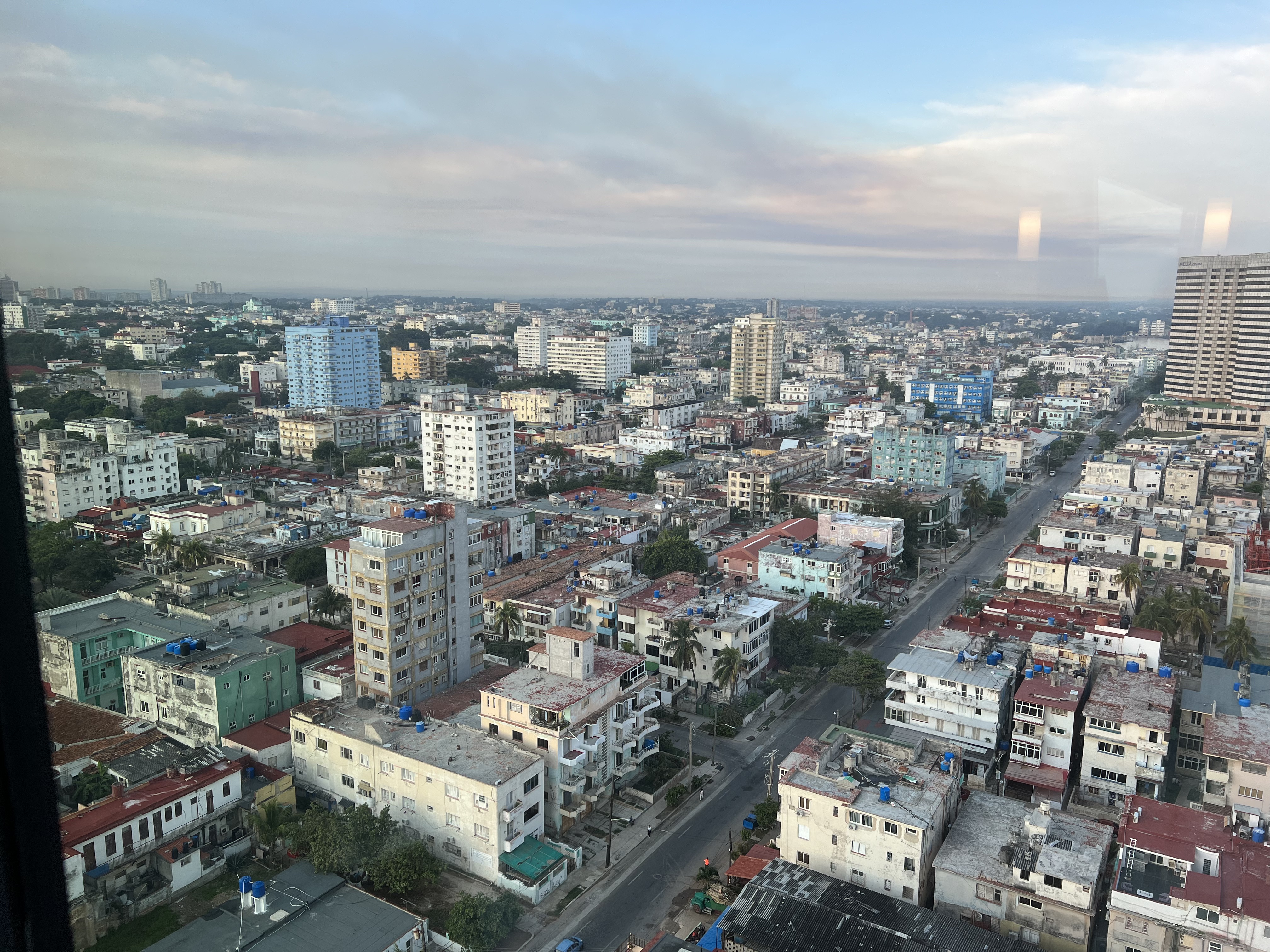
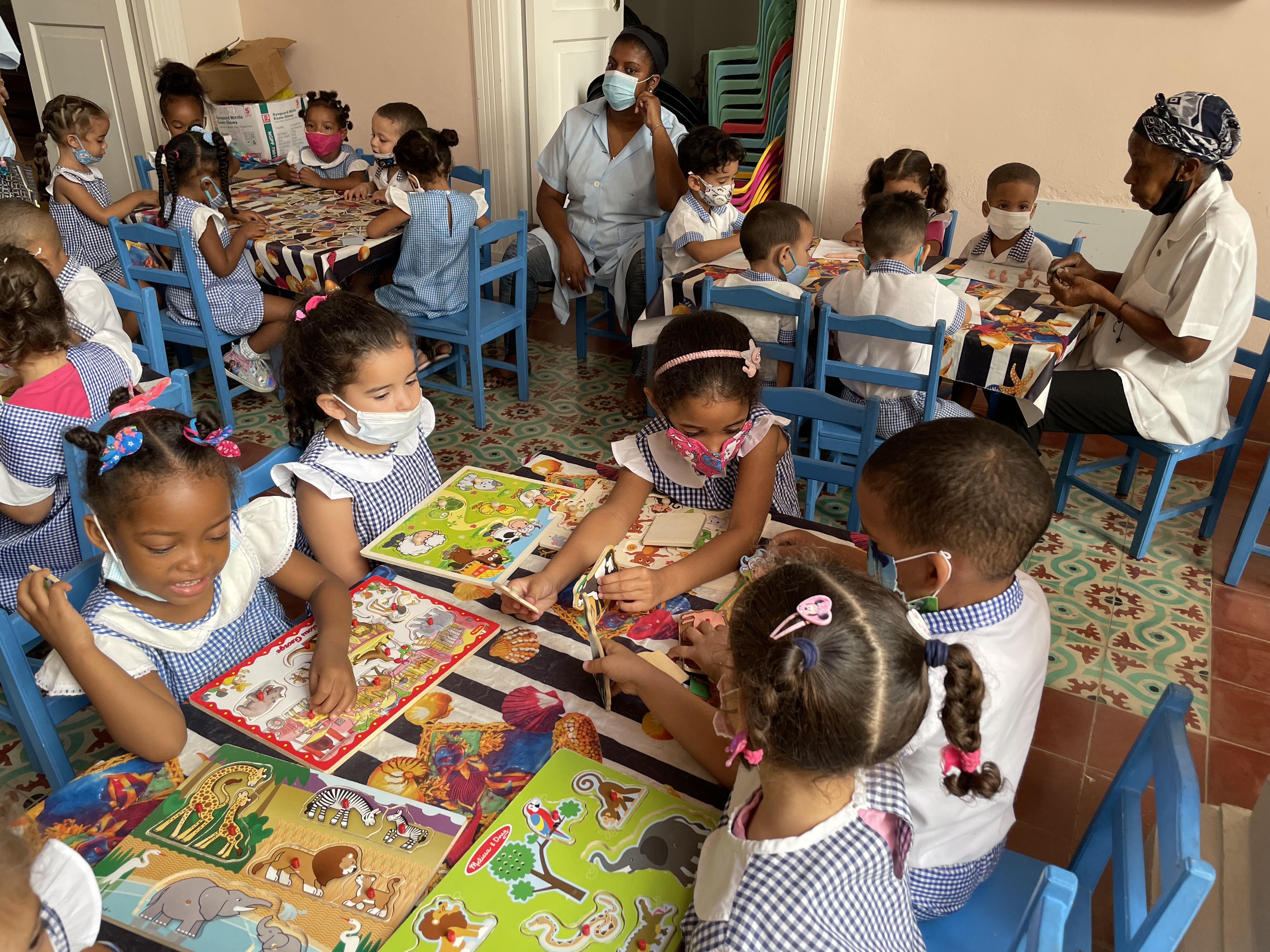
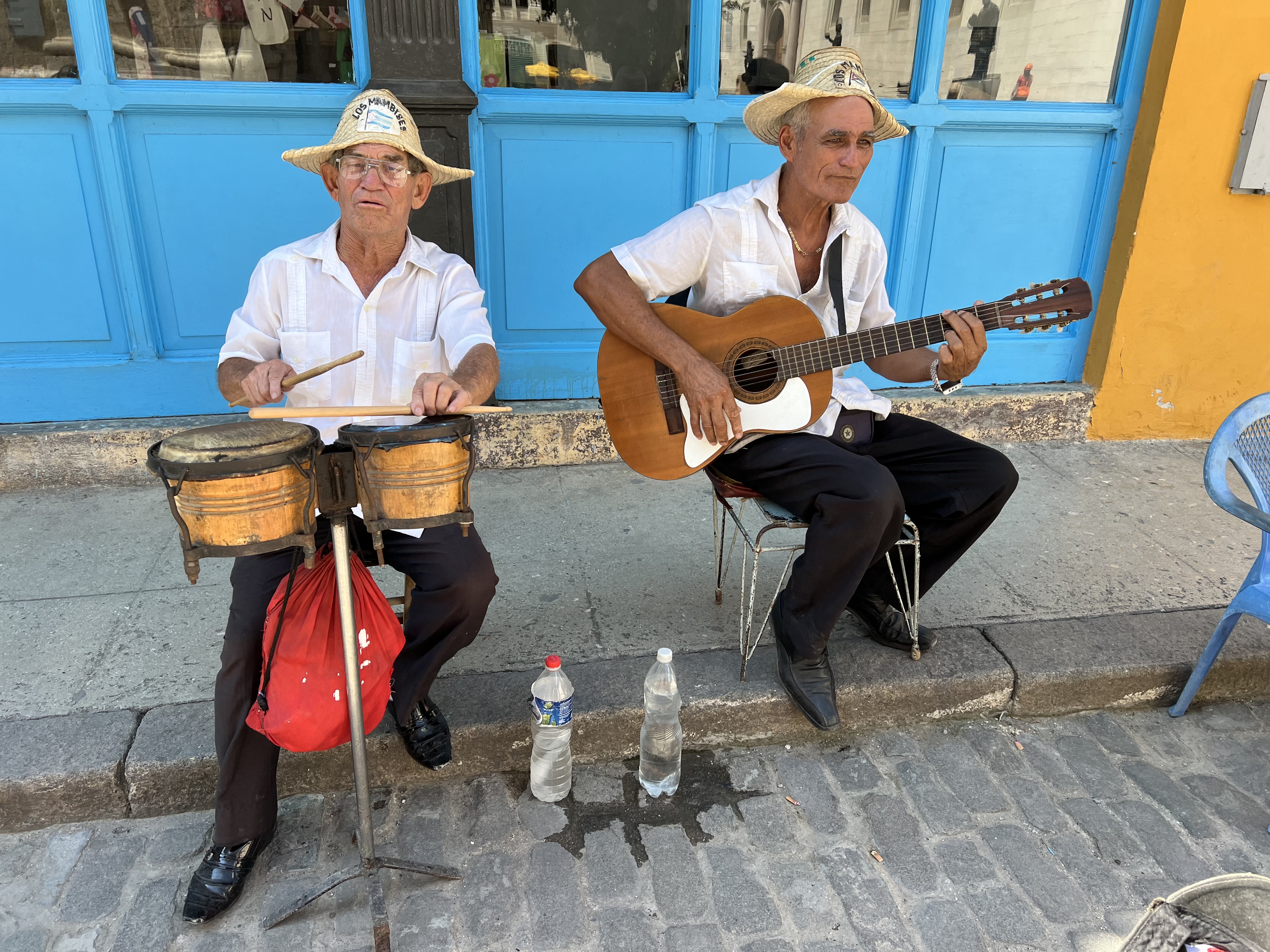
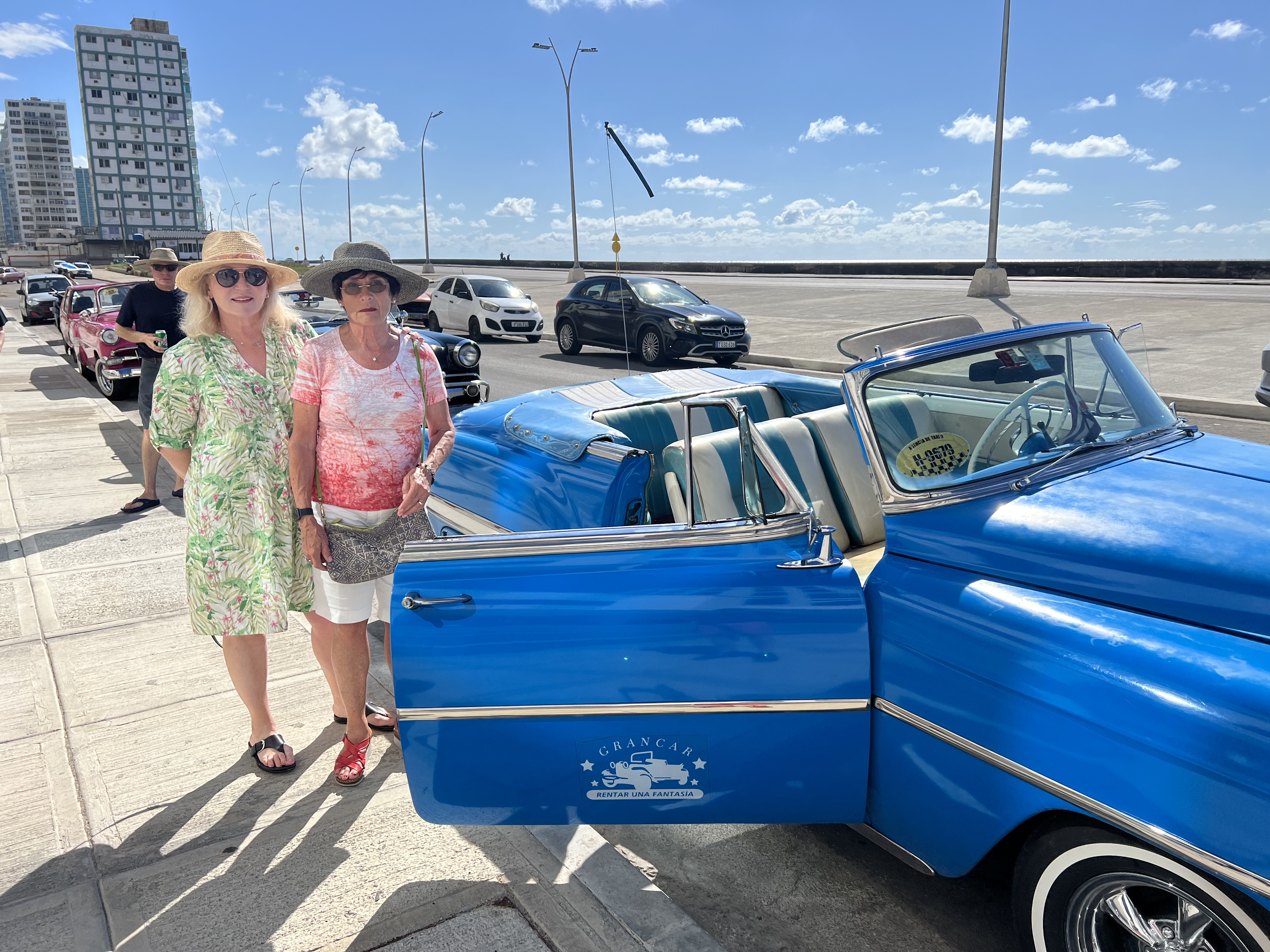
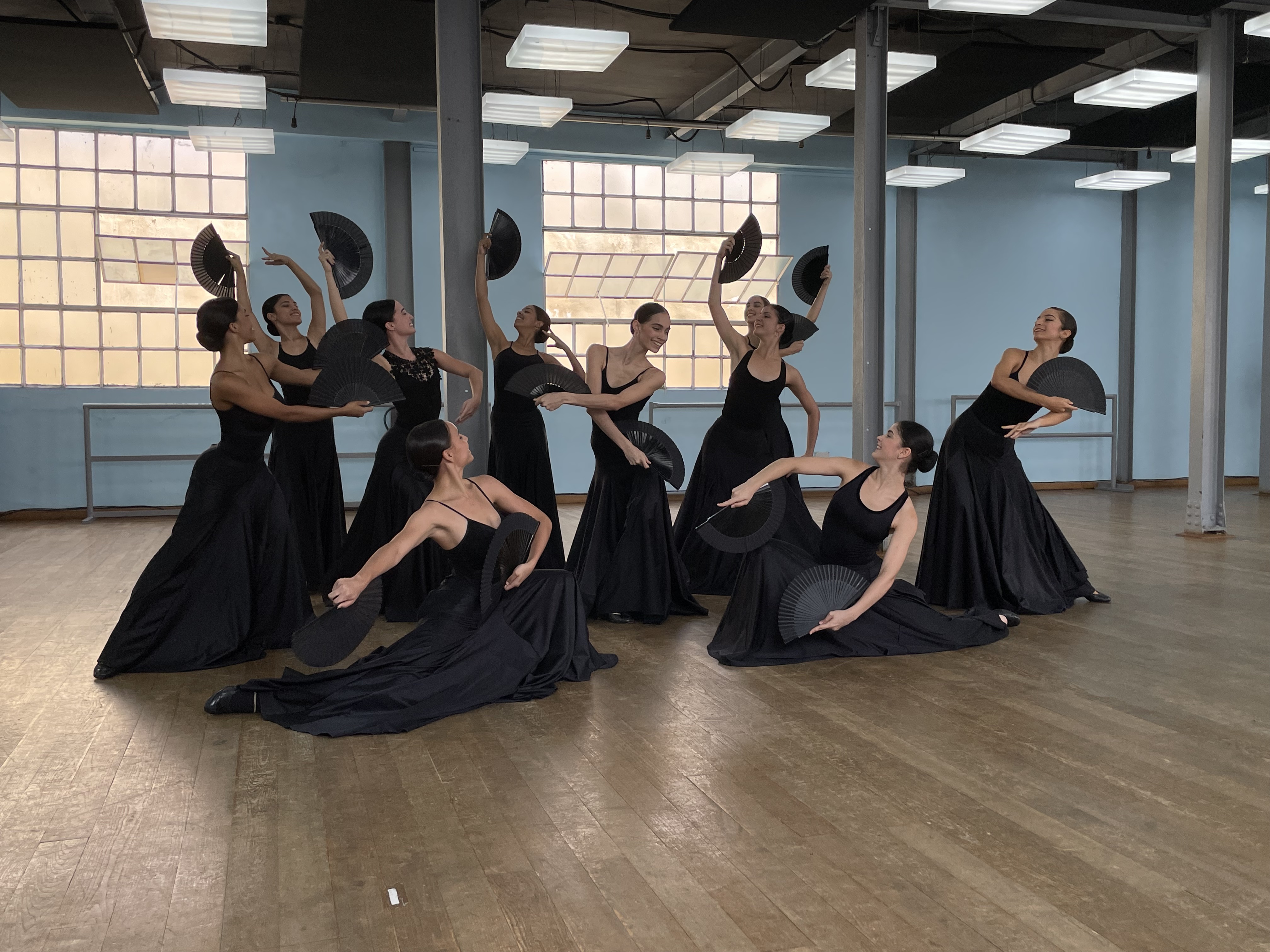
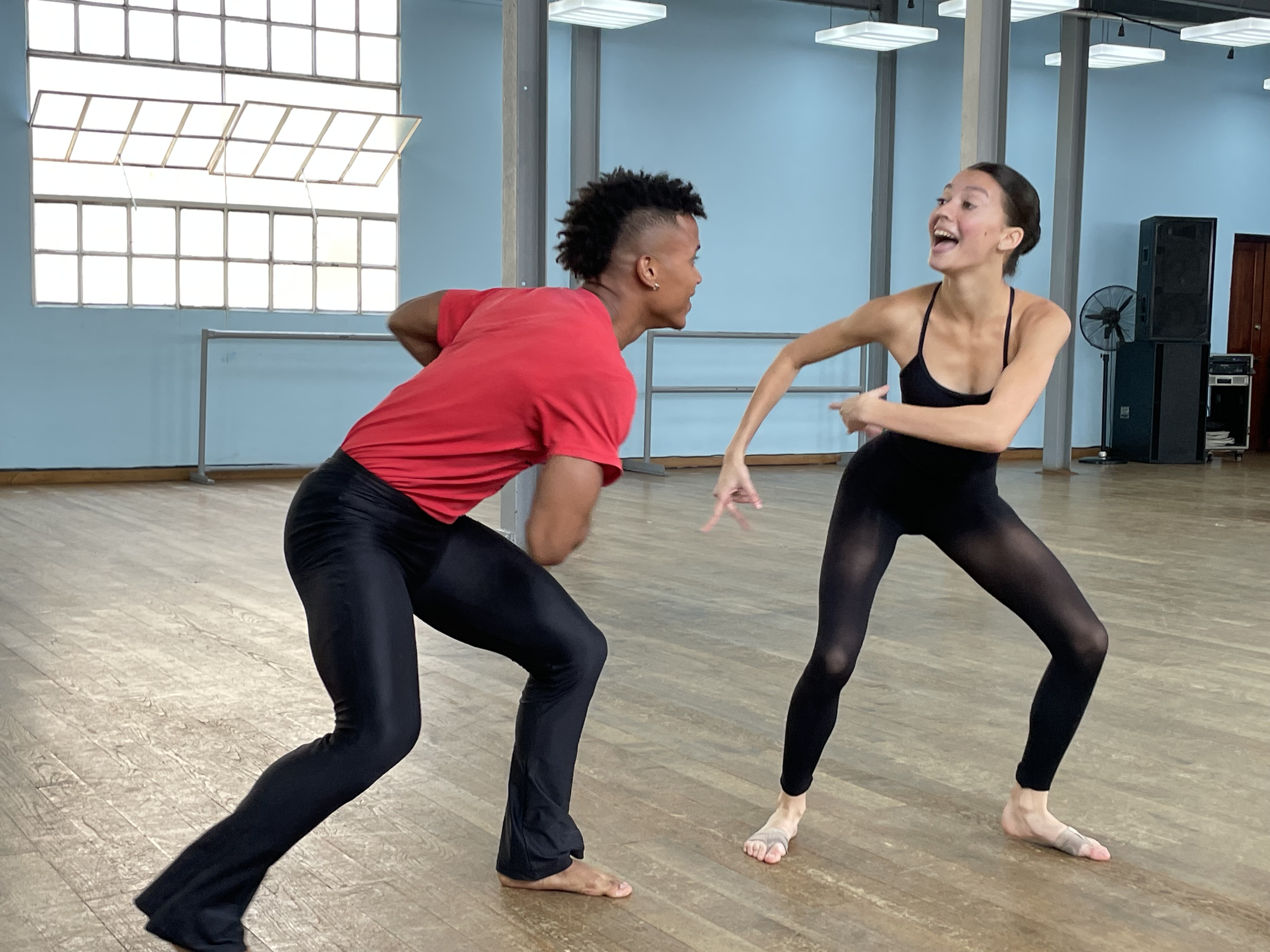
It has been several months since we last posted from Uruguay and much has happened to us, both emotionally and physically. In late May we made a one week trip to Cuba with friends from Classical Tahoe, a classical and jazz performance organization in North Lake Tahoe. Here are some shots of our activities from the first 2 days we were there.

We also walked around Havana, attended two dance performances and went on a classical car “drive-about” the city.

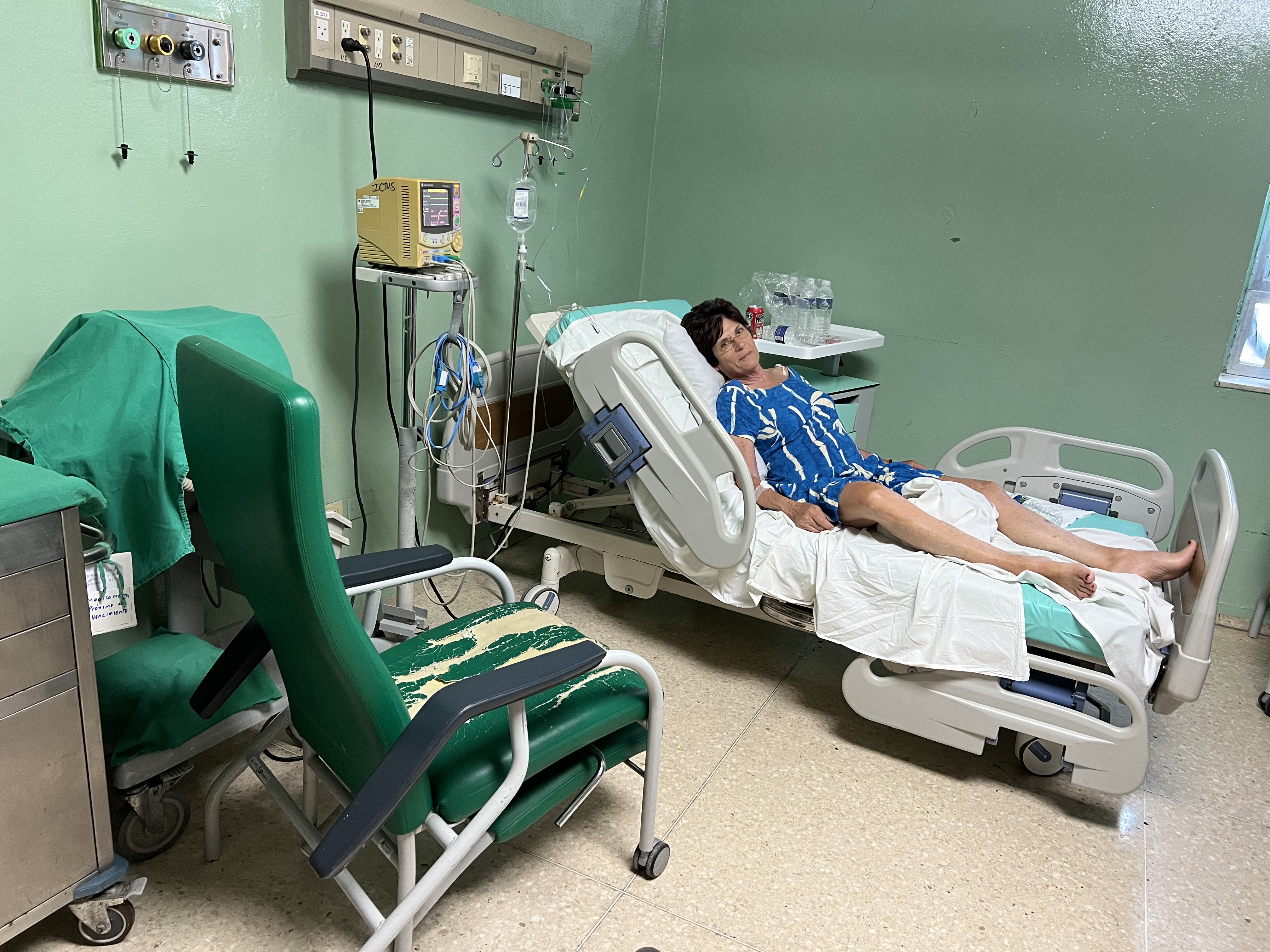
On May 27th, about 9:30 the morning of the third day, the left side of my body collapsed and went numb. Fortunately, we were in our hotel room and had already had breakfast. Mark called the hotel nurse, who took my blood pressure. It was 180 over 90. She called for emergency services and in short order, I was in an ambulance with flashing lights and sirens blaring and headed for what we thought was the hospital. Instead, we arrived at a clinic where I spent 4 hours before the staff told us they could not help me and that I should go to the hospital. Back in the same ambulance with the same drivers, I finally ended up in the stroke ICU ward on the 8th floor of a 25 story converted bank building.

As it was a Saturday, there were few medical services and no English speaking MDs or staff available. I spent the weekend mostly sleeping as I was not allowed out of bed. The nurses were on 12 hour shifts and I experienced a few of them. The Sunday evening nurse was a young man, who invited his lady friend to stay overnight. The two of them spent the night together in the bed next to mine. By morning, she was gone. This seemed unusual, but this was Cuba, not the US.

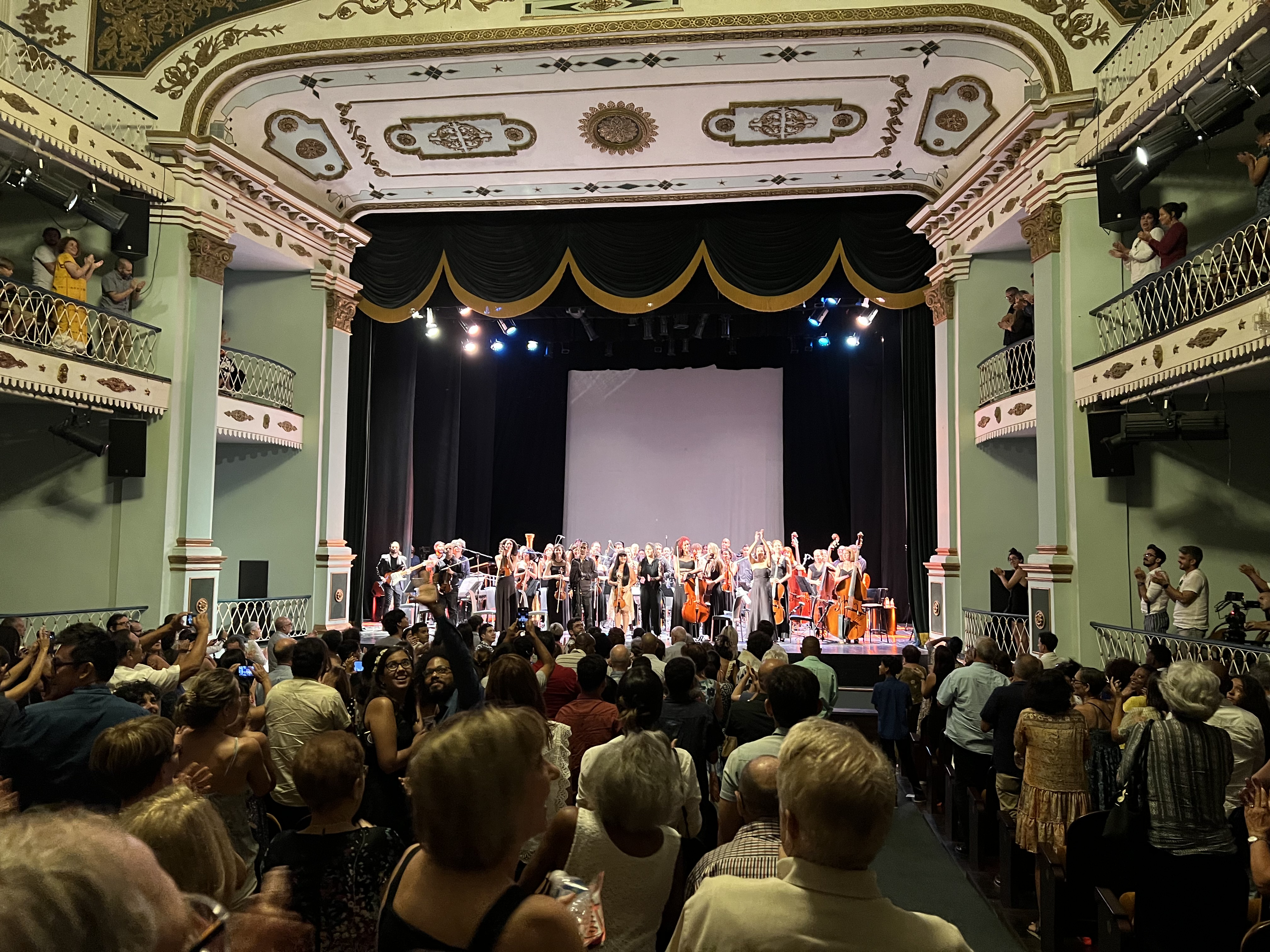
The orchestra performance Mark attended with the Classical Tahoe group.

Meanwhile, Mark managed to attend the farewell musical performance at my insistence and did his best to figure out how to get me home, but it wasn’t until Monday morning that the hospital staff got into gear and an English speaking doctor showed up, he was from Honduras. He immediately ordered an MRI and concluded that I should get to California as soon as possible. Mark then arranged for me to be taken back to our hotel, where I stayed in bed until the next morning when we began the journey home. Mark secured front row seats to Miami and first class tickets from Miami to SFO, but we had to wait in the Turkish Airport Lounge for 5 hours between flights. The lounge was completely packed, but we managed to get seats while we waited. Halfway to SFO we learned there was a strong tail wind and that we would arrive early. So, when we landed, we grabbed our bags, which had not been checked, and headed for the Uber pick-up site. By then I had given up the wheelchair and was walking with Mark. In an hour and a half, the Uber driver delivered us to our car at the SAC airport before the flight from SFO departed. All we wanted to do was get home and into bed, but our doctor friend, Scott Kellermann, had insisted we go directly to Mercy Hospital so we did. The ER was full of people when we arrived but we managed to get seen after half an hour.

Once in the system, there was no stopping the process. As there was no bed for me, I was kept in a small ER space and moved from one test to another throughout the night. After 12 hours I was finally delivered to a very nice private room and several doctors came in to tell us what had happened to me. Very high blood pressure, a stroke for sure and A-Fib too. I was put on lots of meds, stayed one more night in the Mercy San Juan Hospital and finally Mark took me home. After many days of rest and more doctor appointments, I began to feel better. Then Dr Ryan Smith , my Cardiologist, insisted I get a pacemaker to keep my heart beating at a minimum of 60 beats per minute. For many years my heart rate had been between 39 and 43 and Dr Smith had wanted me to get a pacemaker for several years. At his insistence, Dr O’Neil at Mercy General did the pacemaker implant surgery on July 31 and I spent another 2 nights in that hospital. Having spent 6 nights in three different hospitals I am determined to recovery and stay away from hospitals.

It is a good thing that we are retired or there would not be enough time to recover, plan adventures and actually travel. We have been planning a trip to Sicily for almost 2 years and at last we are about to embark on the journey, which has expanded to include Puglia (the heel of Italy), Malta and Florence. The next post will be from or about Italy, depending on when I have the time and energy to write.

Italy, Sicily and Malta–September-October, 2023

Italy-including Sicily
Pugia or Apulia Province is the heel of Italy

September 10, 2023

We left home at 8am and arrived at SFO after only 2 hours and 19 minutes with Mark at the wheel. Our friend Josh Scott accompanied us and drove away when we said good bye. Sure hope he drives slower that Mark did.

It was my first time through security with my pacemaker. I was pulled aside, had to take my shoes off, even though I am over 75, and received the most thorough pat down I have ever experienced. Sure hope that will not be my plight with every flight.

Today we fly on United from SFO to Munich, have a short lay over and fly on to Bari, the capital of Pugia Province in Italy. From there we will be driven about 2 hours to Matera. We are in for a very long haul.

Uruguayan countryside

Saturday, February 18, 2023

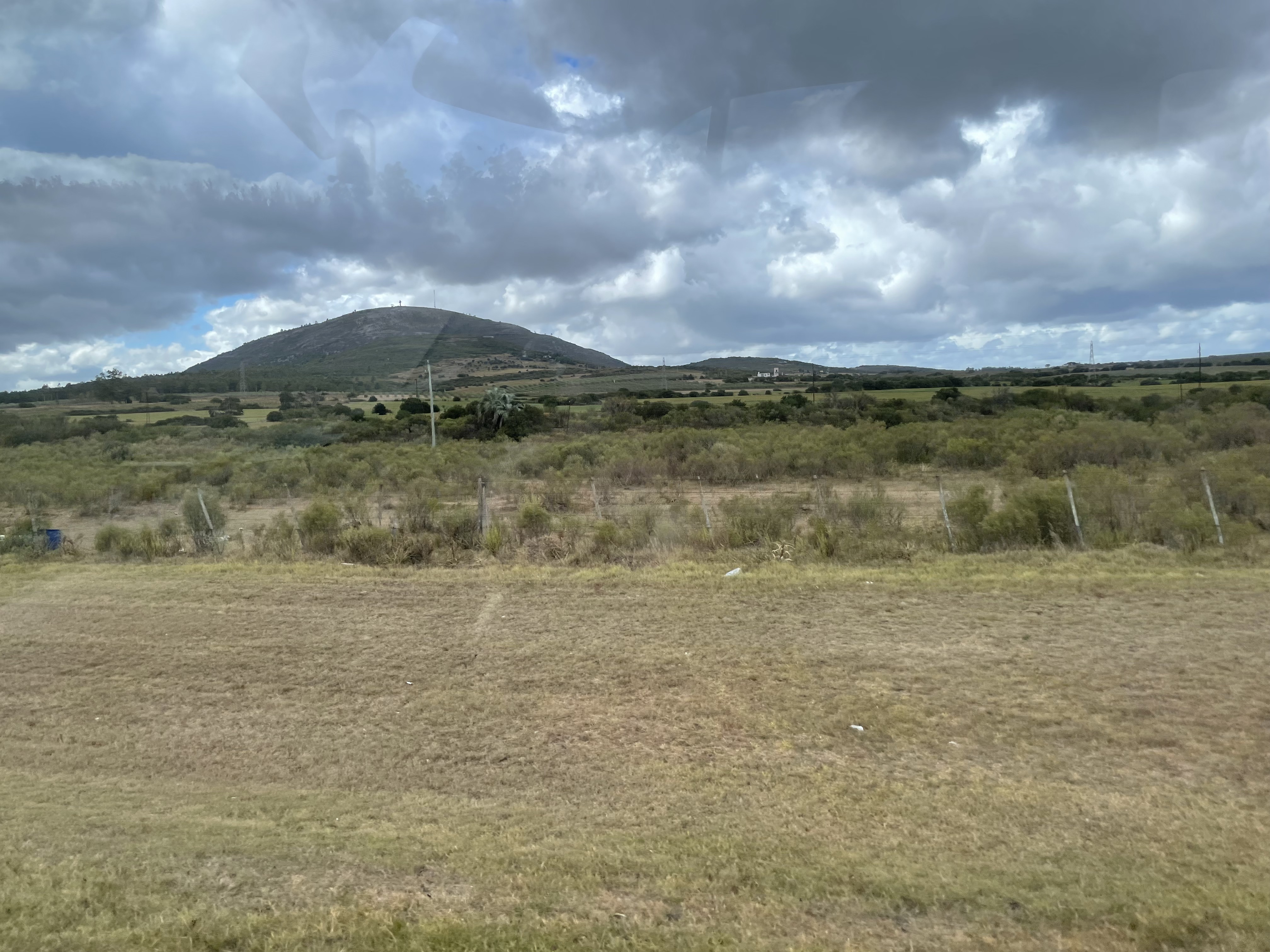
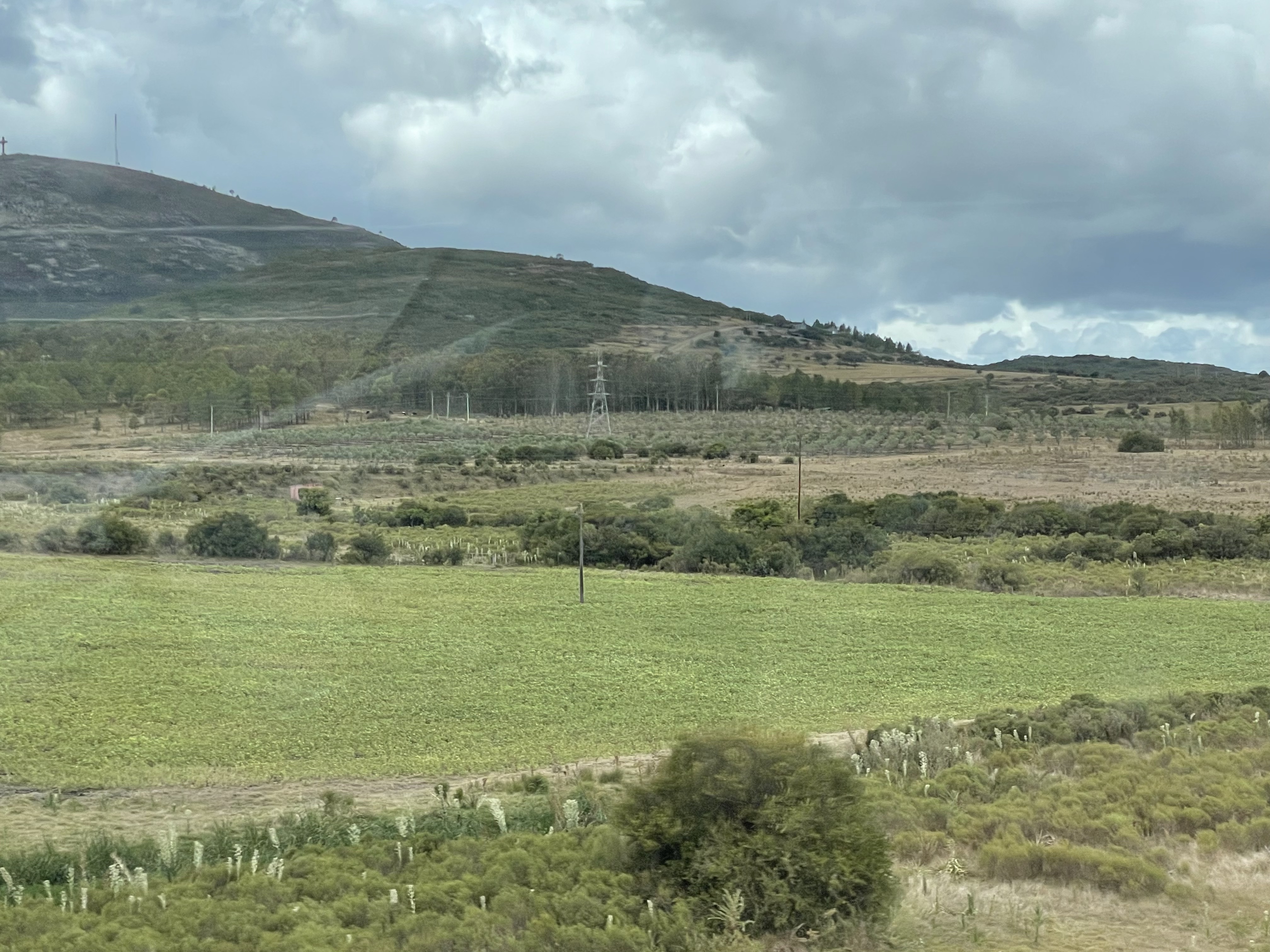
We left Montevideo on the morning of February 17 heading south-east through the countryside with a driver named Tomas . The weather was cold, windy and threatening rain. He spoke reasonable English and could carry on a good conversation with us. The countryside was fairly flat and green with lots of trees, shrubs and grass. We saw cattle, sheep, pigs and horses all in pastures. Soon it began to rain and was pouring by the time we picked up our guide, Paula, along the roadside near Garzon. She spoke excellent English told us we would be visiting a winery and learning about the history of the local wine operation.

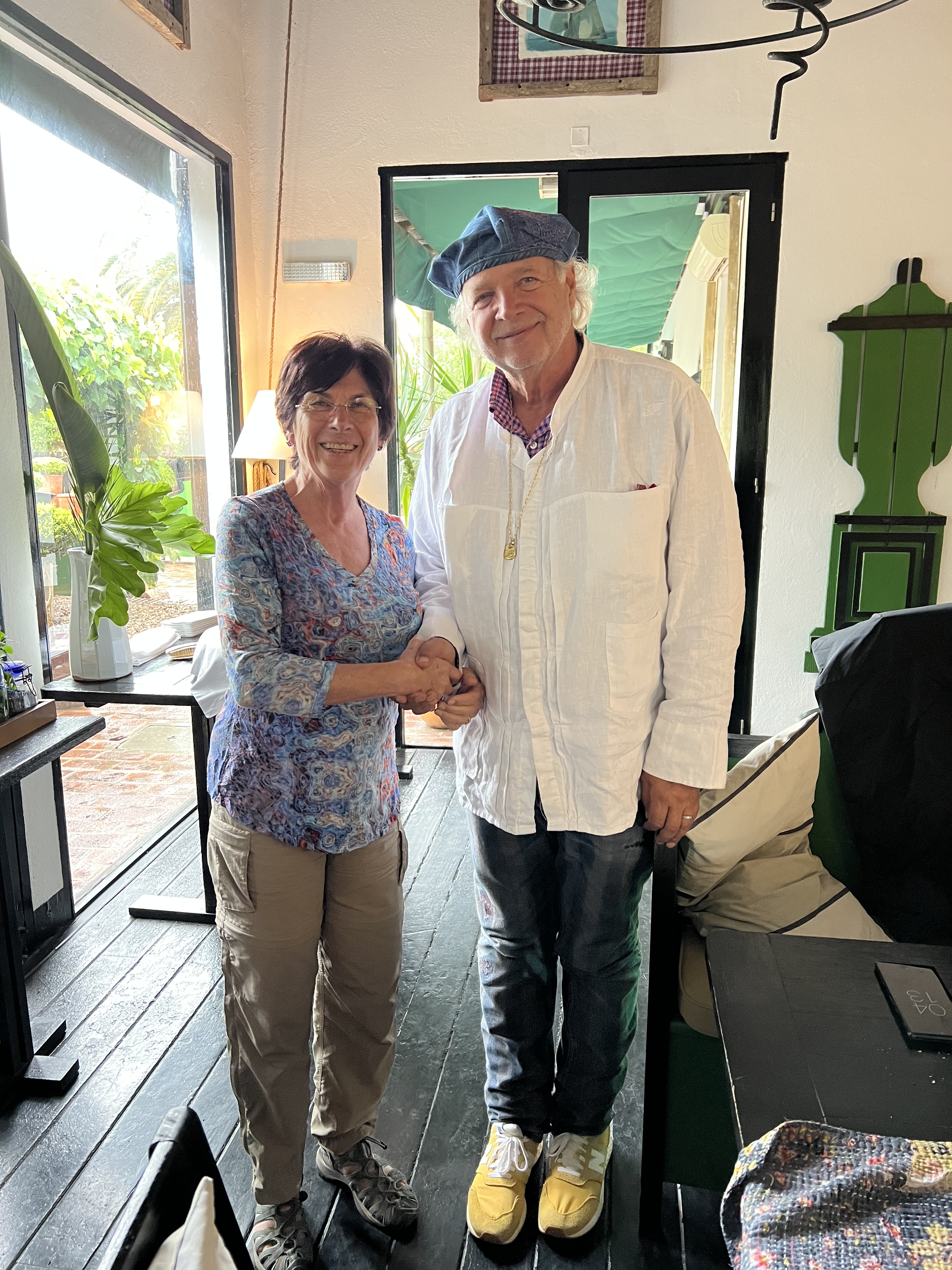
Then we proceeded to the village of Garzon, where we would have lunch in a restaurant owned by Uruguay’s most famous chef, Francis Mallmann, who had a number of fine dining establishments in European cities and opened this one in 2002. He likes the small town atmosphere of Garzon, however, and spends a good part of the year in the village.

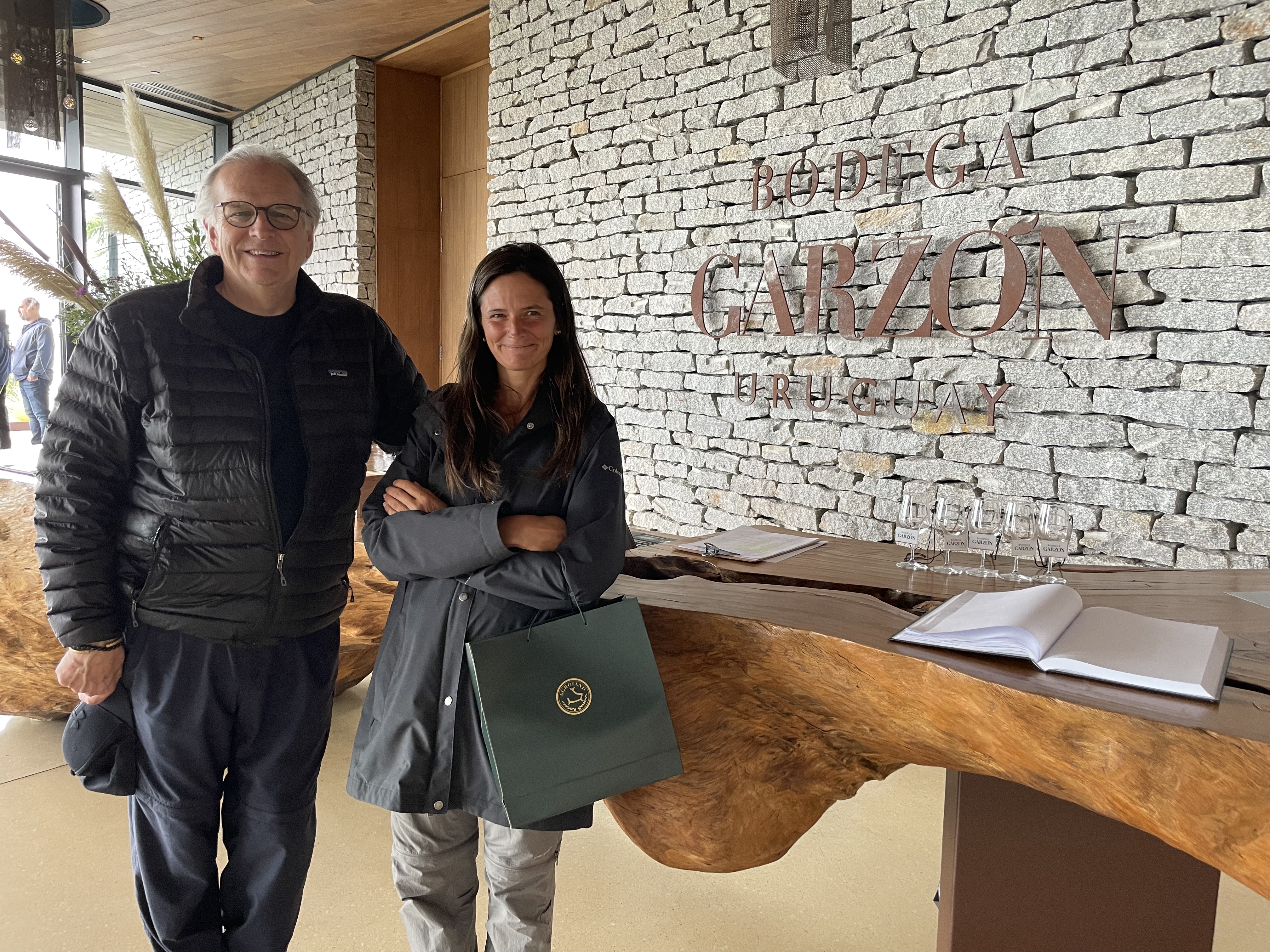
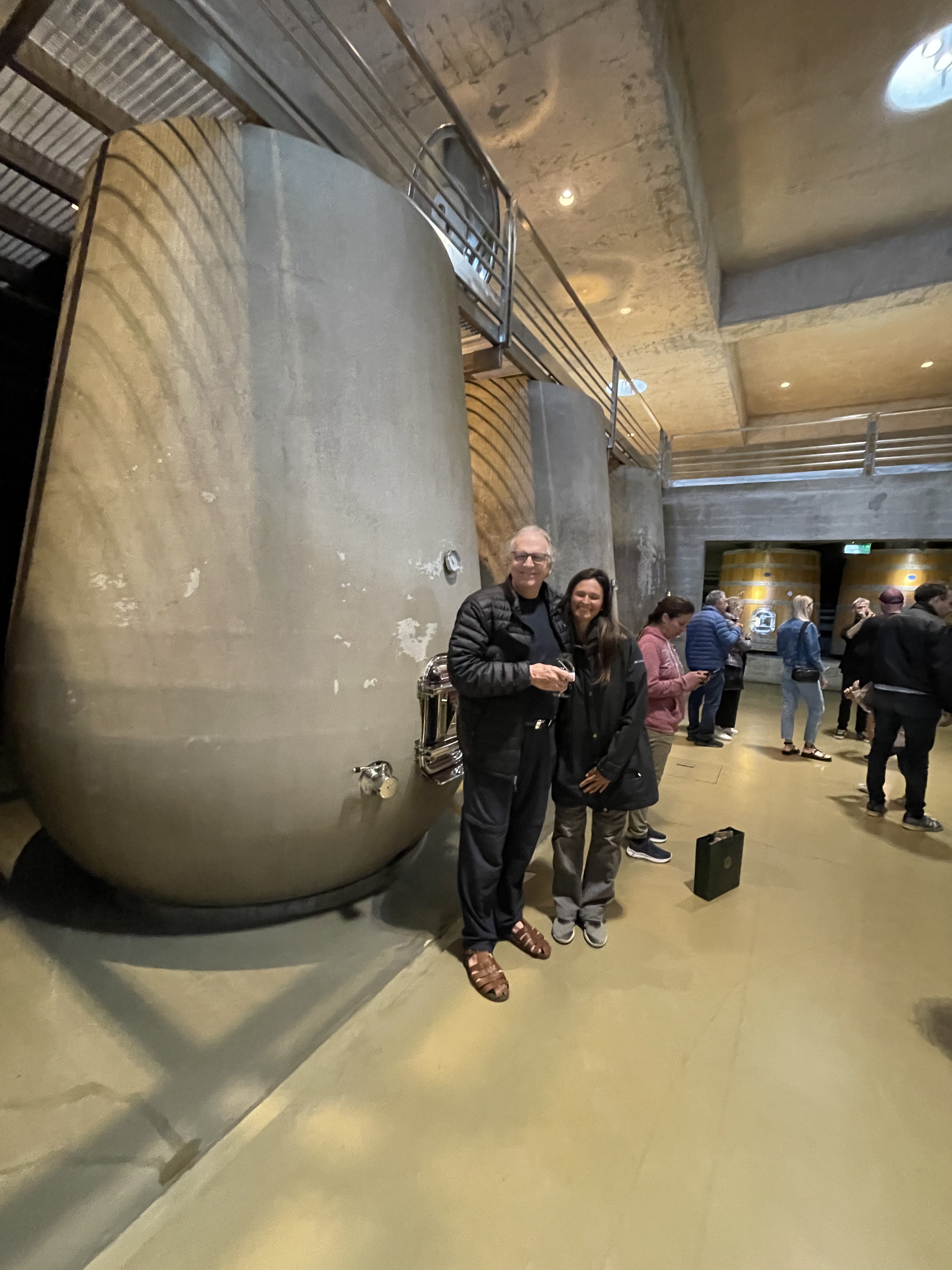
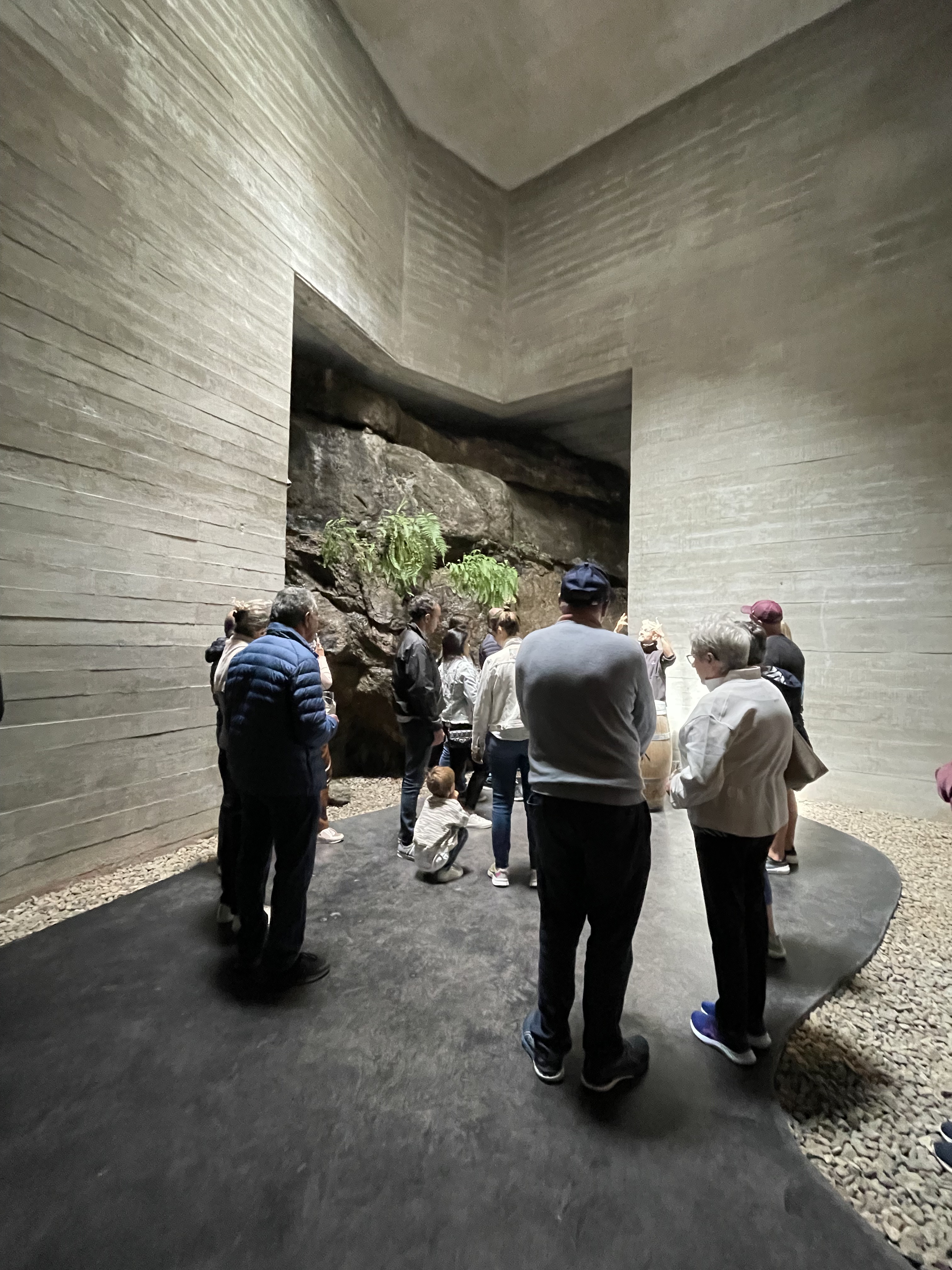
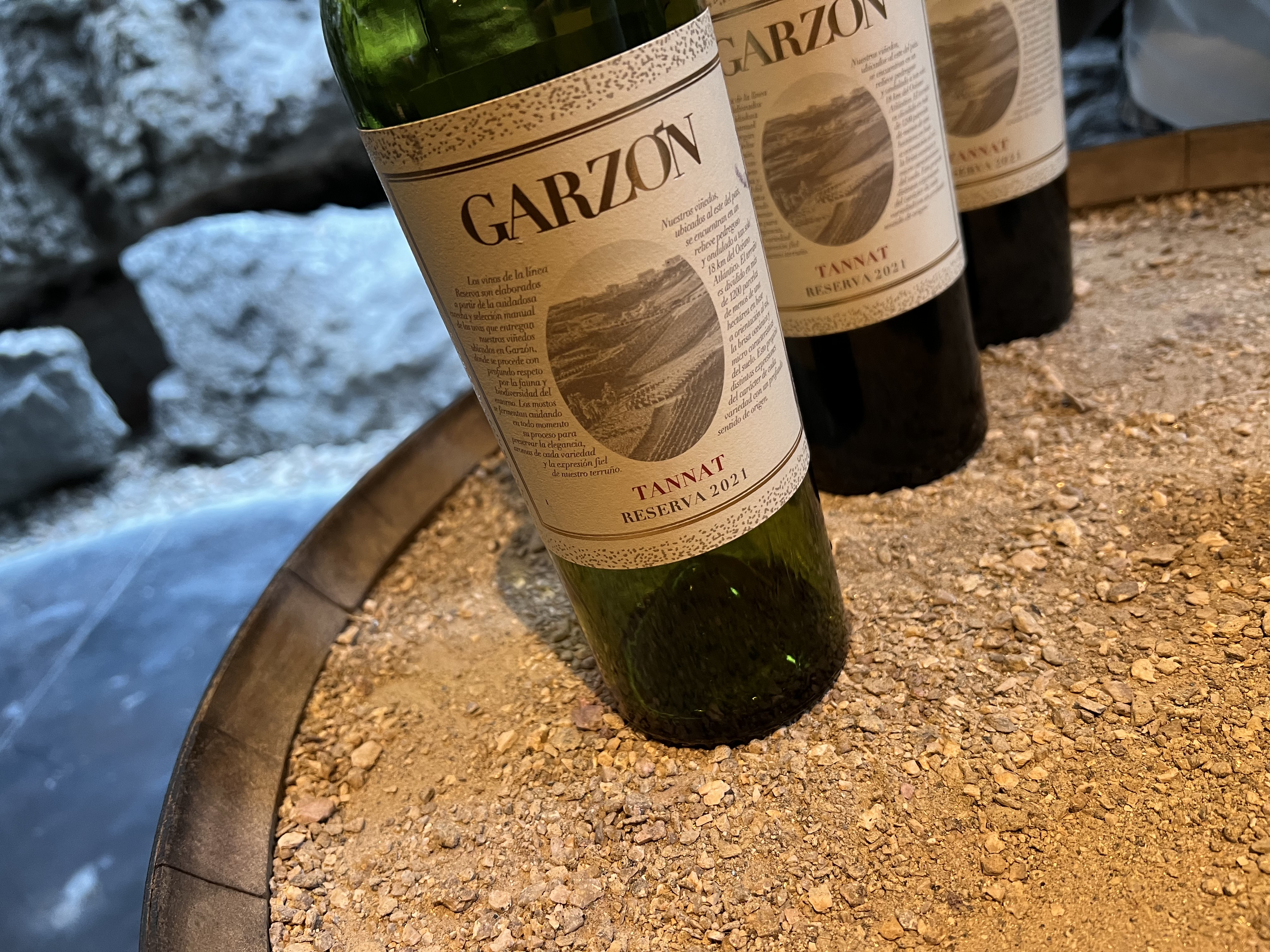
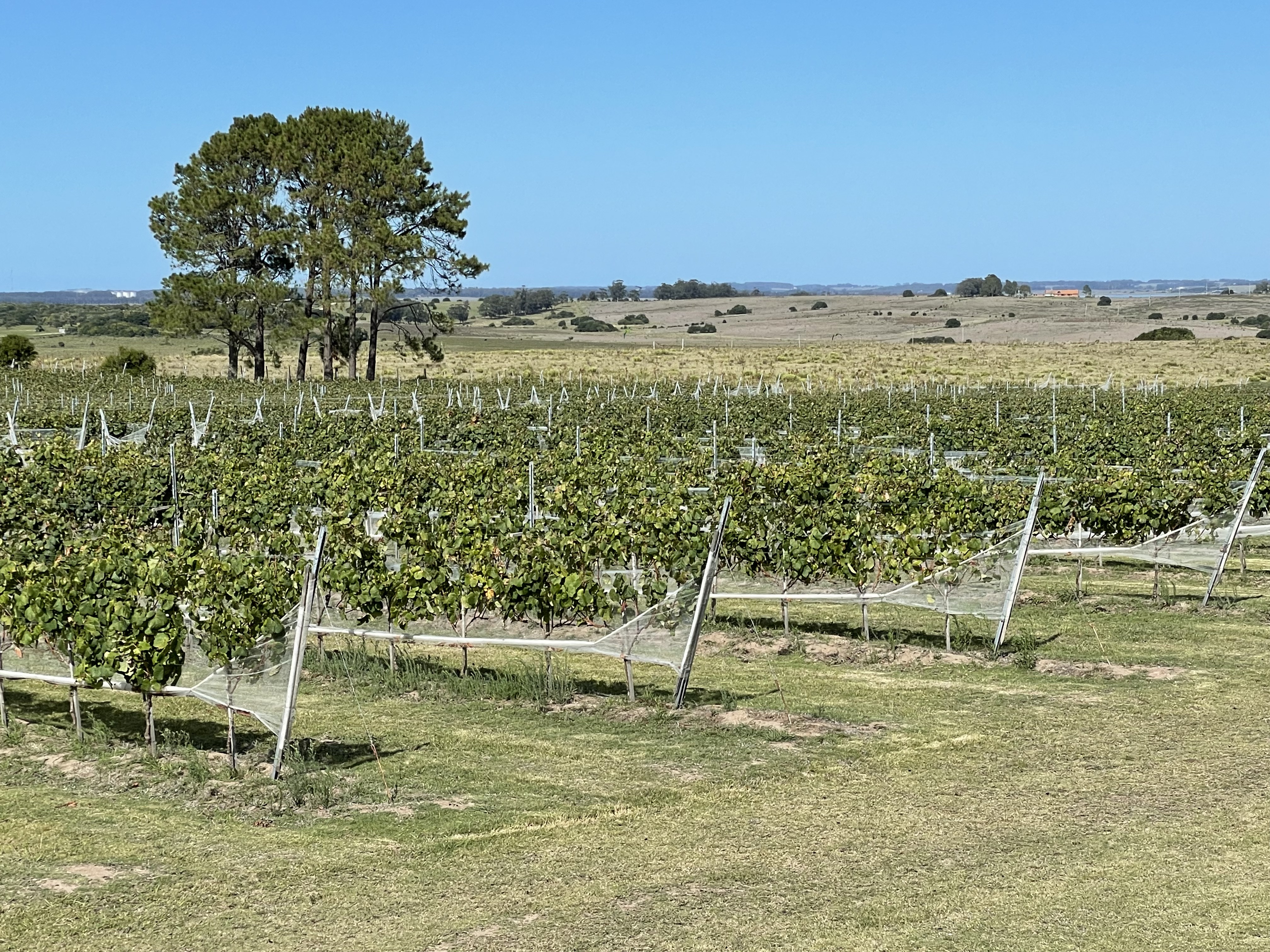
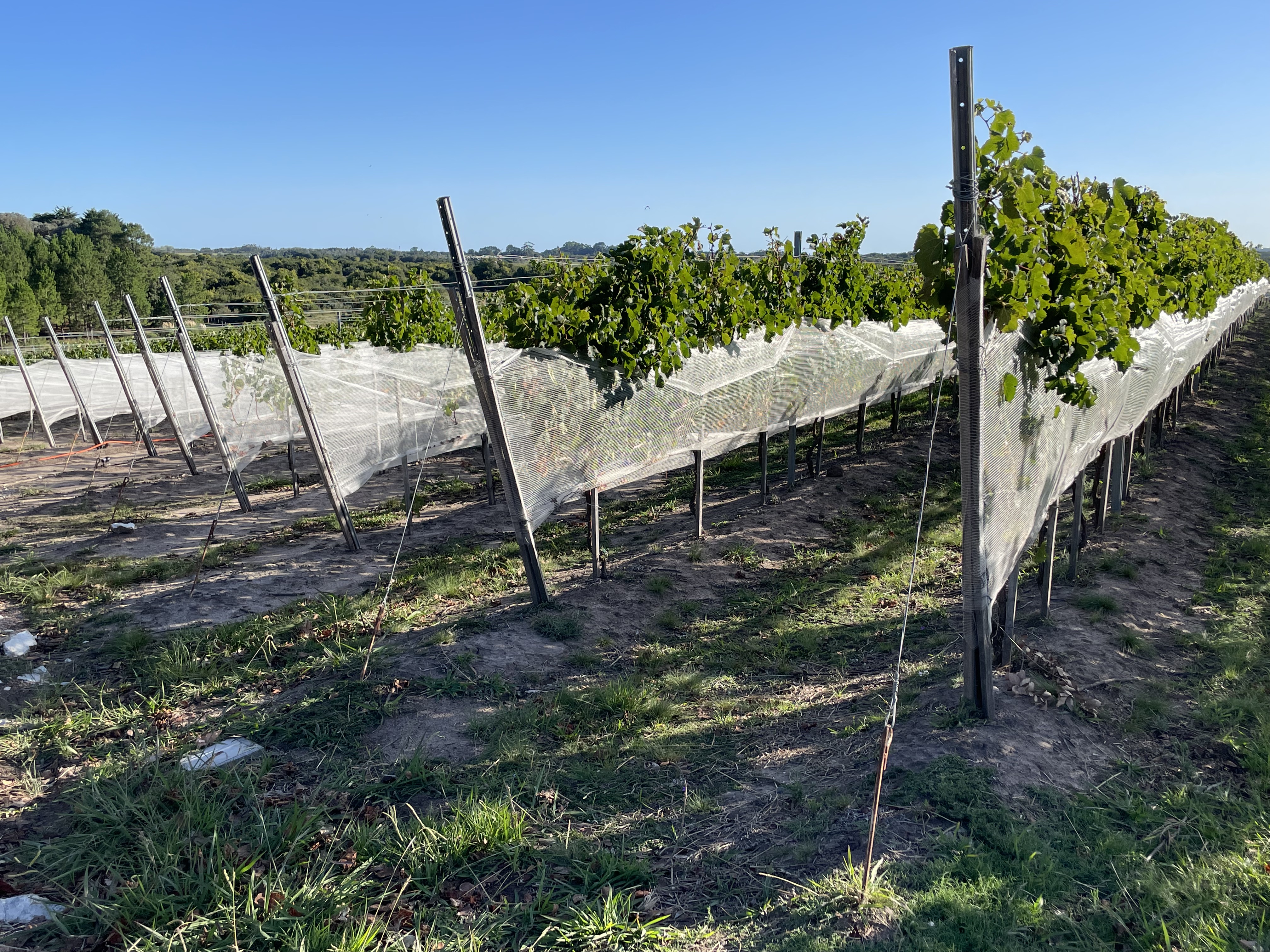
Meanwhile, the owner of the wine and olive operation is a billionaire from Argentina, He is the chairman of Panamerican Energy, an oil and gas company he acquired from his father. He arrived in Uruguay in the 1990’s and, after careful study of the land, he purchased 10,000 acres in the area and planted 1,200 parcels of vines in 23 different varieties. The vineyards were planted in the early 2000’s and are only now beginning to produce good harvests. He also planted many acres of olive trees, which are also just coming on line. Our first stop was the 205,000 square foot facility that houses the winery, restaurant, tank storage an miscellaneous other activities. The building is extremely modern and sophisticated and mind-blowing. We began a walk about some of the parcels, but soon it began to rain again and our guide called for a golf cart to pick us up. I did get to sample a few grapes that missed the harvest. They tasted sweet. The harvest has just begun and 300 people work the grapes every day. They are transported by bus from the nearby towns and are glad to have good jobs. We were invited to a wine tasting and walked from room to room tasting 2 different whites and 2 different reds, including the Garzon flagship grape, Tannat. It has become a popular Uruguayan wine. The wines are stored in large concrete tanks for a time and then transferred to large oak barrels for further aging.

After the wine tasting we went to Garzon for lunch in Francis Mallmann’s Restaurant. The menu was very interesting. Mark had fish and I settled on Suckling Pig. I knew it would be too much food, but I wanted to taste the pig and figured others would share. It was absolutely excellent–tender and sweet. We managed to eat about half of the animal and saved the rest for our driver Tomas. He said he loved the portion we gave him. Francis was in the restaurant when we finished lunch and we had a short chat with him and got a photo. After lunch Tomas and Paola drove us to our lodging, Bahia Vic, on the beach in Jose Ignacio. It was still pouring rain. We could hear the rain on the roof as well as the pounding surf. Delicious. Happy to go to bed early. This is our last hotel before home.

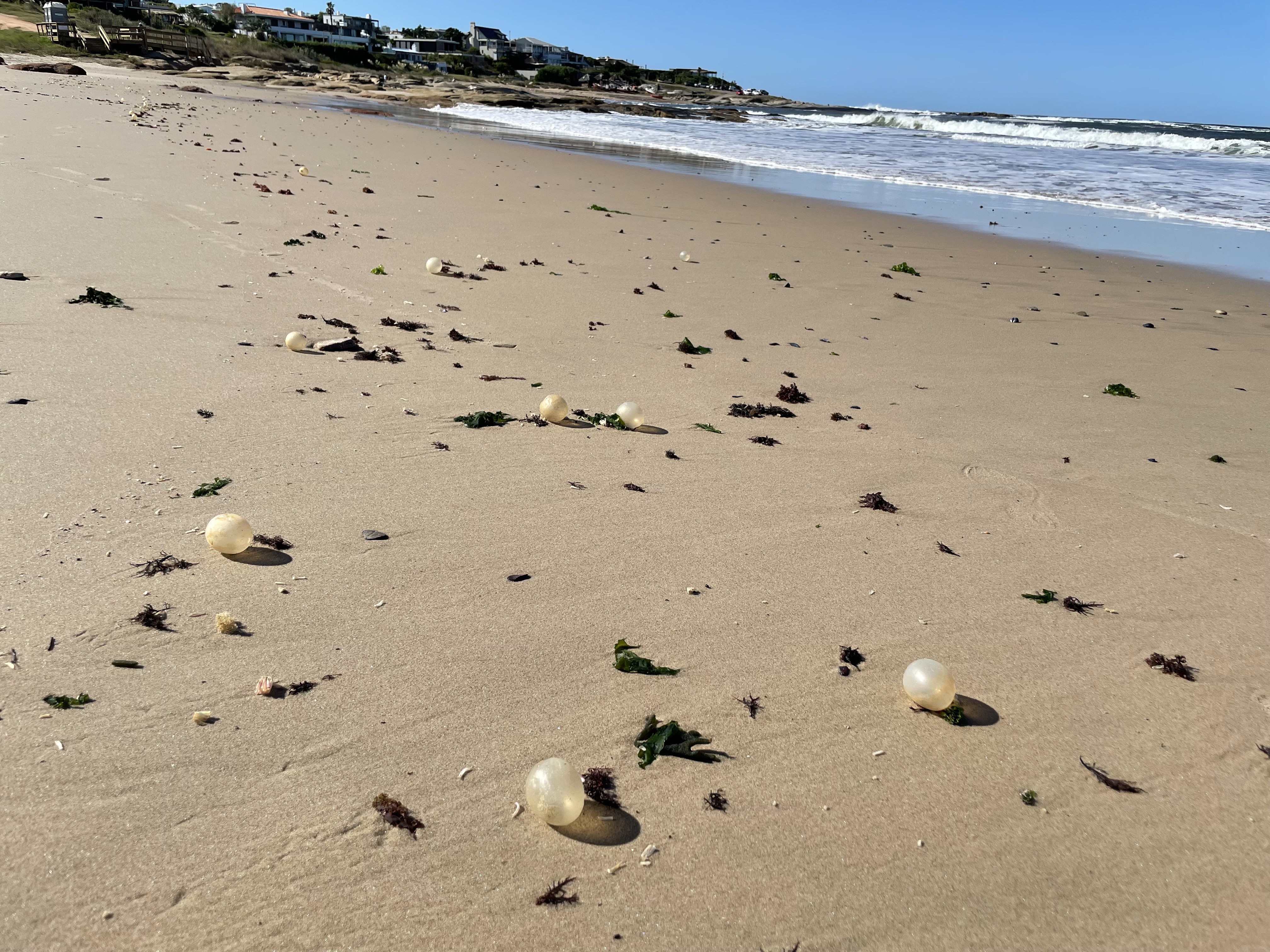
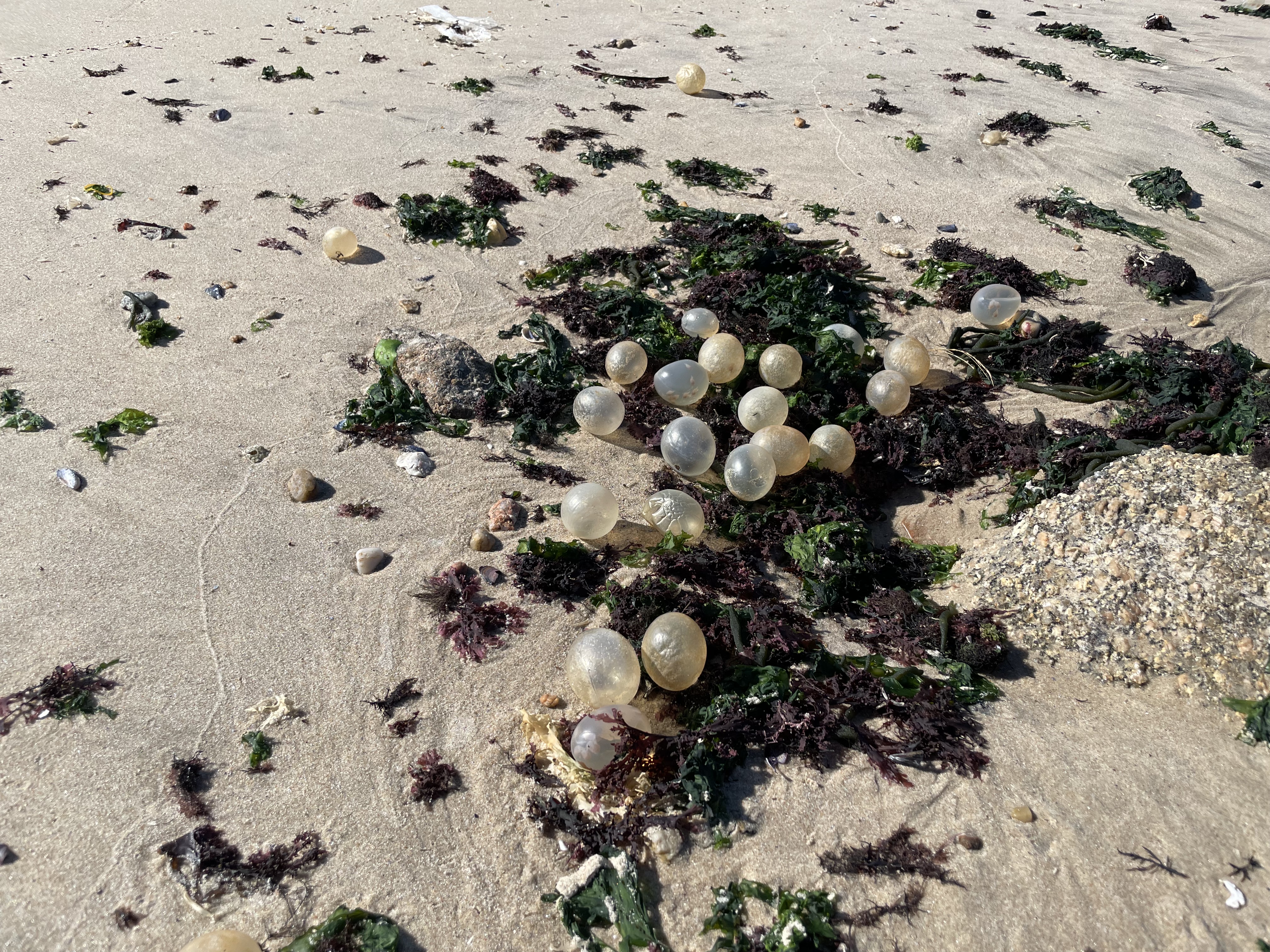
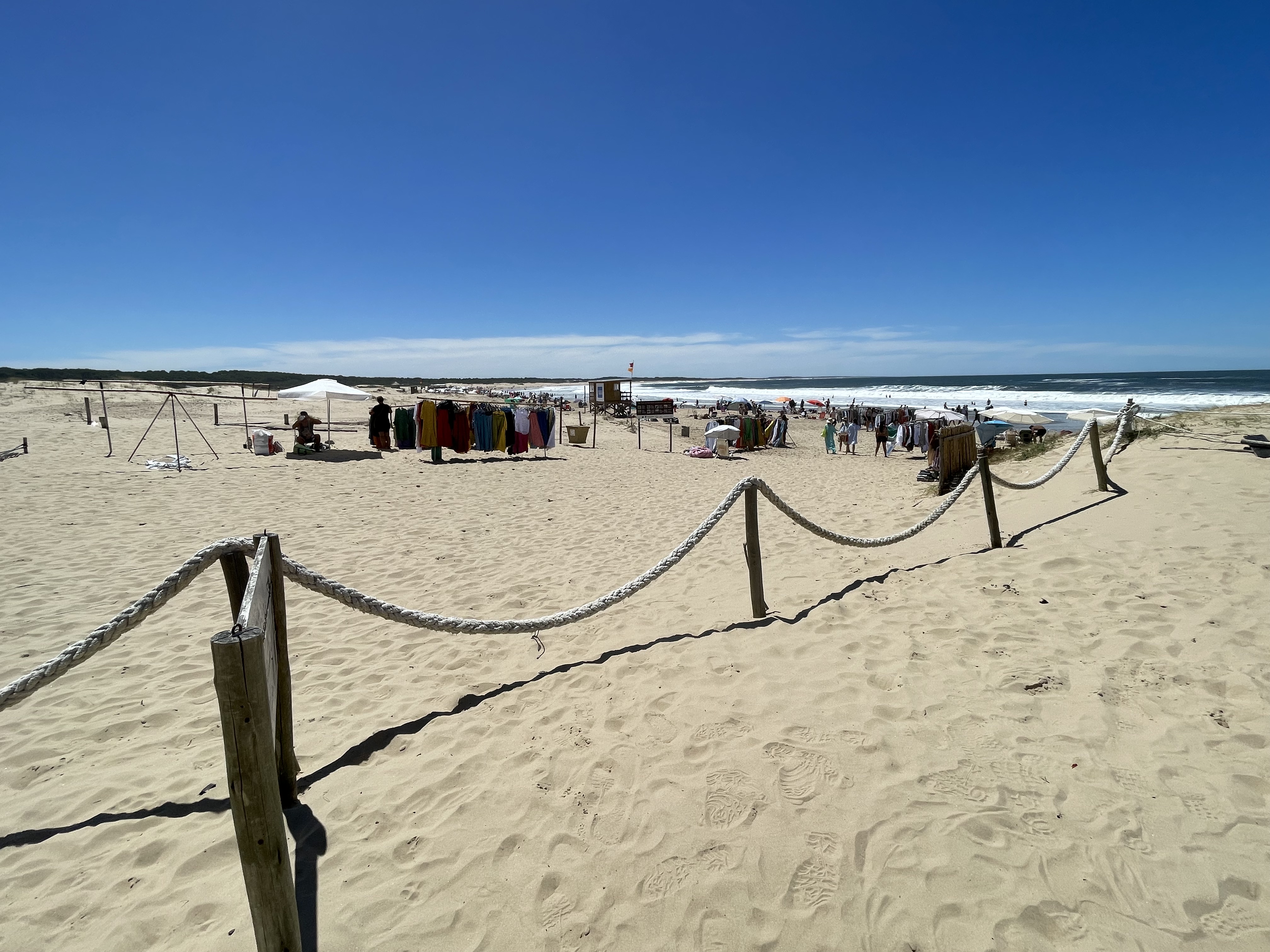
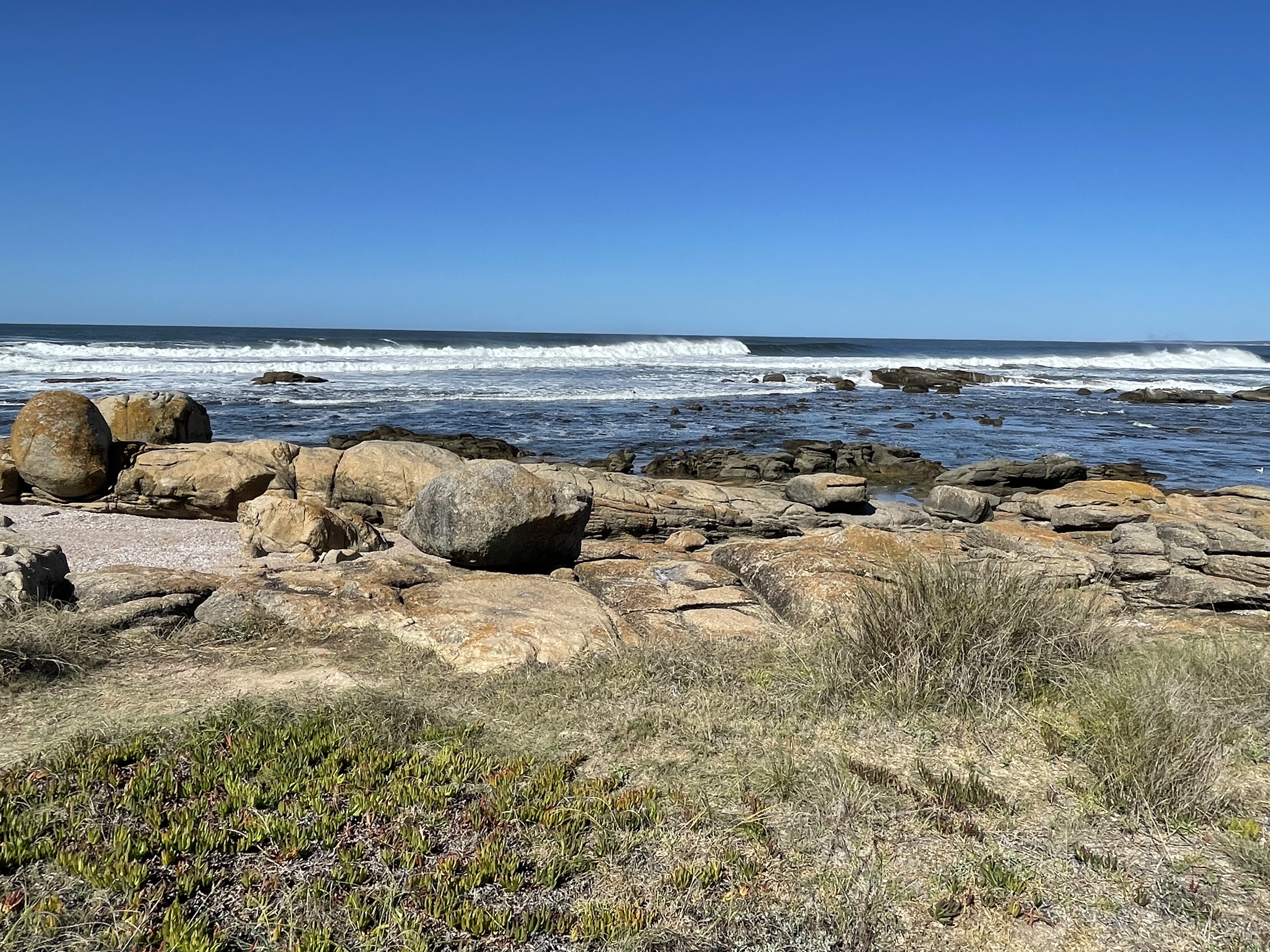
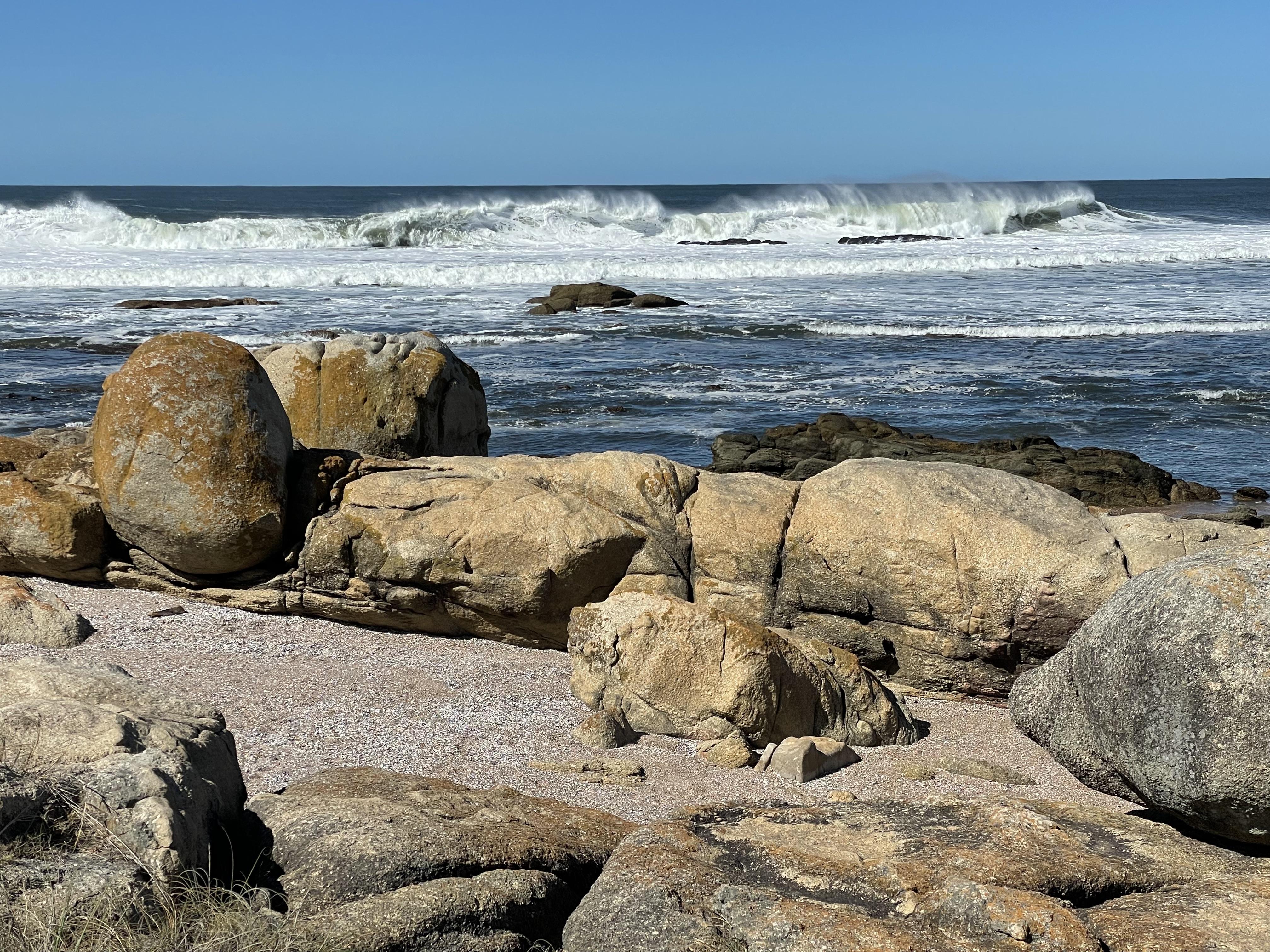
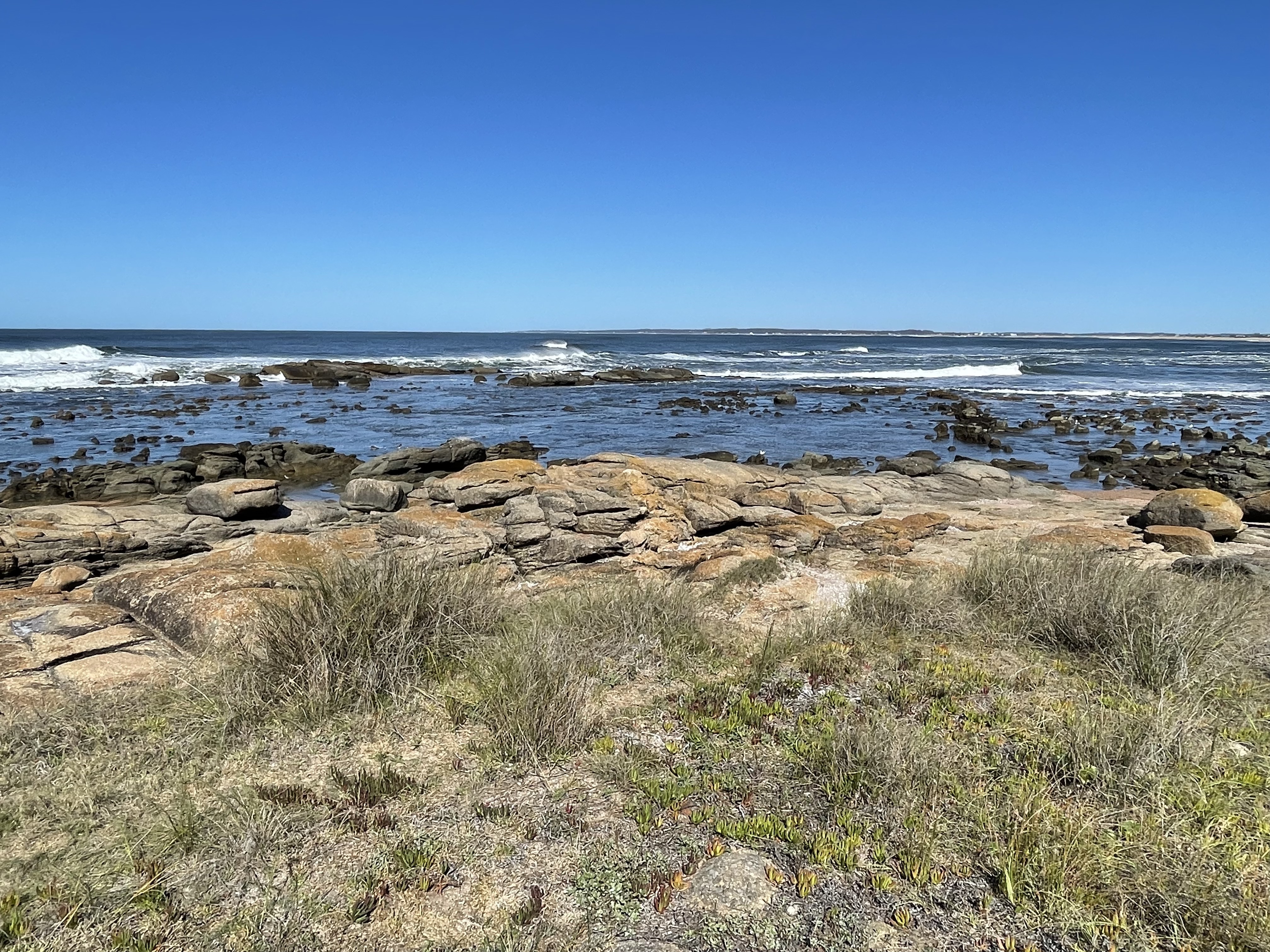
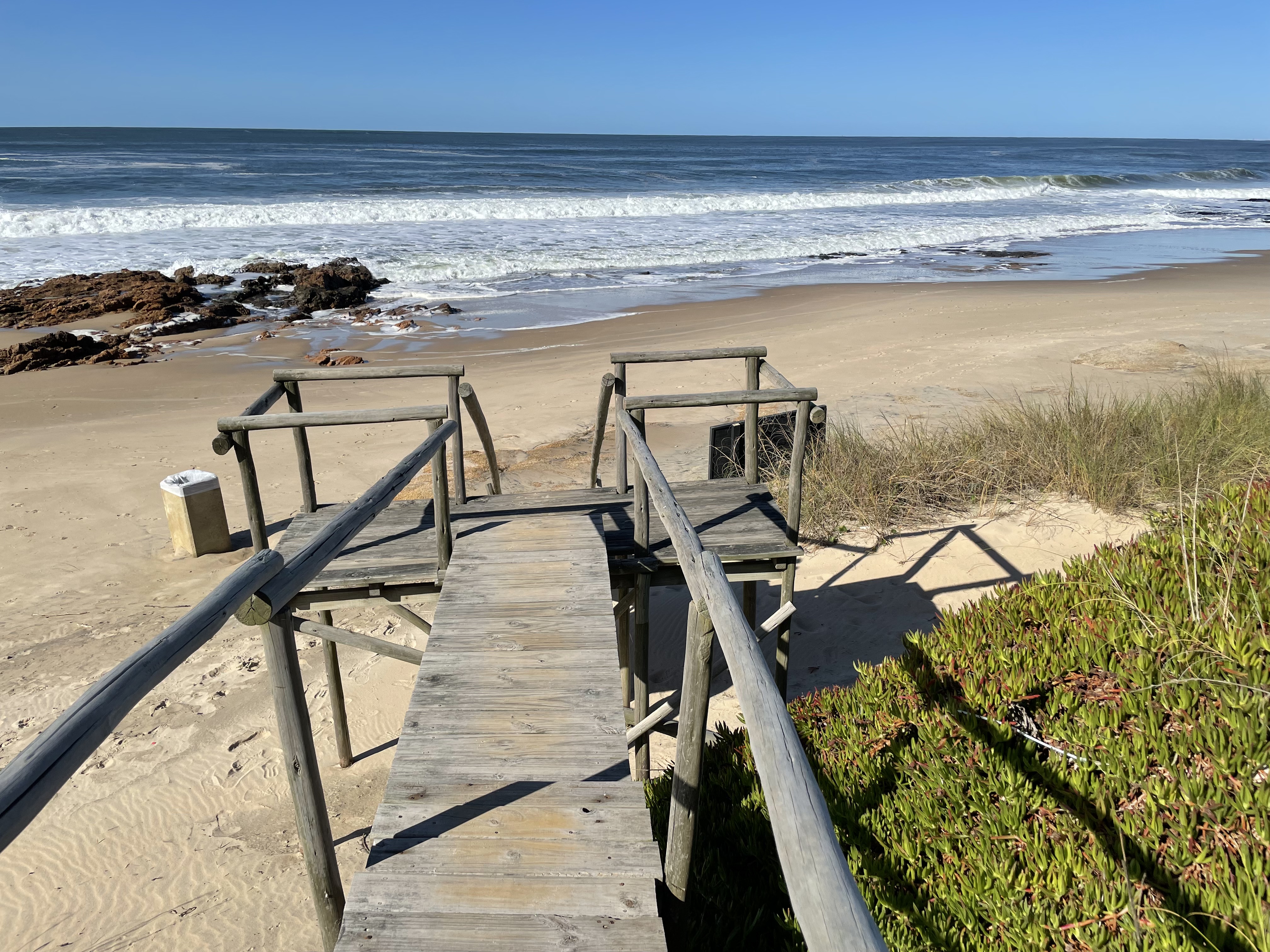
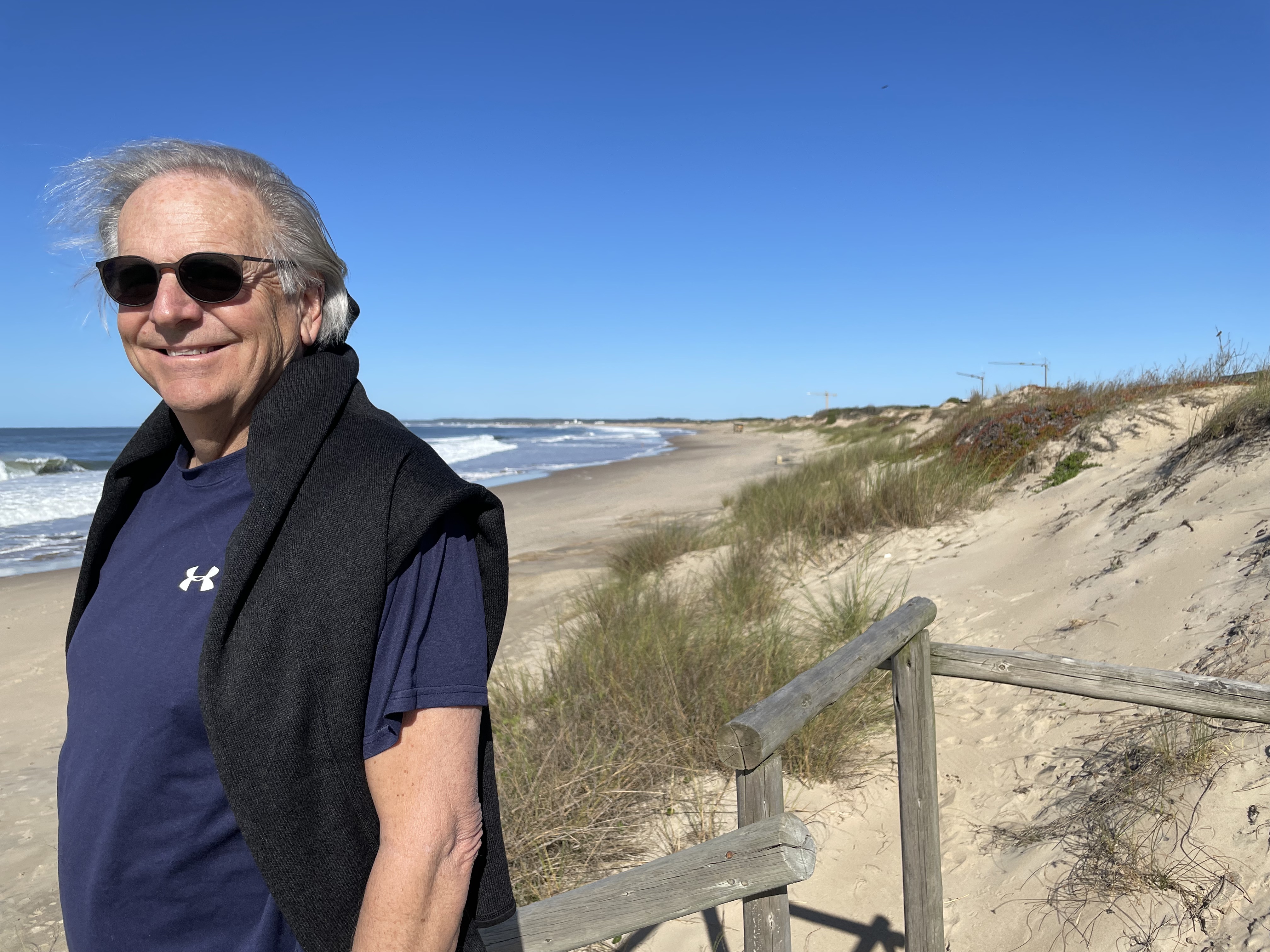
No more tours or guides. Just beach walks and meals in beachy restaurants. Nice. Well it was nice until yesterday, the 19th. It was a warm sunny day, if a bit windy. We went for a long beach walk in the morning. Saw a bunch of shops holding forth on the beach. Also saw many bubble-like translucent balls that are made by snails, who lay their eggs in them and set them adrift.

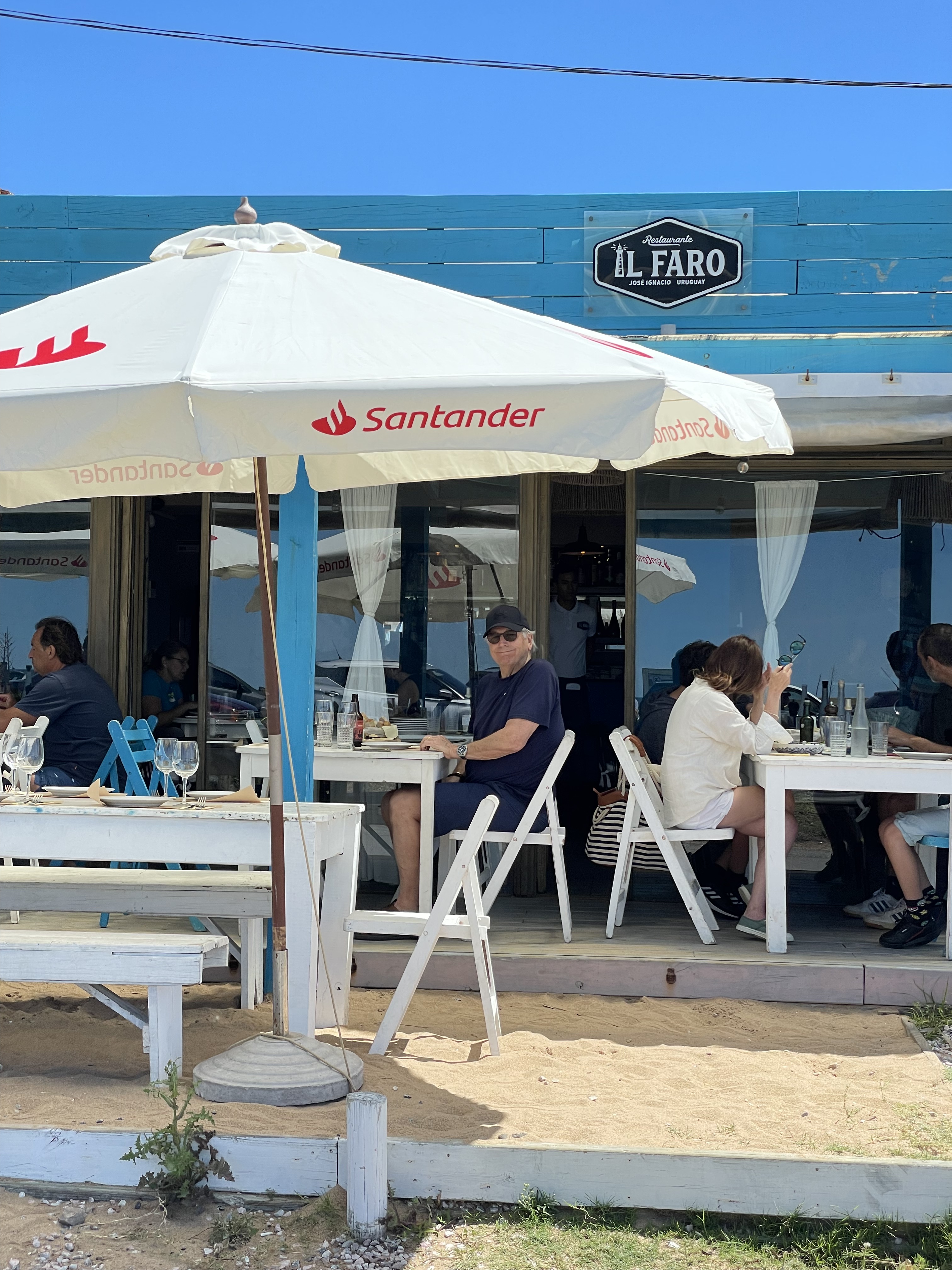
Eventually the snails hatch and make a hole in the bubble to crawl out. Took a ride to a restaurant we had booked only to find out they were closed for a wedding. So we began another long walk toward the hotel thinking we would find an eatery somewhere. We did and had a delightful lunch at a place called Il Faro,

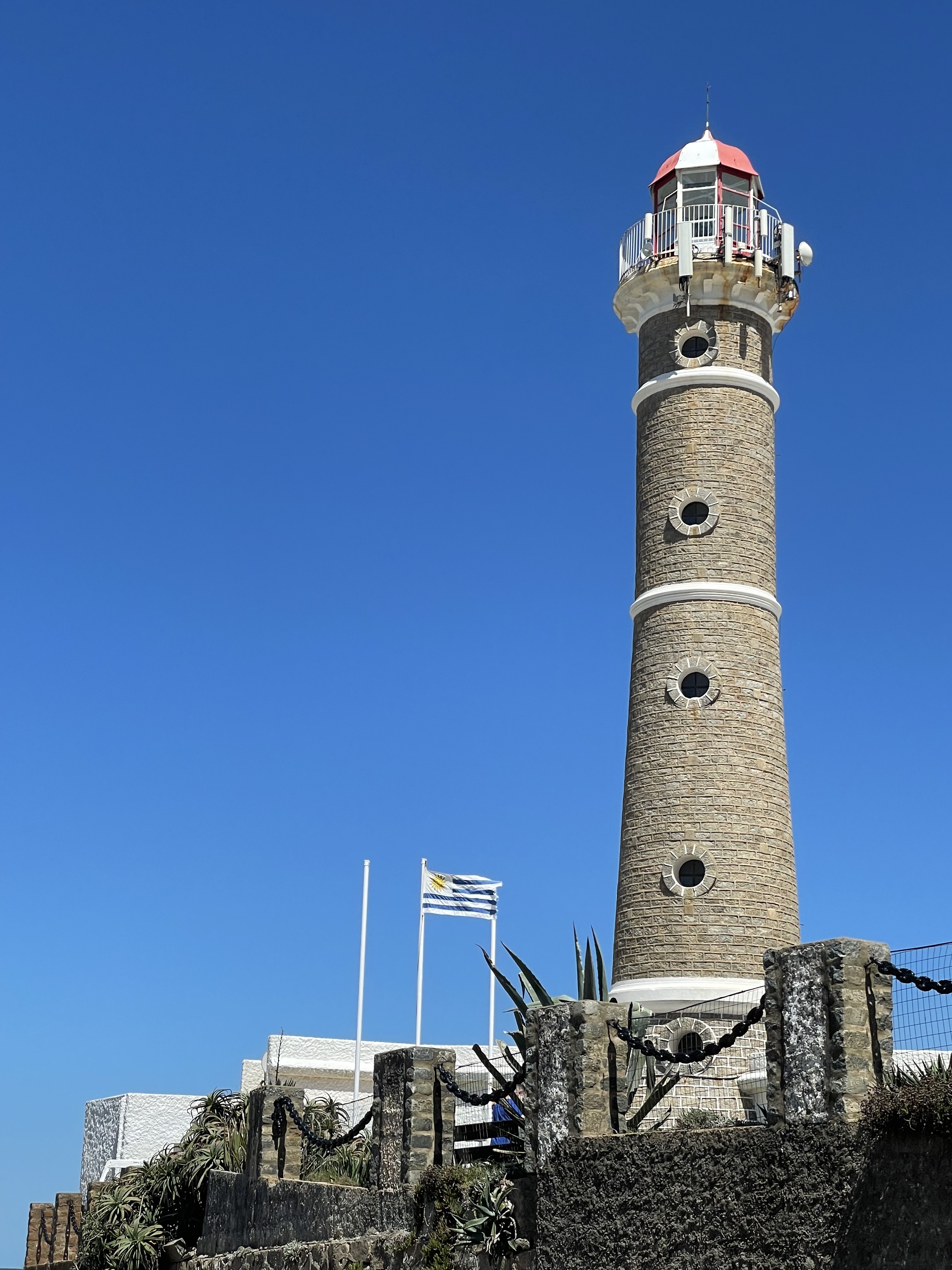
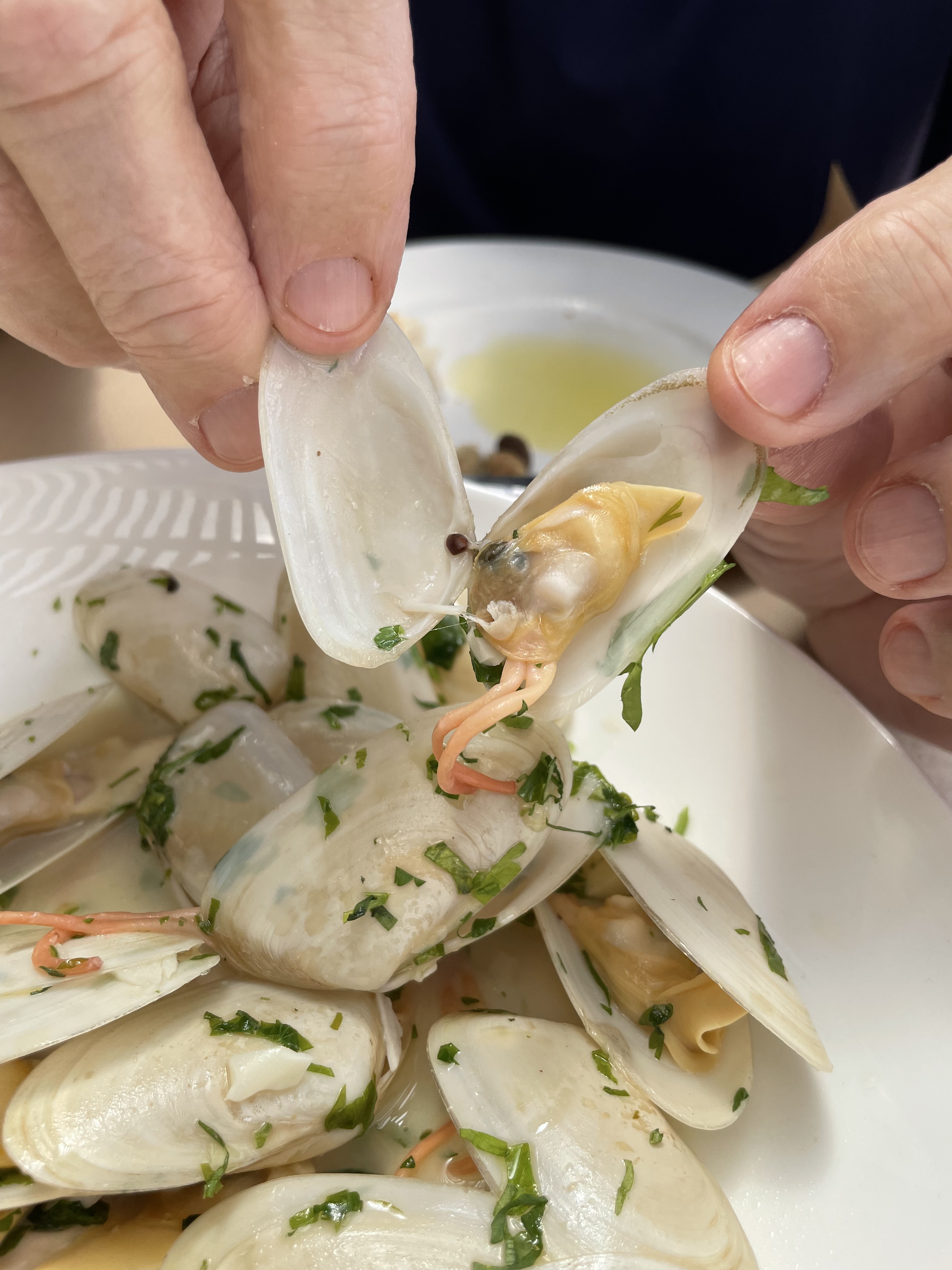
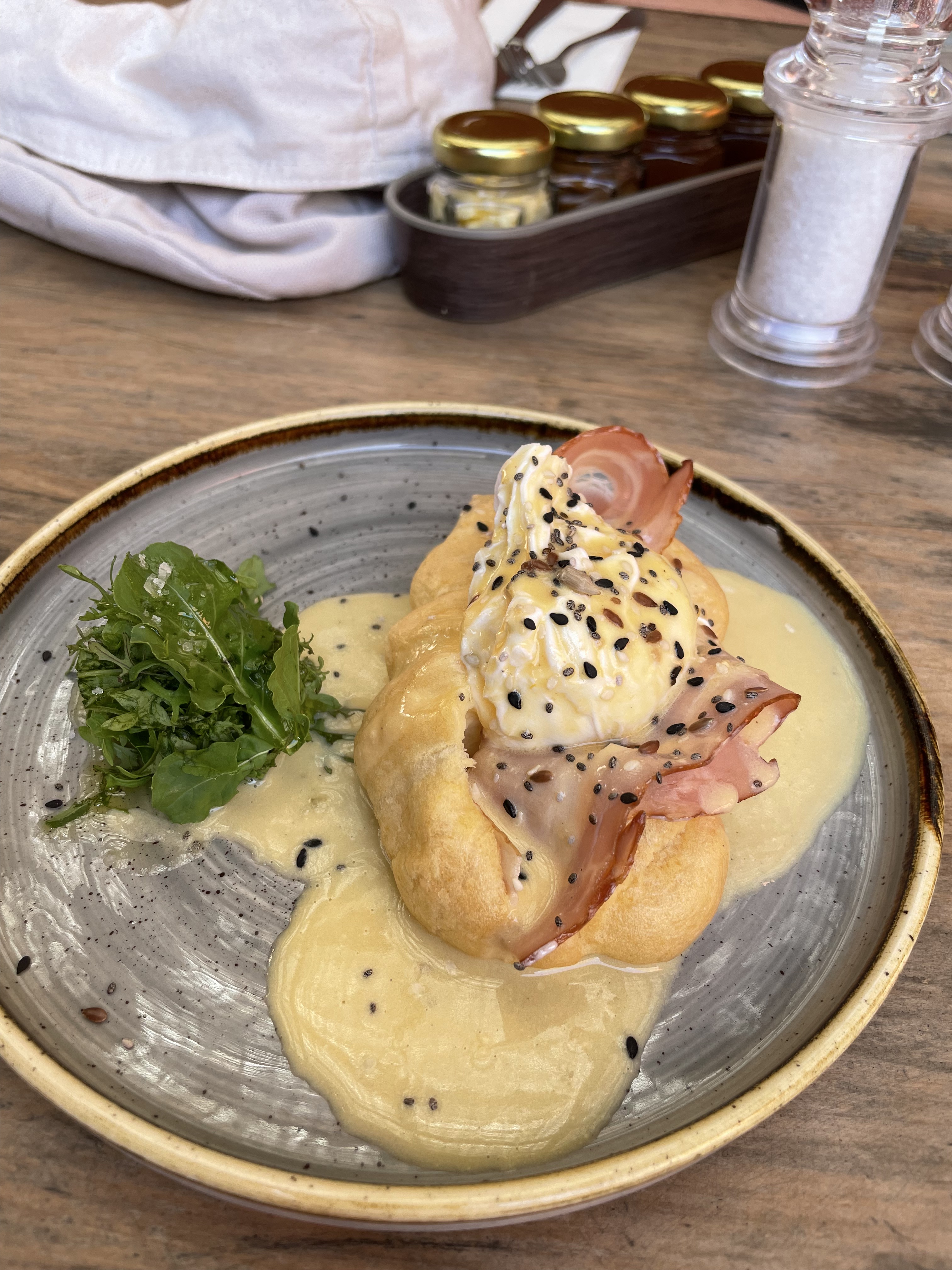
named for the nearby lighthouse. At the suggestion of the people at the table next to us, we ordered white clams in a white wine and parsley sauce. Neither of us had ever seen white clams. We loved the meal and were glad to have learned about it. We continued our walk and eventually got back to the Bahia Vik for a nap. But it was impossible to sleep as the music and dancing at la Susana Restaurant next door was penetrating.

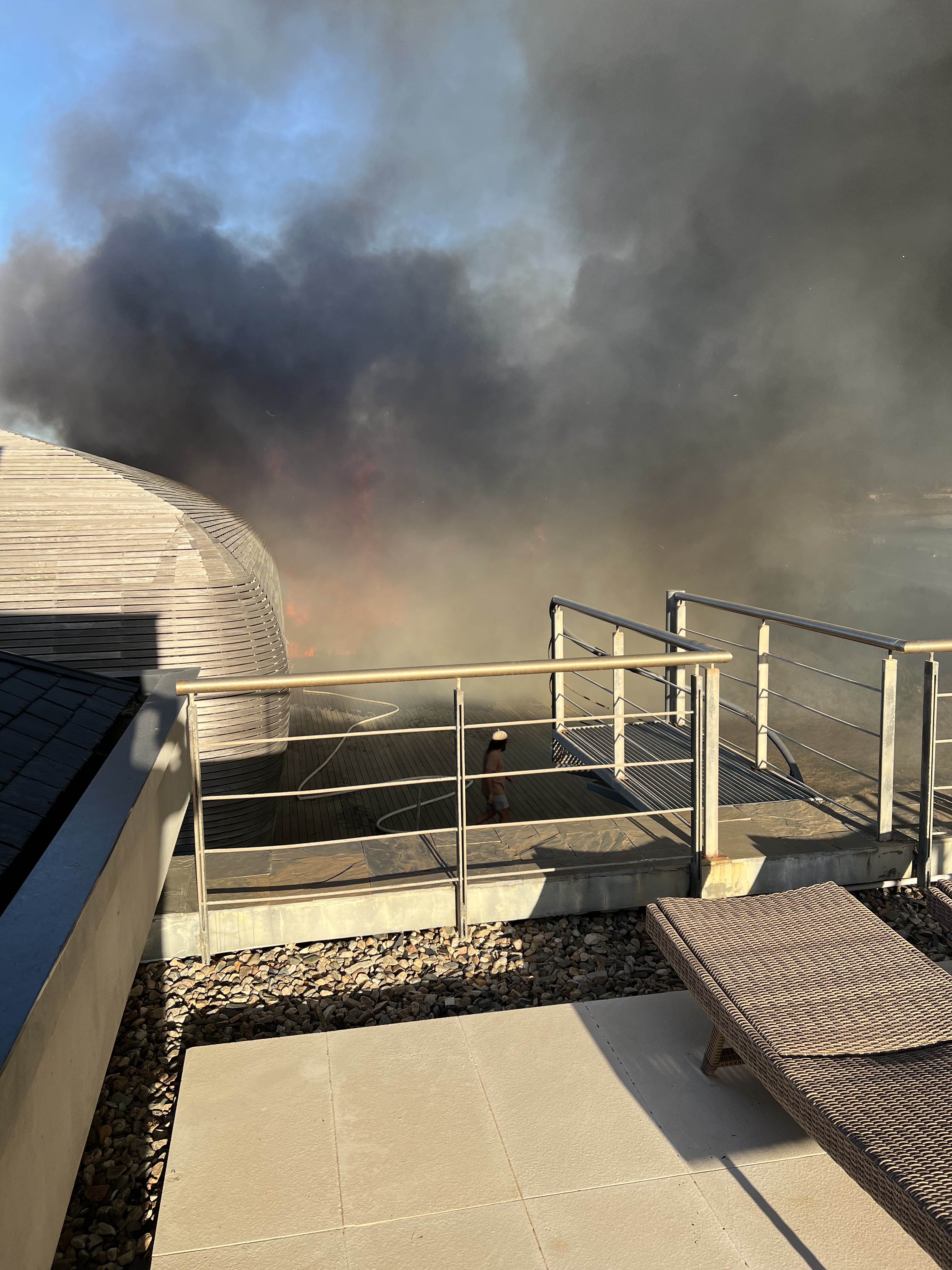
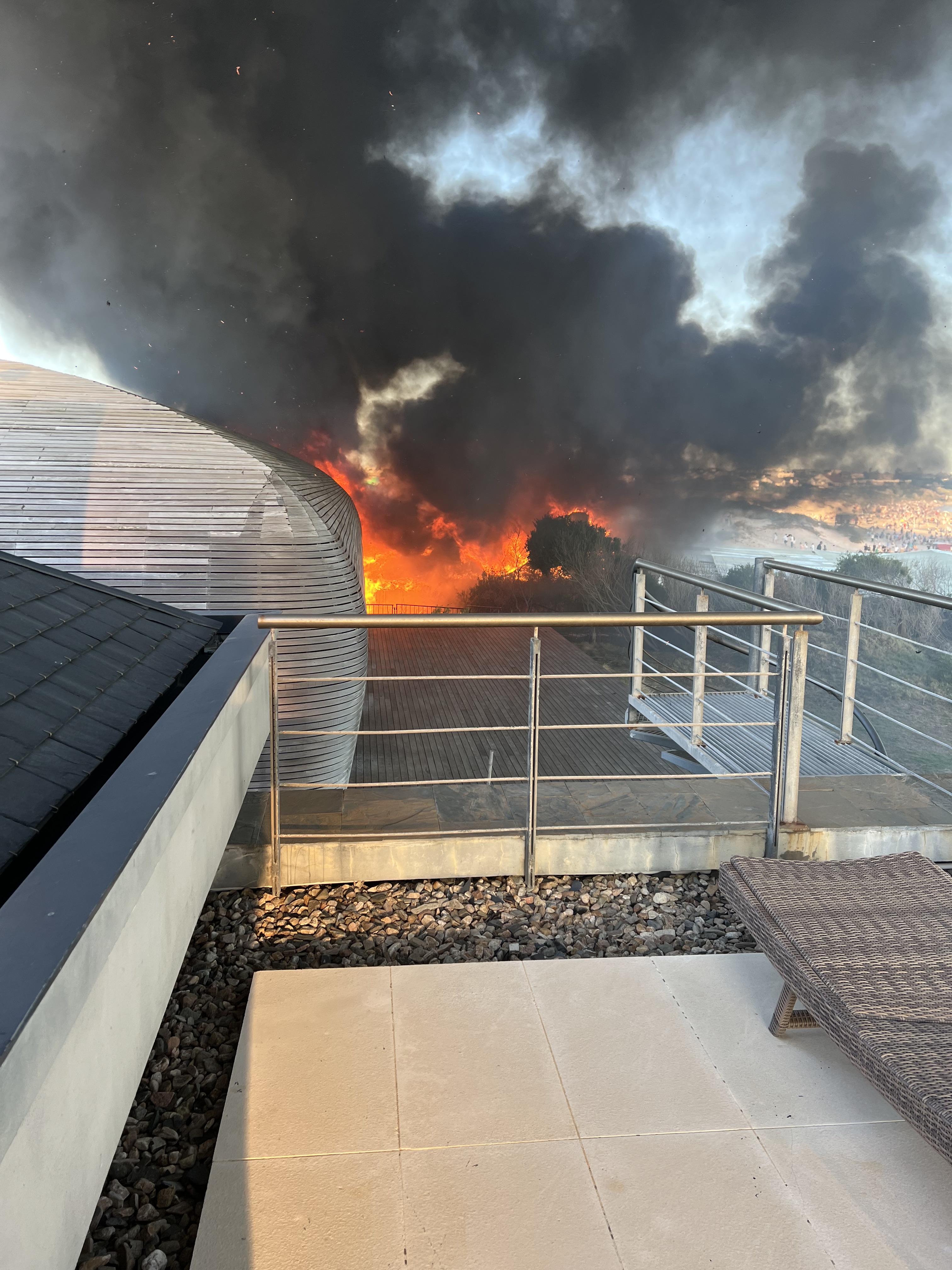
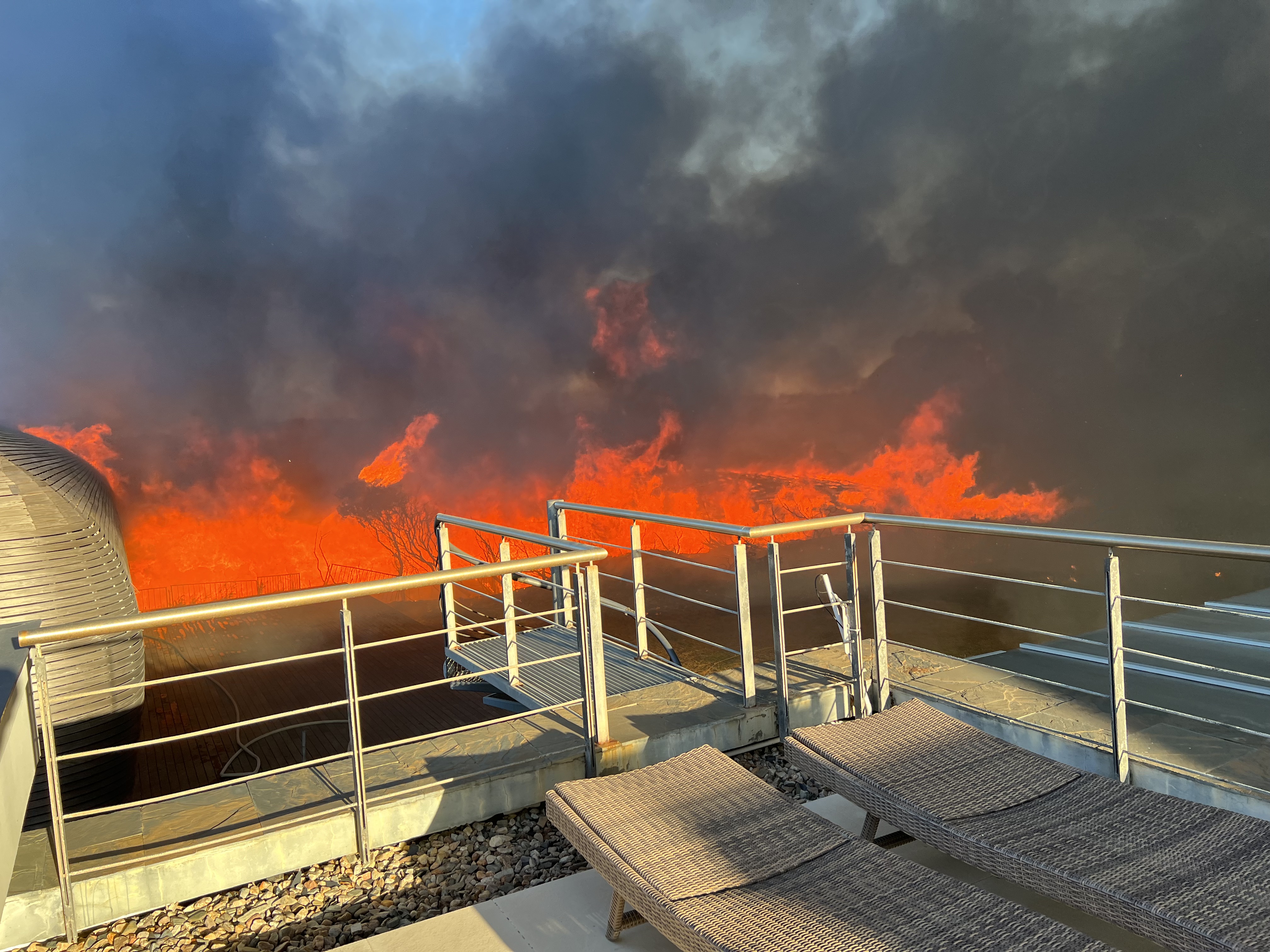
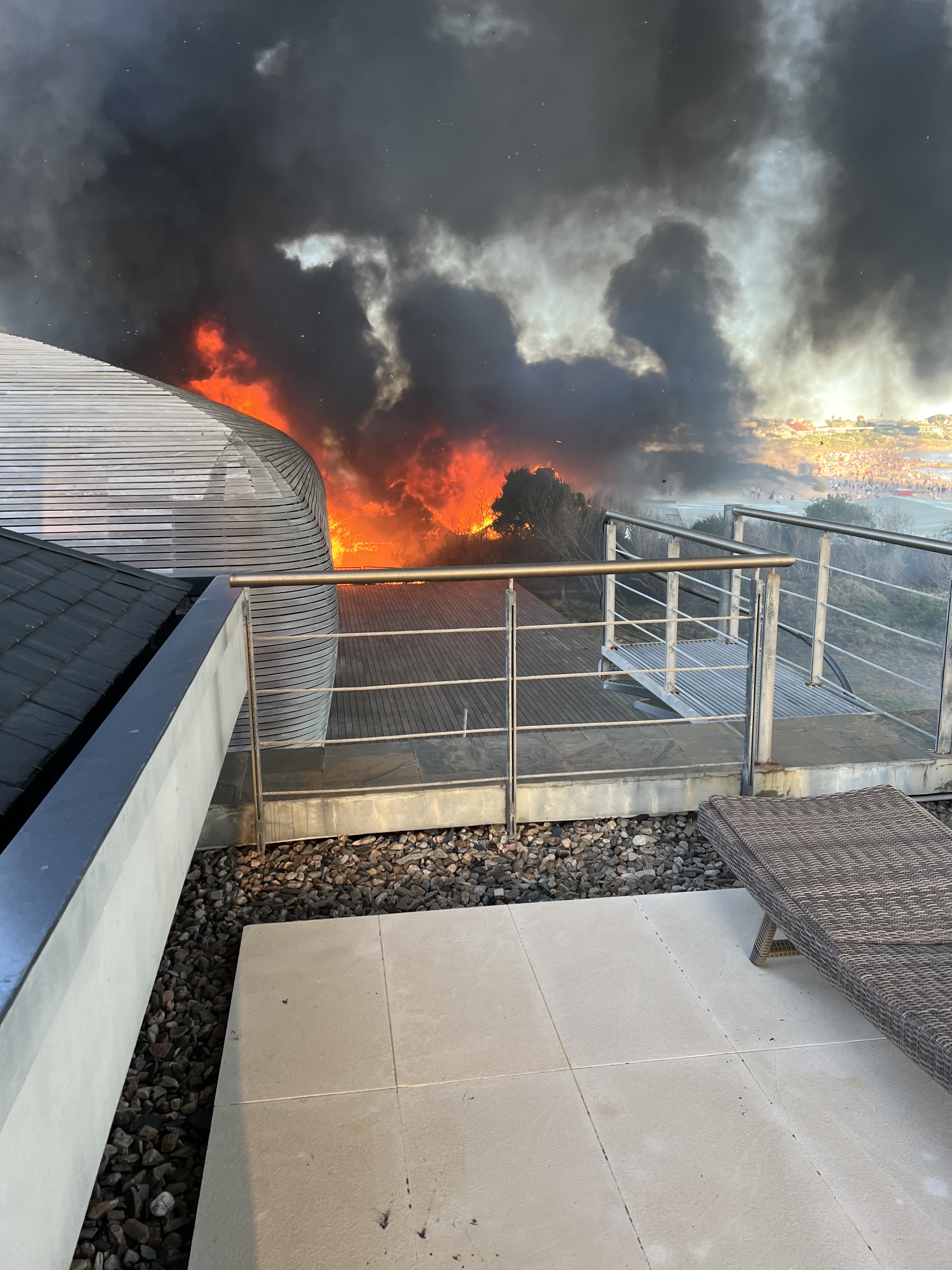
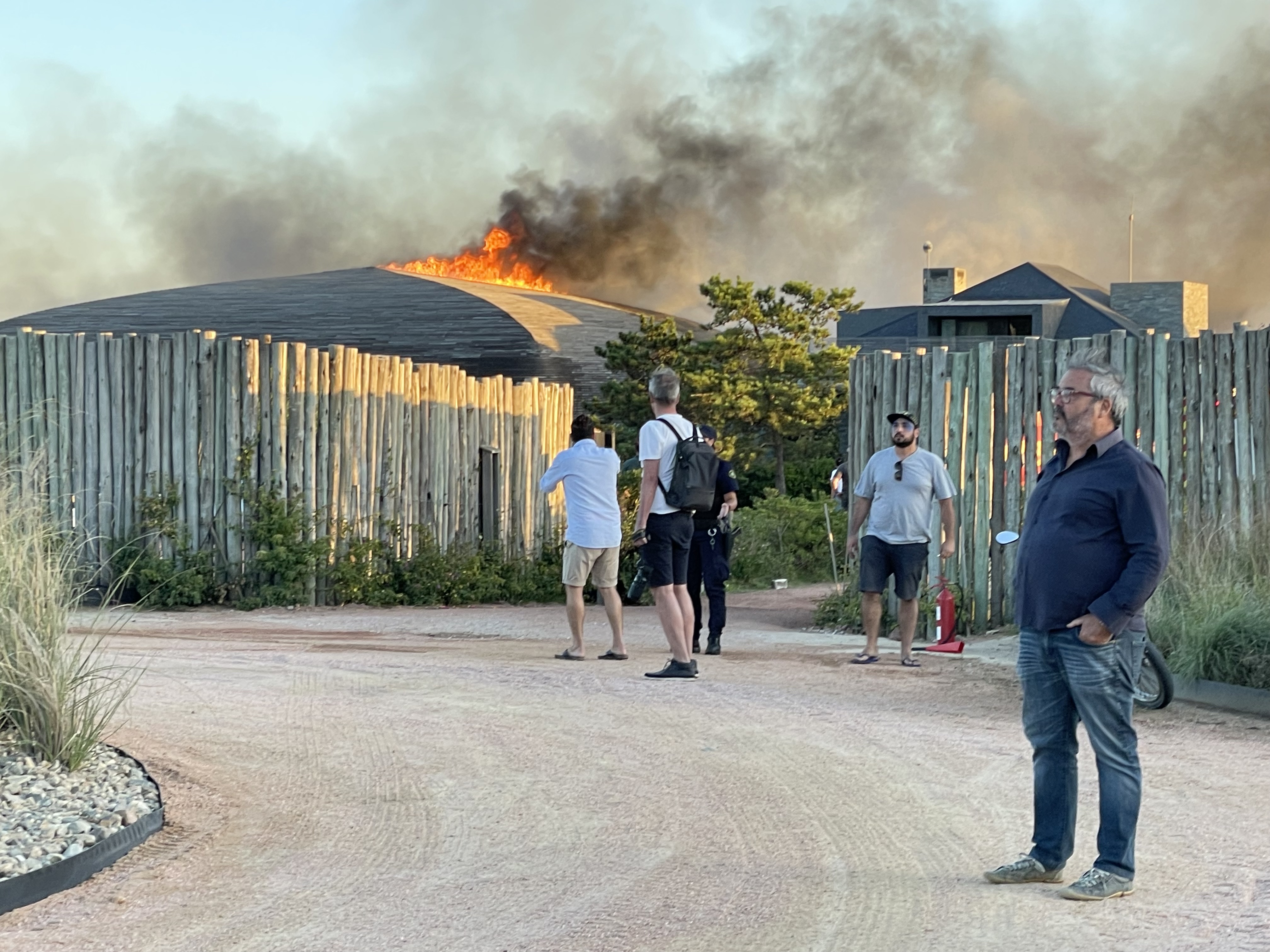
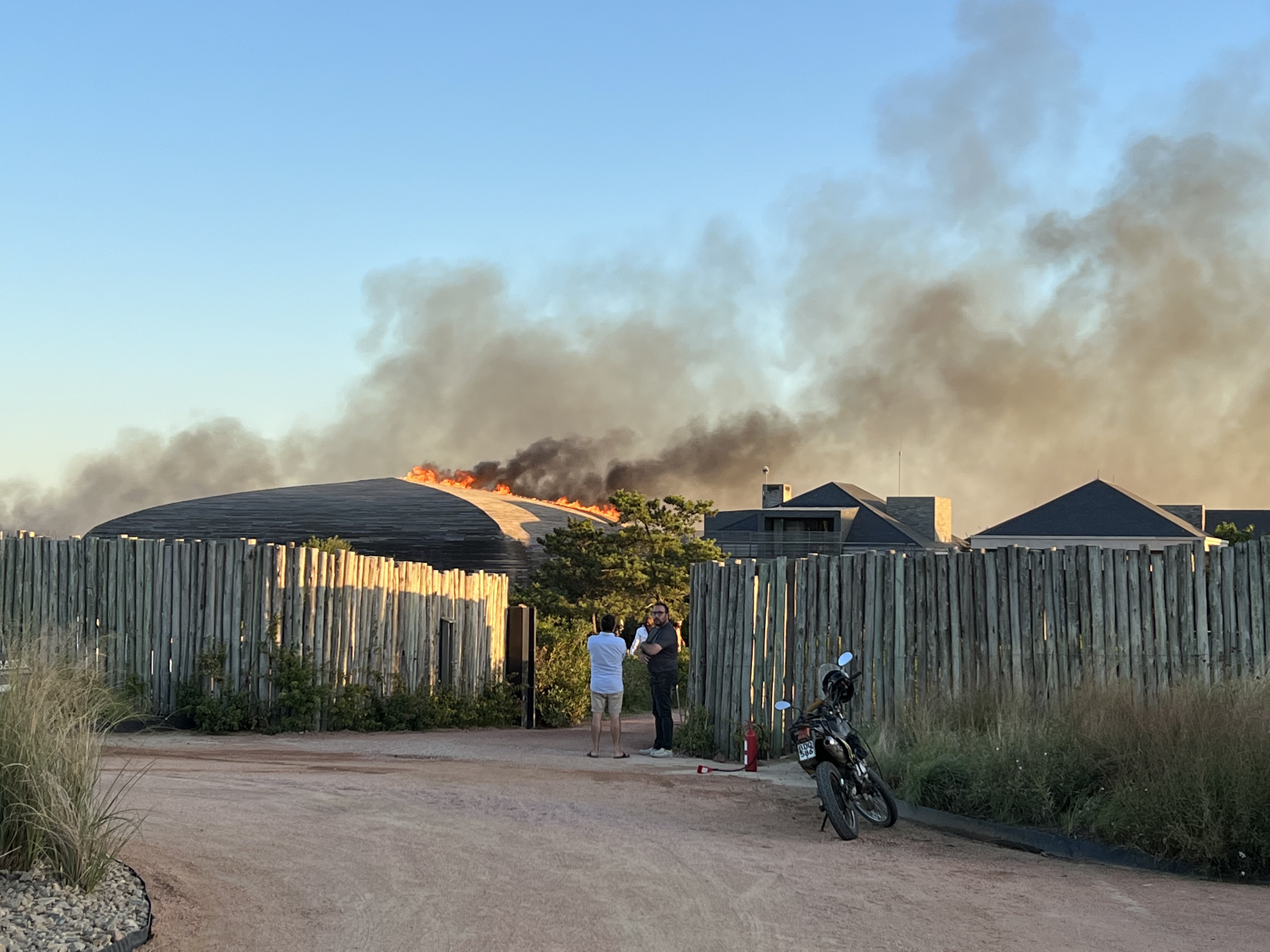
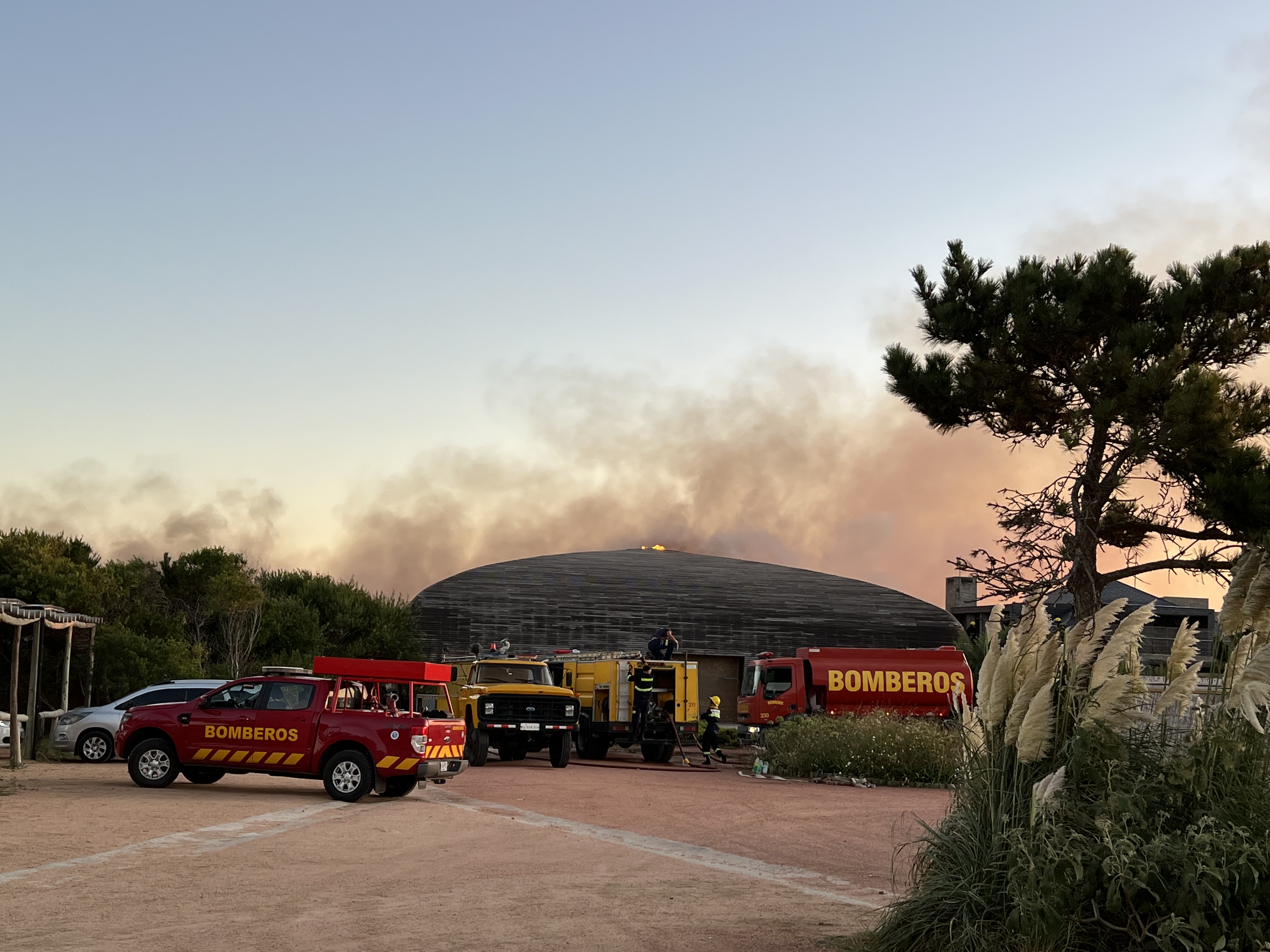
At about 6:30 we saw some smoke and looked out the window. to see that it was coming from Susana’s. We did nothing for a few minutes, but the smoke, which was blowing in our direction got thicker. As I watched, I saw it erupt into flame and decided it was time to pack up and get out.

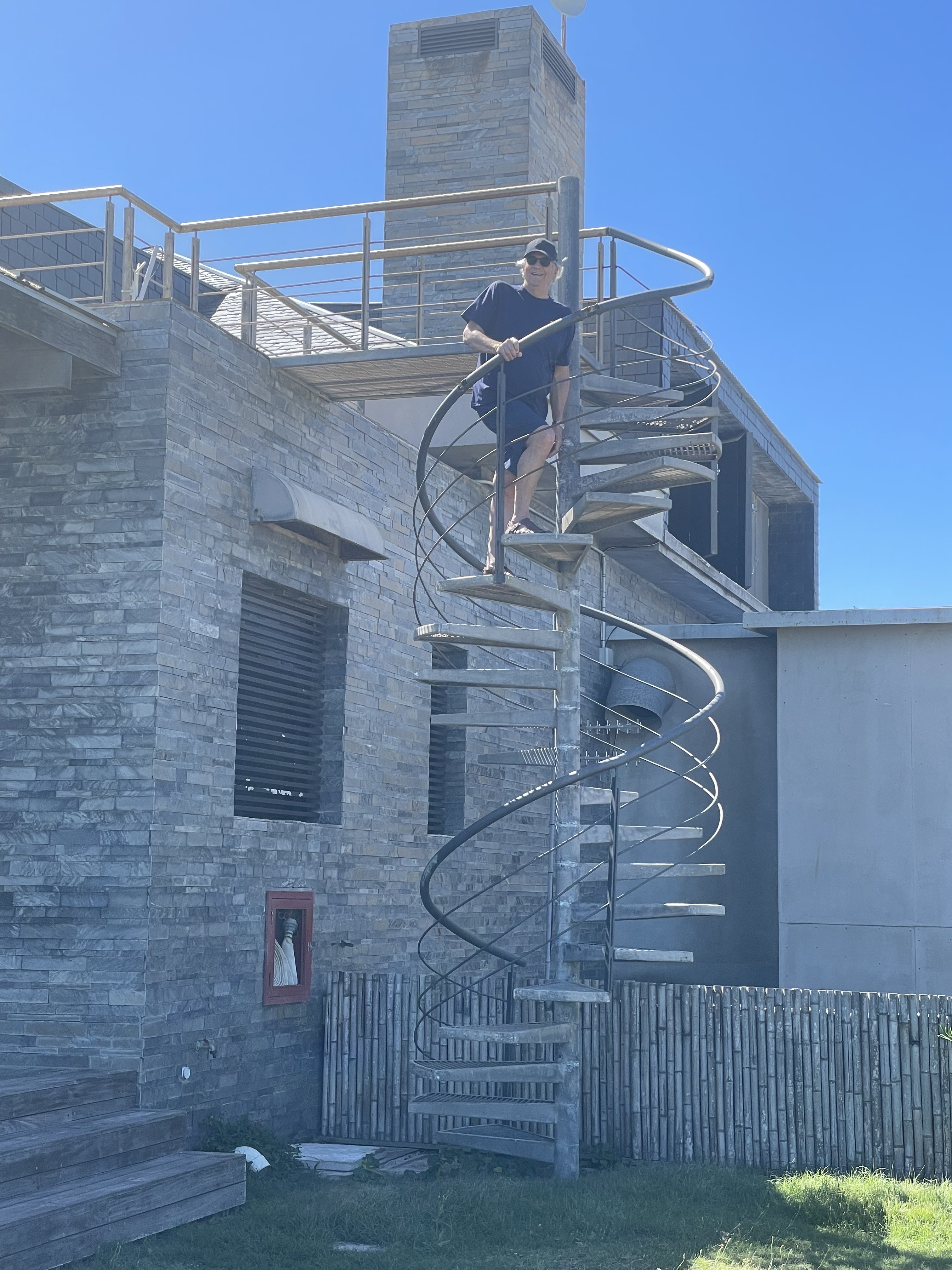
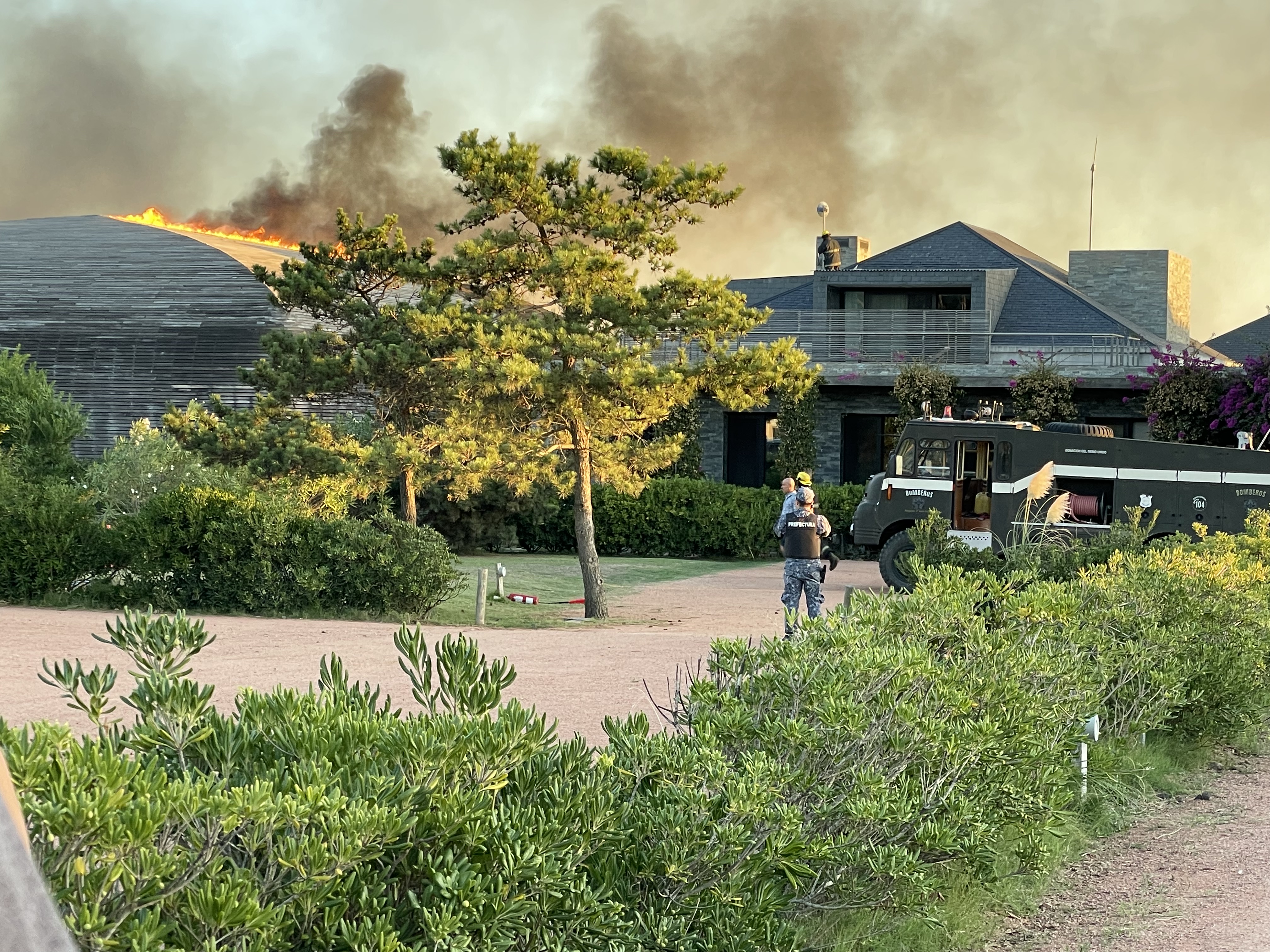
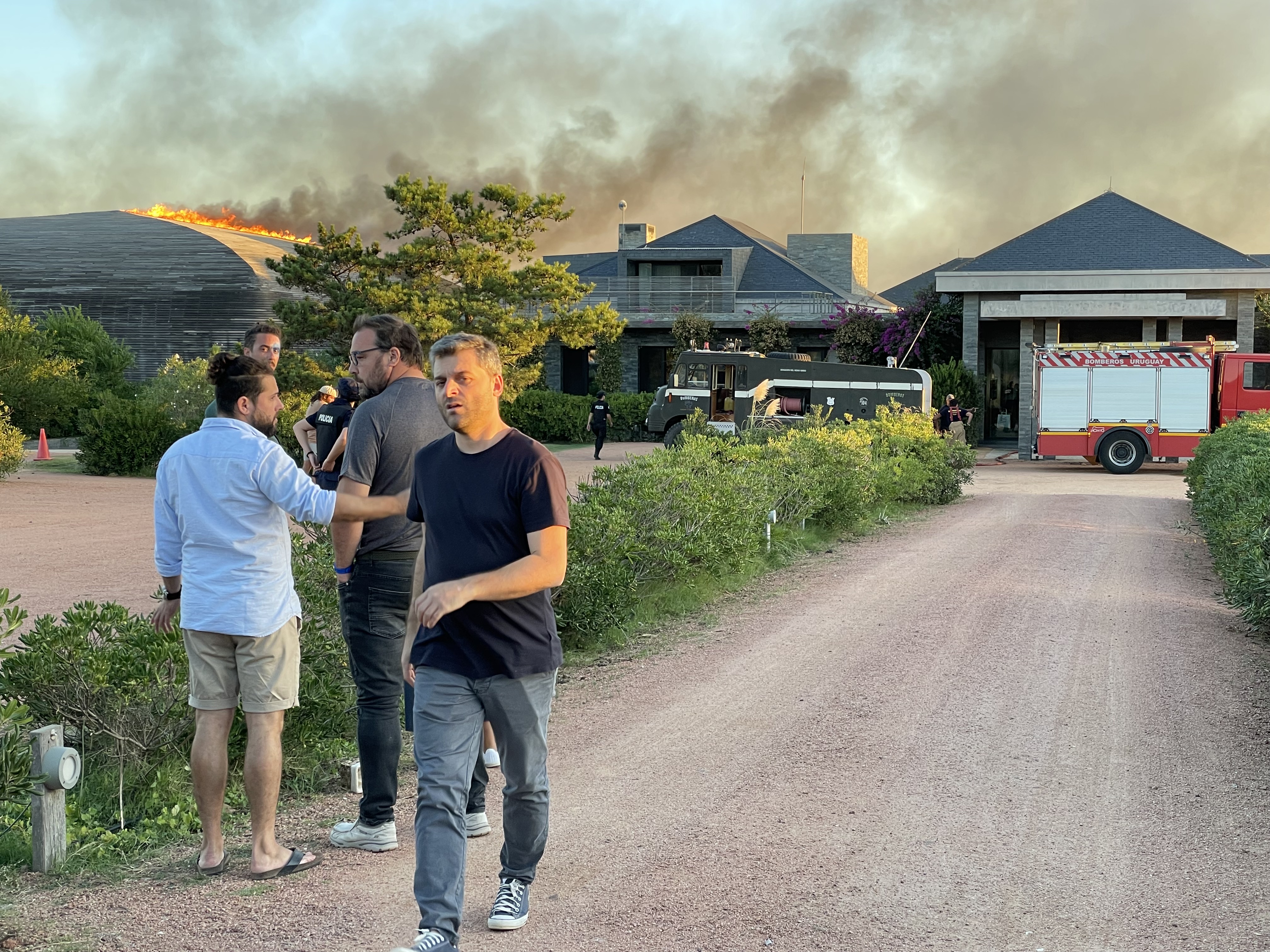
Mark was not so anxious and took more photos while I packed. Finally, he got into gear and hastily packed, but had not left room for a pair of shoes and decided to leave them behind. While packing, the power went off. Knowing we had no elevator to use, we were just thinking how to get to the ground, when a hotel worker ran in to get us out. He led us across the roof and down the far side of the building on an exterior stairway. We managed to get all 4 bags to the stairs, but somehow, Mark’s small bag got separated from us. We ran with the bags to the front gate and watched the scene unfold as more and more guests were evacuated. They had not seen the fire coming as we did or they were away from the property at the time and not allowed into the building when they did arrive. Finally 4 fire trucks arrived along with many cops and other personnel. The scene got pretty chaotic. We heard from our guides that they were working out a plan for what to do with us and their other guests and to chill, which we did…for real. I was really cold by the time our ride arrived. Without the shoes or Mark’s small bag, we were taken to the sister hotel, Playa Vik, where we had wine “on the house” until dinner time. We were taken to our restaurant, Solera. After what was a lousy meal, our guide came to take us to the lodging they had found for us. It was a place called Posada Luz, an estancia a few miles out of town in the countryside. It proved to be a nice facility, with a whole new setting from where we had been. Not being able to see anything, we went to bed.

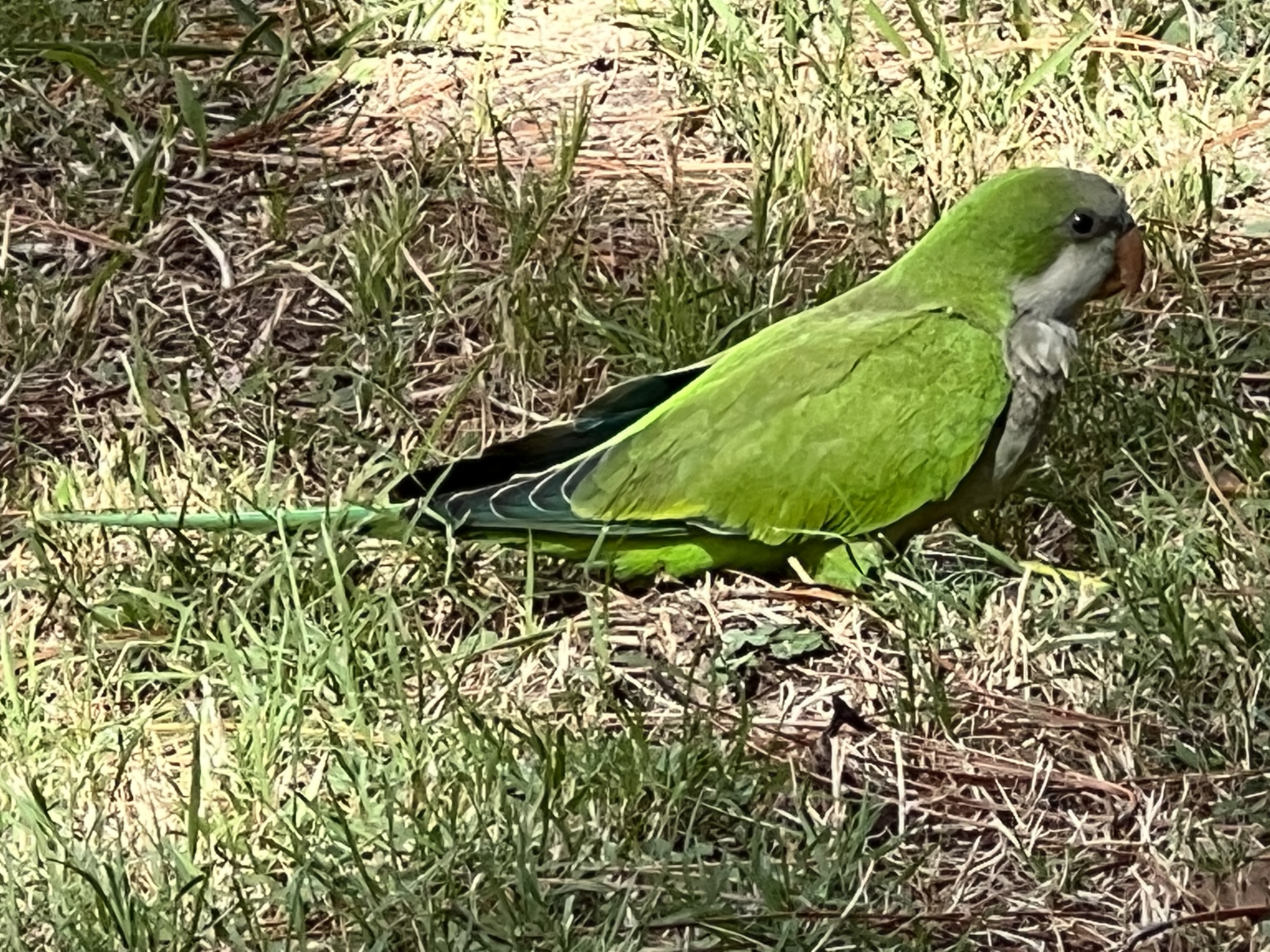
In the morning we could see the countryside, hear hundreds of green parakeets feasting in the vineyard and enjoy the quiet. Our room had an upstairs terrace that was pleasant for hanging out. The slight breeze was most welcome after so many windy days. Eventually we went to breakfast in the outdoor garden. After many calls and texts, Mark’s bag and shoes were finally located with the help of an Apple AirTag he had installed in the bag when we left home. Posada Luz is 20 minutes from town and the beach, so we are spending our last day enjoying the estancia.

We walked around the grounds, stared at the parakeets, took a few pix and hung out at the pool. At 7pm, we were served a few simple tapas, said good bye to the staff and joined our driver for the 2 hour ride to the Montevideo Airport. Once checked in, we waited three hours for the 1:30am flight to Panama. That 7 hour ride will be followed by another 7 hour trip to LAX, where we will go through customs and wait 3 more hours before flying to SAC and a grateful ride home with Ken Zuckerman.

It has been a an interesting trip full of adventures and unexpected turns. We hope you have enjoyed reading about it. Apart from the beautiful scenery in Patagonia that was expected, I have been most surprised by Uruguay. The people were most friendly and welcoming, the city most attractive and appealing, the beaches and the scenery especially pleasing. If it were not so far away, I would come here to visit more than once. Until next time.

Happy trails, until we meet again,

Julia and Mark

Montevideo, Uruguay

Wednesday, February 15, 2023

Alma Historical Boutique Hotel
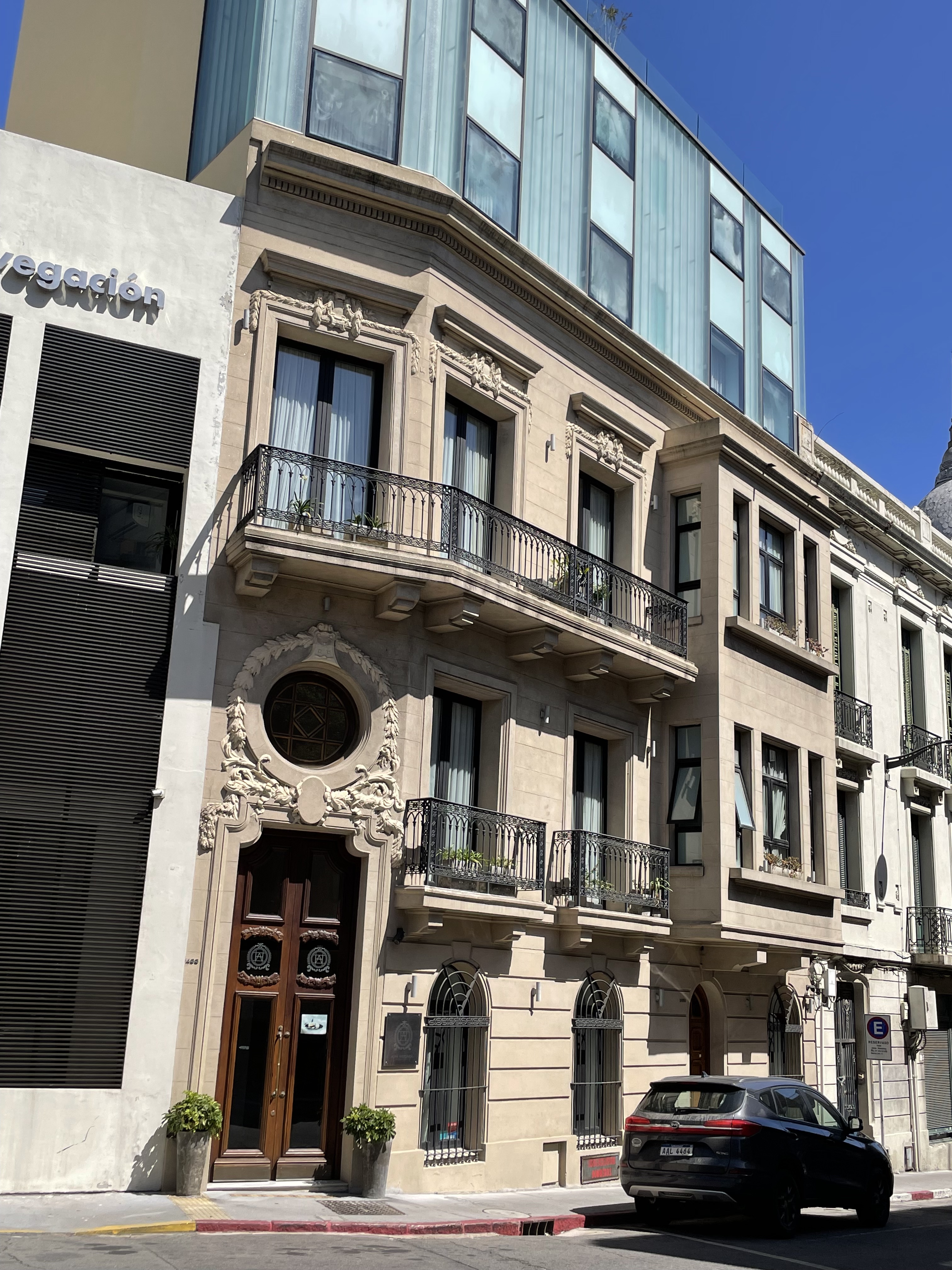
Alma Historical Boutique Hotel, a neoclassic building with Spanish influences.

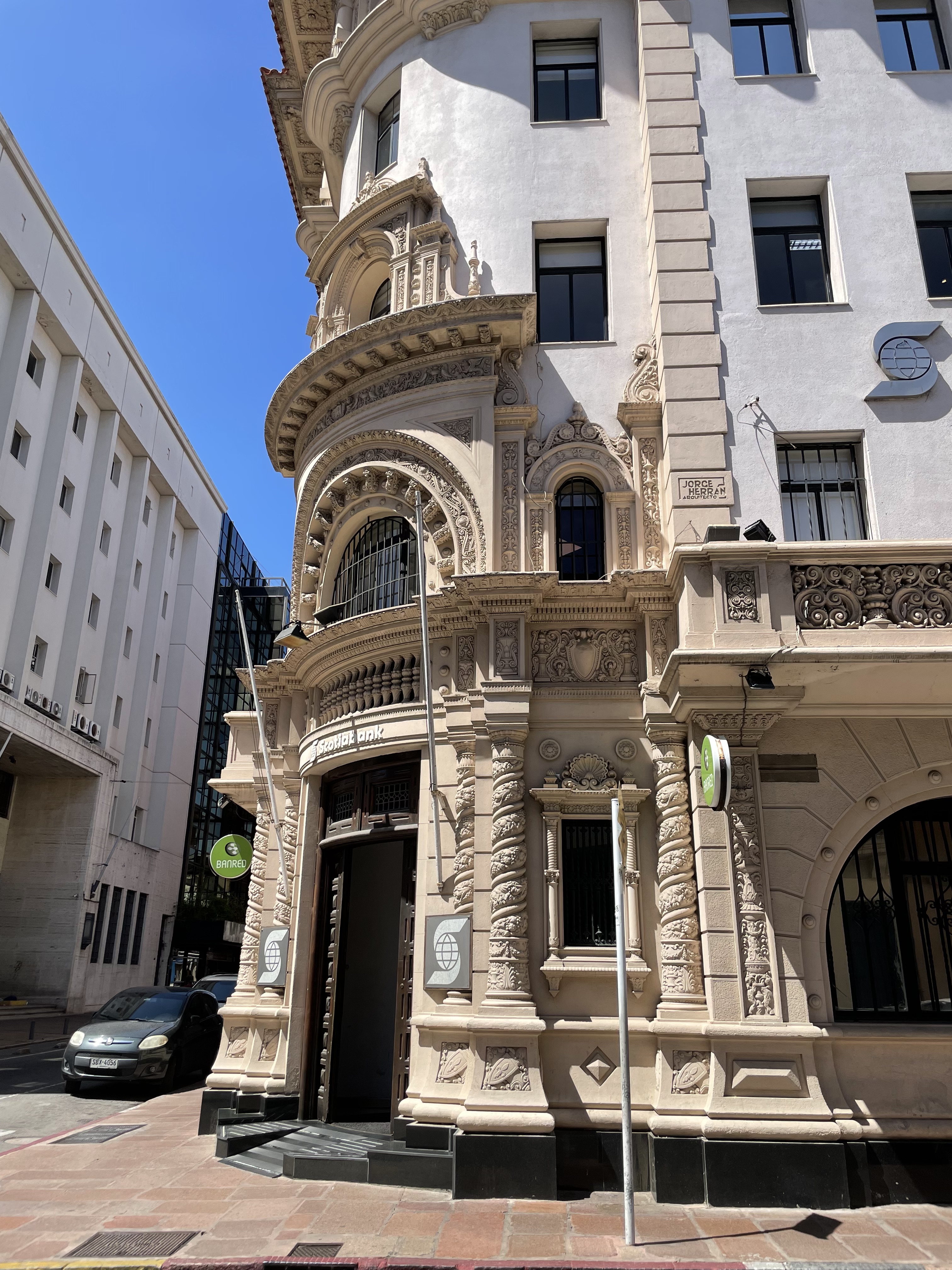
We landed in Montevideo at 9:30am and got to our lodging, the Alma Historical Boutique Hotel, in the old town by 10:30am. Our guide, Hans, told us he would be with us until we leave Montevideo. He spoke excellent English and was very knowledgeable. He waited for us to get settled into our room, which was a small space named for Geraldo Rodriguez, a composer of Tango music. The small inn was very much in the heart of the old city and perfect for walking around and meeting people. The weather was a perfect summer day, not too hot, when we walked in the shade, and a slight breeze. Hans told us the population of Uruguay is 3.5 million and that of Montevideo is 1.5 million. It is indeed a small country. Products they export include leather, meat, wool and agricultural products. They also have paper mills and timber and sell paper products and cellulose. The country also mines amethyst. Their biggest imports are vehicles and fuel. The country is 45% Catholic and there are about 20,000 Jewish people. The country has been a democracy since 1985. Hans shared a lot about the history of the country and I will try to remember some of it.

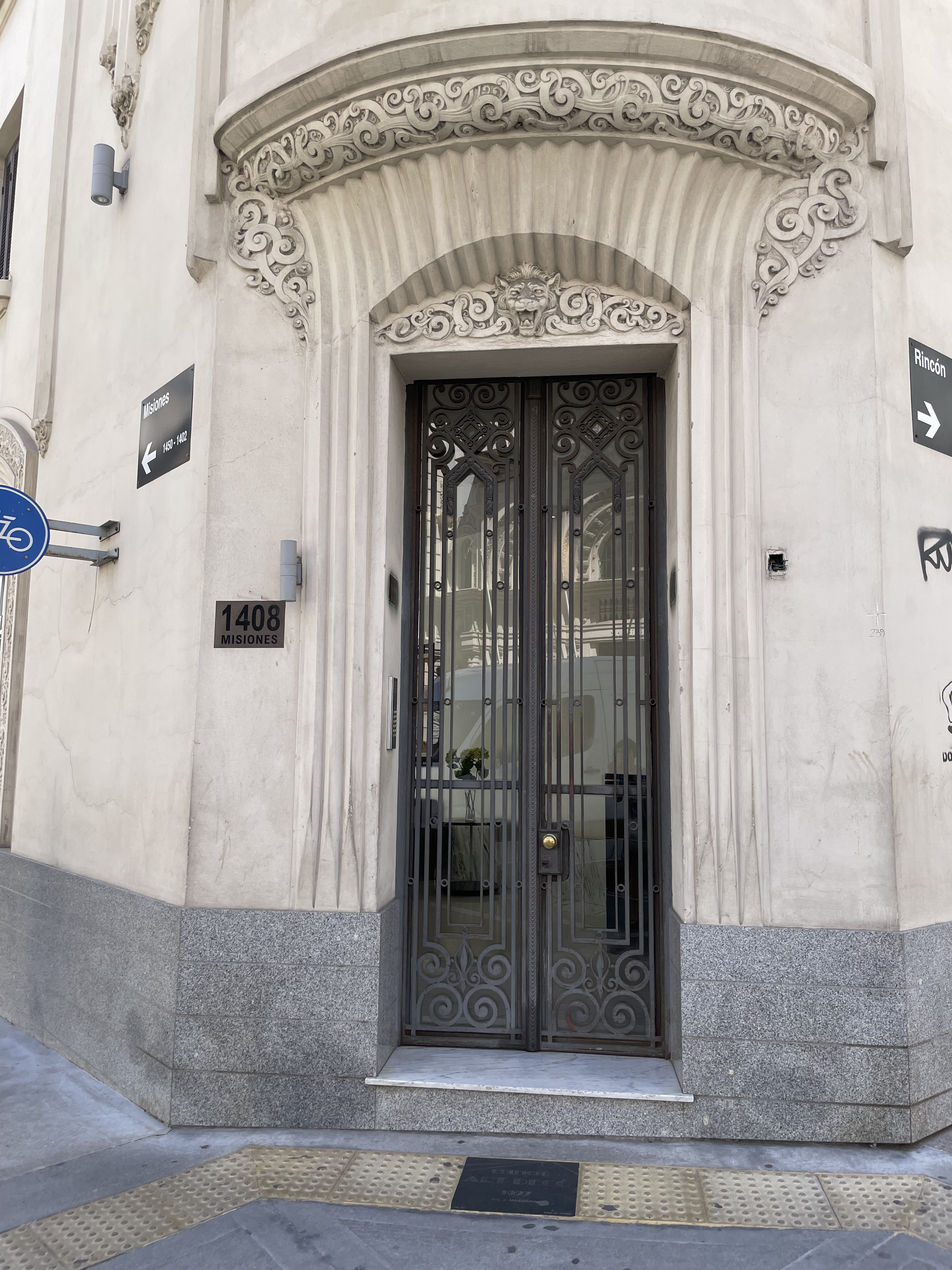
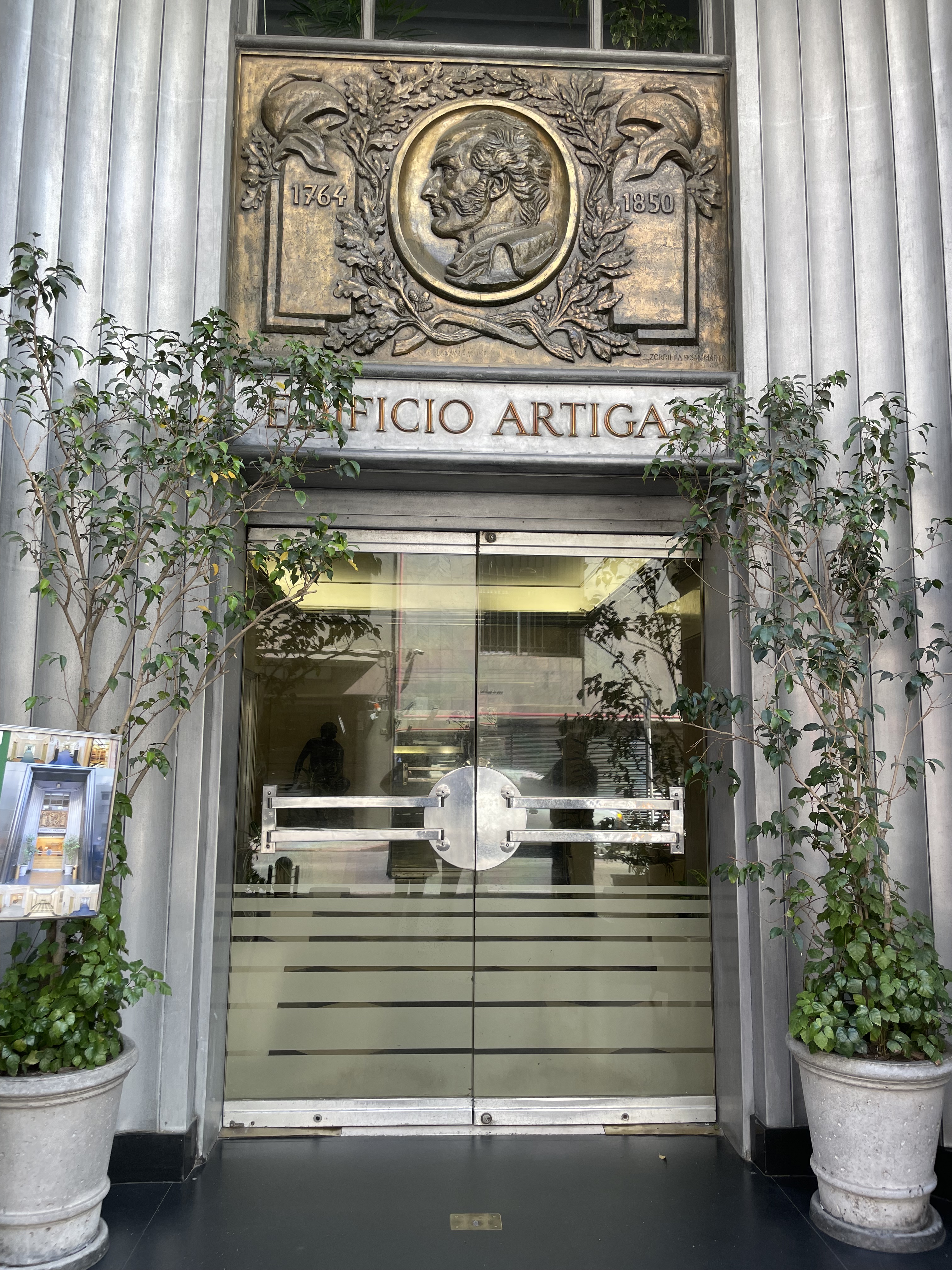
First of all we did a walk about the old town of Montevideo and saw buildings with different architectural styles, including colonial and European neoclassical. A dominant theme was Art Deco. The country was most prosperous during the 20’s and 30’s and Art Deco was big in that era. The only city with more Art Deco is New York. One particular building we stopped at was an Art Deco front with a frieze of Artigas.

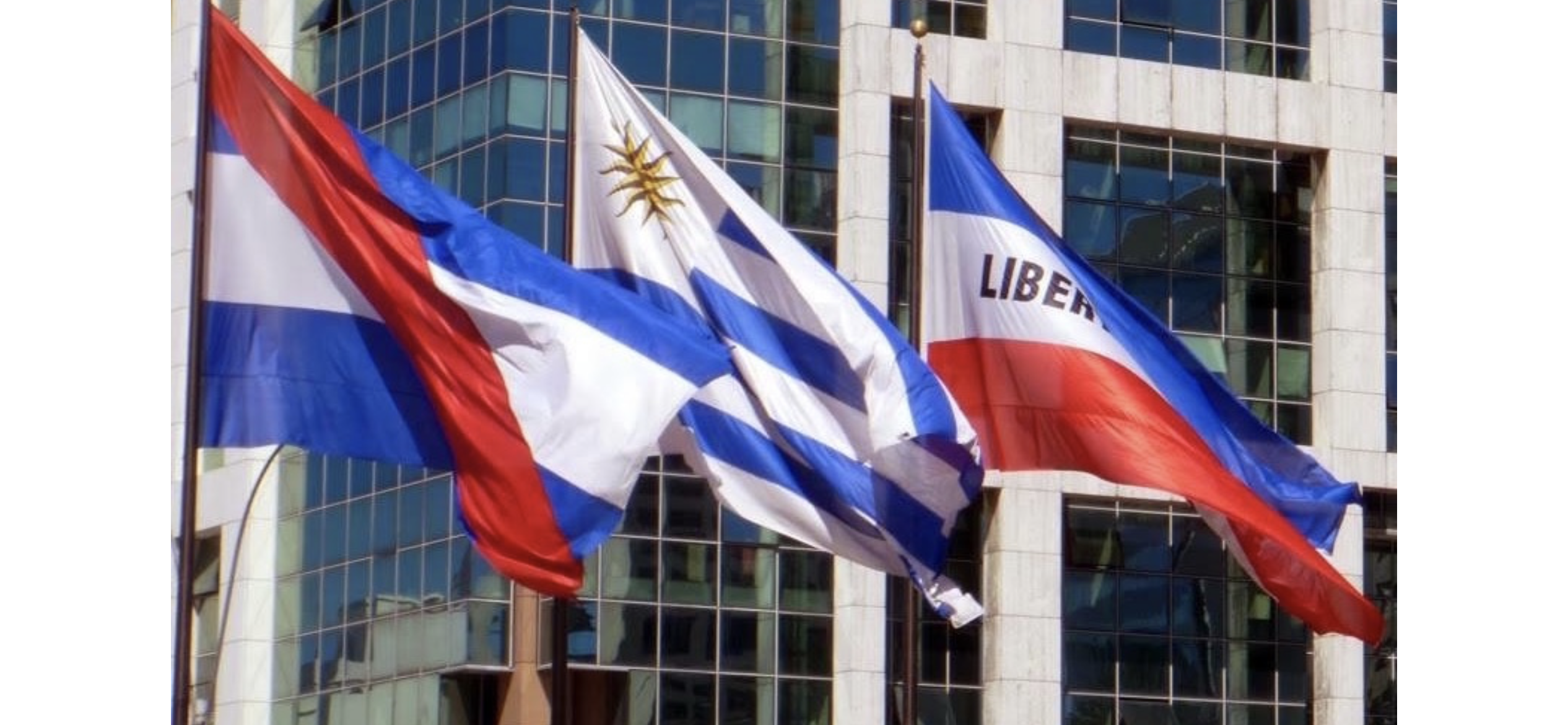
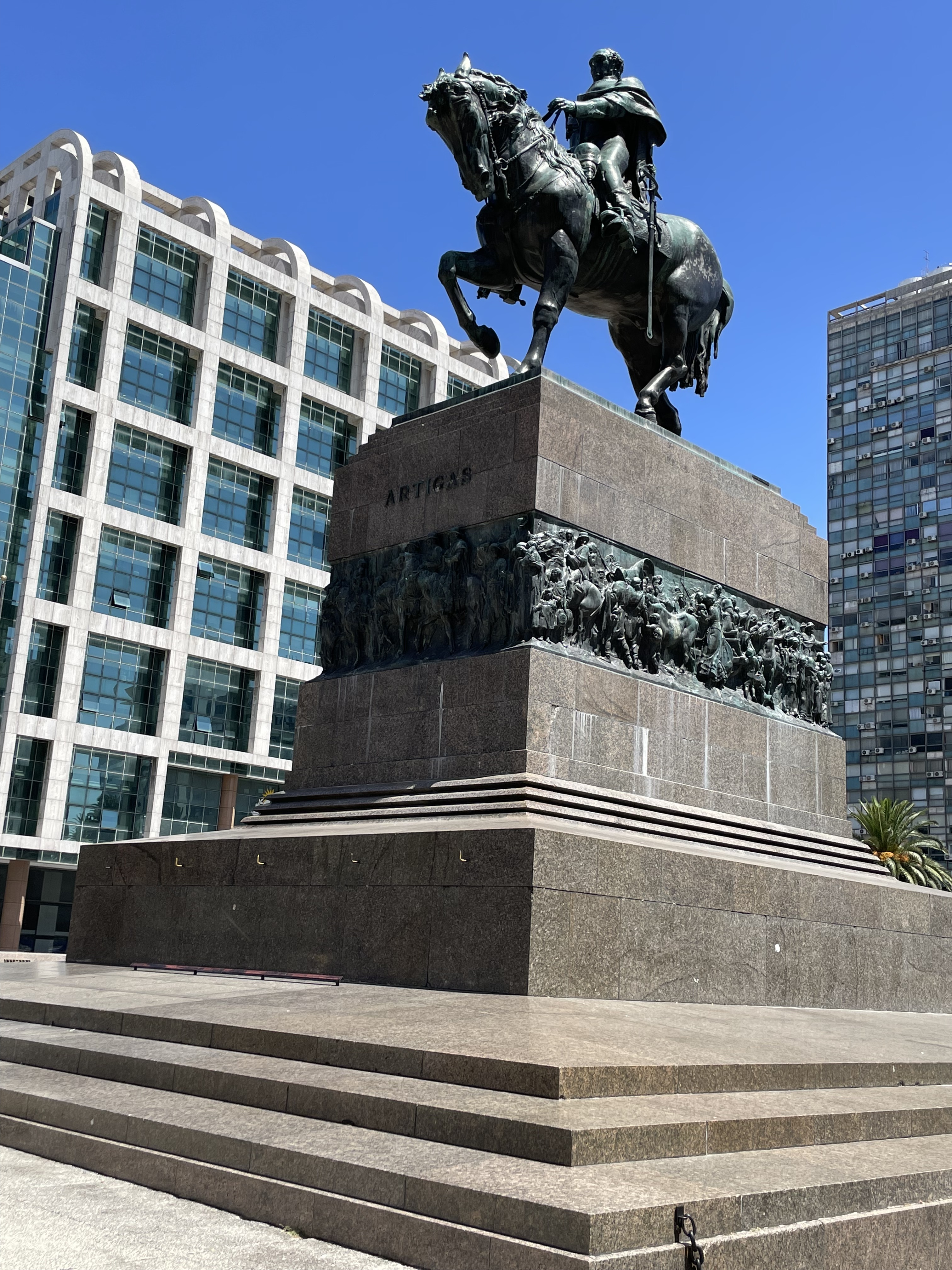
We stopped there awhile as Hans wanted to tell us about the man who was an Uruguayan hero and the father of Uruguayan independence, Jose Gervasio Artigas. He lived from 1764 to 1850 and was a political leader, a military general, and a statesman. Among other things, in 1815 he designed one of the three Uruguayan flags still used today. It is blue-white-blue horizontal stripes with a red diagonal stripe going from upper inner to lower outer corner of the flag, representing federalism. It is especially connected to the Armed Forces of Uruguay.

National flag is in the middle; Fag of the 33 is on the right and Artigas flag is on the left

Hans told us Uruguay is the only country in the world that has and uses three national flags. The primary flag was designed in 1828. It is white with 4 blue horizontal stripes. In the upper inner corner is a white canton with a golden sun with facial features and 16 golden rays.

The third flag is called the Flag of the 33 as it was used by a military group of 33 men that started the fight for freedom against Brazilian rule in the Oriental province, which is present day Uruguay. In 1828, after 8 years of being a Brazilian province, Uruguay’s independence was recognized. THe flag is a blue-white-red tricolor. On the white stripe is written LIBERTAD O MORTE (Freedom or Death).

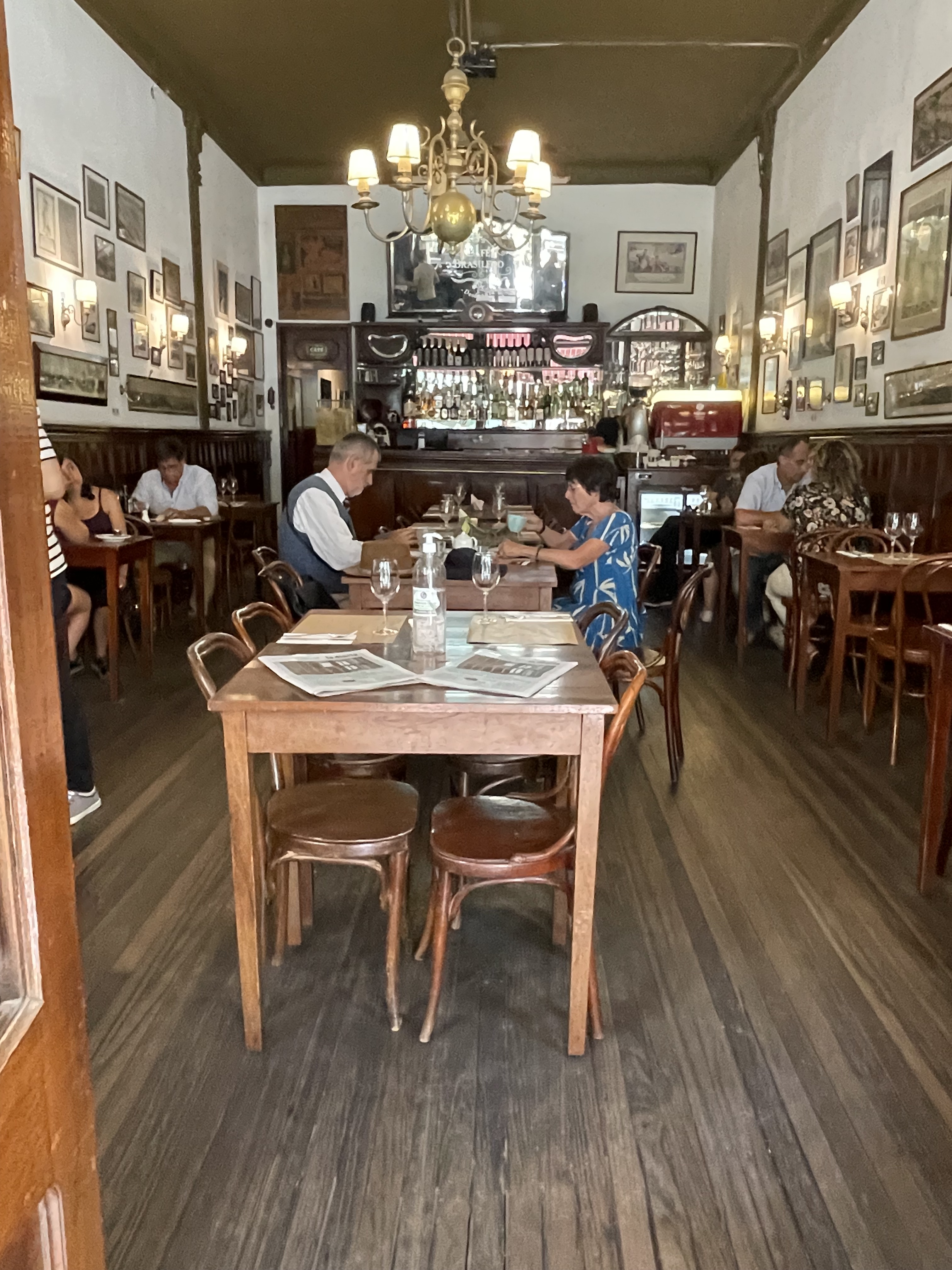
We stopped at Cafe Brasilero, an Art Nouveau establishment dating from 1877, serving Brazilian coffee. The photos on the walls were most interesting. There was even one of Audrey Hepburn.

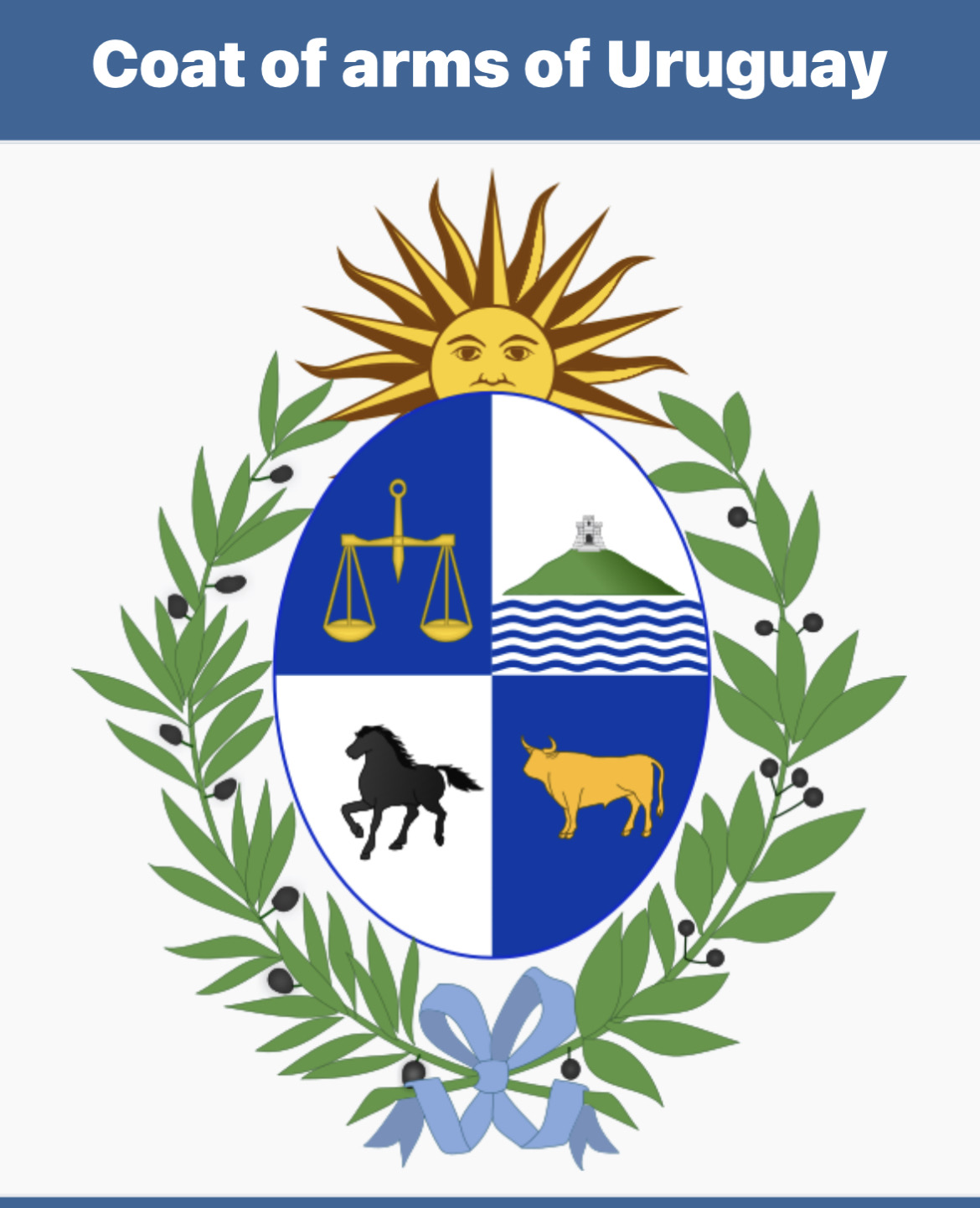
We learned that the name Uruguay comes from the river by that name that marks the western boundary of the country. It was named by indigenous people, who called it the River of Colorful Birds, or Uruguay. Although there are only 3.5 Million people in Uruguay, there are 12 million cows. The country is mostly flat and green and great for cattle. The tallest hill in the country is 1514 meters. The Coat of Arms depicts agriculture, commerce, the sea port, sunshine and forestry, all of which have served the country well.

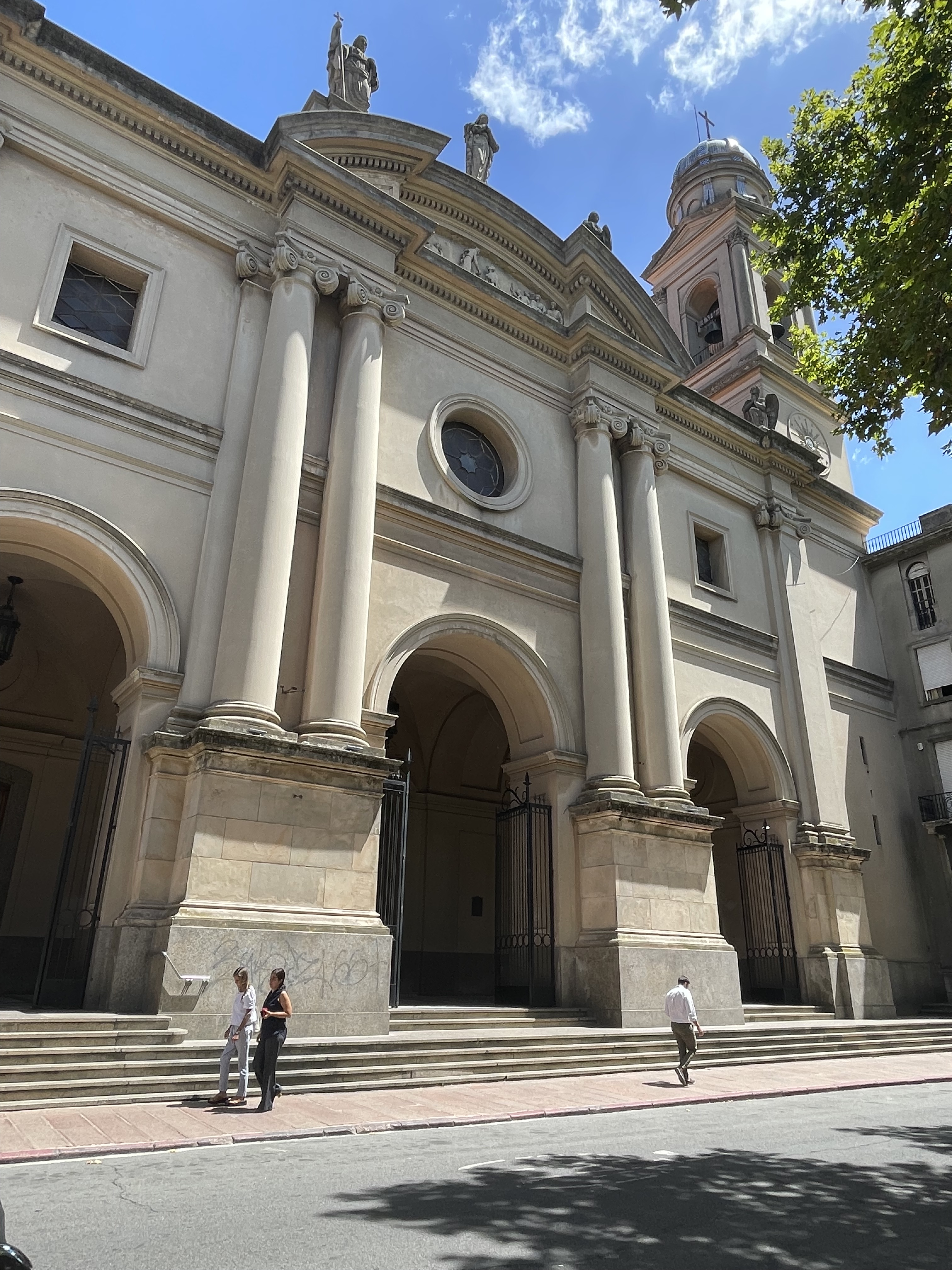
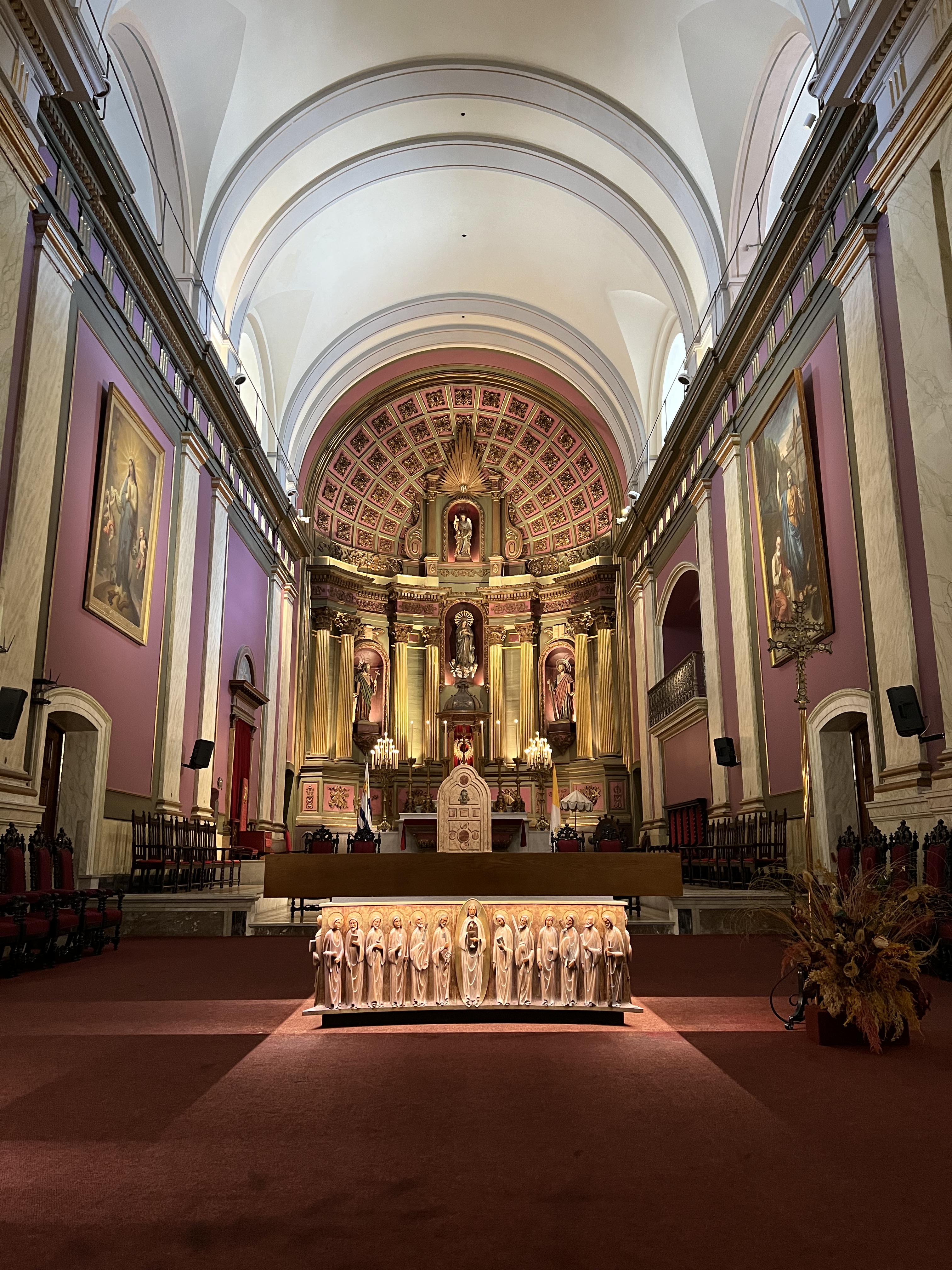
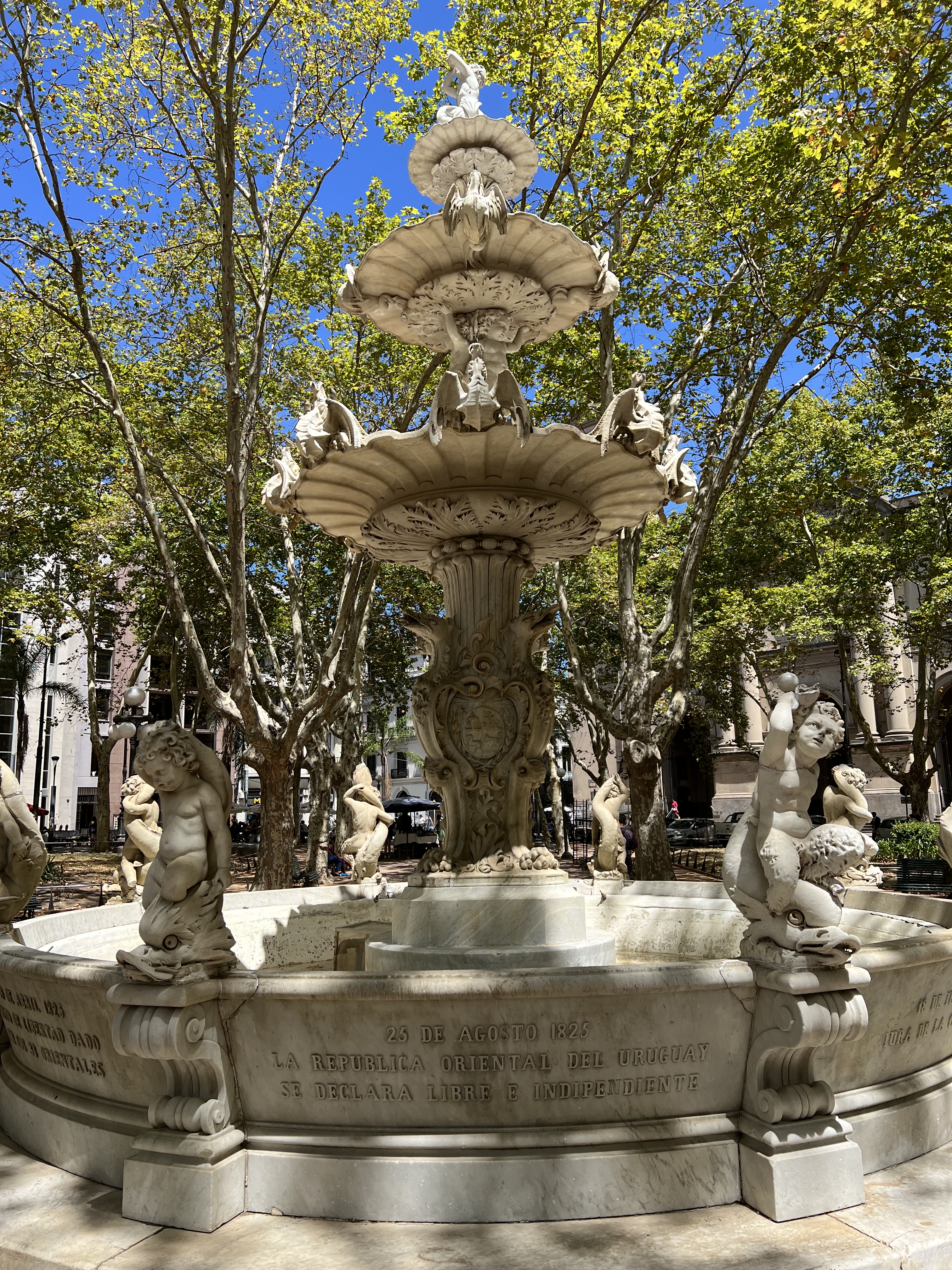
From the Cafe, we walked to Matriz Square, the first open space in the Fronting on it is the Colonial style Metropolitan Cathedral. It has a beautiful modern alter. In the center of the square is a fountain built to commemorate the coming of potable water to the town.

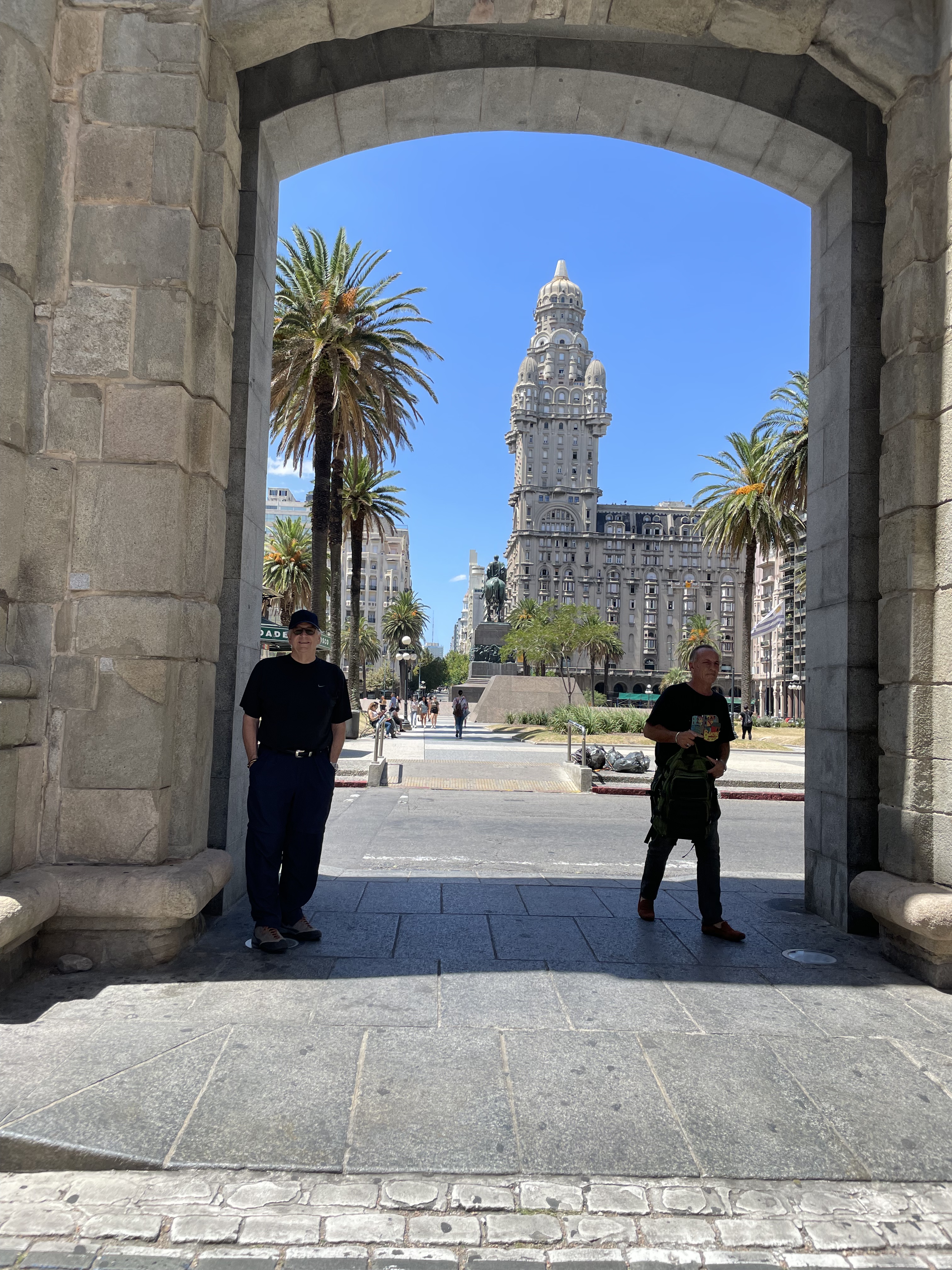
The city was founded in 1724 by Bruno Zabola, who kept the city from the Portuguese. The far side of the plaza is a remnant of the town’s original fortifications, built in 1742. Looking through the gate into Independence Square, we see a beautiful eclectic building called Salvo Palace. The horse rider statue in the middle of the square is of the independence hero Artigas, 1764-1850, who is buried on the spot. Behind the statue is a modern building called the Executive Tower, built in 2009.

Meanwhile, in 1680, the Portuguese founded a town they called Colonia del Sacramento directly across the Rio de las Plata from Buenos Aires and north of Montevideo. The fresh or “sweet” water, Rio de la Plata was discovered in 1516 by Juan Dias Desolys.

Buenos Aires was founded in 1536, but burned down and was rebuilt in 1580.

In 1806-07, the British invaded Uruguay and Argentina, but the local Spaniards fought them back. In 1816 the Portuguese took all of Uruguay by land and sea. Brazil gained its independence in 1822 and, in 1825, Brazil fought the Portuguese. In 1828, England, Argentina and Brazil made a contact to create a new state, which they named the Republic Oriental of Uruguay. Oriental meaning all the land east (or oriental) of the River Uruguay. The official date for the creation of the country is July 18, 1830. The Main Street tin the city is called “18 July”.

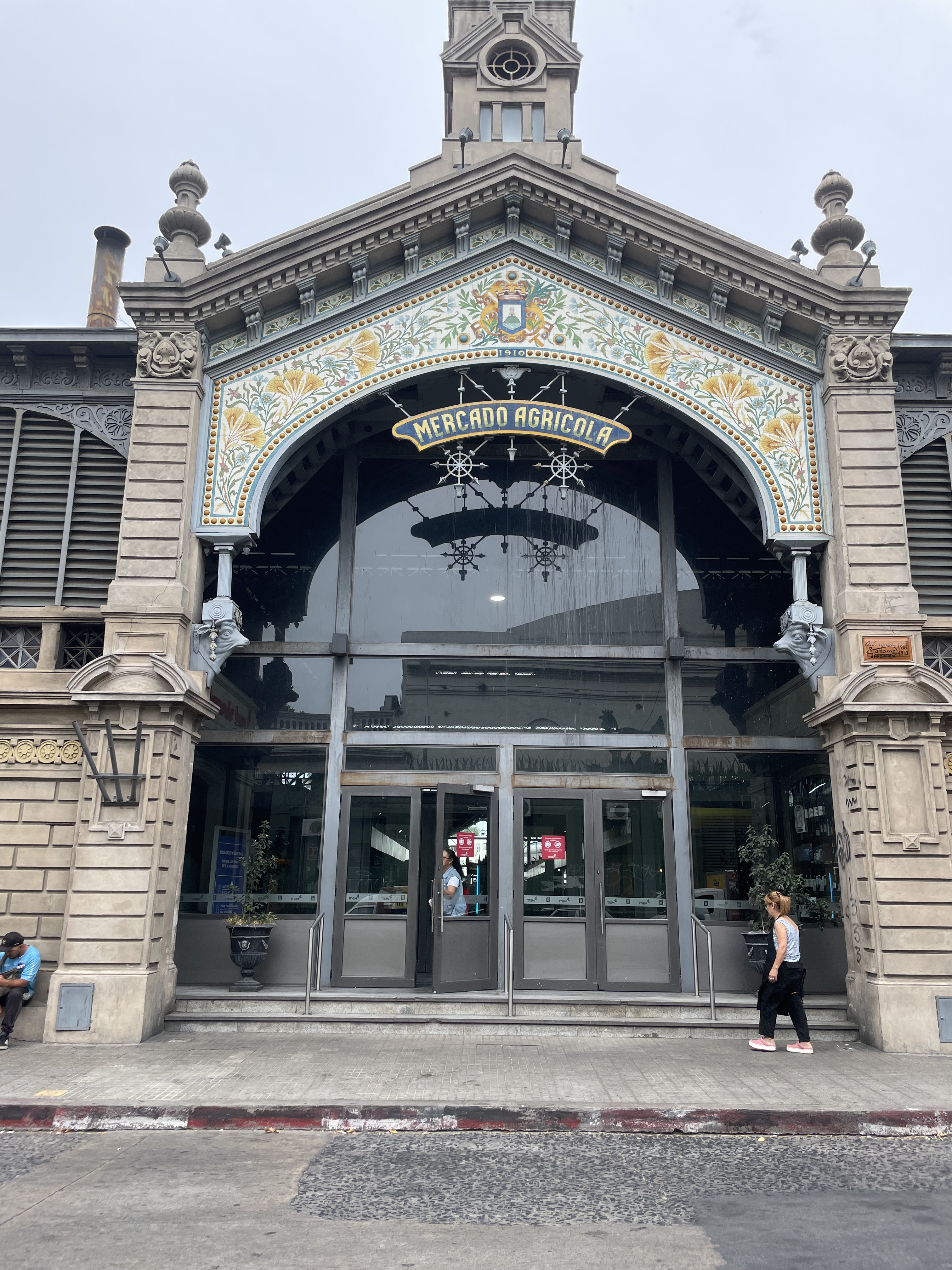
We did a lot of walking and eventually took a city bus to get us to the Mercado where Hans wanted us to have lunch in one of his favorite places. It had been a fish market before the Mercado was converted into a collection of restaurants. I had pasta with fish and Mark had fish and rice. Both were good, but huge portions. Hans told us to get to go boxes so we could give the extra food to the homeless, who hang out around the place. It was the perfect solution. After the hand off, Hans walked us to our hotel and departed. I worked on the blog and Mark went to a shop Hans had recommended to buy a leather bag for himself. The store was owned by a Jewish woman and Mark had a nice conversation with her.

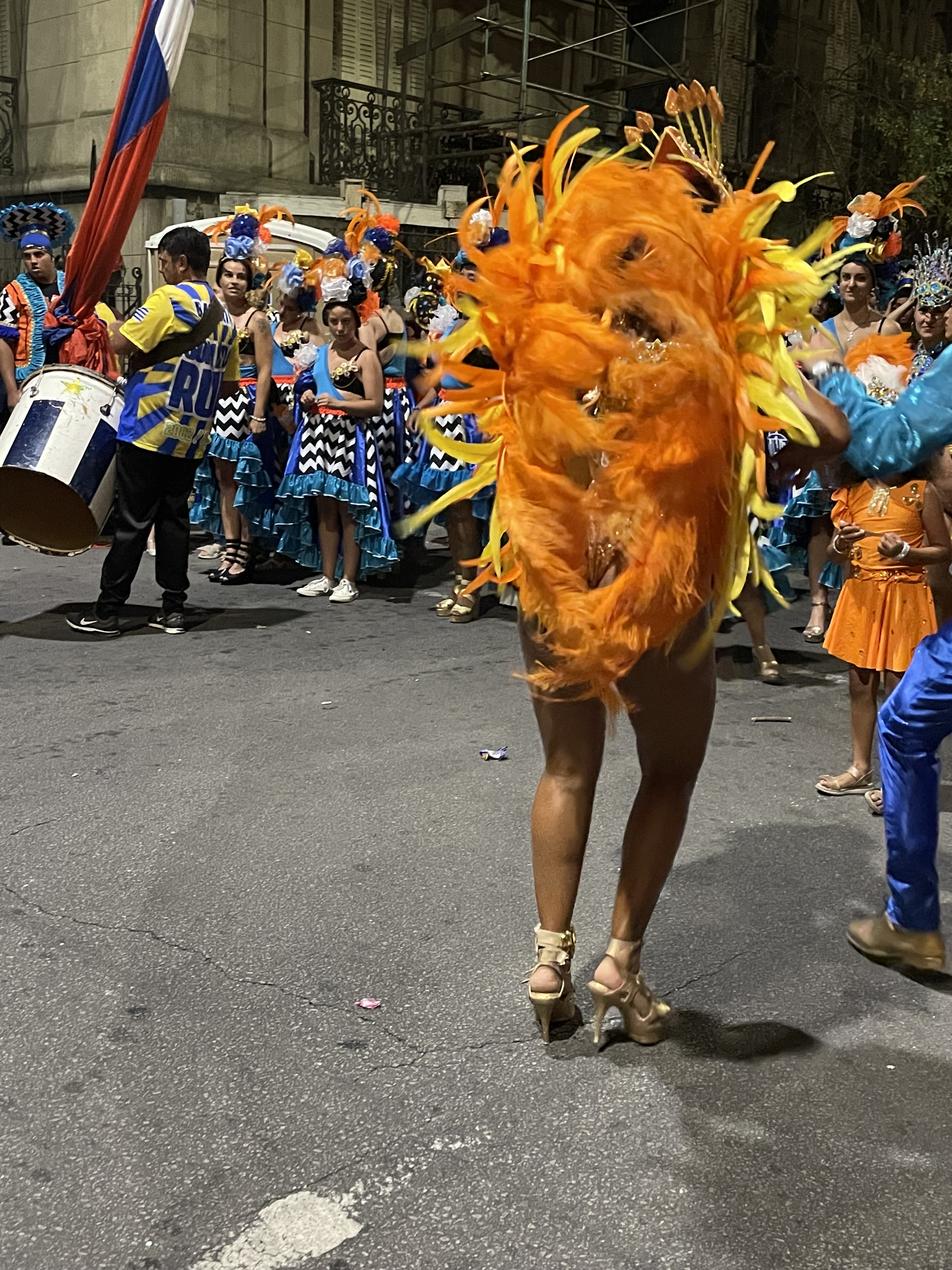
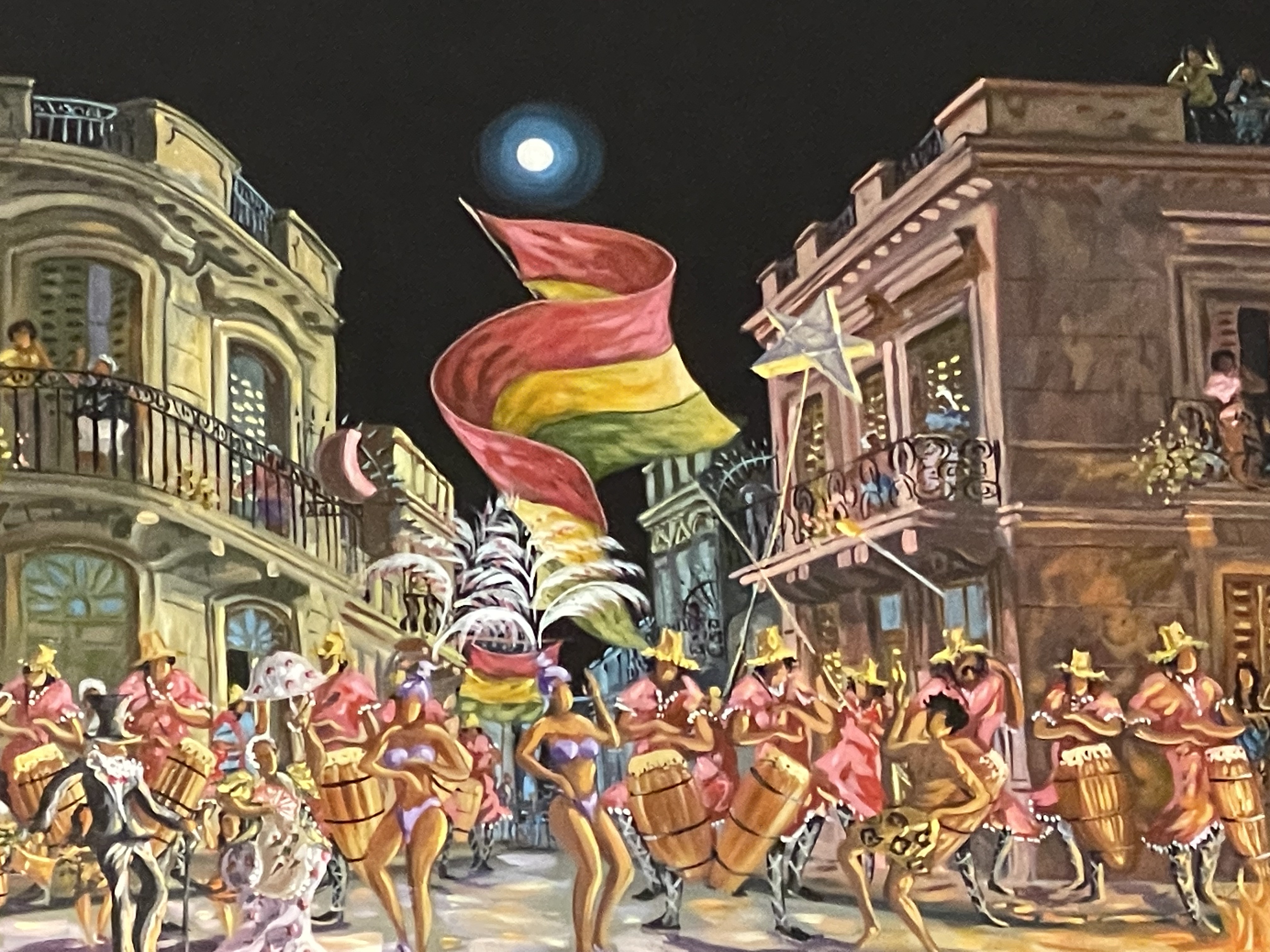
Painting of a typical carnival parade. It looked a lot like the parade we watched

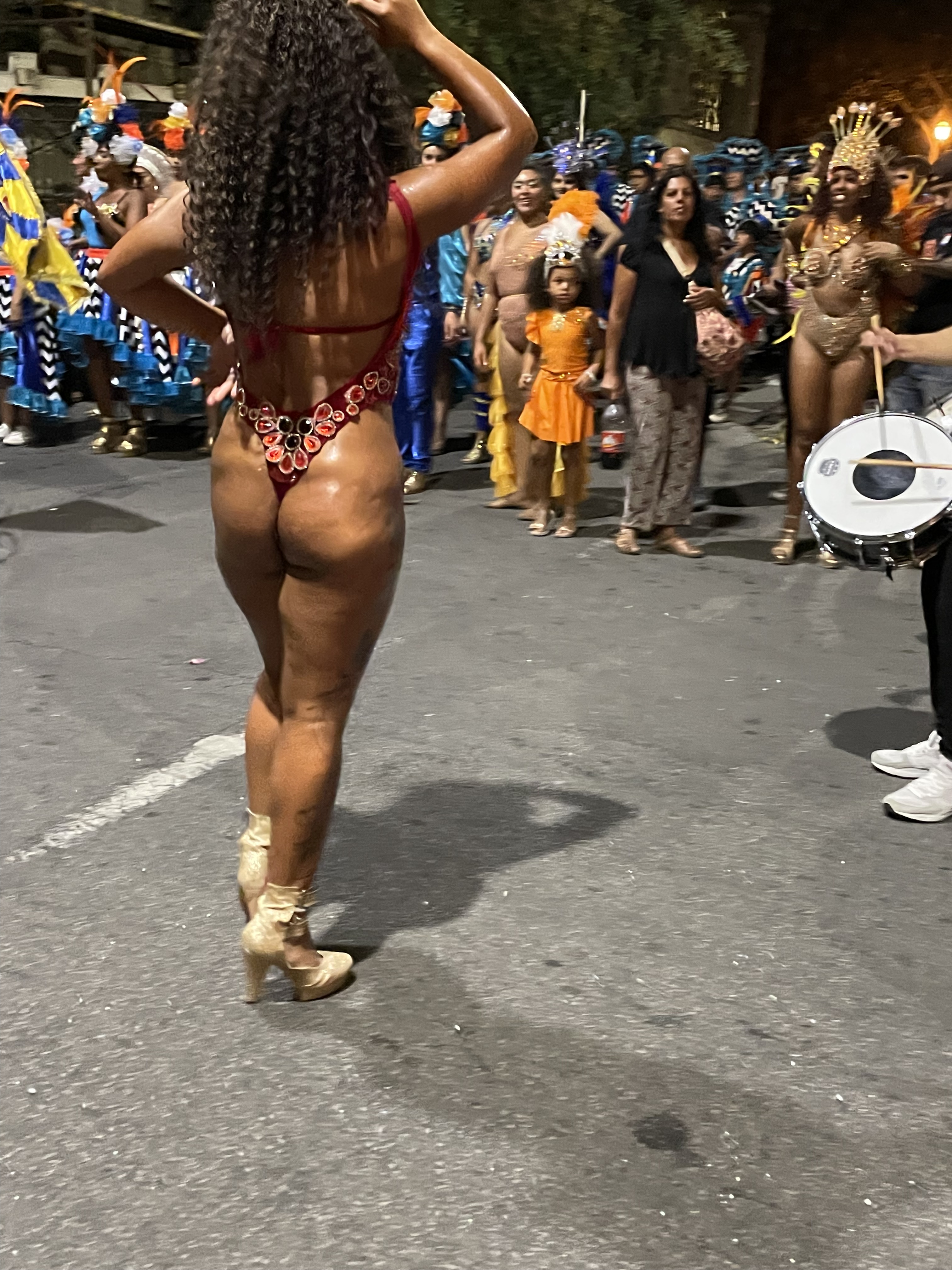
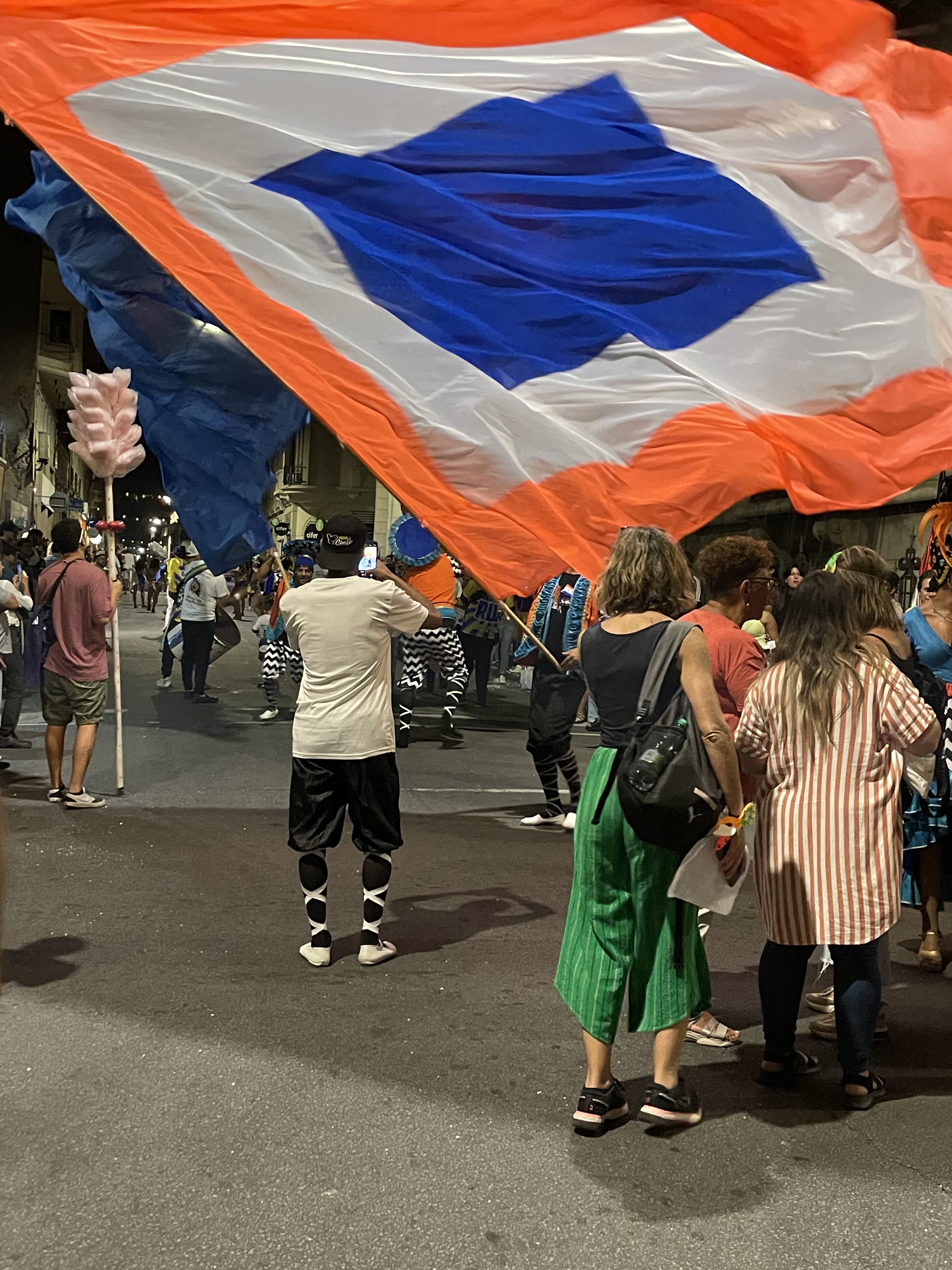
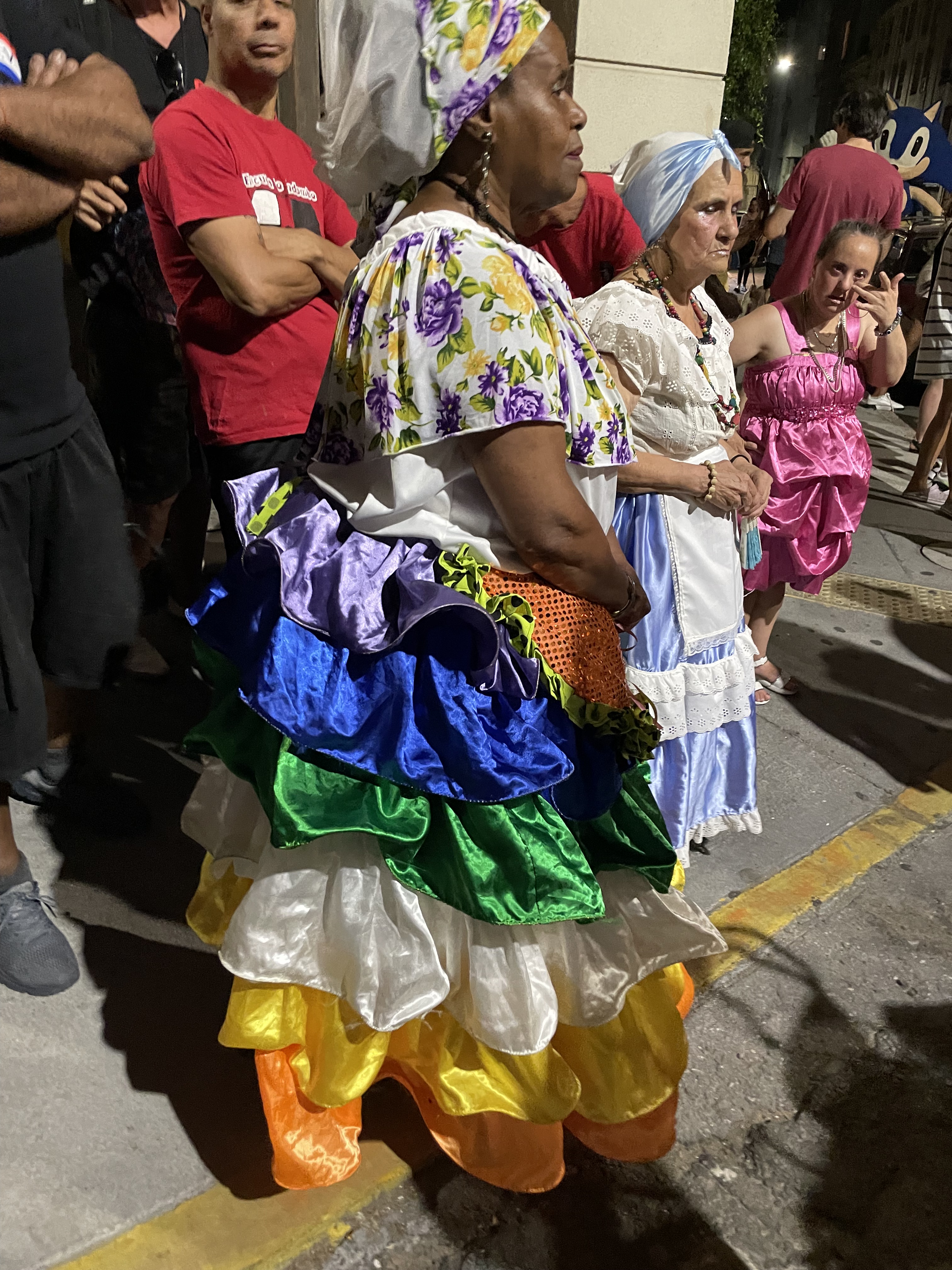
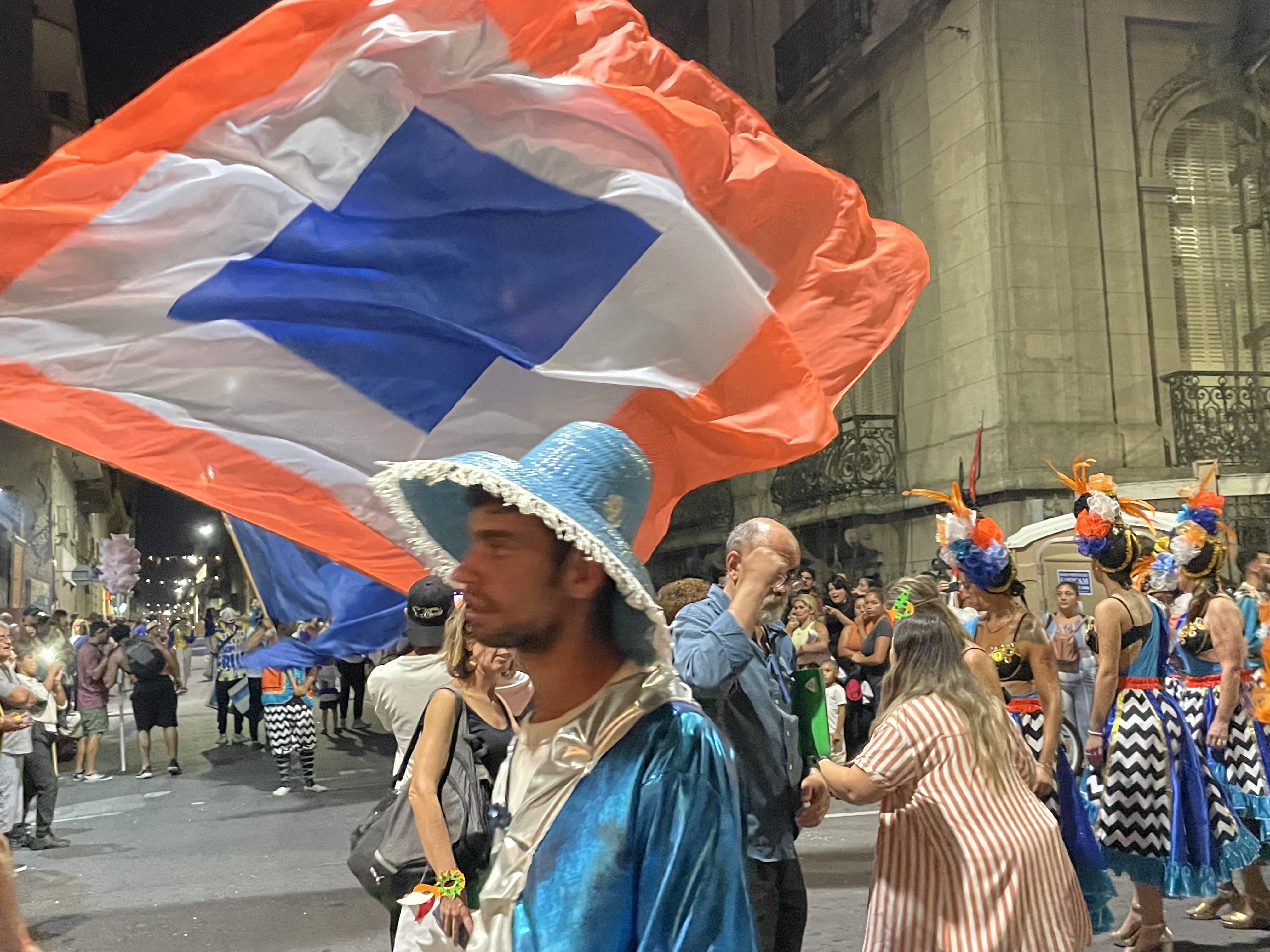
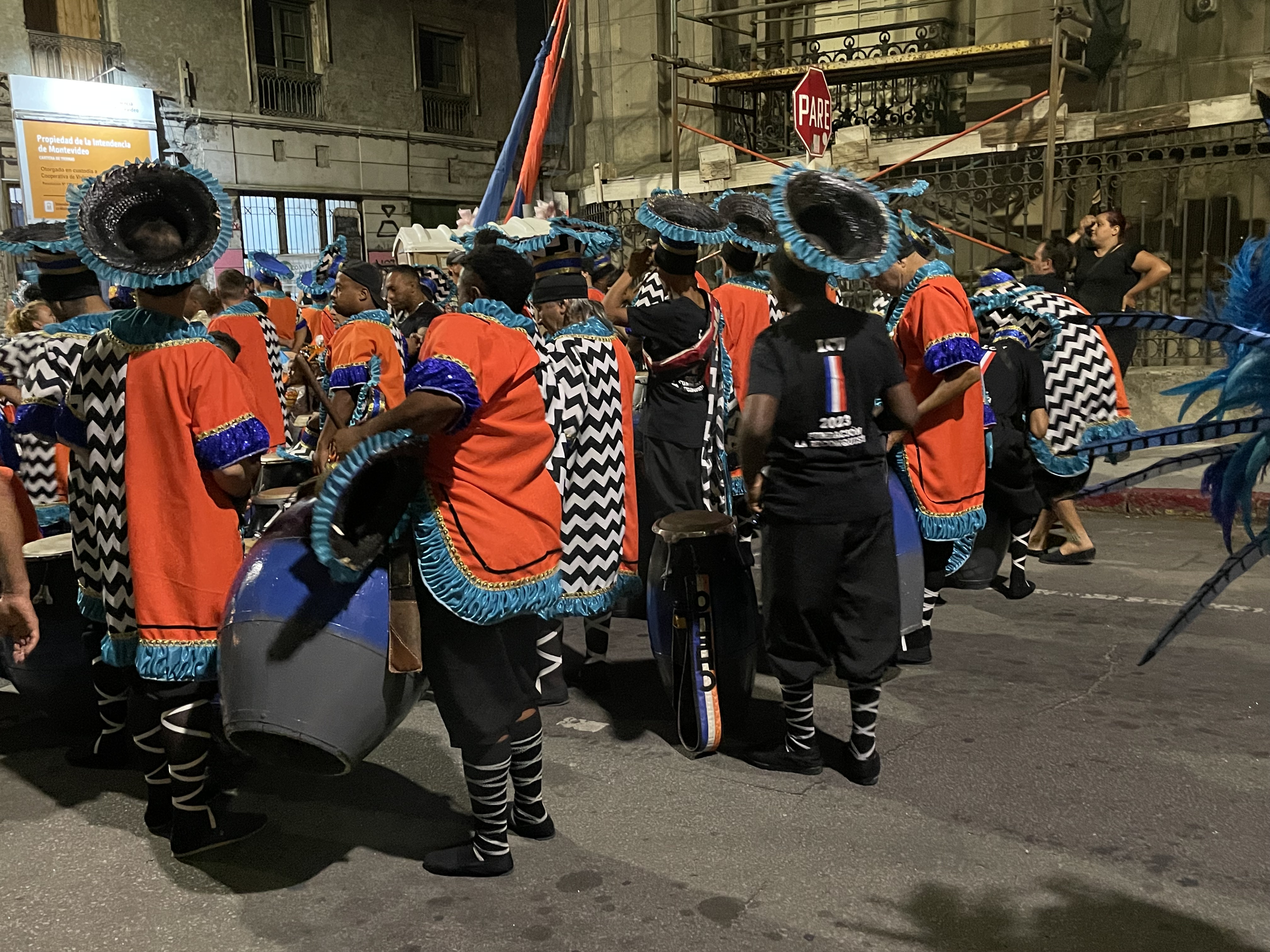
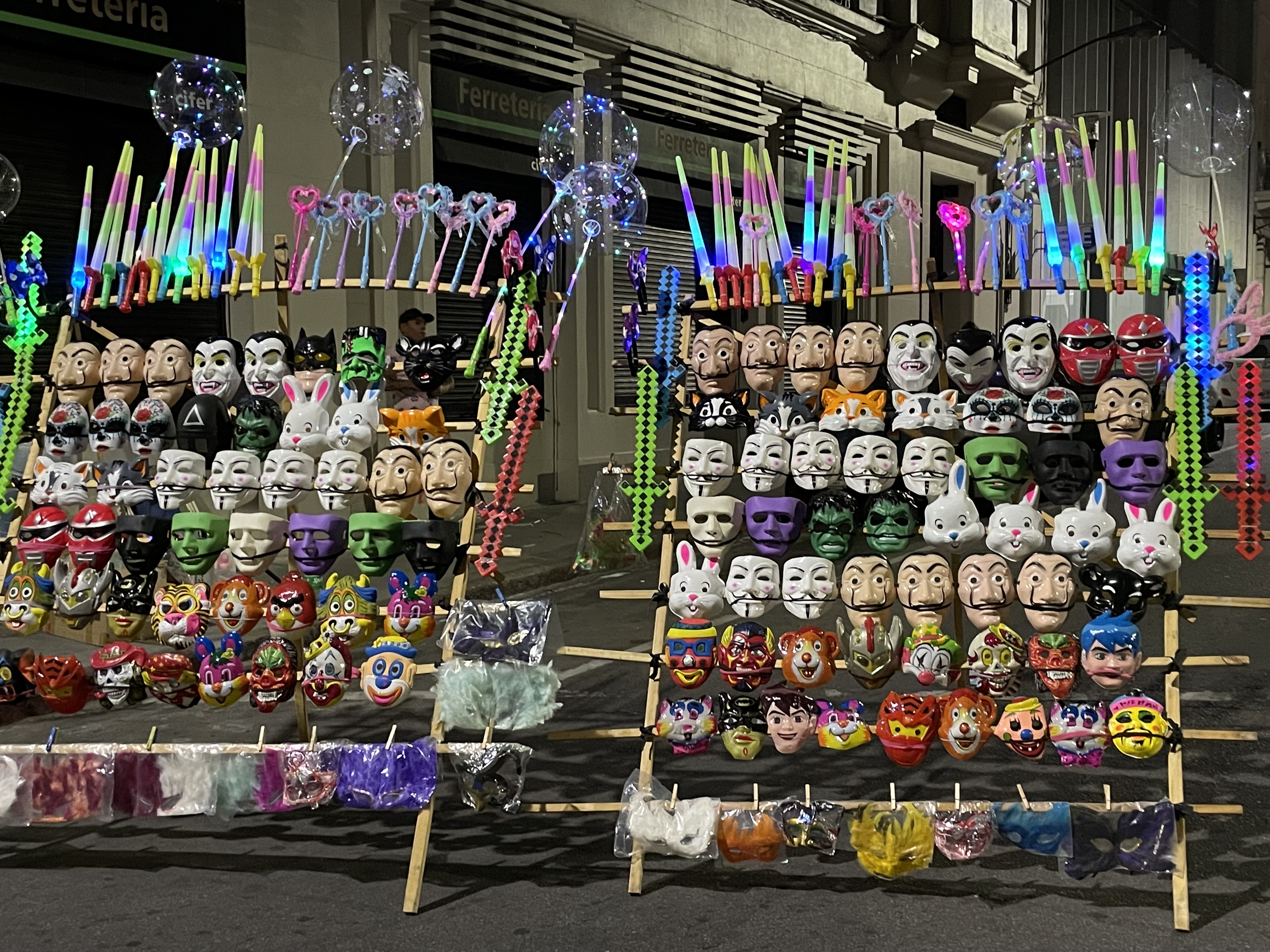
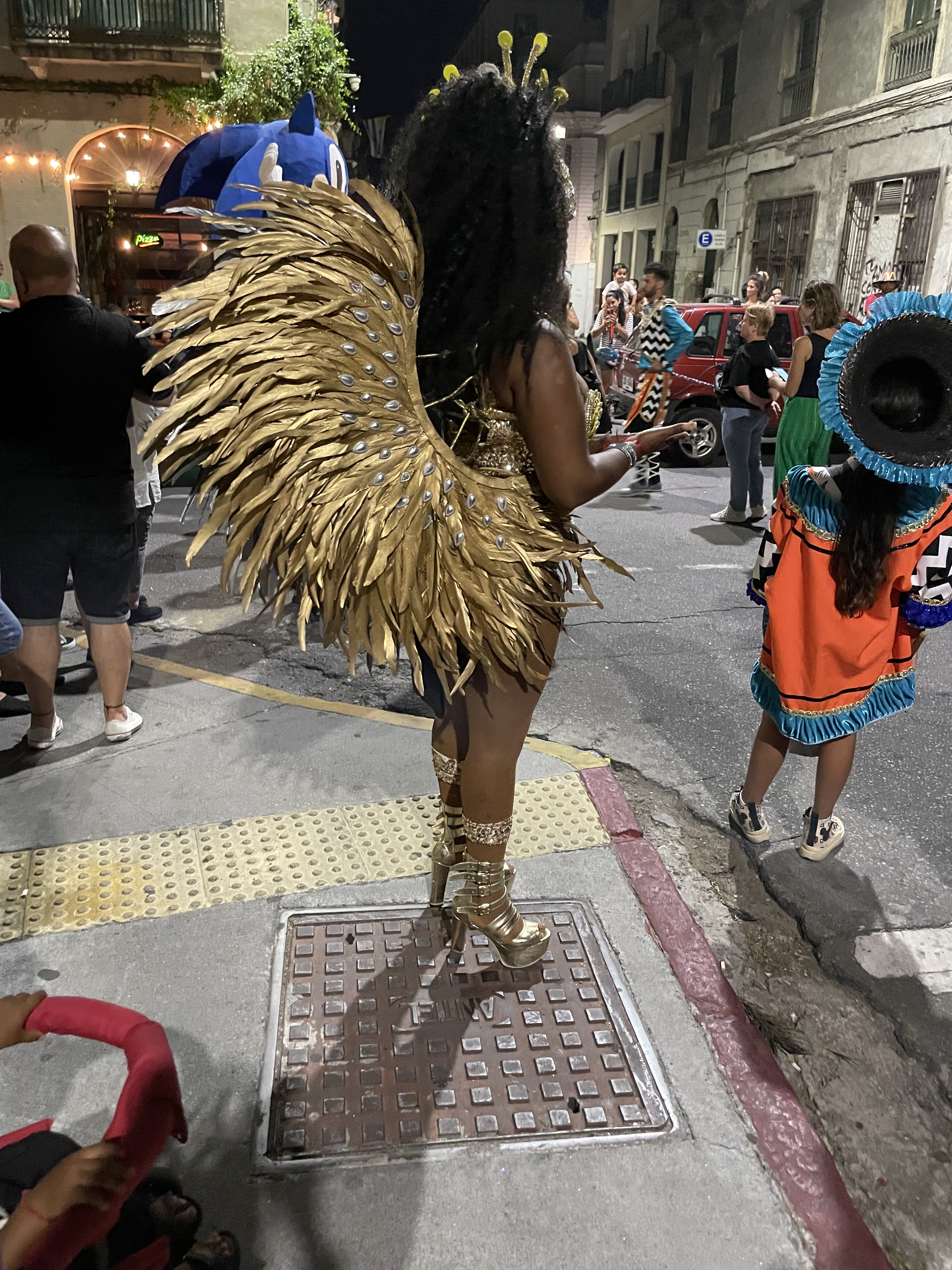
We were so full from lunch that we decided to pass on dinner. I was still working at 8:30 when we began to hear loud music outside our 4th floor window. A crowd was gathering until it was obvious that something organized was happening as floats arrived along with people in costumes. Drumming became intense, so we went down stairs to watch the activities. Turns out a Carnival parade was developing and our street corner was the starting point. It was fun to watch as they formed up and marched off one group at a time. About 9:30 we got a little hungry and dropped in at a local cafe, Jacinto, and had some of the best gazpacho we have ever eaten. While there we met a Brazilian couple who spoke good English and we had a fun conversation. Soon the parade was really getting rolling and by 10:30 it was all over. I could hear the drumming fading away. It had been a lovely day for weather. Not too hot, or windy–a very nice day. In the morning the port-o-potty was gone and the street totally cleaned up.

Tuesday, February 16, 2023

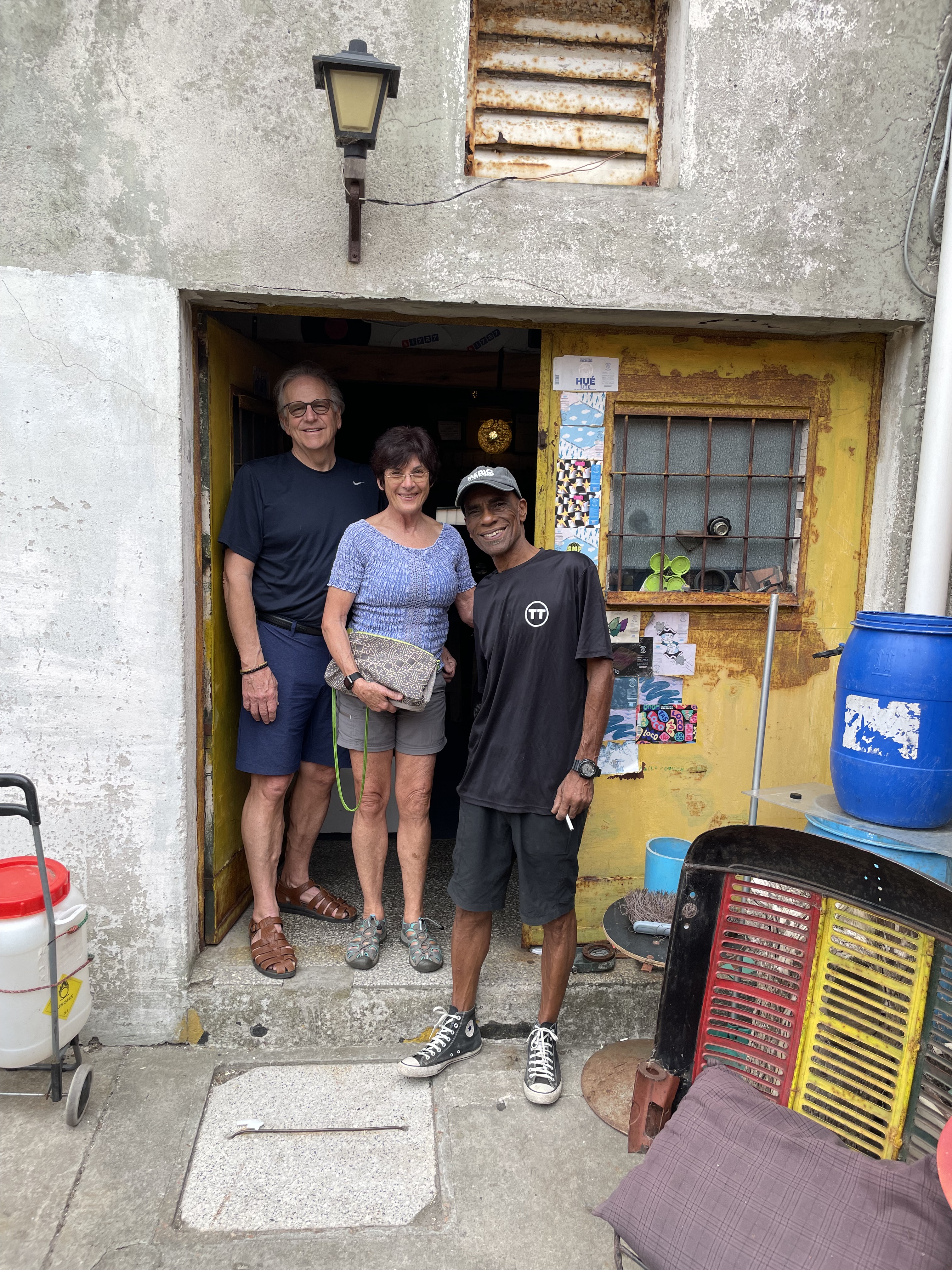
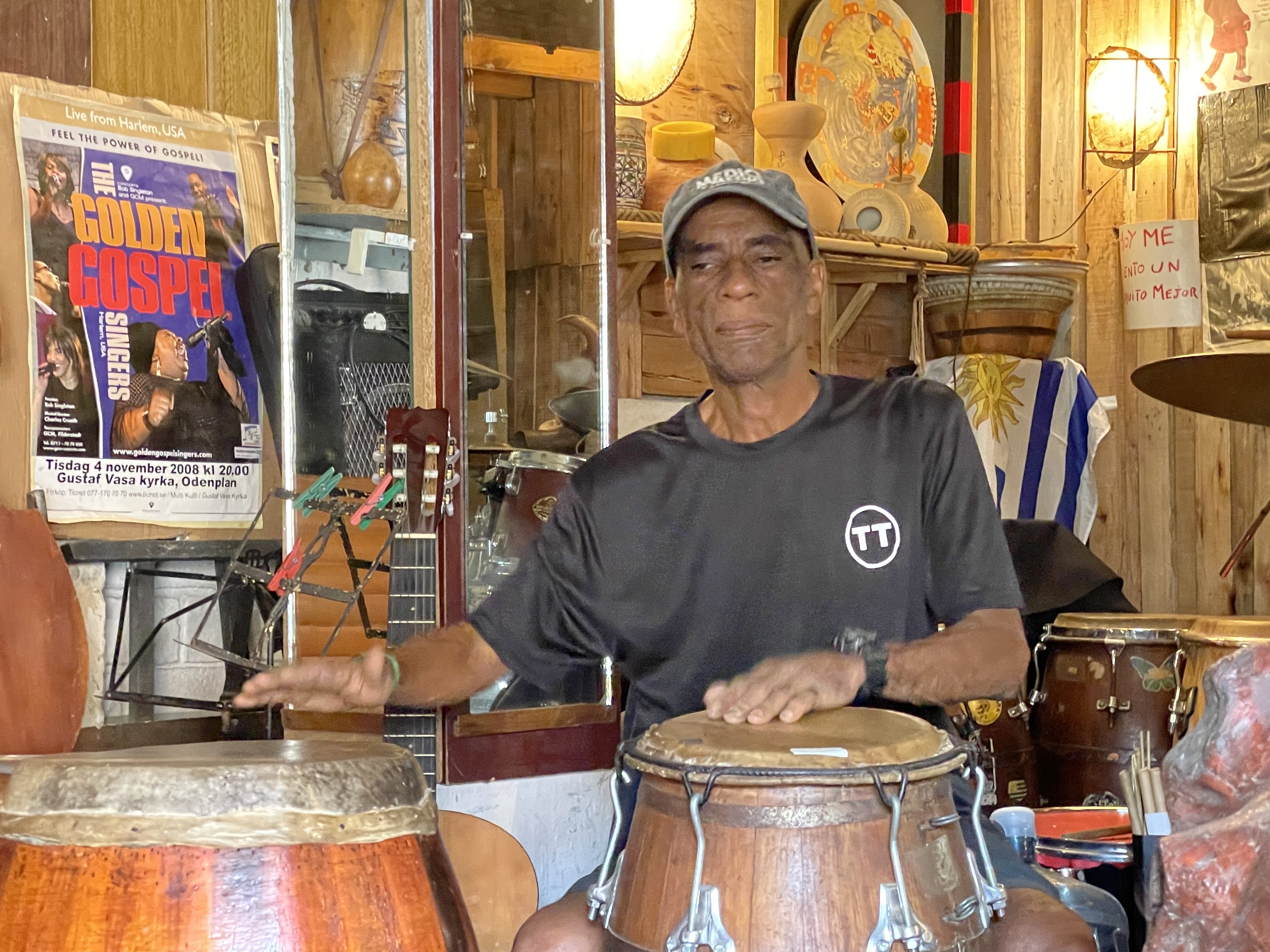
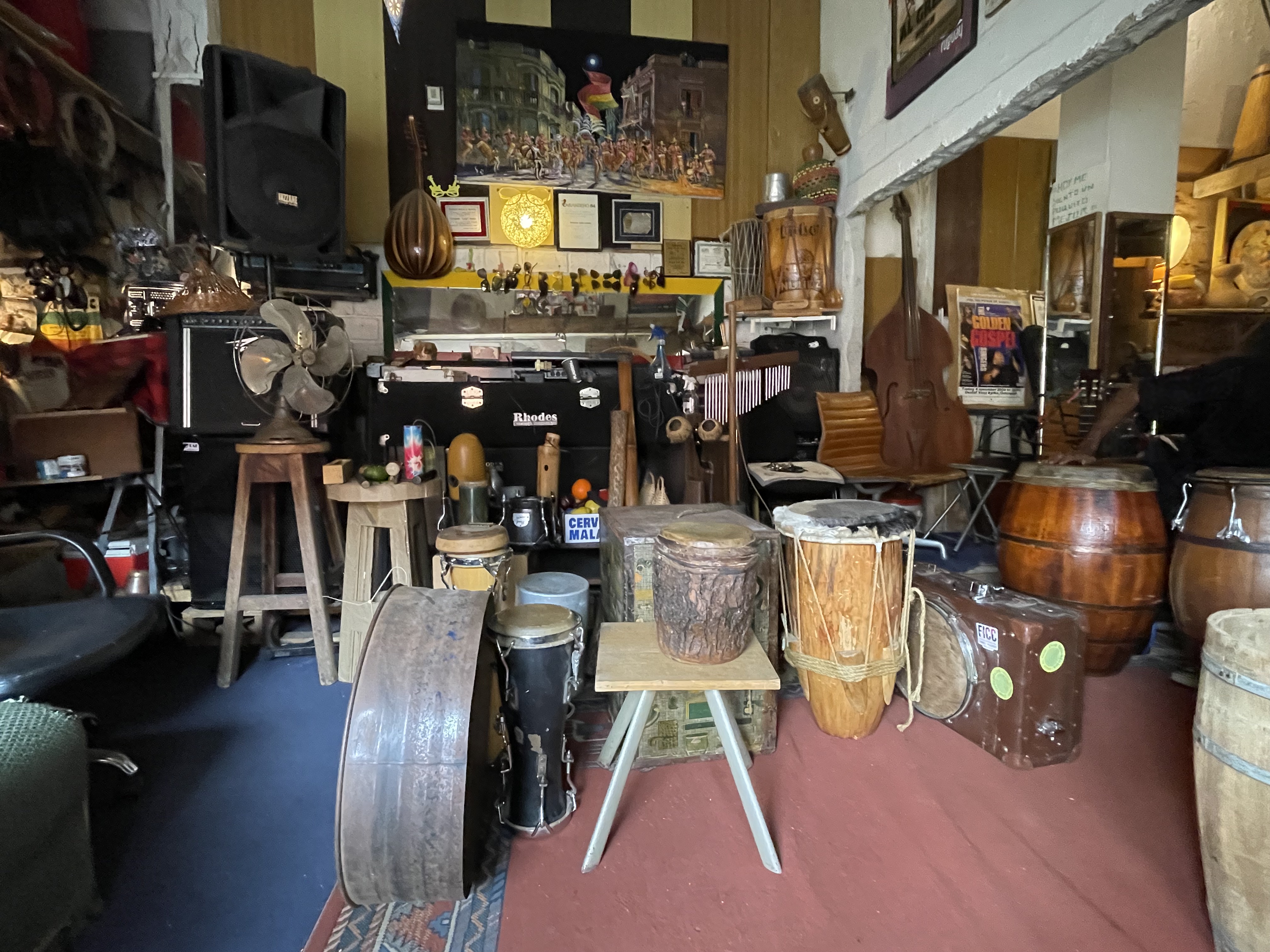
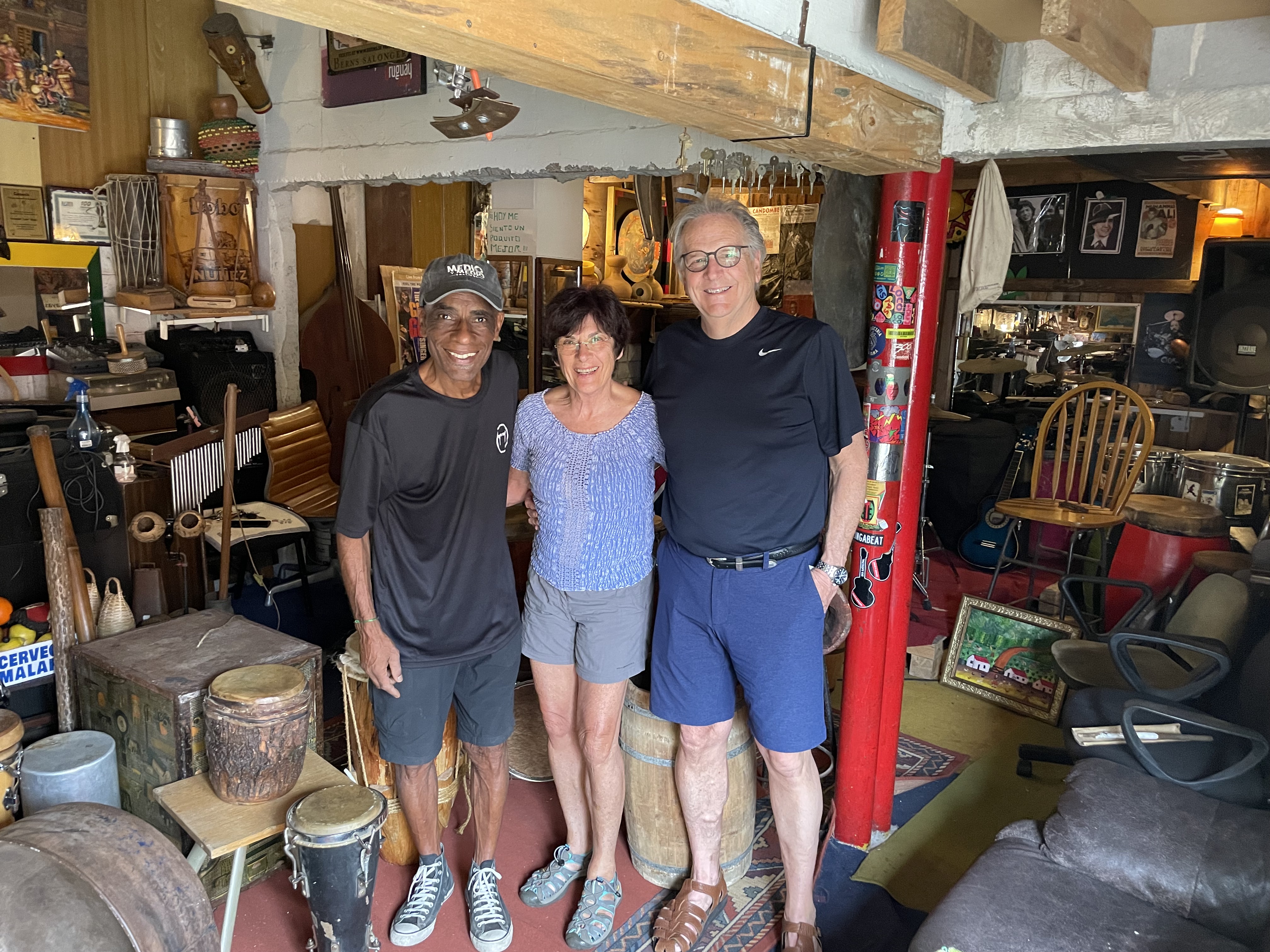
Hans picks us up at 9am for another sightseeing day. The weather started out ok but was cooler and a bit windy. This day is of the city at large with less walking. We started with a scheduled visit with a famous drummer, Ferdinand “Lobo” Nunez. He met us at his workshop called “El Power”. It had been in his family since 1837 and was where his ancestors, enslaved people, bought their “freedom”. As a way of living they made brooms that were sold on site. His grandfather was a prominent musician, who taught him how to play the drums along with his father. The workshop was full of musical instruments that make a multitude of sounds. He demonstrated a number of them to us and some of them made us laugh. In addition to playing in a group, he teaches drumming and manufactures drums as well. He makes them from pine planks that are shaped into curved staves, chamfered, assembled and polished. Then rings are placed and sliced. He is very proud of the wonderful sounds his drums make and played some candombe music for us on three different drums. It is lovely style to listen to whether played loud or soft. He made a drumming convert of me. He talked about his personal history, especially how his own children are learning to play in a group with him. We happened to show up on his 67th birthday and he recollected that Mick Jagger had showed up to celebrate his 60th birthday with him. We shook hands and got a nice photo.

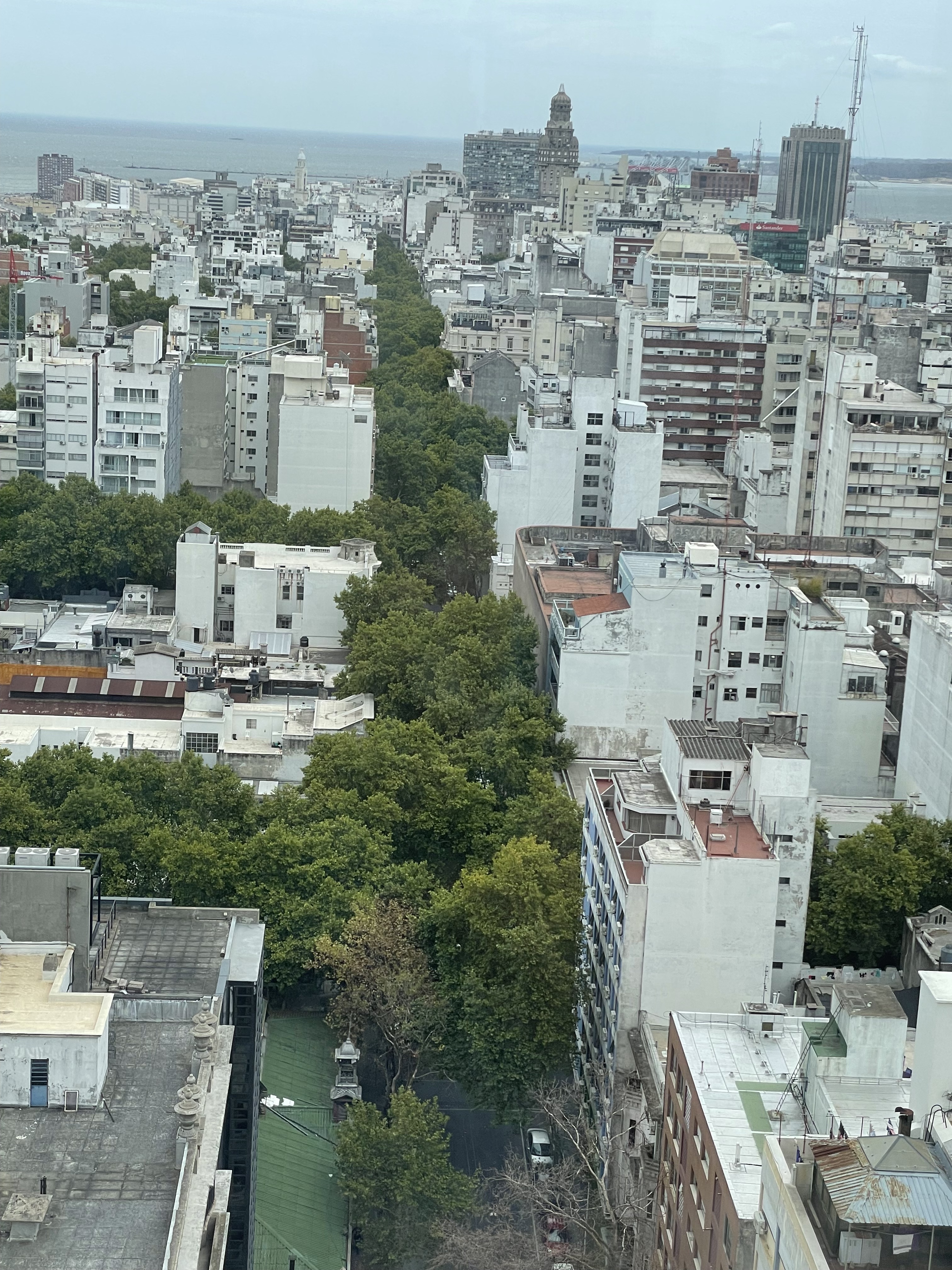
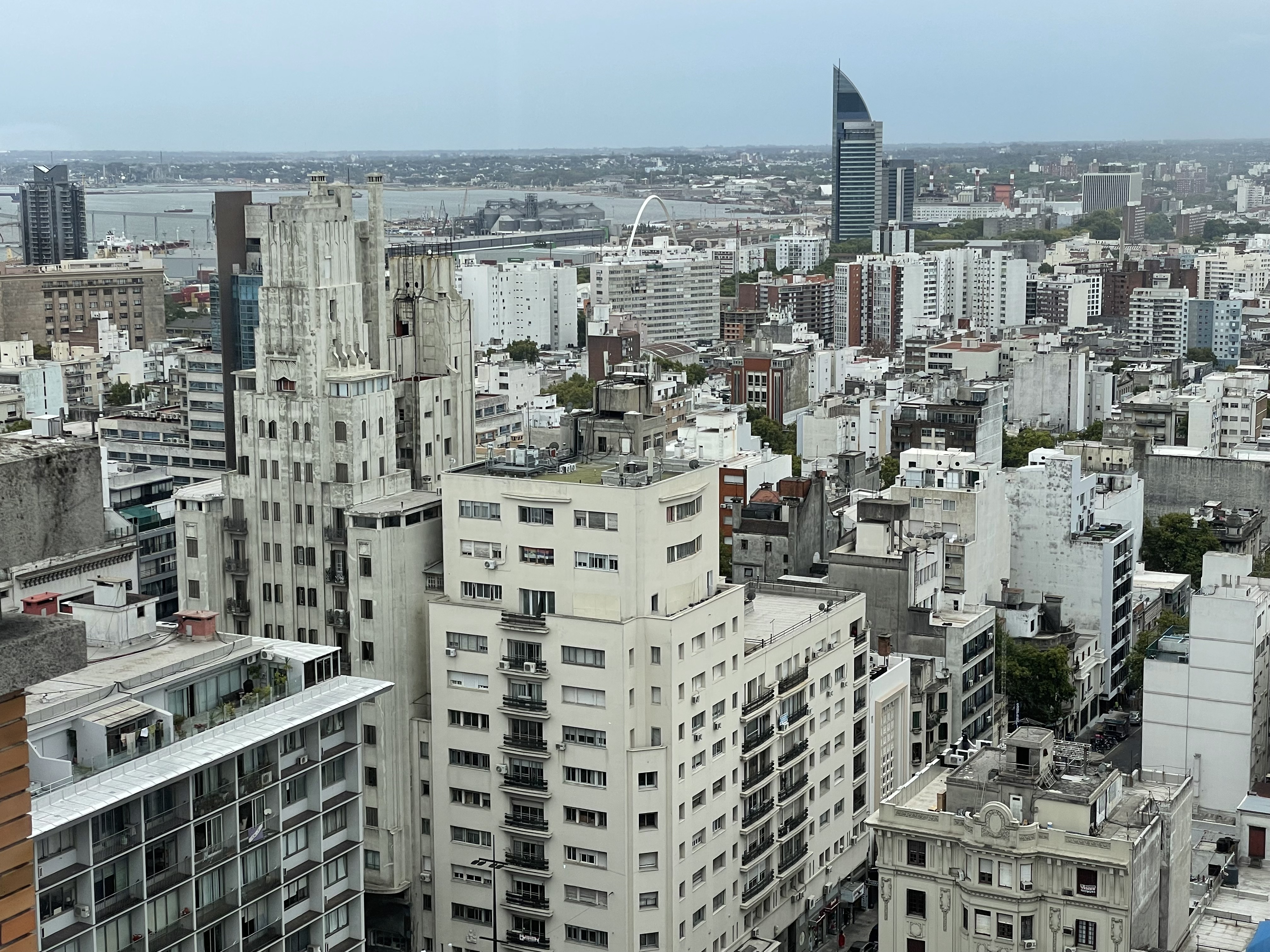
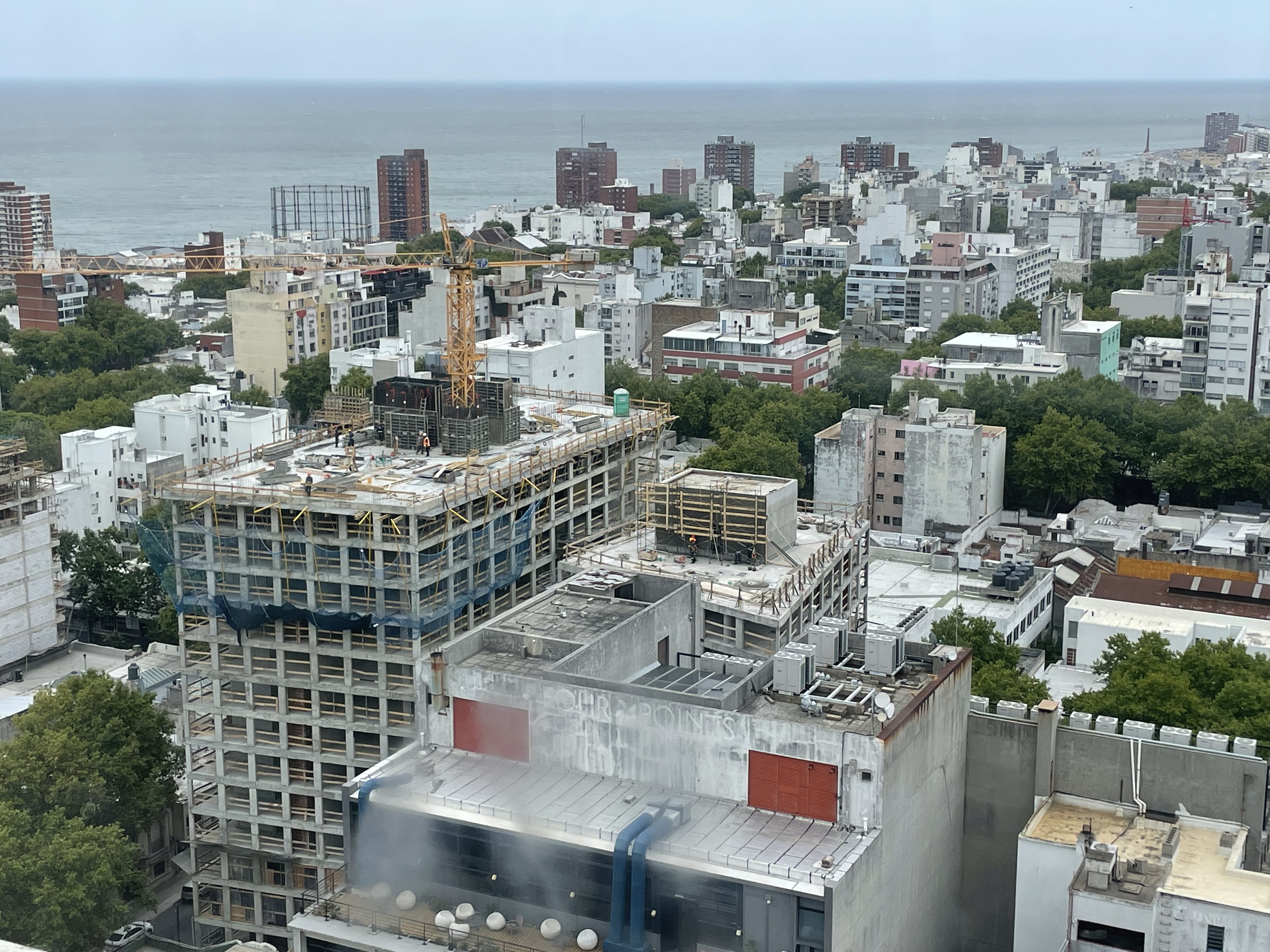
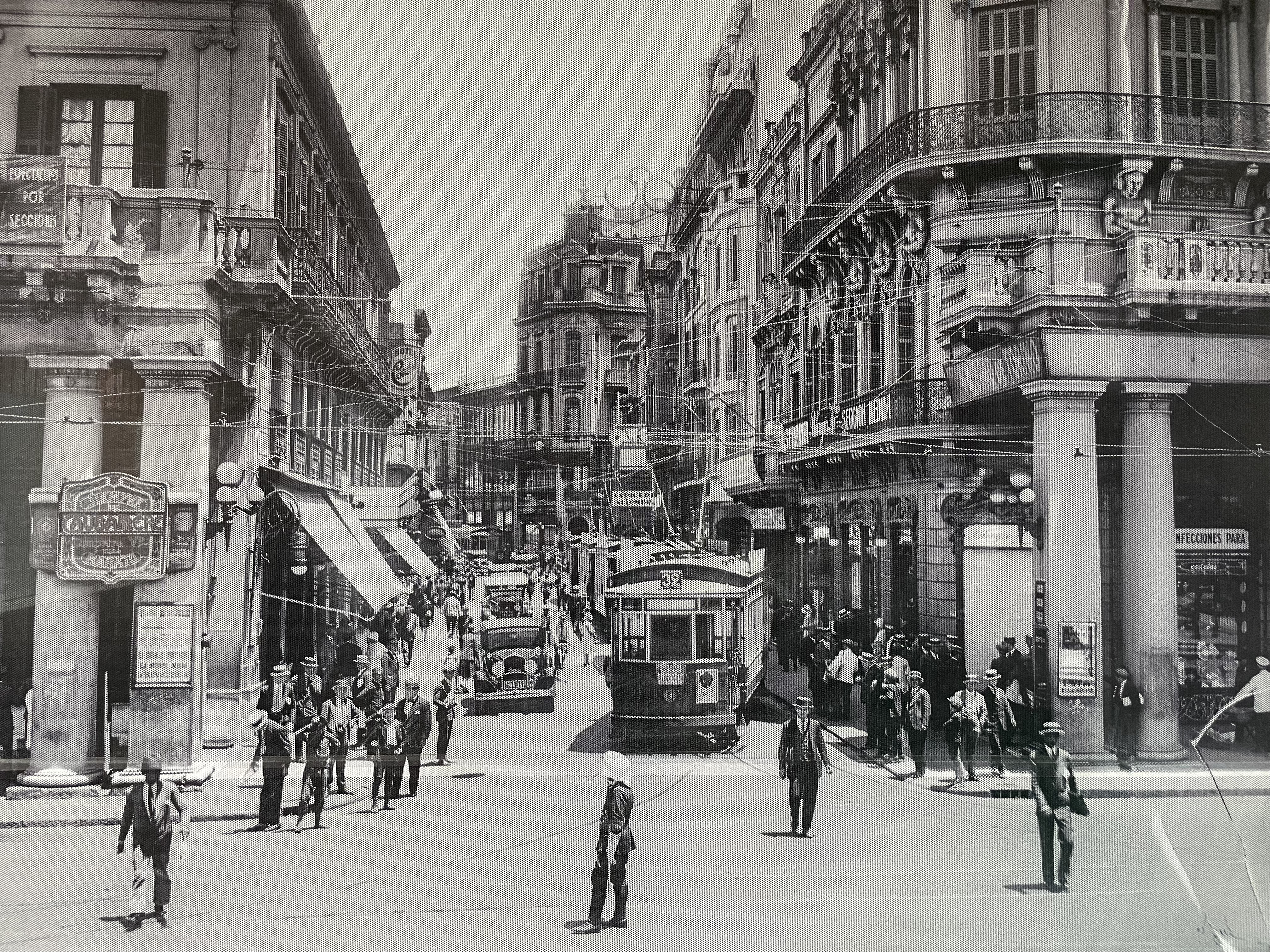
From Lobo’s place Hans took us to City Hall, where we road an elevator to the 20th floor for a 360 degree view of the city. The city view was nice, especially of all the sycamore trees, but I mostly enjoyed the old photos of Montevideo from the 1920s and 30s.

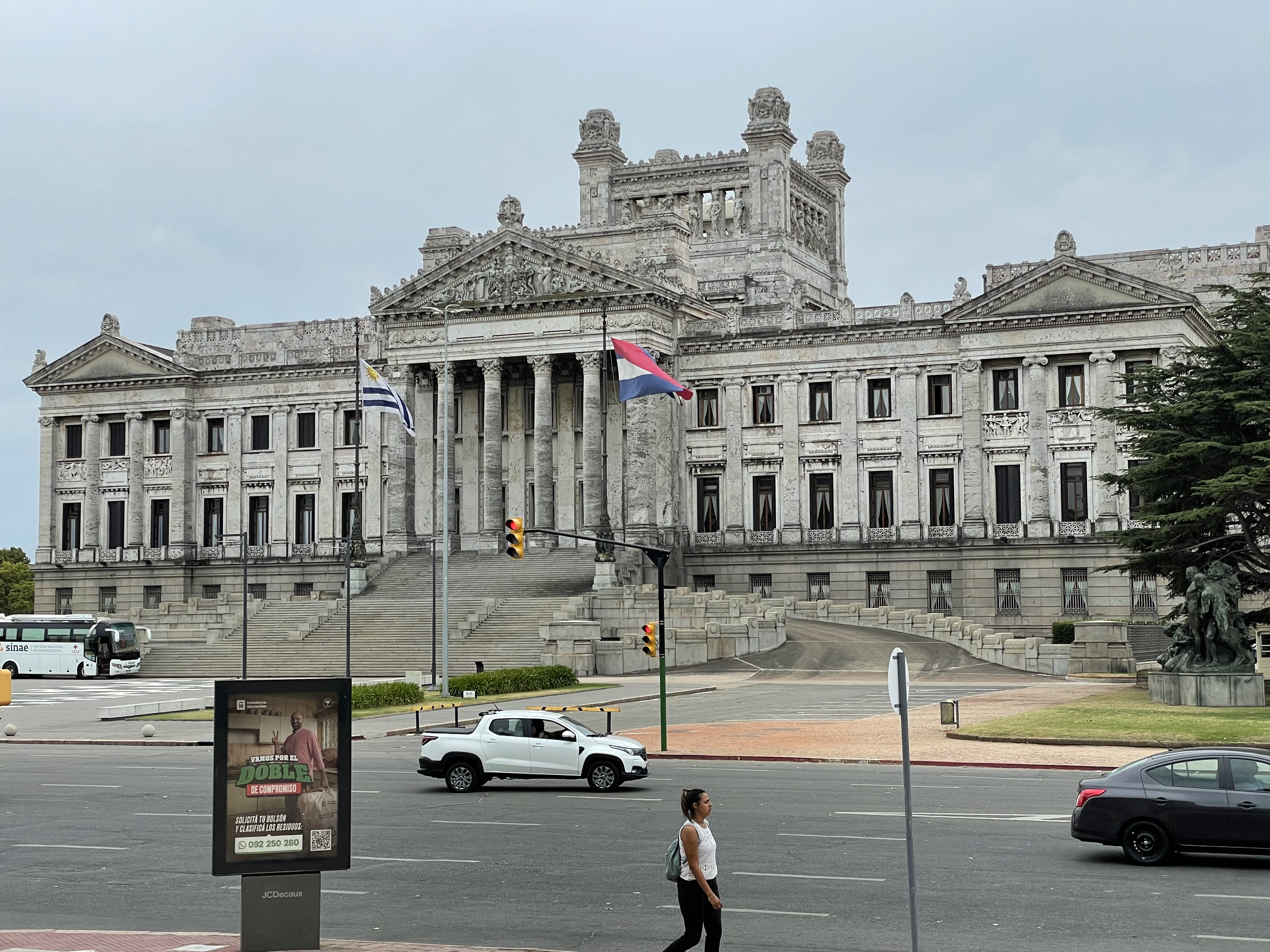
From City Hall we drove to the Parliament Building. Two of the three flags are showing. The neoclassical building was constructed in 1925. It is the seat of legislative power and houses 30 Senators and 99 Representatives for 19 states. It seems the Uruguayans copied our constitution. All citizens over 18 must vote every 5 years or be fined. Can work off the fine. Uruguay is the most democratic country in Latin America. 62% of the population is middle class. Formal employment in Uruguay is at 80%. (Formal employment is any employment that has an agreed to work contract.)

Neoclassical Parliament Building 1925

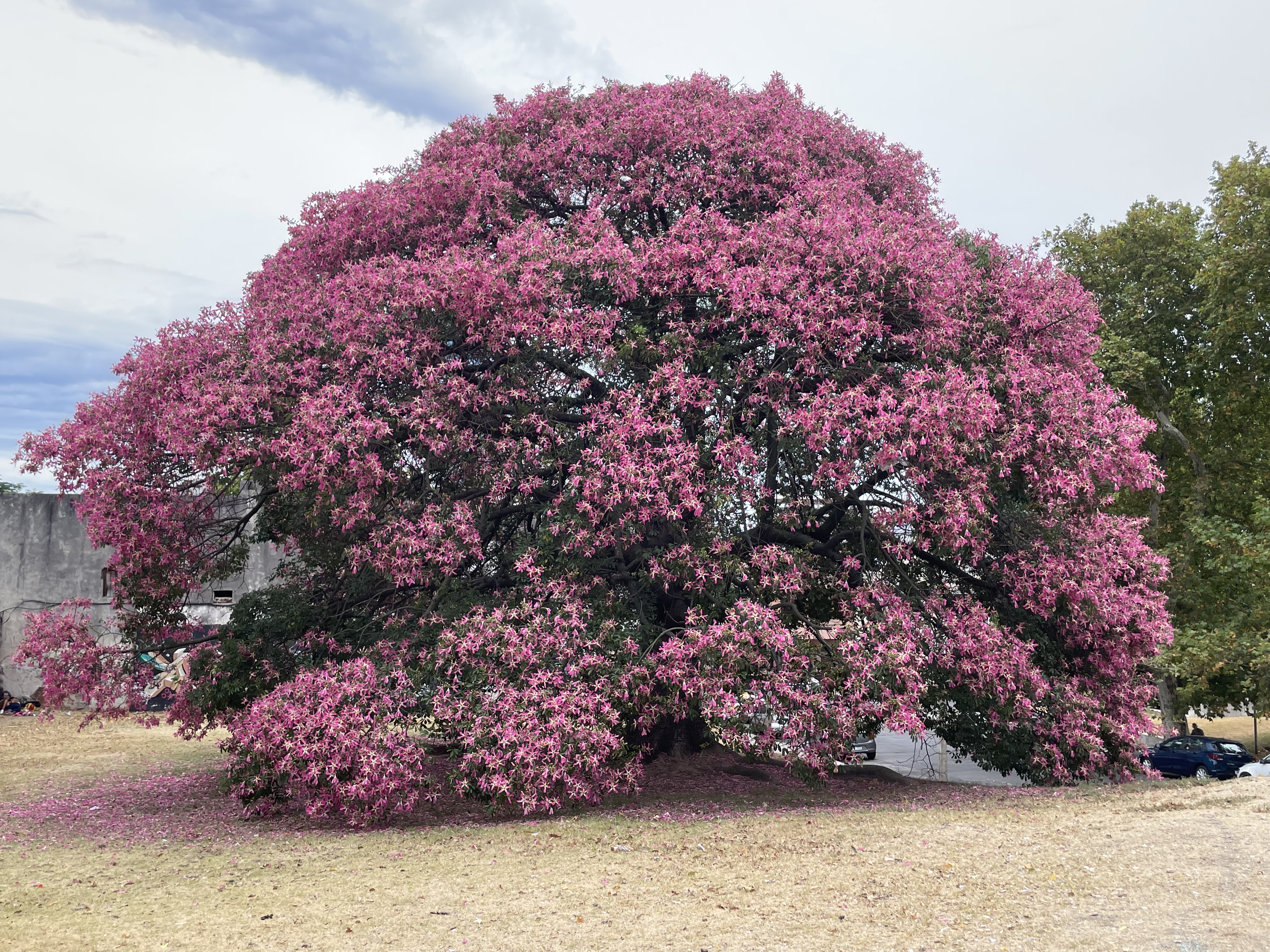
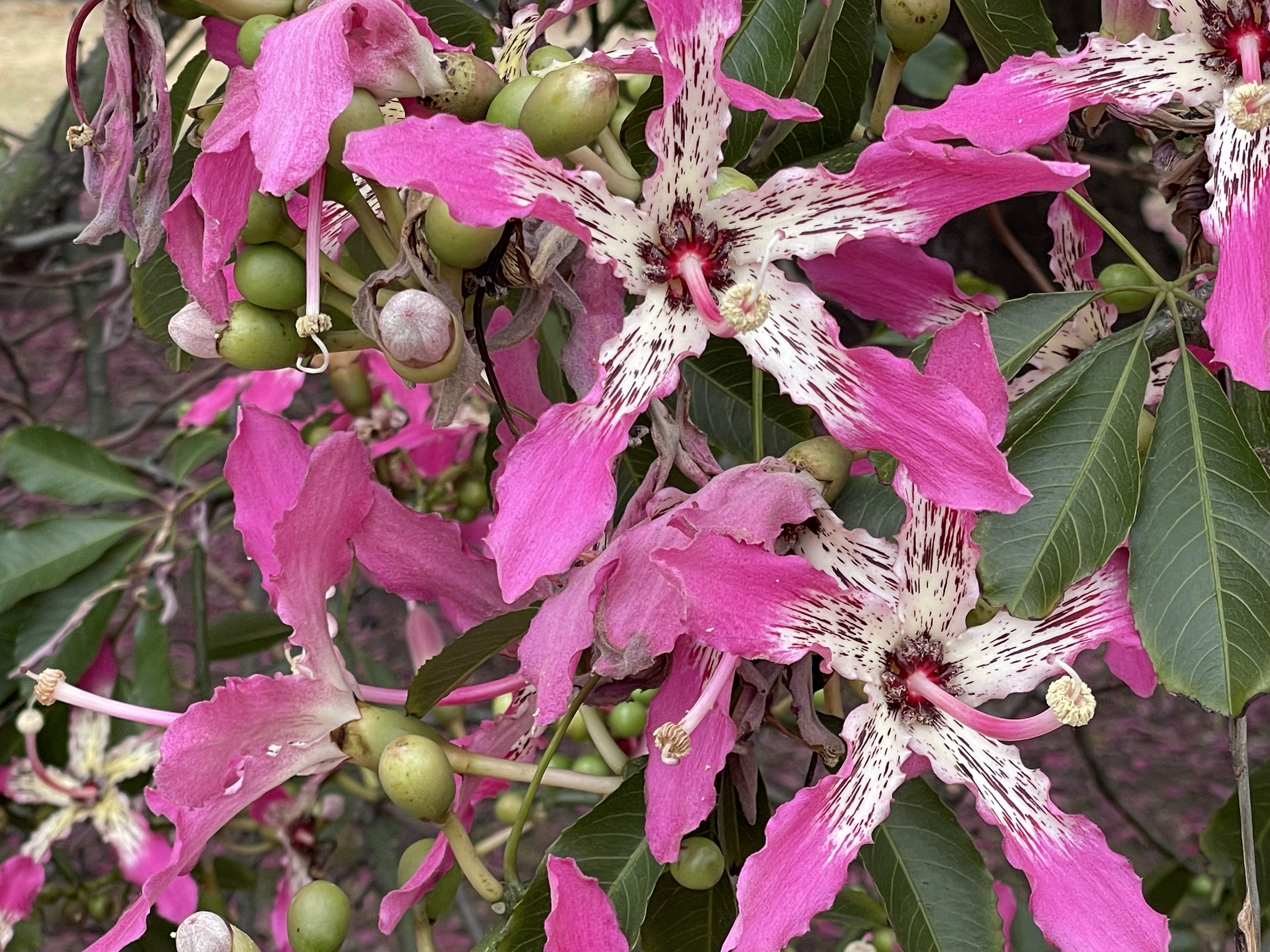
Also facing the square were a beautiful Silk floss tree in full bloom. There are many around, but few we saw in bloom.

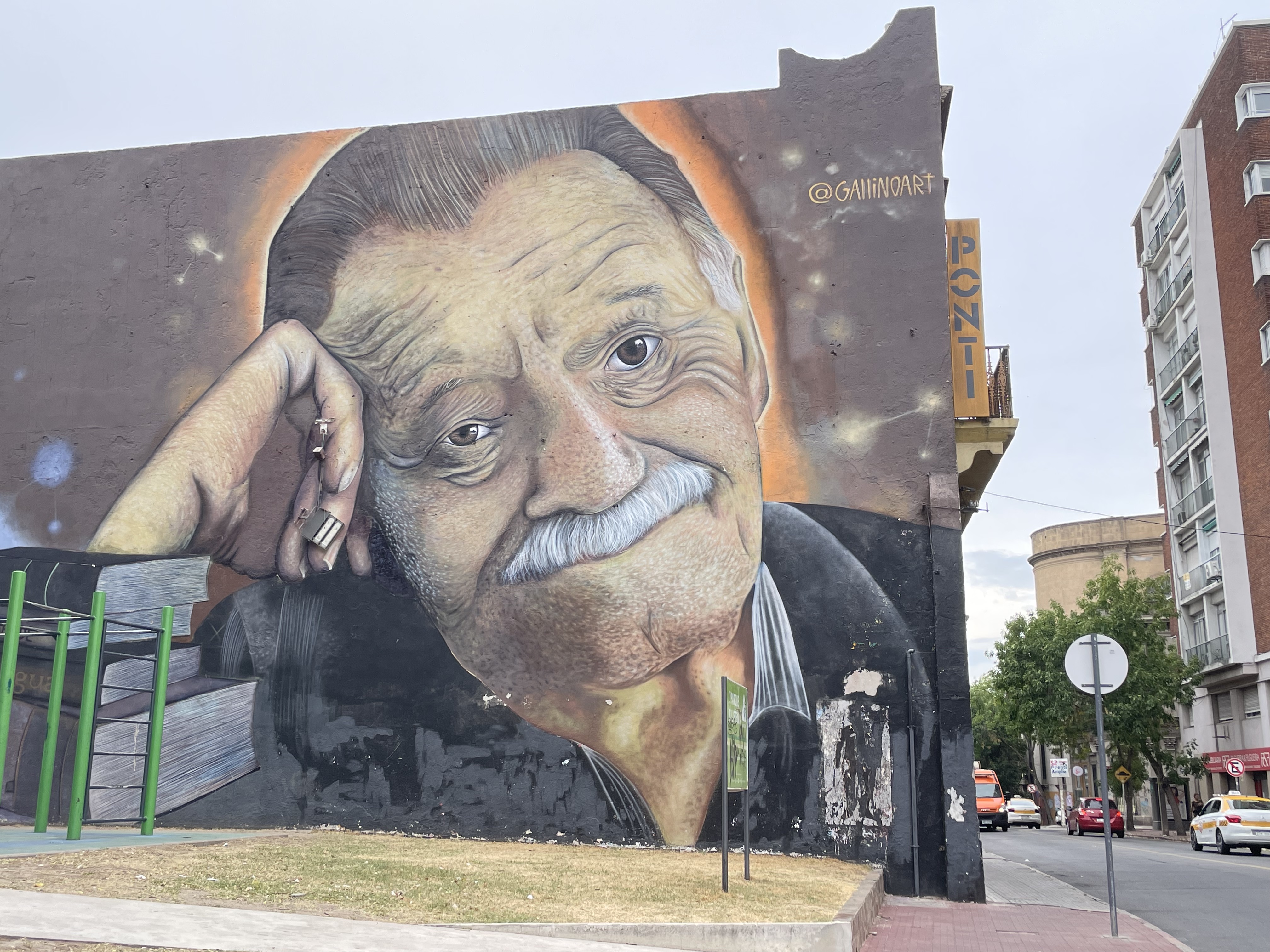
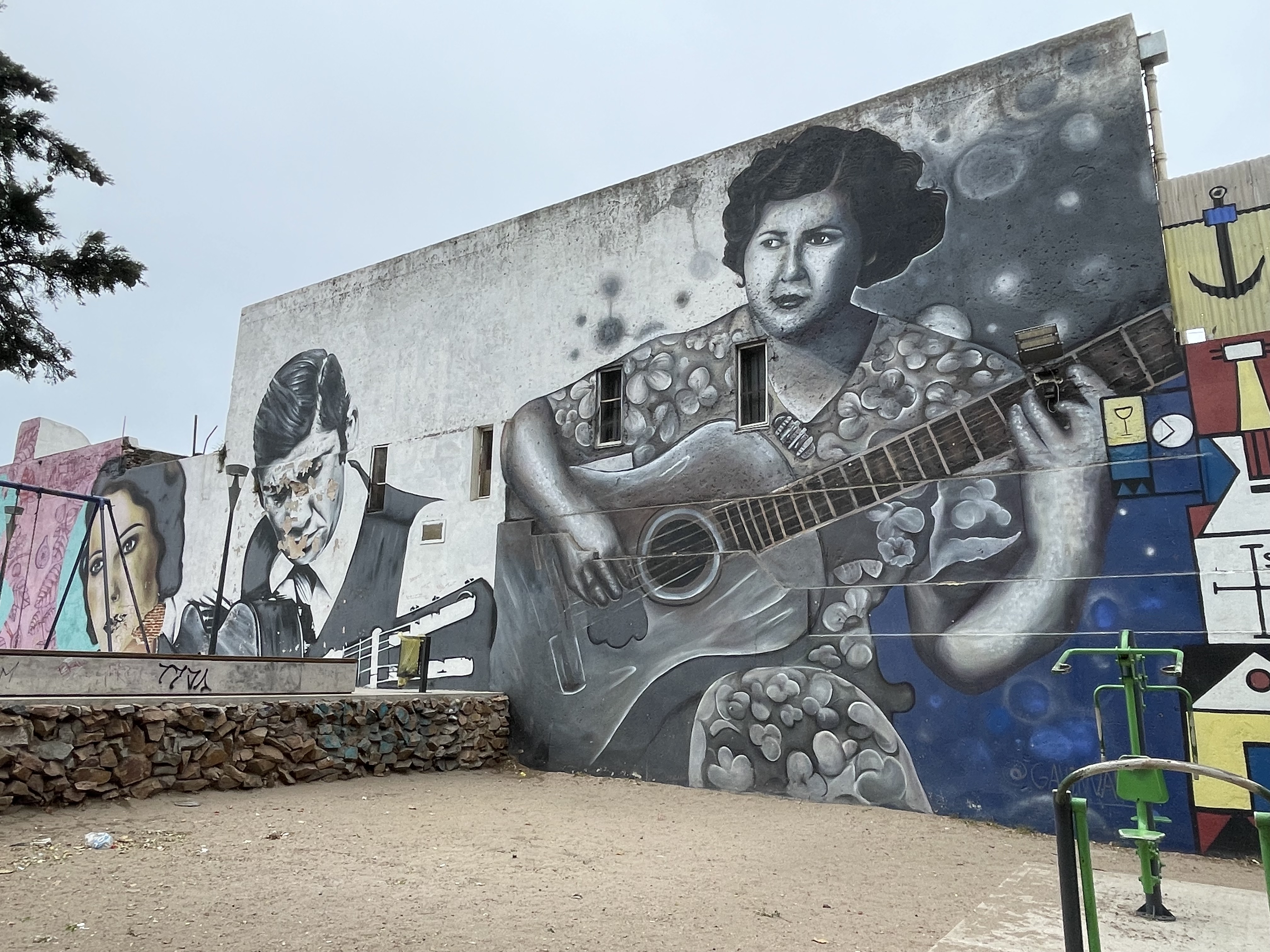
On the fourth corner of the square was a well painted group of murals of Uruguayan artists: Mario Bernadette, a writer; Rosa Lima, a guitarist; Alfredo Zitarrosa, a singer-songwriter; and Juana de Ibarbourou, a writer and poet. The muralist was Joaquin Torres Garcia, a painter and sculptor.

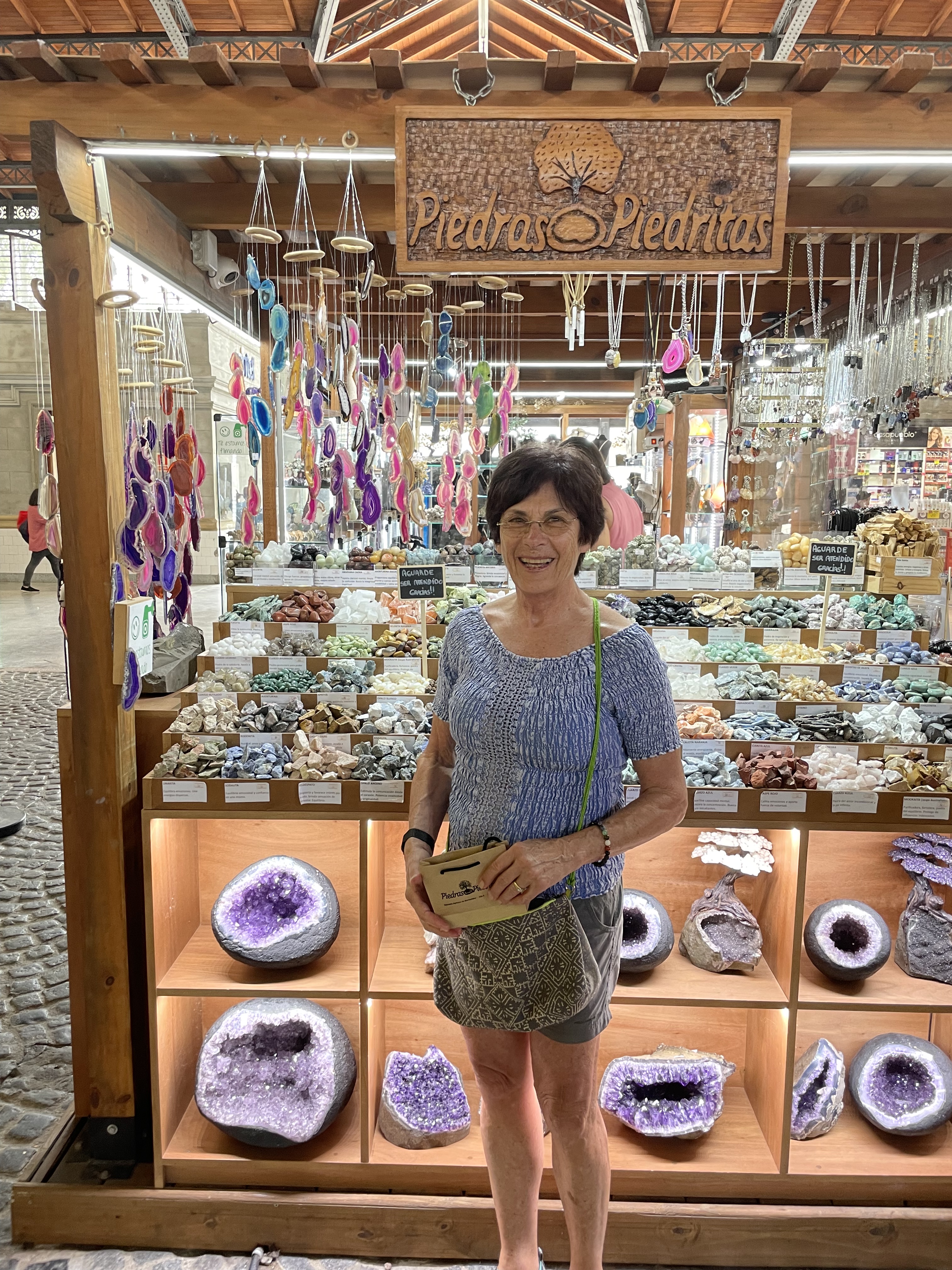
From this square we drove to a huge Mercado and walked through it. It was spotless, full of different shops loaded with merchandise and fascinating to observe so much variety. When we walked by a jewelry and stone store, I was attracted by very purple amethyst stones and ended up buying some, which I had promised myself not to do. Oh well. At least it will go with a lot of my clothing.

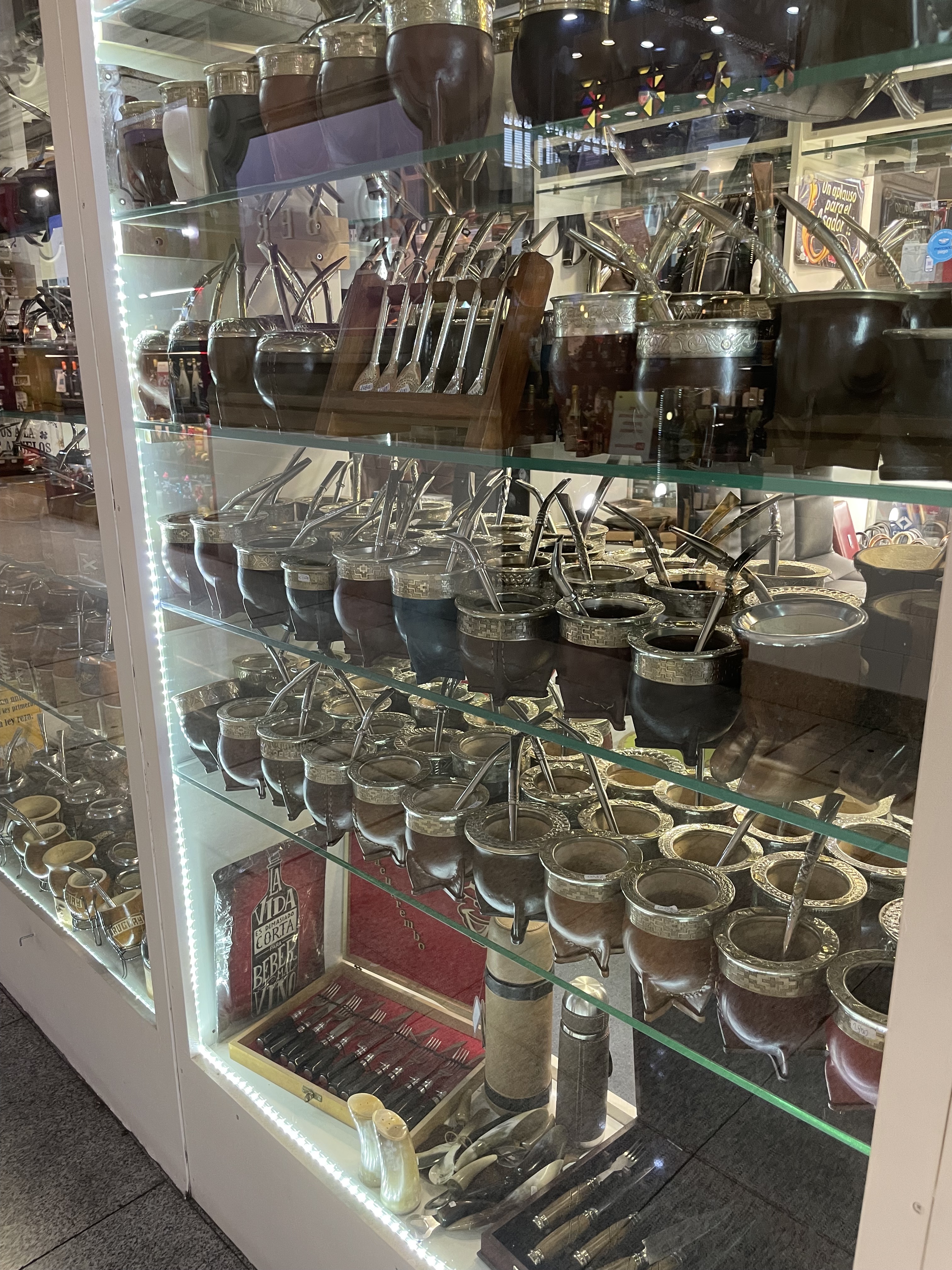
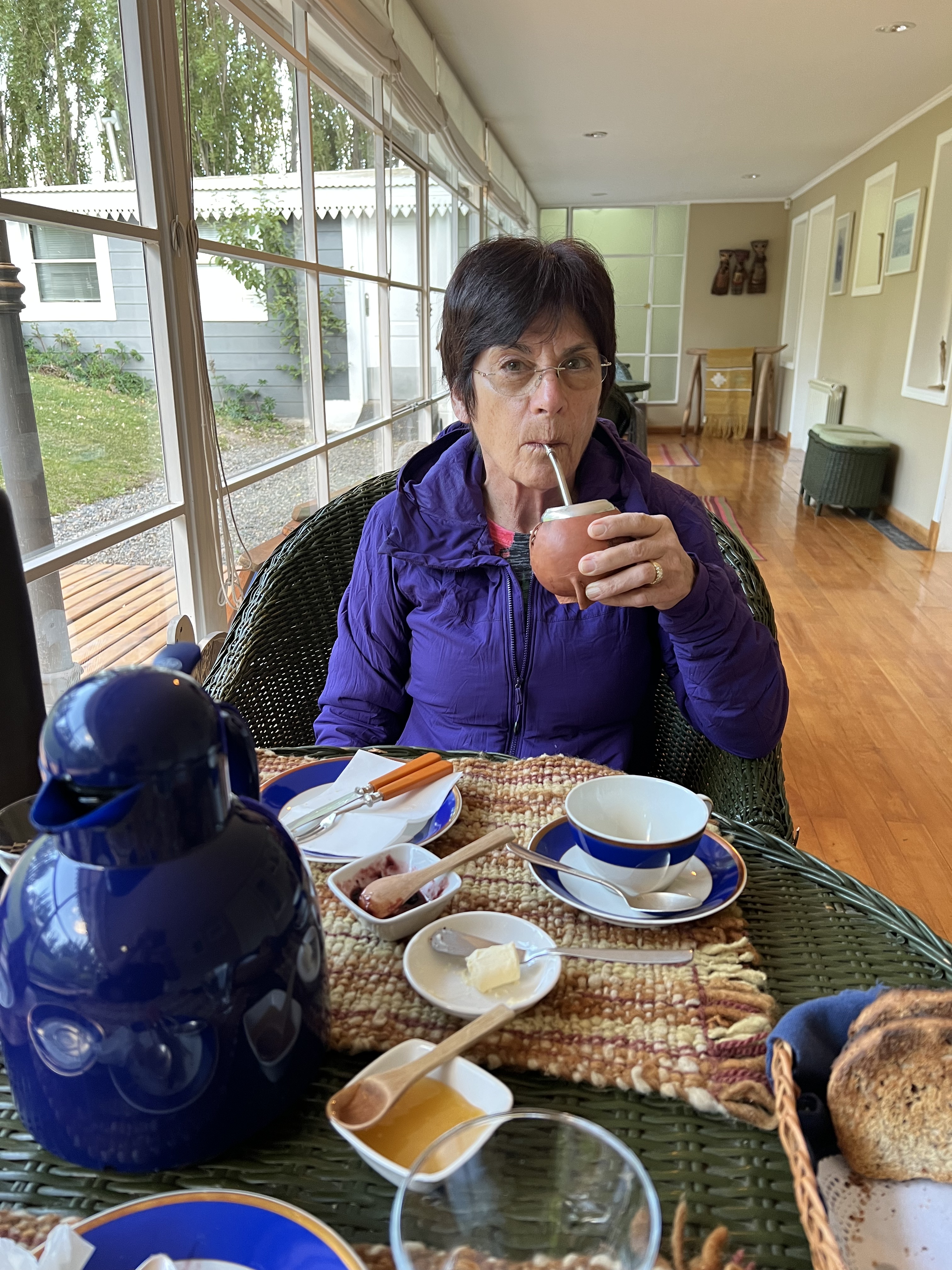
We came across a shop selling Mate Tea paraphernalia and took this photo so you could see that it is very popular in Uruguay and other South American countries. I tried it once, but did not like it, even though I like tea. It tasted too much like straw to me. The name “mate” comes from a Quechua word meaning calabaza or squash. To make mate tea, use an aged mate tea cup, which has been made from part of a dried gourd that has been transformed into the shape of the cup. Fill of 2/3rds the cup with dryYerba mate tea, a wild herb primarily from Paraguay. It is a stimulant, a diuretic and a tonic. It has about as much caffeine as tea or coffee. Leave empty space on the side of the cup from the bottom to the top. Pour warm water into the empty space keeping the mate to one side until the yerbe absorbs the water and expands. Place a metal straw with a filter at one end into the cup where space has been left and pour hot water onto the mate to create an infusion. Enjoy.

A shop in the Mercado selling mate tea cups. There are many styles and prices as well a a variety of straws with filters. Also included are thermoses for the hot, but not boiling, water. We saw many people carrying a cup and thermos around as they walked from place to place. Seems like a big bother to me. I read that many people treat the tea as a companion.

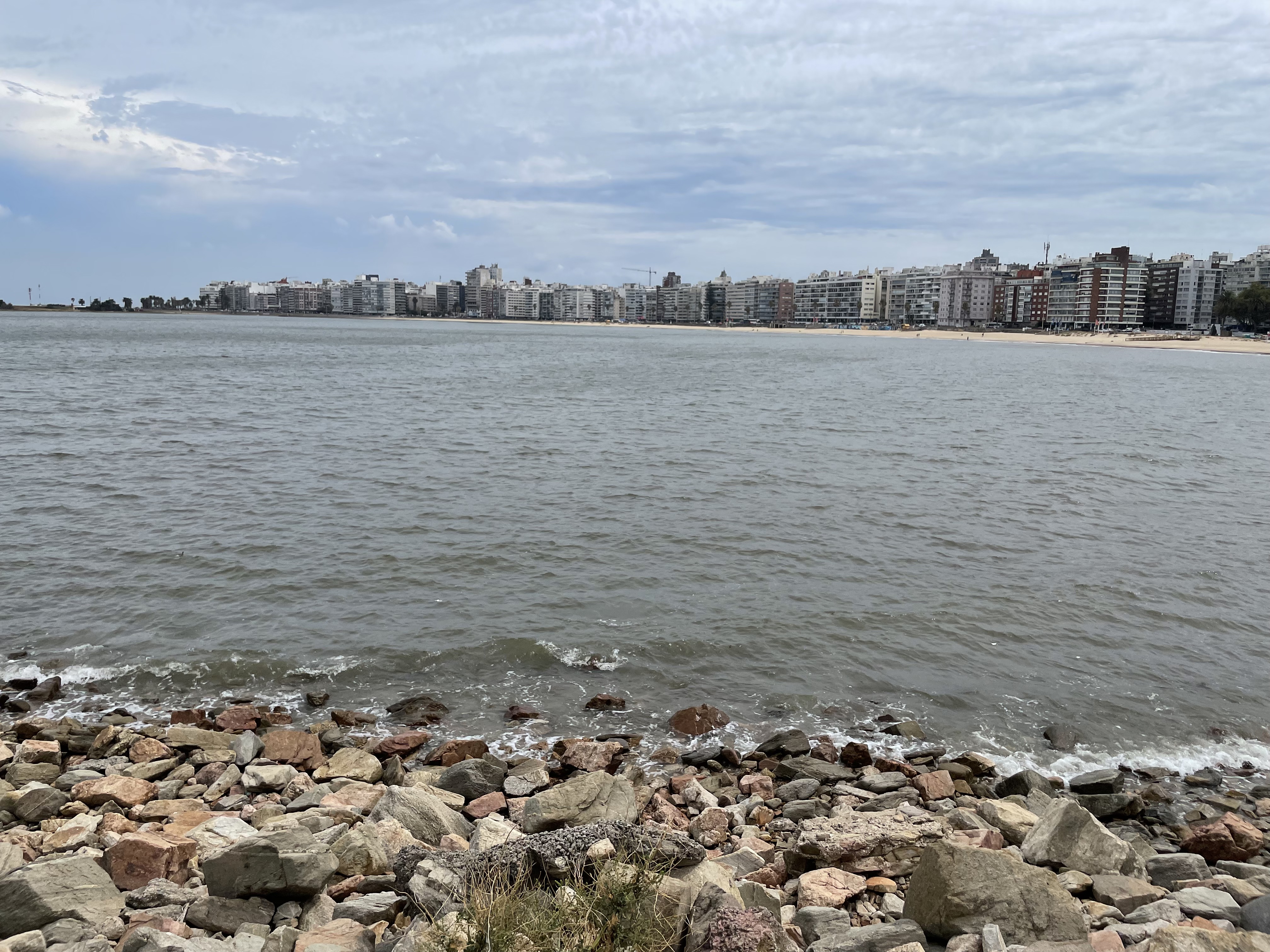
From the Mercado, Hans took us back to the Cafe Brasilero for lunch and then we drove around more old and new neighborhoods including the high end beach area with lovely sycamore lined streets, beach condos and apartments, and the Montevideo beach.

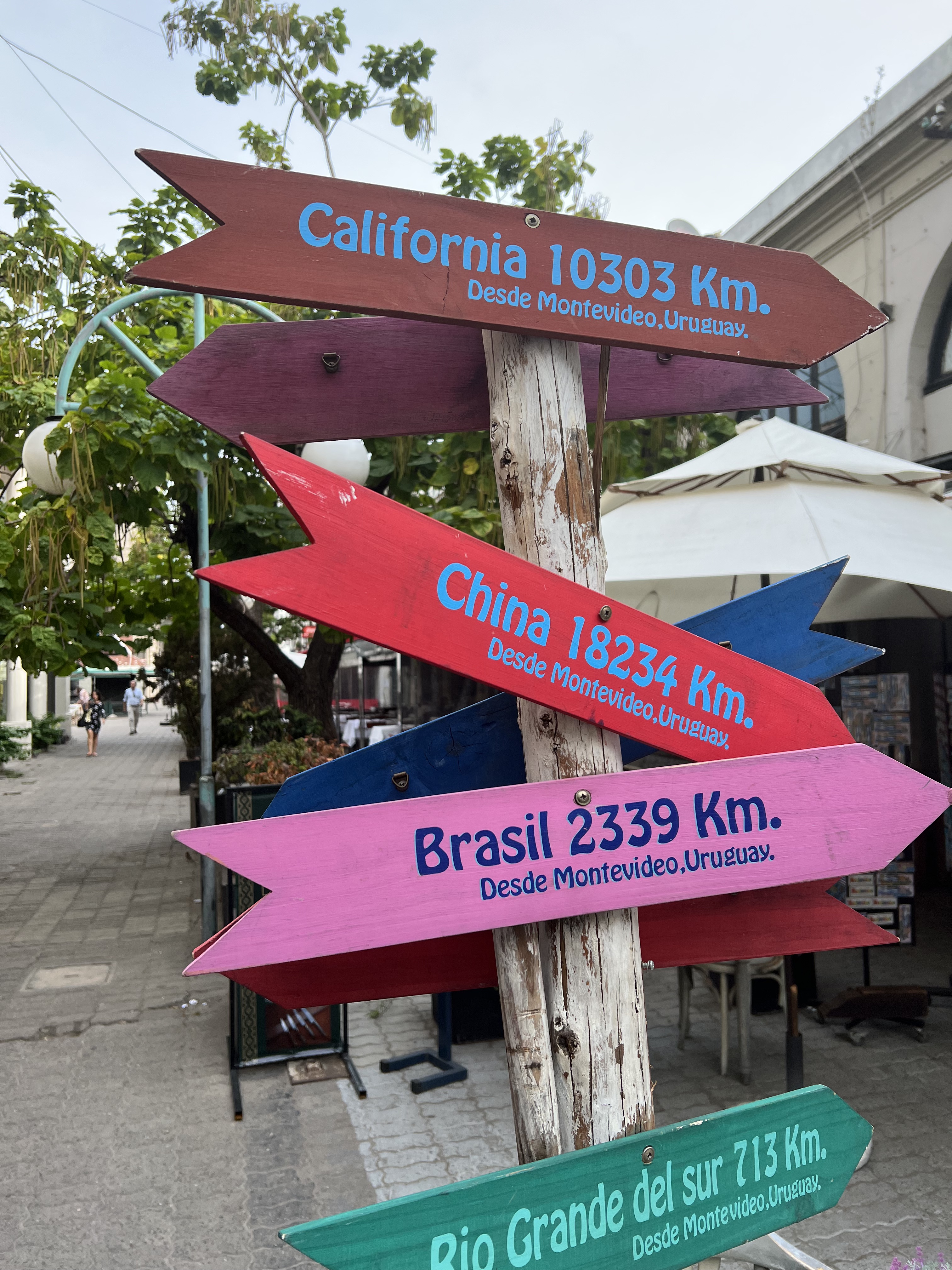
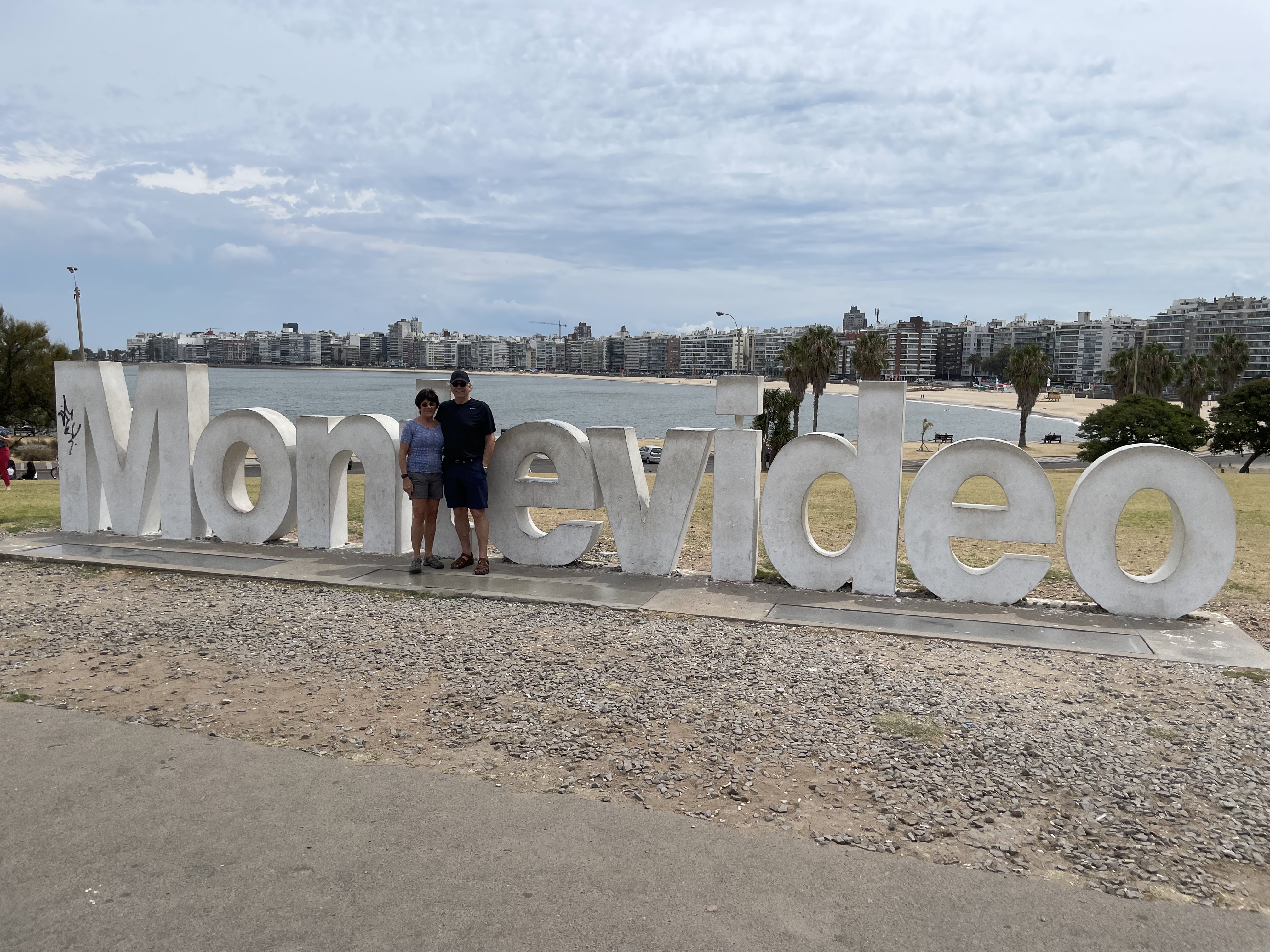
City sign

Some miscellaneous notes I took and hope you appreciate.

Hans told us Uruguay was the only port of entry for slaves in Brazil, Argentina and Uruguay in 1791. Most of the slaves were passed through to other countries. Slavery was totally abolished by Uruguay in 1842, the first country to do so. Brazil ended slavery in 1880.

There was an additional war Hans told us about, the Uruguayan Civil War, which was a series of armed conflicts that lasted from 1839-1851. It was the longest and hardest fought in the country’s history. The struggle originated in the rivalry between the Colorado (Red) Party based in Montevideo and led by Fructuoso Rivera and the business interests in the city and the National (White) party led by President Manuel Oribe and the agricultural interests of the countryside. Eventually the Red forces defeated the White forces and peace was negotiated. It is a long story to google if you are interested.

Abortion was legalized in 2012.

Recreational and medicinal marajuana was legalized in 2013.

Gay marriage was legalized in August 2013.

This is all I have for Montevideo. I hope you have enjoyed our two days there.

Another day in Buenos Aires

Tuesday, February 14, 2023. Valentine’s Day

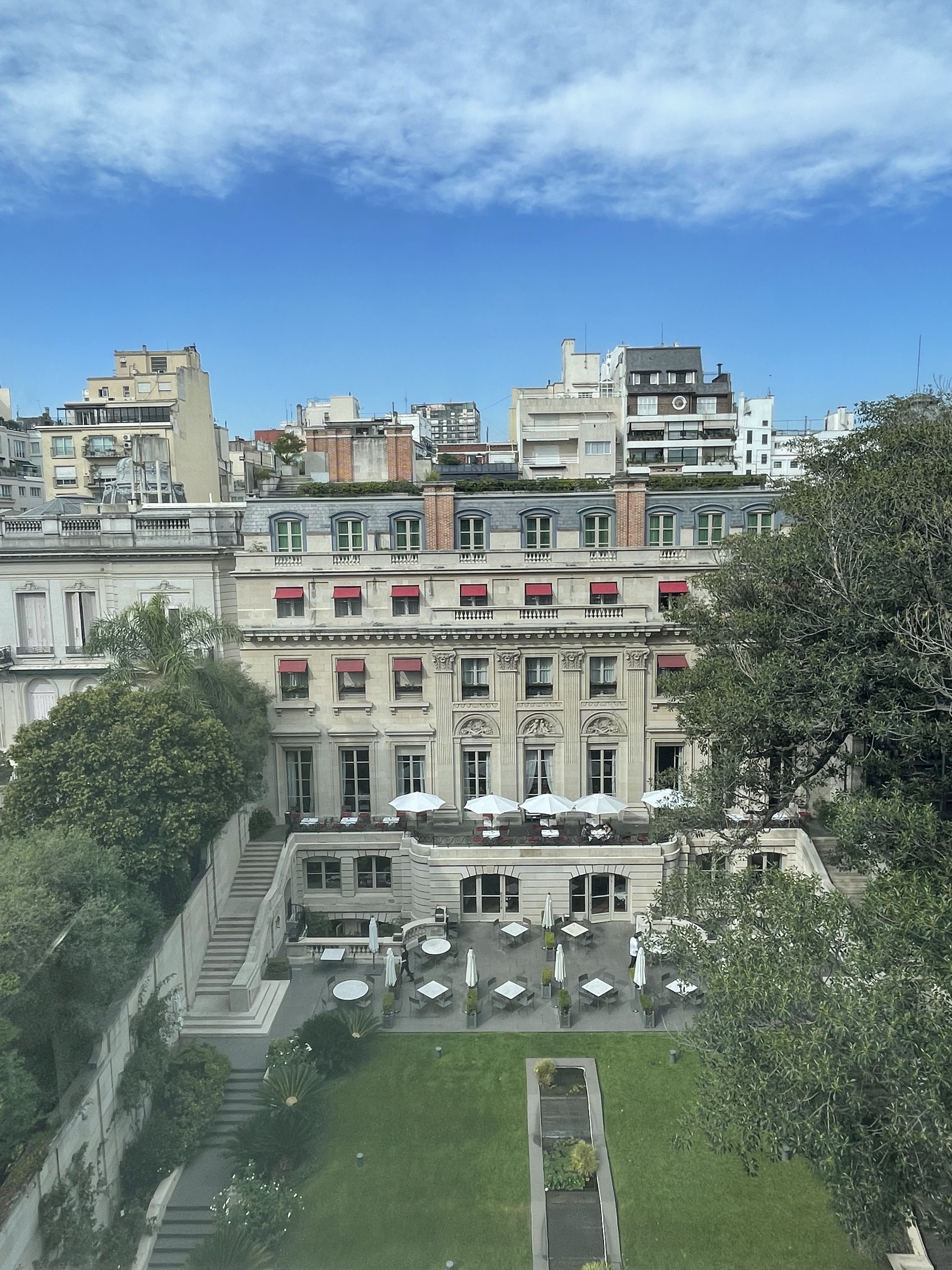
We spent all day yesterday getting from the Explora Lodge in cold, overcast, wet and windy Patagonia to hot, sticky, sunny Buenos Aires:  3 hours by car to El Califate airport; 4 hours at the airport; a 3-hour flight to Buenos Aires; and a half hour drive to the Park Hyatt Hotel in the city center.   All we wanted was a quick bite and bed, which we did at the hotel’s peaceful garden restaurant.  So, this morning we woke up to a very warm and sunny day to celebrate Valentines.  

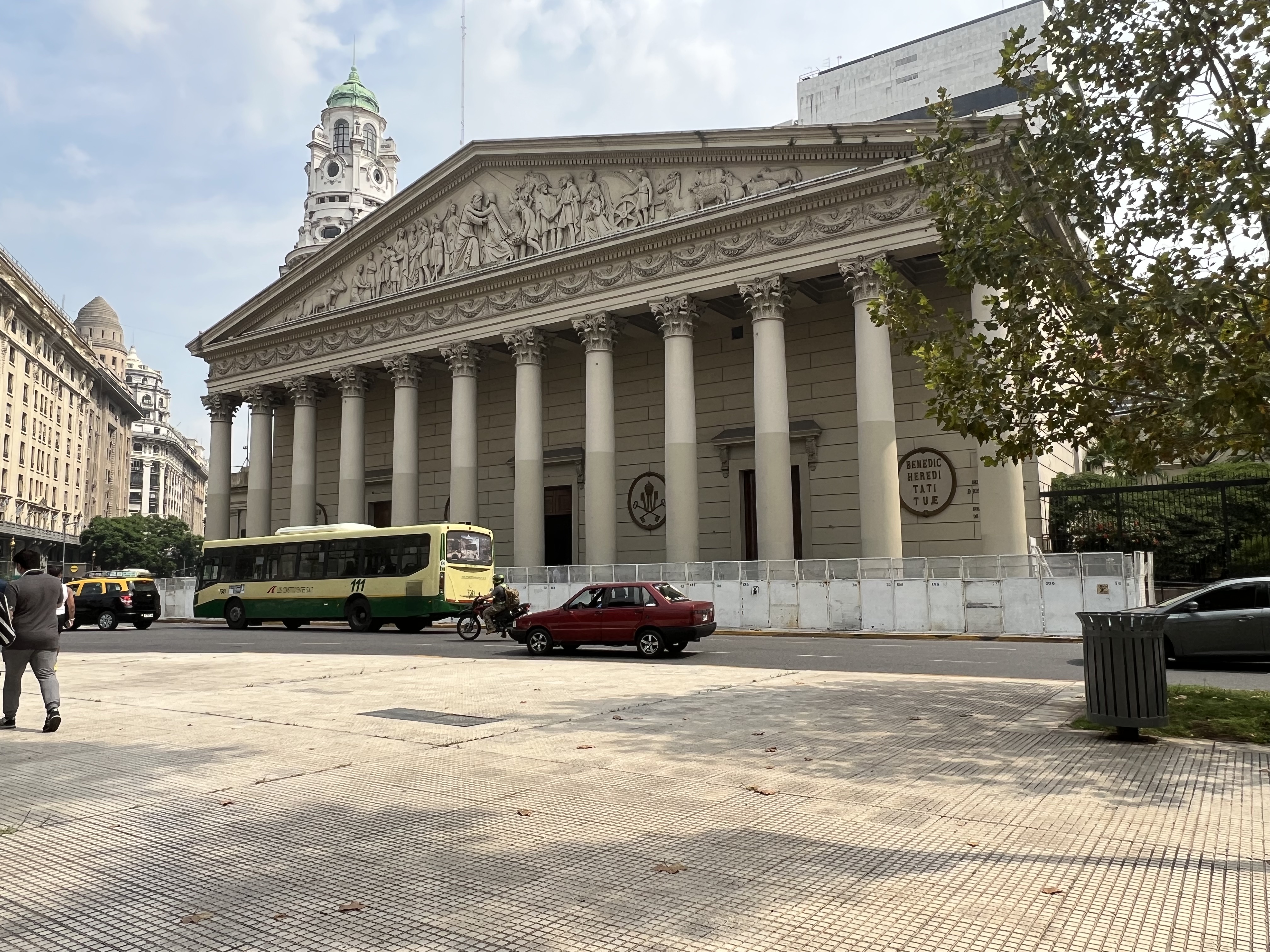
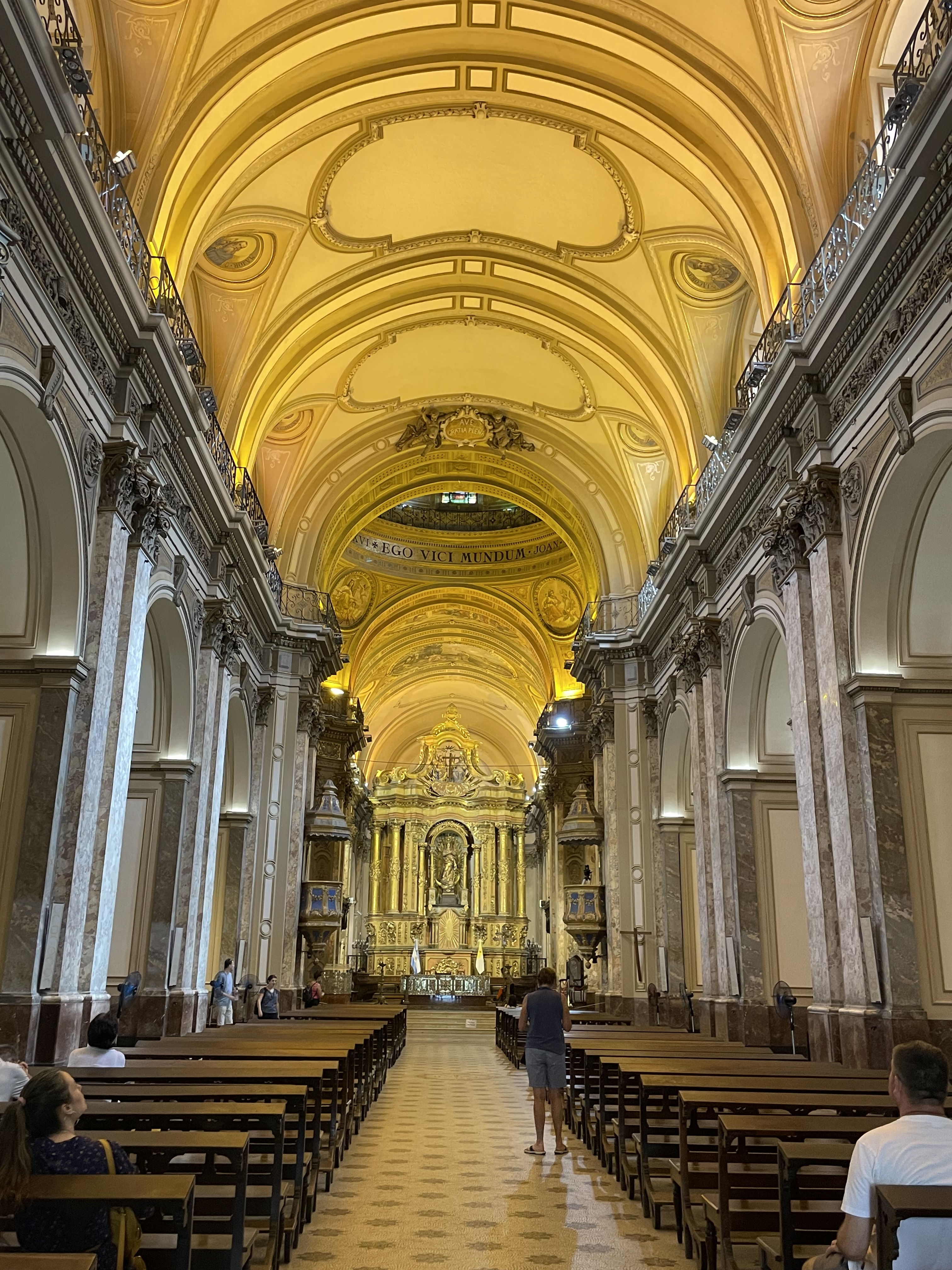
Our morning was relaxing until we met our guide, Gilda. At 10am we started a drive about the city, looking at buildings from the different periods of Argentine development, both cultural and political.  Our driver, Eddie, was very competent and spoke more English than most drivers.  Between the two of them we heard a lot about the city and the country.  First, the population of Argentina is 46 million and Buenos Aires is 3 million. The words Buenos Aires mean “good winds”, so when Pedro Mendoza arrived on February 2, 1536, he named the place Our Lady of Buenos Aires.  Our first stop was on the Plaza del Mayo in the heart of the city to visit the Metropolitan Cathedral and Basilica of Our Lady of Peace, where Pope Francis had reigned as Archbishop.  The reason he has not returned since becoming pope is that the different governments will not tolerate his appearance when they are not in charge.  Most Argentinians are Catholic, but few of them are practicing. 

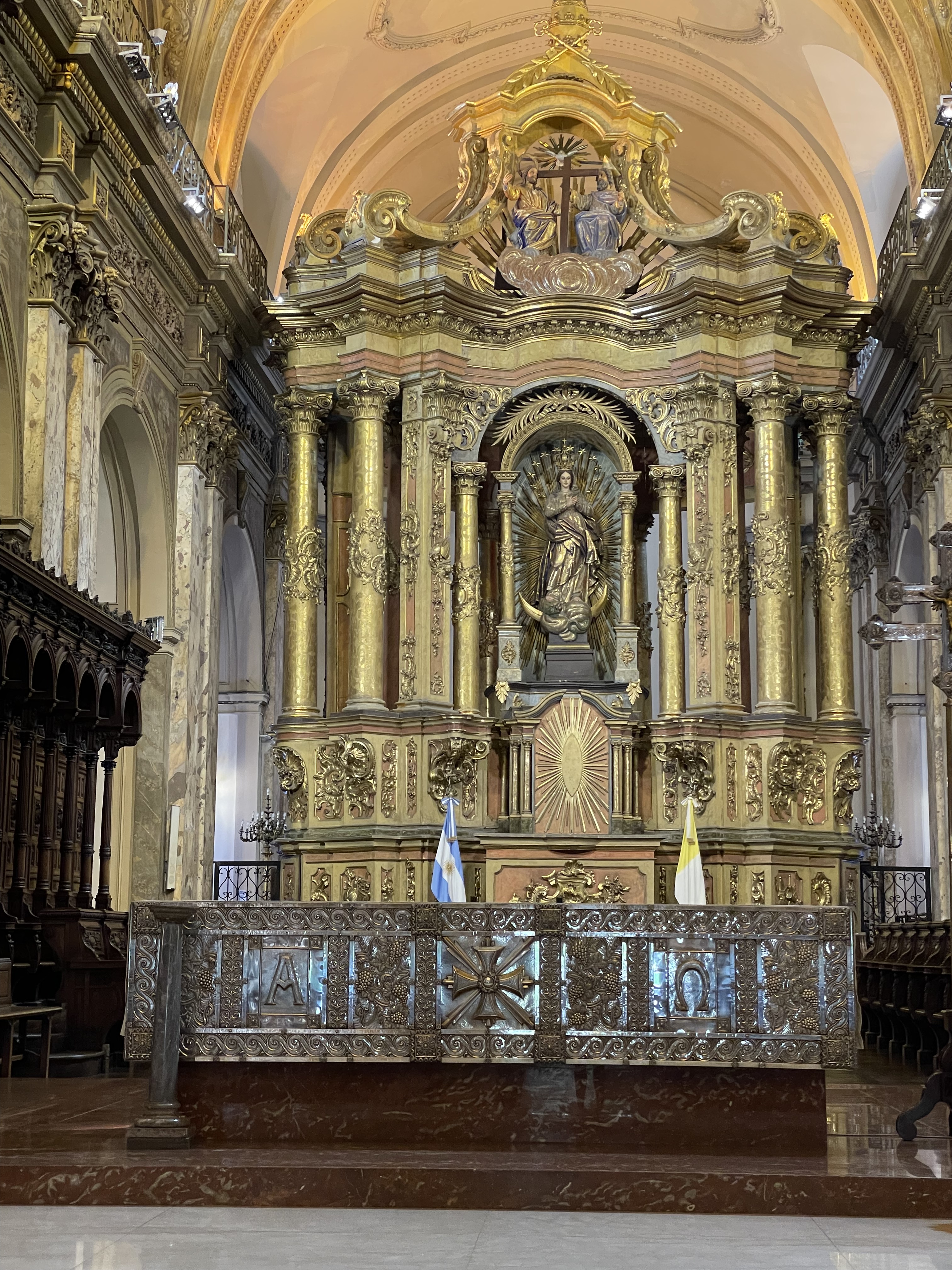
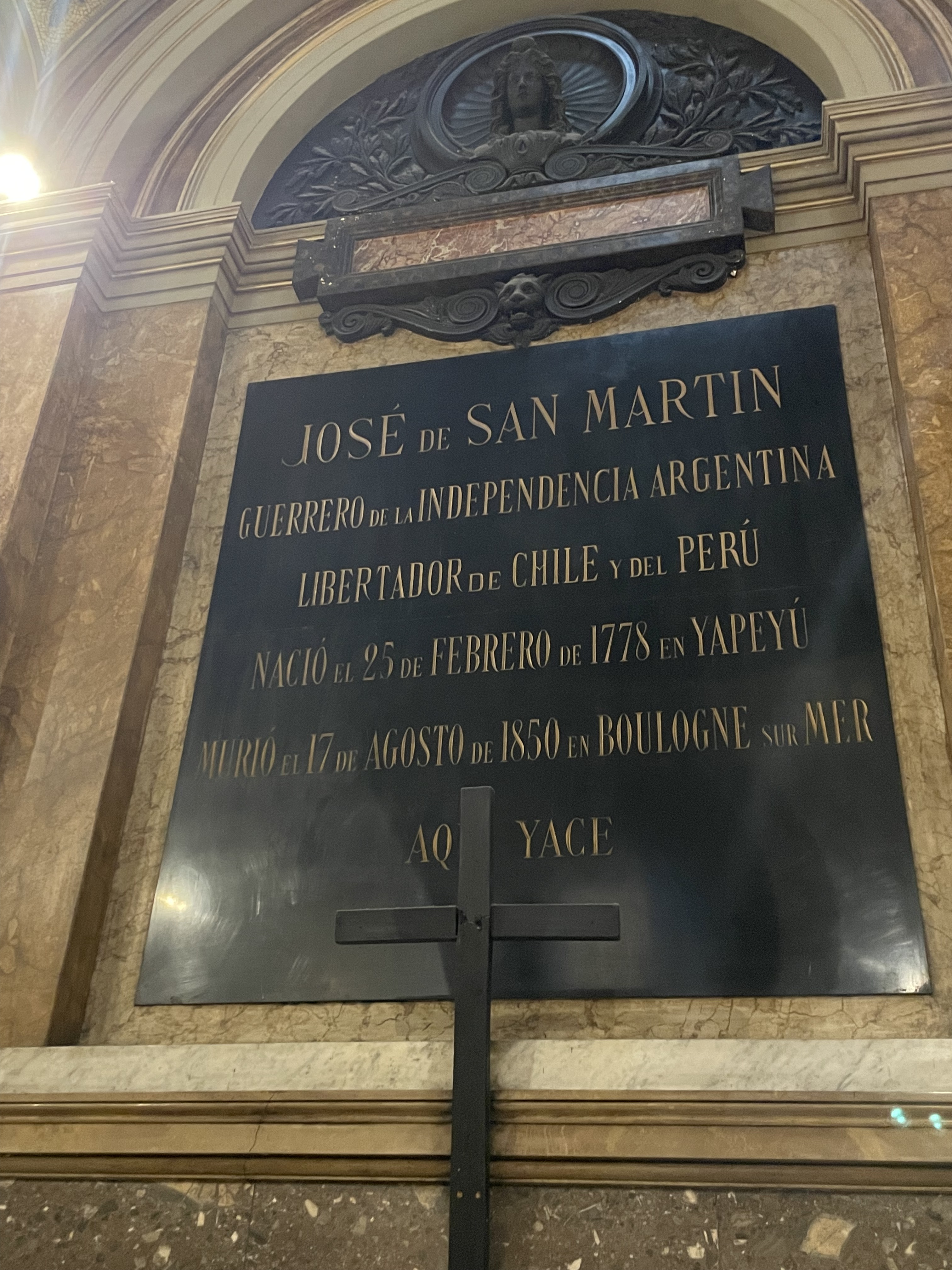
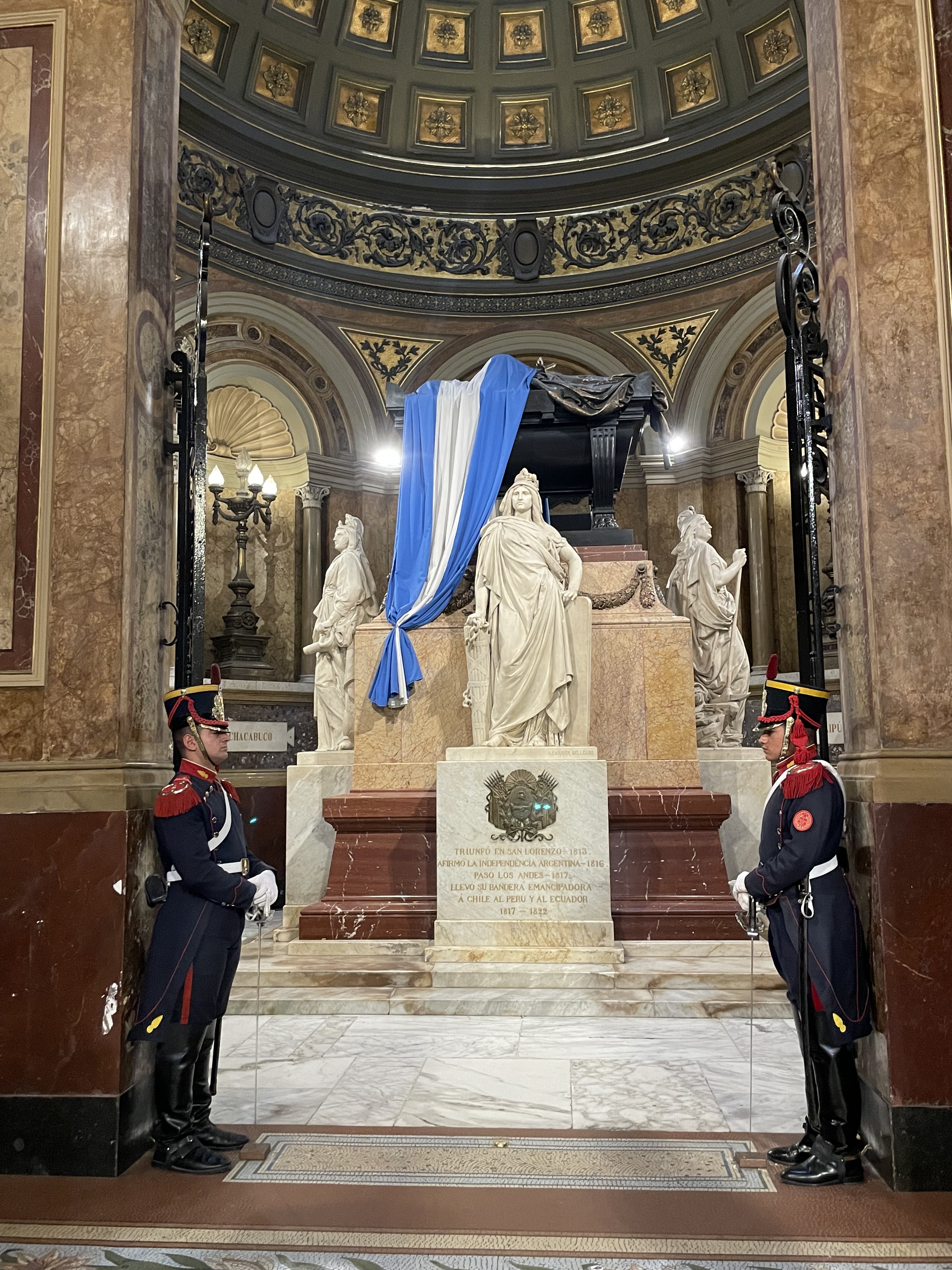
 I got some nice photos of the inside of the basilica.  In one large niche was the sarcophagus of Jose San Martin, who was a Founder of Freedom from Spain on July 9, 1816.  Three statues of women representing Freedom, Labor and Agriculture surround the sarcophagus as well as two live guards who have a changing of the guard every 2 hours.

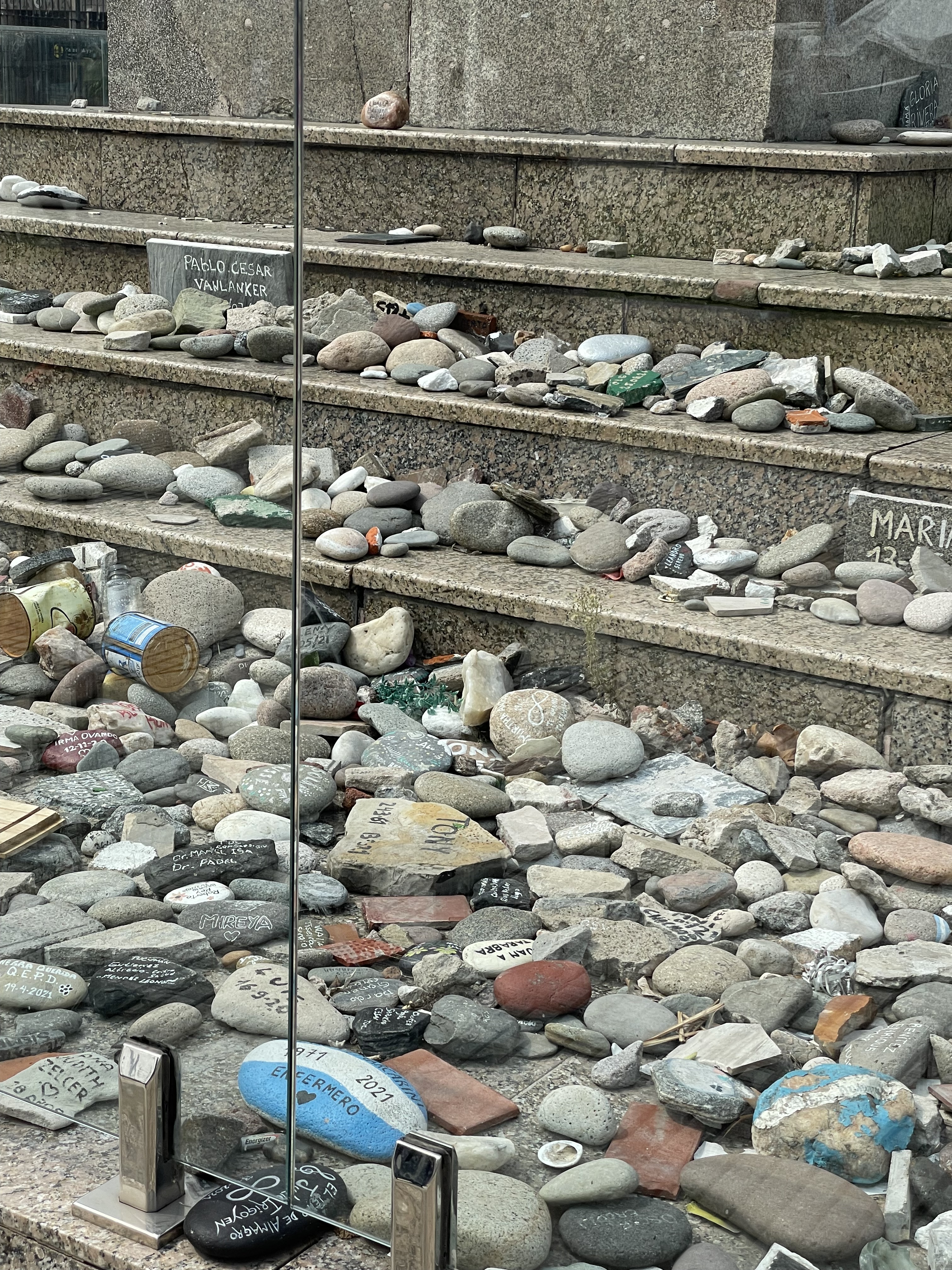
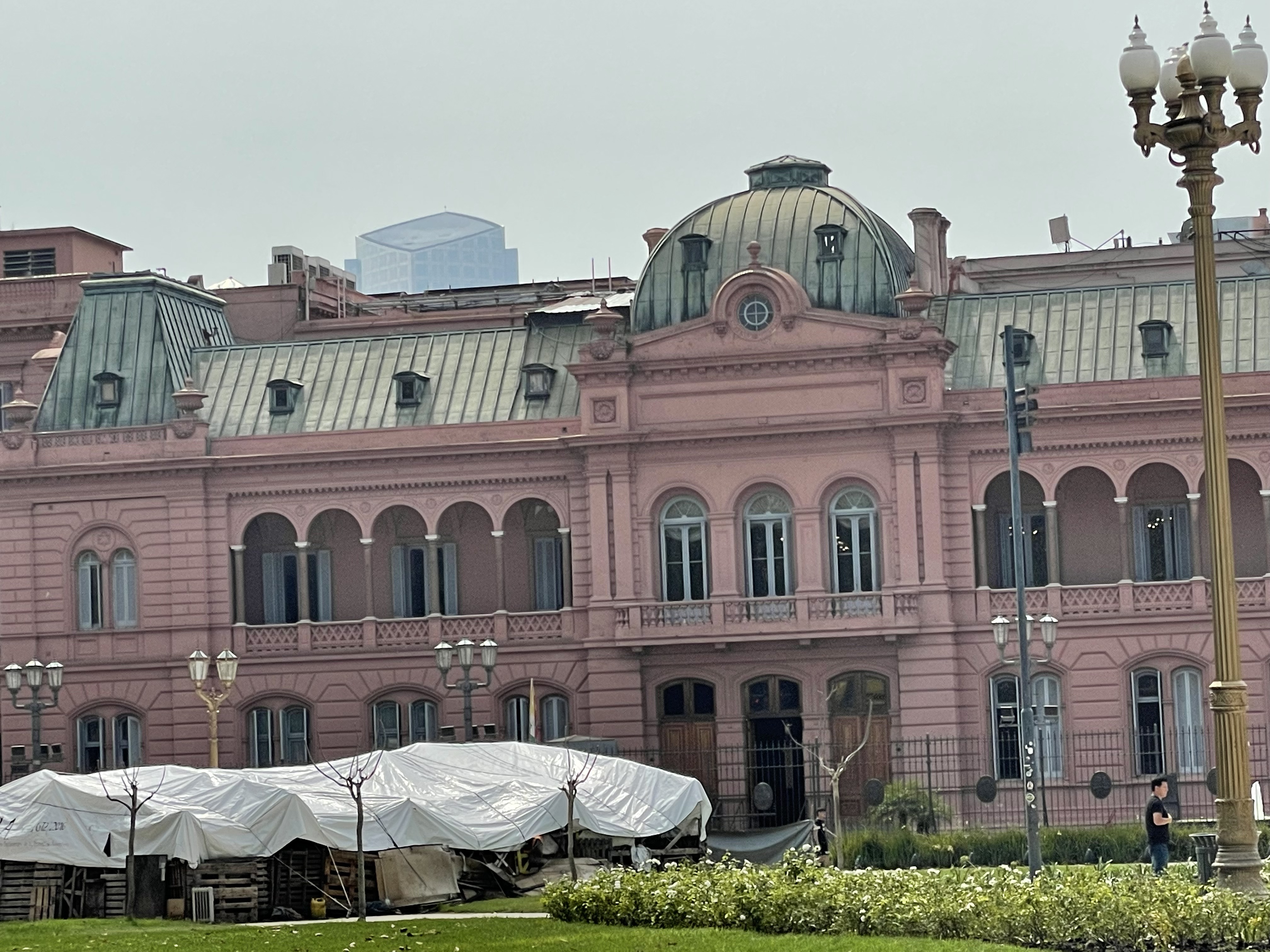
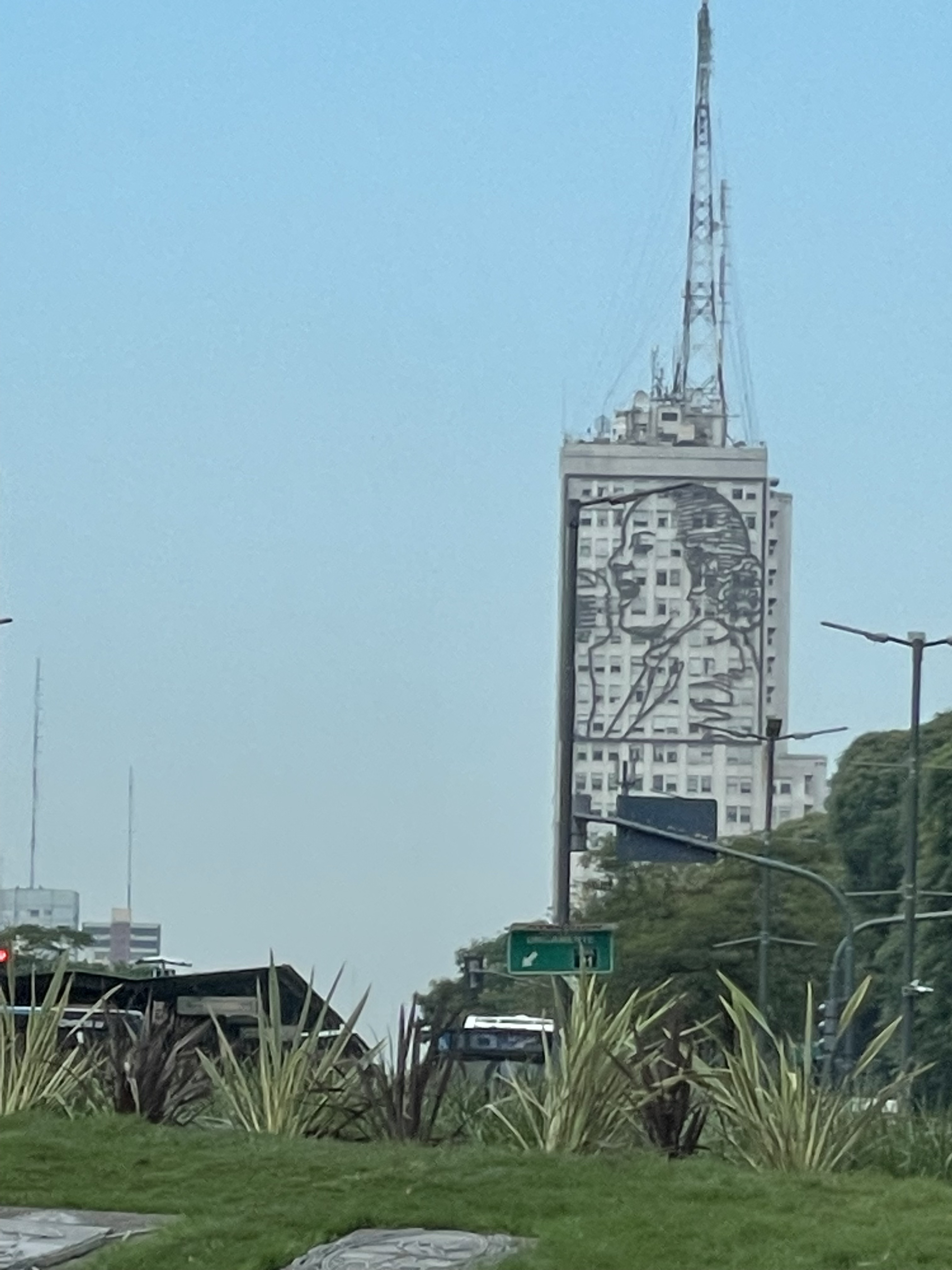
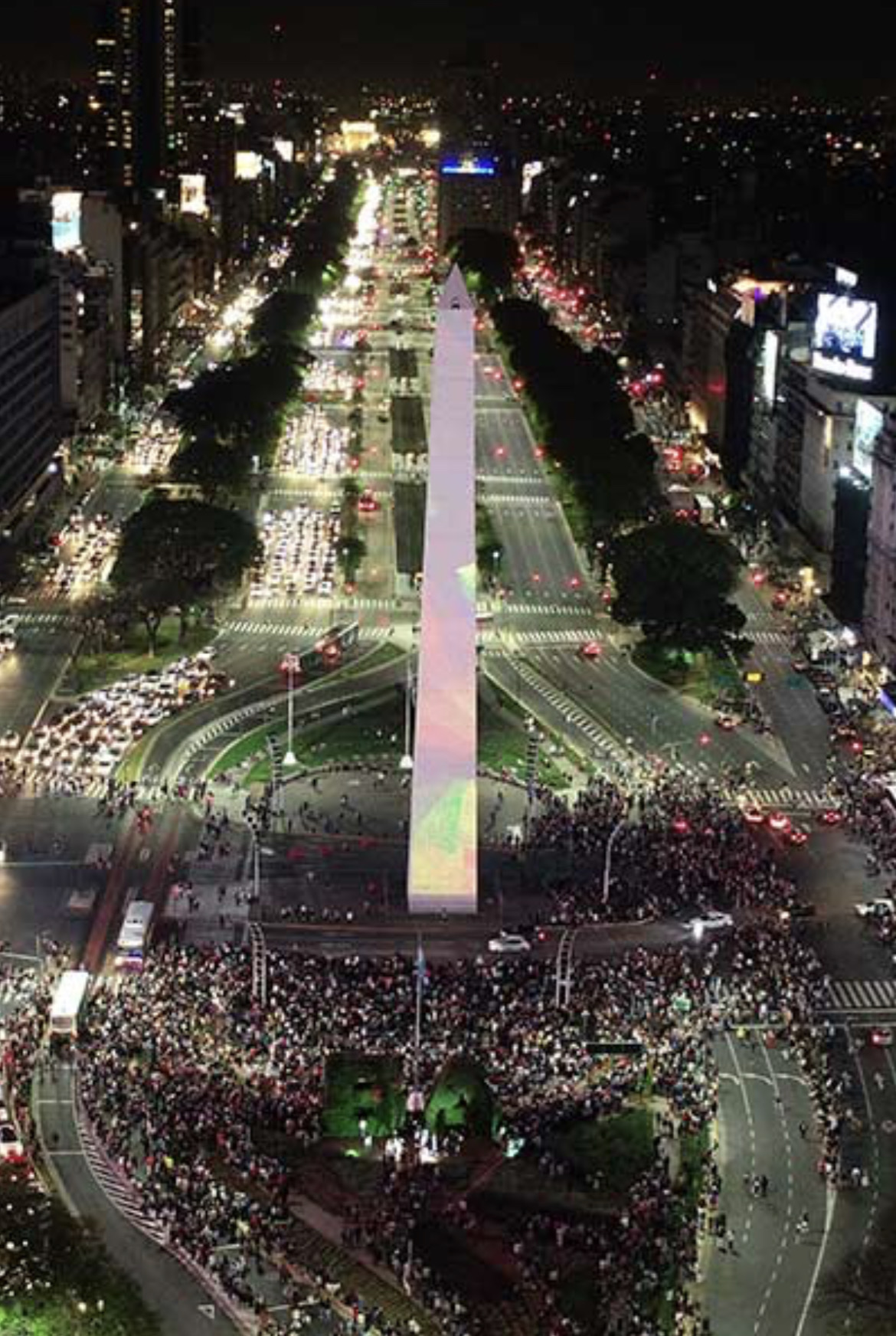
From the cathedral, we walked along the Avenue of May with a view of the Casa Rosada, or Pink Palace, which is the Office of the President and where, under one of the upper arches, Evita gave her famous speech, “Don’t cry for me”, in 1951.  From one vantage point we could see a mural of Evita painted on a high-rise building.  In the middle of the avenue is a glass walled memorial of inscribed stones representing the many people who died of Covid.  There had been a mass protest directed against the President, Alberto Fernandez. The mayor refused to allow the stones to be removed and installed a glass wall.  Nearby, is Buenos Aires’ landmark obelisk, built to mark the first anniversary of independence from Spain.

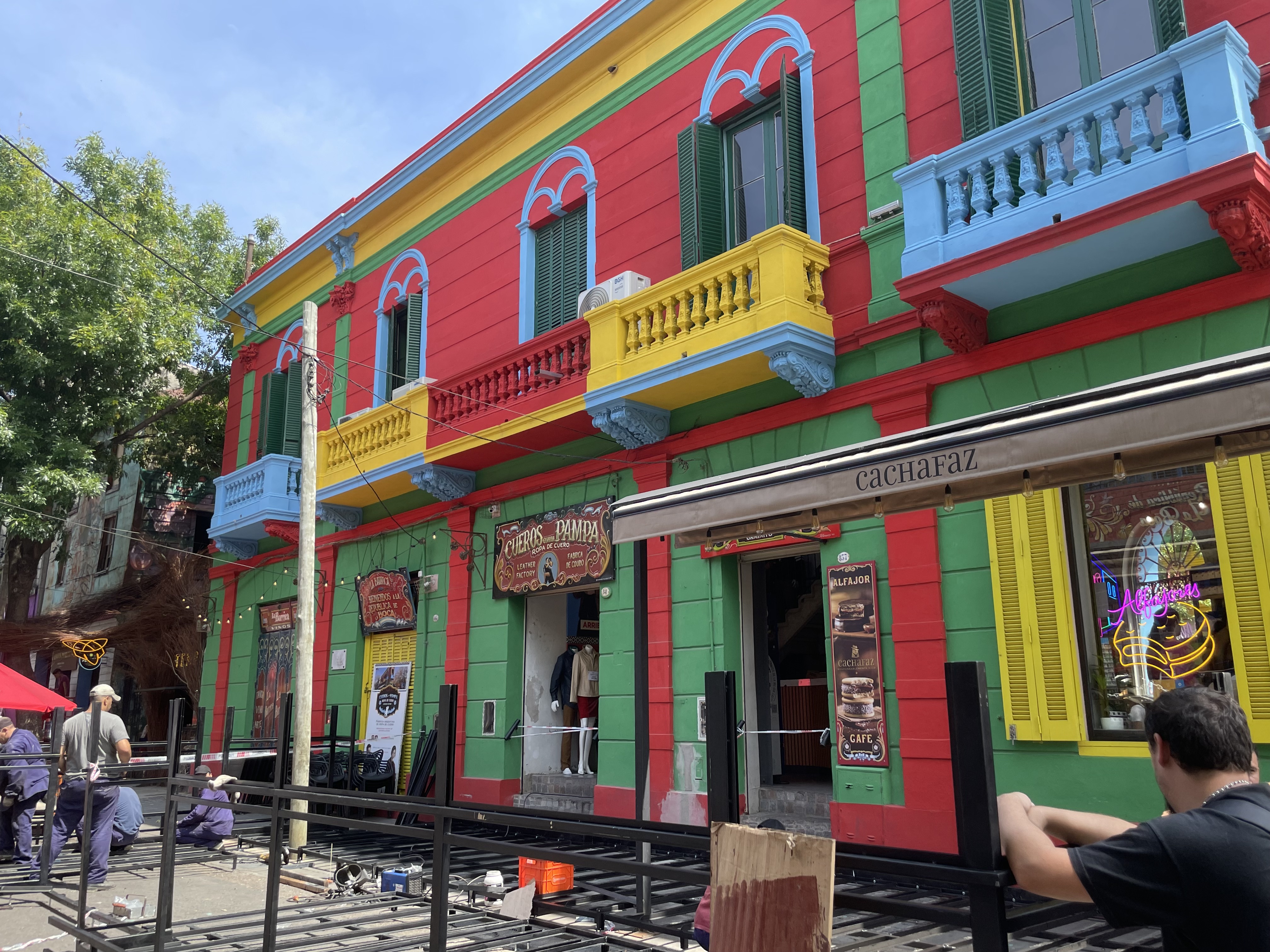
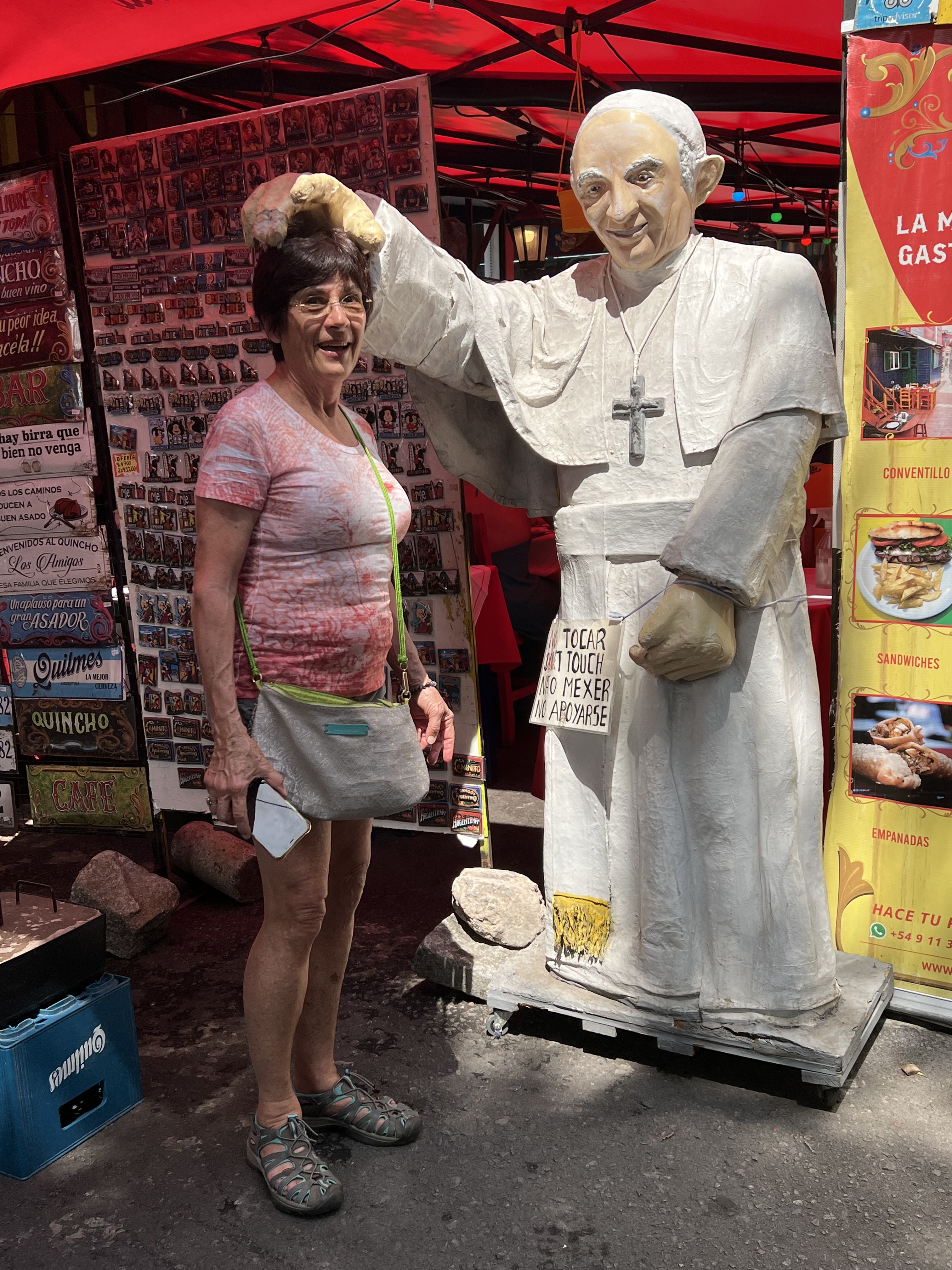
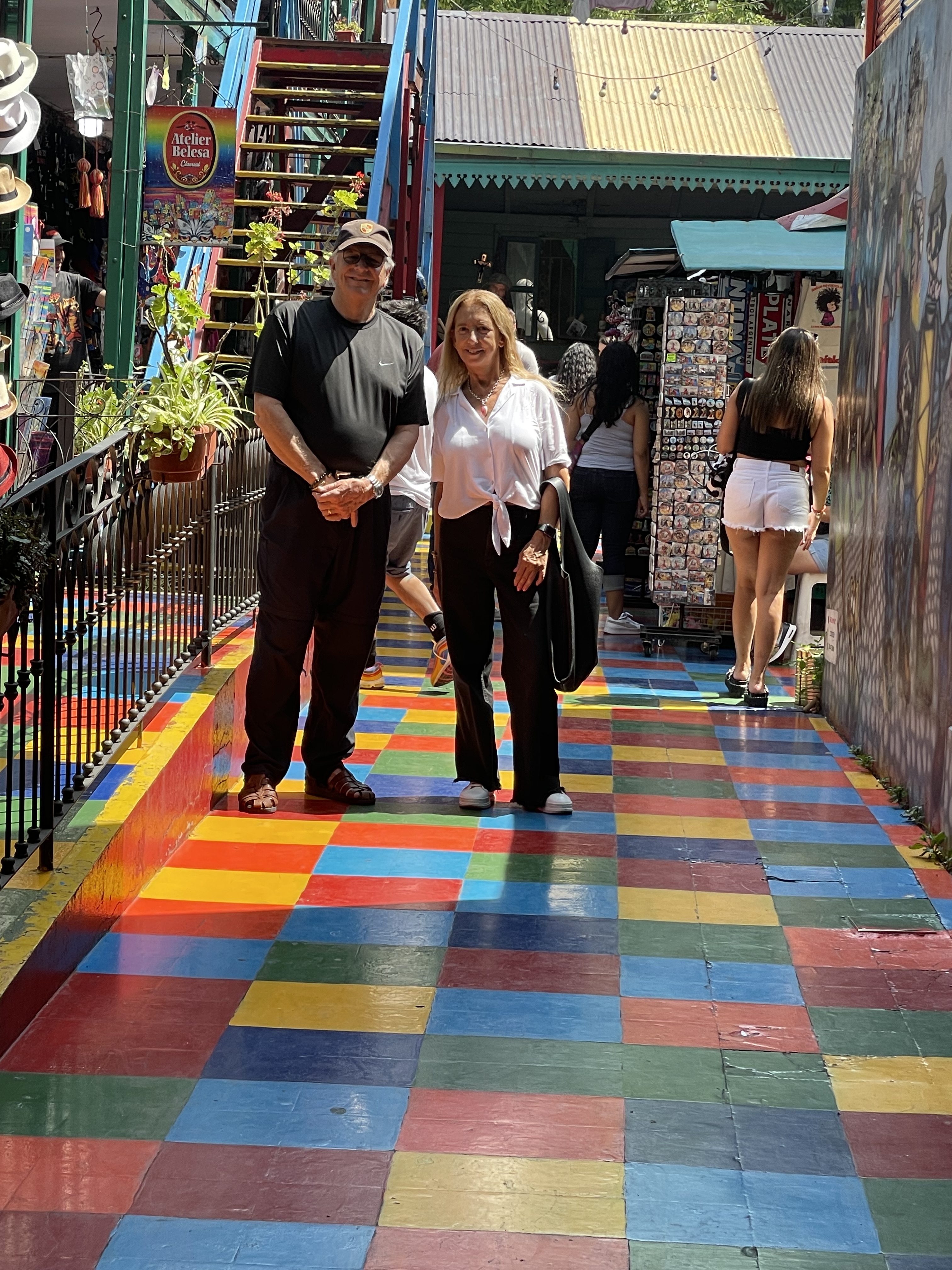
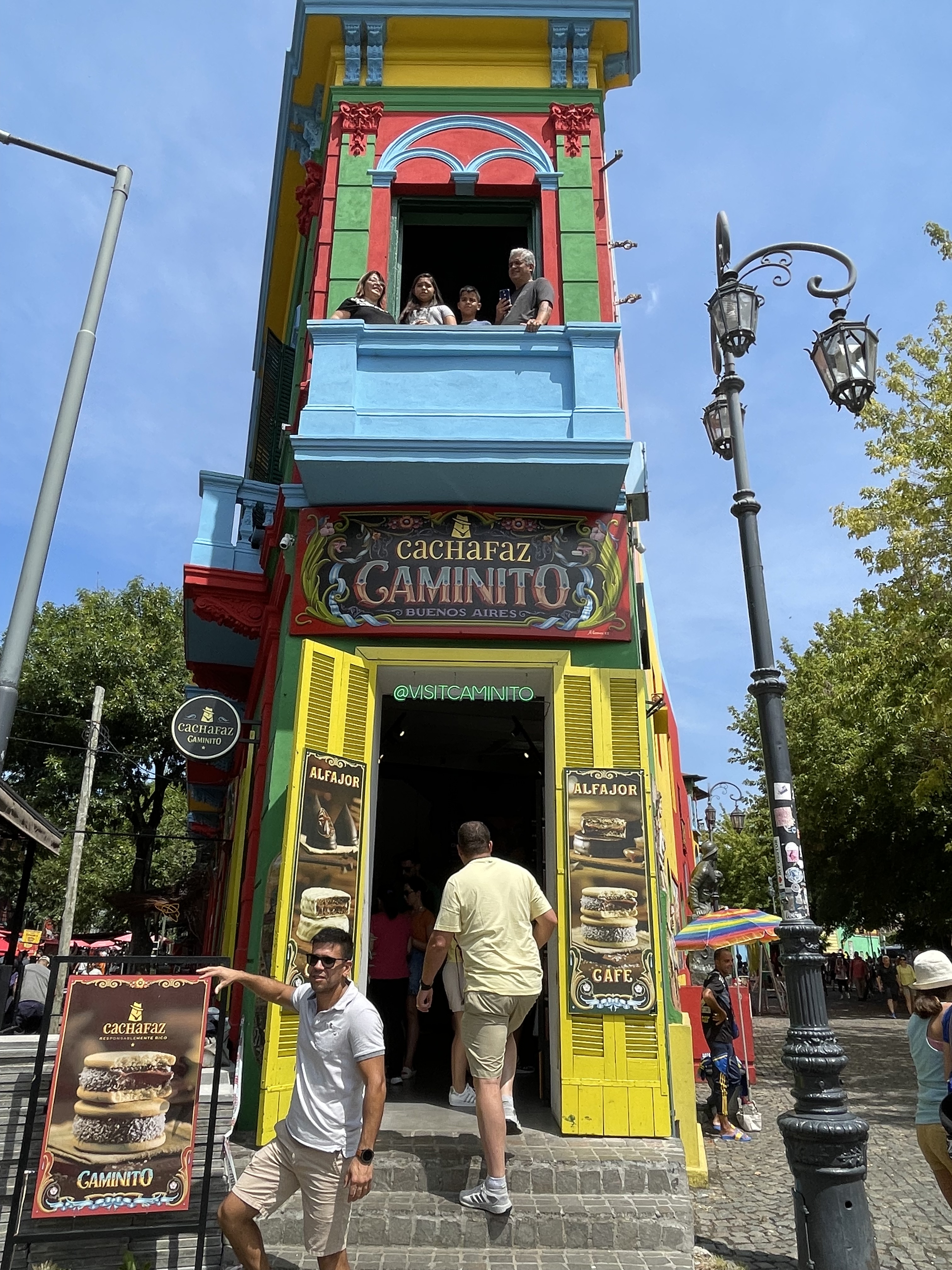
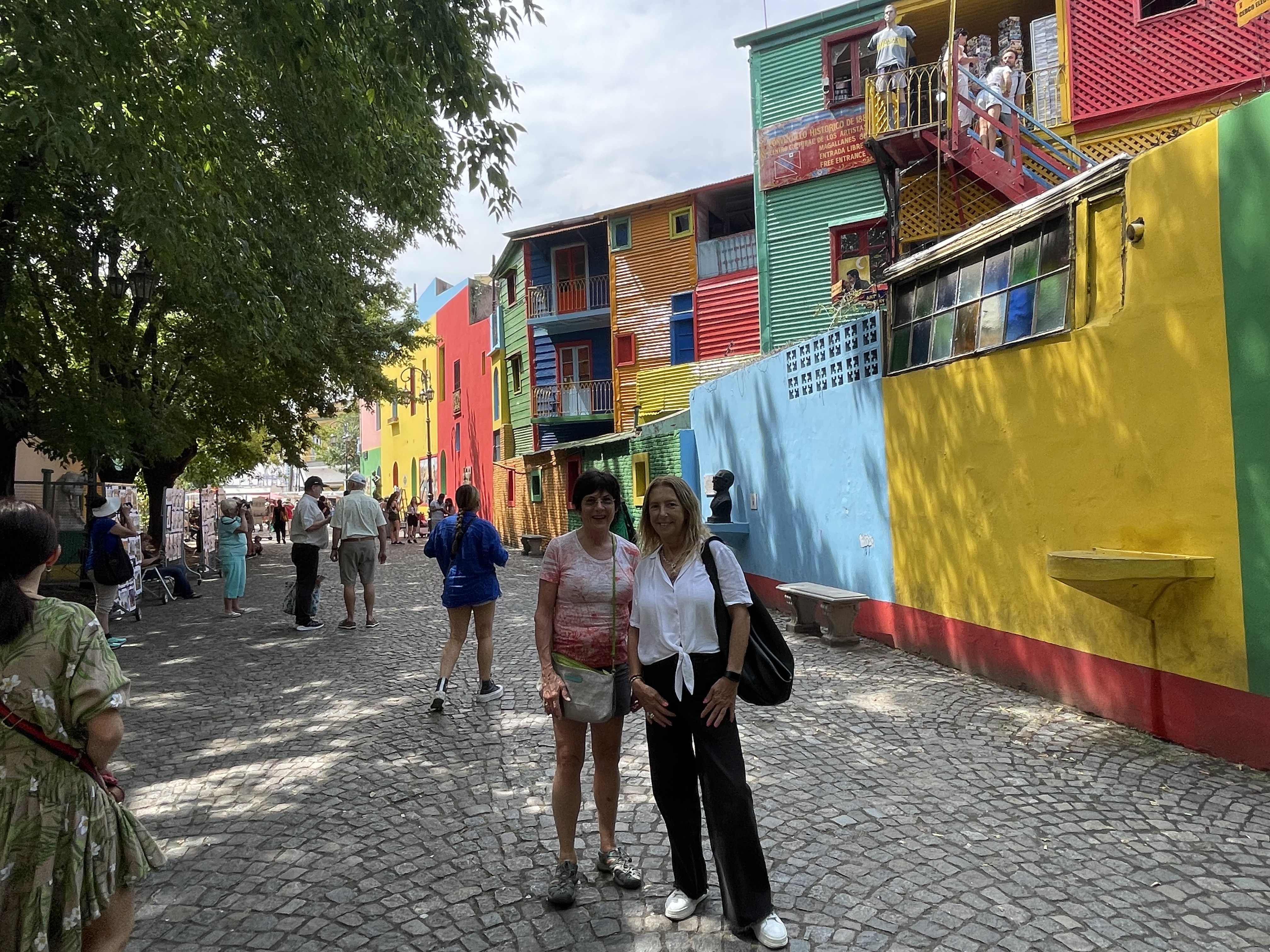
From the city center we drove south to an area of the city called Boca, which is the name for the Italian immigrant neighborhood. The area had been abandoned during the yellow fever era of 1852-1871 when hundreds of people died every day.  When the Italian immigrants arrived in the 1880’s they moved into this abandoned area. Now the area has been restored by the locals into a colorful tourist area with many shops and restaurants.  Here I found Pope Francis and had my photo taken with him.  Tango became very popular and famous here as one of the few nonverbal connections immigrants had with each other.  Today Russians are entering the country in droves.  Gilda told us about 20,000 arrived recently, with 300 pregnant women hoping to have their babies born in Argentina, because the new babies are automatically citizens and their parents can become citizens after residing here for 2 years.  Once they have Argentinian passports, they can travel to other countries.  There are currently no Argentinian immigration quotas.

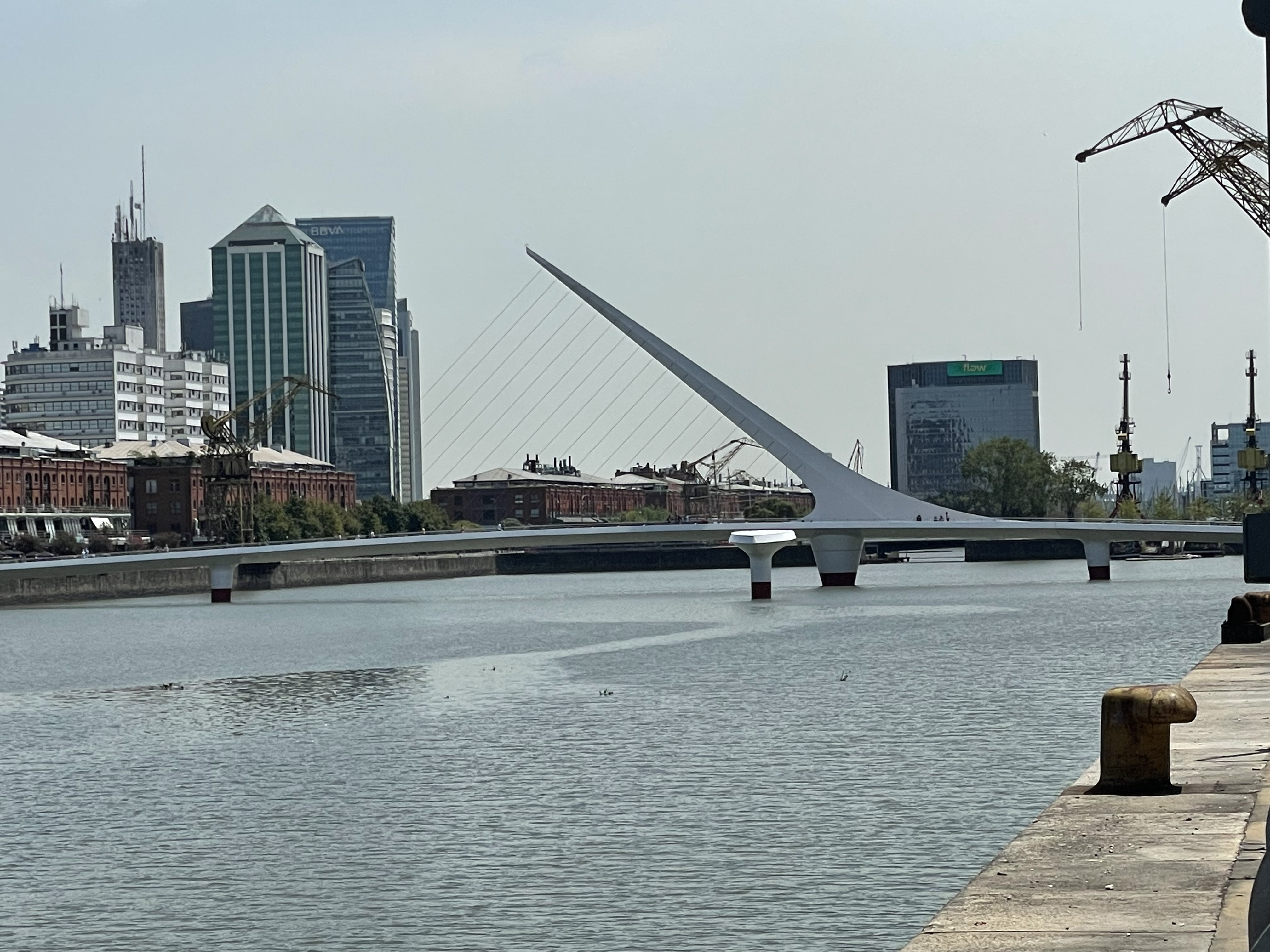
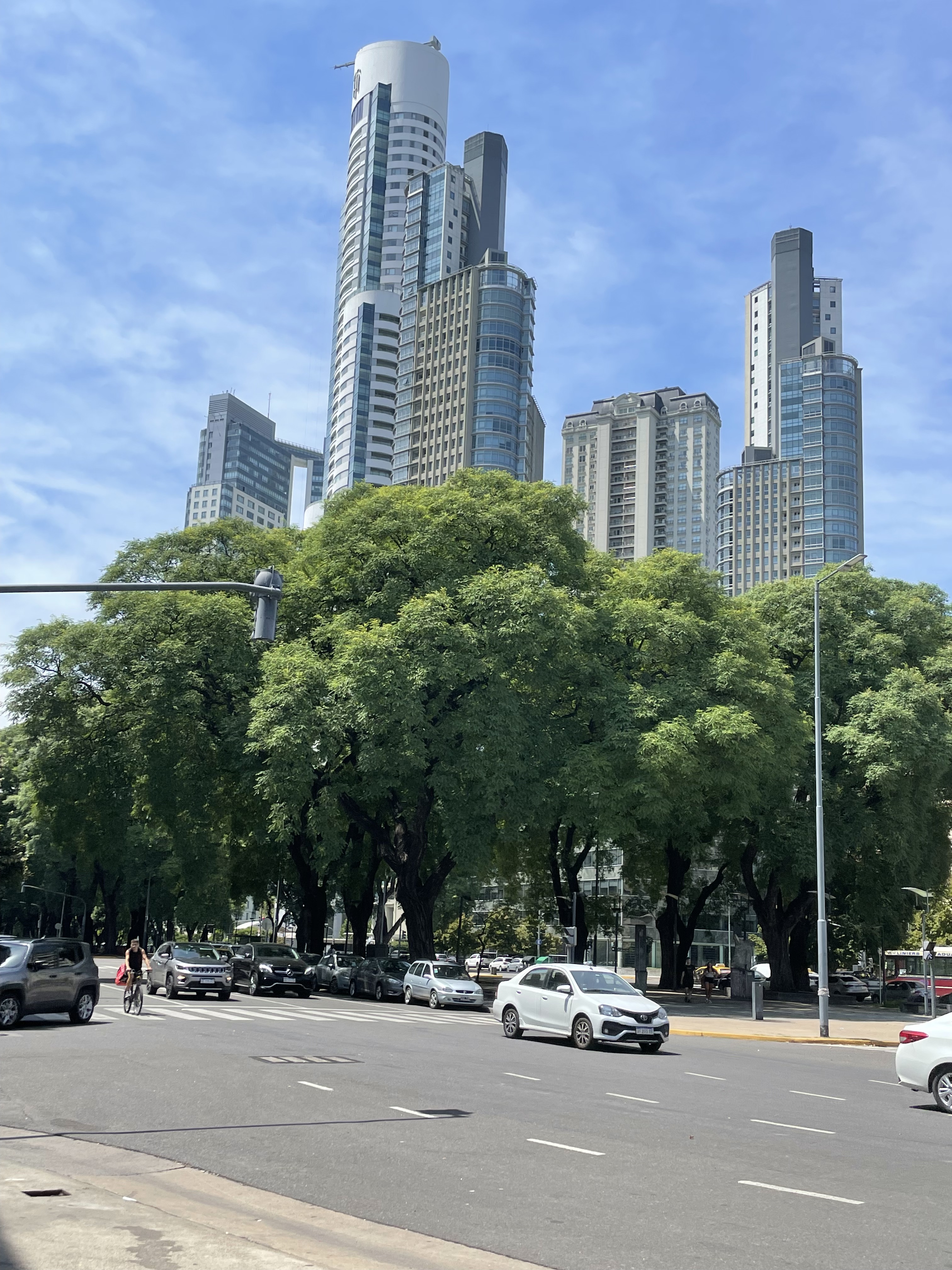
From Boca we went to the Modern Port for a look at the tallest buildings in the city and to see a most unusual bridge called Puerto de la Mujar, or Woman’s Bridge. Built in 2001, it is a rotating foot bridge for one of the docks in the commercial district of the port. A cantilever cable stayed bridge that is also a swing bridge, it is most unusual in its asymmetrical arrangement.  New buildings in this neighborhood are quite expensive.

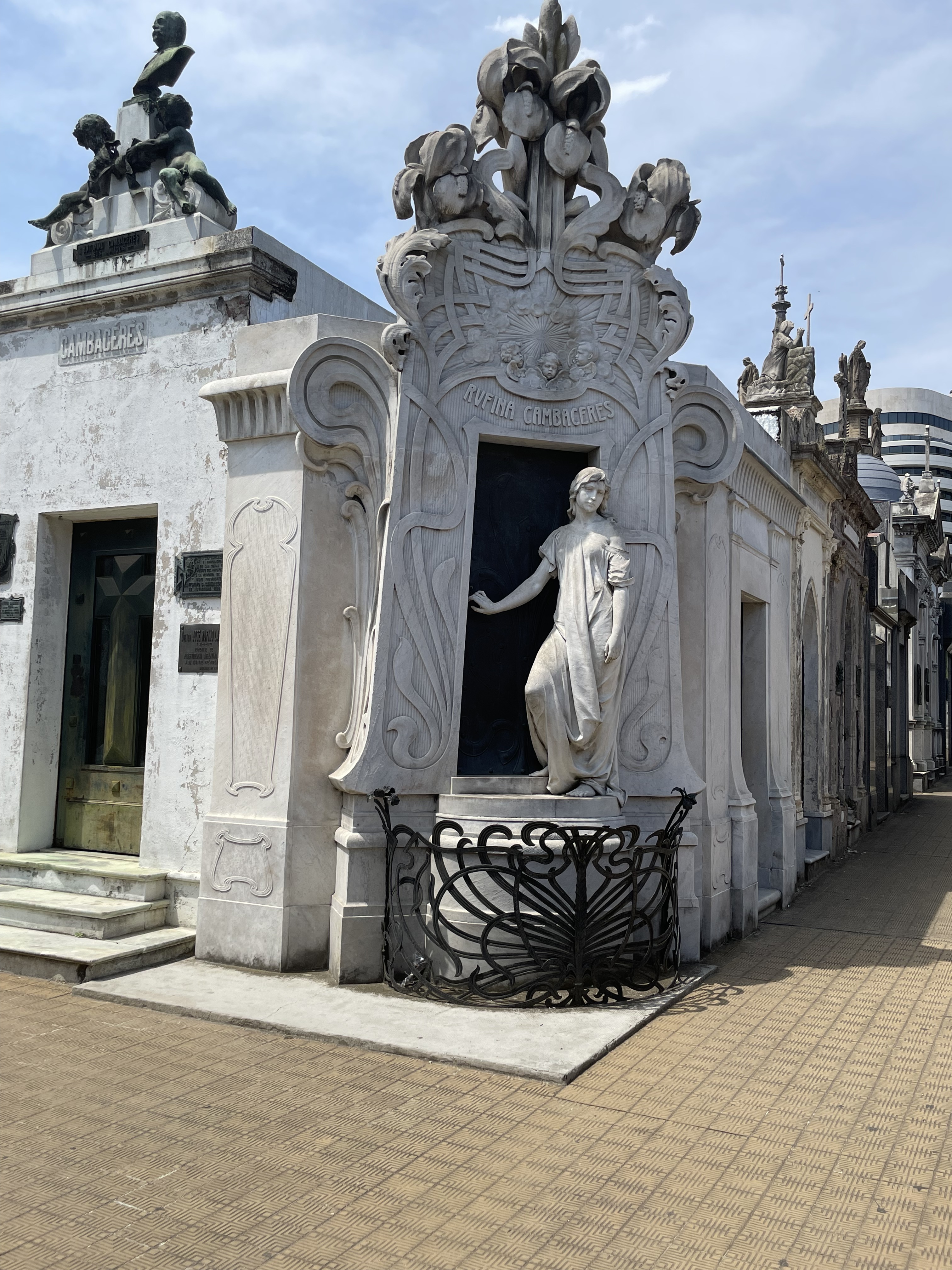
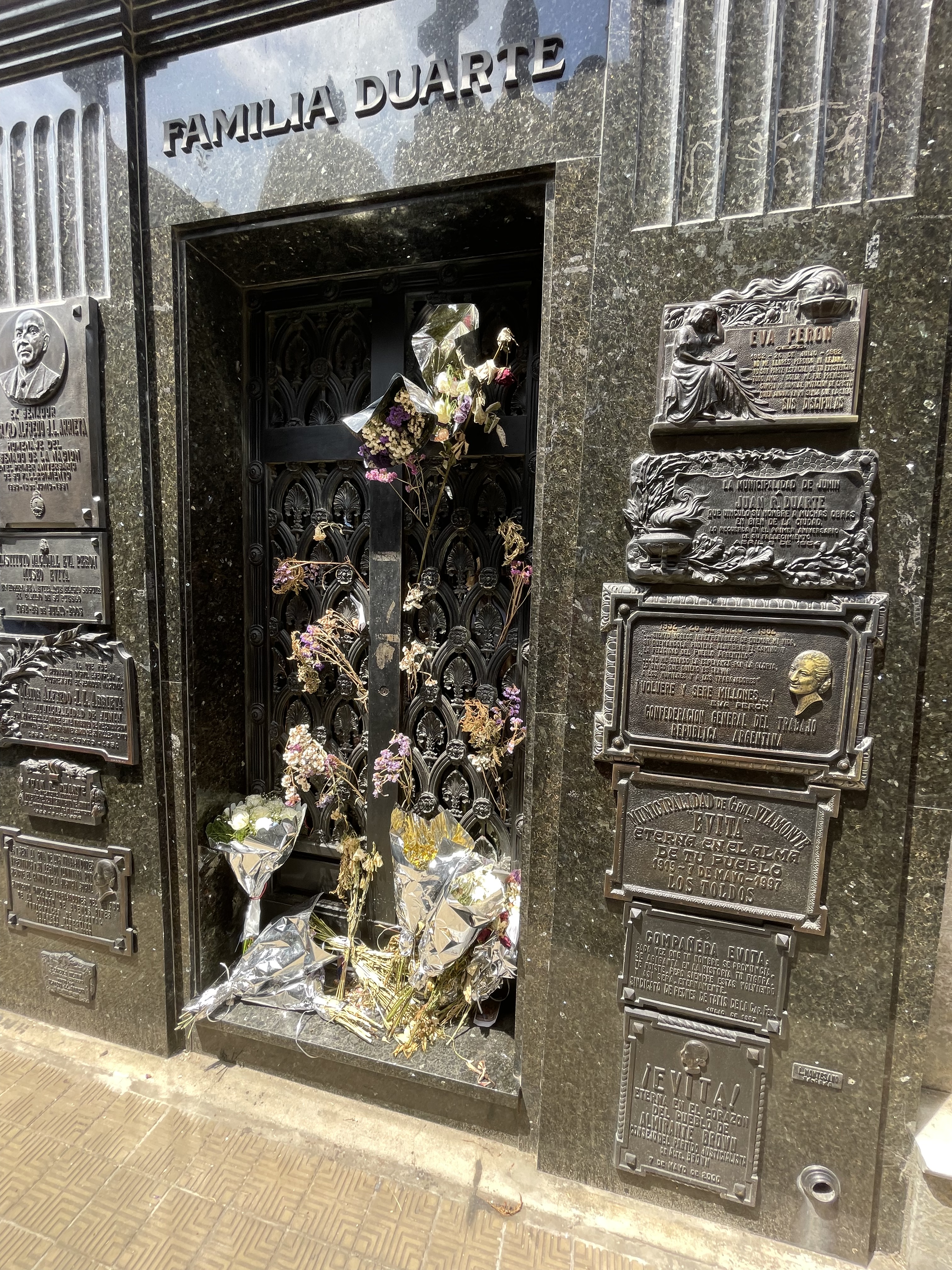
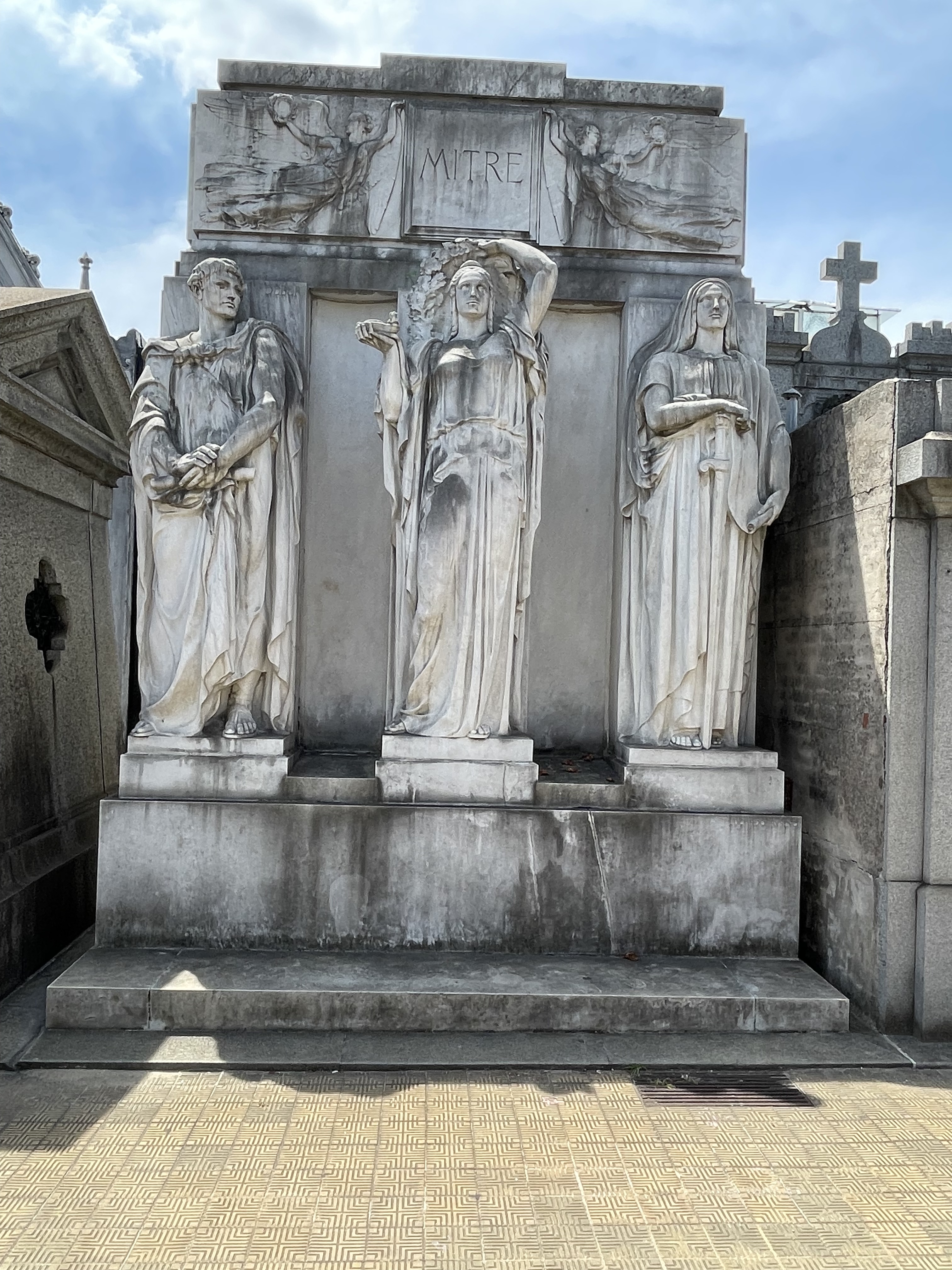
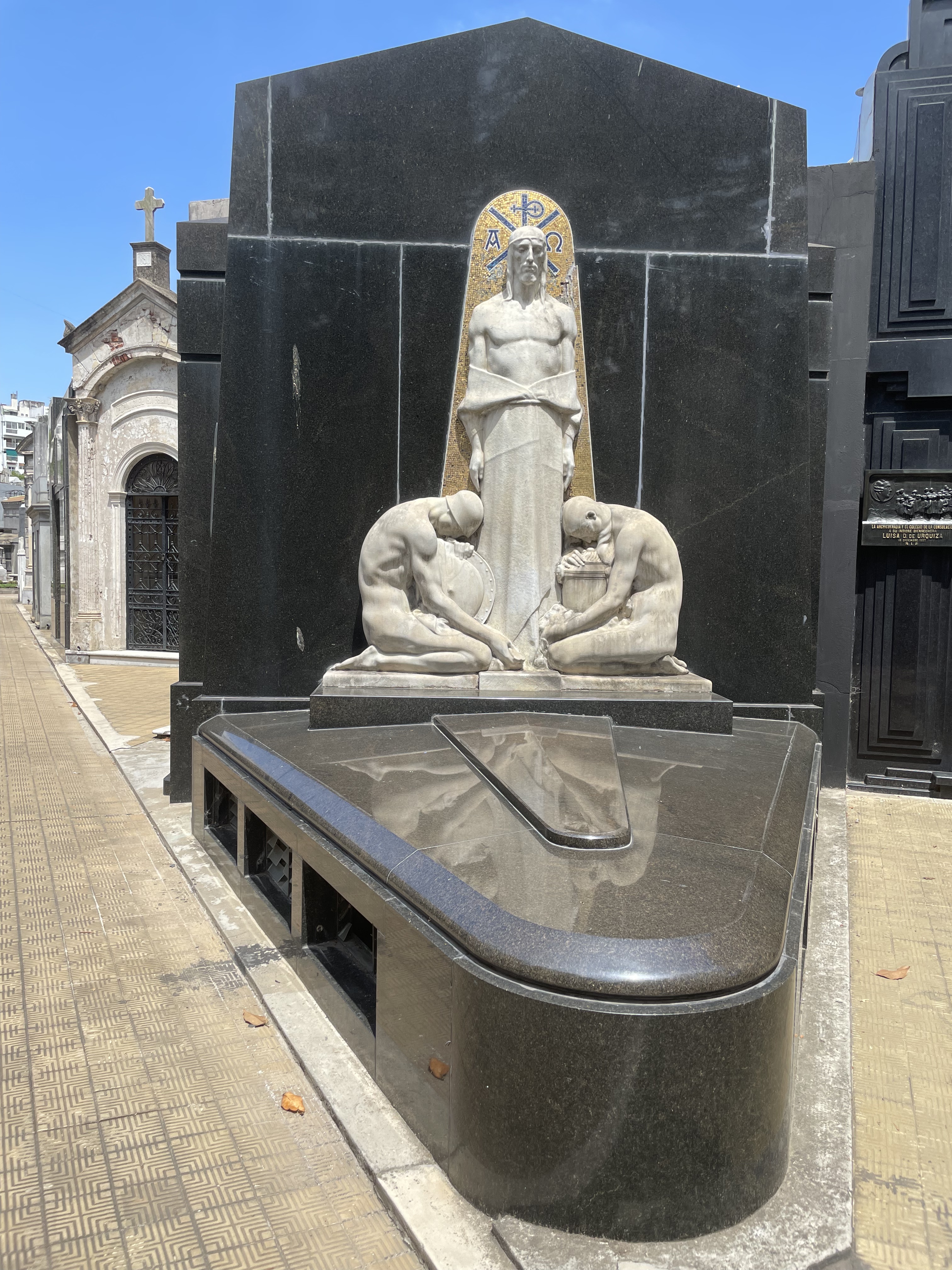
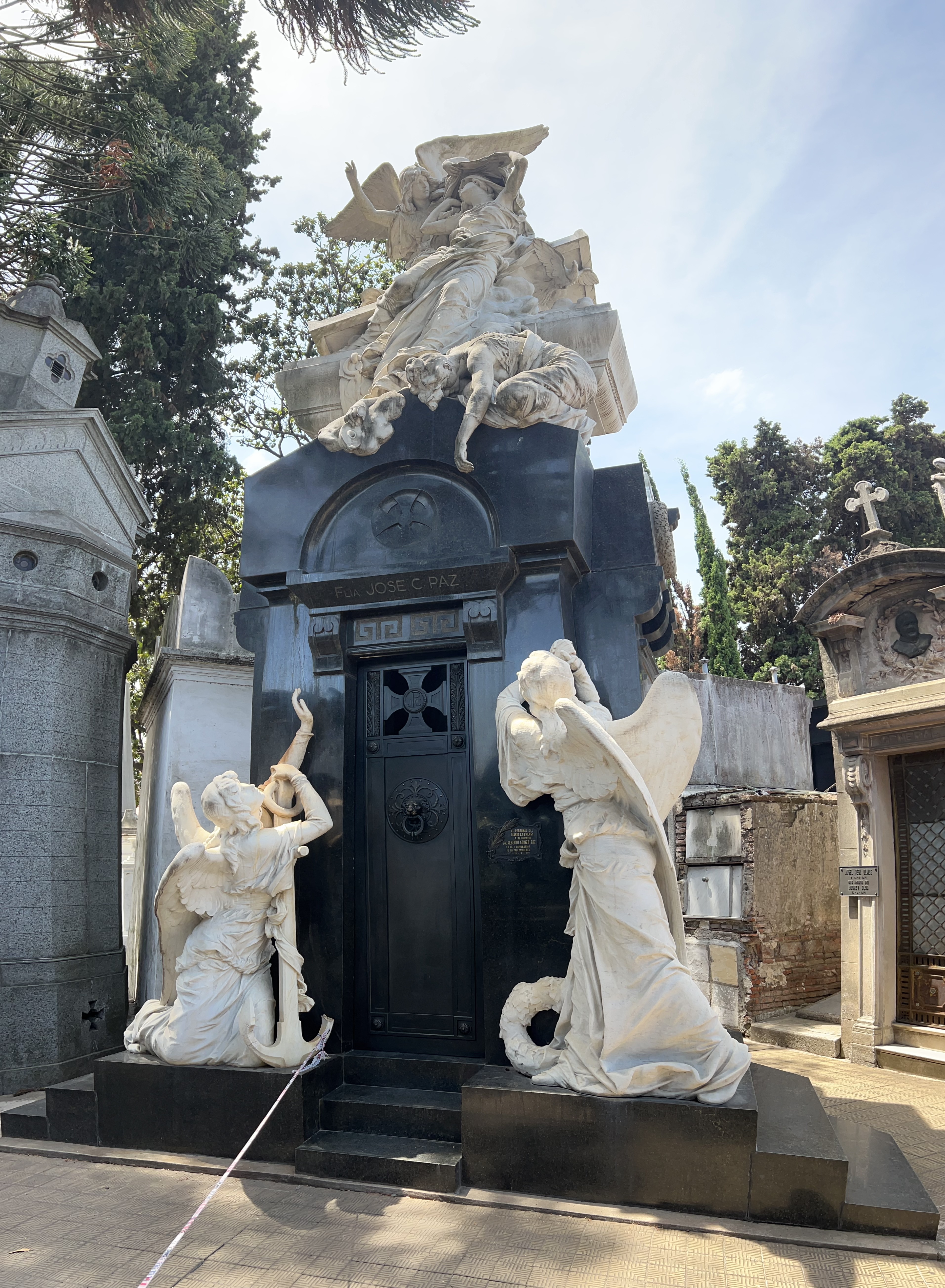
Next on the list of sites to visit was the City of the Angels, where over 4,500 mausoleums and underground crypts contain many thousands of deceased.  Inaugurated in 1822 the cemetery was open to everyone. By 1881 only the wealthy could afford the fancy statuary, sculptures, and massive construction.  We saw the crypt of Eva Peron, who died in 1952 from uterine cancer, and a handful of others.  One very sad story was of a 19-year old girl who died on her honeymoon.  The mother had a large crypt built just for her including an underground room that looked just like her bedroom at home.  The mother would come and sit with the dead girl and mourn her passing. Eventually the girl’s dog joined her in the crypt.

We learned that the Jewish community in Argentina, at 250,000 people,  is the fourth largest in the world behind Israel, the US and Canada. Gilda told us a kosher McDonalds exists  in a mall in Buenos Aires and that the only other one is in Isreal.

We noticed that the city was very clean and devoid of graffiti, unlike Santiago, Chile, where the graffiti was so bad the signs were nearly unreadable. 

Gilda and Eddie dropped us off at an Empanada restaurant called San Juanino.

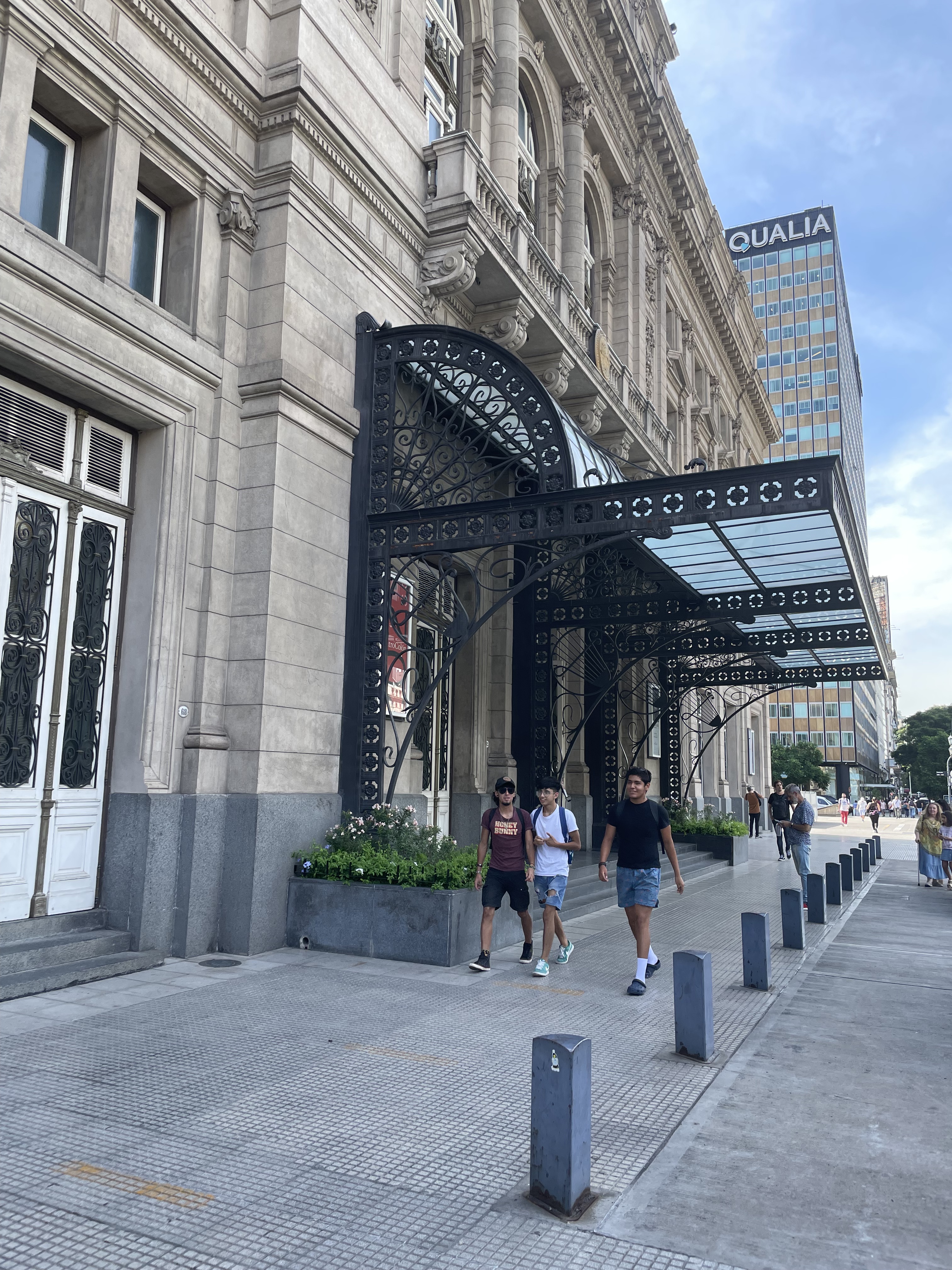
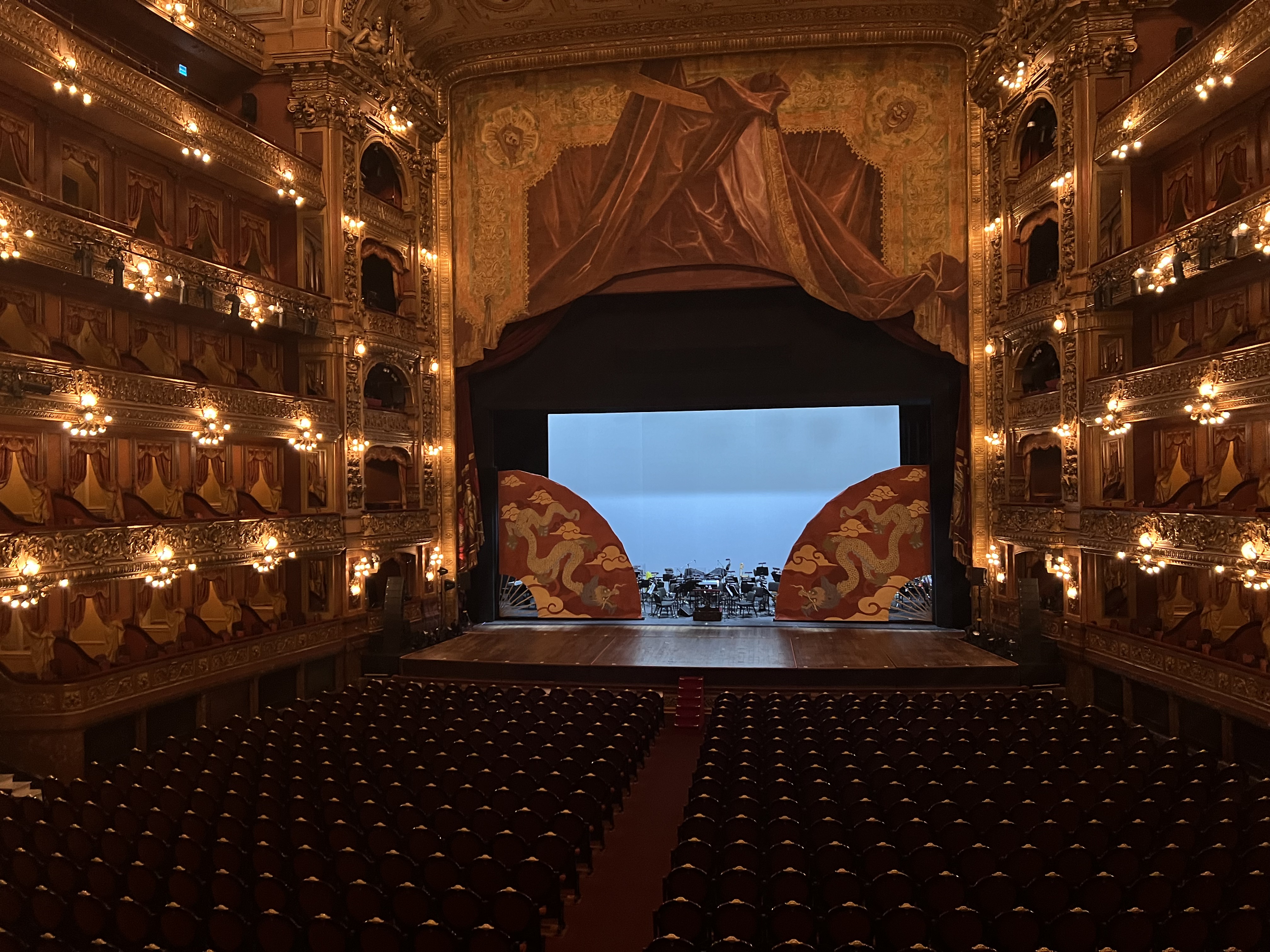
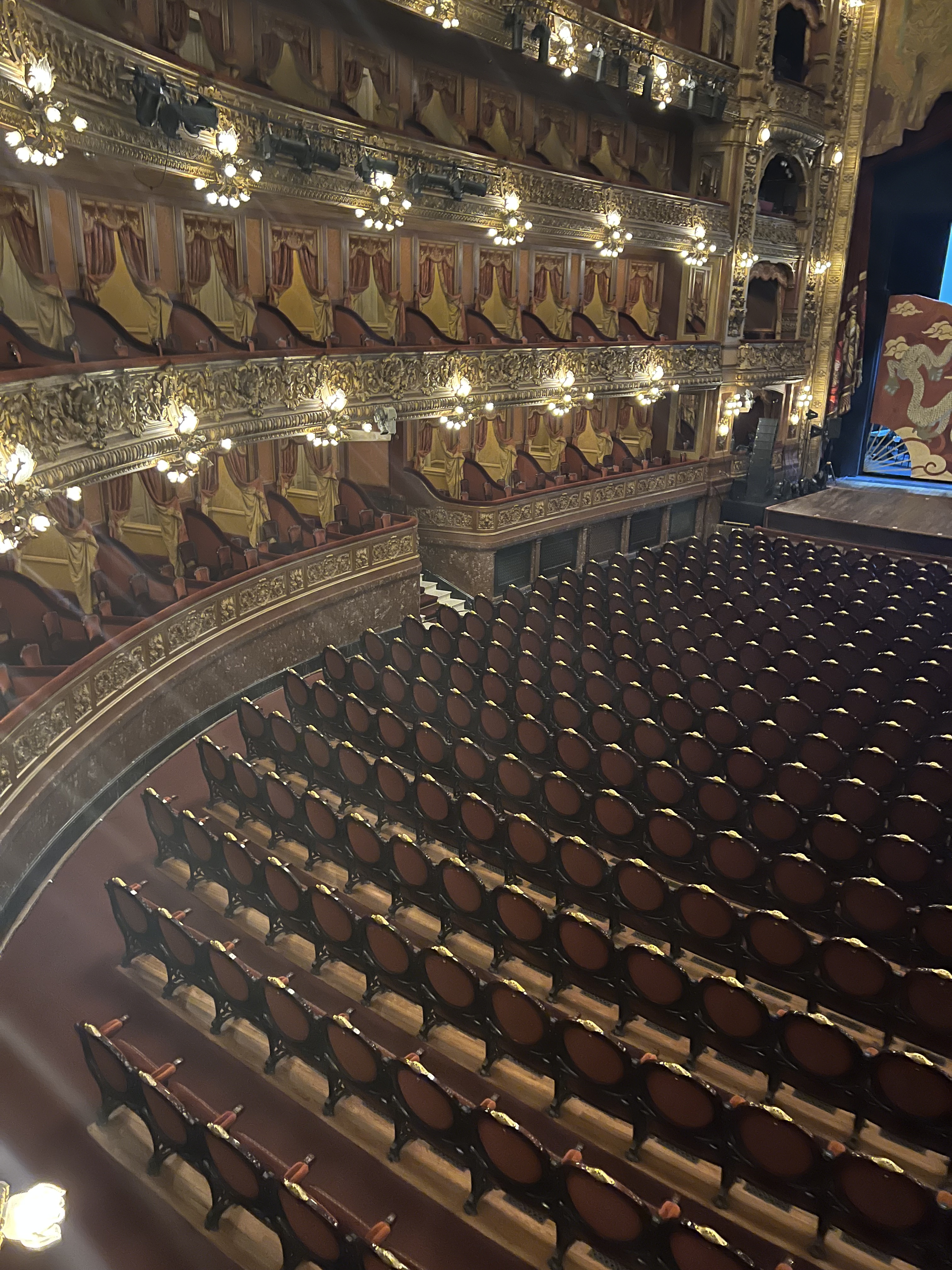
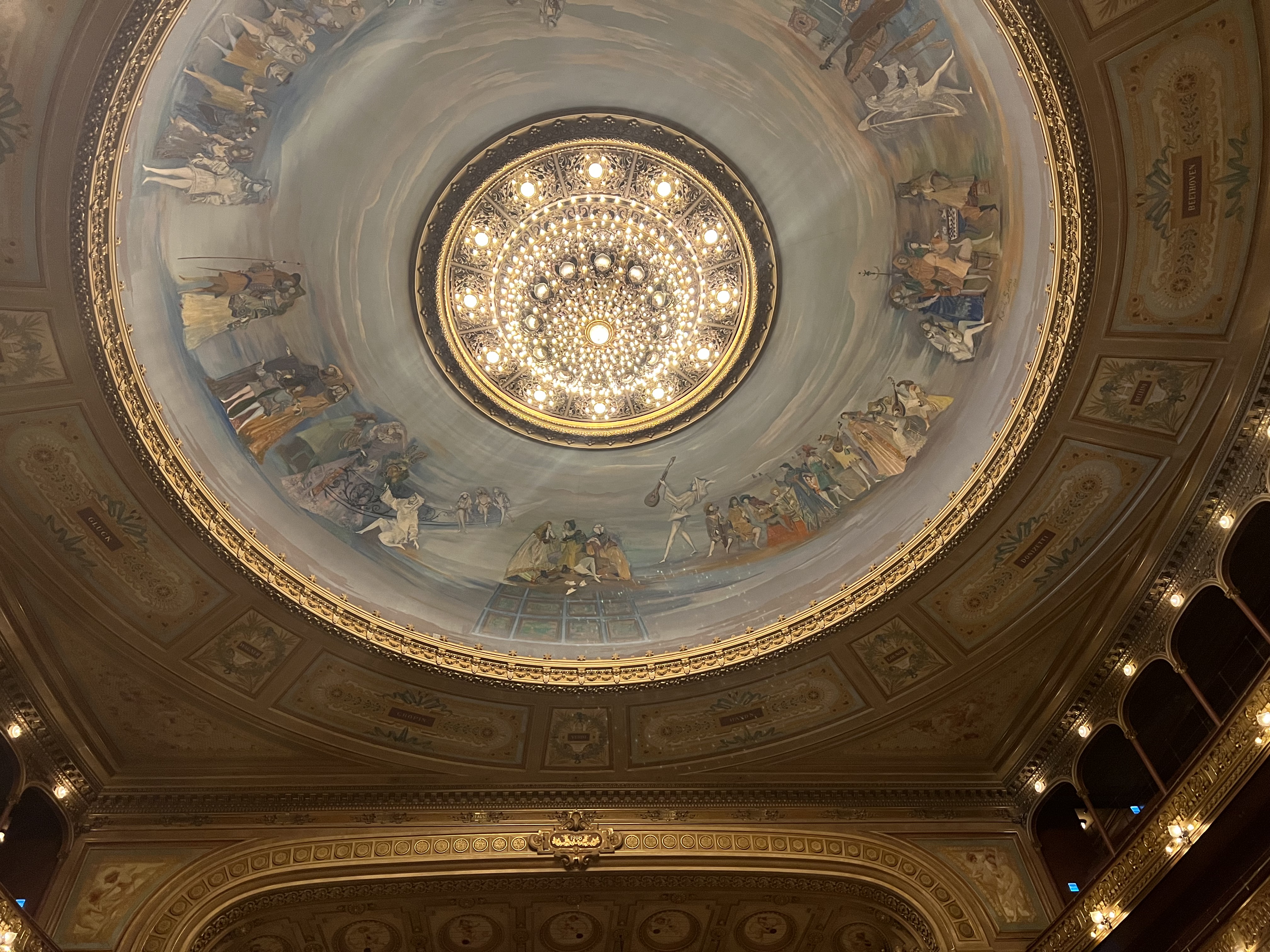
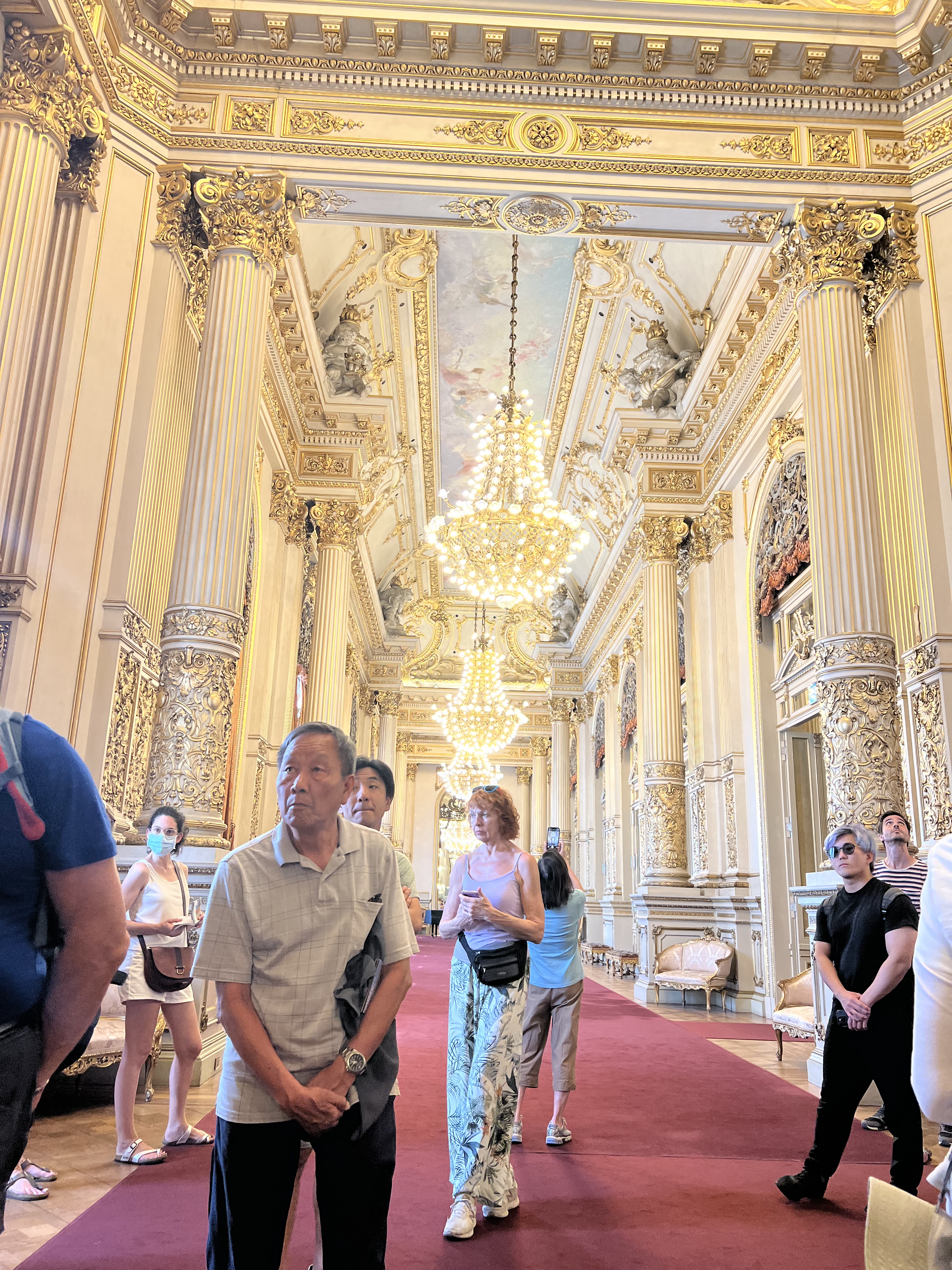
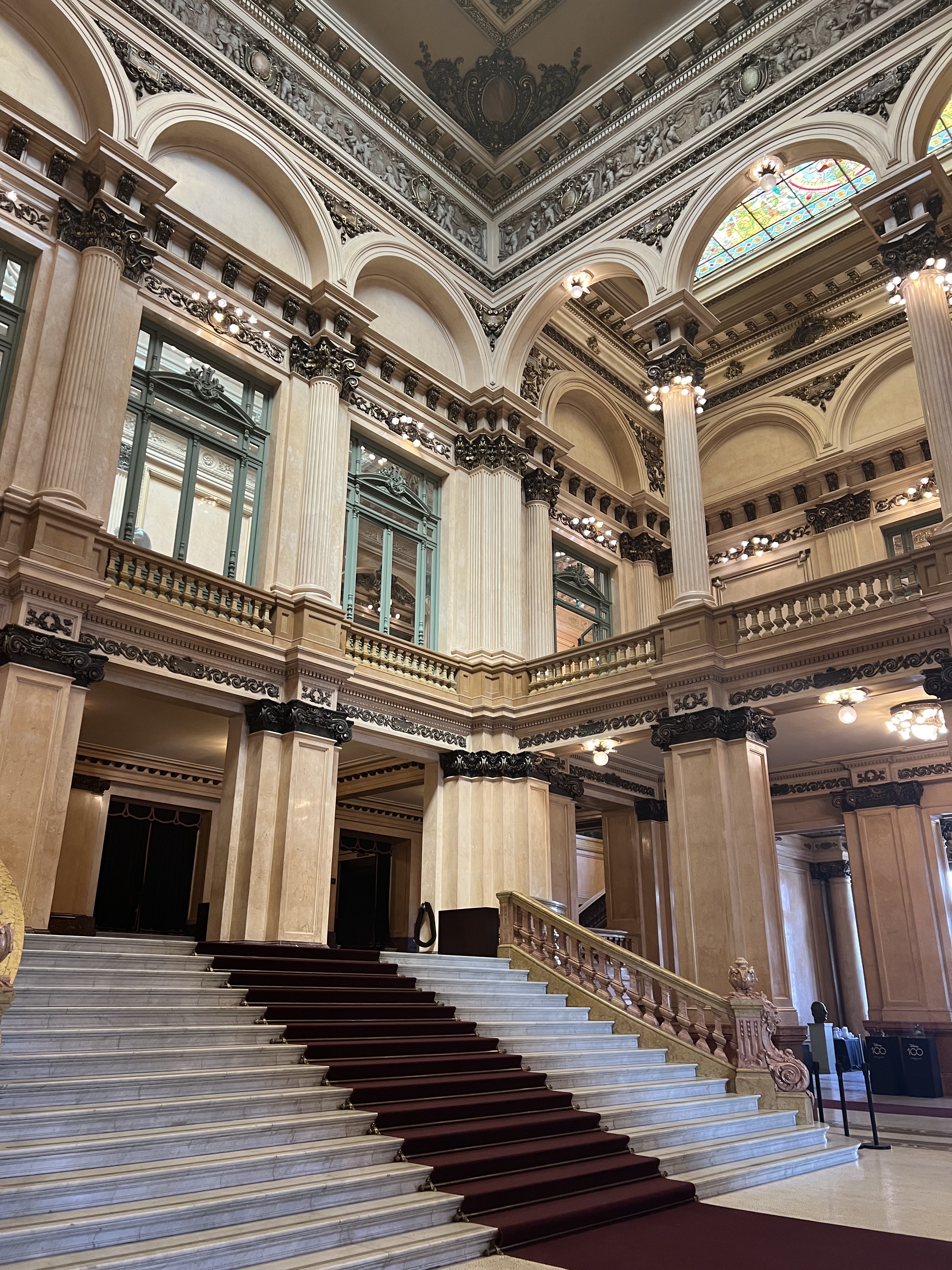
We ate lunch quickly and found an Uber to take us to the Teatro Colon Opera House where we had tickets for a tour. We were there for an hour, got some nice images, but precious little information as the guide’s English was, sadly, not understandable.

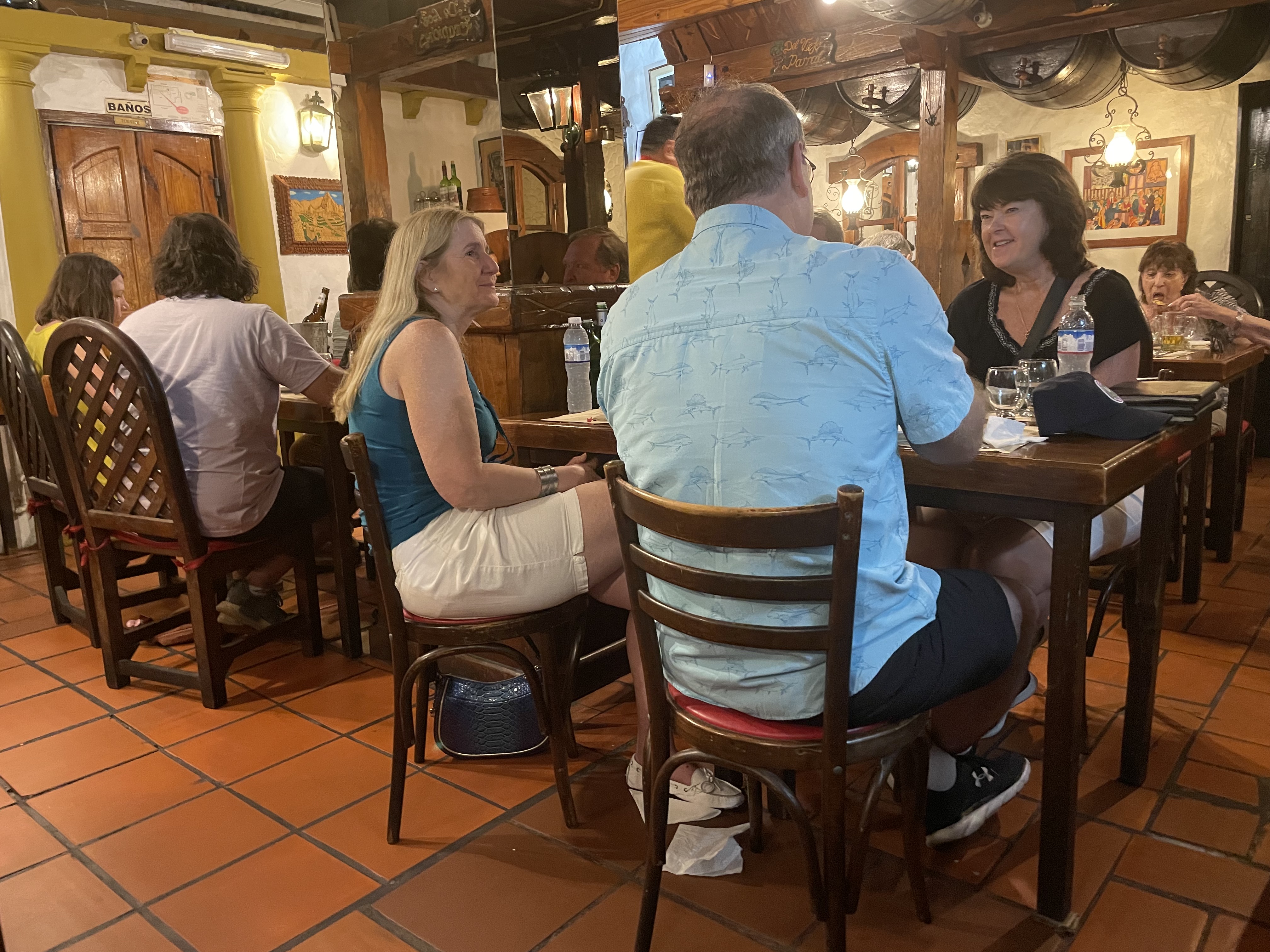
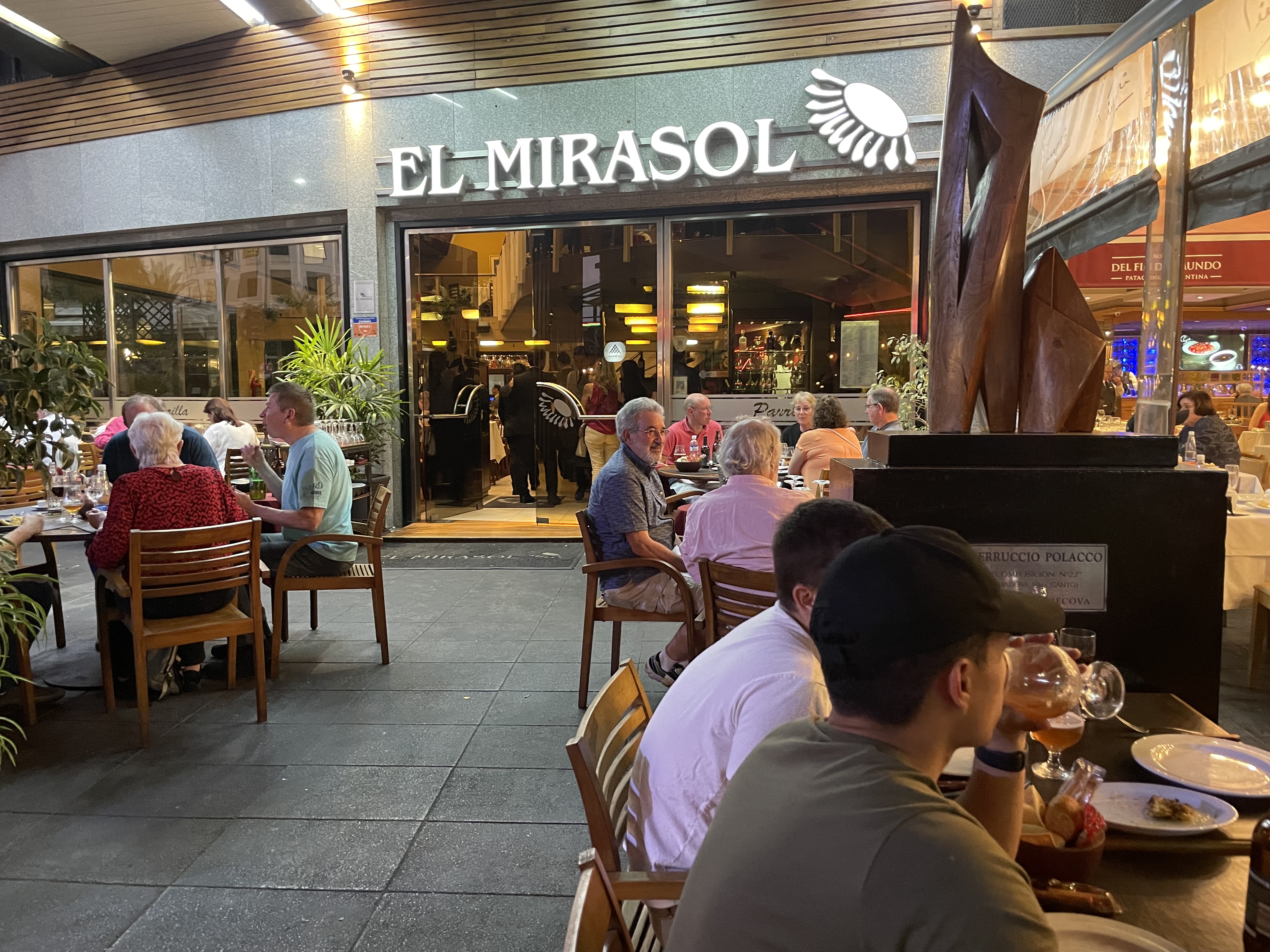
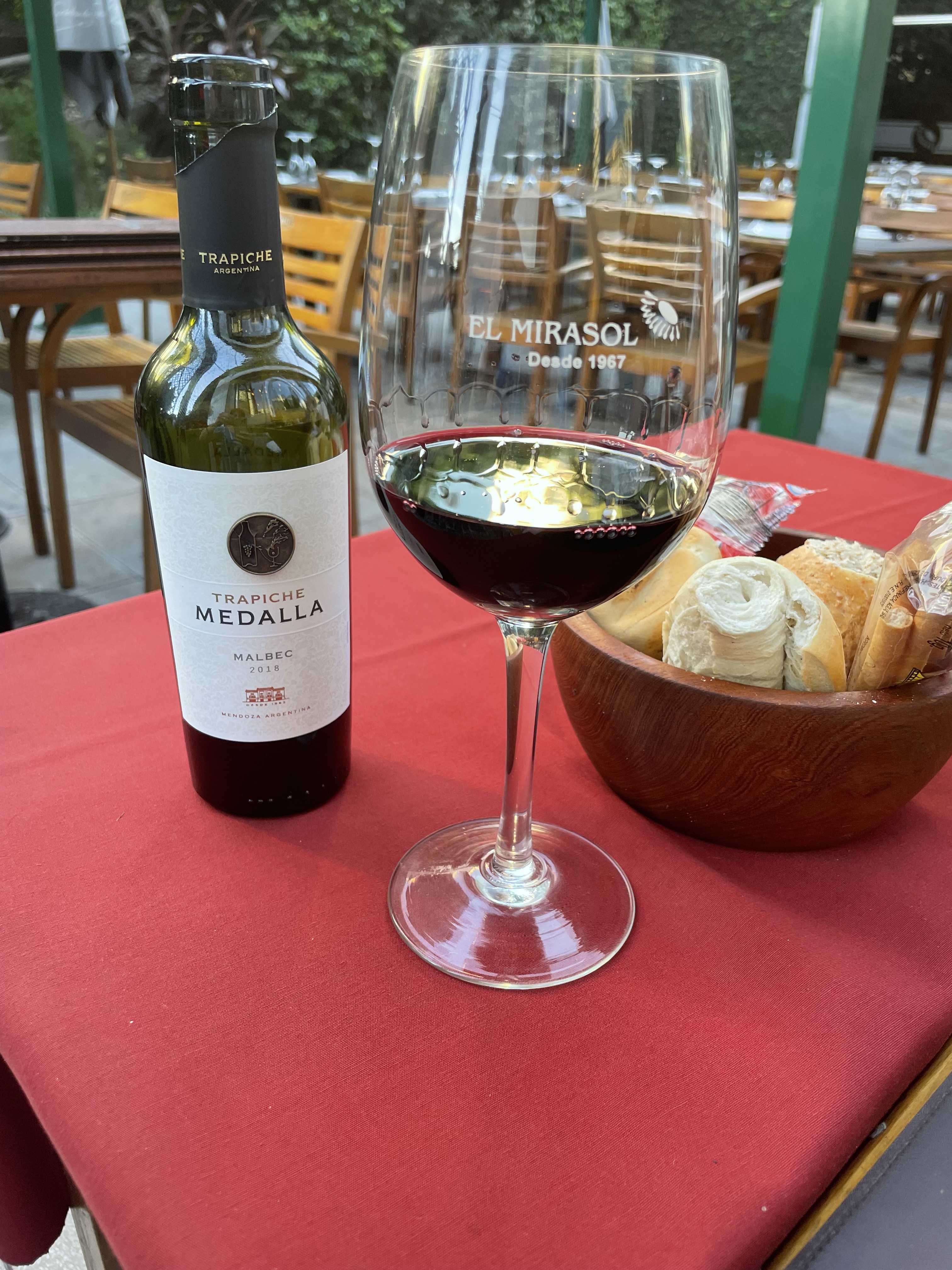
It had been a long day by the time we got back to the hotel, but we wanted to eat the local meal of BBQ, so we changed clothes and headed for El Mirasol, a nearby restaurant under the freeway, where we enjoyed excellent BBQ. Mark had beef and sweetbreads kabob and I had pork ribs with apple sauce. It being our Valentines dinner we had tried for a more highly recommended place, but could not get in. Our choice was fine.

More from National Glacier Park

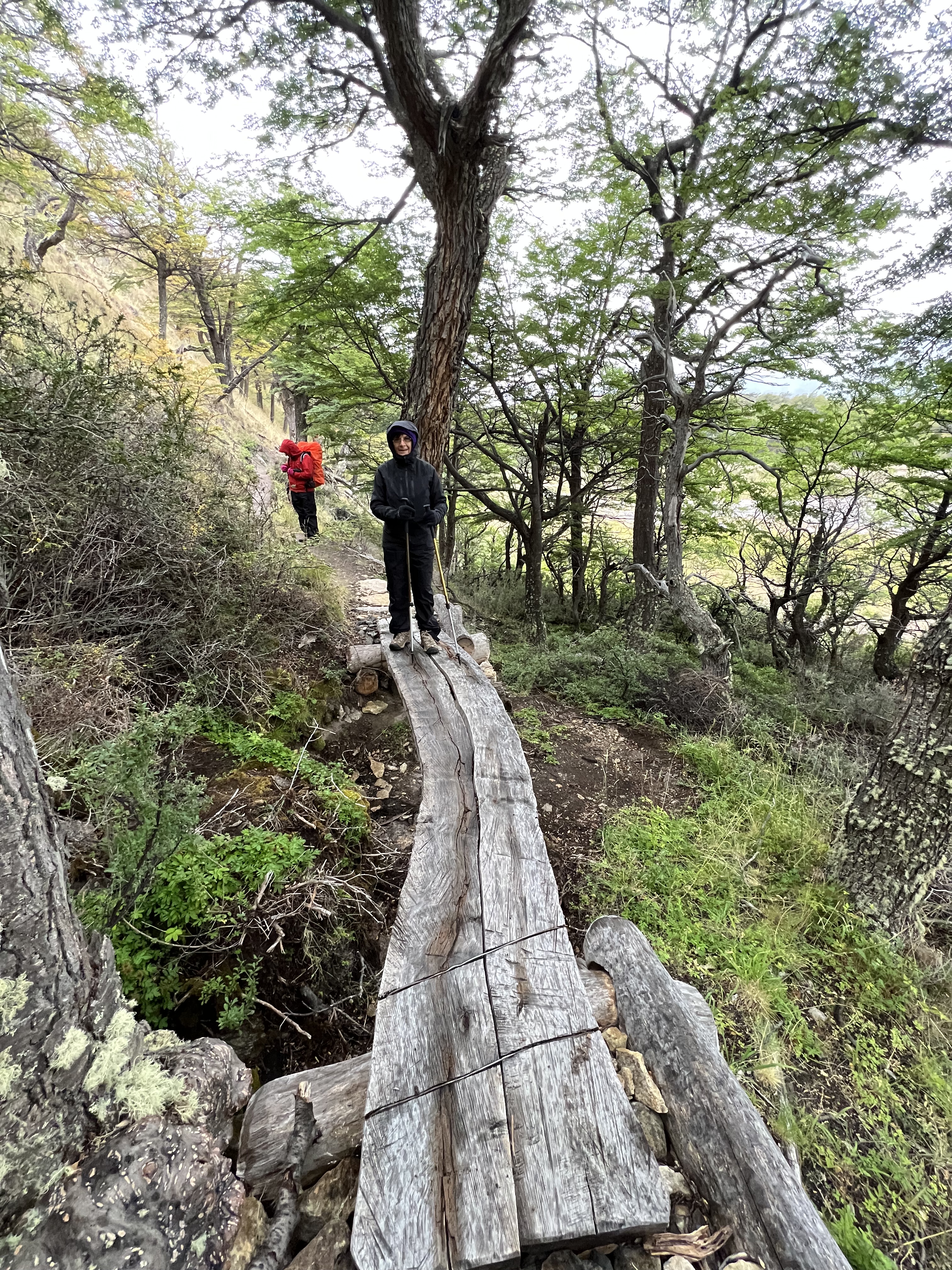
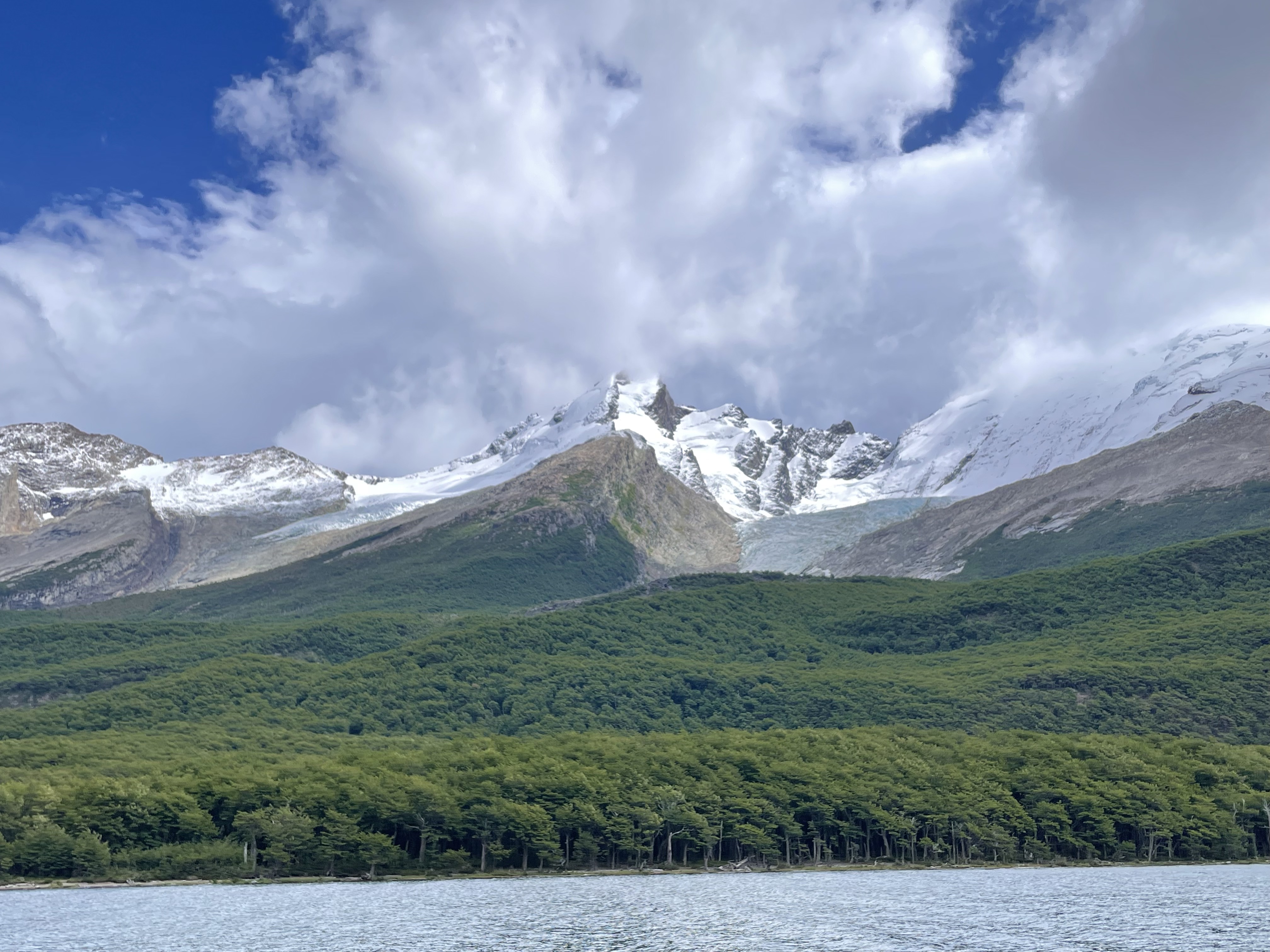
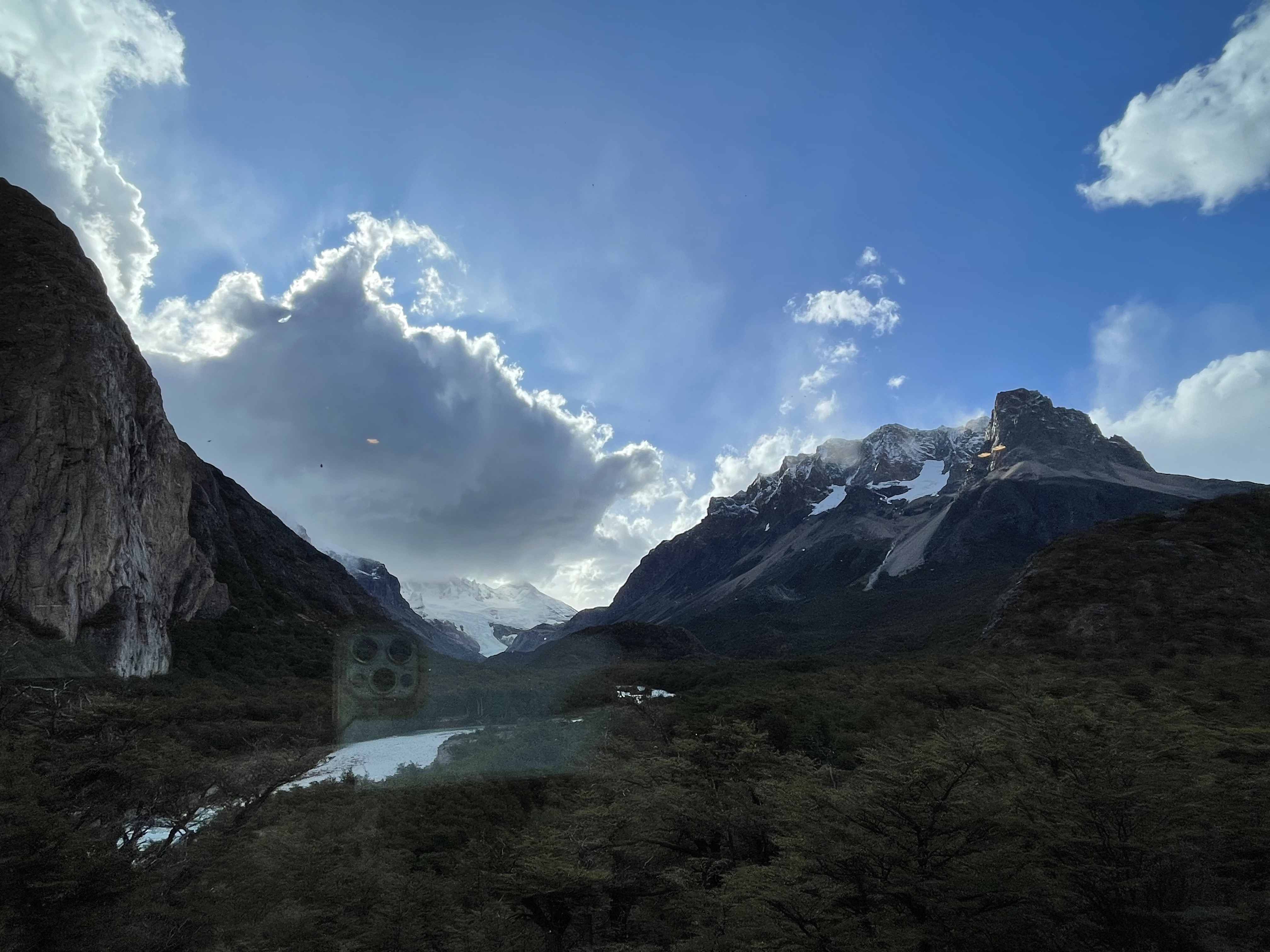
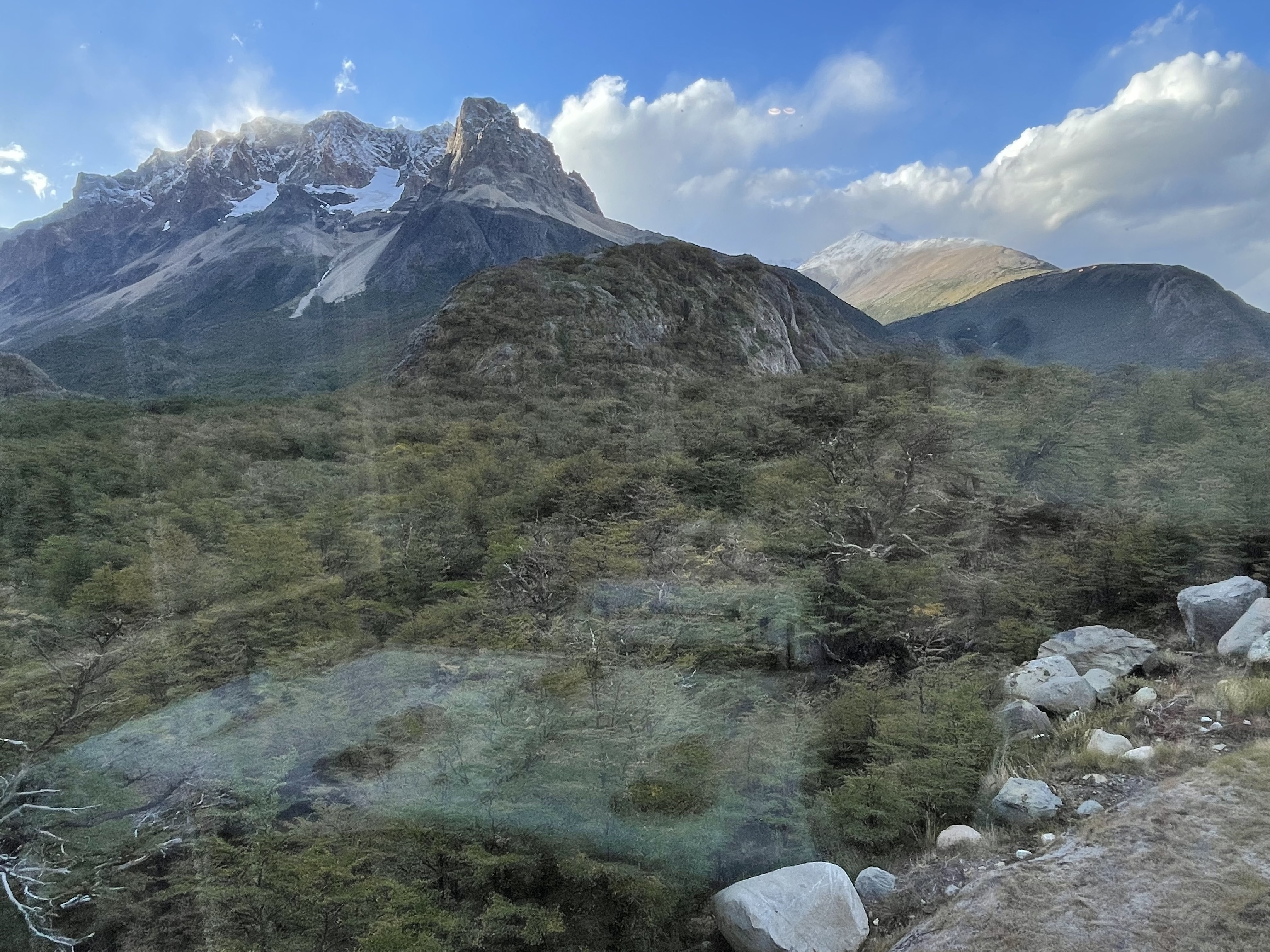
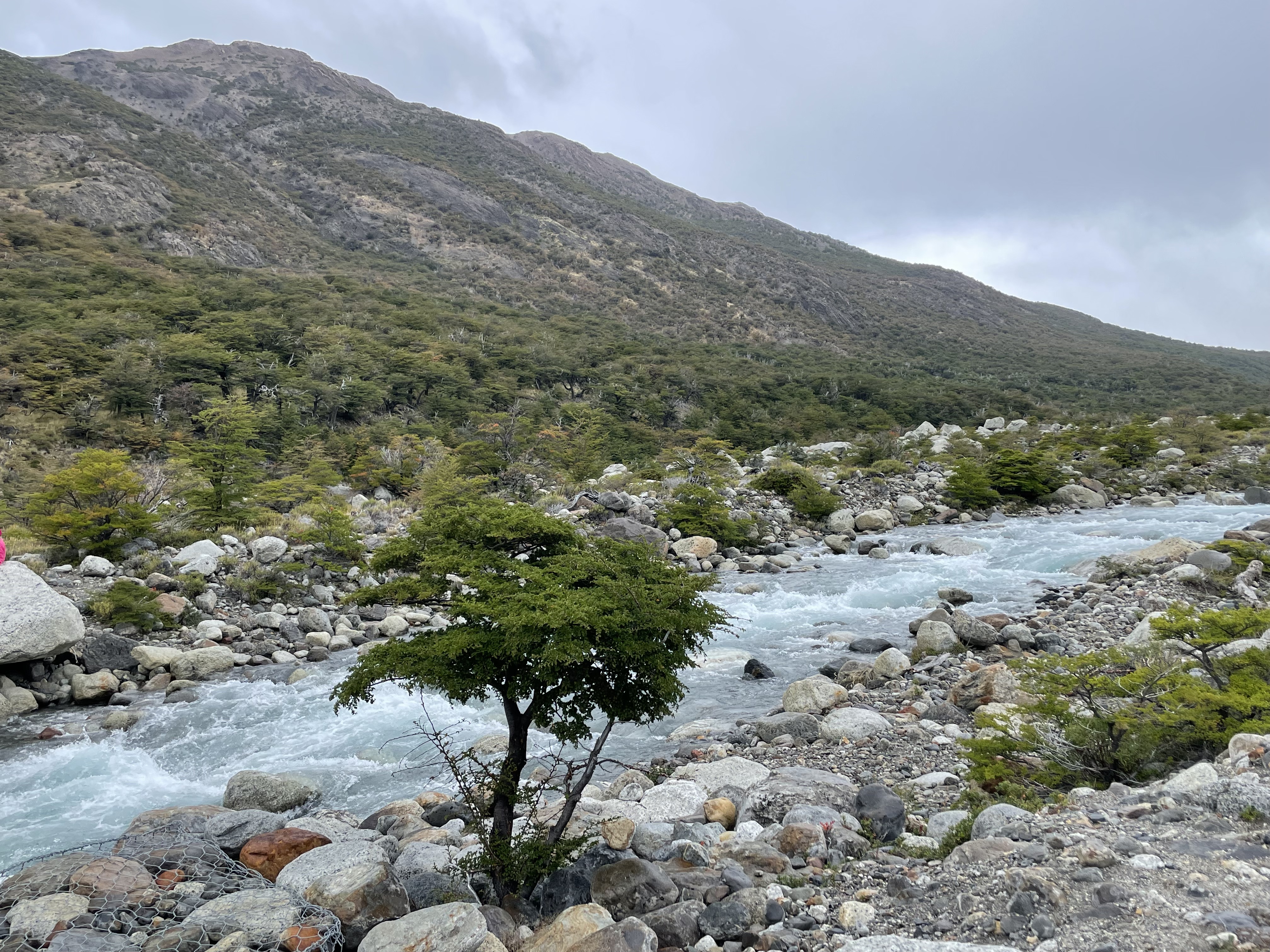
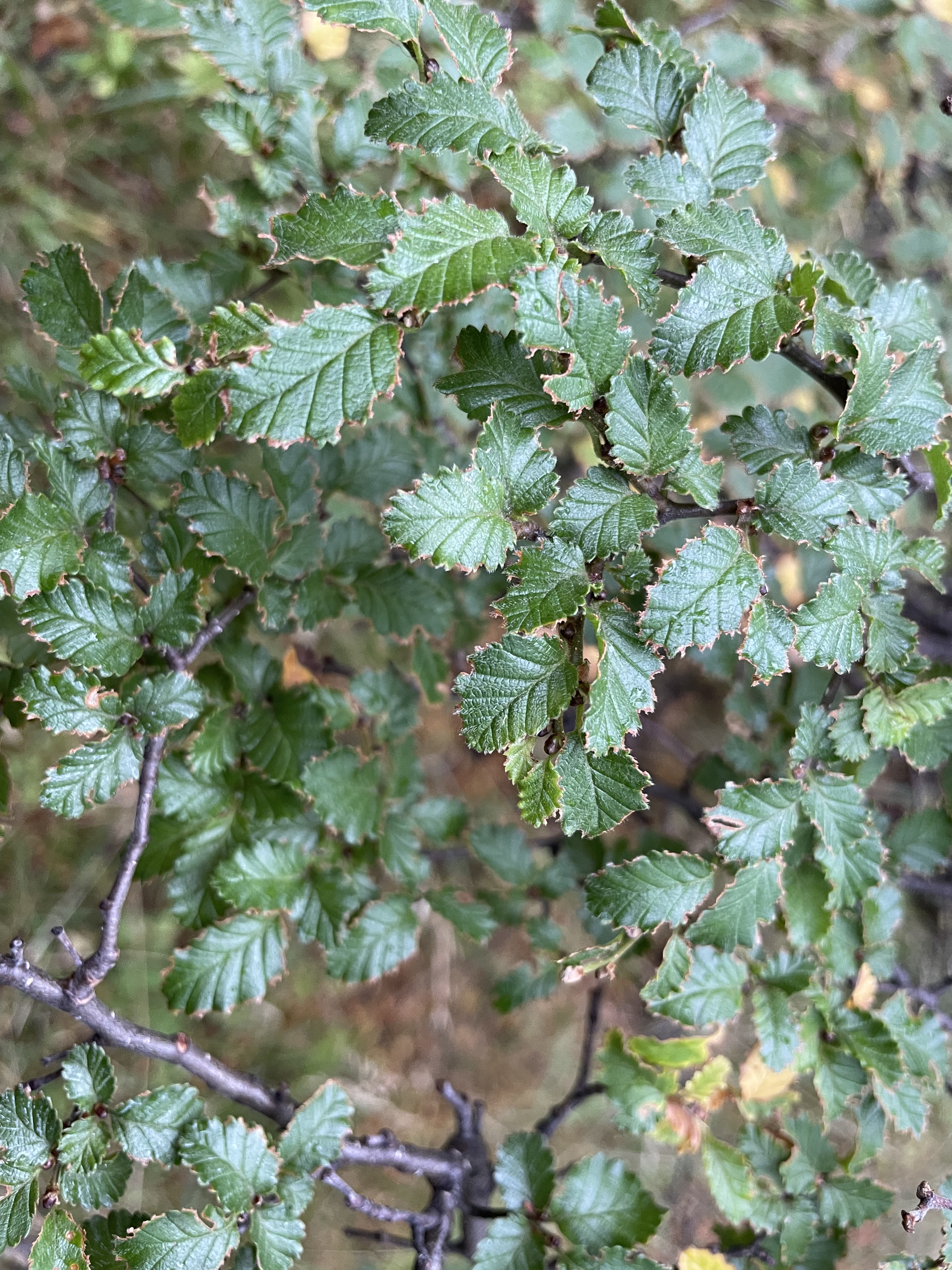
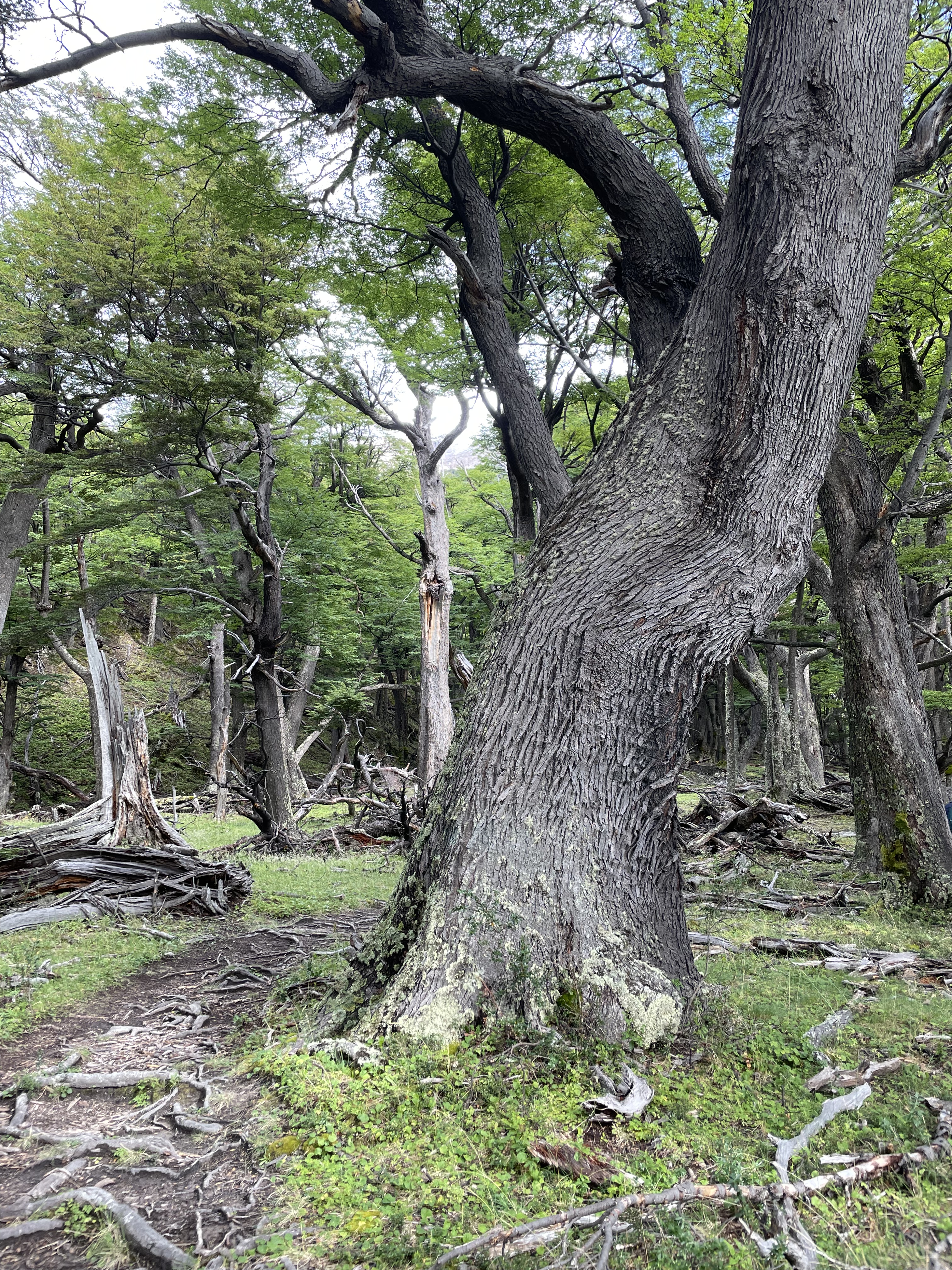
The park was beautiful in the forests and in the mountains. Here are more images from Mark’s camera.

Route of our 3 hour drive from Califate to the Explora Lodge on the edge of Glacier NationalPark.
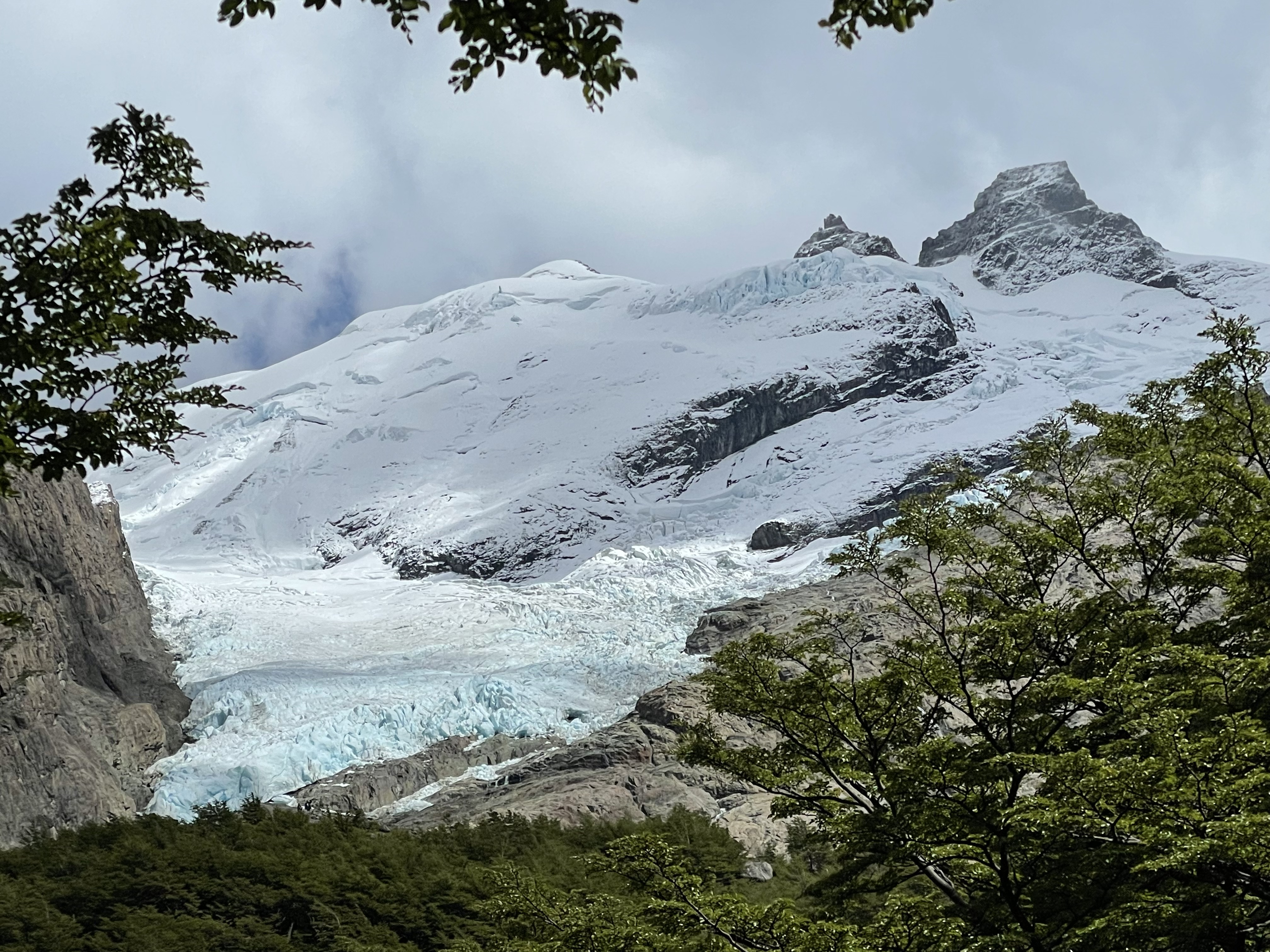
One of many glaciers along the hike.
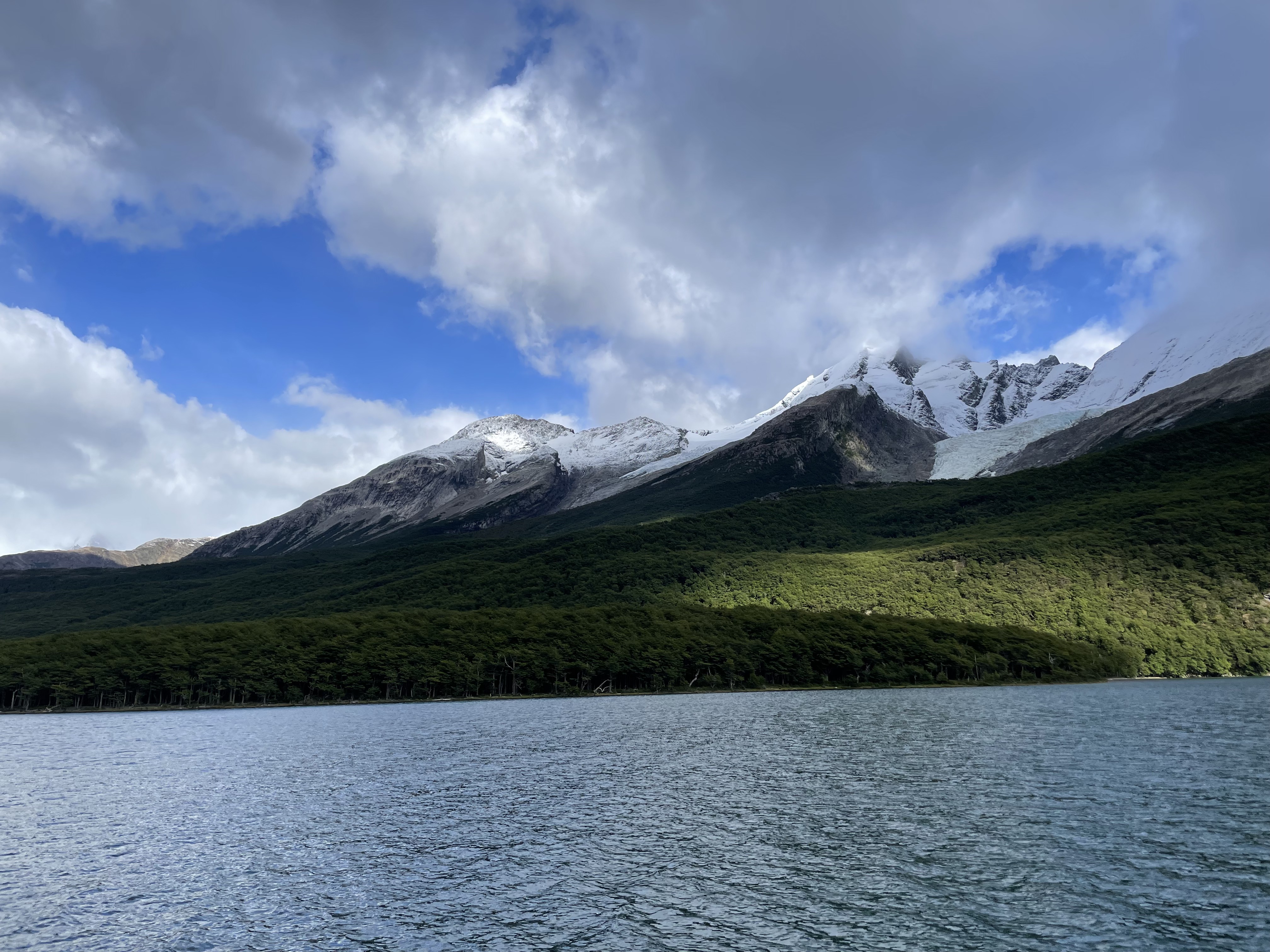
One of many glaciers above the forest. Taken from the boat on Lake Desierto.
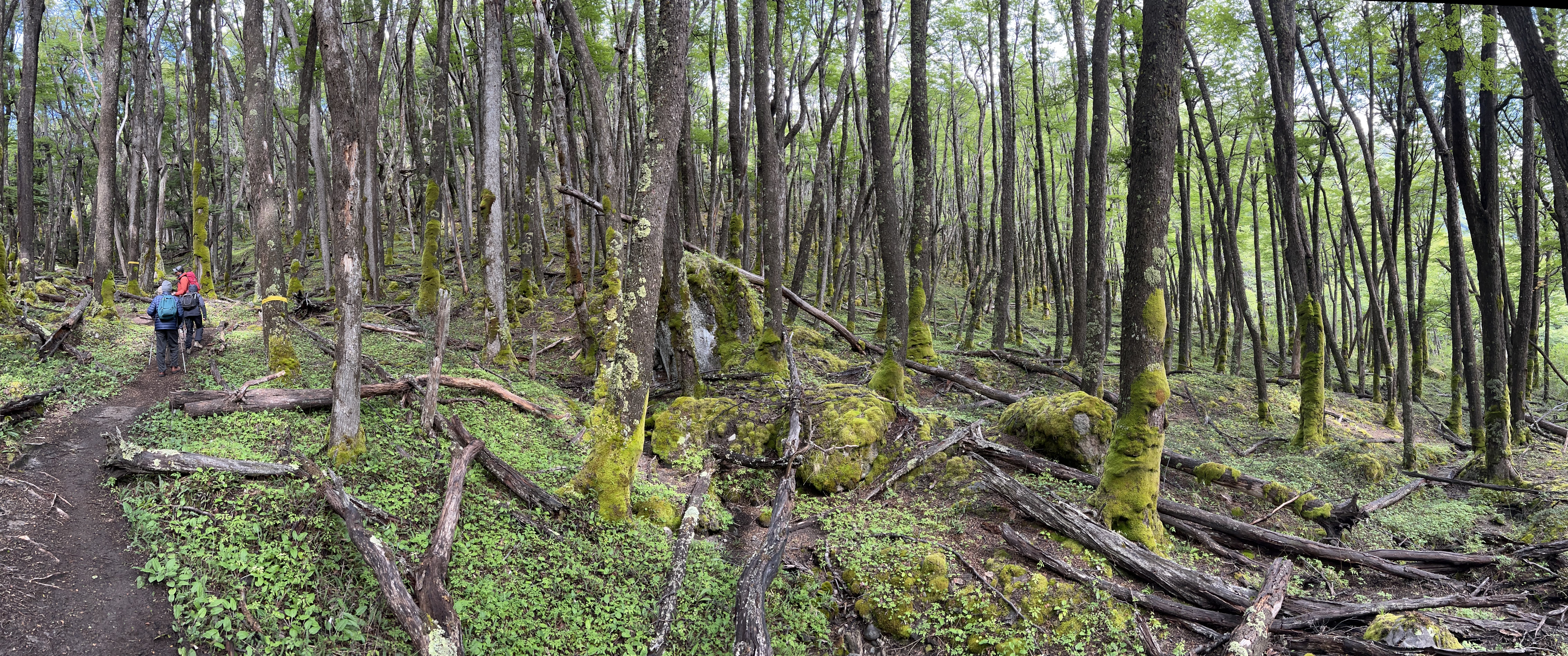
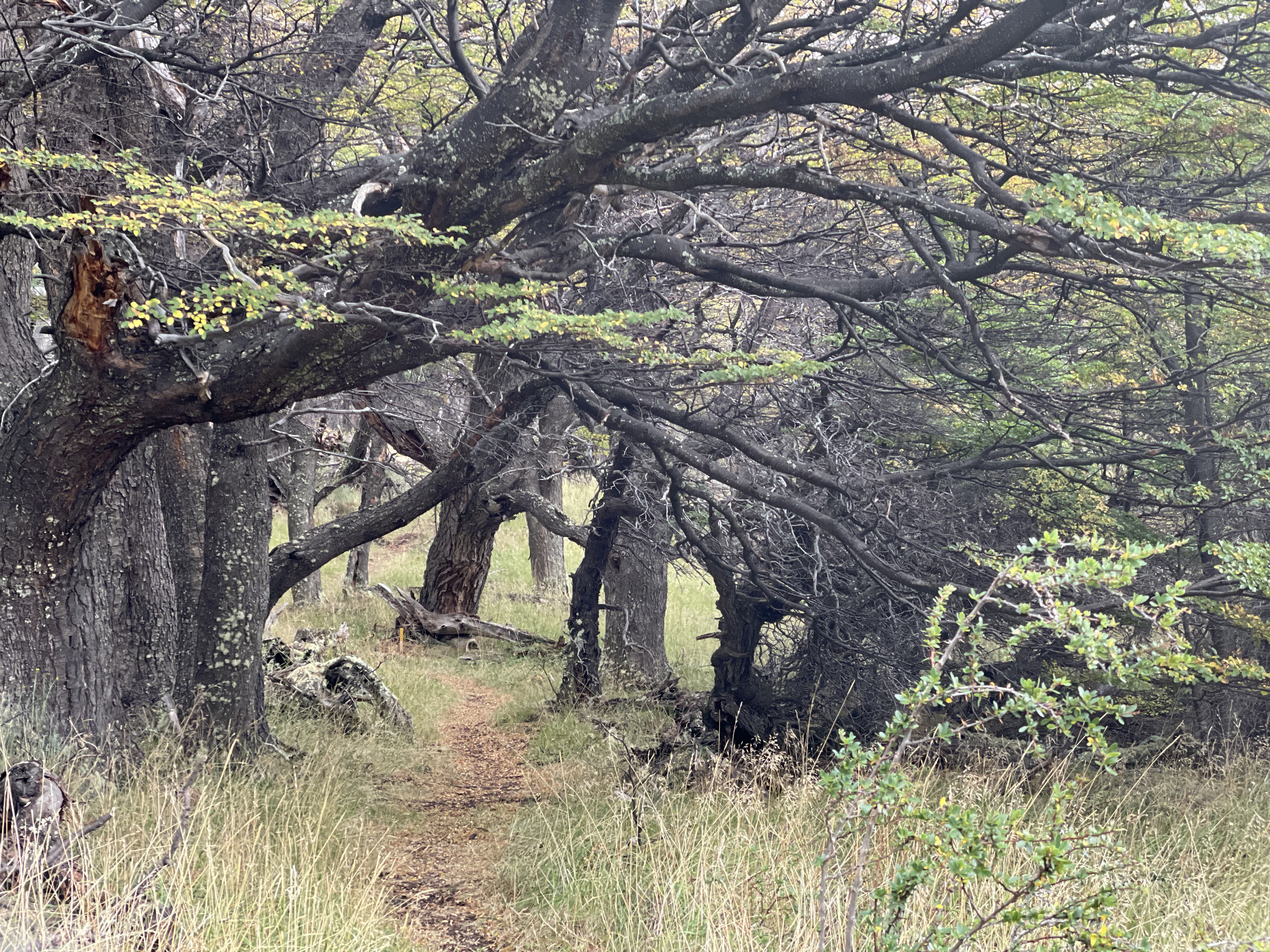
Forest panorama.
Forest panorama.

Glacier National Park, Patagonia

Sunday, February 12, 2023

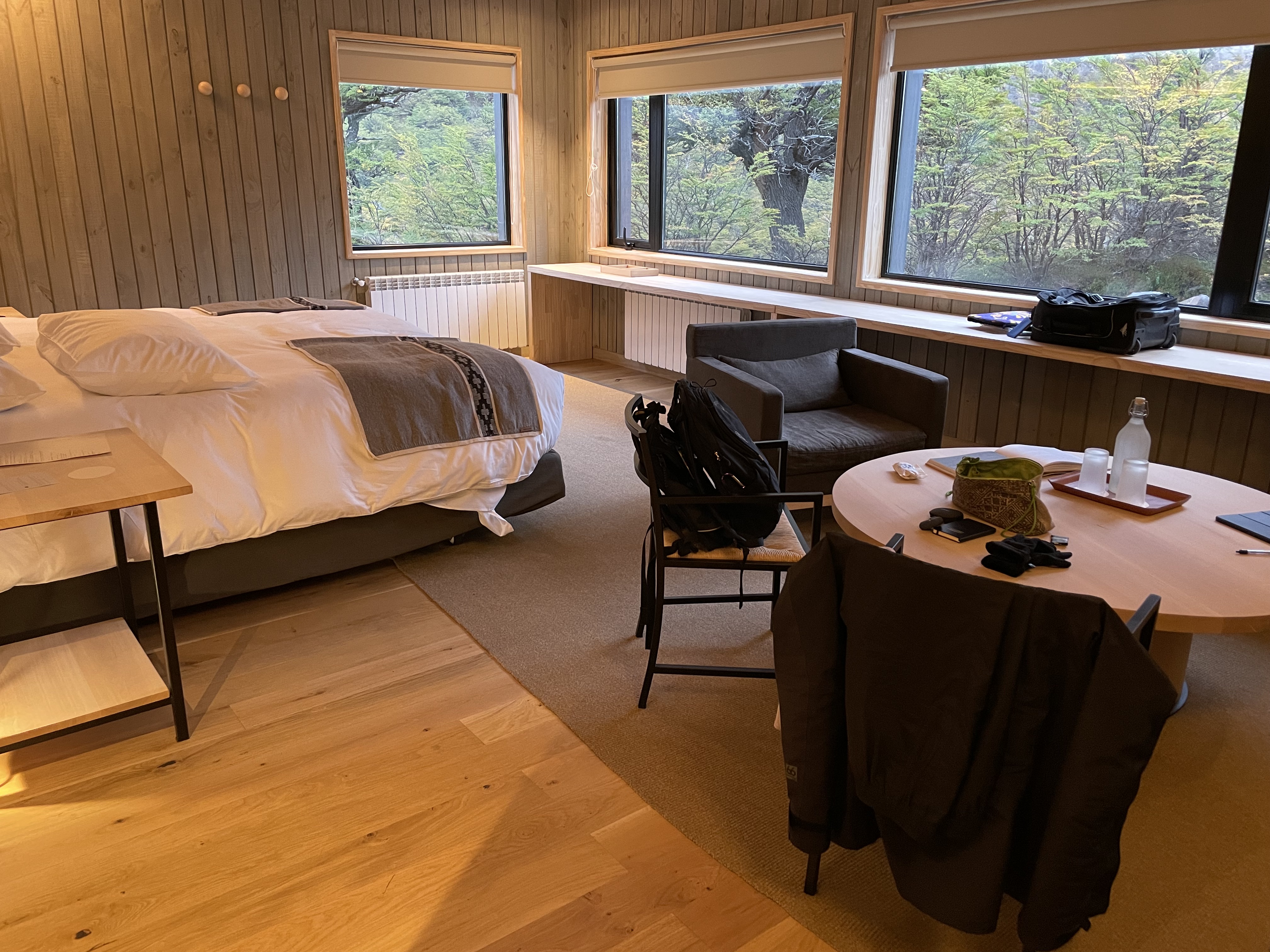
We have been at the Argentinian Explora Lodge since Friday. It is newer, but smaller than the one in Torres De Paine, Chile. It is not in the Park, but next to it and provides the same sense of being in the wilderness — comfortably. During the daytime we are out hiking on a track we specifically selected the evening before. During the hike we have a guide, but see no other people on the trail. At the end of the chosen hikes, long or short, difficult or easy, the guests return to the lodge, where all the creature comforts await. Mark and I have chosen relatively easy hikes to keep my knee happy.

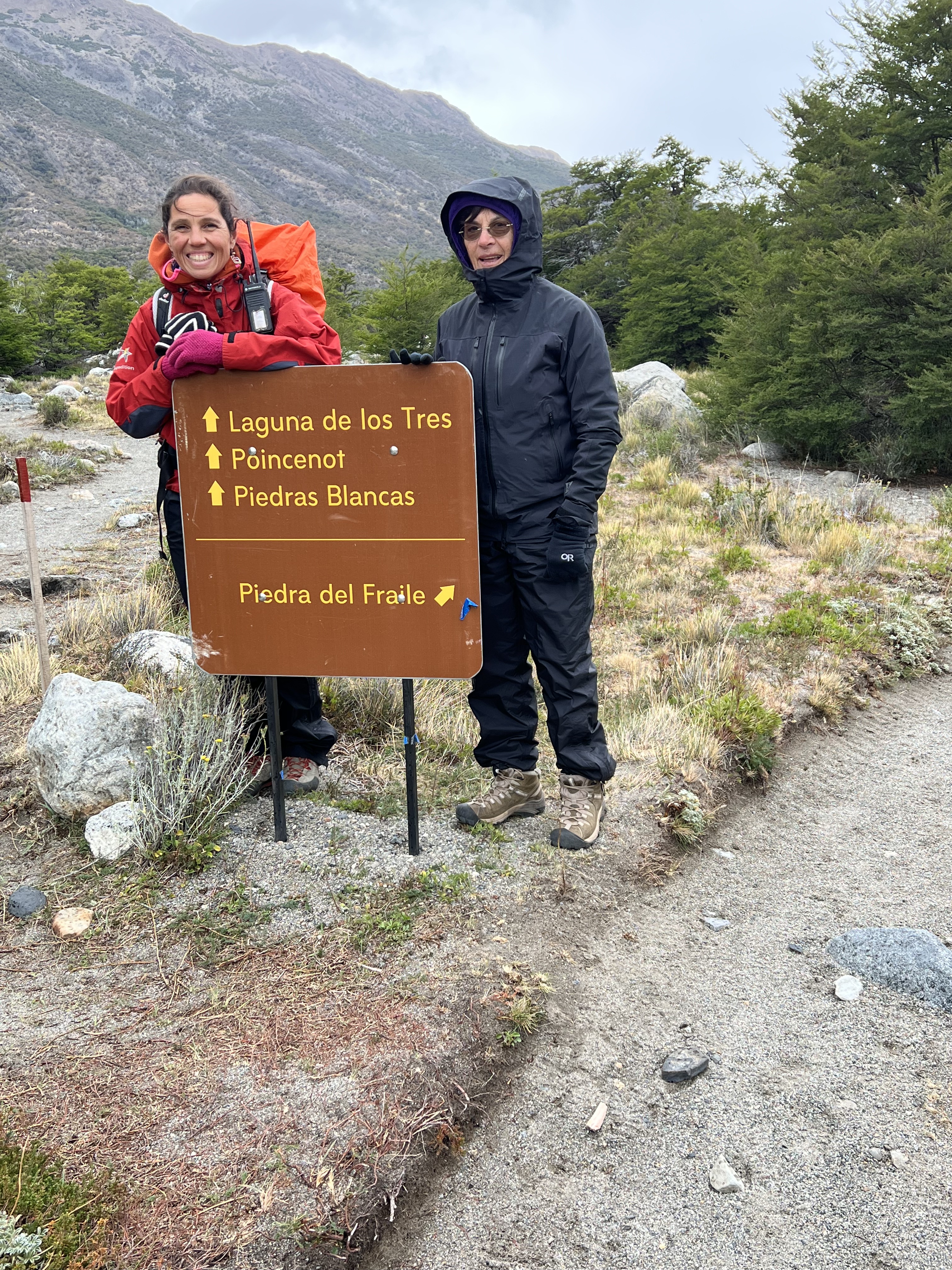
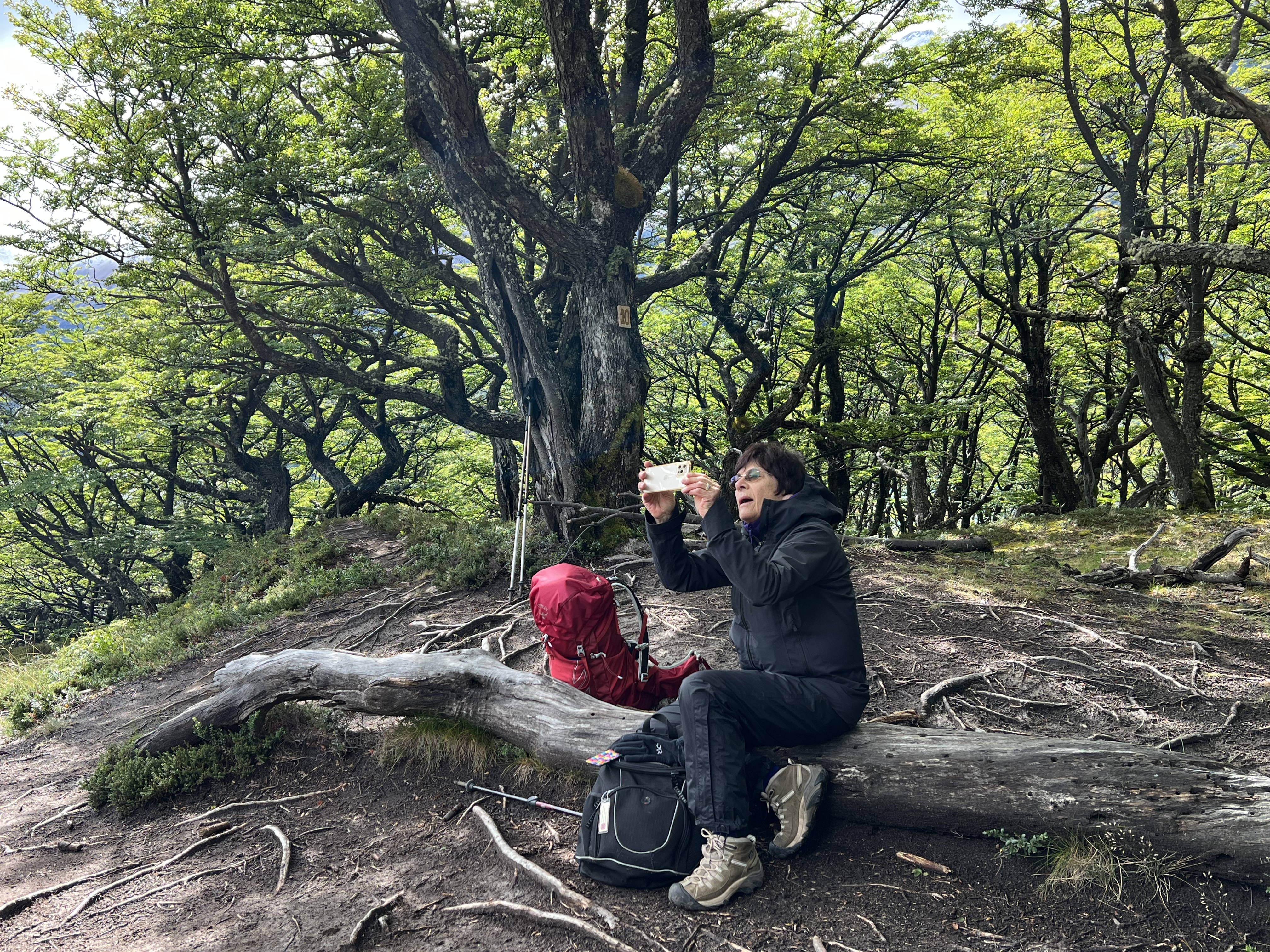
Yesterday, we chose two half day hikes and had the same guide, Marianna, for both. No other guests joined us. I suspect it was too slow for most. The first hike started from the lodge and covered about 2.5 miles. It was not steep or windy, but it was a forest walk with lots of tree roots to cross.

As we hiked, as usual, we peppered our guide with personal questions. We learned Marianna is a single mom with a seven year old daughter. Guiding is a pastime activity to supplement her income as a government employee and it also keeps her near her love of climbing. She is lucky enough to own her own home, it’s currently only one bedroom that she shares with the daughter. She has hope to expand the house and build an apartment as well that she plans to rent for additional income.

We enjoyed the scenery and being in a forest, but I was tired by the time it was over. Back in the lodge we had a nice served meal, rested a bit and grabbed some snacks for the afternoon hike. Still just the two of us and Marianna. We were driven to the start point at a gravel bed along the edge of the Electric River. We gradually hiked up the gravel bed periodically crossing small streams as we went. Marianna made sure we crossed on rocks to keep our feet dry. Finally we crossed a bridge and climbed a small hill into a forested area. We could see where we had been and the glaciers high up on the mountains. The now wooded, trail gradually headed back down to the road. More difficult trails went up into the mountains for closer looks at the glaciers. Not for me. Maybe another time. By the time we were back at the car, we had covered over 5 miles and I was really done in. My total for the day was 7.5 miles according to my watch. The most I have walked since before my knee surgery. Back in the lodge, we called the spa for a jacuzzi appointment and got right in. Boy, did that soak feel good.

At cocktail time, we met with another guide, who described today’s options. Not wanting another long walk, I was thrilled to be offered a drive to a lake, a boat rode on the lake, Lago del Deseirto, and a relatively short hike followed by a bag lunch and a return to the lodge before 3pm. This had been Marianna’s suggestion to the guide staff. From the boat, we saw several glaciers, lots of wooded forest along the lake and on the hike. There were a couple dozen people on the boat, but they all scattered and we were alone with our guide, Pablo, and one other couple, who were from Chicago. We finally got to see the third type of birch tree, the evergreen called Guindo. This hike was a gradual up slope, all in the forest with some tall, 100 year old linga birch trees. Because this part of the forest was in the rain shadow due to a break in the Andes, which allows the Pacific weather stream to penetrate east, the terrain was lush and green with lots of moss, plants and grass.

The usual winds were not as strong these two days and we all appreciated the slight warmer and calmer weather. The hike lasted about 2 hours an we only went about 2 miles as Pablo stopped often to talk about the trees and plants we were seeing. The other couple were happy to go slow too. Pablo is married and has a three year old son, he is Ecuadoran and came to this area for his love of climbing too, just like Marianna. He is a full-time independent guide. Pablo reminded us that there are no thunderstorms or lightening in Patagonia because the exceedingly strong westerly winds we have experienced since being in Patagonia, do not allow the formation of cumulonimbus clouds

Monday, February 13, 2023.

We leave Patagonian this morning. It is not windy, but it is raining. We were very lucky the last 2 days of hiking as there had been very little rain and almost no wind. If I had it to do again, I would plan the trip differently and allow for more activity days in each place and a healthier leg to do the activities. However, we are off today to Buenos Aires where we understand the temperature is 90 degrees. Quite a change for sure. Here the temperature has been 45-50 degrees at most. The food at this Explora has been just like the food at the last one–mediocre–actually a bit disappointing. Our rooms have been, on the other hand, superior—spacious, good beds, big windows with great views and excellent service.

From Chili to Argentina–one glacier to another

Thursday, February 9, 2023

Early yesterday morning a non English speaking driver, Victor, picked us up and we headed for El Calafate, Argentina. The drive through thee Patagonia steppes took 6 hours over mostly good, paved tarmac and was very uneventful, including our passage out of Chile and into Argentina. The scenery was nearly all steppe, similar to what we experienced in Mongolia years ago. Very flat with low scrub and brush. Monotonous. Mark buried himself in an audiobook and I in a podcast. The time flew by. We did spot a red Patagonian fox, many guanacos, several lesser Rhea, a small ostrich-like bird, a buzzard eagle, several Crested Caracara birds and an Aplomado falcon, Sorry, no Puma or Armadillos.

By mid afternoon we reached El Califate, gateway to Los Glaciers National Park and on the shore of Lake Argentina. We checked into Los Ponchos, our home for 2 nights. It is a small Inn near town. We went for a long walk along the lake and saw many Black-Necked Swans but did not reach the town center before my legs gave out. We decided to have salad and pasta dinners in our hotel, as it was offered to us and I did not want to walk any more. We were in bed by 9pm.

Next morning we had a light breakfast at 7am. I sipped on a Mate tea popular with South Americans. But I did not like it. Tasted like I was sucking on dried grass. Anyway, we were met at 7:30 by our driver, Andrea, and guide, Paula, for the day. Paula spoke good English and was very knowledgeable about our activities for the day. As we drove the 80 kilometers to the park, Paula talked about the flora and fauna we had been wondering about. I was interested in the trees that grow along the sides of the mountains. They do not start at the bottom and end before the top and are mostly beech trees. There are three kinds of Beech tree. Two that are deciduous and one that is evergreen. The deciduous ones are the Nire, which is an antarctic tree, and the Lenga, which is a tall deciduous tree. The third beech is an evergreen called a Gungo. They thrive on a specific amount of precipitation that is found at certain elevations. They especially like the cold damp temperatures near glaciers. My favorite plant siting was a Notro, or Fire-Bush. Reminded me of the Indian Paint Brush we have in the Sierras.

Then we got into discussing the glacier. Not only is Moreno Glacier the third largest in the world behind Greenland and Antarctica, it is probably the most easily accessible to see, measure and study. Lago Argentino, into which the glacier flows, is 80 kilometers long, 20 kilometers wide, 900 feet average depth and 1,466 square kilometers. Three times larger than Tahoe. At some time in the past, the glacier covered the entire lake. And yes, we were cold. Even though it was a sunny day, the air was cool, and the wind made it feel much colder. From the parking lot at the glacier, we walked down and around the hill facing the glacier on a well constructed catwalk and got some nice photos and even saw it drop a few pieces of ice into the lake. Then we got on a boat that took us within 300 feet of the ice wall. There was more calving that we almost got to witness a second too late. Such an easy way to see a huge natural wonder.

We returned to El Calafate late afternoon, rested and got warm. Took a taxi into town to have dinner at a place called Mako. It had been referred by one of our guides and was a fabulous find. Every bit as good as the best in San Francisco. Mark had perfectly cooked rib eye and I had an equally fine local Hake fish. Best meal of the trip, so far. The town is also quite charming and full of locals and tourists enjoying an evening stroll. Our waiters said they come to Calafate for the summer season every year because the pay is better than anywhere else in Argentina. They cannot afford to leave the country because the peso is worth so little. Argentina is the second poorest country in South America. It is only ahead of Venezuela. Although a small town in the middle of nowhere, El Calafate is a tourist Mecca for its access to Moreno Glacier, the third largest in the world and certainly the easiest to visit.

Back in town we took a few snaps to show you the lay of the land. El Calafate has a population of 29.000. It felt like Grasw Valley and Nevada City in one metropolis. There is a photo of our dinner restaurant, Mako, and a few of town and Lake Argentina.