
Thursday, February 9, 2023
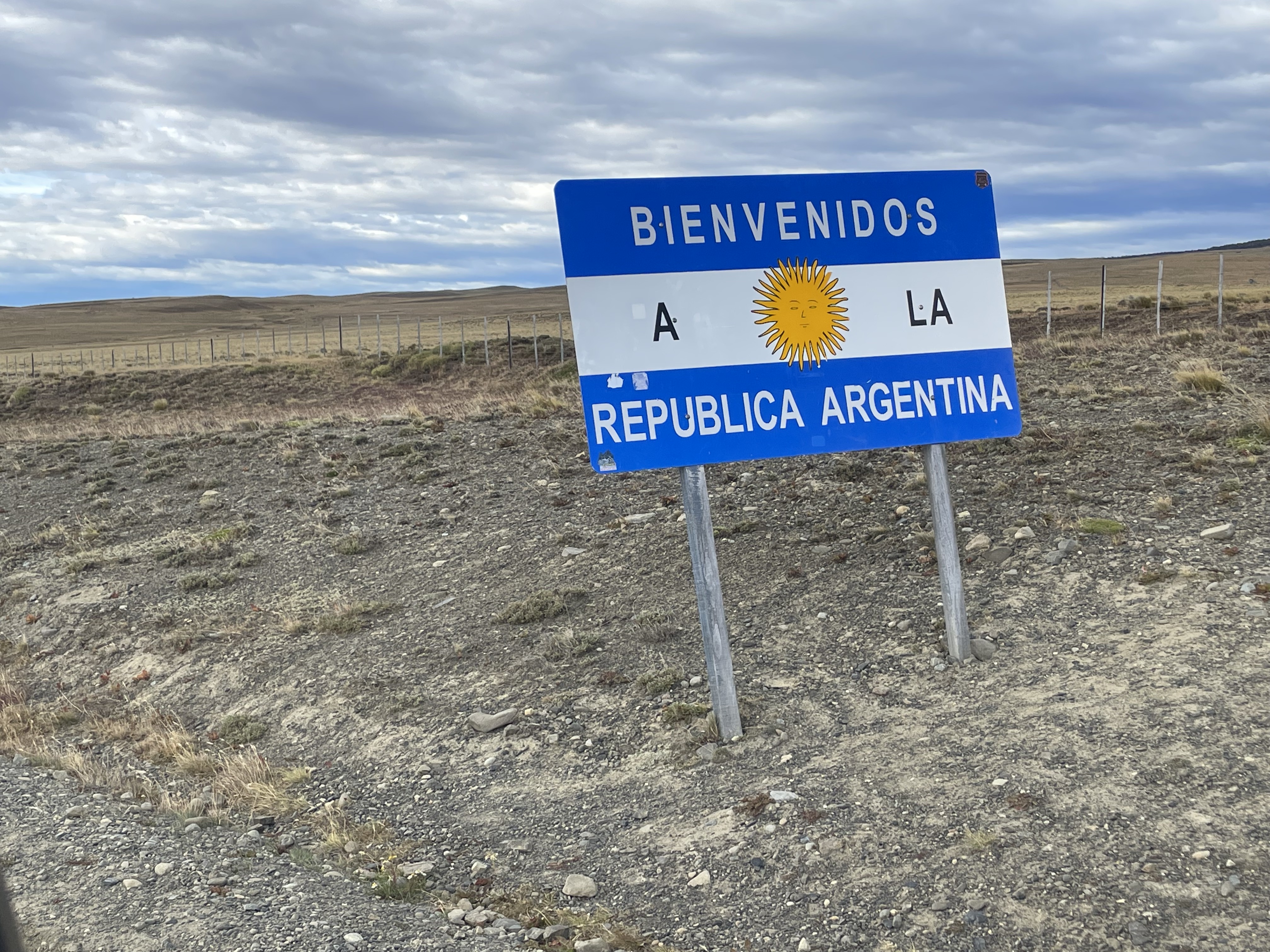
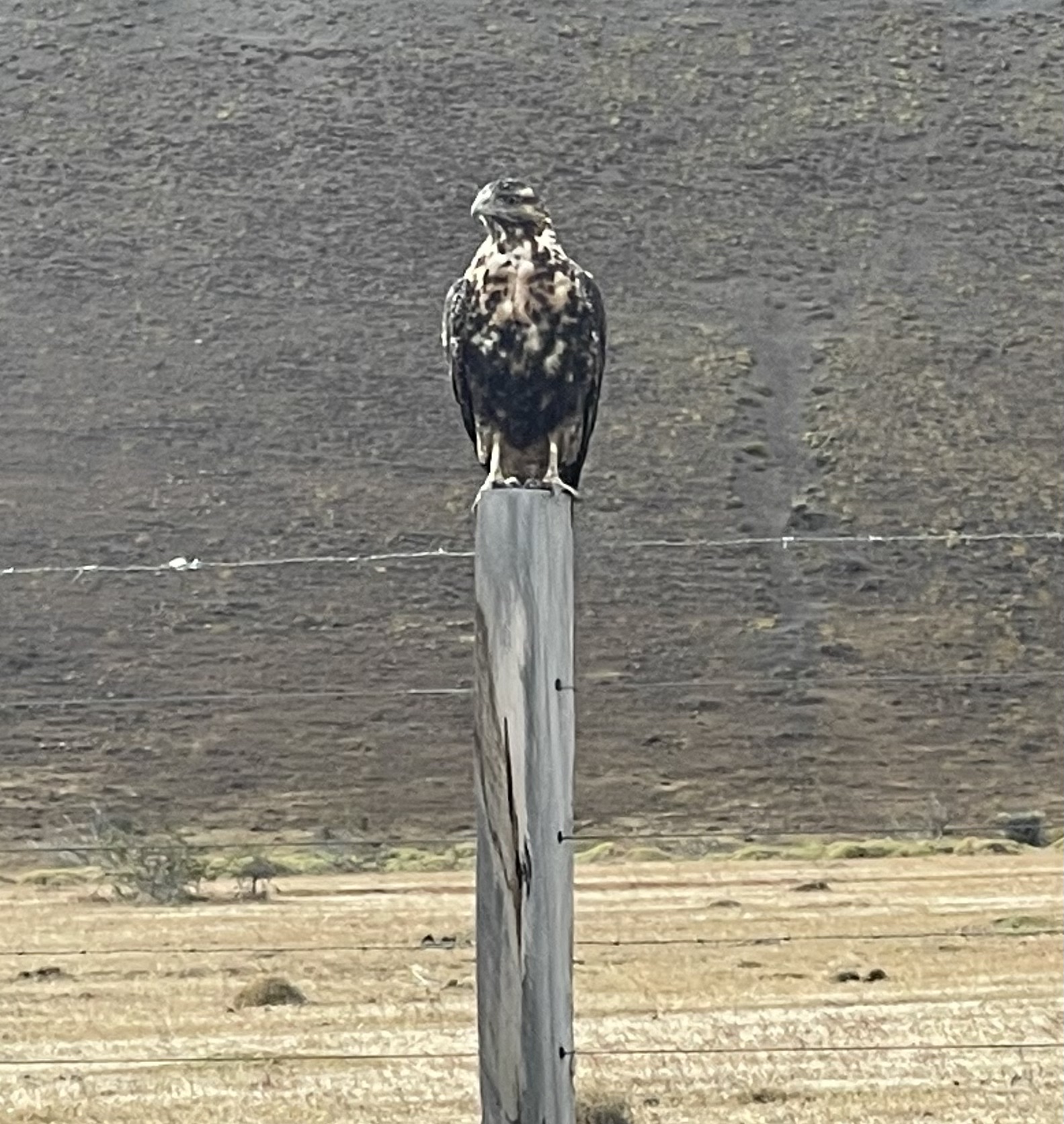
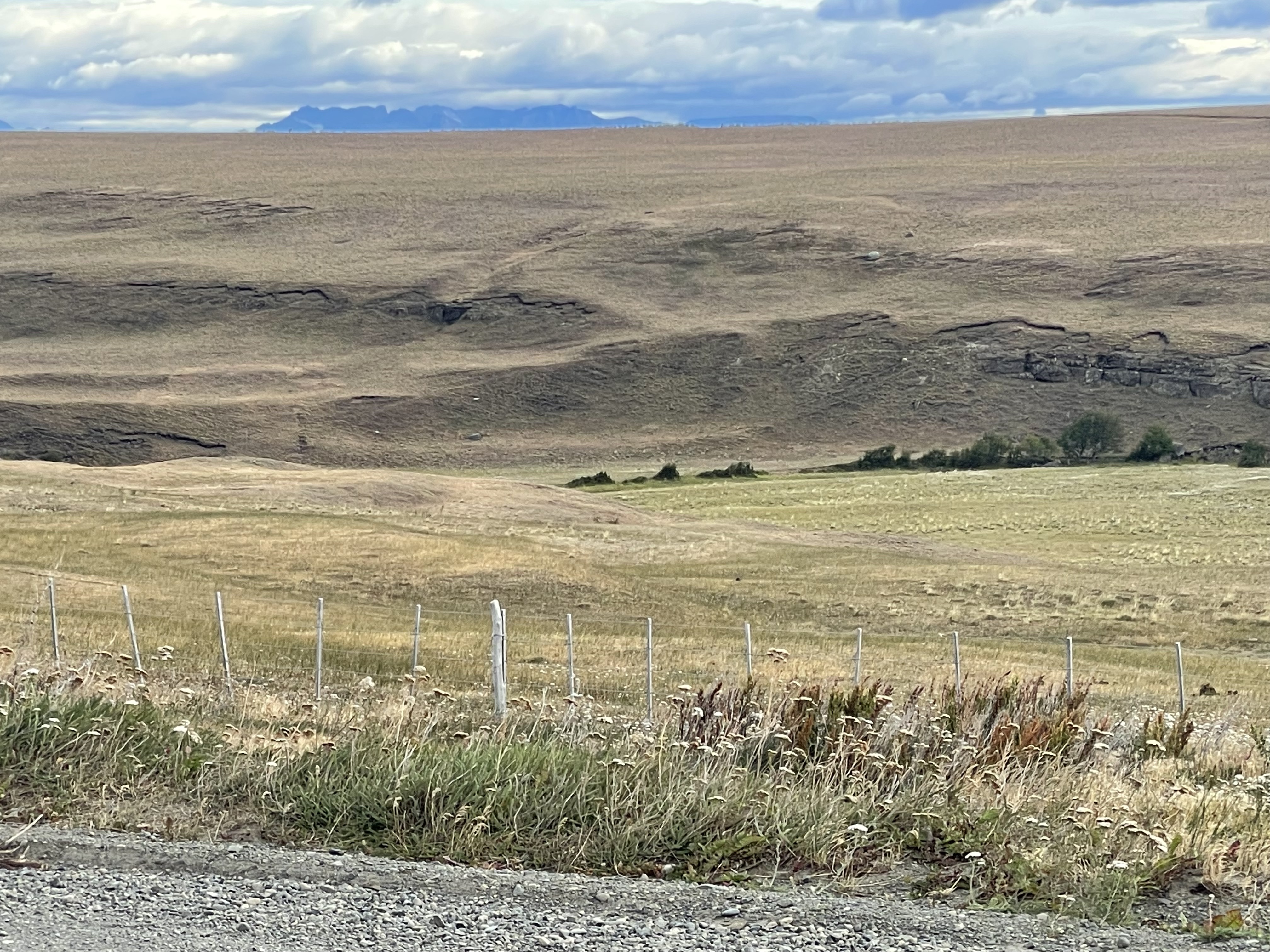
Early yesterday morning a non English speaking driver, Victor, picked us up and we headed for El Calafate, Argentina. The drive through thee Patagonia steppes took 6 hours over mostly good, paved tarmac and was very uneventful, including our passage out of Chile and into Argentina. The scenery was nearly all steppe, similar to what we experienced in Mongolia years ago. Very flat with low scrub and brush. Monotonous. Mark buried himself in an audiobook and I in a podcast. The time flew by. We did spot a red Patagonian fox, many guanacos, several lesser Rhea, a small ostrich-like bird, a buzzard eagle, several Crested Caracara birds and an Aplomado falcon, Sorry, no Puma or Armadillos.
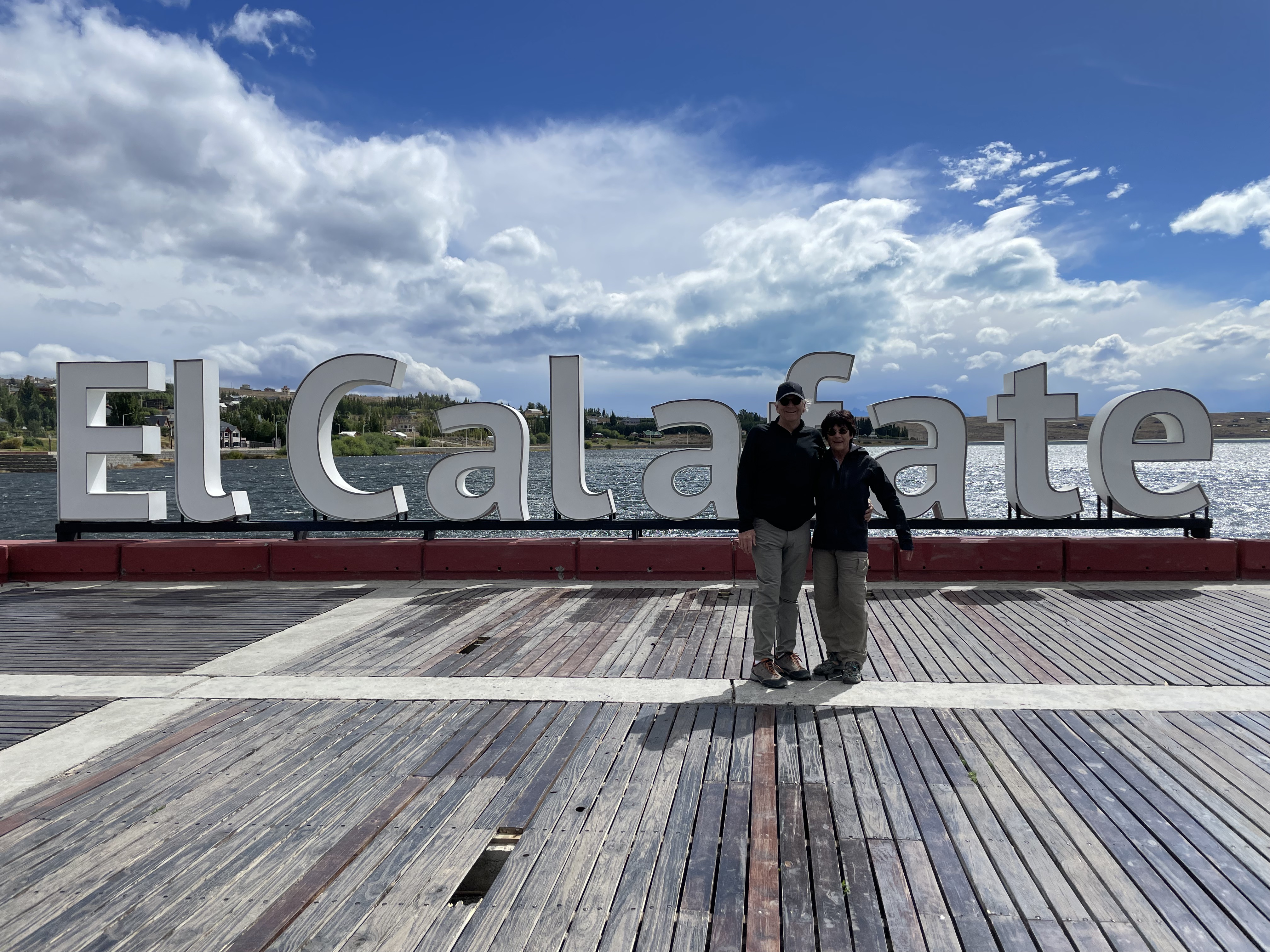
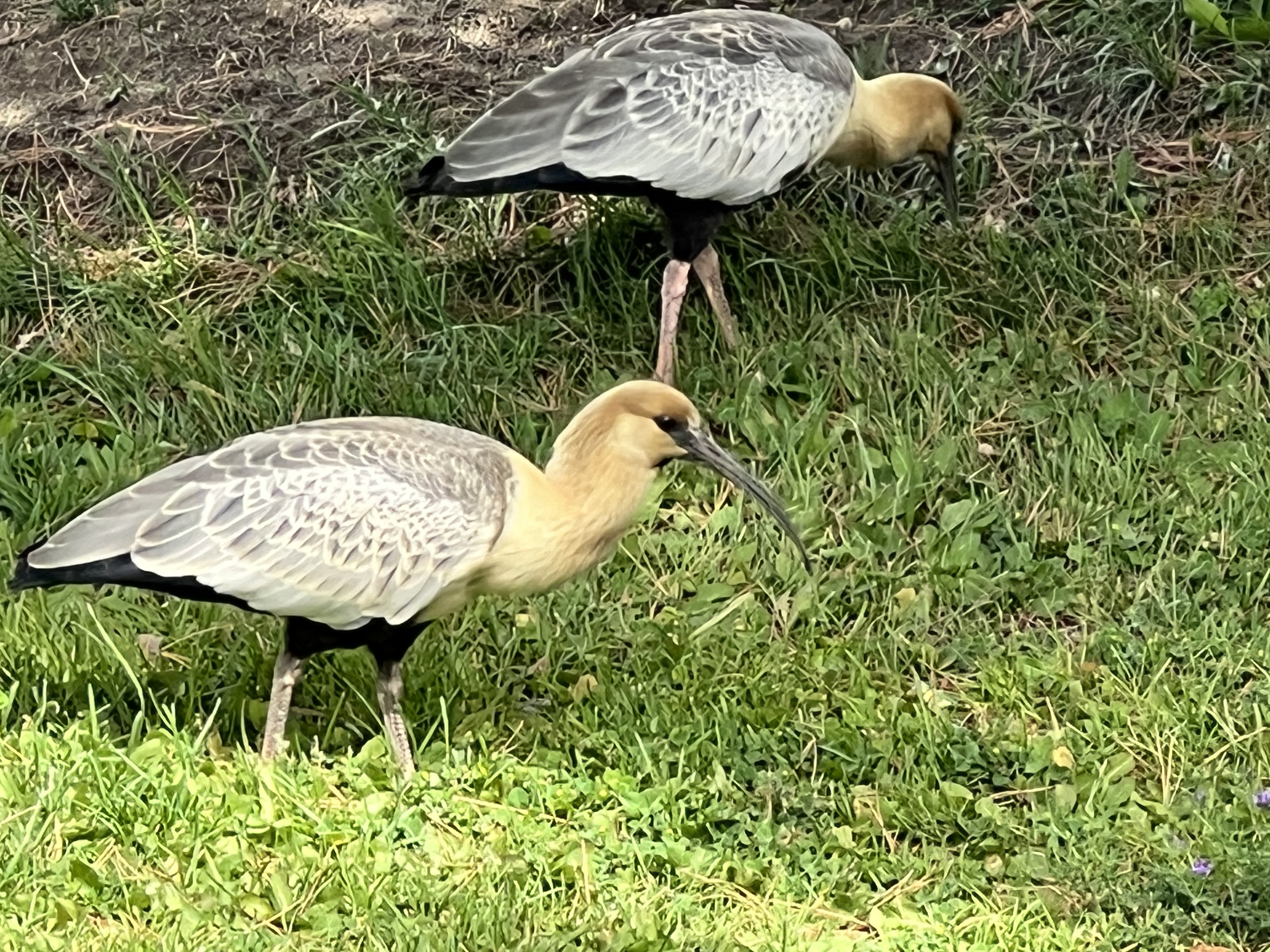
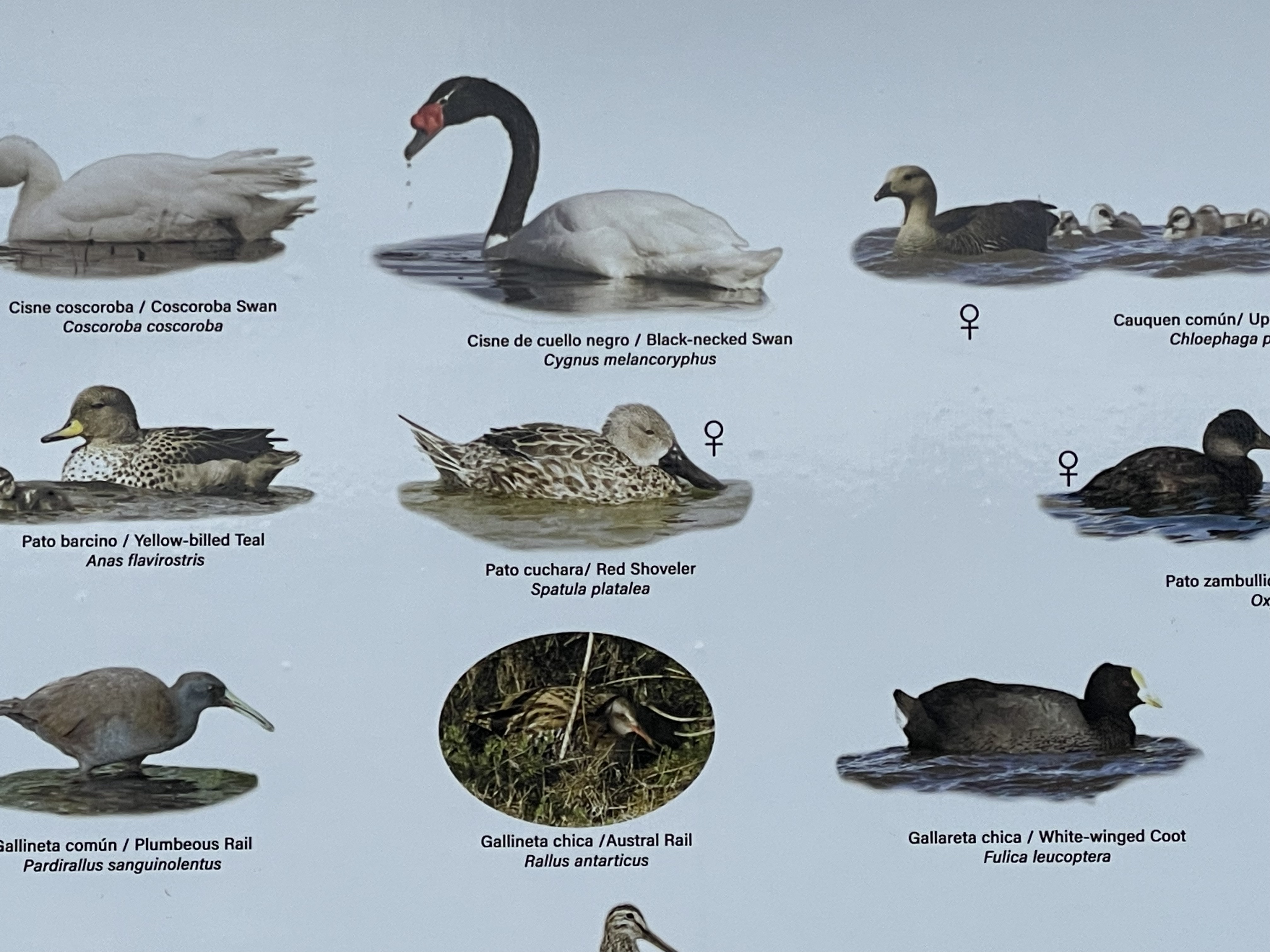
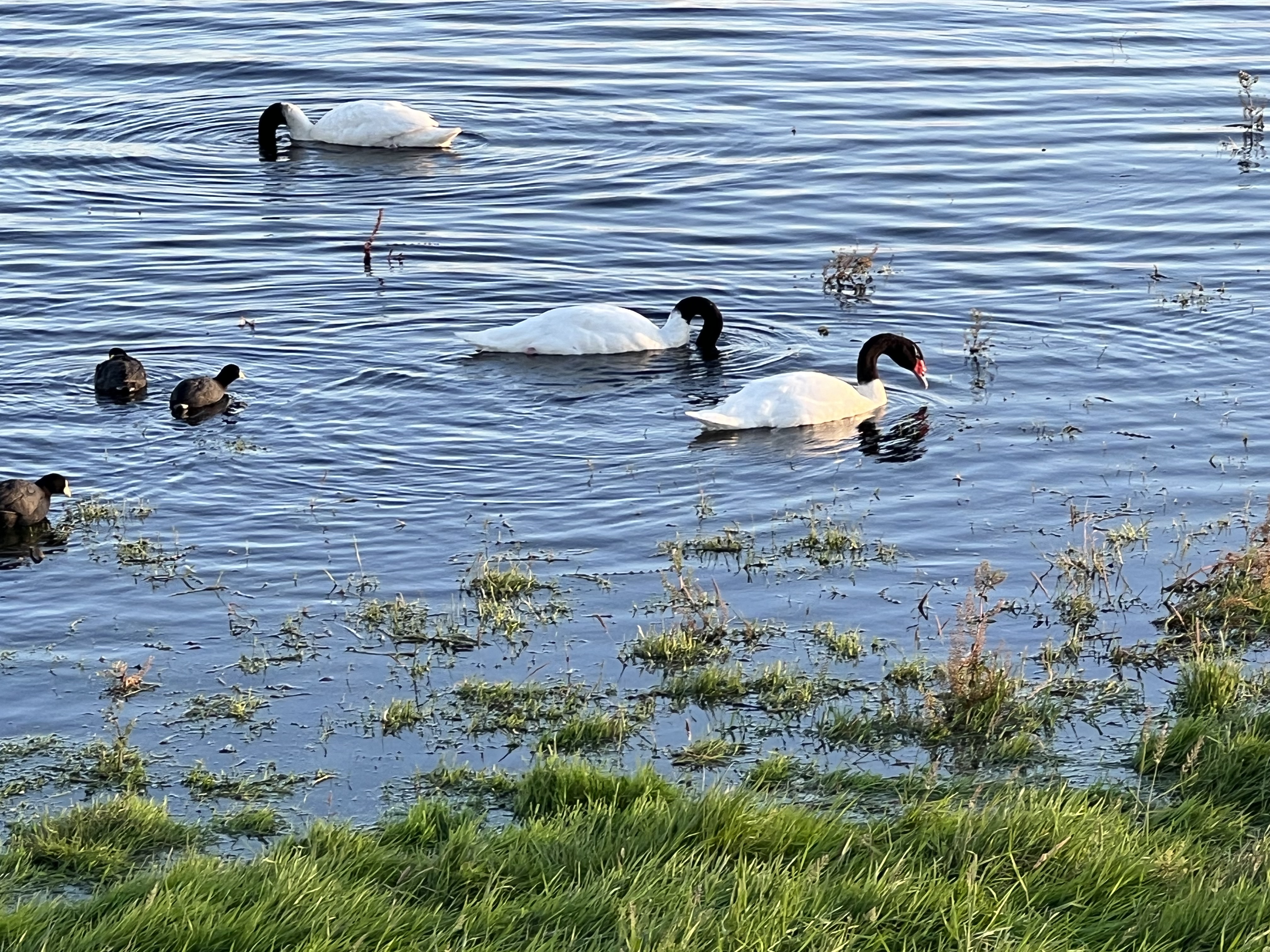
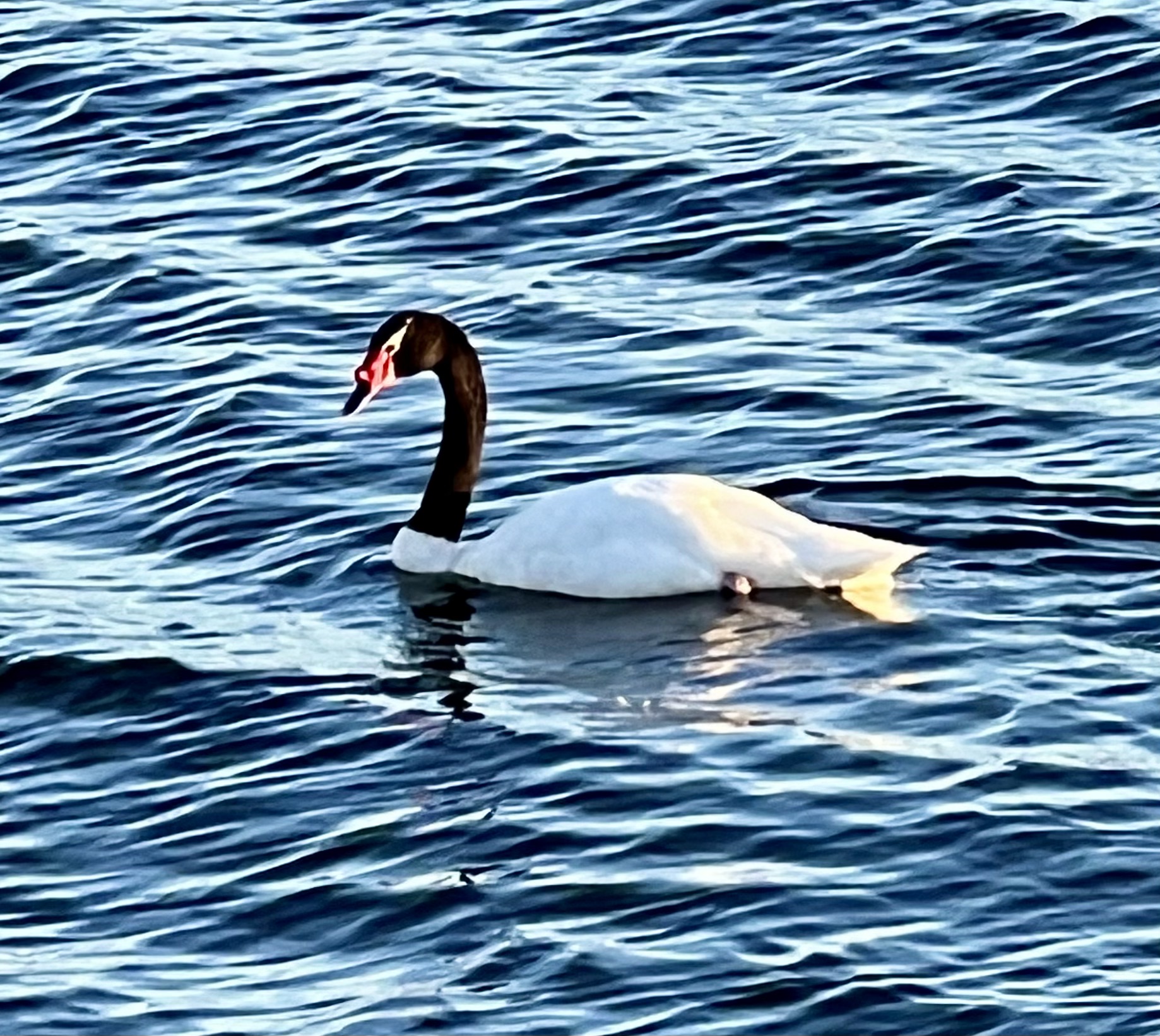
By mid afternoon we reached El Califate, gateway to Los Glaciers National Park and on the shore of Lake Argentina. We checked into Los Ponchos, our home for 2 nights. It is a small Inn near town. We went for a long walk along the lake and saw many Black-Necked Swans but did not reach the town center before my legs gave out. We decided to have salad and pasta dinners in our hotel, as it was offered to us and I did not want to walk any more. We were in bed by 9pm.
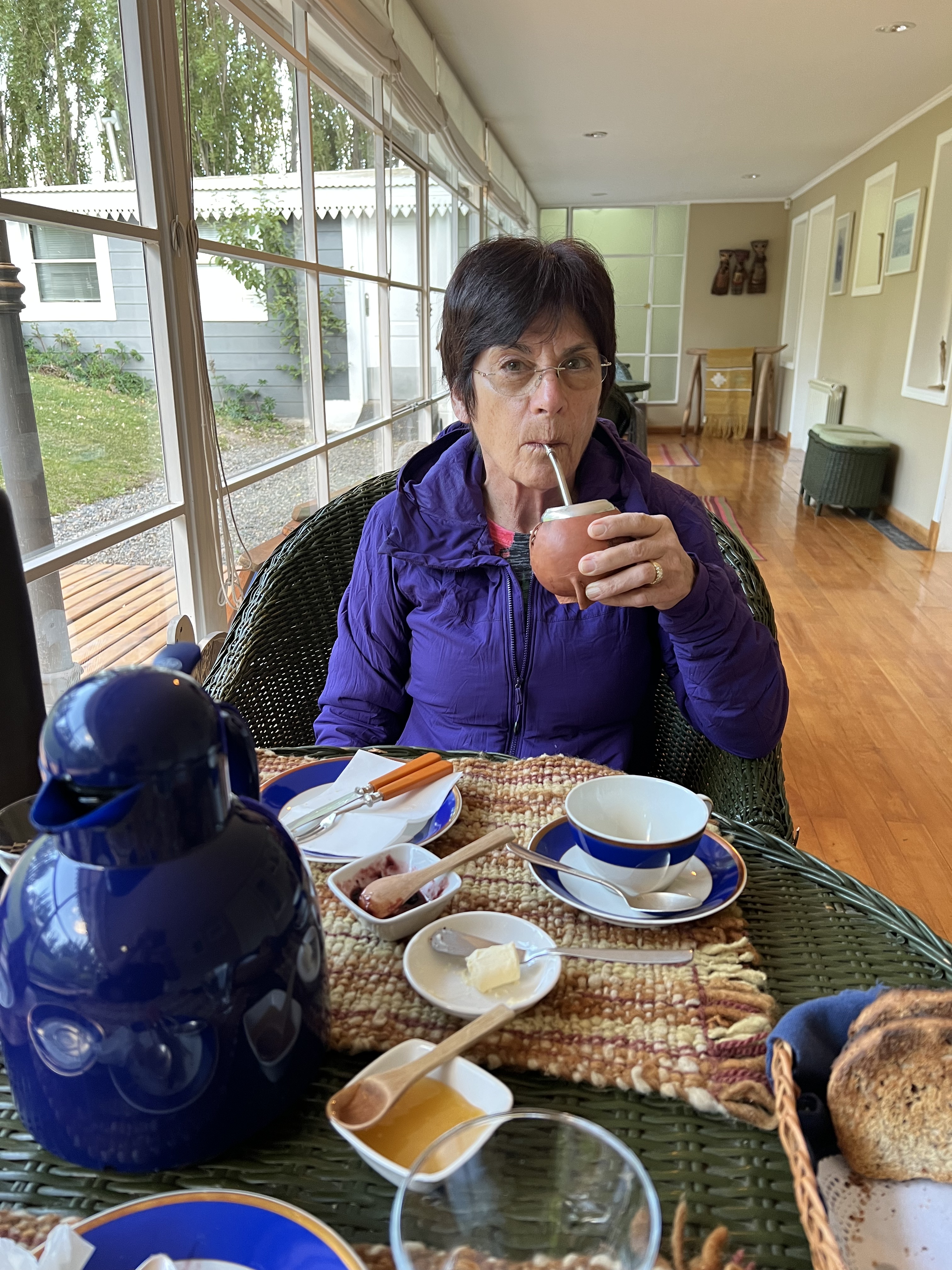
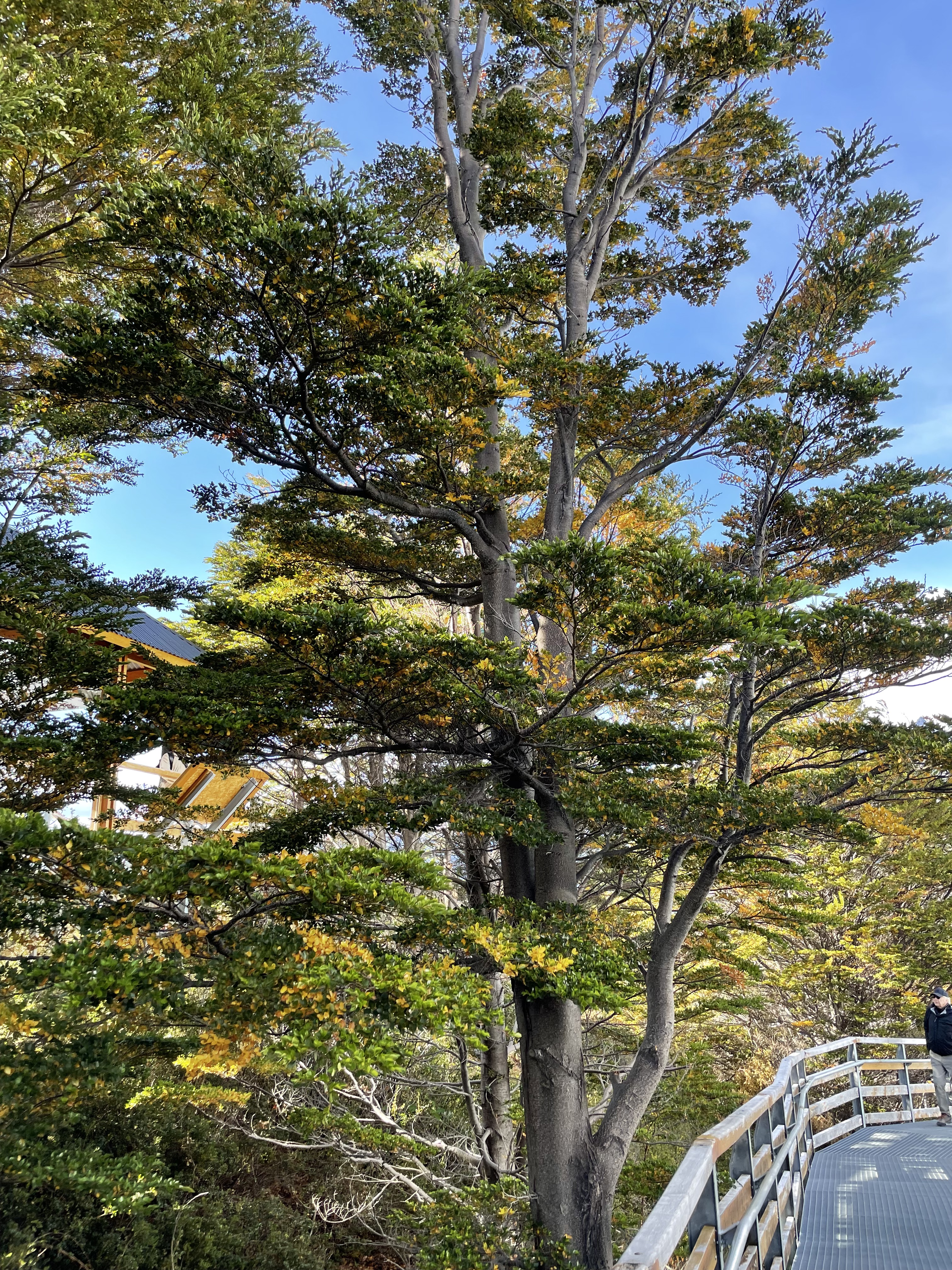
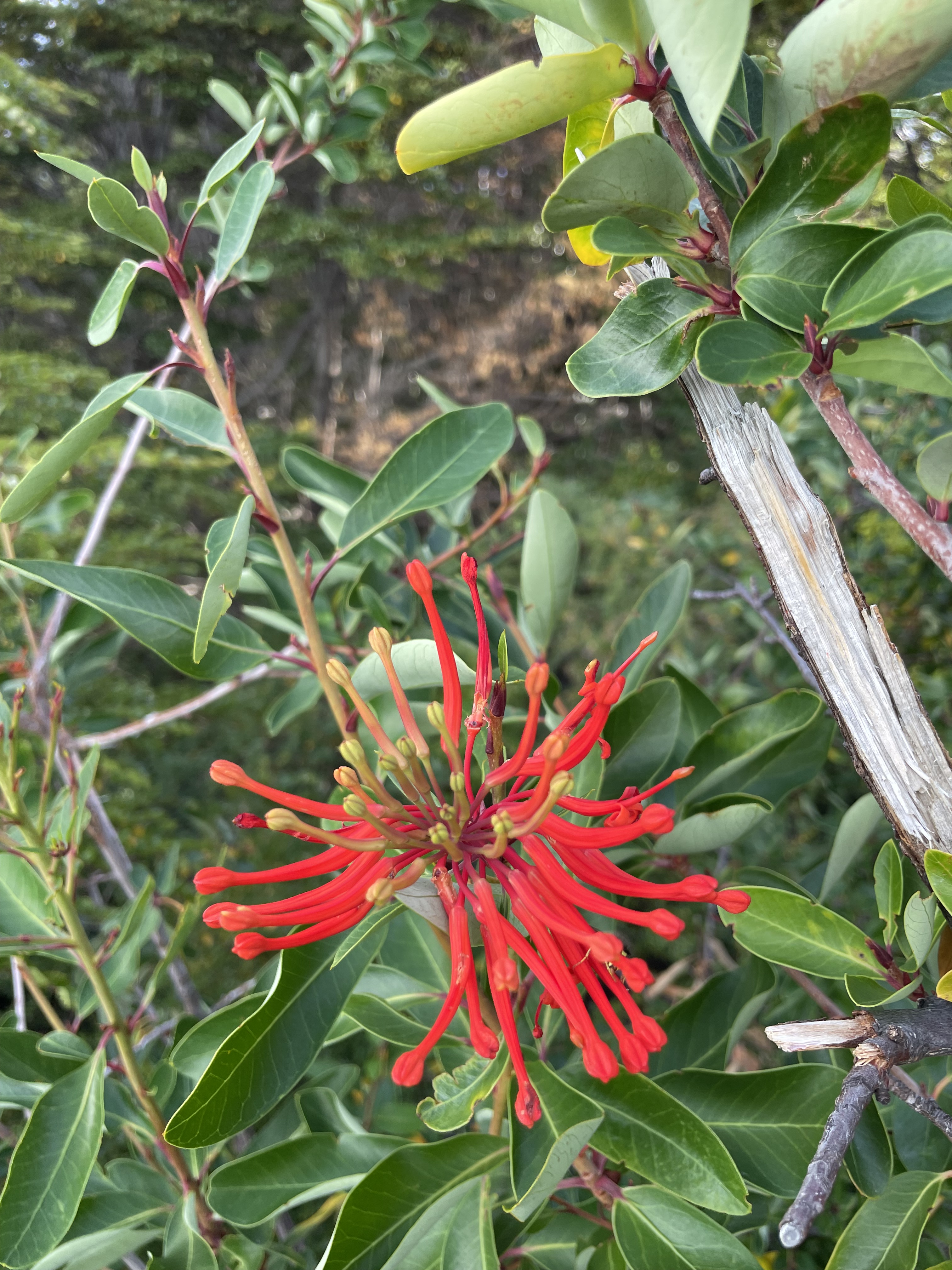
Next morning we had a light breakfast at 7am. I sipped on a Mate tea popular with South Americans. But I did not like it. Tasted like I was sucking on dried grass. Anyway, we were met at 7:30 by our driver, Andrea, and guide, Paula, for the day. Paula spoke good English and was very knowledgeable about our activities for the day. As we drove the 80 kilometers to the park, Paula talked about the flora and fauna we had been wondering about. I was interested in the trees that grow along the sides of the mountains. They do not start at the bottom and end before the top and are mostly beech trees. There are three kinds of Beech tree. Two that are deciduous and one that is evergreen. The deciduous ones are the Nire, which is an antarctic tree, and the Lenga, which is a tall deciduous tree. The third beech is an evergreen called a Gungo. They thrive on a specific amount of precipitation that is found at certain elevations. They especially like the cold damp temperatures near glaciers. My favorite plant siting was a Notro, or Fire-Bush. Reminded me of the Indian Paint Brush we have in the Sierras.
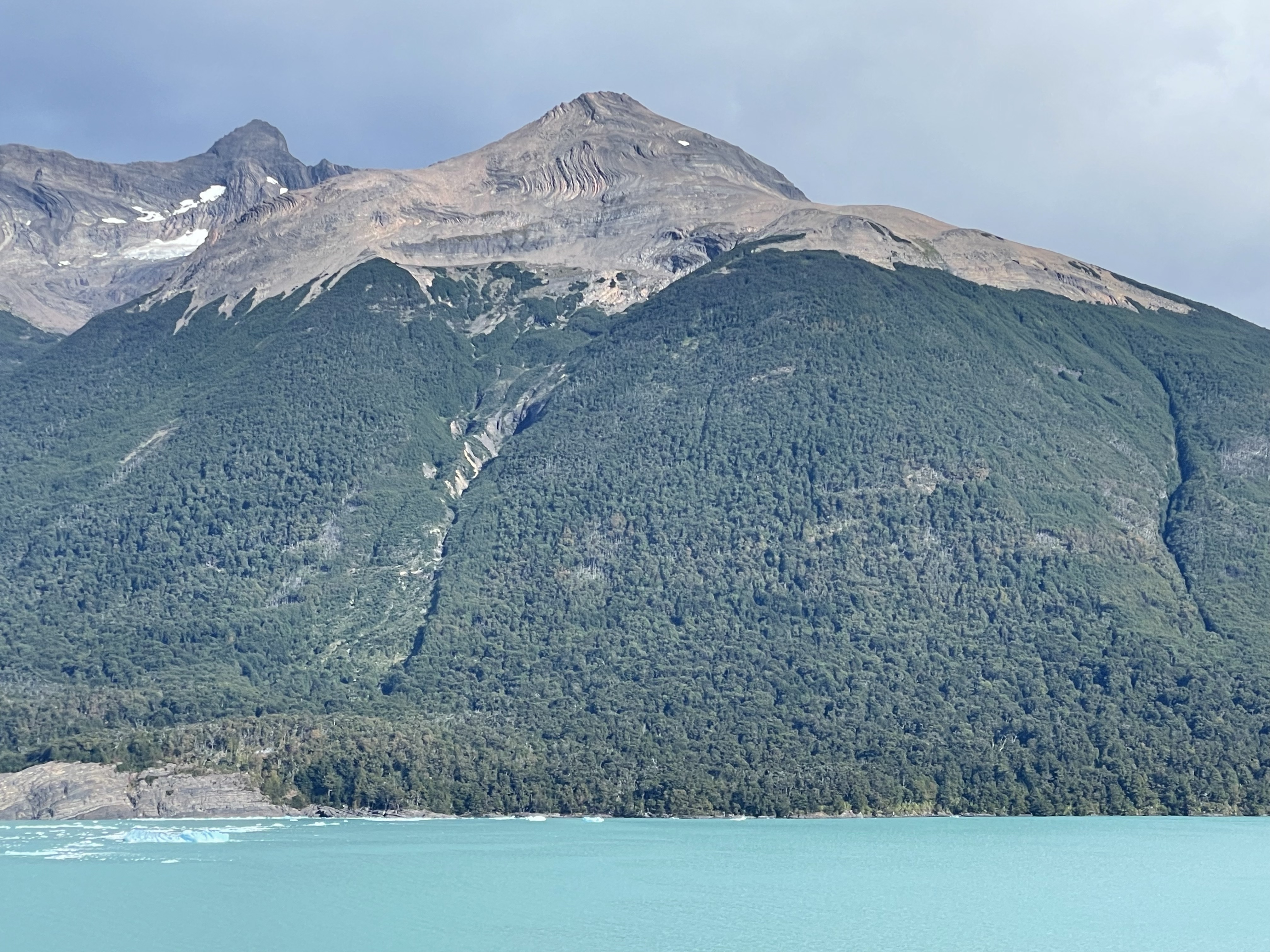
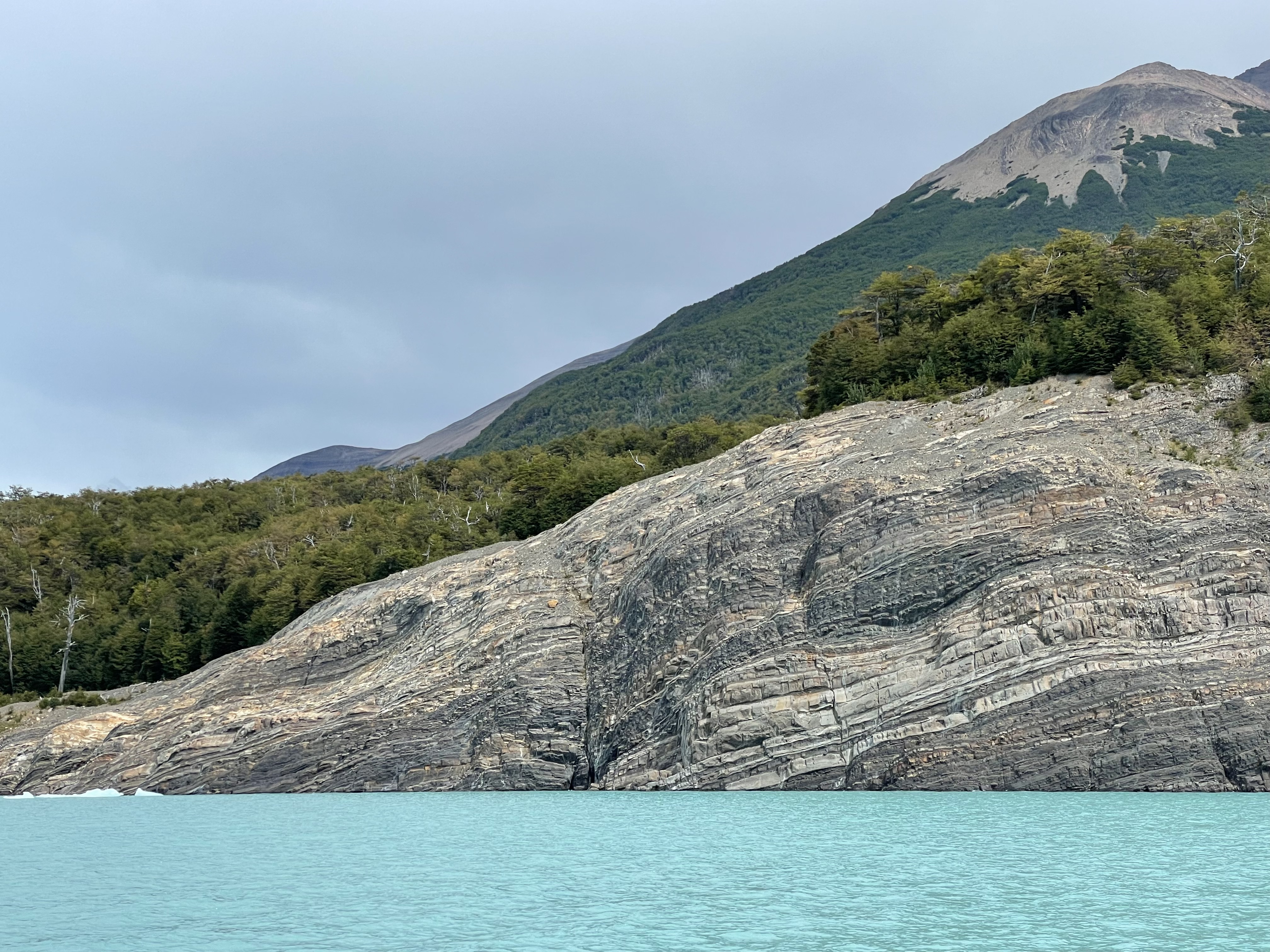
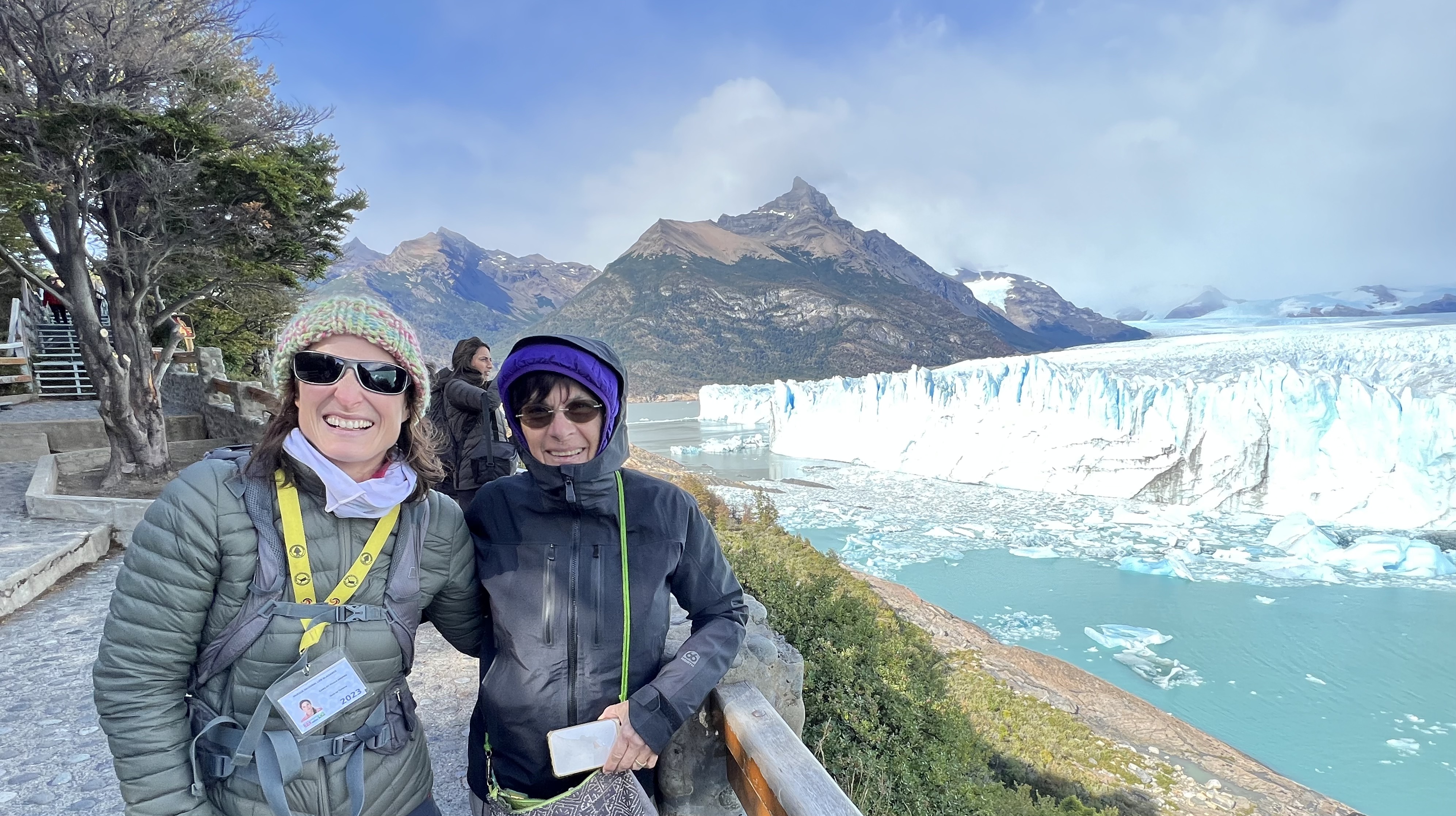
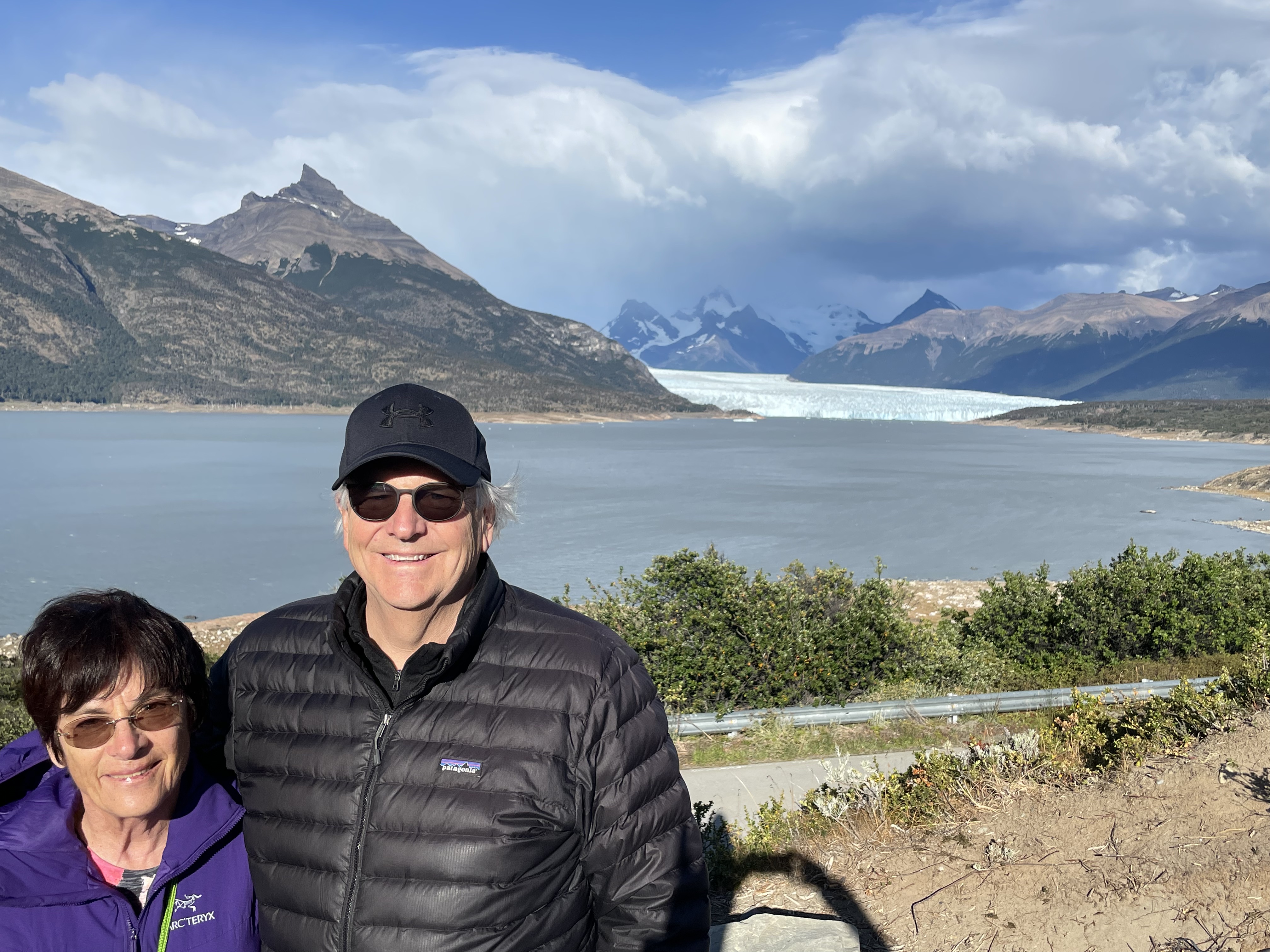
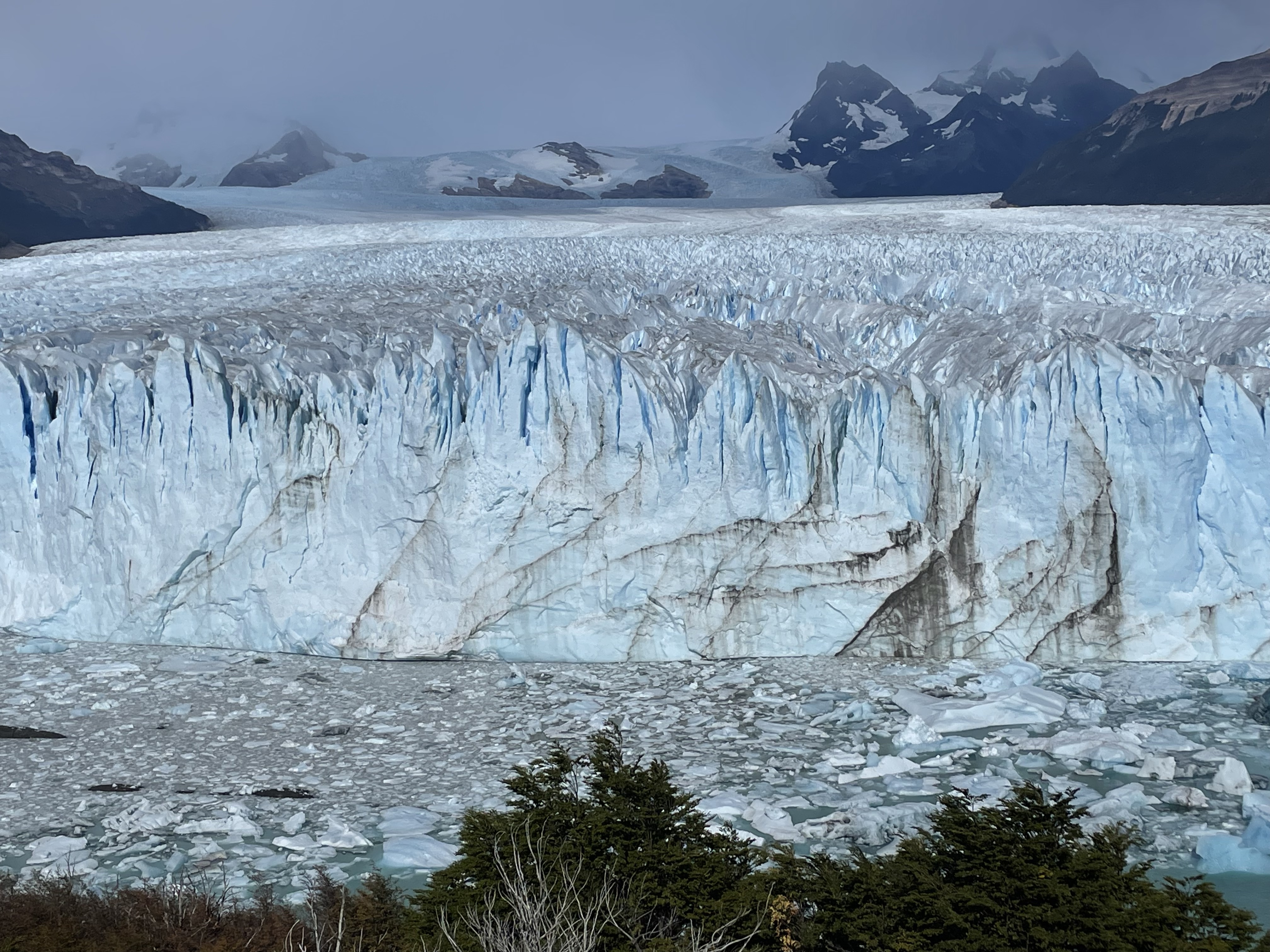
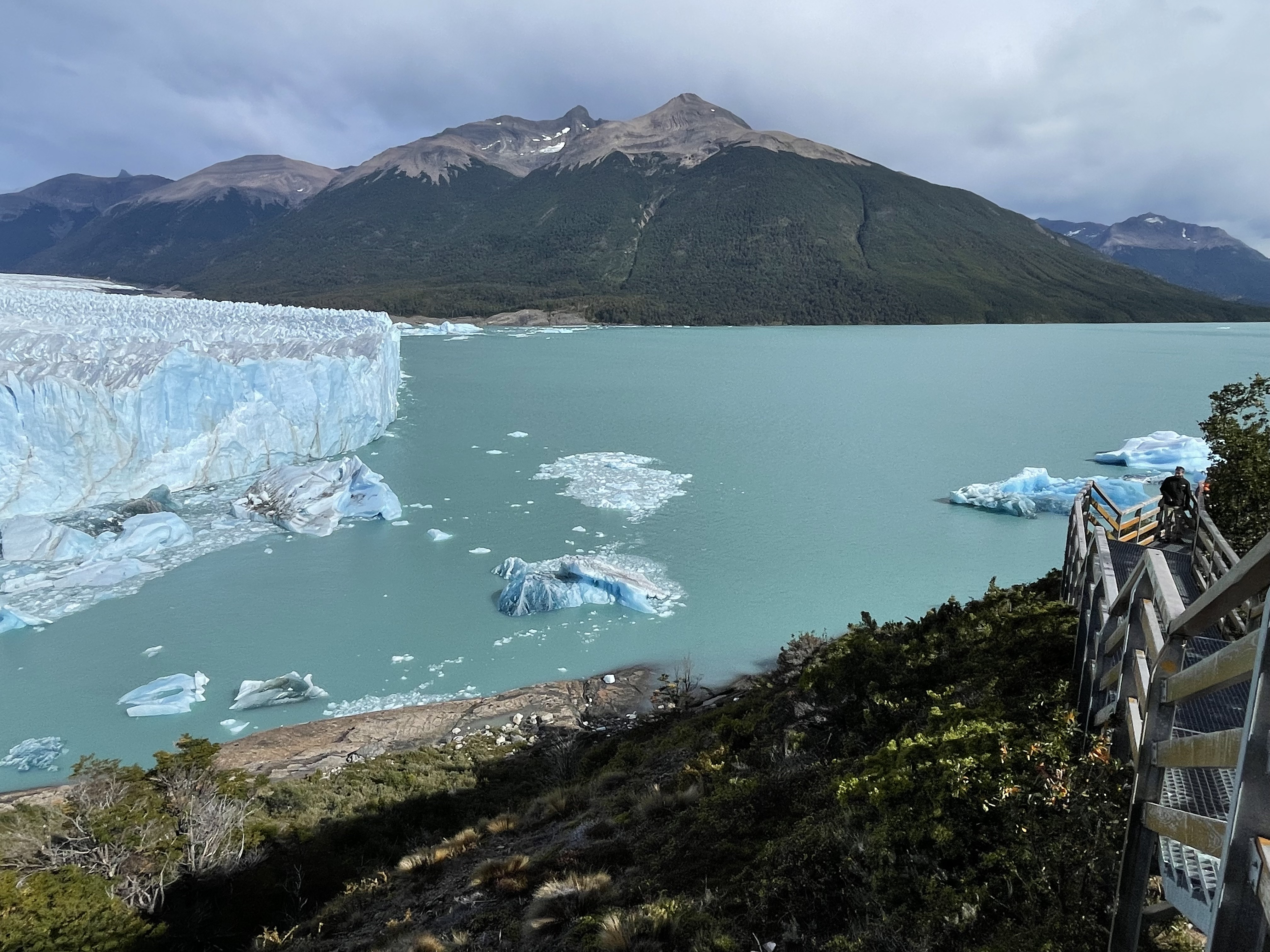
Then we got into discussing the glacier. Not only is Moreno Glacier the third largest in the world behind Greenland and Antarctica, it is probably the most easily accessible to see, measure and study. Lago Argentino, into which the glacier flows, is 80 kilometers long, 20 kilometers wide, 900 feet average depth and 1,466 square kilometers. Three times larger than Tahoe. At some time in the past, the glacier covered the entire lake. And yes, we were cold. Even though it was a sunny day, the air was cool, and the wind made it feel much colder. From the parking lot at the glacier, we walked down and around the hill facing the glacier on a well constructed catwalk and got some nice photos and even saw it drop a few pieces of ice into the lake. Then we got on a boat that took us within 300 feet of the ice wall. There was more calving that we almost got to witness a second too late. Such an easy way to see a huge natural wonder.

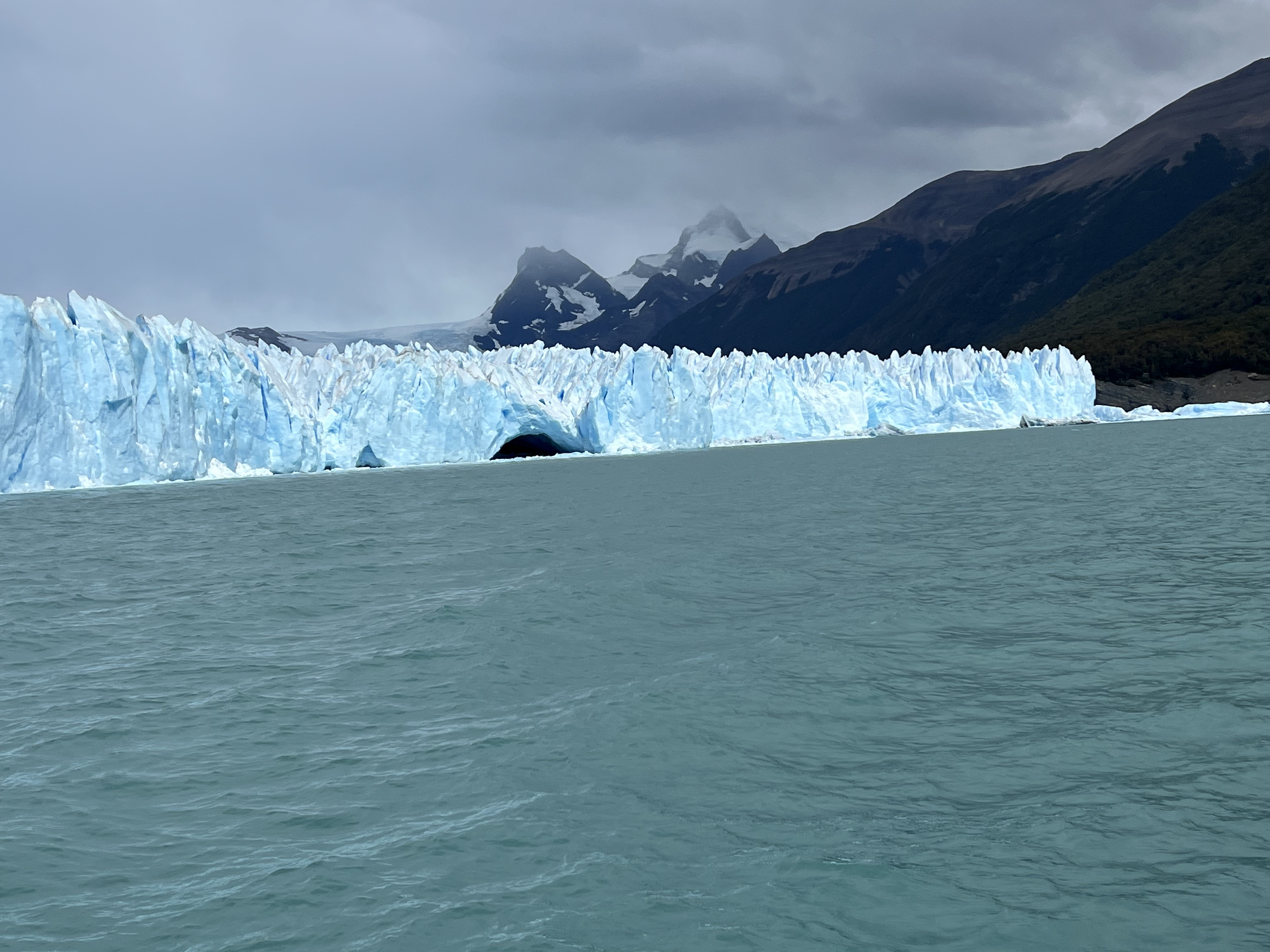
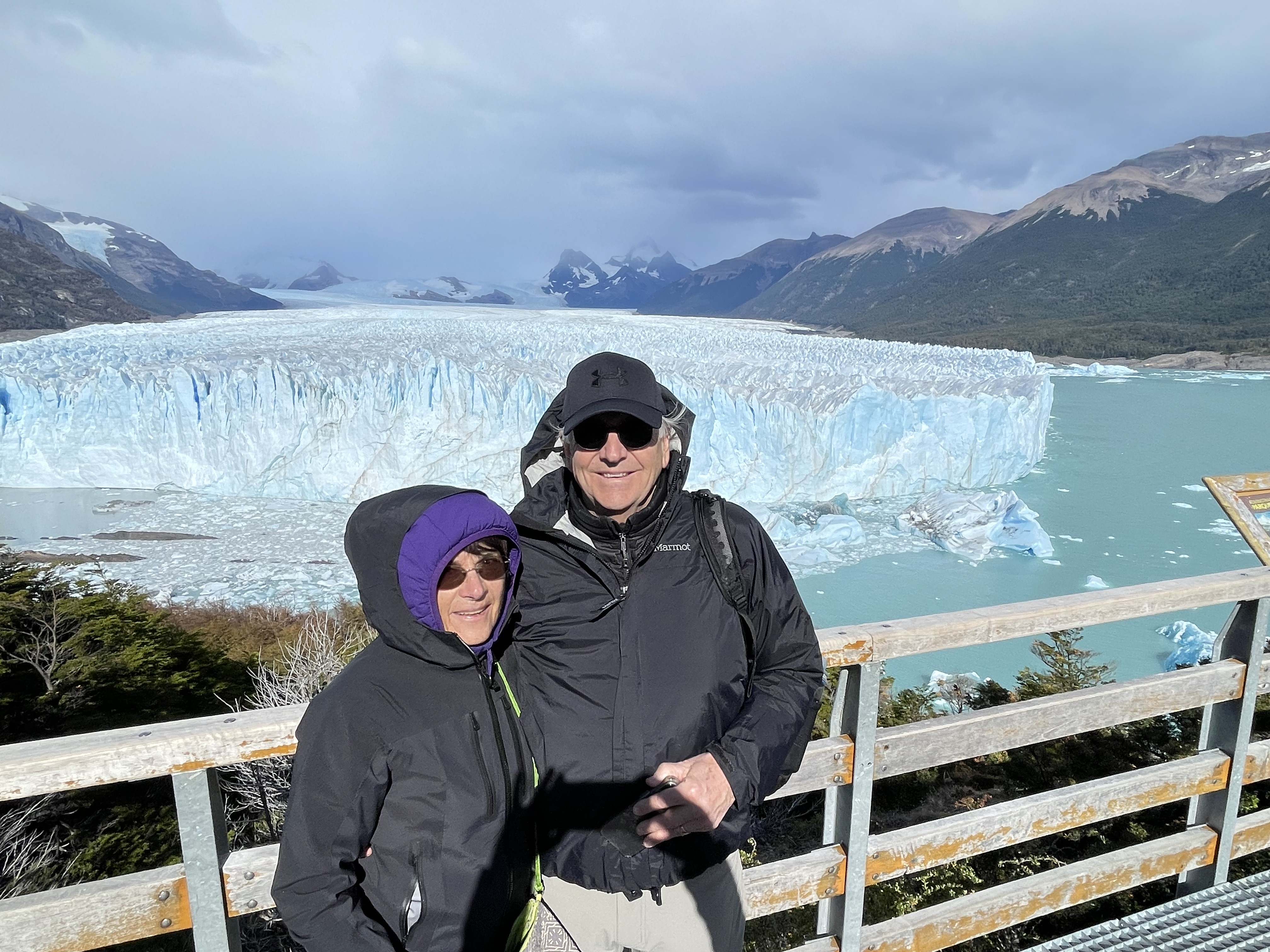
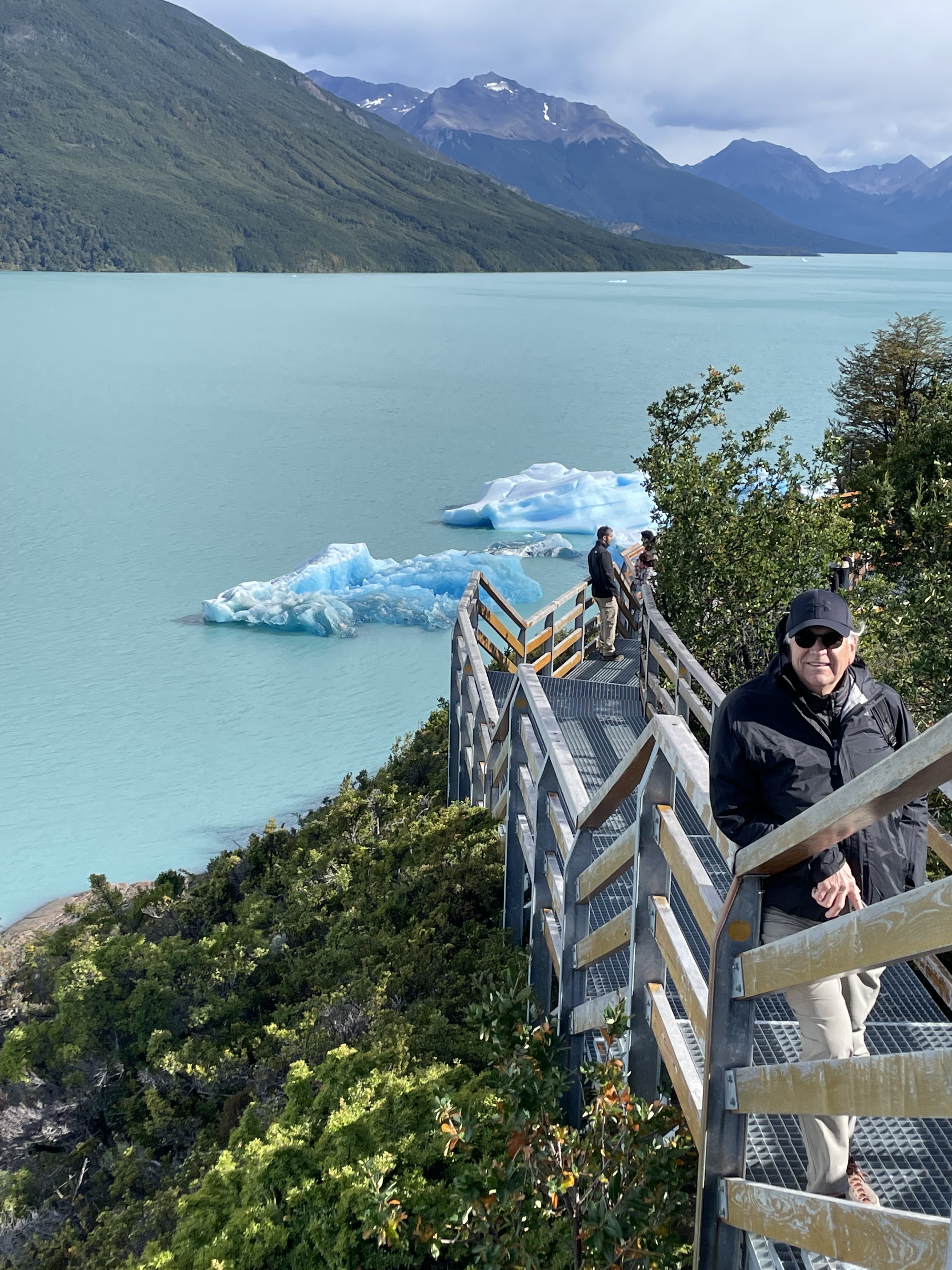
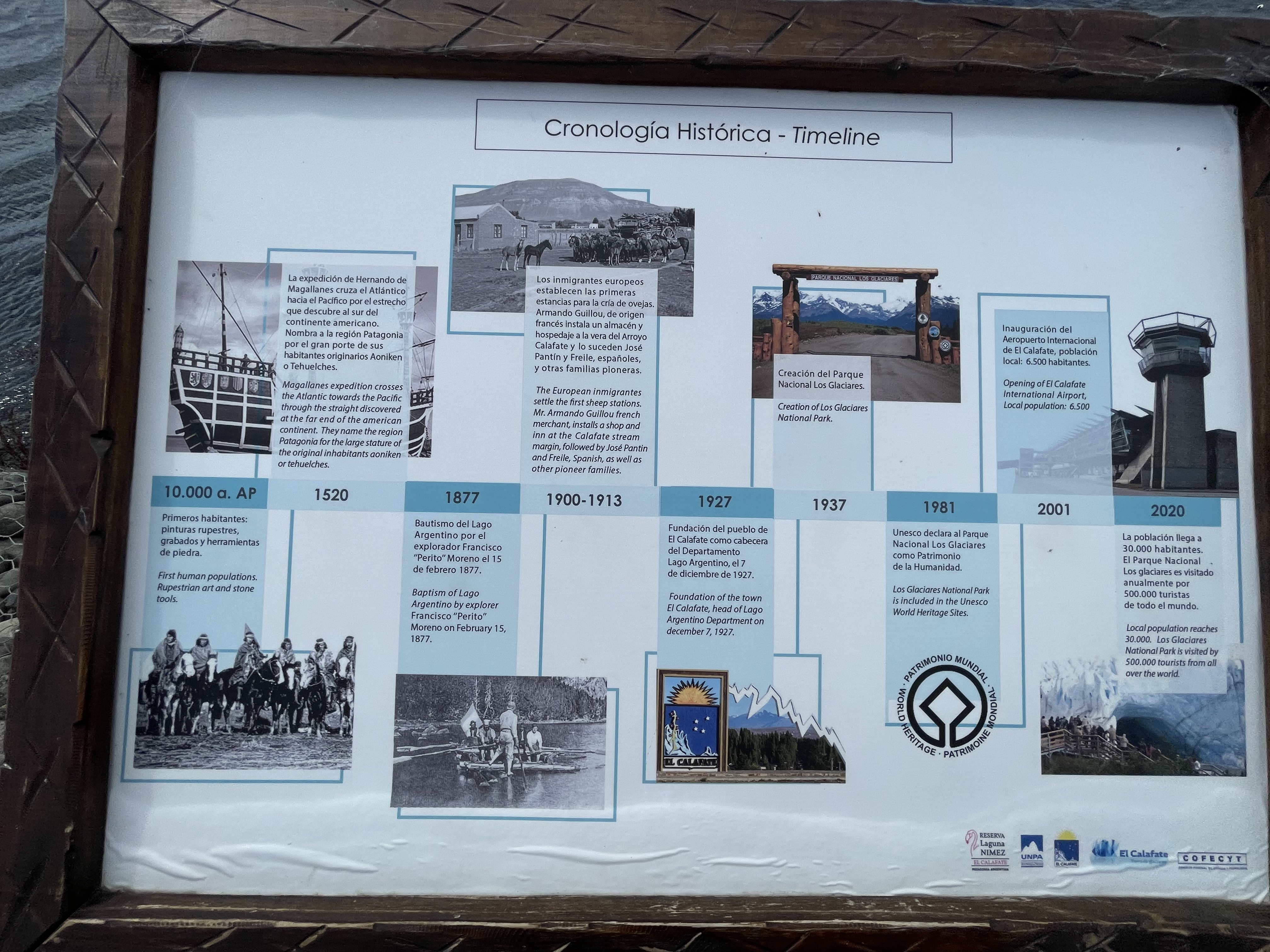
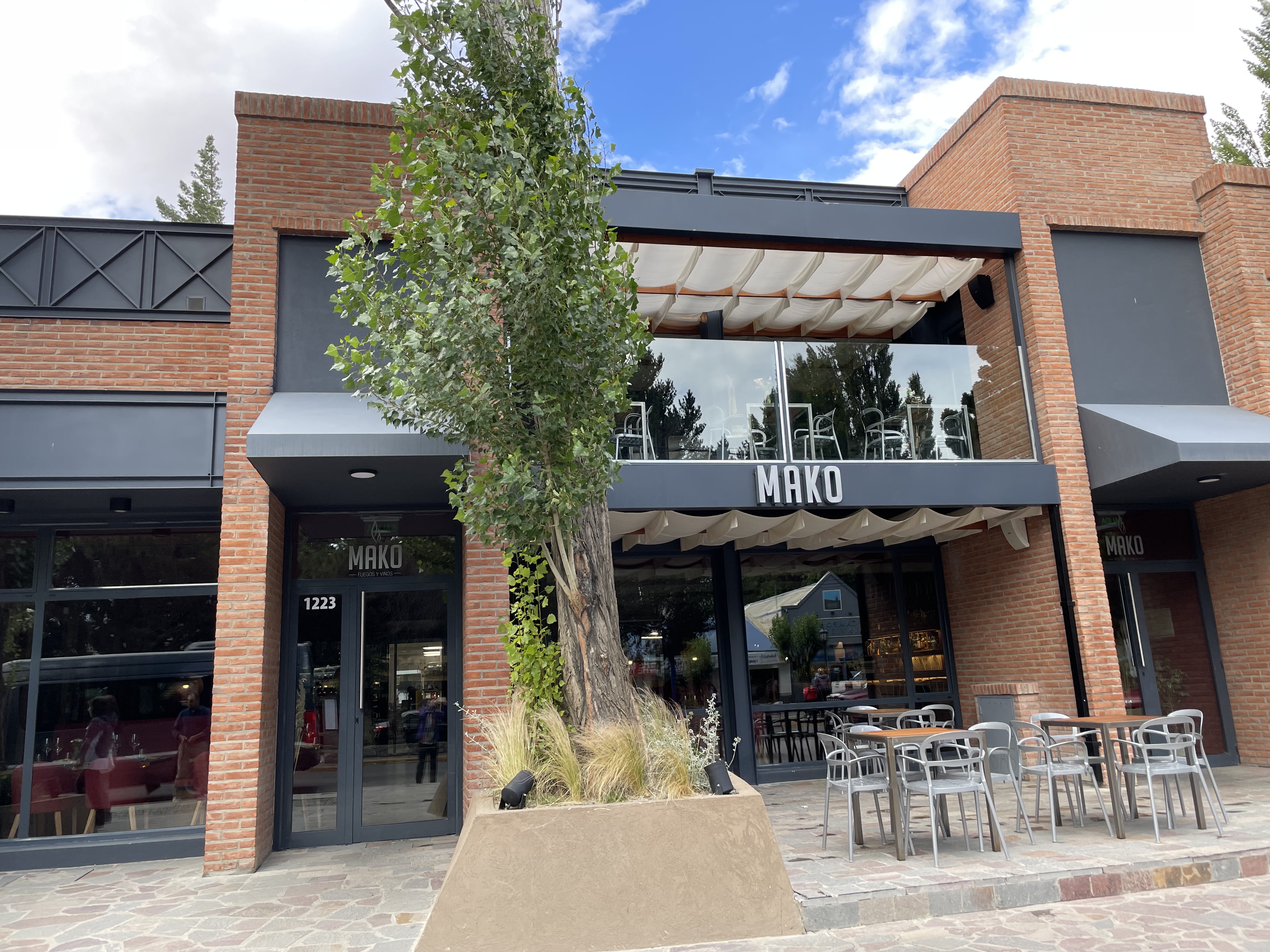
We returned to El Calafate late afternoon, rested and got warm. Took a taxi into town to have dinner at a place called Mako. It had been referred by one of our guides and was a fabulous find. Every bit as good as the best in San Francisco. Mark had perfectly cooked rib eye and I had an equally fine local Hake fish. Best meal of the trip, so far. The town is also quite charming and full of locals and tourists enjoying an evening stroll. Our waiters said they come to Calafate for the summer season every year because the pay is better than anywhere else in Argentina. They cannot afford to leave the country because the peso is worth so little. Argentina is the second poorest country in South America. It is only ahead of Venezuela. Although a small town in the middle of nowhere, El Calafate is a tourist Mecca for its access to Moreno Glacier, the third largest in the world and certainly the easiest to visit.
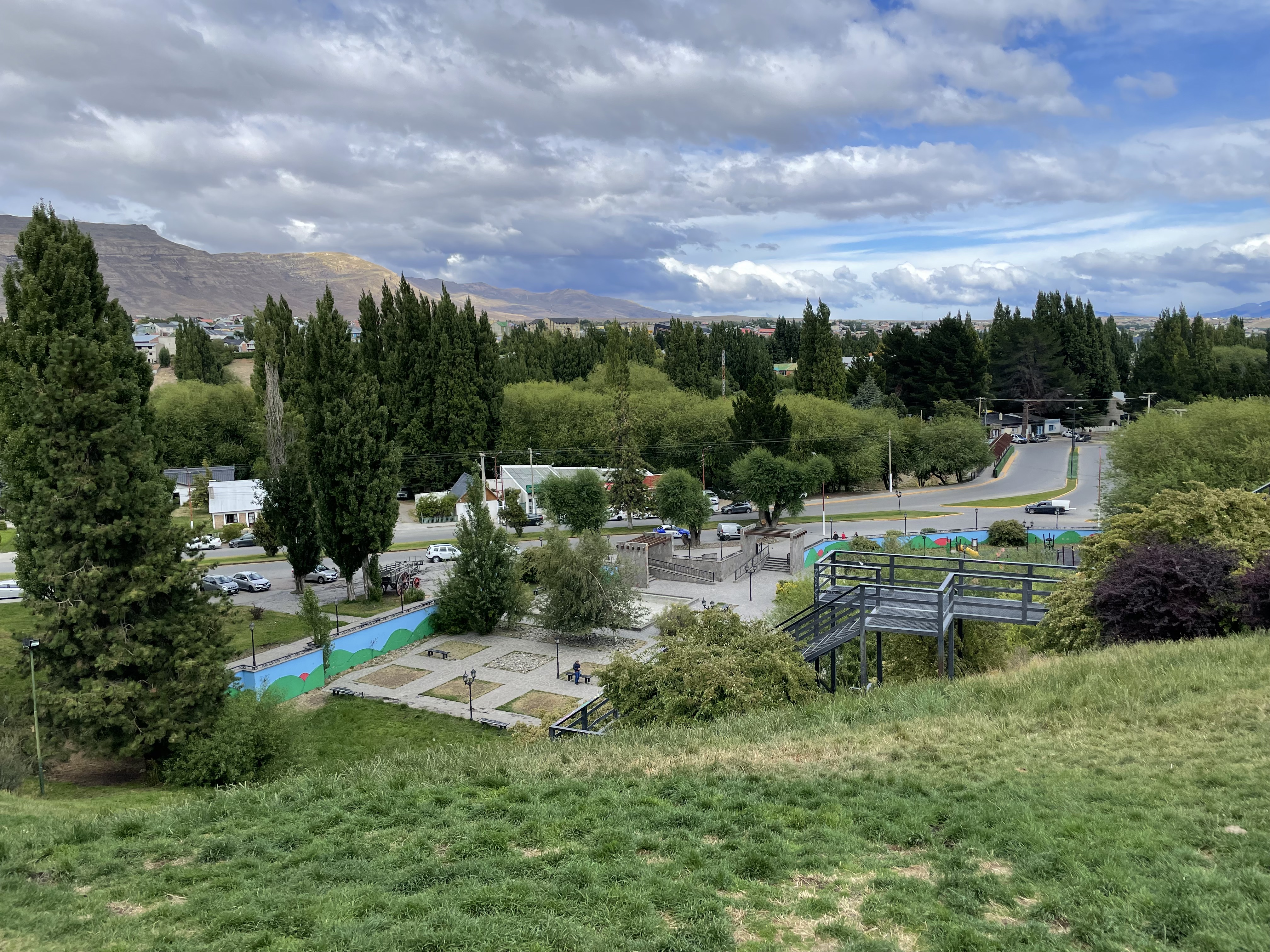
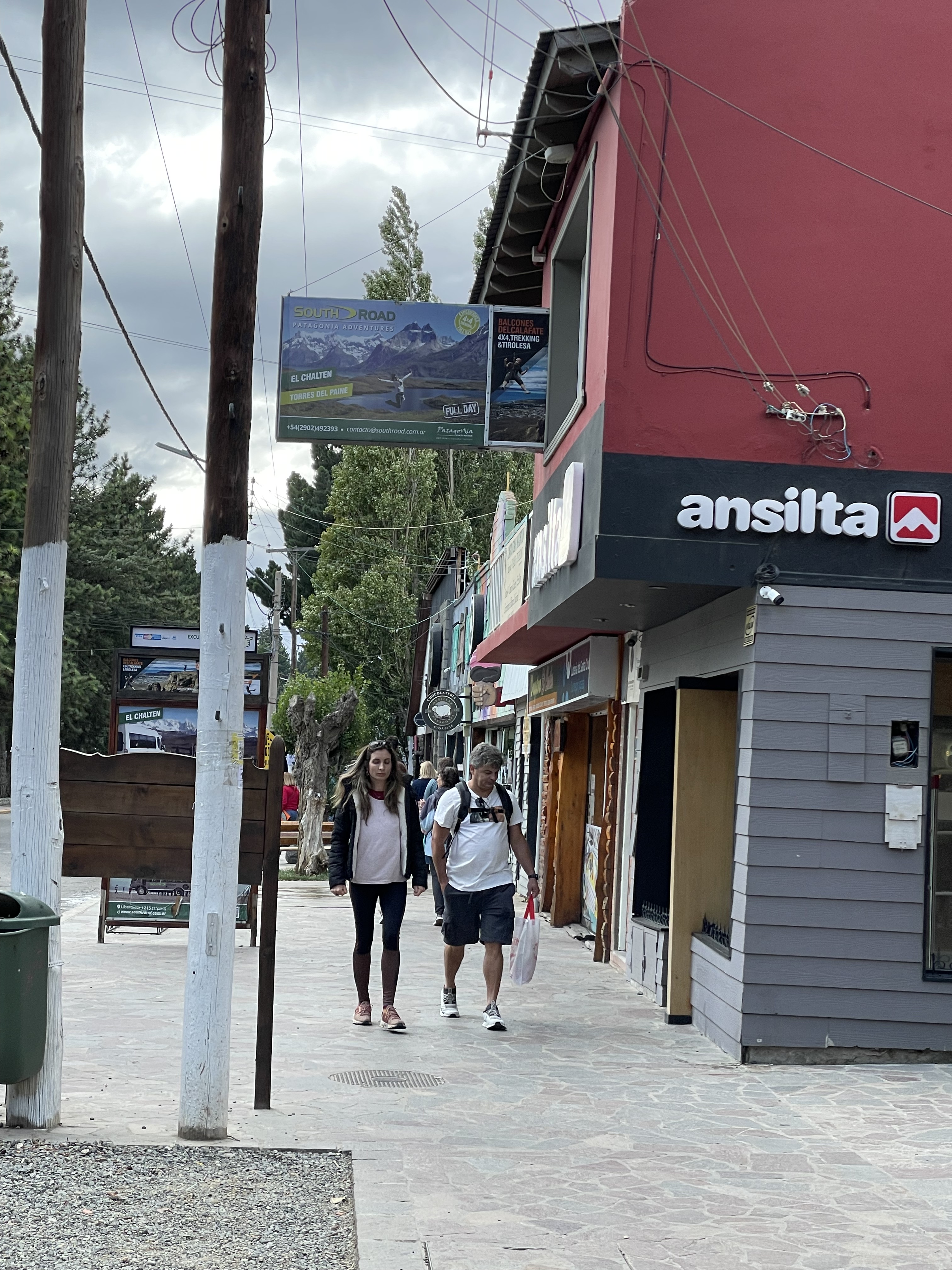
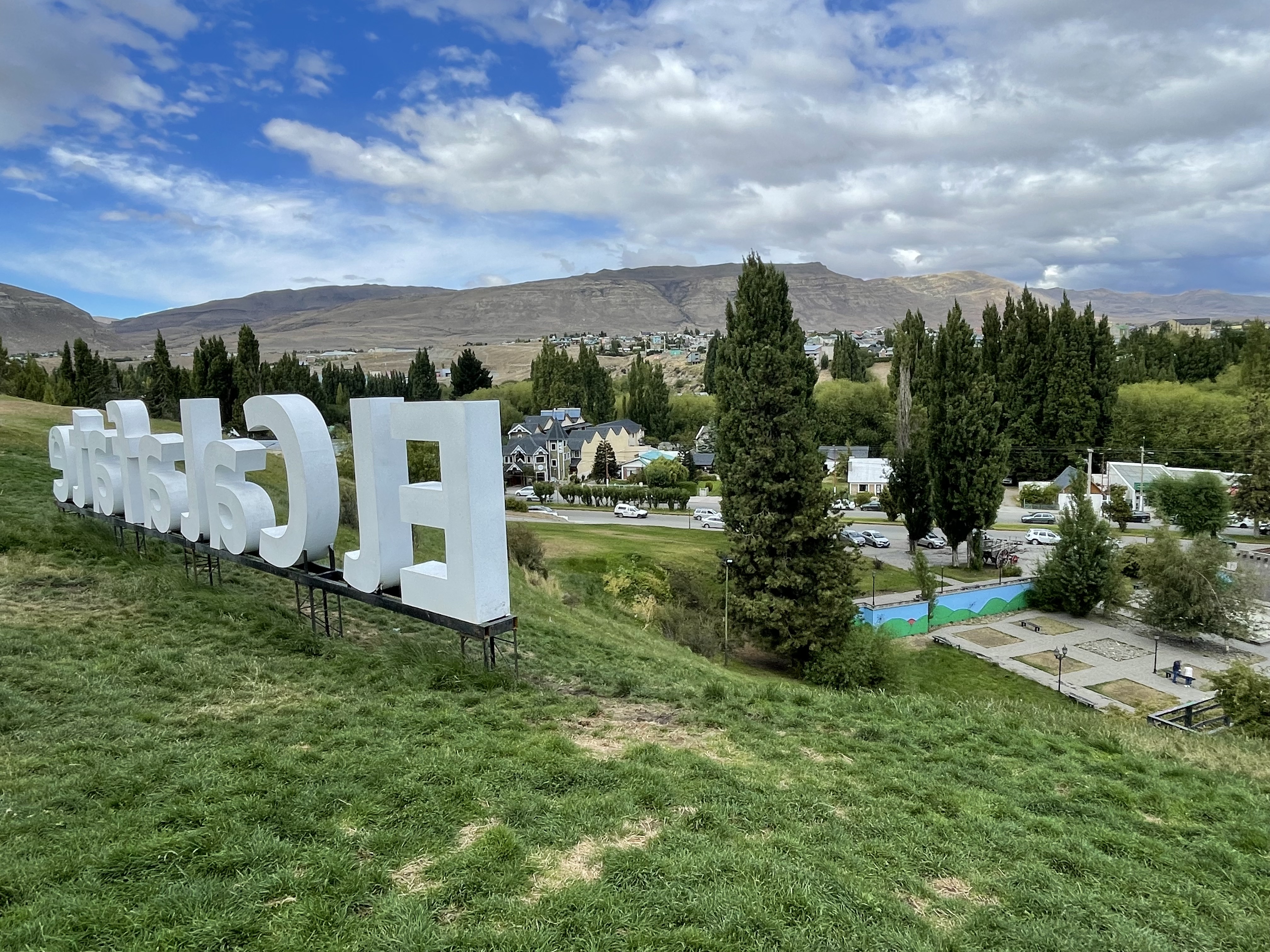
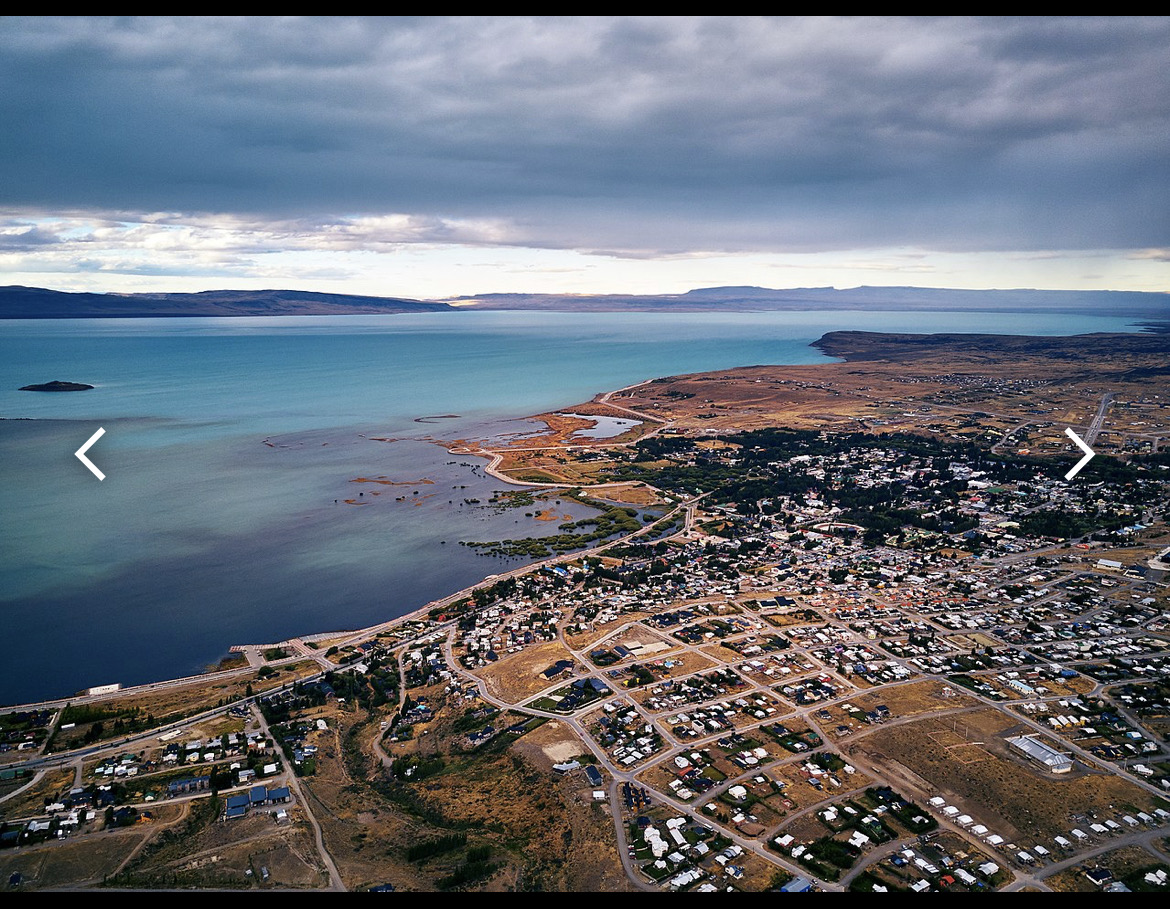
Back in town we took a few snaps to show you the lay of the land. El Calafate has a population of 29.000. It felt like Grasw Valley and Nevada City in one metropolis. There is a photo of our dinner restaurant, Mako, and a few of town and Lake Argentina.
 Adventures with Julia
Comments
what fun you are having! thanks for taking us along on the ride…..keep at it as you continue to investigate and view new areas as you love to do!!
In Peace,
Suzie Daggett (530) 913-9592 facebook.com/SuzieDaggett
We are truly enjoying this trip with you! Keep on blogging! Xo Liz and Terry