
Tuesday, February 14, 2023. Valentine’s Day
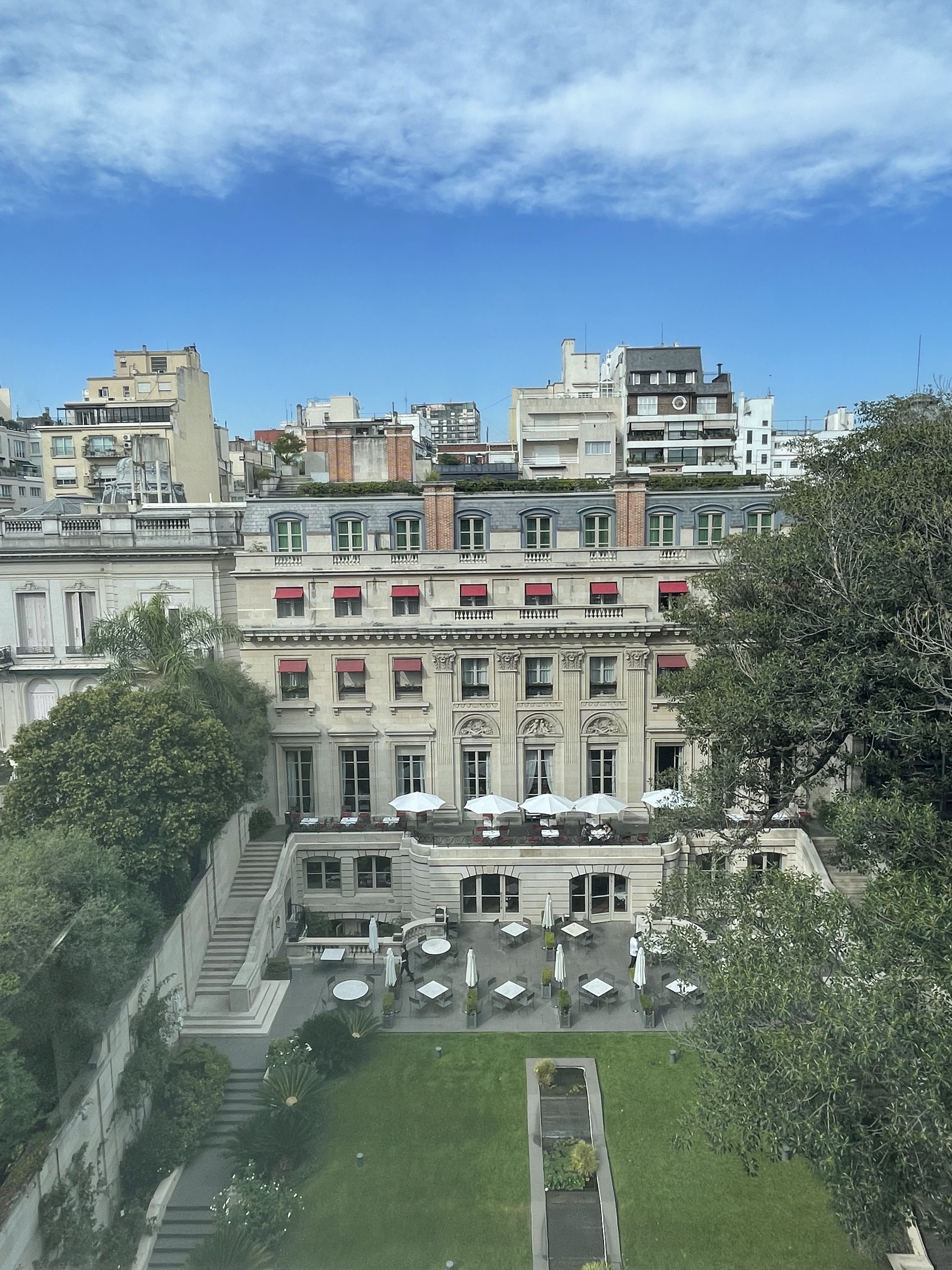
We spent all day yesterday getting from the Explora Lodge in cold, overcast, wet and windy Patagonia to hot, sticky, sunny Buenos Aires: 3 hours by car to El Califate airport; 4 hours at the airport; a 3-hour flight to Buenos Aires; and a half hour drive to the Park Hyatt Hotel in the city center. All we wanted was a quick bite and bed, which we did at the hotel’s peaceful garden restaurant. So, this morning we woke up to a very warm and sunny day to celebrate Valentines.
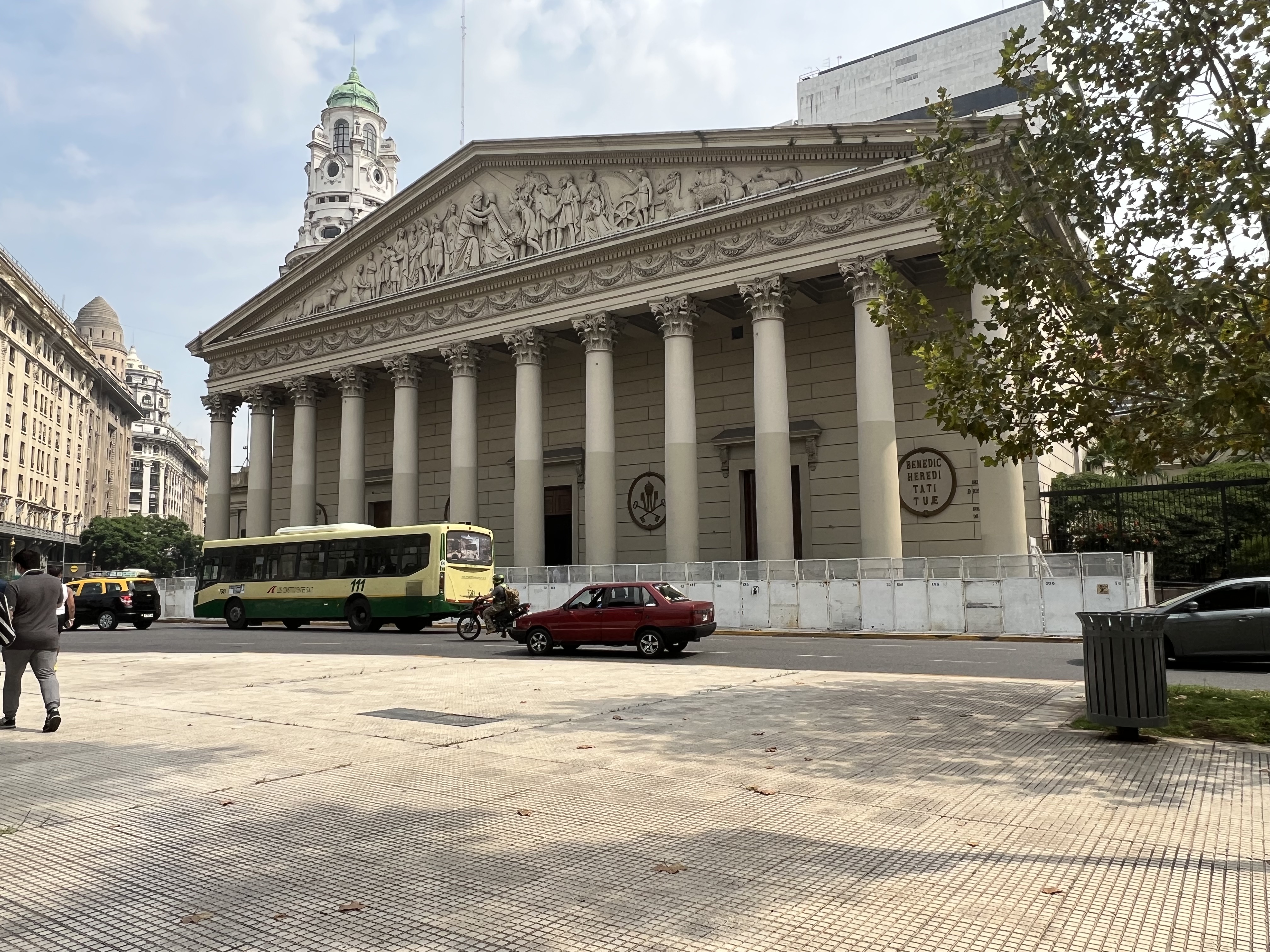
Our morning was relaxing until we met our guide, Gilda. At 10am we started a drive about the city, looking at buildings from the different periods of Argentine development, both cultural and political. Our driver, Eddie, was very competent and spoke more English than most drivers. Between the two of them we heard a lot about the city and the country. First, the population of Argentina is 46 million and Buenos Aires is 3 million. The words Buenos Aires mean “good winds”, so when Pedro Mendoza arrived on February 2, 1536, he named the place Our Lady of Buenos Aires. Our first stop was on the Plaza del Mayo in the heart of the city to visit the Metropolitan Cathedral and Basilica of Our Lady of Peace, where Pope Francis had reigned as Archbishop. The reason he has not returned since becoming pope is that the different governments will not tolerate his appearance when they are not in charge. Most Argentinians are Catholic, but few of them are practicing.
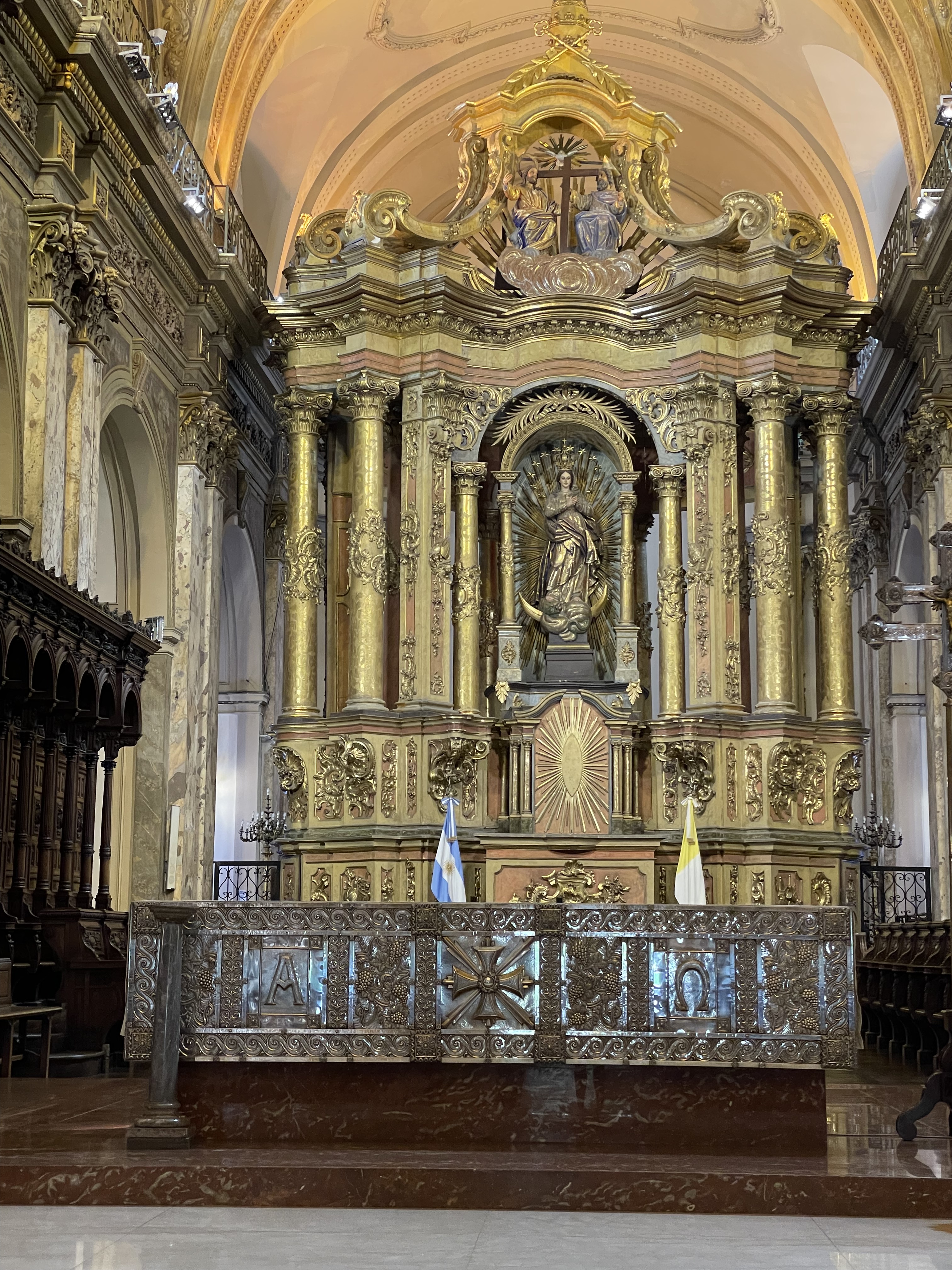
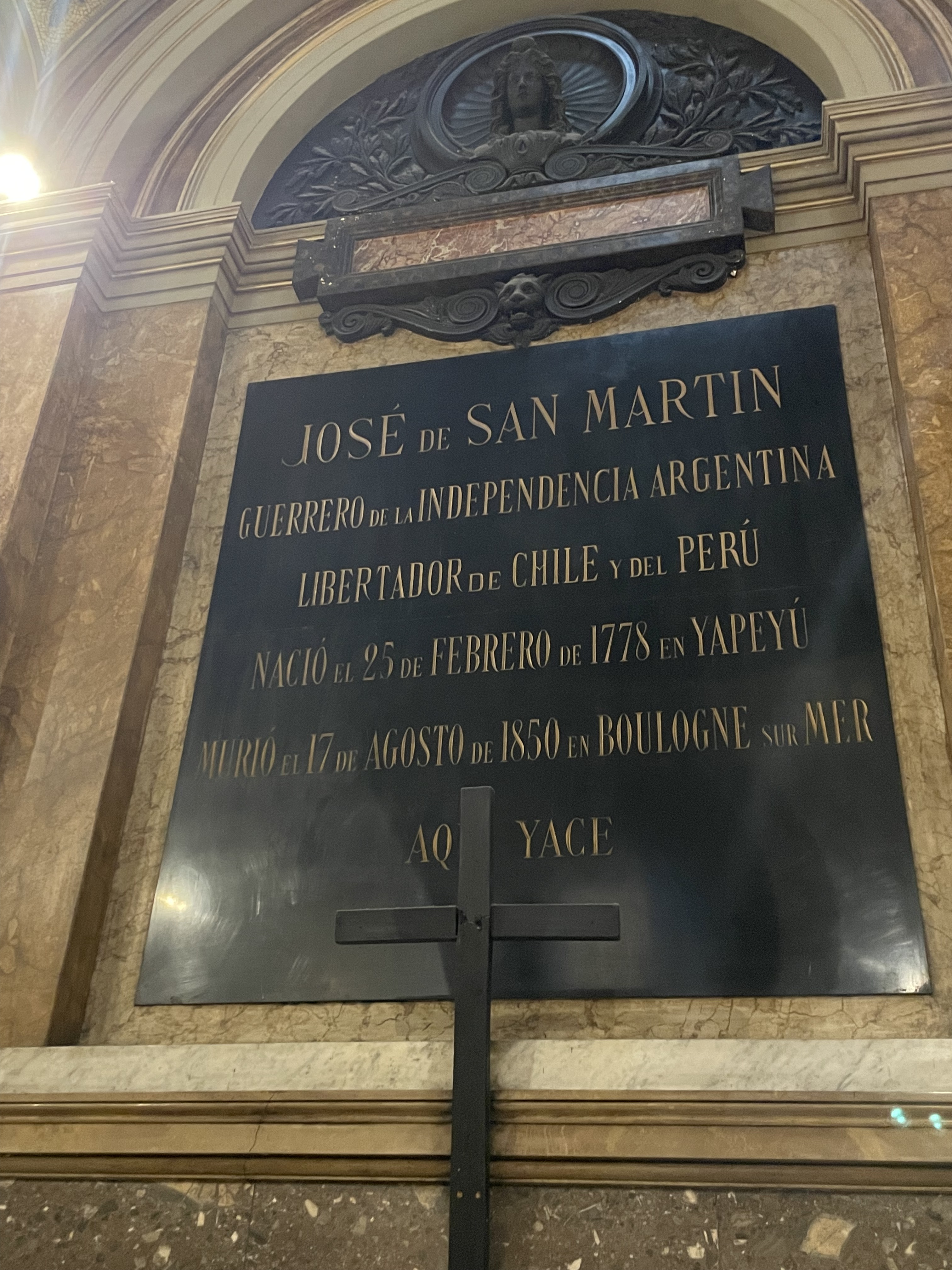
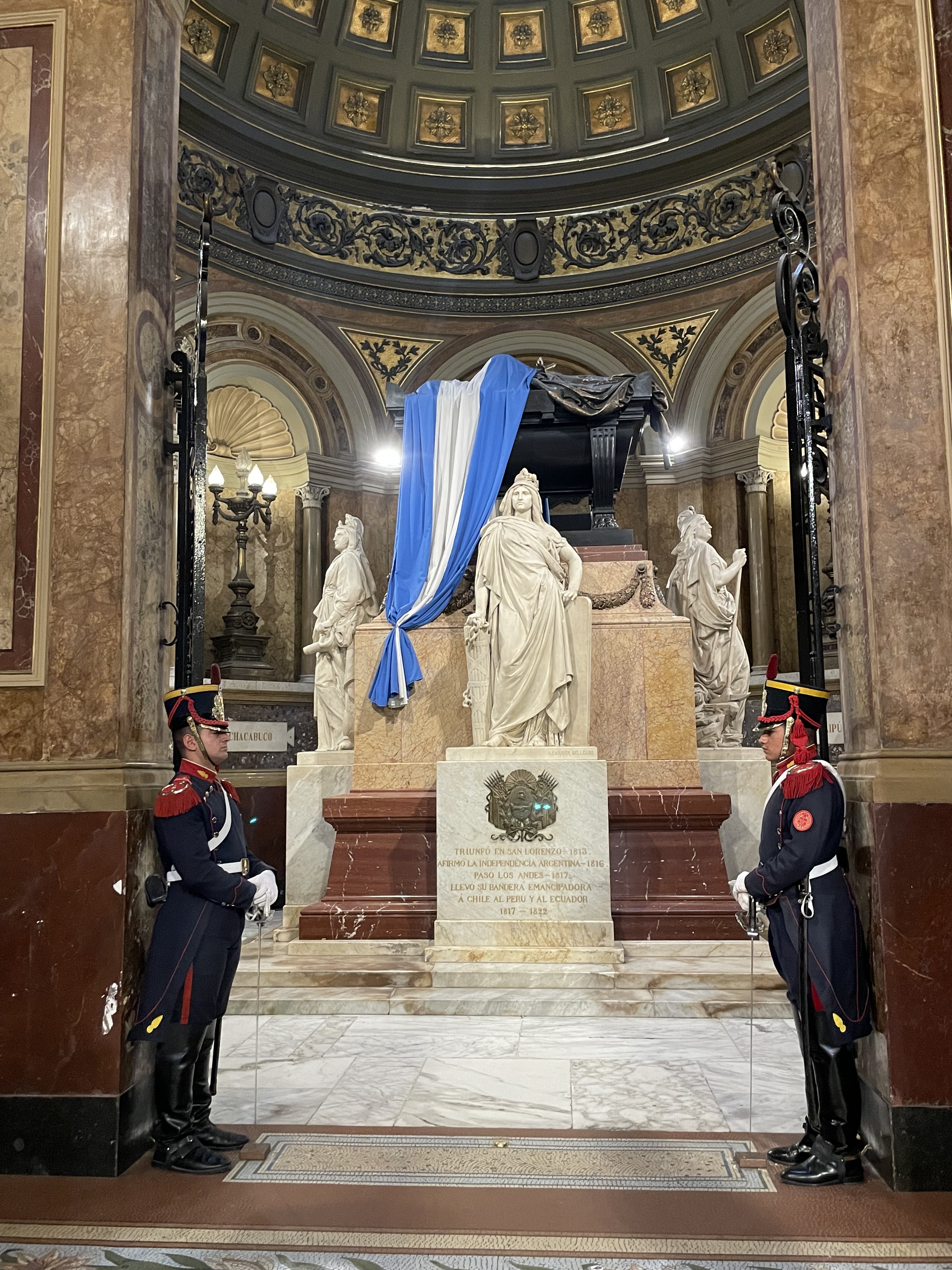
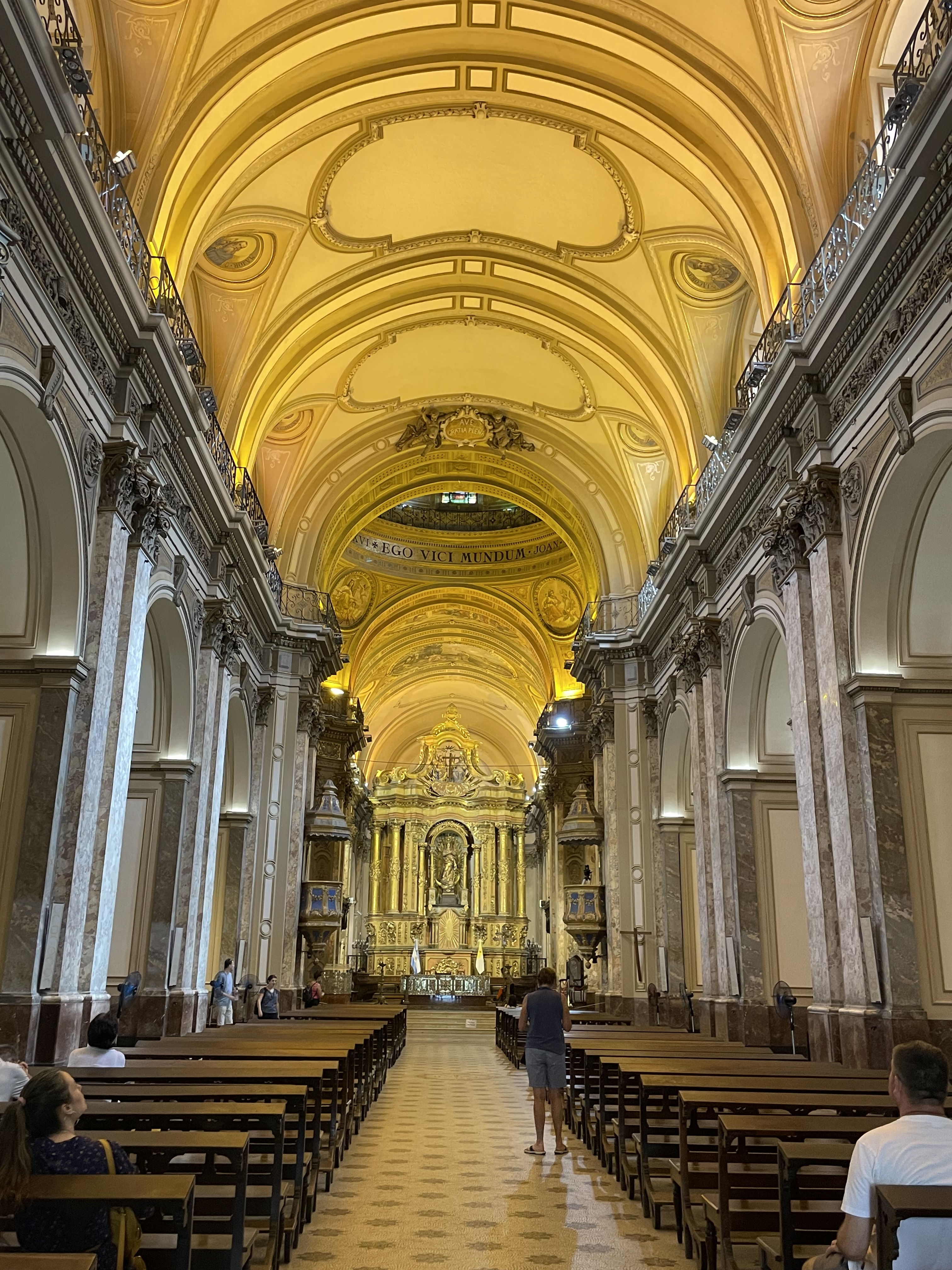
I got some nice photos of the inside of the basilica. In one large niche was the sarcophagus of Jose San Martin, who was a Founder of Freedom from Spain on July 9, 1816. Three statues of women representing Freedom, Labor and Agriculture surround the sarcophagus as well as two live guards who have a changing of the guard every 2 hours.
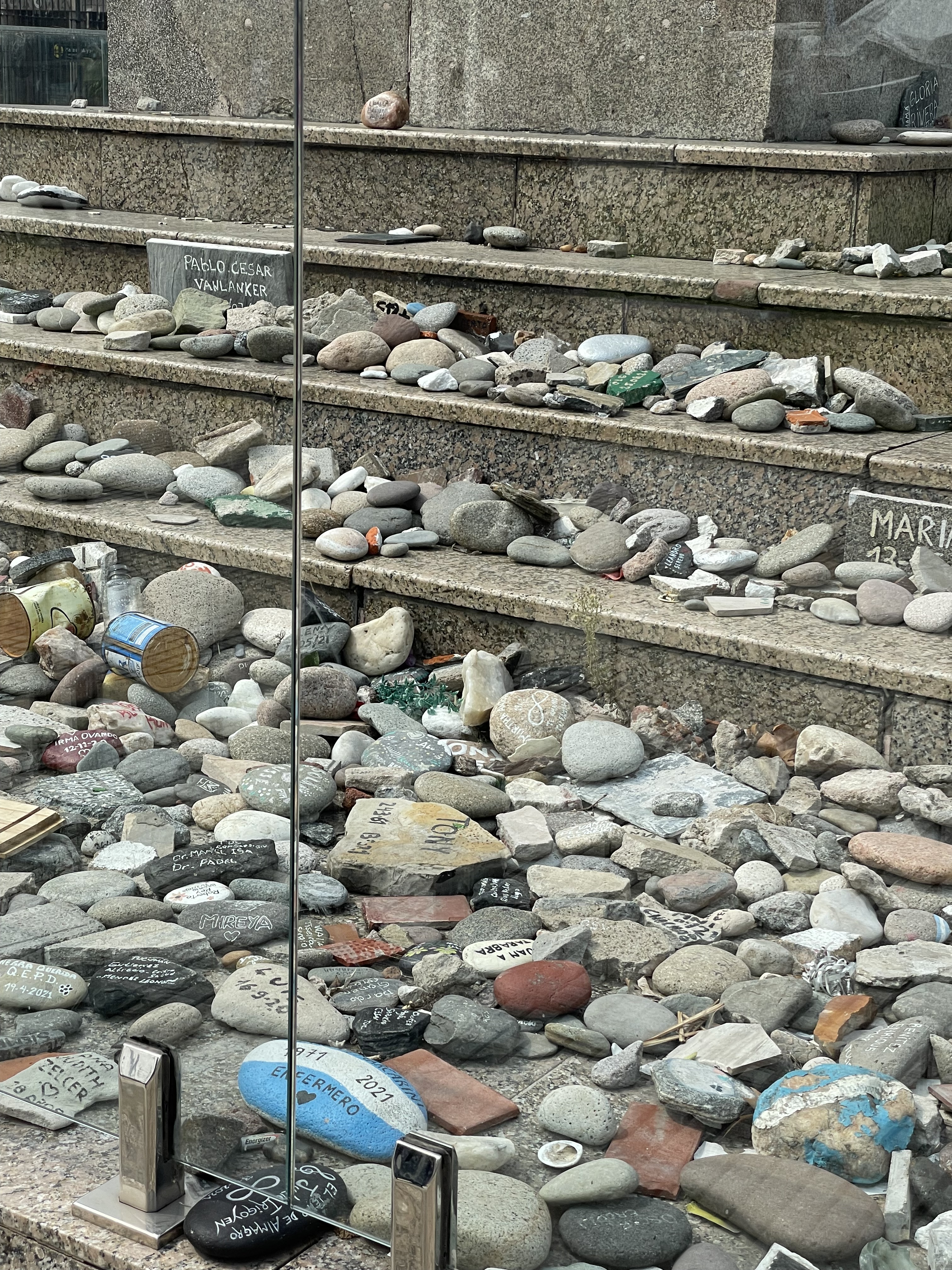
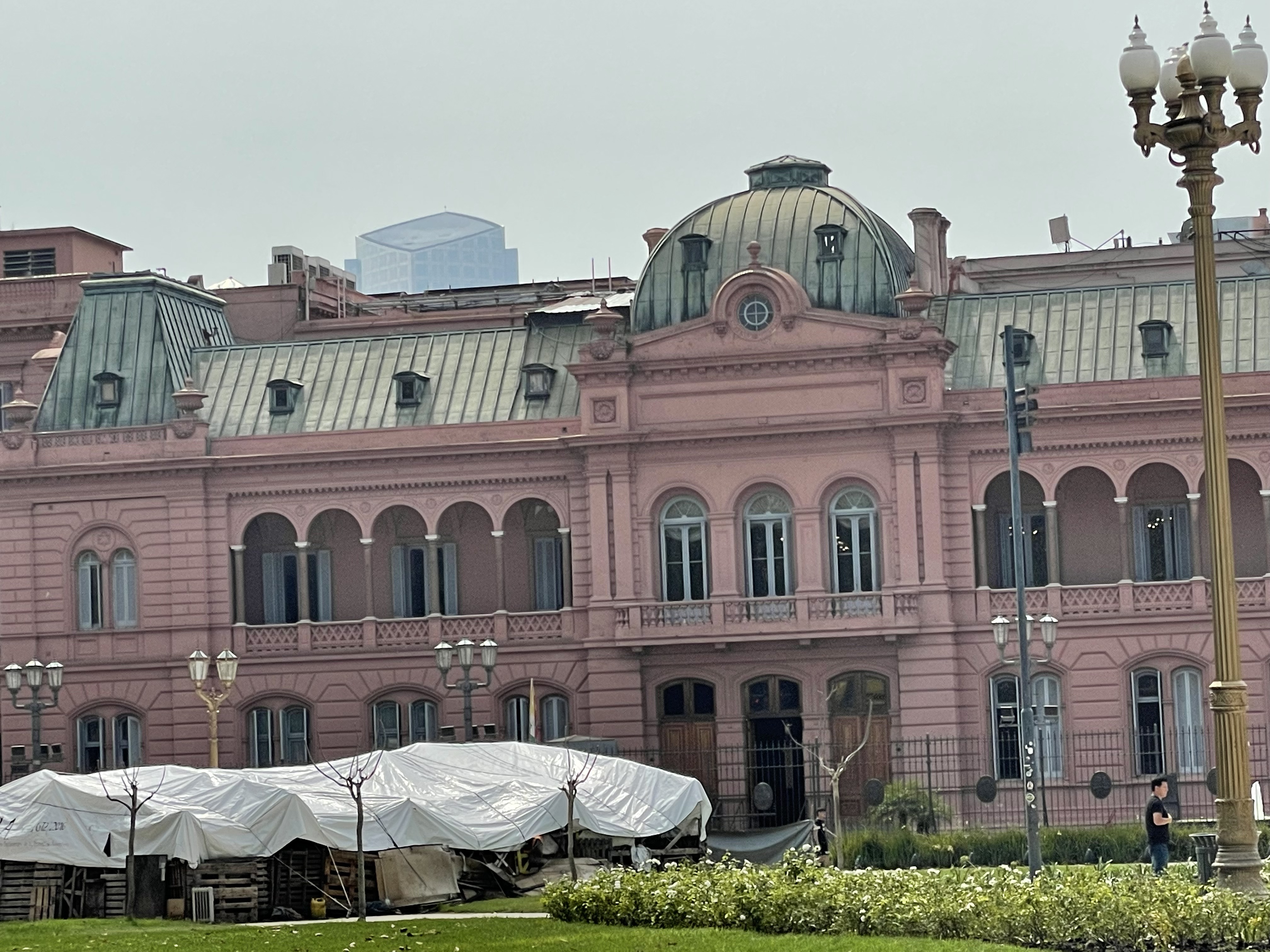
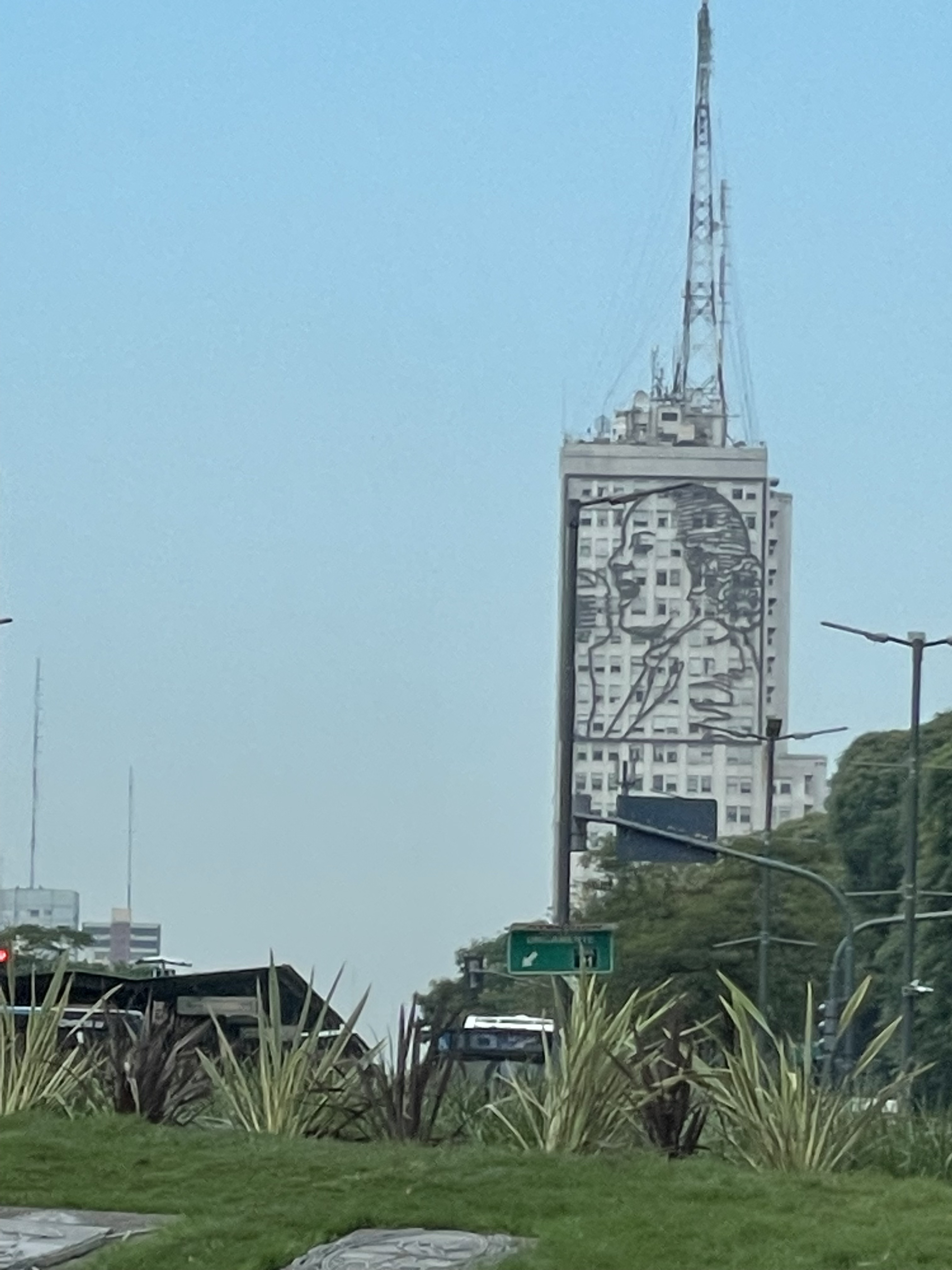
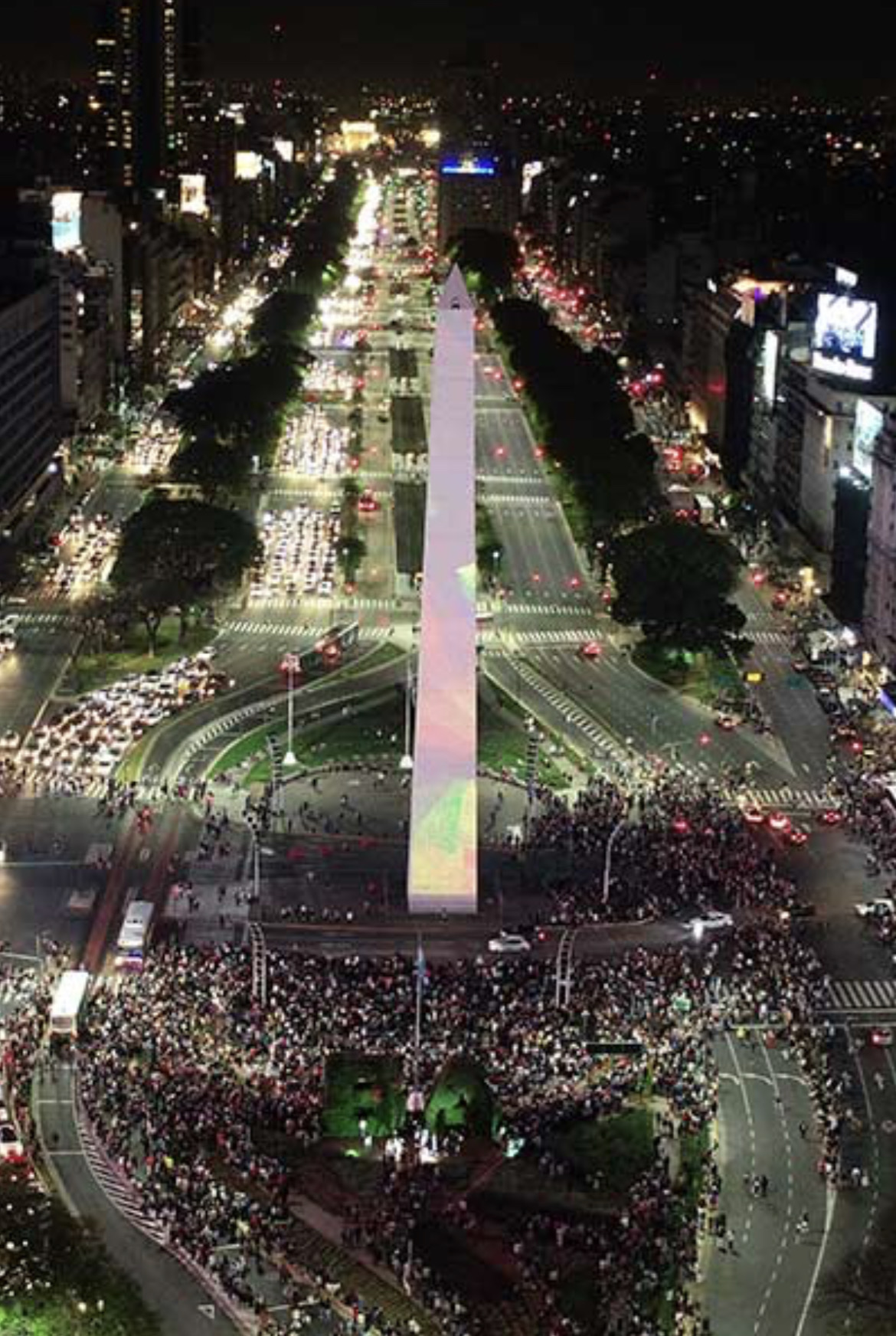
From the cathedral, we walked along the Avenue of May with a view of the Casa Rosada, or Pink Palace, which is the Office of the President and where, under one of the upper arches, Evita gave her famous speech, “Don’t cry for me”, in 1951. From one vantage point we could see a mural of Evita painted on a high-rise building. In the middle of the avenue is a glass walled memorial of inscribed stones representing the many people who died of Covid. There had been a mass protest directed against the President, Alberto Fernandez. The mayor refused to allow the stones to be removed and installed a glass wall. Nearby, is Buenos Aires’ landmark obelisk, built to mark the first anniversary of independence from Spain.
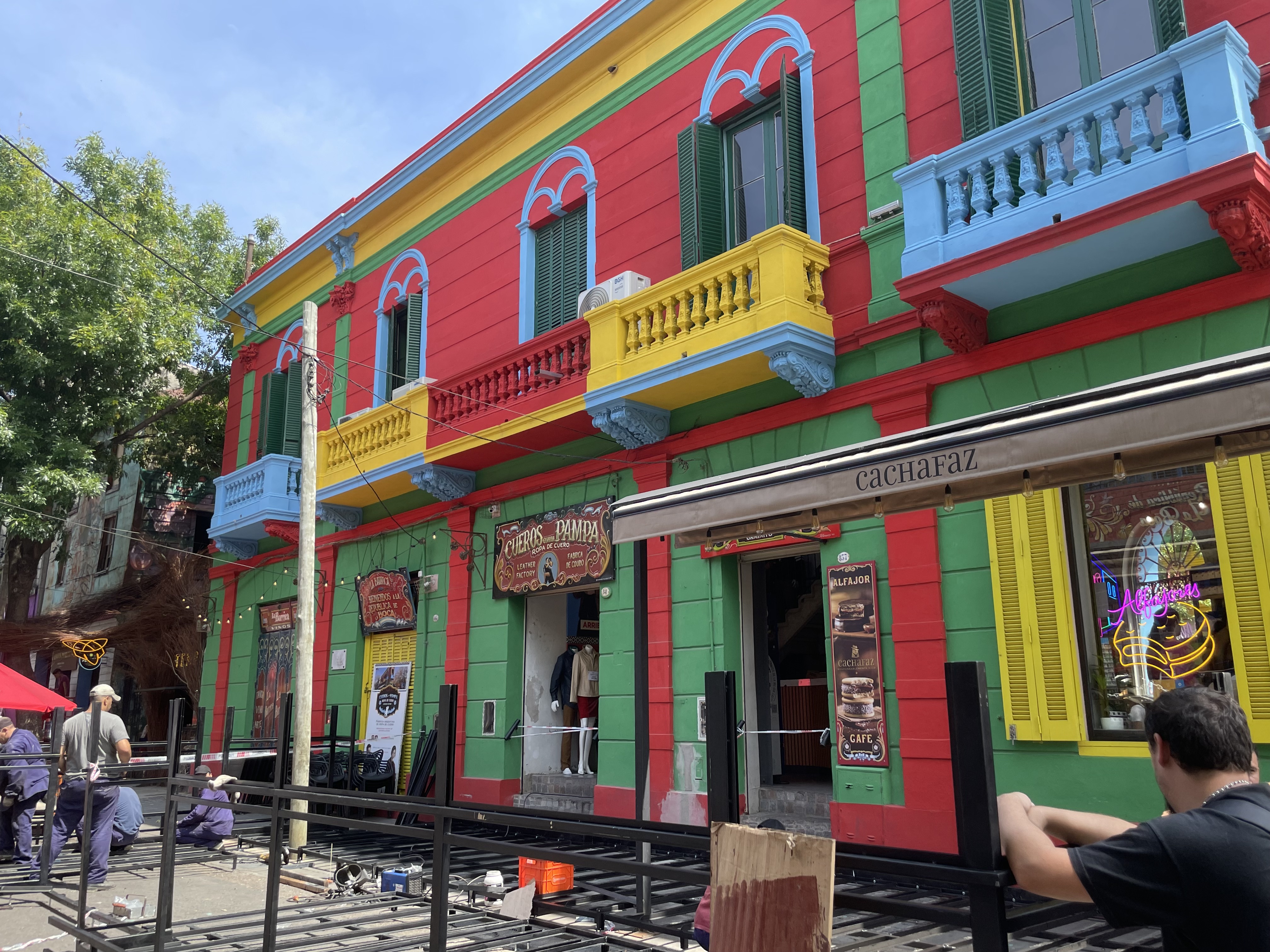
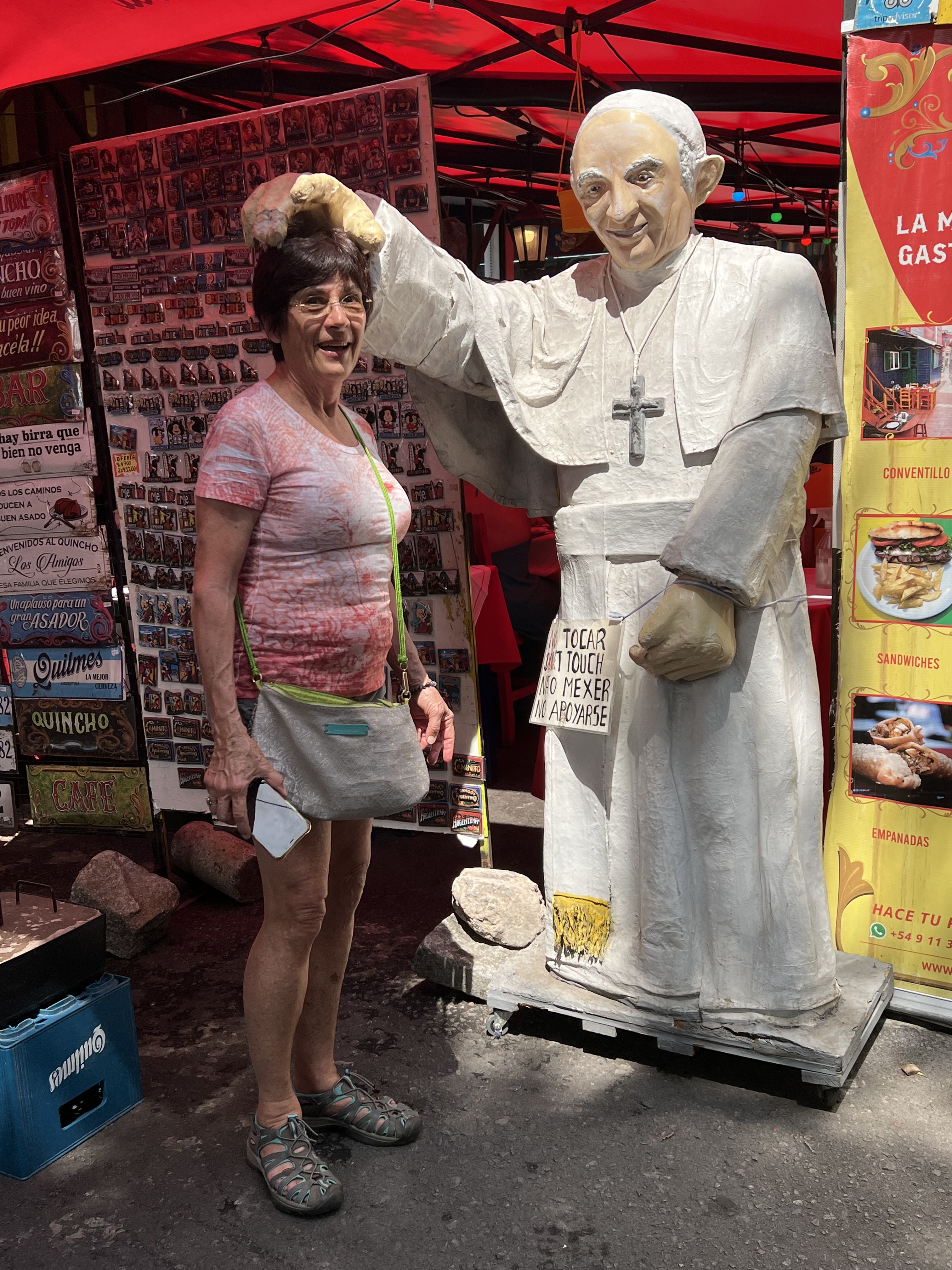
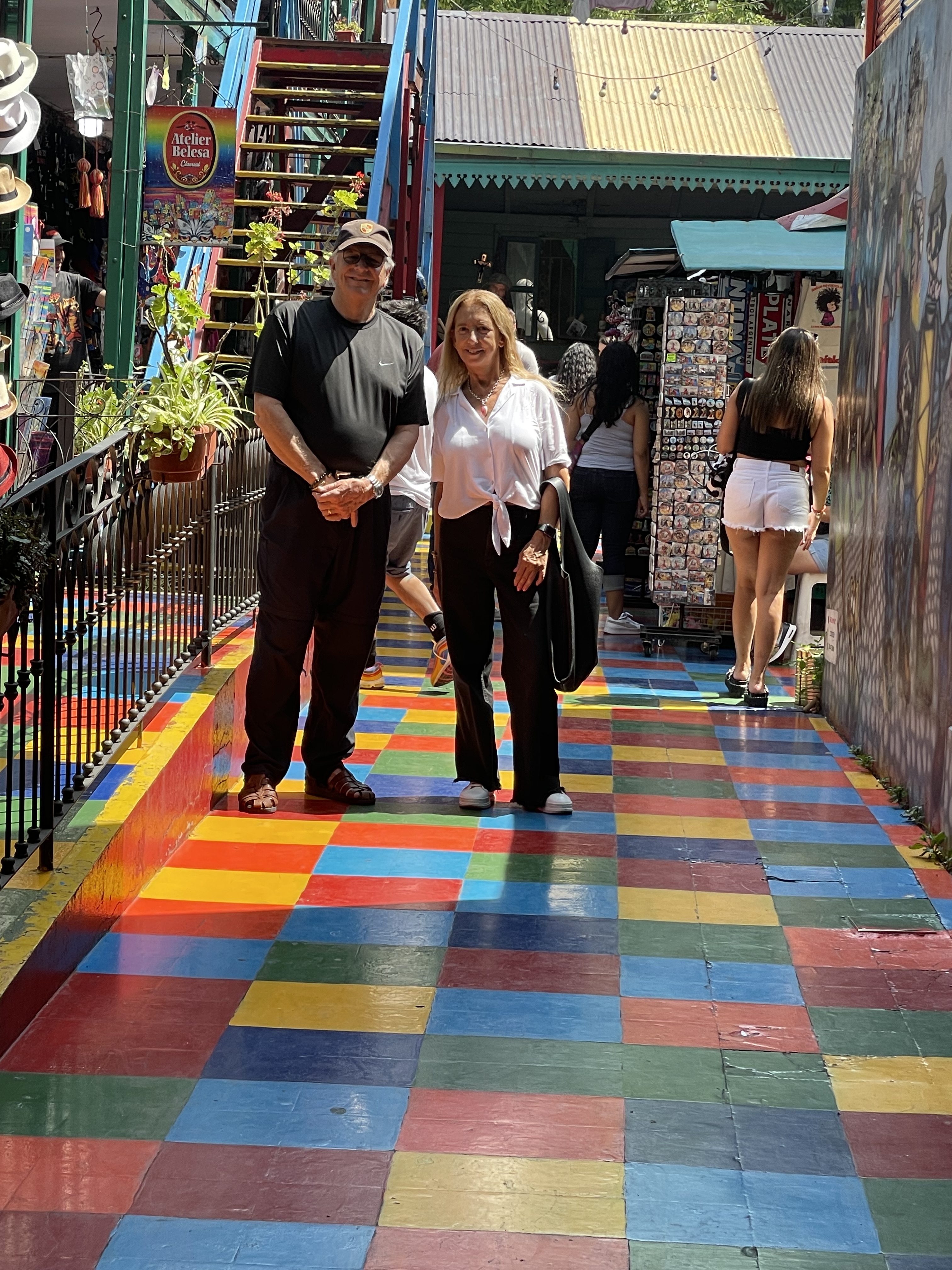
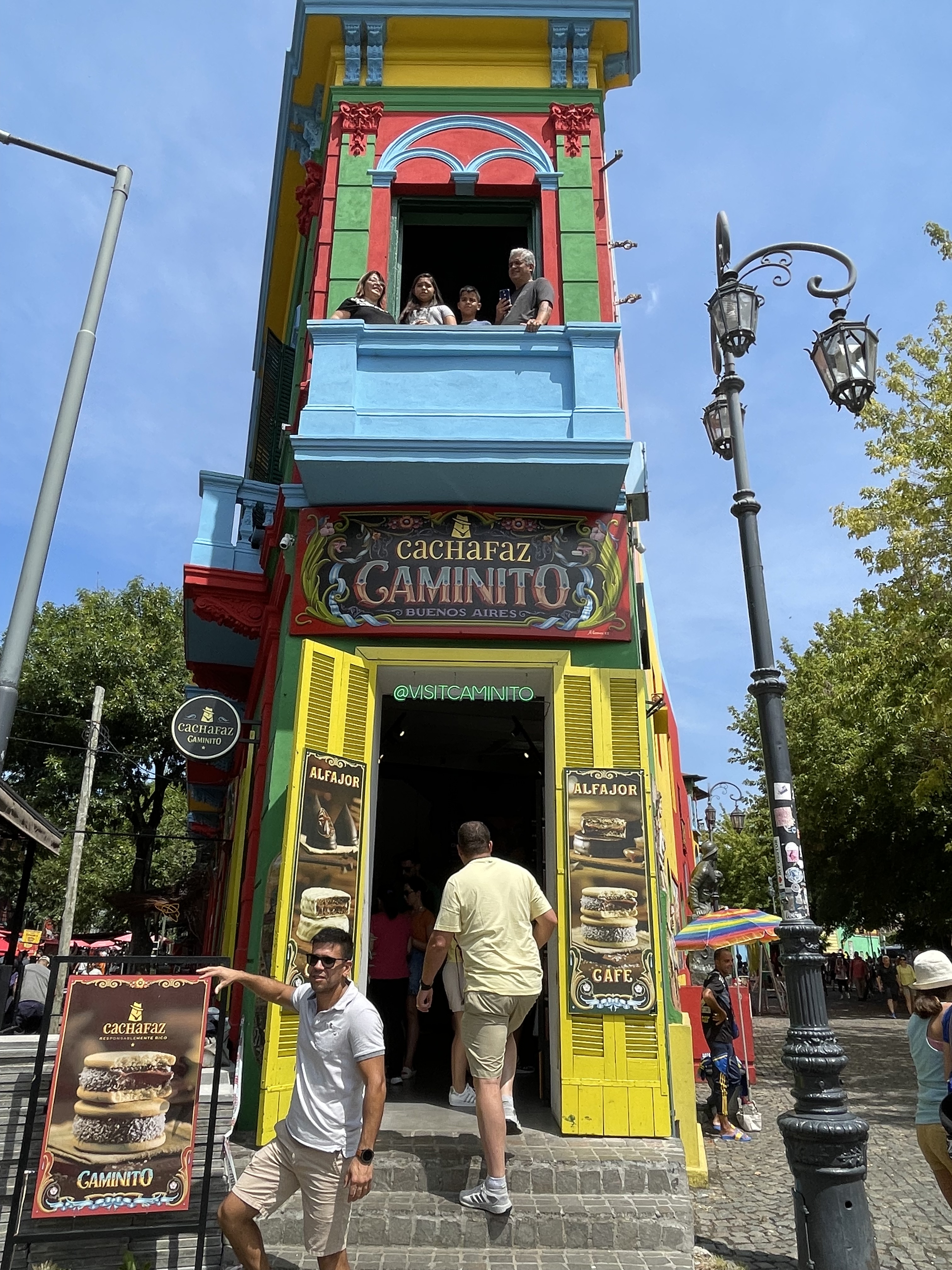
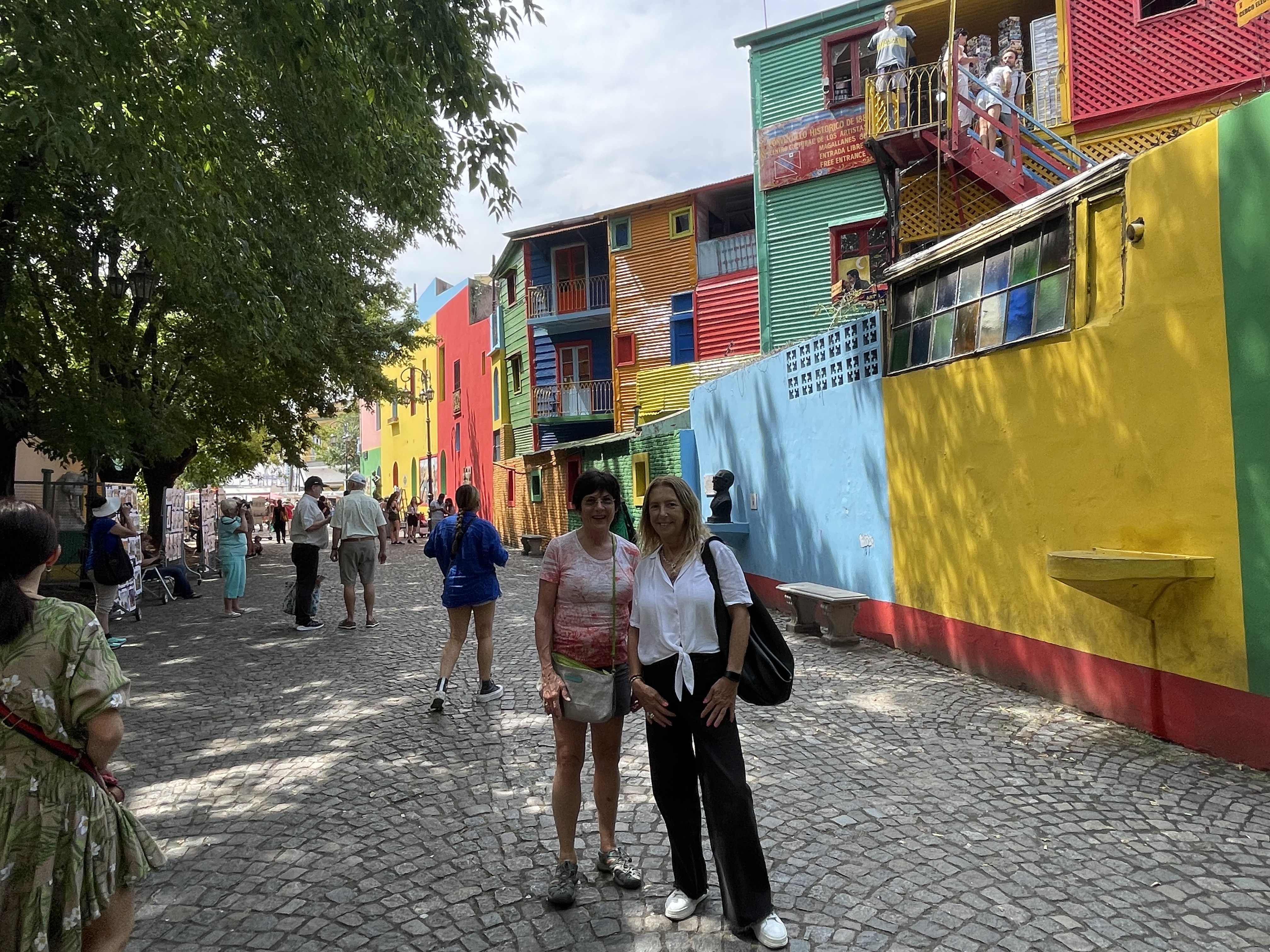
From the city center we drove south to an area of the city called Boca, which is the name for the Italian immigrant neighborhood. The area had been abandoned during the yellow fever era of 1852-1871 when hundreds of people died every day. When the Italian immigrants arrived in the 1880’s they moved into this abandoned area. Now the area has been restored by the locals into a colorful tourist area with many shops and restaurants. Here I found Pope Francis and had my photo taken with him. Tango became very popular and famous here as one of the few nonverbal connections immigrants had with each other. Today Russians are entering the country in droves. Gilda told us about 20,000 arrived recently, with 300 pregnant women hoping to have their babies born in Argentina, because the new babies are automatically citizens and their parents can become citizens after residing here for 2 years. Once they have Argentinian passports, they can travel to other countries. There are currently no Argentinian immigration quotas.
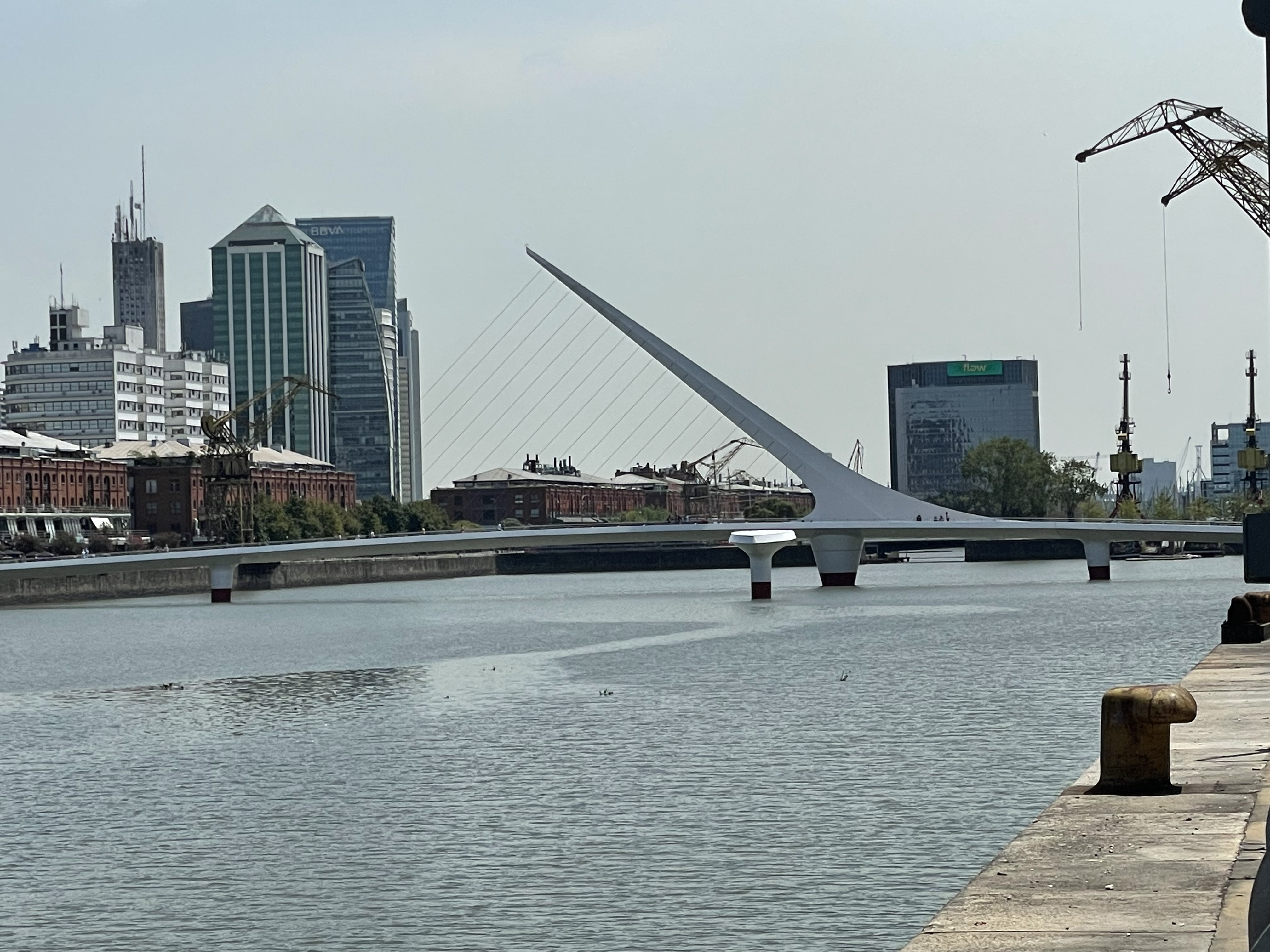
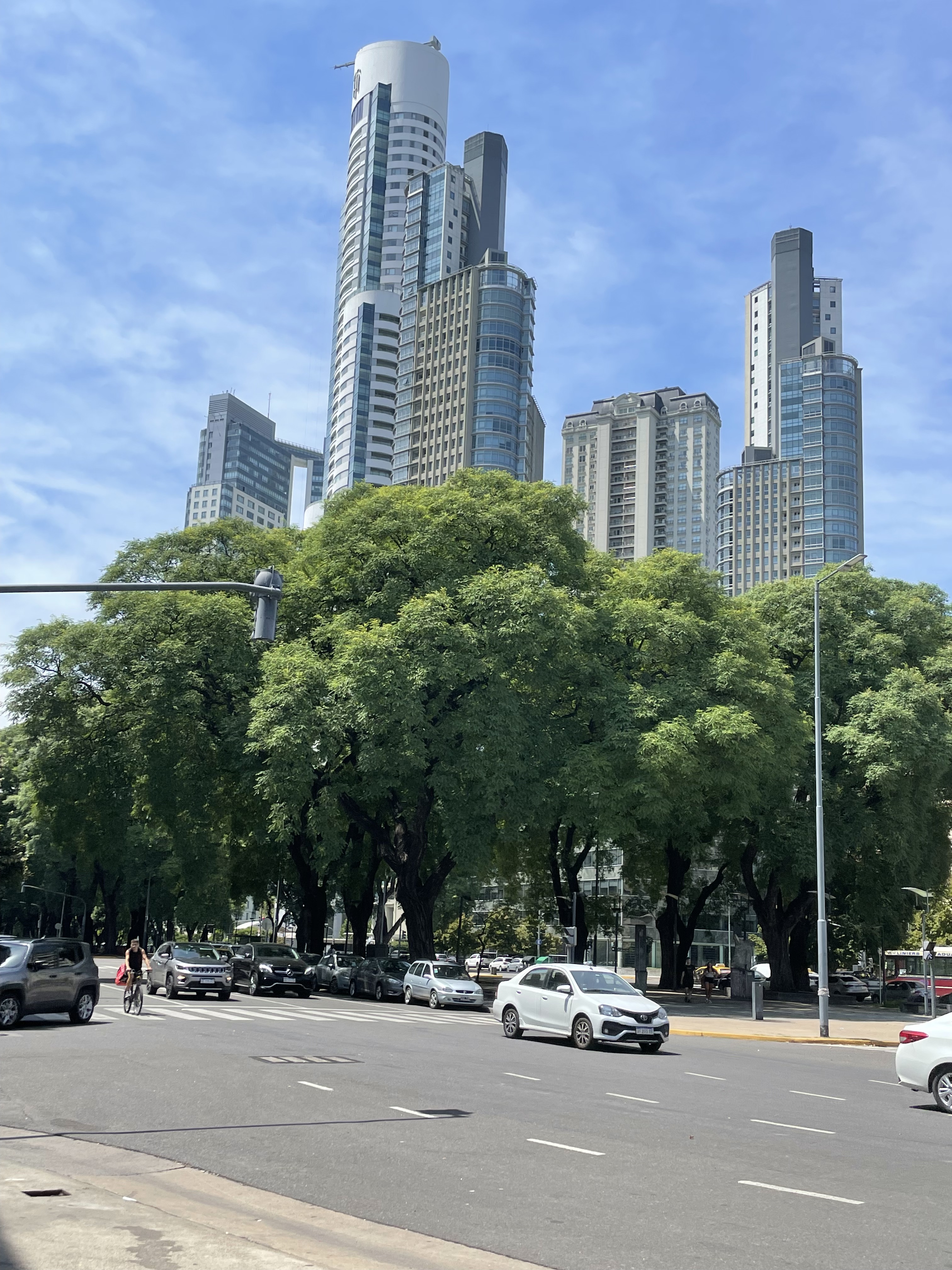
From Boca we went to the Modern Port for a look at the tallest buildings in the city and to see a most unusual bridge called Puerto de la Mujar, or Woman’s Bridge. Built in 2001, it is a rotating foot bridge for one of the docks in the commercial district of the port. A cantilever cable stayed bridge that is also a swing bridge, it is most unusual in its asymmetrical arrangement. New buildings in this neighborhood are quite expensive.
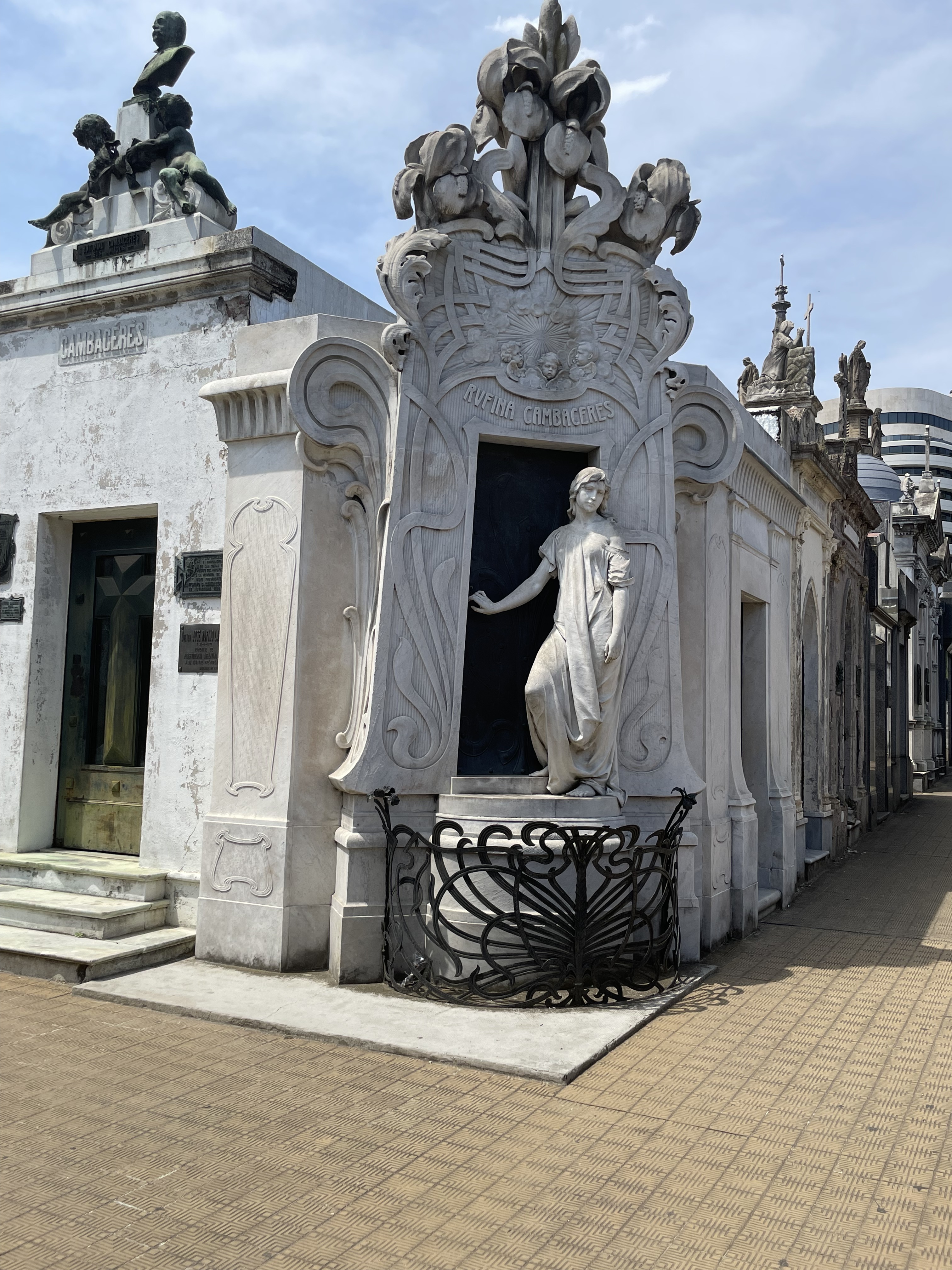
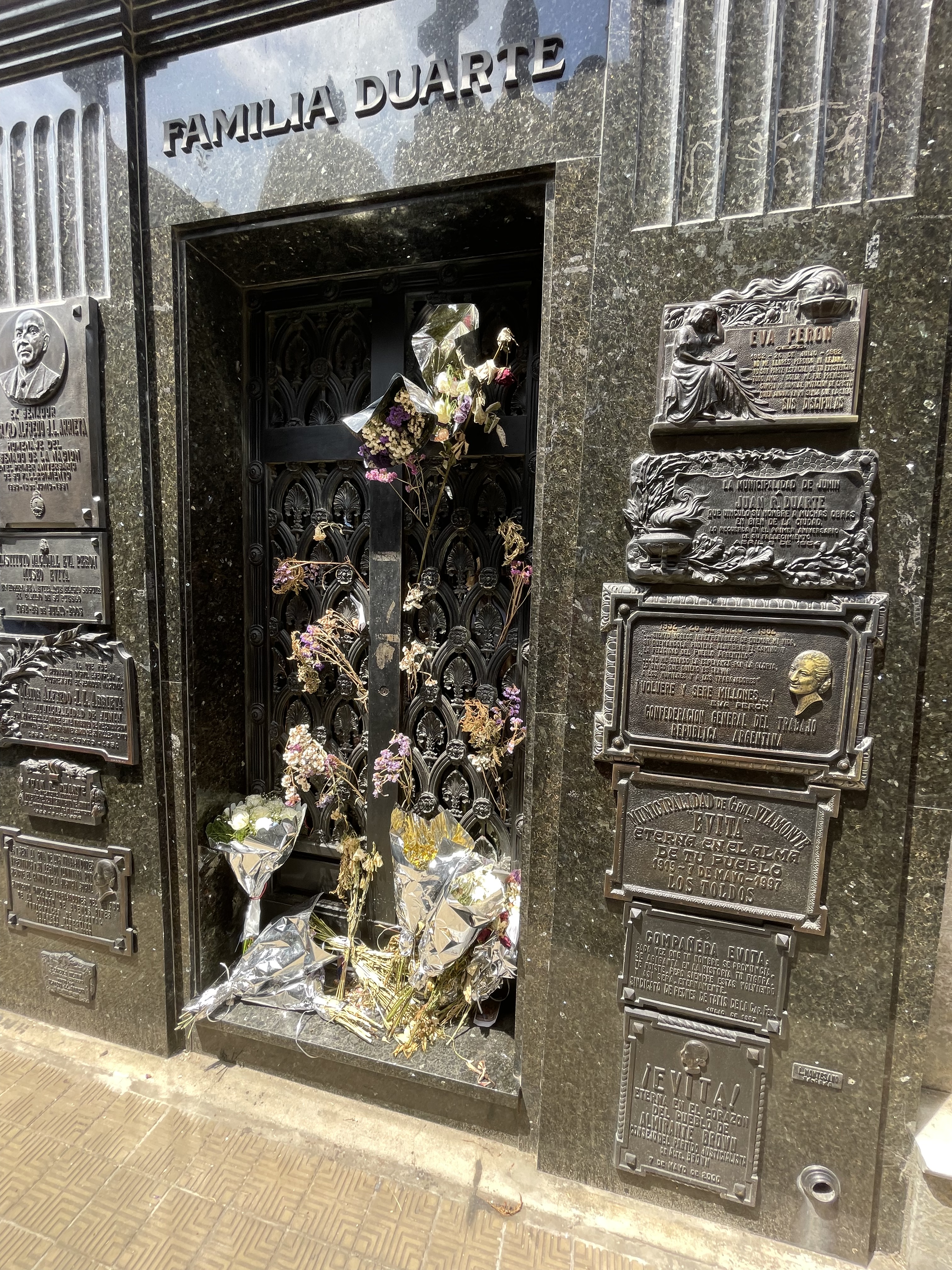
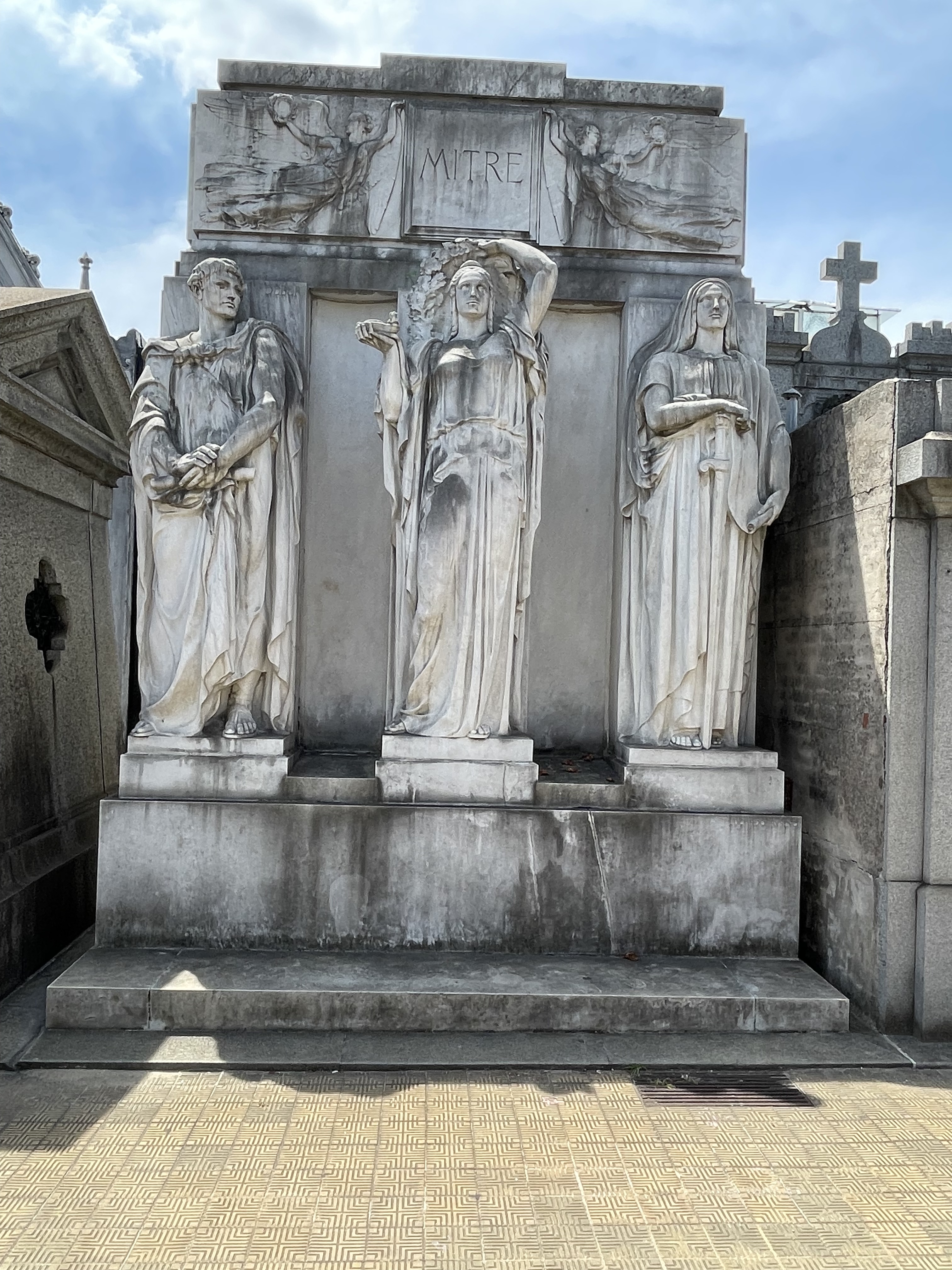
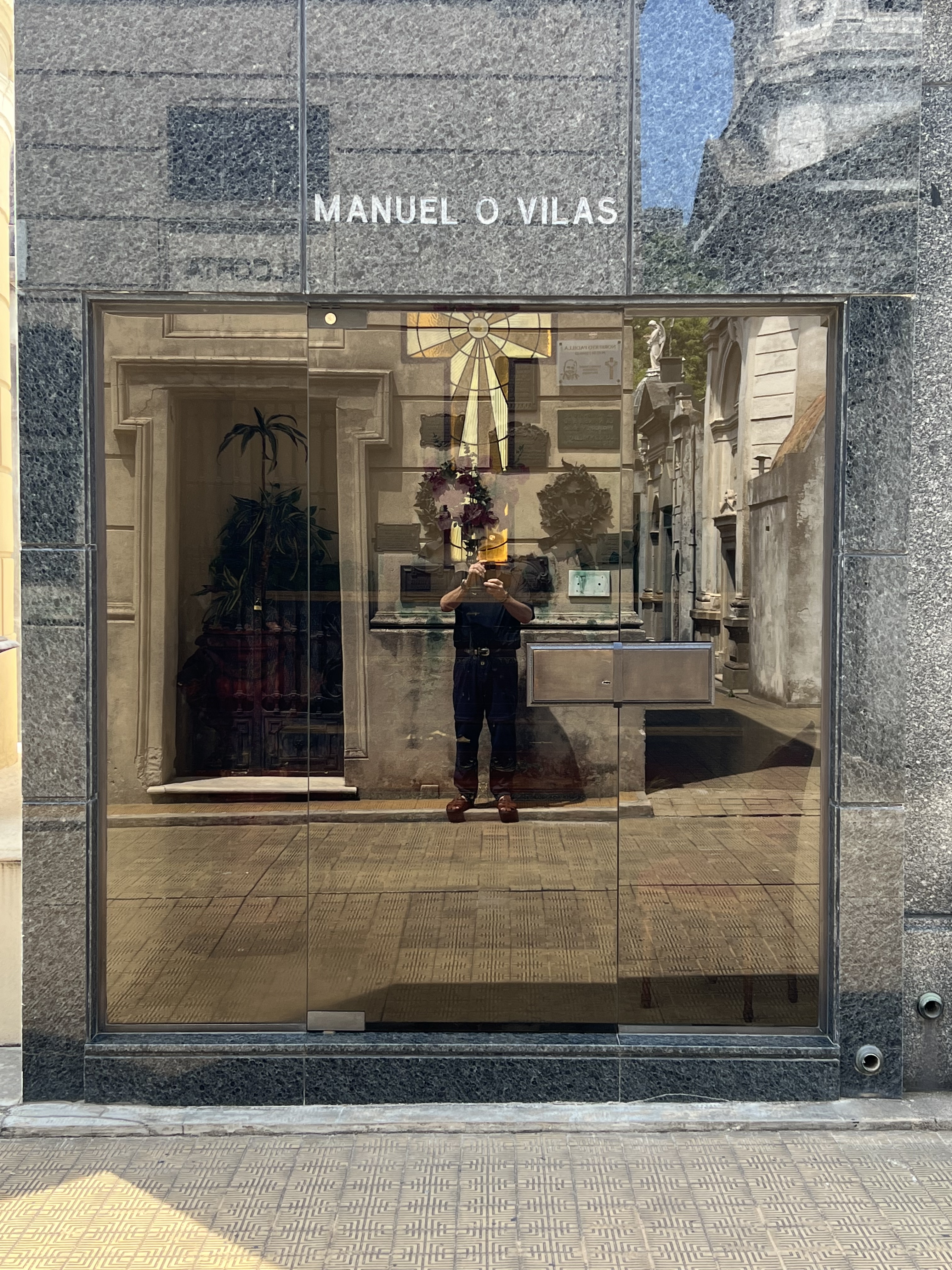
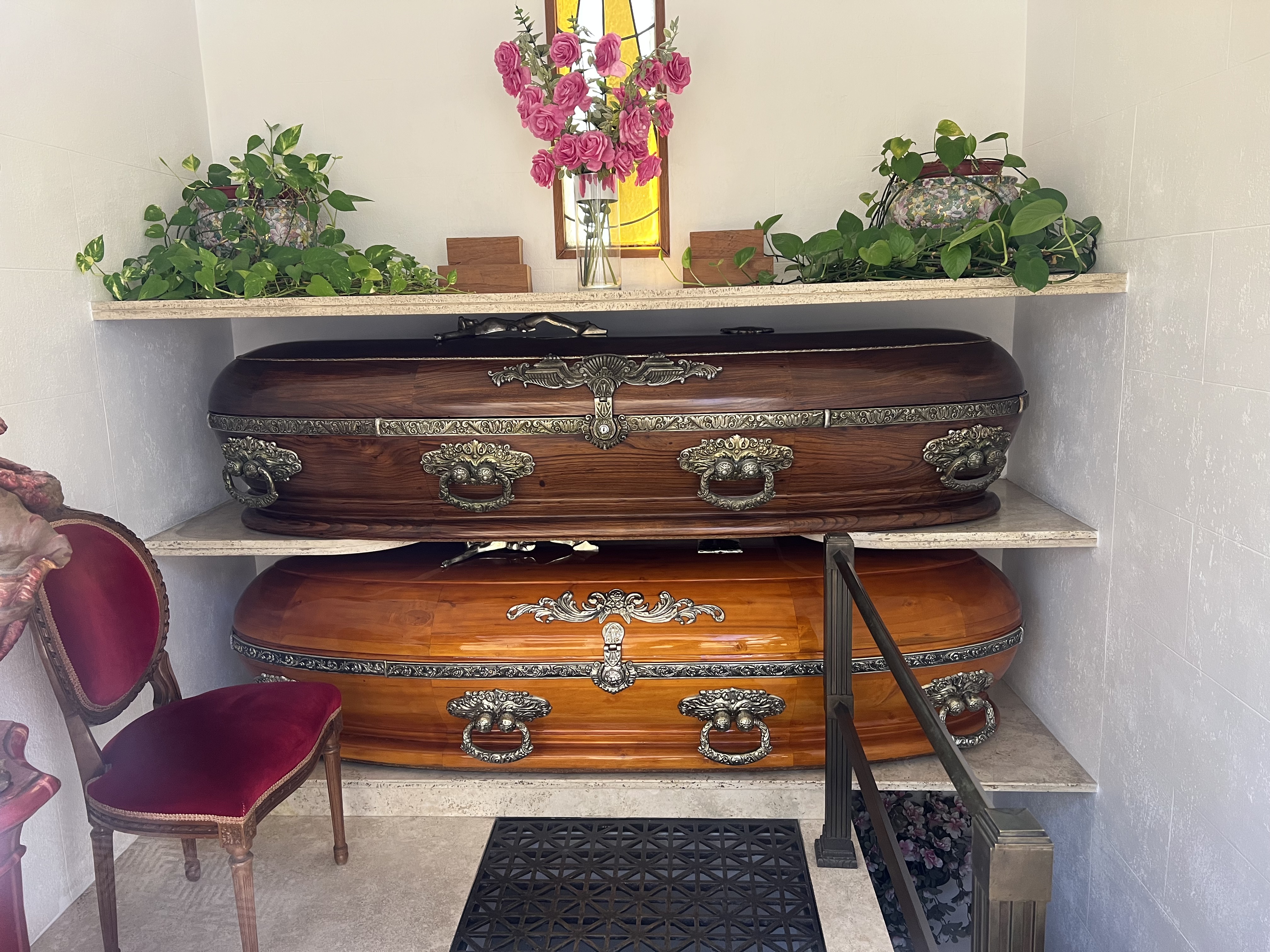
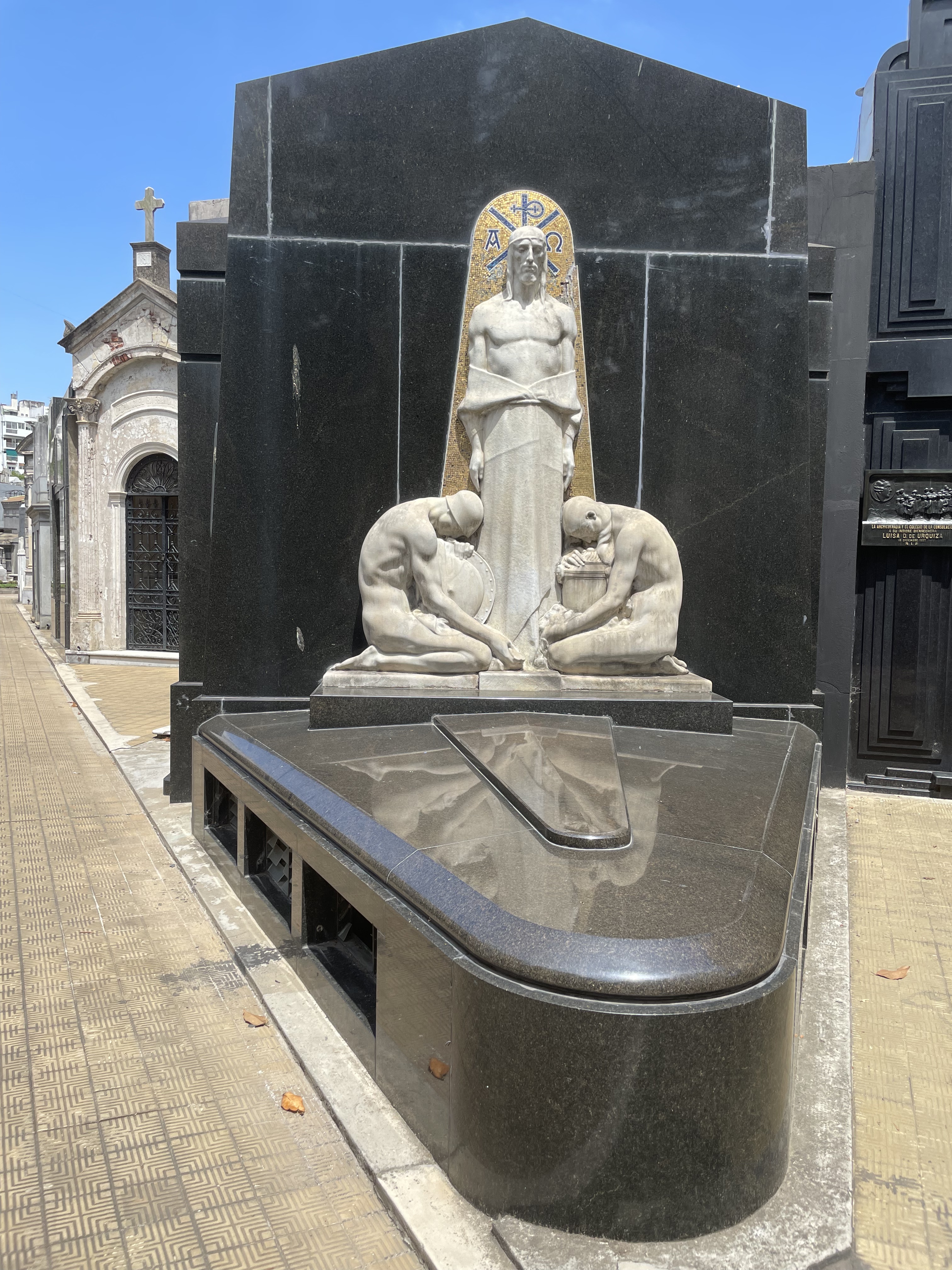
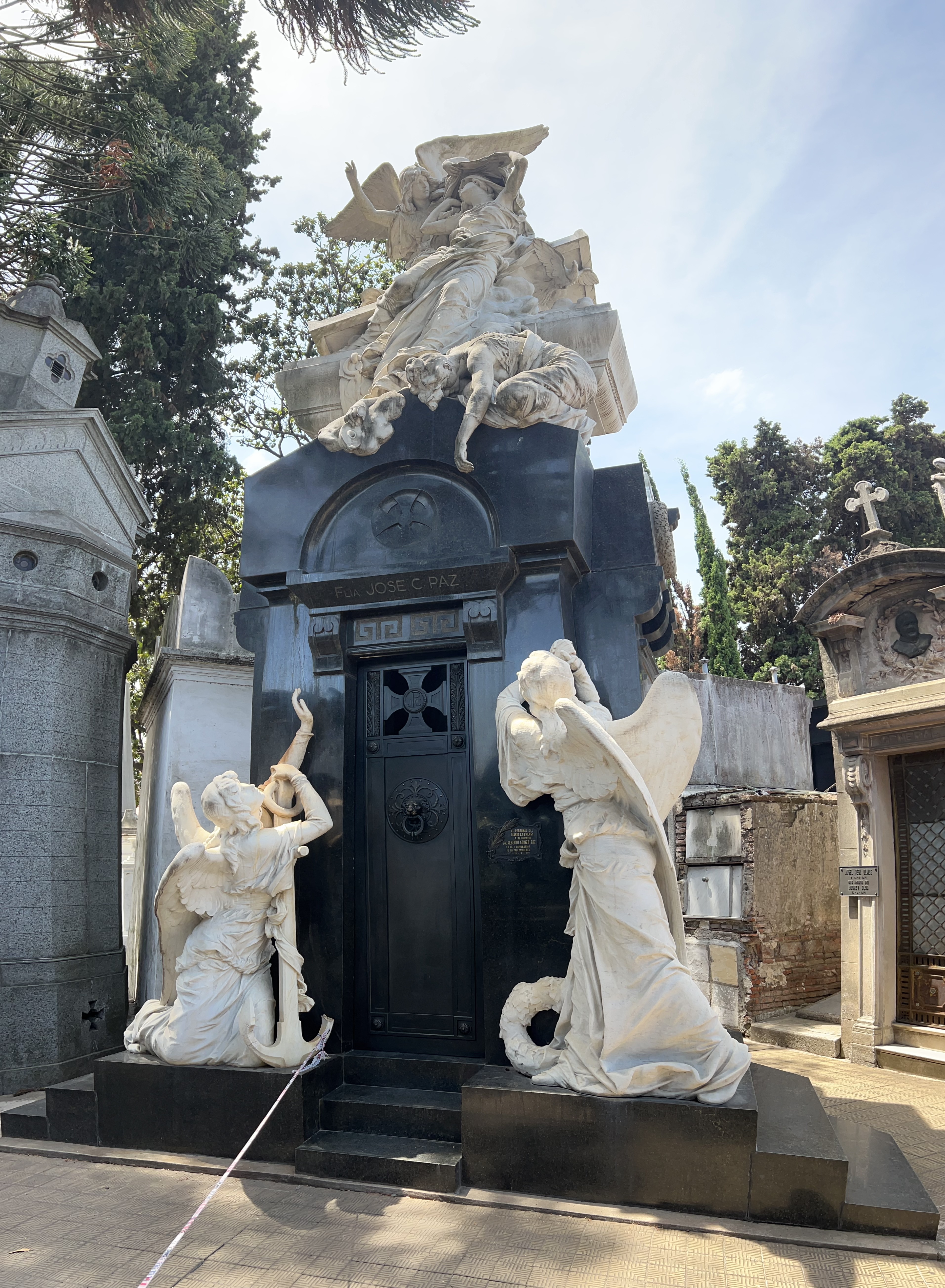
Next on the list of sites to visit was the City of the Angels, where over 4,500 mausoleums and underground crypts contain many thousands of deceased. Inaugurated in 1822 the cemetery was open to everyone. By 1881 only the wealthy could afford the fancy statuary, sculptures, and massive construction. We saw the crypt of Eva Peron, who died in 1952 from uterine cancer, and a handful of others. One very sad story was of a 19-year old girl who died on her honeymoon. The mother had a large crypt built just for her including an underground room that looked just like her bedroom at home. The mother would come and sit with the dead girl and mourn her passing. Eventually the girl’s dog joined her in the crypt.
We learned that the Jewish community in Argentina, at 250,000 people, is the fourth largest in the world behind Israel, the US and Canada. Gilda told us a kosher McDonalds exists in a mall in Buenos Aires and that the only other one is in Isreal.
We noticed that the city was very clean and devoid of graffiti, unlike Santiago, Chile, where the graffiti was so bad the signs were nearly unreadable.
Gilda and Eddie dropped us off at an Empanada restaurant called San Juanino.
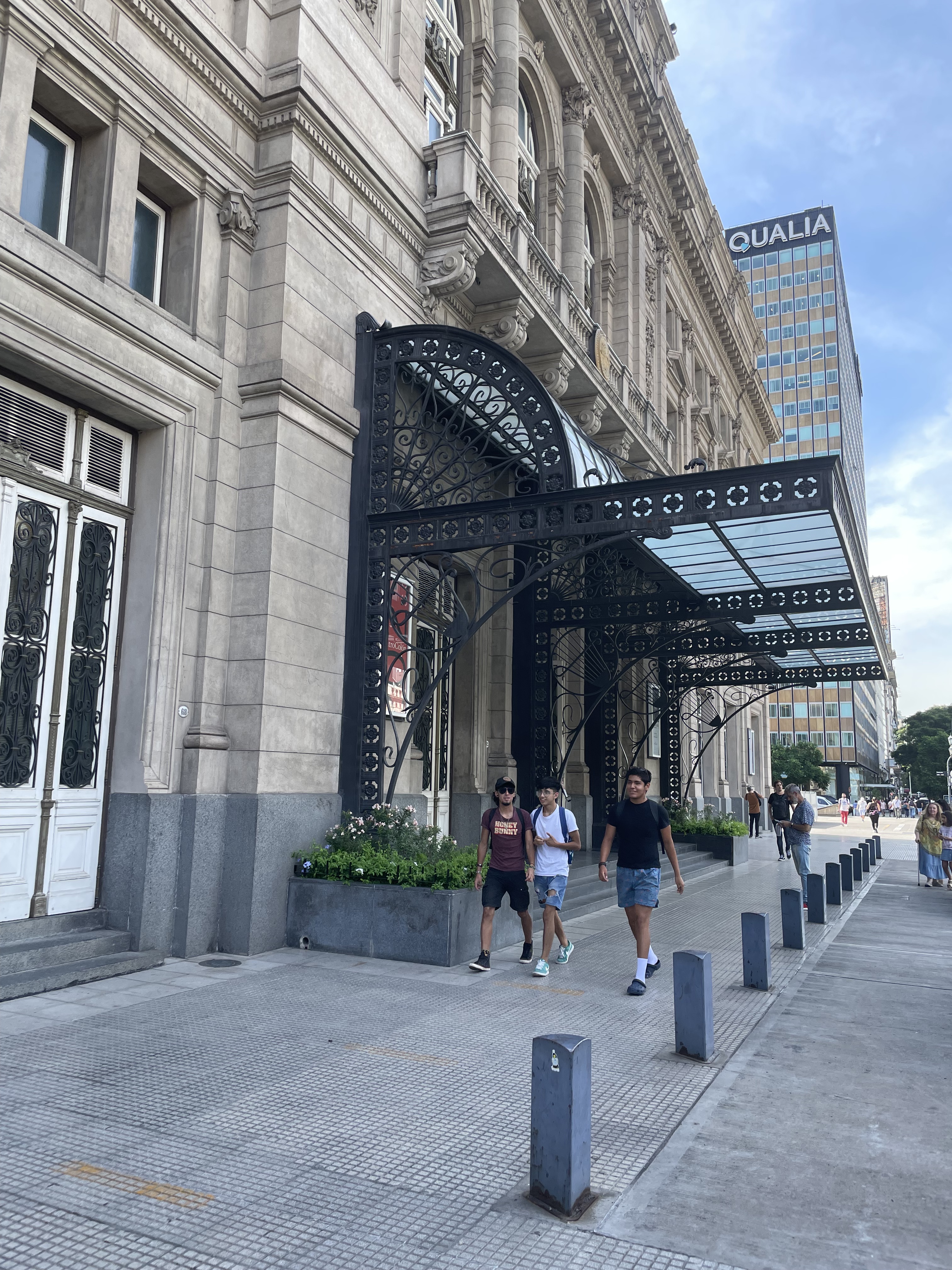
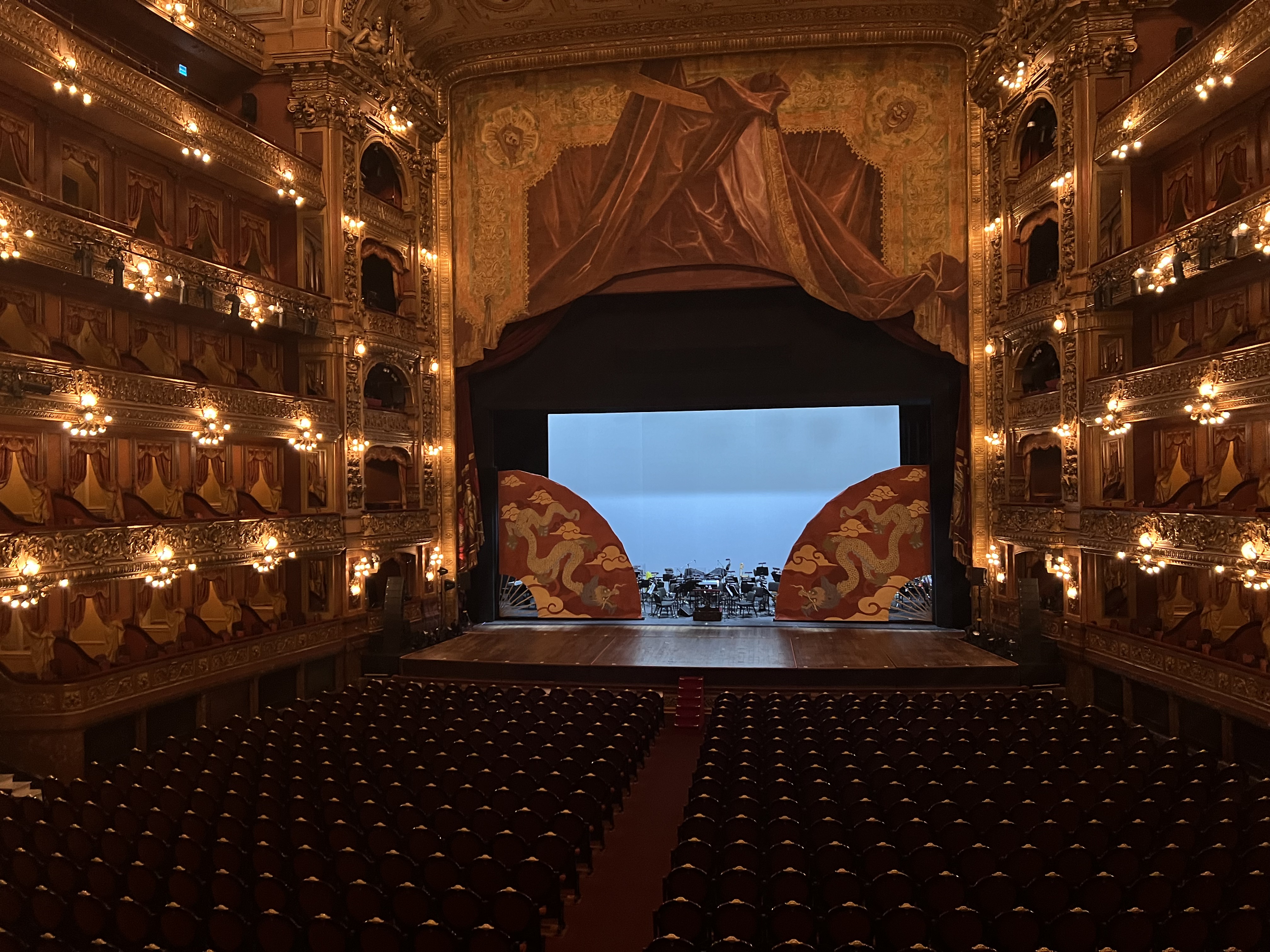
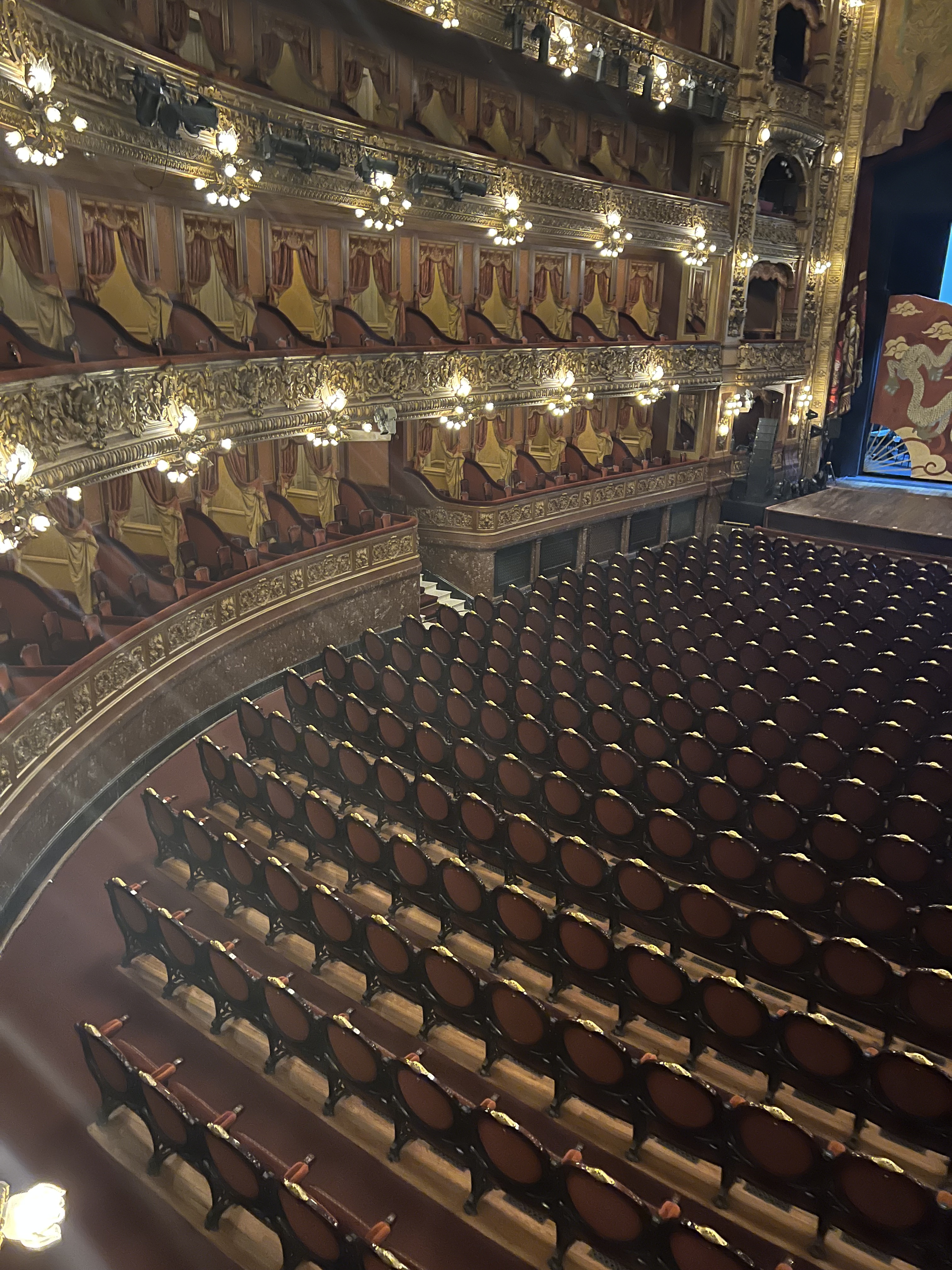
We ate lunch quickly and found an Uber to take us to the Teatro Colon Opera House where we had tickets for a tour. We were there for an hour, got some nice images, but precious little information as the guide’s English was, sadly, not understandable.
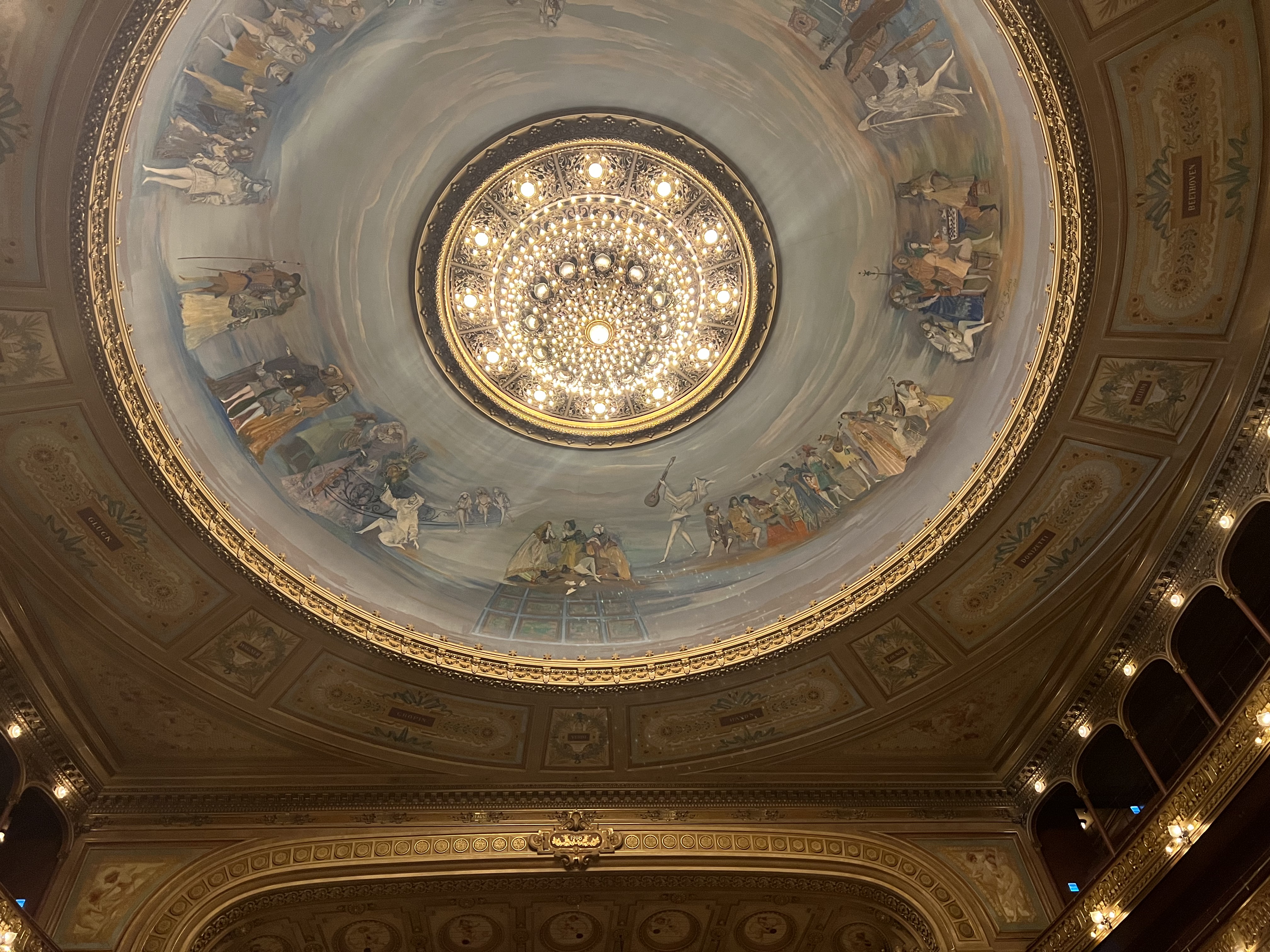
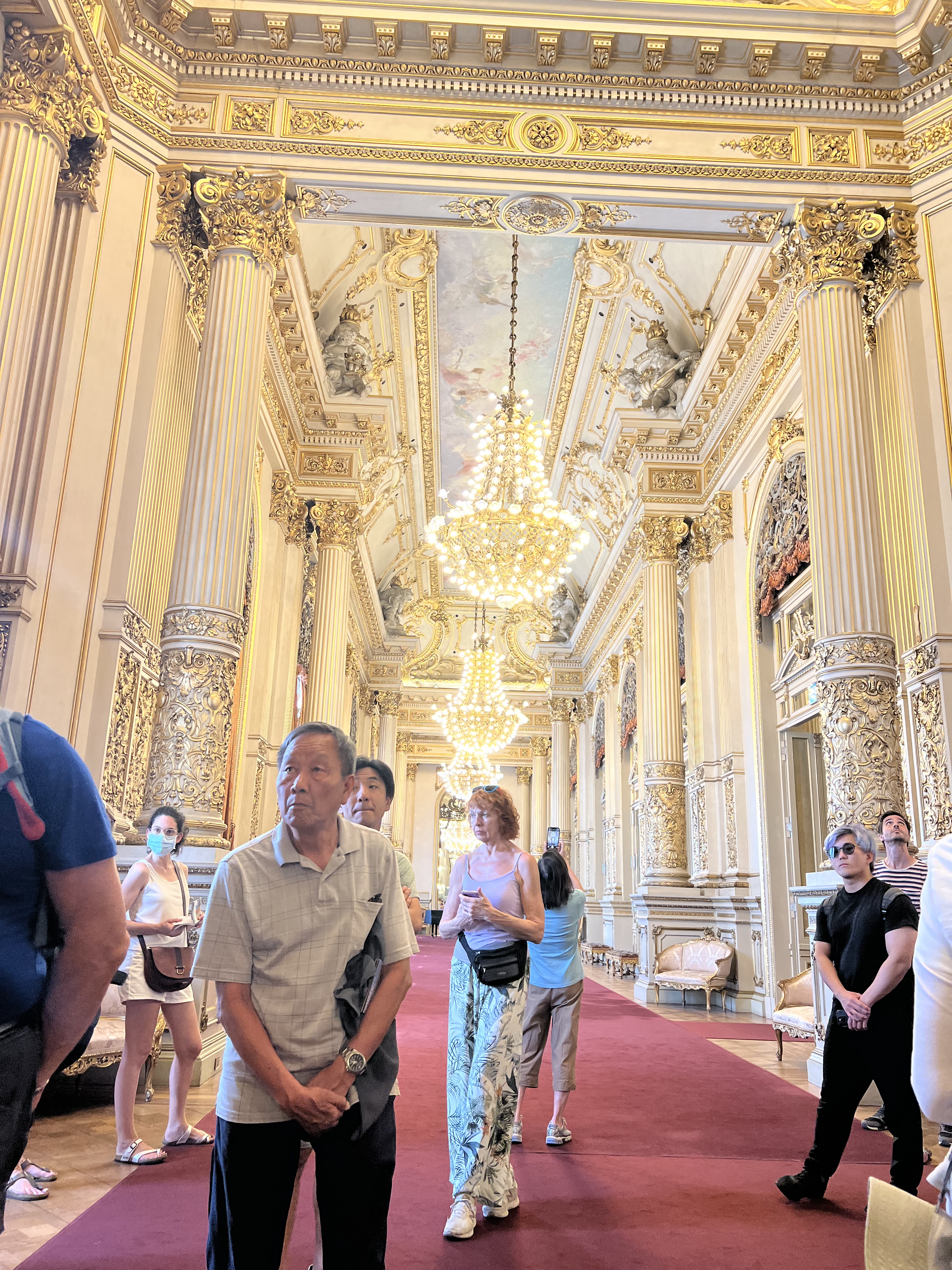
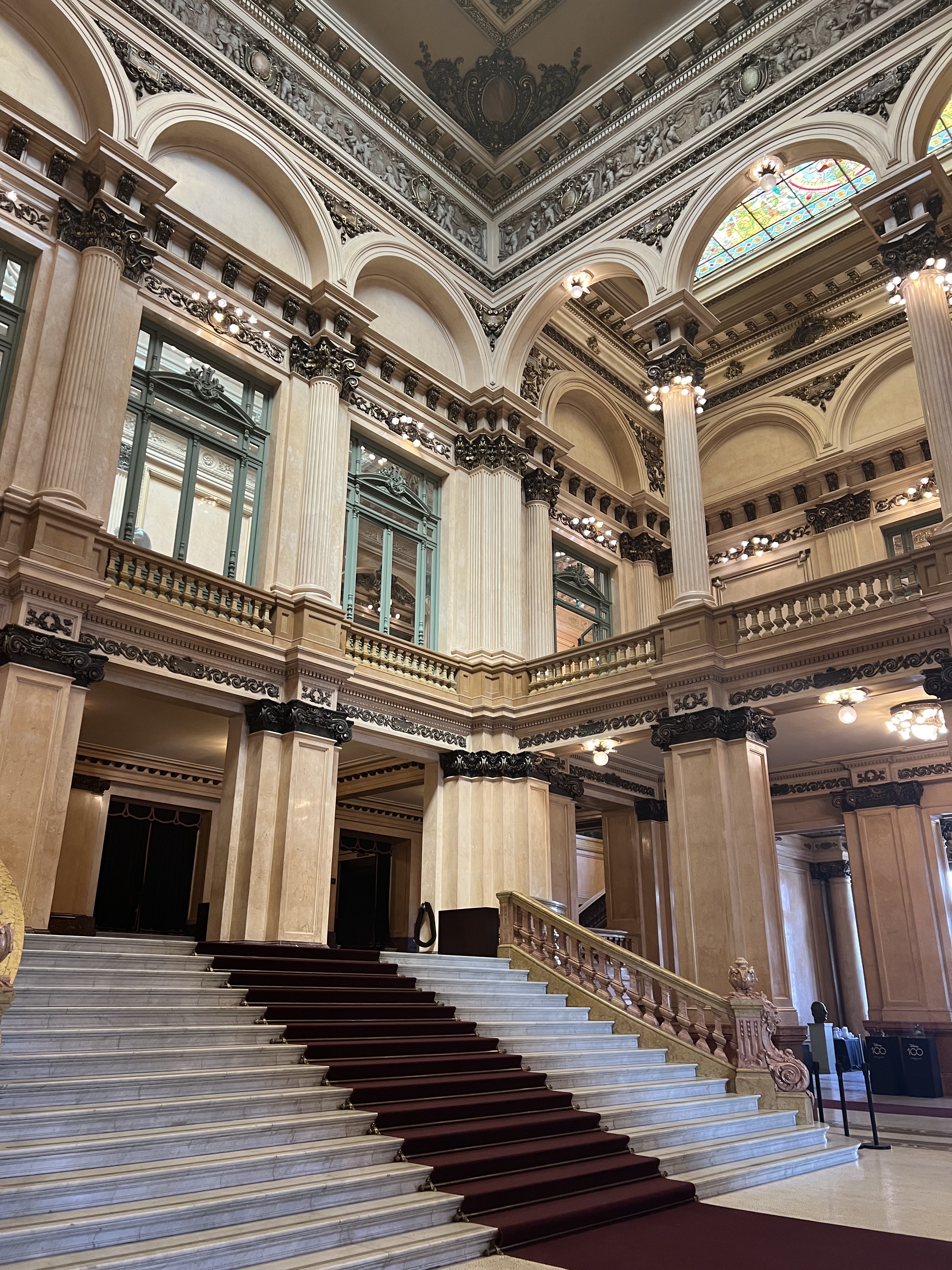
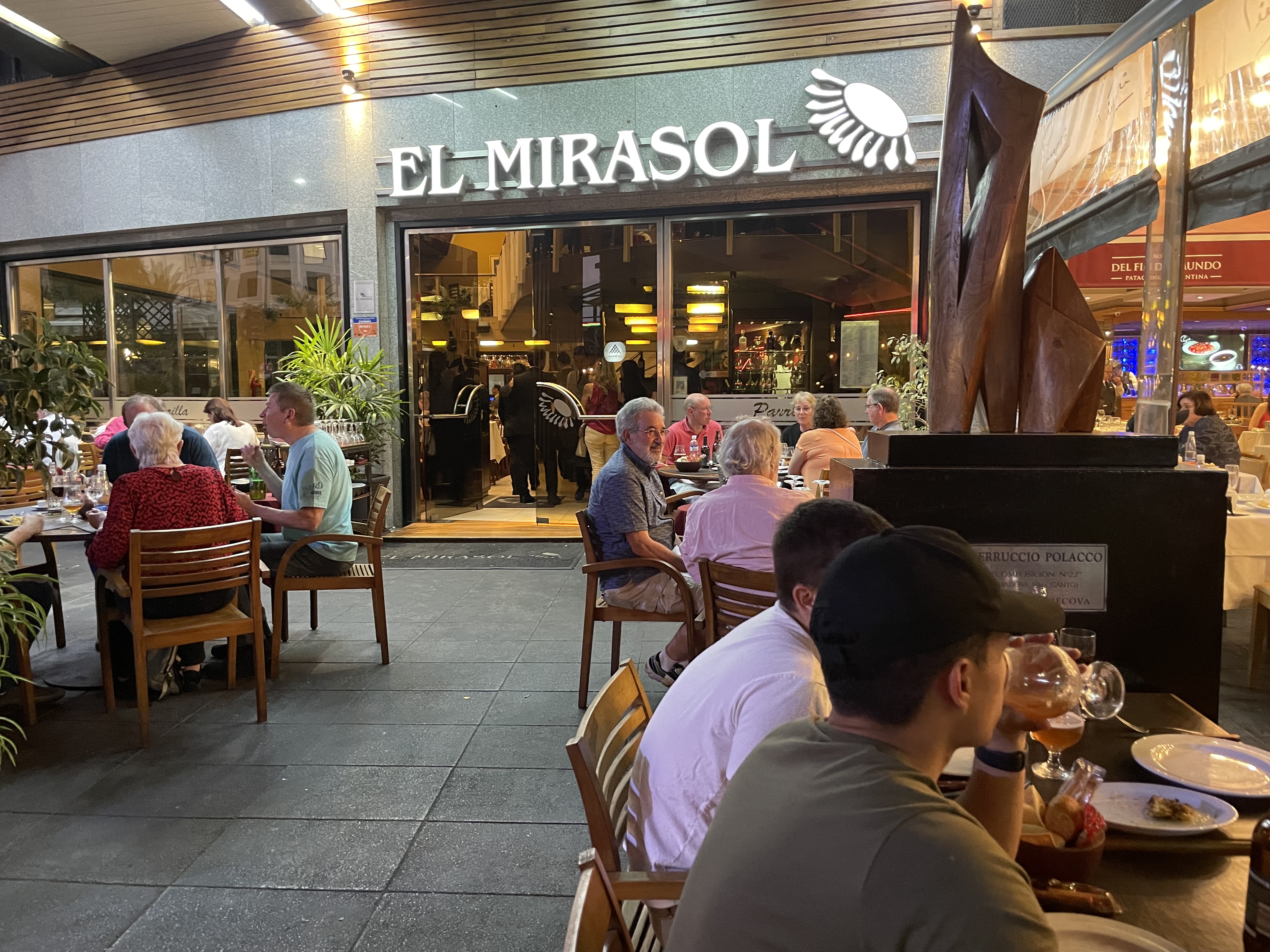
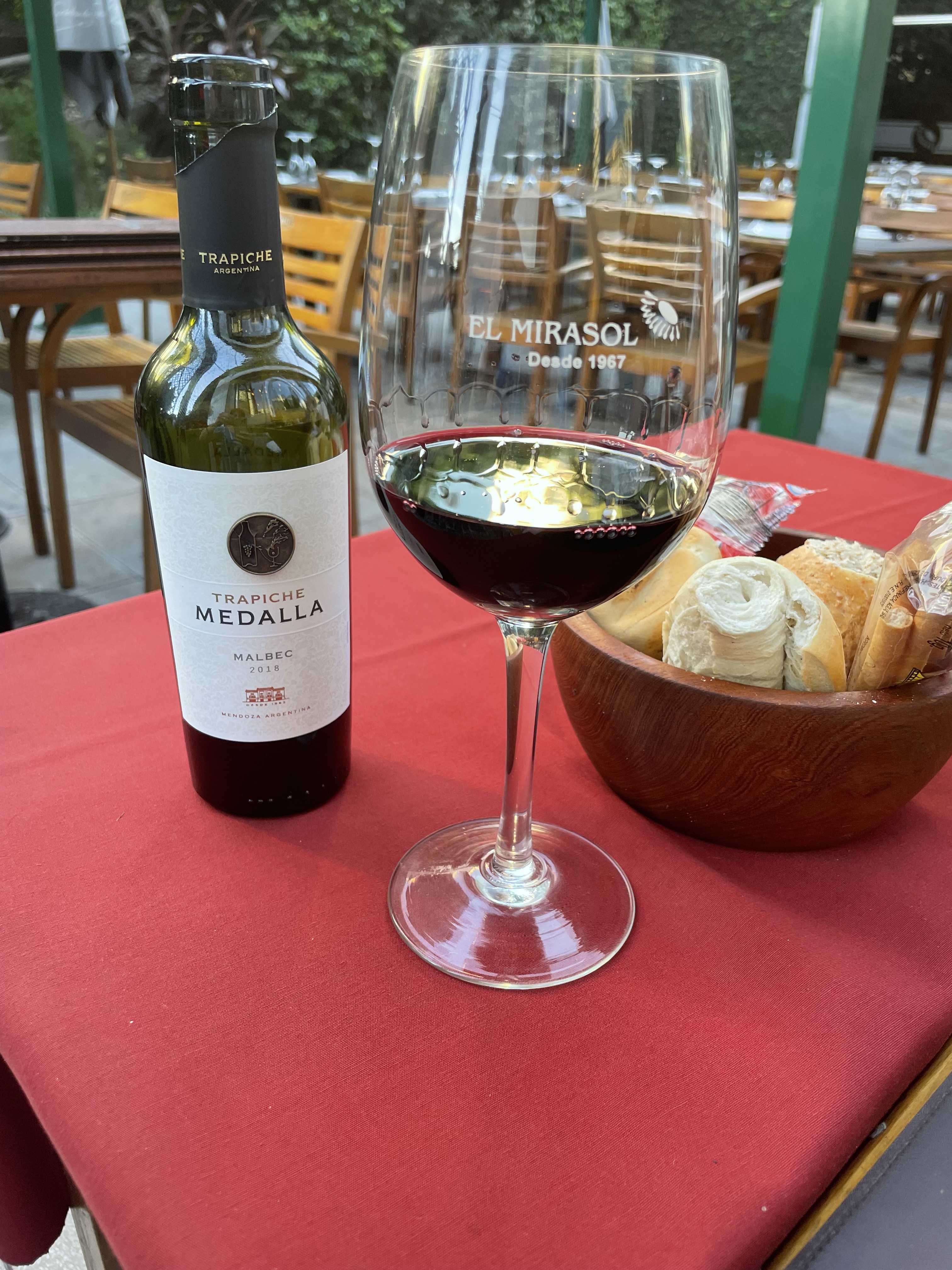
It had been a long day by the time we got back to the hotel, but we wanted to eat the local meal of BBQ, so we changed clothes and headed for El Mirasol, a nearby restaurant under the freeway, where we enjoyed excellent BBQ. Mark had beef and sweetbreads kabob and I had pork ribs with apple sauce. It being our Valentines dinner we had tried for a more highly recommended place, but could not get in. Our choice was fine.
 Adventures with Julia