
Wednesday, February 15, 2023
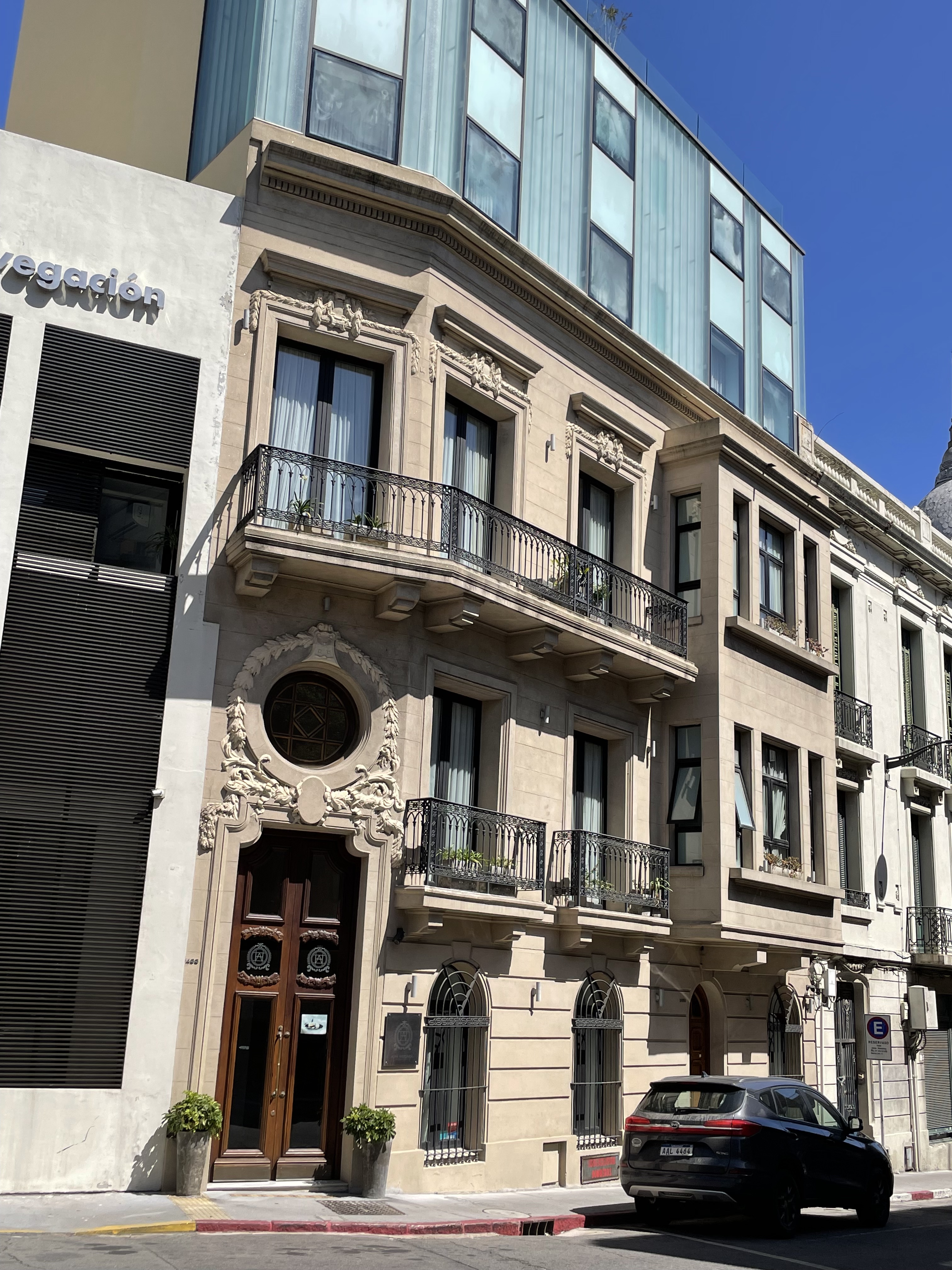
We landed in Montevideo at 9:30am and got to our lodging, the Alma Historical Boutique Hotel, in the old town by 10:30am. Our guide, Hans, told us he would be with us until we leave Montevideo. He spoke excellent English and was very knowledgeable. He waited for us to get settled into our room, which was a small space named for Geraldo Rodriguez, a composer of Tango music. The small inn was very much in the heart of the old city and perfect for walking around and meeting people. The weather was a perfect summer day, not too hot, when we walked in the shade, and a slight breeze. Hans told us the population of Uruguay is 3.5 million and that of Montevideo is 1.5 million. It is indeed a small country. Products they export include leather, meat, wool and agricultural products. They also have paper mills and timber and sell paper products and cellulose. The country also mines amethyst. Their biggest imports are vehicles and fuel. The country is 45% Catholic and there are about 20,000 Jewish people. The country has been a democracy since 1985. Hans shared a lot about the history of the country and I will try to remember some of it.
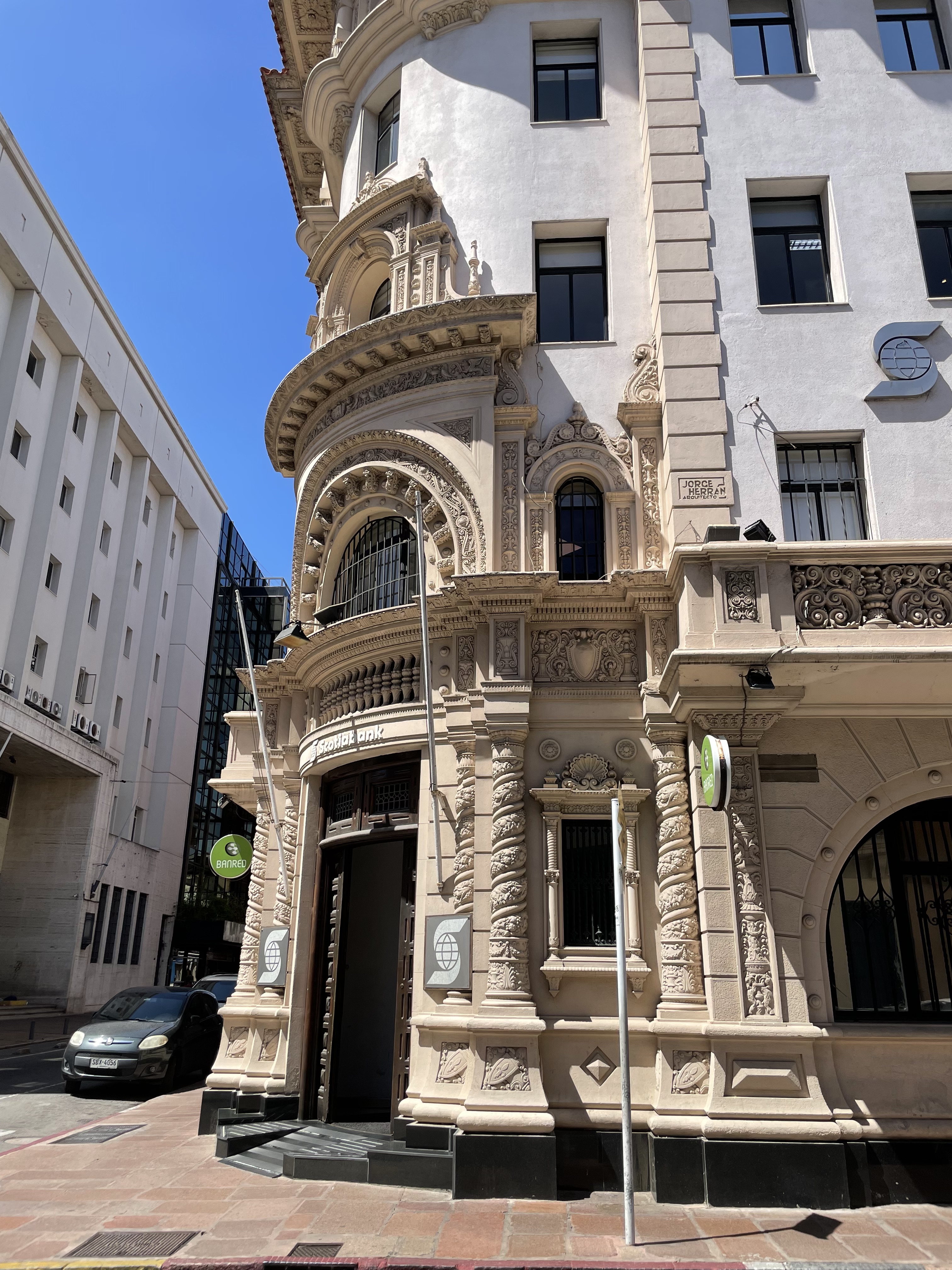
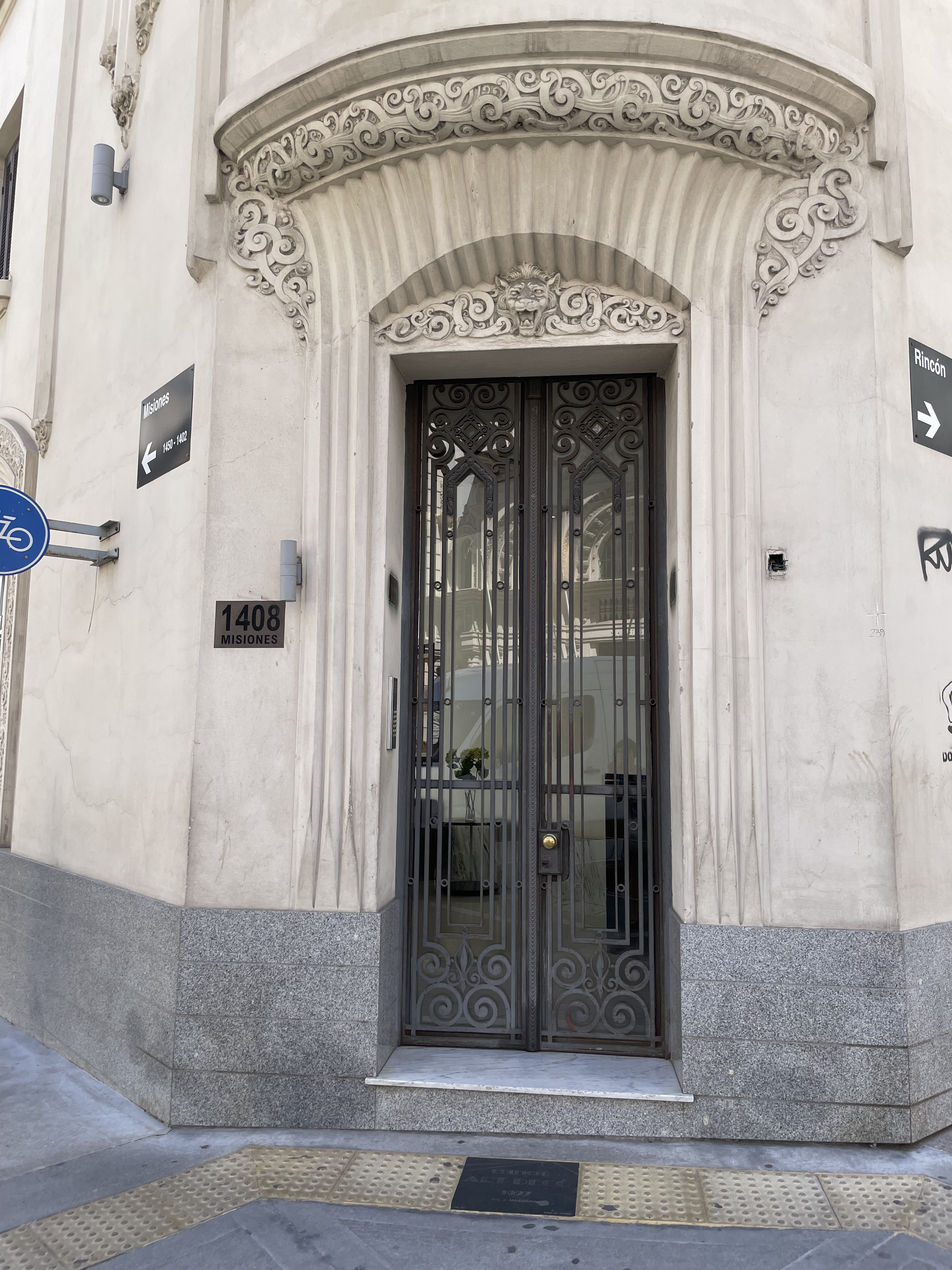
First of all we did a walk about the old town of Montevideo and saw buildings with different architectural styles, including colonial and European neoclassical. A dominant theme was Art Deco. The country was most prosperous during the 20’s and 30’s and Art Deco was big in that era. The only city with more Art Deco is New York. One particular building we stopped at was an Art Deco front with a frieze of Artigas.
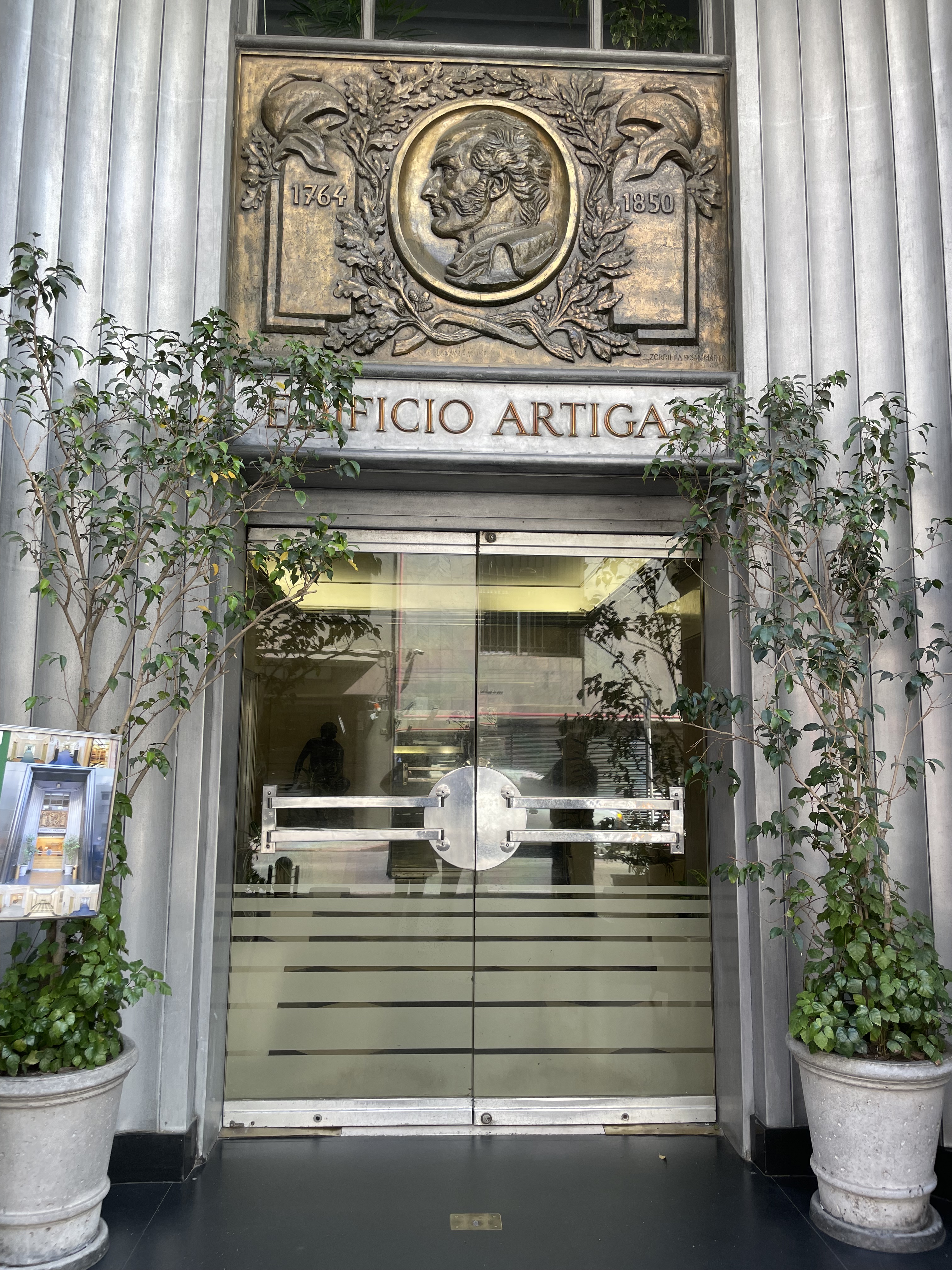
We stopped there awhile as Hans wanted to tell us about the man who was an Uruguayan hero and the father of Uruguayan independence, Jose Gervasio Artigas. He lived from 1764 to 1850 and was a political leader, a military general, and a statesman. Among other things, in 1815 he designed one of the three Uruguayan flags still used today. It is blue-white-blue horizontal stripes with a red diagonal stripe going from upper inner to lower outer corner of the flag, representing federalism. It is especially connected to the Armed Forces of Uruguay.
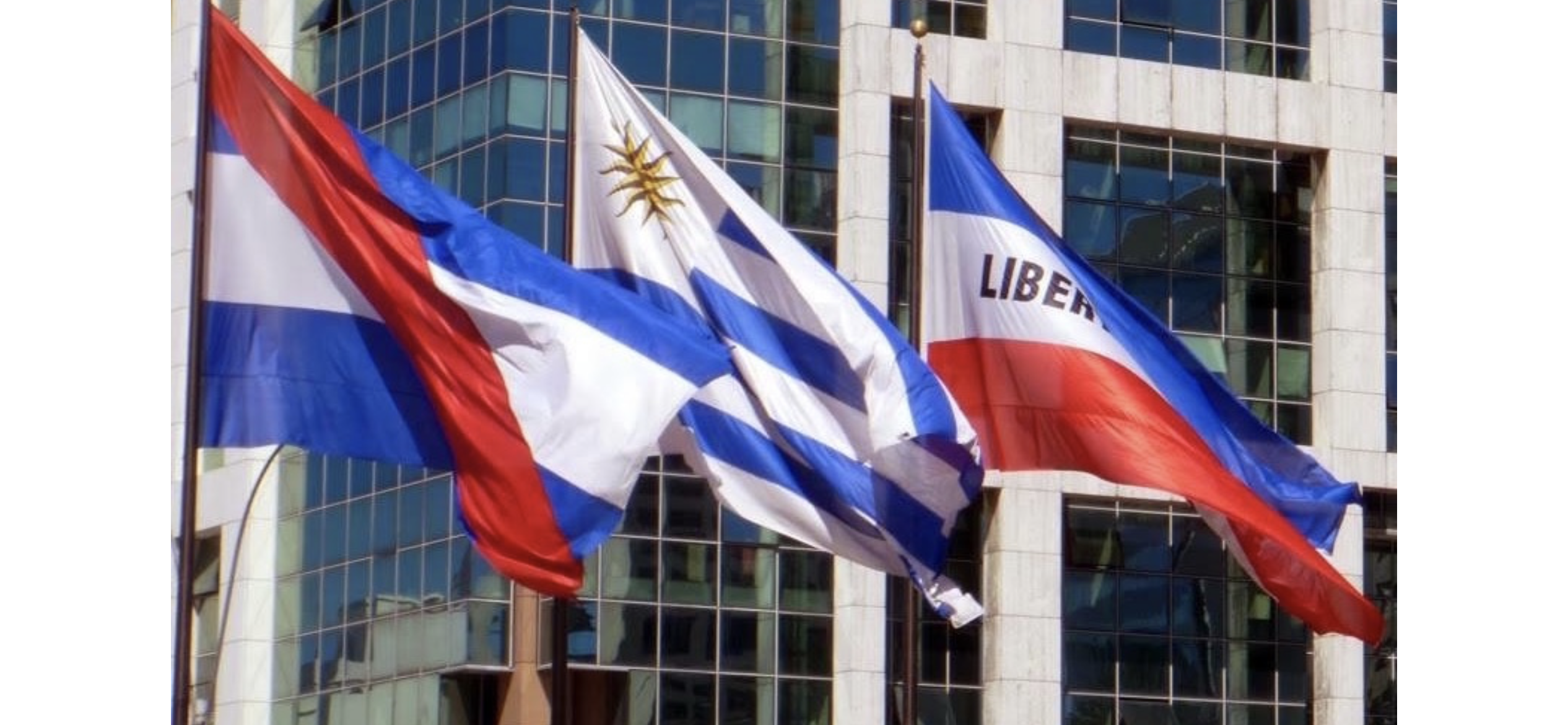
Hans told us Uruguay is the only country in the world that has and uses three national flags. The primary flag was designed in 1828. It is white with 4 blue horizontal stripes. In the upper inner corner is a white canton with a golden sun with facial features and 16 golden rays.
The third flag is called the Flag of the 33 as it was used by a military group of 33 men that started the fight for freedom against Brazilian rule in the Oriental province, which is present day Uruguay. In 1828, after 8 years of being a Brazilian province, Uruguay’s independence was recognized. THe flag is a blue-white-red tricolor. On the white stripe is written LIBERTAD O MORTE (Freedom or Death).
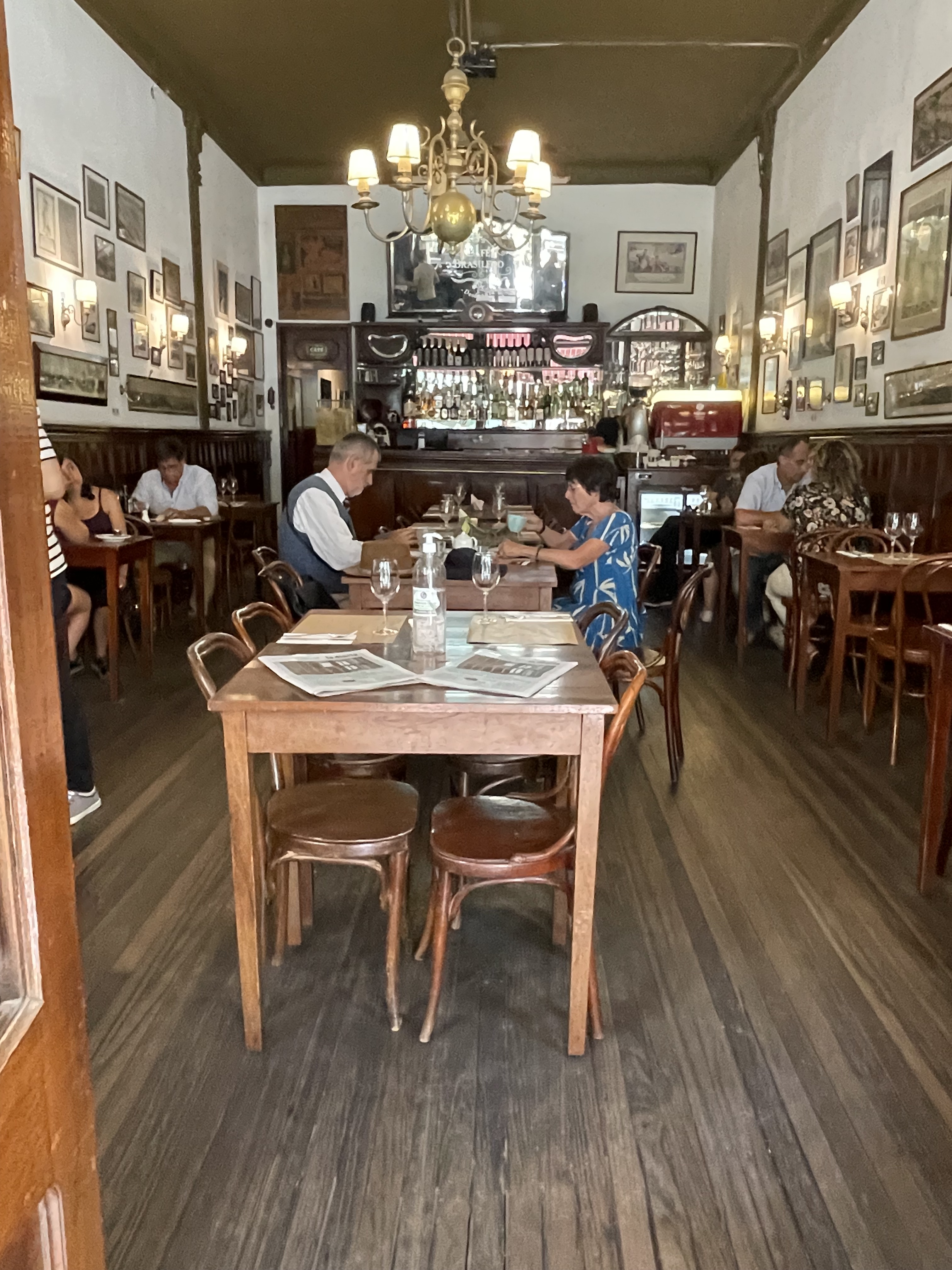
We stopped at Cafe Brasilero, an Art Nouveau establishment dating from 1877, serving Brazilian coffee. The photos on the walls were most interesting. There was even one of Audrey Hepburn.
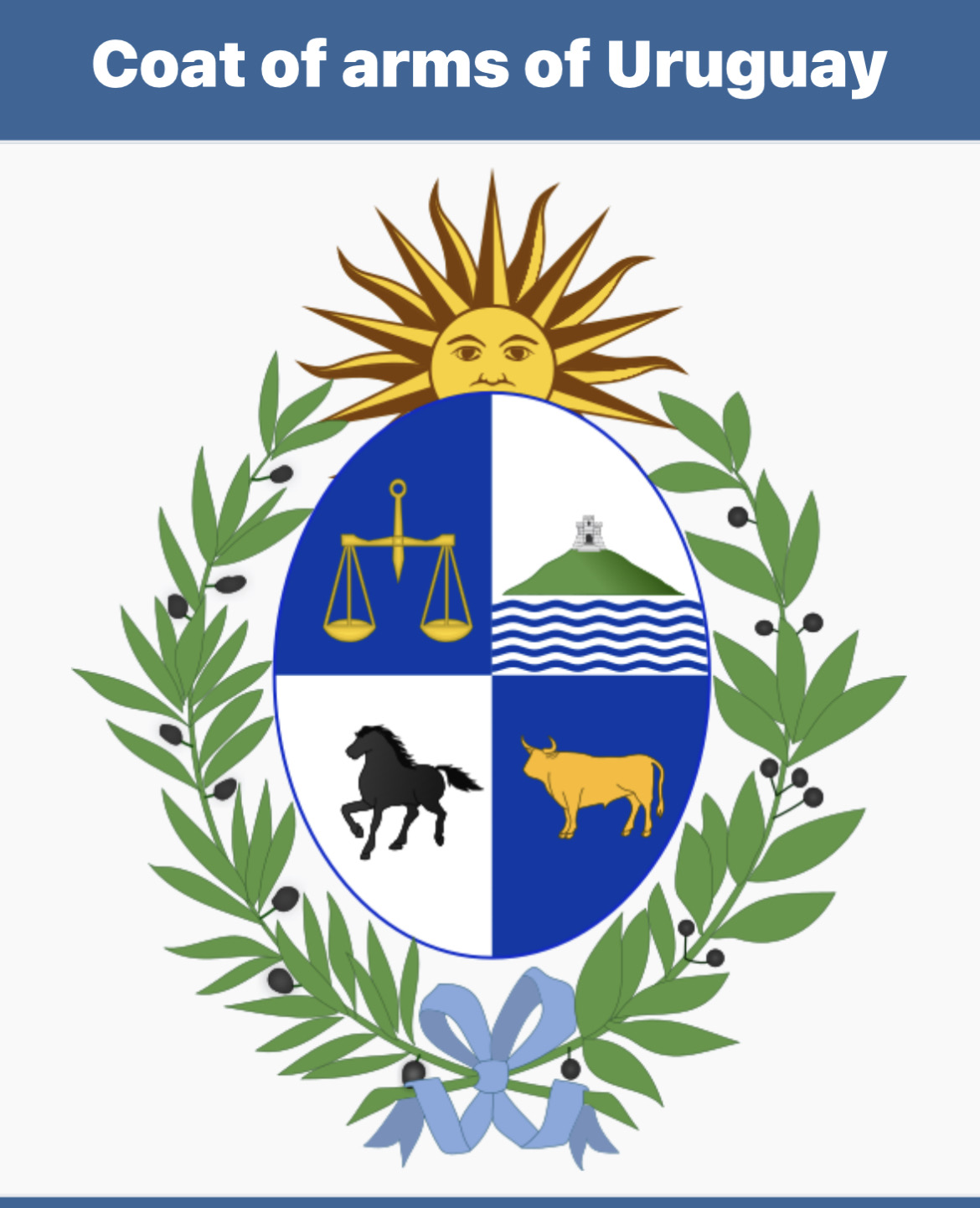
We learned that the name Uruguay comes from the river by that name that marks the western boundary of the country. It was named by indigenous people, who called it the River of Colorful Birds, or Uruguay. Although there are only 3.5 Million people in Uruguay, there are 12 million cows. The country is mostly flat and green and great for cattle. The tallest hill in the country is 1514 meters. The Coat of Arms depicts agriculture, commerce, the sea port, sunshine and forestry, all of which have served the country well.
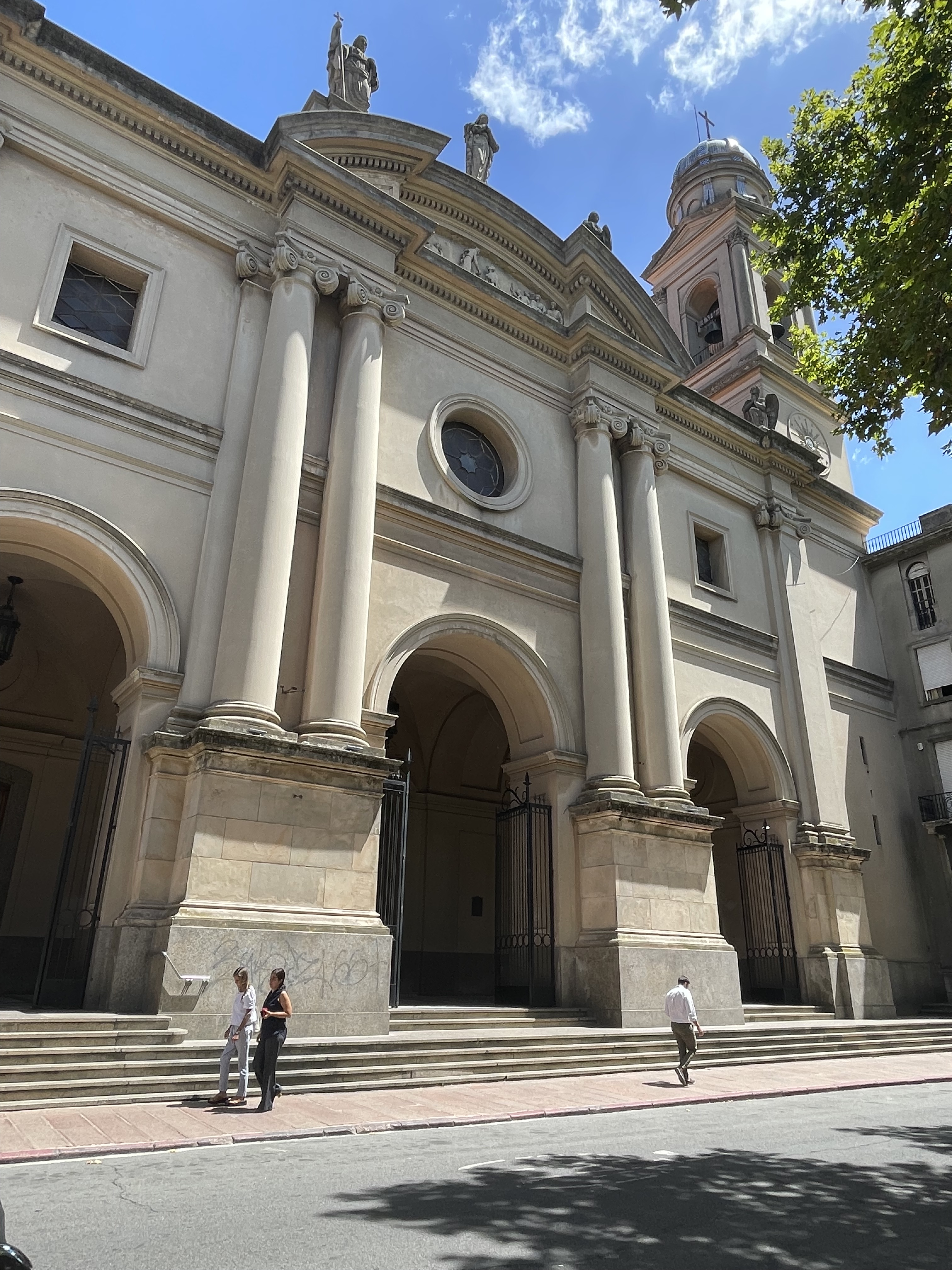
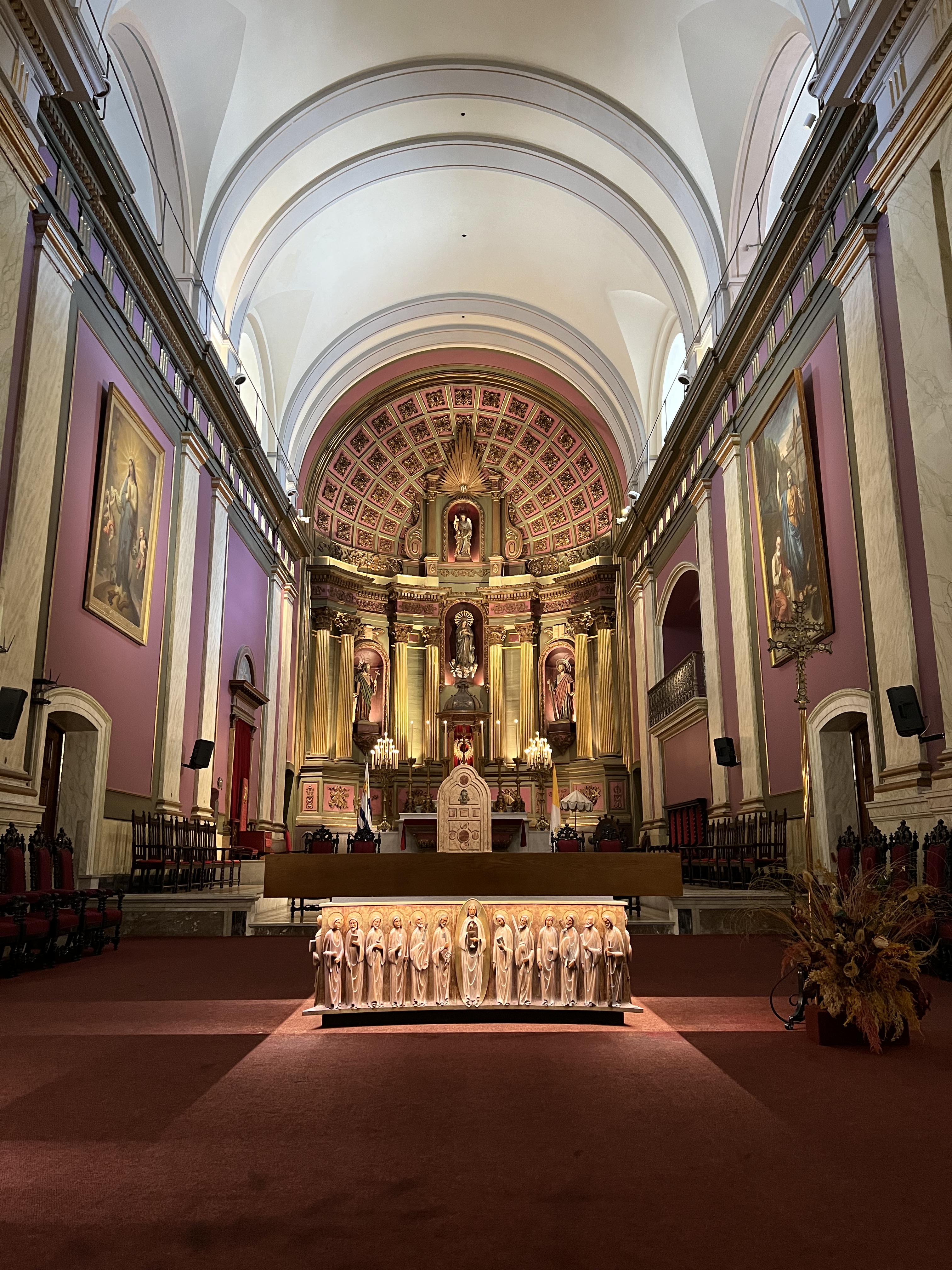
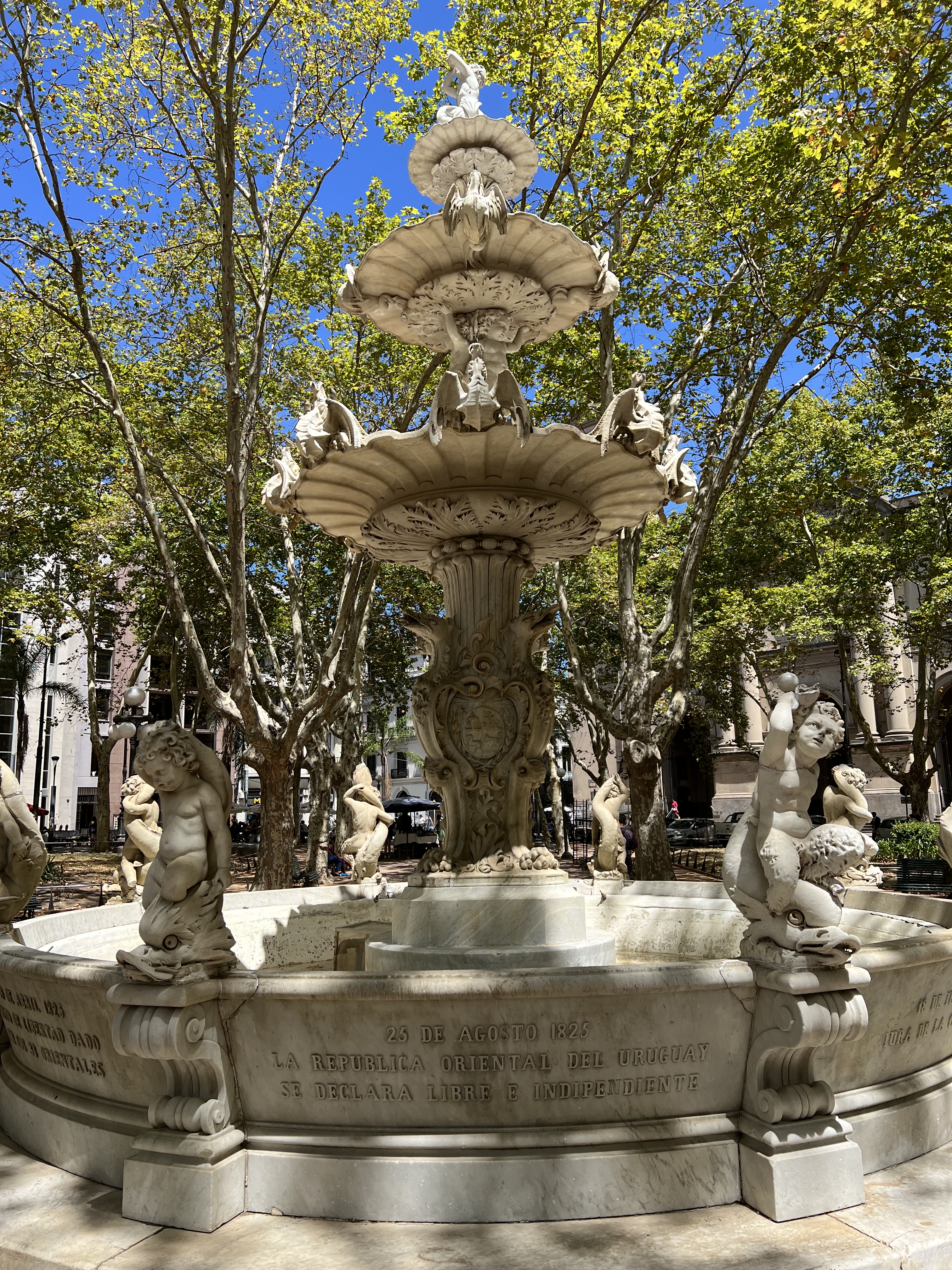
From the Cafe, we walked to Matriz Square, the first open space in the Fronting on it is the Colonial style Metropolitan Cathedral. It has a beautiful modern alter. In the center of the square is a fountain built to commemorate the coming of potable water to the town.
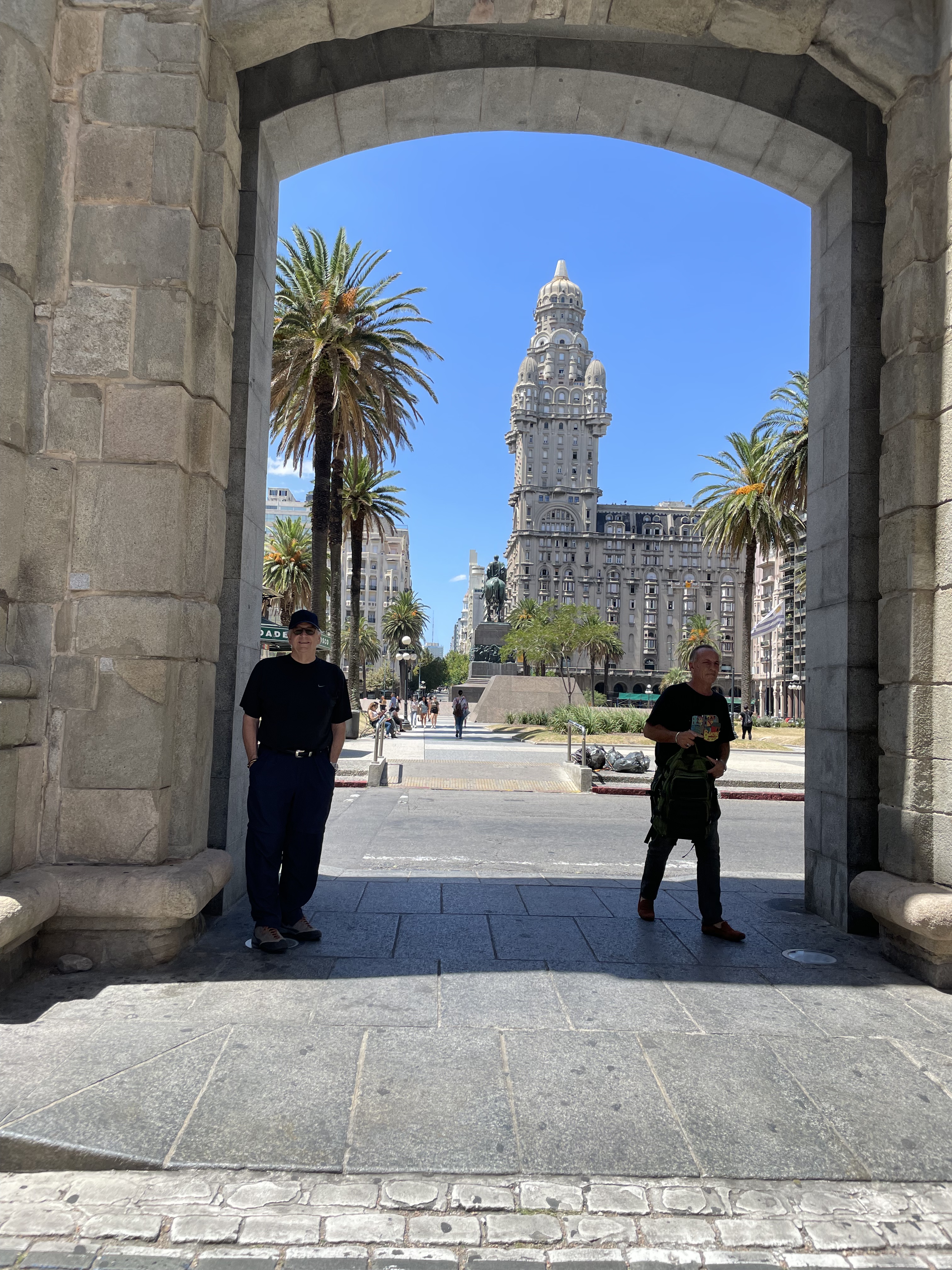
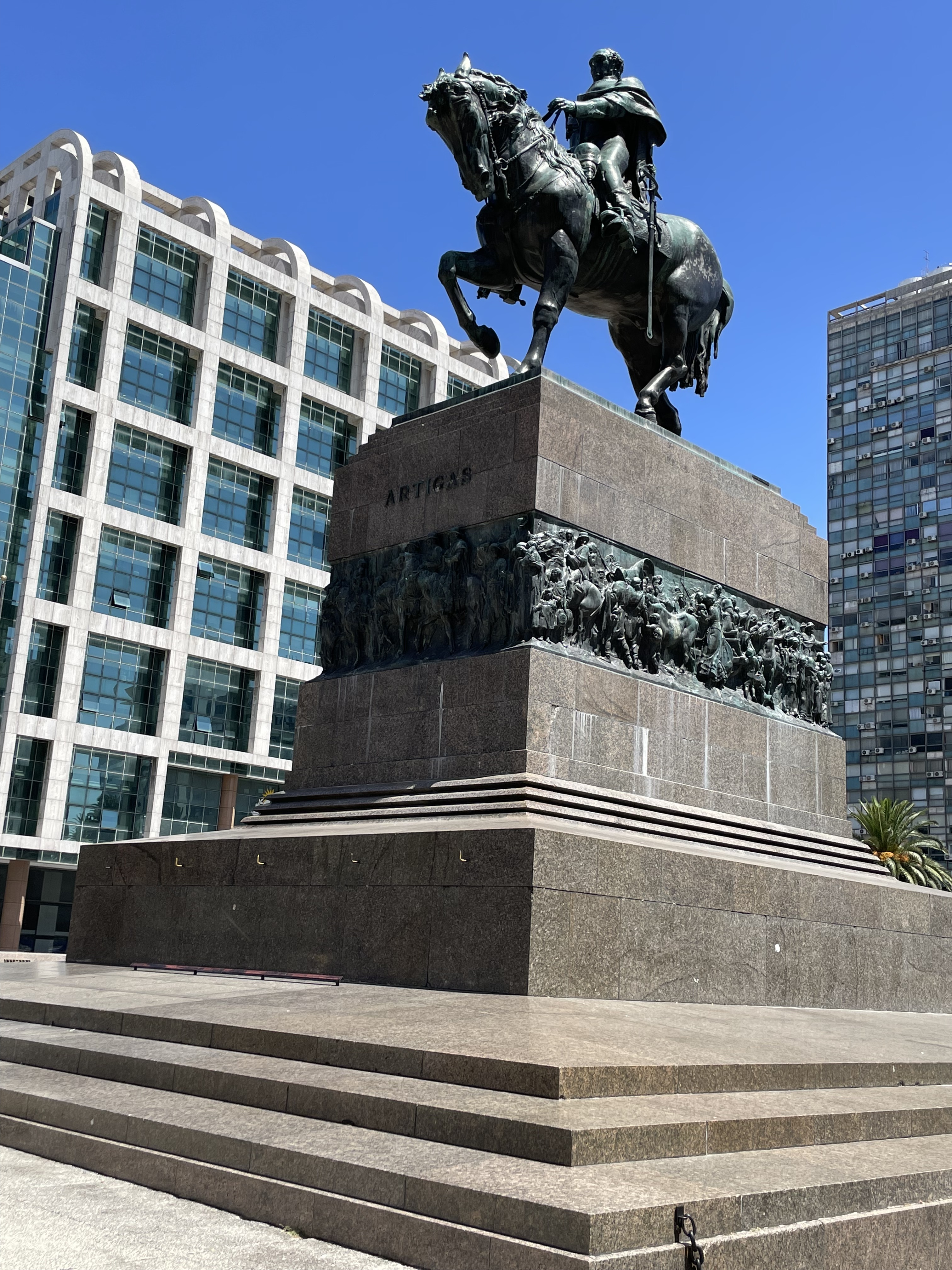
The city was founded in 1724 by Bruno Zabola, who kept the city from the Portuguese. The far side of the plaza is a remnant of the town’s original fortifications, built in 1742. Looking through the gate into Independence Square, we see a beautiful eclectic building called Salvo Palace. The horse rider statue in the middle of the square is of the independence hero Artigas, 1764-1850, who is buried on the spot. Behind the statue is a modern building called the Executive Tower, built in 2009.
Meanwhile, in 1680, the Portuguese founded a town they called Colonia del Sacramento directly across the Rio de las Plata from Buenos Aires and north of Montevideo. The fresh or “sweet” water, Rio de la Plata was discovered in 1516 by Juan Dias Desolys.
Buenos Aires was founded in 1536, but burned down and was rebuilt in 1580.
In 1806-07, the British invaded Uruguay and Argentina, but the local Spaniards fought them back. In 1816 the Portuguese took all of Uruguay by land and sea. Brazil gained its independence in 1822 and, in 1825, Brazil fought the Portuguese. In 1828, England, Argentina and Brazil made a contact to create a new state, which they named the Republic Oriental of Uruguay. Oriental meaning all the land east (or oriental) of the River Uruguay. The official date for the creation of the country is July 18, 1830. The Main Street tin the city is called “18 July”.
We did a lot of walking and eventually took a city bus to get us to the Mercado where Hans wanted us to have lunch in one of his favorite places. It had been a fish market before the Mercado was converted into a collection of restaurants. I had pasta with fish and Mark had fish and rice. Both were good, but huge portions. Hans told us to get to go boxes so we could give the extra food to the homeless, who hang out around the place. It was the perfect solution. After the hand off, Hans walked us to our hotel and departed. I worked on the blog and Mark went to a shop Hans had recommended to buy a leather bag for himself. The store was owned by a Jewish woman and Mark had a nice conversation with her.
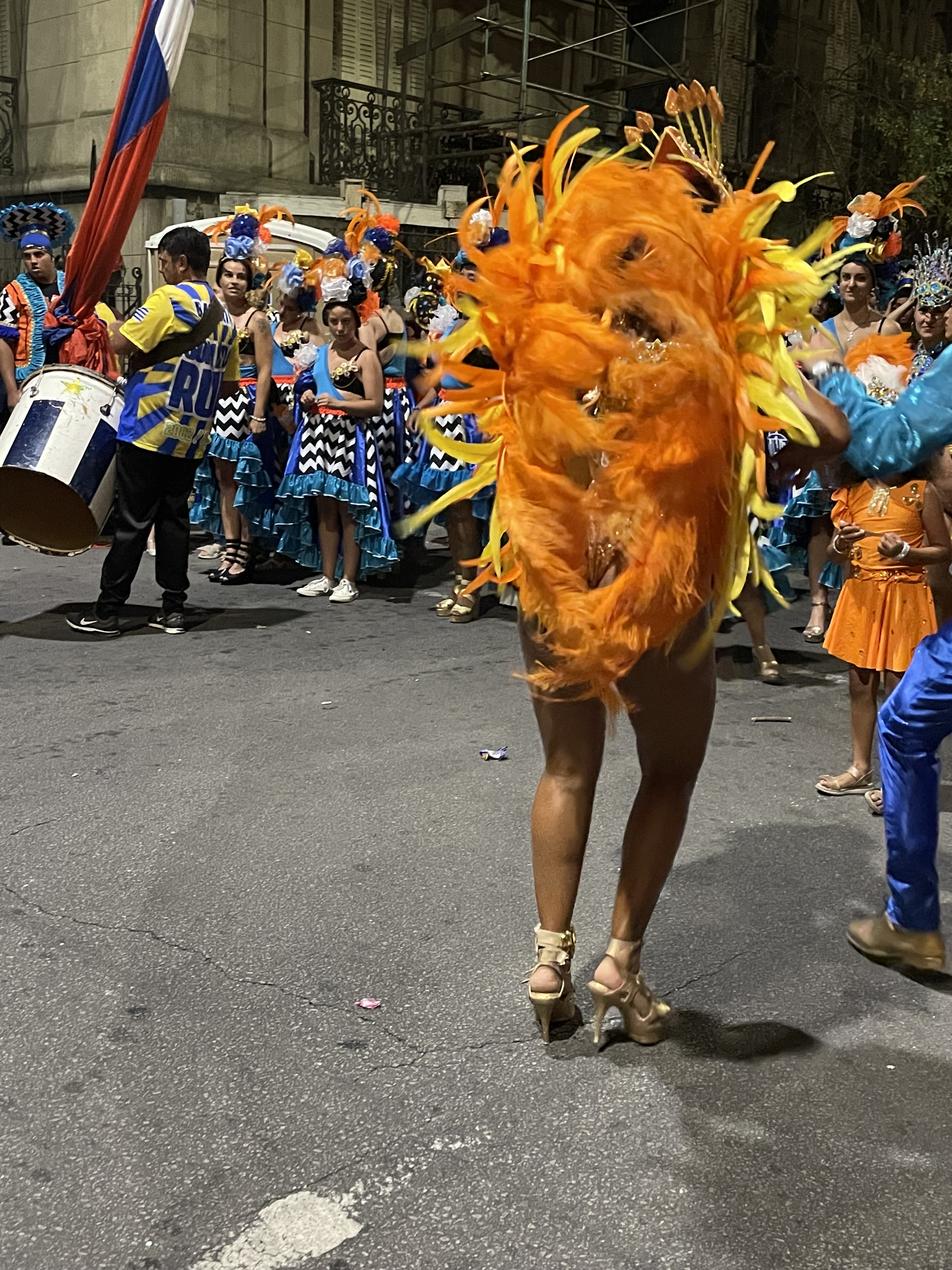
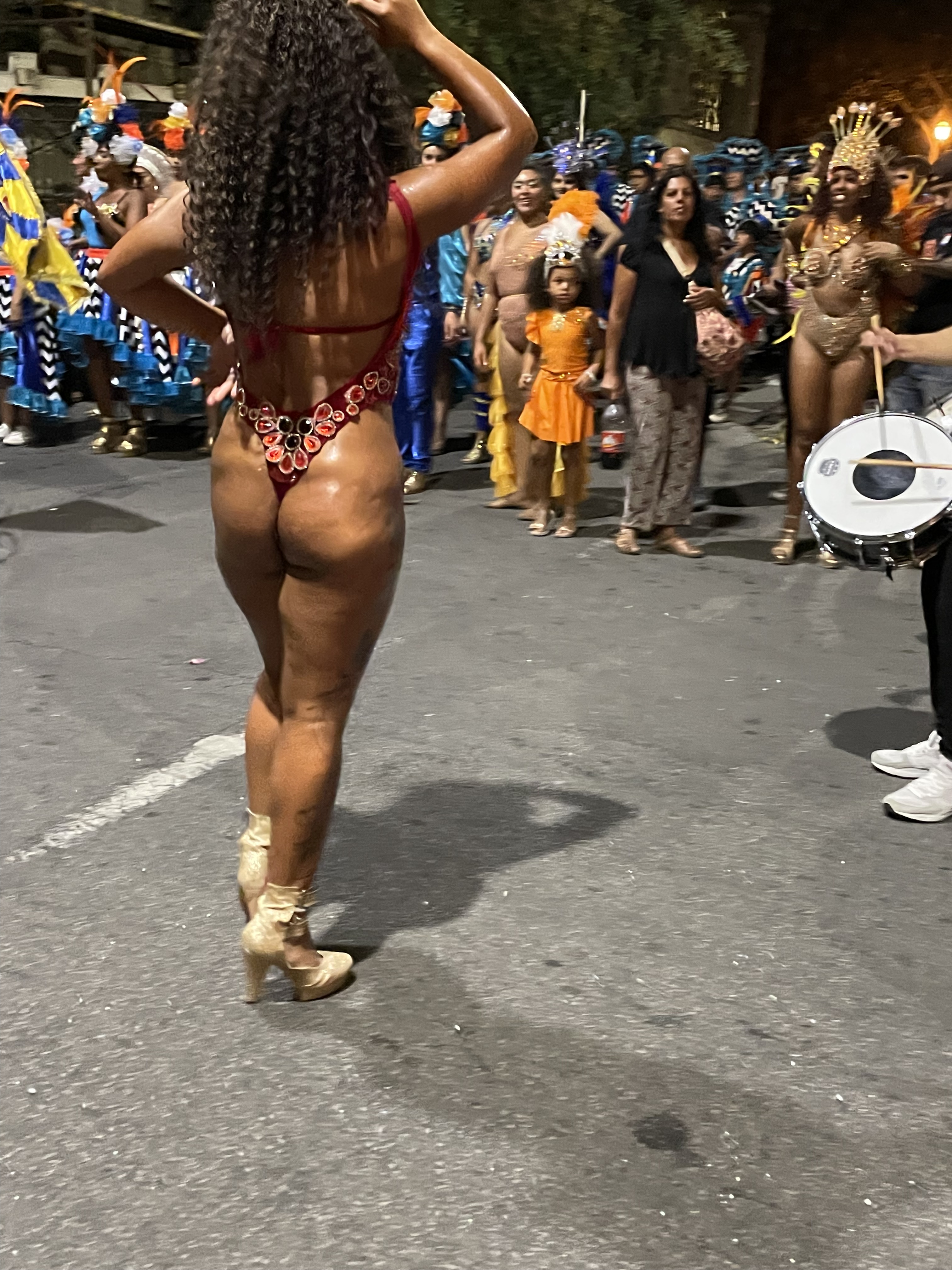
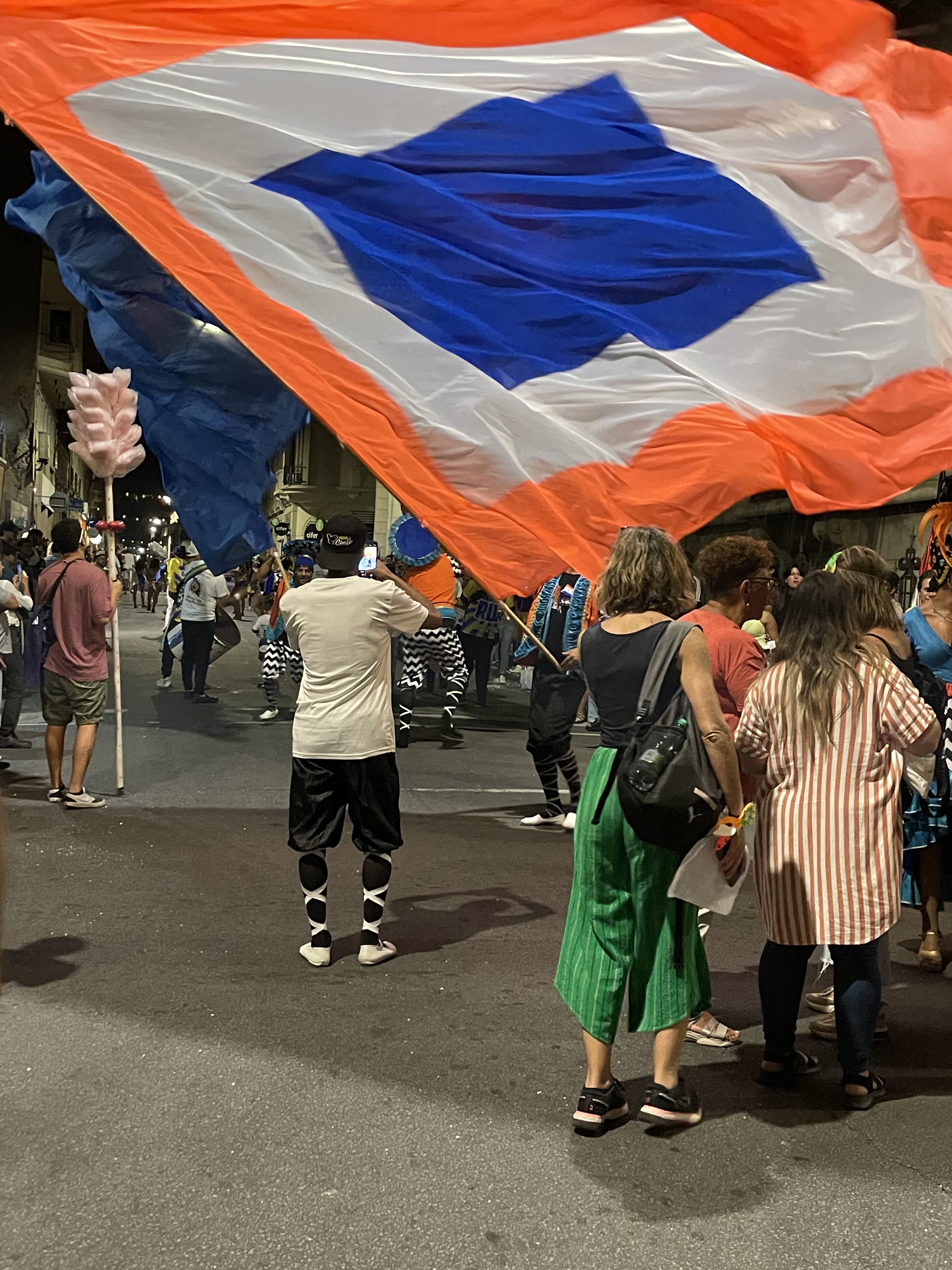
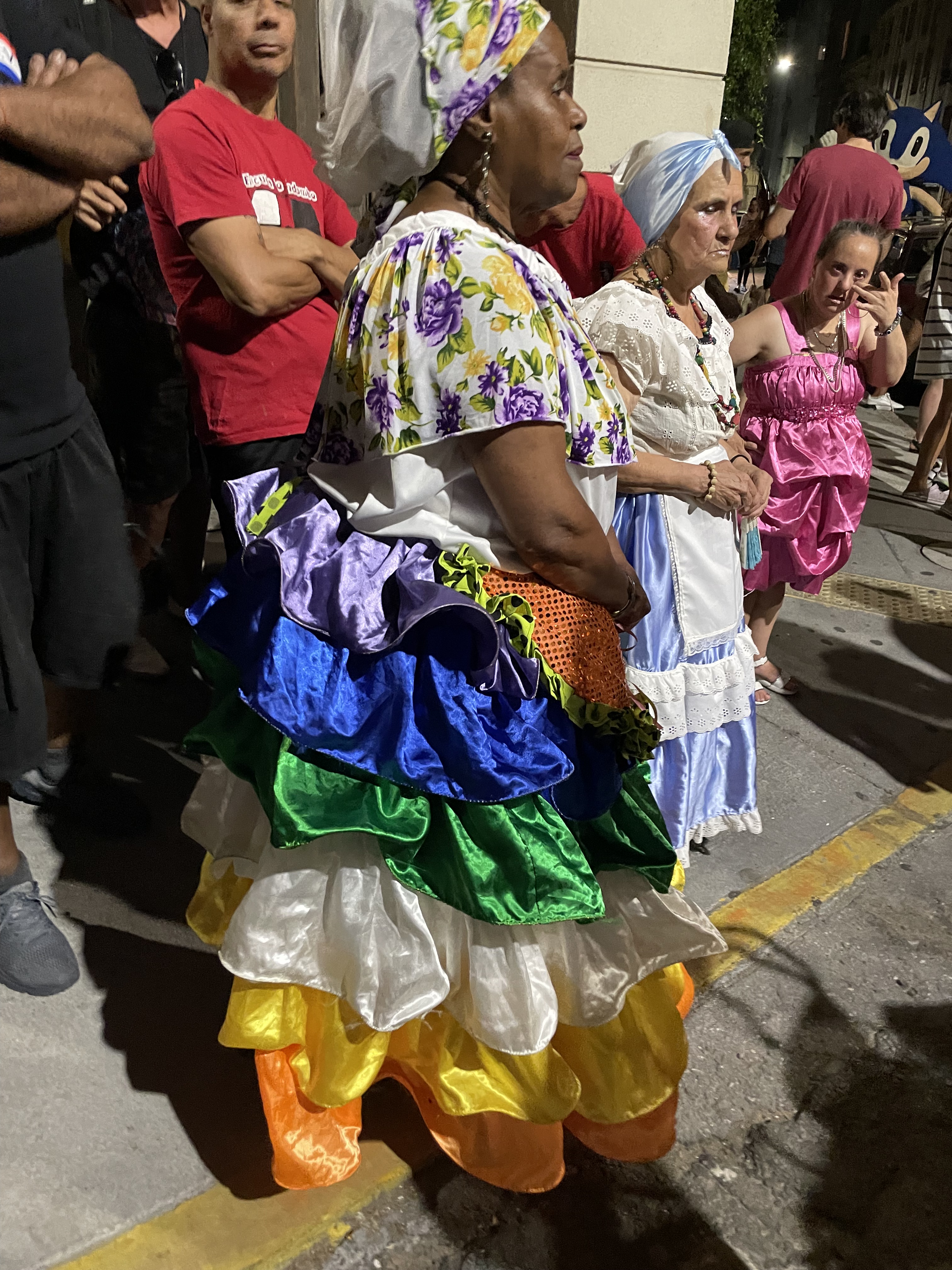
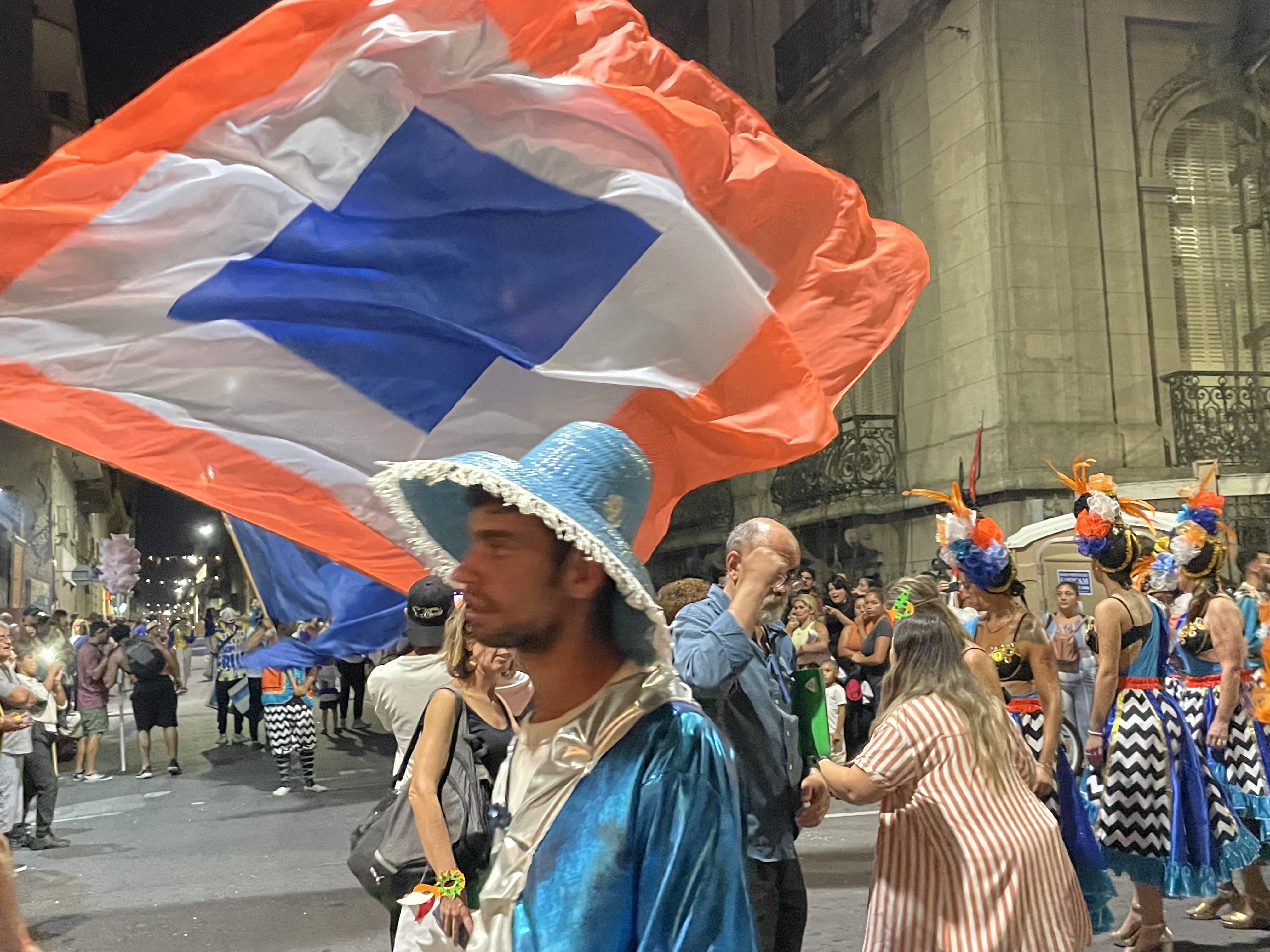
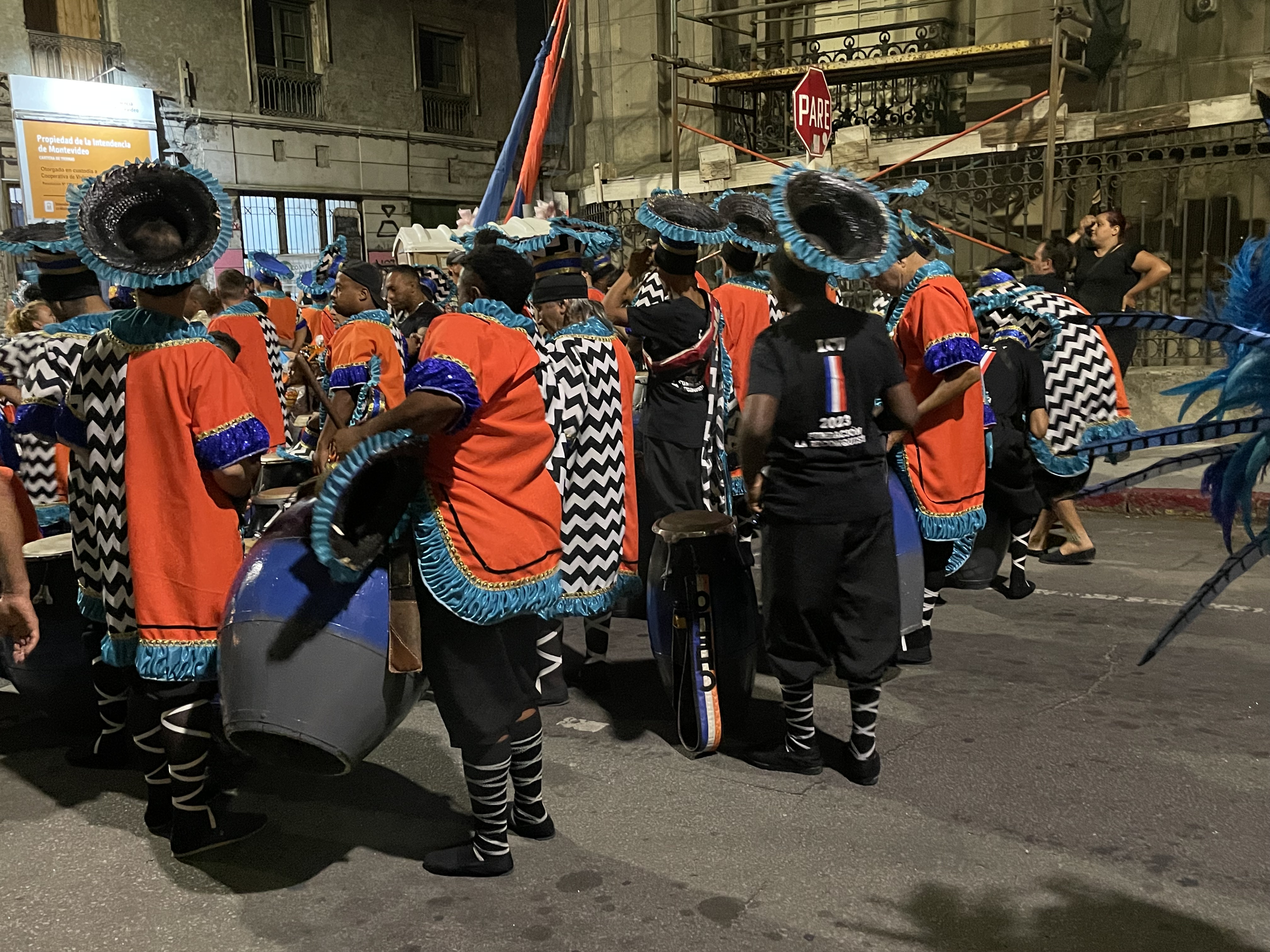
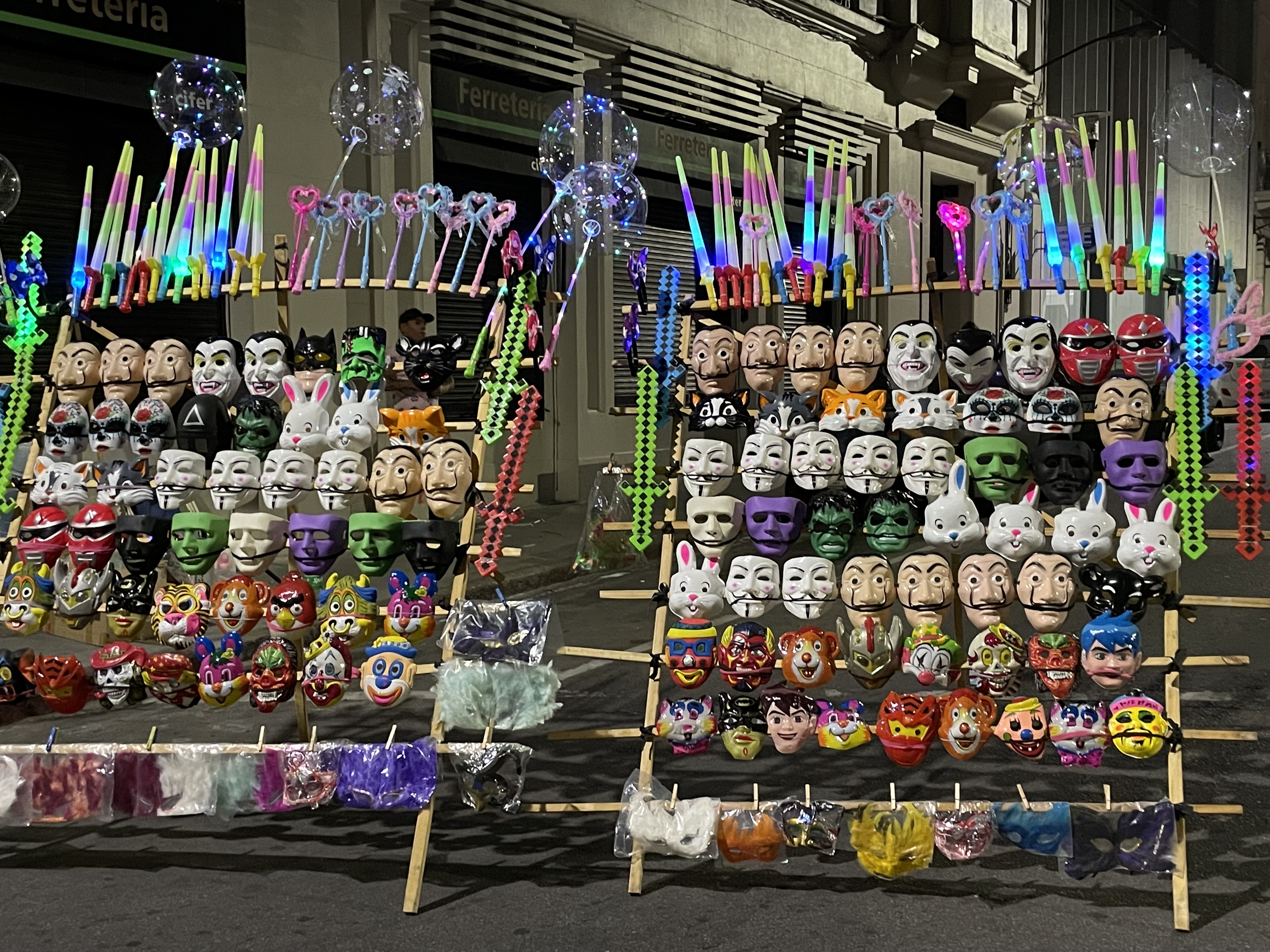
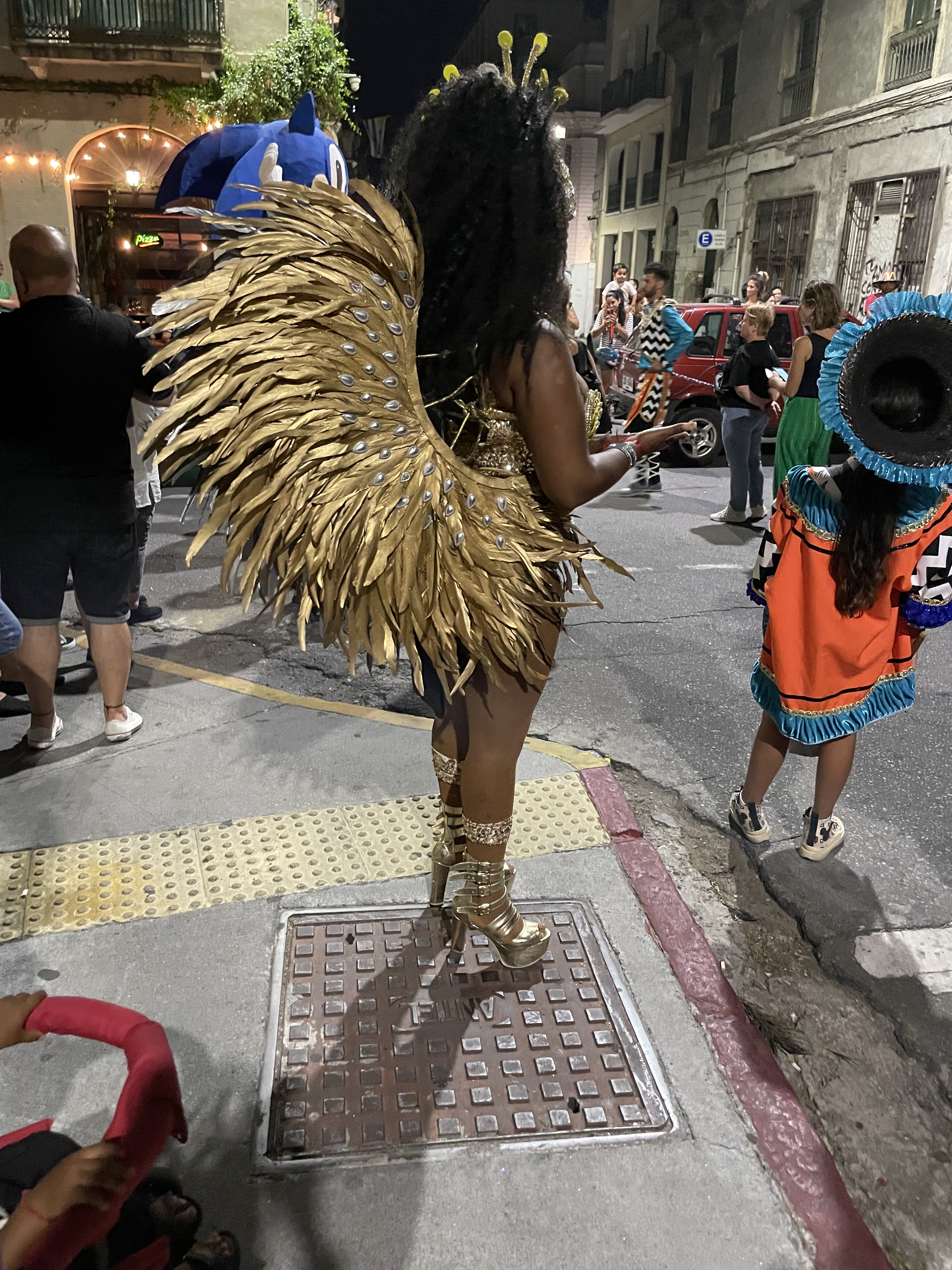
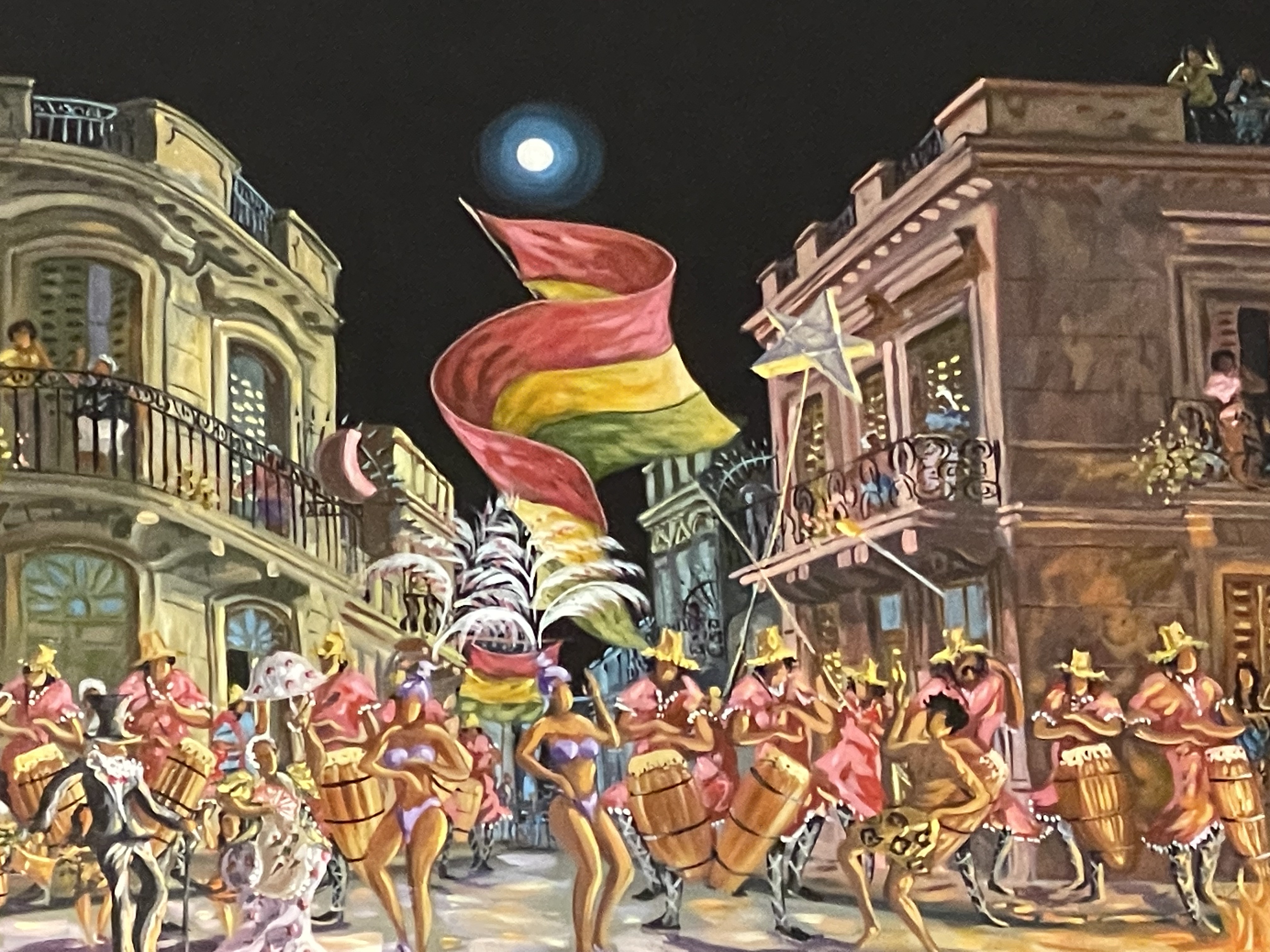
We were so full from lunch that we decided to pass on dinner. I was still working at 8:30 when we began to hear loud music outside our 4th floor window. A crowd was gathering until it was obvious that something organized was happening as floats arrived along with people in costumes. Drumming became intense, so we went down stairs to watch the activities. Turns out a Carnival parade was developing and our street corner was the starting point. It was fun to watch as they formed up and marched off one group at a time. About 9:30 we got a little hungry and dropped in at a local cafe, Jacinto, and had some of the best gazpacho we have ever eaten. While there we met a Brazilian couple who spoke good English and we had a fun conversation. Soon the parade was really getting rolling and by 10:30 it was all over. I could hear the drumming fading away. It had been a lovely day for weather. Not too hot, or windy–a very nice day. In the morning the port-o-potty was gone and the street totally cleaned up.
Tuesday, February 16, 2023
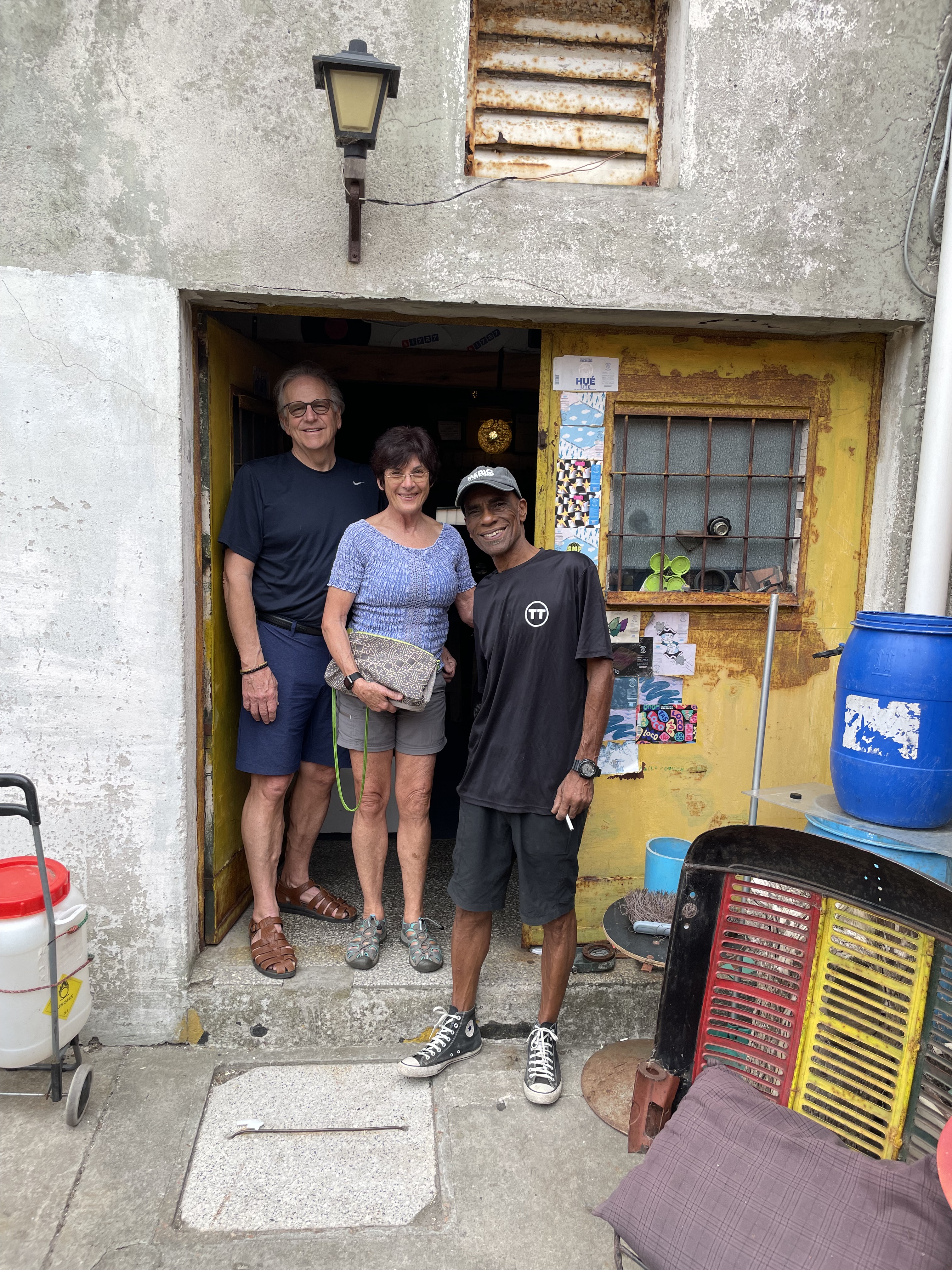
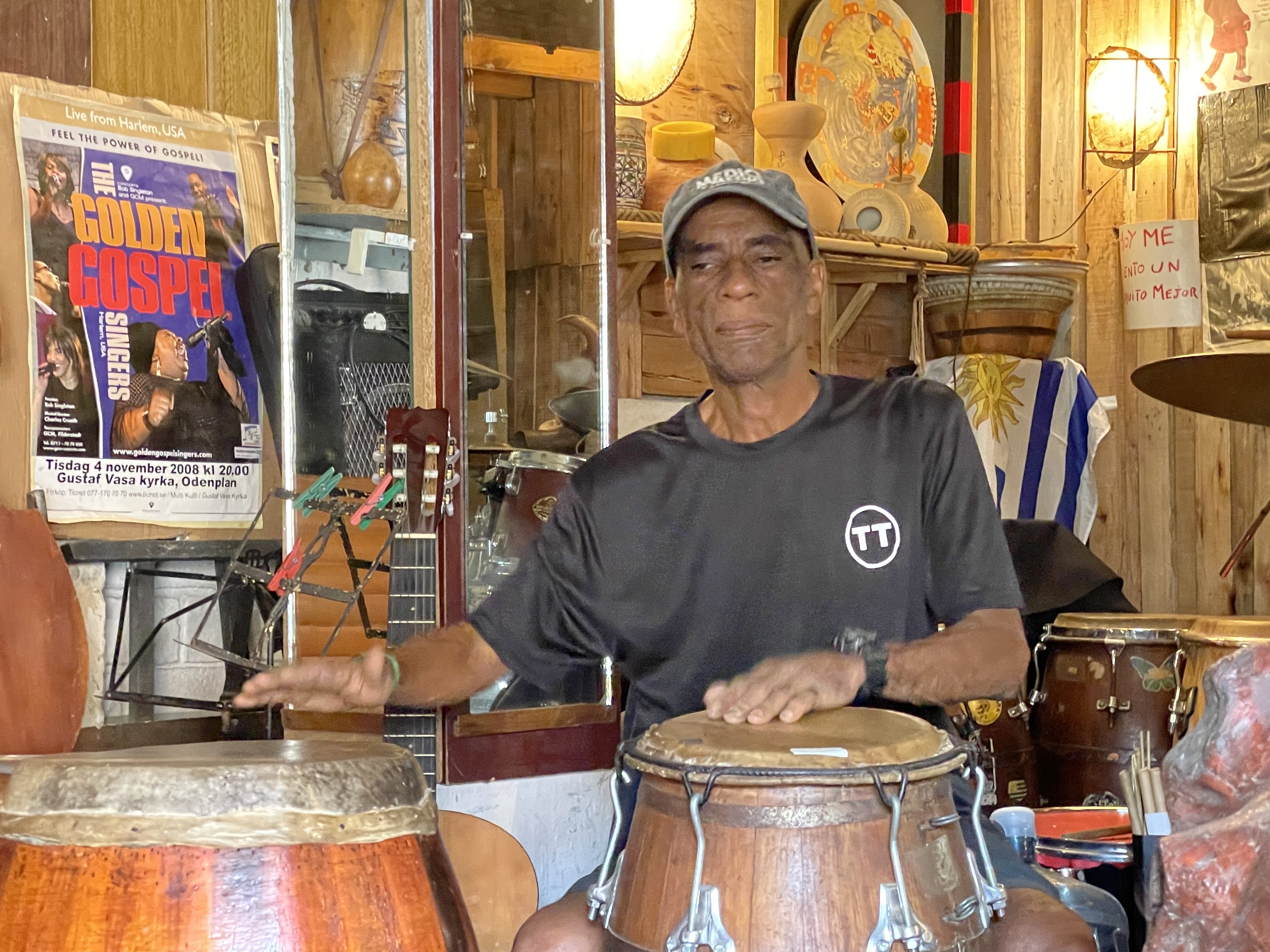
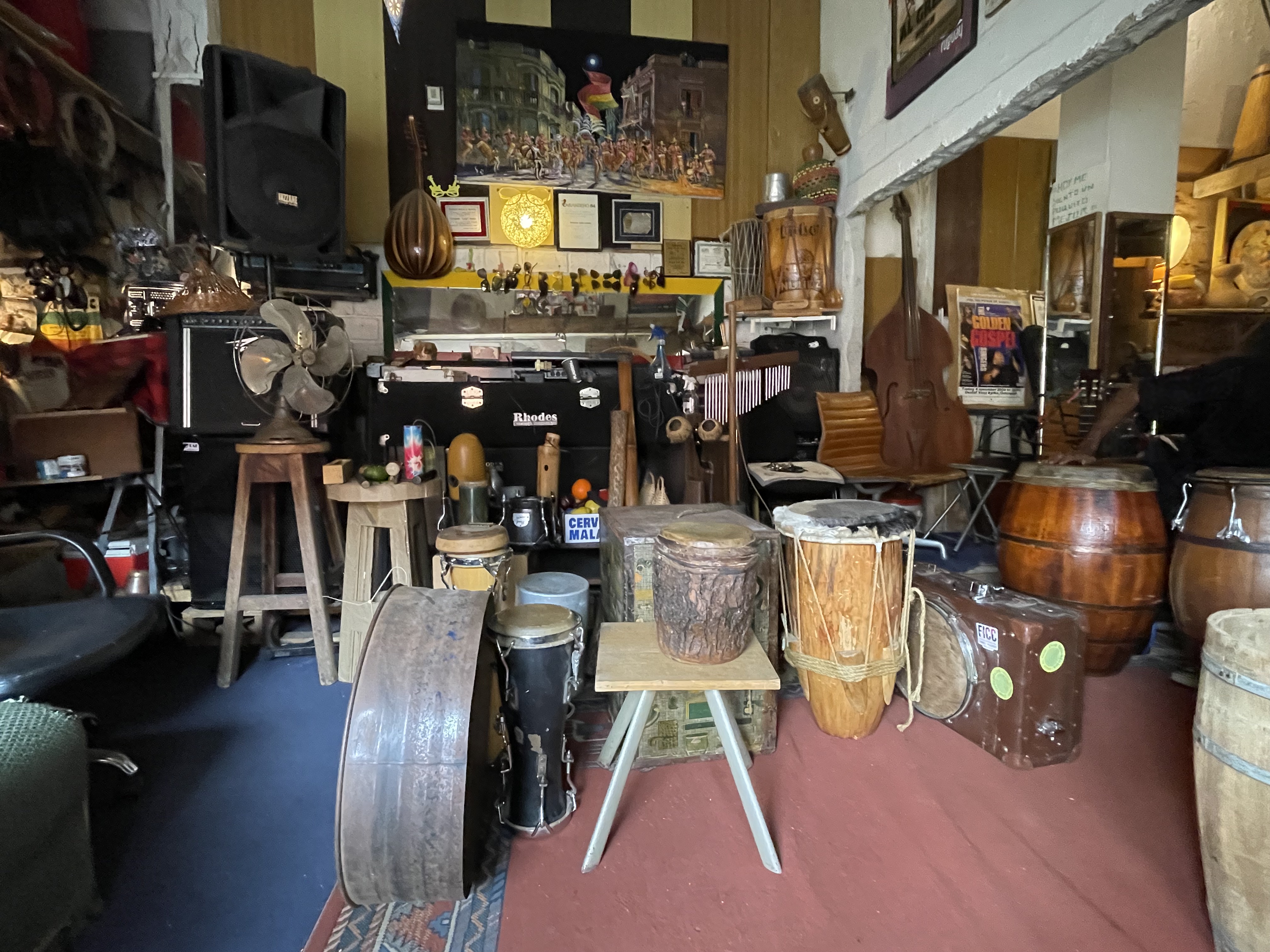
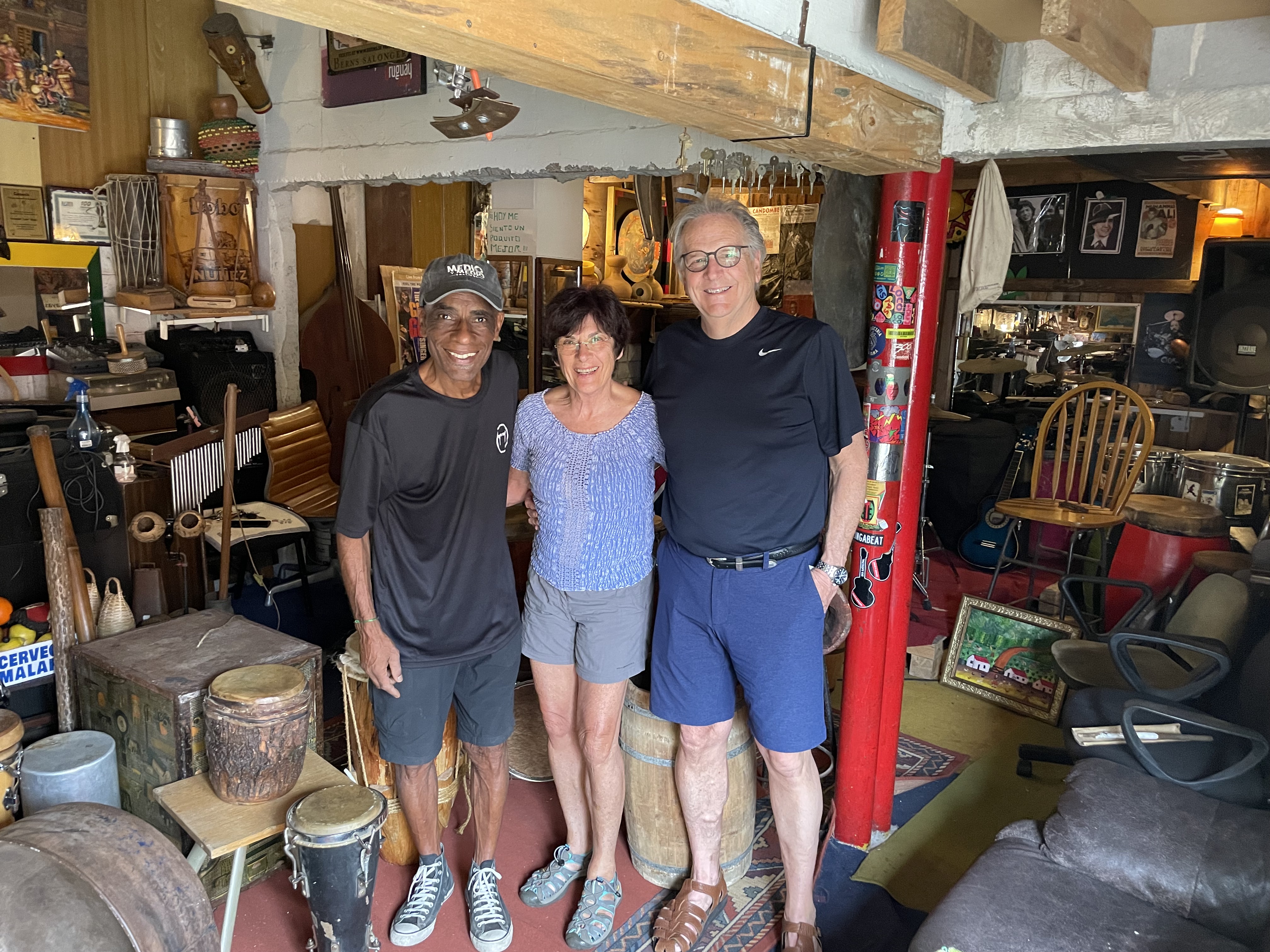
Hans picks us up at 9am for another sightseeing day. The weather started out ok but was cooler and a bit windy. This day is of the city at large with less walking. We started with a scheduled visit with a famous drummer, Ferdinand “Lobo” Nunez. He met us at his workshop called “El Power”. It had been in his family since 1837 and was where his ancestors, enslaved people, bought their “freedom”. As a way of living they made brooms that were sold on site. His grandfather was a prominent musician, who taught him how to play the drums along with his father. The workshop was full of musical instruments that make a multitude of sounds. He demonstrated a number of them to us and some of them made us laugh. In addition to playing in a group, he teaches drumming and manufactures drums as well. He makes them from pine planks that are shaped into curved staves, chamfered, assembled and polished. Then rings are placed and sliced. He is very proud of the wonderful sounds his drums make and played some candombe music for us on three different drums. It is lovely style to listen to whether played loud or soft. He made a drumming convert of me. He talked about his personal history, especially how his own children are learning to play in a group with him. We happened to show up on his 67th birthday and he recollected that Mick Jagger had showed up to celebrate his 60th birthday with him. We shook hands and got a nice photo.
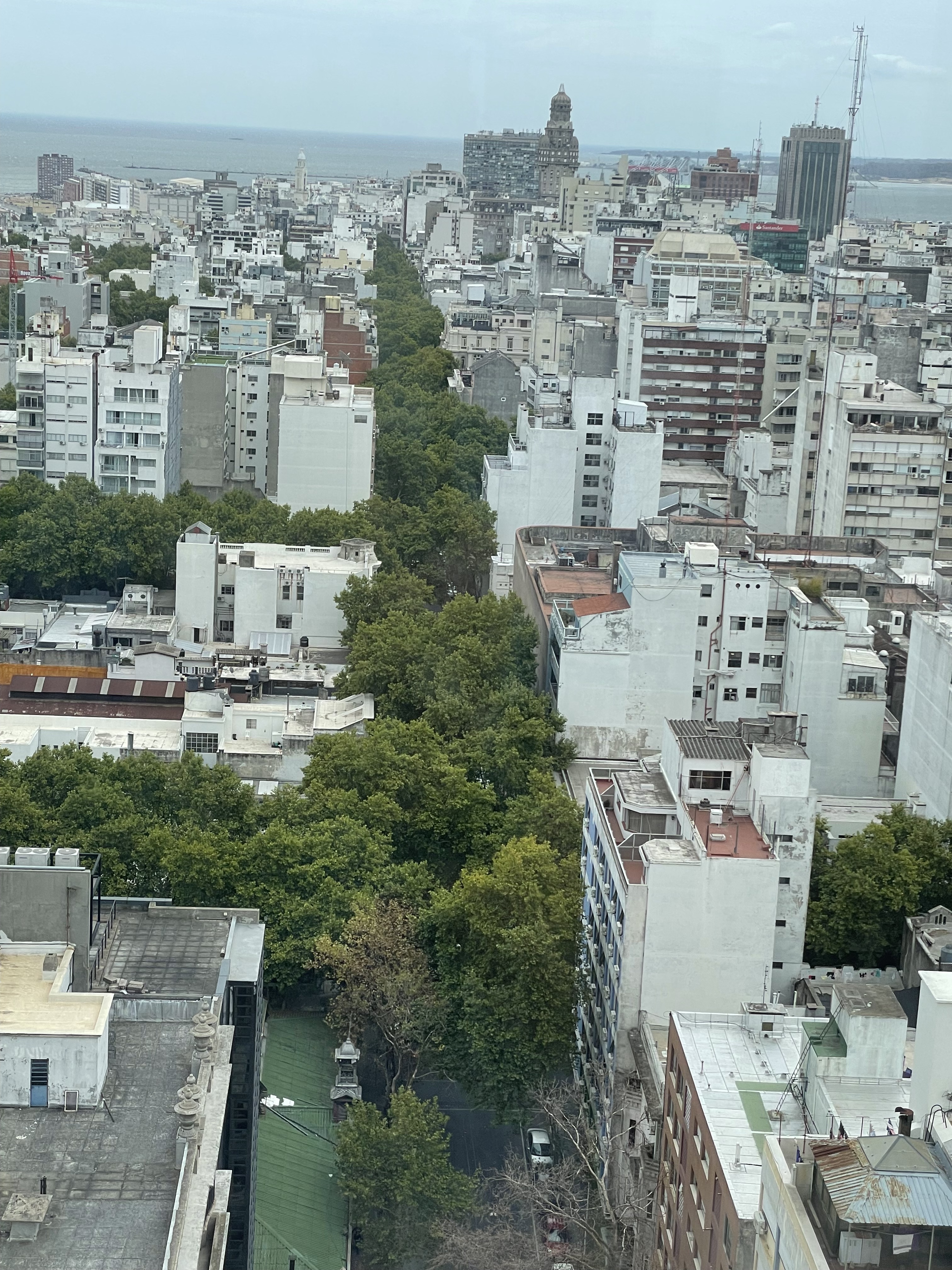
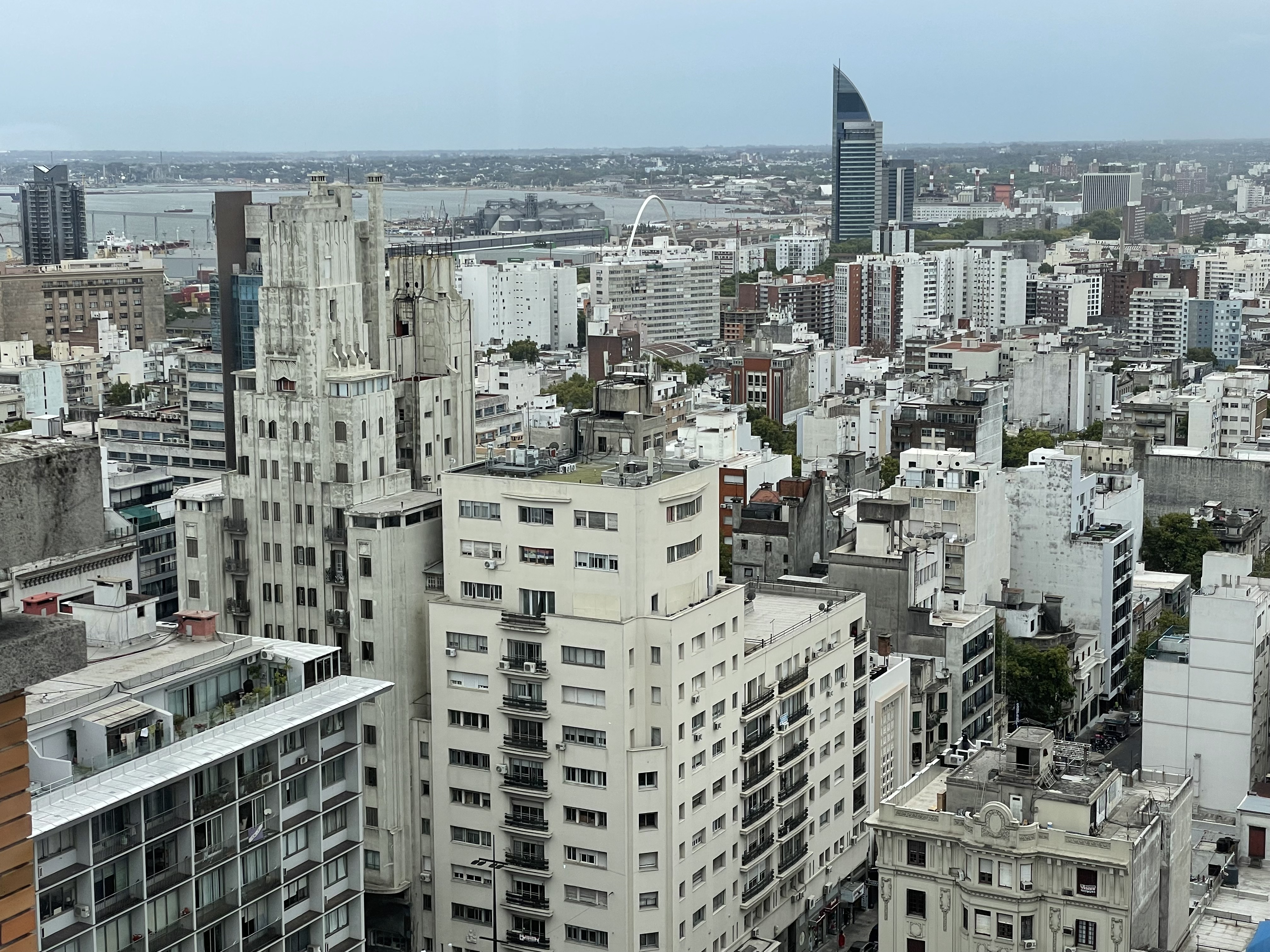
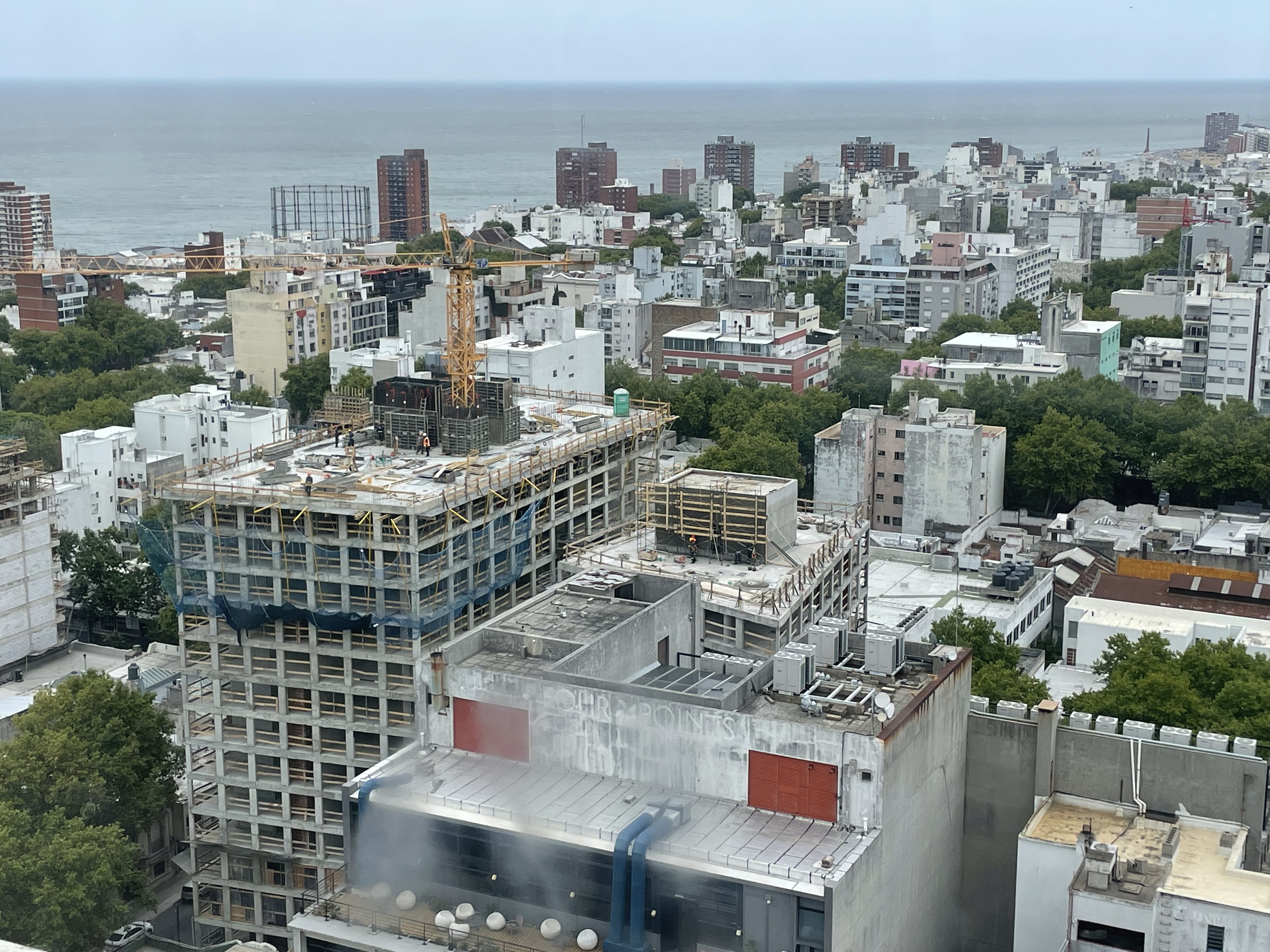
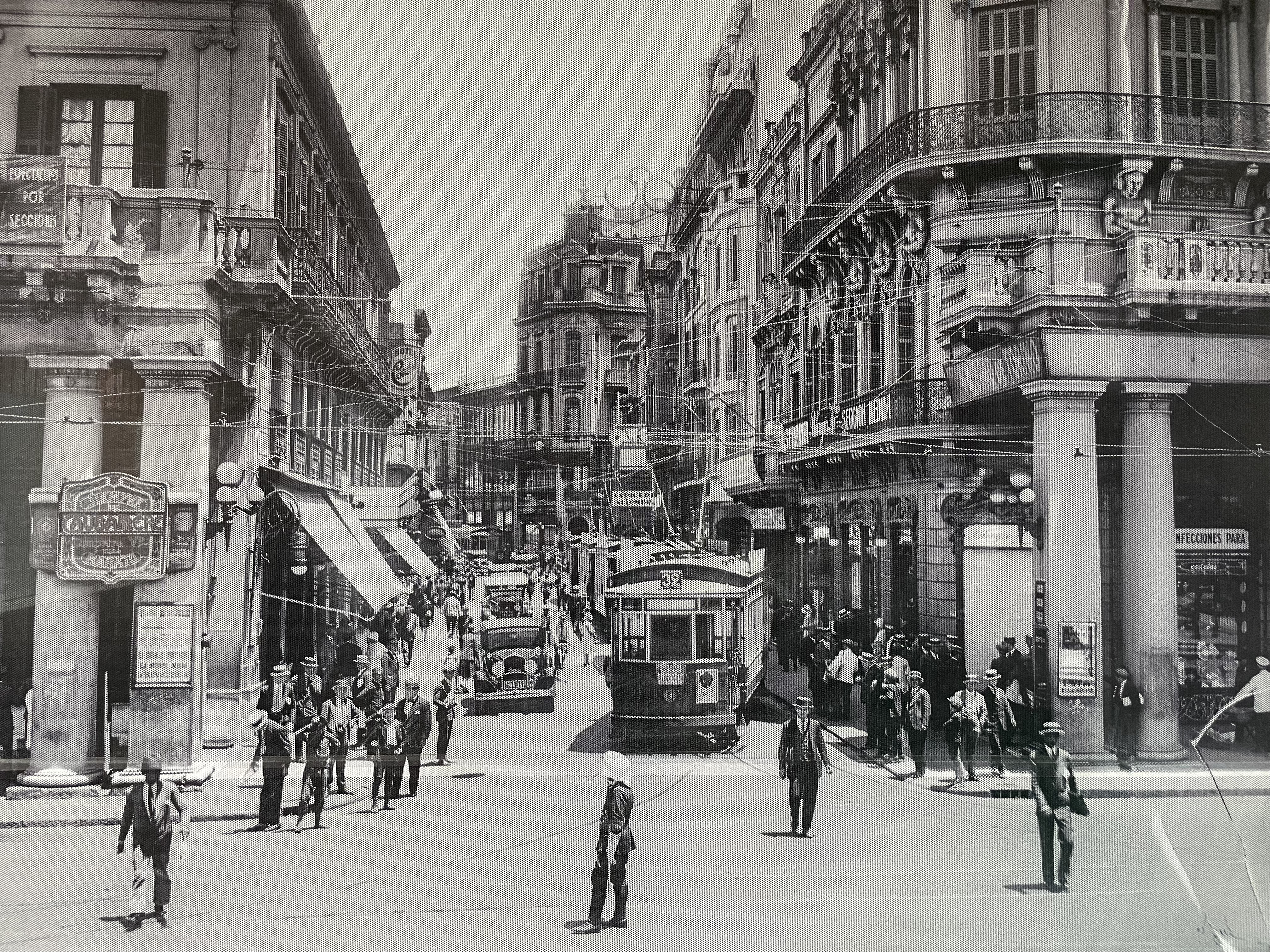
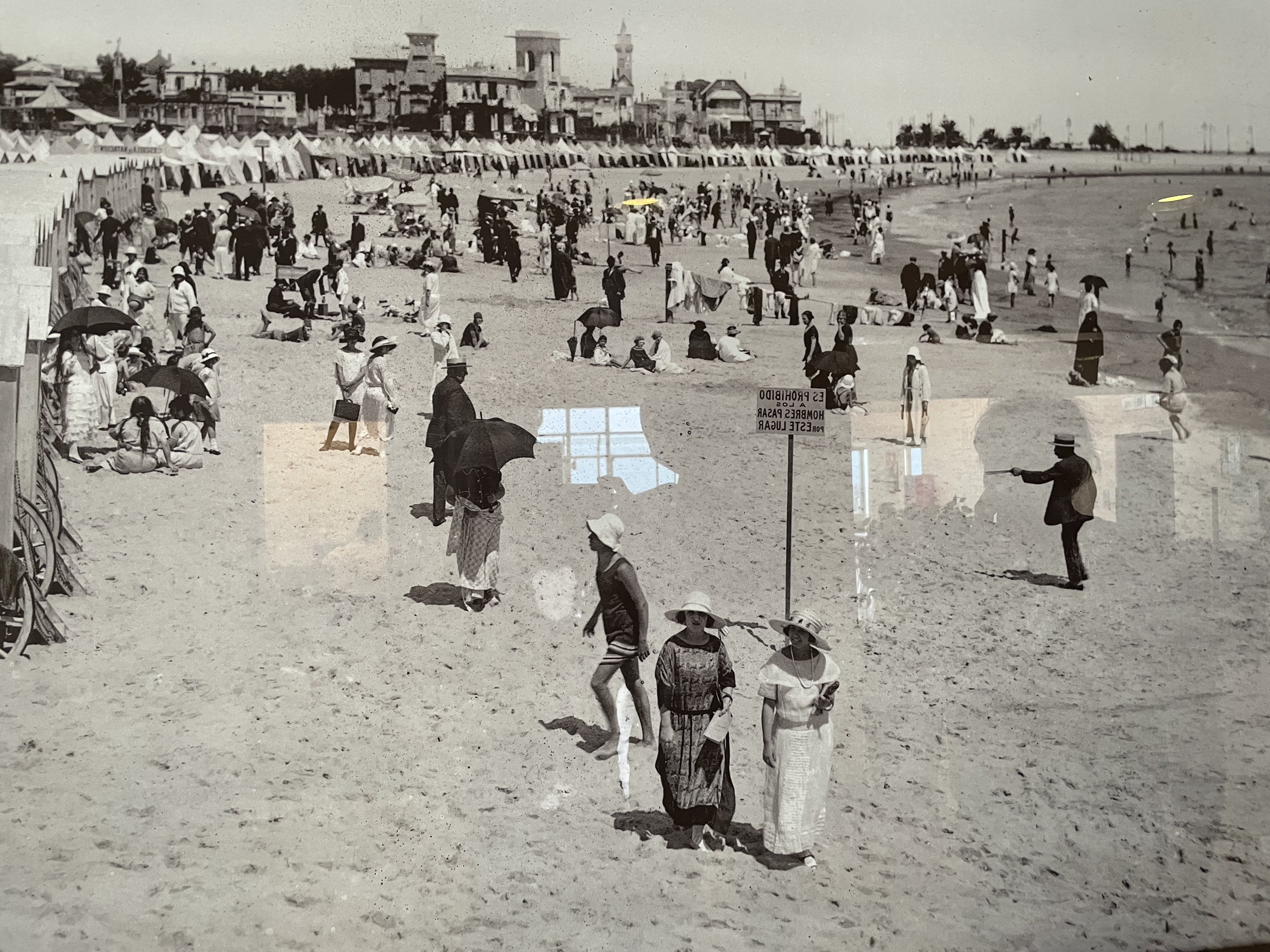
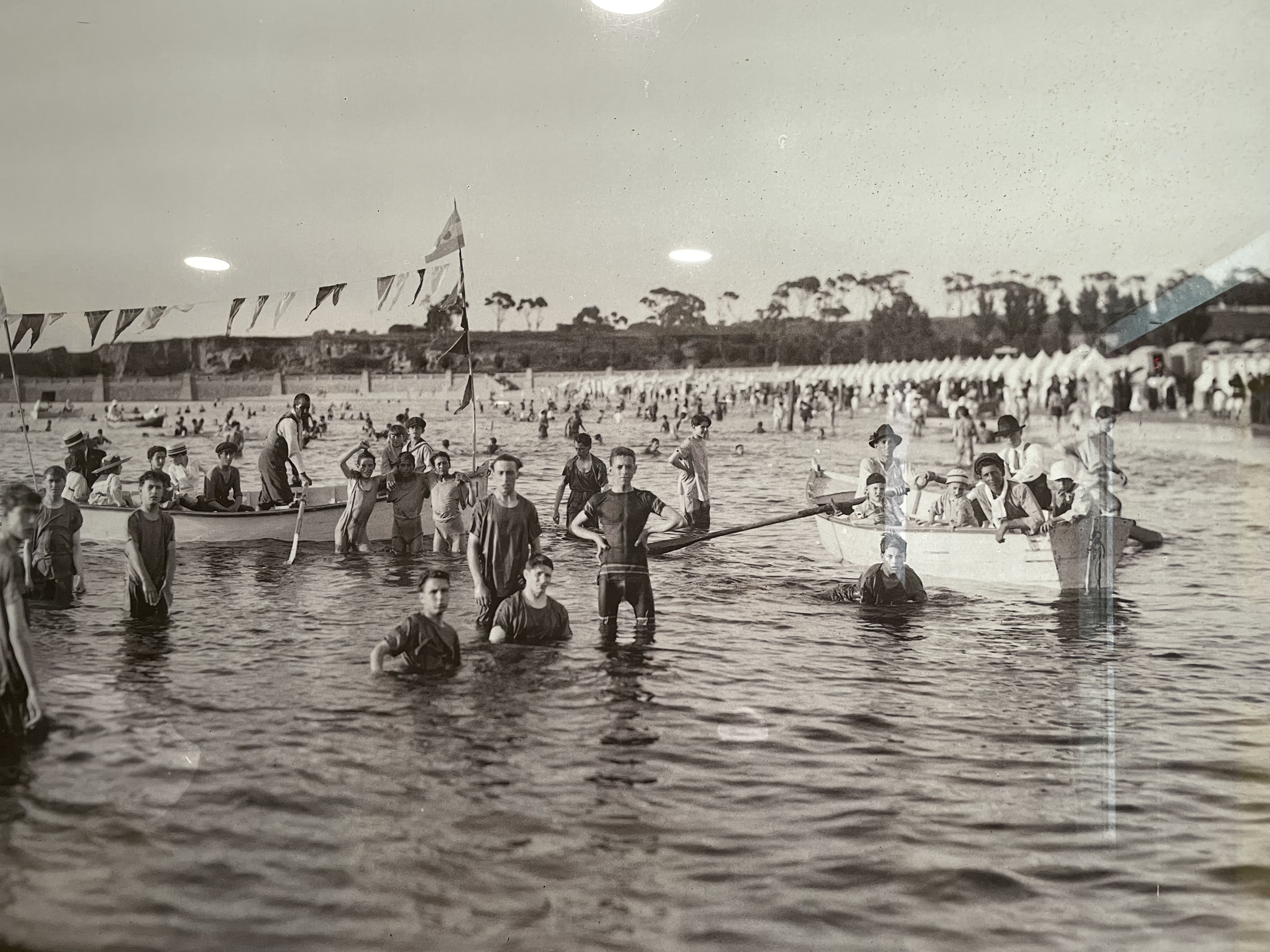
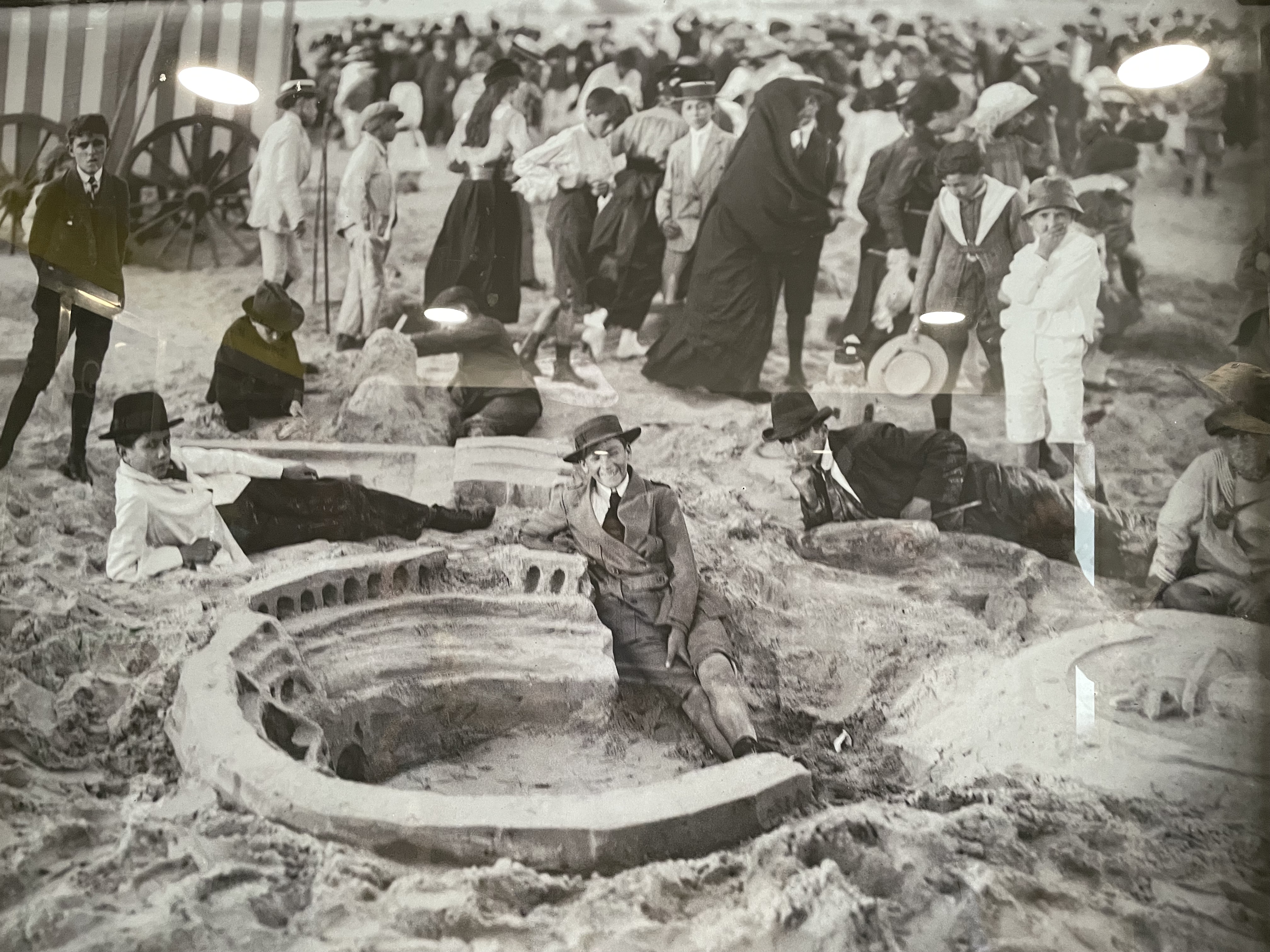
From Lobo’s place Hans took us to City Hall, where we road an elevator to the 20th floor for a 360 degree view of the city. The city view was nice, especially of all the sycamore trees, but I mostly enjoyed the old photos of Montevideo from the 1920s and 30s.
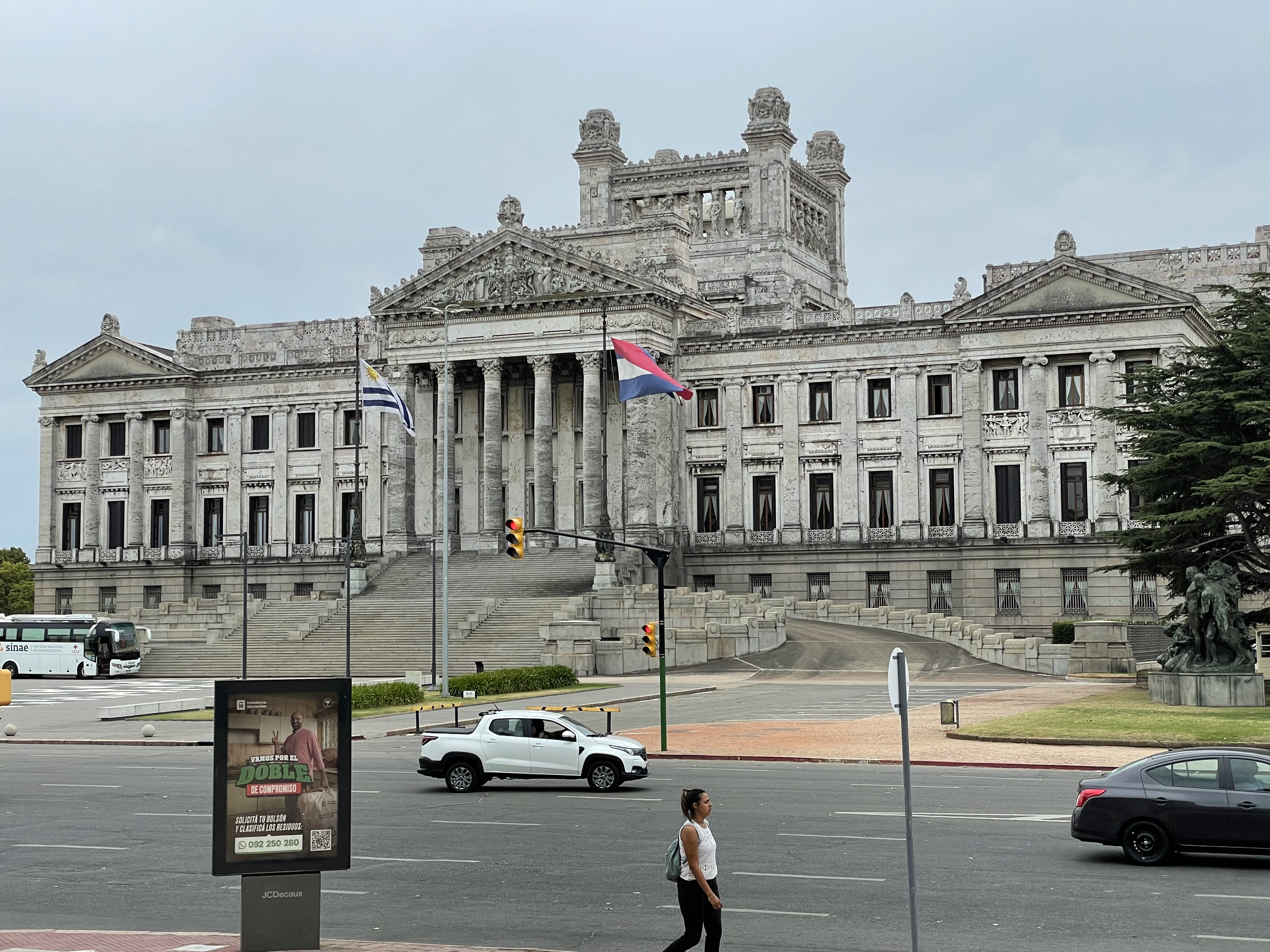
From City Hall we drove to the Parliament Building. Two of the three flags are showing. The neoclassical building was constructed in 1925. It is the seat of legislative power and houses 30 Senators and 99 Representatives for 19 states. It seems the Uruguayans copied our constitution. All citizens over 18 must vote every 5 years or be fined. Can work off the fine. Uruguay is the most democratic country in Latin America. 62% of the population is middle class. Formal employment in Uruguay is at 80%. (Formal employment is any employment that has an agreed to work contract.)
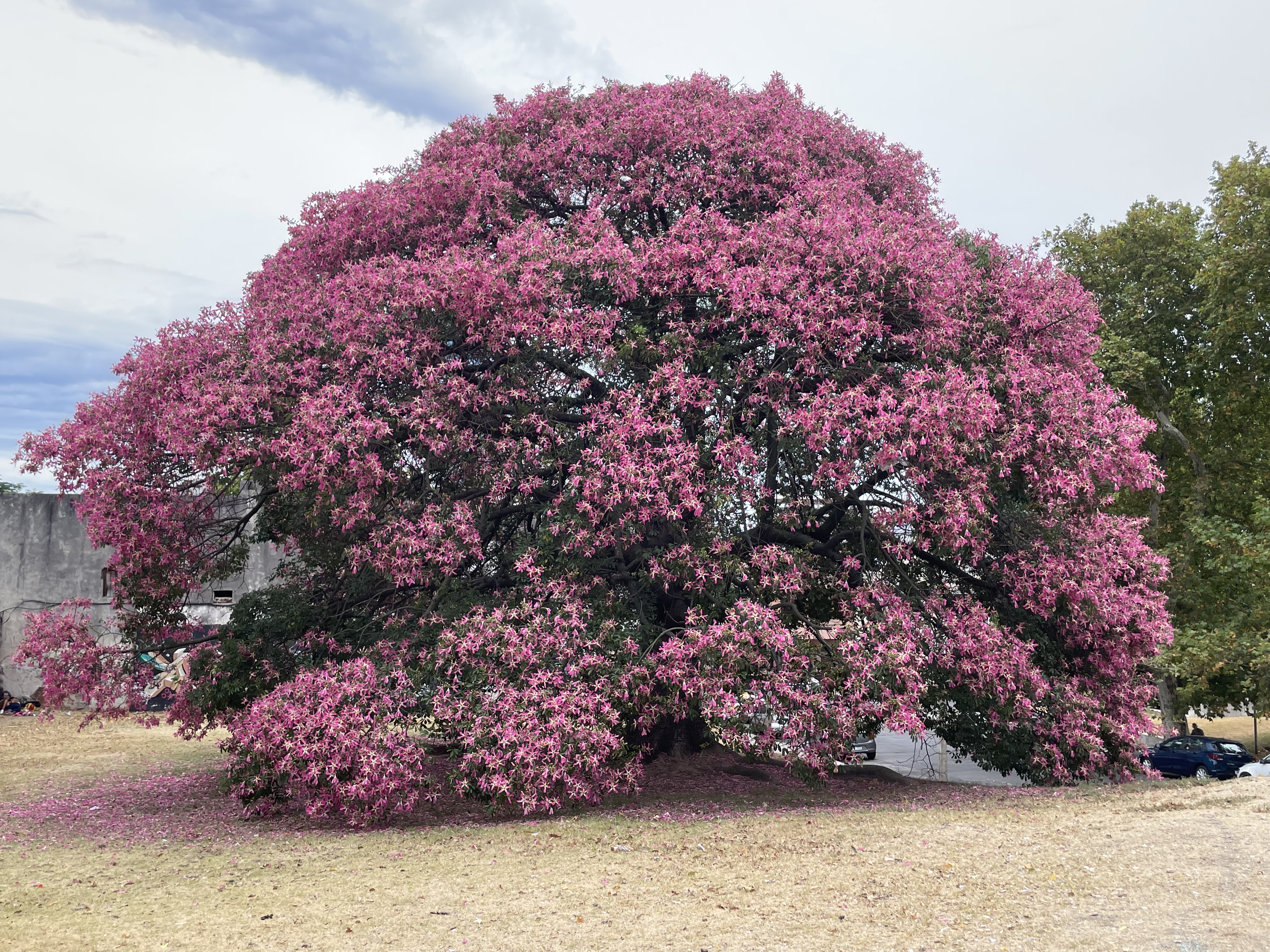
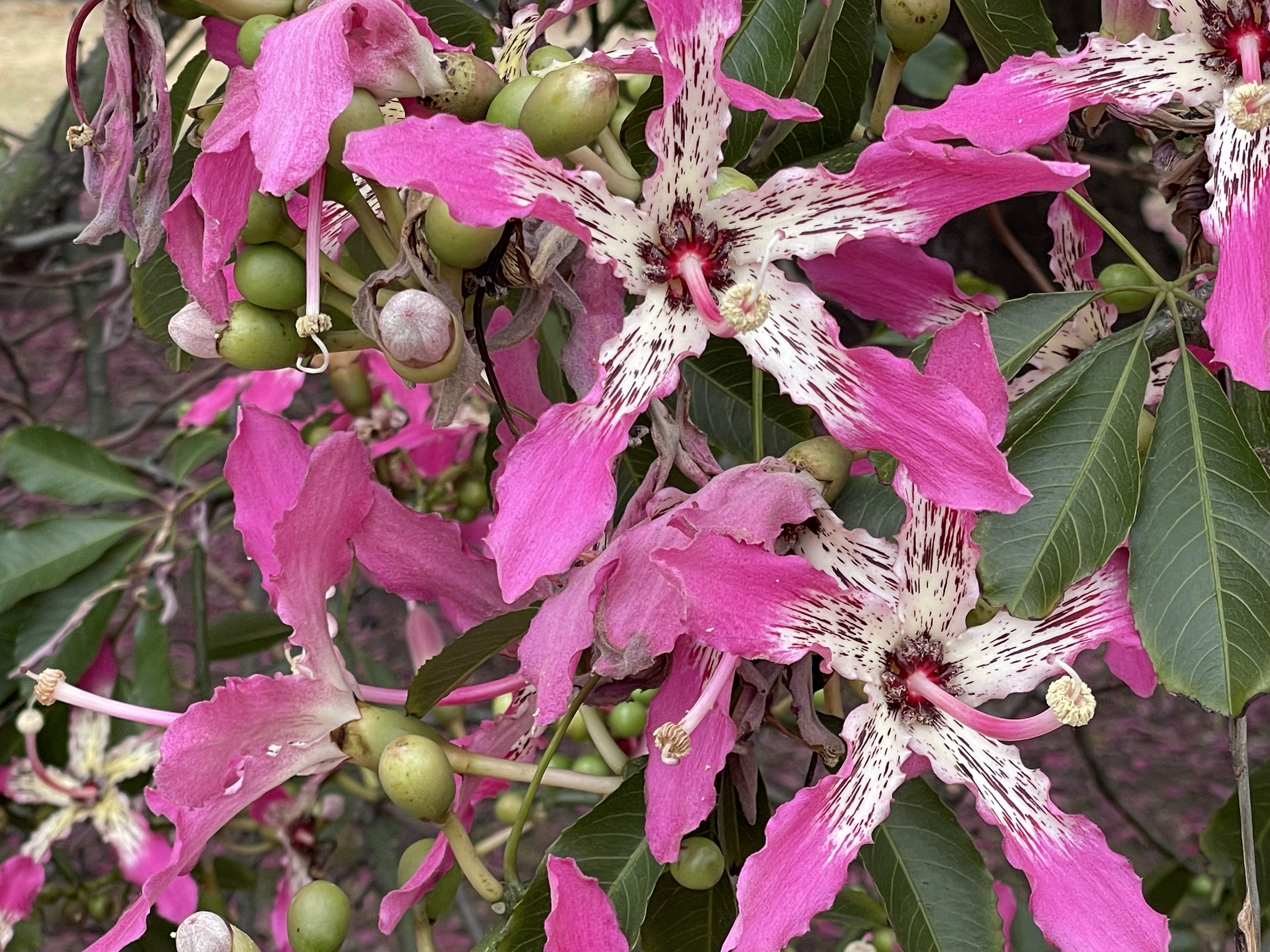
Also facing the square were a beautiful Silk floss tree in full bloom. There are many around, but few we saw in bloom.
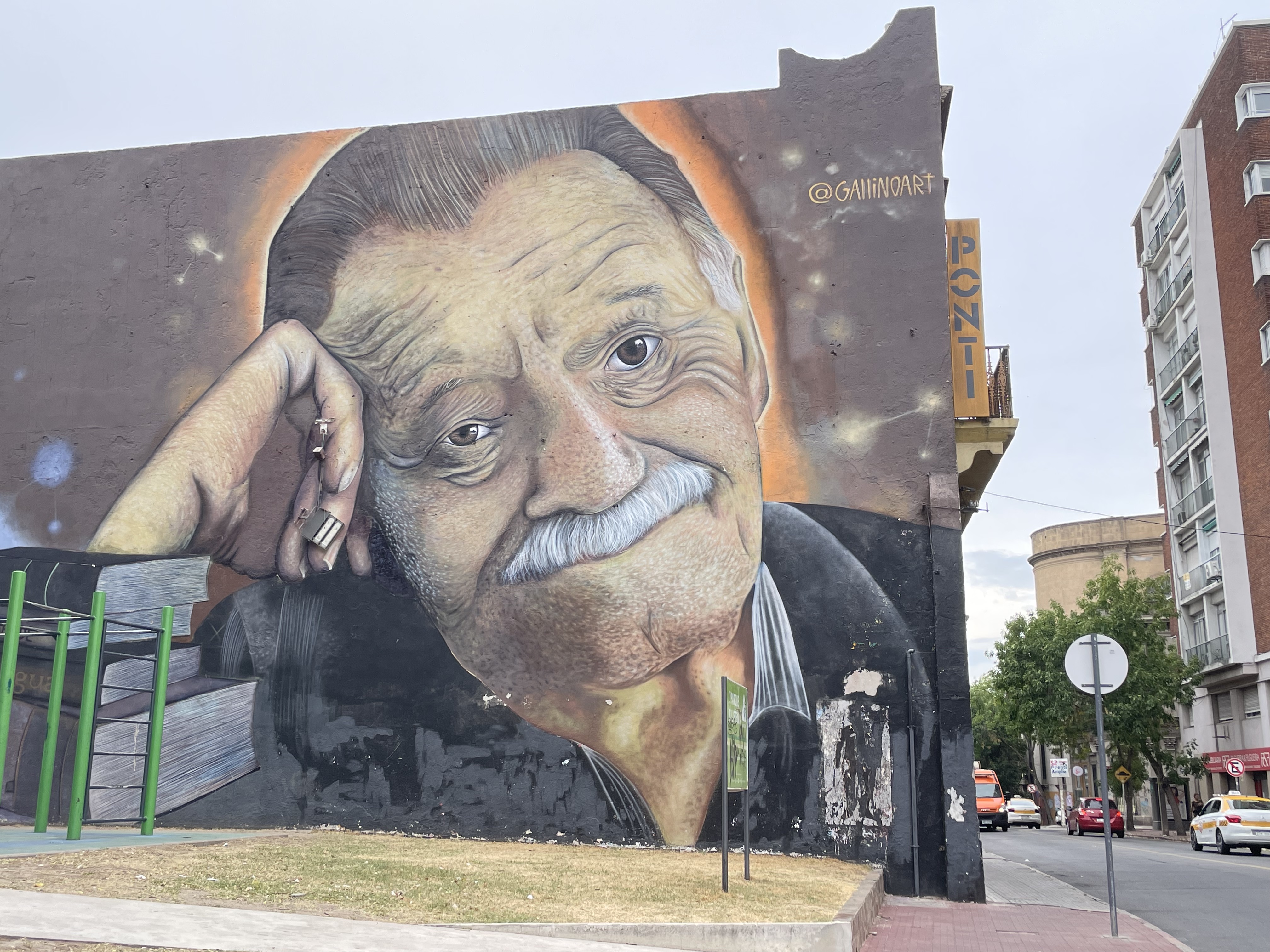
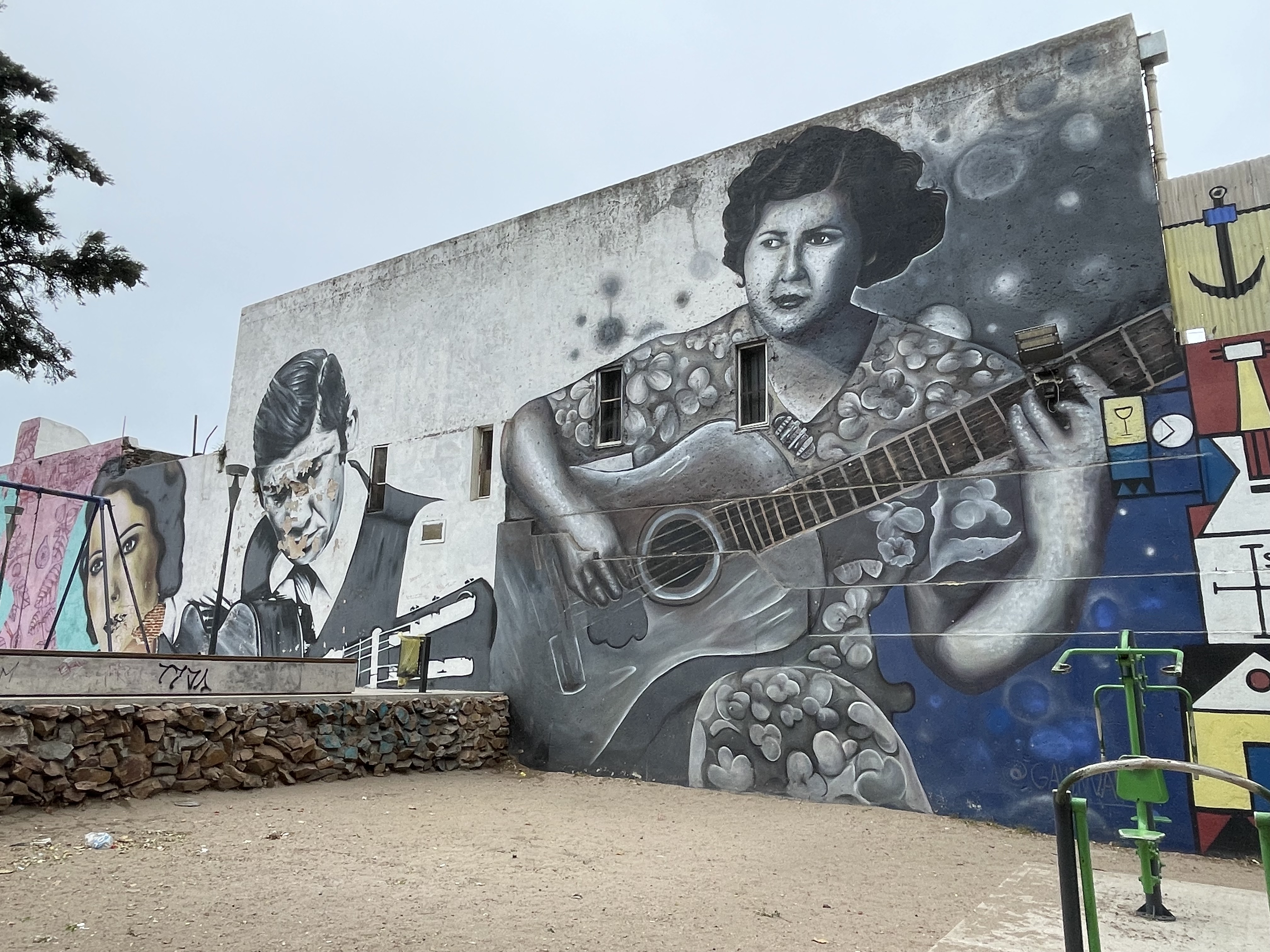
On the fourth corner of the square was a well painted group of murals of Uruguayan artists: Mario Bernadette, a writer; Rosa Lima, a guitarist; Alfredo Zitarrosa, a singer-songwriter; and Juana de Ibarbourou, a writer and poet. The muralist was Joaquin Torres Garcia, a painter and sculptor.
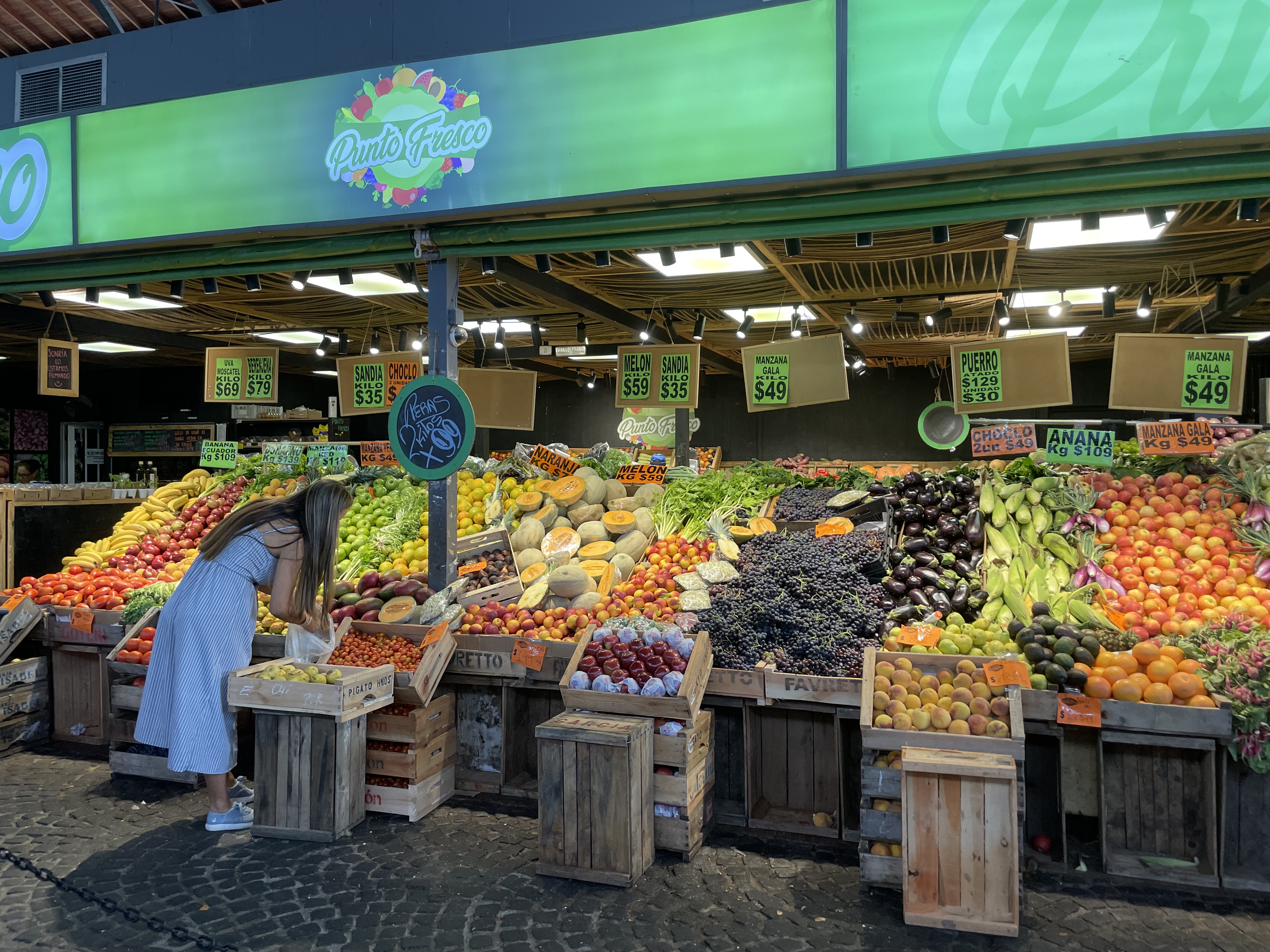
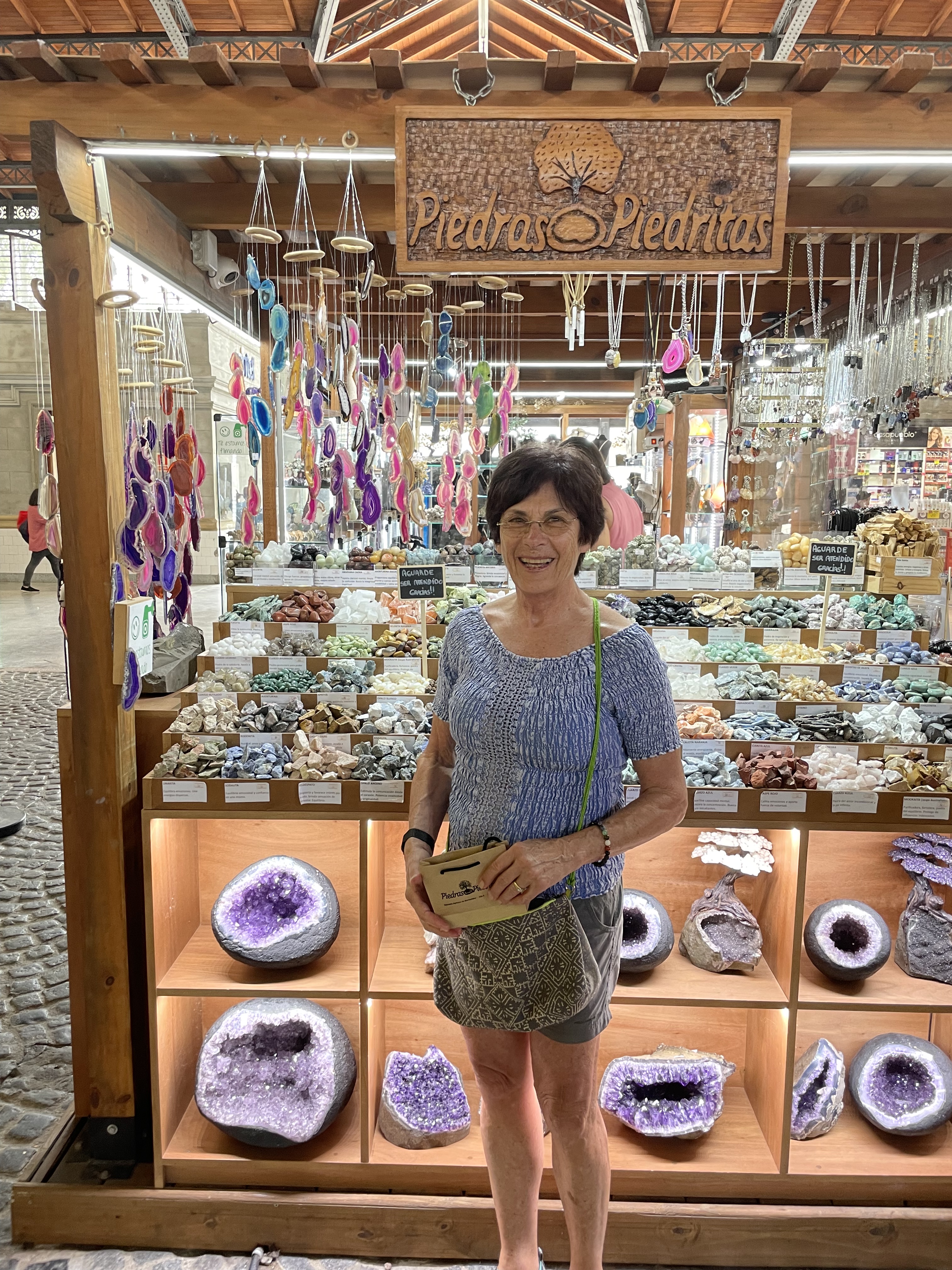
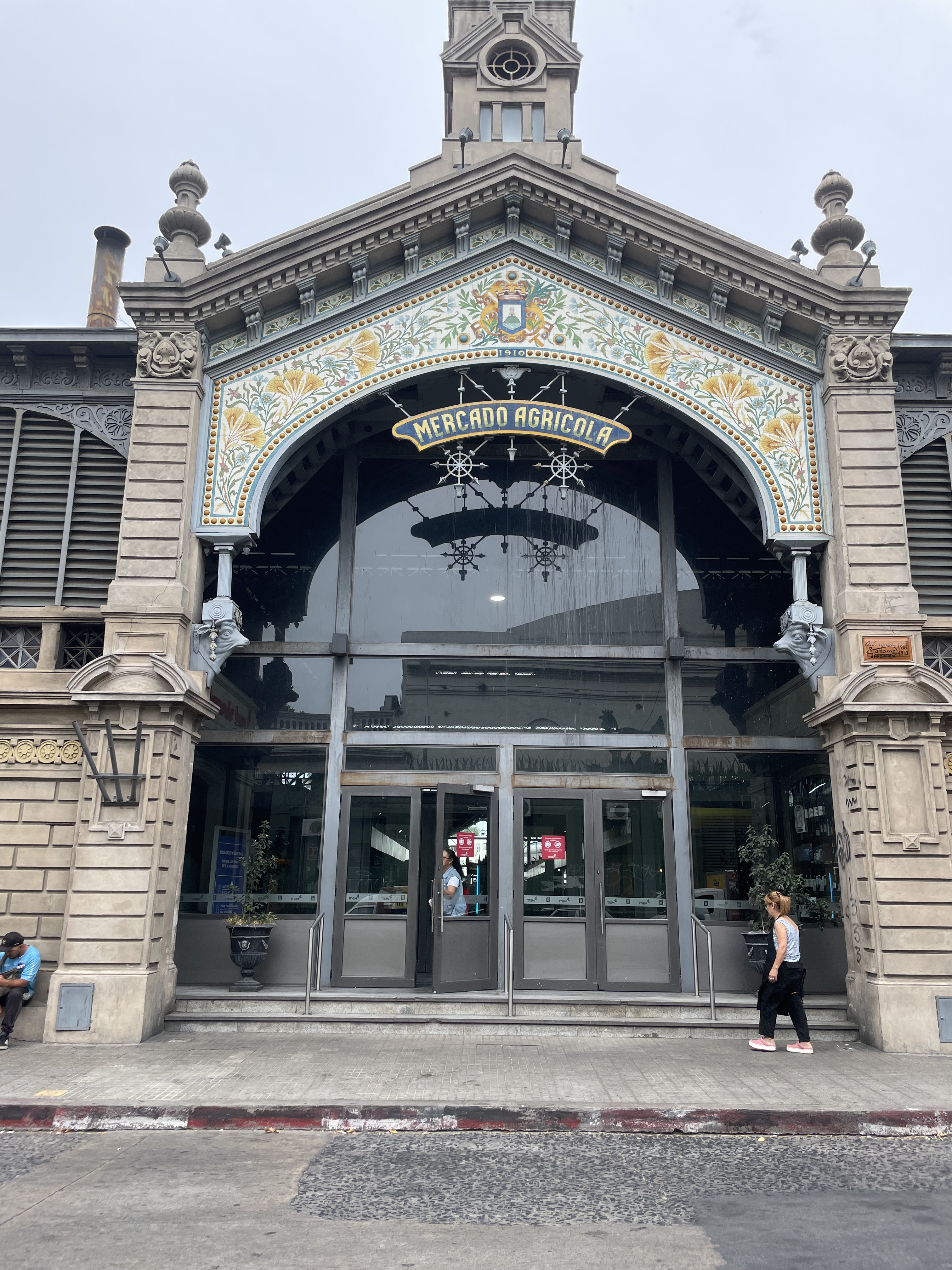
From this square we drove to a huge Mercado and walked through it. It was spotless, full of different shops loaded with merchandise and fascinating to observe so much variety. When we walked by a jewelry and stone store, I was attracted by very purple amethyst stones and ended up buying some, which I had promised myself not to do. Oh well. At least it will go with a lot of my clothing.
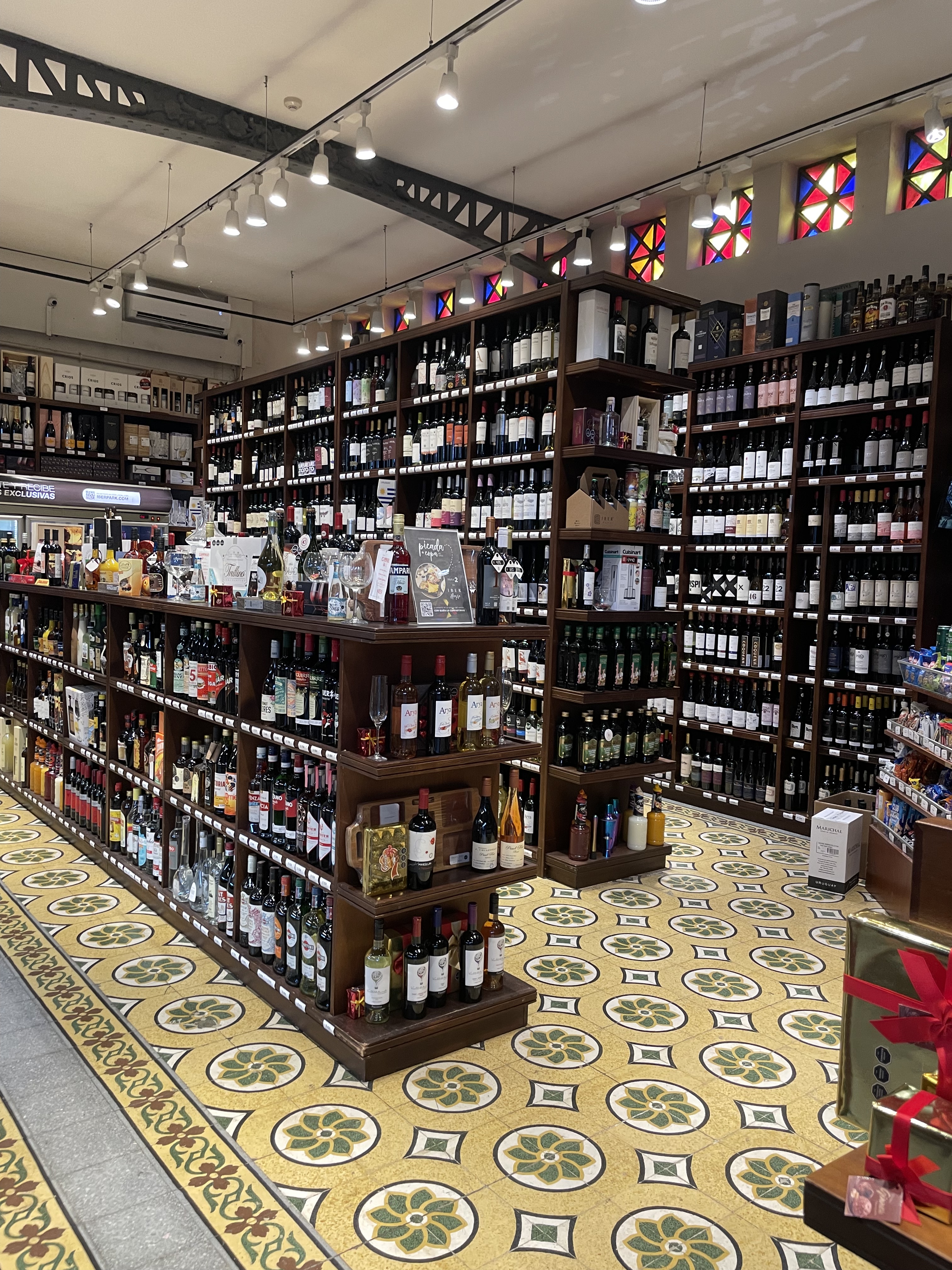

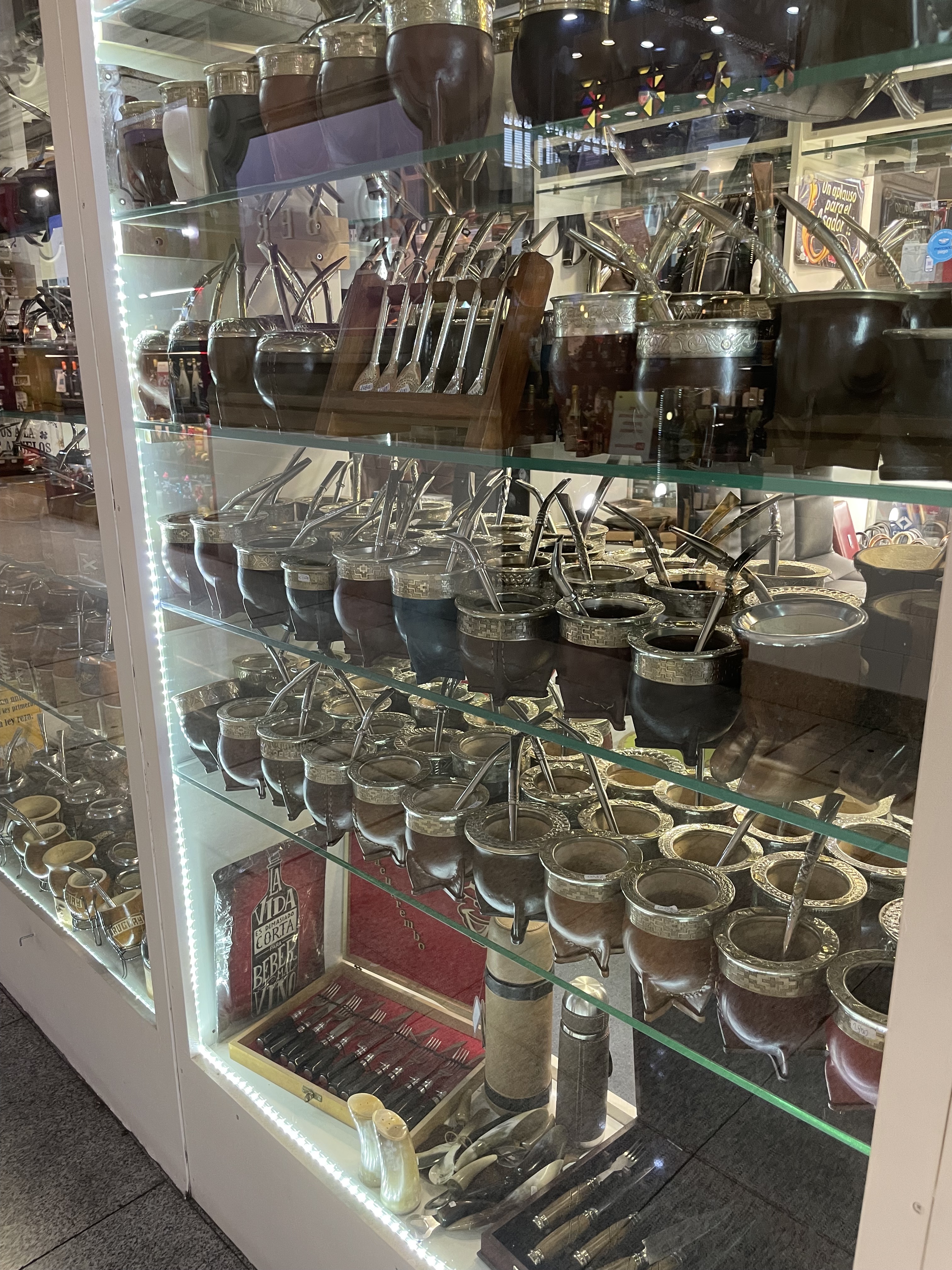
We came across a shop selling Mate Tea paraphernalia and took this photo so you could see that it is very popular in Uruguay and other South American countries. I tried it once, but did not like it, even though I like tea. It tasted too much like straw to me. The name “mate” comes from a Quechua word meaning calabaza or squash. To make mate tea, use an aged mate tea cup, which has been made from part of a dried gourd that has been transformed into the shape of the cup. Fill of 2/3rds the cup with dryYerba mate tea, a wild herb primarily from Paraguay. It is a stimulant, a diuretic and a tonic. It has about as much caffeine as tea or coffee. Leave empty space on the side of the cup from the bottom to the top. Pour warm water into the empty space keeping the mate to one side until the yerbe absorbs the water and expands. Place a metal straw with a filter at one end into the cup where space has been left and pour hot water onto the mate to create an infusion. Enjoy.
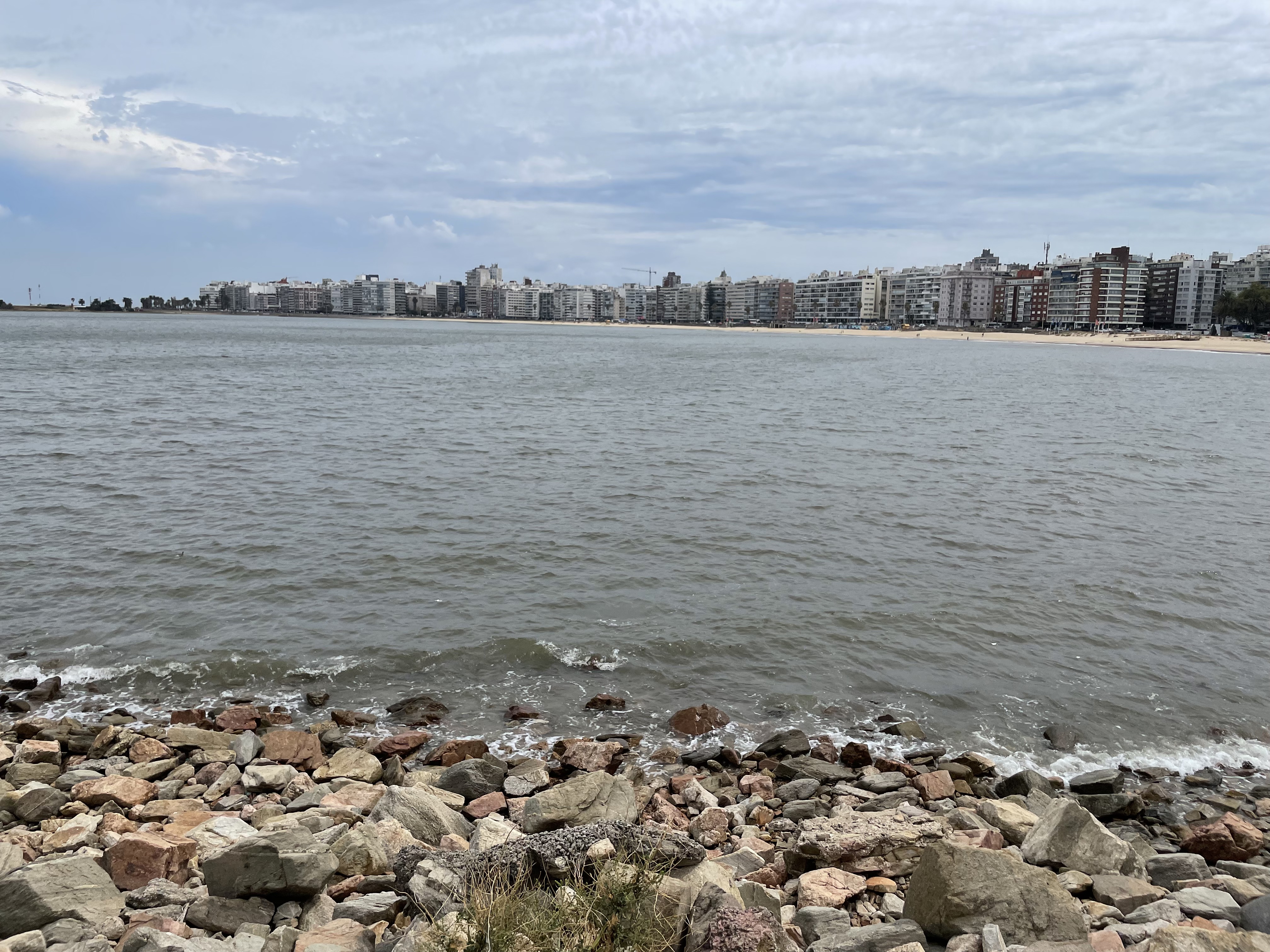
From the Mercado, Hans took us back to the Cafe Brasilero for lunch and then we drove around more old and new neighborhoods including the high end beach area with lovely sycamore lined streets, beach condos and apartments, and the Montevideo beach.

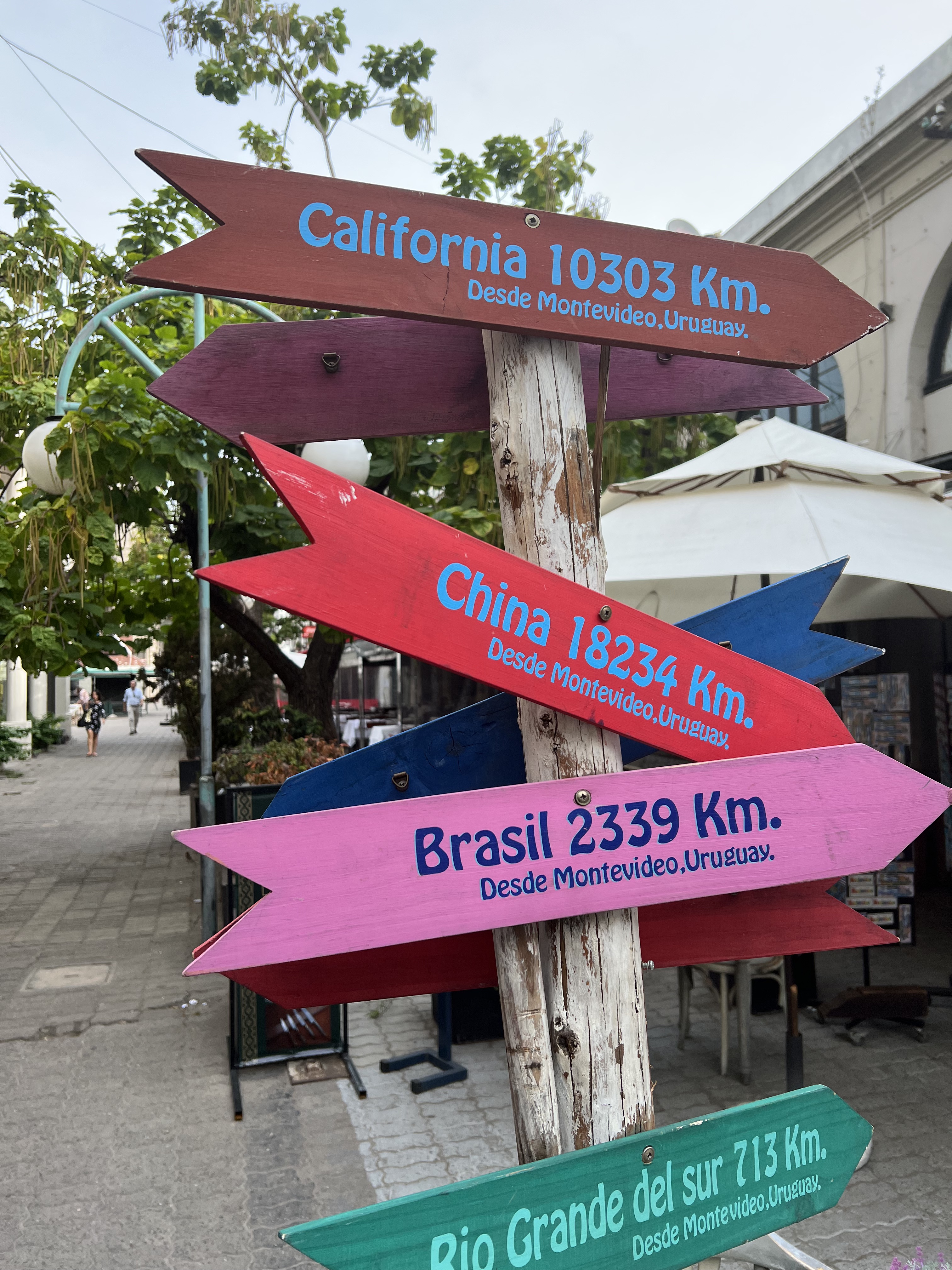
Some miscellaneous notes I took and hope you appreciate.
Hans told us Uruguay was the only port of entry for slaves in Brazil, Argentina and Uruguay in 1791. Most of the slaves were passed through to other countries. Slavery was totally abolished by Uruguay in 1842, the first country to do so. Brazil ended slavery in 1880.
There was an additional war Hans told us about, the Uruguayan Civil War, which was a series of armed conflicts that lasted from 1839-1851. It was the longest and hardest fought in the country’s history. The struggle originated in the rivalry between the Colorado (Red) Party based in Montevideo and led by Fructuoso Rivera and the business interests in the city and the National (White) party led by President Manuel Oribe and the agricultural interests of the countryside. Eventually the Red forces defeated the White forces and peace was negotiated. It is a long story to google if you are interested.
Abortion was legalized in 2012.
Recreational and medicinal marajuana was legalized in 2013.
Gay marriage was legalized in August 2013.
This is all I have for Montevideo. I hope you have enjoyed our two days there.
 Adventures with Julia
Comments
Julia and Mark. What an amazing trip. The pictures are spectacular and show the beauty of that part of the world. Thanks for sharing!