Monthly Archives: July 2026

Faroe Islands, Denmark

Wednesday, July 1, 2026
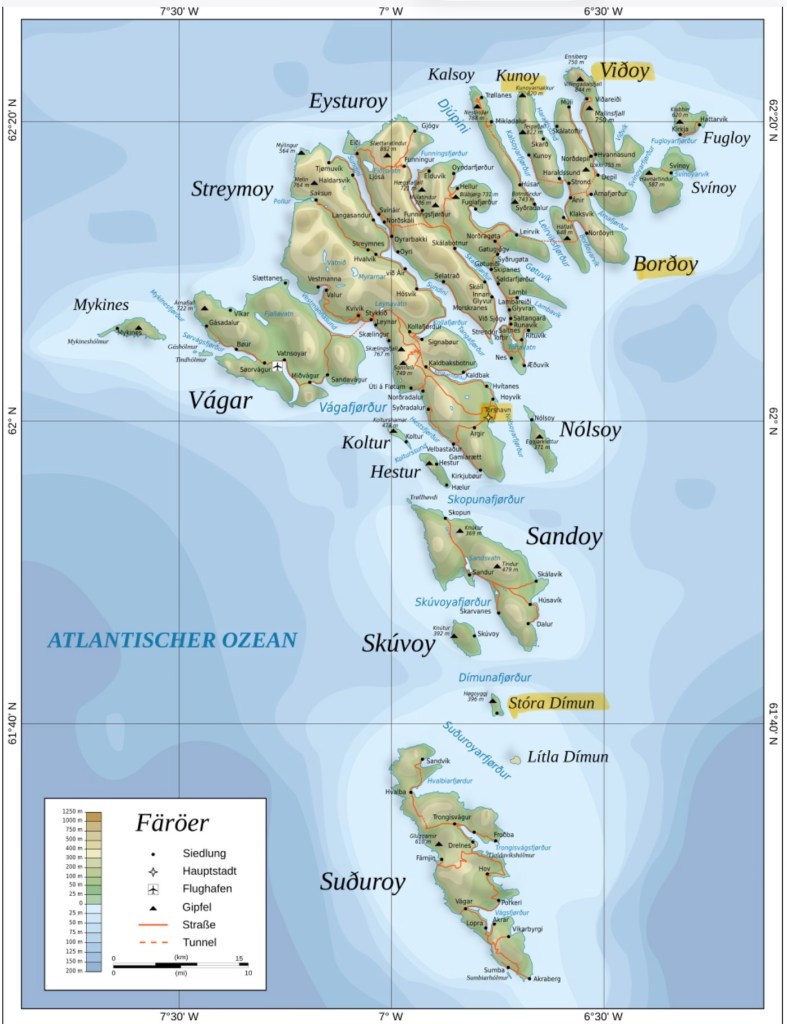
Faroe Islands. The capital, where we stayed, is Torshavn. It is highlighted near the middle of the map. We also visited the other highlighted places.

Departed Copenhagen at 11:30 and arrived Faroe Islands at 12:30, due to an hour change. Our driver shared a lot about his enthusiasm for the islands during our half hour drive to the Hotel Foroyar.

The islands are approximately midway between Iceland, Norway and Scotland. There are 22 tunnels on the 18 islands including 4 sub sea tunnels. All but one of the islands are inhabited. The population is 55,000 and growing. The capital city of Torshavn has 23,000 people. The economy is good with only 0.9% unemployment. The main industry is fishing and 85-90% are exported including: salmon, mackerel and cod. The average income is high. There is one university. The language is unique, but similar to Icelandic rather than Danish.

A brief history of the islands provided by Google, informs us that Irish monks occupied the area from the 6th-8th centuries when the Norsmen arrived and established one of the world’s oldest parliaments (Logting) in Torshavn. The islands became part of the Kingdom of Norway in 1035. When the crowns of Denmark and Norway were joined, the islands were brought under Danish influence until the Treaty of Kiel in 1814, when Denmark ceded to Sweden, but the Faroe Islands remained under Danish sovereignty. Throughout the 19th century Faroese cultural identity was strengthened, including the revival of the Faroese language and reestablishment of the Logting parliament. During WWII the British forces occupied the islands, while Denmark was under German control. After the war, a narrow independence referendum in 1946 led to the granting of home rule in 1948 establishing the Faroese as a self governing territory in the kingdom of Denmark. Since then the Faroe Islands have expanded political autonomy and developed a modern economy rooted in fishing, while maintaining a distinct cultural and a linguistic heritage. Google and our guide, Jakup, seem to agree.
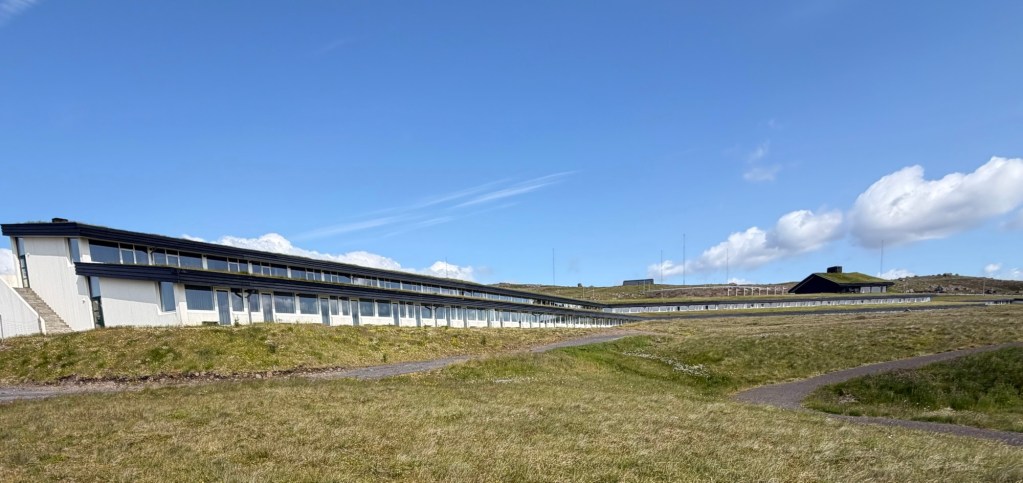
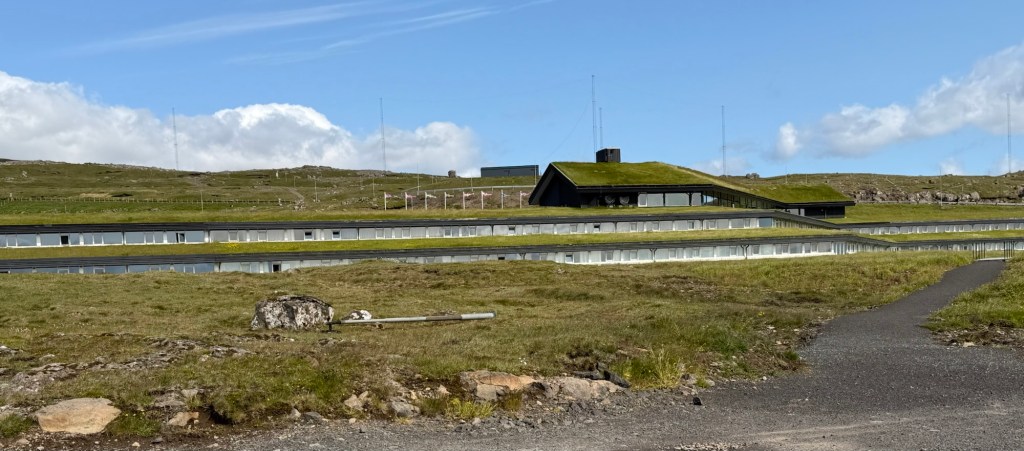
Our room is 7 doors from the left end. A long walk to the Lobby
Hotel Foroyar

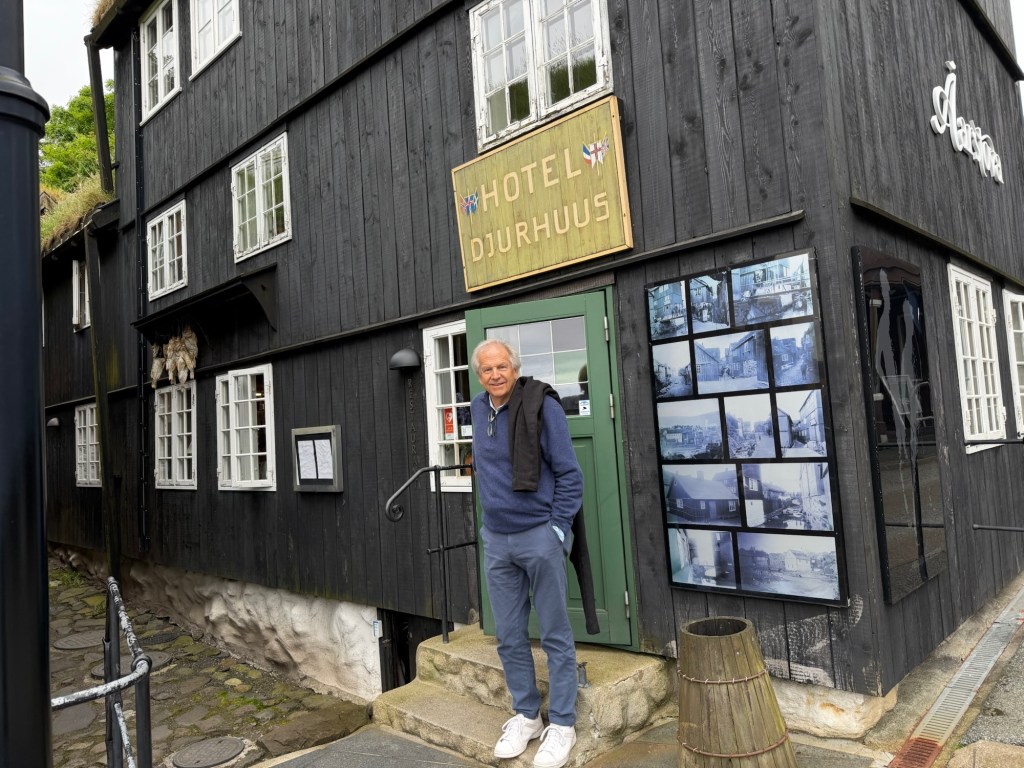
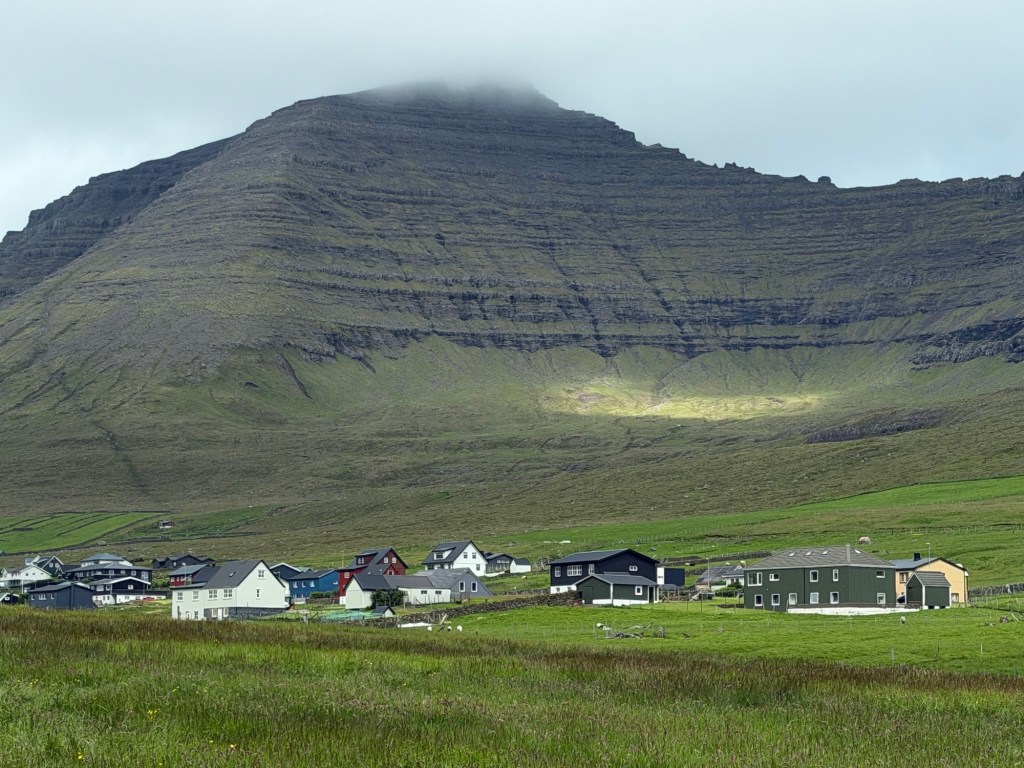
After the 30 minute drive through lush green rolling hills we arrived at our hotel, Hotel Foroyar, checked in and relaxed the rest of the day until dinner time, when our driver drove us the short distance into the capital city called Torshavn, where we had an ok, not great, dinner at a place called Aarstova.
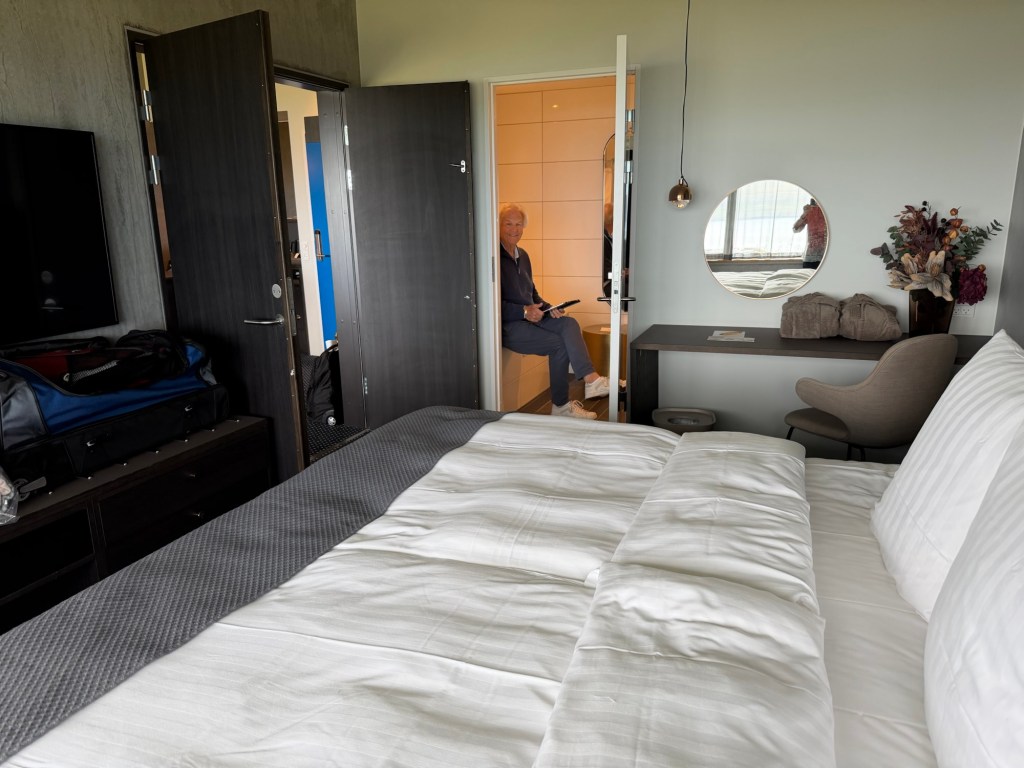
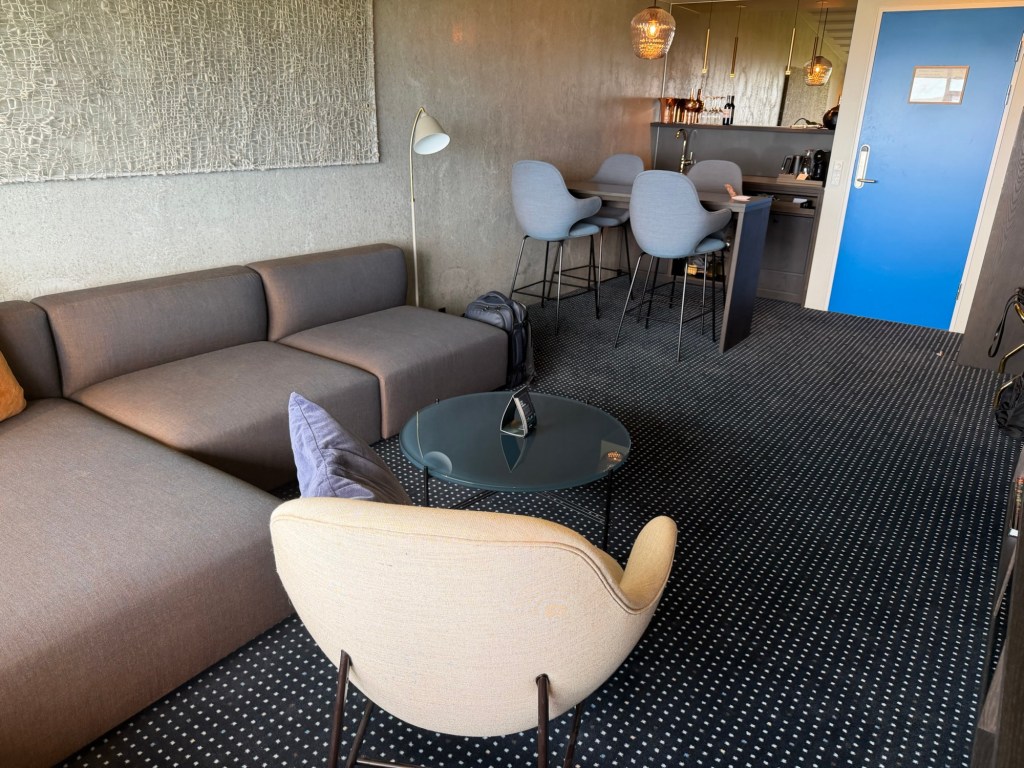
Thursday, July 2, 2026

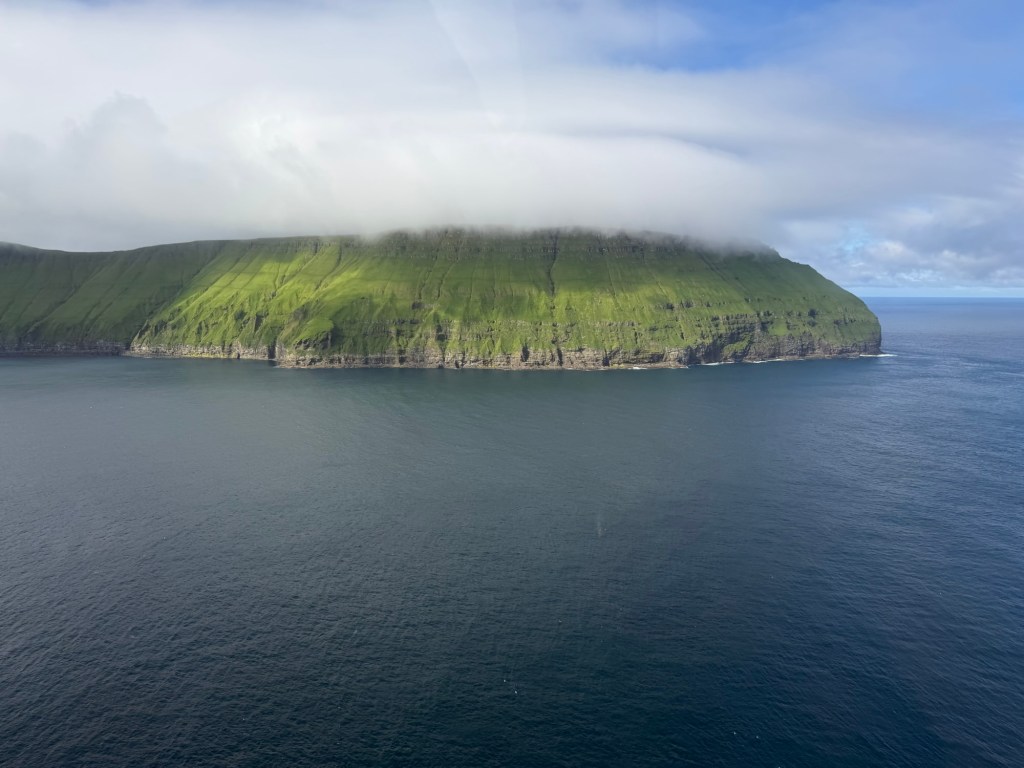
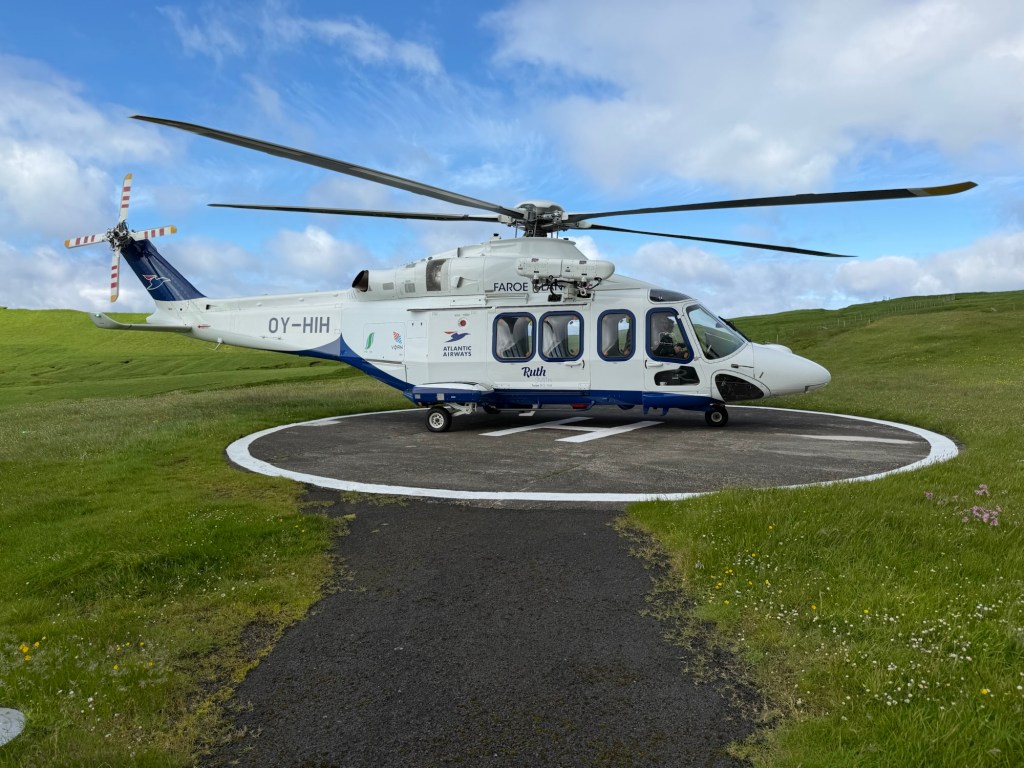
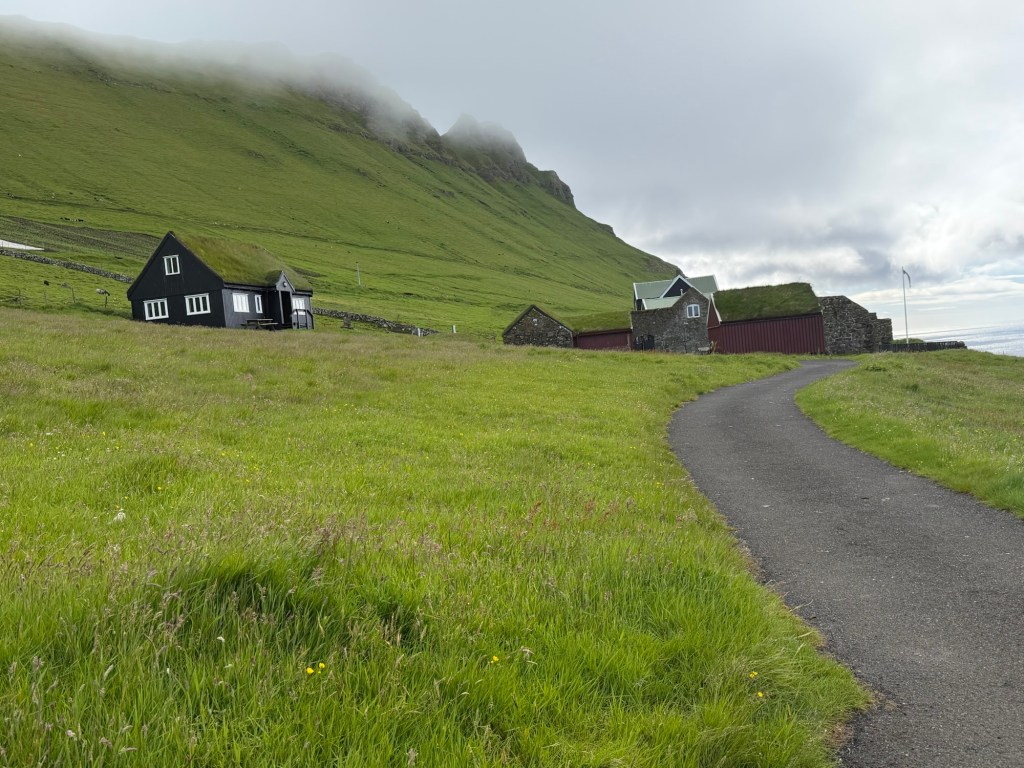
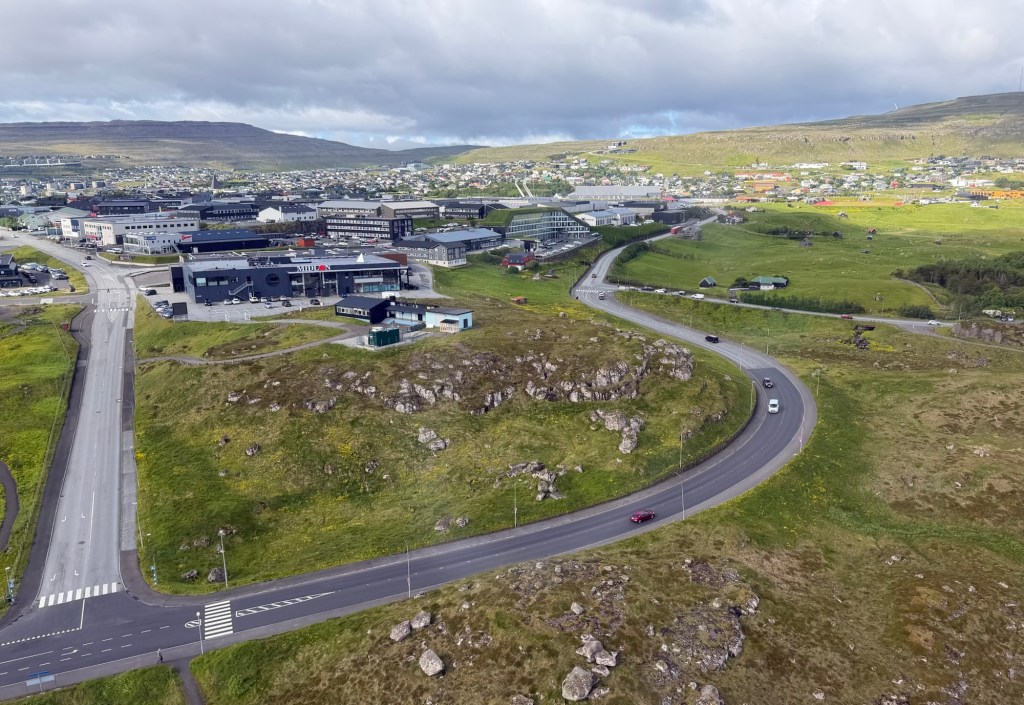
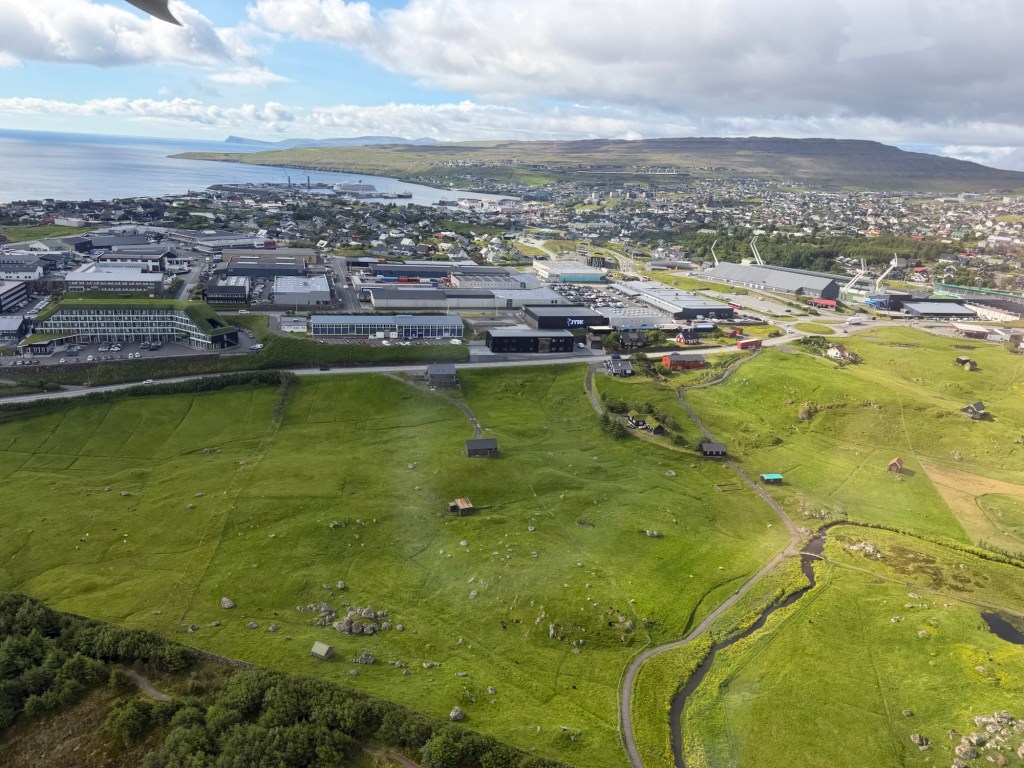
Our new guide, a young lady named Birita, picked us up at 9am and off we went for a short drive to the Torshavn Heliport and an equally short flight to the island of Stora Dimun, which is lived on by only one family, a husband and wife named Jogvan Jon and Eva, whose family have lived there for 8 generations.
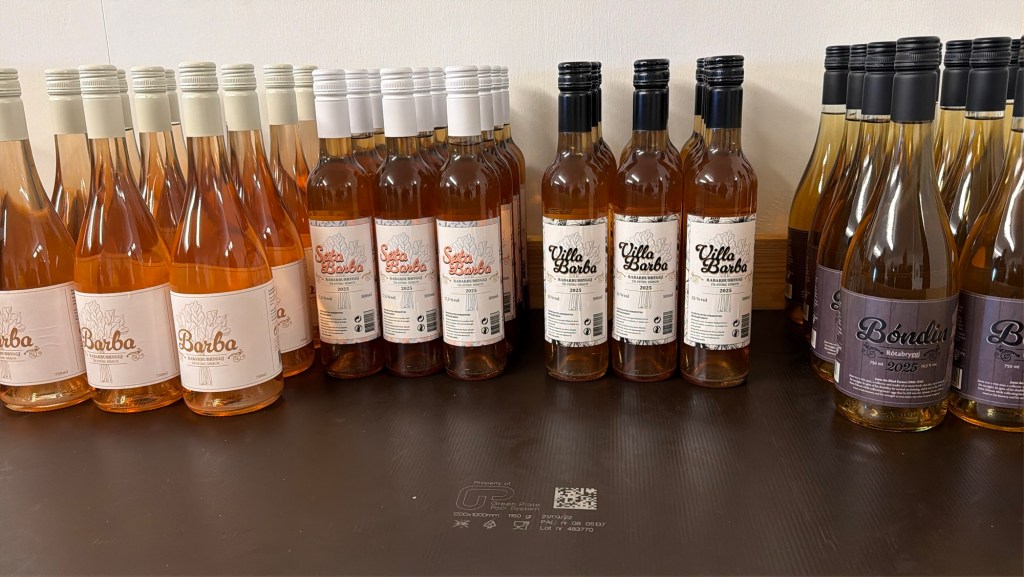
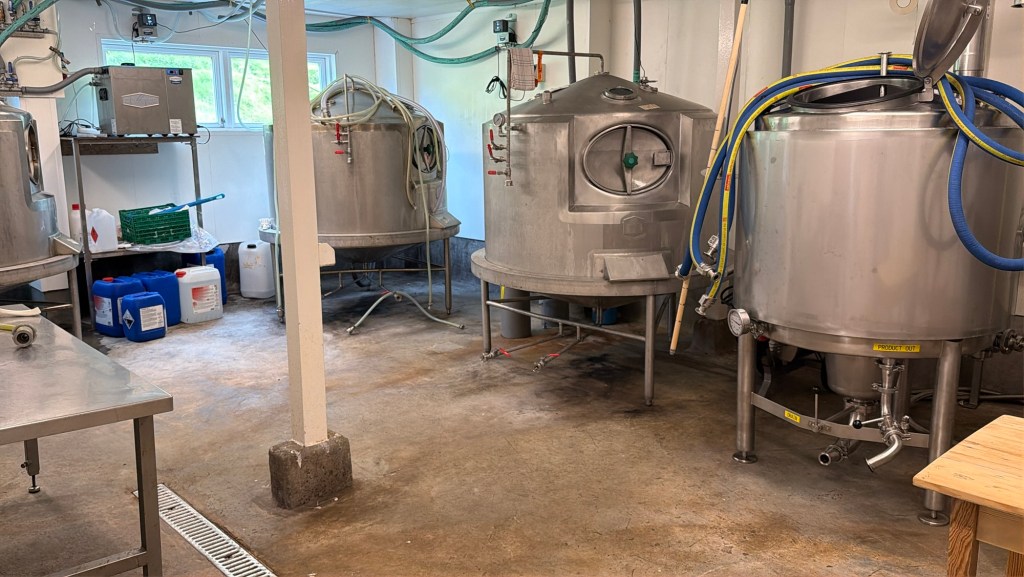
They are in their early 50s and appear to be managing a big assortment of activities including: managing 1000 head of sheep, 500 of which they slaughter, mostly for sale; make a couple vats of wine per year for home use; keep one cow for milk and a handful for eating; grow vegetables such as kohlrabi, onions, potatoes, rhubarb and more for their own use; make and prepare all their own meat products including cheese, sausages and other meat products; maintaining several buildings; raising a litter of puppies to be working dogs; tending to a family of relatives who come to visit and help out regularly; and more.

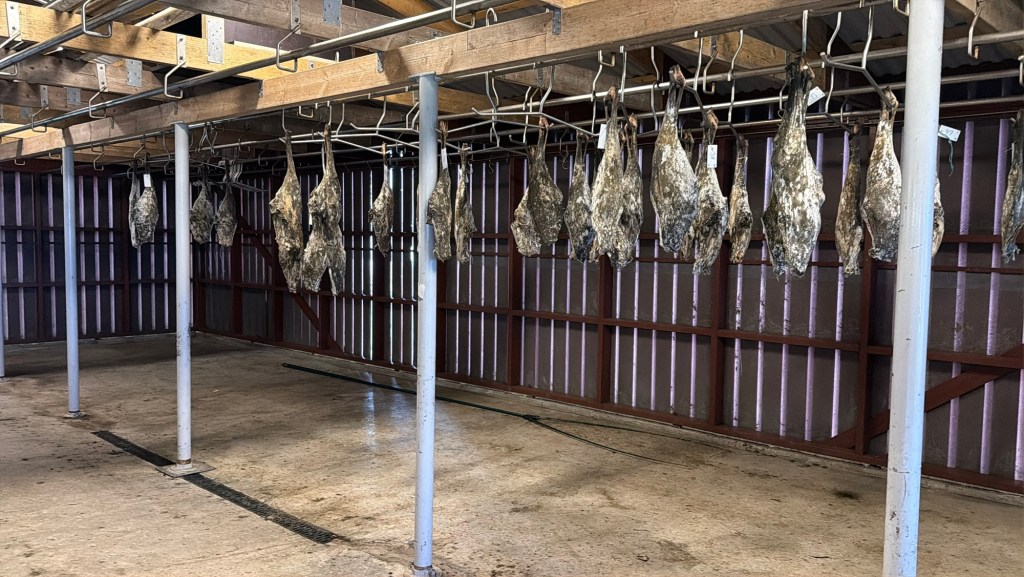
Meanwhile Eva was recovering from a broken foot, when she got stepped on by a cow. They were quite social with us and we had a delightful conversation with them for a couple of hours. She served us three different cuts of lamb meat; fresh, fermented, dried and processed; pickled onions and cheese, plus a basket of different homemade breads. We tried everything, even though we did not care for most of the meat.

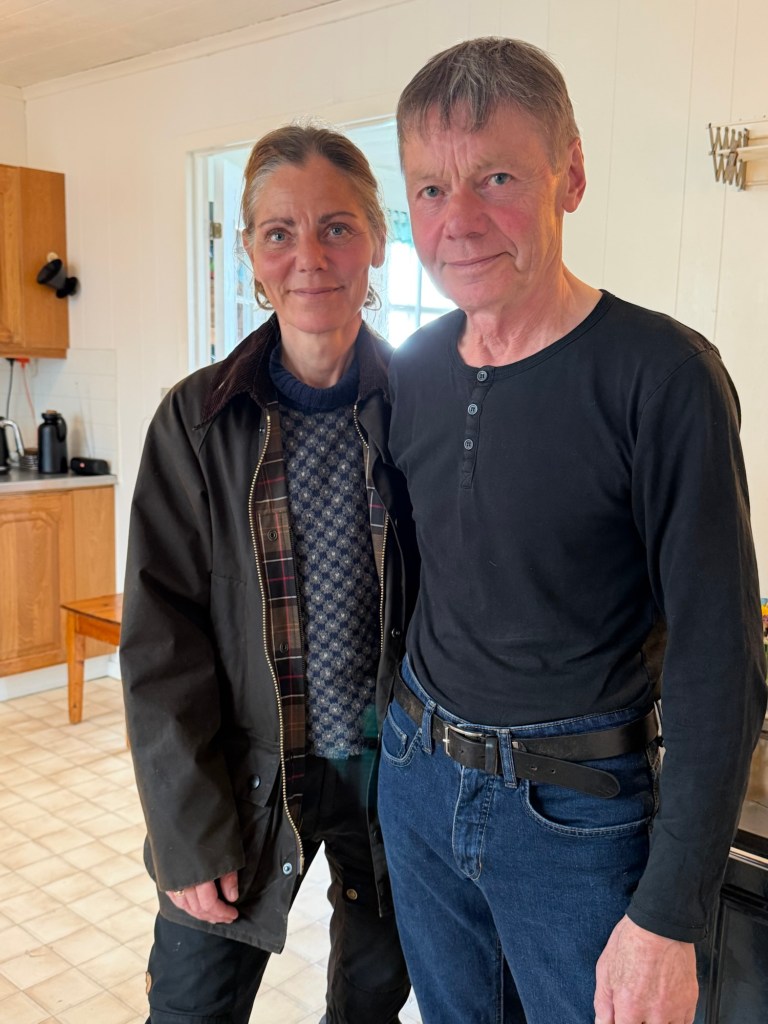
Finally we departed having had a delightful time with Eva, Jogvan Jon, Oli Jakup and the cousins that were helping out on the farm that day.
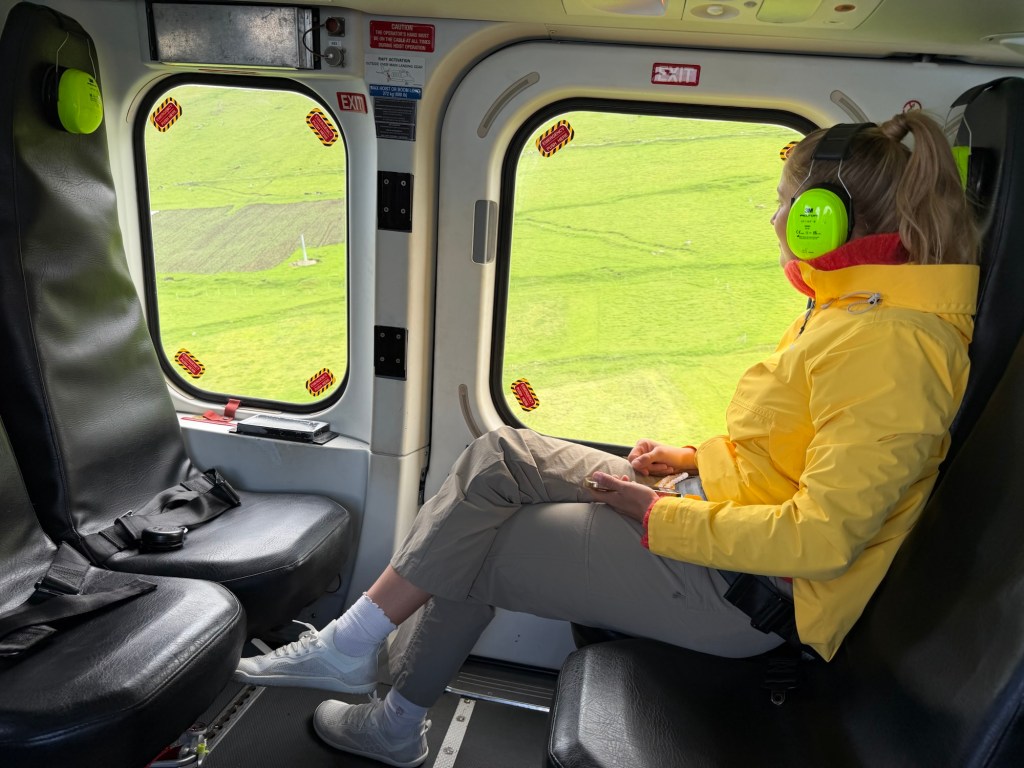
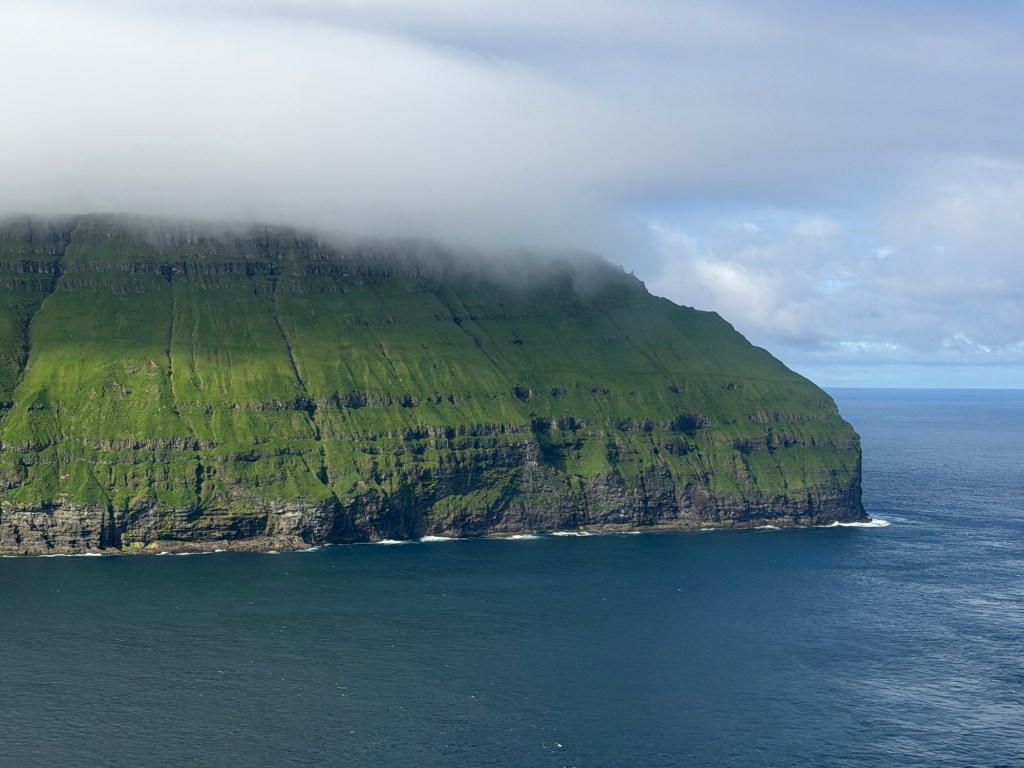
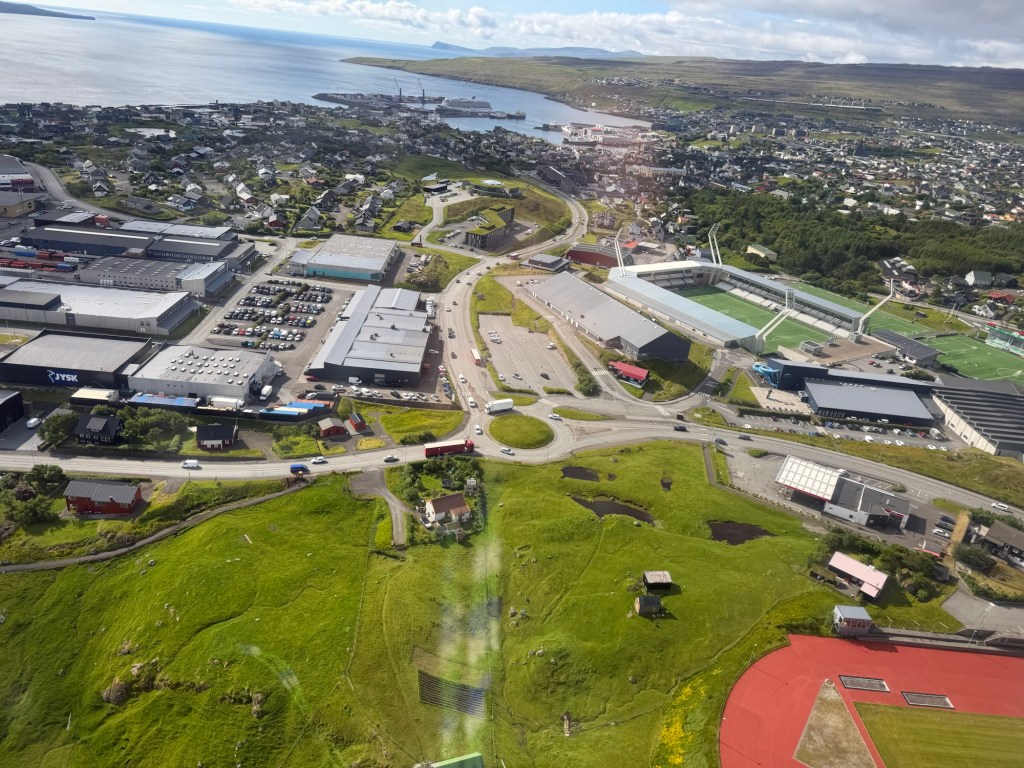
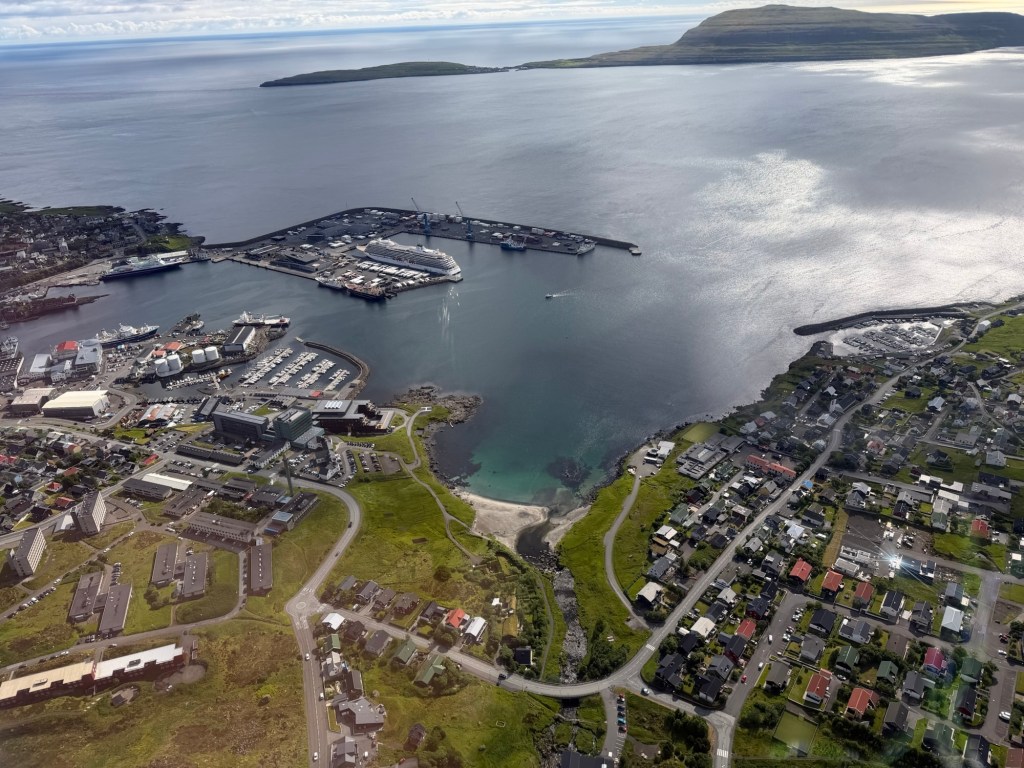
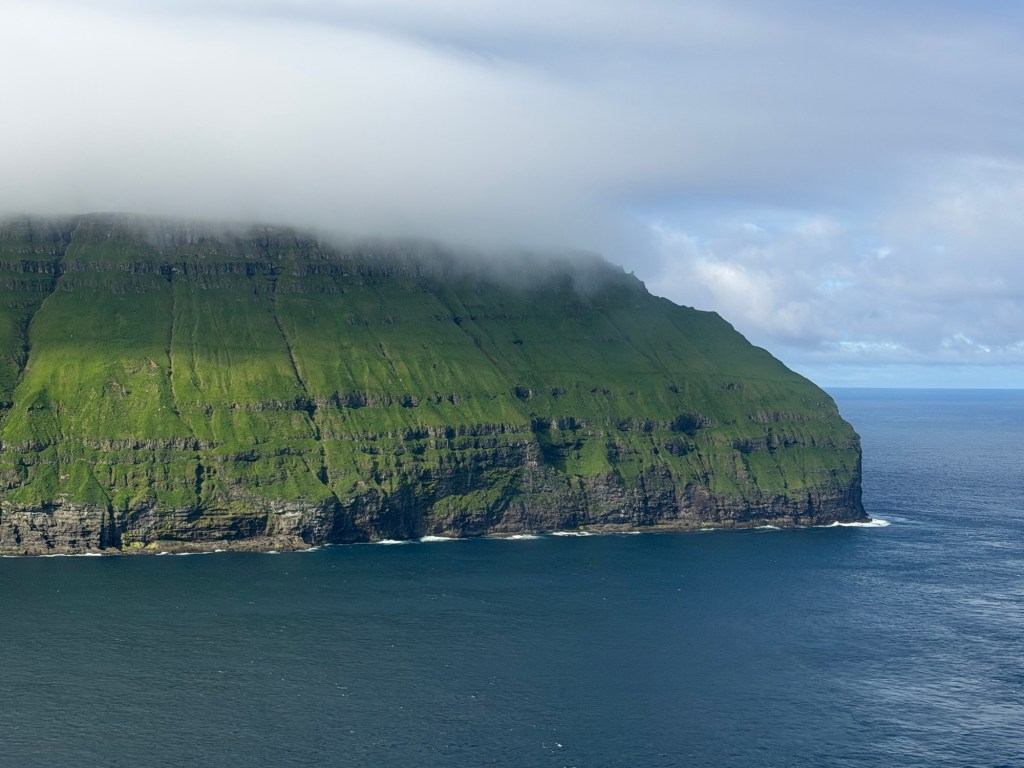
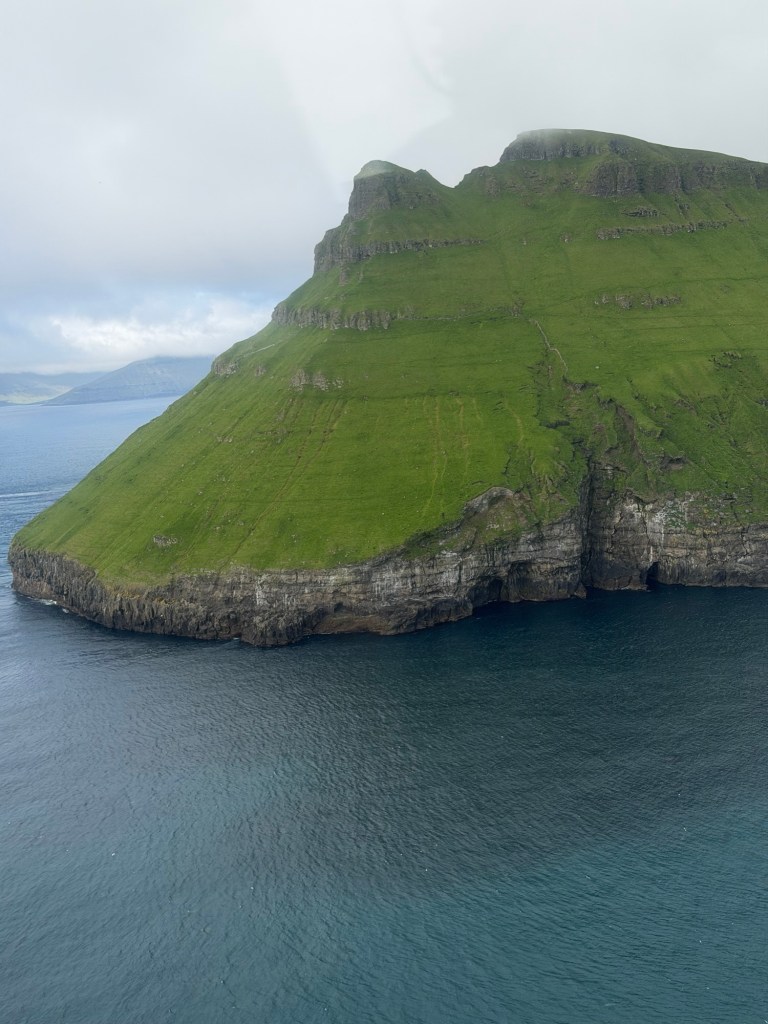
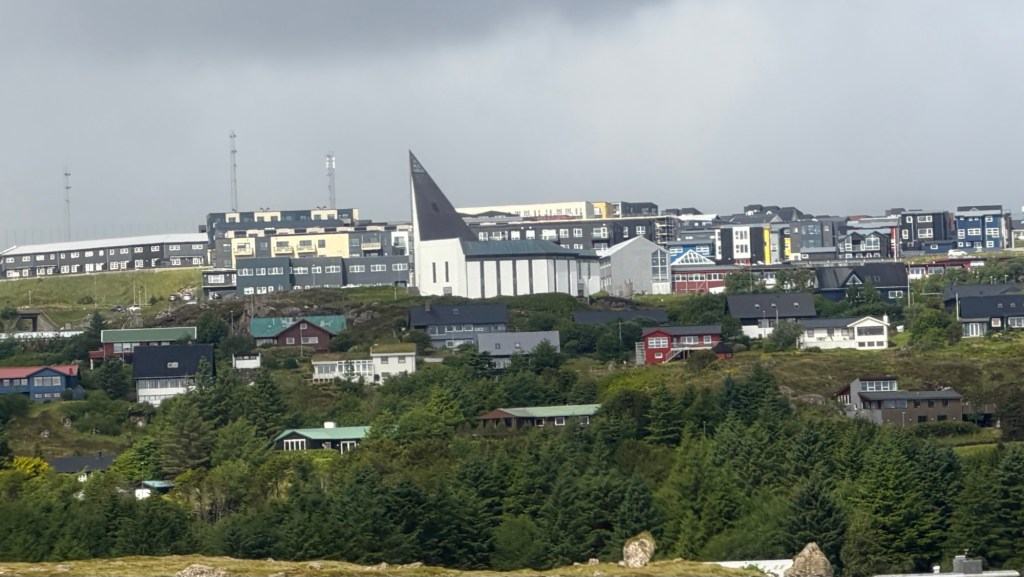
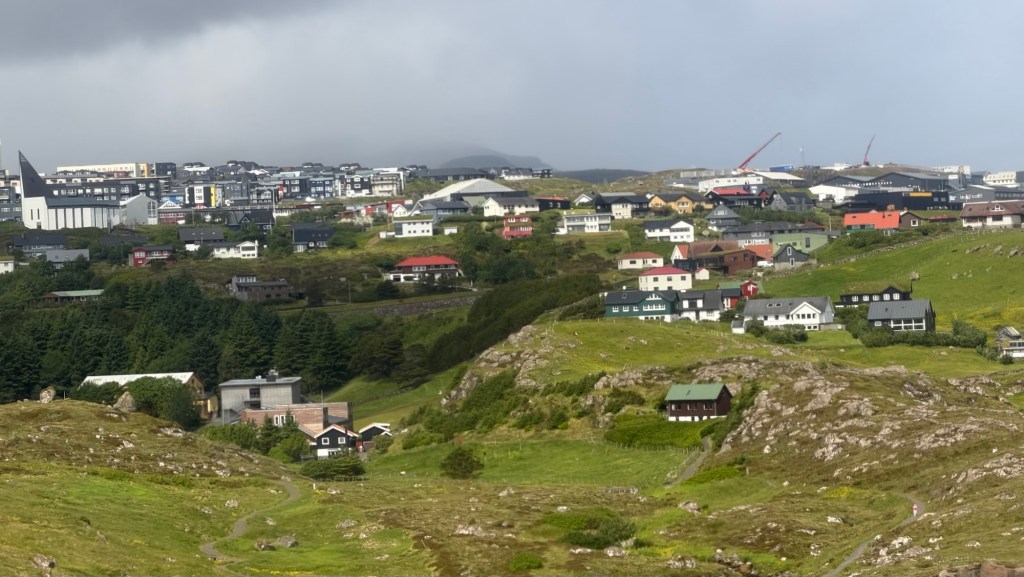
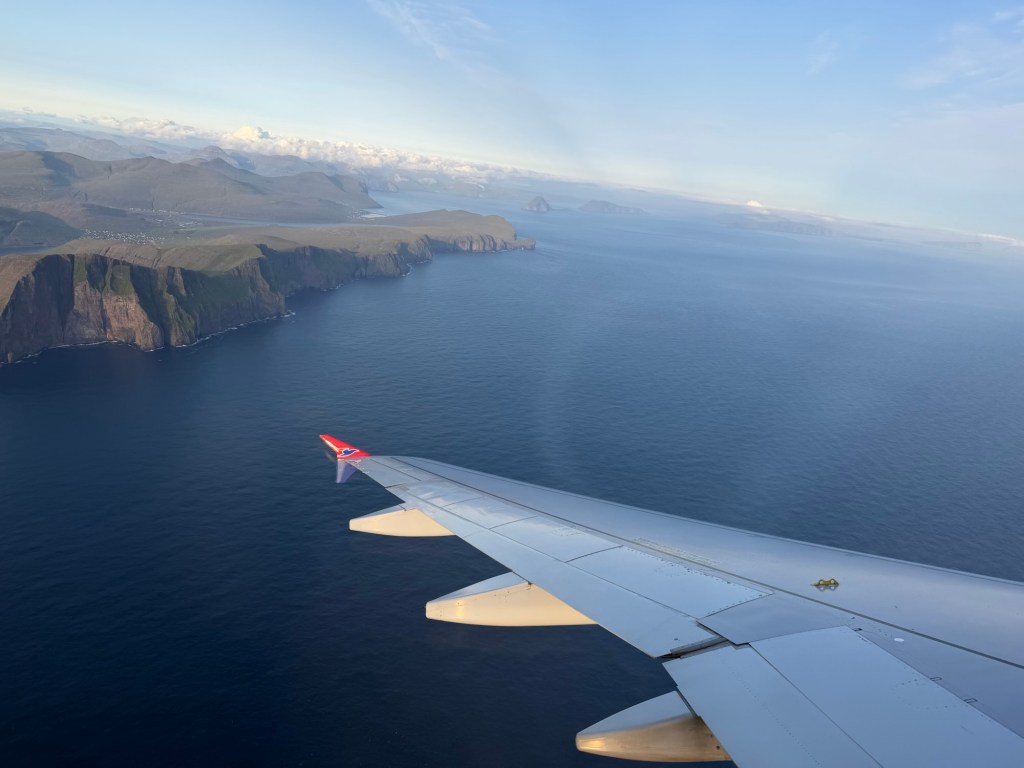
Up and away, we passed more island scenes and flew back to town where, Birita, gave us a bit of a tour of the interesting buildings.
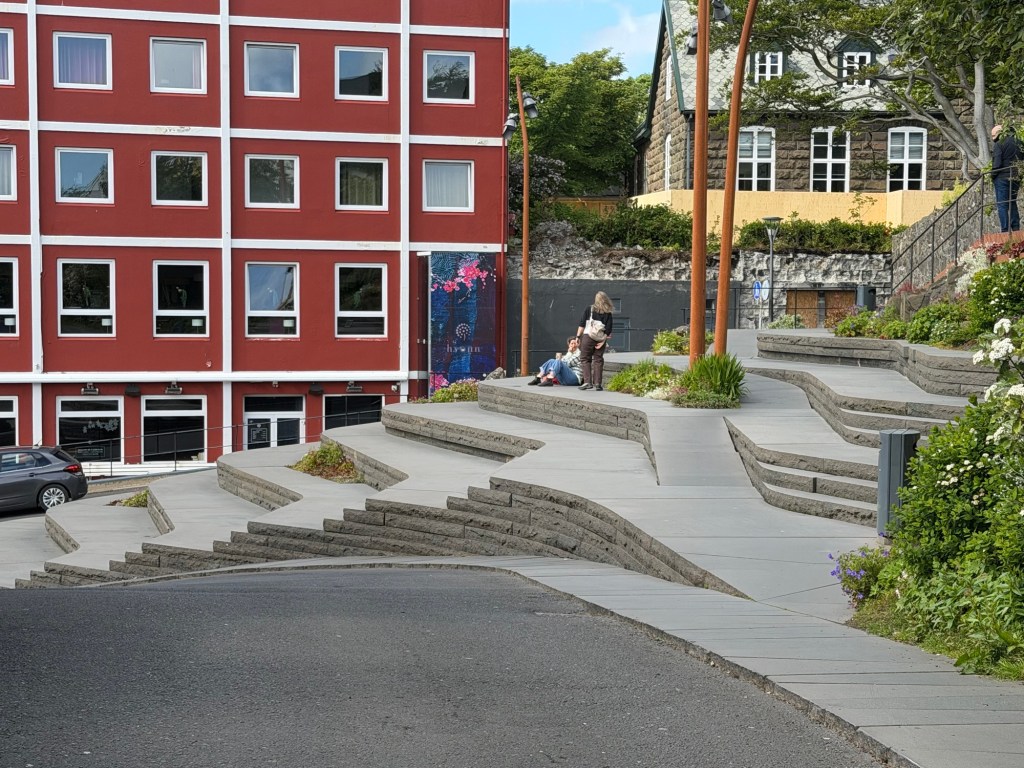
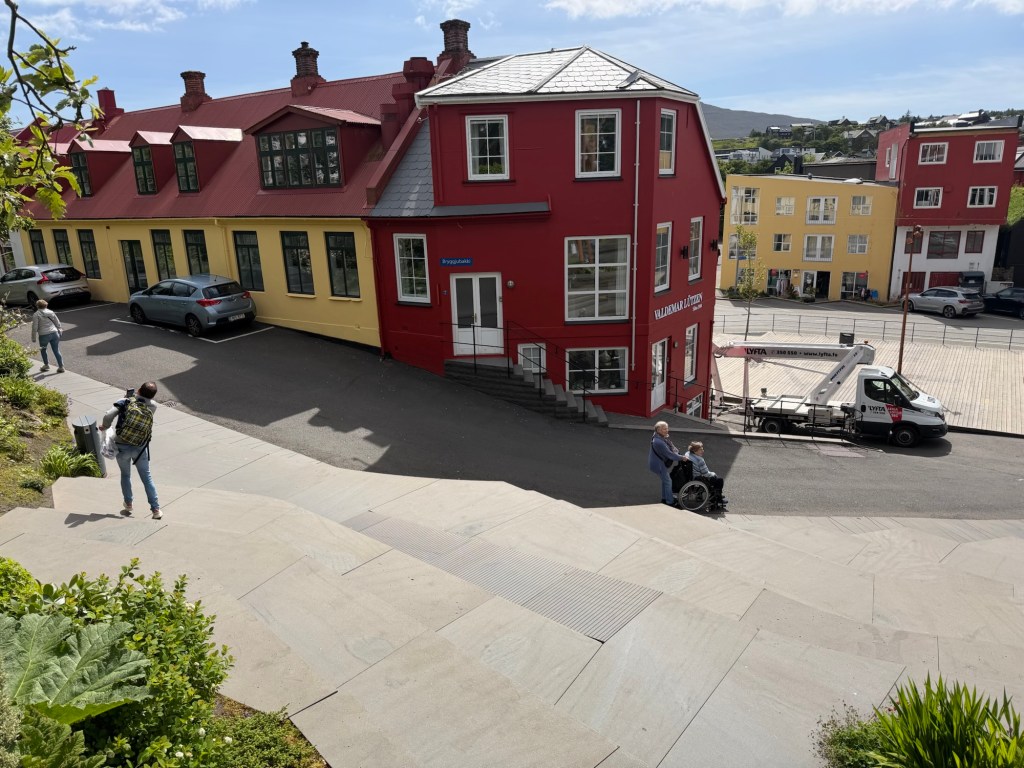
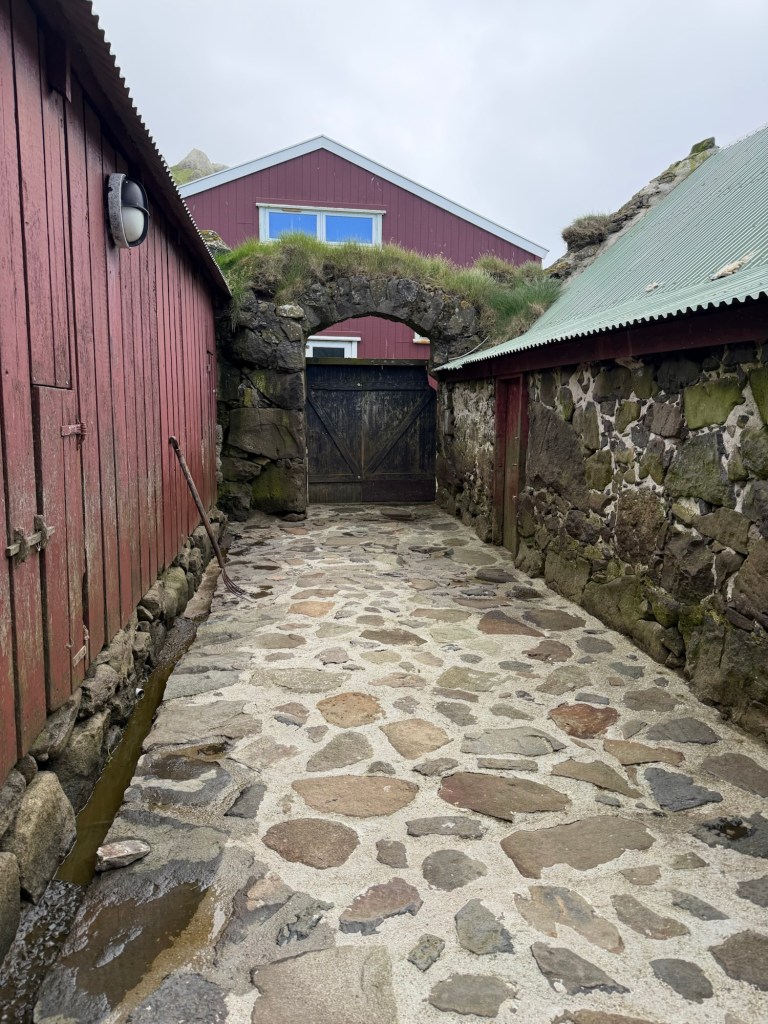
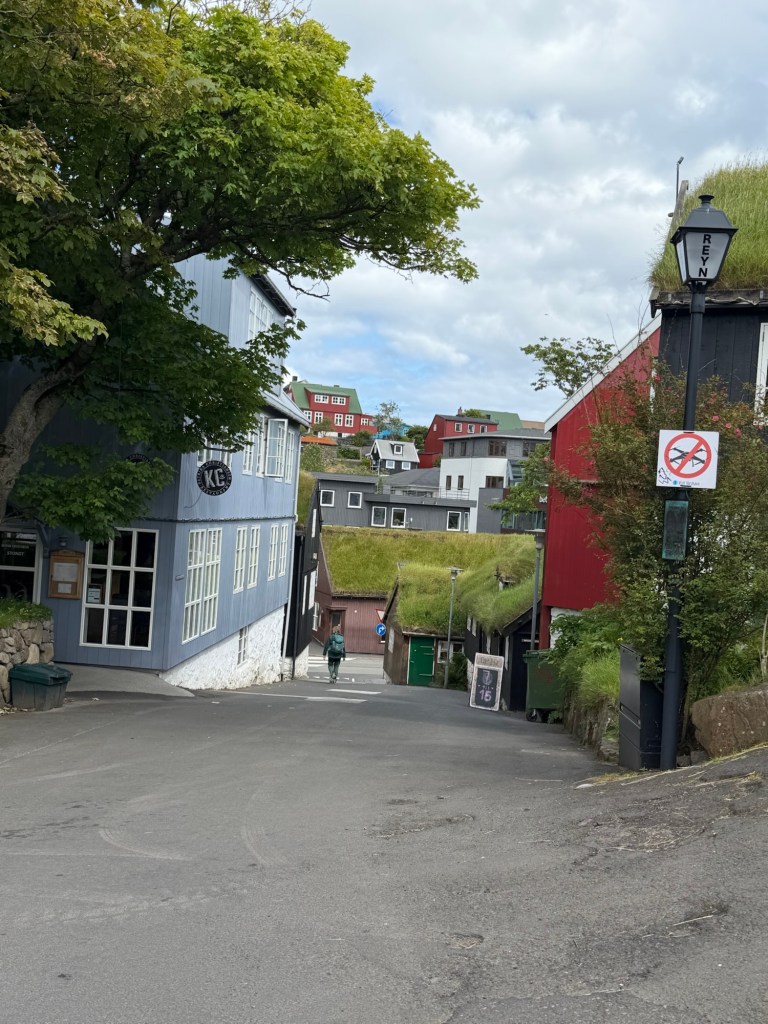
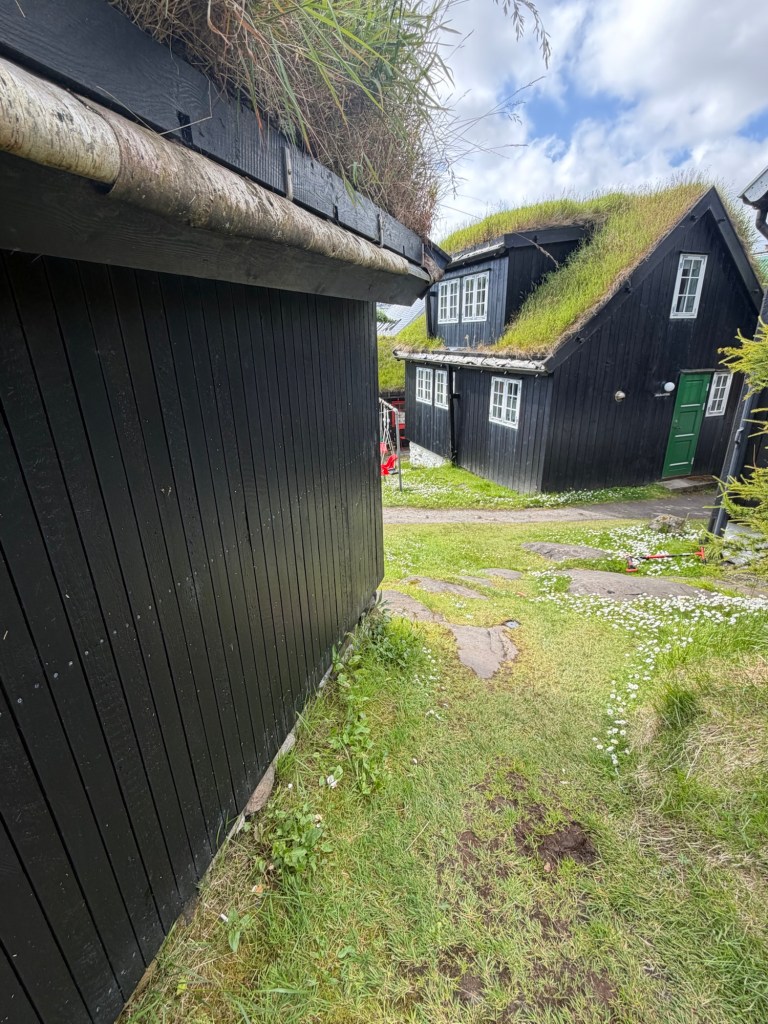
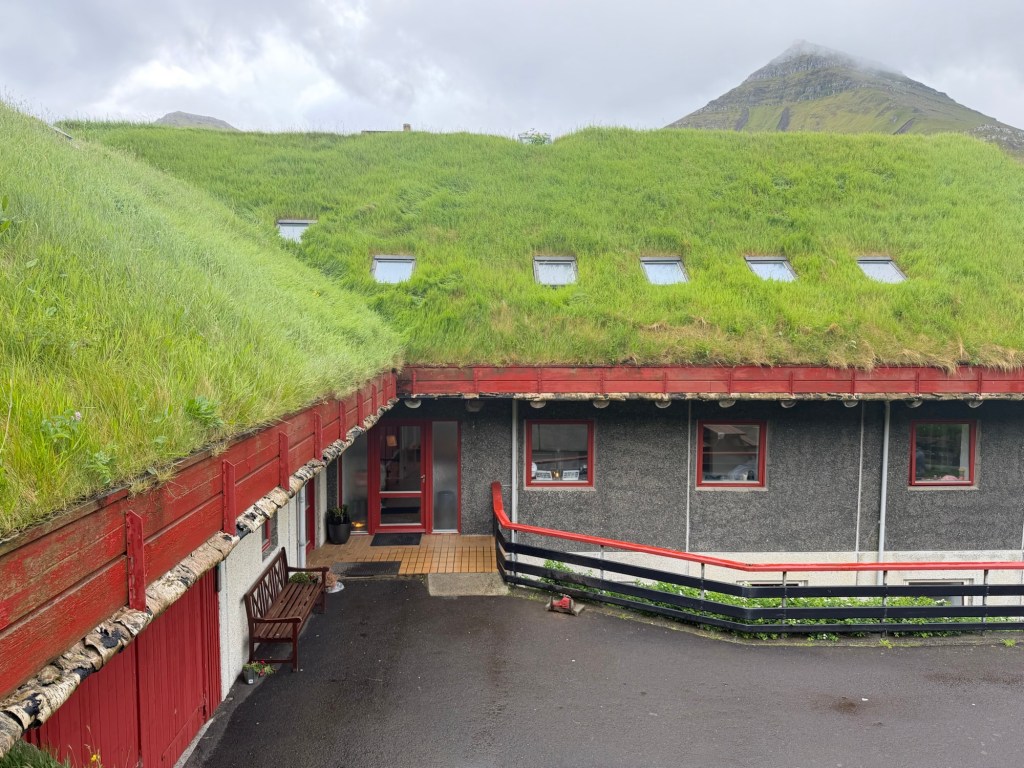
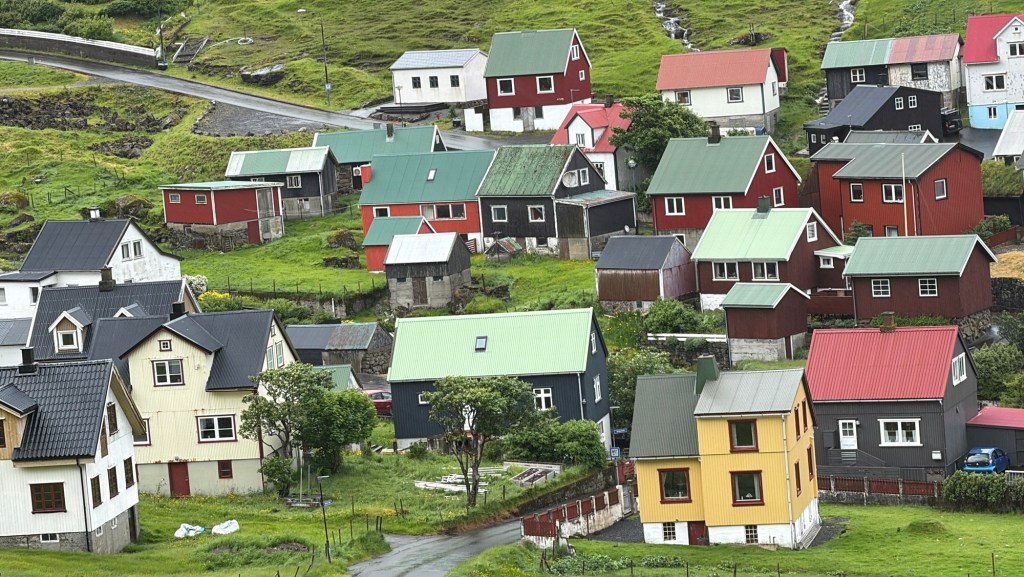
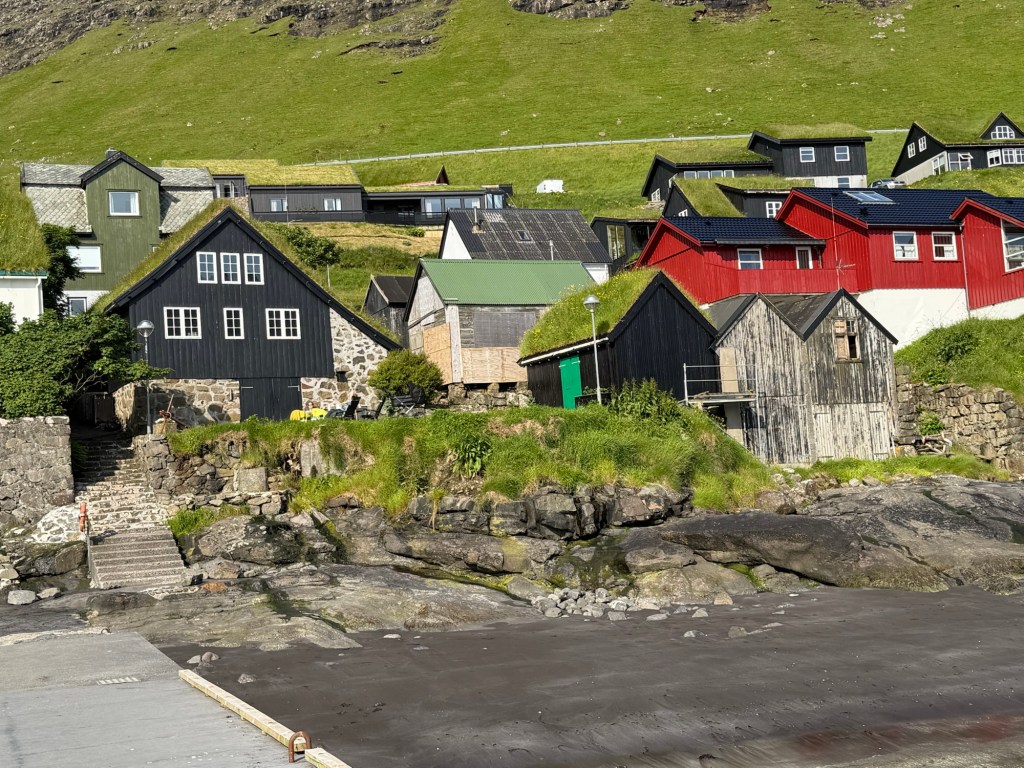
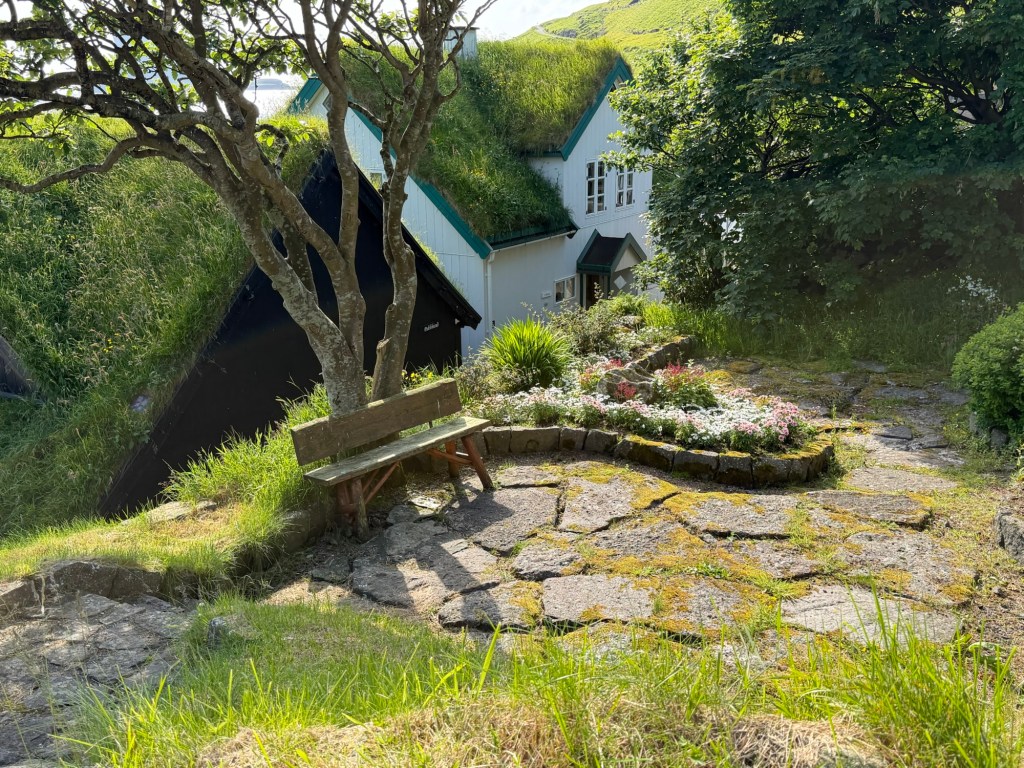
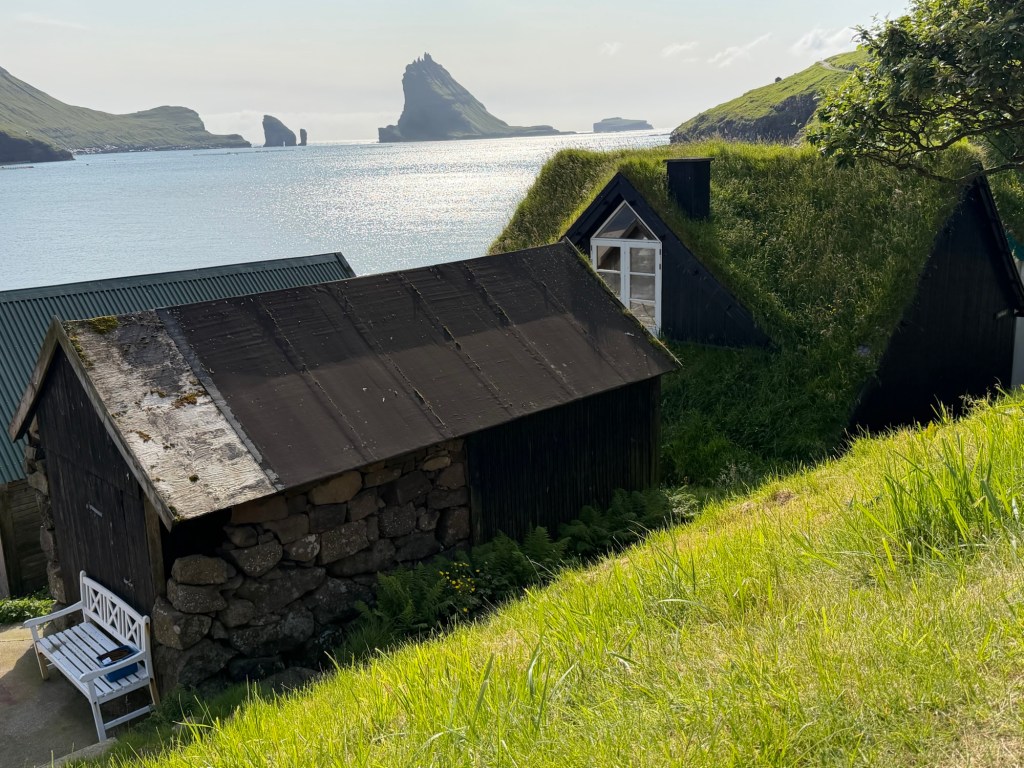
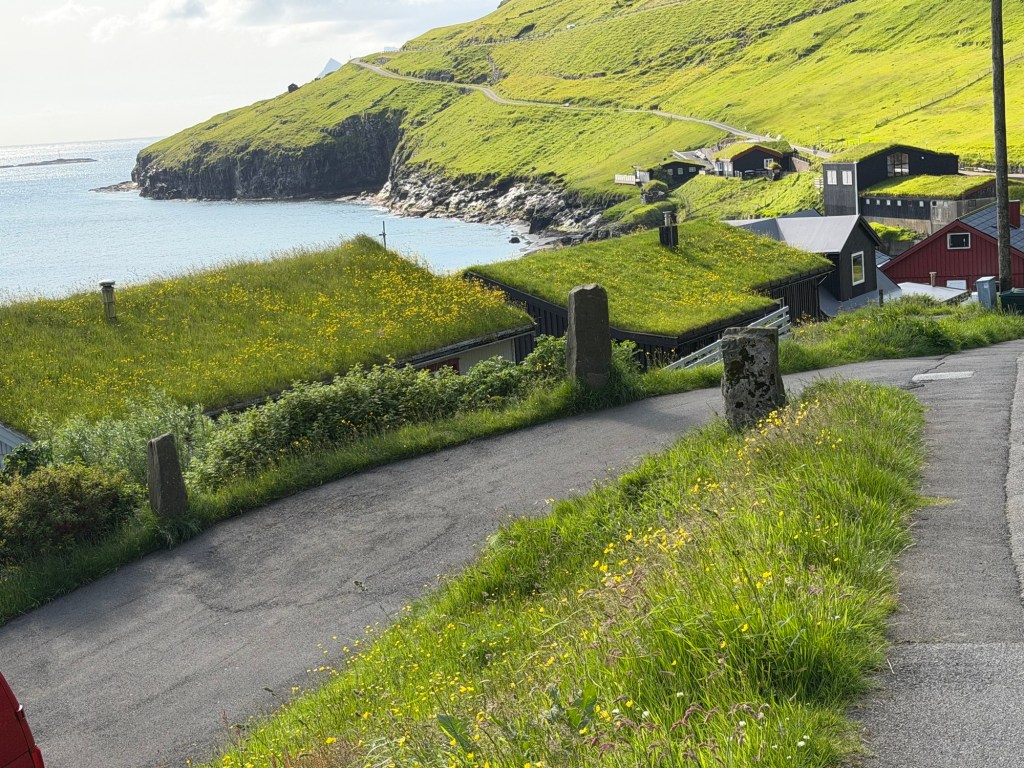
Typical sod covered town homes. I am totally taken in with the sod roofs and narrow passageways.

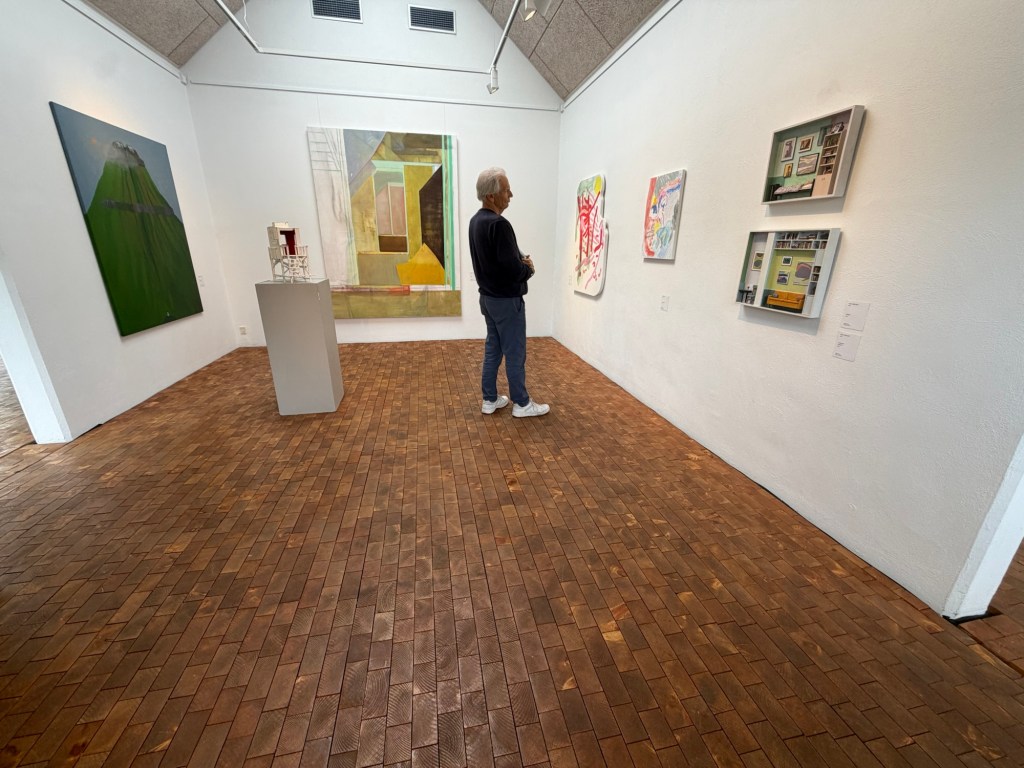
Then we went to. The local museum to check out the art, although I was not expecting much.

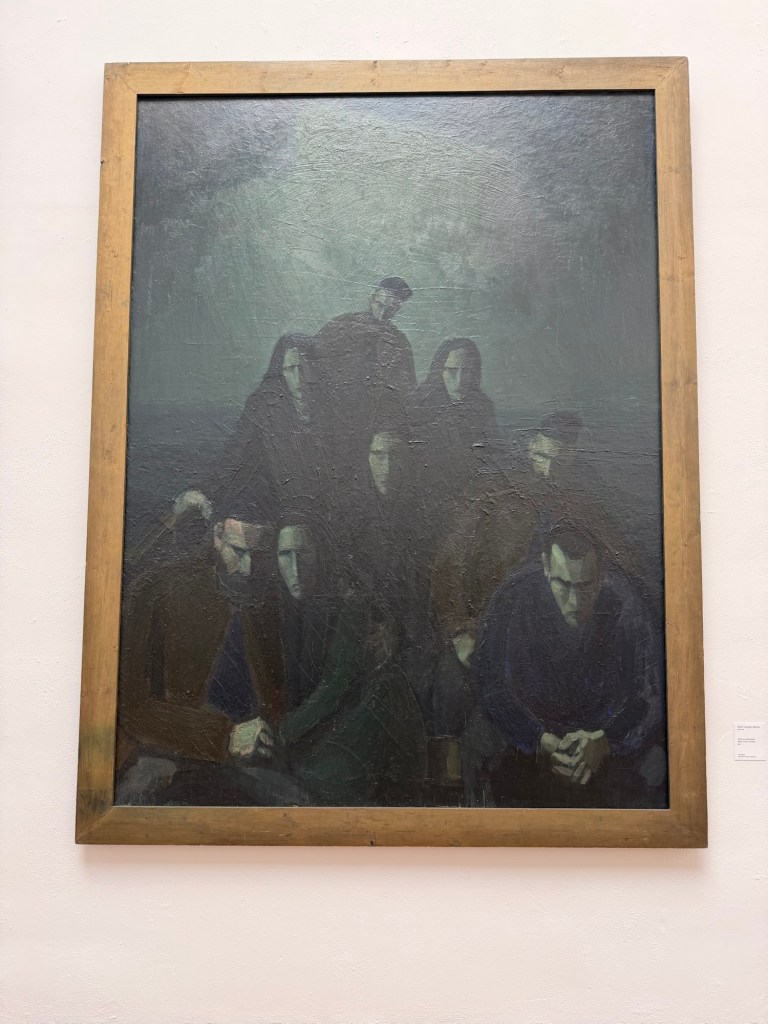
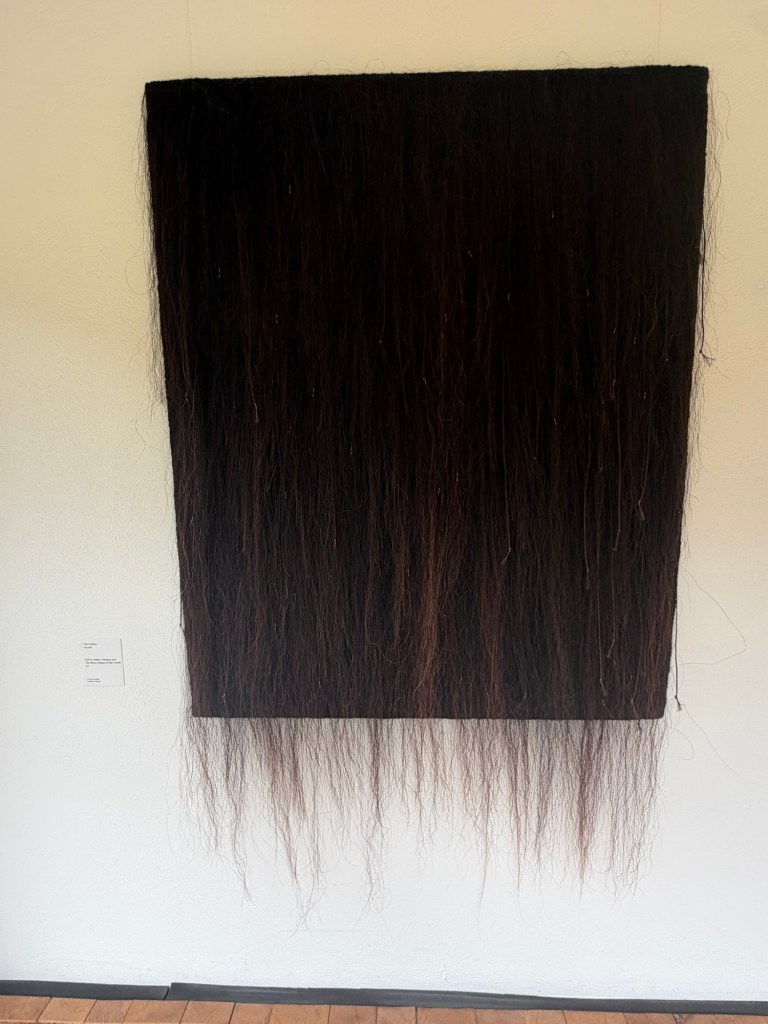
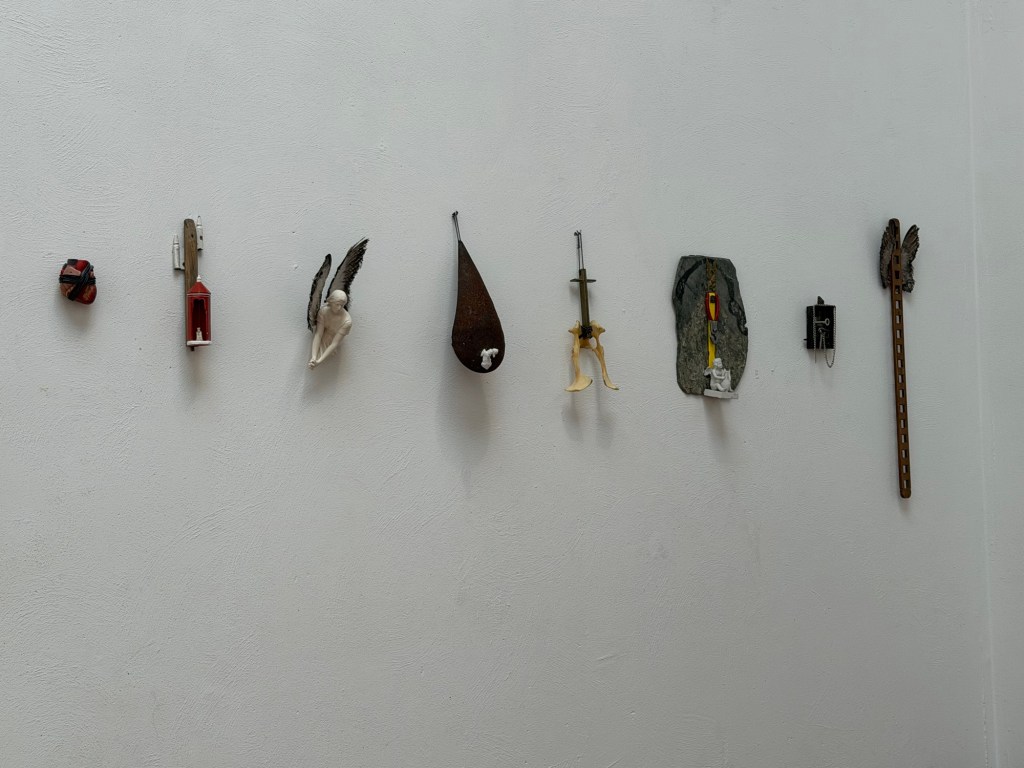
Here are some items we saw in the exhibit.
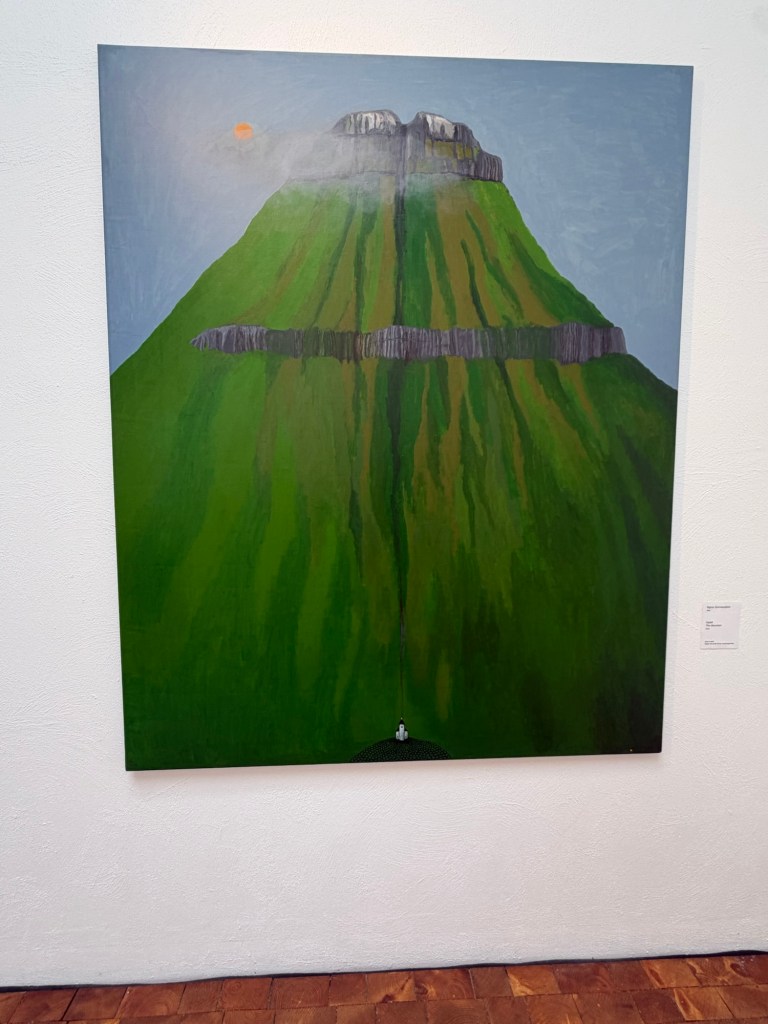
The Mountain by Sigrun Gunnarsdottir. 1950

At 7pm our driver dropped us off a a restaurant called PAZ in downtown Torshavn where we are expecting a 20 course Michelin dinner. We certainly got the Michelin style service and most of the courses were excellent. Thankfully there were only 17 courses and 5 of them were tiny deserts. Every fish you can imagine was in one course or another, one course was bird meat and the final savory course was lamb. we were certainly full when it was over, but not uncomfortably so. Sorry, but I totally forgot food photos.
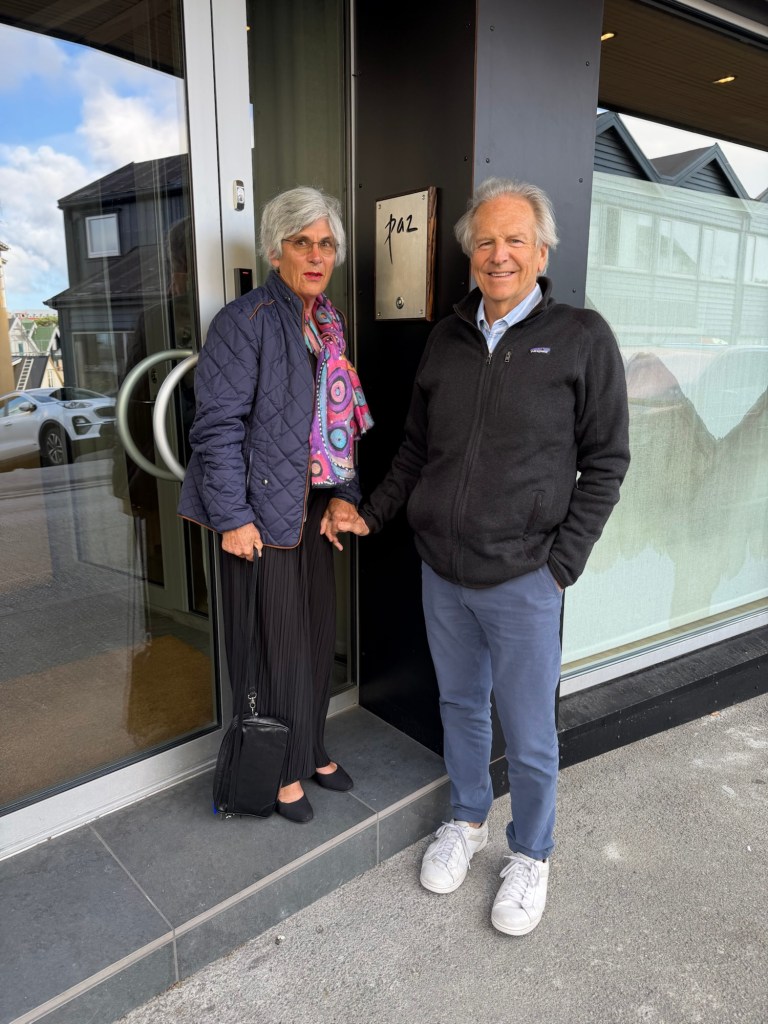
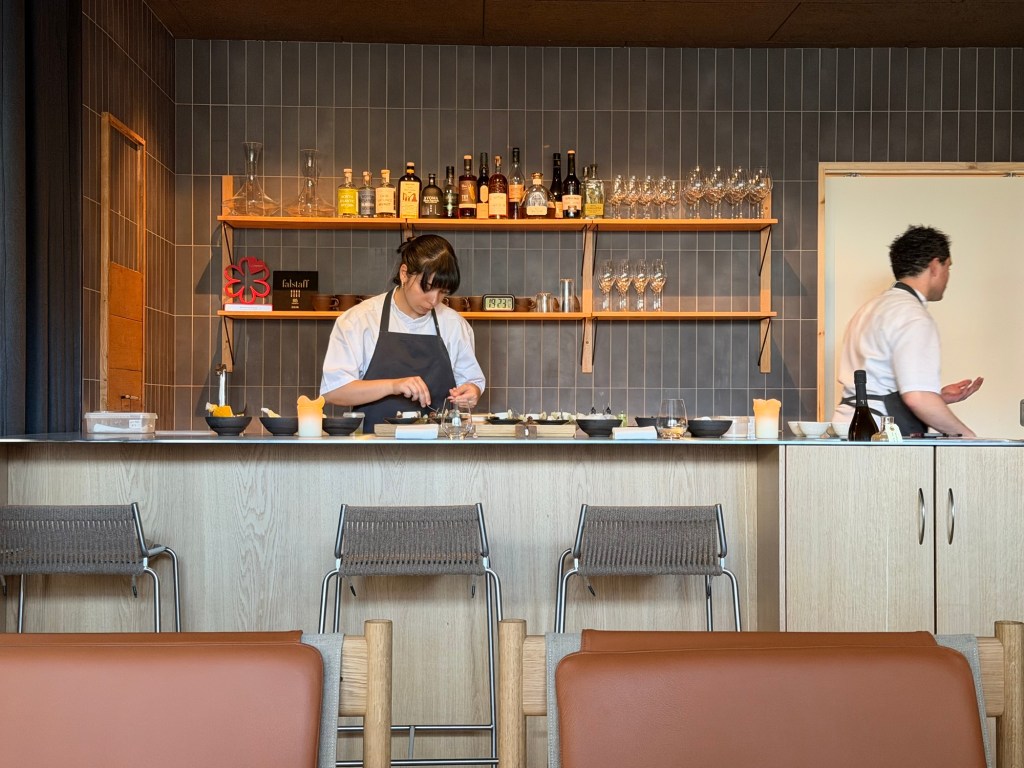
Here we are at Paz, ready for our Michelin dinner
One of the kitchens where delicacies are assembled.

Friday, July 3, 2026

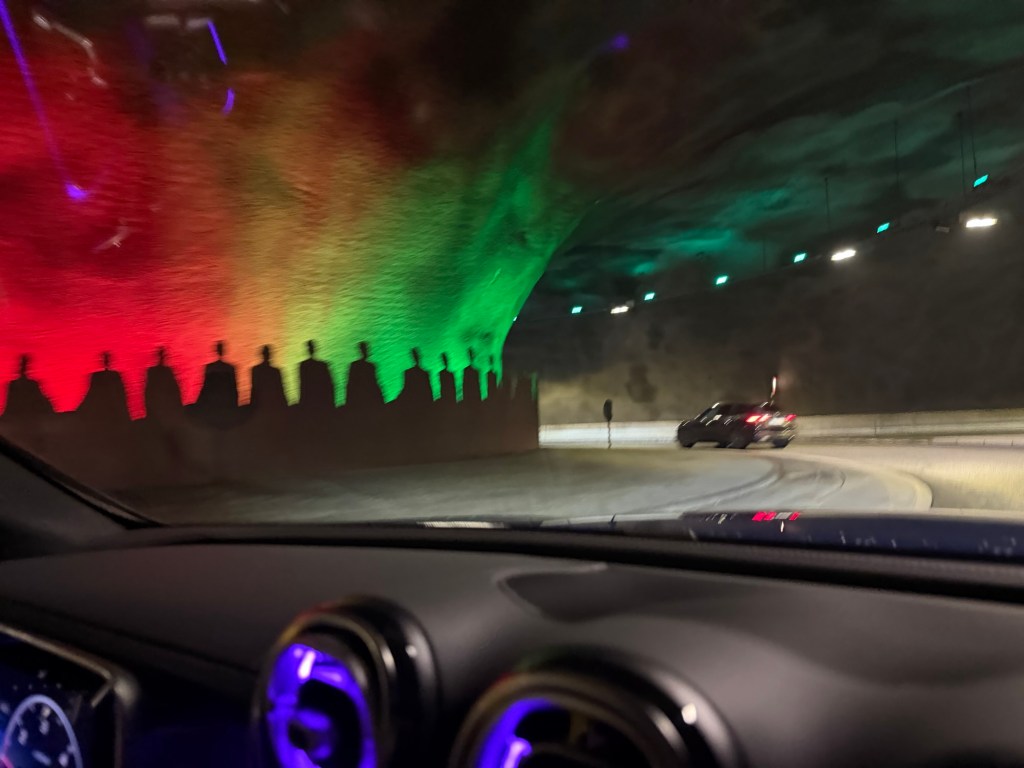
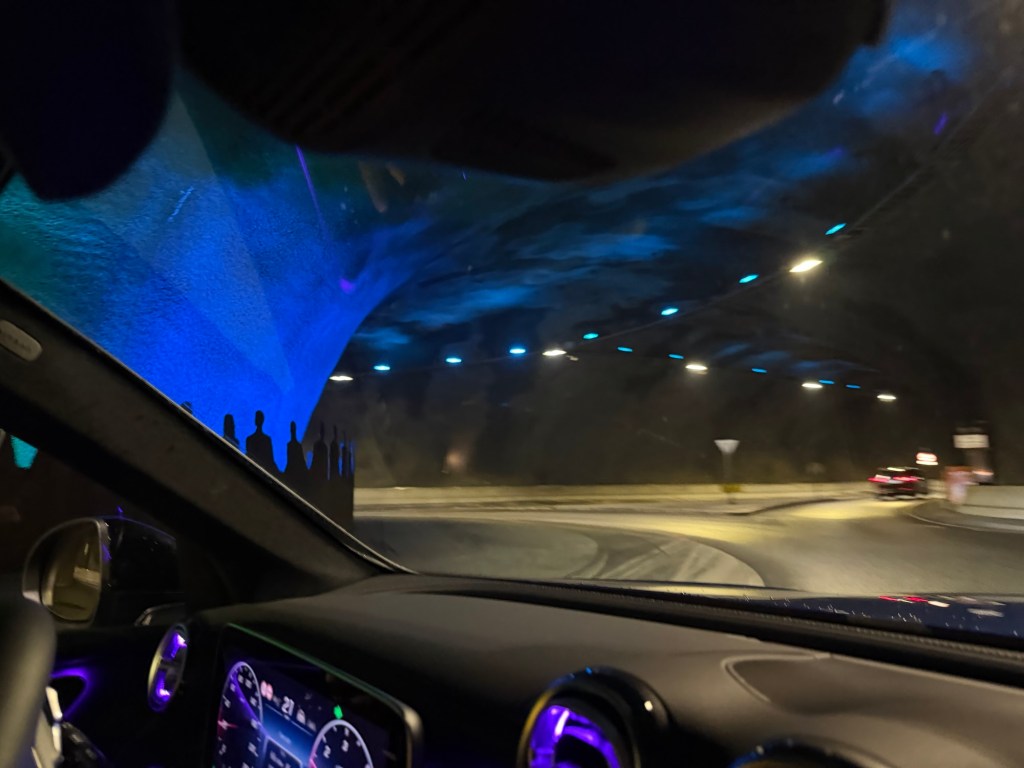
Birita picks us up at 9am and drives us to town to buy sandwiches for lunch and then heads north to the islands of Bordoy, Kunoy and Vidoy. We pass through six tunnels, one of which is very unique as it contains an underground round about with music and lighting. Images of people circle the lights and are dancing to folk music, which increases in volume as you approach the round about. The oldest tunnel on the islands was built in 2002. Tunnels are a critical link for people living on the islands and there is a need for several more.
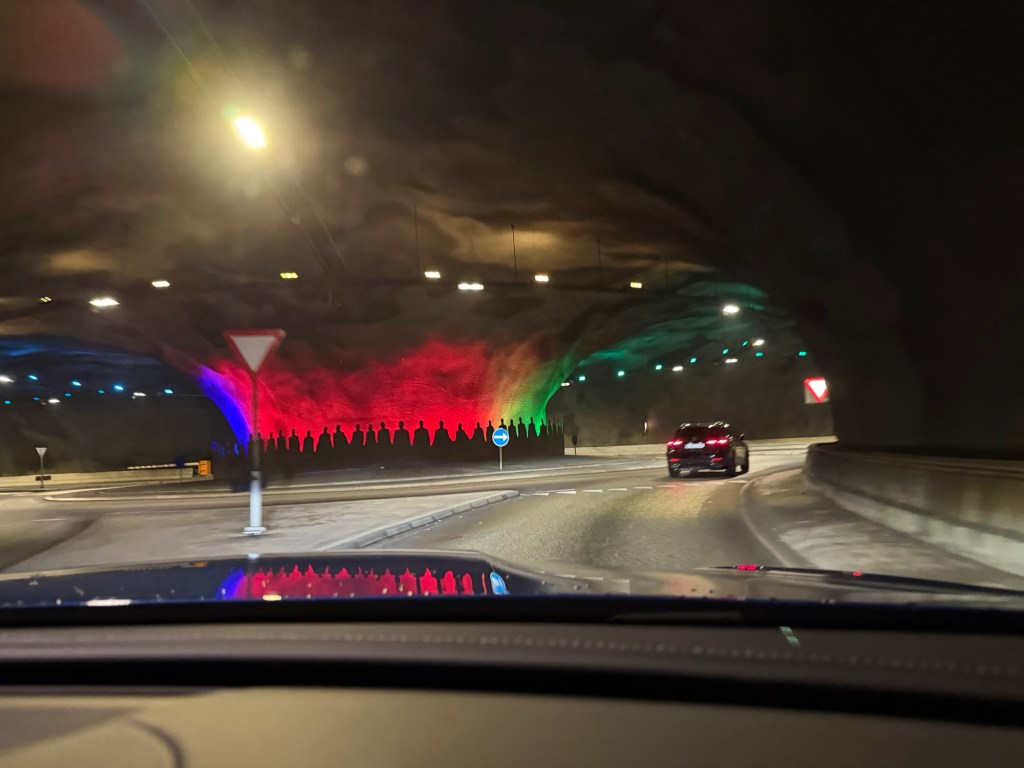
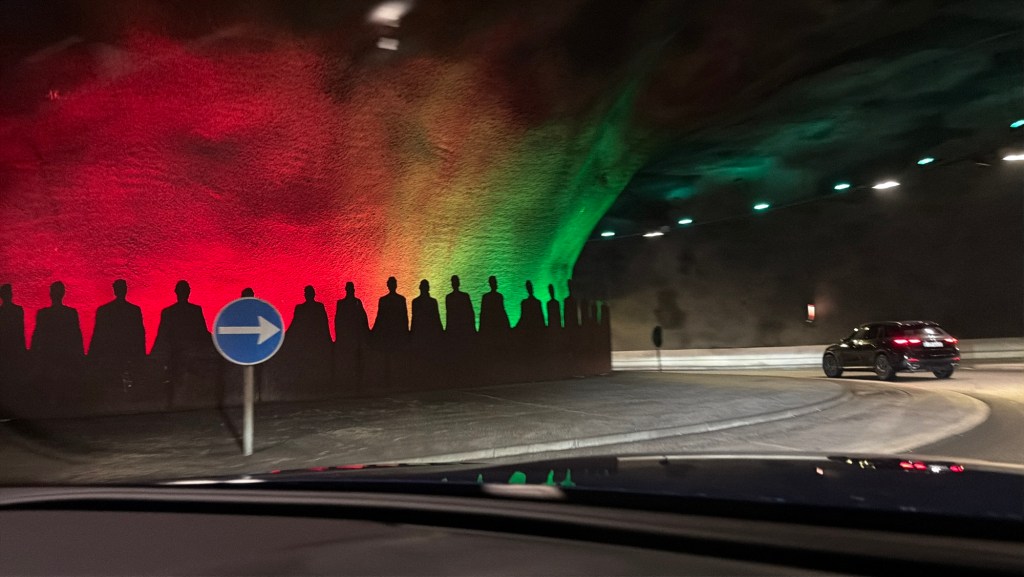
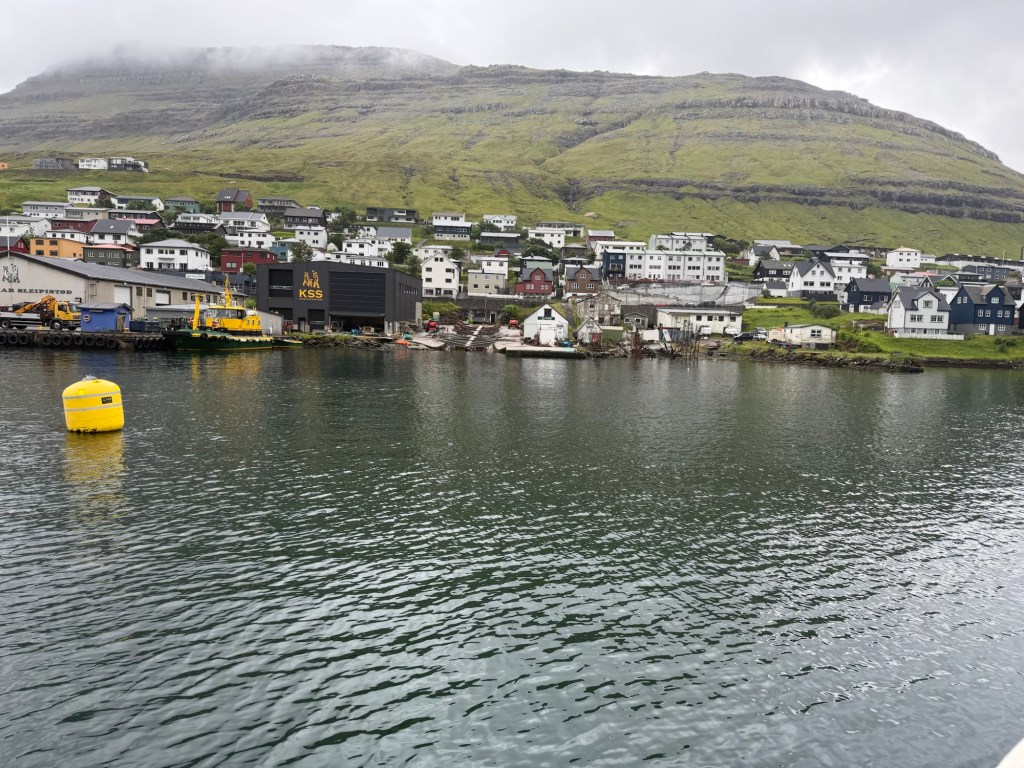
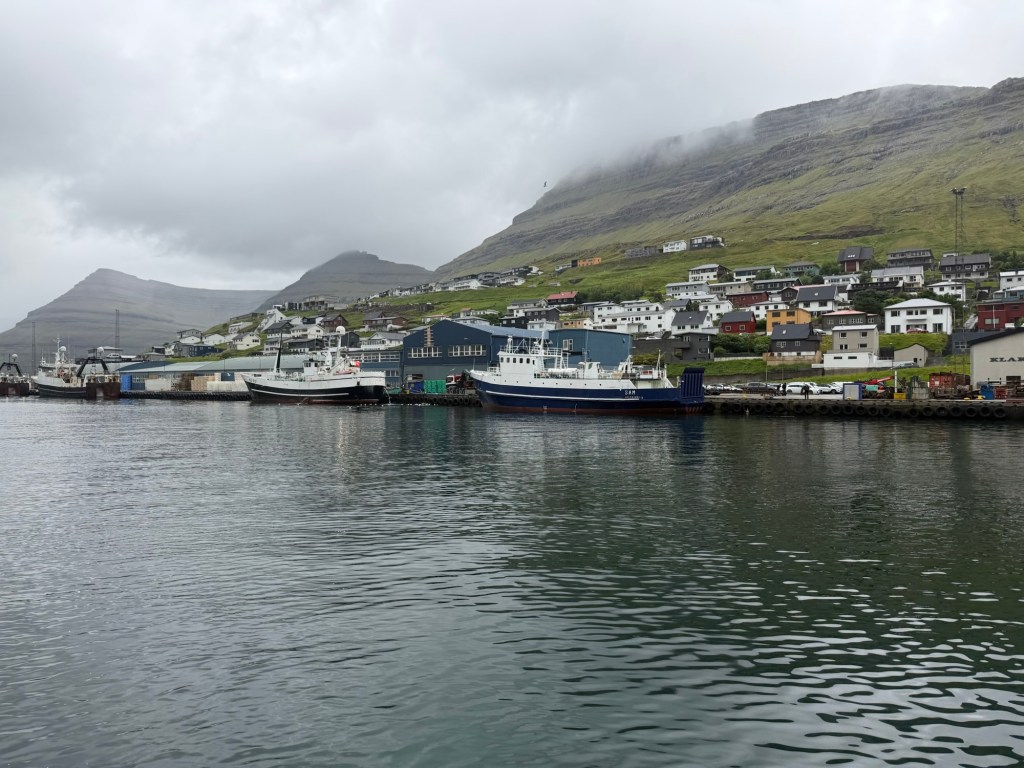
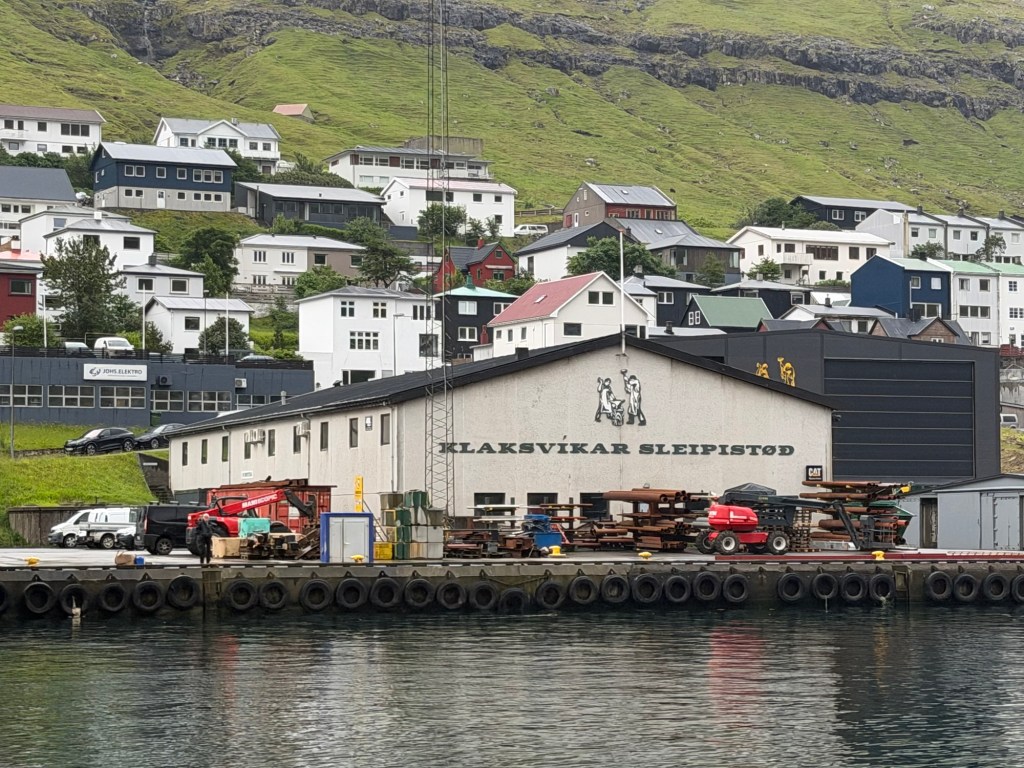
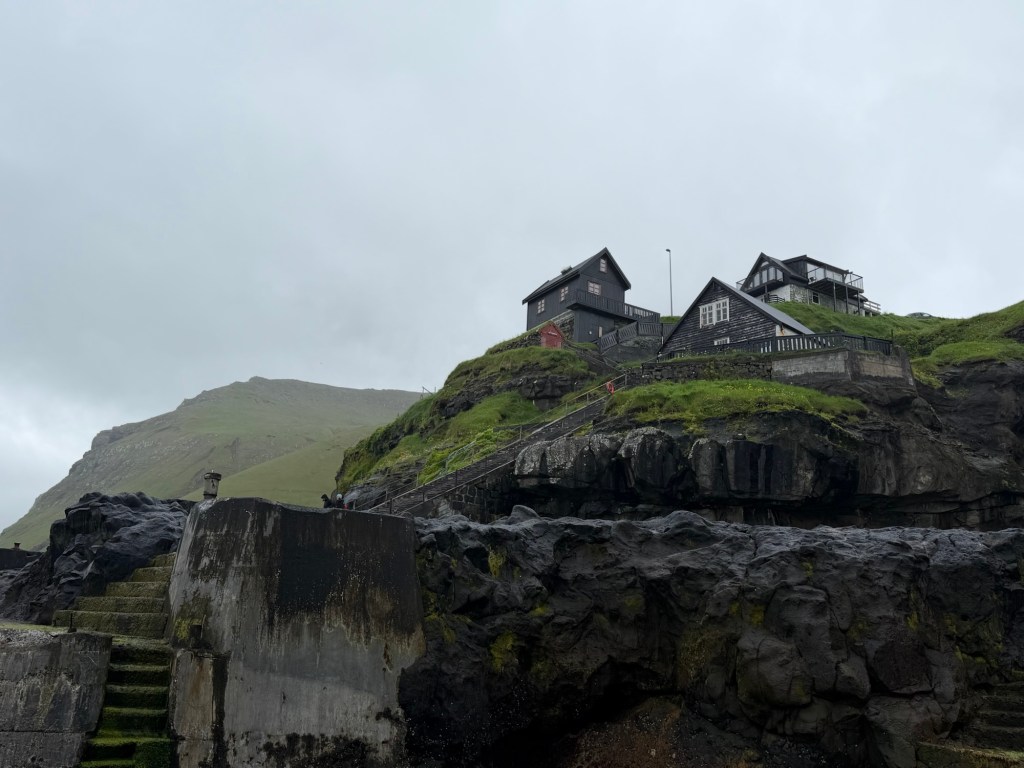
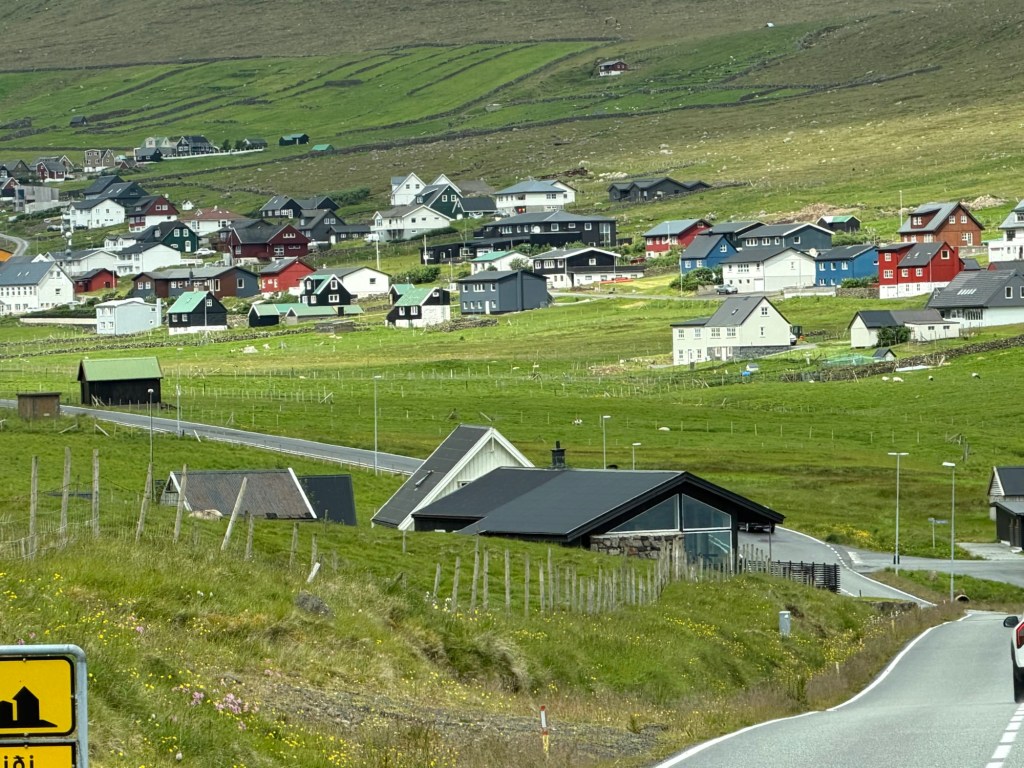
We exit the tunnel and are soon in Klaksvik, the second largest town in the Faroe Islands. Birita drives us to a scenic spot and we are happy taking photos of the scene.
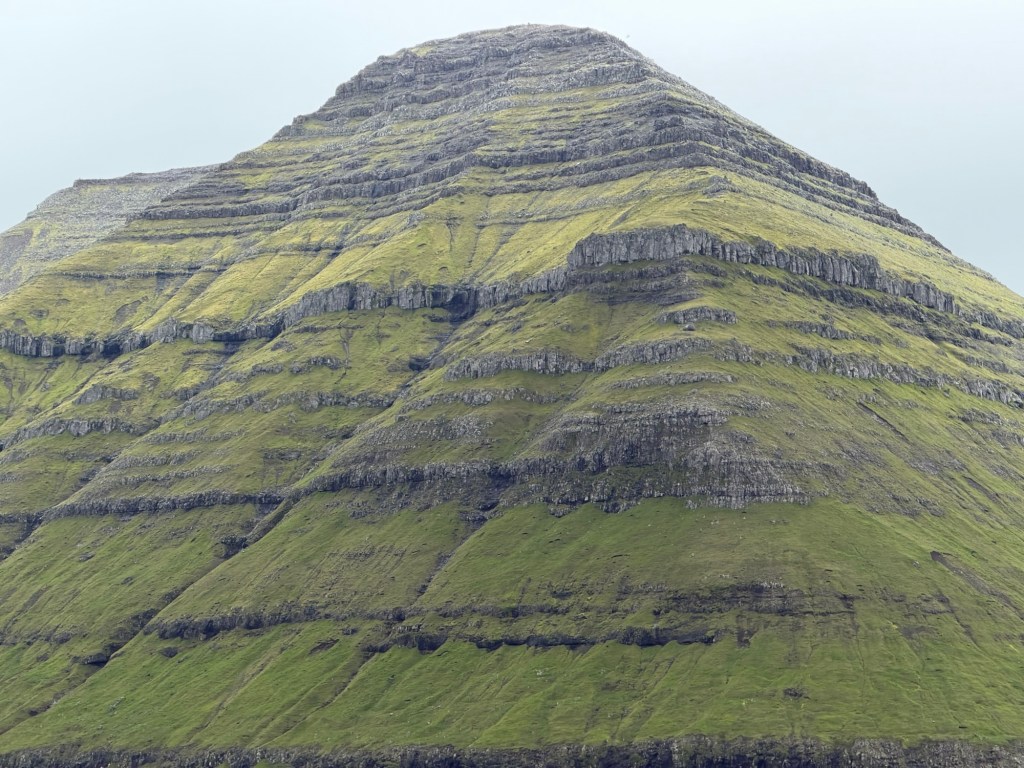
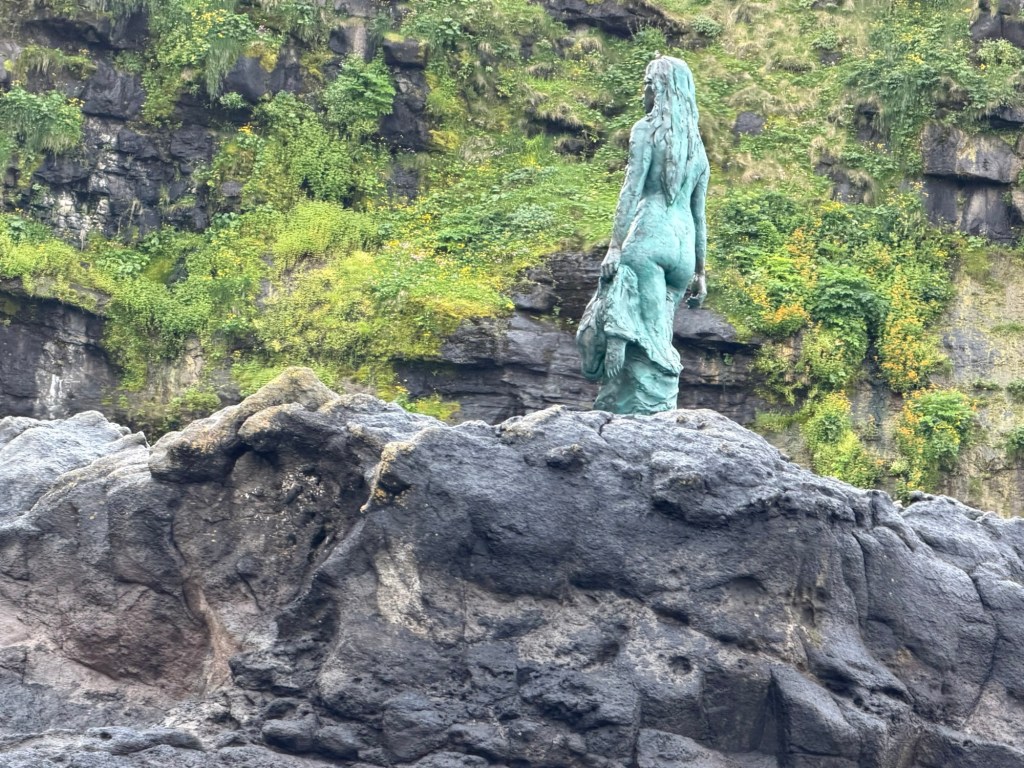
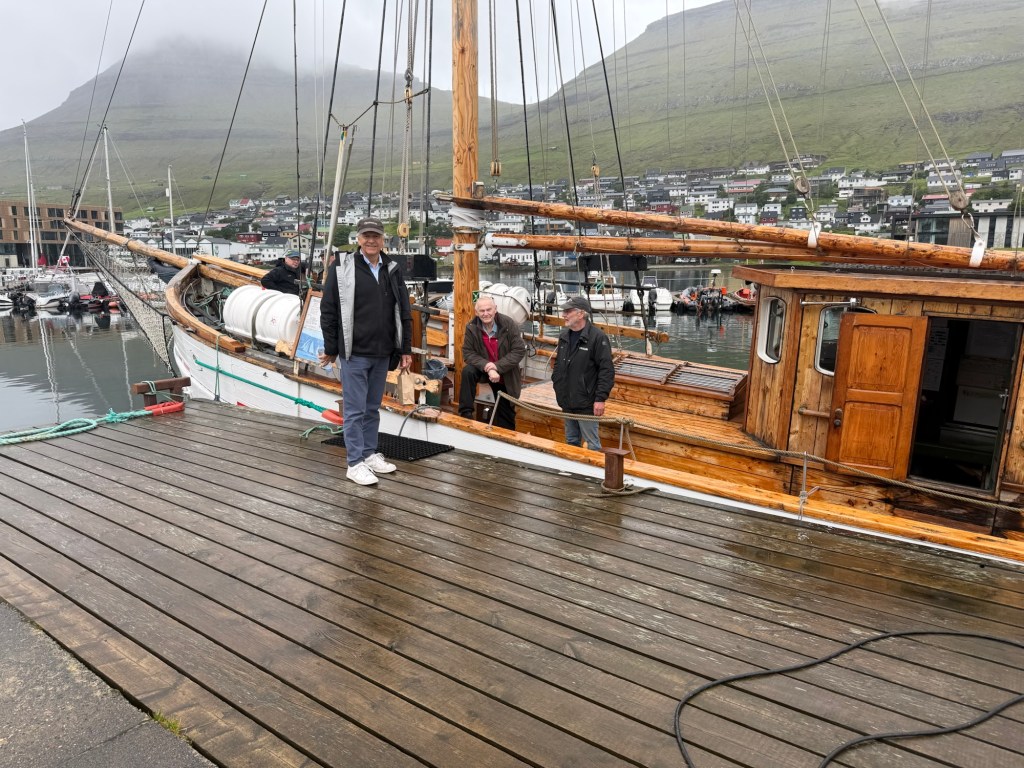
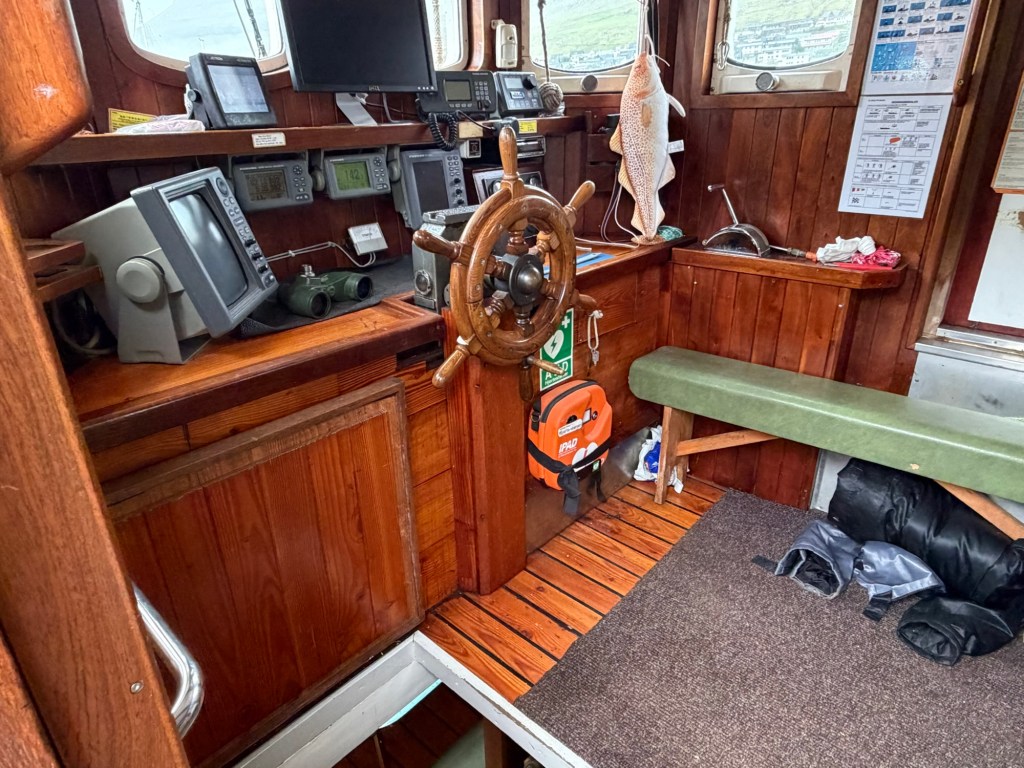
At the harbor we board an old, but sturdy, schooner called Dragin. (24 meters long, 4.74 meters wide, built in 1945).
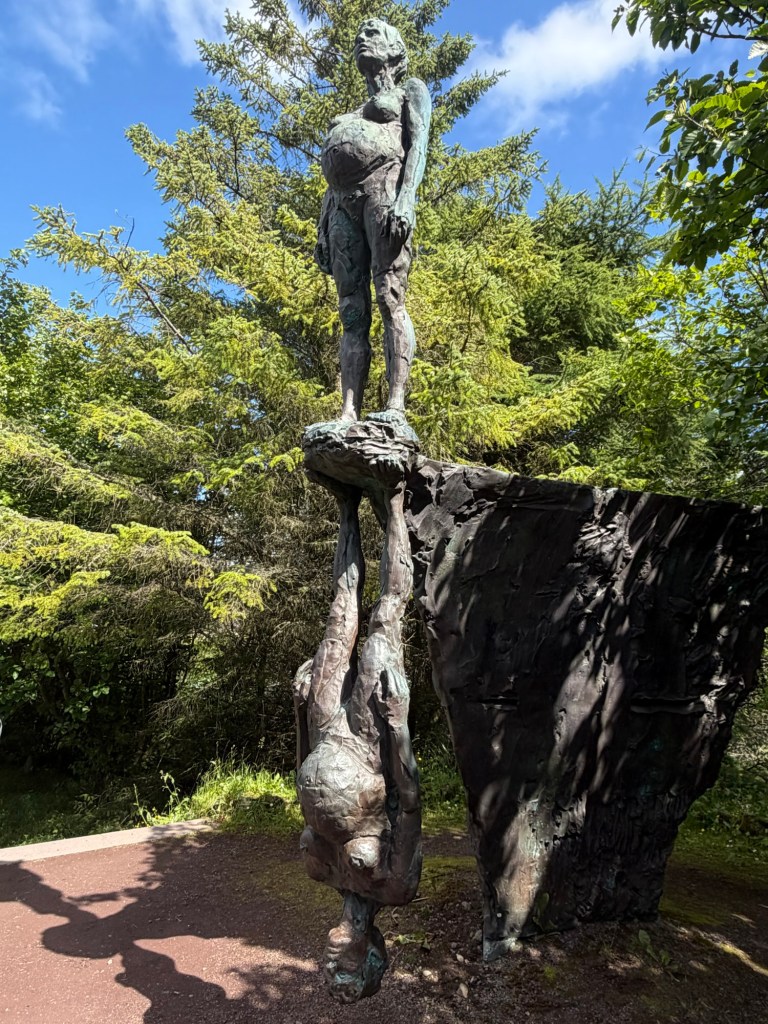
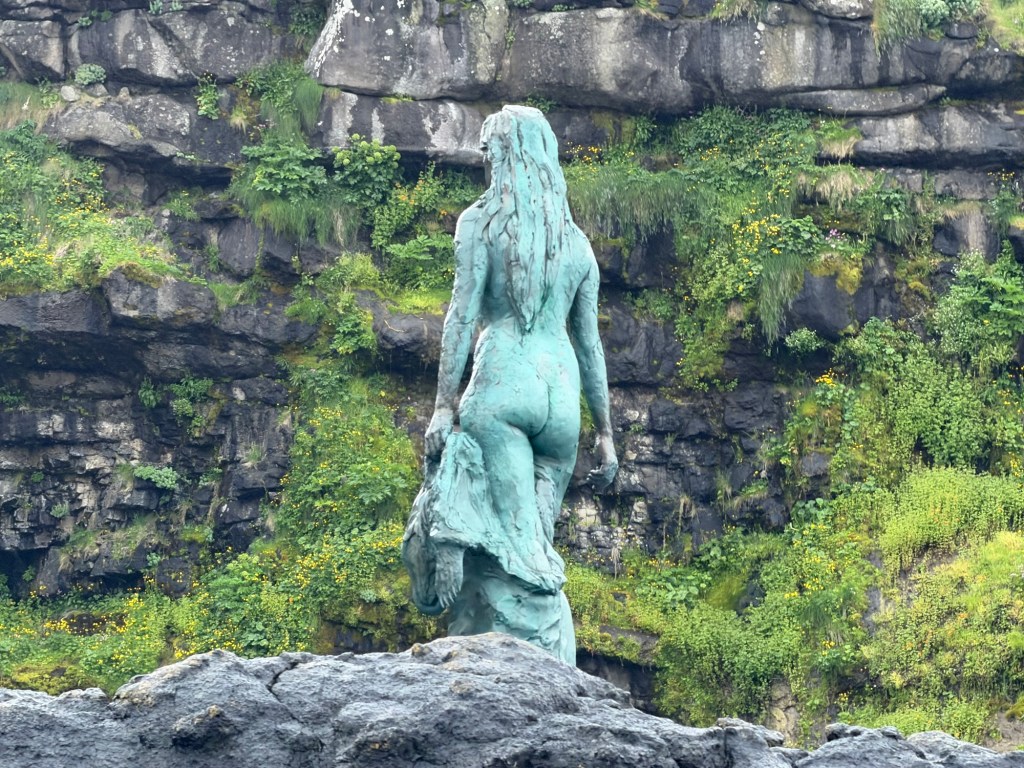
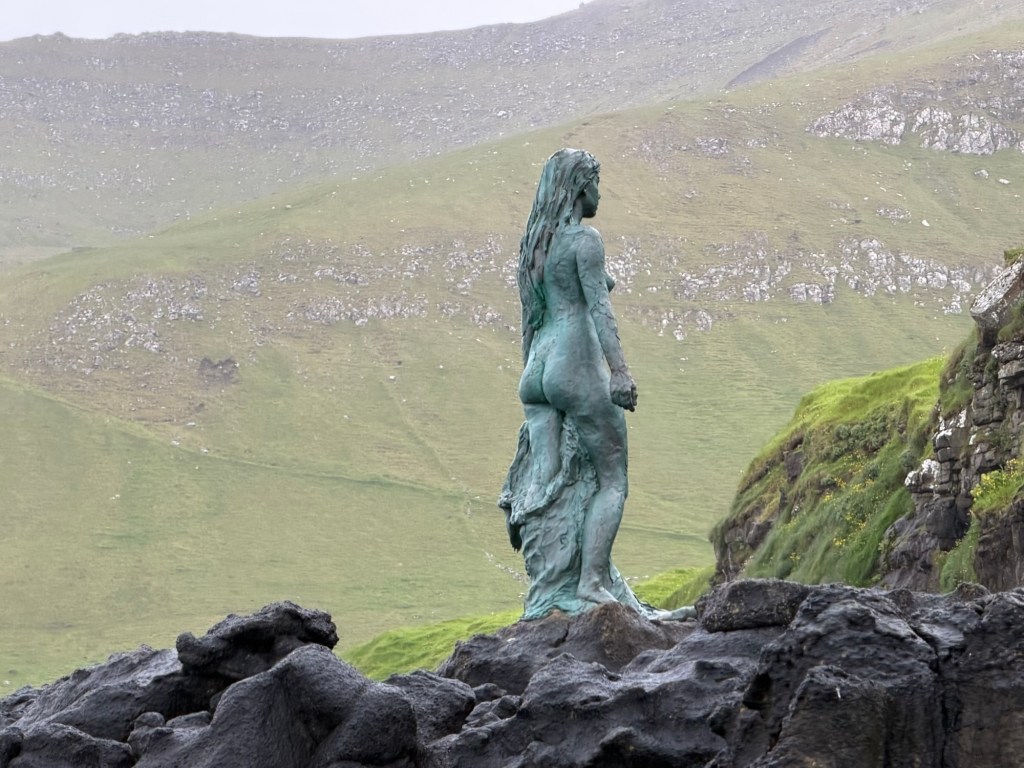
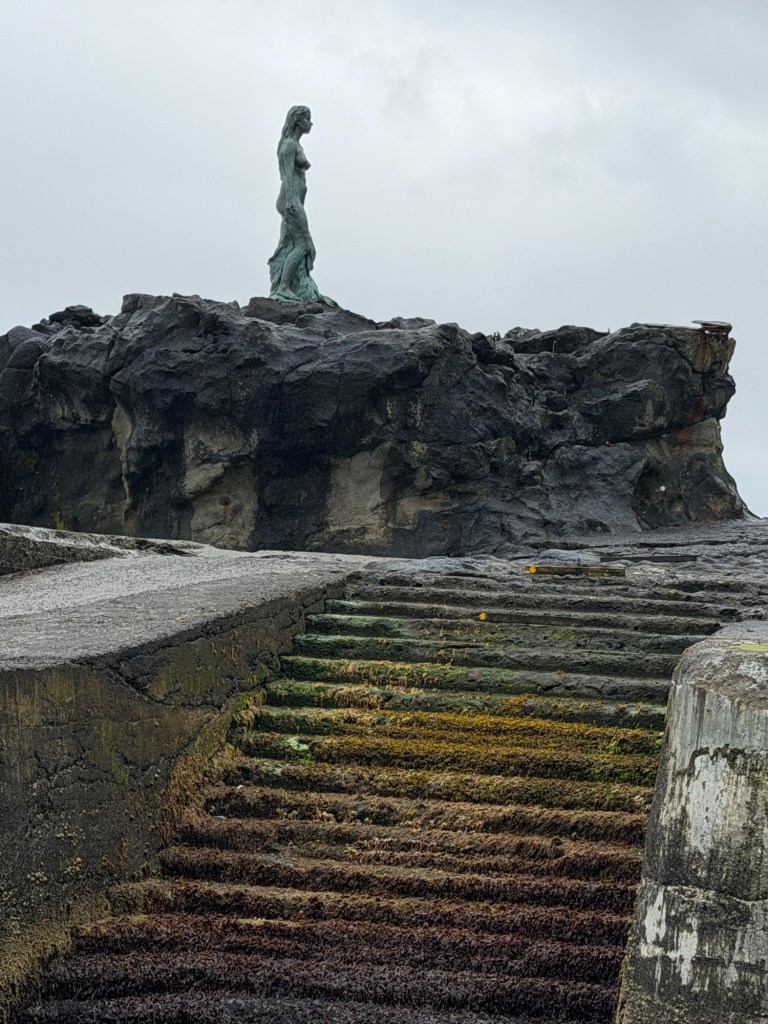
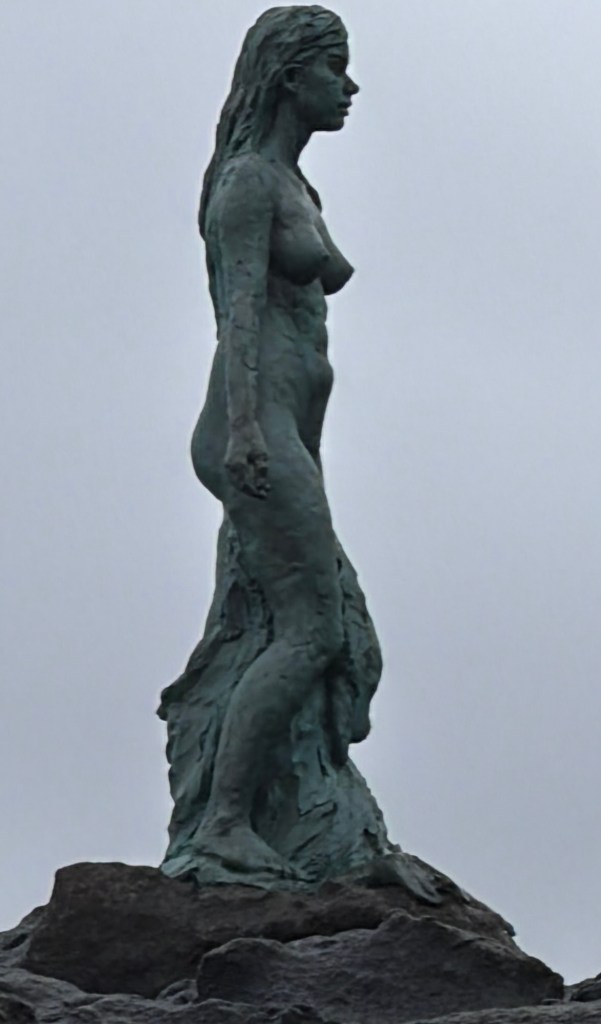
The seal Lady sculpture was created as the result of a myth. Look up “The legend of the Seal Woman” if you are interested.

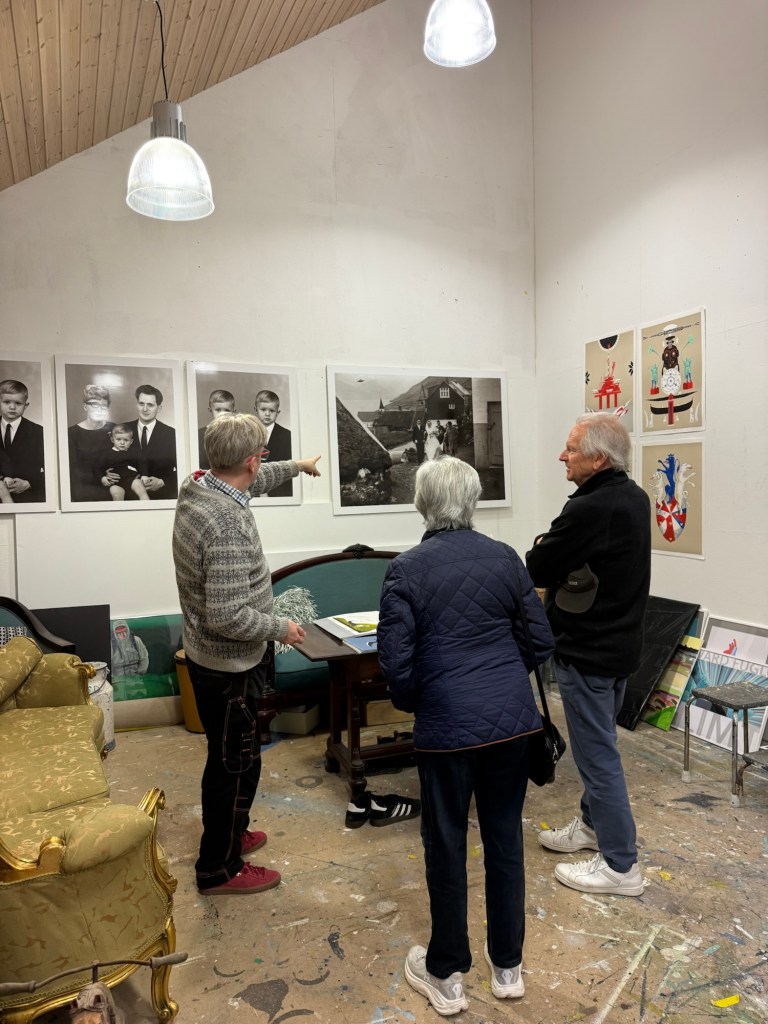
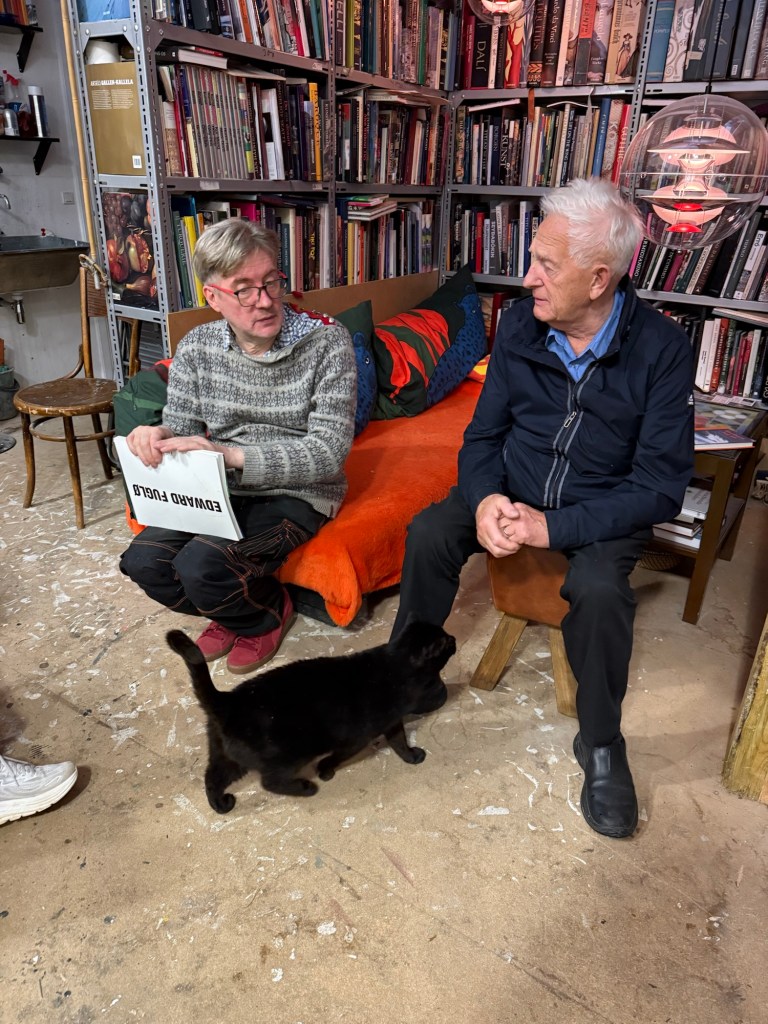
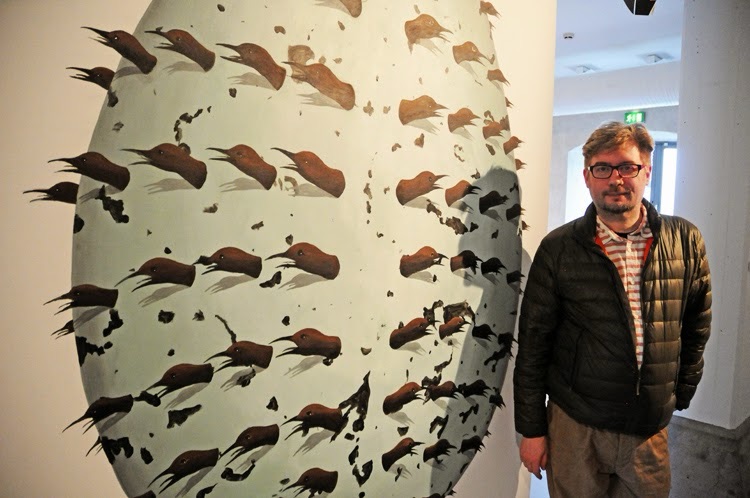
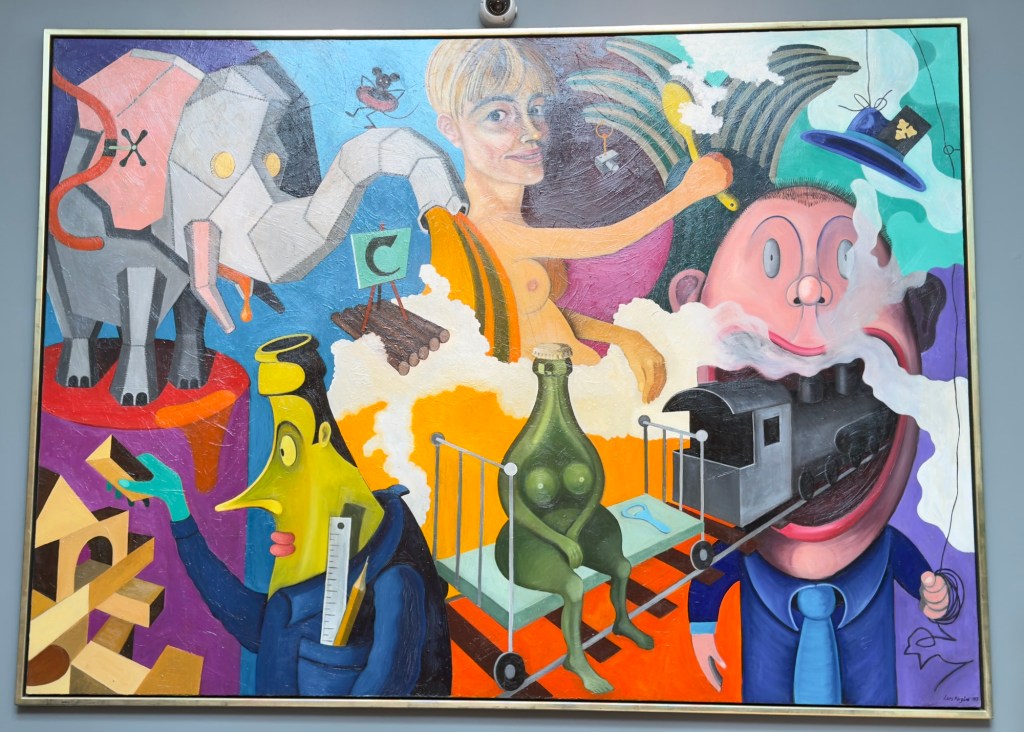
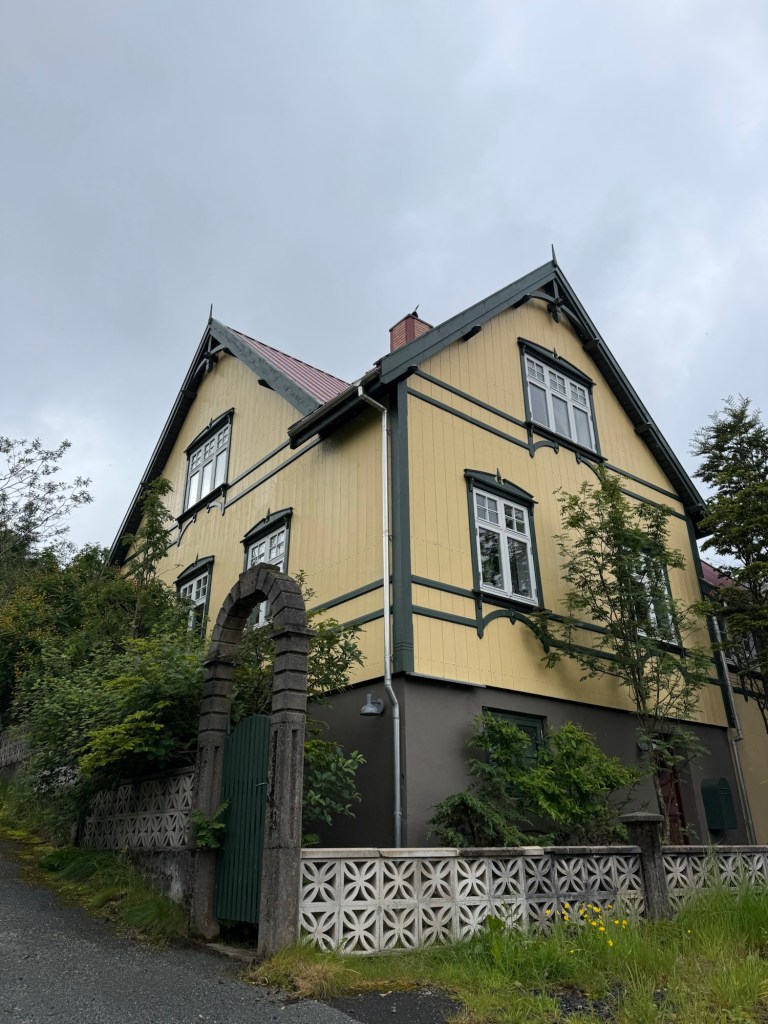
From the schooner ride, we drove back toward town and stopped at the home and studio of a well known local artist, Edward Fuglo. It proved to be an interesting and engaging conversation that lasted nearly 2 hours. He has received numerous awards for his art and showed us the Knight’s Cross medal that he received from the Danish Queen. We had seen his work in the local museum and were able to talk about some of his pieces. One huge piece with three dogs and their country flags hanging in his studio was off limits, because it is about to be presented at an exhibition. It was very impressive.`
Edward with his painting of an egg with multiple birds hatching called Eggtest, 2007

We happily had a quiet dinner in our hotel. Our meal choice was a flat fish called plaice fish served tempura style. We had never had it before and enjoyed the light texture of the tender white fish. The hotel was packed with tourists and we were happy to get to our room and shut the door.

Saturday, July 4, 2026. Happy 4th of July

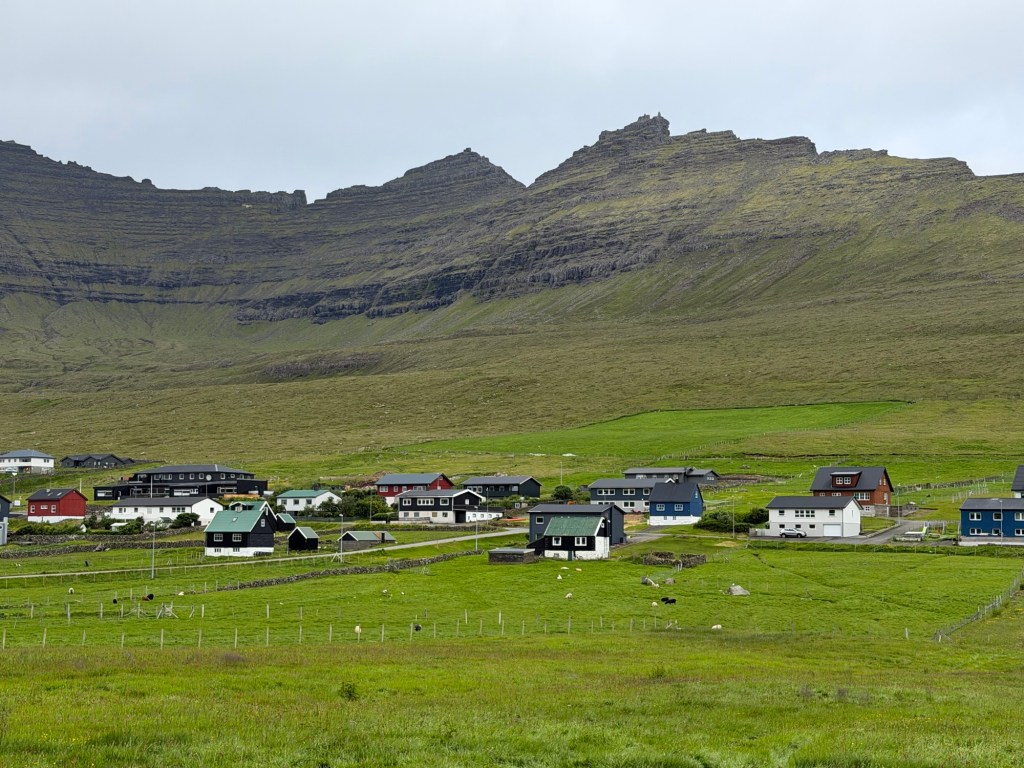
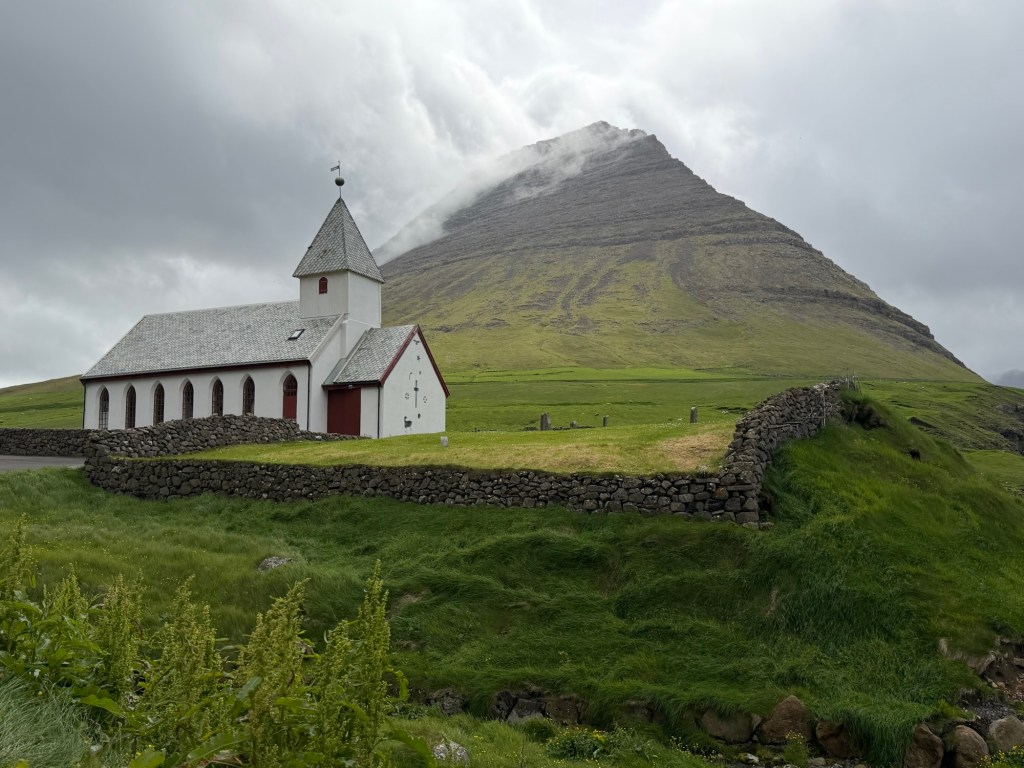
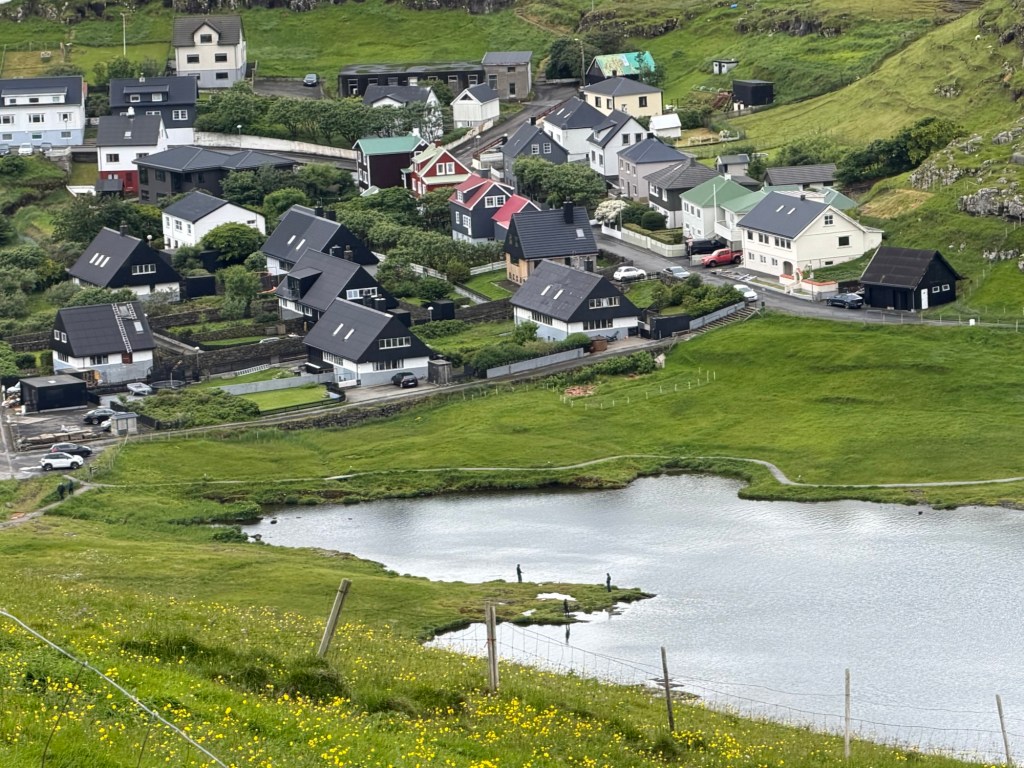
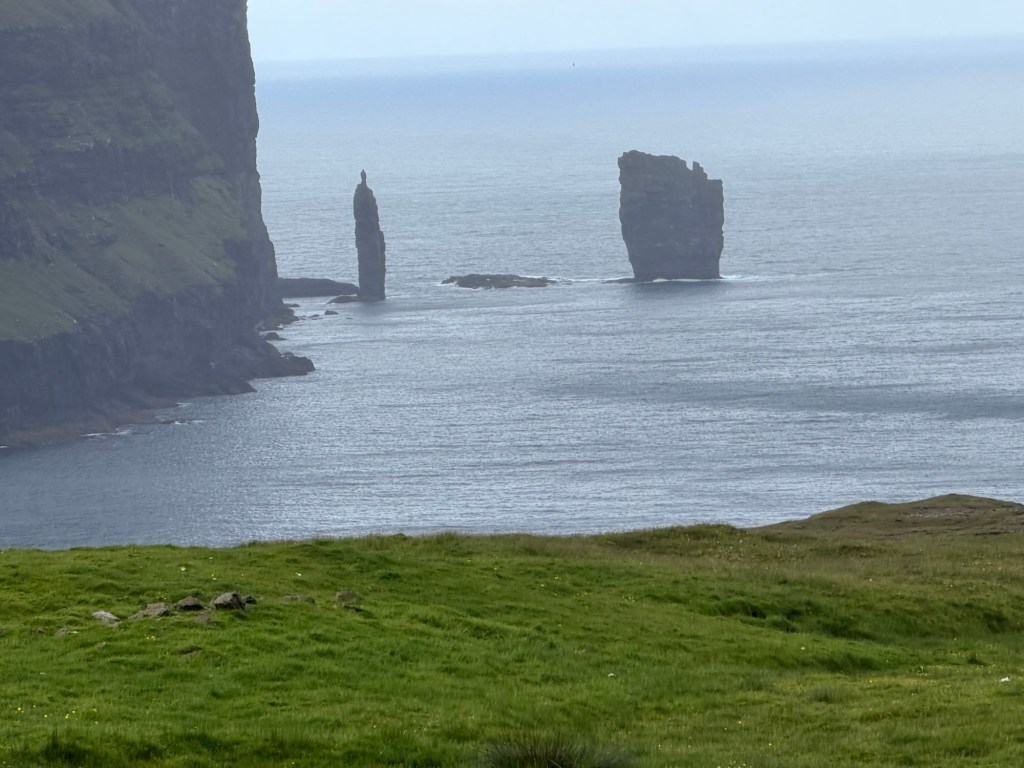
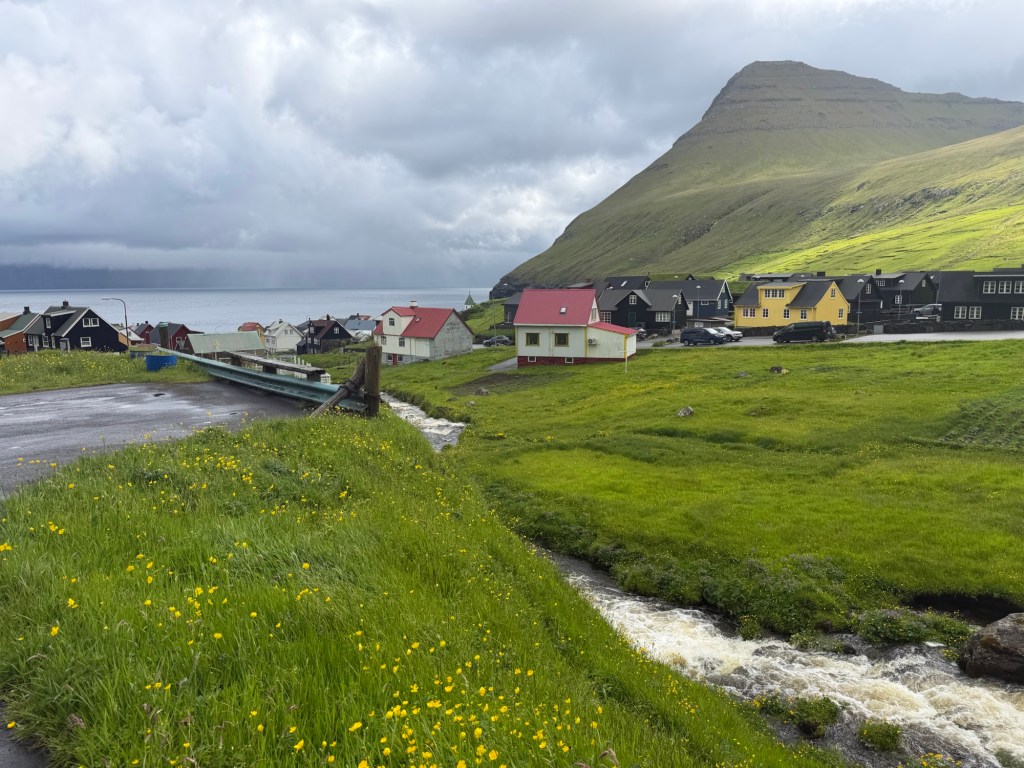
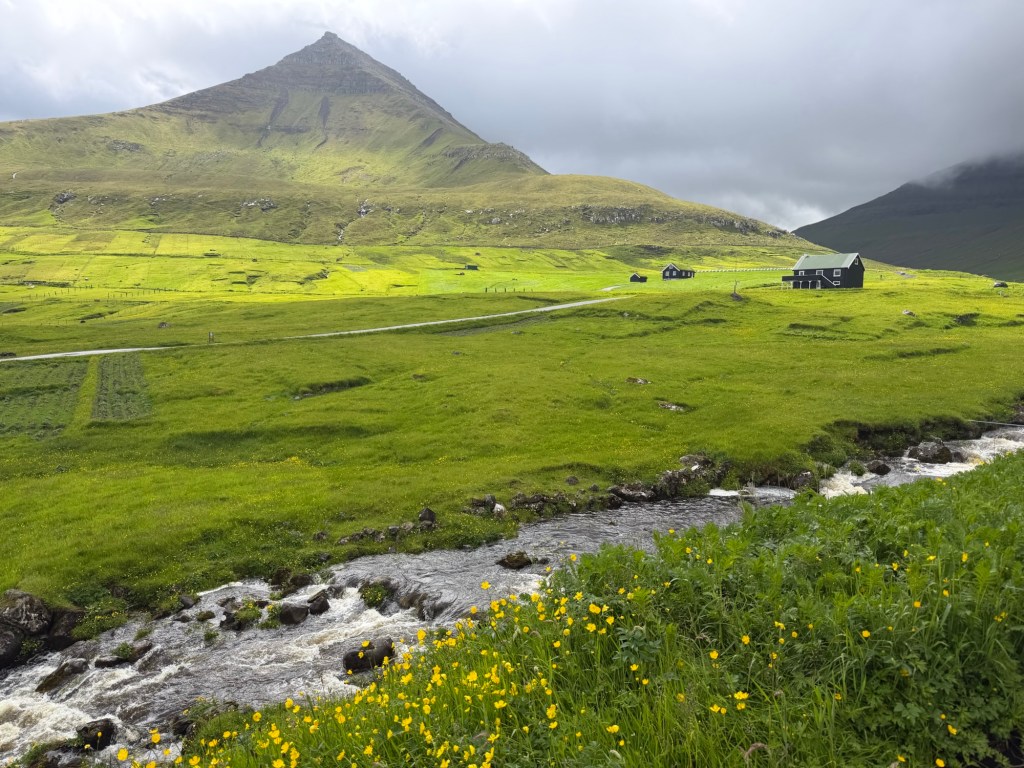
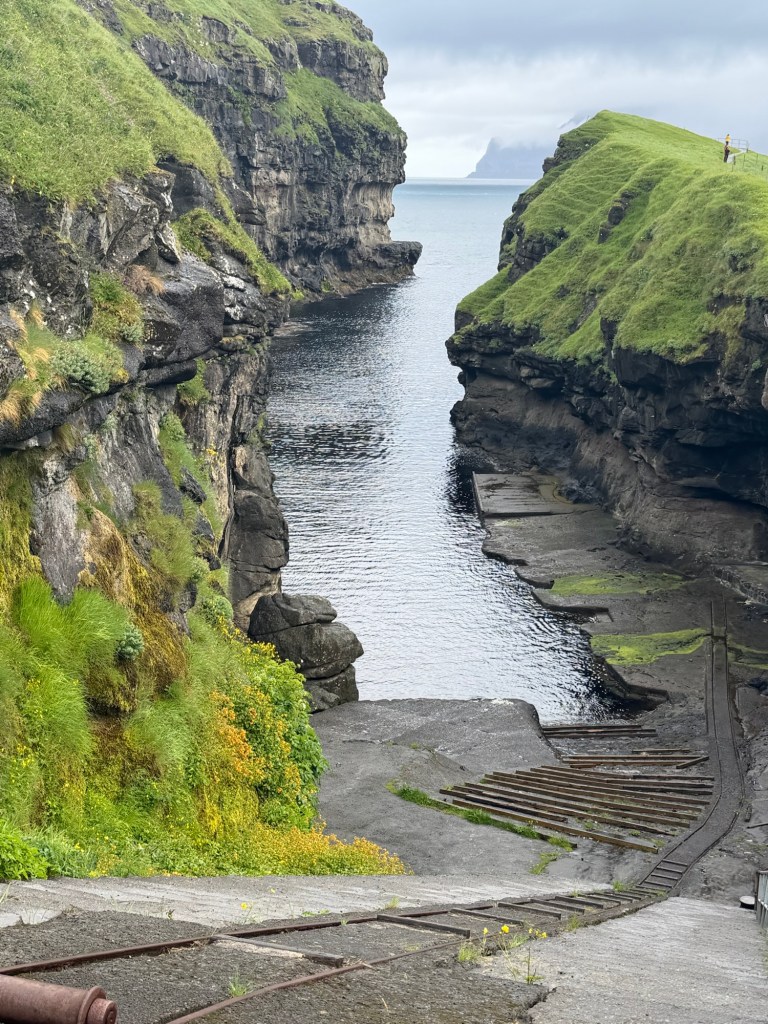
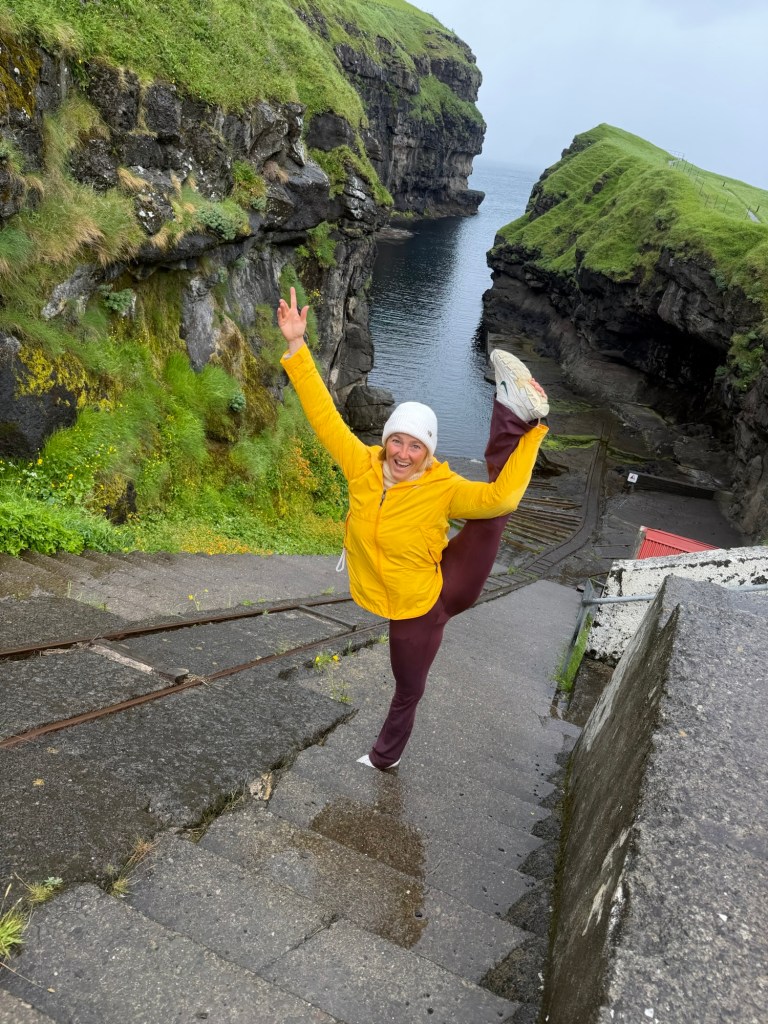
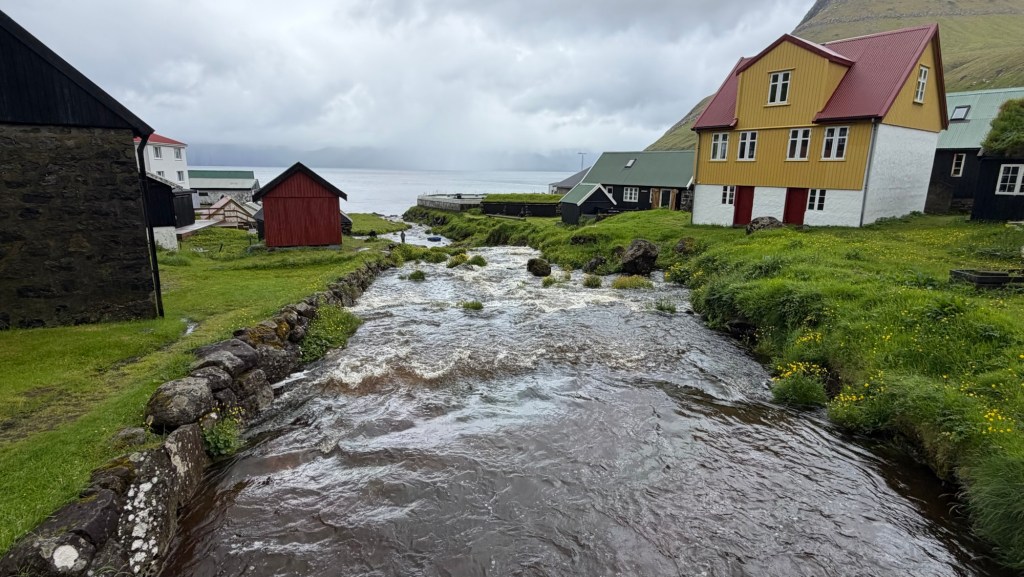
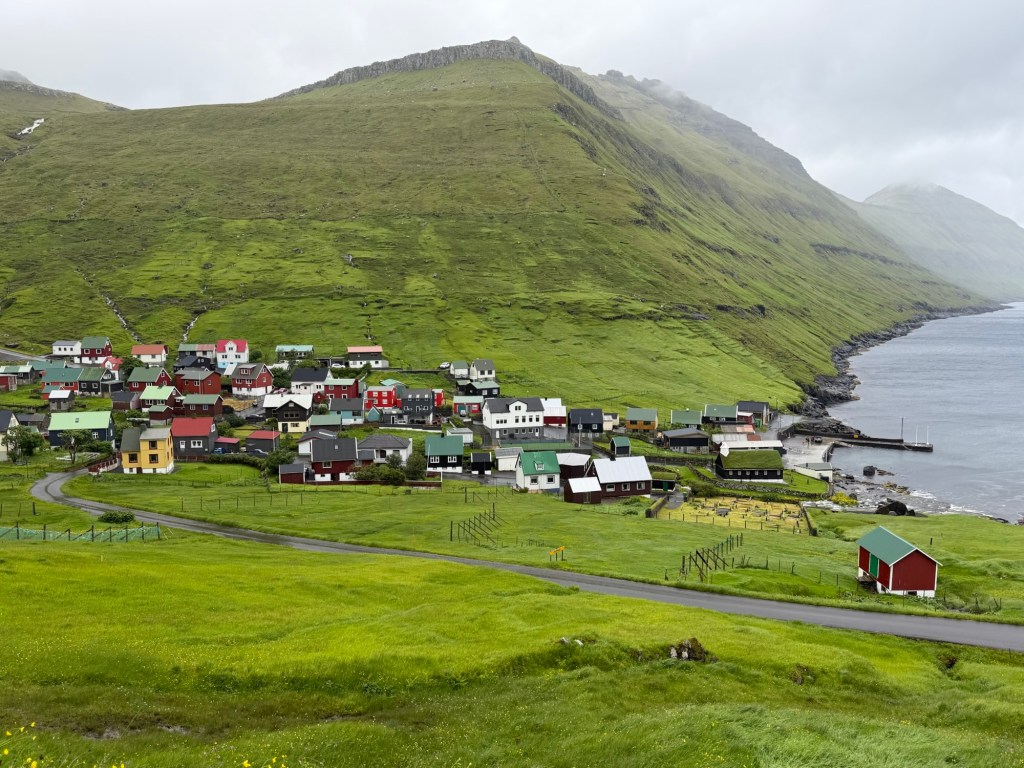
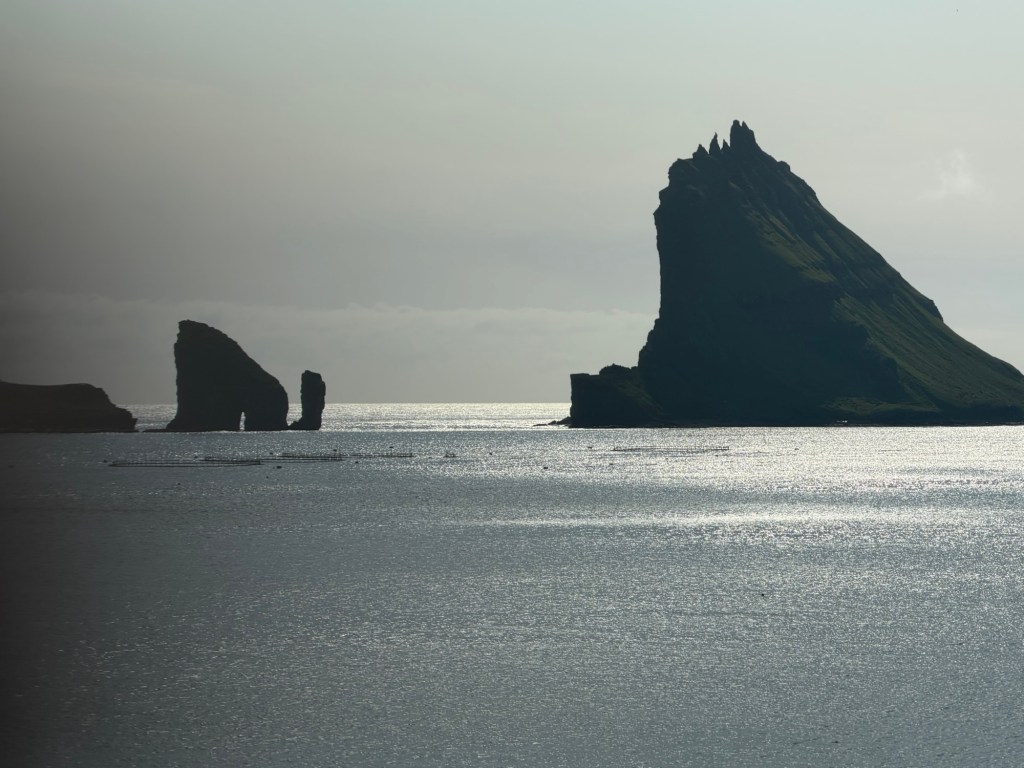
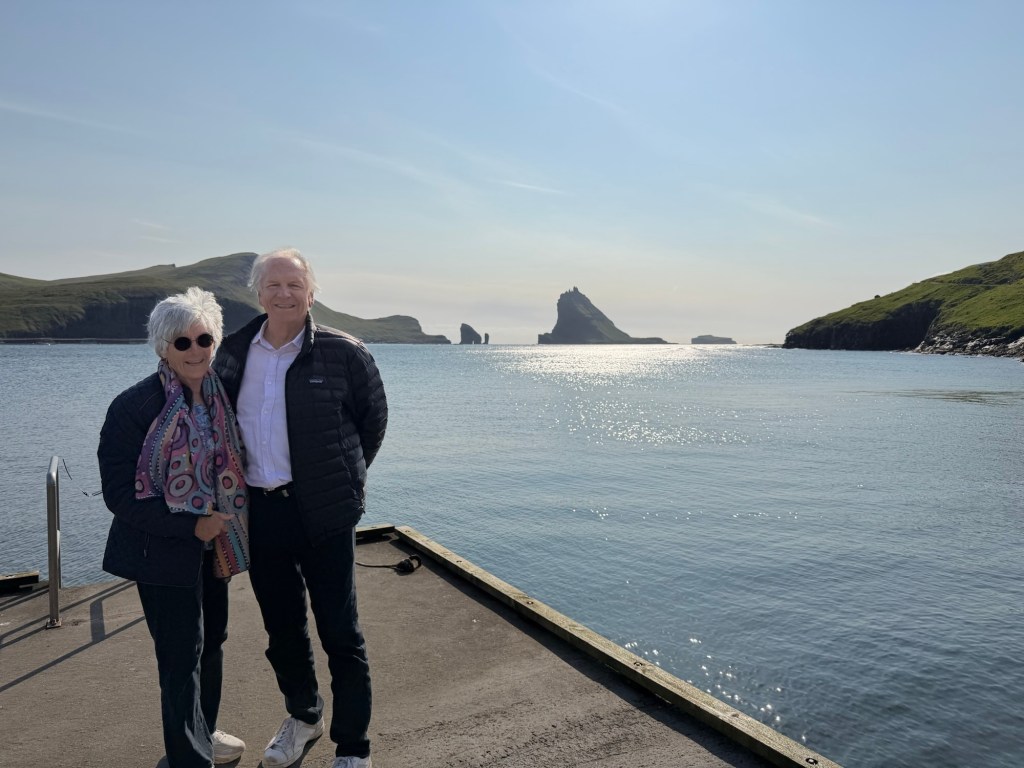
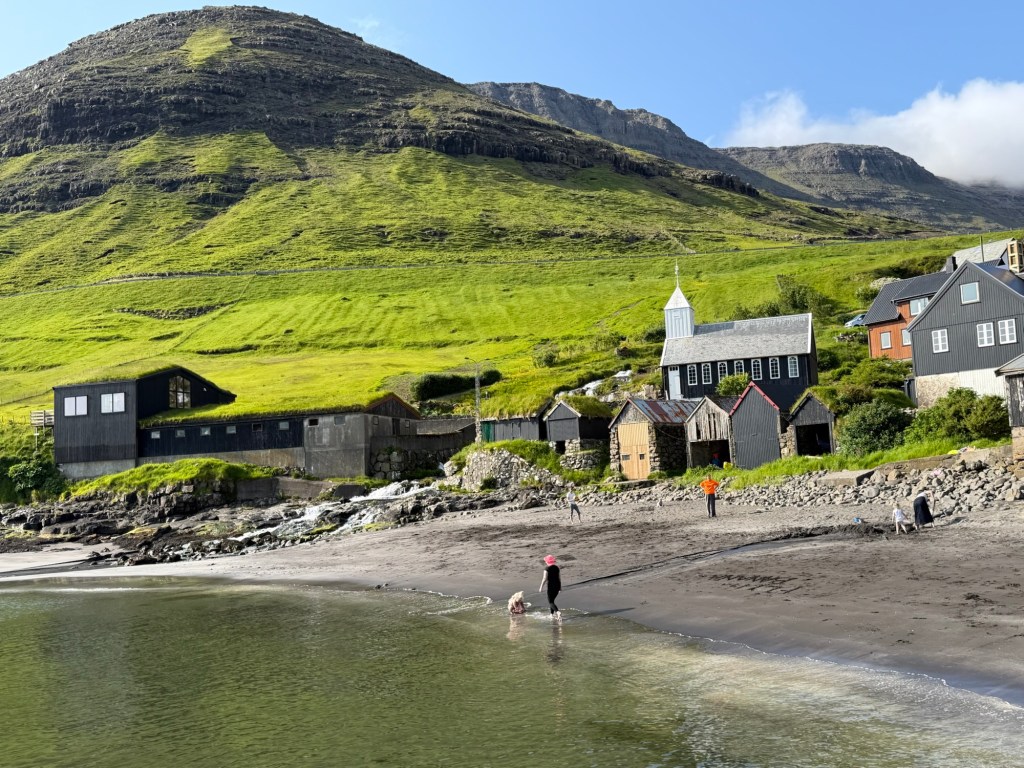
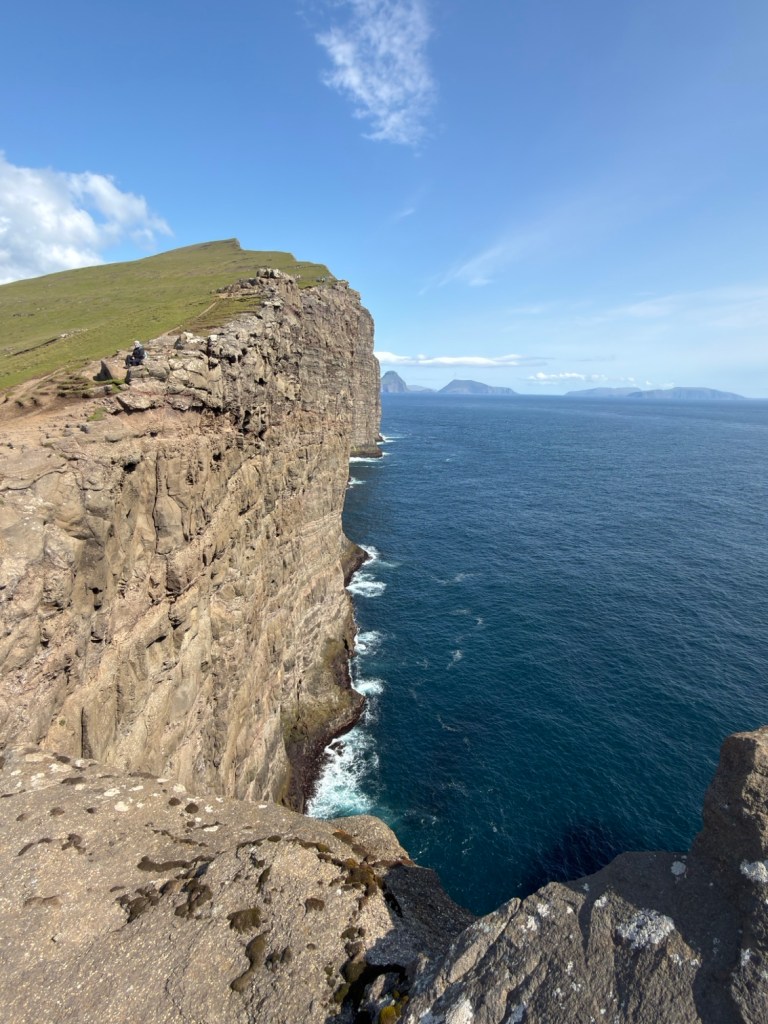
A stop at the picturesque village of Gjogv set in a dramatic gorge where Birita played as a child. At a nearby shop we bought a waffle with whipped cream and rhubarb marmalade. Very tasty. A nearby point provided striking views of two sea stacks Risin and Kellingin rising from the North Atlantic . The historic village of Funningur, believed to be one of the earliest Viking settlements, offers a glimpse into the islands past with its traditional turf-roofed houses.

The day was not special here in the Faroese Islands, but we made a special day of it anyway. Birita picked us up at 10 and we were off to the second largest island, Eysturoy, defined by jagged peaks, deep fjords and traditional villages with colorful houses. We
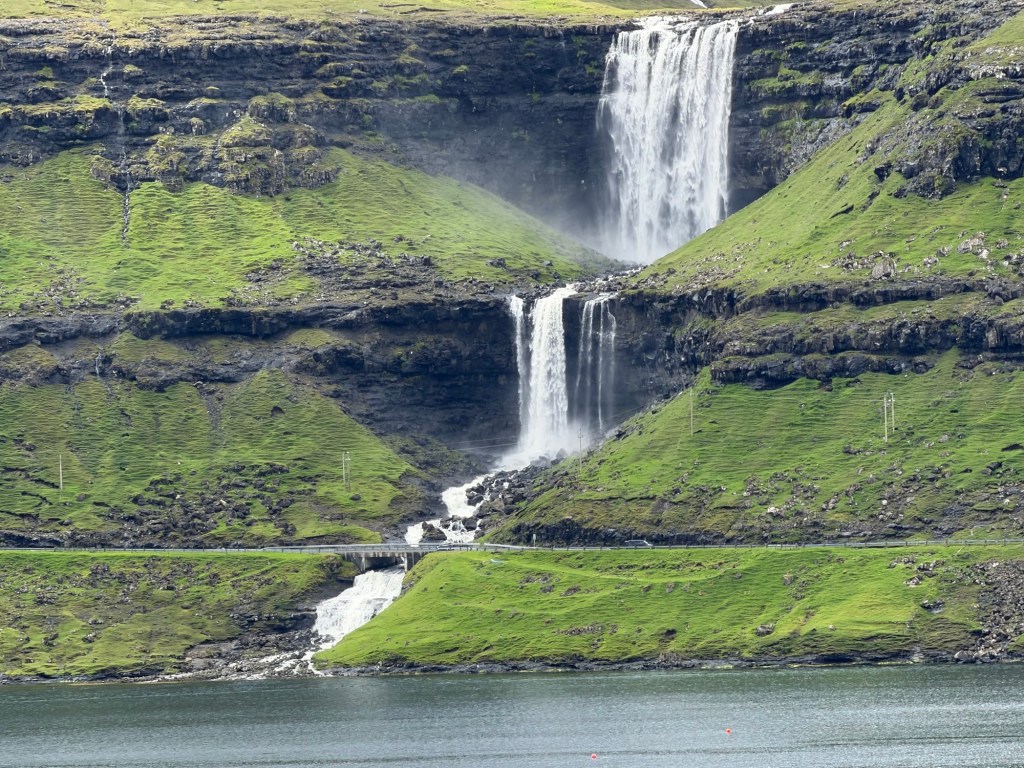
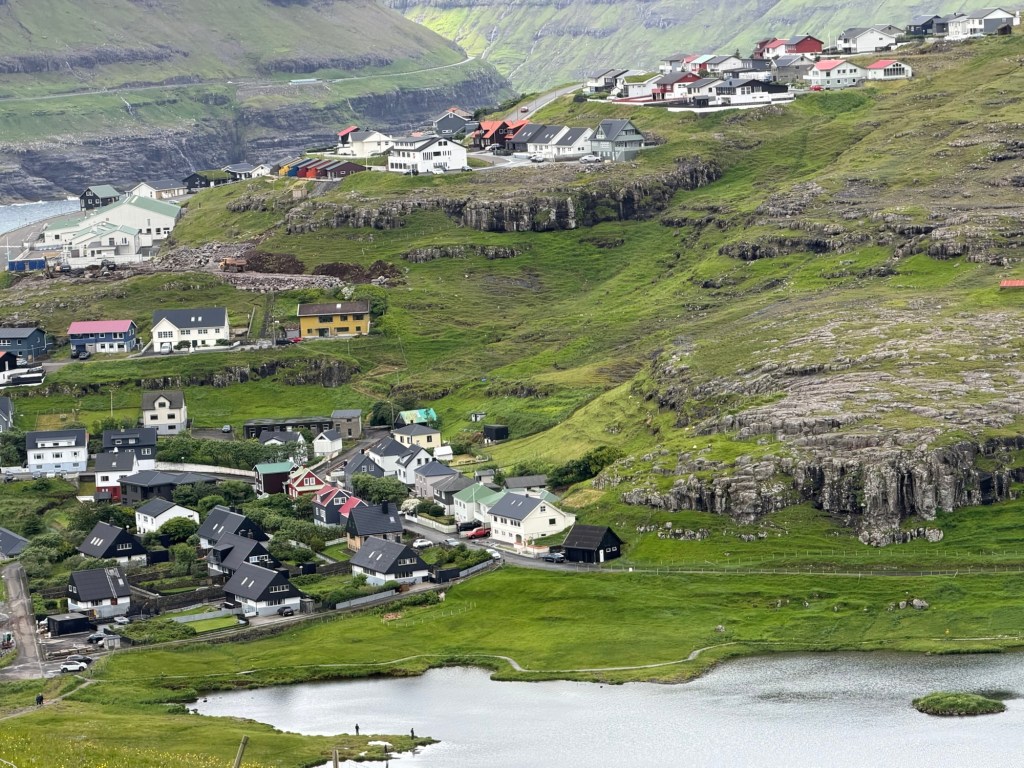
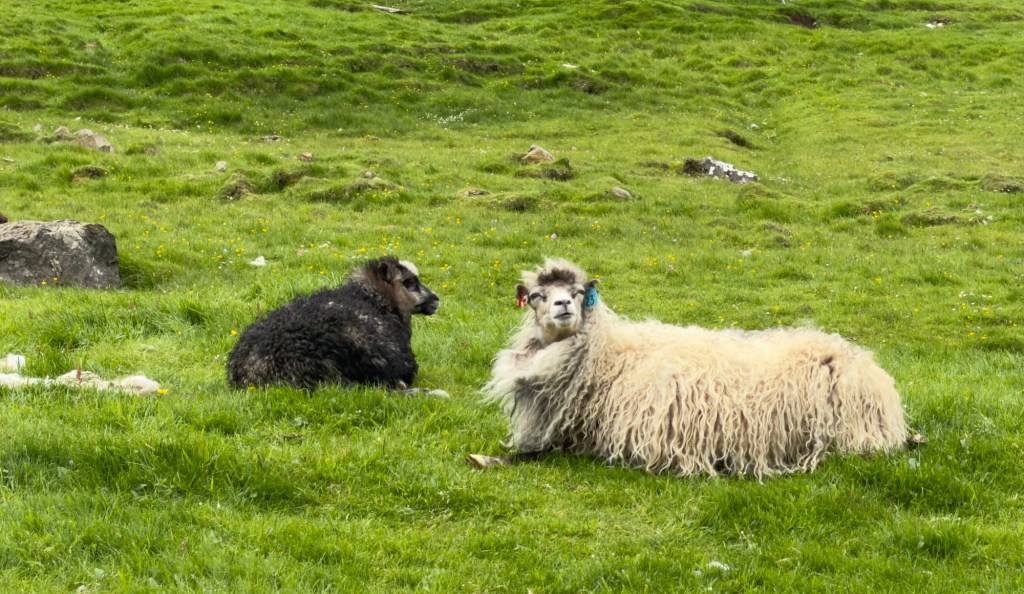
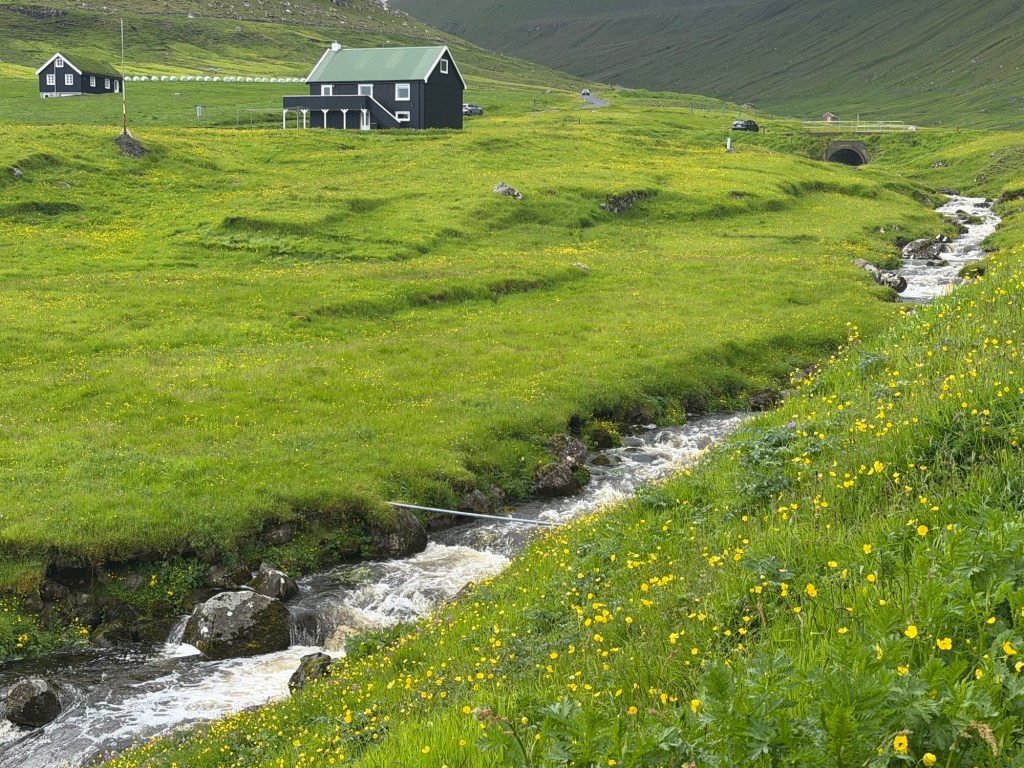
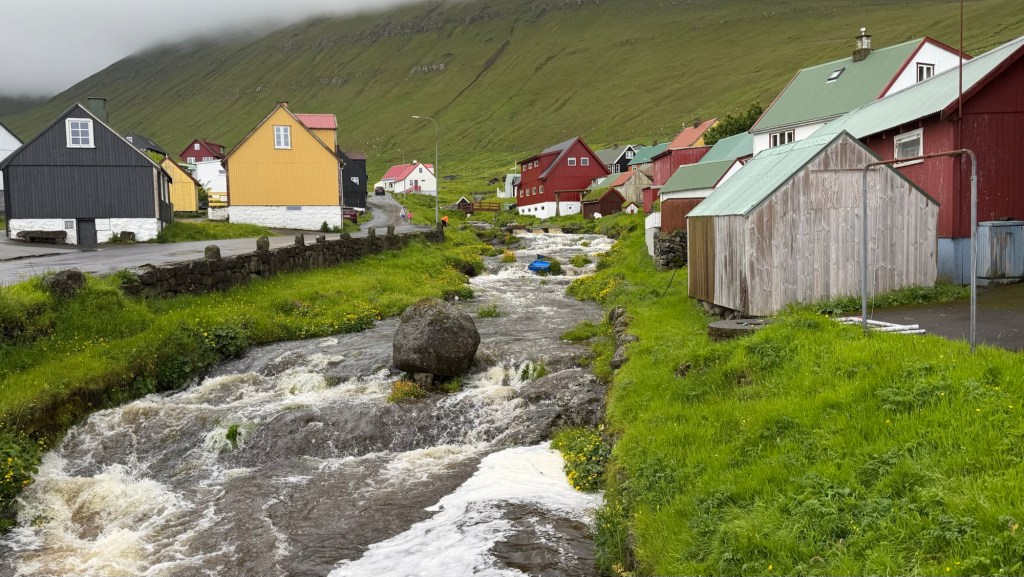
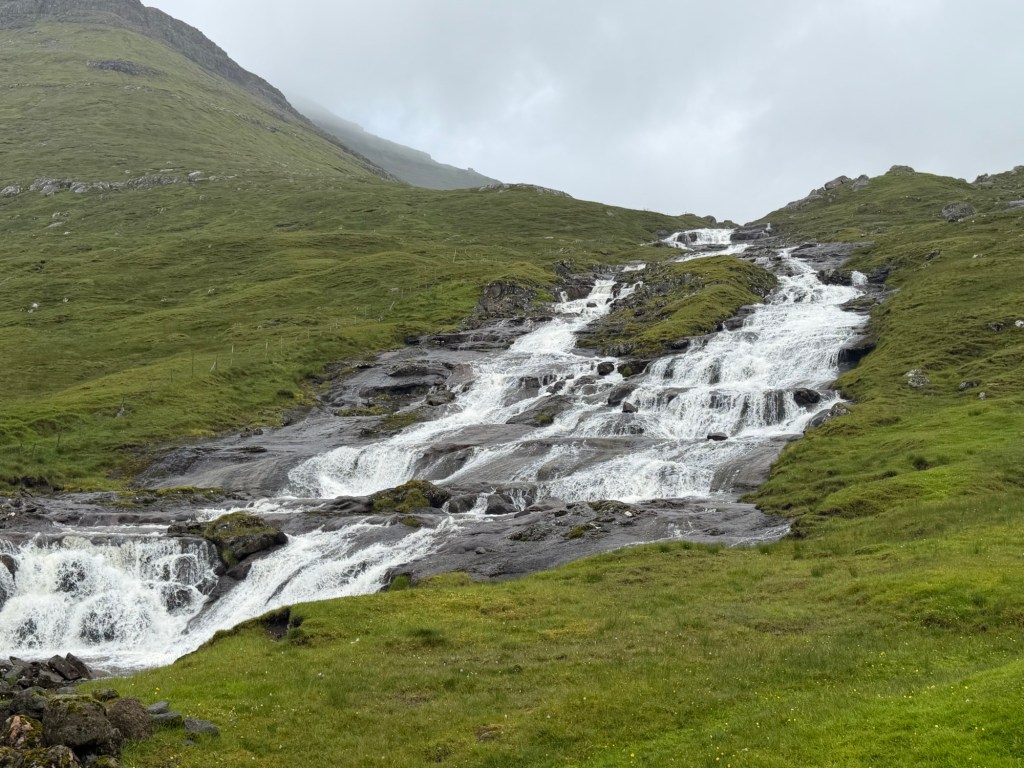
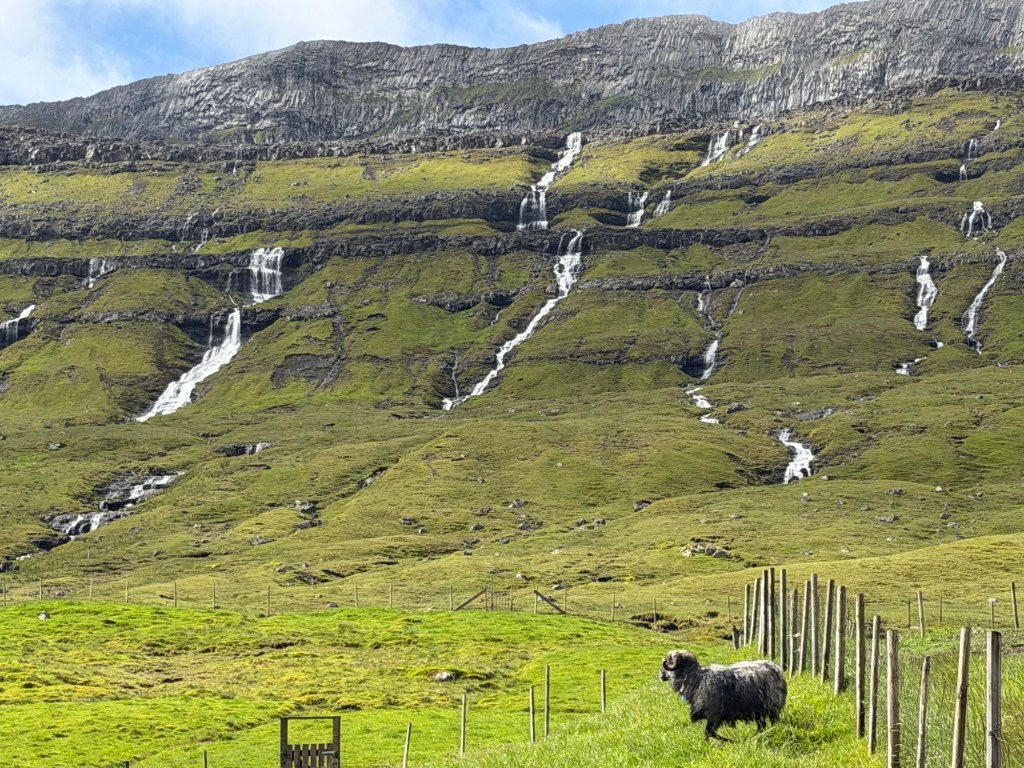
Waterfalls and sheep

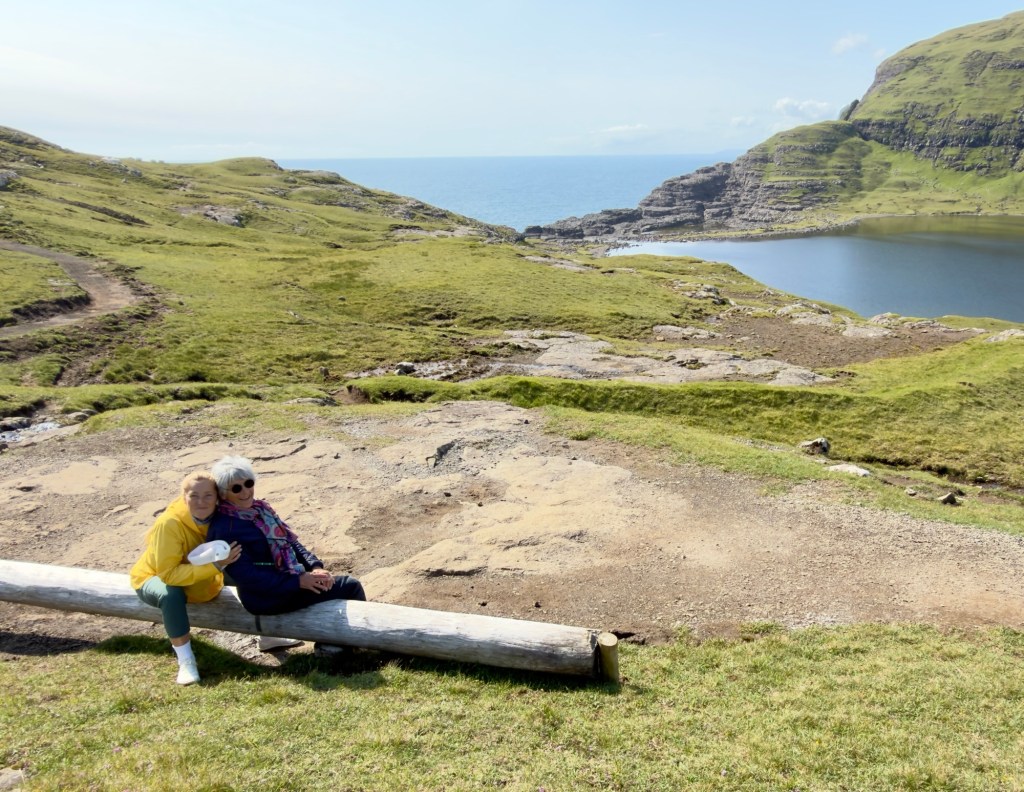
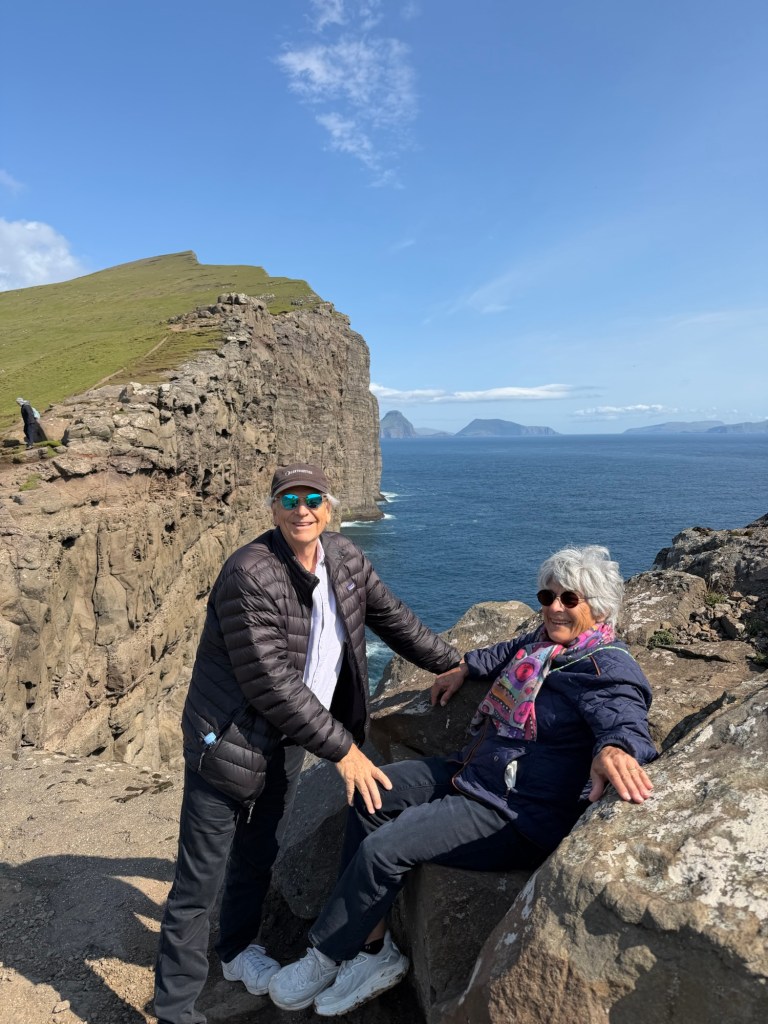
We walked a green trail in Saksun to a short cliff and found a rock to sit on and enjoy the view. Took a break from photos.

At 3pm we rendezvous with a local singer, Dogg Nonsgjogv, in her home for a mini concert. She greeted us at the door with her 5-month old girl in her arms. Soon Birita had the baby in her arms and Dogg was holding her guitar and talking about her music. She played and sang six songs for us, all in Faroese except one she did in English. She sang in a very soft, pretty, voice. She talked a bit about her work and how she had been singing since age 2 and performing since age 4. She performs in Faroese venues and has two albums published.
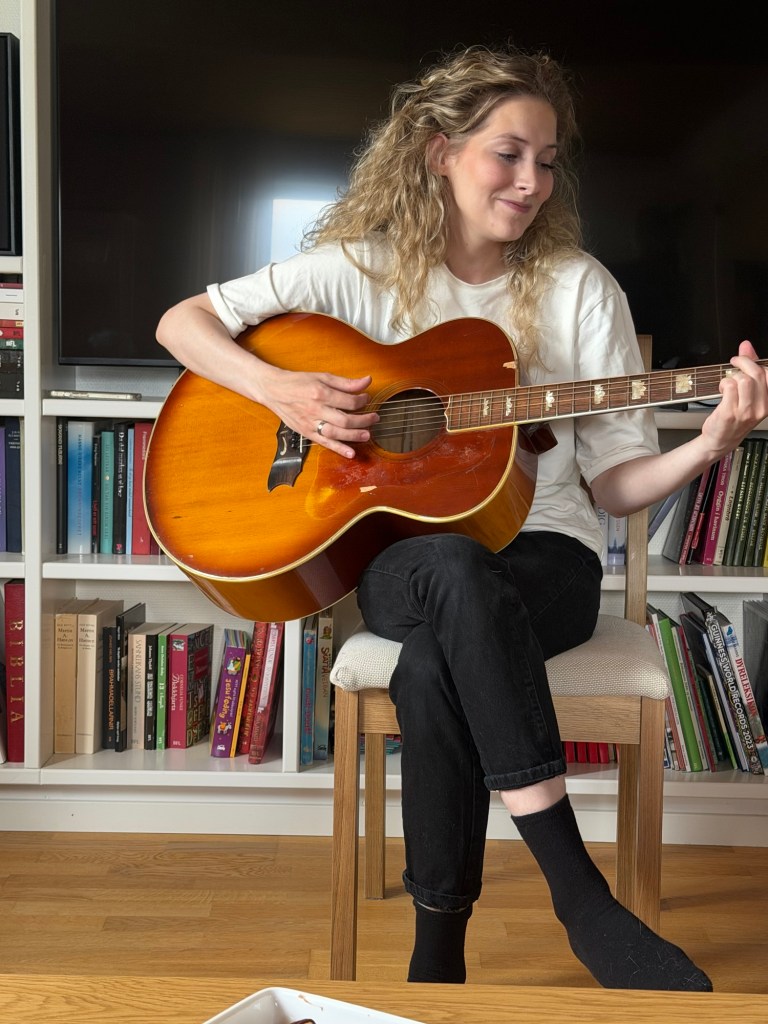
Singer Dogg Nonsgjogv plays for us

She wants to have more children more than anything else. After an hour with her, we said good bye and wished her young family well.

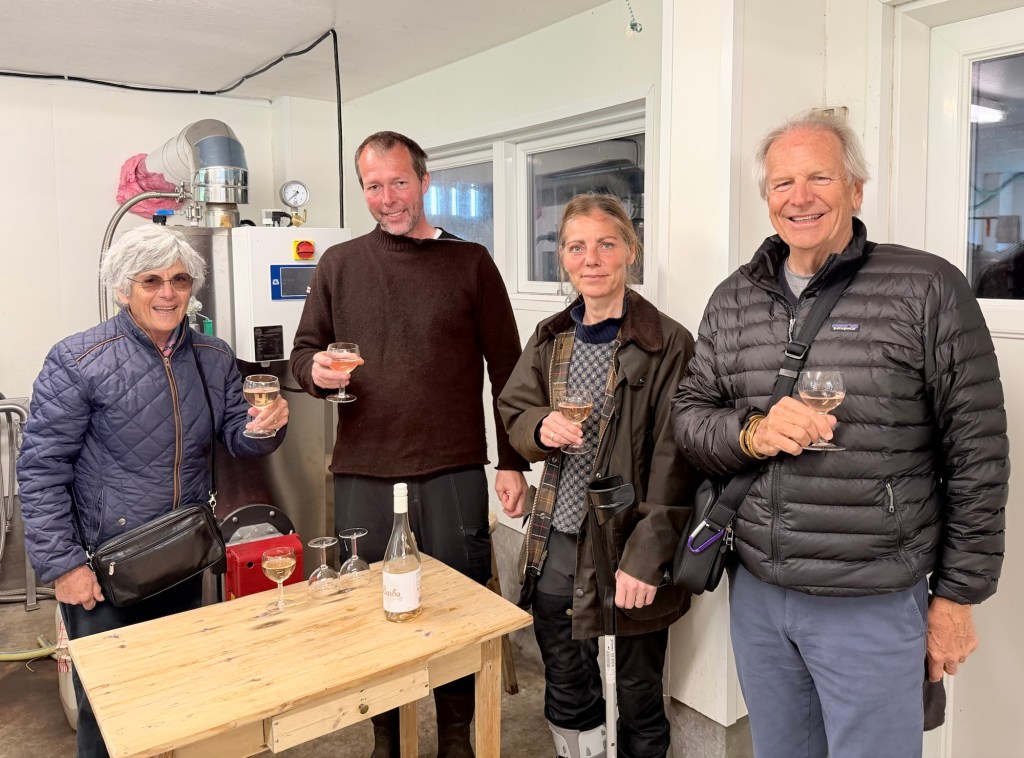
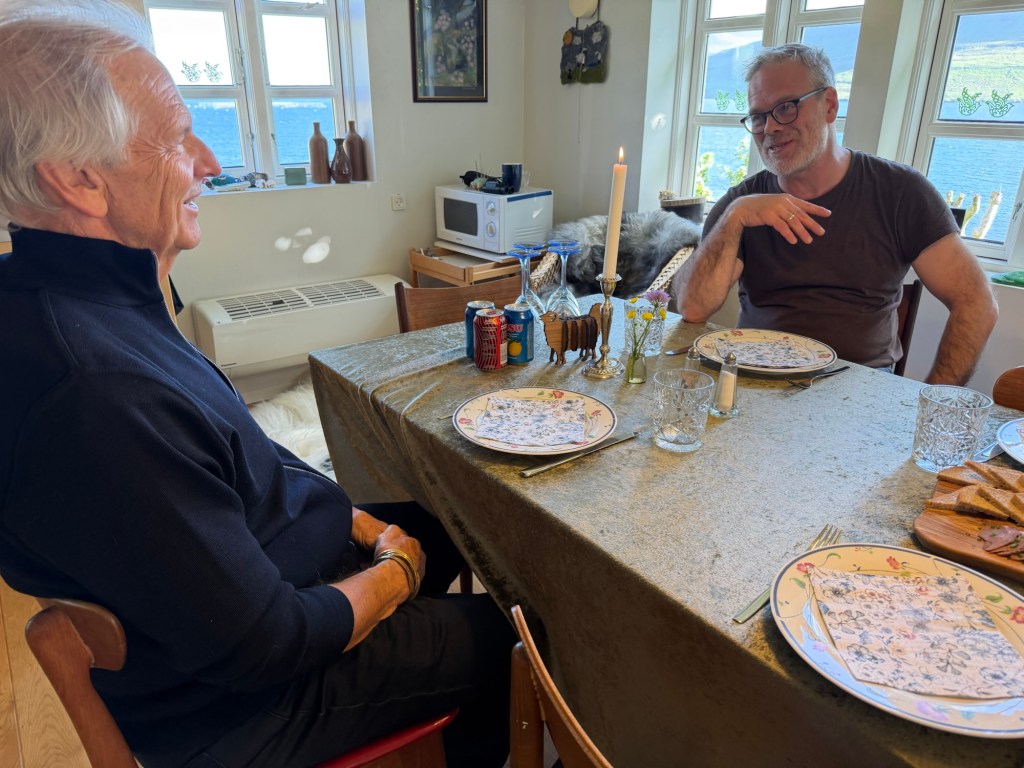
Back in the car we drove to Mittun Farm, the home of Klamint and Berghild Mittun, a farming family in a place called Selatrad, where we learned about their sheep production and joined them for dinner.

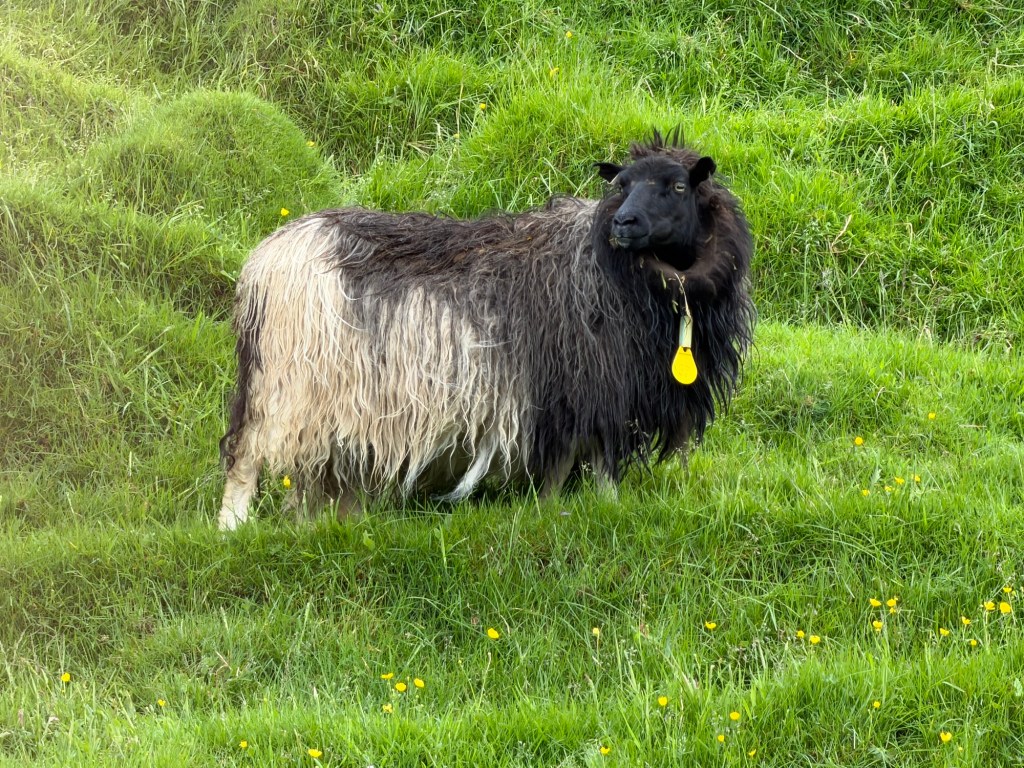
The family has been working this farm for 5 generations (about 200 years). There are 300 meters around their home used for the 140 sheep they maintain when they are not grazing on the hillsides. The family has a kings farm, which means the family does not own the land and cannot sell it. The animals stay outdoors all year and seem not to like being indoors, so he brings them in only sparingly in terrible weather. He slaughters about 20 animals a year and brings up new lambs to replace the attrition. There are several steps to slaughtering to maximize the useable meat from the animal. Nothing is sold off the islands. It goes to his family and the people who help him during the slaughtering process. The same goes for sheering the sheep. The wool stays on the islands and gets made into clothing for islanders.

After much discussion about the sheep business, we joined the rest of the family, including his wife Berghild, daughter and 10 year old son. Another son is away. We had a delightful visit with them and I forgot to take photos. Dinner included very tender leg of lamb, carrots, cauliflower, broccoli and potatoes.
This was our first broccoli since leaving home. After dinner, we were served excellent rhubarb crumble. Klamint and Berghild are in their early 50s and intend to work the farm for a long time and hope one of their children will want to take over managing the farm when they retire. After 3 hours with the family, we said good bye and left with a new driver.
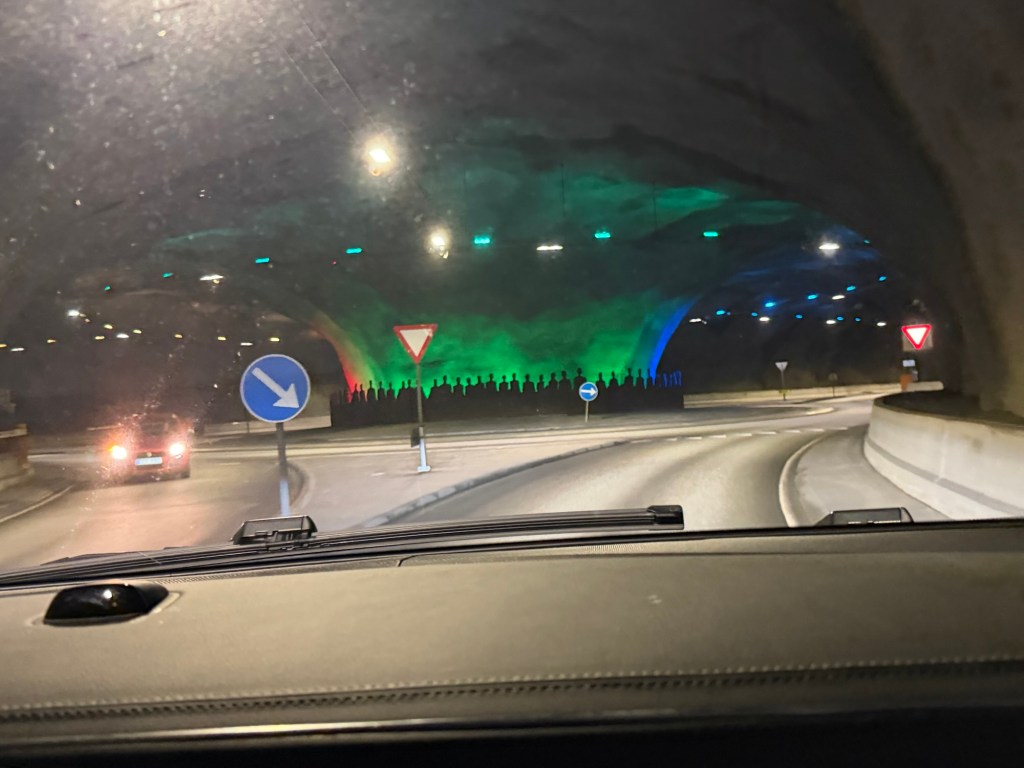
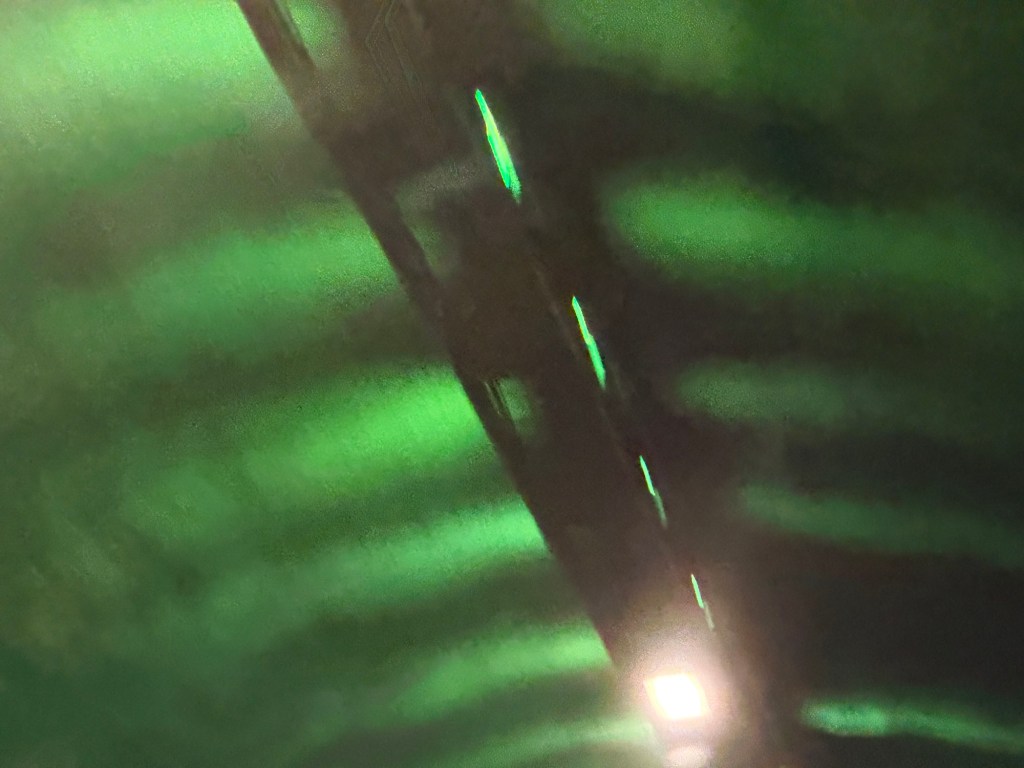
This round about sure makes the tunnel more appealing to drive the 11 kilometers in the dark.

Sunday, July 5, 2026

This is our last day on the Faroese Islands and the beginning of our trip home. Birita met us at noon when we checked out of the hotel and started driving to Vagar Island, which we had landed on, but not visited.
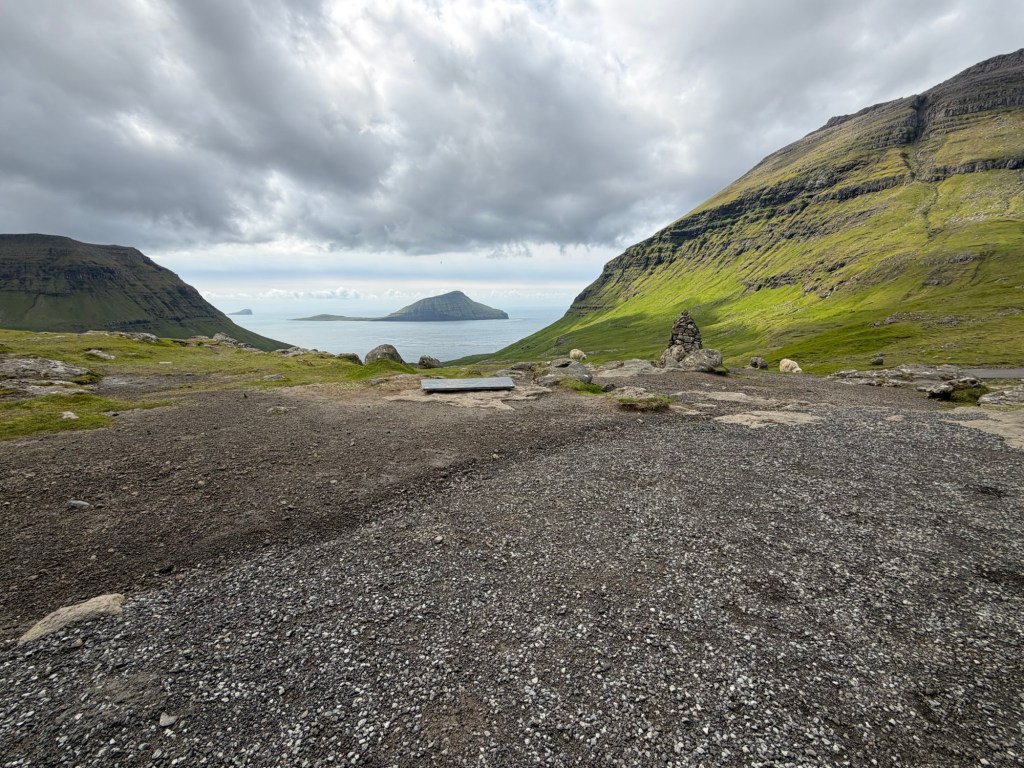
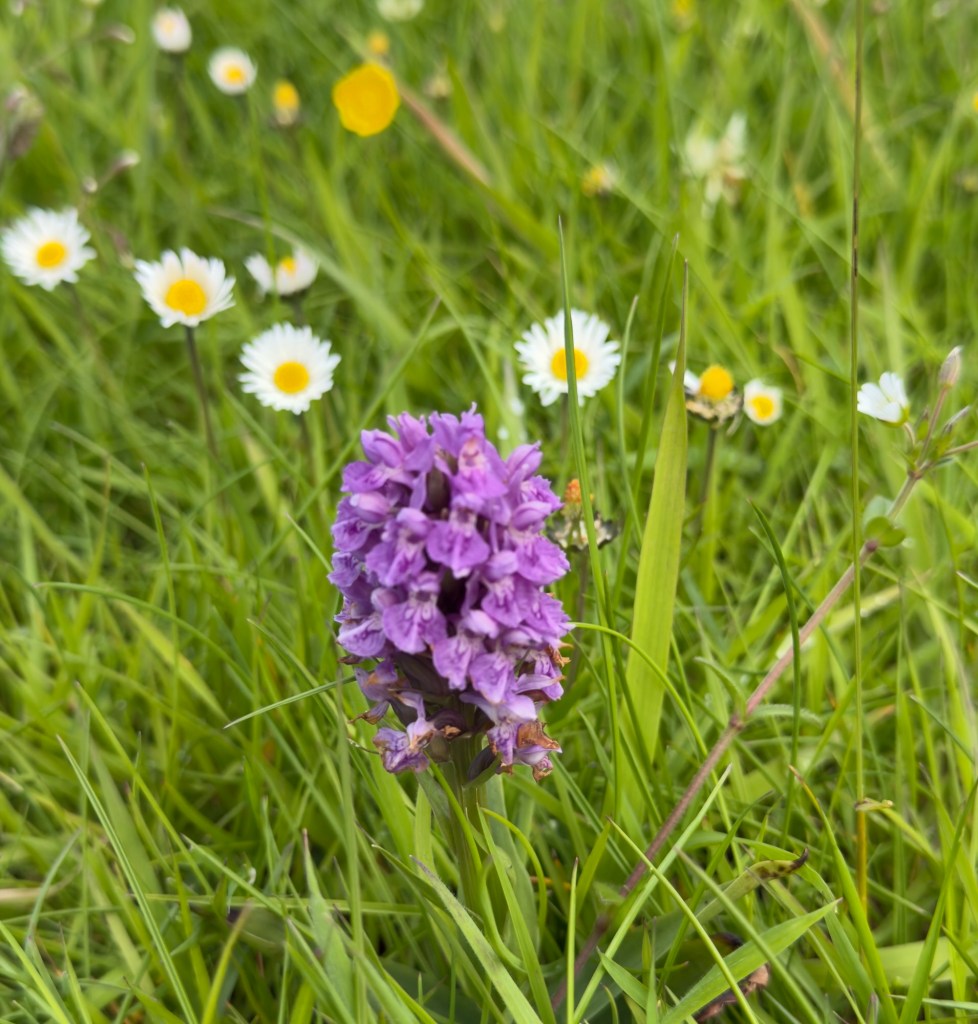
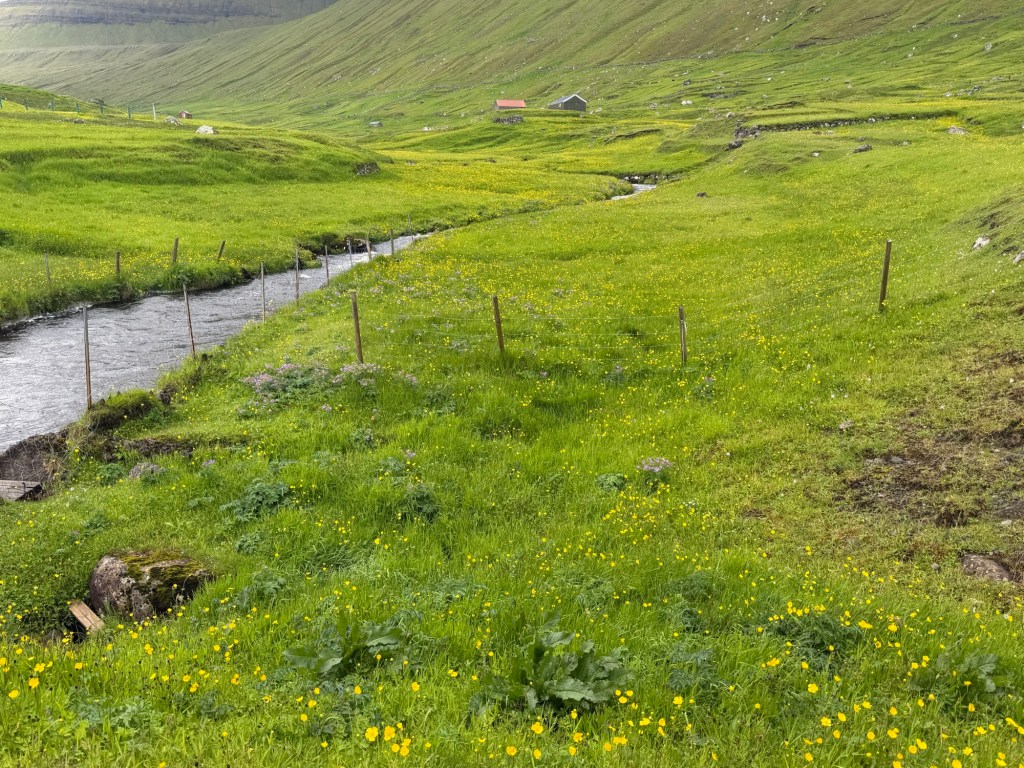
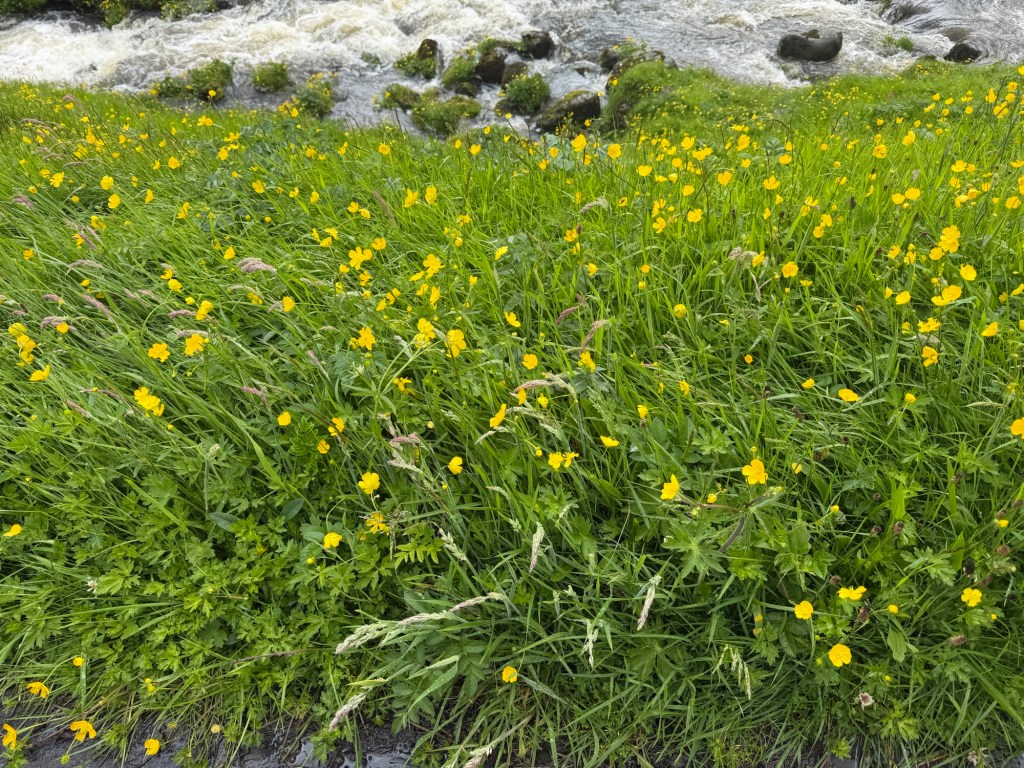
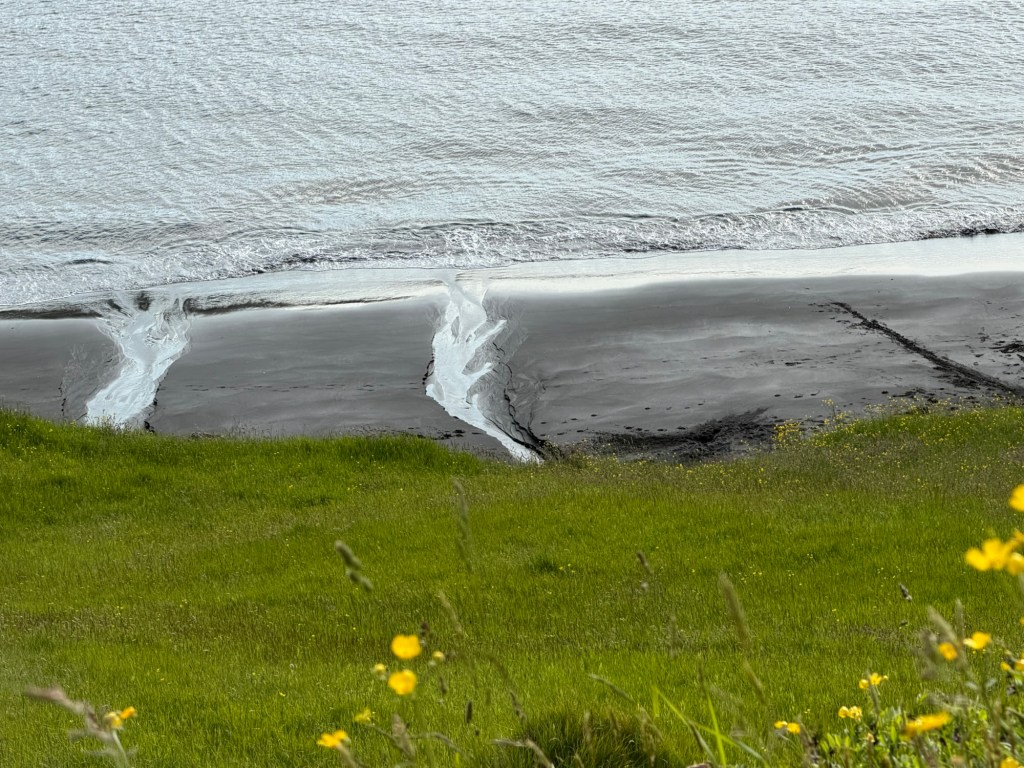
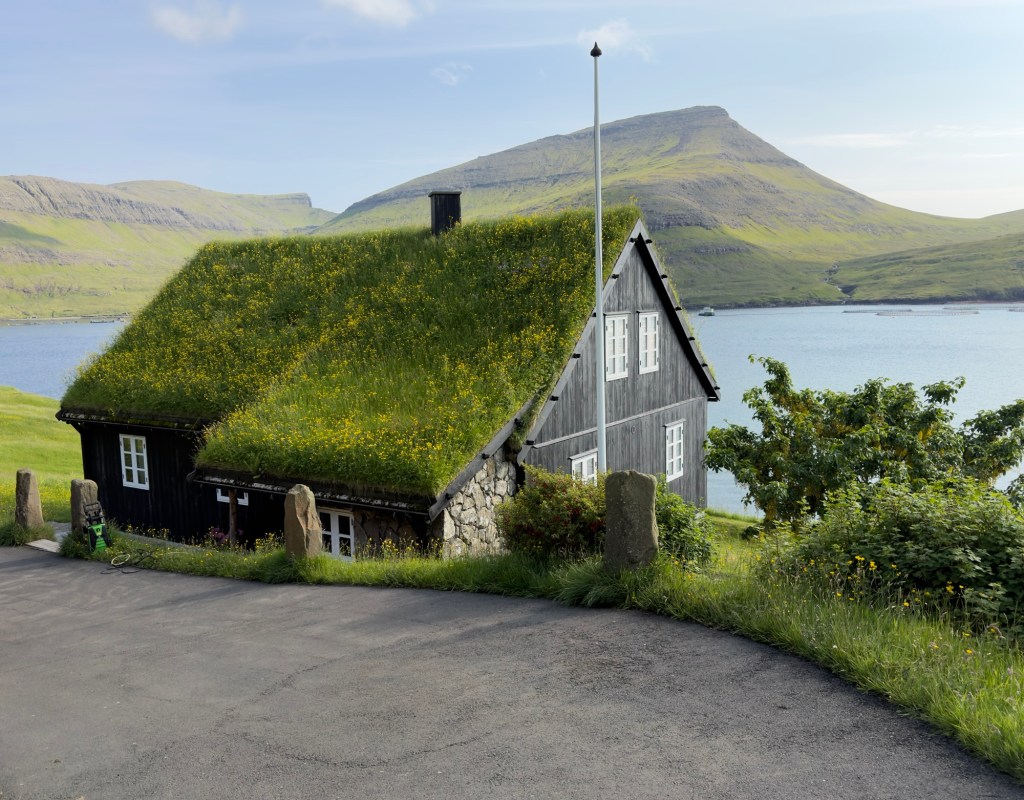
Buttercups fill the sod in flowers

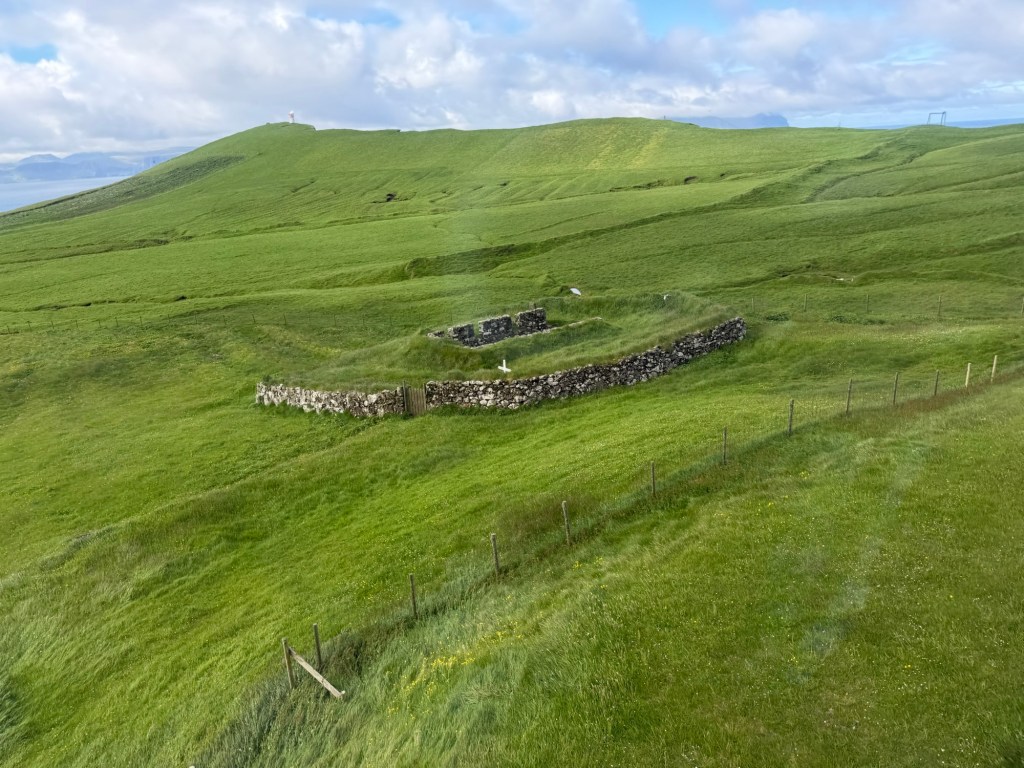
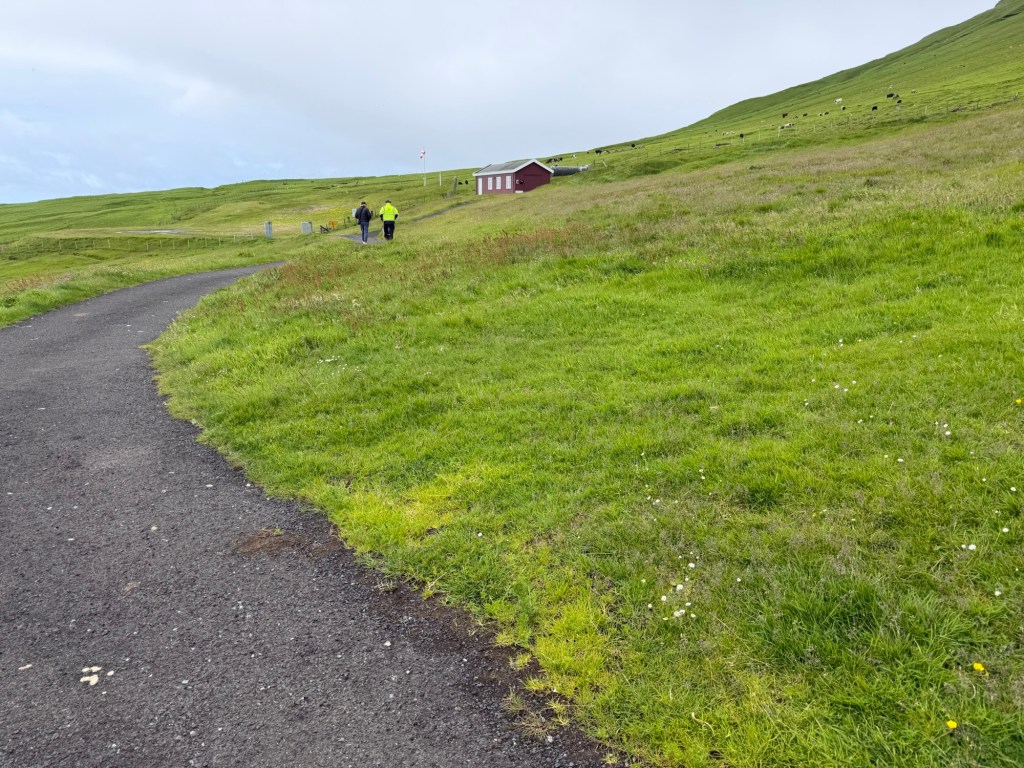
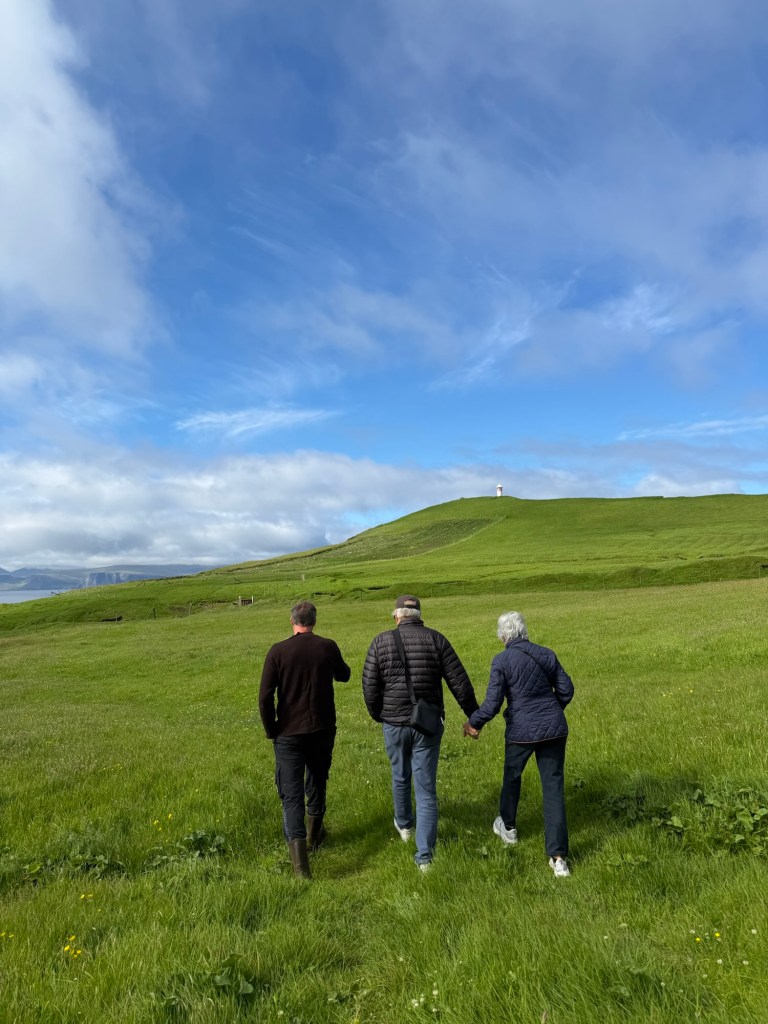
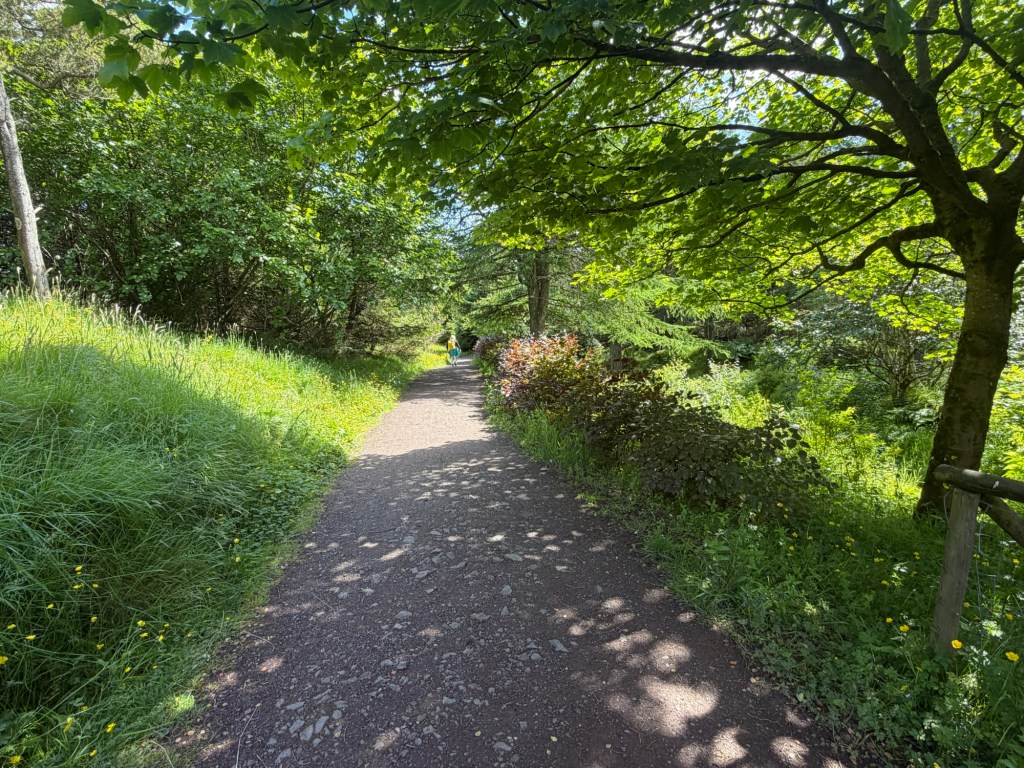
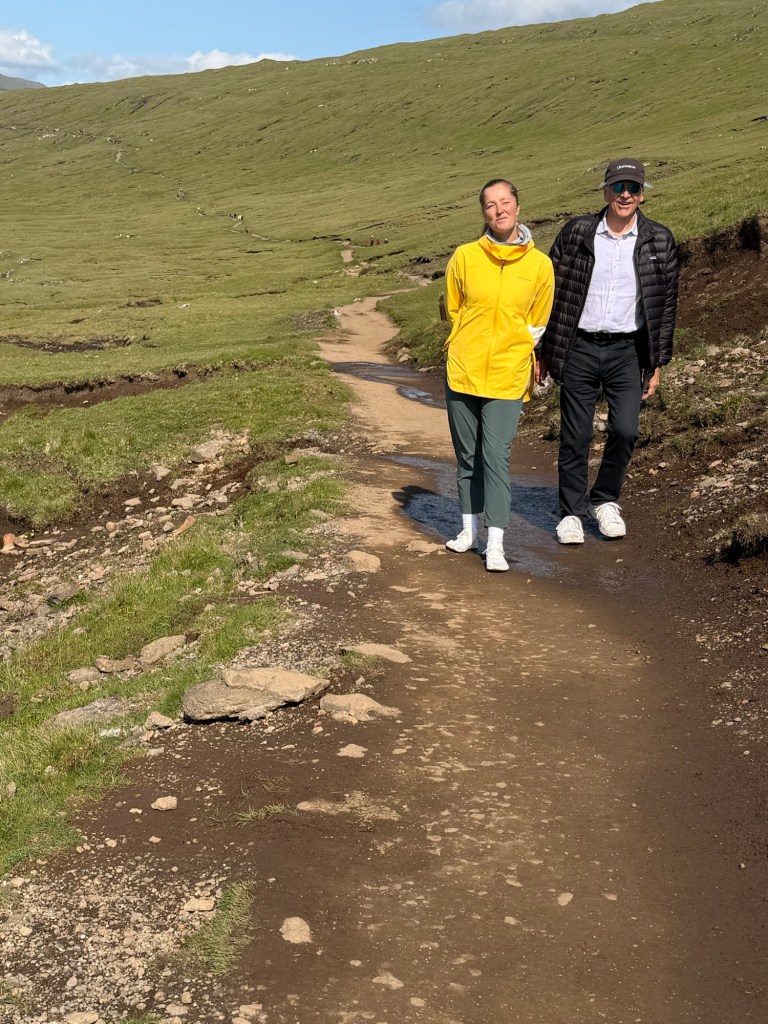
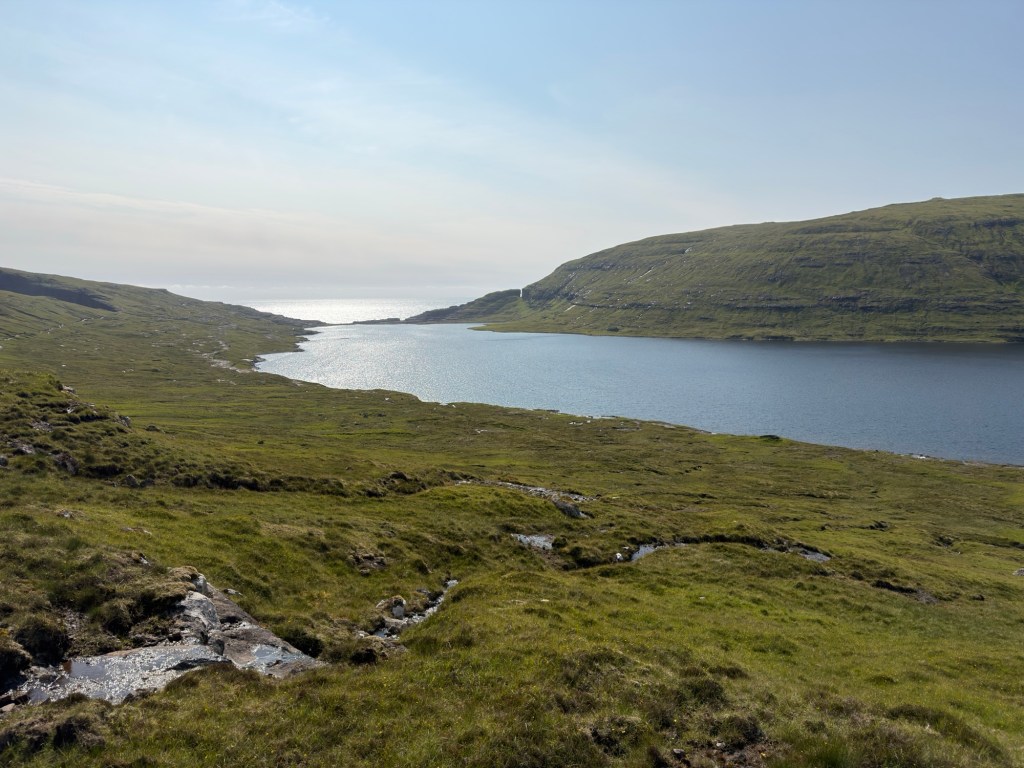
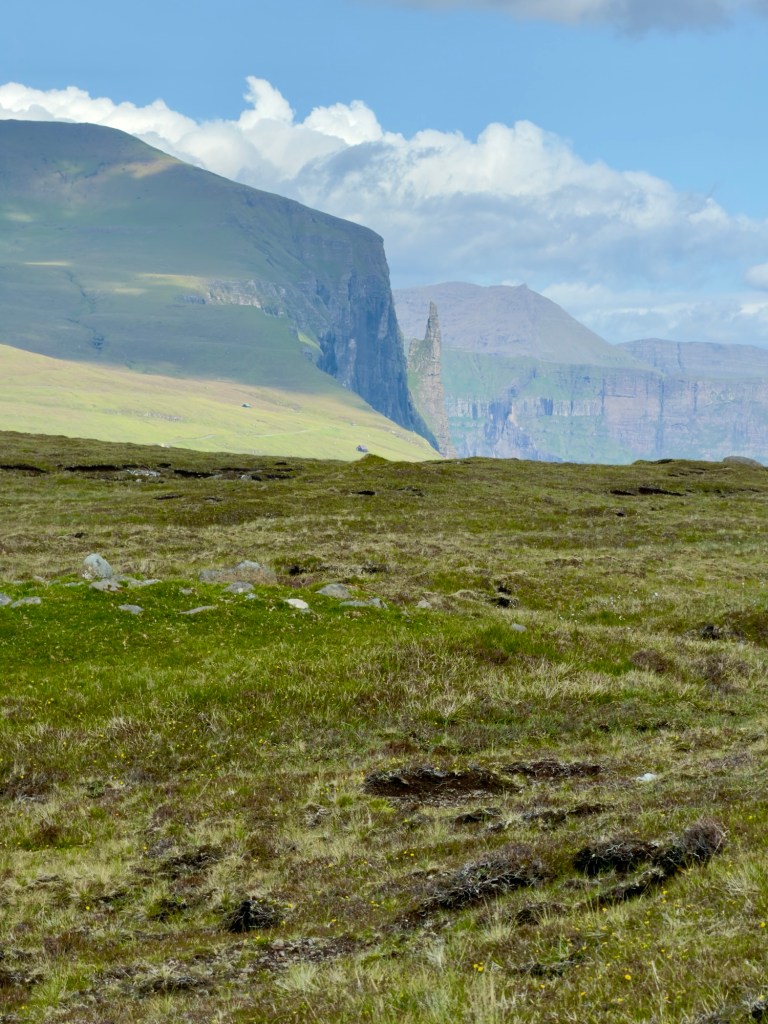
She drove us to Sandavagur on the south end of the island and parked. From there we walked about an hour across the undulating, grass covered, terrain to a view point. The scenery was lovely.

Then we flew away from the Faroese Islands for an overnight stop in Copenhagen. And then it was over and we headed home after 7 fun, action filled and interesting weeks.

This is how we traveled the whole trip.

Monday, July 6, 2026

Our luggage returns slightly more used.

Looking forward to seeing everyone soon.

With love,

Julia and Mark

Copenhagen, Denmark

Saturday, June 27, 2026

Here is some history about Copenhagen that comes through Wikipedia. Copenhagen is Denmark’s largest city with a metropolitan area population of 2.1 million. It housed one of the oldest monarchies in the world and has a history tracing back to the Viking Age. History is everywhere in Copenhagen and the surrounding areas, where you will find old castles, cobbled streets, and ancient ships. 

In past years the locals were feared far from the Danish shores. They were Vikings and famous for pillaging and raiding foreign villages. They were sea travellers who explored foreign territories in Europe, Asia and even North America. They believed in Norse Gods like Thor and Odin and their time ran 250 years from around 800 until 1050 AD.   

At one point, the Danish Viking Sweyn Forkbeard (Svend Tveskæg) and his son Canute the Great (Knud den Store) were the kings not only of Denmark but of Norway, Southern Sweden, Greenland, the Faroe Islands, Shetland, Orkney and parts of England.  

After the Viking Age, Denmark entered the years of Kings and Queens. Copenhagen was founded in 1167 by Bishop Absalon and became capital of Denmark during the  15th century.  Herring fishing then brought great wealth to Copenhagen and, under the reign of King Christian IV in the 17th century, the city grew to become the important regional capital it remains today. 

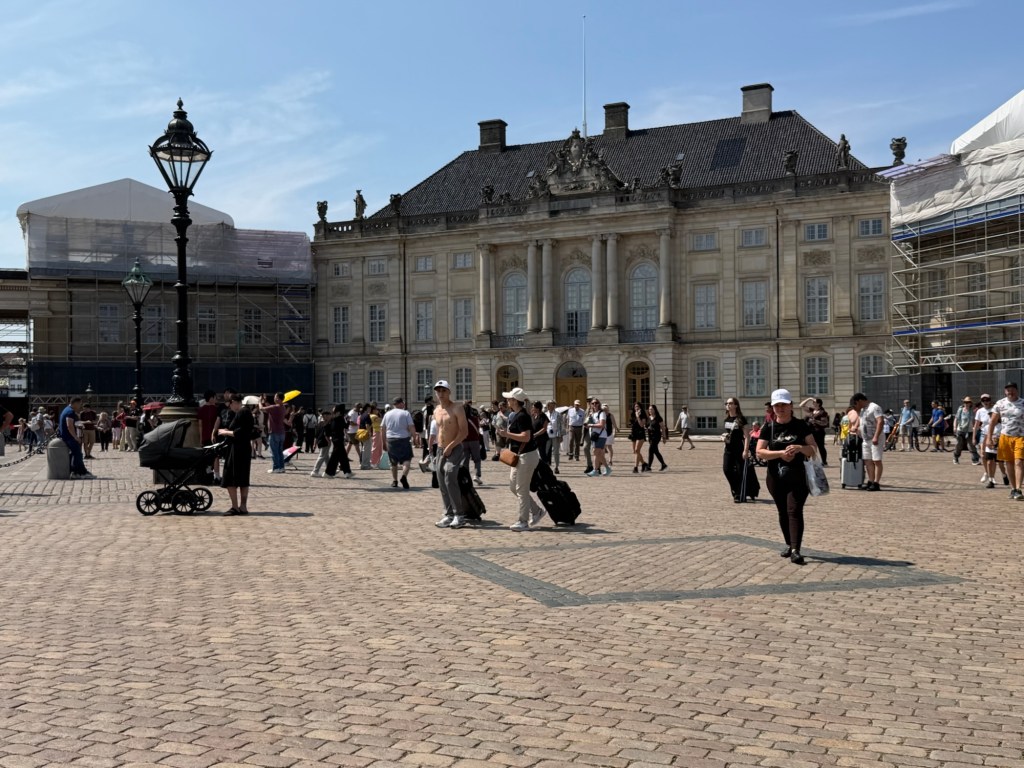
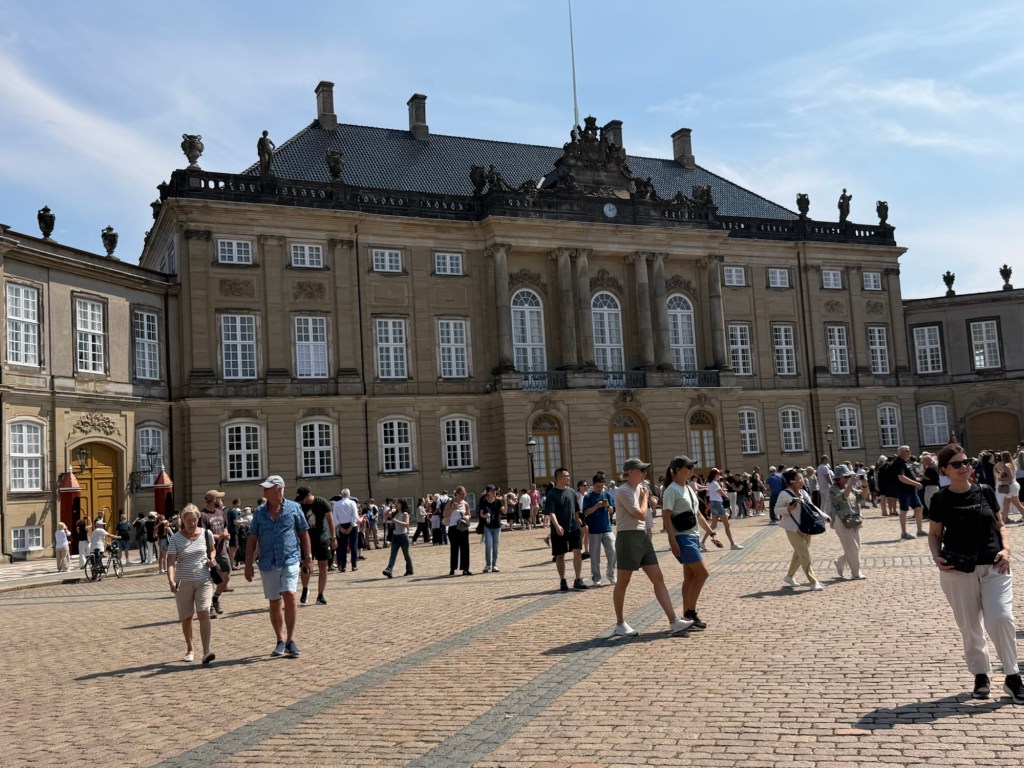
From 1376-1412 Denmark was ruled by a woman.  Margrete was the first who ruled through her son, the King.  She founded the Kalmar Union bringing Norway, Sweden and Denmark together under her rule. From January 14, 1972, until January 14, 2024, Denmark was once again reigned by a female regent: Queen Margrethe II. In her annually New Year speech on December 31, 2023, Queen Margrethe announced that she would abdicate after 52 years of reign making her son King Frederik X of Denmark. The Royal Family still lives in Copenhagen at Amalienborg Palace. 

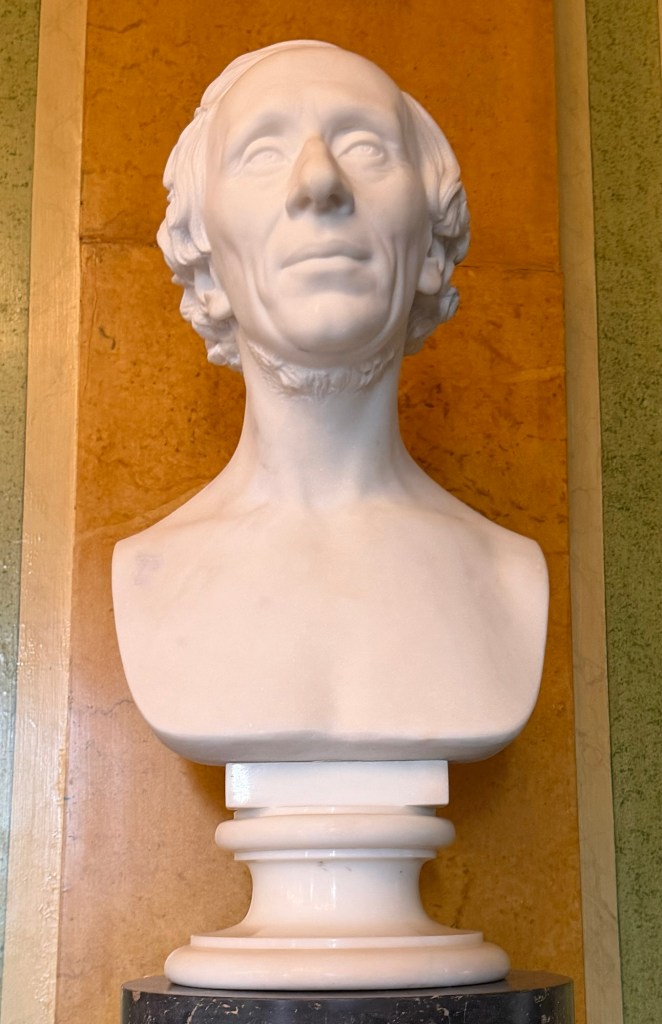
Amongst its important historical inhabitants are author Hans Christian Andersen, astronomer Tycho Brahe and philosopher Soren Kierkegaard.

We arrived 2.5 hours late as our fight out of Alesund was delayed. A planned walking tour was cancelled as a result of the delay and so we had a late dinner across the street from the hotel in a place called Esmee. It was a delicious meal of sea bream seveche and grilled sea bass. It was a delightfully balmy evening with many young people cruising the sidewalks in scanty clothing. It had been the warmest day of the year so far. Eventually we crossed the square back to our hotel, the D’Angleterre. The weather is expected to be rainy the next morning…..

Sunday, June 28, 2026

And it did. We were hoping the day would clear up as it was our free day and we hoped to tour the city on foot. The sun did come out by 10am and we had a lovely, even too hot, day. Mark counted 16, 800 steps. No hills of course. Copenhagen is flat as a pancake.

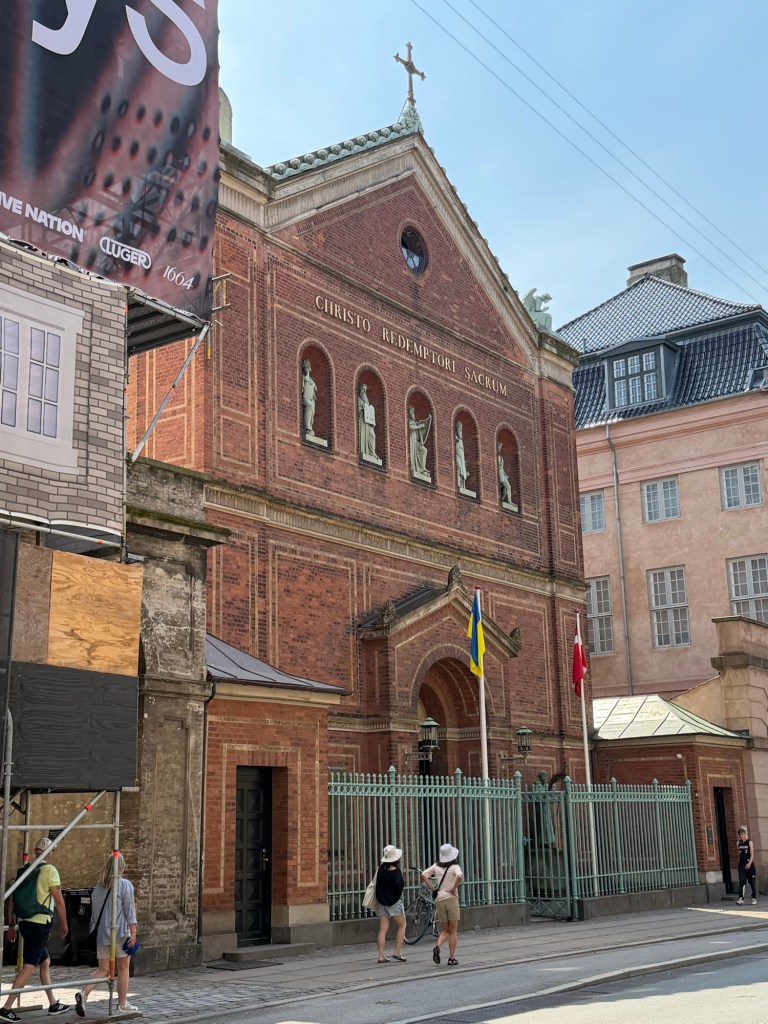
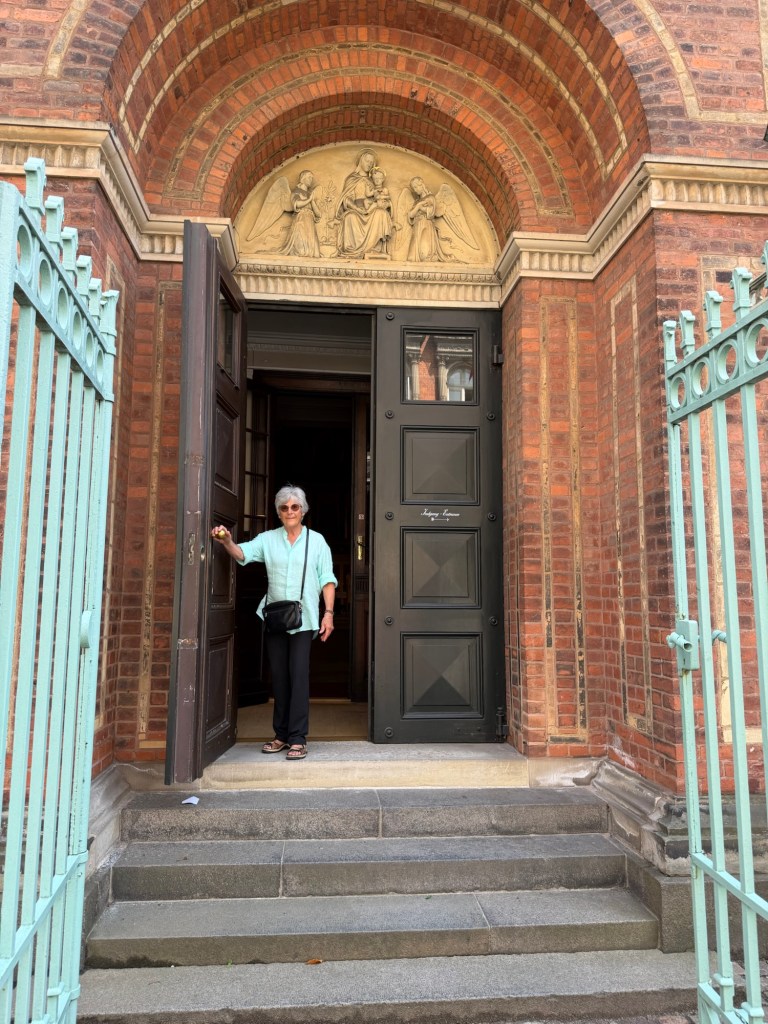
From our hotel we walked to St Ansgar’s Cathedral, the oldest Catholic Church in Copenhagen, where I attended 10am mass in Danish.

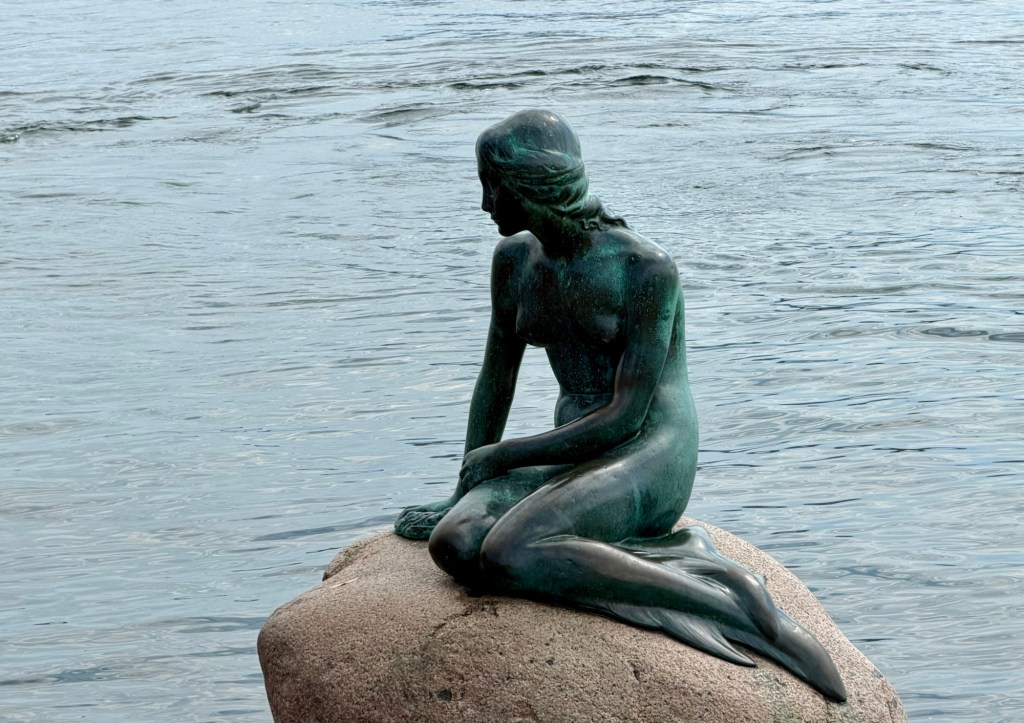
The little Mermaid
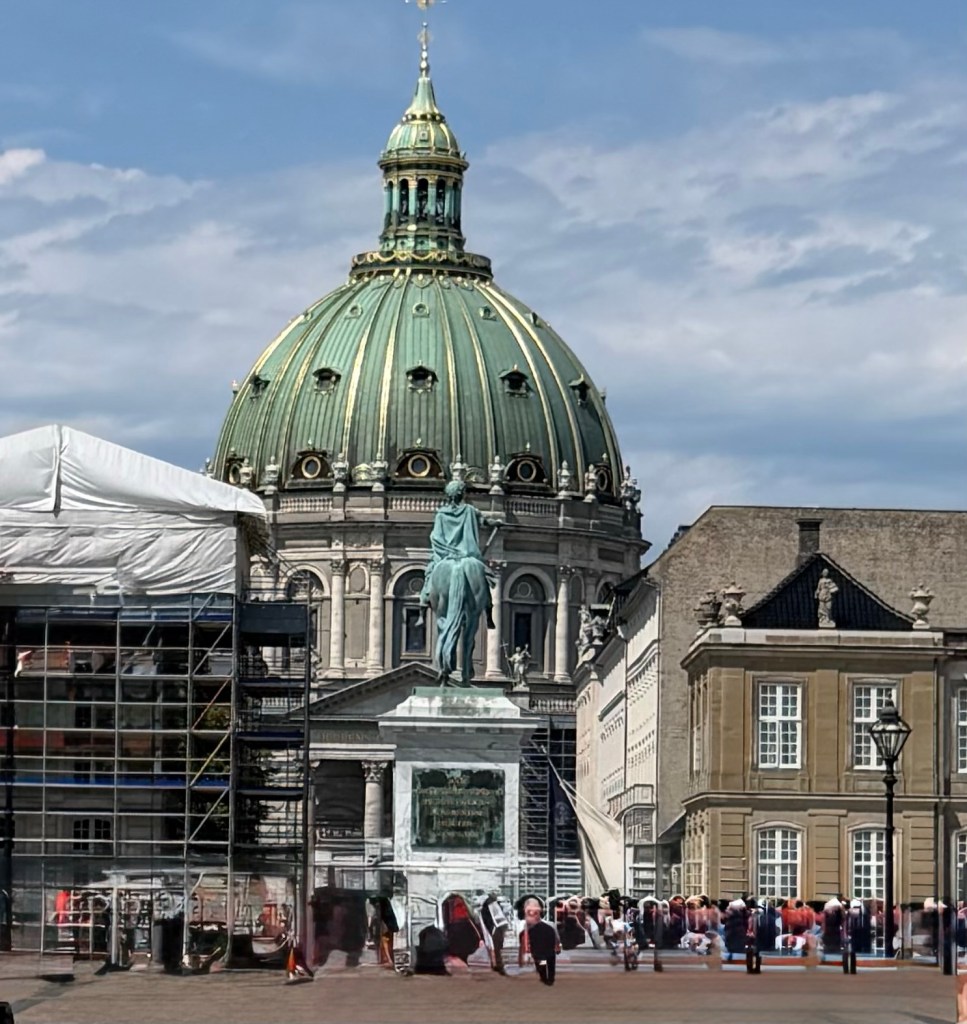
Fredrick’s Church or The Marble Church has the largest dome in Scandinavia. Took 150 year to build and opened in 1894.

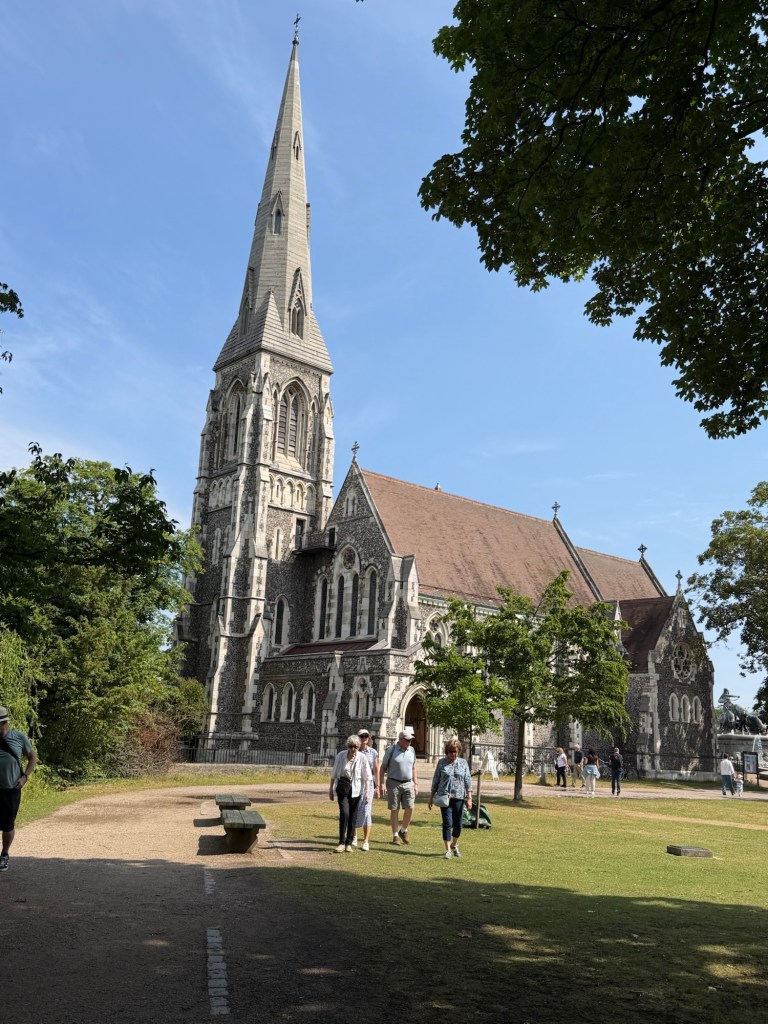
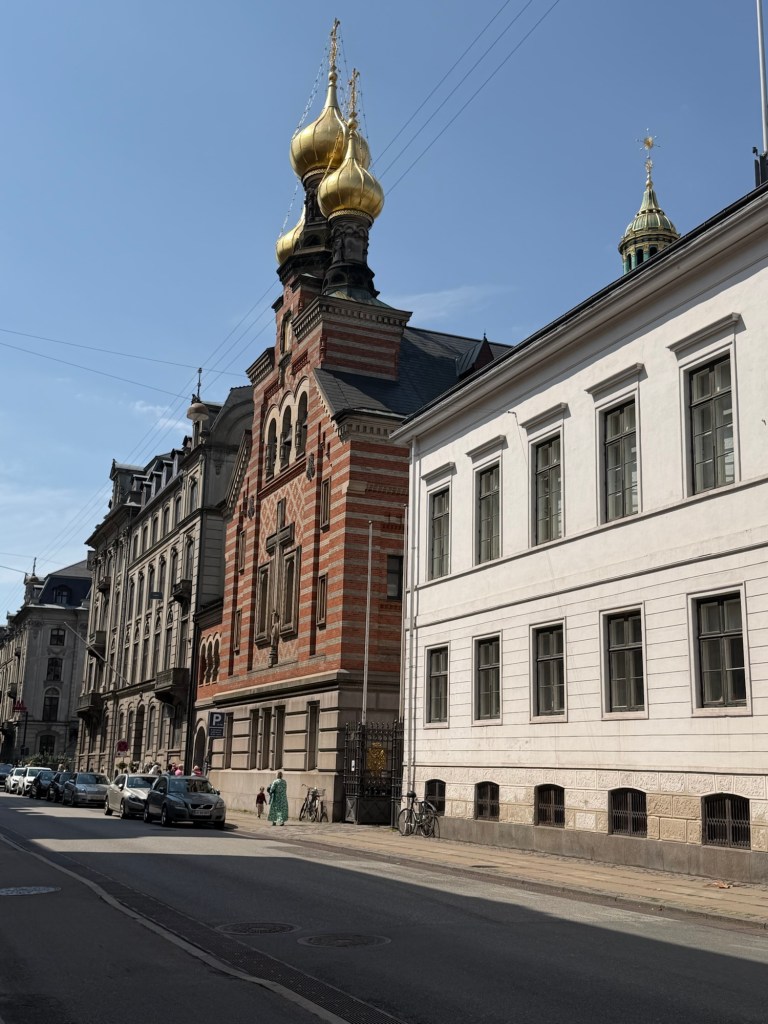
From there we continued walking through a large tree covered park to the Statue of the Little Mermaid sitting on a rock in the water next to the shore. A huge cruise ship was in town and thousands of people wandered the streets. Even the Little Mermaid was crowded with tourists, like us. On our way back toward the old city we got a photo of St Albans church. We passed by our hotel and changed into lighter clothing and shared a club sandwich. We saw a sign that read 89 degrees Fahrenheit. The hottest day of our trip so far.

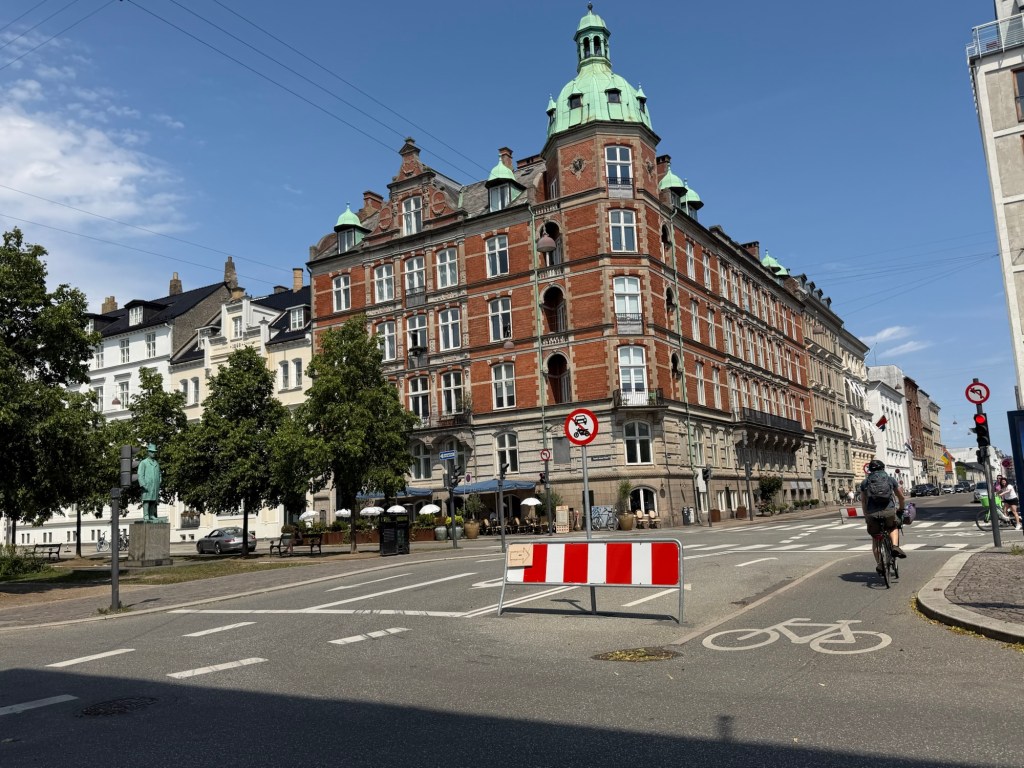
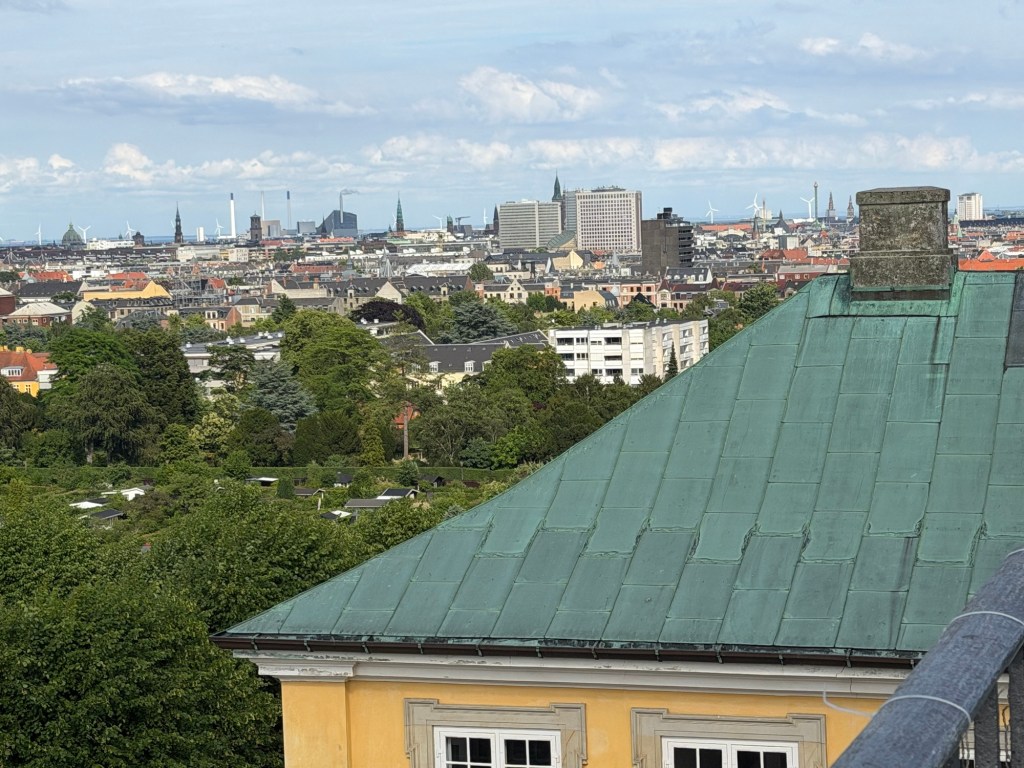
Most buildings, except the churches, are 5-6 floors high and made of stone or brick. The uniformity is appealing. We saw only one sky scraper in the city, a Radisson Hotel, and it looked out of place.

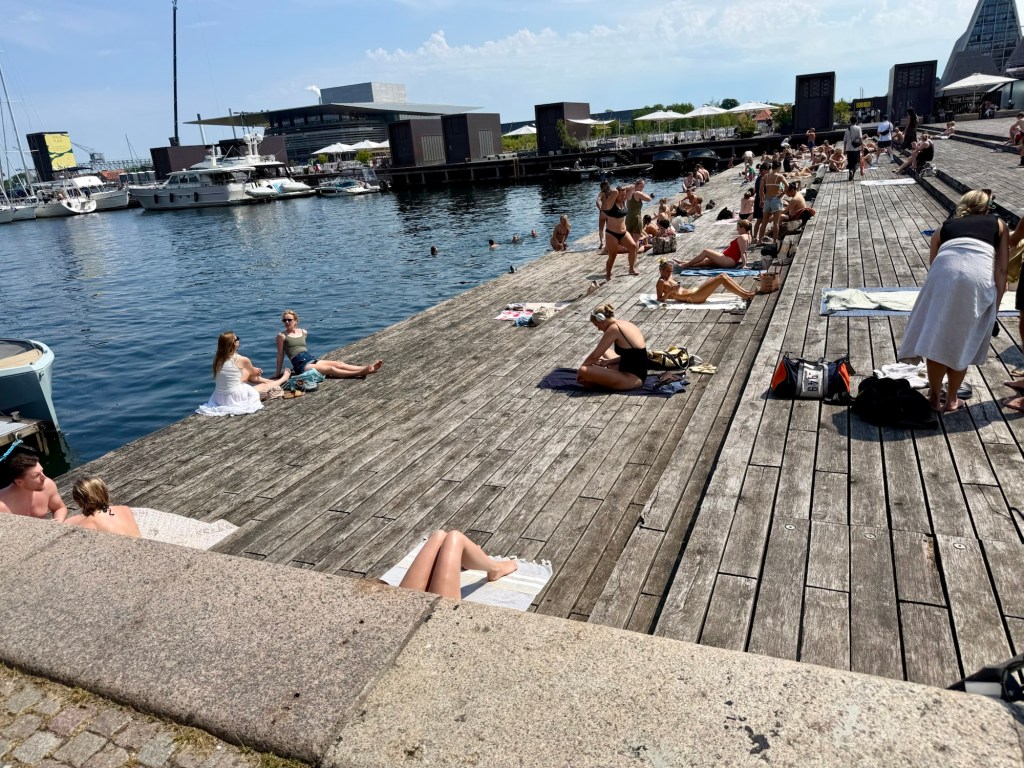
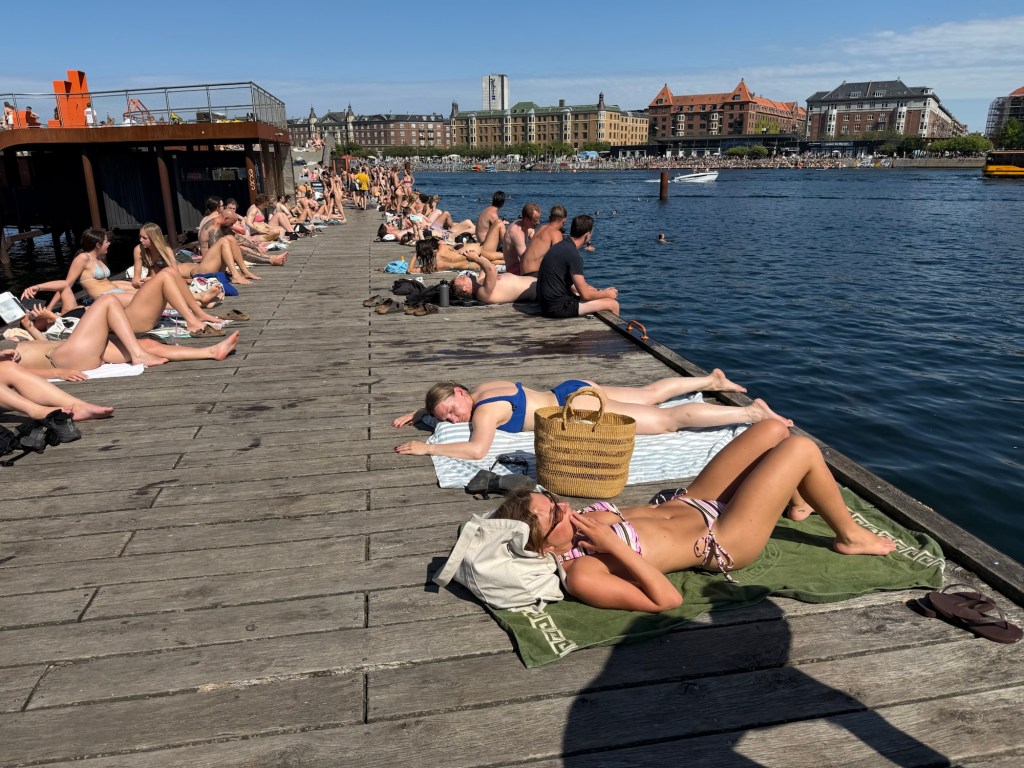
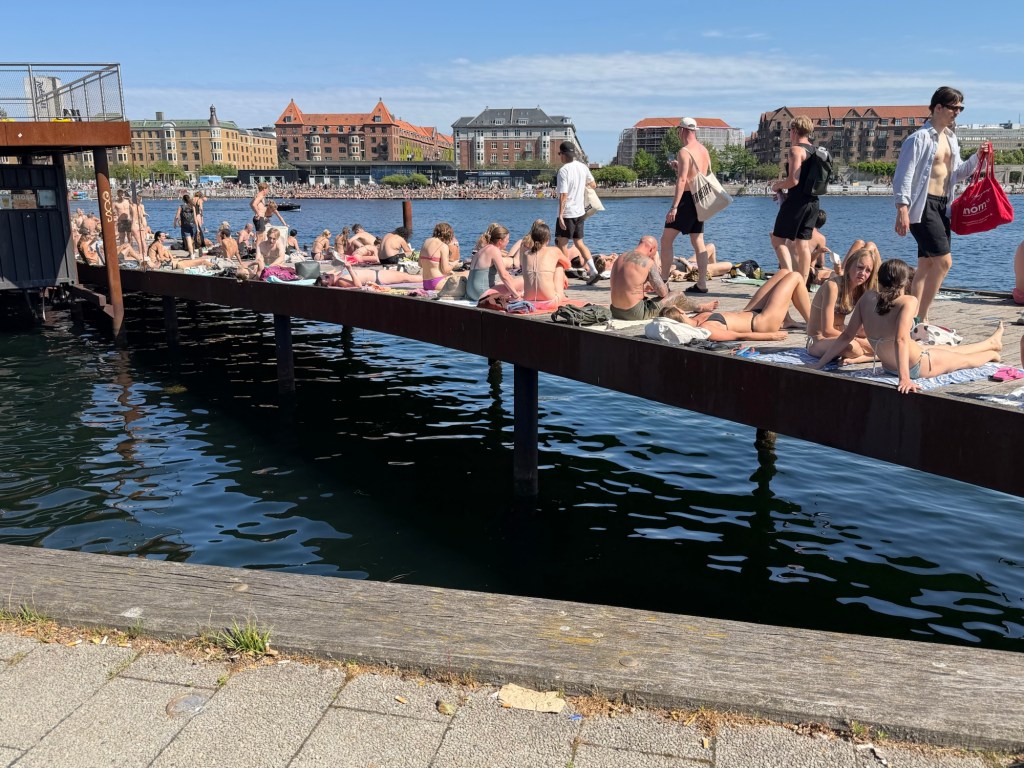
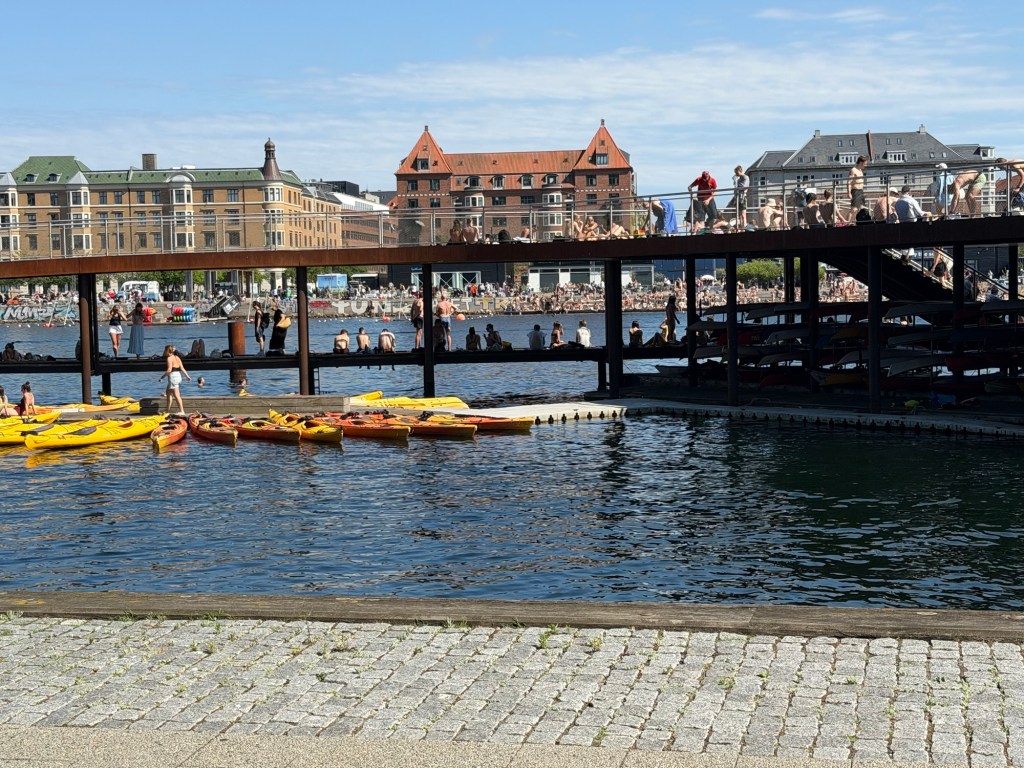
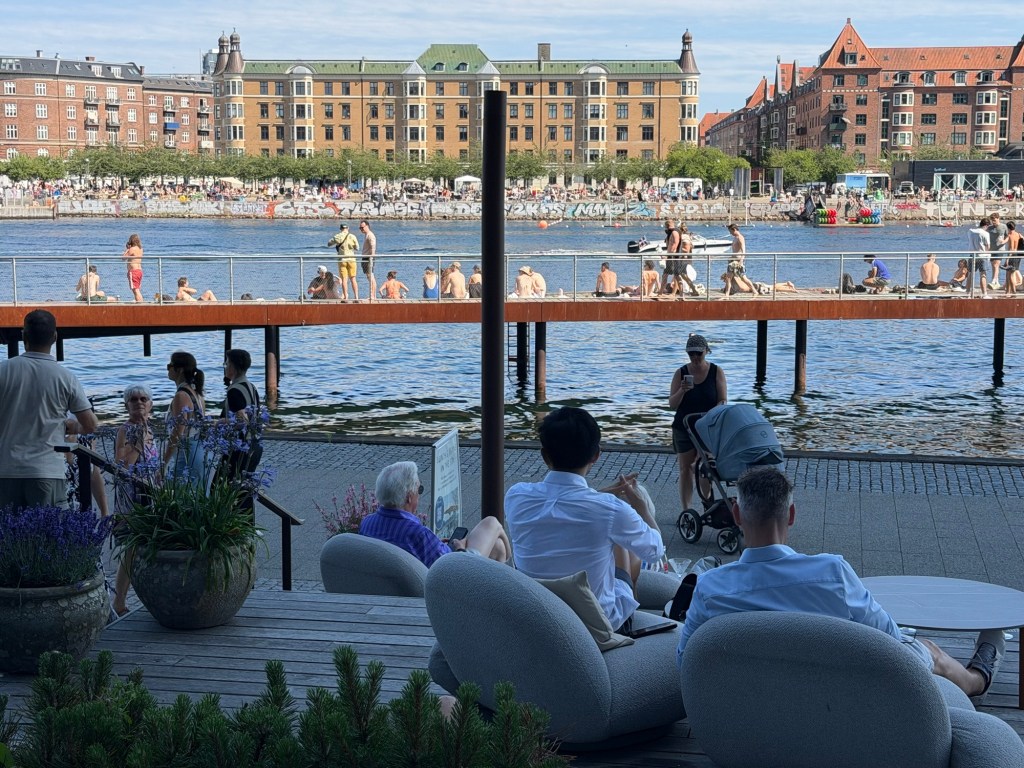
Back on the street we walked through the shopping district. and bought some clothes that were 40% off. Couldn’t resist. Don’t know how we will fit the new duds in our bags. It is already tight. From the shopping area we continued walking all the way to Tivoli Garden, only to learn it is an amusement park, not a garden. Hot and tired, we walked toward the canal hoping it would be cooler. We ended up at a place on the canal called Kalvebod Brygge Harbor Bath. It was packed with young people in very tiny swim suits sunbathing on the passenger only bridge. I guess there were more than a thousand people cheek by jowl soaking up the rays. We had had enough. Mark ordered an Uber and off we went to our hotel.
The driver was from Afghanistan and had been thee recently. He told us life was much better there now, except for women who still cannot go to school after grade 6 or work in public. Hmmph. Didn’t sound much better to me.

After dinner we walked back to the hotel. The air was still very pleasant.

Monday, June 29, 2026

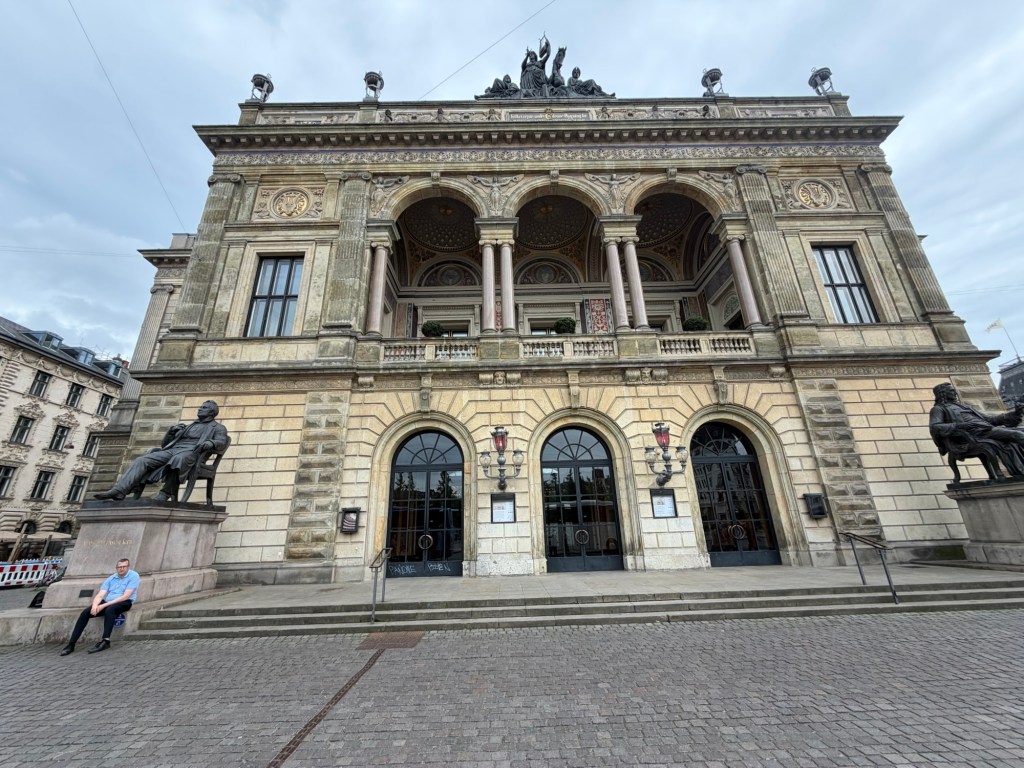
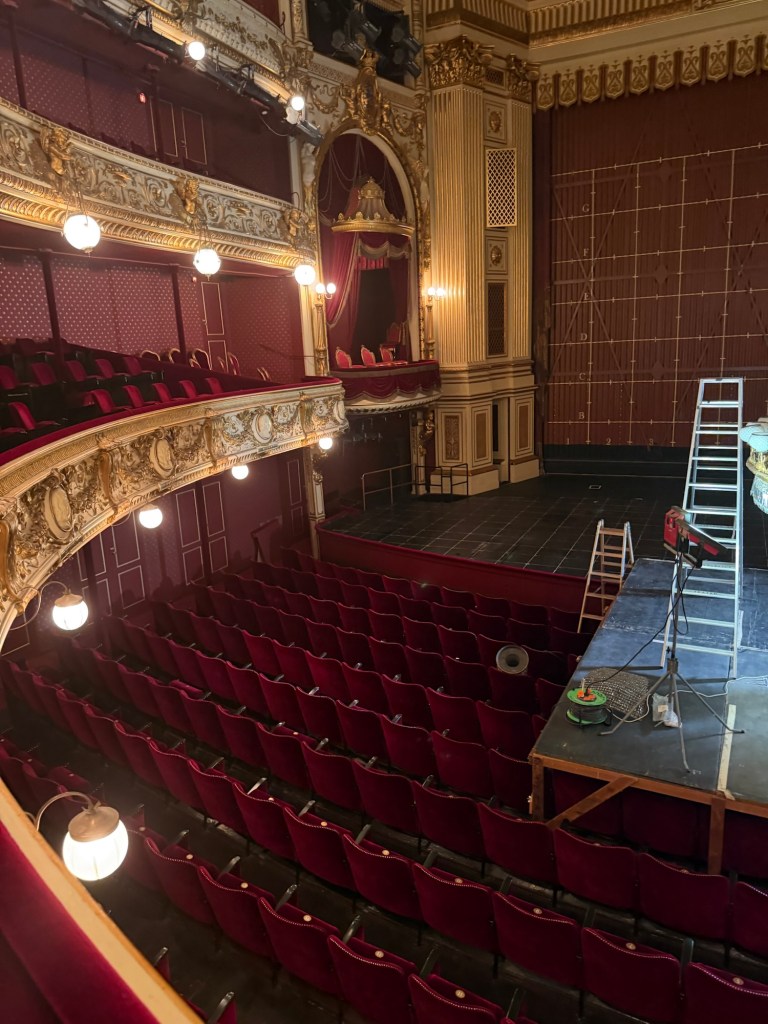
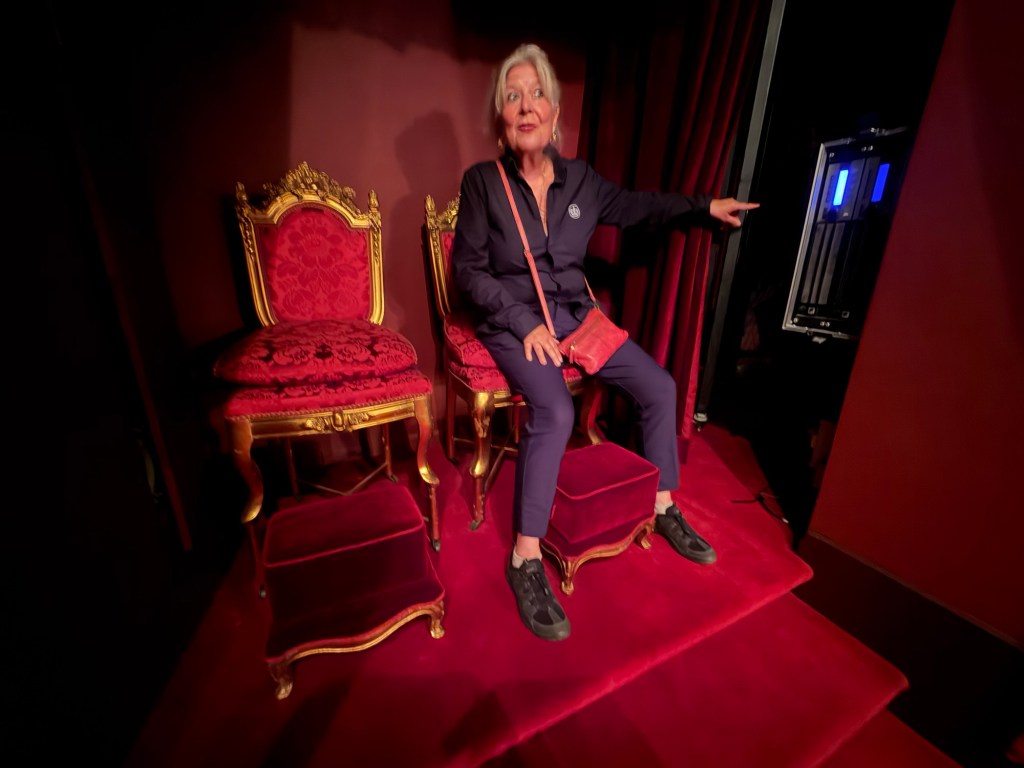
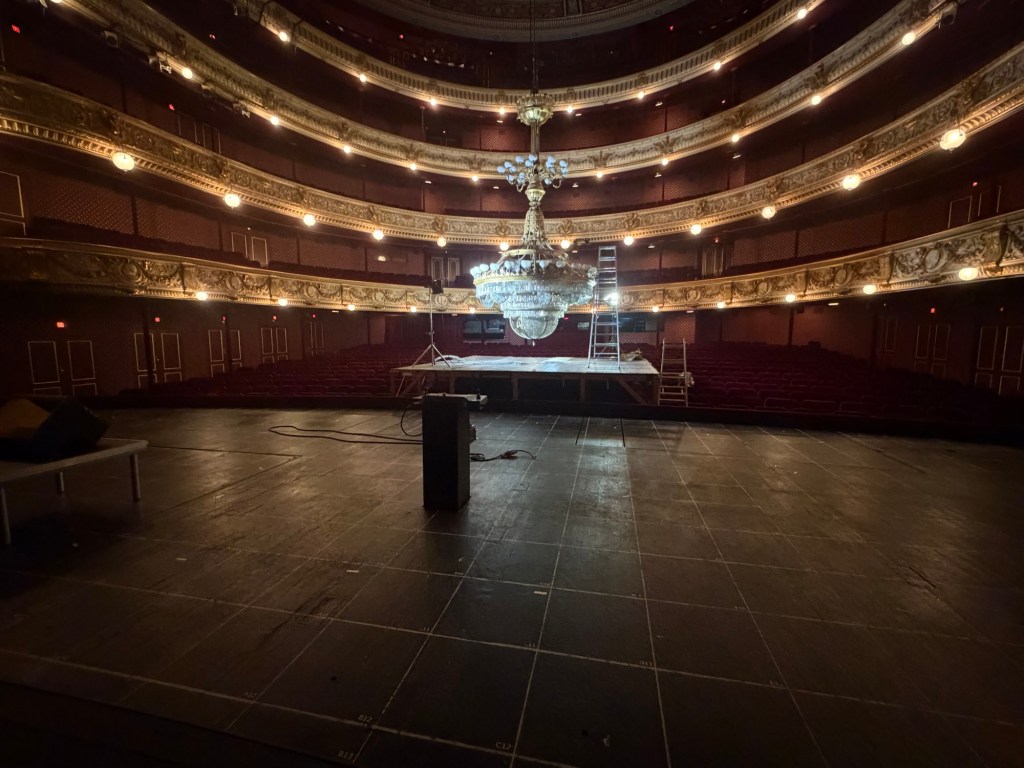
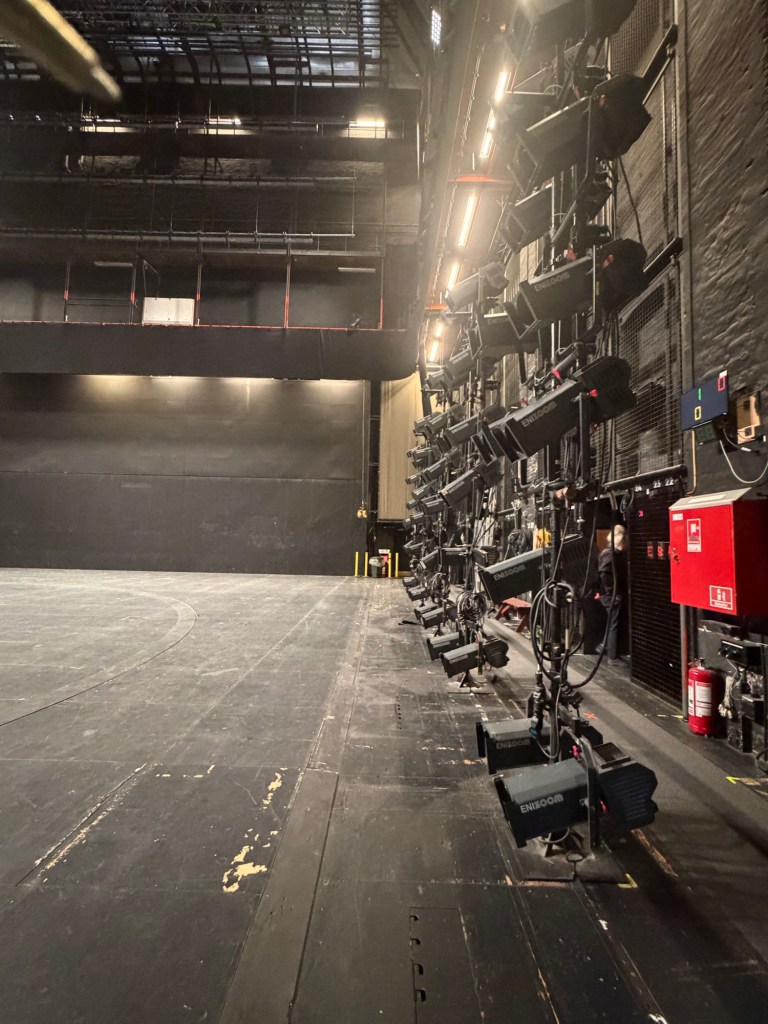
The Royal Theater. Has 1300 seats and 40 performances per season.

We were met by a female guide named Sine. She spent the day with us. First she took us to the Royal Theater for a very private in both the front and back of the house. The theater guide,Pia, was waiting for us and wasted no time telling us about the theater, which was built in 1874 and has the oldest orchestra in the world. King Christian I was the first king of the orchestra, which has had 1086 musicians since 1448. Each new musician gets a consecutive number and generally stays in the orchestra for life.

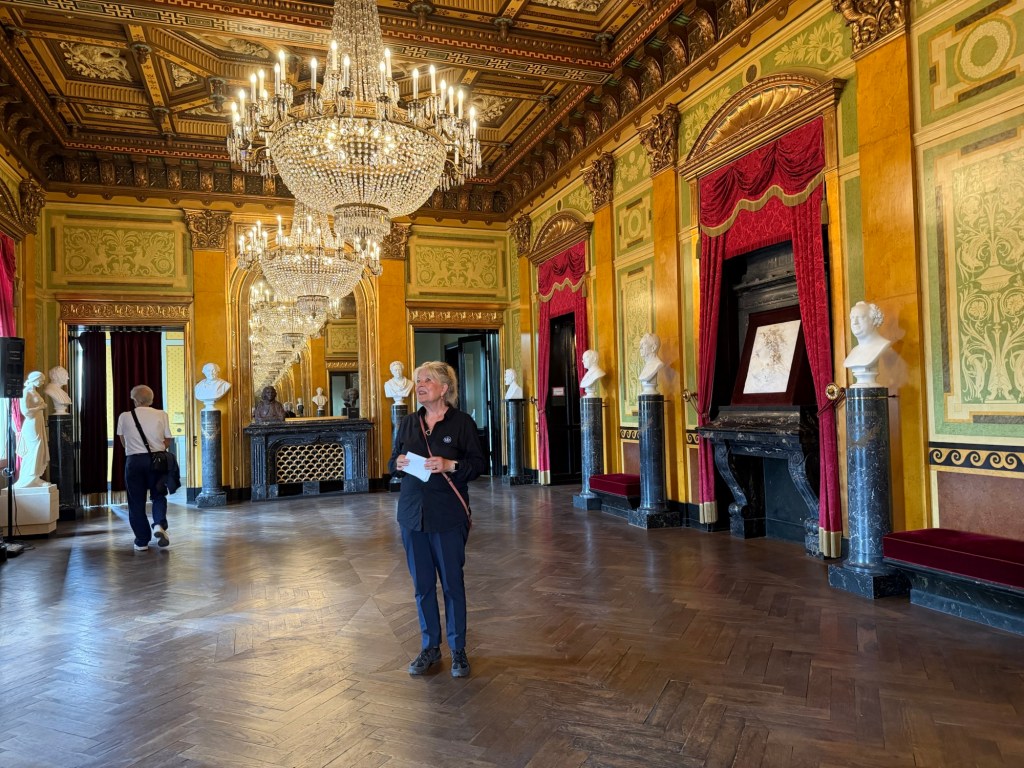
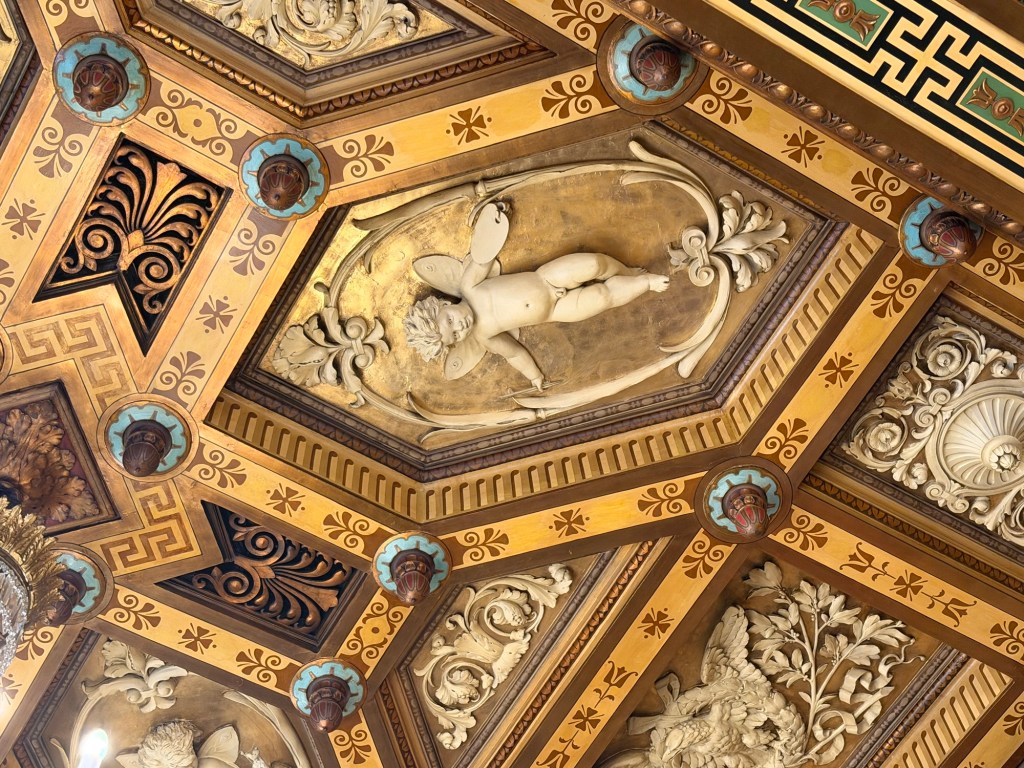
First we saw the preconcert Hall in a lot of splendor.

The pre Concert Hall

In 1536 the reformation took place. The result was that the 1/3 of the land that had belonged to the church went to the king, who already had a third. The last third belonged to lords of the land who lived near the shore and protected the coastline from ships wanting to avoid the tax.

Entrance to Frederick’s Borg Castle
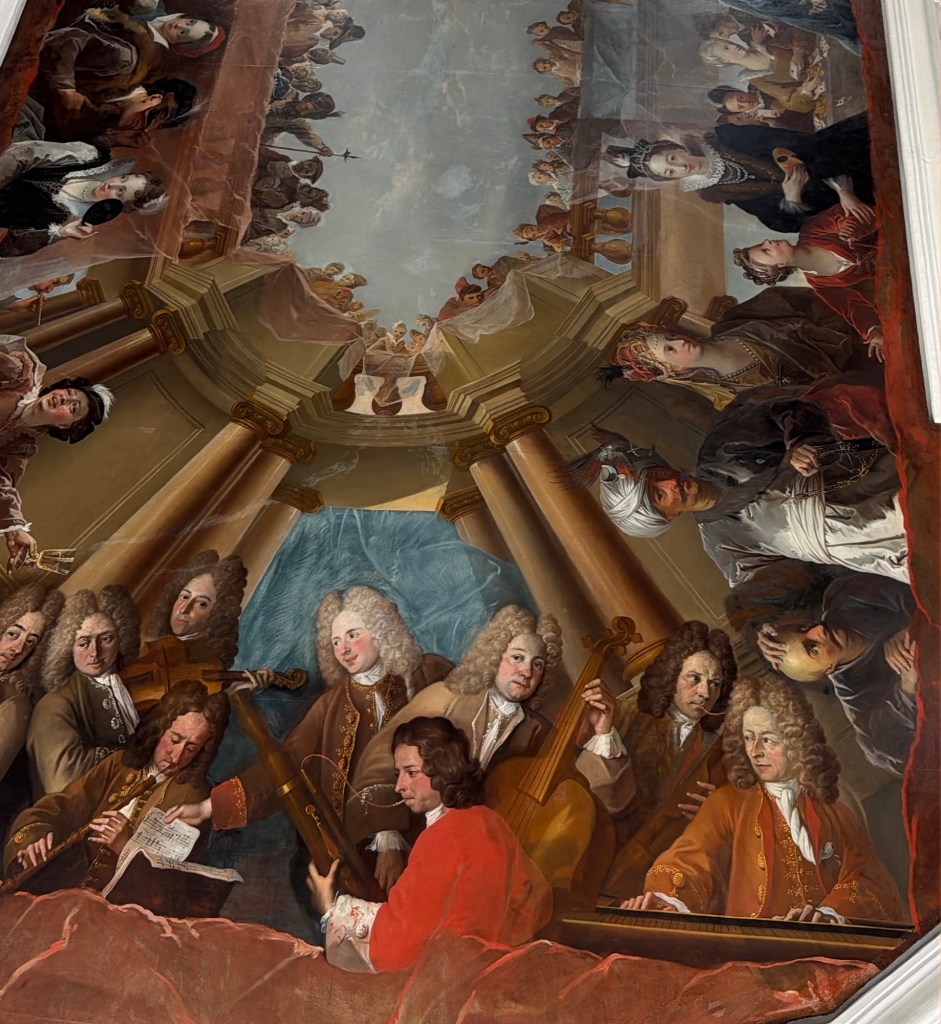
The ceiling painting is of real people.

Early in the 1400s, Eric of Pomerania and great nephew of Margarete, who married the king who then died, leaving her “regent” and queen. She was the first European queen.

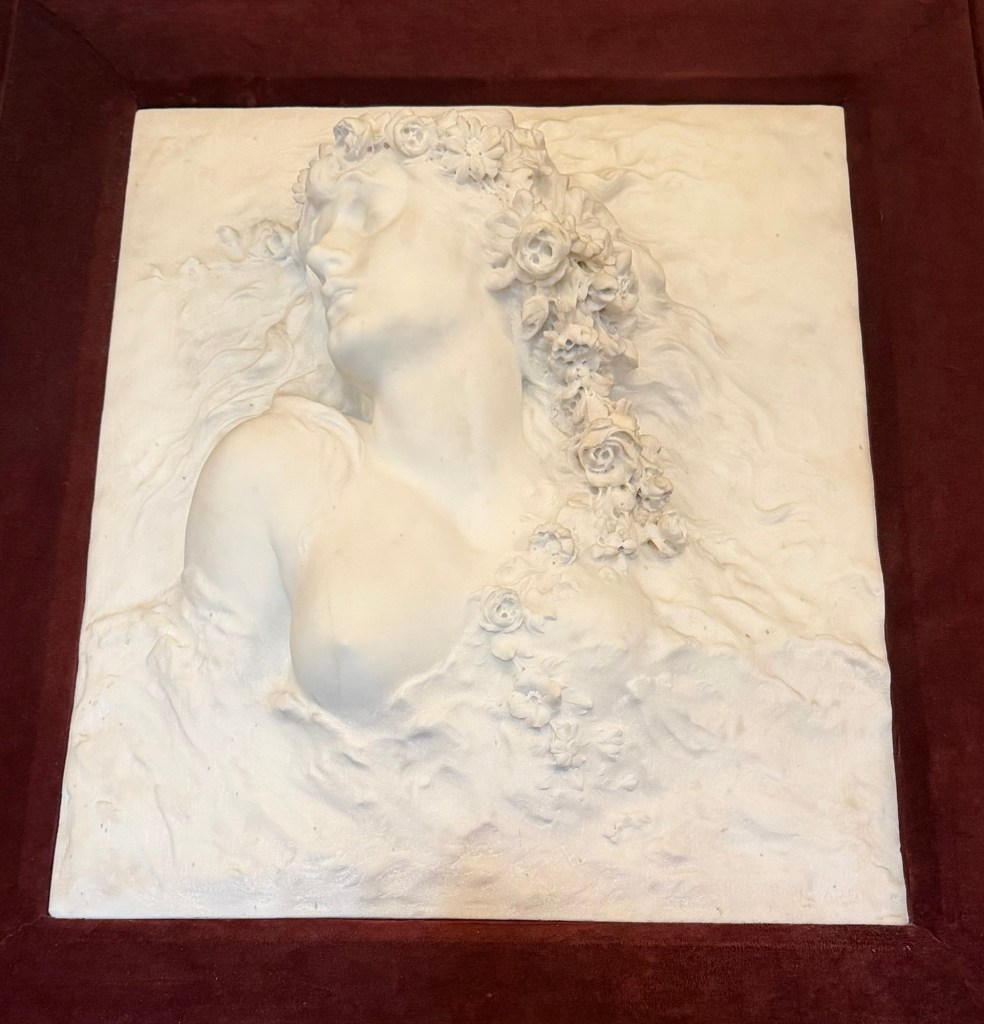
The golden age of art in Scandinavia was from 1810 to 1870. Famous people of the period included Sarah Bernhardt, who was a dancer and performer as well as sculpture.

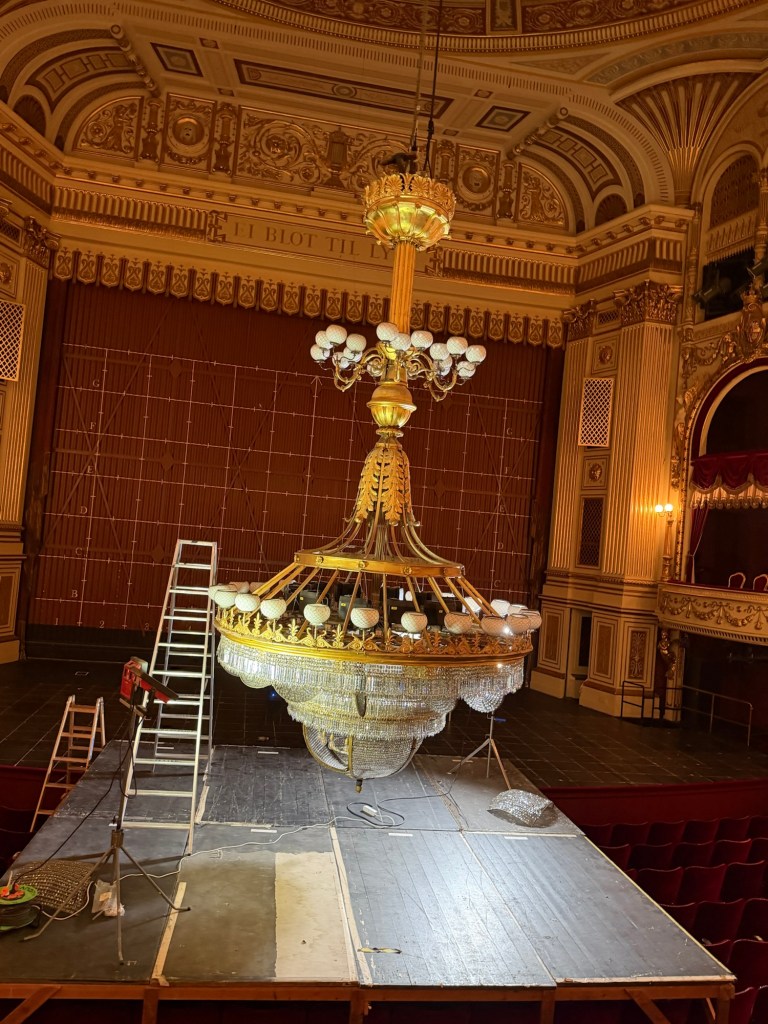
From the pre concert Hall we went to the front of the house at the balcony entrance and immediately saw the central chandelier resting on the floor for cleaning and repairs. It was interesting to see it that way. It weighs 950 kilos and contains 2000 pieces of glass. Very impressive.

The chandelier being cleaned.

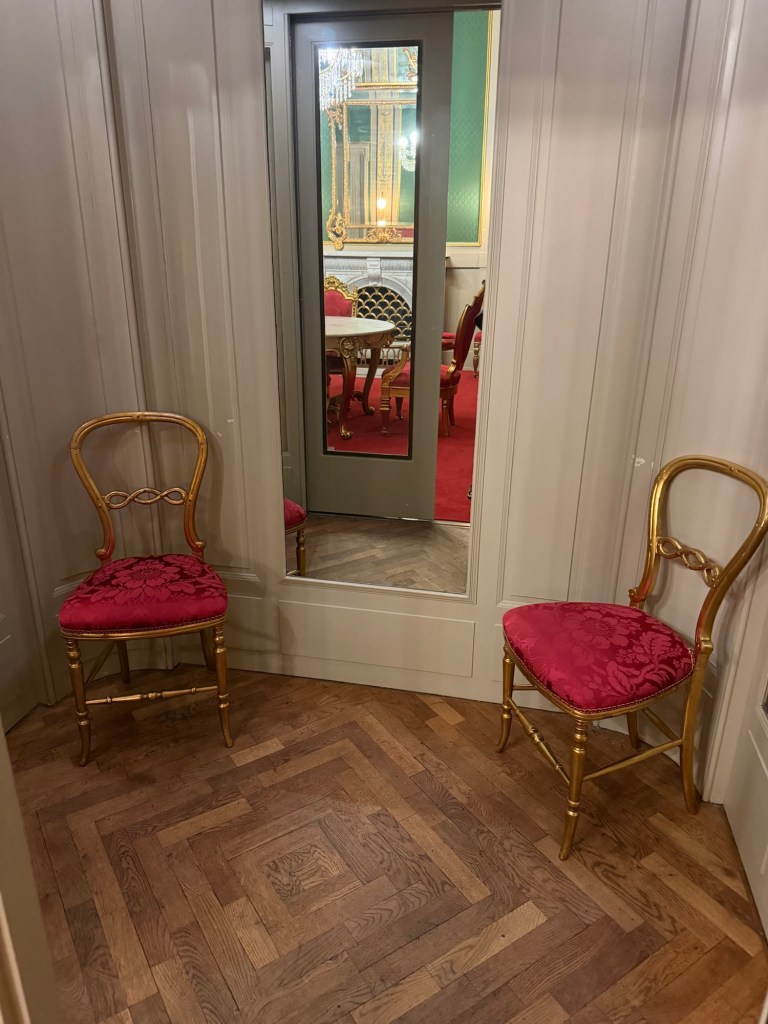
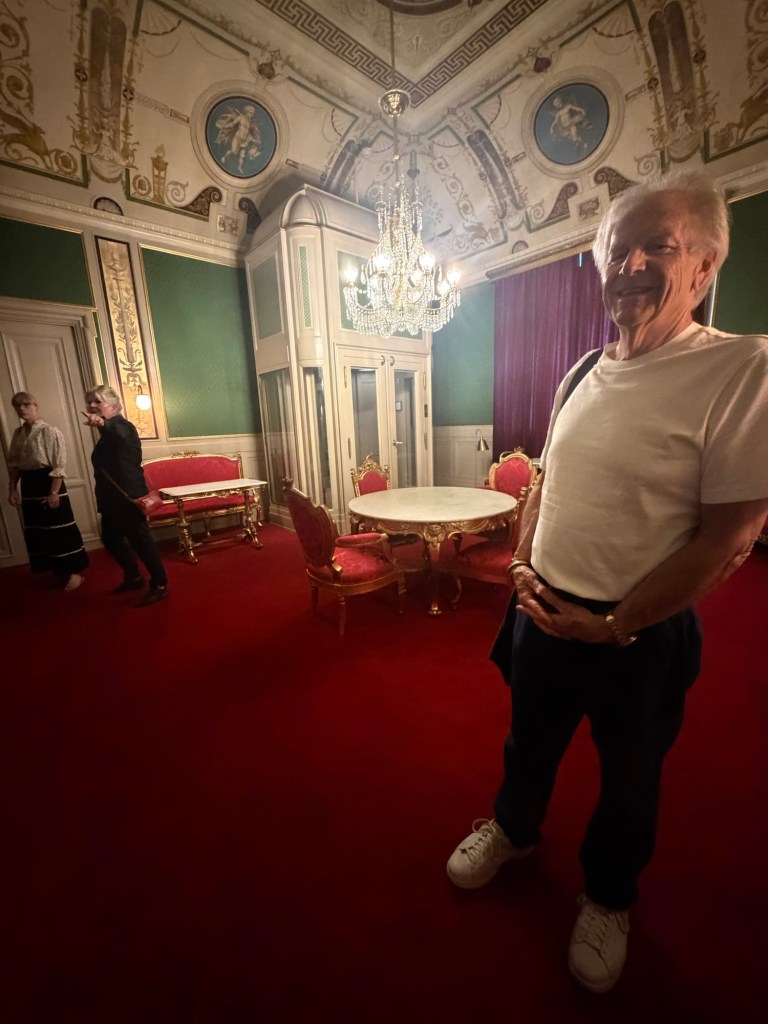
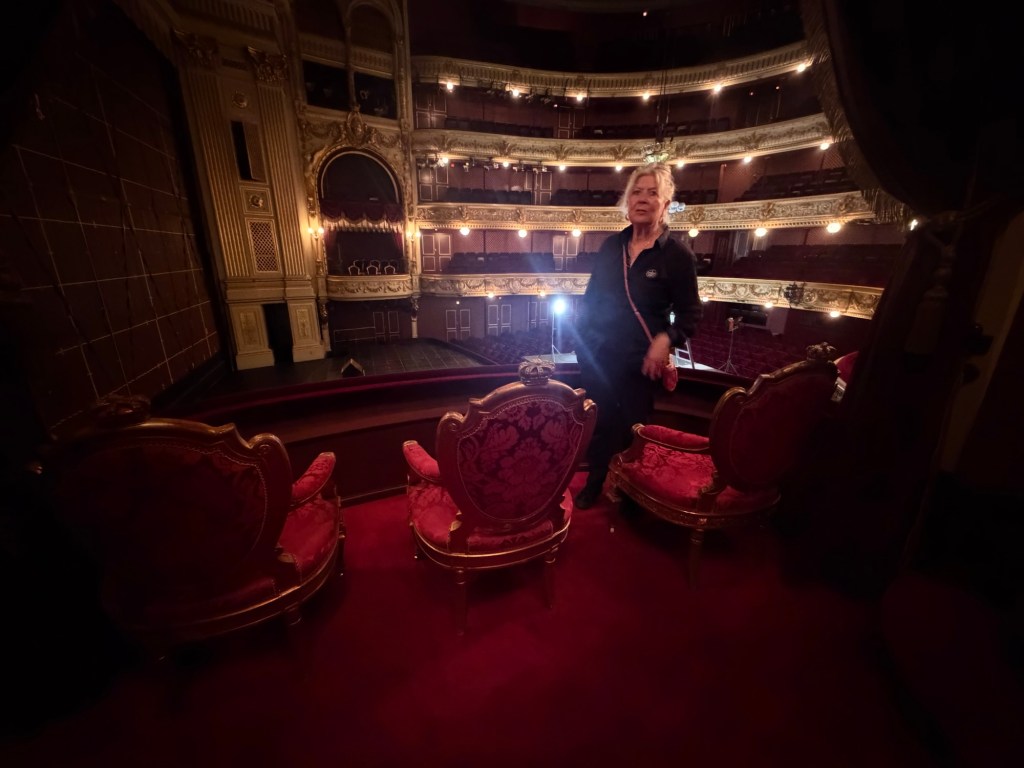
On the far left is the Royal Box. Too get there we walked into a private elevator that took us to the box floor and into the royal lounge, and the box itself.

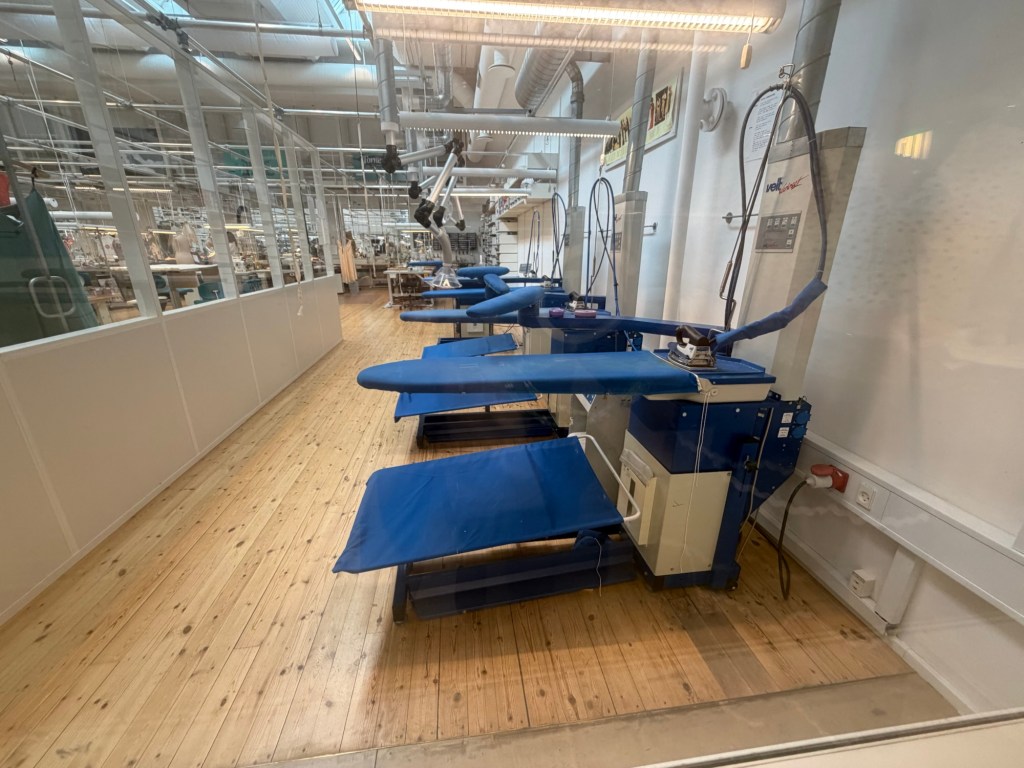
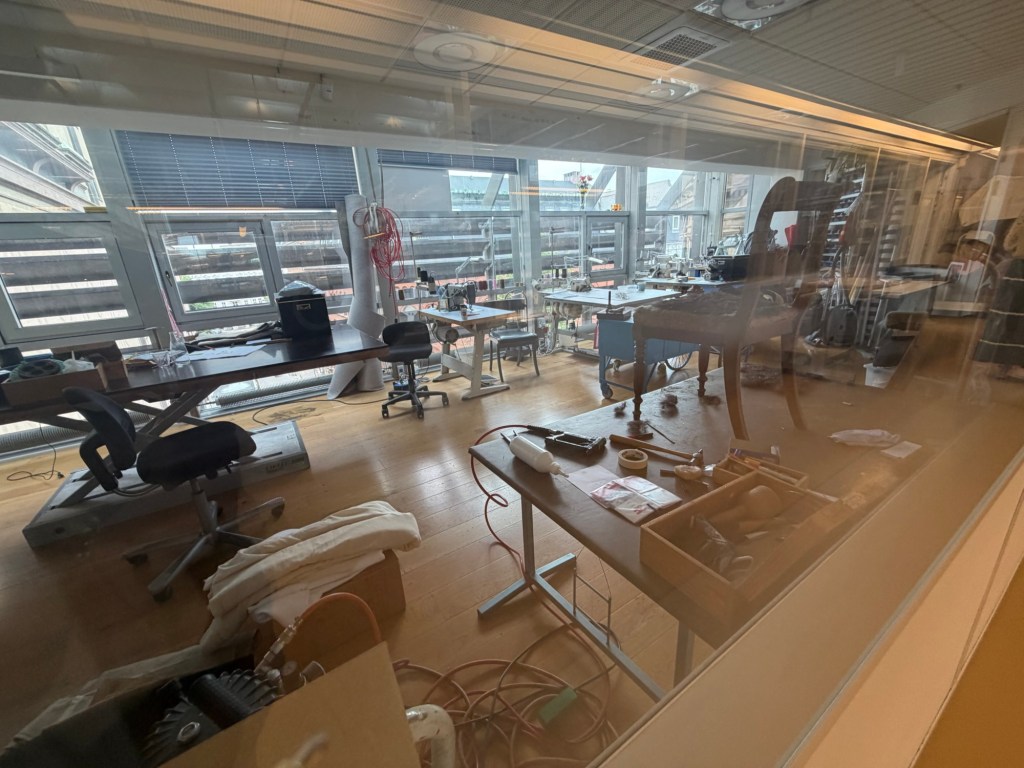
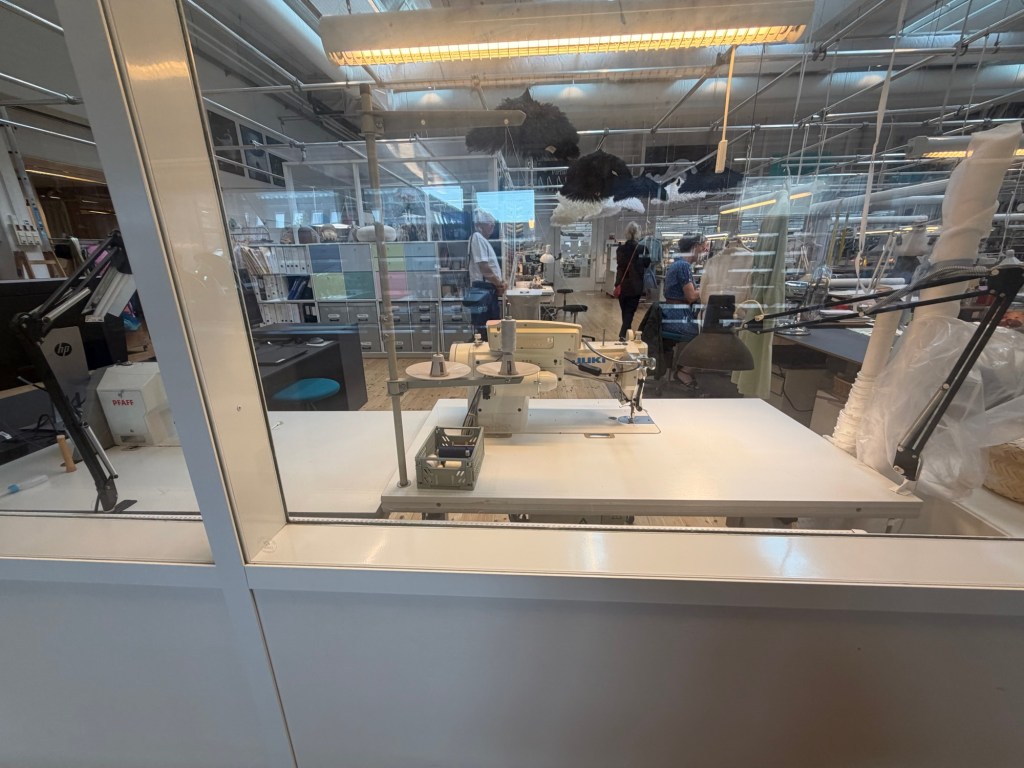
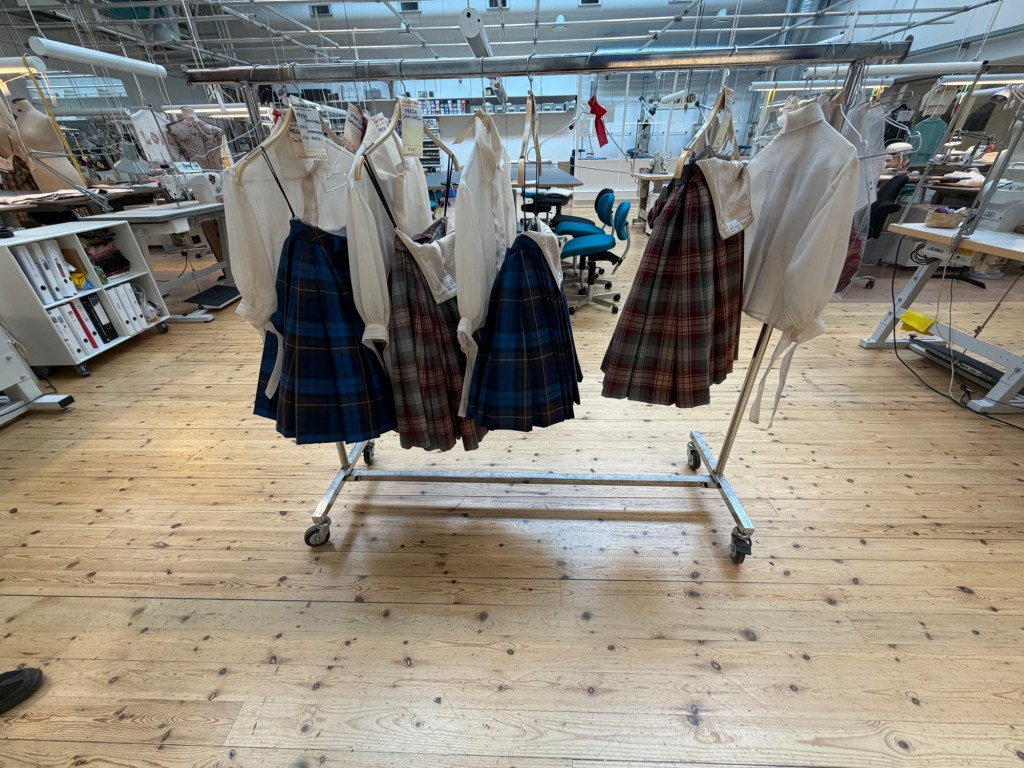
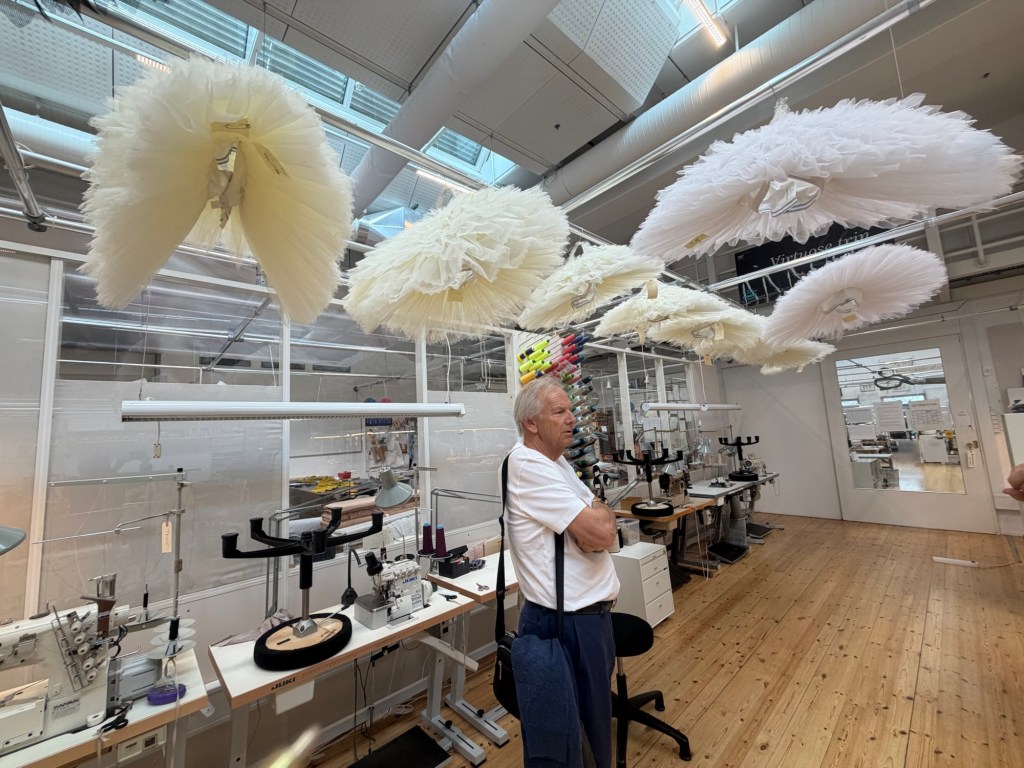
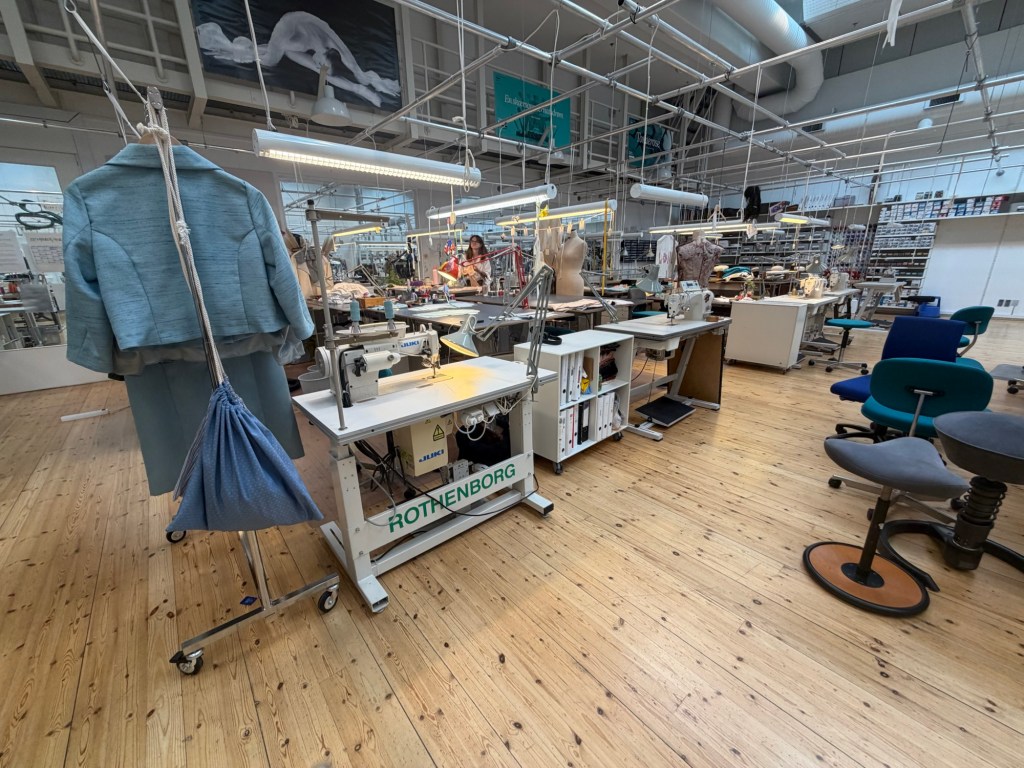
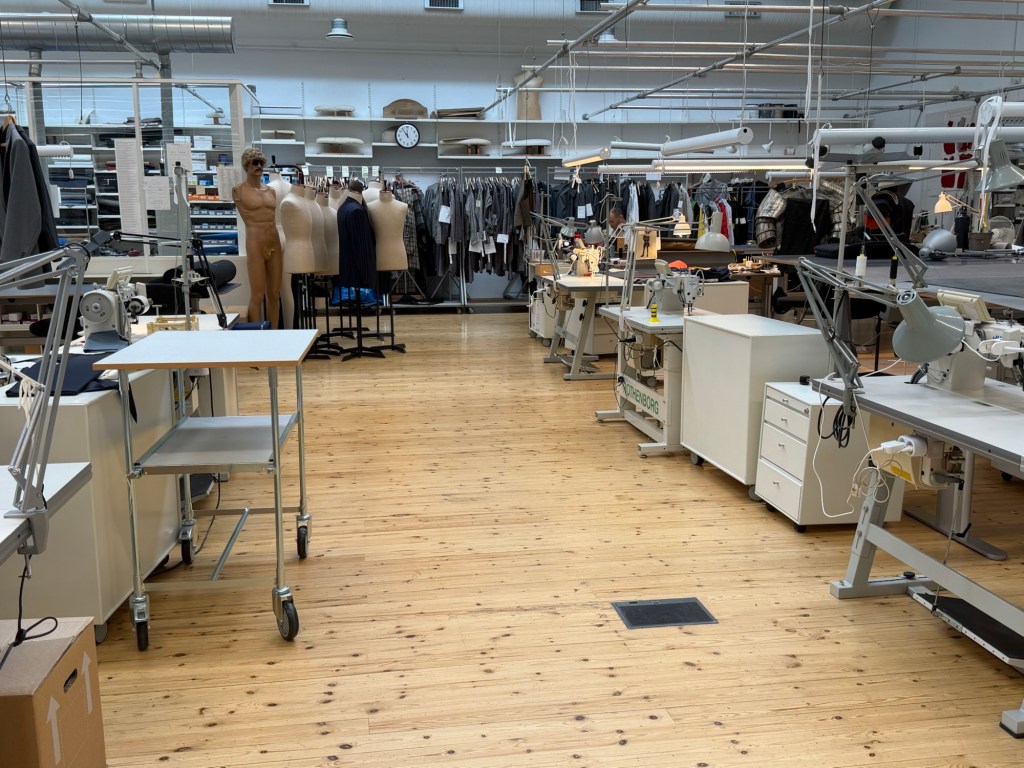
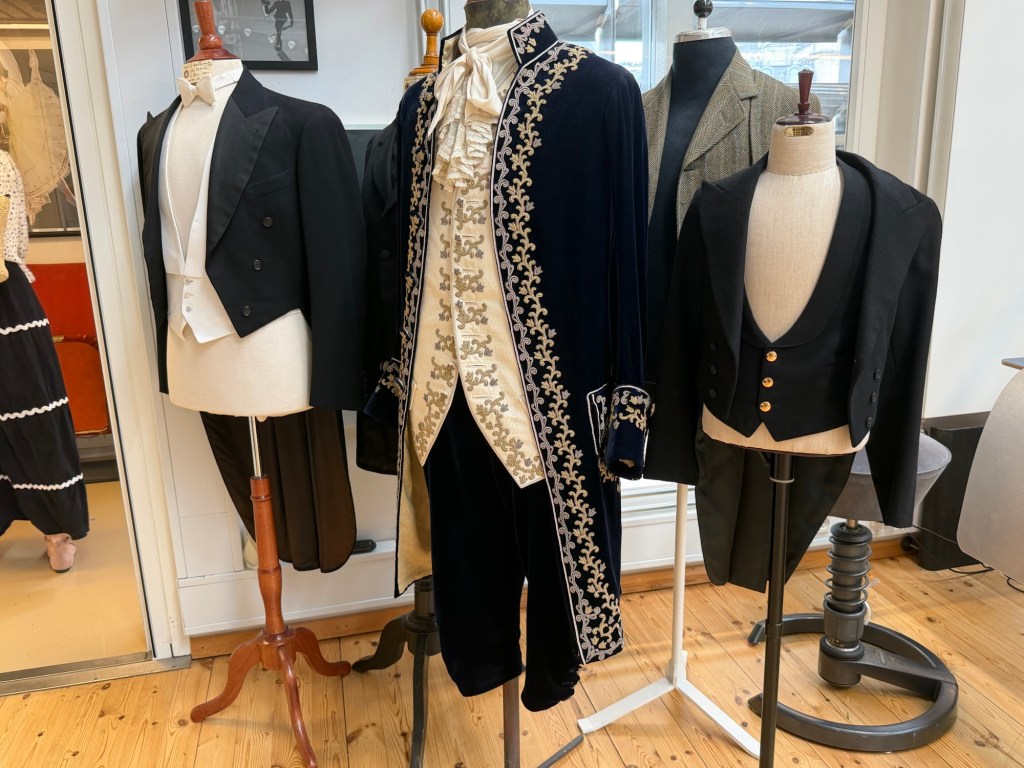
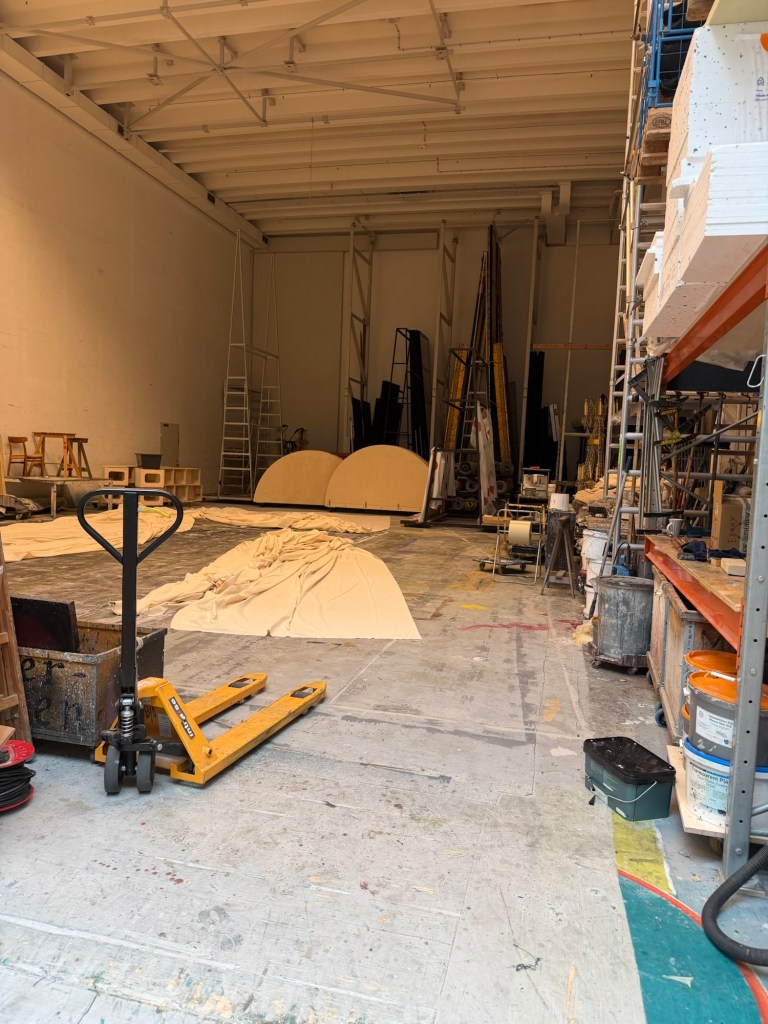
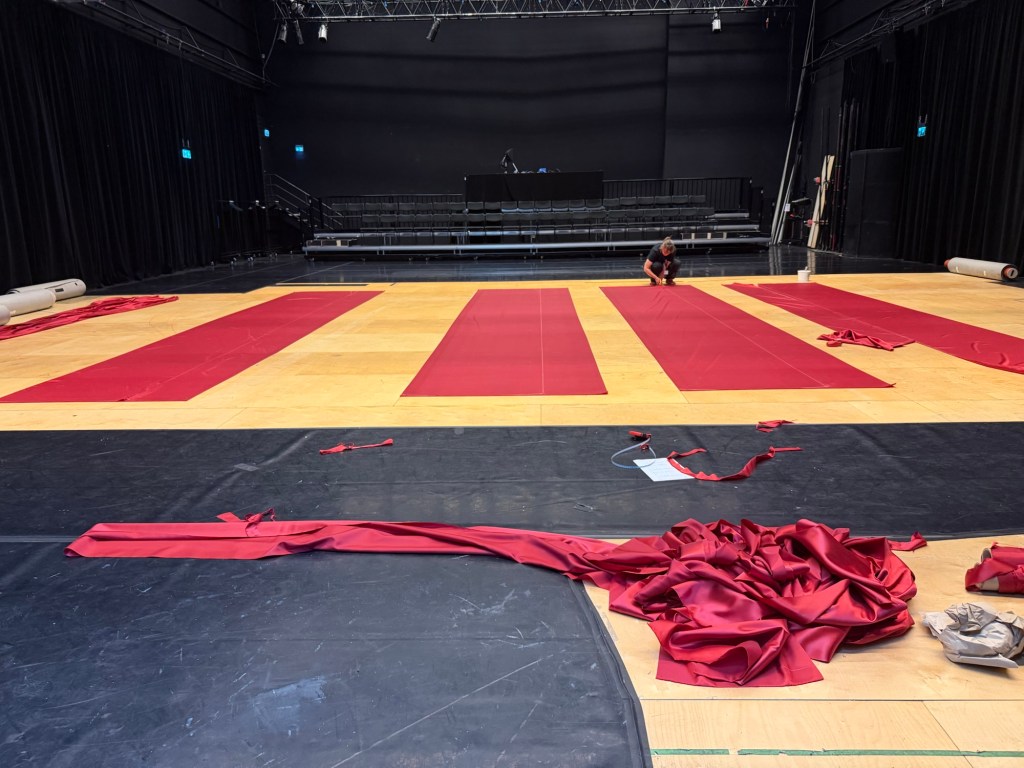
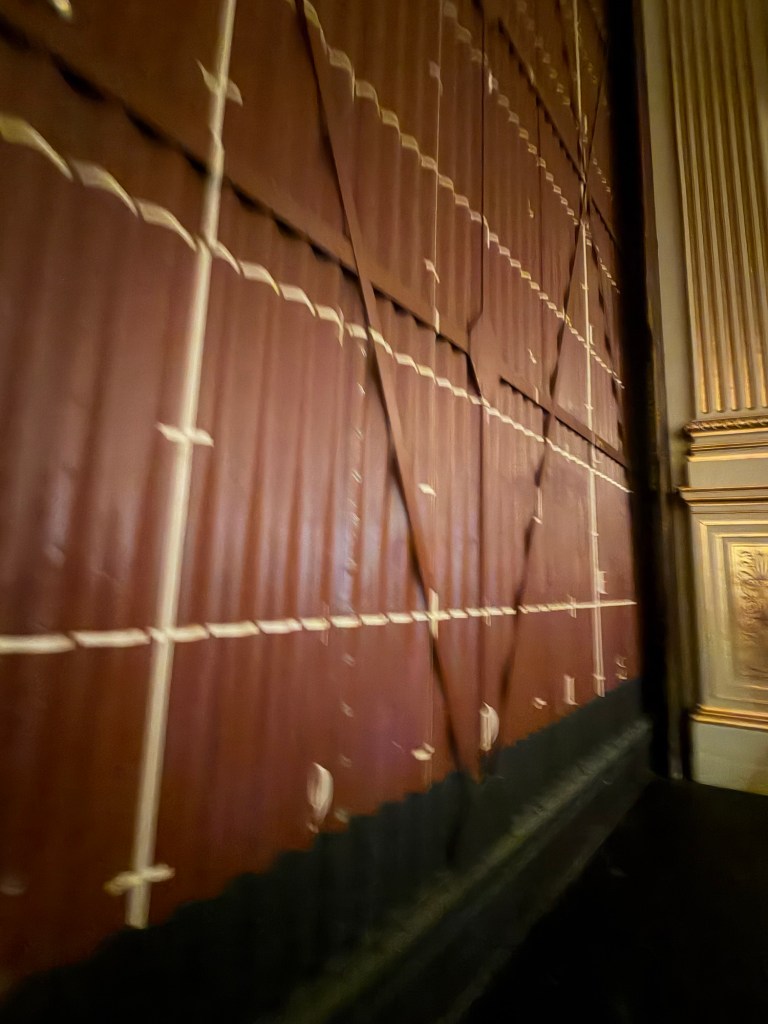
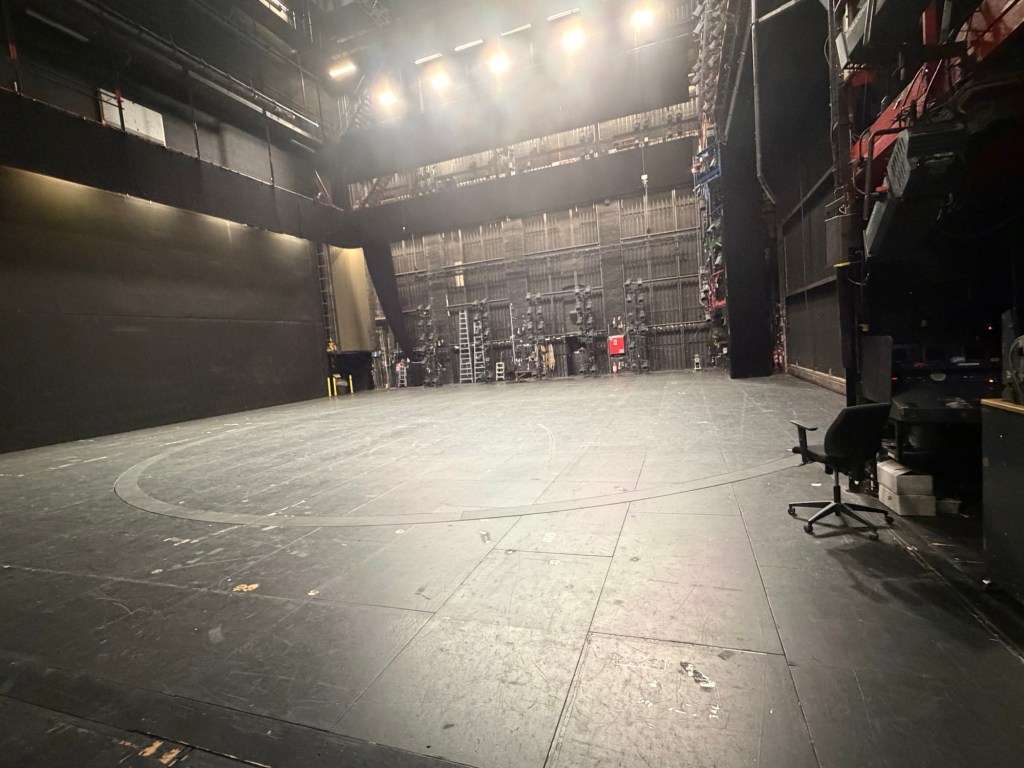
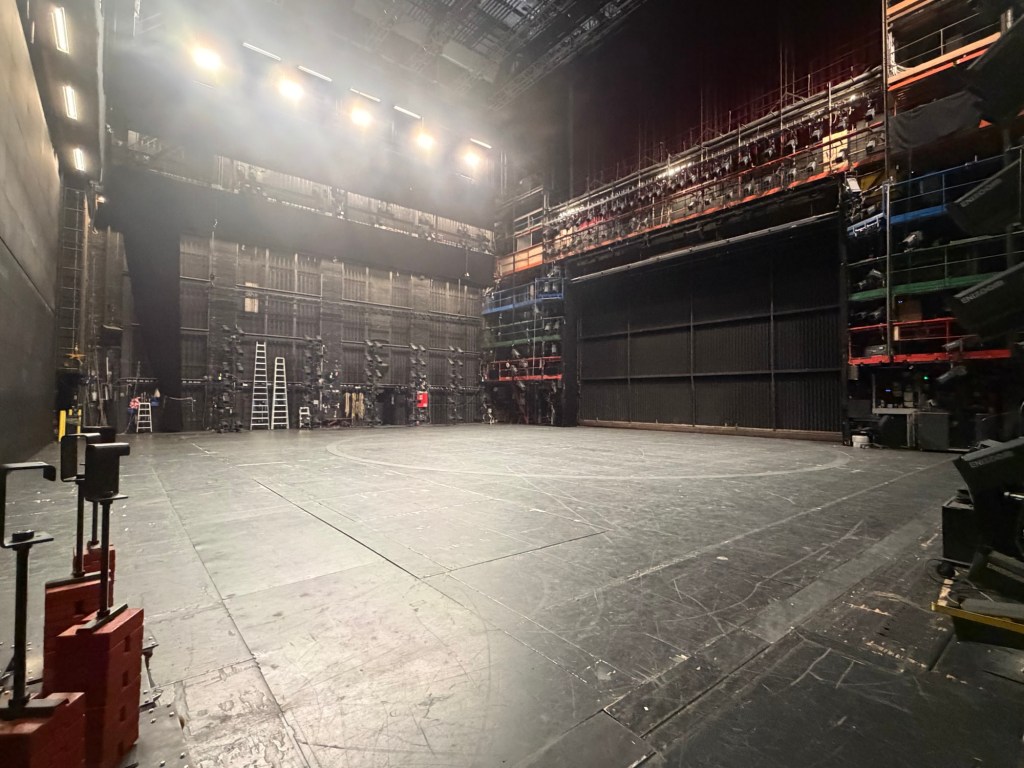
Then we went to the back of the house and immediately we were in brightly lit rooms where staff was working on costumes and props. Work was very compartmentalized. We were not allowed to get into the individual rooms.

That was one super tour. Our guide told us it had been very special tour just for us. I believe it.

After leaving the Theater we drove around a bit on our way to our next tour.

We learned that 50% of workers commute by bike. There are 200 thousand cars and 1 million bikes. In spite of the huge number of bikes, car traffic is heavy. 17% of the population are non-local residents. And we learned the city has developed a “climate adaption system” to drain the rain water away from the streets to reduce flooding. It seems to be working. This day was sunny and pleasant.

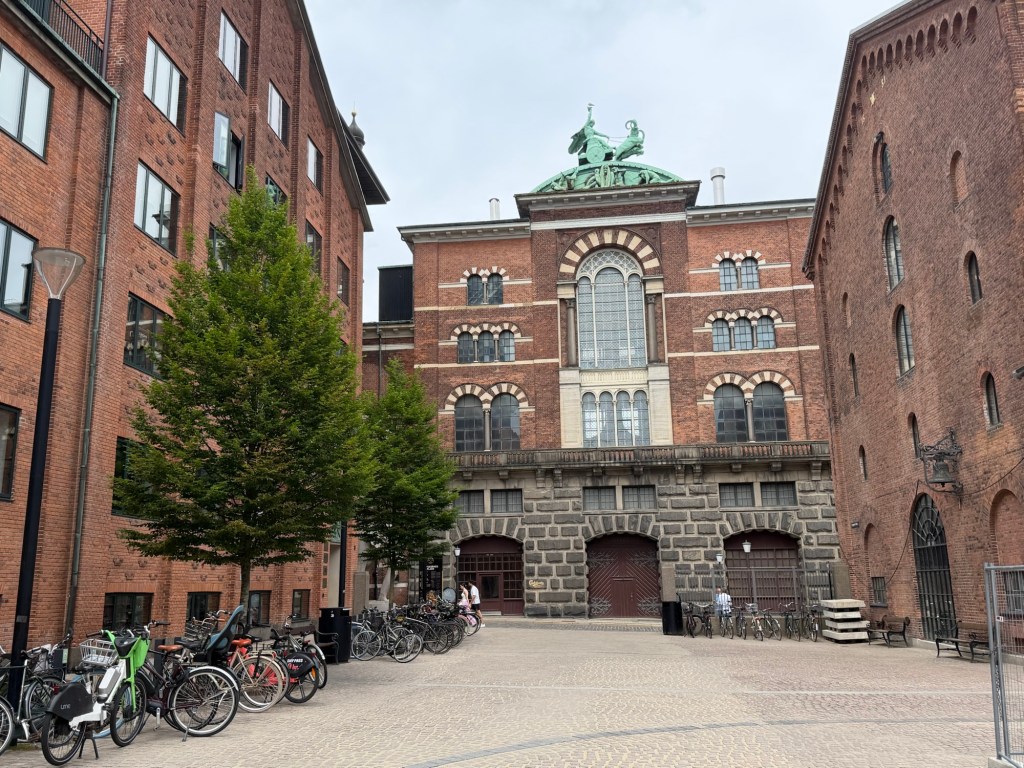
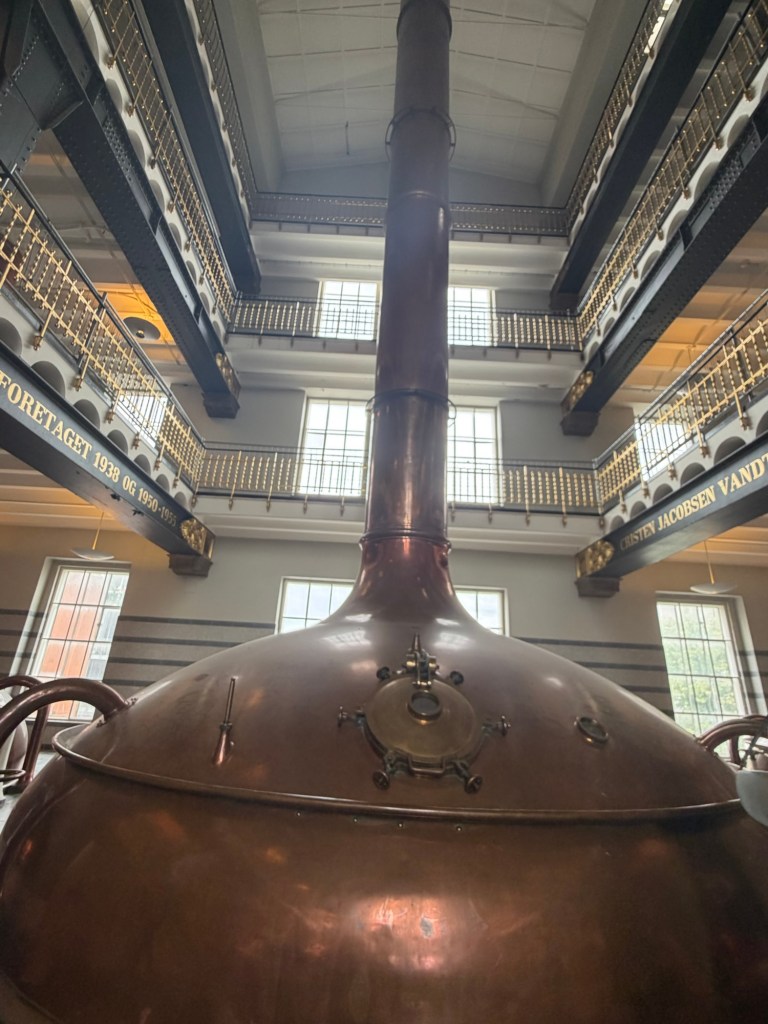
Then we arrived at the Carlsberg brewery. It was founded in 1847 by J C Jacobson and was the first company to make lager. His son, Carl, was sent abroad in 1860, when he was 15, to Germany, Czech Republic, France and the UK to learn all he could about beer. In 1870 he returned to find that JC had built a brewery annex for him to create new beers. Carl makes lager beer in 3 months where JC”s method had taken 6 months. A rift forms between the two men and Carl goes his own way. They make up before JC dies in 1887.

Carl joined both brewery businesses and named the company Carlsberg. He created a foundation and put the company into it. He loved art and gave away 30% of earnings to art and other causes. The business was very successful. He died in 1914. The foundation continues to operate the company.

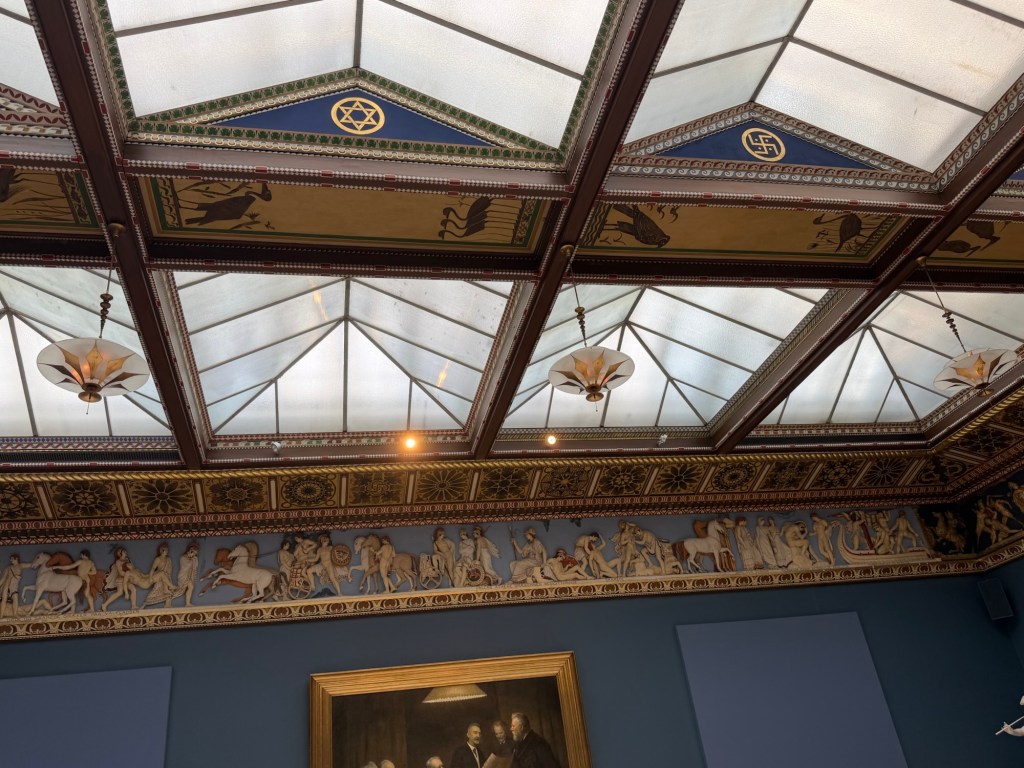
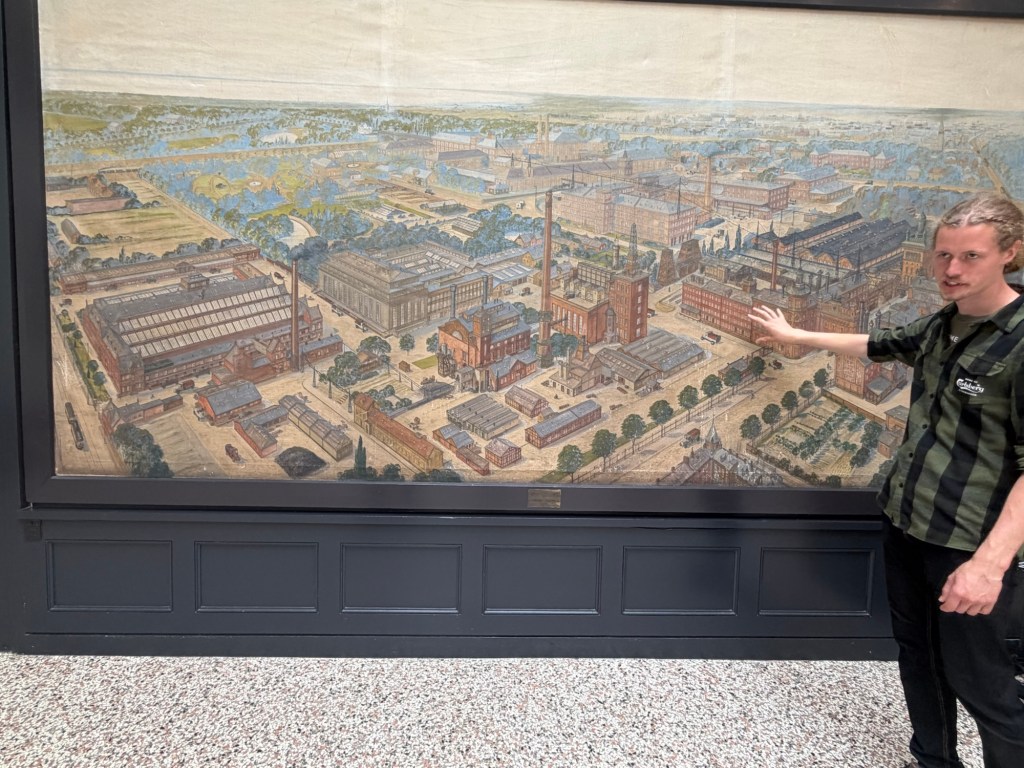
Today the most popular Carlsberg beer is the Tuborg Classic. The historical facility we toured is huge and takes up a lot of space for the former factories, Carl’s large home with much art and gardens, and the Foundation office building.

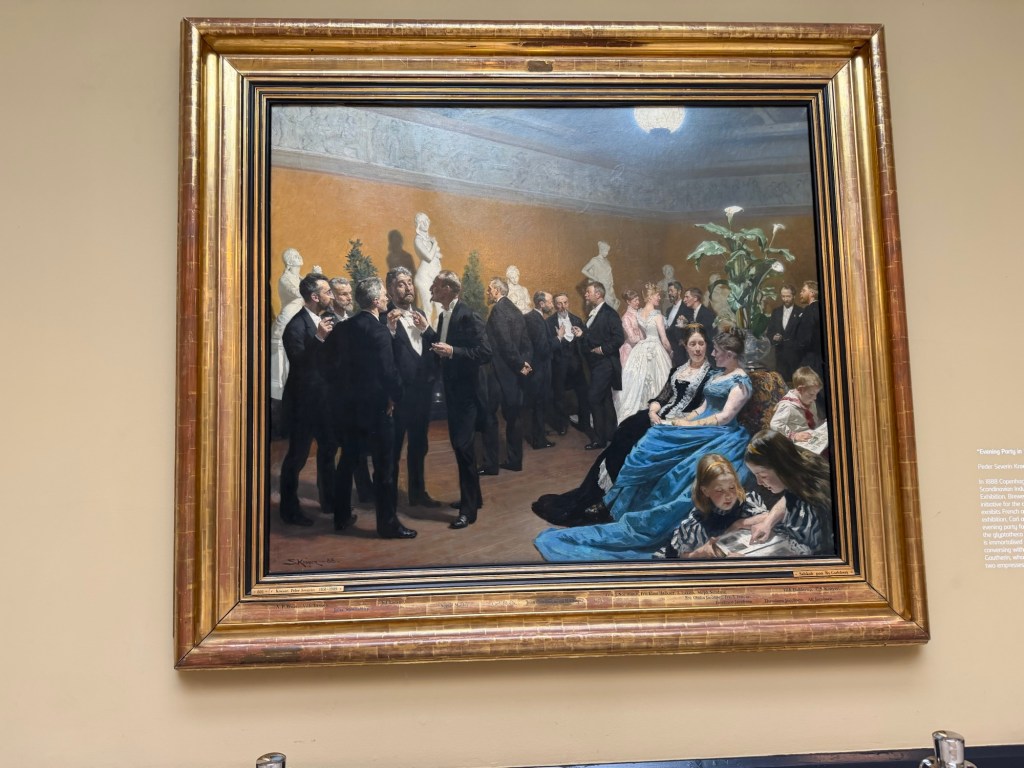
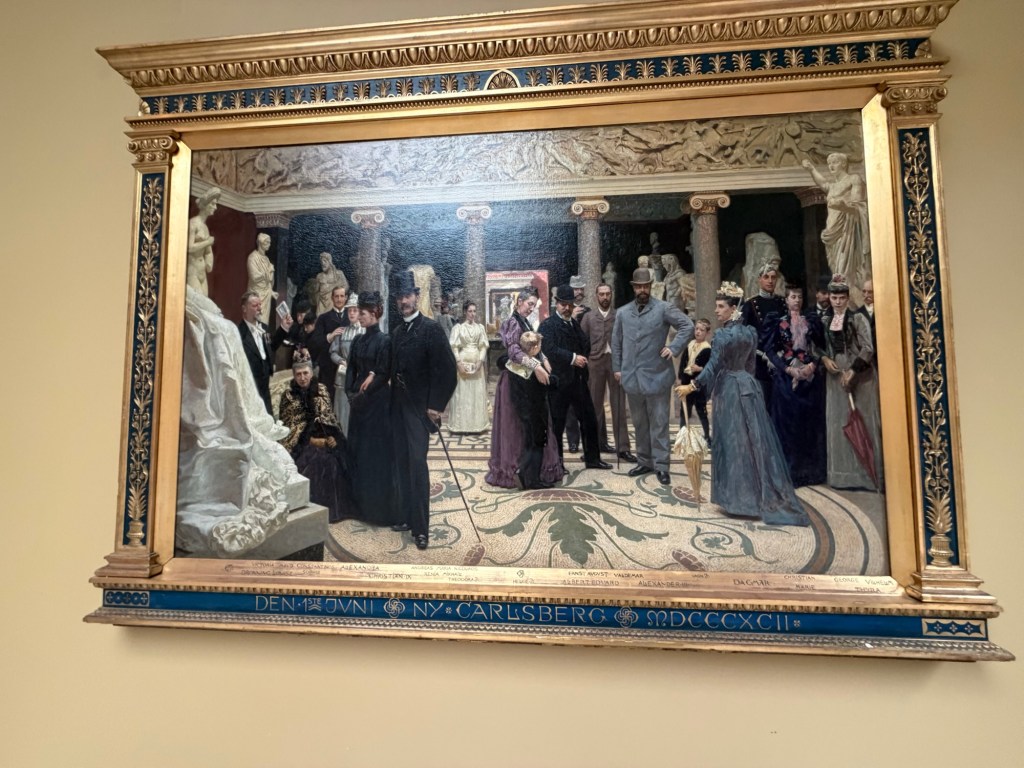
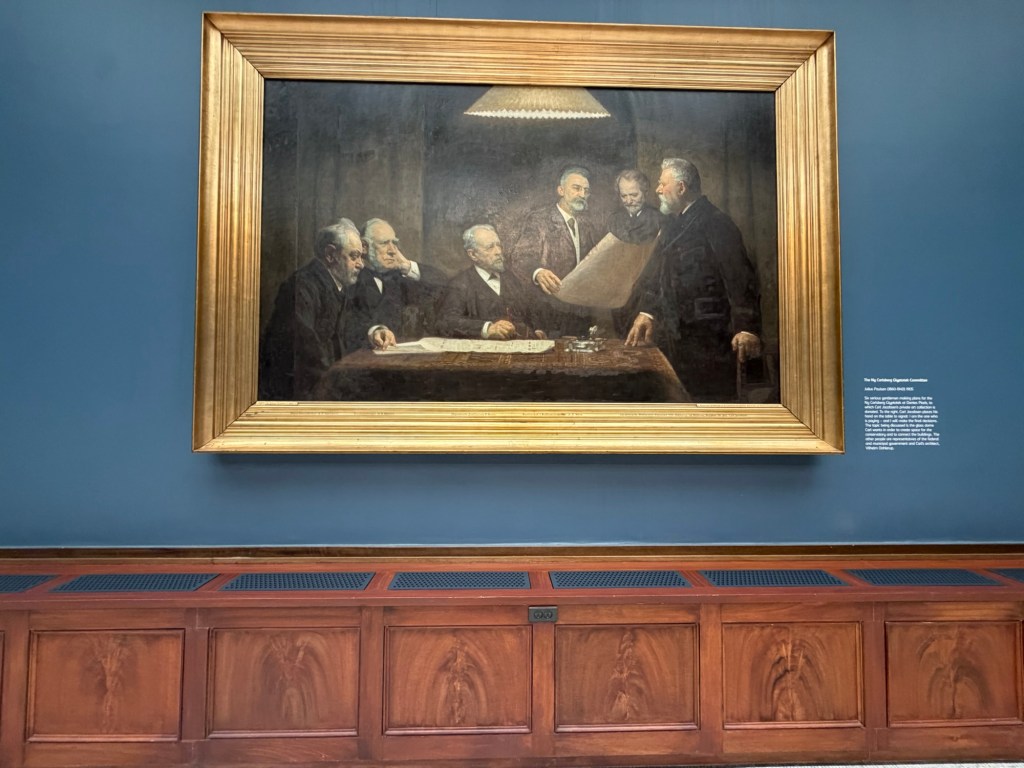
A popular Carlsberg painting

The current factory is elsewhere and even larger.

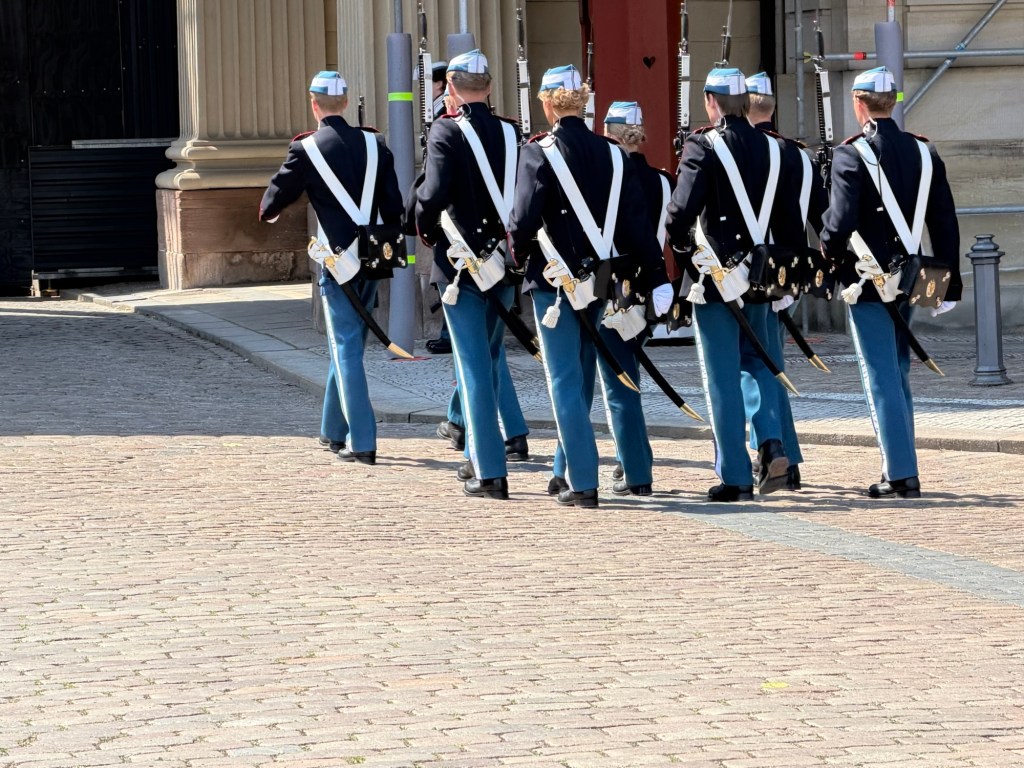
Our third tour of the day was the Fredericksburg Palace in Copenhagen. It is currently occupied and operated by the Danish Army. We were toured around the facility by an army cadet in officer training.

The first 2 floors of the Palace were built in 1703. The third floor and wings were added in 1709. Six Bronze Age burial sites were found and relocated. The palace was handed to the state in 1849.

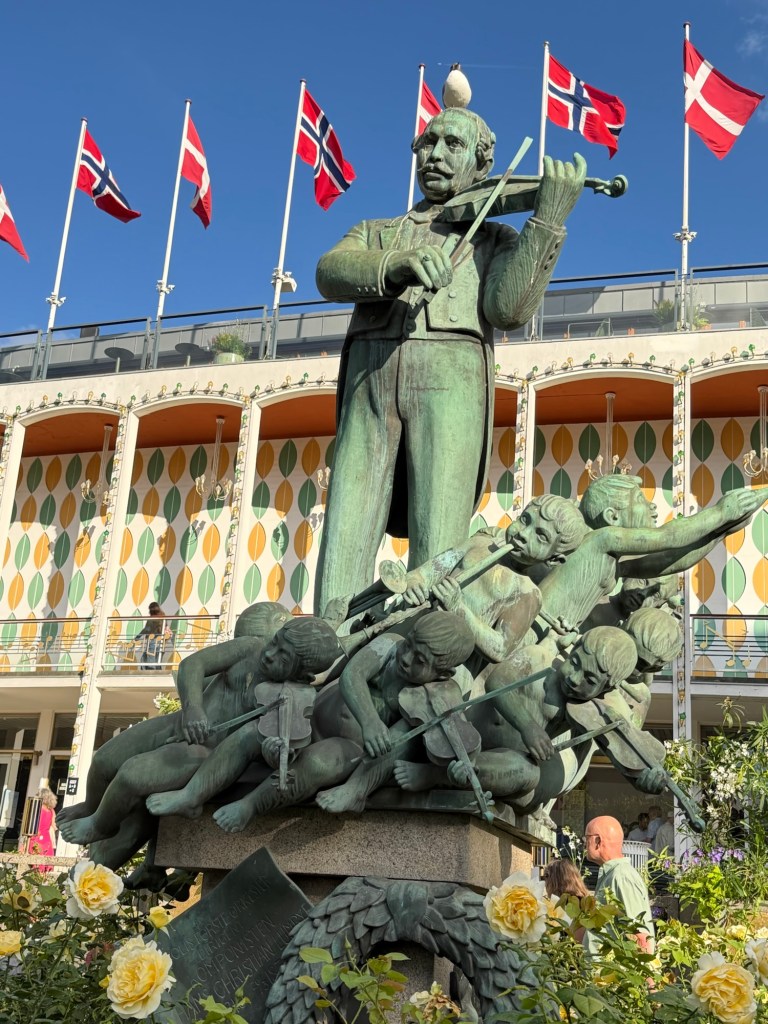
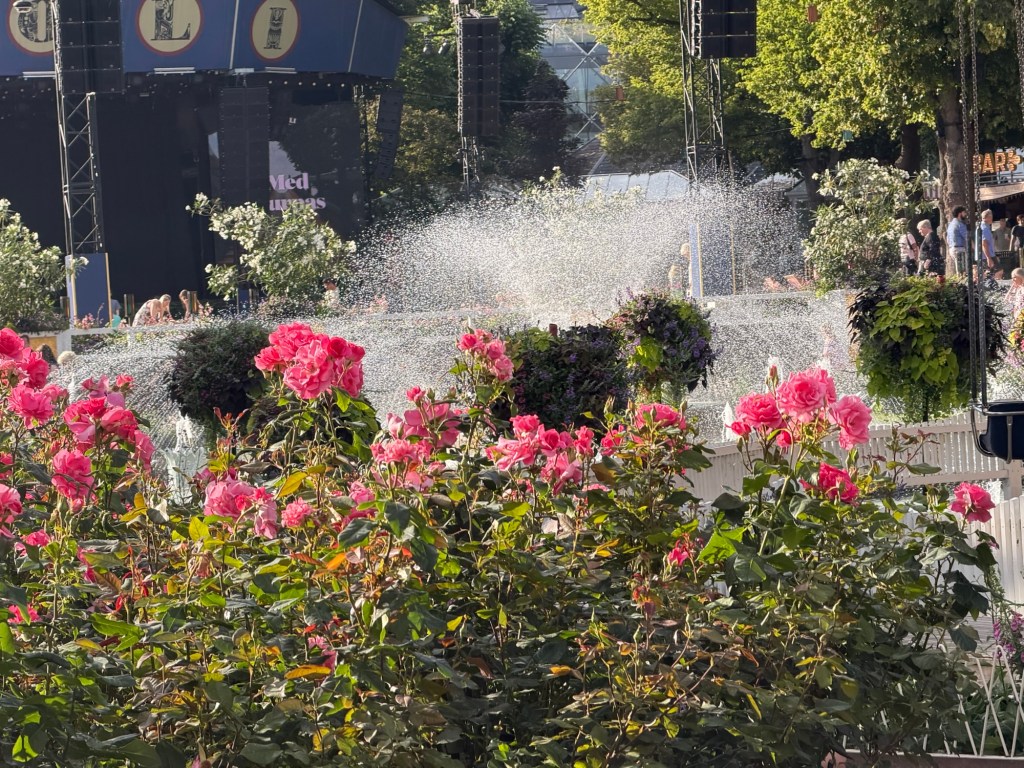
Our driver dropped us off at the entrance to TIvoli Gardens and we saw a much different scene than the one we had the day before. There was a lot of colorful garden grounds, permanent rides scattered about, many restaurants and several in and outdoor theater venues. We had filet of Sole at a place called Glassalen. It was quite good.

Then we went to an indoor theater to watch a pianist, Leif Ove Andsnes, play a variety of classical pieces written by Schubert and Chopin. The music was OK, but did not make me love it. However, the audience sure did. The pianist played 2 encores and they were still clapping when we left.

Tuesday, June 30, 2026

Our guide, Paul, and a new driver picked us up at 9am and headed for the Lousiana Art Collection, about half an hour away. While enroute, Paul told us we were in the center of a city that had been walled with earth berms and moats. Today, the berms have been leveled and converted into parks. Centuries ago, being surrounded by water and multiple fortifications, Copenhagen was strategic in gaining passage through the narrow straights at Oresund for ships to get to the Baltic Sea and the largest trading posts in Europe, next to the Mediterranean. The Danes required a tax be paid for passage through “Oresund”, the sound, into the Baltic Sea. As a result they became very rich. If a ship did not pay it was treated as a pirate ship.

Then Paul talked about a very rich man who had been married 3 times to women who were each named Louisa. When he converted his home into an art colletion open to the public, he named the place Louisiana. The museum was opened in 1950.

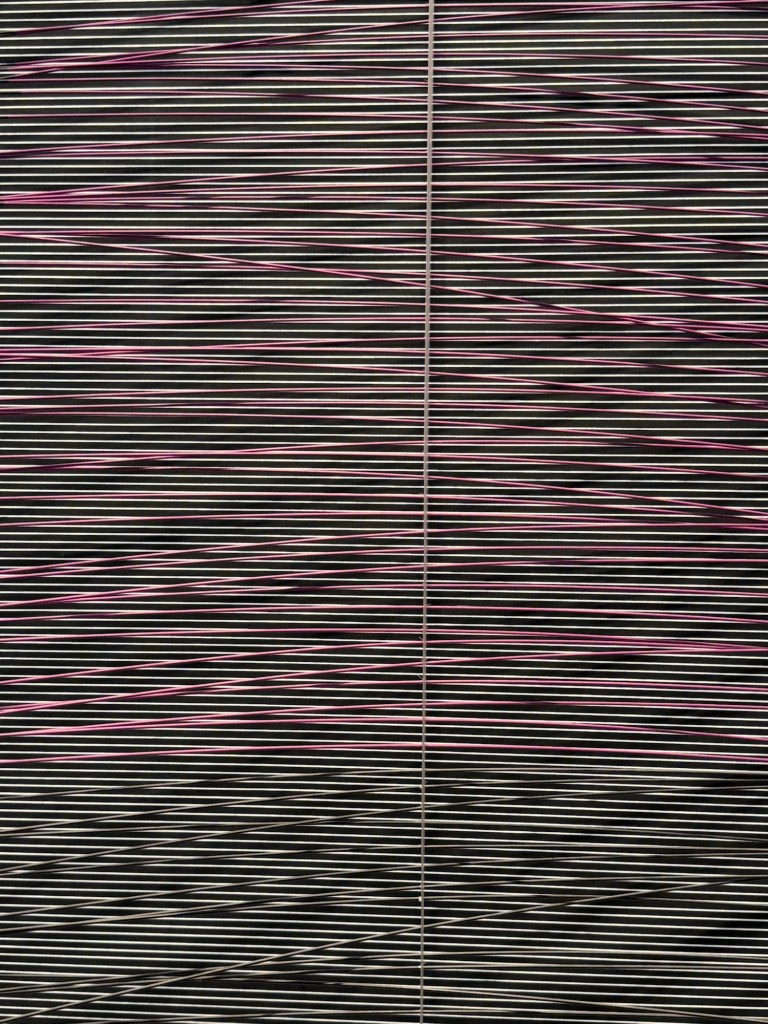
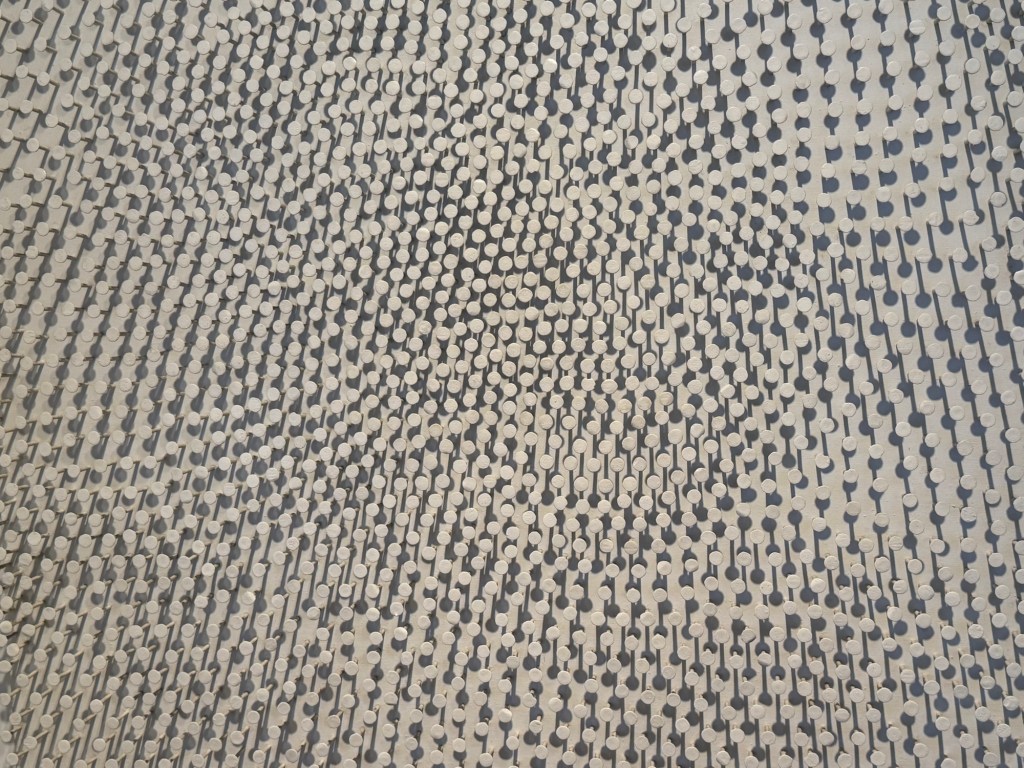
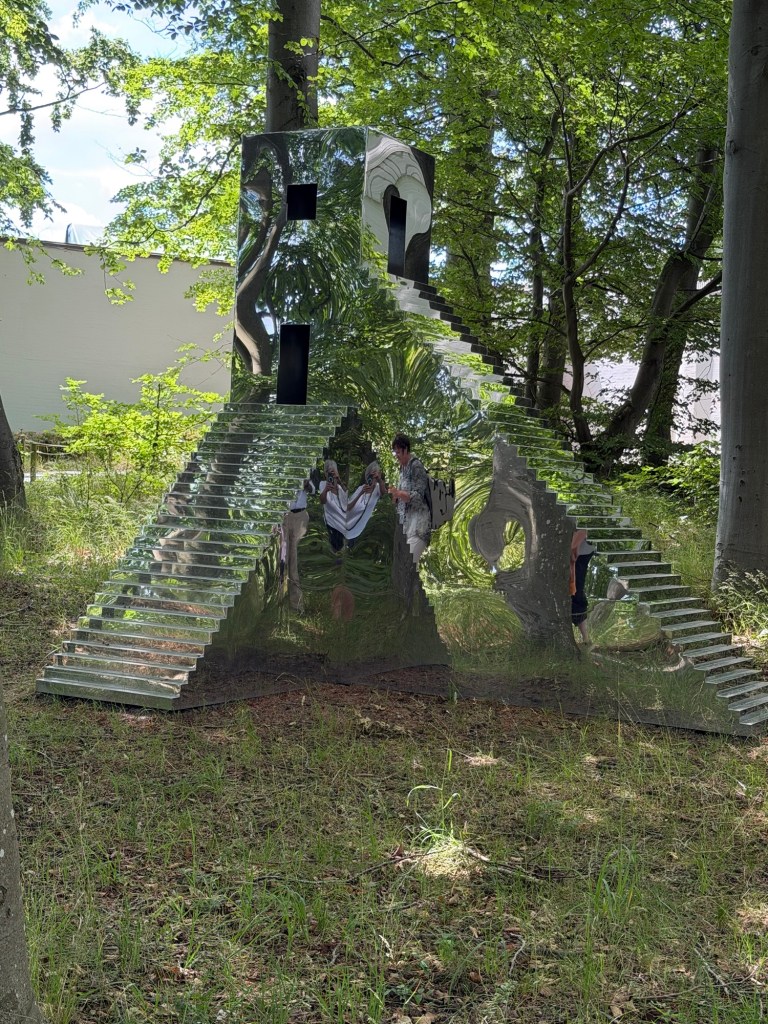
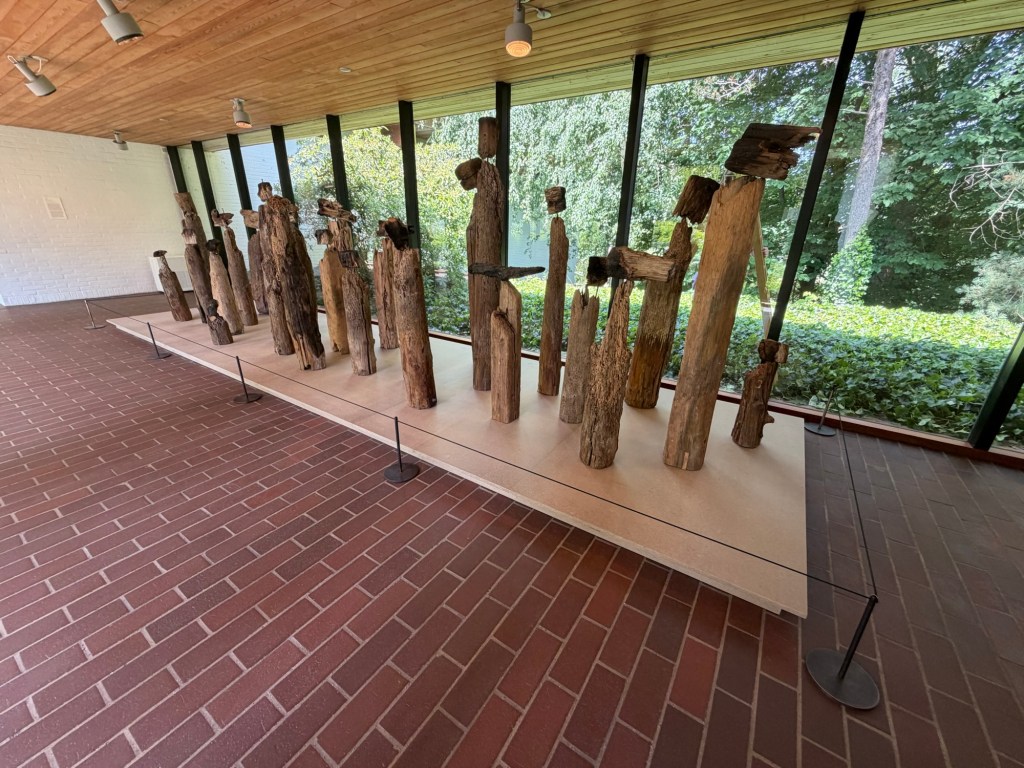
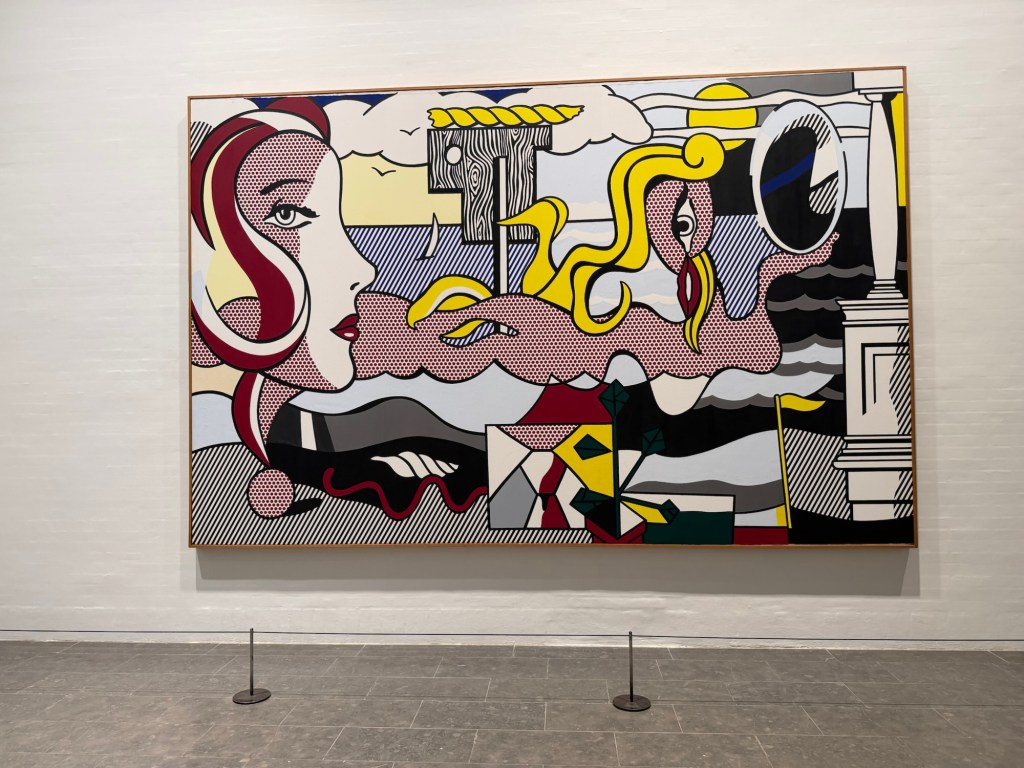
A museum guide, Anna, spent 45 minutes telling us about the place and showing us several sculptures. When she left us we wandered around on our own and saw most of the art in the collection. I, however, did not take to most of the works on the walls. I did like most of the sculptures, but did not get info on them all.

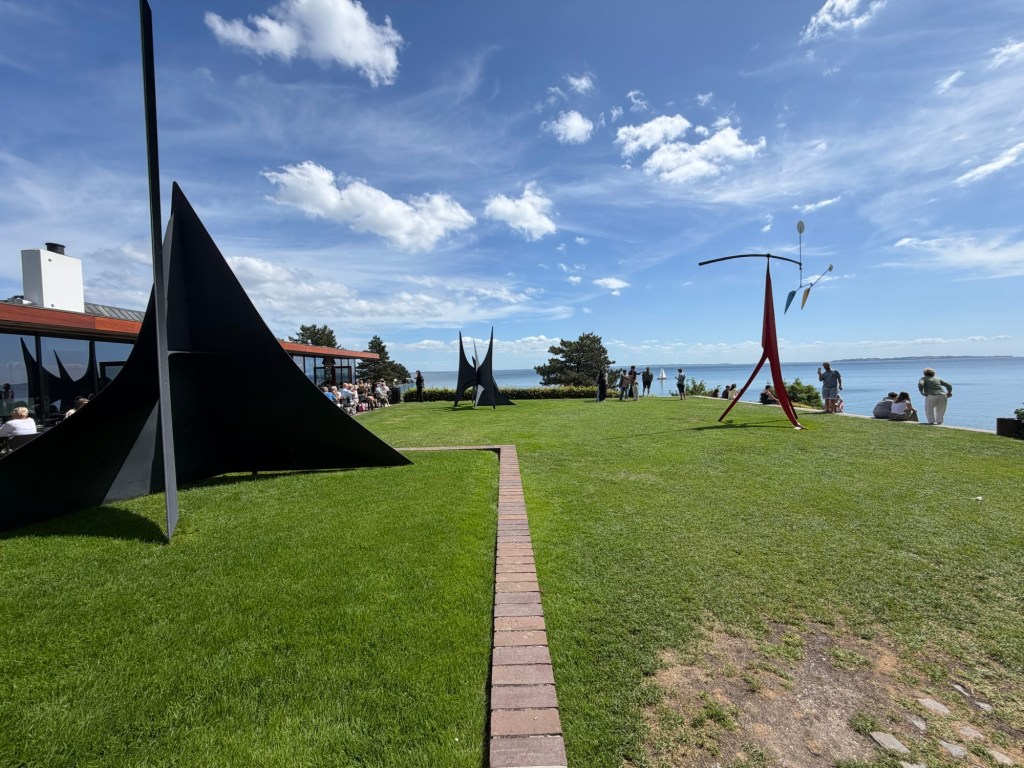
Two sculptures and a mobile by Alexander Colder
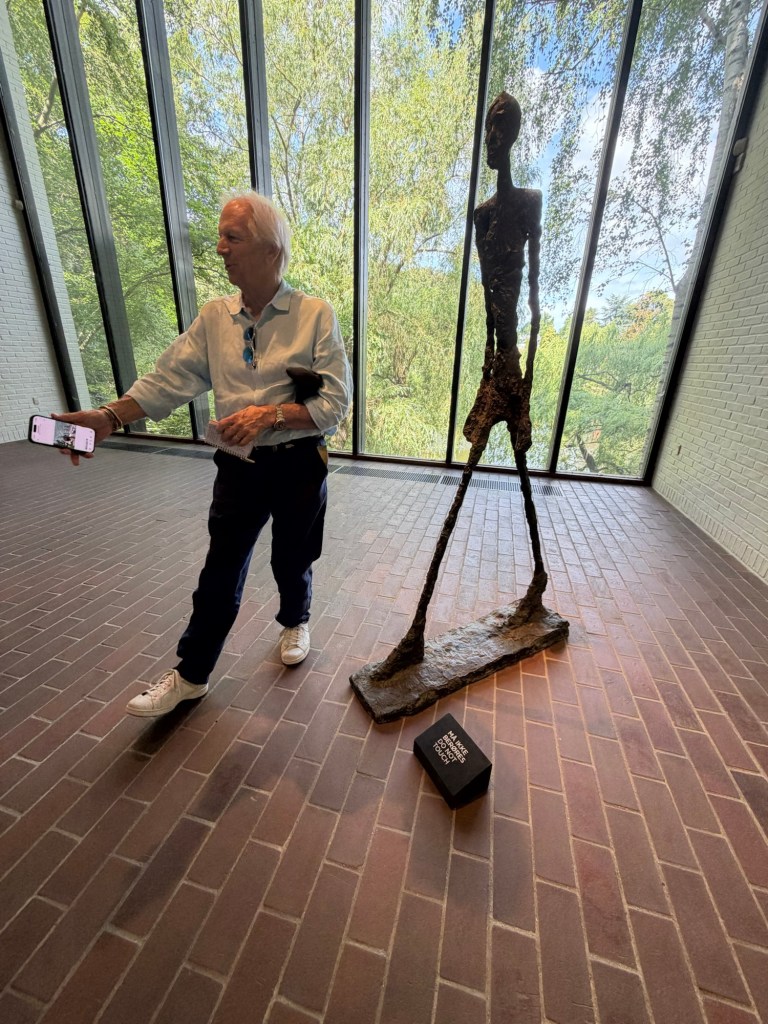
Standing Woman IV 1960 by Alberto Giacometti
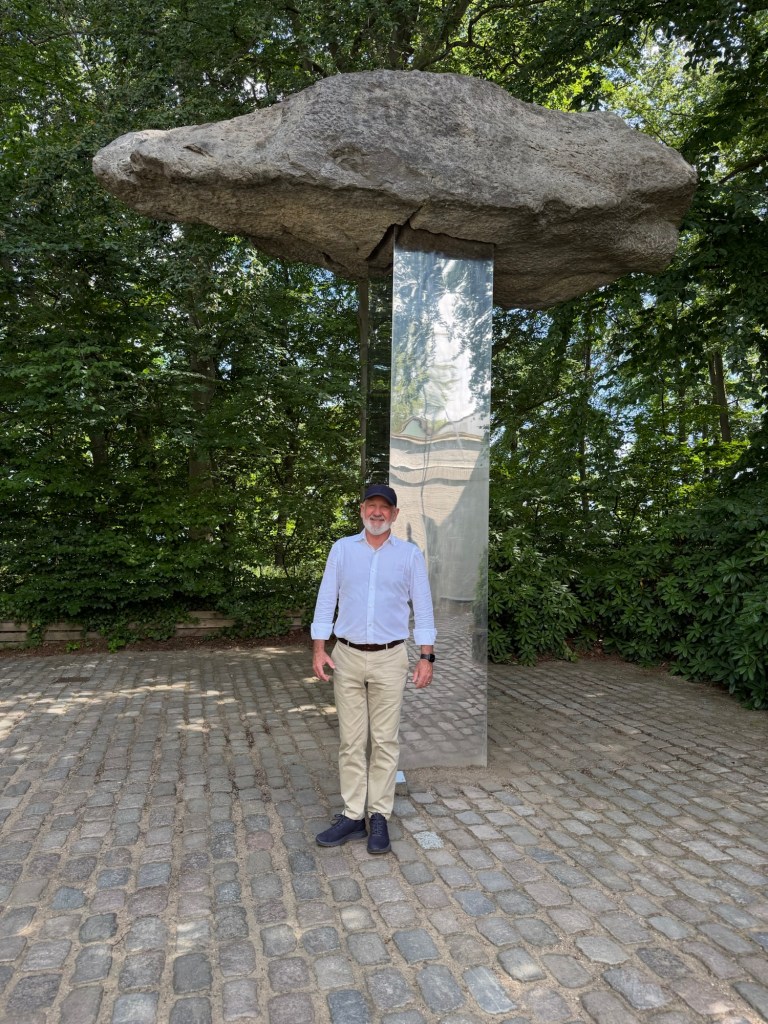
Us with endless Drip by Roy Lichtenstein; Reclining Figure by Henry Mare; and Maple tree in background

From the Louisiana Museum we went to a beachside restaurant called Bolaget Visby. We had delicious fish lunches.

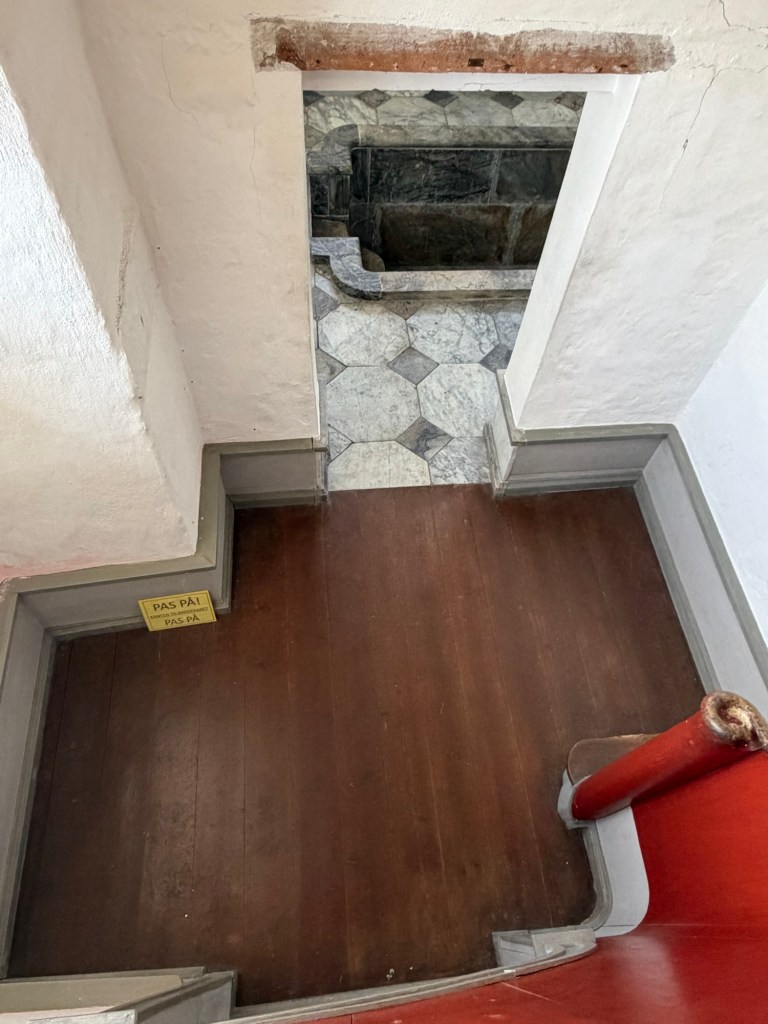
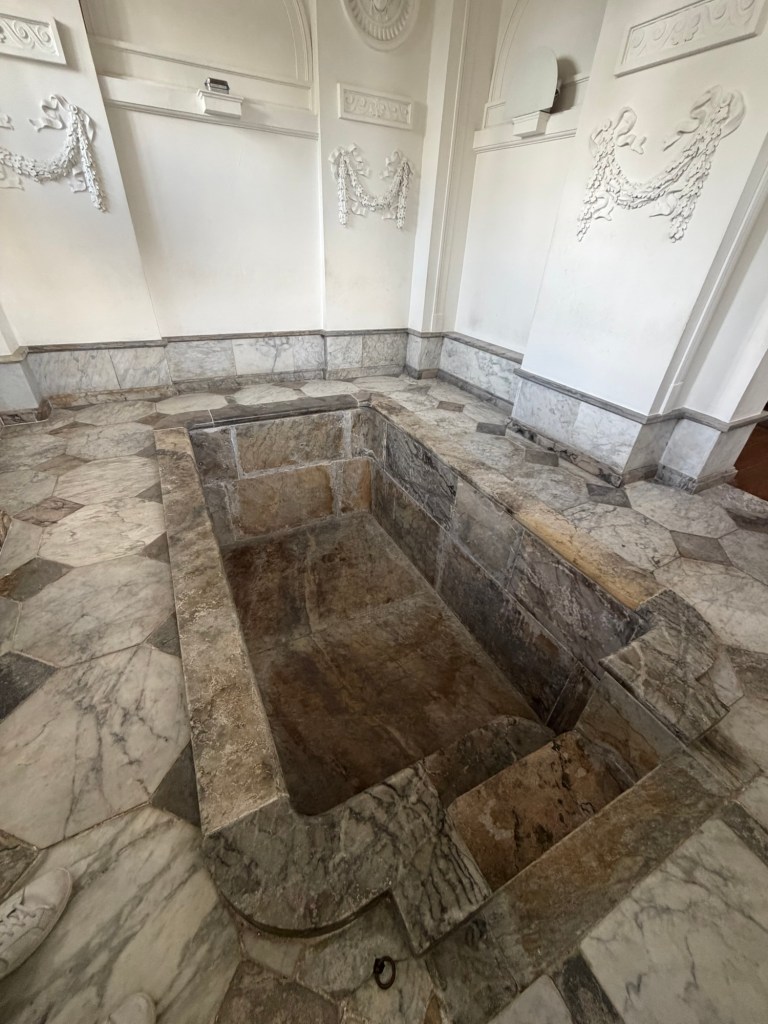
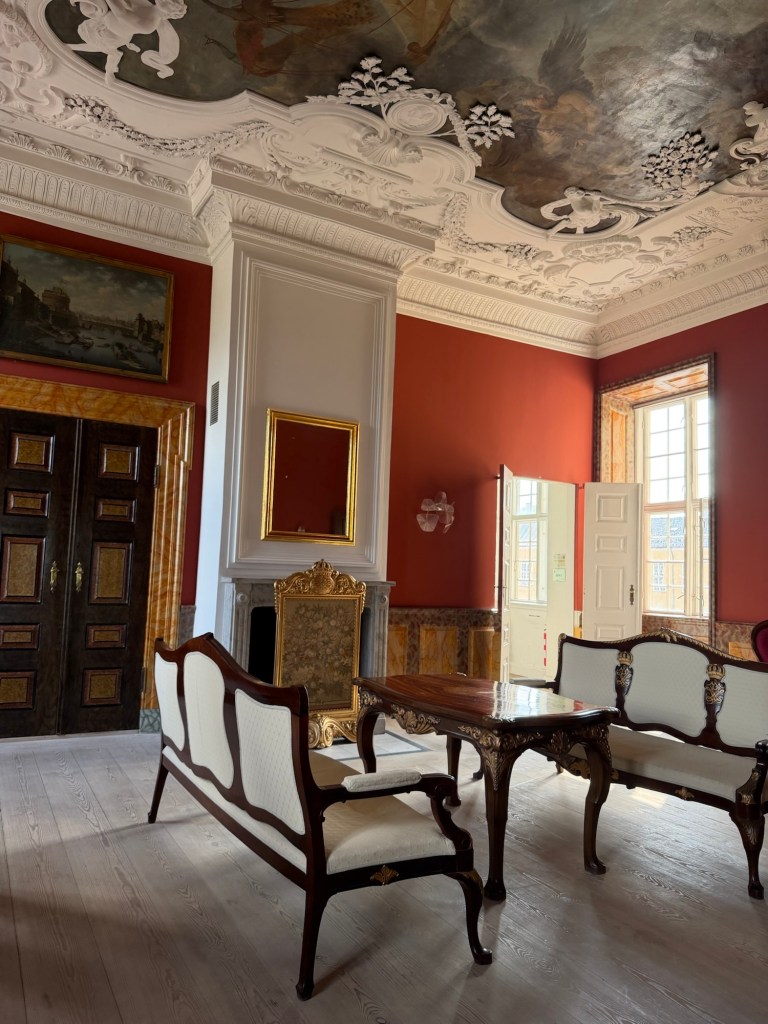
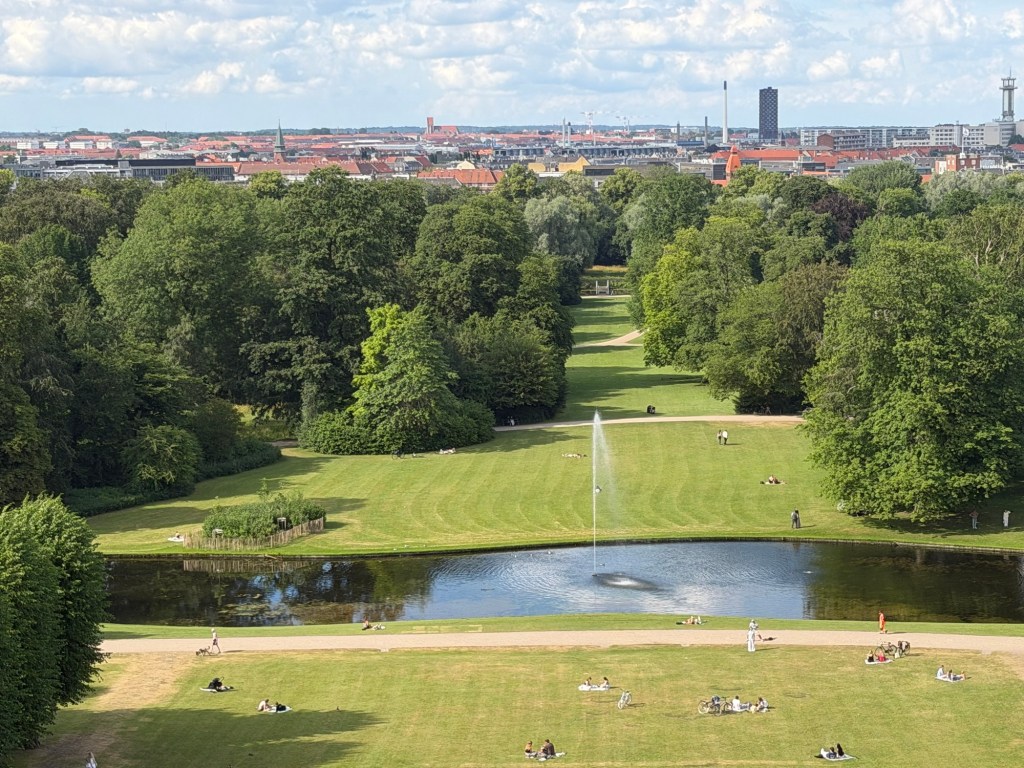
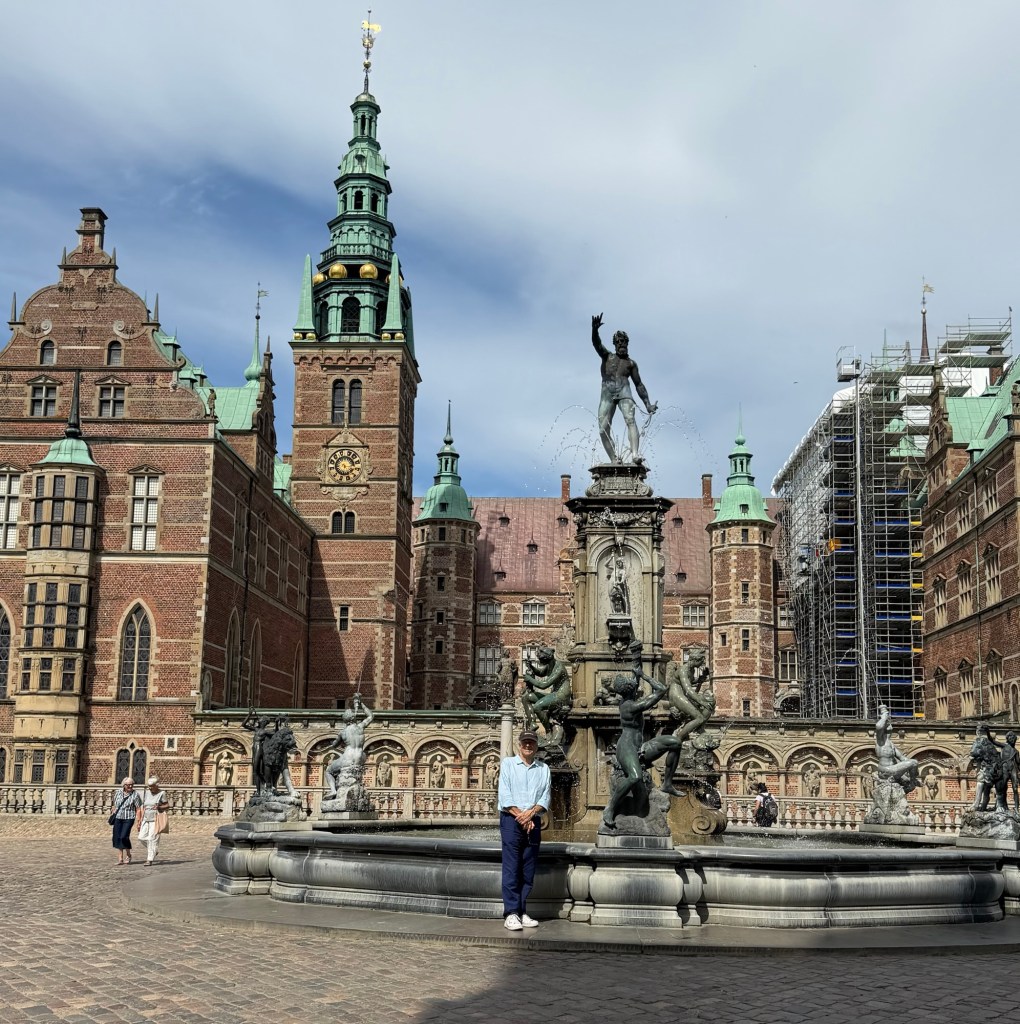
We made a stop at Frederick’s Borg Castle, a centuries old fortified castle, to see the interior of the castle and the castle gardens.

Entrance to Frederick’s Borg Castle

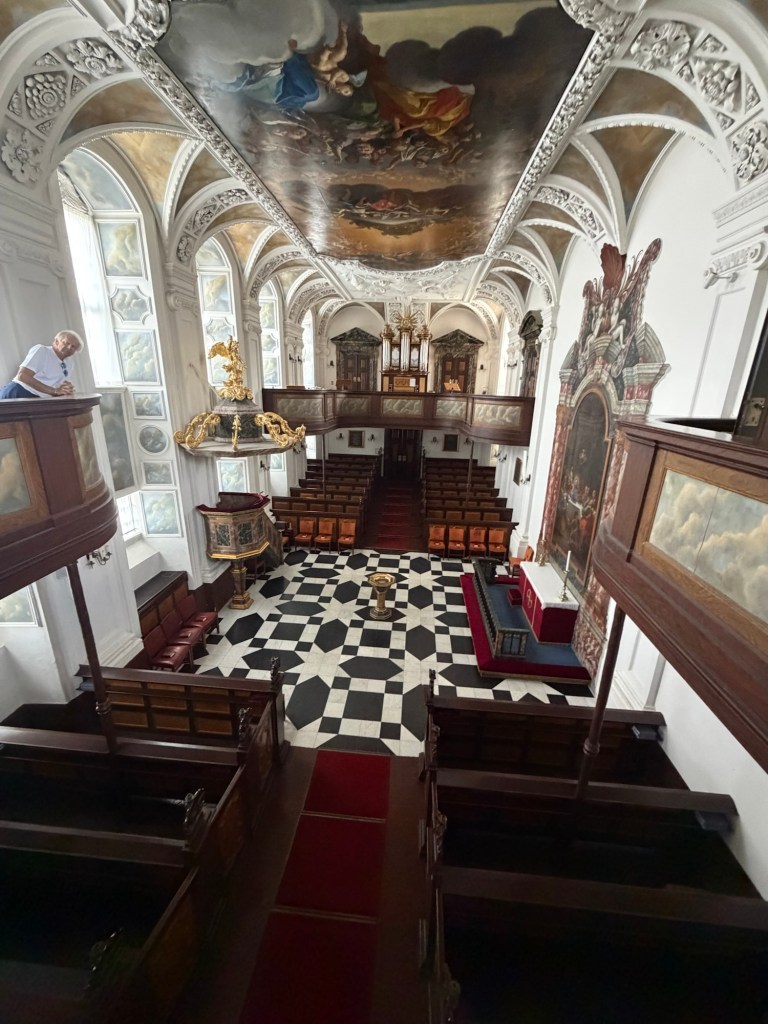
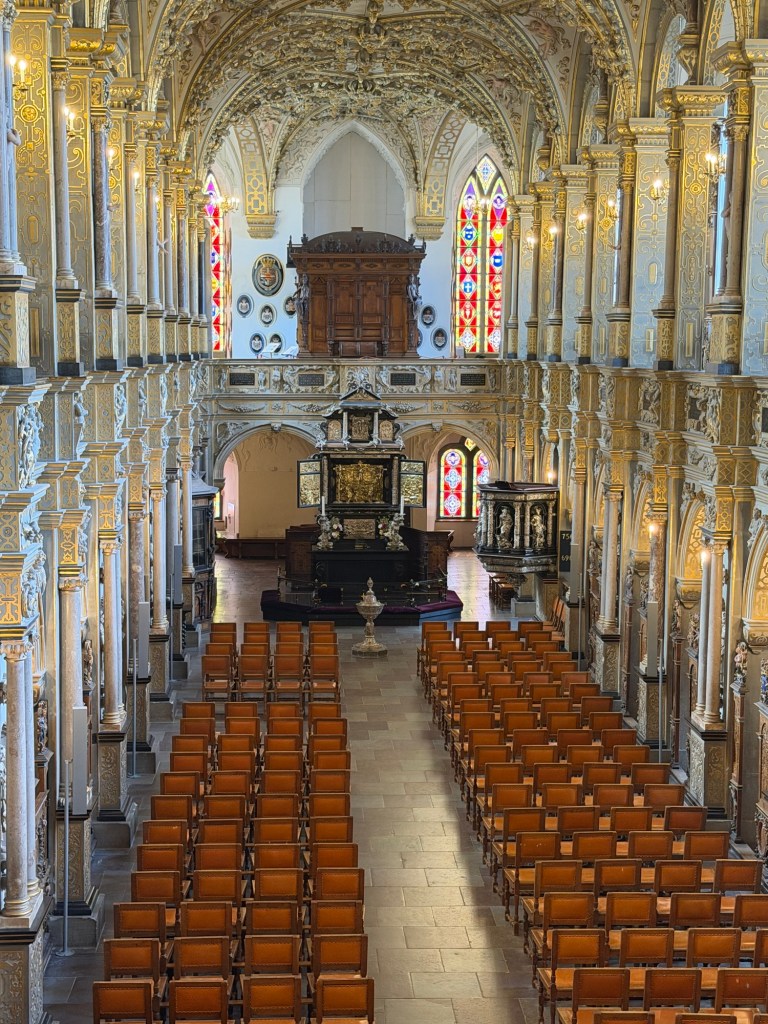
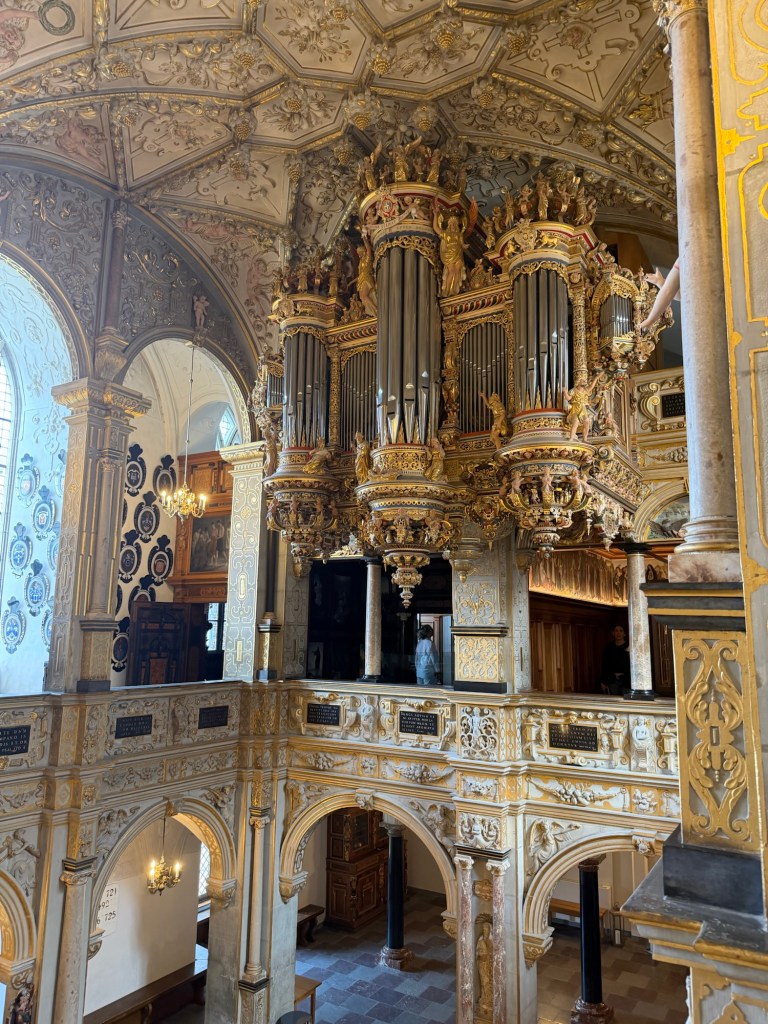
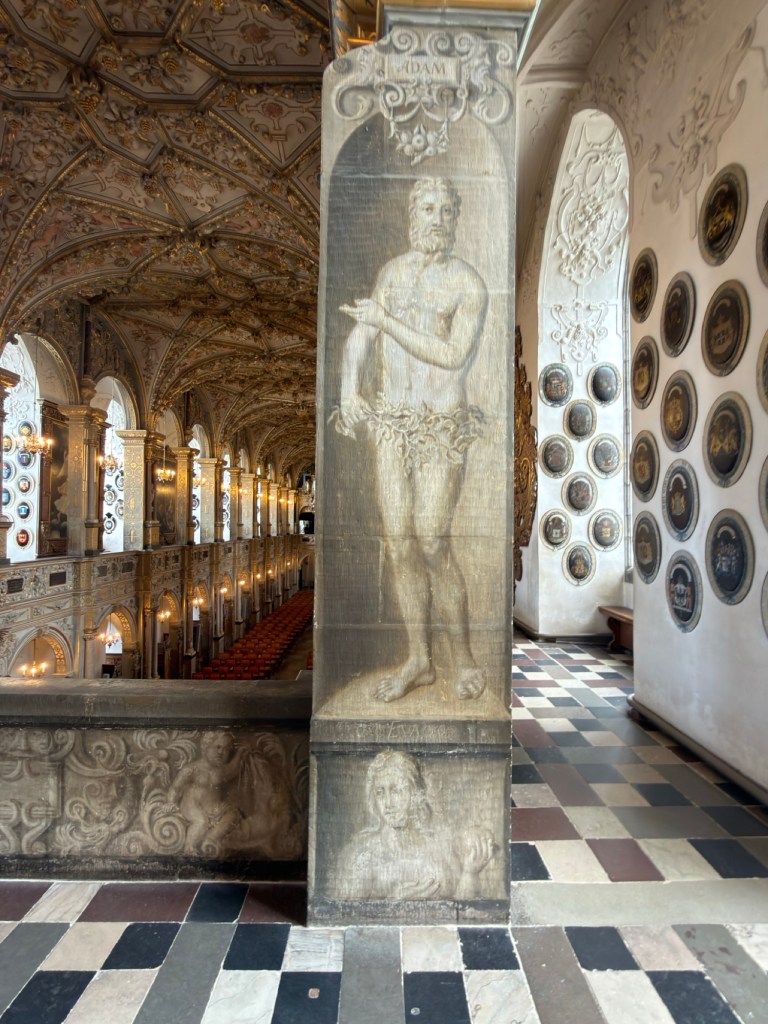
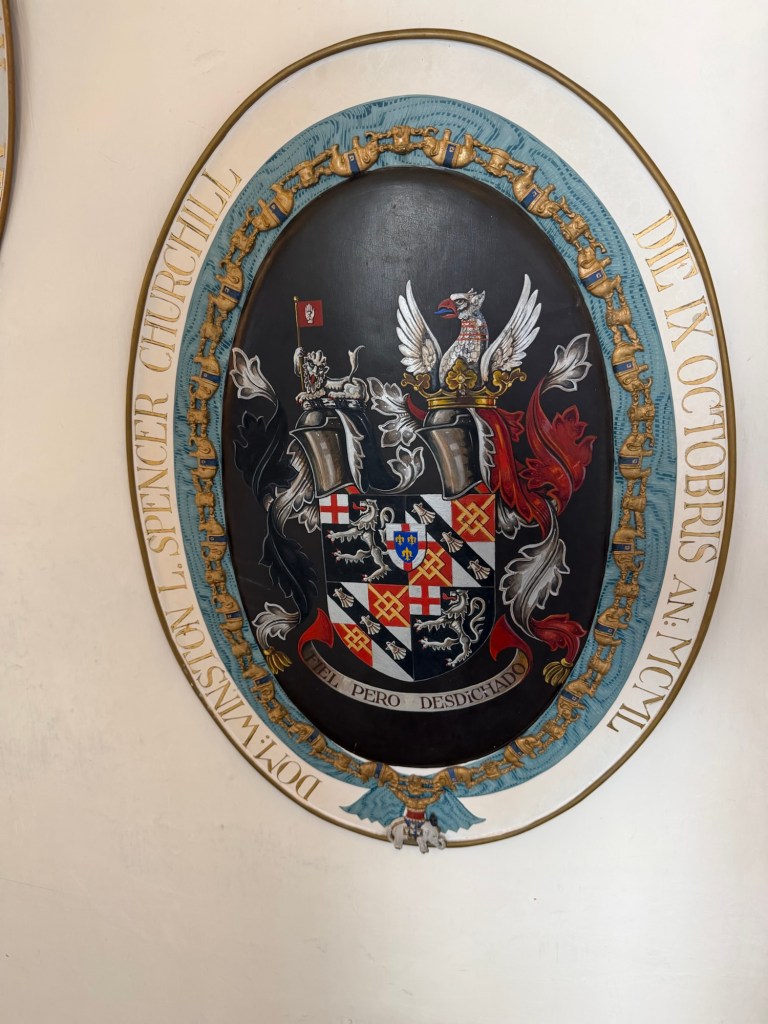
Inside the castle proved to be even more interesting than the outside. A huge chapel was decorated with many gold leaf details. In the halls near the King’s audience chamber were walls of Coats of Arms. Paul helped me find these two that were of interest to us.

Adam standing on eve with a wall of coats of arms on one side and the chapel on the other.

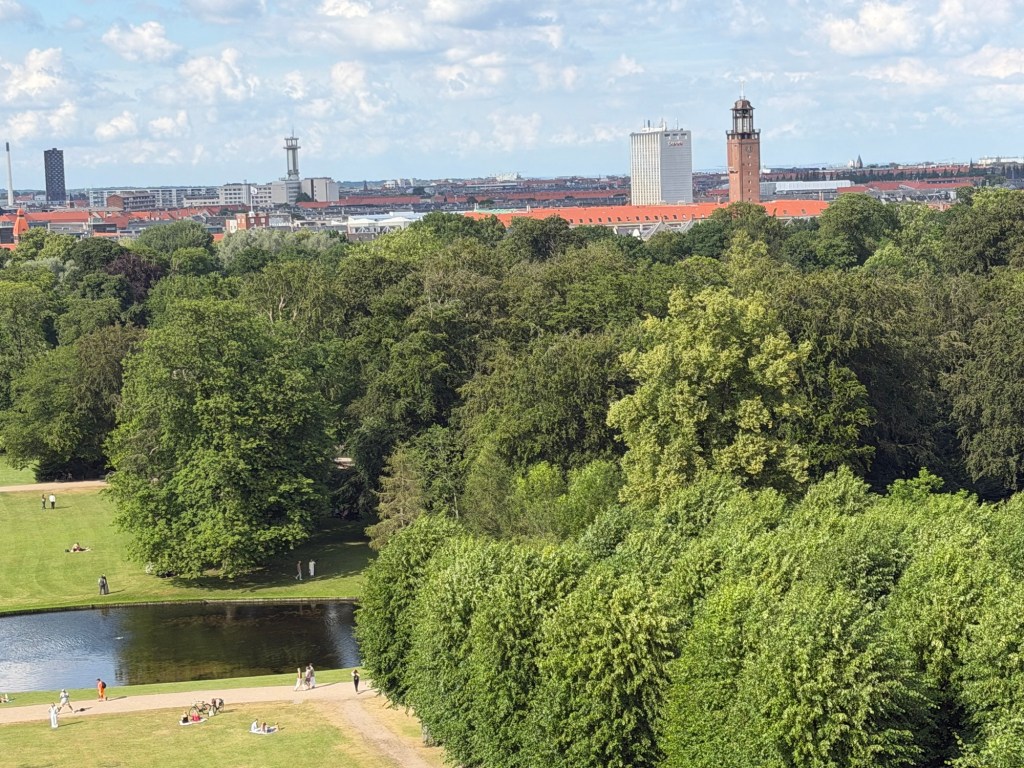
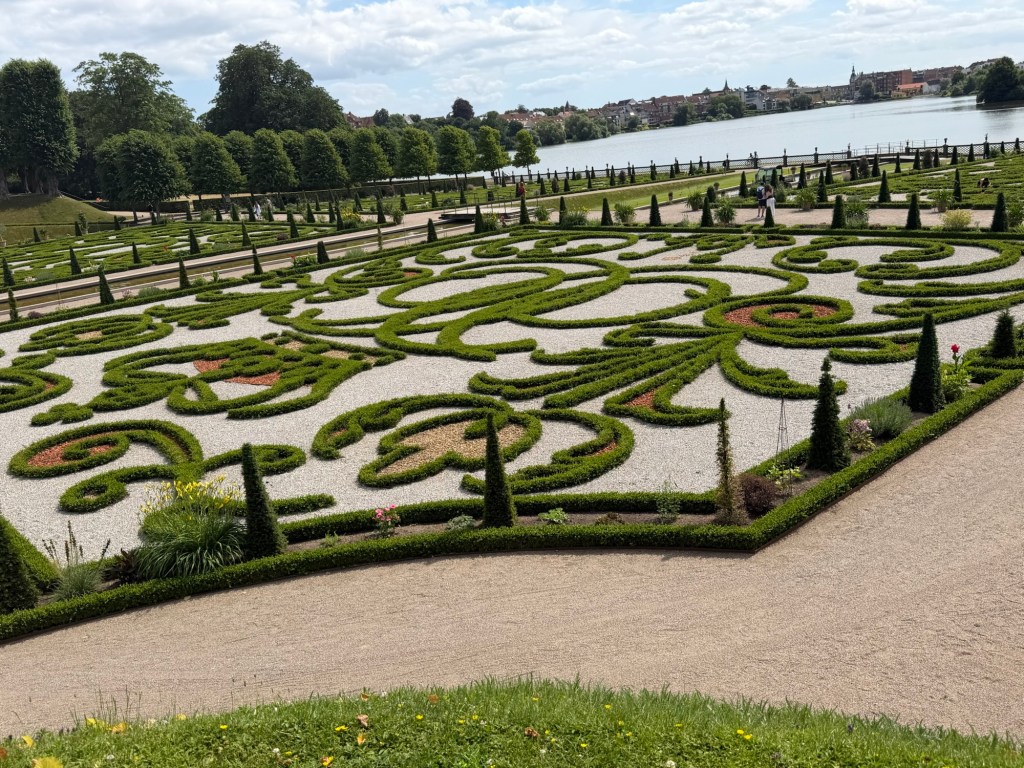
we went outdoors to walk around the gardens. I thought this scene the most interesting. there’re were also large lily ponds that were not yet in bloom.

The formal hedges with a crown (left center) and the king’s initials

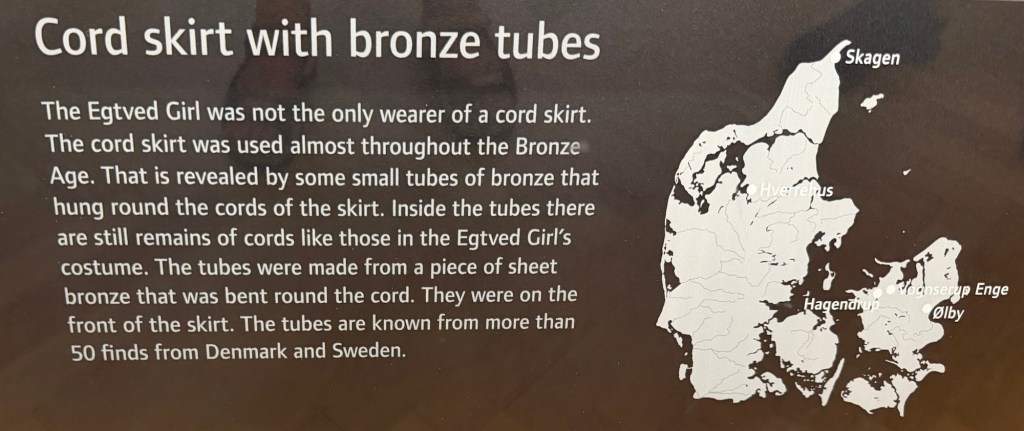
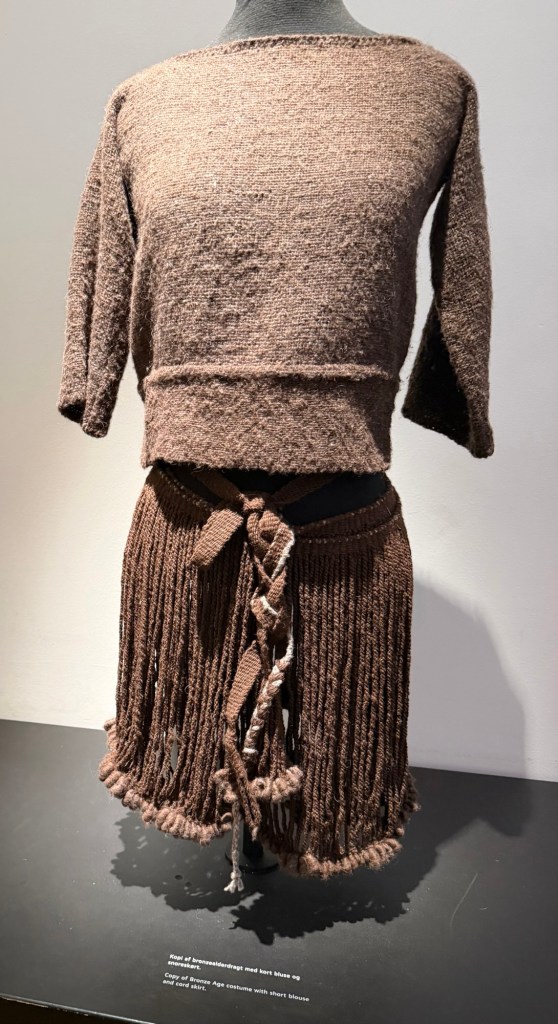
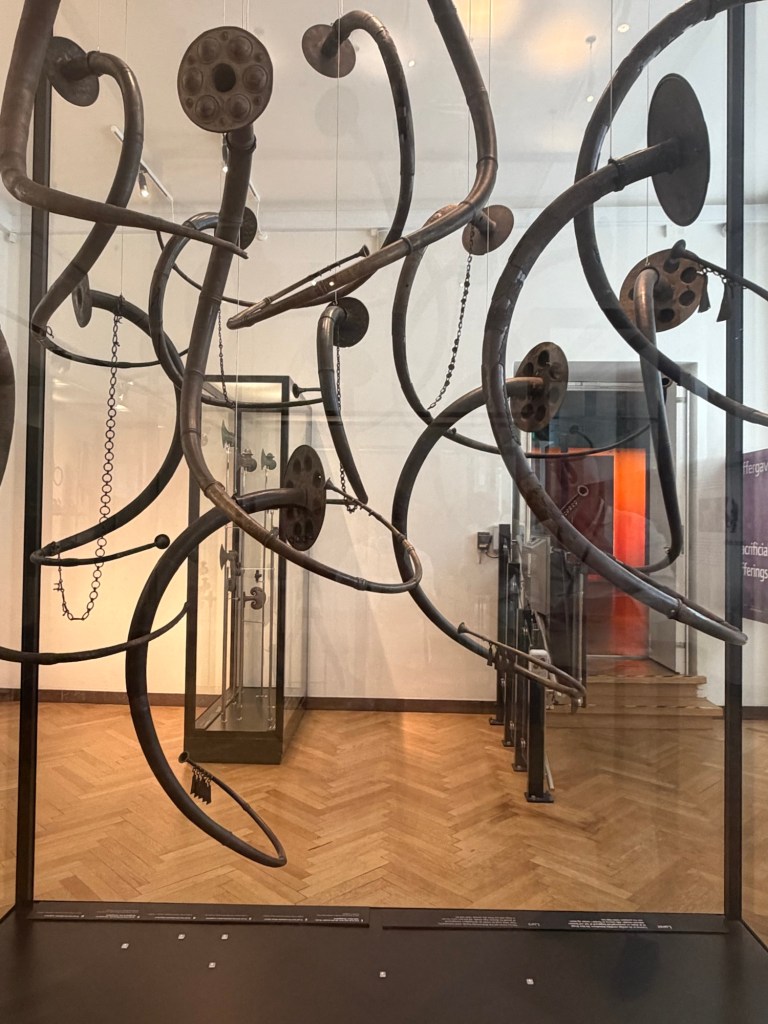
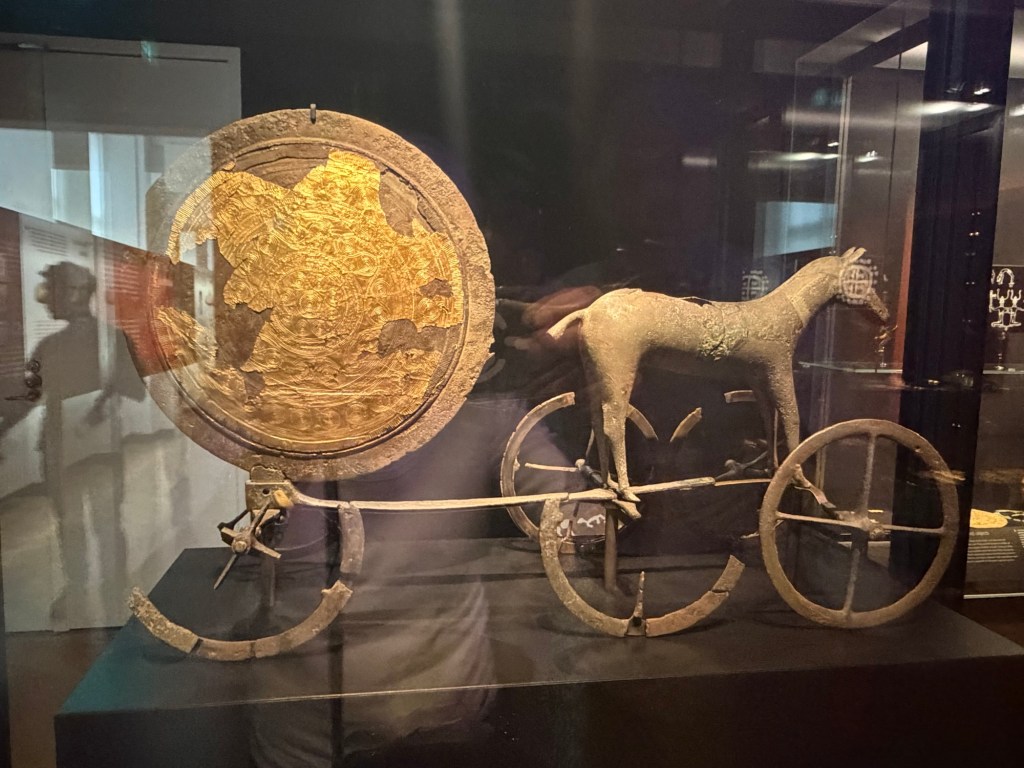
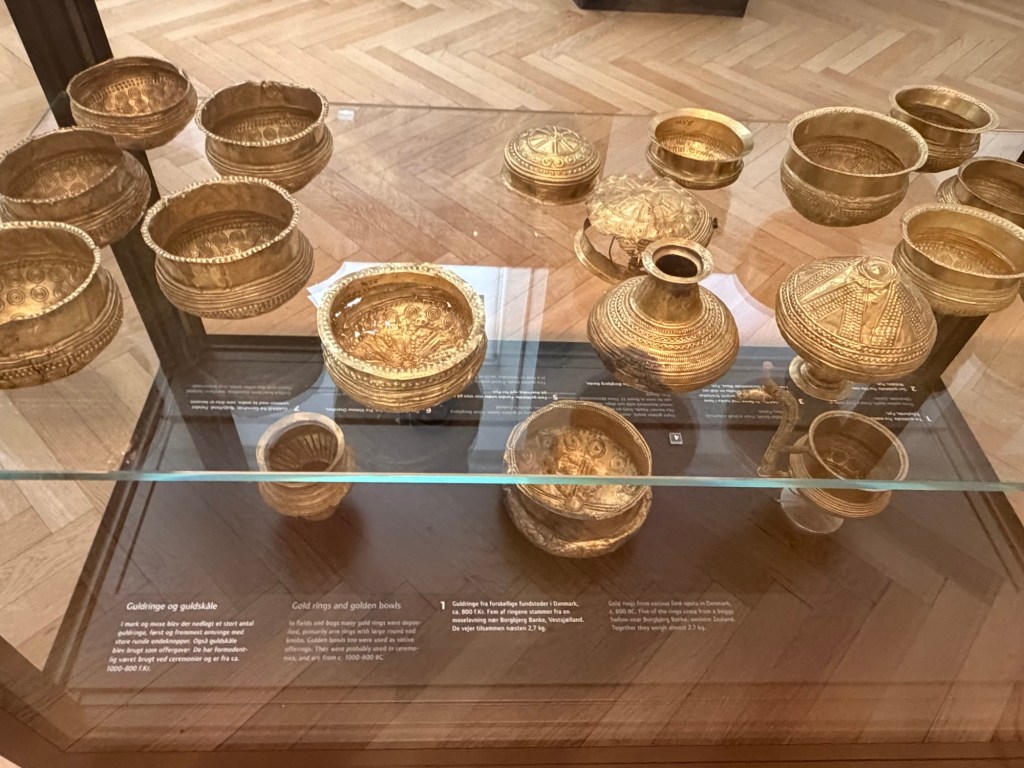
That was the end of our planned adventures for the day. We drove back to Copenhagen, Mark got out at the hotel and Paul and I went to the National Museum to see the Viking section. Unfortunately, it was about to close and I was able to see only a little of the exhibit. Here are a few items from the 250 years Vikings existed as a culture.

A Viking Ruhr, or grave stone about the life of the deceased
Another Ruhr.
The grave of a young woman

That touch of Viking culture and a walk along the new Opera House completed my day. It felt good to chill on a bench at the edge of the Opera House and the fjord before returning to the hotel and a return dinner back at Esmee.