
Friday, November 6, 2026
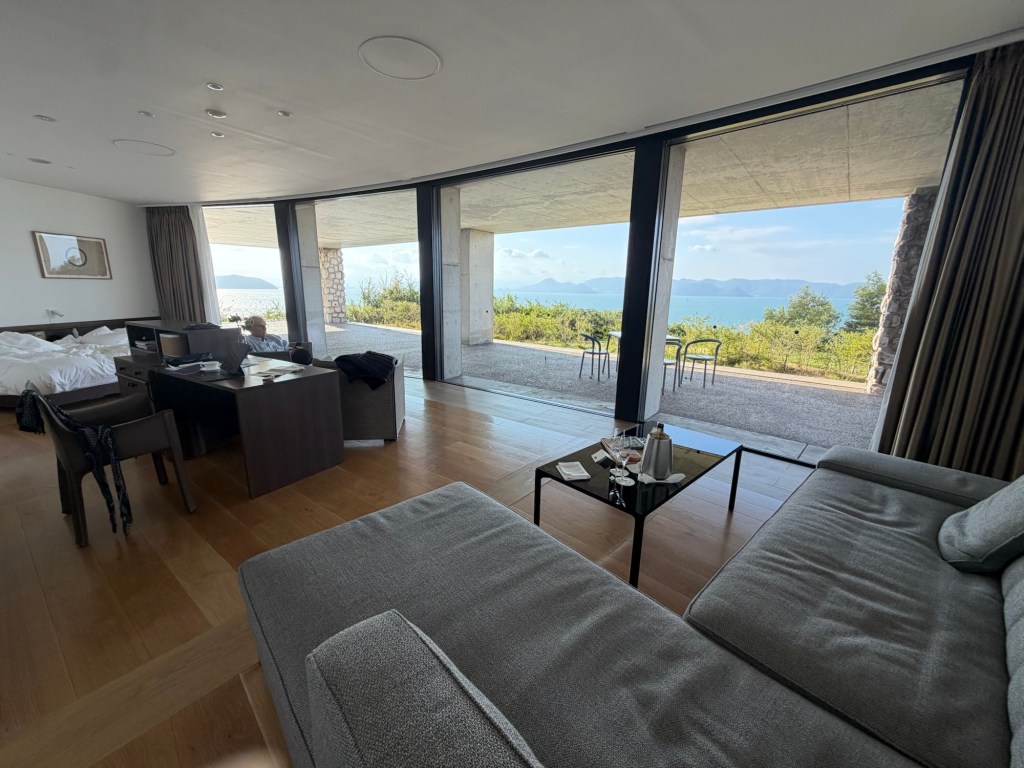
We woke up to a picture clear, but very windy day in our room with wall to wall glass. We are staying in the Benesse House Museum in a section called the Oval. We are in one of 6 rooms. The museum and other roms are spread out over a large property. Continental breakfast was served next door to our Oval level room.
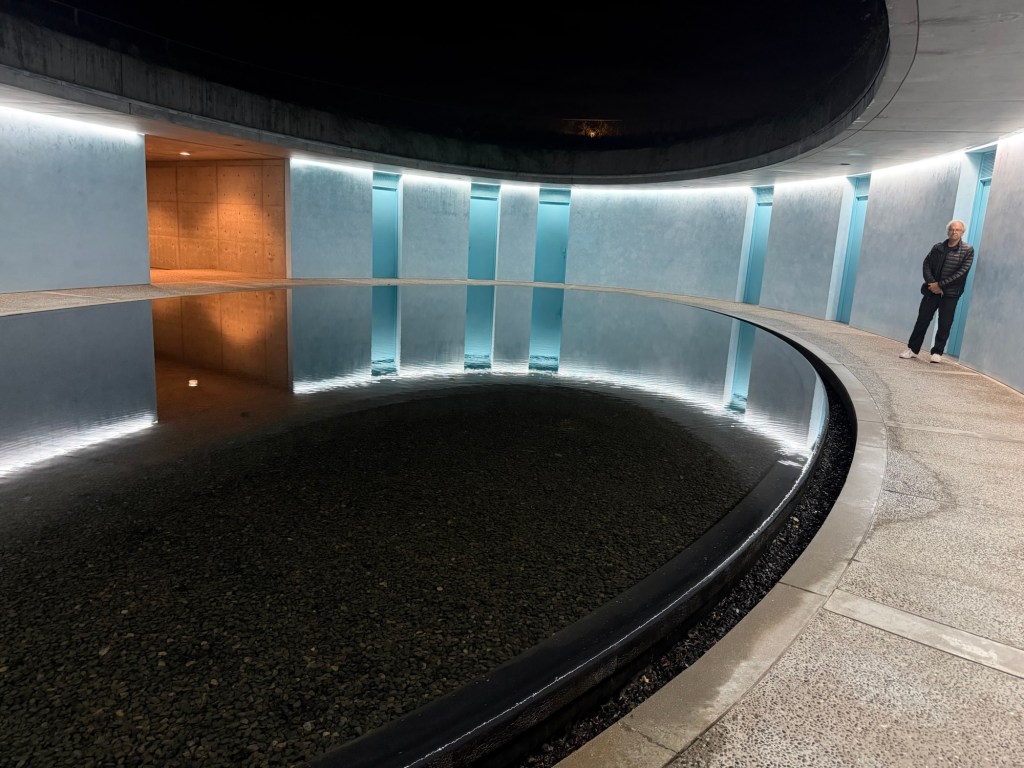
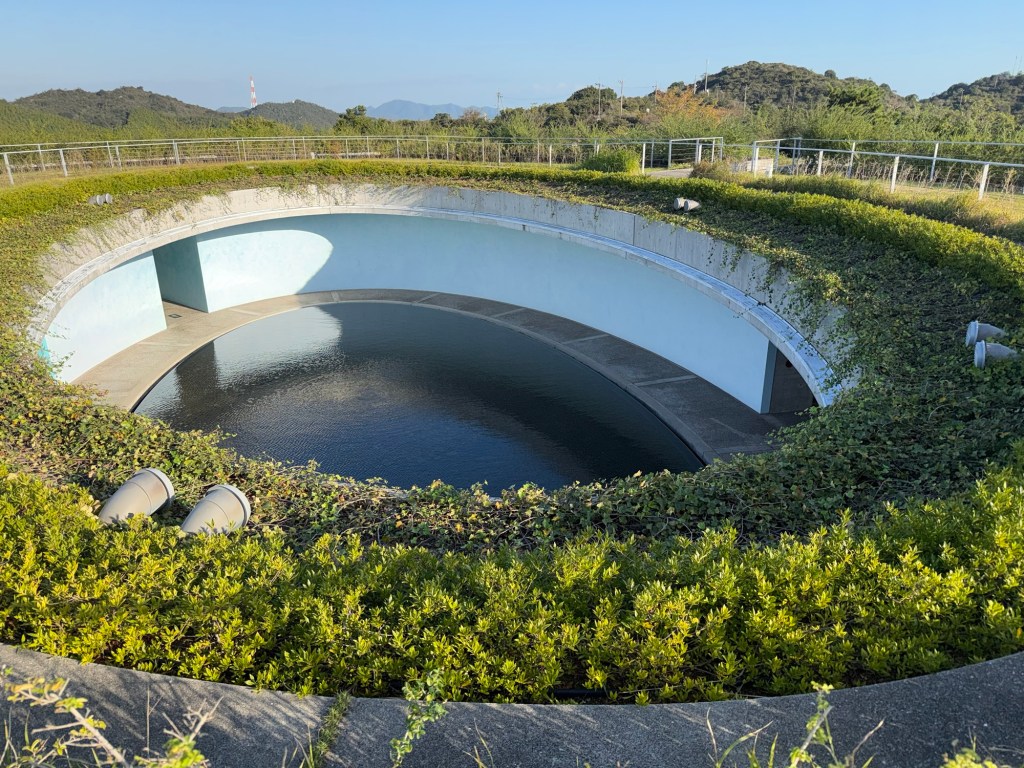
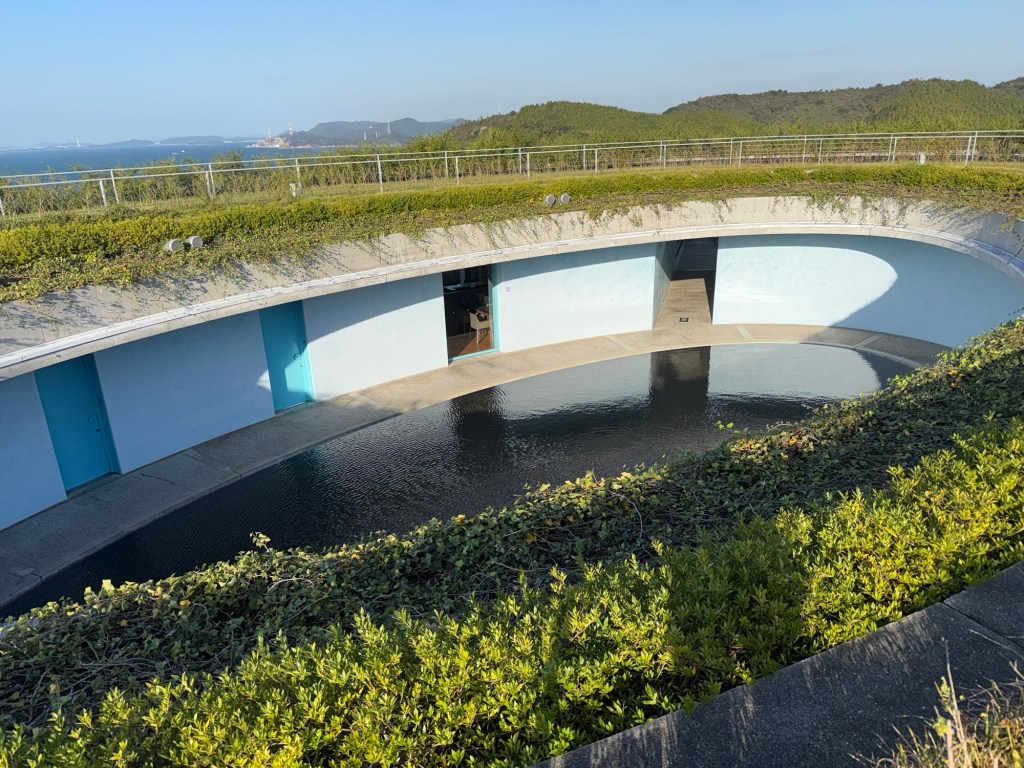
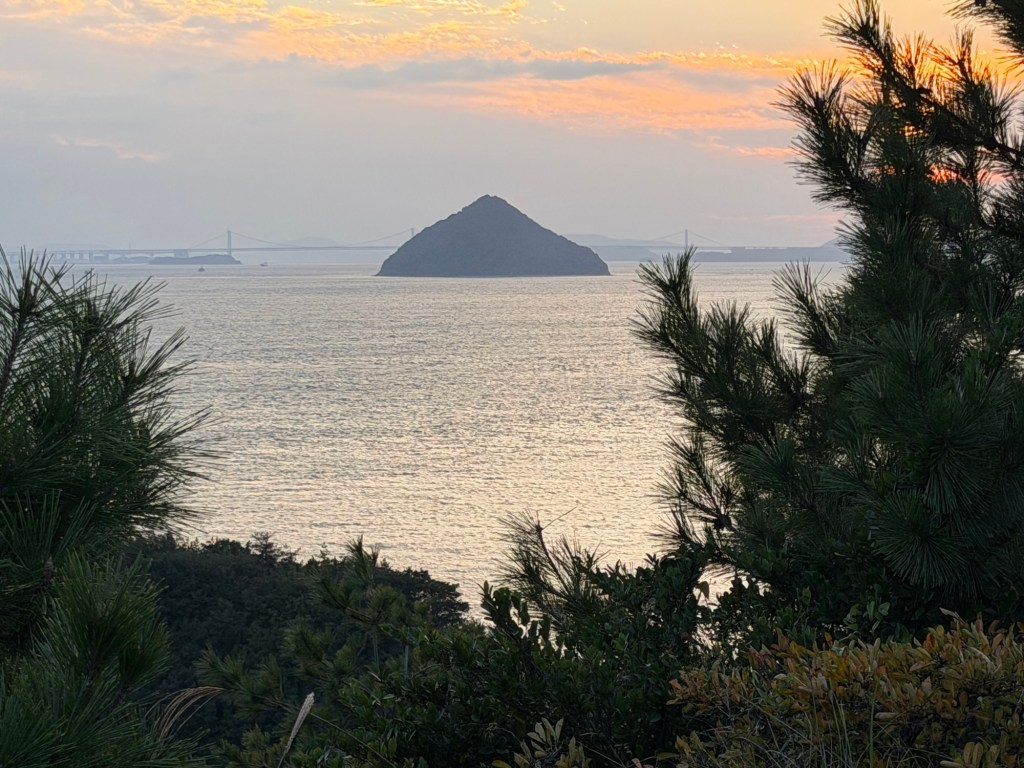
Our level is called “Oval” due to the layout of the hallway and the large vanishing edge, oval pool in the middle. It whole museum was designed by the architect, Tadao Ando, and is very interesting and attractive. Once inside our room, the view is very expansive and reminds us of San Francisco Bay from Angel Island to the Golden Gate Bridge. There is even such a bridge here, but not as large or orange.
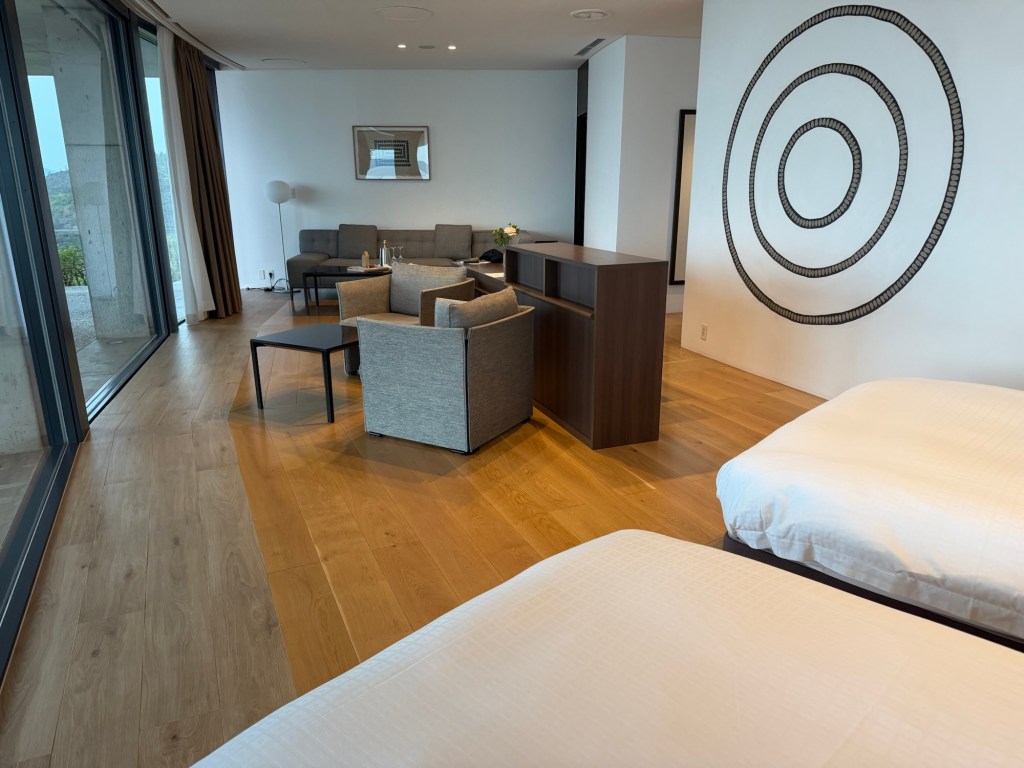
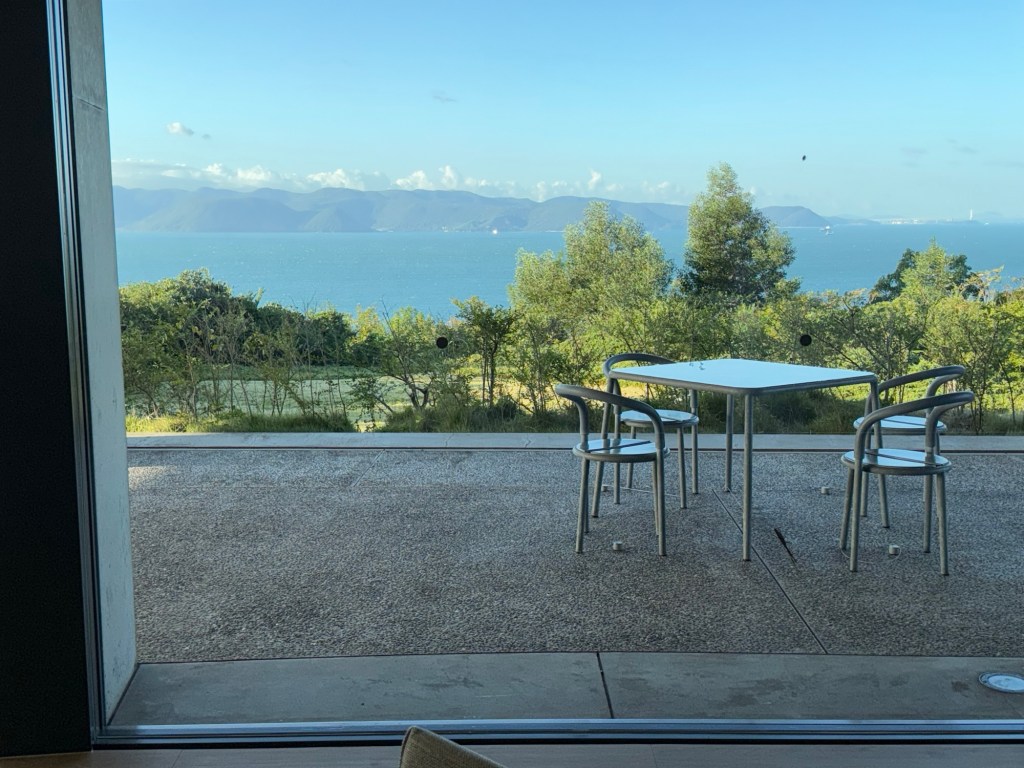
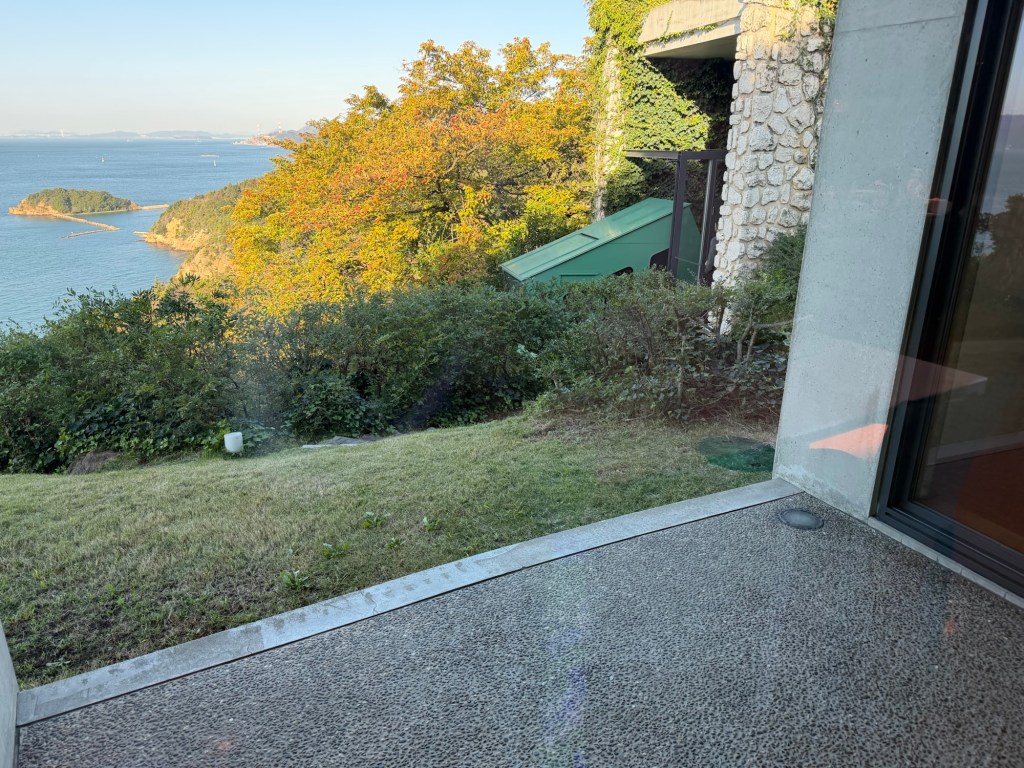

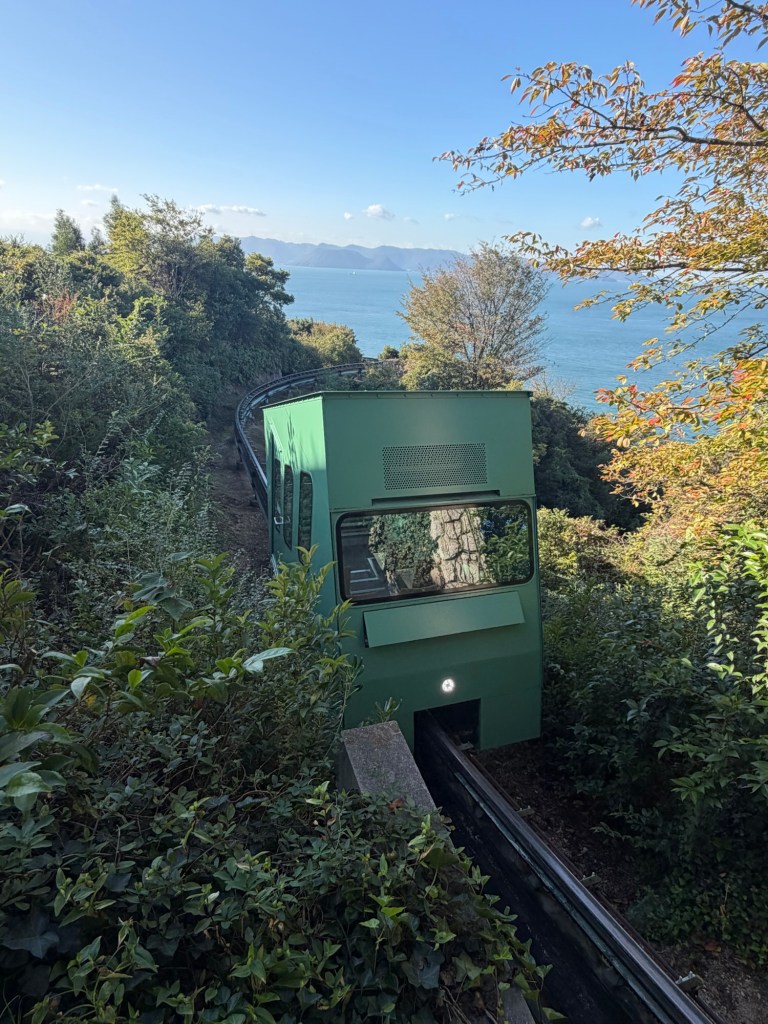
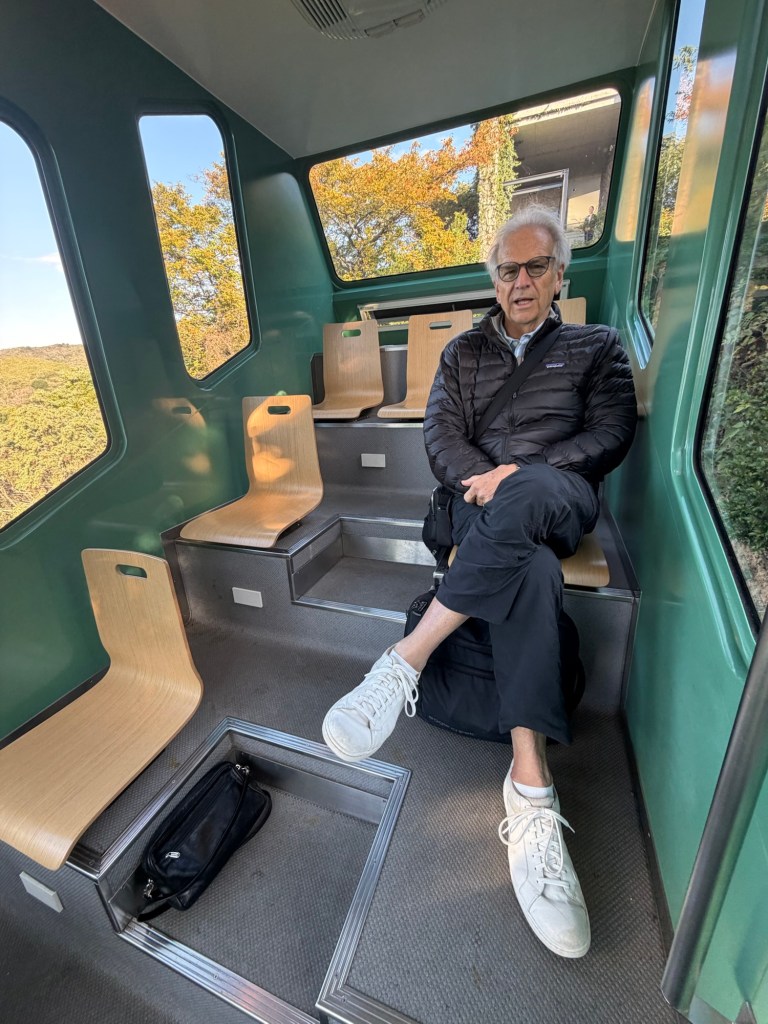

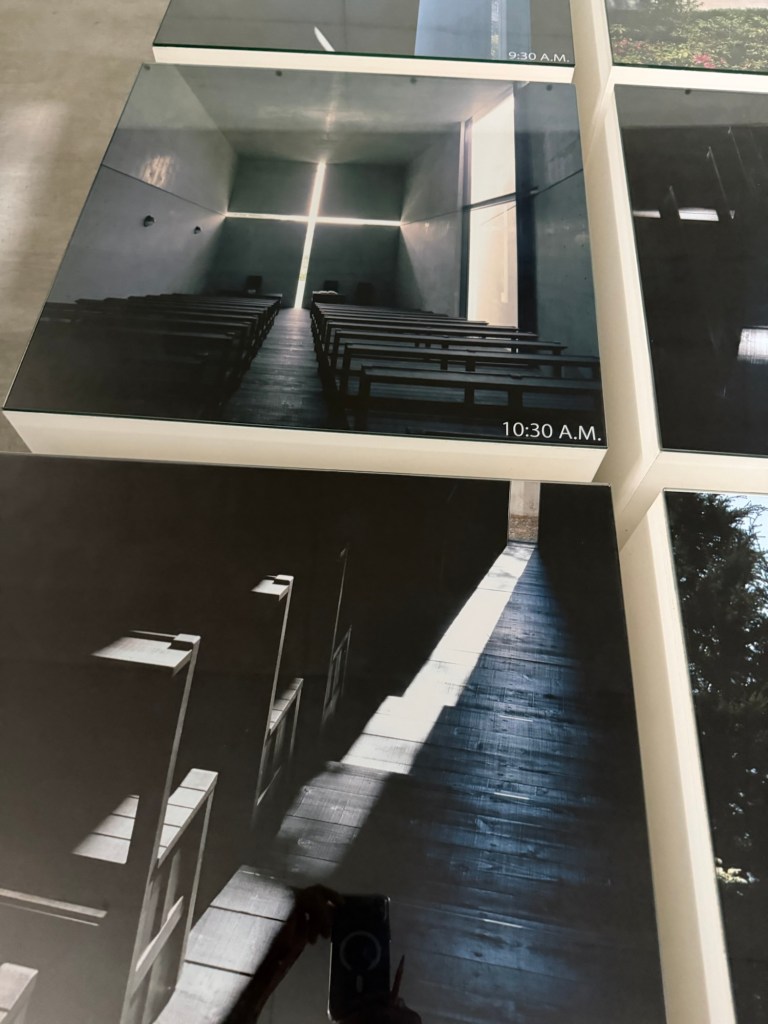
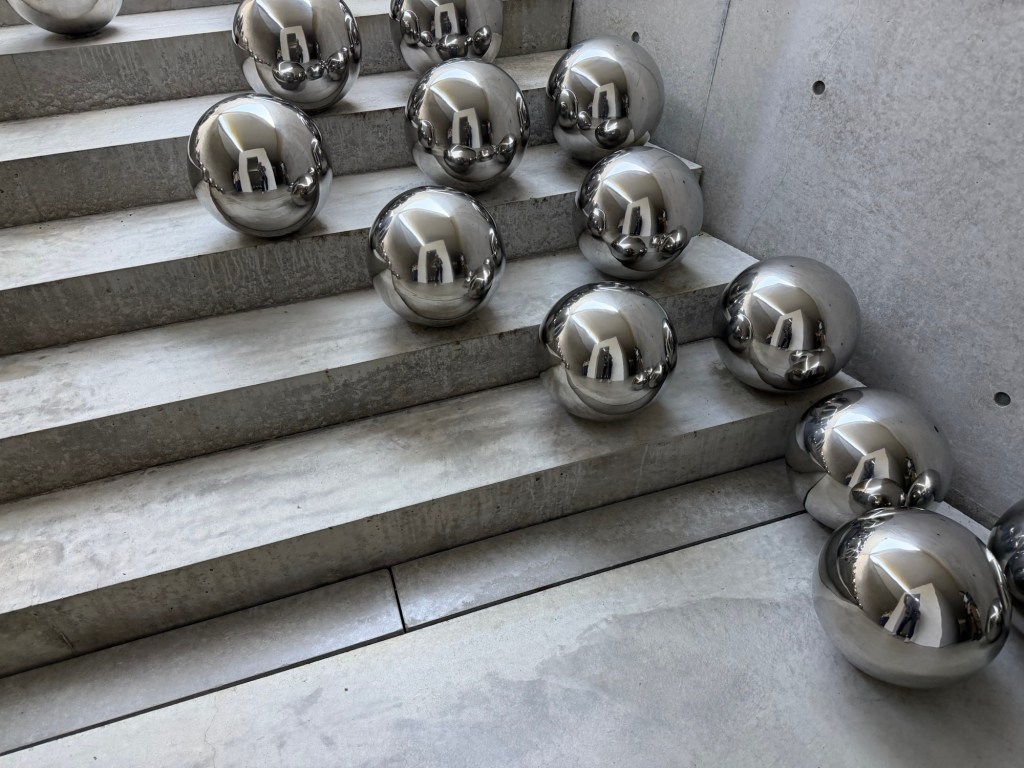
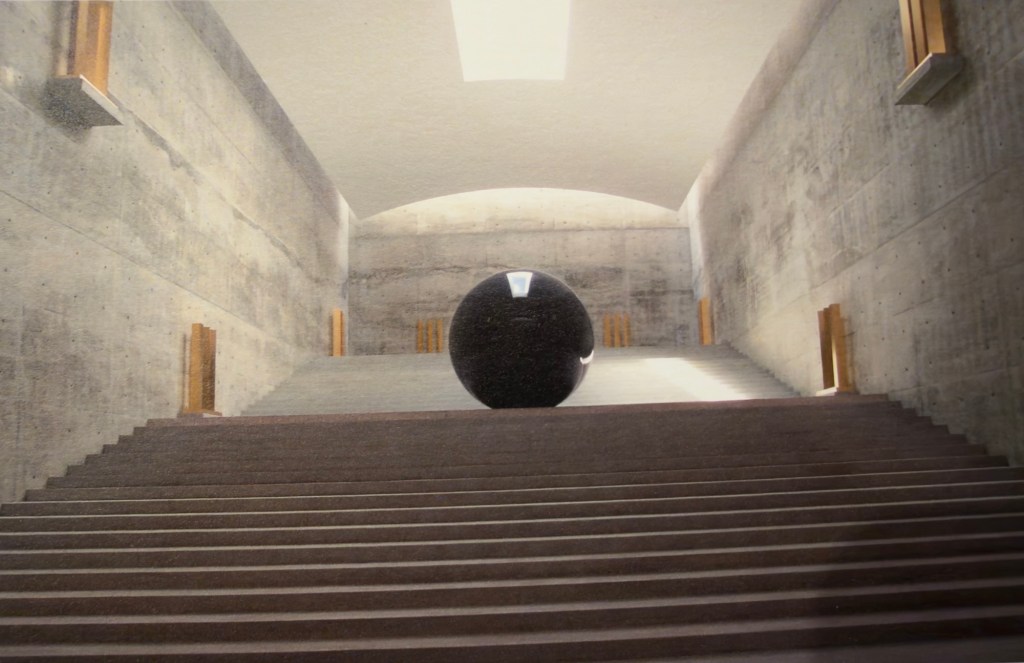
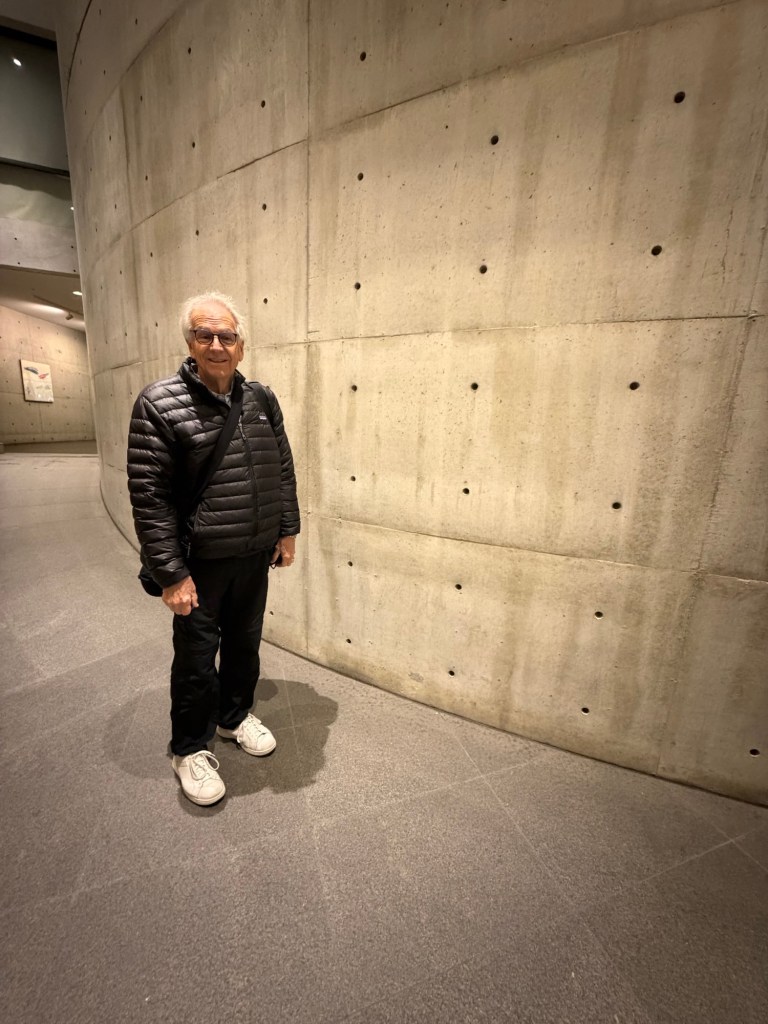
After breakfast we took the cog train from the oval level down to the main lobby and museum, It being the only way to leave the oval, and wandered around looking at the art, which is almost as interesting as the building itself. The concrete walls have the printed look of 8 feet by 4.5 feet tatami mats, normally laid on the floor. It turns out every museum in town is designed by Ando in this stamped concrete look to save money, yet attract visitors. It is working. We saw people everywhere looking at the art and the buildings. One museum is designed and built to be underground and makes a big impression.
But I get ahead of myself. We met or guide for the day, Kumiko and finished our wander through the Benesse Hotel Museum,

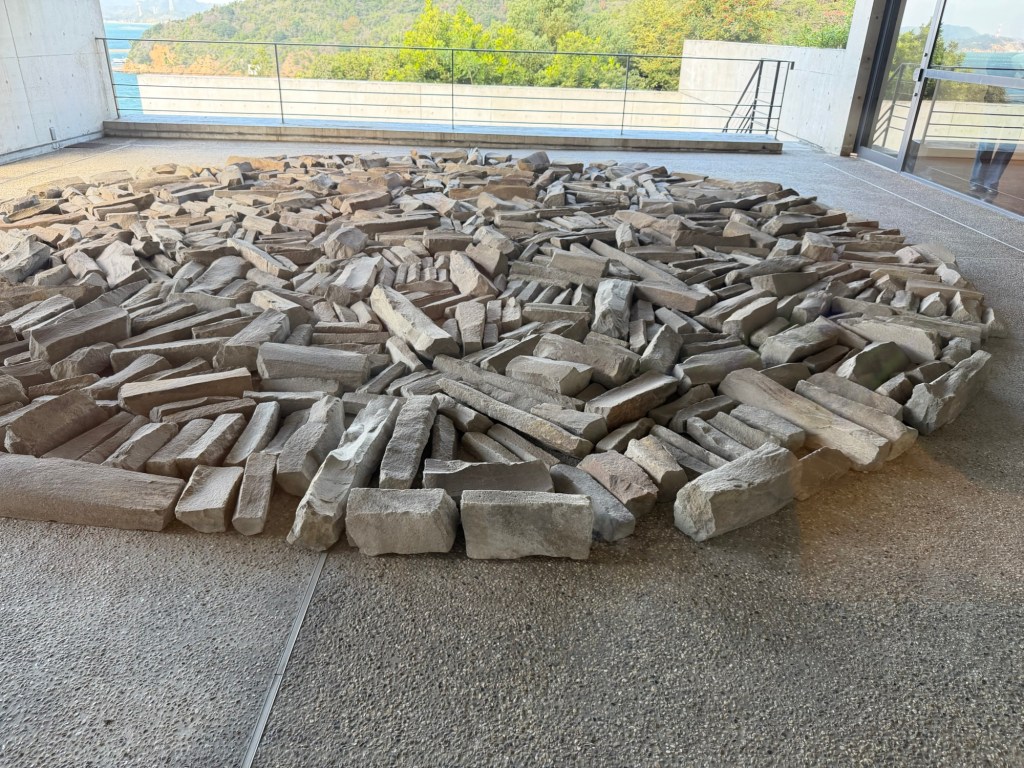
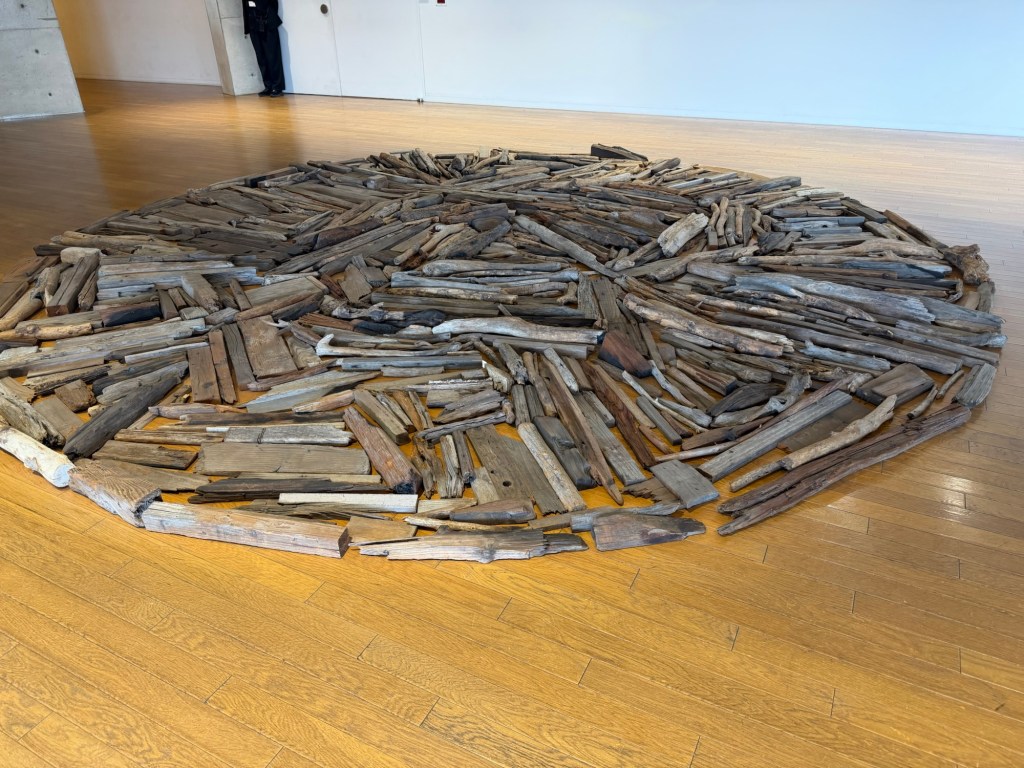
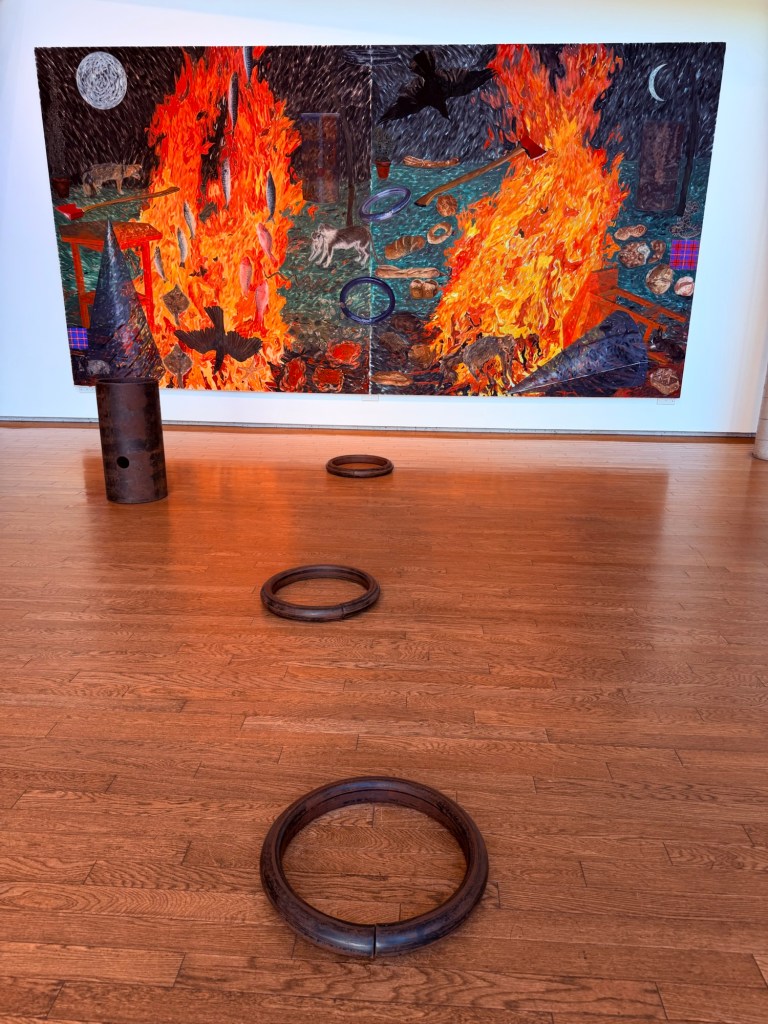
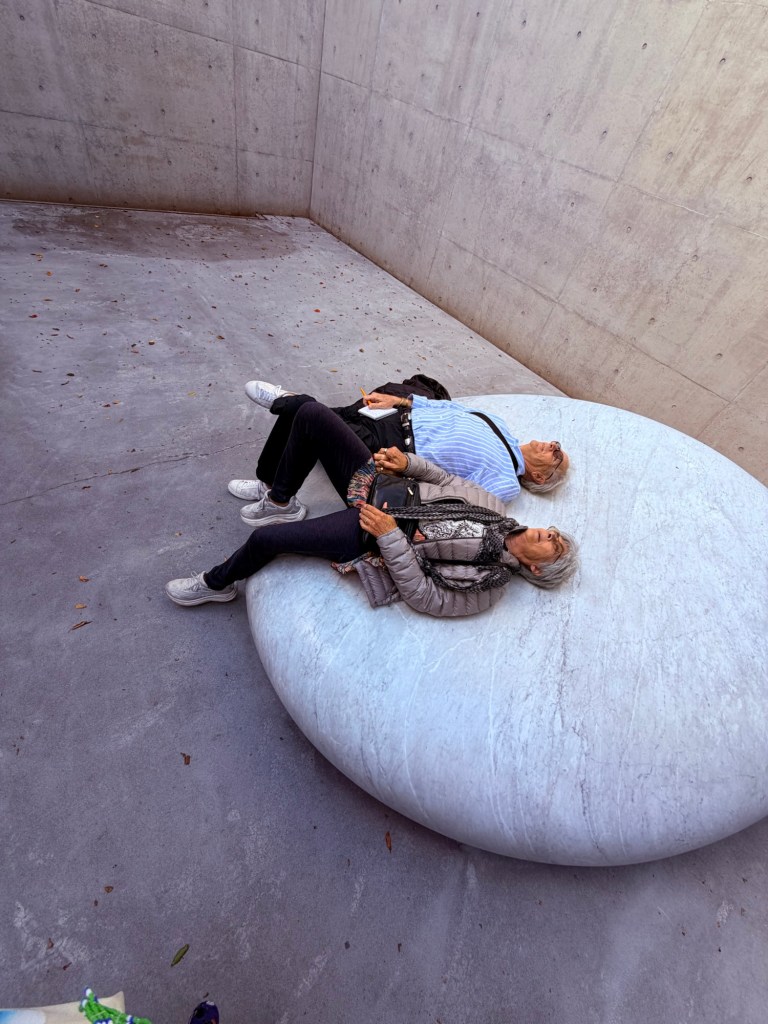
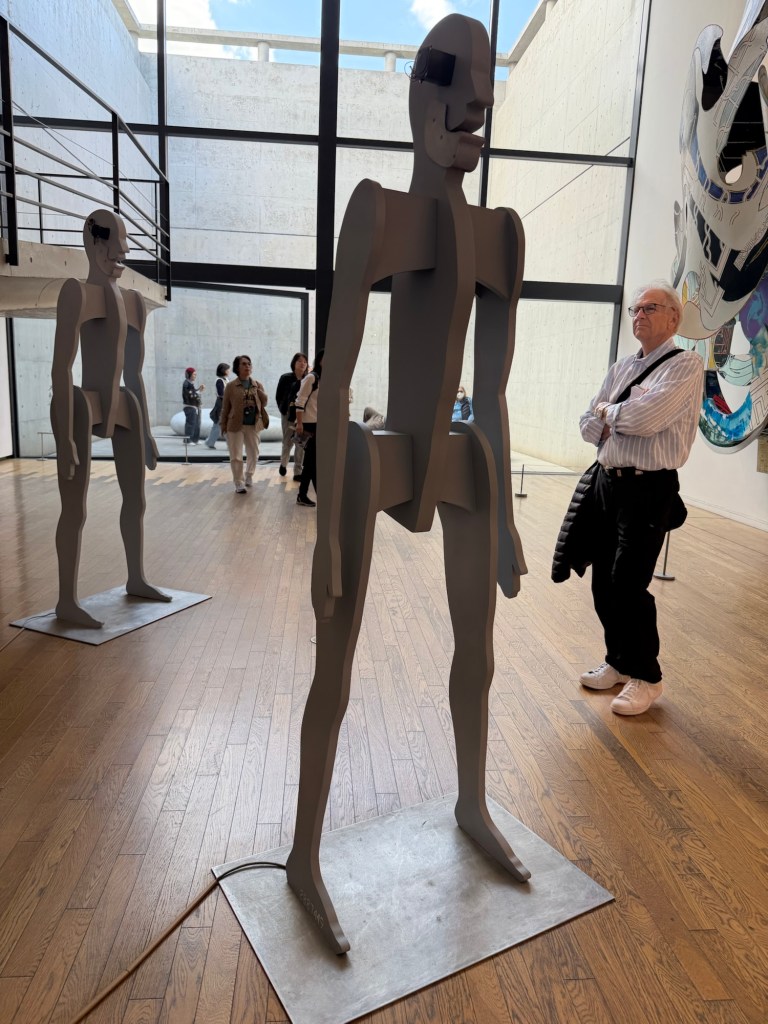
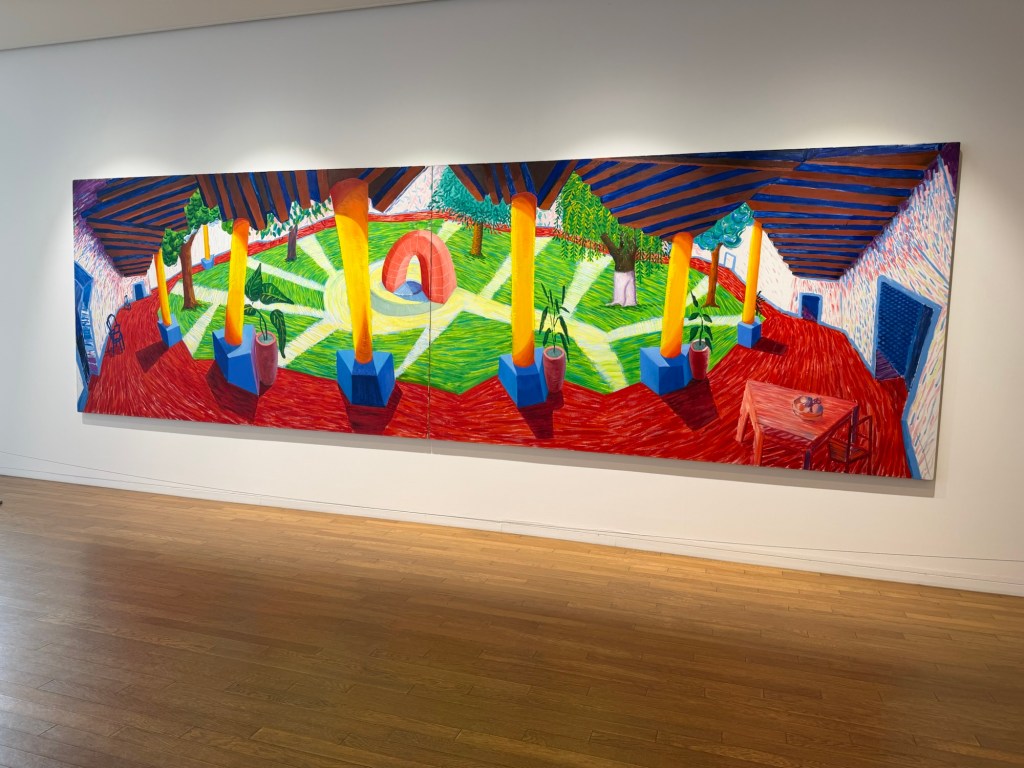

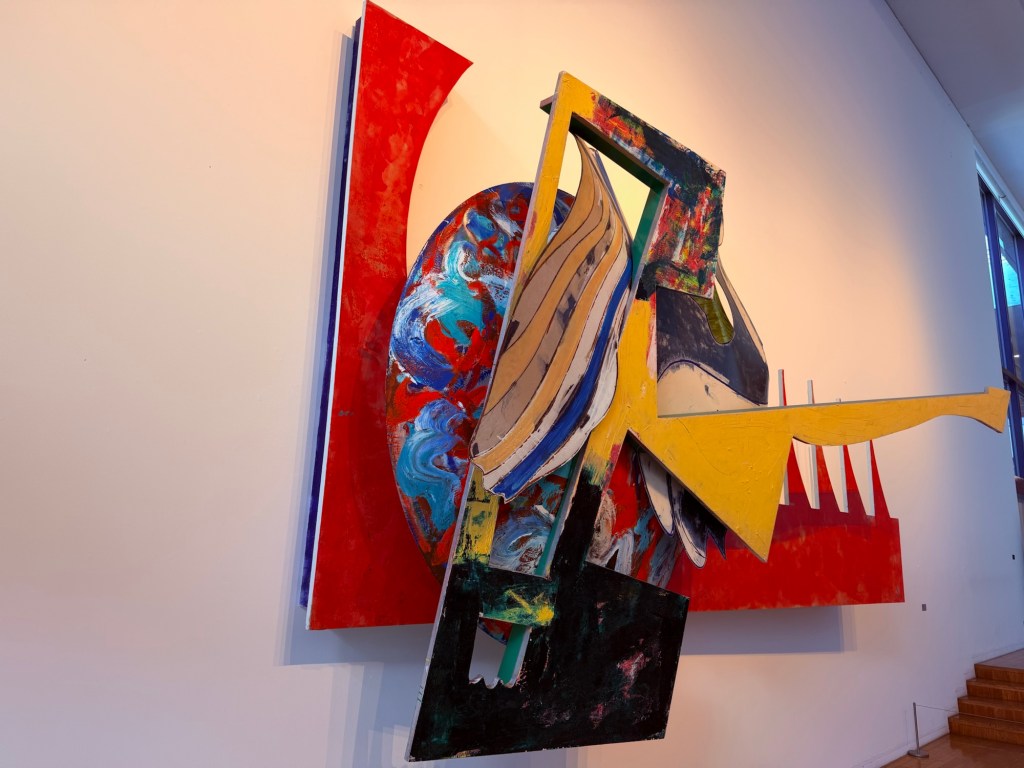
Kumiko told us the place was opened in 1992 and that the word “Benesse” means “to live well”. It was 12 years before the hotel and island began to attract visitors. There are 3000 people living on the island. Many of them work in the Mitsubishi copper refining factory, a portion are in the tourist business and the rest are retired. There is only one town on the island and 3 districts.
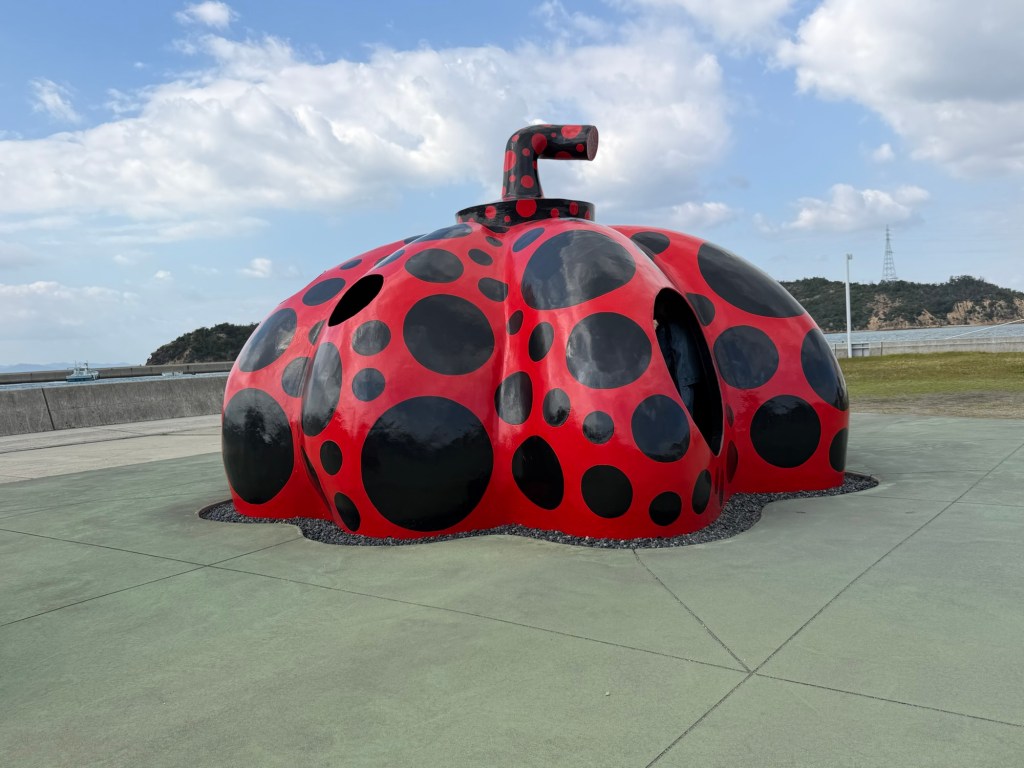

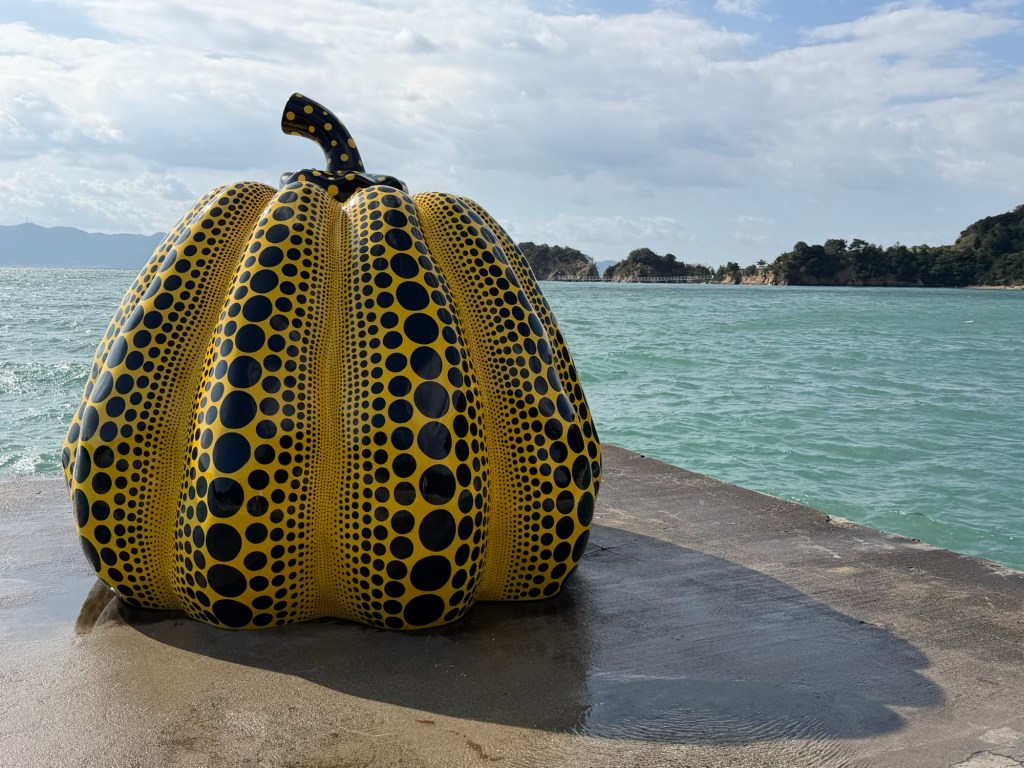
Once in the car we drove to several sights, starting with the iconic yellow and red pumpkins. The yellow one was made by Yayoi Kusama, an avant-garde artist. A bridal couple was at the red pumpkin in a pumpkin colored dress.
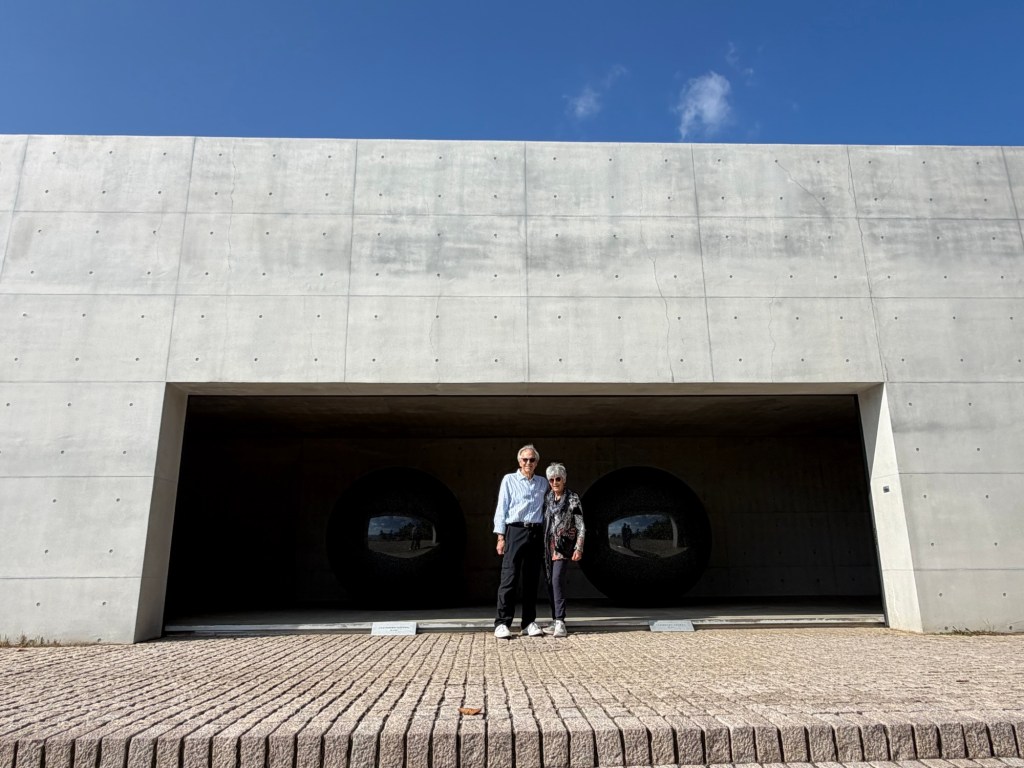
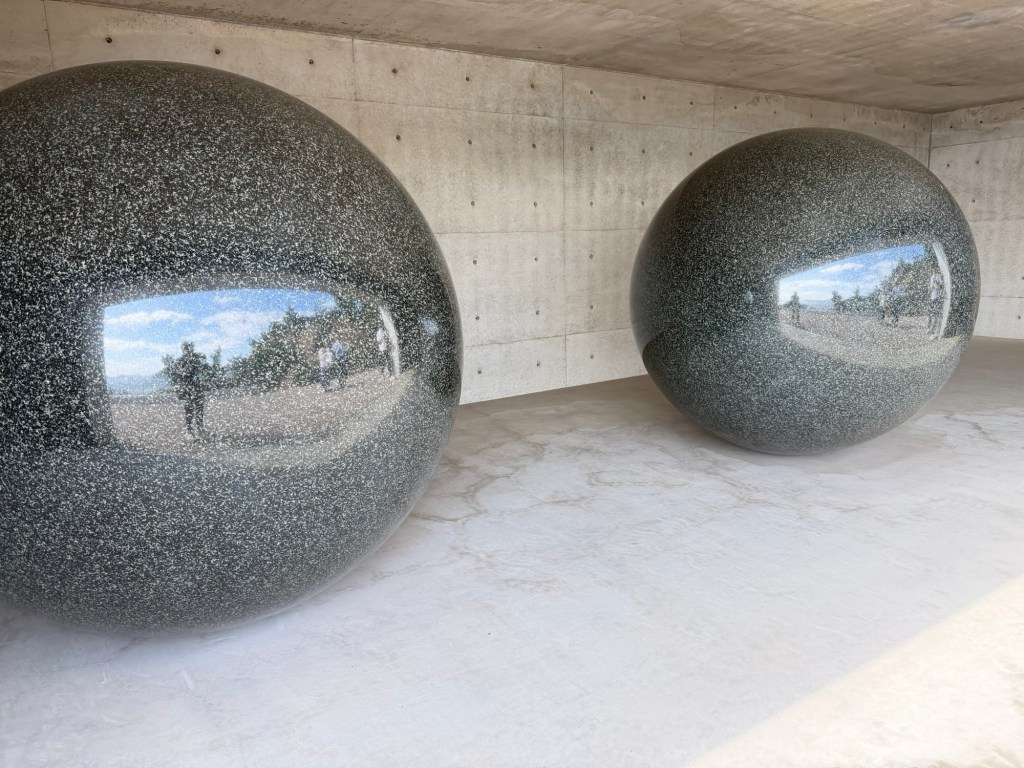
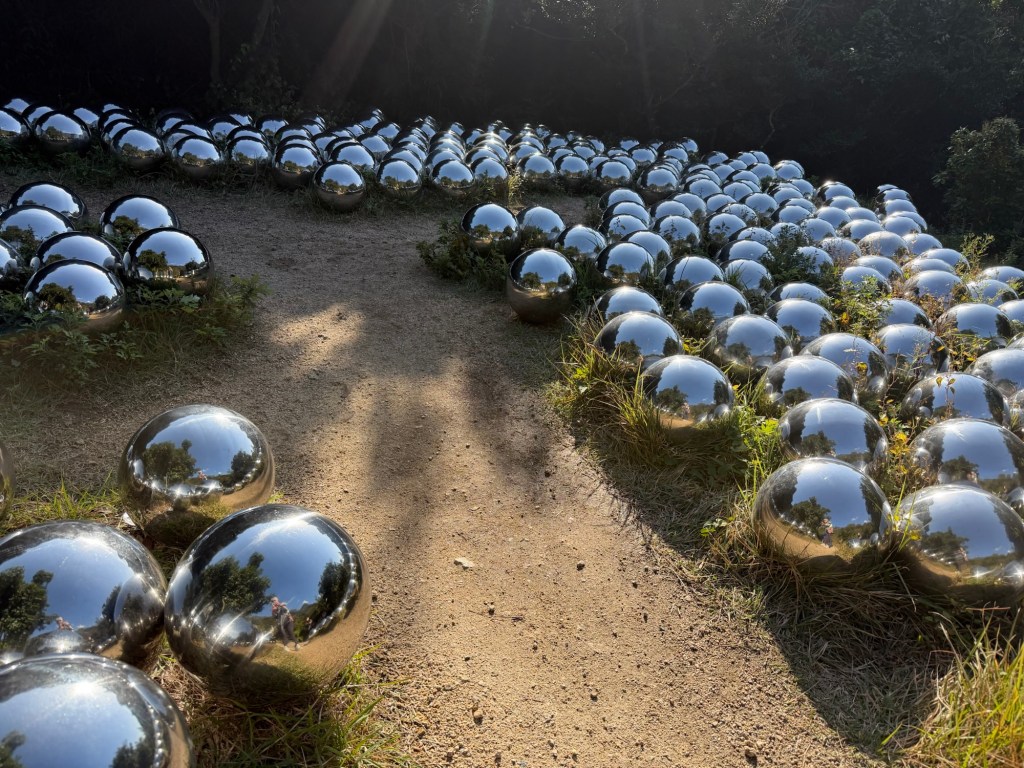
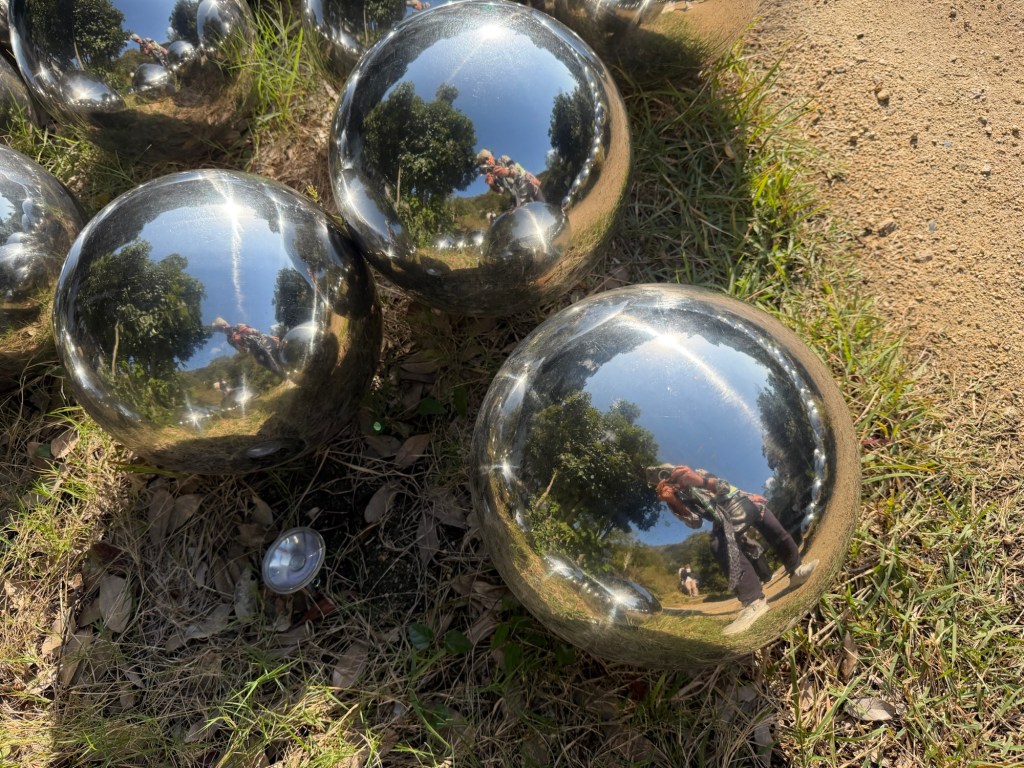
We were fascinated by these perfectly smooth granite balls near the beach.

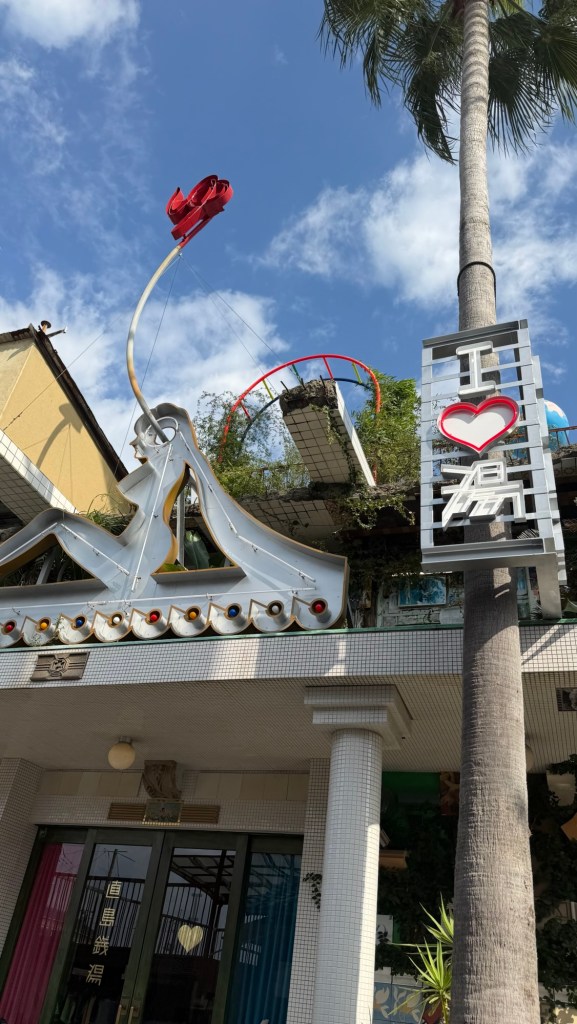
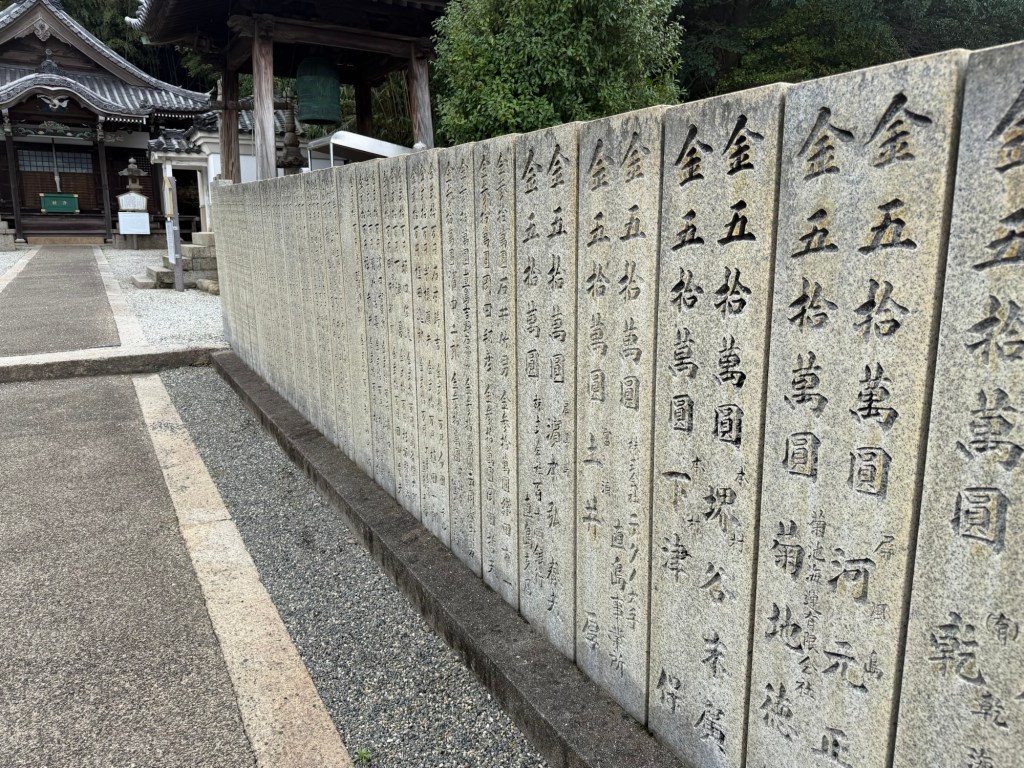
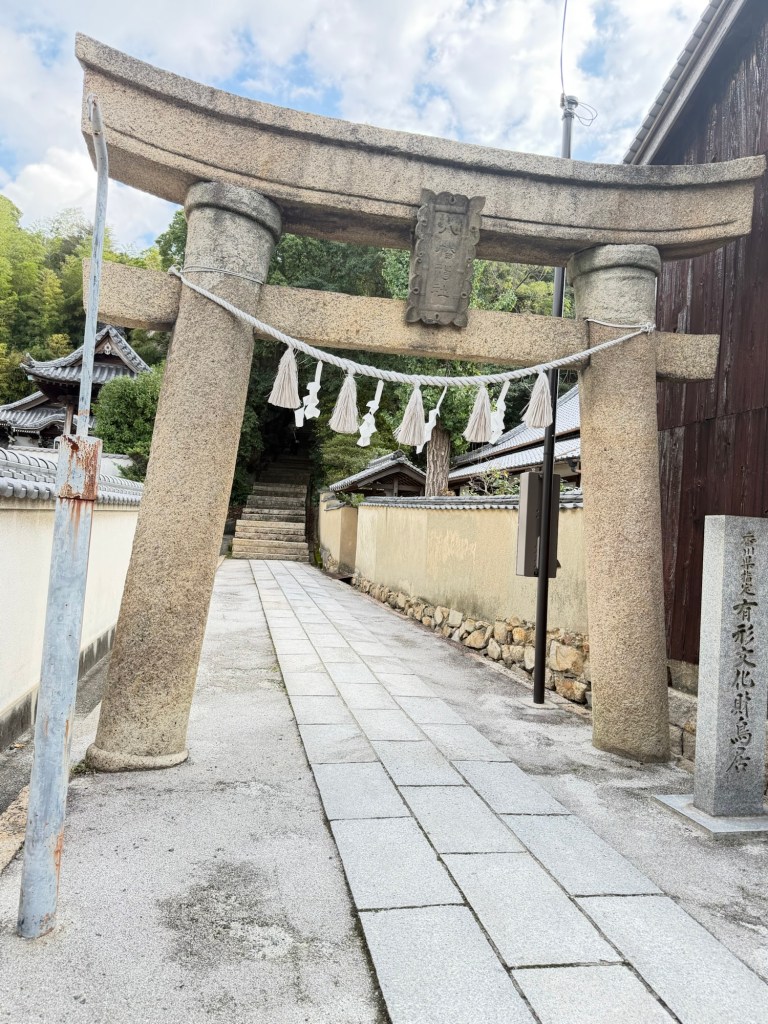
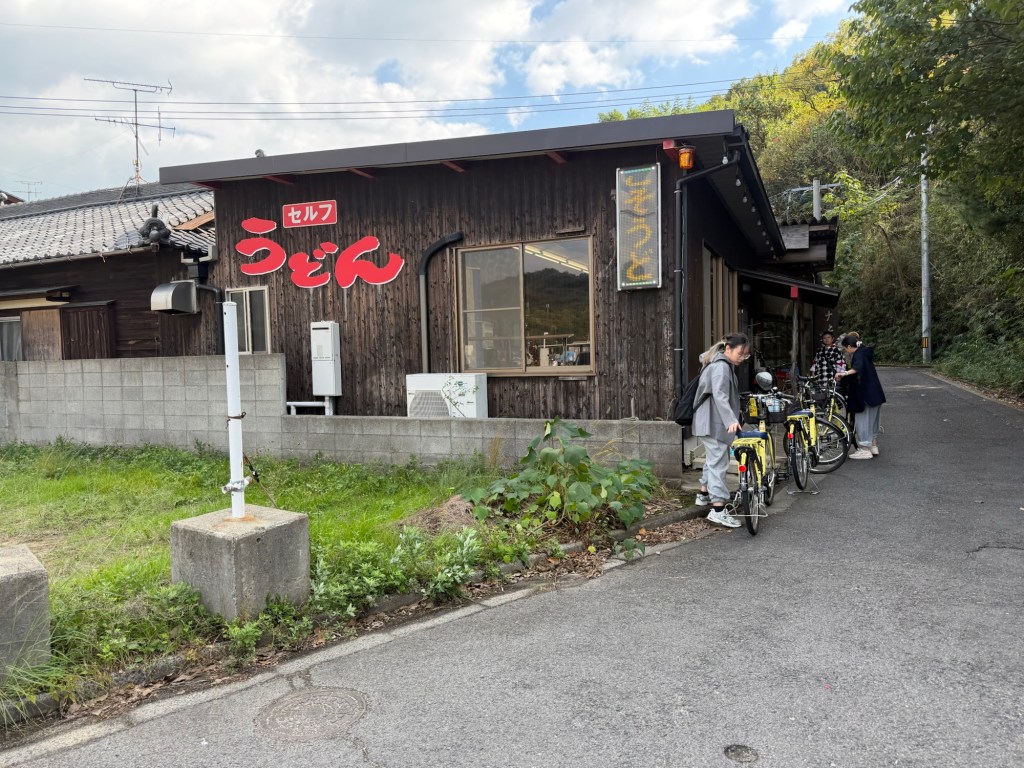
Kumiko suggested we stop for udon noodled as the noodle eatery was nearby and good udon oodles are hard to come by. The place was very lowkey but the noodles were super.
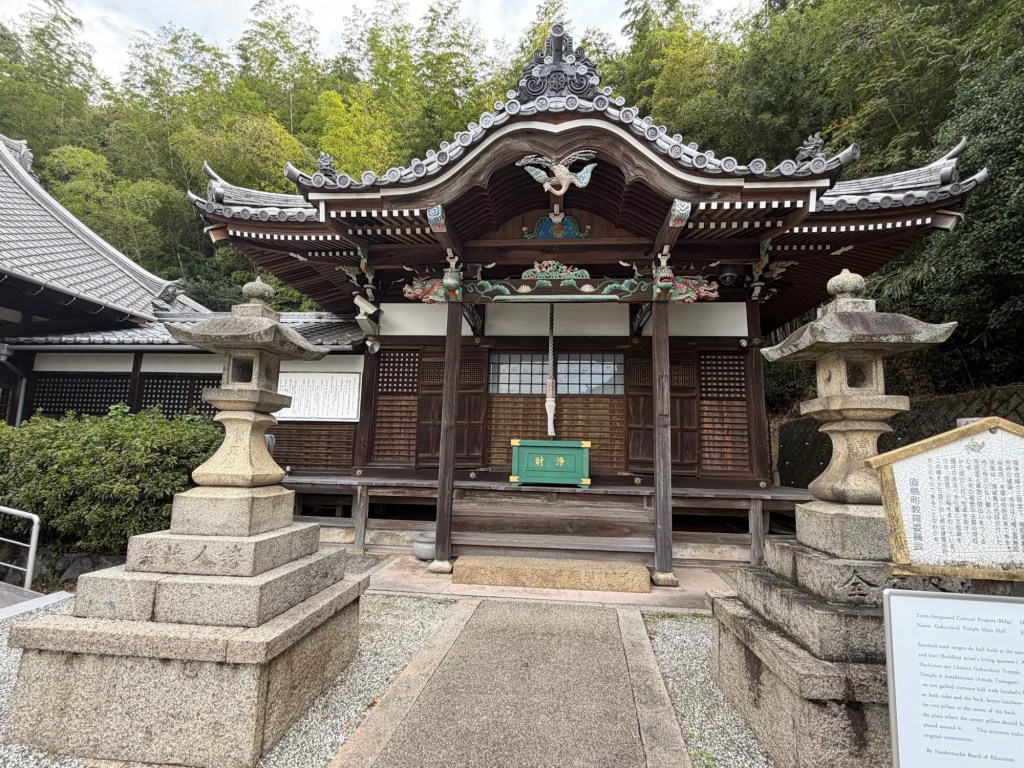
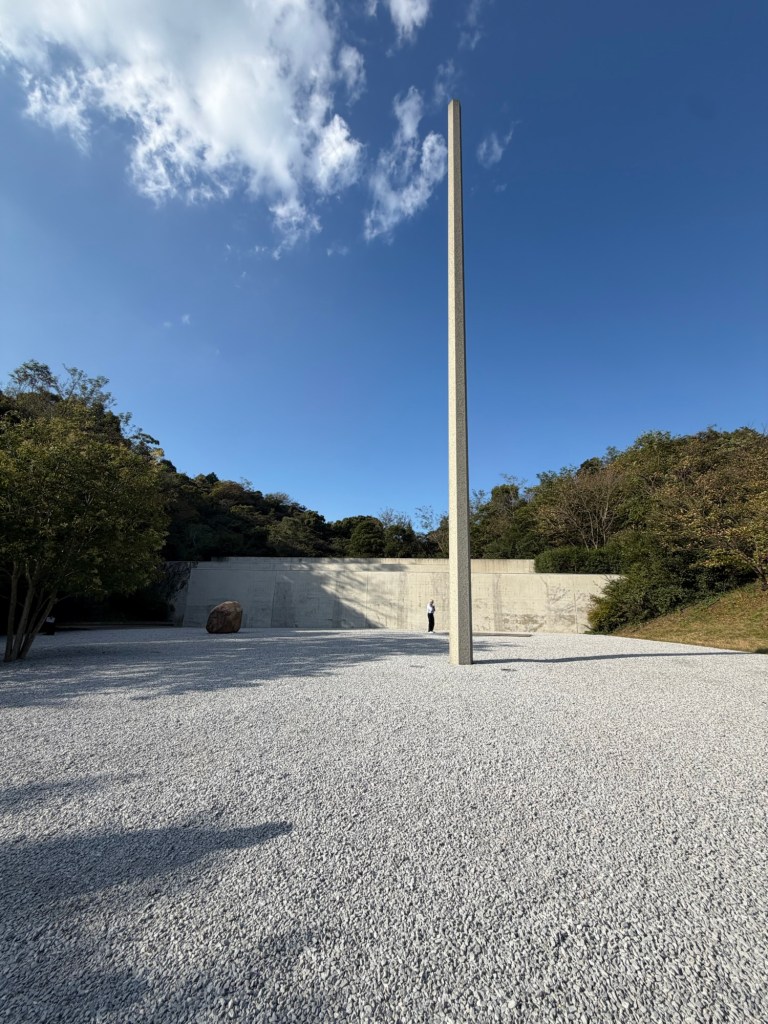
Back on the road we stopped many times and saw many art works from remodeled old houses to museums by a variety of artists, with Tadao Ando coming up frequently as he designed several museums on the island.
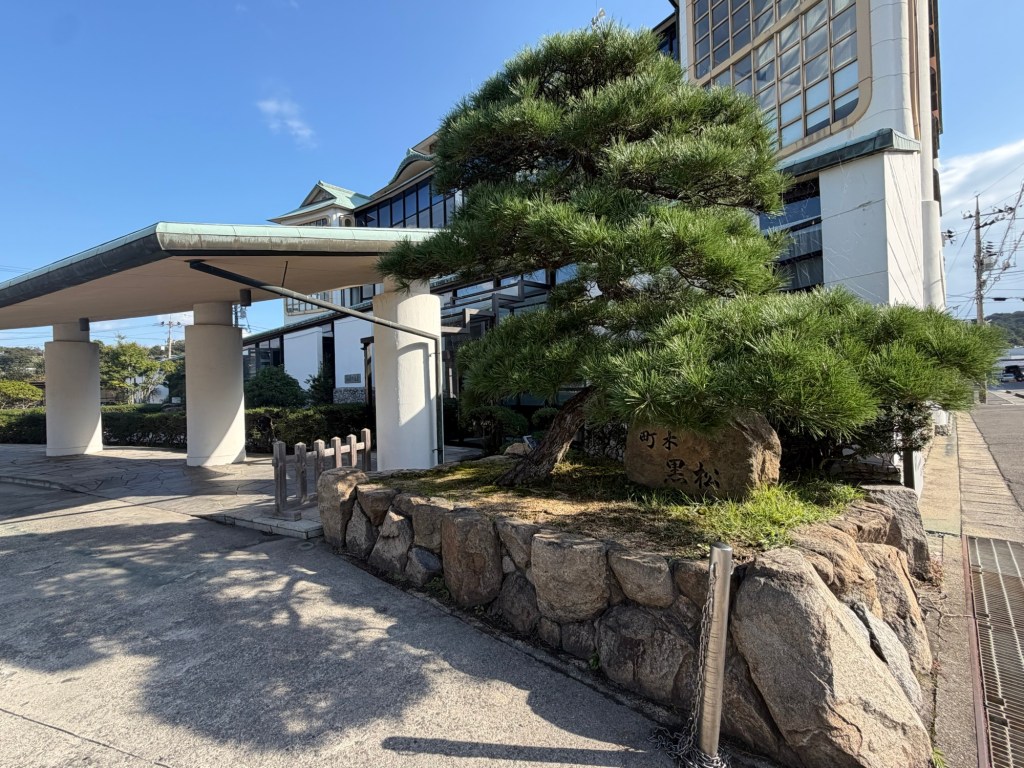
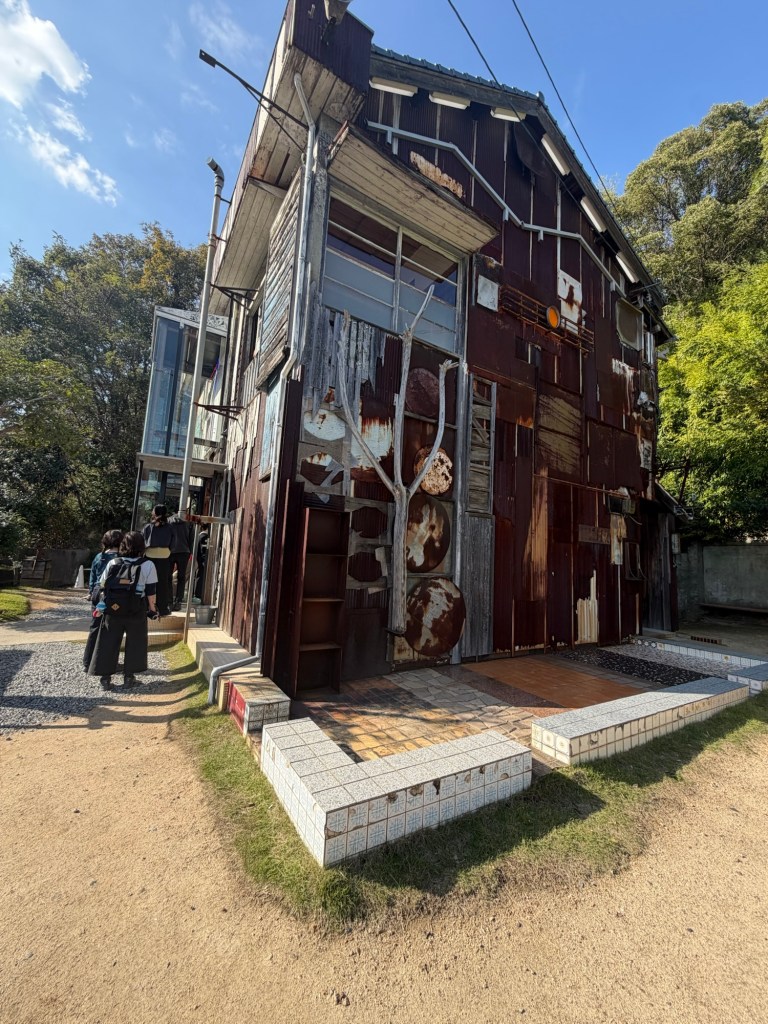
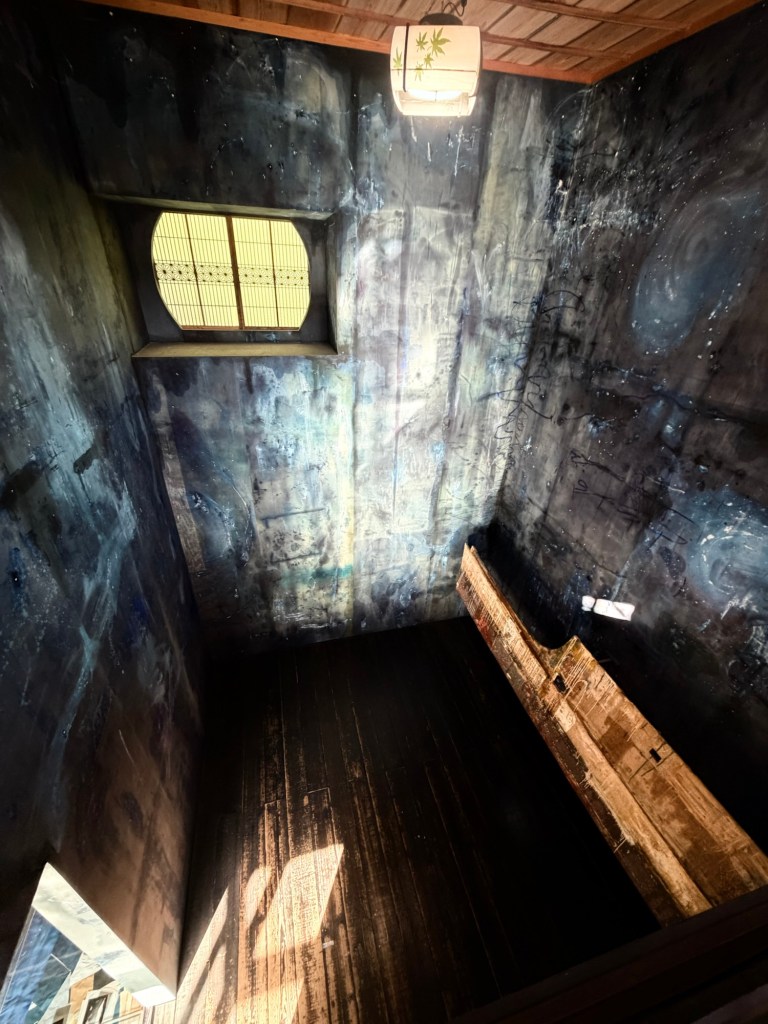
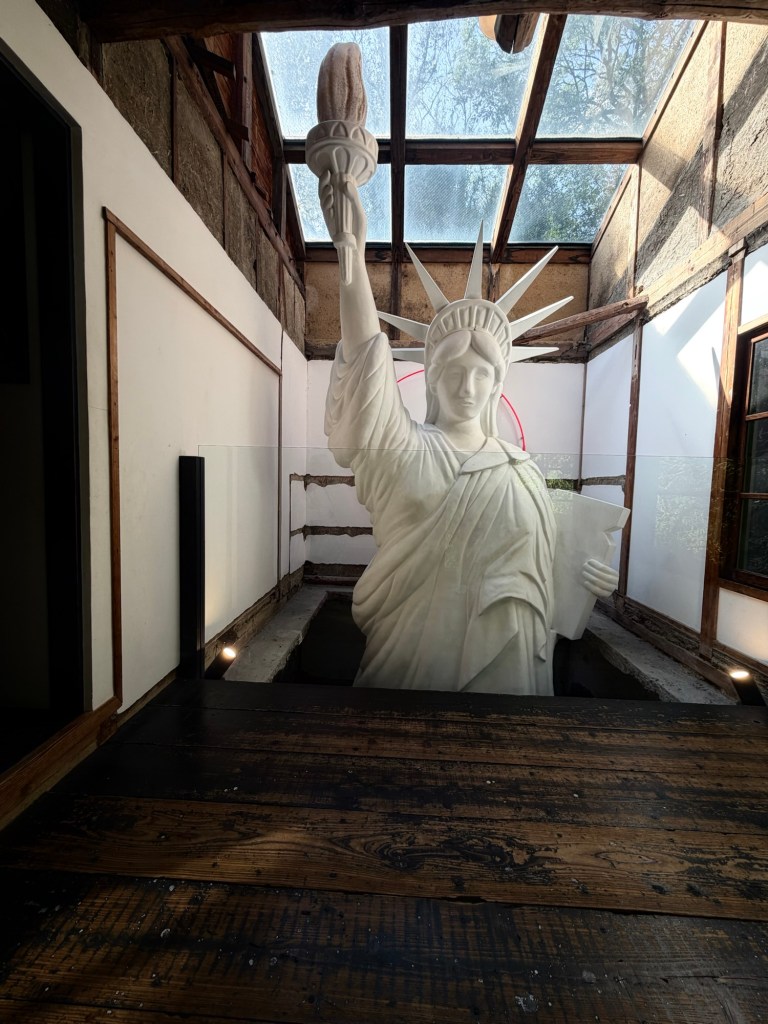
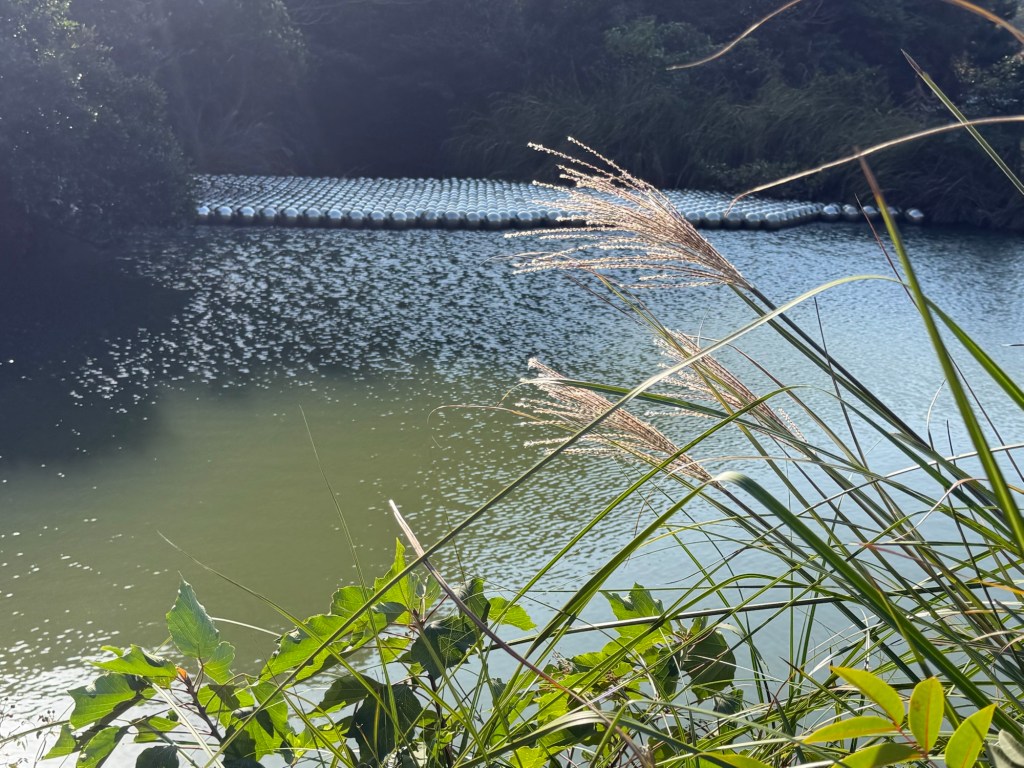

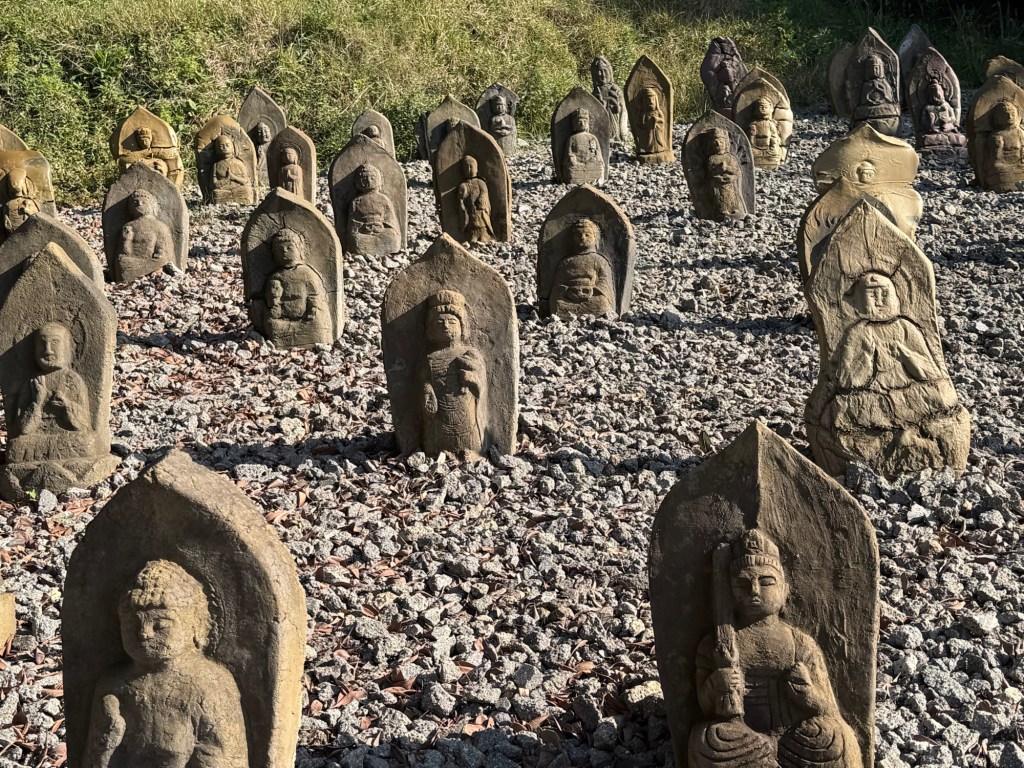
The Slag Buddha 88 by Ysuyoshi Ozawa 2006
Replicas of the original 88 Buddhas on the main island. These make it possible for locals to worship each of the important Buddhas without having to make a major pilgrimage.
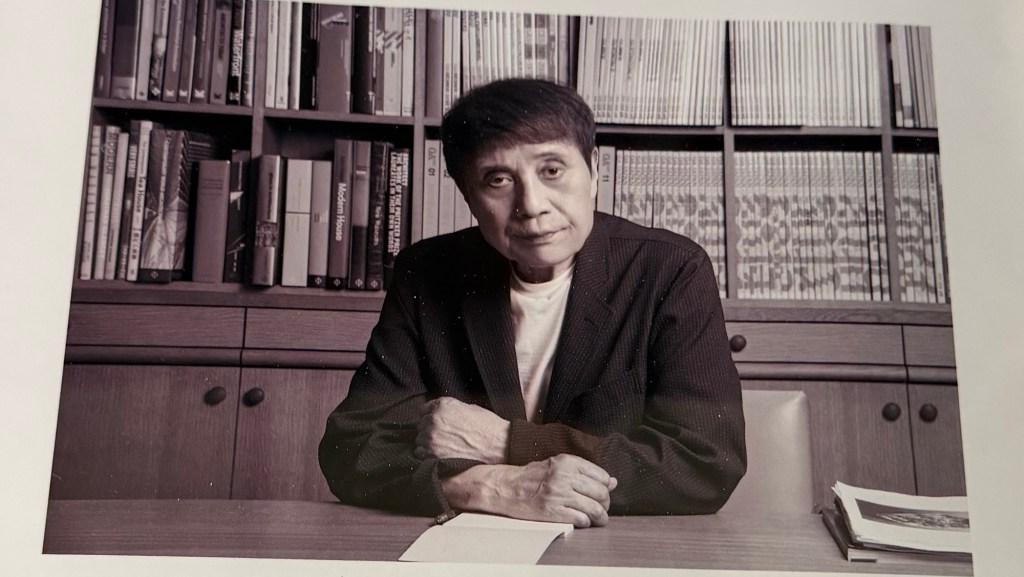
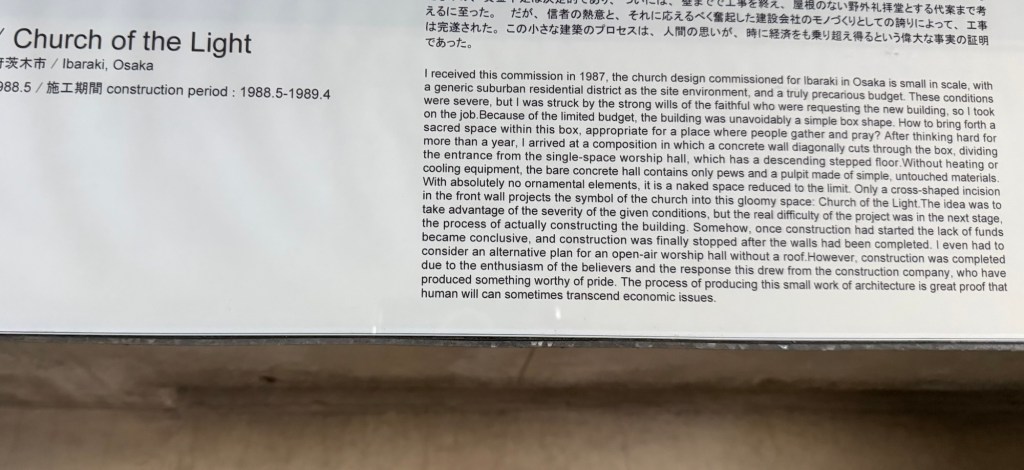
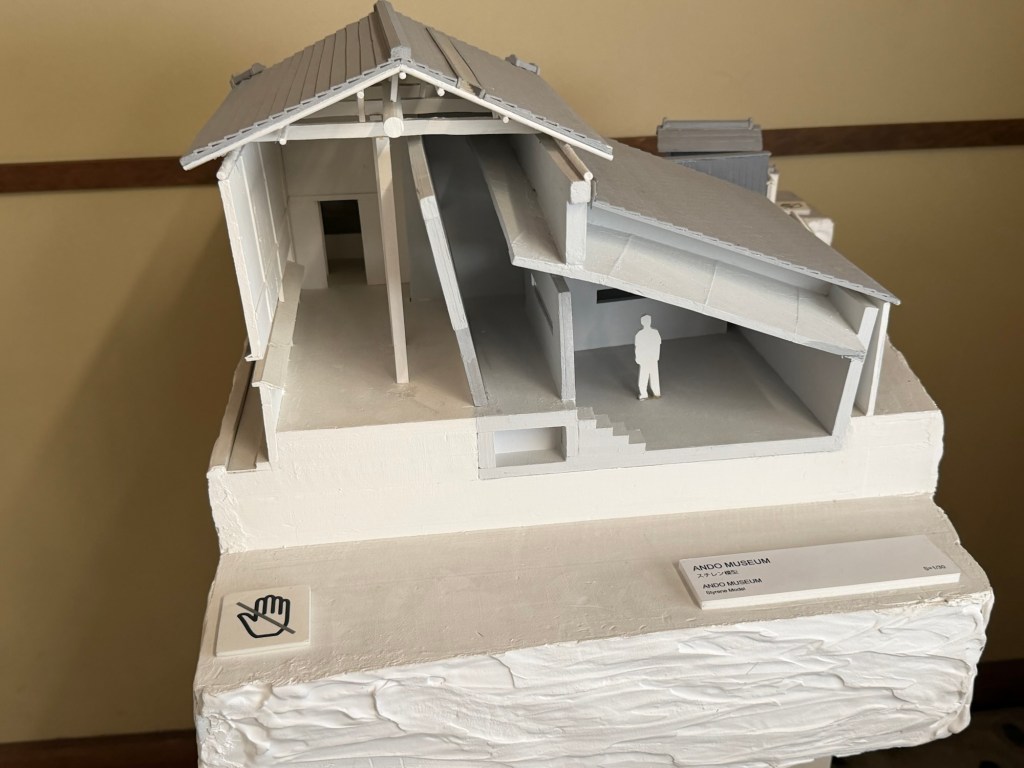
Tadao Ando a self taught regional architect, known for his unique integration of architecture and landscape, began his three decade relationship with Naoshima Island when he became the supervisor of an international children’s summer camp in 1989. He then realized an idea to join a museum with a lodging facility with the completion of Benessa House in 1992 and the Benessa House Oval, where we stayed, in 1995. Ando’s art projects have continued to play a central role in the development of Naoshima’s Art Project. He completed the Chichu Art Museum in 2004, the Lee Ufan Museum in 2010, Ando Museum in 2013, the Vallery Gallery in 2020 and the Naoshima New Museum of Art in 2025. His buildings appear to have emerged organically one by one and demonstrate his signature spaces of exposed concrete. His spaces exhibit a juxtaposition of the contrasting elements of past and present, old wood and new concrete, light and dark. He was awarded the Pritzker Prize for Architecture in 1995. His efforts have brought other artists to the island.
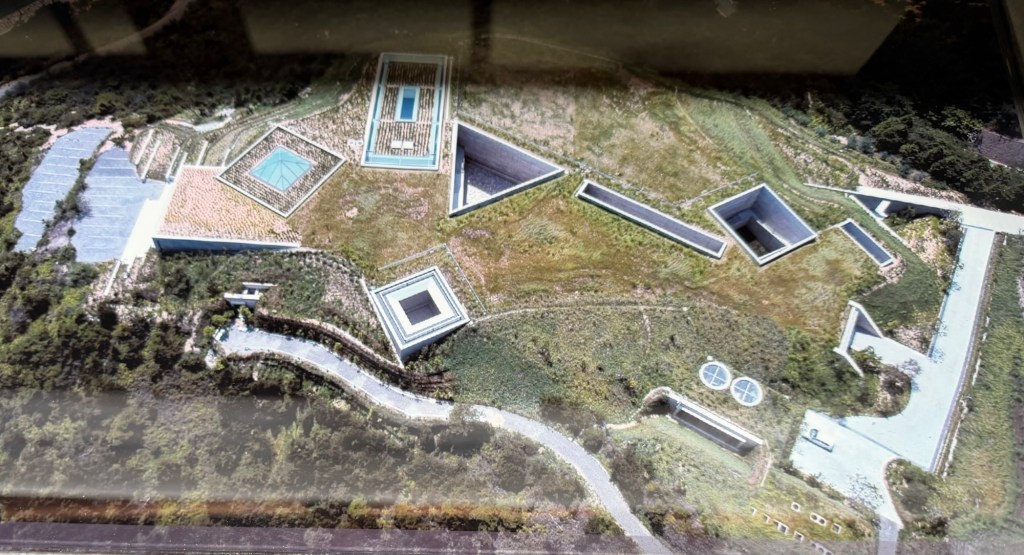
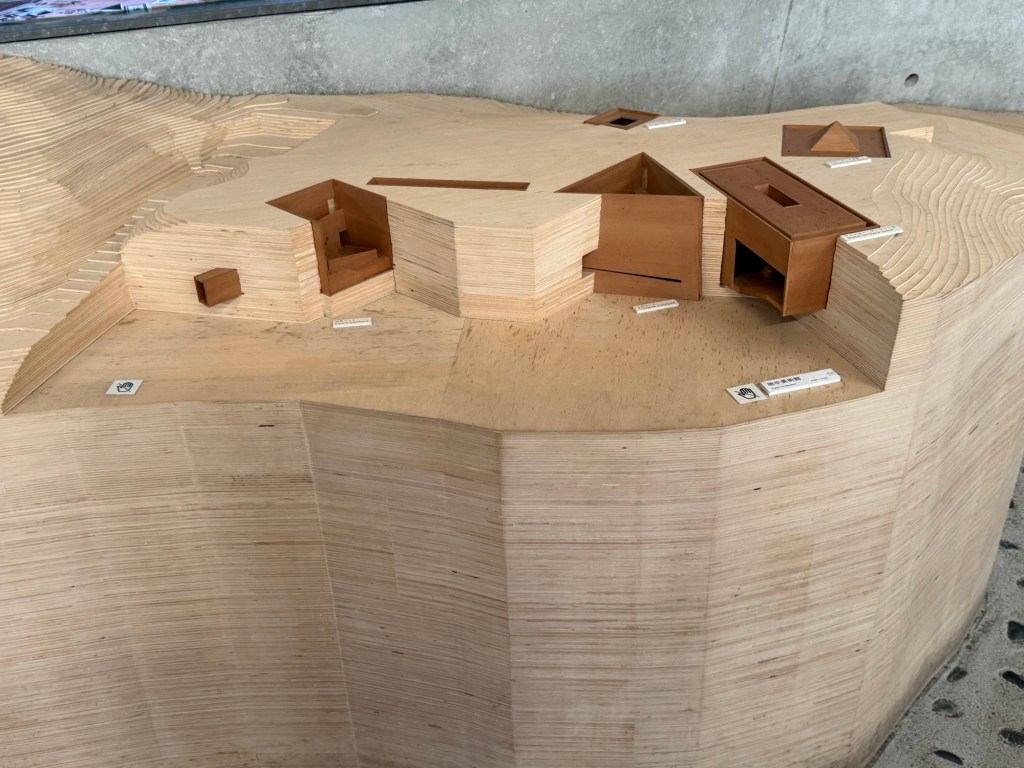
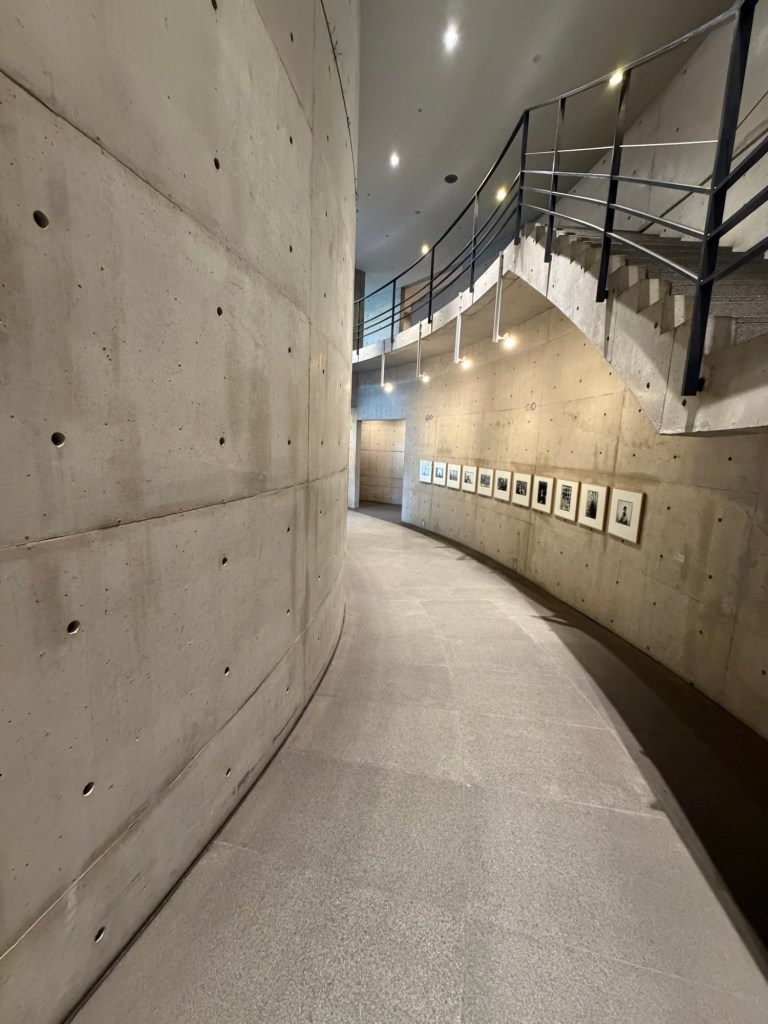
The Benessa House plan includes a large triangular shaped space underground with no ceiling, a square room with a square opening to the sky that we used on an Open Sky night program created by James Turrell. Passage from one space to another is accomplished through underground hallways.
After touring all of the places and spaces, it was time for the “Open Sky Night Program”. There were 25 of us sitting around a square space and staring up through a square hole into the sky. As the colors in the sky, in my perception. Mark saw it very differently when we shared our experiences changed gradually, so did the colors in the space. Colors from deep purple, blue, rose and more from black to almost white by the end of our 40 minute experience in the space. Everyone had been very silent in awe. We all filed out quietly.
Mark and I had a Japanese dinner at Benesse House and then went to our room in the oval and bed.
Saturday, November 7, 2026
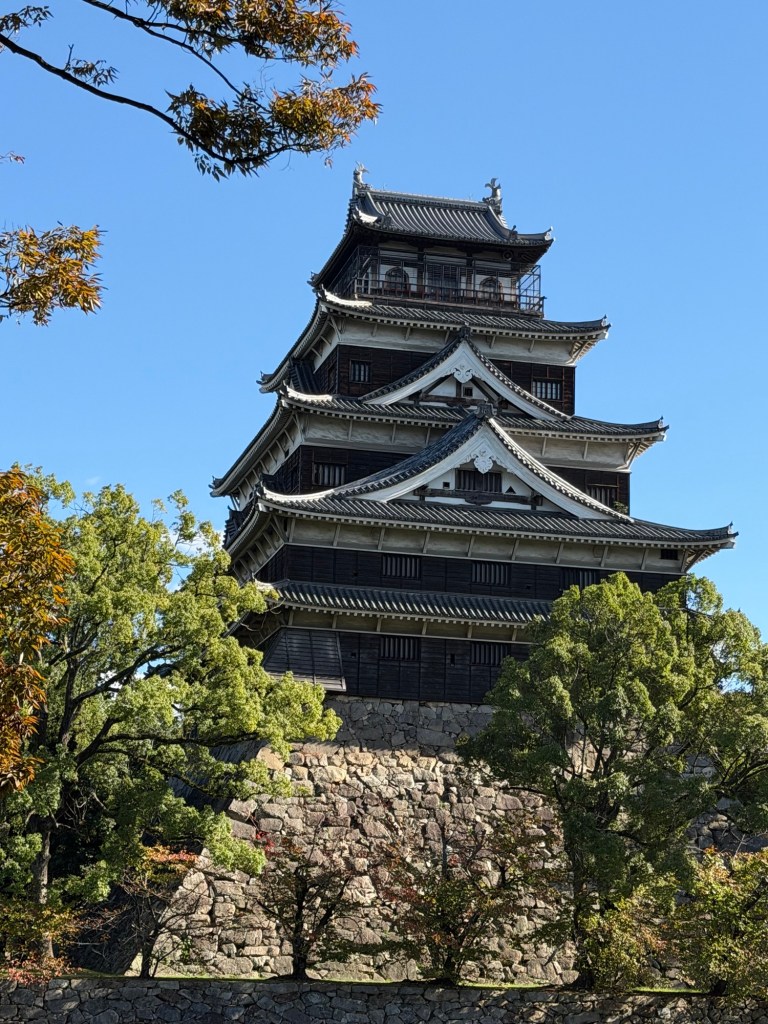
We leave Naoshima Island and take a bullet train to Hiroshima. Arrive in Hiroshima shortly after noon, meet our new guide, Mariko. The first thing we did was head down town to see a copy of the 400 year old castle, built in 1591 and rebuilt in 1948. The copy was not well built and is now in such disrepair that we can only see it from a distance. The city hopes to rebuild it again one day as it is the most important symbol of Hiroshima. It is also known as Carp Castle as many Koi live in rivers nearby.

We walked a short distance to the Hypocenter of the bomb where a permanent sign marks the spot.
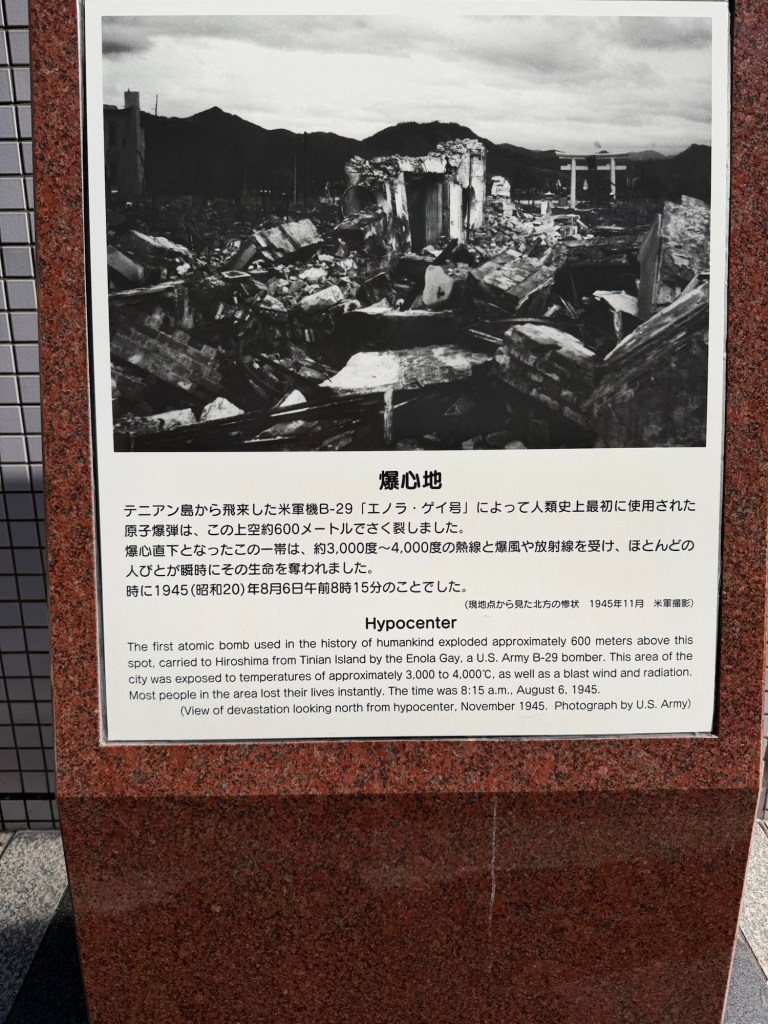
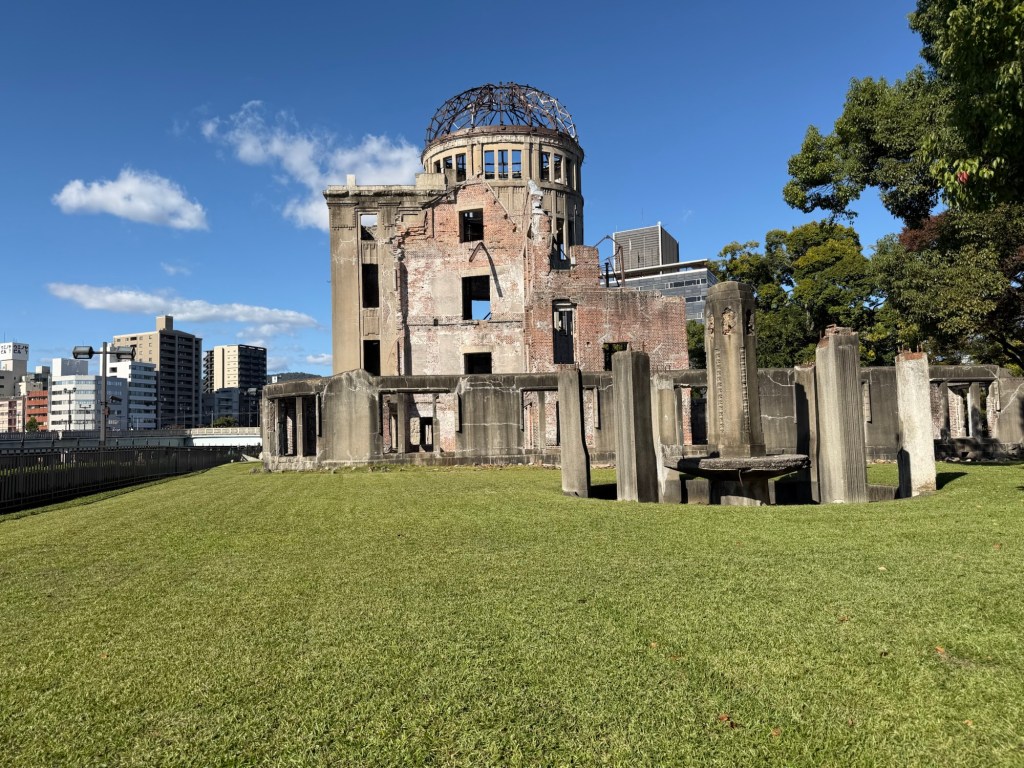
As the blast occurred 2000 feet above the ground, there is no large hole. In the adjacent Peace Memorial Park are the remains of a building that is kept in tact as a reminder of what happened. It was the Hiroshima Prefectural Industrial Promotion hall and is now known as the as the Atomic Bomb Dome. It became a UNESCO site in 1996.
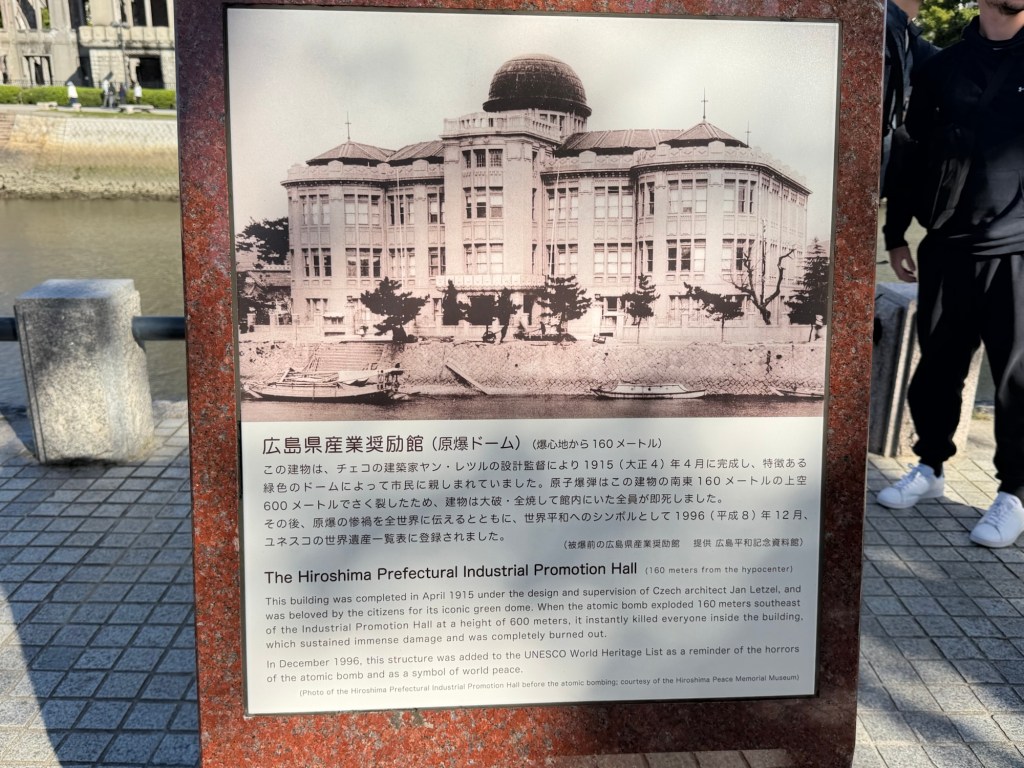
A total of 140,000 people died by the end of 1945. Every year on August 6, the names of the dead are read. This year, according to our guide, 353,630 names were read including everyone who had died from bomb effects. The number includes US POW’s who were in Hiroshima on August 6, 1945.
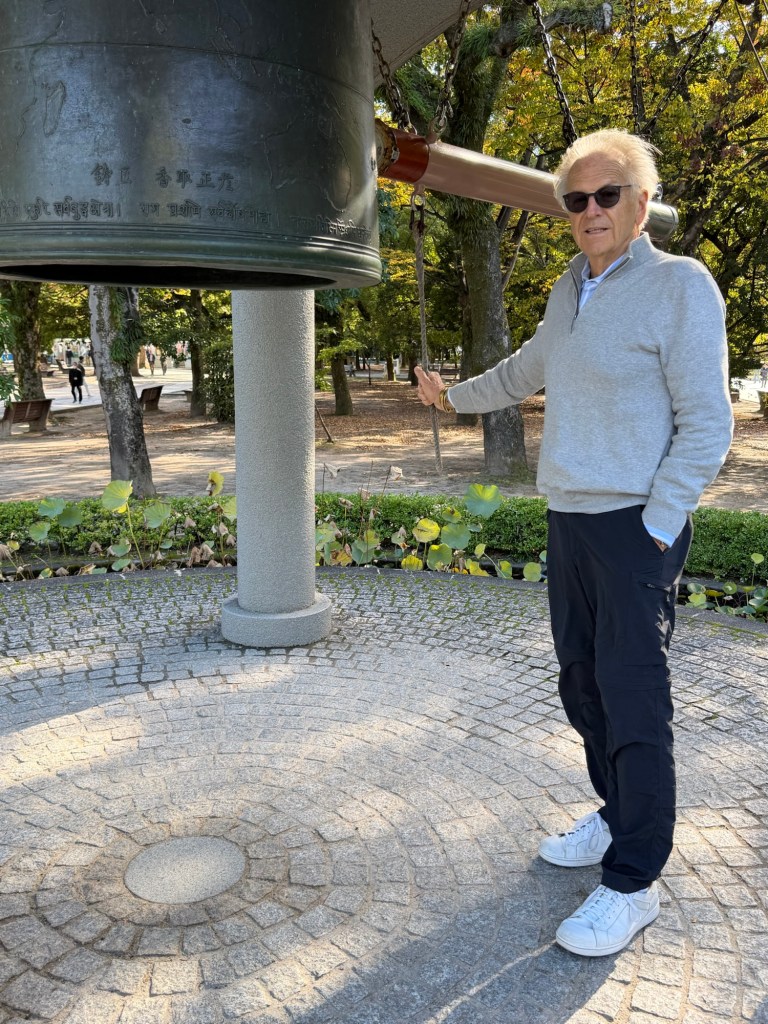
A Peace Bell was built in 1964 and a Children’s Peace Monument was erected in 1958 for all children who have died as a result of the bomb.

Then we walked through the Hiroshima Museum. It was very crowded and nearly impossible to get close to the photos and stories on the many walls. What I was able to read and see made me even more sad than I expected to be. There were so many names and faces to go along with the bodies. I decided not to include any of these photos. There was one image that was interesting and possible new to you also.
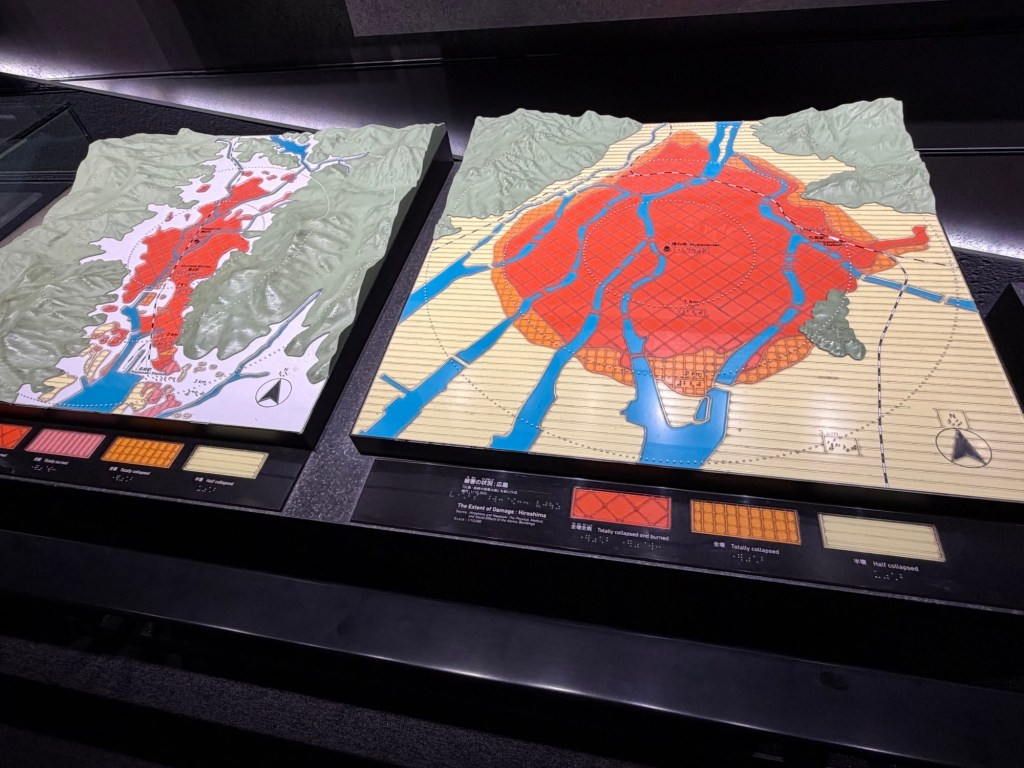
Hiroshima is flat so the bomb effects spread out a large distance. Nagasaki is surrounded by high hills and the bomb effect contained. Hiroshima deaths that day were 90-100 thousand. Nagasaki deaths that day were 40-70 thousand. By the end of the year the death toll had risen significantly.
Once we left the museum we could see the huge amount of building that has gone on since the war, all new and modern. We were content to go to our hotel on the outskirts of the city, eat our reserved French dinner and go to bed. Our next day is a day off. We plan to do very little and chill.