
Wednesday, June 3, 2026
We landed at Stockholm at 11am and were greeted by our guide, Gabriella. Instead of going to the hotel we drove directly to the village of Uppsala to see the cathedral and library there as Gabriella thought they were important.
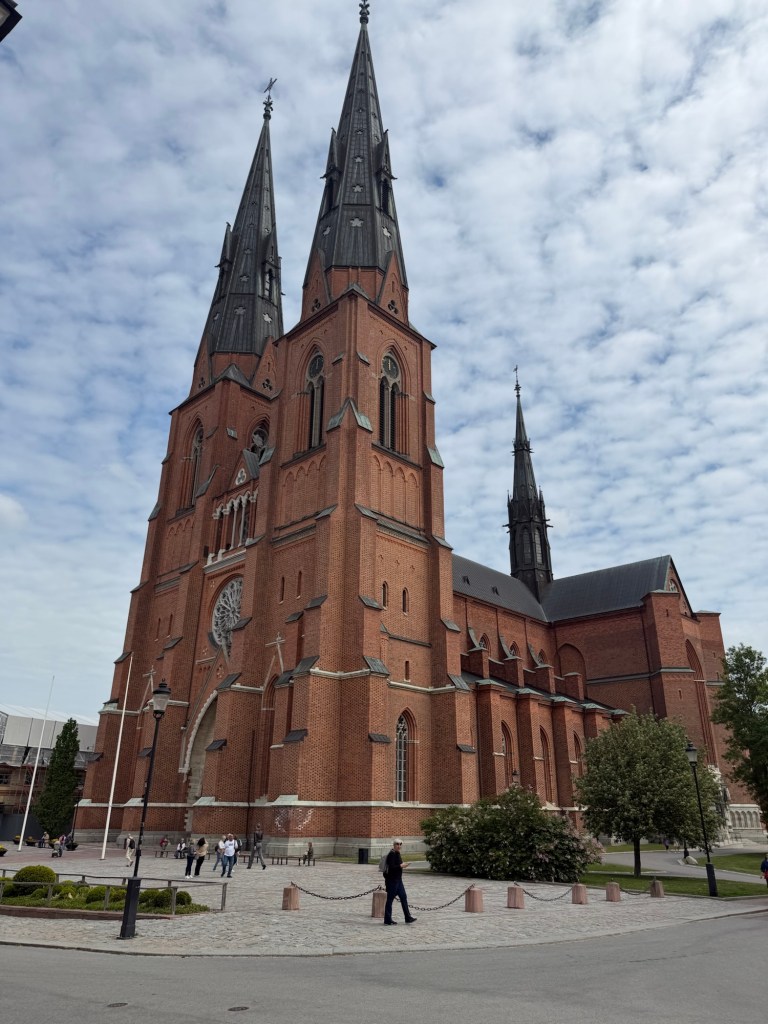
The cathedral was started in 1260 and finished in 1435. The previous church that had held the shrine of the famous king, Saint Erik had burned to the ground except for Erik’s shrine. He had been a good ruler of the people. Unfortunately he was decapitated shortly after a mass he was attending, when a battle against the Danes broke out.

A new church in a new location with a new name, Uppsala, was built and Erik’s shrine was relocated there. While in the cathedral we ran into a group of Sisters of Saint Bridget in habits. They spoke fluent English and we had a fun conversation with them.
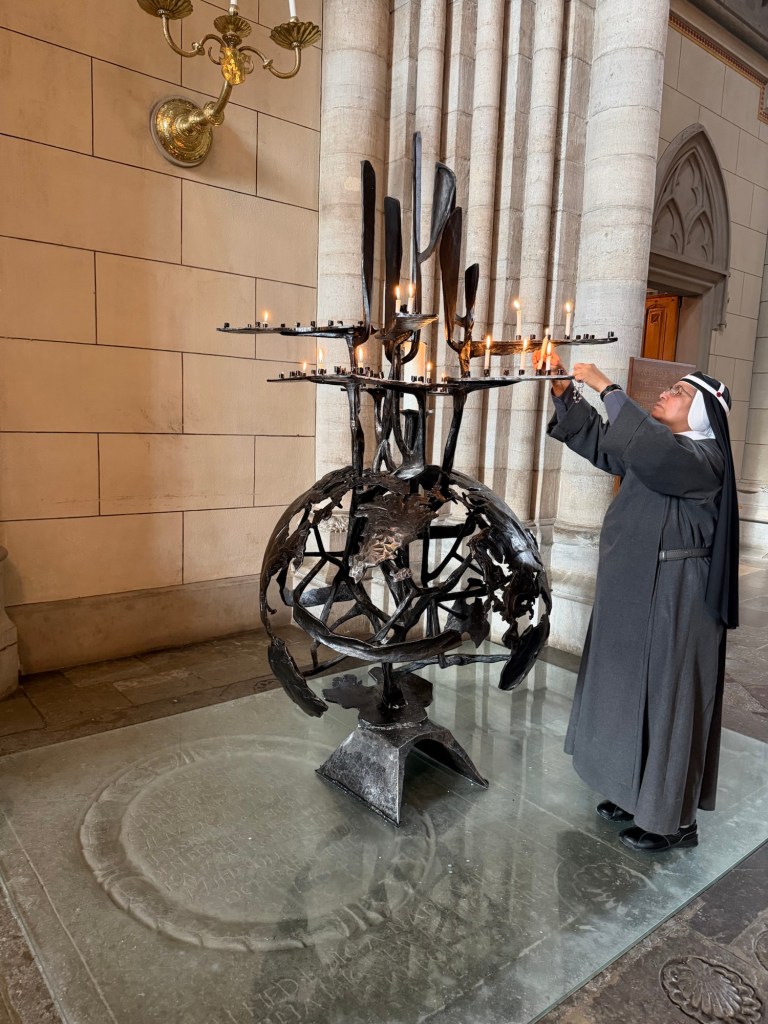

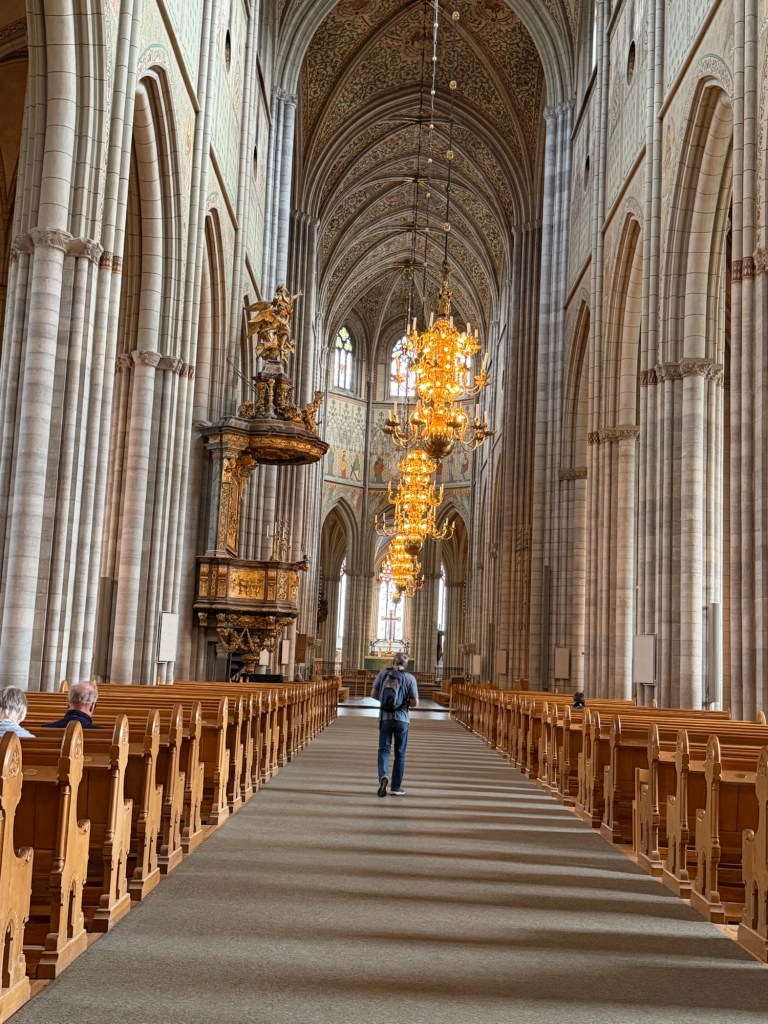


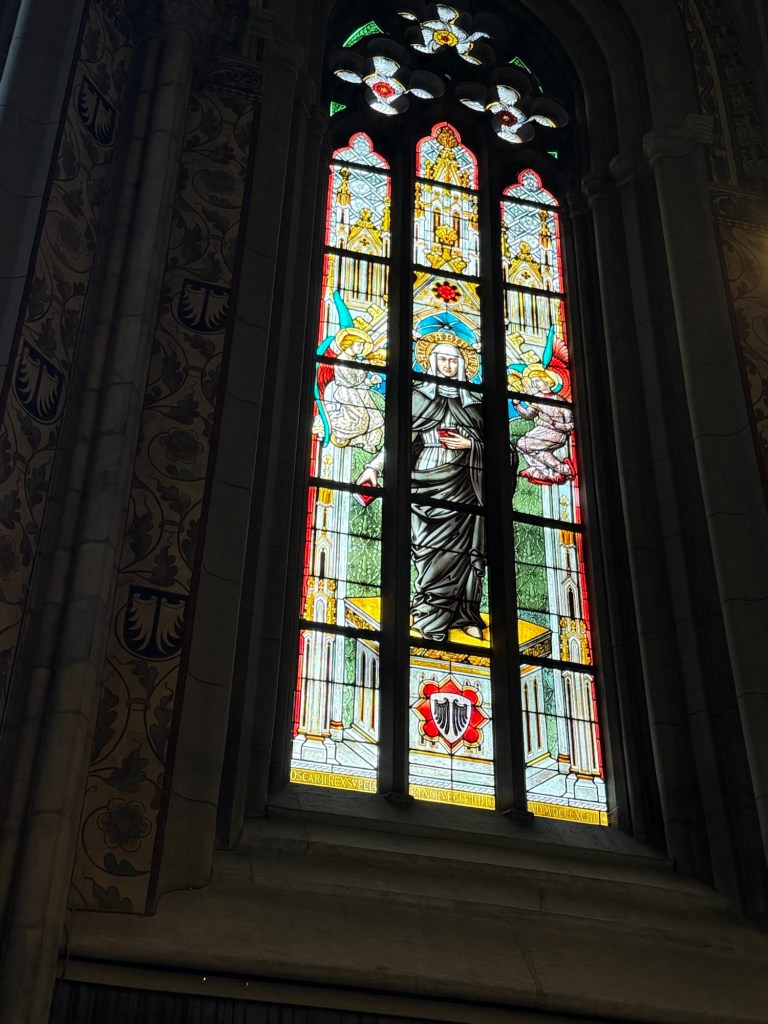


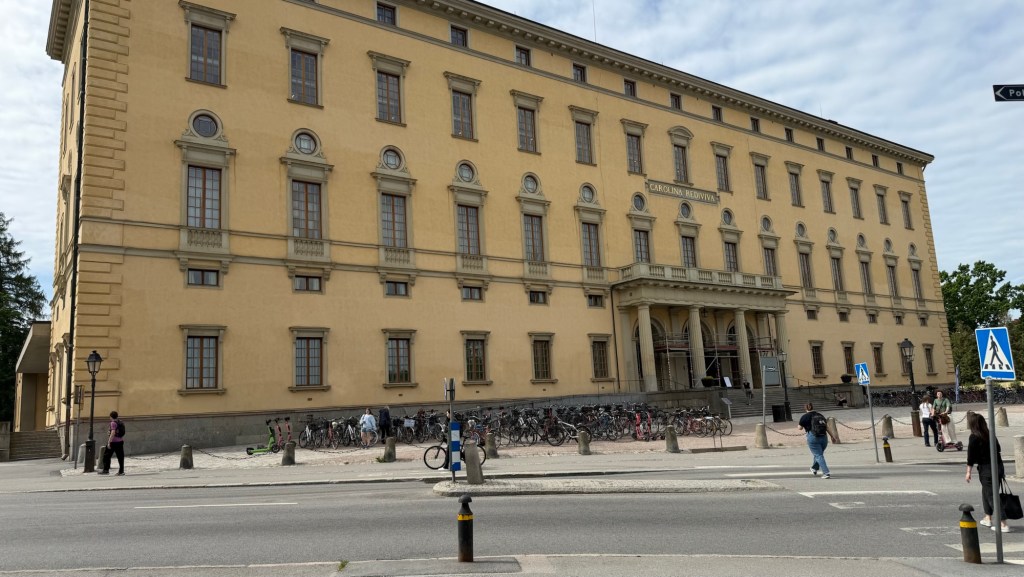
From there we walked to the Uppsala library, which is part of the First University in Catholic Sweden, dating from 1477.


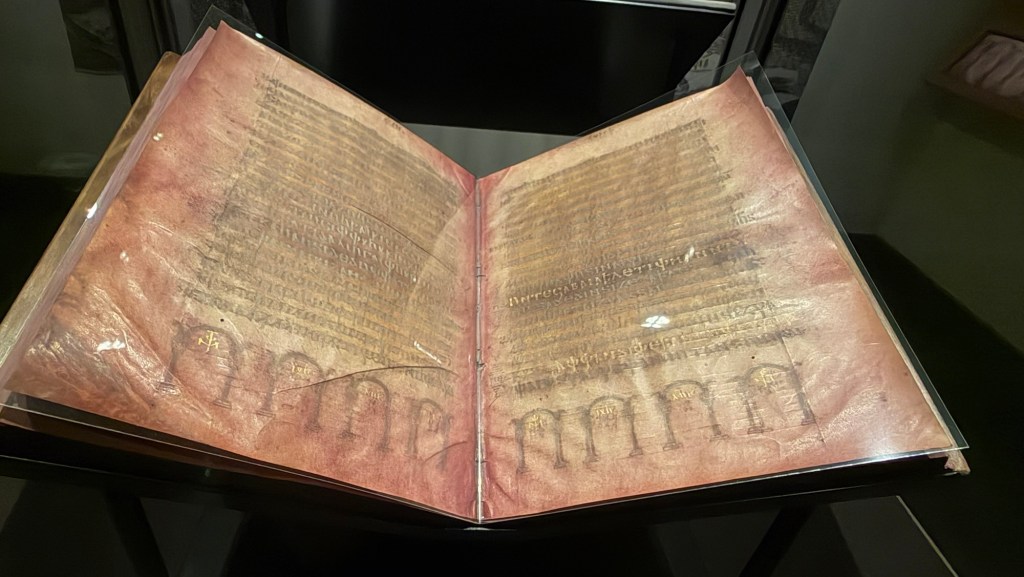

In the library we saw pages from what is known as the silver bible, written in the Gothic language, which was created by bishop Wulfila in the 6th century. It was written in very fine silver ink on light purple parchment.
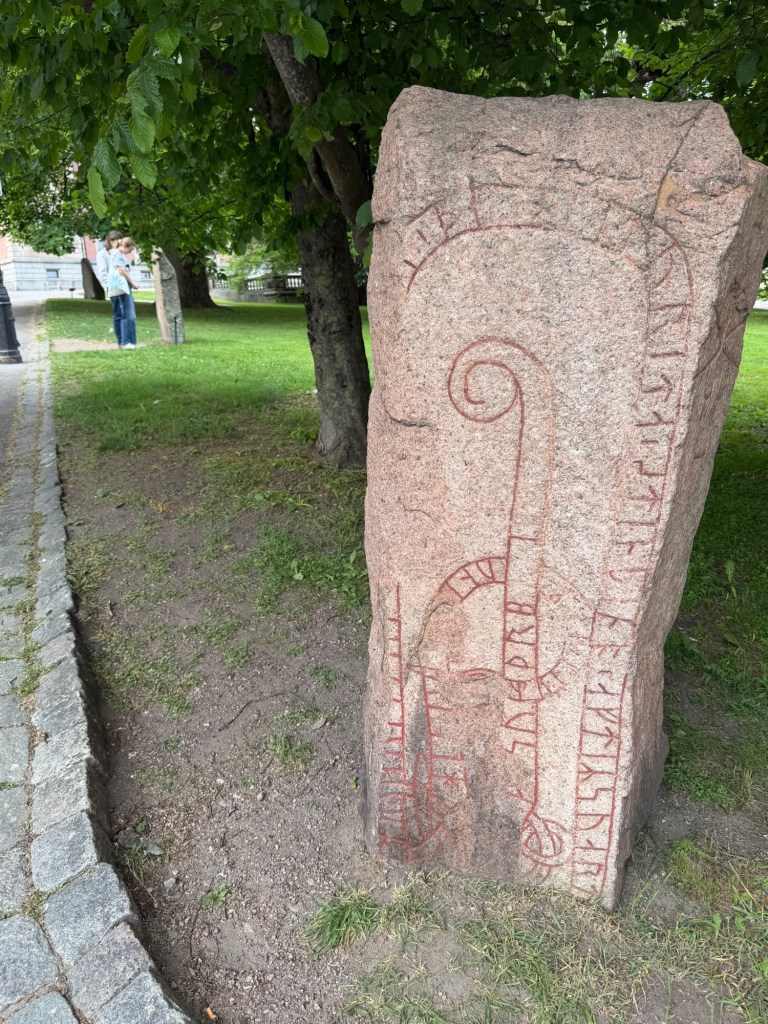
Outside the library we saw several large Rune stones, which are stones that show an ancient language written on the stones, that were used mostly by the Vikings.
Near the rune stones was a building that had a structure built on top of it in 1600’s that was an anatomic theater used by teachers to show students autopsies while they were looking down from a round wall.

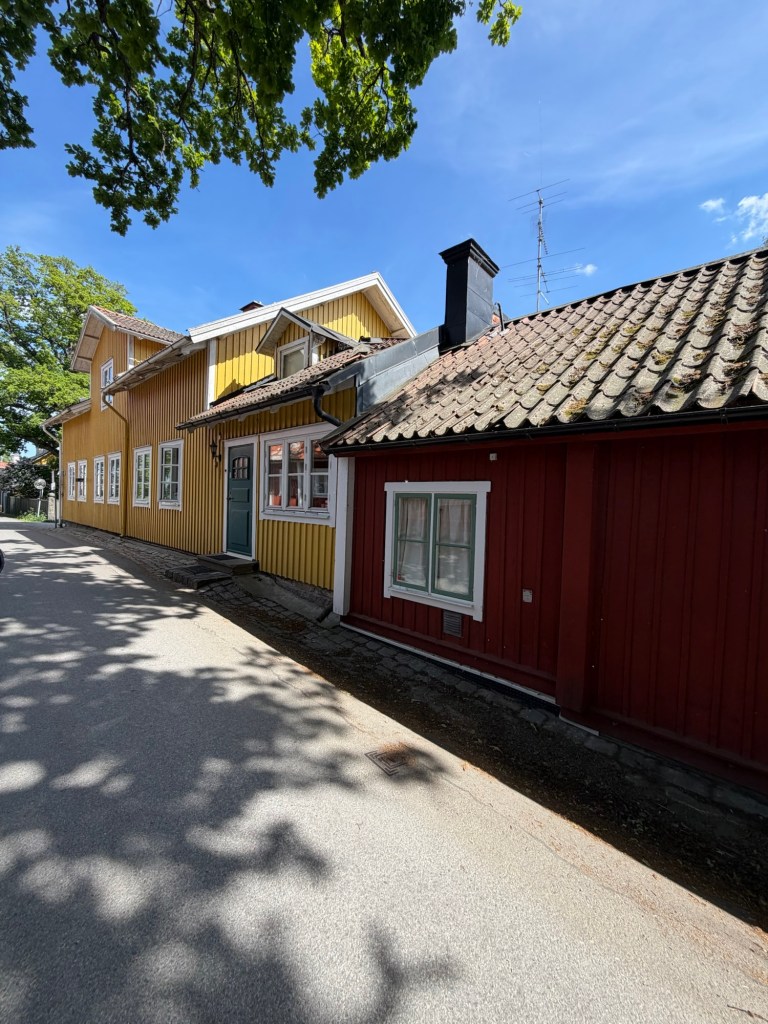
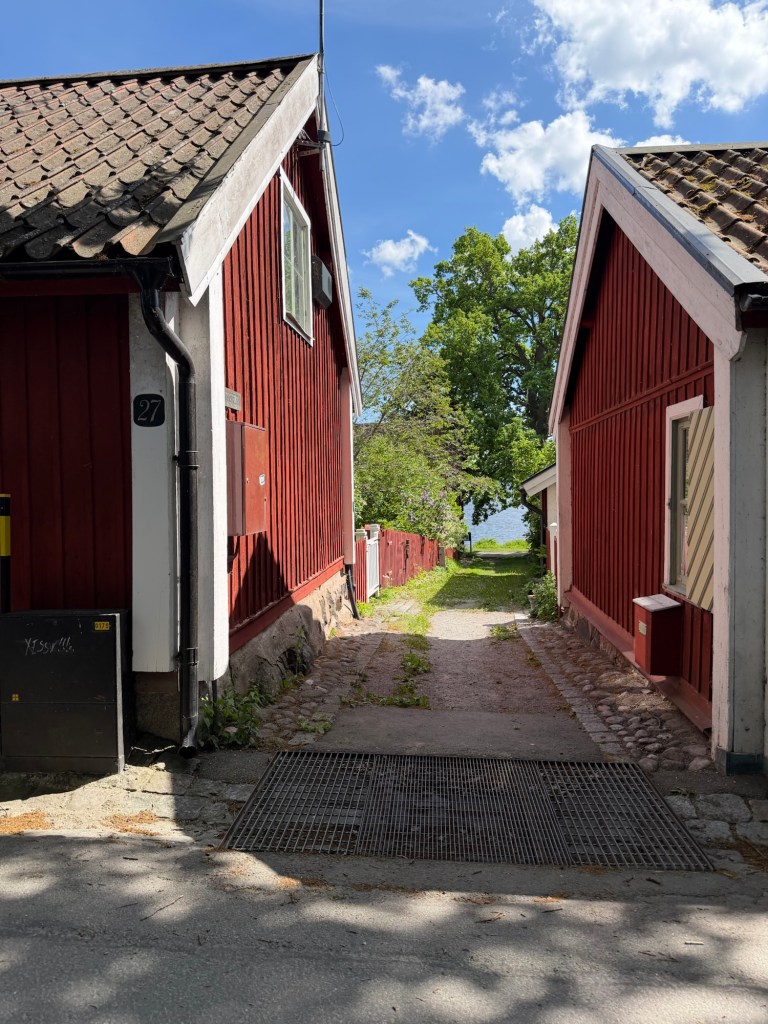
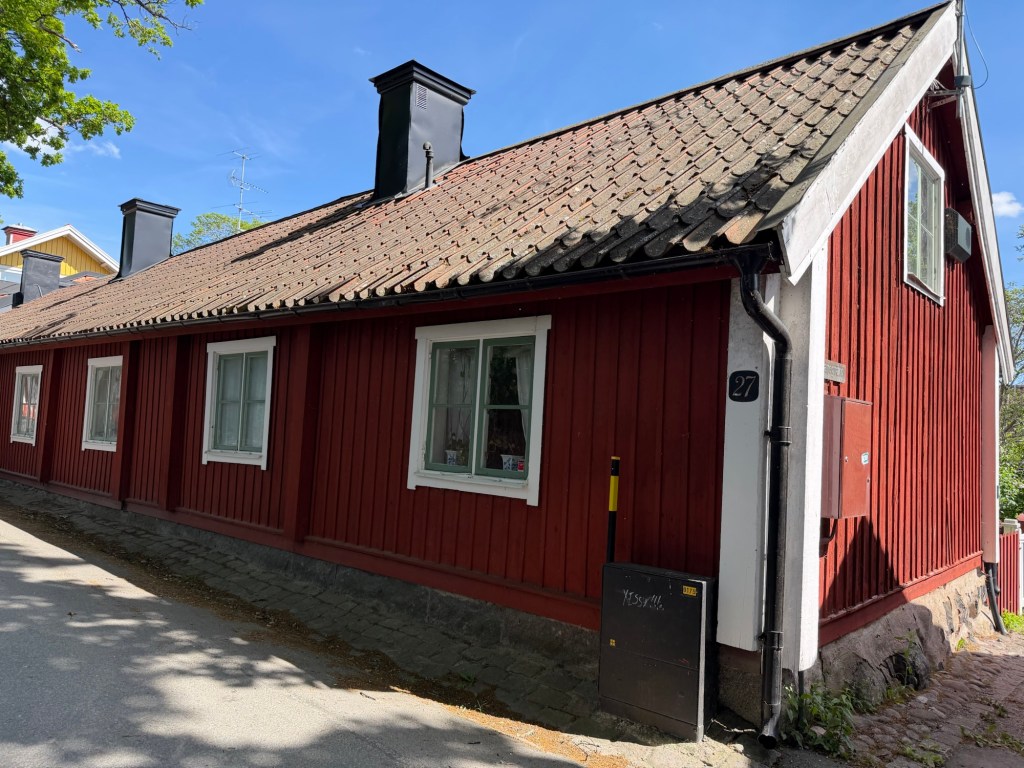
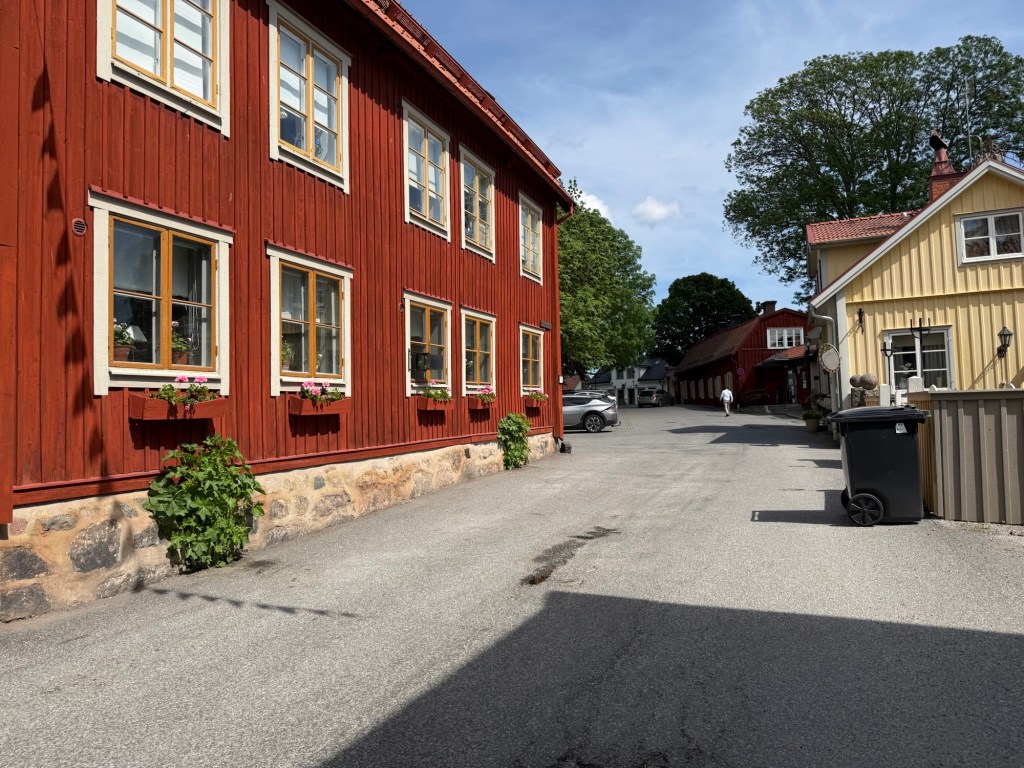
After taking in Uppsala, we drove to Sigtuna, the oldest town in Sweden 970-980AD with a population of about 10,000. The town began before there was a Christian religion and was founded by a former Viking. Sweden became Catholic around the 11th century. In 1527 the Reformation started. Many Catholic Churches were abandoned and became ruins. The Swedish Lutheran church was founded in 1593.
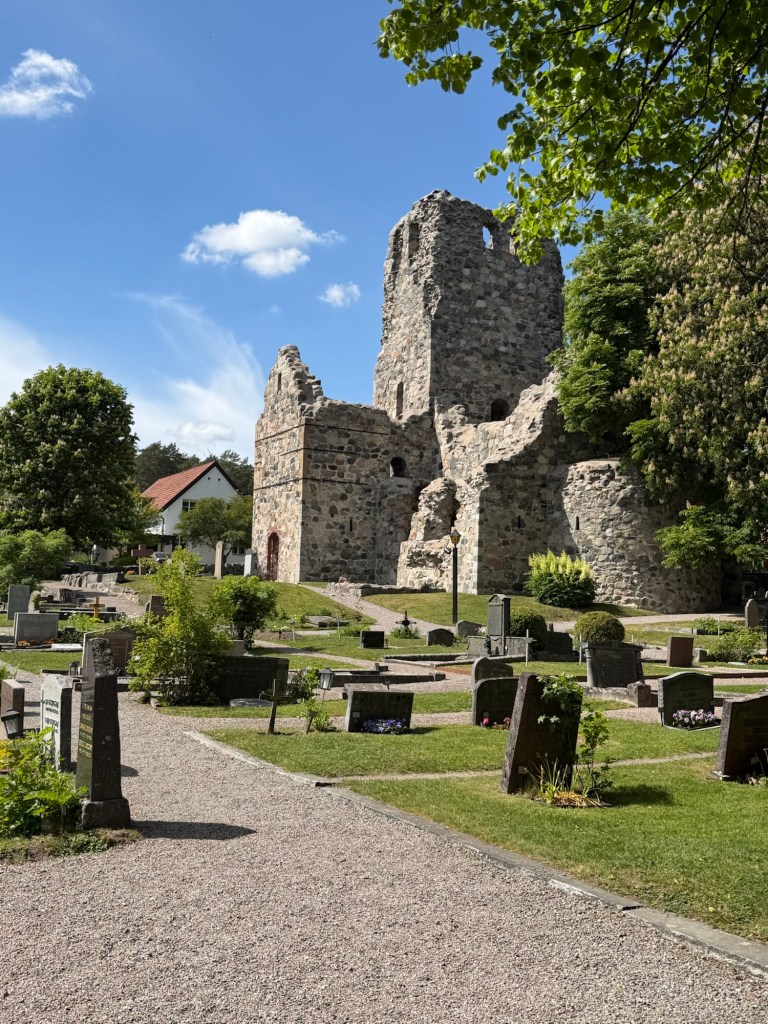
Then we went to see the St Olof Church ruins.



Thursday, June 4, 2026
Enjoyed our morning in the Grand Hotel and met Gabriella at 10 in the lobby.
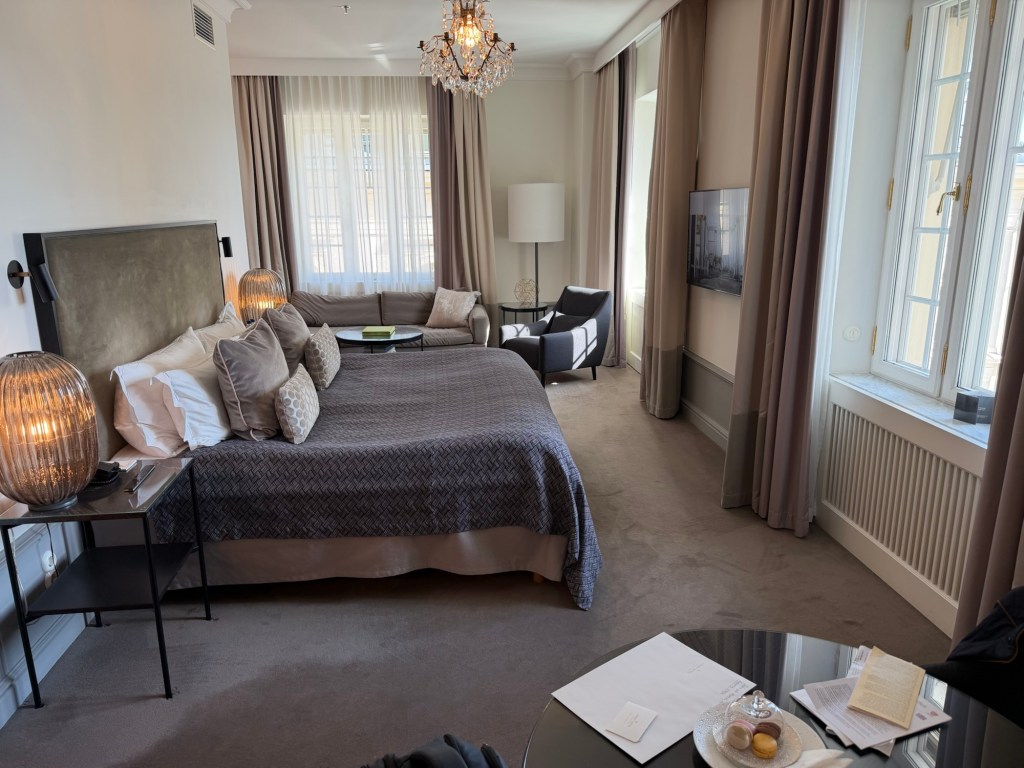
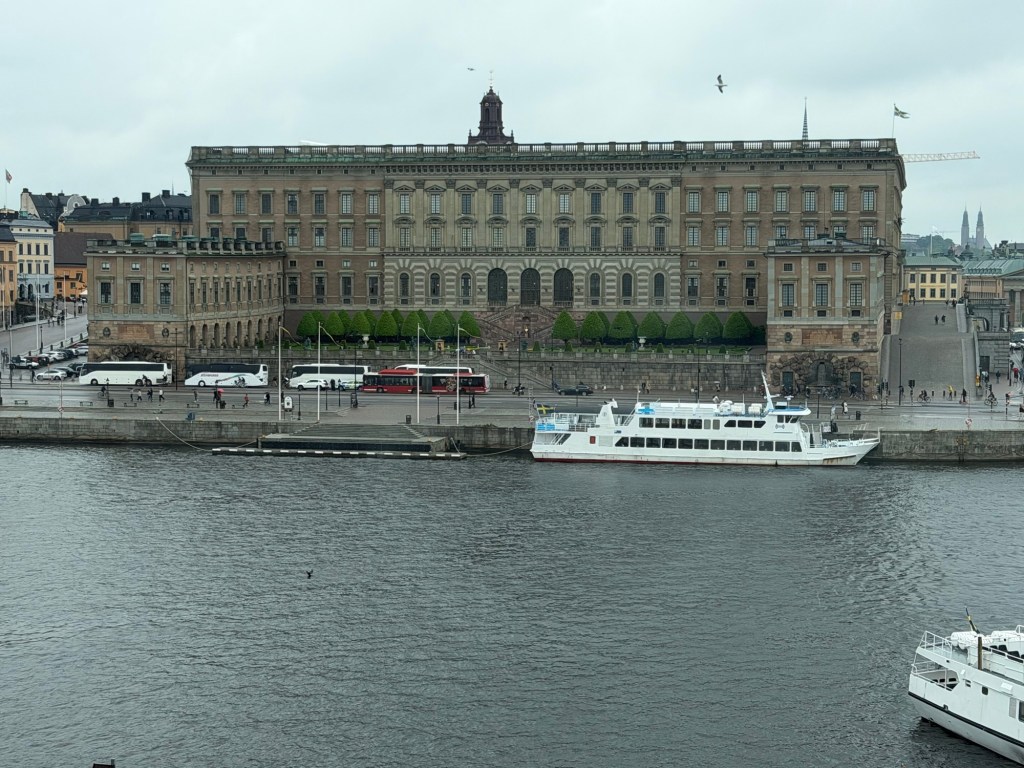
The royal family’s lived in Sigtuna from 1252, but moved to Stockholm in 1754. From our hotel we could see the Royal Palace where the royal families lived until 1981, when they moved to the countryside. There are 608 rooms with windows in the palace, which Is not attractive from the outside.
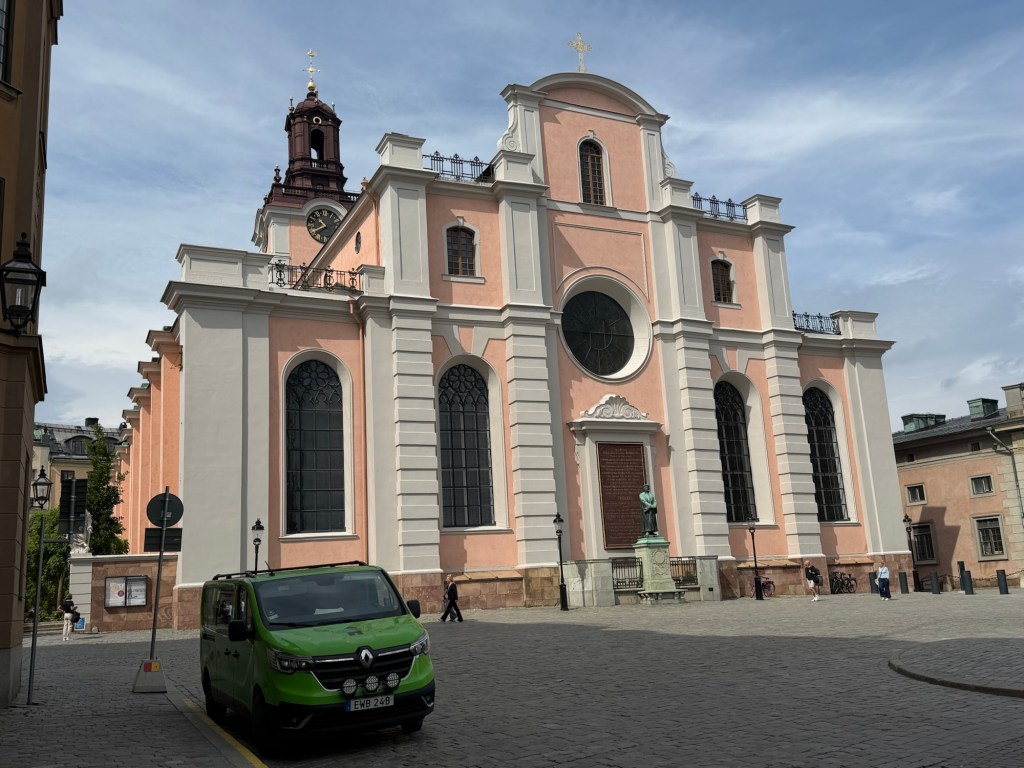
The church for the royal family was built next to the palace in 1306 and is named St Nicholas Cathedral. Inside the church is a large statue of St George slaying a dragon.

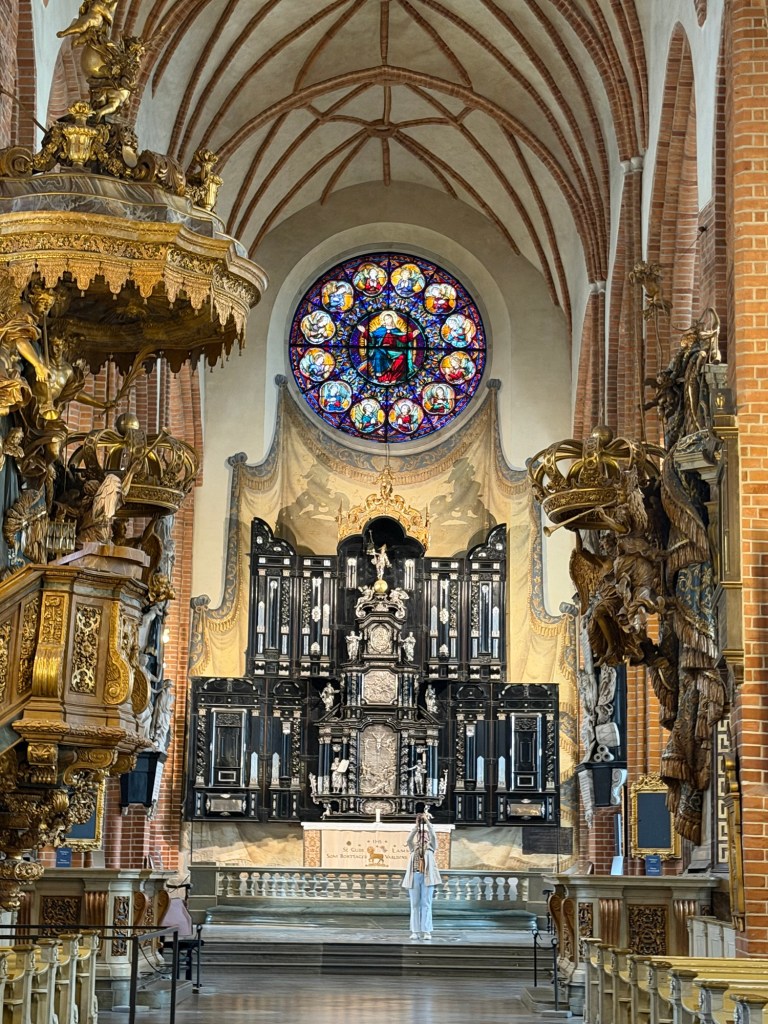
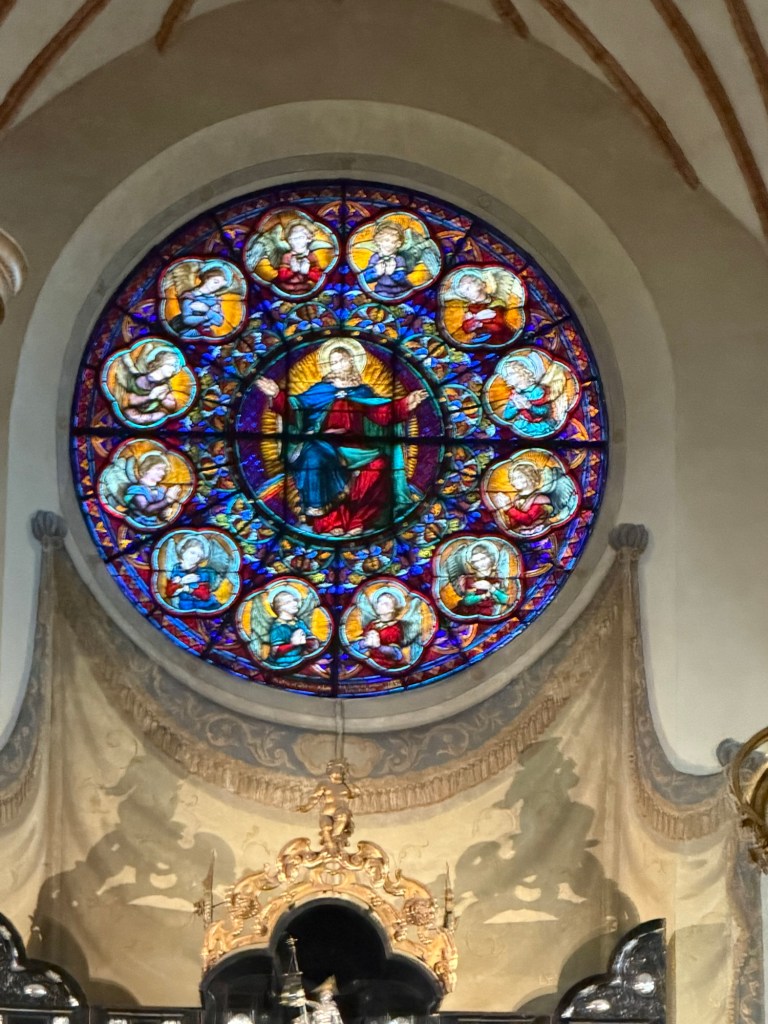

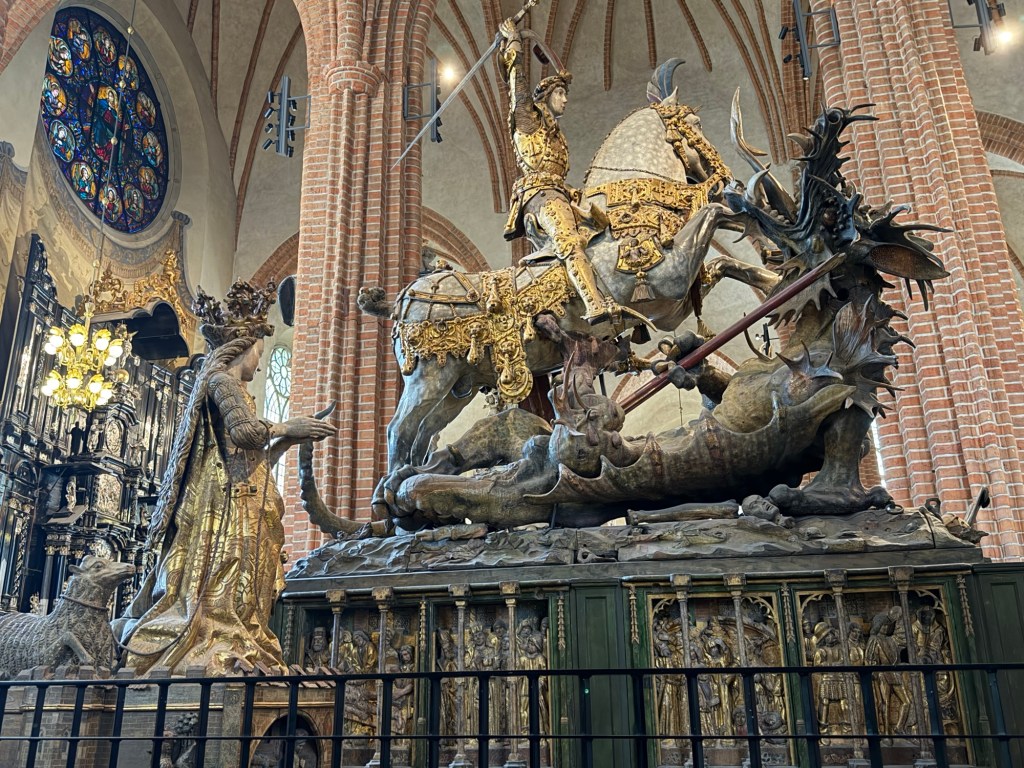
It represents Sweden overcoming the Danes and winning in 1471. The statue was made in 1489.
Our guide, Gabriella, and I went to see the residency of the royal family. I learned that Queen Silvia was a commoner from Germany. She and the crown prince fell in love and managed to get permission to marry. She and King Carl XVI Gustav have been married 50 years and have 3 children. Their eldest is the crown princess VIctoria. They live in a wing of the Drottningholm Palace. It is very similar to Versailles in France.
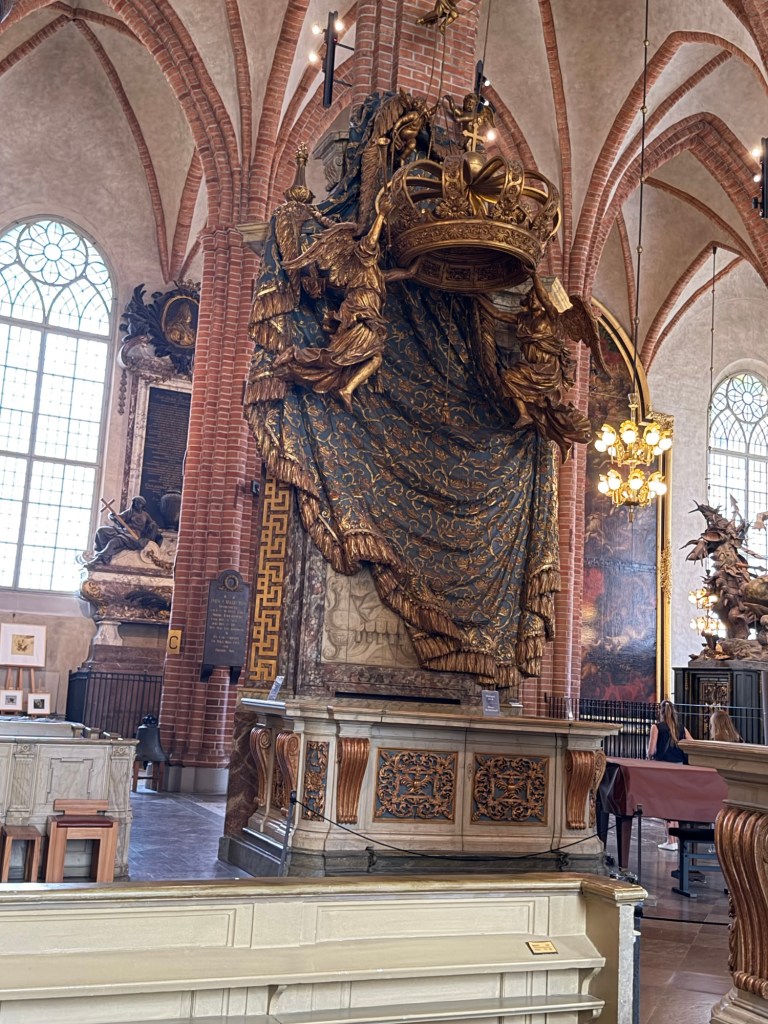

There are two large boxes on either side of the isle where the royals sit during the opening of parliament each year and other official ceremonies.
After seeing the Old City we went to the museum of the ship, Vasa. The name means Sheef of wheat. The warship was built between 1626-1628. She was 226 feet long, 172 feet tall. She had a beam of 38 feet and a draft of 16 feet and she carried 64 bronze guns cast in Stockholm specifically for her. She sank after sailing 1,400 yards into her maiden voyage after encountering a wind stronger than a breeze.


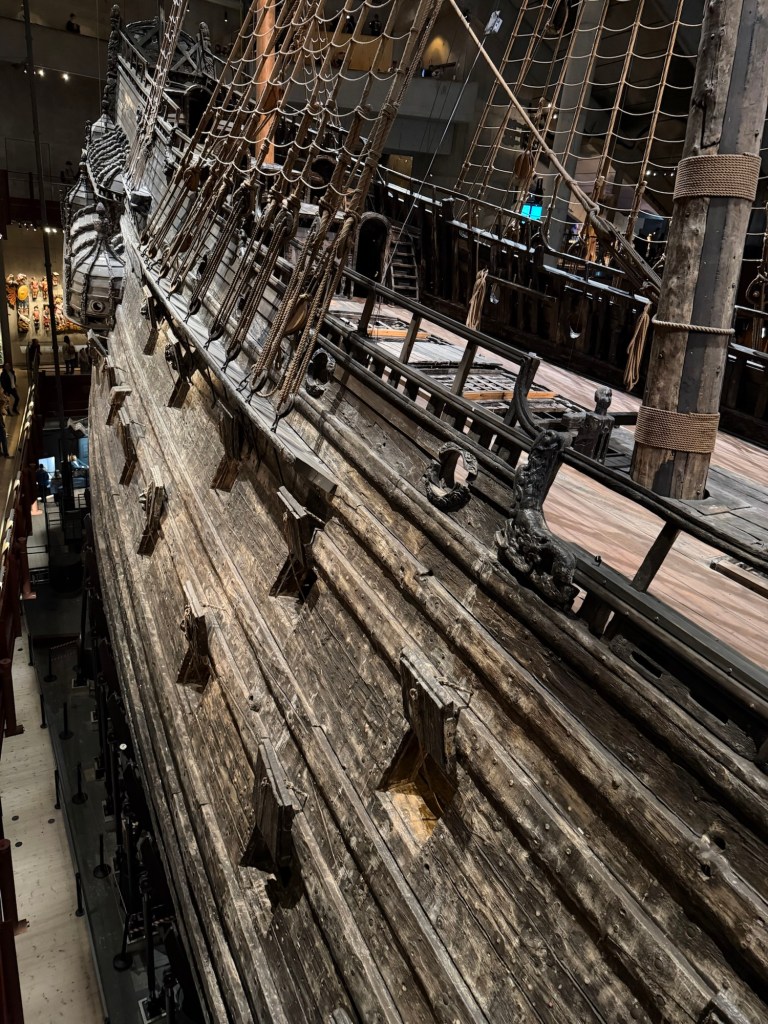

The vasa was found in 1956. It took 5 years to bring her to the surface in 1961, after 333 years on the seabed.
Meanwhile, here is some Wikipedia history about religion in Sweden. In the 11th century Olaf Skottkonung became the first Swedish king to be baptized as a Christian. Around 1400, an attempt was made to unite Sweden, Norway and Denmark into one kingdom, but this led to bitter strife between the Danes and the Swedes. In 1520 the danish king Christian II conquered Sweden and in the ensuing bloodbath put leading Swedish personages to death. Gustavus Vasa (1523-1560) broke away from Denmark and fashioned the modern Swedish state. He also confiscated property from the Roman Catholic Church in Sweden to pay Sweden’s war debts. The king justified his actions on the basis of Martin Luther’s doctrines, which were being accepted nationwide with royal encouragement. The Lutheran Swedish church was eventually adopted as the state church.
Back to the Vasa. Here are painted wooden sculptures that had been on the warship.


Finally, after many repairs she was permanently moved to the VASA Museum in the royal national city park in Stockholm. Several skeletons from the ship were on display along with many salvaged pieces of ceramic, coins, clothing and other items. A few of the 700 wood carvings were repainted in red, blue, green and gold for people to see how they looked originally. The museum was very interesting and well worth the visit.
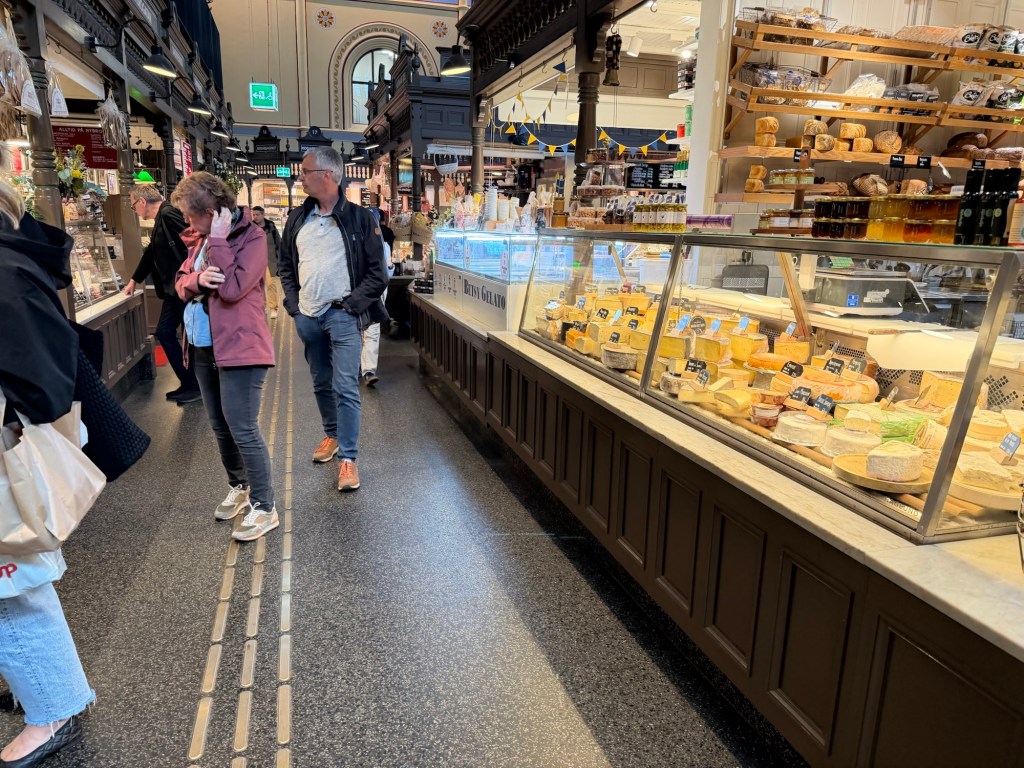
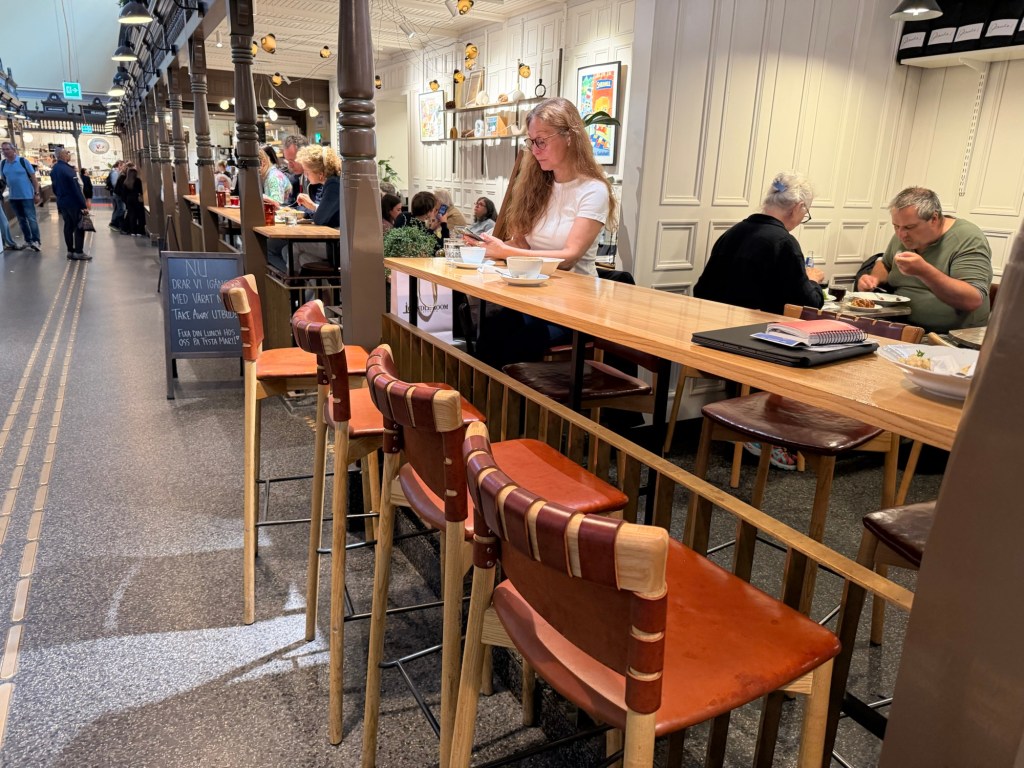
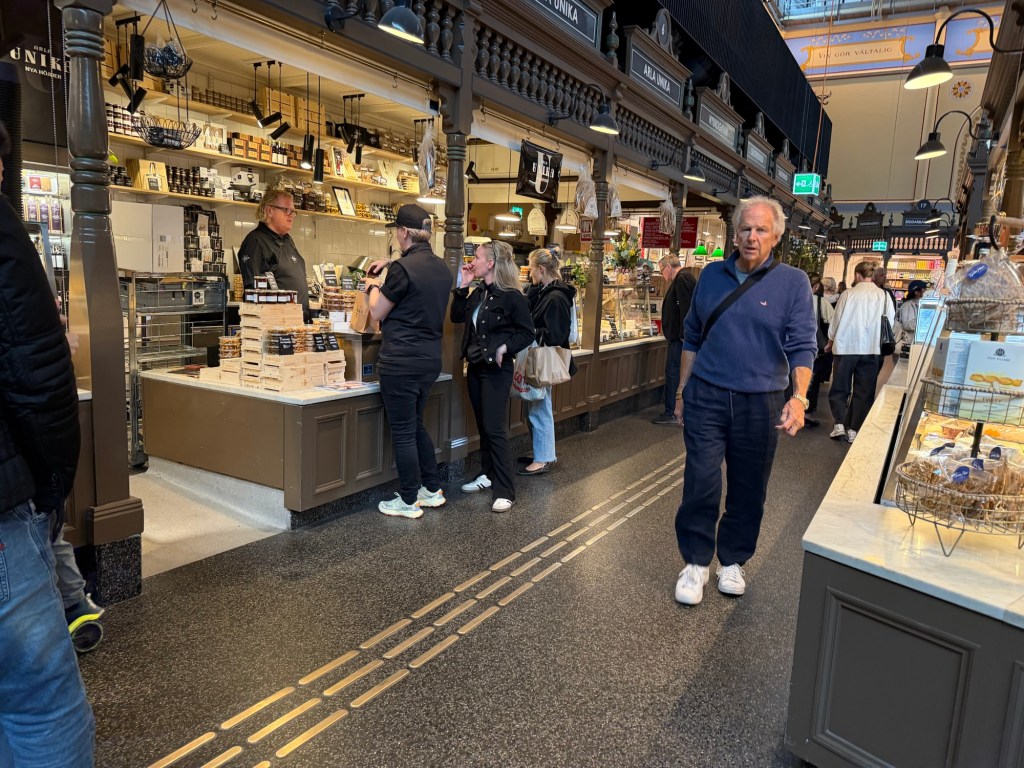
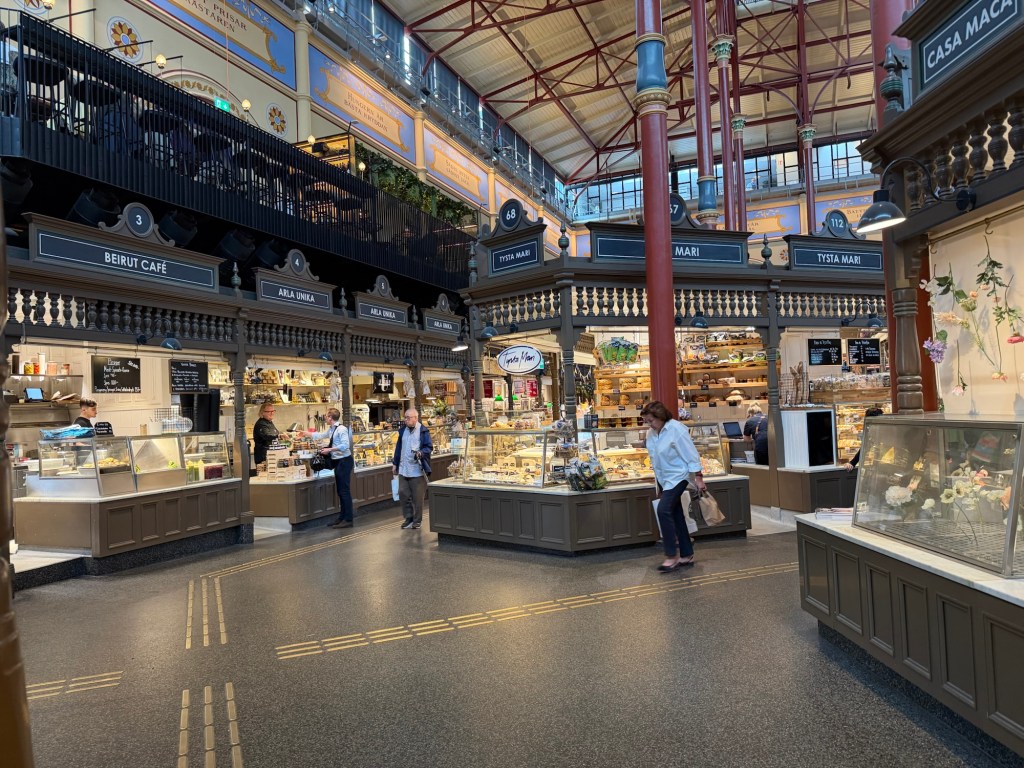
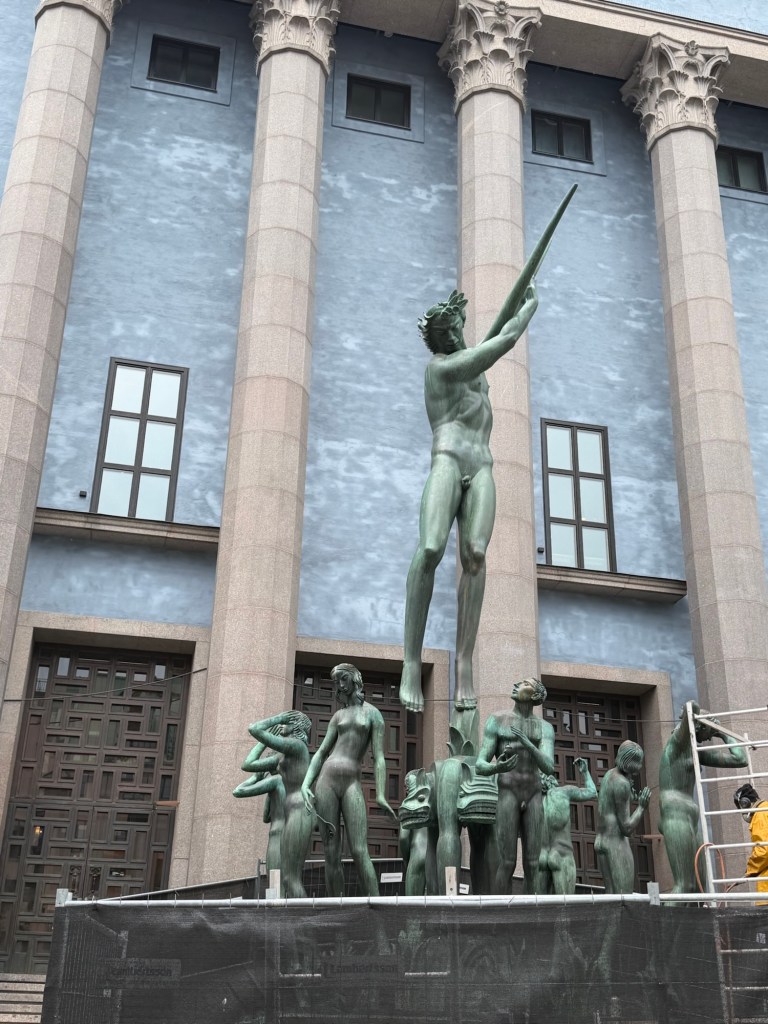
We drove through several residential and commercial districts to get a feel for the city and we stopped at the building where the Nobel Prize is given. The statue complex in front of the building, the Orpheus, is by Carl Miles. Then we stopped at a spotless food court and grabbed a snack before returning to the hotel.

Dinner was at a place called Riche. I had Swedish meatballs and Mark had steak tartar. The food was good and the restaurant was full. The meatballs did not taste like the ones we have at home, but they were very good.
Friday, June 5, 2026
The weather is solid overcast this morning and rain is expected. Generally we have had cool days with blue to partially blue skies most days. Very little rain, but we did get caught walking in the rain yesterday afternoon. Today we were scheduled to go boating. Thankfully it did not rain.
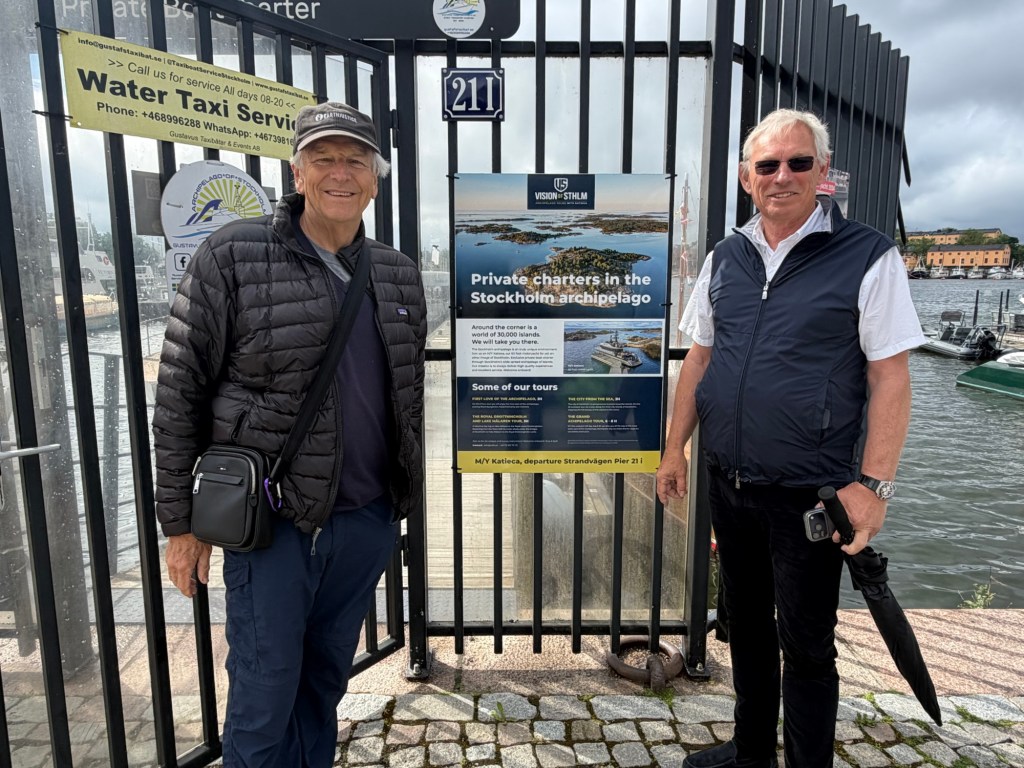
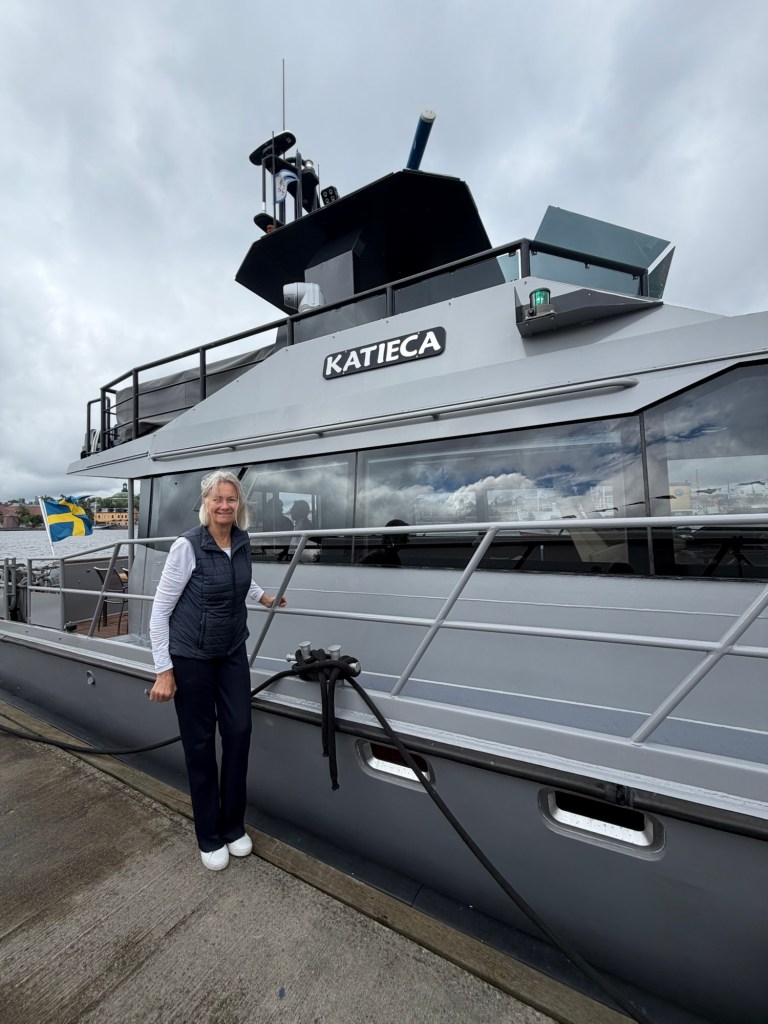
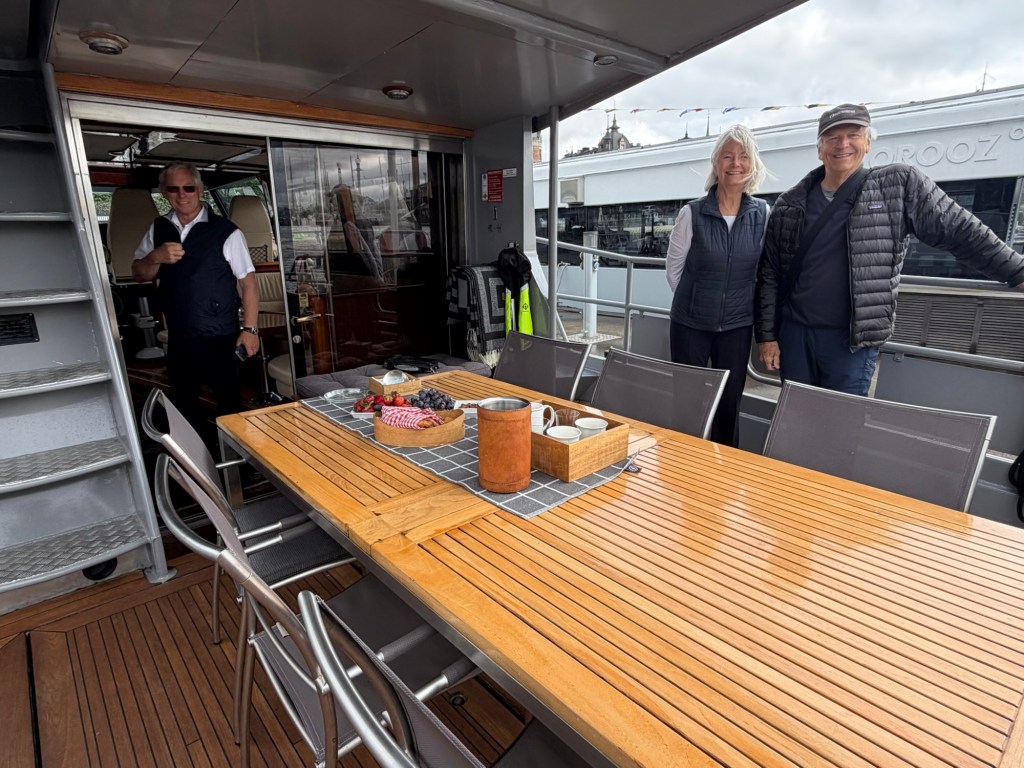
Captain Kjell (pronounced “shell”) and his wife Eva were waiting for us when we arrived at the boat dock. They told us we will be motoring by an island called Vaxholm and then thread our way through many islands in the archipelago. As we motored out into the sea, Eva told us 200 of the Stockholm archipelago islands are inhabited, many of them only in the summer. There are 30,000 islands in the archipelago total. Sweden has the most islands in the world at 260,000.
Here are some scenes a the beginning of the ride:
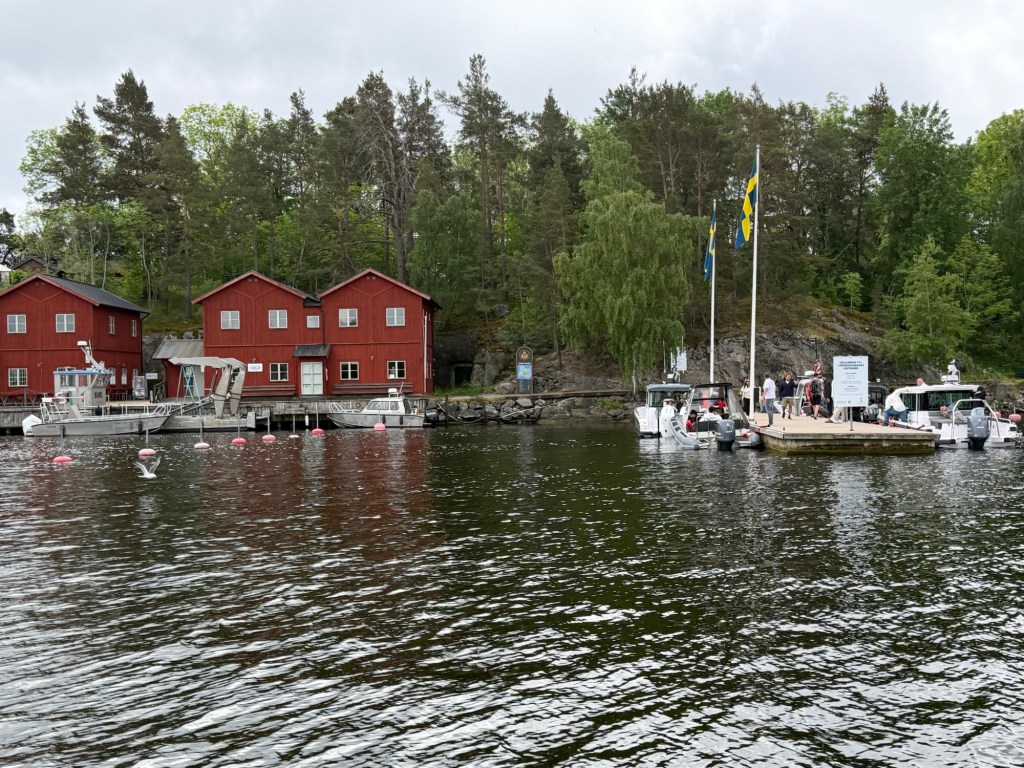

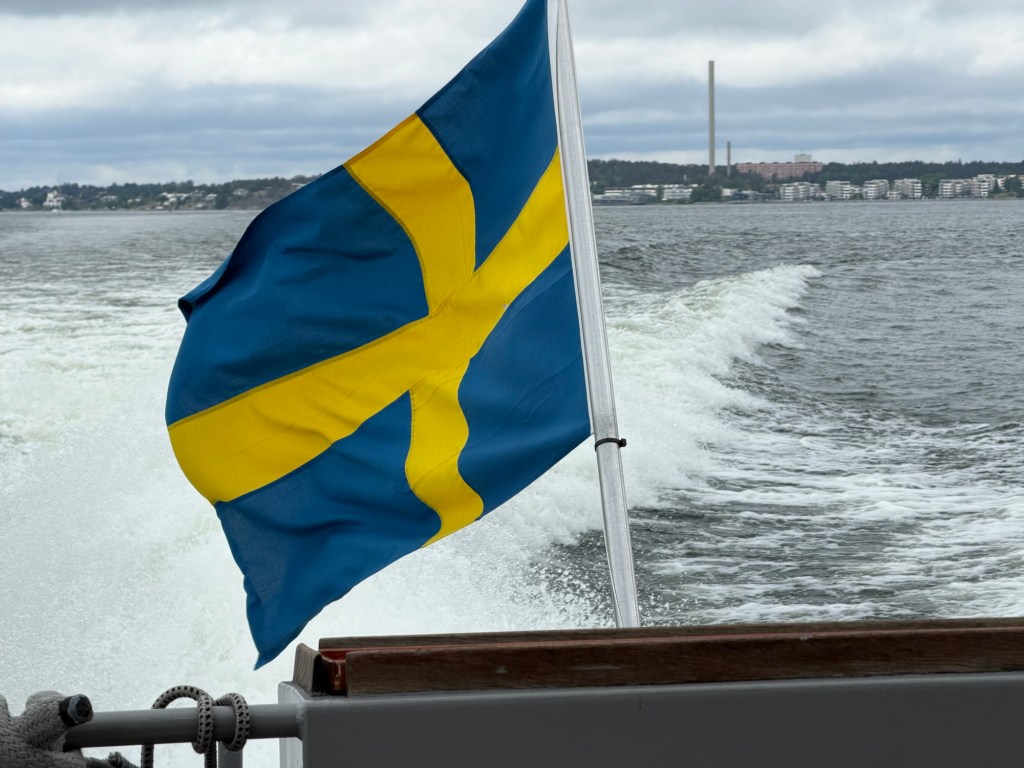


First we learned some details about the boat we were on. It is 59 feet long, is made of aluminum, has a V12 turbo diesel engine with 1500 horse power, is a water jet with no propeller and was designed by Kjell 20 years ago. It is a pretty and clean boat and was a delight to be on. Soon we were enjoying the smooth water of the sea and learning more from Eva.
In 1718, the Swedish king, Carl XII, decreed that all houses should be made of wood so people could burn them down if an enemy came. In 1719, Russia did come and many houses did burn. Liberty came under the next king and houses were built of wood again.
By the mid 1800s the population had increased and the city of Stockholm was filthy. Wealthy people wanted to move to nearby islands to get away from the filth. Moving was made possible by the invention of the steamboat in 1850 and soon summer houses started appearing. Now there is electricity on every inhabited island, provided by the government.
The first island we pass is the Royal Animal Garden Island. It has the Vasa Ship on it as well as many restaurants. Then we headed directly for Vaxholm, the island that has a large fort and guarded passage to Stockholm in previous years.
More shots taken in the archipelago:
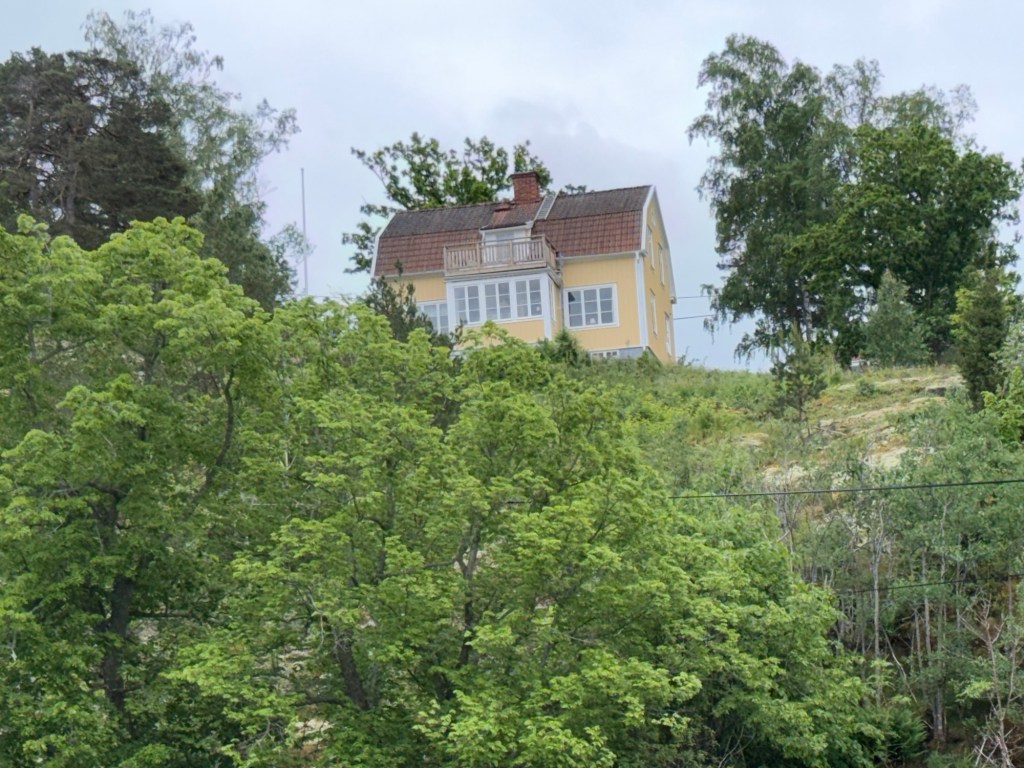
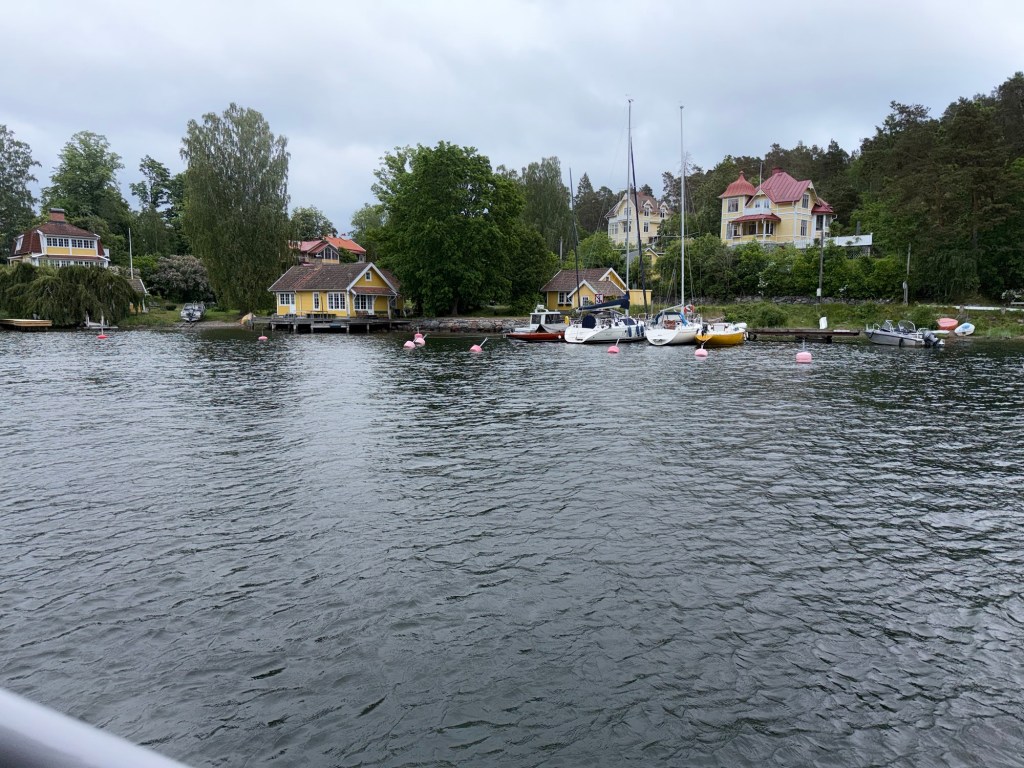


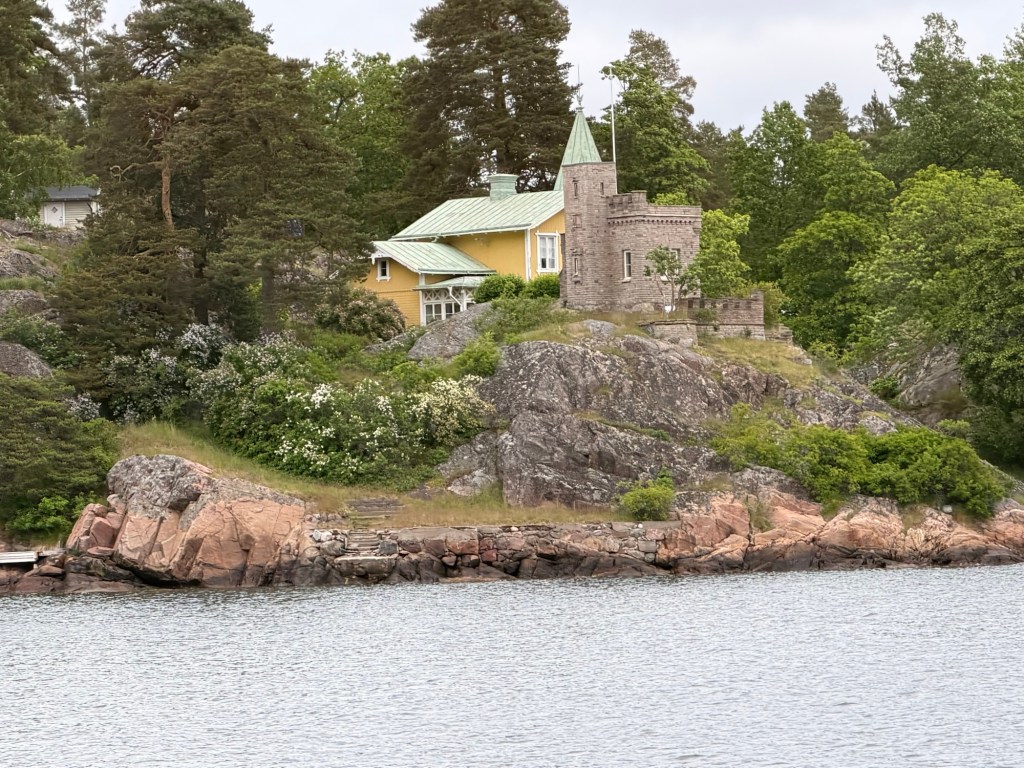
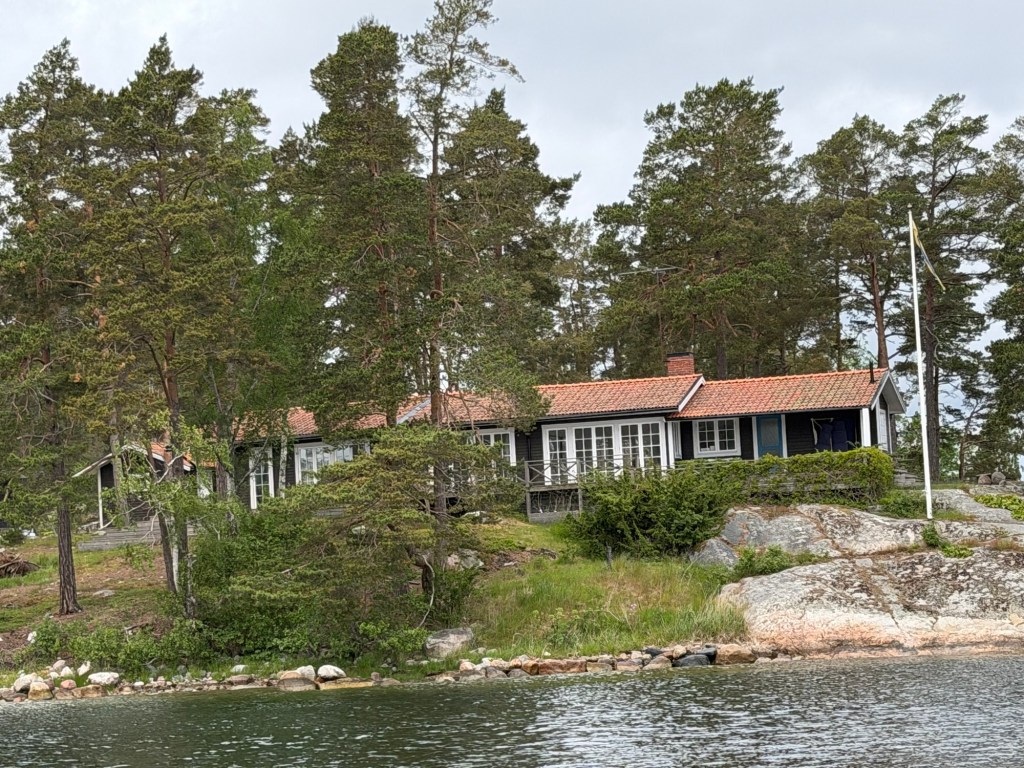
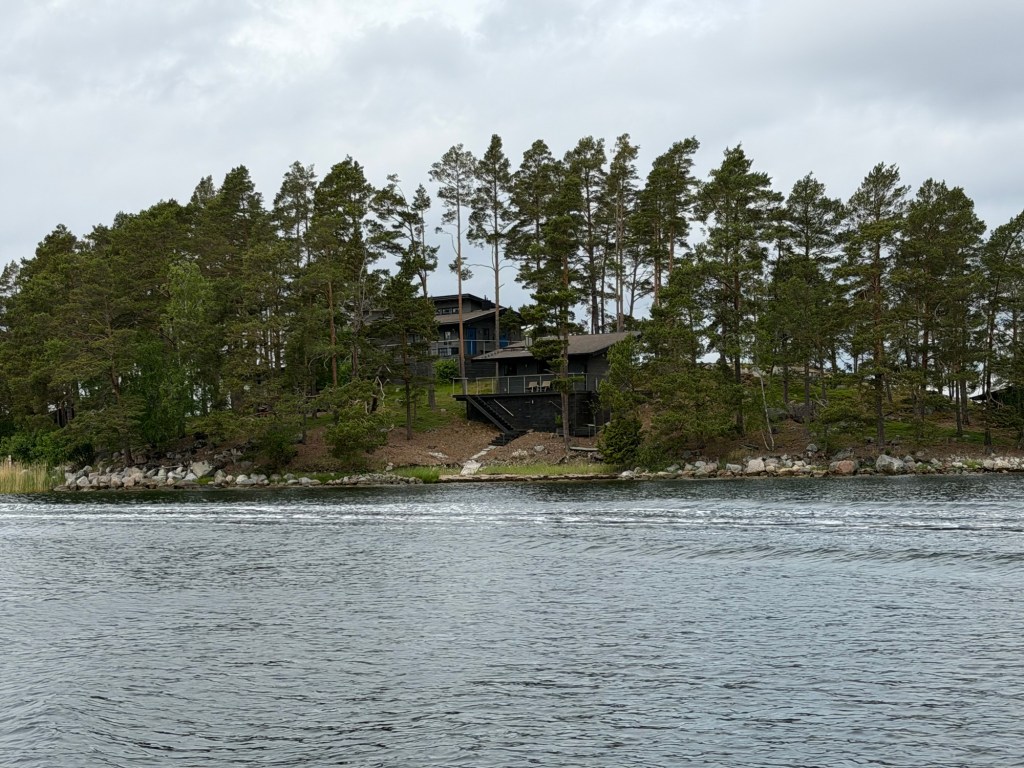
From there we did pass by many islands with summer houses, and some full time homes as well, We stopped at an island called Ingmarso that had a restaurant by the same name.
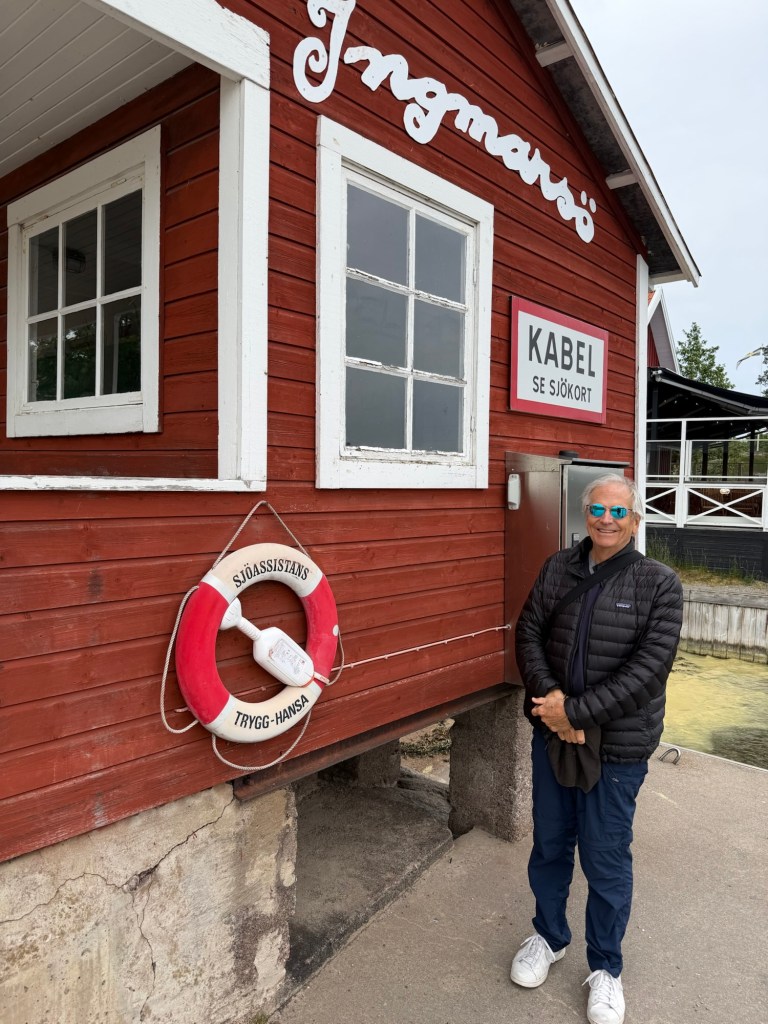


Mark had tuna tartar and I had fried herring with peas, fresh lingon berries, mashed potatoes and brown butter. Considered a traditional Swedish dish, I was not sure how I would like it, but it was very tasty and I ate it all. Mark was very enthusiastic about the tartar.
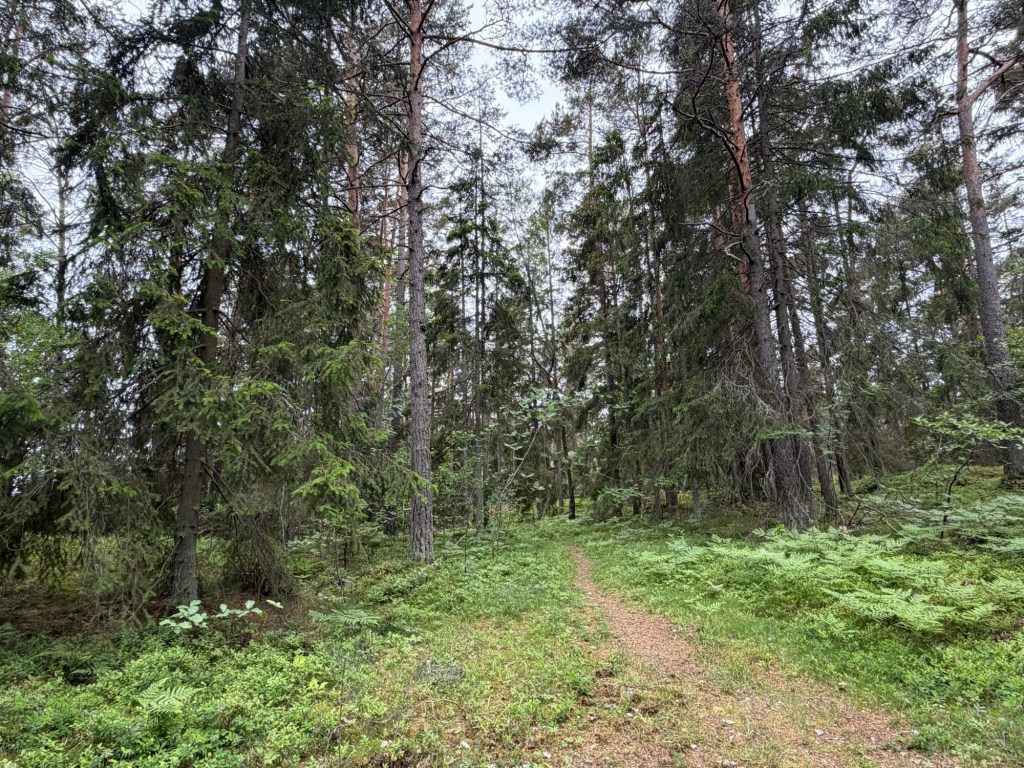
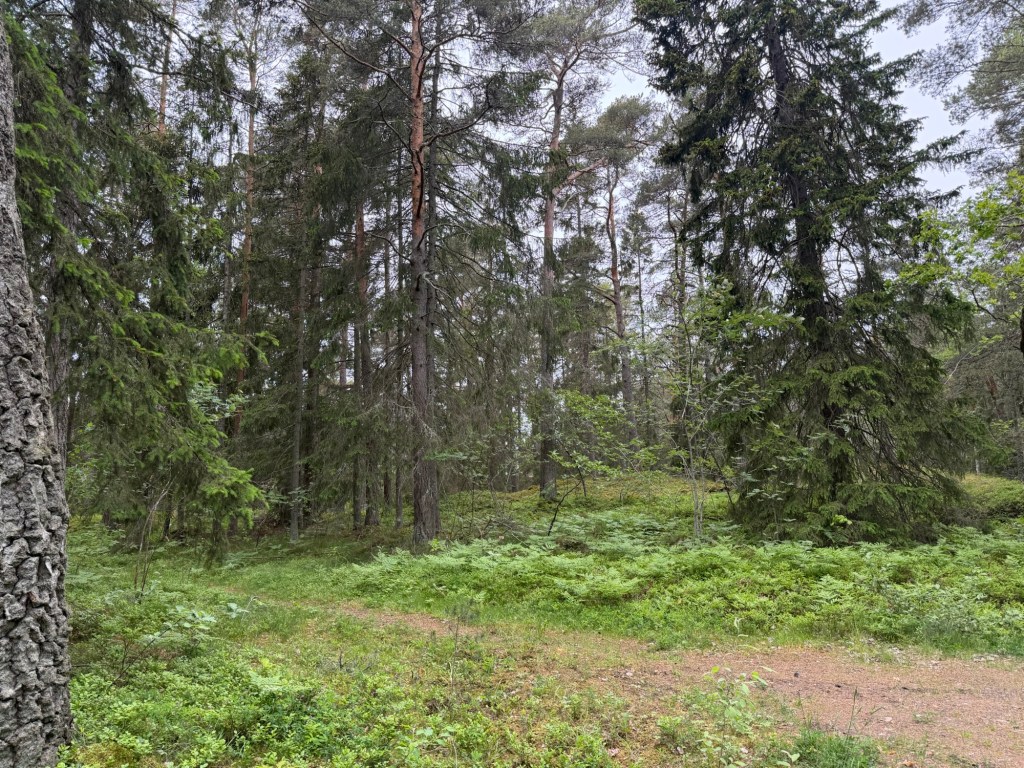
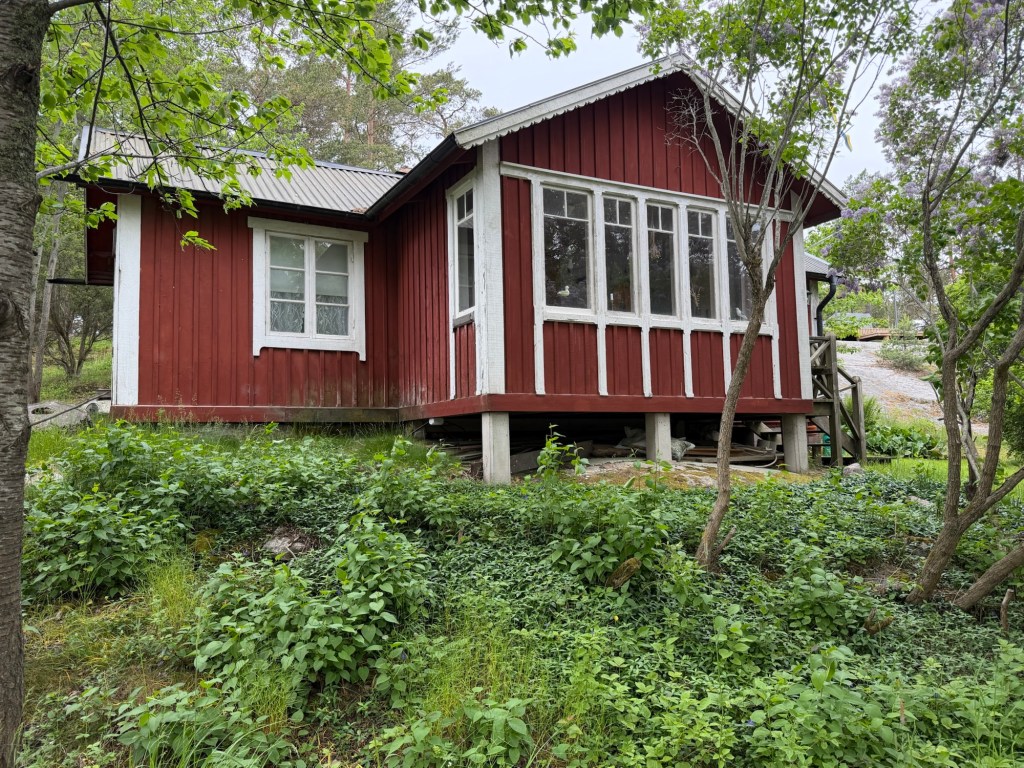
After lunch, we walked across the island with Eva, while Kjell drove the boat around. It was a very pleasant forest walk with a few buildings here and there.

Back on the boat, we talked about the salinity of the sea water and learned that the Baltic Sea is 0.7 % salty. It is mostly brackish and has 1/5th the salinity of the ocean, which is 3.5% salt. Farther north in the sea, beside Finland, the salinity of the water drops to nearly the level of fresh water, less than .1% salt.
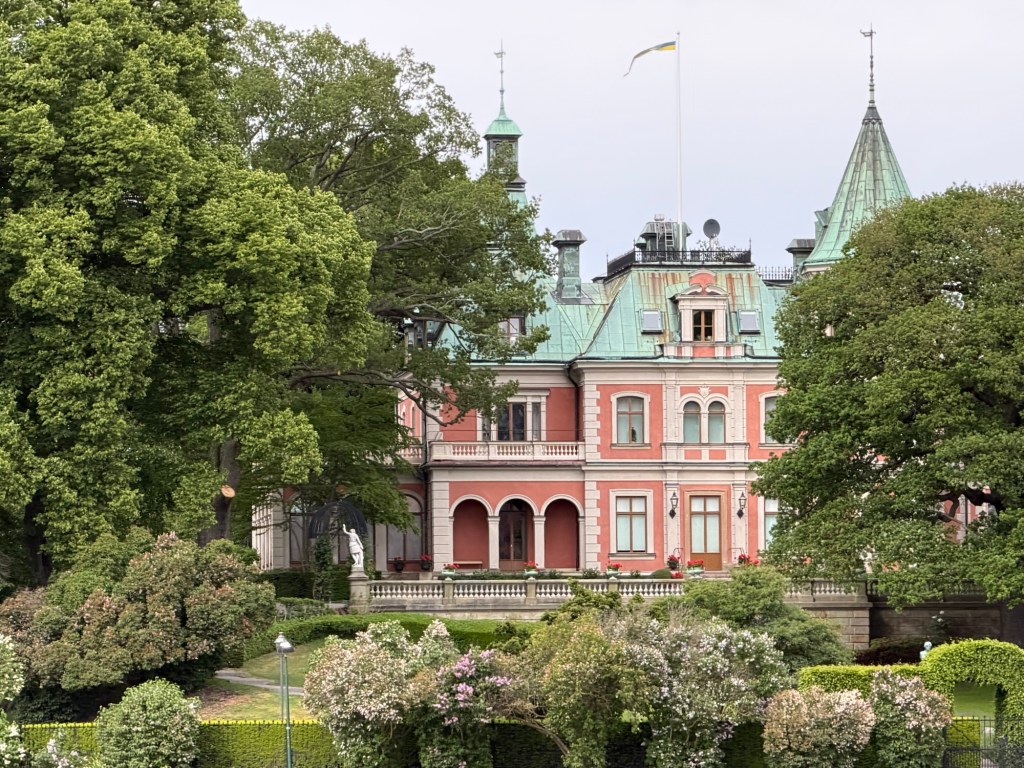
We took many photos of houses as we meandered through the archipelago and enjoyed being on the smooth sea in a fine vessel. We saw a few interesting features near the end of our boat trip


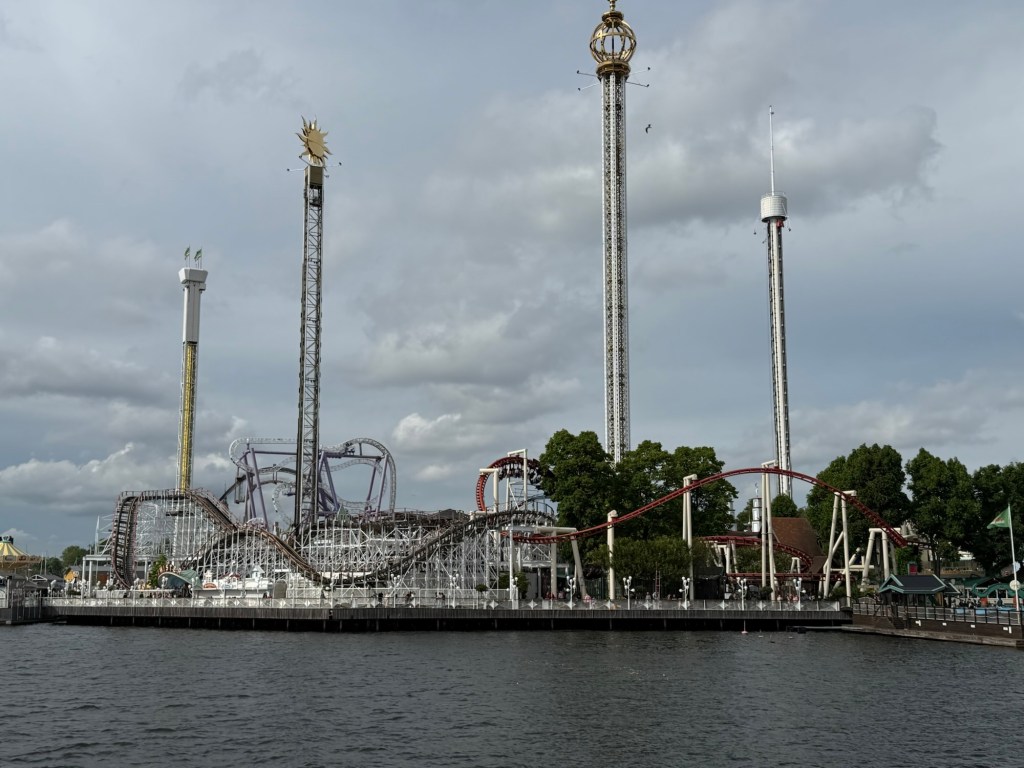
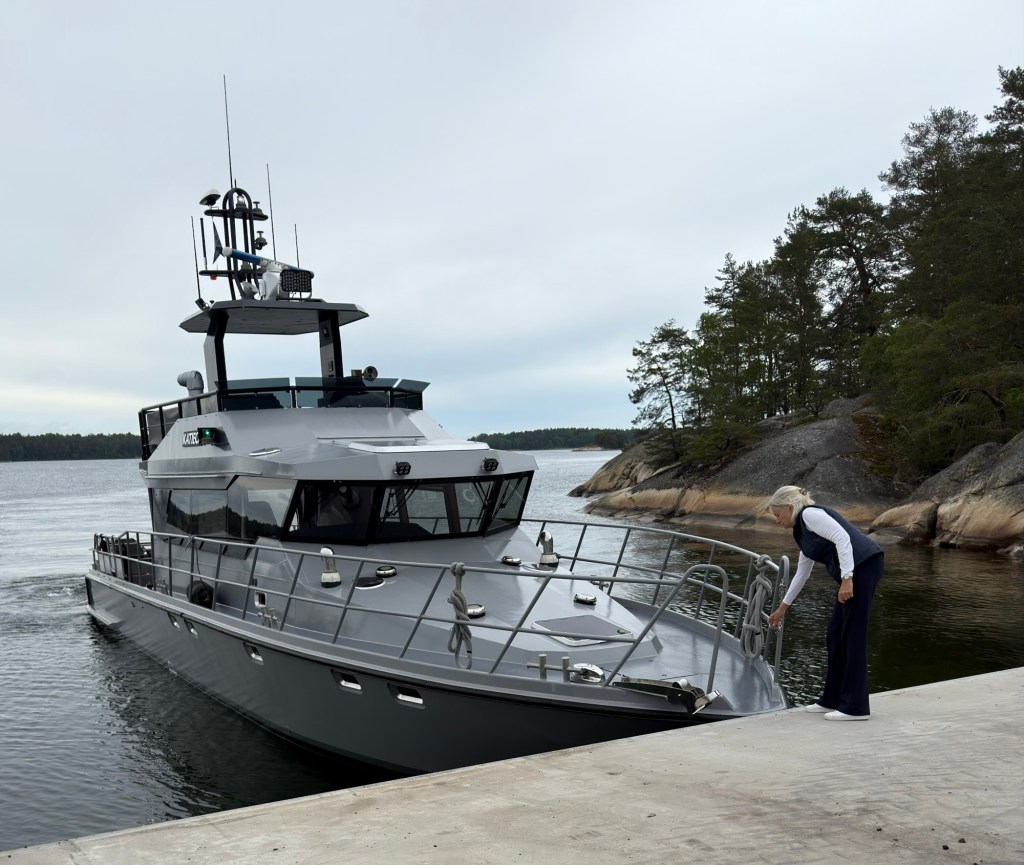
Back at the marina at 4:40, we said good bye to Kjell and Eva and headed back to the hotel for a break before dinner. At 7:30 we walked to the restaurant for our 7:45 reservation. The place is called Brasserie Astoria. We had cocktails for a change and shared a pizza and a pasta dish and were home by 9pm.
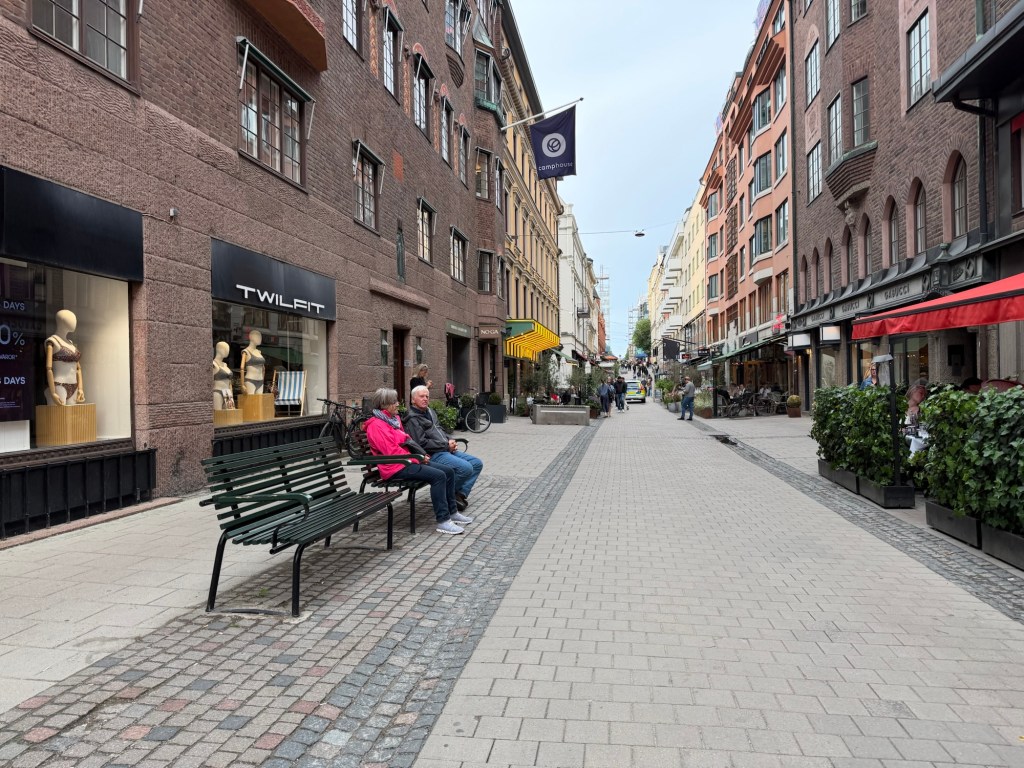


It has been nice having the restaurants pre booked. We have not had to think about where to go for dinners. And the selections have all been good to great. We have no complaints; thanks to our travel agent, Martina. We are looking forward to our first unplanned day tomorrow.
Saturday, June 6 2026
Swedish National Day of Celebration. We relaxed in our room awhile and did some shopping in the local upscale stores that abound in the downtown area. I bought a children’s book that is quite famous and popular in Sweden about Moomintrolls. Everywhere you go in town, you find pictures of Moomin, so I decided to learn about them and bought the Finn Family Moomintroll by Tove Jansson. Hope I have time to read it.
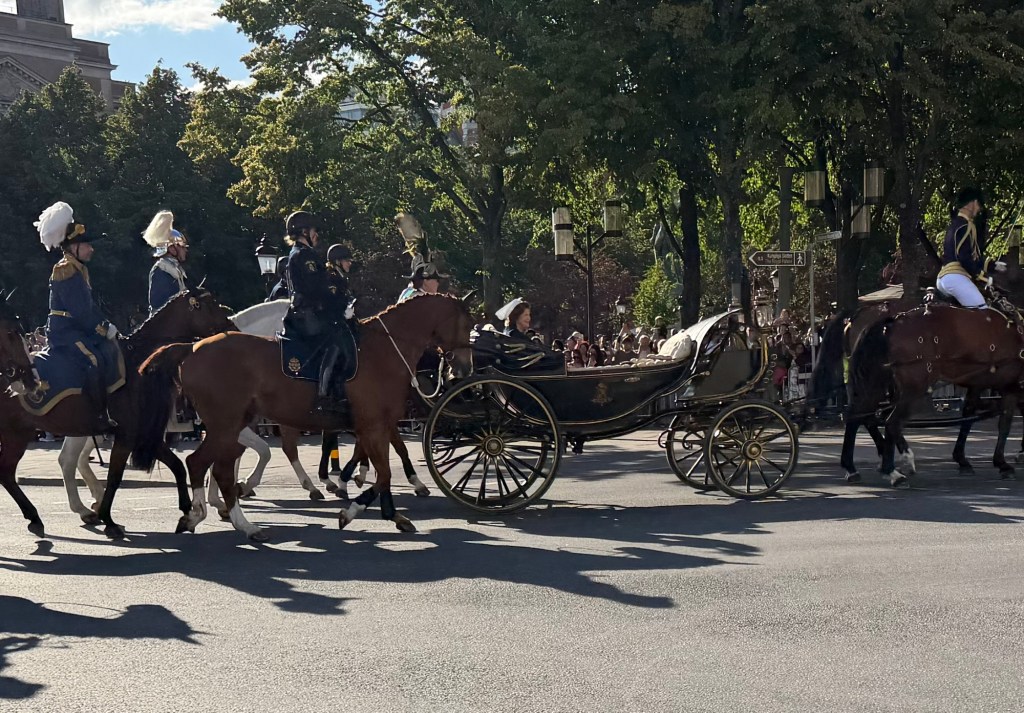
We watched the royal cortège pass through the city as part of the National Day Celebrations. We saw the queen wave to the crowd as she rode by in her horse drawn carriage. Then we took a taxi to our dinner in a traditional Swedish restaurant at the far end of the city. I can’t even begin to tell you the name of the place even though it was told to me several times. The food was very good. I had the traditional liver dish with capers and bacon. Mark had arctic char. We were home by 8:15. Nice to end our day of leisure with an early evening.
Sunday, June 7, 2026


Mark was feeling poorly this morning and decided to stay in, so I joined Gabriella and the two of us went on a guided tour of the royal palace, which is partly occupied by the royal family and partly open to the public.
Inside are many paintings of royals and a number of tapestries. One tapestry caught my attention. It is made of gilt leather and painted with a glaze that makes it shimmer.

We passed through the throne room where there were paintings of Louis XVI and Catherine the Great as well as Queen Hedvige Eleonora, who created the palace. She bought the palace estate from a nobleman in 1660 and had the palace built between 1661 and 1699, when the family moved in.
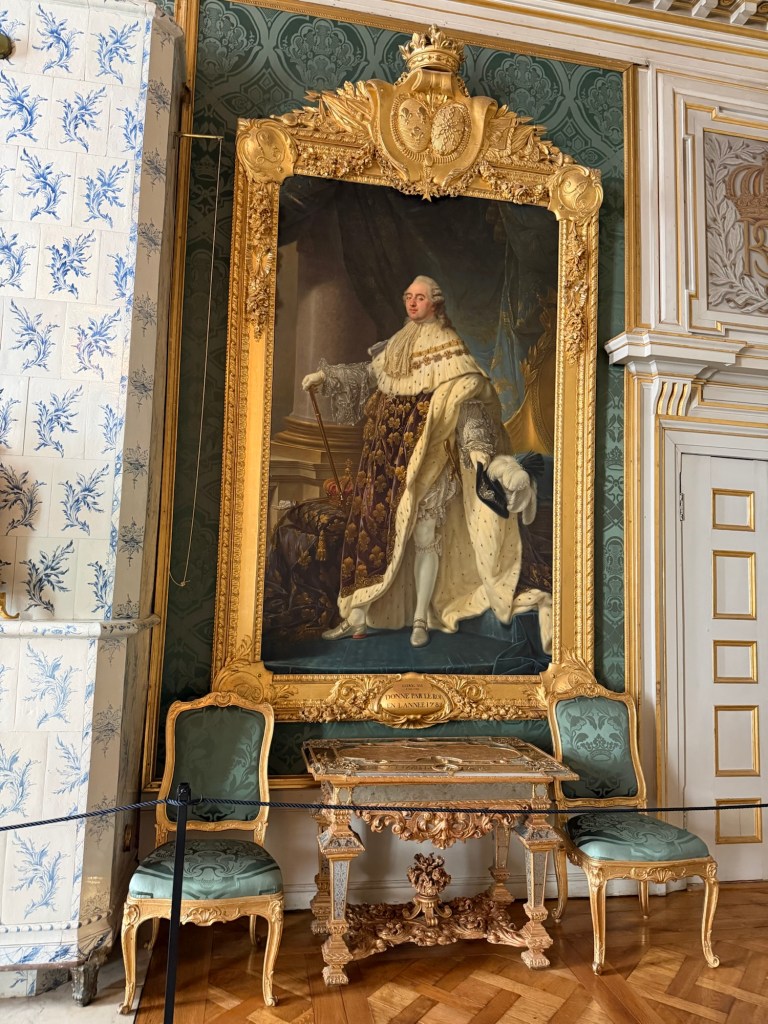


Then there’re was the state bedroom, built to impress visitors, but where King Gustav III’s mother was the only person to sleep there.

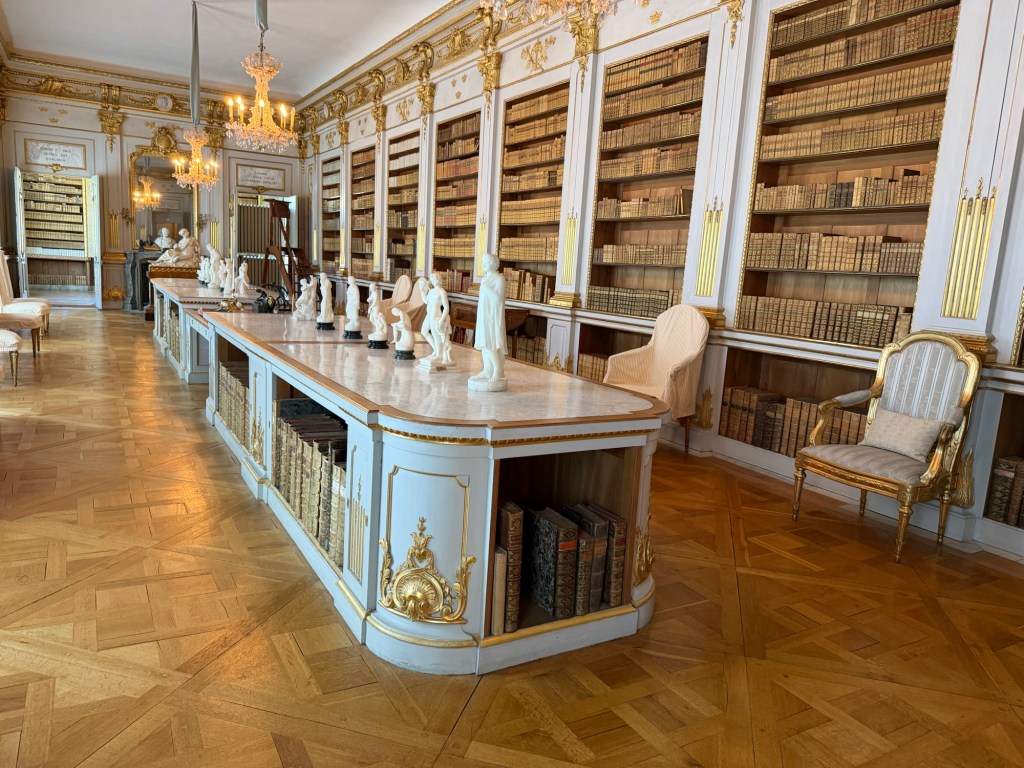
Queen Eleonora was an avid reader and had a library built that house hundreds of books in German and French. Many were made smaller as she found smaller sized volumes easier to read. There were beautiful Meissen glass vases in the room.

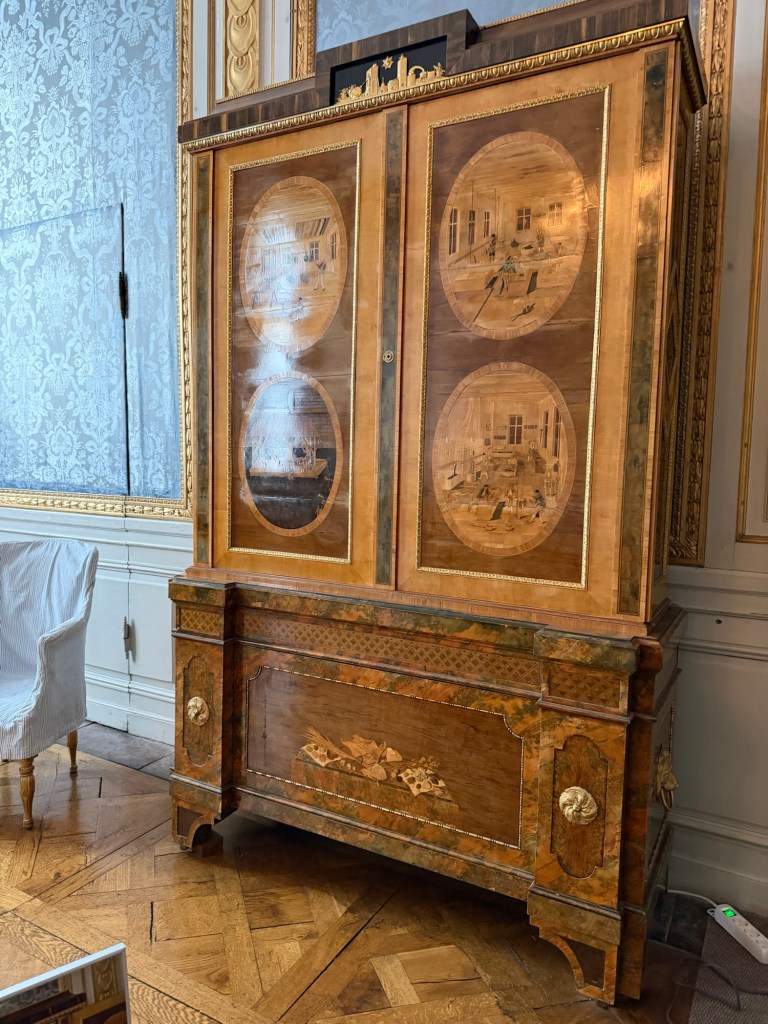
There was a lovely silk storage cabinet given by Catherine the Great to Gustav III that was made in St Petersburg.
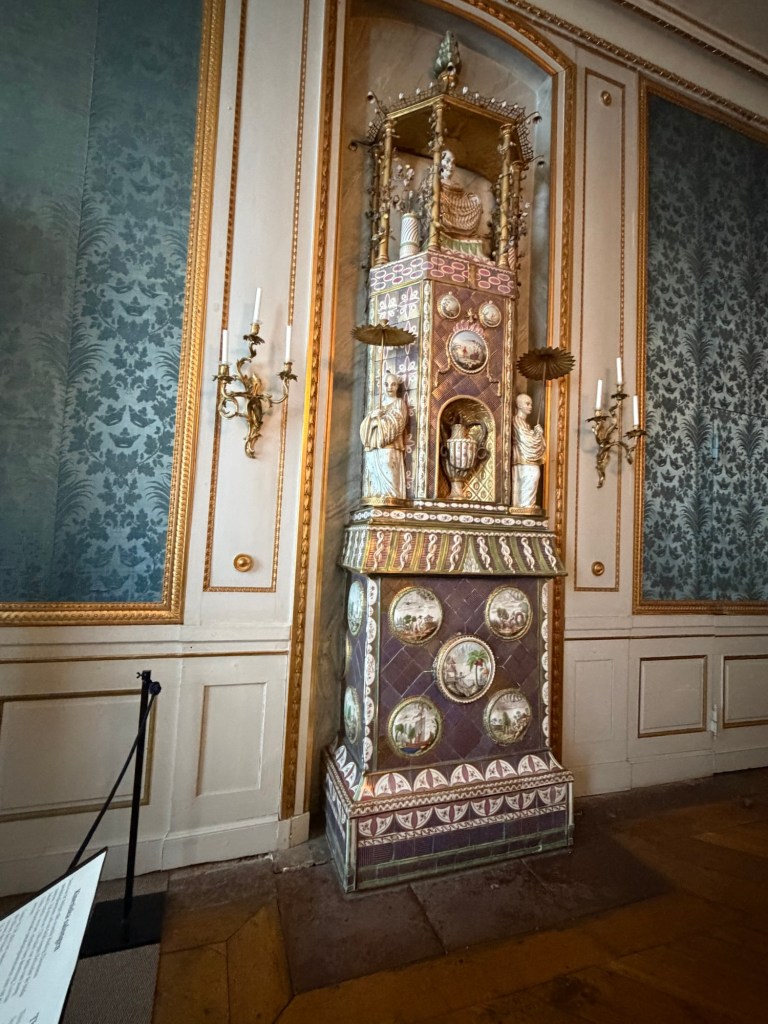

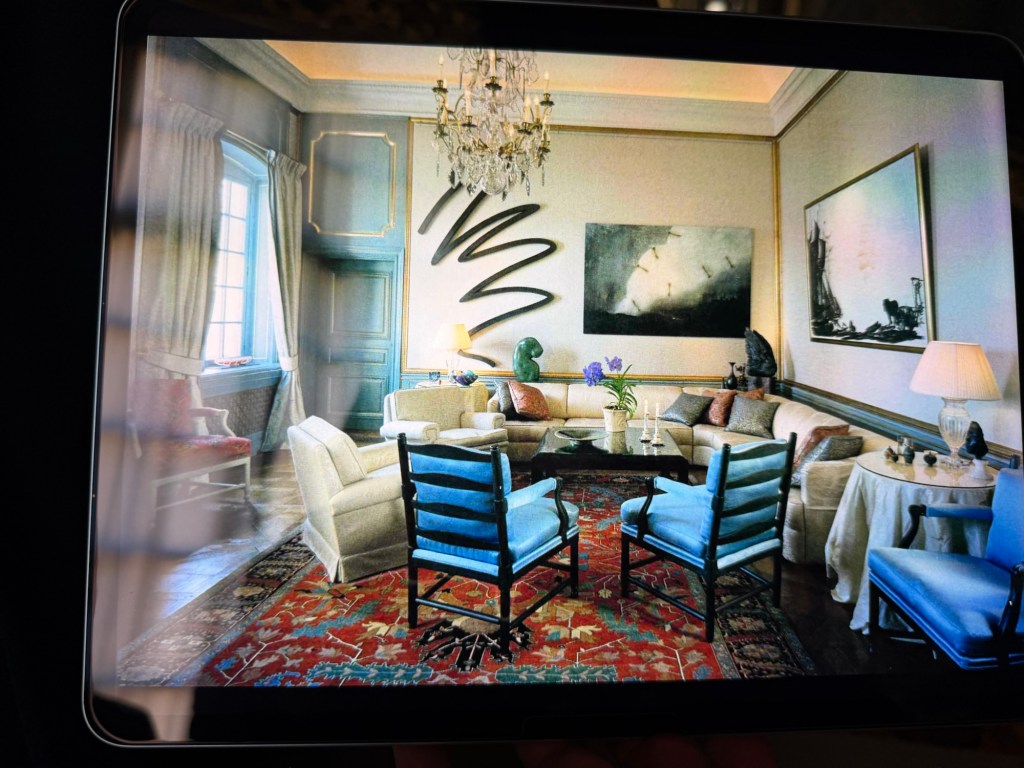
From the palace it was a short walk to the theater. It had been built by the Louisa Ulrika, who married Adolph Frederick of Prussia in 1744 and became the mother of Gustav III in 1766. She became queen in 1751 and died in 1771. She is credited with bringing culture and the theater to Sweden.


The theater held 200 people in courtly attire— each lady needed two spaces for her wide bouffant gown. There were many performances in spite of the heat in the windowless room with burning candles for lighting. Adding to its attraction was the underground machinery that provided sound effects to the performances.
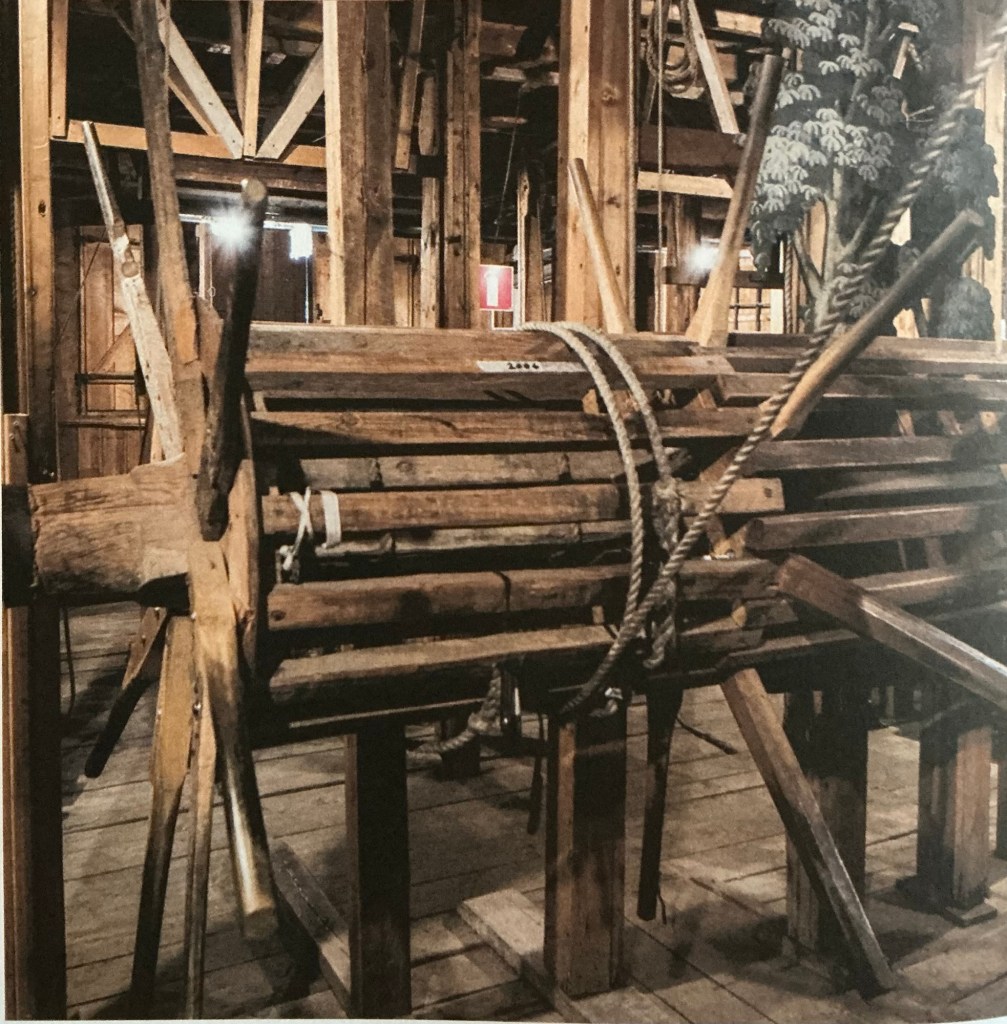
One could hear thunder, rain, lightening, and be provided with many scene changes, all done by 30 or more strong men pulling levers and ropes beneath the stage. By 1800 the theater had fallen into decline and was being used as a storage room. Completely forgotten as a theater until 1920 when it was rediscovered and promptly reopened.
Today it seats 450 people in normal wear, but is still very hot as there is no AC and there are candles through the building. Every 45 minutes the program stops, everyone exits the building, the candles are replaced and people cool off. The hall is open for 10-20 performances 2-3 weeks each summer. The original equipment is still in use, but is very fragile so it is used carefully and sparingly.
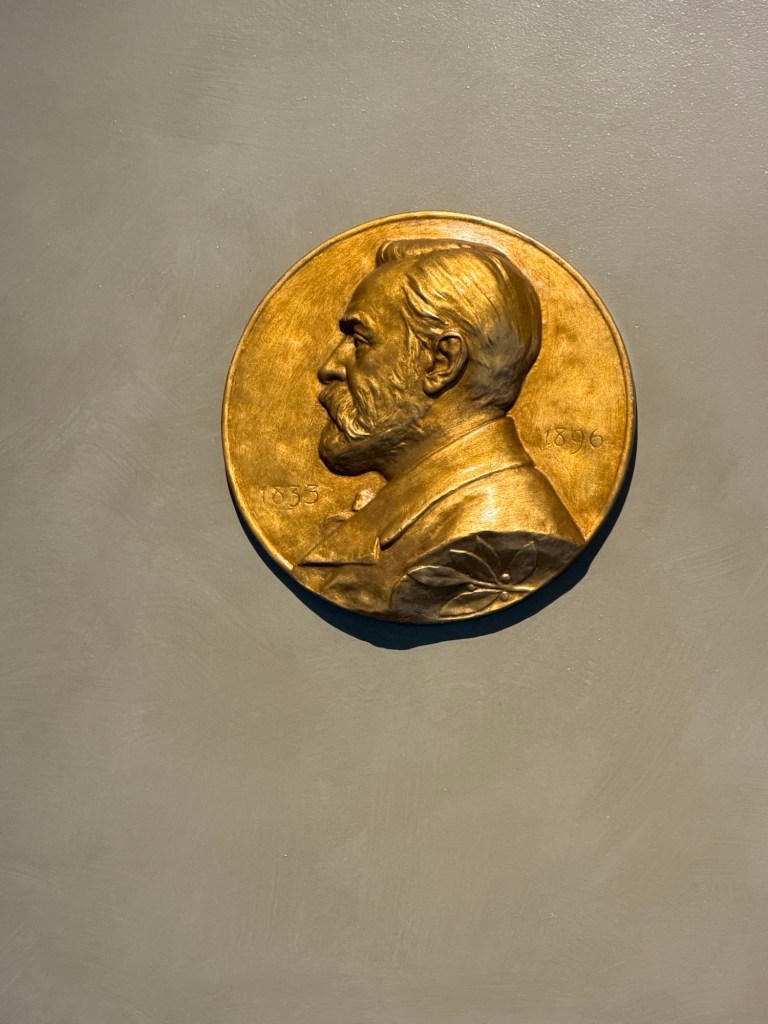
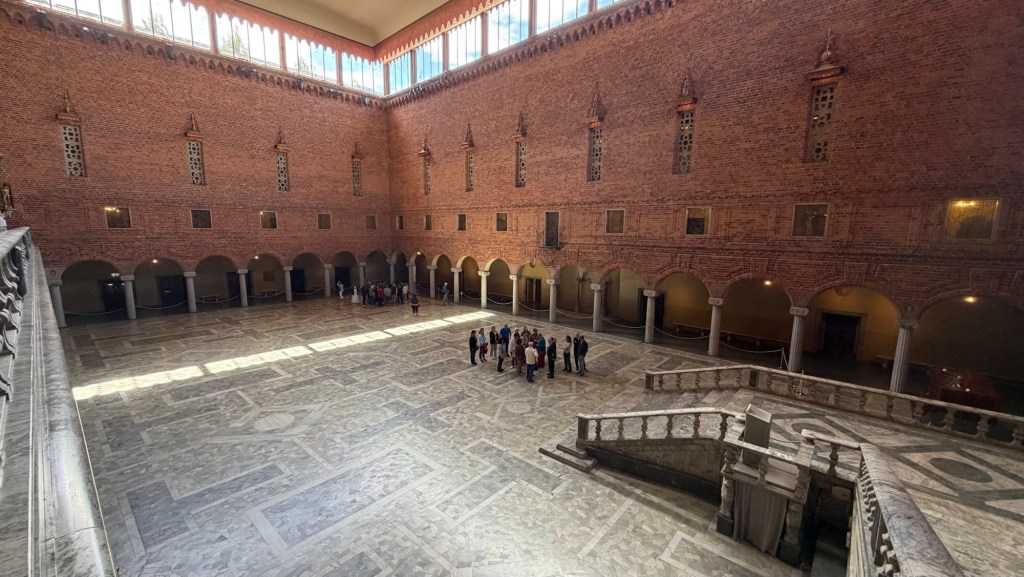
Eventually, we left the palace grounds and headed back to town to visit City Hall, the sight of the annual presentation of the Nobel prize to the new laureates. The Hall was built between 1911 and 1923 with the intention to have a medieval look, and it does look that way to me. On the interior wall is a cameo of Alfred Nobel (1833-1896).


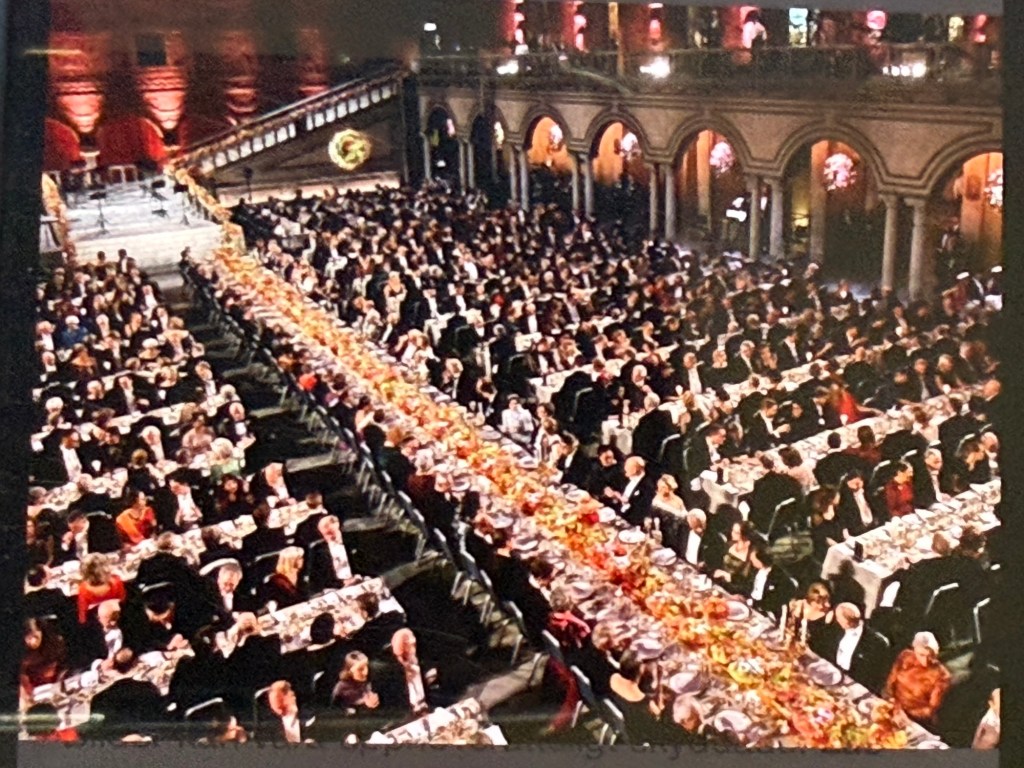
The large hall in the center of the building, called the Blue Hall, is where the banquet for 1.300 people is held.

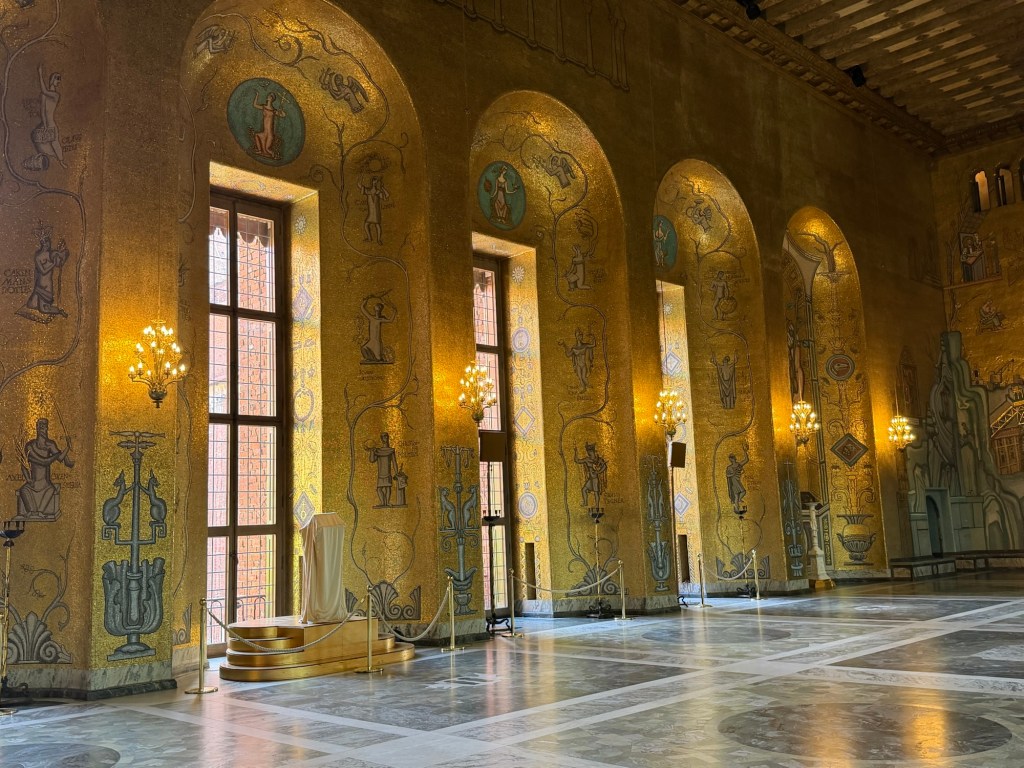
Later, dancing takes place in an upstairs room, called the Golden Hall, that is nearly as large as the banquet Hall and has beautiful tiled walls that shimmer like gold.


From the City Hall, we headed for the Swedish fabric and interior design shop called Svenskt Tenns to have a look. We saw lots of lovely and very colorful fabrics made into many products from sofas to pot holders. I took a liking to the fabric on a certain place mat until I learned it would cost me $600 to buy 8 placemats. Even $54 for one pot holder was too much for my taste. Nice place to love and leave as my mother would say.
That was the end of our time together and, back at the hotel, Gabriela and I bid good bye.
Mark and I had dinner in the hotel and took an Uber to the concert for which we had tickets. We both had Swedish meat balls with lingenberries. The concert turned out to be twangy, country and western singing and guitars. We lasted about 3o minutes and went home to bed. My fault for not alerting Martina to our musical tastes.
Tomorrow we pack and leave this Grand Hotel for very new horizons, Svalbard.