
Friday, June 19, 2026
By the time we reached Leknes the clouds had lifted and we could see the local mountains. Regardless, our flight was delayed. Thankfully, we did not miss our connection to Bergen.
An airport transfer driver, Gerald, drove us to the hotel and told us the population of Bergen is 295 thousand.
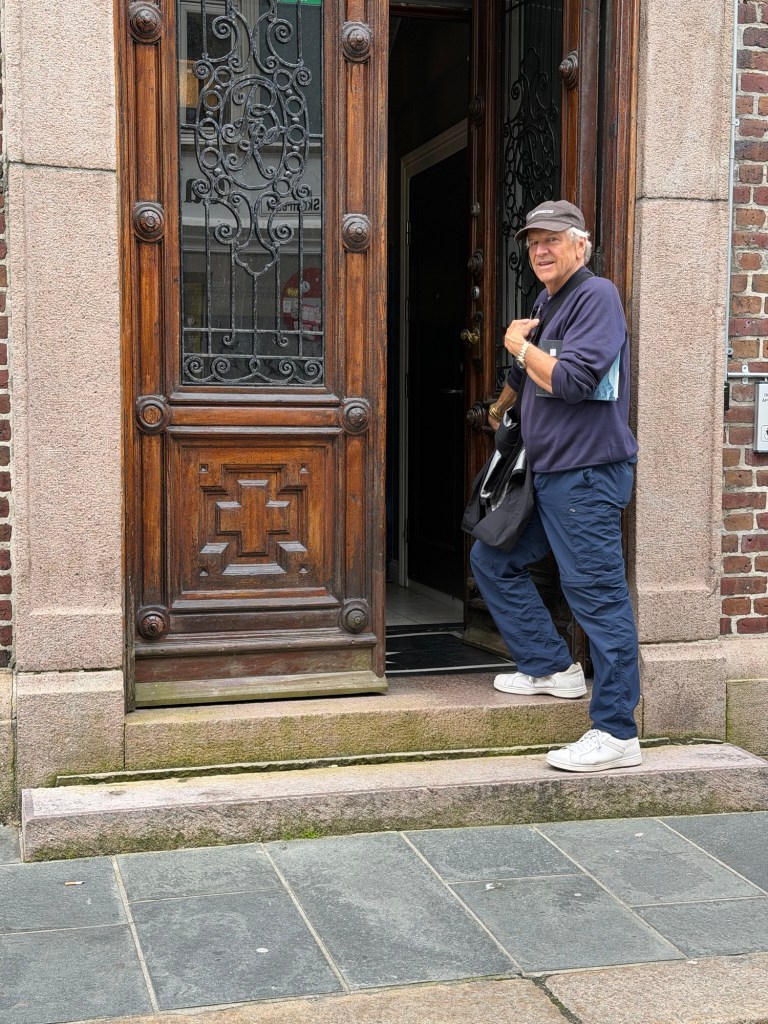
Our hotel, Opus XVI, was originally designed and built in 1876 to be Bergen’s largest bank. It has a distinctive brick facade and the hotel preserves its unique history while blending it with contemporary features.

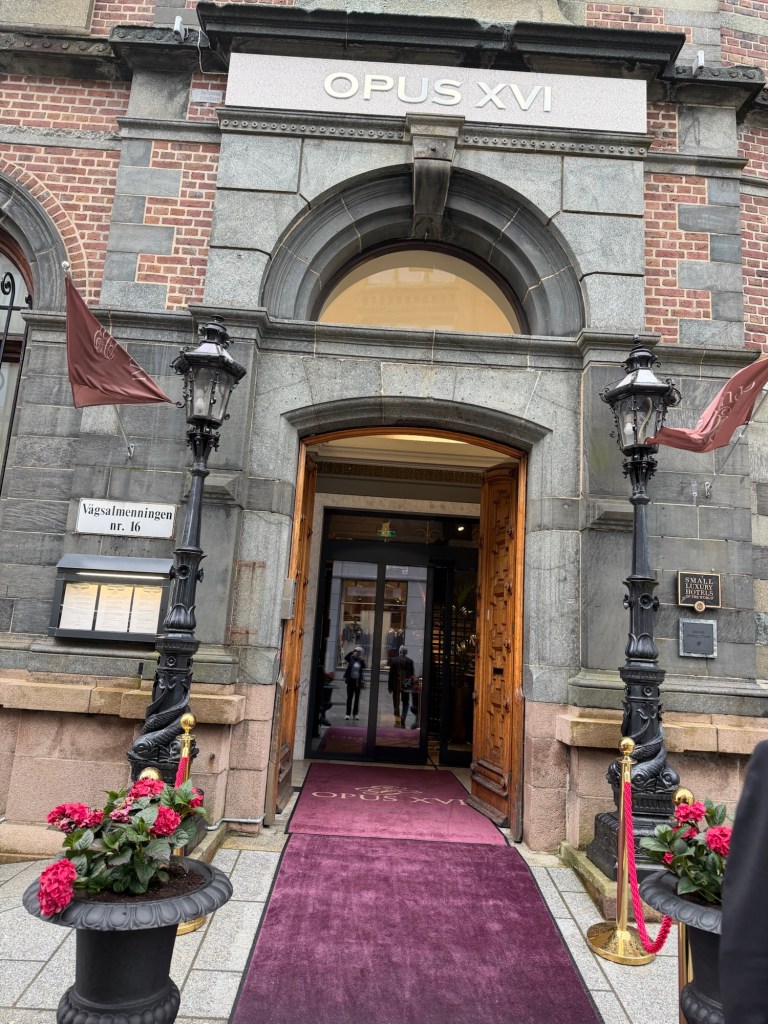
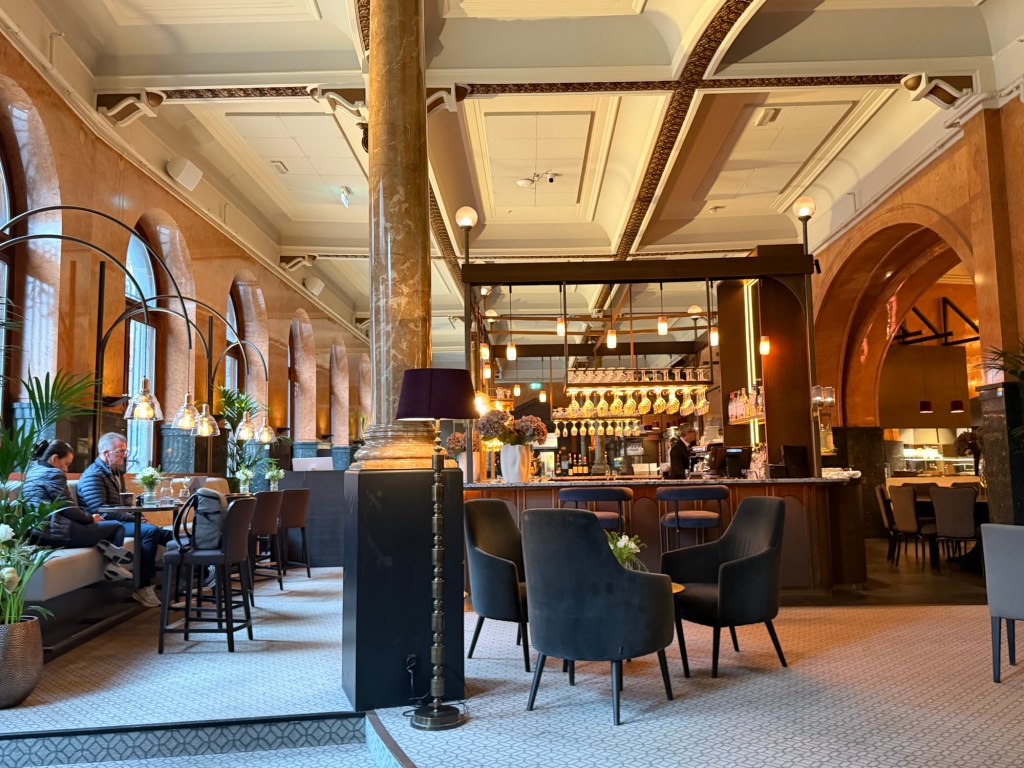
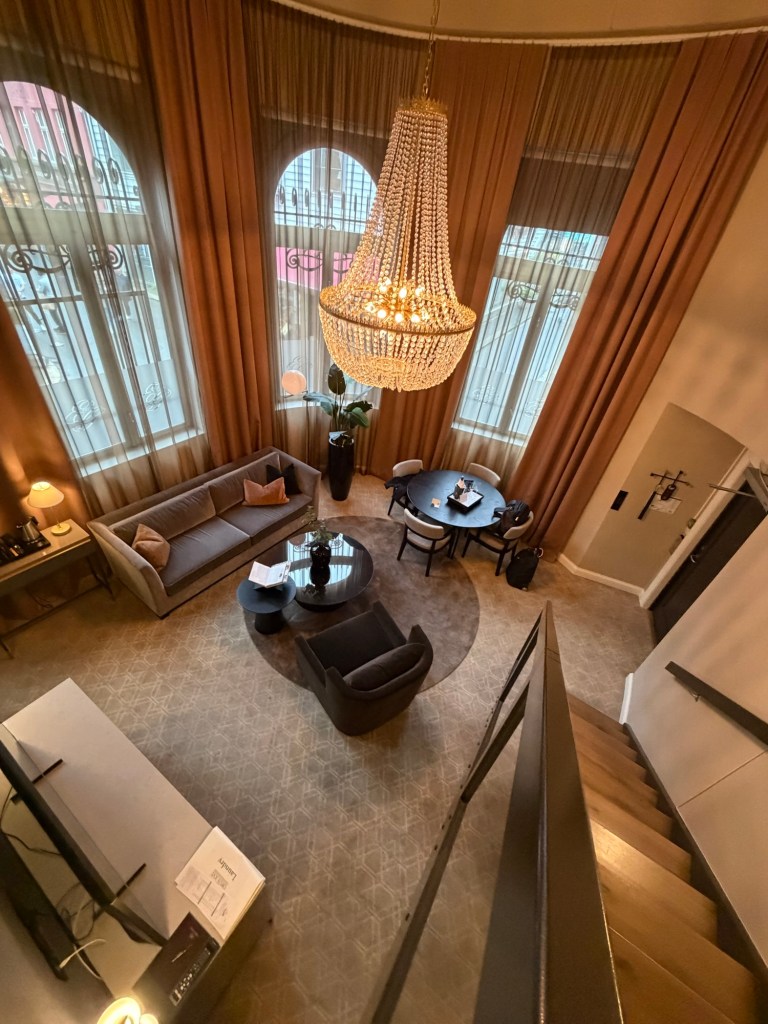
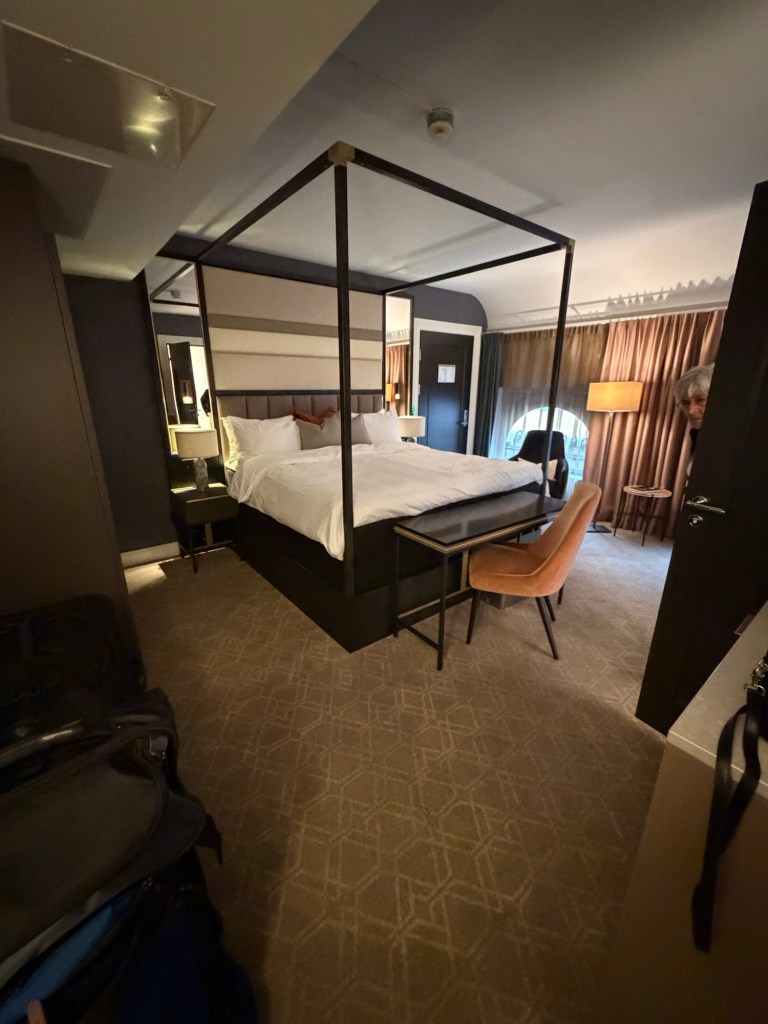
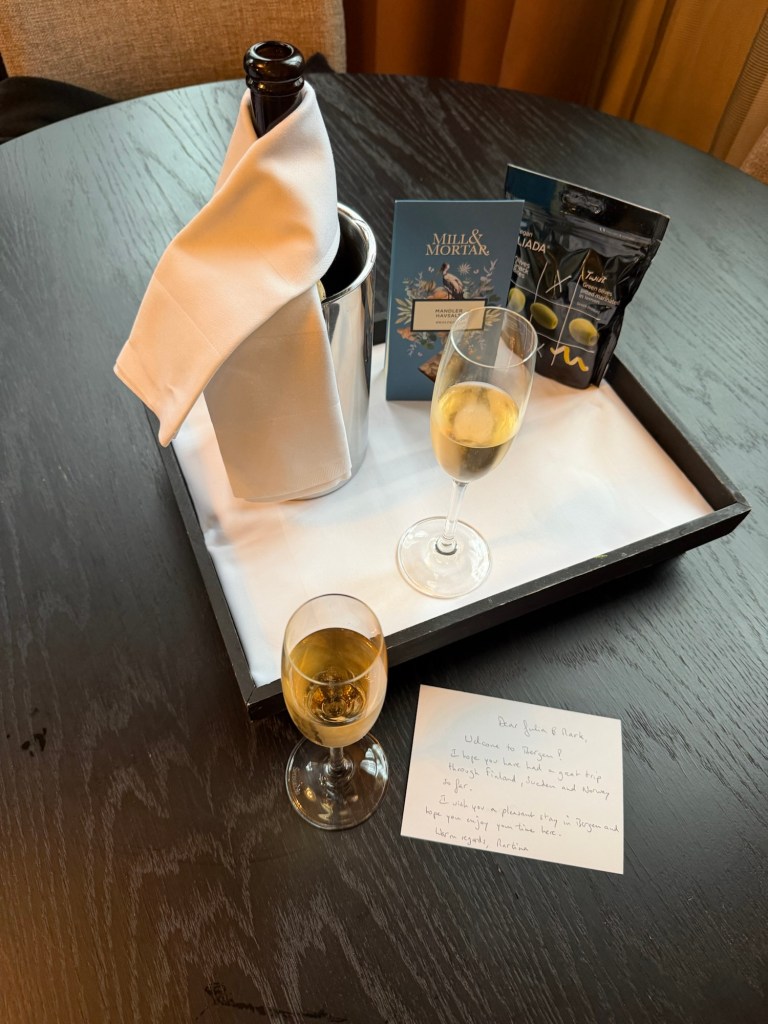
The front desk upgraded us and said they hoped we like it. We wondered what they were talking about until we entered our room from a private exterior side door and found ourselves in a 2 story suite with the bedroom upstairs and a huge chandelier in the living area. We concluded that we had been given the office of the bank president. Martina, meanwhile, had provided us with a bottle of champagne and a note welcoming us to Bergen. We certainly felt welcomed even if the weather outdoors was not as warm and sunny as we had hoped.
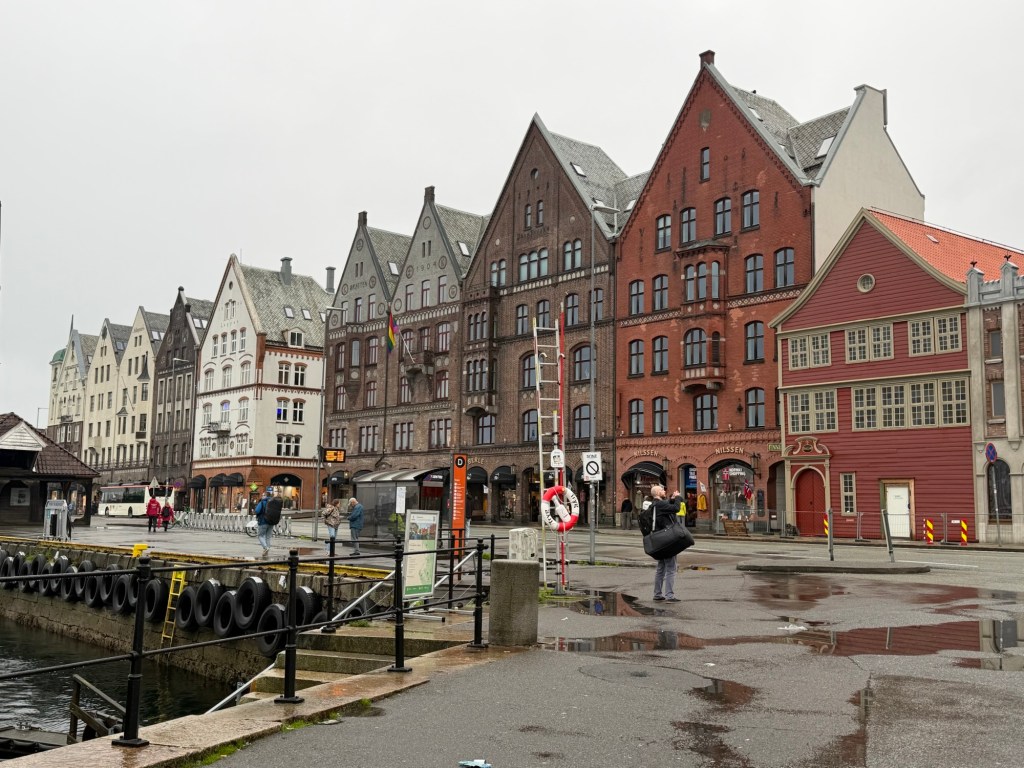

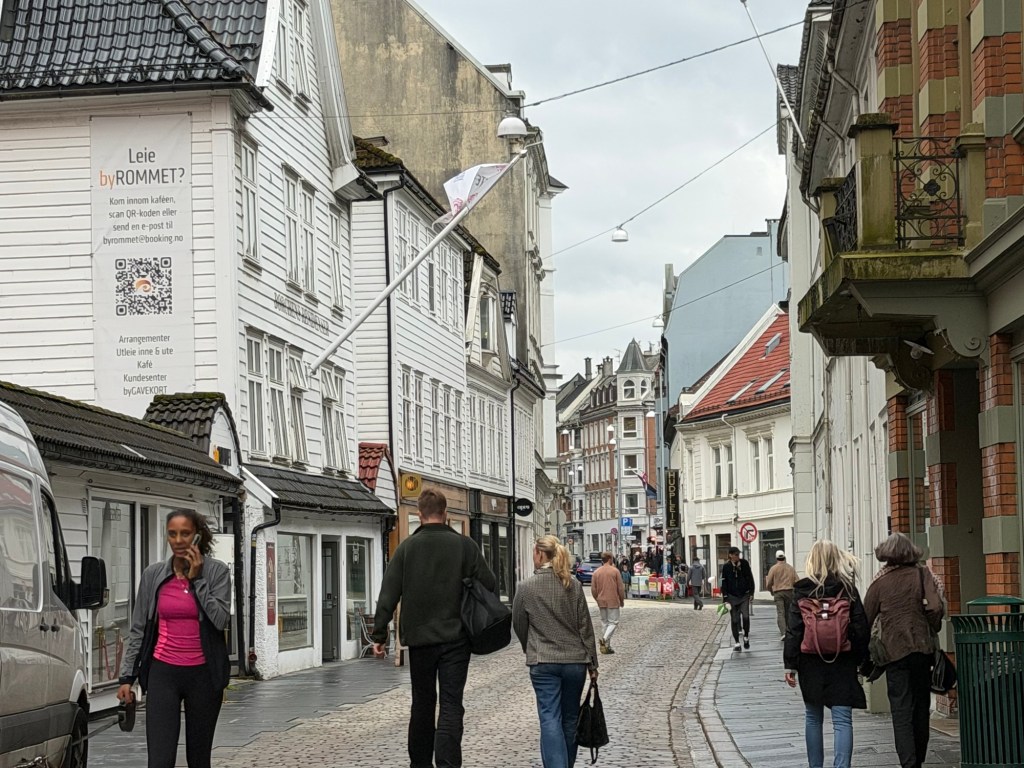

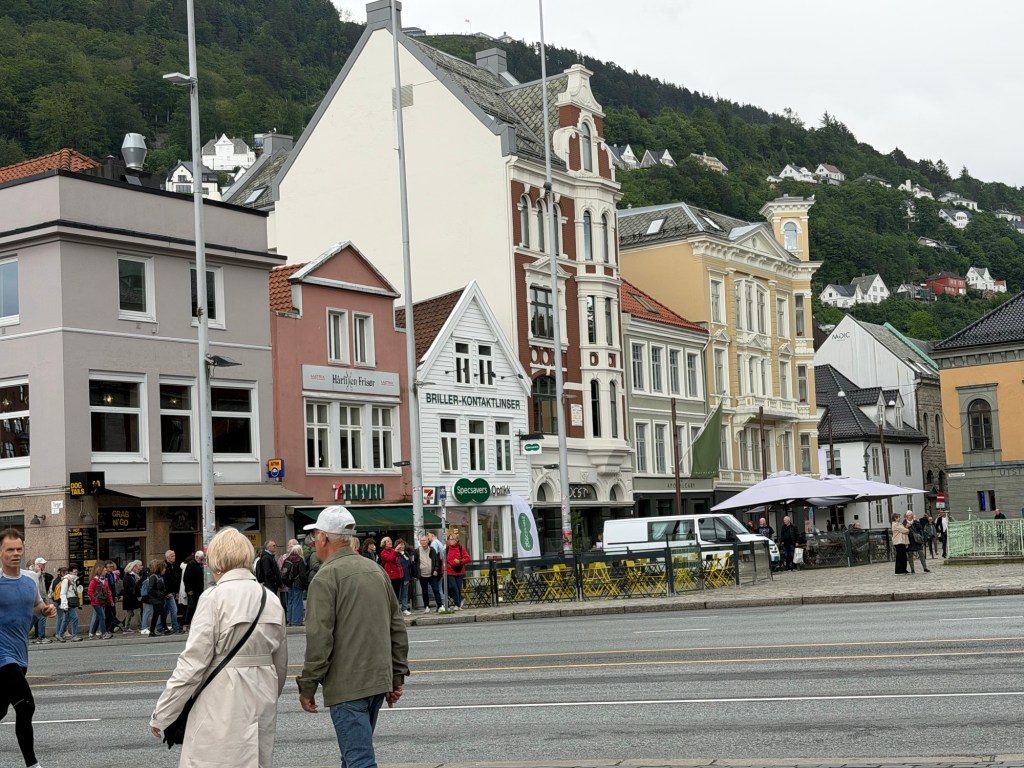


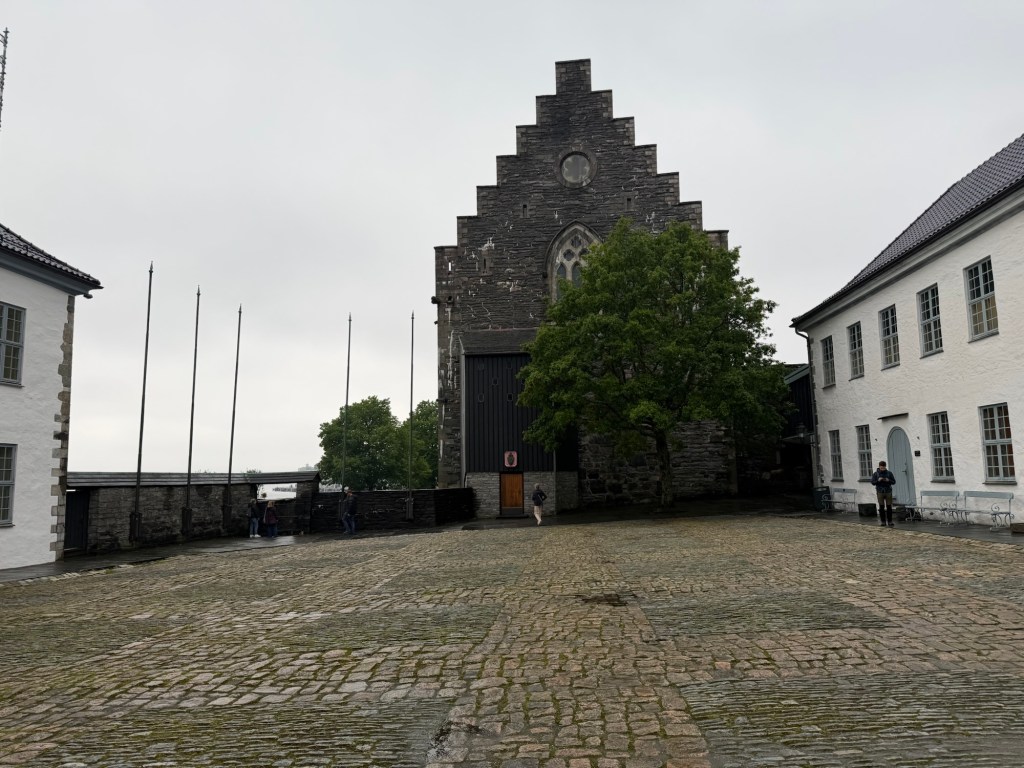
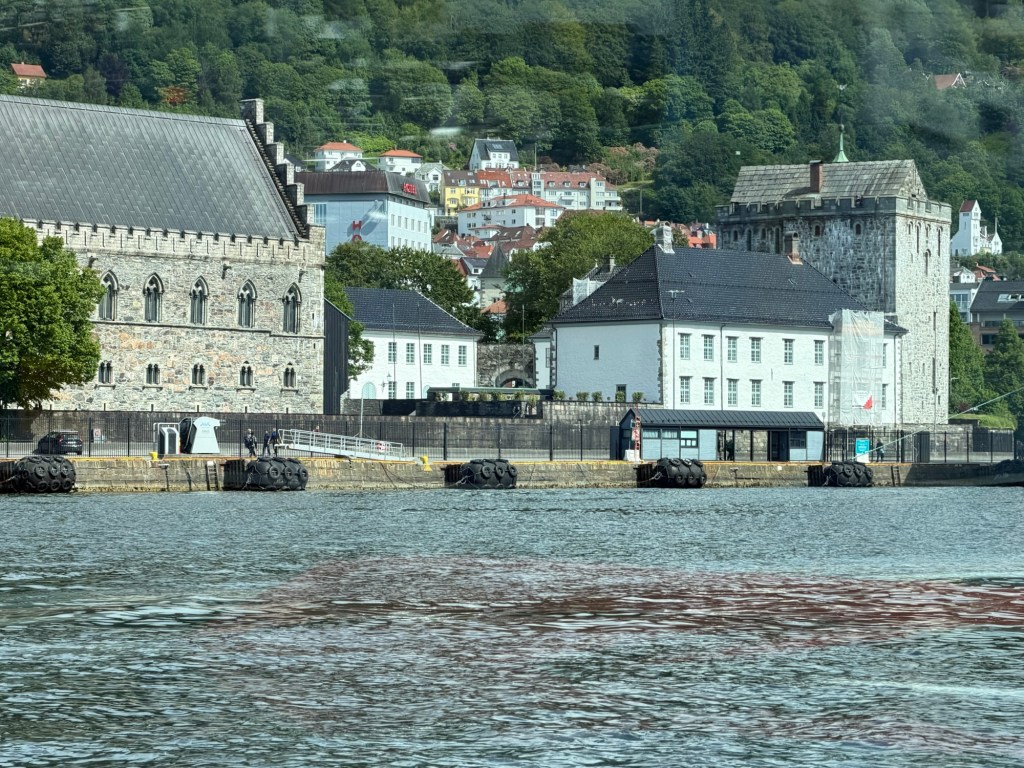
On a walk about the old town neighborhood we saw the Bergen docks with many boats of all sizes and a few very expensive yachts as well. Then we walked through he fish market and along several narrow alleys that have preserved old European history and a 1000 year old church called Haakon Hall Church
At 7pm we arrived at our dinner appointment at the Japanese Restaurant, Omakase. It was about a block from our private hotel door. We were invited to have a drink and wait until the chef was ready. We wondered why, until 12 of us customers were ushered into the restaurant
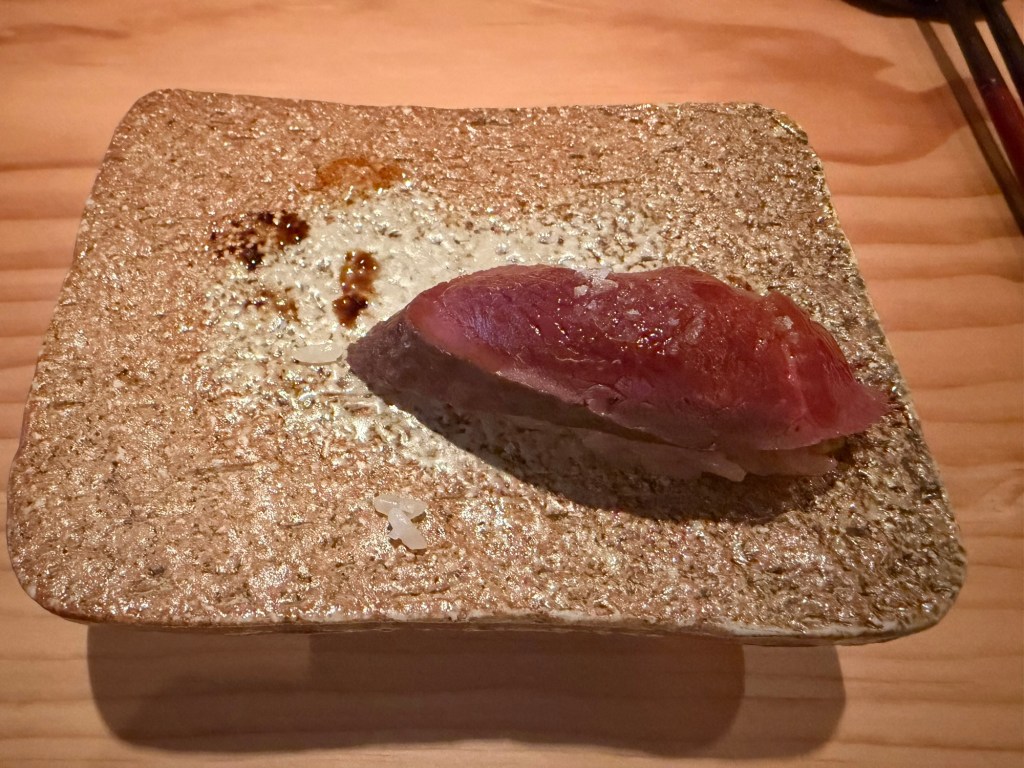
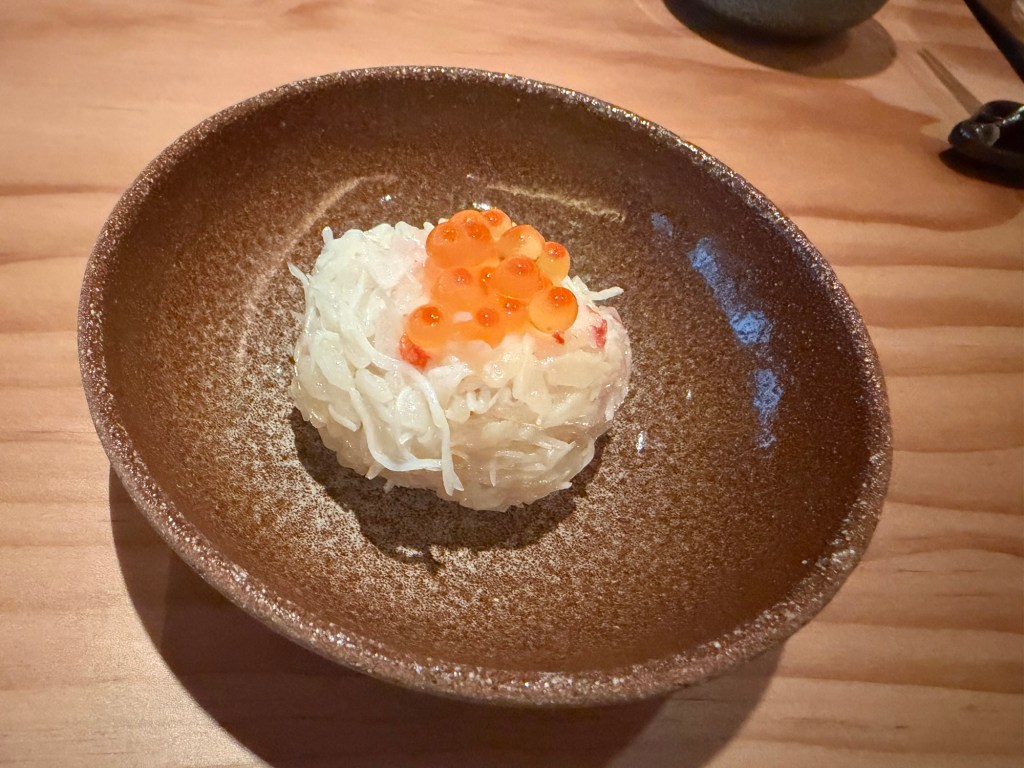
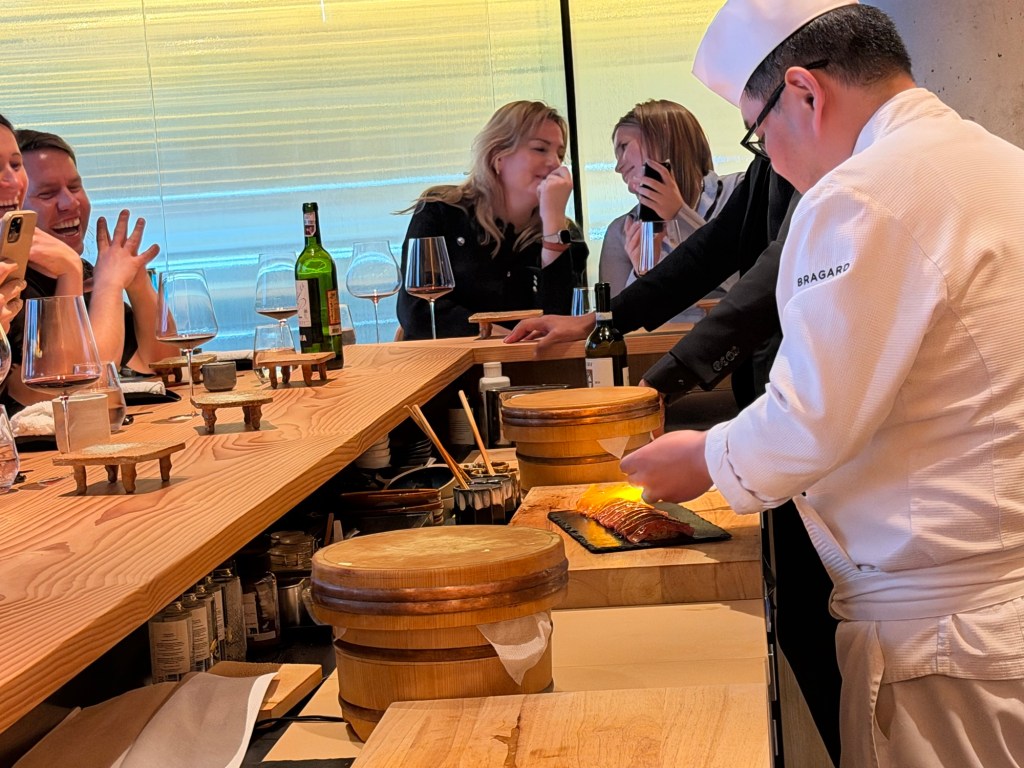
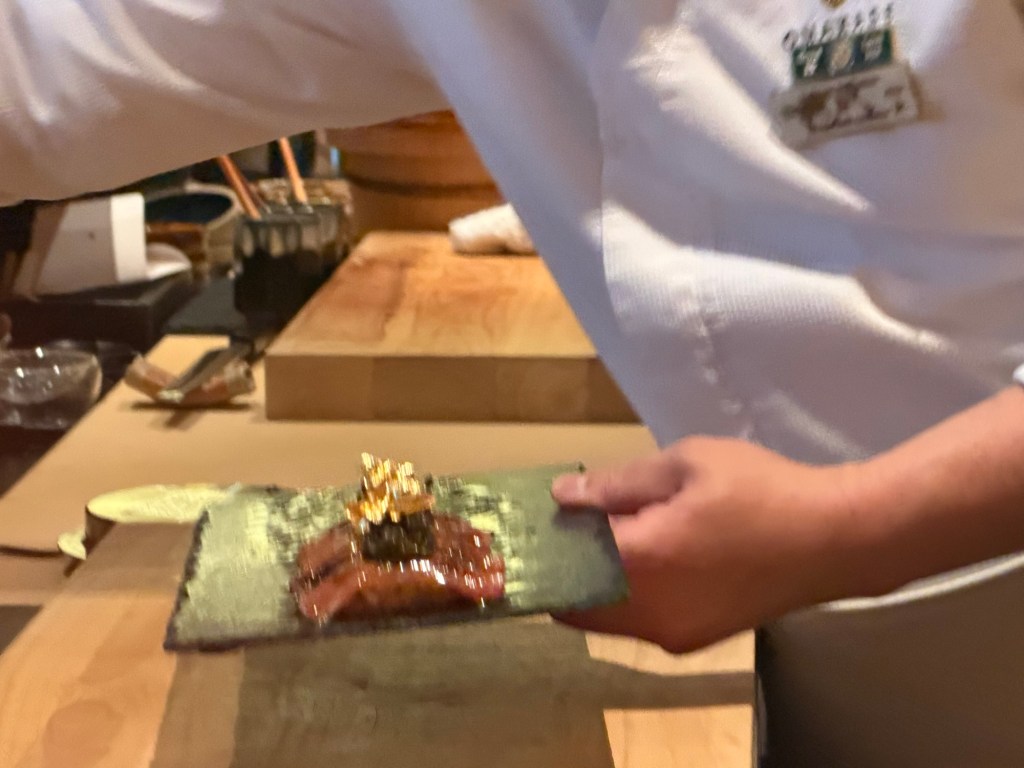
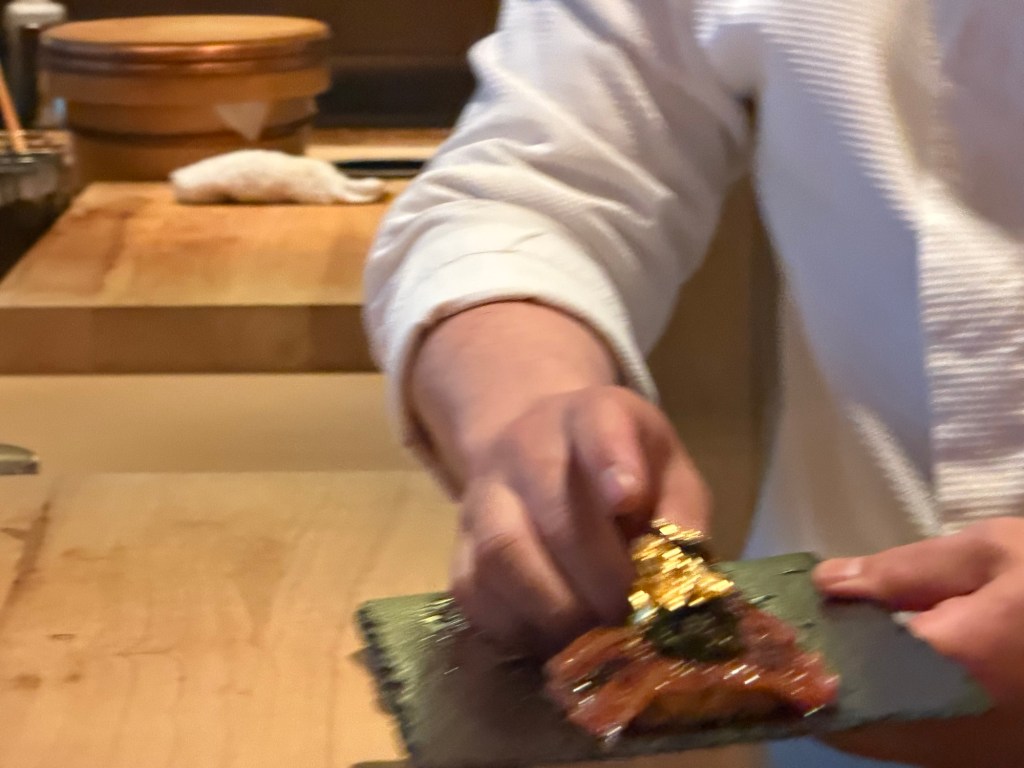
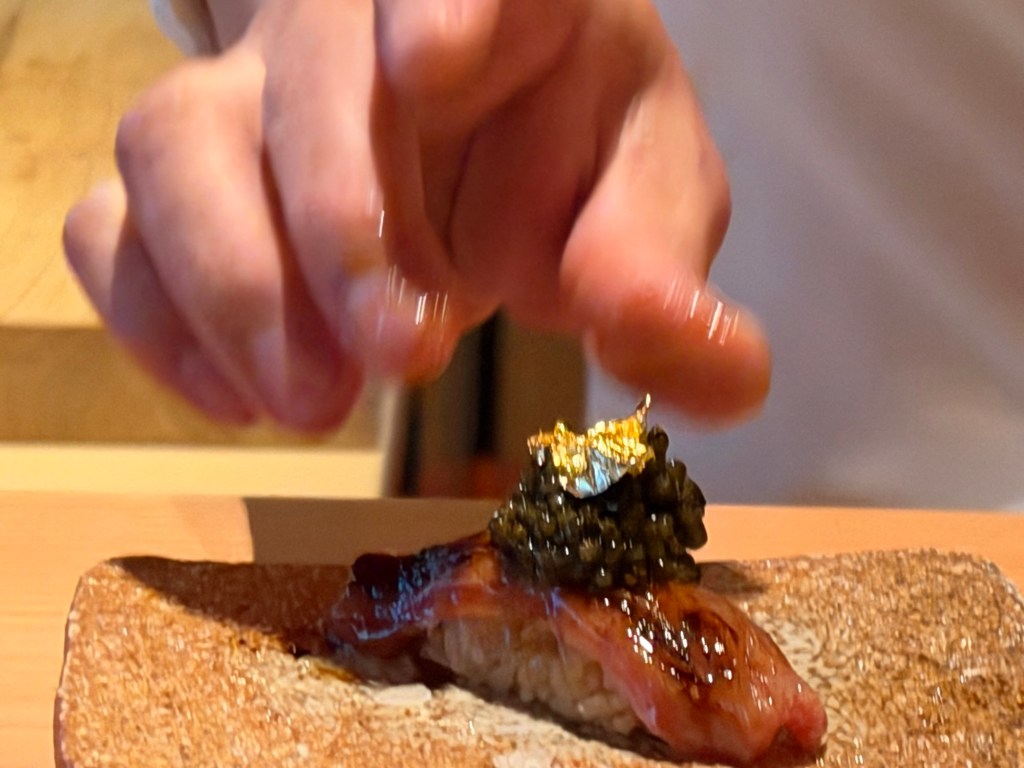
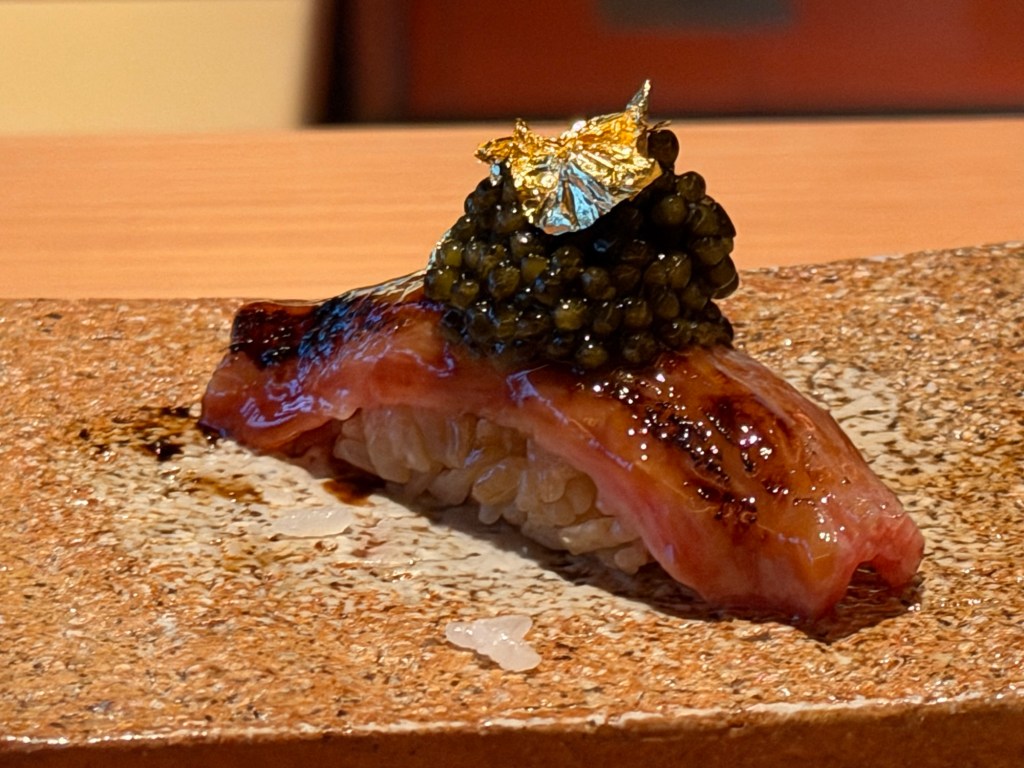
And seated at 12 stools in a sushi Style environment. At about 7:45, the chef appeared and began making different sushi dishes. Each different piece of sushi was excellent and presented with a flourish in a measured fashion. We learned that the chef has a Michelin Star, which helped us appreciate his process better, All the sushi presented was fish of one kind or another until the last two items which were reindeer steak and wagyu beef, both of which were beyond excellent. The wagyu was presented with caviar and gold leaf. A real WOW. It was 11pm when we got into bed. The latest night we have had on this trip.
Saturday, June 20, 2026
We met out guide, Gustav, at 9am and head out walking into the damp overcast day. We walk back through the old Town reviewing the pointy roofed houses you see above. They were built originally as offices for the Hansiatic League, a merchant guild in medieval Europe. The whole district burned to the ground in 1959 and was rebuilt in a couple of years.
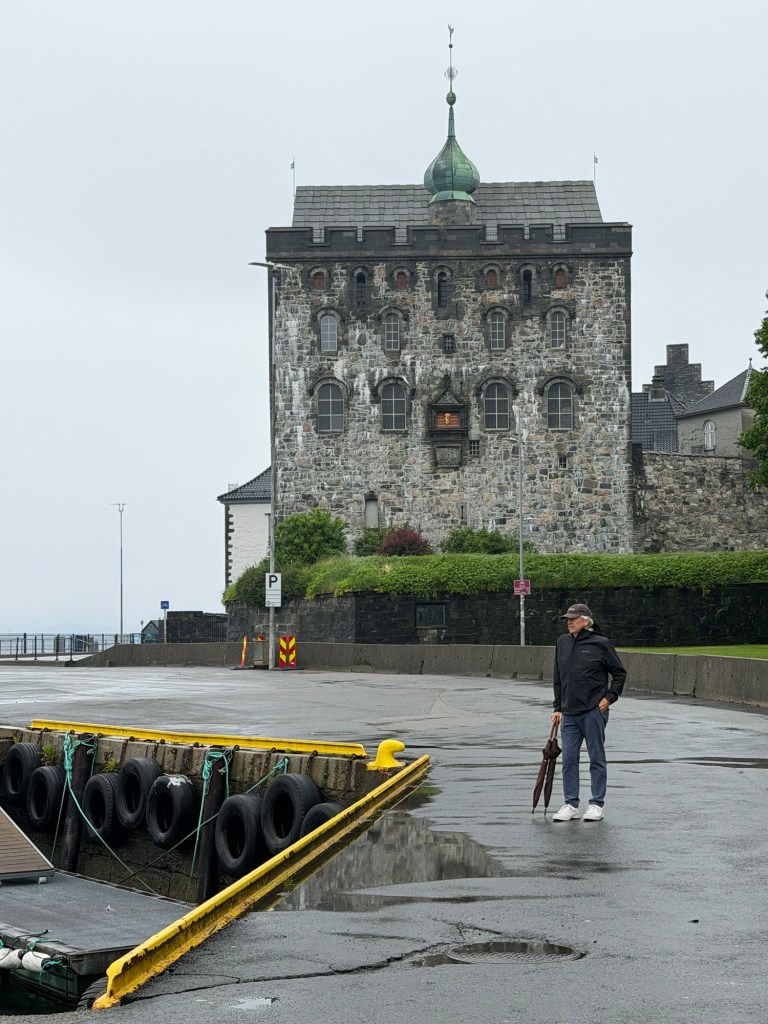
Meanwhile, Fort Bergenhus Festning was built in 1150 and, being made out of stone, never burned down. The country was governed from here until 1299, when Oslo became the capital.
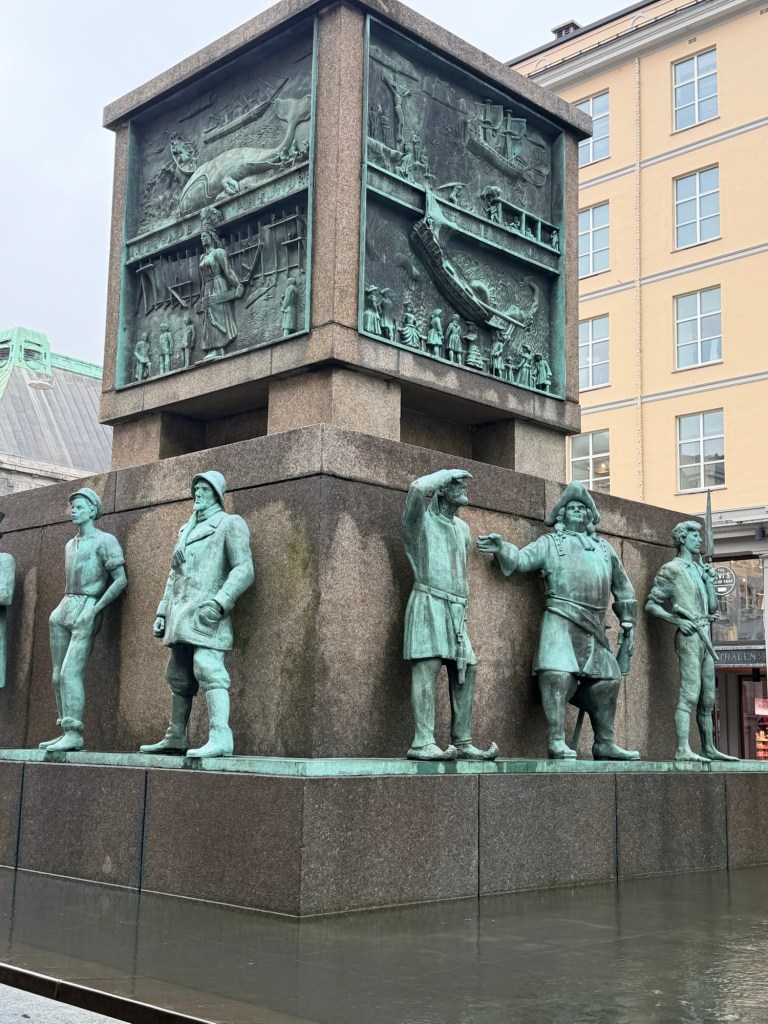


We were supposed to take the funicular to the top of the mountain, but the fog was too thick so we cancelled the ride and headed to Edward Greig’s (1843-1907) home and museum. We walked around his home because there is no interior access and then down to his piano room in a small red building at the bottom of a pretty green hillside. Apparently he created a lot of his music here.


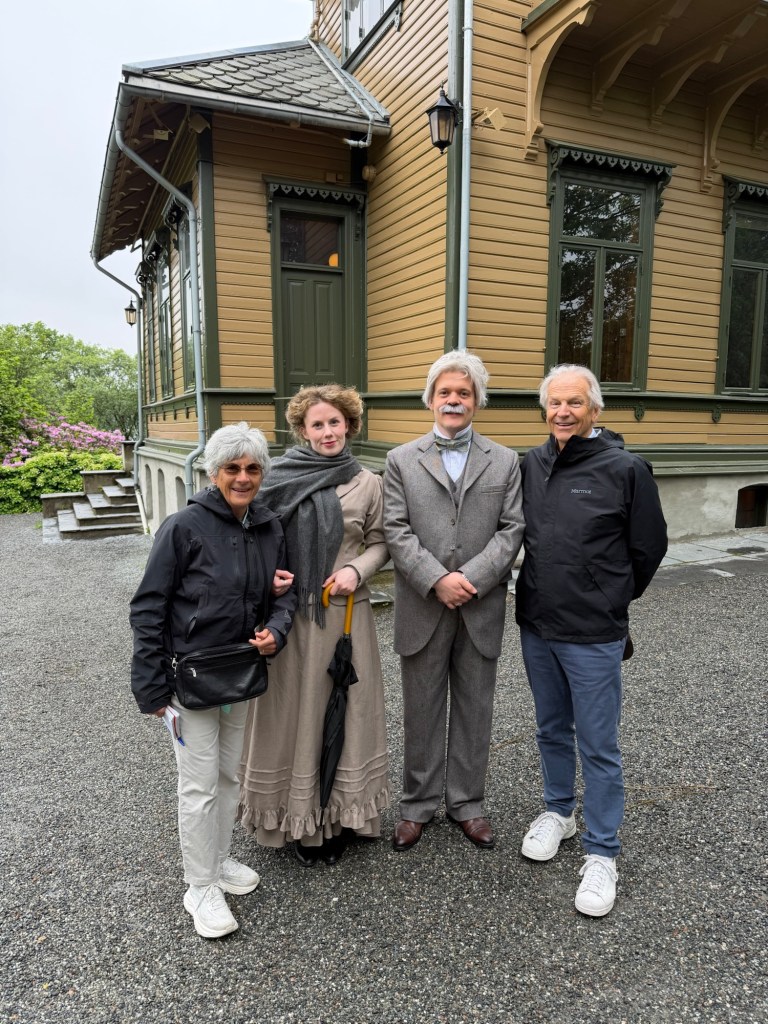

At noon, a young woman was to present a recital of some of his music in an accoustically perfect small concert hall. Our timing was perfect and we got to see Ellisiv Tandberg play some of Grieg’s music. She enchanted us for over half an hour, playing pieces such as Fairy Dance Op. 12, No. 4, and Butterfly Op. 43. No. 1, and more.
After her recital we went to a neighborhood eatery in a private home Gustav knew about and split an open face sandwich. It seemed the whole community was there for lunch. Quickly we went to the Saeverud house
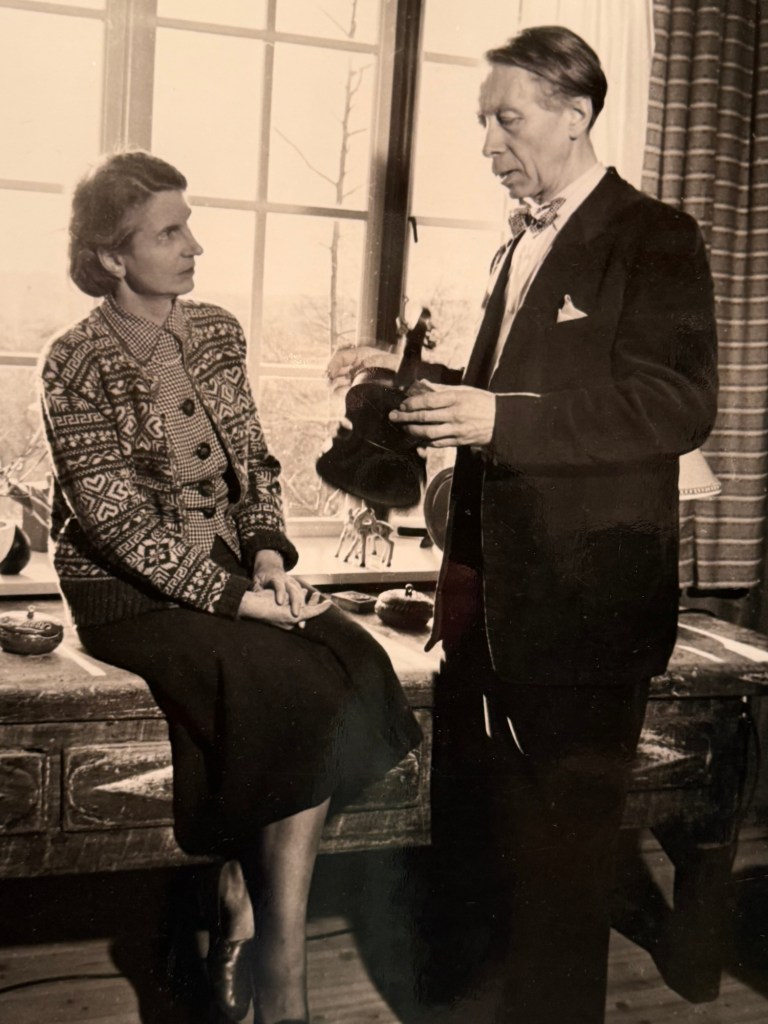

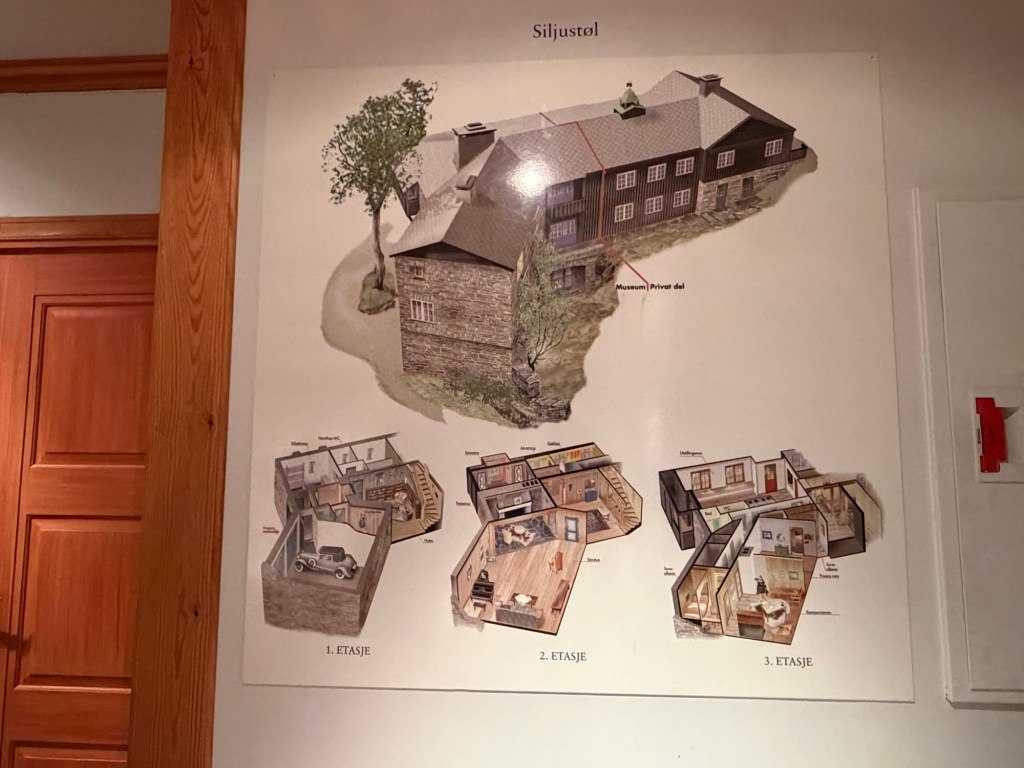
And we’re just in time to meet our 2pm private concert date at the home of composer Harald Saeverud (1897-1992). In addition to composing music for Ibsen’s Peer Gynt and the Ballad of Revolt, he wrote nine symphonies and strongly influenced the architect of his house in the process of building a 9000 square foot home with 68 rooms in Bergen. It is made with knotty pine throughout, has small windows, and cramped and antiquated rooms. Currently, about 2/3rds is being used by the family and the public is allowed to see about a third of it. He completed it in 1939 and lived there with his family until he died.
It so happened that we had been invited to a private concert with another lovely young pianist, Kei Solvang. It was quite an experience to hear two excellent musicians play these two famous Bergen composer’s music on the same day.


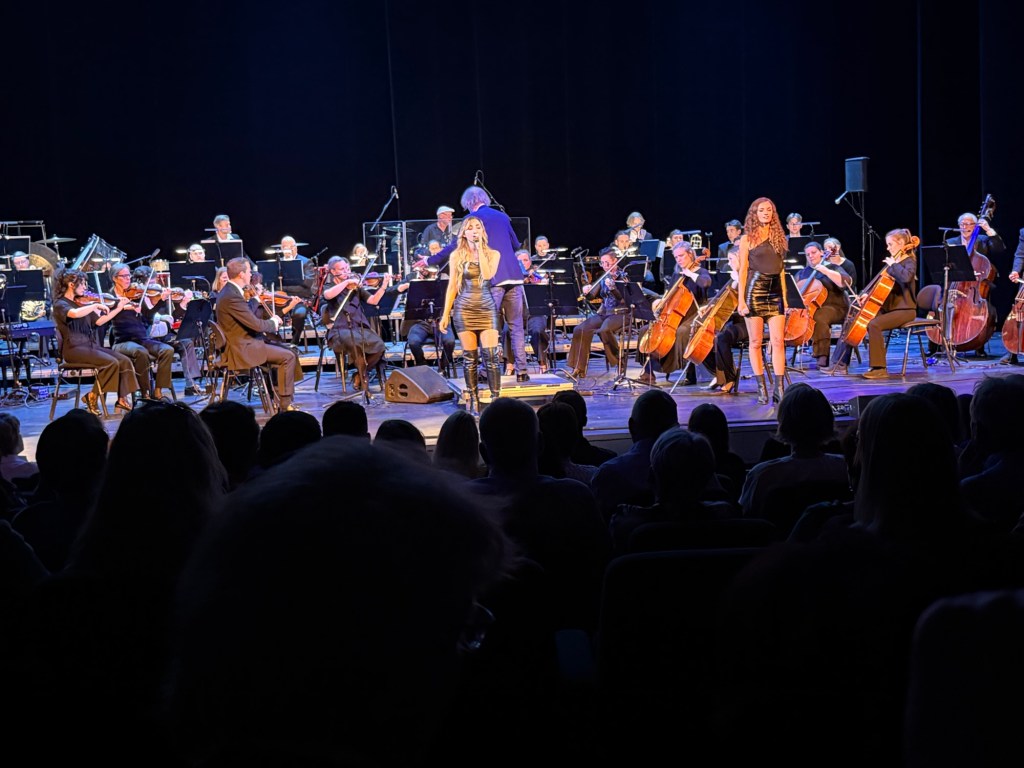
But, we were not finished with music for this day. After an early dinner at our hotel, we walked to a theater 10 minutes away to see a performance called Rock the Opera. I had hoped we would get a kick out of the music, but it was too much unpleasant, loud rock and not enough orchestra. We left at intermission.
Sunday, June 21, 2026 Summer Solstice
After breakfast, Gustav drove us to an open pasture about an half an hour away where we were picked up by a helicopter.
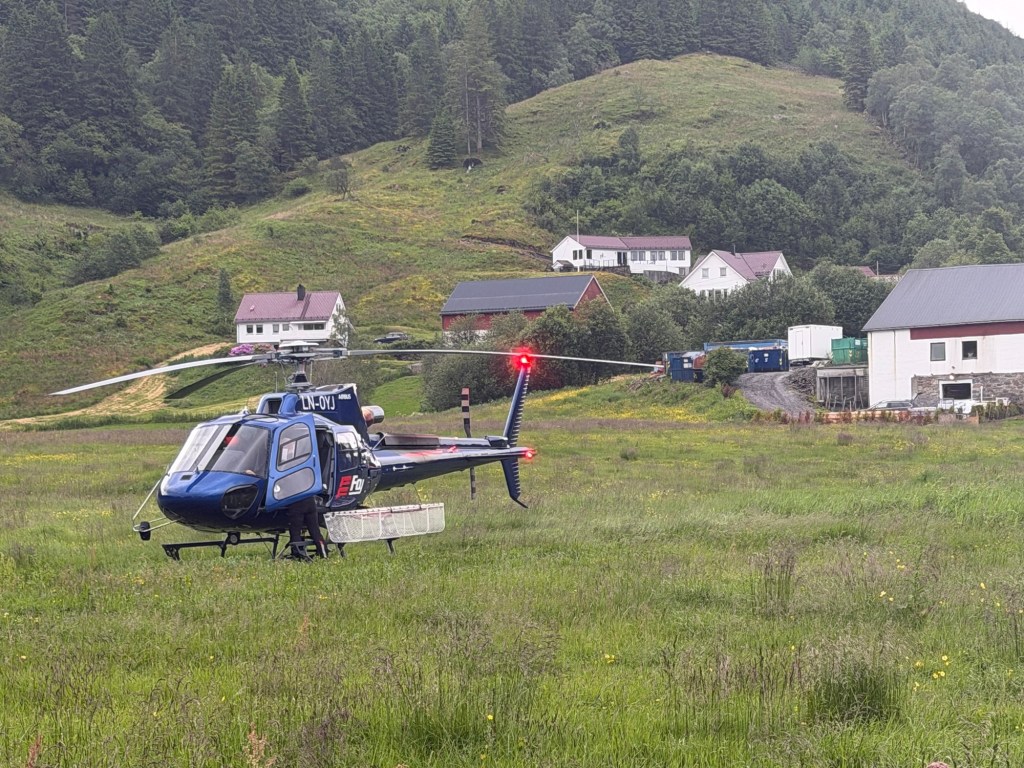
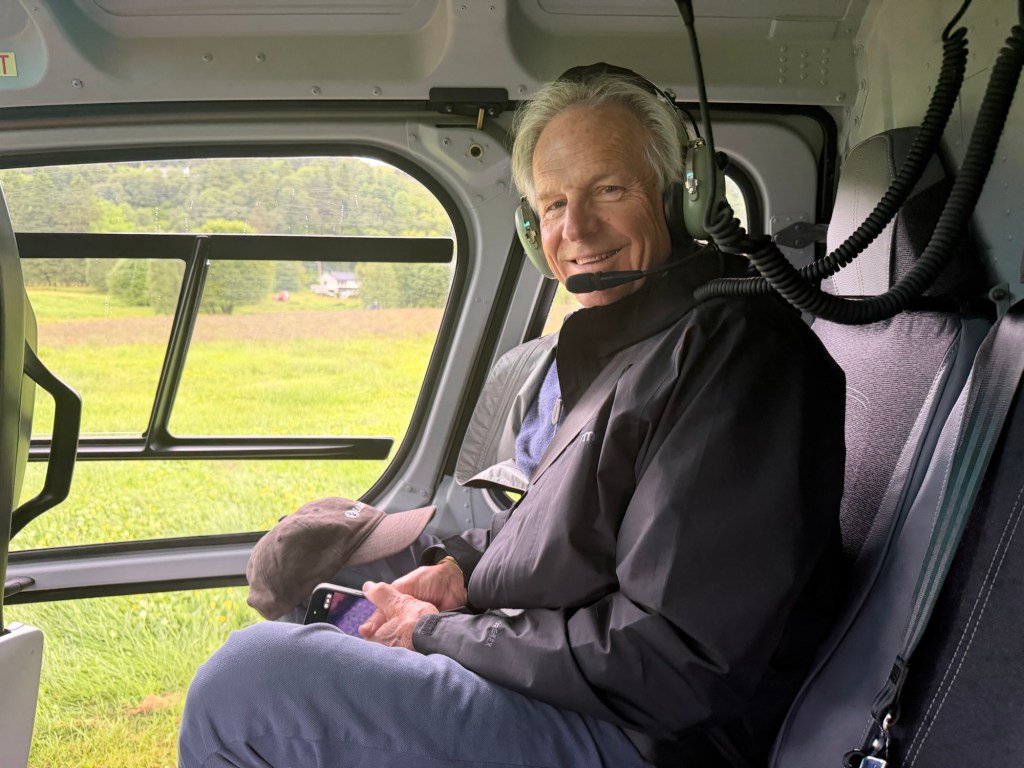
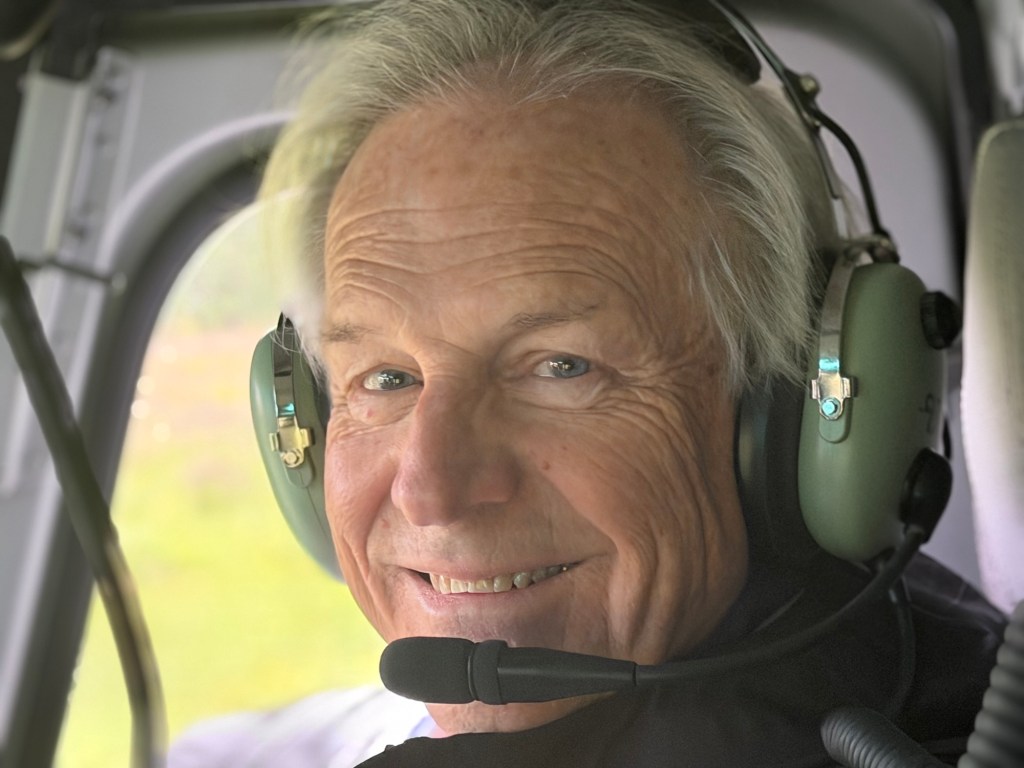
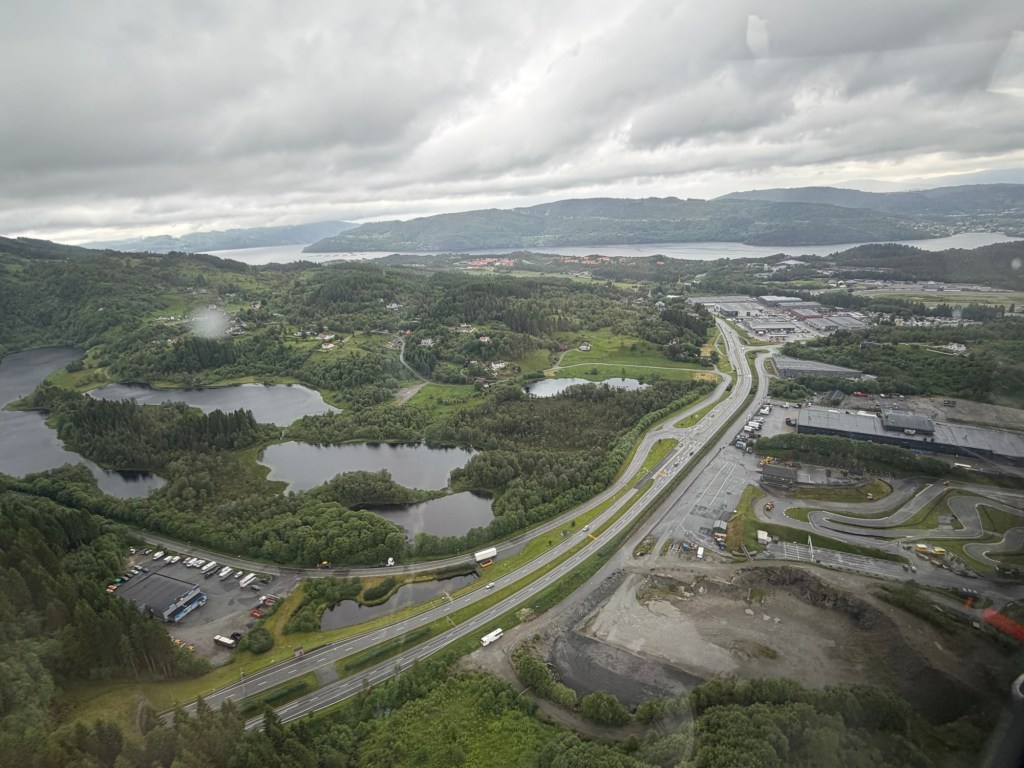
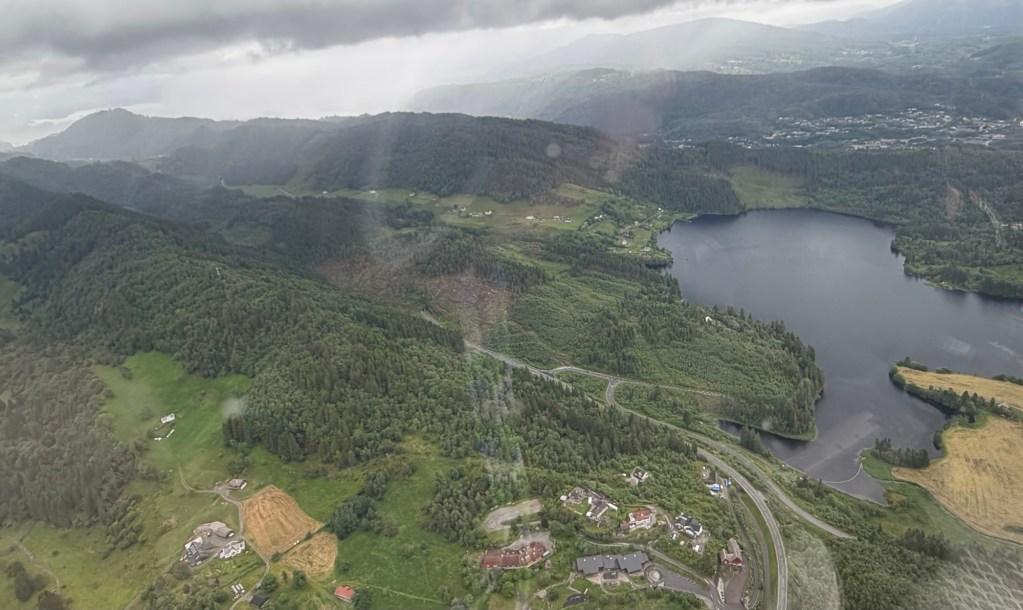

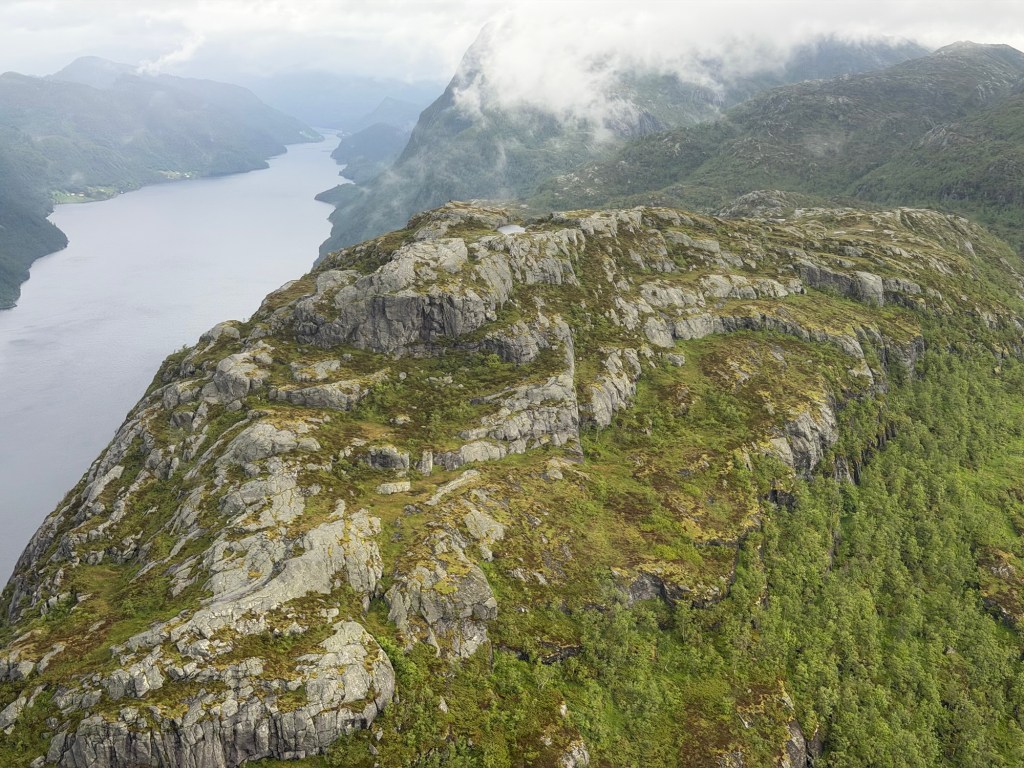
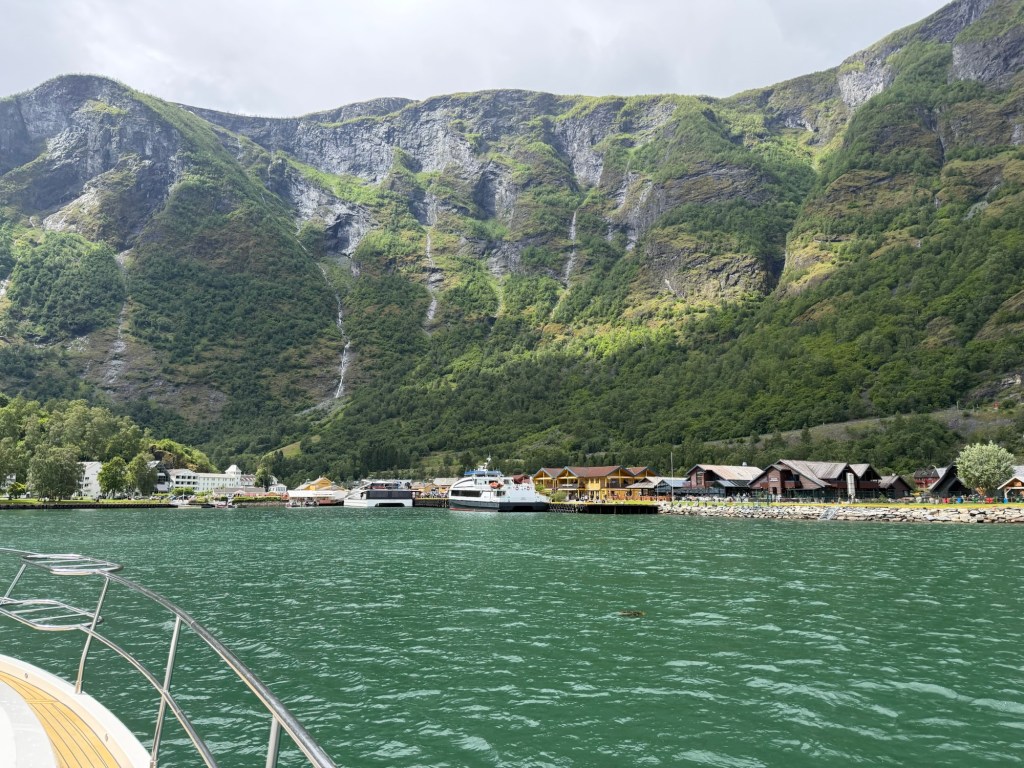
With brief introductions we were up and away flying over scenery, villages, lakes and fjords. There was very little conversation and we were left to appreciate what we were seeing without much information. We did learn that we flew over the longest deepest fjord in Norway, called Naerfjord. It is an arm of Sognefjord and connects with the arm of Aurlandfjord. Naerfjord is on the UNESCO list because it has been untouched for over 100 years. It was put on the list in 2006. Here are more scenes from the air

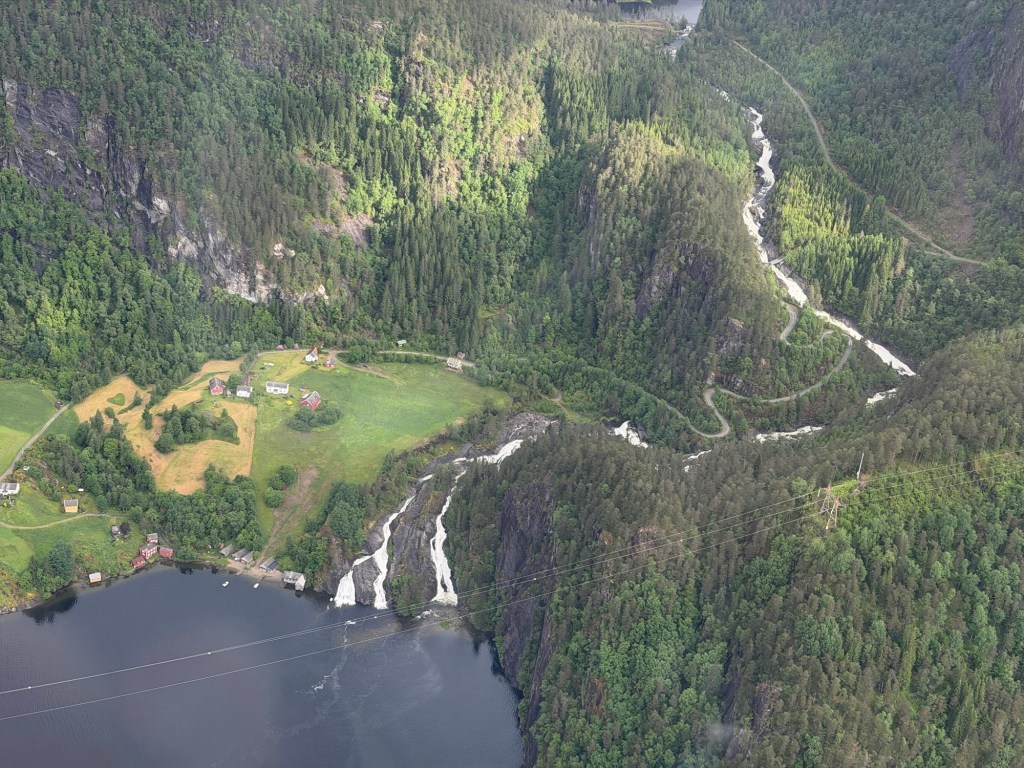
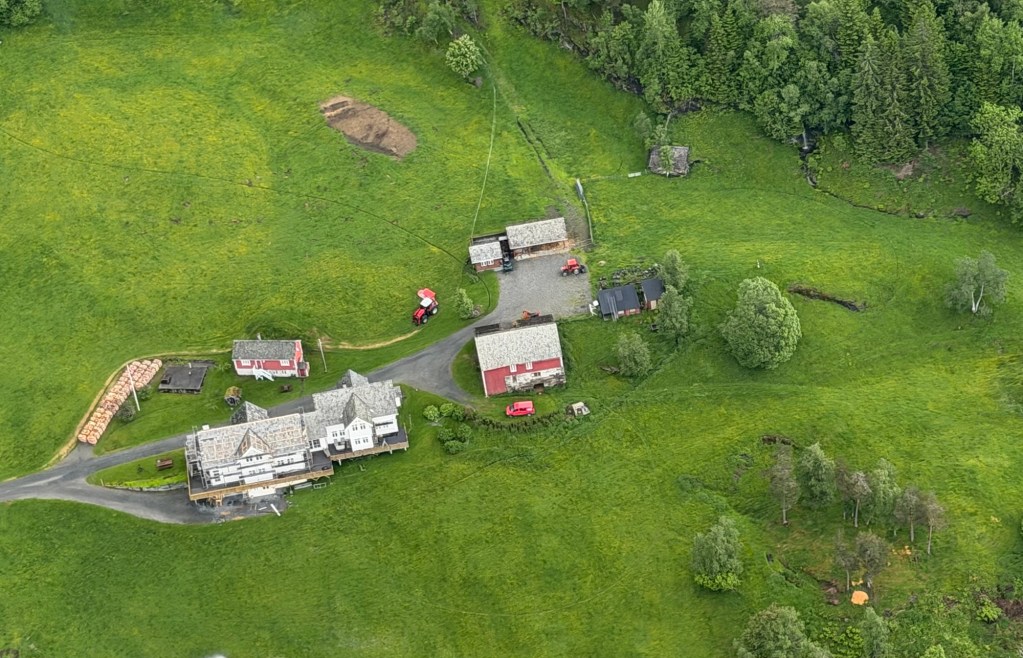


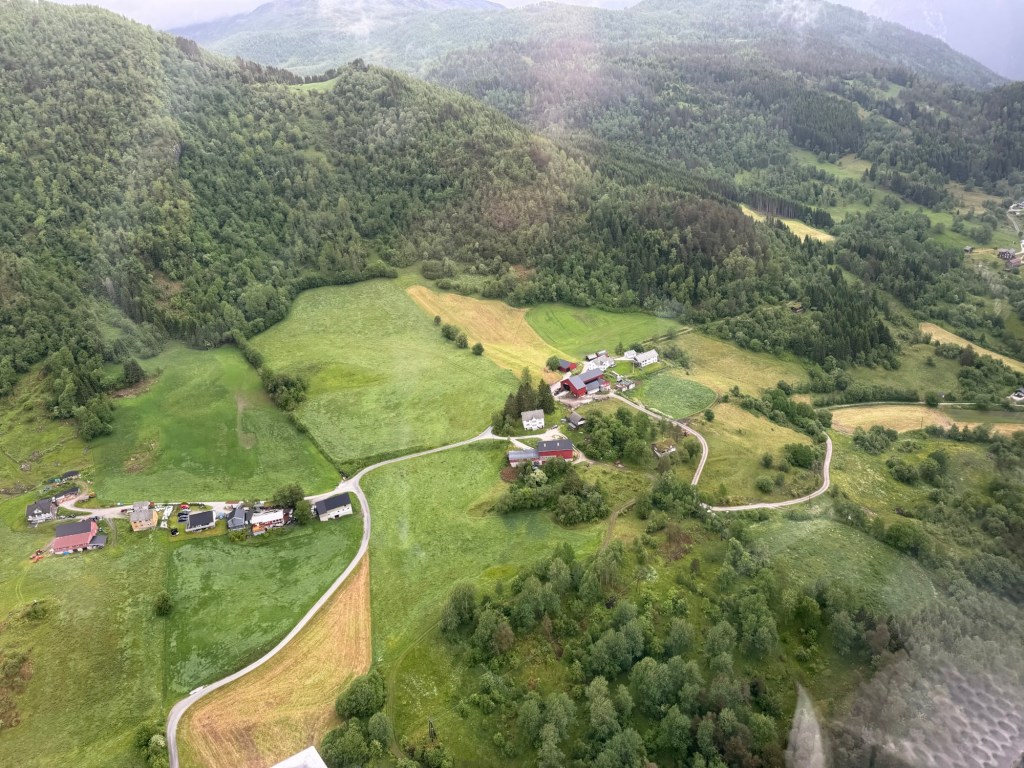

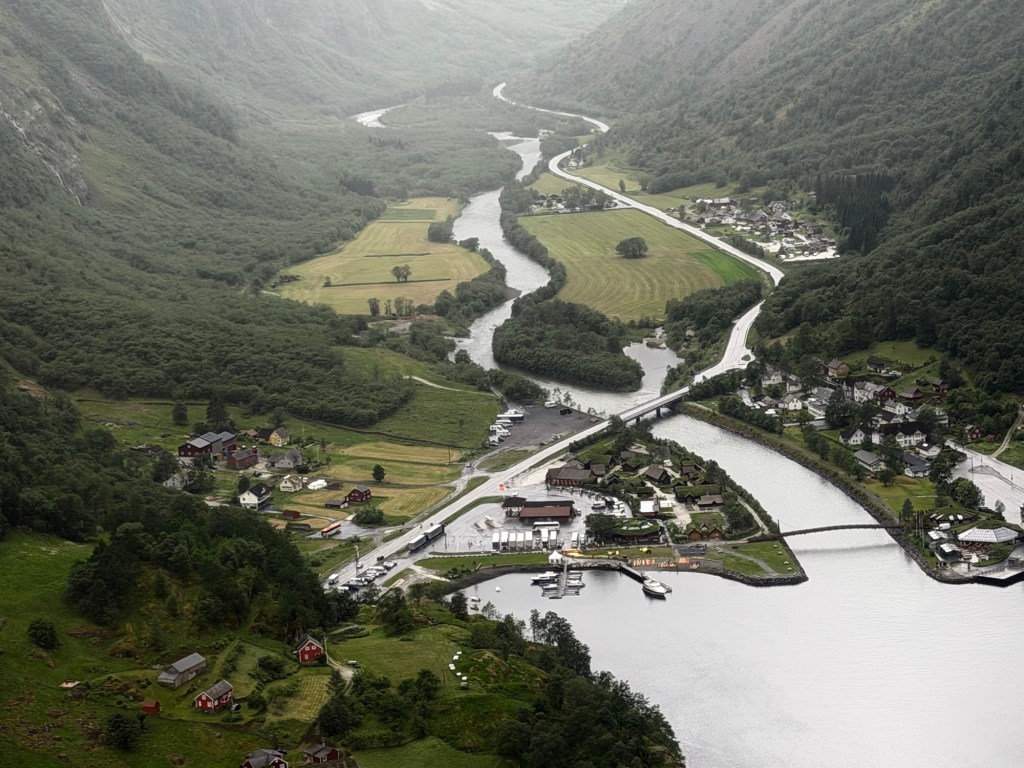
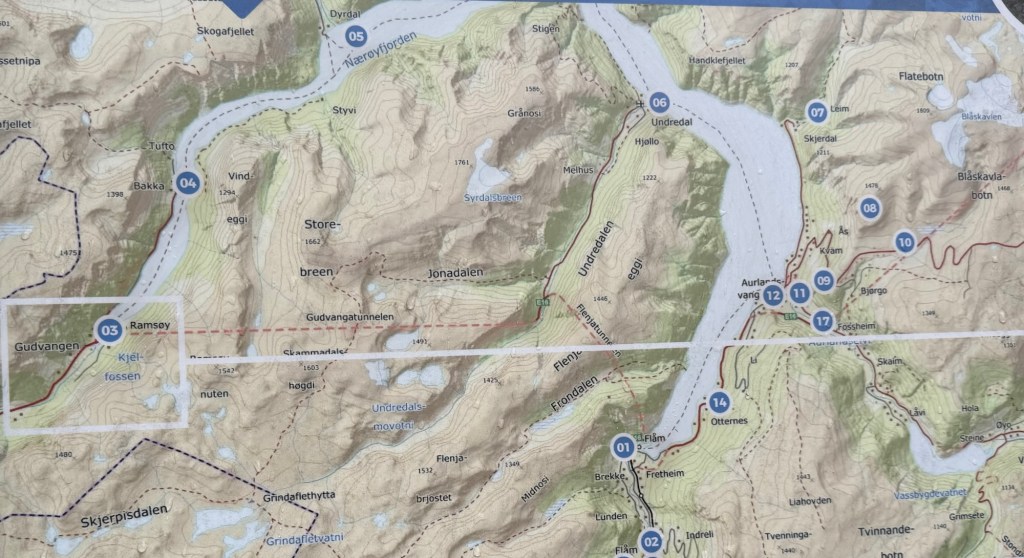
We flew over much of these fjords and boated over them as well. The helicopter dropped us off at the Viking Village of Gudvangen, (#3 on the map, lower left,) where the boat was waiting for us.
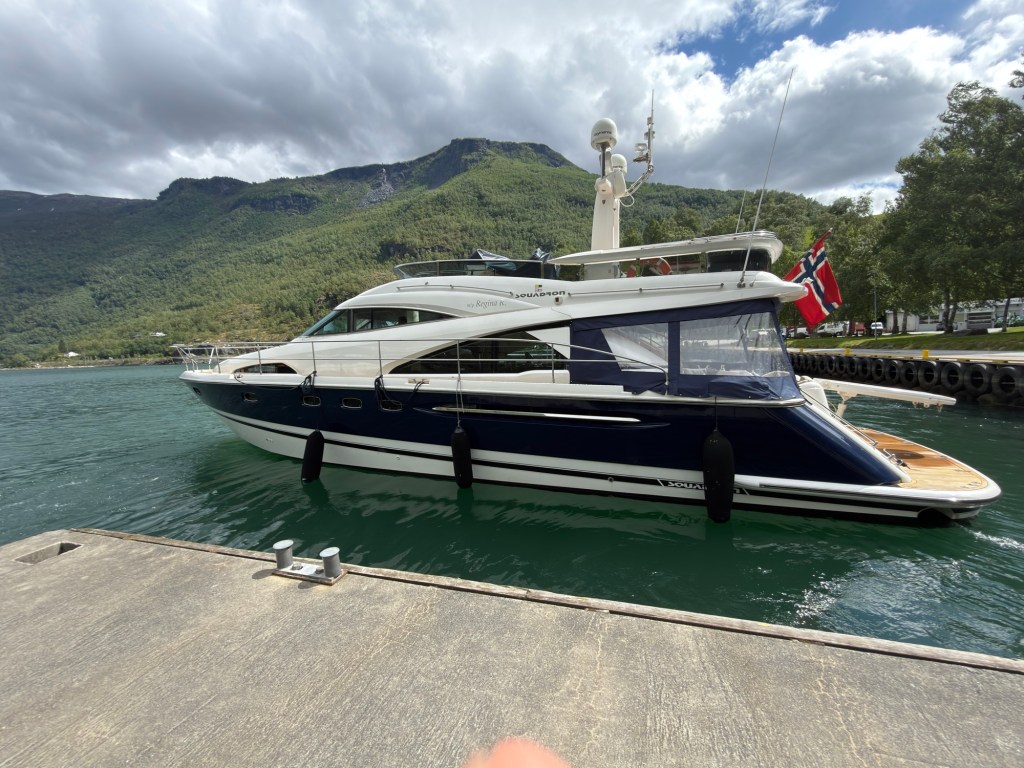
Thankfully, it was a very smooth transition.
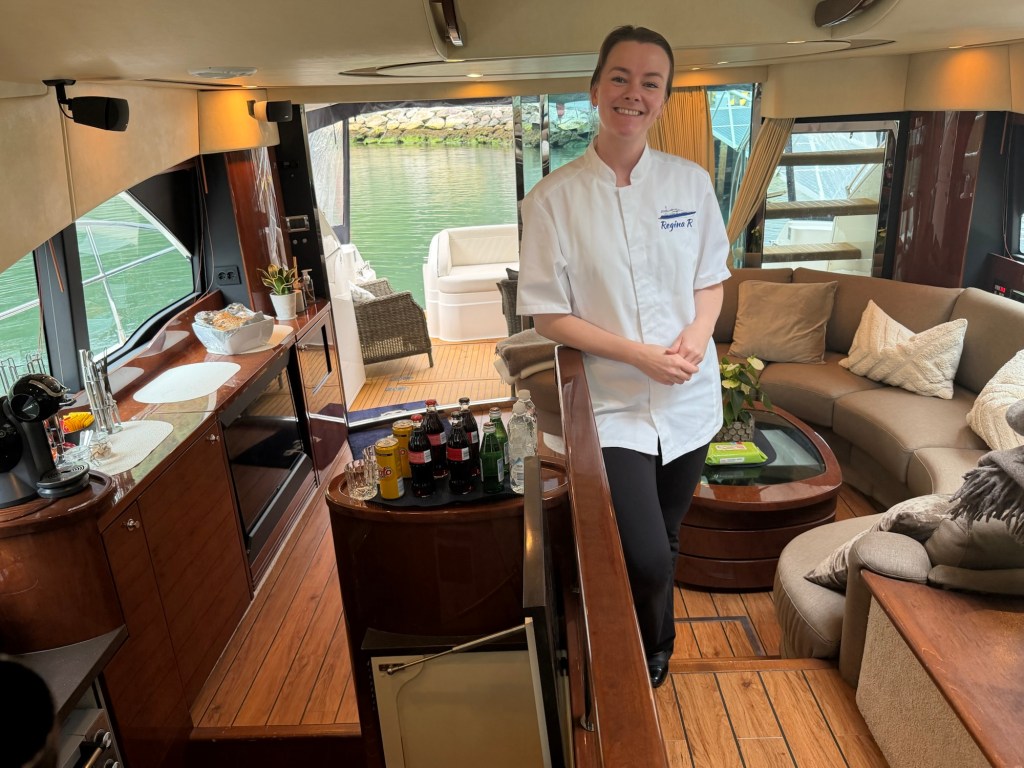
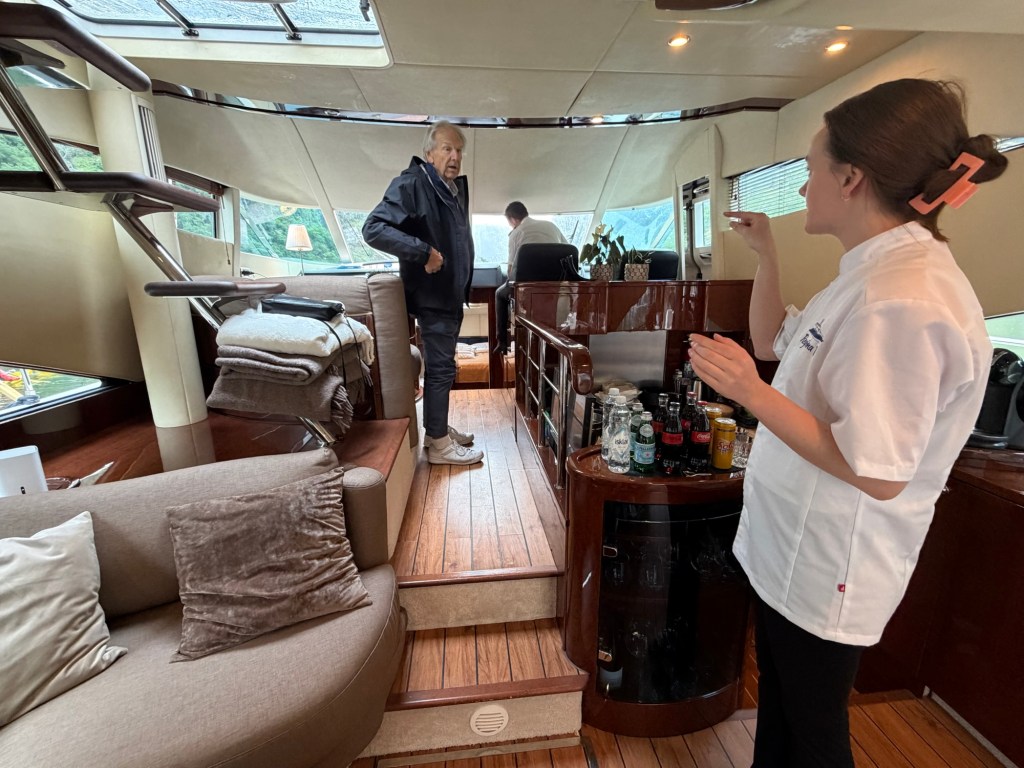

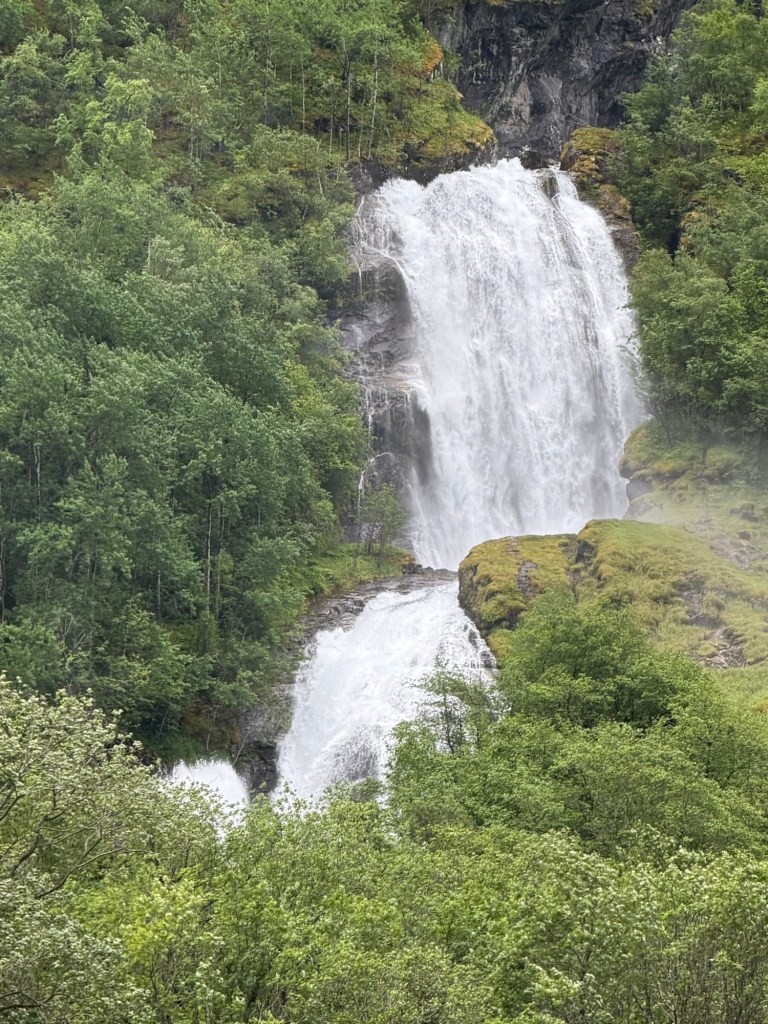
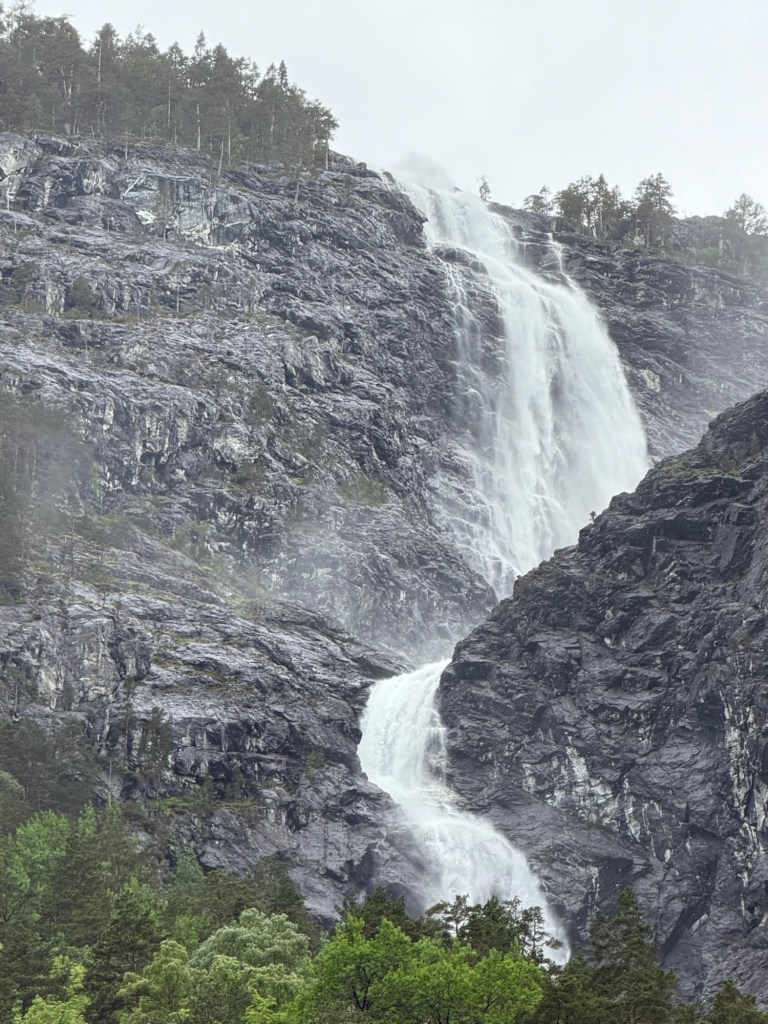
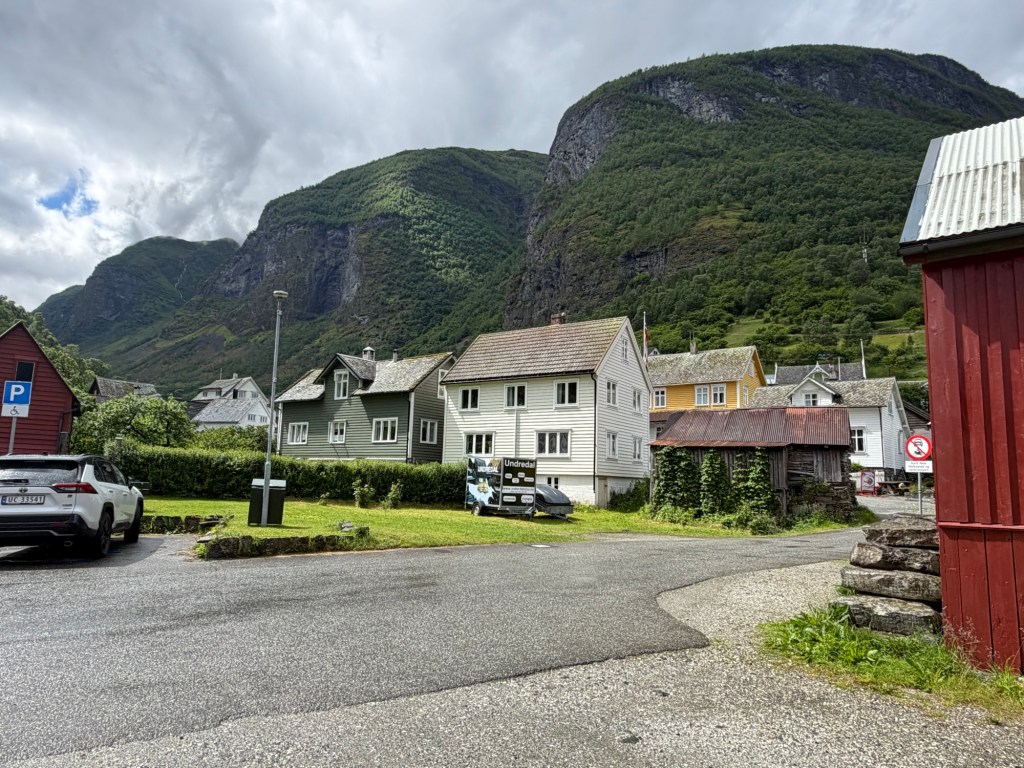
We were met by our boat captain John and the chef, Kathrine. They were both friendly and chatty and we were immediately off to a good start, especially as Kathrine started feeding us right away. We were rained on from the beginning of the boat ride and it kept up much of the trip so we settled inside the cabin to keep dry. We started seeing waterfalls practically from the dock as there has been so much rain. Our first large one was Odnesfossen. After an hour or more we stopped at a village called Undredal, on the shore of the Aurlandfjord. It proved to be very important as we learned Kathrine had been born, baptized and raised there until the 8th grade. She showed us all over the village and told us where each of her relatives had or did live. She lived there until 8th grade when she moved to a different town to finish grammar school.
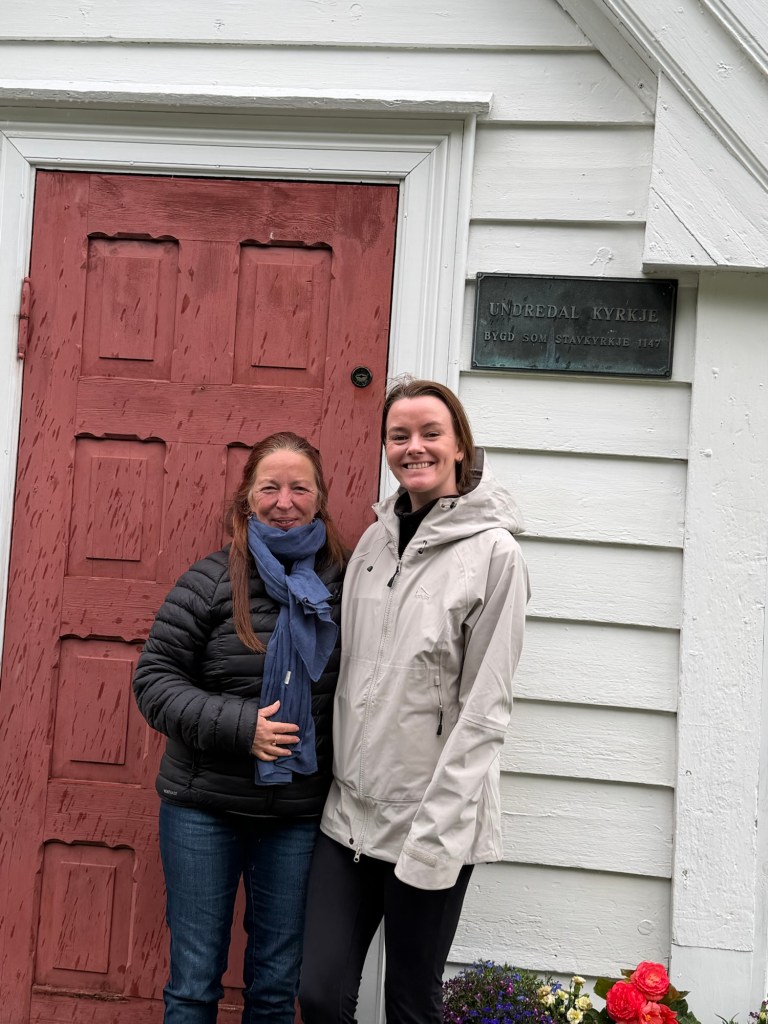
She introduced us to Amanda, the church caretaker, who collected our entrance fee and told us about the church.

A stave church is a medieval wooden Christian Church characterized by a unique post and lintel construction. The name comes from the load bearing corner posts, called staves, that are used in the construction.
It is a stave church and there are only 28 of them left in the world. It is supposedly the smallest church in Scandinavia still in use. The first written reference to the church is made in a letter dated 1321. Another written reference is from 1348. The original stave church measured 12.5 x 17.4. Later a choir and porch were added.
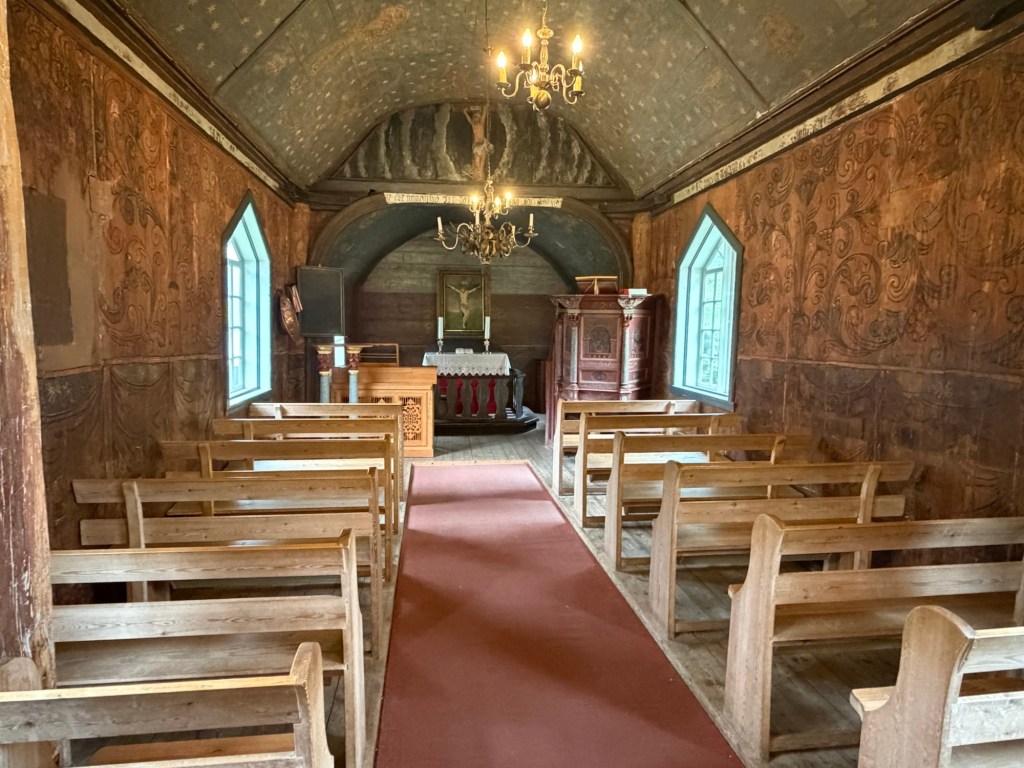
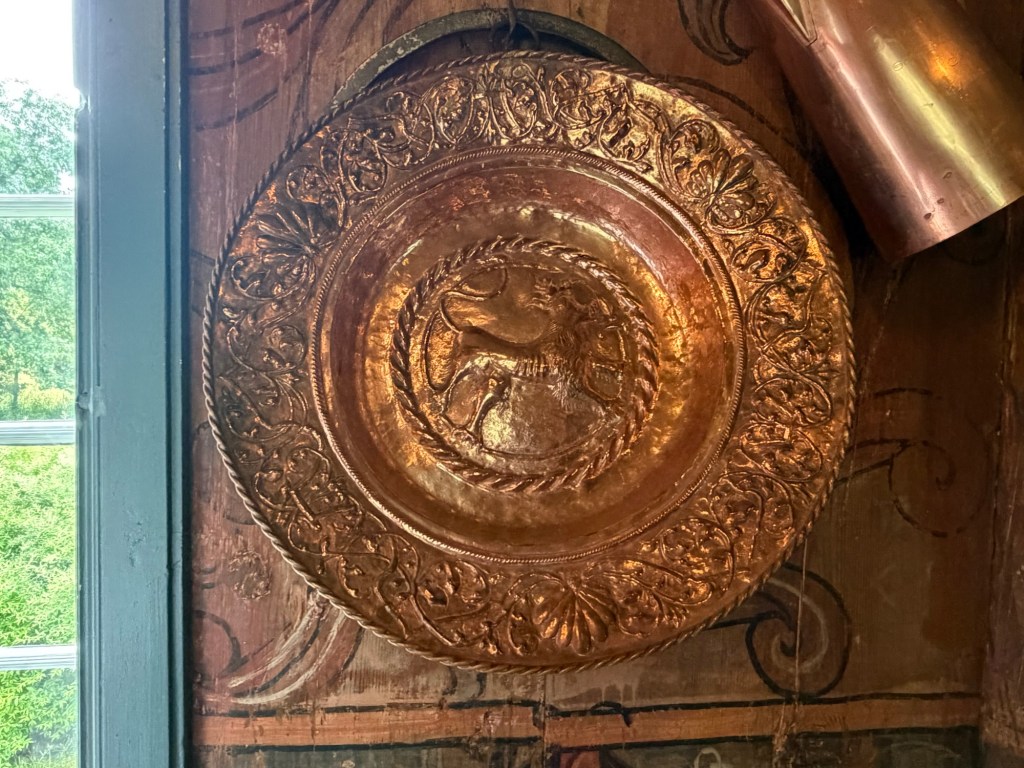


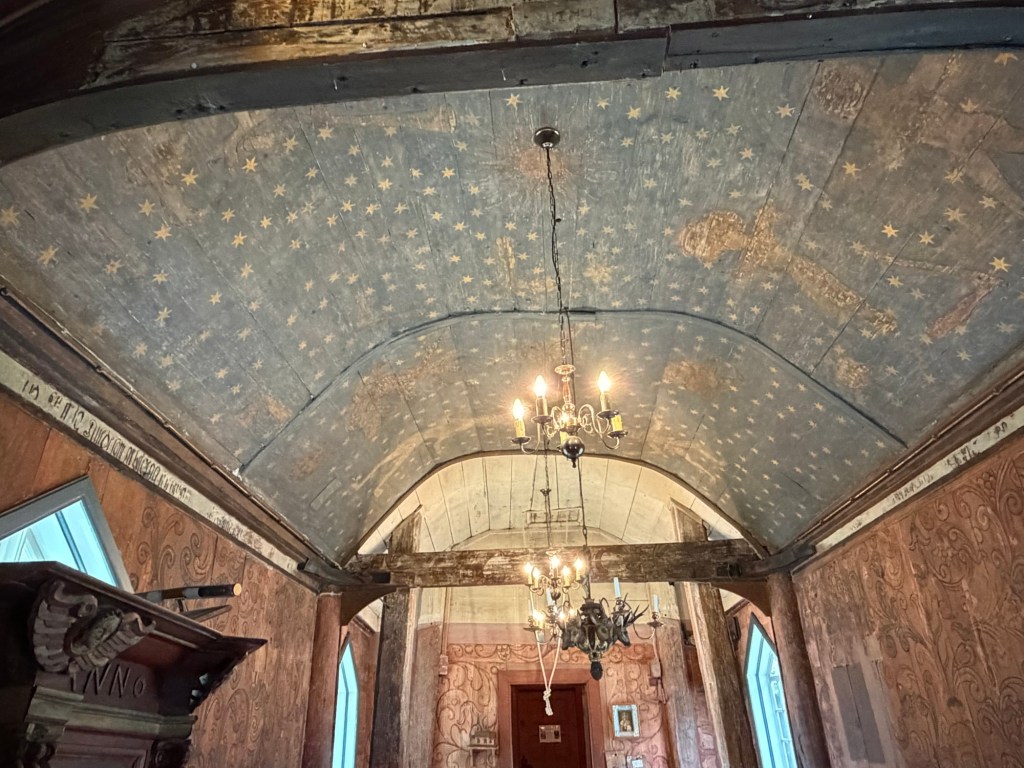

The copper baptismal font was hung on the side of one of the front pews. This was special to Kathrine as it was used for her baptism.
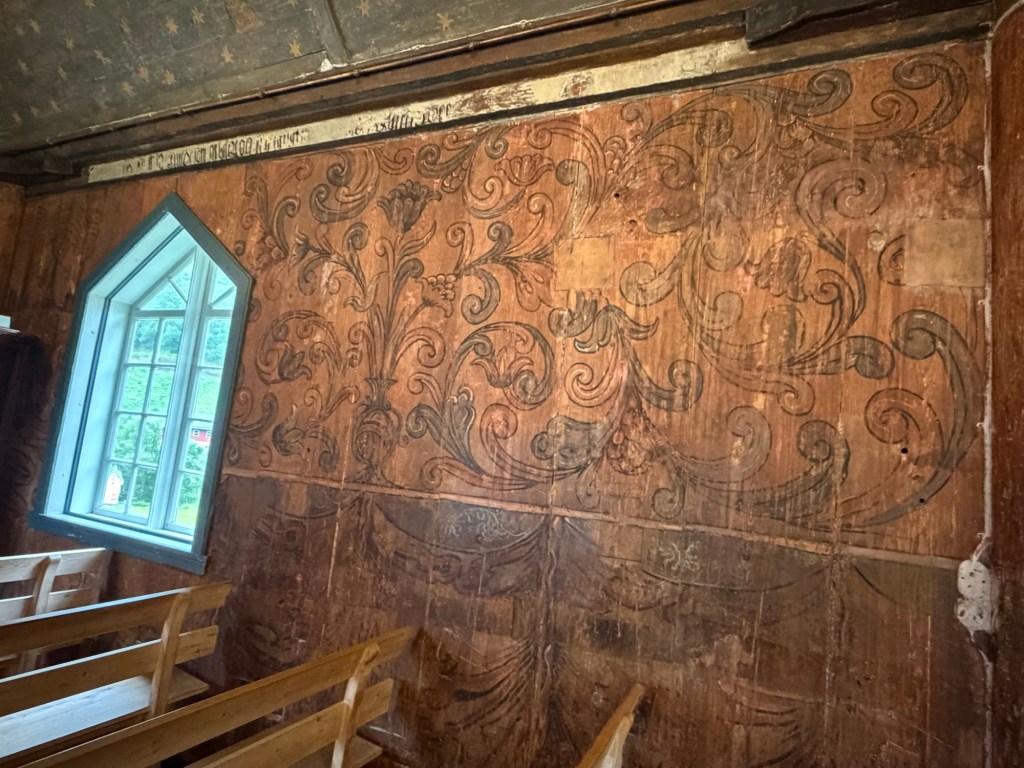
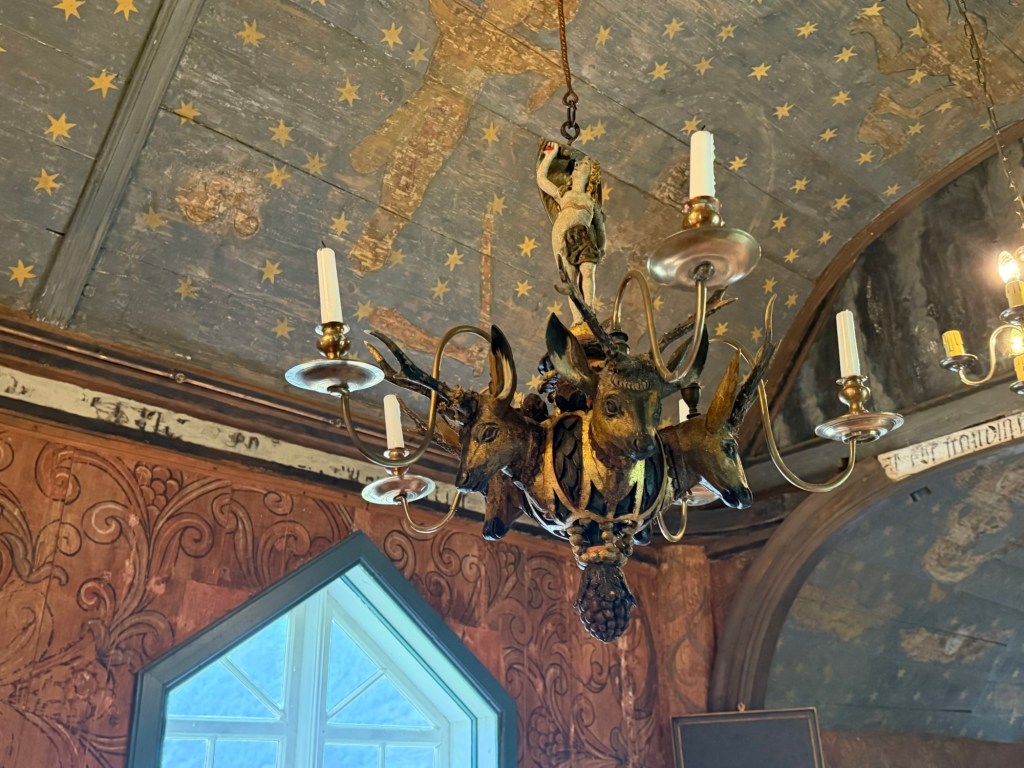
In 1962 at least three layers of paint were removed from the walls and ceiling. Ths process revealed the original decorations. The walls are covered with nicely painted draperies and vines and the domed ceiling is inverted with stars and other figures. Under the oldest paint several figures were found carved into the woodwork. The church holds 30 people, but the population is only 69. Meanwhile, the rain has stopped and a bit of sun had appeared,

Other unique characteristics about Undredal are that the local people make a special goat cheese that is only sold in the village. And the movie Frozen was based on Undredal Village.
Other attractions in the village included these:
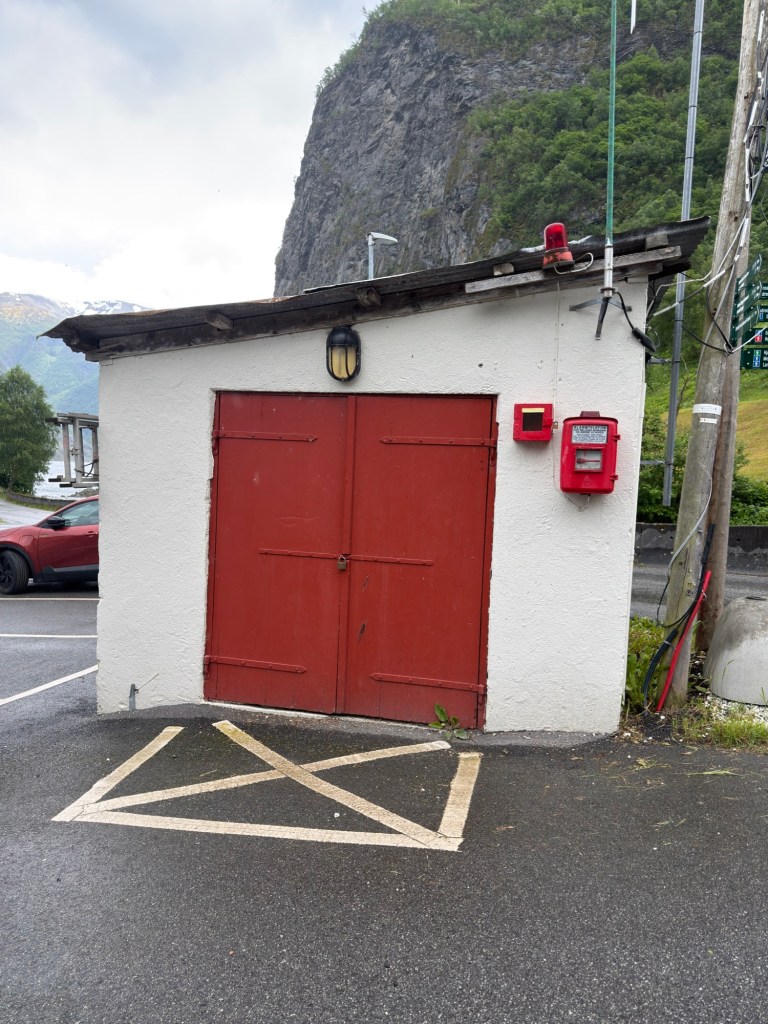
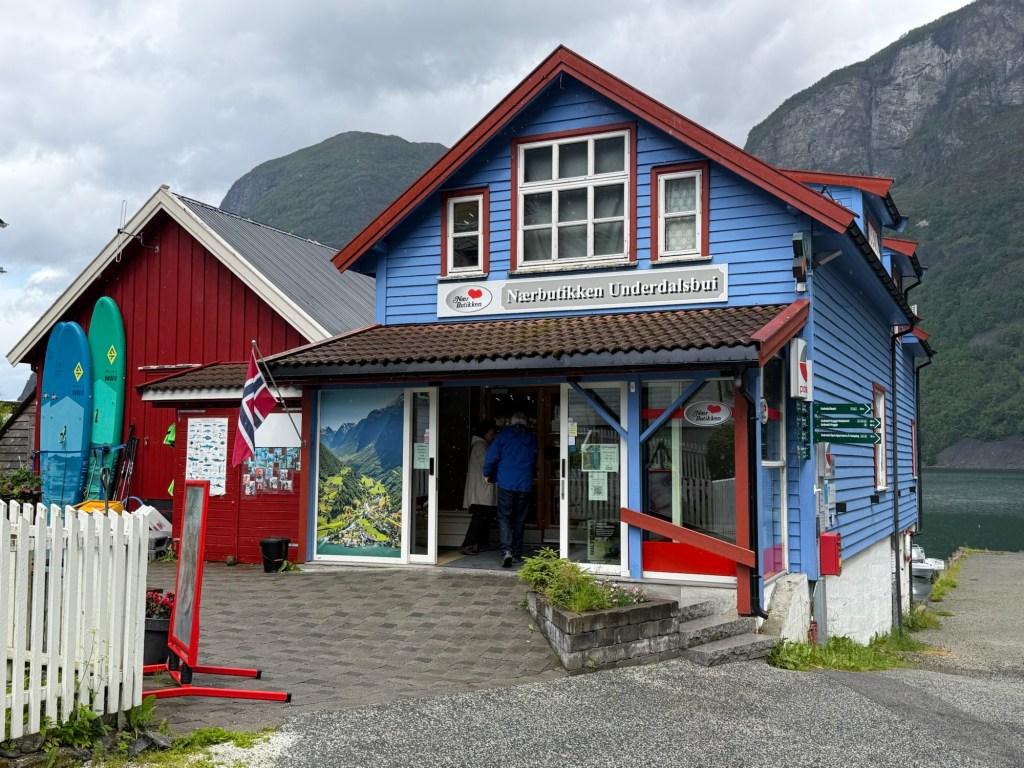
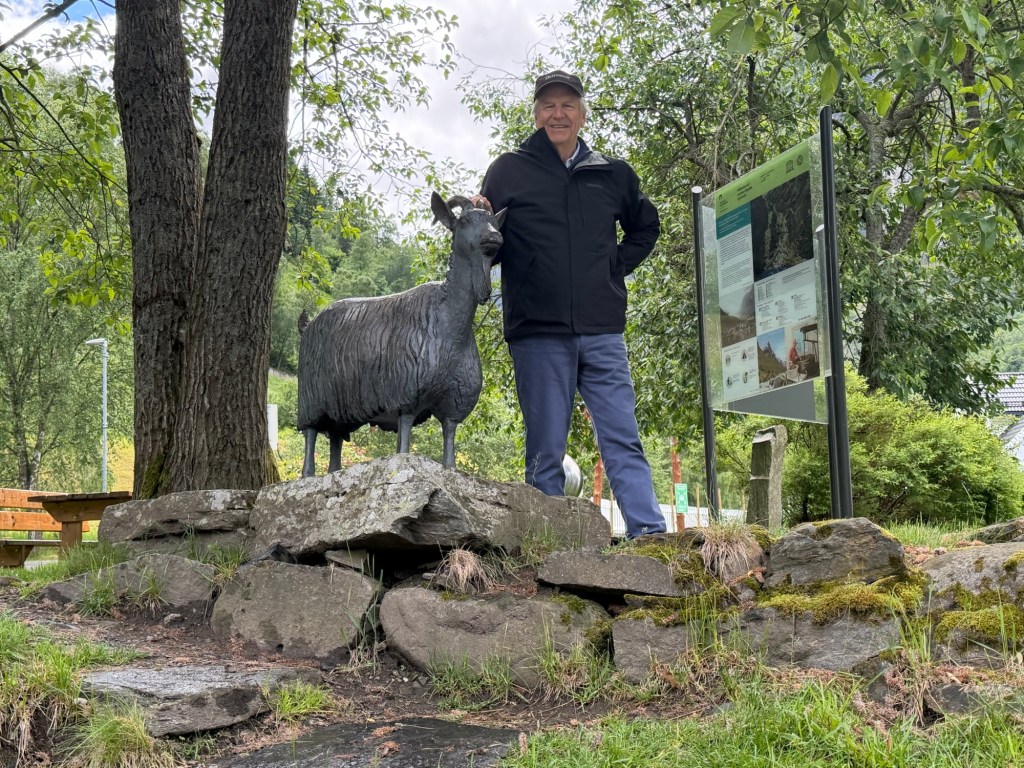
In the grocery we saw this poster and thought of our friend Claire, who makes goat cheese in Kenya. So Mark posed with the goat sculpture.
Back on the boat, we finished eating the tower of fish Kathrine had presented us with and motored on past Ourland, where she had finished grammar school and where penny loafers were created and are still produced.
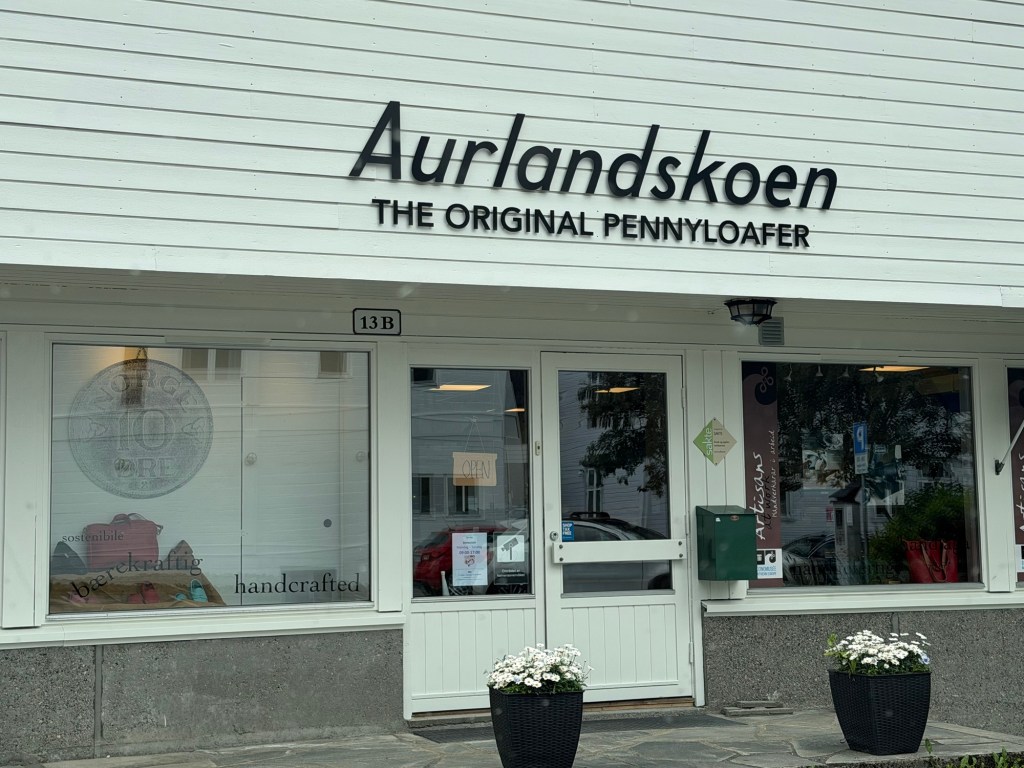
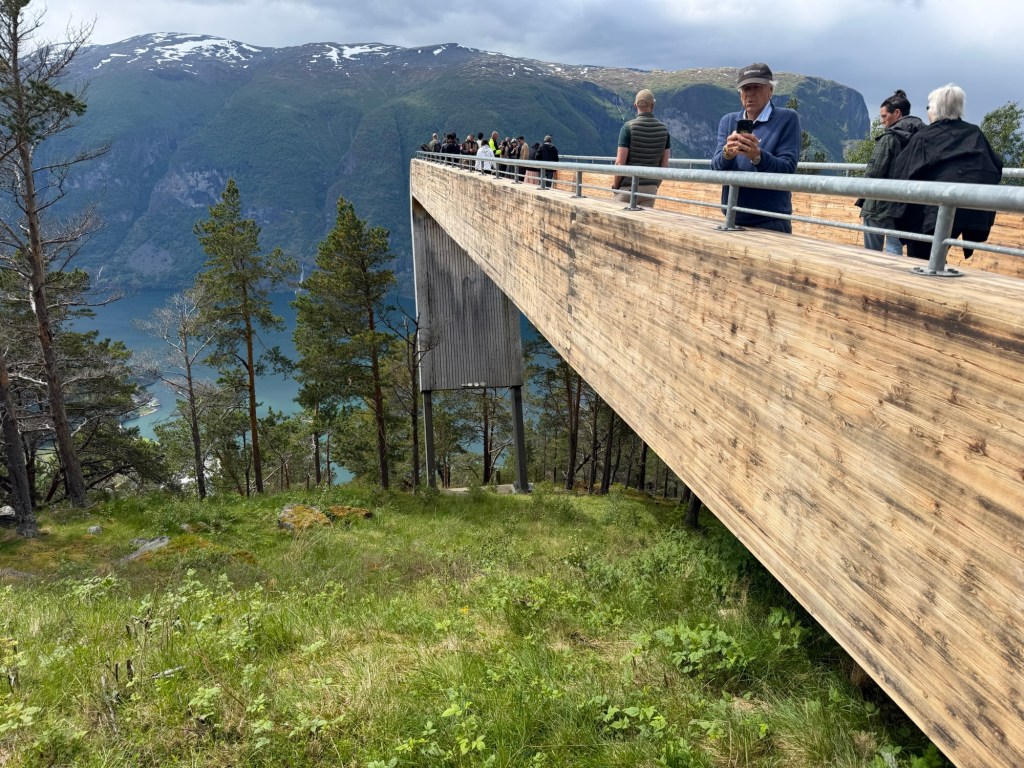
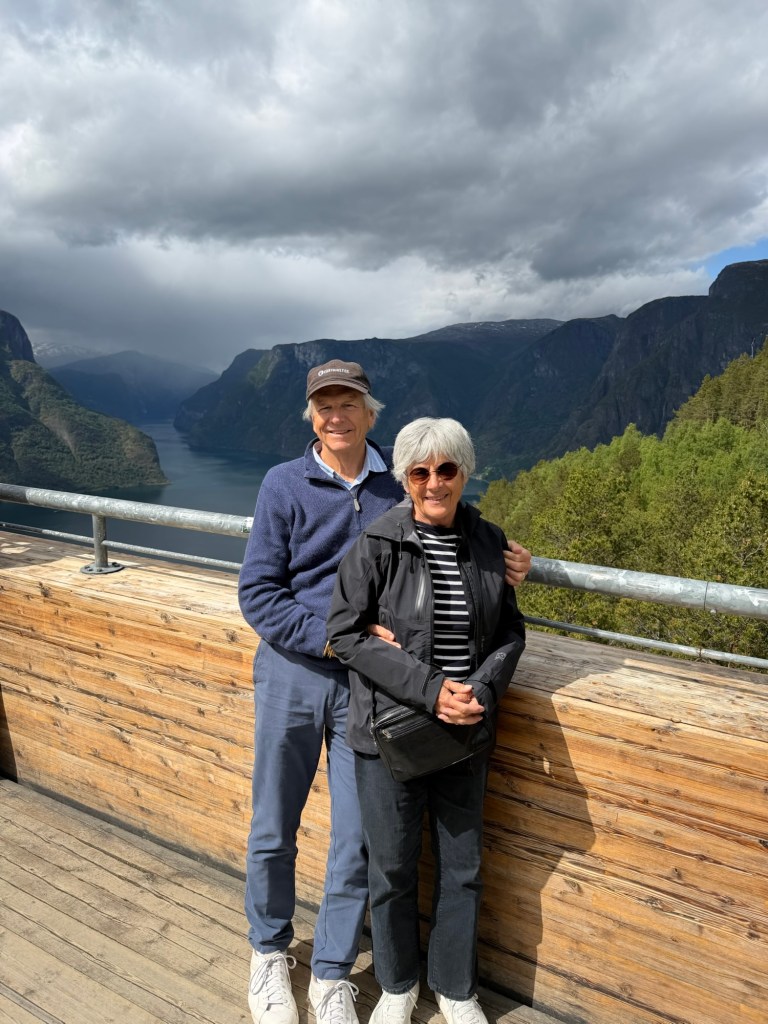
At Flam, we said good bye to John and Kathrine and reconnected with Gustav, who had been cooling his heals all day waiting for us. We stopped at the loafer store but did not find a pair of shoes that fit or looked good. So back on the road we realized we had traveled a long distance between the helicopter and the boat and had a 2.5 hour drive to get home. But first we drove up to a mountain top for a great view of the fjord and scenery below. Then we began the long drive.


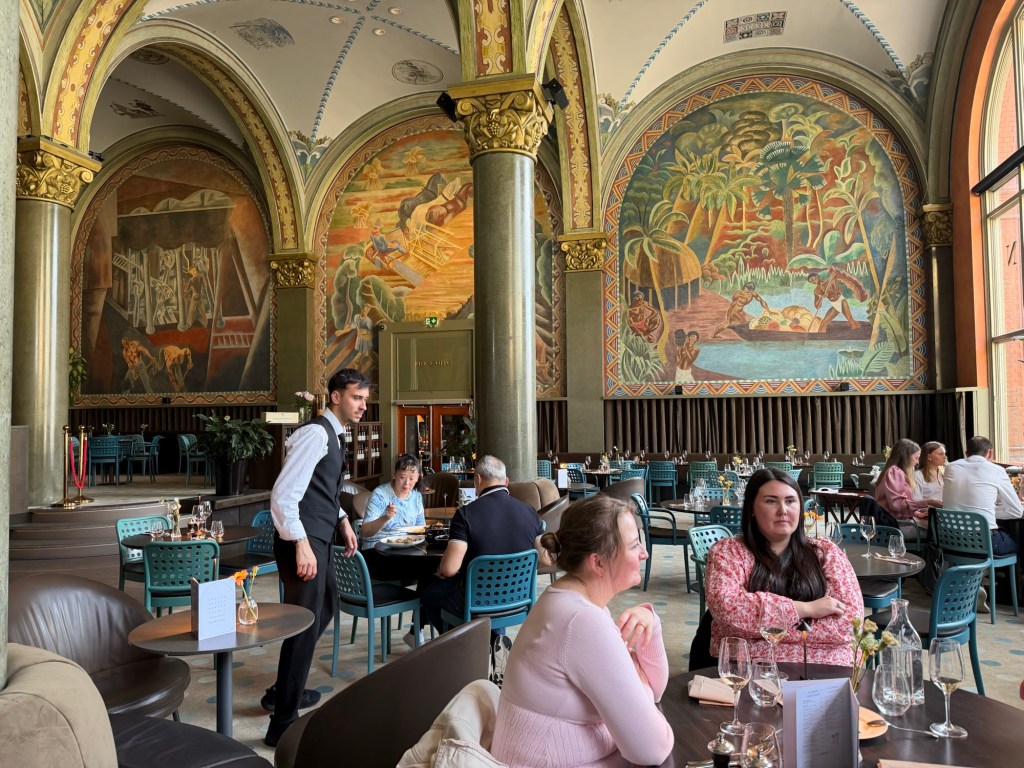
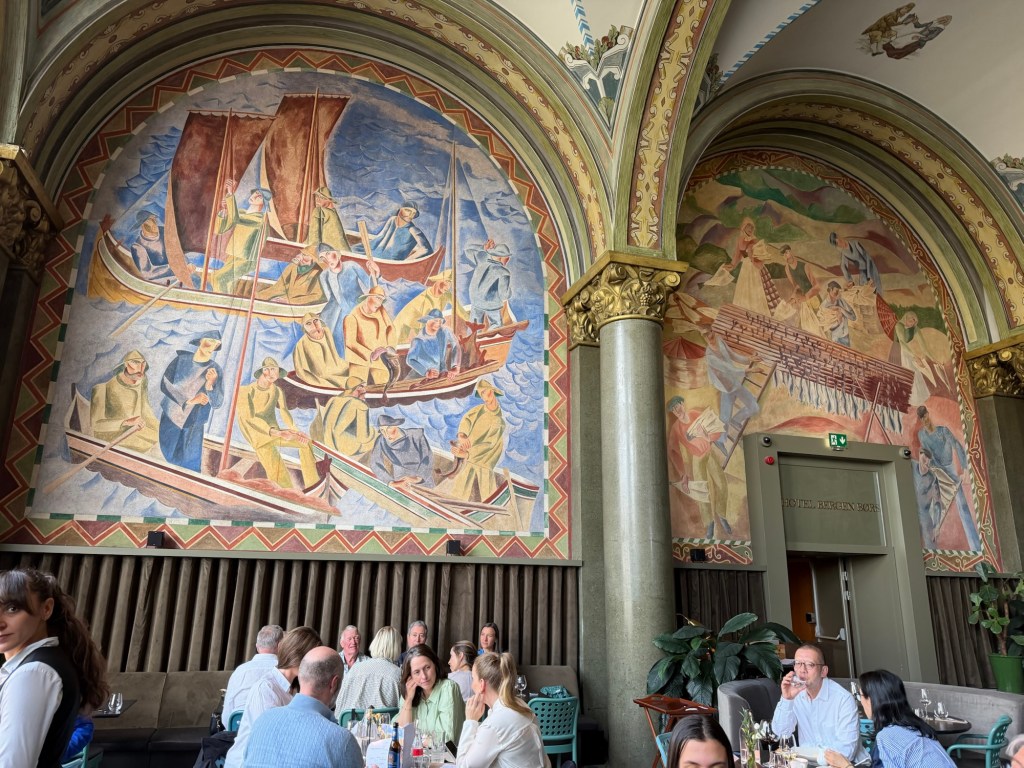
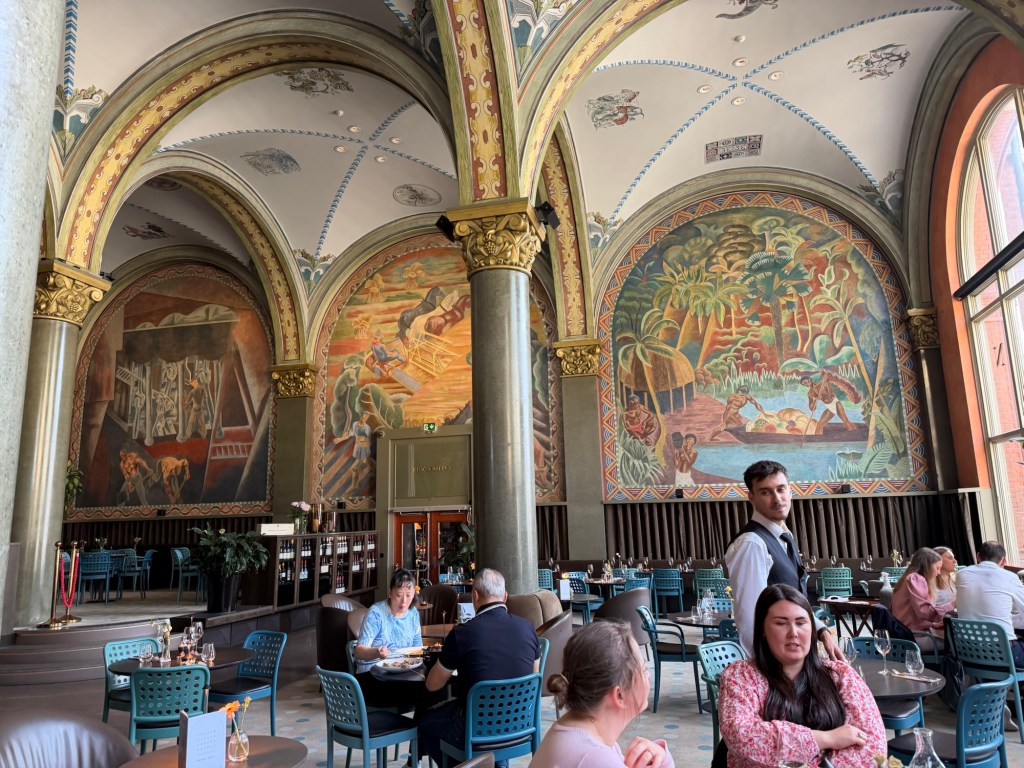
As soon as we returned, we had dinner across the square in another old building that was the stock exchange when our hotel building was a bank. The restaurant sported the original frescos on the walls and had a unique and interesting look about it. The restaurant is called Frescohallen. After dinner, we relaxed in our room. We took the back door entrance using our private hotel key.

Monday, June 22, 2026
At 9:15 we walked from the hotel to the pier and meet Stig, the boatman, who drives a Axopar 37, and slowly takes us through reefs and islets to a farm several kilometers out of town,
While on the way, Stig tells us that the west coast of Norway produces a great deal of gas and oil on rigs in the North Sea in spite of Norway’s intention to be green. 95% of Norway’s power comes from hydro power and 5% comes from wind power. The largest shipping companies in the world have offices located in Bergen.

Out in the bay we saw a torpedo placement battery left over from WWII and a summer house on its own island for sale at $1M, a good deal according to Stig.
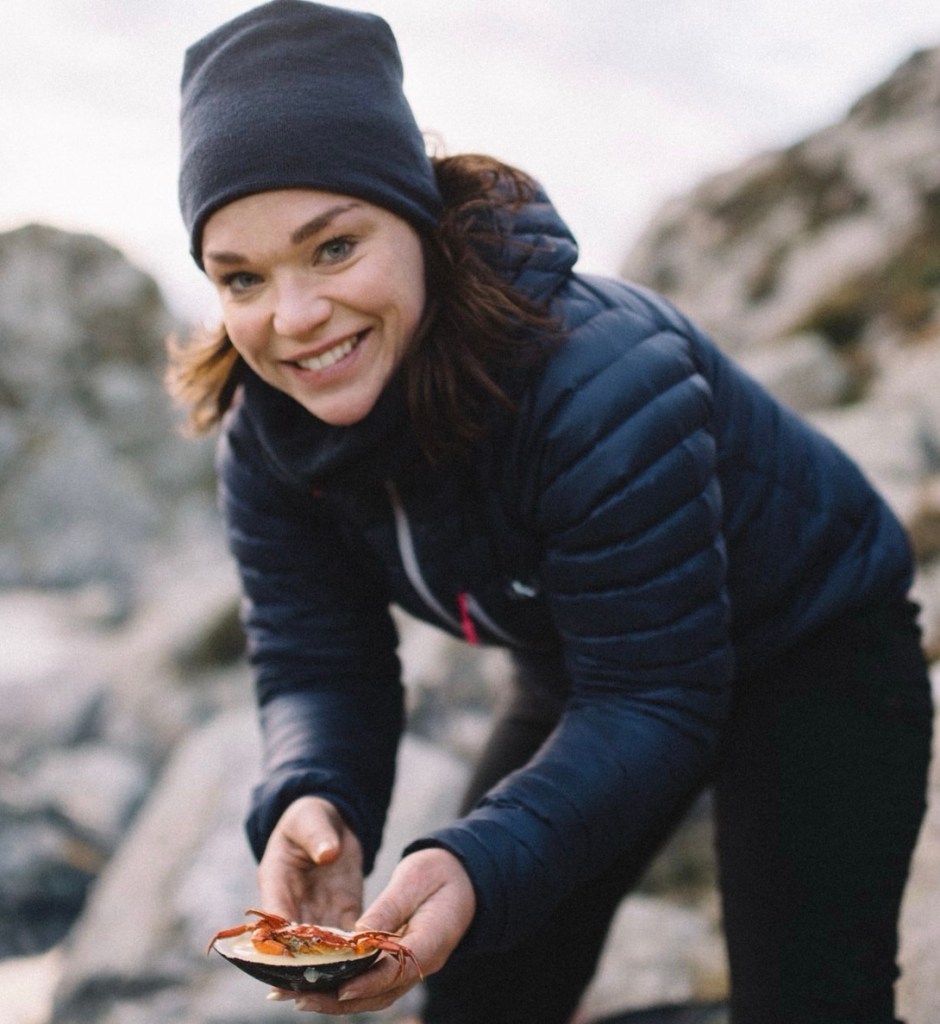
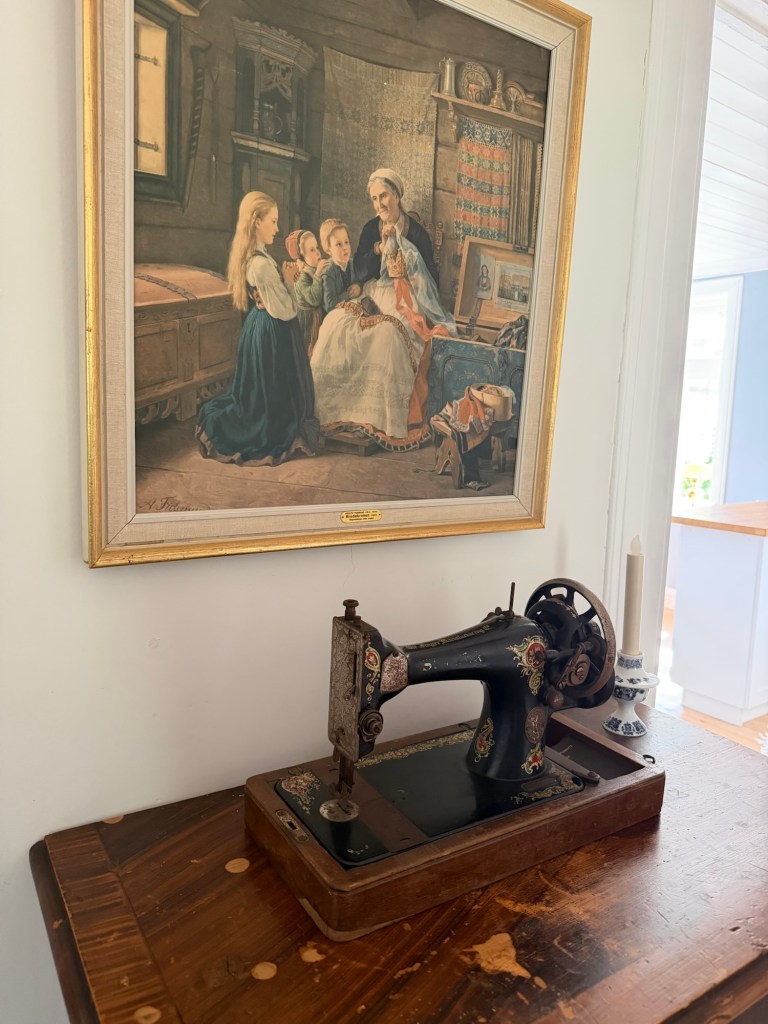
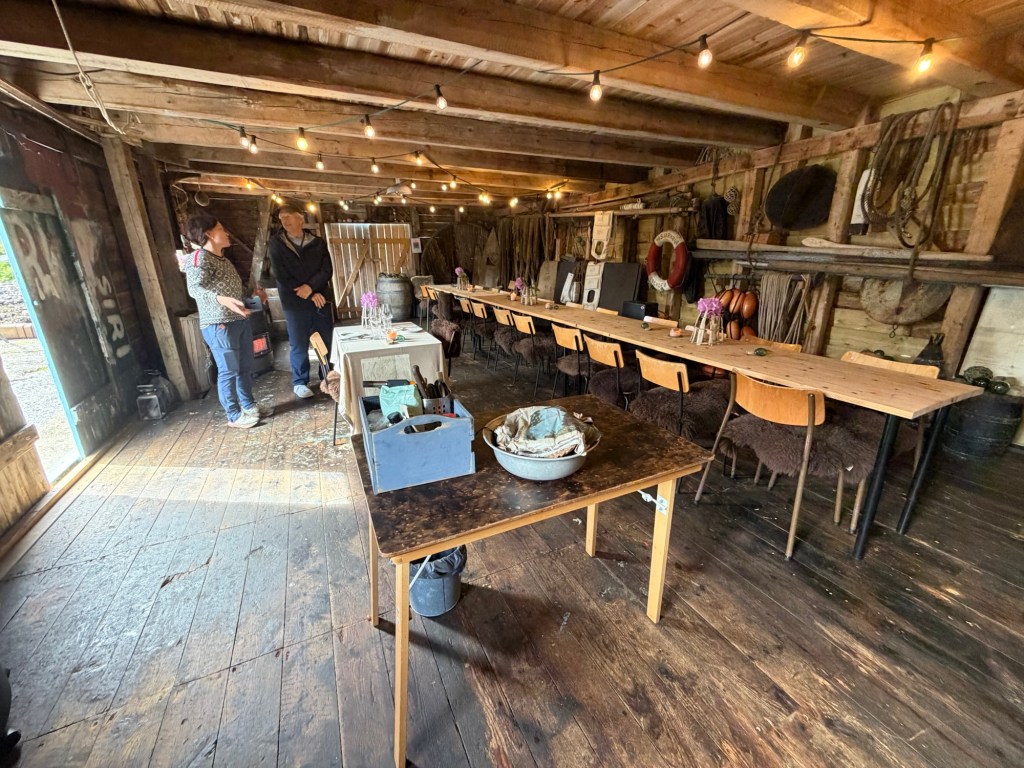
Soon we were on the island where our hostess, Mariann, welcomed us with a glass of delicious apple juice and took us on an abbreviated tour of the 6 buildings on her property, the VIlla Vestre.
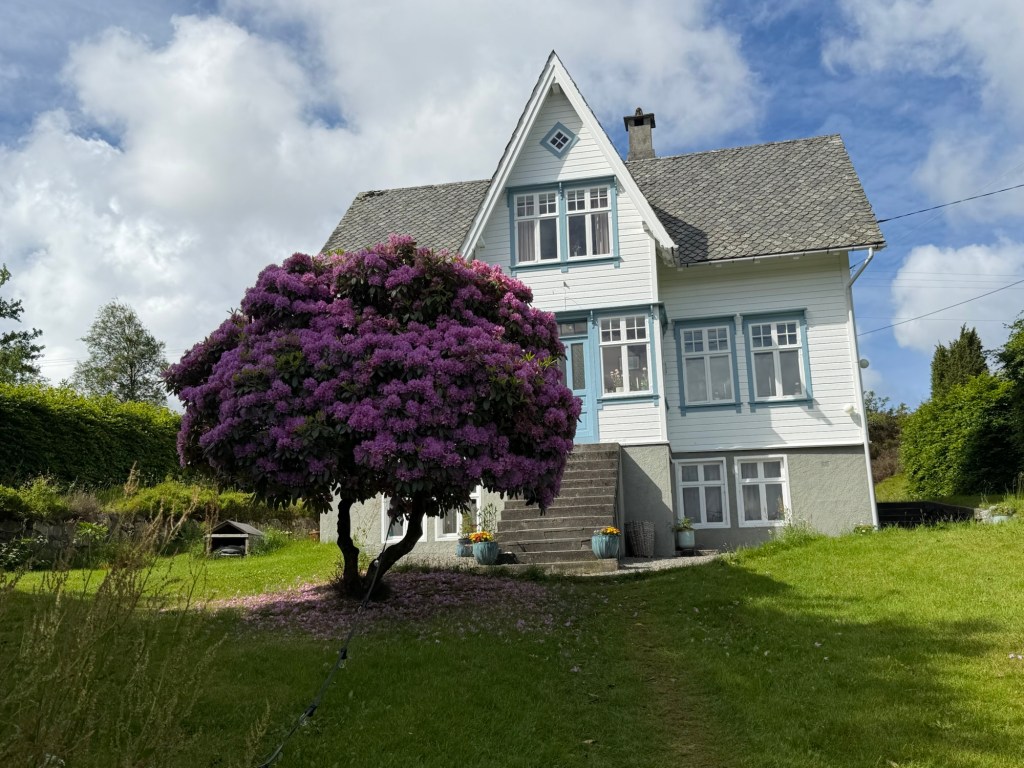
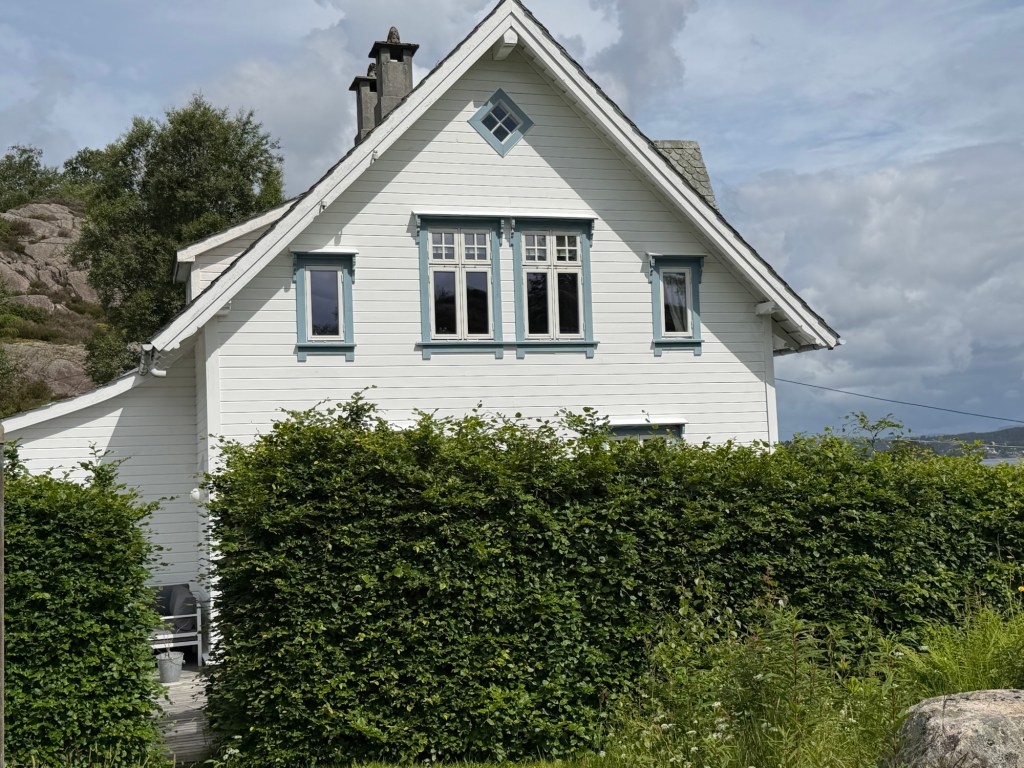
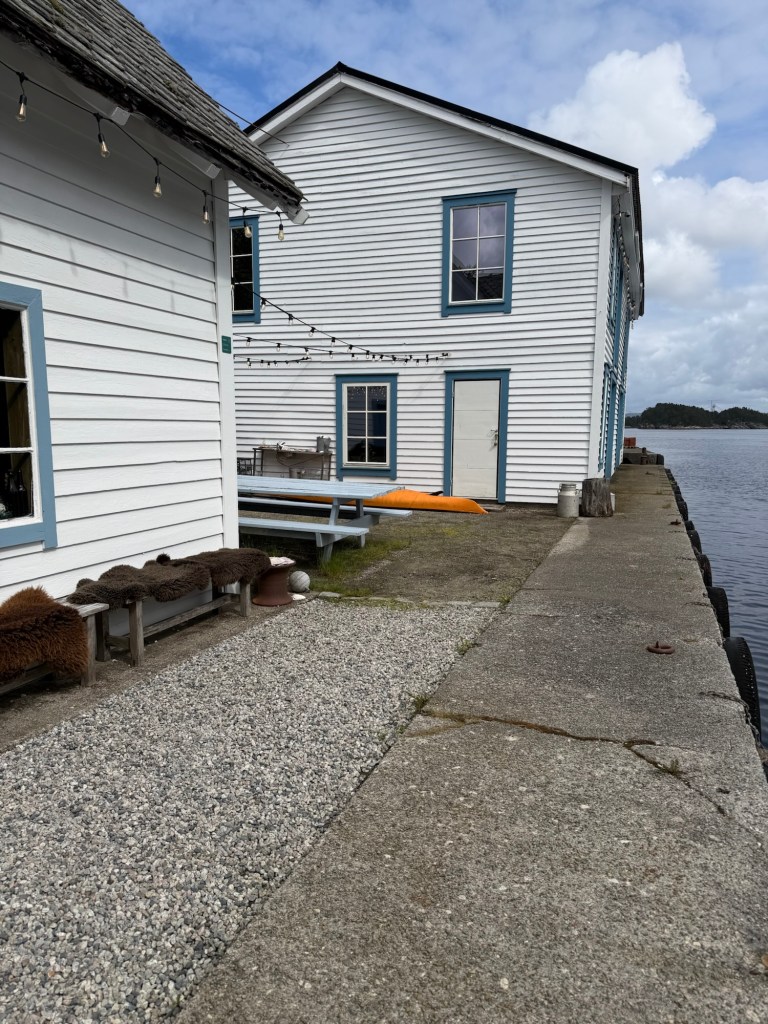
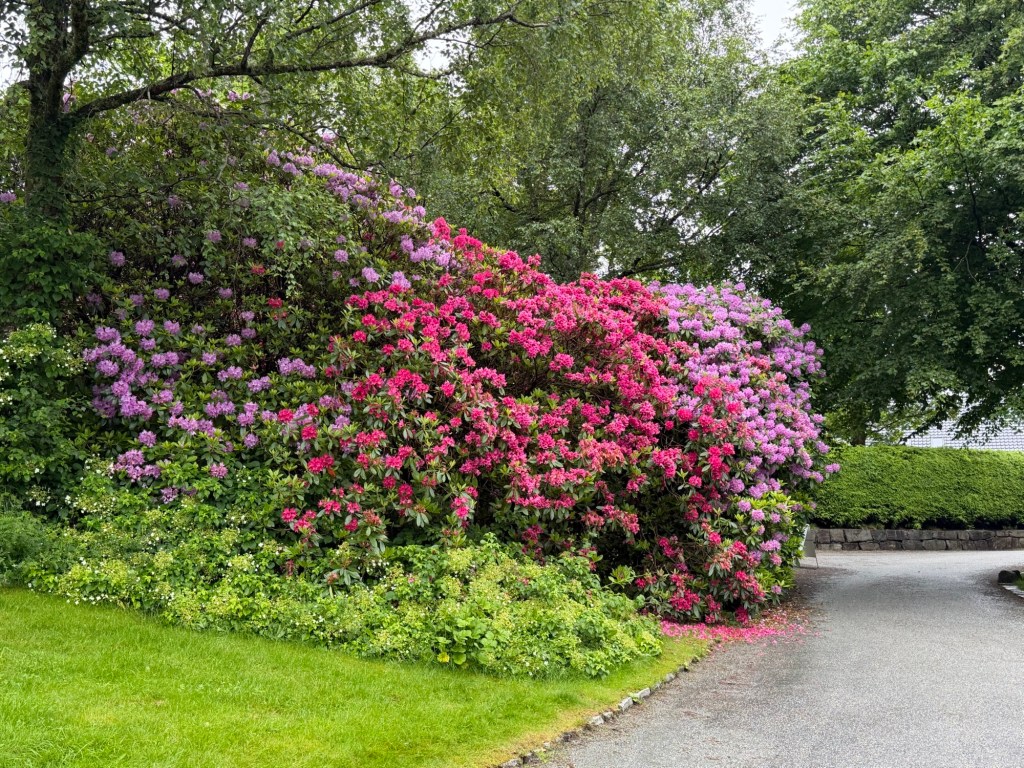
The landscape was pretty with exposure to water on both sides of the island. There was much greenery and a beautiful rhododendron in full bloom.
Soon she was preparing shellfish outdoors on a table. The day had turned warm enough to be outdoors and we all wanted to take advantage of it. She started with Norwegian flat oysters.
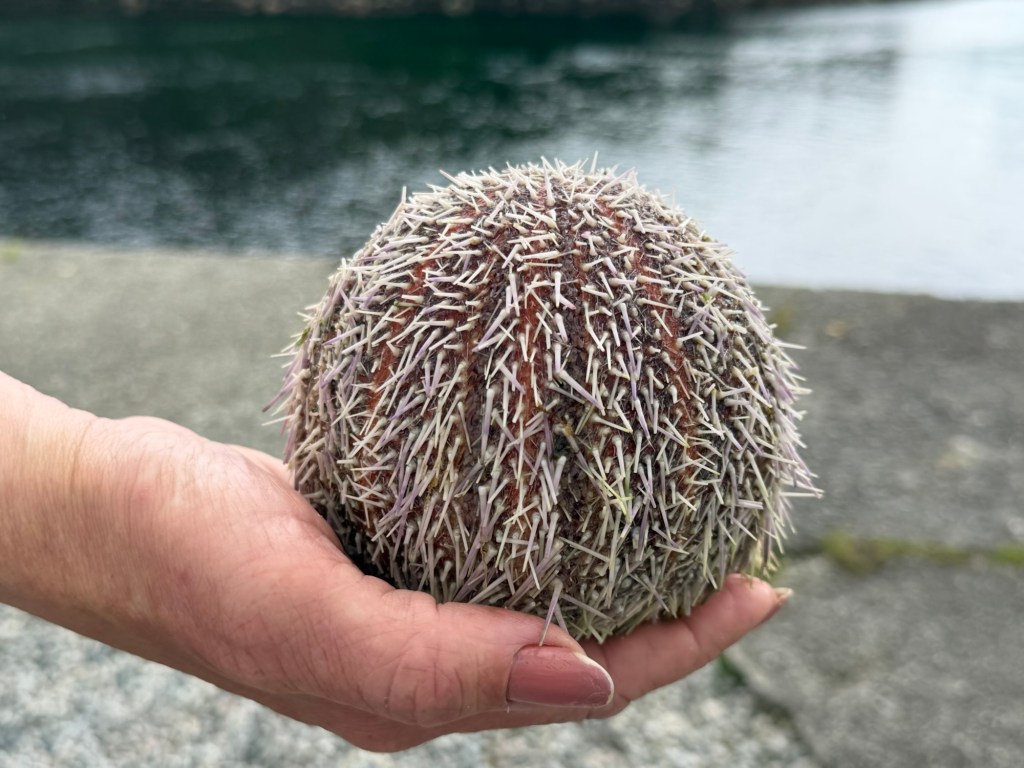
Mark got my share and said they were great. Next came a sea urchin, which we thought was a bit odd, but still tasted interesting, especially with lemon juice on it.
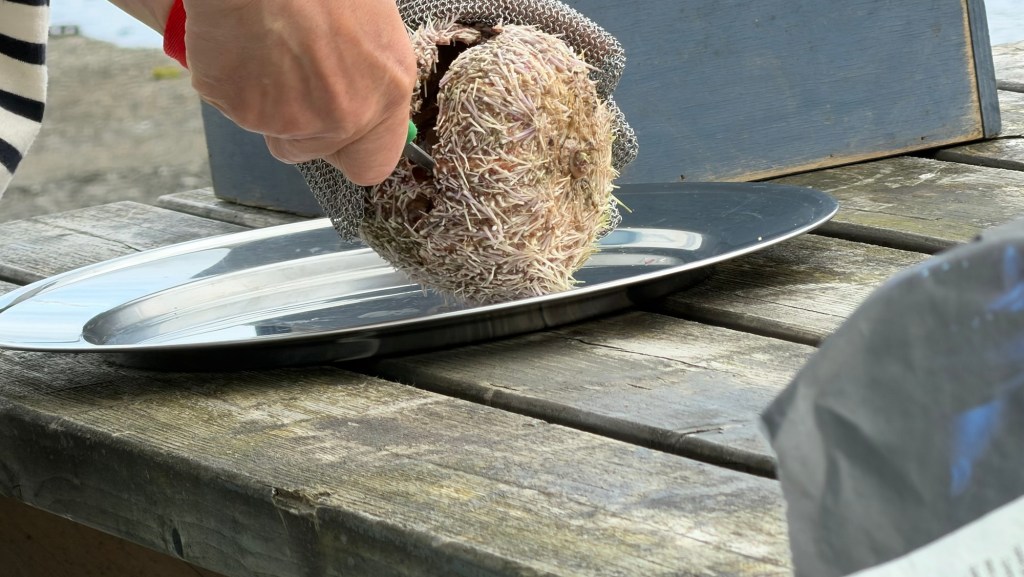
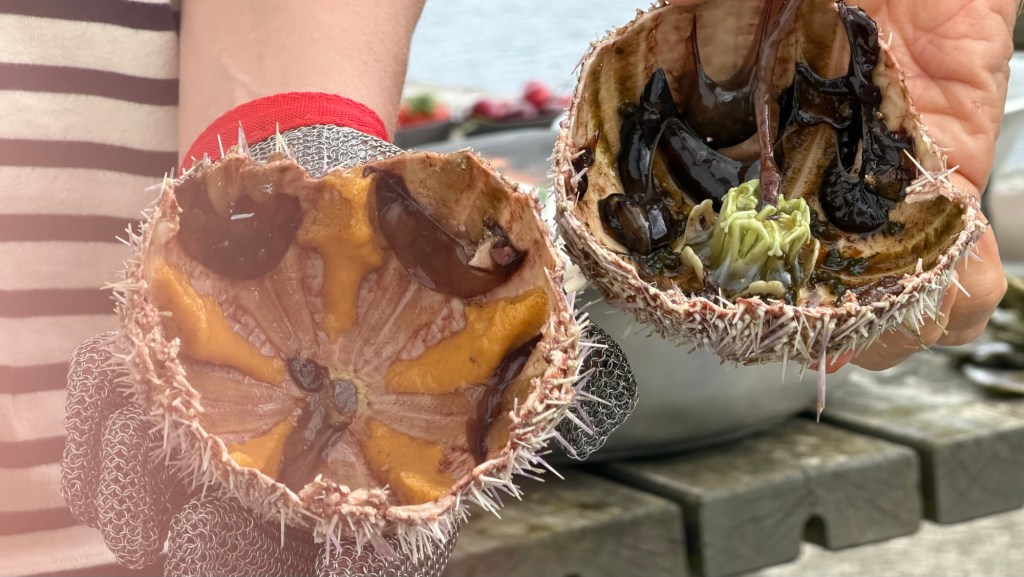
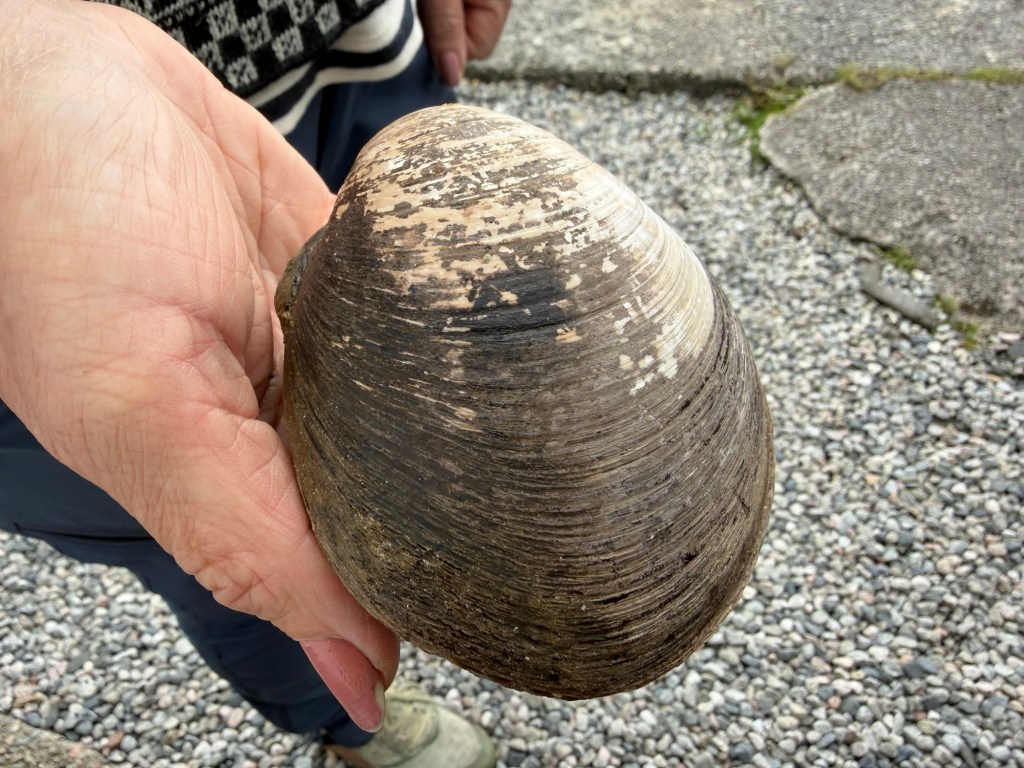
Then she brought out a Mahogany clam and asked us how old we thought it was. It clearly had rings so I guessed about 40. She guest about 60. Sliced thinly and soaked in lemon juice, it tasted very good. I could have eaten more of it.
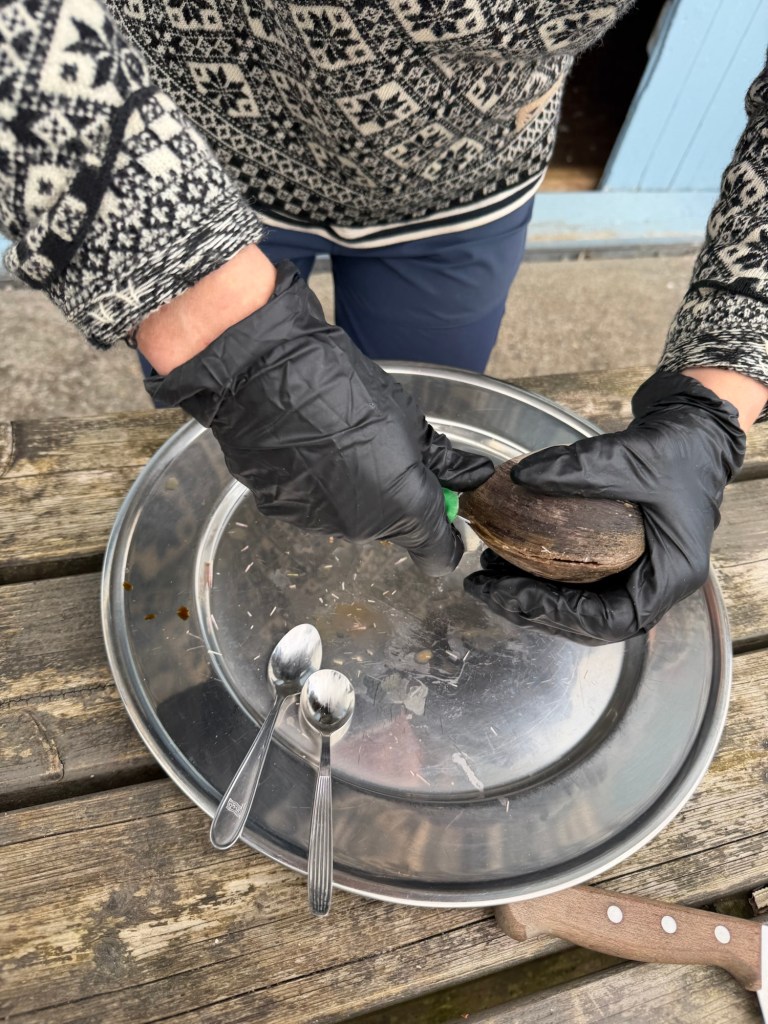
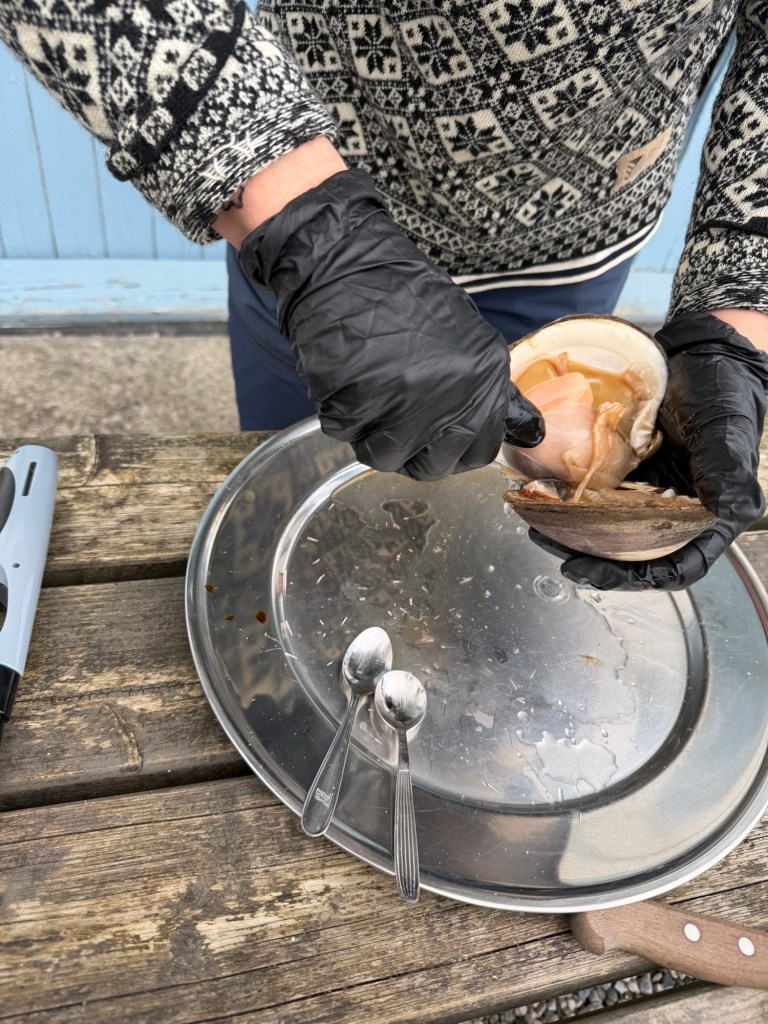
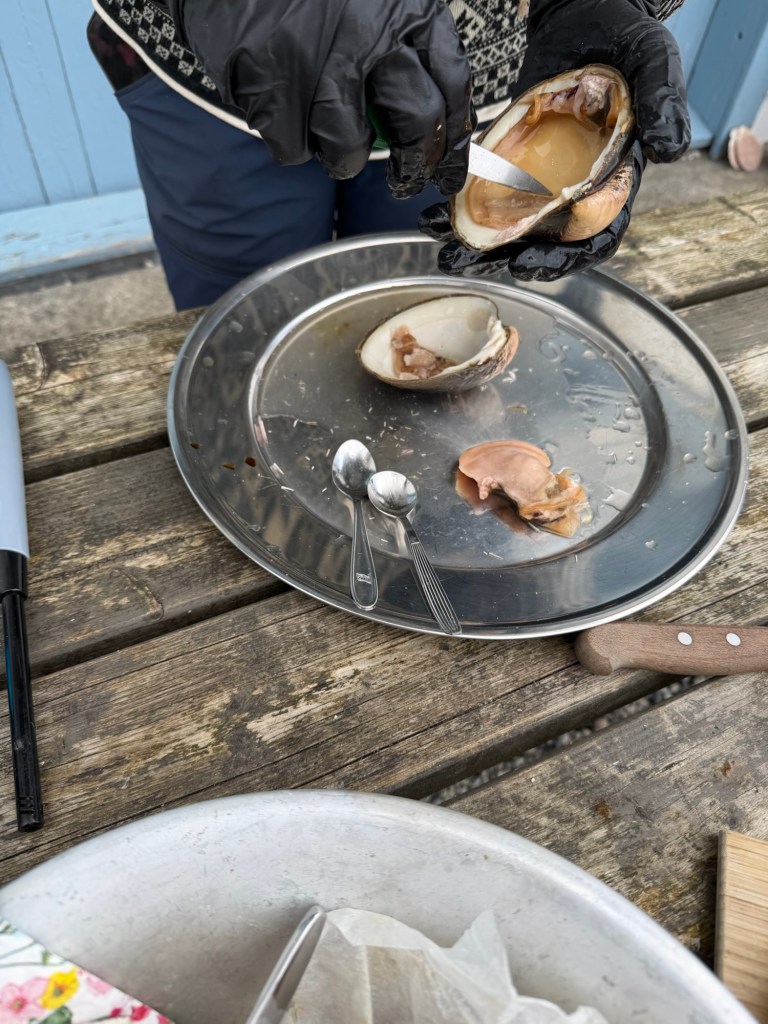
Then came scallops. She cleaned, opened and sliced one and served it raw. I liked it very well, maybe even better than the next one that was grilled in brown butter.
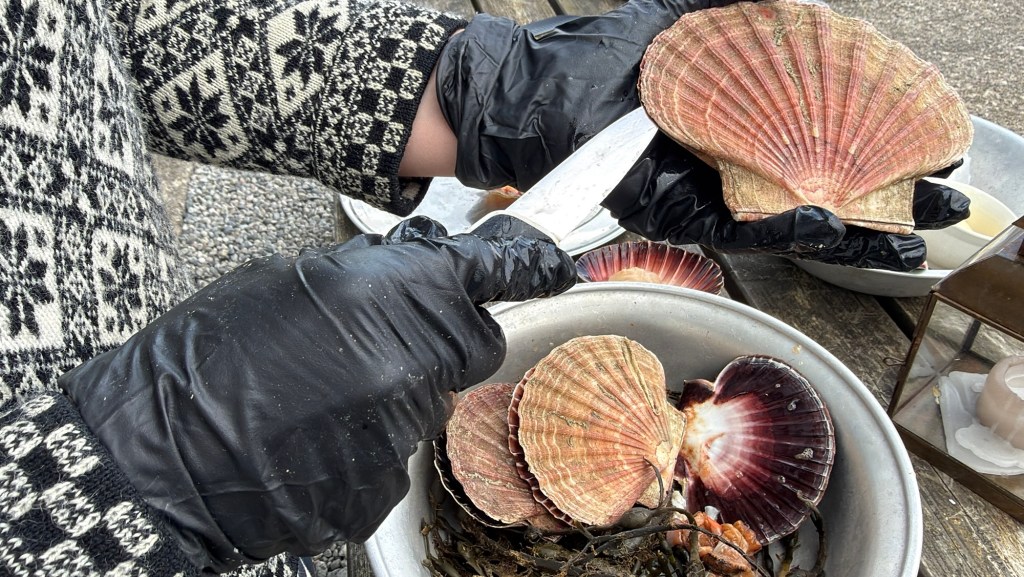
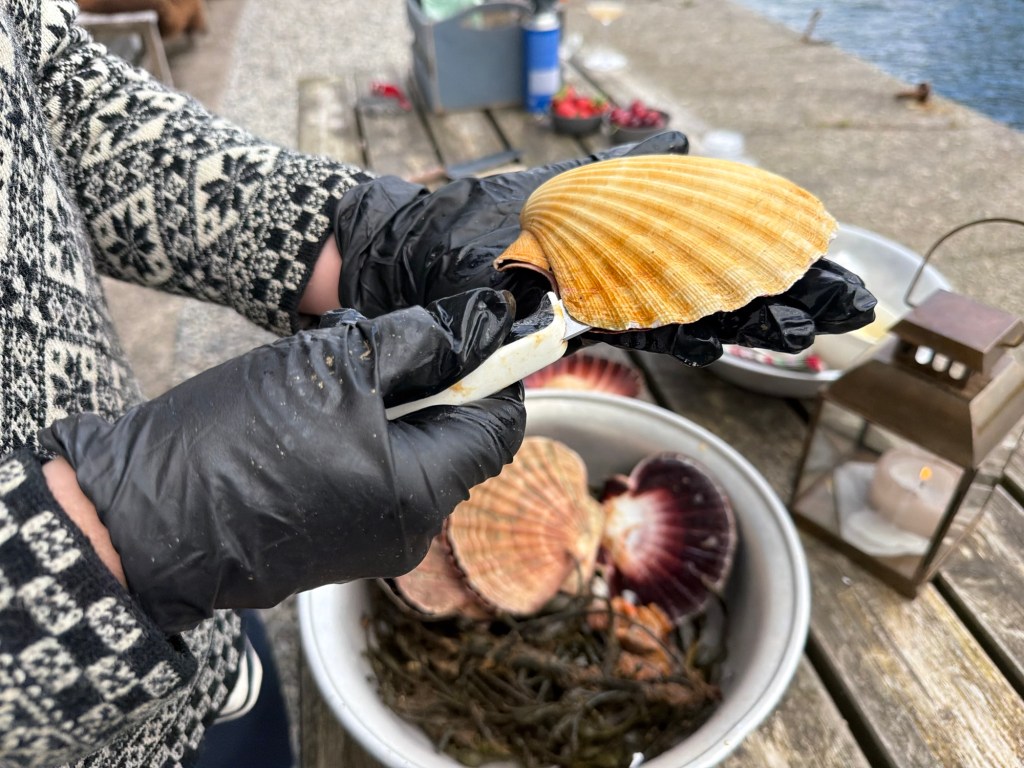


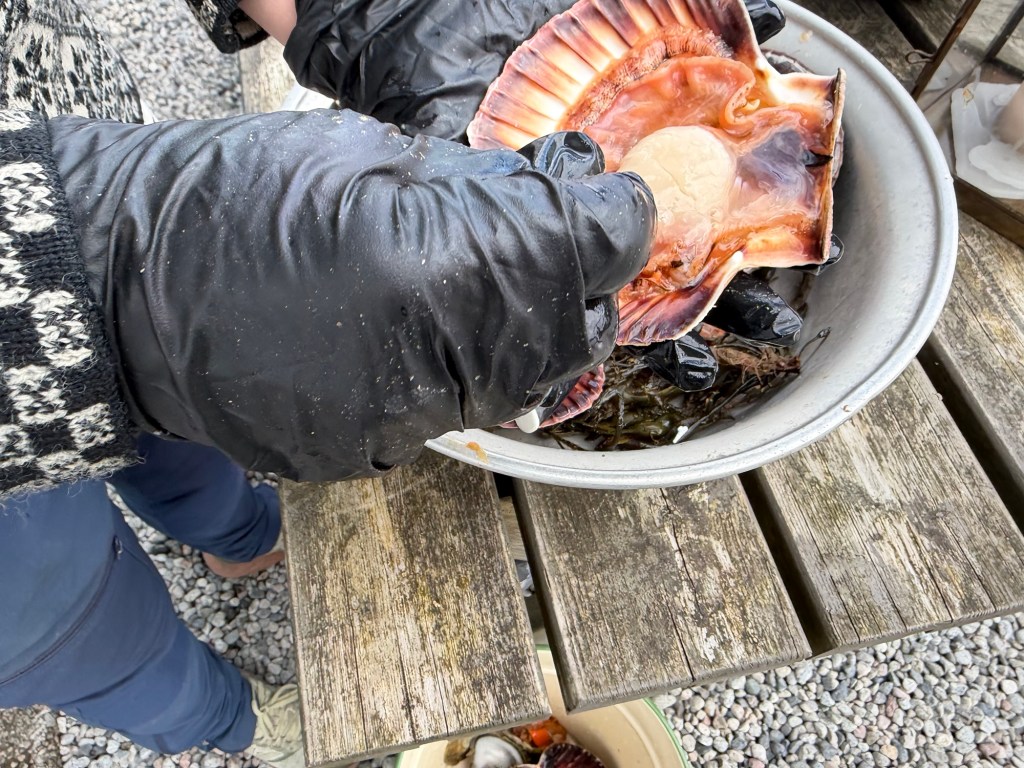
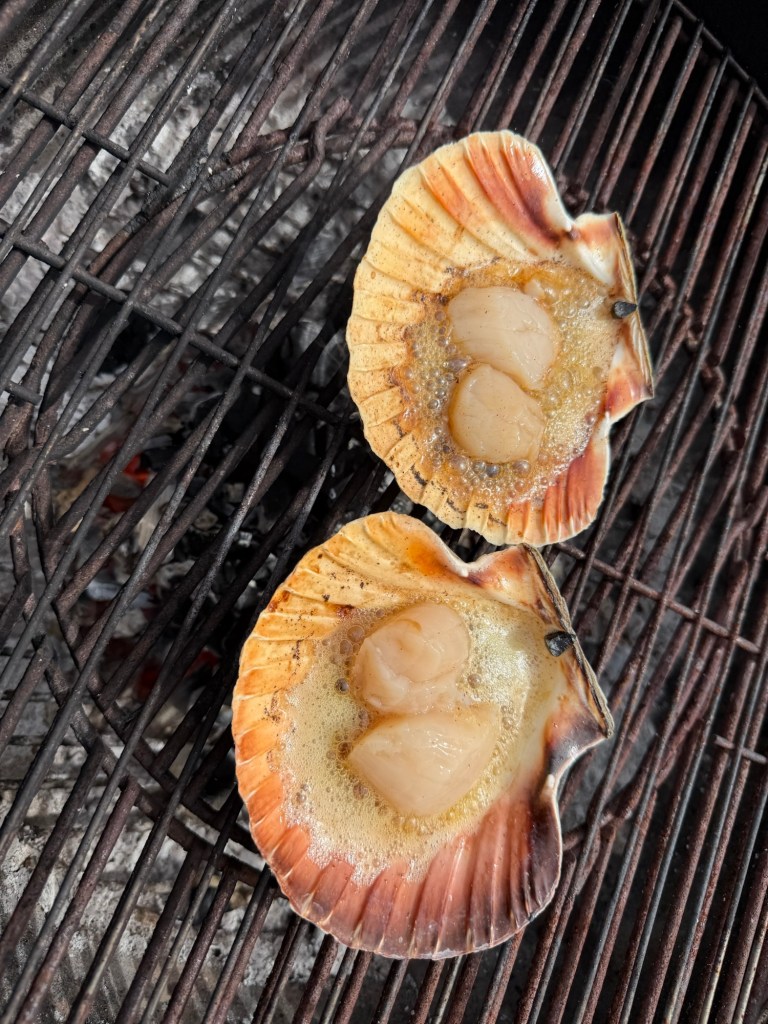
Next she sliced langoustines in half and grilled them. We knew we would like them. Lastly she served us soup. It was a heavy fish stock with a dash of cream. I did not care for it, but ate it politely. Over all the meal was a big success, especially with the demonstrations on how to open each shell.
We had barely finished when Stig appeared with the boat to take us home. He showed us properties he has an interest in and talked about real estate values. Bergen is an expensive place to live, especially near the water, and there is a lot of that.

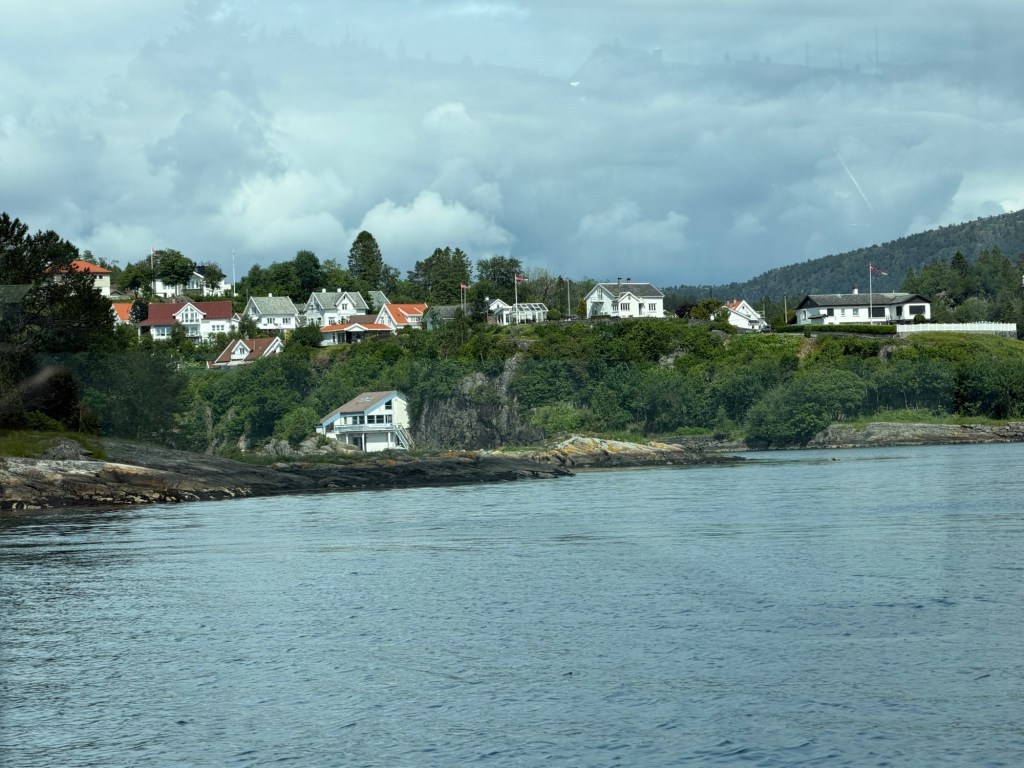
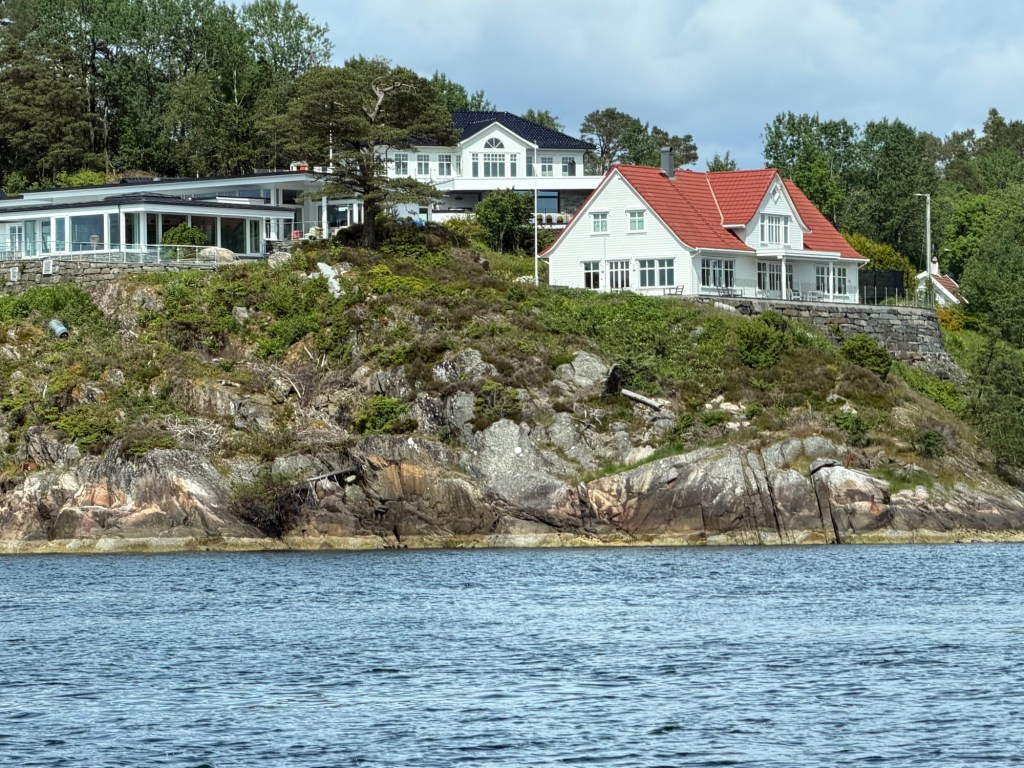
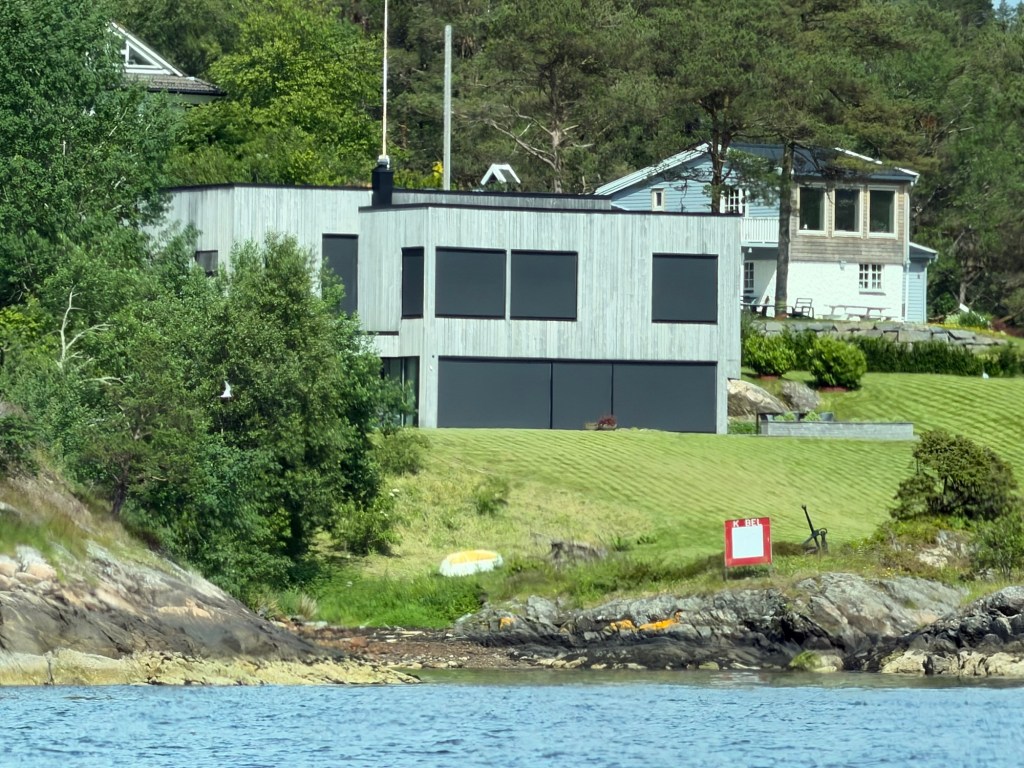
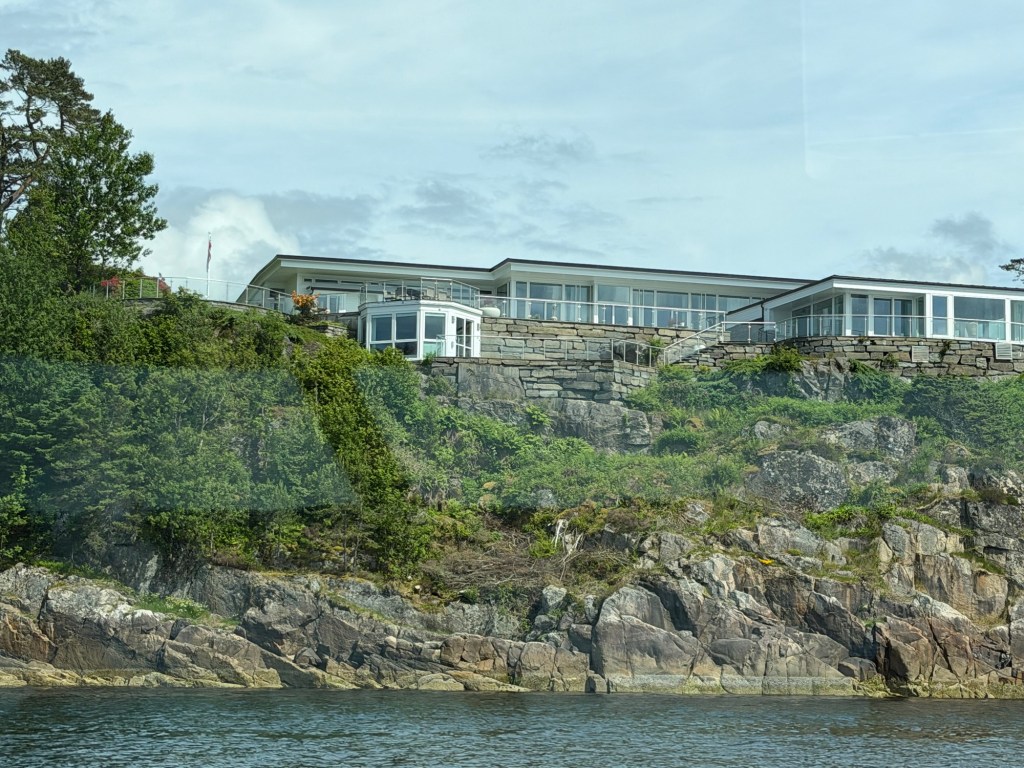
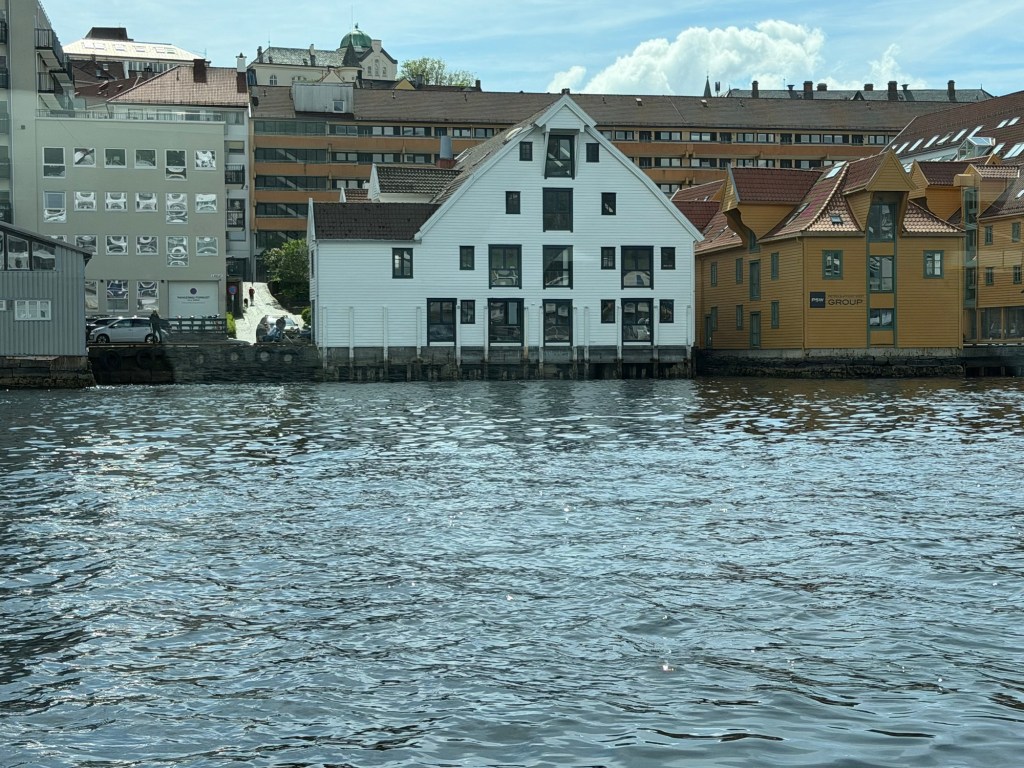
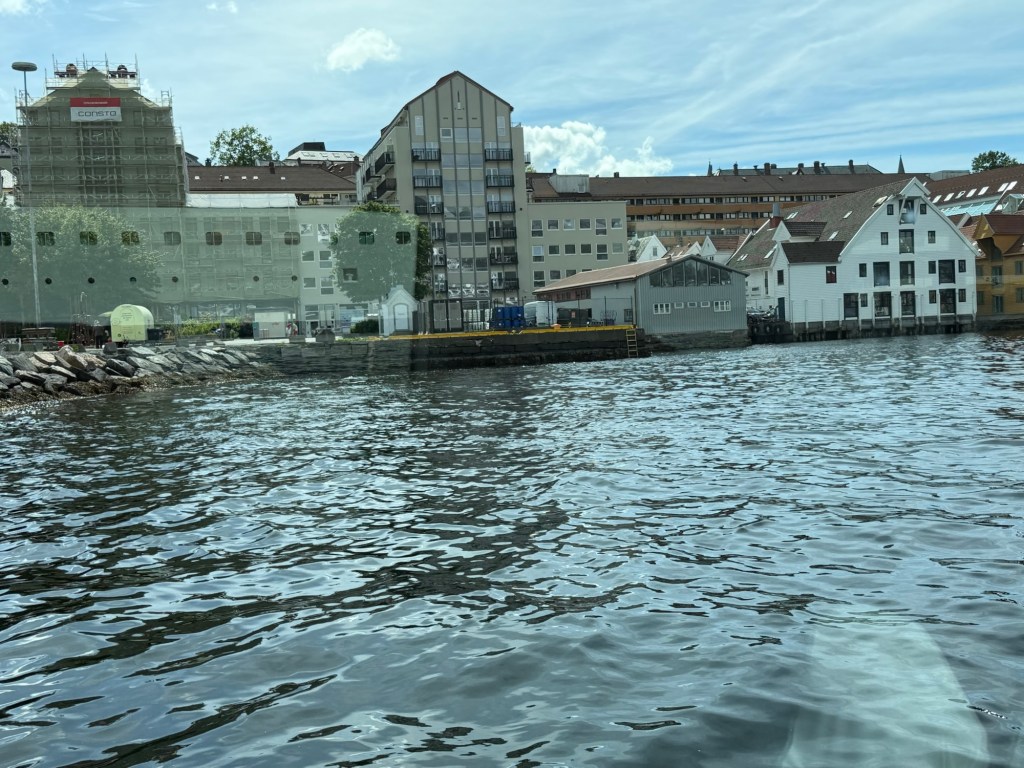


We looked for a pair of Sea eagles on some islands, but had no luck. We reached the dock and said good bye to Stig, We had enjoyed his company.
Then we took advantage of the nice, clear day and road the Floribanen funicular to the top of a local mountain to catch the view from another angle—now we have seen it from the helicopter, boats and the funicular.

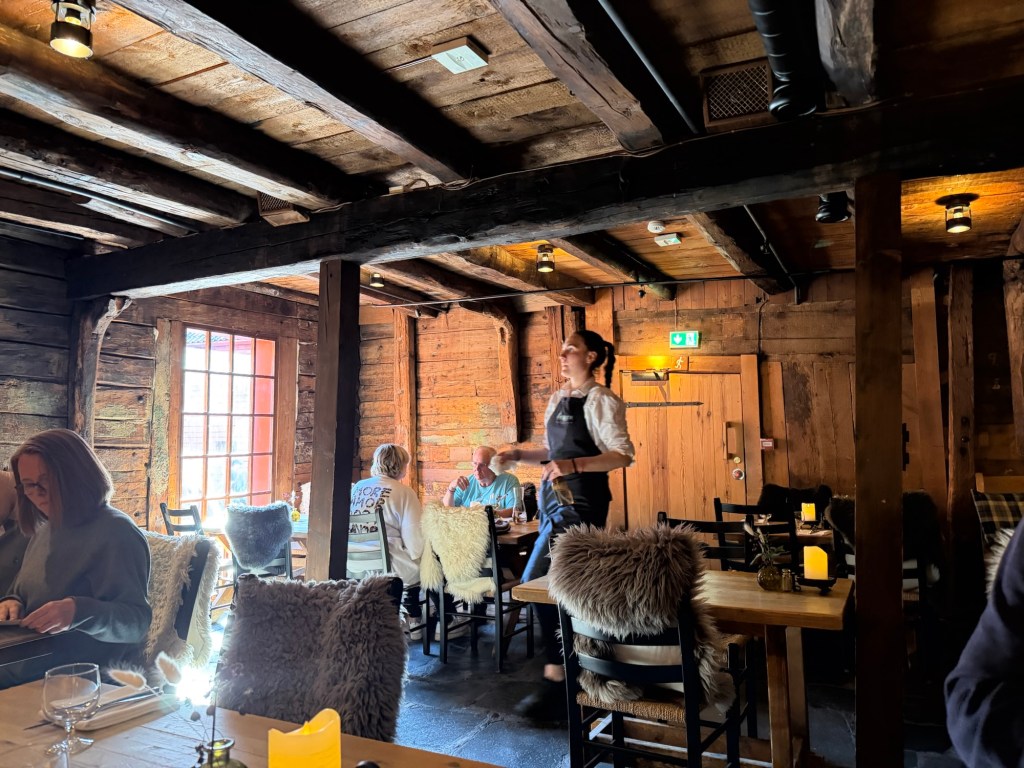
Dinner will be at Tracteursted Restaurant
We leave Bergen in the morning and head for Alesund,