Friday, June 12, 2026
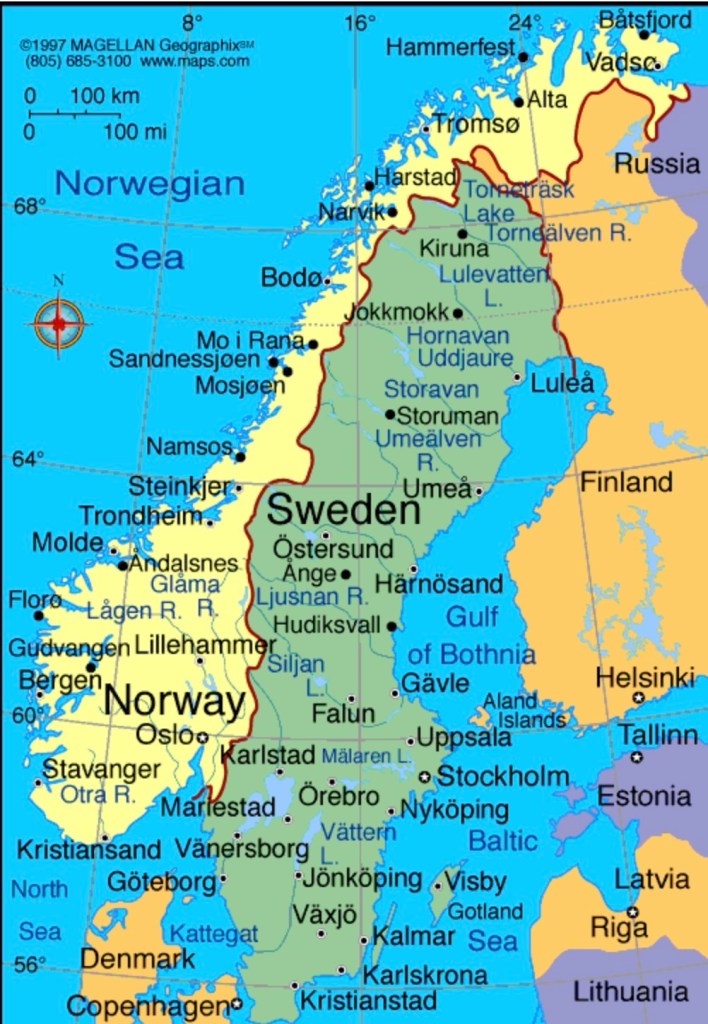
Oslo sits on the country’s southern coast at the head of the Oslofjord. It has a population of approximately 725,000 and a greater urban area population of 1,111.000. The city was founded in 1040 under the name Anglo. It was destroyed by fire in 1624 during the reign of King Christian IV, a new city was built and named Christiania in honor of the king. The city functioned as the capital of Norway during the 1814-1905 union between Sweden and Norway. It gained independence in 1905. In 1925 the city was renamed Oslo. Today, Oslo is the economic and governmental center of Norway. It is an important center for maritime industries and maritime trade in Europe.
It is a pilot city of the Council of Europe and the European Commission intercultural cities program. It focuses on sustainability and modern development. It has world class museums, such as the Vigeland Sculpture Park and the National Museum, which we visited.
Saturday, June 13, 2026
Our first stop was the City Hall, where the Nobel Prize for Peace is given.
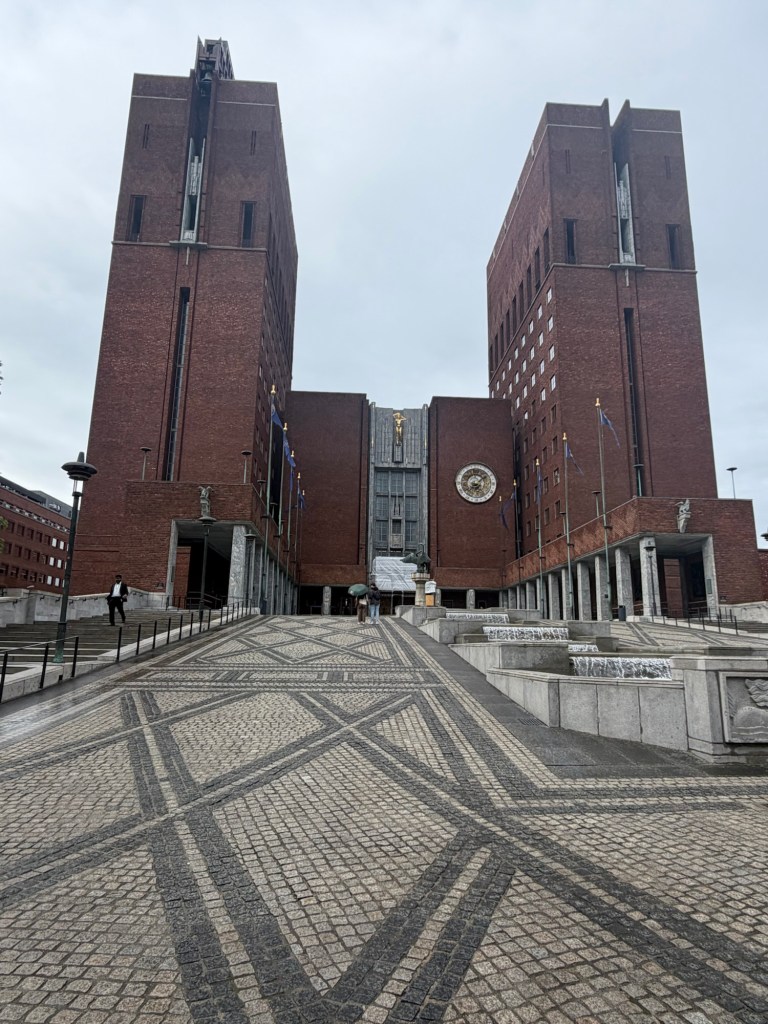


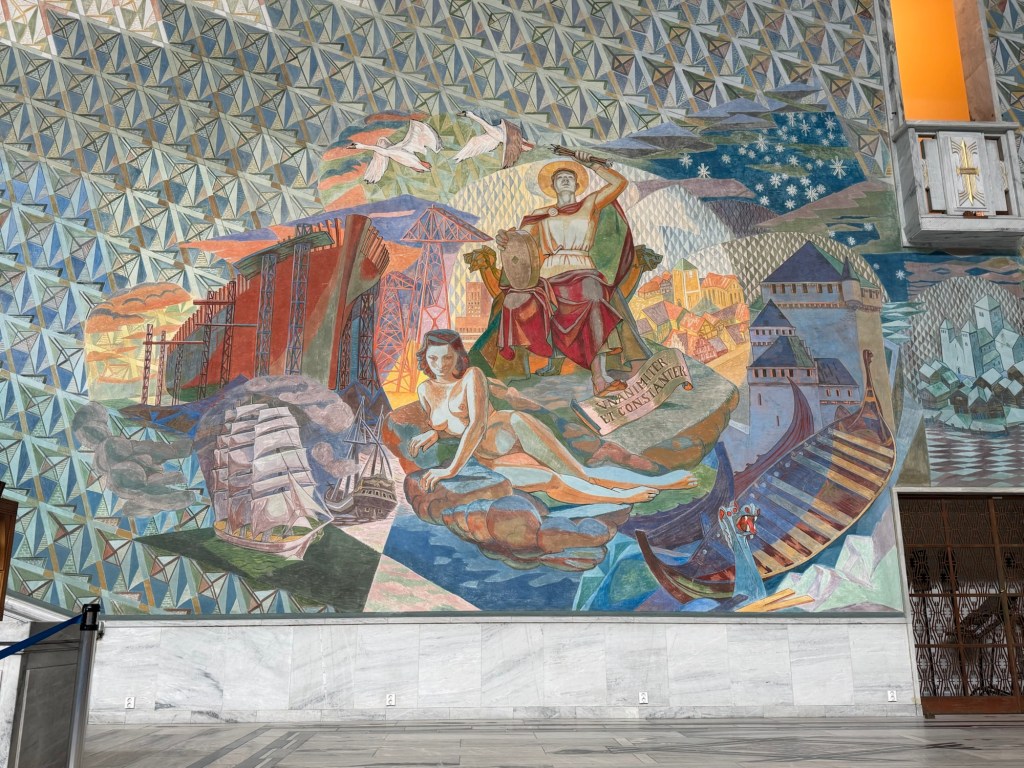
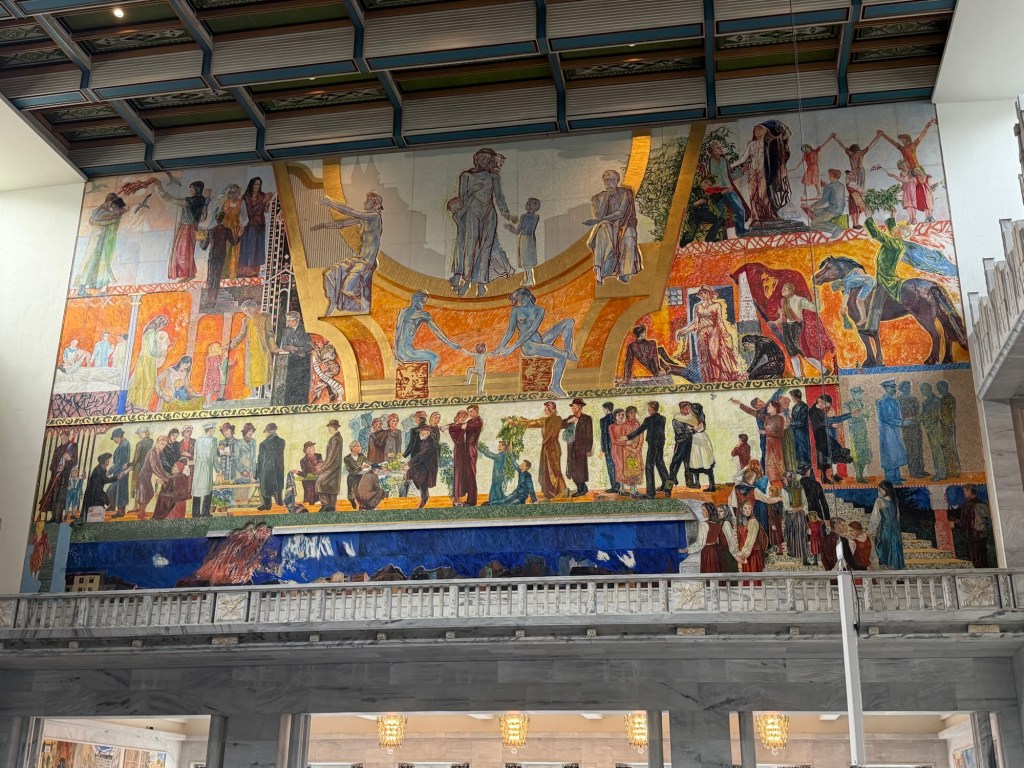


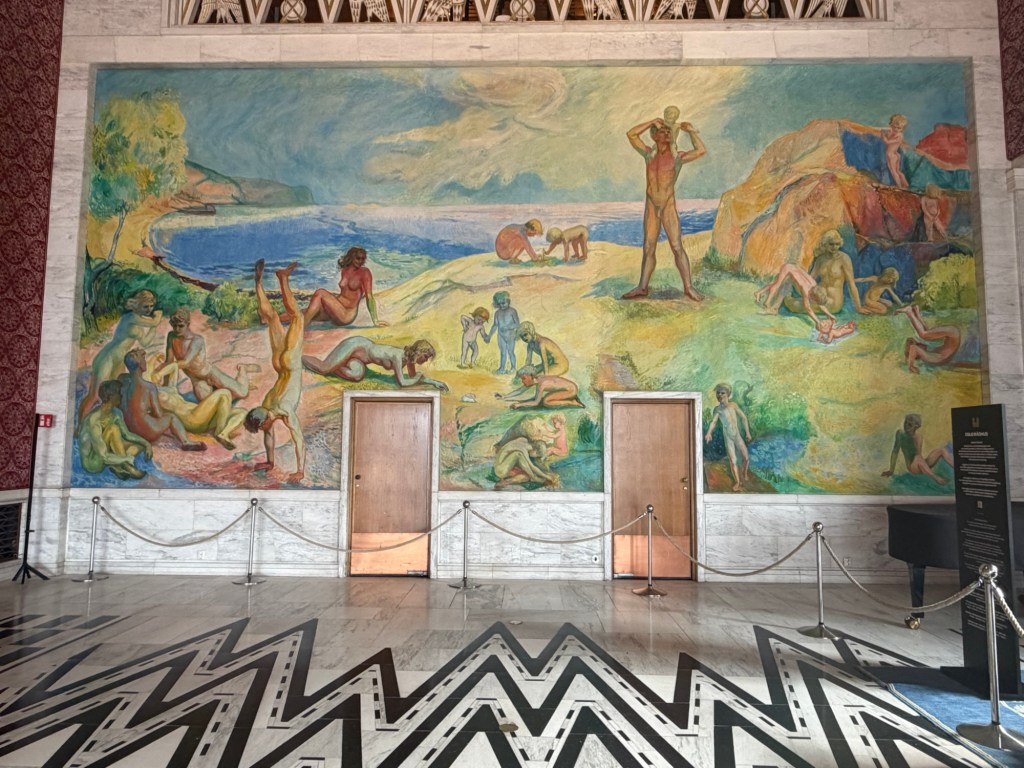
It was a cold rainy day in Oslo. We drove around the city to get an idea of the place—very contemporary and modern. One building even looked like a barcode. We passed by the Oslo Cathedral and found it very simple inside, compared to others we have seen.


Sea after being in sauna
The Opera House, which we did not enter, resembles a ski slope or an ice berg, your call. A sculpture in the Oslofiord was called “She lies” and rotated with the current and wind. We drove by the Munch Museum that has an odd bend in it and through a long tunnel that goes under the Oslofiord and many buildings for 8 kilometers. In an attempt to beat the rain we decided to go to the Sculpture Park early.

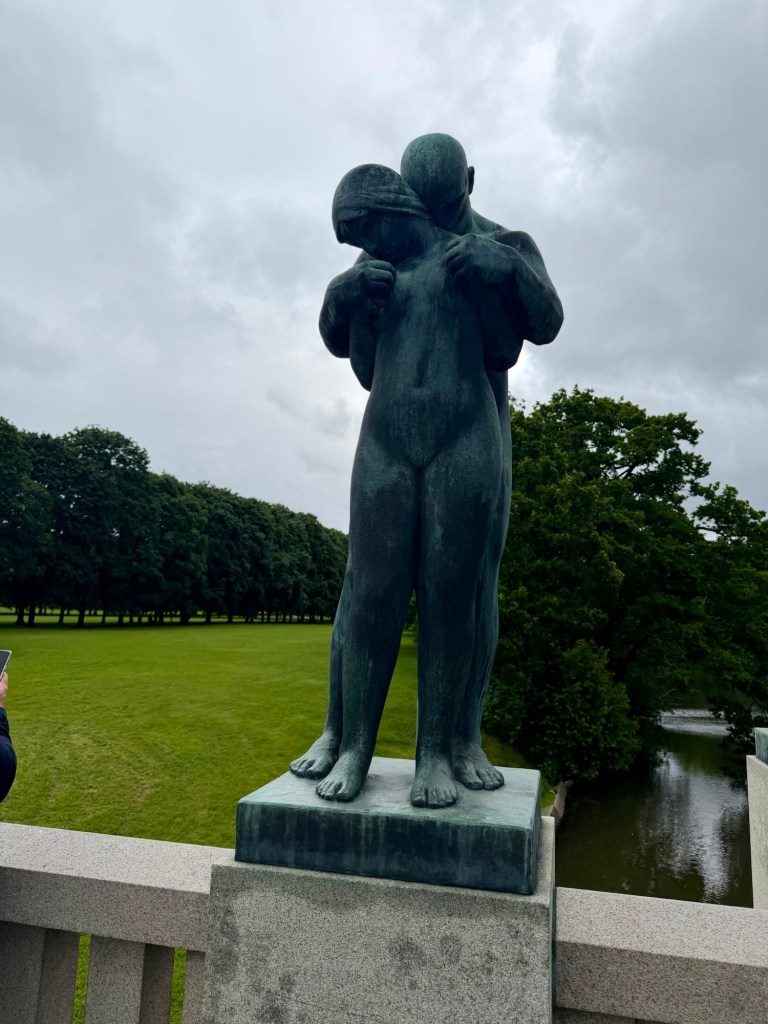
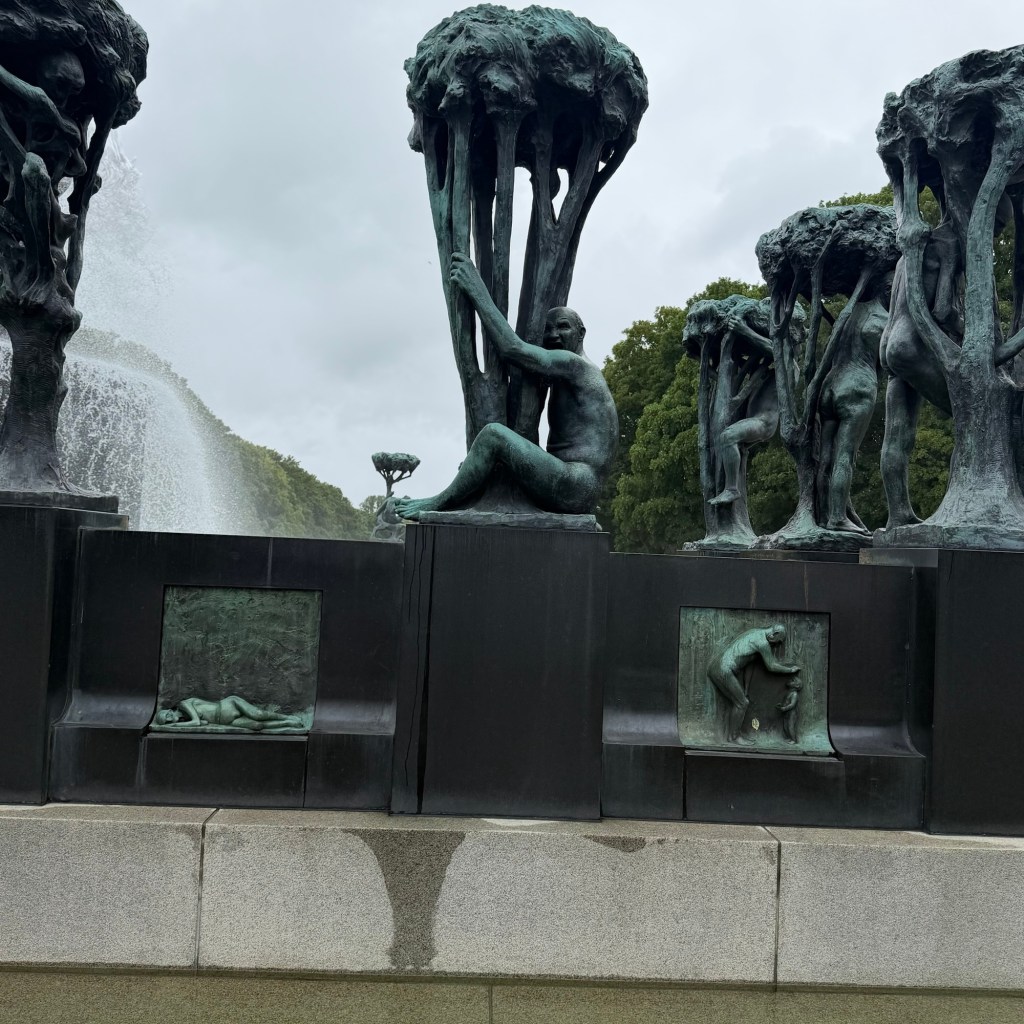
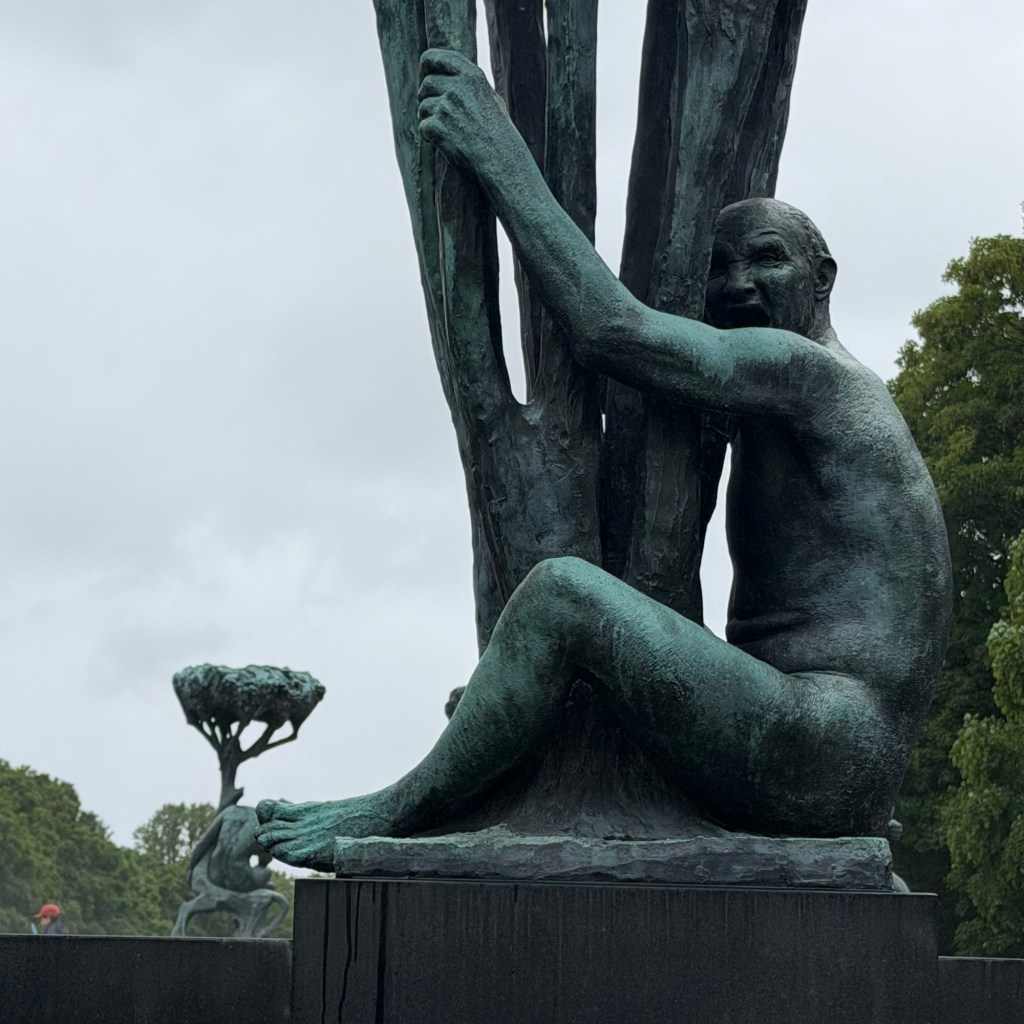
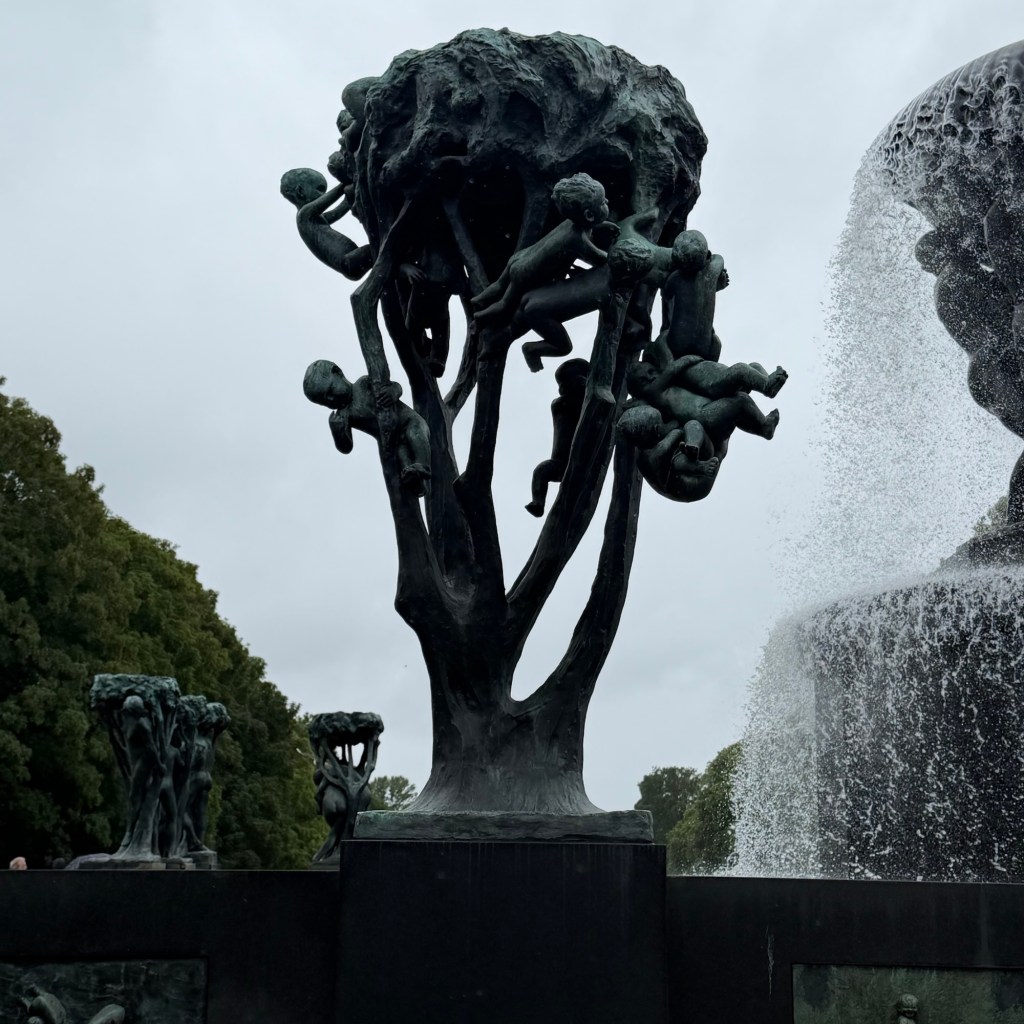


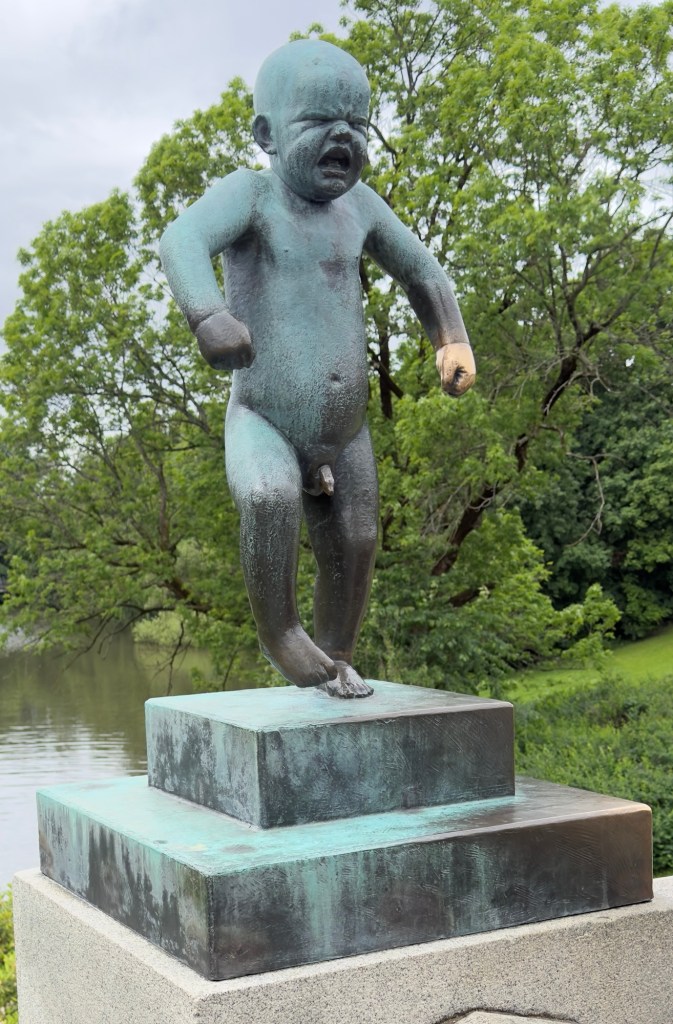

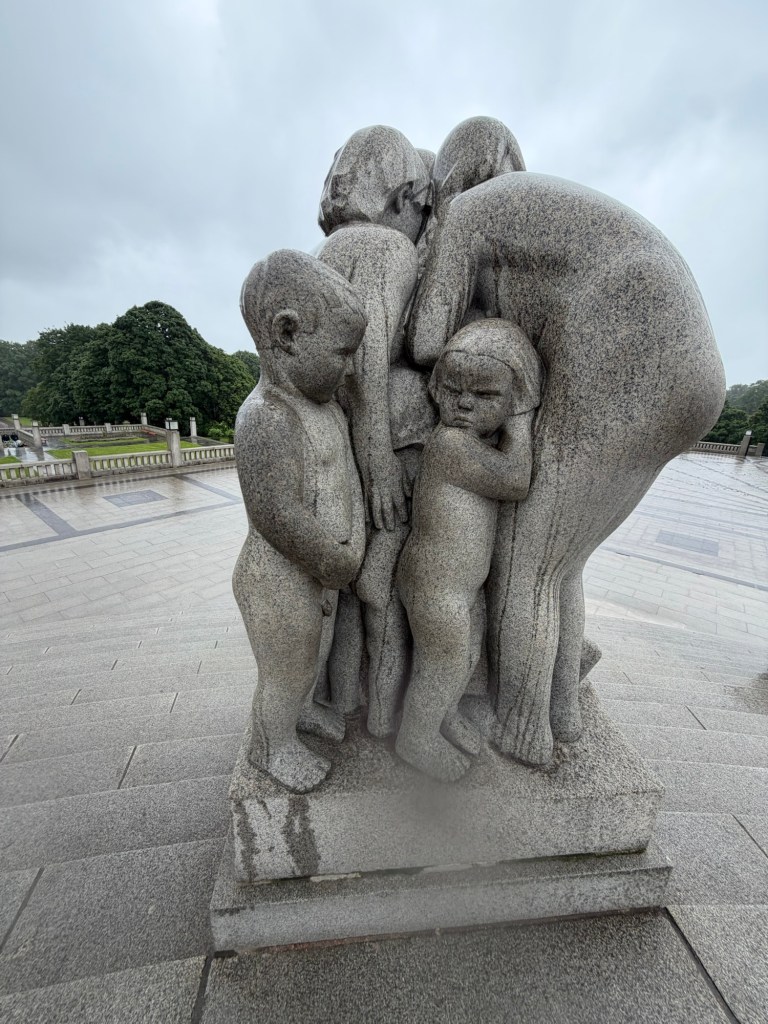
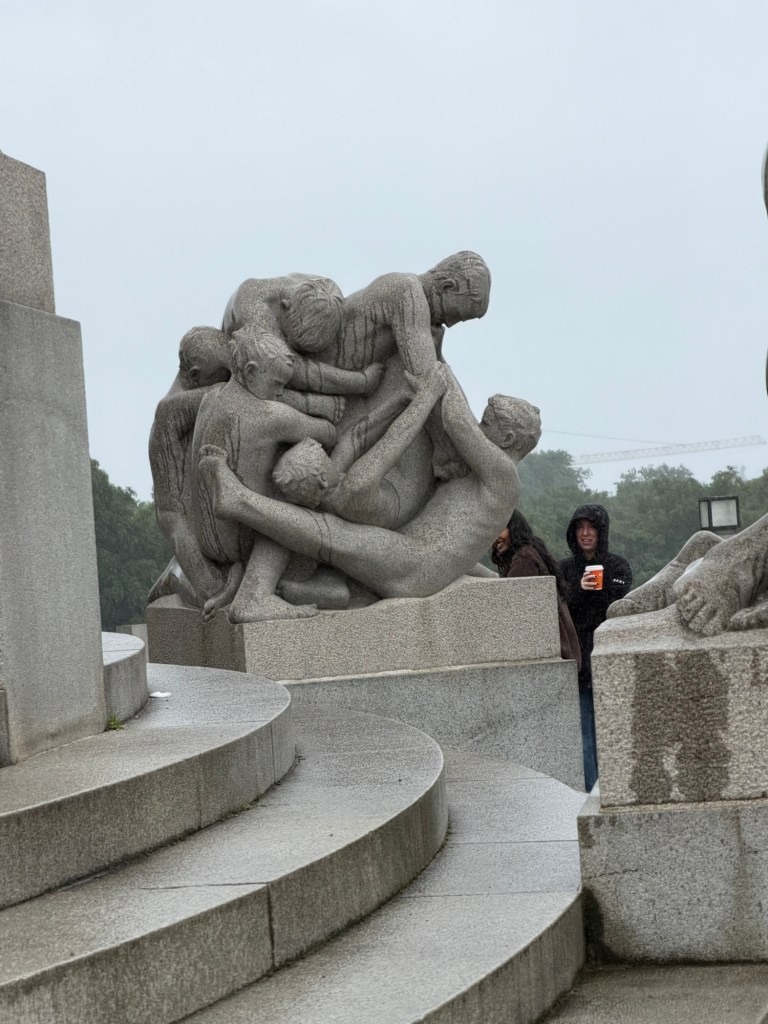
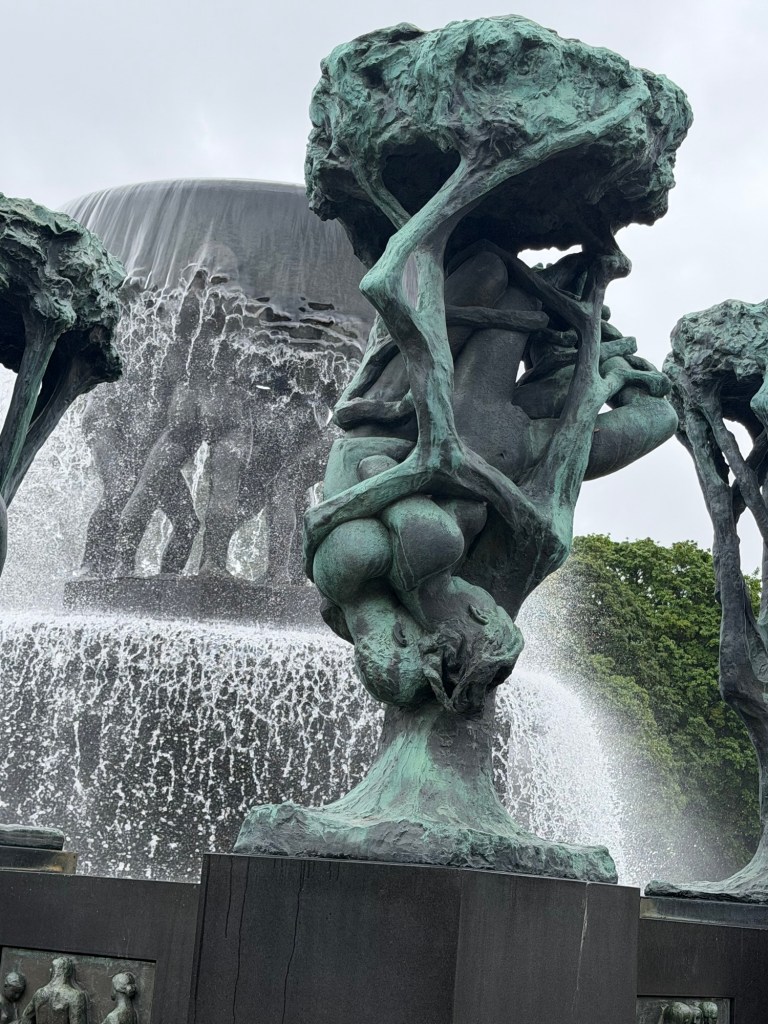


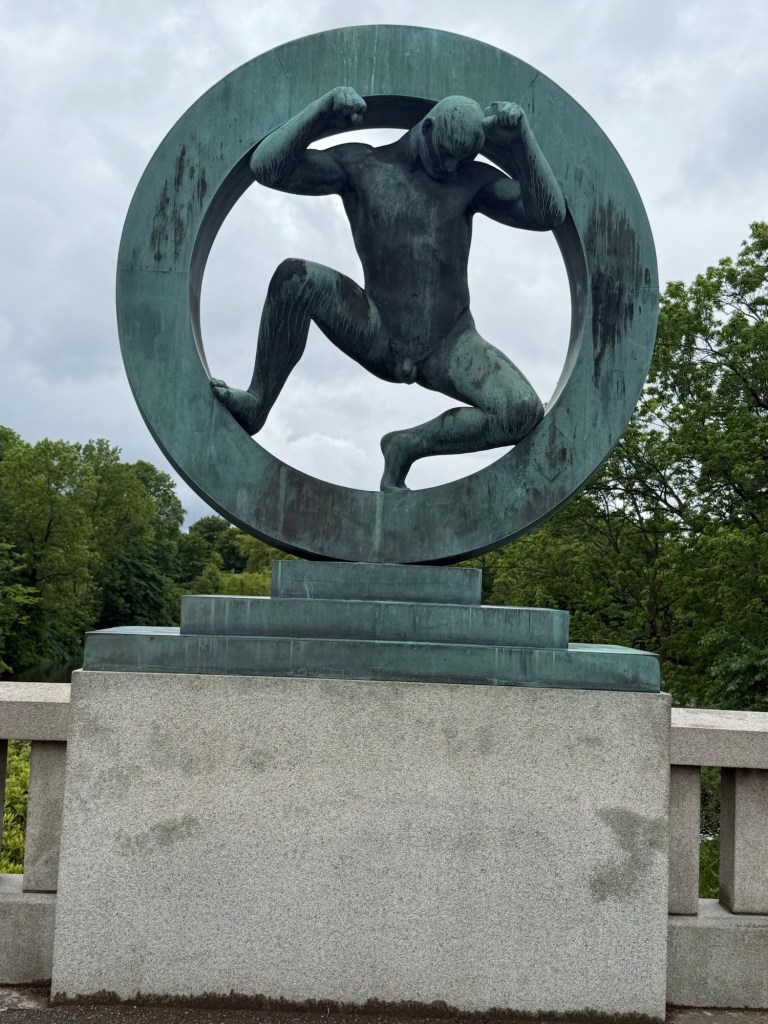
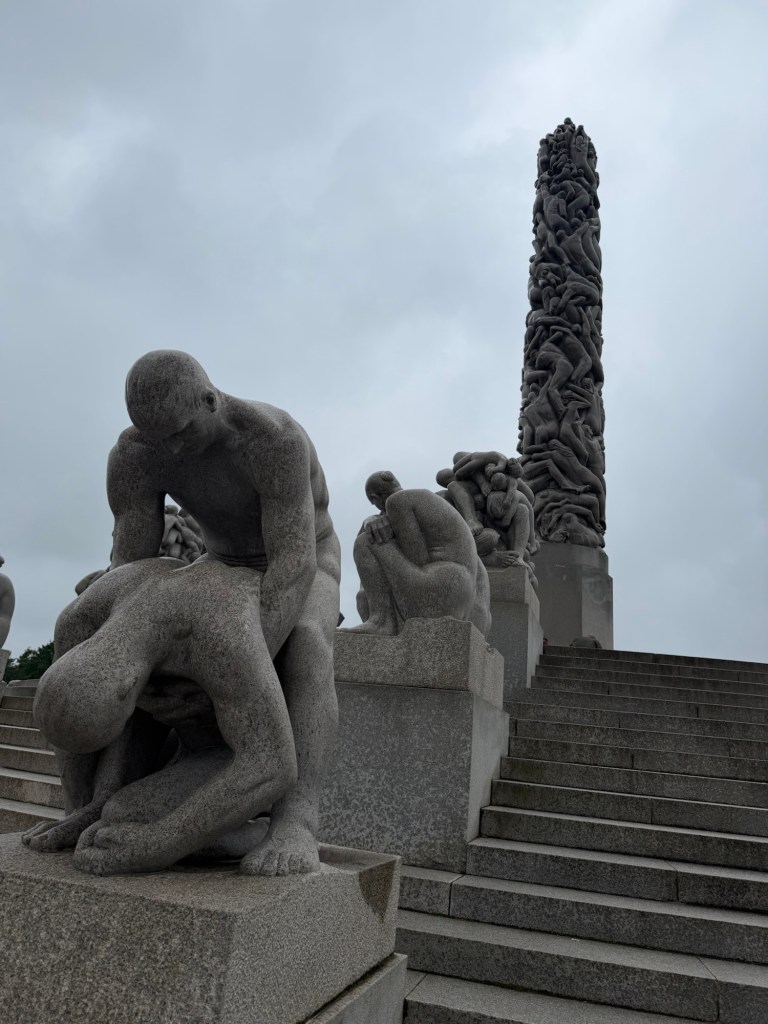
The park was designed and built by the sculptor Gustav Vigeland (1869-1943) to represent the cycle of life. He created everything in the park including the gates, flowers and waterfalls. He made over 200 sculptures over 40 years, that together, tell the story of life in a park that is 48 hectares, 120 acres, in size and contains hundreds of roses and other plants as well as paths, bridges, water features and sculptures. Here are some of the sculptures to give you an idea of the scope of work. None of the statues are named and no reason are given for any of them. It is for each person to decide what they mean.
Then we went to the National Museum.
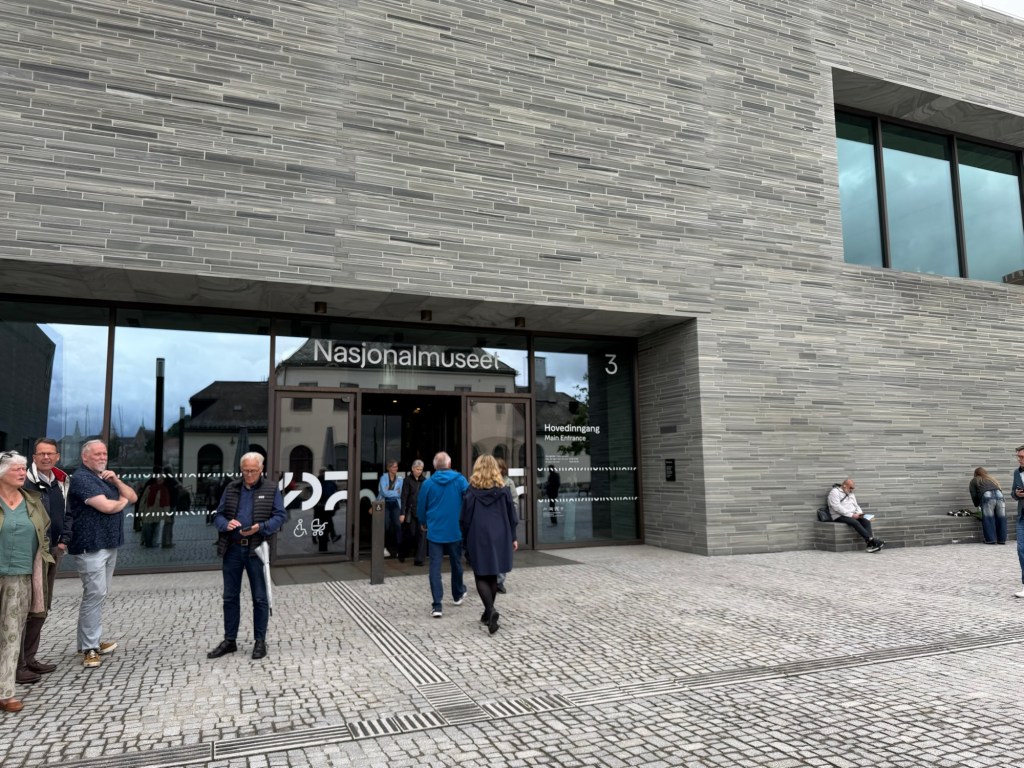


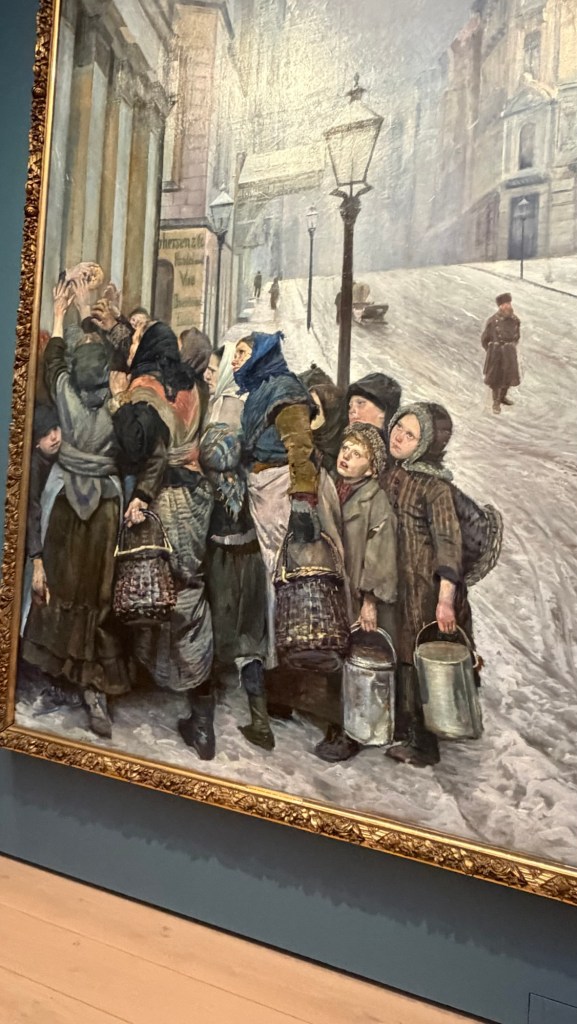
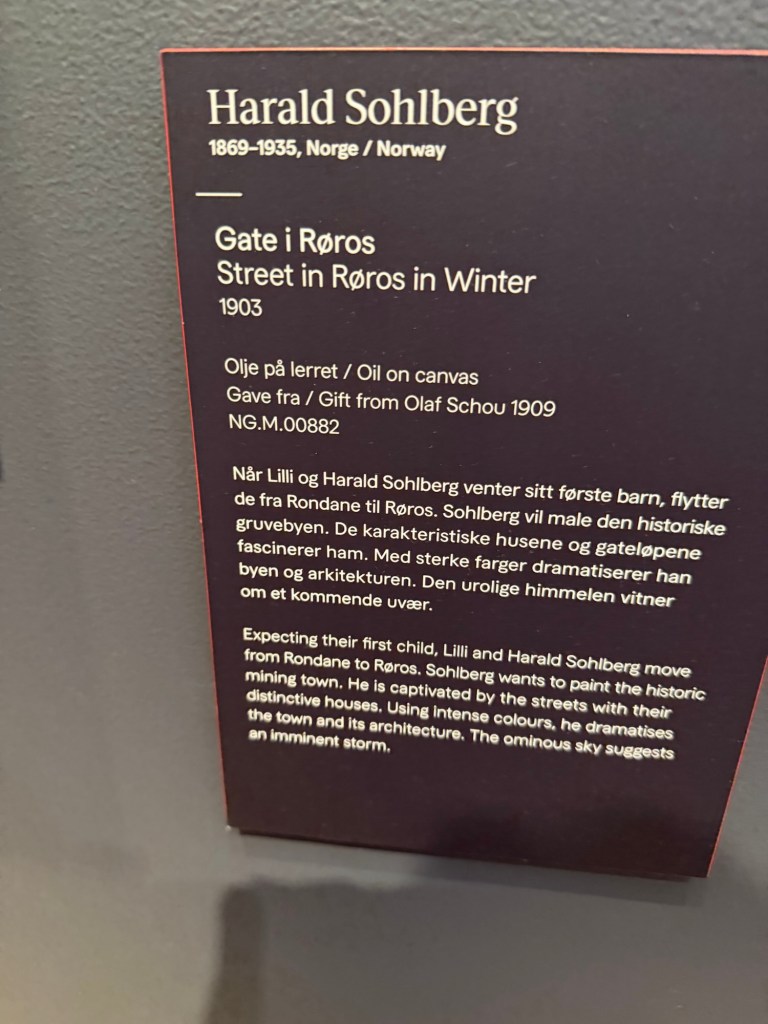
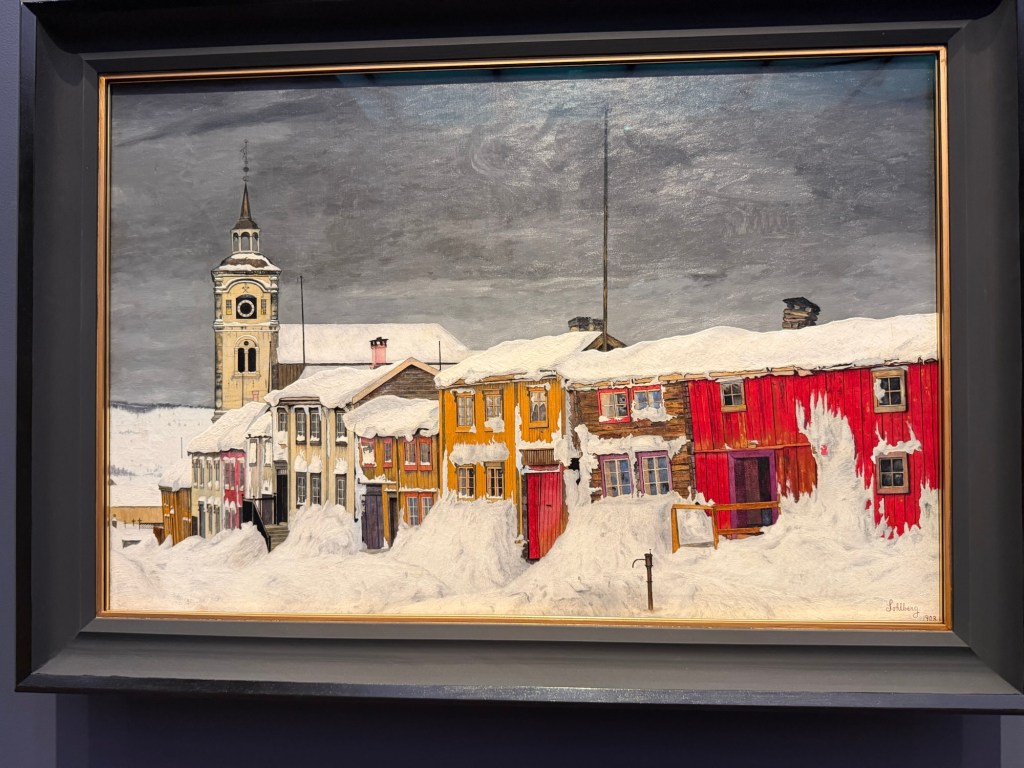
After leaving the Park, where we did get rained on, we decided to go to the National Museum to get out of the weather as much as to see the art inside. The museum did have some pleasant surprises for us. Edward Munch’s The Scream was in the second room we entered. I was pleased to see it, but surprised it was not as large as I imagined. It was about 2 feet wide by 3 feet tall.
We enjoyed seeing several Paul Gauguins’s, a Van Gogh self portrait in green, one Peter Paul Rubin, a Paul Cezanne, and a copy of Rodin’s The Thinker along with others. There were a lot of Norwegian painters represented, but only one that I recognized, Christian Krohg.
By the time we left the museum, it had stopped raining and it was time to have some down time. Mark walked to the money exchange to turn his load of euros back into dollars. Turns out Scandinavian countries use credit cards everywhere and don’t want cash of any kind, not even tips. We had a snack in the hotel and retired to our most comfortable room to enjoy the rest off the afternoon.
We learned that in 1969, Norway and the US together, discovered oil in the North Sea and production has been very successful. Currently the EU is discussing exploring the Arctic Sea for oil.
Between 1824 and 1924, 800 thousand Norwegian’s immigrated to the US. About 5 million Americans have Norwegian roots.
For dinner, Mark and I ate in the dining room called Theaatercafeen, that was attached to our hotel. He had a pizza and I had trout. The food was reasonable, but not spectacular. Then into our robes for the evening.
Sunday, June 14, 2026
At 9am we headed out for an island called Havar and saw many farms and farm houses along the way. The white buildings are where people live and the red buildings are for animals and farm equipment.
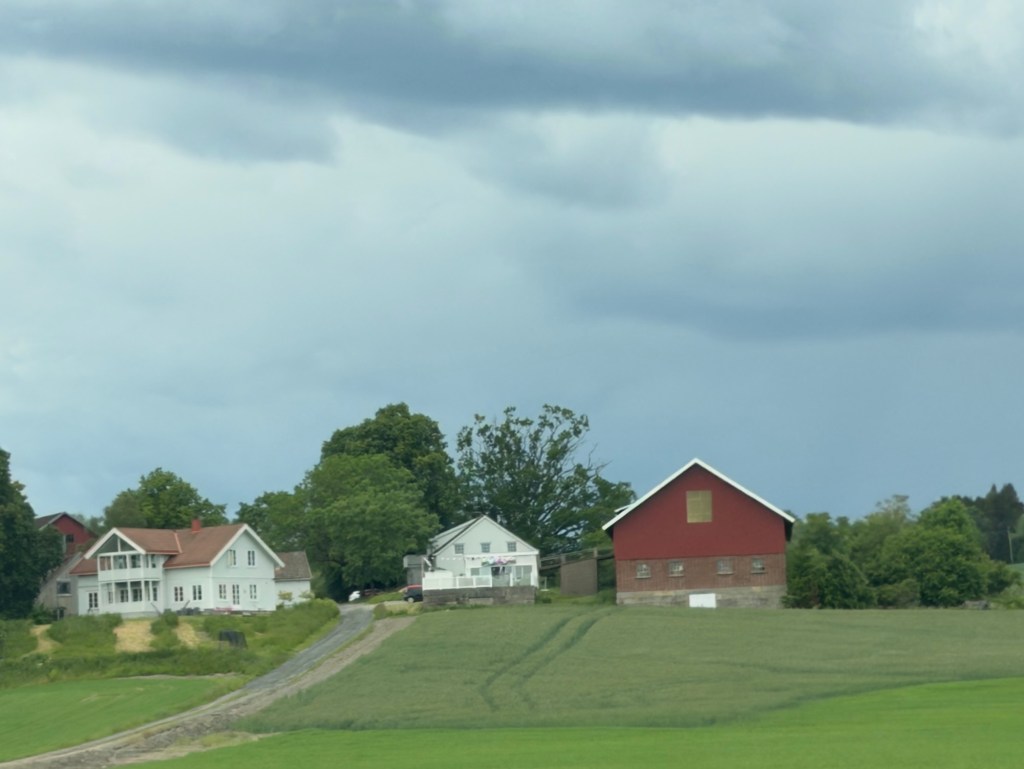
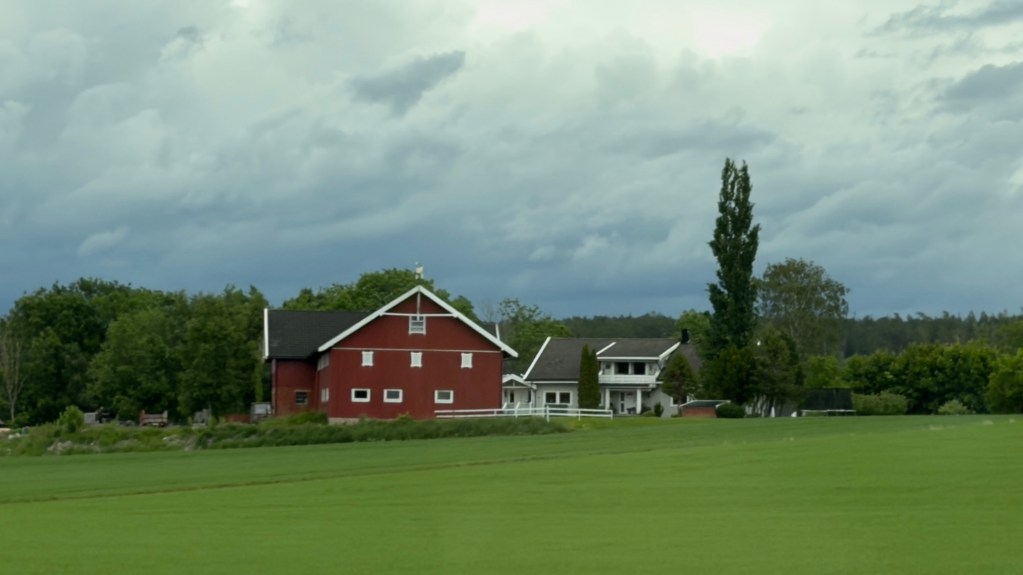
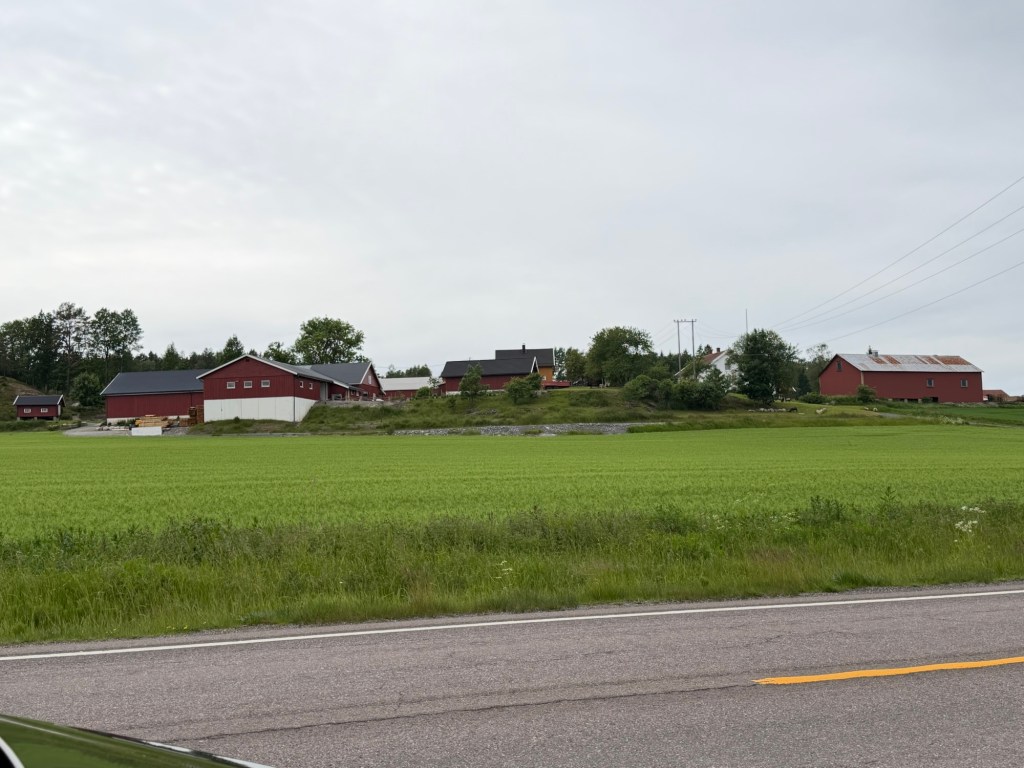

We planned to see Fredrikstrada and visit the fortified Old Town where 300 people live. Fredrikstrada has 90 thousand people.

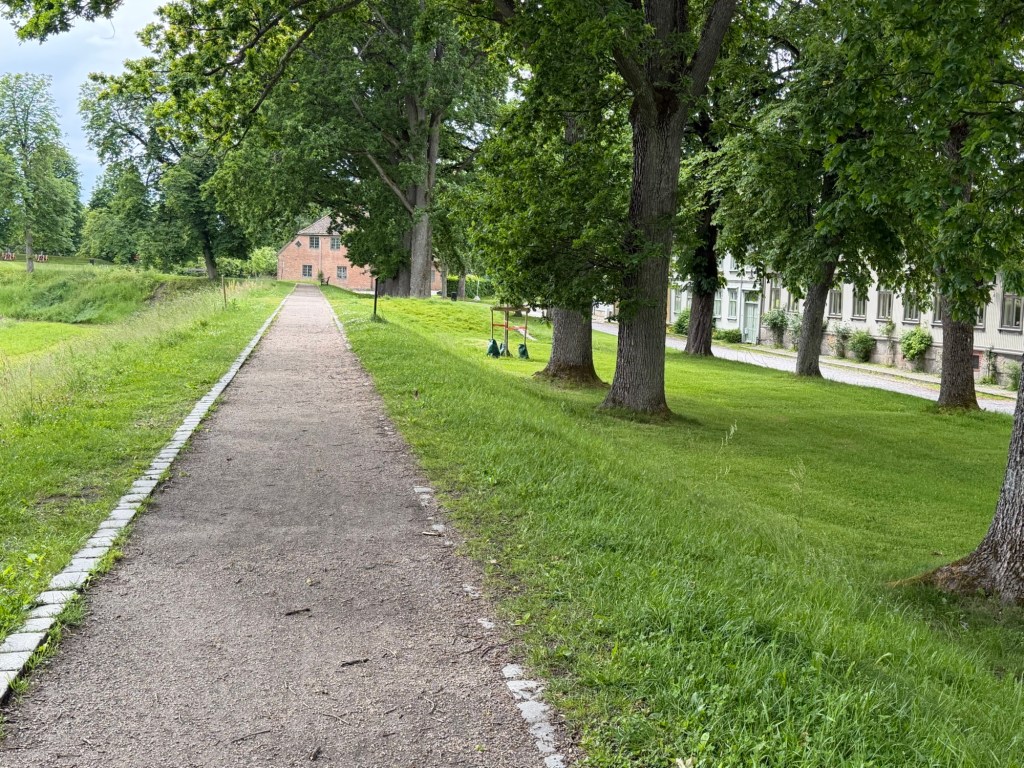
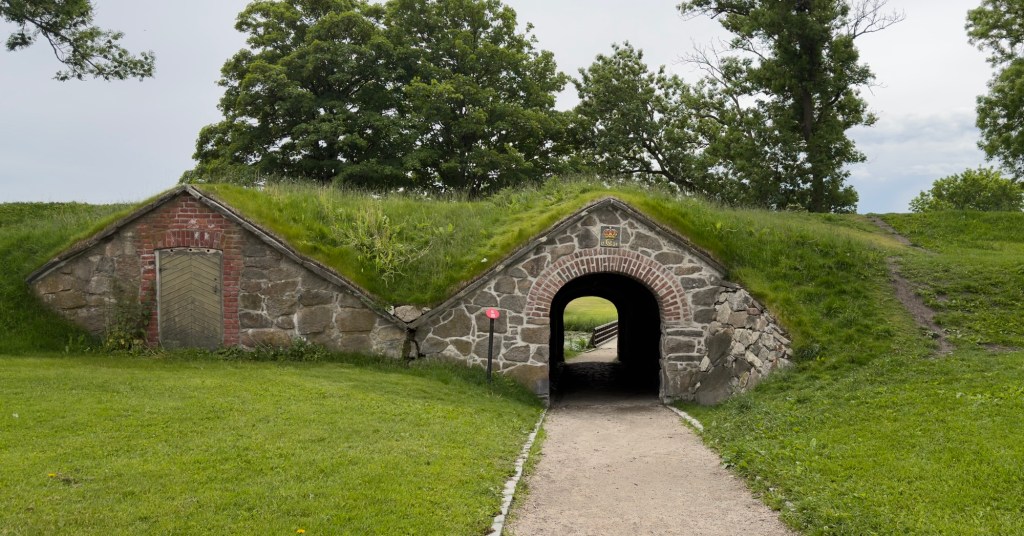
We walked along the grass covered bastions that completely surround the Old Town, taking in a few canons along the way. But before walking through the town, we accepted Elizabeth’s invitation to see her summer cabin in a village nearby.
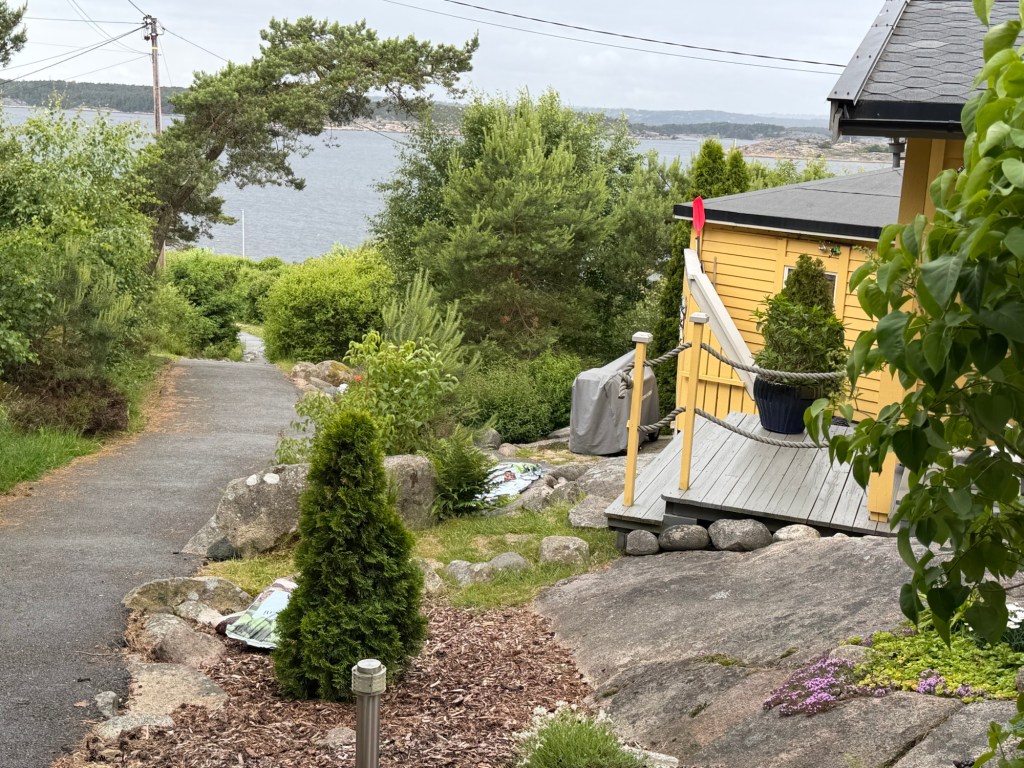


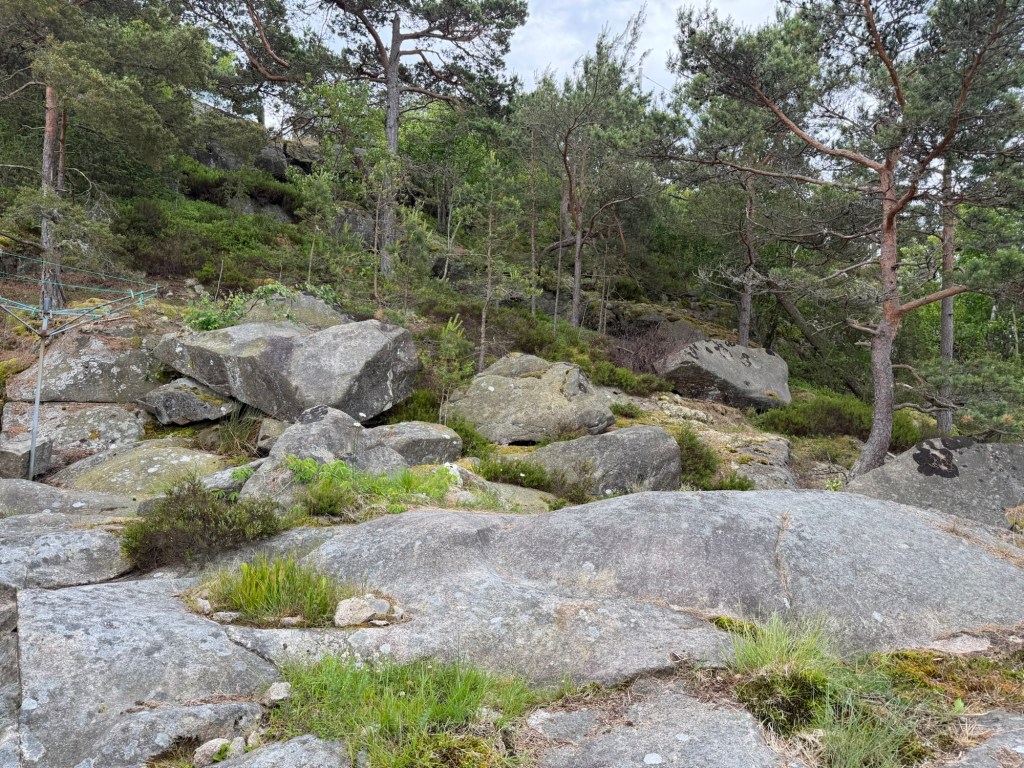

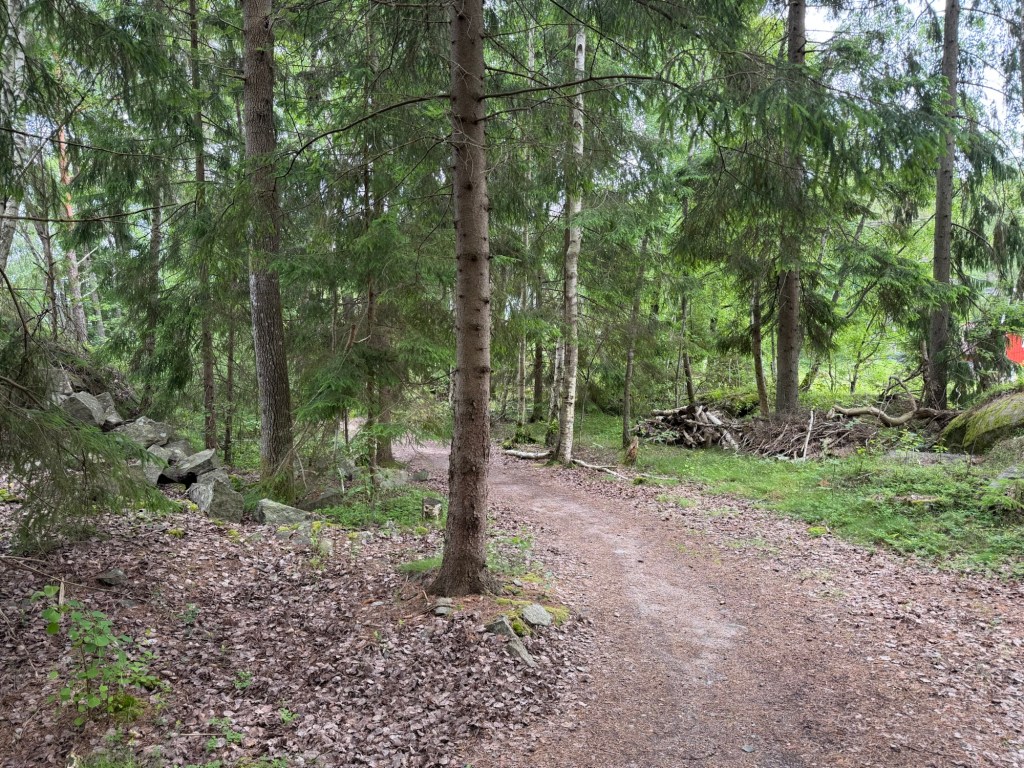
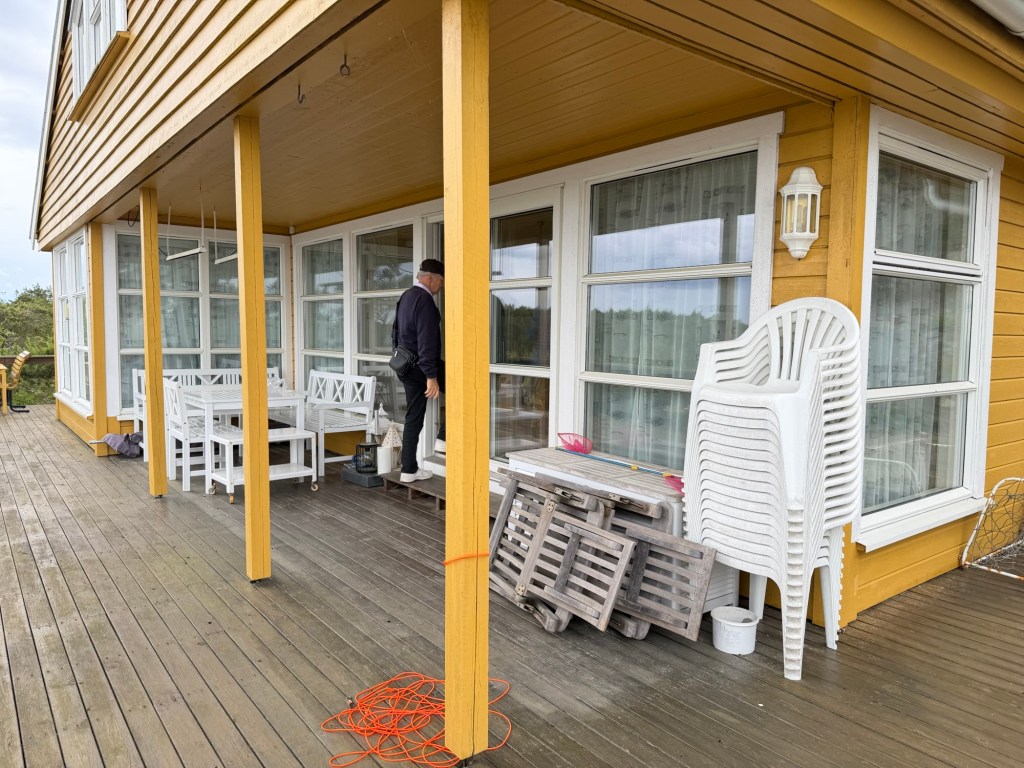
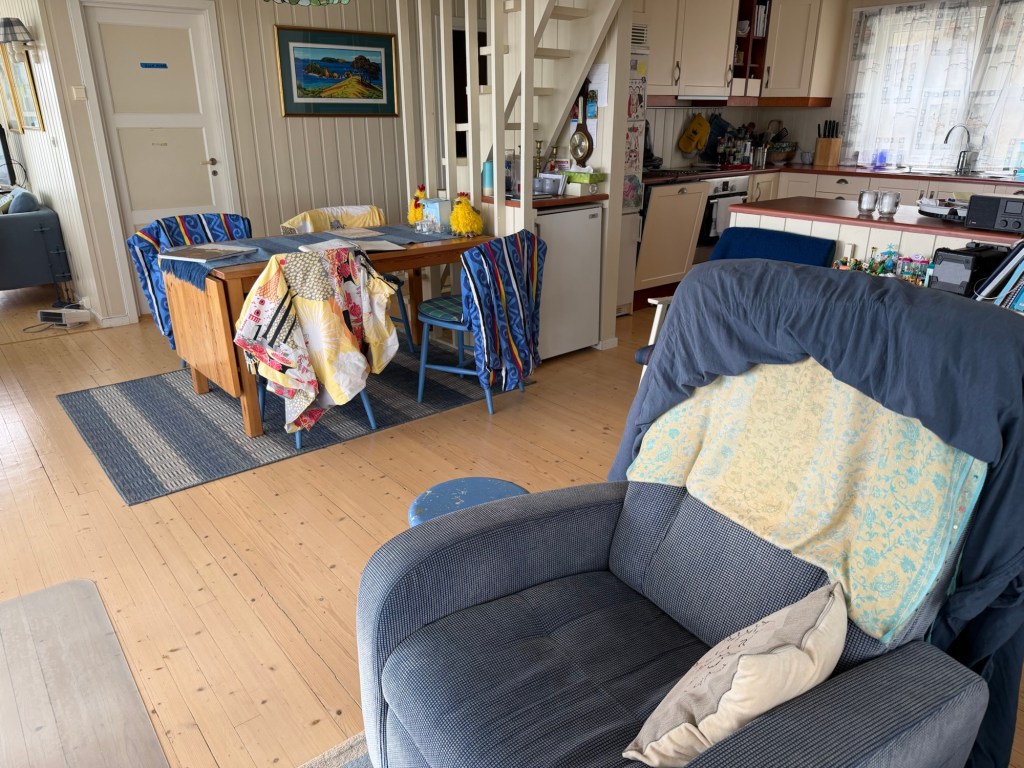
We drove up several narrow, crooked roads until there was no more road and then we walked along a dirt path for several minutes until we came to her cabin in the forest that overlooks the sea. It was a delightful and cozy place for a cabin. We could see why she likes being there. After a brief visit, it started to rain and we agreed to get back to the car as we had no umbrellas with us. Back in the Old Town, we got some coffee and a mini pizza to share.

Near the cafe was a statue of the Danish King Fredrik II (1534-1588), who founded the town in 1567. While sharing a snack and coffee, Elizabeth shared with us that the Old Town had burned down 7 times and been rebuilt each time. The last time being in 1712. Norway was ruled by Danish kings for 454 years from 1537 to 1814. The situation changed when Napoleon lost Norway in 1814 and Norway was united with Sweden. The Swedish king had no sons so he adopted the former Marshall in Napoleon’s army in 1814. When the king died in 1818, the Marshall became the next king of Sweden. His successors are referred to as Bernadotte. That arrangement lasted until 1905 when the Swedish King Oscar II gave freedom to Norway. Then Norway needed a King.
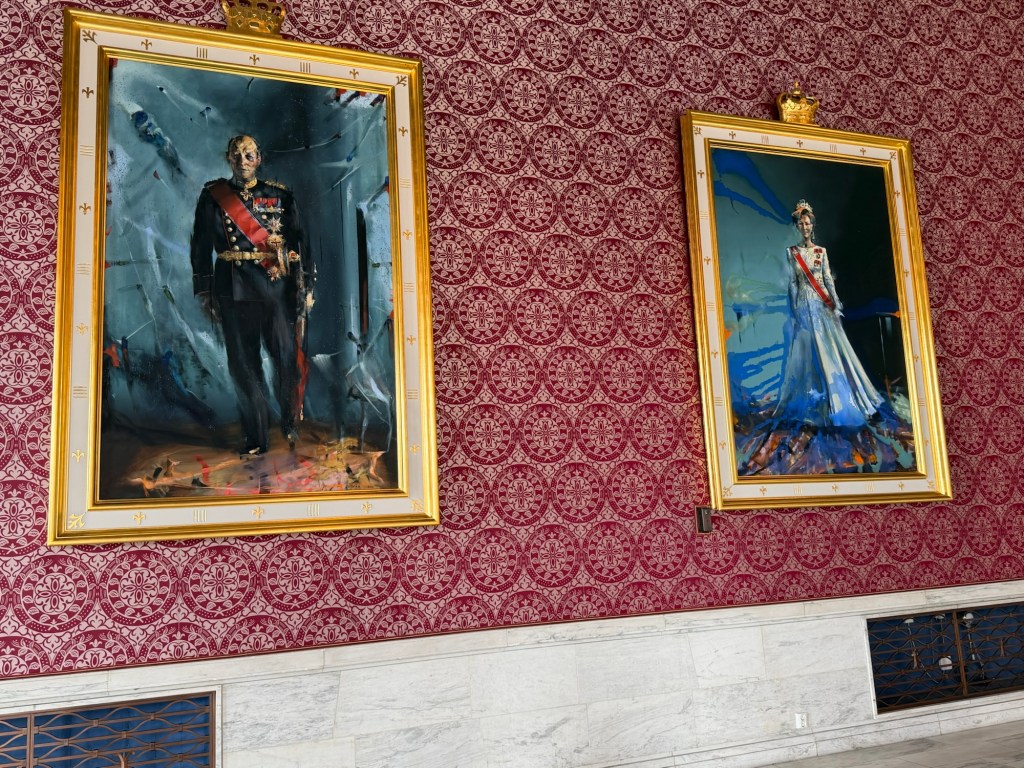
When the Danish Prince Carl was offered the job of King of Norway, the Norwegians said yes. His progeny continue to rule Norway. The current King is the 89 year old Harald V. (His painting is in the City Hall pictures) The next king will be his son, Haakon VIII.
Enough of that story.

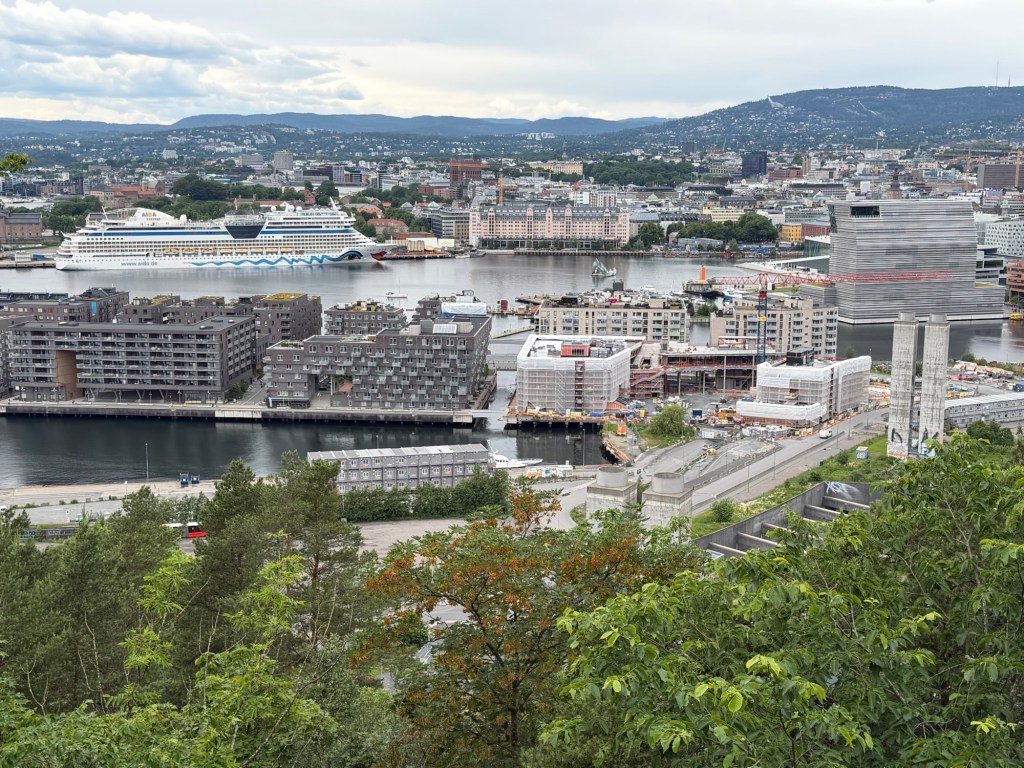

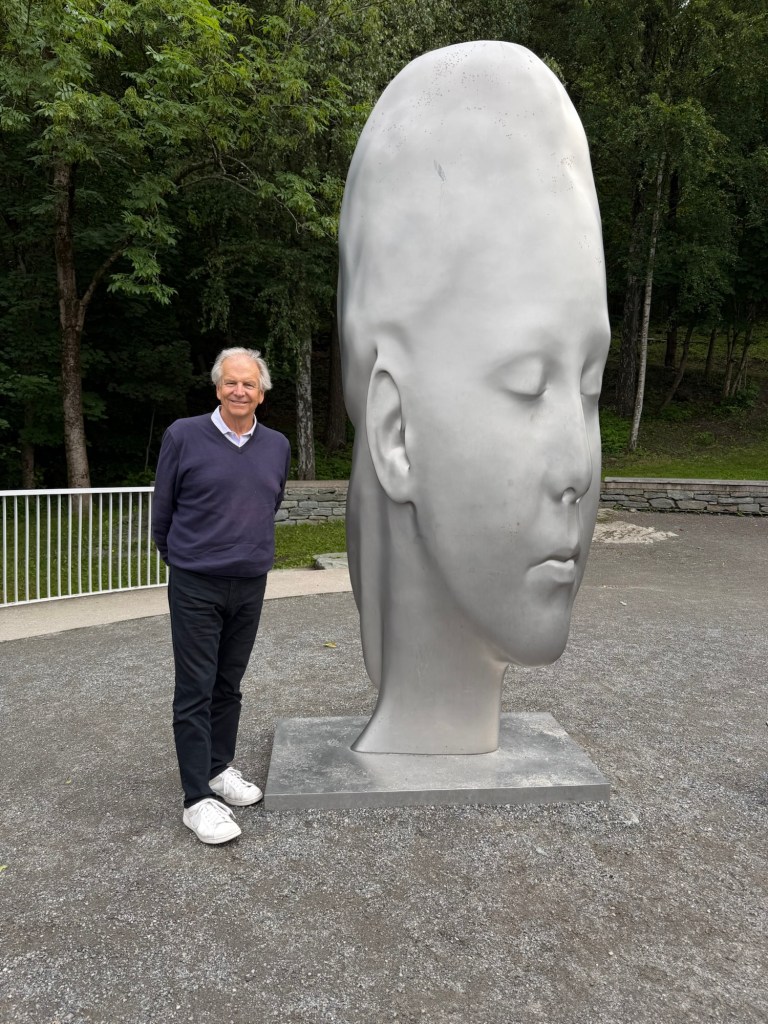
Back to current events. We did not spend much time in Fredrikstrada. On the way back into Oslo we stopped at Oak Hill Vista Point where Mark was taken by this sculpture in the parking area.
Back in Oslo with no rain, we decided to climb the Opera roof, since we could not get inside.

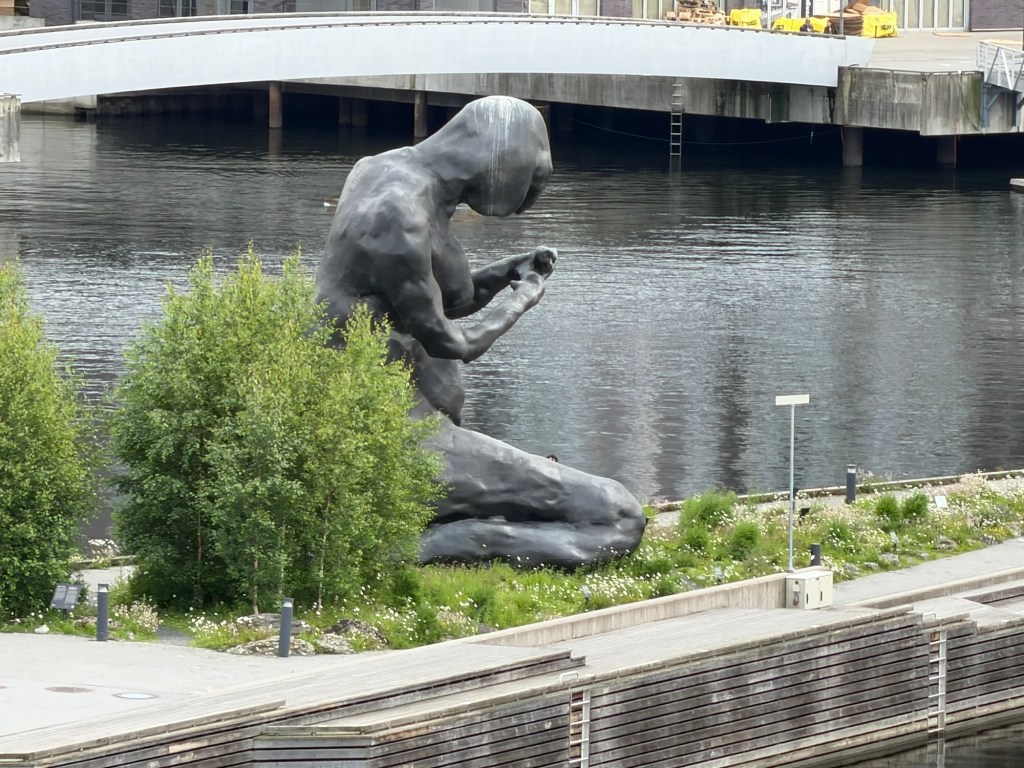
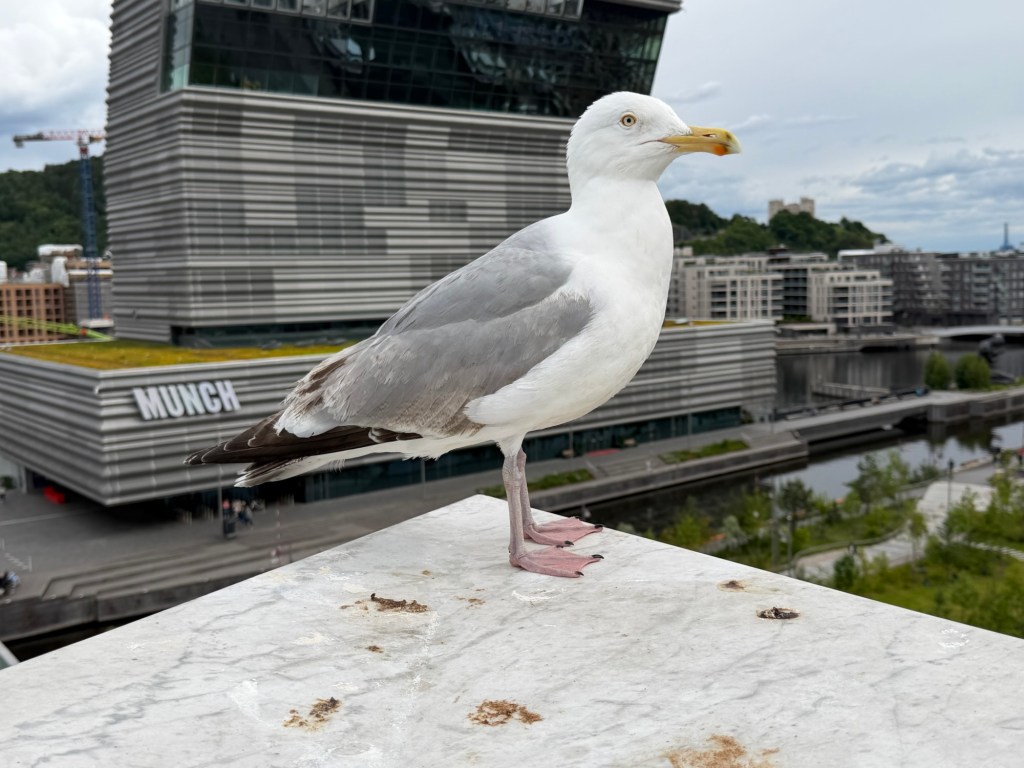
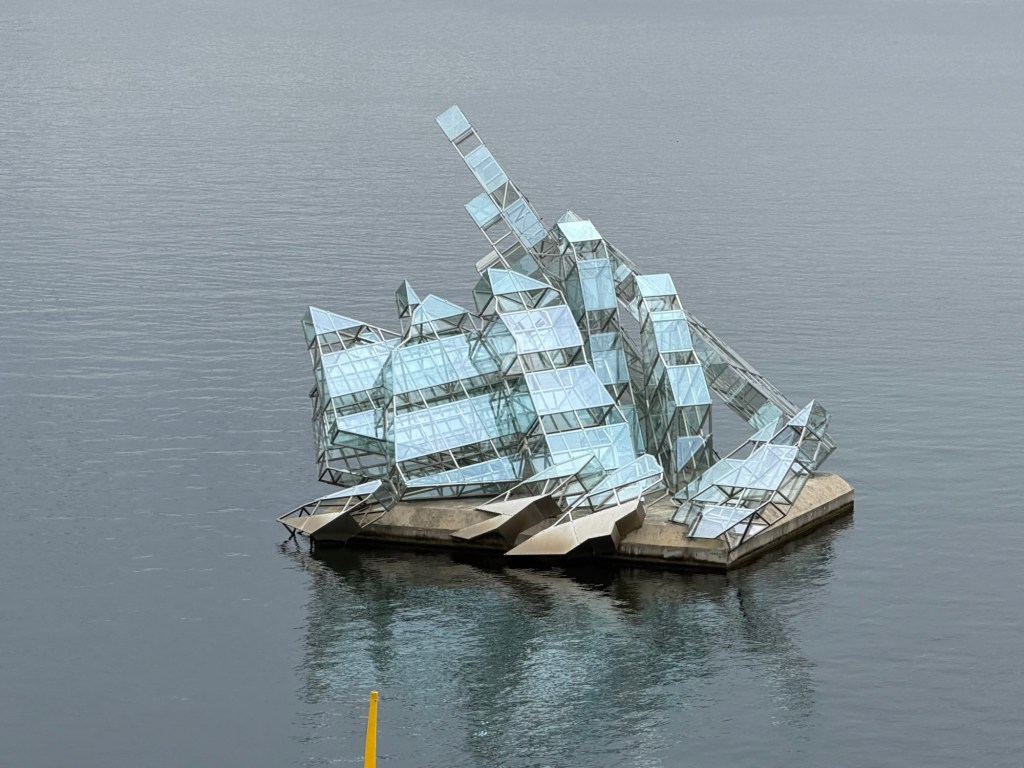
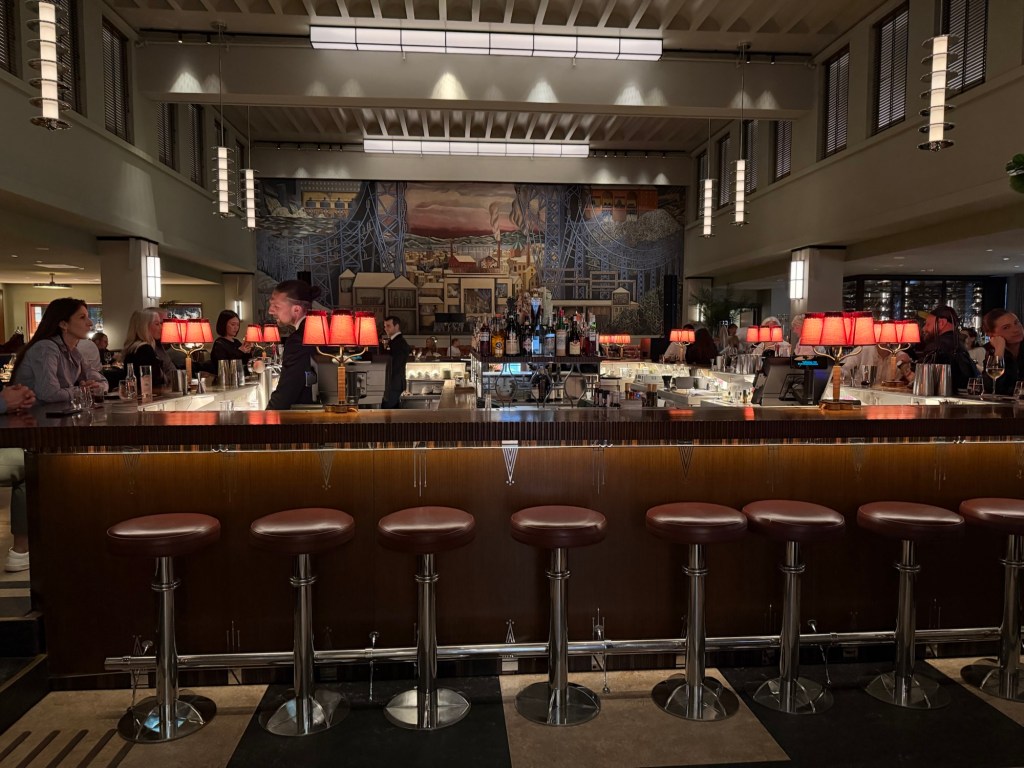
Back at the Continental Hotel, we said good bye to Elizabeth and Olf and relaxed until dinner when we started to walk to our chosen restaurant and got very lost. Finally, we hired an Uber. We had been walking in the exact opposite direction. The restaurant had an elegant Art Nouveau interior and we had a pleasant evening. I even had grilled lobster. We had no trouble walking home after dinner once we knew where to go.